#1791 Control Without Obsession
You can always listen to the Juicebox Podcast here but the cool kids use: Apple Podcasts/iOS - Spotify - Amazon Music - Google Play/Android - iHeart Radio - Radio Public, Amazon Alexa or wherever they get audio.
Scott and Jenny explore using automated technology and smart targets to achieve tight diabetes control without the mental burden.
Key Takeaways
- Individualized Targets: Advanced algorithms like the Twist pump allow for glucose targets as low as 87 mg/dL, which is significantly lower than many other approved systems, aiding pregnancy and tight management.
- The "Delta" Advantage: Seeing the point change (delta) between CGM readings provides critical context, helping users distinguish between actual glucose trends and temporary anomalies like shower spikes.
- Backup Vulnerability: Current adaptive algorithms often lack cloud-based backups for learned settings, meaning a broken phone or controller can force a user to restart the algorithm's learning process from scratch.
- Clinical Advocacy: Scott and Jenny emphasize that patients often have more granular, practical knowledge of daily management than some clinicians, highlighting the need for "outside the box" medical providers.
- Resource Navigation: JuiceBoxDocs.com has been upgraded to a searchable database of nearly 160 doctors, helping the community find medical professionals who are friendly to DIY algorithms and modern management techniques.
Resources Mentioned
- Juice Cruise 2026: juiceboxpodcast.com/juicecruise
- Tandem Mobi / Control IQ Plus: tandemdiabetes.com/juicebox
- US Med: usmed.com/juicebox or (888) 721-1514
- Eversense 365: eversensecgm.com/juicebox
- Twist Pump: twistwith2is.com/juicebox
- Juice Box Docs: juiceboxdocs.com
- Medtronic Diabetes: medtronicdiabetes.com/juicebox
- Dexcom: dexcom.com/juicebox
- Wrong Way Recording: wrongwayrecording.com
Introduction and Juice Cruise 2026
Scott BennerHello, friends, and welcome back to another episode of the Juice Box podcast. Alright, Jennifer. Here it is. We're moving. I have intentionally wound Jenny up prior to our conversation, and then I'm just gonna ask her one simple question and we're gonna talk.
How would you like to share a type one diabetes getaway like no other? Join me on Juice Cruise 2026. You may be asking, what is Juice Cruise? It's a week long cruise designed specifically for people and families living with type one diabetes. It's not just a vacation. It's a chance to relax, connect, and feel understood in a way that is hard to find elsewhere. We're gonna sail out of Miami, and the cruise includes stops in CocoCay, San Juan, Saint Kitts, Nevis aboard the stunning Celebrity Beyond. This ship is chosen for its comfort, accessibility, and exceptional amenities. You're gonna enjoy a welcoming environment surrounded by others who get life with type one diabetes. I'm gonna host diabetes focused conversations and meetups on the days at sea. There's thoughtfully designed spaces, incredible dining, and modern amenities all throughout the celebrity beyond. Your kids can be supervised, there's teen programs so everyone gets time to recharge. Not just the the kids going on vacation, but maybe you get the kickback a little bit too. There's gonna be zero judgment, real connections, and a whole lot of sun and fun on Juice Cruise twenty twenty six. Please come with me. You're going to have a terrific time. You can learn more or set up your deposit at juiceboxpodcast.com/juicecruise.
Sponsors and Twist Pump Excitement
Scott BennerNothing you hear on the juice box podcast should be considered advice, medical or otherwise. Always consult a physician before making any changes to your health care plan. This episode is sponsored by the Tandem Mobi system, which is powered by Tandem's newest algorithm, Control IQ Plus technology. Tandem Mobi has a predictive algorithm that helps prevent highs and lows and is now available for ages two and up. Learn more and get started today at tandem diabetes dot com slash juice box. Today's episode is also sponsored by usmed.com/juicebox. You can get your diabetes supplies in the same place that we do. And I'm talking about Dexcom, Libre, Omnipod, Tandem, and so much more. Usmed.com/juicebox or call (888) 721-1514. The podcast is also sponsored today by the Eversense three sixty five, the one year wear CGM. That's one insertion a year. That's it. And here's a little bonus for you. How about there's no limit on how many friends and family you can share your data with with the Eversense Now app? No limits. Eversense.
Scott BennerAlright, Jennifer. Here it is. We're moving. Have intentionally wound Jenny up prior to our conversation. And then I'm just gonna ask her one simple question and we're gonna talk. What's been bothering you around diabetes? Anything? What can we chat about today? We need a break from the bolus for.
JenniferYeah. No. That's great. Bothering. Oh my gosh.
Scott BennerExcited about, bothered by, something you wish would change. May go ahead, Jenny. Be the king of the diabetes world.
JenniferNo. I can say well, one thing as a starting on, like, a positive, I can say that I'm really excited about Twist. I really am. I think it's a step in the right direction in terms of what's being brought to the population of people with diabetes. It offers a lot more features that a lot of people are looking for, like targets that are lower, the way that the algorithm works, the fact that you've got control knobs that you have a chance to turn. You know, with the DIY community as the initial piece to building the loop tide pool loop within the twist pump, It's got a solid foundation to it. And it was built by people—like, the base of it is built by people who knew that there could be something different. I'm also excited that they chose to go with different CGMs.
CGM Interoperability and Low Targets
Scott BennerWhich ones are are they available with now?
JenniferSo the Libre three plus and then the Eversense three sixty five.
Scott BennerOkay. Do you think DexCom will jump on, do you think?
JenniferYou know, I I don't know. I've asked, and I expect that it's in the pipeline just in terms of interoperability. All of the systems are hoping at some point to have a little bit more pick and choose person to person, which I think is valid given that some people can use some sensors, some people can't. I just in general, I really like—I like the places that the company looks like it's moving as, where they're starting is a good platform as long as they continue to get coverage and pick up speed.
Scott BennerIs the current build, a basal adjustment for higher blood sugars?
JenniferIt is. So it's only the—for those who understand loop to begin with, it's really only temp basal strategy. It doesn't yet incorporate auto bolus strategy. But, again, the targets go as low as 87 comparative to the other systems that are currently on the approved list. And that brings in a whole another group of people who may be—especially the population I heavily work with in pregnancy or preconception planning, it's like, well, the systems can kinda get me down, but they never really get me into that target that I'm looking for. So we end up having to do a little bit of, like, work around the edges to get that. And with this system, the target is already there, and I think it's a lovely thing.
Arden's Trio Management and Watch Bolusing
Scott BennerYeah. Targeting is super, I think, super important. I hope this is a good example. Arden's using Trio, and she's very consistently, recently been using her GLP medication. Her target during the day is 80. During the night, I move it up to 90, and that keeps her from getting low overnight. The last four days, she had a kind of a stomach issue. She did not take her GLP when she should have. And now we're three or four days past the week long injection. And if I don't move the overnight target from 90 to 80, she'll sit at one twenty overnight. Just like that. And but if I put her to 80, then it'll—it somehow pulls her below 100. I don't pretend to understand the whole thing. I just know that that's how it works. Also, I'd like to say Twist is a sponsor. I didn't know Jenny was gonna say that, but Twist with two i's dot com slash juice box to learn more. Thanks, Jenny. I didn't realize that was gonna happen.
JenniferNo. No. Absolutely. Because that is—I also have a really nice—in my area here, I a couple months ago, I got a chance to meet with the clinical and sales representatives. Just a really nice support group. All the information that you could possibly want and everything. The other great thing is for those, again, who know Loop, Twist also has Apple Watch compatibility. So from a bolusing standpoint and everything, like, who always wants to pull their phone or their device out, right, when you got it on your wrist?
Scott BennerI also use Trio. Had been a looper for a long time. I never used the watch feature because it's just me, and I—I don't really care. It's like—I don't care what people think I'm doing. But for people who do, big deal. And for kids in school, I've heard, you know, a lot of kids don't wanna pull their phones out in class so they won't bolus because they're embarrassed. Happens a lot.
JuiceBoxDocs.com Facelift
Scott BennerYou know, you brought up people who like DIY algorithms, and I—I'm gonna mention this here because I really don't know where else to talk about it. I didn't realize this was gonna happen, but I was just able to give juiceboxdocs.com a really big facelift upgrade to the way it works. If you don't know, people who listen to the podcast will reach out and say, hey. Listen. I've got a doctor, an endocrinologist, a nurse practitioner. They're really great. And we started keeping a list. There's a 160 doctors on that list now. Anyway, before, it used to be this just mess of text that you had to scroll through. But now it's searchable, and it's very simple to use. I'm on it right now. Like, Jenny lives in Wisconsin. If I type in even just w-i-s, I'm already there. It gives me back two returns in Wisconsin. It's Payola Sisto. It looks like Payola is pediatric at Children's Hospital Nena (Neenah), Wisconsin. The way it's set up now, what you have is her name, what kind of a doctor she is, where she works, and then there's little badges at the top. Pediatric for her. It could be adult. Both. But also, if they're DIY algorithm friendly, it's a little badge too.
JenniferThat's awesome.
Scott BennerYeah. And then you can click address to get a map. You can click the phone number to call, or you can click a link to open up their website. We're updating it now. So, anyway, juiceboxdocs.com. Very nice. And so if you're looking for somebody who's DIY friendly, you can literally type in DIY in your state, and you'll get a list.
JenniferThat's awesome. And, you know, the doctors who are more DIY friendly would also be the ones who just in general, even if you're not looking for that, it does give a visual, and I think this is another positive note to make. It's like finding somebody who is an out of the box thinker. That's what I think when I see somebody marked as DIY friendly or willing to work with loop. They're just thinking outside the box. They're thinking in their terms of—this person needs individualization. They haven't found it here. I have to be able to help them. And that's super awesome.
Scott BennerThe list started years ago as a list of doctors who wouldn't laugh at you if you went in and said, hey. I listened to a podcast, and this is what I figured out. That is really where it started. So but it's grown since then. And through the magic of AI coding—because I'm not a coder—I was able to—I should thank people real quick. Monica and Isabelle who helped me on Facebook, they took all the data from that website and put it into a Google Sheet basically so that the code could pull from it and populate and be searchable. I vibe-coded the search bar. So anyway, I was able to make it a little better. Okay. So that's something you were excited about, Twist. What's something you're angry about?
The Slow Pace of Diabetes Tech Updates
JenniferOh, the checklist. There's, like, multiples. Like, there's a whole checklist of things that would be lovely if they could be solved. I think it's that if there weren't halting factors in getting adjustments to our technology—the way that technology moves in terms of updates for what the diabetes community wants, it's slow. It's slow. I mean, that is a common thread of commentary across the book. When is this coming? Why is it not coming out? And as a rational thinker, you can say, I under—I understand the things that need the red tape. All the stuff that has to get done in order for it to be safe to put on the market, proven safe, doesn't, you know, give you blue dots across your face or whatever it is. But when you're the person living with diabetes and you see what's there, and then now we have—like, years ago as a kid, there was no comparison. You got what you got. There was no online community. There wasn't the DIY community. I think that's the biggest piece that puts this in people's mind as—why can't you move faster and make changes?
Scott BennerRight. There are these people that—most of them aren't even getting paid—handful of people spread out across the map who are volunteering their time and either writing big chunks of code or small bits or helping QC stuff and write out documentation so that you can understand what you're looking at. And look how quickly it moved.
JenniferRight. Yep. And it's the behind-the-scenes then, it's my question. Like, a product comes out and I think, was anybody with diabetes on this board of configuration? Like, who—who thought this was a good idea? I just don't—like, these are the things that bother me. When people come to me with questions, I'm like, I don't know. I don't know who was behind it. Who dreamed this up?
Scott BennerI have a friend when you're younger would say: I think every company should have somebody with a slightly twisted mind in every meeting. And I said, why? He goes, have you ever read some of these greeting cards? He's like, they're very dirty, but I don't think they mean to be. And he's like, they needed me in there to go, well, I don't think we could say it that way. And I think very similar to what you're saying is you need somebody with diabetes in the room to go, like—have you considered this part of this? Because when you get, like, well intended business minded people in a room who don't know diabetes—I just got a recording set up with a company, and they said, who do you want to have on? And I said, somebody who understands this and isn't worried about what your lawyers think. Can I get that person, please? I'd like to speak to that person. And by the way, anytime you say that on a call, now that we all got COVID and we have Zoom now, you can see people and they all make the face—the "I know what you mean" face. I know that we send people out who just talk in circles around stuff and won't say anything. I want somebody with some autonomy. If they can't answer the question for real, then what's the point of all this, really?
Eversense 365 and US Med Sponsors
Scott BennerToday's episode is sponsored by a long term CGM that's going to help you to stay on top of your glucose readings, the Eversense three sixty five. I'm talking, of course, about the world's first and only CGM that lasts for one year. Are you tired of those other CGMs? The ones that give you all those problems that you didn't expect? Knocking them off, false alerts, not lasting as long as they're supposed to. If you're tired of those constant frustrations, use my link, ever sense cgm.com/juicebox to learn more about the Eversense three sixty five. Some of you may be able to experience the Eversense three sixty five for as low as a $199 for a full year. At my link, you'll find those details and can learn about eligibility. Eversensecgm.com/juicebox. Check it out.
Scott BennerI used to hate ordering my daughter's diabetes supplies. I never had a good experience. But it hasn't been that way for a while, actually, for about three years now because that's how long we've been using US Med. Usmed.com/juicebox or call (888) 721-1514. US Med is the number one distributor for Freestyle Libre systems nationwide. They are the number one specialty distributor for Omnipod Dash, the number one fastest growing tandem distributor nationwide, the number one rated distributor in Dexcom customer satisfaction surveys. They always provide ninety days worth of supplies and fast and free shipping. US Med carries everything from insulin pumps and diabetes testing supplies to the latest CGMs, like the Libre three and Dexcom g seven. They accept Medicare nationwide and over 800 private insurers. usmed.com/juicebox.
Market Research and the Missing "Delta"
JenniferWell, it makes me also think of I, in the past, have gone to, like, market research types of—you know, where you get to try a product. You get to play with it. You get to make the comments. Where do all those comments from people with diabetes go? I guarantee—I've often felt like they just were like: "thank you for your time. Here's your Starbucks gift card for joining in our services." And then they throw it in the—because nothing that I have ever commented on... And I feel like in the diabetes world, like, I have a brain. Might be worth listening to. Where did my information go?
Scott BennerI, along with countless other people—I'm not taking credit for this, obviously—but I don't know how many times I could have said to Dexcom over the years: can you please, like, add a delta to the feedback? I wanna see how far the blood sugar moved since the last reading. Just show me plus three, minus four. I did just go up to an AI input and say, wanna write code that makes this sheet searchable, and I wanted to do this, this, this, and this. And two days later, it was done, and I'm an idiot. So, like, you can't show me Delta? And so is it that you can't—like, is it that you tried and it broke something? Because if that happened, like, fine. I don't want it then. But is it because you didn't have enough people or you didn't think it was important or, like, what—because the whole community wants that thing to show Delta.
Jennifer100%. It's the reason that it's in the DIY stuff. It's the reason I can see on my—oh gosh. I've risen four points in this amount of time. If it's on that, it's clearly possible, and it's not rocket science.
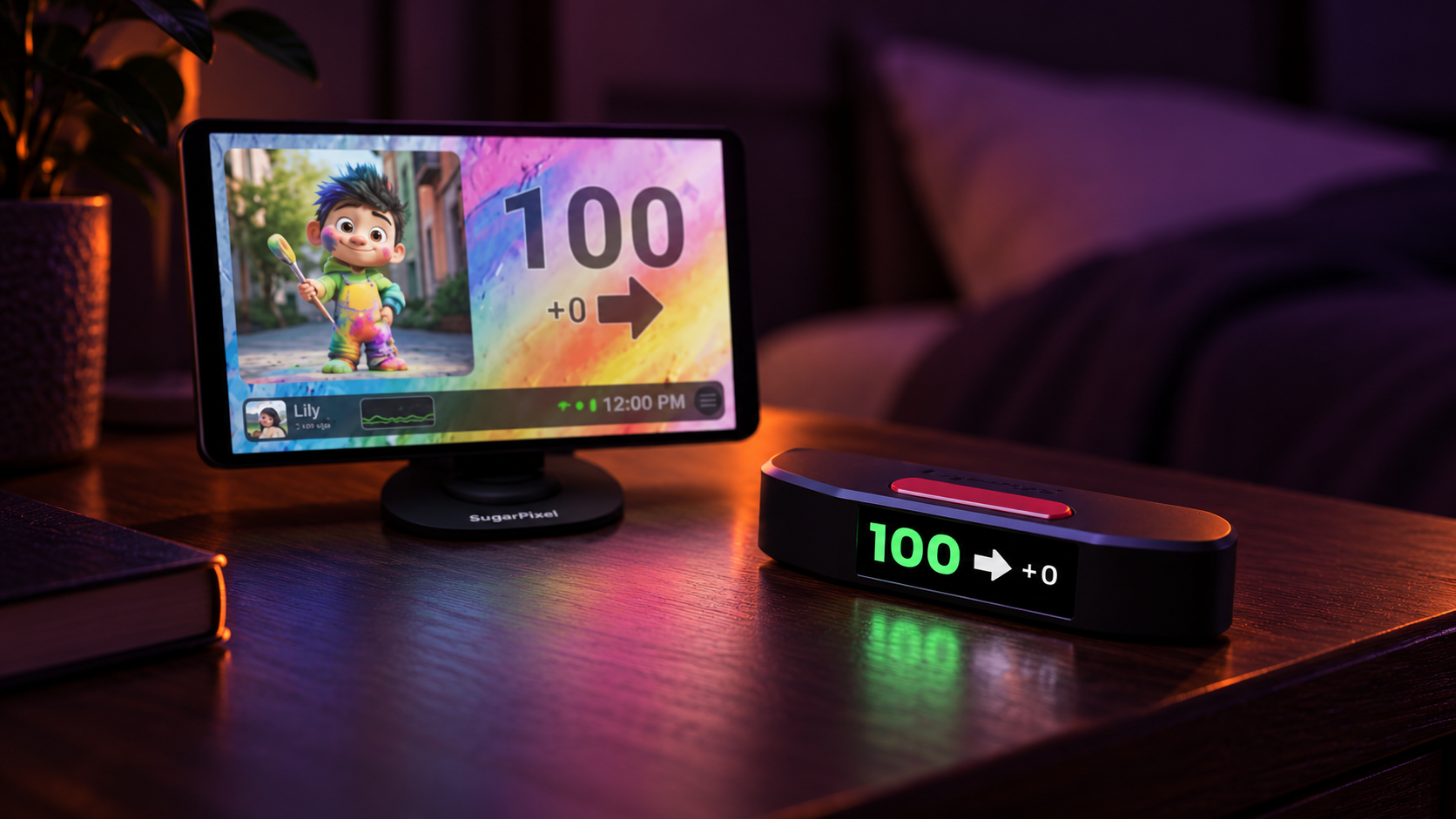
Scott BennerYeah. Right. And it also helps you now—like, now that g seven reports... I now see more—like, if Arden jumps in the shower and I see, like, a plus 12 out of nowhere, now I know—I don't think it's gonna stick there. And I think it's gonna drop again. It's not a thing to worry about. But if I just looked up and saw the number, I'd be like: "oh, I don't know what that—I think that number looks high to me." And I'm speaking because I use SugarPixel. I have a SugarPixel in my house. So, like, I look over and I see suddenly the SugarPixel looks out of whack. I go: "that doesn't make sense." And now—but I know it doesn't make sense because of the delta, not because if it was just the number, I would just think it was the number.
Scott BennerAnd I have probably interviewed somebody from Dexcom dozens of times in my life, and I have tried in earnest to mention it every single time. Please, can you add delta? People are asking for delta. And they go: "yeah. Yeah. It's on the list. It's on the list."
JenniferThe list. What list? Yeah. See? I've got a checklist. Like, why do these really? You've got a list? It's on the list.
Scott BennerHelp me out. Do you have 700 other things on the list that are—better be world peace. Anyway, and by the way, Dexcom is a longtime sponsor. I love Dexcom. Dexcom.com/juicebox to learn more. But with the technology we have today and what year again did we put somebody on the moon, Scott?
Scott BennerI think it was in the sixties, wasn't it?
JenniferSee, my point being—if we've done that, which is rocket science to my baseline understanding, this should be doable. With the technology we have today, is it not just quick fix doable?
Tandem Mobi Sponsor and Missing Cloud Backups
Scott BennerWhy can one pump company—it seems like they can more aggressively update their algorithm than another one. Is one company better at talking to the FDA than the other one? It's obvious from our perspective that, you know, some people look like they're running forward and some people look like they're not, and it gets frustrating when you're not. So this episode is sponsored by Tandem Diabetes Care. The Tandem Mobi system with Control IQ plus technology features auto bolus, which can cover missed meal boluses and help prevent hyperglycemia. It has a dedicated sleep activity setting and is controlled from your personal iPhone. Tandem will help you to check your benefits today through my link, tandemdiabetes.com/juicebox. This is powered by its best algorithm ever. tandemdiabetes.com/juicebox.
JenniferWell, that brings up another one. No. This one is along the same lines. It's essentially—and this came mostly a couple years ago when Omnipod five came out. I call out the fact that when you get a new phone or your controller dies, you have no backup to your algorithm.
Scott BennerYeah. Why isn't that backed up somewhere? You're gonna make me start over again? Are you kidding me?
JenniferAnd I understand that there are tricks and things. Why should we—we live this twenty four seven. Why should we have to apply darn tricks to get it to update and get to where we had been once we finally finagled the system to get our blood sugars where we wanted them to be? Now somebody ran over my phone. So now I have to re-finagle the system and figure it out again.
Scott BennerIs it completely—that is a completely fair point. Again, Omnipod's my longest sponsor. I think it's a fantastic product. But what a great example. You gave us a pump that, like, makes adjustments to insulin, and then if I drop my phone in the toilet, they're all gone. Freak. Have you heard of the Internet? Do you know what the cloud is? Can it not be backed up? I'm sure most people don't even know. Just back the settings up. Is that not like—you know?
JenniferAnd I will fairly say that it's the same thing with Medtronic. I mean, because they're both in a way similar adaptive algorithms. So in terms of—I have to get a new pump—well, great. Now all of that adapting has to start over. It does.
Scott BennerI can easily argue the other side of this. They're now taking responsibility for accurately backing up your settings. It's probably a HIPAA thing. Can I legally take your settings and put them with your name on a computer? Then what if that gets hacked?
JenniferHow about an ID number? Yeah. Like, come on. Again, I know you're trying to be very kind and very fair, but redesign it. There is no reason that that what the system has adapted to doing can't live someplace with your ID number A6942 instead of your name. And then it gets identified, and I dump it back in and, whoop, I'm all up and running again. Come on.
Dexcom Advisory Council and CGM Variations
Scott BennerI'm not saying that you're not right. I'm gonna be involved in an advisory council thing for Dexcom. Actually, I'm doing it later today. I'm gonna spend three hours on a call today. They're like: "hey. Feel free to send over your thoughts." I'll funnel them right in. I thought it was a good opportunity for me to funnel what people that I hear talking about back to them. What I see is Dexcom g seven last ten days plus hours for us. It jives well with her body chemistry, but I also know plenty of people who have issues. So I actually have a post up now that's collecting people's complaints, basically. It's up to, like, 250 comments. But to their credit, they wanted that. They were like: "yes. Send it. We'd love to see that."
Scott BennerBut as part of the thing that I filled out in the beginning... I said: "it's a kind of an unfair thing to ask me what I think about CGM because I've talked to thousands of people who've lived with diabetes and insulin before CGM. And I know that if you put me in power, I'd slap one of those things on everybody who uses insulin. Any of its shortcomings, I don't care about. I hope you fix them, and you should. But way better than not having it." I have the perspective of having spoken to a 70 year old guy who boiled his urine at some point in his life. I've been very clear and honest.
JenniferAnd I think that's a fair point that you just made too. The device companies, they are trying their best to serve the greater population. They really are. But the bigger piece to that being with CGMs, we all have under skin differences, and it's very visible when you look at who can utilize one sensor versus not another sensor. Even within one family—I have a family I work with with two little kids. One of them can wear the Libre three with phenomenal results, put a Dexcom on that child, and it is all over the place. The other child absolutely does beautifully with the g seven. They're—they're a 100% gene related.
Scott BennerAnd I've tried to make this point when I've interviewed companies in the past. Like, you're asking them to make a mechanical device that goes under your skin and works exactly the same way from person to person. Never gonna work that way. It is phenomenal how well it works now. I told them, I said, I think my daughter is healthier, safer, happier all because of Dexcom. Absolutely. 100%. Do I wish the wire didn't pop out once in a while? Yeah. I'd like for that not to happen. But if you're looking for shit to improve, here's my list.
G6 vs G7 and Product Progress
JenniferI'm in the general population of people who still uses g six. G six has always worked for me. I didn't switch to the g seven because I work with enough people who have issues that I was like: "why would I switch when something works?" So now we know that it's not gonna be available anymore. I'm stockpiling as much as I possibly can. But I also see it from the other side. Our question in the diabetes population is: "why can't you just keep making both?" Hundred percent. That was my initial thought. But on the opposite of that, there's only so much energy in a company that can go into continuing to build better. What I think they should do is marry what was working and what isn't working into improving next and then getting rid of a product so that they can focus on building into the next generations.
Scott BennerMaybe what we don't know is that g nine's gonna be amazing. I can't give 15% of my workforce over to g six. I need them working on g eight. Seven works well. Everybody get on seven. We're gonna work on eight. In any other world except your health, people would go: "oh, that makes sense." In terms of, like—like if you take a car. You're not gonna continue building the 1975 something when today we have these wonderful souped up other things. But when it comes to health, there's a very big difference. I wanna keep my g six. It works lovely for me. It works with my system. But I get it on the other way too.
Scott BennerAnd you're gonna be okay too. Arden's had diabetes for a fair amount of time now. And it has always gotten better. In hindsight, we're farther ahead than we were when we stopped. Imagine if back then I was yelling at the wind: "I like the meter we have. Don't change it." Then you don't get a CGM. There's only a certain amount of people in there. I see this argument a lot online. They'll tell how much money that Dexcom has in the bank. There's a lot more to it—you're paying shareholders, you're paying employees. Thank God Omnipod, Medtronic, Dexcom, Libre, Twist are doing this stuff. Because if they weren't, you'd get what you get and that would be it. A lot of these pharma companies decide they don't wanna make pumps anymore and they're gone.
Medtronic Seven-Day Infusion Sets and Future Hope
JenniferWhere'd that one go? The Animus? Yeah. Actually, the one that a lot of people really loved was the Cosmo, the Deltek Cosmo. That one was a phenomenal pump. Whoever made that needed to make money so that they could keep making the Deltek Cosmo, and apparently, that didn't work out so well. It didn't work out. I think you need a community focus with a business minded engine. In the initial stages, you really do still have to—and a 100% should be going to the diabetes community. Ask, what is working to begin with? What are the pros? What isn't working? Why isn't it working? Medtronic has their seven day infusion set now, which is lovely. I talked to somebody yesterday who chose Medtronic because her daughter didn't wanna change that infusion set so often. She doesn't care about the tubing. She likes it because that's a piece that her daughter really liked.
Scott BennerMedtronicdiabetes.com/juicebox. Head over there now. Thank you. So this is something that you were excited about, something that you were bothered by. What makes you hopeful?
JenniferI think what makes me hopeful is the movement. While we haven't seen anything that is yet to be out of studies, it's the idea of stem cell, that whole kind of encapsulated betas that we could have implanted. Despite not wanting something sitting under my skin, if something was, like, a yearly surgical, you'd do it. And it meant that I didn't have to have all the gadgets and the beeping, Heck. I'd be in line because that would be pretty wonderful. So I have hope for a lot of those types of things.
Scott BennerHow do you stay hopeful for that when I'm already aware that we've been talking about encapsulation for, like, fifteen minutes? Long time. How does that make you—because—is it—
JenniferI think I'm hopeful because—I've had type one now for thirty seven and a half years. Wow. I also had the original "oh, in five to seven years it's gonna be cured." But that whole idea has now changed. I think they've got a better understanding that because we do have such an individual nature within each of our bodies and there is no proven reason—they haven't found the true reason that type one gets going to begin with. To fix a problem, you have to have the reason for the problem. Because there are a myriad number of issues that could be the reason somebody ended up having type one, then you have to fix a million problems.
JenniferI don't wanna say that I'm not hopeful for a cure. But in what I've lived through, I'm more hopeful for therapies that are going to actually navigate an issue that can't technically be solved but there's an outside way to manage it, which was why I was so excited about the DIY kind of stuff. It's getting easier to navigate life because of the things that are helpful in living it day to day. My hope is that some of these things that they're discovering with implantables and cells and not having to use immunosuppressive medication in order for them to work. Things are also moving faster than they ever did before in that line.
AI researchers and Immune Responses
Scott BennerI have a couple of thoughts. I don't know that they're gonna cure type one diabetes by solely focusing on type one diabetes. I almost feel like it's gonna be more about the immune system and the immune response. Because I watch my daughter's life. My son has Hashimoto's. You see where their physical struggles are—it's all inflammation. That's the core of the problem. I think you turn that one lock, it probably opens a lot of doors. I am mostly hopeful that AI is gonna help researchers move more quickly. Asking one person to dedicate their life to something, they get forty years into it and realize: "oh, god. I picked the wrong path." Proof that this isn't the avenue. What a way to live your life. AI might help us pull together all those ideas and have a whiteboard. I've had a number of situations now where I've just sat people down in front of an LLM and said: "just explain all your problems to it because it can keep it in its head unlike a doctor can." Jenny can't—you help a lot of people. You don't jump on with the next client and go: "oh, I remember everything about you." Having a place where all of your information is centralized and available to something that can consider it all and can see the Internet and the ideas around health at the same time and maybe draw lines for you. That might be a really big deal.
Wasted Time and Pre-Bolusing
Scott BennerBut short term, I find myself talking a lot to people about wasted time—I find that to be their greatest sin is to waste time. Life is just too short to be giving time away for things. I've had so many conversations with people who say: "I can't believe no one—I've had diabetes for ten years. No one told me to pre bolus. My life has gotten so much better in the last six months," and then the next thing they feel is the sense of lost time. When you're promising something to people that you know might not be for ten, twenty years, that is very debilitating. To give them something, anything today and tomorrow and another year from now, I think it fills people's souls. You should be out there as a company saying: "we love our algorithm, but we think it can be better. You should know we're working on that right now." I understand that companies don't wanna disclose secrets, but there should be more outreach panels. Reach out more to the community to bring that in. Get people's real experiences about how this works or doesn't work for them. I did it with people's struggles. I made a comprehensive list. If all these companies don't have a complete understanding about how all the other algorithms work by now—shame on them. I once saw a truck full of EVs on the way to another EV company. They bought every one of the cars to rip them apart to see how they worked. If you're not doing that, you're not doing something that you should be doing.
Decade of Partnership: Jenny and Scott
Scott BennerJenny, here's an uplifting little thing. Next April, April 2027, do you know how long we will have known each other for? I would venture to estimate twelve years. Ten. We are gonna have known each other for ten years. That's the first time you were on the podcast, April 2017. I was trying to estimate based on my younger son's birth because he was born in 2017. Have we known each other longer than—could be. Wait. You're right. We met in 2015. You were on episode 37 of the podcast. November 2025, we knew each other for ten years already. Okay. How about you know what hit me? So I was right. You were right. Congratulations, first of all. My wife had said that I have to now tell you that I was wrong. The reason it hit me so hard is because you were like: "you know, I've had diabetes for over thirty seven years." I realized I've said almost all those little numbers along the way. And when you said thirty seven, you even shocked me. It made me feel like: "oh, I haven't updated Jenny's bumpers in a long time." There you did it. Now I'm more aware of it. I look forward to all of these. We've been talking together for a really long time.
Descriptive vs Clinical Knowledge
Scott BennerI feel like our conversations have helped me a lot over the years. Have I brought any of that to you, or do you mostly walk away going, oh, this freaking idiot. Oh my god. No. I think it's valuable of a 100%. I think the value is in talking through something. I'm very used to talking to other clinicians who think very similar to me. But it's different than talking to somebody who gets it on a similar enough level but has—and I say this in a nice way—like a school kid way of considering describing it. I wouldn't say it in a nice way. You're like a child. No. It's actually a positive. It's a plus to you because the descriptive way that you can explain something that I've said in maybe more of a clinical way, it also absolutely helps me talk through some things in a different manner with people. Again, we educate under, like, sixth grade level. That has definitely helped. And then just being part of the whole community. Because you're really the one that started a really large group of people to come together for the most part of really friendly way of discussing and helping people. There's not a salesy component to the connections. Being connected to your community is fantastic. The knowledge that I have, I just want more people to be able to have it too.
Success Data and Clinical Practices
Scott BennerThe Facebook group has 80,000 in it. The podcast itself does about a 140 to a 150,000 unique devices every 30 days. Just crazy. I am one person. I can't possibly work with all of those people. This has brought a way to be able to provide and distribute that. Educators should be doing something of the same. They should be looking at what is a successful patient? Where have they gotten their information before they came to me? What are successful practices doing differently? They should be collaborating more much like pulling apart the car. You have to honestly be able to admit: "I'm not doing everything right." You have to kinda step down and say: "well, gosh. There might be a better way for this person."
Scott BennerThat ability to say, I don't know—that's hard to get people to do that. Do you know there's a company that actually rips cars apart and reverse engineers the whole car. Other car companies might pay them hundreds of thousands of dollars just for the report. If you're a clinician in an office and everybody's failing, instead of looking at those people and going: "you don't listen to me," maybe wonder what it is you're not saying to them. Go find some people who are succeeding and ask yourself: "why are they having better outcomes? What can we steal from them?"
Aspirational Management and High Alarms
Scott BennerHonestly, I think that's the core of why I've always tried to make the podcast more aspirational. When I started doing this, people told me: "do not share how you help your daughter. That's dangerous." I think that's wrong. You might hear something in what I said that resonates. People then go: "well, you're making people who aren't succeeding feel badly." That is not my intention. I hope what it really makes them feel like is that if this idiot's doing it, maybe I could figure it out. Like, I have no training in this. I figured some stuff out—like, I realized that my daughter's blood sugar was staying under 200 and that's where her high alarm was. So I moved her high alarm to one eighty, and then all of a sudden, I was keeping her blood sugar under one eighty. That was a revelation to me. Right? I'm sure to the people at Dexcom, they were probably like: "yeah, dummy. No kidding." But to me, it was a revelation. Then was like: "well, let me make it one fifty. What happens when I make it one thirty?" I was like: "oh, you get what you expect." If my goal becomes under one thirty, I seem to be getting that. I hope that looks aspirational to people. Because if you're busy running around telling them all the time how hard this is, then it ain't never gonna get better.
The Glucagon Scandal and Doctor Frustrations
Scott BennerI texted Jenny something the other day. I said: "please tell me if I'm out of my mind. I think I just spoke to an endo, and I feel like I know way more about managing type one diabetes than this doctor does. Is that really possible, or am I a narcissist?" I had a conversation with somebody who I was like: "you do not even have a baseline understanding of some of these things," and that was a doctor. That's my frustration in working with people as well. People aren't getting the baseline right information from the start. Several years ago, a family came to me. She asked her doctor for her early teen daughter for glucagon. And the doctor told her—this is a pediatric endo—told this family: "you don't need glucagon." Okay. Told them this. It goes right at your text that day. I was like: "in what world does this person function as an endocrine doctor for pediatric clients telling a family that they do not need glucagon."
Scott BennerYeah. Hear that noise in the background? That's the people at Xeris Pharmaceuticals banging their heads against the desk. I would love if for every single insulin order that is written, a pop up message came no matter who prescribes the insulin—"does the person have glucagon?" If not, prescribe it. Add it. And then it's on the person. Nobody should have insulin in their house and not have access to glucagon. If you throw a thousand of them away—good for you. I have thrown many red kits away. And now several Gvoke kits. good for you. That doesn't mean it shouldn't be there. That is really like saying: "I don't need a seat belt. I don't have an accident every day." Pretty basic stuff. But a doctor told them that. You're not a narcissist.
MD Fellowship and Psychosocial Problems
Scott BennerI hope the people who only hate-listen appreciate that I questioned narcissism so that you could yell: "YOU ARE A NARCISSIST!" seriously, though, how could a pediatric endo tell you you don't need glucagon? How, when I'm explaining simple ideas about bolusing, could an endocrinologist go: "well, I don't think that's very important." You don't think timing the insulin's very important? Every time I said something, they only understood the very basic idea. It made me feel like their knowledge came out of a pamphlet. Their knowledge comes out of a fellowship. Specialty endocrinology includes all of the endocrine things. I like the example when I worked in the big hospital in DC. The head of our department was a phenomenal endocrinologist. He was adamant about not doing diabetes. He was a thyroid specialist. That is an intelligent doctor to be able to say: "this is my route, but I can't do this for you."
Scott BennerI also don't understand how you can be around it for that long and not make a leap into understanding it more deeply. After Jenny and I made the grand round series, I kept interviewing doctors. Nader Kasim, Jessica Hutchins, doctor Marwa, doctor Mueller. John Oden. These people have a deep understanding of what they're doing. The other person I talked to is no smarter than they are. They just feel like these people are more interested. I was saying some pretty basic things and they looked back at me like: "what are you talking about?" I said: "well, what about fat? How do you talk to them about bolusing for fat?" And she said: "I would appreciate if you didn't bring that up while you were here." Well, maybe I'm the wrong person. The right person then is gonna be exactly what she is. Count your carbs. Above the—just count your carbs. Also, can you speak more to the psychosocial problems? I was like—yeah. But they're all fixed by understanding how to take care of their diabetes. I'm telling you that after twelve years of making this podcast, most of those problems come from basic misunderstandings about how to use their diabetes and the cascading effect that comes from that. Yes. And then they go: "what?" I don't know what to do.
Doctor Bashing vs Improving Outcomes
JenniferThere is a lot of frustration, quite honestly. It's beating your head against the wall. You're not gonna break through because either they're so closed in accepting based on what their credentials are versus yours, or they really truly don't even know where to start with what you're saying. Why could it be possible to be correct? I'll tell you. If you're a doctor listening to this and you think I'm out of my mind, you go listen to episode five zero six. MD Kathleen Maltz. She's an endocrinologist who came on the podcast. She came on to tell me that she heard the podcast, was put off by it, kept listening to it, realized she was not helping her patients the way she should be, remodeled what she was doing. Then went to her staff and tried to tell the staff: "need you to go listen to this pro tip series." And the staff balked and said: "they're doctor bashing." And she said: "no. They're not. We're just not doing everything we could be doing, and they're pointing it out." I've never really been more impressed with a person than her coming on to admit that. You guys are missing something. A lot of you are doing great, but a lot of you are missing something.
JenniferHow many of those doctors actually have type one so that they do actually have a lived experience that does make it better? Or do none of them and they just took it on themselves? "I'm an endocrinologist. I better know what I'm talking about because there is more and more incidents of type one diabetes. I need to keep up." Those are the doctors that you want to seek. I forgot to tell you on the JuiceBox doc page—if the provider has type one, there's a badge on their name that says: "provider has type one." That's awesome. I agree. Okay. Well, we obviously could do this all day, so we should stop. Thank you. Yep. Thank you.
Final Sponsors and Closing
Scott BennerToday's episode of the Juice Box podcast was sponsored by the new Tandem Mobi system and Control IQ Plus technology. Learn more and get started today at tandemdiabetes.com/juicebox. Check it out. The podcast episode that you just enjoyed was sponsored by Eversense CGM. They make the Eversense three sixty five. That thing lasts a whole year. One insertion. Every year? Come on. Eversensecgm.com/juicebox. A huge thanks to US Med for sponsoring this episode. Don't forget, usmed.com/juicebox. This is where we get our diabetes supplies from. Use the link or call (888) 721-1514. Get your free benefits checked so that you can start getting your diabetes supplies the way we do from US Med. Thank you so much for listening. I'll be back very soon with another episode of the juice box podcast. If you're not already subscribed or following the podcast in your favorite audio app, like Spotify or Apple Podcasts, please do that now. Seriously, just to hit follow or subscribe will really help the show. If you go a little further in Apple Podcasts and set it up so that it downloads all new episodes, I'll be your best friend. And if you leave a five star review, oh, I'll probably send you a Christmas card.
Scott BennerWould you like a Christmas card? If you're looking for community around type one diabetes, check out the Juice Box Podcast private Facebook group, Juice Box Podcast, type one diabetes. But everybody is welcome. Type one, type two, gestational, loved ones, it doesn't matter to me. Check out Juice Box podcast, Type one Diabetes on Facebook. My diabetes pro tip series is about cutting through the clutter of diabetes management to give you the straightforward practical insights that truly make a difference. I'm joined by Jenny Smith, who is a diabetes educator with over thirty five years of personal experience, and we break down complex concepts into simple, actionable tips. The diabetes pro tip series runs between episode one thousand and one thousand twenty five in your podcast player, or you can listen to it at juiceboxpodcast.com by going up into the menu. If you have a podcast and you need a fantastic editor, you want Rob from Wrong Way Recording. Truth be told, I'm, like, 20% smarter when Rob edits me. He takes out all the gaps of time and when I go—and stuff like that. I hired Rob at wrongwayrecording.com.


























Please support the sponsors





The Juicebox Podcast is a free show, but if you'd like to support the podcast directly, you can make a gift here. Recent donations were used to pay for podcast hosting fees. Thank you to all who have sent 5, 10 and 20 dollars!
