#1837 Chris vs. Life - Part 2
Chris shares how a supportive spouse helped modernize his 38-year diabetes journey. He also discusses overcoming childhood trauma , massive GLP-1 weight loss , and electric vehicles.





























Key Takeaways
- A supportive partner can be life-changing: Having an engaged spouse step in to help navigate medical care and hold you accountable can be the exact catalyst needed to revamp decades of unoptimized diabetes management.
- CGMs eliminate excuses: Transitioning from traditional fingersticks (which are easy to avoid or dismiss) to a Continuous Glucose Monitor (CGM) puts the data front and center, creating a strong sense of accountability and control.
- Childhood trauma impacts medical self-care: Past experiences like abandonment or a lack of support (measured by the ACEs quiz) can make asking for or accepting help in adulthood extremely difficult, even when it is desperately needed.
- GLP-1s offer massive systemic benefits: Beyond significant weight loss (like 58 pounds), GLP-1 medications can drastically improve insulin sensitivity, relieve sleep apnea, and fix diabetes-related joint issues like trigger finger.
- GLP-1 dosing must be precise: Taking too much of a GLP-1 medication can slow digestion excessively, leading to fatigue, weight gain, and chaotic delayed glucose spikes that make it seem as though insulin isn't working.
Resources Mentioned
- Bold Beginnings Series (Juicebox Podcast): juiceboxpodcast.com
- Medtronic Diabetes (MiniMed 780G & Instinct sensor): medtronicdiabetes.com/juicebox
- Omnipod (Omnipod 5): omnipod.com/juicebox
- ABLE Now (Tax-advantaged savings accounts): ablenow.com
- Wrong Way Recording: wrongwayrecording.com
- Juicebox Podcast Private Facebook Group & Defining Diabetes Series
Introduction & Bold Beginnings
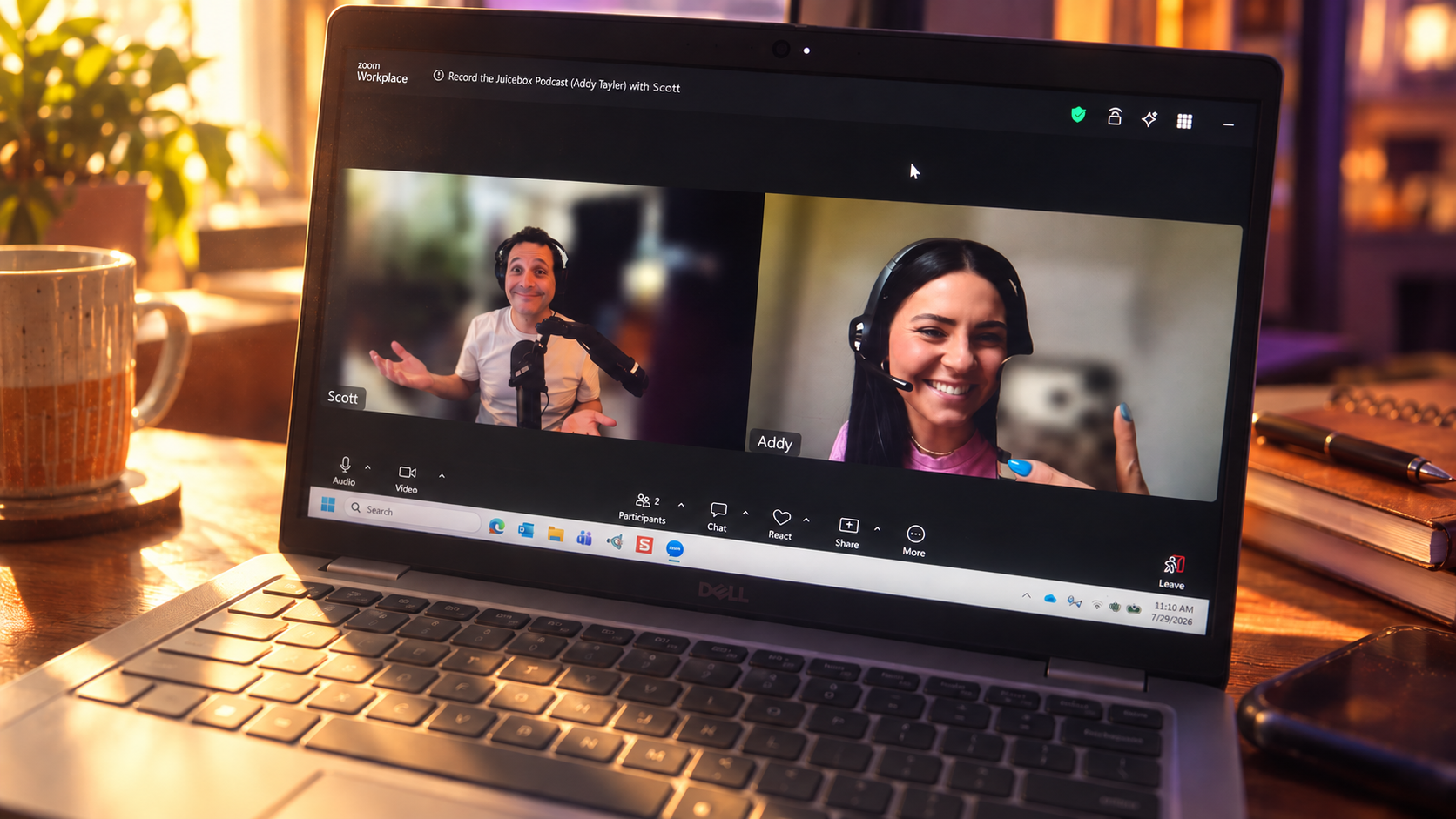
Scott Benner Welcome back, friends, to another episode of the Juice Box podcast.
Chris Hi. (0:15) My name is Chris. (0:16) Been a type one diabetic for thirty eight years, and I'm excited to talk to Scott.
Scott Benner This is part two of a two part episode. (0:25) Go look at the title. (0:26) If you don't recognize it, you haven't heard part one yet. (0:29) It's probably the episode right before this in your podcast player. (0:33) If you or a loved one is newly diagnosed with type one diabetes and you're seeking a clear practical perspective, check out the bold beginnings series on the juice box podcast. (0:42) It's hosted by myself and Jenny Smith, an experienced diabetes educator with over thirty five years of personal insight into type one. (0:50) Our series cuts through the medical jargon and delivers straightforward answers to your most pressing questions. (0:56) You'll gain insight from real patients and caregivers and find practical advice to help you confidently navigate life with type one. (1:03) You can start your journey informed and empowered with the Juice Box Podcast. (1:07) The bold beginnings series and all of the collections in the Juice Box podcast are available in your audio app and at juiceboxpodcast.com in the menu. (1:17) Nothing you hear on the Juice Box podcast should be considered advice, medical or otherwise. (1:22) Always consult a physician before making any changes to your health care plan.
Sponsors: Medtronic, Omnipod, and ABLE Now
Scott Benner Today's podcast episode is sponsored by Medtronic Diabetes, who is making life with diabetes easier with the MiniMed seven eighty g system and their new sensor options, which include the Instinct sensor made by Abbott. (1:44) Would you like to unleash the full potential of the MiniMed seven eighty g system? (1:48) You can do that at my link, medtronicdiabetes.com/juicebox. (1:53) Today's episode is also sponsored by Omnipod. (1:57) Check out the Omnipod five now with my link, omnipod.com/juicebox. (2:03) You may be eligible for a free starter kit, a free Omnipod five starter kit at my link. (2:10) Go check it out. (2:11) Omnipod.com/juicebox. (2:13) Terms and conditions apply. (2:15) Full terms and conditions can be found at omnipod.com/juicebox. (2:20) The podcast is also sponsored today by ABLE Now, tax advantaged savings accounts for eligible individuals with disabilities. (2:29) If you or your child lives with diabetes, you may qualify for an ABLE account because of ongoing medical needs, and many people in the diabetes community do. (2:37) With ABLE now, you can save for future expenses without affecting eligibility for certain disability benefits such as Medicaid. (2:44) Learn more and check your eligibility at ablenow.com. (2:48) You spell that ablenow.com.
Transitioning Careers and Finding Support
Scott Benner How was the transition to being a normie? (2:56) How did that go?
Chris I liked it, but it was rough.
Scott Benner Why?
Chris I enjoyed the adrenaline rush of doing something and working on a car, something mechanical or something, and watching it perform and watching it win and have everybody happy was extremely gratifying.
Scott Benner Mhmm.
Chris And it makes all that hard work. (3:22) I mean, the hard the the amount of hours isn't is endless, basically. (3:27) Yeah.
Scott Benner So So all the ups and downs and the hard work and the hustling, it's all, like, feeding, like, the adrenaline junky part of
Chris it? (3:37) Correct. (3:38) Yep. (3:38) Yeah.
Scott Benner Yeah. (3:40) That doesn't happen when you're taking out the trash. (3:42) You can't you can't gamify that?
Chris Well, if, you know, if if the trash bag is overly stuffed, the amount of nerves that it is to getting it through the kitchen and into the garage and the trash can before it ruptures is kind of a rush.
Scott Benner It's like, I don't wanna wipe the floor. (3:59) Don't wanna wipe the floor.
Chris Please open. (4:01) Please open. (4:02) God.
Scott Benner Well So yeah. (4:04) So what helped you through that? (4:05) The nice lady, her kids? (4:07) Like, where where did you get your comfort from? (4:12) Her.
Chris Yeah. (4:14) She was a I can't speak enough about her. (4:20) She was the absolute perfect thing at the right time, and it's exactly what she and I needed.
Scott Benner Yeah. (4:27) You guys are together still?
Chris You're still together? (4:29) Yeah. (4:31) Your anniversary this last month.
Scott Benner Oh, congratulations. (4:36) Happy anniversary.
Chris Thank you.
Scott Benner Oh, yeah.
Chris And I'm a stepdad now, and I'm raising teenagers that are driving, and the amount of nerves there is quite
Scott Benner It's it's something else out there.
Chris I don't fear for the I fear for the neighborhood as long as him, as well as him too. (4:52) You know? (4:52) It's but it's a thing, and my wife is she's in the medical industry and has grasped my diabetes and accepted the challenge more than I've ever expected a single person to. (5:08) She is on it.
Scott Benner Yeah. (5:12) Yeah. (5:12) Wow.
Chris She got me well, I didn't have any insurance yet, but she got me into, like, a cash pay kinda doctor.
Scott Benner Right.
Chris And then we started playing around with insulin and doing this and that.
Scott Benner Did you have I
Chris have a Did you Sorry.
Scott Benner Did you have to ask her to get involved, or did she
Chris No. (5:28) Jump in? (5:29) Nope. (5:30) She jumped in and said, you are not managing your disease like you should be, and I am going to do it whether you like it or not.
Scott Benner Okay.
Chris And I can't and I and I I fight her sometimes. (5:41) Sometimes it's just really annoying, but I can't say she's wrong.
Scott Benner Well, my question here was, around that is, did it feel comforting to have a female presence interested in you, or was it hard to accept?
Chris It was hard to accept just because of I wanted to be able to do it on my own, but then again, I needed the help at the time.
Scott Benner Yeah. (6:06) So you you knew enough that you needed the help, and you had practice taking help from your father when you had your your other problem. (6:12) Right? (6:13) So you you were able to give yourself over to it. (6:15) And has that gotten easier, and does it feel more supportive and mutual now than it did
Chris Yes. (6:21) Yeah.
Scott Benner How long do you think it took you to to get through that part?
Chris I mean, it took I would say about a year. (6:30) Okay.
Scott Benner That's a pretty fair amount of time.
Chris Yeah. (6:33) I mean, because it was you know? (6:34) And it was hard to accept it, but I knew it. (6:37) But then I was like, well, you know what? (6:39) I've I've made it this far, and that wasn't really the answer. (6:43) So it's like I said, it's been a lifesaver. (6:47) She's just between us listening to your podcast and trying to figure out all the stuff and me playing around with insulin
Scott Benner Things have really changed.
Chris Things have really changed. (7:00) I have a really good job now that I'm basically an eight to five guy. (7:05) The health insurance is phenomenal. (7:07) Awesome. (7:08) Awesome. (7:09) So I have I open my refrigerator every once in a while and just look in there and be like, wow.
Scott Benner Look at all that insulin. (7:15) Look at all
Chris that that I got in there. (7:17) And it's great because it's just been a I've got pretty much everything I need.
Scott Benner Right. (7:22) That's awesome.
Childhood Trauma and The ACEs Quiz
Chris Hey. (7:24) Before before
Scott Benner we kinda dig into this part and go forward, going back, if you can Uh-huh. (7:31) Give advice to the 10 year old you, the the you that left the house, like, the the you that did the drugs, like, is the advice all the same? (7:42) Is there something about your reaction to things? (7:46) Or do you know what I'm saying? (7:48) Like, is is there, like, a a key takeaway from from these experiences, or or do you think that they've all been different in some way?
Chris I think they've all been a little different. (7:58) The the biggest issue that I'm I still battle today is the abandonment. (8:03) Yeah. (8:04) And it was really hard to say 10 year old me, hey. (8:07) You know, stick it out when the people that you're supposed to lean on aren't there. (8:14) Mhmm. (8:15) So that's, you know, that's kind of difficult, and it there's been some bumps with with my wife and I now that just is just basically my history.
Scott Benner What comes to get you?
Chris Asking for help. (8:32) Okay. (8:33) Asking for help is a difficult one for me because I never had I always had to do it on my own. (8:39) Right. (8:40) So now it's like this person wants to help me. (8:42) Well, okay. (8:43) Yeah. (8:43) Honey, I get it, but you also have your life and these three little people, their life, and I don't want you to have to do this now. (8:55) You know? (8:55) So that's what our big bump is sometimes, but we're getting through it.
Scott Benner I am not a therapist. (9:00) I think that's obvious for anybody that listens, but I think that has something to do with you not valuing yourself enough to believe that her time her time is is worth putting on you.
Chris Right. (9:11) Exactly.
Scott Benner Yeah. (9:11) Then you overvalue the kids and her other things more than you do yourself. (9:16) And you're getting through that?
Chris Yeah. (9:18) Exactly. (9:18) Yeah. (9:18) We're getting through it. (9:19) It's it's starting to come around, but it's been a tough one.
Scott Benner There's gotta be a reason though that this has been offset. (9:25) Yeah. (9:25) I mean, I assume you've heard me talk about, like, that aces quiz before. (9:28) Right? (9:28) So, like yeah. (9:29) So let's do it real quick because I wanna find out what offset it for you. (9:33) Did an an adult often swear at you, insult you, humiliate you? (9:37) This is prior to being 18.
Chris Yes.
Scott Benner Yes. (9:40) Did an adult often push, grab, slap, or throw things at you? (9:44) No. (9:45) No. (9:45) Did an older person ever touch you fondle you sexually? (9:49) No. (9:50) Did you often feel no one in your family loved you? (9:54) I I can answer this one for you. (9:55) Loved you or thought you were special. (9:57) Yes. (9:57) Did you often feel you didn't have enough to eat or that no one protected you?
Chris Yeah. (10:03) Sometimes.
Scott Benner Mhmm. (10:04) Were your parents ever separated or divorced? (10:06) Yes.
Chris Yep.
Scott Benner Was your mother or stepmother often hurt or physically threatened? (10:12) No. (10:13) No. (10:14) Did you live with anyone who used drugs or was an alcoholic?
Chris Technically, when I was out of high school, yes. (10:19) But not before you were 18, like, parent or No. (10:22) Not a parent or nothing like that. (10:23) No.
Scott Benner Is the household member depressed, mental ill, or suicidal? (10:27) Nope. (10:28) No? (10:28) And did a household member go to prison? (10:32) No. (10:32) No. (10:33) I didn't hear you mention that. (10:34) Now these are the positive ones. (10:36) Could you talk to your family about your feelings? (10:40) No. (10:40) No. (10:42) Did your family stand by you during difficult times? (10:45) No. (10:47) Did you enjoy participating in community traditions?
Chris I guess so. (10:55) Yeah.
Scott Benner Alright. (10:56) Did you feel a sense of belonging in high school? (11:00) No. (11:01) Did you feel supported by your friends before before you were eighteen eighteen and under?
Chris Yeah. (11:09) A little bit. (11:10) I had some pretty good friends. (11:11) Mhmm.
Scott Benner Had at least two non parent did you have at least two non parent adults who took a genuine interest in you? (11:19) Yes. (11:20) Did you feel safe and protected by an adult in your home?
Chris Yes.
Scott Benner Yeah. (11:28) So you have four you have four you you check four boxes on the aces side, but you also check four boxes on the paces side. (11:36) You had as many positive influences as you had negative is the idea. (11:40) Because I'm sitting here talking to you, and I'm thinking, you shouldn't be as okay as you are. (11:46) So what so that's why Yeah. (11:47) That's why I went through the the stuff to figure out, like, what what was the good stuff that happened to you. (11:51) And I think when you listen to it, you would think something magical would have to happen. (11:56) But just did you have friends in the high like, in high school? (11:59) Like, did you like, those things are really important to a to a growing mind. (12:03) And so and so you had enough, I think, again, not a therapist, but it you had enough stuff go right that it gives you a chance. (12:12) And then along the way, people step back up for you. (12:16) Dad steps up for you to an important moment. (12:18) You get a job that you can kinda put your, you know, your your effort into for a long time that you enjoy. (12:24) You're able to break away when you find yourself drinking more. (12:27) Yep. (12:28) You know? (12:28) And then you meet this this woman who's your who's your wife now who's accepting of you and patient, and you found a reason to give away that other stuff to do this other thing. (12:38) Like, there's a lot of good decisions in there for you as well. (12:41) Like, I I'm not taking it from you. (12:42) You've done a lot of you've made a lot of good decisions along the way in interspersed into a couple of bad ones. (12:48) But it would be it's an easy argument to say that your bad ones are more stuff you were forced towards, and your good ones were purposeful things you did to get away from them.
Working in the EV Industry & Starting Modern Diabetes Care
Chris Yeah. (12:58) Yeah. (12:58) That's interesting. (12:59) What are you doing now for like, what kind of work are you doing?
Scott Benner I said you did a good job.
Chris I'm still working on cars, but it's, for a electric car company in in the South.
Scott Benner Oh, oh, that's very cool. (13:12) How south? (13:12) Like, near Mexico South? (13:14) Texas. (13:14) Yeah. (13:14) So, like, so, like, Tesla. (13:17) You don't wanna say?
Chris No. (13:19) It's not Tesla.
Scott Benner Oh, then it's Rivian. (13:21) Right? (13:21) I I don't wanna ask you. (13:22) Okay. (13:22) Never mind.
Chris It is. (13:23) Yeah. (13:23) Okay.
Scott Benner Yep. (13:25) Oh, well, that oh, that's cool. (13:27) I have so many questions about that. (13:28) It'll be that hopefully, we'll have a little time to get to. (13:31) So you meet her.
Chris I I have a funny reference. (13:33) Go ahead. (13:34) If you if you work for Tesla, you get Mounjaro. (13:38) If you work for Rivian, you get Zepbound.
Scott Benner You're trying to tell me one of them has better insurance than the other? (13:45) Yes.
Chris I am.
Scott Benner It's funny. (13:53) Let's talk about that. (13:54) Let's get let's go present day to you pulling yourself together, like, diabetes wise. (14:00) Like, I know you looks like you did you're gonna talk about GLPs and some other stuff. (14:06) Like, where does your journey begin? (14:08) Like, what what's the first I I know how the decision's made. (14:11) This lady grabs you by the face and goes, listen. (14:13) I'm counting on you now. (14:14) Let's try not to die. (14:16) Right. (14:16) Yeah. (14:16) I that's really I know that's what they're thinking. (14:18) And they think I think that's what my wife is thinking every time she looks at me. (14:21) Like, look. (14:22) I've thrown in with you. (14:23) Don't screw me over. (14:24) Okay?
Chris Right. (14:25) Yep.
Scott Benner What's step one? (14:28) As I told you earlier, Able Now is sponsoring this episode. (14:32) Able Now, of course, tax advantaged Able accounts for eligible individuals with disabilities. (14:37) If you or your child lives with diabetes, you may qualify for an ABLE account because of ongoing medical needs. (14:43) Many people in the diabetes community do. (14:45) With ABLE now, you can save for future expenses without affecting eligibility for certain disability benefits such as Medicaid. (14:51) And thanks to updates to federal law, ABLE accounts are now available to more people than ever before. (14:58) That means more individuals and families can use ABLE now to save and invest. (15:03) Funds in an ABLE now account can be used for a wide range of everyday needs, including education, transportation, health care, assistive technology, and more. (15:13) There's no enrollment fee, and you can open an Able Now account with a small initial contribution and build from there. (15:19) Learn more and check your eligibility at ablenow.com. (15:23) That's ablenow.com, ablenow.com. (15:29) Unlike other systems that will wait until your blood sugar is a 180 before delivering corrections, the MiniMed seven eighty g system is the only system with meal detection technology that automatically detects rising sugar levels and delivers more insulin as needed to help keep your sugar levels in range even if you're not a perfect carb counter. (15:51) Today's episode of the Juice Box podcast is sponsored by Medtronic Diabetes and their MiniMed seven eighty g system, which gives you real choices because the MiniMed seven eighty g system works with the Instinct sensor made by Avid as well as the Simplera Sync and Guardian Force sensors, giving you options. (16:11) The Instinct sensor is the longest wear sensor yet, lasting fifteen days and designed exclusively for the MiniMed seven eighty g. (16:20) And don't forget, Medtronic diabetes makes technology accessible for you with comprehensive insurance support, programs to help you with your out of pocket costs, or switching from other pump and CGM systems. (16:33) Learn more and get started today with my link, medtronicdiabetes.com/juicebox.
Chris When I start with, actually, I used to work for the other company you mentioned, so we'll start there. (16:44) I started working at Tesla and made my appointment for my endo. (16:51) All went through, and I'm like, okay. (16:53) I haven't been to an endocrinologist and you name it. (16:57) I don't know how long it's been. (16:59) It's been a really long time. (17:00) I was terrified. (17:01) Wow. (17:01) He did a a one c on the with a finger stick, which isn't really that accurate, but it's gets you on the window. (17:09) And I think it was six. (17:13) So he's like, okay. (17:15) We're gonna give you it's called the Dexcom. (17:17) Do know what that is? (17:18) And I go, no idea. (17:19) So nurse came in and goes, wham, slammed it in my belly. (17:21) That was a g six, and I was blown away. (17:26) I'm like, I have my blood sugar on my phone. (17:28) Yeah. (17:29) Look, I just I couldn't like, I was like a kid. (17:33) It was I was just like, this is incredible.
Scott Benner Yeah. (17:36) No. (17:36) I know. (17:36) Yeah. (17:37) It really is. (17:38) I'm sorry. (17:38) When you were going to the doctor, you hadn't been there for so long. (17:41) What was that like, because you had to overcome some feeling. (17:45) Was it embarrassment? (17:46) Were you ashamed? (17:47) Like, were you Yes. (17:48) Were you worried you were gonna and the doc the the doctor handled it well, though, it sounds like.
Chris He handled it okay. (17:53) Yeah.
Scott Benner Okay.
Chris He basically said, let's get you on insulin that I think is gonna work for you, and then let's get you on a basic you know, let's try and work all these things out and how you you know, your basal and your all that kind of stuff. (18:09) Let's get this worked out, I wanna see you back in, you know, a couple months, and then we'll do it again and do it again. (18:14) And then he actually relocated, and I got to another endo, which I am with now, and he's amazing.
Scott Benner Yeah. (18:22) So so this guy was enough to know so did he move you off a regular in Miles per hour? (18:28) Yes. (18:28) Wow. (18:29) But that must have fried his mind. (18:30) Imagine you you were looking at the CGM going like, this is amazing, and he's probably looking at you going like, I can't believe this guy's standing up.
Chris He's going, what that? (18:37) What in that? (18:38) Where the hell have you been? (18:39) I go, I've been hiding in a hole, I guess. (18:41) So
Scott Benner I was in a porta potty.
Chris I was in a porta potty. (18:44) You're trying to trying to draw two vials of insulin up.
Scott Benner This lady over here, she, she came and got me. (18:51) Yeah. (18:52) Yeah. (18:52) Yeah. (18:52) But you I'll tell you what. (18:54) That's gonna be that's gonna be end up being your luckiest role there probably is is reconnecting with her. (19:00) Right? (19:00) So Yep. (19:01) So okay. (19:02) So you get going with the first guy, but then what makes you switch to another doctor?
Chris He moved. (19:07) He that one at the time was relocating to another part of town and it was way too far. (19:12) So this guy that I'm with now was recommended, and the waiting list was quite high. (19:17) But I got in, and he's just phenomenal. (19:21) So I'm just like, look, this is at the time, I had different insurance. (19:24) So this is what we're gonna try and do. (19:26) And Mhmm. (19:26) I'm gonna get you on Mounjaro, and then we're gonna do Mounjaro. (19:29) And I want you to try let's try NovoLog, and then we'll try Tresiba. (19:35) And I'm like, okay. (19:36) Great. (19:36) So then I start doing all these things, and he goes, this you only have to do one time, and I was blown away that the the base will only had to do it one time. (19:44) So he's like, you only have to do this one time a day and then we're gonna look at this and then here's this and carbs and all that kind of stuff. (19:50) And and my wife once again grabbed all the paperwork right out of my hand and said, got this. (19:55) And
Scott Benner The kids like this guy. (19:56) We're gonna do it. (19:57) Don't worry.
Chris Yeah. (19:58) Let's keep this guy. (19:59) Yeah.
Scott Benner What Chris, do you not have the Internet? (20:02) How did you not, like, look into this sooner?
More Sponsors - Omnipod Trial
Scott Benner This episode is brought to you by Omnipod. (20:09) Would you ever buy a car without test driving at first? (20:12) That's a big risk to take on a pretty large investment. (20:15) You wouldn't do that. (20:16) Right? (20:17) So why would you do it when it comes to choosing an insulin pump? (20:20) Most pumps come with a four year lock in period through the DME channel, and you don't even get to try it first. (20:26) But not Omnipod five. (20:28) Omnipod five is available exclusively through the pharmacy, which means it doesn't come with a typical four year DME lock in period. (20:36) Plus, you can get started with a free thirty day trial to be sure it's the right choice for you or your family. (20:42) My daughter has been wearing an Omnipod every day for seventeen years. (20:46) Are you ready to give Omnipod five a try? (20:49) Request your free starter kit today at my link, omnipod.com/juicebox. (20:54) Terms and conditions apply. (20:56) Eligibility may vary. (20:57) Full terms and conditions can be found at omnipod.com/juicebox. (21:02) Find my link in the show notes of this podcast player or at juiceboxpodcast.com.
Discovering CGMs and the Juicebox Podcast
Chris I've just never knew about it, Scott. (21:09) I never I mean, I knew there was other things, and I looked at these things that were called pens, and I was like, that seems weird. (21:15) You put a needle on it, and how do you I don't know. (21:18) It seems kinda and I was just so stuck in my ways for thirty five years that I it's just all I did.
Scott Benner You really are thirty eight years into diabetes, three years into modern care. (21:30) Yep. (21:31) Yeah. (21:31) Wow. (21:31) That's so interesting. (21:32) Okay. (21:33) So spend one more minute on what it's like to see your blood sugar on a CGM.
Chris So all of my diabetic friends that I know, there's only a few of them, I was just blown away. (21:45) I'm like, look what I can do. (21:46) I can got this number in it. (21:47) It's going up and down, and I can and I can share it. (21:50) Oh, god. (21:51) I'm gonna I knew who I'm gonna share it with, and I shared it with the wife, and now we're good with that. (21:55) And it it I was just blown away.
Scott Benner Did it seem like beyond the magical part of it, did it just seem like a safety element to you? (22:02) Did you were you looking at it initially? (22:04) It's like, oh, I'm gonna be able to, like, better my management with this, or you didn't think about it that way?
Chris No. (22:08) I did. (22:09) I was like, this is I have no excuse now. (22:11) It's a number that is posted on my phone.
Scott Benner Gotcha.
Chris I I can't I can't argue. (22:16) So now is the time to to get after it and sort through it.
Scott Benner So when you're finger sticking, if you want to consciously, subconsciously ignore it, you can say, well, I don't have time to finger stick and therefore, I don't know what the number is. (22:29) So then therefore, I don't have to do anything about it. (22:31) Correct. (22:32) Yeah. (22:32) You can kind of, like, give yourself a a a free pass whenever you need to.
Chris It's easier to dismiss it.
Scott Benner It's easier to dismiss it. (22:38) Okay. (22:39) So now it's in your face. (22:40) It's and and you've made a decision to do better. (22:42) He's put you on this new insight. (22:43) Did it wait. (22:44) I feel like some I get embarrassed sometimes because I feel like I'm asked I don't wanna ask a question that it feels like I'm leading you to say, well, you, Scott. (22:51) But, like, how do you learn how to use all that insulin? (22:53) How does she learn about it? (22:55) Like, where do you get that information from?
Chris She spent a lot of time on the Internet trying to figure out what I played around a little bit with the rapid acting. (23:09) I found some that I liked and some that didn't quite work very well, and we were trying to figure out the curves and how, like, how these insulins actually work. (23:17) And and it was a big learning experience for both of us. (23:20) And to be quite honest, once I found your podcast, it was like, this is how and, like, somebody would name off insulin, and I'm like, I would, like, back it up, and I would play it again. (23:30) I'd write that down. (23:32) Yeah. (23:32) Okay. (23:32) So we need to look at this insulin later. (23:34) And then what was it? (23:35) Person's taking this. (23:36) Okay. (23:36) Let me try that. (23:37) And and I I was, like, really enjoying the fact that I had access to all of this stuff now, and I wanted to make sure I was on the right stuff.
Scott Benner Doing what you should doing everything you were able to do.
Chris Doing what you should be. (23:48) The pre bolus. (23:49) I mean, all the little things that you point out that is I just never knew.
Scott Benner Yeah. (23:55) You and I appear to get along well. (23:56) So do you like listening to me, or is it more about just the information and the people stories?
Chris I think that your personality is very similar to mine.
Scott Benner Okay.
Chris And and you just you're easy to listen to, and you're straight to the point. (24:10) You don't BS, and that's kinda
Scott Benner Okay. (24:13) You could see you could see us in one of those bars after one of those races together.
Chris Yeah. (24:18) I wouldn't For sure.
Scott Benner I wouldn't be drinking, Chris, but I would hang out.
Chris Yeah. (24:21) That's fine. (24:22) Yeah. (24:22) Yeah. (24:22) We could talk about chameleons.
Scott Benner I'll tell you. (24:25) When we first started recording today, I I don't wanna tell oh, Chris. (24:30) I I had a I haven't talked about this yet. (24:33) My first chameleon, my veiled chameleon passed away a little while ago.
Chris Okay.
Scott Benner Yeah. (24:38) And she lived, over three years, which in the, you know, in the wild is what you would expect. (24:43) In in captivity, you would have expected more, but she she was never able to pass her her eggs. (24:50) Like, no yeah. (24:51) No matter what we did, like, I you know, and how I set her up, she just didn't feel comfortable. (24:56) And so she'd hold her eggs in. (24:58) I think she reabsorbed them over and over again. (24:59) And one time, I think she just couldn't, and she passed. (25:02) Yep. (25:02) I was left with a lot of space. (25:05) And after some thinking and doing, I expanded again. (25:09) I guess I didn't really expand because I went backwards one and forwards one. (25:13) But I got something called a yellow tree monitor. (25:16) She is awesome. (25:19) Yeah. (25:20) So when we were first recording, there was this big, like people might call them tomato worms, but, like, a big green hornworm was in there with her.
Chris And just
Scott Benner and just as you and I were beginning to talk, she noticed it was in there, Just wandered over to it, flicked it with her tongue a couple times. (25:34) I was like, oh, that is what I think. (25:35) And then she grabbed it and murdered it. (25:38) And I got to watch that while we were starting to record. (25:41) Been the highlight of my day so far. (25:42) You and your story in our conversation.
Chris I had a I had a couple of panthers growing up, so I had a couple of panther chameleons growing up. (25:49) And
Scott Benner Yeah. (25:49) Did you really? (25:50) Yeah. (25:50) I
Chris have They're a amazing animals. (25:52) I love them. (25:52) They're so cool.
Scott Benner Yeah. (25:53) My I have a blue and banjo, and he's just awesome. (25:56) Who, by the way, I I bought from a from a company in out of Boston called Fram's Cams. (26:03) Uh-huh. (26:04) They had someone in their family diagnosed last year. (26:07) Oh, wow. (26:08) Of all the crazy things. (26:09) I have two chameleons in this room, and the people who bred both of them have a child with die type one diabetes, Interesting. (26:16) Which is completely not on purpose. (26:18) Just, an odd coincidence. (26:21) I mean,
Chris you guys can trade care.
Scott Benner Well, we've it's nice. (26:25) We may we have a little relationship now. (26:26) She's probably listening right now. (26:27) Like, hi. (26:28) You know, like that, you know, that kind of stuff is really interesting. (26:31) Anyway anyway, I'm so sorry. (26:32) So here you are now using a fast acting insulin. (26:36) You've got one that you've chosen. (26:38) You're listening to the podcast. (26:39) You're learning how to learning what? (26:42) You're learning how to think about insulin. (26:45) Like, what's the step that gets you? (26:46) Because your a one c is what now? (26:49) What do you have here in your notes? (26:51) Five and a half? (26:52) Is that right? (26:54) Right?
Chris Yeah. (26:55) Actually, I'm I'm a five three now. (26:58) I just went to my end of the other day. (26:59) So I'm
Scott Benner You're using a
Chris I'm not using a pump. (27:03) I'm still MDI. (27:04) Only reason why is because I'm always I'm always leaning, climbing, and doing things very physical, and I'm very I already lose Dexcoms looking at them. (27:16) So I'm trying to I my my next step is a pump, but I'm still I wanna fine tune the MDI to where I feel like I know exactly what I'm doing before I
Scott Benner Yeah. (27:29) Once you understand how the insulin's really working, you feel like maybe you can try it. (27:32) Okay. (27:33) And I'm sorry. (27:34) At five three, first of all, congratulations. (27:36) That's just insane.
Chris Especially your fault.
Scott Benner Yeah. (27:39) I'll take I will take credit for that for sure.
Finding the Right GLP-1 Dose and Massive Weight Loss
Chris Yep.
Scott Benner When do you ask about the GLP in your journey with the the second endo?
Chris So with the second endo, I was I was a little on the heavy weight side. (27:50) Nothing crazy, but just enough to where he's like, hey. (27:53) You know, this might help you more ways than one. (27:56) And I'm like, well, I I'll take it. (27:58) You know? (27:58) And at that time, it was Mounjaro.
Scott Benner Right.
Chris Actually, I started with Ozempic first. (28:05) Didn't get I got think I think I got two doses in with that, and I'm like, hey. (28:09) I wanna I wanna do this one. (28:10) He's like, okay.
Scott Benner Why'd you move you changed because of the of the GIP, GLP you wanted? (28:16) Correct.
Chris Yeah. (28:17) I think it was just a better choice. (28:19) Okay. (28:20) And so I got on the Mounjaro, and, man, just the insulin sensitivity, the aches and pains, the sleep apnea, the blood pressure. (28:34) I used to have what they call trigger finger.
Scott Benner Mhmm.
Chris I apparently, it's a diabetes thing. (28:40) It it your joints kinda lock up.
Scott Benner It is. (28:43) Yeah.
Chris That's completely gone. (28:46) Dealing with that and getting up to I think I got up to ten milligrams on Mounjaro, and then I switched jobs. (28:53) Then I went to a different kind, which is Zepbound.
Scott Benner Now I Zepbound and Mounjaro are the same exact yeah. (29:02) Same exact molecule. (29:03) So okay.
Chris Zepbound ten milligram, I started to gain weight.
Scott Benner Okay.
Chris So I went to twelve. (29:15) And my endo is like, sometimes he said, I don't know if this is the case. (29:20) We're gonna have to try it. (29:21) Sometimes you can, this is my my nurse wife, figure this out. (29:28) Too much GLP can can cause you if you overdo it, it can make it does opposite effects.
Scott Benner Okay. (29:38) No one's ever said that to me before, but that's okay.
Chris There's something if you look it up, and I can't remember what she said, but, basically, if if it's too much, it will cause your blood it'll cause you to god. (29:52) Yeah. (29:53) I should've wrote this down. (29:55) Anyway, so what he did was he brought me back down to 10.
Scott Benner Okay.
Chris And I'm more responsive with 10.
Scott Benner Okay. (30:04) Awesome.
Chris And and I don't and I can't there's a there's a reason for it. (30:08) I wish I would have looked it up because I figured you would know it.
Scott Benner I'm looking right now.
Chris But there's some I can't remember what it does, but if you have too much of the GLP, it can cause
Scott Benner Your stomach slows too much and throws off the glucose curve?
Chris That's what it is. (30:22) So I'm not digesting like I should be.
Scott Benner Appetite. (30:26) Okay. (30:26) So our overlords say the following. (30:29) It tells you obviously what GLP is supposed to do, slows down stomach emptying, increases insulin when glucose is present, lowers glucagon, reduces appetite, improves satiety. (30:39) What happens when you use too much? (30:41) This is in quotes. (30:42) Stomach slows too much instead of smooth glucose curves. (30:45) You can get food sitting in the stomach too long, nausea, reflux, vomiting, delayed glucose spikes that look like insulin isn't working. (30:53) For someone using insulin, that can feel kinda chaotic like you're bolus, nothing happens. (30:58) Three hours later, your glucose jumps up. (30:59) That makes sense. (31:00) That's not the insulin failing. (31:02) It's the timing getting weird, it says. (31:04) Appetite suppression can become counterproductive. (31:08) Usually too little. (31:09) You'll be under fueled, which might lead to a cortisol rise. (31:13) You could feel fatigued and then binge later. (31:16) And excess GI stress raises stress hormones, impacts glucose control, increase insulin resistance, persistent nausea, or dehydration if you cause that. (31:26) Yep. (31:27) It says so paradoxically, feeling awful from too much GLP effect can worsen blood sugars. (31:32) And then a rare but real pancreatic or gallbladder strain, which is not what was happening to you.
Chris No. (31:38) Yeah. (31:38) Yeah. (31:38) Yeah. (31:39) It's basically my insulin sensitivity just Could
Scott Benner was like slowed your digestion down too much. (31:44) Yes. (31:45) And your wife figured that out again?
Chris She did. (31:48) Because because the I know. (31:50) My so I did change brands of of of rapid acting. (31:55) I went from Fiasque to Lunjev.
Scott Benner Mhmm.
Chris And I'm like, this Lunjev isn't working. (32:01) Like, nothing like, I'm just I don't know what's going on. (32:05) I'm gaining weight and this and that. (32:06) I'm starting to get kinda tired. (32:08) I haven't been like that in a really long time. (32:10) So she she got it. (32:12) We went down to 10, and I think we're
Scott Benner You're where you wanna be.
Chris Where I wanna be.
Scott Benner Yeah. (32:17) How much weight did you lose?
Chris 58 pounds.
Scott Benner Awesome, man. (32:24) Congratulations.
Chris Yeah. (32:25) I was, at the height of my end of my racing career, I was two hundred and sixty something pounds, and now I'm just about two zero nine.
Scott Benner How tall are you? (32:35) Two
Chris Six foot.
Scott Benner Okay. (32:37) That's it. (32:38) It's not a bad weight then right there.
Chris But, I mean, it's, like, just drilling holes in your belt, I'll tell you, is a great thing to have to do. (32:45) Yeah. (32:45) Don't buy a new belt, but drill a new hole in it. (32:48) Right? (32:48) Because I lost so much weight.
Scott Benner Yeah. (32:50) No. (32:51) There's a lot of cool stuff that happens. (32:52) Like, eventually Oh, man. (32:53) Eventually, the tip of your belt is around the back, and you go, okay. (32:57) And it's hard to sometimes can be hard, difficult to, like, even throw your clothes away because you my my wife said, she's like, I couldn't get rid of my clothes for a long time because I just kept thinking, like, I'm gonna need them again. (33:07) And then one day, she's like, I gotta get rid like, I'm gonna donate these clothes. (33:11) Like, I'm I don't think I'm ever going backwards. (33:13) You know?
Chris Get them out of here. (33:14) Yeah.
Scott Benner I had a fair amount of I mean, I guess what you would call body dysmorphia, but, like, for a while there in, like, year one and a half, I was looking at myself and I felt I I didn't feel as as lean as I was. (33:28) Like, it was hard hard for me to see myself that way. (33:32) I'm I'm through it now. (33:33) Like, I feel I'm very comfortable now, but I'm probably right around sixty five, seventy pounds. (33:40) Yeah. (33:41) That's I mean, I'm only five nine, so it's pretty pretty darn noticeable.
Chris Right. (33:46) Yeah. (33:47) And it just like I said, all the other things that it's believed, I mean, Yeah. (33:52) Jeez. (33:52) I mean, all this stuff that it's just like, that's gotta be that. (33:54) It's gotta be the GLP, and it certainly is. (33:57) And, what a great, situation for us. (34:00) I hope it gets I hope the type ones are allowed to technically use it sometime soon.
Scott Benner Yeah. (34:05) They're working on it. (34:06) I I just posted a trial that's going on right now in Canada, but it's, you know, it's on I think it's on clinical trial clintrials.gov. (34:16) Like, so I mean, you have to be local to do it, but they're they're doing trials right now with type ones and GLP. (34:22) They'll get the trials are happening is great news.
Chris Yeah. (34:26) That exactly.
Scott Benner Yeah. (34:27) Because that means at some point, once they prove out what we all out here know already, then
Chris Have told them.
Scott Benner Yeah. (34:33) Yeah. (34:33) Then insurance will probably need to cover it, and that'll really help, you know, be and plus there's a ton of companies making biosimilars and stuff like that right now.
Chris So Right. (34:43) Yeah. (34:44) Should
Scott Benner pricing and availability should not be an issue moving forward. (34:48) Could be a much healthier world ten years now if it doesn't make us grow a tail or a horn out of our head. (34:53) But even at that
Chris Hey. (34:54) You know what, though? (34:55) If I have a little tail or a horn, I could deal with that. (34:57) I'll just put a hat on.
Scott Benner Said it before? (34:58) I'll take it out. (34:59) I said if if the horn I I think I I think I said one time, if the horn says Eli Lilly on the side, but I'll be like, well, alright.
Chris I I get Technically, they do own it, so they can have it.
Scott Benner As long as my my waist stays at a thirty two, I guess I'm gonna be okay with that. (35:16) Right. (35:17) Seriously, my I think at my biggest pant size, I was wearing a forty. (35:21) It's you know?
Chris I was right in there. (35:23) I was right in there. (35:24) Thirty eight, forty.
Scott Benner So and GOP helping with your blood sugars immensely, imagine too?
Chris Oh, man. (35:31) Yeah. (35:32) Huge. (35:34) Yeah. (35:35) Very, very drastic change in everything, and and, like I said, just when I before I got on the GLP and I was doing my pens, my MDIs before the endo interaction, I was Jesus. (35:51) I was taking twenty, thirty, forty units of of of regular a day. (35:58) Easy.
Scott Benner How much of your insulin need has, dropped just because the GLP is slowing your digestion down? (36:04) How much of it just dropped because you're taking in fewer carbs?
Chris Oh, that I mean, that's a double yeah. (36:11) So I got
Scott Benner it twice. (36:12) Yeah.
Chris Yeah. (36:13) I think the most that I take a day now is probably twelve at the most Mhmm. (36:20) Depending if we go to Mexican food or not. (36:22) Yeah. (36:23) Yeah. (36:23) That's a tough one to bolus for.
Scott Benner It made me pull out my phone, which I haven't looked at yet today, but I'm looking at it now. (36:29) Since I'm just going back to midnight last night, Arden's blood sugar has not been under 70 or over a 105. (36:38) Like, it's just it's just rolling along, and she's Yeah. (36:41) She's using a GLP.
Chris And I and I and I also too, on that note, my comfortable spot to sit Mhmm. (36:50) Used to be, like, in the one fifty or something, kinda, maybe a little less.
Scott Benner Okay.
Chris I am really, really happy at 90 to a 100.
Scott Benner There's just not the feeling that you're gonna suddenly experience a a huge spike or a drastic low out of nowhere. (37:03) The stability is, like, really insane, and you can really see it on your CGM too.
Chris And and you're also, like, at 70, you're kinda, like, you're in the lower side of it, But, man, I feel great.
Scott Benner Yeah. (37:14) No kidding. (37:15) And do you have any besides the trigger finger, do have any other impacts from your earlier life?
Chris Just a lot of I got a lot of arthritis in my hands Okay. (37:25) From using the the wheel guns that we used to use were extremely heavy, and I've got a lot of arthritis. (37:32) That's it is what it is, but it's not any worse.
Scott Benner Do other guys, that use the gun have the same, or is it specific? (37:39) It is. (37:39) Yeah. (37:39) It's the Yeah.
Chris It's just part of the game.
Scott Benner The weight and the and the the, I guess, the viciousness of how it probably shakes your your body. (37:46) Right?
Chris Yeah. (37:47) Yeah. (37:47) Exactly. (37:49) So but, I mean, aside from that, just like I said, my, obviously, with the weight going down, the sleep apnea has almost relieved itself.
Scott Benner Yeah. (37:57) Your neck got smaller? (37:59) I don't know a ton about sleep apnea, but I hear people talk about that, like, the neck size is kind of
Chris Yeah. (38:04) It's it must be that or the like, the dentist always tells me, he's like, man, you do you snore? (38:09) I'm like, how do you know looking down me? (38:11) Because I guess I have, like, a pretty pretty large neck and a pretty large tongue, I guess, is what it is or something in there. (38:17) And he's like, yeah. (38:17) You're kinda born to snore. (38:19) And I'm like, well, I'm sorry. (38:20) But, yeah, I think the neck the neck's gotten a little bit smaller and just not carrying the 60 pounds around, I think.
Scott Benner Yeah. (38:27) Well, I mean, in the end, like, there's a lot of impacts that are positive, but you can't undervalue just losing that much weight. (38:35) Like, it's
Chris I know.
Scott Benner Yeah. (38:36) It's what'd you do to combat muscle loss? (38:40) I mean, you're probably pretty active at your job, but, like, what do you
Chris Yeah. (38:43) So, I I'm also on TRT. (38:46) So I I get testosterone shots every week.
Scott Benner Okay.
Chris That has helped with a lot of the aches and pains and the energy and walking the dog and and riding bikes and trying to keep up with kids, think, is the basic my
Scott Benner That's your exercise.
Chris Yep.
Scott Benner Yeah. (39:03) How, low did your testosterone have to be for them to prescribe that to you?
Chris Their number for the insurance was 390.
Scott Benner And you were under?
Chris I was under that at the time. (39:14) I was two fifteen.
Scott Benner Okay. (39:16) And a big difference.
Chris Big difference. (39:19) Yeah. (39:19) Big difference.
Scott Benner I couldn't get my doctor to let me try it. (39:21) I think my number was too high. (39:23) It's it's one of the first things I said when I started losing weight. (39:26) Was like, can I try, like, testosterone replacement? (39:29) And she's like, sure. (39:30) We'll look. (39:31) And then she looked, and she's like, sorry. (39:32) And I was like, okay.
Chris Oh, bummer.
Scott Benner Yeah. (39:35) I don't know if it would if there'd be any actual value in it if my number's high enough. (39:39) Or
Chris Right. (39:40) I mean, it just makes you feel makes you feel pretty good.
Scott Benner Really?
Chris Yeah. (39:45) It's just a whole it kinda adds a new little bit little bit of life. (39:49) You sleep well because your hormones are all balanced again, you I sleep really well now.
Scott Benner That's awesome. (39:55) Yeah. (39:55) Yeah. (39:57) Better health through pharmacology is a little different than how you were using chemicals when you were younger.
Chris Yes. (40:03) Yeah. (40:03) Yeah. (40:04) Yeah. (40:05) So needless to say, I feel I feel really good.
Scott Benner Man, good for you. (40:09) That's awesome. (40:10) I appreciate you sharing all this with me.
Chris Yeah. (40:12) Of course.
Scott Benner Mhmm.
Chris And my wife my wife has just been a saver for sure.
Scott Benner Yeah. (40:18) No. (40:18) It sounds like
Chris And she annoys the piss out of me sometimes, but she's right. (40:22) So I have to, you know she's trying.
Scott Benner You don't like to s light her, tell her she's wrong?
Chris Oh, no. (40:30) She doesn't listen to me.
Scott Benner She she
Chris she knows enough. (40:34) She she she's yeah. (40:37) She's just as much of a smart ass as I am.
Scott Benner Okay. (40:39) Alright. (40:40) So do I I have a couple more questions for you, but I wanna make sure you feel like we covered all your history, your health, your diabetes stuff. (40:47) Did we talk about everything you wanted to talk about?
Chris Yeah. (40:49) I think so. (40:50) Yeah.
Scott Benner Cool. (40:51) You have a couple more minutes?
Chris Yeah. (40:52) Absolutely.
The Future of Electric Vehicles (EVs)
Scott Benner Okay. (40:54) Tell everybody why electric cars are so much better than gas cars. (40:58) And I don't mean, like, energy or the planet. (41:00) I mean, like, the drivability of it. (41:02) And this is gonna mean something from you if you believe this because you love race cars. (41:07) So, like, what's what about them should people be looking forward to, I guess?
Chris We're not gonna get into the whole environmental part of it because that's gonna start a war.
Scott Benner I don't even care about that. (41:18) I mean, the drivability and the the way they work.
Chris They are they don't have transmissions. (41:24) They are basically point and squirt, which means you can drive it as fast as you want, and there's not usually a whole lot of cars that can keep up with you. (41:34) Mhmm. (41:34) No. (41:34) They're usually very tech oriented. (41:37) They have a lot of features that most cars standard cars, I say, the inner internal combustion vehicles, but they're just a blast to drive.
Scott Benner Yeah. (41:48) So My favorite aspects of them are the regenerative braking Yes. (41:54) Changes driving. (41:56) It's Yeah. (41:57) Fundamentally a different process and way more enjoyable.
Chris We don't put brake pads on cars.
Scott Benner Yeah. (42:04) Yeah. (42:05) There's an argument to be to to be made that the person could buy an electric car and maybe never change the brakes on it while they're driving it.
Chris It's very possible. (42:12) I mean, I there's vehicles that don't you just don't need them. (42:16) The cars are 80,000 miles old, the brake pads are brand new.
Scott Benner Yeah. (42:19) That yeah. (42:20) Regenerative braking, I think, is a big deal. (42:23) I have driven a steer by wire car in the past, and I have to say I would like to see that on more vehicles. (42:30) Yeah. (42:30) Really fundamentally changes, like, driving habits, and and it it's a it's again, I thought it was a better experience. (42:38) And then I've experienced self driving a number of times, and it's fascinating how well it works.
Chris It's fascinating how well it works, and the technology is ahead of us. (42:52) So a human can't interact with something that's through the fog that the cameras can see. (42:58) Mhmm. (42:58) Yeah. (42:59) Safety safety wise, that's really good. (43:02) I like driving vehicles. (43:03) So the self driving, I've been in them. (43:05) I it's great. (43:06) I like to drive.
Scott Benner Yeah. (43:08) I think about it more like when you're older and you still wanna be mobile and get place to place and you don't trust yourself as much or you can't do the, know, you can't do the hump of a long drive anymore. (43:17) Like, how much that's gonna help people? (43:19) Yeah. (43:19) Yeah. (43:20) They're basically just really, like, expensive big slot cars. (43:24) Right? (43:24) Like, it's that there's not a lot to break on them, is there, mechanically?
Chris Not mechanically. (43:30) No. (43:30) I mean, you got your typical things and things do you know, you got batteries that can have issues, and you got motors that can have issues. (43:36) And that's like any car. (43:37) Any car you buy could be have issues. (43:39) But reoccurring is they're pretty maintenance free. (43:42) You put tires and white windshield wipers on them and
Scott Benner And you're on your way. (43:46) So Yeah. (43:47) Rivian just released what? (43:48) That r two? (43:48) Is that the new vehicle?
Chris It's gonna be, in this next quarter. (43:53) Yes. (43:53) That's the new smaller version of what we have now.
Scott Benner And this business wise, this is this this the make or break moment? (43:59) Yes. (44:00) Yeah. (44:00) Like, this car needs to go wider and people need to like it and and buy it.
Chris Yeah. (44:04) And it's a better it's a it's a lower price point, so it brings in more clientele.
Scott Benner Yeah. (44:09) Is Tesla's real advantage the supercharging network? (44:14) Do you think, like, when it comes to, like, sales and why like, what do you think stops people from buying an electric car most?
Chris Well, yeah, we also everybody uses Tesla network now. (44:25) That's gonna be the new standard.
Scott Benner Okay.
Chris But, yes, the range anxiety was what they call it. (44:31) And it it can it can get you because you don't have, you know, you don't have an opportunity to run down the gas station with a milk jug
Scott Benner and Yeah. (44:41) Yeah.
Chris And dump some dump some gas in your car. (44:43) You're pretty much if you're out, you're out. (44:45) But the mapping and the cars are extremely smart. (44:49) They know exactly where things are and how long you have to stop. (44:52) And Yeah. (44:53) As long as you pay attention to that, that's you should be good. (44:57) Paying attention to that sometimes, it's difficult for people.
Scott Benner For people. (45:00) Yeah. (45:00) Yeah. (45:00) Yeah. (45:01) I won't say who it is, but I have a a person closer to me in my not in my house, but in my life who still as an adult runs out of gas an alarming a number of times. (45:10) And and they always tell me, it's like, have ADHD. (45:13) I really don't remember to get gas. (45:15) I I take your point. (45:16) At least, you know, you can dump a can in there. (45:18) But I I don't know. (45:20) Like, I don't understand, like, you know, geopolitically or, like I said, like, whether what's actually better for the world or whatnot. (45:26) Like, that stuff all aside. (45:28) Like, I've been in enough electric cars to say that, like, I think they're really fantastic. (45:32) And and the way they work is just it's different. (45:36) It's not like I remember driving. (45:38) Like, I had a, jeez, I had, like, a a custom deluxe pickup truck when I was, like, 19. (45:43) It's not like driving that. (45:44) You know what I mean? (45:44) Like, it's not it's not like, it's not like driving a gas car. (45:48) Even nice gas cars, like, they can't mimic the smoothness of the the acceleration and, like, how great it is when shifting goes away. (45:57) I know it sounds crazy, but,
Chris It it is. (45:59) Yeah. (45:59) You and you're getting in it and putting your foot on the brake and going. (46:02) Yeah. (46:02) You don't have to turn anything on. (46:04) You don't have to you just
Scott Benner Yeah.
Chris Seat belt. (46:06) Go.
Scott Benner Don't need a key. (46:07) Like, it's just
Chris need a key.
Scott Benner Yeah. (46:09) I anyway, I I I can't wait to see where it all goes. (46:13) Yeah. (46:13) No. (46:13) I followed enough to know that, like, Rivian's putting that that vehicle out now. (46:17) And, I mean, if you can drive a Rivian to a Tesla supercharger and plug it without an adapter, you're telling me?
Chris No. (46:23) You need an adapter, but the newer so that Tesla charging plug is gonna be the new standard. (46:28) Okay. (46:28) Any vehicles built before '26
Scott Benner Will need
Chris won't have that. (46:32) You have to have an adapter, but all of the new Rivians have Tesla plugs in them.
Scott Benner Oh, so a new Rivian, I'll drive up and plug in. (46:38) I don't even need an adapter.
Chris Correct. (46:39) Yep. (46:40) It's got the it's got the it's a it's a new standard plug, which is good. (46:43) It's the Tesla plug.
Scott Benner That changes the whole thing. (46:45) That network, I it's fascinating. (46:48) I think you could drive from the Everglades to Alaska on that network. (46:52) And Yep. (46:53) Like, that's really sad.
Chris It tells you where to stop, how long you need to be plugged in for. (46:57) Yeah. (46:58) The vehicles are very, very sensitive with what you're doing. (47:02) If you're driving at 100 miles an hour and the AC is blasting, you're gonna burn, obviously, more fuel Yeah. (47:09) Technically.
Scott Benner Right.
Chris But for the most part, they're you can't go wrong. (47:13) It's it makes the trips a blast. (47:14) A lot of the chargers will have, like, little buildings and little things you can do and
Scott Benner Yeah.
Chris Some offer free coffee or, you know, all that kind of stuff.
Scott Benner Right. (47:22) Right. (47:23) No. (47:23) Well, what kind of work are you doing now, like, with, like, what
Chris what Technician.
Scott Benner Okay. (47:29) So you just you're turning wrenches still or
Chris you're part
Scott Benner of the Yep. (47:33) R and d?
Chris Nope. (47:35) Still turning wrenches, and, it's an awesome company. (47:37) I love it.
Scott Benner Awesome, man. (47:39) That's really fantastic. (47:40) Well, dude, I can't I can't tell you. (47:42) I've I mean, obviously, it's gonna be a two parter, and I really appreciate it. (47:45) I'm gonna call this one Chris versus life. (47:47) And
Chris I thought it was gonna be get your belly out.
Scott Benner Yeah. (47:51) I don't well, no. (47:52) I don't know.
Chris That might be weird. (47:53) Yeah. (47:54) Think that don't have a belly anymore, really.
Outro, AI Translation & Final Sponsor Messages
Scott Benner So Also, I think people might read that and go, you know, it's okay. (47:59) I'll skip that one.
Chris Yeah. (48:00) I'm gonna pass that one.
Scott Benner But no. (48:01) Seriously, man. (48:02) I I appreciate you taking the time. (48:03) Please, you know, I imagine your wife listens too, and please tell her I said hello. (48:07) I'm I'm really happy any of this has helped you. (48:10) You know, again, thank you for coming on here and talking about it with me.
Chris Scott, thank you. (48:14) I mean, I you you hear it every single time, but I'm gonna say it again. (48:18) Your community is phenomenal.
Scott Benner Thanks. (48:22) Go ahead.
Chris And just the fact that you sit down and actually care and have helped us through all of what seems basic to you, but, it's a tough journey, and you've made it so much easier on everybody.
Scott Benner I appreciate that. (48:36) I really do. (48:36) It's gonna make the rest of my day easier because I'm working right now on a web page that has every definition from the defining diabetes series, and it's clickable. (48:46) And so, like, I'm looking at analysis algorithm, the brain inside your pump that tries to do some of the heavy lifting for you. (48:53) When you click on it, it gives you a link right to the episode that where you could listen to the defining diabetes that describes that word, all the other ones as well. (49:03) And right now, it's looks like I'm gonna be able to put it up in English, Spanish, French, German, and I'm working on Hindi and a couple of other things. (49:13) So Wow. (49:14) Yeah. (49:15) And that's all just AI. (49:16) I mean, speaking of, like, cars that, you know, drive themselves, this is all just taking content from the podcast and being able to repurpose it for people so they can see it and and interact with it easily.
Chris It makes it easier to find.
Scott Benner Yeah. (49:28) Yeah. (49:28) It really does. (49:29) Yeah. (49:29) You know, we didn't talk about it, but one of the things that I think is, I've been fascinated by for a number of years now is going back a few years ago when Tesla said, like, we're gonna have to build our own supercomputers because we have so much data, we can't crunch it well enough.
Chris Right.
Scott Benner And so they build a computer so that they could put the driving data into it so that the computer could teach itself how to drive. (49:50) Like, that loop to me is is super interesting. (49:53) Like, the way that, like I just think that's gonna that concept can apply to so many other things.
Chris Oh, yeah. (49:59) Yeah. (49:59) I mean, it's I mean, some of the my wife uses it for some of our tricky bolus events.
Scott Benner Yeah.
Chris And and it's and it's sometimes it's right, sometimes it's not. (50:09) But now I'll tell you what, it gets you damn close.
Scott Benner Yeah. (50:11) I just think there's something to that idea of, like, even within the podcast, like, creating a loop that teaches itself and puts you in that loop so you're being taught along with it. (50:20) Like, I think there's I don't know. (50:21) I'm still working it all out, but I think there's something in there that's valuable. (50:25) So, anyway, I really do appreciate this. (50:27) Would you hold on for me for just one moment?
Chris Absolutely. (50:30) Thanks, Chris.
Scott Benner A huge thanks to my longest sponsor, Omnipod. (50:42) Check out the Omnipod five now with my link, omnipod.com/juicebox. (50:48) You may be eligible for a free starter kit, a free Omnipod five starter kit at my link. (50:55) Go check it out. (50:56) Omnipod.com/juicebox. (50:58) Terms and conditions apply. (51:00) Full terms and conditions can be found at omnipod.com/juicebox. (51:06) I'd like to remind you again about the MiniMed seven eighty g automated insulin delivery system, which of course anticipates, adjusts, and corrects every five minutes twenty four seven. (51:16) It works around the clock so you can focus on what matters. (51:21) The Juice Box community knows the importance of using technology to simplify managing diabetes. (51:26) To learn more about how you can spend less time and effort managing your diabetes, visit my link, medtronicdiabetes.com/juicebox. (51:38) A huge thanks to today's sponsor, Able Now. (51:41) AbleNow offers tax advantaged able accounts for eligible individuals with disabilities. (51:46) If you or your child lives with diabetes, you may qualify because of ongoing medical needs. (51:51) With AbleNow, you can save for a wide range of disability related expenses without affecting eligibility for certain disability benefits such as Medicaid. (51:59) And thanks to recent federal law updates, more people are eligible than ever before. (52:04) Learn more and check your eligibility at ablenow.com. (52:08) You spell that ablenow.com. (52:12) There's links in the show notes and links at juiceboxpodcast.com. (52:17) I can't thank you enough for listening. (52:19) Please make sure you're subscribed or following in your audio app. (52:22) I'll be back tomorrow with another episode of the juice box podcast. (52:26) Hey, kids. (52:27) Listen up. (52:27) You've made it to the end of the podcast. (52:29) You must have enjoyed it. (52:30) You know what else you might enjoy? (52:31) The private Facebook group for the Juice Box podcast. (52:35) I know you're thinking, ugh, Facebook, Scott, please. (52:38) But, no, Beautiful group, wonderful people, a fantastic community. (52:43) Juicebox Podcast, type one diabetes on Facebook. (52:45) Of course, if you have type two, are you touched by diabetes in any way, you're absolutely welcome. (52:51) It's a private group, so you'll have to answer a couple of questions before you come in. (52:54) We'll make sure you're not a bot or an evil doer, then you're on your way. (52:58) You'll be part of the family. (53:00) The episode you just heard was professionally edited by Wrong Way Recording. (53:05) Wrongwayrecording.com.
