#1830 72 Days Later - Part 1
Kelly opens up about raising two teens diagnosed with Type 1 at age six. She discusses international living , multiple miscarriages , alarm fatigue , and managing different sibling personalities.





































Key Takeaways
- Early Symptom Awareness: Recognizing signs like excessive urination (saturated diapers) and extreme thirst is critical for a timely diagnosis, especially in toddlers.
- AI as a Medical Tool: Utilizing tools like ChatGPT can help parents synthesize symptoms and seek urgent care, though it requires verification by medical professionals.
- Rapid Tech Adoption: Moving quickly to CGM (Dexcom G7) and Automated Insulin Delivery (Omnipod 5) can lead to impressive initial outcomes, such as a GMI of 6.9 within the first 100 days.
- Dynamic Honeymoon Phase: Physical activity levels, such as starting daycare, can dramatically shift insulin needs and cause unpredictable blood sugar drops in newly diagnosed children.
- The "Why" of Autoimmunity: Statistical data shows a significant surge in autoimmune conditions over the last 40 years, likely driven by modern environmental and lifestyle factors rather than genetics alone.
Resources Mentioned
- Able Now: ablenow.com
- Dexcom G7: dexcom.com/juicebox
- Omnipod 5: omnipod.com/juicebox
- Integrated Diabetes Services: integrateddiabetes.com
- Juicebox Podcast Facebook Group: Join the Community
- Wrong Way Recording: wrongwayrecording.com
Introduction and New Beginnings
Scott Benner Welcome back, friends. You are listening to the Juice Box podcast.
Zach Alright. Hi, Scott. Thanks for having me. My name is Zach. Upstate New York is the location. My daughter was diagnosed with type one diabetes exactly seventy two days ago.
Scott Benner If your loved one is newly diagnosed with type one diabetes and you're seeking a clear practical perspective, check out the bold beginnings series on the juice box podcast. It's hosted by myself and Jenny Smith, an experienced diabetes educator with over thirty five years of personal insight into type one. Our series cuts through the medical jargon and delivers straightforward answers to your most pressing questions. You'll gain insight from real patients and caregivers and find practical advice to help you confidently navigate life with type one. You can start your journey informed and empowered with the Juice Box podcast.
Scott Benner The bold beginning series and all of the collections in the Juice Box podcast are available in your audio app and at juiceboxpodcast.com in the menu. While you're listening, please remember that nothing you hear on the Juice Box podcast should be considered advice, medical or otherwise. Always consult a physician before making any changes to your health care plan or becoming bold with insulin.
Scott Benner This episode is sponsored by Able Now, tax advantaged savings accounts for eligible individuals with disabilities. If you or your child lives with diabetes, you may qualify for an ABLE account because of ongoing medical needs, and many people in the diabetes community do. With ABLE Now, you can save for future expenses without affecting eligibility for certain disability benefits such as Medicaid. Learn more and check your eligibility at ablenow.com. You spell that ablenow.com.
Scott Benner Today's episode is also sponsored by the Dexcom g seven, the same CGM that my daughter wears. Check it out now at dexcom.com/juicebox. The podcast is also sponsored today by the Omnipod five. And at my link, omnipod.com/juicebox, you can get yourself a free—what I just say?—a free Omnipod five starter kit. Free. Get out of here. Go click on that link. Omnipod.com/juicebox. Check it out. Terms and conditions apply. Eligibility may vary. Full terms and conditions can be found at omnipod.com/juicebox. Links in the show notes. Links at juiceboxpodcast.com.
Seventy-Two Days of Chaos
Zach Alright. Hi, Scott. Thanks for having me. My name is Zach. Upstate New York is the location. My daughter was diagnosed with type one diabetes exactly seventy two days ago.
Scott Benner Really? Yes. Wow. What has you here with me so quickly?
Zach Well, I guess I tend to go down rabbit holes, and I'm quickly discovering that type one diabetes may be the ultimate hole. It's a hole. Alright.
Scott Benner Yeah. There's a hole where I throw all my happiness and everything into. Yeah. Seventy two days ago. That's such a specific number. You're not, like, putting lines on the calendar or anything, are you?
Zach No. I did that math just this morning. I was trying to think of—you know, I don't have a story like your last guest, Lauren, on your Nobel award winning greatest podcast ever—so I was trying to think of what's interesting about my story. And I guess you might say the perspective I have is just sort of that first hundred days of chaos. Yeah. And I said, how many days has it been? December 27.
Scott Benner Yeah. Yeah. That's a story in itself. I'm glad you're doing this. But wait. Two days after Christmas?
Zach Yeah. Correct. Oh my goodness. Alright.
Scott Benner Well, let's find out about it. So prior to that day, anything on your radar, noticing changes, concerns, or did it all just happen at once?
Zach Yeah. So my daughter was saturating her diapers. Right? I know that's one of the most common things. We were, I think, maybe motivated to try to potty train her because our other daughter was born 10/13/2025. And so we didn't wanna have two in diapers, but it became sort of urgent when those diapers were multiplying seemingly.
Scott Benner Were you saying you don't wanna be buying diapers for two people is what your main focus?
Zach I wouldn't put it on the financial aspect or just the physical. So I'm a 41 year old father of a two and a half year old and a two month old. I already had a bad back going into it.
Scott Benner Zach, I feel like we need more background. Hold on a second. You have two kids. Is that right? Correct. Is this your first marriage?
Zach Yep. This is my first marriage. We started kinda late, I guess. We got married in 2017. So we took our time with the kids. Some of that was because, you know, we weren't a 100% set on it from the beginning. And the other part of it was because by the time we decided it was what we wanted in life, it had become a lot harder than it might have been if we started earlier.
IVF and Genetic Questions
Scott Benner You didn't have the energy to have sex, or there's just it wasn't taking—what was happening exactly?
Zach Who knows what the cause was? Undiagnosed infertility challenges we did have. So both kids were IVF, so they're actually fraternal twins. I don't know what that means in terms of the chance that my younger one will also be type one.
Scott Benner Oh, wait a minute. So you—if I use the wrong word, stop me—but you harvested two eggs, implanted one, then waited a little bit, and did the second one?
Zach Yeah. So the way it works with IVF often is you're trying to get a bunch of healthy embryos, and then they kind of study them and they figure out which one has the best genetics, and that's usually the first one they'll put in. And some of them don't make it through the process of freezing and studying the DNA and all of that. So, you know, if you get 12 eggs and then, you know, a certain number of them make it to day five, which is when they freeze them, so then maybe you're left with six eggs. And then they study the DNA, three of them have imperfect genetics, which is, you know, what causes miscarriages. So then maybe you just have, in our case, three good embryos. And this was after, you know, multiple other trials where we didn't even get any good embryos, and so that could have just been age. They don't know why that happened in our case.
Zach But eventually, you know, we had a beautiful daughter, and she's wonderful. But eventually, we learned she had type one diabetes. But yeah. So her sister was from the same clutch of eggs, and that's essentially the same thing as being fraternal twins.
Scott Benner Do they use the word clutch or did you just say that?
Zach No. I don't know where I got that term from, but it's sort of like when they take the eggs out of your wife, you know, it's like sort of a clutch of eggs. Yeah. No. I mean, that's a great term. I hear it all the time when people are breeding animals and reptiles and stuff like that.
Zach Well, that's what we're doing, Scott. Yeah. Yeah. I was like, by the way, when your first ends up with type one, do you go back to the doctor and go, like, you told me you pulled out the healthiest. Like, what were you looking at exactly?
Zach So, Scott, as you know, I think most people who get this diagnosis, they say, how did this happen? In our case, it's even more so because they've done all these assessments to make sure these are the perfect embryos. And—but I guess that in those tests that they run, there's not one that finds whatever codes for the precursors of type one diabetes even though after diagnosis, we found she had the two—what do they call it?—antibodies or whatever, two of the three markers that indicate you will eventually get diabetes, so they're able to confirm those.
AI Diagnosis and Hospitalization
Scott Benner I mean, I don't even have any idea if that's a thing they could look for in that stage. But—
Zach I guess maybe it develops later. The story does get a little better, Scott. So listen to this. Our second daughter is born, and my wife had some sort of, like, morning sickness, but the whole pregnancy, and that's called hyperemesis gravidarum. But, anyway, the baby comes out. The baby's healthy. She's a couple weeks early. She's okay on weight, but she is the first percentile of human height. So that combined with a couple other things, the doctor said, we wanna run a few more tests. This baby looks okay, but we wanna rule out a couple things. So I take that information. I enter it in chat GPT, and it tells me there is a one in seventy thousand chance that my daughter doesn't have a horrible genetic disease. So we are panicking from October to December that our second daughter has some rare condition.
Zach We—now all the tests they ran came out negative. She does, as far as we know, not have a rare genetic condition, but that was like a crisis in and of itself. And then our other older daughter gets diagnosed with type one diabetes after all that. And what happened one morning was my older daughter had an ear infection. I entered that along with, "hey, she's also been drinking a lot of water and saturating her diapers" into ChatGPT. And ChatGPT says, "go to the emergency room right now. Your daughter has type one diabetes." I tell my family this. They don't believe me because of what happened with the other daughter.
Scott Benner Yeah. No. AI told us the other kid was gonna grow a horn, and it didn't. So it's—wow. No. By the way, nobody trusts AI. So right. Did you lie and tell them you googled it? I might have done that if I was you.
Zach No. I was honest. Yeah. My wife wanted me to go to the doctor for the ear infection, so I went and they pricked her finger as soon as I told them about the excessive urination.
Scott Benner How about that? There it is. Yeah. My goodness. Well, how long do you think it would have gone on for if you didn't go to ChatGPT and just ask it? Do you think you would have figured it out on your own without something just mirroring right back to you and going, hey, that's—
Zach You know, what's interesting about that question, Scott, is that so far, other than maybe some crankiness with highs, our daughter doesn't have the recognizable symptoms of highs or lows. And so I don't know how we would have known something was up other than the urination becoming intense, which, you know, I was like, well, maybe she's just, like, too big for the diapers now, and that's why they keep filling up so quickly.
Scott Benner I had all those same kind of silly thoughts. How old is she exactly when she was diagnosed?
Zach So she'll be three on April 15.
Scott Benner April. So it was December. She was—
Zach Two and a half ish. Arden was, like, a month past her second birthday. Yeah. I know. And we had that whole vibe thing going on too, like, the heavy diapers, and Arden was sicker than what you're describing.
Zach Yeah. So they said we were in DKA, but maybe a mild form of it. So I think the acid wasn't too high or the ketones. Her blood sugar was about five eighty five. Our A1C at diagnosis was 12.2.
Scott Benner You would have—I'm guessing it would have rolled over her pretty quickly in the coming weeks if you wouldn't have figured it out right then. So good job. Yeah. I mean, I'd hate to know what that looks like.
Management and Open Source Exploration
Scott Benner No. It's not a lot of fun. So well done. I hope you felt good about it. I mean, I know that's a hard thing to say, but, like, you figured something out and saved her a lot of heartache.
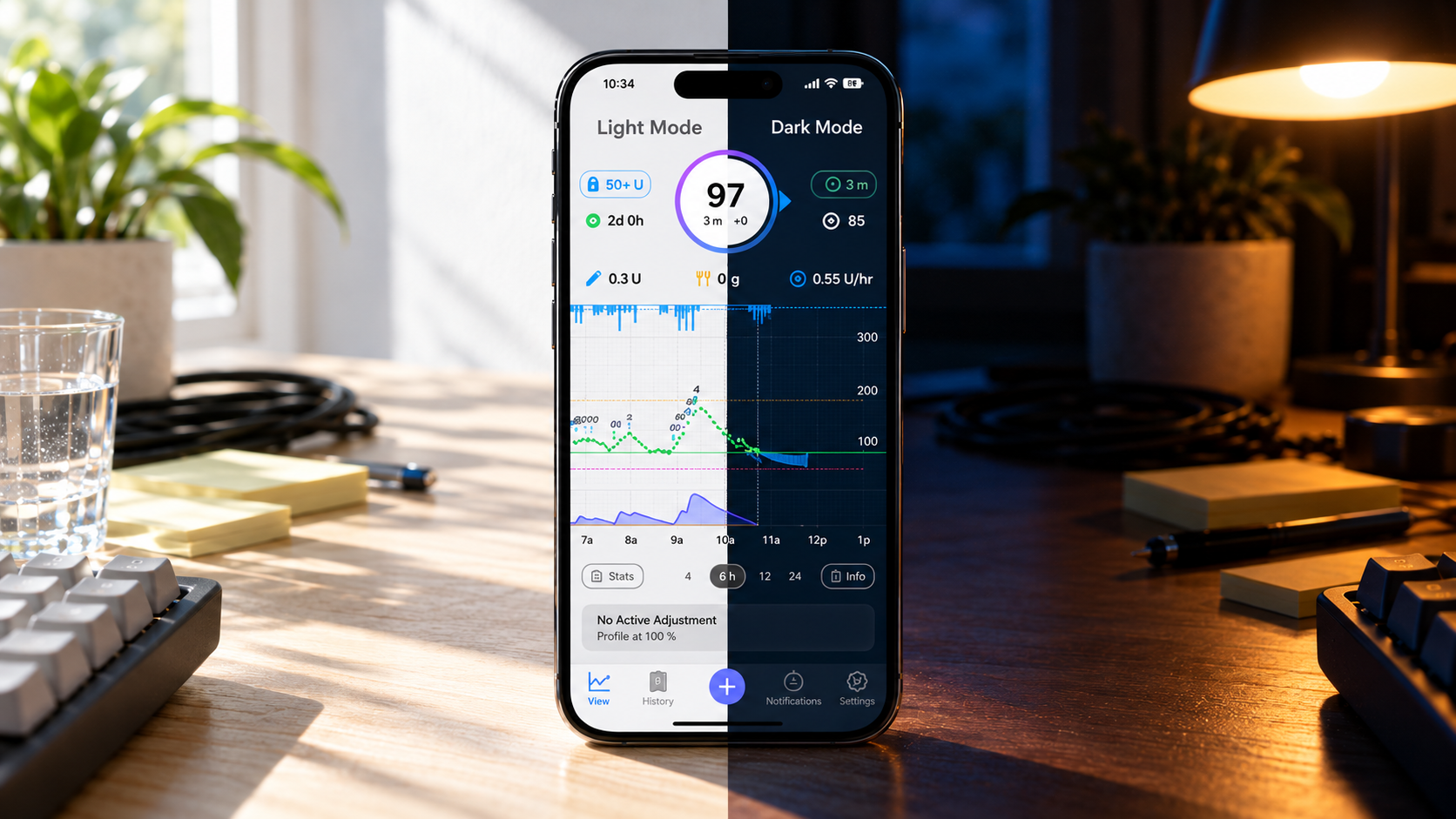
Zach Yeah. I guess maybe in a way. So day 72, I'm looking at a fourteen day GMI—if most of your audience knows what that is—of 6.9. We just crossed over that threshold from seven, which feels like a win. Feels like we're getting somewhere.
Scott Benner Well, no. That's insane. Like, how are you accomplishing that? I mean, she's three. Right?
Zach Yeah. So within two weeks, we were on a Dexcom. In less than a month, we were on an Omnipod five. We have been to our local pedendo practice who we got frustrated with, maybe unfairly because I was deep down the rabbit hole, and they weren't there with me quite so quickly. You know, as you know, some of the doctors are pretty conservative and guarded, especially with the little one trying to avoid lows. Right? Well, what does that mean? That means highs. So, you know, we then went to specialists at Yale, but they don't take insurance out of state. So now we're working with Columbia, and we've brought Jenny's firm Integrated into the mix. And we're not stopping. We're on Omnipod five, but we may be on Trio pretty soon here.
Scott Benner You think you might try a DIY system?
Zach I think so. I mean, I haven't listened to too many open source episodes yet, but I look forward to doing so. I mean, if I read the tea leaves on the forums, if I listen to the way a diabetic reviews Tandem or an Omnipod five, you'll hear things like, "but I'll never get the control I get on open source." So my instinct is let's go. You know? Let's do as good as we possibly can for my daughter.
Scott Benner Yeah. I mean, don't know, man. It's—I think it's so personal and variable specific, right, down to, like, how active you are, how you eat, how particular you are about making sure your settings are good, pre-bolus. And there's a lot of different things. Right? So I see people do incredibly well on retail systems and all of them. Like, forget Omnipod five—but, yeah, I see people do well on all of them. I can never tell—I guess what I would wanna say is that I can never tell when someone's online and they're like, you know, product A, I didn't like, but product B is perfect for me. Sometimes I sit back and I wonder, like, is it maybe that they just learned more between the first one and the second one?
Zach There's definitely some truth to that, Scott.
Scott Benner Yeah. You know what I mean? Like, because you can make reasonable arguments for all the different algorithms. Right? Like, you say, well, Medtronic has that meal detection technology. I hear people who love that, love that. And there's people who are telling you, like, Omnipod five, like, look, it is, like, truly tubeless. That is incredibly important to me. People on Tandem talk about how well Tandem goes now. People are using Twist and enjoying that and etcetera. Like, they all seem pretty similar to me. Right? When they say personalized, I think there's just a lot more to it than that. And when somebody tells you they did vastly better on one than the other, it is always gonna make me wonder if I was there, what would I see that they're not seeing?
Sponsorship and Daily Management
Scott Benner The Dexcom g seven is sponsoring this episode of the Juice Box podcast, and it features a lightning fast thirty minute warm up time. That's right. From the time you put on the Dexcom g seven till the time you're getting readings, thirty minutes. That's pretty great. It also has a twelve hour grace period, so you can swap your sensor when it's convenient for you. All that on top of it being small, accurate, incredibly wearable, and light, these things, in my opinion, make the Dexcom g seven a no brainer. The Dexcom g seven comes with way more than just this. Up to 10 people can follow you. You can use it with type one, type two, or gestational diabetes. It's covered by all sorts of insurances and—this might be the best part—alerts and alarms that are customizable so that you can be alerted at the levels that make sense to you. Dexcom.com/juicebox. Links in the show notes. Links at juiceboxpodcast.com to Dexcom and all of the sponsors. When you use my links, you're supporting the production of the podcast and helping to keep it free and plentiful.
Scott Benner Today's episode is brought to you by Omnipod. Did you know that the majority of Omnipod five users pay less than $30 per month at the pharmacy? That's less than $1 a day for tube free automated insulin delivery. And a third of Omnipod five users pay $0 per month. You heard that right. Zero. That's less than your daily coffee for all of the benefits of tubeless, waterproof, automated insulin delivery. My daughter has been wearing an Omnipod every day since she was four years old. She's about to be 21. My family relies on Omnipod, and I think you'll love it. And you can try it for free right now by requesting your free starter kit today at my link, omnipod.com/juicebox. Omnipod has been an advertiser for a decade. But even if they weren't, I would tell you proudly, my daughter wears an omnipod. Omnipod.com/juicebox. Terms and conditions apply. Eligibility may vary. Why don't you get yourself that free starter kit? Full terms and conditions can be found at omnipod.com/juicebox.
Zach Maybe I can give you a sense of who you're talking to, Scott. So I'm not a very good golfer, but you should see how many golf clubs I have in my basement.
Scott Benner Think you're gonna own all these insulin pumps by 2027 maybe?
Zach That may be where the sense of—
Scott Benner Why is that? Why do you think? I've seen people collect insulin pump systems before too. They're always switching.
Zach Yeah. So I think we need to get to a stasis pretty quickly for our own sanity. There's one feature of Trio that's particularly compelling. I think maybe Loop has it as well, but it's a remote bolus feature. The reason why that's important is my daughter recently returned to a daycare that my wife has been at all day helping them learn—that does not have a nurse. Today's actually the first day she's not there. And so Trio will give us the ability to do remote bolus. Now on the one hand, the better solution might be the Omnipod five as a very simple interface. Right? Let's get the staff trained and trust them. You know, if we switch to Trio with remote bolus, the onus might be back on us to manage her diabetes all day. But then I hear Lauren talk about the 150 units, and I'm pretty sure which I prefer.
Scott Benner Oh, that's the one you're talking about. Oh, yeah. We just reran—
Zach Oh, was that a rerun?
Scott Benner Yeah. We reran school nurse mistake as the best of this week. It is really interesting, isn't it? Well, listen, man. I'm probably gonna sound opposite of what people are expecting me to say, but if you're a three year old who's only had diabetes for seventy two days, has a 6.9 A1C, I don't think I'd be in a huge hurry to change anything. I think that's pretty great.
Zach Yeah. Well, thank you. That makes me feel good. But too bad, Scott, because I'm—would you like to see my other putter?
Scott Benner I don't know. I really think it was the putter. It doesn't go in the hole. No, man. I think I'd ride it for a while just to see, like, what it is you can figure out. Because like you said, like, it's easy for, you know, people at day care to understand. What is your fear? Take the joking aside for a second. Like, what do you feel like isn't happening that needs to happen?
Financial Savings and Long-Term Care
Scott Benner As I told you earlier, Able Now is sponsoring this episode. Able Now, of course, tax advantaged Able accounts for eligible individuals with disabilities. If you or your child lives with diabetes, you may qualify for an ABLE account because of ongoing medical needs. Many people in the diabetes community do. With ABLE now, you can save for future expenses without affecting eligibility for certain disability benefits such as Medicaid. And thanks to updates to federal law, ABLE accounts are now available to more people than ever before. That means more individuals and families can use ABLE now to save and invest. Funds in an ABLE now account can be used for a wide range of everyday needs, including education, transportation, health care, assistive technology, and more. There's no enrollment fee, and you can open an Able Now account with a small initial contribution and build from there. Learn more and check your eligibility at ablenow.com. That's ablenow.com.
Zach Yeah. I mean, so you're speaking to someone who is in a current right now that will not stop moving of information and experiences managing diabetes. Right? So and I guess it's possible I'm not giving each iteration enough time to have its full effect. But I have heard things from clinicians who have said things like "my patients on Omnipod five are here, my patients on Tandem Mobi are here," and I don't even know what open source is. So there are some people suggesting better control, but I know—I guess when you say Arden's been on Omnipod for fourteen years, you don't mean Dash plus open source. You mean Omnipod five.
Scott Benner No. Arden uses Trio. And before that, Loop, and before that Omnipod five and Dash before that. She used to have the Arrows pod too. Arden's been using Omnipod since she was, like, four maybe. But what I'm saying to you is—and maybe I'm wrong—maybe you've jammed your brain so full of information that you're not at that point yet, but I would wonder if you even know why you're turning the knobs you're turning at this point. Like, maybe you just need more experience, time in the simulator.
Zach When we're high and we're actively giving corrections and somebody tells you, "you shouldn't have to do that, you need a more powerful algorithm that will do some of that for you." That's the kind of thing that makes me wanna switch. Right?
Scott Benner How many times are you correcting during the day?
Zach Oh, I don't know. I'd have to count, I guess. But, you know, we've had some pretty good days at day care, but there's a lot going on there. You know, she's a toddler. Right? We don't know how much she's gonna eat. So we do the partial pre-bolus, and then we do the rest when we see how much she ate. Right? Yeah. So what that means is you're gonna have timing issues with your insulin, and then you're gonna start chasing things here and there and giving gummies at the bottom and, you know, the roller coaster and just trying to tighten the roller coaster and find those rolling hills.
Scott Benner I'm wondering, like, how many times do you have to interact with it over and above the bolusing for the meals?
Zach Well, I don't know. There's two boluses per meal in theory except when she's like, "I want more berries. I want a banana." You're just giving more and more and more, you know, if you're behind the curve.
Scott Benner What's your expectation that—Trio is an example—what's your expectation that Trio would do that Omnipod five isn't doing?
Zach Well, if there's three moments a day where we're going from 200 to two fifty and giving three corrections as it creeps up and none of them seem to be powerful enough—even though, really, we're probably just not waiting long enough for the insulin to work—maybe with Trio, we give one correction, but because the basal's already more aggressively chasing it, we don't have to do as many of those. I guess that's the theory.
Honeymooning and the "Reptile Expert" Analogy
Scott Benner I know I've probably mentioned more than enough times that I have a couple of reptiles that I keep. And I talk to people who are experts. Like, I've made a couple of, like, close friends who have been doing this for a really long time and have decades and decades of experience, and they'll tell you the same thing. You can buy an automated misting system for your reptile's cage. So you can put it on a timer, and it'll squirt at a certain time for as long as you want and keep the humidity where you want it to. But most of those experts will tell you, when you first get the animal, just get a bottle and mist them by hand because it makes you get in front of the cage and look at it, and it makes you just experience it and have touch points, and you learn by standing there doing it yourself a little bit. And then, you know, you'll figure out where the impacts are coming from and where you need a little more water and a little less or etcetera and so on. And then you'd go ahead and buy that system if you want to that does it automatically because you'll know how to set it up right. And I feel like it's the seventy two days thing. If this was six months into this or a year into this, I'd be like, yeah, man. Follow your heart. I don't think you know enough yet to know what you don't know. You got good energy. Obviously, there's a lot of caffeine going on over there.
Zach I'm on prednisone, you know, because we've gotten, like, the flu four times this year, Scott.
Scott Benner Anything better than a steroid pack high as an older man? Your back probably isn't even stiff right now.
Zach That's exactly right. I was sitting in the car this morning and thinking to myself, is there some safe way to get this effect on a regular basis?
Scott Benner There's not. I'm afraid. You can't take the steroid pack for long or too many times in a certain year. I guess let's start over for a second. You leave that hospital with a little baby at New Year's. Terrible. You said you had a CGM pretty quickly. Obviously, they got you on Omnipod five pretty quickly. And she's at day care, or were you guys home with her for a while before she went back to day care?
Zach So we get out of the hospital on December 30, or they kick us out, I should say. We're scared to go home, but they kick us out three days later or so. And she gets back to supervised day care February, so just a couple weeks ago. And this is another fascinating thing, Scott. So her honeymooning behavior changed when her activity level went up and she went back to day care. So we're in Upstate New York. There's been a two foot snowpack since November. Right? So it's hard to get the kids active. And as soon as she goes back to day care—she goes from this aggressive honeymoon where with no insulin on board sometime after 2AM, she drops out of the sky, like, 200 points. And now that she's at daycare, she's more stable overnight. She's going low over and over again during the day. So that's been fascinating to kind of observe.
Scott Benner It's only been a couple weeks then. But you're experiencing lows every day? Around food or after food?
Zach It's in between the meals probably once the pre-bolusing and then the post-meal bolusing finally starts kicking in and she's running around with her classmates, and we get lows. Yeah. We think there is still a honeymoon existing. Her c-peptide was 0.3. So she didn't have much pancreas activity left, but, apparently, that's still enough to produce some insulin. And given that we know, you know, six hours after we've given her any insulin at night that she could drop 200 points, I think we're pretty sure the honeymoon is still active.
Lifestyle and Diet
Zach We're trying around the edges to control. One of the things that's been really interesting, Scott, is the idea of trying to learn how to bolus for anything versus—I started making my own chicken nuggets. Let's offer lower carb options. Let's have cottage cheese for breakfast. Let's put the strawberries in and not the pineapple and the blueberries because we're learning about glycemic index. There's an individual named David who's very active in some of the forums online—I think he's in Australia somewhere—and his kid's 99% in range. And he's super low carb. I don't think it's gonna be easy for us to get there right now. Because if our daughter doesn't have what her classmates are eating, she's gonna throw a fit.
Scott Benner You're so new to this. I wish I could explain to you how new you are because you've done a great job of, like, absorbing a lot in a short amount of time. Is that your nature?
Zach Yeah. I mean, I'm a management consultant. I used to work in the health care industry. Now I work in the water and sewer industry. I deal with a lot of technical information, so I guess it's in my nature. Researcher. Honestly, my first reaction to the question of what I've learned is just the humanity of the diabetes community. It just warms your heart. All these people kind of struggling together and thriving together. I can't tell you how many people I spoke to in those first few weeks just because you find a family friend who knows somebody who knows somebody who has type one, and they say, "please give me a call. I've been there." This whole idea that open source exists, Scott, is completely absurd. There are some people who would never trust it, right, because they don't trust technology at all. There's the MDI crowd.
Scott Benner I have a great interview somewhere of an older woman who just said she's like, "I don't know. The pumps, they scare me." And I asked her why, and she's like, "well, what if China hacks into my pump?"
Zach No. But I understand the perspective. I'm amazed by the open source community. By the way that this community has sort of grabbed ahold of this disease and is trying to wrangle it. I met somebody in a local shop who was a diabetic and told me that she calls her diabetes her dragon. You can never control it, but you try to manage it the best you can. But just this great community that's kind of grown up to help each other through it has been absolutely inspiring. Of all the positives you can take from diabetes, I'd give it away tomorrow. I'd do anything to get rid of it for my daughter tomorrow.
The Surge in Autoimmune Conditions
Scott Benner I don't think there should be any reason for you to rush to make a change. I think that you should probably absorb just more time in the simulator so you can make a better decision. If you expect Trio to just solve all of the problems you're having, I don't know that that's gonna happen.
Zach We're 75% in range over the last two weeks with a 46 standard deviation. We're only seven and a half units a day, basal and bolus combined. She's so small, probably thirty seven pounds. Her vocabulary has blossomed. I mean, getting insulin into every cell in her body, you can see neurological effects. It's just been amazing. Is there an episode you guys have done that's talked about these environmental factors that they suspect are driving up the rates of T1D in our youth in this country?
Scott Benner You think they're moving up?
Zach Yeah. Marty McCary, who's the head of the FDA right now, I heard in an interview say that one in six girls born today is diagnosed with an autoimmune condition, and they do not know why.
Scott Benner Yeah. There's a lot of autoimmune. To diabetes specifically, the one thing that has always kinda struck me in the last couple of years is how many people are diagnosed after an illness, but kinda more specifically a virus. So if the whole world got a virus in 2020, it makes sense to me that more people were diagnosed after that.
Zach That's fair. But in theory, those people would have gotten it anyway, Scott. My understanding is that the incidence has gone up significantly over more like a forty year time frame.
Scott Benner Let's ask the magic machine. I have Gemini Pro here. "The incidence and prevalence of autoimmune disease in the US has accelerated significantly over the past forty years, increasing at a much steeper rate than it did the forty years prior. Genetics play a role in autoimmunity, but human DNA does not mutate fast enough to account for such massive population-wide spikes in just a few decades. This points to modern environmental and lifestyle shifts as primary drivers. Researchers tested preserved blood samples and found that the prevalence of antinuclear antibodies jumped from eleven percent in '88 to sixteen point one percent in 2012. The prevalence of type one has nearly doubled in the past forty years, and celiac disease has increased fivefold."
Zach That's what I'm talking about. Nobody knows why, Scott.
Scott Benner Food's probably worse. Stuff we spray to keep weeds down. At some point in our history, everybody's growing food on their property. It works until there's a bazillion people and somebody says, "what if we put all that stuff in a pile and made food out of it that didn't rot right away?" Go buy a loaf of bread from a bakery and it's green in four days, but the other stuff isn't. You start microwaving plastic, all those processed oils—it can't be good.
Zach Did you guys go, like, all glass everything? Is that part of where your diabetes journey took you?
Scott Benner We don't use much plastic here. We don't use Teflon pans. There's coconut oil and olive oil. But I don't know, man. Like, maybe there's radon in my basement. What am I gonna do? We all gotta live here. There's no other place to go.
Zach I know you're doing something right, Scott. And I just hope for the same success for my daughter that your daughters have. Seventy two days in, here we go.
Scott Benner Let's call the episode "Seventy Two Days Later." I've been messing with a little reference library at juiceboxpodcast.com/jbpaiex for 32 different autoimmune conditions. You can check off symptoms like depression, back pain, fatigue, and it shows you overlaps. It's not a diagnostic tool, just educational. This is part one. Make sure you find part two in your feed right now.
Scott Benner I can't thank you enough for listening. Please make sure you're subscribed. I'll be back tomorrow. Check out the private Facebook group—beautiful group, wonderful people. Juice Box podcast, type one diabetes on Facebook. If you want your podcast to sound fantastic, Wrongwayrecording.com.
