
#1775 Bear Attack - Part 1
You can always listen to the Juicebox Podcast here but the cool kids use:Apple Podcasts/iOS - Spotify - Amazon Music - Google Play/Android - iHeart Radio -Radio Public, Amazon Alexaor wherever they get audio.
Domino shares her journey from a rare Nesidioblastosis diagnosis to learning how to manage Type 3c Diabetes following a total pancreatectomy. She speaks openly about years of severe hypoglycemia, chronic seizures, and the daily challenge of balancing insulin management with pancreatic enzyme replacement therapy, malnutrition, and malabsorption while adapting to life without a pancreas.
+ Click for EPISODE TRANSCRIPT
DISCLAIMER: This text is the output of AI based transcribing from an audio recording. Although the transcription is largely accurate, in some cases it is incomplete or inaccurate due to inaudible passages or transcription errors and should not be treated as an authoritative record. Nothing that you read here constitutes advice medical or otherwise. Always consult with a healthcare professional before making changes to a healthcare plan.
Scott Benner (0:00) Welcome back, friends. (0:01) You are listening to the Juice Box podcast.
Domino (0:14) Hi. (0:15) My name is Domino. (0:17) I'm 50 years old, and I am a type three c diabetic.
Scott Benner (0:23) Alright. (0:24) Let's get down to it. (0:25) You want the management stuff from the podcast. (0:27) You don't care about all this chitting and chatting with other people. (0:30) Juiceboxpodcast.com/lists.
Scott Benner (0:34) They are downloadable, easy to read, every series, every episode. (0:39) They're all numbered. (0:40) Makes it super simple for you to go right into that search feature. (0:43) In your audio app, type juice box 1795 to find episode one seven nine five. (0:50) Juiceboxpodcast.com/lists.
Scott Benner (0:54) If you're looking for community around type one diabetes, check out the Juice Box Podcast private Facebook group. (1:01) Juice Box Podcast, type one diabetes. (1:04) But everybody is welcome. (1:05) Type one, type two, gestational, loved ones, it doesn't matter to me. (1:10) If you're impacted by diabetes and you're looking for support, comfort, or community, check out Juice Box podcast, type one diabetes on Facebook.
Scott Benner (1:19) Nothing you hear on the Juice Box podcast should be considered advice, medical or otherwise. (1:24) Always consult a physician before making any changes to your health care plan. (1:29) This episode of the juice box podcast is brought to you by my favorite diabetes organization, touched by type one. (1:36) Please take a moment to learn more about them at touchedbytype1.org on Facebook and Instagram. (1:43) Touchedbytype1.org.
Scott Benner (1:45) Check out their many programs, their annual conference, awareness campaign, their d box program, dancing for diabetes. (1:53) They have a dance program for local kids, a golf night, and so much more. (1:59) Touchedbytype1.org. (2:01) You're looking to help or you wanna see people helping people with type one, you want touched by type1.org. (2:09) Today's episode is also sponsored by the Tandem MOBI system, which is powered by Tandem's newest algorithm, Control IQ plus technology.
Scott Benner (2:18) Tandem Mobi has a predictive algorithm that helps prevent highs and lows and is now available for ages two and up. (2:24) Learn more and get started today at tandemdiabetes.com/juicebox. (2:30) The podcast is also sponsored today by the Eversense three sixty five, the one year wear CGM. (2:38) That's one insertion a year. (2:40) That's it.
Scott Benner (2:40) And here's a little bonus for you. (2:42) How about there's no limit on how many friends and family you can share your data with with the Eversense Now app? (2:48) No limits.
Domino (2:49) Hi. (2:49) My name is Domino. (2:52) I'm 50 years old, and I am a type three c diabetic. (2:58) And, actually, today is my one year diary versary.
Scott Benner (3:03) No kidding.
Domino (3:05) No kidding.
Scott Benner (3:05) Way to make it a year. (3:06) Good job.
Domino (3:07) Right.
Scott Benner (3:07) That's awesome. (3:08) Three c, transplant, surgery, what happened?
Domino (3:13) Total pancreatectomy.
Scott Benner (3:16) Oh, why? (3:16) What led to it?
Domino (3:18) So I was diagnosed with the rare condition called nestioblastosis.
Scott Benner (3:25) What the hell is that?
Domino (3:28) They're still figuring it out.
Scott Benner (3:31) They has a name, but they don't know what it is?
Domino (3:33) Yeah. (3:33) It's it's very new. (3:35) It's more it's still rare, but more common in infants.
Scott Benner (3:39) Okay.
Domino (3:41) So it took about six years for them to diagnose me.
Scott Benner (3:45) Do you know how to spell it?
Domino (3:47) I do know how to spell it.
Scott Benner (3:49) Go. (3:49) Do it.
Domino (3:50) N e s I d I o b l a s t o s I s. (3:59) Jesus. (4:00) So nasidioblastosis.
Scott Benner (4:02) Well, I'm gonna let Google Gemini look into it for us.
Domino (4:05) And it's complicated, but, basically, my pancreas had a overgrowth of cells, so it was overproducing insulin.
Scott Benner (4:16) Wait. (4:17) You had oh, you had too many beta cells.
Domino (4:19) I had too many, and they just went high waiter, so it was flooding my body with insulin and causing seizures and severe hypoglycemic episodes.
Scott Benner (4:33) Oh my god. (4:33) Took
Domino (4:34) almost six years to diagnose it.
Scott Benner (4:36) Wait. (4:36) You lived like that for six years?
Domino (4:39) Yes.
Scott Benner (4:39) Alright. (4:39) We're gonna get to that. (4:40) But first, make sure I understand this correctly, Domino. (4:43) You are probably one of my biggest fans. (4:45) Is that true or not?
Domino (4:47) Absolutely true. (4:48) You are so nice to me. (4:49) Go down that road whenever you're ready.
Scott Benner (4:52) You are so nice to me online that I I judge everything my wife says to me on the level of, is this as nice as Domino would have been to me in this situation? (5:01) So, but yeah. (5:03) Well, I I wanna figure out how you got here. (5:05) But first, honestly, like oh, so here I have it. (5:09) I don't know how to say it.
Scott Benner (5:12) It doesn't matter. (5:12) A rare medical condition characterized by an abnormal overgrowth of the beta cells in the pancreas. (5:18) Man, talk about the wrong jeez. (5:20) Everybody else is looking for beta cells, not you. (5:23) You got too many.
Scott Benner (5:23) Right.
Domino (5:24) Right.
Scott Benner (5:25) Two distinct forms of the condition based on when it appears, congenital in infants and acquired in adults. (5:31) This is extremely oh, good. (5:32) Domino, good news. (5:34) You have an extremely rare condition. (5:37) In adults in recent years, it has been increasingly linked to gastric bypass surgery.
Scott Benner (5:41) Have you had gastric bypass surgery?
Domino (5:43) So yes and no. (5:45) Before I had these symptoms, I went ten years misdiagnosed with, deadly internal infection. (5:54) So I did have removal of the stomach, some re reconstruction of the digestion and the intestines from just saw the damage from that ten years of infection that went undetected.
Scott Benner (6:09) Do you have did you ever find out what the infection was from?
Domino (6:12) They don't know where it started. (6:15) I had surgeries that it could have come from that. (6:19) They don't know if I got it in the hospital. (6:22) But yeah.
Scott Benner (6:23) Oh my gosh. (6:24) That's terrible. (6:24) I'm sorry. (6:25) Yeah. (6:26) Let me finish reading for a second.
Scott Benner (6:27) In these cases, the condition sometimes called non insulin insulinoma pancreas Jesus. (6:33) Why do people name stuff like this? (6:35) Non insulinoma pancreas to hypoglycemia syndrome or n I p h s can develop I guarantee I didn't say any of those words right. (6:46) Can develop years after the weight loss surgery likely due to hormonal change in the gut that stimulates beta cell growth. (6:53) How come they can't stimulate beta cell growth for everybody else?
Domino (6:56) Right. (6:56) I know. (6:57) Uh-huh.
Scott Benner (6:58) They're doing it by mistake in you. (7:00) Yeah. (7:01) So how did it start? (7:03) Did it start, like, just with a bang or a whimper? (7:06) Did it did you slowly start feeling lightheaded and shaky, or was it just, like, full on hypoglycemia?
Domino (7:13) It was sporadic at first. (7:16) So that ten years of the misdiagnosis and then finally treating that and and did the major surgery with all the damage. (7:24) I mean, they were having to dilate my esophagus and, you know, a lot of just GI removal and and reconstruction. (7:34) After they did that, I did start feeling better. (7:39) And those ten years and actually right up until that, I was not doing well.
Domino (7:46) I've had done my will, all my end of end of life stuff. (7:51) I was on oxygen. (7:52) I mean, I was very sick. (7:54) I had, you know, infection just
Scott Benner (7:58) Constant.
Domino (7:59) Riddance, yeah, throughout my body for those ten years.
Scott Benner (8:02) Oh my gosh. (8:02) From what age to what age do you think?
Domino (8:05) Oh gosh. (8:06) So 2008 to 2000 actually, 2007 to 2017. (8:13) And they finally diagnosed me with that infection in 2017. (8:19) And early 2018, I had the major surgery. (8:24) But even before that surgery, just to kill that infection, it took several rounds.
Domino (8:30) They quadrupled the medicine, quadrupled the medicine. (8:34) Just my body was done.
Scott Benner (8:35) Oh my gosh. (8:37) So after the surgery I mean, you don't, like, just bounce back real quickly. (8:41) I had a small procedure yesterday that was nothing, and I came home and slept for five hours. (8:45) So after being ten years sick and having this major surgery to kinda clean things out, how long did it take you to recover from that?
Domino (8:54) It really was pretty quick. (8:57) I mean, from the extreme of where I was, it didn't take very much for me to start feeling better. (9:04) Okay. (9:04) So I I really had a little bit of a window of getting my life back. (9:12) I was able to exercise and eat differently, and so I really did have a short time in there where
Scott Benner (9:21) There's a little excitement and things were back on track.
Domino (9:24) Yeah. (9:25) And I got back on track and really did a one eighty. (9:30) And
Scott Benner (9:31) And then somebody comes along and yanks the rug out from me again.
Domino (9:34) Yeah. (9:34) Yeah. (9:35) And because it was slow, you know, they kept just writing it off as malabsorption or or the way my digestion was working. (9:46) And, you know, you're just weak or you're having difficulty digesting and then absorbing and different things. (9:53) So my symptoms, they were just attributing to that.
Scott Benner (9:57) Just nobody really knew, right, what was really happening to you? (10:00) Okay.
Domino (10:00) And it was slow. (10:02) The the shaky, you know, the sweating, all of the symptoms that come with Lowe's
Scott Benner (10:10) Mhmm.
Domino (10:10) It was sporadic. (10:12) And then towards the end of the before diagnosis, it was all day every day. (10:18) Seizures, passing out, you know, horrible.
Scott Benner (10:22) When did that start? (10:23) What year?
Domino (10:25) So it it started 2018, and it was almost six years until diagnosed.
Scott Benner (10:33) Oh my gosh. (10:35) Uh-huh. (10:35) Hey. (10:36) What did you do in a past life? (10:38) You kill a bunch of kids or something?
Scott Benner (10:39) What what do you what
Domino (10:41) No. (10:42) Actually, the first twenty years of my life, I was a preschool teacher.
Scott Benner (10:47) Oh my gosh.
Domino (10:48) It was early childhood.
Scott Benner (10:49) Oh, there you go, everybody. (10:51) There's no karma, and there's no Yeah. (10:52) Yeah. (10:53) Yeah. (10:53) So Right.
Scott Benner (10:54) My how about in your your extended family? (10:56) Do have brothers and sisters?
Domino (10:58) Yes. (10:59) I I'm one of 19.
Scott Benner (11:02) Holy hell. (11:03) Wait. (11:04) Wait. (11:04) Wait. (11:04) Wait.
Scott Benner (11:05) Stop. (11:05) Stop. (11:05) Stop. (11:06) Stop. (11:06) Stop.
Scott Benner (11:06) I didn't know we were gonna do this. (11:08) Wait. (11:08) You and your mom wait. (11:10) You you, your mom, and dad have 18 there are 18 other siblings, or your dad's been, like, banging all over the place? (11:18) What's going on exactly?
Domino (11:19) So I have I'm one of 11, and then we're all blood from from my birth parents.
Scott Benner (11:26) Mhmm.
Domino (11:26) They both did divorce and remarried multiple times, and so there's stepsiblings. (11:34) But 11 of us are blood siblings.
Scott Benner (11:36) Alright. (11:37) I just this is not important to our story, but I just wanna understand for myself. (11:40) How long were they married? (11:41) How long did it take them to make 11 babies?
Domino (11:44) Twenty years.
Scott Benner (11:45) Twenty years. (11:46) And then the pressure of having 20 children made them get divorced, do you think?
Domino (11:51) Well, yeah, there are multiple factors there, but yeah.
Scott Benner (11:54) I gotcha. (11:55) So they they man, they made it twenty years, made 11 kids. (11:58) I gotta be honest with you. (11:59) I go 11 kids twenty years. (12:01) Even if you try to stab me in my sleep, I'm gonna be like, it's okay.
Scott Benner (12:04) She deserves to try to stab me. (12:05) She's, like, she's been through a lot. (12:07) You you know? (12:09) Yeah. (12:10) If I was your mom, I'd be like, hey.
Scott Benner (12:11) He's a dick, but, like, yeah. (12:13) All the kids look the same. (12:14) Why not hang a little longer? (12:16) We're almost done.
Domino (12:17) Right.
Scott Benner (12:17) But no. (12:18) So they split up. (12:19) They make, what is that? (12:20) Eight more kids between them.
Domino (12:24) And those other kids were from previous marriages.
Scott Benner (12:27) Oh, okay. (12:28) Yeah. (12:28) A group, though.
Domino (12:30) Yes.
Scott Benner (12:31) Yep. (12:31) Now but this is good for my question, which is of all those kids, do any of them suffer with any illnesses?
Domino (12:38) Not any autoimmune or anything like this.
Scott Benner (12:42) Nothing like I mean, people have been sick, but it's nothing where I've been sick for ten years or anything like that.
Domino (12:47) Right.
Scott Benner (12:47) So we're really thinking that maybe from a surgery or something unknown in you, you contracted a festering kind of infection that couldn't be cleared up.
Domino (12:59) Correct.
Scott Benner (12:59) Okay. (13:00) And then they basically strip mined you to get it out of there. (13:04) That worked. (13:06) You start you felt better. (13:07) You were on your way to feeling better, and then before you knew it, you started getting dizzy having these problems and spent six years passing out.
Scott Benner (13:15) Now that's what I wanna know about. (13:16) Once it hit hard and full, what was your life like before they understood what was happening to you? (13:24) Why would you settle for changing your CGM every few weeks when you can have three hundred and sixty five days of reliable glucose data? (13:33) Today's episode is sponsored by the Eversense three sixty five. (13:37) It is the only CGM with a tiny sensor that lasts a full year sitting comfortably under your skin with no more frequent sensor changes and essentially no compression lows for one year.
Scott Benner (13:49) You'll get your CGM data in real time on your phone, smartwatch, Android, or iOS, even an Apple Watch. (13:58) Predictive high and low alerts let you know where your glucose is headed before it gets there, so there's no surprises, just confidence. (14:05) And you can instantly share that data with your health care provider or your family. (14:10) You're going to get one year of reliable data without all those sensor changes. (14:15) That's the Eversense three sixty five.
Scott Benner (14:17) Gentle on your skin, strong for your life, one sensor a year that gives you one less thing to worry about. (14:24) Head now to eversensecgm.com/juicebox to get started. (14:30) Let's talk about the Tandem Mobi insulin pump from today's sponsor, Tandem Diabetes Care. (14:35) Their newest algorithm, Control IQ Plus technology and the new Tandem Mobi pump offer you unique opportunities to have better control. (14:43) It's the only system with auto bolus that helps with missed meals and preventing hyperglycemia, the only system with a dedicated sleep setting, and the only system with off or on body wear options.
Scott Benner (14:56) Tandem Mobi gives you more discretion, freedom, and options for how to manage your diabetes. (15:02) This is their best algorithm ever, and they'd like you to check it out at tandemdiabetes.com/juicebox. (15:10) When you get to my link, you're going to see integrations with Dexcom sensors and a ton of other information that's gonna help you learn about Tandem's tiny pump that's big on control. (15:21) Tandemdiabetes.com/juicebox. (15:24) The Tandem Mobi system is available for people ages two and up who want an automated delivery system to help them sleep better, wake up in range, and address high blood sugars with auto bolus.
Domino (15:36) You know, until I got the diagnosis, I really just kept writing it off to this is my new anatomy. (15:47) This they're telling me it's malabsorption. (15:49) It's nutrition. (15:51) It's dumping syndrome. (15:53) It's and I don't blame them.
Domino (15:57) It's really hard because my labs, everything was terrific. (16:01) Okay. (16:03) And I was after I had a surgery, I started boxing, and that was my livelihood then. (16:12) I was just burning calories like crazy and fit and all that. (16:19) And I just thought, okay.
Domino (16:20) I'm feeling weak. (16:21) I need to sit down. (16:22) I need to step out, and just thought that was my new normal.
Scott Benner (16:27) I'm sorry, Domino. (16:28) You made a living boxing?
Domino (16:30) Yes.
Scott Benner (16:30) Oh my god. (16:31) Tell me more, please.
Domino (16:33) I've trained really hard, and I'm actually master boxing instructor and a master personal trainer.
Scott Benner (16:40) No kidding. (16:41) How about that? (16:42) How do you make money with that? (16:43) Is it like the roller derby?
Domino (16:47) So I'm an instructor. (16:49) So I I teach others how to how to defend themselves, how to how how to just use their body, give them confidence. (16:58) Yeah. (16:59) Self defense. (17:00) Women and teenage girls were my primary group.
Scott Benner (17:04) Mhmm.
Domino (17:05) And I did have some other groups with more elderly patients that were also Parkinson's patients, and boxing is phenomenal for that.
Scott Benner (17:14) No kidding. (17:15) How come?
Domino (17:16) Just the repetition and using those bodies you know, using every part of your body, but also even just the voice.
Scott Benner (17:26) Oh, no kidding.
Domino (17:27) And I've the most fascinating to me is the music. (17:33) If they can do that to music that's familiar, it I mean, it night and day.
Scott Benner (17:39) No. (17:39) But that's really that's really cool. (17:41) Oh, so you found something you really liked. (17:42) That's awesome. (17:43) But then Yeah.
Scott Benner (17:44) You're passing out. (17:45) And you just assume, like, this is just how my body works now. (17:48) I pass out sometimes.
Domino (17:50) Right.
Scott Benner (17:51) Did doctors understand? (17:52) Did you understand at that point that it was from low blood sugar, or did they not they didn't have it even that figured out? (17:58) No. (17:59) That took six years.
Domino (18:01) It took six years.
Scott Benner (18:02) Okay. (18:03) Can you recall the the moment when it got figured out and how how they got to it?
Domino (18:09) Actually, yes. (18:10) And I especially with my anniversary, hopefully, I don't get too emotional. (18:17) But bouncing around to doctor to doctor, and, you know, I I just was not getting anywhere. (18:24) I knew, you know, that something was missing. (18:28) Mhmm.
Domino (18:28) Something I should not have to live like this. (18:31) Yeah. (18:32) So I found a new doctor, went to him, and said, here's what's happening. (18:39) I know my number's great. (18:41) I promise I'm not crazy.
Domino (18:43) And he listened and said, when are these things happening? (18:47) When are you noticing these things? (18:51) And did a little bit of journaling, went back in to see him, and he said, okay. (18:56) Here's what we're gonna do. (18:59) You're gonna eat in your car.
Domino (19:01) I'm gonna have standing labs ready to go. (19:06) Have your husband or somebody there with you. (19:08) As soon as those symptoms come on, go straight in the lab, cut in line, and have them draw your blood.
Scott Benner (19:16) Okay.
Domino (19:18) And I was in the thirties, and everybody was scrambling. (19:23) We're gonna call an ambulance. (19:25) And I'm like, nope. (19:26) Nope. (19:26) Nope.
Scott Benner (19:27) Not before you draw my blood. (19:28) Yeah.
Domino (19:30) Yeah. (19:30) So, I mean, it was so quick, and they were like, oh my gosh. (19:34) So from there, it was a lot of testing and a lot of trial and error to get to the diagnosis.
Scott Benner (19:42) No kidding. (19:42) But that that moment is where it started to go your way again.
Domino (19:46) Right. (19:47) Yeah.
Scott Benner (19:47) But listen. (19:49) When they jeez. (19:51) You're describing 16. (19:54) How long ago was this, the diagnosis for the next a year ago, you're saying?
Domino (19:59) So it was about a year and a half ago
Scott Benner (20:02) About a year and a half ago.
Domino (20:03) Started seeing the endocrinologist. (20:05) Mhmm.
Scott Benner (20:05) Okay. (20:06) Okay. (20:06) So and how old are you today? (20:08) Did you say you were 50?
Domino (20:09) I'm 50.
Scott Benner (20:10) 50. (20:11) Yes. (20:11) So you're telling me that since you're 34, you've been struggling with health issues?
Domino (20:16) Probably better part of twenty years.
Scott Benner (20:19) My god.
Domino (20:20) Mhmm.
Scott Benner (20:21) What's that do to you?
Domino (20:23) Pisses you off.
Scott Benner (20:25) Were you surly when you didn't even know you were? (20:30) Do you know do you know any no?
Domino (20:32) No. (20:32) I don't think so. (20:34) You know, the first ten years before the first ten years with the infection, I was very deep in raising my children. (20:45) I've had my preschool at that open at that time.
Scott Benner (20:48) Mhmm.
Domino (20:49) So I was still working and trying to hold everything together and just say I had a lot to live for, had a lot to fight for, so I just did it.
Scott Benner (20:59) Pushed. (21:00) Yeah. (21:00) Hey. (21:00) The kids came before the infection or during?
Domino (21:03) They were before.
Scott Benner (21:05) Before.
Domino (21:05) So they were teenagers when when that happened.
Scott Benner (21:08) I see. (21:09) And you said you may have had a medical procedure that led to it. (21:11) Do you remember, like, what was that? (21:13) What could it have been?
Domino (21:14) Well, and that's the tricky thing. (21:16) Did the infection start first, which led to a couple different surgeries, or was it the infection post? (21:25) We don't know.
Scott Benner (21:26) Okay.
Domino (21:26) But, had partial hysterectomy and then gallbladder removal.
Scott Benner (21:33) Gallbladder removal. (21:34) And you you you live in a fairly, metropolitan area. (21:38) Is that right?
Domino (21:39) Oh, no. (21:40) I do not.
Scott Benner (21:41) You don't?
Domino (21:42) No. (21:42) I was in Wyoming for a good part of this. (21:45) Mhmm. (21:46) We did just move a year and a half ago to Colorado because my doctors are here.
Scott Benner (21:53) Tell people when you went in for your gallbladder surgery, they were working on a bison next door. (21:57) Is that correct? (21:58) Probably. (21:59) Probably. (22:00) Yeah.
Domino (22:00) You know? (22:01) And it's in the cafeteria when done.
Scott Benner (22:07) You know, when you bump into your doctor at the gas station, he's like, can look at you here. (22:11) You know your rural vet. (22:12) Like, yeah, just step behind the the pump. (22:14) We'll check it out real quick.
Domino (22:15) Get in the covered wagon. (22:16) I'll just pull up my front door to my saw.
Scott Benner (22:19) Was his name Doc Holliday? (22:21) It wasn't something like that, was it? (22:22) No. (22:23) No. (22:23) Okay.
Scott Benner (22:25) For those of you listening, I know Doc Holliday was not a doctor. (22:28) I just please, don't wanna get a note about that. (22:32) So, okay. (22:34) Wow. (22:35) Gosh.
Scott Benner (22:36) When you're recanting it, how does it make you feel talking about it right now?
Domino (22:40) You know, it was emotional this morning just with it being the one year. (22:45) I mean, I'm talking to my husband this morning. (22:49) Just think this time last year, I was in a eight hour surgery. (22:54) They were removing a feeding tube that I had been on for four hundred and twelve days and woke up. (23:02) No pancreas.
Domino (23:03) Most of my stomach gone. (23:05) Some of my intestines gone.
Scott Benner (23:07) Jeez.
Domino (23:07) And as a type three c.
Scott Benner (23:10) But if I'm wrong, you just stop me. (23:12) Okay?
Domino (23:13) Mhmm.
Scott Benner (23:14) Most people's onset of diabetes is a sad day where they get an illness. (23:19) Yours was a happy day because you got rid of sixteen or more years of struggling. (23:27) You traded it for something else, but I I I don't wanna put words in your mouth, but you're better off now than you were before. (23:33) Right?
Domino (23:34) I was hoping that would be the case.
Scott Benner (23:37) Oh, no. (23:38) So
Domino (23:38) Yeah. (23:39) There's
Scott Benner (23:39) Dominic Dominic, don't make me cry today. (23:41) Okay? (23:41) Alright.
Domino (23:42) I'm trying to not be a bummer. (23:43) I'm trying to be a
Scott Benner (23:44) real I'm trying I'm trying not to be a bummer, but it is my story. (23:49) Yeah. (23:50) I mean, we can stop in the middle and tell a story about a clown, like, in another twenty minutes or so, if that helps.
Domino (23:54) Sure.
Scott Benner (23:54) But but seriously, you were hoping it would be, but it wasn't?
Domino (23:58) There was no way around it. (24:00) I talked in length with my doctor, you know, about the repercussions of do I just wait it out? (24:09) Is this gonna get any better? (24:10) Is it eventually gonna have to come out? (24:13) Is my pancreas gonna come out?
Domino (24:15) And he said, yes. (24:16) It's gonna have to come out.
Scott Benner (24:18) They couldn't just ice cream ice cream scoop out a few cells or, like
Domino (24:23) no? (24:24) Well well, actually, so January, they did a partial removal of the pancreas. (24:32) They removed the tail of pancreas
Scott Benner (24:34) Mhmm.
Domino (24:35) And that was not successful.
Scott Benner (24:38) It fought back. (24:39) It was like Yes. (24:40) Yeah. (24:41) It was like, that's not gonna stop us. (24:43) Yeah.
Scott Benner (24:43) Yeah. (24:43) Yeah.
Domino (24:44) It it caught up. (24:46) So, yeah, January had the partial, and then December was the total.
Scott Benner (24:51) No kidding. (24:53) Well, so you were probably pretty hopeful on the partial. (24:55) Right? (24:55) Like, we'll just take away some of its ability, this will even out. (24:58) And then it just didn't it didn't change at all after the partial?
Domino (25:02) Slowed down for just a brief bit, but it quickly cut it. (25:05) Jeez.
Scott Benner (25:06) You you know, my biggest takeaway so far is the the cruelty of it for you. (25:11) Yeah. (25:12) Seriously. (25:13) Like, an infection that they can't clear out for ten years, that just seems silly in a modern age. (25:18) You know?
Scott Benner (25:19) And then you're like, yeah. (25:22) No. (25:22) I was there, Scott. (25:23) Thanks. (25:23) It was it was horrible.
Scott Benner (25:24) But, like, you know, that seems silly. (25:27) Then the surgery that, you know, sparks off something that's, you know, described here as a rare medical condition, which means that it's so incredibly unlikely that this would be your outcome, and yet it is. (25:38) And they do other things to try to help. (25:40) Like, feels like to me listening to your story, and I don't know if this is how it feels to you, but I'm asking. (25:45) It feels like you've been lifted up and dropped a lot of times.
Scott Benner (25:49) Does that make sense?
Domino (25:50) Absolutely.
Scott Benner (25:51) That visual makes sense to you?
Domino (25:53) I use the box saying, get knocked down and get back up. (25:57) Knocked down, back up, up.
Scott Benner (25:59) But you started thinking you weren't gonna get back up.
Domino (26:02) Absolutely.
Scott Benner (26:03) You did I hear you say earlier you put your will in order and things?
Domino (26:06) I did with that infection towards the end. (26:11) They were actually treating me for rheumatoid arthritis, misdiagnosed with that.
Scott Benner (26:17) Okay.
Domino (26:17) So a lot of the things they were doing to treat that was probably feeding that infection.
Scott Benner (26:23) You were you had RA symptoms, but it was an infection?
Domino (26:29) I did have RA symptoms, and I think it was just all the inflammation and toxic inside my body.
Scott Benner (26:38) Elbows, knees, wrists, hands, like that?
Domino (26:42) Everything.
Scott Benner (26:43) Muscle weight?
Domino (26:44) Send you pictures and
Scott Benner (26:45) You had swelling. (26:46) I
Domino (26:47) was actually having blisters and rashes externally on my skin. (26:52) I had to wear a full oxygen mask. (26:56) I couldn't just do the cannula because any perfume, smoke, anything
Scott Benner (27:03) Everything was getting yeah. (27:05) Because your body was so busy fighting off that infection, it didn't have the ability to do anything else, I guess. (27:11) No. (27:11) Oh my
Domino (27:12) god. (27:12) Every foreign thing, it was fighting, and I had to be super aware of germs and sickness because it would knock me out.
Scott Benner (27:22) You you lose time with your kids over this and your husband?
Domino (27:25) No. (27:25) I unwisely probably pushed more than I should have, but I feel like it was present. (27:34) And
Scott Benner (27:36) No. (27:37) I hear what you're saying.
Domino (27:38) Fought through a lot of pain and a lot of discomfort to make that a priority.
Scott Benner (27:44) Mhmm. (27:45) If they clear up the infection, do your joints just get better? (27:49) Yes. (27:50) Okay.
Domino (27:50) There's damage with all of that, though, that I'll never ever, which is one thing. (27:57) I just loved boxing so much. (28:00) I was able to get really strong and build my muscles to help carry the weight off my joints.
Scott Benner (28:06) Yeah. (28:07) I'll be damned. (28:08) That's just something. (28:09) Alright. (28:10) Let's shift gears for half a second, then we'll get back to it.
Scott Benner (28:12) Because I'm gonna Yeah. (28:13) I'm gonna jump out of this, and we'll jump back in to the pancreatectomy in a little bit. (28:18) Mhmm. (28:18) So tell people why I'm so awesome. (28:21) Because, you seem to know, and I don't know.
Scott Benner (28:23) I wanna find out.
Domino (28:25) I do, and I probably will get emotional.
Scott Benner (28:27) Really? (28:28) Well, this isn't even gonna be fun. (28:29) Okay. (28:29) Alright. (28:29) Hold on.
Domino (28:31) And I don't wanna, like, bounce around too much.
Scott Benner (28:33) Go
Domino (28:33) ahead. (28:33) But so a year ago, I had the pancreas technique. (28:37) A month later, they quickly moved me to the pump. (28:41) I'm on Omnipod five. (28:43) Mhmm.
Domino (28:43) Thank goodness my doctor was amazing, and I credit him for saving my life.
Scott Benner (28:49) Yeah.
Domino (28:50) But two days after I started my pump, my doctor had a stroke.
Scott Benner (28:58) Oh my goodness. (28:59) You're endocrinologist? (29:00) Yes. (29:02) Jeez.
Domino (29:02) And he's survived, but I didn't know this. (29:06) I didn't know this actually probably till, like, three weeks ago. (29:09) All of a sudden, he was not there. (29:11) I was left with no doctor and two days on the pump, not knowing what I was doing, could not get in with any other doctors. (29:23) I finally did get in with one, and I immediately knew this is not a good fit.
Scott Benner (29:30) Oh, okay.
Domino (29:32) So it took till July 31. (29:37) So from December to July 31 to get in with someone else.
Scott Benner (29:44) So So you had a pump, no doctor for six months.
Domino (29:47) Right. (29:48) And they there was hope that he was gonna come back come back. (29:53) So I kept kind of hanging in there thinking I was gonna get back in for an appointment.
Scott Benner (29:58) Oh.
Domino (29:59) And it was not happening, my the seizures were bad from hypos, passing out again. (30:09) Could not figure it out.
Scott Benner (30:10) Oh, wait, Domino. (30:11) You were passing out again now from artificial in insulin from man made?
Domino (30:16) Yeah. (30:17) Well, just from low blood sugars. (30:19) Because you not struggle with high. (30:21) I struggle with lows.
Scott Benner (30:22) Okay. (30:23) And so you're on a pump now. (30:24) Now you're free of your of your rogue pancreas and oh, rogue pancreas. (30:30) That's a good episode title. (30:31) And you're you're free of your rogue pancreas.
Scott Benner (30:33) You're using Omnipod five, but you're still getting low. (30:37) Yes. (30:38) Okay. (30:38) And you have no one to go talk to because your doctor had a stroke.
Domino (30:43) Right. (30:43) I I no clue what I'm doing.
Scott Benner (30:47) Hey. (30:47) Does anybody else in your sphere get sick? (30:50) Is it possible are you doing this to them? (30:52) Is what I'm asking. (30:53) No.
Scott Benner (30:53) Is it possible you have so much bad luck that it's soaking out of you and getting on to other people? (30:58) No. (30:59) No. (30:59) No.
Domino (31:00) I might have stressed him out. (31:01) That's in fact, it's terrible to say, but I told my husband, oh my god. (31:05) I killed him.
Scott Benner (31:06) Because heard your story?
Domino (31:07) My stuff. (31:08) I killed him.
Scott Benner (31:08) He heard your story, and he was like, it's too much to handle. (31:11) Yeah. (31:11) The oh my gosh. (31:12) That's so but you were left in the lurch. (31:14) No.
Scott Benner (31:15) Of course. (31:15) No. (31:15) I understand. (31:16) Wow. (31:17) So
Domino (31:17) I got desperate and said, I'm gonna start trying to figure this out. (31:23) And I found you No.
Scott Benner (31:25) But no. (31:26) I'm laughing. (31:26) I'm laughing because I'm like, yeah. (31:28) Desperate women. (31:29) They're my bread and butter.
Scott Benner (31:30) Yeah. (31:30) There we go. (31:31) Yeah. (31:33) No. (31:33) But but without the joking, I do think that desperate people I I don't mean that are my bread and butter.
Scott Benner (31:40) I do think that's how you I think that's how a reasonable person goes. (31:43) I guess I'll turn on a podcast and listen to what they have to say. (31:46) Absolutely. (31:46) Yeah. (31:47) You have to get into a situation where you're like, I have no other recourse now.
Domino (31:50) Right. (31:50) I have to
Scott Benner (31:51) try something because it's not a sensible thing for an adult to do.
Domino (31:54) Well, at that point, I thought, I'm gonna die if I do not figure this out. (32:00) These seizures are killing me. (32:02) I'd I'm missing something.
Scott Benner (32:04) Yeah.
Domino (32:04) And no one's helping me.
Scott Benner (32:08) What were you missing?
Domino (32:09) You know, even during the diabetic education for the Omnipod and stuff before, I'm just so little information and so little trust, I think, in me being able to handle. (32:24) And it was a lot. (32:26) I mean, I went from having all of my nutrition just from feeding tube.
Scott Benner (32:33) Mhmm.
Domino (32:34) So I had to not only learn to eat by mouth again. (32:38) So I think they were just worried about overloading me
Scott Benner (32:41) Yeah.
Domino (32:42) Or, yeah, lack of being able to handle it. (32:46) So, yeah, it was just like I felt like do or die.
Scott Benner (32:50) Yeah. (32:51) And then, I mean, what'd you do? (32:53) How did you find the podcast? (32:54) Were you just, like, literally searching, or did somebody put you in touch with it?
Domino (32:58) I just was googling. (32:59) I was just trying to figure out, okay. (33:01) Omnipod settings, you know, just nutrition just anything. (33:05) Anything. (33:05) I was plugging in so many things, and juice box kept coming up.
Domino (33:10) So I actually think I started in the Facebook group in May. (33:17) Mhmm. (33:17) I think I found you in May and was just reading along, but I needed a place I could ask questions too
Scott Benner (33:25) Okay.
Domino (33:25) And try to is there anybody out there?
Scott Benner (33:27) Yeah. (33:28) Yeah. (33:28) I'm lost. (33:28) I don't know what to do.
Domino (33:29) And Yeah.
Scott Benner (33:30) I listen. (33:31) I saw you first. (33:33) I mean, this is this is not uncommon. (33:36) Right? (33:36) But, like, every, I don't know, every couple of months, somebody's account sticks out to me more than others.
Scott Benner (33:43) And you it because there's so many, like, I I mean, if you're all listening, I love you. (33:48) But, like, I don't know who, like, more than, like, 30 of you are. (33:51) And so at any one time. (33:54) But yours your account just started popping up. (33:57) You were just so exuberant about it.
Scott Benner (33:58) Like, you know, there's that even an automated post that goes up, every time a 150 new people join their group, an automated post comes out saying, like, hey. (34:08) Welcome to the group. (34:09) It lists all the people, and it gives you some, you know, stuff to try. (34:12) It's a, you know, it's simple way to hopefully get some of the information to people. (34:17) And you're on, like, every one of them.
Scott Benner (34:18) Like, hey. (34:19) How are you? (34:19) And I'm like, and you kinda came out of nowhere. (34:21) And when I see that normally, I think, oh, this must be a person that the content really helped because you're, like, exuberant about, like, trying for other people to find it. (34:31) Am I reading that correctly?
Domino (34:33) Absolutely.
Scott Benner (34:34) Okay. (34:34) Okay.
Domino (34:35) And I really believe in what you're doing.
Scott Benner (34:38) Thank
Domino (34:38) you. (34:39) And I do not put my fave on stuff. (34:41) I do don't even respond or interact if I don't believe in it.
Scott Benner (34:47) So your level of engagement based on who you are and how you, you know, purport yourself and and and handle yourself online, like, is uncommon for you to speak up like this?
Domino (34:57) Yes. (34:58) Especially in community groups like that.
Scott Benner (34:59) Okay. (35:00) It does you're not completely comfortable with it?
Domino (35:04) You know, just have to be really into it.
Scott Benner (35:08) Sure.
Domino (35:09) And I guess this is a different level also. (35:13) This is you know, some of the other groups are just hobbies or entertainment.
Scott Benner (35:19) Right. (35:19) Right. (35:19) Yeah.
Domino (35:19) Yeah. (35:20) This is life.
Scott Benner (35:21) It's hard hard to get excited about how you made a a stuffed animal into a lamp. (35:25) You know what I mean? (35:26) Right. (35:26) Yeah. (35:26) Right.
Scott Benner (35:27) Right. (35:27) Like, I have a I ain't gonna waste time telling this to you. (35:30) But this this feels like I I see. (35:32) It feels distasteful for me to say it. (35:35) But, like, you feel like the podcast and the ecosystem around it saved you.
Domino (35:40) Absolutely.
Scott Benner (35:41) Okay. (35:41) And you wanna make sure other people know that it's there? (35:44) Yes. (35:44) Thank you. (35:45) I appreciate that.
Domino (35:46) And I just love your your thoughtful approach. (35:50) It's so sensible sensible and balanced.
Scott Benner (35:54) Thank you.
Domino (35:55) I truly I just knew right away there was a good energy, and the more I've listened, I just really relate and connect.
Scott Benner (36:04) Can you hold on a second? (36:06) I'll get my family up here. (36:07) That's Sure. (36:07) I'll tell you those those, they don't listen at all. (36:10) They don't.
Scott Benner (36:11) Look at me like I'm half out of my mind. (36:14) The other night, were telling me I was doing something wrong. (36:16) I was like, I don't even know what you're talking about. (36:21) Well, I first of all, I'm I'm super happy that you found it and that it was helpful for you. (36:26) Like, that's why it's there.
Scott Benner (36:27) It's there, hopefully, to find a person like you or somebody else that could use it. (36:31) Absolutely. (36:32) To know that you're intersecting with it the way that I intend it, that's special for me because I I think there'd be, you know, if we had a if we had a I don't know. (36:44) If we if we had a somebody here who's known me for thirty years, they would say that that explanation of me that you just gave, they'd be like, I don't know that person, like, twenty years ago or thirty years ago. (36:54) I wasn't like this forever.
Scott Benner (36:55) It just I don't know. (36:57) I started making the podcast because I thought I thought, well, I I have all this stuff we figured out. (37:03) I would like to tell somebody else about it. (37:04) I don't want people to struggle needlessly. (37:06) And then it's obviously grown beyond my anybody's expectations.
Scott Benner (37:12) And, you know, to hear you say this today, I mean, how many years removed from my first blog post? (37:19) Almost twenty years. (37:21) It makes me feel like that along the way, when there were bumps in the road where there were decisions to be made about direction, tone, content, whatever, I've made a million decisions between then and now. (37:33) It makes me feel like I've made a lot of them well. (37:36) Maybe I'm sure not all of them, but, like, enough that it it's still working and and finding people like you modern day is really exciting for me.
Scott Benner (37:44) Because four years ago, if you would have asked me, I would have said, oh, the podcast won't be here four years from now. (37:48) Like, that's, like, that's silly. (37:50) Like, a podcast won't last that long. (37:52) And then to hear you talk about it really reminds me of something I did, I don't know, a couple of weeks ago. (38:00) I don't know where the idea came from, but I put up an Instagram post.
Scott Benner (38:02) It was a review of the podcast from 2015 and a review of the podcast from 2025. (38:09) And they're very taken very randomly. (38:13) Like, I just picked them by the dates. (38:15) And if you read them, they read the same. (38:19) And that kind of consistency, I feel proud about that.
Scott Benner (38:22) You know what I mean? (38:23) Like Absolutely. (38:24) Yeah. (38:24) The the takeaway has modernized, but yet not changed for people's outcomes. (38:31) I you know, we could sit here for three hours and try to philosophize about why that is.
Scott Benner (38:35) I don't know. (38:36) I just all I can tell you is that when decisions come in front of me, I I generally pick ones that go well. (38:43) And it's been my whole life. (38:44) I don't even know why. (38:45) It it's, you know, everything, really.
Scott Benner (38:48) Like, I I started in a hole as a as a broke person, and I still like, every time I had an opportunity to make a decision, it usually led to something better. (38:57) So I I don't think it's a skill even. (38:59) I, you know, I used to call it common sense, but it almost seems insulting. (39:04) So I don't know. (39:06) I just have a knack for zigging and zagging the right way at the right time.
Domino (39:11) Well, it's it's terrific.
Scott Benner (39:14) Thank you. (39:14) I'm so happy for you.
Domino (39:16) I've found something valuable in every episode, and I've listened to that. (39:21) I can't get get them all in fast enough, but there's value in everyone. (39:26) And I think, you know, I mean, even kinda joking about, come and tell my family about that. (39:31) It just depends on what you're lacking, I think, what you need. (39:36) If how much is writing on things?
Domino (39:39) Yep. (39:39) You know? (39:40) That's filling a need that is for me, I mean, it was life or death, and I'm not being dramatic.
Scott Benner (39:46) No. (39:46) No. (39:46) It doesn't sound like I don't listen. (39:48) People don't don't willy nilly put their put their affairs in order. (39:52) That's not a Right.
Scott Benner (39:53) Yeah. (39:53) That's not a decision you jump to lightly. (39:55) And and you've also been through, by my count, like, three serious medical situations. (40:03) And Yes. (40:03) You know, each one of them didn't seem to have an answer.
Scott Benner (40:07) Yeah. (40:07) And when they did have an answer, the you know, what came next was not pleasant. (40:12) But how do you describe where your life is right now? (40:14) Now you're a year beyond that surgery, found the podcast, you know, how to take care of your insulin better now. (40:20) Like, are you where you want to be?
Domino (40:23) I'm not where I want to be be yet. (40:26) Okay. (40:26) I don't know if it's just as good as it gets, but I would not absolutely not be aware I am now Mhmm. (40:34) If I didn't start listening to the podcast.
Scott Benner (40:36) What do you think is left to to work on?
Domino (40:40) I don't know if there's a black and white answer with all the complications that I have. (40:47) The variables are are really tricky.
Scott Benner (40:50) Domino, are you getting that echo again?
Domino (40:52) Not too bad.
Scott Benner (40:53) No. (40:53) Is it messing with you? (40:55) No. (40:55) No. (40:56) You're okay?
Scott Benner (40:56) Okay. (40:56) Alright. (40:57) I just wanted to make sure that you are
Domino (40:58) Do we need to switch something?
Scott Benner (40:59) I don't I like, part of me was like, should we should you drop out and jump back in? (41:03) Because I didn't hear it before, but I was hearing it just now when you were talking. (41:07) Okay. (41:08) I'm sorry. (41:08) I didn't
Domino (41:09) No worries.
Scott Benner (41:09) No. (41:09) No. (41:10) Go ahead. (41:11) I'm sorry. (41:11) Do you know where you are?
Domino (41:12) Yep. (41:13) I think the variables are what are hard for me with digestion, with just my whole anatomy, physiology. (41:23) There's just too many too many butts all the time.
Scott Benner (41:30) Well, Tom, remind us again of what your physiology is. (41:33) You have what all has been taken out of there?
Domino (41:37) So no gallbladder, no uterus, which is kinda beside the point. (41:44) Majority of my stomach is gone. (41:46) The duodenum, which is the top part of the intestines, is gone, and also the pancreas.
Scott Benner (41:54) Yeah. (41:55) And they took that stuff just looking for infection to take out. (41:58) Right?
Domino (41:59) They took more out also with the pancreas removal just as far as being able to cut paste back where things would work.
Scott Benner (42:11) Jeez. (42:12) So your body works so much more differently now, but it makes the insulin usage more difficult. (42:18) Yes. (42:19) Yeah. (42:19) What are your outcomes like right now?
Scott Benner (42:21) Only by the way, only six months into finding the podcast and a year into having type three c. (42:27) So, like but where are you at? (42:28) Are your is your variability more variable than you want it to be? (42:33) Is your a one c higher or lower than you want it to be? (42:36) What what's your current situation?
Domino (42:38) My a one c is too low. (42:40) It's 5.3. (42:42) They would like to see that come up, and that's a false a one c in two parts just because of the significant lows.
Scott Benner (42:54) Mhmm.
Domino (42:55) And that a one c can be affected. (43:00) I have macrocytosis, which is a fast turnover of your red red blood cells. (43:07) Mhmm. (43:07) So then there's a younger red blood population and less glycation.
Scott Benner (43:12) Yep.
Domino (43:12) So that can be false also.
Scott Benner (43:16) So it it it's low, but it could be falsely low, but you're having a lot of extended blood sugar lows, so nobody really knows how to gauge what that number really means for you.
Domino (43:25) Right.
Scott Benner (43:26) Yeah.
Domino (43:26) And the frustration for me is which even the struggle with diagnosis, you know, my labs and numbers, everything looks good even though it wasn't. (43:36) And even now, you know, they're you're ninety five percent in range. (43:43) You're you know, this is great. (43:46) This is great. (43:47) But I think, no.
Domino (43:49) You know, when I have two or three hours stretch in the night of a sticky low and seizures. (43:57) And, frequently, that's not
Scott Benner (44:00) How low?
Domino (44:00) Optimal.
Scott Benner (44:01) Yeah. (44:01) No. (44:01) No. (44:02) Not at all. (44:02) How low?
Domino (44:04) I regularly go below the 40 on my Dexcom where it just drops low and with finger six, I've seen in the twenties.
Scott Benner (44:14) And your target on the Omnipod five, we do you keep it at one thirty?
Domino (44:19) I have multiple. (44:21) They want that seventy one eighty, but I do have the one thirty. (44:27) I have 90 to try to catch it, and that's the hard thing with the varying not only digestion, gastric emptying, but the absorption.
Scott Benner (44:40) Mhmm.
Domino (44:40) I have very difficult time absorbing. (44:45) And then also, I'm having early kidney strain from malnutrition. (44:52) So the kidneys are working a little bit harder to flush the insulin out of the potty. (44:58) So sometimes it stays longer, so there's a delayed hypoglycemia.
Scott Benner (45:03) Oh, domino. (45:04) I'm sorry.
Domino (45:05) So That's
Scott Benner (45:06) a lot that's a lot to have to worry about and deal with over and over again. (45:10) Is it controllable at all, based on the foods you eat? (45:16) Like, are there certain needs the foods that you can use to make it work better for you, or is it variable no matter what you do?
Domino (45:22) It's variable, and that's I just had my appointment two weeks ago. (45:30) The malnutrition, malabsorption, the I'm having some nerve effects and brain effects from the seizures. (45:40) I
Scott Benner (45:42) imagine. (45:42) So what are we gonna do? (45:43) Like, wait. (45:44) You're married still. (45:45) Right?
Scott Benner (45:45) That guy, he didn't take off?
Domino (45:47) Yes. (45:47) Yeah.
Scott Benner (45:49) Because because you're a lot, Domino. (45:51) I so, like, I can see if, like
Domino (45:54) I'm a lot.
Scott Benner (45:56) I mean that in a very lovely way. (46:00) Listen. (46:01) Maybe I don't it's not about you. (46:02) It's boys. (46:03) You know what I mean?
Domino (46:03) Right.
Scott Benner (46:05) So good. (46:05) You had a good guy. (46:06) He's hanging with you. (46:07) Like, what would what would since we can't control the the way the food goes through you, like, what would stop these lows? (46:17) Like, have you set up guardrails?
Scott Benner (46:20) Do you get up at the middle of the night and test? (46:21) Does are there anything you've tried that that showing any promise? (46:25) Can we enlist him in helping? (46:27) What can we do?
Domino (46:29) He helps. (46:31) Trouble is sometimes they're just sticky lows. (46:36) They take a long time to get up, and I don't know if the digestion is slower at that time.
Scott Benner (46:42) Mhmm.
Domino (46:44) And, yeah, just absorption, digestion.
Scott Benner (46:47) What do you do for Lowe's when you get low? (46:49) You drink a juice? (46:50) You do what do you do?
Domino (46:52) I primarily been using glucose gel and glucose tabs just to get the most bang.
Scott Benner (46:56) Yeah. (46:57) In your mouth. (46:57) Right? (46:58) Like, trying to absorb through your cheeks. (46:59) Okay.
Domino (47:00) Well, and a lot of times, I'm losing consciousness and having seizures, so the gel is easiest for my husband to rub in the cheek.
Scott Benner (47:09) There's no chance another organ's making insulin inside of that body somewhere. (47:12) Right? (47:13) No. (47:13) No. (47:14) You don't have anything left to give away, but I mean No.
Scott Benner (47:16) Yeah. (47:17) Okay.
Domino (47:17) Well, in a little side note,
Scott Benner (47:19) the
Domino (47:19) glucose, switched to that because there has been a
Scott Benner (47:23) couple
Domino (47:23) times where I've gotten up and they, you know, have gummy bears or something trying to bring it up, and then I lose consciousness. (47:33) And we're both asleep, and I'll wake up with gummy bears in my mouth still. (47:37) So Yeah. (47:38) We don't like liquid.
Scott Benner (47:40) Oh, what the least you can laugh. (47:42) Listen. (47:43) Well,
Domino (47:44) I'm laughing because I told my husband, and he didn't think it was funny. (47:47) And I said, you know, if I die in my sleep choking on gummy bears, please just say I've died in a bear attack. (47:54) Just give me some dignity, please. (47:57) Don't tell him.
Scott Benner (47:59) Oh, Domino, I didn't
Domino (48:00) asphyxiated on gummy bears.
Scott Benner (48:02) I didn't think you were gonna knock me off rogue pancreas, but then there you did it. (48:06) That was awesome.
Domino (48:07) I'm trying to be so behaved. (48:09) I have the most inappropriate dark humor, and I swear like a zipper.
Scott Benner (48:14) No. (48:14) You're fine. (48:15) Please curse away. (48:16) I already cursed once. (48:17) Rob's now listening.
Scott Benner (48:18) Also, Rob, a 100% sure, we're calling this bear attack, so keep that going. (48:29) This episode was too good to cut anything out of, but too long to make just one episode. (48:34) So this is part one. (48:36) Make sure you go find part two right now. (48:37) It's gonna be the next episode in your feed.
Scott Benner (48:42) The podcast you just enjoyed was sponsored by Tandem Diabetes Care. (48:46) Learn more about Tandem's newest automated insulin delivery system, Tandem Mobi with Control IQ plus technology at tandemdiabetes.com/juicebox. (48:56) There are links in the show notes and links at juiceboxpodcast.com. (49:02) Are you tired of getting a rash from your CGM adhesive? (49:05) Give the Eversense three sixty five a try.
Scott Benner (49:08) Eversense c g m dot com slash juice box. (49:11) Beautiful silicone that they use. (49:13) It changes every day. (49:14) Keeps it fresh. (49:15) Not only that, you only have to change the sensor once a year.
Scott Benner (49:19) So, I mean, that's better. (49:23) Okay. (49:23) Well, here we are at the end of the episode. (49:25) You're still with me? (49:26) Thank you.
Scott Benner (49:27) I really do appreciate that. (49:28) What else could you do for me? (49:30) Why don't you tell a friend about the show or leave a five star review? (49:34) Maybe you could make sure you're following or subscribed in your podcast app, go to YouTube and follow me, or Instagram, TikTok. (49:43) Oh, gosh.
Scott Benner (49:44) Here's one. (49:45) Make sure you're following the podcast in the private Facebook group as well as the public Facebook page. (49:51) You don't wanna miss please, do you not know about the private group? (49:54) You have to join the private group. (49:56) As of this recording, it has 74,000 members.
Scott Benner (49:59) They're active talking about diabetes. (50:02) Whatever you need to know, there's a conversation happening in there right now. (50:06) And I'm there all the time. (50:07) Tag me. (50:08) I'll say hi.
Scott Benner (50:10) Hey. (50:10) I'm dropping in to tell you about a small change being made to the Juice Cruise twenty twenty six schedule. (50:15) This adjustment was made by Celebrity Cruise Lines, not by me. (50:18) Anyway, we're still going out on the Celebrity Beyond cruise ship, which is awesome. (50:22) Check out the walkthrough video at juiceboxpodcast.com/juicecruise.
Scott Benner (50:27) The ship is awesome. (50:29) Still a seven night cruise. (50:31) It still leaves out of Miami on June 21. (50:34) Actually, most of this is the same. (50:35) We leave Miami June 21, head to Coco Cay in The Bahamas, but then we're going to San Juan, Puerto Rico instead of Saint Thomas.
Scott Benner (50:43) After that, Bastille, I think I'm saying that wrong, Saint Kitts And Nevis. (50:47) This place is gorgeous. (50:49) Google it. (50:50) I mean, you're probably gonna have to go to my link to get the correct spelling because my pronunciation is so bad. (50:54) But once you get the Saint Kitts and you Google it, you're gonna and see a photo that says to you, oh, I wanna go there.
Scott Benner (51:01) Come meet other people living with type one diabetes from caregivers to children to adults. (51:07) Last year, we had a 100 people on our cruise, and it was fabulous. (51:12) You can see pictures to get at my link juiceboxpodcast.com/juicecruise. (51:17) You can see those pictures from last year there. (51:19) The link also gives you an opportunity to register for the cruise or to contact Suzanne from Cruise Planners.
Scott Benner (51:25) She takes care of all the logistics. (51:27) I'm just excited that I might see you there. (51:30) It's a beautiful event for families, for singles, a wonderful opportunity to meet people, swap stories, make friendships, and learn. (51:39) My grand rounds series was designed by listeners to tell doctors what they need, and it also helps you to understand what to ask for. (51:47) There's a mental wellness series that addresses the emotional side of diabetes and practical ways to stay balanced.
Scott Benner (51:53) And when we talk about GLP medications, well, we'll break down what they are, how they may help you, and if they fit into your diabetes management plan. (52:01) What do these three things have in common? (52:03) They're all available at juiceboxpodcast.com up in the menu. (52:07) I know it can be hard to find these things in a podcast app, so we've collected them all for you at juiceboxpodcast.com. (52:14) If you have a podcast and you need a fantastic editor, you want Rob from Wrong Way Recording.
Scott Benner (52:20) Listen. (52:21) Truth be told, I'm, like, 20% smarter when Rob edits me. (52:25) He takes out all the, like, gaps of time and when I go, and stuff like that. (52:30) And it just I don't know, man. (52:31) Like, I listen back, and I'm like, why do I sound smarter?
Scott Benner (52:34) And then I remember because I did one smart thing. (52:37) I hired Rob at wrongwayrecording.com.




























Please support the sponsors






The Juicebox Podcast is a free show, but if you'd like to support the podcast directly, you can make a gift here. Recent donations were used to pay for podcast hosting fees. Thank you to all who have sent 5, 10 and 20 dollars!
#1774 Body Grief: Fight
You can always listen to the Juicebox Podcast here but the cool kids use: Apple Podcasts/iOS - Spotify - Amazon Music - Google Play/Android - iHeart Radio - Radio Public, Amazon Alexa or wherever they get audio.
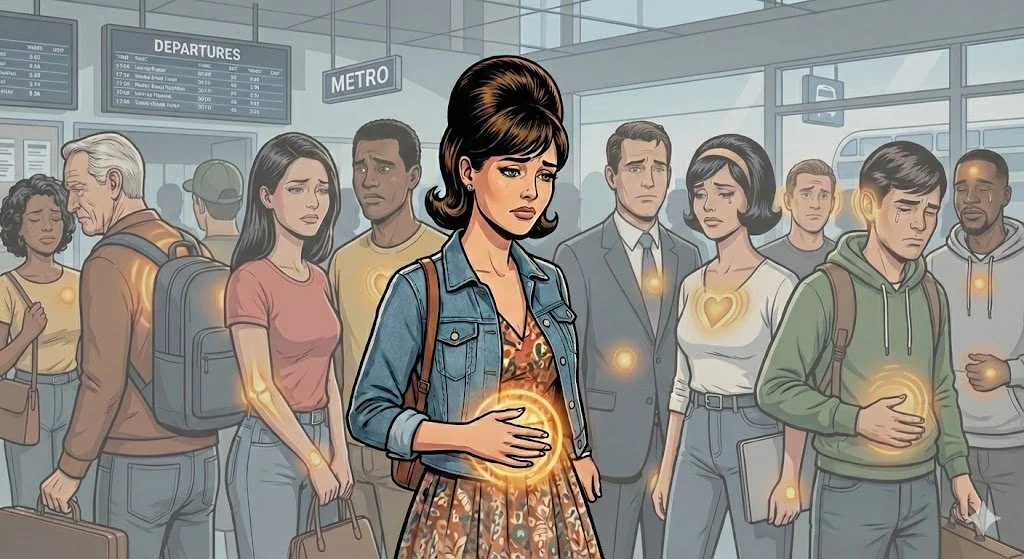
In this episode, Scott and Erika Forsyth define Stage 5: Fight, exploring how the desperate drive for control and perfectionism can lead to exhaustion, rebellion, and a warrior trap.
+ Click for EPISODE TRANSCRIPT
DISCLAIMER: This text is the output of AI based transcribing from an audio recording. Although the transcription is largely accurate, in some cases it is incomplete or inaccurate due to inaudible passages or transcription errors and should not be treated as an authoritative record. Nothing that you read here constitutes advice medical or otherwise. Always consult with a healthcare professional before making changes to a healthcare plan.
Scott Benner (0:0) Hello, friends, and welcome back to another episode of the Juice Box podcast. (0:14) Body grief is the sense of loss and mourning that comes with living in an ever changing body. (0:19) And in this new series with myself and Erica Forsyth, we're gonna talk all about it. (0:25) If you're looking for community around type one diabetes, check out the Juice Box Podcast private Facebook group. (0:31) Juice Box Podcast, type one diabetes.
Scott Benner (0:34) But everybody is welcome. (0:36) Type one, type two, gestational, loved ones, it doesn't matter to me. (0:40) If you're impacted by diabetes and you're looking for support, comfort, or community, check out Juice Box podcast, type one diabetes on Facebook. (0:50) While you're listening, please remember that nothing you hear on the Juice Box podcast should be considered advice, medical or otherwise. (0:58) Always consult a physician before making any changes to your health care plan or becoming bold with insulin.
Scott Benner (1:07) Today's podcast episode is sponsored by Medtronic Diabetes, who is making life with diabetes easier with the MiniMed seven eighty g system and their new sensor options, which include the Instinct sensor made by Abbott. (1:21) Would you like to unleash the full potential of the MiniMed seven eighty g system? (1:25) You can do that at my link, medtronicdiabetes.com/juicebox. (1:31) Today's episode is also sponsored by the Kontoor Next Gen blood glucose meter. (1:37) Learn more and get started today at kontoornext.com/juicebox.
Scott Benner (1:43) Jump right in, Erica. (1:44) Tell me what we're doing today. (1:45) Hi.
Erika Forsyth (1:46) We are going to move on to stage five, which is fight in our body grief series. (1:55) As we say every time, this is they're not linear even though we're discussing them in an, you know, numerical linear fashion and and sourcing this information from Jane Mattingling's book. (2:07) This is body grief.
Scott Benner (2:08) K. (2:09) Well, what does fight mean? (2:10) I'm going to beat this thing.
Erika Forsyth (2:12) Yes. (2:13) Tell me more. (2:14) Okay. (2:14) So fight is exactly what you've said. (2:18) We we kind of get into this mindset that I'm gonna beat this thing.
Erika Forsyth (2:23) We often hear we'll get into the, you know, I'm a t one d or diabetic warrior. (2:28) We often are in this stage when we are we're feeling powerless perhaps, and we are wanting to regain, kind of take back some of that control that we feel like we're it's out of control. (2:41) And, again, this can happen most certainly after diagnosis, but at any point in our journey with diabetes. (2:50) And often, you you might find yourself in the fight stage when you've kind of run out of all the other options. (2:57) Right?
Erika Forsyth (2:58) Like, you've you've been in dismissal or denial. (3:01) You've been in shock. (3:02) You've tried to maybe apologize your way out of this of what you're feeling from the body grief, and then you land in, okay. (3:11) I I'm gonna beat this thing. (3:13) And, as we talk about it, you'll hear probably both of us go back and forth between, like, that's not necessarily a bad thing
Scott Benner (3:19) Mhmm.
Erika Forsyth (3:20) All the time to be in this. (3:23) I can I can do it all?
Scott Benner (3:24) Right.
Erika Forsyth (3:25) But what we're gonna kind of maybe hopefully piece out is noticing when is it maybe problematic.
Scott Benner (3:31) Okay. (3:31) When is it? (3:33) I wanna wait to hear because I I was gonna say something, but I I'd like to go a little farther first. (3:37) Alright. (3:38) Keep going, please.
Erika Forsyth (3:38) So what does it look like when you're in the fight stage? (3:42) You are ignoring and overriding any cues that your body is giving you that you're in pain. (3:51) And and, obviously, when I say pain, it could be physical pain. (3:53) Right? (3:54) Because this could also even though we're applying these stages through and looking at them through the lens of living with diabetes, but you could also think about it through any other issue, injury, surgery, anything that's going on in your body.
Scott Benner (4:05) Mhmm.
Erika Forsyth (4:06) Right? (4:06) So you might be having extreme emotional dysregulation. (4:12) You're angry. (4:13) You're sad. (4:14) You're happy.
Erika Forsyth (4:15) You're you might have some physical cues that your body is giving you that you're in fight. (4:21) Maybe you're having a heart racing. (4:23) Your thought is racing. (4:24) Maybe you're feeling anxious. (4:26) You might have kind of those warm, like, hot flashes, but not necessarily just because you're in maybe that stage of life.
Erika Forsyth (4:34) Your nervous system, you're just you're irritable. (4:37) You're just quick to easily angered, easily irritated. (4:41) Mhmm. (4:42) So you're you're having all those experiences physically and emotionally in your body, and yet you're trying to push through it, and you're keeping it all together. (4:50) Right?
Erika Forsyth (4:50) So you're still like, I'm feeling all these things, but I'm gonna ignore them, and I can do this. (4:54) Right. (4:55) Okay. (4:56) Again, there are times when that probably is helpful, but there are times when that's detrimental.
Scott Benner (5:01) Tell me how it is detrimental when it is.
Erika Forsyth (5:04) Okay. (5:05) You are ignoring, right, that these your body is giving you these cues and these signs that you're not okay. (5:13) Sometimes when you're ignoring that repeatedly and trying to push it away and say, I'm fine. (5:20) I'm gonna keep it all together. (5:21) I don't I don't wanna be perceived as weak.
Erika Forsyth (5:23) I don't wanna purse be perceived that this diabetes thing has got me. (5:27) I'm gonna be stronger than that. (5:29) It's those emotions and those feelings are gonna come out in other areas of your life.
Scott Benner (5:36) It's almost the equivalent of just kinda running on adrenaline until it's gone, and then you realize your leg's broken, you fall over. (5:44) That kind of an idea?
Erika Forsyth (5:45) Yes. (5:45) Yes. (5:46) Okay. (5:46) Yes. (5:47) So maybe at times, you do need to be in the fight stage and, like, okay.
Erika Forsyth (5:54) I gotta do this thing. (5:55) I gotta work through this. (5:57) But we're talking about, like, this is you know, you're in repeatedly, consecutively in this fight stage and ignoring all these other signs that your body's giving you that you're in pain.
Scott Benner (6:08) And this can be physical, emotional, all kinds of different pain. (6:13) Right?
Erika Forsyth (6:13) Yes. (6:14) So you you also might notice if you're ignoring all these cues when somebody makes a comment or they're trying to maybe even be kind, and we've talked about this before, you know, where they might ask a question that they're trying to be kind and considerate, but it just lands as very ignorant. (6:35) Mhmm. (6:35) You don't have to be in fight stage to be triggered by that, but it also if you are constantly and consistently noticing that you're just set off so easily by anything
Scott Benner (6:46) Right.
Erika Forsyth (6:46) Whether you're reading it online or you're seeing a commercial or a personal comment from a friend and you just wanna lash out, that could be a sign that you are in this fight stage.
Scott Benner (6:59) Okay. (7:00) Yeah. (7:01) I I never understand. (7:03) This makes it clear for me when people get upset, like, a like a late night host makes a joke or something, and they're just upset for days afterwards. (7:11) I was like, I mean, it's you know, it may be ham fisted or even ill advised, but, you're you're really upset.
Scott Benner (7:18) You're not gonna chain you know what I mean? (7:20) Like, it it's not a thing you can impact, really. (7:23) So if you have all this pain and you're what is it? (7:26) You're stuffing it down, you're trying to ignore it because you feel like I can beat what's happening to me. (7:33) Like, the thing my body's trying to do to me is not as strong as my will to resist it.
Scott Benner (7:39) Is that the idea?
Erika Forsyth (7:40) Yes. (7:41) That is certainly one of the ideas. (7:42) Okay. (7:43) So kind of we're looking at pass all the possibilities that's driving this behavior, whether you're you're conscious of it or not. (7:50) Mhmm.
Erika Forsyth (7:50) Right? (7:51) There I think there's the, I'm I'm gonna beat this thing because I don't want it to beat me. (7:56) There could be this kind of the public perception. (7:59) You're you're concerned and not wanting to be perceived as weak and letting this, you know, bring you down, and and we get affirmed by this all the time. (8:08) Right?
Erika Forsyth (8:08) Like, you're so strong. (8:09) How do you how do you manage? (8:11) How do you do all these things while living with a chronic illness, while living with diabetes? (8:16) And that's great. (8:18) That feels good.
Erika Forsyth (8:19) But if you are ignoring all of these cues that your body is giving you emotionally, physically, it that's just not sustainable. (8:27) Right? (8:27) If you're kind of living if that's your goal
Scott Benner (8:30) And if it's not true, right, if it's just it's just what you're presenting, then it's, I mean, it's really not sustainable at that point because you're just that is the ill advised side of fake it till you make it. (8:41) You can't Yes. (8:42) Yeah. (8:42) Yeah. (8:42) Yeah.
Scott Benner (8:43) You can't fake some things you can't just pretend don't exist. (8:46) So when when they do exist I mean, I imagine we're getting to this. (8:49) But, like, when they do exist, if they'll stop, address them, get those things in order, and then you won't even have the need to fight. (8:58) You put that fight into something more productive, I would imagine, after that.
Erika Forsyth (9:01) Yes. (9:02) Yes. (9:02) And we we are gonna
Scott Benner (9:03) Get to that.
Erika Forsyth (9:04) Get into that. (9:05) Yes.
Scott Benner (9:05) Alright. (9:05) I'm sorry.
Erika Forsyth (9:06) So the I meant, also, another kind of tangible example when like, what this might look like is, you know, pushing through the lows or ignoring your alerts. (9:18) Right? (9:19) Because there might again, there might be times where you feel like you'd need to or have to, but we're talking about kind of this consistent, like, I'm just I'm gonna fight through this. (9:28) I'm gonna push through. (9:29) I don't need to address this.
Scott Benner (9:33) Saying you're gonna fight through a low falling blood sugar is like Mhmm. (9:37) Getting shot and going, I'm not gonna die. (9:40) That's how you are. (9:41) Yeah. (9:42) Yeah.
Scott Benner (9:42) Yeah. (9:42) Like like, something something more powerful than your will is at play at that point.
Erika Forsyth (9:47) That's right.
Scott Benner (9:48) Yeah.
Erika Forsyth (9:49) But there are times where perhaps you feel like, okay. (9:53) I I can't stop. (9:56) It feels like you can't stop because you're gonna either interrupt the thing that's happening that you're like, whether you're in a a meeting or a work environment or a classroom or you feel like there might be other reasons why you feel like, okay. (10:09) I can't eat right now. (10:11) I can't treat it, or I don't wanna inject.
Erika Forsyth (10:14) I don't want to no. (10:15) That that might not because you're in fight. (10:17) There might be other reasons going on, such as apology. (10:20) Right? (10:21) Like, you might be embarrassed and not wanna interfere or interrupt with the flow around you.
Scott Benner (10:26) Yeah.
Erika Forsyth (10:28) But there are and I don't mean, like, pushing through a low, like, not taking your your treat, but, like, maybe you don't wanna ask to stop the just conversation.
Scott Benner (10:39) Happening. (10:40) Right. (10:40) Right.
Erika Forsyth (10:40) And you're just yeah.
Scott Benner (10:42) You're being kind by, like, couching in that direction. (10:44) But I've talked to a lot of people who really they can't articulate why. (10:49) They're just like, I I just felt like I didn't wanna do it, so I didn't. (10:53) And I'll say, but, you know, your blood sugar was 55 and it was still dropping. (10:57) Like, you know what happens after that.
Scott Benner (10:58) Right? (10:59) Like, why wouldn't you stop? (11:00) And they don't really know. (11:01) It is it's defiance. (11:03) I don't know when your conscious decision starts and when you're, you know, being incapable of thinking begins as your blood sugar gets lower and lower too, but it does seem to go in that direction.
Scott Benner (11:14) Do you know what I mean? (11:14) Like, it starts with, like, a conscious, I don't wanna do this and I'm not going to. (11:19) And then at some point, your blood sugar gets so low, I mean, what I've witnessed on other people that all of a sudden, can't make a good decision anymore. (11:27) But you're already kinda locked into, like, woo. (11:29) I'm gonna fight.
Scott Benner (11:30) I know for Arden, Arden gets into that weird ignores a low and says, I got it. (11:36) I'll get it in a second. (11:37) I'm too busy. (11:38) I'm doing my homework. (11:39) I'm doing this.
Scott Benner (11:39) Right? (11:40) And then she gets so low that it hits her thought process. (11:43) The next thing that happens to her is this incredible apathy. (11:46) Yo, man. (11:47) If it kills me, whatever.
Scott Benner (11:48) It's almost like talking to a hippie.
Erika Forsyth (11:51) That and that's the cognitive impairment.
Scott Benner (11:53) That's the cognitive impairment because that hap does that happen to you?
Erika Forsyth (11:56) Oh, of course.
Scott Benner (11:56) Yeah. (11:57) Yeah. (11:57) You're like, it's gonna be alright, baby. (11:59) I know.
Erika Forsyth (12:00) I try not to let it get to that point, but when it gets to that point, it's hard, and that's when someone's like, here, you you need to eat this thing right now.
Scott Benner (12:06) Yeah. (12:06) Because then you're impaired, like, at that point. (12:08) Right? (12:09) Mhmm. (12:09) And then and then under that impairment exists your inability to help yourself one way or the other and then, you know, the rest.
Scott Benner (12:17) So I'm sorry. (12:18) But it just it it feels, like, important to talk about like that.
Erika Forsyth (12:21) And there's so there's so many reasons, the when you feel low or you see you're low, I mean, there's so many reasons why you might not automatically treat. (12:33) Right? (12:33) Whether you you just brush your teeth, you don't feel like it, you're tired, you're not hungry.
Scott Benner (12:37) Mhmm.
Erika Forsyth (12:37) You're you're so over it.
Scott Benner (12:39) I had one too many
Erika Forsyth (12:39) gummy bears. (12:40) Gonna hope my
Scott Benner (12:41) what's that? (12:41) I've had one too many gummy bears in my life. (12:43) Yeah. (12:43) Yeah. (12:44) Right.
Erika Forsyth (12:44) Or, like, maybe my pump will if you're on an AID, you know, maybe maybe my pump will catch it.
Scott Benner (12:48) It's gonna catch. (12:49) It's gonna catch.
Erika Forsyth (12:50) It's gonna catch. (12:51) Yeah. (12:51) And you're kinda like, I'm comfortable in this chair. (12:54) I don't wanna have to get up.
Scott Benner (12:55) So if I send Arna a text that says, hey. (12:58) I see a low coming. (13:00) You're it's going to happen. (13:02) Like, if you do something right now, it'll never come to terms. (13:05) We're almost pre bolus ing those pushbacks from her.
Scott Benner (13:09) And me telling her it's coming, like, disallows her the autonomy to go through that process you just described. (13:17) You know, it occurs to me that there are not a lot of things in life that if you ignore them, they, in minutes, can turn into such a dire situation. (13:30) And that that almost feels unfair. (13:32) Like, unfair I think I I don't like to say things are unfair all the time, but, like, that really is unfair. (13:37) Like, you don't even have time to have your feelings about something before the unseen force takes over.
Scott Benner (13:45) And and and now it's it's beyond your control at that point. (13:49) Does am I making sense about that? (13:51) Like, one minute, you're like a thinking feeling person trying to be like, damn it. (13:56) I wanna fight this. (13:57) And then five minutes goes by, you know, you're basically drunk at that point.
Scott Benner (14:02) Mhmm. (14:02) You know what I mean? (14:03) Sucks. (14:03) Yes. (14:04) That's all.
Erika Forsyth (14:06) The tie the timing is so it's important. (14:10) It's significant. (14:11) Yeah.
Scott Benner (14:12) Yeah. (14:12) Yeah. (14:12) Like, you're you and then you're not.
Erika Forsyth (14:14) Yes.
Scott Benner (14:15) And but you're still in the same problem. (14:17) And you still think you're having a, you know, a cogent conversation with yourself about it and you're and you're not anymore. (14:25) The Kontoor Next Gen Blood Glucose Meter is sponsoring this episode of the juice box podcast, and it's entirely possible that it is less expensive in cash than you're paying right now for your meter through your insurance company. (14:39) That's right. (14:40) If you go to my link, contournext.com/juicebox, you're gonna find links to Walmart, Amazon, Walgreens, CVS, Rite Aid, Kroger, and Meijer.
Scott Benner (14:51) You could be paying more right now through your insurance for your test strips and meter than you would pay through MyLink for the Contour Next Gen and Contour Next test strips in cash. (15:03) What am I saying? (15:04) MyLink may be cheaper out of your pocket than you're paying right now even with your insurance. (15:11) And I don't know what meter you have right now. (15:14) I can't say that.
Scott Benner (15:15) But what I can say for sure is that the Kontoor Next Gen meter is accurate. (15:19) It is reliable and it is the meter that we've been using for years. (15:23) Contournext.com/juicebox. (15:27) And if you already have a contour meter and you're buying test strips, doing so through the juice box podcast link will help to support the show. (15:36) Unlike other systems that will wait until your blood sugar is a 180 before delivering corrections, the MiniMed seven eighty g system is the only system with meal detection technology that automatically detects rising sugar levels and delivers more insulin as needed to help keep your sugar levels in range even if you're not a perfect carb counter.
Scott Benner (15:57) Today's episode of the Juice Box podcast is sponsored by Medtronic Diabetes and their MiniMed seven eighty g system, which gives you real choices because the MiniMed seven eighty g system works with the Instinct sensor made by Avid, as well as the Simplera Sync and Guardian Force sensors, giving you options. (16:18) The Instinct Sensor is the longest wear sensor yet, lasting fifteen days and designed exclusively for the MiniMed seven eighty g. (16:27) And don't forget, Medtronic Diabetes makes technology accessible for you with comprehensive insurance support, programs to help you with your out of pocket costs, or switching from other pump and CGM systems. (16:40) Learn more and get started today with my link, medtronicdiabetes.com/juicebox.
Erika Forsyth (16:47) Yes. (16:47) And then it becomes even more complex, right, and complicated. (16:51) And they the I wouldn't even call it you know, we she can Jane, the author, sometimes says that this that fight leans heavily on dismissal or denial. (17:03) Right? (17:04) Like, I just I don't wanna follow this treatment plan, but I wouldn't even it's not necessarily even denial when you're like, okay.
Erika Forsyth (17:12) I see my arrow going down. (17:14) It could be for a moment
Scott Benner (17:16) For a moment.
Erika Forsyth (17:17) Or in a particular situation, I was like, I just don't wanna deal with this again. (17:21) It could be, you know, just exhaustion, and you're so over it. (17:26) You don't wanna have to treat it again.
Scott Benner (17:28) I'm gonna tell you that I've been having thoughts lately around the process that people go through when they're diagnosed, whether it's them or it's their it's a a child, right, or somebody they care about. (17:40) In the beginning, you are really struck with this idea of, like, all the bad things that may happen over the decades that are coming. (17:48) I'm gonna do something to stop them from happening or I'm gonna minimize them or we'll avoid them somehow. (17:55) And I have to tell you the longer that I live in this ecosystem with people who have type one diabetes, the more I think all of this is going to happen. (18:06) It's really not about trying to stop it from happening.
Scott Benner (18:08) It's about it's about navigating it and experiencing it and getting past it and moving on. (18:15) It's again, it's unfair. (18:16) Right? (18:17) That you're gonna deal with a lot of things as a type one you already have, right, that a lot of people aren't gonna be asked to deal with. (18:23) But I don't think there's avoiding it.
Scott Benner (18:25) Like, you I mean, you can avoid it by avoiding taking care of yourself and having such poor health that none of it matters. (18:30) But I just don't think you're getting around this. (18:32) I think this thing we're talking about right now, I would imagine that on some level and at some point, everyone is gonna feel this way. (18:41) You know what I mean? (18:42) Around diabetes.
Erika Forsyth (18:43) Yes.
Scott Benner (18:44) Yeah.
Erika Forsyth (18:44) Or or anyone, yeah, with or without diabetes because you have a body. (18:48) That's like the whole the whole theme. (18:50) Right? (18:50) Thesis.
Scott Benner (18:51) My knee hurt really badly a couple years ago. (18:54) I went to the guy, and he's like, oh, you know, you got some arthritis on the inside here. (18:58) We'll clean it out. (18:58) It cleans it all out. (18:59) He says to me, like, you're gonna need a knee replacement one day.
Scott Benner (19:02) I was like, awesome. (19:03) And then he goes, or not. (19:04) I don't know. (19:05) And I'm like, awesome. (19:06) But it's starting to get sore again in the same way it did before they cleaned it up.
Scott Benner (19:12) It's not life or death. (19:14) My blood sugar is getting really low. (19:15) I have to make a great decision right now or something bad's gonna happen. (19:19) But I think I'm going through the same process just much more slowly. (19:23) So anytime your body fails you not that this isn't what we've been saying the whole time, but anytime your body fails you, you're going through this process whether you realize it or not.
Erika Forsyth (19:33) 100%. (19:34) Yeah. (19:34) Yes. (19:34) Okay. (19:35) And it's about not trying to avoid it, but as you were saying, you know, feeling your way through it.
Erika Forsyth (19:42) You can't you can't get, like, onto the other side without processing and being you know, feeling these feelings and honoring them.
Scott Benner (19:50) This is the ride. (19:52) The the yeah.
Erika Forsyth (19:52) This is the ride.
Scott Benner (19:53) Yeah. (19:53) This is the ride. (19:54) Like, you don't there's not a different ride out there that you're not involved in or that you're trying to get to. (20:01) Like, this is it. (20:02) You're born.
Scott Benner (20:03) Your cells multiply. (20:04) You get bigger. (20:05) They start to go the other way. (20:08) This is this is just it. (20:09) You're just watching it happen more quickly when you have type one.
Erika Forsyth (20:12) Yes. (20:12) Or or may perhaps another
Scott Benner (20:14) Or other issues.
Erika Forsyth (20:15) Chronic illness. (20:16) Oh, yeah. (20:16) But also when you get a cold or when you have to face a surgery.
Scott Benner (20:21) Yeah. (20:21) Yeah. (20:21) Super super simple way to think about it. (20:22) But, like, you're you're okay, and then suddenly, you are not. (20:26) And you don't get to pretend you're not.
Scott Benner (20:28) That's not how it works. (20:29) But we do it because oh, what we talked about last time. (20:34) Right? (20:34) Like, you know, people are trying to move through the world. (20:37) The ones that sit down and give up die, so you gotta keep going.
Scott Benner (20:40) But we're not really in that it's not the world we live in anymore too. (20:45) You know what I mean? (20:45) It's not like if you can't get up, the wagon train's gonna leave you behind and a coyote's gonna eat your face. (20:50) Like, that's I mean, that is what would happen, by the way. (20:53) Can you imagine your last moments?
Scott Benner (20:55) Are you with a six shooter in a field thinking like, well, I can get five of these things and I'll save the sixth one for me. (21:01) Like, I mean, no kidding. (21:02) Right? (21:02) Just trying to get to Arkansas? (21:04) It's not fair.
Scott Benner (21:04) Oh my gosh. (21:05) It's not fair. (21:06) Erica, now you get in you get in your car, you tell it where to go, it drives you there. (21:10) Yeah. (21:11) But Gosh.
Scott Benner (21:12) I I'm joking, but I'm not. (21:14) Mhmm. (21:14) This is really it's been really super interesting. (21:17) I know we're not done the conversation yet, but I've I've been really, happy that we're talking about all this, but I I've stopped you. (21:23) Go ahead and and move
Erika Forsyth (21:24) forward. (21:24) Good.
Scott Benner (21:25) Yeah. (21:25) Thank you.
Erika Forsyth (21:25) Good pause. (21:26) So when we're in in fight, I think it might be it might look and feel differently when someone asks you the question, how are you doing? (21:37) We might avoid answering that question because, a, you might wanna say, I'm doing great because you're, you know, you're overworking. (21:46) You're overscheduling. (21:46) You're trying to prove that this diabetes isn't gonna bring you down.
Erika Forsyth (21:51) Mhmm. (21:52) And and and it truly might not. (21:54) Right? (21:54) Like, again, that's okay in a healthy place to be in, but also noticing if you're like, oh, I'm I'm, you know, I'm I'm fine. (22:02) I'm gonna beat this thing.
Erika Forsyth (22:03) It's not gonna bring me down. (22:05) But underneath, your your heart is racing. (22:08) You're feeling awful. (22:09) You're irritable. (22:11) You're sad all the time, noticing, okay.
Erika Forsyth (22:14) Maybe am I am I using this fight messaging to try and prove that I'm okay, but really I'm not inside? (22:23) Also, you might avoid or dodge the question, how are you doing? (22:28) Because of all of the things we've talked about in the prior stages of we just don't wanna go down that road of trying to explain what it is. (22:35) Mhmm. (22:36) We've dealt with the misconceptions and the stigma.
Erika Forsyth (22:39) And so fight might be, okay. (22:42) You know, I've got this thing. (22:44) I'm doing great. (22:45) But, really, we're, like that that was an ignorant question. (22:49) I don't wanna have to try and explain it.
Erika Forsyth (22:51) I'm exhausted. (22:52) And whatever I say to you, you aren't maybe gonna fully understand it anyway, so I'm gonna stay in. (22:58) I'm fine. (22:59) This is great. (22:59) You know, I got it.
Erika Forsyth (23:00) Yeah. (23:00) This you know, I'm it's not gonna beat me down.
Scott Benner (23:03) It's like wanting to explain your political position online. (23:07) Yeah. (23:07) Right? (23:08) Like, you're like, I it doesn't matter how long we sit here and talk. (23:11) I'm not gonna get how I feel across you.
Scott Benner (23:13) You're never gonna understand the way I feel, and we're all just gonna leave irritated.
Erika Forsyth (23:17) So Which is why, you know, speaking from one type one to another, there's so much value in that because you don't have to explain.
Scott Benner (23:26) Yeah.
Erika Forsyth (23:26) And you can be vulnerable without having to justify, or you you don't have to present as, you know, I've got it all together.
Scott Benner (23:35) I've seen it. (23:36) Like, I you know, I've said we did it on the cruise ship. (23:39) We did it. (23:39) I you know, I said friends for life. (23:41) Like, just everybody comes in a room and whatever that vibrating is behind everybody's eyes just feels like it goes away.
Scott Benner (23:48) Mhmm. (23:48) It's really, really wonderful. (23:50) Yes. (23:50) Yeah.
Erika Forsyth (23:51) Yes. (23:52) I think there also might be again, we're just wanting to encourage noticing the why. (23:58) Like, why are you in this why are you either answering it this way? (24:03) The question, how are you doing? (24:04) Why are you feeling this way?
Erika Forsyth (24:06) And none of being in fight necessarily isn't wrong. (24:11) Right? (24:11) I really wanna be clear with that. (24:13) Like, because we have to be warriors to keep going. (24:17) And
Scott Benner (24:18) It's a bigger picture. (24:19) Like, I keep hearing you went yeah. (24:20) I know you don't want people to feel like you're saying, like, hey. (24:23) You know, there's nothing wrong with fighting back. (24:25) But, like, I think they're two different understandings of the same concept.
Scott Benner (24:30) Like, there's nothing wrong fighting back a little bit, not giving up and everything. (24:34) That's one thing. (24:35) But when you need to ask for help because you are five seconds away from running out of adrenaline and falling over, that's not the time to be fighting anymore. (24:43) Now you gotta look at yourself and say, why have I continued to fight beyond my ability to overcome this situation to my own detriment? (24:50) This is gonna end with me slumped over here.
Scott Benner (24:52) Like, why am I not stopping? (24:54) That's what you wanna say. (24:55) Right?
Erika Forsyth (24:55) Yes. (24:56) Yeah. (24:56) Yes. (24:57) That was an excellent, yes, your reflection and summary. (25:01) What, like, what is driving that behavior?
Scott Benner (25:03) Yeah.
Erika Forsyth (25:04) Is an element of it also fear? (25:07) Right? (25:08) Are are you fearful that your body won't be able to perform or act or in your workplace, in your relationships the way you want it to be. (25:19) And sometimes that fear can also lead to this need for perfection. (25:26) Mhmm.
Erika Forsyth (25:27) With and with diabetes, whether it looks like I need I need to have straight lines because then that makes me feel like I'm in control. (25:34) Do I need to have 99% time and tight range? (25:38) Again, those things I'm not saying those things are wrong, but noticing what is driving that that need for either perfection or performance. (25:48) Is it making you feel like you're in control? (25:51) And and to a degree, you it might be.
Scott Benner (25:53) Yeah. (25:54) And maybe there's times when that's important too.
Erika Forsyth (25:56) That's right.
Scott Benner (25:57) Maybe there are times when you you are gonna fake it a little bit and, you know, lean on. (26:01) Look. (26:01) I kept my graph perfectly. (26:02) I'm doing well. (26:03) It gives you some you know, it gives you a little self confidence, maybe a little energy to move forward a little bit.
Scott Benner (26:08) And but there's just nothing wrong with saying I need help or this isn't going well and that's okay or anything in that space too.
Erika Forsyth (26:17) Yes. (26:18) And, also, like we've talked about before when the messaging, which also I had as a child from my parents of, you know, you are a warrior. (26:27) You've got this. (26:28) Don't let this get in the way of your goals. (26:30) That is a 100% a beautiful message, and you also get to have space to say, this sucks.
Erika Forsyth (26:36) I hate diabetes. (26:37) I don't want this. (26:38) But I I know I still can, like, work towards my goals, but I also kinda hate it sometimes.
Scott Benner (26:42) I've always
Erika Forsyth (26:43) said That's that was a really oversimplification because No.
Scott Benner (26:45) But I've always said to people, like, you know, I get why you say that to your kids, but at the same time, like, you're so brave. (26:51) You're so brave. (26:52) My kids are so brave. (26:53) And I that's not not true. (26:55) Of course, it's true.
Scott Benner (26:55) But also, people don't wanna be brave. (26:57) It's not they don't wake up in the morning and go, oh, I hope I am faced with so much turmoil that my only choice is to be brave today. (27:05) And when you're telling them that, I think you're kind of there you could be reminding them that their life is such that they have to be brave while other people are walking around, you know, smoking a smoking a fatty and, like, playing video games, and they're off having to be brave. (27:22) They're like, this isn't fair. (27:23) Like, I don't want this.
Scott Benner (27:24) Also, I don't wanna be brave. (27:25) I'm not looking to be brave. (27:26) I'm trying to live a normal life here. (27:28) I keep hearing you say it because I and I feel it too. (27:31) Like, it is a really nice message.
Scott Benner (27:33) You're a warrior. (27:33) You can do it. (27:34) That's great. (27:35) Except on the day where I don't wanna be treated that way. (27:38) And then when you tell that to me, what I hear is my life sucks.
Scott Benner (27:41) That's kind of the the the balance. (27:43) And I don't know how
Erika Forsyth (27:43) you figure out which way. (27:45) Yes. (27:45) That's or having those feelings that, hey. (27:50) I I can be a warrior. (27:52) I can achieve my goals.
Erika Forsyth (27:53) I can play on these sports teams. (27:55) I can show up and get good grades in my classes. (27:58) But, also, is that what is is it okay to have these, quote, unquote, negative feelings towards diabetes? (28:05) I think that's we wanna just, you know, give that permission Mhmm. (28:09) To feel all of the feelings towards it.
Erika Forsyth (28:12) And sometimes when you're bombarded with that message of you're a brave warrior, it feels like maybe you're doing something wrong if you have that feeling.
Scott Benner (28:19) There's the saying, right, about, about having sand held in your hands. (28:23) Right? (28:24) Hold it too loosely. (28:26) It remains where it is. (28:27) Squeeze it too tightly.
Scott Benner (28:28) It trickles out through your fingers, like, kind of whole idea there. (28:32) That's acceptance. (28:33) Right? (28:34) The open hand is acceptance and and squeezing it is it's like it's an attempt to control something
Erika Forsyth (28:40) Mhmm.
Scott Benner (28:41) And that never works out. (28:43) And to bring that back to this is you or your loved one has, whether they know it or not or care to or not, has a relationship with the fact that they have diabetes. (28:54) Yes. (28:54) Right? (28:55) Or that their body is you know, if it's, you know, something else that we're that we're not talking about today.
Scott Benner (29:00) Like, another issue where your body is is sending you grief by not doing what it is you want it to do or that you were promised it would do. (29:07) Yeah. (29:07) And so there's something there about, like, you know, there's something about the sand metaphor and the you're so brave that to me fits together and they they support each other. (29:18) I I don't know. (29:18) Like, I'm sorry.
Scott Benner (29:19) I can't bring the whole thought together. (29:20) But, anyway, think about that in your house and don't go too far in either direction. (29:24) That's what I'm thinking. (29:25) That make any sense? (29:26) Yes.
Scott Benner (29:27) Did I just go down, like, a weird rabbit hole?
Erika Forsyth (29:28) So it's so good, and I wish I I wanna, like, make a beautiful connection to the sand and bravery. (29:35) But I think that the acceptance piece and holding you know, you're you're doing what you can to live a healthy life. (29:41) So you're holding it. (29:42) But if, you know, if you're opening it up your hands too much, maybe you're kinda maybe that's when you're in the stages of, you know, denial or I'm sorry. (29:50) I I don't want yeah.
Erika Forsyth (29:51) I don't wanna hold everything. (29:52) So there's some responsibility in holding the sand.
Scott Benner (29:56) Mhmm.
Erika Forsyth (29:56) Right? (29:57) But then if you're squeezing it, trying to control it, and manage it, and shape it, and you're gonna lose that sense of balance.
Scott Benner (30:05) Yeah. (30:05) Anyway. (30:05) I'm not the right one to tell you about Taoism, but, like, you know, I think somewhere in there, there's some message.
Erika Forsyth (30:11) Okay.
Scott Benner (30:12) Yeah. (30:12) I I again, I don't know enough about it to talk about it. (30:15) It's about control. (30:17) And and, you know, if you love something what is it? (30:19) If you love something, set it free.
Scott Benner (30:21) Right? (30:21) Is that the idea?
Erika Forsyth (30:22) Mhmm. (30:22) Mhmm.
Scott Benner (30:23) So there's something about the way you talk about those things to each other, to yourself that holds a lot of power depending on where the person is in their situation. (30:36) And that's the most difficult thing.
Erika Forsyth (30:37) Like, I
Scott Benner (30:37) used to joke remember, I've joked with you before. (30:39) Like, I said to my wife, if there was just a warning light on your head that told me what mood you were in, I think this would all go be so much easier. (30:47) Mhmm. (30:48) The toughness here is when you're supporting yourself or a loved one with diabetes, you don't know where they're at when you deliver the you're so brave message. (30:57) That's a difficulty of of human communication.
Scott Benner (31:00) I don't know how to fix that. (31:01) That's right. (31:01) That's a podcast isn't gonna help you with that.
Erika Forsyth (31:04) Yeah. (31:04) Because, like, it's basically it's I'm I know we're kind of going off tangent, but I think when you're telling somebody you are so brave, if they aren't feeling brave in the moment and they're feeling discouraged and just soaked in deep despair or grief, then it feels like that feeling is being dismissed.
Scott Benner (31:22) It lands opposite. (31:23) Yeah. (31:24) Yeah. (31:24) It lands opposite of how you mean it, and it lands opposite of how they could take it if they were in a different mind frame at that moment.
Erika Forsyth (31:31) Mhmm. (31:31) So it is it's it's a it is this this gentle balance. (31:34) Right? (31:34) Because you're wanting to encourage
Scott Benner (31:35) Yeah.
Erika Forsyth (31:36) While simultaneously mirror and validate what they're feeling or what yourself what you're feeling. (31:42) It's complicated.
Scott Benner (31:43) Yeah. (31:43) I know. (31:43) I I I have two children and a wife. (31:45) I I'm constantly looking for ways to make this I figure it out right before I die. (31:50) You know what I mean?
Scott Benner (31:51) Like, I have, a big moment. (31:52) I go, oh, I got it, and then I'll be gone. (31:53) I don't know. (31:54) I've I've just I've thought about it a lot. (31:56) And, you know, for people who used to say, oh, the podcast will once Arden starts taking care of herself, there'll be nothing left to talk about.
Scott Benner (32:02) There's a lot left to talk about. (32:04) There's a lot of things I did over the years that if I was the person I am now, just like with everything else, I would have done it differently or not at all. (32:12) But at the same time, if you don't do the things if I didn't do the things that I did, we wouldn't have got to where we are. (32:18) So, I mean, I that's life struggle in general. (32:21) Right?
Scott Benner (32:21) Like, you after you learn, you think, oh, I could do it better. (32:23) But if you went back and did it better, what are the things you wouldn't have done that might have ended up being important that would have gotten skipped? (32:29) There's no real right answer. (32:32) Oh, jeez.
Erika Forsyth (32:33) Wow. (32:34) Okay.
Scott Benner (32:34) I'm sorry. (32:35) Go back to your thing, Erica, before I
Erika Forsyth (32:36) No. (32:37) It's good.
Scott Benner (32:37) Before I jump out a window. (32:38) Go ahead. (32:38) Oh
Erika Forsyth (32:39) my gosh. (32:40) Okay. (32:41) Let me take a deep breath, and we are gonna go into what can we do, like, when you're noticing that you're in this fight stage of I'm gonna beat this thing. (32:51) This is not gonna bring me down, and your body is giving you other cues that you are not feeling very well physically, emotionally. (32:59) So a lot of these tools are taken directly from the book, and these are actually tools that we've talked about before, but I like the the labels that she uses.
Erika Forsyth (33:08) Okay. (33:09) So noted practicing, I'm only human, and we're gonna go through five different ways to do that. (33:15) So taking a a, quote, planned rebellion, which in our, you know, world could look like taking a technological, you know, tech break from your CGM, from your pumps. (33:29) If you're feeling like, I just can't do this anymore, obviously, with, you know, the consultation of your doctor. (33:38) And I think once you decide to either remove the pump or go on to MDI, I think it's sometimes it can you can feel maybe you enjoy the benefits, but then it's hard to go back.
Erika Forsyth (33:50) And so I like to remind people giving giving yourself permission to if you're if you're on a pump and you go to MDI and you're then you feel like, I should do I wanna go back to a pump? (34:01) Like, go back for a day and but give yourself permission to switch back. (34:05) Because I think so often when we feel like there's so many we feel trapped in a lot of ways. (34:09) We do have some options in terms of how we manage, and keeping that giving yourself permission and freedom to make those choices is really important.
Scott Benner (34:16) This first one, I won't I won't stay here long with it, but it made me feel very good for Arden because I see her make those little rebellions. (34:24) Like, her CGM, like, timed out yesterday. (34:27) It you know, I know some of you think that some of you talk about how you your CGM doesn't last very long, and I I'm not bragging here. (34:33) Obviously, it'd be a weird thing to brag about, but Arden's usually goes, you know, full ten days, twelve hours. (34:39) There's that loud beep that says, like, hey, You did it.
Scott Benner (34:42) You rode me as far as I can go. (34:44) Like, this is done now. (34:45) And she just sort of sits there and doesn't do anything about it. (34:48) Sometimes for a half an hour or an hour, and then eventually, and she's doing something. (34:53) She'd be homework or she's studying or watching television or something.
Scott Benner (34:56) And she just sort of get up and put another one on. (34:58) And I used to talk to her about like, hey, if you put it on now, then when that one fails, this one already be on or like when we get to the end. (35:05) Mhmm. (35:06) And then it just hit me in the last year. (35:07) Was like, she's doing this on purpose.
Scott Benner (35:09) Like, this is her own little planned rebellion. (35:12) Mhmm. (35:12) I didn't put them in those words, but that is that's what she was doing. (35:16) She was taking a moment and saying, I know I need this thing and it helps me a lot, but I am just gonna make a conscious decision not to wear it even if it's just for a half an hour or so. (35:26) Mhmm.
Scott Benner (35:26) Cool. (35:27) Alright.
Erika Forsyth (35:27) And it and it's okay.
Scott Benner (35:28) Yeah. (35:29) It's not just okay. (35:30) I think it's valuable.
Erika Forsyth (35:32) Yes. (35:32) Yeah. (35:33) Yes. (35:33) Thank you. (35:34) Yes.
Erika Forsyth (35:34) Okay. (35:35) The next one is called the unicorn complex, which is in in the way she defines it is I'm stronger than other people. (35:45) I will fight this thing. (35:46) Or, you know, I I'm gonna nail this a 100% time and tight range four point something a one c. (35:55) Nothing wrong with that, but noticing what is what is underneath some of those thoughts and behaviors.
Erika Forsyth (36:01) And so noticing, okay. (36:03) We are not unicorns. (36:04) We are humans. (36:05) And one way, if you feel like you're trapped in that mindset of just, like, I have to get this right. (36:11) I have to be straight lined or whatever it may be to interrupt some of that thought process is to find some moments of gratitude.
Erika Forsyth (36:21) Mhmm. (36:21) And maybe that can be as simple as my body woke itself up from a low, or I just or I woke up, or I'm grateful for clean water. (36:31) I'm grateful for for clean air, or perhaps I'm I'm grateful that my time in range went up by a half a point. (36:38) Or I'm grateful that my my time in range went down, and I'm not going to shame myself or beat myself up for that. (36:47) So just acknowledging the humanness, and finding small or or big things in which you could be grateful for.
Scott Benner (36:54) I can see where this this unicorn complex in certain disease states you know, if I'm in the, you know, the last year of a cancer battle, then this is where I I think this is where my mind should be. (37:06) Right? (37:07) But with the with diabetes type one, you know, or or other issues, it's not always, you know, first in goal. (37:14) And if we let them in, the game's over. (37:16) Like, you and but, know, and it can feel like that.
Scott Benner (37:19) And that, I think, is important to not constantly be in this, like, this is do or die every five seconds. (37:27) You know what I mean?
Erika Forsyth (37:28) Yes. (37:29) But and it's just as hard as it is to get out of that mindset, it can be really easy to get into that. (37:34) Right? (37:35) Mhmm. (37:35) Depending on your messaging, your own internal narrative
Scott Benner (37:40) Yeah.
Erika Forsyth (37:40) What you're exposing your mind and body to. (37:43) And so it's so easy for us in in the, you know, the diabetes world to get caught up in that.
Scott Benner (37:50) I it's not I do see a lot of people who feel like it's always it's always do or die. (37:55) Everything we're doing is just absolutely this is it right here. (37:59) Every every five seconds, they think they're in their last stand. (38:02) It just occurred to me that I don't know what Arden's blood sugar is, and I haven't known for a really long time. (38:08) So I brought it up because she's taking a final right now.
Scott Benner (38:11) Her blood sugar is one forty three. (38:13) I hope that helps people to know that, like, I I didn't I haven't known what her blood sugar's been since, I don't know, like, o'clock this morning when I heard a beep, and I was like, I wonder what that is, and it dipped under 70 for a minute.
Erika Forsyth (38:25) But this six nine times maybe when you were
Scott Benner (38:28) Oh my god.
Erika Forsyth (38:29) Looking at it.
Scott Benner (38:29) Yeah. (38:30) No. (38:30) I mean, yeah, there's times when I lived my whole life thinking that, like, every second she was about to die. (38:36) You know, there's stories are all over the podcast about where I Mhmm. (38:39) Had my little lessons along the way and, you know, what technology has been helpful and
Erika Forsyth (38:44) Mhmm.
Scott Benner (38:44) And not. (38:44) But I guess what I'm saying is, again, like earlier is this you're all gonna go through this. (38:50) Like, nobody's not going to go through this. (38:52) You're either gonna go through it or you're gonna ignore it, and it's gonna bother you in the back of your brain for the rest of your life, one or the other. (38:58) It's not about avoiding it.
Scott Benner (38:59) It's about seeing it and finding a way whether it's through community support, someone in your family, something you read online, a book. (39:07) Doesn't matter to me, like, where you figure it out, where you can look at the problem and say, okay. (39:12) This is not a thing that needs my attention all the time. (39:14) We're gonna be okay if we're not talking about this every second of the day. (39:18) Let's move on, find out what the next thing is, and get past that.
Erika Forsyth (39:22) Yes.
Scott Benner (39:22) That just seems to be how it feels to me.
Erika Forsyth (39:26) Yes. (39:26) K. (39:26) This this next one is kind of what I think you were alluding to when we first started chatting, choosing your battles. (39:34) So learning and understanding when to fight and accept what you need instead of fighting within yourself. (39:42) So this might look like, you know, asking for accommodations in the schools, in your workplace, in your family system as opposed to, I I'm just gonna push through.
Erika Forsyth (39:53) I'm not gonna make them wait. (39:54) I'm gonna go do my thing. (39:56) You know, this is kind of coming out from that apology stage where you're like, I'm sorry. (40:00) I need to go do this. (40:01) Please don't.
Erika Forsyth (40:02) You know?
Scott Benner (40:02) Yeah.
Erika Forsyth (40:03) And I have I have a quote here. (40:04) It's fairly long, so I don't know if I need to read it or not.
Scott Benner (40:07) You want to?
Erika Forsyth (40:08) For it?
Scott Benner (40:08) Yeah. (40:08) Right.
Erika Forsyth (40:08) So this is I don't know who this person is who wrote who wrote this with I was talking about body grief casually with a colleague, and she holds in person meetups for for type ones, grown up grown up t one d's. (40:24) And she sent me this quote from someone who went to the meetup, and I thought, oh my gosh. (40:29) This is exactly, you know, choosing your battles and building body trust. (40:34) After after the meetup, not only did I feel so much better about the decision to get surgery, but I also felt better about taking medical leave for more than a few days for it to really allow myself to care for my diabetes and allow it to impact my life instead of focusing so hard on trying to ignore that I'm chronically ill. (40:54) It's a lesson that I'm working on that sometimes strength and being a warrior means fighting for rest and self care instead of fighting with myself to avoid being different than people who don't have die disabilities.
Erika Forsyth (41:09) Yeah. (41:09) So I just love that. (41:10) Like, she's fighting for her time off. (41:13) She's fight you know? (41:14) Yeah.
Erika Forsyth (41:14) And fighting to take care of herself, fighting to acknowledge that she might need more time
Scott Benner (41:19) to
Erika Forsyth (41:19) recover because of her diabetes or whatever it may be. (41:24) And so I just want us to kind of consider being a t one d warrior. (41:30) I think we automatically think, you know, pushing through, fighting for it. (41:33) Don't let it get in the way, but also it might mean fighting for that extra day off. (41:38) Right?
Erika Forsyth (41:38) Or whatever whatever the the lesson or example may be.
Scott Benner (41:41) Yeah. (41:42) Live in the reality of your situation too. (41:44) Not not to like, you know, I just had a procedure maybe nine days ago. (41:48) And, you know, I remember saying to the doctor, like, when will I feel better? (41:51) He goes, oh, you'll be up and moving the next day.
Scott Benner (41:53) You'll be sore and stuff like that. (41:55) And in my mind, I'm like, oh, so I'll be just be fine the next day. (41:58) And then when I wasn't, instead of fighting it, I was like, yeah. (42:02) I'm not. (42:02) So I'll just take it easy.
Scott Benner (42:04) And I, you know, I didn't I didn't wanna take Advil afterwards, but but I did. (42:08) I was like, alright. (42:09) It turns out I need this. (42:10) Like, you know, like, I and I think when I was younger, I'm trying to decide as we're talking, was I stronger and therefore more able to ignore the situation even though I was going through it? (42:24) And now that I'm older, I can't ignore it, or is this a maturity thing?
Scott Benner (42:30) And back then, I was just being immature about it, and now I'm being more mature. (42:33) I can't decide if it Right. (42:35) Which it is exactly. (42:36) I don't think I'm gonna know ever, but that's my wonderment. (42:39) It's like, is that was that is this maturity or is it a physical inability?
Scott Benner (42:44) And I don't think it matters one way or the other. (42:45) I think I'm handling it better now than I would have in the past.
Erika Forsyth (42:48) Yeah. (42:48) That's a great example. (42:50) And I think the just noticing the why. (42:53) Right? (42:53) Again, going back to, okay.
Erika Forsyth (42:55) Why am I pushing through? (42:57) Am I not taking more time off because I'm worried about how people are gonna perceive me? (43:02) Is it a stigma thing? (43:04) Is it, I have more physical endurance so I can?
Scott Benner (43:07) Yeah.
Erika Forsyth (43:08) You know, what what is it? (43:10) Or is it, you know what? (43:11) I I need more time, and I'm gonna take it, and that's okay.
Scott Benner (43:15) Yeah. (43:15) And it's hard to say, but, you know, if your job, for example, doesn't want to give you time, maybe that's not the right job for you. (43:23) You know what I mean? (43:24) Like, if your friends don't wanna be supportive a little longer, maybe those aren't the right friends. (43:28) I I know that's a hard thing to say because at the end of those sentences, you're alone or broke or whatever.
Scott Benner (43:33) Mhmm. (43:33) You won't be alone or broke in your heart and in your day to day existence, and and there's trade offs in there. (43:39) I'd rather you feel centered and cared for personally then I mean, don't get me wrong. (43:47) Like, if once or twice you gotta tough it out and go to work when you're sick or something like that. (43:51) Like, it is what it is, but, like, not if it's pervasive over your entire life.
Scott Benner (43:55) That's that's different. (43:56) You know?
Erika Forsyth (43:57) Creeping into, you know, the boundary setting. (44:00) Right? (44:00) Like, what it looks like and feels like for honoring what you need and how that might create discomfort for other people
Scott Benner (44:08) Yeah.
Erika Forsyth (44:09) Or your company.
Scott Benner (44:10) And I would say too for people who maybe because you listen. (44:12) You're a very kind person. (44:13) You're well educated. (44:14) We don't talk about it enough, but you are.
Erika Forsyth (44:16) Thank you.
Scott Benner (44:17) What did you just say? (44:18) You just said making what did you say? (44:19) Make you sometimes just say making space or, what what did you just say?
Erika Forsyth (44:23) Setting. (44:23) Setting.
Scott Benner (44:24) Uh-huh. (44:24) Yeah. (44:25) Let me put this another way for people who that may that is, uncomfortable for because they're like, oh, that's that's a therapy talk. (44:31) Just tell people to go to hell. (44:32) Okay?
Scott Benner (44:33) Like That
Erika Forsyth (44:35) is not what I'm saying.
Scott Benner (44:36) That's not what she said. (44:36) That's what I'm saying. (44:37) Okay. (44:38) You'd call your job up and you say, listen. (44:40) Go fuck yourself.
Scott Benner (44:41) Okay? (44:42) I'll be back on Wednesday and you'll live with it. (44:44) And I do a good job here, and I've been here for four years, and cut me a break. (44:48) My thing don't work. (44:49) That's it.
Scott Benner (44:50) And I don't wanna hear about it.
Erika Forsyth (44:51) Letting me know that, yes, that is Scott's coping skill. (44:54) Not yes.
Scott Benner (44:55) That's You would say set boundaries. (44:57) That's nice. (44:58) Mhmm. (44:58) I would say maybe once in a while, you gotta tell people to shut them shut up. (45:03) Oh.
Scott Benner (45:04) Over here trying to deal with a thing. (45:06) Listen. (45:07) My brother got sick a month ago. (45:09) And, you know, I I I've told told that I don't wanna, like, over, like, vomit, but he was hiding it a little bit from me. (45:15) Like, we talked pretty frequently.
Scott Benner (45:17) It's his wife that stepped up and said, hey. (45:19) He doesn't feel well. (45:20) He doesn't wanna tell you. (45:21) I got him right on the phone. (45:22) I was like, what's this going on?
Scott Benner (45:23) What are we? (45:24) Five? (45:24) What's wrong? (45:25) And, like and he explained to me what's going on. (45:27) And I was like, what where are they at?
Scott Benner (45:29) And he explains what the doctor says. (45:30) I said, that's not right. (45:32) I was like, I think this is what's going on with you. (45:34) And I over the next couple of days, remote controlled from halfway across the country, moved him through some situations, some doctor's appointments, got him where he needs to be. (45:44) And one of the last steps was I and people are gonna like, people are gonna come back out.
Scott Benner (45:50) You're out of your mind. (45:50) I made him I didn't make him. (45:52) I asked him. (45:52) He called his doctor's office, gave them permission for me to speak to them. (45:57) I got on the phone with the nurse.
Scott Benner (45:59) I went over the entire thing. (46:00) Not that my brother's not capable. (46:02) My brother was at that moment on a factory floor running a giant press so that you guys all have something out in the world that you buy all the time. (46:09) He couldn't not go to work. (46:11) He had to go.
Scott Benner (46:11) He was sick. (46:12) He was really in trouble. (46:14) Terrible joint pain, rundown, really in a bad way. (46:18) I texted him. (46:19) I said, got your doctor's appointment.
Scott Benner (46:20) I need you to leave work and go to this appointment. (46:22) You have to take this appointment. (46:23) It's the only one they have. (46:24) He says, I can't leave work. (46:25) I was like, yes.
Scott Benner (46:26) You can. (46:27) I was like, get out of there. (46:28) I was like, you cannot afford not to leave work. (46:30) Just leave. (46:30) So he worked it out.
Scott Benner (46:31) He left. (46:32) By the way, he filled out some paperwork. (46:34) He got, like, some short term FMLA. (46:36) He got paid for it. (46:37) It all worked out fine, but that is not why I'm telling you the story.
Scott Benner (46:40) I'm telling you the story because we have a group chat, my brothers and I, and he said, I haven't had any pain for a week now. (46:50) I'm really starting to feel better. (46:52) I got my FMLA. (46:54) That worked out. (46:55) I really appreciate everything you did for me.
Scott Benner (46:58) I would definitely still be in pain if you weren't involved. (47:02) Aw. (47:02) I'm telling you that because he wasn't capable. (47:07) He was capable of handling the situation. (47:09) He wasn't capable of I'm use your word, of creating boundaries in places during the situation where he needed them.
Scott Benner (47:16) So because he wouldn't set a boundary at work, because he wouldn't set a boundary with the doctor and a couple of other places, they were stringing him along and leaving him in pain and telling him that what was true wasn't true. (47:29) Mhmm. (47:30) Because I don't know what's wrong with me. (47:32) I stood up and I was like, no. (47:34) We're right.
Scott Benner (47:35) They're wrong. (47:35) Push back. (47:36) And he's like, well, did. (47:38) I said I was like, no. (47:39) No.
Scott Benner (47:39) No. (47:39) No. (47:39) And I got him on the phone, and I just I just said to him, like, my brother clearly has an underlying infection. (47:44) I was like, your doctor being afraid to give him the right medication, I don't care about this anymore. (47:49) Because what had happened was the doctor pushed him off on the ER.
Scott Benner (47:53) The doctor didn't wanna give him the the antibiotic because he wasn't hitting the right markers, but it was clear what was wrong. (47:59) So the doctor and sent him to the ER thinking the ER would do it. (48:03) Well, the ER and sent him back to his doctor. (48:06) So they started ping ponging him back and forth. (48:08) The doctor actually sent him back to an ER, the same ER, the second time.
Scott Benner (48:13) And later, during conversation, admitted to him, I was just hoping they would give you the antibiotic. (48:20) And so because I'll get in trouble if I give it to you. (48:24) And then finally, when he wrote the script, handed it to my brother and at the end said, I hope I don't get in trouble for this. (48:30) And now Brian's fine. (48:32) So nobody wanted to do the right thing for him.
Scott Benner (48:35) Mhmm. (48:35) And if he wouldn't have set boundaries up or somebody wouldn't have set boundaries up, I honestly don't know where he'd be at this point.
Erika Forsyth (48:40) So Probably still in pain.
Scott Benner (48:43) Yeah. (48:43) With an underlying infection that nobody can just because they couldn't find it. (48:47) I mean, it was one of those things where it walked like a duck, quack like a duck, and everybody was like, I I see a horse. (48:52) It just was terrible. (48:53) Anyway, I'm saying, you know, based on what we're talking about here, choose your battles.
Scott Benner (48:58) Yes. (48:59) But, you know, when they're right to have, have them. (49:02) And when they're not, don't torture yourself over them. (49:04) Yes.
Erika Forsyth (49:05) And he might have been even prior to your involvement, might have been in some of these stages of body grief.
Scott Benner (49:11) Oh, no. (49:11) Yeah. (49:12) I mean, if I go back in those texts, you're gonna see, like, I can't believe I feel like this. (49:16) I can't pick my head up. (49:17) Shocked.
Scott Benner (49:18) Cloudy. (49:18) I can't make decisions. (49:20) Mean, look at him. (49:20) He's lying to me about how he feels.
Erika Forsyth (49:22) Mhmm. (49:23) Dismissal.
Scott Benner (49:24) His wife is scared to tell me because she she sheepishly told me she didn't wanna break his trust. (49:30) You you know what I mean? (49:31) Like, there's a lot of, like, a lot of little human stuff that goes on. (49:34) I'm sorry. (49:34) Yes.
Scott Benner (49:35) I took you way off the course. (49:36) Are are we No.
Erika Forsyth (49:37) That's so, yeah, fighting fighting for what you need. (49:40) Right? (49:40) Whatever that looks like is also being aware. (49:43) Okay. (49:44) So practicing being human, noticing that envy might come up, right, as you are looking at at graphs online or other social media posts or even seeing pictures of people going on vacation, and you're having these thoughts of, like, must be nice to go on a vacation and not have to bring you think about all of our supplies, etcetera.
Erika Forsyth (50:05) Or, you know, they don't they don't know how good they have it. (50:09) They don't have a chronic illness. (50:11) Or if only those were my numbers, then dot dot dot. (50:15) Right? (50:15) So noticing the envy is a natural human emotion, and sometimes it it can be motivating, but it also can lead to a lot of shame, and it could also keep you in this fight mode.
Erika Forsyth (50:30) Right? (50:30) That because you're you're resentful, you're grieving, you're angry, and so it can keep you there. (50:37) If that's what you're kind of filling your your mind with, you're, you know, looking at images, hearing stories, and that's and noticing these thoughts that are happening. (50:45) So noticing, again, noticing what is going on as you think about this fight mode. (50:51) Is there a a component of envy in addition to all of it?
Erika Forsyth (50:54) And that's that is normal. (50:56) That is okay And acknowledging it, processing it.
Scott Benner (51:01) Yeah. (51:01) But it can keep you in
Erika Forsyth (51:02) the fight. (51:03) Yes. (51:03) Yes.
Scott Benner (51:03) You know, you have to again, process it. (51:06) You gotta move past it at some point.
Erika Forsyth (51:07) Okay. (51:08) And the last one is she coined this term, which I've I've never heard before. (51:12) I don't know if you have, Jomo. (51:14) It's like we we know FOMO. (51:16) Right?
Erika Forsyth (51:16) Fear of missing out. (51:17) Mhmm. (51:18) But she uses this term Jomo, the joy of missing out. (51:23) Noticing, are there times when you need to say no in order to take care of your body instead of feeling like you have to say yes? (51:32) And can you reframe that as like, gosh.
Erika Forsyth (51:35) You know what? (51:36) I'm gonna I'm gonna build this body trust. (51:38) I'm gonna give my body what it needs in order to trust my body. (51:43) My body has to trust me that I'm gonna take care of it. (51:45) So I'm gonna say no to some things that might be that might be positive.
Erika Forsyth (51:51) And, I mean, I'm thinking about, you know, just events, but it could be something even smaller
Scott Benner (51:56) Mhmm.
Erika Forsyth (51:57) Where it's it's a way to be really kind to your body and cannot be experienced as joyful instead of fearful. (52:04) I know it's a kind of a a twist and a tweak on that phrase, but I really liked that way of thinking about it.
Scott Benner (52:11) No. (52:11) I'm glad you brought that up. (52:12) The one thing that seems like it could be the most difficult around this is, like, figuring out the difference between a limitation that is genuinely limiting, and you wanna reach for some Jomo and a limitation that is more about a blockade you've put up for yourself. (52:33) And if you did push through, you'd get on the other side of it. (52:36) Like, that's that's a tough one because I, you know, I think this is everybody's gone through that and everybody's known somebody going through it.
Scott Benner (52:42) Right? (52:43) But I've got somebody in my life right now who's having a struggle and part of it is completely legitimate and part of it is a little self sabotage too. (52:53) How do you show them no, you know, this is real but your response to it is keeping you there? (53:00) And even if you show it to them, how do they how do they believe it and move past it again? (53:05) It's all it's all very interesting.
Scott Benner (53:06) I appreciate the conversation.
Erika Forsyth (53:08) You know, I think that's that's a great point. (53:10) And I think that that, you know, maybe we don't wanna go too deep into this at this point, but I think that the concept of, yeah, how do you respond to either a painful situation, diagnosis, whatever it may be that you're struggling with? (53:23) I don't think anyone intentionally is choosing self sabotage, but there's there's obvious and I I I don't hear you suggesting that at all.
Scott Benner (53:31) I just feel like she's this person's had so many struggles and so many failures that they just think that this is the reality now. (53:39) Yes. (53:39) You you know? (53:40) And and the fighting seems seems, pointless because everything keeps going wrong all the time. (53:50) And what I see in this specific situation is a couple of decisions here or there made differently.
Scott Benner (53:56) Mhmm. (53:56) Would have put them in a different situation. (53:58) They might not feel like that anymore. (53:59) But then that's, you know, still not how it occurred to them at the time. (54:03) And, yeah, I can't stand next to them or somebody else somebody else can't stand next to you all the time going, oh, is that what you thought?
Scott Benner (54:08) No. (54:09) It's not left. (54:10) It's right. (54:10) Yeah. (54:10) I don't know.
Scott Benner (54:11) It's, being alive is a lot of work. (54:16) It really is.
Erika Forsyth (54:16) It is. (54:17) And we we are we are going to get to you know, our hope is that at the end of each of these episodes, we are giving some tools to kind of work through the stage and at the end, obviously, focusing on cultivating, you know, more hope, cultivating more body trust to help kind of work your way through all of the stages. (54:35) Yeah. (54:36) But it is it is hard. (54:38) It is hard work.
Scott Benner (54:39) I certainly hope that is what we're doing.
Erika Forsyth (54:40) Yes. (54:41) So Hopefully.
Scott Benner (54:42) Thank you very much for doing this with me. (54:44) I really appreciate. (54:45) Scottie going on vacation. (54:46) So I'll be back, and, we'll finish this up in a couple of weeks.
Erika Forsyth (54:49) You're out.
Scott Benner (54:50) Thank you.
Erika Forsyth (54:51) Thank you.
Scott Benner (54:58) I'd like to remind you again about the MiniMed seven eighty g automated insulin delivery system, which, of course, anticipates, adjusts, and corrects every five minutes twenty four seven. (55:08) It works around the clock so you can focus on what matters. (55:13) The Juice Box community knows the importance of using technology to simplify managing diabetes. (55:18) To learn more about how you can spend less time and effort managing your diabetes, visit my link, metronicdiabetes.com/juicebox. (55:30) Having an easy to use and accurate blood glucose meter is just one click away.
Scott Benner (55:36) Contournext.com/juicebox. (55:39) That's right. (55:40) Today's episode is sponsored by the Contour NextGen blood glucose meter. (55:46) Hey. (55:47) I'm dropping in to tell you about a small change being made to the Juice Cruise twenty '26 schedule.
Scott Benner (55:52) This adjustment was made by Celebrity Cruise Lines, not by me. (55:55) Anyway, we're still going out on the Celebrity Beyond cruise ship, which is awesome. (55:59) Check out the walkthrough video at juice box podcast dot com slash juice cruise. (56:04) The ship is awesome. (56:06) Still a seven night cruise.
Scott Benner (56:08) It still leaves out of Miami on June 21. (56:11) Actually, most of this is the same. (56:12) We leave Miami June 21, head to Coco Cay in The Bahamas, but then we're going to San Juan, Puerto Rico instead of Saint Thomas. (56:20) After that, Bastille, I think I'm saying that wrong, Saint Kitts And Nevis. (56:24) This place is gorgeous.
Scott Benner (56:26) Google it. (56:27) I mean, you're probably gonna have to go to my link to get the correct spelling because my pronunciation is so bad. (56:30) But once you get the Saint Kitts and you Google it, you're gonna look and see a photo that says to you, oh, I wanna go there. (56:37) Come meet other people living with type one diabetes from caregivers to children to adults. (56:44) Last year, we had a 100 people on our cruise, and it was fabulous.
Scott Benner (56:49) You can see pictures to get at my link juiceboxpodcast.com/juicecruise. (56:54) You can see those pictures from last year there. (56:56) The link also gives you an opportunity to register for the cruise or to contact Suzanne from Cruise Planners. (57:02) She takes care of all the logistics. (57:04) I'm just excited that I might see you there.
Scott Benner (57:06) It's a beautiful event for families, for singles, a wonderful opportunity to meet people, swap stories, make friendships, and learn. (57:15) My diabetes pro tip series is about cutting through the clutter of diabetes management to give you the straightforward practical insights that truly make a difference. (57:24) This series is all about mastering the fundamentals, whether it's the basics of insulin, dosing adjustments, or everyday management strategies that will empower you to take control. (57:35) I'm joined by Jenny Smith, who is a diabetes educator with over thirty five years of personal experience, and we break down complex concepts into simple, actionable tips. (57:44) The diabetes pro tip series runs between episode one thousand and one thousand twenty five in your podcast player, where you can listen to it at juiceboxpodcast.com by going up into the menu.
Scott Benner (57:55) Have a podcast? (57:56) Want it to sound fantastic? (57:58) Wrongwayrecording.com.
Please support the sponsors

The Juicebox Podcast is a free show, but if you'd like to support the podcast directly, you can make a gift here. Recent donations were used to pay for podcast hosting fees. Thank you to all who have sent 5, 10 and 20 dollars!
#1773 Tandem Kids: Eli
You can always listen to the Juicebox Podcast here but the cool kids use: Apple Podcasts/iOS - Spotify - Amazon Music - Google Play/Android - iHeart Radio - Radio Public, Amazon Alexa or wherever they get audio.
In this episode of the Juicebox Podcast, host Scott Benner interviews eight-year-old Eli at the Friends for Life conference in July 2025. Eli, who has had Type 1 diabetes for about a year and a half, shares his journey from a high-blood-sugar diagnosis to managing his condition with the latest technology.
+ Click for EPISODE TRANSCRIPT
DISCLAIMER: This text is the output of AI based transcribing from an audio recording. Although the transcription is largely accurate, in some cases it is incomplete or inaccurate due to inaudible passages or transcription errors and should not be treated as an authoritative record. Nothing that you read here constitutes advice medical or otherwise. Always consult with a healthcare professional before making changes to a healthcare plan.
Scott Benner (0:00) I attended my first ever Friends for Life conference in July 2025. (0:05) And while I was there, I interviewed eight children of various ages, all who wear a Tandem pump. (0:10) I wanna thank Tandem Diabetes for sponsoring this short episode of the Juice Box podcast. (0:16) Check them out at tandemdiabetes.com/juicebox. (0:22) Nothing you hear on the Juice Box podcast should be considered advice, medical or otherwise.
Scott Benner (0:28) Always consult a physician before making any changes to your health care plan. (0:35) The episode you're about to listen to is sponsored by Tandem Moby, the impressively small insulin pump. (0:41) Tandem Moby features Tandem's newest algorithm, Control IQ Plus technology. (0:46) It's designed for greater discretion, more freedom, and improved time and range. (0:50) Learn more and get started today at tandemdiabetes.com/juicebox.
Scott Benner (1:06) You ready to go? (1:07) Okay. (1:08) How are you? (1:10) Good. (1:10) Good.
Scott Benner (1:11) What's your name?
Eli (1:11) Eli.
Scott Benner (1:12) Eli, how old
Eli (1:13) are you? (1:14) Eight.
Scott Benner (1:15) Eight. (1:16) How long have you had type one diabetes?
Eli (1:18) I'd say at least one and a half years.
Scott Benner (1:21) Okay. (1:21) Do you remember being diagnosed? (1:26) Yeah. (1:26) What do you remember about it?
Eli (1:31) I was nervous because I didn't know what was going on.
Scott Benner (1:34) Mhmm. (1:36) Did it happen in the hospital or at a doctor's office?
Eli (1:40) Oh. (1:41) So the night, I kept using the restroom. (1:47) So my mom took me into the doctors
Scott Benner (1:50) Mhmm.
Eli (1:50) To see what was going on. (1:51) It read, hi. (1:52) Got to the hospital. (1:53) I was 750.
Scott Benner (1:56) That was your blood sugar?
Eli (1:57) I think so.
Scott Benner (1:58) Yeah. (1:58) Did they say you were in DKA? (2:00) No. (2:00) You ever hear anybody say that?
Eli (2:01) I don't know.
Scott Benner (2:02) You don't know? (2:03) So you had 750 blood sugar. (2:05) You're at the hospital. (2:05) Then what happened?
Eli (2:07) They I don't remember. (2:10) All I remember is, like, them hugging me up to, like, water and
Scott Benner (2:15) Yeah. (2:16) When you left the hospital, how did you take care of your diabetes?
Eli (2:20) Well, they already put a Dexcom on me, so that was really helpful, but they were shocked. (2:28) I went and got home. (2:29) I think I had a shot because I think I wanted to eat something I don't quite remember.
Scott Benner (2:35) Right. (2:36) But So you were using pens or needles? (2:38) Do you remember?
Eli (2:40) The injector pens.
Scott Benner (2:42) The pens. (2:43) Yeah. (2:43) Do you still use those now? (2:45) No. (2:46) What do you do now?
Eli (2:47) I have a Tandem on my arm.
Scott Benner (2:49) Yeah. (2:49) Which one is it? (2:50) It's the Moby?
Eli (2:51) Yeah. (2:51) The tandem.
Scott Benner (2:52) Yeah. (2:52) You don't have to show it to me. (2:53) I believe you. (2:54) Do you like it?
Eli (2:55) Yeah.
Scott Benner (2:56) Yeah? (2:56) No. (2:57) What does it do for you that the shots didn't do? (3:00) How does it change things?
Eli (3:01) When I was high, instead of always giving me a shot, like, it'll adjust it for me, which I like that a lot.
Scott Benner (3:09) Yeah. (3:10) You prefer not having to give yourself injections.
Eli (3:12) Yeah. (3:13) Instead of because I don't like getting inject I I mean, it's fine. (3:17) It doesn't hurt, but I don't wanna do it repeatedly.
Scott Benner (3:22) Yeah. (3:23) And is this would you do you find this to be just easier?
Eli (3:26) Definitely.
Scott Benner (3:28) Yeah. (3:28) Using a pump is easier?
Eli (3:29) Yeah.
Scott Benner (3:30) Okay. (3:31) And also, you mentioned when your blood sugar tries to go up, the Mobi tries to stop it?
Eli (3:36) Yeah. (3:36) It'll like, those let's say I was, like, 200 or 230. (3:42) Mhmm. (3:42) It would do, like, let's say, point five units and try to get me down.
Scott Benner (3:48) Yeah. (3:48) Do you find that helpful?
Eli (3:50) Definitely.
Scott Benner (3:51) How come though? (3:52) Is it because you don't have to think about it as much or what, well, how does it help you?
Eli (3:55) Pretty much because, like, if I was, like, playing a game or a card game Mhmm. (4:04) Instead of having to repeatedly check my blood sugar
Scott Benner (4:08) Yeah.
Eli (4:08) It just dose for me even though I wouldn't know I was high probably.
Scott Benner (4:12) Okay.
Eli (4:13) Then instead of having to dose, like, every minute
Scott Benner (4:19) Yeah.
Eli (4:20) For ten minutes. (4:21) Instead, it'll just do it for me.
Scott Benner (4:23) Right. (4:23) Have you used another any other pumps?
Eli (4:26) I used the Omnipod because I tried the Mobi, and, of course, the next day, Omnipod came on phone.
Scott Benner (4:36) Oh, okay. (4:37) So you tried you tried Omnipod, but you ended up going back to Moby?
Eli (4:41) I no. (4:42) I originally had the Omnipod. (4:45) My friend apparently likes to try new pods, feel like.
Scott Benner (4:50) Okay.
Eli (4:51) Then when the Tandem Moby release, I asked him, like, do you like it? (4:55) Does it hurt? (4:57) He said no. (4:58) He said he liked it. (5:00) So I wanted to try it.
Scott Benner (5:01) Okay.
Eli (5:02) I tried it and I like it.
Scott Benner (5:03) Awesome. (5:04) So you tried Mobi because your friend was using it? (5:06) Yeah. (5:06) That's awesome. (5:07) You're spending all this time trying to reach people on Instagram.
Scott Benner (5:09) You hit friends to go tell each other about the Mobi. (5:12) That's awesome. (5:13) So you found a friend who also has type one diabetes. (5:16) Did that person have diabetes before you or after?
Eli (5:19) Yeah. (5:20) Before? (5:22) Definitely before me.
Scott Benner (5:23) So you were friends with this kid, he had diabetes, and then you got diagnosed? (5:27) Yeah. (5:28) Did that help finding friends that have type one? (5:30) Did it make you feel better? (5:31) Yes.
Scott Benner (5:32) How does it make you feel better?
Eli (5:34) I'd say because I don't like being the only one I know being diabetic.
Scott Benner (5:40) Yeah. (5:40) And so having a friend just makes you feel like you're part of a group?
Eli (5:43) Yeah.
Scott Benner (5:43) Yeah. (5:44) Do you think it helped him when you were diagnosed? (5:48) Yeah. (5:48) Do you guys ever talk about it?
Eli (5:51) Being diagnosed?
Scott Benner (5:53) Or having diabetes. (5:54) Do you ever talk about having diabetes with your friend?
Eli (5:56) Sometimes.
Scott Benner (5:57) Yeah. (5:57) What kind of stuff do you talk about if it's not too private?
Eli (6:02) Just like blood sugars and stuff.
Scott Benner (6:04) Do you guys share low snacks ever?
Eli (6:07) Yeah.
Scott Benner (6:08) What's your favorite?
Eli (6:10) I eat a lot at Starburst.
Scott Benner (6:12) Starburst?
Eli (6:13) Because in the school year, they had we just I basically only had Starburst.
Scott Benner (6:19) Yeah. (6:20) Can I give you a rock solid Starburst idea? (6:23) Take two different colors, put them together, then take a bite out of half of it, so you get half yellow and half red, for example. (6:29) Then you get two Starbursts that all taste different. (6:32) Have you done this?
Eli (6:34) Kinda. (6:35) I just got two Starbursts and put them both in my mouth.
Scott Benner (6:37) Oh, you go the whole thing right away? (6:39) Yeah. (6:39) Yeah. (6:39) Can't do that. (6:40) Yeah.
Scott Benner (6:41) Can. (6:41) You can knock it down, no problem. (6:42) How many Starbursts does it take to fix your low blood sugar usually?
Eli (6:45) It depends. (6:46) Like, if I'd if I was 70, it'd probably be, like, one. (6:50) Mhmm. (6:51) If I was, like, let's say 50, probably two.
Scott Benner (6:55) Okay. (6:55) Do you play any sports?
Eli (6:57) Yeah. (6:57) I play baseball.
Scott Benner (6:58) Baseball. (6:58) Where do you play on the field?
Eli (7:01) They usually just, like, mix it up.
Scott Benner (7:03) Oh, okay. (7:03) So you guys have been trying a whole bunch of different positions? (7:05) Yeah. (7:06) Do you prefer one position over the other? (7:08) You look like a second baseman.
Eli (7:10) Actually, third base.
Scott Benner (7:12) Third? (7:12) Nice. (7:12) You got quick reflexes. (7:14) Ball comes at you fast? (7:15) Yeah.
Scott Benner (7:15) Yeah. (7:16) Can you make that throw all the way across the diamond?
Eli (7:19) Definitely. (7:19) That's awesome, man.
Scott Benner (7:20) That's great. (7:21) How do you hit?
Eli (7:21) At least half of it.
Scott Benner (7:23) You can make it?
Eli (7:23) Yeah.
Scott Benner (7:24) Yeah. (7:24) You get as you get how old are you again? (7:26) Eight. (7:27) Eight. (7:27) You're gonna get bigger and bigger.
Scott Benner (7:28) It's gonna get easier and easier.
Eli (7:29) Yeah. (7:30) I'm almost taller than my mom.
Scott Benner (7:31) Yeah. (7:31) Well, your mom's pretty short, but, yeah, I get what you're saying. (7:35) You fast?
Eli (7:36) Yes.
Scott Benner (7:36) Yeah? (7:37) Awesome. (7:37) Do you enjoy baseball? (7:38) Yeah. (7:38) Awesome.
Scott Benner (7:39) When you're playing, how do you manage your diabetes? (7:42) Is there anything special you have to do?
Eli (7:46) If I was low, I'd have to quickly take us, like, juice or Starburst or something.
Scott Benner (7:53) Right. (7:53) Does that happen often?
Eli (7:56) Surprisingly, no, because actually I'm surprisingly high.
Scott Benner (8:00) You're high when you're playing? (8:01) Are you very competitive? (8:02) Do you wanna win?
Eli (8:04) No. (8:04) I just like having fun.
Scott Benner (8:05) You just like having fun. (8:06) You're having a good time. (8:06) You're excited while you're there. (8:07) Yeah. (8:08) And the pump is right?
Scott Benner (8:09) The Moby is trying to keep your blood sugar down so it's working for you while you're playing. (8:13) You keep it on while you're playing?
Eli (8:15) Yeah.
Scott Benner (8:16) Yeah. (8:16) Where do you like to wear it while you're playing?
Eli (8:20) Probably on my I'd say my arm.
Scott Benner (8:24) Yeah. (8:24) But your non throwing arm?
Eli (8:27) I don't I just want one arm, honestly.
Scott Benner (8:30) Which are you right handed or left handed? (8:33) The way you throw. (8:34) Right. (8:34) You wear your Moby on the left. (8:35) Right?
Eli (8:36) Yeah.
Scott Benner (8:36) Yeah. (8:37) Gotcha. (8:37) That's what my daughter did because she said when she was playing softball and she was throwing, she didn't like anything being on her arm while she was throwing. (8:43) Where else are you allowed to wear a mopey? (8:46) Arms.
Scott Benner (8:47) Does it have other places?
Eli (8:48) Arms and legs. (8:51) Yeah. (8:51) I tried my butt, like, once. (8:54) I didn't really like it.
Scott Benner (8:55) Yeah.
Eli (8:55) Honestly, it's just because I don't like the long tubing. (9:00) I I don't want no. (9:02) Like, it's stuck on there. (9:04) Like
Scott Benner (9:05) So do you like the Mobi because it has a short piece of tubing?
Eli (9:09) No. (9:09) Well, yeah. (9:10) Yeah.
Scott Benner (9:10) Yeah.
Eli (9:11) I like how you can swap between two of them. (9:13) When it was on my leg, I I used the, long tubing because I felt like it was easier.
Scott Benner (9:20) Okay. (9:21) And on your arm, have the shorter piece? (9:23) Yeah. (9:23) And you're using the that OnBody, like, it's stuck right on you with the the sticker. (9:28) Right?
Scott Benner (9:28) Yeah. (9:29) Yeah. (9:29) That's awesome. (9:29) You like that?
Eli (9:30) Yeah.
Scott Benner (9:31) Makes it all easier?
Eli (9:32) Yeah.
Scott Benner (9:32) That's very cool. (9:33) Okay. (9:34) I'm gonna ask you a couple more questions. (9:35) Is there anything that has happened to you in the last year about your diabetes that you've done that's made you feel proud? (9:42) Something you've accomplished or something you've done that you didn't expect that you could do?
Scott Benner (9:48) And if you can't think of anything, it's okay.
Eli (9:55) Oh, yeah.
Scott Benner (9:56) Nothing? (9:56) Oh, you had something? (9:57) Yeah. (9:57) Give it to me. (9:58) Give it
Eli (9:58) to me. (9:59) I learned how to, like, change my sights kinda.
Scott Benner (10:03) Okay.
Eli (10:04) Yeah.
Scott Benner (10:04) So you're putting your own sights on?
Eli (10:05) Yeah.
Scott Benner (10:06) Yeah. (10:07) That with, how how does it work? (10:09) Tell me how to do it.
Eli (10:10) There's like the XCon gift, it's like a circle and, like, you have to prime it Yeah. (10:18) Kinda.
Scott Benner (10:18) Okay.
Eli (10:19) And you push down, there's a white butt like a white button, click it and it inserts it.
Scott Benner (10:27) Do you do that by yourself?
Eli (10:29) Sometimes. (10:30) Yeah. (10:30) My mom supervises me.
Scott Benner (10:32) Yeah. (10:33) She helps make sure you're doing it right? (10:34) Yeah. (10:35) Do you feel confident when you're doing it? (10:36) Yeah.
Scott Benner (10:37) That's awesome. (10:37) Who helps you with your diabetes mostly? (10:40) Mom. (10:41) Your mom? (10:41) Yeah.
Eli (10:42) I do not trust my dad putting on
Scott Benner (10:44) Can you tell me why?
Eli (10:45) Moms. (10:46) Mostly because, like, my mom has done most of it, dad.
Scott Benner (10:50) Okay. (10:51) Oh, so she's got more experience?
Eli (10:53) Yeah.
Scott Benner (10:53) I gotcha.
Eli (10:53) My dad is mostly just watching baseball when he's
Scott Benner (10:57) Where are you from?
Eli (10:59) Somerville, South Carolina.
Scott Benner (11:01) South Carolina. (11:01) What baseball team does he like?
Eli (11:04) Detroit's. (11:05) Because that my dad, he was I think he was born in Detroit. (11:11) So we like Detroit lines, Detroit Baseball.
Scott Benner (11:14) And He's just watching the Tigers play? (11:16) Yeah. (11:16) How about you? (11:16) Do you like the Tigers or do have another team?
Eli (11:18) Tigers.
Scott Benner (11:19) Yeah. (11:19) Yeah. (11:20) It's not a bad baseball team at all, but, like, what do you think you like best about the movie?
Eli (11:27) How you can change tubing, definitely.
Scott Benner (11:29) You like having shorter or longer tubing?
Eli (11:31) Yeah. (11:32) Because, say, it was, like, on somewhere where it feel weird put putting the sticker, it's easy to just have the long tubing and connect it like on your shirt or belt or something.
Scott Benner (11:47) I gotcha. (11:48) Do you have a hero that has diabetes or somebody you look up to or somebody you follow?
Eli (11:55) I my I follow my friends, my uncle.
Scott Benner (11:58) Yeah. (11:58) Your uncle had diabetes? (11:59) Uh-huh. (12:00) He has type one? (12:01) Yeah.
Scott Benner (12:01) Do you know any other are you related to any other people that have type one?
Eli (12:04) Yeah.
Scott Benner (12:04) Who else?
Eli (12:06) So I probably my mom knew I was probably gonna have type one because her my uncle, which is her brother, has it, and, her dad has it too.
Scott Benner (12:19) Your uncle and her father? (12:20) Two people or one person? (12:21) Two. (12:22) Two people, okay. (12:23) Do you have any advice for other kids who have type one diabetes, anything that you found very helpful that you think would help them as well?
Eli (12:30) I, I actually, I'd recommend, I don't know if if you don't like the shots, I'd actually recommend, like, a pump or or a Mobi or something like that.
Scott Benner (12:42) Yeah. (12:42) Just because it makes everything easier.
Eli (12:44) Yeah.
Scott Benner (12:44) Yeah. (12:45) Gotcha. (12:45) I understand.
Eli (12:46) And you have to take less shots.
Scott Benner (12:48) Yeah. (12:48) Has there been anything with diabetes that you thought would be difficult that didn't end up being that hard?
Eli (12:55) Correcting highs, definitely.
Scott Benner (12:57) Yeah. (12:57) You're getting pretty good at taking care of your blood sugar? (12:59) What number do you like for your blood sugar not to go over after you eat? (13:02) What's your goal?
Eli (13:03) I'd say at least over 100.
Scott Benner (13:06) You wanna so
Eli (13:07) mean, over 200.
Scott Benner (13:08) 200. (13:09) You don't want to go over 200. (13:10) Yeah. (13:10) That's your goal? (13:11) That's a pretty good goal.
Scott Benner (13:12) You are you successful at that most times?
Eli (13:15) Most times.
Scott Benner (13:16) Yeah. (13:16) That's awesome. (13:17) What do you think the the key is to not having your blood sugar spike after meals? (13:21) Is it pre bolus thing? (13:22) Is it counting carbs well?
Scott Benner (13:24) What do you think?
Eli (13:25) Sometimes I'll, like, wait a little for my insulin to kick in. (13:30) Yep. (13:31) And then in school, we we did half before, half after.
Scott Benner (13:39) Okay. (13:40) In case because you didn't wanna get low during lunch, they were trying to be careful?
Eli (13:43) Yeah.
Scott Benner (13:43) Yeah. (13:44) Do they still do that? (13:45) Yeah. (13:46) So how do you manage at school? (13:47) You go to the nurse's office or the office?
Eli (13:49) Nurse's office. (13:50) Yeah.
Scott Benner (13:50) Okay. (13:50) Have you ever texted with your mom while you're at school about diabetes?
Eli (13:54) Sometimes if I like really, really have to.
Scott Benner (13:57) Yeah. (13:57) Do you think maybe one day you and your mom could just do it through text and you wouldn't even have to go to the nurse? (14:03) That might be nice,
Eli (14:05) maybe. (14:05) I know.
Scott Benner (14:06) Is it like a whole vibe in the nurse's office? (14:08) Are there a bunch of people there before lunch getting insulin and stuff? (14:11) Is it fun?
Eli (14:14) It's nice, but I'm the only diabetic kid in school.
Scott Benner (14:18) Okay. (14:18) You prefer to just go to lunch. (14:20) Right?
Eli (14:20) Yeah.
Scott Benner (14:21) Yeah. (14:21) Maybe you'll work it out with your mom one day and won't have to talk to the nurse anymore. (14:24) When you first got the Tandem Mobi, was it difficult to learn how to use?
Eli (14:29) The only reasons I'm saying no is because we got it from Hannah. (14:36) I think she, like, helped me with my diabetic diabetes. (14:42) Yeah. (14:42) Because I think it's, some annual check-in.
Scott Benner (14:45) So you had somebody that showed you how to use the pump? (14:48) And today, you don't have any trouble using it at all? (14:50) No. (14:51) No. (14:51) So just with some good instruction, you were able to figure it out easily.
Eli (14:54) Uh-huh.
Scott Benner (14:55) That's awesome. (14:55) Who is Hannah? (14:56) Is she, like, a doctor friend?
Eli (14:58) She's like she's a doctor. (15:00) Yeah.
Scott Benner (15:01) Yeah. (15:01) So you just met with her one time?
Eli (15:03) No. (15:03) We we met we met at least, like, five maybe times now.
Scott Benner (15:09) Okay.
Eli (15:10) Maybe more than that. (15:11) I'm not that sure.
Scott Benner (15:12) How many times was of those five times was her telling you how to use the pump?
Eli (15:16) Two only.
Scott Benner (15:17) Two. (15:18) And you Yeah. (15:18) Got
Eli (15:19) because it first, it was the Omnibod, then second, it was a Tandem.
Scott Benner (15:22) Okay. (15:23) And so you oh, I see. (15:24) So after one visit being told about how to use Mobi, you understood how to use it? (15:29) Yeah. (15:29) And you run it off of your phone?
Eli (15:31) Yeah.
Scott Benner (15:32) Yeah? (15:32) You just like, if if I asked you to tell me to explain to me how to bowl this for lunch, how would you do it? (15:37) Don't even look at your phone. (15:38) Just tell me out loud. (15:39) Do you do?
Eli (15:44) So there's a dashboard, and on the bottom, you can hit bolus.
Scott Benner (15:49) Yep.
Eli (15:50) Then you'd enter on the top, it's insulin. (15:54) Then on the bottom too, it's, like, how much it is. (15:59) Then there's enter the like, enter your cards that you're dosing for.
Scott Benner (16:04) You just push a button and it's done?
Eli (16:05) Yeah. (16:06) How
Scott Benner (16:06) long does it take? (16:07) Like, couple seconds?
Eli (16:09) Or A couple of seconds on it.
Scott Benner (16:10) Not long at all. (16:11) Yeah. (16:11) It's awesome, man. (16:13) So is this your first time at Friends four Life?
Eli (16:14) Yeah.
Scott Benner (16:15) Yeah? (16:15) What have you, enjoyed so far about being here?
Eli (16:20) I like that there's a bunch of diabetics
Scott Benner (16:23) Yeah.
Eli (16:24) That I get I can get to know.
Scott Benner (16:26) What do you like about that? (16:27) What what makes you feel good about them all being here together?
Eli (16:30) I like being in the diabetic community.
Scott Benner (16:32) Yeah. (16:33) Tell me why.
Eli (16:36) I'd probably say because it's nice knowing people that you know what they're going through and they know what you're going through.
Scott Benner (16:44) Yeah. (16:45) It just makes you feel better? (16:46) Yeah. (16:46) Yeah. (16:47) Makes you feel safe?
Eli (16:48) Yeah. (16:49) That's
Scott Benner (16:49) awesome. (16:50) You think you'll come back here again and do this again?
Eli (16:51) Definitely.
Scott Benner (16:52) Yeah. (16:52) It sounds like you're having a really good time.
Eli (16:54) I am. (16:55) That's awesome.
Scott Benner (16:55) Have you made a lot of friends?
Eli (16:57) Yeah.
Scott Benner (16:57) No kidding. (16:58) Check people you think you'll keep in touch with after you leave?
Eli (17:00) Probably. (17:01) Yeah.
Scott Benner (17:01) Yeah. (17:02) That's awesome. (17:03) That's cool. (17:03) Do you have any questions for me? (17:06) No.
Scott Benner (17:06) No? (17:07) It's fair enough. (17:08) Alright. (17:08) I really appreciate you doing this with me. (17:10) This was awesome.
Scott Benner (17:10) You were great at this. (17:12) Thank you so much. (17:13) I hope you continue to have a great time while you're here. (17:15) Mhmm. (17:16) Seriously.
Scott Benner (17:16) The podcast you just enjoyed was sponsored by Tandem Diabetes Care. (17:20) Learn more about Tandem's newest automated insulin delivery system, Tandem Mobi with Control IQ plus technology at tandemdiabetes.com/juicebox. (17:30) There are links in the show notes and links at juiceboxpodcast.com. (17:35) If you'd like to hear about diabetes management in easy to take in bits, check out the small sips. (17:41) That's the series on the Juice Box podcast that listeners are talking about like it's a cheat code.
Scott Benner (17:46) These are perfect little bursts of clarity, one person said. (17:49) I finally understood things I've heard a 100 times. (17:52) Short, simple, and somehow exactly what I needed. (17:55) People say small sips feels like someone pulling up a chair, sliding a cup across the table, and giving you one clean idea at a time. (18:04) Nothing overwhelming.
Scott Benner (18:05) No fire hose of information. (18:06) Just steady helpful nudges that actually stick. (18:09) People listen in their car, on walks, or rather actually bolus ing anytime that they need a quick shot of perspective. (18:16) And the reviews, they all say the same thing. (18:19) Small sips makes diabetes make sense.
Scott Benner (18:22) Search for the Juice Box podcast, small sips, wherever you get audio.
Please support the sponsors
The Juicebox Podcast is a free show, but if you'd like to support the podcast directly, you can make a gift here. Recent donations were used to pay for podcast hosting fees. Thank you to all who have sent 5, 10 and 20 dollars!