#1964 Undiabetic
Undiabetic
Katie Beth Hand had an islet cell transplant in January. She has been off insulin since March 3 with an A1c of 4.9. Six months later, she returns to describe what it actually feels like.
Jump to a moment








- She is six months off insulin. Katie Beth had her islet cell transplant on January 13. They pulled her off basal a week later, she came completely off insulin on March 3, and at the time of this recording she was at roughly day 168 with none — tracked by a countdown timer on her phone. Her A1c is 4.9. She first told this story in episode 1787.
- The first months had their own learning curve. Post-transplant protocol meant low carb — no more than about 30 to 35 grams a meal — plus a few units of supplemental insulin before eating, to give the transplanted cells time to graft and establish blood supply. She describes the strange new problem of mistiming a pre-bolus: her new islets would catch the spike, then the injected insulin would arrive and send her low. Learning to be undiabetic, as she puts it, took some learning.
- Her body got there before her brain did. Months after stopping, she was still opening a Dexcom app that wasn't there and packing insulin for trips she didn't need it on. She had to move the app on her phone to break the habit. She still has a fridge full of insulin she's been donating to people she knows. Now there are stretches of days where blood sugar doesn't cross her mind.
- On the drug keeping it working. She flies to Chicago every 21 days for extensive bloodwork and an infusion of tegoprubart — an alternative to tacrolimus being trialed to protect the transplanted cells. Her report: no side effects at all, and the longest patient in the trial has been off insulin just over two years. This is one participant's experience in an ongoing trial, not an approved therapy and not medical advice.
- She has become the person who describes what it feels like. Researchers handle the science; her contribution is the texture — what it was like to take off a Dexcom for the last time, to throw away an insulin pen, to spend a whole summer at lakes and rivers with her kids without thinking about a site falling off. She's clear-eyed about the reactions too: genuine excitement, weary skepticism, and the people for whom it simply hurts too much to hope. Her advice to all of them is the same — take care of yourself now, so you're healthy enough when your version arrives.
- Katie Beth's first episode: #1787 — Cured? Patient Nine Speaks — her original conversation with Scott.
- Katie Beth Hand — Calamity Katie Beth — She posts as Katie Beth Hand / Calamity Katie Beth on TikTok, Instagram and Facebook, and has started a YouTube playlist following the journey from the beginning.
- 504 plan builder — The free school-plan tool Scott describes building in this episode.
- Diabetes Pro Tip series — Episodes 1000-1025 — for taking care of things while the research continues.
Every word of the conversation
Cold open & sponsors0:03
Hello, friends, and welcome back to the Juice Box podcast. If you don't love today's episode, you can have your money back. You should not, in any way, shape, or form, take anything you hear on the juice box podcast. As medical advice, I'm talking about medical advice, regular advice, any kind of advice. This is a podcast.
Nothing you hear on the juice box podcast should be considered advice, medical or otherwise. Always consult a physician before making any changes to your health care plan. I cannot stress that enough. Today, we've got a great podcast, and it's sponsored by great advertisers. US Med, the Eversense three sixty five, and Twist.
You know about Twist? It's an insulin pump. I'll tell you all about in a second. I'm having an on body vibe alert. This episode of the juice box podcast is sponsored by the Eversense three sixty five, the only one year wear CGM.
That is one insertion and one CGM a year. One CGM, one year. Not every ten or fourteen days. Ever since cgm.com/juicebox. This episode of the podcast is sponsored by the Twist AID system powered by Tidepool That features the Twist loop algorithm, which you can target to a glucose level as low as 87.
Wanna learn more? Go to visit .twist.com/juicebox. That's visit.twist.com/juicebox, and Twist has two i's. Understand? Twiist.com.
Visit .twist.com/juicebox. Hey. US Med is a longtime sponsor of the podcast. It's where we get our diabetes supplies from. You could as well.
Usmed.com/juicebox, or you can call (888) 721-1514. US Med, that's where my daughter gets your supplies. Use the link or the number. Get your free benefits check today and get started with US Med.
My name is Katie Beth Hand, and I am patient nine in the Eladon trial, which is a trial trying to create a functional cure for type one diabetes. I had an islet transplant back in January 2026 and then have been going through the process since then of becoming undiabetic. So I'm excited to be back with you and give you an update on everything that has happened since, I believe, February is when we last spoke.
Is undiabetic gonna be a word?
I don't know. I'm still figuring it out, to be honest with you.
I can't wait. Yeah. You were on episode seventeen eighty seven. It's called Cured? Question mark.
Patient nine speaks. And There you go. Yeah. And then my dopey butt, like, I think I made artwork from, like, an old animated movie for it because of number nine. I'm sure no one knew what it meant but me, but that's fine.
We we did talk about the number nine movie on the podcast. Yes. So it paid attention. It was relevant. Yeah.
Well, I followed through. I was like, oh, this is great. Also, I don't even remember the is the movie just called nine? I'm I don't wanna get back into it. It's a fun little animated movie.
So we spoke in February of this year or last year?
No. It feels like last year, Scott. It was this year. We spoke in of this year. Yeah.
Let me do the math. March, April, May, June, July, August. That was six months ago. Yeah. Alright.
Well, somebody makes too much podcast content. Anyway, 1780 holy god. I think I went to the nineteen hundreds now. 1787. At that time, how far removed were you from somebody saying to you, hey.
I think this worked. Not even, like, you can stop using your insulin.
Yeah. So at that point, I was feeling pretty confident that it had worked because I had my transplant in January on January 13. And then a week later, they pulled me off basal insulin. So I was already seeing it starting to work. And by February, when we spoke, I was eating lower carb, which is your protocol for the first couple of months post transplant.
Undiabetic4:26
So I was eating lower carb, no more than, like, thirty, thirty five carbs per meal, and and was still just, like, using supplemental insulin, like, two or three units every time I ate. Yeah. And so yeah. But I could I could already tell by then that it was working. And, of course, I'd had c peptide tests, and and the the fun part is I'm a kind of a science nerd when it comes to this.
And so I love like, I live inside of my MyChart, and we I get all these tests run every time I go to Chicago. And so I dig through and look at, you know, c peptide and what is that and all these different functions and kidney function. And, so I could tell by the time that we talked that it was working, but it's interesting because I was still you stay on supplemental insulin for a couple of months post transplant while your islet cells gear up and establish blood flow. And so I was when we spoke last, I was still on supplemental insulin. I was not even off insulin, but I ended up coming completely off insulin on March 3.
And then and that was a fun phone call. So I came off March all insulin on March 3, and then I've had nothing since. And so it's today is, like, day one hundred and sixty eight, I think, without insulin.
Wow. You you you might never stop counting those days.
Yeah. I have a I have a little thing on my phone, a countdown timer that that counts it for me every day.
Yeah. No kidding. So the, supplemental at the beginning is just to not drop the load right on those new beta cells right away.
Right. Yeah. It's to give them a chance to really get into your liver and establish good blood supply and give them time to graft
Mhmm.
Before you just start eating normally. And so you eat lower carb for the first couple of months post transplant. That was the hardest part. And then, you know, you take two or three units of insulin every time before you eat, like a pre bolus. And you have to get really good at pre bolusing because your islet cells are still in there and still they function.
And so a couple of times what I did is I would not pre bolus early enough, and I would eat and my blood sugar would spike. So my islets would catch it, and my islets would fix it. And then my insulin would kick in, and it would end up sending me low. Oh. So it was a very it was a steep learning curve, and we'll use that word undiabetic again.
Learning to be undiabetic also had a bit of a learning curve to
it. That's interesting. Yeah. So it was almost like well, it was like injecting a person who didn't need the insulin.
Right. Yeah.
What what what was hard about the low carb? Were you just was there a day where you're like, oh my god. I I can't eat another chicken wing or how the
Yeah. I'm not a low carb person. To some degree, yes. And I've you know, because I've been diabetic so long, I naturally mix, like, my carbs with protein and things like that. I'm just I'm not a huge I'm not a big meat eater.
Like, I'll eat the odd occasional hamburger. I like grilled chicken, but I'm not a person who loves to eat super low carb stuff. And so just doing that and and here's the other piece. So you met doctor Wachowski. You had him on a podcast not too long after you and I talked.
“I think this worked”7:29
Yeah.
So realize that during this whole time, doctor Wachowski and the research team has my Dexcom on their phones. So, like, when I would eat more carbs than I'm supposed to or, you know, not pre bolus well or whatever, he would pick up the phone and call me. And so, you know, every three months when you go or your daughter goes to the endo and they're like, what did you eat three weeks ago that made your blood sugar do that? It's that, but it's every day. There is a whole team of doctors staring at my my Dexcom where there was.
So it was a high pressure environment to live in for a couple of months there.
With and they were just gathering data. They weren't it wasn't like they were slapping you on the road.
It was really it not even about necessarily gathering data. Doctor Wieckowski watches all of his patients. Whether you're, a kidney or a pancreas transplant or an islet cell transplant, numbers change day by day post transplant with you coming off of insulin. So he watches that like a hawk to make sure that you're not having any lows that are dangerous or any highs that are dangerous. Like, there was one time I got a compression low on my Dexcom.
I had it on my stomach, and I got a compression low in the night. It was, at midnight, and it showed that my blood sugar was, like, in the forties. But I knew that it wasn't. So I got up and I checked, and my blood sugar was, like, 92. And my phone rang, and he was like, hey.
Is this real? Are you actually in the forties? And I said, oh, no, sir. Was depression low. I just, you know, I I just checked.
I'm at 92. And he was like, okay. Good. Goodbye. And then hung up.
So, like, that's how closely he watches everyone just making sure that we're not overdosing on insulin and that our numbers are staying really good and steady.
Why you stay on insulin at first9:08
I his dedication struck me when I was speaking to him.
Yeah.
Yeah. Yeah. Just to genuinely, seem like a really well intended, focused person. Did you listen to him on the podcast? Diabetes, as you know, comes with a lot of things to remember.
So it's nice when someone takes something off of your plate. US Med has done that for us. When it's time for Arden supplies to be refreshed, we get an email. Email just rolls up in my inbox. It's like, hey.
This is, you know, time for your supply order. I don't exactly know what it says. Open the email. There's a big button. I click on it.
I reorder, and I'm done. Finally, somebody taking away a responsibility instead of adding one. And boy, oh, boy, has US Med done that for us. An email arrives, we click a link, and the next thing you know, your products are at the front door. That simple.
Usmed.com/juicebox or call (888) 721-1514. I never have to wonder if Arden has enough supplies. I click on one link, I open up a box, I put the stuff in a drawer, and we're done. US Med carries everything from insulin pumps and diabetes testing supplies to the latest CGMs like Libre three and the Dexcom g seven. They accept Medicare nationwide, over 800 private insurers, and all you have to do to get started is call that number, (888) 721-1514, or use my link, usmed.com/juicebox.
Using that number or that link helps to support the production of the juice box podcast. This episode of the juice box podcast is sponsored by the Eversense three sixty five. Get 300 and get three hundred and sixty five days of comfortable wear without having to change the sensor. When you think of a continuous glucose monitor, you think of a CGM that lasts ten or fourteen days. But with the Eversense three sixty five, it lives up to its name, lasting three hundred and sixty five days.
That's one year without having to change your CGM. With the Eversense three sixty five, you can count on comfort and consistency three hundred and sixty five days a year because the Eversense silicone based adhesive is designed for your skin to be gentle and to allow you to take the transmitter on and off to enjoy your shower, a trip to the pool, or any activity where you don't want your CGM on your body. If you're looking for comfort, accuracy, and a one year wear, you are looking for Eversense three sixty five. Go to eversensecgm.com/juicebox to learn more.
A research team watching her Dexcom11:35
I did. Yeah. I did listen to him on the podcast.
Did you feel like that was a good representation of him?
Yes. Yeah. Mhmm. Yeah. So he first of all, he's one of the most brilliant people you'll ever meet, so there's that.
He was very to to me, he's extremely intimidating. He was when I first became part of the program and got to know him. He's, like, six five. He's, like, huge, like, a bear. Mhmm.
And he talks really fast, and he's really intelligent. And so to me, like, every time he would come in and do my visits, I was, like, panicked that I was gonna, like, say or do the wrong thing or get kicked out of the program. And what you learn about him as you go through and get to know him better is, like, he's genuinely one of the nicest people on the planet. He genuinely wants to help type one patients, and he really is, like, trying to to move the ball down the field towards a cure and really excited about his work. Yeah.
And so the funny part is he's actually he's a very reluctant hero, so it's funny that he did the podcast with you. We kinda have to push him to do any sort of social media. Usually, he just wants to be left alone to do science and take care of his patients, and and that's it. But we live in a social media world, and so he's been getting out there more. And, you know, he probably stares off into the distance and dreams about the days before he had me as a patient when he lived a peaceful life.
And now he's he's all over all over the Internet and and getting tons of phone calls and requests and stuff like that. And he's he's genuinely a nice guy, and he loves his patients and takes such good care of us.
I felt like well, a few things. I felt like I got to his personality at some point in the second half. Like, I felt him lighten up, I thought, like or be less guarded or something. Yeah. But I I forget her.
I'm I'm sorry to say I forget her name, but the person who kinda does this correspondence for for him, she must have canceled that interview seven times in a year. Like, I I before I knew who you are, I was trying to get him. And I and I just it was not going well. He'd be on the books, then it would be like, he has a procedure. He has to go.
He has like, he we moved something in, like, this he's doing a surgery. He's it was always like something. And at one point, I thought, like, this is starting to feel like, you know, we didn't have a good
first Intentional.
Yeah. We didn't
ever look me.
We didn't have a good first date, and he don't wanna let me down. It's but but then there he was one day. And when he when he logged on, I thought, oh my gosh. We made it work. And it's funny because I took I I I took crap online for not having it on, and I'm like, I'm trying.
Like, you know, it's not that easy. He seems busy is what I'm getting at.
So he is. So a couple of things to know about him. Yeah. So number one. So, yes, he runs the Eladon trial.
So, you know, there's 12 of us. We're about to add three more to phase one. They've started the kidney version of the trial, so phase two of the trial. And then on top of that, he also runs the Vertex trial out of UChicago as well. So he's got the Elodon patients.
He's got all of the Vertex patients, which is the islet the lab grown islets coming out of Vertex pharm Vertex Pharmaceuticals. So he's got all of those patients, and then he's still a transplant surgeon. Mhmm. So I have to remind myself of that because sometimes I'll, you know, call or text and be like, OMG. I got invited to meet Nick Jonas.
And I'm like, why are you not calling me back? And he's literally, like, in the middle of a kidney transplantation. And so
I'm a busy person. You're bothering me.
Out, like, genuinely saving lives. And I'm like, don't you wanna hear about my, you know, podcast?
And so I had a reel get 20,000 views. Yes.
Yeah. It was great. Yeah. And so he, like, truly and he's a doctor. He he lives at the hospital.
He does transplants. And the crazy part he talked about this with you on the podcast too, but the crazy part too about transplantation, really that field in any type of transplantation is there is no set schedule. So you can set a meeting, and then if that's when kidneys end up being available or if that's when there's a pancreas that's available, you know, then whatever it is you have planned, whether it's work life or personal life or interviews, it just gets canceled. And the whole team lives their life like that. Like, the amount of weekends his research team has spent canceling plans and sitting inside a windowless lab isolating islets is astronomical.
So it really is a dedication to the the cause.
Yeah. I was glad to get that part from him. I I really was. So okay. He obviously is out there doing, you know, what he's doing, and he's great at it.
Did you having knowing him better than I know him, did I knock him off kilter when I asked him what his succession plan was? Because it panicked me while he was talking. I thought I was getting the vibe you gave me just now. It's a really bright guy. He's at the center of this whole thing.
Who's he passing this to one day? And and I felt bad after I asked him because I felt like I said to him, well, you're kinda old. Are you which he's not. But you know what I mean? Like, I I felt like I put him in that position, but I did think it was a good question.
But did you did that clock for you when you were listening?
No. Well, you know, I don't think it was a question that he expected, but it's also something that I do think he's thought through. I just think he wasn't maybe expecting the the question that day. And, you know, he's, what, 58 now. And so, but, you know, the the key and he had a good answer, which is basically, you know, he's doing the work and reporting and recording everything so that because I wondered that too, Scott, as a patient.
You know, I love doctor Rakowski and and the research team, and the man flies all the time. And so I'm like, you know, what happens if something tragic like, what happens to all of us? Who inherits us?
Yeah.
Is there a medical clinical trial version of an estate plan where we get passed off to someone else? And so it was a question worth asking. And, you know, it's something that's happened before with other physicians, and there is kind of a a succession plan in place. But, yeah, it's an it was an interesting question.
Thank you. I I'm just gonna take that as I asked a good question. We're gonna
move on. A good question. Thank you. Yeah. And it's hard to throw him off kilter.
So there's that.
He was awesome. I I found myself thinking, I hope he comes on again at the same time. I thought I don't have the energy to try to get him back on again.
So The truth.
So so tell me, since so since we spoke and and all that was happening for you, and then you said March, they took you off insulin completely. Right? Mhmm. Yeah. Then what's I mean, is there anything to do besides fly out there, get your infusion, do your tests, come back, and be undiabetic?
Or what what do you what's I mean, what's to report, I guess?
Yeah. So, I mean, life life is very different now, than it was even when you and I spoke post transplant. So I did come completely off insulin. That was on March 3. He actually and it was funny listening to your podcast because he on the podcast that doctor Rakowski did with you, he talked about how used to they would, like, come in and do a big deal when they took a patient off insulin.
And then they had a patient early on that, like, got so excited. She, like, fell going down the stairs and broke her arm and had to have surgery.
Mhmm.
So after that, the team would just, like, call and take you off insulin. So he actually called me. I was at Chicago O'Hare catching like, getting on my flight to fly back to Little Rock. And he called, and he was like, okay. Your a one c is 4Point9.
Let's stop taking insulin, and I'm watching, and let's just just live and then just see what happens. Don't take your Dexcom off, but stop insulin. Let's see let's see what happens. So I get that phone call. I'm panicked.
I'm like like, in a good way. And it's the type of news that, like, you feel like you should shout from the rooftops that I'm amongst complete strangers getting on a plane. And it's not something like with cancer where you can be like, I just got the call. I'm cancer free, and everybody gets it and they celebrate. Like, you can't explain islet cell transplantation being taken off.
Yeah.
So, so that was interesting. That was March 3. And then
Here's what makes Twist different. It measures the volume of insulin delivered with every dose using Soundwave technology. That gives it the ability to recognize a blockage quickly, allowing you to step in and deal with it before things potentially get out of range. It is also the only automated insulin delivery system that can be controlled from an Apple Watch so you can discreetly check-in, enter carbs, or deliver insulin right from your wrist. You can also set your glucose target anywhere from 87 to 180 milligrams per deciliter and adjust it for different times of day.
So if mornings, workouts, schoolwork, or bedtime all need a little different approach, Twist can flex with that. And here's a real life example. You enter carbs, then something changes, and you do not actually eat what you plan. With Twist, you can go back and correct or remove the carb entry, and the system adjusts based on the new information because diabetes doesn't always follow the plan, and your tech probably should not expect you to either. If you'd like to learn more, go to visit.twist.com/juicebox.
That's visit.twist.com/juicebox. Don't forget, twist has two i's.
What happened after that really kind of the next big thing, a couple of visits to Chicago later, they told me, you know, that I don't I just don't have highs or lows anymore. And so they they told me to take off my Dexcom. That was kind of the next big piece for me of becoming a diabetic is just to be device free. And I was actually super hesitant to let my Dexcom go. It's kept me alive for thirteen years, and it's just that data input is just something I look at a 100 times a day.
So I kept my Dexcom on for a while and then finally pulled it off, and I've not I don't I don't I'm device free full full time. So my brain's really quiet. I never think about my blood sugar, or I count a carb or worry about going low while I'm out living my life. So what that did is freed up just a ton of brain space. If you live with type one or you manage someone's type one, you know how much you're just it's just a huge part of of your life.
You calculate you run math and calculations, and, you know, what are we doing next, and how many carbs is in this, and, you know, it's it's constant. And so all of a sudden, I had none of that. None. And I didn't know what to do with a brain that's so quiet. I had all this energy.
I'm sleeping through the night. I feel really good. I have nothing on my brain. So that ended up turning into, okay. Well, what's the next thing that I can do to push the ball down the field further and make this something possible for other people?
Okay. So that's where kind of, I guess, my advocacy for islet reclassification and fundraising and all of that has come into play. So, actually, even though I don't have diabetes anymore, I talk about it more than I ever did when I did have it because I travel around and do fundraisers and educational videos and talk to doctors and nursing groups. And that's that's what I do with all of my free brain space now.
Are you doing that just on your own? Are you has somebody hired you to be part of something? Is it
No. Hopefully, someone will come along and hire me to do that. That'll be so much I would love to do that full time. I still work my full time job, and then we've got you know, I've got the husband and four kids. And so I do get to work from home, which is nice.
So usually, what I do when I get invited to speak at an event or meet with the group or anything like that, I try to just work it around my work schedule where I can work and still do all my work meetings and still do whatever event it is. So right now, I'm doing I'm just doing both. So I'm traveling kind of all over the place and getting to meet a lot of really, really cool people. And, you know, it's it's a different kind of tired than being being diabetic has is one form of tired. It's like a grinding tired.
Now I'm, like, tired, but, like, a really good falls asleep feeling like we've made progress tired.
So I I have the I have the same experience from the the losing weight on the GLP. Like like, I, yeah, I have, like, all day long, like, it feel I don't know how to explain it exactly, but I'm more alert and I have more energy. And when I when I'm tired, it's I feel like it's because I lived a a full day. Is that what you're explaining?
Yes. That's the perfect way to describe it.
Yeah. Okay. What is the reception you're getting when you're going out and talking to people? Because let me say this. When you relayed that you were in the airport and he called and said your a one c's what did say?
4.9? Mhmm. When you said 4.9, I cried.
Yeah.
And I don't know you. And I and I imagine everyone listening had the same, like, feeling. And then you're and then immediately, you start stacking up. Oh, there's a world where this is happening, but my kid's up the hall and it's not happening for her. And and I can't you can't delve into that because it'll make you crazy.
Right? So
Right.
Yeah. So it's just I don't know. It's a strange situation. Like, I used to tell people more than I do now, but one of my favorite kind of thought exercises is to, like, think to the end of my understanding of something and then just sit quietly and wonder what's on the other side of it. And you make things up or nothing comes to you or whatever trying to imagine what's gonna come in the future, etcetera.
But what you're telling me is is that I thought to the end of my understanding, where in this case, my ability to touch something. And then you showed me on the other side of the glass something and said, look. There's the next thing. You can't touch it. It's not yours.
And no one's gonna give it to you, it's not gonna come out of that glass box. So, like, I I went through all that while you were discussing how you felt. And I'm wondering I'm wondering what's happening to people when you're going out in public and having these conversations.
Yeah. So it's both. And, you know, the Internet, as you well know, you're going to get a multitude of of reactions across the board. And I'll say this, all of them are very, very valid. So Mhmm.
They're I would say the majority of the reaction I get when I talk to people about my experience or, educate people on islet transplantation or on not just the Eladon trial, but a lot of I talk a lot now about a lot of the islet transplantation trials just sort of across the board. There's so many cool ones happening right now. And so when I talk about these things, there are a lot of people that are, like, genuinely really excited, and they have a bunch of questions about it, and the feedback is really positive. And they feel very hopeful for the progress that's happening. And then on the flip side of that is the and equally valid feelings is that feeling there's, you know, the the other side, the skeptic, who which, by the way, I was for a long time too till it literally happened to me.
But the there's the skeptic who's like, whatever we've been hearing here in five years for the last fifty years. I'll believe it when I see it. Mhmm. And then there's this other group of people, this other camp of people that are like, I believe it's happening, but it hurts too much to really even dream about right now because it's still you know, it's my kid can't get it today. We still are looking at years of insulin injections between my kid and what you're talking about.
And so it hurts too much, but I'm excited. Let me know when it's available. And all of those things are really, really valid. So, you know, the thing I always try to leave people with is feel hopeful. It's it's really it's there's so much to be excited about.
None of it's coming tomorrow. Very much the best thing you can possibly do is take really, really good care of yourself as much as you can. Take good care of your try to manage the disease as much as you're able. And that way, when the cure in whatever version and I think really over the next five, ten, fifteen years, we'll see different versions of the quote, unquote cure coming out. But whenever it is that it's your time, you'll be healthy enough to have the procedure.
And so I hope that people hear my story. And and there are people that message me, and they're like, could you go eat a massive banana split with all of these different toppings and then just message me and tell me what it's like because I wanna live vicariously? So there's those people and the people who don't wanna hear about it at all, and and both of those are great. So I try to educate people. I try to put it in kind of a realistic frame.
The moment Scott cried28:21
And then, you know, doctor Rakowski, doctor Ricordi, all of these researchers out here doing the research, they do a really good job of getting information out and educating people. I think where my piece comes in is really talking more about what does it feel like. What was it like to take off a Dexcom for the last time? What was it like to throw my insulin, my insulin pen away? What does it feel like to go twenty four hours or longer and not do a calculation or think about blood sugar?
What does it feel like to spend my entire summer this summer outside at different lakes and rivers and swimming holes with my kids and never think about blood sugar or a device falling off? Yeah. So being able to walk people through kind of what you were talking about, the other side. You know, What happens when you actually do get to become undiabetic? What does that look like?
What does that feel like? What's the emotional impact of that? That's that's the part that I talk about. That's the part that I love to talk about.
Does it actually feel like something, or is it like everything else? Did you get used to it very quickly and you don't think about it anymore?
Excitement, skeptics, and “it hurts too much”29:31
It's I think about I think about it less and less. Like, I was thinking this morning as I was getting ready for the podcast. I was like, you know, now I have stretches, like, days at a time where I never really think about blood sugar. And for a long time, even after I came off insulin, there was just this built in knee jerk reaction. Like, I had to move my my Dexcom app on my phone because even months after I had stopped wearing a Dexcom out of habit, I would open my phone and click on my Dexcom to see what my blood sugar was.
Mhmm.
And then, of course, if you know Dexcom, then you you close your app, and then it beeps and alerts you that your app's closed. It was like this whole process. So there are all of these knee jerk reactions. I would pack for a trip and pack all my diabetes supplies even though I didn't use any of them. But there was just that piece of my brain that that still my body became undiabetic way before my brain allowed me to become undiabetic.
Yeah. But now there are times where I'll go a couple of days and really not even think about blood sugar. I really don't think about it when I eat. I never think about it when I exercise. And so that part just kind of, it feels very surreal that we've already I mean, I'm six months off insulin, and already I'm hitting that place where this not being diabetic is my new normal, and I didn't know that I would ever really feel that way.
Oh, jeez. I almost like body dysmorphia. Yes.
Very much so.
Interesting. Yeah. I'm not trying to relate you to me, but I've also had like, it's hard to shift quickly. Like, I've lost, like, 70 pounds, and I I I fundamentally look like a different person now. And there are there have been times I feel like I'm getting through it, but, like, there have been times where you're just like, that's either not me or I can't believe it's going to last.
There's, like, a real feeling of, like, my wife was like, I can't throw these clothes out. I'm a 100% gonna be fat again one day. And, like, you know, like like, that that and so you're packing your stuff going. Well, I'll my I will probably need my insulin on this trip. Like, because
Yeah. Just in case something goes through like, I still so I have a fridge full of insulin still still Yeah. Because I just first of all, it's so much money. I need to get with one of the organizations and donate it. I have donated some to some people in need that I actually know around here.
Nice.
But there's that part of my brain. And I think I think having type one really teaches you, like, you're always prepared for the other shoe to drop. Right?
Mhmm.
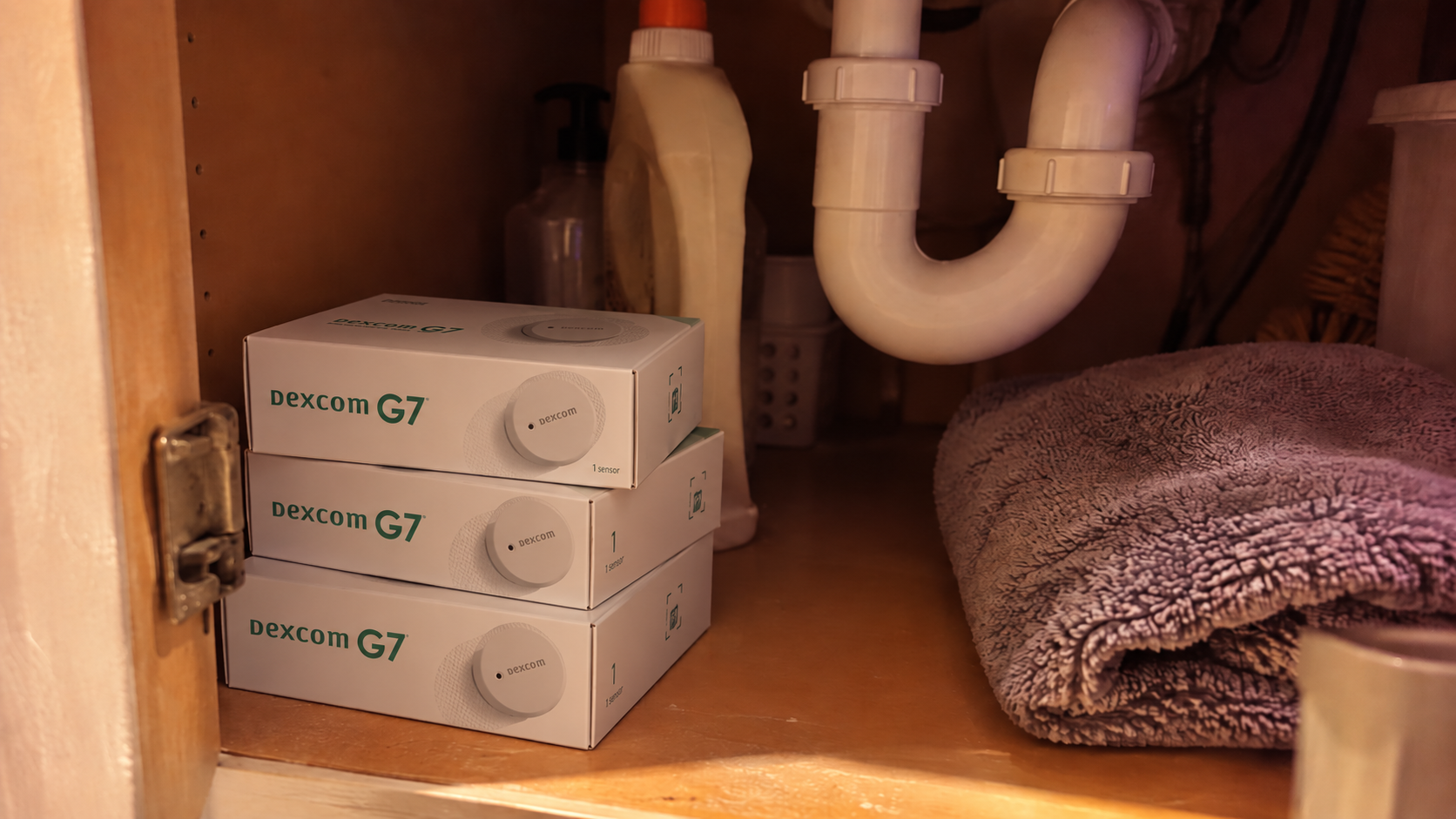
And then I have a stack of Dexcoms sitting underneath my bathroom cabinet that I just I don't I need to donate those. I have given a couple of those away, but I there's that part of me that's just like, it's that's been my life for so long that it's really hard to let that go even though I hate it. Like, I love life without insulin and life without DexComp, but it's really it's difficult. Yeah.
Why don't you just make a time capsule and keep one of each like a like a keepsake box and then give the rest away?
Yeah. Yeah. I need to do that. And I there are so many great organizations and and people that you know, that's another piece that I think we don't talk about enough is on the one hand, there's so many cool, like, trials and eyelid transplantation and all of this cool stuff that's happening. And then on the other hand, we still have so many people here in The States that are, like, fighting to get affordable insulin.
Yeah. And so, you know, there is this huge juxtaposition between where where we are and where all of us need to be. And so another part that I try to talk about, a lot is that realization that, like, you know, the science itself is step one. Islet reclassification is part of it. Then there's, like, scalability, and how do we make this available for everybody?
Does it feel like anything?33:18
And then I think the piece that really keeps me up at night, to be honest with you, is the fear of affordability. Because, you know, the the cure or functional cure in different forms, I'm confident is coming. The question the the thing that really scares me is what if it's the type of thing where it comes and, like, your average family of mom, dad, and and two diabetic kids, and and the parents can't afford it. So these are these are the thoughts that plagued my mind at night.
Well, I mean, yeah, look how much TZO would cost. Right?
Right. Yeah. So Incredible medication. We're kind of I've not officially, announced this anywhere, but our we do, autoantibody testing with we have four kids. We do that with them.
And at the their checkups this year, our two youngest boys, seven and 13, tested positive for an antibody. So, you know, there's that in the back of my mind constantly, that fear of you know, t zelda is certainly something we've talked about that that we would do. But, yeah, it's it's expensive, and it's a process in and of itself. So, yeah, it's it's a concern.
You just broke my heart. Wait. Wait. That's not even a thing I I considered. Oh god.
What do you Yeah.
Oh. What do you do when mom's cured and babies aren't? Yeah. That's it's an unusual position to be in.
Oh, I know. Well, first of all, may that never happen. But secondly, if it does, oh my what are you gonna say?
Yeah. You know, I've thought about this a lot. So the so the first here here's the interesting part. I talk to parents of newly diagnosed kids all the time. They message me on Instagram.
I'll jump on a Zoom call. People have me call their friends that I know in real life. You know?
Mhmm.
So one of the first things I always have to talk to parents about is, like, it's not your fault. You didn't cause this. There was nothing you could do. You know? And so the interesting part, I've had that conversation with probably 50 parents.
And then when my boys when the doctor's office called and my boys' test came back positive for one antibody, which, by the way, if you guys don't know about antibody testing, there's, like, four that they test for. And if you have one, it doesn't necessarily mean anything. Two or more can be significant, really raising your chances of getting type one. And then once you test for three or more, you know, that's when you would go on like a TZELD, which can delay onset. So when my when they called and my boys were positive so first of all, one plot twist to this, Scott, is that our children are a mix of biological and adopted.
So you would think it would be the two biological kids or the two adopted kids. It is one biological child and one adopted kid that shares no one.
My mind.
Okay. Yeah. And they both tested positive at the same time for the same antibody. So so the first thing I felt was, like, crippling guilt, to be honest with you, because my husband doesn't have type one. There's no history of autoimmune issues.
So there's this part of me, even though I've told a 100 moms this, where I'm like, it's not your fault, I really dealt with, like, really hard guilt. And and then I talked myself off that ledge, and my husband and I really thought and prayed about, like, well, what do we do? And the answer was we keep doing what we're already doing, which is we watch our kids. We're taking our boys to see an endocrinologist for further testing, and then we keep pushing towards a cure. Like, what else what else can we do in the meantime?
And so, you know, the cool part about the the blessing and all of it that my kids have that most kids don't is they actually would be kids, and god forbid, they do end up developing type one. But they would be kids, some of the few, who, like, actually watch the process happen on the other end of watching mom become undiabetic. And so it will it would or will be crushingly devastating if that happens.
Because they're gonna at some point, they would ask you why they can't do what you did.
Right.
Yeah. Yeah. And the answer could be because it's not even a thing yet. It's just a thing it's a thing that a handful of people did in, you know, in Chicago.
Yeah. That you that neither of you will even be old enough for old enough to apply for for ten more years. You know? So so there's that there's that piece of it as well. So when people ask where my energy comes from and where my passion comes from, it's from the incredible experience that I've had personally.
And then mentally, there's also this clock running in the background as well thinking, okay. We've we've gotta make this this happen. Lots of kids are waiting, and and my kids may end up among those as well. I hope not, but we'll see.
Yeah. Jeez. Life's a bitch. Okay. You you know what I wanted to ask you about?
Anybody did anybody has anybody directed anger at you over you having this thing that they don't have access to?
Yes. Yeah. And that's okay. You know, again, all all these feelings so type one's a really emotional disease. Like, it's it's devastating when you get it.
It's difficult to live with. And so I try not to take it super personally, but I for sure have had people who, you know, yes, but this will never happen for everyone else. Or, yes, but it'll be ten or fifteen years down the road. Or why would they pick you for this? You know, I I it should have been me.
I've had type one for fifty five years.
Mhmm.
And so just going through and kind of in a very kind way working through those questions one by one is is what I I try to do and explain to people, like, they you know, why did they pick me? I don't know. And I've talked about that a ton. They picked me because I met all of the medical criteria and because I applied. Like, there wasn't now there's a waiting list of a couple of thousand people for the Eladon trial.
I strolled in at spot number nine because it wasn't proven to have really been working then, and nobody else wanted to do it. And I and I, you know, took the risk, And luckily, blessedly, it worked out. There was nothing special about me, but that's, you know, that's how I got I I got in because I was a medical match, and I applied back in the day.
So They wouldn't they wouldn't be mad at you if you grew a duck out of the side of your head and still had diabetes.
Right. Yeah. Yeah. Yeah. If it if it hadn't have worked, nobody would be mad that that I was patient on.
But it's but that's valid. You know, there are people that have been living with this disease for a really, really, really, really long time. And so I hope that they feel hopeful and inspired by the science and progress. And, you know, when they feel bummed out about it, one of my first questions when I get those type of questions is, did you apply? I never win the lottery, Scott.
I've not won it once, but I also never buy a ticket. And so that does decrease my chances pretty significantly of winning that. And so I I feel like that's kind of the equation of you're not gonna get picked for a clinical trial if you don't apply for a clinical trial. So that would be that's that's step one, suggestion number one that I give people.
And you might you might apply for one and get accepted and it not have the outcome you're looking for. Or Right. Yeah.
And a lot of clinical trials I've met a ton of patients from clinical trials that kind of reach out to me. Some that are going really well, some that are not going well, and some trials that have been super, you know, across across the board unsuccessful. And so it really is it's easier now to look at, like, a Vertex or a Sana or an Elodon trial and say, oh, yes. That's something that wanna do because they they've been successful. The it's showing good progress.
But when you're in that first cohort, you don't know how that's gonna shake out. And there are more than you know, more trials than not end up not working, and that's okay. You know, there's still a lot that a lot of knowledge that comes out of those trials. And so I'm thankful for all of those people that were in trials leading up to mine because that's where the science came from. That's where the progress comes from.
I always think about the I I say this all the time, but this woman was on the show once. She was in the implantable pouch. I think it was Vertex Trial. And Yeah. She believed it was working, and then they removed the pouch because that was part Yes.
Because you and I talked about that, and I was like, man, I would I would be gone to a foreign country so quick. You'd never find me, man.
Yeah. I'd be gone. I'd be like, you see you. You're not getting this back. Yeah.
Adios. Hey. How's the, TEGA Pro BART been for you? How you
It's good.
Yeah?
Yeah. I would be afraid. Luckily, it's not like a blinded trial, or I would be afraid that I was in the, you know, the placebo group. I don't have any side effects from the Tego. I like, really none.
So I'm still doing the thing. I fly up every twenty one days. They do a ton of blood work and send that out to labs all over the country to be studied. Then I get my Tego infusion, and then I go eat something delicious in Chicago and then fly home for the day. So, still no side effects.
No I don't know. No. Everybody always wants to know, like, what about this? What about this? I've there's literally nothing.
I don't don't know. I don't have a headache. I haven't gotten a rash. I don't I don't know. I there's the TEGA is great.
You know?
Every twenty days?
21. 21. Every 21.
Okay. And to give people who maybe don't have context for it, that's the immune suppressant that's keeping your body from going and getting those beta cells that they stuck in your liver. Right?
Right. Yeah. So I had my islet transplant. They replaced my islet cells, put them into my liver and on my pancreas, and then they protect those islet cells with that's what we're we're trying. Instead of tacrolimus, which has some pretty nasty side effects, they're using this new medication, tegaprubart.
And the beautiful part of that is it does a better job of protecting those islets, and it it hasn't it doesn't give patients any side effects so far. You know, the longest patient has been off insulin just over two years, which is pretty awesome. There are people that have been on it longer that are part of a kid like, a full kidney transplant trial, and they're all still doing really well as well.
Hey. While we're talking about this part, let me just say to the company that makes that drug, I reached out to you. I did not hear back. I've seen you do some social media that four people have seen. If you'd like anyone to actually hear what you're saying, Scott@JuiceBoxPodcast.com.
So sorry. Sorry. Sorry,
Katie. No. That's great. Yeah. Yeah.
Yeah. I think that's I I think that's great. I saw this
one little real, and I was like, you could have yelled out a window and reached more people than this reached us.
Yeah. Yeah. It's it's so interesting. I think people think that either, like, I well, not everyone. But there are people that think that I work for Eladon, and, like, that's why I talk about it all the time.
I literally don't. I work for an estate planning law firm. And then, I like, I don't know anyone at Eladon. So, normally, I'd be like, listen, Scott. Super well connected.
I'll get you hooked up. I I don't I've never talked to a single person from Eladon.
No. No. I would imagine.
I if you're listening, love your work. Keep it up, guys. Thanks for all the care.
Oh, no. You're doing exactly you're doing exactly what I would do. I would by the way, for people who listen to podcasts, they won't be surprised by this. I would bump into the grocery store and go, hey. I used to have type one diabetes, but I don't anymore.
And then I'd start telling you about it. And then I'd probably walk 25 feet and tell somebody else. I don't know how long until that excitement would wear off. I mean Yeah. If you were my daughter, I this is probably all I would talk about.
So Yeah. Because it
is And which is what I do. That is you know, that's why I I do what I do because it's so crazy, and it's so exciting. And it's funny too because I'll post a video here or there about it. And, like, I literally had a lady comment yesterday, and she was like, this girl obviously doesn't know what she's talking about. Because if she knew anything about type one, she would know that you literally cannot live without insulin.
You would die. And I was like, welcome. Yes. And for ninety nine point nine nine nine percent of the population, you are correct. So that is a 100% true.
Let me put some context on what we're talking about here then. Yeah.
Yeah. Sounds like
question go ahead.
No. No. I was gonna say it sounds like she didn't read the whole post, but go ahead.
She didn't. Yeah. She didn't. And, again, you have to take every all your Internet comments with a grain of salt. Right?
But it was the the hardest question these days that I get asked is, do you have type one diabetes? And I'll give you context on that. So for years, we would meet diabetics in public because I always had my pump or my CGM on. And, like, my kids would see other people with a pump or CGM, and they'd be like, mom, Dexcom, mom, Omnipod, whatever. And then, of course, that person's like, oh, do you have diabetes?
Tegoprubart, and no side effects46:22
And you're like, yes. I do. And, you know, you meet these strangers in public, and you you get along immediately because you have this set of circumstances that are the same. So for years, that has happened. Well, now my kids have still been in the habit of being like, mom, Dexcom.
Hey, mom. And now when that person asks literally the most basic question, oh, do you have type one diabetes? I still have not figured out how to answer that. Because if I say yes, that's actually not true. But no is also it's like no with a huge caveat.
But when you're meeting somebody haphazardly at the airport or in line at the grocery store, I'm like, how far down the rabbit hole do I take this random stranger when they ask the most basic question? Oh, your kids recognize my Dexcom. Do you have type one diabetes? And I'm like, you can't just say no, but I used to and then stroll off. Like, can you imagine?
Yeah.
You'd think that I was absolutely nuts. And so yeah. So it's I still have not figured out how to answer that. I
yeah. I don't know. Because you're right. As soon as you start answering it in the affirmative that you don't have it, you're you're stuck with a third it's a thirty minute conversation you're about to have.
What the drug is actually doing47:36
And Minimum.
And they might not understand what you're saying, and then there's gonna be more explanation. And yeah. I mean, that that's a long road to go down. It it is very interesting to see some of the new doors and new confusions that you not having to take insulin anymore has has brought up and will continue to bring up. And I wonder too as you're talking, what's the day where you throw your hands up and go, you know what?
This is not my job. Like, I'm I because right now, you listen. I think everyone listening would trade places with you. I don't think that's, you know, disputable. And but now you have a new job.
Now you're the lady who spoke like, because everybody in the that in the trial hasn't been on social media to the to the extent you are. Right?
Right. Right.
And so
And a lot of people that are in the trial, like, the first 12 patients, they they don't really talk about it on social media at all. It's been kind of a private journey, which is totally fine.
A message for Eledon48:35
A 100%.
Yeah. And then there are a few people that have talked about their experience and do talk about it, not necessarily to the degree you know, as often as as I have and I do. I think that just comes down to personality.
Well, for sure. I would say
The Internet will get sick of me at some point, and then they can move on and and interview the next person.
Oh, listen. I'm still waiting for the Internet to get sick of me. But I'm point being, it could go on longer than you think. And at what point is it not like, is it is it tough on you? Like, you know what I mean?
Like, you listen. I'm happy for you. I'm personally thrilled for you. And and but at some point, you should be able to go back and live your life, not spend your life talking about this unless someone's gonna pay you to do it, then that makes more sense. I appreciate what you're doing, and I think it's incredibly valuable.
But at the same time, I don't know if it's completely fair to you.
Yeah. No. That's really that's that's fair to say. You know, right now, I'm in a place in life where I'm able to talk about it. It is a lot working full time and and having kids and, you know, the husband as well who appreciates time and attention.
“You can’t live without insulin”49:45
But it is something that I love to talk about. And right now, I feel like it's something where I can use I'm not good at a lot, Scott, but I am great at talking. And so I can use that talent to go out and hopefully make progress that will help other people down the road. And so I I really enjoy that piece of
it. Yeah.
The travel is a ton right now. Trying to work and travel is a lot. I mean, not all over the place. Houston, North Carolina, Indiana, obviously, Chicago and back every 21, New York and back, California. You know, I live at the at the airport, which everyone loves.
Right? Yeah. But listen. But
Let me jump in for a second. There's a great example. Right? Like, you got your life given back to you by and
now you been in the airport in the afternoon.
It's possible you gave back more of it than you got. Like like, being serious, like, know, like diabetes, of course, you know, you're thinking about things all the times, and I did not miss your point about the the openness in your mind and and extra space to think. But now you're now do you feel do you feel compelled to do this, or do you feel like it's a responsibility? Can you put words to it? Because it's a nice thing.
Because oh, I'll go on for one more second, Katie. I help a lot of I help a lot of people. Okay? Right. And there was a time in my life where I felt pressure about it such that it was overwhelming.
Because what I learned was that for some reason, I have a way of talking and a way of explaining a thing that leaves a lot of people here in in a in a place where they understand something they didn't understand before, and it translates to good health for them. And I don't know these people. I will likely never meet most of them. But once you know you can do it and the outcome is what it is, every minute you're not doing it can feel, like, wasteful or almost punitive. Like, I'm should be doing this right now, and I'm not.
Now I had to get over that or I would have burned myself out at some point. I still do it, but I found a different cadence for it. I found a different reason to do it. Like, the pressure is not the same. And I I know I mean, listen.
I'm looking at you. I see myself. Like, you're gonna get to that point where you're like, oh, I've given away everything else in my life to tell other people about this thing that freed me up, and now I'm just shackled by a different part of it.
Yeah. I I can see that. I definitely see that. And I have for the record, I definitely have the Scott type of personality. I think right now you know, the key is just to operate with with wisdom and balance.
Right now, being able to get out and do it and, you know, and it's it's twofold. Right? It's also very self serving because I've gotten to meet some of the most incredible people I'd have never met otherwise, random people from other states and, people telling me their stories. And I feel like I'm getting to do a lot of good right now. And so that for me is is enough right now.
Will I be able to keep it up at this pace forever? Because right now, I'm doing, you know, multiple events every month and traveling. Probably not. Right now, my my deal is, is it a a worthy cause? Is it a worthy event?
Is this fundraiser gonna move the ball down the field? And then beyond that, the litmus test is if I'm gone for whatever these dates are, am I gonna miss something key at work, or am I going to miss something important in my kids' lives?
A 100%. Yeah. Great.
Yeah. And if it meets all that criteria, then then I do it. Will I be able to do it at this pace forever? Probably not, but I'm I'm willing to do it for at least right now.
I I this summer, I did a thing I've never done before. And it's probably a thing that people who know the diabetes world would be, like, stunned by. But until two years I'd never gone to one diabetes conference that wasn't touched by type one. Like, I I do touch by type one every year, and I will continue to do it. But it's a one day event.
I fly in. I make nappy. I take a I I eat. I get up. I talk like a lunatic for nine hours.
I get on a plane. I go home. Right? And by Sunday afternoon, I'm back in my house again. But other than that, I'd never been to Friends for Life.
I'd never been to ADA, ADC, none of that stuff. And last year, I went to Friends for Life for the first time. And then while I was there, I had an experience where someone said, hey. I'd like to I mean, I can say who it's. Sugarpixel said, I'd like you to come and, like, be at my booth at all the events next year.
So this year, I have gone to ADA, which I think was in New Orleans. That by the way, there's telling. I think I was in New Orleans. Okay? Then I took then I took a 100 listeners on a cruise in in
I did know about the Juice Box Cruise. It looks awesome.
It is a lot of fun. It's not this one was nine days long with travel. The next one will be five days long, but still, for me, it'll be seven with travel. Right? This one was nine days long.
But the the secret about that that people listening, I guarantee you won't believe is I don't make any money from that cruise. It basically breaks even. It's just a nice thing to do, and it's a great experience. And I love, like, meeting people just like you said and all that stuff. But I don't walk out with a fat bag when it's over going well, you know, like, it's, you know, nine days I'm gone from my family.
Yeah. I also wanna say if enough people came on the cruise that I did make a fat bag, I would tell you that too. But at the moment, it it doesn't make anything. And it's not the intention of it nor do I think that's ever gonna be the outcome of it. I went to ADA.
Yes. I went to ADCES in Columbus. That I think I left on Wednesday and got back on Saturday or Sunday. I don't Sunday. I don't even know.
And I did Friends For Life again, which was six days or so. And I'm gonna go back and do, Touched by Type one in September. I'm exhausted, first of all. I'm and and I've traveled too much. I I didn't even fly to Ohio.
Like, when when they called me and they were like, hey. You know, where do you wanna fly out of to get to Ohio? I'm like, I'm gonna drive. I'm like, I've been I am so sick of being on a plane. Like, I'm gonna drive.
Yep. And and I that doesn't sound like as much as you traveled.
I do travel a lot. And then remember in the midst of all of these events. So I'm like you. I don't make any money on any of these. Typically, I break even because sometimes they'll cover, you know, like, flight and hotel.
And so I break even or lose money doing on all these to the point that my husband's like, hey. Listen. This has been fun. But from now on, if we're not at least break even, like, you can't go.
Yeah. I But
you've got a kid starting college. Right?
I do wanna be clear. At bare minimum, I'm breaking even. I there's no way Yeah. And and in fairness, like, in fairness, I made a little money going to ADA. I but I did the thing with Sugarpixel.
That's a breakeven because they cover me, like, getting into the event. And then I did I did a I did work for MiniMed while I was there. I interviewed some people at their event and everything, and, like, it'll get turned into a podcast and everything. But, again, after taxes and travel, trust me, I could have panhandled pencils on the corner and done just as well. Like, it's not like Right.
You know what I mean? Like, it's not I'm not I'm not your favorite pretty influencer who's like, I made a million dollars. Like, it's not like that. So Right. Right.
Yeah. Yeah. Or I made a video and
they That's for sure my phase of life. I'm in the I'm I'm doing it because I enjoy the work. I'm doing it because the causes that I go to these the fundraisers and the speaking events and all the things that I do, they're they're very worthwhile. And so, you know, that's that's part of the the gig right now. And and it is it's worth it to me.
There's so many really cool so I just did a fundraiser actually. So my first trip to the Hamptons. And, just did a fundraiser there. And the whole point, I was working with the Silverstein Dream Foundation. We raised the money for three more patients to add on.
So doctor Rakowski will actually be to add on three more patients, three more data points for phase one of the trial. So we'll go from the Eladon twelve to the Eladon fifteen.
Wow.
So, like, it's huge. And so that's the type of thing, I do breakthrough t one d events all the time. You know, I'm I'm traveling around and just, I feel very blessed to have had the opportunity that I've had, literally one in a million. And so I don't want to waste that experience or waste that opportunity to to connect with people and to educate people. Like, there are so many people that have no idea that islet transplants are even a thing.
They're blown away by the science behind all of it. There's all of these cool clinical trials. So, you know, I'm like you. I love to get out, and I love to, I like to meet new people. I like to help educate people, and I like to do fundraisers for good causes.
So, you know, we'll when we when you interview me again in six months or a year, I'll let you know my status of of burned out. But right now, aside for hating airport food, I'm pretty I'm still enjoying it.
Well, let me tell you something. If my cruise made any money, I'd invite you to come on it and pay for you to come out so you could tell people about it there. But I I I would whatever it cost, I'd be in the hole for it. And then my wife
and my wife would be yelling
at me. Yeah. Yeah. So I I I'm gonna like, it's not a pivot, but I'm dying to ask you this. And you know because I brought it up to you before we started to record.
I have been so I I explained to you, and I'm sure people listening know, like, I stayed pretty far away of the space. And by that, I mean, like, what other people are doing in diabetes. I know there are other influencers. I'm not unaware of that. I understand that there are people who make content.
I'm not unaware of that. I for all of you listening, and trust me, I can see some of you ripping me off blindly. I know you're listening. But, like, I don't listen to you. I don't watch your stuff.
I don't pay attention to what you're doing. If you have goals, I hope you reach them, but I'm not interested in what you're doing. I I I focus on what I think is the right thing to do. And I have taken what I'll call some crap in the last six months for literally not changing the entire format of my podcast and just turning it into, like, the Elodon, like, you know, megaphone podcast. And you don't care.
You don't want people to, like, you know, be better. Like, mean, I'm like, oh, okay. The and then in my my Facebook group where I have I'm not gonna lie to you. A lot of members. And and I don't allow a number of things in that Facebook group for consistency.
You can't talk about politics. You can't talk about religion. You can't talk and you there's some, like, pretty it's they're not crazy rules. You gotta be nice to people. Like, you know what I mean?
Right. Respect their products.
On there and and hate nasty yeah. Leave nasty hate comments on other people's posts. Right. Be be a basic decent human. Got
it. Try to be kind. Right? And Yeah. A couple of those rules are on purpose because if as an example, if someone's kid dies because they had a religious belief that they didn't need insulin, you can't talk about that there because at some point, it's going to turn into a religious battle.
You don't have to Right. Believe me. I've just been managing a group of 90,000 people in it for six years. I know what's gonna happen. Okay?
So we don't let that happen at all. Not not not differently. You can't say, Bernie Sanders is going to Canada to talk about, like, free insulin because that in five steps is gonna turn into candidate a, this party, they like, it's it goes that way immediately. And Right. It it it's not lost on me, trust me, that there are things that are happening in politics around type one diabetes that should be talked about.
And I hope you all talk about them ad nauseam. You just can't do it in my Facebook group because it's going to turn into you know what the problem is? Joe Biden is a Donald Trump is this. Like and so I and then you all just you know, the bigger thing that happens, Katie, which is, I think, really interesting is that it usually is only four or five people losing their minds. Yeah.
What that does is everyone else who sees it because that freaking algorithm someone find Mark Zuckerberg and talk to him. That freaking algorithm wants you to be angry. And so it shows it to everybody. And then their takeaway is the Juice Box podcast Facebook group, if they were if they were to see that, is a mean place where everybody's horrible. Nobody looks at it and goes, oh, this is just four people off their meds yelling at each other.
Right? Like so so because of that and because I know how much that group helps people with living with diabetes, I I don't allow stuff like that. You post something like that, it gets deleted. You don't get an explanation. It's no one's got time for that.
Okay? Like, it just goes. So when people are talking about Elodon trials, rock and roll talk about all you want. When you talk about you gotta go to your senator or your congressman, and I don't let that be in there. And then I take crap for, like, not wanting the cure to happen.
And I'm like, wow. That was a leap. But okay. So what else?
Because you don't have any personal investment. There's no one that you love personally that
you like to have I
don't wanna see you. Whatsoever.
What a ridiculous idea that would be if that happened. Yeah. I so point being is that there are people in the world who get so focused on their part of the bigger story that they'll they'll co opt part of my story to to try to make their own point. And it happens online a lot. So I've seen two things happen around this this research.
I've seen people turn it into clickbait because they just are trying to grow a channel, and they want people to click. And yelling about a cure is a sure way to get somebody to click on something. And I've seen people tell you or me or other people that the way you've chosen to talk about it is wrong. And I would be, like, genuinely interested to hear about your journey through that part of the Internet.
Yeah. So at the end of the day, one thing that you'll find about me is I'm not a super controversial person. Like, I'm not going to I kind of run my life like you run your Facebook group. If you know anything about type one, and if you're listening to this podcast, I'm I'll safely assume that you do. You know that while politics does play a part, as far as I know, there's not a political party not touched by type one.
If there is, do let me know. I'll switch immediately. So it's a nonpolitical issue. People do take and here's what I see happening. And this has happened like, I've seen people, like, stitch my videos with this as well.
Or the hard part is when you're talking about really deep science, like something like a Vertex Trial or Sonar Elodon, there is a lot of science that goes into more than you can get in, like, a thirty second, sixty second, two minute reel. Right?
Yeah.
So people will take one clip or one piece of an interview and highlight that and turn that into clickbait or not put out all of the information, and then people are very misled. That, coupled with there's definitely a lot of drama that happens between famous creators, which I'm not one. I literally just exist. And so I try to do a good job of not getting down in the weeds. If you're a person that's that's a creator and you're talking about a cure, wanting a cure, working for a cure, that's great.
I appreciate you. I'm happy to answer questions from anyone. I'm not going to get down in the mud. I will never participate in a smear campaign, even if there's somebody who comes on and and bashes me personally. That's fine.
I'm you won't see me jump back and fight that. That's not my personality. I'm a peacemaker by heart.
Yeah.
And I think the type one community loses a lot when we get involved in a ton of this outside drama that honestly takes away from the real point of what we're trying to do. And it it makes everything into a really dramatic emotional battle. And for people that are living with type one, we have enough emotions and drama. We're good. And so, I do like you, I I don't watch just a ton of of other diabetes content.
I do to some degree because that's, of course, what's all over my algorithm. But for the most part, I just kind of live my life and try not to be involved in any of that. I'll answer questions from anybody. I'll do interviews with anybody. And beyond that, I think a lot of the the drama and the clickbait creation, all of that is, to me, just a detraction from from what we actually need to be focused on.
And I I don't like it, and I'll stay out of it. And I cultivate my Facebook feed like you cultivate the juice box page. So, you know, every once in a while, bless their hearts, like a random type two diabetic will stroll in and be like, could this be good for someone who has type two? And then for some reason, type ones are like we can be the the nicest or the meanest. And so all these type ones will come in and leave me comments and be like, no.
Clickbait, politics, and staying out of it1:07:13
It's not for you. Just go on a diet and things like that. Those are the type of comments I just go through and and delete and move on with my life. The the world is a hard place. Type one is a hard disease, and I refuse to participate in any of that.
I my mama raised me better than that, Scott.
I appreciate it. I I I listen. I saw someone like, I saw someone do something that I find to be despicable, and then I saw someone else engage with that in a in you know, fighting with them, which, you know, pushing back. But as it was happening, I was like, they're they're just doing this for views. Like, the no one's no one's like, you see one person doing something that's clearly grifty.
And then you think, what what does it help to, like, push back at them? Like, all you're doing is putting attention on them. Like, you're giving the algorithm what I want. You're gonna show more people. So it's not about keeping them quiet because you know enough to know that if you engage, they're gonna get more engagement.
And so you're engaging to get engagement for yourself. And I'm like, oh my god. This is despicable. Like, the whole thing just like I don't maybe you don't even have an opinion about it. And I don't see it see it.
Meaning, I don't follow them and they're not popping up in front of me. I'm, blessed or cursed depending on how you think of it with a with a group of people who will be like, did you see that? Did you see this? Did you see that? And I'm like, oh, I don't care.
Don't show me. Like, I I don't wanna know.
Yeah. Don't mention her on my phone because I don't want the algorithm to automatically put it in there.
Yeah. And then and then there would be times where, like, this person's mentioning you directly or this one is or that one is. And I'm like, do not respond. I would never, first of all, be just like you would never get involved, would never dream of responding to it nor do I care. But there are people who, like, you know, love me, and they're just like, no.
I'm gonna, like, defend you. I was like, do not like, I I am of the opinion. If you defend me in that situation, I I don't wanna talk to you. Like, I'd that's how much I don't wanna be involved in this. Like, do not connect me with this in any way, shape, or form.
And but at the same time, it's hard not to be angry about it when when it it turns into every other thing on the Internet. Now, like, you could say it's diabetes people. It's not. Like, in, what I've learned about this, I I use this as an example all the time. I am I have a chameleon.
Okay? It's a thing you don't know about, Katie. It doesn't matter. It's a it's a really cool reptile that I enjoy keeping.
Oh, I know what a chameleon is. I didn't know that you had one.
I I have a couple. Don't tell people. It makes me sound creepy. But I I inside of a chameleon community, they have every problem that I have inside of a diabetes community. Literally, just take out the word diabetes, replace it with chameleon, watch the arguments happen.
They're the same exact arguments. They happen over and over again. I did a thing before you and I started talking. I just went to, like, a chat prompt and asked it what people will say when they're intersected with the idea of of a of a a cure for diabetes. And the responses are not curated from the Internet.
It's literally just an LLM going, this is what I think the human brain would respond to in all the different ways. And I guarantee you if I went through these, you'd say, yeah. That's happened to me. That's happened. That's happened.
That's happened. That's happened. Because people are fairly predictable. That's, you know, how, chat GPT works, actually. It it just knows what the next word's gonna be.
And so and so knowing that knowing that people are driven by whatever basins things they have or whatever their perspectives are or whatnot, I don't I I'm not mad at them. I don't not understand. It's when it gets to the part where it turns into, I can make a business out of this. I can make my channel bigger so I can sell ads, that's that's the line. Like, we if you ask me personally, what do I think of you if you're doing that?
I'd say, I think you're a scumbag. And and and just leave other people the hell alone. You you know what I mean? Like, it's such a weird thing to look at me and go, you're not doing it right. Like, well, you do you do it then.
You you know what I mean? Like yeah. I mean, if you know if you're so smart, get out there. You know? Like, so Yeah.
This is this is you're talking to a person who gets corrected all the time, Scott, on the details of a clinical trial I'm actually in. And so so nobody understands what you're saying more than I do because I have people message me and leave comments all the time correcting me on things and telling me how it really is and all of these different things. And, you know, there's a there's a part of me that so I'm I'm I wear my heart on my sleeve. I think, that's that's just a key part of my personality Mhmm. For better or for worse.
And so sometimes some of the comments or messages that I get really do get to me and hurt my feelings To the point that I've had a couple of moments in there where I'm like, I think I'm actually done. Like, I'm just done on the Internet. And then those are so few and far between. And the rest of the conversations that I have are really powerful, and it's it's about educating people, and it's about helping people feel encouraged. And it's about living life with type one and showing people what life looks like after type one and all of the progress that's happening, but all the work that we still have to do.
And so at the end of the day, that's what I'm here to do. And, you know, anybody who wants to try to turn that into something else, shame on them. And I I'm like you. I won't participate in that.
Well, you've learned an obvious, like, and great lesson, which is that, you know, the, you know, the silent majority is what exists, whether it's in real life or on the Internet or no matter where it is, is that most people are reasonable and look at you and go, oh, that's interesting. I'm glad to know that now. I don't need to comment on this. And when someone is responding back in anger or through ignorance or however they end up with, you know, being incorrect or or punitive or something like that in those situations, like, you realize that's not most people. But when you go on the Internet, even though it's it's not most people, it seems like everybody because they're the only ones generally talking.
And and that that
And and the angriest people are always the loudest. Right? So the kind people, they don't say anything at all or they say thanks for sharing. It's the angry people that are going to to leave the most comments and be the most inflammatory. And once you you you really do have to learn that lesson to survive on the Internet.
For sure. Well, I'm glad you're making your way through it. And I love that you're out there talking to people and and, you know, spreading the word about it. I is any of that gonna help anything? Like, when I was talking in the short term what do I mean by that?
Like, when I was talking to the doctor, like, the one thing I made sure to get out of him was the viability of, like, this spreading from nine people, 10 people, 11 people to a 100 to a thousand because, you know, there's 2,000,000 people who could use this. So we got 10 now, eleven, twelve, whatever. It's not really important. Like, there's a handful now scaling it to even just say ten percent. Let's just say we you know, I don't know.
Let's just say we wanted to cover two hundred thousand people with diabetes. That's not a thing that's like you said earlier and like the doctor said when he was on with me, that's not happening soon. And so, like, how I don't know I don't know what we're supposed to do in a world where this is probably how old are you?
I am. I've just turned 40.
Yeah. In your lifetime, they're not gonna be able to give this to 200,000 people. Like, that'd be
Not that'd not Tega with cadaveric islets. No. I think what you'll see that's happening this is this is my guess. I think my educated guess, because I irritate all the scientists and people in this space. I think what you'll see over the next few years so, hopefully, islet reclassification happens.
That that doctor Rakowski did talk about because that actually opens up trials can move faster, and, you know, next year could be a thousand people instead of 12. And then beyond that, that next piece that has to happen is scalability. So that's where we're waiting on some sort of a lab grown scalable islet cell that can be used maybe in combination with something like TEGO. You know, in a dream world, they can get to a place, which a couple of companies are working on this. They're not quite there yet.
But in a dream world, get to a place where there's no immunosuppression that's needed. Right? Like, that's the dream for everybody. That scalability is kind of the next big piece. And then we're still not done because then it's what you and I talked about after that.
The next big battle is affordability. Okay? The the procedure exists or the islet cell exists or whatever exists. So now what? So now how do we make that where your average family is, of type you know, that has a couple of type one kids?
How do we make it where it's a procedure that they can actually afford? And so the the road ahead of us is long. That's for sure. I think that the difference is for the first time in human history, there's actually a road. You know, we've been living for a very long I mean, for the the entire world up till the last few years, of living with this idea of, like, maybe one day in some form.
And I think slowly the narrative is shifting from if to a narrative of when, but that's still not tomorrow. So at the end of the day, it's what I've already said. It's what you say all the time. It the cure won't be here tomorrow, so take good care of yourself. You know, keep keep your body as healthy as you can.
Keep learning new ways to manage this disease. There's other incredible technology that's coming out to help us with that in the meantime. And I think that's what the future looks like. I do think the the cure or functional cure, I do think we'll see that in easily in my lifetime. I think we'll see it in different forms, to be honest with you.
I think there will be multiple options on that. But there's we still have a road to get there. And so for for my end, educating people about it, raising money and awareness for it for it, That's all I know to do. You know, I'm not a scientist. Thank goodness.
God help us if I was the brain in charge of all of this.
I I say all the time, if it was up to me, we'd still be 45 feet from Plymouth Rock going. I don't know if
there's a there's a creek.
I don't know how we're supposed to get over it. I guess we live here now.
And so get this is it.
Yeah. Yeah. I'm the wrong guy for that. I have two thoughts off of this. So first of all, about taking care of yourself right now, let me just go out on a limb and tell you this.
If you can, AID system, mix it with the GLP, pre bolus your meals, understand the impact of fat and protein on your blood sugar. It's gonna get you really far in this world. You can trust me or not. On the idea of, like, one day at not needing an immunosuppressant, are you telling me that they wanna lab grow cells that are are not, like, what, visible to the
Yeah. Uh-huh. Yeah. And they're like, that science is already being worked on. Now it's not gonna be here tomorrow, but they're already working on a couple of different trials.
They're actually working on gene editing, and then they're working on a version of a cell where you would not need it. The cell itself hides from the immune system. Now is that gonna be here tomorrow? No. But I think eventually that's what when we talk about a cure, the dream is like a pill that we all take and we don't have diabetes anymore.
That's not going to happen.
Yeah.
I think cure in our lifetime is going to be an islet cell transplant in some form. But, you know, in the meantime, it's kind of the steps to get there. Like, for me, I'm a happy lady with my TEGA Prubar and my islet cells living my best life. But I think that's one iteration. There's going to be other better versions of that that are coming along that they're already working on.
The scalability piece is huge, and there's a couple of different companies working on that. But, yeah, that's I think that's what the cure looks like. And then, Scott, when all of that's said and done, we still want rest because the other piece of that is, you know, curing diabetes is is great and important. Beyond that, there's this idea of early detection and preventing it in the first place, and there's real real signs and progress happening on that front as well. So when I tell people I feel really encouraged by all of the science going on, it's not just the Elenon trial, although, obviously, it's given me a new undiabetic life.
So it that is very exciting. But across the board, there are there's so much science, like, so far beyond the scope of what people even realize that's actually happening and being done right now. So on the one hand, that's beautiful and so exciting. And on the other hand, it's frustrating because there's only a handful of functionally cured people bebopping around out there, and everyone else is still waiting. So it's both things.
It's a mixed bag. But I do hope that people feel encouraged when they think about the science and the things that are going on. There's some really, really cool stuff that's happening by people far smarter than I am.
Yeah. I know. I'm I'm listen. I was watching this, interview the other day, and this guy was talking about health and AI. And he he his message was, don't die now.
He's like, we're getting really close to stuff. He's like he's like, seriously, hold on if you can. And, and I'm like I was like, I hear what you're saying, man. And and, hopefully, people will see the through line with this, and maybe they won't. But for the entire time I've been doing this, meaning writing a blog since 2007, right, making a podcast since 2015, people have come to me and said, can you please share Arden's five zero four plan with me?
Because I put together in 2000 and, my gosh, 2009 maybe, I put together a rock solid five zero four plan that Yeah. That's been shared around the country. Like, I've seen Arden's, like, photocopied five zero four plan in other people's folders. Like That's awesome. Like So I I I did this thing.
And at the at the time, it was all on paper. Like, right, like, you didn't like, so people would be like, hey. Can I have all the versions of her '5 zero four? I'm like, I don't have that stuff. I used to hand it to them.
I never thought twice about it. You know what I mean? And I did I did have one or two of them left over. So I took them, and I thought, well, I I would like to make them more shareable, but I you know, Arden's names on it, like, stuff like that. And I just kinda gave it to I gave it to Claude, to be perfectly honest.
And I was like, hey. Can we make this more shareable and, like, editable so people can edit it themselves and do what they want? And then I, like, I I put that prompt in, and I saw what it gave me back. And I was like, Well, that's not all the ideas. This is just the ones I came up with.
Where do I come up with them from? I came up with them from the ADA, from JDRF, from other couple, like, you know, like, rock solid online sources for five o fours. And then I was like, let's make a list of all the great resources online for five o fours. Let's pull all of it in. And in about twenty minutes of prompting and building, I now have a resource on my website where you go in, click on a bunch of boxes, put in your kid's name, and your five zero four plan pops out the other side.
And so cool.
Yeah. Yeah. And not only that let me take a minute to pimp it. Not only that, you know, it it will take you to an ADA page where you can answer important questions about your state, which will then affect what you can ask for or what you need to ask for in your plan. It goes through things in nine different sections from, like, government documents and eligibility to low blood glucose, the food snacks and meals.
You go through each one of them. It gives you the thing that you might wanna ask for. It ask it tells you, like, is this a standard ask or something else? If there's a legal right around it, you can click on it. It tells you why it's in there.
And if it's a thing you don't want in your document, you just uncheck it. And then you get to the end, and you can put it out as copy text. You can download it or print it as a PDF. And I'm telling you that after that's done, it'll give you a list for a substitute teacher sheet, which will take all your asks and put it down to a one page for substitute teachers. It will give you a list of things that the school might say to you and what you can say back to them.
It tells you how to get together what you need before you walk in. It gives you ideas of, like, things they might say to you that would make you go, that doesn't sound right. Like, something like, he'd be better served at another elementary school. And then it it tells you how to respond to that or why you don't wanna hear that. It helps you get the paperwork together before you go in.
It gives you, no kidding, if they say no, it tells you what to how to respond if they say no. And then you can go through the document. And anything in your document that they push back on, you click on it. Just click on it. And it, like, I just chose any staff member who suspects student name is low will act blah blah blah.
Like, it's a sentence from the thing. It gives you the, the item that I clicked on. Any staff member who suspects the student's name is low will act, remain with student name, provide fast acting glucose, and summon trained personnel whether or not she is in a designated training person, blah blah. So if they push back on that, here's what you can say in return. This language tracks the ADA's own sample five zero four plan, the January 2025 update, blah blah blah.
And then it gives you a follow-up email to push back with again. I'm telling you, Katie, that I made this in about three hours. Okay.
Yes. Yes. It's an trust me. It's AI is revolutionizing, you know, diabetes care. I love everything you're talking about with the five zero four plan.
I mean, that's for a parent, you know, diabetes, the learning curve is steep, and it's so overwhelming. So having a resource like that really is an absolute game changer.
I brought it up because I want people to know about it, but I brought it up because it's not my thoughts. It's it it it tells you where it all came from. Right? It came from ADA. It came from, like, you know, a college board, a department, ADA settlements, office for human or for civil rights compliant process.
You can see it at the bottom of the page. All the places where it gets the information. My point is is that all that information lives on the Internet somewhere, but it's not coalesced. And and my point around health is is that all this information lives somewhere, and I go back to what that guy was saying in that interview. Don't die right now.
We're about to, like, draw some lines between things here. And this is how the lines are gonna get drawn. And if things speed up, this is somewhat you know, how it's going to happen. Like so I don't know. Like, you said there's gonna be all different kinds of ways to get cured in the future to have, you know, like, you become undiabetic, which I'm a 100% calling this episode undiabetic life because you said it earlier.
But, like but one day, all those ideas are gonna get yanked together, and somebody's gonna go, oh, if you put that one with that one, look what happens. Or if we bring them all over here and put them in one think tank or who knows? Like, I don't know, but I do believe it could speed up. And I would tell you, for the first time in my life, I I'm not unsure that Arden maybe can't stop using insulin someday. Yeah.
Like, that that's how I feel about it right now.
And that's what I'm talking about when I talk about that shift that's kind of happening is and it's not one thing. It's like a series of cool breakthroughs and cool science. And so, yeah, I I I feel very hopeful for Arden. I certainly feel hopeful for people living with type one and certainly certainly for kids being diagnosed with type one right now. I think the future for them is going to look like a bunch of different options, and I'm excited about that.
I I like that there's multiple people attacking this from different fronts. That's exactly what I want. I don't want one company to come through with the cure.
Yeah.
I want multiple companies working on this and giving people the option that works best for them. So I'm excited about it.
I would say too, that if people hear things like gene editing or they're gonna, like, you know, make a cell that's man made or something like that and you think, I don't want just keep in mind that, like, three years ago and for most of my life, I was seventy pounds heavier than this now. And when you hear that, I urge you strongly not to think, oh, yeah. Well, they shot something in you that made you eat less because that's not everything that happened to me. A lot of different things happened. So when you said one day they might just take, you know, edited cells, which to me says man made medicine, and put it into somebody and their body won't be able to reject it and it'll help them make insulin.
I didn't hear anything different than once a week, I inject a peptide that, for some reason, lowers the inflammation in my body, helps me, to digest things properly, keeps me from being too hungry when I shouldn't be, and all the other things. Like, all I heard was somebody found a way to turn a dial in my brain or in my you know, somewhere in my it doesn't even matter where. Like, something in my body got adjusted, and it works better now. And Right. That that's how I see what you're talking about.
Like, one day, they're just gonna put something inside that you didn't have that you needed, and it's either going to do a thing that something's not doing or help something do something better. Look. I talk about this all the time. Arden has a GLP for insulin resistance, and she also has a bit of a of a needle phobia, which I'm happy to say she is getting through. But it's been a slow, slow process.
Right? Last night after I don't think she took her GLP for two weeks. Like, she she took it, should have taken it again. I think she should take it about every nine days. That's when I see it start to, like, kinda wane on her.
But, but instead, it went more like fourteen or so days. I did not know, meaning she didn't tell me she shot it. Like, I was unaware of that. But she shot it last night, and I can tell you that I know from looking at her CGM. That's it.
Like, I woke up this morning. I thought to myself, oh gosh. I haven't like, I I don't remember thinking about Arden's blood sugar at all. Like, I will take a look at it and make sure everything's, like, copacetic. Right?
And I look, and for twelve hours, like, literally for twelve hours, her blood sugar has been, like, 87. 87, 88, 89. And that's just the readdition of the GLP. Now she it's overnight. She's not eating or anything like that.
And it'll take about a day or so for it to all kinda, like, up again. I don't wanna use too many technical terms, Katie. And, and then
You're you're a professional, Scott. I can see that.
She's gonna have to she'll have to, like, make some adjustments to her, settings maybe because she but also at the same time, she's on an automated system, so it might be enough, like, it can move with it. If you could see her stability overnight on a GLP versus her stability overnight on the AID, which, by the way, is still really impressive, you would say to yourself, I would like to find out how to do that too. Like and
so Yeah.
Yeah. I I I I'm up to better living through chemistry. I think you should probably have a T shirt that says it. But, I mean, honestly For sure. You're you're I'm so happy for you.
I know I don't know you, and it probably feels disingenuous a little bit. But, like, I am genuinely happy for you. So
Well, thank you. And I, you know, I appreciate you giving me a chance to come back on and talk about it. I'll I'll keep you actually, to Chicago tomorrow is my next Chicago visit. So Good trip. I will I will be there for my next.
I'll be back in the airport tomorrow doing that stuff. But, yeah, I appreciate you having me on to talk about it, and I hope your listeners know a little bit more about kind of what it's like and the excitement that's happening. And
Where can where can they find you if they don't know?
If they don't know, I am katiebethhand or calamity katiebeth, and I'm on TikTok and Instagram and Facebook. And I just started YouTube where I'm trying to kind of put everything together so people don't have to if they wanna kinda watch the journey from the beginning, I'm trying to make a playlist so they don't have to go through, like, a thousand Facebook videos to start from the beginning.
So That's awesome. Actually, I'm gonna ask you when we get off. Give me a half a second because I I wanna ask you if you know how to contact. I am so genuinely interested in talking to the person who left the trial of their own accord because they Okay. Not because they weren't having success, but because they didn't enjoy they didn't I guess, they didn't like the process of of the infusions is what the doctor was saying.
But, like, I would love that, I think, would be an amazing conversation to have with somebody. So, anyway, I'm gonna see pick your brain to see if you know who that person is.
Perfect.
Thank you so much for doing this. I really appreciate it. Hold on one
second. Alright.
To learn more and see if you might be able to get Twist from the pharmacy and try it for free, head to visit.twist.com/juicebox. That's visit.twist.com/juicebox, or give them a call at 18774. That's +1 (877) 489-4478, and tell them Scott sent you. Twist requires a prescription and is indicated for people with type one diabetes six and older. Arden has been getting her diabetes supplies from US Med for years.
You can as well. Usmed.com/juicebox or call (888) 721-1514. Many thanks to US Med for sponsoring this episode and for being and for being longtime sponsors of the juice box podcast. There are links in the show notes and links at juiceboxpodcast.com to US Med, Twist, and today's other awesome sponsor, the Eversense CGM. They make, of course, the Eversense three sixty five, and that thing lasts an entire year.
One insertion every year. Come on. You probably feel like I'm messing with you, but I'm not. Ever since cgm.com/juicebox. Check it out.
Let's face it. Diabetes is tough, but it's easier when you have a community around you. So if you're looking for a great community around type one diabetes, check out the juice box podcast private Facebook group. Juice box podcast type one diabetes, but everyone's welcome. Type one, type two, gestational, loved ones, it doesn't matter to me.
If you're impacted by diabetes and you're looking for support, comfort, or community, check out the juice box podcast private Facebook group. Juice Box podcast, type one diabetes on Facebook. I promise you it is the most unfacebook like experience that you'll ever, ever find. What a great group of people. I don't like saying this usually because it dates the ad, but right now, there are 86,000 active members.
86,000 people in there who might have your experience, know what to say, just be a great shoulder to lean on. Don't be too proud to find a community. It really does help. And it's completely free. Juicebox podcast, type one diabetes on Facebook.
I just wanna say thank you so much for listening. I'll be back very soon with another episode of the juice box podcast. If you're not subscribed, subscribe in a podcast app. It really helps Apple Podcasts, Spotify, or whatever your favorite audio app is. Like and subscribe.
Where to find her1:35:11
You know what the kids say on the YouTube, like and subscribe. It really does help. And if you're already subscribed, please tell a friend or your endo or somebody you think might enjoy the podcast as well. Word-of-mouth is the only way that it grows. Once again, I've been Scott.
You've been fantastic, and we'll be right back with another episode of the juice box podcast.
Read the full disclaimer
© 2007–2026 Juicebox Podcast. All rights reserved.

#1963 Irritable Uterus
Irritable Uterus
Lea is a paramedic who had gestational diabetes, was told it would resolve after delivery, and watched her blood sugar stay high anyway. A year into a type 1 diagnosis, she talks about what everyone missed.
Jump to a moment
- Gestational diabetes was the first signal, and it got filed under “resolved.” Lea was told what most people are told — that her risk of type 2 would rise, that breastfeeding and activity would help, and that it would be over once the placenta was out. She had her son at 35 weeks after an irritable uterus and bed rest, wore a Dexcom briefly around delivery, and watched her glucose climb into the 200s after a post-C-section soda and candy.
- The rise got explained away, more than once. The steroids given for her son's lung development were the first explanation, then postpartum hormones. The plan was to recheck her A1c in six months and expect it to be normal. She was banking on all of it. When she told her OB the numbers were still up, the checking had already stopped after delivery.
- She is a paramedic, and it still took a year. Like several recent guests from inside medicine, Lea describes having professional exposure to diabetes that didn't translate into recognizing it in herself. She now says the experience has changed what she notices at work.
- Her three-year-old has become part of the routine. He recognizes the Dexcom alarms, announces that his pretend sugar is low and requires a pretend snack, and asked whether her pump was ground-proof as well as waterproof. She's offered to let him help with site changes.
- She had him screened for antibodies, and wants to know. He was negative, and their pediatrician recommended rechecking every few years. Lea's reasoning for wanting to know is about preparation rather than control — she also notes that routine well-child visits don't check blood sugar, which she finds odd given everything else they draw. Screening decisions belong with your own pediatrician.
- Diabetes Pro Tip series — Episodes 1000-1025 — settings, insulin timing, and food impact.
- Bold Beginnings series — Scott and Jenny Smith for the newly diagnosed — Lea's first year, essentially.
- Juicebox Podcast Facebook group — The private community, free to join.
- Juice Cruise 2027 — The third annual Juicebox community cruise, on sale now.
Every word of the conversation
Cold open & sponsors0:04
Welcome back, my friends, to the diabetes show that never ends. Remember this, nothing you hear on the juice box podcast should be considered advice medical or otherwise. Always consult a physician before making any changes to your health care plan or becoming bold with insulin. Are we gonna see you this year at juice Cruise twenty twenty seven? Do you like getting together in warm weather locations to have fun with others who you have a lot in common with?
Juiceboxpodcast.com/juicecruise. Go check it out now. There's no pressure from me. But if you're looking for a great getaway with absolutely fantastic people who are gonna understand your life in ways that you can't imagine right now, you want to go to juiceboxpodcast.com/juicecruise and check it out. There's pictures from last year and information about next year all on that website.
Today's podcast is sponsored by US Med and Tandem Diabetes Care. What a pair. I'm a poet and didn't even know it. This episode of the podcast is sponsored by the Tandem MOBI system, which is powered by Tandem's newest algorithm, Control IQ Plus technology. Tandem MOBI has a predictive algorithm that helps prevent highs and lows and is now available for ages two and up.
Learn more and get started today at tandemdiabetes.com/juicebox. You can get your diabetes supplies from the same place that we do. And I'm talking about all your favorites, Dexcom, Libre, Omnipod, Tandem, I let much, much more. Go to usmed.com/juicebox or call (888) 721-1514. Get your supplies the same way we do from US Med.
Nine years married, one year diagnosed1:52
Hey, everybody. I'm Lee. I am, a type one diabetic, and I was diagnosed almost a year ago.
One year ago. How old are you now?
I'm 32.
32. Okay. You got kids? Are you hitched? What's going on in your life?
Yeah. So I've been married for nine years this month, and we have a three year old son, and he is actually kind of how diabetes came to be.
Alright. We'll figure that out. My my anniversary was this month too. Happy anniversary.
Happy anniversary.
Thank you. Thirty years even though you didn't ask. Wow. That's right. Wow.
You know what that wow means for everybody listening? She's thinking of murdering her husband. It's only been nine years, and she's wondering how she's gonna make it twenty one more years. Is that what just happened in your head, Leah?
I mean, we have our days for sure.
She's like, I gotta live with this guy for twenty one more years? But your daughter, she'll be daughter. Right? Son. Son.
Your son will be twenty four one day, and you'll be like, oh my god. Like, how long have we been doing all this? Then he'll be 30, and you'll be like, it's too late now. You you know what I mean? Like, I know that.
We were just talking, last week about, like, how much life we've lived in the past nine years and how much has changed. It's really crazy when you think about it.
What's changed?
The accident that changed their perspective3:17
Well, so lots has lots have happened. My husband got burned last actually in an accident. And I feel like kind of life, our perspective has just shifted a lot, since that happened. You know, you really think about like how fragile life is.
But Leah, when you say accident, you're not making finger quotes. Right?
No. No. No.
No. No.
Definitely not.
Not you're not telling me I almost got him. What are you trying what what what happened? This is terrible.
Yeah. He he was burning yard debris. He had just gotten off a twenty four hour shift. He was a paramedic at the time and had gotten off a twenty four hour shift and had maybe gotten three hours of sleep. And he was trying to get some yard work done in the morning before it got hot.
It was summertime. It was last July. And he used gasoline to try to light it, which, you know, words to the wise don't do that. And he poured a trail so that he wouldn't be standing right beside, you know, the big fire and was standing in the middle of the trail when he lit it because he forgot where he started the trail, likely because he was very tired. And so he blew himself up.
And so he got flown to the burn center, and we spent about two weeks there. But we are very thankful that he's doing really well now. And, you know, we have been cleared from all the wound care and all that good stuff. Jesus. It definitely changes Terrible.
Your perspective. Yeah. It was rough.
A couple things that that throw me off. First of all, today, I'm doing a double recording. So I just finished a half an hour ago from a lady with a lady from London. So the accent shift is bananas right now. Okay.
But but I hear your accent, and I think these feel like people to me who should know how to burn yard debris. And, it's not it's not the case. It's it's, I could have told him. By the way, this is not advice, but you a tiny little bit in a cup, you only need the tiniest little bit, and it it's you know what I mean? Just eat you know, oh, I'm so sorry.
And the fumes are the problem because they fill the air and they lay well, he found out. Oh my god. Were his eyes okay?
So he had burns on one side of his face, but, fortunately, his I mean, his eyelashes got singed. His hair got singed, but his vision's totally fine. He had burns on his face, neck, a little bit on his back, his arms, and legs.
Any scarring? Yes.
He does have scarring. His face looks the best, and his leg looks the worst. But really, I mean, if you didn't really know, like, what happened looking at him from a distance, you would have no idea.
Wow. I have to admit though, if you were gonna make me pick between my face and my leg, I think it went the right way for him. So Yeah. Yeah. For sure.
Wow. Goodness gracious. That's and and were you home when this happened?
I was at work, and he was very calm. He called me and said, hey. I burned myself. And I was like, okay. Well, you know, if if you need to go to the hospital before I get home, you know, just call the ambulance.
And then my mom, she lives a few houses down. He called her to come over. She came over and called me and said, hey. He's saying he thinks it's, like, 30%. And I was like, oh, shit.
Well, let me just head on to the firm center because he will be definitely leaving before I can get home. So
And that's some what kind of work do you do?
Well, it's kind of a complicated question. So I am an occupational therapist, but I also have been a paramedic for ten years this year also.
Just waiting for somebody to say OnlyFans. You know what I mean? But it's not happening.
Yeah. That is not me
for It's not you for sure. No. I didn't mean it would be you. I just, like, I just keep waiting for because it's gonna I mean, someone one day is gonna be like, I make content and they're not gonna go any further. I'm gonna be like, oh, alright.
I see what's happening. Okay. So you both have, like, kind of a a a paramedic type background. And and he you said he doesn't do it anymore. Is it because his buddies made so much fun of him he couldn't stand going to work any longer, or what happened there with the job shift?
I think just, so what was kinda crazy is he had had a call just a few months before he got burned, that he said was the worst call of his life. And it was also a burn patient, and that patient was still in the burn center when he was there. And I think mentally, that was really tough, for him. Interesting. And then just kind of the anxiety of, you know, you don't ever know what you're gonna get when you're on the ambulance.
I mean, you could get toe pain. You could get a cough. You could also get, you know, a severe burn. You could get something horrible. And so I think just kind of the mental toll that the burn, took on him
Well, yeah.
He just needed a change.
And how does that not that his impact isn't important, but, like, you said it changed everything. So how does that impact you and your life?
So, you know, our life has looked a little bit different. You know, right after he got burned, we had gotten out of the burn center, I think, August 1 maybe or the the very end of July. And I had my first endocrinology appointment a week and a half later and got my diagnosis. So it all kind of happened really fast. And we had planned to maybe try to have another child last year, and that kind of changed things too.
But really kind of it just changes your perspective on, you know, the value of family, the value of how you spend your time because you really never know, like, when your last day is gonna be and like that. And so I think just overall perspective shift.
Yeah. Time once you get that feeling, that that should help you. You know what I mean? Like, through life. It should be valuable for you to listen.
I've been talking about this in my personal life the last couple of days, but I think that once you get over the shock of really coming to grips with the idea that you are going to cease to exist at some point, it makes life better. I have always disliked ordering diabetes supplies, and I'm guessing you have as well. It hasn't been a problem for us though for the last few years because we began to use US Med back then, and you can too. Usmed.com/juicebox or call (888) 721-1514 to get your free benefits check. US Med has served over one million people living with diabetes since 1996.
They carry everything you need from CGMs to insulin pumps and diabetes testing supplies and even more than that. I'm talking about all the good ones, all your favorites, Libre three, Dexcom g seven, the pumps like Omnipod five, Tandem, and the Islet pump from Beta Bionics. They have even more than that. You gotta go check them out because the stuff you're looking for, they have it at US Med. (888) 721-1514.
Gestational, and what she was told10:21
Or go to usmed.com/juicebox to get started now. Use my slink. Use my slink. Use my link to support the podcast. That's usmed.com/juicebox.
Now let's talk about the Tandem Mobi insulin pump from today's sponsor, Tandem Diabetes Care. Their newest algorithm Control IQ plus technology and the new Tandem Mobi pump offer you unique opportunities to have better control. It's the only system with Autobulls that helps with missed meals and preventing hyperglycemia. The only system with a dedicated sleep setting, and the only system with off or on body wear options. Tandem Ovi gives you more discretion, freedom, and options for how to manage your diabetes.
This is their best algorithm ever, and they'd like you to check it out at tandemdiabetes.com/juicebox. When you get to my link, you're going to see integrations with Dexcom sensors and a ton of other information that's gonna help you learn about Tandem's tiny pump that's big on control. Tandem diabetes dot com slash juice box. The Tandem Mobi system is available for people ages two and up who want an automated delivery system to help them sleep better, wake up in range, and address high blood sugars with Autobolus. It just it it really does, like, help you to appreciate things, to not waste time, to see respite as valuable.
And there's a lot that comes with just giving yourself over to the idea that this doesn't last forever.
Yeah. I agree. And yeah. Yeah. It's while it was horrible and wouldn't wish it on anyone or their family, you know, just being able to have that perspective of, you know, being grateful for every day you have and Yeah.
You know, thankful for community who steps up when you need help. Yeah. We live in a really small town, and we felt so fortunate to have meals and have, you know, people got us gas cards and things traveling back and forth.
Well, that's just them trying to be funny with the gas. Tell tell them that's not okay. He must need gas. He blew all his up. You know?
I'd by the way, if I was a friend, I would have stopped by and said, hey. I got you a gas card because I know you used all yours. And that's terrible. Have you made fun of him since then about it, is it too touchy?
I can't say that I have. Look at you.
You're a good person.
Sometimes. Now he he jokes about it sometimes, but I just kinda you know, if he goes with it, I'll go with it, but I just try to, you know
Well, did it shock you? Do was it traumatic for you? Because you said it happened right before your diagnosis. Right? Well, I'm gonna shift my question.
Is there other autoimmune or type one diabetes in your family?
Not a bit. My endo asked me, like, anybody else have thyroid, diabetes, anything? And I was like, nope. And he said, well, there's always gotta be a first. I was like, okay.
That's not valuable. Wait. Listen. Celiac, vitiligo, a ton of allergies in your family. Anything, like, immune related?
Nothing. Nobody has allergies. No celiac. Nothing.
What and would you say were you really traumatized by your husband blowing himself up? Or, like, because some people talk about stress bringing it on.
You know, I it was really difficult for me, I think, because every two days, I was going back and forth from the burn center to home so I could see our son And just, you know, I think initially not knowing how bad it was, that was the worst part for me once I got there and saw him, and I was like, okay. We can handle this. And once he got through his surgery, I was good. And it was just kind of like, I shifted into kind of the health care mode, and I was like, okay. We gotta address these wounds.
You gotta be up and moving and stretching and doing all the things. Then I think maybe afterwards, it hit me a little bit more, like, emotionally.
Yeah.
But and as far as my diagnosis, like, I wasn't necessarily shocked by that because I had gestational with my son, and I really think that's kind of how it all started because
Okay. Yeah.
My OB said, you know, once your placenta is out, you know, everything should go back to normal. And that was not the case for me, so I knew something was up. I just didn't know exactly what.
Okay. I've I've one more question about about your husband, then we're gonna move on to your thing. Did it knock did it knock him off his feet?
So do you mean, like, physically Sorry.
I meant I meant literally. Did it, like, did it throw him the explosion, or did the fire just engulfed him?
So the fire kind of engulfed him for and it's crazy. Our we have, like, a ring camera on our door, and it was facing where the burn pile is. And it actually caught all of it on video, which he loved to show the nurses and the doctors at the burn center. But it, like, engulfed him for a few seconds, and then you could see him take off running. And then he was like, oh, wait.
Like, I need to to stop, you know, get the clothes off and everything. And then he came back to the house because it was, like, maybe 300 yards from the house. And he came back to the house, you know, got under the water hose, and called my mom and and called the ambulance.
Did he did he stop, drop, and roll, or did he or is that not a thing they teach the people anymore?
So it's funny. He used to be a firefighter, and so he knows he knows to do that.
And didn't do it anyway?
In the moment, he was just like, oh my god. Like, I just blew myself up. I'm in so much pain.
Goddamn right. Yeah. No kidding.
He did not stop drop and roll. But he did he did remember to, like, okay. I gotta get these burning clothes off and get under the water hose.
Leah, tell me. Is there an image of a half dressed man running back towards your your house on the the Ring camera footage or no?
So if there is, I have not seen it, but I'm sure it is on the camera.
Cut that out. He was like, listen. This is the he's like, and by the way, what about boys? He's like, hey. You guys wanna see video of me blowing myself up in the yard?
Like, you know what I mean? Like, that's not
Yes. He anybody who wanted to look, he was happy to show.
That's really something. Alright. So so you're pregnant how long ago?
Oh gosh. Making me do math. In 2022, however long that was. So, like, four years, I think.
Yeah. Before he blew himself up or there's no way you let him get you pregnant. Like, he just yeah. He would have been like, look what I picked over here. And so I'm like, so you're so 2022, you're pregnant.
The pregnancy goes on, like like, you know, where you've I guess, were you trying to get pregnant? Was it easy to get pregnant? Yeah. How long into it before you failed the glucose tolerance test, that kind of stuff?
Yeah. So it was planned. Actually had two losses prior to getting pregnant with our son. But pregnancy went off without a hitch until that dag on glucose test. And I knew that day after taking it, like, I felt so horrible.
And then I think my sugar crashed, like, two hours after I started because I was, like, shaky and feeling weak. And I was like, I don't think I can go back to work. And then I think, like, a day or two later, I got the results. And they called me, and she said, I mean, you can take the three hour, but there's really no need because it was so high that that, you know, there's really no point. Mhmm.
And I was like, well, dang it.
What
So then
What led to it? Was there some was it part of the process, like, just naturally, or did something happen that made them want to give it to you?
Yeah. So it was at, I think, like, twenty four, twenty six weeks, something like that. I had had a pretty unremarkable pregnancy up until that point.
Okay. Twenty four, twenty six weeks. And then after that, did they put you on insulin, or how do they manage it through the pregnancy?
So, she told me initially to, you know, how to check my blood sugar and then, to try to, like, limit my carb intake, you know, you can have 30 to 45 grams of carbs with meals and then no more than 15 for snack. And I got set up with the dietitian. I worked at a hospital at the time, and so I just went and saw the dietitian there And, you know, got all the the details on carbs and and different types of carbs and, you know, protein and all all that good stuff. And then I was still having trouble keeping my numbers kind of under control. And so she put me on metformin.
I didn't really see much of a difference, but I had to eat super, super low carb, to keep my my numbers where they wanted them. And I had a lot of feelings about my gestational diagnosis. I was mad, angry. I was like, I've already lost two pregnancies. Like, why did this have to happen to me?
It's not fair. And I think the day after my I got my diagnosis, it was rehab week, and I'm an occupational therapist. And so, of course, there's sweets everywhere. I remember that box of doughnuts, and I just remember staring down all of my friends that I worked with. And I was like, you enjoy your doughnuts.
I'm sitting over here not able to eat. Like, I was so angry, and I couldn't have a doughnut. I will never forget that box of doughnuts.
Bed rest, and a thirty-five week baby20:08
You sons of bitches. You're all just gonna eat those doughnuts in front of me?
Right in front of me. Oh, so angry.
Oh my god. Do you still feel that way when people have, like, food around that you're trying to avoid? I mean, are you trying to avoid it or no?
So now that I'm on insulin, like, now I have my type one diagnosis and I'm on insulin, I'm the kind of person that if I want something, I'm gonna dose for it and I'm gonna have it. Like, I because I went through such a hard, like, time around food when I had gestational diabetes that I, you know, I don't try to restrict myself. Do try to eat relatively healthy. You know, if there's a box of donuts for rehab week, I'm going to have one.
Having a donut. Damn it. You've been at it for three years now?
So after do you mean, like, the diabetes?
Yeah. Type one, like, diagnosis.
So after I had my son, I still had, like, one or two Dexcoms. And so my OB was like, well, you can just wear them and you should see your numbers go back to normal. Well, they did not at all. And so they kinda followed me and trended my a one c, you know, every, like, six months. And they put me back on metformin, upped my dose of metformin, and my a one c was always, like, in the prediabetic range.
But I was like, something is just not right. At the time, I think I was, like, a hundred and four pounds, and I'm five four. Mhmm. So I was very, very thin. And I was like, this is just not making sense.
And so finally, I I asked. I was like, can I just, like, get a referral to Endo and maybe there's something that that we're not seeing? And so right when he got out of the perm center, I had my appointment, and they they drew my C peptide, and it was low. And she was like, well, you are insulin deficient. So this kind of explains why your blood sugar never went back to normal Okay.
After having your son.
Hey. Quickly, Leah. I'm sorry. Do you have a fan on behind you or something like that?
I do not.
No? There's no noise in the room that you can tell? It's okay if you don't hear anything.
I don't.
That's okay.
I mean, our our air conditioning is on.
I think that's all. I'm hearing. That's fine. Okay. Yeah.
I don't want you to die. So, like, you can leave on your air conditioning.
Yeah. It's, it's hot outside.
Can you imagine? Although, no pressure, but a lady did do it in her car one time, and she was on fire while it was happening. And I, remember thinking, like, wow. She really wanted to be on the podcast. That was cool.
But Yeah. That's
more than
that's a little too hot
for that. Leah's like, listen. If that's the if if that's the line, I gotta go. Okay? So Yeah.
Nevertheless. Okay. So you I mean, what's your expectation during the pregnancy? Like, I'm gonna deliver the baby and this is gonna go away.
Yes. And that's what I had been told. They're like, you know, your risk of type two goes up if you have gestational, but breastfeeding will help and, you know, making sure you're active and all of this kind of stuff. And so I was like, okay. Great.
Like, I'm gonna have him, and then this part of my life is gonna be over with.
Mhmm.
“This part of my life will be over”23:31
And that was not the case. I did have him a little bit early. I had what they call an irritable uterus. So I was having contractions from thirty weeks until I had him at 35. And so I went on bed rest and had all the NSTs and all the things.
But I had him at thirty five weeks. We had a relatively short NICU stay. And then I just, you know, wore those couple of Dexcoms right after I had him. And, of course, right after having my C section, I was like, James, I want you to get me a soda. I want M and M's.
I want all the things I couldn't have. And then I saw my blood sugar skyrocket, and I was like, oh, dear. This was probably not a good choice. So
Does that immediately make you think I have type one diabetes? Or how does how does that experience strike you?
It did not. Know, I was kind of like, I was blaming it on you know, I had steroids for his his lung development, and I was like, it's gotta be the steroids. Like, that's what it is, and that's what my doctor thought it was too. And so I was just like, it'll eventually even out. And then they're like, maybe, you know, we'll come back in six months later and draw your a one c and just, you know, see.
It should be totally back to normal. You know, your hormones are wacky. I mean, all the things. And so I was banking on all of that stuff. Had to have been the reason.
A t-shirt idea25:04
Where do you stand on you and I starting a t shirt company called irritable uterus? And I feel like we could sell a just a 100,000 of those. Don't you? Yeah. Think some I think some ladies would buy it to to, you know, self describe, and I think it would make a joke if that a lot of people would buy towards the end of their marriage.
And I just I I really genuinely feel like this is a good idea. I've had this idea in the past. I didn't go with it. There was an unfortunate thing with a teacher and a dog at Penn State University once. Don't Google it.
And I really wanted to make t shirts and sell them. I thought we were gonna be wealthy. No one in my family would get behind it. Yeah. Don't Google I'll support you.
Don't Google what I just said. That's important.
Well, you know I'm going
to No.
After we get off.
Do not Google professor Penn State University dog. Just don't do it. Okay? Okay. Alright.
Thank you. But I had an idea about t shirts that I thought would really have I thought I could have sold one to everyone on campus. But now here's my new idea for Penn State University, not picking on them. Don't know if you saw this or not. They just busted up a cocaine ring being run out of one of the frat houses.
Oh, man.
Ain't that crazy? And they had the, apparently, some of the pledges, they had them, like, cutting and packaging and distributing the Coke. I don't know how they didn't think they weren't gonna get caught. I gotta look into this one more. I've only recently heard about it.
But, but they called one of the kids I think they called him Pablo Pledgekabar because you none of that's funny. So you get to that story right there. Also, this is not these kids are gonna go to prison. Like, this is no, like Yeah. Yeah.
This ain't like, oh, fun time. You're in trouble. Nevertheless, don't Google Penn State University professor dog. Now No. So, Leah, I'm telling you, I'm stealing your idea.
I a 100% because I think it's probably a medical term, so I don't really have to attribute it to you whatsoever. Get to keep a 100% of the money myself, and I'm gonna just make sure it's say irritable uterus on it.
Well, when you do, let me
know, and I'll
I will be your first customer. No.
No. No. You get one for free. Okay.
Oh, excellent.
Oh, so okay. So you you so you alright. Listen. You had that bad experience with the doughnuts. You're like, hey, buddy.
Head out now and buy me, the whole aisle at 07:11. Bring it back. And your blood sugar shoots up, stays up for a long time or comes back
down quickly? So it and I wouldn't say, like, a long long time, but it definitely, like, stayed in the two hundreds for a little while. Mhmm. And and I was like, man, something's probably not exactly right here. Because I thought once this placenta was out, I was supposed to be good.
And, clearly, that's not happening.
Telling the OB the numbers stayed up28:02
Did you tell a nurse?
So I told my OB. I was like, hey. My blood sugar's like because they stopped checking after delivery. Mhmm. And I was like, hey.
My blood sugar's, like, in the two hundreds. And she was like, well, we'll get a finger stick. And I think when they came in to do the finger stick, it was like one ninety eight or something like that. And she, you know, she said, you know, maybe it's the steroids that can elevate your blood sugar. You know, maybe it's the hormones.
Like, we'll just follow-up, you know, in clinic. So nobody was really worried about it except for me. Yeah.
Because of the donut. Like, what the hell? Yeah. Yeah. But so it stuck in your head.
You didn't let go of the idea?
I did not. Okay. So kind of over the course of a couple years, I, you know, kept a check on my blood sugar. I think there's, like, an over the counter, CGM that I purchased a couple of times just to kinda keep a watch on it. And I realized, like, if I ate anything that, you know, was had a lot of carbs, my blood sugar would spike.
So I tried to stay kind of lowish carb. And, you know, I followed up and followed up, and they were like, well, not really sure why your a one c keeps going up. You know, we've doubled your dose of metformin, and it's still going up. So, you know, we'll definitely refer you to endo. And then that's kinda when I got my diagnosis a year ago.
When they put you on say I met you were on metformin for almost two years?
Yeah.
Yeah. And were they telling you you were prediabetic?
Yes.
I gotcha. Interesting. Hey. Before we get too far away from something you said earlier, it struck me really strangely, but I looked and not only were you right, but I wanna highlight it for people. Breastfeeding after pregnancy complicated by gestational diabetes appears to lower the mother's later risk of developing type two.
It does not eliminate the risk, but the evidence suggests a meaningful protective effect, especially with longer breastfeeding duration. That's that's NIH. One large NIH supported study followed more than 4,000 women who had gestational diabetes for up to twenty five years. They followed them for twenty five years. Sorry.
Compared with women who did not breastfeed, the risk of later type two diabetes was about nine percent lower with six to twelve months of breastfeeding, fifteen percent lower than one to two years, and twenty seven percent lower if you breastfeed the kid till he goes to school. I'm just kidding. Two years. And then if you breastfeed him into their teens, you actually you age backwards, apparently.
Completely eliminate the risk.
You turn into a small child again. There are several plausible reasons lactation uses substantial amount of glucose and energy can improve insulin sensitivity, glucose met metabolism postpartum, and may help reset some of the metabolic changes that occur during pregnancy. It's crazy.
Yeah. And that's another reason why I was like, this does not make sense because I did breastfeed my son for two and a half years. And I was like, why is my a one c continuing to go up? And I have been, you know, breastfeeding. I've been doing all the things.
But I also wonder if maybe my diagnosis got delayed because I was breastfeeding because it does use so much glucose.
Maybe it's mastered for a while for
Yeah. That's kind of my theory.
Did you breastfeed that long because of the guidance you got, or was that a thing you were planning to do anyway?
I was planning to go to a year, and then, you know, I was like, well, you know, he'll wean when he's ready. Well, he was never ready. And so finally, I was like, I am over it. I'm ready to be done. And so I just weaned it myself.
But I was just I was planning to get to a year one because and this sounds crazy, and maybe it is. But with all of those kind of factors that were out of my control during pregnancy, I was like, this is the one thing that I feel like I can control
Mhmm.
And this is what I want to do. And so and also because of lowering the risk of type two later on.
Yeah. Also, at that age, you don't have to wean him. You can just explain it to him. He's like a grown person. You could be like, listen, buddy.
You and I have had a good run, but this part's over now. You know?
Yeah.
It's not me. It's you. Get out of here. Yeah. I know.
Usually, people say it's not you. It's me. But in this situation, I'm I'm tired of
this. Yeah.
Was it was it, like, bothersome at some point? Like, were you, like, you'd were you flipping out of that shirt being like, oh, I can't believe I'm still doing this, or was it an enjoyable experience?
So for the most part, it was it was really enjoyable. I think up until, like, the two year mark, you know, everything was good. And then right there, I was like, I'm kinda ready to be done. And so and probably the last year of breastfeeding was only, like, maybe morning and nighttime. So it wasn't, you know, around the clock all the time.
But I was just kinda ready to be done. It's really a long time. Know, you grow them for a couple months and then, you know, they're still half attached to you. Mhmm. So yeah.
Was just just ready to be done.
So I gotcha.
But it was overall really positive experience for me.
Do you think it, chain do you guys have a bond that that you think has something to do with that by any chance?
I mean, he is definitely a mama's boy. He actually told my husband today, trying to remember exactly what he said, but he said, mommy is mine, not yours.
Awesome. Your
husband's gotta
be thrilled. Yeah. Yeah. No. No.
Hey. Tell him tell him that was gonna happen one way or the other. But I like that he, like, stood his ground and set set a barrier for your husband. He's like, listen. Back up off my lady.
Okay?
Yeah. Yeah. He's definitely he's definitely a mama's boy, which I love. I know it won't be that way forever, but, I'm enjoying it while I have it. So
Listen. My son is 26, and my wife says to me the other day, Cole came downstairs and asked me to scratch his back. She was so thrilled. I'm like, what is wrong with you? I was like, I was like, what is why are you she's so she's so happy.
She's like, she'll tell me, like, at the end of the day, like, I I scratched Cole's back today. I'm like, oh, good. He asked me to rub his head. I was like, yeah. Okay.
I I no one's rubbed my head in twenty years. I was like, what are we talking about? My head's like, I I would like I see you running fingers to people's hair. It looks enjoyable. You know?
But I figured out that kid came out, and right away, I was like, oh, oh, okay. That's her boyfriend now. I'm like the guy Yeah. You you you were
immediately replaced.
Yeah. I'm the guy who takes care of them. I see. Like, I was like, I'm like, I'm that kid's major domo. You you know what I mean?
Like, just he just picked up a that's a is that a lion where would people know that phrase from? From lion king maybe. Right? Kunumatata. Alright.
Getting to the real diagnosis35:02
So so they say no more metformin. Do they they test you and go, yo, you have type one, or does the how does that whole part work right there?
Yeah. So she when I walked in, you know, she's like, so tell me kind of why you got referred. And I told my whole story. And she was like, well, we're gonna run your antibodies and your c peptide and just kinda see. She said, but if you're, you know, having high fastings, high post meal, you know, readings, then you probably my guess is if the metformin is not helping, then let's try some insulin.
And so she drew my labs that day, and they called me, I think, like, two weeks later. My antibody panel was negative. They ran four out of the five. It was all negative, but my CPAP tab was low. And so, she was like, well, you're insulin deficient.
So then I got put on Atlantis and NovoLog, and started with MDI.
Jeez. That's gotta be shocking. Yeah.
It was you know, part of me was not happy about it because, I mean, nobody wants diabetes. But then part of me was like, well, this finally gives me an answer as to, you know, why I've been, you know, having elevated blood sugars, you know, for the past, you know, almost three years.
Consist So
it was kind of a mixed bag.
Yeah. Consistent I I'd say consistently, Leah. That's the message I hear from people. Right? Which is just the I don't want this, but I'm so happy to have an answer and to have a path and maybe a way to, like, not feel like this.
So Yeah. I guess at some point, you just you get sick and tired of being sick and tired. And, you know, that's that's what happened. So you do you still do MDI? How do you manage today?
After about three months, I got really sick of sticking myself all the time. And so I asked about going on a pump, and she recommended the Omnipod. And so I got on the Omnipod five, I think, in December of that year, so December of last year. Mhmm. And so I'm still on Omnipod, and I have the Dexcom g seven.
Okay. And is it a a constant struggle? Are you still getting used to it? Is it a thing you kinda gave yourself over to? Like, can you describe the process of being, like, you know, diagnosed as an adult like that?
Yeah. So pretty immediately after my diagnosis, I kind of jumped in and was looking on Facebook for groups, and that's actually how I found the podcast. I found your group first, and then that led me to the podcast. And I have a friend who's also a paramedic who's a type one, and so I asked her lots of questions, and, she's been helpful and kinda dove in headfirst initially to get all the kind of information. And that's actually how I learned about the Omnipod and some of the pumps by listening to the series on the pumps and, you know, got the courage to ask about it at that appointment.
And my last a one c was a 5.1, so I feel like I'm doing pretty well. But, yeah, just I tried to learn as much, and I still listen to the podcast, like, to and from work. And if there's yeah. I really I think the episode I listened to yesterday was, the part two of of the firefighter, the career firefighter. Yeah.
And, yeah, I really enjoy and I think everybody's perspective is super helpful. And I really love, like, the bolus four episodes. And, so I feel like I learn something every time I listen, and that's been super helpful for me in my journey.
I have to tell you, I'm so happy when people mention that series is bolus for as an example because and I know I've said this before, but, like, sometimes Jenny's like, are we still making these? Like, didn't we explain how to bolus? And I'm like, no. They wanna hear about the exact like, the the food, like, source. Like, the like, whatever exact food item.
It's not like it's not just about, like, the carbs, the fat, and the protein. I'm like, they like to hear about the food. And she's like, I don't understand. I was like, I'm like, Jenny, shut up. This is a conversation we have before we make it.
She goes and she'll be like, it's all the same. And I was like, well, I know that. You know that. I was like, but, like, in your life, I don't think that matters. Like, I think it's nice to hear, like, oh, you know, I don't know.
Like, you know, here's a piece of broccoli with a piece of chicken. This is how you bowl this for it. Here's a Cinnabon. This is how you bowl this for it. This is the conversation around it.
She's like, okay. She's not like I don't want anybody to think she's, like, like, angry. But, like, she's like, we should only have to do one of these. And I was like, I I know, Jackie. I'm like, but I said, people really like it.
Let's just keep making them. She's like, alright. Well, if people like them. And now we're gonna do it on stage. So
Oh, really?
Yeah. We're at touched by type one. I don't know where you're at. You're in the South, obviously. I'm thinking Alabama ish around there.
I can't I'm not great with southern accents.
That's okay. I'm I'm Eastern North Carolina.
North Carolina. Oh, I'm thinking of moving to Tennessee. We might be in
the office. North Carolina is a great place to live. We have beach and mountains within a day's drive.
So You don't have no state income tax. I'm sorry. So, you lose.
Yeah. Sorry about that.
But but nevertheless, we're going to touch by type one in Orlando in September. And Jenny and I are gonna speak together, and we usually, like, do a little thing. We're we're good. We do a little thing. Right?
And I said, hey. This year, let's do bolus four live on the stage. And she goes, yeah. And I'm like, I said it's gonna be great. Like, so we actually just made an episode last week where we talked about what we're gonna do on stage.
We went through the whole thing. I'm gonna post that episode right before the event so that people who go to the event can go check it out. And the people who listen who can't be there can kinda get an idea of what we're doing while we're there. But we're gonna do it right on stage, like, you know, with graphics and everything and talk our way through a meal and, like, some extra stuff. And we chose foods that we thought were kind of, like, local to, like, the Florida area.
So Oh, cool.
Yeah. It's fun. I'm glad you like it. Diabetes, married, is is that do you come home and say, hey, I need help or do you have that, like, like, stay out of it feeling for your husband? Like, what's the measure of the mix there?
So I I mean, I haven't necessarily shared, a lot with him about it. He he does follow my Dexcom and so does my mom only because my husband is a very deep sleeper. And I just want to make sure if I ever don't wake up to my alarm that somebody knows that I'm, you know, low or whatever. But other than that, I pretty much manage it on my own. So Well But, I mean, I do I do share my frustrations with him.
You know, I'm like, my blood sugar was you know, whatever it was today, I was so frustrated. Or yesterday, I was low half the morning at work, and I was so frustrated about it. And he's he texted me. He's like, are you okay, or has your Dex come off? And I was like, no.
I'm low. I'm fine. I'm just pissed about it.
What do your your voice slowed down, and you sounded sad. Do you feel alone?
I wouldn't necessarily say that. I think I'm kind of at the point, like, you know, I've been diagnosed almost a year, and I feel like, you know, it's like just when you feel like you have things figured out, something changes or, you know, you have a day where, you know, you're much more active than normal and you don't think about it. So like, I think yesterday, bowl was like I normally would for breakfast, but I had a very busy morning at work, lots of movement, and I didn't necessarily expect that. And so I think I was just low all morning, and I was so frustrated because my pod kept beeping, my my phone kept beeping, and everybody would look at me. And I was like, sorry, guys.
A paramedic learning it from the inside43:25
Doing my best over here. And so I think, you know, I'm feeling a little more frustrated when I have days where, you know, my sugar is not where I want it. But I also know that that's just part of diabetes and something I just have to you know, you treat it and you learn from it and you move on.
Why don't you just yell eyes forward, mind your own business one time? Yeah. Snap those people in this place, and then maybe they won't look up again. Is it that do you feel like you're bothering them, or do you not like that they're looking?
I think so one of one of the times yesterday, I was in a meeting, and I think there was maybe seven of us in a meeting. And loudly, my pod is screaming because I'm I think my sugar was 52 at the time. And because I had been low for a while, my Dexcom, like, it gets louder and louder and louder. Mhmm. And and I was like, sorry, guys.
My blood sugar's low. And they were like, oh, do you need anything? I was like, I'm good. I've got, you know, snacks. But I think it's, like, a little bit of embarrassment maybe, and I know I shouldn't be.
But in the in the moment, like, you know, it's embarrassing to have your phone go off in the middle of a meeting.
Yeah. No. I hear. Well, I I mean, listen. I I'd be worried about it.
I'm not I I can't lie. I would I would tell my daughter, don't worry about it. Go be you. But I would worry about it if it was me. I'd be like, oh, these people are judging me or one day I'm gonna get a a review that says she's not focused or something like that or who knows exactly.
You know what I mean? Plus, you know, when your blood sugar's low, I don't know how valuable you are in that meeting to begin with. Right? So
Yeah. I was I was not feeling great. And I was like, if we can just get out of this meeting and I can just go get some lunch.
And then next week, everyone's sitting at the follow-up meeting. They're like, hey. Why did we agree to build a rocket ship? And was that oh, that was Leah's idea. Leah, why did you mention we should fly to Uranus?
And you're like, I don't know. I don't remember any of that. Like so, like, who knows what you're gonna say? Actually, somebody talked about this recently with me in a meeting where said that we're in a business meeting and just started saying gibberish. And people were trying to, like, follow along with what he was saying.
Then they were like, wait. What's happening? So, you know, I I I take your point, but do you need somebody to talk to? I mean, I just got done talking to another person who talked you know, who was speaking about community and being around somebody who understands. So you either, like, in my opinion, like, either need to make your husband into a, like, a like, a a rock solid confidant who understands what's going on and will take the conversation.
Or maybe you can meet somebody or just do people online fill that need for you. How do you how do you, like, fill that gap up?
Yeah. I think, the Facebook group has been really helpful. Just being able to read that other people are going through the same thing is really helpful. And I do have that friend who has type one.
Right.
And interestingly enough, my best friend in elementary school, which we don't talk on a regular basis now, but she had type one. And I was like, her, I don't know what she would call it, but if I ever noticed she was acting weird or, if she ever needed anything, like, I would go get her meter or juice or whatever for her. And so, like, I had knowledge around type one, and kind of her frustrations and struggles with it as a child. And I know she'd be more than willing to talk to me. And then one of, the PT students that I worked with, a few years ago, he has type one, and I didn't even know.
And so I have lots of folks that I know that I could talk to. But I think for now, like, the Facebook group and just listening to the podcast helps me feel a sense of community.
Good.
Even though, you know, I don't necessarily have people, like, in my inner circle necessarily
Yeah. That
I talk to about it.
It's a bit about what we were talking about in my other conversation where the person was like, I don't really feel like my kids looking to, like, you know, walk down the street with seven other people who all have diabetes and, like, to turn it into her whole, like, you know, existence. And be because she doesn't see herself that way generally speaking and doesn't spend a lot of time thinking about diabetes, etcetera. And I said, I I I take your point. I also think that the the connections and you seem like you have plenty, but, like, those connections are are valuable too even if it's not your whole thing. I I wouldn't you know, what I said to her was is like, I I feel weird saying this, but I don't exactly understand the whole diabetes influencer thing.
Like, I don't like, I get I guess I know what they're doing on the influencer side. I and I imagine their whole life isn't about their their diabetes. But when you're doing when you're making content that's just about diabetes, it feels like everything you do is about your pump and your numbers and your what am I eating and what's happening? And and it it feels like a lot to me. I'm not gonna lie.
So
Yeah. Yeah. Anyway. Yeah. I can definitely see that.
And, you know, there's so much more to life than than just being, you know, worried about diabetes. I mean, obviously, it takes up a lot of mental space because you have to constantly be kinda thinking about it in the back of your mind. But, you know, working, volunteering, having a family, all of those things, like, I want those to be the things that I'm really focused on. Some days, diabetes, you know, wrecks that plan. But, yeah, I don't I don't wanna have to think about it all the time necessarily.
I just interviewed do you remember Katie I'm sorry. It sounds like the a seven forty seven is landing behind you. I just wanna wait for a second till that ends. Just your air conditioner. Can we get that filter clean today?
Let's get in there. Okay? Do you remember Katie Beth Han? She's in the Eladon trial. She was, like, patient number nine.
Yeah. She was on the podcast. I had her back on the other day, so we were kinda catching up. And a lot of her free time is now spent going to all these different events telling people about her story. She doesn't get paid to do it, and she still has a full time job and four kids and a husband and, like, everything else.
And I thought, like, oh god. That's gonna like, she's gonna burn out on that. Like, I like that she's out there sharing her story. I hope she can keep doing it. But if somebody's not gonna pay her to do it, like, if it it's gotta be her secondary job.
You know what I mean? I was like, I don't know how long could she possibly do that for.
Yeah. Yeah.
That's tough. I It's a lot. I couldn't if if I I'll just be completely candid. If the podcast didn't have ads and didn't make money, I couldn't do this. Like, I don't know.
I wouldn't I would have no idea how to accomplish this in my free time if I was, you know, up in the morning and off to work and coming home in the afternoon and, like, living my life. I I don't know. When the hell would I do this? You know?
So Yeah. Yeah. You gotta have time for you and and your family.
Yeah. A 100%. So, your son, does he have you explained the diabetes to him? Are you concerned that he might have it one day? Like, where's that whole thing going?
A three-year-old who knows the alarms50:41
Yeah. So he he know I mean, to be three, he's pretty knowledgeable. Like, if he hears my Dexcom alarm, he's so funny. He'll say, your sugar's low. I think my pretend sugar is low.
I need a pretend snack too. Like, you know
He's snacking on your beeps? That's nice.
He is enjoying every time, you know, I have to get a little snack or some juice. He wants to come and do it, but he recognizes the alarms. And, you know, I offered to let him help me change my pump and things like that. And he asked me the other day, he was like, you know, why don't you get in the shower with your pump on? And I said, well, it's waterproof, buddy.
I can get in the shower. I can go swimming. And he was like, oh, is it ground proof? And I was like, I don't know about that. But, I mean, he's he's very curious, and he understands.
We did have him tested for the antibodies, I think, at the beginning of the year, and he was negative. I talked to his pediatrician about it and and wanted to get his thoughts on that. And he said, yeah. You know, we would recommend the antibody testing because the sooner you kind of know, you kind of know to be looking for it. And, you know, they don't regularly check blood sugars at, well child checks, which I think is kinda crazy because it's just a little simple finger stick when they're already checking for, you know, the CBC or, you know, the lead level and things like that.
But, so he said, I think the recommendation is every every few years just to recheck. So Okay. But as of right now, no antibodies. So
But you would like to know if it's coming?
I would like to know. Yes.
What about your personality? Makes it that way. Because some people are like, I don't wanna know. I know what to look for. I have it.
I'll know it when I see it. I don't need to worry. Like, why why does that not seem that way to you?
I don't know. I feel like I just want to maybe have the knowledge and be able to even though it's out of my control, to make me feel like I have a little bit of control to just know. I'm the person that just wants to know. So I think that's why for me.
Wanting to know what’s coming52:57
Sorry with me. I just I wonder all the time, like, why people have one feeling or the other. Some people are very adamant. Like, do not tell me. It'll ruin my life.
I'll think about it all the time. And some people like, is it a control thing or is it a preparation
think so. I don't think it's a control thing for me. Yeah.
Leah, let's talk about that for a second. Are we do we have a do we have a problem?
I mean, probably, if we're being honest.
If we're being honest, I might have a problem. Is everything in the kitchen exactly where you want it to be?
Oh, definitely not. Yeah. Definitely not. I wouldn't say I'm, like, type a in that way. But I think when it comes to, like, medical things
There you are.
And I don't know if it if it has to do with, like, my knowledge as a paramedic or, you know, like, the pregnancy feeling like so much was out of my control. I'm not really sure kind of the root of it, but I do think I want to know.
Yeah. Fair enough. You're looking for you're looking for, like like, some feeling of stability and consistency somewhere.
Yeah. Yeah.
Well, makes sense to me. I is it working?
I wouldn't necessarily say that. But and I think I do, I think, have some anxiety kind of just in general, just some generalized anxiety. But I feel like having a kid maybe and having some life experience maybe makes me less anxious than I was. I was very anxious in college, but I was also a perfectionist. Like, couldn't make a be that kind of person, but I've definitely let go of some of that as I've gotten older.
Is it so it's lifelong. You've let go of it as you've gotten older. Do you think of yourself as an anxious person today, or do you think of yourself as a person who had anxious moments when they were younger and you have, like, skills that have like, how do you mean you've let go of it, I guess?
I think maybe just life experiences, like, you know, the burn and things like that have kind of made me realize that I don't have as much control of things as maybe I want to have. And then I think just being a mom, like, initially when I got out of the you know, my kids' NICU baby, it's in the middle of flu and COVID and RSV season. And once I got past that, because I was very, nobody's coming to visit. You're wearing a mask, sanitizing your hands. Like, I do not want this baby to be sick.
But once I got past that, and I did do some therapy for a while to kinda help me get some of those skills to be able to let some of those things go. Good. I think that's been been helpful.
Yeah. I I mean, listen. I don't wanna ruin it for any of you, but you're not in control of anything. Nobody is. And Yeah.
Yeah. Yeah. You can put things in place, and sometimes those things end up getting you, you know, about to where you wanna be. But when you're talking about big stuff or, you know, the world or life, that kind of stuff, like, I'm not saying you can't make impacts on it, but to say that you could make everything go exactly the way you want to is I mean, that's that will make you crazy. That's for sure.
Yeah. For sure. Well, I'm glad you're it like, a little work in progress that's going well, and you're only in your thirties.
Yeah. Yeah.
Shit's going okay, Leah.
I mean, you know Feel like I by day.
Feel like I have diabetes. My husband blew himself up. I don't know what you're talking about. Everything is a mess. But it's not though, is it, really?
Be honest. You've.
Yeah. I mean, really, you know, thinking about it. I have a great family, lots of support. You know? I have a career, meaningful volunteer stuff.
You know? I think all in all, I've got a pretty good life. So I really I can't complain too much.
What would make it better?
I don't even know. I mean, I think I enjoy I enjoy the way life is going right now, so I can't even say, like, one or two things that would make it better. I think things are pretty good.
It's interesting, isn't it? Like, money, happiness, that kind of stuff. People always say, like, I don't know. It could be better. There's more about them.
When they stop and think about it, they never they can never come up with anything. Like, I've never once had somebody say, you know what I need, Scott? I need a yacht. You know what I mean? Like, I would just be happy if I just had, you know, a Bentley.
I've never actually heard anyone say that before. It almost feels like that stuff you do when you have so much money that you'd need to do something. You don't.
Yeah. You don't know what else to do
with it. When there's an accountant calling you going, we have to spend money. Like, you know, you go, I guess I'll do this. Like, I I I I think about this a lot. Like, if I was wealthy, what would change about my life?
And I think very little. Like, I can't really imagine what that would like, if you just said to me, Scott. There's a pile of money. It doesn't run out. Make decision.
You have to spend some today. Like, you ever see that movie, Brewster's Millions with Richard Pryor? Of course, you haven't. You have it. Yeah.
It's a terrible movie from the eighties. There's no reason why you would say it. But, I think he has to spend a certain amount of money to inherit even more money. And I think he and he works it out where he has to spend a certain amount every day and it's almost impossible to accomplish. And you would think like on day one, you're like, woo hoo.
Let's go. And then by the time you're a couple days into it, you're like, I don't know what to do with all this. Like, it's just it it's so, like, you know, would it be cool if somebody came in the house and, like, cleaned it really, like, once a month maybe? Yeah. I guess that'd be cool.
Like, I I guess I'd love not to do my own laundry, but, like, it's more it's more like stuff like that. I'm not thinking, like, you know, like, oh, I'll get on a private jet and go to France. Like, mean, I guess I'd get to it eventually, but, like, when you ask me, like, what do you wanna do today? I always think the same thing. I think, oh, I'd I'd get a place for us all to meet.
I'd fly my entire family together. I'd say, look. I just got access to more money than I know what to do with. It's a pile of money. It never disappears.
Let's all get everybody's health together. And, like like, let's get you guys all set up with private doctors and testing, and let's make sure everybody lives a good long time. And at the same time, when I think that, I think, I wonder how many of them would look at me and go, oh, well, that's very presumptuous. I don't need that. And, like, and, like, you know I mean?
Like, I would prefer this. And I'm like, oh, that's not what I'm offering you. And then I just feel like it would go to hell. So so but but it's my inclination that I would want first, wanna make everybody as healthy and long lived as possible because but then I don't know where to go from there.
Yeah. Yeah. I could I could see that.
I don't
I don't know if I came into a ton of money what I would necessarily spend it on. I mean, a couple a couple of projects around the house.
Yeah. Or yeah. Maybe you'd upgrade upgrade your car, get a better sofa. I'm like, alright. But then what?
Like Yeah. I just don't know what that you know? Anyway, happiness is is is is weird because I think we measure it in ways that don't have a lot to do with happiness. Mhmm. You know, I think we conflate the two things.
You like you said, your husband, your your kid, you're good. You know what I mean? Nine years, nobody smothered anybody with a pillow yet. That's That's
hey. That's a win. It's a pretty
good start. You know what I mean? Yeah. By the way, technically, I think, with the numbers, you have, like, six six more or seven more years. Like, I think if you don't get divorced the next handful of years, you'll probably go forever.
It's how the numbers go. Although, can I tell you? Don't I think I'm allowed to say who said this to me. I'm trying to I was interviewed in private. Let's just say I won't say who said it was.
But I was interviewing this person in their mid eighties who said they have friends who are getting divorced.
Really?
Yeah. They've been married, like, fifty some years. They're like, that's enough.
Man, that's
It made me laugh, and they're both amicable about it. They're like, they're so old. They're like, yeah. Like, we know we're not gonna live that much longer, but we're getting divorced. And I was like, that's insane to me.
That is crazy. Yeah. That's crazy.
Although, it it makes me think there's still plenty of time for Kelly to get rid of me then. I thought I, like, hit a number. I'd be okay. You know? But now I'm like, I heard that story.
Was like, oh god. Can you imagine? I know you can't imagine it because I couldn't wrap my head around it either. Like, what's the point? No?
I don't know. Okay. You're you can't figure it out. You're like, wait. They're in their mid eighties, and they're gonna get divorced.
Yeah. I I don't know what the the benefit to that would be. I mean
Where are they what do
they a lot of work.
Yeah. Yeah. Exactly. Like, I would just think, like, who's gonna move all this stuff out of here? I
Yeah. And then paperwork and yeah.
It would be so easy to abuse me because I'd be like, well, my stuff's on my desk. I don't wanna leave. But you're I I I'm so lazy. Anyway alright. What have we not talked about that we should have?
Like, was there something on your list that you were like, I know this is gonna go weirdly and he's gonna not talk about the right things, so I made a list?
I mean, I think maybe the only other, you know, thing for me is, like, as an occupational therapist and as a paramedic, you know, you see people with who are well, some young folks really, but then you've got some older people who have, like, lots of complications, amputations, you know, heart disease, strokes, all the things. And it can really kinda scare you. But then when you kind of you look at, okay. Well, why have they had those complications? It's, you know, lack of good control or lack of access to medications or doctors or things like that.
And so, you know, I think if you just look and you see especially if you work in health care and you see, and especially, you know, here in North Carolina, you know, in the South in general, you've got lots of people who have other chronic conditions and you see kind of those complications. And then you're like, oh, man, like, is this what my future is gonna look like? But then knowing, you know, if you keep good control, if you take your medicine like you're supposed to and all of those things, really, most of those things can be avoided. But it can be scary. You know, I remember my first job as an OT.
I saw so many double amputees, people who are blind, and just lots of really tough things to see, especially as a new grad. And then it can be scary when you hear, you know, the word diabetes and, you know, what that can mean and having a little bit of knowledge about the complications. But I think, you know, just remembering and using all the resources because there are a ton of resources and technology is so amazing. I know online people see lots of things that pop up about how horrible Dexcom is or, you know, how bad the algorithm on the Omnipod is. But, you know, you can make adjustments and and use those things, and they can be really super helpful, and keep in keep in good control.
Yeah. It's so interesting you brought that up because I was yesterday kinda putting the final touches on a series I wanna do with Erica about I wanna dig deeper into there's been studies about why people with diabetes don't take better care of themselves when they don't. And it does boil down to a certain grouping of ideas. And I kinda put them together, like, by episode, and I'm actually pitching it to Erica on Friday to see what she thinks of the idea. But it's really you know, it it it kind of breaks down into, like, people stop looking, they avoid it, they have inattention, and then there's a reason why that happens.
Settings, and what works now1:05:03
There's a fatalism that, you know, this the the studies show that there are plenty of people who just think, like, it's not gonna matter anyway. There's low self efficacy. People think they're too far behind to get started. Stigma, they don't want anybody to know about it. There's information overload.
There's, like, a trust thing that let's see. They they kind of it's hard to put into words, I guess. Like, it it anyway, I there's that. There's a trust issue that I'm I'm hoping to dig through. They dread going to their doctors, and there's disagreeing with the doctor that turns into a breakup of some kind.
And then there's the, like, I'm fine. It's fine feeling. Like, don't worry about it. I'm fine. It's fine.
Burnout, depression, and then that some of them just never get the tools so that nobody told them what to do so they don't do it. But you're saying that in your line of work, the I mean, obviously, people are calling for an ambulance when they you know, it's it's either an emergent thing. Right? Like, they just blew themselves up in the yard or it's a thing that's been drifting into into a bad place for a long time and they finally can't do anything about it anymore. Is that about right?
Yeah. I mean, you have people who use the the ER because maybe they don't have insurance and they can't go to the doctor, so they use them use it for, you know, transportation to get medications and things like that. God. There are people you see.
There are people called the rescue squad to get a ride to the hospital.
Oh, yeah. Oh. Yes. They are.
That's fun. Is that expensive, or does Medicaid pay for it or something like that?
Well so, yes, ambulances are expensive. The ED is expensive, but, you know, what are you gonna do? What are they gonna do if you don't pay your bill? It's not like you call 911 and we're not gonna come. You know what I mean?
Yeah. So yeah. A lot of lot of misuse of the 911 system. But, yeah, you see a lot of people who really should have called a week ago or, you know, there's there's obviously those emergencies, the heart attacks, the strokes, things like that. You see a little bit of everything, I think.
Yeah. It's it's it's upsetting when you only see, like, the things that people are struggling with. Isn't that a hard job?
Yeah. Mean, I don't I don't do it as a career anymore. I just volunteer with my local fire department as a first responder, but I did for a while get paid to to ride on an ambulance. But, you know, what's really sad, like, when you think about it is, you know, lack of access and poor health literacy, people not understanding their medical conditions. You know, that's really hard.
And then, you know, things like you've got COPD and you're on oxygen, but you're still smoking. Like, you are killing your lungs, and now you can't breathe, and it's a real emergency. And I'm having to give you every medication that I have in the truck to try to keep you alive to get to the hospital. You know, I think especially in the South, we have a lot of poor health literacy and and lack of access and and things like that. And especially living in a rural area, people who don't have transportation can't get to the specialist and things like that.
So, you know, it's tough to see and it can be sad at times.
Yeah. Can you say why you think that's you you said this a couple of times now, especially in the South. Like, what do you think is specific about that?
I think just because everything is so spread out, like, in my county, we just have a little community hospital. A lot of people joke and say, like, it's a band aid station. You know, if there's anything really wrong with you, they're gonna ship you out an hour and a half away, to one of the trauma centers, the specialty hospitals. But transportation, lots of low income families and situations, and we have lots of farmland around here. And so we have lots of migrant workers who may not have insurance.
And then there's the language barrier that's, you know, also a big challenge too. So I think there's just a lot of factors around here that can make health care really challenging.
Yeah. It's I mean, it's obviously upsetting, but I I I don't know what I don't know that anybody knows what to do about it. It's just
Yeah.
Yeah. It's it some of it is I mean, I spend a lot of time talking to people, obviously, and I I don't ever make an issue of, like, their education or their intellect or anything like that. I just talk to people for who they are. And you see a wide you know, it's a rainbow of of understanding and and ability. It's funny to me though that, like, you know, when you specifically talk about diabetes, it doesn't seem to matter any that part never matters.
It it affects people almost always the same. You know what I mean? Like, you talk to somebody who's like, I'm a professor at a college. Don't understand my kid's type one. I dropped out of school in eighth grade.
I don't understand my kid's type one. Mhmm. It's I don't know how that's I I mean, it's such a big problem, like, Leah, like, a like a big idea. Like, obviously, we've been at this for a pretty long time now. You know, there's been modern medicine now for a number of decades.
Like, this is not trickled down to people at all. And Yeah. Which would tell me that it's not going to. And that something else has to happen where you either I I mean, I it doesn't seem reasonable to me that you're gonna, like, fast forward educate people. So I think something's gotta get in between them and the decision making and help them with the decision or you're just gonna continue to have these outcomes.
Like, I don't think people are gonna magically level up is what I'm saying. Yeah.
And I think that's one of the values of, you know, the Facebook group and the podcast is, especially with the podcast, it breaks things down like into bite sized pieces for people. So even if you just focus on one part of your management and you kind of focus on that, you know, that can help improve your outcomes if you can just get one part down. You know, you can just pre bolus. You can learn about that concept or, you know, you can learn about settings on your pump or about, you know, the impact of different foods. You know, even just picking one thing to help.
And then the Facebook group, having access to all these folks who are living with type one or helping take care of a kid with type one, you know, or even there's health care professionals in there who have experience, you know, being able to ask a specific question and no one you're gonna have people to respond. I think that's really valuable in social media. So broad and wide these days. You know, most people do have access, and I think that's really beneficial and helps fill a little bit of the gap that maybe you don't get from, you know, going to your doctor every couple of months.
Where she is a year in1:12:11
It makes me feel good because I I do spend a fair amount of time wondering how to, like, improve this or, you know, change it or add to it or whatnot. But there are then other times where I think, I think I might have just gotten it right at the beginning. Like, break it down into these simple ideas, make those ideas easy to remember, give them somewhere to go ask somebody about it. That's I it really might be that simple. I and it's not gonna touch everybody, but if there's a way to get to that other person who's outside of that sphere, I I haven't been able to figure out what it is yet.
Like, I I'm wondering about, like, the people you see on that rig. Right? Like, how am I, like, how am supposed to get to them? If they're having a diabetes issue, for example, and they're they're living in a rural place where they have, you know, a language barrier or whatever, like, I mean, am I you know what I mean? Like, am I even gonna be palatable to a person who has a lower level of education or a higher level?
Like, I don't know. Do you know what I mean? It's
Yeah. And I think, like, that's one thing I wish we did more of in EMS is just education. Like, you know, we're our training is you go in, you pick them up, you fix the immediate problem, you take them to the hospital, and your job is done. But I really wish, you know, we did a better job of, you know, let's say it's not life threatening. Let's say, you know, maybe their blood sugar is elevated and we just we're treating them for a different problem.
But if you have a twenty or thirty minute ride to the hospital, that's a prime time for a little bit of education. And I think we don't do enough a good enough job with that. And even with patients we go to all the time who've fallen, you know, just a little bit of education about, okay, how can we prevent some of these falls in your house? Because all it takes is one fall when you break a hip, and now you've got to spend a month in a nursing home before you can come home. You know?
I think there's definitely a lack in EMS of good education when we have the opportunity to provide it, and I wish that's something we did a little bit more. But I think, you know, what you're doing is is fabulous, and it certainly helped me. And I've put some friends on onto the Facebook group and and let them know about the podcast just because I think it is so helpful and and valuable, and you can find at least one valuable thing in it for everybody.
Yeah. No. I'm I'm glad to hear that, and I appreciate you saying that very much. Thank you. Well, I can't tell you, like, I'm really grateful for you coming on and sharing your story and, you know, even telling us stuff that we didn't expect to hear about.
And tell your husband, I said, I I maybe he has he seen a therapist to get rid of his ther his trauma? Because it sounds like he might still yeah. That's good. Yeah. I I bet you that's a I mean, I I can't imagine, obviously, but I've you know, I I know you said that he was a a fireman and you volunteer.
I did that when I was younger. And I've been in a few burning buildings, and I was in them, like, completely geared up, breathing through a tank, holding a giant hose, and it's still an incredibly frightening thing. Like, I don't really know another you it's hard to explain to somebody, but I've been in a room where all four walls, the ceiling and the floor were covered in fire. And it's not a thing you forget. So Yeah.
And and I didn't come out of it injured. So yeah. I would think
got no interest of, of fighting fire anymore.
I bet
you know. Fair. I can't blame him.
Yeah. Jesus. Nobody's roasting marshmallows at your house. Also, how is there 300 yards of space in the front of your house? What are you, wealthy?
What's going on there? Is that just the
road thing? So the road we live on used to be all family land, farmland, that kind of stuff. And the house we live in now, I bought from or we bought from my parents when my grandfather died. They moved into his house and kept my childhood home hoping that maybe me or my brother would would come back one day. And and so when I was ready to move home after I got married, we bought it from them.
And so it's just rural very rural. You know, we've got a field on one side, a pond on the other. So just lots of space.
Yeah. No. No. I'm with you. But I
would I would not say we're
I'm take listen. Two weeks from now, I'm driving my wife south just so she can stand out of house and go and feel what I felt when I stood outside of it to see if it's a thing that strikes her the same way. Because I stood there and I thought, oh, all I can see is a tree. This is good. Yeah.
Yeah. You know?
Yeah. It's it's really nice to to have space and, you know, we lived in a bigger city for a while when I was in college and and after we got married and, you know, we had a neighbor, you know, you walk outside and and you see your neighbor's house and you can see your neighbor and they can see you and everything you're doing. And having grown up in a small town, that was just not the life that I wanted. And so, you know, you can let your kid run around outside and and not have to worry about being in the road. And so, yeah, it's it's definitely the life for me, and and I enjoy it.
We'll see what my We'll what my
lady My family close is
nice. Yeah.
Well, hope she likes it.
Well, the problem is gonna be is that, like, everybody's not gonna wanna move, and then that's that's gonna be a problem. So so we'll see. But anyway alright. Hold on one second for me. I'm gonna I might have to ask you one other thing while I stop recording.
But I I appreciate you doing this very much.
Yeah. Thanks so much. I enjoyed it.
Oh, good. I'm glad. It seems that the podcast you just enjoyed was sponsored by Tandem Diabetes Care. Learn more about Tandem's newest automated insulin delivery system, Tandem Mobi with Control IQ plus technology at tandemdiabetes.com/juicebox. There are links in the show notes and links at juiceboxpodcast.com to Tandem and US Med, who also sponsored this episode of the juice box podcast.
Get started with US Med at usmed.com/juicebox or call (888) 721-1514. Get your free benefits checked and get started today with US Med, the same place that we get our diabetes supplies. Usmed.com/juicebox. Links in the show notes. Links at juiceboxpodcast.com.
Click on those links, baby. Support the podcast. The juice box podcast has been in production since January 2015. And in that time, I have amassed just a fantastic catalog of information for you. Defining diabetes, bold beginnings, the diabetes pro tip series, small sips, Fat and Protein, Algorithm Pumping, Mental Wellness, Ask Scott and Jenny, the diabetes variables defining thyroid after dark.
There's even an Omnipod five pro tip series. Come on. Pregnancy, how we eat, grand rounds, cold wind, GLP meds. What else do you want from me? And if you'd like to get going now with this podcast, boy, oh, boy, you have not picked a better time.
You haven't because we have a diabetes myth series, and there's even a type two pro tip series. All of this all of this is free. Free. That's right, Scott. Free at juiceboxpodcast.com.
Go up to the menu, click on a series, they're all right there. But you, of course, could use your Apple podcast app, Spotify, or wherever you get audio. Every episode is listed on the website along with its episode number so you can search for it in one of those apps. I've done everything I can do, baby. There's transcripts.
You wanna read the podcast? Go read it. What do I care? I'm not your mother. You do whatever you want.
Juiceboxpodcast.com, Apple podcast, Spotify, wherever you get your audio, baby. Go get your audio. Why'd I say baby so much? I'm just realizing now this all seems like it's something you can't believe, but I swear to you, it's a great podcast. You'll really like it.
If you want, go to juiceboxpodcast.com/reviews and read what other people have written.
Read the full disclaimer
© 2007–2026 Juicebox Podcast. All rights reserved.

#1962 They Thought I Was on Heroin
They Thought I Was on Heroin
Cynthia was told she had type 2 and put on Ozempic. Three years later she was found barely conscious in a school parking lot and spent three days in the ICU with a blood sugar of 120.
Jump to a moment
- She was misdiagnosed as type 2 for roughly three years. Cynthia is a Chicago teacher, now 40, who had gestational diabetes with both pregnancies and was told at 37 she had type 2. The early signs she noticed weren't the classic ones — her thick hair started coming out in chunks, and she had a constant sweet taste in her mouth, like a piece of candy that never went away.
- The crash came at work, and people assumed the worst. She was found barely responsive in a school parking lot. She later learned colleagues and a passerby had assumed she was on drugs, and rumors ran through the school while she was in the hospital. She drove herself to the emergency room, where staff were waiting for her at the door.
- Her blood sugar was 120 and she was in DKA. Euglycemic DKA — near-normal glucose with acid levels dangerously high. She spent three days in the ICU and two more on the floor, describing breathing so labored she couldn't finish a sentence. Her sister, a nurse, initially told her she'd be fine because she was just a type 2.
- The GLP that helped her got taken away. Her endocrinologist attributed the DKA to Ozempic and refused to prescribe it again, telling her the weight loss was the drug's doing and that she simply needed more insulin. Cynthia pushed back that she thought she was insulin resistant and was told she wasn't — she just needed a different ratio. She is now on a different GLP and down considerably in weight. This is her experience with her own clinicians, not advice.
- Scott's longest on-air rant in a while sits at the center of this one. Around the 45-minute mark he stops the interview to address the ADA, endocrinologists, insurers and diabetes organizations directly, arguing that people keep arriving at his podcast having already paid professionals who failed them. Cynthia's response is the part worth hearing: the podcast helped her figure out what to ask her doctors for.
- Diabetes Pro Tip series — Episodes 1000-1025 — settings, insulin timing, and food impact.
- Mental wellness series with Erika Forsyth — For anyone, like Cynthia, looking for a therapist who already understands type 1.
- Bold Beginnings series — Scott and Jenny Smith for the newly diagnosed — or the newly correctly diagnosed.
- T1D Exchange registry — US residents 18+ with type 1 — take the survey and support research.
Every word of the conversation
Cold open & sponsors0:03
Friends, we're all back together for another episode of the juice box podcast. Hey. Nothing you hear on the juice box podcast should be considered advice, medical or otherwise. Always consult a physician before making any changes to your health care plan. Well, I got a nice surprise about how many of you have gone to the t one d exchange to fill out the survey.
Got that email today. Let me say bravo. Thank you very much. But it's not enough. I need more of you.
T1dexchange.org/juicebox. If you heard it and you didn't do it, others did. Don't let them beat you. T1dexchange.org/juicebox. 18.
Type one diabetes. Complete the survey. All questions you know the answers to. Your answers will help to move type one diabetes research forward. Please go do it as soon as this episode ends.
And speaking of this episode, check this out. This episode of the podcast is sponsored by MiniMed and the Kontoor Nextgen Blood Glucose Meter. MiniMed, of course, the innovators behind the MiniMed Flex system, a small, sleek, and discreet insulin automated delivery system controlled from an app. Nothing comes close to freedom you can feel. To learn more, visit minimed.com/juicebox.
There is one blood glucose meter in this house, the Contour Next Gen blood glucose meter. That meter is on my daughter's person right now and at all times. It is incredibly accurate and waiting for you at kontoornext.com/juicebox.
Diagnosed type 2 at thirty-seven1:37
Well, my name is Cynthia. I am, 40 years old, and I was diagnosed, at the age of 37 as a type one LADA, after being misdiagnosed as a type two for a couple of years.
How many is a couple?
Initially, I was started oh, I got diagnosed in 2000. Right? Right in, like, around COVID time.
Okay.
And so that's the initial, time, but I did have gestational with my two my my two pregnancies. My first one was back in, 2012. And so they just diagnosed me as gestational, but I didn't have to go on insulin. It was kinda diet controls because I think I missed it by, like, a one marker or something. So, they just had me do diet control at that time.
Cynthia, can I
But I think it started from back then, though?
Let me just double check something because I you I think you misspoke or I misunderstand one or the other. You were diagnosed during COVID in 2020?
Yeah.
Yeah. Not 2000.
Oh, it's I said 2000. Sorry.
'20 It's fine. Was like I was like, was I not around was I not around for that other COVID? Back back then, I think they called it, the flu or something else. Yes. Nevertheless.
Okay. So you've you're three years diagnosed, a couple years more than that, something going on, but nobody's really telling you what's up. Can you describe those first couple of years from 2020 on? Were you paying any attention to it? Was it having any impact on your life?
Yeah. Well, I started off during that time, we were, like, doing renovations. We had just bought a house. My son was my my little one was about a year old, and we had the crazy idea of, you know, doing an addition to the the house that we had just purchased. Of course, contractors and everything, that kinda when we took the roof off the house and it kinda stayed like that for months.
And then COVID hit, so we had no roof to our house. And so we had to move in with my parents until we could figure out how to fix this mess that we had started. And during that time, you know, my dad was sick. We were living with them, my two sons, my husband, myself, in their house with our three dogs, both my two dogs and my mom's dog. So three dogs at that point.
So it was kind of hectic. And it started I'm a teacher, so I, like, had just started the school year too. I had just come back from maternity leave. Here in Chicago, we had just had the with the we had the big strike that happened also. So it's like it was kind of all at one time.
Mhmm. So I started where like, the like, I had, like, a sweet taste in my mouth all the time. Not necessarily always wanting to drink water, but always had, like, the like like, if I had, like, a piece of candy in my mouth twenty four seven.
Hair in chunks, and a sweet taste4:40
You know, no one's ever put it that way before.
Yeah. And so I was I like, I felt off, and I was always tired. And then, initially, it was my hair. My hair was like I had had really thick, thick hair. Everyone would make fun of my hair when I was little because they they would say it looked like a wig.
Like, I had a Mary Tyler Moore kind of Mhmm. Hairstyle because it was so thick, and it was just falling out, like, in chunks. And I would, like, take showers, and I I would clog the, like, the the tub every single time because there's chunks of hair coming out.
Oh.
And so I was like, something's going on.
Was Mary Tyler Moore wearing a wig? Now you have me thinking.
No. But it was like, I was a little girl, and so think of Mary Tyler Moore's hairdo on a little girl. So, like, even, like, the length flipped out.
Yeah. Yeah. Just way too much hair. Right?
Yes. Just way too much hair. So it looked like a wig, but it was just my hair was super thick.
I almost wanna see a photo of that. But and that stayed with you through your adult life.
Yeah. So I I always had, like, the thick, thick, thick hair. And it was funny because my my dad's side of the family has curly hair. So, like, my sister, my grandmother, my aunt, they all have the curly hair, but I have the straight thick hair. So I was like it was something I I always like my hair was my thing.
And so I noticed, like, it's coming out in chunks, and it was getting thinner and thinner. And I'm like and my mom would say it looked like a I had, like, a rat's tail of how thin it was. Like, if I will put my hair in a ponytail, it was just like it looked like a little thin rat tail.
What's the length of time between the thick hair and getting to the rat tail?
I wanna say maybe so I didn't go into the doctor. So September, October I went into the doctor, like, in January, and it was around September, October that it started, like, coming out. Like
Okay. Five months maybe. Yeah. That's quick.
Mhmm.
Yeah. Yeah. Were you worried about anything else, or was the hair, like, the only thing you were noticing?
The hair was the only thing I was noticing, and then, like, that that candy taste in my mouth Mhmm. Was the next thing.
And once that came, that was 247?
Yeah. Once I came, it was 247. I didn't, like, have, like, the, like, immense thirst. I just had, like, that sweetness in my mouth.
Okay. Did people say your breath smelled differently?
No. I never no one really said anything.
Okay. Okay. And you're married at that point and everything. So Mhmm. So it's a thing
He never really said anything.
Yeah. And so it's a thing you're noticing, but maybe not a thing other people are noticing. Or Mhmm. Had you been married long enough that you hadn't kissed him in a couple of months?
I mean, that too.
Right? That's, for young people so you can feel sad about what's coming. That's all.
Well, we're high school sweethearts, so we have been together for a very long time at this point.
Cynthia's like, I used it up. Okay. It's okay. So these two things are going on. Do you do you decide to go to a doctor about it?
I do. Well, it ended up, because there was one night that I just felt really, really off. And my mom's a type two, so it was my dad. And so, my mom said, well, how about you just check your sugar if you feel like your that sweetness in your mouth is, like, not going away?
Mhmm.
And so I checked my sugar and it was, like, 300 and something.
Oopsie.
And she's like, oh, I think you have type two diabetes. It's it runs in the family. And so, of course, I'm I start crying. I'm like, I don't want this. And so finally, after I had checked my sugar, she gave she's like, which, of course, we should not do, but she's like, here.
Take a metformin. Take one of my metformin so it could bring your sugar down Mhmm. Until you get a chance to go to the doctor. So scheduled the doctor's appointment, and I went and I told them, like, you know, what was going on. And, of course, it was like the initial was just my hair is falling out.
It's coming out in chunks, and I have this sweetness. And I checked my sugar, and it was 300 and something. And so they checked my a one one c, and at that point, I was at, 14.5 a one c. Okay.
The Kontoor Next Gen blood glucose meter is sponsoring this episode of the Juice Box podcast, and it is entirely possible that it is less expensive in cash than you are paying right now for your meter through your insurance company. That's right. If you go to my link, contournext.com/juicebox, you're gonna find links to Walmart, Amazon, Walgreens, CVS, Rite Aid, Kroger, Meijer. You could be paying more right now through your insurance for your test strips and meter than you would pay through my link for the Contour Next Gen and Contour Next Test strips in cash. What am I saying?
My link may be cheaper out of your pocket than you are paying right now even with your insurance. And I don't know which meter you have on you right now. I can't say that. But what I can say for sure is that the Kontoor Next Gen meter is accurate. It is reliable, and it is the meter that we've been using for years.
Kontoornext.com/juicebox. And if you already have a contour meter and you're buying test strips, doing so through my link will help support the podcast. Let's be honest. Most of us would love to spend less time thinking about diabetes. That's exactly what MiniMed had in mind with the new MiniMed Flex system.
It's small and sleek, you can control it from an app, and it uses the trusted smart guard technology that automatically adjusts insulin every five minutes. Less juggling, less micromanaging, more freedom. That's the MiniMed Flex system available now at minimed.com/juicebox. There are links in the show notes and links at juiceboxpodcast.com to Contour, MiniMed, and to all the sponsors. When you click on my links, you're supporting the podcast and helping to keep it free and plentiful.
And when I went in, I think my sugar was close to, like, the four hundreds at that point, and that was, like, without eating anything because I was, like, first thing in the morning. Mhmm.
And and they just assume you're type two then?
Yes. Okay. Just because my parents are type two. I'm of Hispanic descent, so, of course, you know, it runs in our culture. Mhmm.
I was overweight, and so they're like, okay. Type two. And that was it. It was just like an a one c and, put me on metformin, and let's, and then he's figure out how to change your diet, and do a little bit more exercise.
You're making me can I cut you off for a second? I'm sorry. Yeah. You're making me, mad about something completely different. But I was talking to someone the other day about ways to help people with type one diabetes and whether or not doctors or, institutions would get behind this idea.
And the person was like, well, they're gonna want data. They're gonna want this. They're gonna want studies. They're gonna blah blah blah blah blah. And I was like, isn't it and it just made me think, like, isn't it funny that people who would say, oh, I can't tell anyone that.
I don't care if you say it works because I want studies and data are willing to look at you and go, oh, your parents have type two. You're overweight and you're Hispanic, so you have type two. Like like, there there nobody wanted to study there. Nobody want Yeah.
It was just, like, initial. Like, that's what it is. Yeah. Go for it.
Yeah. I I I academic people get on my nerves sometimes. This is one of those this is one of those times.
Oh, you'll you will we'll have many more Oh, oh, please. That would upset you as well. Go forward.
Thank you.
So yeah. So there's, like, change your diet. Change, do some more exercise. Lose weight, and you're gonna it's all correlated. So at this point, my my grandmother, my maternal grandmother, who I at this like, after listening to your podcast and listening to different stories, I think she probably had type one.
But, again, culturally, like, we're more known to have type two. And then it's, like I don't know if it's just my Hispanic family, but I feel like all Hispanic families are very hush-hush when it comes to, like, medical things. They don't tell, like, everybody, like, the actual things that are going on. So then, like, you know, assumptions and things happen. But I think she did have type one at that, but it was as far as the family knows, it's type two.
Okay. But she passed away. She was on insulin, and she ended up passing away, of a low blood sugar in the middle of the night.
Oh gosh. Oh, how which how old was she?
She was she was young. She was, like, in her seventies.
Oh, no kidding. Yeah. Oh, that's interesting. How long do you how long did she have a diagnosis?
As as far as I remember, like, all my life, she was always diagnosed. And I that's why I say I like, after listening to the podcast, I think she was type one because she, like, did, like, a I remember her having, like, a drastic weight loss and everyone being concerned, like, that she was so thin and then that she was on insulin. And then I remember, like, she actually passed away on 09:11. And I remember she they had told us that she had passed because she had taken insulin to go to sleep ahead and eat in anything and then passed in her sleep from a low blood sugar.
Losing weight and feeling worse14:22
Dear god. That's a lot. Mhmm. Oh my gosh. I'm I'm I'm so sorry.
I and now you're gonna wonder forever if, like
If that way if you if that was, you know, what she really had or not. Yeah.
Yeah. Okay.
So, like, as me being told, like, you're a diabetic, that was the first thing that came to my head, you know, like, oh my god. You're gonna die too.
Oh, did you say is that how you felt? Mhmm. Oh my gosh. That's how do you get through that? Like, how do you, like, push through the idea of somebody just told me I'm gonna die?
Honestly, I don't think I have.
No kidding.
Sorry. Oh, no.
I didn't I'm sorry. Didn't realize you were getting sad. I'm sorry. Take your time. If you're willing to answer, I'd love to hear more.
I I mean, I will. It just I don't think it has actually said it yet. Like, I still feel like that's a fear of mine.
That you that this is gonna take you? Yeah. Is there something going on that makes you feel that way?
I don't know. I think it's just the lack of knowledge. The lack of, you know, me I'm still trying to learn, trying to navigate things.
After three years, it still feels like that?
Yeah. After three years, it still feels that way. Okay. I mean, I've come a long way. I will say that.
But I'll still I still won't eat certain things just to avoid the high blood sugar or having to give myself insulin to the point where, like, maybe I miscount and then I drop. And then Yeah. So, like, going to sleep sometimes, it's like, oh, I have to look I, like, triple check my sugar before I go to sleep just to make sure I'm at a level where I'm I'm okay to go to sleep. Mhmm.
But if if you go to your physician, they tell you you're doing okay, or do they tell you like, and does that because my my thought here is that if every like, what's your a one c right now?
So I'm down to a 5.2.
Oh, wow. Jeez.
So yay.
Way to go. But but so as far as your physician's concerned, you're probably a model patient. There's nothing wrong and nothing you need.
And that's the thing, and I think that's where it kinda get worried because, again, like, it was like, do your diet, do your exercise, you'll you know, like, that's how you get over type b and type two. And I did. I I I was two hundred and ten pounds at the time of diagnosis, and I cut out, like, all carbs, all sugar. And, of course, it was COVID time, so it was so much easier for me to just, like, you know, go out and exercise and watch what I was eating because I was at home instead of being at work. So I did.
I I ended up losing, I was down to a hundred and sixty pounds, but my sugar was always high. Like, no matter what time I would check it, it was always, like, one eighty or higher. Mhmm. No matter what. And I could eat a I could eat a salad with just nothing on it, and I would just, like, spike.
But, again, I was a type two in their eyes. And I would tell them I would tell my doctor, and I'm like, why is it all like, why am I always so high? Why is it like, my hair's still falling out. Like, what am I doing wrong? And they're and from coming down from, like, the 14 a one c, I was down to, like, an eight a one c from just cutting out, like, certain foods and doing a lot of exercise.
Yeah.
But it was just like, well, see, you're doing everything good. You've lost this weight, and your a one c's down to an eight, and that's perfect. That's what you should be at.
Because you're moving in a positive direction. There's no need to give you more information. They think you're getting to it. Mhmm.
Okay. But It was just like, you're doing fine.
But you don't feel like that?
No. I felt crappy, crappy, crappy. And it wasn't until, I wanna say, it was maybe two years into being a type two that I kept telling them, like, something's wrong. Like, my sugar doesn't come down. It's always high.
I'm always tired, like, all this stuff. And so then my primary care is like, okay. Well, what about if we go on Ozempic? That would probably help you lose more weight, which would then bring down your a one c even more and then would help your sugars at the same time. And so that's what I got went on.
I went on the Ozempic, and it did. It helped me lose more weight. I was down to, like, a hundred and thirty pounds.
Mhmm. How tall
But, again
How tall are you?
I'm five four.
How much did you lose?
At that time, I was two hundred and ten pounds, got down to a hundred and thirty.
Seventy pounds? Mhmm. How long did that take?
Probably a good three years.
Yeah. It's awesome, isn't it?
Yeah. I mean, at the time, I was like, great. Now I'm losing all this weight. I was like, this is awesome, but my sugars are still not, like, where they should be.
Yeah. Thanks. Help.
Something's alright, but at the same time, I'm fitting in these size four pants.
So there's positive stuff with your weight. Nothing's changing with your blood sugars?
No. At that time, nothing.
Okay.
And I think, honestly, I think like, I went on that whole keto diet thing, and I was hardcore, like, hardcore with it for a long time. And I think that probably delayed going into DKA for a while because of the way I was eating. But, again, I was not eating any carbs, any sugar. Like, life was bland. Mhmm.
Found in the parking lot20:23
And it wasn't until that September of my of well, before I oh, when I was 37 that, my husband's job had a something, like a conference in Hawaii. And so I was like, oh, I'm definitely, you know, jumping along this conference.
And so he's like, I'm thin, and we're going to Hawaii. Let's
do it. Yeah. So we went to Hawaii. And from all these, like, past years of not eating, like, carbs and sugar, my husband's like, you're on vacation. We haven't been on vacation in forever, and we're in Hawaii.
You know? Like, live a little. So, you know, I I would eat a little sandwich here, a little carbs here, and just something, like, not over the top, but I was eating way more carbs than I had for years at this point. Yeah. And we were there for, like, five days.
And the night before we came, my husband started with, like, a stomach bug.
Mhmm.
And we came back home. He had the stomach bug. And then the next day, I, like, started throwing up. And I'm like, man. I'm like, you gave me whatever you have.
That stomach bug you have, you passed it on to me. And I got to the point where I remember going to work, and I just sat in the parking lot, and I couldn't get out of the car. Like, I was just, like, so tired, and I couldn't like, I fell asleep in the car. And then, like, a coworker passed by, he's like, you okay? And I was like, oh, yeah.
I'm fine. Got out, went into, like, my classroom, put my head down on my desk, and fell asleep again. And then, like, they the the bell rang and I woke up and I'm like, oh my god. Like, I fell asleep again. And I just couldn't stop throwing up.
Yeah. And so I asked my principal at the time, like, I can't. I I, like, I can't keep my eyes open. Like, I'm running to the bathroom twenty four seven at this point. I need to go home.
And so I asked for an early dismissal that I got coverage. I went home, and I just fell asleep. And, again, thinking I had a stomach bug. The next morning when I woke up, now I couldn't breathe. And so I called my doctor who was on vacation, and he's like, well, I can't see you.
But you know what? I think you should go to the emergency room. Just given your your sugars and everything, I think you should go to the emergency room. But I think he already knew what was going on because by the time I got to the emergency room, like, they just rushed me in.
He called us out?
I think he did. Because when I came in, he's out there, like, who's your doctor? And then I told them, and they're like, okay. You're so and so. And I'm like, yes.
And so they just rushed me in away.
You know that while you were going in the hospital, that guy that found you in the parking lot was on day two of telling people you're on heroin. You know that. Right?
Oh, yeah. Yeah. Pretty sure. Yes. Because even my principal, when I after I told him I was, like, in the ICU, he's like, oh, okay.
Yeah. Because, you know, everyone was talking about you falling asleep. There I'm sure rumors went rampant.
They were like, she was nodding. It was definitely fentanyl. I saw it. Yeah. Yeah.
I know they I saw her doing something in the parking lot.
People were already trying to get your job. It was happening.
I'm sure.
“Why are they waiting for me?”23:45
So you get to the hospital. Are does it hit you then how dire it is that they're waiting for you?
No. I was just like, why are they, like, waiting on like, wait. What? Like, something's up. Great service.
Throwing yeah. I was like, oh, this is awesome. Maybe I should come to this hospital more often. But then they started putting, like, an EKG machine on me, and then I guess I had, like, irregular whatever beats it does. And then they started throwing out DKA, and I'm like, what is that?
I don't know what DKA is. And at this point, I'm by myself because I just drove myself to the hospital.
Yeah.
And and then, they're like, okay. We're sending you to ICU. And I'm like, why am I going into the ICU? And barely like, I couldn't even catch my breath. I felt like I had just run a marathon, but I couldn't like, my breathing was so labored.
I couldn't, like, take enough breaths of air to, like, be able to talk.
Yeah. Cynthia, you're describing dying, in case you're wondering.
Yes. Yeah. Yeah. I was yeah. And I didn't know how bad it was until, like, I called my husband.
And I'm like, well, I'm here in the emergency room, and I'm going into the ICU. And he's like, why? I thought I was just a stomach bug. I'm like, they're saying something about DKA. I don't know what that is.
Hey, mister Live A Little. Could you get over here and help me out, please?
It was yeah. And then so then they send me up to, like, the ICU, and they started putting drips or whatever. But my sugar wasn't high, so I guess I was on u uglosimic TKA. So my sugar was, like, one twenty when I went in. Okay.
But, I guess, my acid levels were off the roof, which went into, like, the DKA.
A blood sugar of 120, and three days in ICU25:26
Yeah. How did it take them days to clear that for you?
Yeah. I was in ICU for three days. After that, then they took me out of the ICU into, like, the regular floor. And then I was in regular the regular floor for, like, another two days.
Are you pretty whacked in the ICU, or do you have time to think?
No. I was fine. Like, after they started, I guess, putting in whatever drips they were putting in, the next day, I was fine. Like, I wasn't as tired anymore, and my, like, breathing wasn't as bad. So I was able to actually, like, look up what DKA is, and I'm like, what is this?
Hello, Google. Yes. And my sister's a nurse, and my aunt's a paramedic. And so, like, I messaged my sister. I'm like, hey.
I'm in the ICU. Apparently, I have DKA. And then she's still like, she did it. Like, I guess, even that, she's like, really? Why?
Mhmm. Like, it wasn't, like, clicking into nobody. Like, you'll be fine. You're just a type two.
Oh, everything's fine. That's what we do over here. Mhmm. I see. Yeah.
Yeah. Yeah. I I listen. I say this all the time, and I say it out of love and and concern. But, when nurses end up being the parents of type ones, they so frequently come on here, and they track as, like, maybe the worst prepared.
And and I think it's because that the the information they do get through nursing school and the jobs they have at the hospital, I think they they can believe that that's the entirety of what diabetes is.
Mhmm.
And and not understand the bigger picture. Because it's gotta be a letdown to, like, to text a a loved one who you think has, like, a background. They're like, ah. No. Like, no.
Seems pretty serious. And and they're like, nah. You'll be fine. Mom and dad
You'll be fine. It's okay. You'll you'll yeah. Like
We get it.
Mom, dad has it. You'll be fine.
Yeah.
They're probably wrong.
They don't call it the sugars in your in your culture. Right? Like, do down south in in, like, Georgia, Florida, that area.
They do. But they say, like, La Sukar. La Sukar.
Oh, it's nice. It sounds
So like the sugars.
It sounds nicer that way. Well, you but you understand at that point, not type two, or has any of that not been
said yet? It's still, like it's they were just like, oh, you're you're in DKA. But, again, still, like, in my brain, like, I'm type two and NDK. And I'm like, okay. I don't understand how that goes.
Mhmm. And it wasn't until, I guess, like, the diabetic nurse that comes and shows you how to, like you know, you're gonna insert insulin into yourself, and this is how you do it. That's when I was like, oh, okay. So I'm not a type two. Yeah.
And she's, like, showing me how to, like, you know, pull insulin out of the into the syringe and how to inject. And as as she's telling me this, like, it's going in one ear and out the other. And, again, going back to, like, my grandmother, like, the whole insulin thing scares the living
Mhmm.
Crap out of me. So then I start crying, like hysterical crying, and she's looking at me, she's like, you're fine. You're it's gonna be okay. And I'm, like, trying to tell her. I'm like, no.
I'm gonna die. Like, you don't understand. This is, a death sentence. And then there's, like, the doctor who was the endocrinologist. He's out in the hallway, and then they call him like, he sees me, like, having this hysterical meltdown, and they he comes in.
He's like, why is she crying? And then she's like, well, she's upset because of the insulin. And he's like, well, why? She'll be fine. And I'm like, over here, even more cry.
Like, he doesn't understand. This is, like, the end of me.
I got another, another guy over here with the, live a little. It's what that's a doctor?
Yeah.
Just what are you upset about? Oh, you're wrong to be upset?
Yeah. It was and that was even worse for me. Like
Yeah. Well, what is wrong with everybody? Do you think something? Do you you ever sit and wonder? Do you have you you're old enough that you don't worry about it anymore?
You just go, oh, no. I'm just gonna get to the end of my life. I I still wonder. I I still sit around and think, like, why would someone dismiss you like that in that setting from that position of power and not see that as not the thing they should be doing. You know what I mean?
And, again, it was and and it was just like, oh, you're a type one, and it was just, like, something that they threw out there. It wasn't like they explained anything to me. It was literally just, oh, you're not two. You're one. Now you're on insulin.
And, again, like, from my culture, like, type one is the bad diabetes. You know? And so, again, thinking, like, oh, it's the bad one. I mean, you're gonna die.
Also, you thought the good one was gonna kill you. So yeah. Yeah. Wait. I listen.
I'm not a professional, but just for everyone listening, in case you have a job that, you know, you might intersect another person and have the opportunity to ruin their life for them a little bit. When someone says, oh my god. I'm so upset. You say, oh, tell me why. Mhmm.
Not you shouldn't be. That's a funny thing you say to your wife when she's upset, and then you wanna have a fight on a Saturday. It's not a you go, oh, just calm down. Like like like, why would someone
do Like, you're making a big deal out of nothing.
Yeah. Yeah. Yeah. Yeah. What what don't worry.
Don't worry. Like, I'm worried. I don't know what to tell you. Like, I'm not calm. I can't just not I mean, if the world worked that way, everything would go much.
If you just had to look at somebody and go, be taller, be calmer, be the and go, oh, I didn't realize. I'll just do it. Like, that's just ask questions. When people tell you they're upset or they're worried, ask a follow-up question. Let them tell you how and then if you have some knowledge that will be valuable to them that they don't have, you just sprinkle it into the conversation as you're talking.
Learning it was LADA31:19
And I don't understand how people don't understand. I a doctor. You know what I mean? Like, I don't know, Cynthia. Oh, keep going.
Alright. So now you you alright. Now you know you don't have to be upset anymore because the guy told you. And and then where does it go from there?
So at that point, that's when I was like, I have no idea what's going on. I I don't know what what to do now. So then they sent me to, like, the regular floor. They put in, like, an insulin drip.
Mhmm.
And this is another, like, off the topic story. But in the as I'm in the bed with, like, you know, this insulin drip on my arm, I feel like liquid coming down my arm. And I'm like, oh my god. Like, now I'm squirting out liquid. Where why is why am I squirting out liquid?
But, again, I don't know why. So I call the the nurse, and I tell her, like, hey. There's, like, a bunch of water coming out of me. Is that supposed to happen? And she's like, oh, yeah.
I think one of your IVs is leaking. And then she walks out and never comes back. I'm like, okay. So this time, like, it's, like, 02:00 in the morning, and I'm messaging my sister. I'm like, hey.
I think I'm dying. There's water coming out of me, and she doesn't come back.
No one cares. Also, get when I look at my bill later, this bag of saline is gonna cost $5,000. It's running down my arm. Mhmm. And, really, I think your IV is leaking.
Never returns.
Nope. So then I'm over here trying to figure it out. I'm putting, like, blankets on the bed to, like, soak up all this little saline, like, whatever was coming out, and then, like, wrapping it around my, like, arm. And I'm like, yeah. I'll just, you know, die a slow death here.
Everybody needs to do better. I I really believe this. I I need you all to try a little harder. I need you to do I I listen. Fair is fair, Cynthia.
My job is not a real job. But I do a really good job of it, and I work really hard at it. And I feel attached to the idea that I should follow through and at least do the things I say I'm going to do or the things that someone's paying me to do or whatever. I I can't I really can't understand that. I I know it's listen.
I'm sure that a nurse would tell me, I'm sure that she was really busy. It wasn't emergent. She planned on coming back. Something else happened. I I could hear all the excuses right now, and maybe they're all legitimate.
But it doesn't matter to you, the person who's three days into this packing blankets around themselves going, I told you I was gonna die. This is it. In the middle in the middle of the night while your sister's like, leave me alone. It's very late. And yeah.
Oh my it's just not right. I I I don't know. Like, I I'm not a I'm not a, like, chicken soup for this whole person. You you know what I mean? But, like, we could all just do a little better.
It's not it doesn't take any extra to do a good job. I actually think it's easier to do a good job than this to do a bad job.
Too much effort into having to do a bad job.
Yeah. I I say this all the time, but it it's I see so many people so put so much time and so much effort into pretending they're working. I think I don't think it would have taken that much effort to actually just do the thing. And I don't know. I I give up.
They well, they didn't kill you. I mean
They didn't. No.
They tried, I guess, but it didn't work out. Didn't work out for in their favor. They were trying too hard. And you're online learning about diabetes, I imagine, in the hospital. You sound like you're motivated.
Yeah. So, I mean, I was I was trying to figure out. I was going through, like, Facebook pages and, like, trying to, like, oh, like, where do I go? Like, what do I do? And then I kept like, told my husband.
I'm like, hey. Like, I left my book bag in my car with my computer. Can you come and grab it and bring it to me so I could do more research? And he's like, dude, you're in the ICU for a reason. Let it be.
We'll figure it out. So he would not bring me my computer to do, like, more research than I could.
He was watching a ball he was watching a ballgame when you for sure. He's like, I I the kids. I got the kit. By the
The kids. I gotta take care
of them. You got kids. Right?
Yes. I have two.
Two. Yeah. He's like, oh, no. No. The kids meanwhile, the kids, he gave them a ho ho.
Sent them upstairs. It's a 100% watching a ballgame. And he's like, oh my god. Like, I'm sad that Cynthia's sick, but the house is so quiet. No one's bugged me about the dishes or the trash.
I'm just gonna sit here. I might call a buddy and smoke.
You have a cigar in the backyard.
Yeah. My god. What up? I I know this would be like a vacation for me. No.
But but but your instinct is I gotta learn more.
Yeah. And I I still couldn't because I still hadn't said, like, officially, like, what what it was. You know? It was just like you're in DKA, and, like, you were so close to dying. Like, you're lucky that you came to, like, the time you came because, you know, it could you got could have gone into a diabetic coma or you could have not woken up at all.
And I'm like, what what is this DKA they keep talking about?
Yeah. And isn't the liquid important?
Yeah.
Yeah. I swear to you. I could get lost in this moment. I this is this the I I I understand that in the in the in the moment, the nurse and nobody's thinking about it the way you can think about stuff when you break it down in hindsight and everything. But my like, my god.
You're really in a panic. You were just told you almost died. Somebody stuck this in your arm. You got to imagine because you need it, And now it's running down your arm and nobody's helping you. And then you're like, well, let me learn more about it to see if I should be panicked.
Your husband's like, you don't need that. And so and by the way, he's also not wrong. You're in the ICU. You're supposed to be sleeping.
Yeah. And that's what his, like like, his that's what his reasoning is. Yeah. No. He's right, by the way.
Yeah. According to according to him. I gotcha. But but, you know, he's being reasonable. Everyone's probably being reasonable.
No one is living in the situation you're in right now. Mhmm. Yeah. But then what I think the unintended consequence that people don't see is that three years later, when a stranger brings it up to you, you start to cry. You're still upset.
You know what I mean?
Yeah.
Yeah. I'm not gonna make you cry again, are you? I'm sorry. I didn't mean for you to do that. By the way, if you're gonna cry, do it out loud so people can hear it.
It's better for the market. Yeah. Yeah. Don't don't hold it in like that, Cynthia. That's just dead air.
Really if you wanna wail a little bit
That would work.
Throw your hands up, talk to Jesus, whatever you're gonna do. But but but seriously, so okay. You you wake up the next day, you get out of the ICU, etcetera. Like, when do you get ahold of your laptop?
So I I don't want until, like, a home pretty much. Mhmm. And then they give me the name of the an endocrinologist that the hospital recommends, you know, to follow-up with. I call, and they're like, oh, she's booked until next year. I was like, oh, great.
So in the meantime, what do I do? So I like, they've I I guess they gave me some I get their assistant, somebody else that was available. Regardless, she never really saw me. They were all virtual appointments.
Mhmm.
So, again, never really explained, like, what how is it that I went from a type two to now a type one. What is it that I like, how is it that I went into DKA? None of that. It was just you're type one. You're on insulin now.
We're gonna get you a pump, and, you're going oh, and a CGM. But in the meantime, I need you to schedule an appointment with our dietitian to figure out how you're going to do this. And I'm like, well, I don't need to any dietitian. Like, I've been, like, not eating carbs for how long. Like, I just need to know figure out, like, what's next.
Yeah. Cynthia's like, do you see me? I'm skint y. What's going on? Yeah.
Yeah. I don't need that. That part I got under control. Have you heard about Ozempic? Yeah.
Jeez. And by the way, a dietitian, that person doesn't help you with insulin. Right?
So the he did, like, the sense of, like, how telling me how to cut my carbs, which also didn't help because it's still like, that's still an area a gray area for me. But I keep telling him, like, well, I'm very low carb. I don't eat carbs. Like, what do I do with this insulin? How much do I give myself?
How much don't I give myself? And so they scheduled me to come in, and he like, the first thing was like, oh, why are you here? I'm like, I don't know. They told me to come see you. And they're like, oh, okay.
So it took him a while to, like, figure out why I was even there. And so I guess he scheduled me to get the the pump. So I got onto the Omnipod, and then I was on the CGM, the Dexcom.
Fighting to get back on a GLP40:08
Do you ever see the do ever see the movie Falling Down where Michael Douglas is on his way to work one day at his office job, and he just gets out of the car in traffic with a machine gun and just loses his shit.
Yeah. That was me probably.
I swear to you, if that dietitian would have said to me, why are you here? I would have been like, okay. I'm good now. I'm gonna I'm gonna go flip out somewhere. Why are you here?
Unbelievable. I swear to god. I anyway, Falling Down's a great old underrated movie, that you should that you should check out. And you'll think, oh my god. One day that man will marry Catherine Zeta Jones, which is odd.
And I know you don't know who Michael Douglas is. You're so young.
I do. I do.
Oh, you do. Okay. Thank god.
I'm an old soul.
You're an well, I swear to you. Like, I just I would feel like everyone is telling me I'm okay, and I'm not okay. And then when I I go to someone, it's not the person I want to talk to. And when I get there, they're not helpful either.
No. Not at all.
That's been your situation. That that's been your experience
so far? Yeah. This whole time. This whole time, it's been like that.
Okay. So the dietitian what did you mean you the, the carb counting is a gray area?
I still I mean, I count my carbs now, but I think it's also it's so they took me off of the Ozempic because, of course, they said Ozempic was what caused my DKA as well. So they took me took me off of it. But in taking me off of the Ozempic, like, my sugars were back to, like, being up and down in a sense.
I feel like I I can't take this. I'm gonna flip out. And while we're I'm gonna call this episode falling down in a second. Okay? I the one thing you had going for you, they were like, give that back.
Yeah. And then and that's one and so even and so she took me off of it. Like, the endocrinologist took me off of it because, like, of course, that's what caused my DKA, and that's why I was there. So I can tell you that. Probably kept you alive.
That was probably the only thing that was keeping me alive at that moment. Yep. Okay. Alright. Alright.
So I went down from, like so I was at a hundred and thirty pounds, when I got diagnosed. And then in a matter of months No.
No. No. No. Don't say it because I'm thin now. It makes me upset to say it out loud.
Don't say it. But go ahead say it.
How much I went up to, like, a hundred and eighty
pounds. No. No. No. No.
Well, that's healthier. You're you're fine. Everything's and did the endo go, oh god. I'm sorry. Take the Ozempic back?
Well, she goes, well, you know that the only reason why you were on, you were a hundred and thirty pounds was because of the Ozempic. Right?
Yeah. Thanks. Can I have it back now?
And so she would not give it back. She said no. And so, like, I like, my primary care, I like, bless his heart. Like, I love him. He's not and he's he'll tell you straight up.
I do not know anything about type ones. He's like, give me type twos. I know how to manage you. But when it comes to type ones, I'm not comfortable with it. And so I'm like, okay.
At least you're honest with me. Right? And so he's like, I I don't mind putting you back on Ozempic if the endocrinologist thinks that's a good idea for you. Again, I don't know how that works for a type one. And so I told her, and she goes, well, you know you're gonna have, you know, what is it, pancreatitis
or whatever. I wish you could see me right now. I my both of my fists are balled up, and I'm pressing them into my cheeks. And and I'm I let me say this real quick, Cynthia. Nothing you hear in the juice box pocket should be considered advice, medical or otherwise.
Always consult a physician before making any changes to your health care plan. Now that I've said that, just all listen to me. Okay? Or just Google something or or ask a hobo. I think you'd be better off.
I can't be I Cynthia, why is this making me so upset today? Why no. Because I had that conversation yesterday with the guy about how to help people. Everything we do is counterintuitive. Everything.
Everything institutions do until you find a good doctor, but they but you're gonna be crazy by the time you either figure this out for yourself, learn to ignore the doctor, do what you're gonna do, somebody into giving you the meds you need, blah blah blah. All the bullshit that goes on for the I'm gonna start cursing. I can feel it. And and, like, all the stuff that people have to go through and the hoops they have to jump through. Meanwhile, I look on LinkedIn, and I see a bunch of academics patting each other on the back.
They can't stop packing each other. We're helping people. We're helping people with diabetes. Oh, oh, we have a program. You're not helping anyone.
Scott has something to say44:39
I how come I talk to a new person every day that doesn't seem to be helped? And then I go online and see you all telling me how much you're helping everybody. Like, this is the this is the stuff you guys put into play. This is what happened to Cynthia. All the high minded shit that you you're gonna do, and we're gonna do this, then she'll see a dietitian and blah blah blah.
You hear me ADA? All the stuff you're doing leads to this over and over and over again. And then they come to me to find out how to take care. Is this gonna be the end of this story, Cynthia? Did I save you?
Just say it now.
Actually, I will say your podcast did help me. It'd be it helped me to figure out what it is I needed to tell my doctors. Like, here, do this. Check this. Give me this.
Yeah. That's my point. Is that, like, you went to professionals, paid them money. Insurance, by the way, hey. Are you listening to insurance?
This is what you're paying for. Okay? Mhmm. Then you're then then all this is going on. Everybody's trading money back and forth and pats on the back back and forth.
And in the end, people named Cynthia are walking around 40 for no reason with an a one c that's too high with blood sugars that are bouncing around for no reason because not one person that she's intersected knows a damn thing about how to help her. She has to go to her GP who who says, well, look, I I'm okay writing you the script, but not unless that person says okay. Everybody's passing the buck, throwing each other under the bus, and the and in the end, you die. Like, that's the end of all this. Mhmm.
Yeah. Yeah. Yeah. Everyone should be ashamed of themselves. There.
Okay, Cynthia. I'm sorry. The Endo said no to the Ozempic. What happened next? Must be mother each I'm sorry, Cynthia.
I told you I wasn't gonna curse at the beginning. Go ahead. Go ahead. I'm sorry.
No. No. You're good. You could MF everyone for me.
I well, unbelievable. Right? Like, really, I try so I I say it nicely on other episodes. I say things like, oh, if you went to get your tires changed, the guy didn't know how to use the impact gun. You'd think that was strange.
I'm trying to get people to pay attention to the fact that they have a job and that people count on them and that it's important and they do a terrible job mostly, except for the ones who are doing a good job who will get insulted when they hear this. Listen to me. I'm not talking to you. I'm talking to the rest of them, and you know who they are because you're sitting next to them in a cubicle right now. So don't act like you don't know and get all upset with me.
I didn't do this. Now go on. Now I'm sorry. I'm gonna stop. I'm gonna push the microphone away so you can talk.
Go ahead. Go ahead. I'm sorry. Jesus Christ.
“You just need more insulin”47:03
No. You're fine. Go ahead. But he it's all she told me that the reason I had lost that weight was because of Ozempic, but the Ozempic caused my DKA and that, all I needed to do was increase my insulin. And I told her, well, your insulin, I feel, is what's causing like, I don't think like, I feel like I'm insulin resistance.
This is, again, coming from one of the podcasts I was listening to. And so I said, I'm like, I think I'm insulin resistant. And she goes, No. No. No.
No. You're not insulin resistant. You just need to increase your insulin to carb ratio. I'm like, well, wouldn't that be what insulin resistant is?
Wouldn't that mean that I'm need more insulin and Mhmm. Insulin's
a Insulin.
Storage hormone and your nutritionist didn't and I'm not eating anything because you weren't eating anything. Right?
I was not. Like, I and that's why I was like, man, I should just eat the damn cheesecake if no no matter what.
If I'm gonna die, why am I not having cheesecake? That's the first thing. And can I ask a a detour question for a second? Mhmm. When you were heavier, were you still not eating a lot?
Like, was your diet okay, or did the diet change because of the Ozempic?
No. I was not like, I was trying to listen to what my doctor said and, like, lower my my, carb intake and do more exercise. And, also, I was I was miserable. I probably still am miserable because I still don't eat the cheesecake even though I've
but I still miserable as a t shirt, by the way. I would like to say to people listening, if any medical people have made it this far. If not, it's just for all of us to be angry together. But if any medical people are listening, some people's bodies don't work right. If GLPs have not taught you that in the last couple of years, you're fundamentally not paying attention.
I lost 14 pounds in seven days on my first injection of Ozempic on a nontherapeutic dose of Ozempic. My body doesn't work right. And on OGLP and let let me say this. I don't care about your studies. I don't care about whatever you wanna say that has to be done.
It doesn't matter. It works. Okay? It doesn't matter. If I I again, if I grow a horn out of my head because I take a Zepbound now, if my horn says Lily diabetes up the side of it or Lily on this, I will put lights on it and celebrate Okay?
Because it has changed that much for my because, well, we don't know what's gonna happen. I I definitely know what was gonna happen without the Zepbound. I was gonna have a heart attack and die. Maybe a stroke. Who knows exactly?
Right? But everything about my life is better now. I have more mental clarity to yell at you people. All the aches and pains in my body are gone. I've, lost 70.
I still eat exactly the same way I did before I started taking Zepbound. People like, oh, well, you don't eat as much anymore. I eat exact I eat the same stuff. Do I eat less of it? Yeah.
But not that much less of it, and it wasn't terrible stuff to begin with. You would have followed me around when I was heavy, watched me eat, and thought, this is the fattest guy that doesn't eat anything that I've ever seen in my life.
And that was me. That was me.
I know. Yeah. Because you and I have the same thing wrong with us. I I 100% know. I I knew as soon as you told me you lost all that weight on the Ozempic.
It's it's not it and I don't I don't have time. You don't have time for everyone else to figure it out. All these, like, academic people who are gonna sit around, they're gonna wanna see twenty twenty five studies. They're gonna want the ADA to say it's okay, and they're gonna want this to happen so they all can stop throwing each other under the bus. Well, if that one says it's okay, then I'll say it's okay.
Nobody's got the courage of anything. They're just spineless for the like, nobody wants to help you. What they want is for them not to get in trouble. And if you die in the process, then so be it. That's it.
I I'm so sick of this shit. I swear to God. I don't know why I'm so upset today. I have two meetings later with clients. I'm gonna have to calm down.
I I You're breaking. I'm just blaming Cynthia.
A guy just ask me. In an extra room of his house with a podcast. First of all, shouldn't have 22,000,000 downloads. I have 22,000,000 downloads because you all don't know how to help these people. And, and my common sense is outweighing your well, we'll have to wait and see.
We'll we'll wait for a study. Double blind, maybe. And then I don't know. Five, ten years from now, maybe we'll have enough to go on and blah blah blah blah. We're all gonna be dead then.
Okay? Five, ten years from now, if I wait for those people, I'm 65 years old and seventy pounds overweight. You think I'm gonna make it much longer that way? The other day, I was in a room with people who were who were ten years younger than me. They looked fifteen years older than me.
And all I could think was, you ought to go on that GLP. Right? Tell them about the mental clarity. I haven't even asked you. I'm just gonna assume.
Tell them about it.
Oh, yeah. Like, every from as soon as they took me off the Ozempic, like, I felt, like, that fogginess, that brain fog just, like, completely consume me. Yeah. Not just, like, the brain fog, like, that comes with, like, you know, being newly diagnosed or anything, but I was I I was here, but I wasn't here. Like, my body was here and functioning, but I wasn't.
Yeah. You know that movie with Bradley Cooper where he takes something, he gets really super smart?
Mhmm.
It's called limit is it called limitless? Unlimitless?
Think, yeah, limitless.
Not really important. It was not a great movie. The premise was awesome, and he was good in it, but somehow it didn't pay off. That's between you, and I don't wanna do a movie review right now. But also Bradley Cooper's from Philly.
What's up, man? Go birds. And, but the but the this is not the point. The point is this. I am the real life version of that.
Like, I'm not obviously, like, for the movies. Like but I everything about me is clearer and sharper. I was just explaining to somebody yesterday on the podcast. When I get to the end of the day and I have to go to sleep, I'm disappointed. Like, I'm tired and I go to sleep.
Don't get me wrong. But I think, oh, no. I have so many I I my brain's still going. And not in, like, an ADHD, I can't go to sleep way. Like, I'm excited to be alive kinda way.
I don't if that makes sense. But but but if you're a doctor and you're listening to this and it doesn't make sense, stop worrying about whether it makes sense and just say, oh, it happened to Scott. It happened to Cynthia. It happened to the girl that Scott was talking to yesterday. I wonder if maybe I should get out of the way.
You know what
actually, like, help them.
Yeah. You're the you're the impediment at this point with her diabetes, with her weight. Like like, you're the impediment. Anybody who says, oh, I don't know or I'm not sure. What they mean is I don't wanna get in trouble.
Mhmm.
Yeah. Your health isn't worth my risk is what they mean. So either, like, nut up or get out of the way. Seriously. I'm so done with all this.
Cynthia, we're never gonna get through your story. Alright. I'm sorry. I swear to God. I'll stop talking.
Oh my god. How did you so you you did go online. I I by the way, I was not fishing for a compliment. I just assume if you're on this podcast, at some point, you're gonna tell me after this factocta story that, like, you got to the point where you're like, I gotta take care of this on my own.
Well, that's that's what happened because no matter how many doctor's appointments and, she never like, the endocrinologist never saw me in person. It was just, like, a virtual meeting and would never answer my questions, and it was always like, no. Just up your carb insulin to carb ratio. Mhmm. That should help.
And so I was like, no. Something's gotta give. Like, I don't I don't understand what's going on. I don't know. So I started going through Facebook, and there was, like, a diabetes, like, Facebook group.
And I've I forgot what the name of it is, but they recommended your Facebook group. And so I was like, okay.
Getting the pump, and getting it working55:02
Yeah. By the way, listen to what she just said. She went to a diabetes Facebook group, a diabetes Facebook group. And in that Facebook group, they were like, you know what you should do? Get the hell out of this Facebook group and go to the one for the juice box podcast.
What does that say to you? Like, if it doesn't say something to you, you're I I might have had enough of this. I might have to pivot. I I need another job. I I can't do this anymore.
I I mean, I'll figure it out. But, like, it's so unnecessarily damaging and frustrating. And if people listening aren't thinking, oh, I really have to do better, then I don't I don't know what to say. Like, I I I really like, if you're listening to this and you have control over someone's health and you're okay with all this, you really are as much of the part of the problem as the disease itself.
Mhmm.
So anyway, I'm sorry. You went to Facebook. They led you to my Facebook group. By the way, Juice Juice Box podcast type one diabetes on Facebook. Currently, 86,000 active members.
Go ahead.
And so I I did I, like, I found your the the podcast, and I just hit click play on the late the latest one. And I'm listening to it, and they're telling their story. And I'm like, great. You know, like, I'm over here crying with them and laughing at them. I'm like but I still don't know what to do with what's going on with me.
Right? Mhmm. So I went on the Facebook page, and they said, like, I have all these questions. How do I get these questions answered? And so that's when someone on the group sent me the list of the pro trip pro tip series.
Yeah.
And so I was like, oh, this is exactly what I need. So that's I started like, I went back and started, like, with each pro tip series on, like, explaining certain things. Because even, like like you said, I think you said in one of the podcast, like, MDI and bolus and like, all those words were, like, gibberish to me. Mhmm. Because even, like, the endo would, oh, you need to, like once she said, up your insulin to carb ratio.
I'm like, great. What does that even freaking mean? I don't even know what that is, and how do I even do it?
Yeah. I'll just do that. I'll supercalifragilist XPL, whatever the hell you just said. Right. Yeah.
I by the way, I, again, figured that out. I made the podcast. I made the content that I knew helped people. Then I made the the Facebook group. And then you notice when you ask a question in my Facebook group, you don't get told, don't worry.
You're okay. You get
in there. Not gonna die.
Yeah. Hey. Shut up. Okay? Let the thing drip down your arm.
We couldn't possibly care less. No. It's not that. We I've, I think there's 13 people that helped me with that Facebook group. All volunteers.
By the way, everything you've heard about free. Podcast is free. The pro tips are free. The Facebook group. Nobody charges you for anything.
And when and and still when you ask a question of a person who's not your physician, who is not being paid to help you, they make sure that you they understand your question, and then they move you in a direction that will be actually valuable for you.
Mhmm.
Yeah. They listen, they reflect, and they give back. Right? Like, that's it. A doctor could do that.
Which side note, my son who was in second grade, his teacher is a type two. And she was sick a couple days, not, like, sugar related. I think she was going through, like, you know, basic teacher and germs
Yeah.
Things. But he was concerned, and he thought, like, oh, I think it's her sugar. You know? Like, just like you, mom, I think it's her sugar. She's a diabetic too.
He doesn't know, like, a lot of the difference between one or two.
Yeah. But Well, could be a doctor then. Go ahead.
Well, he calls the next day she comes to to work, he he goes, you know, you really need to, like, work on your sugars. Maybe that's what's making you sick. You should go listen to the juice box podcast. My mom listens to it the time, and she's learned a lot.
What's that boy's what's that boy's name? What's that boy's name?
Xavier.
Xavier, thank you so much, buddy. You just you took all the anger out of me just now. Thank you. That's lovely.
But he told me, and then I was like, really? And I didn't like I'm like, he's probably just you know? He's just saying it. But then the teacher told me he's like he's like, yeah. He told me to listen to the podcast because I can learn a thing or two about it.
I'm like, oh, I'm like, oh, you do listen to me, Xavier. You do listen around.
I swear to god, that's the nicest thing I've heard in quite some time. Like, seriously, like, your son saw enough in another human being, and instead of telling them that they'd be okay to shut up, he said, you know, here's something I think might be valuable for you. Ain't that lovely? Alright. I get okay.
I'm back. I can I can I can I can do it a little longer? But I swear to you, I I'm saying this I I don't know. Cynthia, have you taken the survey yet? I have a survey on my website, juiceboxpodcast.com/survey.
And it's just to see how the podcast has either helped you or not helped you or whatever. It's a it's and you take the survey, and, in a week or two, I'm gonna be making the results, public. But, the results are are pretty staggering already from the first 150, 170 people who have responded. And I showed it to a person who's in this space, you know, who works in this space, a scientist. And he looked at the data and said, this is fantastic.
Like, nobody does this. Like, he's like, this is the like, what are you gonna do with this? And I was like, I don't know. And his suggestion was, you should show it to health care systems. They should probably be giving your podcast to people upon diagnosis.
If this is the outcomes, like, that people are having, then, you know, they're being it's free. There's no reason not to hand it out to people. And I and I thought, yeah, that's actually a really good idea. Yep. Just the pro tips of the bowl beginning series, like that kind of thing.
Yeah. Because, like, that's a two year your, you know, two year horn or whatever the saying is. But you did. Like, it it gave me the information I kept asking, and I wasn't getting the answers to for me to go back and be like, this is what I want. This is how I can kick this endocrinologist out the window and, like, find a new one because I did end up going I think in one of the podcasts, you guys had mentioned, like, going and looking at, you know, the list of doctors that, you know, the
Oh, another resource of mine for free. Juicejuiceboxdocs.com. Go ahead. Yeah.
So I did. I ended up finding one of the doctors that was on your list, switched over to her, from she's at Northwestern, and, like, she's been, like, one eighty completely different from what I had. Like, she actually sees me and touches me and, like, you know, spends, like, an hour, if not more, with me answering questions. And, like and before I leave, she's like, you sure? You don't have any more questions?
Like, I love you. You know? Like, thank you for answering them.
Seems like she'd be upset if you died, that kind of thing. Yeah. Yeah. Like, she seems human. Is that what you're saying?
Yes. Awesome. So she actually put me back on, Mounjaro.
Hey.
So I've been on Mounjaro for that one. Like, so she took me off of she's like, well, won't go with the Ozempic route because she did put me on Ozempic. So when we came back went with her, she put me on Ozempic, but it wasn't it was, like, really slow progressing. So she's like, let's try Mounjaro. I've heard that those Mounjaro might be a better fit for you.
Yeah. So she did. She put me on Mounjaro, and I finally started losing weight again. Still haven't eaten, like I'm still very low carb, which is, like, I think more of me being scared of food still.
Well, let's
So I still don't eat the damn cheesecake.
Yeah. Let's end on that, though. How do you how are we gonna get you past that part?
That, I don't know. That's where and I think that I do have to get over it because I think with because I'm at the highest dosage of Manjaro at this point Mhmm. Which
You're on fifteen?
Yes.
Okay.
But with the fifteen, that finally, like, hit the nudge where I started to lose the weight because I wasn't losing the weight, and my insulin absorption wasn't as much. Like, before, I was taking, like, two hundred units in my, Omnipod and, like, being done with the two hundred units in those three days. Now I'll if I put two hundred units in, I suppose probably still have, like, all of it at the end of, like, my change.
Yeah. Arden changed Arden changed the pump the other day, and she had a vial of insulin that was getting pretty low. And she drew it up, and she said, I don't there's not enough insulin here to fill the pod with. And then she just paused and said, I'm taking Mounjaro right now. That should I I I won't need all this insulin.
And then and then she put it in. That's really fantastic. May I just suggest I as a person who's been on Zepbound, which is Mounjaro for a long time, try eating more to see if you lose weight.
And I think that's what I think I need to do because I I'm not I don't eat like I probably should, which wasn't it's not so much Mounjaro thing. It's just like me and my brain thing because I wasn't doing it before. Yeah. But I think with the higher dosage, it's kind of making me sick. Like, I'll have, like, the headaches, and then, like, I have a headache once a week.
I'll throw up once a week at least, but I don't think I think it's more of the fact that I'm hungry.
What do you mean?
My body is like
Are you eating feed me. Yeah. Are you eating high fat items when you eat?
Yeah. Like, high protein stuff. So, like
That the protein can be harder. Actually, I would tell you to just have a slightly more balanced, like, diet. And, I mean, you're not afraid to bolus. Right?
No. I think I mean, I've gotten a little over the like, being afraid to bolus. Okay. Before, I was, like, super scared. But I've also started because I also with one of your episodes because I was always on the automatic, on my pod, but I've changed to manual so that I could extend my bolus because I've noticed that I would drop.
Where her numbers are now1:05:15
Mhmm. But I think because the Manchuros, like, making it, like, last longer in, like, the food, whatever I eat to, like, digest slower
Yeah.
I would drop and then go high. So at least with the extended bolus, I'm not dropping right away, and then it's and then I'm not spiking, like, two hours later.
Okay. And are you are you technically Lada? Are they calling you are. Yes. So do you have moments when you don't need as much insulin, your body's handling it?
I
don't know, to be honest. There are times where, like, no matter what I do, like, those times of the months where, like, my sugars be, like, crazy high. And then there's times where it's like, I'm okay, like, between I think the highest I'll go is, like, one twenty.
Okay. What what system are you using? You're Omnipod five?
Yes.
Yeah. But you're not on automation?
I I am and I'm not. So it depends. Like, if I'm gonna eat, I tend to, like, go in manual mode and extend it versus the automation. If I'm, like, not eating anything, I'll be just on automation.
Do you have any of the 100 target pods yet? No. No. How many do you have to use up before you end up with those?
I don't know, actually.
Yeah. Because I the new 100 target should be valuable for you. Okay. I'm seeing a lot of people online talking about how, it's been helpful.
Oh, okay. I'm looking to that one.
Because they just moved the target down to 100 from what one what was the lowest one twenty before? And and, anyway, people are changing the target and having success with it. Did you not see me in the commercial? We're yelling one hundred one hundred, like, all that stuff.
I I did see the commercial. I'm like, what is he talking about?
Yeah. Oh, they'll be they'll be thrilled to know you didn't know what they were what we were talking about. Actually, there's a person right now who I like very much who I know just heard you say that, and she's like, okay. I just got she's banging her head on a desk right now. Lovely lovely person.
I won't say her name. Yeah. Yeah. They moved the target down to 100. So, that that, you know, gives more insulin, makes it a little but there's also a couple of other adjustments they made to the algorithm.
I will also tell you that I think that Omnipod six will be out in not short order, but not that long from now. And I don't have any details about that or and I don't know anything that everybody else doesn't know. Nothing you can't figure out publicly. But from what I'm, like, gathering, it might be a real, like, leap for the for the device. So, hopefully, that'll be, something that would help you as well.
But I would just I would just tell you for now, if you're up on 15 of do you would do you get back to one thirty in your weight or no?
No. I'm down to one fifty four.
Okay. I if 15 of Mounjaro is not where what were you using? How much Ozempic were you using when she took you off it?
I wanna say not that much. I wanna say it was, like, the 2.5 or the five.
Yeah. So maybe some of it was high blood sugars too, like, helping you along. I would I I still I'd wanna I'd wanna go throw a brick through her window. I would I'd be I wouldn't do that, and I wouldn't suggest that anyone else does anything like that either. I it would make me upset.
Are you pissed that she took you off of that?
Oh, yeah. And the fact that she wouldn't, like, put me back on it, it was just like, really? Really?
Yeah. Did you call her the b word when you left the office?
Well, again, virtual. So when I left my virtual meeting, I was like, what the and then I walked into because we had a meeting at school that day. And so you could tell, like, everyone's like, are you okay? I'm like, no. I'm pissed.
Yeah. I is this where I should start? I I've I've started in a couple of episodes reciting the Hippocratic Oath after these conversations, but I won't do it today. Although I found it funny the first time I did it, but I might be the only one. People are like, oh, yeah.
I I fast forwarded through that. Well, I I I genuinely appreciate you sharing this with me. Is there anything that we haven't talked about or anything we missed that I should have asked you about?
No. One thing I do and then I don't know if you might know, if there's something on your, you know, wealth of knowledge of you on your website as far as, like, therapists. Because I've tried you know, like, I know I need to talk to a therapist. Okay. And I did.
Trying to find a therapist1:09:50
I tried, but it was more me explaining what type one was to the therapist, which I was like, yeah. This is not what I want. I want them to, like Awesome. Help me. Yeah.
I pay you $40 to educate you about type one diabetes? This would be awesome. What state are you in? Can you say? You're, like, in Chicagoland area.
Right? Yeah. Yeah. I I took do you wanna know how I figured all that out or no?
Mhmm. How?
Okay. Well, you're clearly, you're clearly, like, an upper middle class family. I can just tell by how you speak. I know that's strange to say. You your husband has an attitude that things are gonna be okay.
Your your accent a tiny little bit. Something you said about geography earlier, I forget. Oh, about the hospital, about Northwestern. But, like, you give off a whole vibe. Like, I I feel like I know who you are a little bit better, like, after we've talked for an hour.
Anyway, that's neither here nor there. I I I I threw that in because I failed to figure out, a girl was from Minnesota the other day or Detroit or something that she she she got on. She's like, at the end of this, I want you to guess where I'm from, and it put a lot of pressure on me. I felt that the entire time I was talking. Anyway, you I could kind of tell where you're from.
Did I get you right about your, like, your family structure and situation?
Yeah. I would say my upper middle class.
Yeah. Yeah. Yeah. No. You guys
Probably just middle class, not upper.
Listen. Middle class is upper middle class nowadays. Right? You're either a billionaire or you're that or you're broke. I don't think there's anything else.
There's just three. And so I don't think Erica, who's on the podcast, can do Chicago, or or Illinois, but I would send her a note and ask her if she knows somebody.
Somebody.
Yeah. Because I think she could probably help point you in the right direction because it is difficult. You need to find a therapist who I mean, I'll tell you. Like, Erica has type one. I think that gives her a great advantage when talking to people with type one.
Mhmm. So you gotta find a good therapist, but you also, like you said, don't wanna be explaining diabetes to them because now you're saying things to them that if you if you look at the general population, those are the same people who go, it's not that big of a deal. Right? Like, don't you just take a shot, or doesn't the pump do the whole thing? Like, so you don't wanna, like like, you're explaining your trials and tribulations.
You don't need the therapist sitting across from you thinking like, You know? Like, you wanna
That's how I felt. Like, the whole time, I'm like, okay. This is not I'm getting nowhere with you
Yeah.
Because I'm just explaining to you what it is.
Right. Right. Right. Yeah.
I mean again, then you have to, like, take out that, like, misconception of what type one is. Because, again, like, when I met her, she's like, oh, I thought that was only a childhood disease. I'm like, oh, great. This is this is going down. The drain is on that
one. Yeah. Yeah. The doctor in the hospital. You'll be alright.
Don't worry about it. See It's like the same the same exact thing. Like, you don't have heart you know, your heart didn't fall out. I'm like, why that doesn't help me? I still have my problems.
So, yeah, I mean, if she could help you, it's I think it's erica foresight dot com. She does like, I think she can practice virtually in, like, 10 states, but she's in California. But but I'm sure she would not be upset if you sent her an email and asked her. Just said I was on the podcast or I'm in the group, and I'm just wondering if you know anybody in this area. She could probably help you out.
Okay. I don't wanna Yeah. Because I know I know I need to talk to somebody.
Wait. Because of the the the the things that you talked about about the bolusing and the eating and stuff like that.
Yeah. The bolusing, the eating, like
The general sadness about having diabetes? Yeah.
Yeah.
Yeah. You don't wanna I mean, it would be nice to work your way through that for sure because otherwise, it's gonna stick to you forever. You know? Because you still feel that way you described in the beginning when you were crying and you're like, I don't want this.
Oh, yeah. Yeah. All the time. And even thinking, like, about my kids too, just like, I don't want that for them either.
Are you worried that they're gonna get type one?
Oh, yeah.
Other autoimmune in you or your husband's families? Hashimoto's, celiac, vitiligo?
So I think my on my husband's side, his mom has, again, the whole Hispanic thing. Like, you don't tell anybody your like, your medical stuff. But just, like, seeing her and, like, looking at the things that she does, I'm pretty sure she has some type of autoimmune. Mhmm. But then on my side, I'm the only one, like, with the type with type one besides, like, you know, the regular type twos.
And then my brother has, eczema, which I think is considered an autoimmune.
Yeah. Yeah. I think so too. Yeah. I mean, so will are you the kind will you do the trial net idea, or do you would you prefer not to know, or would you prefer to know?
I would prefer not to know because then I think knowing the type of person I am, like, if I know that that's gonna like, it's that, you know, one of them has it or will have it, then I would just probably dwell on it forever.
Do you have anxiety?
Not diagnosed anxiety, but I'm pretty sure I do.
Not diagnosed, but I'm diagnosing myself right now. Yeah. And for your for your whole life?
Yeah.
Yeah.
For sure.
The kids have it at all?
I wanna say they do. Yeah. Just looking at the certain things that they do. My older one, for sure.
Xavier's out there in second grade worrying about old people's health. So
Oh, yeah. And he's always he's, like, one of them that's always, like, sending people to, like, your podcast or, like, trying to save the world.
I should get that kid business cards to hand out. He's got a he's got a good he's got a good sniffer for diabetes. Like, hey. I could just see him just flipping that one of those out between his, you know, his index and his pointer and his middle finger. Just like, nope.
There you go. That's I
hear you. You need one.
Wait. Hold on. The pointer finger is the one you make the gun with. Then there's middle index is wait. Is index ring finger?
Yes. Your index is
ring pointer finger and middle finger. And then puts the card in there and just kinda, like, twirls it around a little 180 degrees, hands it to you, keeps moving. I get I get 20 or 30 him out in the world. We might really make this podcast jump.
Right.
So, okay. Alright. Well, listen. I I don't have somebody for that. I can tell you that I have considered asking people to add their therapists to the Juice Box docs page.
So Mhmm. You know, maybe
a good idea.
Yeah. I think that's not a bad idea at all. Okay. I I'll put that on my to do list. I feel like Sam Jackson in Jurassic Park some days.
That's gotta be a reference nobody gets. But he's like he says, like, we have all the problems of a zoo and of a theme park and we're not even open yet. Like, I feel like that some days. I'm like, oh, I should make a post about this or that or this. And I actually just did a thing this morning where I realized that I've added so much stuff to the website that's valuable, and I didn't even tell anybody.
I just I just put it up there. I was like, I don't find it. And I was like, you know, that's really not how that works. So I made a post about it to try to draw some attention to it, and then I realized these algorithms, they don't they don't want you to see they don't want you to see anything at this point. Like, here, I'll complain to you for a second and then I'll let you go.
Okay? Everybody listen. Don't tune out. Okay? I'm telling you something about how your life's being manipulated.
I can tell you that on Instagram turn this down. On Instagram, I've made a post in the last couple of days that would help you with your diabetes, that could help you with a lot of other things that would be very health related. I assume you're following me. I've made a post to celebrate a gentleman's life who was an advocate for type one diabetes who passed away. And none of my posts have done as well as me standing in front of a pack and play in the parking lot of my grocery store.
I was about to ask you if you found out who that pack and play belongs to.
I didn't I ain't got that kind of time, Cynthia. I just I just looked at it. I took the picture and I left. But point being is that, I I so I look. I was getting in my car.
There was a pack and play in the middle of the parking spots. Clearly, happened is someone took the pack and play out to put the groceries in, never put the pack and play back in and left. Okay?
So I You know that some wife is yelling at some husband right now for forgetting.
Is that interesting? You think it's a guy that did it. I see. Okay. And I write on the just on the picture, I'm like, parenting is hard.
I saw this at the grocery store parking lot trying to imagine the moment when someone says, hey. Where the hell is the pack and play? So and it's and it's just a static image. Right? With actually jelly roll over top of it singing in a in a in a loop.
I am not okay. Like that. The point is is that that's been served to people tens of thousands of times. And my post that it's like, hey. I have this thing on the website that'll help you.
I can barely get it to show it to a thousand people.
So because I don't think I think I saw the old pack and play for sure.
Oh, no. Of course you did. Because it But
I didn't see I don't think I saw whichever one about those those things on here.
Right. Because these algorithms are just serving you both that doesn't help you at all. And then I put the this is this I I'm gonna look down. I know it's gonna break my heart. Let me just let me just pull it up.
So I put the post up, and I'm like, hey. There's four things on the website you might not know about. First of all, I put up a transcript library because the people who read, like, each episode has its own transcript, but I put them all for the management stuff in one place. It's really fantastic and easy to get through. I put up the listener survey, which is really gonna help me explain to people how to, you know, how how the podcast is being helpful so that maybe other clinicians will will, know, send it around.
There's this great, twenty one day, it's it's sort of like short readings, one little idea thing you notice, a thing to practice, like to help you go through the small sip series, is kind of like a primer for the pro tip series. I piloted it with 50 people. They had amazing outcomes listening to it. And I made a juice a jukebox where there's, like, songs that are literally made from episodes of the podcast that'll help you either understand your diabetes management, help little kids understand it, or for adults, a lot of the kind of, like, social or mental health stuff. And they're they're some of them are goddamn snappy.
And and and right. And that post has been served to 1,200 of the 86,000 active members in the group. But my photo I put up the other day of something completely innocuous and stupid was shown to, like, 50,000 people. So this is just how this all works. So you it is if you think it's on you to figure out what to do because your doctor's not gonna tell you, I'm gonna tell you that even after you find me, it's still on you.
So hard.
Yeah. You still have to dig. No one is gonna hand this to you. Like, it just it no one's incentivized to hand it to you. The doctors don't seem to be incentivized.
The algorithms don't be incentivized. Trust me. You've seen some diabetes influencer act like a fool 20 times this week, but you've not seen any of the stuff that I put out.
That's true.
Until the one time I said something stupid. Then it was like, oh, here. Here's Scott standing in a parking lot with a pack and play. You must be interested in this. So, anyway, good luck to all of you.
Okay? It's a it's I don't know what you're gonna do. Oh oh oh, here's one my posts where somebody yelled at me. That got more likes. Yeah.
Alright. I gotta go, Cynthia. I'm gonna have a stroke from you. Okay? Alright.
Hold on one second. Uh-huh. Something new just arrived from MiniMed. It's the MiniMed Flex system. Think about everything people love about MiniMed technology, designed for great outcomes, helping keep you in range, and made to be easy to use.
Now in a pump, it's the size of two stacked vials of insulin. MiniMed Flex is fully controlled from an app, designed to stay tucked away, empowered by the proven automation that helps over six hundred thousand people manage diabetes day and night. Order today, minimed.com/juicebox. Having an easy to use and accurate blood glucose meter is just one click away. Contournext.com/juicebox.
That's right. Today's episode was sponsored by the Contour next gen blood glucose meter. It's the meter my daughter uses. She has it on her right now, and you're one click away from having it too. And don't forget using juice box podcast links helps support the show.
Friends, my diabetes pro tip series is about cutting through the clutter of diabetes management to give you the straightforward practical insights that truly make a difference. This series is all about mastering the fundamentals, whether it's the basics of insulin, dosing adjustments, or everyday management strategies that will empower you to take control. I am joined by Jenny Smith, who is a diabetes educator with over thirty five years of personal experience, and we break down the complex concepts into simple actionable tips. The diabetes pro tip series runs between episode one thousand and one thousand twenty five in your podcast player, or you can listen to it at juiceboxpodcast.com by going up in the menu. If this is your first time listening to the juice box podcast and you'd like to hear more, download Apple podcast or Spotify, really any audio app at all.
Look for the Juicebox podcast and follow or subscribe. We put out new content every day that you'll enjoy. Are you tired of scrolling past clips that last five seconds? Are you an adult? Would you like to have a long conversation?
Juicebox podcast is the place to be. Follow and subscribe. I'll be here tomorrow with another episode. I hope to see you again.
Read the full disclaimer
© 2007–2026 Juicebox Podcast. All rights reserved.