#1891 You'll Get Used to It - Part 1
Part two: after years coded as type 2 — fighting for a pump, scary lows, lasting damage — she takes charge, turns her numbers around, and makes her case for antibody testing.































You’ll Get Used to It
Cold Open & Sponsors 0:00
Hello, friends, and welcome back to another episode of the Juice Box podcast.
Hi. My name is Mary. I just turned 37. I live in Arizona. I am a marketing executive.
I'm in school earning my MBA.
Nothing you hear on the Juice Box podcast should be considered advice, medical or otherwise. Always consult a physician before making any changes to your health care plan. If you're new to type one diabetes, begin with the bold beginnings series from the podcast. Don't take my word for it. Listen to what reviewers have said.
Bold beginnings is the best first step. I learned more in those episodes than anywhere else. This is when everything finally clicked. People say it takes the stress out of the early days and replaces it with clarity. They tell me this should come with the diagnosis packet that I got at the hospital.
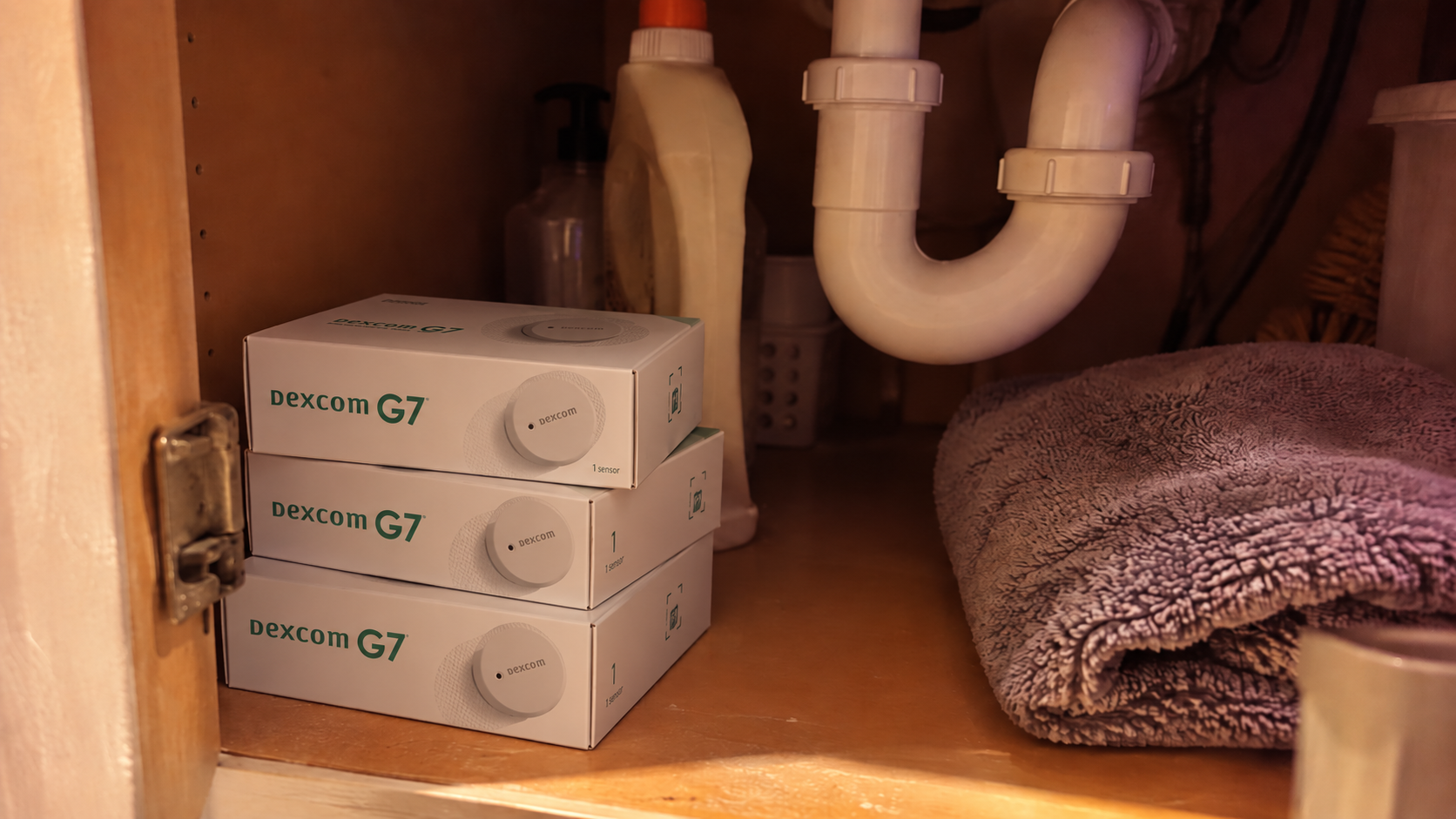
And after they listen, they recommend it to everyone who's struggling. It's straightforward, practical, and easy to listen to. Bold Beginnings gives you the basics in a way that actually makes sense. The episode you're about to enjoy was brought to you by Dexcom, the Dexcom g seven, the same CGM that my daughter wears. You can learn more and get started today at my link, dexcom.com/juicebox.
US Med is sponsoring this episode of the Juice Box podcast, and we've been getting our diabetes supplies from US Med for years. You can as well. Usmed.com/juicebox or call (888) 721-1514. Use the link or the number, get your free benefits check, and get started today with US Med.
Hi. My name is Mary. I just turned 37. I live in Arizona. I am a marketing executive.
I'm in school earning my MBA. My wife and I are raising our two young kids, and I am a type one diabetic diagnosed coming up on five years.
How young are the kids?
Five and nine.
Oh, did you get one of them as a diabetes gift?
Two Moms, Two Kids & “All Out of Sperm” 2:34
Per well, one of them might have triggered my diabetes. I don't know. Oh. We're gonna talk about that.
Oh. Oh. Oh. Oh. Listen to me.
Okay. We're gonna figure it all out. This is nice. Yeah. '32 when you were diagnosed.
Prior to that, how was your health?
So I can't actually tell you when I became a type one. I could tell you it was sometime between 2019 and 2021, between 30 and 32 years old. But the day somebody told me, oh, actually, you have type one diabetes was December 2021.
Okay.
Before that, health was okay. I've had Hashimoto's since my, gosh, early twenties, maybe, like, '22 or '23.
Mhmm.
So I've got that going for me. But, yeah, I never really had any major health issues.
Yeah. And did you intimate a moment ago that you cooked that younger baby inside of you?
Yeah. Mhmm. Yes. My wife, carried and gave birth to our son. He's nine, and I carried and gave birth to our daughter, and she's five and a half.
And she was born in September 2020, and then I was finally diagnosed extremely late in December 2021.
Okay.
A whole, like, nine months after I was in the ER for the first time with high blood sugar, which is the whole story we'll get into.
Are they, brother and sister through the donor as well?
Yeah. Yeah. We use the same donor.
Nice. Well, that's fun. Mhmm. Did you guys decide ahead of time that it's, like, you'll do one, then I'll do one?
Yeah. Oh, we sure did. Okay. So my wife, she's eight years older than me. She actually turns 45 on Thursday this week.
So it was just the obvious choice that she would go first and I'd go second.
Yeah. To get going. Yeah. Did you feel like afterwards, were you like, oh, I wish she was younger because she could've done the other one too. I'm I'm good not doing this, or were you excited to do it?
I always wanted kids. I was never super excited about pregnancy, but it was kind of like, it was something she really wanted to experience. And I was like, well, if you're gonna do it, I have to do it. Like, you know what I mean? And she Yeah.
She has a lot of health challenges herself. Her pregnancy was pretty horrible, and her delivery was pretty horrible. Like, you could not pay her to get pregnant again. So I was like, okay. Well, I'll do it next.
And then I was like, oh, hold my beer. Like, I'll have an even worse pregnancy and delivery than you. So you could not pay me to do it again. So we're quite happy. We're quite happy.
Two two parents, two hands, two kids. We're all out of sperm. We're good to go.
I wish you would have said that twenty minutes from now so we could have called this episode all out of sperm.
All out of sperm. We used all of our vials. That's fun.
Planning a Pregnancy, and a “Type 2” Label 5:12
Okay. Well, I guess let's find the beginning of the story. So you're not sure you're not sure when you started seeing symptoms, or they started going so that you're aware of them now in hindsight but didn't know about them then?
Yes and yes and no. So I have a suspicion that if somebody had tested antibodies, maybe they would have shown up in late twenty nineteen, but but maybe not. So, you know, getting pregnant as as lesbian is like a whole planned thing. Right? So, like, before we had decided, like, okay.
We're ready to have a second kid. So I went and had, you know, labs drawn, and they did some flushing of the plumbing and just different things to prepare my body for pregnancy. And at that time, I was actually I've just this is kind of a separate thing that we'll also talk about. I've lost, oops, sorry. I've lost 80 pounds in the last, like, three years.
So I was at my highest weight at the time, and my lab results came back with an elevated a one c. Mhmm. It was 6.3. And I was asked they were like, hey. So we're gonna go ahead and just classify you as type two.
It's the first time I'd heard that. And would you wait to get pregnant? Like, we'd like you to lose weight and try to get your a one c down. And I was like, well, no. Because when they did all the testing to make sure my body was good to go, they actually found that I had a prematurely low egg count.
And and I was like, fuck you guys. Like, you don't tell straight fat people to, like, wait and not have kids. So, like Wait.
Did you ask her that? Did you ask? Did you say, hey.
Do you do you
say that to straight fat people?
Or Yeah. I'm pretty as I'm pretty assertive. I'm a pretty direct person. So I was like, hell no. We're gonna move we're we're doing this right now.
It'll be fine. So they were like, okay. Well, just so you know, when you do get pregnant, which was a few months later, we're gonna just treat you as gestational from from the get go. So I was treated I was put on metformin before I got pregnant, and then I was treated as gestational throughout my pregnancy. I was given basal insulin.
They gave me a bullshit meal journal and carb restrictions. They never offered me a CGM. My morning glucose was always above a 100, which news flash even to this day. I I'm extremely well controlled now, but to this day, my morning blood sugar is almost never below a 100. There's just something about my body that works that way.
So they kept ramping up my basal really, really, really high despite what I now know were low symptoms in the afternoons and the evenings. So during pregnancy, despite an absolutely massive amount of basal insulin, like, I think I was up to, like, forty units a day at one point. My a one c shot all the way up to 8.4, and I was labeled noncompliant even though I I promise I was compliant. I was doing all the things I was supposed to do. They were like, hey.
You know, you're overweight. We only want you to gain 20 pounds. I've gained exactly 20 pounds through that pregnancy. Yeah. And nobody thought, oh, let's test this lady for antibodies because her a one c keeps shooting up, and she's having, like, a really high blood sugar pregnancy.
And my daughter was big. She was she was almost ten pounds at birth, and and they induced me three weeks early. She was born three weeks early. Well, Mary, they
gave you the notebook. What did you want? You wanted more than that? They gave you the notebook. Yeah.
I did it come with a pen? Did you get, like, a UnitedHealthcare pen or something with it too, or did they not even give you the pen?
Didn't even give me a pen.
We're gonna take great care of you. Here's a notebook. Hey. I'm having trouble. You're noncompliant.
Thanks for all the help. Is that about that's about how it went?
No. That's about how it went. Yeah.
Awesome. Yep. Thanks for all the help, everybody. That's great. So we so my gosh.
Did you did you, like, make go through the whole pregnancy with that eight? Yeah. And you were pushing and pushing and pushing with insulin that you couldn't you obviously, you couldn't make it? Yeah. Yeah.
Wasn't wasn't budging. Mhmm. So yeah. And I had a really terrible birth story, which I won't get into because that's not why we're here. But
Four Days of Labor 9:30
I mean, is it a fun terrible birth story? Because we can take a left turn. Except for the people who listen to it. I mean, they don't like the fluff in the podcast. Let me suggest to you, if you don't like the fluff in the podcast, Mary, you don't like a podcast.
I mean Exactly. Exactly. Well, and this is clearly this is a storytelling episode. So, you know, those are the ones I like. So if you don't, I don't I don't care.
Yeah. Don't listen.
Yeah. Yeah. Tell your story any way you want. And somebody online just said to me the other day, she's like, I know you help people and everything, but I don't like all the fluff. And I was like,
the fluff? Okay.
It's the whole thing. That's my thing. That's what
So don't listen to those. Yeah. Yeah. Yeah. There's plenty of, like, you know, tactical episodes.
Yeah. Yeah. Well, that point was made too. I don't wanna get off topic because then people say I was talking about myself. I can't win, Mary.
They'll be also, I like the way I follow the story and I follow what I think is interesting. And someone said to me, like, you sometimes, like, you get away from the main point. And I thought, well, to me, it wasn't the main point. Like, it was it would have been the main point to you if you were interviewing Mary, but you don't have a podcast. So I don't know what to tell you.
Yeah.
No. How however you do what you do works really well for my brain. Thank you,
Mary. I appreciate that.
No. Okay. I wish it was a fun I wish it was a fun first right now. I was I was in labor for four days, natural labor for four days with absolutely zero pain management. I'm extremely stubborn, and I really wanted to see what my body could do.
And I don't know when to quit just in general in general in life. I I don't really
Don't know when to quit.
I really don't ever know when to quit. It it got to a point where, like, the baby was not doing well. I was not doing well. They were like
Mhmm.
I call it an emergency C section, which is easier than explaining what actually happened. It's more, like, semi emergent, but they were like, listen. We can either, like, get you on Pitocin and get you an epidural, and you've got, like, four hours to get this kid out, or we can get you down to surgery in the next hour. Mhmm. And I was like, I have nothing left.
I can't. Yeah. It's been four days of this. I can't imagine my anyway anyway, so I chose the C section. Hang on.
Here we are.
Wouldn't quit. It's hilarious. I'm waiting for you to tell me I'm not actually gay. I just brought it up once, and I'm sticking to it. Yeah.
Yeah.
That's hilarious.
Were you at your at your highest weight during that pregnancy?
Yeah. I was. Yep. So I'm down 80 pounds from my highest pregnancy weight, which I think counts.
I yeah. I would I would
I only gained 20 pounds.
I just wanna tell you. If if I was counting, that's exactly where I would count from. Right.
But Yeah. Yeah.
Yeah. But weight an issue your entire life?
Yeah. Weight and eating disorders an issue my entire life.
Okay. And how did you fix that? I mean, you're gonna tell me use the magic juice. Right?
Be well, yes. And I became a type one diabetic. I kinda kinda didn't have a choice. I didn't really have a choice anymore. Yeah.
Well, how did So Go yeah. Go go ahead. I'm sorry. Baby's out and go.
“You Don’t Have Diabetes Anymore” 12:29
Yeah. Okay. So this is break. It's kinda crazy. So I'm in the hospital.
We were in the hospital for seven days. This is during COVID also, by the way, which absolutely sucked. And I got pregnant three months before COVID broke out. So I'm like, oh, wait. Now keep in mind, when I was told that they were gonna call me a type two diabetic, like, that's all anybody said to me.
I never talked to an endocrinologist. I did not know what that meant. I didn't know anybody with any kind of diabetes. So I was like, okay. Like, I don't know what that means.
I don't really care. And then I was treated as gestational. So in the hospital, the first couple days after giving birth, of course, my blood sugars were great. That's what happens. And, they were discharging me, and I was like, oh, wait.
What do I do, like, about my insulin and checking my blood sugar? And they said, oh, well, now that you've given birth, you don't have diabetes anymore. You can go home, and you never have to check your blood sugar again, and you never have to take insulin again.
What was that?
I I didn't know any better, so I said, great.
Knew this wasn't Yeah. Gonna be a Yeah. And I didn't quit on that either, Scott. They said, don't take insulin. I didn't take it.
Yeah. I was like, this is fantastic. I did. Then you hated doing that.
So you have I mean, you have all the knowledge in the world, not all the details, but you have enough knowledge to take good care of yourself. And then somebody has said, you can stop doing that now. Mhmm. And you're gonna tell me you went to DKA at some point. How long did it take?
You've probably heard me talk about US Med and how simple it is to reorder with US Med using their email system. But did you know that if you don't see the email and you're set up for this, you have to set it up. They don't just randomly call you. But I'm set up to be called if I don't respond to the email because I don't trust myself, a 100%. So one time, I didn't respond to the email, And the phone rings at the house.
It's like, ring. You know how it works. And I picked it up. Was like, hello? And it was just the recording.
It was like, US med. Doesn't actually sound like that, but you know what I'm saying. It said, hey. You're, I don't remember exactly what it says, but it's basically like, hey. Your order's ready.
You want us to send it? Push this button if you want us to send it. Or if you'd like to wait, I think it it lets you put it off, like, a couple of weeks or push this button for that. That's pretty much it. I push the button to send it, and a few days later, box right at my door.
That's it. US med dot com slash juice box or call (888) 721-1514. Get your free benefits checked now and get started with US med. Dexcom, Omnipod, Tandem, Freestyle, they've got all your favorites. Even that new islet pump.
Check them out now at US Med dot com slash juice box or by calling (888) 721-1514. There are links in the show notes of your podcast player and links at juiceboxpodcast.com to US Med and to all of the sponsors. The Dexcom g seven is sponsoring this episode of the juice box podcast, and it features a lightning fast thirty minute warm up time. That's right. From the time you put on the Dexcom g seven till the time you're getting readings, thirty minutes.
That's pretty great. It also has a twelve hour grace period, so you can swap your sensor when it's convenient for you. All that on top of it being small, accurate, incredibly wearable, and light, these things, in my opinion, make the Dexcom g seven a no brainer. The Dexcom g seven comes with way more than just this. Up to 10 people can follow you.
You can use it with type one, type two, or gestational diabetes. It's covered by all sorts of insurances and, this might be the best part. It might be the best part. Alerts and alarms that are customizable so that you can be alerted at the levels that make sense to you. Dexcom.com/juicebox.
Links in the show notes. Links at juiceboxpodcast.com to dexcom and all of the sponsors. When you use my links, you're supporting the production of the podcast and helping to keep it free and plentiful.
Symptoms Mistaken for Breastfeeding 16:23
Six months. Oh, it's
not bad. How much and and you were losing weight, so you thought, oh, the baby weight's coming off.
Oh, yeah. That's exactly how it happened. So Uh-huh. So a month a month postpartum, I did get labs. A one c was part of that.
My a one c was c was down to 6.3, and there were no alarm bells. Like, nobody was concerned about this, and I did not know what it meant. I also healed really, really poorly from my C section. It took months About. Probably because my blood sugar was high.
Yeah.
My doctor had to put two different wound vax on just to get it to seal up. Then also because this is where it's, like, sugar in the egg. Was it before pregnancy, or did pregnancy trigger it? Or was it we had our first of many bouts of the original COVID that December when our daughter was three months old? Okay.
Like, to you know, take your pick. Russian roulette. I'll never know. Doesn't doesn't actually matter. Just interesting to think about.
So December through March, so this is three to six months postpartum, I started having symptoms, which I thought were breastfeeding symptoms. I was exclusively pumping around the clock, like, eight times a day. I lost, like, 40 pounds. I was peeing buckets. Water was the best thing I had ever had in my entire life.
I was exhausted, but, like, those are all symptoms. Again, I don't I don't I don't necessarily know where the line is between normal and not normal. I've never done this with my body before even though I was a parent already. I was like, ah, yay. I'm losing weight.
Like, this is the best diet I've ever been on. And, like, I'm really thirsty. Well, you've gotta, like, double your water intake when you're breastfeeding, and I'm peeing a lot. Well, that happens when you get up in the middle of the night, and I'm tired. I have a toddler and a newborn.
So Yeah. I just thought absolutely nothing of it until I started losing my vision.
Did that by the way, some people, that doesn't even get them. So did you
That's what got me. Okay. That's what got me. Yeah. I and I've worn glasses almost my whole life.
And but this was not just, oh, my prescription has changed. Like, I couldn't see my computer screen. I couldn't see the TV. The floor was blurry, and I I could no longer see at night. Like, I couldn't see lane lines when I was driving at night.
I couldn't drive at night anymore. Mhmm. And we have some family eye stuff, and I was like, oh, shit. It's that thing that happened to my aunt's eyes. Like, I gotta get to the eye doctor.
The Eye Doctor Who Caught It 18:50
So I go so I go to the eye doctor, and this sweet, sweet man, he's doing the exam. I'm telling him everything that's happening. I'm I at at the time, I'm less so now, but at the time, I was still very prickly if anybody brought up, like, weight or diabetes because it was it was pretty triggering. Like, my whole pregnancy
Okay.
Has gestational. It's pretty triggering for me from, like, a eating disorder perspective. So he's like, has anyone ever diagnosed you with diabetes? And I was like, well, I had gestational. But, you know, that was, like, six months ago.
That's over now. Yeah.
Yeah. That's over now. You know, I'm, like, getting defensive. He's like, have you like, when's the last time you checked your blood sugar? I was like, before I gave birth, they told me in the hospital I didn't ever have to check again.
Like, I'm defensive at this point. And he's literally holding my hand, and he's like, can I please he's like, we have a meter here in the office? Can I please check your blood sugar and, like, fully beat red at this point? I'm like, fine. I was over 600.
Five seconds before that, you're like, the patriarchy. And then Yeah.
But, seriously, this eye doctor is a may I still go to this eye doctor. And every time I see him, I'm like, you saved my life.
Yeah. What a thoughtful person. That's awesome.
Yeah. So he was like, I'm gonna need you. He's like, we're not gonna finish this appointment. I need you to go to the ER right now. Would you like me to call an ambulance?
And I was like, what? An ambulance?
What are you talking about?
No. I don't wanna pay for an ambulance. And I was like, I'll take myself to the ER. I have to go home and get my pump, and I need to call my mom and have my mom come and, like, help my wife with the kids because, you know, who knows how long the ER is gonna take. So this is 03/15/2021.
So I went to the ER, and it was the most disappointing experience. Yeah. They didn't run any labs. They didn't give me insulin. They didn't test my ketones.
They didn't test my antibodies. They gave me a bag of fluids, told me to go home, told me to find an endo, and said, you're overweight and you have type two. You need to lose weight and see an endo.
Awesome. Thank you. Awesome. So the at this point, let me just make sure I understand. The eye doctor so far is the most steady
Competent.
Competent medical person involved in this story so far.
Mismanaged for Four Years 21:16
Yeah. Yeah. And so that's by the way, the where we're going with this is I was grossly mismanaged for four years, and it put my life at risk until I so I chose to take charge. So I really kinda only feel like I've had type one for the last, like, year, year and a half because that's how long I've been like, alright. Everybody move out of my way.
I'm I'm gonna figure this out now. I can I just So I
a quick question off of that? Before we started recording, you said you've list you've heard the entire podcast?
Almost. Almost. I've listened to almost every episode just in the last year. I I only discovered you a year ago.
That's what I was gonna ask you. In the last year you did that? Mhmm. Are the kids okay? Did you, like Yeah.
Are there in the closet? Did you quit your job? How did you make so much time?
I I work from home in my home office, so I my favorite places to listen to the podcast are in the shower and when I'm driving. And if I'm having a just a slow day at work where I'm just running a of numbers and reports, I'll just have it on in the background.
Yeah. I listen to YouTube videos in the shower, in case what people are wondering what I'm doing when I'm shower. Nice. Yeah. No.
I I or I talk or I talk to an AI bot to, like, work through my ideas for the day. Yeah? Yeah. I don't know if everybody else is up to that yet, but you guys will be in a couple of years. You'll stop making fun of me a couple years from now.
My wife always my wife always has a an ear ear AirPod.
Mhmm.
I don't know. It's not actually an AirPod. It's such a earbud thing. She always has one in her ear, and she's always listening to a podcast in the background.
Yeah.
But she likes podcasts about serial killers. So, like, I'll get in the car with the kids, and it'll connect to her Bluetooth. And it'll be like and then he stabbed her 500 times. I'm like, shit.
Hey. Hey, guys. Hi, everybody. Every everyone's fine. Everyone's fine.
Yep. Older mommy is not crazy, which is I assume what we call her. And Yeah.
Actually, her name is mommy, and I'm mama. So you got that right.
Mommy mama? Okay. Mhmm. I wish I would've got the pick more. They just call you what they call you, and then you're, like, stuck.
I did
Our son our son actually named us. We we were interchangeable until he turned two, and then he decided she was mommy and I was mama. And that's what I wanted, so I was happy.
Oh, that's nice. You you had your you had your
I wanted to be mama.
Had your kids on mama?
Yep. Wait.
Working Through an Eating Disorder 23:35
I I wanna stop here for a half a second because I feel like we're about to get very sad about what happened to you after the the emergency room. So let's just double down on sad. Where did the eating disorder start, and how did it manifest, and how did you manage through it, all that stuff?
It started when I was 13, anorexia and bulimia. I was in the hospital a couple times, in and out of therapy. And honestly, it continued. It was the most severe. I mean, I'm five I've always been I've been five seven for a long time.
So I'm a fairly tall lady, and I was, like, a hundred pounds at one point in, like, middle school. It was it was the most acute for a few years. Got better in high school, but honestly, it didn't really stop until my, gosh, probably mid twenties, and and it's something I fight even to this day. And then kind of the pendulum swung in the other direction with bingeing and overeating. And, you know, you get married.
You have kids. You start gaining weight. It's what happens. Emotional eater. And something I wanna talk about at at some point is how hard it was to become a diabetic and have to be so hyper focused on my food and my carb counting as somebody who battles
Mhmm.
Eating disorder tendencies. And I've worked my way through that for the most part, but that was one of the most challenging things for me.
Yeah. I can I can I mean, I can imagine? It does obviously
some tricks that I'll share, to kinda
Okay.
Be less triggering to myself.
Okay. We'll get back. We can get back to what you want.
Or Yeah. Yeah. Even being way even being weighed, like, at I started refusing because I saw two doctors every week. I had two doctors appointments every week for my whole pregnancy. I was considered so high risk for for many reasons, and I started just refusing to let them weigh me.
I was like, one of you can weigh me every other week. And you can compare notes, and you're not gonna tell me what number you saw. And, like, keeping the journal was triggering, having them nitpick everything I ate was triggering, kinda The carbs like, it was all so triggering, and then it got 10 times worse when I realized I was I was type one diabetic.
So I employed part of your strategy this weekend when I took my very fashion forward 22 year old daughter out to buy some clothes for summer.
And Mhmm.
I said to the guy ringing it up. I said, listen. Here's what's gonna happen. You're gonna ring all that up, and then I'm gonna hold my credit card over here. Uh-huh.
No one's gonna mention how much this was. Okay? He looks at me, and I went, I don't want you to tell me. I don't want you to show me. I was like, just let me know when it's time to reach out with my hand.
I was like, I don't wanna know.
Yeah. Yeah. No. Totally. So we'll we'll take a little left turn and then and get then get back on track.
But so for me, counting carbs is less triggering than counting calories because the way I would hurt myself in the past was via calorie restriction and calorie counting.
Okay.
So I've just learned when I look at nutrition labels, I just hold my hand over the big number. I just don't I just don't look. I don't look. I don't care. I I don't wanna know.
And I use because I cook a lot. So often, you know, I'm not eating something from a box. I don't know exactly how many carbs it is, and so I use AI
Right.
To describe what I'm eating, and I'll show a picture of my plate with my hand next to it. Oh, a great idea. I have trained it. Don't you ever tell me the calories. All I wanna know are the macros, and it knows that.
How about that? These are my, like, workarounds. Yeah.
Great idea. And Yeah. Did you learn that in therapy? Did you learn that on your own?
Onion.
On your own. Was the therapy valuable ever? Do I mean, do you do you understand the core of where your pain is from, or do you No. Do you and is that like, this is the reason you still struggle, you think, because you haven't been able to affect that as much as necessary, or, like, what do you see as the as the mechanism?
Well, so I'm I'm still in therapy. I'm a big fan of therapy now, but I didn't actually comply with any kind of therapist until I met my current therapist. And she and I have been working together for, gosh, probably eight years now.
Mhmm.
And, yeah, I've done a ton of growing and a ton of healing, and even this diabetes journey has really, like, stretched me in some ways that have ultimately been positive. But, you know, I'm a I'm a typical type triple a perfectionist. That kinda sums it up with with the the history of with a with a history with a history of trauma. So, like, there there you go.
Right. When when my, series comes out on Friday this week with Erica, I'm gonna put out a four part series. You don't no one knows this. I'm telling you right now. But it's on the the paces, and it's kind of an explanation of, like, there's adverse childhood experiences, but there's also positive childhood experiences.
And so will you skip that, or will you No. Or you listen to that?
I wanna listen to that.
Okay. I wasn't sure how the triggering worked exactly. Like No.
I'm a big fan of that.
Okay. Okay. Yeah. Yeah. It's, so if we took that paces that ACES quiz, you'd have a fair amount of, like, childhood trauma?
A fair amount. Yeah. I like to hide behind my wife's. I'm really good at that. Because her her childhood trauma trumps almost anyone I've ever met.
I see.
So I'm really good at hiding behind hers. But yeah. Yeah.
You're like, yeah. I've had problems.
I got plenty of my own. Yeah.
I've had problems, but have you met Shitshow over here? And so Literally.
Yeah. Literally. We we've we engaged in couples therapy when our son was young just to we just had to learn how to fight, really. That's it. And it was actually with who is my therapist now.
We started seeing her for couples therapy. She taught us how to fight, and then I was like, hey. Can you be my just my therapist? And she said, yeah. And literally in those appointments, I would be like, well, yeah, that happened to me, but did you know what's that, like, stuff x y z?
And the therapist would be like, you need you need someone on one health. Like
Hey. Why don't you stay, like, for a year? Yeah. Yeah.
Yeah. Yeah. Eight years. We'll chat
every once in a while. You'll be fine in 2029. Exactly. But you're saying that prior to meeting that person, you were somebody was taking you to therapy, but it was more mandated, and you weren't really
Yeah.
Down with it. Okay.
Yeah. Even I even I would take myself to therapy and then not not not be open. So you know?
The the lying to
yourself is
is my favorite part of being, a person. I
am yeah. I am so much more I'm a huge fan of learning and growth. Like, that's that's my jam. It's just taken a really long time to get there, and it's it's a lifelong journey.
Yeah. No. For sure. I mean, listen, dude.
I think everyone should be in therapy.
I I think everybody gets thrown in some sort of a hole whether they realize it or not. You know? Yeah. And like you said, if you if you grew up poorly, if she grew up poorly, then you get married. You don't even know how to, like, exist together because you only have, like, you only have your, you know, your examples from growing up.
Exactly. And I and I, like like, it it's weird for me because, like, in a lot of ways, I have a great child. I have great parents. I have great family. It's just there were some acute things.
Like, some big hitters.
Yeah. Yeah. Yeah. Some big some big hitters. So it's not like I had a terrible childhood or upbringing.
I really didn't. And it was, like, night and day different from my wife's. But
Yeah. It's interesting. I mean, my my wife helped me. Like, if it wasn't for her having, like, emotional intelligence when we were younger, like, she was able to redirect me. I'm sure I'm sure she would tell you it took way longer than it should have or something like that.
But I'm sure she'd tell you, I'm not there yet. But but she also has the the ability to, like, point out what's happening to me and ignore the parts about what happened to her. So it's interesting how people Yeah. People people. Anyway, okay.
The Revolving-Door Endo & “You’ll Get Used to It” 31:42
Let's get you back to the hop let's let's jump from that big pile of fun back to the hospital. ER tells you lose weight. You're type two. And then
Yeah. Go home. Yeah. Pass them and lose some weight. So I did actually see an ancho the next day.
So actually, I said, like, I hadn't known anyone with diabetes. That was true. But somewhere along this journey, I have learned that my dad had been diagnosed with type two. And my mom had been diagnosed with Hashimoto's after I had been diagnosed, and both of my brothers also have type two. So at this point, there was, like, a family endocrinologist.
And so my mom made a few phone calls, and I did get in to see an ENDO the next day. And I was with that ENDO's office with the revolving door of providers for four years, and they sucked. So they gave me short acting they gave me basal and and short acting meal insulin. They gave me metformin. They gave me Jardiance, which just gave me yeast infections.
They didn't give me CGM so that makes you pee out sugar. That's a problem when you're a girl.
Mhmm.
I had already thrown away my pregnancy meter, so they gave me a sample, and that's the same, like, finger stick meter that I use today. I was vaguely told to get my blood sugars down. You know? And they and they were like, just come back every three months. We'll run labs every three months.
And, you know, at one point, was like, hey. So I'm trying to trying to prick my finger, and, like, I'm trying to get my blood sugars down. But when I get down to one fifty, I'm like, I am like, I feel like I'm gonna pass out.
Mhmm.
I am sweaty and shaky and dizzy, and, like, I don't like how that feels. And they just said, you'll get used to it. And that to me just felt like more shaming. And so I was like, well, fuck you then. I don't wanna get used to that.
Like, nobody explained. Here's why your body will get used to being lower, and here's how long it will take, and here's why it's safe. And, you know, they it was like when a somebody who's overweight says they're hungry and, you know, that it was that kind of shame to me. So
Yeah. Can I ask a question around that statement? Yeah. Get used to it? Was it Yeah.
Did you take it to mean that, yeah, you'll be dizzy and feel terrible, but you'll you'll get they didn't explain it the way that they meant it, which is your body will get accustomed to that, and you won't get dizzy at one fifty anymore.
Correct. You left the office Exactly.
You left the office thinking, for the rest of my life, I'm gonna be dizzy at a one fifty blood sugar.
Yeah. Oh, yeah. Yeah. Communication working.
I just wanna say.
No. Thanks. Yeah. Yeah. I And love so I and so okay.
A Full Plate: Family, Work & Why She Looked Away 34:25
We're gonna take another little side journey really quickly. So my life is I am not unique. Everyone has is busy, but, like, I've been really busy. Like because I don't know when to quit and quit, and I'm type to blame. I'm a perfectionist on all those things.
Right? So, like, I I'm the sole earner for our family. I work full time. I wasn't in school at the time. I am in school now, earning my MBA.
You know, I had two young kids. My wife is actually disabled, and she's a full time stay at home mom. And so there's some, you know, some extra support that I provide for her sometimes there. And then our son has challenges as well. He's autistic and Oh.
Has ADHD and
Mary, I'm sorry. You cut out. You cut out
for a
second. Mary, can you hear me? Oh. You cut out.
Yeah. Yeah.
Yeah. You cut out for a second. He's autistic and?
Oh, and has ADHD, and he's bipolar.
Okay. And he's I'm sorry. He's the older or the younger?
The older. Yeah. He's nine.
Okay. Go ahead.
But at the time when this was all happening, you know, he was, like, so, like, three. And so we hadn't figured all of this out. All I knew was, you know, we have a child who is really violent, really angry, really destructive, really dysregulated, getting kicked out of school. Like like, on my list of top five stressors, this was so far down on the list.
Right.
Yeah. And and and and listen. I take some responsibility for the fact that, like, I could have taken this diagnosis more more seriously even after I was told I was type one, which we're about to get two. But nobody told me I should. Okay.
Yeah. Yeah. Like, nobody made a big deal out of it. Nobody nobody helped me understand what all of this means. And and, like, I have another autoimmune disease, Hashimoto's, and I was like, well, that's easy.
And I just take some pills, and I feel fine. And so this this must be like that. And if I feel great, like, I I mean, I was living life in the six hundreds. So at, like, 300, I felt fantastic. Felt way better than I did.
So I was like, you know what? I don't have time for this. If you're not worried, I'm not worried. I'm gonna just move on
I gotcha.
And bury my head in the sand, which is not something I've ever done in my life with anything. So it's very confounding to me that I just stuck my head in the sand for almost four years with this thing. But I I didn't know Yeah. To take it seriously.
I'm so happy I didn't make my joke about how busy I am because then you started telling me about your son. Was like, oh god. I I would have come off like such an idiot. I was gonna say, did you wake up at 03:30 in the morning and build a type one diabetes and menopause web page for your website? What I did last night.
But I love that.
Yeah. Yeah. Yeah. Well, a couple of ladies hit me online pretty hard. They're like, don't have enough menopause content.
I'm like, I'm sorry. I'll work on it. Touche. Yeah. Yeah.
I'm getting there. I said, we've we've gotten out to the fringes of content now, which is, you know, I started at the core, and I've been building my way up. But I Yeah. You know, I was like, oh, I don't have enough knowledge about this to be, like, valuable. So I did, like, a ton of research and put stuff together to talk to Jenny about.
And then I was like, well, I can build a web page around it so that it's ready to go out when the content goes out. And then I just never fell back asleep. And then at 07:30 in the morning, I was like, I guess I'll just get in the shower now.
Oh. Yeah. So Sorry. No. But then you kind of a similar night.
I couldn't in the middle of the night either, so I got up and worked on one of my final papers. It's due this weekend. Yeah. I know. But I'm also a little tired.
The kids' problems, and I'm like, oh god. Thank god I didn't say that. Yeah. Yeah. I know.
I
It's it's been a I mean, I could do a whole podcast just somewhere that's
been nice.
It's gotta be Be on the parent.
Yeah. Yeah. Yeah. Yeah. Right?
So Yeah. Yeah.
Oh, okay. I'm sorry. Go ahead. So nobody's nobody's telling you to take it seriously. You're living you like, generally, like, excuse me.
Genuinely, you're in the 6 hundreds a lot?
Like, so I had been, right, when I was sent to the hospital. And since then, I I was averaging I was, like, living life in the two and three hundreds pretty consistently, and I felt great. And I did not like how I felt when I was down at, like, one fifty. And so I was like, I'm just gonna do what I'm gonna do, and, like, I'll come every three months for the labs, which they never walked me through and never explained to me. Now I have a spreadsheet of all my lab results going back to 2016 with, like, definitions and charts.
But back then, I just trusted the doctor would tell me if there's a problem, and they really didn't.
So you did not have an expectation that you were doing anything that was, like, that could have been made better. You were o you were like, I I feel good at 300. Nobody's telling me any differently. That was that. That's kinda how it went?
Yeah. Wow. I was losing weight slowly but surely, and my amnesty was lower than it was when I was pregnant. It was down in the sixes. I've been in the nines, but, you know, it it did come back up to the eights.
I've settled in, the sevens and eights for a few years. Mhmm. But but also just, you know, they'd say, like, well, we'd like to get your a one c down, but they didn't say why. Mhmm.
You and you didn't look? No. No. Did you think were you purposefully not looking?
A little bit. Like I said, I I don't know that I'll ever fully understand why or how I just, like, turned a blind eye. Like, you know what? Mhmm. I'm not dealing with this because that's not actually who I am.
I'm very driven and focused and high achieving and all the things. And with but with that, with my health, I think it was so wrapped up in other triggers and trauma and shame and embarrassment that I was like, I'm just gonna close the book on that. Okay. And I feel fine, and I'm just gonna move on. Understood.
And I don't wanna know. I don't wanna know anymore, and they're not telling me anymore, and, like, I'm just gonna move on. I'm fine. I got you. I was not fine.
I understand that. Totally fine. Yeah. By the way, I've done this long enough now that I completely understand. I you know, there's a there was a time back making this podcast before, like, I would have asked more, like, are you like, how did you miss that?
Like, or why did you not? Or, like but after hearing people discuss themselves long enough, like, I I see what happened to you. So it makes sense to me. You know?
Finally, the Real Diagnosis 40:36
So so it turns out about three months after I was in the hospital, somebody tested my GAD sixty five antibodies. They didn't tell me. They were elevated. They were not crazy. I think they were, like, 13 or something, so just a little high.
Mhmm.
But nobody told me. So three months later, they tested all the antibodies, and three of them came back positive. And they told me so this is December now of 2021. So a whole year after I'd given birth, like, six months after being in the hospital, I was told over a voice mail. Hey, Mary.
So, actually, this antibody came back, and what that means is you're actually type one. They didn't explain anything else. I wasn't given any additional tools or information. I was never connected to a diabetes educator. I was told to just keep doing what I was doing.
But what they did tell me was if you're ever over 200, give yourself 10 units and go on a walk.
Okay.
Which that is not my correction factor.
Wait. What what state do you live in?
Arizona.
Okay. Go ahead. Keep going.
I have a great n o now, by the way. And he actually he knows as much as me, maybe even a little more than me, which is great because this other office, I don't think can do anything about type one. Yeah. So I wasn't given a carb to insulin ratio. I didn't even know what the word goal is was.
I was still not offered a CGM. Nobody talked to me about a pump. I was just given very irresponsible advice. So by February 2022, so almost a year after going to the ER, my AONC was back up to 9.3. Mhmm.
My GAD 65 was up to 19. Less than a year later, it was above two fifty. And to this day, like, my lab results don't even give me a number anymore. It just says greater than two fifty, so I have no idea, what the number actually is. It's just very high.
My fasting glucose in February 2022 is three twenty eight.
And they're still calling you a type two. Right?
Well, no. They're calling me a type one now.
No. They're calling you after the GAD that you started getting type one from them.
Plus two other yeah. Plus two other Okay. I think it was I a two and islet cell
But prior to prior to that, it was all just body it was your body makeup, and you must have type two diabetes because look at this. Okay.
Yep. Yeah. So now in September 2022, so we're two years after my daughter was born, just prob probably when this all started, if I had to guess. So, again, this is me now looking back because I charted, like, ten years of my own labs Mhmm. Once I finally took the bull by the horns.
And so I was looking back, and I could see that in September 2022, I had trace protein in my urine. I had glucose in my urine above a thousand. This all indicates DKA. Nobody told me that. Nobody walked me through those labs.
It was just a routine visit. There are a bunch of other lab levels that indicate things like fluid loss, dehydration, inflammation, and and on Mancharo.
This episode was too good to cut anything out of, but too long to make just one episode. So this is part one. Make sure you go find part two right now. It's gonna be the next episode in your feed. Dexcom sponsored this episode of the Juice Box podcast.
Learn more about the Dexcom g seven at my link, dexcom.com/juicebox. A huge thanks to US Med for sponsoring this episode of the juice box podcast. Don't forget, usmed.com/juicebox. This is where we get our diabetes supplies from. You can as well.
Use the link or call (888) 721-1514. Use the link or call the number, get your free benefits check so that you can start getting your diabetes supplies the way we do from US Med. The diabetes variable series from the juice box podcast goes over all the little things that affect your diabetes that you might not think about, travel and exercise to hydration and even trampolines. Juiceboxpodcast.com. Go up in the menu and click on diabetes variables.
Thank you so much for listening. I'll be back very soon with another episode of the juice box podcast. If you're not already subscribed or following the podcast in your favorite audio app, like Spotify or Apple podcasts, please do that now. Seriously, just to hit follow or subscribe will really help the show. If you go a little further in Apple Podcasts and set it up so that it downloads all new episodes, I'll be your best friend.
And if you leave a five star review, oh, I'll probably send you a Christmas card. Would you like a Christmas card?
- Adult-onset type 1 is routinely mistaken for type 2. Mary was labeled type 2 and gestational, handed metformin and a meal journal, and called “noncompliant” while her a1c kept climbing — because no one checked antibodies. When insulin needs keep rising and highs won’t budge, antibody testing (GAD65, IA-2, islet cell) is what tells type 1 apart from type 2.
- “You don’t have diabetes anymore” after birth was dangerously wrong. Being told to stop insulin and never check again post-delivery sent Mary toward a slow-motion crisis. Gestational diabetes resolving doesn’t rule out underlying type 1 — especially when a1c climbed during pregnancy. Postpartum follow-up matters.
- An eye doctor caught what the system missed. Vision changes were the tipping point; a glucose check in his office sent her straight to the ER. New or rapidly changing vision is worth taking seriously, and a simple finger stick can reveal a lot.
- “You’ll get used to it” needed a real explanation. Mary left believing she’d feel shaky at a normal glucose forever, because no one explained that the body re-acclimates as it comes down from chronic highs — gradually and safely. Ask your care team for the why, not just the what; it can change whether someone is able to lower their numbers at all.
- This episode also covers Mary’s long history with disordered eating and the workarounds and years of therapy that help her manage carb-counting without it being triggering. It’s a sensitive topic — if any of it resonates, talking with a professional can help, and support is available (in the U.S., the National Alliance for Eating Disorders helpline).
- Dexcom G7 — The CGM Arden wears — an episode sponsor. 30-minute warm-up and up to 10 followers.
- US Med — Where Scott’s family gets diabetes supplies — an episode sponsor. Or call (888) 721-1514.
- Bold Beginnings Series — The newly-diagnosed starting point Scott recommends.
- Diabetes Variables Series — The little things that affect blood sugar — travel, exercise, hydration, even trampolines.
- National Alliance for Eating Disorders — Helpline and support — this episode touches on disordered eating.
