
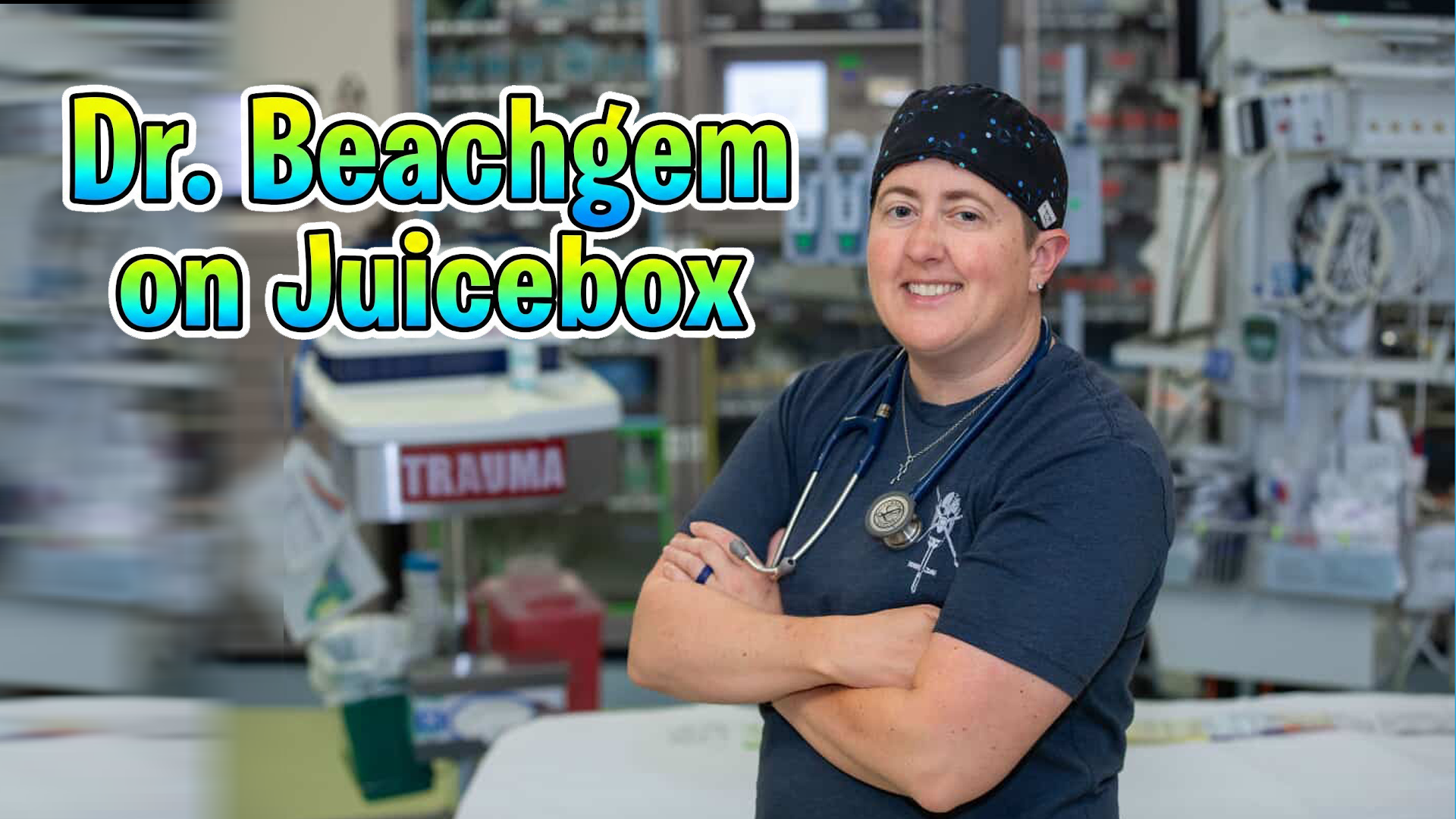
#594 Rachel is not Quincy
Rachel is an adult living with type 1 diabetes.

You can always listen to the Juicebox Podcast here but the cool kids use: Apple Podcasts/iOS - Spotify - Amazon Music - Google Play/Android - iHeart Radio - Radio Public, Amazon Alexa or wherever they get audio.
+ Click for EPISODE TRANSCRIPT
DISCLAIMER: This text is the output of AI based transcribing from an audio recording. Although the transcription is largely accurate, in some cases it is incomplete or inaccurate due to inaudible passages or transcription errors and should not be treated as an authoritative record. Nothing that you read here constitutes advice medical or otherwise. Always consult with a healthcare professional before making changes to a healthcare plan.
Scott Benner 0:00
Hello friends and welcome to episode 594 of the Juicebox Podcast.
today's podcast features Rachel, her husband has actually been on the show already, but she's the type one intriguing isn't it? While you're listening today, I'd like you to remember that nothing you hear on the Juicebox Podcast should be considered advice, medical or otherwise. Always consult a physician before making any changes to your healthcare plan are becoming bold with insulin. If you're looking for the diabetes Pro Tip series begins at episode 210 In your podcast player, where you can find it at juicebox podcast.com and diabetes pro tip.com.
If you're looking for community on Facebook, I suggest you try Juicebox Podcast type one diabetes, it's a private Facebook group with over 18,000 people just like you talking about using insulin and living with diabetes.
This episode of The Juicebox Podcast is sponsored by touched by type one, learn more about them at touched by type one.org. They're also on Facebook, and Instagram. today's podcast is also sponsored by the Contour Next One blood glucose meter. You can find out more at contour next one.com forward slash juicebox. Use the most accurate meter I've ever held my hand Contour Next One.
Rachel 2:01
So my name is Rachel. I am 26 years old. I live in the US and South Carolina. I've been living with type one for seven years now. And my husband has also been on the podcast
Scott Benner 2:15
he has been now you ready for the fun story? Sure. So we met at the Georgia JDRF conference. Is that right? Yeah, that's right. Okay. And then later through emails and everything. We booked Quincy to be on the show your husband, except for the entirety of the time after the booking up until a person's voice appeared on the recording. When I was like Hello. And Quincy said hello. I thought you were Quincy.
Rachel 2:52
That's a weird. And what do you think that just his name or
Scott Benner 2:56
it was just the name? I just didn't I meet a lot of people at those things. And so I don't know why Quincy just I was like, oh, Quincy. I mean, you have type one and he doesn't. Right. Right. And, and you were very, may I say I put words in your mouth. You were really excited to meet me. So totally was you can say that. Okay. Okay. So I just kind of thought, wow, she must be the one that wants to come on the pocket. And
Rachel 3:24
well, funny side of that story, from my perspective, is that, so I think you said something about, like, oh, it'd be interesting to get your perspective, you know, being married to somebody who has type one or whatever. And a lot of guys don't come on the show. And so that's why it made sense. But we walked away from that. And I looked at Quincy, and he was like, Are you mad that he asked me to come on the show? And I was like, You are so ridiculous. He gets it. He's one of those people. Like you can do any sort of game and get it perfect on the first try. Like these things just fall into his lap. And so I was just teasing him the whole time. And he was like, don't be mad. Well, funny.
Scott Benner 4:02
If it brings you any comfort. None of that's on purpose. For my part. I think people I think people who listen long enough realize like, wow, this doesn't seem at all odd that this happened. So I yeah, I so he pops on. And you know, man's voice. And I'm like, That's not her. And then my brain. Although it was not smart enough to coordinate the entire thing. My brain was quick enough to stop myself from going, Hey, yo, you're not a girl. I just, I just, I was like, hey, and he, you know, I said, How are you Quincy? And he said, good. And I went, Okay, let's definitely him then. And I just, I pivoted on a dime. And then that's why when I got done, I said, Hey, I'd really like to have your wife at some point.
Rachel 4:54
I'm here to set the record straight. Please.
Scott Benner 4:57
Please let him find this out. listening to this recording?
Unknown Speaker 5:01
I totally okay,
Scott Benner 5:02
thank you. I appreciate that because you know, it's not gonna go on for months. It'll be like a year after he was on. And he'll hear this. And by the way, hey, Quincy, what's up? You have a girl's name kind of I don't know. It's not a girl's name is it?
Rachel 5:15
He's heard everything with his name. Honestly, it's not that I've ever heard but people say all sorts of things when they find out his name.
Scott Benner 5:22
Allow me also to save for the 2021 millennial crowd. I know there are no girls and boys names, and anybody can be named anything. And by the way, my daughter is named Arden. And that is heavily weighted as a male name. So
Rachel 5:36
I'm really I had never heard it prior to listening to the show. And I really love
Scott Benner 5:39
it. Thank you. There are not many of them. When we named her there were slightly over 9000 people named Arden in the country. And I think 60% of them were men, something like that. And just for everybody's context, Quincy was on episode 410. And it's called Best hug. Yes. And I don't remember why.
Rachel 6:03
But because I think it was because I gave you a hug. And you were like, it seemed like she was hugging me because I had like, really impacted her life where she just gave like a really good hug.
Scott Benner 6:15
Oh, yeah. I don't remember why. So there's that's interesting, too. For everyone out there. I don't know. Have you ever had a woman who's somebody else's wife hug you in public in front of the husband? But unless you've got that, that cold vibe, it feels very strange. I
Rachel 6:31
see, like, was totally, he was like, No, this makes absolute sense. Because I mean, the show really helped both of us. So he was like, Nah, that's fine.
Scott Benner 6:38
It's very cool. And I'm super happy you're here. And let us not talk of him ever again. Unless he comes up in the course of the conversation. Anyway, I was just five minutes ago explaining this to my wife. She's downstairs working. And if you could have solved like the abject disappointment on her face, that she married a guy who couldn't figure out who's who had a conversation.
Rachel 7:03
Now we get to pretend like it was completely on purpose. And when people listen to this, it'll just be full circle. Oh, that that guy's wife. Cool.
Scott Benner 7:09
I looked at Kelly and I was like, Listen, this is what it's like being in my head. I find it freeing. Don't judge me. Anyway, I was proud of myself back then for how quickly I was just like, okay, and just went right with it. And we had a great conversation after that. So
Rachel 7:28
yeah, I was really proud of him. When I listened to it. I was like, well, could you?
Scott Benner 7:31
Well, this is interesting. What was it like to hear your husband talk about your diabetes? away from you?
Rachel 7:40
It was really at first I was nervous. I was like, What is he gonna say? But then when I listened it was really sweet. Like to hear it from his perspective without me there like him feeling like he had to say a certain thing, you know?
Scott Benner 7:52
Yeah, that was really sweet. You were comforted by that it wasn't off.
Rachel 7:57
No, it made me laugh, like, because both of our perspectives has just changed so drastically even since we got married. And so it was cool to hear him talk about the evolution of his thoughts around type one. And in relation to me,
Scott Benner 8:11
Well, how did your perspective how has your perspective changed?
Rachel 8:14
Oh, my goodness, where do I even start, like I saw I was diagnosed at 19. So I was already kind of, you know, a whole person living my life one way prior to getting diagnosed. It just the way in which I came to know type one, it was just I mean, like most people, the hospital just didn't do a great job explaining that you can even be successful with type one. And so the show when I found it, I had already been so beaten down with like trying my best using hospital methods. You know, no Pre-Bolus saying you don't touch your Basal right. So you don't do anything yourself, your ended at all kind of thing. I had been so beaten down because I'm not a person that, you know, just rolls over. Like I had tried really, really hard to like make it work to have good numbers. But I kept coming up with this frustrating, you know, spike with every meal and then a crash later because I had no idea about Pre-Bolus thing. And so, I was so tired of diabetes, like when I found the show. And someone told me about it. And they were like, Yeah, this guy. He talks about his daughter's diabetes and how he manages it and she is like normal agencies. And I laughed. I was like, That's not real. That's like, and then almost there was like this anxiety in me because I was like, what if that is real? And what if I've been doing it wrong? Like what if there's a new way?
Scott Benner 9:46
I'm fascinated by that space in that thought right there. I bring it up. I think more than I should when I'm talking but that idea of you've been doing something for so long in one way and Your results aren't great. That changing is almost too painful. Because then it's some sort of like, like, Yeah, well, you're this bright light on what you were doing before and how it wasn't working. Yeah, that part fascinates me. And then trying again and learning something new. I know how difficult that is. Because a lot of people tell me wrapped around diabetes. I actually just yesterday was talking to someone who, who, I guess works at Omnipod. I guess I can say that. And they were talking about some campaigns that they're going to do this year. And I they were getting my input about what I thought of them. And I said the this exact thing I said, I think you're missing, that it is incredibly difficult for a person to take something that they feel like they understand even if it's not working, as well for them as they want it to at least they understand it, and ask them to relearn something. I was like, I think there's much more of a leap in there than you than you think.
Rachel 11:07
Yeah, I totally agree. So I Yeah. And it was hard to like relearn what I had already thought was impossible to do. So when I found the show, that's kind of the mindset that I was in, like, diabetes is impossible. I try and I try. And I pretty much at that point was just I was on Omni pod. So at least I was on a pump. But I was just using, you know, test strips. I couldn't didn't use Dexcom. Right, because it was too stressful for me to see the chaos going on when I had no way to control it. Understand that I didn't understand how to make it better.
Scott Benner 11:43
Yeah, no, I understand that. Well, out of sight out of mind is better than Yeah, look, you're messing it up.
Rachel 11:48
Exactly. So like occasional testing to be like, well, yep, still sucks. Cool. And then like moving on, you know, it was better for me than seeing the Dexcom graph where I was just constantly, you know, woken up by alarms and annoyed by it. And I couldn't do anything to make it different. So the show, I think the very first episode I listened to I know, I know, it was it was Jen had a pain Korea tech dummy or whatever it is where they removed the pancreas.
Scott Benner 12:14
Yeah. Yeah, remember that one?
Rachel 12:17
Yeah. Also, apologies to my dog. I can hear her.
Scott Benner 12:20
That's fine. I mean, it's not being eaten by like a coyote or something. Right?
Rachel 12:24
No, she's just a puppy and really hates being alone. We just got her recently. So that's been a fun journey.
Scott Benner 12:29
Yeah, starting to make all the mistakes. Great.
Rachel 12:33
I know we got a dog. But anyway, I listened to that episode. And then I was like, Okay, this is interesting. And then I found the bold with insulin episode. And of course, that's the one where you talk about the methodology, just kind of behind all of this. And I was like, what? This is a thing like, I'm gonna try this. And so it changed my perspective about the ability to like when
Scott Benner 12:56
I'm glad, that's amazing. interesting side note, that episode that you heard first was going to have a completely different and weird title. And Jen, Jen stopped me. She's one of the only people that has ever been like, No, you can't name my episode that she just, she's strong armed me and I was like, okay, and I felt like we were married. I was like, I'll do it. I'll fix it. I'm sorry. Enter, I want to say she was right. I picked something ridiculous. But she had a kind of a southern sensibility and it rubbed her the wrong way. And I was like, okay, like, I'll don't worry about it. She was so insistent. There's I could not have said no, she's like, well, what if we just call it something like what it is? And I was like, alright, well, then,
Rachel 13:38
after everything she had been through, I feel like that makes sense. 100% She
Scott Benner 13:41
gets a pass right away. Crazy story, you know? But then you found episode 11. So did you go through some sort of social media to make that leap? Or did you how did you figure that out?
Rachel 13:52
I'm trying to remember how I figured I think I just started scrolling and then oh, I know what it was. It was where you recap episodes that were important on the podcast. It's like where you went back? I think it maybe was for the 100th episode. Oh, I
Scott Benner 14:05
revisit I listened. Oh, I did. Basically that's,
Rachel 14:08
you talked over old episodes. Because of
Scott Benner 14:11
my laser disc days, I did a director's cut of why we used to watch movies on you don't know about any of this. You're fairly young. But movies used to come on these record size discs called Laser discs. And there was so much storage room on them. That director started watching their movies and telling you what they were thinking while they were making them. So instead of the audio from the movie plan, you'd hear the Director's Cut, you'd hear the director talking. And so for my 100th episode, I listened to bowled with insulin. And then so you know, you would hear it, I would be listening. And then I would stop and sort of like, add addendums to it or like, Oh, I didn't realize this. Yeah, here's how I think about it. Now you found that one?
Rachel 14:51
Yes, I found that one and you're talking over it. To be honest, kind of annoyed me a little bit. I was like, Wait, what is the original episode and so finally I was like, Okay, I'm going back. I'm going back. And I listened to that one. And then I started from the very beginning,
Scott Benner 15:07
being annoying is my signature move. I'm sorry. Oh, no, no, I think I get a lot of really wonderful reviews. But the only one that sticks in my head. So funny and weird. Like, I seriously, they're so touching, I want to just say I read them. And I'm like, almost brought to tears by many, many of them. But the only one that I can pretty much recite verbatim is I love this podcast and hate that guy. And it just makes me so happy because it means that the information is so valuable, that even though she I'm just assuming she really really really didn't like me, she had to listen anyway. And by the way, if that person still listening, I think of you constantly and Haha, so.
Rachel 15:56
So it's just such a new concept. And so you interrupting it was like, wait, no, what was he originally trying to say? I should just be smart and go listen to the original. Cool.
Scott Benner 16:05
So I tricked you. I got two downloads. Now. I have to say in honesty. You hugged me like we were in a movie. You know what I mean? Like I was waiting for the camera to like, pan around so it could get your face in my face. And the same thing and, and there's that moment where. So if you could try to understand that day, I get up early in the morning, I get dressed, I come downstairs I'm you know, moving about I meet Jenny for the very first time in person that day. Just remember that that's cool. And then, you know, I'm up on stage, I think for an hour or so. And then there's a very short break. And Jenny comes into the room and we do another hour together. And then it turns into a meet and greet which I don't know, were you in the other rooms right? For other stuff.
Rachel 16:58
I have seen one of your I think I saw the first talk you did because it was just bolt with insulin. And then we went to one of Jenny's and then we came to the one where you guys talk together. And after that we came up.
Scott Benner 17:10
Did you do any after me?
Rachel 17:14
I think so because they had Eric Tozer I think it was
Scott Benner 17:18
I wish you wouldn't have said his name. Because I was gonna say Do you notice how there's no meet and greets after most of them. So that's a weird thing. Because when I get done, then there's a line of people. And
Rachel 17:30
remember what was after it honestly, I can remember like, what,
Scott Benner 17:33
that's fine. Eric probably doesn't listen, and he's a nice guy. Don't worry about he'd be fine with this. We're not talking about him. He understands the flow of conversation. But my point is only that, like after a couple of hours of talking. You're mentally exhausted in a way that if you don't do that you don't realize that I'm not reciting anything. I'm just going off my head. And then you start talking to people. And many of them are trying to tell you how important the podcast is to them. And it's it's tough, like it's tough to stay. It's not tough to stay in the moment. But it's tough to remember everything. You stopped it for me like you hugged me and I thought, like I felt it, not the hug. I felt like oh, I've I think I maybe have helped this person. Like you don't mean like it felt really good. What What's the relief for you? Because you traveled to be there? Why did you do that?
Rachel 18:24
Yeah, that was actually our first type one event ever. And I came to it because I heard that you and Jenny, were gonna be there. And again, like my husband, I were just shifting the way in which we talked about type one together how we thought about it, we were like, You know what, this would be good to do. Let's go. It's closer. Like, let's go do it. So we came, I guess to see you guys, you know, and to meet because at that time, too. I was. And I still am working with Jenny. And so I was going to meet her in person. And I did and so it was really sweet to like meet both of you that day. Oh, that's
Scott Benner 18:57
cool. Were you in but Were you there when I did the like how far people had come really long distances to be at that.
Rachel 19:04
That was insane. I can't remember the farthest one but I remember being shocked. Yeah.
Scott Benner 19:07
Do you remember thinking wow, it wasn't me.
Rachel 19:11
I know. It was just like, wow, people like really care about these things.
Scott Benner 19:16
Well, that's sweet. I think it was me but I mean, I it was you. I seriously I think we can go to other JDRF events. They How far did people come? And no one's gonna say, well, we've been driving for there were people who were driving for like, six hours. Like, am I remembering that right? Like some crazy. Yeah,
Rachel 19:32
I mean, everyone we talked to like, just in passing. They were like, Yeah, we're here for the Juicebox Podcast.
Scott Benner 19:38
They were there for Jenny. They were just trying to make me feel better, I think.
Rachel 19:41
No, I don't know. It was it was funny. They're like, No, we're just boxers. I was like, oh, that's the thing. Okay,
Scott Benner 19:46
I didn't know that either. By the way until someone told me I was like, yeah, now there's a t shirt now that I know it.
Rachel 19:54
So I think it just the relief for me was just in. Like I said feeling like a failure for so long is really hard. Like, in being a person who really wants to do well, you know, despite getting a diagnosis that is very, very challenging, and spending the first five years just like, in a daze, like trying as hard as possible, and not coming up with, like results that I wanted, and being so, so confused that whenever I found your podcast and like, use the principles, and it started to work, and my a one C lowered, and my time and range increased, and my life was more full, because I wasn't panicking about like, you know, what was happening to my body while it wasn't being taken care of. I mean, yeah, that's like all the relief you'll ever need. It's just like, you see the person that, you know, helped contribute to that. And you're just like, oh, my gosh, thank you like,
Scott Benner 20:51
yeah, no, it was lovely. It really was I was touched, I was really touched by it. I mean, not touched enough to remember that, you know, your Rachel and Quincy, but I'm joking. It was just, it's a lot. And then I have to get on a plane. And by the way, at that point, it was a little bit of that, like, hey, you know, people are starting to get sick all over the world vibe going on. So
Rachel 21:09
that was the last thing we went to like the last in person, like large event? Yeah,
Scott Benner 21:15
sure. No, no, I remember feeling like I maybe shouldn't be here. Like when it was happening, although, you know, there's this thing that happened yesterday, on the pod made me the potter of the month, I think it's just so cool that that's all a social media thing that they do, which is nice. But they would, and I don't want to just, first of all, I don't want to breeze over it. Because I am really touched. Because I don't have diabetes, I thought it was a really wonderful gift for them to say that. But my point of bringing it up wasn't just to point out that it happened, although I'll take that. It was that somebody in I was very careful to read all of the comments. And there were more than 200 of them so far. And one of the people said that they were like last and went to the conference in Georgia. So there's a person in that room who then I mean, now it's a year or so later, who I just noticed for the very first time because of the potter of the month thing like I never would have known that person story. They were just in that room. And I guess I said something that made sense to them and to change things for them. So it's very cool. Awesome. Yeah. So I want to know a little bit about fit. Like you said, you felt like a failure. So were you trying really hard and nothing was working? Where did you eventually just give up enough. And that's why it wasn't working.
Rachel 22:48
I was trying really hard and nothing was working. I've never been the type of person. I mean, granted test strip testing, like we said, isn't very involved. But I've never been the person to just give up even in burnout. Like, that's just not something I do. It's more of an emotional drag. For me when I'm in burnout, like, I'll care for myself, but I'm like pissed that I have to care for myself, like, kind of thing. So I was trying really hard. And I mean, it's just the similar story. Many people say like when when your care team doesn't have type one, they care about you. They want you you know, most of them do anyway, they want to help you. But what can three month gap appointments do for you, when they don't empower you to like make your own changes when it's like a daily disease like, and they weren't talking about Pre-Bolus Singh, I had no idea how to adjust my Basal rates, like I would do it in the doctor's office, like she would show me what to do, but she would tell me what to change them to. And I had no no concept of why. So it made me feel reliant on them. And also, I didn't trust them because I still had crappy blood sugars. So it was like, such such a like, weird little trap that I felt like I was in.
Scott Benner 24:05
So they're telling you listen, we're the only ones that can do this. And they they weren't particularly good at it.
Rachel 24:12
Yeah, and I would try like, I mean, I I truly like I haven't had a doctor that I look back and go wow, they were awful. That's not the case. It's just with the information available. And with again, I mean they have the luxury of not having type one they don't get it like as much as those of us who have it do. They would just give me the bare basic information in I would come in I would even try to schedule at first like more than three months appointments and that's typical like I guess when you're first diagnosed, but even a few months past that. I was trying my hardest to understand I would walk in there I would have my you know, log book or whatever. That's hilarious. I don't even know what those are at this point but the You know, I was trying so hard, and they would just look at me so confused, like, why I wasn't accepting that this is the way that it is.
Scott Benner 25:09
So you were you were not the way you were kind of the problem, right? Because there's a way they do it.
Rachel 25:14
And yeah, they're just like, No, this is normal, this is fine. It's fine. If you go to 220, after a meal, it's completely fine. And I was like, Well, I don't feel fine. They're like, well, this is how it is.
Scott Benner 25:24
I'm gonna say this, I'm gonna say this here. And I said, on an episode I recorded the other day, if you're a healthcare professional, and you're telling people that, I believe that is malpractice And shame on you,
Rachel 25:35
it's frustrating. And it's like the doctor that I know, would never want less care for their kids, you know, like in any other circumstance, but they're taught to believe that it's okay. It's not that they are lying. It's that that's what they're taught to,
Scott Benner 25:54
but you don't think that's what they would do in their own personal life? Say what you don't believe that's what they would do in their personal life?
Rachel 26:00
I don't think so. It's like if they knew if they could have a child that had it and see how that child felt at 220, you know, after a meal, they would question it, too. Yeah.
Scott Benner 26:10
Okay. Okay, so you i following I at first thought you were saying that they are telling you one thing, but would do another. You're saying if they saw it close up? They would know that wasn't the case.
Rachel 26:21
Yeah. They're just taught in the medical community. I think that like, well, this is the best we can do. Yeah. Because like me, I mean, they just think well, this is how it is, right? Well, it's not. You want to be careful.
Scott Benner 26:33
I'm super glad that you found the podcast. I like you a lot. You have such a great vibe about you. Thanks. I don't I just there's something really just lovely about you. It's why I was so disappointed when Quincy was your husband.
Rachel 26:45
You're like, it's not. But I wanted
Scott Benner 26:47
the other one. I thought he ended up being terrific. By the way on the podcast. He really was good.
Rachel 26:55
He is so well spoken. He always surprises me. I when we go to social events. I'm pretty social, but I let him step forward. I'm like you, you take it.
Scott Benner 27:06
You chew up this chit chat. I don't feel like doing this anyway.
Rachel 27:10
Actually, whenever we were going to talk to you. He was like, Okay, we got to go meet Scott. Like, do you want to do that? And I was like, Yeah, and we go, and then also, I got so nervous. And I was like, No, I'm just another one of these people. He has so many people around him. I'm like, so spatially weird. I don't like bothering people. And so I started getting nervous. I was like, no, maybe we won't. And he was like, Rachel, we drove all this way. You have to open it's like, okay,
Scott Benner 27:37
well, I'm very glad he did. And it was it's no bother. I enjoy meeting everybody. It's just hard to keep it all in your head athletes. You know that that's pretty much the only thing. But no, the experience is is amazing. It's it's, it's really touching to hear from people. And it's sometimes they say something, and you're like, Oh, that's a good point. You know what I mean? Like, I never thought that I've also met a couple of people who are like, you know, strange in a good way. And that's fun, you know. And so there's a there's a lot that goes on. Mostly, I think, I think a lot of people that are in the rooms that don't know what to expect when I'm talking I think they leave a little like, like, I don't know, they may be dumbstruck or all inspired or something I'm not certain, but they walk out you can see them just kind of looking in the back of their head and thinking to themselves, like, this isn't anything that anybody's told me so far.
Rachel 28:31
That's what I'm saying. I'm willing to bet it's the same, you know, realization that washed over me when my friend told me about the podcast, it's like, Wait, there's another way?
Scott Benner 28:40
Yeah, you can see them nodding along when you're talking. Like, like, you'll say, like, have you ever noticed, you know, whatever. And they go, Oh, my God. Yeah. Like you can see on their faces like that, that thought?
Rachel 28:51
Yeah, like, especially when you do real life examples, and you show a graph and you're like, has this ever happened to anybody? And everyone's like, Well, yeah, like, and you're like, it doesn't work to do it the way you know. And you say, you say it better than your doctors don't know what they're talking about. But you know, I'm super polite. Yeah, it doesn't work, you know, to do it the traditional way. And everyone starts being like, they admit to it, like, No, it doesn't work.
Scott Benner 29:15
Oh, Lady said to me one time she goes, you said, Does this ever happen to you? And she said, I thought, yes, every three and a half hours.
Rachel 29:22
Yes. I mean, truly, like, I go back and I'm like, you know, no wonder like, I would Bolus as soon as I put food in my mouth. No wonder I would go high as a kite and then crash down later and just be like, well, let's do it again. It's lunch now. Like, it's ridiculous.
Scott Benner 29:41
How long did it take you to pull it all together?
Rachel 29:43
Really five years, I swear, like, I mean, I found the podcast 2019 Like towards the end. And so it was like, because I remember it was Thanksgiving. And we were headed home. We have like a three hour drive to get to where Are our immediate family. Some of them are. And so, the friend had told me it was a friend's husband who was actually asking me what being on Omni pod was like, because he was about to switch pumps. And he was camera which one he was using, but I am like, Omni Potter die like, yeah, you would have to pry that out of my cold dead hands like for me to switch pumps. But anyway, you can put the Omni pot out here
Scott Benner 30:36
I actually don't have an omni pod ad today. But Omni pod.com forward slash juice box. The ad I have today is for the Contour Next One blood glucose meter. Now this is the most accurate, reliable, easy to hold easy to handle easy to use, blood glucose meter that I've ever touched or used in my entire life. i It is the best one I've ever used. I'm thrilled that they're a sponsor, what you need to do is go to contour next one.com Ford slash juice box to see it for yourself. And to learn more. The simple truth is that blood glucose meters are something that were given were handed, nobody asks us which one we want. And that's a shame. And it doesn't need to be that way. Contour. Next One is the blood glucose meter that I would choose if I was given a choice. It's not the meter that my daughter's endocrinologist had sitting in a drawer, or you know a bunch in a closet or it's just the one that you know our practice like this one or whatever reasoning they use. How about instead you get one that is easy to handle, easy to use has a bright light. And if you want an app to attach to it works with Android, or iPhone. So this is a meter that you can dig down deep with with your data with that app, or you can just use it free of the app as a meter. It fits in your hands so well or in your pocket or your purse or wherever you carry your diabetes supplies and it has a second chance test strips, which means you can go touch the blood not quite good enough and go back and get more without ruining the accuracy for the test strip. And that accuracy is an industry standard. It's so good. Contour next one.com forward slash juicebox. It's a web page with so much information that when you leave there, you'll know for sure you want to Contour Next One. So head over now, make a decision. Don't be told what blood sugar meter to use. actually decide for yourself. Before you go head over to touched by type one.org. They're absolutely my favorite type one diabetes organization. So many programs and services for people living with type one. And all they want is for you to check them out at touched by type one.org. When you get there, there's a tab for programs where you'll see their conference awareness campaign bowl for our cause their dance program, their dancing for diabetes show their D box program. They do so much for people living with type one diabetes, you can also find them on Facebook and Instagram. But you should check out what they're doing at touched by type one. I appreciate you listening to the ads. Now I'm going to get you back to Rachel
Rachel 33:26
all dead hands like for me to switch pumps. But anyway, he was talking to me about it. And I was telling him and then at the end he was like, you know, you sound like somebody who would be interested in this podcast I listened to you told me about it. I laughed and was like, No way. And then I told it. I told Quincy about it. And he was the one that was like, Wait, we have a long drive like see, like, Let's listen. Let's see if it helps. Yeah, really Quincy is like a big part of this.
Scott Benner 33:55
Yeah. Well, he's he's a he's my hero in this scenario, that's for sure. I mean it because I can't imagine like I really I don't have context for being an adult with type one being approached by another adult with type one and being told you should listen to a third person who gets what doesn't have diabetes at all. Isn't a doctor and it's going to help you with your blood sugar and you I can't imagine not thinking that can't be right.
Rachel 34:26
I definitely was sketched out a little bit. I was like it's a podcast.
Scott Benner 34:30
You can't step on that dog. It's this dog. No, don't don't say that on the podcast. She's joking. People love animals don't say that. She would never hurt the puppy. Tell people you would never hurt the puppy.
Rachel 34:42
But this puppy this puppy literally has everything it could possibly need.
Scott Benner 34:46
What's a puppy? I mean, the puppy it's got water and like food. I think it has everything it possibly needs, right?
Rachel 34:52
It really has everything it possibly needs.
Scott Benner 34:54
It doesn't have your attention though. Apparently.
Rachel 34:57
If it's okay with you. I might go stick her in the garage so she does Thank you, Wally.
Scott Benner 35:00
Let's say the soft, beautiful room that you put the dogs in.
Rachel 35:05
Okay. Okay. Insulated room that also has everything
Scott Benner 35:09
she needs temperature controlled room. Go ahead. I'll stay here and keep myself busy. Sorry. I'll be right back. Oh, you're fine. Do you guys remember that time I left the couple alone to go help Arden with a Bolus and they played music? Wasn't that crazy? Did you hear that? No, no. What? I have no idea what episode it was her I would tell you. There are too many episodes now. I can't remember anything. Do you think she's gonna kill that dog just to be on the podcast? She wouldn't. The dogs fine. No one worry. No dogs are harmed, as far as I know, in the making of this podcast episode. But let me tell you about Omni pod. The Omni pod tubeless insulin pump, I'm going to do an ad off top my head until she gets back. The Omni pod tubeless insulin pump is amazing. You actually right now may be eligible for a free 30 day trial of the Omni pod dash, you'd find that out by going to Omni pod.com forward slash juice box. Now you can type that URL into your browser or get it right there in your podcast app. Right in the show notes. It's in there or it's available at juicebox podcast.com. Now, why do you want a tubeless insulin pump? Well, that's easy, constant Basal, right. Everyone on the tube pump has to take their pump off to shower or bathe or swim. Not you, you have an omni pod, constantly working for you. You can have it on while you're playing soccer. You can have it on while you're carrying a dog to an undisclosed location. You can wear your Omnipod 24/7. And never be without your Basal insulin. It's a big deal. Plus, there's no tubing. And because there's no tubing, there's no controller to connect your body. Right. Other pumps have an infusion set connected to a tube, the tube goes to some controller, then that controller has to be clipped to your belt. I hear some people put it in their bras down their pants, probably not in the front. You know, pocket, it's this thing and now you're connected to it. Plus, if you walk past like a doorknob, you could get the tubing caught on the doorknob, this rip it right out. None of that will happen with the Omni pod tubeless insulin pump on the pod.com forward slash juice box. Now when you head over, you put in just the tiniest bit of information. And when you're done on the pod, we'll get right back to you. Right and if you're eligible for that free 30 day trial. Well guess what? Things are going to be looking up real quick. Where is Rachel? I'm here. Oh god Rachel I just did an entire Omni pod waiting for you to come back.
Rachel 37:46
I heard you that was really really well done.
Unknown Speaker 37:47
Did I do a good job? You did?
Rachel 37:49
I did not know I mean I know you like do them live the like experiencing it. It was really good.
Scott Benner 37:55
Oh, thank you. Yeah, were you waiting for me to be finished? Or were you just choking
Rachel 38:01
Oh no, I heard you I was like oh, he started my tubing I bet you the cin
Scott Benner 38:07
just just for clarity the dogs alive and as well right?
Rachel 38:10
Oh my goodness. She is doing just fine. Excellent. Super sweet.
Scott Benner 38:16
I don't want people thinking you you soprano that dog so you can be
Rachel 38:21
she may start up again. So people might hear how alive and well she is
Scott Benner 38:25
in toss Rafa boat. No, actual sopranos reference. And by the way, let me just say this now if you haven't seen the sopranos, I don't know what you're doing. Go to HBO max right now start watching from the beginning. It's one of the best TV shows ever. Not the point of this conversation though. Okay, so you diagnosed at let me check my memory. 19. Yep. How old were you when I met you?
Rachel 38:51
Oh, gosh, it would have been
Scott Benner 38:53
two years ago. Yep. Take your agents subtract one year.
Rachel 38:57
But it feels like long because of COVID. Don't
Scott Benner 38:59
Don't Don't Don't argue with math. Math is an absolute.
Rachel 39:02
Yes, one year ago. So I was 25. There you go.
Scott Benner 39:05
So you you lived for five years your way with the way that they gave you? Yeah. And then after you found the podcast, how long did it take you to just make the changes and see the results?
Rachel 39:19
It was hard. I feel like it was about six months.
Scott Benner 39:23
Oh, I think that seems short. But I understand that it wouldn't seem short to you
Rachel 39:28
know, and I also hit like a huge patch of like, so working with Jenny. I can see. First of all like the first time she emailed me with like suggestions on what to change and why in all caps. Why? Like, I wanted to cry. I was just like, This is what I've always ever wanted. Like this is amazing. So fine tuning things. At first it went really well. And then I actually so I say six months because it's like a special circumstance where I think I actually hit the This like really big patch of like, insulin resistance for whatever reason. And Jenny actually recommended that I switch insulins to see if that would help. So I went from no vlog to homologue, which isn't like, I mean, everyone's biology is just so different, but it's not like a huge switch. But it was like night and day difference. It was awesome. And then I also came off of a medicine that I was taking. And that really, really helped as well. So that in combination, once that was done, then things were smoother and Pre-Bolus saying made all the sense. And I could find to my diesels, and it was all great. Yeah, I mean, not perfect, but you know, like it made sense. Yeah.
Scott Benner 40:42
Did you? Do you start with Jenny before me? Or did you find Jenny through the podcast? Through the podcast? Oh, I don't get paid for that. But I should.
Rachel 40:53
Yeah. What is Integrated diabetes? And I looked at it, I was like, How have I never known about this? Like, I totally would have done this sooner. I was so ready to be like, there's something else.
Scott Benner 41:06
You know, I want to take my joke back for a second because I am more than paid back with Jenny being on the podcast. So nobody has to pay me anything for that anything, Jenny's terrific. And she she very much adds to the podcast. And I'm so now afraid that she heard me joke like that, because I don't want her to think that I think that because I definitely don't. Anyway, that's cool. Like, it's amazing. How has all this changed your life? Like? I seriously, is there a palpable difference like palpable it's palpable right now palpable, palpable, palpable. Like what can you point to?
Rachel 41:44
So it, I just, I mean, literally physically, a onesies are down. I always hovered around in this heaviness. And once again, my doctor was like, I mean, it could be lower, but this is fine. And now, I mean, my last day when she was five, one, and my time and range was great. And I also like just don't even stress about what I'm eating. Like, I eat a very normal American diet. And I noticed that, like, I've heard you talk about art. And I'm kind of the same way like, I will eat a burger and fries for one meal, and then I'll eat a salad the next and I just don't stress over it the way that I used to. I don't even think I mean, I know I haven't been diagnosed with like, an eating disorder. But once I confronted the way in which I managed my type one, I realized, like, a way in which I was trying to have control previous to the new way of managing was like limiting my carbs. Because I thought and I had realized, like, Oh, it'll, it'll limit the spike, because it did. But that's so restrictive and so harmful. Like, in everyday life, it's just not a way to live personally. Like if you want to eat that way. And that's what you choose. That's one thing. But for me, it was like I can't because it will hurt me. And I just didn't even realize that because I thought that's how it was. And so then once I realized, Okay, once I understand how to use insulin, I can eat, you know, within reason, like whatever I want. You know, this is great, like so it was it was better on just so many fronts, like I just had a lot less stress around managing and eating and living my life
Scott Benner 43:32
so that the low carb mafia doesn't come at you. You're not saying low carb is an eating disorder. You're saying limiting yourself for any reason to be
Rachel 43:39
right just like restrictive thinking around foods like I that's, that's frustrating, like, No, I think if you're doing low carb on purpose, and you're doing it intentionally, and healthily, or however you eat, like, that's completely fine. Okay, but for me, it just like internal, like, I was telling myself, I cannot have this because my results will not be great. And that was so harmful for me.
Scott Benner 44:06
So it's amazing. How about burnout? You mentioned it earlier? Do you experience it as frequently now?
Rachel 44:11
No, I definitely don't because I think so I've always said there's two phases like to being upset about type one. The first one is just that you have it. And if you're diagnosed with it when you're younger, I feel like I hear it doesn't happen as much because you're used to it. But I guess everyone's super different. But for me, I mean, I have a clear memory of what it was like to not have it and a clear memory of what it's like having it
Scott Benner 44:39
it's better not having diabetes or saying
Rachel 44:41
I mean, you know if I had to choose. Yeah, so there's there's the phase of like, what you hit at first where you're just mad that you have it. Sure. And then there's the phase where like what I was describing that I think can cause burnout where you're trying your absolute hardest You're doing your best you're giving it your all and you're still having terrible results and you feel terrible. That's burnout, like, okay, giving it what you think, you know, it means and it's not working. So
Scott Benner 45:14
for you, you have the regular level of diabetes just sucks having it. Yeah. And then there's the effort to take care of it. But then on top of that, you get the outcomes that don't match your hopes. And then the physical and mental stuff that comes along with that.
Rachel 45:35
Yeah, exactly. And so there was a point where I was over the first phase where it's like, okay, I have this, I've accepted it, it's okay. And now I want to make it better and live my life. And I couldn't like I mean, I could, but it just was, I had to ignore it pretty much.
Scott Benner 45:51
You were ignoring your health pillar of your life.
Rachel 45:54
Pretty much like ignoring the fact that I could not. And again, not ever not taking care of myself, but ignoring the thought that it could be better, like pushing that down, because it is the way that it is the doctors say it's fine. I don't feel like it's fine. But it's gonna make me crazy, because I can't change it. So I'm just going to push it down. And that's why again, when I found the podcast and someone talked to me about it, I was like, Wait, so had to like dig it all back up kind of a thing. It was almost like being diagnosed again, kinda.
Scott Benner 46:26
Were you scared? When you found the show that you were gonna get your hopes up, and it wasn't gonna work? Or did you? did feel that way?
Rachel 46:35
Yeah, I was like, this is just gonna be another ride that I you know, another roller coaster ride where I try really hard. It doesn't work. And I get really frustrated, and I have to push it all back down again.
Scott Benner 46:44
I've never considered that before. Yeah, that's a that's obvious now that you said it.
Rachel 46:51
It was hard. And I was really skeptical. At first, I was like, I will listen to say that I listened. But then I mean, all offense lenders, many people will say it's just like, it's so true. It hits home, like everyone tells you to be so afraid of insulin. And I definitely was like, I remember, you know, any Bolus over four units made me a little freaked out. I was like, whoa. Because I mean, when I was using it the way in which I was yes, that was going to result in like a big time low. I'm glad that that as I eat
Scott Benner 47:22
Yeah, that episode said episode 11. Right. Yeah, that I'm so happy that that turned out the way that it did, because I really genuinely did not know what I was doing back then. So that was just me kind of leaning on what I knew resonated from the blog for people. Yeah, then mixed with my own feelings. But yeah, I guess I'm just looking back like, I'm, your story's really great. I'm not making this about me. But I'm looking back for a second and hearing how it's helped you. And I'm fresh, very fresh. In 200, Facebook comments from people telling similar stories on that, that Omnipod posts that I was telling you about? And it's hard not to think. Like, what if I didn't do a good job on episode 11? Would none of this have happened for any of these people? Like this way? Do you know what I mean? Like, it makes it feel like in the moment you're doing it, like, Oh, I hope this works. And then in hindsight, like, wow, I'm glad that worked. Because now I'm aware of what there is to lose more. Yeah, you know, I mean, like writing the blog, I've said this before it writing the blog, you get a handful of notes a month, hey, this really helps me thank you my onesies better, blah, blah, blah. But with the podcast, reaching so many people in so many places, it happens all day long, constantly. And then you become I mean, then I've become very aware of that. And so I'm now I'm suddenly thinking like, Thank God that past Scott got that right, by mistake, because I definitely didn't do it on purpose. I was not. I wasn't very good at it back then. I don't think, you know, as I say that, I realized that an hour and a half ago, a post a post a an episode went up with a 14 year old girl from Russia. And you have to listen to that one. Anyone who's listening. It's called From Russia with sarcasm. So not only is this girl, like my doppelganger, like I want to, I wanted to like the doctor. But which by the way, she has parents. It's not like she was looking for adoption. But, but it's episode 487. If I'm remembering off the top of my head correctly, she finds the podcast at 14 years old, educates herself on everything driven by One thought. And that was that her belief was that if you had diabetes, you'd lose your limbs. So she so at 14 She was like I have to figure out how to keep my body parts. She found the podcast educated herself, when to her parents made them get her Omnipod and Dexcom. Even though I believe they're not available, where she lives
Rachel 50:15
in some countries, like that's a thing to like, quiet. They don't have good management like resources. And it's frustrating. Yeah, no,
Scott Benner 50:23
but it's just that this girl just, she's astonishing. And, and funny. Listen, yeah, she's really something else. And it just made me. You know, I like so right now. She's the person I think of in this moment, because it's fresh in my head. But it'll be somebody different in a week. And I'm very grateful that that you found it. So cool. It really is wonderful. You just don't expect something like this to happen. You would think that it would take a plan. You know what I mean? Not not just the person going like, well, the blog worked. I wonder if I could make a podcast out of it. So
Rachel 51:07
yeah, I'm really glad that you did. Cuz it's definitely you know, it's accessible as podcasts and podcasts are super popular. And I don't know, I like going back to the beginning of the show and seeing how it transformed. I don't think you're bad at it then at all. I think you you got different technology. I think you know better. You learned like, as you went and I think it's really cool to watch the evolution of the show. Oh,
Scott Benner 51:29
then everybody should binge the podcast. I wholeheartedly agree. Started episode one, episode one with Adam Lasher. Yeah. And I only remember that he you know, it's funny. That might be the only episode I know for certain what number it is maybe bold with insulins 11. Adam, last year's one. But I started off with this episode I had, and then I I guess I can say it now but it's been seven years ago. Like Adam, last year was this musician who was on American Idol had type one diabetes. And I think his uncle's Carlos Santana, if I'm remembering correctly. And anyway, I saw him on TV. And I reached out to him. And I may have acted like the podcast was more than it was at that time. Oh, my goodness, but did joke's on me now because everyone starts with episode one. Yeah. So it worked out for him at least. And, and it's when is the first time I was like, go talking to peoples like, cool. Cuz I had recorded a couple of standalone ones at that point. And I was like, Oh, I like talking to people. This is a good idea.
Rachel 52:37
Everyone has a different story. And it's really cool to hear. And that was like, another thing that I so enjoyed was like, people were talking about things that happened to me. And I had never, I mean, at that point, before encountering the podcast, it's not that I didn't have good community, because my friends were very understanding. But none of them had type one. And I didn't really know anybody who did. And I wasn't ashamed or embarrassed or any of the above, I just didn't know anybody who could relate to me. And listening to the podcast, people talking about the tech that I was using new ideas, it made me care again, I was like, oh, there's like a whole group of people and the Facebook group that you mentioned. I mean, that's exceptional, like just the community. And the fact that I've had certain like circumstances happen where I had no one to go to. And you can now go to the Facebook group type in a word, like, let's say you want to take a new medication, and you're worried like how it affects your diabetes, I mean, understanding that it affects everyone differently. But I can type it in and find similar experiences, where I can at least have an idea of what it might look like for my diabetes. And it's insane.
Scott Benner 53:46
I tell you a story about the podcast about the Facebook group that. So I'm this, I'll do it quickly. My son is taking a gap semester, but he's a college baseball player. And he wanted to go to this place called driveline baseball in Washington to work out. So we had saved money not sending him to school, and it seemed like we could handle that. And we got him time to start a day to start on. And then the housing that was available for the athletes was not available for the first week that he had to be there. So I didn't know what to do. And I went online, just kind of looking for a hotel. It was expensive, and I didn't like it wasn't my choice to do that. But I was like, Well, this is the only option, you know, and I found stuff that wasn't sketchy, but it was like I couldn't get so far away from me. I couldn't figure out what was the right decision. And so I went to the Facebook group and I just said Does anyone live around Kent, Washington? And maybe a dozen people answered me and so at first I was like, well, that's weird. It made me want to post again, like pick a random town in another state and be like, Does anyone live near here? Like I'm like how big is this podcast is how I was thinking about it, you know what I mean? But people came back and I recognized one of the respondents as somebody I had interviewed. And so because I had some comfort level with him, because I'd spoken to him for an hour, I messaged him, and we spoke offline, you know. And we're on the phone together. And I'm asking other questions. And during the conversation, he just says, you can just stay here. Oh, and I was like, what? And he goes my house, you could you and your son could just stay at my house for the week, you can get him settled, and then you can leave and he can go do what he's going to do. And I, and I was like, No, that doesn't make like, no, like, thank you. That's very kind, but and then he insisted a little bit. And I said, Okay, thanks. So, we flew out to Washington State from New Jersey, and landed in the evening on Saturday, didn't get to his house to 11pm walked in, I immediately felt comfortable. He was comfortable. It was really something we spent eight nights at his house. They made us food we talked, it was a really like amazing experience. I got to watch. I got to watch like how the podcast helped this family, I got to see where they struggle, like I think I'm better. I'll be better at this now for being able to like, be a fly on the wall in their life in a mean, and but overall, it just, it's stunning. Like I was floored that somebody would say that. But but that's cool. Yeah. But I think that's what this whole thing is done.
Rachel 56:33
I agree. I mean, I feel like I could ask anybody anything in that group. I mean, when you go through something like type one, I just I don't believe I mean, I'm sure there are but like, I've never met anybody who's not a great person with type one or affected by it. Because it just like, forces you. I honestly, I don't even know what it is. But everyone's nice. And I want to read that story.
Scott Benner 56:57
Yeah, I was just I was really touched. But my point is that I didn't. Like I've never imagined that in my life. And that's not something like you guys don't know me that well. But that is not something I would normally do. Like when we were leaving. We're like sitting on the plane getting ready to leave and call and call goes, Hey, these people are gonna kill us right?
Rachel 57:18
Cracker on us or something? They know where we are?
Scott Benner 57:20
I don't think so. I said, Listen. And so I joked with them, I told him a couple days into the trip that that's what he said. And they're like, no, no, no. And I was like, Listen, if you aren't thinking the same thing, I don't know what's wrong with you, you should be thinking like, these two guys aren't gonna kill us. But it was, um, it was lovely. And very unexpected. It was wondering,
Rachel 57:43
did you like do they look at you for Bolus suggestions when they did things? Or like, how did that go?
Scott Benner 57:48
i i watched for a couple of days. And I and I helped if somebody asked me, and then I think it was like day three, or I was like, I really think we should change some of these Basal. And, like, do some stuff. So I tried to help. best I could. And even funnier. They use Jenny. So I was changing Basal race that Jenny said hop and that made me feel super awkward. I was like, I'm gonna tell her that. But privately, I think they weren't like it. But you know, what it showed me was that she had done a good job remotely, of helping them. Yeah, but really being there. And seeing it like live was, you could be more fine about it.
Rachel 58:33
And she can only go off of like what people even tell her to because I laugh at myself. Like sometimes I won't have the bandwidth or the ability to go in and put all these notes in for her and she still does a stellar job to be like, Okay, it looks like you ate here. It looks like you did this. And she does fantastic for like being remote. But like you're saying, I mean, if you're there and they're like, hey, every time you know, he walks a dog or like comes back in like this happens. And she doesn't know that it's like, helpful to make a change. And I'm sure she'd be like, right on
Scott Benner 59:05
Well, what I've learned from talking to people remotely is that they often don't know the things they need to tell you. And I've learned now that if they did, they might be able to make the decisions on their own. But it's it's like they don't know what's important sometimes. And a lot of people it's incredibly common when I'm speaking to people, all the things they are are directly telling you. They think these are the details that you're going to need to help them. I'm just like, I don't I don't need that. Not important. Not important. Not important. Not important. Not but then I asked my questions, bang, bang, bang, bang, bang and it might feel like you know, I don't know it might feel cold, but I'm just like, I asked my questions and I'm like, alright, well now here's what I think. And that's when you start explaining to them that you know a lot of what you're seeing, like if you've ever heard me say on the podcast, people see a lot of ghosts and they make decisions like you know, things they think are happening that aren't or that are you know that some That's real common when I talk to people the first time, they always think that they always think they know what's going wrong. They're so in the weeds. They don't even realize it sometimes. Yeah, really something. Listen, have we missed anything? I just want to make sure like we're not wrapping up wrapping up. But I want to make sure like, is there anything we haven't talked about that you want to talk about?
Rachel 1:00:23
I don't think so. Honestly, I'm just here to surely the podcast. It's great.
Scott Benner 1:00:29
Though there's no this, this, this episode is dense with important information.
Rachel 1:00:34
No, I mean, really, though, but that's like the, you know, summary of my story, I guess. It's like, I'm so grateful that this information exists. And it just changed everything for me. And I'm grateful that I can live my life with a little bit freer headspace. Like, you know, diabetes is there, and I manage it. But it's just not a huge stressor. I mean, sometimes it is because it is for everybody, like random moments, but like, overall, I don't see diabetes and my life like I see my life and diabetes is a facet of it because of this podcast. And I'm really grateful.
Scott Benner 1:01:16
Do you think you'll feel a little less warmly towards me when six months from now this episode is called not Quincy?
Rachel 1:01:22
Or something about like the dog? That'd be hilarious.
Scott Benner 1:01:27
I don't know. I'm pretty firm on not Quincy.
Rachel 1:01:31
Know, I will I won't be upset at all. I give over control of the title.
Scott Benner 1:01:37
I really do. You know, they didn't let me make the title of my book. What I wrote, I wrote a book and every word in that book I wrote except the title. They were like, That's a marketing decision. I was like, Okay,
Rachel 1:01:50
I read your book. I like it. Thank you.
Scott Benner 1:01:52
And then but that's not the point. But but thank you. The point is, is that every interview I had to give about that book, the first question was about the laundry. Why did you choose the title? No, no, they're like, so laundry is terrible, right? And I just started going, like, that's not what it's about. I just, I couldn't even like, I couldn't even tell the story anymore. It was I'm like, that's what a little bit of it's about. It's not like a like, a smidge. It's not even about anything. Like I'm not an I'm not a real writer. Like it's, you know what I mean? Like, it's, I don't know, I don't even know what to call that book. It's fun, though. Right?
Rachel 1:02:26
It was really good. I liked it.
Scott Benner 1:02:28
Touching in places. I hear people cry sometimes when they read it.
Rachel 1:02:32
It was It was touching. I mean, just thinking about. I mean, I mean, of course, the part that like I connected with was just like, where you talked about art and diagnosis. But like, I was older when I you know, experience that it made me ask my parents some questions. I was like, Hey, Mom, did you ever like, come in and try to test my blood sugar, like, in the middle of the night? And she was like, No, you wouldn't let me you woke up. Like whenever I did it.
Scott Benner 1:02:58
Well, you know what? That's that's really nice. First of all, that it made you talk to your mom and have some questions about it. But I I don't know. I don't think of that as a you're too young, I guess is what I want to say. Like for the the parenting stuff. Like he probably didn't hit you in the heart. Like I'm, I'm best suited to make ladies between like 35 and 48. Cry. Like that's my. They're my sweet spot right there.
Rachel 1:03:23
It was really sweet, though. How you talked about family in life, like the way in which you saw Cole or Arden or just things your wife said to you? I did. I mean, I don't have like, I mean, I don't have kids at this point. So like, yeah, what you're saying it didn't hit me probably as squarely as it does some people but the way in which you talked about it, I was like, Oh my goodness. I can see that. That's so sweet. Oh,
Scott Benner 1:03:44
maybe one day it'll it'll feel differently to you. Like you were like a child bride, basically. Right? So you don't need that babies yet. How old? You were like a child bride? Didn't you get mad when you're like 12 or something?
Rachel 1:03:54
No, definitely not.
Scott Benner 1:03:57
I will. Okay. How long? Have you guys been married? I forgot. Ah, we've been married for four years. Yeah, well, you're 21 Then we got married. 22. But yeah, close. That's how old Kelly was. And let me tell you something I know for certain. We were way too young to get married.
Rachel 1:04:11
It's funny, because he's older than me. And so I
Scott Benner 1:04:14
know. Don't worry that part I remember.
Rachel 1:04:16
Yeah. But I mean, I feel like I had a pretty good head on my shoulders. I don't know
Scott Benner 1:04:22
what you did. I'm sure. Now I'm sure we did, too. It's not until hindsight when you look back and go.
Rachel 1:04:27
Wow, I was a child. What was I doing? Yeah, yeah. It's it's funny to like, see. I mean, we were only four years in, but I'm sure like you're saying I'll look back and be like, Wow.
Scott Benner 1:04:40
No, I think Well, I think we had Colin Kelly was like, no, look at me. I don't know. I'll do math for real quick. 74 hours when my wife was born. Nicole was born in 2000. So this should be pretty easy. My wife was 16 when she had a baby. No, hold on. 7484 94 2014 I went too far. Anyway, so Kelly was 26 Maybe when we had a baby. That makes sense.
Rachel 1:05:04
Yep. That's how old
Scott Benner 1:05:05
I am. No. See? And are you ready to have a baby? Oh, no. Exactly what I'm telling you. Yeah, yeah, that makes sense. That's all and don't let this Quincy he's got that like nice way about him. He be able to eat like he got you to talk to him to listen to the podcast. He tells you right now might not even be doing anything you mean to be doing? He might be controlling the whole thing in some Svengali like way, which is a word. There's no way you know?
Rachel 1:05:30
I'm sure if you asked him he would say it's the other way around. Oh, it better
Scott Benner 1:05:33
be me. You're the catcher in this situation. I don't think that's a stretch, right? Do you know the word Svengali? Yes. Do you really good for you? Yeah. So how far I have like here, like the like scattershot questions that are left from the hour. They didn't ask how far of a drive was it from your house to to the event in Georgia?
Rachel 1:05:57
It was only a couple hours with Atlanta traffic?
Scott Benner 1:06:00
Yeah, oh, by the way, you people in Atlanta. I don't know what's up with that place. But build another road or ships and people out of there or something. But
Rachel 1:06:07
I 100% let Quincy drive and covered my eyes. I was like, This is ridiculous. This
Scott Benner 1:06:12
is a mess. It's like a racetrack but instead of like, but everybody has a different driving style. Because people are from like, all over the country who lived.
Rachel 1:06:20
It was ridiculous. So yeah, it was only a couple hours. But again, that was like the first GRF event I'd ever even been to or type one event. Because before I was just like, that's not cool. I'm not going.
Scott Benner 1:06:31
I don't imagine I'll ever do one of those again. Really? Well, because first of all, COVID. Yeah, right. And then secondly, JDRF significantly revamped how they do things on a local level. I don't know if they kept it quiet or not. But they fired a lot of people. I yeah, I did hear about that. Yeah, when COVID happen. And if I'm being honest, it's a little bit of a heavy lift to get me to those events. Because I think the national office isn't thrilled with me talking about what I talked about. And so it's the local places that want me that kind of have to, they have to be willing to fight the fight to get me there. I guess.
Rachel 1:07:14
See, I wonder if it's just because they partner with medical people. And if they go against what they say, then it feels wrong. I just think that's ridiculous.
Scott Benner 1:07:22
Yeah, I don't know the reason why. But I would be surprised if I end up doing unless there's some shift, you know, in thinking, which isn't out of line, but it definitely happened. But I just think I also think at this point, I have a different my I have an avenue to reach so many more people, but I just love being where there's I love being where there's so many newly diagnosed people because it feels like an opportunity to save them from what you described earlier, you know?
Rachel 1:07:52
Yeah, absolutely.
Scott Benner 1:07:54
I don't know. We'll see all of the flying around part. I do not miss. Really. Yeah,
Rachel 1:07:59
I can understand that. It's not like
Scott Benner 1:08:00
real travel. You don't get to stay anywhere. See anything. Like the most I saw of Atlanta was leaving that hotel and walking to the train station to get to the airport. This is Atlanta. Yeah. This is Atlanta. That's exactly right. It's me trying to like feed. I forget what it was. I had to get all these coins to get onto some train thing. I still have some of the coins. It's very irritating.
Rachel 1:08:24
No, no. Yeah, I'm sure because it's just so fast paced. It's just like, overwhelming.
Scott Benner 1:08:29
I wouldn't take an Uber hmm, I'm just I'm I'm not anti Uber. I'm just mold. And I don't want a stranger driving me around in their car.
Rachel 1:08:40
Anytime I have ever done it. I'm scared every time. I'm like, I wonder if this one is going to be a psycho.
Scott Benner 1:08:46
That's how I felt when I got to those people's houses. I was like, I wonder how this is gonna go. But I didn't really feel that way. I'm just kidding. Yeah, I mean, I'm sure it's great. Like I seriously, am I just like I'm an adult. And it feels like something adults don't do. But I guess that's not even right. It's just I'm just old and I don't want to change. How I do things. I would like a taxi. I want to know who to blame when it goes wrong. Okay, I want a company to sue your taxi guy touched me weird. I don't know. Does that happen? I hope that doesn't happen.
Rachel 1:09:18
I hope not. Oh my god. Imagine No,
Scott Benner 1:09:21
I that would be terrible. Okay. All right. So we've done a great job here by we mostly, I mean, you and I really enjoyed talking to you again. It was it was really nice.
Rachel 1:09:32
Yeah, thank you so much for having me on. And I'm glad you got container confused and I'm glad that I could come on to you share my side but I'm glad he also got to be on
Scott Benner 1:09:43
I am too. I really am and I I was gonna say something but now I'm not gonna say because it feels wrong. So we're done. Goodbye.
Huge thanks to Rachel for coming on the show and sharing her story with us. And a nice remembrance of Quincy. I'd like to thank touched by type one for their support, and remind you to go to touched by type one.org and find them on Instagram and Facebook. I also want to thank the Contour Next One blood glucose meter, head over to contour next one.com forward slash juice box to learn more. The Contour Next One may be cheaper in cash than you're paying right now through your insurance. That's interesting, isn't it? There are links in the show notes of your podcast player and links at juicebox podcast.com to these and all of the sponsors.
Thank you so much for listening. I'll be back very soon with another episode of The Juicebox Podcast.











Please support the sponsors


The Juicebox Podcast is a free show, but if you'd like to support the podcast directly, you can make a gift here. Recent donations were used to pay for podcast hosting fees. Thank you to all who have sent 5, 10 and 20 dollars!

#593 Grace Bonney
Author and T1 Grace Bonney is here!

You can always listen to the Juicebox Podcast here but the cool kids use: Apple Podcasts/iOS - Spotify - Amazon Music - Google Play/Android - iHeart Radio - Radio Public, Amazon Alexa or wherever they get audio.
+ Click for EPISODE TRANSCRIPT
DISCLAIMER: This text is the output of AI based transcribing from an audio recording. Although the transcription is largely accurate, in some cases it is incomplete or inaccurate due to inaudible passages or transcription errors and should not be treated as an authoritative record. Nothing that you read here constitutes advice medical or otherwise. Always consult with a healthcare professional before making changes to a healthcare plan.
Scott Benner 0:00
Hello friends, and welcome to episode 593 of the Juicebox Podcast.
On today's show we have grace Bonnie grace is the author of the best selling books in the company of women and Design Sponge at home. Bonnie is passionate about equity inclusivity and supporting all members of the creative community. She founded Design Sponge, a daily website dedicated to the creative community, which reached nearly 2 million readers per day for 15 years. The blog is actually closed now, but it's been archived by the Library of Congress. Pretty cool. Grace was diagnosed with type one diabetes as an adult, we're going to be talking about that we'll talk about her life, about being creative about whatever, you know, whatever questions come up in my head. That's kind of how this always goes. Right. We'll talk and then I'll say something and she'll answer and you'll have a good time. Please remember, while you're listening that nothing you hear on the Juicebox Podcast should be considered advice, medical or otherwise. Always consult a physician before making any changes to your health care plan, or becoming bold with insulin. You can find Grace's latest book collective wisdom, lessons, inspiration and advice from women over 50 Wherever you get books.
This episode of The Juicebox Podcast is sponsored by Dexcom, makers of the Dexcom G six continuous glucose monitor, find out more and get started today@dexcom.com forward slash Juicebox Podcast is also sponsored by Omni pod makers of the Omni pod dash. You can learn more about the dash and whether you're eligible for a free 30 day trial at Omni pod.com forward slash juicebox. There are links in the show notes and links at juicebox podcast.com.
Grace Bonney 2:06
My pets are all downstairs so they should leave us alone.
Scott Benner 2:10
Just as we were getting ready. Arden comes home. And she's got a friend with her. And it's her like it's not her loudest friend. It's their second eldest friend. So I like I ran down the stairs were like, yo, yo, stop. Like, what am I like, you gotta keep it down. I'm like, I'm working. And I know they look at me and they're like, aren't you an adult with a podcast? And yeah, your kids are reading you. I love it. I'm just like, shut up. And I'm trying to do something here. I went back. I was there anyway. Just introduce yourself real quick so we can keep talking?
Grace Bonney 2:43
Sure, sure. Hi, I'm Grace Bonney. In a former life, I ran a blog called Design Sponge all about design. And I just wrote a book called collective wisdom celebrating a really diverse mix of stories all from women between the ages of 50 and 106. I also have type one diabetes,
Scott Benner 3:00
how long have you had type one?
Grace Bonney 3:02
This year will be five years I was diagnosed when I was 35.
Scott Benner 3:06
Wow. So to catch everyone up on the a couple of minutes that we talked to each other before we push record, a grace gets on and says you know, I've been like following you since your blog. And I didn't know that because she's on the show through like a PR person. So like that was like, great. She like struck me very strangely. Right that I didn't realize that this what you were gonna say you use you read my blog? Yeah,
Grace Bonney 3:31
my endocrinologist recommended your blog. Like that's, that's how much of an industry standard you are. I mean, that was when I started using a Dexcom. He was like, You need to read this. This is the place to read things. Yes. It's a parent and a child. I know you're an adult, but this is like the gold standard go here and he was right.
Scott Benner 3:51
Oh, I think I should think better of myself.
Grace Bonney 3:57
Yes, you are. You are the gold standard blood recommendation for the Weill Cornell Medical Practice in New York. Yes.
Scott Benner 4:02
Thank you to them. Do you get that? I don't know that about myself.
Grace Bonney 4:07
I think most people don't know that about themselves. I think in my like previous life when I ran Design Sponge, that was something I heard all the time people who are like, oh, so and so knows of you and what does it feel like to have so many people know you? And that's like, I don't I find that's not the reality for most bloggers, like I think we are usually by ourselves at home. And so it all feels a lot smaller. But I actually I really enjoy that. I'm glad it doesn't feel as big as it sometimes could.
Scott Benner 4:33
I think it's actually necessary. Because when you see people fall into those traps, where everything that's said on the internet impacts them so greatly, you know, I don't even think twice about like, I got a note last night privately from a woman and she's like, Can I get your opinion on low carb eating? And I was like, Sure, and I said, I think people should need to, I think people should understand how to use insulin, and then they should eat however they want after that, but you should understand how to use insulin. Before you do it, and then she kept pushing me for a better a different answer. I'm like, I don't understand what you want from me. She's like, Well, have you ever? Have you ever considered it? And I was like, I guess not. No, like I said, But, you know, Arden tide is a kind of eclectic way of eating, you know, one day, it's like a wedge salad. And the next day, it's, you know, nachos. And, you know, like, she kind of goes all over the place. And I know I never have. And she said, I'm so sorry to push you for your opinion. It must be hard to give your opinion in public. And I said, that's my whole life. Like, I don't even think twice about that, like everything, I think is public. You know, like, and so that took me by surprise. I was like, No, I'm not guarded at all about this stuff.
Grace Bonney 5:42
I, I think a lot of bloggers are quite guarded in every genre of blogging, mostly because I think we're all so used to copious amounts of feedback, both positive and negative. So I understand the concept of that for sure. But I think if you're blogging in a way that feels, I hesitate, hesitate to use this word authentic. But I think if you're blogging in a way that people tend to really connect with, it's because you are sharing things that you really feel about everything. Because when you kind of like take that out of a blog, or any type of communication, I don't know, it's just to feel like less personal. And I think we're all looking for something kind of personal to connect with. Yeah, I
Scott Benner 6:21
believe that if I, if I started guarding myself, because I was afraid I was gonna say or do something that some group of people would disagree with, then the whole thing would be inauthentic. And what would the point be?
Grace Bonney 6:31
Yeah, I mean, I always try to consider like, different communities that, you know, my words might feel differently when when it hits their ears. But I think when it comes to stuff like that, I mean, that's a lived experience. I feel like, speak speak to what feels right for you.
Scott Benner 6:45
Yeah, I agree. I have to say to that, and this is where this all comes back around. It's just as we were pushing record, I was gonna say to you that that I my writing of my book, years ago, really is part of the reason how the podcast happened. And, and so, but the reason I don't think about what people say about me online anymore, is it's because of the book reviews.
Grace Bonney 7:10
Oh, don't read them.
Scott Benner 7:13
So here's what happened to me, I'd never written a book before. And then the first five professional reviews come in, and they're really amazing, like, to the point where I thought to myself, I didn't charge enough for this manuscript. I obviously have a natural talent that I wasn't aware of, and I've undervalued myself, and, and my publisher, the guy that was handling me through the whole thing, he says to me, he's like, Man, listen, it's gonna happen, someone's gonna hate it. So hold on, you know? And I was like that, and I was like, How could anyone hate it? And then Oh, my God, like the next one. I almost couldn't pick myself up off the floor after I saw,
Grace Bonney 7:48
I have so much empathy for that I have just basically forced myself to stop reading reviews. And instead, I mean, I get feedback no matter what I do, usually via like, Instagram or something. And people have no problem telling me exactly how they feel. And I've gotten to a place now where I feel quite comfortable with that. And I can tell if it's feedback that really should be taken to heart or if it's somebody just looking to like, unload about something. But yeah, it's it's tough. I don't I don't even bother with Amazon reviews, my wife writes books as well. And she reads all of her Amazon reviews. And I think that is bonkers. Because it's just people who for the most part, really just want to let loose because it's kind of anonymous. And, you know, people on the internet can be wild.
Scott Benner 8:29
It taught me that if I wanted to do this thing, like say something out loud, in a place where it just anybody could hear it, that I couldn't go back and care what they thought of it. Like I just had to do the best job I could with it, and it would land on them how it would, and that that part was out of my control. Because this first bad review. This person hated me. Everything, the words the order I put them in, you don't I mean, like it was just my thoughts in general. And I was like, how could the first five people have liked it so much? And then when they started coming back in or like they were, you know, back and forth? I love it. It's fine. It was good. It was at least a quick read that one. You know, because that one felt like, oh, well, it wasn't great. But at least it wasn't so complicated that it took a lot of time. And I was like, Oh, geez. You know, but now I don't care. I mean, I don't want people run around saying bad stuff about me, but I don't care anymore.
Grace Bonney 9:27
So it's a it's a very particular skill to hone to be able to sift through what feels like something that is important to take in and what feels like something that's not because when I learned that, I think I learned it by just shutting it all out. And then I was completely unable to accept even compliments that were legitimate from people I cared about in my community. And now I figured out how to balance that a little bit better. But I mean, that literally took me like 17 years of being behind a blog to be like, Okay, I It's okay to take some of the good stuff. It's important to take some of the bad stuff but Most people, I mean, if it gets personal like that, I think that's when you represent something to them that is very much not actually you that they are like hinging it on you and I had that happen to me a ton, I had someone who turned out to be like a professor at a very, very prestigious school in Illinois, write a whole blog about how you would punch me in the face if you ever saw me. And I felt like, wow, like that's a blog about houses really, really got to you, buddy.
Scott Benner 10:28
But you know, that was upset about something else.
Grace Bonney 10:31
Exactly. Yeah. That's, that's what it and I don't mean to discount criticism, because sometimes it's really important. But that things when they get really personal, what it feels like, it's about you as a person, I'm like, You don't know me, you can't you can't critique me as a, as a human,
Scott Benner 10:44
I will tell you that like two years into the podcast, I got like a very passionate email from a woman who was just like you were talking too much. And I read it. And on your own blog, it was about the podcast.
Grace Bonney 10:55
And on your own podcast, it was a
Scott Benner 10:59
podcast, I just like if I don't talk, it's not a podcast anymore. But then I listened to what she said. And over the years I have, what I realized was, is that my desire for to be interesting. gotten the way of me being able to let your thoughts breathe sometimes, because not everybody's used to being interviewed. And so they take a little longer to get the things. And if people back then if people took too long to get to their thoughts, I could hear a voice in my head being like, hurry up, shut them down, move on, you know what I mean? And, and, and I don't do that anymore. So
Grace Bonney 11:33
I totally identify with that I started podcasting a long time ago, because I was terrible at interviews. And I was like, I need to throw myself into the deep end and find my way out. And that's when I realized a editing is your friend, because I still have that voice that's like, this is taking too long. Why are they taking five minutes to and like, I still have that voice in my head. But I know a that I can edit out really long pauses if necessary, but that also people don't feel listened to if you're kind of Yeah, you know, cutting them off.
Scott Benner 11:58
I figured it out the only person now I can't have that good of a conversation with this, my wife.
Grace Bonney 12:04
I think our spouses are always exempt from most of those roles.
Scott Benner 12:07
But everything else, everyone else I'm really good at talking to anyway. So my favorite, we'll move on in a second. But my favorite bad review for the podcast makes it just it actually warms my heart because the person hates me, but loves the content, the content so much, they have to listen. And I'm like, Oh my God, I feel like a win every time. I say I used to have it on my desktop as my screensaver because it was amazing. Cuz she was just like, the guy sucks. The podcast is great. And every time I saw it, I thought hmm, you know, I
Grace Bonney 12:36
am the podcast, right? So listening, listening,
Scott Benner 12:40
it was just it's my favorite one ever. Okay. How old are you now?
Grace Bonney 12:44
I am 40
Scott Benner 12:45
you diagnosed when you were 35? Was that out of the blue? Did you have any autoimmune in the family?
Grace Bonney 12:51
I have now since realized that I do. But I come from a I think very traditional Southern family that just nobody talks about anything, especially things that are unpleasant or scary or health related. So once I was diagnosed and felt completely blindsided by it, I kind of dug into my family history and realize there was actually a very known history of diabetes that just nobody talked about. So it knocked me for a loop. But I think now and I've kind of forced my family to speak more openly about hereditary health issues. It's it's there. So it makes sense. In hindsight, it just didn't, then it's
Scott Benner 13:27
just like, on the level of Uncle Tom has the sugar or
Grace Bonney 13:31
Oh, the sugar? Oh, I can't, you know, it was it's everybody in my family is like very deeply southern. And they were all like, oh, so and so had the sugars. And it was a thing. And that was it. But nobody talked about it even that, and I don't even know if it was type one or type two. I don't even know that matters. But it was really interesting to kind of ask people to talk about stuff. And how many people would just say like, I don't know, no, like, it doesn't matter. Like, it doesn't matter. And it does matter. And I think it's really important to talk about health stuff really openly. And even if nothing comes to pass hereditarily it's important to be prepared. So I wish I had known those symptoms. Yeah,
Scott Benner 14:06
would have been nice, right? I just the way you just said that. One of the more delightful things. I've done this, this just listened to this week, just so and so has the sugars. And it's a thing. That's it and we just don't look don't look at him. He's sweaty, don't worry about it. So who did you go to first with this, like, was your mom
Grace Bonney 14:28
to talk about where it came from or to get diagnosed?
Scott Benner 14:30
No need to talk about where it came from
Grace Bonney 14:32
like my dad because my dad has type two and I was originally misdiagnosed was type two. So that became that was a discussion with him about how that came about. I think we both had a ton of internalized shame about like, Oh, this is our fault. We brought it on ourselves. This was before I understood the hereditary components of type two as well. And I asked my dad if anybody else in our family have this and he was like I don't think so. And then like a week later who wrote me an email Almost like Oh, actually I found out, you know, great aunt blah, blah, blah had this and then I think my grandmother had this, but nobody ever talked about it. But they all died like, you know, the terrible cliches of like, you know, someone lost a foot or something. There was a lot of that. And I was like, How can nobody talk about that, especially just in the way of trying to protect us from those terrible things happening again, and I just kind of got a like, a shrug and a face. Like, why don't we talk about that? So, you know, a lot. A lot of my work is undoing family patterns of silence, but it's, it's very southern.
Scott Benner 15:31
Yeah, no kidding. Okay, so 35. I mean, that's, in my mind, that's almost past the age where you think anything's gonna go wrong. Right? It's,
Grace Bonney 15:41
I mean, I've done so much research now into later in life diagnoses. And it's fascinating how many people are diagnosed like in their 60s and I, when I announced it online, on my old work platform on Instagram. I heard from so many people who said, like, my mom, my dad, my grandparents got it, like in their 60s and 70s. And they, you know, also were misdiagnosed because it's so overlooked. And the GP that I went to, at the beginning stages of my diagnosis. Even after I came back with a diagnosis for type one, when I sought further advice, he said, Oh, do they still actually think you have type one because that's impossible. Adults don't get it. And I was like, I really think you should perhaps, like, update your medical. Like, this is a problem. And I've since switched doctors, but that doctor insisted there was no way I had it. And I was like, Okay, well, I don't need to go to you anymore. What part of the country was this? I live in the Hudson Valley in New York. So like two and a half hours north of New York City?
Scott Benner 16:37
I see. I don't think it matters where you go, you're gonna find people Yeah, I I'm always compelled to tell people that a friend of mine is a doctor. And he has he has an age cut off for doctors that he'll see for himself.
Grace Bonney 16:52
I mean, I found myself through eventually found like an incredible endocrinologist in New York City that you know, travel two and a half hours to to see a couple times a year, who's like a Doogie Howser type like incredibly young, he also has type one. And I find having a doctor with type one has been a game changer, because he is so up on medical tech, he's up on advancements in every type of medication, possibly related to type one. And so that is a real gift and a huge privilege. But I think even the more I live there, when I was first diagnosed, there was a six month waiting list to even get in to see like one of three endocrinologist within three hours of me. And I was like, This is nuts. So that's why I went into the city and was like, well, it's not hard to find somebody there. But that's been worth it. Because I think the awareness of technology is really important, because that's a huge part of this.
Scott Benner 17:44
I really take your point, because I think that I mean, within reason I'm sure you could stumped me on something. But I think you could come to me and ask me any kind of functional daily question about diabetes. And I could either answer it or figure it out. While we were talking about it.
Grace Bonney 18:01
I I constantly tell people who are newly diagnosed to find a season the type one diabetic, because they will probably know way more about this than any of your doctors will. And then especially if you are someone who is a woman or who was assigned female at birth, like the lack of information the medical community has about how type one affects women is fascinating and depressing. And my doctor who I love is still kind of like, oh, well, I don't I don't know why that happened. And I was like, well, could that be related to hormones or like something else in my cycle? And he's like, Well, maybe. And I'm just like, oh, wow, we don't we don't really study this very
Scott Benner 18:38
much to your girls are confusing to me.
Grace Bonney 18:41
Yeah. And so I've, you know, it's interesting to speak with other people who have type one who kind of just done that research on their own. And I learned more in like the first six months of my diagnosis from just other random people on the internet who had type one than I ever did all the original doctors I saw.
Scott Benner 18:59
Three nights ago, I was getting into bed and I look at Arden's blood sugar before I go to sleep. And I looked at it, I thought, ooh, it's trending lower than it has been for the last three days. And I texted her, I'm sure she loves this. I texted her, is this the first day of your placebo? And she said, Yes. How did you know that? And I said, I can see it on your CGM. So we're gonna knock off your Basal a little bit overnight. And that was it like, and I could just tell from? I mean, it just, I don't know how to put it like I pulled up the Dexcom graph. I looked at it. I thought about the last three nights prior. And I say, oh, oh, she's getting ready to get her period. And she's not on the hormone now. So here's what's about to happen.
Grace Bonney 19:41
It is it is really fascinating. In general, the medical community cares very little about women's bodies and how hormones affect them. But it is it's very unique with type one and I think it's it's been important to me to reach out to just a wide range of women to talk about all the different ways that that can affect things, especially women who have had Children that's I mean, that's a nightmare to navigate.
Scott Benner 20:03
Did your did your professional, like some of your professional life lead you to think that do you believe? Because you're I mean, you seem supremely interested in talking to women. So yeah,
Grace Bonney 20:13
that's a big part of what I do is I, I find the best research. And obviously, this is like, qualitative and quantitative research. But I really like doing anything that involves talking to a wide range of really diverse people from different backgrounds, different identities, different parts of the country, just to see how that affects their experience of something. And that's been, that's everything. I did a Design Sponge. That's everything I did with this new book, collective wisdom. And it's how I figure out everything, it's like, let me ask a large amount of people who may have had a slightly similar experience to mine, and to see how that was different. And if I can learn anything from it. And if I do, how do I share that with other people. And so I have like a running email and sort of dem chain going in my life of people who are newly diagnosed with type one as adults. And just I have like a huge FAQ sheet I send everybody that's just cold from all of those kind of informal interviews over the years. And I'm really grateful for it because I still have friends who have type one whose doctors just do not take anything seriously and just don't even care to check in. So I think it has to be kind of a community led thing as I'm, as you will understand. Yeah,
Scott Benner 21:19
I, as you're saying that I thought that is kind of how I think of the podcast now. It's just a it's a list. inable FAQ list.
Alright, I'm just gonna type in here dexcom.com forward slash juice box, see what I get? Blue. It's a pretty web page. It says that you could make knowledge your superpower with a Dexcom G six CGM system. I find that to be true. It goes on to say, now with the Dexcom G six continuous glucose monitor. Wait, that's not what it says at all. Oh, hell, I can't read. Let me just tell you, the Dexcom G six continuous glucose monitor does something that is just amazing. It tells you what speed and direction your blood sugars moving in. So the number your blood sugar's 131, let's say and it's moving down has little arrow, and the arrow represents a speed. So you can see 131 moving down two points per minute. As an example, that is valuable information. You can set limits on your app to tell you when you get to a certain number. For instance, I get notified when Arden's blood sugar goes past 70 like on the way down, or when it goes above 120 On the way up, you can pick whatever numbers you want. This way, you can make management decisions when you want to, and not just arbitrarily like oh, I'll test again in an hour and a half after I eat or something like that, you can actually say, I'm going to make a Bolus here for this meal. And if I should get over 140, I want to know, if my blood sugar starts dropping quickly, I want to know that too. It has alarms for like, you really should go to the page and take a look dexcom.com forward slash juicebox. The Dexcom G six is FDA permitted to allow for zero finger sticks. It has customizable alerts and alarms, smartphone compatibility for Android and iPhone, you can share your data with up to 10 followers. That's pretty legit. It also has Siri integration, and so much more. You can take the next step with Dexcom. When you go to my link, and click on get started with Dexcom G six, the Dexcom G six is at the heart of every decision that we make with my daughter is insulin, and I think you would love it dexcom.com forward slash juicebox. I'm going to tell you a little story now that is 13 years old. My daughter was four and we didn't want her to start school without being on an insulin pump. So we went to this insulin pump that on the thing that our hospital put on and in front of us on a table where all the available insulin pumps, and the Omni pod caught my eye immediately. tubeless it looked different. It looked better to me. I thought at the time, like I didn't really know the difference between tube and tubeless it just sort of made sense that it would be better not to be attached to something then to be attached to something. And so we started with on the pod on that day. That was Wow, geez. 2000 I don't know maybe eight. I'm guessing 2008 That makes sense. Yeah, because Arden's been using it for like 13 Oh geez. 2008 plus 10 is 18 2020 Yeah, that sounds right. She was six years. No, she was four years old. Wow. Sorry. This is getting confusing and not selling any on the pods on the pod.com forward slash juicebox here's what you can do there, you may be eligible for a free 30 day 30 day 30 day supply of the Omni pod dash, you should go find out, you could ask them for a free demo. So you could try a pod on and see what you think. And on the pod promises, geez, the music's coming, and I'm gonna have to talk past the music, I apologize. Omni pod has something called the Omni pod promise. And here's what it is in a nutshell. You can start with an omni pod dash today or start with Omni pod today or whatever. And you don't have to worry about missing out on the next big thing. So if you're a person who's thinking right now, well, I do want an omni pod. But I'm waiting for the next big thing that they do. I don't want to get started now. Because I get I'm afraid I'll get stuck with whatever I start with. That's not true. Omni pod promises that you can update to their latest technology as soon as it's covered by insurance terms and conditions apply. But they promise on the pod.com Ford slash juicebox telling you it's one of the best decisions we've ever made. Head over and take a look. There are links in but I can't talk tonight. Hmm, there are links in the podcast. Oh, boy. Let's try one more time. There are links in the show notes of your podcast player and links at juicebox podcast.com to Dexcom, Omnipod. And all of the sponsors. I am sorry that you had to suffer through that. Really?
Grace Bonney 26:21
I mean, absolutely. That's what it oh, wait, does that sound show up on there? Sorry. What happened? I didn't hear any sound. Oh, okay. I'm sorry. For some reason, my school email just popped up. That's fine. Like not that
Scott Benner 26:31
well. No. So I want to go backwards then a little bit. So yeah. I don't know if this is gonna seem reasonable to you. But like, what was your first adult job?
Grace Bonney 26:40
Hmm, that's a good question. What was my first adult job? Um, I guess technically my first job over 18 out of I worked in college. But I guess after college, I worked for a record label, which was terrible. But I thought it was going to be like my entree into the world of the music scene. And I was so excited. And then I ended up hating it and worked for a really small label in Brooklyn, New York, that was a subsidiary of Atlantic Records. And they randomly took on Mike Gordon, who's the bass player from the band fish, and I was at the time a recovering hippie. And so they assigned me to that case, and I will just say that working, working anywhere near the band fish cured my desire to ever work in music again. I left the music world and got a job in PR primarily for a company that covers you know, furniture and design brands. And then from there, I started my blog Design Sponge, which was all about home and design and the creative community. And from there, I just kind of did projects, as I was interested in like, I did some books and some magazines and a podcast. And I did that for 15 years. And then I closed that down. I guess about two years ago now. Yeah.
Scott Benner 27:50
So okay, so I understand. I understand the PR thing would you go to college for
Grace Bonney 27:56
I went to NYU for two years and study journalism, hated it. And then transported back to a school in Virginia Call William and Mary where I'm from. And then I majored in fine art, both of which, what am I going to do with that, and but I ended up like, with building a blog that was all about writing about the creative community, I ended up kind of making a mash up of both of those majors. And I'm just, I have an only child, and I was raised to be like, quite self sufficient. And so I think I realized that both of those kind of half degrees weren't going to serve me like super well. So I would have to figure out something on my own. And I did I think I was quite scrappy in those early years. And you kind of have to be living in New York, like, how are you going to pay rent, everything is incredibly expensive. So I was always freelancing, like five different things at once to try to just stay stay out of debt, basically. And it ended up working out I think I was like, in the right place at the right time with the right content. And that's kind of a blog, you know, unicorn when it happens. And it allowed me to do what I loved for 15 years, which was awesome. Yeah,
Scott Benner 29:05
isn't it? It's such a an amazing feeling. Because I launched my blog, I think in 2007, at the very beginning of 2007. And there were there were I found out later, two or three other diabetes blogs at that point, but no more.
Grace Bonney 29:20
Really, I didn't even know there were that many seven there were
Scott Benner 29:23
definitely were there were carries George's Scott's mine. I think those were kind of like the first and then. But then after that in the years that came after, at some points that were up to 5000 type one diabetes blogs. And he had no idea. Yeah, you just come to realize like it. It's it had I started later, it wouldn't have mattered like it would like the niche would have been filled already, I guess. And you could come along and do great work, and maybe better over what people are doing. But it wouldn't matter if you come in at the wrong time. It's all timing.
Grace Bonney 29:57
It really is. I think most bloggers don't want to admit that but I will fully admit that like, I incredibly benefited from being an early adopter, including with like social media, like I remember setting up, like Instagram accounts and things like that before anyone thought that that was worth anybody's time. And, you know, being being somewhere first, or at least being a part of the like, early crop of adopters has everything to do with the way a brand can grow.
Scott Benner 30:21
You'll you maybe you won't laugh at me. But the other night, I contacted someone who does my podcast hosting. And I said, Should I be putting this podcast on substack? And he goes, what? Like, no one has asked us about that. And I was like, Well, I didn't stay in this game this long. By by asking after it's happening. I'm like, I'm wondering now like, is that something that can be done or not? I don't even know if I want to do it to be perfectly honest. But like, is it possible? And he goes off to find out and I was like, okay, because that's not you don't wait for a thing to become anything to jump on it. It's too late. Yeah.
Grace Bonney 30:57
Yeah, very true.
Scott Benner 30:59
So So Design Sponge, how long did it run for 15 years? And that's like a legit. I mean, I've been through your I've been through this site, which is closed now but still available to people? Is that correct?
Grace Bonney 31:11
Yeah, it got archived in the Library of Congress, but we're leaving it open for a few more years. So it's still accessible online. And I think I lost track of I think it's like 18,000 posts or something. It was at its height. I think we had like 20 writers. But for the most part, it was like a core group. There's 10 or 12 of us who wrote
Scott Benner 31:31
grace, you are in the sticks in New York, aren't you? Yes. Can
Grace Bonney 31:35
you Sorry, can you hear the fire?
Scott Benner 31:38
Fire siren? Yeah. calling, calling the volunteers to the firehouse?
Grace Bonney 31:42
Exactly. Yes, we live like six houses down from our fire squad, which at first when we bought this house, I was like, Oh, we've made a huge mistake. But we have had fires very close to our house. And I very much appreciate them. Now although this sound. The first time my parents came to stay with us. This happened in the middle of the night and it does sound very much like a tornado siren. And my mom just got up grabbed all of her jewelry. Stairs. So I I'm quite accustomed to this. I will stuff in a second. But yeah,
Scott Benner 32:12
your mom just passed you with their pearls in her hand looking for the baby. Also, just like what
Grace Bonney 32:17
nice story was she bringing with her? But yes, that was she was also like, forget everybody else. I'm out. I don't know where she thought she was going. And you guys. Yeah, but I'm very used to it. And they're people who live right across the street from that, which is quite intense. But um,
Scott Benner 32:31
I grew up in a house that was I could have hit the firehouse with a baseball, and they had this giant, it was an air raid siren on top of it exactly rotated while it was going off. So it would like it would just come around to hit you in the face with sound and then it was numbing actually
Grace Bonney 32:49
it is I drove past it the other day right as it went off and it set off the the like alarms on your car that are for like a like Blindside. The detectors it just like started beeping like there was something and it hit force the brakes to hit as if something was in front of me. And it was just the sheer like volume, or the vibrations of that noise being so close. And I was like, Ooh, I believe this is quite loud.
Scott Benner 33:13
So does so I'm sorry. I got waylaid there by that bite. So Design Sponge is a is a business. I mean it it employed people it kept you floating. Why does it stop? Eventually?
Grace Bonney 33:25
I started on purpose. I think the simplest answer is that the blog model has changed. And I'm curious, I don't know if your this has been your experience within your niche as well. But the model of sponsorship became incredibly problematic. I mean, we benefited probably the first five years of having advertising on the site where it was fully the blog Writers Market. And we could charge whatever we wanted. And it was those were great years. And then I think like it tipped somewhere around like 2009 2010. And advertisers got organized, they completely changed. They formed these networks, they force people into certain rates. And it's kind of been downhill ever since then. And at least in my particular niche, the amount of content that was required for increasingly less and less money. It just didn't make sense to me. And you know, I thought about like getting VC money. And that, to me is just inherently not my vibe, because everything has always been kind of scrappy, and DIY with me and my team. And I had some friends who also had blogs for you know, over 10 years who all just said like the industry is really changed. And that's totally fine. It just wasn't for me anymore. And I think that kind of influencer market has taken over now where it's like very much about the person behind the blog. And for me our blog was very much about what we wrote about not who was writing it. So I think we all just kind of sat down and I was like this doesn't I just feel like we've kind of had our time why don't we leave the party? Well, it's still fun and we're still happy so we we announced it and then didn't actually close for six months on purpose so we could kind of have like a homecoming few months. like revisiting some of our favorite posts or favorite people, it gave my team time to all work together to find new jobs and make sure everybody was settled and stable before we closed. And I'm really honest, I think it's the proudest thing I am of that site was just that a we employed people and supported them, and that we closed in a way that allowed people to find even better jobs. So I feel really good about that.
Scott Benner 35:23
Yeah, I so I never, I didn't take ads. In the beginning. I just, I had this very interesting idea that I didn't, my wife worked. And it didn't take up all of my time. And I wanted very desperately for people to be able to trust me. And I thought that if I put ads on it that would take away from that somehow. And so I just, I went along like that I turned to ads now for a long time. And then I'd say 2013 2014, I started realizing, like, people don't read anymore the way they used to, like, people were complaining about blog posts being long at like, 500 words and stuff like that. And I was like, wait a minute, what is this? This is short, like, how do you want me to get a thought out here and, and I just, I realized things were like going the way of buzzfeed quizzes. And I was like, this isn't gonna work. And you know, I've said this on here before, so I'll be really brief about it. But when I wrote the book, I ended up on the Katie Couric show. And I'm on a panel with all these stay at home dads, because the book was about being a being a stay at home dad. And when it ended, she just grabbed me by the shoulder. And she's like, you're so good at this. And I genuinely grace. I didn't know what she was talking about. I, I got a car service to New York, I was wearing a spank shirt, I can barely breathe. I was just thrilled to be on television. I didn't know what it was going to do for my book, which by the way, didn't do anything for the book. Like that didn't happen at all.
Grace Bonney 36:49
You're not alone. That is a very accomplished TV bump is gone. Yeah.
Scott Benner 36:52
Nothing. Nothing at all. Actually, the I'll tell you what helped the book the most in a second. But I genuinely looked her in the face. I said, I don't What What are you talking about? Like, what am I good at? And she's like, You didn't feel that she's like these 500 people were waiting for you to talk. She's like, they stopped caring what the other three people thought. And I have to admit, I made I recognize that I made people laugh a couple of times on purpose. And I was like, I didn't feel that she's like, you're very good at communicating with people. The only reason I thought it make a podcast. When when when the bogging was going away, I thought, Oh, God, I'm going to lose my blog. It's over. And then I thought, well, Katie Couric said I was going to talking to people. And that was,
Grace Bonney 37:33
that should just be like your blog banner at the top. So just say Katie Kirk's that I'm good at talking to keep
Scott Benner 37:37
hoping she'll hear this. Because I also get something for her online content, where I told the most inappropriate story at CBS News studios, which they completely cut out of the interview. But later producers told me that people were watching on their computers privately, but they weren't going to put it in the piece. That's funny. So yeah, so anyway, that's the only reason i That's why I made the leap. Because I just thought I gave a very, I mean, I always call it like a fat kid mentality. But I just think if I'm good at something, everybody's good at it. Like I don't, I didn't have a ton of self confidence growing up. And so hearing somebody telling me that this thing that I just thought was, I don't know, I thought everybody could do this, you know, and, and to find out that that might not be the case. And then I mean, it's blown up from there, whatever the blog used to be, the podcast is like, times a million. Yeah, really is interesting.
Grace Bonney 38:32
It can be a really nice place to like, figure out what you like about yourself, what you're what you're proud about, I think it's a kind of a nice idealized way to think that we all figure out the parts of ourselves that we like by just listening to our own voices. But sometimes it helps to have other people pointed out and I think that's, that's something that I definitely learned from blogging was skills that I didn't know I had, that I'm now quite proud and happy to have. And I'm now that I'm in, like, in my post blog life, and I'm in grad school to become a therapist, and I'm realizing that these skills, you learn blogging, you actually have like, many real world applications that are that are great. And I thought like, after I closed my blog, it was like, the hell am I going to do? Like, I have these very weird Nishi set of skills. But I think as I'm sure you're finding to like learning to be a good listener, and to be curious about other people, that's that's a really valuable skill.
Scott Benner 39:24
Yeah, I didn't know but I'll take it because to your point, I'm, I'm what I was saying earlier, is like, I never took ads on the blog, because I didn't need to, but when the podcast became popular, and it ate up all of my time, I thought I said to my wife is actually my wife. She's like, that thing better make money or you better stop. And I was like, okay, you know, so I started taking ads, and it really it's become a real business now, and yeah, I didn't expect that either. To be perfectly honest. Yeah. Maybe one day I'll be a therapist. This await so Hey, hey,
Grace Bonney 39:58
I really I mean, I'm quite interested in focusing on like medical settings, and particularly working with families like whose children have gotten diagnoses and like how you process that and how the family adjusts to that? Because I think there is this very interesting niche of like, I think, in particular, and families who have kids that are diagnosed with chronic diseases and illnesses, like, it's super challenging, and there aren't a lot of people who understand that, and I think your blog in that community speaks to that, that need for understanding and connection and information, basic information. And when it comes to the therapy world, it's the same thing like nobody ever sits down with the entire family and goes, Yes, it's just your child that's been diagnosed with this, but this is going to affect all of you. And let's talk about how we integrate that how to, you know, make sure everybody's voices heard, but how to like find your new version of normal. I think that's a that's a very important niche of just general support system that's a little lacking right now.
Scott Benner 40:52
Yeah, we handle that by the medical community. And people in general, we handle that about as poorly as we handle everything else. Like, exactly, we just act like the thing that's being said, you know, the loudest, the most important piece you have diabetes now, is the only thing that needs to be spoken about. And it just, it doesn't work that way at all.
Grace Bonney 41:11
It changes everything. I mean, it really, it's like your entire life is up ended. And like when I was properly diagnosed, someone referred me to think it's the Niomi berry diabetes Center on the Upper West Side in Manhattan. And it's mostly for children. And I went as a 35 year old and it was I felt very weird there. And even that I thought was like, Oh, well, all my prayers will be answered, they will have every bit of information, every bit of tech, I will understand everything, even in that setting, which I think is one of like, the best settings you could be in. Still, I came away with so many questions, so few answers. And I was like, I'm an adult, like, you don't need to water this down for me, like, tell me what I need to do and not do. And they still just like, would titrate information to me. And I was like no, like, treat me like an adult. I would like all of the information. But they really still kind of like gate kept a lot of stuff. And I found that incredibly frustrating. So I don't know if that's it's just something I'm curious about. And this stage of life is like how to better support families where there's a diagnosis of some family member that will affect everybody. Well, how
Scott Benner 42:15
did you, I want to understand how you decided that you wanted to be a therapist, so and how far along are you in that process?
Grace Bonney 42:22
I'm in the first year of three years, just feels very long, but is very, I'm loving it. It's very cool. I think the probably the last six years of Design Sponge, I became far less interested and the stuff we were writing about. So I didn't really care about like furniture, products, even houses anymore. I just I didn't care about any of the things that were the main reason that I started the blog, I became way more fascinated by the people. So wanted to like really ask the families in these home tours, like really deep personal questions. And I started a podcast so I could have these more nuanced conversations with entrepreneurs in particular. And then I got really interested in like, what are some of the big societal issues that affect entrepreneurs, and even even like furniture industries, like we don't think about furniture and design being connected to political stuff, but it very much is and sort of having these like more in depth conversations and was getting so much out of them and felt a sense of connection that I hadn't in a long time. And I started to realize, like, Oh, I really want to sit and listen to people. And when that goes well. And when you've created a space where someone feels really heard. That moment is so important. And therapy has been a huge part of my life for like the last 10 years. And I realized like, Oh, I think these skills I have from Design Sponge of listening and being curious and non judgmental about that could actually really come in handy. And so working on this most recent book that's just come out now collective wisdom, in the process of interviewing, you know, 107 people about their lives. Many of those interviews took on the feel of like a therapeutic session, because we were talking about really personal, very vulnerable life moments. And the fact that they all trusted me with that I think gave me the confidence to finally apply for grad school and take the leap. And I'm really glad that I did because it feels like a really exciting new chapter where I imagined it as like, Oh, I'm throwing away everything. I did a Design Sponge, but no, like, those skills have been a very clear thread into this next chapter. And that's a really nice feeling. Yeah,
Scott Benner 44:29
I interview somebody almost every weekday. And it's crazy that you're saying this because yesterday, I'm not lying yesterday, I interviewed a 25 year old girl. And in the first kind of 15 minutes of our conversation she felt a little like nervous. So it's trying to I was trying to ease her into it. And then I started picking away at like she seems anxious like this maybe is this like her her normal level and started talking about it and going through it and asking and, and instead of just keep driving the conversation back to diabetes. I just started asking more questions about that, hey, look, I can ask is like, you know, your mom and anxious person and your dad. And then we figured out who in her family was anxious, figured out that she relates to her mother over anxiety, like they both run out to like fear porn, the news and then run back to each other, you know. And by the time we got done, she's like, this was like therapy, I feel great. I was like, Oh, cool. And then she sent me an email this morning, thanking me for it. And I was like, wonderful. Like, it's, I'm glad you feel better. And she had ideas. I was like, you know, maybe stop, like, stop watching the news for a week and see what happens, you know, like, we just, they're not any grand ideas. They're just things that won't come out in your everyday life, talking to the people who are always around, you know, and I leave those conversations very energized, my daughter makes fun of me when I come out of here. Because she's like, you're
Grace Bonney 45:54
really, I totally understand it's there. I think especially in this kind of internet life we all live now, you know, the connections you make with people online are very real, I don't discount those at all. But there is something different about being able to like really connect with someone one on one, and to have someone feel safe to maybe share something that they haven't before. It's just, it's a really nice, it's a really nice feeling. And it's not like there isn't, there is there are plenty of therapists in the world. For the most part, I don't, I'm going to be you know, one of 10 million white women practicing as a therapist. But I also really have gotten into figuring out alternatives to therapy as well, because I don't think talk therapy is for everybody. It's incredibly expensive. And I've been doing a ton of research and like private group therapy and support groups and peer to peer counseling. And, you know, at the end of the day, I kind of came away being like, Yes, I think therapy and licensed therapists are a really important part of any support system. But I also think sometimes just talking to somebody who is really listening to you, has the same effect. And I think that's what it sounds like you experienced and it's really meaningful.
Scott Benner 47:00
I can't tell you how much I've taken from making this podcast. It's, I used to say a lot more than I do now. But if the podcast helps you, it helps me way more. I know that might be hard to imagine, but it does so many different things. For me, it's a time capsule about diabetes for my daughter, it's you know, and helping people makes me feel amazing. And so there's like that part for me. You know, a lot of people don't get to make money doing something they enjoy. Most people don't. Yeah, right. So there's no end it has the added benefit of actually helping people.
Grace Bonney 47:35
Yeah, it's it's really like to be able to like service journalism has always been where my heart is like, how do you provide information of any type, it's actually functional for people. And that matters a lot to me. And I find myself even doing that. Now, in grad schools. I'm constantly like, building websites and blogs for people in my class just to be like, oh, let's let's gather all this information that's useful for other students that could be helpful. Let's gather resources and find like a clever way to display them that are fun that people will actually use. And I think if you're somebody who really enjoys sharing information, like there's there's an endless amount of ways to do that. And blogs and podcasts are a really, really fun and very accessible way to do it.
Scott Benner 48:15
Oh, okay. I'm sorry, we got pretty far away from this. So you got diabetes five years ago? They thought you had type two at first. Yeah, very common. They they said, Oh, you're too old, which I've had people on here in their 60s who have been diagnosed for the first time with type one. That's a myth. But only five years ago, do you leave with good technology?
Grace Bonney 48:36
Oh, no. The first appointments? Absolutely not. Um, I even will I was, I was diagnosed with type two. I think I lived with that for like, maybe a month or a month and a half. And they sent me home with metformin, which like destroyed my stomach. And I felt terrible. I was eating like just salad and constantly running. And I could not get my numbers down. And I couldn't figure out why. And I felt terrible. And I kept losing tons of weight. And I went back to my GP and I was like, it's not working. And he was like, well, obviously, you're lying about what you're eating, then I was like, Nope, I'm not lying. I would like to fix this, you will not find a more dedicated patient than me, like, come on. And a friend of mine who has a son with type one, because parents of kids of type one are the greatest resources ever. She said like Grace, I think you need to go get your C peptide test and see if your body's even producing insulin like I don't think you have type two. So I went and found an appointment at Weill Cornell in the city, not with my current doctor, but with a different doctor in the practice. I just walked in the room and he was like, I don't have time to look at you. Which at the time I felt quite comforted by that I now realize it's like a little bit of fat phobia and you know, thin people can have type two people who are heavier can have it now. I don't think all that is quite as connected as people tend to think it is but he immediately like gave me a blood test. I think like a day later he called he's like, Hey, you have type one like you should really like find some resources for that. they referred me to the Niomi berry Center in Manhattan. So I went there, they told me about all my tech options, but said I wasn't ready for them, which I found problematic because I'm not a little kid, like I'm an adult, I can very much adjust to these things more quickly. So I ended up having to find another doctor, I think like a month later, who was the endocrinologist I use now, who I found through a friend of a friend of a friend. And he was like, Oh, absolutely, like, if we can get your insurance to cover at least part of this Dexcom like, you need to do it. And I had a real hesitancy at first, I was like, I'm gonna feel like a robot hate this. And I did hate at first, but it helped assuage, like the fear I had about going really low overnight. And I think once that was solved, and once it helped me really figure out how my body responded to everything from food to movement to hormones. It just felt invaluable. And now, I haven't gone I think more than a day without a Dexcom since then. And while it's incredibly expensive, and I think it should be more accessible. The tech part is just massive for me. Like I don't even know how I managed things before that, because it's just so confusing and requires so much testing. So I'm really grateful for it. Although I have not made the leap to a pod yet. I just feel like I'm not. I don't I don't know that that's for me. But I'm, I know a lot of people who really love it.
Scott Benner 51:19
So you're doing MDI with Dexcom? Totally. A lot of people do really well with that. Yeah. Were you married at the point when you were diagnosed?
Grace Bonney 51:27
I was, yes. How
Scott Benner 51:29
did that impact your relationship? Or like, How involved is your wife get with that kind of stuff? Because you're an adult? Like, you don't? I mean, are you like, help me Are you like, leave me alone.
Grace Bonney 51:40
I crumpled like a wet blanket when I got diagnosed. I mean, I had a pretty traumatic diagnosis of like, nothing was working, my GPA was a total jerk. And he kept saying, I was lying about everything I was doing. And that's why nothing worked. And then he immediately said, like, you know, this is gonna cut 15 years off your life. Why would you say that? But he told me that, and I panicked, I lost it. And I just, I spent like, at least two weeks just being like, well, there goes, rest of my life is gonna be terrible. And Julia is my wife is best. She's just the best. And she went into like crisis mode and was like, Alright, let's get all the books, let's do all the reading. Let's figure it out. I read every book ever. I unfortunately, read a book that like advocates and incredibly stringent, like keto diet, and I thought that was the only way to manage anything. I look back now. And that was just way too intense for me. But she went along with it immediately and was like, we're cleaning out the house, we're getting rid of all the things you can't eat, we're only going to stock things you can eat. She writes about food and as a very good cook and used to be a private chef. And so she took care of food without even asking a question. And I think, aside from somebody, I mean, I would say she probably has a familiarity with type one that you do. Like, she is very aware of everything my Dexcom was attached to her phone. So whenever I'm away or go on a trip by myself, she's super plugged into all that. So I literally could not imagine how much harder this would have been without her like she did. I didn't even have to say anything. She just was like, This is us. We're doing this together. How do we do this? And, you know, I think that at some point, and probably a very long time ago, she really needs support of her own. And I'm always trying to find better support systems for spouses and parents and people who live with this because it's very stressful. And it comes with a lot of anxiety. And, you know, I'm always trying to support her to get the support she needs because I know that she can't maybe complain to me about how stressful it can be or how scared she was about, you know, a particular low that happened or something like that. So I think that people who live with people who have type one deserve their own support as well.
Scott Benner 53:48
Hey, listen, I'm going to ask some. You said a lot of really thoughtful things. And this next part is not going to seem thoughtful. But is she really tall? Are you short?
Grace Bonney 53:58
I am short. I'm five feet tall. I think she's like five foot eight. I think I think of her as tall but I think if everyone is tall compared to me, you approach her first. No, she wrote me an email after I wrote a coming out post on Design Sponge and asked me out and we got married four months later. Wow. Cuz
Scott Benner 54:16
I was gonna say good job if you got her.
Grace Bonney 54:21
Incredibly lucky she did well, too.
Scott Benner 54:22
That's not what I'm saying. But I just like wow, did she just like, she's got that like she's very statuesque, and like those women are sometimes hard to approach. Do you know what I mean by that?
Grace Bonney 54:34
I don't know that. I approached that the same way. But I am quite lucky to be married to her and she is very much my favorite person on the face of the earth.
Scott Benner 54:41
My wife is tall. And she said that when she was younger, she could see boys just look at her like taller than me. No. And then they kind of like Pastor by because of that.
Grace Bonney 54:53
That's so interesting. I don't know if that applies to women who date women in the same way.
Scott Benner 54:58
I wouldn't. I can see the point. Yeah, I yeah, I didn't care. I was like, look how tall that girl is. This is great. My kids are gonna play sports. That's what I thought. Anyway, good job. You're welcome. Congratulations. But that's very cool that she's got that knowledge. So does that work out dated? Like, does she follow you on Dexcom? For example,
Grace Bonney 55:23
I don't I mean, these days, no, she's not checking in, it's still on her phone. But like, we're with each other most of the day. So it's not that big of a deal. But like when I closed Design Sponge, I wanted to take a trip by myself to kind of clear my head. So I took a two week trip to Alaska. And I was very much like, off the grid for portions of it. I just by myself, but that was that was very scary for her as well as my mom. My mom is much less involved and doesn't really under suppose my parents, they don't understand most of this with type one. But Julia was like, very plugged in. And we had plans about like, when I check in, like what we would agree, I would like let myself ride a little high numbers wise, the whole trip just to feel safe. And I did, and the plan worked. And I felt really proud of myself, I didn't have any scary numbers, like I was driving for hours and hours through the Kenai Peninsula without cell phone service without any place to stop and get support. So she was like, please, like, take this really seriously. And I did. I packed I had plenty of snacks and treats and, you know, was very responsible about it. I think that trip was actually really important to me, because I I, I struggle with feeling afraid of my own body because of this a lot of time. And that trip helped me like, take a little bit of control back and realize like, yeah, if I plan ahead, I can do just about anything I would have done before. I don't know that I would feel safe to do like, a giant thru hike or something for like weeks on end. But that felt doable. And I'm glad I did it.
Scott Benner 56:50
Can you tell me the difference between feeling like an attack could come from within versus like you were a woman alone driving through Alaska, like, which were you more concerned about
Grace Bonney 57:01
the attack from within 1,000% I probably should have been more concerned about the other one. But again, it wasn't like hiking on my own. I was like sightseeing in a car. And I think I think as a small a smaller statute, like person I, I always am quite aware of my surroundings, and who's around me and where my exits are and all that sort of stuff. But that's just like being a woman in the world. And so I was very cautious of like, Where's My Car? Who's near my car? Like? Or do they know what hotel I'm going into. I vetted all of my Airbnb with people who live locally, which was really smart. And I made sure I knew somebody on the ground. At every major city I stopped in, I didn't actually know anybody personally who lived there. But through the internet, and people I knew who were bloggers or makers or creative people of some sort, I found people ahead of time to be like, Okay, this is the person I'm going to know, while I'm in Anchorage, this is the person I'm going to know, while I'm in Homer, or wherever, and I had people to be in touch with who knew to like check in or that they expected me. So you know, I think if you're a woman traveling alone, these are things that you like, constantly plan ahead for. And I think diabetes actually prepares me very well for that, because I just I don't leave the house ever, without like planning and making sure I have stuff that I need with me.
Scott Benner 58:20
You know, the checking, the idea of checking in with virtual strangers would have struck me oddly, up until this year, when a family who listens to this podcast put me and my son up for a couple of days in Seattle, when I just I was stuck. And I didn't know what else to do. And I asked online if people knew about a place I could stay. And they just offered. And we did it. Yeah, that was really one.
Grace Bonney 58:39
Yeah, there are certain communities through which I will trust more than I would normally. And I think I did, I found people through my type one community who were in Alaska, which was great people through like, the LGBTQ community that I'm a part of I found and I just felt like I inherently trust these groups of people a little bit more than just somebody who I knew through Design Sponge in general. And that came in really handy. It also just gave me people to like hang out with which was nice. But that was I think I've always wave more afraid of like what my body could do to itself work could happen to my body than I am from something on the outside.
Scott Benner 59:17
So I have a delicate question. Do you guys ever talk about having kids
Grace Bonney 59:21
type one wouldn't stop me from from doing any of that interesting question in that I think we live in an incredibly ableist society that views people with chronic illnesses or disabilities or any diseases as like, Should we do this? And, you know, I very much function under the belief that most people in society will experience a disability of some sort probably way earlier than they anticipated. And I know plenty of people who have chosen not to have kids or who have gone through certain steps of fertility and then maybe opted out of it because of things that have you know, popped up And I don't know, I think as someone who lives with a disability I, I have a really big problem with that I think everyone is totally entitled to make their choices with their body. Absolutely. But I think society sends people a message that somehow that's like a damage or something. And, you know, you actually have to consider what you can't afford to deal with as in terms of like medications and things like that, because that's a very real expense. But it's also just the risk of having a family, there's 10 million risks that come with having children. So
Scott Benner 1:00:31
I asked that question a lot of people, because I'm always interested by how they answer and people fall into camps, obviously. Yeah, but usually type ones will say, like, adult type ones will say like, well, it's no big deal, because they don't see it as a big deal in their own life, where if they do, yeah, then they talk about, well, maybe we wouldn't, because it's their struggle, they're projecting on the next person, which I think is part of what you were saying, which is people Yeah, trying to manipulate the outcome of life, I guess, to some degree, you know, they mean,
Grace Bonney 1:01:02
and it's just, it's frankly, inaccurate to assume that most of us won't have something go wrong with our body at some point. It's just not like an American culture, that's just not we project, the idea that you could have this body where nothing ever goes wrong. And that's just not true. And it's funny, like most of my friends who are moms who have kids with type one, they have gone out of their way to foster adopt support kids that have type one who don't have that type of understanding in their life. And so I've just never known anybody who's who has avoided that so much as people who have opened their arms even more, because they understand what that is like. And so I don't that that's just been my experience of the type one community and maybe I've just fallen into a particularly welcoming subset of people. No,
Scott Benner 1:01:47
no, I think you're probably right. It's just I think it's where along in the process, you are, like, I know that I, my wife, and I talked about having three children. And when our son was diagnosed as our second kid, we were like, okay, like, but that we were just really overwhelmed. Like, yeah, I don't think I could have taken another baby. Even if it didn't have diabetes, to be perfectly honest. At that point. Would I be scared to have a baby that had diabetes? Now? I only because I'm 50. And my back hurts. But other than that, like, you know, no. Yeah. So yeah, I agree with you. I just I'm I love to hear people talk. Talk their way through it.
Grace Bonney 1:02:23
Yeah. I think disability rights and the way we talk about ableism in America is something I really, really care about. And I just get really weary of people. I think, just I think it's something to be delicate with. I'm glad you said it was a delicate question, because it is a delicate question. Like, I think people who especially live with more visible disabilities, like get disgust as if those are things to be avoided. But I think the actual question is just like, do you feel prepared to take on the inevitable risk that is becoming apparent because any number of things could happen to kids? And in addition to type one, and, you know, some people handle that better than others? And it's always a challenge. Yeah. And I think differences
Scott Benner 1:03:05
in general, just, they do well to be you do well to be exposed to them, you know, like, Yes, right? Exposure just creates normal, you know, normal feeling for you. And then you don't have those weird, like, that's not, you know, quote unquote, right? Whatever it is, when you look up at it, and it's just something you haven't seen before, is all we were talking the other day, my daughter's one of my daughter's really good friends moved out of town. And so this girl's Indian, I would say my town's probably about 15 or 18%, Indian, and then she moved to a different town that was heavily Indian and not a lot of Caucasian people. And I asked her what the difference has been like, and she said, it's funny, I don't have a lot of Caucasian friends in my new place. And I said, why not? And she goes, it seems different there than it did here. And I said, why? And she was, I don't know, I think they feel like the minority. And I think that's why we stay away from each and she's, she's 17. She's having this whole big conversation about she's like, but I don't have one white friend, she told me for my new school. And and I said, Do you miss it? And she goes, yes, and no, you know, but, but. But as it's happening, I watched my daughter who grew up in a pretty mixed place. And she doesn't understand why any of this would be important. Like she doesn't care what people look like or what color they are vice, you know, sexuality. None of it matters to her at all. And then I just think that that the same can be said for everything. You just need to be around things till you're comfortable. Once you're comfortable. You know, you'll probably stop having the same questions you had before you were ignorant about the things you didn't know.
Grace Bonney 1:04:43
Yeah, and it's I mean, I never blame ever individuals for people struggling with questions related to differences and I mean, I know this statistic only because I just finished a huge final project on this for school. I did my like, kind of final project. This year on disability rights related to therapy, and like 60% of America lives with a disability. And it's just disabilities that we don't typically acknowledges disabilities. Because I think when we think of that word, we think of like people with physical, quite visible disabilities. But a lot of chronic diseases are in that category, including type one. And so I think if we treated differences to quote unquote, differences as the actual norm
Scott Benner 1:05:29
Yep, you froze. Gray super Frozen. Frozen, frozen, frozen. gratiae. Really frozen? Yeah, you're, you're coming back now.
Okay, can you hear me? Yes. As the norm.
Grace Bonney 1:05:50
Okay. Okay. All right. Should maybe I should leave my camera off, is that make the signal better?
Scott Benner 1:05:55
I don't know. We were great. Right up until then.
Grace Bonney 1:05:57
Okay, cool. It's probably just rural internet. I think what frustrates me so much about the way our culture likes to handle people who are slightly different is that we like separate people. And we make it seem as if those differences are like, minorities, or are like, so rare specialties or special needs. And all of that hate that, like, far more of us have something that is different, or, I don't know, something that is just considered by mainstream culture to be, like, less than desirable, but we actually all have something like that. And if we actually connected with those things, and saw them as widespread as they really are, I think we would have more of the support that we need, because instead we kind of go like, Oh, that's not desirable like that disability is a problem, I'd rather like, find a way to get that out of something. And I don't know, I just I'm very much a fan of like, making people realize how much like differences are actually the norm.
Scott Benner 1:06:53
I think of it as like a light switch culture where people don't want, they just want to go to the doctor and say, there's something wrong with me, give me a pill, I want this to be over or tell me what to do. So it can stop. And maybe that thinking permeates a lot of different things. You look at something that's different, that's different, just get away from me, I don't want to have to learn about a new thing. I just want my happy little cycle to keep cycling through.
Grace Bonney 1:07:18
I mean, our culture is terrified of death. So I think that's why we all like in every trickle down version of that. It's just people being like, how do I keep that away from me, I don't want to be close to that I don't want to be close to anything that reminds me of sickness, or death or disability, like it's all just definitely push away. And I think it will be a lot less scary if we actually just like, let ourselves learn more about it. And I mean, the more I've learned about type one, the less afraid of it I am the more I've learned about every disability that I have friends who live with like the less afraid I feel, and I just wish people could feel that sense of connection that I think a lot of people in the type one community have with each other. It's just it's a really valuable support system.
Scott Benner 1:07:58
About three months ago, my mom found out that she had cancer, she's 79. And it's, we think contained pretty much in her reproductive organs. And so took a couple of weeks to find out what was going on. And she just kept during that time telling me like Scott, I just want to know what's happening. And honestly, gracias, I don't care what happens. I just want to know what's happening. That was kind of her mantra that she found out. And she said, Well, I'm gonna have the surgery. And I was like I said, Mom, it might be really, like, painful, like, you know, are you sure? And she's like, I'm gonna go down, I'm going to go down swinging. And I was like, Alright, I said, Okay, let's do it. She's now five days out of surgery. Like she's just or it's coming up in five days, I should say, and she has not changed her tune at all. She's just like, if she's it, she literally sat next to me and said, Listen, if I die during the surgery, okay. I was like, Oh, what is that clarity come with age or something? You know, like, like, she's just like, yeah, she's like, big, but if I don't do anything, I'm gonna die anyway. And it's gonna happen soon. And so let's try and she doesn't if it works great. And if it doesn't, all that I tried. Yeah. Wow. Like, but none of that like, no matter how much you talk to her unless she's very good at hiding it. The fear of dying is gone. Like she just has clarity. It's very interesting. So
Grace Bonney 1:09:26
it's, it's something that I think does come with age. It's like, it's why I wrote this book that I wrote, because I really wanted to sit with people who have had the privilege of living, you know, to be 7080 90 100. Because I think with that age comes just a sense of clarity. I don't have a sense of ease. I don't know what that actually comes. I think there's still there's still fear, there's still anxiety. There's still things that feel overwhelming, but I think you have lived through enough that you start to understand that you can't change most thing, all you can do is change how you respond to it. And that was a lesson I really took away from working on this book was that like, Okay, I need to stop worrying about like, what if my diabetes progressives to this what if it causes this other condition? Like, all of these things that I think I sometimes spiral about? And if we just take a minute to be like, Yeah, most of those things are inevitable. Like, as you get older, things start to break down. It's just what bodies do. And sometimes that happens earlier than with other people. Like I did an interview the other day, and this girl said, oh, you know, do you consider yourself middle age? And then she stopped and said, Well, you're not middle aged, you're 40, you have until you're 50. Then I stopped. And I said, I'm actually going to push back on that, because everybody's life expectancy is different. And so I think if we assume that, like 45, or 50, is the given like, we may not be factoring in people who just live with other conditions that can affect that. And I don't know, I've really learned to kind of make space for thinking about this sort of stuff, because I think it does make the big things a little more manageable, maybe not less scary, but more manageable.
Scott Benner 1:11:08
I'm always very touched when older people who have had diabetes for a long time, just talk about how grateful they are to be alive in general. Yes,
Grace Bonney 1:11:17
I mean, he's not that old. But I think about Victor Garber all the time, a because I loved alias, and B, I didn't know he had type one until like six years ago. And I like sought out all these interviews with him about like, what it was like to grow up in a time where there were no resources or technology or anything like that. And it's just, it's a completely different thing. So to be alive and have type one, and to have a body that's still mostly functioning. That's amazing. And I find that like, I hate the word inspirational. I think sometimes that like is a little patronizing. But I just really appreciate that there are those voices in that community. And I wish we actually highlighted them a little bit more in the type one community in favor of like, young, famous people like the Jonas Brothers or whatever, I just, I really think it would be nice to hear from people who, like, have some road behind them when it comes to dealing with this.
Scott Benner 1:12:07
Somebody just asked me today if I was gonna ask a famous person to be on the podcast. Like, I don't really care. I just I'm like, I don't know. Like, I don't care. But in the very first year of the show, so episode 43 is with Victor Garber.
Grace Bonney 1:12:23
Oh, my God, I have to go back and listen to
Scott Benner 1:12:26
how good I was at this six years ago. But I remember having a so I can tell you my Victor Garber story, which is, I got him set up. He was filming something in Vancouver. It was coming up on Christmas. I was very new at all this. We had this amazing conversation. It ended. And I realized that I had recorded my voice and not his.
Grace Bonney 1:12:49
Oh, I have made that mistake. Okay, I feel for you. So I have been there. I had
Scott Benner 1:12:54
this phone number of this like vacation home where Victor Garber was with his husband. And I just was only supposed to ever call it once. And that was the end of it. And I call back and I said, Mr. Garber, this is Scott. We just and he's like, Hi, what's wrong? And I told him and I said, I'm so sorry. It's not going to come out. I apologize. It's completely my fault. And he goes, I'm very busy right now, but I will find time and we'll do it again. And he did and he was lovely. Like, really? Really? He
Grace Bonney 1:13:20
seems so lovely. I know. Like, I try not to put people on pedestals because they're humans, but like, I just really love him. He just seems so. So kind. I
Scott Benner 1:13:28
mean, he just he left Canada as a team to be in show business with diabetes. And he just just went like, it's it's fascinating, but not not the point. The point is, is that I you will probably listen to it. And Victor Garber will be great. And you'll think, oh, wow, Scott has gotten better at this. He is terrible. But I've done like, 600 of these. And a lot. Yeah. And I am definitely starting to catch my rhythm. Like just very recently, I think. So I'm sorry, we got away from it for a second. But your your book, I just was looking at it. And it's already like jumping up like it's selling very well already. Congratulations, only been out for a couple of days.
Grace Bonney 1:14:09
Oh, thanks. Yeah, I'm really happy with this. But it's the most personal book I've ever done, where I didn't talk about work. I didn't talk about people's entrepreneurial skills or what they make it was more about like, what have you lived through? And what has that taught you? And what did you wish, you know, and how is your idea of happiness changed over time? Because that was my my real curiosity because as I get older, I'm what I need and what matters to me. It's constantly shifting. And I was just so curious to ask people like what that looks like. And I think because I interviewed women, the majority of the book focuses on women from like, quote, unquote, marginalized communities and women of color women with disabilities, queer women, and you know where you come from and, and what community you come from really shapes how you view the world and even time and I was so so moved by how people were just like, you just have to slow down, like everything about the culture we live in right now is telling you to rush. And that is a horrible idea. And I finished this book, and I felt so much calmer, because I felt like yeah, all the things I'm afraid of, they're not going to go away. But I can try to think about how I respond to them and not respond in a way that is so full of like anxiety and get this off of my plate, like everyone was like, these fears just keep coming up in different forms. Like, you'll always be afraid of death, you'll always be afraid of illness, it's just what we've like been raised in. So just learn to approach that with a little bit less anxiety and know that it's a given. And I think that people who live with type one, have a particularly good understanding of that. And I think being aware of the ways that things that are scary, are constantly woven into the things that are also wonderful and joyful. Like that, to me is like the meaning that comes with getting older, as you get to see those places where joy and fear and pleasure and pain are all like very much overlapping each other all the time. And that like sense of poignancy is what I really took away from this book.
Scott Benner 1:16:15
Yeah, I'm 50 now, and I would say that you get as much time as you get, there's no way to know how much time that is, you should be living your life and enjoying your time not spending your life worrying about getting more life, which is no matter how much older yet you're still gonna have that, like that, that voracious desire to like, I need to be healthier, so I can live longer. And instead of doing mean, it's like you're, you're wasting the time you have worrying about not having time. It's an oxymoron. It doesn't none of that makes sense. These ideas meet with each other completely. And yet, that is what people do.
Grace Bonney 1:16:58
Yeah, I mean, that's what American culture does. It's what predominantly white American culture does. And that was what was so nice about I interviewed a lot of women who were Asian, or who were indigenous. And those communities in particular, have a very different relationship to aging and to death. And those are things that are discussed. And, you know, it's revered, and look forward to getting older. And I think that was so interesting, and nice to see, because I felt like the only option was to always be afraid of getting older. And I really clearly see now that to get older is a huge privilege. And it's not something that we should be afraid of. And there are so many people who don't get the opportunity to get older. And so I wish our culture would kind of expand our understanding of what aging actually is because those people are not only wonderful resources for all of us, but we are also resources for them. And those of us who are younger, absolutely have something to offer people who are older and vice versa. And I think
Scott Benner 1:17:58
we don't know, we stay in our groups a little
Grace Bonney 1:18:01
Yeah, it's that siloing again, it's what like all giant oppressive systems do is just like separate people constantly. And because, you know, those, those oppressive systems get more control when we all feel alone and afraid. And that's part of what I loved about this book was I wanted to remind people like No, no, we all have so much more in common than we do that our differences. And if we just ignore the systems that say, younger people, and older people don't have enough in common to be friends, we would all actually build community because at the end of the day, every single woman in that book agreed, the thing that made getting older, easier, and more meaningful and more and with more joy is having people around you that you cared about. And so I think it's never too early to start building community and people with type one have a particular skill, I think that we have learned the importance of having other people around us who are not just support systems, but who understand our experience. And so that really, really hit me hard with this book was like, Oh, these are all women who realized what really matters is the people you spend your time with, like, how much you have, what your house looks like, what your car looks like, like, you know, none of those things really matter. Like, yes, money matters. You need money to live and to take care of yourself. But when it comes down to what will matter when you're like 90 years old, if you're lucky enough to live that long, and you're sitting on a porch and you know, just taking in the day like who's there with you? Yeah, that's that's what matters the most.
Scott Benner 1:19:29
I think that the entire focus of my life now is finding a place to retire that is central to both of my children and seeing how much time I can spend with my wife. Before I go, like I really got so much more about it than that. But I can see how growing up, it was segmented into like, you know, meet each other. Be Young. stay stuck to somebody make a baby raise the baby, make money, make money, raise the baby, raise the baby, the baby needs money, the baby's gonna need more money when it gets older. And now you're old, try to try to hold on long enough to give the kids the rest of the money you're trying to make before you die. Like that. That's literally how my life was set up. And not by anybody, honestly, just but like you said, like the machine, the system, how it works. And then yeah, we and we just missed each other. Like really think too. I don't see very many people who aren't in my quote, unquote, like, leg of the race, I guess, you know, which is a shame. But I do my best to stay connected. I listen to my kids music still. Even when I don't like even when I'm like, like, I look at my son. I'm like, Who is this? He's like, it's Dave East. And I'm like, Okay, I'll try it, you know, and then I'm like, I like Davies. And but I don't like it for the same reason. He likes it. I always talk about the quality of the guy's voice and my son's like, What are you talking about? Like, voice is so deep? Don't you love it? And he's like, I don't know, that part. I hear the beat. I was like, I don't care about the beat. And so, but But yeah, you to be connected to other people that have these ideas. And, and, and these life experiences that you don't have a lot of perspective, you know,
Grace Bonney 1:21:15
that like, desire to stay curious about life is I think what keeps people feeling connected to life and a really important way, I was almost gonna say younger, but I think that's a little ageist. But I think that, like, everyone I interviewed was like, I asked them, How old do you feel internally, and most people said, like, between 40 and 60, even if you know, didn't matter how old they were. And those were the ages, they felt most of themselves. And that made me feel quite happy to know that like, you know, mainstream culture tells us our best years are behind us after like 25. And that is everybody interviewed was like that is absolutely not true. Like you really don't really get to know yourself and feel comfortable in that until you're much much older. And I really appreciated kind of the reminder that really good things are to come. And the more that you invest in finding the people that matter to you and trying to find more ways to connect with them. Like, the more you get to enjoy those years. And so, you know, I know that there are many members of my type one community, they will absolutely be with me, if we all are lucky enough to make it into our 80s and 90s, which I hope we are. Those people are friends for life, like we can get in fights and get mad at each other. And we still are there for each other. And I don't I don't have a lot of friendships like that. But I think when you have something in common like this, this disease in particular, like it really unites you in a way that's that's very important. Yeah, no,
Scott Benner 1:22:43
I 1,000,000% agree with you. And I will tell people collective wisdom, lessons, inspiration and advice from women over 50 is available now. I would imagine everywhere books are sold. I'm looking at it on Amazon, but other places, right? Yeah, they should definitely buy it. Because I'm gonna I'm, you know, I'm going to get it from my wife, who is a very head down, working hard white lady, who always tells me, as soon as this is done, then I'll have time. And she's been saying that for 30 years. So it's hard,
Grace Bonney 1:23:16
it's so hard to escape that it's really, it's really hard. And I imagine the level of anxiety and stress that you all have lived with adjusting to life with type one diabetes as part of your inner circle, like, that creates a certain level of pressure on parents that's like, that's very real, and, you know, makes a lot of sense that that would be something that feels like the thing to do,
Scott Benner 1:23:39
it definitely changed the course of what I thought my life was gonna be like. And absolutely, I never thought this would be. I mean, to look back 30 years ago, and to say that, you know, see me at 20. And if you would have pointed me and said that guy right there, he's going to talk to a lot of people about their health and their happiness, you'd be like, I think you're pointing at the wrong guy, maybe like there's no way you would have thought that was going to be me and but my, my I don't want to say journey because that sounds douchey. But my but my. But my journey has definitely led me to this place. And I am as happy with myself as a person now as I've ever been. And I don't even think I started becoming a real adult until, like 10 years ago to be to be honest. So
Grace Bonney 1:24:23
I think you're in really good company there. I think almost every single woman I interviewed for this book said like, you don't even know how happy you can be until you get to be a little bit older. Like, you can't really fully appreciate how complicated life is until you've lived just a lot of it. And I think most people are like, man, if you told me at 18 or 20 what I'd be doing it 50 or 60 I would have just laughed you out of the room. But knowing now how that actually feels to be that age like it's a form of wonderful you didn't even know existed and it's also so much harder than you even imagined but you know with age comes the understand I mean that you can take on much harder things than you thought you could,
Scott Benner 1:25:02
some of the stuff that I've overcome, it just keeps, keeps making you feel it even though you're older, you feel more invincible, I can't imagine something that could happen that I couldn't get through at this point. And, and I have to say this too, with a great amount of thanks to, you know, through my middle, the middle of my life, really. So my son is, oh, my God, my son, son was 22. So when he was born, I quit my job. I was a graphic designer at a credit union, and I quit my job to raise my son to stay home. And I had what I think most people would classically consider to be a female experience, raising children. And it absolutely changed me. And I mean, I'll tell you that it was about a year into it. When I started recognizing that there were things that my wife would have just kind of known to do that I struggled to understand. And that somehow by me not understanding it. I was stealing my son's experience and my wife's experience, because she wasn't getting to have it, right. So I was having it. And so now she loses that. And he loses her being with him. And I thought, well, I have to figure out what this all means and be that person. And so now I like the joke, Grace. And I don't think I'm far off. I'm basically too ovary shy of being able to give birth at this point. I'm almost a lady. You'd like I cry when the kids are nice to each other. You don't I mean, like I worry about the things that you would classically imagine that a mom would worry about? And I think it's enriched my life a lot.
Grace Bonney 1:26:38
Yeah, I mean, I think what you just described to me is that you are a human. And I think that you know, gender norms. And again, like large oppressive systems, like patriarchy, and sexism, just make you feel like those things are inherently female or male, but like, No, we are all full human beings with a complex range of emotions. And if we just stop separating genders, or even genders and drag it anyway, but like, if if you would stop separating people by these categories, like we could allow people to fully experience like, all of the complicated things that life has to offer. And I think what you experienced, is really wonderful. And I'm glad you got to have that moment of, you know, connecting with your son, and also connecting with some of your wife's experience. And I hope, ultimately, we will look back and see people doing different roles, and a family is not inherently gendered. But just like, what it takes to raise human beings. It's really hard and really complicated. And it takes people doing a lot of different things.
Scott Benner 1:27:33
You know, it just struck me as you were talking that now there are words for it. And I didn't have them back then. Yeah, socially. But I've been saying for 20 years, that there's no, that tasks aren't gender specific. You know what I mean? it the way I used to put it was like women don't love to vacuum. You don't I mean, and and men aren't thrilled about cutting the lawn. It's just sort of how it ended up, working over and over again. And in. And I didn't see it, when I could let go of the idea that I was doing something that I wasn't supposed to do, and just enjoy being my son's father. And in with the tasks that I had at hand. It's when I was I realized, like, none of this is meaningful at all, but I never attached it to anything, the way it's being spoken about now in culture, honestly. But yeah, it's the same idea. Really? Yeah,
Grace Bonney 1:28:26
we really, in the last 10 years, I think I mean, the last five years, I think have really, the terminology available to understand the human experience has gotten a bit broader, I think it still needs to be even broader. But I think that it, we have gotten options for things that just allow us to like more accurately name, those experiences, because it's so easy to grab, like a gender term or something. It's just related to like what we're told from larger cultural ideas. And when you have more specifics and more variants, you get to like actually describe something in a way that invites people in and I think, like, just connects us all a little bit more. I just, I think when we only have like a couple terms to choose from, you get put in these camps, and you just feel really separate. But especially with parenting, you want that experience to be as integrated as possible with whoever's raising your child or your children. And I'm glad you got to have an experience that gave you a broader range of feelings and tasks and that and your family
Scott Benner 1:29:24
definitely did so. Oh, cool. That's a great place to stop. I'm gonna let you out of this because you didn't think you we're doing this for 90 minutes so I'm sorry. I kept thinking like God she might have something else to do and I'm just holding her up.
Grace Bonney 1:29:36
Oh, you're fine. I'm wrapping Christmas presents.
Scott Benner 1:29:40
incorrectly. I should I be shot I should be shot. Oh god.
Grace Bonney 1:29:44
Oh, no, I only I only did it because I knew I would have exams and things later in the month. And I was like, if I don't do this now I just won't do it at all. And then I'll be that person that just, you know, forgot to do gifts. So
Scott Benner 1:29:56
he was walking around with a book going hey, here's my book.
Grace Bonney 1:29:59
I know I'm not that person I never do.
Scott Benner 1:30:02
It's a very people don't understand you don't give your book to people it feels it's a very
Grace Bonney 1:30:06
Oh yes. It never does not feel never ever, ever. Never.
Scott Benner 1:30:09
I just had somebody asked me to sign my book, which I wrote like, eight years ago, the other day. And I like picked it up. I thought, I haven't done this in a long time. Like I was, I didn't even know what I couldn't find the page. That was clear. I didn't. But it's surprising in my dentist's office.
Grace Bonney 1:30:27
I'd love that. Yeah, it's weird. I had a friend like order a signed copy. And when I was at a bookstore here signing copies, her name popped up, and I was like, Why did you do this? You know, me, I would just give you a book. But that's, you know, it's it's weird to be on that side of it. But it's also what a fun and unexpected feeling like writing a book is a wild process. And I'm glad we both got to experience that. Yeah.
Scott Benner 1:30:48
You know, my son told me that during the six months that I took to write a book about being a stay at home dad, I was the worst data you've ever had. I was just like, I just I don't know, I got up in the morning and sat back down again. And just went and went and went. So I really appreciate you doing this. And thanks for having me. This was wonderful. So much. Yeah, of course. Can you hold on one second?
Well, first, let me thank Grace Bonnie for coming on the show. And for being so delightful. Thank you grace, check out her new book, collective wisdom, lessons, inspiration and advice from women over 50. I'd also like to thank Dexcom, makers of the Dexcom G six continuous glucose monitor and Omni pod makers of the Omni pod dash, and the Omni pod promise for sponsoring this episode of the podcast. Go to dexcom.com Ford slash juicebox. To learn more about the Dexcom G six and get started today. And to learn more about the Omni pod, go to Omni pod.com forward slash juicebox. See if you're eligible for a free 30 day trial of the Omni pod dash. Now see I hit that perfectly one try. I don't know what happened earlier. I was all discombobulated. That's pretty much it. Thanks so much for listening. I appreciate it very much. When you share the show, leave a great review. Don't forget to join the Facebook page Juicebox Podcast type one diabetes. I feel like there's something else I should be telling you. But instead I'm just gonna say thank you. The show grows when you share it. And it's really growing. Just the other day the show had the second most downloaded day in the history of the podcast. It's you know, finishing it seven years. So that's pretty impressive. What else? I don't know. Honestly. This is the part where I just feel like I should be thanking you for 20 minutes. But then it sounds like I don't mean it gets uncomfortable for me to say but I really do appreciate how fervently you listen and share. It means the world to me. I'm super happy that you like the podcast. And super happy is not a way an adult talk. So this is pretty much over. Bye. Oh, I'll be back soon with another episode of The Juicebox Podcast.
Please support the sponsors
The Juicebox Podcast is a free show, but if you'd like to support the podcast directly, you can make a gift here. Recent donations were used to pay for podcast hosting fees. Thank you to all who have sent 5, 10 and 20 dollars!

#592 Diabetes Variables: Menopause
#592 Diabetes Variables: Menopause
Scott and Jenny Smith, CDE share insights on type 1 diabetes care
You can always listen to the Juicebox Podcast here but the cool kids use: Apple Podcasts/iOS - Spotify - Amazon Music - Google Play/Android - iHeart Radio - Radio Public, Amazon Alexa or wherever they get audio.
+ Click for EPISODE TRANSCRIPT
DISCLAIMER: This text is the output of AI based transcribing from an audio recording. Although the transcription is largely accurate, in some cases it is incomplete or inaccurate due to inaudible passages or transcription errors and should not be treated as an authoritative record. Nothing that you read here constitutes advice medical or otherwise. Always consult with a healthcare professional before making changes to a healthcare plan.
Scott Benner 0:00
Hello friends, and welcome to episode 592 of the Juicebox Podcast
well today we have another episode of the variable series. There's actually two more left counting this one. Today's episode is diabetes variables. Menopause. If you experience a hot flash during this episode, please remember that nothing you hear on the Juicebox Podcast should be considered advice, medical or otherwise, always consult a physician before making any changes to your health care plan, or becoming bold with insulin. Today I'll be speaking with Jenny Smith. Jenny has had type one diabetes since she was a child for over 30 years. She also holds a bachelor's degree in Human Nutrition and biology from the University of Wisconsin. She is a registered and licensed dietitian, a certified diabetes educator and certified trainer and most makes and models of insulin pumps and continuous glucose monitors. She's also Jenny from the Juicebox Podcast. So show some respect. Now there's like 15 seconds of music left here. Go with it. Just sway your hips. bob your head? I don't know. Pretend you're making your own personal tic tock video
this episode of The Juicebox Podcast is not sponsored. I haven't run out of sponsors. I've just fulfilled my requirements for this year. Huh? This is weird, isn't it? Um, what do I want to do here? You should check out the Yeah, I don't want to say hold on a second. Just stick with me. Are you looking for those diabetes pro tip episodes, the ones that begin at episode 210? Well, they're available right here in your podcast player, or at Juicebox Podcast comm they're also available at diabetes protip.com. And if that wasn't enough, at those same links, you'll find the defining diabetes series how we eat algorithm pumping afterdark there's so many to choose from. Let me also throw a little shout out here to the private Facebook group Juicebox Podcast type one diabetes as it crests, 18,000 members. The only thing that's missing is you go home, I'm recording now. Let me let me take a look and make sure that they're what I think they are. Because we did that. I'm recording. So we did that. Bubba we did that variable episode, the width was just kind of going through the rest of the list that didn't seem like they needed their own episodes. And while we were pulling through that we found just a couple that needed their own. So I'm gonna pull those
Unknown Speaker 2:59
up a little more discussion we did. Yeah, we are
Scott Benner 3:03
gonna finish up the variables, which took us all of 2020 long. weird to think of
Unknown Speaker 3:10
it. Yes. That's that's really weird to think. Yeah.
Scott Benner 3:13
Yeah, it is. It's an incredibly strange thought that you and I started this at the beginning of 2021. In here at the end, we're going to finish it up. So, ladies choice you want to do alcohol or menopause. First.
Unknown Speaker 3:28
Let's do menopause. Okay.
Scott Benner 3:31
Well, I don't know how much help I'm going to be with this. Really out of my wheelhouse. Now I don't have diabetes, and I don't have any lady parts. So
Jennifer Smith, CDE 3:44
and you have well and you have no experience helping a lady with menopause. Right?
Scott Benner 3:49
So I don't put Well listen, you're right. I don't. But my but I have a little bit of I mean, maybe I'm starting to but I don't see what it has to do with diabetes. But we'll see because there's a fan in my house now. A year ago,
Unknown Speaker 4:05
a fan like a ceiling fan, or a fan or we're talking about
Scott Benner 4:10
a year or two ago at Christmas time. I bought my wife a ceiling fan for our bedroom. But no lie has got to have a wingspan of maybe six feet. I like my two of them, I could get something off the ground. And it creates such a downdraft in my bedroom that if she turns it up too high, and I get in bed, my eyes begin to water and my lips chat. And I'm freezing like you can't leave your extremities outside of the blankets because they start to get numb. And I look over at her and she's barely got a sheet on it. She's like it's hot in here, right? So yeah, maybe I have some tiny bit of experience with this. I'm not sure. But how does this impact people with type on?
Jennifer Smith, CDE 4:55
Well, for what I mean they're multiple stages right to what we're kind of What we've typically classify as menopause, right. And I think another important thing to consider is, research has proven that women with diabetes tend to enter menopause earlier than women without diabetes. So it's a piece in the mix, not, you know, 100% of women, but many people, many women experience it starting sooner than later. So in terms of adjustments, we tend to start to see changes in monthly cycles, they either get longer, or they might get heavier, the, I guess, pain that may be associated with it cramping, and that kind of stuff can become more intense. And cycles can also become less regular. If you were the typical, like 32 days between my cycles, you might be 26 days and 35 the next month, so things kind of get a little bit wonky. And in terms of what's impacting blood sugar, then, if you had a pretty typical turnaround in insulin need, and you figured it out with a normal cycle, then this change in how your cycle is, you know, occurring now may get disrupted as well, your insulin needs may change, you may not need more insulin for a whole seven days before your cycle starts. You might need it for two days before and then you might need it during versus your insulin needs falling like a typical cycle.
Scott Benner 6:37
Okay, question. Let me Yeah, so you said it might start earlier, but age wise? Yes. Is there an amount of like, like, 10% earlier two years earlier? Like, is there any way to track it? Or? And how do you even know what earlier is right?
Jennifer Smith, CDE 6:52
Yeah, I mean, most, most menopause kind of perimenopause. And then once you're completely through, and you've no longer had a cycle you consider yourself sort of, into menopause is when you've had a cycle. We've not had a cycle for a year, 12 month time period without any normal cycle. So perimenopause can start and usually does over about the age of 45 to 50, for most women without diabetes could even be later. And some of that may have to do with like just genetics. You know, my mom started menopause at 55. If I didn't have diabetes, maybe I'd probably be in about that same bucket of time to consider it starting right. But some of the research that I've looked at actually shows that menopause or perimenopause, the beginning of changes to the cycle can actually be in like the mid to late 30s.
Scott Benner 7:48
Oh, wow. How long does perimenopause last? There's no way to know either.
Jennifer Smith, CDE 7:53
No, it's a big cycle of shift and change, like I said, So you, a good way to know is some of the symptoms, as you mentioned, you know, buying a big ceiling fan for your wife. Some of those are common symptoms in terms of like the hot flash, that's one that most people think about in terms of menopause is I get hot, or I get cold really easily or whatever. So you may have some symptoms that are also cueing you in but a big one, again, as you've been probably tracking and following based on just insulin adjustments that you typically need, if your cycle starts to become irregular, for no reason. And you're in the age group where you could be of an age that IP menopause starting, you know, then tracking even more and paying attention because insulin needs will shift and they really shift mainly because one of the big hormones in a woman's cycle is estrogen. Right. So as estrogen estrogen levels kind of fall as you move through perimenopause, menopause, you can see your insulin sensitivity shift as well.
Scott Benner 9:14
Okay. And shift in likely in the in the way of needing more. Okay, yes. Does any of this stop after menopause? Like once the
Jennifer Smith, CDE 9:27
there's more from the women that I've worked with who are definitely through menopause or I've been working with them? Well, after you know, they've no longer had a cycle. There is more. There's more stability in their numbers because hormones aren't fluxing like they would have been before Right? So there's not this ebb and flow tonight I need more I need less now etc. There's more stability unless something else variable wise changes like weight or their exercise level or you know their eating habits or Those kinds of things. So in terms of during, there's a lot of shift and adjustment. And from what I honestly see, for women working through it, there's a lot of navigating insulin changes that just look weird.
Scott Benner 10:16
Monthly, like, yes. Okay, so, you know, one, one month, it could be seven days before your period starts, you need a lot more than next month, it could be four days, or not quite as much, there's gonna be a lot of you being flexible through this,
Jennifer Smith, CDE 10:31
right. And it might even be, you know, if you knew ahead of time, you know, prior to this expected change happening, if you were needing, I need to adjust my insulin up by seven days before and I needed to adjust it for the whole seven days before my period started. In that perimenopause kind of stage, you might find a flux up where seven days before you need a little bit more. But as you get closer to your period, starting maybe the day before or two days before is when you're really needed the excess, you know, amount of insulin comparative to it just being a steady increased need for those days as it was previously.
Scott Benner 11:13
Okay, so is this because I'm going to ask you, at some point next year to do a pro tip about, about periods, and okay, male hormones in general, the whole thing's just like, I mean, the best I've been able to figure out around Arden is that, you know, like you said, coming up on her period, she needs a little more, it does seem to get, you know, a little more gradual towards the period. It used to be once she had her period, it just like it, it almost got easy during the period. But now she now she's on a birth control pill. That doesn't seem to happen as much anymore. So she's a little more consistent through the month now. And then when she gets through a period, it's not this like, like her period was almost like time off from paying attention to to, to insulin, it was just really easy. And yeah, now it's not as easy that and I realize she's not even getting the hormones, right. Hold on. Let me think about this. Yeah, usually she gets her period, right as you get to the placebo. Right? It's about how it's supposed to work. So then through the period, she's on the placebo. And, and she's not getting the hormone at that point
Jennifer Smith, CDE 12:28
outside of her normal cycle of hormones her normal body doing what it's supposed to do, right. Yeah.
Scott Benner 12:34
And she's taking them because she had no. I mean, like, Arden almost didn't have any quality of life without birth control. Like she was getting her period on this constantly. Too frequently. Yeah. And for like 11 days at a time. And they get like a two or three day break, and it would come back again. Yeah, so it completely depleted her of iron, made to get her a couple of infusions because of that. And just in general, it's it's, you know, it's, I mean, I don't know, but I live with a couple of women who don't look fun. So. Right. So doing it constantly looks a little, a little less fun. Let me ask you, is there any impact on menopause, if you also have a thyroid thing? Where are those things not connected? Well,
Jennifer Smith, CDE 13:23
I would expect that they would be connected in terms of thyroid having just relation to overall metabolism, right. And as your body cycling through a change in hormone production, with menopause, then you're going to have changes. I mean, many women experience weight gain during menopause, even who don't have thyroid issues. So I would expect them to impact each other. So obviously, just as you would normally do continue to have your thyroid levels checked, continue to adjust your medication kind of as needed. One time period of the day. That's interestingly, a time that many women going through like perimenopause into menopause often find more consistent lows is in the overnight time period. Oh, wonderful. Where insulin needs may need to go down overnight to decrease the chance of lows. I mean, thankfully, today, we've got a lot of technology and devices that obviously you know, you can watch things you can set alerts, you can adjust things much more precisely for that. But it is something to definitely know is you're not crazy if you think your insulin needs overnight are much lower than they are during the daytime as we age, we tend to need less insulin. If you look kind of at charts of insulin dosing. Insulin needs overnight are typically highest for like the young and like the teens. And then as you move into adulthood and then later adulthood into kind of like that menopause age. The overnight insulin needs are lower than the younger population, let's say
Scott Benner 15:05
okay, so alright. Yeah, because there's not as much growth hormone. A lot of other Hey, yeah, yeah, I want to say this real quickly before we say goodbye. If you haven't if you have a thyroid issue and you haven't heard episode 413 thyroid disease explained with Dr. Addy, Benito, you should listen. And if your doctors telling you that your four TSH or your six TSH or eight TSH is in range, you probably should find a different doctor who wants your TSH to be more like two or lower. So, but there are plenty of people Jenny's got a horrified look on her face. But there are plenty of doctors who are like you're fine. You're in range and in range they think of as up to like 10. Yeah, yeah, that's not okay.
Unknown Speaker 15:44
Yeah, no, that's not okay. No.
Scott Benner 15:47
All right. Okay, so the wrap up on menopause is it's going to be variable could change month to month, May last years. And I'm going to add probably going to be easier if you have a pump, and a CGM.
Jennifer Smith, CDE 16:02
I would agree it would be easier from a dose adjustment standpoint, yes, also allows you to track kind of shifts in in your, your needs a little bit more, especially if you have any of the sort of automated kind of or augmented insulin delivery systems that you can actually see your data. And you can see where insulin is being adjusted up or down based on your glucose shifts, that can make it a little bit easier to follow and see what your changes look like.
Scott Benner 16:32
Yeah, I'm saying that because if you have an increased need an insulin that goes 24 or 48 hours before you even realize it before, you don't think oh, maybe my you know, maybe I'm just you know, people are like I'm gonna maybe it'll go away. And then now you're right now you're significantly behind and this curve is going up and up. By the time you put in more Basal injected and figure out how to be more aggressive with it. You could be five days into your into this portion almost through the need. Yeah, by the time you by the time you see it, it might be too late. And that could really put you in a position where you start ignoring it, which I don't think you should do at all. So Okay. All right. I appreciate you doing this. Thank you very much. Yes, sure.
If you're interested in learning more about Jenny Smith, she works at Integrated diabetes, and you can hire her to help you with your type one. After Jenny, there's no one really to thank because there's no sponsors here today. Let me just remind you again, private Facebook group Juicebox Podcast type one diabetes, diabetes, pro tip episodes, defining diabetes stuff. I mean, the podcast is chock full of great information. If you're using insulin. I hope you check it out. Follow us on a podcast app, subscribe, tell a friend leave a great review somewhere. Have a nice holiday. I'll talk to you soon. When I'm back with another episode of The Juicebox Podcast
Please support the sponsors
The Juicebox Podcast is a free show, but if you'd like to support the podcast directly, you can make a gift here. Recent donations were used to pay for podcast hosting fees. Thank you to all who have sent 5, 10 and 20 dollars!