#1713 Mexican Sasquatch
You can always listen to the Juicebox Podcast here but the cool kids use: Apple Podcasts/iOS - Spotify - Amazon Music - Google Play/Android - iHeart Radio - Radio Public, Amazon Alexa or wherever they get audio.
Erin discusses becoming a teen mom, moving her family to Mexico, and managing her daughter's T1D diagnosis in a foreign country. She shares her husband's journey with Type 1, the challenges of accessing medical supplies abroad, and finding confidence through adversity.
+ Click for EPISODE TRANSCRIPT
DISCLAIMER: This text is the output of AI based transcribing from an audio recording. Although the transcription is largely accurate, in some cases it is incomplete or inaccurate due to inaudible passages or transcription errors and should not be treated as an authoritative record. Nothing that you read here constitutes advice medical or otherwise. Always consult with a healthcare professional before making changes to a healthcare plan.
Scott Benner (0:0) Hello, friends. (0:01) Welcome to the Juice Box podcast. (0:03) From my family to yours, I want to wish you a happy holiday.
Erin (0:16) My name is Erin. (0:17) I am the mom to a seven year old daughter with type one diabetes and also have a husband that was diagnosed later in life with type one as well.
Scott Benner (0:27) If you'd like to hear about diabetes management in easy to take in bits, check out the small sips. (0:33) That's the series on the Juice Box podcast that listeners are talking about like it's a cheat code. (0:38) These are perfect little bursts of clarity, one person said. (0:41) I finally understood things I've heard a 100 times. (0:44) Short, simple, and somehow exactly what I needed.
Scott Benner (0:47) People say small sips feels like someone pulling up a chair, sliding a cup across the table, and giving you one clean idea at a time. (0:56) Nothing overwhelming, no fire hose of information, just steady helpful nudges that actually stick. (1:01) People listen in their car, on walks, or rather actually bolusing anytime that they need a quick shot of perspective. (1:08) And the reviews, they all say the same thing. (1:11) Small sips makes diabetes make sense.
Scott Benner (1:14) Search for the Juice Box podcast, small sips, wherever you get audio. (1:18) Please don't forget that nothing you hear on the Juice Box podcast should be considered advice, medical or otherwise. (1:24) Always consult a physician before making any changes to your health care plan or becoming bold with insulin. (1:31) The episode you're about to listen to was sponsored by Touched by Type one. (1:36) Go check them out right now on Facebook, Instagram, and, of course, at touchedbytype1.org.
Scott Benner (1:42) Check out that programs tab when you get to the website to see all the great things that they're doing for people living with type one diabetes. (1:49) Touchedbytype1.org. (1:51) Today's episode is also sponsored by the Tandem MOBI system, which is powered by Tandem's newest algorithm, Control IQ Plus technology. (2:00) Tandem Mobi has a predictive algorithm that helps prevent highs and lows and is now available for ages two and up. (2:07) Learn more and get started today at tandemdiabetes.com/juicebox.
Scott Benner (2:12) The podcast is also sponsored today by the Eversense three sixty five, the one year wear CGM. (2:20) That's one insertion a year. (2:22) That's it. (2:23) And here's a little bonus for you. (2:24) How about there's no limit on how many friends and family you can share your data with with the Eversense Now app?
Scott Benner (2:30) No limits. (2:32) Eversense.
Erin (2:33) My name is Erin. (2:34) I am the mom to a seven year old daughter with type one diabetes and also have a husband that was diagnosed later in life with type one as well. (2:42) Oh,
Scott Benner (2:43) we're gonna find out all about that. (2:44) First, we're gonna tell you that an hour ago before this started, I got a, an alert on my phone. (2:50) And because I was I had my headphones on, I was listening to something else that pops up and talks. (2:55) And it said that Aaron Rogers recorded the Juice Box podcast today at 12:30PM. (2:59) And I was like, I got Aaron Rogers on the podcast?
Scott Benner (3:02) I was like, finally, this thing's coming around. (3:04) It was you. (3:05) It just mispronounced Aaron.
Erin (3:06) Right.
Scott Benner (3:07) Yeah.
Erin (3:07) Yeah. (3:07) In the middle of football season.
Scott Benner (3:08) Yeah.
Erin (3:09) I'm sure that.
Scott Benner (3:09) For half a second, I was like, look at me going. (3:12) You know? (3:12) But you'll be better than he will be unless
Erin (3:15) I'm sure.
Scott Benner (3:15) Yeah. (3:15) Unless he comes on and talks about, like like, I don't know, sweat lodge retreats or whatever he ends up seeing me to talk about when he gets on the podcast. (3:23) Yeah.
Erin (3:25) I don't have I don't have that to talk about. (3:27) You don't have
Scott Benner (3:27) any idea of that? (3:28) Okay. (3:29) No. (3:29) No. (3:29) That's fine.
Scott Benner (3:30) No Ayahuasca in your life?
Erin (3:33) Nope. (3:33) Not not familiar.
Scott Benner (3:35) It's alright, Darren. (3:37) How let's see how we wanna do this. (3:40) How old are you now?
Erin (3:42) I am 44.
Scott Benner (3:43) Got married when?
Erin (3:45) At thirty thirty four. (3:47) Oh. (3:48) Yeah. (3:48) 34.
Scott Benner (3:48) First marriage?
Erin (3:50) Yes. (3:51) But each of us it was his second marriage and we each had a child before we got married.
Scott Benner (3:57) Okay. (3:58) So you had let's see. (3:59) You were 34 when you got married, but you weren't married. (4:03) So that was ten years ago. (4:05) Is that right?
Scott Benner (4:06) You got married?
Erin (4:07) Yeah. (4:07) Just about.
Scott Benner (4:08) So your your firstborn is I'm watch me guess. (4:11) Let's see how I do on this. (4:12) 25.
Erin (4:15) Oh my goodness. (4:15) Yeah. (4:16) She is. (4:16) Goddamn. (4:17) I can't believe you.
Erin (4:18) Erin, take
Scott Benner (4:19) a second.
Erin (4:19) Because I was a very young mom, so that that's not usually the guess.
Scott Benner (4:24) Erin, why are you talking over my dancing? (4:26) I'm dancing. (4:27) Hold on a second.
Erin (4:28) I did it. (4:29) I did it. (4:30) I did it. (4:30) I did it.
Scott Benner (4:31) That's for all of you that think generalizing isn't okay. (4:35) Right. (4:36) It's works. (4:37) It works. (4:39) You know, I mean, like, it doesn't work every time.
Scott Benner (4:41) And sure, once in while, you end up hurting somebody's feelings. (4:43) But for the most part, there's a reason why things happen. (4:46) Look at me figuring that out. (4:47) Oh, I feel like a genius right
Erin (4:48) That's crazy.
Scott Benner (4:50) Don't you think we should end the episode?
Erin (4:51) 25.
Scott Benner (4:52) Oh, don't you think we should just end it right here? (4:55) Done. (4:56) Rob should put in that ta da music. (4:58) Ta da. (4:59) And then it should just end.
Scott Benner (5:01) Like, a magic trick was performed. (5:02) Alright. (5:03) So oh, god. (5:03) I really do feel good about myself.
Erin (5:07) You're welcome.
Scott Benner (5:08) And your, your husband, he he was married before. (5:11) He went a little more traditional, came in with a kid too. (5:14) You have a step son, daughter, like that?
Erin (5:16) Stepdaughter. (5:17) Yeah. (5:17) They're all girls.
Scott Benner (5:18) Okay. (5:18) Nice. (5:20) And then y'all have a kid together how long ago?
Erin (5:24) We have two. (5:26) So one is 11 and the other is seven.
Scott Benner (5:29) 11 and seven. (5:30) I said y'all, which is weird because that's not a phrase I use, but nevertheless wait. (5:35) And you have four girls?
Erin (5:36) Four girls. (5:37) Yeah. (5:37) Two in the home and two older, but, yeah, four girls.
Scott Benner (5:41) Erin being clear that if all five of us live together, I wouldn't be this calm, probably.
Erin (5:47) No. (5:49) Yeah. (5:49) It it's it can be a lot. (5:51) It
Scott Benner (5:51) can be a lot.
Erin (5:52) We're hanging in there.
Scott Benner (5:53) Alright. (5:54) So the 11 and the seven year old, one of them gets type one diabetes. (5:57) How long ago?
Erin (5:58) April. (6:00) Oh. (6:00) So it's been about a year and a half.
Scott Benner (6:02) And it was the younger one or the older one?
Erin (6:04) The younger one. (6:05) Mhmm.
Scott Benner (6:05) Okay. (6:06) So she's about six when it happened.
Erin (6:07) Yep. (6:08) She had just yeah. (6:09) She was newly six.
Scott Benner (6:10) Okay. (6:10) And her dad, who we could also call your husband.
Erin (6:13) Yes.
Scott Benner (6:14) He was diagnosed when?
Erin (6:16) He was 29 or 30. (6:19) So it was right about the time that we started dating, right before we started dating. (6:23) But he had the typical kind of story where he was diagnosed as type two. (6:28) It kinda lingered for a while and finally was diagnosed with type one.
Scott Benner (6:34) Did that impede your courtship at all?
Erin (6:36) No. (6:37) But he dealt with it a lot different than, you know, at the beginning of his diagnosis than we are dealing with my daughter's because his was kind of it wasn't clear what it was. (6:49) I mean, I guess it could have been, but they didn't. (6:51) They treated it like type two.
Scott Benner (6:53) He had a missed a misdiagnosis with type two for a little bit.
Erin (6:55) Yeah. (6:56) Yeah. (6:56) So it was it was completely different, and it didn't hit him as hard and fast as, you know, like, my seven year olds.
Scott Benner (7:04) Do you think he had Lada or a slow onset of some kind?
Erin (7:07) I think so. (7:08) Yeah. (7:08) They they said type one and a half, which I guess
Scott Benner (7:11) is Lada.
Erin (7:12) Kinda what they call that. (7:13) So yes. (7:14) Yeah.
Scott Benner (7:15) Okay. (7:15) How about
Erin (7:16) And even
Scott Benner (7:16) his Go ahead.
Erin (7:17) Management now is it's so much easier than my daughter's. (7:20) It's like I don't know. (7:22) He he manages it the same way. (7:24) It's just a little bit easier.
Scott Benner (7:25) Does he have outcomes that are, similar to hers?
Erin (7:28) They're better with less effort, I feel like, unless he just got really good at it. (7:32) But he's also on a GLP one medication that helps a lot.
Scott Benner (7:36) That'll help.
Erin (7:37) Yeah. (7:37) His management, it seems I I'm not the one managing him, so I I can't speak for him, but it does seem like it he has a better outcome with less effort.
Scott Benner (7:46) Does this give you the horrible feeling that he's better at type one than you are? (7:52) No. (7:53) No. (7:53) Good. (7:53) Because it shouldn't.
Scott Benner (7:54) I was just wondering if you No. (7:55) Were walking around feeling that way.
Erin (7:57) No.
Scott Benner (7:57) Okay. (7:57) Good.
Erin (7:58) It doesn't.
Scott Benner (7:58) Have you ever tried letting him manage your daughter and you managing him to see what would happen? (8:04) No. (8:04) That'd be awesome.
Erin (8:05) There's been there's been times, not very often that I've been I've been gone away from them, and he manages her, but I still have the follow-up and kind of the same things are happening.
Scott Benner (8:16) Same struggle.
Erin (8:17) Yeah.
Scott Benner (8:17) Okay. (8:18) Well, mean, in fairness, he doesn't have growth hormone going on. (8:20) He's not you know, there's things happening for your daughter that aren't happening for him, I would imagine.
Erin (8:25) Right. (8:26) Yeah. (8:26) I can understand why it happens, but, yeah, it but it gives me hope for her future that it's not always gonna be and it's not always hard, but
Scott Benner (8:34) Yeah.
Erin (8:34) You know, it's not always gonna be as time consuming almost, I guess.
Scott Benner (8:38) I take your point. (8:39) His side of the family, his children that aren't your children, his mom, like, going back that way. (8:45) Other autoimmune stuff?
Erin (8:47) Yeah. (8:47) His family's full of it. (8:50) His his dad's side of the family completely. (8:52) His his paternal grandmother was rheumatoid arthritis. (8:56) Both his dad and sister, thyroid issues, and his niece on that side too has already been tested for Hashimoto's.
Erin (9:04) So there's a lot of autoimmune going on on that side of the family.
Scott Benner (9:08) Do you ever wonder if a few generations ago, if all the old ladies who had stiff wrists just would've got a dog instead of got married if there'd be as much type one diabetes today?
Erin (9:16) I haven't thought about that, but there probably would not be.
Scott Benner (9:19) My wrist hurts. (9:21) That means get a dog. (9:22) What if that what that was what if that was the case? (9:25) So many of those, like, tell me about your family line stories somehow incorporate a grandmother with RA.
Erin (9:33) Yeah. (9:34) Really interesting. (9:34) Yeah. (9:34) And I never I never thought about that when we started, you know, having children. (9:39) But, yeah, it wasn't even something that crossed my mind.
Erin (9:42) And I have a medical background, but still it didn't even I didn't even think about it.
Scott Benner (9:46) You have a medical background? (9:48) You work at the place that makes band aids? (9:49) What do you do?
Erin (9:50) I I did. (9:51) I was a licensed vocational nurse. (9:53) So, like, actually, my last job that I had before moving out of the country was I worked at the school district, so I help kids with diabetes every day. (10:02) But
Scott Benner (10:03) Wait. (10:03) You got kicked out of the country or you or you left? (10:05) No. (10:06) What what happened?
Erin (10:07) No. (10:07) I didn't. (10:08) I guess that's a real question right now, but no. (10:09) I didn't. (10:10) I we moved to Mexico.
Scott Benner (10:12) Oh, do you live there now?
Erin (10:14) We do.
Scott Benner (10:14) Yeah. (10:15) Oh, and now I'm gonna have more questions. (10:16) Oh, good. (10:17) I'm having fun. (10:17) I don't think we should let much more of the podcast go without pointing out just one last time that I picked your daughter's age completely out of just randomness.
Scott Benner (10:25) Yeah. (10:25) I don't know what we're we we should call this episode The Great Kreskin, but find out what Kreskin mean. (10:30) Like, how how
Erin (10:31) would remember what that word is.
Scott Benner (10:32) How would it be said I know you're too young. (10:34) But how would it be said in Mexico? (10:36) And that'll be the title. (10:37) I'll figure all that out later.
Erin (10:40) The I don't know.
Scott Benner (10:42) Erin's like, listen. (10:43) Can we just get back to the diabetes thing I got shit to say? (10:46) Okay?
Erin (10:47) No. (10:48) You're fine. (10:49) That was that was pretty incredible. (10:51) I will admit.
Scott Benner (10:53) Your pause, like, I was like, either she's a sarcastic person and she's about to come back and sing me because I'm like her kid's nine or something like that and I'm way off, or she's generally out of her mind right now just going like, oh my god. (11:07) Like, he got it exactly right. (11:10) And I and then I was afraid it was gonna be like, oh, she's 26, but you said 25. (11:14) Because it doesn't feel the same if I missed the number Anyway No. (11:17) Yeah.
Scott Benner (11:18) Yeah. (11:18) Do you wanna know how I did it?
Erin (11:21) Yeah. (11:21) I
Scott Benner (11:21) would. (11:22) So I took your age. (11:23) I took off 10. (11:24) That gave me 34. (11:25) Then Okay.
Scott Benner (11:26) I sorry. (11:28) And then I said, okay. (11:30) You never got married, so you probably got you probably got pregnant younger. (11:34) Uh-huh. (11:35) And then I was like, okay.
Scott Benner (11:37) Let me just knock off another 10 to make it, like, you know, like, get me back down. (11:42) Now I've got you at 24. (11:43) That's not a get pregnant by mistake age.
Erin (11:48) Right.
Scott Benner (11:48) Right. (11:48) So then I just knocked off five more years, then I said 25.
Erin (11:53) You did that quickly.
Scott Benner (11:56) Well, you know, when you're willing to generalize about people, it really is easy to jump to conclusions. (12:02) So with dumb luck. (12:05) I'm sorry. (12:05) Okay. (12:06) So there's a bunch of autoimmune on your husband's side of his family.
Scott Benner (12:09) Did it translate to his children who aren't also your children or no?
Erin (12:12) No. (12:13) His daughter, as far as we know, no. (12:16) Okay. (12:17) No autoimmune.
Scott Benner (12:19) And tough question. (12:19) If you knew all this was gonna happen, would you have just swiped again on your app and gone to a different guy, or how do you feel about that in hindsight?
Erin (12:28) No. (12:29) I don't think so. (12:30) Okay. (12:30) No.
Scott Benner (12:31) Interesting. (12:31) I'm I'm always interested. (12:32) I don't think there's a
Erin (12:33) Yeah. (12:34) I don't
Scott Benner (12:34) think there's a wrong way to answer that question. (12:35) I do think there's a more acceptable way to answer
Erin (12:38) Yeah. (12:39) I thought about it.
Scott Benner (12:40) Did you?
Erin (12:41) Yeah. (12:41) In hindsight, I have I have thought about it a little bit, but
Scott Benner (12:44) Tell me Yeah. (12:45) Tell me what that means that you've thought about it.
Erin (12:48) Well, just knowing what I know now, like I said, I had the medical background and I could've I knew, like, his his grandma had RA, and I knew it was an autoimmune Mhmm. (12:59) Disease, but I never put the two together that if we ever had children, the possibility of of having autoimmune issues or diabetes was higher. (13:09) Like, I just didn't think about that.
Scott Benner (13:10) No. (13:10) Of course not.
Erin (13:10) And I don't think my decision would have changed, but I would have I would have thought about it more Yeah. (13:16) I think.
Scott Benner (13:17) A little, like, devil pops up on your shoulder and says, hey. (13:20) I don't know if you realize this, but if you marry that guy, you have a whatever percent chance more of one of your kids having an autoimmune issue. (13:27) You would have been like, oh, that's not gonna happen. (13:29) I'll be okay. (13:31) This episode of the Juice Box podcast is sponsored by the Eversense three sixty five.
Scott Benner (13:36) Get three hundred and sixty five days of comfortable wear without having to change a sensor. (13:42) When you think of a continuous glucose monitor, you think of a CGM that lasts ten or fourteen days. (13:49) But the Eversense three sixty five, it lives up to its name, lasting three hundred and sixty five days. (13:56) That's one year without having to change your CGM. (14:00) With the Eversense three sixty five, you can count on comfort and consistency three hundred and sixty five days a year because the Eversense silicone based adhesive is designed for your skin to be gentle and to allow you to take the transmitter on and off to enjoy your shower, a trip to the pool, or an activity where you don't want your CGM on your body.
Scott Benner (14:22) If you're looking for comfort, accuracy, and a one year wear, you are looking for Eversense three sixty five. (14:30) Go to eversensecgm.com/juicebox to learn more. (14:36) Let's talk about the Tandem Mobi insulin pump from today's sponsor, Tandem Diabetes Care. (14:41) Their newest algorithm, Control IQ Plus technology and the new Tandem Mobi pump offer you unique opportunities to have better control. (14:49) It's the only system with auto bolus that helps with missed meals and preventing hyperglycemia, the only system with a dedicated sleep setting, and the only system with off or on body wear options.
Scott Benner (15:02) Tandem Mobi gives you more discretion, freedom, and options for how to manage your diabetes. (15:07) This is their best algorithm ever, and they'd like you to check it out at tandemdiabetes.com/juicebox. (15:16) When you get to my link, you're going to see integrations with Dexcom sensors and a ton of other information that's gonna help you learn about Tandem's tiny pump that's big on control. (15:27) Tandemdiabetes.com/juicebox. (15:30) The Tandem Mobi system is available for people ages two and up who want an automated delivery system to help them sleep better, wake up in range, and address high blood sugars with Autobolus.
Erin (15:42) Yeah. (15:42) Well or we could have had the conversation. (15:44) We each had a child already. (15:45) Maybe we could have had a conversation. (15:47) Do we want to bring more children into the world with with that risk, knowing the risk?
Scott Benner (15:51) What's the thing that happens there after people, like, build a little bit of a family, dovetail into a new family? (15:57) Does it feel like your relationship's not as real if you don't have your own kids? (16:02) Is there a pressure about that?
Erin (16:04) I don't think so.
Scott Benner (16:05) No? (16:06) Okay.
Erin (16:06) No. (16:07) I didn't I didn't feel that way, but I did want more children. (16:10) I kind of I obviously had my other daughter so young that my parenting experience, at the beginning, was was not the typical parenting experience. (16:20) So I kinda wanted to experience that, but I don't think I felt like I needed to bring our own children into the world to to make it a legit marriage.
Scott Benner (16:27) Yeah. (16:27) Yeah. (16:27) Yeah. (16:28) I I don't know. (16:28) I would just ask questions.
Scott Benner (16:29) I don't really have any thoughts about that. (16:31) Yeah. (16:31) How was your parenting experience different being a single younger mother versus now?
Erin (16:37) I was so young that I think it was it was almost easier because I didn't I was so naive that I didn't know all the bad things that could happen in the world almost. (16:48) She was born with a medical condition that was called gastroschisis. (16:53) So her intestines and actually her actual stomach were formed outside of her body, And so she had surgery right when she was born. (17:01) It's just something that happens. (17:03) It's not genetic.
Erin (17:04) It's not, like, passed down, but it often happens to younger mothers, which is odd. (17:10) But I think if that would have happened with one of my my children now, my younger children, I was older and knew real risks. (17:19) When I was 19 years old, I almost was so naive that I was everything's gonna be fine. (17:23) The doctors know everything. (17:25) Everything's gonna be fine.
Erin (17:26) But I think if it would have happened to one of my younger children, I think I would have been much more of a a mess.
Scott Benner (17:31) Seeing the world a little differently. (17:33) Back then, you're like, oh, they're gonna stuff it all inside and it's gonna be cool.
Erin (17:36) I I mean, kind of. (17:37) It wasn't yeah.
Scott Benner (17:38) Yeah. (17:38) Yeah. (17:38) I know somebody who was born with that, by the way.
Erin (17:41) Oh, really?
Scott Benner (17:42) Yeah. (17:42) It crazily enough. (17:43) Are there ongoing issues from that, or is that a thing that's taken care of and doesn't cause her any issues?
Erin (17:49) No. (17:49) It's a thing, luckily, that was taken care of. (17:51) They said, you know, at some point, she could develop some scar tissue from the surgery, but so far, it hasn't it hasn't caused any issues. (17:58) It just required the one surgery and a hospital stay for a few weeks, which was it was hard, but like I said, I was so young. (18:05) I it wasn't as traumatic.
Erin (18:06) It's I think it would have been now, which doesn't make it any more, like, serious. (18:11) It was just like I said, I was 19 and and very naive, so I think I handled it better than I would have.
Scott Benner (18:17) Because you're just like, woah. (18:18) It's gonna be fine. (18:20) Yeah.
Erin (18:20) Never did. (18:21) And it was, but
Scott Benner (18:23) Yeah. (18:24) Were you together making decisions with her father, or was it not even that close?
Erin (18:28) Yeah. (18:29) We were together for the first year of her life. (18:32) So yeah. (18:32) And he had a job where he would get off of work at, like, two in the morning, and I would pick him up from work, and we would go to the hospital and visit her. (18:39) I mean, we were visiting her probably more than any other parents were because we could stay awake at night because we were so young.
Erin (18:46) We we were there all the time. (18:48) But, yeah, we we did make decisions together at that time.
Scott Benner (18:51) Very cool. (18:52) Okay. (18:53) It's like an after school special at the beginning of your life.
Erin (18:56) Yeah. (18:56) It was yeah. (18:57) I had a very typical childhood, and then I I went to Catholic school from kindergarten to eighth grade, like a private Catholic school, and then I got sent to the big public school in high school and kind of I didn't go pray I didn't go crazy, but, you know, I I all the time, I got pregnant.
Scott Benner (19:11) By by way, my generalizations are coming full circle today. (19:13) Have you have you heard me talk about this in the podcast? (19:15) Like, every girl every girl I know that went to Catholic school, like, soon as they graduated, they, like, either cut their hair or grew their hair. (19:22) Like, they did something to, like, change the from the conformity that they were kinda stuck into. (19:27) You apparently went out a lot.
Scott Benner (19:29) Is that what happened?
Erin (19:30) Well, I didn't get pregnant till after high school. (19:34) I graduated high school, but I did yeah. (19:36) I just it opened up the world, you know.
Scott Benner (19:39) Yeah. (19:39) Did you feel compressed? (19:40) And then when it was shown to you, was it exciting Or what or did it feel like, I can't believe I didn't know all this existed? (19:47) Like, what what's the allure? (19:49) We're gonna get to the diabetes next, but this is interesting.
Scott Benner (19:51) No. (19:52) Yeah.
Erin (19:52) Yeah. (19:52) It was. (19:52) I didn't feel, like, sheltered or compressed when I was at the Catholic school. (19:56) I I really liked it. (19:58) But when I went to the public school and there's all kinds of different people Mhmm.
Erin (20:02) I met really fun people, and I had I had fun.
Scott Benner (20:06) This story about weed, or what are we saying exactly?
Erin (20:10) No. (20:10) No? (20:10) No. (20:11) No. (20:11) No.
Erin (20:11) I mean, I did do that too a little bit, but, I mean, everyone in my high school did for the most part, even, like, the good kids. (20:17) But now I was just meeting I went to the school where I had the same 30 people in my class for years and then going to the big school where I had 30 people in six different classes every day.
Scott Benner (20:30) Yeah. (20:31) I'm so, lost in my own head right now imagining people listening and and seeing them in, like, two different camps. (20:37) Like, the camp that's like, see, she would have just stayed in Catholic school. (20:40) She would have been okay. (20:41) And the people who are like, see, if you would have exposed her to the world sooner, she maybe wouldn't have been so, like, enamored with it or whatever.
Scott Benner (20:49) Like
Erin (20:49) Yeah. (20:50) No. (20:50) I I don't think I was doing anything different than
Scott Benner (20:52) Anybody else.
Erin (20:53) I would have done in Catholic school. (20:55) Yeah. (20:55) I wasn't being irresponsible. (20:57) Like, I was on birth control. (20:59) I was being responsible, and even all my friends from Catholic school, they were doing the same exact thing.
Scott Benner (21:04) This boy was able to get it through the birth control? (21:08) Like a superhero. (21:09) Look at that.
Erin (21:09) Oh my goodness. (21:11) But looking back, I probably didn't take it as
Scott Benner (21:14) Every day.
Erin (21:15) I I no. (21:15) I took it every day, but different times of the day, I was on antibiotics. (21:20) At times, I had really bad urinary tract infections.
Scott Benner (21:23) It was from all the sex, Erin.
Erin (21:25) No. (21:25) I had no.
Scott Benner (21:26) Wasn't the business
Erin (21:27) for me.
Scott Benner (21:27) I'm just teasing. (21:28) I'm sorry. (21:29) Well, one way or the other, got a nice kid. (21:33) Oh my god. (21:33) She is a nice kid.
Scott Benner (21:34) Right? (21:34) Like, she's not a big disaster. (21:36) No. (21:36) Okay. (21:37) No.
Erin (21:37) She's good. (21:38) She's great. (21:38) Awesome. (21:39) Wonderful. (21:40) That's awesome.
Scott Benner (21:40) Awesome. (21:41) Okay.
Erin (21:41) Thankfully.
Scott Benner (21:42) Yeah. (21:43) Right? (21:43) Because you're trying to decide, like, what would have been worse if she ended up like me or like him or like you don't do you have contact with him still? (21:51) So interested.
Erin (21:52) Not directly, but so my it's gonna get crazier, but my my oldest daughter, the 25 year old, she just had a baby, so I am now a grandma. (22:00) And so we were I I visited recently, and he was he was there. (22:05) So, I mean, we we get along just fine, but I wouldn't, like, reach out to him just
Scott Benner (22:09) to No. (22:10) No. (22:10) I I take Yeah. (22:11) Your But it's is it a little weirder because you're not old? (22:14) Like, you know what I mean?
Erin (22:14) I think he looks older than me. (22:16) So
Scott Benner (22:17) Oh, he's not holding up. (22:18) Is that what you're saying?
Erin (22:19) No. (22:20) He's he's fine. (22:20) I'm
Scott Benner (22:21) just I'm happy just you got away from him because he looks super old.
Erin (22:24) It is it is a little odd being a grandmother at this age and having a seven year old at the same time. (22:32) And her baby, I mean, she had her when she was 24 and it was planned and, you know, it's completely different experience. (22:37) But
Scott Benner (22:38) Yeah. (22:38) Her issue get in the way of the baby at all? (22:40) Anything with that cause
Erin (22:42) her? (22:42) No.
Scott Benner (22:43) Good for her.
Erin (22:43) She had a a completely normal pregnancy and and childbirth and everything. (22:47) So that was it was good.
Scott Benner (22:49) I didn't wanna tell you that the person I know that had the the same problem
Erin (22:52) Yeah.
Scott Benner (22:53) You know, probably happened twenty years before your daughter's. (22:55) Obviously, they didn't do it as well back then. (22:57) He had a lot of scar tissue from it, and it was problematic throughout his life. (23:02) So Okay. (23:02) Yeah.
Scott Benner (23:03) I'm happy for your daughter that didn't happen to her. (23:05) Okay. (23:05) Alright. (23:06) You've done enough. (23:06) I appreciate what you've given to the podcast.
Scott Benner (23:08) We'll now move forward. (23:10) Your daughter is showing signs. (23:13) Does your husband see it first? (23:15) Do you see it? (23:15) Like, how how does it kinda creep up
Erin (23:17) on you? (23:18) It happened quick, and I saw it first. (23:22) My husband was actually in Mexico. (23:24) We live in the Cabo area. (23:26) Mhmm.
Erin (23:27) And he was so the story or the schedule goes, we signed a lease for our house here in Mexico in April 04/01/2024. (23:35) She was diagnosed April 24. (23:38) So he was actually in Mexico kind of moving some stuff down to the house. (23:43) He was here for about a week, and she always goes to bed with a water bottle, you know, just by her bedside. (23:50) She came down in the middle of the night one one night and asked for a refill, it's like a 30 ounce YETI water bottle.
Erin (23:55) And immediately, was like, oh, no. (23:58) But I filled up her water bottle and and kind of went on with her life. (24:03) But over the next couple days, she was showing that really extreme thirst, and then she had two bedwetting accidents. (24:09) Like, oh, no. (24:10) But I, in my mind, was like, no.
Erin (24:12) It's not it. (24:13) I'm just really overthinking it because I know too much. (24:16) And she had a normal physical schedule a couple days after she wet the bed the first time. (24:21) She said, okay. (24:22) I'll just bring it up at the appointment.
Erin (24:24) Mhmm. (24:24) And I'm so thankful that I had that appointment scheduled because I don't know that I would have taken myself seriously until it got bad.
Scott Benner (24:32) Okay.
Erin (24:32) I really doubted myself and and thought I was overthinking things. (24:37) And the only glucometer that we had in the house, my husband had in Mexico. (24:42) Like, we didn't have a ton of extras. (24:44) He had one, and that was that was it. (24:47) Oh.
Erin (24:48) So I think I maybe would have pricked her finger, but she would have really freaked out if I told her I had to prick her finger with a needle at that time. (24:55) So looking back, I don't even know that I would have made that decision.
Scott Benner (24:58) Okay. (24:59) Do you think you were having trouble talking yourself into believing she had type one or talking yourself into being brave enough to hear the answer?
Erin (25:08) I think probably both.
Scott Benner (25:09) Okay. (25:10) Yeah. (25:12) But it got to you at some point. (25:13) How long until that appointment popped up?
Erin (25:16) I think it was six days from the day that she woke me up in the middle of the night for extra water
Scott Benner (25:23) Yeah.
Erin (25:23) Until the appointment.
Scott Benner (25:24) Did doctor take you seriously when you said, hey, I think?
Erin (25:28) Yes. (25:28) Yeah. (25:29) Thank goodness. (25:29) So she was going on about the normal, you know, normal questions and, you know, if I had any concerns. (25:35) And it was the first time I had seen this doctor, so we had no relationship with her at all.
Erin (25:38) I told her my concerns and I also said my husband also has type one diabetes so she said let's, you know, prick her finger and we'll get a urine sample. (25:47) They did that and the rest of the appointment was done. (25:50) They pricked her finger and it was 304. (25:52) I just remember looking at it, I had to turn around and put my back towards my daughter so I could let it tear out real quick and then get it together, turn back around.
Scott Benner (26:01) Like, where does the tear come from? (26:03) Does it come from her life's not gonna be as perfect as I hoped or I have knowledge of what type one diabetes is and here it comes? (26:11) Like, is it somewhere in the middle? (26:13) Do you remember what the overwhelming feeling was like at that moment?
Erin (26:16) I think it was just because I had I had that suspicion in the back of my mind anyway. (26:20) Maybe not even in the back, in the front of my mind Yeah. (26:23) And just seeing that number, instantly, knew that suspicion was true. (26:27) So all the other things didn't really flood my mind, but I I just
Scott Benner (26:31) Emotion.
Erin (26:32) Yeah. (26:32) It was just
Scott Benner (26:33) When did the other things get to when do you start thinking about the other parts?
Erin (26:36) On the drive to Children's Hospital, they sent us there. (26:40) I think on the drive, I had to text my husband and I just said, Dylan has type one diabetes. (26:47) You probably need to come home. (26:48) He was scheduled to come home the next day anyway, but I was just like, can't do this by myself. (26:54) I called my mom and and asked her to go to the children's hospital with me because I was I knew it was gonna be emotional, and I I just I didn't know how I was gonna handle it.
Erin (27:04) I knew I needed to keep it together, and I did. (27:06) But I just at that time, I wanted my mom to.
Scott Benner (27:09) Yeah. (27:09) No kidding.
Erin (27:10) So she came with me. (27:12) And luckily, we went to Children's Hospital Los Angeles, and we got there at, gosh, like one in the afternoon, and we were out of there by 6PM.
Scott Benner (27:23) Really? (27:23) Because she wasn't in DKA, obviously, but because
Erin (27:27) She wasn't. (27:27) No. (27:28) And I was trying to push for the least traumatic experience for her.
Scott Benner (27:33) Okay.
Erin (27:34) And I said, we can do this, I said, I have the knowledge. (27:38) I said, I don't know everything, but I know enough where I I can do what I need to do to keep her alive until we get this situated. (27:45) I said, but if we are admitted to the hospital and she gets an IV and, you know, all these tubes and all these people, I said, she's gonna freak out. (27:52) I mean, any kid would, but this kid in particular would.
Scott Benner (27:56) Do you think they were comfortable with that because your husband has type one?
Erin (27:59) I think that and then also my job at the time was at the at the school district dealing with kids with diabetes every day.
Scott Benner (28:07) Have background.
Erin (28:08) So I, yeah, I told them that too. (28:10) But I think probably my husband was
Scott Benner (28:13) Yeah.
Erin (28:14) More of a driving factor than than my job.
Scott Benner (28:17) He had a great sense of humor when you texted him and said, Dylan has type one diabetes. (28:22) I need you to come home. (28:22) He would have responded back in Spanish, and and it just would have said, I'm sorry. (28:28) Have the wrong number.
Erin (28:29) You have the wrong number.
Scott Benner (28:32) It would have been funny. (28:33) Like, retrospect, not not right at the moment. (28:35) But Yeah. (28:36) You'd have been like, oh, I knew this one was a problem. (28:38) Okay.
Scott Benner (28:39) Did they give her a CGM leaving the hospital?
Erin (28:41) They did. (28:42) Yes. (28:42) So she came home with a Dexcom g seven, and then she was MDI for a couple months. (28:48) I had to really push for her to get a pump before we moved, so we moved officially July 1 of that same year. (28:55) They don't have the same supplies available here.
Erin (28:59) Of course, they have insulin, and they do have an insulin pump. (29:01) I don't know which one it is, but we chose Omnipod five just because we knew she was gonna be swimming and active here in a different way. (29:10) But I really had to push for us to get, like, the training scheduled and everything before we left so that we could get all the supplies we needed before we were here.
Scott Benner (29:18) Yeah. (29:19) I'm sorry. (29:20) You moved for business for a job?
Erin (29:23) So, yeah, our family yeah. (29:25) Our family's in doing construction down here and then, fishing charters.
Scott Benner (29:29) Okay. (29:29) Alright. (29:30) And but you are a US citizen, so getting the ION POD five is not a problem, but it was easier when you were at home.
Erin (29:37) Right.
Scott Benner (29:37) Gotcha. (29:38) Will you stay there forever? (29:39) Are you gonna stay there for the length of the of the construction job?
Erin (29:43) That's where we are here indefinitely.
Scott Benner (29:46) Yeah. (29:46) Do you, speak Spanish?
Erin (29:49) Not fluently. (29:50) I'm getting better.
Scott Benner (29:50) Does it matter?
Erin (29:52) Where we are? (29:53) No.
Scott Benner (29:54) Alright.
Erin (29:55) No. (29:55) It's a very touristy place, so, pretty much everyone speaks English. (30:00) I wish it was a little more
Scott Benner (30:02) Low phone.
Erin (30:03) Spanish, then I'd be forced to Yeah. (30:04) Speak a little bit more, but but I but I'm getting better.
Scott Benner (30:07) How's the humidity?
Erin (30:09) Better now. (30:10) During the summer months, like, it's just getting better now. (30:13) But, like, June to middle, October, it's bad.
Scott Benner (30:17) It sounds like five months. (30:18) Five months. (30:19) Yeah. (30:19) I won't be coming. (30:20) I was gonna offer to come down, but, now I won't that you told me there's humidity for five months.
Erin (30:25) October to March is fantastic.
Scott Benner (30:27) Can I come October? (30:28) Wait. (30:29) Hold on. (30:29) October, November, December, January, February, March. (30:31) Six months I can make it?
Scott Benner (30:33) Yeah. (30:34) Alright. (30:34) I'm on my way. (30:35) Build me a house. (30:36) Are you guys building houses right now?
Scott Benner (30:37) Is that what's going on?
Erin (30:39) They're not in construction yet. (30:40) Oh. (30:40) Well, come They will
Scott Benner (30:41) be I mean, I'm
Erin (30:42) We'll have a condo for you.
Scott Benner (30:43) I'm pretty old. (30:43) Can you hustle a little?
Erin (30:46) Coming right along.
Scott Benner (30:47) I mean, Jesus. (30:48) How long you've there? (30:49) Six months already? (30:50) Chop chop. (30:51) I guess there's probably still public officials to bribe and stuff like that.
Scott Benner (30:54) You're probably just getting through that part right now.
Erin (30:56) I mean, do. (30:58) Yeah. (30:59) Things are a little different here and and move a little bit slower sometimes, but my husband's family was in construction back in The States too, and it it didn't move any faster, really.
Scott Benner (31:09) I'm I'm teasing. (31:10) You comfortable there? (31:11) You feel comfortable, safe, all that stuff?
Erin (31:14) I do. (31:14) Yeah. (31:15) There's a lot of families just just like us. (31:17) Yeah. (31:18) That I've
Scott Benner (31:19) Where do the kids go to school now?
Erin (31:21) They're in a private school. (31:22) It's a dual immersion school, so they have half their day in English and half in Spanish.
Scott Benner (31:27) Nice. (31:28) Is she is she picking it up quickly? (31:29) Are the kids picking it up fast?
Erin (31:31) Yeah. (31:32) So they're they went to a charter school. (31:34) We were from California back in California that had the same kind of model. (31:37) So my my older daughter's pretty fluent already even before we moved here. (31:41) Mhmm.
Erin (31:41) But my little one, Dylan, the one with diabetes is picking it up picking it up now.
Scott Benner (31:46) Good. (31:46) Nice. (31:47) How is she dealing with the diagnosis starting from the hospital? (31:51) Like, was there any comfort? (31:52) Like, daddy has this.
Scott Benner (31:53) You I'm sure you yanked that one out pretty quickly. (31:55) Like, oh, just like daddy. (31:57) Did that help her feel any more comfortable or not really?
Erin (32:00) Not really because his the
Scott Benner (32:02) way Kinda quiet.
Erin (32:03) Earlier, the way yeah. (32:04) And he just kind of did it. (32:06) She knew about it, but she didn't really know what it was. (32:10) So it helps a little bit. (32:11) He had a Dexcom at the time too, so she knew what what it was.
Erin (32:16) She was newly six. (32:17) She was pretty little, but not as young as some some other ones, but she didn't know she didn't know a whole lot. (32:24) She was terrified of getting injections like I'm sure a lot of a lot of kids are at first. (32:29) That was one thing that we had to do before we left the hospital. (32:32) They had to see that she would let me give her an insulin injection.
Erin (32:35) He said if you she won't let you do this, we can't let you leave because she needs her insulin. (32:41) So this kid was screaming and crying, ready to run out the exam room that we were in. (32:47) So that was that was the hardest part.
Scott Benner (32:49) How has it changed your relationship between you and her?
Erin (32:52) She was always very attached attached to me. (32:55) It for a while, it became became worse. (32:58) Almost she was really, really attached to to me. (33:01) Mhmm. (33:01) But I'd say in the last six months or so, she's become like a new kid.
Scott Benner (33:06) Oh, how?
Erin (33:08) I think she became more comfortable here where we're living. (33:10) She made some really good friends, and I think it really just boosted her, maybe her self esteem or maybe her confidence in herself, and they really accepted her diagnosis. (33:19) Not that she had kids that didn't before, but they understood it and would kind of watch out for her a little bit. (33:25) Mhmm. (33:25) We've made some really good friends, like, with the kids' families, so I'm comfortable leaving her with you know, some of the parents, they kinda know what to do.
Erin (33:34) Yeah. (33:34) They don't know a lot about it, but they know enough to to keep her safe while they're there. (33:39) And I don't know. (33:40) She's just really blossomed.
Scott Benner (33:41) That's awesome.
Erin (33:41) The last I'd say it's about six months.
Scott Benner (33:43) I didn't think you were gonna say friends. (33:44) That's great. (33:45) I thought you were gonna say she got a little more comfortable with the diabetes, but that's really that's lovely.
Erin (33:49) Yeah. (33:50) I think just becoming comfortable. (33:52) She had a really hard time adjusting here at first. (33:54) I mean, it was a lot of changes. (33:55) She was diagnosed, and we moved to Mexico.
Erin (33:59) I mean, it was a lot going on.
Scott Benner (34:00) No. (34:00) Really. (34:01) You're like, hey. (34:01) You have diabetes now. (34:02) Also, we're leaving the country.
Erin (34:04) So Yeah. (34:05) And I yeah.
Scott Benner (34:06) And have I told you about the humidity? (34:08) Yeah.
Erin (34:10) We moved July 1, which is, yeah, kind of the hottest, most humid time that you can move. (34:16) But the kids were starting school in August, you know,
Scott Benner (34:19) it's had to get there.
Erin (34:20) Had to do. (34:21) But Yeah. (34:21) That was one thing too that immediately crossed my mind. (34:24) It's like, we we can't move. (34:26) You know, as soon as she was diagnosed, I was like Oh.
Erin (34:29) Our plans need to change.
Scott Benner (34:31) And your husband went, what's that now? (34:34) Because I got, wait. (34:35) What? (34:35) No. (34:36) We're going.
Scott Benner (34:36) He
Erin (34:39) said, no. (34:39) They don't. (34:40) I just didn't know how that was gonna gonna work, but we we've made it work. (34:45) It's been challenging at times, but it's, like I said, we've we've we've managed.
Scott Benner (34:49) Tell me more about that though. (34:50) So, you know, you it's a big change. (34:53) I'm not making fun of it. (34:54) Like Yeah. (34:55) Uprooting your family and moving out of the country is a is a big thing to do.
Scott Benner (34:58) And your kid's diagnosed right before that, you have the feeling like, hey, we can't go, but there's obviously business reasons why you you have to go. (35:06) Right. (35:07) Like, what got you through that or what happened that you saw or was it just necessity?
Erin (35:12) Well, at first, it was just necessity, but I came to terms with it pretty quickly. (35:17) I just kind of had to sit down and think of the logistics of it. (35:19) So, like, getting our supplies. (35:21) They don't have Dexcom here, and they don't have Omnipod five here. (35:25) I was thinking how are we gonna get these supplies from The States here.
Erin (35:30) I just really had to kind of put it on paper almost. (35:32) I have to write things down. (35:34) That's how my mind works and I have to see what the plan is. (35:36) Okay. (35:37) And then I feel better about it.
Erin (35:39) But I had to really think out all the logistics and see if it was something that we could do. (35:45) And it is. (35:46) We've figured it out. (35:47) We have family that comes down here all the time and people come to visit all the time because we live in a vacation destination. (35:53) So we just have them be our diabetes supply mules kind of, you know.
Scott Benner (35:58) Was gonna say you're the most popular people in the family now. (36:00) Right?
Erin (36:01) Right.
Scott Benner (36:02) Yeah. (36:02) And they're like, hey. (36:02) Wait till the wait till the humidity lifts and we'll head down and sleep on their couch for a while. (36:08) And then you use them
Erin (36:09) as place to stay if you can bring some Yeah. (36:11) Some Dexcoms and Omnipods.
Scott Benner (36:12) So reverse mule them and bring stuff into Mexico. (36:15) It's nice.
Erin (36:16) Yeah. (36:16) So it I it's worked out, and I've I've met some other families that kind of have done the same thing. (36:22) There's a family that lives here that's from Sweden now, and they were on the same devices. (36:27) I mean, there's other kids that have diabetes here. (36:30) There's less than back home Right.
Erin (36:32) From what I've seen, but it's also a smaller area.
Scott Benner (36:36) Okay. (36:36) This is this seems like a a good plan. (36:38) It's working. (36:39) Yeah. (36:40) Are you working down there or have you not worked since you left?
Erin (36:43) No. (36:44) Lovely. (36:44) I don't know that I could have. (36:46) I'm I'm ready now. (36:48) But, yeah, at first, it it would've it would not have worked.
Erin (36:51) So the girl started school August. (36:54) We meet with the nurse who only speaks Spanish. (36:57) Her work phone cannot download the Dexcom Follow app because it's not available in Mexico, and she has a Mexican phone. (37:05) So I had to provide her with an old iPad, And that that was fine. (37:09) That worked out fine.
Erin (37:10) But this this nurse was great and she really took on a big responsibility for my daughter Mhmm. (37:16) But she would message me probably 25 times a day.
Scott Benner (37:20) Oh, she's, like, real nervous.
Erin (37:22) It was. (37:22) Oh, yeah. (37:23) I think so. (37:24) So this year so that year was just it was hard, and I I appreciated that she was really she really cared, and I think she was scared something was gonna happen. (37:32) I don't think she had clearly dealt with a diabetic child before.
Erin (37:35) So this year, my seven year old is kinda managing herself. (37:40) The nurse is there for backup, but the Omnipod five has custom foods that you can add in the app. (37:47) Mhmm. (37:47) So I just change her carb count for her lunch every day in that app and then her snack carb count. (37:55) And there's certain snacks that she gets from the cafeteria.
Erin (37:59) I have all that preloaded, and she's able to just dose herself.
Scott Benner (38:02) Awesome.
Erin (38:04) Yeah. (38:04) We have the cap, you know, on her amount of insulin that she can get it at one time per bolus
Scott Benner (38:09) Yep.
Erin (38:09) You know, pretty low. (38:10) So she makes, you know, some kind of mistake, but she's right now, she can really feel if she starts to go low too. (38:17) So she's she's got some sugar in her little fanny pack, and she'll she'll eat a couple Smarties or, you know, whatever she feels like she needs, and she's becoming really good at it.
Scott Benner (38:27) Adapt. (38:27) Yeah.
Erin (38:28) I asked her a lot at the beginning of the school year, like, do you are you okay with this? (38:33) Is it too much? (38:34) She's like, mom, it's fine. (38:35) I don't have to go to the nurse anymore. (38:37) It's great.
Scott Benner (38:37) So she's pre came pretty far from, like, dodging you coming out over with a needle in the hospital.
Erin (38:42) Oh, my gosh. (38:43) Like, yeah. (38:44) Like, night and day.
Scott Benner (38:45) And Yeah. (38:46) You think that the desire to be autonomous is what got her there? (38:50) Or, like, what do you think let her is it just her personality now when you stop and think about it?
Erin (38:55) Probably her personality. (38:58) I don't think she had a known desire to become, you know, more independent, but it got to the point so this school year, there's a new principal at the school, and she's there's now three diabetics total at this school. (39:11) Mhmm. (39:11) And she's having all the diabetic kids pay for a one on one nurse to follow your kid around all day. (39:18) And I'm like, that is just not I didn't think that was one reasonable.
Erin (39:22) It's gonna be a huge cost Yeah. (39:23) For one. (39:24) I mean and I don't think that's what she needs. (39:26) She's gonna become dependent on this person. (39:28) She's finally, like, coming kind of out of her shell and and is feeling really comfortable here.
Erin (39:32) I don't want her to become dependent on this one person and kind of fall backwards. (39:37) So we really push for her not to have that.
Scott Benner (39:41) Did the others get pissed at you?
Erin (39:43) One is only four years old, so they were planning on on hiring their own nurse anyway.
Scott Benner (39:48) Okay.
Erin (39:49) And I have a relationship with that parent. (39:51) The other parent, I haven't met, and that was one of the concerns that the principal was having. (39:56) She's like, we already told all these other parents they have to do this. (39:59) But they also wouldn't let us share a nurse, which I don't know. (40:02) I thought that would have would have been a good compromise.
Erin (40:04) I haven't received any any feedback because, you know, negative feedback. (40:08) So we've had a couple meetings where, you know, they're saying that our daughter's doing fine. (40:13) So Cool. (40:13) We're gonna keep going. (40:14) Awesome.
Erin (40:15) Going the way it is until I hear hear otherwise.
Scott Benner (40:17) Now let me talk to you more about the way you feel like your husband's thing is easier for him and his a one c, what, comes back lower than hers does?
Erin (40:24) Much. (40:25) Yeah. (40:25) He's in, the 5.5
Scott Benner (40:27) What?
Erin (40:27) Sometimes six range.
Scott Benner (40:28) How much
Erin (40:28) she does? (40:28) She's in the the seven to 7.3.
Scott Benner (40:32) You're telling me that there's somewhere a seven year old that's managing their diabetes to a 7.3? (40:36) That's pretty great. (40:38) I mean, how is it different between what she does during the day kind of on her own and what happens when she's back home with you?
Erin (40:45) I don't think there's much difference. (40:46) She might not, you know, not give as long of a pre bolus for, like, lunch.
Scott Benner (40:51) Yeah.
Erin (40:51) She doesn't look at the clock and say, okay. (40:53) 10:15. (40:54) I have to pre I have to bolus for lunch. (40:56) It's kind of like they start packing up and getting ready to go outside, and I think that's when she does it. (41:01) And then if she's getting a snack from the cafeteria, she just does it while she's in line.
Erin (41:06) I don't see a huge negative effect from that at school. (41:12) It's working okay. (41:13) I try to do a longer pre bolus at home, but other than that, it's pretty similar.
Scott Benner (41:19) Does she eat differently than your husband?
Erin (41:22) Yeah. (41:22) My husband for a long time, up until my daughter was diagnosed, he really didn't eat carbs, sweets, anything because he, at the beginning, was taught not to eat those things because they thought he was type two and, you know, he made these big dietary changes. (41:38) And then once he saw that she could eat things, she just had to give herself insulin for it or we had to give her insulin for it. (41:47) He started eating fun things again, which I think is great. (41:51) You know, he's not going crazy, but he's able to enjoy enjoy things that he hadn't enjoyed for years.
Erin (41:57) But he does eat pretty healthy in general.
Scott Benner (42:00) So what do you think was going on there? (42:02) He he was managing through, like, I'm not saying restricting carbs, but, like, by not eating a bunch of carbs, he was managing that way. (42:08) He found a vibe that worked for him. (42:10) Do you think that he had a desire to not have that happen to your daughter so he kind of expanded on his own so that it would be the norm? (42:19) What do you think happened there with the shift?
Erin (42:21) That might have happened. (42:22) Like, I don't think consciously.
Scott Benner (42:26) Okay.
Erin (42:27) Because I think he would have expressed that to me, but I think he said it just opened his eyes. (42:32) Oh, I can actually eat these things in moderation and I give myself insulin.
Scott Benner (42:36) He was released from a prison?
Erin (42:38) Yeah. (42:39) I think yeah.
Scott Benner (42:39) Oh, so this is the only way he knew how to handle it?
Erin (42:43) Yeah. (42:43) And it was the way he was taught to manage it. (42:46) Right. (42:47) Even after he was on insulin, he thought he was still had to manage it the way he had been.
Scott Benner (42:51) Okay. (42:51) Okay. (42:52) That makes sense. (42:53) At what point during this process do you find the podcast?
Erin (42:57) It was pretty early on. (42:59) I think probably the night that we came home, I started looking on Facebook for Facebook groups. (43:06) Mhmm. (43:06) And I I just looked up, like, moms of parents of type one diabetics. (43:10) And then I think the next couple days, your Facebook group kept popping up in in people's comments.
Erin (43:17) So I found the Facebook group first and then started listening to the podcast later.
Scott Benner (43:22) And that has helped you where you're at now?
Erin (43:25) Yeah. (43:26) A lot. (43:26) It's helped a lot. (43:28) Not only, like, how to manage the diabetes, but also hearing people's people's stories and knowing kinda life goes on. (43:37) I mean, I was already we were already doing it, but hearing all kinds of people from all different walks of life, you know, are are managing.
Scott Benner (43:45) Yeah. (43:45) And that makes it what feel possible or less, like, stressful?
Erin (43:51) Yeah. (43:51) And it kinda makes I feel like when I brought up moving to Mexico, just to people in general, they would kinda think we were kinda crazy. (43:58) And then add our child's diagnosis to it, people kinda really thought we were crazy. (44:03) So it makes me feel like I'm not crazy. (44:06) Like, we're living our life like we want to, and I think it's obviously possible, but I feel like people thought we were kinda nuts.
Scott Benner (44:12) Really?
Erin (44:12) It makes me feel less nuts.
Scott Benner (44:13) Do you think they still think that?
Erin (44:15) Probably. (44:16) But
Scott Benner (44:16) Why? (44:16) Because you just went against, like, the norm?
Erin (44:19) Well, kind of when people just have this bad connotation of of Mexico in general, I think, that.
Scott Benner (44:24) Oh. (44:25) Oh, Oh, oh, I thought you just meant about being, like, abroad or something, but it's you think it's
Erin (44:29) No. (44:30) I think it's a lot of it's, like, Mexico in general.
Scott Benner (44:33) I see. (44:34) Well, why didn't you feel that way?
Erin (44:36) Oh, I did at first.
Scott Benner (44:37) Oh, okay.
Erin (44:38) So we started coming here quite often. (44:40) We've been coming here for years. (44:41) I've been coming here with my husband since 2012, and I was scared to death the first time we came. (44:47) I don't know why. (44:47) I didn't I don't know what I thought was gonna happen, but I wasn't very well traveled in general, so leaving kind of my comfort zone was hard.
Erin (44:55) So, yeah, being here and living in a whole another country is a big
Scott Benner (44:58) It's a big deal.
Erin (44:59) A big move on my part. (45:00) I'm not very adventurous, but I'm getting there.
Scott Benner (45:02) I mean, listen. (45:03) I I think maybe all evidence to the contrary, but did you sell your home in in The US or no? (45:08) You still have a place at home?
Erin (45:10) We have no ties to, like, our
Scott Benner (45:13) own Oh.
Erin (45:13) Home Okay. (45:14) Anything. (45:15) Car, nothing. (45:16) Yeah. (45:16) So when we go back, we have to stay with family or, you know, a hotel or something, but that helped me become more comfortable here almost because I knew I didn't have a place to go back there.
Scott Benner (45:28) Yeah. (45:28) No. (45:28) It's no going back, sort of feeling. (45:30) How is the health care there? (45:32) Like, how do you find the doctors helping you with diabetes?
Scott Benner (45:35) I know you they don't have all the same devices, but how about the care and and the way people think
Erin (45:39) about it? (45:40) So we still see doctors back home a couple times a year, and then she has a pediatrician here that doesn't really manage her diabetes, but if if there was an emergency situation, he'd be there to help. (45:54) He's familiar enough with it and has actually diagnosed a couple kids with type one since we've been here and has told me about them, not giving me their names and all, you know, this information, but he's kinda told me the stories. (46:06) And then in June, the same daughter with type one had to have an emergency emergency appendectomy here in Mexico. (46:14) That went well.
Erin (46:15) I mean, it went as well as could be expected. (46:17) She had the surgery and went home the next day and and healed just fine.
Scott Benner (46:20) Wait. (46:20) Wait. (46:20) Your daughter had her appendix out?
Erin (46:22) Yeah.
Scott Benner (46:23) At how at what age?
Erin (46:25) Just in June.
Scott Benner (46:26) That's is that what did the doctor say about that? (46:29) Is that common for kids that age or not really?
Erin (46:32) He didn't say one way or the one way or the other. (46:34) I think it's something that just I think it just happens. (46:37) It's random. (46:38) I've heard of it happening. (46:39) Yeah.
Erin (46:39) You can't really prevent it. (46:41) It's not
Scott Benner (46:42) Yeah. (46:42) No.
Erin (46:42) Like a genetic thing, but
Scott Benner (46:44) That's interesting. (46:45) I don't have mine either. (46:46) I'll tell you what. (46:46) I'm better for it. (46:47) I don't even know if it has any impact at all.
Scott Benner (46:50) Oh.
Erin (46:51) I don't think so.
Scott Benner (46:51) All I know is they were like, this has to come out or you're gonna die. (46:53) And I was like, well, right on them. (46:55) Let's do that.
Erin (46:56) Please take it out. (46:56) Yeah.
Scott Benner (46:57) Have you noticed any other issues at all or is type one the only autoimmune now with her?
Erin (47:03) So far, it's the only one.
Scott Benner (47:06) Nothing for Hopefully. (47:07) And nothing for you? (47:08) You don't have a thyroid thing or anything like that? (47:11) No. (47:12) Okay.
Scott Benner (47:12) Mm-mm. (47:12) Your mom didn't either?
Erin (47:14) No. (47:15) Okay. (47:15) She was type two diabetic. (47:17) She's she's in the nondiabetic a one c range now, but that's a separate, you know, separate issue.
Scott Benner (47:23) But How did your husband come upon a GLP medication? (47:27) Was it for weight and then he noticed it helped him with his diabetes, or did he have a doctor who was thoughtful about it?
Erin (47:32) No. (47:33) He had to convince a doctor to let him try it for type one. (47:37) He's very much into researching things and finding out answers and better ways to do things. (47:44) So he did wanna lose some weight, but then I think in that research he found I I don't know what research he found, but that it could be helpful in managing his type one as well.
Scott Benner (47:54) How long has he been on it? (47:55) How have you seen him change?
Erin (47:57) He's been on it for a few years now. (47:59) He was on one years ago that he had to I think he had injected every day, and now he's on tirzepatide, but he's a lot healthier. (48:10) I mean, he wasn't heavy heavy, but he had, you know, some weight to lose. (48:14) He's a big guy. (48:14) He's six foot six.
Scott Benner (48:15) Holy crap.
Erin (48:16) I think he was two hundred and, like, eighty pounds when he started, and now he's two forty, two thirty five maybe.
Scott Benner (48:24) How tall are you?
Erin (48:25) I'm five three and
Scott Benner (48:27) a half. (48:27) Oh, I guess he said we're going to Mexico. (48:28) You were like, I guess I can't. (48:30) Yeah. (48:30) I guess so.
Scott Benner (48:30) I I don't know how to resist that exactly. (48:32) Six six he could probably pick you up and carry you to Mexico, I would imagine.
Erin (48:36) I mean, I guess, but I'd go I'd go kicking and screaming if I didn't want to. (48:39) This
Scott Benner (48:42) giant man is stealing me. (48:43) Are your kids tall?
Erin (48:45) They are. (48:45) Nice. (48:46) Yeah. (48:46) So far. (48:47) Nice.
Erin (48:47) Yeah. (48:47) My, yeah, my 11 year old is five four. (48:50) I mean, so she's not super tall yet, but she's only 11.
Scott Benner (48:53) Well, to you, she's tall. (48:54) Let's just say.
Erin (48:55) Yeah. (48:55) She's she's a little taller than me. (48:57) Yeah. (48:58) Oh
Scott Benner (48:59) my gosh. (48:59) So he did that for his diabetes. (49:01) It helped it helped him with his weight, but you think he when you say he's healthier, does that did you just mean weight, or do you mean other ways?
Erin (49:08) Well, weight, he just he kind of like, to me, he just looks healthier. (49:13) I don't know how to really
Scott Benner (49:14) He's leaner?
Erin (49:15) He's leaner.
Scott Benner (49:16) Okay.
Erin (49:16) He doesn't drink alcohol at all anymore. (49:19) I think that's probably a a good a good thing.
Scott Benner (49:21) Wait. (49:22) He did?
Erin (49:23) He used to drink, yeah, alcohol.
Scott Benner (49:25) Do think the GLP took his taste away for it, or what are you saying?
Erin (49:28) No. (49:29) I don't think so. (49:30) But when you asked how he was healthier, I think I think in that way. (49:33) I don't know. (49:33) He was on the GLP one for a while before he completely stopped drinking, so I don't know that that that stopped it.
Erin (49:39) It was just it was a conscious decision to to not drink anymore.
Scott Benner (49:42) Did he ever mention that he couldn't I'm sorry to use phrases where it sounds like I'm trying to be young, but I'm not. (49:48) Did he ever talk about the GOP stopping him from feeling the buzz of alcohol? (49:53) No. (49:54) No. (49:54) You never heard that one?
Scott Benner (49:55) Okay. (49:55) No. (49:56) I've heard that from a couple of people. (49:58) Like, they they feel like they metabolize it differently when their when their GOP is working.
Erin (50:03) I
Scott Benner (50:03) don't have no idea if that's by the way, let me just be clear. (50:06) I have no idea if that's right, accurate, any based in reality. (50:10) I've just I've had two different people say it to me. (50:11) So that that's
Erin (50:12) Yeah. (50:13) Oh, could be. (50:13) Maybe it took maybe he didn't even realize it. (50:15) Maybe he took the fun away, and he said, I'm not gonna drink anymore.
Scott Benner (50:18) It's like this ain't working anymore. (50:19) Well I mean, obviously, he has a lot to get away from. (50:22) He lives on a beach. (50:24) It's life
Erin (50:24) I it's like know.
Scott Benner (50:25) Life's very difficult.
Erin (50:26) I know. (50:26) I'm staring at the ocean as we speak.
Scott Benner (50:29) I mean, I looked a little bit because I thought I knew where Cabo was and it's down the peninsula. (50:33) Right?
Erin (50:34) Yeah. (50:34) Yeah. (50:34) It's it's Baja California. (50:36) We're at the very very tip we live. (50:38) So don't be very specific.
Erin (50:39) I'm not giving my address up, but we live in San Jose Del Cabo, which is a little north of Cabo San Lucas and it's it's it's just beautiful.
Scott Benner (50:46) And that's where my where my very affordable condo will be available in a year? (50:50) How long exactly?
Erin (50:51) Probably a couple years.
Scott Benner (50:53) I didn't really save your kid's life though, so I don't think you're gonna cut me a break on the price. (50:56) I I I need one of those people who's like on, and they're like, oh my god. (50:59) You saved me. (51:00) How come those people aren't building condos on the
Erin (51:02) beach? (51:02) Right.
Scott Benner (51:03) I'm waiting for this thing to pay back one way or another. (51:05) It's not happening.
Erin (51:06) It it will.
Scott Benner (51:07) If I just tried to get somebody to name a baby after me and it won't happen. (51:10) I mean, it's very difficult to get people to read. (51:12) They're they're very happy to tell you, like, how how valuable it's been for them. (51:15) But then you ask them to name a baby or give you a cheap condo and suddenly, they don't know you. (51:20) You know what I mean?
Erin (51:21) Yeah. (51:21) You ask for some form of repayment. (51:23) Yeah. (51:23) You get I'd
Scott Benner (51:24) like to see a little, what they call quid pro quo. (51:27) Right? (51:27) Like Right. (51:29) Your a one c's and the fives? (51:32) My condo is cheaper.
Scott Benner (51:33) No? (51:34) Nothing? (51:34) Okay. (51:35) I think it's awesome that you guys did this. (51:37) And I I mean, I would see it as adventurous too.
Erin (51:40) Yeah. (51:40) I think so now. (51:41) It just it it definitely pushed me out of my comfort zone and for the better, I I think.
Scott Benner (51:47) Yeah. (51:47) Is it, like, lessened anxiety that you feel in other parts of your life?
Erin (51:53) Yes. (51:54) Yeah. (51:55) At one point in my life, I was, like, had a diagnosed panic disorder, like agoraphobia where I was scared to drive by myself, like, to go in a grocery store. (52:05) It got really bad for a while there. (52:06) This was a number of years ago.
Erin (52:08) I've overcome that in living in a foreign country. (52:12) So
Scott Benner (52:12) That happened to anybody else in your family?
Erin (52:14) My dad, not as severe, I guess, but, yeah, he had that as well.
Scott Benner (52:19) Okay. (52:20) Did yours pop up in and around COVID or something that you can point to?
Erin (52:26) Yeah. (52:26) It was there was a traumatic kind of car accident that happened or car incident that happened. (52:32) I won't get into all those details. (52:34) But Sure. (52:34) Yeah.
Erin (52:35) There was there was something that I could kinda pinpoint it to, and it just kind of, I think triggered my already I was already really anxious about everything and kind of a it's like a worry warp, but looking back that it wasn't just normal worrying. (52:46) It was Mhmm. (52:47) Very anxious worrying and overthinking things, but then it just got out of control. (52:52) But with a lot of therapy and just kind of exposing myself to things, it kinda snapped me out of it. (52:59) And
Scott Benner (52:59) Talk therapy?
Erin (53:01) Yeah. (53:01) And then, I don't know if that was really what helped, but I think just getting out and doing things help more. (53:08) And I think maybe the talk therapy supported me in getting out and doing things.
Scott Benner (53:12) It's interesting because you've been through been through is the wrong I didn't mean it that way. (53:16) But, like, you've experienced a lot more than Yes. (53:19) Like, you know what mean? (53:19) Like, you've almost lived two lives. (53:21) It's interesting.
Scott Benner (53:21) Right?
Erin (53:22) Yeah. (53:22) No. (53:23) I really I really have.
Scott Benner (53:24) Right. (53:24) Yeah. (53:25) Like, so I imagine, like, you're 19, you have a baby, guy's not around for that much longer, you're on your own a little bit, you know, there's some medical problems. (53:33) It's probably a lot of head down, like, just do the thing you're supposed to do. (53:36) And then right and then what does it turn into like a little thing where you're almost like you have a doll that talks to your friends.
Scott Benner (53:42) Right? (53:42) That happens for a while. (53:43) Right? (53:43) And then you matured it while she's maturing. (53:46) Is that how it went?
Erin (53:46) Yeah. (53:47) Yeah. (53:48) Yeah. (53:48) If you ever watched like the Gilmore Girls, feel like. (53:51) And my older daughter is also named Rory from that.
Erin (53:53) It wasn't from the show. (53:54) She was born right before it came out, but it was I mean, it was kinda similar to that. (53:58) We were yeah. (53:59) We kinda grew up together.
Scott Benner (54:00) Yeah. (54:01) But then she's off on her own, and then you're like, you have a young family again.
Erin (54:05) Yeah.
Scott Benner (54:06) Yeah. (54:06) I've been struck a number of times over the years making the podcast when you talk to much older people Uh-huh. (54:12) Who have not had the benefit of a spouse living, like, a really long time. (54:16) It's interesting. (54:17) You can talk to people sometimes who have lived three separate lives inside of a lifetime.
Erin (54:23) Yeah.
Scott Benner (54:23) It, had experience like yours, like, know, a baby early, baby grows up, moves out of the house, they get married again, they're married for fifteen years, they're really having, a nice life, husband drops dead, they do it again. (54:36) And then you start asking them questions about the first husband or the second, and it's super interesting. (54:42) Like, they remember them, but more like stories they've read.
Erin (54:46) Yeah.
Scott Benner (54:46) Yeah. (54:47) It's really interesting, actually. (54:49) But not that I'm saying your daughter's a remembrance of yours, like, it's, you know, Goldilocks and the three bears.
Erin (54:54) No. (54:54) But her childhood kind of is, like because our relationship now is an adult. (55:00) She's my child, but it's like an adult, you know Yeah. (55:03) Relationship now.
Scott Benner (55:04) So And she and you probably have friends that aren't much older than her.
Erin (55:08) Yeah.
Scott Benner (55:08) Yeah. (55:09) Yeah. (55:09) My son's 25, but I don't know any 25 year old people I hang around with.
Erin (55:13) Right.
Scott Benner (55:14) But I'm a decade older than you are.
Erin (55:16) Yeah. (55:17) But also being an older parent now for, like, my seven year old. (55:20) Yeah. (55:20) Some of the parents are are
Scott Benner (55:22) They're younger.
Erin (55:23) They're younger. (55:24) Yeah. (55:24) And some are my age. (55:25) I mean, and some are older. (55:26) But, yeah, it's a whole it's a whole range.
Scott Benner (55:29) Yeah. (55:29) No. (55:29) I I find it incredibly interesting. (55:31) What motivated you to be on the podcast?
Erin (55:33) I think just my fear of when we first got this diagnosis, and I was like, oh, our plans are gonna have to halt, and we're gonna have to change everything. (55:42) Stop our plans. (55:43) Really freaked me out, and listening to people's stories kind of helped me. (55:49) So hopefully, this story can help someone or or realize you you can live the life that you had planned even though you got this little bump in the road.
Scott Benner (55:57) You're giving back. (55:57) You wanna add your story to it so somebody else might hear it.
Erin (56:00) Yeah. (56:01) Yeah.
Scott Benner (56:01) It's lovely. (56:02) Plus you have nothing but free time in that beautiful beach there. (56:05) So, like, why not? (56:05) Yeah. (56:06) Yeah.
Scott Benner (56:07) When those kids leave for school, you're like, see you suckers.
Erin (56:10) Yeah. (56:10) They
Scott Benner (56:11) Mommy lives at the beach.
Erin (56:13) They leave early too. (56:14) They start school at 07:30 in the morning. (56:16) Oh,
Scott Benner (56:17) the whole day is yours. (56:18) Don't get a dog. (56:19) Jesus.
Erin (56:20) Oh, we have one. (56:21) No.
Scott Benner (56:21) Oh my god.
Erin (56:22) She's fine.
Scott Benner (56:24) Oh my god. (56:24) I like, you're young. (56:26) You they must leave, and you must be like, oh, the whole day is mine.
Erin (56:31) Sometimes. (56:32) And I lonely? (56:33) I don't know. (56:34) I don't I don't quite enjoy being in charge of the house all day anymore.
Scott Benner (56:39) Really?
Erin (56:39) It's getting a little bit boring. (56:41) I'm ready to
Scott Benner (56:41) Does that Sasquatch you married, is he at home or does he go to an office?
Erin (56:46) He's He's
Scott Benner (56:47) six six. (56:48) Right? (56:48) Like, it must you must look up once in a while and think something escaped from the zoo when it's in your house now.
Erin (56:54) Yeah. (56:54) I I'm so it's so funny. (56:56) I'm so used to it. (56:58) So when I see someone out in in the wild and they are tall, it they have to be very tall.
Scott Benner (57:03) To throw you off.
Erin (57:05) Yeah. (57:06) Yeah.
Scott Benner (57:06) Clearly not apples to apples because you said your husband's six six. (57:10) My wife's five nine and wears a lot of heels. (57:13) Yeah. (57:13) And because of that, like, she stands, like, six feet tall sometimes when we're out places.
Erin (57:18) Yeah.
Scott Benner (57:18) And I everyone looks short to me now, but I also feel shorter than I am Uh-huh. (57:25) Because of her.
Erin (57:25) Because you're right?
Scott Benner (57:26) Yeah. (57:27) And, like, every once in a while, she won't be around and there's, like, a bunch of women around. (57:32) And I I have, like, a conscious overwhelming feeling like, oh, if I would have married a shorter girl, I'd feel taller.
Erin (57:39) Yeah.
Scott Benner (57:39) It's like yeah. (57:40) It it because you must feel like I don't know. (57:43) You must feel like a small child standing next someone. (57:45) Must because that's how I ended up feeling. (57:47) I just had it recently.
Scott Benner (57:48) I went to a talk a speaking thing, and there was a dinner. (57:51) And I was standing in a group with a bunch of people, and I was the tallest person in the group. (57:55) And I was like, this is what it would have felt like if I would have just not married Kelly. (57:59) Yeah. (57:59) Yeah.
Scott Benner (57:59) I've
Erin (58:00) Yeah. (58:00) I've never had that experience, I don't think, unless I'm, like, literal children.
Scott Benner (58:04) Literal children. (58:05) Well, five threes. (58:06) I mean, you know, you're
Erin (58:07) not gonna I'm not I'm not short, but, know, I'm never the tallest person in a group.
Scott Benner (58:10) Yeah. (58:10) You're not gonna overwhelm a a group of people as far as height goes.
Erin (58:13) No. (58:13) Not with my height.
Scott Benner (58:14) I wanna be honest. (58:15) I'm only five nine, but I am frequently the tallest person in groups that I'm in. (58:21) Now when someone's taller than me, and I say this all the time. (58:24) When someone's taller than me, I look like child standing next to them.
Erin (58:27) Yeah.
Scott Benner (58:27) But there are a lot of people who are shorter than me and around a lot.
Erin (58:30) Right. (58:31) So My husband played football. (58:34) He said all his college friends and adult friends are
Scott Benner (58:38) Monsters.
Erin (58:39) Almost all his size. (58:40) Yeah. (58:40) So it's not yeah. (58:42) It's not unusual.
Scott Benner (58:43) No. (58:43) I mean, he I'm looking I I mean, I yeah. (58:46) I'm looking at your description of him in my mind, and I'm saying, boy, he was a tight end. (58:49) Right? (58:49) He played tight end?
Erin (58:51) He was offensive tackle.
Scott Benner (58:53) A tackle? (58:53) Oh, so he was thicker than
Erin (58:55) He was. (58:56) Yeah.
Scott Benner (58:56) Ah, okay. (58:57) Jeez. (58:58) Look at him. (58:58) Did he make any did it go anywhere? (59:00) Did it look like it was gonna turn into a thing or
Erin (59:02) He played professionally for a little bit. (59:04) It didn't, but then he got injured and that was it.
Scott Benner (59:08) Oh, that's a shame. (59:09) You know, it's funny we talked about it the other day because it's used my son played baseball all the way through college. (59:14) And, you know, there's people say, they're the pros. (59:17) They're the best in the world. (59:19) And we always say, well, they're the best in the world that didn't get hurt.
Erin (59:23) Yeah.
Scott Benner (59:23) Yeah. (59:23) That's a part of it you don't think about until you're involved in it. (59:26) Like, are plenty of guys out there that can pitch, but their arms fell apart or, you know, something happened and, you know, they had the skill, but their body wouldn't keep up with it. (59:35) It's kind of interesting. (59:36) Yeah.
Scott Benner (59:37) Well, you met him later though. (59:38) You didn't know him in college.
Erin (59:40) No. (59:40) So we we actually went to the same high school and we're friends in high school, but then re remet as adults. (59:47) So, yeah, I was we didn't know each other then.
Scott Benner (59:50) How about that? (59:51) That's super interesting. (59:53) Yeah. (59:53) Wow. (59:53) Awesome.
Scott Benner (59:54) Can I ask you, when you think about your daughter's a one c, her outcomes, her highs and lows during the day, you know, where her variability sits, What do you think the steps are to get her to if you're interested in a lower number or less variability? (1:00:09) Like, what do you think has to happen to get you there?
Erin (1:00:11) So her eating habits aren't aren't the best. (1:00:13) She's getting better as she gets older. (1:00:15) When she was first diagnosed, her her foods that she would eat, it wasn't limited. (1:00:22) She just didn't she just didn't like very healthy things, and that's completely different than my older daughter. (1:00:27) We fed them the same when they were little and just have their preferences.
Scott Benner (1:00:30) Yeah.
Erin (1:00:31) And so we're slowly kind of integrating healthier eating habits with her, and she's choosing kind of easier to dose for. (1:00:38) I don't even wanna say healthier, but they're healthier and easier to dose for. (1:00:41) Some of these, like, processed foods and just things that she likes to eat are I've learned a lot on how to dose for them, but it's still not not as easy. (1:00:51) And then coming here to a new country where things aren't like, we'll go out to eat. (1:00:55) There's not a lot a lot of chain restaurants.
Erin (1:00:57) We don't go out to eat a ton, but it's just it's just kinda estimating or using AI to kinda guess how many carbs are in this this meal and just kind of guesstimating and figuring that out. (1:01:09) And we are, and I think she's doing she's doing okay for the time being, and I think it's just gonna get better. (1:01:15) I'm gonna get better at dosing for these things, and her eating habits are gonna get better. (1:01:20) And I think those two things combined are gonna gonna help a lot.
Scott Benner (1:01:23) Valuable for you. (1:01:24) What's the thing you're most concerned about moving forward? (1:01:26) Like, what's one of those, like, mom, like, panic worries you have?
Erin (1:01:31) I just don't want her to have awful things happen to her medically as she gets older and have, you know, effects bad effects from
Scott Benner (1:01:40) Complications are what
Erin (1:01:41) you're Complications. (1:01:42) Yeah.
Scott Benner (1:01:42) Yeah. (1:01:42) That's the
Erin (1:01:42) word I was looking for. (1:01:43) But so sometimes I'll see a high blood sugar after breakfast when she's at school, and that's sometimes what comes to my mind is, like, oh my gosh. (1:01:51) Like, this is the third day in a row she's had this high blood sugar after stir, you know, breakfast, and she's at school, and and this is gonna lead to this. (1:01:59) But in the long term, I don't think I don't think it will. (1:02:02) She's still relatively new at it.
Erin (1:02:05) I mean, it's been a year and a half, but in the whole grand scheme of things, she has her whole life and I I think we're doing okay.
Scott Benner (1:02:10) Mhmm. (1:02:11) Did you ever have to manage her without the automation or were you into it right away?
Erin (1:02:16) Like, well, we were MDI for a few months first.
Scott Benner (1:02:18) Okay. (1:02:19) Yeah. (1:02:20) Was she honeymooning during that time?
Erin (1:02:23) Looking back, possibly, but not significantly. (1:02:27) That's how I would describe it. (1:02:29) No. (1:02:30) It went into kind of full blown insulin dependence, not not a lot
Scott Benner (1:02:35) of Pretty quick.
Erin (1:02:36) Variables at first. (1:02:38) So maybe a little bit, but not no. (1:02:40) There's there wasn't like this drastic shift that I ever saw from coming out of it.
Scott Benner (1:02:44) Okay. (1:02:45) Do you think you could go back to managing that way, or do you think that a lot of your success is is hinged on the the devices you're using?
Erin (1:02:53) No. (1:02:54) I think I I think I could go back to that. (1:02:56) I think I definitely could. (1:02:57) She probably wouldn't love it, but I could.
Scott Benner (1:03:00) Okay.
Erin (1:03:00) Yeah.
Scott Benner (1:03:00) That's cool.
Erin (1:03:01) We might be able to manage in school though. (1:03:03) You know, the devices really make school time a lot a lot more manageable because she wouldn't be able to be giving herself injections on her own at school. (1:03:12) That's not really something she could be doing at this point. (1:03:14) So I'm thankful for for that.
Scott Benner (1:03:16) Yeah. (1:03:16) Are you able to text her during the day, and is that something you actually do as part of your management plan?
Erin (1:03:21) I tried it first and she wouldn't see it or Mhmm. (1:03:27) I would call her and she'd like she'd be in the middle of the class. (1:03:30) She wouldn't like go excuse herself. (1:03:32) Like, she'd just be in the middle like, hey, mom. (1:03:34) Like, we're not doing that right now if I ever need something.
Erin (1:03:37) Like, there was a day kind of recently, maybe last week or the week before where she just had a really high blood sugar. (1:03:42) It didn't make sense why, and I thought the Dexcom was off. (1:03:44) So I just messaged the nurse that's there. (1:03:46) I said, hey. (1:03:47) Can you go down and have her finger stick?
Erin (1:03:48) And if it's right, can you have her do a correction dose? (1:03:50) So I'm able to message the nurse when needed. (1:03:53) Mhmm. (1:03:53) Other than that, I've been able to not text her. (1:03:58) Eventually, I think when she gets a little bit older and a little more responsible with the phone, because right now, she doesn't even really think of it as a phone.
Erin (1:04:05) It's just her
Scott Benner (1:04:05) Device.
Erin (1:04:06) Dosing device. (1:04:07) Yeah. (1:04:07) She knows it's a phone.
Scott Benner (1:04:09) I love the idea of her in the middle of a lesson, she just picks that phone up, she's like, go for Dylan. (1:04:13) And
Erin (1:04:14) Yeah. (1:04:14) I'm just so I think this isn't gonna work. (1:04:18) So eventually, it will. (1:04:20) But like I said, I have the nurses back up right now. (1:04:23) If I ever really needed to get a hold of her
Scott Benner (1:04:25) You can do
Erin (1:04:26) it. (1:04:26) I can message the nurse. (1:04:28) Yeah.
Scott Benner (1:04:28) Very cool. (1:04:28) Very cool. (1:04:29) Is there anything that I have not asked you about that I should have or anything I missed or glanced over or anything like that?
Erin (1:04:35) I don't think so. (1:04:36) I think we we went through all my lives and
Scott Benner (1:04:39) My lives.
Erin (1:04:41) And our experience here. (1:04:43) Yeah. (1:04:44) I think I got got everything out that I wanted to. (1:04:46) Just most importantly, don't let diabetes or any other diagnosis really. (1:04:52) I mean, I some have more restrictions than others, but especially this diagnosis, it's really manageable no matter where you go.
Scott Benner (1:04:59) And all the concerns that you had in the beginning ended up not being things that actually held you back?
Erin (1:05:05) Yeah. (1:05:06) Right. (1:05:06) Yeah. (1:05:06) Not to
Scott Benner (1:05:07) be too philosophical, but if they would have held you back, then it would have turned out that you were holding yourself back, not them.
Erin (1:05:13) Yes.
Scott Benner (1:05:14) Yeah.
Erin (1:05:14) Yeah.
Scott Benner (1:05:14) Okay. (1:05:15) Yeah. (1:05:16) Alright. (1:05:16) Well, then I think that's your takeaway besides marry a tall guy. (1:05:19) That's also important.
Erin (1:05:20) But one without diabetes.
Scott Benner (1:05:22) But that one if you can find a tall guy without by the way, now you're gonna get hate from people with diabetes. (1:05:26) They're gonna be like, woah, there's nothing wrong with me. (1:05:28) You know what she's saying. (1:05:29) It would have been easier.
Erin (1:05:30) Yes.
Scott Benner (1:05:31) You all know it would have been easier by the way. (1:05:33) Very nice tall boy who likes the beach, obviously, and is a hard worker because he he's making stuff happen.
Erin (1:05:39) Yeah. (1:05:39) We're doing we're doing stuff out here. (1:05:41) Pretty awesome.
Scott Benner (1:05:42) I I'm gonna look into you. (1:05:44) I feel like I heard you say things. (1:05:45) Feel like I could go down there and maybe rent a boat from you or something like that. (1:05:48) I think you got a whole thing going on down there. (1:05:51) Yeah.
Scott Benner (1:05:51) We do. (1:05:52) I'll just
Erin (1:05:52) We do. (1:05:53) Yeah.
Scott Benner (1:05:53) You can
Erin (1:05:53) send me a message. (1:05:54) I'll give you the info.
Scott Benner (1:05:56) Hey. (1:05:56) And for anybody else listening, if you're building condos or houses on the beach, I and I've helped you, I mean, now's the time. (1:06:01) Right? (1:06:02) It's getting to the end now. (1:06:03) I've been doing this eleven years.
Scott Benner (1:06:04) Scotty needs a you know what I mean? (1:06:07) I need to quit on the pro quo at this point.
Erin (1:06:09) Right. (1:06:10) I'd like to get something out
Scott Benner (1:06:12) of this before it's over. (1:06:13) Then I would like it to be, that involved the beach if somebody could help me. (1:06:17) My wife would be thrilled, by the way, to do what you did.
Erin (1:06:21) Really?
Scott Benner (1:06:22) Yeah. (1:06:22) The move so let me be clear. (1:06:24) There's no way she's moving away from these children. (1:06:27) So Right. (1:06:27) In the end, she's not doing this.
Scott Benner (1:06:29) But if you could magically put her on a beach somewhere, I think the happiness quotient for Kelly would go up a 150%. (1:06:37) I think I think that girl would thrive in the sun. (1:06:41) So
Erin (1:06:41) Yeah. (1:06:41) It's made my life better and we came from Southern California, so I wasn't really roughing it there, but
Scott Benner (1:06:46) Mhmm.
Erin (1:06:46) It's the water was cold. (1:06:48) It was gloomy at the beach all the time. (1:06:51) So here is you can enjoy it more and it's made me happier. (1:06:54) Yeah.
Scott Benner (1:06:54) I visited San Diego for the first time in my life as an adult as an adult as anything, past year towards the end of the season. (1:07:03) Yeah. (1:07:04) Beach was nice, but, yeah, water was cold. (1:07:06) It wasn't, like, it wasn't that doable. (1:07:08) The weather was insane.
Scott Benner (1:07:10) Like, I see why y'all are, like, trying to keep that to yourselves because, man, is the weather nice there.
Erin (1:07:19) Just love the in particular. (1:07:21) Yeah. (1:07:21) We were a little bit north and experiencing, like, wild fires and I
Scott Benner (1:07:25) don't want that.
Erin (1:07:26) You know, all that stuff. (1:07:27) So, yeah, it's it has its good and bad.
Scott Benner (1:07:29) If somebody, Aaron, could just make a perfect place for me to live, I would appreciate it. (1:07:34) And then, of course, can if you can make it affordable so I could actually live there, that would be nice too. (1:07:37) Guess, you know, the problem is is that anywhere that's perfect is you kinda get overrun with people who have more money than than me. (1:07:44) That's for sure.
Erin (1:07:45) So Yeah. (1:07:46) There's a lot of people with a lot of money here. (1:07:48) I had no idea.
Scott Benner (1:07:49) Oh, do you feel poor in Cabo? (1:07:51) Sometimes.
Erin (1:07:52) Yeah. (1:07:52) Yeah. (1:07:52) With the people that have moved here. (1:07:55) Yeah. (1:07:55) There's some really, really nice places here.
Scott Benner (1:07:58) My son came home from college and said I feel poor at college. (1:08:02) Like, awesome. (1:08:03) Well, I said try making friends with those kids because maybe they can get you a job one day.
Erin (1:08:07) Right.
Scott Benner (1:08:09) Alright. (1:08:09) Well, hold on for a second. (1:08:10) That is really nice of to come on and do this. (1:08:12) I really do appreciate it.
Erin (1:08:13) Okay. (1:08:13) Of course.
Scott Benner (1:08:14) Yep. (1:08:14) Hold on a second. (1:08:20) Today's episode of the Juice Box podcast was sponsored by the new Tandem Mobi system and Control IQ Plus technology. (1:08:27) Learn more and get started today at tandemdiabetes.com/juicebox. (1:08:32) Check it out.
Scott Benner (1:08:33) Are you tired of getting a rash from your CGM adhesive? (1:08:36) Give the Eversense three sixty five a try. (1:08:39) Eversense cgm.com/juicebox. (1:08:43) Beautiful silicone that they use. (1:08:44) It changes every day.
Scott Benner (1:08:46) Keeps it fresh. (1:08:47) Not only that, you only have to change the sensor once a year. (1:08:50) So, I mean, that's better. (1:08:53) This episode was sponsored by Touched by Type one. (1:08:56) I want you to go find them on Facebook, Instagram, and give them a follow, and then head to touchedbytype1.org where you're gonna learn all about their programs and resources for people with type one diabetes.
Scott Benner (1:09:08) As the holidays approach, I wanna thank all of my good friends for coming back to the Juice Box podcast over and over again. (1:09:15) It means the world to me. (1:09:16) It's the greatest gift you could give me. (1:09:18) Thank you so very much. (1:09:20) Unless, of course, you wanna share the show with someone else, then that would be an awesome gift too or a five star review.
Scott Benner (1:09:24) I don't know. (1:09:25) You don't really owe me a gift, but, I mean, if you're looking for something to do. (1:09:28) You know, subscribe and follow, tell a friend, etcetera. (1:09:31) Thank you. (1:09:31) Merry Christmas.
Scott Benner (1:09:32) If you're looking for community around type one diabetes, check out the Juice Box Podcast private Facebook group. (1:09:39) Juice Box Podcast, type one diabetes. (1:09:42) But everybody is welcome. (1:09:43) Type one, type two, gestational, loved ones, it doesn't matter to me. (1:09:48) If you're impacted by diabetes and you're looking for support, comfort, or community, check out Juice Box podcast, type one diabetes on Facebook.
Scott Benner (1:09:57) If you have a podcast and you need a fantastic editor, you want Rob from Wrong Way Recording. (1:10:03) Listen. (1:10:04) Truth be told, I'm, like, 20% smarter when Rob edits me. (1:10:07) He takes out all the, like, gaps of time and when I go, and stuff like that. (1:10:13) And it just I don't know, man.
Scott Benner (1:10:14) Like, I listen back and I'm like, why do I sound smarter? (1:10:17) And then I remember because I did one smart thing. (1:10:20) I hired Rob at wrongwayrecording.com.



















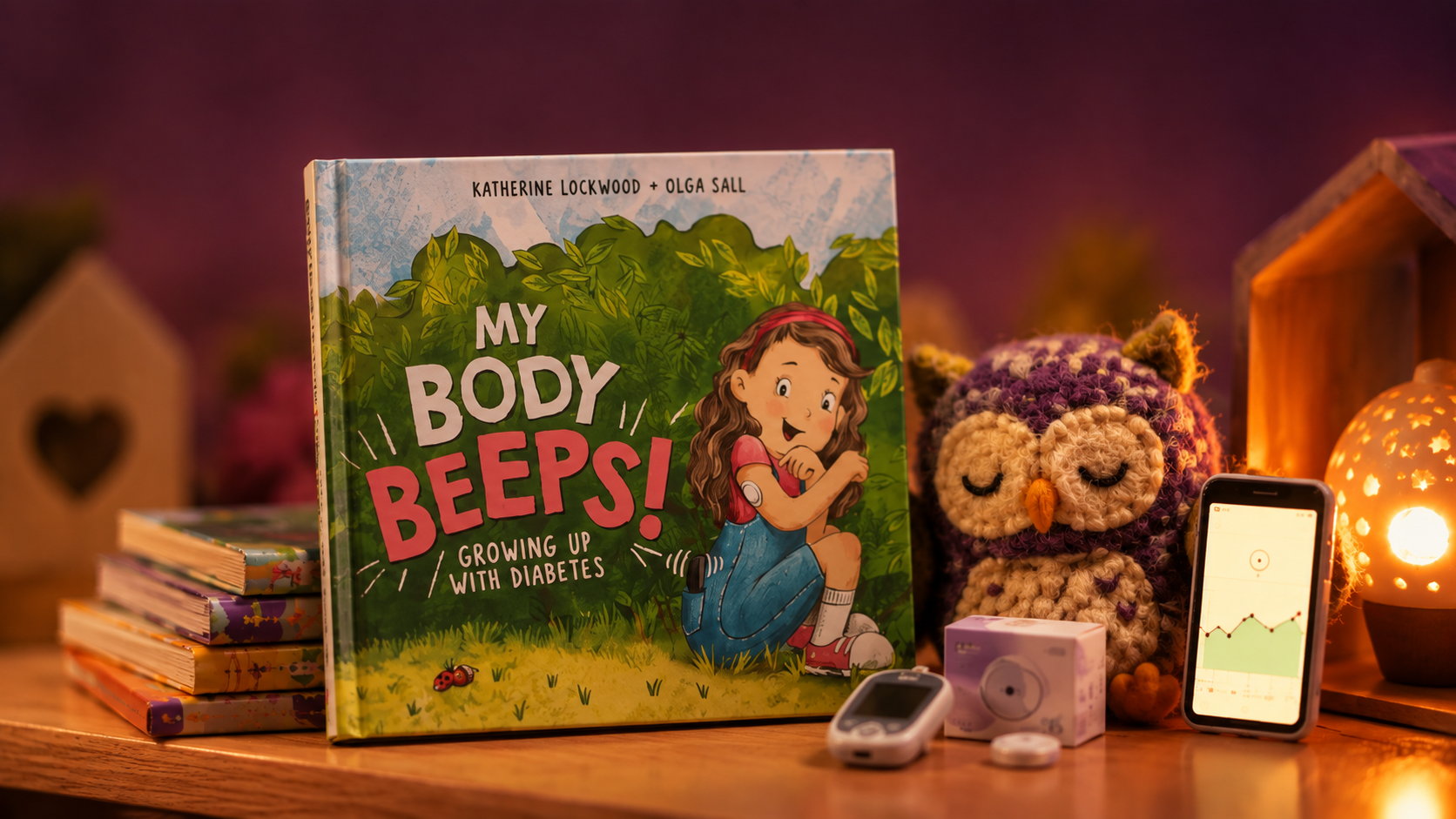







Please support the sponsors






The Juicebox Podcast is a free show, but if you'd like to support the podcast directly, you can make a gift here. Recent donations were used to pay for podcast hosting fees. Thank you to all who have sent 5, 10 and 20 dollars!
