#1707 Triple Greased Food
You can always listen to the Juicebox Podcast here but the cool kids use: Apple Podcasts/iOS - Spotify - Amazon Music - Google Play/Android - iHeart Radio - Radio Public, Amazon Alexa or wherever they get audio.
Catherine shares a moving story from Bermuda about navigating her son's T1D diagnosis and GCSE exams while grieving the sudden loss of her husband.
+ Click for EPISODE TRANSCRIPT
DISCLAIMER: This text is the output of AI based transcribing from an audio recording. Although the transcription is largely accurate, in some cases it is incomplete or inaccurate due to inaudible passages or transcription errors and should not be treated as an authoritative record. Nothing that you read here constitutes advice medical or otherwise. Always consult with a healthcare professional before making changes to a healthcare plan.
Scott Benner (0:00) Hello, friends. (0:01) Welcome to the Juice Box podcast. (0:03) From my family to yours, I want to wish you a happy holiday.
Catherine (0:16) My name is Catherine. (0:17) I am currently in Bermuda. (0:20) I've lived here now for nineteen years. (0:23) I have two sons. (0:25) My son, Max, who is 16, who has type one diabetes, and his younger brother who is 14, who does not.
Scott Benner (0:38) If this is your first time listening to the Juice Box podcast and you'd like to hear more, download Apple Podcasts or Spotify, really any audio app at all. (0:48) Look for the Juice Box podcast and follow or subscribe. (0:51) We put out new content every day that you'll enjoy. (0:55) Wanna learn more about your diabetes management? (0:57) Go to juiceboxpodcast.com up in the menu and look for bold beginnings, the diabetes pro tip series, and much more.
Scott Benner (1:04) This podcast is full of collections and series of information that will help you to live better with insulin. (1:12) While you're listening, please remember that nothing you hear on the juice box should be considered advice, medical or otherwise. (1:20) Always consult a physician before making any changes to your health care plan or becoming bold with insulin. (1:32) I'm having an on body vibe alert. (1:34) This episode of the Juice Box podcast is sponsored by Eversense three sixty five, the only one year wear CGM.
Scott Benner (1:42) That's one insertion and one CGM a year. (1:46) One CGM, one year. (1:48) Not every ten or fourteen days. (1:50) Ever since c g m dot com slash juice box. (1:53) Today's episode is also sponsored by Touched by Type One.
Scott Benner (1:57) Go check them out right now on Facebook, Instagram, and, of course, at touchedbytype1.org. (2:04) Check out that programs tab when you get to the website to see all the great things that they're doing for people living with type one diabetes. (2:11) Touched bytype1.org. (2:13) The podcast is also sponsored today by the Tandem Mobi system, which is powered by Tandem's newest algorithm, Control IQ Plus technology. (2:22) Tandem MOBI has a predictive algorithm that helps prevent highs and lows and is now available for ages two and up.
Scott Benner (2:28) Learn more and get started today at tandemdiabetes.com/juicebox.
Catherine (2:34) My name is Katherine. (2:36) I am currently in Bermuda. (2:39) I've lived here now for nineteen years. (2:42) I have two sons. (2:44) My son, Max, who is 16, who has type one diabetes, and his younger brother who is 14, who does not.
Scott Benner (2:55) Okay. (2:55) Max is 16. (2:56) He has type one. (2:57) How old are you?
Catherine (2:58) I am 49.
Scott Benner (3:00) 49. (3:01) And you live in Bermuda?
Catherine (3:02) I do.
Scott Benner (3:03) And for the last twenty nine minutes, you and I have been trying to get set up to do this. (3:10) And whether we used your laptop or your phone or even calling from a home phone through, like, Zoom's number, you were getting an echo while you were talking. (3:20) So Yes. (3:21) So that everybody knows, I then went to my provider, my podcast provider. (3:27) This is probably a backroom thing you guys don't really know or care about, but I employ a company to host the podcast, and then they distribute it to whatever app you're listening on right now.
Scott Benner (3:38) Mhmm. (3:39) Even if you're listening on my website through the little player, it's all through this great company called Libsyn. (3:45) And they offer something called Connect where people who don't have Zoom or stuff like that can record and make a podcast. (3:51) I don't know how this is gonna sound. (3:52) I don't know anything.
Scott Benner (3:53) I apologize ahead of time. (3:55) If you don't like it, if you love it, check out Zoom or check out Libsyn. (3:59) But, Catherine, let's start because it's freaking me out a little because I can't hear myself in my ears, which I usually can do, but I'm just gonna live with that. (4:08) Like, I know that sounds strange, but I can usually hear myself while I'm talking. (4:12) Okay.
Scott Benner (4:13) But I need my headphones on to talk to you. (4:15) Yeah. (4:16) Feels like I'm underwater right now.
Catherine (4:18) Oh, no. (4:18) I'm so sorry.
Scott Benner (4:19) Don't be sorry. (4:20) It's strange. (4:21) I'll be okay. (4:22) So how old was Max when he was diagnosed?
Catherine (4:26) He was diagnosed when he was 15 years old.
Scott Benner (4:30) Since recently?
Catherine (4:31) It it is. (4:32) It's been, a whirlwind of a year with it. (4:37) He was actually away on a band trip with his school over to University of of, North Carolina Greensboro. (4:47) And it's one of those types of trips where, you know, the chaperone or if you're local, your parent drops you off, and you're on your own. (4:55) Basically, you've got resident advisers.
Catherine (4:57) It's very much like introduction to university or college life Mhmm. (5:02) Where, you know, you're responsible for choosing your own meals at the cafeteria. (5:06) You're responsible for getting to practice. (5:08) And so this is the second time he's done this camp, and he did what every teenage boy does is he lived on pizza and soda for a week.
Scott Benner (5:20) I thought you were gonna say you found a girl, but okay.
Catherine (5:22) No. (5:22) No. (5:23) No. (5:23) We wish. (5:23) We we we wish he could talk to girls, but he's still he's quite the introvert.
Catherine (5:28) He lived on pizza and soda for a week. (5:31) And then on the final night of the camp, there's always a concert. (5:34) And the chaperone that took the children from Bermuda noticed that Max got up from the concert in the middle of it and left and thought that was very, very odd. (5:45) And then all the next day coming home, he noticed that he kept going to the bathroom consistently even during the flight. (5:54) And we have a high, high rate of type two diabetes in Bermuda, So he was fairly aware of some of the signs and signals, and he pulled me aside at the airport and said, please just keep an eye.
Catherine (6:04) Something's going on. (6:06) And we got home, and we figured, well, maybe he's just tired. (6:08) We're not sure what's going on. (6:10) You know, you expect your 15 year old to be able to communicate to you if there's an issue.
Scott Benner (6:16) Yeah.
Catherine (6:17) Of course, he doesn't. (6:18) And it turns out that it's, like, 11:00 at night on that same day when he flew back, and we were getting my house ready for my parents from Canada to come stay with us for my nephew's wedding that week. (6:32) And all of a sudden, he's rushing into the bathroom urgently. (6:37) And at this point, we've realized this is absolutely just not normal.
Scott Benner (6:41) Can I ask a question? (6:42) Did you just do a zipper before rushing into the bathroom as a sound effect? (6:46) Because that was awesome if that's what you did.
Catherine (6:48) No. (6:48) No. (6:48) No. (6:49) No. (6:49) No.
Catherine (6:49) I actually just undid my hoodies, so that that's quite weird.
Scott Benner (6:54) Oh my god. (6:54) Yeah. (6:54) I was I was like, if you all are gonna start doing if you all are gonna start doing sound effects for me, I mean, that's
Catherine (7:00) really another lesson. (7:01) Definitely not that good.
Scott Benner (7:02) You're like, he rushed into the bathroom, zipped, and I was like, get out of here. (7:06) Am I gonna hear water next?
Catherine (7:19) So I said, okay. (7:21) We are going to the hospital because at this point, you know, something is definitely going on. (7:26) You either have a UTI, which is very rare in males, or you most likely have diabetes. (7:33) Something's up. (7:34) Like, the nurse case manager, risk manager in me, like, my brain is, like, already going through the diagnosis tree even before we've left the house.
Catherine (7:42) Mhmm. (7:43) So, thankfully, you know, Bermuda is very small. (7:45) We're only 21 miles by one and a half miles long. (7:49) So and our hospital is centrally located in the middle of the island. (7:53) So it's really we only have one hospital.
Catherine (7:56) It's not that far from us, so it's about a five minute drive. (8:01) So we get into the hospital, and it's, like, 11:30 at night. (8:06) And he there's, thankfully, on a Saturday night, no one in the emergency room at all. (8:10) It's completely empty. (8:12) And so he gets triaged, and the nurse does a blood sugar, and it reads off as high.
Catherine (8:17) So, automatically, we go into the back room. (8:21) They draw some proper lab work to send to the lab, and they come back and say that his blood sugars are 679, but he was not in ketoacidosis.
Scott Benner (8:33) Okay. (8:33) Well, good.
Catherine (8:34) Which was very, very good. (8:36) And his hemoglobin a one c upon entry was 10.3.
Scott Benner (8:42) It had been going on for a little bit.
Catherine (8:43) It it was. (8:44) And, you know, when I look back at it as a nurse, I should have picked up on some of the signs because his grades had started to slip in the last term of the school year. (8:57) So he had been sick in the Christmas prior to it with the virus non not COVID. (9:03) And then his grades started to slip, but I figured he's a 15 year old boy who happens to have ADHD. (9:12) And, obviously, there are just courses he doesn't really wanna focus on.
Catherine (9:18) So I was more thinking, this is just 15 year old boy. (9:23) Wasn't thinking much more about it in terms of that. (9:27) But then when I looked back in hindsight about the month before he went away to camp, my husband and I had noticed that repetitively around midnight, one of our children would be getting up and going to the bathroom, which was a new thing, and that was just an unusual item. (9:46) That led us up to there. (9:48) So I wasn't completely shocked when I looked at all this all the signs in hindsight that I just hadn't put together.
Scott Benner (9:54) Your accent is so crazy. (9:56) Is it Canadian? (9:57) Yes. (9:58) Yes. (9:59) Is that what it is?
Catherine (10:00) Yeah. (10:00) So I'm actually originally from Canada, born and raised, and then I lived in Boston for a few years as as a nurse as a nurse.
Scott Benner (10:10) There it is.
Catherine (10:10) And then I I came to Bermuda. (10:13) So it's it's definitely a little merge of different Yeah.
Scott Benner (10:18) It's it's very unique. (10:19) It is very unique. (10:20) Yeah. (10:21) Yeah. (10:21) Yeah.
Scott Benner (10:21) Cute. (10:22) What got you guys to Bermuda? (10:23) Like, I mean, besides, were you just like, why don't we go live in the sun? (10:26) That's a better idea or no?
Catherine (10:28) No. (10:29) My my husband was Bermudian. (10:31) So and he owned a company with his brother. (10:34) So it was just easier for me to relocate as a nurse here than it was for him to come to The US where I was working at the time. (10:43) Yeah.
Catherine (10:43) Because there was no way he was gonna get a visa to work in The US in his field. (10:48) So we just thought it was easier for me to relocate here. (10:52) And oddly enough, my one of my sisters had married a Bermudian and was living here already as well with her husband and family.
Scott Benner (10:59) Hold on. (11:00) Hold on. (11:00) What are your parents farming you guys out overseas or something? (11:03) What's going on exactly?
Catherine (11:04) No. (11:04) No. (11:05) No. (11:05) We still have one left in Canada. (11:07) But, yeah, it's just very, very odd that we both randomly met Bermudians
Scott Benner (11:12) Yeah.
Catherine (11:12) And and married them. (11:14) So
Scott Benner (11:14) That's really crazy. (11:15) Yeah. (11:16) How long have you been there?
Catherine (11:17) I've been here nineteen years.
Scott Benner (11:19) You live what we all assume is our dream, but is it a dream living on an island in a warm place or not really?
Catherine (11:24) We do get a little cool during winter, so it gets like a dampness cool with it. (11:30) If you're coming from overseas, you still think the weather is beautiful. (11:33) But if you live here locally, the first year you think, oh, this winter is nothing. (11:37) Every other year, you're like, oh, this is cold. (11:39) I need to find my hat.
Catherine (11:40) Like, you know, it's it's chilly out. (11:42) We need a sweater. (11:43) So
Scott Benner (11:44) There's no feeling of like, you're missing something or the weather's too similar to the rest of the day or anything like that?
Catherine (11:51) Not really. (11:52) Bramedians are known to travel, so it's not unusual. (11:56) Like, if you're missing, like, the snow at Christmas, a lot of people will just travel if they're missing that. (12:02) So we do have somewhat of seasons where it gets wet and cooler during the winter, but we never have snow. (12:10) And, honestly, it's like, you know, everyone's like, life's a beach, but we just get along our lives like anyone else does in a small community.
Catherine (12:19) You know? (12:19) Got it. (12:20) You raise your children. (12:21) You you go to work. (12:22) And it just happens that a lot of our activities outside of that surrounds, you know, either boating or beach or, you know, our our natural area here.
Catherine (12:32) You know, we spend a lot of time on the water here. (12:35) So
Scott Benner (12:36) If you go on a school trip, you get to go to North Carolina.
Catherine (12:39) Exactly.
Scott Benner (12:40) Interesting. (12:40) Well, that's really cool. (12:41) Yeah. (12:42) I appreciate you sharing that with me. (12:43) Yeah.
Scott Benner (12:44) He gets diagnosed here and Mhmm. (12:46) Sounds like you had a little bit of guilt, but, like, is that did that stick with you, or are you okay with that?
Catherine (12:50) Little bit of guilt. (12:51) It did stick with me for a little while, but I did get over it when I realized that, you know you know, unfortunately, as nurses, a lot of times, we are trained for hospital based items, which means you're being trained for the classic symptoms that are gonna come through the door. (13:07) So, you know, in working with our diabetic educator who I adore, you know, I definitely got over that guilt because there were so many signs that could have been attributed to other things.
Scott Benner (13:19) I'm glad. (13:19) I'll tell you why I say s because I thought it was amazing. (13:23) Teacher sees him go off to the bathroom, mention something to you, you get him home, take him right to the hospital. (13:28) It sounded seamless to me.
Catherine (13:29) It sounded like it was really seamless, but there when I looked in retrospect, we were like, okay.
Scott Benner (13:33) The time.
Catherine (13:34) The time. (13:34) Because we know this is an autoimmune disorder. (13:36) So we started to look back, and that's when I started to pick up some of these things that were explainable by other items as well.
Scott Benner (13:44) Other autoimmune in the family? (13:46) No. (13:47) You don't have celiac? (13:48) You don't have thyroid? (13:49) Nothing like that's happened?
Catherine (13:50) Nothing. (13:51) So
Scott Benner (13:52) Alright.
Catherine (13:53) His grandfather had type two diabetes. (13:56) His father was a BRCA two carrier, but there's no link between that and diabetes at all. (14:06) So we have no idea.
Scott Benner (14:09) His father was? (14:10) Is his father passed?
Catherine (14:11) Yeah. (14:11) His father passed this summer.
Scott Benner (14:13) Oh my gosh. (14:14) Catherine, you're were you married still?
Catherine (14:16) Yes.
Scott Benner (14:17) Oh my god. (14:18) Are you okay? (14:19) What what what happened? (14:23) This episode is sponsored by Tandem Diabetes Care. (14:26) And today, I'm gonna tell you about Tandem's newest pumping algorithm.
Scott Benner (14:30) The Tandem Mobi system with Control IQ plus technology features auto bolus, which can cover missed meal boluses and help prevent hyperglycemia. (14:40) It has a dedicated sleep activity setting and is controlled from your personal iPhone. (14:44) Tandem will help you to check your benefits today through my link, tandemdiabetes.com/juicebox. (14:52) This is going to help you to get started with Tandem's smallest pump yet that's powered by its best algorithm ever. (14:58) Control IQ plus technology helps to keep blood sugars in range by predicting glucose levels thirty minutes ahead, and it adjusts insulin accordingly.
Scott Benner (15:06) You can wear the Tandem Mobi in a number of ways. (15:09) Wear it on body with a patch like adhesive sleeve that is sold separately, clip it discreetly to your clothing, or slip it into your pocket. (15:17) Head now to my link, tandemdiabetes.com/juicebox, to check out your benefits and get started today. (15:26) Today's episode is sponsored by a long term CGM that's going to help you to stay on top of your glucose readings, the Eversense three sixty five. (15:35) I'm talking, of course, about the world's first and only CGM that lasts for one year.
Scott Benner (15:41) One year, one CGM. (15:44) Are you tired of those other CGMs? (15:46) The ones that give you all those problems that you didn't expect? (15:49) Knocking them off, false alerts, not lasting as long as they're supposed to. (15:55) If you're tired of those constant frustrations, use my link ever since cgm.com/juicebox to learn more about the Eversense three sixty five.
Scott Benner (16:04) Some of you may be able to experience the Eversense three sixty five for as low as a $199 for a full year. (16:10) At my link, you'll find those details and can learn about eligibility. (16:14) Eversensecgm.com/juicebox. (16:18) Check it out.
Catherine (16:19) Good days, bad days. (16:20) He was fine. (16:21) Like, he did everything he was doing. (16:24) He was a cub scout leader and was getting ready to physically getting ready to take kids away to a camp in two years. (16:31) That's extremely intensive physically.
Catherine (16:35) So he had been going to the gym. (16:37) He had been losing weight, cutting back on his charcuterie, cutting back on his beers with the with the the cub leaders after the children leave. (16:47) He was doing everything right. (16:49) And then he had just had had hernia surgery in May when all of his blood work was normal. (16:58) Everything was showing as normal.
Catherine (17:01) And then all of a sudden, in early June, he looks at me, comes out of the bathroom after he was shaving, says, I think my neck is swollen. (17:09) And I'm like, yeah. (17:10) That is really swollen. (17:12) We have an issue. (17:13) So that actually prompted multiple doctor's appointments and CT scans and biopsies.
Catherine (17:22) And in Bermuda, because we are so small, we actually send our pathology for cancer related items out to some of the best hospitals in the Boston area for their pathology team to manage it. (17:36) So that way we're getting the best So by the June, we knew that he had an aggressive form of cancer, but we didn't know what type. (17:47) Like, the pathology was not being nice at all or acting normally. (17:51) They were still having a lot of difficulty figuring that out. (17:56) So he actually goes to cub camp for the week like he always does to spend time with these cubs.
Catherine (18:04) And he actually I was already planned to be in the Boston area with my son and a few other children from Bermuda to take them to a well renowned diabetic camp just outside of the Boston area.
Scott Benner (18:19) Mhmm.
Catherine (18:20) And I was actually volunteering there as a nurse because I figured, well, I'm in the area. (18:25) They need someone in the country. (18:28) I'm a nurse. (18:28) I might as well volunteer. (18:30) Right?
Scott Benner (18:30) Yeah. (18:30) Yeah.
Catherine (18:31) Which was great experience to see all these different pumps that we don't even have access to in Bermuda, by the way. (18:37) Amazing. (18:38) So I was supposed to be there for two weeks. (18:40) And one weekend, I get the notice that he's coming up to Boston right away for some appointments. (18:47) And I was supposed to just go back and forth because he was gonna be okay.
Catherine (18:50) But after seeing him, we were he was admitted right away, and the pathology finally came back after three weeks that he had a very aggressive and rare form of neuroendocrine colon cancer.
Scott Benner (19:05) Oh my god.
Catherine (19:07) So yeah. (19:08) So we I'm
Scott Benner (19:09) so sorry.
Catherine (19:10) Thank you.
Scott Benner (19:10) Yeah.
Catherine (19:11) No. (19:11) It's fair. (19:12) We spent the summer in Boston, and he unfortunately passed away just ninety nine days ago. (19:21) Yeah.
Scott Benner (19:22) Oh my god. (19:23) I just as you were saying the story and you were like, June, I'm like, I that's this year.
Catherine (19:27) Yeah. (19:28) It's very recent. (19:29) So and my children kind of bounced back and forth between Boston and Bermuda for the summer because we wanted to try and give them some sort of normalcy, but we didn't want them to feel like they weren't with their father. (19:45) But the same point is being in a hospital is very stressful. (19:49) So so they kinda bounced back and forth, and they got very familiar with certain tourist attractions in Boston.
Catherine (19:56) Like, you know, we got a full membership at the science museum, and they went, like, every day.
Scott Benner (20:01) Yeah.
Catherine (20:02) So like, for a few hours. (20:03) Yeah.
Scott Benner (20:04) Wow my gosh. (20:05) Oh, and did you make this booking before this happened?
Catherine (20:08) I did.
Scott Benner (20:09) I was just gonna say, like, I oh, I found it's it's only because you said was. (20:13) That's what I'm sorry. (20:15) I shouldn't have asked.
Catherine (20:16) That's okay. (20:16) No. (20:16) That's fine. (20:17) That that's
Scott Benner (20:18) that's okay. (20:19) My head down. (20:19) I was like, oh. (20:20) No. (20:20) No.
Scott Benner (20:20) No.
Catherine (20:21) That's fine. (20:21) So but it actually it actually kind of, like, impacts Max's story because I will say this honestly. (20:29) The food in The US is horrible. (20:33) It's horrible for diabetes, especially if you are not cooking things from scratch yourself at home.
Scott Benner (20:40) So you were having trouble with managing as type one while you were in in Boston?
Catherine (20:45) Oh my god. (20:46) Horrible, horrible trouble.
Scott Benner (20:48) Oh, no kidding.
Catherine (20:49) Like, you know, so I would go from all day being at the hospital because as a nurse, I was my husband's translator for everything that was going on for him and managing all of that. (20:59) And then I would get back to the apartment, and I'd realized that my son has decided at 09:00 at night is a great time to have a cannoli from a famous pastry shop in the North End, where you can't find online any carb details about how many carbs are in that cannoli.
Scott Benner (21:16) Just assume a lot, I imagine.
Catherine (21:19) Oh, it was a bad night. (21:21) I look I looked at him afterwards, and I'm like, what are we gonna do next time? (21:27) He's like, I'm never gonna have a cannoli again. (21:29) I'm like, no. (21:29) You can have it, but can you have it at noon?
Scott Benner (21:33) Well, now if he has a baked good at home, that doesn't happen, you're saying?
Catherine (21:37) It doesn't happen because we know the foods. (21:41) Like, it's been trial and error that we know that from this place, it's, you know, it's about this carb size. (21:49) Like, our portion sizes in Bermuda are smaller. (21:54) Mhmm. (21:55) Even though a lot of our food comes from The US, We get a lot of our we get a good portion as well from The UK.
Catherine (22:05) We only have one US fast food restaurant here in Bermuda.
Scott Benner (22:12) Which one is it?
Catherine (22:14) KFC.
Scott Benner (22:15) Okay.
Catherine (22:15) Because we have an antifranchise law. (22:17) We used to have McDonald's, but when The US forces left a few decades ago, that left with them. (22:23) We do have, like, fast food areas, but it seems like that fast food is made is not made with the same type of food that you're or in the same way that is being processed in The US.
Scott Benner (22:34) I see. (22:35) So there's the KFC there, but it's really just a place that makes chicken and
Catherine (22:38) Well, no. (22:39) I mean, that is actually a proper KFC. (22:41) But if I go down the road to a different fast food place for a burger and fries, those fries are definitely not like McDonald's fries.
Scott Benner (22:49) Gotcha. (22:50) Gotcha.
Catherine (22:50) They are they're not, like, double or triple greased and everything else. (22:55) You're gonna see that release a lot sooner of the carbs than you would with fast food in The US.
Scott Benner (23:03) Okay. (23:03) It holds on longer here.
Catherine (23:05) It really does. (23:07) Yeah.
Scott Benner (23:07) Yeah. (23:07) It really does. (23:09) I'm gonna try to use the words triple greased at some point in my life. (23:12) I don't know where.
Catherine (23:13) But I don't know. (23:13) That's awesome. (23:14) And it just seems it's like because of the layer of grease along the fast food that, obviously, it takes a while for the stomach to break that down. (23:21) So next thing you know, you're spiking a lot higher. (23:25) It's almost the same concept as pizza.
Catherine (23:27) You know, you've gotta just learn how it how it works. (23:30) You know, when you're in a situation where you're in and out of hospitals, you're not really cooking great food, so you're letting your child eat whatever they want for the summer. (23:40) So it it there were some very interesting times with his blood sugars this summer.
Scott Benner (23:44) Yeah. (23:45) I have to ask you, how did your children handle, you know, your husband's passing? (23:51) Like and how do you contextualize that for them while you're busy trying to work it out for yourself when you actually have to go back to Bermuda and be by yourself too?
Catherine (23:58) So, thankfully so my children already had a therapist.
Scott Benner (24:02) Okay.
Catherine (24:03) And oddly enough, when my son was first being told that he had diabetes, one of the first messages was to his therapist to say, okay. (24:11) We need a session right now. (24:12) So his therapist was very well aware as to what was going on with my husband and what they did virtual sessions throughout the summer with both my children and then when my husband passed, and they continue to see him now. (24:27) It's very interesting because when you look at studies about grief and how teenagers react, you know, like, there's, like, almost, like, two paths that they tend to go on where one is either very, like, quiet and they don't really say a lot about it, almost like it never happened. (24:47) And then the other one is very angry and vocal, and both my children took a different path.
Scott Benner (24:54) Oh, awesome for you. (24:55) Yes. (24:56) Yeah. (24:57) So but they
Catherine (24:57) are getting through with the support of, like I mean, they've got an amazing family support here, through my husband's family and through, because my husband was a cub scout leader, and I'm a scout leader through our scouting family. (25:11) So they've got tremendous support in the community, and I guess that's one of the benefits of being from such a small place.
Scott Benner (25:19) Yeah. (25:19) What path did you take?
Catherine (25:20) I've taken the path of keeping myself as busy as possible and just realizing that I just have to get things done because I have two boys.
Scott Benner (25:29) Yeah. (25:30) Yeah. (25:30) Oh my gosh. (25:31) Yeah. (25:32) On your note here to me, it says, I wanna discuss how to deal with the stress of GCSE exams for type ones.
Scott Benner (25:40) What what what do what do you wanna talk about there?
Catherine (25:43) So GCSE exams are British exams for exiting high school. (25:49) They are two year courses that comes down to most of the courses will have two exams. (25:57) If it's a language, it might be four. (25:59) If it's a practical thing, like like shop or what we call design and tech, you know, you might have a practical part of it. (26:07) But, generally, you're studying for two years, and you have two exams, and that's your mark.
Catherine (26:13) It doesn't matter what you did through the two years. (26:16) Those test days are your days. (26:18) And if you have a bad day or a bad night with your blood sugars, we all know that you are not mentally clear for your exams, and that's it. (26:30) It's like, that is the mark that you are going to get, and there's no do overs. (26:36) The best you can do is try and get a letter from your doctor to say that, can you please give some Lee Nancy because of this situation?
Catherine (26:46) But you have to provide that on the exact same day that the exam is taking place.
Scott Benner (26:50) How do those those exam scores impact life?
Catherine (26:53) They impact how where you go next in your educational career. (26:58) So some schools, some universities, and colleges will use those to help determine entrance into into it. (27:07) So most of the children in his class go on to what's called an international baccalaureate, the IB program, which is basically pre like, junior college. (27:19) But the schools overseas will definitely look at their GCSE levels in terms of entrance for universities.
Scott Benner (27:28) It could have, like, a really big impact on the rest of your Yeah.
Catherine (27:31) Yeah. (27:31) Like, exactly. (27:33) I mean, thankfully, if you go further on with either, you know, your IB level, you can kind of try and make it up if you had a bad situation to show that you do have growth and you have the potential for it. (27:48) But it can be very it can be very stressful because there's because unlike the SATs, there's no rewrites.
Scott Benner (27:55) Yeah. (27:55) And and so this is this looms over everybody when you think about this.
Catherine (28:00) Oh, two years worth of stress where children are pulling their hair out because they know the importance of of doing well in these courses, and it literally comes down to two exams. (28:13) And are you having a good day on that exam or a bad day?
Scott Benner (28:16) What did you end up doing?
Catherine (28:18) There was a couple of days where he has some really, really bad nights, and we had to get a letter from the doctor that day to say, please give leniency because it's his diabetes that's causing mental mental fog and give him a little bit of leniency. (28:35) But there was actually one day where, his pump, because he's on an Omnipod, broke, and he didn't have any spares with him.
Scott Benner (28:47) And that was during testing?
Catherine (28:49) It was during testing. (28:50) It was so much fun because, technically, he's not allowed to have any technology on his desk. (28:57) He had put his phone on silence because he wanted to be respectful of everyone else testing.
Scott Benner (29:03) Oh.
Catherine (29:04) And he uses a PDM rather than the app because it just tends to work better in Bermuda.
Scott Benner (29:11) I see. (29:12) And so so he had a a a failure, and he didn't know it even happened?
Catherine (29:16) He didn't even know it happened. (29:18) So because he because when the invigilators, there's always a chance that an inside invigilator from The UK is gonna show up. (29:26) And if they see a phone, something that looks like a phone on a desk, that's a big problem. (29:32) And, of course, the PDM looks like an iPhone, you know, from a distance. (29:36) So that's all sitting in the back with an invigilator who has no idea what's going on.
Catherine (29:42) But, thankfully, I'm getting notifications that his sugars are climbing and climbing and climbing, and I'm like, what is going on?
Scott Benner (29:51) Mhmm. (29:52) I bet you freaked out. (29:53) I would have been like, are you kidding me?
Catherine (29:56) Oh, it was a it was a horrible day. (29:58) So I'm contacting the main receptionist, and I'm saying, okay. (30:03) He's got a spare bag with him. (30:06) I don't know what's going on right now, but his sugars are rising too much. (30:10) Get a message to him that he needs to, you know, give himself an additional bolus, and then I'll call back and see whether it worked.
Catherine (30:18) Well, that didn't work. (30:19) So then I'm like, can you grab his spare pen and tell him to give himself a dose right near the site? (30:27) Because we've gotta figure out what's going on. (30:29) Is it the site or is it the pump? (30:33) So we're working through our troubleshooting with things.
Catherine (30:36) And that did bring it down a little bit. (30:38) So we realized, okay. (30:40) This is a pump issue, and he did not have any spare pumps at school.
Scott Benner (30:46) Okay. (30:47) So does he have does he always have spare pumps now?
Catherine (30:51) He probably doesn't, to be honest. (30:54) Yeah. (30:55) He just kinda wings it a lot of time, unfortunately, as a teenager does. (31:00) He's got spare pens at at at school if he needs to, but oddly enough, he I don't think he actually has a spare pump there or a vial. (31:08) Does he keep more at school now?
Catherine (31:09) No. (31:11) Should he? (31:12) Absolutely. (31:13) Yes. (31:14) But my husband at the time, thankfully, because I was in crazy work mode that day.
Catherine (31:19) So my husband grabs some pumps, runs it down, and we're switching the pump. (31:25) He's, you know, he's allowed to leave the room for, like, two minutes to switch the pump Okay. (31:31) And get back under control. (31:34) But his sugars at that point, they were over 300.
Scott Benner (31:37) Oh gosh.
Catherine (31:38) Yeah. (31:39) It was it was definitely a very, very stressful situation. (31:43) So and it was in one of the courses that he actually really, really enjoys. (31:48) It was in his chemistry. (31:50) So it it was definitely an extremely stressful situation when you're entering those exams, and you know that this is it.
Catherine (31:59) Like, you don't get great. (32:01) You don't get a rewrite. (32:02) You don't get an opportunity to get classwork or any of the tests you did through it the last two years to count. (32:09) Like, this is it.
Scott Benner (32:11) This is just what it is.
Catherine (32:12) This is it is what it is. (32:14) So it's an extremely stressful situation. (32:16) You know? (32:17) And after that, I actually had a we learned a lot because we didn't realize what we would have to do if there was an illness or a situation like that in the middle of the test. (32:28) We didn't know what our rights were or anything, through the testing board.
Catherine (32:34) So I I sat down with the headmaster of the school. (32:37) After that happened, I said, okay. (32:39) Now we because there was definitely some communication breakdowns during it as well, because I'm handing over pretty complex medical directions
Scott Benner (32:48) Right.
Catherine (32:49) To a receptionist.
Scott Benner (32:52) Okay.
Catherine (32:54) So there was a few things that we were a little lost in translation. (32:58) We figured it out. (32:59) We figured out a plan for moving forward that, you know, we would just, like, keep things in writing as well. (33:05) Max had to learn that he cannot keep his things on silent during these exams.
Scott Benner (33:12) Okay. (33:13) Yeah. (33:13) Can I ask how was his actual performance? (33:16) Did it get did it get impacted, or did it end up not being an issue for his grading, etcetera?
Catherine (33:21) He did pretty well on that exam. (33:25) It's one of his stronger subjects. (33:27) He could have done better had he not been in a high blood sugar mental fog situation, but he did well enough to get into the higher level chemistry class that he's doing through his international baccalaureate. (33:45) So he did well enough to get in.
Scott Benner (33:47) They weren't like, oh, you're gonna be raking the beach.
Catherine (33:50) Yeah. (33:50) Exactly. (33:50) Because he want he wants to be an engineer, so he he needs to, like, have high marks in his sciences.
Scott Benner (33:56) Have his successes. (33:57) Yeah.
Catherine (33:58) Exactly. (33:59) Because when he had a brain fog in a different one, it was in his language class, which he was horrible at anyway. (34:07) So it's like, you know, not as stressful because you know he's not gonna do well.
Scott Benner (34:11) Did he does he describe what that that fog is like by any chance? (34:15) Have you talked about it?
Catherine (34:17) Yeah. (34:17) He says he just, like, he can't focus. (34:21) He it almost feels like he's swimming, like like, you know, that he's, like, underwater swimming, like nothing is making sense or being comprehended to to him. (34:32) It's almost like like that dream world or swimming, hearing things underwater sort of deal.
Scott Benner (34:38) Really? (34:39) What happens then? (34:40) Does he push through it, or does he does he step back and say, oh, I'm my blood sugar is high. (34:46) I'm in trouble. (34:47) Like, I wonder how, like like, how does that how does that mind handle that situation?
Scott Benner (34:51) You know what I mean?
Catherine (34:52) It depends on how high he was. (34:55) So if he is over about you know, if he's around over above 300, three fifty, he finds it difficult to mentally remember that, oh, this is my blood sugar. (35:07) I need to do something about it. (35:09) But if he catches it when he's still in a bed at two fifty, low 300 range, he'll be like, this is my blood sugar. (35:17) I need to make sure I dose appropriately for this.
Scott Benner (35:19) Okay. (35:20) Alright. (35:20) So
Catherine (35:21) Yeah. (35:21) So if it gets too high, he is He's not gonna think about it. (35:26) He needs intervention to help him to realize that.
Scott Benner (35:28) Course of a regular day, what's his blood sugar like?
Catherine (35:32) Much better than what it was. (35:34) So when he first got diagnosed, because I'm a nurse and we have an awesome diabetic educator and awesome endocrinologist on his team, he was actually out of the hospital within two days, and his first hemoglobin A1c went from 10.3 down to 8.3.
Scott Benner (35:51) K.
Catherine (35:52) And then this past June, before he he knew before he knew that his dad was sick, his hemoglobin AYC was down to 5.8.
Scott Benner (36:01) How did his dad's illness impact his his blood sugars?
Catherine (36:04) It ended up going up to 6.3, which I still thought was an amazing number
Scott Benner (36:10) Yeah.
Catherine (36:10) Given how bad the summer was with his blood sugars.
Scott Benner (36:14) Was it just our triple greased food, or was it other things that you think impacted?
Catherine (36:18) I definitely think, you know, you've got a teenager with hormones and growth going on, and then you impact add in all the stress of what was going on with his dad with his blood sugars. (36:31) It's definitely made it a lot harder to control. (36:37) And I was trying to explain the management of his diabetes to his aunts and uncles and grandmother to say this is how you have to do it. (36:46) And they're like, is there a list? (36:49) Like like, a prescription list?
Catherine (36:51) Like, if it's this, you do this. (36:53) I'm like, it's an art form. (36:54) Yeah. (36:55) I hate to break it to you. (36:56) It's kinda like trial and error, and it's it's more of an art form than a science.
Scott Benner (37:00) So when your husband's in Boston, how long has Max had diabetes for?
Catherine (37:06) Just one year.
Scott Benner (37:07) Oh my gosh. (37:08) Okay. (37:08) So Yeah. (37:09) Yeah. (37:09) Yeah.
Scott Benner (37:10) So you were just starting to figure it out a little bit, and then now you're having to pass it off to other people who have no context for it.
Catherine (37:16) They have none because I've been managing everything with Max, and we had done really well with getting his blood sugars under control. (37:24) You know, it's like six months into his diagnosis. (37:27) His honeymoon phase seemed to be ending, and we knew that he was going into practice exams, and he was going on a ski trip for school. (37:37) So we went ahead and we got him on a pump at that time.
Scott Benner (37:40) And devices available in Bermuda are different than in America?
Catherine (37:45) Yeah. (37:46) So we have access to the Omnipod
Scott Benner (37:49) Okay.
Catherine (37:50) And to Medtronic.
Scott Benner (37:52) Six seventy g, or do you not know which one?
Catherine (37:56) Any any of the Medtronic range we have. (37:58) We any of them. (38:00) So but those are the only ones we have access to.
Scott Benner (38:03) CGM?
Catherine (38:05) CGMs, have access to the Freestyle Libres, but most of them come from The Caribbean or from Canada. (38:12) So it's a little interesting when you're trying to set it up on your on your phone. (38:16) We have access to the g six without any issues, But the g seven, which I I know fewer and fewer people are using, they for the g seven, they actually have to take your phone to The US because of the of the fact that it is location based when you're setting it up.
Scott Benner (38:36) Okay. (38:37) You have to take your phone to The US to set up the oh, jeez.
Catherine (38:40) Yeah. (38:41) Because we tried the g seven first thinking the reviews were like, this is amazing. (38:46) It's gonna be great. (38:47) So his aunt was going to The US. (38:50) So I said, take his phone, please.
Catherine (38:52) Take it with you for the week. (38:54) We'll download the app there. (38:56) So that way when he comes home, everything works well.
Scott Benner (38:59) Jeez. (39:00) I have to tell you Yeah. (39:01) Arden's been using the g seven since it came out. (39:04) And, I mean, it's been good for us. (39:06) It's I I we've had, like, you know
Catherine (39:08) You're lucky.
Scott Benner (39:09) So I don't know how to think about that, Catherine. (39:11) Like, because I I recognize that there are people who are having trouble with the device. (39:15) I actually just saw somebody talking about Libre yesterday too. (39:18) There's been something with that. (39:21) I I don't know.
Scott Benner (39:22) Like, I I wouldn't minimize anybody having trouble with it, like, if it was five people. (39:26) Like, you know what I mean? (39:27) But I do wonder, like, how many they sell versus how many they have trouble with. (39:31) And I don't I don't know. (39:32) You know what I mean?
Catherine (39:33) That statistic would be really interesting to know, but he was just having so many issues with it.
Scott Benner (39:37) Yeah.
Catherine (39:38) And I'd have to call Dexcom all the time and say, my son is in school in Bermuda, but I'd like you to send us our replacements. (39:46) And I'd be like, to this address in The US. (39:49) And they're like, and who is that that we're sending this to? (39:51) So it it gets really interesting.
Scott Benner (39:54) Yeah. (39:54) When you're international.
Catherine (39:56) Exactly. (39:56) So we just found for us the g six was a lot more stable.
Scott Benner (40:01) So less phone calls for you.
Catherine (40:03) Oh, he's never had a failure on the g six.
Scott Benner (40:06) Yeah. (40:06) So if you have fewer phone calls, you don't have to be messing with people. (40:09) That's the that's the real value for you.
Catherine (40:11) Exactly. (40:12) It's like, you know, I I did ask him once the Omnipod app was supporting the g sevens again because that was one of the main reasons we switched to the g six. (40:21) I said, do you wanna try the g seven again? (40:23) And he's like, no. (40:24) Okay.
Catherine (40:25) Absolutely not. (40:26) He's happy with the g six. (40:28) He understands there's a two hour warm up, but he's okay with that because it means that he knows it's gonna work for the ten days.
Scott Benner (40:36) Can't wait to see where this all goes, seriously, because I have no idea. (40:41) I wanna be clear. (40:42) But I wonder how much of it is the form factor because it seems like now Libre and Dexcom are having similar issues. (40:50) So I wonder if it's something to do with manufacturing or form factor or materials. (40:55) I I I guess we'll find out eventually.
Catherine (40:57) We'll find out mean, what we find interesting, like, in Bermuda, we find most of our most people who have type two diabetics are the ones using the Labrase.
Scott Benner (41:05) Okay.
Catherine (41:06) But if you have a type one, if you're a type one, most times you are using a Dexcom product.
Scott Benner (41:13) In The Bahamas, that's your finding?
Catherine (41:15) No. (41:15) In in Bermuda.
Scott Benner (41:16) In Bermuda. (41:16) Excuse me. (41:16) What did I say Bahamas for?
Catherine (41:17) That's okay.
Scott Benner (41:19) Because I've been to The Bahamas, and it starts with a
Catherine (41:21) big It's it's it's lovely. (41:23) I've been there as well. (41:24) Yeah. (41:25) So but, yeah, so most of the most of people around here who have type one diabetes use the DexCombs, and we're such a small community that we all have those who have type one diabetes, or who have children with type one diabetes, we all kinda know each other, and we we do have events where, you know, they bring in special educators, you know, for us as well, but it's a very small community. (41:50) So here.
Scott Benner (41:51) Well, listen. (41:52) If anybody wants to fly me to a warm island to do an event, please just let me know. (41:56) I'm happy to do that. (42:00) Any warm island, honestly. (42:01) I just wanna be I just wanna be clear.
Scott Benner (42:03) Yes. (42:04) Oh, that's really something. (42:05) I you know, it's funny. (42:06) I can't, like, I I can't stop thinking about your bigger, like, family issue. (42:11) Right?
Scott Benner (42:12) Because because I just in my mind, I'm like, god. (42:14) You're you're in Bermuda. (42:16) Yes. (42:17) You have your husband's extended family. (42:19) Right?
Scott Benner (42:19) But your family's your family's not there.
Catherine (42:22) Well, I have I have a sister here.
Scott Benner (42:24) Well, oh, that oh, yeah. (42:25) I guess that's true. (42:26) Right? (42:26) Okay. (42:27) Yeah.
Scott Benner (42:27) But how often do you get to back to Canada?
Catherine (42:31) Not very often. (42:33) Generally, maybe about once or so a year depending on the year.
Scott Benner (42:37) Yeah.
Catherine (42:38) Just because, you know, when you've got limited vacation time, you wanna go different places. (42:44) So my kids tend to love the wonderful theme parks down in Orlando and, you know, and they like traveling to other places as well. (42:53) So yeah.
Scott Benner (42:54) Yeah. (42:54) You gotta move are your parents alive?
Catherine (42:56) They are.
Scott Benner (42:57) They are? (42:57) Okay. (42:58) Mhmm. (42:58) My gosh. (42:59) I guess, like, video calling and stuff makes things a little easier.
Scott Benner (43:02) Right?
Catherine (43:03) It definitely does. (43:05) During everything that was going on with Max during the summer with my husband, I mean, he had gone from being 95% of time in range down to about 40% of time in range where his basal to bolus was completely out of whack, you know, where he was like, his basal was accounting for, you know, as low as 10% of his total insulin dosing. (43:36) All of his numbers were completely, like, problematic Mhmm. (43:43) Where he would normally have been using anywhere as around twenty five units a day through his Omnipod. (43:50) All of a sudden, there were some days where most days when we were in Boston, he was using fifty units a day and then still only being in range about 40 or 50% of the time.
Scott Benner (44:01) No kidding. (44:02) Okay.
Catherine (44:02) Once we came back to Bermuda and we got settled, we sat down with our educator again, and we made some pretty drastic changes in his pump settings.
Scott Benner (44:11) Okay. (44:12) Yeah. (44:12) Well, how long had he been on Omnipod five at that point?
Catherine (44:16) So he's been on it since January.
Scott Benner (44:20) And he has he gained weight since then?
Catherine (44:23) Not really.
Scott Benner (44:26) Not even, like, five, ten pounds?
Catherine (44:28) Maybe about five or 10 pounds. (44:30) But, I mean, he's he's a pretty skinny kid.
Scott Benner (44:33) Okay. (44:33) Okay.
Catherine (44:34) Tall and lanky kid, teenager.
Scott Benner (44:37) So I just think that sometimes you just gotta reset the Omnipod five. (44:40) You know what I mean? (44:42) If you've had changes in activity or or your weight or something like that, I I just feel like it needs to change. (44:49) Is that a cat, by the way?
Catherine (44:51) It is. (44:52) I'm
Scott Benner (44:52) so be sorry. (44:53) Like, I heard you I could I could audibly hear you struggling with because you're thinking I could hear it. (44:59) But I couldn't tell if it was a I couldn't tell if it was a kid in the distance calling you or if it was a cat.
Catherine (45:03) No. (45:04) No. (45:04) It's my cat. (45:05) I'm sorry. (45:06) Don't be sorry.
Catherine (45:07) So so we made some pretty drastic changes about a month ago. (45:10) And since then, you know, we lowered his goal rate, because initially with the Omnipod, we didn't know how they were gonna react. (45:18) So they put him at a goal rate of one eighty, and then it got decreased to one fifty. (45:22) So now he's at a goal rate of one ten. (45:25) They changed his ratio.
Catherine (45:26) They also changed the lasting time for the insulin because they realized it wasn't lasting as long for him as it normally would. (45:34) So we made some pretty big changes with this educator just about a month ago, and all of a sudden, I'm sleeping through the night now, maybe five nights a week now.
Scott Benner (45:45) Oh, it's awesome.
Catherine (45:46) So we learned a lot. (45:47) And by looking at the data and to try and figure out exactly what we needed to do in order to get his numbers back back under under control with it. (45:57) But, also, what I've noticed, especially since his father's passing, is he's actually taken a more active role in his diabetes management.
Scott Benner (46:06) Oh, do you think he sees that you're struggling a little and he wants to take more on, or what do you think it is?
Catherine (46:13) I think it forced him to grow up a lot. (46:17) He's recognized the fact that for the last year like, if he was having issues during during the night, I would be he's asleep. (46:25) I'd be the one saying, okay. (46:27) Let's do some more insulin. (46:28) Let's do a finger prick.
Catherine (46:29) Oh, let me go bolus you on your pump. (46:31) That was all me. (46:32) So I think he he's realized that. (46:35) So he's getting much better. (46:38) You know?
Catherine (46:39) I don't we've almost come to an agreement now that if I get a low or a high alert, if I get one, I ignore it.
Scott Benner (46:49) Okay.
Catherine (46:49) Completely ignore it because I need to see whether or not he's gonna manage it.
Scott Benner (46:54) Okay.
Catherine (46:54) Because he doesn't I don't wanna nag him. (46:56) You know? (46:57) So and most times, he is seeing it and recognizing it with it, so which is a good thing. (47:02) So
Scott Benner (47:02) What's the low that you wouldn't ignore? (47:04) What number?
Catherine (47:06) I wouldn't ignore in the forties or lower.
Scott Benner (47:10) Okay. (47:11) So you're really gonna let him see what he can get accomplished then?
Catherine (47:14) Well well, yeah, because I also know that based off of the time of day. (47:17) He is odd in the fact that even before the pump, he would go very, very high between midnight and 3AM.
Scott Benner (47:26) Okay.
Catherine (47:27) So which is not the normal phase, probably growth. (47:32) Exactly. (47:32) So they're relating it to growth. (47:34) So and I would know that if he went to bed with a blood sugar of one fifty, I know by midnight, he's gonna be 300. (47:42) Okay.
Catherine (47:43) It's like it's like going to happen. (47:45) So a lot of times, if he looks at me before bed and says, you know, I'm I'm I'm 60, and I'm like, well, how many units do you have on board? (47:52) And if he doesn't have very many, I'm like, ignore it because I know what you're gonna climb to because of your the fact that you're a teenage boy who's growing. (48:03) I know what you're gonna climb to. (48:04) So if you start at 60, there's a very high chance that you're not gonna end up over 200.
Scott Benner (48:09) Okay.
Catherine (48:10) And so but it's it's helping him to make and learn those decisions.
Scott Benner (48:14) I see. (48:15) Yeah. (48:15) No. (48:15) That makes a lot of sense.
Catherine (48:16) Yeah. (48:17) Yeah. (48:17) If he's low and he's driving, yeah, that's not there's
Scott Benner (48:23) Then you say something?
Catherine (48:25) Oh, so so in Bermuda, you do not get a car license until you're 18. (48:31) But at 16, you can get your bike license for a 50 cc bike.
Scott Benner (48:36) Okay.
Catherine (48:37) So all these kids, they they have government projects. (48:40) They like, education courses they have to do for it. (48:43) So he has a bike. (48:46) And I looked at his blood sugars one day, and I'm like, oh, he's 50, and he hasn't responded. (48:52) And he's on his robotics program.
Catherine (48:55) Message him. (48:56) He ignores me. (48:58) Try calling him. (48:59) He ignores me. (49:01) And he ignores me because he was literally getting on his bike to come home at that point.
Scott Benner (49:08) Did you talk to him about it? (49:09) I'm wondering. (49:10) Was he thinking like, oh, I'll take care of it when I get home? (49:12) Was that his mindset?
Catherine (49:13) Yeah. (49:13) Yeah. (49:14) He didn't think it was such a big deal. (49:15) And I said, well, here's the big deal. (49:18) If you were in an accident, how would they know that you're diabetic and this was related to blood sugars?
Catherine (49:25) Because his emergency bracelet was left at home.
Scott Benner (49:27) So you think he saw all that as as thoughtful when you laid it out for him, or was he like, mom, leave me alone?
Catherine (49:34) Oh, no. (49:34) It was very like, he he took it on board, and I said to him, listen. (49:38) If it ever happens again, those bike keys belong to me.
Scott Benner (49:41) Is it an electric bike or So or gas pedal?
Catherine (49:44) No. (49:44) He he it he actually has a gear bike.
Scott Benner (49:48) Oh, it's pedal.
Catherine (49:49) No. (49:50) No. (49:51) It's a proper, like, motorcycle change the gear with your feet to, like, clutch
Scott Benner (49:55) Oh, I see.
Catherine (49:55) Bike. (49:56) So so most most kids get a a gas scooter, like, turn and go kind of what you see in, like, little mopeds in the in the movies, you know, sort of deal. (50:07) He wanted a gear bike that's got a clutch and a catalytic converter and, like, whatever that is, like, all that stuff. (50:15) So he wanted to go old school. (50:17) So it requires you to actually think and do a lot more on that bike.
Scott Benner (50:21) Yeah. (50:22) And they go they go pretty quickly too. (50:24) Right?
Catherine (50:24) They can. (50:25) So the new gas ones that they sell here are all what they call a four stroke, not a two stroke. (50:30) Mhmm. (50:30) So they don't actually have a huge amount of power to get up hills. (50:33) They're only a 50 cc bike.
Scott Benner (50:35) Okay.
Catherine (50:36) You know, our our speed limit here is 20 miles an hour.
Scott Benner (50:40) Okay.
Catherine (50:40) Like, most people will go 35 miles an hour, like, it is not super fast speeds here. (50:47) So but he can manage like, his bike is a two stroke, so it's got enough power to to get him up hills at a reasonable speed. (50:55) Like, he could go faster than what I let him go fa go at.
Scott Benner (50:59) So Gotcha. (51:00) Got and it's safe to go all over the island? (51:02) The kids do the kids do like, what'd you say? (51:03) 11 miles long?
Catherine (51:05) We're 21 miles long, but yeah.
Scott Benner (51:08) 20 I'm sorry. (51:08) I had it in my head that it was 10 miles to the center because I thought about the hospital. (51:12) Okay. (51:13) Yeah. (51:13) Yeah.
Scott Benner (51:13) So 21 miles long mile and a half wide. (51:16) They they can go wherever they want. (51:17) That's nice.
Catherine (51:18) Yeah. (51:18) Yeah. (51:19) So it's so so they're on their bike. (51:22) So there was so when he gets low and I know that he's gonna be on his bike, that's a whole different situation and a conversation with him. (51:30) You know?
Catherine (51:30) And I think that conversation, he did listen to it. (51:34) Mhmm. (51:35) You know, he but I you know, we'll see how thing things go because he's a teenage boy. (51:41) So
Scott Benner (51:42) Yeah. (51:43) Well, I hear you.
Catherine (51:44) Sometimes his emergency bag doesn't have any emergency snacks in it. (51:48) Even though
Scott Benner (51:49) Do you look into that once in a while? (51:51) Like, do you, like, pull the bag aside and check?
Catherine (51:54) I do. (51:54) Every so often, I pull it aside, and I pull out all the garbage that's in there.
Scott Benner (51:58) Mhmm.
Catherine (52:00) All the old test strips and the protein bar wrappers and the gummy wrappers. (52:06) And then I'm like, okay, dude. (52:07) You obviously need to restock.
Scott Benner (52:09) Yeah.
Catherine (52:09) So he's okay with restocking generally, but sometimes he absolutely forgets.
Scott Benner (52:15) What's the situation on the island? (52:16) Like, here, like, you know, in New Jersey? (52:19) I I would say to you that Arden might never if she's in a car, she's probably never more than a few minutes away from being able to, like, get something for herself. (52:27) But, like, is that necessarily the case there?
Catherine (52:30) Oh, yeah. (52:31) So we're so small. (52:32) It's like, you know, literally, you might be two minutes away from either a pharmacy, corner store, or gas station, someplace like that where you can grab something if you had to.
Scott Benner (52:42) Did you think he feels like he's covered, so it's okay if he doesn't have stuff with him?
Catherine (52:47) Exactly. (52:47) So when he's got his wallet with him. (52:49) But mind you, at school, we start every year by sending in, like, a bulk pack of protein bars and gummies just in case, you know, something happens and he runs out.
Scott Benner (52:59) How often do you think he needs to adjust the low blood sugar with with snacks in the course of a day?
Catherine (53:05) Not that often right now. (53:08) When we were first getting the hang of it and learning how his body reacted, definitely, there'd be, like, three or four times a day. (53:16) But now he might need a low recovery, maybe two times a week, maybe.
Scott Benner (53:23) I think he's doing well.
Catherine (53:24) Yeah. (53:24) He is doing really well with it. (53:26) So
Scott Benner (53:27) Good for you. (53:27) That's nice. (53:28) That must feel that must feel good that he's that he's got a grasp of it, and he's and he's getting better and better as time goes on.
Catherine (53:34) He is. (53:35) And it really depends on what he's doing. (53:36) Like, he's getting ready right now to go camping for the weekend for a practice journey for his duke of Edinburgh gold award, which is a massive camping trip he's gotta do in the summer where he'll be hiking in the Appalachians.
Scott Benner (53:51) Is this for is this for, scouts?
Catherine (53:54) No. (53:55) This is for another organization that's British based called the Duke of Edinburgh.
Scott Benner (53:59) Yeah. (53:59) When you said that, I did not know what that was. (54:01) B. (54:02) Okay.
Catherine (54:02) No. (54:03) So it's an award that encompasses dedication to learning as well as to an adventurous journey as they call it. (54:16) So they have to do charity charitable work. (54:19) They have to do physical recreation. (54:21) They have to learn a skill, be it, like, robotics or music or or whatever they choose, you know, for a hobby.
Catherine (54:28) But they have to show that they're working on it every week
Scott Benner (54:31) Mhmm.
Catherine (54:31) For so many weeks. (54:33) And then they have to do an adventurous journey where literally everything that they need is carried on their back between them and their teammates.
Scott Benner (54:41) That's awesome.
Catherine (54:42) And they will hike for depending on the level, you know, however many days you actually have to hike for. (54:50) So he's in the last level, which means that when he goes away this summer for his official journey with it, he has five days of hiking in the Appalachians. (55:03) So we're actually in communication with the host group that's that's managing this, in the Philadelphia area to say, okay. (55:12) Now how do we manage insulin during this time?
Scott Benner (55:16) Right. (55:17) And extra supplies and low low blood sugars and probably no cell service and a lot of other things. (55:24) Right?
Catherine (55:24) Exactly. (55:25) Exactly. (55:26) Like, how are we going to to manage this? (55:29) So so recently, I I've bought, like, I think almost every device on Amazon Sorry. (55:36) About how how to keep insulin cold.
Scott Benner (55:39) Oh, is it gonna be in the summer months? (55:40) It's be hot?
Catherine (55:41) It is. (55:42) It's gonna be hot.
Scott Benner (55:43) Yeah. (55:44) What Yeah. (55:44) What'd you land on? (55:45) What are gonna use?
Catherine (55:46) Haven't decided yet. (55:47) We're still testing them. (55:48) So we started with the, I'll say the name, the ViviCap. (55:52) Okay. (55:53) Yeah.
Catherine (55:54) Threw that one out.
Scott Benner (55:55) You didn't like that?
Catherine (55:56) No. (55:57) That one didn't do it for us. (55:59) And now we've got another container that has an ice pack that goes in it, but then you can plug it in to a battery bank, and it's got a separate fan that will also keep it cool.
Scott Benner (56:14) Have you real have you looked at the Frio bags?
Catherine (56:17) We've tried those. (56:19) We're not in love with those. (56:21) We finally couldn't get them cool enough.
Scott Benner (56:23) Yeah. (56:23) I I don't know if it's a if it's a situation where you're trying to actually keep it, like, refrigerator level or if you're just trying to the heat and the humid the heat off of it. (56:32) You know what I mean?
Catherine (56:32) Yeah. (56:33) Yeah. (56:34) We've tried those in the past. (56:35) We weren't in love with those. (56:37) So this weekend, he has a different one that's got some for camp that has some gel ice packs that will go in it.
Catherine (56:44) It actually has a digital temperature gauge on the outside of it to tell him what it is. (56:50) So and I said and I don't expect him to need to change his pod at all this weekend because he'll change it on Friday before he goes. (56:58) He's back on Sunday. (57:00) He should be fine. (57:02) But I'm more curious to see how does this work, and is it gonna work well for him?
Scott Benner (57:07) I would also listen. (57:08) I don't know if people might be mad at me for saying this. (57:10) I have no idea. (57:10) Yeah. (57:10) We'll find out in a second.
Scott Benner (57:12) But, actually, we won't find out for months. (57:13) But, nevertheless Mhmm. (57:15) I mean, it's only a a a week long trip. (57:17) Right? (57:18) Yeah.
Scott Benner (57:18) And I think as long as you can keep that insulin from, like, you know, going into the eighties and nineties Exactly. (57:25) Like, it it who cares? (57:27) Like, even if when you get it home, you just yeah. (57:29) I'm sure it'll be fine.
Catherine (57:30) Throw it out. (57:31) Alliance, I have thrown it so much insulin over the past few months because of, oh, it didn't stay cold enough in flight. (57:39) It had it gone through too many temperature shifts.
Scott Benner (57:42) And I gotta tell you.
Catherine (57:43) We would notice. (57:44) We would notice it's like, oh, the insulin's bad. (57:46) It's not working. (57:47) Yeah. (57:47) Chuck it.
Catherine (57:48) New vials. (57:49) Yeah.
Scott Benner (57:49) Hey, Catherine. (57:50) I'll tell you, like, if insulin works, it works. (57:53) The I'm good with it. (57:54) Yeah. (57:55) Yeah.
Scott Benner (57:55) If it gets exposed to something and then suddenly it doesn't work Yeah. (57:58) Then then, okay, I'm happy to get rid of it. (58:00) Yeah. (58:00) But Yeah. (58:02) If it gets warm, I don't like, Arden took a vial with her.
Scott Benner (58:06) She doesn't travel with insulin a ton. (58:08) Right? (58:08) But she took a vial with her for something last week, and I think it sat in now it's cooler here now. (58:14) Right? (58:14) So it's probably not going over, like, 50 degrees during the day.
Scott Benner (58:17) But it sat in her car. (58:19) It was in a bag. (58:20) It was, you know, a number of different places, and it came home. (58:23) And, like, I never thought, like, get rid of it. (58:25) We just kept using it.
Scott Benner (58:26) It was fine.
Catherine (58:26) Oh, no. (58:27) No. (58:27) No. (58:27) We realized when we would put some insulin in them, we're like, okay. (58:30) You're not reacting.
Scott Benner (58:31) Just not working at all.
Catherine (58:32) It's not working at all. (58:34) It's the insulin. (58:35) Check it out. (58:36) It's traveled a little too much for us. (58:38) So
Scott Benner (58:39) Will he travel will he travel with backup injectables? (58:42) Like, would he even know what to do? (58:43) He
Catherine (58:44) always does. (58:45) So whenever he travels, he has a letter from his, diabetic educator and his pediatrician, just in case there's any issues at security. (58:56) Leaving Bermuda, there's only two ways off the island. (58:58) You can sail off the island or you can fly off the island. (59:01) Mhmm.
Catherine (59:01) That's it. (59:02) So so a lot of times, he'll you know, we only fly off the island. (59:08) So he has those letters, and he will have everything he needs for at least two or three more worth time as to what he's traveling for.
Scott Benner (59:19) Okay. (59:20) But he can
Catherine (59:20) Just in case. (59:21) So
Scott Benner (59:22) He can manage without a pump if he has to?
Catherine (59:25) He can. (59:25) So so he normally travels with obviously enough spare pumps, spare insulin. (59:31) He'll also travel with Tresiba just in case. (59:36) He'll carry extra sensors. (59:37) He will carry extra strips.
Catherine (59:40) His carry on bag is is insane. (59:44) We actually switched from juice boxes to the little packages of gummy bears
Scott Benner (59:49) Mhmm.
Catherine (59:50) Because you get just as many carbs. (59:52) They don't explode in your emergency bag or in your backpack
Scott Benner (59:57) or space.
Catherine (59:57) You know? (59:58) Well, you know what kids are like? (1:00:00) They throw down their bag, and it's like, yeah. (1:00:02) They don't care. (1:00:04) Next thing you know, you've got juice everywhere.
Scott Benner (1:00:05) I have definitely thrown a box a juice box away before and thought, like, this is moments away from bursting open.
Catherine (1:00:11) So Exactly. (1:00:12) Yeah. (1:00:12) So it's like so it's like so he switched to the gummy to the gummy bears because it's the same number of carbs, and he likes them. (1:00:18) So I'm like, awesome. (1:00:20) So he will travel with so much stuff that if he's going away for, say, like, a ten day trip, which is what this trip will be for his Duke of Edinburgh gold award, he will bring enough supplies with him for thirty days.
Scott Benner (1:00:36) Wow. (1:00:36) Okay. (1:00:37) Well, he should be ready.
Catherine (1:00:38) Well and and it's also because when we go to a different country
Scott Benner (1:00:42) Yeah.
Catherine (1:00:42) We can't exactly just go into a regular pharmacy and say, this is what I need because they have no idea like, they need an order from a physician.
Scott Benner (1:00:51) Right. (1:00:52) So yeah. (1:00:52) So if you really do get in trouble, there's nowhere for you to really go once you're off the island, really.
Catherine (1:00:57) No. (1:00:57) Well, I mean, you I mean, if you're in The US or you know?
Scott Benner (1:01:00) Do your scripts work? (1:01:02) Like, can you use the script in The US that you use in the bombs?
Catherine (1:01:04) No. (1:01:05) No.
Scott Benner (1:01:06) Or the No.
Catherine (1:01:06) Bermuda? (1:01:07) No. (1:01:08) No. (1:01:08) We can't. (1:01:09) But it's like, at least his insurance has got, Teladoc, so he could call in there.
Catherine (1:01:14) We could go to an urgent care if we needed to. (1:01:17) When we were in Athens last year, that one was a little bit more you know, it's like, where would we go? (1:01:24) What language barrier would we have? (1:01:27) And could we even get the same supplies? (1:01:30) Because most of our medications here come from either Canada, The US, or The UK.
Scott Benner (1:01:36) Yeah. (1:01:36) Listen. (1:01:37) I have to tell you. (1:01:37) I Yeah. (1:01:38) I think it's pretty great how travel and adventure is a word you used earlier, like, is not being squelched at all by this diabetes thing.
Scott Benner (1:01:47) It's pretty cool.
Catherine (1:01:49) No. (1:01:49) And actually, oddly enough, the night that he was diagnosed with diabetes, that was his first question to me, was whether he could still do duke of Edinburgh. (1:01:57) Mhmm. (1:01:57) And I'm like, well, why wouldn't you? (1:02:00) Of course, you can.
Catherine (1:02:02) You just need to bring your supplies with you.
Scott Benner (1:02:05) Did you actually have any private moments where you thought, oh god. (1:02:08) Maybe he can't?
Catherine (1:02:10) No. (1:02:10) No? (1:02:11) I knew that he could. (1:02:12) You know, I've seen kids do it before. (1:02:15) I'm a scout leader.
Catherine (1:02:16) You just need to plan. (1:02:18) Now one of the, award leaders for for the award last year was like, do you want me to call you if there's an issue? (1:02:25) And I'm like, no. (1:02:28) Only if there's a big issue. (1:02:30) But, otherwise, he has everything you need.
Catherine (1:02:32) You do not need to call me to tell me what his blood sugars are periodically. (1:02:37) Because during the journeys, all tracking devices have to be off. (1:02:42) Like, parents cannot know they have to be completely cut off, electronically from the rest of the world. (1:02:48) Interesting.
Scott Benner (1:02:49) Yeah. (1:02:49) Do you think there's a world where if he was in a situation that he could not get it under control for some reason, do you think he would push through to his own detriment, or do you think that he would reach out for help if he needed it?
Catherine (1:03:02) I think he would get to a point where he would reach out for help.
Scott Benner (1:03:06) Okay. (1:03:06) That's awesome.
Catherine (1:03:07) Like, he he would he would reach out. (1:03:09) Now, obviously, he he's he's 16, so he hasn't entered the world of alcohol and how that affects blood sugars or anything like that yet. (1:03:20) So
Scott Benner (1:03:21) You're expecting that to happen?
Catherine (1:03:23) I've actually and and and okay. (1:03:25) So let's be upfront. (1:03:27) The legal drinking age in Bermuda is 18. (1:03:30) Mhmm. (1:03:30) I have actually looked at him around the table and said, do you wanna have do you wanna try a beer?
Catherine (1:03:36) He's like, do you wanna try a drink? (1:03:38) He's like, no. (1:03:39) Absolutely not. (1:03:40) Mhmm. (1:03:40) And so he's absolutely adamant.
Catherine (1:03:42) So we'll see what happens when he turns 18, whether he still has that same
Scott Benner (1:03:46) Yep. (1:03:46) He's still thinking the same way.
Catherine (1:03:48) Ex exactly. (1:03:49) Yeah. (1:03:49) So and, you know, because that's the one thing that when they go off to school and even if they're not of legal drinking age where they are, it's part of university culture in a lot of areas.
Scott Benner (1:04:01) And will he go to the Mainland for school, do you think?
Catherine (1:04:04) Yeah. (1:04:05) He's looking at schools in Canada. (1:04:06) He did actually spend some time looking at schools in the Boston area this summer. (1:04:11) He was not in love with any of them, unfortunately.
Scott Benner (1:04:15) How smart is this kid? (1:04:16) Is he looking at, like, McGill and stuff like that? (1:04:18) What's he doing?
Catherine (1:04:19) He's pretty smart when it comes to the sciences. (1:04:21) Languages? (1:04:22) No. (1:04:23) But his science is, like, that's how his brain works.
Scott Benner (1:04:27) But, Katherine, I have to tell you, this has been a bit of an adventure on its own, you and I, but I really appreciate you taking the time to do it. (1:04:33) I'm glad we got it recorded and we handled it.
Catherine (1:04:36) And Yeah. (1:04:36) I am so glad as well. (1:04:37) I was like, this has been a great experience to talk to you, and I just hope that some of the things that we went through can help other people as they face their own challenges as well.
Scott Benner (1:04:46) It is my finding that every conversation is valuable to somebody, so I'm sure that will be the case. (1:04:51) Catherine, thank you so much. (1:04:52) You really were delightful. (1:04:53) I appreciate it.
Catherine (1:04:54) No. (1:04:54) I appreciate you so much.
Scott Benner (1:05:01) The conversation you just heard was sponsored by Touched by Type One. (1:05:05) Check them out please at touchedbytype1.org on Instagram and Facebook. (1:05:10) You're gonna love them. (1:05:11) I love them. (1:05:12) They're helping so many people at touched by type one dot org.
Scott Benner (1:05:19) The podcast episode that you just enjoyed was sponsored by Eversense CGM. (1:05:24) They make the Eversense three sixty five. (1:05:26) That thing lasts a whole year. (1:05:28) One insertion. (1:05:30) Every year?
Scott Benner (1:05:31) Come on. (1:05:32) You probably feel like I'm messing with you, but I'm not. (1:05:34) Eversense c g m dot com slash juice box. (1:05:40) Head now to tandemdiabetes.com/juicebox and check out today's sponsor, Tandem Diabetes Care. (1:05:47) I think you're gonna find exactly what you're looking for at that link, including a way to sign up and get started with the Tandem Mobi system.
Scott Benner (1:05:56) Okay. (1:05:56) Well, here we are at the end of the episode. (1:05:58) You're still with me? (1:05:59) Thank you. (1:06:00) I really do appreciate that.
Scott Benner (1:06:01) What else could you do for me? (1:06:03) Why don't you tell a friend about the show or leave a five star review? (1:06:07) Maybe you could make sure you're following or subscribed in your podcast app, go to YouTube and follow me or Instagram, TikTok. (1:06:16) Oh, gosh. (1:06:17) Here's one.
Scott Benner (1:06:17) Make sure you're following the podcast in the private Facebook group as well as the public Facebook page. (1:06:24) You don't wanna miss please, do you not know about the private group? (1:06:27) You have to join the private group. (1:06:29) As of this recording, it has 74,000 members. (1:06:32) They're active talking about diabetes.
Scott Benner (1:06:35) Whatever you need to know, there's a conversation happening in there right now. (1:06:39) And I'm there all the time. (1:06:40) Tag me. (1:06:41) I'll say hi. (1:06:42) Hey.
Scott Benner (1:06:43) I'm dropping in to tell you about a small change being made to the Juice Cruise twenty twenty six schedule. (1:06:48) This adjustment was made by Celebrity Cruise Lines, not by me. (1:06:51) Anyway, we're still going out on the Celebrity Beyond cruise ship, which is awesome. (1:06:55) Check out the walkthrough video at juiceboxpodcast.com/juicecruise. (1:07:00) The ship is awesome.
Scott Benner (1:07:02) Still a seven night cruise. (1:07:04) It still leaves out of Miami on June 21. (1:07:07) Actually, most of this is the same. (1:07:08) We leave Miami June 21, head to Coco Cay in The Bahamas, but then we're going to San Juan, Puerto Rico instead of Saint Thomas. (1:07:16) After that, Bastirie, I think I'm saying that wrong, Saint Kitts And Nevis.
Scott Benner (1:07:20) This place is gorgeous. (1:07:22) Google it. (1:07:23) Mean, you're probably gonna have to go to my link to get the correct spelling because my pronunciation is so bad. (1:07:27) But once you get the Saint Kitts and you Google it, you're gonna look and see a photo that says to you, oh, I wanna go there. (1:07:34) Come meet other people living with type one diabetes from caregivers to children to adults.
Scott Benner (1:07:40) Last year, we had a 100 people on our cruise, and it was fabulous. (1:07:45) You can see pictures to get at my link juiceboxpodcast.com/juicecruise. (1:07:50) You can see those pictures from last year there. (1:07:52) The link also gives you an opportunity to register for the cruise or to contact Suzanne from Cruise Planners. (1:07:58) She takes care of all the logistics.
Scott Benner (1:08:00) I'm just excited that I might see you there. (1:08:03) It's a beautiful event for families, for singles, a wonderful opportunity to meet people, swap stories, make friendships, and learn. (1:08:13) Check out my algorithm pumping series to help you make sense of automated insulin delivery systems like Omnipod five, Loop, Medtronic seven eighty g, Twist, Tandem Control IQ, and much more. (1:08:25) Each episode will dive into the setup, features, and real world usage tips that can transform your daily type one diabetes management. (1:08:32) We cut through the jargon, share personal experiences, and show you how these algorithms can simplify and streamline your care.
Scott Benner (1:08:39) If you're curious about automated insulin pumping, go find the algorithm pumping series in the Juice Box podcast. (1:08:45) Easiest way, juiceboxpodcast.com, and go up into the menu. (1:08:48) Click on series, and it'll be right there. (1:08:51) The Juice Box podcast is edited by Wrong Way Recording. (1:08:56) Wrongwayrecording.com.
Scott Benner (1:08:59) If you'd like your podcast to sound as good as mine, check out Rob at wrongwayrecording.com.



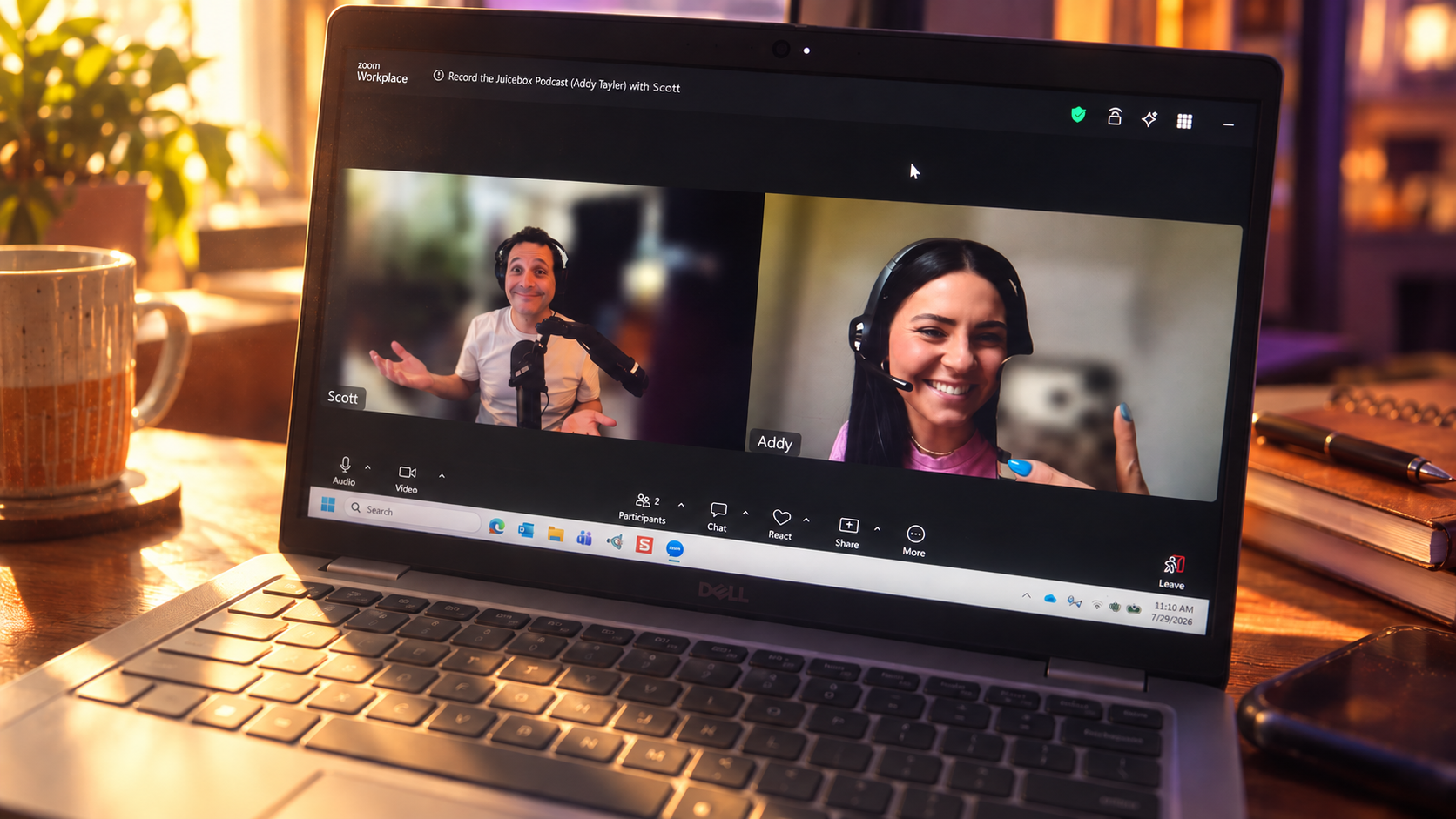





















Please support the sponsors






The Juicebox Podcast is a free show, but if you'd like to support the podcast directly, you can make a gift here. Recent donations were used to pay for podcast hosting fees. Thank you to all who have sent 5, 10 and 20 dollars!
