#1882 Eric Benjamin, Omnipod's COO, Live from ADA
Eric Benjamin, Omnipod's COO, Live from ADA
Live from ADA, Scott talks with Insulet COO Eric Benjamin about Omnipod 5's new 100 mg/dL target, Omnipod 6, an updatable pod, and a closed-loop system for type 2.
Jump to a moment

- Omnipod 5’s lowest glucose target is now 100 mg/dL. Eric Benjamin said roughly half of users aren’t set to the lowest target — if tighter control is your goal, which targets are available is worth reviewing with your care team.
- An Omnipod 5 algorithm update (rolling out by app, started June 3) is designed to keep the system in automated mode longer and ask for fewer manual interventions during prolonged highs. It requires compatible pods.
- Insulet says Omnipod 5 also added compatibility with the Freestyle Libre 3+ sensor this week.
- Omnipod 6, described as due to launch in 2027, was framed around a new algorithm, hardware changes for more wear locations (less ‘line of sight’ dependence), and an updatable pod that can update during priming.
- Insulet is developing a fully closed-loop system with no required inputs, aimed first at people with type 2 diabetes in primary care; for type 1, Eric described continuing with ‘bolus-optional’ systems so users can choose how engaged to be.
- Omnipod — Eric Benjamin is COO of Insulet, maker of Omnipod
- SugarPixel (CustomType1) — John's device; Scott sat at the SugarPixel booth at ADA
- Diabetes Pro Tip Series — Foundational management series (verify URL)
- Bold Beginnings Series — For the newly diagnosed, with Jenny Smith (verify URL)
- Juicebox Podcast Facebook Group — ~85,000 members (verify URL)
- Juicebox Podcast — All series and free resources
Every word of the conversation
A First: Recording Live at ADA0:00
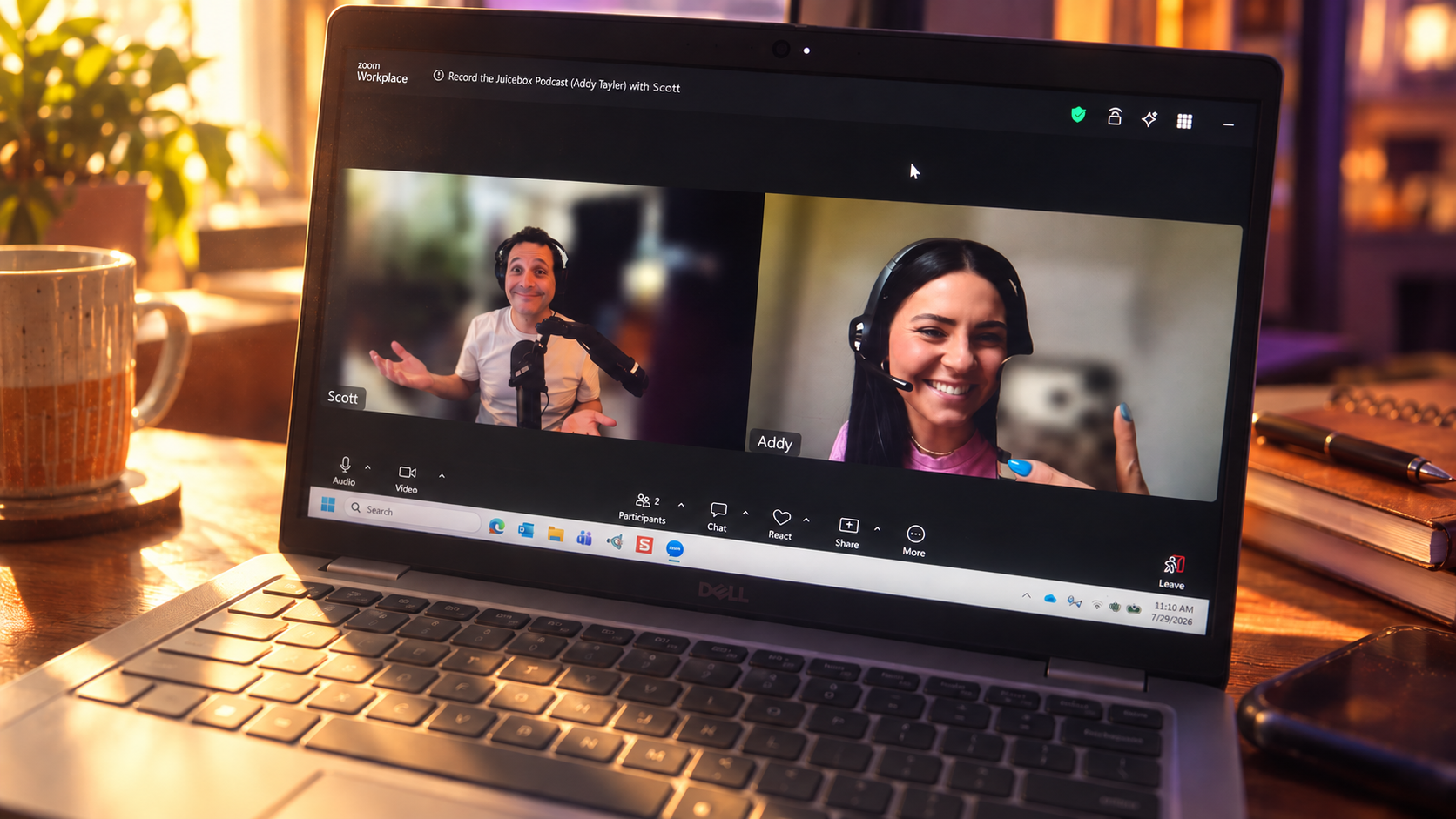
Welcome back, friends. This is the juice box podcast. Well, this is new for me. I have never, in twelve years and over 1,800 episodes of making this podcast, recorded anywhere but here at this desk on this microphone. But recently at the ADA conference, the scientific sessions, I had the, the pleasure of interviewing Eric Benjamin, is the executive vice president and chief operating officer at Omnipod.
Eric and I talked about enhancements to Omnipod five and some things that they're thinking about for Omnipod six and a few other little items. I think you'll find an interesting conversation. It was a new thing for me, not just not recording here, but as I sat down at Omnipod's booth, they have a beautiful setup where they make other podcasts and audio content and video content for themselves. I sat down and realized that I had never had a camera pointed at me when I made a podcast once in my life. I've never done it in front of other people, and I have never actually sat across from the person live who I've interviewed except for a couple of conversations that I've had with my daughter, which I don't think counts.
I'll tell you a little more in just a second. Nothing you hear on the juice box podcast should be considered medical oh, I haven't done this in a while. Live? Hold on. Nothing you hear on the juice box podcast should be considered advice, medical or otherwise.
Always consult your physician before making any changes to your health care plan. I can't believe I forgot that. I'm gonna get you to Eric right away. I just wanna let you know that being at ADA was really a terrific experience. I met a lot of people, many of whom are gonna become future guests on the podcast.
I really think it's gonna enrich the the show and its content. Met some people from the DIY community who are gonna come on. I actually just got an email from one of them today. I'm gonna get that set up. I met a lady who's writing a book, and she wanted to interview me for it because of how much the podcast has helped her.
So she's gonna come on and interview me here where you can hear it. Hope that's interesting. Had a great had a great time, like I said, and I and I I sat most of my time at ADA at the SugarPixel booth with John, the owner, and his family. Just wonderful. If you don't know what SugarPixel is, check out customtype1.com/juicebox.
Just a great little device, and and John's doing a lot of fun things for people with diabetes. He and I will actually be at ADCES and Friends for Life together. So if you're gonna beat any of those events, please come out and say hi. We'd love to meet you. And now without any, further ado, which I hate when people say on podcasts, but here I am saying it, this is Eric Benjamin.
Meet Eric Benjamin of Insulet2:40
Welcome to the Juice Box podcast. Could you please introduce yourself and let everybody know, who you are and why we're here today? Hey, Scott. I'm thrilled to be here on
the Juice Pucks podcast. I think I mentioned when we were standing aside that, you know, you're a celebrity in diabetes circles, so it's my privilege to be here with you on the show floor at here at ADA at the Omnipod booth. My name is Eric Benjamin, chief operating officer for Insular Corporation, and excited to talk to you about what's going on.
Oh, that's awesome. Can I learn a little bit about you before we jump into everything? Would love it. How do you end up with this this job?
I came to Insulet about eleven years ago, and I had worked with some people once upon a time at a company called Guidant making coronary stents and catheters. And some of them had found their way to insulin in 2014, and they knew me. And they said, hey, Eric. You should come join us. And I came, and I fell in love.
I fell in love with our mission to improve the lives of people with diabetes around the world, the culture and incredible people who are driven to build a remarkable business while we improve the lives of millions of people. And those two things are still true, and we have a huge job to deliver the innovation and impact that inspires all of us.
Back then before you came, what do you think your core skill was that was gonna be valuable here? Did it end up being that, and what have you figured out since then?
I'm not sure I have a core skill. Okay. I'm my my I I've always found myself, you know, as the person that challenges are handed to, Scott. And I spent my first ten years orbiting manufacturing quality and r and d. And I came to Insulet actually to sell licensing deals for our technology to pharma companies.
We have some partnerships with pharma companies to supply custom versions of our device to deliver other medications. Sure. And I came to do that and ended up finding my way applying some of my learned skills, you know, leading the team to develop our products, bring them to market around the world. And it's been an amazing eleven years. That's interesting.
I'll tell
you that my mom had a battle with cancer. And one of the moments that I think she actually enjoyed doing that was telling my daughter, like, look. I have your pump on. And because she was having she was getting medication delivered through a pod.
Through new the Neulasta Onpro device.
Yeah. That's exactly right. It it was like honestly, I don't know that my mom ever really understood my daughter's diabetes completely, but they had a moment together where she's like she got on the phone. She's like, hey. Wait.
Can I can I video chat with Arden? I wanna show her something. So, anyway, it's it's
an amazing moment. And it's amazing what people connect with about fully appreciating life with diabetes. Sure.
No. It it it really is. So you get here. You're the how do you end up in the job you're in now, though? Did you put up an you put out enough fires?
They were like, hey. This guy really knows what he's doing, what happens?
Yeah. It's not so much fires, Scott. It's just, you know, we're we're a company that in order to grow 20% a year for the last ten years, we're on our way to doing it for Yeah. Year 11. There's just a lot of new challenges in the organization.
And so in some of my early years with Insulet, when I was done selling licensing deals to pharma companies, I stood up our external supply chain and, you know, helped build the reliability and quality that we now rely on in order to get high quality components into all of our factories around the world. And then took responsibility for our R and D team starting in 2018 and have grown from there.
Oh, that's an interesting job, isn't it? So you know what's so when at the end of this, I can ask you what's coming with Omnipod six, and you actually know.
I do know. At this point, I think most a lot of people know, Scott, but I I have the the pleasure of working with the people who do the remarkable work that makes products like Omnipod six a reality.
I'm gonna ask you questions later, and maybe maybe we can get some details for people. So what what do you see as the goal of being at ADA for Omnipod this year? What what's your messaging? Scott, the thing
Omnipod's Message at ADA6:31
that is so amazing about being at ADA this year is the amount of data, clinical data, coming out to support so much innovation. Earlier this week, we launched some algorithm updates for Omnipod five. Mhmm. And over the weekend, we're gonna be showing the first clinical data of how those algorithm updates are helping people achieve better outcomes and stay in time and range more Interesting. Tomorrow at the show.
We released data on Omnipod six, the which is anchored by a new algorithm designed to give people even better glycemic control with less effort to get good outcomes. And we also released some data on the feasibility studies that we're working as we push towards a truly disruptive, fully closed loop product for type two diabetes. And we released that data earlier today too. Awesome. So it's been, you know, just a a show of inspiring clinical evidence paving the way to meaningful innovation for people's diabetes.
Can we pick third a little bit? Please. Okay. So Omnipod five, now I know that there's now a target of 100 because I was lucky enough to be involved in an ad where we all stood around on a set all day yelling 100. So I know that's one.
The Case for the 100 Target7:40
What are you seeing by lowering that target? What do you think is the value for people wearing the pod? The 100 target
is a is a big impact for folks. We actually we showed data at a d excuse me, ATTD a couple of months ago that first, only about half of customers use the lowest target. So we're actually out educating people that there are lower targets available in Omnipod five that are options to get tighter glycemic control. I can see you're surprised.
Well, no. You stunned me because I and I I sometimes I think I'm in a bubble. I think the people listening to this podcast are incredibly motivated to do well for themselves. I I don't know that I know one person not using the lowest target on Omnipod five. So but tell me the
number again. How many people don't? It's about half are not using the lowest target. And I would bet that even among your very engaged listening community, specifically, I bet there are parents of kids who are not using the lowest target. Okay.
So there you know, what we see is that parents of children choose to use higher targets for a variety of reasons, often fear of hypoglycemia. Mhmm. And then, you know, adults who are in care settings where they may be getting a little less attention on how to adjust Omnipod five to get the best clinical outcomes, a lot of them are still using higher targets too, and they could they could get a pretty significant benefit. We started down this road because you asked what's the benefit from a 100. Yeah.
And, you know, we showed at ATDD, it can be as much as five points of time in range of moving from one twenty to down to a 100. So it's a it's a big change for folks that can be available.
I have to tell you two things. First of all, I my brain works in such a funny way. When you just said, well, we started with your question. I thought, oh, did I ask that? And now I realize that was forty five seconds ago, which is, I guess, how my conversations end up going the way they do usually.
Reaching Patients Through Clinicians9:27
But tell me how you're gonna educate people to to to use that lower target. Like and how I mean, does it go through the clinicians? Right? Because you don't have a lot of contact with the the patients directly. So how or do you not do it?
You just hope that the the the community
Oh, no. We definitely do it. Okay. We have we have a we have a few levers. Before we started, you and I were having a chat about, you know, what's the value of companies like us being here at ADA.
And, actually, this is one of the vehicles that we rely on in order to get attention of clinicians and help them connect with the fact that, hey. But you may have a lot of patients who are not at the lowest setting. And if you want tighter glycemic control, have a look at, you know, the settings that they're using when they come into your office. So moments like this are part one. The second thing is, you know, our field teams that are out supporting clinicians in the market all the time are gonna be having conversations with providers to make sure that they know that the 100 target is available and that they have an option now to give people even tighter glycemic control.
And so that's a big part of what they'll be doing over the next few weeks and months as we pull through the launch. Additionally, there's two other levers. You know, we we do have direct contact with our customers, and so we have the option to make them aware of the fact that this lower target is now available, and we'll pull that lever. And we've actually we're just announcing and launching the full market release of Omnipod Discover, our data platform, which, actually has weekly insights in it for people with diabetes. And that also gives them some nudges and some ideas that maybe maybe they wanna explore Yeah.
A lower target to get titerglycemic
control. Website's coming soon?
Yeah. It's rolling out clinician team by clinician team. So as as an office sort of ops in, then our team gets them set up, and then people with diabetes who are cared for by the office can then get access to the part of it that faces people with diabetes, and that provides weekly insights directly to them on their care with support when they've done well, celebration when they've done well, and some ideas for how they might take better care of themselves.
So based on your experience, what do you think stops a clinician from either getting the information themselves or sharing it? Like, you you put yourself in because I really have trouble with it. I don't I I can't wrap my head around when, for example, someone says to me, oh, I tried to get x pump, but my doctor said they don't know how to use it. And my follow-up question is, could you not take an hour and figure it out and then help them? But, like, I talk to doctors and bring it up, they'll say, we don't I don't have time for that.
And so is there is there a lever in there to be thrown that would be valuable for everyone? Or, I mean, what do you see from your perspective?
I we see the reality that you're describing, which is, you know, we have huge empathy, respect, and gratitude for the work that HCPs who care for people with diabetes, you know, for the care that they put in. Right. They are incredibly busy people. And and I actually I have high empathy for the fact that they don't hear our messages the first time. You know, I'm I'm out in the field a lot with our team.
Okay. And, you know, it's a common theme actually that, you know, Rip will say to me. I I Eric, I I swear I've told them that five times, but they heard it for some reason in this conversation. And, you know, part of it is just about creating a moment where somebody can slow down enough to absorb new information. And if you're a health care provider charged with caring and delivering clinical care for the patients that you're responsible for, I think it's natural that they wanna understand the technology well.
What that means for us, Scott, is two things. The first is we dramatically simplify the technology. And so we work very hard during design so that there are as few inputs for health care providers to put into the system and to manage sort of as they're caring for patients. And second, you know, our teams out in the field are working hard to make sure that health care providers have the support that they need so that when somebody does want Omnipod, if that's the if that's the answer back, our team's there to say, hey. We'd love to have a conversation with you to help get this patient who really wants Omnipod.
We can help you through that and help you support that patient in having a great experience.
Outcomes, Simplicity, Fewer Barriers13:33
Yeah. So my perspective here on that is I feel like what it is you're doing. So making the the target lower at 100, but there's also other enhancements to the algorithm right now that I wanna know about. But you're doing that because it's your overall feeling that the less somebody has to touch it or understand it, the better off they'll be because maybe they weren't going to to begin with or maybe the doctor wouldn't. Like, are you trying to just take the I mean, I'm sure you have a tagline around this that I'm supposed to know.
But, like, like, you're trying to take the the the work out of it so they can have an outcome that's great. But then there are people who are lever pullers and knob turners who are probably irritated that they can't make more adjustments to it. So then if I'm putting myself in your position, my expectation is is you're trying to get to the point where the knob turners are happy and the people who would never learn are gonna be healthier. Is that the goal?
Yeah. You got it. Yeah. When when we if we just take a big step back, there's less than half of people who live with type one diabetes benefit from automated insulin delivery in The United States. So despite the fact that it's been a technology renaissance for ten years, you know, we are we're touching less than half of people who live with type one, and we're touching approximately five percent of those who use multiple daily injections live with type two diabetes.
The unmet need is huge. And, you know, what that means for us is we're focused on three things, basically, and all of the product development efforts that we think about and all the commercial go to market. It's first, how do we deliver better clinical outcomes? So why do we do something like a 100? Because we want people to get better clinical outcomes.
And we saw that we could offer tighter glycemic control with no additional increased risk of hypoglycemia. That's that's exactly the kind of bull's eye innovation that we go after every time we can. Okay. The second thing is we wanna simplify the technology, and we wanna do that because we know that diabetes is an incredibly burdensome disease. And giving people an option to use a 100 may, you know, at the margins, mean the system does more for them.
There may be a couple of moments in their day when they don't have to think about their diabetes because they know the automation's working harder for them in those moments. Similarly, you mentioned some other changes. We also adjusted how the automation keeps people in automated mode more and requires fewer manual interactions, especially during moments of prolonged hyperglycemia. And that's, you know, again, sort of pointed straight at this notion of simplification. Yeah.
We wanna make it as easy as possible for people to stay in automated mode because we know that's how they get the best experience.
What did you have to change to make that a reality?
So we adjusted how some of the safety controls that we'd built into the first generation of the algorithm, we adjusted how they operated. And in that first generation, there were moments where when the algorithm worked as hard as it could for a long period of time, it would ask for manual intervention. Because, you know, if you wind back the clock five or six years, we weren't sure how well CGM was gonna work, and we weren't sure, like or or pods gonna be not delivering insulin. And, you know, do people need to check something in moments where the algorithm had worked as hard as it could for a few hours? Mhmm.
What we actually saw in real life is we didn't need that safety constraint. We were asking people to put work into the system that they don't need to. And so we said, great. Let's design that out. Now people don't have to do that.
And so Omnipod five works harder for people in exactly the moments that they need it. Okay. And the final thing that we're always innovating for is to break down barriers. And, you know, that's part of why we think so hard about simplification for providers is part of the reason that penetration is low is that it's still challenging for providers to prescribe AID. We were just talking about that burden of all that they have to know.
And so if we have an opportunity to take away something that a physician might need to know to confidently prescribe, we're gonna do that because that'll make them more likely to offer AID to their people in their care.
You know, it occurs to me that instead of trying to change the way humanity works or the way people think or how things have gone for so long that we can't break free of them, just take them out of the loop. Right?
Yeah. You got it.
Getting the Omnipod 5 Update17:31
That's awesome. Okay. So Omnipod five is where it is now. How do people get it? Is it available now?
Are they gonna need new pods? They need a download? They need a what do they need?
They need an app update that's rolling out now. Mhmm. I sat next to a gentleman on the flight here who already had the latest iOS update. I happened to see his Omnipod five app as he was flipping between a couple of other things that he was doing, so we had a conversation. And, you know, I bump into Potters all the time, Scott.
And I I always tell him, look. I'm not a clinic clinician. I don't have opinions about your care. But if you want me to tell you a little bit about the technology, I'm happy to help. And so yeah.
No. He was all in. He wanted to know about a 100. He had just gotten a new iPhone, so he that had been how he'd gotten the app. But the app's just rolling through our customer base.
Started on June 3 and will be done in the next couple of days. A lot of people have it already, and you do need compatible pods. There's a little indicator on whether they're compatible. We've been shipping those for a while. So a lot of people do have compatible pods Okay.
To use the 100 target.
And those who don't, the next time they get a shipment, they will. Yep. That's awesome. And what does that leave? I hate saying that.
I always feel I always feel ungrateful. Like, people are like, here's more. And I'm like, but is there more? So is there more for Omnipod five, or is this gonna be what it is until we see Omnipod six?
So we also launched compatibility with Freestyle Libre three plus this week. So we had we made the algorithm changes, the lower target glucose and compatibility with Freestyle Libre three plus. At this point, that's what we've disclosed about Omnipod five because we are looking ahead with enthusiasm to Omnipod six Mhmm. Which data we're presenting this weekend, the STRiVE data, and then it's due to launch in 2027. So Omnipod six is coming quickly, Scott.
It is. Yes.
Okay. So I should imagine a bunch of people behind the scenes toiling away working for Omnipod six. Omnipod five is about where it's gonna be.
Again, we know that it's important that we keep delivering what customers need. And, you know, we have experience sustaining multiple platforms in the market today. And so, you know, we're not gonna leave customers behind, but we do also need to turn our innovation focus to make sure that we can put full force behind Omnipod six, which is gonna be a pretty remarkable product.
A Closed Loop for Type 219:48
You're good at this part of the job, but not the podcasting part. You save the Omnipod six stuff for the end. What are you doing? Everybody's gonna tune out if you tell them about the Omnipod six. Alright.
Don't you wanted to know about the closed loop system for type twos?
Absolutely. Let's
talk about that now. Alright. Alright. Well, we'll do it we'll
do it in the year order, Scott.
Why tell me how this is gonna help type twos, what this system does for them, and then get ready for the question when I ask you how come type ones don't have a closed loop system like that. So please. So
as you described, we've we're working on updates to Omnipod five, Omnipod six, and a fully closed loop system for type two. The the reason we started with type two is two things, Scott. The first is back to that, how do we break down barriers to access for technology? About seventy percent of the people who take multiple daily injections and live with type two are cared for in primary care. Mhmm.
And despite all of the work that we have done simplifying Omnipod five, despite our efforts, it's still too complicated for broad adoption by primary care. Mhmm. The amazing thing about the flake closed loop system for type two is that it's designed so that physicians can write it. It's as easy for them to write as CGM. Customers pick it up from a local pharmacy, bring it home, and they can start it without any required inputs.
There is an option to adjust the glucose target in so folks can do a little personalization. Okay. But there's no required inputs in order to get it started. And, you know, what that means and then folks can self start in their own home. Mhmm.
And what that means is it breaks down these critical barriers to prescribing where the GPs who are doing the writing don't have to be educated on things like basal rates and insulin to carb ratios and all the things that today are obstacles for primary care physicians writing AID. And similarly, customers don't have to be educated on BolaSign or, you know, what what it what's required in order to safely dose insulin. So it's a dramatic simplification designed to help bring AID to the millions of people cared for by primary care who use multiple daily injections of insulin.
Will those users have access to those settings through something you give them, or will it be through a phone, or is there are multiple ways to get to it?
You know, we imagine a pretty simple experience where just like in today's Omnipod products, there's an easy to understand target that offers just a tiny bit of personalization, but there's nothing clinically required Okay. In order to use the system.
But when somebody does put something, input something, they do it through a phone app?
Do it through a phone or a controller. Through a controller. Yep.
Where GLP-1s Fit In22:20
When you're testing that, do you have to take GLPs into consideration now because they're so widely used? Is that I assume. Right? Is that a thing you're gonna be thinking about about for type ones too? Because I fully expect GLPs to be I mean, you're seeing a lot of people use them off label now.
Right? So do you have any background on that for me? I'm just super interested in this.
So Yeah. Maybe to hit type two first and go to type one. Please. So yes is the short answer. GLP ones have been used in the treatment of diabetes for almost twenty years at this point.
I'm sure you know this well, Scott, but maybe for your listeners, you know, they began as diabetes medications and have been, you know, in use as part of the treatment paradigm, usually ahead of insulin and often with insulin as complementary therapies in the treatment of type two for a long time. Right. And what we see is that actually people who live with type two diabetes get the best clinical outcomes when they are using a GLP one and on AID. Mhmm. Because once they're at the point that they need insulin, they need insulin.
And then the question is, how do you make that insulin delivery as effective as possible? And guidelines now recommend automated insulin delivery, and what we see in our clinical data is that the people who are on AID and the GLP one do even a little bit better. And so we don't so we do take them into account, but actually we we celebrate that innovation for the fact that it works really well with AID.
No Settings, Self-Start at Home23:40
Before you move forward with the type two, it's like, I'm it's just hitting me what you said now. So I'm gonna get this device. It's gonna I'm gonna bring it home, and I'll put it on myself. There's no settings? How does it how do it know?
I
I love this moment, Scott.
Because we we we had a
few of these over the
last few months. Wait. Did you just say that I don't have to do anything when I get it? How how is it gonna figure me out and do the thing?
The short answer and actually, so Trang's gonna present data on this at during product theater tomorrow, but actually, we're gonna show how we started in evolution three, the the data presented this weekend. We started everybody. They put on the pod, and the system adapted to the individualized insulin needs, adapted to the individual individualized insulin needs of each participant in the trial and, you know, delivered overall time and range. It was really compelling and you know, significant improvements in time and range. And so, yeah, the intelligence in the system is there in order to start safely and then adapt to the insulin needs of people with type two diabetes.
That's awesome. Because you're reaching a population that just from my personal experience, it's just a a a close friend of mine who, you know, came to me three years ago and said, Scott, I have neuropathy, they tell me. And I said, well, you have type two diabetes or prediabetes? No. I don't think so.
And I went, you probably do. And I said, here's a meter. You you know what I mean? And I gave him a meter, and I said, you know, here's what I want you to was like, test yourself here, here, here. Make a little graph.
I'll come back next week. We'll look at it again. Right? I came back next week, and he said, I couldn't figure out how to get the strip in. And the and I I said, okay.
And I showed it to him again. Then I came back a week later, and I said, how are doing? He goes, I forgot. I didn't do this. Now between you and I, like, he's definitely prediabetic.
And if somebody could step up to him and just say, like, look. There's nothing to learn. There's nothing to do. I'm I'm imagining him in my heart right now. Like, he would be helped immensely by this.
How how are you gonna get from this amazing innovation through? Because you gotta go through GPs. Like, what's the new process to to get them out there? Is it you send the staff out and and tell them to tell the story, I guess?
Yeah. And it's moments like this where we show the clinical data and the potential impact of the technology. Clinical data and then physicians creating the opportunities for clinicians to learn from other clinicians is really impactful. And then the last piece, yes, is that we will we will staff and support our team in going and taking that message to primary care providers when we've got that technology ready to go broadly.
Yeah.
The the good news, actually, we're we're learning a bit about that now as we as we pull through the launches of Omnipod five this year. We're actually gonna be calling on a few GPs that actually care for about a hundred and fifty thousand more people with diabetes in the second half of this year. But it's good because it helps us start to appreciate the practice differences in GPs compared to endo. And so it exactly as you said, like, it's a different world, and we're getting ready for that so that we can do it with impact when the technology is ready.
When you look up at those GPs, are they anxious for this? Do you find them saying, oh, I'm glad there's something here finally to help these people. We haven't had a lot of success, or do you find that it's difficult to do they get scared of the idea of insulin, I guess, or or about pumps?
The the kinds of folks that we are building relationships with are people who are already prescribing insulin and already prescribing CGM. And when they see the pod and they see what it can do, they're incredibly interested. And then, you know, they they in some cases, you know, the ones who are at the leading edge, we're teaching them to prescribe Omnipod five today. You know, as the market leader, we spend a lot of our energy broadening the prescriber base because that's the key barrier to access for a lot of people's diabetes. Yeah.
But then we bump into a lot of them who are like, look. This technology is amazing. I don't have fourteen minutes to do that in an office visit. So, you know, they need the product that I was just describing, which is the one they just send it to the pharmacy. The patient picks it up.
They self start at home, and away they go.
When you hear stuff like that personally, does it frustrate you or make you sad? Like, what's your response when you because I'm a person who I deliver information to people that I know helps people.
Yep.
And when you put so much into putting it together and finding the right way to package it and deliver it, and there it is, and you feel like you're like, here it is, and they go, I don't have time. I I get frustrated sometimes. So I'm wondering how it feels for you.
It actually doesn't trigger frustration. It triggers motivation for me, Scott. And I think, like, that's the inspiration for the product we were just talking about that, you know, has nothing in it in order to start was we looked at we looked at the real unmet need. The real unmet need is caring, well meaning physicians do not have the time in order to prescribe today's AID systems to give the people in their care the benefits of technology. That's a super clear problem statement that we have been working on in order to deliver the technology to the world that's gonna help address that problem.
Okay. And and so, you know, look, challenges are just motivation. And, you know, there's there's probably fourteen million people insulin requiring diabetes thereabouts in the markets that we serve today. Mhmm. And only about ten percent of them benefit from automated insulin delivery.
And it's problems like this, barriers to access, barriers to prescribing that motivates us keep innovating and keep broadening who can benefit from technology.
Why Type 1 Isn't Fully Closed Yet28:55
So the question is, this type two system, is it informed by what you learned from Omnipod five, or is it about to inform what we're gonna see with Omnipod six?
Both is the answer to that. We have been we have been thinking about, you know, how do we simplify physician interactions? How do we simplify the wear experience for people with diabetes since the launch of Omnipod five, and I've been learning quickly. And so that, you know, Omnipod five is sort of the precursor for both. And but the spirit of simplicity, going back to our three pillars, you know, simplifying the experience to the greatest extent that we can, How do we eliminate, you know, bolus burden for people and reduce the amount that they have to manually bolus?
How do we increase clinical outcomes? Those two goals underpin both Omnipod six and the type two fully closed loop product, and we've taken technology learnings to both of those from Omnipod five. Okay.
So people are listening or hearing fully closed loop for type twos. Like, why is that not a thing that type ones can have?
Folks who live with type one, I think, will get there in an iterative fashion. I think what we see is that a lot of what is talked about as fully closed loop today are really bolus optional systems. And, you know, a few minutes ago, were talking about what about tinkerers and people who are highly engaged. And I think what we see is that within the type one population, in fact, even a little more broadly, within the population cared for by specialists, which are the folks who've been prescribing technology for, you know, ten to thirty years, the the the people with diabetes cared for in that call point want options. They wanna choose how engaged do they wanna be in the technology.
And and so and so for us, that says, okay. We need a a bullish optional system. We need to keep pushing the envelope of how good can the automation get so that the hybrid closed loop systems invite people to engage as much or as little as they want to. So I guess that's our vision, is that the people with type one diabetes, yes, we are innovating towards how can they choose to interact not at all with the system. But I think what we see is that a lot of them are going to choose to interact with it a little bit because of the realities of how quickly insulin works.
Right. And, you know, they may choose to bolus once a day or every other day or a couple times a day. But that notion of choice is, I think, what we see that's the right product for people cared for in what have been the traditional settings for AID systems.
From what you've seen so far, is there a tuning that one day gets us to a hands off, or is it about the insulin at some point? Like, do you think it do you think you get there eventually where you just you slap it on somebody and you're like, go ahead and that's that, or do you not see that in the near future?
I think it depends what clinical outcomes folk folks are targeting, Scott, and how carb heavy a diet is. So, like, today's technologies could deliver that experience for folks who are eating very few carbs. I think for the for the average normal diet person living with type one diabetes, for for them to feel like they're getting acceptable time and range, which I'll say is somewhere in the seventies probably for a motivated type one who's eating a normal diet, We're gonna need some help from faster insulins in order to deliver a truly hands off product. But I I think what's inspiring to us is that the journey to getting there is better and better automation where people may choose, yeah. Okay.
You know what? Maybe I'm only gonna bolus once a day
or maybe
I'm only gonna bolus on certain days, I'm gonna skip it entirely. And offering people that freedom to choose is super empowering as I know you know from your own work.
I try to remind myself, and I try to remind the audience too that, you know, even in my daughter my daughter's 22. She was diagnosed when she was two. There was a time when we were excited if they put out a new meter. It wasn't any more accurate. It didn't do anything that the old meter did.
It just looked different. We were like, oh, this is awesome. A new meter. And now we're sitting around going like, oh, so you made the the advancement of Omnipod five. When are you gonna make more to it?
When's Omnipod six coming? Have you thought about Omnipod seven, eight? Not you know? And and I know the world works that way now, but it's it's valuable to remember that there are people alive with type one diabetes right now who boiled needles in a in a pot of water to sterilize them. And I I get really excited about how quickly things are moving nowadays.
Inside Omnipod 633:14
With that in mind, if we're back here next year, what are we talking about? Are we talking about Omnipod six? And can you give me give people a little detail about it for those who haven't heard your announcements?
Yeah. When we're here next year, we're gonna be talking a lot about Omnipod six, and we'll be talking even more about the fully closed loop product for type two. Omnipod six is super exciting, Scott. Omnipod six is our next flagship Omnipod product. It's starts with a new algorithm back to better clinical outcomes, simplifying for people.
It's a big step on both of those from an AID perspective. Is it
a completely new stack? It's not Omnipod five zooshed up a little more? It's it is it a completely different like, is it a built a bottom up build, or is it in a is it iterating on top of Omnipod five? Or are you not allowed to say that out loud?
It's not so much about what I'm allowed to say. I'm actually just thinking about the question. I think one of things I've learned is we're all always standing on the shoulders of giants. And so even when one thinks you're doing something bottom up, one never is. Certainly, it builds on Omnipod five.
So we learned a lot from Omnipod five, and we saw some really powerful ways that we can improve outcomes for people when we pulled those levers in Omnipod six. In addition to the automation improvements, we're also improving wearability. So as, sensors have gotten smaller, the wear locations that people are wearing automated and delivery systems to keep connectivity high have become a little bit restricted. And, you know, we recognize that what people want from a wearable experience is they wanna wear it anywhere they can take an injection of insulin and still have great connectivity to a CGM. Yeah.
And so we're making pretty significant hardware changes in order to enable that for Omnipod six.
So next year, I won't have to say the words line of sight anymore. Is that what you're telling me?
That is our aspiration. Awesome. That yeah. I the gentleman I sat next to on the plane, on on the one hand, I was happy that when he reached to show me his body, he reached for the wrong arm, and I thought, oh, that's good. He forgot where it was.
And then he put it he reached for the other arm. Then he told me I had the two side by side. And and look. We as we aspire exactly as you just said to break the need for line of sight and let people have the freedom to enjoy the wearable experience where they want it. That's really awesome.
There is one more piece of Omnipod six, if I may.
Well, yeah. Tease me. Tell me what's happening. Let's go.
The the last piece of Omnipod six is it's it's an updatable pod. So in with Omnipod five, when we launch new innovation, we actually have to start it in our factories. Oh. And so and it's often a new physical skew that people have to pick up in the pharmacy, which takes six to nine months. We were making pods that were compatible with Freestyle Libre three plus in our factories at the end of twenty twenty five, and we're just announcing that launch this week because we have to make enough supply, get it into the wholesale channel, and get it in the hands of customers.
So, again, back to our principles with Omnipod six, we've got a fully updatable pod, which means it's easier for prescribers to prescribe because they've just one SKU to write. And it means we can accelerate innovation to customers because when we have an update, we can actually push updated pod software to the pod hardware through app updates, which is really cool.
Wait. Is what you're telling me is that some of it's gonna live on the pod, but some of it'll live on your phone? Or no. You're telling me that when I put the pod on, it's gonna update?
Yes. Get out
of here.
It's it's
very cool. Did that person get a raise? I don't I don't know the answer to that,
but I I think they probably did.
Yeah. That's a May so if I have a you make a pod and it's version a, and you guys have updated to version b. I put a on. And during the priming process, it updates that pod, and it's ready to go with the new the new brain.
You got it. You're good at this.
No. No. Stop. And and so we do you have to go back to the FDA as much then, or does that does that that doesn't stop that?
Yeah. It doesn't really change the regulatory requirements. There will be some things that, for various reasons, it takes us a couple generation to be able to update absolutely everything on the on the pod, but we'll be able to update a lot of the technology on the pod during priming exactly as you described.
That's exciting. And it brings people stuff quicker, probably eliminates waste, and a lot of other things. Right?
You got
it. Really appreciate you doing this with me. Thank you very much. Likewise. This was fun.
So I'm glad you think so. I thought so too. Yeah. It was. Thank you again.
Wrapping Up37:20
If this is your first time listening to the Juice Box podcast, I'd love it if you'd subscribe and follow in your favorite app, Apple Podcasts, Spotify, or wherever you get your audio. There's also a ton of free offerings on my website, juiceboxpodcast.com. And if you're looking for community, we have maybe the most active and lovely Facebook group wrapped around type one diabetes. It is called Juice Box Podcast type one diabetes. And as of this recording, I believe it has 85,000 active members in it.
It is really maybe the most lovely place you'll ever find online. You should check it out. Even if you just wanna lurk around, It's a great place to feel, you know, like somebody's got your back.
If you're looking for
are you looking for if you're looking for diabetes management content, check out the pro tip series, the bold beginning series, or any of the other, I think, like, 26 different series that are available on the podcast. You can find all of those again on the website juiceboxpodcast.com. That's pretty much it, really. I hope you enjoyed this. I enjoyed bringing it to you.
Again, really did enjoy being at ADA, meeting Eric and actually a ton of other people who are gonna be on the podcast because I was able to meet them in person and and have nice conversations. And we thought, oh, this is this is good. I wish somebody else was listening to this. We're gonna be talking about DIY algorithms with people I met there, a lady who's writing a book about diabetes that I found very interesting. Gosh.
The the person who makes glow gummies. And I think we're gonna be doing some stuff with other companies, and it's gonna be great. It was a it was a really good time, and it was definitely something that's gonna help the podcast to grow. So you guys are gonna get, gonna get more because of it. If your loved one is newly diagnosed with type one diabetes and you're seeking a clear practical perspective,
check out the
bold beginnings series on the juice box podcast. It's hosted by myself and Jenny Smith, an experienced diabetes educator with over thirty five years of personal insight into type one. Our series cuts through the medical jargon and delivers straightforward answers to your most pressing questions. You'll gain insight from real patients and caregivers and find practical advice to help you confidently navigate life with type one. You can start your journey informed and empowered with the Juice Box podcast.
The bold beginnings series and all of the collections in the Juice Box podcast are available in your audio app and at juiceboxpodcast.com in the menu.
Read the full disclaimer
© 2007–2026 Juicebox Podcast. All rights reserved.
Recorded live at the ADA Scientific Sessions, Scott Benner talks with Insulet COO Eric Benjamin about what's new for Omnipod 5: a 100 mg/dL glucose target, an algorithm update that keeps the system in automated mode longer, and Freestyle Libre 3+ support. They look ahead to Omnipod 6 (new algorithm, wearability, updatable pod) and a fully closed-loop system aimed first at type 2 diabetes.