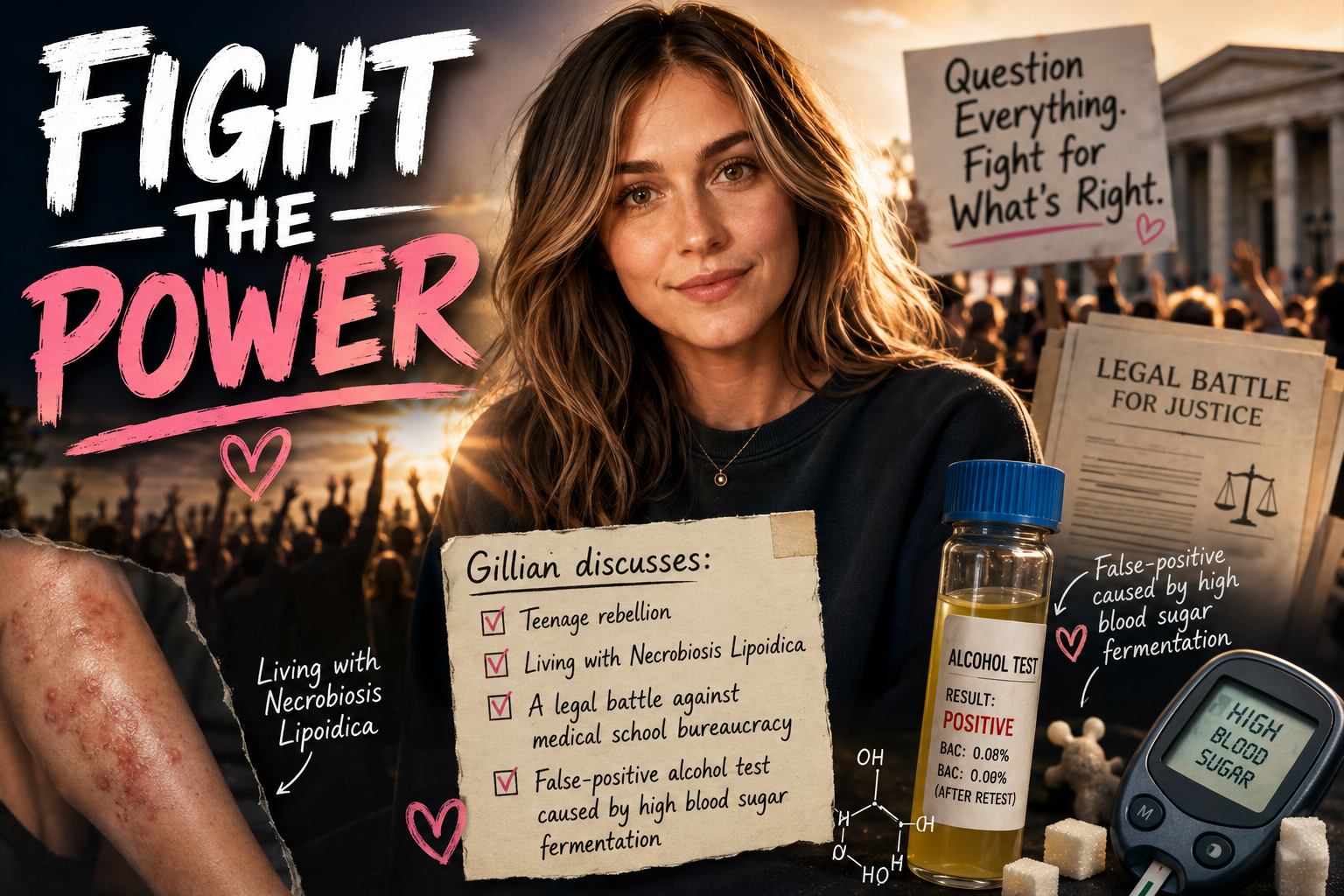
#1861 Fight the Power
Gillian discusses teenage rebellion, living with necrobiosis lipoidica, and a legal battle against medical school bureaucracy over a false-positive alcohol test caused by high blood sugar fermentation.






























Key Takeaways
- Urine Screen Alterations via Glucosuria: Elevated blood glucose levels can cause sugar to spill into the urine (glucosuria). If the urine specimen contains high amounts of glucose, ambient yeast or bacteria can ferment the sugar post-collection, generating ethanol within the sample cup and causing a false positive on alcohol drug screenings.
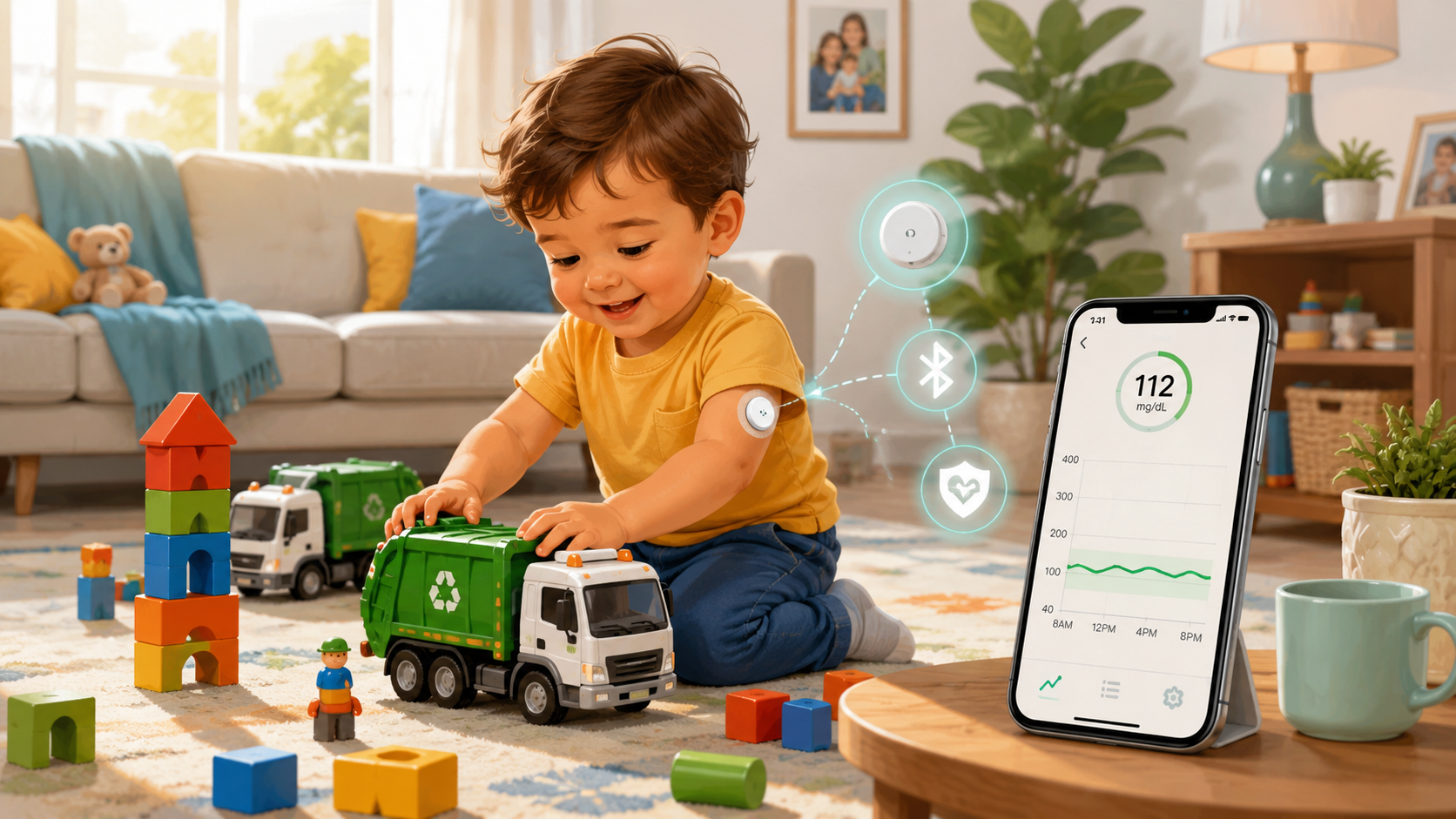
- Critical Device Proximity for AID Systems: Automated Insulin Delivery (AID) loops depend on persistent Bluetooth connectivity between the continuous glucose monitor (CGM), insulin pump, and smart controller. Severing this connection by confiscating or moving a device can immediately trigger system failures, place the pump into a limited backup mode, and prompt dangerous, rapid hyperglycemia.
- ADA Rights to Classroom/Testing Accommodations: Under the Americans with Disabilities Act (ADA), academic and institutional environments are legally obligated to provide reasonable accommodations for individuals with Type 1 diabetes. This includes immediate, non-penalized access to glucose monitoring technology, corrective fast-acting carbohydrates, and fluids during lecture and examination periods.
- Understanding Necrobiosis Lipoidica: Historically termed Necrobiosis Lipoidica Diabeticorum (NLD), this rare, chronic inflammatory skin condition primarily causes shiny, yellow-brown, or deep reddish plaques on the lower shins. The condition involves underlying microvascular changes and collagen degeneration, frequently making the skin thinned, thinned over the bone, and susceptible to severe ulceration.
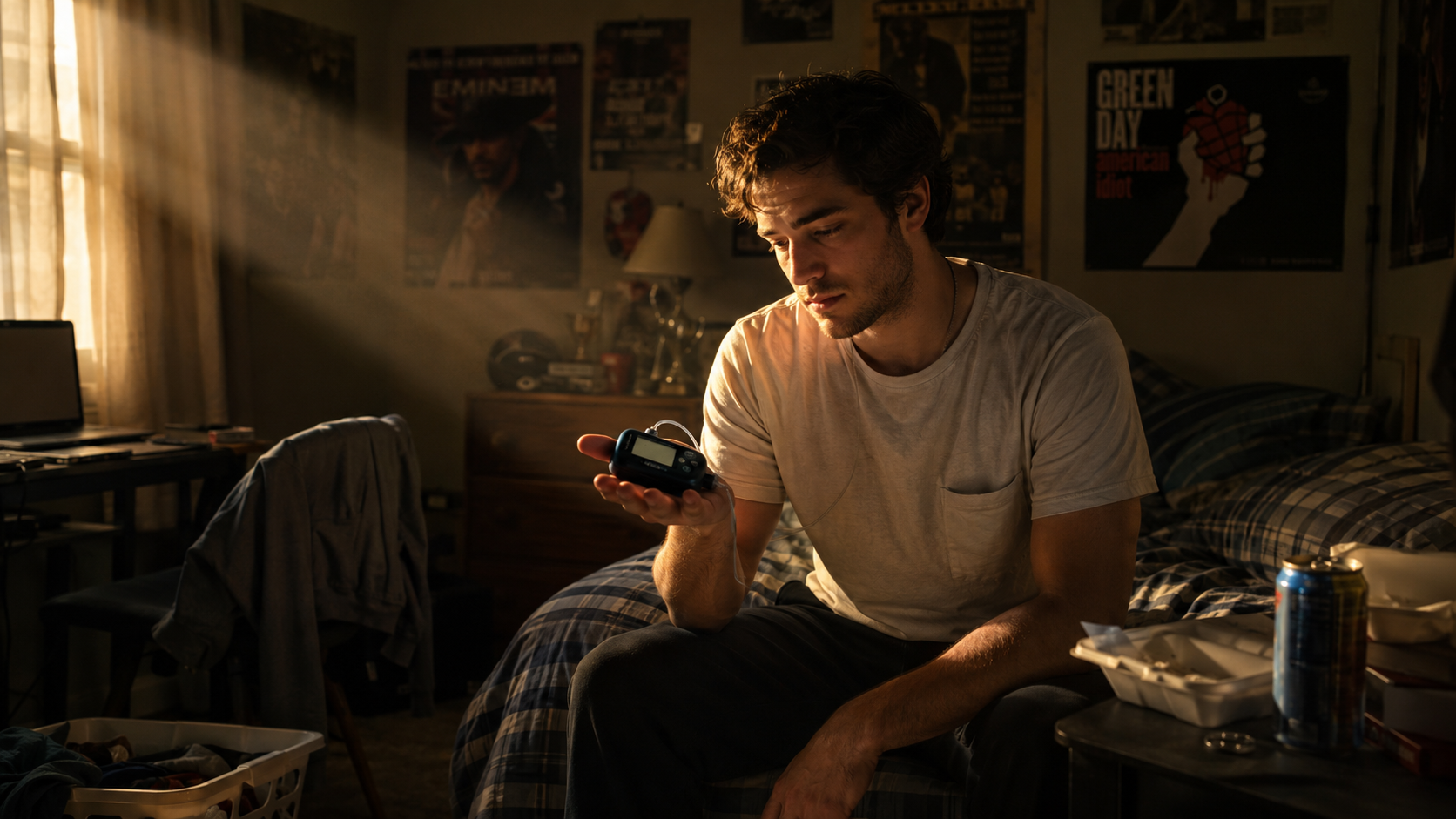
- Combatting Burnout with Strategic Dosing: Navigating systemic institutional barriers can compound psychological diabetes burnout. Re-establishing basic management fundamentals—specifically practicing precise meal pre-bolusing and consistently evaluating baseline basal profiles—remains the most effective tactic for resetting glucose time-in-range metrics.
Resources Mentioned
- Juicebox Podcast Website Support: juiceboxpodcast.com
- Omnipod 5 Automated Insulin Delivery: omnipod.com/juicebox
- Dexcom Continuous Glucose Monitoring (Dexcom G7): dexcom.com/juicebox
- Professional Audio Production & Editing: wrongwayrecording.com
Childhood Diagnosis and Teenage Rebellion
Scott BennerWelcome back, friends, to another episode of the Juice Box podcast.
GillianMy name is Gillian. I am a type one diabetic of, I believe, it'll be twenty three years. In April, I was diagnosed at five.
Scott BennerCheck out my algorithm pumping series to help you make sense of automated insulin delivery systems like Omnipod five, Loop, Medtronic seven eighty g, Twist, Tandem Control IQ, and much more. Each episode will dive into the setup, features, and real world usage tips that can transform your daily type one diabetes management. We cut through the jargon, share personal experiences, and show you how these algorithms can simplify and streamline your care. If you're curious about automated insulin pumping, go find the algorithm pumping series in the Juice Box podcast. Easiest way, juiceboxpodcast.com, and go up into the menu. Click on series, and it'll be right there.
Scott BennerWhile you're listening, please remember that nothing you hear on the Juice Box podcast should be considered advice, medical or otherwise. Always consult a physician before making any changes to your health care plan or becoming bold with insulin.
Scott BennerThis episode of the Juice Box podcast is sponsored by Omnipod five. Omnipod five is a tube free automated insulin delivery system that's been shown to significantly improve a one c and time and range for people with type one diabetes when they've switched from daily injections.
Scott BennerLearn more and get started today at omnipod.com/juicebox. At my link, you can get a free starter kit right now. Terms and conditions apply. Eligibility may vary. Full terms and conditions can be found at omnipod.com/juicebox.
Scott BennerToday's episode is also sponsored by Dexcom, the Dexcom g seven, the same CGM that my daughter wears. You can learn more and get started today at my link, dexcom.com/juicebox.
GillianMy name is Gillian. I am a type one diabetic of I believe it'll be twenty three years in April. I was diagnosed at five. And my diabetic journey slash life has been very interesting in the last two years.
Scott BennerCan we find out a little bit about the beginning part before we get to those last two years?
GillianYeah. Absolutely. What do you—
Scott BennerI don't know, but you said diabetic journey. And the other day, Arden said to me, dad, this is my health journey. And I was like, is she being sarcastic, or does she mean that? So—
GillianNo. I I don't know. I think of it, you know, we all talk about you see the memes on Facebook and everything, and it's like, it's another job. It wasn't until this whole instance really became a thing that or I should say until, like, 2020 when I started working in the medical field, it really hit me that it wasn't a second job or anything. Like, this is my life. Okay. I was pretty bad teenager, rebellious against it. I went on the pump, I got just really lazy with the Medtronic.
Scott BennerHow do you rebel well, first of all, you're diagnosed at five. Right?
GillianYep. Yep.
Scott BennerYour, parents are married?
GillianParents married. No other diabetic in the family. My grandma is a type two. Now she treats it more like a type one, but I don't—nothing to her. I just don't consider her like a full on type one.
Scott BennerWhat the way she's doing? How about brothers, sisters?
GillianNo sisters, no brothers, only child.
Scott BennerOh.
GillianMhmm. What was—I was a in vitro, I believe, baby. So it took my parents a few—a few years to have me.
Scott BennerAh, that was enough. Yeah. Get—get you out was, enough work.
GillianI always joke because they were like, oh, you were—you were healthy. You were a good kid. We decided not to have any more. And I was like, you guys jinx this. You guys jinx this.
Scott BennerThis one's good. What do we need another one for? Right.
GillianRight. So—
Scott BennerAlright. Yeah. So growing up twenty three years ago so Arden's had diabetes since 2006. Was this just, like, 2003?
GillianYes. Yep. Okay. I had just turned five. So my birthday is in March, and then I was diagnosed 04/07/2003.
Scott BennerOkay. So your management in the beginning was what? Like, just injections and a—and you had a little meter. Right?
GillianYep. Yep. Yep. Carrying ice boxes—or not an ice box, but, you know, like a cooler around with us. And parents really always have—always been involved with it.
Scott BennerWhat kind of experience did they have managing it? Like, do you know what your a one c's were back then when you were little kid?
GillianOh, yeah. They were—I was very independent, actually, until, like, the whole reason I'm on this podcast with you. I never had to have, like, school accommodations or anything. One, school really was just like, if she knows how to manage it, we're cool. And my parents wanted to be as, quote, unquote, normal as possible. They didn't want me to have this, like, overwhelming, like, chip on my shoulder that I'm excessively different because my pancreas just doesn't wanna work.
Scott BennerOkay. So—so you're telling me what—you did shots when you were a little kid Yeah. on your own?
GillianI did shots up until I was 11 years old. I was a very active horseback rider, and I was very tiny. And the Omnipod back then, I remember it being, like—looking at it, and I'm like, I don't want this giant, like, brick being on my body.
Scott BennerIt used to be bigger. Yeah. Yeah.
GillianYeah. Yeah. Yeah. And I was just like, well, what if I, like, hit it on a barn door or, you know, I had a horse that he liked to nibble. And I was like, well, what if he rips it off? And it just made me really scared, so I didn't want the tube pump either. But then I had a nurse practitioner that came in and just, like, literally beat the crap out of his pump site, and that was game changer for me because I was so afraid that it was gonna hurt if I fell off and it got ripped out. And then I at 11 years old, I switched to the Medtronic pump.
Scott BennerBecause someone showed you, look, you can be rough with it. It's okay.
GillianYeah.
Scott BennerYeah. So in that time between 11 and diagnosis, are you one of those little kids who's, like, giving yourself shots, or is your mom and dad—you're doing it yourself. Right?
GillianI was at school full, I believe that—I mean, right around diagnosis, like, my memory wasn't isn't the most great about it. Yeah. But I believe that they would help me, like, they learn taught me how to count carbs. I was very hands on with my nutritionist at, you know, Nationwide Children's Hospital. I really—they would always ask me, how much do you think for this? You know, how much would you give for this? And it was pretty easy because my carb ratio was, like, one unit per 15 grams.
Scott BennerYeah.
GillianSo it was just counting in 15.
Scott BennerYeah. The math is pretty—pretty easy.
GillianYeah. So Yeah.
Scott BennerWhat are outcomes like? Do you know what your a one c's were? What—what are the first ones you're aware of?
GillianI don't remember those as much. I know I was really well controlled.
Scott BennerOkay.
GillianI had no issues.
Scott BennerBecause the doctor would say, hey. You're doing great? Or—
GillianYes. Yes. Okay. And they would even show me the graphs. Like, the older I started to become, they would show me the graphs and be like, oh, what happened here? And I'd be like, oh, maybe I just forgot to, you know, give myself an extra half a unit because I wasn't sure. Right. You know? I had lunch at school this day. I wasn't sure, so I gave myself half a unit less so I wouldn't go as low or something like that.
Scott BennerSo you're on the Medtronic pump at eleven. Did—do you have their CGM at that point too?
GillianI don't think so. I think I was on Dexcom at first.
Scott BennerOkay. You liked having a CGM?
GillianI loved it. I started feeling even more free. My—you know, I used to have, like, these really dark circles under my eyes, and I was always really pale. And I started, like, looking not as much of a zombie. And family and friends used to be like, oh, she looks so much healthier. You know?
Scott BennerWhy do you think that is? Did you have more stability, you think?
GillianI think it was more stability, and I think it was—I have always—even when I've had a pump issue over the past couple of years, and I go back to shots, not getting that insulin, like, not manual, the automated or the closed loop system—
Scott BennerMhmm.
GillianI just feel like trash. I feel like my bones—I have no fluid in my body, and everything is just sandpaper. And I don't know if it's because it's not, like, injections every second that I feel that way, but it just doesn't feel like I even take my Lantus when I take my Lantus.
Scott BennerYou feel better on a pump than you—
Gilliandid—Yes.
Scott BennerAt MDI. Okay. Alright. So how do we get from this little girl who's like, I feel more free and this is better to—like, when do you become a teenager who's like, I'm gonna rebel and I choose diabetes to rebel against? When does that happen?
GillianI think it happened around puberty at the age of 13. I started realizing that—I changed schools, and it wasn't the school thing, but, you know, boys, whatever. And I wasn't like—it was always my horse. Still is always my horse.
Scott BennerWere you gonna say I wasn't boy crazy?
GillianI was not boy crazy. I just started becoming, you know, like, puberty. Okay. It's things of, like, oh, well, maybe this girl has a boyfriend because she doesn't have diabetes, or maybe they're getting to do these things because, you know, they're—these kids are going to go to sleepovers, but my parents don't necessarily trust their parents to wake me up at 2AM in the morning—Okay. to make sure that I'm not double arrows down Gilly and then at forty two.
Scott BennerThen you're very aware of your diabetes and the impact it's having on big and small things in your life.
GillianYes.
Scott BennerSo you shove it away to make it go away?
GillianYes.
Scott BennerOkay.
GillianI was like, I don't want any part of this anymore.
Scott BennerWhat does that look like functionally? Like, not taking care of it? Or how do you—Yeah. How do you move it aside?
GillianI remember I wouldn't change my pump sites for ten or fourteen days at a time until they became so—not infected. Thankfully, I never had to go to hospital for an infection. But until they became so sore or my dad, like, was like, look. You are going to change this pump site or we're having a family intervention.
Scott BennerDo you look back now and see, were they scared of you?
GillianThey weren't scared of me. They were scared of what would happen to me.
Scott BennerBut it—but why didn't they just come to you on day whatever? It was supposed to be changed and say, hey, today, Gillian, today's the day. We're gonna change your pump site today.
GillianThey did, and I completely ignored them. Or I would tell them I changed it, and I wouldn't. And so I was that little teenager that didn't rebel on anything else except for my diabetes because I was so mad that I was a diabetic and I was different from others that it—I was just gonna completely ruin my life about it.
Scott BennerAnd did you realize that was happening? So while you're making the decision not to change your sight or to bolus or whatever you were doing. Right? Yeah. Do you have a conscious thought? Like, I am trading health for being able to ignore this, or is it not the way it seems to you is at that age?
GillianWhen I got older, yes. Right around the time I started driving and, you know, I grew up in Ohio. I lived in Ohio for most of my life. My family is still there. Mhmm. It wasn't apparent until I had to have my doctor sign off on my driver's license to say that I was healthy and safe enough to drive that I realized, oh, somebody can actually take more control than me. And I didn't like that.
Scott BennerOh, Gillian, I mean this in a—in a lovely way, and I mean this as the father of a—of a 21, almost 22 year old, girl. Are you, what they call stubborn?
GillianA little bit.
Scott BennerYeah. Yeah. Okay. Uh-huh.
GillianI yeah.
Scott BennerI am too, by the way. I just wanna—I just wanna point out, but do you look for arguments sometimes?
GillianNot all the time. I think a lot of my family would say yes. I have this—do have this tendency—
Scott BennerI disagree with them. Yeah. I just—
Gillianhave this tensed—tendency to question a lot of things because I'm so over analytical about literally everything in my life that it sometimes comes off as questioning, and it comes off at—or to me, it's questioning. But to them, it's I wanna argue.
Scott BennerAre you anxious?
GillianNo. No? Not really. I just—
Scott BennerDo you have thyroid—do you have thyroid? Mm-mm. No?
GillianNope. I only have one other disease from this that's essentially the way doctors explained it to me hooked on to my diabetes. At 11 years old, I had mono. And I went from riding horses and dancing six to seven days a week to complete bedridden for three months.
Living with Necrobiosis Lipoidica
Scott BennerAnd then you got diabetes a little bit after that? Or no? No. Oh, you were older. I'm sorry.
GillianSkin disease. I got this skin disease called necrobiosis lipoideica.
Scott BennerWhat the hell kind of a name is that?
GillianYeah. And it basically, you have to have an autoimmune disease. Back then, it was necrobiosis lipoidica diabeticorum, but they kind of dropped the diabeticorum because it doesn't just affect diabetics.
Scott BennerI've heard this one before. What is this? What is what—
GillianIt's basically a collagen disease. It's very common in females, especially diabetic females, or there's another common disease that it's more common in. But it affects skin cells and skin tissues within the collagen level down below the knees. And it kinda looks like I have burns. Some people, they're not as bright red. Some—for me, mine are very bright red. You can see my veins going through them. It sucks as a female because I swear they grow hair faster than anything else on my body.
Scott BennerWait. The veins or the—or the—
GillianThe—the lesions.
Scott BennerOh, the—oh. And are they—are they raised?
Scott BennerThe Dexcom g seven is sponsoring this episode of the Juice Box podcast, and it features a lightning fast thirty minute warm up time. That's right. From the time you put on the Dexcom g seven till the time you're getting readings, thirty minutes.
Scott BennerThat's pretty great. It also has a twelve hour grace period, so you can swap your sensor when it's convenient for you. All that on top of it being small, accurate, incredibly wearable, and light, these things, in my opinion, make the Dexcom g seven a no brainer. The Dexcom g seven comes with way more than just this. Up to 10 people can follow you. You can use it with type one, type two, or gestational diabetes. It's covered by all sorts of insurances and, this might be the best part. It might be the best part. Alerts and alarms that are customizable so that you can be alerted at the levels that make sense to you. Dexcom.com/juicebox. Links in the show notes, links at juiceboxpodcast.com to Dexcom and all of the sponsors. When you use my links, you're supporting the production of the podcast and helping to keep it free and plentiful.
Scott BennerToday's episode is brought to you by Omnipod. We talk a lot about ways to lower your a one c on this podcast. Did you know that the Omnipod five was shown to lower a one c? That's right. Omnipod five is a tube free automated insulin delivery system, and it was shown to significantly improve a one c and time and range for people with type one diabetes when they switched from daily injections. My daughter is about to turn 21 years old, and she has been wearing an Omnipod every day since she was four. It has been a friend to our family, and I think it could be a friend to yours. If you're ready to try Omnipod five for yourself or your family, use my link now to get started. Omnipod.com/juicebox. Get that free Omnipod five starter kit today. Terms and conditions apply. Eligibility may vary. Full terms and conditions can be found at omnipod.com/juicebox.
GillianYes and no.
Scott BennerOkay.
GillianWhen I was younger, they were really bad, and I had, like, no tissue. They were just up against the bone.
Scott BennerOh my god.
GillianYeah. And if I would touch them, they would break open, and it would be horrific.
Scott BennerHoly hell. Is there a treatment for it or no?
GillianThey're starting to get more treatment. The most promising thing right now is having, like, steroid injections in them, which I refuse to do because it—I just don't wanna deal with the blood sugar issues.
Scott BennerWell, how long would the steroids help for if you got the injections?
GillianPotent—they're—they're not sure, but, potentially, the rest of my life. But I would still have them. They just wouldn't be as red.
Scott BennerDo you know how—how long the injections would last for?
GillianNot really. No. Say they save the rest of my life. Some people don't. I'm more afraid of the—not the blood sugar issues, but the blood sugar issues with having them, like, injected into and potentially them ulcerating. I don't want an ulcer. They're closed. I'm cool with having bull's eyes on my shins.
Scott BennerGotcha. You have, like, the greatest collection of, like, tall socks in the world?
GillianI do. I do. I love my compression socks. Love them.
Scott BennerOh, compression socks help with it?
GillianMhmm. A little bit. I use a all natural, like, self tanner—
Scott BennerMhmm.
Gillianthat in the summertime to blend in some of it. And that, I honestly think, helps the most because there's a lot of essential oils and natural things in there that helps keep them, you know, moist and not so scaly looking either.
Scott BennerI didn't wanna have to look this up because I don't want the embarrassment of typing it in, but I—is it an autoimmune issue?
GillianNo. It only is present with people with, like, an autoimmune disease, but that was also, like, ten years ago. Now I'm, like, on a Facebook group, and there's some people that don't even have diabetes, and they're getting this.
Scott BennerWhat's it called again? And go slow, please.
GillianNecrobiosis.
Scott BennerNecrobiosis.
GillianLipoidica. Hold on.
GillianYou're good. You're good. It's l i—
Scott BennerIt—it changed it to lipstick. Lip—
GillianOf course. Auto correct.
Scott BennerYeah. Lip lip good. L i—
Gillianp i Mhmm. d i c a, I believe.
Scott BennerOkay.
GillianAnd then diabetic, and then on the end of that, o r u m. So diabeticorum.
Scott BennerMore commonly called necrobiosis lipoidica is a rare inflammatory skin disorder. It usually shows up in shiny yellow, brown, reddish plaques. It is not clearly established as a classic autoimmune disease. The exact case is still uncertain. Current references describe it as involving inflammation, collagen, degeneration, and blood vessels of microvascular.
Dating, Transparency, and Medical Ambitions
Scott BennerAre you married, did you say earlier?
GillianI am. Yep.
Scott BennerIs this hard for you? Like, because you talked about not let—you didn't kinda didn't want people to see as having diabetes when you're younger. Was this hard?
GillianIt was interesting. That's for sure. I was actually engaged before I've met my current husband, but that—it was definitely hard, like, opening up my insecurities to him.
Scott BennerYeah. Yeah. I don't think you're supposed to call your husband your current husband. It makes it sound like—
GillianI can't—no. Yeah. Yeah.
Scott BennerIt makes it sound like there'll be another one at some point.
GillianWell, well, I never—I never plan on being remarried or, you know.
Scott BennerHow long have you been married?
GillianAbout a year and a half.
Scott BennerA year and a half, and she's like, I'm not doing this again.
GillianNo. No. We are very difficult people and we challenge the crap out of each other. I am good. I am good on this.
Scott BennerI like how you start off by going other people say I'm difficult. And ten minutes later, you're like, I am a difficult person. I just wanted to say.
GillianYeah. Yeah. So okay. So tell me a little more about that though, like, opening yourself up. Like, how was that difficult? So—
Gillianhe when I met him, it was very interesting. I was very, like, I was very over dating. I had been on dating apps, you know, peak COVID. How else are you gonna meet people? Mhmm. And I was just, like, kind of just really open. I was like, hey. I have these scars. We're starting to hit summer months. If you can't deal with this and you can't, you know, be there to help me, like, to help reassure that I'm much more than these scars, then I don't really want to partake in this. Like, I'm a diabetic. This is very much my life. If you can't handle it, let me know now. No harm done. We can other people.
Scott BennerHow long does it take you to get to that point? Like, do you realize you like him and you don't wanna be let down if he's gonna let you down so you kind of preemptively have that conversation?
GillianKind of. Yeah. Okay. I always—like, I went on dates with people that it went really great, and then the next thing you know, I never get a respond back. And I never knew why. But with him, it was very different because we had talked on the phone for, like, four hours at a time up until, like, 2AM in the morning—Mhmm. like, two or three times before we met. And it was just very different. I felt very open with him, but at the same time, I was like, I kinda don't care if he doesn't like me because there is a person out there that is gonna like me for who I am.
Scott BennerThe online dating thing, what does it—make you cynical after you people ghost you a few times?
GillianA little bit. I just didn't understand, like, why would you be on a website if you're not gonna at least tell a person, hey. It was a great time. I just don't think you're the person for me. You know?
Scott BennerYeah. It wouldn't seem difficult to me to just go, hey. Look. I appreciate going out with you last night, but I—I'm—I'm not feeling it. And, you know, I—I just wanted to let you know.
GillianYeah. Yeah. I just never really understood that, but I'm also a very blatantly honest person.
Scott BennerAre they a lot of them just trying to get laid?
GillianYeah. Like,
Scott Benneris it as easy as if you don't put out the first time then no one's gonna get back to you? Jesus.
GillianLike, I was very open with my mom about this because I was, you know, living at home, and I was like, hey. I'm going on a date. This—this, you know, this is this person's phone number. This is what it looks like if—you know, that was the deal between her and me is she was very supportive about it, and she was like, hey. I need to know where you're going, who you're meeting, the picture of this person, and their phone number. So if you don't come back, cops are gonna be. You know?
Scott BennerWe have somebody to—somewhere to point this at.
GillianYeah. Yeah. I know. And she was just, like, looking at me after a few times, and I'd come home and be like, oh, this was such an awesome date. Like, we talked about this and we talked about that, and then nothing. Yeah. And then she would be like, well, I think it's because you're kind of a good girl in the sense of you don't do that. And I was like, no. I have way more self respect for myself, and that's the problem.
Scott BennerWell, yeah. Because then if—if you did that anyway, if that's not—if that's not all you were looking for also, by the way, I just wanna be, like, you know, supportive of both genders. If you were just trying to get laid, like, whatever, that's fine. But, like, if that wasn't your situation and you—you kinda bent to that pressure, and then you're either going to be the girl I messaged to have sex with, or I had sex with you and I'm not gonna message you again. Like, that—those are—there's not a lot of wins in that for you if that's not your goal.
GillianYeah.
Scott BennerRight?
GillianYeah.
Scott BennerOkay.
GillianYeah. And I knew people from college that had met their significant other online. And I had just gotten out of such a bad relationship that I was like, I need to feel good about myself again and not get the attention from men that, like, you know, you do want to have or the opposite sex that you do wanna have. Mhmm. But I just need to feel good about myself, and I need to meet people, and I need to have people my age that I can go do things with. Even if—
Scott BennerYeah. I—Eat a dinner.
GillianYeah. Yeah. Yeah. And, you know, even if it's like a date and we're like, oh, we really don't wanna date each other, but we're better off as friends, like, least I have somebody to go do things with.
Scott BennerWhat's it like to sit down at a—on a—it's basically a blind date and whip out your pump to give yourself insulin? Like, do you see—do some of them recoil? Are there—are there levels of, I don't know, responses that you see?
GillianYeah. A lot of times, it was just like, oh, I didn't know you were diabetic. And I was like, I keep it hidden very well. You know, I had a PDM still at the time and because I'm now on the Omnipod—
Scott BennerYeah.
Gilliansince college. And it was very easy, you know, winter months to keep it hidden. And if not, I just—I just kinda didn't care because I worked in the medical field. I was in podiatry at the time, and I worked with diabetics day in, day out. And it was something that was an identifier of me that you're gonna—if you're gonna be with me, you're gonna be with that too. And it's a very big aspect of my life, and you're just gonna have to get over it.
Scott BennerI—I don't see another way around it, honestly.
GillianYeah. Yeah. I'm like, I don't know how there's some people that keep it hidden from their spouse or their significant other for months at a time. If you go out to eat, you're gonna have to give yourself a insulin—
Scott Bennerfor the woman on here who grew up with a mom who had type one, and the mom tried to hide it for, like, over a decade?
GillianI did not hear that about—
Scott BennerAnd the mom thought she was hiding it, but I think the—the woman I was interviewing, her sister—I guess her sister got pinched by her mom one day for lying, and the sister just turned it back on her. It was like, like, how are you telling me about this when you try to pretend you don't have diabetes? The mom was like, what? Diabetes?
GillianThat's wild to me.
Scott BennerThat's those girls were like teenagers when that happened, like, teens. Wow. It's crazy.
GillianThat's wild.
Scott BennerYeah. Anyway alright. So I feel like we have a good setup for who you are. Yeah. Now I wanna know why you wanted to come on the podcast. So what happened to you? Like, walk me up to what happened and take me through your experience.
GillianSo due to diabetes, due to just what my dad did for a living in the medical field, I decided at a very young age, I was going to go in the medical field, and I was going to be some form of a doctor. Okay. And then older I got, I was like, I wanna be a surgeon. I love this. Partially because I have a bougie mindset, and I grew up in horses, and I needed some to pay for those suckers.
Scott BennerI was gonna say, you have—you rode horses as a kid because you were an only child. If there was one more sister or brother, that wasn't happening.
GillianMy—my parents remind me. Were like, oh, you are always open to adopting another type one, like, another diabetic, but we told you that you'd have to—it's either the horses or a type one sibling. And I looked at them, and apparently, I was like, well, it's gonna be a horses. Screw the other type one. I'm not sharing this with anybody else. So—
Scott Benneryou were—you're pointed at—at health care coming into college because you have diabetes, something about your dad's business, but I'm not sure And then—and, of course, you were looking to make a reasonable income.
GillianYes.
Scott BennerOkay.
GillianYes.
Scott BennerWhat happens next?
GillianSo I get through college, COVID hits. My senior year was a little lost, applied to med schools. Hey. Your grades aren't good enough. Then I found podiatry, and I fell absolutely in love with it. There was nothing—everything just set in stone. I shadowed an amazing doctor in Columbus, and he would take me to his surgeries. And one day, he made a joke at a conference that he invited me to. He was like, oh, we're always hiring. And I said, are you hiring for real? And he said, yep. And I said, can I send you my resume? And next thing I know, I didn't even have an interview. I just got hired as his medical assistant.
Scott BennerMhmm.
GillianAnd everything just fell into place. He invited me to one of the surgeries that—it was really funny. I got to schedule all of his surgeries, so I always made them at the time that, like, I could be there as a student.
Scott BennerWonder how many people realized that was happening to them.
GillianWell, he had a two hour lunch break to do surgeries at the hospital next door.
Scott BennerYeah.
GillianSo I would just make sure that, like, I didn't have an appointment to go to that day over, you know, my lunch break or whatever. Yeah. And I would go to them, and he looked at me one day and he said, do you wanna do this surgery? And I was like, hell yes. I wanna do this surgery, but I was scared, absolutely—Uh-huh. and he said, walk me through it and then walk me through it backwards. And he said, alright, kid. You're—you're good. I'll make the cut, and then I'm right here. You, obviously, he didn't let me do everything by myself.
Scott BennerMhmm.
GillianBut I ended up assisting and doing every surgery with him from there on out.
Scott BennerWow.
GillianAnd it was just like magic falling into place. Everything that I had ever been through just came down to these moments, and it was like those magical moments in Grey's Anatomy. And I know that's really stupid because the medical field is nothing like Grey's Anatomy. But in those intros where she's just talking about how surgery and life and, you know, the appreciation for it, it just all clicked.
Scott BennerAnd it felt good.
GillianIt felt—yeah.
Scott BennerWhat part of schooling are you in at that point?
GillianI was postgraduate for my undergrad. So I received my diploma in the mail like all the COVID babies did.
Scott BennerMhmm.
GillianAnd I was just in the job field just trying to make money, figure out what I needed to do to get into medical school.
Scott BennerOkay. Hey. You being involved in these surgeries, was that legitimately okay, or was this guy—Yes. Yes. Was—
GillianBecause he was always there. He put me down as student, and I was essentially his staff member slash intern.
Scott BennerHow about that? That's cool.
GillianYeah. And some of these—some of these patients, you know, we would do surgeries in the office and because of—oh my gosh. I'm blanking on the name. The loss of feeling in our feet. Neuropathy?
GillianYes. Thank you. Neuropathy. Some of these patients would have neuropathy so bad that they would just feel like, you don't have to numb me up, and she can do it. Yeah. She can do my ingrown. She can, you know, cut this tendon on the bottom of my toe to make my toes straight. I don't care. You know, doc, are you gonna be in the room? He goes, yeah. And so I would just get to do, you know, the procedure right then and there.
Scott BennerYou were cutting out people's ingrown toenails?
GillianYeah.
Scott BennerYeah. Can I tell you Arden had one one time, and I went with her? And for people who don't know, like, they just numb your toe up—Yep. and then stick basically like a scissor underneath your toenail all the way back and just chop off half of it almost and yank it out of the side. Right? And I saw it happen, and I I bet you if I brought up the order right now, she'd be like, oh, yeah. That was wonderful. Because I made a noise and recoiled, and—and she's like, oh, thanks a lot. Right. Right. Yeah. But it was horrifying.
GillianOh, yeah. I don't think—like, I try to take care of—I have one ingrown toenail that will repeatedly come back from just years of riding horses, and I refuse to go and get it taken out just because—
Scott Bennerfine.
GillianYeah. Yeah. Don't want the—I don't want the needle in my foot. I had foot surgery, and that's honestly where the podiatry thing started.
Scott BennerOkay.
GillianAnd I had a bone removed. And I remember I went into my follow-up, and I was like, hey. My stitches are really infected. And she's like, well, we're gonna have to numb you up. I'm like, can you do it without numbing me? I really have high pain tolerance. Do it without numbing me. Get this suture out of me. And then she ended up having to numb me, and it was horrible.
Scott BennerI had surgery on my big toe on my right foot. Like, I think a, like, a ligament or a tendon kinda came detached, and then they went in there and, like, did micro needling on the bone to get it to grow back again. Yep. It's been a couple years—it really worked. Yes. Yeah. Crazy. Yeah. Any—I'm sorry. Anyway, what—No. You're good. So doctor lets you do this stuff. You fall in love with it. What happens next?
The False Positive Urine Test and School Bureaucracy
GillianSo I get into my classes. I didn't need biochemistry, but I needed physics to go into podiatry school, get into that. And couple years later, you know, I didn't really do well in that physics class because we were still in COVID, and they just—the class wasn't set up well at all. And I didn't do well like I needed to to get into podiatry school. So I transfer out of the job because it just wasn't paying. I think it was making, like, $13.50 an hour, and I was driving in two hours a day to this job. Fast forward, meet my husband in the meantime, and I tell him, hey. I wanna do this. Like, I wanna do this. Go back to school, get all the other prerequisites that were too old at the time, like my gen chem and things like that.
Scott BennerYeah.
GillianAnd then I get in to school. I apply. Everything falls into place. You know? I apply, and then I get into—not my top school. I get waitlisted on that, but I get into a school right down the road essentially, like an hour and a half away. So within a half day drive home, and then I get a scholarship too. And my husband and me, we fell in love with the town. It was very small, little, like—Hey. You think maybe we can move there? I can go to school. This will be okay. Right?
GillianYeah. Cheap houses, safe houses, safe area—K. Be great. So we—not quit our jobs, but we find a house up here. We decide, hey. We're gonna take a month long vacation before the next four years of hell, and we're gonna spend a whole month together up here in the summer. Okay. And in the meantime, after we move out of—and at that point, we were also we owned a duplex together. So we lived in one side, and we rented out to the other—Sure. to decrease our cost of living and just have income. So we move out of there. We come up here. We get all settled down. We're having a great time up here in the summer. And I wake up one morning, and I get a phone call from the school. And they're like, hey. We received your drug test. There was a discrepancy on it. We need to talk to you about this. Now I took the drug test in May, and I knew that there was a disc—and a discrepancy on it. It was actually about alcohol, but I had to take Benadryl the night before due to an allergic reaction. I sought nothing of it. I sent it in. I was like, I'm not gonna get this retested because the school's already paid for this one. They're just gonna see it. Might as well send it in. And I was 26 at the time, 25, 26.
Scott BennerOkay.
GillianI'm legal. What are you gonna—essentially, what are you gonna do about it? You know?
Scott BennerFor clarity. Yeah. The test did not actually show you weren't drunk or drinking or something. No. It was about—
Gillianthe—It just showed positive. That's it.
Scott BennerOkay.
GillianAnd urine analysis tests can show up to, like, three days later on an alcohol test. And I think I took this, like, on a Tuesday morning or something. So there could have been a time that on Saturday night, you know, I go on a date with my husband, and we have a drink. Wasn't uncommon.
Scott BennerOkay.
GillianAnd—but I'm not an alcoholic, and I never have been either because it's not worth my health. So I go into the school, and I'm like, I'm not even calling them back. Can I meet with you in person? I wanna discuss this. Going to the school, and they're like, well, we're gonna get your entire, like, life story. And I meet with the psychologist, and he's, like, asking me all these questions. Have you ever thought about killing yourself? Have you ever had to have therapy? All these questions. And I'm like, how the hell does this pertain to me having a positive alcohol test?
Scott BennerRight.
GillianAnd I, you know, I tell him, I said, yes. I've been in therapy before. Two years ago, I was assaulted by a coworker at my job. I went to therapy. They said I was good, and I graduated out of therapy. I learned how to cope with it, and I moved on.
Scott BennerOkay.
GillianAnd he goes, well, you're gonna have to call the physician's health program, PHP, because any student that we have at the school that has any sort of yes answer to these questions, you have to go for further evaluation through this mental health program. So I called these—these people, and I'm answering all these questions, and they're asking the same thing. And then they asked, have you ever been to therapy before? And I said, yes. Told them the exact same reason why. At the end of the phone call, they said, well, instead of you just coming in for, like, a four hour, like, intervention or discussion or therapy group, we're probably gonna suggest that you go to an outpatient rehab center because you've been to therapy for an assault before and you have a positive alcohol screening.
Scott BennerWhat? That—wait. What's going on? Wait. Are you—
GillianAnd I go, what the hell? I don't—
Scott BennerYou're planning to get into medical school. Right?
GillianRight. Right. Right. I'm—I'm—I—we dropped our entire life, both his family and my family back in Ohio, dropped the jobs that we did love to come up here and focus on my dream, and you're telling me this two weeks before school started, mind you.
Scott BennerBecause of Benadryl?
GillianBecause of—well, we'll get further down into this and how it applies to diabetes. At the time, I thought it was Benadryl because my dad, was a medical lab assistant tech in the medical field, and he used to do work on analyzers, run all these tests and everything. And he goes, did you take anything the night before? And I said, Benadryl. And he goes, you might wanna look up and see if that can affect a positive alcohol screening in your urine.
Scott BennerOkay.
GillianAnd it can contribute to it much like other things like ibuprofen. High levels of ibuprofen or steroids or anything can throw any of these, like, drug analysis tests off.
Scott BennerMhmm.
GillianDidn't know that. Because I've had to take these tests a million times before to work in the medical field for a new job. So I get off the phone, and I call my mom. I am panicked. I am in tears. Just what the hell does a diabetic have any business? Like, the horror stories of not being able to give yourself insulin or anything in a rehab center or mental facility is just horrifying.
Scott BennerGillian, I wanna be clear right now. Like—Yeah. They wanted you to go to a rehab center?
GillianYes. Eight, like, eight hours away for a weekend to monitor me to see if I was detoxing or withdrawing from any substance.
Scott BennerIs happening, are you saying, listen. I'm not an alcoholic. Yes. And this is completely unreasonable. You have no right to ask me about this. Yep. But did you consider doing it because you felt stuck because you moved?
GillianI didn't consider doing the rehab. I knew that it was easier to not to comply up to a certain point and be honest because if I was honest, then there's less that they can, like, get me in—I could—there's less that I can get myself in trouble with because I don't have anything to hide. I'm not an alcoholic. I'm not a drug addict. I've never done drugs. You know? I'm an adult. I'm allowed to drink. It's—
Scott BennerI don't know. You guys—your—your whole generation's way too honest. Like, you—you asked me that question, that situation. Have you ever been to therapy? I'd go, no. Because none of your business.
GillianI was just really afraid because we had to send in, like, medical records and stuff of everything. Find—
Scott Bennerit somewhere?
GillianAnd I thought that they could find it because the place I went to therapy with was also the same place my endocrinologist was with.
Scott BennerI love that they're doing this to you, but I've interviewed somebody in the last three years who worked in a doctor's office where they were selling massive amounts of narcotics out of the back of the office. Yeah. At the doctors, by the way. Yeah. Yeah. Yeah. Yeah.
GillianSo I—my mom is like—my mom and my husband and by the time—by the way, my husband and I were planning our wedding through this, married. They're both like, you need to call the ADA. So I call the ADA, and I get on the phone with them, and they put me through to the state's lawyer, essentially, that works with the ADA. Mhmm. And they're like, well, we'll call you back. And I'm like, no. I need to escalate this because school starts in two weeks, and they're not sure if I'm gonna be able to start. I need to know my rights. I need to know, you know, everything about this because I have never—I've never had to have accommodations for diabetes. Typically, it's just like, oh, yeah. No worries. Just, you know—
Scott BennerYou're not used to work. You're not used to doing any of this at the—at the moment is what you're saying. Okay. Right.
GillianNone of this. Never had to have any issues. And so I call them, and they call back with me, and we get this ball rolling. And they suggest, hey. You should call the base—not the analytical center, but the center that your essentially p was sent out to to be analyzed for all this stuff. And I call them, and I speak with the medical review officer, and it comes to find out that when you're a type one diabetic and your glucose is over a 100 at the time of a urine analysis test, you can pop a false positive for alcohol because of the way things are fermented in your body. I did not know this. And I asked her, I said, can you—well, at first and I forget about this. They were like, nobody reached to you about your results. And I was like, no. I just got an email saying that they were done. I sent them in. And she's like, well, has anybody told you that your—your glucose was two ten at the time of test? Have you ever been tested for type one diabetes? And I just, like, break out laughing. I'm like, I've been a diabetic for twenty one years. And she goes, oh, okay. That's good. And she goes, your glucose was two ten at the time. So there's a very strong possibility that it's not actually alcohol, like, from a bottle, but it's alcohol from your body that caused this positive. You need to tell the school this. So I go through. I tell my lawyer, and I am meeting with these people emails. I have, like, over 200 emails between the psychologist and me about all of these things. And they're like, well, you still need to go to the PHP, like, outpatient program. And I'm like, no. I need to retest. I'm allowed to have a retest. It's federal law that you're supposed to accommodate for me, a reasonable accommodation. So I'm essentially demanding you to give me a blood alcohol test where you draw it from my vein. It's the same amount of testing time.
Scott BennerWas this first one, like, a breathalyzer?
GillianIt was—it was—I peed in a cup.
Scott BennerI went to a center, and I peed in the cups, gave it to them. They checked my temp, and that was it.
GillianOkay.
GillianI said, no. I wanna—I wanna retest. I want a blood alcohol test. And they're like, well, how about this? We're gonna do—they spoke with the psychologist from the school, and the now social worker that I was assigned to at PHP said, oh, well, we're requiring you to do a Peth test. So a Peth test is a test that is very commonly used in the court system for, like, child cases where one parent might be a drug user and the other one's trying to get parental rights for them, and they're trying to prove that they have used in, like, the past four weeks, six weeks.
Accommodation Denials and the Disrupted Pump Loop
Scott BennerAnd Who did you piss off at this school, by the way? Did somebody just hate So,
Gillianbasically, what happened was I questioned it, and I wasn't just—I hate using this term because I know there's some people don't like it, but I wasn't a sheep, and I just wasn't following the rules.
Scott BennerOkay.
GillianI wasn't complying to them.
Scott BennerMhmm.
GillianI was questioning, and I was fighting for my rights because I was like, it's diabetes. It's not like I have something that's gonna infect every person I ever touch. No. Like, get over yourself.
Scott BennerLet me pause you for a second here. Yeah. I have—just in case people are listening and like, she was probably loaded and making up a story. For a urine alcohol test, a high blood sugar can indirectly lead to a false positive result. What happens is not that the glucose looks like alcohol in the test, it's the glucose spilling into the urine can be fermented by yeast or bacteria after the sample is collected, producing ethanol in the urine specimen. This has been specifically described in diabetes, and glucosuria can set this up, especially when the urine has a lot of glucose. Yeast, bacteria, or contaminations make it more likely. Delay in getting the sample tested can allow even more fermentation and rise the urine ethanol result. This is why positive urine ethanol results by itself can be misleading. Confimatory markers like ETG and TTS—
Scott BennerETS are often used to help sort out true drinking versus sample fermentation. How about that? Mhmm.
GillianAnd I had no idea about any of this.
Scott BennerThe more you know.
GillianYeah. And—and when I told my dad, you know, he used to run all these blood and urine sample tests, he was like, that makes sense, but I never knew that either.
Scott BennerHow about that? That's really—that's what a weird thing to run into. See, your blood sugar was high, and that's why all this happened.
GillianYeah. And I remember having an iced chai latte from Starbucks that morning because I was going to go walk dogs on my part time, and it would keep me, you know, more elevated throughout the dog walk so I didn't crash with a client's dog.
Scott BennerIt's—it's interesting though, isn't it? Because, like, your brain right away goes to, I had Benadryl, and then and then then you get stuck going like, well, I—maybe we did go out to dinner a few days ago. Maybe I had a drink, and then you start sounding like you're lying when you're trying to figure out what's going on, and then they smell you lying, and then this all starts happening even though you were just generally confused.
GillianRight. Yeah. Yeah. Right. They want me to have do this Peth test instead of this blood alcohol test. And I was like, whole—like, pump the brakes here. This is going back six weeks ago in my life. I didn't even know that I had been, like, truly, really accepted into this school because I still was getting all of, like, my shot records. I mean, I was getting everything put together.
Scott BennerMhmm.
GillianNo. That's—that's not okay because that's not a—I'm asking for a reasonable accommodation. You were wanting even more out of—
Scott BennerAnd the only accommodation you're asking for is I have diabetes. We've now learned that a high blood sugar could have impacted the test. Just give me a blood test to check again. Yep. That—I mean, that's the accommodation you're looking for?
GillianYeah. That was it.
Scott BennerDid you have any feeling that the person you were talking to was what they call a—a little dummy?
GillianWoah.
Scott BennerWere you caught in one of those situations where you're like, I cannot believe the person I'm talking to is this them? Yeah. No. You don't wanna say. Go ahead.
GillianThey—yeah. Yeah. That—that—that's the—that that's the most, PC way to say how I feel about this entire situation. But what the kicker was was the lawyer that they put me with was also a type one diabetic on the tandem.
Scott BennerOkay.
GillianAnd she was like, this is ridiculous. And I'm like, no Like, I've never—thank you for pointing out the obvious, but how can we, like, proceed? So the school's lawyer gets involved with my lawyer, and now we're just starting to talk lawyer to lawyer. And my lawyer is essentially like, if they let this continue and they don't give you, you know, the accommodation or anything, then we're gonna truly pursue legal action. And there's essentially no way that the court's not gonna look at them and be like, you need to apply—you need to comply.
Scott BennerYeah. You're messing this up.
GillianAnd I was providing, you know, all the documents. I was documenting everything. And I was just fearful of, well, what are they gonna do to me on my first day of school? Because I'm supposed to go, and they're not even sure if I'm supposed to go.
Scott BennerOkay.
GillianAnd that was my biggest question was, okay. Can we continue all this bullshit on the side? But can I show up on my first day? Because there's no reason that I can't.
Scott BennerIs there no reset button to hit? Like, can you just go everybody, hey. We've gotten way out over our skis now. I have type one diabetes. My blood sugar was high. Here you have the testing lab that says that could throw things off. Let's test me a different way. I'm telling you I'm not a drinker. Right. You know, do you understand the words that are coming out of my mouth?
GillianEssentially. And—and even in my, like, interview, my, you know, my statement to enter the school, I've made it abundantly clear that the reason I wanna do podiatry was because as a diabetic, I feel like this is my true way to give back to my community and to take care of people that need taken care of without being an endocrinologist because I don't wanna be part of that world.
Scott BennerGilly, in the side of that, who cares what your motivation is to become—I don't care if you just wanted to be rich and you don't care about people at all. Still, your right to get into the medical school if you—Right. You applied, you were obviously accepted, and it—it doesn't matter what your motivation is. Yes. This shouldn't be so hard. Right. Yeah.
GillianSo, essentially, they—during some point in this, I can't remember if it was, like, one or two months into school after this had all started, I get a call from—he's not at the school anymore, but I get a call from—I believe he was the assistant clinical dean or assistant—assistant somebody, really top dude in this school. And he's like, it is important that I meet with you, blah blah blah blah blah. And if you don't, there's gonna be serious repercussions. And I'm sitting at lunch, and I get this. And I've told one friend this entire time because I needed somebody at school to know why I was scared to walk into this place every second of the day. And I just start shaking, just absolutely full blown panic attack.
Scott BennerOkay.
GillianI'm calling my mom. I'm calling my lawyer. I'm—I'm like, am I even allowed to talk to them? Is this even good to talk to them? And they're both like—my lawyer was like, go talk to them. See what they have to say. I went in, talked with this man, and I find out there is the interim dean of my program and the psychologist also in this room. And I'm the only female in this room. And this discussion continues, and he's like—it just starts talking about this whole situation. He's like, well, why do you feel like you need to have a blood test, but you won't have a test? And I'm like, because it's against essentially my cons—like, not a constitutional right, but my right. You're breaking a federal law here. You're not. You're wanting to take this further than it needs to be, and I'm just asking for a reasonable accommodation. And he's like, well, why do you feel like you need to talk to a lawyer? And I—in a very politically correct way, I looked at him and essentially said, because you're beating around the bush and you wanna play games. I can't get it through to you that I have this right and this is all I'm gonna stop at and I don't need to go anywhere else.
Scott BennerIn the end, you don't care about the PATH test. It's not like it's some very invasive thing. You just were saying, like, this is not necessary, and I shouldn't have to give myself over to this.
GillianYep. And Okay. I actually boot camp, which was the first two weeks of school, it's basically like a test run for medical school. Nothing counts towards your grades.
Scott BennerYeah. Just to make sure you're not gonna pop. Yeah. Right. Right. Right. Actually leave one day, and I actually go get the Peth test done to see where my results were. Because at the time of all this, I'm like, I'm done drinking because I'm not gonna give them any reason to potentially do a—
Scott BennerFollow-up or yeah. Yeah. Send you a therapy. By the way, how much when you—and not that this should probably matter, but, like—Yeah. When you drank socially, how much were you drinking?
GillianLike, one or two a night.
Scott BennerOkay. Okay.
GillianAnd it—and it's not like a night. It was Not every night even.
GillianYeah. It was—we would go out on a Saturday night, and I would have one or two at dinner.
Scott BennerYou are my kind of difficult, Gillian. I wanna say that. I—I love that you said, no. I'm not getting the test. You can't make me get it, but I'll get it on my own.
GillianYeah. Yeah. Well, I was like, well, I need to see where this is gonna go.
Scott BennerI don't know if everybody can appreciate this or not, but that is the exact kind of difficult that I am right there. Yeah. That's awesome. Yeah.
GillianI was like, if I'm gonna fight this, I'm gonna fight this to the end.
Scott BennerI'll do it. You can't do it.
GillianExactly. And so I get the test, and, of course, it comes back negative because it's not been a full six weeks since I haven't had anything.
Scott BennerRight.
GillianWe're in this meeting, and this dude literally looks at me and says, well, I can tell by the way that your body language is you're gonna be a problem during this whole entire thing. And I kinda wanna look at him like, dude, I'm already a problem, and this is just gonna be—I'm just gonna be a bigger problem for—no idea.
GillianI'm willing to take this all the way that I need to take this in order to shut you up because this is so wrong on so many levels.
Scott BennerYeah. I—there's this thing I shared with my wife when we were first together, and she still brings it up. So it must have—it must have really stuck to her. I told her. I was like, you should not with somebody who's willing to go farther than you. Yeah. It really is, like—and it's such a—I don't even know how to put this. Like, I feel like in—for me, personally, I'm a perfect American. I have a right to this. Yeah. We can argue about this to the end of our lives if you want to, but I'm not giving into this even though I don't care about it. And Right. there's something about being forced or told or compelled that I find abhorrent. I would not Mhmm. I would not let it happen either. I'm with you. If he told me I look like I was gonna problem, the first thought I would thought was, well, now I'm gonna be. And Yep. like, yeah, you and I are right together. Sure we would murder each other if we were married to each other. You're handling this Yeah. even though it's causing problems, and I bet you there were off ramps. I bet you there were off ramps for you.
GillianOh, for sure.
Scott BennerI would have done what you're doing too. So—
GillianI considered, like, a million times. Alright. Fine. We're gonna go to this—we're gonna go to this stupid detox program, and I'm gonna just be like, what the hell? And just essentially do my thing and get out and pray to God that I don't die and go into DKA because they refuse to give me insulin or whatever. But in the process of all of this, they're also—they called me in for this meeting to talk about this and to also deny me of any of my accommodations that I requested because the school that I was going to at the time would not allow food or water in the classroom. I—I knew it at the time because I had the PDM. They weren't gonna allow me to have my phone or access to it easily to do my exams. Mhmm. So I was like, hey. I need to be able to check my glucose and give myself insulin if I need to or eat a snack, and I need to have food and water in the classroom because I can't control this without it. I mean, we're in the classroom up to nine hours a day, and we get a thirty minute lunch break. I need to have this. And he goes, well, your—your accommodations are denied. And I go, okay. Like, essentially, well, we're gonna discuss more about this with my lawyer in the backhand. Let me take a mental note of this conversation. Further down this process afterwards, I remember it was like this conversation took about an hour and a half, and they were just like, why won't you just comply? And I am like, I am complying. I'm complying because I'm a person that falls under the ADA, and you're breaking about three of their laws right now. I'm complying. You're not. And I went back to class, and my face is beet red, full of tears, and everybody's just like, what the hell just happened to Gil? Like, Gil doesn't show emotions like this.
Scott BennerMhmm.
GillianI talk with my lawyer. I finished the rest of the day, come home, talk to my lawyer, and she's just like—I don't even remember the next steps because I was so flustered. But, essentially, she discussed with the lawyer, and the lawyer finally got them to agree that I was going to take the blood test and that if it came back negative and this is just—this is not the PEP test, but just the blood test, that if it came back negative, I was going to be scot free essentially. This was not gonna be a problem and that my accommodations would be met. Well, you—
Scott Bennerdropped and you just move forward.
GillianYeah. And I go, alright. I got this three hour window on Wednesday morning. Tell me a time to be at this place. And it got to the point that they wanted me to go to the school's hospital to get his blood test, and I didn't like that because I was like, what if they do something? Like, this isn't below these people to do something to my test or not give me my results or whatever. And my lawyer was like, well, if they're gonna go that far, I mean, this—this is a case that's just gonna be progressively worse because you can always go get another test afterwards to show that you weren't positive—
Scott BennerYes.
GillianAt the same time.
Scott BennerHow long ago was all this?
GillianThis was in twenty twenty four fall.
Scott BennerIs it all worked out now?
GillianYeah. I withdrew from that program because at the time, I was dealing with the lawsuit and in my first year of medical school full time, so my grades weren't the best, but their shenanigans kept going. They dropped everything after my blood alcohol test came back negative like I knew it was. Mhmm. And I had accommodations. I was allowed to leave my phone and PDM within six feet away from me in the classroom and have a juice or whatever I needed. And I just had to show them my screen when I was, you know, bullicing or checking my glucose or whatever. I just had to show them that. And I was fine with that. It was like, that is reasonable.
Scott BennerYeah.
GillianYeah. I understand. But they also—like, they wanted me to send my PDM off for lab testing to make sure that I didn't have any recording devices in it. And I was just like, you are out of this world.
Scott BennerLike Listen, if I can build a recording device in my PDM—
GillianI wouldn't be in med school. I'd be freaking rich.
Scott BennerI might be doing something else, you know. Also, don't I get credit for knowing how to do that? Like, cut me a break. So you think they were just picking back with you at that point?
GillianThey were—they were just—anything that I was trying to gain, it would be 15 steps backwards.
Scott BennerOkay.
GillianAnd it was just absolutely exhausting. So I did end up withdrawing. But in the second semester after everything died down, my professor—we tested in another classroom because all of the campus was testing that day. And my phone was set in the window sill behind me, and I had my phone, like, go on do not disturb. So only my Omnipod and my Dexcom app would light up the screen at 07:55 on the dot for testing days. And it wasn't 07:55 yet, and my screen lit up or something. And my professor walks over, and she picks up my phone and she looks at it, and she sees that I keep getting a text message or something on there. And she carries my phone out of the classroom. And my Bluetooth disconnects, and my pump goes haywire, and it puts me on limited mode. And I start—like, my glucose just starts rising, and I can feel it. And I wasn't allowed to, like, recalibrate my pump or anything that day. And I failed the exam because my blood sugar, I think, at the end of the exam was, like, over 400.
Scott BennerOh gosh.
GillianAnd this was, like, a four hour time. And by—I only failed the exam by one point, which was one question, and they wouldn't let me retake it. Everything was on camera, so I had to reopen the case. And then my lawyer was like, is this really worth going to this school? And I was like, you know what? No. No. It's not.
A New Path in Bedside Nursing
Scott BennerYeah. So what—what ends up happening? Do you, like—did you—do you just drop the whole thing and leave?
GillianAfter they agreed to everything, you know, my—my—they got an actual dean at the time, and the dean was like, I wanna rectify this. Like, you have the empathy. You have—you know, you can go really far in this career. And he finally got my papers for accommodation. I applied for accommodations in May '24, and he finally got my—my accommodation letter on—in February 2025 to protect me. And I was finding out that students were getting extra bonus points on their exams to pass, but I wasn't. And it's just because they were asking or, you know, they had a parent that was in the field that was very high up in the field too. And I hate playing that field, but my—neither of my parents are doctors. And my dad's now a school bus driver, my mom works in a corporate field. I was not getting any sort of, like, "oh, your dad's a doctor" sympathy.
Scott BennerYeah.
GillianLike some of the kids did. And they were curving some kids, like, 10 or 15 points to meet their quota because the school was also not accredited at the time—Okay. and still isn't. So they had to have a certain number of students to pass to meet the accreditation.
Scott BennerYeah. So they can get the accreditation.
GillianThey essentially was kind of forcing me out because they could keep the other students, and it was very apparent that if they weren't gonna give me a bonus, you know, an extra point because this professor carried my PDM without—Yeah. my eyesight me.
Scott BennerI see what you mean. Yeah.
GillianYou know, I don't really wanna be here.
Scott BennerAnd
GillianI was just absolutely just miserable. I think it's funny because my a one c dropped, like, over 2% the entire time of all of this. I was like, that's really funny.
Scott BennerWhat did you end up doing? Like, did you go back to school or you—did you give up?
GillianSo I—I withdrew. I started working at a local hospital, and I found actually that I would love a career as a nurse because I'm at the bedside, and I'm physically helping people. And not all doctors, you know, just sit behind a computer and write prescriptions, you know, or orders all day, but most of them, unfortunately, do. I have decided to go back to nursing school. I start in August and work up to be a CRNA for a nurse anesthetist.
Scott BennerGood for you.
GillianI love my job. I love—you know, I—I joke with my husband that I'm a professional butt wiper, but at the end of the day, I'm the one that is at the bedside holding family members' hands, helping them eat or whatever. I work in a trauma and neuro ICU.
Scott BennerYeah.
GillianAnd I absolutely love it because I'm physically there. I don't have insurance issues telling me I can't do this surgery on a, you know, an older lady that is gonna lose her foot in two days because she doesn't have the right insurance or whatever. And I just—all I have to worry about is that patient in the room or on the floor and get them the help that they need.
Scott BennerWell, I'm glad for you. I'm glad for you you found something that you—that you think you've enjoyed that is not fighting with you the entire time. Also, it's only my butt, but I—I—I wipe a butt at a professional level, I believe.
GillianYeah. Yeah.
Scott BennerYeah. I think I'm good. Yeah. That's what I'm saying.
GillianI mean, we all do it, whether it's our own or others, you know.
Scott BennerCan I ask you, did wiping other people's butts make you change how you wiped your own? Did you learn anything through the process where you're like, you know what I should be? I should be folding this paper instead of crumpling, or did you have any thoughts like that? Not yet. No professional takeaways?
GillianNot—no. None yet. Mhmm. But, you know, it—it does suck because I spent my—a very long time chasing after this career.
Scott BennerWell, yeah.
GillianBut the way that this school was teaching us to act and teaching this—us to have this mindset that, you know, we're god. And I know not every school's like this. I tell my story almost to every person I can get a chance to, especially in the diabetic world because we do have our rights, and we need to—you know, it definitely has changed the way that I have looked at what school do I wanna go to. Are you gonna give me backlash for having accommodations, or are you gonna be cool with it? Because if you're gonna be cool with it, we have no problem. If you're gonna be an asshole about it, we're gonna have a problem because I've already been down this route, and I know exactly what to do.
Scott BennerWell, I'll say this. Even though you didn't win, like, quote, unquote win, sometimes you gotta fight the power. You know what I mean? Like, sometimes you just have to be obstinate and stick up for yourself. And I mean, really, this is advocating on a different level. We're telling people to advocate all the time for themselves with their diabetes. You know?
GillianAnd I think that's all I ever wanted to do was advocate for people, especially for people who—I mean, it—even if for people who don't have the confidence just to stick up for themselves over how they look. You know?
Scott BennerOr whatever.
GillianYeah. Whatever it is. I've never been about bullying because with diabetes and being the only kid at school, I was bullied. But I had the mindset of if I can move a thousand pound horse, I'm not gonna let you tell me and be an asshole of me. It was—I—I think the point where I knew that I won was right after all of the blood testing issues happened. The lawyer actually—the school's lawyer actually came into one of our classes. It was, like, the fundamentals of podiatry, and it was all the not fun stuff, like the paperwork side of being a podiatrist. And he came in and had a class with us. And in front of my, like, 23 other classmates, he looked at me and he said, "I am so sorry for what my aunt and my uncle and my school has done to you" because he was the nephew of the school's dean and owner, essentially. And he goes, "I'm so sorry for what—that we have put you through and what we've done to you."
Scott BennerSo this is a small institution that was trying to get on its feet. And—Yeah. Yeah.
GillianWell—oh, it—it—it's actually the one of the largest for its scope of field. You know, you have your MD and your other types of medical school, and it was the largest. Their other program had, like, over 400 students of it, and they've been a school for years, I think. It's not like they needed this, but I don't know why they did this. I know that the dean that threatened me in my career, he actually lost his medical license because he was selling, cocaine and threatened to kill his girlfriend in front of cops and then was made the dean of the school.
Scott BennerListen. I will tell you that these two things aren't related, but my daughter went to the, Savannah College of Art and Design for a couple of years, and the—the fury that I saw at that place was insane. So—Yes. Yeah. Yeah. Yeah. Not every school's a school. Sometimes—sometimes it's just a business. And, you know?
GillianAnd—and that's what it is is, you know, my dad made—my parents taught me two things. You're never gonna leave high school, and I really hate that my mom is so correct about that because the—that people do. And then my dad was like, everything is a business. Medicine's a business. School's a business. Everything. Like—and if you're attending a school, you're the client. But it's really funny because my husband graduated high school and then immediately went into the military and was deployed in everything. And he's like, "I will never go to school." And, you know, I was just like, "oh, well, maybe—maybe you'll find something that you, you know, would want, like, an associate's degree." And now—and now after I've been through all this, he's like, "that."
Scott BennerI am—
Gillian"never going to school because the amount of bull you had to deal with since in the three and a half, almost four years I've known you, that."
Scott BennerWell, I—I think what I've learned—I don't wanna sound cynical, but what I've learned is that everything on some level is money or power.
GillianOh, yeah.
Scott BennerAnd, like, you know, I've said this on here a million times, but, like, just for the—to kinda button this conversation up. Yeah. The same crap that I saw when my son was playing baseball in Little League when he was seven happened in his senior year of college playing baseball. Yeah. It's all just money and power. Mhmm. So, anyway, I really appreciate you telling me this story. I have to jump. But this was awesome. I appreciate you out there fighting for yourself and that you took the time to then tell other people about it to get in there.
Scott BennerI'm so happy you found something that you enjoyed.
GillianYeah. Well, thank you for letting me join and be a part of this.
Scott BennerNo. It was awesome. Are you kidding? I appreciate you reaching out. How did you find me? How did you—
GillianI listened to you when I worked at Amazon in 2020. We were allowed to listen to podcasts, And I—your podcast was a big role in me switching out of that rebellious teenager phase. Oh. Awesome. And then meeting my husband, definitely. Those two things were a big part of—Yeah. I found a community within your podcast. So I was like, oh, I'm not the only one that goes through this bull—
Scott BennerOh, I'm glad to know that. I had no idea. That's—that's wonderful. Yeah. What's your a one c today? Can you tell me?
GillianMy a one c was 7.6. And when I entered medical school, it was, like, 8.9.
Scott BennerAnd are you still working on it? Like, is it a thing? What's—
GillianI am. I've been in burnout the past couple of weeks, so I've not been—I actually don't have a sensor on because I just needed a break. But I really would like it to be, like, a six point five because I want kids.
Scott BennerPre bolus every one of your meals in a month from—a month from now, it'll be six point five.
GillianYep. Yep. I need to get there.
Scott BennerReevaluate your settings. Pre bolus your meals. That's Okay. That'll get you there.
GillianAwesome.
Scott BennerWell, I'm so happy you did this with me. Thank you so much. You—can you hold on for one second after we hang up here? Excellent. Hold on one second.
Scott BennerThis episode of the Juice Box podcast is sponsored by Omnipod five. Omnipod five is a tube free automated insulin delivery system that's been shown to significantly improve a one c and time and range for people with type one diabetes when they've switched from daily injections. Learn more and get started today at omnipod.com/juicebox. At my link, you can get a free starter kit right now. Terms and conditions apply. Eligibility may vary. Full terms and conditions can be found at omnipod.com/juicebox.
Scott BennerDexcom sponsored this episode of the juice box podcast. Learn more about the Dexcom g seven at my link, dexcom.com/juicebox. Okay. Well, here we are at the end of the episode. You're still with me? Thank you. I really do appreciate that. What else could you do for me? Why don't you tell a friend about the show or leave a five star review? Maybe you could make sure you're following or subscribe in your podcast app, go to YouTube and follow me or Instagram, TikTok. Oh, gosh. Here's one. Make sure you're following the podcast in the private Facebook group as well as the public Facebook page. You don't wanna miss—please, do you not know about the private group? You have to join the private group. As of this recording, it has 74,000 members. They're active talking about diabetes. Whatever you need to know, there's a conversation happening in there right now. And I'm there all the time. Tag me. I'll say hi.
Scott BennerHave you tried the small sip series? They're curated takeaways from the Juice Box podcast, voted on by listeners as the most helpful insights for managing their diabetes. These bite sized pieces of wisdom cover essential topics like insulin timing, carb management, and balancing highs and lows, making it easier for you to incorporate real life strategies into your daily routine. Dive deep, take a sip, and discover what our community finds most valuable on the journey to better diabetes management. For more information on small sips, go to juiceboxpodcast.com. Click on the word series in the menu. If you have a podcast and you need a fantastic editor, you want Rob from Wrong Way Recording. Listen. Truth be told, I'm, like, 20% smarter when Rob edits me. He takes out all the, like, gaps of time and when I go—and stuff like that. And it just—I don't know, man. Like, I listen back and I'm like, why do I sound smarter? And then I remember—because I did one smart thing. I hired Rob at wrongwayrecording.com.
#1860 ER Match
Scott and Erika explore the psychology of wasted time, identity, and the real-world reach of diabetes advocacy.
Key Takeaways
- Niche Diagnostic Limitations in the ER: Emergency departments are structured as stabilization nets for acute crises ("sick vs. not sick") rather than definitive management zones for chronic diseases. Specialized diagnostic tests—such as GAD antibody panels to distinguish Type 1 from Type 2 diabetes—often take over a week to process and are unavailable as rapid, in-house ER labs.
- Navigating Chronic Endocrinology Shortages: A severe systemic shortage of endocrinologists complicates immediate care for newly symptomatic patients. Navigating extensive insurance verifications can delay crucial specialized appointments unless professional peer networks or alternative clinical channels are utilized.
- Educational Gaps in Standard Medical Curriculums: Traditional nursing schools and general medical tracks focus heavily on acute, short-term stabilization of metabolic emergencies (e.g., fluid and electrolyte replacement in DKA) rather than teaching the detailed, intensive management skills required to safely navigate daily insulin therapy.
- Mitigating Clinical Cognitive Bias with AI: Medical professionals are susceptible to cognitive biases, such as attributing demographic patterns to common clinical conclusions (e.g., assuming an older patient has standard Type 2 diabetes or a recurring UTI). Advanced large language models present a valuable opportunity to handle the cognitive load and provide structured differential analysis.
- The Invisible Mental Burden of Adult Type 1 Diabetes: Managing an adult Type 1 diagnosis demands an immense, constant cognitive load. The chronic anxiety surrounding severe hypoglycemia highlights the profound impact of partner support systems, peer-led education, and targeted community outreach.
Resources Mentioned
- Juicebox Podcast Support Site: juiceboxpodcast.com
- Eversense 365 CGM: eversensecgm.com/juicebox
- US Med Supply Distribution: usmed.com/juicebox (Or call 888-721-1514)
- Tandem Diabetes Care (Tandem Mobi System): tandemdiabetes.com/juicebox
- Audio Production Platform: wrongwayrecording.com
Introduction and On-Site Support Tools
Scott BennerWelcome back, friends. You are listening to the Juice Box podcast.
MattMy name is Matt. Been diagnosed as a type one diabetic for just over one year, and I'm here with my beautiful wife, Chassis.
Scott BennerHey. Do you need support? I have some stuff for you. It's all free. Juiceboxpodcast.com. Click on support in the menu. Let's see what you get there. A one c and blood glucose calculator. People love that. That's actually, I think, the most popular page on the website some months.
Scott BennerA list of great endocrinologists from listeners. That's from all over the country. There's a link to the private Facebook group, to the Circle community, and we have a a fantastic thing there, American Sign Language. There's a great sign language interpreter who did the entire bold beginning series in ASL. So if you know anybody who would benefit from that, please send them that way.
Scott BennerJust go to juiceboxpodcast.com and click on support. While you're there, check out the guides like the prebolising guide, fat and protein insulin calculator, oh gosh, thyroid, GLP, caregiver burnout. You should go to the website. Click around a little bit on those menus. It really there's a lot more there than you think.
Scott BennerNothing you hear on the juice box podcast should be considered advice, medical or otherwise. Always consult a physician before making any changes to your health care plan. I'm having an on body vibe alert. This episode of the Juice Box podcast is sponsored by Eversense three sixty five, the only one year wear CGM. That's one insertion and one CGM a year.
Scott BennerOne CGM, one year. Not every ten or fourteen days. Ever since cgm.com/juicebox. Today's episode is also sponsored by US Med, usmed.com/juicebox. You can get your diabetes supplies from the same place that we do, and I'm talking about Dexcom, Libre, Omnipod, Tandem, and so much more.
Scott BennerUsmed.com/juicebox or call (888) 721-1514. The podcast is also sponsored today by the Tandem MOBI system, which is powered by Tandem's newest algorithm, Control IQ Plus Technology. Tandem Mobi has a predictive algorithm that helps prevent highs and lows and is now available for ages two and up. Learn more and get started today at tandemdiabetes.com/juicebox.
ER Medical Careers and a Shocking Discovery
MattMy name is Matt. Been diagnosed as a type one diabetic for just over one year, and I'm here with my beautiful wife, Cassie.
Scott BennerHey, Cassie. How are you?
CassieHi, Scott. I'm doing great. Thank you. I'm Cassie. I'm the wife of a type one diabetic. I'm an ER doctor, and he's an ER nurse.
Scott BennerNo kidding. How long have you been married?
MattI'll give you this one.
Scott BennerDo neither of you know, or are you just trying not to talk over each other?
MattSeptember '22?
Scott BennerThat's not that many years ago, Matt. You should not be saying that like you're not a 100% sure.
MattWe travel a lot. We work nights. Our schedule is crazy, so it takes a lot to just remember the day of the week.
Scott BennerYeah. Well, listen. Watch this. 30 pro. 08/03/1996. Boom. See that?
MattYep. Yep. I've been there and done that, and this life is much better now.
Scott BennerOkay. So you guys meet at work?
MattWe actually did. We worked in a different city years ago, and it it's a funny story. Actually, I'll let Chassie tell it. She's a better storyteller.
Scott BennerGo ahead, Chassie. I'll hear
ChassieWe did, actually. We worked together for several years, and Matt was extremely shy. But we worked together for years in the same hospital and, honestly, never really spoke. I'm pretty friendly and outgoing, so for him to not speak to me tells you just how shy he was and how much he's come out of his shell. But, yeah, we worked together for years and and never really spoke for a very long time. And then now once he finally approached me and we started talking, now he doesn't really stop. So we we've been together for a while now.
Scott BennerYou gotta be careful what you wish for, I guess. Matt, were you married at the time and you weren't talking cause you didn't want to do something inappropriate, or is that not the case? Were you not married when you guys started talking?
MattI was married, previously for, we just talked about time. That was twenty years. Wasn't happy. It was in my head. It was in a tough space. So I kept to myself, kept my head down, just did my job, and just kept trucking on.
Scott BennerYeah. I think he didn't wanna talk to you because he's afraid, you know, he's gonna hit on you while he was married. That's what I'm thinking. But, we'll go with he was quiet. And so when you get married, do you have any health issues at that point?
MattWhen we got married us, I actually had, just been diagnosed with bladder cancer. And, it was at work, and Chassie was actually the one that found it.
Scott BennerNo kidding. Okay. Well, tell me about that first.
MattI had a few years with a little, hematuria, a little blood in the urine. Didn't really think anything of it. Talked to a couple other people because us in the medical field, we don't like to go get seen by other people.
Scott BennerYou know how bad they are at their jobs. You've met them in person. So
MattOh, absolutely.
Scott BennerBut, Matt, I gotta stop you before you even get into this story. Did you say you had blood in your urine for a couple of years?
MattNot it wasn't, consistent. Maybe three times.
Scott BennerYou still married this guy even though that happened? What what's going on?
ChassieI know. This imagine this kind of stubbornness, and now throw on some type one. Spoiler alert. You already know he's type one. Yeah. That kind of personality, and now with type one, it's a it's a fun roller coaster. It's marriage building skills.
Scott BennerI bet you. Okay. I'm sorry. So you noticed as you finally go see somebody, what happens then?
MattYeah. Well, I changed my diaper on my own, so she didn't have to help me with that.
Scott BennerJesus.
MattSo
Scott BennerLook at you doing your part.
MattYep. So, yeah, it was it was sporadic just a couple times over a few years. Didn't think anything of it. Thought it may have been something else minor. We were at work one day, and she was like, you know what? Let me just go ahead and ultrasound you. Not looking for anything specific, just going over, you know, the body system with ultrasound. And, she got down to my bladder, and her eyes just got wide. And, which I was like, what? What? And she was quiet, and she's not a quiet person, which you'll learn. And she just showed me the video, and it was like this softball sized mask in my bladder. The only one thing really comes into your mind when you see something like that. Yeah. I think we had just started dating at that time. We weren't living together. It was just it was still new, so that's kind of an awkward start. So Yeah. I've heard I've heard
Scott BennerTinder dates have gone wrong for much less than this. People will bail on anything.
MattYeah. I wouldn't know. I I never went that route, but, yeah, I couldn't see that being easy one to say, see you. But she had to work with me. So, you know, she made some calls. We got into, urology, went and did blood work, urine, had a CT scan, and all that stuff actually came back negative.
Scott BennerOkay.
MattBut we have a video of this mass and an ultrasound. And, her being the doctor and and knowing these other specialists, they were like, you know, come on in. We'll do a biopsy. I'm not trusting the other results. And, went in for a biopsy that ended up being a complete removal at the time. So I come out from anesthesia, and the doc's like, yeah. It was it was cancer.
Scott BennerAnd what did they take out? I'm sorry. What's a complete removal mean?
MattTerminology wise, Chassie, do you have a term in the neoplasm?
ChassieYeah. So he ended up all of Matt's blood work and lab work, even the CT scan was normal. So I sent my images to a colleague that's urology surgeon, and so he kinda knew what he was looking for when he went in and came out while Matt was still in anesthesia and said, oh, yeah. It's definitely cancer. I've I've got to remove all of this. So, yeah, came out, said it was definitely cancerous, but it was able to be resected at that time, and then we ended up getting pathology back that it was a transitional cell.
Scott BennerSo What's that mean, transitional?
ChassieIt's a type of bladder cancer. Basically, for us, it was not malignant, meaning it had not spread to other organs, but we know that this type of cancer has a thirty percent chance of recurrence in life. So Matt has to be under, obviously, ongoing surveillance.
Scott BennerYeah. I know. So scrutiny.
ChassieWith thirty percent recurrence, that's pretty high. And especially for a guy with no medical problems, no medications, yeah, that was a fun way to start dating.
Scott BennerYeah. I imagine you thought I've either gotta marry this guy or leave and change jobs. Right? You can't you couldn't just go, oh, okay. Well, good luck, and, I'll see you around work. We're not anymore.
MattI'm glad she's stuck around.
Scott BennerYeah. No kidding. That's lovely. So is there damage to the bladder, or what's the recovery like?
MattEvery year, I've gone for one or two cystos where they go and take a look. I actually just went last week and got my five year clearance. The urine was clear from any cancerous cells, and the scope inside was completely negative. I've gotten some chemotherapy initially, and, luckily, it took. So right now, it's just maintaining urine and a scan, I think, once a year now. But, yeah, everything is gone. No issues. I'm not dribbling everywhere. You know? It's it's pretty good as far as that goes.
Scott BennerThat a good sign, finally. Yeah. You keep going, you are gonna find her aligned one day.
MattYou know, she's she's dear
Scott Bennerdiary, he's dribbling. I'm out. So I did my best. Wow. And then tell me when that happened again, what year?
MattThat was, we found it in September 2020. Normally, it was under 50 and smokers or who was prevalent with. And at the time, I was 42. And, just to preface that, I was a a firefighter paramedic for a long time, and I worked on the hazardous materials team. And, we think it was a it's from the the foam that we use
Scott BennerOh, really?
Mattto fight fires as an environmental exposure.
Scott BennerMatt, I gotta tell you. I worked in a paint shop in a sheet metal place for years, and every day that I don't die, I'm pretty amazed, honestly. Yeah. Yeah. Yeah. As a kid, I was just around I was just around a lot of shit in the air, and, you know, we didn't wear mat. Nobody did anything. You just walked in and worked.
MattOh, no. Yeah. Yeah.
Scott BennerSo Yeah. I can't believe I don't have a problem from something like that.
The Sudden Onset of Type 1 Diabetes
Scott BennerHow long after this process does the diabetes appear, and how do you figure that out?
MattWell, I was good. Because it was September, '24. I had kinda stress really left the job here where we live now, And, we travel a lot, so we were preparing for a trip. But prior to the trip, I had been to a concert with a friend of mine, and there was, like, a beer tasting event, like, three hours prior to the concert.
Scott BennerMhmm.
MattSo we go around the room. We're drinking all this beer, and I know I everything was fine right then because I wasn't peeing all the time. So drank all that beer, you know, peeked, like, maybe once or twice, watched a concert. Everything was good. Mhmm. And then we went to Turkey in November, and I'll just say that I may have had some touch up work that some people may do with turkey every now and then.
Scott BennerYou get your eyes pulled back a little? What'd you do?
MattJust a little just a little bit. Just a touch.
Scott BennerNice.
MattAnd, after that, they give you some steroids after I didn't realize at the time, but I my vision was getting blurry, my close vision, but my distance was fine. And I just had LASIK surgery done the year before, and my vision was perfect. So I contacted them, said, hey. My vision's a little blurry because I give you some medicine. And, they're like, oh, it should should go away. So I said that was November. And then sometime after that, I just started, like, peeing all the time. And I I drink a lot of water. I work out all the time. Mhmm. So it's normal for me to, you know, pee.
Scott BennerYeah.
MattThis was just ridiculous. I I couldn't sleep and working night shift and trying to come home to sleep, and you're up every thirty minutes to an hour going to the bathroom. Like, what?
Scott BennerSo you're peeing, like, on the hour almost?
MattIt was almost hourly. I'll drink a a gallon of water at work every shift, and I'll drink a gallon when I'm home. So it's normal, but this was to the point where I'm like, what the you know? Right. This is unreal.
Scott BennerAnd did you think, I'll just ignore this for a few years, and then if it gets bad enough, I'll have my wife look into it?
MattAbsolutely. Absolutely.
Scott BennerNo. What do you do with that information once you realize it's like, you know, this isn't normal?
Scott BennerThis episode is sponsored by Tandem Diabetes Care. And today, I'm gonna tell you about Tandem's newest pumping algorithm, The Tandem Mobi system with Control IQ plus technology features auto bolus, which can cover missed meal boluses and help prevent hyperglycemia. It has a dedicated sleep activity setting and is controlled from your personal iPhone.
Scott BennerTandem will help you to check your benefits today through my link, tandemdiabetes.com/juicebox. This is going to help you to get started with Tandem's smallest pump yet that's powered by its best algorithm ever. Control IQ plus technology helps to keep blood sugars in range by predicting glucose levels thirty minutes ahead, and it adjusts insulin accordingly. You can wear the Tandem Mobi in a number of ways. Wear it on body with a patch like adhesive sleeve that is sold separately, clip it discreetly to your clothing, or slip it into your pocket.
Scott BennerHead now to my link, tandemdiabetes.com/juicebox, to check out your benefits and get started today. Today's episode is sponsored by a long term CGM that's going to help you to stay on top of your glucose readings, the Eversense three sixty five. I'm talking, of course, about the world's first and only CGM that lasts for one year. One year, one CGM. Are you tired of those other CGMs?
Scott BennerThe ones that give you all those problems that you didn't expect? Knocking them off, false alerts, not lasting as long as they're supposed to. If you're tired of those constant frustrations, use my link, ever since cgm.com/juicebox to learn more about the Eversense three sixty five. Some of you may be able to experience the Eversense three sixty five for as low as a $199 for a full year. At my link, you'll find those details and can learn about eligibility. Eversensecgm.com/juicebox. Check it out.
MattWell, my my vision got really bad, and it was it was pissing me off.
Scott BennerYeah.
MattI'm like, you know, these are kind of diabetic symptoms. I'm like, there's no way in hell that I'm diabetic. And so it goes on and on, and it's been, like, three months. And, like, I couldn't leave the house without, like, stopping in a parking lot or, you know, I had to plan everything. It just it was so ridiculous that Cassie finally talked to me, and she's like, let's go to urology. That's the only doctor I'd seen here.
ChassieIt's true. It's true. But that is the only physician Matt had, and that was only because he had bladder cancer, and we were out So of that's the only place I could get him to go because I agree. These are all screaming. Yeah. He's not the stereotypical of what you think of, and that was such a hard barrier in his head to get through. He's like, I know I have the polyuria. I'm peeing all the time. I know I have polydipsia. I'm drinking water all the time. Mhmm. And he just made, you know, excuse after excuse thinking, no. It can't be. No. It can't be. No. It can't be. And so and he was suffering for three, four weeks probably, just miserable. And then when I finally said, Matt, you look ill. Mhmm. I mean, you you don't look well. Matt is a I know this is a podcast, but Matt's a big guy. I mean, he works out. He looks big and buff.
Scott BennerYeah. Matt, you're a robust person. Like yeah.
ChassieHe's thick.
Scott BennerYeah. Yeah. Yeah. Yeah.
ChassieI mean, he is he is extremely muscular, extremely fit. And, Scott, he looked sick. I mean, he had lost 25, 26 pounds in two months unintentionally. And with his history of bladder cancer, that's always a cancer diagnosis.
Scott BennerRight. But, Matt, tell me something. When you think diabetes, can you kinda go through the psychological thing that stops you from wanting to—I know nobody wants to think they're sick in general, but why is diabetes, like, even a bridge too far beyond that? Because people talk about it all the time. I'm wondering if you can put it into words.
MattWell, first off, type one had had never even entered my my mind. Unless you have a a connection to type one, I think it does you just don't even think of it.
Scott BennerOkay.
MattYou think type two, you think, you know, metformin. You think, oh, I gotta lose weight. I've gotta work out and get healthier, and I was already healthy. So to me, I'm like, there there's just no way. And not to put a negative, you know, light on it, but I'm like, if it is type two, what is there that I could change in my lifestyle? Because I'm the pickiest eater. I don't have a sweet tooth. Mean, my BMIs are are both because the height and weight, you know, that I don't go by that. And, because if it was just taking metformin or something like that and working out, there would be no problem. But I'm just stubborn, and I was like, there's there's no way this is gonna go away. And, when it was brought to my attention how much weight I had lost, and I just I'm not one that would weigh myself all the time, but it ended up being, like, thirty to forty pounds, you know, after the three months. And I didn't see it in my face till I started going back and looking at pictures, and I was like, it really got to me. Right. And I was like, okay. Let's let's go ahead and and get checked out.
Scott BennerAt that point, are you thinking I'd prefer this to be diabetes because I don't want it to be cancer? Do you have to have that thought?
MattAbsolutely.
Cognitive Bias and ER vs. Specialized Medicine
Scott BennerYeah. I would imagine. Also, let me just say here for everybody who who follows me on Instagram and knows this, but I'm having, my office—I'm having an office built in my basement. And so I'm doing my best, but there are gonna be times that you're just gonna hear banging in the background. And I don't think there's anything—we'll just have to use this as a time stamp in the podcast for when Scott got his own office finally and moved out of this tiny room making the podcast. But I'm doing my best not to speak while it's happening so editors can take it out later. But every once in a while, you're not gonna hear it, but I'm gonna hear it. That's gonna be stuck in my head.
ChassieOn this episode, you can blame me. I was beaten mad in the background for being such a stubborn patient. So for this episode, it was me.
Scott BennerIn fairness, every physician I've spoken to, nurse—you guys are all the same. Like, you should all have to walk around the hospital with a shirt on that says, do as I say, not as I do. You you know? So I take how it happens. Tissue urologist, do it or do you have to go find a doctor to actually give you a diagnosis?
Scott BennerI used to hate ordering my daughter's diabetes supplies. I never had a good experience, and it was frustrating. But it hasn't been that way for a while, actually, for about three years now because that's how long we've been using US Med. Usmed.com/juicebox or call (888) 721-1514. US Med is the number one distributor for Freestyle Libre systems nationwide.
Scott BennerThey are the number one specialty distributor for Omnipod Dash, the number one fastest growing tandem distributor nationwide, the number one rated distributor in Dexcom customer satisfaction surveys. They have served over one million people with diabetes since 1996, and they always provide ninety days worth of supplies and fast and free shipping. US Med carries everything from insulin pumps and diabetes testing supplies to the latest CGMs, like the Libre three and Dexcom g seven. They accept Medicare nationwide and over 800 private insurers. Find out why US Med has an a plus rating with a Better Business Bureau at usmed.com/juicebox, or just call them at (888) 721-1514. Get started right now, and you'll be getting your supplies the same way we do.
MattWell, first thing they do, like, every visit, you go get the urine sample. Oh, by the way, I think the banging you hear is every time I say, his chassis hitting No.
Scott BennerGot it. Trust me. I have weird connector words. It took me years to stop them. I used to have stickies on my monitor with words and, like, lines put through them because I would use connector words when I was thinking. I've learned just stop talking until the next word comes to you. It's an easier way to handle it, but don't worry about it. You guys are doing great. Don't think anything of it.
MattOkay. Good. Alright. So I give the urine sample. We go in the office, and the urologist comes in. He's a great guy. He goes, you've got sugar in your urine. And just like stomach sunk, he's like, it it's diabetes. Just like, you know, playing his name, it's diabetes. Mhmm. And still, you don't think type one. Right. It just doesn't occur. So he was like, let's go ahead and and refer you to, you know, local endo. So we leave the office, go ahead, immediately call on the way home, and it was just a garbage call. It's like, well, let—give us your insurance information. We'll call you back next week if, you know, your insurance works with our office. That just wasn't good enough for Chassis who, luckily, she did stick with me. And so loving and caring, she's like, let's find some other way.
Scott BennerYeah. Chassie, you—there was not a half a second where you're like, I could have bailed back at the cancer thing. Well, Matt, what is it about you? You're so delightful that none of these health issues run her off.
MattI just smell really good, I guess. I don't know.
Scott BennerIt's the pheromones.
ChassieAin't that terrible? I'm a forever doctor at work, at home. Like, I'm—I'm attracted to my patient, my husband. Like, I get to doctor at work. I doctor at home. I'm really committed to the field is what I'd like to think.
Scott BennerI thought some guy must have just been really terrible at Chassis in a former life, and she's like, this is a nice person. I'm sticking this out. Yeah.
ChassieYou're so good at this game, Scott.
Scott BennerOh, okay. Alright.
MattI'm a long term study. That's all it is.
Scott BennerShe's like, I can't wait to see how this turns out. What a funny way to think of yourself. She's just really, like, you know, interested in what's happening. I listen. I've said over and over again, I I'm only still married because my wife wanted our next kid to look like her first kid. She was probably like, how am I gonna move all this stuff out of the house by myself? You know what I mean? It's a lot of effort. Exactly. So wow, man. So you get in with somebody quicker than a week? Did she, like, shake down some person she knows and make them see you? What happened?
ChassieSo it's one of the things that is so frustrating in health care. This is just a specific—our niche, obviously, with you is—is type one diabetes and for our diabetic patients out there. And I think we all can agree no matter where we're listening to this from, there are not enough endos. I wish that the world and the diabetic populations everywhere had more endocrinologists available. And even here, we live in Orlando, and there's just not enough to keep up with the patient needs. And so this was yet another example, and we were living it of how, you know, you need to see endocrinology, and you just can't get in.
Scott BennerYeah.
ChassieAnd Matt was, again, he looked so unwell that I—I truly thought it was cancer, not diabetes. And so he was becoming more symptomatic and more symptomatic, and we obviously needed further testing. And he had no medications that he was taking for anything, and he looked so unwell. And he had to be unwell for me to even get him to the urology appointment. And I thought, let me reach out to my colleagues. And so there's a women's physician group that several of us are involved in in Orlando, and honest to goodness, I just called in a favor. Yeah. It was nothing more than just the graciousness of a colleague saying, oh gosh. Absolutely. I'll see him tomorrow.
Scott BennerSo, Chassie, if that wasn't possible, I mean—and with your background and what you do for a living, like, he's a prime candidate to go to the ER. Right?
Chassie100%. And that's exactly where I would have taken him, where we would have ended up, and the only place that he would have been able to at least be thoroughly evaluated and keep him from being very, very ill.
Scott BennerCan I ask you a question, like, while we're on this subject here?
ChassieOf course.
Scott BennerYou're an ER doctor, and you have a patient in front of you who you love who looks like you should go to the ER. But you were still like, let me see if I can get him to another doctor. What's the disconnect there? Like, how come everybody who comes on here talks about the ER and like, I mean, do you know I took my mom to the ER three times before someone found her cancer? They one time imaged her and said, this is a UTI, but she's so full of urine. It's hard to tell, so we're gonna drain her out and, blah blah blah. But they imaged her first. The urine blocked the scan. You couldn't see the uterine cancer she had. Right? And then they were like, oh, she should—I mean, three times till somebody found a mass that was huge. Like, how is that possible? I know you're a good doctor. Okay? I've met you. You seem like a reasonable person. What happens? Like, where—where's the disconnect in something like this? Like, how come you didn't just put him in a car and drive him to the ER? There's gotta be a reason, unless I'm thinking into it too far.
ChassieNo. I'm so glad you asked that, and it's something that I think in the ER that we take for granted because, oh my gosh, every single patient all you want to do is everything for every patient. You know, we in the ER, remember, there is no specialty.
Scott BennerMhmm.
ChassieYou have to know everything from head to toe. I have this rash on my scalp. I'm vomiting. My baby has a rash. I've lost 30 pounds this week. And, again, I think most of us in the ER, we just wanna fix and cure everything, and the problem is that there's a saying in emergency medicine that we're a jack of all trades and a specialty to none.
Scott BennerMhmm.
ChassieAnd, unfortunately, I wish that the ER could be a one stop shop for everything. That's just not how emergency medicine works. And the key to an emergency department is truly emergency things. Now these aren't things that necessarily aren't important and don't need further care, but these are emergent diagnosis. Like, in your population, DKA, those are all emergency things. But even something as simple as sending labs to actually test for, say, antibodies in your type one, not possible Yeah. in the ER. A biopsy for your mom's mask, not possible in the ER. And so the ER is this huge catch net for every single ailment, pain, symptom, rash, bump, lump, symptom of I don't feel good, anything. And you do as much as you possibly can, and then we really have to rely on our specialty colleagues for all of these higher level specific tests to kinda get you in the right direction. Now if I could be an OB GYN and an endocrinologist and a urologist and everything, I promise you, I would. I just am specifically trained in emergent situations and narrowing things down and being as thorough as I possibly can. And, again, referring for follow-up or consulting on my colleagues for those further evaluations and diagnoses and testing. Like, for example, no ER doctor can order antibodies for testing the difference between type one and type two.
The Limits of Clinical Tracking and Generalist Training
Scott BennerBut why not? Because what it feels like is that you're involved in a a special kind of medicine that sort of like if this, then that. If my arm's falling off, you're the right place to go. Right? Like, that kind of thing. But if I have, you know, diabetes, I'm gonna send you to endo. But then we all know that when you say, well, you're gonna have to go to endo, like, they sent Matt out, and he called immediately and got told, you know, we'll talk to you next week. And, like, you know, if he was in DKA and you guys didn't have the background you have, like, you don't know where that would have ended up. He would have probably ended up back in the ER, but then DKA would have made them say, oh, he has type one diabetes. Right?
ChassieExactly. Okay. Mhmm. Exactly.
Scott BennerFrom your perspective, like, what's the—because everyone says it's broken. It can't be fixed, but it doesn't seem that difficult to fix. I don't know. It feels like the map we use to get to the end is just a little skewed. You know what I mean? Like, let me give you an example and see if this goes anywhere. I had to take Arden into the hospital, I don't know, like, last year. She had an infection. And I was going through her symptoms with an AI model. And I had all the possibilities in front of me of what I thought was gonna happen, what could possibly happen. And the ER doc would talk to her, disappear in the back, come back again, and then talk to me. And it felt like she was reading the chat GPT answer that I had to me, which really made me think that she went in the back and did the same thing I did. And maybe not. Maybe just her training and her if this, then that, like, just comes out that way. And I it's possible she was just a great doctor. Like, I have no idea. But my point is that if she and I came to the same conclusion and I have no training, why can't that thing say, hey. This could be type one or type two diabetes. We get to order this lab, or we can contact Endo who could give us a script right now digitally. Like, why does that stuff not happen? Like, why is it always go wait and maybe you'll get sicker? Or if you don't, good for you. Like, why does it work that way?
ChassieSo for example, let's use specifically since this is the Juice Box podcast, for example, type one testing. So there's only a couple of laboratories in the entire country that can test for GAD antibodies, which is one of the main antibodies that we look for to distinguish type one and type two. Right? Mhmm. So even if I'm standing in front of you and I have your blood and I send it off, that test takes over one week to complete.
Scott BennerOkay.
ChassieIt is not a test that exists in, well, any hospital I've ever worked at, and I've worked in many. Tel—and so a lot of these diagnoses that we experience are really are they're very niche. These are things that take days to weeks to diagnose. And so that's one of the great things about the ER is that I hope nobody ever gets sick, but there's always a doc there twenty four seven to help get you through those things. And if if there's ever a gap in between, you know, managing you outpatient in the comforts of your own home, then that's when we utilize the emergency department and inpatient if we need to admit you. Now here's the thing. I knew Matt was not in DKA. I see DKA for years. I can look across the room and go, oh, boy. That's—oh, they're in DKA. And I knew that wasn't Matt. So did I know Matt didn't feel well? Yes. Did I know he needed other testing? Yes. Did he need to sit in a hospital room for days to a week until we get these answers?
ChassieNo. No. Could we manage this outpatient? Absolutely. And if he needed to go to the ER in the meantime, even temporarily to be discharged, you know, back home and still wait, then that was an option. But I am I was very fortunate to know that, yes, Matt, we don't have all the answers. No. Matt doesn't feel good. Yes. We need to keep going. We're on a journey here to get diagnosed, treatments, things like that. But I also knew that we could always go twenty four seven anytime, anywhere if we needed to.
Scott BennerIt would happen.
ChassieHe just didn't need to at that point. He just felt bad, and we were impatiently waiting for follow-up and testing.
Scott BennerYeah. Okay. I have a question. Like, if you had somebody with a 400 blood sugar and you gave them some insulin in the ER, brought their blood sugar down, took the insulin away, and it went right back up again. Isn't that a pretty good sign? It's type one and not type two? No. No? That wouldn't work?
ChassieNo. I wish. Oh my goodness. You know how finicky diabetes is. I wish it was that simple, but no. And that's honestly, I think that the biggest takeaway as a physician with your patient—and I speak for me, but I hope I speak for all of my physician colleagues out there—is that's why it's so important just to have healthy conversations with your patients to say, hey. You know, it looks better now, but this can go on, and this can go up. It can go down. And if you're not feeling well—and Matt can attest to this. I tell my patients. If you're not feeling well or if something happens, it's okay. Just come back. I don't want you out there suffering and being miserable. Even if I can't do everything you need here from the ER, I don't want you out there in the world alone or being sick. And if you need something, that's okay. Our plan b is always you come back here. This is always a safe space. This is a safety net for you. And if we need to admit you to keep care going on, that is absolutely fine. I hope you never need to be admitted to the hospital. But if that's what it takes, then that's what we do.
The Endocrine Shortage and Individual Motivation
Scott BennerCan I ask you why—why do you think that there aren't more just diabetologists? Like, just people who are not full blown endos, but, like, just handle diabetes. If if diabetes is so prevalent in the population, why aren't students wanting to be doctors who take care of it? Is it because the prevalence is mostly type two and that people don't seek treatment until they're—is it a money thing? Can you not make money doing it? Like, I'm wondering why it feels like that's a thing everybody would be rushing to do because there's a need—you know, the need's there, and the need would translate to business.
ChassieOh, the need is definitely there. Yeah. And, again, this is the Juice Box podcast. So our niche here is endocrinology and type one and type two diabetes, but there's also so many different disease processes out there that, you know, sometimes just grab your heart as a doctor or a nurse even or when you're young and your grandma goes through x, y, or z. And I do. I think all of us just have these different life moments that kinda draw you into where you end up in life and your job. Like, even with you, with Arden. I mean, look what Arden has brought you. That's led you down this path. And if she had had a, you know, a different process or struggled with a a different disease, I think that you'd probably be really passionate and be the next expert in x, y, or z.
Scott BennerSomething different. Yeah. Yeah. I take your point.
ChassieThat's the beauty of life is that experience is a great teacher. And I would like to say that, my gosh, I have an extra, extra deep place in my heart now for all of my diabetics, type one and type two. You know? Because when you live through something, it does. It makes you passionate about it, and it makes you wanna be more and learn more. And so I'm thinking that with the prevalence, like you're saying, surely there's so many young nurses and young doctors out there who are being affected by type one and type two diabetes, and they are. They're going to be passionate about this and go into these fields.
Scott BennerA great insight. I appreciate that. Seriously, that is a really great insight. Because I just—I always think of it as—I mean, I know everybody's—you're hoping your doctor is one of those people who just grew up thinking, like, I wanna help people. Some of them grew up with, like, I'd like to try to make some money. And so, like, why would those people not flood to where the need is because the need is billable? But it's just—I don't know. It's a real—it's very interesting. And that endo shortage is across the country
ChassieIt is.
Scott Benneras far as I can tell from talking to people.
ChassieIt is. And it's a career that's too long for you to just do it for the paycheck, I think. I'm sure there are people in every specialty or every field in the whole world that can do it for the paycheck, but medicine is a tough job if you don't actually really like what you do and like your patients. And Yes. you I think as a patient, you probably want the doc that enjoys that specialty and enjoys that niche because, again, it's just a win win all around.
Scott BennerMatt, you feel that with what you do? Like, if people are amenable, the job's easier?
MattOh, without a doubt. Okay. Alright. Well, you wanna treat everybody the same, and you normally can. But, of course, you get attitude and you have, you know, demands and, you know, it kinda—you keep a happy face and you keep doing your job the best you can and don't wish any ill will. You just wanna help people in in our field move on to the next one because they're definitely lining up waiting to—
Scott BennerBut that attitude stretches. That makes the day a little longer.
MattYeah. Yeah. Gotcha. Okay. I do wanna say with as far as education goes, I actually recently looked into becoming a diabetic. I'm going blank on the name of the title of the certificate is.
Scott BennerLike a diabetes educator?
MattEducator. Yes. And when I looked into it and the time it takes and, obviously, type one is at the forefront of my mind. And I looked into the certificate, and it was gestational. It was type two. It was type one. And to me, I thought it's too much to try to be a specialist at all of them. I'd rather be a specialist at one of them. And I think type two has a pretty good handle right now, but I just I need to be an advocate the most I can for type one. I've joined all these research groups, and I do wanna give a shout out to my endo, doctor Gujdraw. I've referred, like, four or five people to her just because she is so amazing. And we even have to drive to get to her, and I tell people she's worth the drive. Yeah. Just because she came from an educational background and teaching background, and I was blown away by the care I received by her. And I'd never met her before in my life, and she had this plan written down and explained things to me in ways that I've never known. Because coming from a paramedic background, you learn really just diabetes, like, one form diabetes. You're like, high or low. Mhmm. From an emergency standpoint, if it's low, you bring it up. If it's high, you bring it down. Sure. And it's like, are they conscious? Are they unconscious? Do they have a gag reflex? Can you just give them something to eat? You have to start not being give them d 50. That was my background. And then getting into nursing, I took a bridge program that was paramedic to RN. And I I can't speak for all courses and all schools, but I don't remember anything diabetic related. And you hear DKA and just your acidosis and this and that, and and DKA is not really a a sugar issue. It's a fluid issue and electrolyte issue, which leads to arrhythmias, and that's where your death comes from. And one of the reasons I didn't go to the ER is not that Jesse didn't say, hey. Do you wanna go? It was all on me. But I wasn't vomiting. You know? I wasn't worried about ketones. I—I stay in a ketonic state right now because of the way I eat. Yeah. I try to stay as low as low carb as possible. And, you wanna make sure your potassium is right, your fluid's right, and I take multivitamins and I drink water. So I wasn't worried about DKA. I mean, no matter how high the sugar got, I think I kept myself out of it. But, that's just the specialties are—I'd rather be a master at one even though—and I am an ER nurse, and you do learn a little bit about everything. But I wish there was more training on on diabetes when you go through the, you know, the RN course. I think it's because they're specialties like endo and these diabetic educators that they don't really lean on it.
The Future of Diagnostics and Personal Impact
Scott BennerDo you guys wonder if diagnostic stuff is gonna go more towards a computer?
MattI think it is. It may be beneficial, but it may not. Like you're saying, imaging was missed on your mother. I've seen it time and time again. When you have imaging done in the ER, it gets sent off to the radiology, and, normally, it's not read in house. And we wait for the radiology, or that's their specialty to come back and say, hey. You know, this is what I see. And I've seen—just in chassis, I've seen time and time again where she looks at an X-ray, she looks at a CT that has a a negative read by the radiologist, and she's like, there's something there. There's just something there. So I called back and say, you know, of course, as polite as possible, can you take a look at this? And, you know, this is what I think I see. This—this is your spectrum, but this is what I'm seeing. And they've said, oh, yes. And, actually, in my case, that actually happened with my CT with my bladder cancer. They came back as negative. And I'm so thankful that I had her just with this video of the ultrasound to say, no. There's—there's something here. Yeah. And the call was made back to that radiologist who was very apologetic and, you know, made an addendum to the CT read. And, of course, now there's something there after it was removed. So I—I could be pissed off, and that makes me think how many people have missed, you know, diagnoses. And, it—it's a—it's a sad state of medicine there.
Scott BennerThe thing that happened with my mom is that what would happen is basically the mass would block her bladder. Her bladder would fill up. She'd be in pain. She'd go to the ER. They'd image her, say, oh, her bladder's full, and then say, this must be a UTI, and then, you know, drain her, and then everything's fine. Then she's okay again. She goes back, and this happened again and again. But every time it would happen, someone would say, her bladder's full, so we can't really see what's going on. Like—but nobody ever said, so maybe we should scan her after we do it again. That didn't happen. I had to be the one to say that on, like, the fourth visit. I finally said, why don't you get the urine out of her and then scan her? That's it. And somebody went, oh, okay. And then they did that. So, I mean, I don't know what I'm talking about. I had to see it three separate times before it occurred to me to say something about it. But they knew each time that the full bladder was a problem, but then nobody did anything about it. They just said it. Oh, that was a problem, and then moved on again. And I assume it's too many people, not enough resources, people are tired, probably have an—you know, less trained people because it's moving so quickly. I realize there's a lot of big issues. I mean, these things must happen over and over again. Like, wouldn't a trainable AI model who you're teaching if this, then that could then figure out, oh, by the way, drain the bladder first. Instead of asking humans to hold so much information in their head, like, if you couldn't just have it that way and be a little more directive for—not that you wanna take the human part out of it, but just as a reminder, because how are you supposed to remember? Like, you know, Chastity, you said about it a little while ago. Like, you can't be great at everything. Like, you know what I mean? Like, you know, emergency medicine. So wouldn't it be cool if a voice came from over your shoulder and said, hey. Don't forget this or look at this real quickly? I don't know. Maybe I'm wrong, but it feels like that's gonna happen.
MattThat would be great. I—I always tell people we're practicing medicine. We're practicing, and, one day, we get it right. Yeah. Yeah. Just to keep it a little light. Yeah. But I do know for diagnostics, like, if they're doing ultrasound in the bladder, they want the bladder full because they get a better, you know, view. Mhmm. And it sounds like her bladder being full was causing pressure, causing more pain, but they absolutely should have scanned, you know, before and after. It's just kinda follow the steps, and they—they should have gotten there without you saying that. But, you know, it's situational and—
Scott BennerIf people jump to conclusions, old UTI. Right? Yes. Overweight type two. Like, instead of just doing the steps in between, they make a leap. And that leap, you know, maybe sometimes works out and sometimes doesn't. But I don't It's when it doesn't work out is when it's scary.
ChassieNo. I—I'm so glad you brought that up, and that is a constant challenge probably in any field, but especially in medicine that you'll have a cognitive bias because your brain is trying to pull in all this information and make connections. You know, we're the human body. We are so much more intimately connected than we even realize. And you try to make associations like you said, old lady, UTI. I bet that's it. And it's a beautiful thing of the brain. It's amazing that we can take all of these random data points and put them all together and come up with this. Not even in medicine, just in life. You take all of these data points and make sense of them. You know? And it's so important, and it's so humbling to be in medicine to unwire your brain and to think outside of the box and to think, oh, no. No. No. No. Disassociate that. Let's don't think about that. What if it isn't that? What if it's this, or could it be this? And it's—it's definitely a humbling part of medicine that I think you work so hard to learn and make associations and train and—and—have keywords and think, oh, gosh. I bet it's this. And yet you have to be so diligent to make sure that you don't associate all of those things, that you keep taking a step back and taking a step back and taking a step back as you're trying to dive into your patient and better understand them. And that's one of the beauties and one of the most frustrating parts of medicine is making it make sense and then taking nothing and making that make sense as well. So it is. It's a humbling part. And I think to your point, that AI definitely has a place in medicine and the rest of the world. Just anything that could help you be a better physician, a better nurse, a better podcaster, you know, a better investor, anything like that to make the human world better is fantastic. And there's definitely a role in taking some of the cognitive load out of medicine with AI, and there is. Yeah.
Scott BennerWhen I first started making this podcast, I'd just be angry about it. Like, why didn't they know? How come they didn't? Like, that kind of thing. But the more I've done this for years and years and spoken to more and more doctors and people who are actually in that situation, my takeaway is just that—I mean, there's too much information for one person to process. And that's why we talk about specialty all the time because if you put somebody in a unique enough position, you can maybe make them enough of an expert where they're gonna see it most of the time. I would have been alright with that right up until a couple of years ago when I realized somebody could just take a large language model for endocrinology and train it on everything that human beings have ever known about it. And then you're at the point now you can talk to it. You could say, here are my symptoms, and it can point you in a direction. And then blend that with the human artistry of, I've seen this before or I've—you know, somebody said that to me one time, like, that kind of stuff. I just think that we're asking too much of people. And in a situation where if you make a mistake, somebody has a really significant—you know, from death to, you know, injury and pain or whatever. I just think that we've reached our limit for what we can do. And the information's out there. Why not let something who's got the ability to hold more ideas in their head and draw more connectors? Like, why not let it do it? It makes sense to me. So
ChassieI love that. And I'll even interject and say, that's a beautiful metaphor for emergency medicine that sometimes we've done all we can do. Like, you know, let's go to the specialist. Like, let's keep going. Like, let's keep going. Let's figure this out. Because, yeah, you do. You tap out in what you can do and what you wanna do. And I don't know. That really hit home with what you just said about feeling like in the emergency department, that you wanna do everything in the world and you wanna fix everything. And how do we take all that information and—and still keep going and take the next step?
Scott BennerWell, sometimes you just get to the end of your knowledge. You know? Like, everything that's gonna occur to me has occurred to me. You know? Maybe I can sleep on it or think about it, but that's gonna be too late for a person in the ER. Right? Like, and that job you guys have already talked about. It's tiring. Weird hours, weird shifts, people yelling at you. Like, it's not even—it's nowhere near a utopic situation where you could sit and think. Maybe I'm out of my mind, but it—it—this seems obvious to me. So we'll find out what's gonna happen, but it makes a ton of sense to me.
ChassieNo. I love it. I don't think that any forward thinking physician that just wants the best for their patients or any forward thinking nurse that just wants the best for their patients, I don't see how we—none of us would not be asking for more help. You know? If it's a better outcome for the patient, that's kind of what we're all here for anyway.
Scott BennerYeah. Right. Who cares how you get to it? Somebody's better off, they're better off.
MattI do wonder how that would be looked at. Like, you said, you use an AI model and you felt like the doctor went back and read the same model. And if it was common knowledge that, hey. We're using computers or AI to come up with a game plan, Are they gonna say, oh, this idiot just went back and googled, you know, my symptoms? At what point does it become, hey. This is the way things are done or, hey. They just don't know what they're doing and they're—you know, I could have googled it.
Scott BennerYeah. I think the answer is my kid's kids will be okay with it. It's a generational thing. You're gonna—Yeah. I'm sure. You're gonna have to live through it. You know what I mean? So but it doesn't mean that they'll be right. By the way, I didn't—I was kind of comforted by it, to be perfectly honest. Like, you know, I mean, this wasn't some great detailed thing that I was figuring out about Arden, but, like, I was able to take her symptoms and say to myself, like, I think it might be this, but I don't wanna jump to a conclusion. Let me ask the model. The model came back and said, well, it could be this, this, or this. It most likely is this. And that made the most sense to me. I did not mention it to the doctor. And then, like I said, she came back. It felt like she was reading me back the same list I had in my pocket. And And see—you know—
ChassieThat's a great doctor right there. That tells me that, yes, I wasn't there, but I'm gonna have faith in my colleagues out there. And, yes, that means that we are all on the same page, that we are all getting good information in, and you're getting good information out.
Scott BennerI felt the same way. Like, I felt like she was older, but not old old. And I thought she's probably been doing this forever. And the same if this, then that ran through her brain. She started with that, and she came up with the idea. I—I thought it was awesome, but it also proves out that if a human knows the entire map to the diagnosis, then we can write it down one time, and then the model can go find it too. I see all the other reasons where people's egos would get hurt by this or, you know, people are gonna say, well, why would I be a doctor if I'm just gonna be a button pusher? And, like, I mean, I can see all the—there's a lot of possibilities for where it could go wrong. But I don't know. I just see it as potentially valuable and something somebody should be looking into. You know? Because you guys are terrific. You love your jobs, and, you know, it'd be great if you could have more, I don't know, bullets in the gun when you're doing it. Matt said something earlier. Made me think of this. Arden's friend is in nursing school right now, and she just called me in the middle of the day. And she said, hey. We just had our diabetes lecture and everything. And I was like, right. And she goes, we're done.
Scott BennerAnd I said, okay. She goes, well, I'm not gonna learn more about diabetes. And I said, okay. And she goes, I couldn't keep Arden alive with what they taught me today. Wow. But she only knew that because she grew up with Arden. Yeah. So she was stunned. She's like Wow. I've said this on the podcast a few times because I really want people to hear it. Like, she's like, well, what else didn't they tell me about? And now I know all the stuff they didn't tell me about, and it freaked her out. And I said, listen. If you really wanna be freaked out, wonder about all the other things you thought you learned front to back that you completely think you understand now. Not just that this was the one thing you had enough context for to call it out and go, wait a minute. That's not nearly enough information to understand type one diabetes. Yeah. And I told her, I was like, listen. You are being trained just like you guys were talking about. I told her the same thing. I said, you are being trained to, like, save somebody in a moment, like, to see the big picture stuff that's gonna end their life and slow that thing down. You're not learning everything about anything. And it's just—she's 21. It was interesting to see how it hit her. You know? Like, it was shocking to her a little bit.
MattIt's almost like you have to have some tie to that disease process to learn more and know more. Like, the type one, when I went into my endo, and I didn't know anything about basal. I had no clue. Like I said, I knew high. I knew low. I knew how to fix that.
Scott BennerYeah.
MattBut she's explaining basal to me like a sink faucet just dripping, a slow drip throughout the day. And I was like, damn. And in one of your other podcasts, I don't remember which title, but talked about when you go to the ER, it's like, listen to your type one patient. They know better than anyone, and it's absolutely true. And I've even talked to coworkers who if you saw me throughout the day, I'm type one consumes me. It takes every bit of my mind, every minute of every day. And they see me at work. I've got my phone open looking at my CGM, my pump's beeping, you know, my times change, and it's a diabetic haven, the ERs, because there's—there's cookies and, you know, snacks. That's—that's how you make nursing staff happy is you feed them crap. And—and I don't eat anything. And then I'll eat—like, I do protein bars, protein chips, and I'll even—something I learned from one of your podcasts going, I'm not afraid of insulin by far. I—I love to see bold with insulin. I'm very aggressive with insulin. Mhmm. So I'll go low, and I'll dose for what I'm eating. And they're like, you're crazy. You know? Like, no. Because it's going to go up, and I'm—can't do the fight with the high low roller coaster. Yeah. I said, you don't understand how this feels, you know, as a type one. I said, it goes low, and I get a horrible stomach pain. Like, my legs start trembling, and I go high. I get hot, sweaty, and it's horrible. Like, I'm not fighting that, and I've learned how to handle this. But you have to have that tie, and now when I see people with—I'll see an Omnipod on somebody, and I get goosebumps. It's like patient's family.
ChassieYeah.
MattAnd it's emotional to me. Yeah. I—I went to discharge a a little boy the other day who wasn't even my patient, but it was at shift change. And his mother's sitting there, and I see an Omnipod on the back of her arm. And I, like, pointed at it and, like, immediately got goosebumps. And, it's just become a whole—it's my life. I don't wish them on anybody, but I—I wish everybody would be as—as tuned into it as I am. And I wish everybody could—could manage it like I do, but it's taking a huge, huge mental hit on me. Yeah. I feel—I'm getting emotional right now even talking about it.
Scott BennerNo. I feel it, Matt. I'll tell you, I have very not similar, but similar feelings when I look at all the people in the Facebook group and the people that come on and talk about how they feel. You know, I've said before, like, I've been doing this a really long time. So when somebody comes on and says, you know, this thing you taught me is really saving me, I feel incredibly emotional because I don't just think about them feeling better today. Like, I think about their future and, you know, the things that they're avoiding and, you know, the possibility of, like, having their own kids one day or, you know, wherever life's gonna take them. And then you, you know, juxtapose that over the knowledge of, like, you know, even your coworkers you just said. Right? They think you're doing it wrong. They don't understand. I spoke with an endocrinologist recently in a private situation, and I was talking about, you know, how fat impacts blood sugar, and this person didn't know what I was talking about. I mean, they were an older person who'd been doing this probably the better part of thirty years. And they weren't telling me, oh, that's not a thing I teach. It's too advanced. They were saying, what's this now?
Scott BennerLike, you know, and I'm like, yeah. You know, you have a high enough fat meal, slows down your digestion, often unbalances the bolus, and then you're left with a carb hit later that there's no insulin for. And they were like, I don't know what you're saying. And that's a person who's, like, front lines talking to somebody. And this was a not a small institution. It's not like I was talking to somebody in the middle of nowhere. Like, you know? So what chance do people have really, you know, to get enough of an understanding to do a good job for themselves? And there's no one to blame. I feel like this conversation proves that out. Like, you can't blame the guy in the ER where you get diagnosed. You can't even blame the endocrinologist, you know, because there's no training there for them either. Like, you are literally at the—it's a coin flip. Like, do I get somebody who looked into this further on their own and understands it better, or did I not? And then that's the path you get to go on. No matter which endo you get, you're gonna believe them when they tell you something. So then maybe if you get given bad information and you have enough trouble in your life, you might dig in and look for yourself, But that's not how most people's minds work. Like, I've been talking about this a lot lately because somebody called me direct. They were like, Scott, you're very direct, and I didn't know what they were talking about. I was like, what do you mean I'm direct?
Scott BennerYou say what you mean? I'm like, everybody says what they mean. They're like, no. They don't. No. Recently, I had a young girl tell me, like, she only stuck up for herself in a doctor's appointment because she thought that's what I would do. And she said, otherwise, she would have just taken what was said to her and just accepted it. And when that's the case, then it's coin flip after coin flip as to whether or not like, just imagine you're walking through the earth, and every time you come to a fork in the road, you gotta flip a coin. And then walk in that direction with all the confidence in the world that you're moving in the right direction right up until you find out you're not. How do you find out you're not? You have neuropathy. How do you find out you're not? Like, you could trigger finger. You know, your blood sugar is 40, and then it's 400 all day long. And then you're caught in a situation where you're now altered. Like, mind's altered, and you need to make a good decision without any direction or knowledge. I'm telling you that this is what happens to people. It's so important that on day one, they get put in the right direction. Like, we made that whole grand round series. It really is made for doctors so that they can get you going on the right foot. Because once you put somebody on the right path, it's not a coin flip anymore when you get to the next fork. There's somebody standing there waiting for you to say, oh, this is the right way to go. Go this way now. And that's how you end up well. It's actually not that difficult. But, you know, explaining it to people, getting it spread out across the world, like, I mean, that's the part that's kind of impossible. Like, I think I'm having some impact on it, but not nearly enough. You know?
ChassieDo you remember what I told you when I first met you? I've—you've meet a lot of people. You probably don't.
Scott BennerI remember where we were standing, but I don't remember what we talked about.
ChassieSo what I said to you when I met you is I thanked you for all the work that you've done, and I told you that I know how to treat sick versus not sick. And if Matt were dying right now, I can save his life. If Matt was struggling or crashing or in DKA or having a heart attack or had limb ischemia, losing his leg, I know how to save him. I can treat him and make sure he stays with us another day. But being his wife and living by his side minute to minute, hour to hour with type one diabetes, I felt so clueless, so lost. And to be honest, I told you that it made me feel dumb. And I thanked you for showing me how to be a partner to Matt and live through this with him and keep him well so I never have to see him in those states where he actually needs me. And that's the beauty of what you do, Scott, is that this is the day to day living life when you're not there with your doctor. You're not there with your nurse. You're not there with your nutritionist. You're not with a pharmacist. It's all of these moments in between where your impact is so huge because now, day to day, when Matt's not with his medical team, he's doing great.
Scott BennerYeah.
ChassieAnd that's all I want for him.
Scott BennerThat's very kind, and thank you. That touches me to hear you say that.
MattHe jumped in right before me. I—I was gonna say that hope when I first met you, standing there all alone like a lost puppy dog, I had to come to you and talk to you. I hope I didn't come off like an idiot because I remember being just so thankful to you. And, it was really the first to get to you was my endocrinologist who first visit with her. She said, listen to this podcast. So luckily, I had—it seems to be the right people at the right time in my life that everything my whole life has been timing. And luckily, the timing's on the right side for me now. I thank you. I think I didn't even—don't even know how to truly thank you, but—and even at the time when I met you, I hadn't listened to, like, the—I forgot how it worded on the website, the, like, the dark—
Scott BennerAfter dark stuff?
MattYeah. After—after dark stuff. Yeah. I didn't even know about that because I had just been listening on, like, YouTube. I have no social media. Tracey's on the Facebook page. So I just do YouTube, and I went up to the website. I was like, oh my god. There's so much more. So I'm just constantly going through it. I'd be in the gym. I'm listening to everything, and it just led me just from the basics, I've listened to the Omnipod stuff and the Dexcom stuff and how to—like, Neobold, and I've realized that I used my version of Neobold and didn't realize it till you came out with that podcast. Mhmm. I was like, shit. That's what I'm doing. Yeah. And I realized that I've learned so much just picking everything up and then trial and error. It's just amazing. And I wish I could teach everything I know to other people, but it's—unfortunately, Arden was diagnosed, but you've helped so many people, including her.
Scott BennerI don't know. I think she's the last one I helped. I was listening to her argue with me last night about changing her pump, and I was like—I was like—I was like, you ought to listen to my podcast.
MattCan still hear you saying, oh, she loves going to Moe's. And she loves their queso, but she gets some Tostitos too. And there's a little things that just stuck with me, and I forgot what it was. Do you—not gummy bears. I forgot what her sugar thing was.
Scott BennerYeah. She's using gummy bears right now, but she's pretty sick of them. So now I'm just eating them.
MattYeah. Yeah. Yeah. Yeah. I forgot what I have in my drawer now. I had some buy one, get one something little snacks, but I hardly ever need them. I'm so focused on it. My entire fear with diabetes was that one day, Chassis will find me on the floor, you know, unresponsive. And I think that's what kept me going and being so focused and a pain in her ass or a pain in everyone's ass because I'm—you know, like I said, it consumes me, but I don't wanna do that to her.
Scott BennerOh, Matt, listen.
MattOr anybody else, but—but her—her in particular.
Scott BennerLet me lighten this up for you. You've been very emotional and open. I feel like you were gonna have a great night tonight. I just wanna say that. I feel like she is like, oh, I did pick the right guy. This is awesome. Special night for you coming up, Matt. Make sure those little snacks are in the bedside table. Okay? Here we go. Here we go. You have no idea how hard we try to not be a patient. Well, no. But I—that fear you have, I mean, that's what motivated me when Arden was little. Like, I just did not want my daughter to be the kid that passed out at school. Like, that was Yeah. a lot of my initial motivation. You know what I mean? It's, just to try to avoid a problem for her. You know, I interviewed a woman the other day who helps people with diabetes. And I don't wanna give her details, but, like—because you guys will hear at some point. But my point is that I was listening to what she does, and I think she does a really good job at it. But her ability to reach people is one on one, or sometimes she'll go to, like, a a JDRF event, probably ends up talking to 40 people, which I think is amazing for those 40 people that are there. And I still don't think that I'm saying anything that a lot of other people out in the world aren't saying. I think that the thing I did was I just found a way to put a megaphone in front of it that other people have failed at doing.
Scott BennerAnd maybe they haven't tried or maybe it just hasn't worked out for whatever reason. My thought always was—and this started out as a competitive thing, but now talking more about, like, this idea of, like, spreading good information around, It's become more about that for me, obviously, over time. But it started out as competitive. Like, if I'm gonna make a podcast, I don't want 50 people to hear it. Like, I'm not wasting my time on that. Like, I want 5,000 people to hear it. I want 50,000 people to hear it. I want a 100,000 people to hear it. I have that kind of motivation. And so once I was able to build it up that big, now I'm like, okay. Now we're actually en masse. Like, look. Your endocrinologist said go listen to that podcast. You're in Orlando. I have an email that I answered two weeks ago from, like, Northern Canada where someone said, hey. I need a website where I can share your podcast easier with my patients. That's an endo there. And I looked this morning to see that the show was incredibly popular in New Zealand for some reason yesterday. And, like, that's the kind of stuff—I don't know. That's my—maybe I am more direct or aggressive or—I don't know. I don't honestly care. But what I'm saying is is that, like, it's nice to help a person. It's really nicer to help 10, and it's really cool to help a 100,000 of them. Like, that's how it's gonna spread around because then if you bump into a bad start at your physician's office, maybe you've got a real chance to get off of that coin flip path and onto a meaningful path sooner if the information is not just available. But, like, forget this podcast. This podcast, YouTube channels, any way people get information out, they're all stuck in and if a tree falls in the woods, does anybody hear its situation? There's probably somebody out there doing it better than me or understands it better than I do, but they're not as good as communicating it in this time in history. Like, that's the thing I'm really good at. And so, you know, I'm just hoping it reaches more people like you because listen to you. Like, you don't know Matt. Matt—if Matt was standing in front of you, he would give you the feeling that he could grab you by the side of your head and throw you if he wanted to. To hear him be vulnerable like this is strange because I've met him in person. And, like, you know, face to face, I wouldn't think of you, and this is me jumping to conclusions, obviously, but you wouldn't strike me as a kind of person who's running around with this fear inside of them. But if you are, then everybody is. You know what I mean?
Scott BennerSo I don't know, man. Like, I'm glad the podcast helped you and that it's obviously making your relationship better, and I'm thrilled about that. But I just wanna make some more people hear it. Like, that's really what I'm trying to do. I I have a limited time on this planet, and I am trying to make it so that as many of you as possible don't suffer. That's really it. And, it all comes back and supports my daughter somehow. Yeah.
MattYeah. I don't care how anybody else does it. You're the guy.
Scott BennerBut there's a lot of ways to do it, but I appreciate that. Thank
MattBut—but you don't have the ego. You're down to earth, but maybe because we're so, you know, open and forthcoming and honest that it just—you struck us as, you know, that—that you're it.
Scott BennerNow maybe what that tells you is that more people feel that way than you think because people pretend to be dainty or demure or, you know, like that kind of thing. But when you really start talking to them, more people have my attitude than don't. You know? Like, it maybe they don't have the nerve to say it out loud or stick up for themselves, but they have that feeling inside. Yep. You know? Like, a person who doesn't speak up still feels like they wish they could. I'll tell you that when I first started making the podcast, my wife was like, what's the tone you wanna strike? And I said, well, I mean, there's a lot I don't understand, so why don't I just be the avatar for the listener? And I'll come from the why—I—don't—understand—this perspective, somebody teach me. And that way you guys can feel more vulnerable and and let that information flow through. And, you know, it's just, I don't know. At this point now, it's a mix of everything. I can't dissect what this is anymore, to be perfectly honest with you.
MattIt's perfect. It's what everybody needed. That's what it is.
Scott BennerI appreciate that.
ChassieIt is. It's—it's I'm telling you. It's great for the layperson, the medical person. I think that you are at a really interesting fork. We'll call it fork since you're talking about the coin flip. You're at that interesting fork where you can have the candid approach to diabetes, but you also have enough medical background and enough accurate knowledge to manage it too. And what a beautiful spot you're sitting at to be the candid, supportive dad, but to be so well informed that you can keep up with physicians and nurses and other medical professionals. And, again, say the things that all of us wanna say and maybe just don't communicate it from the patient side or just don't communicate it from the medical professional side. So enjoy that fork because you've taken it and you've shown amazing, amazing things
Scott BennerYou're right.
Chassieto both sides of this. Yeah.
Scott BennerYou're very nice. Listen. We're out of time, but let me ask you a question. Can I call this one Turkish Eye Lift or no?
MattBecause It's your podcast.
Scott BennerYou can call it.
Scott BennerAlso, you can—they get rid of these crow's feet for me? What does that cost?
MattAnd I can tell you it's cheaper there if you wanna do it.
Scott BennerThat's the place to go.
MattI don't know about right now in the in this world, but it's the place to go.
Scott BennerListen. I'm not leaving America right now. I don't I'm not looking to be judged outside of the country at the moment. So, you know, I'm I'm holding on. But travel plans have changed. Well, you guys are terrific. I wish you a ton of success. It sounds like you're obviously off to a really great start with all this. And, Matt, you know, I can't imagine what it's like living with that background noise of, like, you know, having to go check on cancer every six months or every year, but I hope you're able to not think about it day to day.
MattJust become the way of life. I'm on the better end of it now. So and I've got a—the support system that I needed and never had before, and Chassis has been everything to me and almost as important as you are to me.
Scott BennerAlmost, Chassis. You heard that?
MattBut she'll she'll get there. Yeah. She'll get there one day.
Scott BennerYeah. Later tonight, she'll jump ahead of me in that race. I'm pretty sure. Yeah. So You guys are terrific. I'm so glad we were able to work this out so you could both be here. Thank you so much. I really appreciate it. Thanks so much. Thank you. Yep. Hold on one second. Okay? A huge thanks to US Med for sponsoring this episode of the Juice Box podcast.
Scott BennerDon't forget, usmed.com/juicebox. This is where we get our diabetes supplies from. You can as well. Use the link or call (888) 721-1514. Use the link or call the number, get your free benefits check so that you can start getting your diabetes supplies the way we do from US Med. The podcast you just enjoyed was sponsored by Tandem Diabetes Care. Learn more about Tandem's newest automated insulin delivery system, Tandem Mobi with Control IQ plus technology at tandemdiabetes.com/juicebox. There are links in the show notes and links at juiceboxpodcast.com. The podcast episode that you just enjoyed was sponsored by Eversense CGM. They make the Eversense three sixty five. That thing lasts a whole year. One insertion? Every year? Come on. You probably feel like I'm messing with you, but I'm not. Ever since cgm.com/juicebox. Thank you so much for listening. I'll be back very soon with another episode of the juice box podcast. If you're not already subscribed or following the podcast in your favorite audio app, like Spotify or Apple podcasts, please do that now. Seriously, just to hit follow or subscribe will really help the show. If you go a little further in Apple Podcasts and set it up so that it downloads all new episodes, I'll be your best friend. And if you leave a five star review, oh, I'll probably send you a Christmas card. Would you like a Christmas card? Have a podcast? Want it to sound fantastic? Wrong way recording.com.
#1859 Weekends Left
Scott and Erika explore the psychology of wasted time, identity, and the real-world reach of diabetes advocacy.
Key Takeaways
- Mastering Diabetes Fundamentals: Practical insights like pre-bolusing, understanding insulin action, and making proactive dosing adjustments form the basis of effective everyday diabetes management.
- The Nature of Healthcare Communication: Healthcare tracking and medical metrics are deeply tied to human interactions; individuals require a safe space to work through their emotional reactions before practical advice can truly resonate.
- The Psychology of "Wasted Time": High-achieving caretakers and professionals often struggle with an internal tension between deep focus, self-imposed expectations, and the fear of underutilizing their limited time.
- Fulfillment Through Direct Feedback: Navigating digital creation or remote advocacy highlights the vital role that real-time, human-facing feedback loops play in maintaining long-term commitment and motivation.
- Mortality and Mid-Life Introspection: Reevaluating generational shifts, parenting dynamics, and personal metrics of societal impact is a natural psychological development phase when looking toward the future.
Resources Mentioned
- Juicebox Podcast Website: juiceboxpodcast.com
- Able Now: ablenow.com
- Medtronic Diabetes (MiniMed 780G System): medtronicdiabetes.com/juicebox
- Kontoor Next Gen Blood Glucose Meter: kontoornext.com/juicebox
- Erika Forsyth Therapy & Consultation: erikaforsyth.com
- Wrong Way Recording: wrongwayrecording.com
Introduction and Deep Thoughts on Wasted Time
Scott BennerHere we are back together again, friends, for another episode of the Juice Box podcast.
Scott BennerMy diabetes pro tip series is about cutting through the clutter of diabetes management to give you the straightforward practical insights that truly make a difference.
Scott BennerThis series is all about mastering the fundamentals, whether it's the basics of insulin, dosing adjustments, or everyday management strategies that will empower you to take control.
Scott BennerI'm joined by Jenny Smith, who is a diabetes educator with over thirty five years of personal experience, and we break down complex concepts into simple, actionable tips.
Scott BennerThe diabetes pro tip series runs between episode one thousand and one thousand twenty five in your podcast player, or you can listen to it at juiceboxpodcast.com by going up into the menu.
Scott BennerNothing you hear on the juice box podcast should be considered advice, medical or otherwise.
Scott BennerAlways consult a physician before making any changes to your health care plan.
Scott BennerThis episode is sponsored by Able Now, tax advantaged savings accounts for eligible individuals with disabilities.
Scott BennerIf you or your child lives with diabetes, you may qualify for an ABLE account because of ongoing medical needs, and many people in the diabetes community do.
Scott BennerWith ABLE Now, you can save for future expenses without affecting eligibility for certain disability benefits such as Medicaid.
Scott BennerLearn more and check your eligibility at ablenow.com. You spell that ablenow.com.
Scott BennerToday's episode is also sponsored by Medtronic Diabetes, who is making life with diabetes easier with the MiniMed seven eighty g system and their new sensor options, which include the Instinct sensor made by Abbott.
Scott BennerWould you like to unleash the full potential of the MiniMed seven eighty g system? You can do that at my link, medtronicdiabetes.com/juicebox.
Scott BennerThe podcast is also sponsored today by Kontoor Next Gen blood glucose meter.
Scott BennerLearn more and get started today at kontoornext.com/juicebox. Oh, look at me. Erica's starting off laughing because I've said to her, let me tell you what I wanna talk about while you're being recorded and give you absolutely no preparation whatsoever. So, hey, Erica.
Scott BennerHow are you?
Erika ForsythThat's right. Hi. I'm well. Awesome to see you.
Scott BennerThank you. I woke up this morning around 5AM because I was warm. I'm very delicate, Eric. I I cannot sleep above a certain temperature. That's just so no.
Scott BennerI woke up because I was warm, and I don't know. I went and like, I noticed Arden's blood sugar was a little higher than I wanted it to be. So I walked into her room, pushed a couple of buttons, and I went back and got in bed. And before I could fall asleep, I started thinking about time. Before I knew it, I was writing what appears to be an essay at this point that I put online, and I kinda would like to go through it with you.
Scott BennerIt's gotten 45, like, pretty thoughtful responses back from people already on my introspective day, and I think I can tie it together with, diabetes pretty well. So okay. Okay. So you can I and this is not therapy? Erika's not I'm not asking Erica for free for free therapy.
Scott BennerAlso, it would not be right because she's not I'm not one of the states that she can help.
Erika ForsythWell, that's right. And you're not my client.
Scott BennerOh, there's a number of different reasons this would be wrong. I started off because this is a thing that happens to me kind of over and over again. I get bored pretty easily, and I have a kind of a a high drive to do things, and I work a lot. So very often, I do a lot of things behind the scenes for the podcast, and some pan out and some don't. But sometimes they're good, and I just don't have a way to deliver them to people.
Scott BennerAnd that ends up hitting me back as it feels like wasted time to me. And I know I bring this up a lot, but I really do feel like wasted time might be to me, it's, like, the biggest sin. So, anyway, I can I read you a little bit of this and then we can talk for a sec?
Erika ForsythWasted time is a—
Scott BennerIt bothers me. So you. I said I get bored sometimes, but the boredom manifests as waste because I desperately hate wasted time. Every regret I have is about time. I don't mourn not doing something, but I do despise not having done it because then the opportunity to do so is lost.
Fulfillment, Purpose, and Algorithmic Limits
Scott BennerI am not a person who feels as if every moment has to be electric. I value quiet and stillness. But once the moment has passed, I think about what I can't retrieve, which is very often time. I said when this feeling strikes me, I never see it coming, and it often arrives after a massive amount of work that I put in or effort that doesn't quite bear the fruit that I envision. And lately, I've been working on creating alternative learning environments for type one, but eventually, met with the truth that most people will never know they exist.
Scott BennerAnd even if I find a way to introduce them, an even greater percentage won't spend the time to look. And I said, that cycle can sometimes make me feel useless, but not in the my life is worthless kind of way, but more in the I'm wasting time way. And then it hit me, like, should I do more speaking events? Should I create more social media that the algorithms will like better? Do I do live chats online?
Scott BennerShould I make more content? Should I come up with new ways to say things? And I honestly don't know. So I don't know. I started wondering if I'm wasting time and people's responses this is not this is not all I wrote, but I'm gonna stop here for a second.
Scott BennerPeople's responses were very they're lovely, but they want me to know what the podcast has done for them. And I keep thinking, it matters what it's done for them. Don't get me wrong. But if it doesn't do something for the next person or if you have an idea that helps people that you can't find a a wider venue for, then I get this feeling of, like, I could be doing something else. But not I don't wanna do it outside of this space.
Scott BennerAnyway, I'm I'm gonna if if you have thoughts, you can jump in. And Mhmm. And then if not, I'll keep reading. So you tell me what you wanna do.
Erika ForsythSo I would be curious to learn more about the the space between the quiet and stillness, which you value. And then when it starts to feel like that quiet and stillness feels like that it it transitions or turns into waste or, like, you're not you're not producing anything.
Scott BennerSo I think that's a function of my I have a lot of expectation for myself. So I know I'm accomplishing something, but it's not as much as I feel like I could. Mhmm. And it's not because I don't even think it's because I'm not doing the thing. It's that the thing doesn't have a place to go afterwards.
Scott BennerLike, I almost feel like a person who would tell you, I'm a painter, but if nobody sees my paintings, then I'm not a painter. But I would be. Right? If I sat in my house and I painted and I didn't do anything else except hang it up or throw it away or whatever, I would have painted. I would have used my time in a way that I felt valuable, that I enjoyed.
Scott BennerAnd there's something that happens in the interim. I think it's because I think it's because I've seen the podcast work for so long that I know that for many people who it reaches, they all end up having a valuable outcome too, or it's very likely at least. Not reaching them used to make me feel like I was failing to reach them, but I don't feel that one anymore. Now I feel like not reaching them means I wasted the time to put the content together even though it's it's heard by a lot of people. That's that's my answer to that.
Erika ForsythNot reaching them makes you feel like you wasted the time putting the content together. Okay. What what's interesting is I I have not seen or or read this. Was this on the the, Facebook group?
Scott BennerI put it up in the private group. And I think on my website.
Erika ForsythI've not read it, but it's interesting that what you shared so far in a summary of the responses is that it seems like people are reading what you are posting and maybe thinking that you are seeking some sort of validation of how you have met their needs. Right? Like, that's but I and I hear that's not that's not the point of the post. Is that incorrect?
Scott BennerI it might be. Like, I don't I that's one of the scary things about putting, like, putting something like this out into the world. I do not mean it in a needy way, and I do not feel needy about it. But some people, after reading it, apply how they feel about how they're being valued in the world, and then you get that mirrored back to you. This is something I'm kind of accustomed to being like, working in kind of a one way medium like the way I do. Mhmm. So some people hear me and and don't understand what I'm saying or sometimes I'm not clear or sometimes they understand perfectly but take it in a different way than I feel.
Scott BennerI do not feel useless. I do not feel like I'm day to day, I I feel great. It feels like I'm wasting my time. It feels like I'm fixing your car and then you don't get to drive it. Does that make any sense? Mhmm. I'll read a little more. I said, I spend a fair amount of time reexamining the podcast for universal truths. I find them that I stop short of sharing because the methods at my disposal are designed to limit my reach. And that feeling leads me to wonder if I'm overvaluing my impact.
Scott BennerSo there's two thoughts there. The first one is is that I can make I can make a good sandwich. I don't have shelf space at the grocery store. Right? So if Facebook won't serve a post or TikTok or Instagram or even the podcast, which is everything is throttled by somebody.
Scott BennerAnd I know that's a thing that some people think creators say when they're not successful. I know from talking to people in the industry that there's only so much the algorithm lets you have. It just really is kind of the way it is. Like, it'll stop you at some point. So if I put together a great tool or an episode and then it just I don't know.
Scott BennerLike, it it doesn't reach people on the mass that it could. Not even like, I'm not even saying, like, I'm not reaching the people. Like, they're connected to me already and I still can't get it to them. That part feels I don't know. That that that that I it's really hard to put that part into words.
Scott BennerBut then the rest of it, the self confidence wavering sneaks into this is that I know how I think I impact people, and I know my intention to, but I do wonder if I'm actually having the impact that I think I am. Does that make sense? Right? Because it's easy to get confused when, the course of any day, a nurse practitioner from New York and Texas and Florida will send a note and say, hey. You know, do you have a QR code? We share this podcast so much in the office. Like, you know what I mean?
Scott BennerI wish I had a QR code. Oh, sure. I'll send it to them. And that makes it feel like everybody's listening. Mhmm. You know? But that's not everybody. And then somebody comes on the podcast, and they're, like, completely lost or unable to help themselves. And you think, well, how did that miss them? Or I had a guy on last week who's, like, 60 years old.
Scott BennerHe just found the show a year ago and had, a massive change for him. But I've been doing this for twelve years. Like so that means if he hasn't been aware of it for eleven years, then there's somebody right now that isn't aware of it that might be eleven years from now if I keep making it. Mhmm. Right? Mhmm. Mhmm.
Scott BennerThis is let me know when this gets self indulgent. So so I start to wonder if I'm actually doing anything valuable enough for it to be worth, and this is probably the rest of it. For it to be worth the 1,343 remaining weekends that the actuarial table says I have left.
Erika ForsythOh my gosh.
Analyzing Family, Trust, and Lifelong Impacts
Scott BennerI listen. I wrote this, but I'll say it to you. I've lived twenty nine thousand two hundred and nineteen days and four thousand one hundred and seventy four weekends, and there are just far fewer remaining. And I just don't wanna waste one of them doing something like this. And I work very diligently and long hours, but not in a way that makes me upset with my time.
Scott BennerBut if you saw how most of my days go, I genuinely think you'd be horrified. Like, I work—cook, take out the trash, do the dishes, work, cook, work, sleep. Like, that is really how my life goes. And it's you know, my wife has a similar work ethic, so neither of us is, like, yelling at the other one to stop. And even if we did, you don't know us, but Right. It's stopping anyway.
Scott BennerSo, you know, it's hard to do something that's valuable as reported back by the people you're doing it for and then not do it. Like, so when it comes to, like, should I watch a half hour sitcom or should I make this, I don't know, bolus estimator work better, well, then I sit and do that. Right? And then it works. And then you put it out there and you're stunned by, a, how many people are actually helped by it, but then, b, how few that number actually is.
Scott BennerAnd it just there's always that, like, thing that happens. The Kontoor Next Gen blood glucose meter is sponsoring this episode of the Juice Box podcast, and it's entirely possible that it is less expensive in cash than you're paying right now for your meter through your insurance company. That's right. If you go to my link, contournext.com/juicebox, you're gonna find links to Walmart, Amazon, Walgreens, CVS, Rite Aid, Kroger, and Meijer. You could be paying more right now through your insurance for your test strips and meter than you would pay through MyLink for the Contour Next Gen and Contour Next test strips in cash.
Scott BennerWhat am I saying? My link may be cheaper out of your pocket than you're paying right now even with your insurance. And I don't know what meter you have right now. I can't say that. But what I can say for sure is that the Kontoor Next Gen meter is accurate.
Scott BennerIt is reliable, and it is the meter that we've been using for years. Kontoornext.com/juicebox. And if you already have a Kontoor meter and you're buying test strips, doing so through the juice box podcast link will help to support the show. As I told you earlier, Able Now is sponsoring this episode. Able Now, of course, tax advantaged Able accounts for eligible individuals with disabilities.
Scott BennerIf you or your child lives with diabetes, you may qualify for an Able account because of ongoing medical needs. Many people in the diabetes community do. With ABLE now, you can save for future expenses without affecting eligibility for certain disability benefits such as Medicaid. And thanks to updates to federal law, ABLE accounts are now available to more people than ever before. That means more individuals and families can use ABLE now to save and invest.
Scott BennerFunds in an ABLE now account can be used for a wide range of everyday needs, including education, transportation, health care, assistive technology, and more. There's no enrollment fee, and you can open an Able Now account with a small initial contribution and build from there. Learn more and check your eligibility at ablenow.com. That's ablenow.com, ablenow.com. I'm gonna stop talking to him.
Erika ForsythYes. Yeah. So the themes that I am thinking about that probably most people consider in their their kind of work life balance are when where where do you find fulfillment, self worth that, you know, that value piece? Where do you feel, like, internally where you feel like I'm you're the value, self worth, fulfillment, those types of words, feelings. The other theme that's coming up as you're talking to me is, like, the sense of, like, powerlessness or feeling out of control. When you when you do feel like you're fulfilled and you're getting you feel like you're there's you're finding self worth in what you do. It is productive. It is helpful. But then what happens when there's that experience of powerlessness in the production and then the consumption?
Scott BennerYeah. No. That's exactly right. It it it's exactly right. It made me start digging into, like like, where I see value in my life. Right? My existence. And I I kinda break it down between, like, family, the planet, and and what I do, like, professionally for everybody listening. It's interesting because as far as, like, a, you know, a global citizen, I think I do a pretty good job. I love just being around my family. Like, I don't have, like, dreams of, like, going out tonight or being silly. Like, I don't I don't I like people. I love people. I love groups. But if we're not talking about something important, I zone out really quickly and wanna leave.
Scott BennerI'm not excited to I wouldn't go to a bar, I guess, is my example. Right? Small talk. Social. Wanna make small talk. Like, I wanna sit down and, like, have, like, an actual conversation about something. Right or wrong. I'd like to hear somebody think about something and say what they think and hear what I think and bounce it back and forth a little bit.
Scott BennerI cannot waste because it always feels like wasted time. Like, always, always, always. And I don't feel like the work I'm doing if I just died down, like, ten minutes from now, if you were here to tell me, Scott, you have ten more minutes. Right? I would not, for a split second, feel like I wasted my life.
Scott BennerI would stand up, find my family, and just sit with them for nine minutes. Right? Like, I don't even wouldn't necessarily wanna say anything to them or do anything. I would just kinda wanna be there. And even when we have that kind of time, that is really the kind of time that like, you you know, like, my and my kids are getting older, and it's, you know, it's clear they're not gonna be around as much, you know, pretty soon.
Scott BennerAnd so you always I always think about, like, well, what am I not doing right now to maximize what the time is left? And then I realized I wouldn't do anything differently. Like, there's this thing that I feel like we all think, like, right, like, that you you philosophize that at the end of your life, you're gonna wish you did something more or wish you did something less. I don't have feelings like that. I'm very happy with how I interact with my family.
Scott BennerThe only thing I would miss if I died is this, whatever this is. Like, you know, the time and the space and the being around each other or even just knowing that they're in the building Mhmm. Which is incredibly valuable. And you don't realize till your first one goes off to college, you do not realize that your house literally feels different with fewer people in it. It is not a thing that you can conceptualize until that person is gone for days at a time, and there is some sort of a hollowness in the air that I don't know how to explain. Right? If you said to me, well, what would we do differently, Scott, so that we don't feel like our time is wasted? My honest answer would be, I don't really wanna do anything differently. I'm happy with this. Like, this, I think, works well.
Scott BennerI talk to my kids. They know how I feel. I listen to how they feel. I'm aware of their goings ons, their concerns, and their troubles. They know about mine. We're honest with each other, you know, as much as people are, and I think that's good. Like, that's it. Am I doing enough with my time such that it can be considered not wasted when I cease to be here? The question is multifaceted, of course. How have I impacted those around me, the planet? Do I take lessons after I inevitably make a mistake? And then I I tell a little story about I said I once pulled out a chair from underneath of my mom. I did it on purpose. I was really young. And I remember her falling.
Scott BennerI remember exactly where we were. As a matter of fact, I could drive you to that place, walk into the room, and stand you where it happened because it was so horrifying. I believe it. Right? Mhmm. I remember how disappointed she was. I remember that she was hurt physically, and it felt like she was hurt spiritually. Like, she looked at me like, how did that like, how did he do that to me?
Scott BennerMhmm. Really, she I don't even think she said anything. I just knew I I knew I fucked up as soon as it happened, and I don't think I—was like, feel that. I can feel it right now. If I was five or six years old, I would've, that that's it. Right? Mhmm. And so I never did it again. Like, I screwed up. I learned. I didn't do that again. But more importantly, I remember how she felt and how me doing that thing to her made me feel. So that taught me, like to me, it's trust. Right? Like, don't revoke her trust from you. Like, that's a that's an important thing. It's it's stuck with me. Right? So then I wondered, like, is my family better off for knowing me?
Scott BennerI think they are. Do I create a better space for people I intersect? I think I do. Have I told my children enough that they will do the same as they grow up? I think I have. So, again, I don't feel wasted. Nothing like that. I feel like the podcast and the people it's helping are a second opportunity. When I think about my parenting skills, I cut my teeth on my brothers, basically, to their you know, much to their, chagrin, and I've apologized to them already. But I was like, I basically got put in front of my brothers when I was 13, and somebody was like, here, you make sure they don't die until we get home. You know? I parent practiced on them, made a lot of mistakes. I started to parent Mhmm. My own kids, then started taking in my wife's, you know, input and blended that. And since we've blended that together, I feel really good about the kind of father I've been.
Scott BennerAnd now I feel like I really just take my my perspective on the world and just apply it to diabetes and then my ability to, like, conversate and just lay it over top of that. Like, I actually think of that as my job. Mhmm. And that is nice because you all will never go to college and leave me here by myself. So Yeah. So there there will always be new people to help, which seems really important to me probably because I'm adopted. Let's not get too deep. But, like, right, like, I've been abandoned a couple of time. I'm adopted. My adoptive parents got divorced. Like, I desperately don't want people to, like, leave. I used to think that was the thing I was gonna get past. I gotta be honest with you. I think it's just part of who I am. Like, I like people to be happy and fulfilled and doing as well as they can be doing.
Scott BennerUnlike other systems that will wait until your blood sugar is a 180 before delivering corrections, The MiniMed seven eighty g system is the only system with meal detection technology that automatically detects rising sugar levels and delivers more insulin as needed to help keep your sugar levels in range even if you're not a perfect carb counter. Today's episode of the Juice Box podcast is sponsored by Medtronic Diabetes and their MiniMed seven eighty g system, which gives you real choices because the MiniMed seven eighty g system works with the Instinct sensor made by Abbott, as well as the Simplera Sync and Guardian Force sensors, giving you options. The Instinct sensor is the longest wear sensor yet, lasting fifteen days and designed exclusively for the MiniMed seven eighty g. And don't forget, Medtronic Diabetes makes technology accessible for you with comprehensive insurance support, programs to help you with your out of pocket costs, or switching from other pump and CGM systems. Learn more and get started today with my link, medtronicdiabetes.com/juicebox.
Erika ForsythAnd that's that's also driving this question of kind of how much is enough, the wasted you know, what is wasted time and wanting to serve people and not missing, like, missing that opportunity is really— That's it. Twenty one minutes after you figured it out. That is it. Yeah. Yeah. Yeah. So if I'm not if if I'm not helping as much as I could be, then I wonder if it lights up that feeling of, like, not that people are gonna leave, but that they're not gonna have the happiness that comes with—I don't know what happens when people are satisfied. And I'm talking about their physical health or their happiness or anything like that. Right. Right.
Quantifying the Reach of Diabetes Concepts
Scott BennerReally odd position. Like, this is a really new kind of job in the world. You know? Like, it is really strange that Mhmm. I I I bought a $500 microphone and taught myself how to use a couple of pieces of electronics in front of me. And now in any given month, a few 100,000 people hear what I say. Mhmm. It's a weird responsibility. Mhmm. And I feel like I'm doing a good job with it, like, as time goes forward.
Scott BennerThere's no preparation like, as a person born in the seventies before the Internet, there's no preparation for, like, living this, like, life. Like, I am picking my way through it the entire—not that everybody's not, but, like, at least if you're born with a phone in your hand and your job involves a computer, it seems kind of like Mhmm. This whole thing still seems ridiculous to me. Patently ridiculous. Right. You know what I mean? Like, on some level, I'm like, how is this what's happening? How is my version of common sense? Because that's really all this is. Like, how is it is it striking so many people? I gotta be honest. Like, I expected to, like, do this and it not to work. You know what I mean? Like, I didn't think it was gonna really work. And then once it does, you're like, oh my god.
Scott BennerPeople react to this well. And then you think, okay. That's fine. It's nice. It's just entertainment until the first person tells you their story and it's, you know, and it's I was abused as a child, and I was thinking of taking my own life, and I couldn't manage my diabetes. And then you told me how to do it, and now I'm here and I—that's a lot. You you know what I mean? Like and then it happens once and you think, that's insane. And then it happens 10 times, and you're like, well, that's weird. And then it happens a 100 times and a thousand times and to the point where you have to remind yourself to be present with them when they're telling you because they start telling the story and you think, well, I've heard this already.
Scott BennerAnd there's almost a little voice inside you that goes, get to the part where I helped you and then we can stop recording right now. I don't actually feel that way, but, like, you you kind of know. And sometimes I lead people there because I think it's funny and sometimes I think it's gonna be helpful for people who are chewing. But even if they don't get to say it when they're recording, they tell me when the recording stops. Mhmm. Like, every time. And to know it's doing that and then how do you not find more people to give it to? Right. Does that make sense?
Erika ForsythBecause you yeah. Yeah. Because you get that you're having that feedback loop of the idea you have bold with insulin. Right? If we just didn't, like—we'll just use that to summarize. Right. And then that people have a positive experience. It helps them. You hear that story. So, of course—and then from your also your—the kind of your trauma and, like, that fear, but also desire to keep people satisfied is driving. It's what's driving you. You have—you have to assess your purpose and the drive. And then the tension is when you're not doing that and feeling like you're wasted time, does that circle back to kind of, like, the identity piece of who like, well, who am I? What am I doing? Where is my purpose?
Scott BennerI live, like, in a vacuum when I make this, and I work a lot. So even for all of you that go to work, it doesn't matter what job it is. Right? Like, I mean, Erica, you interact with people constantly, and you get to see them rise or fall. You have a completed feedback loop. Mhmm. There are people who hate my guts. Like, sometimes I hear from them too. Honestly Mhmm. That's valuable too. Mhmm. I've never once thought, oh, everybody loves this. Like, I think there's a certain—a certain person in a certain situation who jives well enough with how I talk and—and—and it ends up working. I'm sure there are plenty of people who hate me. Like—and I mean, like, fundamentally, I'm fine with that. Having the ability to, like, project your thoughts onto so many people without being able to see how it's touching each one of them is—is, like, a little crazy.
Scott BennerYou have to keep trying to intellectualize it because—because I could—I could describe 25 different kinds of people that I've spoken to in the last twenty five days. Vastly different human beings who in the end or at some point in the conversation say, hey. This thing you're making really helps me. I feel like you know me pretty well. Like, I'll joke around a lot, but I do not have, a big ego about this. I don't—I—I don't think I have a lot of weird narcissistic tendencies around it. Like, I don't even—I'm not even really fueled by that part of it. Like, when they tell him like, you must—like, people must thank you. I mean, it's nice for a second, but, like, I don't walk around three inches taller afterwards for the rest of day finding other people to let know that I've helped other people. Like, it's Mhmm. It's not—do you know what I mean? Like, it's not like that. It's a little just—it's like a slow drip. It keeps me on the positive side. I think most of my days are good because I know I'm helping people. I'm not running around chest out being like, hey. Look at me. Look what I'm doing. Like, I don't feel that way. I—I—I had to go to the doctor.
Scott BennerMy doctor's moving to Paris. Her husband got some great job, and I'm losing my doctor. Yeah. She's retiring and going to Paris. I tried to talk her into divorcing him and staying. She didn't wanna do it. Apparently, they're just gonna go and live their lives, and I have to figure out what to do about that. So I go to meet—I go to meet another doctor, and five seconds into it, he says, what do you do for a living? I was like, where? What is this about? Like, you're just my doctor, but okay. I go, I make a podcast, and I just wanna leave it at that. But he doesn't wanna leave it at that. Oh, how do you do that? It makes money? That's like a—like a real job, then all the questions start. And I answer all the questions. What's the podcast about? I tell him. He looks mortified for a second, like, thinking he missed that I have type one diabetes when he was, you know—Uh-huh. And I said, it's not me. It's my daughter. Blah blah. Like, going back and forth a little bit. He's like, I gotta leave the room. I'll be back in a few minutes. He clearly went out there and, like, researched me while he was out there. Because then he came back in and knew a bunch of stuff about the podcast, and I was like, it's all just very strange because I'm not really famous. I don't even know how to con—conceptually put that together. I mean, you've seen me in public with you. I'm famous in spaces, not for real.
Erika ForsythIn type—in type one space. Yeah. Yeah. Yeah. Yeah. We go to a type one space. I'm George Clooney. Was like, I'm—they're like, I remember you from Oceans 11. I'm like, I know. It's me. And, like—but then, like, I walk out the door. I tell that story all the time. Like, in that space, I can't walk from one side of the room to the next. I walk outside of the building and somebody run me right over their car and be like, oh, I just hit a guy with my car. Like, you know, like, it's very—it—even that's odd to some degree or another. Right. Right. You know? So, anyway, I'm gonna read you a little more because then this is the—this is where I kinda talked myself into believing I was doing a good job. So I said I—it's gonna sound weird to some people, but I asked a large language model that has been fed my podcast. I asked it. I just said, which phrases, specific diabetes care ideas have I personally coined or thought of? Like, stuff that's outside of the norm. And then it gave me back its answers. Then I googled those answers to see how they popped up in the world. And I found—first thing I found was just a person on Instagram trying to raise awareness around diabetes awareness month, I think, a year or two ago. And she said, have you ever heard these two terms, rage bolusing and crush it and catch it? And then she talked about, I did some research and rage bolusing seems to have been coined by a blogger named Curry Sparling. And crush it and catch it was coined by Scott from the Juice Box podcast. And then she went on to talk about how valuable, like, that idea that I set out loud has been in her life. And I thought, okay. Well, then I guess I—that—I mean, it got to her. Like, you know what I mean? Like, has to get to other people. And I—I looked a little more, and there were people, like you said earlier, like, said it kind of, like, offhandedly, but, like bold with insulin. And that's the thing that I said that people still say ten years later, like, I did—I did that. Okay? Yeah. And so I'm like, okay. I am having a positive influence. And then you have to try to extrapolate in your head, my reach is greater than I think it is. And can I just accept that and let that tell me on days when I'm not getting feedback that things are reaching people? Can I just believe that they are?
Erika ForsythCan it be enough?
Scott BennerCan it be enough? Can I just let it be and stop thinking about it? And most days, yes. But I've been working on something for, like, the last week, like, head down eighteen hour days, and I got finished with it, and it's really good. And I thought, no one's gonna use this. Was like, I wasted all of my time. No one's gonna use this. And some people will, but not to the extent that I should have spent seventy five hours on it. Do—do you know what I mean? Like, I was like, it's not gonna get used like—
Erika ForsythThen are do you get—are you frustrated with yourself for that?
Scott BennerNo. Because that's what needed to be done for it to work as well as it works. Okay. Right? So I'm—and I'm happy it exists. I'm pissed more people aren't—and I'm literally mad that more people aren't going to get the benefit of it. Going back eight or nine years, I don't know if I've ever like, was offered—Mhmm. I—thinking thinking thinking. I was offered $3,000,000 for the podcast, like, eight or nine years ago. And I said, no. It's okay. I'm good. I was like, I can make that much money if I keep it going along enough, and I think it won't help as many people if you and your lawyers are involved in it. So I just wanna keep doing it like this. And then since then, I've been approached multiple times by companies that want to take the more valuable pieces of the podcast and turn it into—they wanna paywall it. They want to—they, you know, they wanna, turn it into a course that you have to pay for. SaaS is a word that gets thrown at me a lot. Software as—I don't even know what it means exactly.
Erika ForsythI have no idea.
Scott BennerYeah. Yeah. Yeah. Yeah. But—but we could set up a SaaS, and you'll make $5 off every person that gets—blah blah blah. I get, like, stuff that I—and I always go, no. It's okay. I'm alright. I'm—I'm okay. And as you get older, you think, like, should I just maybe one time just take it? You know, like, maybe just cash out here a little bit, and then I could just sit back and not care and just keep doing it. I so badly don't want anybody to have to pay for anything. So then I think, like, can I create this other stuff I'm creating? Like, maybe I could just put that behind, like, a paywall, like, one—like, a website that does something or something like that. And then I go, I don't know how many people are gonna do it. You know what I mean? Couple 100 people are gonna give me $10 a month. What am gonna do? Take $3 off of people? Like, I'm not doing that. You—you know what I mean? Like, it just feels dirty. And then—but then I don't have an outlet. I almost wanna do it just so I have an outlet for my thing. Does that make sense?
Erika ForsythYeah. Yeah. It's— The—the desire to—well, you—you have this product that you believe in, and you—you—I just think, yeah. As a—thinking about it as a product helps me Yeah. maybe put words to it of, you know, listen. Take the pill, and it'll help you. I promise. Right? Like—but the product is the listening and the application and the internalization to make it work for you and your family. Right?
Scott BennerI think the other problem is that I'm the product too. It's not the—
Erika Forsythwords intellectual property.
Scott BennerBut no. No. No. It's No. It's my translation of it, I think, is what works. Because I don't say anything that somebody else doesn't know. But yet, tens of thousands of people tell me, my god, you're the first person that's ever told me to pre bolus. I can't have been the first person that told them. I'm the first person that impacted them and, like, got through to them that they should do it and told them why and gave them, like, reasons and painted pictures with words and, like, that I'm not the first person that told them the bolus before they ate. Like—or maybe in some cases, I am. But because I've seen the information written down. Right? It's valuable the way it's written down. But how do you get somebody to read it? And then after they read it, how do you make sure that they understand it? And then if they don't quite understand it, like, do you get them to come back and look at—there's just—there's too many obstacles. It's why everybody wants to blame health care for everyone's not understanding their diabetes. It's not the health care's fault. It's a human problem. Like, it just is. It's like the person communicating to you and your ability to hear them and your ability to go back and forth. It's not that you don't have enough time for the doctor to tell you what to do. It's that that's not enough time to have an actual human interaction about it. It's enough time for somebody to say something at you. By the time you get done having your feelings about it, you're done already. And mostly your feelings are gonna be, hey. I'm trying my hardest. Don't pick on me. Leave me alone. This is hard. Like, all the, like, first line reaction stuff that happens. You don't ever get to the other part. So I—I make a place where people get together and talk about it long form so they have time to work through that first reaction and get to the part that helps them. I've told you before, like, anybody listening has probably heard me say before, like, the number of emails that I have that are like, you're an asshole are plentiful. And a lot of them are of a follow-up email from six months later that say, hey. I wrote you six months ago and told you you're an asshole. I really wanna apologize. I've realized that I was having a reaction. Something something something something, and I'm listening now. My a one c is going down. I just wanna let you know and thank you and blah blah blah. Like, that all—that tells me is that I don't think you can circumvent the way people learn or listen or feel, and this time is what it takes. So then the question becomes, like, can I ever stop doing it? Like, do you know what mean? Like, an obvious—I'm gonna have to. Look at me. I'm a wreck. It's almost over. Right?
Human Connections and the Longevity of Support
Scott BennerHow much longer can I possibly keep myself upright? Oh my gosh. I don't know. Like, if I made this right until I died, I'd be happy. I have no problem with that. Mhmm. I don't wanna travel for the sake of traveling. I'm not looking to own anything. If you gave me a billion dollars right now, I would not buy a yacht. You—you know what I mean? Like, I wouldn't go buy—I—I—you know, I always say I wouldn't buy a yacht. I wouldn't buy a jet. I have to tell you, I might get a jet. But I don't wanna go to the airport. And if you give me a billion dollars, then I could probably afford it. But, like, you know, like, I don't have, like—like, even about, like, we've—you know, you asked me, like, where to—how do you wanna retire? What do you wanna do when you're retired? Like, I don't know. Like, I used to think it was a problem that I didn't know, but I think it means that I'm supposed to be here doing this right now. I'll figure that out when this isn't right anymore. Does that make sense?
Erika ForsythYes. But the—the fact that you're—you're even thinking about that and the—the wasted time question, it also is a natural part of where you are in your life stage. Like, you're not—you're not there yet. Right? But, like, it's a really norm—these are normal questions and wonderings and curiosities for where you are kind of—I mean, you're still—you're still quite young.
Scott BennerBut this is when you start thinking about this stuff.
Erika ForsythIn that kind of pre—preretirement. Yeah. Mhmm.
Scott BennerI just hope this is funny to you. The next line of what I wrote says, before I go on, I thought it would amuse you to know that I'm beginning to think writing this was a waste of time. Yeah. And that's not a joke. I got into it and I started thinking, like, I do not need to be, like, picking through my stupid feelings Friday morning at 06:00 in the morning laying in bed trying to type quietly because Kelly's, like, snoozing hard still. And, like—and—and I'm, like, there tight. I got up. I left the room. I went and did it somewhere else so I could type more vigorously. And, plus I—I was in a weird angle, you know, in bed—in bed. It's gonna start hurting my elbow because I'm old. And—but—but I really did have the thought of, like, this is stupid. Like, even this feels like—but it's not that I think it's stupid to share it or that it's stupid to think it or write it down. I start thinking, how is this gonna help somebody? And if it's not, then what's the point of it? I'm even thinking about that now while I'm talking to you about it. Okay? Right. Right. As I—I—I said, and certainly after here, I—I said it—this is, at the very least, self indulgent and at its worst, about to appear boastful. And I said, so let me try to turn this ship in a direction that has some potential value for you. In 2018, about two years after I started Juice Box, I ran across a person online saying they were gonna be more bold with their insulin. It was the first time I ever felt like the podcast was reaching people. Today, people tell me the show has been valuable to them, but it can be difficult for me personally to quantify those messages. But today, as I mentioned, I looked around a little bit. I found a mother talking about nudging up a low blood sugar. That is not a word people used before I said it. A blogger, like I said to you earlier, was talking about the intention of crushing it and catching it. People say Bolton Vincent all the time. When you Google reference me about pre—when you Google pre bolus, it references my words, whether it references me or not. Their reference to tug of war at a mealtime around insulin pops up in Google searches around diabetes without attaching itself to me. I've seen references to stopping arrows using a blanket of insulin, a lot of other stuff out in the world. And I just told people, I'm like, please—I said, and still, and please don't read this as melancholy because I am not melancholy. I wonder what I am not doing that I could be doing. Not so much from—for—I said not for you so much, but for me so that I can stop feeling like I'm wasting time. And then the way I tried to bring it back to people is I said, if you wanna help me feel like my time is being spent valuably, take some of yours and learn about your diabetes in a way that gives you more—more health, more happiness, and more time. So even while I was writing this thing about me, I was two thirds of the way through it and I was like, if this can't be valuable to somebody, I'm not gonna post it anywhere. Mhmm. I'm not looking for people to tell me because I know what's gonna happen. I've been doing this a long time. Right? Like—and also even that, and I shouldn't say this out loud, even the people who are gonna come back to me to hold me up like a mother, I'll go back and answer them. I'll say, appreciate your time, like, the—your responding. I'll respond to everybody tonight. But I know in my mind that feeds the post, and it makes someone else who hasn't tried the podcast read it and think, oh, I wonder what these people are talking about. Even that is me trying to engineer finding other people to find information that will hopefully leave them happier and healthier. And then the other thing is weird, and you know me. I don't think of myself as the person I'm describing, but I clearly am. But it's not how I think of myself. Like, it's—it's how I think of myself when I do this, but you and I are doing right now or when I sit and write that. Yeah. But if you caught me offhandedly at a movie and asked me about me, I don't know that I'd ever mention any of this. That feels bipolar to me somehow. But I think it's got something to do with the disconnect of the fact that I don't have any human facing contact about what I do. I really think that might be the problem. Like, I've—no. I don't get it back. Like, do you know what I mean? Like, it—it—it's not the same to have somebody write it to you. Like, when you're at Friends for Life or you're at Touched by Type one or you do something like that or at a gas station. I've had people approach me in public. Like, do you know what I mean? Like, then you feel it. But there's so much time in the middle of those things happening that like, you know, eventually, I've been in this room for four months churning out content. And I don't—I don't even talk to anybody in a while. So much so that there are people in my life who will contact me and say, hey, today's episode, you should go listen to it. And I—I'll stop and listen. And it happened to me the other day, a gentleman from Canada who's blind. His name is Roger. There's so many valuable takeaways in his conversation. And I recorded it eight weeks ago, and as I was listening back to it, I didn't remember some of it. Like, it's like I was hearing it for the first time. Alright. I'm done. Sorry.
Erika ForsythWell, no. I—I think what is interesting that's standing out too is separating, like, the dry—like, you have this drive and purpose to wanna help people. And as you're reading your post and thinking about the feedback and people thinking, oh, is this just you looking for validation and compliments? It's— Some people are gonna think that, but it's—you're wrong if you think that. Yeah. But the dry—the drive is how can I help more people because the helping is what— It keeps me—it keeps me motivated? Yeah. Like, I can—there's a number of things. I used to just use downloads, but then Apple changed their algorithm and everybody changes how their—their content, like, counting works. And then it wasn't—this is gonna sound strange probably, but it wasn't enough to motivate me. I guess, though, I don't gamble because I couldn't possibly risk enough to win enough for it to mean something. Like, I wouldn't—I would never gamble $10 to win 20. Like, do you know what mean? Like, I—I already have $20. I would never risk $10 over that. And so the amount I need to risk to win something that would actually hit me that hard, I would never risk in my entire life so I don't gamble. And so part of that answer is that if I can't keep building and winning big, then it doesn't feel like the slot paid off. And then I have to find that somewhere else to keep making the content. Not because making it's not valuable or I don't love hearing from people. Like, all that is true. It just gets really complicated because of—for reasons that I don't think I completely understand. Right. I—I don't believe I'm actually ever gonna completely understand. It'll probably take another generation of having jobs like mine until, like, it's something we can all put our finger on. But, like, I—you know, it's—it's hard and I don't—this is weird. You know? So then I'm just thinking if people are listening, they might be wondering or questioning. So if you can't—but the only way to kind of know that you're helping people is by feedback. Yeah. I—and I don't wanna ask them. And I don't wanna ask them for it. Yeah. Right. So then is it more about, like, the belief and kind of internal affirmation and validation that you could offer yourself that you are helping. It works until the competitive part of me catches up with me. And then the competitive—but—which, by the way, is how something like this gets accomplished. I've been making a diabetes podcast for twelve years. It—that's popular and—and exists in enough downloads to carry— Well, the idea is to drive. Feel like me. Like—like, you know, there are times where you look out into the world and see, like, crazy business people, and you realize, like, it takes that lunatic right there to get that accomplished. Right? Because most of us would be like—most people listening, probably sound crazy. Like, I work all night, like, all the time, like, constantly, to be honest. I'm gonna work. I'm gonna get up tomorrow morning on Saturday. I'm gonna work. I'm get—gonna up and write something. I'm gonna make social media for something. I'm gonna think about what I'm gonna talk to you about next time. Jenny and I are putting another series together about something. I'll do notes. I'll mine old content to find different ways to talk to you guys about, like, you know, simple ideas, just looking for word ways to reword them or looking for different delivery systems for them that are outside of social media because social media won't let me deliver it to you the way, you know, it wants. There's nothing sexy about the stuff I'm talking about, so most of the algorithms don't care about it. And I don't get up and think like, oh, what a waste of time. Like, I don't—I—I think it's awesome. I can't believe I'm lucky enough to do this. Seriously, like, it—what a stroke of luck. I've had, like, real jobs before. This is way better. This is way way way better. I haven't cut myself. I'm not dirty at the end of the day. I don't smell weird when it's over. It's a lot of value in this for me, and it does mean something to me. Yeah. It's almost like a receiving line can feel. If you've ever been through, like, at a wedding or a—or a funeral or something like that. Like, the last person to shake your hand at your mom's funeral is as devastated and trying to support you as the first person was. But by the time you get to the end, you just think, where's the end of this line at? You know? Like, I gotta get out of here because the messaging is only so varied. So I'm happy for you Yeah. when your a one c is better and your variability is lower and your eyesight improved. And like all the other things that get said to me, it's—it's not lost on me, and it's certainly not like—it's not small in any way. You are also not the first person to tell me that if you're telling me today. And by the way, here's the conundrum. Please don't stop telling me that because it's the only thing that keeps me going. So it's just a very—do you see what I'm saying? Yeah. Yeah. There's no, like, balance to it. It's like all or nothing constantly. And—and—and because it's spread out oddly, I get it when it's given to me. And most of my time is just spent sitting here. But the post today, you—I'm guessing you weren't thinking, I—I need a little hit of dopamine, and I need some affirmation. So I'm gonna make this post that may land as if I'm seeking that. But, really, it's a reflection of—right. Is that right? Yeah. I just woke up, and I started thinking about wasted time. Yeah. And I saw that number recently that—like, somebody's talked about how many weekends they had left. And I was like, oh god, how many weekends do I have left? And then I looked and then you realize the actuarial table, which by the way is incredibly accurate. It says I'm only gonna live for twenty, twenty six more years, something like that. Like, so what the hell? Like, that means I'm in the last third of my life. Right? And, you know, I see how people treat people in their sixties. It isn't with a ton of respect all the time. So, like, this is, like—is this my last decade to have an impact on the world? This is my last decade to have impact on my kids? My kids are gonna stop listening to me pretty soon. They're not gonna come back and ask until it's—till I'm too old to answer. That's when they're gonna realize I'm a valuable asset. So there's all that. My wife and I have been married thirty years. Clearly, one of us is gonna kill the other one with a pillow soon. It's gonna be me.
Erika ForsythThat's actually not true, but that's right.
Scott BennerI'm not losing, Erica. I'm gonna win. I—we joke all the time. Like, if one of us dies first, the other one is gonna first think I won. Like, did I—I outlasted that son of a bitch. Oh my gosh. I've been looking at, like, moving to a southerly state that we can't move to because my wife's job is here. And I'm even one of those people, like, I go, I think I should do that. That would definitely make me happy. It's not feasible. I just won't think about it again. That's it. Like, that's fine. I just won't think about that again. Maybe it'll work out in the future. Maybe I'll die in this house. I have no idea. I won't opine it. It won't make me crazy. That's it. Like, I'm—I'm very accepting of whatever's happening around me. I'm not a person who—I don't dream very big. The only thing I dream big about is finding more people that have diabetes to give them better outcomes as much as I possibly can. Mhmm. I even at this point think I've covered the part of, like, leaving something behind for my daughter that she can benefit from. I don't really think there's much more for me to do there. Maybe some pregnancy stuff for, you know, for older people. Like, that might, you know, be valuable for down the line. But—and also it's a job now, so I can't not do it. Mhmm. You know what I mean? And—and I don't have that feeling of, oh gosh, I wish I didn't have to do this. I don't feel like that at all. I actually like it a lot. I just had somebody ask me. It was one of my daughter's friends. She's like, do you really like making that podcast? And I was like, oh, you mean? I said, yeah. I really do. Why? And she goes, every day you have to talk to somebody? And I was like, yeah. She was, ugh. Just like—I could. She's like, I wouldn't wanna do that. I said, that's the best part of my day. I said that in front of my family, and I apologize to everybody. I said, you guys are the best part of my day. But, like, like, I—the part right your workday. Yeah. The best part of my workday is talking to somebody I've never met before. Always. Every day, I love it. As a matter of fact, I did not record yesterday and the day before on purpose to, like, prep my taxes and stuff like that. Mhmm. And after two days of not recording, I was like, ugh, I miss not recording with people. Like, so Mhmm. I tell you I like hearing their stories and that's true, but then I also told you that I can't remember their stories eight weeks later. I feel like I'm a repository for people's stories sometimes and that I don't remember them in detail as much as I remember them in feeling or vibe or something. And then I think that informs better the way I answer the next person, which then leaves the conversation more valuable for people who are listening in. Like, I think that's what I'm doing, but I don't even know that for sure. You know what I mean?
Erika ForsythWell, it's a lot—it would be a lot of details to hold on to and could be also a response of your kind of nervous system in a protective way, because you do hold—you hear and hold a lot of pain and trauma as one would in a therapy space. And so I wonder too that you're—you're absorbing, you're recognizing patterns, you're remembering the feelings, and responding out of that. But the details— You gotta let go of for defensive—like, personal defensive reasons. Yeah. So I'm not overburdened with them at any point. Also, I've also learned that people listening to me have a cavalier attitude about horrible things actually helps them. Like, I get a lot of notes about that. I—I was so sure our lives were over till I heard Scott laughing about his daughter having a problem or, like, two people on the podcast jokingly talking about something that happened in the past that if it would happen to me right now, I would think was the end the world. Like, so even that is—it's not performative. I don't perform on the podcast. That's gotta be obvious to people, I would hope. If—and that's by the way, that's the other thing. Like, you can't control how people take you in. Mhmm. So there are people out there who fundamentally misunderstand me. I can't do anything about that. You know? And then there are people who get it. That's just—that's crazy. Like, that I do—have you any idea how many—how many people I talked to who I think, like, I should keep a list there in case my wife goes. This won't—this lady made a lot of sense. I have to look her up afterwards. Because you start having, like, really—like, it's almost like speed. I think I kinda do speed dating that's recorded, but about, like, a certain topic because I'm—I'm very careful not to know what we're talking about before we start. I really, really do not wanna know what we're gonna talk about before we start because I wanna be surprised by it. I wanna have a natural reaction to it, and I want the people listening to feel like they're learning this as we go to and not just hearing me regurgitate a question that I know is gonna end in a certain place. Mhmm. And I don't find that difficult. Like, I find that kind of invigorating. Do—do you—do you like that? I mean, people come in—you don't know what your day is gonna be. Right?
Erika ForsythI don't unless, you know, I've gotten to know them over weeks or months. Do you find that comfortable or uncomfortable? I think once—I guess, it just probably depends on the—the—the situation and the—and the goal and the theme of the therapy. But I think that's part of the nature of the job. You know? You don't know—even if you're working towards a goal, someone might present in a way different mood and affect one week than they do the next, and that's—that's part of the nature of the job, and I guess I like that. Yeah. I do too. I—I—I love everything about what I do, to be perfectly honest. Mhmm. I don't like Apple Podcasts. They can go to hell. I don't like Facebook and that kind of stuff. But the rest of it, I really like. Anyway, I don't know. I hope people know I'm trying to help, and I hope it's valuable to them. And I think it is for most people, like, you know Mhmm. And then those who it's not valuable for, I would expect they would just put it down and move on and try to find something else that's valuable for them. I don't even feel—I'm not—I don't even feel like I'm letting anybody down, to be perfectly honest. I don't know. Like, I'm a very competitive person. And when I am not, like, winning at the rate that I expect to win at, it makes me feel like I'm wasting my time. So, anyway— And—and then not helping. Yeah. And—and then not helping. Mhmm. And then vicious circle. As it goes again. Mhmm. Yeah. Yeah. Yeah. Yeah. Alright. Okay. Well, Erica, this is a lot about me. Erika Forsyth dot com if you felt like Erica could listen to your problems while you prattle on and—and offer a interjection that would be valuable to you. How do I finish with this? How do you know? How do we land this plane? I can take it. Do I sound like an asshole? Do I sound like—am I—do I come off as pompous or narcissistic or like—but I don't—I know how I feel. I don't know if that's how I seem. Well, I—I think since I'm—I'm not your therapist— Of course. —and I'm not your, you know, I've gotten to know you on and off screen, so to speak. Yeah. Right? And in person, and I know—I—I know you beyond what people might think how they know you. Mhmm. Right? So I could see people saying you are—you are narcissistic by even talking about yourself in this episode by posting and seeking validation, but I know what's underneath that is truly you are wanting to make sure that as many people hear and—and want to receive and integrate what you have to—to say about how to manage diabetes. Yeah. Like, that's your drive is—is to help and want people to feel successful with their lives. The drive isn't so that people can say, Scott, you're amazing. Yeah. But that's what I think what people often—yeah. Yeah. Yeah. Yeah. Yeah. Yeah. Yeah. Yeah. So that's, I guess, that's the feedback. Yeah. I appreciate it. I think that if that's how it appears to people, I—it would be odd if they were still listening an hour into this. But I would say to them that mine is a really weird position to be in. You should try it one time. I'm not being vulnerable. I actually am vulnerable. Right? Like, I wouldn't know how to do this. I'm not doing this thing in a way that I know will work. Like, this, I think it works because I only know how to do it like this. If you're gonna put yourself in this position, then these are the things you're gonna talk about to some degree or another because this is the situation. This is how I feel. You guys should know how I feel, you know, because I'm the one talking to you about other stuff too. So if you wanna know where I'm coming from, like, this is where I'm coming from mostly. Yeah. You know? Like—and so you can measure everything else I'm saying against this because when I am being silly or flippant, I'm—this is still who I am at my core even though I—as I said earlier, I don't know that this is how I would describe myself. Mhmm. But I just think that's how—I think it's just because I grew up in the seventies, to be perfectly honest with you. You—you know what I mean? Like, because I am—I am a sweet, kind, soulful person who really thinks about things way more than he should and—but not to the point of insanity. Erica will tell me a lot when we're done recording, "I love listening to you think about this stuff." Mhmm. Because not everybody sits and—and thinks about these things all the time. And it's—it's important to me to know that not only are we doing something, but it's valuable and it's being done for the right reasons. I am like a boy scout like that. Mhmm. But I would totally shoplift when I was a kid. I just want you to know. And—and—and—and there's part of me that, like—I mean, there's also a complete part of me that doesn't match any of that at all. Yeah. You—you know? But, like, this thing that I'm doing, this is me. You're getting the—when you're listening to the podcast, you're getting an odd mix of the best part of me and the most cynical part of me kinda blended together, and a lot of me is missing from this. And that's just a part of you. Yeah. Right? But that's what we or the audience, right, the listeners, the viewers, whatever— Whatever they are. —see and hear. But that's just a part of you, but it's—but it's public. Right? Wouldn't it? Yeah. But it's not the whole thing. It's not the whole thing. We are all made up of many, many parts. I don't even know that I could properly share all of who I am. I don't even know if I'd know how to do that. Like, if you told me to cut myself into a pie, I'm sure there's plenty of pieces of the pie I wouldn't be able to fill in and that I would—and if somebody came along and said, oh, you're like this, I'd be like, don't see that about me at all, but it's probably a 100% true. I'm just giving you the parts that I think lead to happier, healthier. Like, that—that's really all I'm trying to do. I just think I'm—like—again, I think I have a common sense way of thinking about stuff that people can understand, and it tends to translate well that way. Because certainly, you could figure out how to pre bolus on your own. And—and I'm also incredibly—I'm incredibly interested in how people think and why they think the way they do. Yeah. And that—that is a unique part of you that I think in—enables the podcast to be successful because you are thinking of those things, but also still really listening. Yeah. Why did— Why'd you say that? You're always thinking why. Yeah. Why'd you do that? Why did it occur to you that way? Why do you want that to happen? Like, that—the why is, like, it's so important. And, of course, like, you know, it probably take a Freudian, therapist ten minutes to figure out that I wanna know why my parents left me. Right? But, like, we're not gonna figure that out. They're dead. So, let's—let's try to figure out why you guys are making stupid silly mistakes and see if—see if you can fix them or if maybe I can. I wish for this to go on for a lot longer for a lot of reasons, but there's, like, part of me that just wants to be able to ten years from now go, hey, Erica. This is the last time you're ever gonna be on this podcast. And she'd tell me what you've noticed. Like, how did this grow? You know what I mean? Like, what do you think it did for people? And did I, you know, did I help it at all? Because it's—you know? Anyway, you're right. It's a weird thing to talk about. There are plenty of people who do not talk like this. I—I don't know if I ever said to you, but, like, recently, I've said it a bunch of the podcast. Somebody told me that I'm direct and that completely threw me for a loop. They're like, you're very direct. And I thought, no. I'm not. And then I realized to a lot of people, I'm well beyond direct. And I did—like, I just don't see the way I am as different than—than—I guess nobody else would either see themselves as different. But Mhmm. Apparently, I'm very direct, I guess. It's what they tell me. Anyway, guys, Erica's gotta go. Oh, gosh. It's late. Thank you very much. I really do appreciate your time. I know you didn't get to talk much, but thank you so much. No. It's all good. A huge thanks to today's sponsor, AbleNow. AbleNow offers tax advantaged able accounts for eligible individuals with disabilities. If you or your child lives with diabetes, you may qualify because of ongoing medical needs. With Able Now, you can save for a wide range of disability related expenses without affecting eligibility for certain disability benefits such as Medicaid. And thanks to recent federal law updates, more people are eligible than ever before. Learn more and check your eligibility at ablenow.com. You spell that ablenow.com. There's links in the show notes and links at juiceboxpodcast.com. I'd like to remind you again about the MiniMed seven eighty g automated insulin delivery system, which, of course, anticipates, adjusts, and corrects every five minutes twenty four seven. It works around the clock so you can focus on what matters. The juice box community knows the importance of using technology to simplify managing diabetes. To learn more about how you can spend less time and effort managing your diabetes, visit my link, medtronicdiabetes.com/juicebox. I'd like to thank the blood glucose meter that my daughter carries, the Kontoor Next Gen blood glucose meter. Learn more and get started today at kontoornext.com/juicebox. And don't forget, you may be paying more through your insurance right now for the meter you have than you would pay for the contour next gen in cash. There are links in the show notes of the audio app you're listening in right now and links at juiceboxpodcast.com to Kontoor and all of the sponsors. I can't thank you enough for listening. Please make sure you're subscribed or following in your audio app. I'll be back tomorrow with another episode of the juice box podcast. If you're looking for community around type one diabetes, check out the juice box podcast private Facebook group, juice box podcast, type one diabetes. But everybody is welcome. Type one, type two, gestational, loved ones, it doesn't matter to me. If you're impacted by diabetes and you're looking for support, comfort, or community, check out Juice Box podcast, type one diabetes on Facebook. Have a podcast? Want it to sound fantastic? Wrongwayrecording.com.