
#1867 Dexcom CEO and CTO on G7, G8, and What’s Changing
Dexcom CEO Jake Leach and CTO Peter Simpson discuss G7 sensor performance, gooseneck fixes, adhesive improvements, customer support, replacement policies, and self-calibrating G8 technology shaping diabetes care at scale forward.






























Key Takeaways
- Dexcom formed a Customer Advisory Council to gather direct feedback on user experiences and improve communication.
- The "goosenecking" sensor deployment issue was identified and heavily minimized, with further improvements coming soon.
- Day one sensor inaccuracies are often caused by the body's natural wound-healing response creating temporary interference.
- Dexcom is revamping its support systems and replacement policies to reduce user friction while preventing open-market resale fraud.
- The upcoming Dexcom G8 sensor will feature multi-analyte capabilities and a proprietary self-adjusting algorithm to reduce variability.
Resources Mentioned
Welcome & Introductions
Scott BennerWelcome back, everybody. (0:07) Today, I'm speaking with Jake Leach, president and CEO of Dexcom. (0:12) Jake is joined today by Peter Simpson. He is the executive vice president and chief technology officer. (0:18) Jake, Peter, and I are talking about the goosenecking issue with g seven, different ideas around their support and replacement policies.
Scott BennerWe'll talk a bit about accuracy around g seven, a little bit about fifteen days, some adhesive stuff, and I even sneak in a question at the end about the g eight sensor coming up sometime in the future, but probably not as far away as you think. (0:41) While you're listening, please remember that nothing you hear on the juice box podcast should be considered advice medical or otherwise. (0:47) Always consult a physician before making any changes to your health care plan or becoming bold with insulin. (0:53) And if you're new to the podcast, check me out at juiceboxpodcast.com. (0:58) We have content for everybody living with type one diabetes, adults and caregivers alike, juiceboxpodcast.com.
Scott BennerAre you newly diagnosed? (1:06) Check out the bold beginnings series. (1:09) And if you're working on making things better for yourself, check out the diabetes pro tip series. (1:14) There's that and much, much more available at juiceboxpodcast.com. (1:18) Listen on Apple Podcasts, Spotify, or wherever you get audio.
Jake LeachHey, Scott. (1:26) Jake Leach. (1:27) Pleasure to be here. (1:28) I'm the president and CEO of Dexcom.
Scott BennerJake, I appreciate you coming back. (1:31) You brought somebody with you today. (1:32) Who is this?
Jake LeachThis is Peter Simpson. (1:35) I'll let him introduce himself. (1:36) But one thing I'll tell you is that so Peter and I have been working together at DexCom since the day I joined, and he is one of the the founders of our technology, an amazing person, but also an incredible scientist and engineer. (1:51) And really, a lot of the the advancements you've seen, he he has led almost all of them when it comes to sensor performance.
Scott BennerOh, wow. (1:58) Well, it's nice to meet you, Peter. (1:59) Also, there's no video here, Peter, so this is just audio. (2:01) You don't have to sit up and smile the whole time if you don't want to.
Peter SimpsonAlright. (2:06) Awesome. (2:07) Scott, it's a pleasure, meeting you. (2:09) My name is Peter Simpson. (2:10) I'm the chief technology officer here at DexCom.
Peter SimpsonAnd, as Jake mentioned, I've been here for going on twenty four years. (2:16) So I've been involved in all of the generations of the product and really seeing the evolution both of CGM and but also the impact that all these new technologies have had on people with type one diabetes. (2:27) So it's been amazing to be a part of that evolution and really excited about the future as well.
Scaling & Customer Focus
Scott BennerI I would imagine too you both have a perspective that is almost uncommon in a in a business like this. (2:39) Right? (2:39) I mean, you're from the beginning till now, you guys have seen it all. (2:42) You have kind of an institutional memory of it. (2:44) How does that help you?
Jake LeachIt's, you know, it's it's it is really a significant benefit. (2:50) One, because, you know, we we're intimately familiar with all the things that have led to the success of the company and the success of the technology. (3:00) And, you know, it's not like you're trying to learn that while also trying to figure out where the next, you know, place we wanna go is. (3:06) And so I think that is that is a significant benefit. (3:09) And also, you know, when it comes to my role, a big part of what I do is, making sure that we've got the right culture within the company.
Jake LeachAnd, there's some parts of our culture that have made us successful over time that we wanna keep. (3:23) And then there's parts of the culture you wanna continue to evolve, particularly as we scale. (3:28) It was very different days when we were Peter and I actually used to go down watch them ship the sensors out the door for that day to the users. (3:35) Right? (3:35) And we're talking about hundreds of sensors.
Jake LeachRight? (3:38) And now, you know, we're shipping millions and millions of sensors every week. (3:42) So, you know, it's very different than the things that are important when you scale. (3:45) You need to, you know, have those capabilities. (3:47) And so and and how you look at it is it all continuously improving and all that.
Jake LeachSo that that is a a big part of, you know, what I do, and and I lean on the history and the experience. (3:57) And the other thing too is things aren't always easy. (3:59) I mean, we've we've done it's been many decades of very hard work and really persevering through lots of challenges. (4:05) You know, when things happen and don't go as planned, you kind of fall back on the, yeah. (4:10) This we've been here before, and this is how we're gonna fix
Scott BennerWhat's it like to try to keep that culture of patient first worrying about people, worrying about customers, but then scaling up in the way that you did? (4:22) I don't you'd talk about how many sensors you ship a year now versus back then?
Jake LeachWell, we're well north of a 100,000,000 sensors. (4:29) We have more than three and a half million active users, you know, in in using the sensors today, and that number grows. (4:35) You know, we grew that by 20% last year in terms of the number of people that use Dexcom every day. (4:39) So and we're gonna continue to grow. (4:41) It you know, it's actually it's interesting.
Jake LeachThe the patient centered focus for DexCom, because it's so core and it's always been there, we've always been a customer focused company, that's actually the easy part in terms of it. (4:54) I don't you know, you don't have to convince anybody. (4:55) People come here because they are passionate about our mission, and they they want to they know, you know, what we're trying to achieve for our users. (5:03) I think the hard part is making sure we always show up that way. (5:07) Like, the intent is there.
Jake LeachRight? (5:09) The intent is to always be user focused and we, you know, meet the needs of the user. (5:13) But when you scale and grow, you have to start changing the way you do things to better match the scale. (5:19) And there's lots and lots of examples from manufacturing all the way through customer support where we need to keep evolving and improving. (5:26) And we can't, you know, keep doing things that what worked for a smaller number of users doesn't work when you get to the large number of users for lots of different reasons.
Jake LeachSo I think that's the part that is harder but very achievable. (5:38) You know, as the new CEO, it's like, is something we're gonna show up. (5:41) We're not adding to people's burden. (5:42) We're relieving the burden of diabetes or at least helping to relieve that. (5:46) We should never be adding to your burden as a user.
The Customer Advisory Council
Scott BennerCan that be a pothole? (5:49) Like, you're you're focused on who you are, you know what you think you're doing, but somehow it gets away from you and you don't realize it right away? (5:55) Or is it a thing you see, like, gotta get to that, but we're so busy? (5:59) When those things ebb and flow, how do you keep your eye on them when they're moving? (6:04) You know what I mean?
Scott BennerBecause your intention's the same. (6:06) So yeah.
Jake LeachI I think it's really the feedback mechanisms. (6:10) That's the number one thing, that helps you understand how you're doing is real the appropriate feedback mechanisms. (6:14) And it's actually one of the reasons why we started the customer advisory council is because we have many feedback mechanisms we've developed over time. (6:21) But I was, you know, wanted to hear more from community around, you know, all the things that we're doing well that we can double down on, but also the things that we're not, know, where we're not meeting users' needs, where we're not showing up the way our users want us to. (6:35) And so that we put the advisory council together, which you're a participant in, Scott, which I really appreciate you doing that.
Jake LeachAnd it was you know, it's a diverse group, and we wanted to hear straight talk, like, are we doing well? (6:46) What are we not? (6:47) So that we improve it. (6:48) And the goal is to make sure that the feedback from that council shows up in the actual experiences our users are having, whether it's product or support or anything around your experience with Dexcom. (6:59) Wanna make sure it's meeting everybody's needs.
Jake LeachYou gotta have those mechanisms.
Scott BennerWell, I can say for sure that you wanted to hear the feedback because I didn't just bring my own. (7:07) I brought feedback from the audience, which was pretty extensive, and I was invited back to the second meeting. (7:12) So I figured you actually wanted to hear about it.
Jake LeachIt's working.
Scott BennerSo so that's what we're here to talk about a little bit today. (7:18) Right? (7:18) You guys are putting out a report based on these meetings. (7:21) Can you explain to people what all this is and and what did it turn up?
Jake LeachYeah. (7:26) Hey, Peter. (7:27) Do you wanna take do you wanna take that one?
Peter SimpsonYeah. (7:29) You know, we've had two of these meetings so far. (7:31) First one is to make sure that we were listening, and then the second one was where we kinda played back what we were hearing and gave a little bit of information about how we were, responding to some of those commentary. (7:42) We're about to publish this, report out that basically captures that and and talks about some of the commitments that we're making as a company to our customers about the, product performance, the transparency, the communication, and, you know, even things like our, replacement policy and and and such. (8:01) Mhmm.
Peter SimpsonYou know, that I think it's very important for us to listen to our customers, but also to know that they they are listened to. (8:08) And I think that this is just a piece of that that we can communicate out to to make sure that they know that we are listening to them and really want their feedback.
Addressing Goosenecking
Scott BennerYeah. (8:17) How can you kind of close the time between when the customer realizes something's going on, but you don't realize it? (8:24) And then you have to react and, I I would imagine, figure out what to do and move forward, and there's no communication in that time, which I don't even know what you would be communicating. (8:32) I use the like, the goosenecking is a great example. (8:34) Right?
Scott BennerLike, think Arden was using g seven, like, maybe week one. (8:39) And one of our first sensors, it happened to. (8:43) And I don't know. (8:43) I just I said, call it in. (8:45) Put on the next one.
Scott BennerI didn't even think twice about it, really. (8:48) I just and then suddenly, you hear other people talking about online. (8:51) But how long does it take you to hear rumblings? (8:53) Like, and what would you say to people who would say, well, why is that not something you already knew was going to happen? (8:58) How does something in a manufacturing supply chain like, how does that happen?
Scott BennerBring people into that idea.
Jake LeachSo what I would say, Scott, first of all, is for that particular deployment issue, we saw it we see you know, because our devices are connected and we constantly monitor feedback from the performance, we actually saw it start increasing early in '25. (9:20) So beginning of last year, we started seeing it increasing, and we saw that signal. (9:24) What we didn't immediately understand is what was causing it. (9:27) So we jumped on it, and the the Tiger team has put together. (9:31) And specifically, I'll let Peter describe a little bit about what we found there.
Jake LeachBut that was an example though of something that we monitor. (9:38) But what we've also continued to do is that experience taught us that there's other aspects of the product that we can be monitoring in real time in the field. (9:49) And so we've continued to enhance our analytics capabilities so that with all of if you think about data technologies, artificial intelligence ability to spot patterns that maybe we don't immediately spot as a data scientist, that is some of the technology we're trying to apply to be able to monitor performance because, you know, we have so many users. (10:10) We can see when something is going out of out of range and then we can jump on it. (10:16) But that one sensor deployment issue challenge that we had, happy the team jumped on it, happy that, you know, we've corrected it, moving forward, but that was a hard one.
Jake LeachPeter, do wanna describe a little bit about that?
Peter SimpsonYeah. (10:28) So, what you're referring to is is I think you've called it gooseneck. (10:32) This is where our sensor during the deployment process, it brings the sensor and the needle down to under the skin and then bring retracts that needle, leaving the sensor behind. (10:42) What happens in those cases is the sensor gets pulled back with the needle, and then it's no longer in the body. (10:48) So you essentially have an out of box failure or failure for the sensor to connect or to to sense the glucose.
Peter SimpsonNow, our algorithms are able to detect it, so it's not a safety concern, but it is a usability concern. (11:01) It's a very it's a serious one. (11:02) You're expecting this product to work, and that's your expectation, and we need to live up to that expectation. (11:06) So when we see those failures, even if it's a small amount, we take them very seriously. (11:10) When we detected into the field, it was very early on, and we we put together what we call tiger teams.
Peter SimpsonAnd these are groups where we take them off of their projects. (11:18) They're dedicated to figuring this thing out. (11:19) They're meeting on a day, sometimes twice a day basis to to understand what's going on in the manufacturing floor. (11:25) Is there any changes that were made that could cause this to spike up? (11:29) And, over time, we did figure out what was causing it.
Peter SimpsonAnd, you know, a lot of it, similar to other issues that we've experienced in the past is when you're scaling, you get more variability in your process. (11:40) And when you identify that variability, it's pretty straightforward or or it let me not say easy, but you can you can fix it once you've identified where it's coming from. (11:48) And that's what happened in our in this case is the Tiger team was able to figure out what the root cause was and gotten it back down to a very low level. (11:56) We still have some improvement to do, and we've got technology that's gonna come out later this year that's gonna make it even even to, you know, to the best level that we've ever had in in g seven. (12:05) And so while these teams work really aggressively, you know, we have to find we have to find the issues quickly, and we have to respond to them quickly.
Peter SimpsonAnd then the most important thing is to get those improvements out into the field so that the customers are getting the best product every time with every sensor that we're making. (12:21) You know, I think what what Jake mentioned and through this process, we've learned a lot as a company in terms of being just really on top of everything that's going on in the field. (12:30) And Jake mentioned some of the improvements that we're implementing where we're doing, you know, real time monitoring on not just that one, but dozens of other attributes that we're we're monitoring in real time. (12:41) And as soon as we see something that's that's out of just slightly off, we'll we'll react. (12:45) We'll get a team that's on it and and really jump on these problems before they hit the field.
Peter SimpsonSo I think that's what we're we're continuously improving, and we're gonna be working harder and harder and and doing more of that going forward to make sure that every product is meeting the customer expectations because that that's what's required.
Scott BennerA couple of follow ups. (13:01) So what you're saying is it's only really a problem if you don't learn something from it. (13:05) And so this it showed you a way that you could actually track other things as well. (13:09) So, yes, it was a problem, but you're gonna get something out of it.
Jake LeachYeah. (13:12) Absolutely.
Scott BennerAnd I wanna tell you and, and Peter, if you have any kind of time in the future, I saw the explanation of how the goosenecking happens, I would sit down and geek out for an hour talking to you about what you figured out and what was happening. (13:25) I find it really fascinating. (13:26) And I don't know if everybody would, but, you know, in that council meeting when you guys came back in that second in that second meeting and said, oh, here's the answer to how that happened. (13:36) I thought that was fascinating. (13:37) I think the other thing that was fascinating was a description of how the interstitial fluid and the wire works.
Scott BennerIf you want, I'll do a I'll do a retrospective series with you about that. (13:46) I'd be so interested to talk about that, but I don't wanna press you. (13:49) So okay. (13:50) So you guys figured that out. (13:51) Still improvements made.
Scott BennerDoes that mean some people still might see this happen?
Jake LeachYeah. (13:57) I think, you know, one of the things I loved about this project, you know, while it was challenging and we were it was we're trying to solve this issue, it led to new innovations that are gonna drive the improvements even farther. (14:09) So we're well back to kind of historic levels for this failure mode, which is very, very low. (14:14) But there's even more technology teams working on to drive it even so even further improvement beyond where we've historically been. (14:22) So I think that's one of the things that's exciting about anytime you you learn something, new ways to prove the product and apply it.
Jake LeachAnd so, you know, it does happen very rarely still, but we we wanna try and drive as close to zero as possible.
Customer Support & Replacements
Scott BennerLet's move on to, like, support and replacement stuff. (14:37) Because I know you have a bunch and I have a couple of questions here. (14:39) I don't wanna keep you guys too long. (14:41) What's changing about how this is gonna work? (14:44) So break it up into two pieces for me.
Scott BennerIs support changing, improving, being different going forward from stuff you've learned from this council? (14:52) And what about how you're gonna replace devices when they when they fail?
Jake LeachSure. (14:56) So a couple things I'd I'd add there is that, yes, our support teams are continuing to evolve. (15:02) One of the things that we've done is the new MyDexcom account, as well as the tools that our agents have to be able to interact with our users around their experiences are continually improving. (15:14) And the goal there is to ensure that the user has the right experience from kind of an empathy perspective and also the information provided to the user by our agents, the tools that we've been launching and we're continually evolving. (15:29) But we've done some pretty major, new, launches in the last six months here.
Jake LeachShould result in more consistent experiences and more experiences meeting expectations. (15:38) There's a lot of great experiences out there, but we tend to hear more about the ones when they don't go right. (15:42) And that's one of, you know, there's always a learning there for us in terms of what we could do better. (15:48) Also, sometimes patients felt like they're being asked the same information over and over, and a big part of that is just making sure we understand what the issue is, but we shouldn't be placing that burden on the user. (15:59) Our system should capture that and then transfer it to the next individual who's working working with the user.
Jake LeachSo there is a lot of change going on there. (16:07) I mean, we're gonna continue to innovate there. (16:09) One of the three pillars I put forth when I took over as CEO, as I said, we want to set the standard for excellence in customer service for the whole category. (16:19) Right? (16:19) So we want to be the best and we want to continue improving on the best.
Jake LeachAnd I feel like that is a really important part of making sure that customer we have customers for life. (16:28) Right? (16:29) They should should trust XCOM forever. (16:30) We should always be improving and living up to that. (16:32) So that is going on.
Jake LeachThe thing about the replacements, I think the main thing here is just being much more clear in our messaging around replacements. (16:41) And, you know, unfortunately, there are instances where we have people calling us who are not users, who are trying to get replacement sensors that they can resell on the open market. (16:50) And that happens, like, you you would be surprised, Scott, but it I
Scott Bennermean, I am surprised.
Jake LeachIt it happens. (16:55) Right? (16:56) And it's one of the things that we we don't want that to happen, but we also don't want to cause an experience at the expense of a user. (17:02) Right? (17:02) So sometimes I think users feel like they're being interrogated, but a big part of that is we need to make sure you're actually a customer who needs an actual replacement.
Jake LeachAnd so that's just one example of coming up with new systems to make sure we can authenticate users with less friction so that we can get them the sensors they need. (17:20) And then the last thing I'll just mention is one of things I think that's clear is the performance of the sensors. (17:25) Some of the, what would be considered a sensor failure is really just physiology. (17:29) We're at the end, know, we're continually pushing the envelope here on CGM technology with the most accurate, longest lasting sensor. (17:35) Not all sensors last.
Jake LeachWhen they don't last, we need to make sure the user gets a sensor. (17:40) But, you know, it's often not necessarily the quality of the sensor. (17:43) So when it says sensor failed, was nothing wrong with the physical sensor. (17:46) Was just, it wasn't able to sense glucose anymore, for example. (17:49) The body started encapsulating the sensor, over those, that period of time that the patient's wearing it.
Jake LeachAnd that happens to people at different rates. (17:56) It's uncommon, but it can happen, right? (17:58) So, but our number one goal is to make sure patients always have sensors. (18:02) Customers always need their sensors. (18:03) We don't want anybody to go a day without it.
Jake LeachSo we're continuing working on systems on how to enable and and facilitate sensor replacements so that they always have that sensor. (18:13) And and we've made some improvements, and we're gonna keep making improvements to reduce friction.
Scott BennerSo not that it would be comforting to a person who it was happening to, but what's the reality versus the Internet? (18:23) Meaning, like, how many people put it on? (18:25) I'm just gonna I've said this before. (18:27) I I almost feel bad saying it out loud. (18:29) My daughter wears a g seven for ten days plus the bonus time.
Scott BennerWorks great the whole time. (18:34) I always just assume that means her physiology pairs well with the device, and I just I count it lucky. (18:40) But for someone who says, hey. (18:42) Mine shuts off on the seventh day. (18:44) I never make it past the eighth day.
Scott BennerIt gets fuzzy on the whatever they say, I don't know how to ask the question. (18:48) How many out of a 100 people is that happening to? (18:51) Do you know those numbers?
Jake LeachYeah. (18:52) Well, it's basically I mean, in in our clinical trial data, which is just a sample of patients, right? (18:57) But generally our performance in the field, because our clinical trials are large enough, we could generally see, you know, we track sense of survival. (19:05) And I'd say the fifteen day sensors are doing a little better than we did in the clinical study in terms of survival. (19:10) You know, most sensors do make it out to ten days, but not all, right?
Jake LeachOccasionally you have an experience where one doesn't. (19:16) And most of the time, again, it's based on the physiologic environment. (19:19) But our goal is kind of making sure that at least 80% of the sensors make it to the full sensor wear time. (19:28) And, you know, a lot of them, you know, it'll be day 14 or maybe day 13 where we start to detect that it's not sensing accurately. (19:35) But the vast majority today of users are getting, you know, the full full sensor wear.
Jake LeachBut, you know, it's not occasionally, sensor falls off, something happens with the adhesive, something happens with the sensor not being able to sense glucose anymore because of the body. (19:49) So I think for us, it's around whatever experience you have as a user, whether every sensor goes ten days or maybe or fifteen days or some end early, we gotta make sure that people always have that sensor they need. (20:02) And that's when you sign up for Dexcom, that's that's our goal, to make sure you get get the sensors you have and and and that you need.
Scott BennerSo is this a little bit of the idea that people don't go to the Internet to celebrate things going well? (20:13) And that when you see somebody complaining, it's mostly because they're having
Jake LeachIt's probably part of it. (20:18) Yeah. (20:19) I mean I mean, I think that those you know, we don't often I mean, myself as a consumer, I don't often celebrate all the successes I have with products. (20:27) I'm I'm usually, you know, more vocal about the ones that didn't go right. (20:29) So I think that's that can happen.
Jake LeachIt's valid. (20:32) Yeah.
Scott BennerYeah. (20:33) I'm just trying to understand it even just from a personal experience because, I'm I'm telling you, on one hand, I can count the amount of these sensors that hasn't lasted ten days. (20:40) And I'm not saying we're doing something right or better. (20:43) I just, you know, I just assume that's the situation. (20:45) But okay.
Jake LeachOne thing I have seen though is over time, people who have experience with sensors figure out what works best for them. (20:52) And so one of the things I do notice is that, like, and we see like earlier, when you're brand new to sensor therapy and technology, it, you know, you may have some learnings around how to make sure that that sensor stays adhered, stays functioning the whole time. (21:07) Right? (21:07) And so whether it's over patches or different types of skin prep, yeah, I think everyone kind of has there's different options out there, which, you know, one of the things we can do continue to do is make sure people are familiar with what the options are out there to help them continue to get the the full wear life.
Understanding Sensor Accuracy
Scott BennerCan you explain a little bit about accuracy? (21:24) So this is another thing we did in the council, and it's, I think, in the report too. (21:28) So I guess with the fifteen day or the seven day, it doesn't matter to me how you talk about it, but explain to people day one accuracy and maybe give them a little insight on how the algorithm, I'm gonna say scrubs the data it's getting. (21:43) I'm sure that's not the word you use. (21:45) But how does the algorithm make sense of what it's seeing, and why does what it's seeing why is it more sensible as time moves on after that first day?
Jake LeachPeter's a, expert at this. (21:54) I'll let, I'll let him talk about one.
Scott BennerPeter, did I ask that even reasonably clearly?
Peter SimpsonYeah. (21:59) Scott, so I'll explain a little bit of the the challenges that our sensor can experience, specifically on day one. (22:06) So accuracy in general, obviously, accuracy is super important, you know, for our customers and having consistent performance and something that we work on all the time. (22:15) Our sensors on the benchtop are really accurate. (22:18) I mean, we're we're, like, in the two to 5% MERD, super accurate and very consistently accurate.
Peter SimpsonIt's when you go into that biological environment that you you tend to see that variability and the inaccuracy start to occur. (22:30) And from a biological perspective and and, again, I wanna you mentioned it, but, you know, what we see is these these sensors that work exactly the same on the benchtop. (22:37) You put them on 10 different people, and you can get 10 different experiences. (22:41) And so part of the technology on our side is to develop, you know, that that interface, that membranes, and the coatings that work on all the different biologies that people have.
Scott BennerOkay.
Peter SimpsonAnd, again, most people don't have problems on day one, but some people do experience some inaccuracy on day one. (22:57) And what's going on there is when you insert the sensor, it's essentially creating a very small wound pocket or a wound environment. (23:04) So your body goes through this wound healing response. (23:07) And what it's doing is it's kind of sending sending some cells in there to clean up this this environment. (23:13) And when that happens, you know, these cells tend to be very metabolically active.
Peter SimpsonSo the sensor itself is working perfectly fine, but the the body is interfering with the ability of the glucose to get to the sensor.
Scott BennerOkay.
Peter SimpsonSo that's what you're actually experiencing when you have those challenges on day one oftentimes. (23:29) And, you know, after that process takes its place, the sensor really, then stabilize or that wound healing environment in the interstitial fluid is really stable for for a long period of time. (23:40) And then just to close it out at the end, why some people don't get their sensors to work last all fifteen days, it's because the body over a long term starts to encapsulate that sensor and basically start with the sensor of glucose and oxygen, the things that it needs to do. (23:54) And in in that case, we you know, what we do with the algorithm on both these cases is we are looking at that environment, looking at the sensor signal to make sure it's of high quality. (24:02) And if it detects that it's not of high quality, then it will, either blank the data temporarily or it will shut off the sensor, especially at the end the end use.
Peter SimpsonAnd and that's what it's saying. (24:13) You know, I don't trust the data. (24:14) I'm not gonna, present in a what may be inaccurate data to the customer, so the algorithm then shuts the sensor off. (24:21) So that's what we're doing, and we continue to evolve both the sensor technology to make it work better and better in a a larger population, but also advance the algorithms so that it can often then correct for those those issues and improve the performance of the system.
Looking Ahead to Dexcom G8
Scott BennerWell, I have a question I I hope is a kind of a thoughtful way of asking about g eight. (24:40) I know we're just getting this to fifteen day g seven, but if g eight was your first sensor ever, none of the other ones would have existed. (24:47) What of today's conversations and or problems that we have would never have existed if g eight was first?
Jake LeachI mean, obviously, g eight is the next big advancement for us from a glucose sensing perspective, and we're adding multi analyte to it as well. (25:03) You know, I think some of the variability that we see in performance, it certainly is going to attack that. (25:08) I mean, it has brand new technology in it that's is proprietary first of its kind where we have additional signal that we can measure from the sensor to basically self adjust. (25:19) You can think about it like calibrating. (25:21) Mhmm.
Jake LeachYou know, you can finger state calibrate when needed or when you want to for for g seven. (25:27) And one of the it's one of the unique characteristics of our of our sensors. (25:30) Think of it being able to do that on its own. (25:32) So it's it's slow it's self adapting while you're wearing the sensor. (25:36) You know, this is just an algorithm technology.
Jake LeachIt's algorithm and and trunks that measure an additional signal. (25:41) So it's very exciting. (25:43) Think that would so basically, some of the variability that folks have experienced in the past obviously wouldn't be there. (25:49) Obviously, the G8 adhesive is pretty phenomenal. (25:52) We've learned so much over time with adhesives.
Jake LeachWe're in the middle of launching the third version of the G7 adhesive. (25:58) It's already starting to roll out to the field. (26:00) People are experiencing it. (26:01) We're already seeing the impact out there. (26:03) We'll roll that across all of the portfolio.
Jake LeachAnd a GA took those learnings and took it even farther. (26:09) So quite a bit. (26:10) I mean, there's still a little variability on the first day that you're gonna see. (26:13) You know, we've always been trying to minimize that. (26:15) There'll be an improvement, but that's why we say there's always opportunity for us to continue to innovate here and, you know, provide the absolute best experience.
Scott BennerJake, you're a pro because I skipped my adhesive question because of time, and you still were able to fold it in there at the end. (26:28) I thought that was fantastic.
Jake LeachI didn't know. (26:30) Sorry. (26:30) Thank you for that. (26:31) Great.
Scott BennerYou don't have my questions in front of you. (26:33) I just I had to pick something to skip for time. (26:35) And Peter, I wasn't kidding. (26:37) If you wanna come back and really talk, like, dig deep about this stuff anytime at all, I'll I'll do it while you're having lunch if you want. (26:43) Doesn't matter to me if it doesn't eat into your day.
Scott BennerBut I really appreciate you guys doing this with me and continued success. (26:49) We love the product. (26:50) It really does change our lives every day here. (26:52) I I can't begin to say enough different ways about how it's made our lives better at my house. (26:57) So thank you very much.
Jake LeachThanks for the time, Scott, and thanks thanks for being part of the the advisory committee that's really helping us.
Scott BennerOh, no. (27:05) I appreciate it. (27:06) I I'm excited for the next one. (27:07) It's been an interesting process to actually hear other people's perspectives about what works, where they have rough spots, and the reasons behind the parts that they're worried about. (27:18) It's interesting to come into a space where you think that the thing you're saying is gonna be the thing everyone is saying.
Scott BennerAnd then when that's not the case, you go, oh, wow. (27:25) There's more to this than I even imagined. (27:26) And I'm thinking about it way too much. (27:28) Thank you again. (27:29) I really do appreciate your time.
Scott BennerI hope you guys have a a good afternoon.
Peter SimpsonThank you, Scott.
Scott BennerTake care. (27:40) Hey. (27:41) Thanks for listening all the way to the end. (27:42) I really appreciate your loyalty and listenership. (27:45) Thank you so much for listening.
Scott BennerI'll be back very soon with another episode of the juice box podcast. (28:01) If you're looking for community around type one diabetes, check out the Juice Box Podcast private Facebook group. (28:07) Juice Box Podcast, type one diabetes. (28:11) But everybody is welcome. (28:12) Type one, type two, gestational, loved ones, it doesn't matter to me.
Scott BennerIf you're impacted by diabetes and you're looking for support, comfort, or community, check out Juice Box podcast, type one diabetes on Facebook. (28:25) If you're new to type one diabetes, begin with the bold beginnings series from the podcast. (28:30) Don't take my word for it. (28:32) Listen to what reviewers have said. (28:34) Bold beginnings is the best first step.
Scott BennerI learned more in those episodes than anywhere else. (28:39) This is when everything finally clicked. (28:41) People say it takes the stress out of the early days and replaces it with clarity. (28:45) They tell me this should come with the diagnosis packet that I got at the hospital. (28:49) And after they listen, they recommend it to everyone who's struggling.
Scott BennerIt's straightforward, practical, and easy to listen to. (28:56) Bold Beginnings gives you the basics in a way that actually makes sense. (29:01) Have a podcast? (29:02) Want it to sound fantastic? (29:04) Wrongwayrecording.com.
#1866 Beyond the Cure
Filmmaker Rebecca Hodges joins Scott to discuss her documentary, "Beyond the Diagnosis," which explores the emotional weight, caretaker fatigue, and the ongoing race for a Type 1 diabetes cure.
Key Takeaways
- Filmmaker Rebecca Hodges is creating "Beyond the Diagnosis," a documentary exploring the unseen emotional weight and resilience of people living with Type 1 Diabetes.
- The journey toward a Type 1 Diabetes cure is advancing rapidly with new transplantation research, though bringing these therapies to the general public will involve regulatory and systemic hurdles.
- Caretaker fatigue is a significant but often overlooked aspect of the disease, profoundly affecting parents and advocates who fight for a cure 365 days a year.
- Sharing authentic, gritty, and real stories about Type 1 Diabetes is crucial for building a deeper baseline of empathy and awareness among the general public.
- Touched by Type 1 and similar advocacy groups play an essential role in providing community, support, and necessary funding for ongoing diabetes research.
Resources Mentioned
Introduction and Sponsors
Scott BennerWelcome back, friends.
You are listening to the Juice Box podcast.
RebeccaMy name is Rebecca Hodges.
I am a filmmaker.
And, yeah, my goal is just to to tell impactful stories and hopefully create some positive change in the world.
Scott BennerIf this is your first time listening to the Juice Box podcast and you'd like to hear more, download Apple Podcasts or Spotify, really any audio app at all.
Look for the Juice Box podcast and follow or subscribe.
We put out new content every day that you'll enjoy.
Wanna learn more about your diabetes management?
Go to juiceboxpodcast.com up in the menu and look for bold beginnings, the diabetes pro tip series, and much more.
Scott BennerThis podcast is full of collections and series of information that will help you to live better with insulin.
While you're listening, please remember that nothing you hear on the Juice Box podcast should be considered advice, medical or otherwise.
Always consult a physician before making any changes to your health care plan or becoming bold with insulin.
This episode is sponsored by ABLE Now, tax advantaged savings accounts for eligible individuals with disabilities.
If you or your child lives with diabetes, you may qualify for an ABLE account because of ongoing medical needs, and many people in the diabetes community do.
Scott BennerWith ABLE now, you can save for future expenses without affecting eligibility for certain disability benefits such as Medicaid.
Learn more and check your eligibility at ABLE now dot com.
You spell that ablenow.com.
Today's episode is also sponsored by Medtronic Diabetes, who is making life with diabetes easier with the MiniMed seven eighty g system and their new sensor options, which include the Instinct sensor made by Abbott.
Would you like to unleash the full potential of the MiniMed seven eighty g system?
Scott BennerYou can do that at my link, medtronicdiabetes.com/juicebox.
The podcast is also sponsored today by the Kontoor Next Gen blood glucose meter.
This is the meter that my daughter has on her person right now.
It is incredibly accurate and waiting for you at kontoornext.com/juicebox.
Rebecca's Journey into Filmmaking
RebeccaMy name is Rebecca Hodges.
I am a filmmaker.
I started my own company, which is called Hodges Film in 2016.
I started it in Orlando, but now I am Boston based.
And, yeah, my goal is just to to tell impactful stories and hopefully create some positive change in the world.
Scott BennerOh, that's awesome.
How do you make a decision like that?
Like, when most of us are just thinking about paycheck, I wanna maybe get me some health insurance.
I'd like to have a place to live.
How do you land on something that sounds to an outsider?
Scott BennerI'm an outsider.
It sounds like what you just said was, I decided to waste my time and not make any money.
And so, like but but but, obviously, ten years later, you're still doing it.
So what's the path that gets you to that?
RebeccaWell, the funny thing is that I I started off with a scholarship to college, and I went thinking that I was gonna go pre med.
And when I got there, my second semester, I went into a film class, and I stopped going to all of my other classes so that I could just go to my film class and spend all of my time working on my project there.
And when I finished it, the professor of the class took me aside, and he said, I think that you're quite talented, and I think that this is something that you might actually want to pursue.
And when I told my dad, I don't think I'm going premed anymore.
I think I wanna go into film.
RebeccaAnd he was like, thank god.
We didn't think you wanted to be a doctor anyway.
Oh,
Scott Bennerreally?
Well, that's nice.
Are your parents, hippies?
What what's the how come they were so accepting?
RebeccaNo.
My dad was a lawyer and my mom was a nurse, but I think that they just saw in me that I'm a very creative person.
And even though I thought going down one path, you know, to have insurance and to have
Scott BennerYeah.
RebeccaMoney to buy a house, you know, they saw that, and they were like, we still think that that's the wrong path for you.
Scott BennerIsn't that awesome?
Oh, it's wonderful.
RebeccaYeah.
Scott BennerAnd then when you're done with your education, how do you get into the business?
Do you end up working for somebody?
You try something on your own?
What's the first step?
RebeccaYes.
So I I finished my degree actually at Full Sail in Orlando.
Mhmm.
And out of that, I was, hired into an internship.
And from the internship, I was hired to become an assistant editor.
RebeccaAnd then I told my boss, I don't just wanna be an assistant editor.
I want you to give me some more production work.
So we at the facility, we bought a camera, I started going out and producing my own projects.
Then within the next two years, I was a producer, director, and editor at that same facility.
And I when I left there in 2016 and started my own company, it was because I wanted to, you know, curate the projects that I was working on.
RebeccaAnd that's, you know, again, the storytelling that I like to be involved in is stories that are creating change.
Scott BennerOkay.
Well, that's really awesome.
You're a bit of a go getter then.
RebeccaI am.
Yeah.
I think so.
Scott BennerNo.
It sound I mean, it sounds like it.
You're like, I I have a job in the thing I like.
Not enough.
Give me more.
Scott BennerThis was fun.
I gotta get out of here.
You know, that's great.
That's good energy.
RebeccaYeah.
Scott BennerListen.
I'm not gonna lie to you.
When I was a young person, I used to think I wanted to write for movies.
I didn't do what you did.
I started I finally had an idea that I liked and I sat down and I wrote all day.
Scott BennerAnd I remember I just I think I had just been married.
We were really young.
And I showed it to my wife when she got home.
She read the whole thing, you know, and she's like, this is really very good.
And I was like, thank you.
Scott BennerAnd she goes, have you ever read A Bridge to Terabithia?
And I said, no.
Why?
And she goes, well, you're writing it.
And I was like and I went, oh.
Scott BennerBut what I took Rebecca, instead of taking from that, that the first time I had an idea, it was it was reasonable.
You you know what I mean?
Instead of taking that, I thought, oh, everybody's already had all those ideas.
I'm never gonna have a new idea.
And I let it make me, like, disenchanted with the whole idea of the whole thing.
RebeccaYeah.
Scott BennerIt threw me.
So
RebeccaFinding new ways to tell an old story is, I think, something that every creator has to face.
The Genesis of "Beyond the Diagnosis"
Scott BennerYeah.
Well, now I do that with people who live with diabetes.
So it it worked out well, and I brought it up so I could say that so I could segue into k.
I just like to pull the curtain back so everybody knows how they're being manipulated.
Can you tell me what you're working on right now?
RebeccaYeah.
So the film is called Beyond the Diagnosis.
It's a film that follows real people living with type one diabetes and explores the parts of the disease that I don't think a lot of people get to see.
So the constant decision making, the emotional weight, and then at the end of the day, the resilience that these people are taking with them to live their life every single day.
Scott BennerOkay.
How long have you been working on it?
RebeccaOh, boy.
The film is focused on Elizabeth Forth, who you know well, but she is the founder of Touched by Type one and Dancing for Diabetes.
I started working with her in 2014, and we worked on different stories, different awareness campaigns for years.
And I think probably after five years, I said, you know, I think that this is a bigger story.
I think that we should be making a feature film.
RebeccaMhmm.
So we kinda talked about it for a while.
And then a year and a half ago, I said, Elizabeth, I'm going to put together a board to help get this film up and running.
And so at that point, we said, this is go time, and we put together a team.
She came on as my executive producer.
RebeccaI'm producing and directing.
Touched by Type one is a partner.
Film is in association with them.
We then brought on the Diabetes Research Institute.
So it's been growing and getting momentum ever since.
Scott BennerThat's awesome.
How did you know Elizabeth back then?
Do you have diabetes in your family or your life?
RebeccaNo.
I actually knew nothing about type one when I met her.
I met her through an intern at my previous job.
My intern came to me and said, I'm shooting a live dance show, and I really need some help.
And so I started working with her on that.
RebeccaAnd then she was like, I think you need to meet Elizabeth, and you need to take over.
So I met Elizabeth, and the rest is history.
Scott BennerYeah.
Yeah.
No.
She's wonderful.
She's another go getter with a lot of good energy.
RebeccaShe sure is.
Scott BennerYeah.
I love the interns.
Like, I took a job I shouldn't have taken.
Was that about the vibe?
Like, I need help.
Scott BennerOr just because that dance show is huge.
Yeah.
But, yeah, it's quite an undertaking.
RebeccaBigger and bigger every year.
Scott BennerYeah.
Yeah.
Yeah.
Yeah.
Well, and that's something else.
Understanding the Emotional Weight of T1D
Scott BennerI want you to remind me when we're done that I have a question I wanna ask you while we're being recorded, but it's about me.
It's not about this.
So don't I wanna be greedy at the end.
Okay.
So tell me then in your time with Dancing for Diabetes and with Elizabeth and Touched by Type one, the time you've been around it, how did your understanding of diabetes grow?
Scott BennerAnd then I wanna know how it maybe moved again after you started making the film.
RebeccaWhen I started in 2014, I knew absolutely nothing.
And I actually, my very first interview, I was interviewing a little girl who was part of the Elizabeth has this program called the kids and teens dance program
Scott BennerMhmm.
RebeccaWhere she gets together groups of children and teenagers who have type one diabetes so that they can all just be, you know, normal kids together in a dance.
And I was interviewing one of the girls, and we asked her a question about how does it feel like when when you're overwhelmed, what do you do?
And she said, I talked to my sister, and then she got really quiet.
And I we said, how are you feeling now?
Are you gonna cry?
RebeccaAnd she just completely broke down.
I guess that right before she had come into class, she and her mom were reading about the search for a cure and how it's right around the corner, and she was so excited.
But, you know, you get excited, then you're waiting, waiting, waiting, and it's like this never ending journey.
And when she started crying, I just emotionally broke inside.
And I was like, I want to help these people.
RebeccaYou know?
I'm not gonna be the one to cure this disease.
But if I can tell stories to create more awareness or to engage people with the scientific community.
Like, that's what I can do.
That's what my part will be.
RebeccaSo I started learning with every person that we interview, with every project that we tackle.
I learn more.
Now I feel like I'm quite educated about type one diabetes.
And when I'm talking to, you know, people who don't know so much, I'm able to tell them a lot about the disease.
I will say that when we started filming, which we started filming around the the twenty fifth annual Dancing for Diabetes show this past November.
RebeccaAnd when we were filming that, what hit me really hard was caretaker fatigue and getting to know one of our protagonists, Lindsay Kiser, who has the Life on Sweet Street Facebook and Instagram for a social platform.
Mhmm.
She doesn't have type one diabetes herself, but she has three children who all have type one diabetes.
Mhmm.
And so in her sharing her stories about, you know, watching these kids grow and and taking care of them, hearing about the caretaker fatigue, and then also hearing Elizabeth give her interview the day after the Dancing for Diabetes show, and she was feeling, like, really low that day.
RebeccaShe had you know, she works all year round for this show, and she's on such a high that night, and she's collecting dollars to go towards curing this disease.
And then the next day, she was so low, and she was saying, well, we're gonna start again for next year because we still don't have a cure for this disease.
Scott BennerYeah.
RebeccaSo we're celebrating twenty five years of this show, but we're also twenty five years without a cure.
Mhmm.
So it wasn't so much the knowledge about the disease, but really seeing, you know, how impacting it is on emotional welfare of everybody involved.
Scott BennerYeah.
Rebecca, striking me how similar the decision you made was to the one I made and how Elizabeth's experience is similar to mine as well.
I you know, for context, my daughter is 22 now, but she was diagnosed, like, right after her second birthday.
And I remember thinking a year later, like, I I should help somehow.
I can't.
Scott BennerI'm not gonna cure this.
I'm not a doctor.
I'm not a scientist.
I don't understand any of it.
I wonder what I could do.
Scott BennerAnd and I started doing I mean, what was the beginnings of all this?
And Right.
I see it help people immensely every day.
And yet, I can really relate to Elizabeth because it's hard not to it's hard to fight off the feeling that you haven't done enough.
That that it's very real.
Scott BennerAnd you actually have to find a way to compartmentalize it or it'll take you over.
So I yeah.
But I know how and I also know how hard she works and how like, she and I probably text.
I would say we probably text a dozen times a year, you know, about something.
And she's just always thinking about how to help, how to do, how to create, you you know, it's really admirable is Yeah.
Scott BennerIs a word.
Anyway, I, it's nice that you fell into that feeling after having that experience.
Hard not to.
Right?
Like, not to be around another person feeling that way and not have more than just a little bit of, I don't know, of a reaction to them.
Scott BennerAnd you had a way you felt like to what?
What did you think?
Shine a light on it?
Help other people understand?
Like, when you said I'm gonna help, like, how did you feel like like, where did you think your talent would help?
Scott BennerContournext.com/juicebox.
That's the link you'll use to find out more about the Contour next gen blood glucose meter.
When you get there, there's a little bit at the top.
You can click right on blood glucose monitoring.
I'll do it with you.
Scott BennerGo to meters.
Click on any of the meters.
I'll click on the next gen, and you're gonna get more information.
It's easy to use and highly accurate.
SmartLight provides a simple understanding of your blood glucose levels.
Scott BennerAnd, of course, with second chance sampling technology, you can save money with fewer wasted test strips.
As if all that wasn't enough, the Kontoor Next Gen also has a compatible app for an easy way to share and see your blood glucose results.
Kontoornext.com/juicebox.
And if you scroll down at that link, you're gonna see things like a buy now button.
You could register your meter after you purchase it.
Scott BennerOr what is this?
Download a coupon.
Oh, receive a free contour next gen blood glucose meter?
Do tell.
Contournext.com/juicebox.
Scott BennerHead over there now.
Get the same accurate and reliable meter that we use.
As I told you earlier, Able Now is sponsoring this episode.
Able Now, of course, tax advantaged Able accounts for eligible individuals with disabilities.
If you or your child lives with diabetes, you may qualify for an Able account because of ongoing medical needs.
Scott BennerMany people in the diabetes community do.
With Able Now, you can save for future expenses without affecting eligibility for certain disability benefits such as Medicaid.
And thanks to updates to federal law, ABLE accounts are now available to more people than ever before.
That means more individuals and families can use ABLE Now to save and invest.
Funds in an Able Now account can be used for a wide range of everyday needs, including education, transportation, health care, assistive technology, and more.
Scott BennerThere's no enrollment fee, and you can open an Able Now account with a small initial contribution and build from there.
Learn more and check your eligibility at ablenow.com.
That's ablenow.com, ablenow.com.
RebeccaYeah.
So I think shining a light on it, helping other people understand was the beginning, and then that grew.
So a few years later, we had interviewed Josh and Jamie Terry, who are the parents of Kisi Terry.
Scott BennerMhmm.
RebeccaKisi had a misdiagnosis when she was five years old, and she had strokes and cerebral edema and ended up passing away from complications of of being misdiagnosed and not diagnosed with type one diabetes on time.
And so when I when we created a story around that, what I could do at that point is share the the signs of what type one diabetes looks like.
And every year on on Kisi's birthday, we actually reshare those posts of of things to look for.
So, you know, talking about misdiagnosis, talking about signs and symptoms.
And then that shifted to, again, the the emotional health.
RebeccaWhat does it look like to be taking care of one another and and growing a community?
So every year, the goal changes, the project changes, the interviews change, but it's it's constantly shifting and just trying to figure out how to better support the community
Scott BennerYeah.
RebeccaAnd how to share those stories to engage a wider audience.
Scott BennerYou ever get I get sullen sometimes when I think of all the stuff that I've created that is sitting somewhere not doing anything anymore, but I know it would still be valuable if I could find a way to repurpose it.
Do you does that I mean, after you've been at this for a while, do you have those thoughts sometimes?
RebeccaWell, no.
Because this project's all about repurposing.
Scott BennerYes.
But that's what you're doing really.
Right?
Is you're taking everything you've learned and putting it into one place.
RebeccaYeah.
And and because this documentary is focused around Elizabeth, and I've been working with her for, you know, going on eleven years now.
We're taking footage that we've collected.
So it's a big undertaking as a filmmaker to to go through all of this, but repurposing everything that we've already created and merging it with all of the new content that we're gathering.
But I think that that's one of the powerful things is, like, look at look at how far we've come, but look at how far we still have to go.
Scott BennerYeah.
Tell me something.
Don't give me a a shiny answer.
Right?
Just really like, what have you learned about Elizabeth making the film that you didn't know before?
RebeccaThat she puts on a brave face, but that she can be sad too.
Scott BennerYou didn't know that prior to that?
RebeccaNo.
Because she she's so stoic.
And I tell this to her all the time because whenever I interview her, I say, you gotta let me in.
And she she always does have the shiny answers.
And it's because she's running all of these programs, and she is the go getter, and she's trying to help so many people that she doesn't let people in.
RebeccaBut she can be sad, and she it's a type one diabetes.
It's a very lonely disease.
I think when she actually let me in and she showed me that sadness and she showed me how hard it is to fight for this twenty four seven, three hundred and sixty five days a year.
Honestly, after we filmed that day, I when I flew home, I felt like I needed to take a few days for myself because, you know, when you see people sad, it it impacts you.
Yeah.
RebeccaAnd this was, like, a very deep I don't wanna say she's depressed because not appropriate.
I
Scott Bennerunderstand what you're saying.
RebeccaBut it it was it was heavy.
It was really heavy.
Scott BennerYeah.
RebeccaYou know, she she doesn't show that to many people and being able to see that and really seeing the reality.
And that was the same thing.
Another person who's involved in this film is Chris Rudin, and he's a public speaker, and he's a go getter, and he's very positive, positive, positive.
And when I talked to him, said, I don't want all of the positivity.
Like, of course, we're gonna talk about that, and I wanna hear about all of the things that you've done to turn this disease into something that works for you every day or something that you can share, something that you can be useful with to other people.
RebeccaBut I said at the end of the day, I also wanna hear about the the underlying challenges and everything that you're up against.
And he was like, oh, I can talk about that all day because it's every day all of the time.
Scott BennerYeah.
That's not hard to find.
I've I've interviewed Chris a few times.
He's good at sharing how he feels.
Yeah.
Scott BennerWhen you talk about, like, the heaviness that came from Elizabeth, was it heaviness around what she's doing, the mission of it, or did any of her personal experience with diabetes come through?
Because she has type one.
And you're you know, it just occurs to me that you're out there pointing a camera at other people and talking to them about what it's like to live with diabetes while you're, you know, showing what Elizabeth is trying to do for those people and for type one in general.
But do we get to talk about what it's like for her personally?
Unlike other systems that will wait until your blood sugar is a 180 before delivering corrections, The MiniMed seven eighty g system is the only system with meal detection technology that automatically detects rising sugar levels and delivers more insulin as needed to help keep your sugar levels in range even if you're not a perfect carb counter.
Scott BennerToday's episode of the Juice Box podcast is sponsored by Medtronic Diabetes and their MiniMed seven eighty g system, which gives you real choices because the MiniMed seven eighty g system works with the Instinct sensor made by Avid, as well as the Simplera Sync and Guardian four sensors, giving you options.
The Instinct sensor is the longest wear sensor yet, lasting fifteen days and designed exclusively for the MiniMed seven eighty g.
And don't forget, Medtronic diabetes makes technology accessible for you with comprehensive insurance support, programs to help you with your out of pocket costs, we're switching from other pump and CGM systems.
Learn more and get started today with my link, medtronicdiabetes.com/juicebox.
RebeccaYes.
We do.
And that is one of the the main parts of this documentary is we're we're going behind the scenes.
So while the main through line of the doc is about Elizabeth putting together this twenty fifth annual dancing for diabetes show, we really get to see the different things that are happening.
Like, for instance, we see her having to do a a pod change in the car because she something was faulty, and she was getting errors.
RebeccaAnd so she had to go into her car in between interviewing other people to go and change her her sight on her body.
Mhmm.
And then, you know, we're going to interview somebody else, and she's going low.
And she keeps dropping, dropping, dropping.
Alarms are going off, and she's like, oh, well, I left my fruit snacks in the car.
RebeccaDoes anybody have anything?
And everybody's running around looking for sugar, and it was right around Halloween.
So we were in a school, and the teacher opened up the door, and she's like, kids, we need candy.
So but, yeah, I think that there are so many little vignette that are happening here where it is focusing on what's happening behind the curtain.
That is where that sadness lies.
RebeccaIt's in these these individual moments that are happening all of the time that people don't necessarily see.
Documentary Production and Storytelling
Scott BennerI'm constantly faced with the idea that the online digital world today is not the same as it was when I started all this.
And I usually tell people, like, there was a time I could have written a blog post, and it could have been read by 40,000 people in twenty four hours.
Mhmm.
And now I arguably have a a much larger platform, and it's a thousand times harder to get something in someone's hands.
Mhmm.
Scott BennerSo what's the distribution like for this?
How are you expecting to to get it into people's hands and get them to see it?
And is it do you have a I would imagine more of a macro view of what success looks like.
Right?
This isn't it's it's not a Mission Impossible nine or something like that.
Scott BennerYou don't expect everybody to go the first day.
Right?
Like, how so what's the do you have a plan, or is that a thing you haven't put together yet?
RebeccaWe do have a plan.
We definitely want it to be seen, in festivals.
We're planning a premiere in a theater.
The larger distribution plan is something that I'm working out now.
I'm going to bring on a sales agent.
RebeccaSo in the film world, working with a sales agent is where you're able to connect with distributors and and make sure that your film gets seen by a large group of people, which is the goal here.
Yeah.
But, yes, we're working on distribution plans.
The goal of the film is really to to engage the type one diabetes community because a lot of people say that this is an invisible disease, and we want those people to feel seen and feel understood.
We also wanna educate the general public and build a deeper baseline of awareness and empathy around the disease.
RebeccaThen we also wanna translate that awareness into meaningful change, whether that's stronger advocacy, whether it's legislative progress or, money going towards research and innovation, because we're in a global race for a cure, and so we want to also bring that to the front lines.
So I would say that those are our goals.
We also want people who are involved in the the making of the film to be able to share it with all of their followers.
Scott BennerYeah.
RebeccaAnd hopefully, it just gets to gets to the people that really need to see it whether they have type one diabetes or not.
Scott BennerMakes its way around.
Do you think that it will resonate outside of people with type one?
Like, I mean, how much of it do have shot already?
Is it I mean, are you in the editing phase now?
Are you still shooting?
Scott BennerWhere is it at?
And and who do you think who do you think the real audience is for it?
RebeccaSo we're working in three phases.
We had preproduction and the production of phase one where we shot around the the twenty fifth annual Dancing for Diabetes in November.
So I would say that that's about 65 or 75% of the film that's in the can.
Scott BennerMhmm.
RebeccaAnd then we're going to go around and shoot with the rest of the people who are involved in the film.
So that's Chris Rudin, Gary Forbes, the Terry family, Lindsay Kiser, Camilo Ricordi at the Diabetes Research Institute, and then Penelope Polly, who's an endocrinologist in Orlando.
Yeah.
So we're going to go and shoot we're gonna get some scientific background and some education for those who don't necessarily understand the disease.
Mhmm.
RebeccaAnd then we're going to do all of the vignettes where we explore all of those individuals' lives and what they're doing to impact people living with type one diabetes.
Scott BennerOh, that's cool.
You'll do the vignettes, then the doctors will kinda be like whiteboard and explainers and then move people into another story.
Is that the idea?
RebeccaYeah.
And especially, there's so much going on in this race towards a cure right now.
So, you know, I'm gonna get doctor Camilo Ricordi to explain in layman's terms what's happening, because it's really fascinating.
Scott BennerYeah.
RebeccaSo once we have all of that, that will be phase two, and then post production will be phase three.
And we're looking to premiere the film.
Our target date right now is February 2027.
So although it seems far away, it's not.
Scott BennerIt doesn't seem far away to me.
I'm old now.
I time moves so quickly.
I just I can't believe how fast.
I have something coming up next week that I keep looking out on the counter.
Scott BennerI'm like, that can't be right.
I'm not so that was, like, a year away when I said yes to that.
So it's Wednesday.
I gotta go on Wednesday?
So I should probably think about this for half a minute before I head over there.
Scott BennerNo.
No.
That's really it's really lovely.
So when you're setting, do you kind of like I don't know.
Do you do you imagine it in your head before you shoot it, or do you start talking to people and then see what you get?
Scott BennerAnd then do you fit the pieces together then?
Like, do you know what I mean?
Like, is it a puzzle in a box when you start, or do you open up the pieces and go, I wonder if I can make something out of this?
RebeccaOh, it's for sure a puzzle.
The way that I work is I love note cards.
Scott BennerMhmm.
RebeccaAnd I'll write out ideas of of different things that are happening.
Again, in working very closely with Elizabeth, we were talking about different events that she had going on, and she wanted to go back to her high school where the actually, it was her middle school where her first Dancing for Diabetes was ever held.
So we create looking at events, different things that are going on.
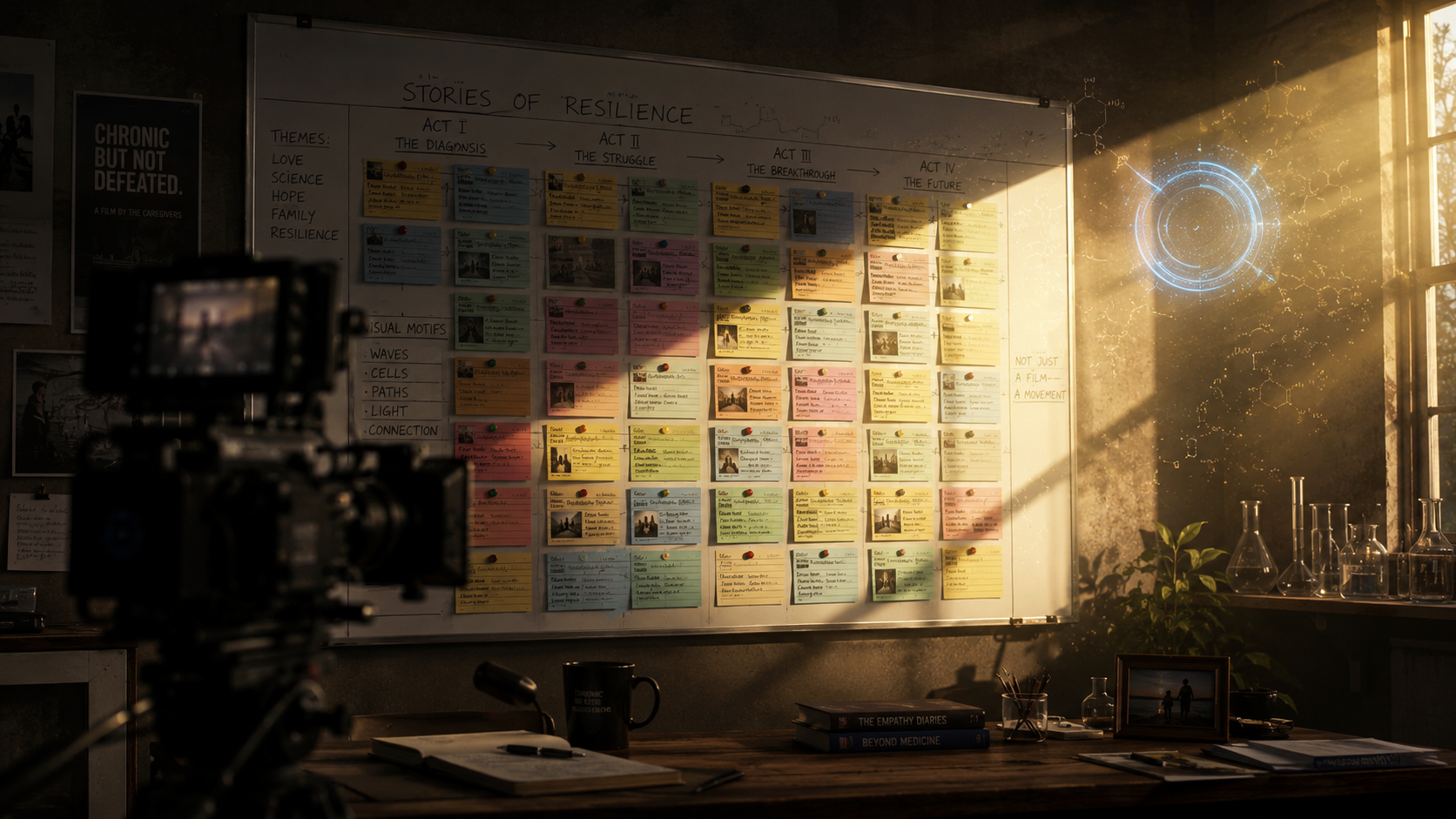
I make different scene index cards.
And then I put them all up on a whiteboard, and I start shuffling them around.
RebeccaWhat leads from one scene to the next?
And then how do we get every scene should lead into the following scene.
And then if you need more explanation of something, where does that fall in?
And so, yes, it becomes this giant puzzle, and you're constantly shifting things around.
And then once you film, it shifts all over again because you have things that happen while you're filming that you didn't anticipate were going to happen.
RebeccaSo then you kind of add those in, and and it becomes this giant shuffle.
But when you're you're focused on a through line of where you need to go, everything will eventually fall into place.
But the shifting and the the tossing out of ideas, it's it's a beautiful creative meh.
Do
Scott Benneryou edit as you go?
RebeccaI don't typically edit as I go.
I have had to for this project because we we needed to create a a pitch deck, which you use to, you know, launch out to investors.
We needed to create a trailer for we just had a a big gala event that we held in Orlando at the doctor Phillips Center.
So I've had to edit my way through this because we're trying to show individuals different scenes that are happening and and why they would either want to watch it or get involved and invest in.
I have a really great idea of what we've collected so far because I'm always there during all of the filming.
RebeccaBut I typically like to collect everything and then sit down and immerse myself in the edit.
Because once I get into the edit, I I like to be sitting here for, you know, eight to ten to twelve hours because everything starts flowing and you just you're very present in the edit.
Scott BennerHow many hours of film do you have so far?
RebeccaI wanna say thirty.
Scott BennerOkay.
That's a lot.
Are you gonna be at the thing on that next week for for Elizabeth in Atlanta?
RebeccaI will not be in Atlanta.
No.
Scott BennerOkay.
Because you have similar coverage already.
Is that the idea?
Yeah.
Yeah.
Scott BennerYeah.
It's so interesting.
How do you keep it from feeling Pollyanna?
Do you know what I mean?
Like, I've seen stuff in the past where it's just like, wow.
Scott BennerWhy is this all, like, big smile lady where everything's great?
And, like, like, how do you, like, how do you get to the grittiness of it without making it a bummer?
But making it real enough that it doesn't feel like it's does that make sense?
Like Yeah.
Yeah.
Scott BennerHave you had concerns like that?
Line there.
Yeah.
RebeccaYeah.
There's a fine line, and you actually asked me earlier, and I don't even think that I answered it.
You said, why would somebody who doesn't have type one be interested in watching this?
I think that there's a fine line here of telling the grittiness because people who don't see type one don't get it.
I'm just they don't get it.
Scott BennerFor sure.
RebeccaAnd when they, you know, see a kid who's checking their blood sugar and they're like, oh, well, you just shouldn't have had that soda.
You know?
All of the the misconceptions that are out there, they're so real, and they impact these people every single day.
I think that the vignettes will be focused on on underlying issues of what each protagonist deals with.
And then through those issues and through facing that adversity, they've all come out on the other side to do something, to create something.
RebeccaSo, like, Gary Forbes, he is a former NBA player, and he is now working on a comic platform, where he turns kids with chronic conditions into superheroes.
And, specifically, one of those characters has type one diabetes.
But it's through his journey of you know, he had all sorts of things that he came up against going into DKA, going into he had two car accidents because he was low.
So there are all of these things that build up his story.
And now what are the actions that he's doing to to share that story and to better the lives of others?
RebeccaSo I don't think that it's ever going to be Pollyanna because there are so many, you know, complex emotions that are the underlying drivers of of the positive outcomes.
Yeah.
So I wanna share all of that.
And I think that that's intriguing to anybody whether you have type one diabetes or not.
I would love to watch a movie where, you know, you see somebody who's dealing with this disease, something that you don't truly understand.
RebeccaYou're like, wow.
I didn't know that, you know, people are afraid to go to sleep because they might not wake up in the morning.
I didn't know that somebody could be misdiagnosed at five years old and and then pass away.
I didn't know that parents who, you know, just like you, have a two year old who is diagnosed.
It's like taking care of a baby.
RebeccaYou need to be checking them all the time.
So I think that there are fascinating stories that need to be told to people who have no idea about what's going on, people who have type one who can watch this film and be like, yes.
Somebody really gets what this is like.
And finally, there's a story that that everybody can watch that kind of explains what's going on.
Scott BennerDo you think it it's helpful, like, in your ability to be dispassionate about it that you don't have type one or a personal connection to it, but you have context?
RebeccaYeah.
Probably.
Scott BennerYeah.
I'll tell you because what I've I've I've been around I don't wanna call it the space.
That feels weird.
But I've been doing stuff in diabetes for a really long time.
When I'm dissatisfied with how people are doing things and I'm, you know, I'm I'm busy acting like the king of the world in my own mind or in this room.
Scott BennerI don't like it when people come off like the, I don't know, the secretary from Ferris Bueller.
You know what I mean?
Where it's just like, oh, gosh.
Golly.
Everything's awesome.
Scott BennerYou know?
Right?
Like, that stuff.
And I don't like it when people are like, I almost died today for the want of a cookie.
And I'm like, there's a middle there's a middle in there that's not so, like, either dramatic or and and ham fisted or, you know, dismissive of the seriousness of it and trying to make it all be like, oh, no.
Scott BennerI'm good.
Everything's good.
Like, there's a reality in the blend there, and I I'm I'm super excited to see you to get ahold of that.
That that is just a to me, we don't have enough of that around diabetes.
If you want people to really understand it, then you have to let people talk, but you have to also mix in, you know, real life and some levity.
Scott BennerAnd it's gotta be a full blend of what it means to be a human being, not just, you know, not just a a slice of it that makes it seem all one way or the other.
I don't know if that makes sense.
But
RebeccaNo.
Definitely.
And I think exactly what you just said, the reality holds both truths.
Like, it's an awful daily it's a horrible disease.
And the reality of of having to deal with that all of the time while also trying to live out your dreams and do amazing things.
RebeccaI mean, the fine line exists in everyday life.
Scott BennerI just I find too with interviewing people.
So I I don't have the benefit of looking at people, which I think has sort of made me better at this over time because No.
There's a lot of intimating that has to happen, and I can't be wrong or it it comes off as false pretty quickly.
And I was just listening to an interview I did recently with, like, a 25 year old type one.
And you could tell that she had there was stuff right under the surface she wanted to let out, but she didn't have the words or the reason to let it out.
Scott BennerAnd then if you just ask the right question, it it opens a floodgate for them.
And they they can unburden themselves, but in a but not in a, a distasteful way.
It's just very real.
And, you can tell how the better they feel when I'm done speaking to them, the more sure I am that the conversation was valuable for someone else to hear.
Does that make sense?
RebeccaYeah.
Yeah.
For sure.
Scott BennerSo it's a really interesting job.
I much rather what I'm doing than the stuff I've done previous in my life.
It's a it's a great job if you can get it, is is what I'm saying.
Will you miss it when it's over, or do you think you'll have had enough of the immersiveness of of the process?
Like, how because you've done other things in the past.
Scott BennerLike, do you find yourself, like, does one job just build your humanity for the next one?
I mean, do you lose it completely?
Like, is there a world where you'll wake up six years from now and, like, have not thought about diabetes for a while?
Is it a thing that you process, or how does that all work for you personally?
RebeccaNo.
Elizabeth can't get rid of me.
I'm on I'm on the board of touched by type one now.
I don't ever foresee a day where I'm not working with touched by type one and Elizabeth.
I know that this documentary film will come to an end, and I do think that I'll be sad when when it's over.
RebeccaBut like you said, this is this will just build up to the next project, and I've gotta find something else that I think is interesting and that I feel passionate about and think that people should know about and keep the ball rolling.
Scott BennerIt's interesting.
So you don't really know what you'll do after this?
RebeccaI have a few ideas.
Scott BennerOkay.
RebeccaBecause you should always have something in production and post production and in development.
So
Scott BennerIs it about a a a little too old, not that handsome podcaster?
Is that what's happening right now?
I'm just kidding.
Please don't
RebeccaYou you know how to find me.
Scott BennerIf you pointed a camera at me, I would be either I don't know what would happen.
I is is one of two things would happen, Rebecca.
Either the fat kid inside of me would put his head down, or I would be absolutely unbearable.
Would I would pontificate forever.
RebeccaI have filmed you at at
Scott BennerOh, yeah.
Yeah.
Yeah.
RebeccaMy goodness.
Scott BennerAt Touched by Type one.
RebeccaAt the the Touched by Type one oh gosh.
What is it called?
The annual Yeah.
Scott BennerThe the conference.
Yeah.
Yeah.
The conference.
RebeccaThe conference.
Thank you.
Scott BennerThe conference.
Stand up there.
That was that was is that right?
Is that where it was?
RebeccaWell, I've seen you there, like, three or four times.
And one time you were over talking to a child at a table, and I went running over with my camera, and you were like, get out of here.
Don't tell me.
Scott BennerWas that a couple of years ago?
RebeccaYeah.
Scott BennerYeah.
I was worried about my weight back then.
Now you can point it at me if you want to.
It's different.
But, no.
Scott BennerI I just know that I'll like, there was I I did this thing for JDRF.
It was huge in, Georgia one year.
I mean, there was a room.
It was 650 people in that room.
And there was this part of me inside.
Scott BennerIt was like, please get a nice wide shot of me talking to 600 people.
Like, that and then there was the rest of me that was like, but could you shoot it from the roof?
And I actually said to the cameraman, I was like, do not point that thing at me from down there.
I was like, you better go find a ladder and climb, my friend.
I used to think of my I didn't think of myself as caring about that.
Scott BennerBut when push came to shove and a camera came out, I was aware of it.
And now I've actually, you know, with the help of a GLP medication, Rebecca, I've lost, like, 70 pounds.
Like, and now I don't think about it anymore.
It's very freeing, actually.
I actually just did some content for Omnipod recently.
Scott BennerMhmm.
And it was one of those things like, you know, show up at a studio, stand in front of a big, you know, high def camera with a lot of light and nowhere to hide.
And Yeah.
And I and I was like
RebeccaIt's terrifying.
Scott BennerAnd well, the the terrifying part was how not terrified I was, which is why I think that if you pointed the camera at me, you would just be like, this guy's insufferable.
He has a lot of thoughts.
But I had this nice moment afterwards when, I mean, when they got done with it, obviously, some very talented people, you know, do the editing and and, you know, do the color and all that stuff.
It looks so it looks amazing when it's done.
But I had a few people online tell me that I was really natural at that format.
Scott BennerAnd I thought, oh, I've been avoiding doing that my whole life.
And then somebody said, I think this would be a great way for you to get some of your information out.
And all I thought was, who's gonna do that?
Like, how am I I don't know how to light that.
I don't have I'm not I don't wanna get involved editing video.
Scott BennerLike, it all just seemed, like, overwhelming.
And I know that's ridiculous because most of the world just holds up their phone and just puts out whatever they do and doesn't worry about the rest of it.
Mhmm.
But I think I might be a bit of a princess now that I've seen myself color matched.
I think it's I think maybe that's how I prefer to look.
Scott BennerEven even today, I'm I'm not sure what I'm gonna do about it.
But do you do any of that?
Like, I'm not asking you for me.
I'm actually my my bigger question is is, how do you make a living doing what you're doing?
Like, it sounds like this project's taking years.
Scott BennerRight?
So,
Rebeccalike And this project will take years.
Scott BennerYeah.
So do you do do you intersperse with, like do you do other work?
Like
RebeccaYeah.
Scott BennerYeah.
RebeccaSo my production company, Hodges Film, I take on smaller projects that I work on throughout the year.
This past year, I I was very limiting to that.
I wanted to solely work on this documentary.
Scott BennerMhmm.
RebeccaI obviously get paid for for the documentary.
Scott BennerYeah.
Yeah.
RebeccaI have a a line budget item for myself.
But, hopefully, when this documentary gets seen by people, then this will propel another documentary.
My goal is to continue to continue to work on feature film.
And then I think everybody takes commercial or PSA small smaller work in between, but feature film is where I wanna live.
Scott BennerGot it.
That's awesome.
And you're and you've been doing this for how long now?
How I don't know how old you are.
I didn't ask you.
Rebecca2016 is when I started my own company.
I got into the industry in 2012.
Scott BennerOkay.
Wow.
That's a long it feels like a long time.
How did you find the nerve for it?
Because I recall feeling like the where I grew up, no one did the thing.
Scott BennerLike, so when I was young and people was like, what do you wanna do?
I'm like, I think I could write a movie script.
People would look at me like, you might wanna just get a job in a factory and shut your mouth.
Yeah.
There was no one around me to, like, say, oh, I know a guy who did that to kinda expand on that for a second.
Scott BennerLike, my son played baseball right through college, and I think he thought that was possible because he knew other people who played baseball in college.
And he also knew a guy who played professional baseball, so the whole thing seemed reasonable.
RebeccaMhmm.
Scott BennerYou know, whereas when I started talking about it, people were like, no.
That's not a thing that's not a thing people do.
Was it your enthusiasm and what you found at college that made you incapable of ignoring it?
Was it a little bit of that mixed with your parents being like, oh, thank god.
We did not think you were gonna be a good doctor?
Scott BennerOr, you know, like, what was by the way, they didn't say that.
I I added that.
What made you feel like it was possible?
RebeccaYeah.
I think I'm just a very passionate person.
Mhmm.
When I when I get my hands on something that I wanna do, I'm full steam ahead.
So I think that it really just took me and I'm a firm believer that if you're doing something that you love, that, you know, everything else will follow.
RebeccaSo
Scott BennerOh, okay.
RebeccaIt didn't really matter to me that I was going into the arts because I was like, well, I'm gonna make something amazing.
And, you know, everything else, insurance will come after.
Scott BennerAnd you did have a little bit of like, said your father was a professional.
Right?
So you there was some comfort.
Not comfort.
There was some security there.
Scott BennerI mean, I'm just saying I was broke.
Like, I I I was I had a really terrible job.
Yeah.
RebeccaI wouldn't say that because No?
I was broken, actually, as much as it was nice of my parents to say, you don't wanna do that.
My dad passed away when I was 22.
Oh.
And my my mom I you know, this is going deep now.
RebeccaBut my I moved out of my mom's house when I was 14.
So it's kind of like a a broken home.
And maybe that's one of the reasons why, you know, I had to grow up at a very early age.
And so, you know, helping to tell these stories that can that can, you know, impact people, and I can do my part in the world of of bringing positivity and and making the world a better place.
I think that there's a lot of deeply ingrained feeling in in me of needing to help others, I think, because I I needed help myself, and I had people that gave that to me.
RebeccaAnd so I wanna be that person for other people.
Scott BennerOh, that's awesome.
Also, I think it would be wrong of me to point out that I have now done the thing that I've been describing for the whole hour by getting you to say something deeper that was real, and and that was nice.
Look at me.
I'm really good at this.
That's all I wanted to say, Rebecca.
Scott BennerThere's no way in hell you thought you were gonna talk that today when we started recording this.
Right?
No.
Tell the people how good I am, Rebecca.
No.
Scott BennerI'm just kidding.
RebeccaYou didn't.
No.
You're amazing.
Scott BennerPeople like, do people cry on the podcast all the time?
I'm like, no.
But I know they say a lot of things they didn't expect to
Rebeccasay.
Yeah.
Scott BennerJust because there has to be a reason for that.
Just the same way I mean, listen.
It's pretty obvious.
Right?
You see a lot of people, who grow up with type one diabetes get into medicine, or you see Elizabeth who is absolutely propelled to help people because she needed somebody to help her.
Scott BennerAnd, you know, and you are trying desperately to tell people stories, and I recognize that because I'm doing the same thing.
Right?
Like, I grew up very poorly, in case you're wondering, Rebecca.
You know, my parents were divorced when I was 13.
I ended up raising my brothers.
Scott BennerYou know, my mom was working most of the time.
We were completely broke.
And when I talk to people, all I wonder inside, always I'm also adopted in case you needed, like, a a double whammy on this.
Everything I do when I'm speaking to somebody is, like, the the kernel of the seed of the idea behind what I'm thinking is, why are you doing that?
Like, why do people do those things?
Scott BennerAnd not good or bad, by the way.
Anything at all.
Like, what is motivation?
What motivates somebody to do something?
What allows them to ignore common sense and become a filmmaker?
Scott BennerWhat ignores them to ignore common sense and treat a child poorly?
Everything in between.
Like, I am utterly fascinated basically about why did someone abandon me.
And, like, why do people do what they do?
And that's what I do when I talk to people.
Scott BennerI just try to figure out where their motivation comes from and where the motivation came from for the people surrounding them that, you know, in essence, were the, you know, the ones who propelled them in the direction their life took them.
So I just I'm very interested in why people do what they do all the time.
But probably any reasonable Freudian therapist would tell you it's because I'm adopted, and then my adopted family got divorced.
Right?
Pretty simple.
RebeccaWell yeah.
I mean, your identity your identity has shaped you know, the identity of now your podcast of how you're reaching out to people.
Scott BennerSo Yeah.
RebeccaFor it and for it, I think that searching for that nugget is it's an important nugget to look for.
Scott BennerWell, more importantly, I think, at some point, I was like, well, I can't just keep doing this for myself.
Like, I pretty much have my answers.
I know where I'm at.
So, like, how do you take that then, like, combined skill and use it for good, basically, which is what you're doing, by the way.
It's what Elizabeth is doing.
Scott BennerIt's what you're doing.
It's what I'm doing.
It hopefully, what a lot of people are doing.
And and maybe one one day, we'll all get to see it, you know, come to fruition somehow.
The Global Race for a Cure
Scott BennerWhat would you say your feeling is about the chase for a cure, like, an outsider to it?
Does it feel hopeful?
Is it interesting?
Does it feel tangible?
Does it feel like you'll see it in your lifetime, or is it just great to know it's happening?
Like, what information have you pulled together on all that so far for yourself?
RebeccaSo I am incredibly optimistic, and I am one of the people who continues to believe that the cure is five years or closer away, especially with the transplantations, everything that's happening right now.
I just did a tour at the DRI recently, and I got to see the three main avenues that they're working on in their search for a cure.
Scott BennerMhmm.
RebeccaAnd I was blown away.
So I feel like it's right around the corner.
And in my talks with doctor Camilo Ricordi, he continues to tell me that this is a very, very exciting time to be in this search, but there are a lot of things that he and the the community are up against.
He was actually just talking about how The United States is not competitive globally because of the standards that they're facing here.
And so they have to treat everything like they're clearing it by the FDA instead of instead of just being able to research and and push everything that they're working on forward.
Scott BennerI just interviewed doctor Wachowski the other day Yes.
From Chicago.
And, yeah, he was talking about all this as well.
RebeccaSo it feels it feels like a very exciting time.
And I'm not the only one thinking that.
I think a lot of people feel that way.
Scott BennerYeah.
RebeccaBut Elizabeth often tells me, you know, calm down a little bit, Rebecca.
We've all been waiting for this cure for a really long time.
So I try to limit my excitement because I feel like I'm I'm very invested now.
You know?
I want this cure for all of the people that I know who have type one, and so I hope that I see it in my lifetime.
RebeccaAgain, I'm very optimistic that it's it's close.
How do you feel?
You have somebody that
Scott BennerFirst of all, Elizabeth is probably on her fifth or sixth five year journey with the cure is coming, I would imagine.
And I would tell you that I felt prior to talking to doctor Wieckowski and and even more so after speaking to him that, you know, there are regulatory hurdles.
There are hurdles of, you know, even being able to source islet cells.
There's hurdles about how many people can actually do the procedure, who the hell is gonna pay for it.
RebeccaYou know,
Scott Bennerhow do you administer the medication that comes afterwards?
You know, is it really reasonable to ask somebody to do something like that every twenty one days?
And in the case of his research, you know, are they gonna have to make the the anti rejection meds something you can take at home eventually?
I think that when I hear you talk about it, I agree with you that, like, it feels like they're on the precipice of something.
And yet that I think the reality of life and commerce and everything else, even if they had it today, even if somebody stepped up right now and said, here it is.
Scott BennerIt is the thing.
I have it.
I don't think that means that my daughter's getting it for twenty years maybe.
RebeccaRight.
Scott BennerAnd then, you know, and that makes her 50.
So does she care by then?
Like, I don't even know.
It's one of those things that I think I don't know how to explain this exactly, but I think it'll exist at some point, But it won't be for the people who are paying attention to it right now in mass.
Maybe some of them, probably some of them, not all of them.
Scott BennerMhmm.
But there might be a day in the future where it just isn't as prevalent as it is now because of the thing that was learned and grew and and, you know, changed and and reformatted itself over and over again till it becomes what it ends up being.
And I don't know how long that takes.
Yeah.
You know?
Scott BennerBut that feels like it
Rebeccais one of the biggest biggest questions is when there is a cure developed, how long does it take to get from high end research out to
Scott BennerEverybody.
RebeccaYour everyday Jill?
How how does that transition happen?
How many years does it take for that to happen?
And and that's a that's a real journey right there.
Scott BennerI sort of separate the medicine and the research from the reality, and I think and then I start thinking about, like, well, I look at how the world works, and we can't get my garbage collected on the right day.
Like, we're gonna do this.
Like, it's crazy.
That's why I think it's just a thing that slowly matriculates until it doesn't exist anymore.
And then one day, people just don't even realize it was ever a thing and but you can't quantify the day it happened.
Scott BennerI don't think there's gonna be a a cure day.
I don't think there's gonna be a line people get into, and they come out the other side of the factory, and they're okay.
I think it's just gonna happen slowly.
It'll probably start with the sickest people who can tolerate it.
And then or and, also, I'm gonna assume some of the richest people.
Scott BennerAnd then it will, you know, hopefully spread out over then, maybe eventually be covered by insurance in a way that, you know, you get diagnosed with type one diabetes and someone instead of sending you to the hospital, they send you somewhere and they go, oh, we're just gonna give you some of these cells and give you a little of this juice and you're all set.
Like, I don't know.
You know?
Yeah.
Yeah.
Scott BennerBut I love your attitude.
So seriously.
No.
Seriously.
RebeccaThis reminds me of Elizabeth was just recounting a story that she was told.
I can't remember who told it to her.
But the gist of it is that there was a boy in Africa when he urinated, their ants would come to the urine.
Mhmm.
And it was because of the sugar in the urine.
Scott BennerSure.
RebeccaAnd so the the diabetes test is the ants come to your urine, and then that means that you have type one diabetes.
And for them, it's still a death sentence.
And so the you are almost like the sooner that you pass, the the easier it is for them to get help to other people instead of caring for you.
Okay.
So very morbid.
Scott BennerYeah.
RebeccaBut it's like you are taxing our health care system with a disease that we don't have a cure for, and so you're prolonging the inevitable.
Scott BennerOkay.
What a way to think of it.
Jeez.
RebeccaWhen you hear that and it it puts this disease into a different light.
So I hope that, you know, whether it's a cure that comes around, you know, no cure day or what, I hope that the development of of getting to the cure, like you said, maybe there's something in between that can that can slow down, that can I don't know?
Something in all of these instances that can can help people who are in those kind of situations that aren't lucky enough to live in The United States, that aren't lucky enough to have access to to care.
So that's kind of my hope in in all of these situations is that we can get something to people who don't have immediate access to to, you know, the greater health care loop.
Scott BennerYou know how I feel about it?
I just realized you know that scene in the Incredibles with the little boy in the driveway?
And mister Incredible goes, what are you looking at?
He goes, what are you waiting for or something like that?
He goes, I don't know.
Scott BennerSomething amazing.
That's how I feel sometimes.
Like, I don't I don't know what's coming exactly, but, I'd like it to be something amazing.
You know?
Like, I think it's kinda it's a little like, it's academic to sit around and pontificate about what you think it might be or how it's gonna look or whatnot, but I don't really care.
Scott BennerI just as long as it's something beneficial for people and it feels like a leap, that would be nice.
You know?
Yeah.
Like, give people some hope and real momentum.
Just a leap, I think, would be awesome.
Supporting the Film and Final Thoughts
Scott BennerI don't even care what it looks like.
Yeah.
I I don't understand what people argue about.
I mean, I I I'll help people make the point if they come on the on the podcast, and they're like, well, that's not a cure.
Like, doctor Wikowski right there.
Scott BennerHe's got 12 patients.
He put islet cells in their liver.
He gave them something called tegoprobar, and they're they seem like they're okay.
Right?
And then there are people like, well, that's not a cure.
Scott BennerAnd I'm like, yeah.
I I mean, is that what you wanna argue about?
Like, you you know what I mean?
Like, they don't need they don't they don't need insulin anymore.
It's pretty awesome.
RebeccaRight.
Scott BennerYou know, they're not gonna have a low blood sugar in a movie theater or crash their car or something like that.
There's a lot of, you know, value there.
I take your point.
It's not a light switch.
They didn't just flip the switch and go, hey.
Scott BennerNo more I know that's how people's minds wanna think about it.
But Yeah.
I would always ask those people, why don't you go sit down and Google how many things has mankind cured?
Because you're gonna find out that it is a shockingly short list.
I don't think we're at that place yet.
Scott BennerLike, I don't think we're advanced enough to just throw a light switch and change how your body does something.
We don't even understand inflammation.
You you know what I mean?
Like, it's you know?
Anyway, be happy for whatever you got.
RebeccaI think everybody's waiting for something amazing and waiting for that leap.
And I don't feel like that leap is far away.
Scott BennerYeah.
No.
I'm glad.
I I'm glad you feel that way, and I'm glad you understood what I was saying.
I am really disappointed.
Scott BennerI couldn't remember the quote from The Incredibles, but, you know, I got a lot in my head.
It's hard to remember.
Rebecca, where can people go to learn more about the film?
RebeccaBeyondthediagnosisfilm.com.
That's the website.
We're on Instagram.
We are on YouTube.
We are on Facebook.
RebeccaYou can reach out to myself, which is Hodges Film.
You can reach out to Elizabeth Forrest at touched by type one.
But, yeah, I think that we want people to to get involved and to follow along with the story.
And when it comes to supporting the film and going out and seeing it, going to premieres, that's we want to drive this through the community and get this movie seen.
Scott BennerYeah.
What are you asking people to do right now?
Anything?
Just start following so they know more?
Do would you like them sharing stuff or telling folks?
Scott BennerIs there something they could be doing to help them tell you?
RebeccaFollow, share.
We have a platform for donations, which you there's a link to on the website.
But we are in phase two of filming, and we're still looking for funding to to go into, post production.
But I think mainly getting in there, sharing, talking about it, and just staying in touch.
Scott BennerYeah.
Yeah.
Hey.
Listen.
Everybody remember, Elizabeth is running a it's a charity.
Scott BennerIt's yeah.
Touched by Toughbun is not a it's not a money making business.
It's a thing she does to try to help people live easier with type one diabetes, and she's raising money to give to, those out there looking for a cure.
She's hustling her, her butt off.
So
RebeccaShe is hustling.
Scott BennerRebecca, I really appreciate you doing this with me.
And, also, I appreciate you coming on a half an hour early when I bugged you late last night and said, you do this earlier today?
So thank you very, very much.
RebeccaThat is a okay.
Scott BennerAwesome.
Hold on one second for me.
I'd like to remind you again about the MiniMed seven eighty g automated insulin delivery system, which of course anticipates, adjusts, and corrects every five minutes 20 four seven.
It works around the clock so you can focus on what matters.
The Juice Box community knows the importance of using technology to simplify managing diabetes.
Scott BennerTo learn more about how you can spend less time and effort managing your diabetes, visit my link, medtronicdiabetes.com/juicebox.
I'd like to thank the blood glucose meter that my daughter carries, the Kontoor Next Gen blood glucose meter.
Learn more and get started today at kontoornext.com/juicebox.
And don't forget, you may be paying more through your insurance right now for the meter you have than you would pay for the Kontoor next gen in cash.
There are links in the show notes of the audio app you're listening in right now and links at juiceboxpodcast.com to Kontoor and all of the sponsors.
Scott BennerA huge thanks to today's sponsor, AbleNow.
AbleNow offers tax advantaged Able accounts for eligible individuals with disabilities.
If you or your child lives with diabetes, you may qualify because of ongoing medical needs.
With Able Now, you can save for a wide range of disability related expenses without affecting eligibility for certain disability benefits such as Medicaid.
And thanks to recent federal law updates, more people are eligible than ever before.
Scott BennerLearn more and check your eligibility at ablenow.com.
You spell that ablenow.com.
There's links in the show notes and links at juiceboxpodcast.com.
I can't thank you enough for listening.
Please make sure you're subscribed or following in your audio app.
Scott BennerI'll be back tomorrow with another episode of the juice box podcast.
If you're looking for community around type one diabetes, check out the Juice Box Podcast private Facebook group.
Juice Box Podcast, type one diabetes.
But everybody is welcome.
Type one, type two, gestational, loved ones, it doesn't matter to me.
Scott BennerIf you're impacted by diabetes and you're looking for support, comfort, or community, check out Juice Box podcast, type one diabetes on Facebook.
The Juice Box podcast is edited by Wrong Way Recording.
Wrongwayrecording.com.
If you'd like your podcast to sound as good as mine, check out Rob at wrongwayrecording.com.
#1865 Bolus 4 Mexican Food
Scott and Jenny talk about bolusing 4 Mexican food favorites.
Key Takeaways
- Factor in Fat and Protein: When bolusing for complex restaurant meals like Mexican food, counting carbohydrates alone is insufficient. High fat and protein content delay digestion and cause extended blood sugar rises that require extended insulin coverage.
- Pre-Bolusing is Essential: Fast-acting items such as chips and sugary margaritas can cause immediate blood sugar spikes, making dynamic pre-bolusing strategies critical before the main course arrives.
- Account for Hidden Fats: Restaurant cooking heavily features unseen fats from frying chips or sautéing vegetables with heavy oils, adding significant fat grams that aren't typical in home-cooked versions.
- Leverage AI with Specificity: When using AI models like Gemini or ChatGPT to analyze food macros, provide specific instructions (e.g., requesting standard USDA references) to secure the most precise data and counter model variances.
- Understand Individual Insulin Timing: Successfully managing complex meals relies on continuous real-world tracking, using personal historical experience and data trends rather than a single static calculation.
Resources Mentioned
- Omnipod: Explore the Omnipod 5 and check eligibility for a free starter kit at omnipod.com/juicebox
- US Med: Get your diabetes testing supplies and free benefit check at usmed.com/juicebox or call (888) 721-1514
- Juicebox Podcast: Listen to the Diabetes Pro Tip Series (Episodes 1000–1025) and explore the menu at juiceboxpodcast.com
- Wrong Way Recording: Make your podcast sound fantastic at wrongwayrecording.com
Introduction and Community Engagement
Scott BennerHello, friends, and welcome back to another episode of the Juice Box podcast.
My diabetes pro tip series is about cutting through the clutter of diabetes management to give you the straightforward practical insights that truly make a difference.
This series is all about mastering the fundamentals, whether it's the basics of insulin, dosing adjustments, or everyday management strategies that will empower you to take control.
I'm joined by Jenny Smith, who is a diabetes educator with over thirty five years of personal experience, and we break down complex concepts into simple actionable tips.
The diabetes pro tip series runs between episode one thousand and one thousand twenty five in your podcast player, or you can listen to it at juiceboxpodcast.com by going up into the menu.
Scott BennerIf you're looking for community around type one diabetes, check out the Juice Box Podcast private Facebook group.
Juice Box Podcast, type one diabetes. But everybody is welcome.
Type one, type two, gestational, loved ones, it doesn't matter to me.
If you're impacted by diabetes and you're looking for support, comfort, or community, check out Juice Box podcast, type one diabetes on Facebook.
Scott BennerNothing you hear on the Juice Box podcast should be considered advice, medical or otherwise.
Always consult a physician before making any changes to your health care plan.
This episode of the Juice Box podcast is sponsored by US Med, usmed.com/juicebox, or call (888) 721-1514.
US Med is where my daughter gets her diabetes supplies from, and you could too.
Use the link or number to get your free benefit check and get started today with US Med.
Scott BennerA huge thanks to my longest sponsor, Omnipod.
Check out the Omnipod five now with my link, omnipod.com/juicebox.
You may be eligible for a free starter kit, a free Omnipod five starter kit at my link.
Go check it out. Omnipod.com/juicebox.
Scott BennerTerms and conditions apply.
Full terms and conditions can be found at omnipod.com/juicebox.
Jenny, we're gonna start in a second with bolusing for a Mexican meal that someone has sent in. But I found myself getting ready to ask you right before I hit record. Is this getting boring for you?
Are you enjoying this? You're okay?
Jenny SmithI always like talking about food.
Scott BennerOkay.
Jenny SmithI say that as if, like, I eat hoards and not like I kinda feel like I just said, gosh. Jenny eats a lot of food. I I really enjoy the science of food and understanding how to explain it and break it down.
Speaker 3Break it down.
Jenny SmithIt's very interesting to me. So, no, I'm not bored.
Scott BennerOkay. I'm glad. Because I am finding a ton of value in this, and I think the listeners are as well.
I don't imagine there won't be a day where we might just say, like, we can't do this anymore.
There's just we've covered everything.
But at the moment, I'm I'm very happy with it.
So I'm gonna keep going. Unless I hear otherwise from people and not just three looky loos, but, like, it would have to be like a you know?
Jenny SmithI had a thought the other day actually about this whole series of bolusing for a specific kind of food.
And I was curious because I feel like a lot of the foods that we've actually gone through have been very, I guess, more like Americanized.
Yeah. Right? They're more US based, and I'm curious how many because I know you have so many listeners, and they're all over the world, which is awesome.
But I'm curious how many people from other countries have questions about their typical cuisine.
Scott BennerMaybe something will come
Jenny Smithbe super awesome to just try to do something that's more atypical for
Scott BennerYeah. We could do bolusing for wallaby and bolusing for elk because that's all people in Canada eat, I would imagine, is grizzly bear and elk something like that.
I don't know exactly what they do.
Jenny SmithThat's not really true.
Scott BennerI don't know anything about that. You don't and by the way, don't either.
So, like, you're just guessing, much like me.
Jenny SmithHave you ever been to Canada?
Scott BennerNo. No. No.
Jenny SmithNot ever?
Scott BennerI don't do anything that requires a plane transfer.
Transfer. I one flight, I get on and I get off, and that I'm okay with.
I actually am heading out to I'll be able to say this here because by the time it's done, I'm heading out to San Diego to be part of a a commercial shoot for Omnipod.
Jenny SmithAwesome.
Scott BennerAnd well, it's awesome except in a forty eight hour window, I'm gonna fly to San Diego and fly back again.
Yeah. So I'm gonna do twelve I think I'm doing, like, twelve hours in the air over forty eight hours.
So I I fly in, go to sleep, wake up, work all day, leave the set, get on a plane, and fly home overnight.
Like, that's how I'm doing it.
Nevertheless, when they asked me to do it, I was like, look. I only have a couple of asks. I need an aisle or a window, and I am not getting on and off of a plane.
I was like, I get on at my house, and I get off in San Diego, or I'm not doing this.
I was like, I'm Scotty doesn't do a transfer.
I'm a bit of a princess. Okay?
Jenny SmithDo do you not like transfers just because of the navigation of that?
Speaker 3Or No. I don't care about any that. Curious.
Scott BennerI don't like to be put out. I'm a bit of a princess.
Jenny SmithOkay. That's interesting.
Scott BennerLike, they said to me, you can take an Uber to the airport, and I went I was I was like, because I have to go to Newark.
And it is a pain in the it's a pain to, like, you have to drive to Newark.
Usually, you park off-site, then you get on, like, some, like, little, like, rattly bus that takes you from the parking lot to to the Newark Airport, and it's a bit of a it's a bit of a harangue.
Right?
Jenny SmithRight.
Scott BennerAnd they were like, oh, but just feel free to take an Uber. I'm not taking an Uber. I was, like, an hour long ride on a highway and, like, I'm like, I don't like and then I found myself stopping myself.
Jenny SmithIn the car with somebody that I don't know and right.
Scott BennerAnd what if their car is not great?
And then I when mean, when they get there, I can't go, oh, no. Thank you.
There's where I'm a a, like, a a little bit of a princess. I'm like, have a car.
I'm comfortable in my car. I'll drive. Don't worry about it.
Anyway, I'm not I'm not a pain in ass. Not a pain in the ass on big things.
Analyzing Appetizers: Chips, Guacamole, and Salsa
Scott BennerNevertheless, let's talk about someone sent in a Mexican meal.
It says tortilla chips with guacamole, sour cream and salsa, steak, peppers, onion fajitas, side of rice and refried beans, and what would happen if I put a margarita with all this?
And then also, could you talk about tacos and enchiladas?
So I think this is gonna be a lot more maybe art than science in this one.
So I'm interested to hear how you pick through all this.
But you wanna start with tortilla chips with guacamole, sour cream, and salsa?
Jenny SmithSure.
Scott BennerCan we, like, break them down separately and then lump them together?
Speaker 3Yes. Would that work?
Jenny SmithBecause usually, for this type of a meal, you're going to start with I mean, they would consider an appetizer as the tortilla chips and probably guacamole yummier if they make it at your table.
Mhmm. And you can see them making it.
Scott BennerThey do it right there? They squish it up?
Jenny SmithSome really good places make it, like, table side, and it's super yum then.
Scott BennerYes. Well, as you know from a previous bolus for, I've only ever had salsa once.
Jenny SmithSo Oh, that's right. Yes. Yes. Because I made you have some.
Scott BennerYou made me eat salsa.
Jenny SmithSour cream and salsa, you said.
So guac, sour cream, salsa, and the tortilla chips. Right?
Scott BennerWhat are we gonna do here?
So chips, I mean, the breakdown I have here is that two ounces of chips is about 20 chips.
This has it broken out as four protein, 36 carbs, 14 fat.
Does that seem right to you or close?
Jenny SmithSay the carbs again? Thirty twenty chips.
Scott BennerYeah. 20 chips, 36 carbs.
Jenny SmithIt's a I usually tell people as an estimation tool for tortilla chips, they're about two grams of carb a chip.
Scott BennerOkay.
Jenny SmithMakes it easy to carb count, put on your little side plate.
If you're gonna have another handful, then you carb count more and put them on your side plate.
Scott BennerMhmm. A little bit of protein. I mean, we'll we'll factor it in because we're gonna do the whole thing, but does 14 grams of fat sound right to you?
Jenny SmithIf they are made at the restaurant, they are fried.
Scott BennerOkay.
Jenny SmithAnd they are fatty. Yes.
Scott BennerAnd then that's 20 chips.
Now what happens when what happens when I dip them into stuff? How does that change?
Because I'm gonna I'm gonna set the calculator up right now. Excuse me.
Scott BennerThe bolus estimator up right now. And so the carb ratio, 10. Insulin sensitivity, 50. I'm gonna put in these 36 carbs.
I'm gonna put in the 14 fat.
Jenny SmithAnd then is the 36 just for the chips?
Scott BennerYes. So I'm saying for right now, I just wanna say, if you ate 20 chips with those settings
Jenny SmithWith the okay.
Scott Benner3.6 up front, point seven over three hours.
Now let's figure out about the dipping and the and the slurping. There's slurping. Right?
Jenny SmithAnd the slurry
Scott BennerYeah. Yeah. But that doesn't sometimes like, the the salsa, I see people, and it starts to fall off the chip, and they go after it.
I know what's happening. Okay.
Jenny SmithSo salsa.
I think if when I have chips and salsa
Scott BennerVery happy.
Jenny SmithChips are just a method of getting like, I would just happily eat the bowl of salsa.
The hotter, the better. Like, I love salsa. It's y'all.
Speaker 3Don't take Jenny to dinner.
Scott BennerShe'll eat out of your salsa bowl with a spoon.
So guacamole is just avocados, or do they put stuff in it?
Jenny SmithThere would be usually, depending on the recipe, guacamole is gonna have some type of spicy pepper in it.
Could be jalapeno. Could be other type of pepper.
Again, pretty pretty low carb there in terms of an addition.
Usually, it's gonna have garlic, probably lemon or lime juice, salt.
It's not outside of the avocados.
It wouldn't usually have another carbohydrate source added to it.
So, really, the avocado is the main carb source in the guacamole, and it's also really, really high in fat.
Scott BennerYeah. This has a quarter of a cup.
It says nine grams of fat, five carbs, one protein.
Let's go with a cool let's all just imagine you had a quarter of a cup.
So now it takes our carbs up to 41.
It takes
Jenny Smithour I think that the person whoever sent this to you is now listening and is like, a quarter cup?
Scott BennerThey're like, they are they are ruining Really? Ruining my chips for me. That's okay.
So I'm adding in the protein, the carbs, and everything, recalculating it, takes the 3.6 up to 4.1, and now it's a 1.14, and and it stretched out over four hours instead of three hours as the cover.
So it's gone up now from adding the guacamole.
Now we're gonna also add sour cream.
That sounds like it. It's fatter.
Jenny SmithAbout the sour. Yeah.
Scott BennerYeah.
Jenny SmithThat's pretty much all fat.
Scott BennerOkay. So it's telling you two tablespoon.
Good luck having two tablespoons of sour cream.
Jenny SmithRight.
It's it's like all of it's the salsa. It's the guacamole.
It's the sour cream that we can look at portions. Mhmm.
Jenny SmithAnd what we should well, I should should say we can look at serving and what a serving has.
Then you have to consider what's your portion.
Scott BennerYeah. I don't wanna out Arden, but I've seen her make a baked potato, and I can't find the baked potato under the sour cream.
So
Jenny SmithThere you go.
Scott BennerAnd they make it in a squeeze thing now.
Have you noticed this? You
Jenny Smithdon't buy sour cream.
Scott BennerOh, well, trust me. It comes in a squeezy thing. Sour cream's in my house constantly.
I've never had it in my life. Wouldn't know what it is.
Scott BennerIf you put it in my mouth, I would it just I don't know.
Something about the consistency of it I'm not good with.
Nevertheless, I like all the people out there like now are like, hey. He's probably has autism.
So it's one protein, one carb, and six fat.
Scott BennerSo we're gonna add that one protein, six fat carb, and that takes us to 42 carbs, 29 fat, five protein.
Didn't change a ton about that. Okay?
So put up the Warsaw wave a little more. It gave us a little more back end insulin.
Mhmm. Okay.
Now salsa has gotta be tomatoes. Right?
Jenny SmithIt is. It's usually tomatoes, peppers, garlic, onion.
Again, it can be made many it could have pineapple in. It could have mango in. Mhmm.
Jenny SmithIf it's just regular, like, spicy salsa Yeah.
Then probably isn't gonna have the fruity stuff in it.
Scott BennerIs it fair here quarter a cup, four carbs?
Jenny SmithAbout.
Scott BennerAbout? Okay.
No. And it has four carbs. The listing here, I'm using Gemini today.
Scott BennerProtein one, no fat. So let's see what we're back to now.
Jenny SmithAnd as a reference, most often, the little dishes or ramekins that these side items or these dipping pieces usually come typically flat topped, not scooped and heaped into it, but flat top.
Usually, those little ramekins are about a half a cup just for visual reference.
Scott BennerThe ones that if I was fancy and I made a souffle and are about the size of my fist, maybe two inches high on the side?
Speaker 3Yep. That's nice. Okay.
Jenny SmithAbout a half a cup. Exactly.
Scott BennerSo now in what world you're gonna eat 20 chips and all this, I don't know.
You know? But maybe that's gonna happen to you.
But keep in mind, 4.6 up front, 1.43, stretch out over four hours. Go ahead and have 80 chip or or 40 chips.
Scott BennerThis turns into nine units up front and three over probably more hours because you had more fat. It would probably, right, tack the hours on too. Right. Uh-huh. Okay.
Jenny SmithAnd this is just let's remember. We are starting at the beginning of sitting down at your table.
This is your appetizer.
Scott BennerIf you don't pre bolus this meal coming in the door, I don't see how you catch up unless you really crush it hard, or it takes a while for them to bring the food one or the other.
This episode is brought to you by Omnipod.
Would you ever buy a car without test driving at first?
That's a big risk to take on a pretty large investment. You wouldn't do that.
Right?
So why would you do it when it comes to choosing an insulin pump?
Most pumps come with a four year lock in period through the DME channel, and you don't even get to try it first.
But not Omnipod five. Omnipod five is available exclusively through the pharmacy, which means it doesn't come with a typical four year DME lock in period.
Scott BennerPlus, you can get started with a free thirty day trial to be sure it's the right choice for you or your family.
My daughter has been wearing an Omnipod every day for seventeen years.
Are you ready to give Omnipod five a try?
Request your free starter kit today at my link, omnipod.com/juicebox. Terms and conditions apply.
Scott BennerEligibility may vary. Full terms and conditions can be found at omnipod.com/juicebox.
Find my link in the show notes of this podcast player or at juiceboxpodcast.com.
Diabetes comes with a lot of things to remember, so it's nice when someone takes something off of your plate.
US Med has done that for us.
When it's time for Arden's supplies to be refreshed, we get an email.
Rolls up and in your inbox says, hi, Arden. This is your friendly reorder email from US Med.
You open up the email. It's a big button that says click here to reorder, and you're done.
Scott BennerFinally, somebody taking away a responsibility instead of adding one. US Med has done that for us.
An email arrives, we click on a link, and the next thing you know, your products are at the front door.
That simple. Usmed.com/juicebox or call (888) 721-1514.
I never have to wonder if Arden has enough supplies.
I click on one link. I open up a box.
I put the stuff in the drawer, and we're done.
US Med carries everything from insulin pumps and diabetes testing supplies to the latest CGMs like the Libre three and the Dexcom g seven.
Scott BennerThey accept Medicare nationwide, over 800 private insurers, and all you have to do to get started is call (888) 721-1514 or go to my link, usmed.com/juicebox.
Using that number or my link helps to support the production of the juice box podcast.
Jenny SmithRight. You know, and the question there is we've talked through before is really how are you coming in the door?
Mhmm. Are you coming in pretty stable, insulin on board, is just really your basal rate, you're right where you want, then what was the total carbon fat breakdown again?
Scott Benner46 carbs, 29 fat, six protein.
Jenny SmithRight. So you're looking at also something that has a fair amount of initial carbs, not even talking about the meal part of it yet.
Mhmm. But the carbs in this are also thirty thirty grams of fat.
Scott BennerYep.
Jenny SmithAnd you're not I mean, most people chat and talk and laugh.
And if this is a meal out at a restaurant, you're grabbing your chips and salsa.
You're grabbing your chips and guac. You might be maybe you're making a slurry of this on your plate. I don't know what you're doing, and dipping.
But this is also something that you're I don't say grazing, but grazing in a shorter amount of time before you actually order and put your food for the total entree in. Right.
Jenny SmithAnd so my expectation from experience is that while it has a fair amount of carb, you're also looking at the fat behind it.
Scott BennerYeah. So you're That's You're probably come I, by the way, set it up as a stable line, but we can look at it another way before we move on.
But to your point, you're gonna come in, probably hort this down pretty quickly in the beginning, and then that fat's gonna just slow your digestion down.
And then you're just going to literally shovel carbs on top of it later in the form of wraps and tortilla shells and rice.
Jenny SmithAnd maybe rice.
Scott BennerYeah. Okay. I'm writing down the chips, 46, 29, and six.
But before we move on to the next step, let me just show you.
I don't have a current BG set into the estimator right now. There's none there, but it says there's a stable line.
But try to imagine you walked in the door one forty four arrow up or or rising slow. Let's give it a diagonal arrow. Right? When you resimulate that strategy, now suddenly the initial is 5.6.
Scott BennerThe Warsaw is still 1.43. But it's now asking you for, like, a fifteen minute pre bolus with a stable line and the number.
It's still asking for for that pre bolus. But if you take if you take the this the current BG and take it to 90, the pre bolus goes down by, like, five minutes maybe.
Like, it not that it I'm I'm guessing with this food, you could pre ball us as far out as you wanted to and you you know, as long as you catch it, you're gonna be good.
Scott BennerBut the point is is that I don't know how many people are, like, wandering into a restaurant thinking about, am I one forty diagonal up? Am I 90 and I'm stable? Like, it's you know what I mean? It's
Jenny SmithI think it does depend on the person.
Scott BennerSure.
Jenny SmithIt really does. Right? In Jenny's brain?
Scott BennerYou'd be thinking about it.
Jenny SmithI'd be thinking about it.
Scott BennerYeah.
Jenny SmithBecause we don't eat out very often.
It always, in my mind, a little more consideration about where am I. Do I need to make an adjustment already, or am I pretty good?
Just that I can be ready for that order and what I expect I'm going to need to do once I figure out what I'm actually going to eat. Yeah. Right?
The Impact of Alcohol: Bolusing for a Margarita
Jenny SmithWhat I think is honestly next fair to consider almost along with this appetizer type of food Mhmm Is the drink. Because we don't typically wait to drink our fancy drink when the meal comes.
Scott BennerThe margarita comes in right away.
Jenny SmithIt comes along with your appetizer unless you've said no. Right?
Scott BennerOkay. A margarita so I don't drink, so I had to look this up.
One classic on the rocks, eight ounces, margarita, 24 carbs, you know, no fat, no protein. Yeah.
Is that about fair? That's fair? Mhmm.
So and that's gonna hit fast, like sugary fast. Right?
Jenny SmithIt is.
Scott BennerYeah. So okay. So so now the pre now now you I mean, listen. Arden's older now. I I'm not in charge of how she lives her life.
Scott BennerBut if this was us walking into a restaurant when she was nine years old, I would have probably just, like, blindly thrown I would have looked at her blood sugar and then blindly just thrown some insulin in and then worked the rest of it out when we got in and started sitting down and figuring out what was going on just to get get the insulin on my side.
We can tack it on real quick just to say the chips with the margarita. So if we're gonna That'd be great. Yeah. If we're gonna say margarita 24, we had 46 already.
Scott BennerThat's seven that takes our carbs to 70. The fat stays 29, and the protein six.
By the way, this is juiceboxpodcast.com/bolusfour, bolusfour. Simulate the strategy. Wow. Okay.
So now it goes to seven up front, 1.4, stretched over four, and and the pre bolus, of course, is now down to nine minutes.
But, I mean, honestly, you could you could quite easily say to yourself, there's an like, I'm gonna eat 30 chips. You know? Like or I don't know how many chips I'm gonna have.
Scott BennerAnd what if I get going and I'm talking and I love what if I get going and I'm talking and I don't eat? Like, you know what I mean? Like, I take people's other side of the conversation.
Jenny SmithA 100%. And so that's where you have to know you have to know yourself pretty well Mhmm Or you have
Jenny Smithto know your child, right, or be directional to your teen who might be doing this, and you're just trying to give them some adjustment while they're half listening. Right?
Scott BennerWhile they're half listening. While while they're ignoring you and making you sad you had a baby. Okay.
Jenny SmithMy yeah.
The Main Course: Breakdown of Fajitas, Rice, and Beans
When you sit down then, a meal like this, many people do have in mind what their what their taste buds usually like.
Scott BennerMhmm.
Jenny SmithRight? Unless you're truly coming in blind to this type of cuisine and you've never ever had it before, you likely know what you like about what your portion is, and this is where that it's not a blind estimate that you throw in.
But you sit down at the table, and you may throw in 30 grams.
Scott BennerYeah.
Jenny SmithAnd maybe you do that because that's your pre bolus. You have no idea even what the chips look like at this place, but you have had a margarita before. Mhmm. You know the hit impact of it. So you put in, and then once you can see, then you can always go back and you can add more even before your entree comes.
Jenny SmithBut you've gotten that ahead of time kick that you're going to need.
Scott BennerThe delightful part about these conversations to me is that I think it just if you're gonna listen, then it's you're gonna realize, like, oh, there's way more protein in steak than I think about. I don't even bolus for protein. Like, you know, like, that kind of thing. Like so let's look at the rest of this because the breakdown I have in front of me is six ounces of skirt flank, 40 protein, and 20 fat.
Peppers have carbs, 15 carbs in a cup of peppers, two proteins, seven fat in the peppers because they're sauteed. Mhmm. Flour tortilla, three fajita size, 45 grams of carbs, eight protein, seven fat.
Mexican rice, half a cup, 28 grams of carbs, three protein, three fat.
Refried beans, 20 grams of carbs, seven protein, four grams of fat.
Scott BennerSo everything that we've just talked about here, it totals up to a 154 carbs, 67 protein, and 70 fat. I'm just gonna put in a 154 carbs. Okay? Same settings, nothing else.
154 carbs, stable blood sugar. I'll even make the current BG 99. 15.58 units, wait ten minutes to pre bolus.
That's just the carbs. Now I'll put in the protein and the carbs. 67 protein, resimulate. Now you're 15.58 up front, 1.3 over four hours.
Now you put in the fat. Get ready. So 70 grams here we go. 70 grams of fat. Boom.
Scott BennerThis now 15.58 up front, four and a half over now eight hour window, and this whole bolus goes to 20 units.
But my point would be, again, if I just take out the fat and the protein, it goes from 20 with all these things considered down to 15 without the other things considered.
This is, I think, how it happens. Like, it's some, you know, mixture of I didn't pre bolus long enough. It got ahead of me, and I didn't consider the fat and protein. So I'm five units of insulin or by the way Sure.
Five, ten, fifteen, twenty five percent of the insulin I needed, I didn't use. Correct. You know?
And then you're never gonna have the nerve to do more than, a unit when you see, oh my god. Am I two eighty? Like, here's a unit. Let's see what happens. Like, even if you're on an AID system, if you don't tell it about that impact, it's just gonna push it's push slowly, but it's never gonna get ahead of anything.
Jenny SmithAnd then you're gonna end up maybe after this one meal despite the recommendation being to follow a trend before you make a setting adjustment. Mhmm. You may go in and be like, something's clearly wrong. I I must have but, really, it it does. It boils down to our our eyes always or our brains kind of calculate less than is truly there.
Scott BennerYeah.
Jenny SmithWe always boil it down a little bit compared to their true count, and that then gets us in trouble.
And despite us talking about fat and protein for quite a long time already in many of the things that we've recorded, right, Fat and protein still gets forgotten.
Scott BennerYeah. Well, I think it also leads to this more, like, kinda, like, plain language conversations where people say, like, I don't know. Like, I I don't know how to bowl this for Mexican food. Or every time I go out, it goes wrong. Or that because by the way, Mexican food, any restaurant really worth its, you know, worth its salt is gonna fill your food up with salt and fat.
Scott BennerYou know, like, so you're gonna have way more fat. No one's counting the fat. Like and and this is I mean, look. I'm not always gonna be right, and and there's gonna be times where it doesn't go this way or maybe it doesn't work for some people the way it works for others. God bless you. Like, you know, do your own, you know, do your own personal research and everything.
Jenny SmithBut
Scott Bennerif you're not thinking about the fat and the protein in these high, like, meat, like, situations, you are not using enough insulin very likely.
And all that comes after it that turns into that, like, I don't understand that diabetes is so unpredictable. I do the same thing every day, and then something different happens. Well, no. Yesterday, you actually had a 154 carbs. It didn't have any fat in it. Like, today, there's fat in it. You're saying, I don't know what happened. Diabetes. You you know what I mean? So Right.
Jenny SmithI think it's good to just know this stuff. It's it's absolutely fair, and I think another piece of this meal, which is a little bit of a lengthier intake over time than a lot of the other meals that we've actually put together. Right? This is more of a sit down restaurant. This comes, then this comes, then this comes. And if you think about that appetizer, it's just like bread that comes to the table at something like an Italian restaurant.
Jenny SmithRight? Comes to the table. You didn't even order it. They just plop it down. They're like, here's your loaf of bread and butter. Right?
Scott BennerAnd you're like, oh, thank
Speaker 3you. Right.
Jenny SmithYou thank you. And maybe maybe it's like the meal of the day that you're, like, looking forward to. So you'll be really lean in the other parts of or meals of the day. Mhmm. And so the bread comes to the table and the chips come to the table, you're like, man, I am hungry.
Jenny SmithAnd down it goes, and then you were planning on this lovely steak fajita vegetable kind of meal. And you had planned ahead. You counted the carbs. You knew. And then you got to the meal, and you're like, I can make one fajita. Maybe. Yeah. Because that's what happens. Mhmm. Right?
Scott BennerAnd so then you have to backtrack in your plan for what you're going to do because now all the nutrients that are there, those macros, they're now different. Yeah. No. I've and by the way, now with GLP in my life, they bring the bread out. I go, plea please take the bread away, or I might as well just eat the bread and leave you a tip and go because I'm not gonna be able to I'm not gonna be able to eat what I order.
Hey. Just for you know, because it was brought up, and then I wanna say something. Beef tacos, two hard shells, beef cheese lettuce, 28 carbs, 18 protein, 22 fat seem reasonable. How many tortillas?
Two hard shelled beef cheese lettuce tacos.
Jenny SmithYeah.
Scott BennerThat seem light?
Jenny SmithSo the shells are usually depending package to package, each hard shell is usually about eight or nine grams of carb per shell.
Comparison of AI Macronutrient Estimations
Scott BennerOkay.
Jenny SmithAnd depending on it doesn't sound like there are other car there's no rice in this. Right?
Scott BennerNo. Not not in the way it's set up right here.
Jenny SmithOkay. So it might be a little heavy in carbohydrate.
Scott BennerOkay.
Jenny SmithIf it's 28 grams, I'd say two is more probably closer to maybe 18 to 20.
Scott BennerOkay. I that's another reason I think the conversation is important because more and more people are gonna do what I just did, which is Mhmm Like, I don't know. I just I I use Gemini. I could've used ChatGPT. Sure.
It's very possible, and maybe we should do that before we go, that if we just use a different model, we might have got back a different answer. You know?
Jenny SmithWe might have. And that is I mean, it brings in I think we talked about it, and the last time we talked about food is really using AI can be a good starting place, but you have to give it as much direction as you possibly can, or possibly, hey. Can you give me the macro breakdown and use the USDA information to source this data? Right? It more direction. You can give it more direction and get more specific and precise details about those macros.
Scott BennerYeah. Let me do this just because it's interesting. So the the first time we did the big meal, it was with Gemini, Google Gemini, and now I'm doing it with ChatGPT. And let's just see, like, what comes up different.
Jenny SmithThe difference?
Scott BennerYeah. So okay. So tortilla chips, it used the same measurements, two ounces, 20 chips. It got the calories the same, the protein the same, the carbs were too heavier on ChatGPT than they were on Gemini. The fat, it got the same. Guacamole, one carb heavier on ChatGPT than than on Gemini. The fat was the same. The protein was off by one, and off's the wrong word. Like, they disagree by one. Steak steak fajitas.
In ChatGPT says 420 calories, 45 protein, 25 fat. In Gemini, it says 350 calories, 40 protein, 20 fat. So it's interesting. They they disagree, but it's possible that bolus wise, taking five off the fat and adding it to this or the protein or it might kinda balance out. Balance out. Yeah. To some degree.
Also, listening to you talk about it is where the real value is because you're like, yeah. That's about right. Also, when you use that language, when I tell people how to estimate it, that's you saying, you don't know how much is in that. And we're not gonna find out. Like, so Right. Like, about this.
Jenny SmithAbout the and especially for the fat content in a restaurant meal that's not a chain that truly has all of the nutrition facts figured out because their recipes are standardized. Mhmm. Right? When you have a restaurant from mom and pop Mexican restaurant or the bistro or whatever it is Yeah. You don't mind. Homemade. Right. Right. I mean, when I cook food and I know what I usually use, like, the olive oil goes in. I'm like, it could be a teaspoon today. It could be a teaspoon and a half or two tomorrow, and I, like, throw it. I mean, I eyeball. Right? Yep.
And so that eyeballing in these type of meals gives a little bit of shuffle, so to speak, to the amount of especially fat.
Scott BennerWell, I'm comforted by this actually because Gemini total for that meal, 70 fat, ChatGPT total 74.
Jenny SmithNice.
Historical Perspectives and Closing Remarks
Scott BennerCarbs, Gemini, one fifty four. ChatGPT, one sixty six. Protein, Gemini, 67. Protein, ChatGPT, 74. I honestly don't think this would change the bolus by more than maybe, like, a quarter or half a unit maybe. Like, it's so They're very similar enough. And people are gonna be using this stuff more and
Speaker 3Mhmm.
Scott Bennermore you know, like, to figure this stuff out. Anyway, to kinda, like, dovetail back around again, chicken enchilada, 42 grams of carbs for two rolls, sauce and cheese, protein 26, fat 24, and, of course, the margarita. So if you just did the two two hard shell tacos, two enchiladas, the margarita, it's 94 carbs, 44 protein, 46 fat. I would bet you this is the thing I wanted to say at the end, that the person who sent in this request did not get the answer back they were expecting. Because I think people think there's like a I I say this to Jenny, like, when we're done sometimes.
I'm like, I wonder how much longer we can do this because all we're really telling you is count the fat, the carbs, the protein, and understand the timing of the insulin to have your settings right.
Jenny SmithIt is.
Scott BennerIt's not lost on you and I that we are just finding different ways to explain the pro tip series. Right?
Jenny SmithThat's correct. Yeah. And it's also what does it boil down to? It boils down to the standard of understanding how insulin works for you. Mhmm. And because you usually, as I said earlier, you come into a meal like this with some historical experience of what you like, you're gonna pick similar. If you don't like chicken, you're gonna and you like steak, you're gonna choose steak something. Yeah. Right? If you like a fajita because you can pick and add rather than the gooey insides of, you know, something that's baked or fried or whatever, great. So you have something based on your previous preference for a similar kind of meal. You always can you can also then gauge how much you're gonna eat. Yeah. Now I Which helps.
Scott BennerThere is there is a part of me that realizes that 1,800 episodes into the podcast, it really only needs to be about 25 episodes long. But to reexplain it or find ways to get into different ways that people learn or even just to say it one way where you're like, oh, that makes sense. Like, basically, this is just, again, seriously, this is just what we talked about in the pro tip series, like, from a slightly different perspective. And there'll be another series after this,
Speaker 3but we'll shift it around again and find a different way to say it to
Scott Benneryou so that it covers as many people as possible. But in the end, it's timing and amount. That's it. It used the right amount of insulin at the right time.
Jenny SmithI wish I had had I mean, my first experience well, historical Jenny story. My historical, purse I guess, experience with a Mexican kind of dish eaten out was in high school.
Scott BennerOkay. By yourself?
Jenny SmithYou know? No. Oh, no. This was, like, a dance. Right? So a dance experience where you go out either with your date or with, like, a group of other people. Right? And it was twerp, so that you know what twerp is? It's where the girl asks the guy to the dance.
Scott BennerThat's never happened to me. So, no, I don't know about that. But go ahead.
Jenny SmithWell, that's that's that's what this was.
Scott BennerI have what they call a face for podcasting. Go ahead.
Jenny SmithAnyway, we went out, and I ordered a a taco salad. Mhmm. Because I thought from my perspective that that at that age, right, I was like, a salad. I know how to do a salad. And I didn't have any of these fancy tools. None of them. I took two mixed injections per day Yeah. Still. Right? That was what I got, and I had a blood glucose meter. Yeah. And so I order it only do you know what a taco salad is in that kind of restaurant? So It's not a lovely salad.
Scott BennerThere's probably a lot of sour cream and sauce and stuff. Like, it's like it's the reason why I don't order that stuff when I get it because it looks soupy to me. Sorry.
Jenny SmithAnd it it wasn't soupy, but what does a taco salad usually come in?
Scott BennerLike A big tortilla shell. Right?
Jenny SmithA gigantic. I was mortified when they brought me my plate at the table with, like, eight others of my friends, including, like, their write their dates. My meal was the largest on the entire table.
Scott BennerAnd he's like, I asked this boy out, and now I'm like, give me all the food. And this and so it comes in a bowl that's actually made out of, like, a tortilla. Right?
Jenny SmithA tortilla shell. Yeah. Exactly.
Scott BennerAnd then there's let I mean, there's shredded lettuce, but then there's sour cream, probably beef. Right? Like
Jenny SmithWell, I don't eat meat, so it was beans.
Scott BennerI ordered a a bean one. Yeah. Yeah. It was probably it was probably a 150 grams of carbs.
Jenny SmithOh, I'm and I was so like I said, I was so mortified. And at that point, I still only had dosing based on a a sliding scale. It was this amount of insulin based on your blood sugar and what your meal would cover. And I mean, my appetite was pretty well controlled, so I knew I wasn't gonna eat this gigantic, like Clamshell salad. So I kinda picked at through the meal. Right?
Scott BennerTrying to be dainty with your giant sloppy salad.
Jenny SmithAnd then what follows a meal like this as a high school dance? You're you're gonna go and you're gonna move your body. Yeah. Right? So, like, I had all of this. I am still alive after my taco salad.
Scott BennerYou made it. You guys get Jenny's like, look. With a CGM and all these algorithms, you'll be okay.
Jenny SmithYou will be okay. That's the base of the story. Yes. Yeah. Well, I listen. For me, it's always the same. Like, don't ignore the fat and protein. Don't ignore the timing. Get your settings right. You know? Right. And, you should be okay. Well, thank you very much. I do appreciate you doing this with me.
Jenny SmithNo. It's always fun.
Scott BennerThanks.
A huge thanks to my longest sponsor, Omnipod. Check out the Omnipod five now with my link, omnipod.com/juicebox. You may be eligible for a free starter kit, a free Omnipod five starter kit at my link. Go check it out. Omnipod.com/juicebox. Terms and conditions apply. Full terms and conditions can be found at omnipod.com/juicebox. The conversation you just enjoyed was brought to you by US Med. US Med dot com slash juice box or call (888) 721-1514.
Scott BennerGet started today and get your supplies from US Med. Okay. Well, here we are at the end of the episode. You're still with me? Thank you. I really do appreciate that. What else could you do for me? Why don't you tell a friend about the show or leave a five star review? Maybe you could make sure you're following or subscribed in your podcast app, go to YouTube and follow me or Instagram, TikTok. Oh, gosh. Here's one. Make sure you're following the podcast in the private Facebook group as well as the public Facebook page. You don't wanna miss please, do you not know about the private group? You have to join the private group. As of this recording, it has 74,000 members.
Scott BennerThey're active talking about diabetes. Whatever you need to know, there's a conversation happening in there right now. And I'm there all the time. Tag me. I'll say hi. Have a podcast? Want it to sound fantastic? Wrongwayrecording.com.