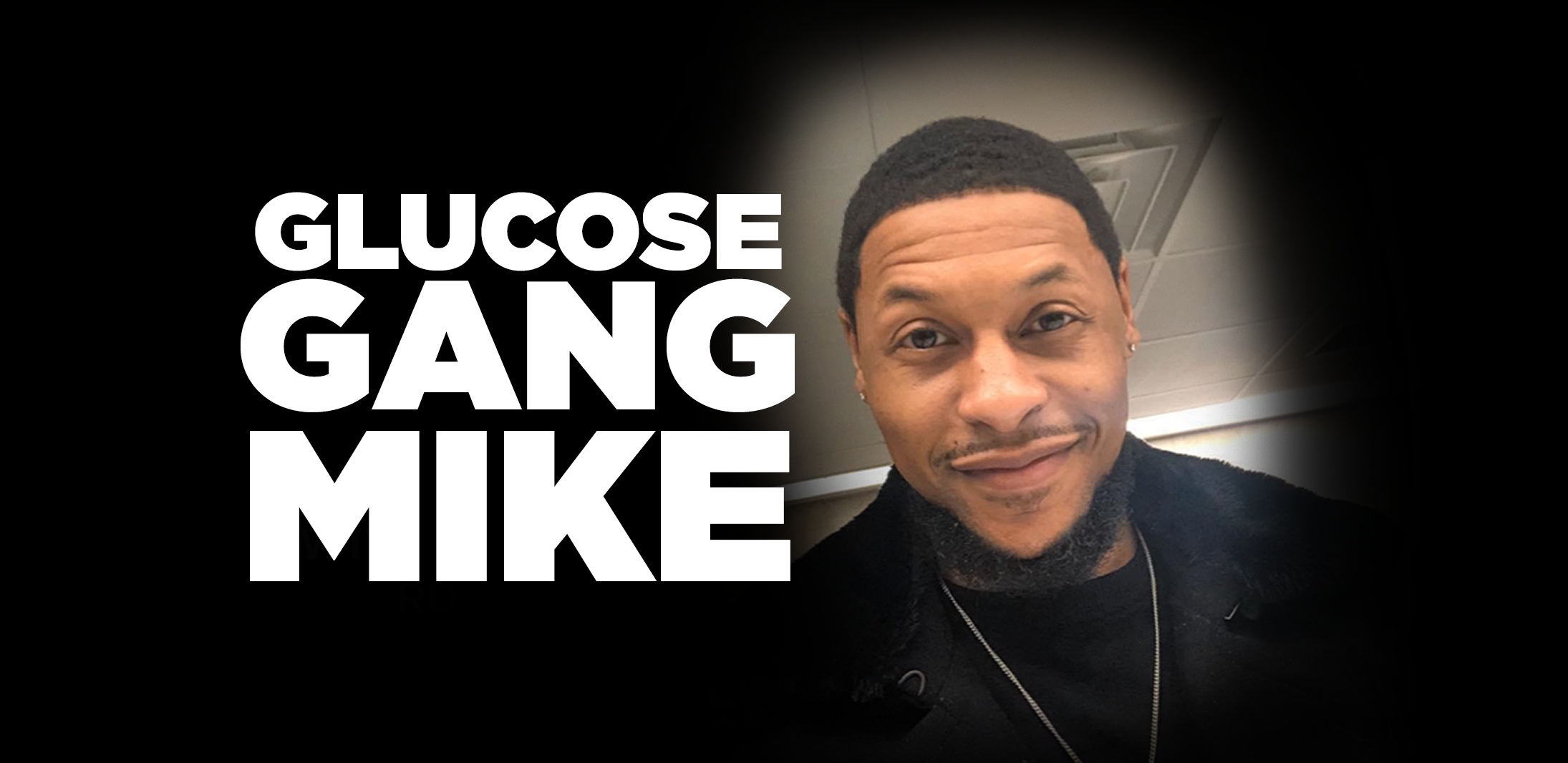
#325 Glucose Gang Mike
Mike is an adult living with type 1 diabetes

You can always listen to the Juicebox Podcast here but the cool kids use: Apple Podcasts/iOS - Spotify - Amazon Alexa - Google Play/Android - iHeart Radio - Radio Public or their favorite podcast app.
+ Click for EPISODE TRANSCRIPT
DISCLAIMER: This text is the output of AI based transcribing from an audio recording. Although the transcription is largely accurate, in some cases it is incomplete or inaccurate due to inaudible passages or transcription errors and should not be treated as an authoritative record. Nothing that you read here constitutes advice medical or otherwise. Always consult with a healthcare professional before making changes to a healthcare plan.
Scott Benner 0:02
Oh my gosh, I'm so tired. Okay, I don't know how I'm tired. haven't left the house in a month. Hold on me. Draw up energy for this. Hello and Hello everyone. Welcome to Episode 325 of the Juicebox Podcast. Today's guest is Mike. I met Mike on Instagram he has type one diabetes and an interesting story. That's what got him on the show. And while you're listening to Mike remember that his story is brought to you by advertisers like Dexcom on the pod the Contour Next One blood glucose meter and touched by type one. Find out more about the dexcom g six continuous glucose monitor@dexcom.com Ford slash juice box Get yourself a free no obligation demo of the Omni pod tubeless insulin pump at my Omni pod.com forward slash juicebox dig into what the Contour Next One blood glucose meter is and see if you're eligible for a free meter at Contour Next one.com. And of course, my absolute favorite diabetes organization touched by type one is their name plus.org touched by type one.org. I want to thank everyone for continuing to listen to the show during the coronavirus lockdown. The numbers for this show the downloads that is have not changed since the Coronavirus has a has come about. But I've heard from some other people who have other podcasts that their shows are struggling. This means the world to me. Thank you very much. All right. So music and then like
I honestly didn't know where this conversation was going to go when we began having it but Mike and I had a lot in common. Like as an adult living with Type One Diabetes. He has specific experience growing up in a culture with diabetes. He's a young man who enjoys some similar music to me. I like his outlook on life and what he's trying to accomplish. All that turned into a lovely hour. While you're listening to that hour, please remember that nothing you hear on the Juicebox Podcast should be considered advice, medical or otherwise, please always consult a physician before making any changes to your healthcare plan. or becoming bold with and so on. In this little bit of time I have here I'd like to remind you that while you're locked up at home, don't think of it as being locked up. Think of it as safe at home. But anyway, while you're locked up at home, it's a perfect time to work on your blood sugars. Go back and listen to the pro tip episodes again, they begin at Episode 210 to take you all of a day and a half maybe to listen and put the ideas into action. So if your blood sugars have been getting out of whack it might be time to you know tighten them back down again.
Mike 3:15
This is Michael. Um, some of you guys know me on Instagram as glucose gang, Mike, I'm a What am I a? Well, since I'm not a father, let me say I'm a son, brother.
uncle's
somewhat of a parent, not in the biological sense. And, you know, in regards to this podcast, I am a type one diabetic that has had this disease for 20 years.
Unknown Speaker 3:47
How old are you?
Mike 3:49
I'm 27
Scott Benner 3:51
seven years old. That seems to be a popular diagnosed number four people I'm talking to this week. I I kid you not you're the third person who said to me, I was diagnosed when I was seven. Maybe it's a maybe it's a good year for diabetes, like you know when they talk about wine. But who knows? Seven years old 20 years ago. You're 27 now
Unknown Speaker 4:12
go to college.
Mike 4:15
Yeah, so I graduated from the University of Michigan in 2017. And I moved from Michigan to North Carolina and that is currently where I reside.
Unknown Speaker 4:27
Did you Where were you born?
Mike 4:31
I was born and raised in a place called Ypsilanti, Michigan. But I went to my family's from Ypsilanti Michigan. So I have I know people throughout Ann Arbor as well as and Ypsilanti is spelled funny so people have a hard time pronouncing it. It's y p si. La en ti
Scott Benner 4:58
you just said it so naturally How did How do people mispronounce it?
Mike 5:03
Yes, the link, or
they emphasize the the Yep.
Scott Benner 5:11
I think you might have just named this episode of the podcast, the EPS mic, but we'll see where the rest of it goes. So are you so born and raised? Go to school there? What? What took you in North Carolina?
Mike 5:23
I have family down here. So I have two sisters that stay down here. And I wanted to get out of Michigan. The joke in Michigan is always the running joke, when you're a teenager is always like, Oh, I, you know, when I turned 18, I'm testing the first plane out of here, and I'm moving and this and that. And, you know, it. That was ideally my plan, but I didn't want to leave Michigan without something tangible. So I decided to get my degree first. And then I went ahead and left.
Scott Benner 5:57
Excellent. So, um, it makes a lot of sense to me. Did you say did you It's interesting, when you moved after college? Did you like have a job set up? Or did you just think I'm gonna go to North Carolina and reset my life here with this, you know, degree in this new person that I am?
Mike 6:14
No, I, I didn't have any job offers. At the time, I was just kind of, you know, jumping out of the plane with no parachute, so to speak. And I went ahead and I did it. And, you know, I don't regret it. Um, things kind of fell into place, thankfully for me. But when I first got here, it was kind of hard. I didn't have a car didn't have a job. So I had like, a bike and I wouldn't bike around Durham. And, you know, eventually I got a job. And with me getting a job, I got a car. So that was great. And
things just kind of fell into place. Excellent. Oh,
Scott Benner 6:54
how did you work out medical support, you know, health insurance, getting insulin and supplies, stuff like that between school and, and getting your luck getting your first job?
Mike 7:09
Well,
I had an idea I had a, I didn't know what was going to happen. So like a lot of people. I have tried to stock up on supplies before I went ahead and graduated and, you know, made the move down to North Carolina. But like a lot of people that I'm sure you've spoken to at times, I did have to ration my insulin, just to make sure that, you know, I had enough if necessary
Scott Benner 7:41
to get to get and so it's because I guess when you're in college, I mean, I guess depending on your situation, if you're, you know, if your parents have health insurance, you can stay on their health insurance while you're in college. But the minute you're, you know, whatever they whatever the phrasing is for, you know, what happens when you graduate legally to you just gone that, like they can't cover you anymore, stuffs expensive. So you just sort of like, turned into a little bit of a hoarder held onto as much as you could, and then went and tried your thing. And then it was, I guess, a race to get a job before he ran out of insulin.
Unknown Speaker 8:16
And the worst game show ever Mike, by the way. Hey, man.
Mike 8:23
You know, sometimes you got to do what you got to do. I don't even think my parents knew that. But now, you know, once they listen to this, they'll know. Yeah,
Unknown Speaker 8:32
yeah. Would you say that? Um, how often
Scott Benner 8:36
did you think about that while you were trying to get going? And like, was it on your mind constantly? Or did you every once in a while, open up the refrigerator and look at that insulin and think, Wow, maybe I'm gonna have to take a job I don't want soon or, like, how did that impact your life?
Mike 8:52
It was definitely stressful for someone like me, where I'm constantly on the go, I'm constantly somebody who is has to, like I can't sit in the house and just relax. Oh, with activity comes corrections and blood sugar drops, and you know, all of those different things that affect your diabetes. So for me, there definitely was a bit of a rush. And in addition to all of that, I also just, you know, I liked the idea of working. So there was a bit of a rush to go ahead and find a job but thankfully, one came through. I think I got hired maybe a month after I moved down here and then moved down here, August 2017. And then I got a job and September, I want to say the end of September so it worked out. It's amazing. Yeah.
Scott Benner 9:50
Hey, I've one last question about this. When you talk about like when you hear people say I have to ration my insulin because I don't have enough. What's that look like? Like nuts and bolts Do you do Just aim for a higher blood sugar. So you use less insulin? Or do you
Unknown Speaker 10:05
skip
Scott Benner 10:07
meals? Do you eat low carb or no carb when you don't want to? Like how does that kind of take shape?
Mike 10:16
So for me, especially when I was younger, I had to develop and not develop, but I discovered different ways to somewhat maintain and also obviously brought my blood sugar. And if you want to raise it to see a bunch of sugar, right, so that was not a problem. But for me, it was more so like you said, eating healthy. So eating less carbs, maybe like salad instead of bread. And included things like cardio, are you a really, really helped my agency. And also men just from my personal 20 years of experience. If I constantly drink water, and I don't eat anything crazy, then my blood sugar relatively stays the same. I don't know what it is. I don't know if it's just exclusive to my body and my hormones work but I'm just constantly drinking water. Like I said, I was drinking I'm drinking a Fiji water throughout the day. That's like my thing. And that really helps to maintain and regulate my blood sugar's
Scott Benner 11:21
it's simple. It's interesting that you said that because I had a, I sat down with a like a 20 year old guy last night. And he was looking to understand what we talked about on the podcast. And I know him personally. And so we went to dinner and sat in a restaurant like he sort of got the talk that I do in public, but he got it in a restaurant. And I at some point asked him. So you got this 190 blood sugar, what do you usually do? And he's a person just managing with a meter and pens, you know? And he said I'd probably drink some water. And I said you would you correct it with insulin. And that was a completely foreign idea to him, because he's had diabetes for about seven years. And no one's ever talked to him about correcting a blood sugar. He's been told, you know, to count his carbs, give himself insulin, wait three hours. And you know, by the time that happens, you're hungry again anyway, and you start the process all over again. But he had never considered the idea of pushing that number down with insulin. But immediately he said, I would drink water. And you know, and then if it doesn't move, probably work out. And I thought, huh, that's a I mean, I know it works. But I've never heard anybody say that as like their go to idea. And then Just now you said the same thing. So kind of took me by surprise for a second. Alright, so seven years old. Mike, when you're diagnosed then do you have any real recollection of that's a long time ago.
Mike 12:47
Oh my gosh, God, are you are you calling your old?
Scott Benner 12:51
No, I'm just saying 20 years is a long time ago. You're By the way, I'm going to turn. What is today's date is today like the length of the 10th. In two days, I turned 48. So I have 20 years on your 20 years. So I'm not calling you old. But but I'm just saying the 20 years is a long time ago because if you ask me something that happened to me when I'm 28 I'm pretty sure I don't remember. And and I was an adult then. So I'm wondering, just do you have recollection of being seven and being diagnosed? And what that was like, if you do?
Mike 13:24
I have? Um, yeah, that to answer your question. I have a brief like glimpses and flashes of I remember. It's a funny story. And I'm going to break it down for you. So I was on a cruise ship with my family. And there is including my parents, for brothers and sisters. So there's seven of us right on this cruise ship. And we're all having a good time. Everybody's you know, celebrating, I think it was my brother, older brothers 15th birthday. And now we're just having a good time, and I ate something at dinner. And I just had to use the bathroom. And I use the bathroom. And then I felt like I had used the bathroom again. So I use the bathroom again. And I did it. I felt the sensation again. I'm constantly using the bathroom. And I'm really I just remember being very, very thirsty and asking my mom for a lot of water and it never quenching my thirst. And my mom before the end of the trip, she was like I think something's wrong. We need to take it to the doctor. And so I remember because my brother ironically, my brother's birthday just passed. His birthday was in July 7. No. Um, so yeah, so we got on the cruise. So I want to say I was After we got off the cruise, I want to say I went to the doctor in August. That's when they diagnosed me. And they were like, his diabetes. And my mom was like, totally blown away. And my dad, they were both just like, how is that possible? Like, he's seven years old. He's healthy. He's not, you know, obese or overweight. And by my endo at the time was like, you know, there's different types of diabetes. And he has what's known as Juvenile Diabetes is what they called it back then. Yeah, type one is what they call it now. And,
Scott Benner 15:38
well, I'm happy to hear, but like, I'm happy to hear that you went to a doctor off the boat, because in my mind, you were like, seeing that Love Boat doctor in those shorts, shorts with a glasses on and I thought, what could he possibly know about type one? The other thought I had when he said you were on a cruise was? Were you just cruising around like Michigan? Or did you fly somewhere and then go, coach,
Unknown Speaker 15:57
I'm assuming it was an ocean cruise?
Unknown Speaker 16:01
Absolutely.
Scott Benner 16:03
It's like, you know, those super famous Michigan cruise lines. And I realized you can fly somewhere and get on a cruise, it just struck me when you decided I had a picture of you on a cruise boat as a child, like rolling around the lake michigan over and over again. But um, so it's interesting, because it just kind of hit you that your brother's birthday is this month. So this is July, is probably the anniversary of when you figured it out in August is, I guess the anniversary of when someone told you, you know, for sure that you had
Mike 16:36
my diversity is they like to stay on Instagram, I don't know the actual date. I'd have to ask my parents that I don't know if they even remember. But I know that it was like, fall, because we were getting ready to go back to school and the leaves were changing and different things. I also remember them telling me, you know what I mean? Like, I remember going to like the unit U of M hospital. And then you know, hospitalizing me Of course, and, you know, telling me what the disease was and different things. And I feel like it was the maybe the second or the third day. And they came into my bedroom. Because you know, they check your blood sugar, like every two or three hours when you're recently diagnosed. And they came into my room. And the nurses like, Okay, it's time to take your shot. I remember just being like, no, like, no. And she was like, Michael, come on, like we have to be this is you know what I mean, we have to get and I was like no. And I remember very vividly, I remember this crystal clear, like, biting the nurse and the doctors had to run like come in like something out of a movie almost where you're like, you see this little seven year old kid who doesn't want to accept the fact that he has a chronic illness? I'm stressed out because I'm like, I don't want to you know what I mean? Like, all over the
Unknown Speaker 18:03
place, I
Mike 18:05
would say
Scott Benner 18:06
that's in your blood sugars are all over the place to like there's a lot impacting your, your behavior, besides just the fact that you're seven scared out of your mind some ladies trying to jab you with a needle. And you know, you're I mean, it, I can't wrap my head around it completely, because our aim was to. So we didn't really have to explain that much to her. You know what I mean? Like we did, obviously, we talked her through what was happening, but she didn't cognitively think to herself, oh, I have diabetes now. And you know, like, it just, it's different when they're when you're younger, but when you're younger, but at an age where you can understand some but not all of it. It just has to be. I mean, it has to be the most frightening thing that's ever happened to you. I would imagine.
Mike 18:48
You know, no doubt. Yeah, no doubt.
Scott Benner 18:51
Listen, I watched one time, like my son was, I don't know, eight, nine years old, getting a flu shot. And luckily, out of the corner of my eye, I saw what was going on. And this is not like a violent kid. Like I had to reach up and grab his hand. Because when the nurse came at him, he was gonna defend himself. It was it was really just a like a gut. Like reaction to him. He's like, if you could have tried to stab me with that. I'm gonna try to stop you. And so just you know, I'm with you, man. I would have I would have I would have maybe thrown some hands to the lady
Mike 19:26
to let her know
Unknown Speaker 19:28
exactly what
Scott Benner 19:32
you go find another mark because Mike's not getting Java whatever that
Unknown Speaker 19:37
Yeah, I don't know what your sick game is honey. But
Unknown Speaker 19:41
anyway,
Scott Benner 19:42
so but but I mean, 20 years ago, you must have done injections for a long time, right?
Mike 19:48
Oh, man, that was like yeah, so like, I'm gonna like a dinosaur at this point when it comes to like, how to give insulin and get insulin. So yeah, we were doing like you said this. I Remember this syringes with the orange needle caps and the vials and shaking up the vials. And you have to draw up the insulin with the syringe and the syringe has the tick marks on it.
That was the era when I was diagnosed. Yeah.
You know what I mean? I remember the big machines. And when you check their blood sugar
you have like the big machines and you have to
put the blood onto the
I'm drawing a blank. I had to check my blood sugar and like a huge, not a huge machine but a relatively large machine
Scott Benner 20:40
and needed a lot of a needle a lot of your blood to Yeah, it wasn't
Mike 20:45
now It wasn't like now where you know what I mean? You don't some some people don't have to check their blood sugar because they have the CGM. Right. But like, I don't have one yet. All right. So right now. Yeah, I mean, the amount of blood is like significantly smaller, less painful. Yeah,
Scott Benner 21:03
yeah, the leaps in technology are stunning. And especially with, you know, with what we're talking about here, the amount of blood size that you need to fill that test trip has gone from, you know, a gallon basically to like, basically, you know, there's some the one my daughter's use, now she's in the Contour Next One, and you barely even like, bump the thing into the blood. And it's like I'm working. And and even if you if you don't get enough, it doesn't ruin the test strip, you just touch it again and get a little more whereas there's some if you put blood on, but it didn't was enough to read like that would ruin the strip, there. And in the meter you're talking about. My friend Mike had one when we were 16 is a long time ago. And it looked like it was like literally the size of a brick. And you know, like you couldn't travel with it. You couldn't take it anywhere. It just sat in your house. And that's when you tested your blood sugar. If you were near it, and you thought to do it. It's just a different world. Yeah, you know, and when you're seven, when somebody is like, Look, we got to open a vein,
Unknown Speaker 22:06
you know, so that we could begin to get enough blood out of here.
Scott Benner 22:10
It's got to be incredibly off putting I know that Arden just got her a one seat done by fingerstick the other day, and you know, that needs a large sample. And she was put off by that she's like well afterward she's a cleanse a lot of blood that woman talk. And just it's her her perspectives different now.
Mike 22:27
Absolutely. And even like, oh, to touch back on that too. So even like being seven and like, Can you imagine having like as a child having died, so like I used to I used to carry my like, insulin is not my insulin, but like my needle, my syringes. My little pricker things I used to carry all of those and in a like, like a little pencil box. You remember the plastic careful boxes like with the green, the different colored tops? I do. I use it. So you know that was? That was like,
Unknown Speaker 23:03
that's a slick. Look, Mike, I'd like to see a photo of you carrying around your pencil box.
Scott Benner 23:13
Yeah, it might be your version of Napoleon Dynamite right there. Because that's really that assuming that how the ladies like that, by the way. We're
Mike 23:23
on. I was like I was totally shy. When I first got diagnosed. Like I remember. My teacher I remember my teacher saying was how we check my blood sugar. At one point, I told her like, I want to go in the hallway and check my blood sugar. Because I just didn't want everybody to know. And I also didn't want to feel alienated from my classmates, you know what I mean? And even though because kids won't say anything, you know what I mean? If you're, they'll just stare at you.
Scott Benner 23:53
While we judge you. Yeah, and then form a cabal form a cabal later where they hate you.
Mike 23:59
badly and then later on, it's like, they'll ask you, but for me, I didn't want any type of extra attention on me. So I had to take extra steps. Like I said, checking my blood sugar in the hallway.
Scott Benner 24:13
Usually just trying to blend when you're a kid, you know, you really are just trying to be wallpaper, you know, you're just like, don't let me be too different. And even think about Think of all the crazy things that you will avoid when you're a child. My wife is tall. She loves being tall. But when she was in middle school, she said being a tall girl was a problem. Because you were taller than boys and so boys didn't talk to you. And you know, like, and so she's growing up not liking that she's tall, which is something that's amazing for her. You know, like, just somebody too athletic, not athletic enough to rnc. Not artsy like you don't mean like you never you're just trying to be vanilla, right? You're just like, like, no one looks at me right? And and and you know what to Mike and I don't know how to I never know how to say something like this to a person I've never met before. Because in my personal life, this wouldn't be a big deal. I don't think it's a big deal here. And I feel like you're gonna handle this well. So I've now built it up so much that when I say it, people are gonna be like, that was not a big deal. Why did Scott do that? But you're African American, right? So is your, your beard? Right? And that's what I would have said, If I didn't, I would have been like, Mike, your black guy, aren't you? And, and so and so it did that community have different opinions about diabetes. And because I see it and hear about it a lot, like sometimes you get more, I don't know, like Southern roots. And then diabetes is thought of in a different way. And I hear a lot, I don't know if you heard it. But I interviewed Anthony Anderson, you know, a number of months ago now. And he was talking about his father having diabetes, he was talking about him having type two back then. But that his father, it just resolved themselves to the fact that basically, he had the sugar, and his life was going to be shorter. And that was all he could do about it like that he couldn't really do anything about it. And I see that from different cultures running this podcast over and over again, there are some places in the country, or ethnic backgrounds or something, they all treated like a little differently, some people stigmatize it, some people embrace it, it's really, it's I was wondering if you if you had anything like that just, you know, coming from a black community.
Alright, a little treat, I'm going to do all of the ads without stopping. And as you heard at the beginning of the show, I'm tired. So this is going to go. I mean, you got to guess not well, the Dexcom g six continuous glucose monitor is one of my favorite pieces of diabetes technology. And I can say in all honesty, that without it, the success that we have with my daughter Arden's blood sugars, and her a one season variability and our stability, I don't think it would be possible. I can say that with comfort because prior to the Dexcom CGM, we were not accomplishing the things that were complex now. seem you just have like a little flub there. I kind of swallowed a word. It's okay. I'm gonna keep going. So here's what you need to do. You go to dexcom.com forward slash juice box and get started today with the G six continuous glucose monitor. Why? You're gonna ask me why it's fine. I'll tell you, because you'll be able to see loved ones blood sugars remotely on an Android or iPhone, right? I see their blood sugar going up. Is it going down? How fast is it moving? What's the number? It's because the Dexcom is FDA approved for zero fingerstick treatment. That's not bad, right? And what else Dexcom Dexcom Dexcom. Ooh, I personally we work on Pre-Bolus thing and Temp Basal going and stopping high blood sugars and cutting off lows and all kinds of cool stuff with the data that comes back from Dexcom. Now, when we do stuff with artists insulin, like I'm just talking about that happens through Arden's Omni pod tubeless insulin pump. Now the coolest thing about on the pod is that they'll give you a free no obligation demo. Okay, you understand I'm saying you go to my omnipod.com Ford slash juice box, fill in a tiny bit of information about yourself. And on the pod, we'll send you out a pump to try on and where nonfunctioning so you can't, you know, hurt yourself with it. But you can figure out what it's like to live with the Omni pod. So just imagine yourself sitting on the sofa, staring at a wall, sitting in the kitchen, staring at a wall sitting in your bedroom staring at a wall, and you'll get to see what it's like to wear the AMI pod while you're staring at that wall. Right COVID-19 gottschee in the house, good time to work on your blood sugars, great time to work on your diabetes technology with x comment on the pod. Now, once in a while, you're going to need to test your blood sugar with a meter. And for those of you who don't have the dexcom this is happening all day long. Why not get great information back like the information that comes from the Contour Next One blood glucose meter. It is the most accurate and easy to use meter that my daughter has ever had. And she's had a number of them over the years. At Contour Next one.com. You can learn more about the meter about the app that you can use with it if you'd like. And you can find out if you're eligible for a free no obligation. Game Damn that was on the pod, you'll find out Contour Next one.com you'll find out if you're eligible for a free meter. You can actually fill in some information to find out. I told you I'm not editing and I'm not stopping. Here we go. They used to be dancing for diabetes, but now they're touched by type one, same organization. They just want you to understand they're not just about dancing. They realized maybe people think we're just about dancing, but they're not. They do so much more and you can find out about what they're doing. Find out about that isn't right. And you can find out more about what they're doing at touched by type one.com no.org touched by type one.org. I'm almost out of music, I'm freaking out. My omnipod.com forward slash juice box dexcom.com forward slash juicebox. Contour Next one.com touched by type one.org. Please, during these tough times, support the sponsors of the show, let them know you're coming from here, use my links. We got to make it through this Corona thing together people. And I mean, you know, health wise, obviously, but I'm talking about gotta keep the podcast strong. Because once we all go back to work, and you jump in your cars, again, walking around the grocery store popping out to your to your podcast, this podcast needs to still be you know what I mean? viable. So, hit up the sponsors. I'm out of breath is terrible. I don't usually do them like that, like I do one and then I'll stop and think about it for a second. I'm like, you don't want to say that on the panel. Boom, I do that. And sometimes, anyway, I'm tired.
Unknown Speaker 31:06
Oh, wait.
Scott Benner 31:09
It's not the end of the show. It's the end of the ads. Here comes Mike. He's gonna answer a question that I just asked a moment ago, I'll even re ask it just so you know where we're at. If you had anything like that, just, you know, coming from a black community.
Mike 31:26
Oh my god, totally. Um, so
where do I start with this? Um,
yeah, man. I mean, essentially, to answer your question, it is hard pacifically having diabetes and being black because so much of the word what a lot of people would call like Southern food or soul food. I'm not the healthiest for you. You know what I mean? And so if you're Thanksgiving, and you know, your nine year old kid, and even today, even today, and your mom cooks candy, yams, collard greens, you know, Turkey, which is protein, which is fine. Cranberry Sauce for the the, you know, mashed potatoes are not the master for the stuffing, mac and cheese. I mean, all of that is very, very, it definitely plays a role in your diabetes. You know what I mean? Depending on your nationality, it's it was very hard. Growing up, as well as you know what I mean, just measuring how much insulin to take and what to eat, what not to eat. On average, a friend also who I went to college with, I won't say his name. But he actually told me that he had type one diabetes. And the reason why he told me was because he saw me in class taking my inhalable insulin one day, and he told me as I knew that, Hey, I got it too. And I was like, Oh, cool. I was like, so, you know, what's your a CT test? And he was like, No, he's like, I don't he was just like, essentially, like, you know, it is what it is. And I don't have I'm not gonna, you know, check my blood sugar and this and that. So, that was disheartening. And to touch on your other point. It's, it is, it's hard. You know what I mean, because a lot of people do feel hopeless. Like you stated, like, a lot of people do feel that, you know, this is what it is, this is my life, and I have to take pills, or I have to take shots, and I'm gonna die at 50. And I've accepted that. I'm just one of those people who, you know, unfortunately, for fortunately, for my diabetes, I'm a fighter. Yeah, you're not going out.
Scott Benner 33:57
All right. So,
Mike 33:59
no, no, and I've always been like that. So I just, I, you know, once I accepted that, I had it. I buckled in, you know what I mean? And I, I made adjustments to my life, and I'm still constantly trying to improve, I'm still trying to better myself and, and speak to different people and get their advice. And you know what I mean, just, but I couldn't, I can't go out. I can't just let diabetes take me over. Yeah.
Scott Benner 34:32
Give me Give me a second on that. Because it's just it's, it's sad when you hear somebody say like, this is my lot in life. And that's the end of it. And I think sometimes that becomes generational, right? Like some things. You don't learn from your parents as much as your parents got a little bit from their parents who got a little bit from their parents, that eventually just becomes a feeling. And it's sort of like anything else. Like you can get generational wealth, you can have generational poverty, you could have a generational malaise about taking care of your, you know, your health. There's, there's, like these ideas that build over time, I'll tell you what I see recently is there's a spike in type two diabetes in the Indian population. And, but their diets are so carby with, you know, rice and things like that. And when I when I speak to people from that culture privately, it's funny how they say, Look, I know this isn't good for me, but, and then this is the sentence that throws me off. This is how we eat. Like, it's a rule. You don't even mean like, Hey, I'm Indian, I have to eat like this. And, you know, our food is like this. And I said to a friend, I was like, you know, there's other food, right? Like, you could just you don't have to do that. You don't have to soak big beans and brown
Unknown Speaker 35:52
sugar and honey, before you eat them. You might be could just eat the beans, Mike, you know what I mean? Like,
Scott Benner 35:57
and so I get that generationally, it builds, and people start thinking of like, it's not Christmas Without this, or it's not my birthday without that, but man, you know, you don't get Christmas in your birthday if you're not alive. So,
Mike 36:10
you know, and, and, absolutely, and not even to throw anybody else under the bus. But to touch on that, too. So like, it sometimes, you know, even your family members will be like, Oh, come on, you can have some of this cake, or, you know what I mean? Or Yeah, you know, you know where that comes from insulin and
Scott Benner 36:28
right. But you know where that comes from? Mike, it's, they feel bad for you. And then then they skip over this is my opinion. But I think when someone says, Come on, you can do it. What they mean is, we're all eating cake, and you're making me uncomfortable, and I feel bad that you can't have some. So why don't we all just ignore for a second that your situation, and you eat the cake, so that we can all feel like this is normal and happy. And I don't mean to say that if you have type one, you can't have cake. I'm not saying that. I'm saying that. You know, listen, if it's a cake soaked in, you know, look or certain this so can that you just look at it and go, you know what, I'm just gonna stick with what I got here. Because this is just, I don't know how to Bolus for this, you know, then then I get that if you don't want to eat it, but I really do think that's what happens is that when you break from the norm in a group, you become the problem, even though that's not true. You don't I mean? Like, it's, it turns into a pack mentality. Like there's more people there who think you should eat the cake than think you shouldn't. And so suddenly, you're wrong for not eating it. And that's a weird, you know, human nature thing. But it could pressure a person into doing something they don't want to do. And you just sound like you're the one who goes, you know, No, thank you. And I don't mind being a little different. How did you go from the kid who wanted to take his pencil box in the hall to somebody who didn't mind? If people saw?
Mike 37:53
Um, it got easier the older I got, I'll say that you know what I mean? Because as you elevate, as far as schooling goes, and different things, like once I got to college, it was just kind of like, I see these people every now and then I don't see them all the time. If they have questions they can ask me. Um, I also think that having a community that embrace diabetes, specifically, I'm referring to the Instagram community, have hashtag T one D or type one diabetes, that where, you know, they wouldn't post inspirational stuff and really rally behind people who are going through the same thing that you are, it really encourages you and motivates you to, you know, what I mean? put the word out, I do you
Scott Benner 38:39
know, I I see it constantly, the power of sameness, I guess, or community, you know, whatever you want to call it, just looking up and seeing somebody who's got your struggle. It's huge. You know, like, it really is impactful. I always think of this podcast, sort of first and foremost about like management. But I, I get so many notes from people who are like, yeah, I managed fine. And what you do is cool when I incorporate some of it, but for me, I listen to this podcast I hear Mike on there Mike's The only person with Type One Diabetes I've ever heard speak out loud. That isn't me. And and it. It's interesting how it can be so many different things for so many different people. Like I feel like it's one thing somebody sees it another way somebody else sees another way. Instagrams the same way, like you don't know you put a picture up because you have in the back of your head, this is going to impact somebody like this. You have no idea how it's really going to help them. It's um, it's really fantastic, actually.
Mike 39:37
Right, and then that's something that we need to highlight as well, too. I feel like because oftentimes, and I'm not condoning this either. Social media is looked at as a negative thing, which at times it can be but again, in my mind is a tool. So you can use it to you know what I mean? Most pictures of you doing stuff and and you putting people down or sharing terrible news about different events going on in the world. Or you can use it to inspire, you can use it to motivate you can use it to, you know what I mean? touch someone who you might not have been able to previously, just based on geographic location. Yeah,
Scott Benner 40:19
no, no, I'm 100%. And listen, there's always going to be, you know, it's easy to say there's always going to be people who are negative, and there's always going to be people that are positive, but I've seen somebody who's negative be a positive person, I've seen a positive person be a negative person, I think people are just a different spots in their life, they use the relief that they have, I usually think of people who are, you know, kind of being kind of shipped online as just there's somebody having a bad day, you know what I mean? Now, I gotta bleep it back, because I can't curse. And and like I, you know, I don't think this is a person and don't get me wrong. I've seen people who just appear to be a, you know, a tornado of unpleasantness and hate, and then everything but, but but it's, it's not everybody. And to your point about it being a tool, like, Look, if I build a house with a hammer, that's amazing. If I go next door and kill my neighbor with it, hammers not so great anymore. And so you can do, you can decide you can pick that hammer up and do what you want to do with it, you can use your Instagram for, you know, for good, or you can use it to try to make people feel bad. I think sometimes when people try to make people feel bad, they're really just trying to make themselves feel better. And I mean, I've been in, I've been in the space a really long time. And I've had people come at me, oddly, you know, there's there, there are groups of people who don't like that I talked about just, you know, listen, just use the amount of insulin you need. You know, and so those people, every once in a while flare up, and they're like, You're killing people by telling them they can eat whatever they want. I'm like, I said, I didn't tell
Unknown Speaker 41:46
anybody to eat anything. I just told him
Scott Benner 41:48
understand how to use your insulin, like, I don't care what you do with that knowledge once you have it. But I think you should understand how insulin works. And what I have found in those scenarios is these people aren't like, I've heard people talk about them, or call them angry, and you know, like mob mentality and stuff like that. And I'm like, No, you don't understand what they're really doing. They got to a spot in their life with diabetes, where they were just, they couldn't find something that worked. And they finally did, they found this thing that worked for them. And you have to understand that what they believe in their heart they're doing right now is saving you and other people, they think they're saying, look, this works. My agency is amazing. Now I don't have spikes like this, etc, etc. You should pay attention to this. Moreover, this guy over here was talking about Be bold with insulin, he's
Unknown Speaker 42:37
killing you.
Scott Benner 42:38
You don't mean like, it's it's their opinion. And don't get me if they find my podcast before they find that they might be a person who's like a, just eat whatever you want. If you use the right amount of insulin, you don't know, they found something that saved them. And they feel they, you know, everybody who's listening right now knows what I'm trying to say that I can't get the words out on it's like, you feel like you have the ability to save someone. And it feels important to do you know, so I don't even take those people as angry. I honestly take them as passionate. And they get to the point where they're like, Look, you're not listening to me, you have to listen to me, this is really important for you. So I don't know, but I hear you. I wish I'd like to see a little more flowers and sunshine like myself, you know, I think there's I think there's a way to, to put your message out there in a positive way. And I love anybody who does it? Is that what you try to do with your Instagram?
Mike 43:33
Absolutely. And I'm glad that you you know what I mean? You said all that. Um, so as far as me like diabetes, I looked at my diabetes. And I really thought to myself, like a lot of times people hear this word, and they say it's a negative thing, there's a negative spin on it, you know what I mean? And that's, you know, a lot of my life is kind of based around turning negatives into positives. So even amongst, with, you know, being black, a certain degree, certain things have a negative connotation around being black, but my whole thing is trying to change that and spin it, which is why I started glucose gain. Which is, which is honestly, it's a, it's a brand. It's a brand that I started. It's something that I've been trying to do for I had that concept for like a year, two years, and I've just never really did anything with it. But it's a brand and, you know, obviously it's raising awareness about type one diabetes, but I just reach to the back of what I have here on the card. So for me, it's just about redefining what is negative and creating something positive. And I put like we are, you know, fighting against the odds, even when they're not in our favor. And that can be for anything. Obviously this is specifically directed to related to diabetes and type one. Because we are against the odds and you know, people Oh, my limb fell off, or I have numbness in my toes and we are fighting against the odds, but we're not giving up. And that's really what glucose gangs and for. Um, and so, you know, I think that staying motivated and doing different things. Um, speaking of tools, let me ask you, have you heard of a book called bright spots in landmine?
Scott Benner 45:32
Oh, Adam Brown? Yeah, yeah. And when I had him spin on a couple of times on the podcast,
Mike 45:39
oh, my God, God, if you talk to them next time, if you can, please just thank him for me because I read this book. And you know what I mean, it really did make a difference. There's some of the techniques, you know what I mean, the chia seed pudding, and you know what I mean, exercising and bolusing. I mean, this guy's great. Adam is really a good guy. I also have, like, because I feel like diabetes affects my psyche. Sometimes. Yeah, I also have a friend who got me what's known as like an awesome journal. And essentially, it's just a book where, no, it's blank. And you write why you're awesome. is whenever you feel like it, whenever if you feel down, if you feel like you're having, you're gonna start a great day, if you this whenever, if you're feeling like, you need to get something off of your chest is awesome journal has really helped me as well, like, psychologically with the diabetes and this encouraging myself and really trying to, you know, get into the right mind frame, because oftentimes with diabetes that affects not only our body, but like, also our psyche.
Scott Benner 46:57
I think a lot. Yeah, I think it does a lot. I see your, so that book is like, is like your own hype, man. It's just you can you can hype yourself in that book, just be like, just see, ya know, I mean, there's so much science behind that idea of just saying something positive, moving in a positive direction, believing in something even when it doesn't seem like it's true. You know, there's all different ways of saying it, I think. I think a says fake it till you make it, right. You know, just,
Unknown Speaker 47:31
you know, you, you pull out a book
Scott Benner 47:33
and be like, Mike, here are the things that are great about you, like, let me just remind myself all the things that I am or that I, that I've done the things that I dream about, or I want to be, and you know, it's pretty much the equivalent of your guy standing in the corner, grabbing you by the shoulders and yelling, get in there and kill him, you can do it, you know, you're just, I always, I always say that football must be the easiest like sport to like, coach, because really, in the end, after you've gone over the X's and O's, your job is just to whip everyone into a murderous rage and send them out on tour. Right? And so and so that they can, you know, fling their bodies into things that if they were thinking about it, they'd go, you know, I don't really want to do that, because I think I'm gonna hurt my head. But you know, you can you can jack people up to a spot where they believe in themselves, and then they actually can perform at a level that might not be, you know, what their norm is. And so, when you're doing that, what leads you to that journal, because I think you're, you know, you and anyone else living with type one are uniquely qualified to answer the question like, what? And so my real specific question is, day after day, living with type one, making your boluses you know, trying to keep your blood sugar in a spot thinking about your foods. Worrying about is my you know, is my is my second Uncle, you know, pissed at me for not eating this cake, all that stuff going on? How does it start to impact you as the day's build on each other? Like, how do you get to the point where you're like, I need this journal right now. Kind of a deep question. I'm sorry to throw it on you but but I'm looking for like, you don't mean like, How does it feel? Like is it is does it feel like you're carrying a box and someone puts another box on top of it? And that just keeps happening to the point where you think I can't hold all this? Or does it hit you in a wash? Do you feel like you're doing great, and then all of a sudden you don't like you? Can you put into words, I guess?
Mike 49:25
I would say Yeah, um, it's similar to what you said. It's like, you know, it comes in waves. You know what I mean? Sometimes in life, you'll be doing great. Everything will be fine. It's, you know, birds and pain and and, you know, family's good, everything is great. And then the next minute, you know what I mean? Oh, something happened that works. Oh, my girlfriend broke up with me. Oh, my blood sugar is out of whack now because my hormones are mad. It comes in waves, right. And it's just Is the book really the awesome journal really is a reminder to, you know what I mean? Keep going this to, you know, lock in and understand that these things happen. And even good times will pass and then there'll be bad, but then also be good again. Yeah, you know what I mean? one of my heroes, one of the people that I look up to the not the most, but one of the top three people that I look up to is a guy named nipsey hussle. He recently passed, I'm sure you heard back in March, the end of March. And his thing was, one of his models was just like, you know, again, life is, is it's a marathon, you know what I mean? So you're, there's gonna be some bumps, there's gonna be some bruises, there's gonna be some slip and falls, there's going to be ankle pain, there's, but there's also going to be victory, there's also going to be, you know, winning and being surrounded by your family, there's, there's life comes, this is how life is. And,
Scott Benner 51:11
but I'm just gonna say nothing lasts forever, just get you know, it's, it's, um, I don't know why some people learn it in a way that they're able to endure the bad times and get back to the good times, I don't know, if you have to be brought up in it to know it. Or, if you had to have a good role model that had it happen. I grew up completely broke, like we didn't have, you know, two sets. And I can't, I just saw my mom just never gave up like it no matter how bad anything looked, I never saw her give up. And, and when she got overwhelmed, she'd cry. And then she'd do it again. You don't mean like that. That was my, that's what I got to see. And when I became an adult, and I got into the world, and started, you know, working and having money, and then not having it and getting a bill you didn't think you could pay and things like that. I eventually said to myself, you know, you have these worries. And then inevitably, you always find a way out of them. Like always. So why, why when it's happening, see it is this horrible thing like this is going to kill me like why would I expect this thing's going to kill me? It hasn't killed me the last 50 times. You don't you mean? Like, at what point do I say to myself, this is the part where it's hard. I need to do this, this and this to get back to the part where it's not. And, and so I just sort of adopted that idea like that, you know, I know this is gonna work out because traditionally, and historically, it works out. So I'm going to stop worrying about it. Now, that might not be easy for everybody. Some people have, you know, real, like anxiety and depression issues that would would maybe stop them from being able to make that leap. But for everyone else, you're like, Man, you wake up every day, stop acting like it's not gonna happen, you know what I mean? Like it is the sun's gonna come up all the all the isms that you've ever heard in your life are true. And, you know, instead of wallowing in something that feels terrible, just look forward to the part where it'll be over. And you can, you can move on. It just makes sense to me. I love that you said that.
Unknown Speaker 53:21
And, and to your By the way, your your question, I actually do know, nipsey
Scott Benner 53:26
My son has a wide range of music interest. And he particularly enjoys rap music on the way to and from his baseball games. So I now have a wide exposure to music I probably would not have heard at age 48, to be perfectly honest with you. And I really do like some of it. I actually, I have to tell you, my kid was off at college, you know, and I missed him, you know, in his first semester, and I'm out in the car by myself. And I put some Meek Mill on so I could feel like he was there.
Unknown Speaker 54:03
I'm telling you, I'm telling you.
Unknown Speaker 54:09
I really
Scott Benner 54:09
wish Yeah, I really wish it was like warm outside the windows would have down in the people could have looked over to me and went look at that old white guy listening to me.
Mike 54:21
But it gives you that feeling, you know, I mean, it gives you that motivation that
Scott Benner 54:25
felt like he was there. Like it really did. It felt like we were driving to a baseball game and it made me feel better than I'd see him again soon. You know? I didn't think I'd Uh, I don't know, man. Like if you looked at my Apple Music, you'd be like this an eclectic mishmash.
Unknown Speaker 54:46
Oh, my God.
Scott Benner 54:48
Yeah, so, but But isn't it funny to not to get too far off the path but to talk about community that my son's best friend is black. And that's where it's at. Some of this music was introduced to him. And so if my son doesn't meet this boy, and they don't become great friends, he doesn't you know, he doesn't see this music. It doesn't expand what he thinks of as music. He probably gets, you know, stuck in whatever his friends are listening to. Doesn't get outside of it. When he gets outside of it. I listened to it. I get outside of it. I mean, don't get me wrong. There are some lyrics still, Mike that stopped me in my tracks.
Unknown Speaker 55:27
But I'm getting
Scott Benner 55:28
better at it. I sometimes this will make you laugh. I'll be like, hey, just now when he said that thing about this the G six What is that? Exactly. And my kid hates it. When I break down rap lyrics. He's like, stop it. You're ruining it. I was like, I know, I'm just scrolling with it.
Mike 55:44
I just wouldn't figure it out.
Scott Benner 55:45
Yeah, just real quick, when he talks about his woman's woman's like, exactly what is he trying to get at? My kid looks at me like do not ruin this for me, man. Do not make me think about what that guy is saying. I was like I hear. So I'm screwing with him a little bit. But but anyway. But yeah, I mean, he brought something into my life I didn't know about. And I think that on Instagram, with this podcast, any other number of ways where people are trying to reach out beyond where they are to people who they may never meet in real life and say, Look, I know you're, you know, I know your baked beans have brown sugar on them, come on over here where they don't, you know, like, check this out. Like, I know that you're scared of this and you don't like you know, inject them public. But I think you should I think you should, because maybe one day, you'll meet a guy at college? Who goes hell, yo, you have diabetes. Me too. And then you can ask him how you're handling yourself. And maybe you put it into his head like, man, I should be paying closer attention to this, you know, like, there's, we're always touching people like that if we let ourselves. But you know, if you don't let yourself reach to people, then then you're just in your little bubble. You're not helping them. And and conversely, they can't help you.
Mike 57:01
And that's the thing, man, we're all conduit, you know what I mean? And we're all, you know, not to get spiritual and all that stuff. But we're all energy. And we're all you know, having a human experience. So why not encourage somebody or help somebody? Or even just put something in somebody here? Never know how it can affect them? Or what it can do? You really
Scott Benner 57:25
don't you? Listen, I I can't tell you. Most of the feedback I get about the podcast is overwhelmingly positive, which I really appreciate. But sometimes people find the podcast at bad moments, and it strikes them really wrong. And then a couple of them are, you know, prone to sending an email. It's like, I listen to your stupid podcast, and I've had diabetes forever. And that's not how it works. And you know, this is not right, and blah, blah, blah, and, and then six months later, you get another note from they're like, well, I listened again. And I did try that Pre-Bolus thing. And that really did work. And my agency did come down, you know, and then this is it goes on and on and on. And then three months later, the next note is like I love the podcast so much. Oh my god. Okay, I see we're on a little journey together here. And you know, and but but if you don't, so Mike, I guess my point is, is that you can't always expect a big smiling, thank you back from somebody, when you reach out. Sometimes you just have to be able to say to yourself, you know what I said didn't reach that person this time. Maybe it will one day, maybe it won't. I've done what I can do, and feel good about that and move on. And, you know, to bring it kind of back around to what I said earlier. I'm sure when low carb diet people are attacking me, they feel the same way. It hurts, by the way if you're listening, guys, but I can take it and you know, like, like, but but I'm just trying to do what you're trying to do. You know what I mean? Like I found something that works. And I'm just trying to share it with people what they do with it after that. I don't, I'm not in control of you know, but at least it's there. And I mean, you said it a second ago like like, I'm the least like religious person you'll ever meet. But I don't even know if I think about spirituality, to be honest with you, but I am driven every day. By what I've seen this podcast do. And I, I try really hard every day to move it to someone else. Whether it's by recording one, editing, one, putting it up having a private conversation with somebody, I can't even show if I tell people I talk to people privately and all that does is make more people come. I'm telling you, I'm gonna have to get one of those like deli tickets where you pick a number, you know, I mean, like pretty soon. I'm not gonna be able to live my life. There's times like I'm in bed. My wife's like, what are you doing? Like this woman just got a question about premium justice. She's like, it's midnight. I'm like, I mean, she seems upset. You know? It's, um, it's hard to stop doing like once you've had a good impact on somebody, it's difficult to just flip the switch and not not do it again. You know what I mean? So Mike, are you trying to move? So when you when you say your Tell me your hashtag again? And
Mike 1:00:09
so you can find me on Instagram at fucose? Do you see oh s? Dang ba n g, Mike. And then I'm on Facebook too, but I'm more so on Instagram. But you can, if anybody has any diabetes related questions or anything, anything really, man, I'm on Instagram a whole lot. I'm trying to get glucose gang as a brand up and off the ground. So Scott, my friend, I will send you a T shirt, you will definitely be in the next round and also send one for your daughter as well. I just need your guys's sizes. You guys can join the gang. And
yeah, that's where you can find me cool.
Scott Benner 1:00:56
I hope people reach out and you know, you can broaden what you're doing and and reach more people with, you know, you being positive and sharing your story. It's all just incredibly important. And not enough people stick with it. By the way. I'm talking to everybody out there who has this, like everybody comes out of the chute. They're like, I've got an Instagram, I'm doing this. I'm like, yeah, go get them. And then you know, when they don't talk to a million people in the first month, like, What a waste of time? I'm like, No, it's not you like, you know, you really, you know, for everyone out there who thinks that they have something to offer someone else, please know that in 2007. My blog reached 110 clicks a month. That was 110 clicks a month. I guarantee you that while Mike and I were talking here 1000 people downloaded the podcast. It just it's, you know what I mean? Like, you know, and, and so it doesn't all happen at once. You know, you have to like you have to have something real to say you have to stick with it, you have to say it when you think no one's listening, because they're listening, they're just not getting back to you. And and you have to believe in it. And if one day you say to yourself, wow, this really didn't work right on, like, there's no shame in walking away from it. But if you see it building, even if it's building slower than you want it to, if it means something to you stick with it, because one day, it could be the one day, it could be the most popular diabetes podcast online, getting their name in. And I didn't intend that when I started. So you never know where things go. So I want to just encourage everybody, if you're if you're in Mike's mine, you know, mindset of helping people. Keep going, be positive, keep going. Don't give up. I will say this too. At the end. Mike, there's recently was an article recently where a writer said something kind of terrible about testing in public. And so by the time people hear this, it will happen months and months and months ago. In the old school sort of diabetes community that would have been met with a lot of positive explanation, Hey, no, this is why you're, you know, off on this, let me explain this to you and explain that to you. In 2019, this person got kind of jumped a little bit, like, you know, internet jobs. And I have to admit, like I heard a like, kind of an odd, you know, diabetes blogger say, I'm disappointed that this is how the community responded to this. This isn't how we used to do this. And I have to admit, I agree a little bit like there's, I get that it's upsetting. But just lashing out at people is not the way like you, you know, it's easy to say you should educate, you know, and and that'll elevate and I think that's right. And I get that sometimes it's angering, but trust me, I've seen this for, you know, I'm coming up on a decade and a half here with this. Yelling back at somebody, it's not going to do anything. Like it just it falls on deaf ears. So if you just keep putting good information out there, hopefully more and more people will pick it up and less people say something stupid.
Mike 1:03:59
And I think too, I mean, it's, you know, how many times have you heard this? It's not what you say? It's how you say it. I'm a huge believer, I definitely believe that. So you know what I mean? They could have said what they said it's just maybe they could have cried they should have crafted it a different way. And you know, again, on the on anybody to judge anybody, I'm sure I've said some off the wall things some people before but putting that out there
Scott Benner 1:04:29
now pay for if you have another minute, it's so funny you said that because because just last night my son was with me when I was talking to somebody about diabetes, somebody who's got no idea about the things we talked about on this podcast, who's just living meter and you know, and meter and pen. And so we sat and explained all this stuff. And we were driving home and my son said, How do you do resist the urge not to say to him, like just get the glucose monitor. And like, like, you don't I mean, he's like, he's like, you know, yeah, right. And I was like, well I said that people don't hear that like, well, like, you know, like, and nobody needs me telling them what to do. Like, my best bet here is to give them an honest assessment of what I think the technology does. And they're going to need to decide like, he can't just thrust things on people, but my kids 19. He's like, just tell him to do it. And I'm like, yeah, it doesn't work like that, you know? And I said, I know what makes sense. Right? Like, like, we have all this data over all these years. We know what it does. You know, we're sitting there with, you know, a couple of days removed from my daughter's last day one. See, that was like five and a half. And I can tell and I can tell you, it's, it's, it's because of
Unknown Speaker 1:05:37
the data,
Scott Benner 1:05:38
right? Yeah. So you're very nice, thank you. But it's because of the data. It's like, I can make good decisions based on the data. And this person that we're talking to, doesn't have that data back. And, and therefore it's difficult for them, they could afford it, they have insurance, they wouldn't mind wearing it. And they're just understandably averse to just trying something new. And, and I think that's, you know, it's a good lesson for everybody out there who's trying to help somebody else is that all you can really do is be you know, you put up an example, and hopefully somebody will say it, it's no different than parenting or anything else in life. You can't, you know, you can't make people do things they're not ready for you can't make people do things they don't understand or they're scared of the best you can do is help them be comfortable, show them why it's important. And hopefully they'll come to it, you know, and if they don't, you did your best, that's all. So I love what you're doing, Mike, I really appreciate that you're out there. Thank you.
Mike 1:06:36
Thank you. Thank you for the opportunity, and a pleasure.
Scott Benner 1:06:42
Don't forget to check out Mike on Instagram at glucose gang Mike. Thank you so much to Dexcom on the pod touched by type one, and the Contour Next One blood glucose meter for sponsoring this episode of the Juicebox Podcast. I hope you guys are all doing well. getting along as best you can with your family as you're living so close in quarters. I'm going to try to take a nap. But first dexcom.com forward slash juice box my Omni pod.com forward slash juice box Contour Next one.com and touched by type one.org. Check them out if you get a chance























Please support the sponsors



The Juicebox Podcast is a free show, but if you'd like to support the podcast directly, you can make a gift here. Recent donations were used to pay for podcast hosting fees. Thank you to all who have sent 5, 10 and 20 dollars!

# 324 Gvoke Glucagon
Gvoke is a premixed, prefilled, premeasured liquid glucagon
Paul Edick is here to talk about his path to becoming the CEO of Xeris. Xeris makes Gvoke. The premixed, prefilled, premeasured liquid glucagon for treatment of very low blood sugar in adults and kids with type 1 diabetes ages two and above.
Learn more about Gvoke here
You can always listen to the Juicebox Podcast here but the cool kids use: Apple Podcasts/iOS - Spotify - Amazon Alexa - Google Play/Android - iHeart Radio - Radio Public or their favorite podcast app.
+ Click for EPISODE TRANSCRIPT
DISCLAIMER: This text is the output of AI based transcribing from an audio recording. Although the transcription is largely accurate, in some cases it is incomplete or inaccurate due to inaudible passages or transcription errors and should not be treated as an authoritative record. Nothing that you read here constitutes advice medical or otherwise. Always consult with a healthcare professional before making changes to a healthcare plan.
Scott Benner 0:00
This episode of The Juicebox Podcast is sponsored by GE Volk, the world's only liquid stable glucagon. g vocus. a prescription injection for the treatment of very low blood sugar in adults and kids with diabetes ages two and above. Do not use if you have a specific type of adrenal or pancreatic tumor, starvation, or chronic low blood sugar. Side effects may include nausea, hypoglycemia, vomiting, headache, hyperglycemia, and injection sites swelling, itching and stomach pain. Being prepared is always important, but right now it is at the forefront of all of our minds. Did you know stress in erratic schedules can increase the risk of scary lows. g Vogue prefilled syringe is the first liquid glucagon that is pre mixed prefilled m pre measured so it's ready to go. If you need g vote PFS and can't physically get to your doctor's office, there's still a way to get it. You can request a prescription online and pharmacist at pillpack by Amazon pharmacy will reach out to your doctor for a prescription. They will then ship your G vote PFS to your home at no additional cost, just the cost of your copay. Please note at this time, this option is available for people with commercial insurance only. You can learn more including a link to the important safety information about g vote pfs@www.ge Volk glucagon.com, forward slash ordering dash g Volk, it might be hard to remember. So I'll put a link in the show notes.
When I first suggested that Paul, come on the show, I didn't know anything about his history. So I started at the beginning, asking him how did you get involved in this kind of work? And the answer took us on our ride that I just did not expect. I really found it fascinating to pick through someone's life and see where they started and what they thought they were going to do and find out about some of their first jobs that have, you know, seemingly nothing to do with what they end up doing. So sit back and relax. And we're gonna find out how a young boy from New York ends up being the CEO of the company that brings the world's first liquid stable glucagon to market. A glucagon that is pre mixed, pre measured and ready to go. It's kind of fascinating. One last thing, please remember that nothing you hear on the Juicebox Podcast should be considered advice, medical or otherwise, and to always consult a physician before making any changes to your health care plan. Yeah, there was just like, there is like air behind you. And it's like, oh, god sounds like you were on the highway.
Paul Edick 2:51
Well, so where our building is located. We're surrounded by train tracks. Well, we're on the 16th floor. But you might hear some train noise in the background. Don't worry, a
Scott Benner 3:07
fighter jet will fly past Dexcom once in a while when I'm speaking with them. adds a little flavor.
Paul Edick 3:14
Well, we chose to put our office close to the train station. So everybody could have an easy commute. So it's a nice idea comes with its
Scott Benner 3:23
Can you take credit for that? Or Where was it? Not your idea? And you just take credit for it? Oh, no.
Paul Edick 3:29
I've done it in two companies now is very purposeful. Okay. very purposeful. Yeah, we promise everybody will be within four blocks of a train and train station or l stop.
Scott Benner 3:38
That's really excellent. That is and you guys are located in Chicago.
Paul Edick 3:42
Downtown. We were one block south of the river on the sale. Nice
Scott Benner 3:47
is that and by the way, we are recording already.
Paul Edick 3:56
I'm Paul edic. I'm the CEO of zeros pharmaceuticals.
Scott Benner 4:01
Obviously, we're just talking as we picked up the column, Paul didn't know we were recording but now that he knows we can just kind of keep going. It's funny now that you said that I want to go in a direction. And I guess I just Well, are you. Not a young man? Paul? Not right out of college, I'm guessing.
Paul Edick 4:18
No, I've been in the pharmaceutical business. This is my 41st year, but I just turned 64 in July. Okay. All right. I've been doing this a long time.
Scott Benner 4:28
So things that other people may not think about, like I'm gonna put a building up and we're gonna get a company rolling and it should be near transportations, so that hardworking people don't then have to schlep home and get you know, like and cause problems for them. That's the stuff you learn over time, I imagine.
Paul Edick 4:44
Yeah. You so if you a lot of companies they locate in office parks in the suburbs, and people are landlocked and there's no real energy. It's just in the building. We you know, I look in the suburbs, and there's all the normal land, you know, buildings. But when you come into the city you can locate in buildings where it's vibrant, there's a lot going on, there are people and movement and energy. And the commute is actually shorter by train for most people than driving two buildings in an office park in the suburb. So it, it helps with the energy of the company. But it also makes it easier for people and therefore you attract people better.
Scott Benner 5:31
I'm incredibly interested about how it gets set up. But I guess I have to, I have to go backwards before I can jump into forwards. So let's start slow. Where did you grow up?
Paul Edick 5:41
I grew up, excuse me in a small town in, in a dairy dairy country in upstate New York. So for for people who are in New York City, upstate New York is Poughkeepsie. I grew up about two hours north of Syracuse, just just a little bit before the St. Lawrence Seaway. very rural, very small. What did your parents do? When I was a little kid, my dad was worked in a Chicago pneumatic, which was a tooling company. My mom worked in a shoe factory.
Scott Benner 6:17
I asked because, you know, growing up in a small town that's, you know, pretty removed from what I would think of is big business. And coming from, you know, your parents doing what they did. And I think of myself, and I always used to say to people, like, it's hard to imagine something other than what you know, you know, what I mean? Like, I know, you know, like, I know, people who want to be professional athletes, but when you look at them, they grew up around a professional athlete. So it seemed like a reasonable thing when I was young, I wanted to write, but that didn't seem like a viable way to make a living because the people I lived around were, you know, kind of hard working blue collar people. And I don't think that writing something seemed like a, you know, a reasonable way to make a living. So I, so I'm fascinated about how you made it from there. To here. I wonder, did it happen in high school or not till college? Where did you start thinking about business? Are we just trying to get out of a small town or how are you feeling?
Paul Edick 7:10
Yeah, great question. I started as a little little kid in Central New York. And then we moved to this town called la ville, in upstate New York, after my dad, finally, he got a degree out of Syracuse University became a teacher. My mom was able to get out of the shoe factory, became a secretary. All I, I you know, in terms of aspirations, from a career perspective, I don't really recall having any I think my aspiration was to do better than my parents. I grew up in a second generation, Italian immigrant family. You know, my mom couldn't speak English. When she started grammar school, I was an athlete. And I had opportunities to go to college for free and a lot of places around the country because of athletics. And I was a pretty good student. But I ended up going to a small, private college called Hamilton College, Central New York. And coming out of Hamilton, it was time to get a job. And I, I interview on campus got a job with Procter and Gamble, my entry into the pharmaceutical businesses, accidental, to say the least
Scott Benner 8:23
yet see, it's interesting, because you're describing You know, I'm, I'm 48. So I'm not of your generation, but I'm probably not too far along, but my parents definitely had that vibe about them the idea that you were just trying to do a little better tomorrow than you did today. And and kind of get get through it. There was no grandiose ideas like this is the thing I'm going to be one day you're just like, I need to get up in the morning, go to school, learn something, go to college, learn something, get a job in that. It's funny how I don't think people now think like that as much like I think they have plans for themselves and ideas.
Paul Edick 8:58
Oh, no question. No question. Every every, every kid I talked to wherever young person I talked to, you know, how do I get to Xyz? And, you know, the first thing I say to say to people is keep your head down, do your job and the rest will take care of itself.
Scott Benner 9:15
Yeah, I'm always amused by my wife will tell this great story about she hired this person. And after 30 days, they came to her very earnestly and asked when they'd be getting a raise. And you don't even understand what the job is yet. You've only been here for 30 days. She said, I've never been late. and was like, well keep keep you keep that up. Okay, thanks. I get out of here. And she's like, I she came home and she's like, 26 year old person doesn't really even understand what our job is yet. Once a race once and I was like, Yeah, good luck. No, that is that's, that's really excellent. So yeah, so your parents weren't as much. They were immigrants more than that, like so I say. It's funny. I applied. by today's standards too, and I just assumed like, that's the job they had. But they were working their way up as well.
Paul Edick 10:05
Yeah, my grandparents came over, you know, on the proverbial boat from Italy, right, my mom was born in the States. But in those days, they lived in an Italian community in a small town. And they spoke Italian, interestingly enough. And we always tell these stories, but my parents, my grandparents refused to speak Italian around us kids, because they lived in a world where they were discriminated against. They didn't want us to speak that language or even have an accent. You know, fast forward to when we're teenagers and adults. And we're kicking ourselves that we don't have two languages.
Scott Benner 10:50
Right. I mean, that's is how things have changed. But there's there's a safety idea more than anything, like they probably saw it as an impediment to your success if people thought of you as an immigrant.
Paul Edick 11:01
Correct. And assimilation. Yeah, right. There was a, it was an absolute drive to become and to assimilate that. It was fascinating.
Scott Benner 11:09
That's excellent. It's really, it's fascinating, because I don't think that we, I just don't think we talk about this a lot anymore. And this is really what our conversation today is about is trying to figure out how you got to where you are now and what your what your focus was. So you're saying, and I don't think this is uncommon at all, but in college, what did you major in first,
Paul Edick 11:30
I would started my freshman year as a pre med student. I had done, you know, National Honor Society, the whole nine yards in high school. So I had great grades. I was also a two sport athlete in college was a little bit different than I my very first semester, I got a C in calculus. So I was done as a pre med student. And so I, I switched to psychology.
Scott Benner 11:57
Paul's smartest kid and his class up there in New York didn't didn't shake out as well.
Paul Edick 12:03
Well, it was it was interesting. The biggest reason I got a C in calculus was because I was still using a slide rule. And if you even know what that is, if people and most of the kids in class had moved on to calculators, the very first Texas Instruments calculator, my parents couldn't afford it. I was still using a slide rule, and I didn't finish most of the tests on time.
Scott Benner 12:34
Okay. That's Yeah,
Paul Edick 12:36
so it wasn't for lack of knowing information. That was I couldn't get it done. Yeah. the right tools.
Scott Benner 12:42
Right. Yeah. That's so interesting. How many letters home said I need a calculator? Or did did your Paul Yeah.
Paul Edick 12:48
No, that was one that was one conversation that didn't go very well.
Scott Benner 12:55
Paul, did you ask for a calculator? And then your mom told you about being born in America? First generation Italian? No, I got the Don't you have a job and can't you work more hours that interesting. You know, My son is a sophomore in college right now. And he goes to a similar type of school. Actually, Hamilton is one of the schools he tried to let you know, he reached to. And so he's in a similarly sized school. He likes a smaller school, he wanted liberal arts. He didn't quite know what he wanted to do yet. And when I asked him about helping out he says that his job is good grades in baseball. I'm now I mean, yeah, I could put him on the phone with your mother.
Paul Edick 13:34
was interesting, you know, to make not to belabor the point, but I had offers for four year full scholarships to three or four different big time universities for sports. I chose to go to Hamilton College, which is division three, and they couldn't, it was non scholarship. So I actually had to pay to go to college. Yeah. And that was a decision I made that don't from my parent's perspective. Okay, well, you got to pay for it. Right? Because they sure as heck couldn't. Yeah,
Scott Benner 14:05
no kidding. I do think that my son Cole did the same thing. He that he had opportunities to go play baseball places that were, in all honesty, just schools where you would have played baseball, you come out with some sort of a degree, but I don't know how great it would have been. And he said, I'm too good of a student for that. I have to go somewhere and get a get like a real solid education. That's like Okay, great. Yeah, get over there. But the same thing, you know, there's not quite as much in the way of offering of money when you when you make that decision. Exactly. Okay, Paul, so you're in college, you're you're kind of jumping around finding your major and everything and finding your level really like looking for where you fit and where you're good. And did you find Did you fall into business at that point, or did you finish with a more of a mathematics track? How did you handle it?
Paul Edick 14:49
No, I actually, I moved to psychology. I was fascinated by learning and memory. I actually did you know, my sophomores sophomore in junior years. did research and learning and memory, so not behavioral psychology but more the learning aspect of psychology. I loved it. And my research was actually published. And I graduated with a liberal arts degree. You know, I took a bunch of other courses, took a lot of religion courses, political science, you know, you had to take statistics if you're a psychology major, so liberal arts degree, and then I started interviewing for jobs on campus. Interestingly, because of the research I was doing, I was getting extra credit. I finished in three and a half years, I was one of the few people that was available to be hired in the spring. Because I wasn't going to school anymore. And I got a job with Procter and Gamble as a sales rep in their case food division.
Scott Benner 15:44
So that's something you just use thin the herd by being available sooner.
Paul Edick 15:49
Yeah. And because I was doing independent study during the summers, got extra credit. And I was done.
Scott Benner 15:56
Okay, that's interesting. So should you head off to Procter and Gamble as a young man? What was your expectation that day where they hired you? And you were probably out of your mind excited? Did you even know why you were going there? what you were doing or were you just like, this is a job.
Paul Edick 16:11
You hit the nail on the head. It was a job I, you know, I didn't know who Procter and Gamble was. I learned who they were. It was, you know, great training and all that. But I, big company, and I had a sales job. And it was, you know, in upstate New York, Albany, actually, Saratoga Springs, what were you selling? I was calling on grocery store managers. Selling Duncan Hines cake mix, Crisco shortening, Pringles potato chips, the original Pringles potato chips, the red wooden in the can that basically tasted like cardboard. And, you know, in grocery store managers, you know, like I said, everybody, they come in two flavors. They're either 65 and about the pinnacle of their career since they were 21. Or they're 21. And they're going to be at the pinnacle of their career until they're 65. I mean, grocery store managers, that's a life. And they grocery stores work on such small margins. If you're making 3% margin as a grocery store, you're doing pretty well. So they're intense. Its intense. It was great training, you know, I learned how to sell
Scott Benner 17:24
and how to read people talk to them.
Paul Edick 17:27
Well, you you very quickly have to understand their needs versus yours. You learn very quickly, if you if you're not really attuned to their needs, and how their store works and what they are trying to do. They won't even talk to you. Because they, they they are focused. It makes me want to ask you a personal question. Are you married? Y'all? Yes, yeah, for a long time. I'm on my second in both of them for a long time. My first marriage was 17 years and this marriage has been 18 years actually good for you. And I bet you, you stay out of trouble, largely in what
Scott Benner 18:06
I'm reading the signals and I know what to say now because I need you to buy some shortening from me. And
Paul Edick 18:11
yeah, yeah. Well, Crisco shortening. Yeah, it was. It was fascinating. It was interesting. I you know, but that's, that's how I, I accidentally ended up in the pharmaceutical business. I was in a grocery store, one of the first stores that actually had a pharmacy, it was an experimental store in upstate New York. And I was talking to the store manager about putting Pringles a big end to end tower of Pringles with beer next to it. And showing him how much profit he was going to make and how it was going to sell. And I was going to put a big sign up above it and all that. And there was a guy standing in the corner, watching me and it was a little disconcerting. So I didn't know you had a suit on and tie. And afterwards, he comes up to me says, you know, I'm from Johnson and Johnson, I'm from ortho pharmaceutical. We're looking for great salespeople. And he gave me his card and said, I'd like you to talk to my boss. And like, I don't know, three, four weeks later, I was working for j&j in the pharmaceutical business. Okay. You know,
Scott Benner 19:16
it's interesting. That's the that's the sales version of the somebody seeing you in the mall and going here. So pretty. Have you ever considered being a mom?
Paul Edick 19:24
Yeah. I don't, I didn't get that.
Scott Benner 19:29
I've just, it's interesting. And was that odd? In the moment? Even then, were you just like, wow, this is a strange situation.
Paul Edick 19:35
It was but it was. It was. It was an opportunity of a lifetime. It was Johnson and Johnson. Remember, I came from a little bitty town in upstate New York where, you know, in a county where there are more cows and there are people actually working working for Procter and Gamble. And now I'm going to go work for j&j. j&j was the most respected company in the world at that time. Right
Scott Benner 19:58
now you would open a medicine cabinet. I imagine they made almost everything and yeah and beyond.
Paul Edick 20:04
So it was it was the opportunity of a lifetime. It's excellent.
Scott Benner 20:07
I have to tell you that, you know, as you and I were getting ready to speak, it kept running through my head, how do you become a CEO? Because I kept thinking, that's not something a kid from high school says to himself, like, I'm gonna go to college and become a CEO. You know, I'm going to run a company, I'm going to make all of the decisions, everything is going to filter through me like that. I mean, if you were thinking that when you were 12, or 13, you probably had a mental illness, and they wouldn't filtered you out by that. Yeah. A little too great. Thoughts for a small child. And so there's no CEO track in college, there's no. And I thought, I wonder if this man's not going to tell me a story of, you know, finding something, doing it well, moving to something else, seeing something jumping around, it's so interesting. This is the way I look at my my wife sometimes. And I realized that where she is, was never once on purpose. You know, she just took a job because she needed a job. And she did her best and someone noticed, and it bothered. And it just kept going. And I wonder how many people actually have similar stories like that?
Paul Edick 21:04
Well, that's what I said earlier, I, you know, I just keep, as a younger person, I just kept my head down and did my job. And you might I was lucky, I work for people who they, you know, you do your job, they take care of you. So I never had to ask for a raise. I never had to ask for a promotion. I did my job and those opportunities presented themselves because I was in an environment where that's the culture, you take care of the people who are performing. I moved up in that company, and then, you know,
Scott Benner 21:42
you foster that. Now, when you're in charge. Is that is that a culture that you try to keep moving? Because I think some people would hear that as generational, but I don't think it is. I think it's, I think it's cultural. What a company.
Paul Edick 21:52
Yeah, it's very much cultural. And it's something that we foster a great deal. Over the years I've, I've taken from every company I've worked for, and every job I've had and different opportunities. It's funny, you say, I'm going to be a CEO, I'm gonna make the decisions that when you're CEO, he very seldom actually make decisions, if you're a good one, because you should have an organization that decisions are made at the level that they're that's appropriate. If If you end up if I end up in a situation where people are saying, well, we got to see what Paul thinks before we do that. It's like that's, we're about to fail. I find out about a lot of decisions. And because of the culture that we foster, and that I Foster, nine out of 10 decisions are usually pretty good ones. Yeah.
Scott Benner 22:40
Now it's it's funny you made me I'm from Philadelphia originally made me think of the Super Bowl a couple of years ago, where there's that great tape of the the quarterback running over to the head coach of the Eagles in a incredibly intense scoring possible situation. They just goes, you want to run this play. And the coach goes, Yeah, sure, go run that toy. And it was just like, it was just wow, he trusts him. He knows what he's thinking. It's amazing. You know, and, and I so I take your point?
Paul Edick 23:04
Well, trust is
I'm not a believer that trust is earned I, if I hire somebody that means I've, I believe that they're the right person, and I'm going to trust them. You can only lose trust in my world.
So I just think it's a different approach.
Scott Benner 23:27
g Volk is an easy to use pre mixed prefilled pre measured liquid glucagon, all you have to do is open the foil pouch, and inject it. Joke does not require refrigeration. It's available in two doses for kids and adults. And there's a simple two step process to administer it. I have seen a seizure from low blood sugar and take it from me, it is a harrowing moment. What you need in that situation more than anything is something reliable. That's easy to use. It doesn't require a ton of steps, because that is a you guys have heard me talk about on the podcast before but it is a crazy situation when someone is having a seizure and you feel like you're what stands between them and further harm. You want something that just works. And evoke is that thing, open the pouch, inject the glucagon, you did it. To learn more about g vote, go to G vote glucagon.com forward slash juicebox. But you get to that link, you can actually order g vote right now today through pillpack. Or you can take some time to understand what g Volk is. So the next time you go to your doctor, you can tell them I'd like to use this glucagon, it's premix. It's prefilled. I think it's going to be easier for me to use. I've read up on it. It's definitely what I want. You'll have some confidence when you go to the doctor, you'll know what you're talking about. So go to the link, check it out. Make yourself familiar with what Evoque is. Then you can decide if it's right for you. Arden I just made the switch at her last endocrinologist appointment. And I think if you take a look, you might want to do the same g vogue.com forward slash juice box with links in your show notes, or Juicebox podcast.com. To find out more about the world's first pre mixed prefilled, liquid stable glucagon. Let's get back to Paul, to find out about the rest of his crazy whirlwind life. I think it's opposite of what most people do. I think most people come in cynical and say, you know, you go ahead, show me. And if you're saying, look, I tried, you know, I saw you, I believe in what you'd said to me now go ahead and do it. That's, um, I think that's the way you build?
Paul Edick 25:48
Yeah, well, we have, like I said, I have taken from a lot of companies in this company, and to some degree in my previous company, but in this company more than any, we, we have one sheet of paper, it's got four boxes, and it's got a series of behaviors in each box. And what I've said is, if we can, if we can behave this way, we will build a great company we can be proud of. And if we do that, and serve our customer, well, in the process, we'll, we'll have a great company will be very successful. You know, we don't have goals that are about dollars, we have goals that are about the kind of company we're going to build the way in which we're going to serve the customer, and then all that other stuff will happen.
Scott Benner 26:38
Yeah. Now I talked to people a lot about management of diabetes and use of insulin. And everyone always wants to know, like, tell me what to do, like, Where do I how much do I use? When do I use it? How do I get my agency to come down? Like, it's always very point on it, and I tell them constantly, that's not what you want to be doing. You need to find the tools, the right tools, learn how to use them, and then all the things that you want will just happen. And you won't even have to, you know, wring your hands every three months. Like I hope my agency I hope isn't, you know, just it just sort of happens when you're using the right tools. It's so
Paul Edick 27:13
right. It's so fast about behavior. Yeah, the behaviors,
Scott Benner 27:17
the basics of most success in any kind of situation. They're all really very similar. Yeah, it's, that's really cool. So I see you're a J and J. You're young man, you've been plucked out of the grocery store. Probably smelling like pastrami and pretty happy this guy found you. And did you just go right into sales again at j&j?
Paul Edick 27:41
Yeah, I was a sales rep in the territory then, you know, sales trainer than a district manager in Chicago and a regional manager out in San Francisco. I was there for like 12 years, I left j&j. And went to Baxter, actually, was a good move.
Scott Benner 27:58
interesting how this happens, because I see this happen a lot to see you gain a lot of broad experience with a large company. And then suddenly, to a smaller company. You're You're like the hive mind. You've seen every little, little corner of the business and you kind of have experience in a lot of different places.
Paul Edick 28:16
Yeah, well, it was a I went to it was a Bachelor's of Medical Products Company fairly big years ago. It was a combination of Baxter and American Hospital supply once upon a time. But I was actually in a small division. So I didn't have any didn't really have the answers yet, because I went from selling pharmaceuticals detailing direct doctors about drugs to a division of axure that was called caremark at the time. caremark at that point in time was a home infusion therapy company, which means that you, instead of putting a patient in the hospital to get an IV, IV antibiotics, for example, okay, you send a nurse to the home and you do it in the home. But that business, you actually run it, you're running kind of like a hospital without walls. You take the assignment of benefits for a patient, you bill and collect on their behalf, you do the therapy, you do everything.
Scott Benner 29:13
You just don't have a structure that they come to
Paul Edick 29:15
correct. And in the learning, I learned how that health, I learned how the healthcare business actually work by by being in a service business, as opposed to just selling drugs. And then I took a detour from there, I met a gentleman who had an advertising agency in the pharmaceutical healthcare business. And he said, I got a lot of really good advertising people. I've got a lot of marketing people, but I don't know have anybody in my company that understands how pharmaceutical companies and medical products companies work. I actually went to work in that advertising agency for a few years, launching drugs all around the world and you coaching, and consulting with clients on how the healthcare business actually worked. In back then that was in the late 80s, early 90s. It was the advent of managed care, in what companies didn't realize is they weren't managing care, they were managing money. And it was, it was all about the, you know, the movement of money in health care. So if you understand what they're trying to do, you know, as a hospital from a financial perspective, then you understand how your services and or products fit into their world better.
Scott Benner 30:40
When you look today at healthcare, do you and you look at your job? Do you see that, you know, you talked earlier about when you're in sales, you have to understand what the needs are of the of the person buying? So now, I'm assuming you need to understand not only the needs of your customers, and what what they require from you, but you have to understand how to navigate the healthcare world? And do you? Do you find yourself just saying, I'm going to get in this canoe? And I know how to get through this these rapids? Or do you try to reshape the rapids at the same time? Like, how much of that? Do you see is your responsibility to move things? in the right direction for the future? And for versus, or maybe not versus but for the patients?
Paul Edick 31:26
Yeah, that's a great question over the last two decades, what I've come to believe, is that with intense focus on the patient, that's the only way you're going to truly navigate what's going on in healthcare. Because the controlling factors of health care delivery, to a larger and larger degree are all about money and less about care. And, you know, having been in you know, big pharma, and then in small companies, and, you know, started a couple of companies, I, my focus is on, if I'm going to do something, if I'm going to build a company, it's going to be around products that can change healthcare for the better products that can positively impact patients lives, potentially save lives, and reduce their overall cost of care. If I can't do those three things, I don't want to do it. Because it just the world of healthcare right now. It's just too difficult to do anything. Otherwise,
Scott Benner 32:33
I had no idea what you were gonna say, the conversation led itself there. And I realized, as you were speaking a moment ago, the only reason you're on the podcast, is because that's the vibe I got from the people you hired, who reached out to me originally. And, and I get, I get pinged a lot by a lot of people, and they're like, you know, they wouldn't be on the podcast or buy an ad and most of them I turned down. And that's because, to me, the podcast isn't about making money. The podcast is about serving the listeners so they can live, you know, healthier lives with Type One Diabetes. So I only really let people in who I have that experience with. And it's, um, it's just fascinating because you and I really haven't spoken before this, that my vibe of what was going on at your company is is really your goal. And so it's, it's completely obvious, you know, to Oh, absolutely. It's very, very interesting and satisfying for me actually, just a moment like when you were speaking I thought who I was right about this guy, thank god
Paul Edick 33:36
Well, that's good to hear. It's an important part of it. It's critical. I you know, I wouldn't be doing this if I couldn't do that. I, you know, I came out of retirement to do this. And it's about like I said, it's about building a great company that people can be proud of. And in that the word greatness comes from the ability to do everything I just said how
Scott Benner 33:58
did that how does that happen to your retired retired like sitting at home on the patio retired or just in between jobs and not in a hurry to get another one? How, what was the situation?
Paul Edick 34:08
No, two years retired, I was retired, retired, I had been approached about numerous companies and CEO positions and I wasn't terribly interested. Two of my former one of my former investors and another investor that I knew well from the world of healthcare investing, called me, and then they reached out to me through a third party to say please just come talk to us come look at this company. This is little bitty group of people. They've got this cool technology, and it needs a reboot and you know,
Scott Benner 34:43
so as a favor, I I spent some time evaluating what Cirrus was at that time. And so you just sort of came in and consulted a little bit saw the the landscape and we're thinking maybe you'd help them in a certain direction or give him some pointers, but then You ended up staying?
Paul Edick 35:02
Well, no, not not consulting, I just was, I was doing diligence. I was looking at it, you know, to say, Okay, what is the substance of the technology? What can it do? But is it well protected from an intellectual property perspective? Can Can you really build drugs around it. And what I found was, was fascinating, you know, very simple, yet elegant technology in terms of formulating taking old drugs that are not stable in solution, and formulating them into liquid stable products that are way more useful for patients. In many different therapeutic areas. The very first area we're in is the world of diabetes, and, you know, hypoglycemia, but the technology can go in a lot of places. And I saw the opportunity to build a company. There were a lot of people in the Chicagoland area that were, I thought would enjoy coming back together and working together again. So I said in truth be told, I spent about a month as demo three or four months evaluating and then I spent one month building a new plan for the company. And I presented it to the board of directors and said, you know, here's the plan. And here's how much money that's going to take if you're on board with the plan, and you're willing to either put in or allow me to go raise the money necessary. Here's the company we're going to build. And they said, Absolutely. In fact, funny story, I kept saying, well, but we'd need this and we need that we need that. And they kept saying yes, so at a certain point, I couldn't say no.
Unknown Speaker 36:42
Maybe, maybe I can, maybe I could talk them out.
Paul Edick 36:46
If I throw enough stuff in front of them, they slowly fade out. I launched a drug once upon a time called Celebrex. Are you familiar with
Scott Benner 36:54
ever heard of that? Of course.
Paul Edick 36:56
So Celebrex before to bring that drug to market, I think was somewhere on the order of $1.2 billion
Scott Benner 37:05
just to get it out the door
Paul Edick 37:07
before the first capsule was ever sold.
Scott Benner 37:11
So what do you do? You just put it next to beer so that people say
Unknown Speaker 37:18
I wish it was that easy.
Unknown Speaker 37:20
If you Paul's got a brilliant sales plan, if you need glucagon, that's a liquid stable. It'll be at the beer store right next to the Miller.
Scott Benner 37:29
Well, I'm sure you've I'm sure you'll adapt your thoughts. But that's Yeah. Can I ask you What about? Because let me be, like blunt for a second. You guys are making a really boring drug. It's just it's the inside of the diabetes world. It's not something you hear people clamoring about, right? Like it's not. I don't know what I mean. It's not sexy. Like, oh, it's a CGM that tells me which way my budget is moving or great insulin that does. You're talking about something that I think most people think of as that red box, it sits in my drawer, I never use it goes bad. And I throw it away or donate it to my kids school so they can learn how to mix the powder with the liquid like, yeah, and and having heard your life experience. I'm interested in what you saw that in those few months, when you were there looking that made you think this is something that people need, and this will be successful?
Paul Edick 38:22
Yeah, that's a great question. Because most people would look at it and say it's boring. First and foremost. There are five and a half million people in the United States taking insulin every day. The vast majority of them at some point, sometime somehow, sooner or later, are going to have a serious hypoglycemia that requires rescue. I look at that. And I say, Oh my god, the current form factor is almost impossible to use. Only about 20% of those people actually have glucagon when almost all of them should have it. Then you look at it and say over 27,000 people die of severe hyperglycemia every year in this country. totally unnecessary, totally unnecessary. Over 250,000 emergency room hospitalizations for severe hypoglycemia every year. totally unnecessary. And the cost associated with all of that. totally unnecessary. When if you could build a better glucagon, one that is liquid, stable, ready to use, you know, you can keep it in your nightstand, you can keep it you know, in your backpack. It's like if you look at allergies, you know, severe allergies, a fraction of like maybe five to 7000 deaths a year
Scott Benner 39:52
because of epi pens
Paul Edick 39:54
because of the advent of a useful product Right, an epinephrine product that's easy to use, easy to administer, stable at room temperature, etc, you're saving lives. You are reducing costs, you're making it a lot more convenient for people. Why wouldn't you do that? And the thing that's even more interesting, if you look at the diabetes community, the general consensus, the education that's happened, where physicians are saying, well, you should you know, you shouldn't use glucagon to your pass out, which is totally wrong. You should use glucagon before you pass out. You know, people always say, Well, you know, why can't you just use juice boxes and glucose tabs? It's like, yeah, okay, absolutely do all that. When those don't work. When you are at the point of I don't know what's going to happen next. a two step convenient. take the cap off, give yourself a shot to glue gun is a life saving experience. Yep.
Scott Benner 40:55
Paul, I have to tell you from, from my perspective, what you're saying resonates because, you know, I can give you some examples. So my daughter's 15. Now she's had type one diabetes, since she was two, when she was first diagnosed, we got into a situation where we just gave her too much insulin, we didn't know what we were doing yet. She had a full on seizure. She was, you know, incoherent and grunting and, you know, couldn't see and talk and everything. And I and I am, I've told this story a number of times before, it was one of the reasons why it was comfortable having you on because I knew when I told it to you, that people who listened would know that I wasn't just saying this, because you were here, we're laying on the floor, you know, sitting on the floor of my daughter's on the floor, my wife is working on glucose gel trying to get it open, and I'm holding glucagon. And in that moment, I could not for the life of me remember what anyone told me about reconstituting it. I didn't know. And I and I couldn't do it. And we brought her out of the seizure another way because we just couldn't, I couldn't figure it out. And when it was all over, and I had time to reflect on it. What I remembered most is that when someone handed it to me initially, they said, Oh, this is glucagon. It's in case you get incredibly low. It's like a life saving thing. You'll never need it. And as soon as they said that, I guess my brain just went, Oh, we'll never need this. And I just think so much was going on in our life, I did not really have the bandwidth to start learning things I didn't need, you know, and so I just didn't it. It's funny, even when you go to explain it to somebody, you're like, hey, well, you know, you take this. So there's this powder in this vial here. And then there's this liquid in the syringe, you want to take the liquid chute. And as you're doing it, you're like, Oh my God, if this ever happens, this babysitter is not gonna figure this out. And moreover, and probably most importantly, we don't carry it with us. It's not, it's not Yeah, doesn't lend itself to something you keep with you. And and I'm excited for something that does it and and that's, that's what you saw when you went down there that days, you saw you saw the the future of what this could all be.
Paul Edick 43:02
Yeah, and I did quite a bit of research. And I went out, I actually went out and talked to doctors, I went out and talked to patients who were you know, diabetics and said, you know, how do you do this. And I remember my grandmother was a diabetic and I remember my mother giving her shots. And but I, you know, I don't even think I don't even know if there was such an glucagon even existed at that time. But the, I just tried to I went out and listened, and said, Oh, my god, there's a, in my mind at the time, there's a critical need here, there. And, and the, the community doesn't understand that there they could be, there could be something better. For me, it was back to what I said before, an opportunity to change the way medicine is practiced, and opportunity to save lives. And in doing so, the net net is going to be less cost to the system.
Scott Benner 43:57
He said the company's been in existence for how long?
Paul Edick 44:01
Because the company was started by the Chief Scientist as almost, you know, like skunkworks in his back, you know, his, his workshop years ago, like 10 years ago. The company, as it's constituted today, you know, really starting to do serious research and putting products into development, probably about five or six years.
Scott Benner 44:30
The initial scientist, you know what led him or her to work on this.
Paul Edick 44:36
He's our chief scientist today, Steve Petroski. He, he was in a company where he was a formulation chemist, formulation scientist working on different kinds of things. And he you know, one of his areas of interest was products that are not stable in solution or not soluble and he developed Have a an approach chemistry where he can put liquids which are not water based into a formulation, get the water out. And in so doing, you create a much more stable product it can, it can, it's fine at room temperature for like two years. And there's a lot of products that require reconstitution, that, that mixing piece that you're talking about, where you've got a powder, and you've got a liquid and you mix it up, and then you've got the drug that you're going to administer. When that's a water based solution. It usually is not stable when it's in solution. So it degrades very quickly. So, you know, if you could take that kit that you describe and mix it up, and have it in the syringe and carry it around for a couple years. I think you'd find that, you know, a lot more of those five and a half million diabetics would actually have glucagon on hand. I think so too, and and I wouldn't have to be buying them over and over again, as they expired. Right. And, you know, it's interesting, people say, Well, you know, I don't know if I'll use it. And I said, Well, I'll tell you, when people will have severe allergies, my grandson, you know, six epipens. When they when they're expired, they go by six more.
Scott Benner 46:23
Because it's not, it's not the, the constant, you're not going to use it all the time. But it's that one time that you better be prepared for I had somebody the other night, a physician, who said, Well, you know, I've I've only had to use glucagon place in my life. And I was done. I said, so glucagon saved your life twice? Why wouldn't you get one of these better devices? So you have it on your person? It's interesting, fair, interesting, the way they think about it, I completely agree with you. I think it's like, you know, it's like car insurance, almost like you're not planning on hitting somebody. But, you know, the day it happens, you know, for whatever reason, and I talked about it in diabetes that way, as well, as, you know, the idea of, if you could plan for when something was going to go wrong, then it would never go wrong. You know, like if you know,
Paul Edick 47:14
yeah, what you went through as a parent, parents, parents should never have to go through?
Scott Benner 47:21
Well, I have to tell you, it's one of the worst moments of my life like hands down, it really, it's up there in my top 10. I wish these this didn't happen to me, it's experienced that I could have gone my whole existence without having. And I'm even liking the idea that Arden could keep one on her. In the other setup, it doesn't really lend itself like anybody can figure out how to just, you know, push the plunger, but the rest of it is off putting. And then you you also have to keep in mind that that process needs to be simplified, because it's possible that while you a you know, as a bystander, or a friend or a parent is trying to figure this out, there's a person who you know, or love having a seizure, that that could be the situation that that makes thinking a lot harder I can tell you from from experience, you know, you're not you think you're like all comical. I remember afterwards, I said to my wife, like, I think I handled that pretty well. And she's like, oh, you're out of your mind, you don't even know. And I was like, She's like, yeah, you weren't doing well, at all, in case you're wondering, I thought I was you know,
Paul Edick 48:24
it, it is a rare individual. It's a rare individual that is calm in a crisis. I mean, you know, there are very few people that in a crisis, they go to a place that is very calm, very deliberate.
That's not your normal, that's not your average human being. I like
Scott Benner 48:42
the idea of anything that takes away steps or need to think or, you know, possibility of dropping something or that any of all that is better. And I'll tell you why. Not that this isn't incredibly exciting. But as you were speaking, what I really heard was this process that your lead scientists came up with has other applications.
Paul Edick 49:03
Oh, absolutely. We were building better drugs in two or three other therapeutic areas as we speak.
Scott Benner 49:11
It's excellent. That's very cool. Well, I have a ton of questions for you, that are more nuts and bolts, but I think we're out of time, honestly. So either I'm going to get you to come back at some point, or I'm going to have whoever you think is the best person to talk to about the real, you know, the real use strategies behind it. And, and there's part of me that really wants to ask you about closed loop systems, but I'm assuming you're a publicly traded company, you're gonna like shoo away my question. So I'm not asking you about that. Unless you unless you want to talk about it, Paul.
Paul Edick 49:42
We will have the only liquid stable glucagon. So if there's a system that works, we've we've now what you now have not to take too much time but what you now have is the real innovation here is a liquid stable glucagon. You can use it in all kinds of ways. Not just Rescue. So if somebody can perfect a two hormone pump system, it needs glucagon and insulin. Now you finally have the only liquid stable glucagon. So we'll see how the, we'll see how it all evolves. If you're building
Scott Benner 50:17
one of those systems, head over to Chicago, look for the building that says Pringles on it. And that's, that's a little B, can I ask you? And if you can't say I understand, but I'm assuming right now that your FDA clearance for an emergency situation? Are you planning on trying for a therapeutic? Like, you know, instead of injecting the entirety of the dose, if say, I was just in a situation where I had the flu, and my blood sugar was stuck at 50. And it just kind of wouldn't move? And I want to put in a tiny bit of the product, would it? Is there? Are you thinking about that over there?
Paul Edick 50:54
We're testing it in all of those applications. So if you're if you want to exercise, you have to go through an incredible process to not have your glucose go too low. We're in clinical studies on using glucagon our glucagon in small doses before. Exercise. We're studying our glucagon in continuous infusion for people who don't recognize their hypoglycemia symptoms, that you know, that's the classic person who is one minute just fine the next minute in a car accident. You can reboot with continuous infusion of glucagon for about a month, we believe you can reboot the system we're studying in non these are not diabetic, post bariatric surgery, people get severe hyperglycemia after certain kinds of meals. We believe by using a little bit of glucagon after that meal, you can prevent severe hypoglycemia. So we've got a research project going on there. Like I said, with liquid stable glucagon, you can address a multitude of other conditions. And like you said, you know, what is mini dosing? How does that work? Can you? Can you give yourself a little bit of good gun for different things? We're studying it. We have four clinical programs ongoing right now. That's,
Scott Benner 52:21
that's very encouraging. That's excellent. Yeah. You know what the one thing I didn't ask you, it's so funny, who named the company and how do you guys say it
Paul Edick 52:30
different people in the company say different ways. Some people say seris, and some say Cirrus, the original name was by the Chief Scientist using a similar rationale to Xerox, which was dry printing is not really dry can still a liquid, but it's without water. So his, he said, you know, serious is for dry drugs like xeriscaping, etc. So that's where he came. That's where he came up with it.
Scott Benner 53:03
I'm never in favor of letting the really smart people do the creative stuff, but I hear what you're saying.
Paul Edick 53:09
You never let a scientist name the company, but it was already done.
Scott Benner 53:13
You know, it's and what's the name of the G, Volk, g Volk,
Paul Edick 53:18
glucagon evoke, it evokes your
Scott Benner 53:21
your glucagon from your liver. Now see, now we had a marketing person involved. I see. There we go. I would ask you more about it. But it's it's fascinating. I don't think people understand either that the FDA has really strict rules on it. But you can even name drugs and drug names go through a lot of so they can't be confused with something else. And like there's a lot that goes on that I think nobody really hears. Paul, I really genuinely appreciate you doing this. Thank you so much for coming on. Thank you. In a few months, we're gonna have someone back on to talk a little more about evoke more of the nuts and bolts about how it works, the science of it and the use. But for now, I just thought it was interesting to hear from Paul and find out how the leadership of a company that brought you the world's first liquid stable glue gun thought and how they got to that thinking. And moreover, I think Paul was just an interesting guest. We don't often get to talk. Those people like this right really break down who they are and where they came from. Ge voke is a prescription medicine used to treat very low blood sugar in kids and adults with diabetes ah two years and above. g voke. is the first ever liquid glucagon it is premix prefilled. Pre measured and ready to use, no refrigeration is needed. g voke has been approved in two formats, a prefilled syringe and an auto injector visit Jeeva glucagon.com forward slash juicebox to learn more
Please support the sponsors when you’re able and it makes sense for you. This episode was sponsored by Gvoke.

The Juicebox Podcast is a free show, but if you'd like to support the podcast directly, you can make a gift here. Recent donations were used to pay for podcast hosting fees. Thank you to all who have sent 5, 10 and 20 dollars!
#323 Tristan's Mom Has Got It Going On
Chelsea is Tristan's Mom. A conversation about Type 1 diabetes.
You can always listen to the Juicebox Podcast here but the cool kids use: Apple Podcasts/iOS - Spotify - Amazon Alexa - Google Play/Android - iHeart Radio - Radio Public or their favorite podcast app.



+ Click for EPISODE TRANSCRIPT
DISCLAIMER: This text is the output of AI based transcribing from an audio recording. Although the transcription is largely accurate, in some cases it is incomplete or inaccurate due to inaudible passages or transcription errors and should not be treated as an authoritative record. Nothing that you read here constitutes advice medical or otherwise. Always consult with a healthcare professional before making changes to a healthcare plan.
Scott Benner 0:00
Hello, everybody, welcome to Episode 323 of the Juicebox Podcast. Today's episode is with Chelsea, who is here to talk about her son Tristan and his type one diabetes. This is a good old fashioned conversational episode with no should we say how should I say this current events involved. This was recorded a while ago. It's just a nice talk about life with type one, you know, get your mind off other things. This episode of The Juicebox Podcast is sponsored by touched by type one, and you can reach them at touched by type one.org. It is also sponsored by the Contour Next One blood glucose meter, what you're going to want to do is go to Contour Next one.com. To learn more about the meter, the app that you can use with it, that by the way, is free. And to see if you're eligible for a free meter itself, there's a button at the top of the page, you can click on to find out, you can always find out more about the sponsors at Juicebox podcast.com. Or use the links right there in the show notes of your podcast player to click on and go right to the pages you're interested in.
I knew I like Chelsea a long time before she came on the podcast. She sent me an email to tell me that my use of the word lady time to describe a period she found to be and I quote classy. That's what I knew I loved her.
Chelsea's on the show today to talk about her son Kristen's diagnosis, the guilt she felt around it and where they've gotten to since then. It's a nice conversation to lead us into the weekend. Please remember while you're listening that nothing you hear on the Juicebox Podcast should be considered advice, medical or otherwise, please always consult a physician before making any changes to your health care plan for becoming bold with insulin.
Chelsea 2:41
I'm Chelsea. I have two boys, Kristin who is four and a half. And he's the type one. And Lucas who is three.
Scott Benner 2:53
Two and a half and three, two and a half and three years is that
Chelsea 2:58
I met four and a half, maybe
Scott Benner 3:00
a half and I didn't hear it correctly. I was that lady can make babies every six months.
Chelsea 3:05
But I'm a teacher and it's the very last your workshop day. before we're off for the summer.
Unknown Speaker 3:13
A little discombobulated.
Scott Benner 3:14
Feel free in your mind. Okay, so let's go Yeah, so your son who has type one's name is
Chelsea 3:19
Tristan, Tristan,
Scott Benner 3:20
and he is four and a half so you can begin school next year. And then just Justin's brother is Lucas
Chelsea 3:30
three so three he was born with club feet and we thought that was going to be our challenge but I you just do like club feet.
Scott Benner 3:37
Haha, that's nothing.
Chelsea 3:39
Right.
Scott Benner 3:42
What do you do for the the feet like orthopedic type shoes that help bring it back and some fun? Oh,
Chelsea 3:47
yeah. A week after he was born he had to be and shaping cast every week, so we had to get those changed every week. And then after about nine casts, they had to cut his kilise tendon and then recast they would grow together again longer. And then now he's been in a night brace and he has to wear the brace until he's five.
Scott Benner 4:12
Well, that sounds scary cutting his Achilles tendon must have frightened Yeah, to no end. Wow. Yeah. Yeah, I mean, I guess it'll
Unknown Speaker 4:20
grow back. I can
Scott Benner 4:22
even see you know you thinking like, hey, look, you know, we just wanted to have some kids and get a dog maybe a fire pit. I wasn't looking for a lot here. I don't want to I don't want to deal with all this. Can the kid learn to walk in His hands? His hands look nice and straight. I'm sure there were many things with your head. He could have been a circus performer if he could have walked on his hands, but now that's ruined. Right? Isn't that something? And so when did you learn that in relationship to Kristen's diabetes? What came first the diabetes of the club feet
Chelsea 4:53
a club feet. So because we know he was gonna have club feet before he was even born. Okay. To get
Scott Benner 5:00
imaging is amazing. Okay. And so how long is Tristan had type one?
Chelsea 5:05
Then September? Hold
Scott Benner 5:07
on I'll count like November, December, January, February, March, April. That's like nine months ago. Yeah. See? Okay. Yeah. So, um, any endo issues in the family that now you look back and go, that makes sense because I have this or my aunt has that or is it right? Oh yeah.
Chelsea 5:26
Oh yeah, my
mom has celiac. And then just about everyone on my husband's side has Crohn's disease or colitis?
Scott Benner 5:38
I bet you didn't bring that up on the first day.
Chelsea 5:41
I was like, you know where this come from? I think.
Scott Benner 5:45
So tell me something about yourself. Chelsea. I have trouble holding my food in. Yeah. Yeah, that doesn't cover windows, by the way. not to get too far off the beaten path. Right. But how far into a relationship for before someone tells you. I have Crohn's disease.
Chelsea 6:01
Well, he doesn't actually have it. Oh, it's just all over the fam.
Oh, yeah. His mom does and his uncle does.
Scott Benner 6:08
He just thought he was the lucky one they got away with not having something.
Chelsea 6:11
Right. Yeah.
Scott Benner 6:13
That's okay. Life has a way of paying you back for being too hopeful. Okay, so I used to diagnose nine months ago, that's not a particularly long time ago. Where would you say you're at? In your adjustment at nine months?
Chelsea 6:31
I feel like we're doing really good. Like, we got it, we go to the appointments. And usually the doctor says I was gonna tell you to do this, that and the other thing, but I can tell you've already done it. So
Scott Benner 6:44
keep doing it, I guess. Yeah. So the doctor has maybe a plan that they don't share with you every time. Like they think the next time they come in here based on what I've seen this time, maybe I'll move them up to, I don't know, be something else and other step process and you get there and you've already put the step into play.
Chelsea 7:02
Right? Yeah, cuz she looks at the data while we're sitting there in the room because he has his Dexcom they're looking at that. He says, Well, I was gonna tell you to adjust this, but it looks like you did that like two days ago. So.
Scott Benner 7:15
Okay, so she's looking at your graph and and just doing what and you're so how did you figure out how to do it on your own? Is it just a leap you made? Did you just look at it one day and think, you know, it's going up? So I'm going to use more insulin or did you? I don't know find guidance somewhere. I'm now sound like,
Chelsea 7:32
yeah, I
Scott Benner 7:34
for you to tell me that you like the podcast, but that's not what I was gonna say.
Chelsea 7:40
But that's where I like, yeah, I figured it out. Like I started listening, not long after diagnosis. And then I was joined all the groups force and I was like, What are these people keep saying GS six index. And so I googled it. And then I found out and I had never heard of Omnipod or Dexcom. I didn't know we were on MDI till I heard you say MDI on the podcast, and like, Oh, that's what we're doing.
Scott Benner 8:07
Isn't it? What did you call it at home? Just injections or shots? Or
Chelsea 8:11
Yeah, just shot? Yeah.
Scott Benner 8:12
That's what I call it by the way, just I just I am the I because that's the the right way to say it. But yeah, when Arden was doing it, she just got shots. And even people call you I think the proper way to refer to the, you know, what you use to give a shot is a syringe, right, but I just call them needles, because I mean, yeah, I'm not fancy. So the Pen Pen. Yeah, I never got a pen didn't even get that far. Oh, geez, I have to tell you. Last night, Arden was jumping in the shower, and we were stretching her pump out to like the last second using up every drop of insulin. It was working great. There was no reason to take it off. So she's like, I have to get in the shower now. Like, I need to get the bed soon. But her pump was like dropped out of insulin. Like I'm like, Can we make it through how much is in there? And she comes back. She's like, it's done, you know, I'm done. So we went downstairs. And I gave her an injection of insulin, just to you know, carry her through the shower. And we took the pump off and you know, just the activated the pot and just injected some insulin and sent it up there. And when I was injecting it into her, I realized this, these syringes still have the half unit markings on them. These are the original syringes that we were given to us. I mean, the last time we got a prescription of syringes, Arden must have been like three and a half or four. And she's she's gonna be 15 this summer. And still when I reach for a syringe, it's from that order 10 years ago. Well, not crazy. And they work perfectly By the way, nothing wrong. But yeah, I just that's how long it's been since you know since I bought a syringe. But anyway, that's so Okay, so you go out into the world like you you go online. That's really smart. By the way, just, it's interesting what you just said, you're like I saw people saying Dexcom over and over again or this over and over again. I thought, let me find out what that is my wife grocery shops like that. Wherever. Yeah, whatever food is gone. She makes the assumption people like it. And then she tries it. Yeah. If the grocery store was smart, they just wouldn't fully stocked the shelves and whatever three things were left my wife would buy. She'd be like, people must love these. Yeah, but but that worked out pretty well for you. So you go online, just figure out what the stuff is. And then what you do go to the doctor and say, hey, what?
Chelsea 10:32
I said I want a duck. That sounds like a great idea. Do that.
Scott Benner 10:36
And we how long into the process until you got Did you get CGM first or Yeah,
Chelsea 10:41
CGM first. And then we had to get signed up for all the pump classes.
Scott Benner 10:47
Is that funny? There's pump classes, but there's not yam classes.
Chelsea 10:50
It's interest. Yeah, I was like, they just let me stick this thing on my kid. And it's gonna stay there for 10 days. But the pump like
Scott Benner 10:57
you had to go take a class learn how to counter verb. Yeah, yeah. Somebody say something incredibly boring for a number of hours and in a fluorescent lit room. And then you walk out knowing not much more than you knew before you walked in, and then they let you have it because you passed the test.
Chelsea 11:12
Right? I had already earned what I wanted to read it all online. And apparently, I felt like the only person in the class, but I was getting there.
Scott Benner 11:21
Okay, do you think a lot of other people just came in cold and didn't find out? So like? Yeah, I guess that's makes sense, right? That maybe most people wouldn't think they go out in the world and dig into this like you did? Maybe? Yeah. Okay, so how long after his diagnosis? Did you get the CGM about? About a month after very close? Okay, so do you have any honeymooning at all?
Chelsea 11:43
Not that I can. I don't think so.
Scott Benner 11:46
Okay. What's the first thing you noticed when you put the CGM on?
Unknown Speaker 11:52
Um,
Chelsea 11:55
I don't know.
Scott Benner 11:56
Like when you first by seeing the data?
Chelsea 11:59
Oh, I, I was just fascinated. I was checking constantly. And it really annoyed my husband, because he wasn't convinced that we needed any of it because he would pick finger pokes. You know, every time he fed a meal and what they'd be like, I'm doing a great job. Look at this. going on in between.
Scott Benner 12:19
Yeah, yeah, that's okay. Right. What what is happening that you can't see. Because I hear some people say like, the kind of the, like, you know, I like exactly what your husband said, like, look how great I'm doing. Every time I check when they tell me to check, my blood sugar's around where I want it to be. Then they put the Dexcom on and they see the moments in between and think, Wow, that is not what I thought was happening. Like, how do I go from 114 to 95? And then the three hours in between? Well, I was 300. For you know, right,
Chelsea 12:45
90 minutes.
Scott Benner 12:46
Very, very, it's very enlightening, I guess when you when you say it, finally, yeah, you get to CGM and a pump comes reasonably soon after that. I mean, is that how you guys have been doing it?
Chelsea 12:59
Yes. Because I have the past, pushing to get into all of the classes before the end of the year, so that my insurance would cover it, because we just had, but our out of pocket ambulance ride and hospital stays. So I wanted to get all I could for free.
Scott Benner 13:17
Right? Hey, and people really, if you're not thinking about that, always be thinking about that, you know, as soon as you're, you know, as soon as you meet your deductible, that's when it's time to be like I need stuff. It's Yeah, you know, I mean, listen, you're gonna pay the money one way or the other, but once it's paid, you know, you know like key Imagine if you know, the calendar year rolls over and you missed by two weeks and now you're putting out your your money again, right away and ticket. Oh, yeah. So that's March, you get that going? And you just think so everything's just going well, like you just, it's good.
Chelsea 13:50
Ah, no.
Well, it was like thinking back diagnostic for sent home early from his first day of preschool because he was sick. And then the very next day was when we brought him to the hospital. But then looking back, we can see signs of him having been sick for months, like the whole summer long.
Scott Benner 14:17
What were some of the signs that you did didn't cause you to go to a doctor?
Chelsea 14:21
Well, like a, he started losing weight. And everyone's like, well, he's just thinning out. You know, he's that age. I'm wetting the bed at night, which he had always done. He had never been night potty trained. So we didn't think anything of that. And drinking tons and tons of water, which it was summer.
Scott Benner 14:41
So that makes that makes sense. Yeah.
Chelsea 14:44
And you find me and moody and would say he was tired and refuse to do things but he had been that way since birth.
Scott Benner 14:52
Like this kid's always been a jerk. This is not
Chelsea 14:56
refused. Now. Looking back at
Please sing away.
Scott Benner 15:01
Yeah, no, I have a photo of Arden. I don't think I've ever shared online. I don't ever think I would. But she's in a diaper. And she looks like a you know, like, she looks like somebody I don't know, Mick Jagger would have dated in the 70s. And you know, like, she just she, she's like heroin thin. And yeah, and no one thought anything of it for some reason, just, you know, at me, she was already little. I mean, keep in mind the difference between art and looking incredibly thin. And how she looked healthily was like, you know, a pound and a half. But okay, it was a big deal on her. You know what I mean? From 19, down to 17 pounds was a huge difference. Yeah, see your ribs and, and just I don't know, I guess it happens slowly. And you don't notice it?
Chelsea 15:44
Yeah. And he was just constantly snacking. I remember getting annoyed with him. I was like, just pick one thing and eat the whole thing. But he would pick one thing and be like, that's not satisfying me. I want something else. And
Scott Benner 15:54
because nothing was gonna satisfy him, right? Because he had a primal hunger going on because of what was happening in his bodies. Right? Crazy. Oh, so so I'm trying to I'm trying to paint a picture in my head of him like opening something, taking two bites of it and being like, not good enough. And then moving on to the next thing and you're running around being like, I cannot afford to buy all this food different. I can eat it. That's great. Okay, so I guess you know, when you wrote me eat a really specific ask when you wrote and you just said that. You hear people's diagnosis stories. And they all seem one way and yours felt so different, that you are the one to talk about a little bit. So what was what was it about yours that made you feel that way?
Chelsea 16:43
I guess when I started listening, the diagnosis stories I heard were parents who noticed one off thing about their child and they would think, oh, maybe it's this, Google and bring it to the doctor. And then they were diagnosed and on their way in a matter of like a week. And I felt like I did, or month like march through September that my child was up writing it off. And we didn't bring him until he started doing that cool, small breathing, which I had no idea what it was right. I brought him to the doctor thinking he had pneumonia. And she took one look at him and said, You're going downstairs to the emergency room.
Scott Benner 17:24
She'd see the diabetes right away at that point.
Chelsea 17:28
She didn't know but she know. He was like, way sicker. She's like he's too young to be being this way. She's like, I don't know what's wrong with him. But you're going to do
Scott Benner 17:38
I don't need this kid to go downstairs right now. Because there's a lot going on here. Don't need your kid dying upstairs here with us. And so yeah, and like hoisted him down. So what were the first steps the emergency room took?
Chelsea 17:52
They got him set up on IVs. And we were there. urgency room like not even within five minutes. I just remember the emergency room doctor looking at him. Like, he's like they said pneumonia? And I'm like, Yeah, he doesn't have pneumonia. I think he's diabetic. I was just like, What?
Scott Benner 18:09
Are you sure he doesn't have pneumonia? Because we were hoping for that.
Unknown Speaker 18:12
I know. I was like,
Scott Benner 18:13
check his feet. Make sure his feet like, way the wrong way. Yeah. It could be anything else. So did that. How did that how did that strike you like diabetes? Did it just seemed like it wasn't something that fit a child or, like when you hear when you heard it initially? What would you How did you react?
Chelsea 18:31
I was just like, well, what? Like, what kind of diabetes? Like, what did we do? Like I I didn't know, I didn't know anything? I knew there were two types. And that's all I knew. And one was the type you sort of gave yourself when you were older and the other one born with
Scott Benner 18:48
Oh, and that's that's just how you saw it like you give us one you give yourself when you're old. And when you get and then but the one you get not supposed to be like, wait, what's going on? And how did they describe it to you when you asked which it was? Do you remember?
Chelsea 19:04
Um, I didn't get the difference explained to me until like the second day in the hospital when I was like, Hey, I don't know the difference
between type one and type two.
And so yeah, then they explained about
Scott Benner 19:21
well, they have lots of videos, give us an iPad and told us to watch all the videos that explain how the pancreas works and unlocks the cells and all that stuff. The hospital discharge, you're watching YouTube. That's what it sounds like to me. You paid $25,000 to watch some YouTube videos. They were like, we can explain this to her. But
Unknown Speaker 19:38
yeah, I'd be
Scott Benner 19:39
so much easier just to give her this iPad full of videos but doctors are getting lazy.
Chelsea 19:43
Okay, I actually really liked the videos. Like that's my body.
Scott Benner 19:48
No kidding. Oh, that's cool. So winning animated. Yes, little cartoon. I like a cartoon just like everybody else does. Except for the missing link movie that came out this summer. That was terrible. I'm sorry, I've digressed. But there's this great little there's this great little movie company that makes these stop motion movies. So like kubu in the two strings, or like paranorman, Coraline, like these kind of different moves are made out of this stop motion animation. Oh, yeah. So they came out with a new one this year. And even though I watched the trailer and thought that movie appears to suck, I still win because I was with the company. If the company's listening, I went on your you had a great track record. And I'll tell you, that missing link movie made you made you upset that you were the movies just like oh, this is terrible. Like, really, really bad. Anyway, but your son likes a little animated movie about the inside body. he digs it. How much of it? Do you think he understands today? Nine months later?
Chelsea 20:47
Um, I don't know. I feel like more than the average kid. He would he went home and he's kept watching videos. And we get read in the book. Yes, over and over again. He goes up to people and says, I'm interested. I have diabetes is my Dexcom. Like,
Scott Benner 21:06
does he really? Yeah, I like that. I like that. He's so open about it. And he's an bastard. What's the question here? How do people react? Does it freak people out? Or do they give them the the classic? Oh my God, you're so adorable. Like that kind of thing? Or have you ever seen it like turn take a person and put them in a position where they didn't know what to say?
Chelsea 21:28
They kind of like look surprised. And they look at me. And they're like, they know. And so I'm like, Yeah, I guess
Unknown Speaker 21:35
that's really nice.
Scott Benner 21:38
Okay, so hospital. And so I guess the jumping off point from the idea that about your diagnosis was did? Did you feel guilty? For not seeing it sooner?
Chelsea 21:52
Oh, of course. Yeah.
Scott Benner 21:54
And how did so? What's the logic that you use to feel that guilt with? Because it's one of those things that when you look at it in reality, you think, wow, there's no way I could have known any of this. But you don't. You don't give yourself that pass? Like so? I don't. Can you explain a little bit about that guilt?
Chelsea 22:12
I guess. Yeah. Like,
put all these together and figured something out. But there were other explanations for the being in the water and personality. personality, even though my husband, he's fractious. There's gotta be something wrong with him.
And like, he's always been that way.
Scott Benner 22:36
Be honest, when he was obnoxious. Were you like he's taking after you. Did you tell your husband? This is how you did? Well,
Chelsea 22:42
we had a joke that he kind of captured my sister because she was always very dramatic.
Scott Benner 22:47
That's nice. I didn't realize we were throwing your sister under the bus in the podcast, but that's delightful.
Unknown Speaker 22:51
You would agree. What she really that she's about? Yes. No kidding. Yeah.
Scott Benner 22:57
I've been called nauseous. I get that. I see. But sometimes you have to own it. So your sister Can we say your sister's name or no? Harley, Carly? Harley, Harley. Alright, Carly. Well, I'm sorry that you're obnoxious. But I like that you that you've owned it. That's just very funny. Okay, so So there you go. Like so you've got this guilt, like for just now you see these things over and over again? And they don't, you know, they don't cause you to go find out about something I would tell you that, you know, the same thing happened to us. Arden was you know, in DK when we figured it out. She was down the panting like, you know, like a dog outside.
Chelsea 23:34
Yeah, that's what he was doing.
Scott Benner 23:36
Right. So we made it all the way to the end to I don't think it's you know, is it guilt you still carrier if you've been able to sort of leave it behind? touched by type ones mission is to elevate awareness of type one diabetes, raise funds to find a cure, and to inspire those with diabetes to thrive. They have amazing programs and services for people with type one. I'd like you to find out a little more about them. How can you find out about their annual conference, their awareness campaign, dancing for diabetes, or the extensive, amazing professional dance program that they have for kids with type one. It's really easy to find out more about it. not difficult at all. You go to touched by type one.org. And right there at the top of the page says programs you can click through them and see what's going on. no better way to spend a couple of minutes touched by type one.org. Okay, we're all inside right now. I don't want to say stuck inside, right. We're lucky to have homes. But we're starting to feel a little Well, I can speak for myself. I'm bored and it's hard to Just motivate myself to do the things that I should be doing right now. There are some simple things you can be doing to help yourself in major, major ways. And one of them is something I don't think we think about too often get a little comfortable, right with the blood glucose meter we have. And we stopped believing that there's any reason to pay attention to what else is out there. Except, I know that the Contour Next One blood glucose meter is world's better, very likely than the meter you're using every day. They've got all this other great technology, your blood glucose meter should be right up there at the top of the list. Just like your CGM and your pump, all this cool stuff that you have that you're counting on. Right when you have to rely on a meter, you want it to be accurate and easy to use. And you don't want to waste test strips. And the Contour Next One blood glucose meter fills all of those orders. Check it out, right go to Contour Next one.com. At the top of the page, there's actually a little yellow thing you can click on to find out if you're eligible for a free meter you may be may not be I don't know, I don't know you. And I mean, but it's worth finding out. And even if you're not eligible for the free meter, it's not an expensive thing to switch blood glucose meters. And this is the one you want to be looking at. Check out the meter, check out the strip's take a hard look at the contour diabetes app that you can use for your phone. It's absolutely free will help you make better sense of the data coming back from that meter. This is without a doubt, no exaggeration, the most accurate, easy to use blood glucose meter Arden has ever had. And it is well worth a couple of minutes of your time to check it out. I mean, honestly, what wall are you staring at right now? You know what I mean? We're not busy. Make an improvement for yourself. This will feel like a small improvement. But we'll have amazing ripples into your health. Just having good information. Contour Next one.com. There are links in your show notes at Juicebox podcast.com. For all of the sponsors of the Juicebox Podcast. Click on those links. support the show. Hey, if you're still listening to this ad, first of all, thank you. Secondly, don't forget about the free no obligation demo you can get from Omni pod at Miami podge.com forward slash juice box. And of course, the information that you could learn about the Dexcom g six continuous glucose monitor@dexcom.com forward slash juice box is it guilt you stole carrier if you've been able to sort of leave it behind?
Chelsea 27:50
I think I've been able to find like at the hospital. They were really good. They did make me feel guilty. Oh, they're like in great sleep. Because they're unconscious. So Oh, yeah, that's the
Scott Benner 28:03
that's the line they use when you made it almost to the worst part. And then they're like, You got him here before this. So good job. We were told the same thing. We see a lot of kids come in here and they're, they're unconscious. They go into comas, some of them don't come out. Yeah, like what I realized. Now in hindsight, they were saying, well, you guys did screw up a lot, but not all the way. So just take some comfort in that if you want. And it's funny because during the diagnosis, everything is so scattered, you know that you don't really you're not processing things the way you normally do. You know, you're not really you're not really feeling the moment the way you wouldn't in a different situation. Like I felt in that missing link movie, which was terrible. Like I sat there every minute of that movie. And okay, so Alright, so now you said you found the podcast early on? again. Did you find that through? Like, like support groups?
Chelsea 28:55
Oh, yeah. And Facebook. So
Scott Benner 28:59
and people just talking about? So So what? So this is interesting to me. Because if I'm trying to decide like, In what world would I see somebody who's basically a stranger on Facebook, and saying, if you need, you know, information about your lifelong disease, I'd go to this podcast and you think, Oh, that sounds like a good idea. Because I asked, I asked listeners all the time, like please share the show, because there's no good way for it to grow if you don't tell people, etc. But I always wonder like, what do they end up telling people like what, what can you say to a to a virtual stranger that causes them to think All right, I'll check out a podcast about something like this. Like what do you remember what was said that moved you or was it just a lot of voices? or How did it How did it get you over here?
Chelsea 29:48
I think I was asking for recommendations. Like is there a book or something I can read and some of the other list of books and one was Oh, you should listen to this podcast. Like what I Have a car and I drive to work, I can do that.
Scott Benner 30:02
I'll tell you what, it's way better than buying a book. Book. Your books are very well, let's just be honest that they're hard to read when you're adults, because there's not a lot of time. But okay, so you just like, Alright, I'll give it a roll. Like that was your kind of your feeling like, Look, if it's no good. It's no good, but I'll try it. And it'll be easy enough. All right. So you jump into the podcast, what were you looking for when you got there? So like, I guess, like, let's go back into that moment and and answer the question. What was it you were searching for? Like, what was happening in that moment with your care that you thought this can't stay this way?
Chelsea 30:35
I just want to know, like, Oh, I could be the best at taking care of it. I guess. I wanted to know everything I could about it. And how to, like, get an A in diabetes. Like,
Scott Benner 30:50
is this part of your personality? Oh,
Unknown Speaker 30:51
yeah. Diabetes? Yes. Okay.
Scott Benner 30:55
So, so you don't want to do anything halfway. You don't want. You don't want someone to look up at you and be like, ooh, she could have done better here. So even even the guilt you felt about not getting him to the hospital as soon as you wanted to. Is that more about the idea that there was a better way to get into the hospital sooner? And because you didn't do it sooner? You didn't do it? Well?
Chelsea 31:19
Well, I just feel bad that I didn't. summer long. I was just telling them you're not tired. Just get up and walk. And you don't need any water. Come on. You just want my attention. If I thought he was just been clinging, because I was going back to work.
Scott Benner 31:35
Okay, no, it's interesting, because, because we all do that, right. Like we all take how we feel about something or what we suppose about a situation and we we put it on other people. Yeah, it's like it's, you know, as if, like, I mean, how old was he at that point?
Chelsea 31:50
was diagnosed a month for his fourth birthday, right. And we had also just moved into a new house. So
Scott Benner 31:57
okay, so so if you stop and really think about it, like the absurdity of thinking that a four year old feels the the the entire weight of the idea that his mom's going back to work enough that he would like, change his personality, like didn't mean like, it's, yeah, kids don't really care. Like, I'm going back towards the like, whatever. If it's not happening right now. I don't know it's happening. You know, he wasn't. He wasn't sitting up at night. It wasn't sitting up at night going. I can't believe this Mom's going back to work. I don't know what the day is a plan to get her really involved here with me, it's probably gonna involve me paying on something and eating a lot of cookies, but only half of the bag. I think this is gonna really get her attention. But it's it's how you felt because that's what you were probably feeling bad about. You were probably feeling bad about I'm going back to work.
Chelsea 32:41
Yeah, yes. Yeah. How many days to go back to work? This kid,
Scott Benner 32:45
let's count, keeping count of every, you know, trying to make you feel bad. Let me tell you something. I mean, this. I mean, this genuinely. When Cole was born, I quit my job. That was in 2000. around January, I have not gotten up and gone to a job since then, which as you can tell by the calendar is some 19 years. And some months later, if you told me, I had to go to a job next week. I'd probably chained myself to the refrigerator and start Yeah, yeah, I would just be like, No, you can't make me go. I don't want to please don't make me I haven't shaved every day in a very long time. And I don't want to do that anymore. I just I couldn't. I couldn't fathom the idea when my wife leaves for work. Every morning, I look at her and I think Oh my God, thank god, she's doing that. Because, I mean, it would kill me. I'm sure it's killing her too. But you know, in a race of who dies First, I want it to be me. Yeah, that's what I tell her. But in my mind, I want it to be hard, because I'd like to live. So she's out doing this for me. I'm like, I really appreciate this. Thank you. I just for all you people who work it seems horrible. And not that this podcast doesn't take up an incredible amount of my time. And, you know, it does and you know, don't get me wrong, like, you know, I fly somewhere to talk. And it's a lot of days in a row and things like that. But, but it's not every day. It's not Monday, Tuesday, Wednesday, Thursday, Friday, so I think the kid did he save you from this? Did you go back to work? Or did the diabetes caused you to change your job?
Chelsea 34:14
plans? Oh, no, I went back to work. Like I took the days off. I left early when I my mom was watching him and she was like, you should bring him to the doctor. So I think and then, you know, I took several days off work and I'm back to work. Okay.
Scott Benner 34:31
Yeah. Okay, so you're working full time. Oh, you do? Oh, that's excellent. Yeah. So your job is flexible about if you need to do something for your kids. Yeah, no, that's very nice. A lot of places aren't so that's really great. And you're working now still? Yes, yeah. Okay, so you took off enough time to make the second baby and then you were right back in the game again, like how when did you stop working when you're pregnant with your second one.
Chelsea 35:01
Uh, well, after I had my turn to tea leaves, and then back to teaching so
Scott Benner 35:06
so you worked right up until like, go time are very close to
Chelsea 35:10
Yes, actually after because my second one was a week late. So
Scott Benner 35:14
I see you made it past the due date.
Unknown Speaker 35:16
Yes.
Scott Benner 35:18
See? See, again, there's a good look into my mind. I'm like, how much time? Could I get off for being pregnant? If I was? Right, and
Chelsea 35:26
I could, I didn't have a lot of paid days, like take off, right?
Scott Benner 35:29
Yeah, I mean, that all make sense. I'm just saying, You're seeing where my brain jumps right away. I'm like, pregnant, I get off for that, right. But you don't get off for anything. And I know that because I watched my wife. I watched my wife go to go into Manhattan when she was pregnant with call. Yeah. And because at the end, she couldn't move as quickly she couldn't get back on the train as fast as everybody else. So when she'd get on, there were no seats left. Oh, and no one would give her a seat. So she said there were days where she felt so nauseous that she'd sit on the floor of the train and ride the train home on the floor,
Chelsea 36:02
oh, my God, but would look at her.
Scott Benner 36:04
I don't want everyone else to judge the Northeast by this because sometimes people let her sit down, but people would look at her see how frightened she was. And just be like, Hmm, I should have got here sooner and got one of these seats. There's something delightful about living around here that I think that people who don't live here can't really appreciate. But it's also kind of horrible. Sometimes that would be a good example of that. Like she'd get off the train. She's like, I sat on the floor for an hour on the train. And she just felt terrible. But she kept going the whole way to really you. Let's be honest. Women are amazing. And you've heard it said a million times. But if men had to carry babies, there'd be six people on the planet and we'd be close to extinction. So yeah, I would not do that. You definitely guys are definitely wired right for for that. For that little bit of keeping us all here. I don't feel like I have to thank you for it. But you know, you did bring two good kids and one of them's gonna run really fast with a super tight Achilles tendons one day. Yeah. It'd be a track star. Okay, so you go out in the world, you find out Hey, I'm gonna find out some books. I'm gonna check out this podcast, you start listening the podcast. How does the podcast strike you initially? Like, are you just like, wow, nobody said it to me like this? Or did it bring ideas together for you that you were having, but you kind of couldn't pull full circle like, like, how did it work for you?
Chelsea 37:24
Yeah, it was like, Well, why didn't they explain all of this to us at the hospital? And you were using words I'd never heard before. Like, dex Omni pod and like, what are these things? If I had to go look them up? Yeah, yeah. And then it made a lot of sense while you were explaining everything and then even before he went to the next follow up appointment, that's when they finally explained to us well, you can cover food in between, you know, the correct thing and that's fine. Like, Oh, well, that makes perfect sense.
Scott Benner 37:53
There's so many different versions of what to do spread out all over the country in the world. I just spoke to a mom yesterday. I can't use her name, but she's somewhere in the south where they put her kid on regular and NPH and put him on a feeding schedule is still the you know, you eat these many carbs at this time of day. And I just thought Oh, my god that's antiquated. Like who does that but I think it happens to more people than I think you know, and and they're also gave her humor allowed for mealtimes. So the poor kids getting low a lot. And they're basically like they're they're feeding the insulin they're you know, they've put this regular and mph and it's dragging them down, dragging them down, dragging them down and it gets to a certain time of day and he needs to eat if he doesn't need to get slow and I'm like that's just and it's it strips any kind of freedom out of your life you don't even and you're using an insulin from decades ago at this point, like how is that how you would handle somebody who was diagnosed this year? I don't know that doesn't that doesn't make a lot of sense to me. I don't know how that still happens. Right? But it seems sad You know, and they put her in the poor kids got a dex calm right? Yeah, but and so they could see but I mean, luckily they can see how the kid's blood sugar's falling but imagine even that like you put it on your watch his you know his blood sugar's like plummeting down and going back up and and all they're done, they're stuck like watching it go I guess this is what diabetes is. So So you take these people they're diagnosed, they don't know anything about it. You give them really poor direction and medications about how to take care of things and then you show them this is what's going wrong and then don't give them any answers about it. And that's just it seems cruel. You don't mean like it's almost like a horror movie where they I don't know where they let you see they you know, they kill the guy in the room next year, but you get the watch. So you know what's happened to you next, like at least have the courtesy to keep the window closed, so I don't see what's going on. It's just very, very interesting how they give them that technology. What am I trying to say? Like, I'm amazed that there's a doctor's office somewhere who's like Dexcom, g six, yo, you definitely need this. This is cutting edge. And here's insulin from 1986.
Chelsea 40:16
Yeah, very striking. I found out about funny. But other things.
Scott Benner 40:21
Yeah, how can they understand half of it and the other half, like, I get that, right. That's the part that just it threw me off when I was talking. So I, you know, I, you know, I'm sharing it without names, but I just told her, I'm like, Look, I'd go back to the doctor's office and say, I, you know, I need a, I need a slow acting insulin and a fast acting insulin and I maybe a pump, you know, and that's it. I'm switching from this, and if you don't like it off to go somewhere else, but you know, it's not 1989 and I'm not doing this this way. Right. You know, anyway, um, so Okay, so you you get on, you get on the show, you're hearing things you hadn't heard before you go find out about them, you get them started? Are you like, do you bump and nudge? And, and? And do those things? Is that how you manage your days?
Chelsea 41:06
Yeah, I was trying to do that with a pen. Get a pump yet. Meantime, I bought an in pen. Because I wanted more data and information. And to keep track of all of that, okay, then facing my poor son around the house trying to give them that's all the time. He finally got the pump. And so I tried to do the bump and nudge and all of that.
Scott Benner 41:30
It is that working for him?
Chelsea 41:32
Yeah, it is. Most of the time, I rearrange everything. And it's funny. Like, my husband didn't understand why I wanted all this technology. Or he's like we you know, if it's cheaper to do it with the finger pokes needles, why don't we just do it that way. And I had made all these parts of what it would actually cost with needles, and then with the different pumps, I was like, Look, it's just like a $500 difference. worth it to me to do the pump.
Scott Benner 42:01
Right. And it's so not about I mean, now that you're doing it that way, like it's so not about right, that right? Yeah. But is that do you have to budget things? Are you the person you're asked to like budget things out all the time? Or were you just trying to make a case for it? And you didn't know how to make the medical case for it. So you thought well, at least I'll make a financial case.
Chelsea 42:21
Well, we had just happened to also be diagnosed during my employers open enrollment periods.
Funny, so
yeah, that's what I was doing. I hear Yeah, I
Scott Benner 42:36
by the way, is it being an adult? Terrible? Yeah. Anyone? Seriously, anyone listening? Who has never had to like, it's the weekend and there's all these things I want to do. But instead, we're gonna sit down and read about the different insurance plans that my employer offers, and try to figure out which one's best And trust me,
Chelsea 42:54
it'll get me the most free thing. They're written figured out. Oh,
Scott Benner 42:58
my god, they're written Chelsea in a way where you're just like it. They both seem equal to me. I don't even understand why these two exists. They don't they don't appear to be any different. It's just like, I don't know. It's like, it's like anything else. Like, you know how every once in a while you get in your head, you're like, I'm gonna find a new cell phone carrier? Because then you can't they're not cheap anywhere. It's all price fixed. It's not gonna work. Yeah. And so you spend your whole Saturday? And then would you do you just went with the plan that you had before?
Chelsea 43:25
Um, no, actually, we switched.
Unknown Speaker 43:27
Okay, what what, what kind of little faith did you get?
Chelsea 43:32
Ah, well, the one I switched, it's a little more expensive, monthly, but in the end, that has a lower out of pocket deductible, we end up getting more supplies for free, okay. Even though it's not really free, but
Scott Benner 43:47
nothing's free.
Chelsea 43:50
I'm paying $800 a month.
Scott Benner 43:52
But isn't that funny? Isn't it funny that you pay me just $800 a month? What's that? You know, it's $8,000 a year or something like that. And you're like, Look, if we just here then $400. And it's free. After that free you paid 8000 hours? No. I try not to think about that part of it. Because then when you get your copay for something you think, but I've already spent so much money just to get the injections. Like how is it possible? You want more from me? I went to the I had to go into the hospital recently just in and out. And I'm fine, but they must have billed for like, I don't know. $15,000 and still sent me a bill for 1500. Yeah, how is that possible? Like I'm, I'm past my copay already. Like, I'm good. Like, we've paid up that I haven't kid with diabetes. And it's June. I've been good for a while. You know what I mean? Like we're paid in. And I'm gonna eventually I'll just call the hospital and be like, Look, are you out of your mind? Like I'm not giving you 1500 dollars like for what you know, for the three tests that I stood up in the room and said, Please don't give me those. I don't need those. That's not why I'm here. And they're like, No, we have to and now you want to charge me for it. And by the way, all the tests are clear, and I didn't need them, like, you know? I don't know, do you think I'll have any luck arguing my way out of that probably should be
Chelsea 45:05
like I passed the test. I don't have to pay, right. That's how it works.
Unknown Speaker 45:10
I'll give that a try.
Scott Benner 45:13
Okay, so so you should that's smart though. Like, I mean, honestly, joking around, it sucks to, you know, to have to spend time as an adult, like looking into stuff like that. But everybody really should sit down and read through those plans and see what they do. Because they're very well might be one where you could like, you know, he said, $500, maybe it's 1000, you might save a little bit of money at the end of the year. And it's a big deal, you know? Mm hmm.
Unknown Speaker 45:35
Cool. Yeah. So okay,
Scott Benner 45:38
you bump in nudge a little bit? Where are we at? We are Do you mind saying, like, you know, how's your let's, let's ask some kind of management idea questions. So like, Where's your low and high range set to on your Dexcom? Where do you try to stay?
Chelsea 45:51
At to 150?
Scott Benner 45:54
Sorry, about that. I got actually an 80 to 150. And that do you have? What am I want to call it luck with? Like, do you basically get to stay in that range? Do you leave it very frequently?
Chelsea 46:07
Yeah, basically, do, um, doesn't get low very often. That for like, today has been all day. But usually it's high.
Scott Benner 46:18
And by high, how far over 150? When you're when you have that thought, like, oh, gosh, I'm
Chelsea 46:24
under it said again? In the 200 200?
Scott Benner 46:29
Do you ride it out? Do you try to get it down? Like Have you figured out why he gets to 200? And doesn't and and you get stuck in it? How often does it happen?
Chelsea 46:38
Well, it's sort of like my husband and I have different strategies for tackling. He likes to write it out. Great of him going low. And I like to tackle it, because it's like, he's never gonna say no to m&ms or fruit snacks.
Scott Benner 46:51
So So why don't we get this down? And then we'll catch it with a snack if we Yeah. So let's say you and your husband have different strategies. If you were weren't trying to stay married, what would you say? Would you say that you're doing it right? And he's not?
Chelsea 47:05
I'm doing it better? Doing It Wrong.
Scott Benner 47:10
So if is your husband not around it as much as you are?
Chelsea 47:16
Oh, actually, he takes care of them. Morning and most of the day, and then he drops them off to me at work. So
I'm sort of in charge the rest of the day and the night.
Scott Benner 47:29
Huh? and so on. So I'm trying to, I'm trying to like figure something out. Right. Like, it's usually I think this would, I guess I'm gonna say this is what I'm getting at. I think it would surprise the people who are listening to know that in the private conversations I have with families. It is more often. The man the the male part of the mom dad relationship, who is scared. And I I can't ever put my finger on why that is because guys basically Don't think about anything like you. I don't know how long you've been married. But by now you must have noticed, like I said on a podcast the other day that will end up being six months ago. Like I'm not even like I'm basically just a rock with a pulse. Like I'm a guy you're gonna mean like I think through so few things before I do them. I'm always like, go go, go do knock it over. We'll pick it up later. You know, just I don't care kill it. Like that kind of stuff. Like just guy stuff. Yeah. But when it comes to this, it's never like that. very infrequently. The guys are, you know, most most often the guys I hear from are always the ones who are just Well, let's just be careful. And I don't know why I wish I could get a guy on to be honest and talk about it. I don't know if they I you know, there is this interesting thing when you have a baby, right? When you get married Chelsea, it's like, oh, it's me. And this guy that I love for me and this girl that I love her this girl and that whoever you are, you have this pairing of people. And you realize that you're the to each other. You're like the most important thing in the world. Then you have a baby. And you recognize, ah, I used to think she was the most important thing in the world. But now I realize that's just a girl I met at a movie theater one time. That's my son. Like, right? Like if one of us has to get thrown off a boat, because there's only two seats. I'm tossing her over, not him. You know what I never would have done that six months ago. And so you have this, like you have this different connection to your children than you do to your spouse. And I think sometimes you realize it hit me one time. But you know, when I became a stay at home dad and I'm raising coal, I was like, Oh my God, if something happens to this kid, like she's not gonna forgive me. Like whether it's you don't mean like whether it's a purpose or not like that'll be something that will happen that I don't know that somebody could ever get over. And so I wonder if guys like I wonder if that's something because men kick. Men want to keep their women, women once they're married or sort of like Alright, well You know, we've got the house and the kids all look the same. So I don't know that I really need you anymore. It's interesting how some Yeah, women's like focus changes as they've had children that the children become incredibly important, and everything else sort of takes a backseat. And I don't know if I'm making all this up or not. But I do wonder like, why it is that overwhelmingly, I see men who just would rather have their kids blood sugar high. Do they not understand that that's detrimental? Or are they so scared, they can't care?
Chelsea 50:29
I don't feel like at first, my husband didn't understand why I wanted all this stuff. And I was worried about his blood sugar being high all the time. And unfortunately, it took because I would try to long term health sciences blah, blah, blah. And he's like, Yeah, whatever. We're doing fine. But then my mom passed away suddenly. And then
Scott Benner 50:49
finally, all of a sudden got it. Like into the on top of it. Interesting. Give me one second. I have something making noise in the background. I have to stop. I'll be back in one second. Yep.
So I'm sorry. So So somebodies mortality reared its head. And then your husband thought, oh, wow, people do die. Not that he didn't know that. But it the reality of it hit him. I have to say that. That's not crazy. Because a lot of us make it through life not paying attention to those sorts of things. Like you know, ignorance is bliss kind of a situation is definitely a way to get through some things and it happens for people. So, so who pet so tell me who passed away again, my mom Of what?
Chelsea 51:38
It was really unexpected. It ended up some sort of heart problem like pericarditis like gut lining around their heart. Blame, did she? Yeah, like that? And how old is she? Everything went downhill very fast.
Scott Benner 51:56
He was 61. Very sorry. That's so young. And obviously not, uh, not not funny at all. No. And, and it's just tough because we went right into your mom dying from like, all the joking around about Yeah, it's such a weird shift. But,
Unknown Speaker 52:10
but get it? So
Scott Benner 52:12
do you think that part of your mom's death being so out of the blue? Do you think that helped, like jolt your husband a little bit like, wow, look, this didn't look like it was gonna happen. Now all of a sudden, she's not here anymore. And maybe I'm looking at these blood sugars and thinking it's gonna be fine. And maybe it won't be.
Chelsea 52:30
Yeah, I feel like that's what happened.
Scott Benner 52:33
Oh, your mom did a very nice thing with her last night. She did? Seriously? Yeah, like it? She'll never, you know, maybe she didn't do it on purpose. But if it helps your husband think about it differently, then I think it is a it's a it's a really kind of a kind thing, you know? Yeah, because high blood sugars are easy to ignore, because of the lack of physical. I don't know, feedback that tells you this is bad. I need to do something. Right. And if the kids jerky, you can just say, Oh, he's a little kid. But meanwhile, when his blood sugar is lower, is he more well behaved?
Chelsea 53:11
Oh, absolutely. It's a total jerk. wanna push sugar is high. But he's the nicest kid ever, like blood sugars are even and even has preschool teacher would recognize just like we had a difficult day, but I think that was his blood sugar.
Scott Benner 53:26
No. And that's interesting, though, because you know, it's 100% true. And people don't. People don't give it enough weight. When they're thinking about it. It's the lesson the truth? Is it controlling blood sugar with bad tools or bad information? It feels impossible and might well be. And then you get good tools and good information, you realize, Oh, this is not as difficult as I thought. And now now it's easier to hold yourself more accountable because you feel like you feel like you actually have the tools to be accountable, like but you know, but holding yourself accountable to something that you don't know how to do that just that hurts. You know, that's not a that's not a feeling that someone should have to live with. So does your husband listen to the show? Or do you just pass stuff to him that you hear?
Chelsea 54:11
No, he doesn't listen, and I
not because he doesn't want to but he just doesn't do podcasts or shows or books or things. I just
Scott Benner 54:22
like the information to him.
Unknown Speaker 54:24
Yeah, I try to do
Scott Benner 54:27
I have to apologize to all of the men in the world who I'm pretty sure at some point in the day get told the guy on the podcast said blah, blah, blah. Because I'm now meeting them. I had this most this really like a wonderful interaction when I was in Orlando recently. And a person came up to me who's gonna hear this and she was so excited to meet me, which baffles me. I hope you understand that. I'm not. Of course she's excited. Come on over it. No, I'm like really me. Are you sure and She's just jumping out of her skin excited. She wants to tell me what the podcast means to her, which was really wonderful. But right behind her is her poor husband who's like looking on, like, what is happening? And and I thought, well, this poor guy, and she's like, she talks about you a lot. But he wasn't saying it like a very upbeat way. And I, I apologized to him. I was like, Look, I'm very sorry. I said, I think there's like a couple of shows, if you listen to she might get off your back, like, there's these couple of episodes, I would try. And then you could relate a little more she think you were listening, and you wouldn't have to do it anymore. Yeah. And you wouldn't have to, you know, wouldn't have to hear about this, but I really did feel it was awkward. And then I called my wife when I got up to my hotel room. And she's like, I can't believe anyone wants to talk to you. And
Unknown Speaker 55:44
I was like, What?
Scott Benner 55:47
But, but so seriously, like, if you could get him to listen to maybe just a couple of the pro tips episodes. Do you think that would help you? Because at some point, y'all seriously, like, at some point. You can't have it so that when your son's with you his blood sugar's 120. And when he's with his dad, it's 220. Right? Right, like, cuz that's just not fair to him, you know, to your son. And so Something's got to give where he, you know, he takes on a little more, but you guys are also so arguing myself, you guys are also so you're also so new to it that you would think that some more time might help him feel at ease. What do you think would help him? Is there a way to help him feel like let me shoot for 150 instead?
Unknown Speaker 56:33
Um,
Chelsea 56:36
you know, he's getting better. It's just like, when he's with the boys, he's busy. And he just, I try to set them up good. So he's ready for the, for the day, I leave and everyone's still asleep in the house. So if his blood his person's blood sugar is, is even before I leave work, and we're pretty good. And, okay, it doesn't do that bad a job of managing he's just afraid of having dropped below below. And then him having being too busy to address it, I guess,
Scott Benner 57:02
does he work from home?
Chelsea 57:05
No, he is self employed. So he goes around and buys things from thrift stores and garage sales. And he sells them online.
Scott Benner 57:13
Okay. And so he's like, he's out of the house sometimes.
Chelsea 57:16
Yeah. And he takes the boys with him to the stores. And so
Scott Benner 57:20
but he gets, but he's afraid he could be Oh, I see. He's afraid he could get busy doing what he needs to do.
Unknown Speaker 57:25
Right and miss
Scott Benner 57:26
this thing? And yes, and cause a real issue.
Unknown Speaker 57:30
Hmm.
Scott Benner 57:31
Well, that's a fear, I understand. And at the same time, I think with the Dexcom is a little not real. Like, do you mean like he could he could set his alarms? Because I'm assuming he's falling on his own. Right? Yeah, he could set his alarms where he was, he'd be comfortable knowing.
Chelsea 57:49
Alright, I have your alarms and bring the thing and then do a turn off the bazel for a little bit, which once I told him, he could do that, he thought that was brilliant. So
Scott Benner 57:57
good. Well, listen, that's my challenge to him is to just is to just push down his expectations, like make his you know, lower his high blood sugar expectations. And yeah, you know, I mean, like, and I think that's, by the way, not just your husband and I, I'm so sorry to him for feeling like I'm picking on him. I'm not trying to make a greater point. But if you do that, anyone listening, if you haven't said this in a while, but you know, it occurred to me at one point when my daughter was younger, I used to have her high alarm set at 200. Yeah, and she was very infrequently over 200. And I just realized one day, I was like, well, I seem to be good at keeping her under 200. So I moved her to 180. And then I was good at keeping her under 180. And then so I just kept pushing it down. I was like, Oh, I get what I expect. You know what I mean? Like, but yeah, I'm working towards this. So that's what I end up getting. And I think your husband could easily do that. Even if he just even if he just went to 180 and then got that feeling like Oh, look, he doesn't get low. Let me try 170 Let me try 161 50 until you get them and really
Chelsea 58:55
it's nothing the Pre-Bolus that gets them up because we don't honestly Pre-Bolus with enough time.
Scott Benner 59:03
And is that just because does your son get like impatient?
Chelsea 59:08
Yeah. And he's unpredictable with what he wants to eat. So he'll say he wants to do one thing. And then it'll be like, No, I don't want that. You're crazy. I want this.
Unknown Speaker 59:18
Well, so
Scott Benner 59:21
are you finding because what I would say to you, if you came to me and said, This is my problem, you know, I don't know how to Pre-Bolus because my kid changes his mind all the time, what I would say is just Pre-Bolus a minimal a minimum that just pick a number like 10 carbs, you know, 10 that it's always my Pre-Bolus is always 10 carbs because he's always going to eat at least that much no matter what food he switches from, and give yourself like at least that going in because once you get the momentum of the insulin moving in your direction, then you can come through and go Okay, well now I realize it's going to be you know, meal a when I thought it was going to be meal B but now that I've got those 10 carbs in he's still moving in the right direction. Starting to eat I could put the rest of the insulin and now and not find myself behind in terms of a spike. Yeah, yeah. Do you do it? I mean, I know it's hard. Like, don't get me wrong. Yeah, yeah, for everybody listening, I know how hard Pre-Bolus thing is like, it's, it's a weird thing to think about eating before you're eating. Right. You don't mean like, I mean, of course, you know what I mean. But it's it is, it's a strange thing. Like you don't, you don't plan at nine o'clock, you know, in the morning, to eat at 10 o'clock in the morning, that doesn't, it's doesn't take you an hour to make your breakfast, you don't even start thinking about it for 20 minutes before you're going to eat. I was gonna use an analogy about watching television, but I think it's completely gone now. You know? Like, I don't think that people think anymore. Like I have to be at home at eight o'clock to watch this TV show. Like, people don't really think about that. But there was a time in the world where if you wanted to watch something on television, you had to be there. And that meant you had to think ahead about it. Like maybe the Oh my God, this alarms going off one more time. I'm coming back, hold on.
Sorry. But but maybe, maybe how easy, I want to say easy, but how kind of automated Our lives have become, has taken away people's ability to pre plan for things as well. Right? Right. Because you sort of don't need to even even if I decide I could decide tonight to watch a movie at eight o'clock. And with like two clicks have every movie ever made at my disposal to choose from pretty much. But you know, when I was a kid, if I wanted to see a movie, I had to figure out which one I was going to see. And I had to go buy tickets and you had to drive to the thing and like there was you had to plan. So I know that planning sucks now, but if it's if you can make one adjustment to your life with diabetes, it's planning to Pre-Bolus It's such a big deal. I think it's a point off your I think it's a point off your agency if you just Pre-Bolus. So our goal? Yeah, right. Yeah, please. And by the way, good point, you're coming up on the summer, you start getting into a rhythm. And then you know what, it'll carry itself over? Because it'll become your expectation. So it'll be part of your it'll be part of what you do by then.
Unknown Speaker 1:02:11
Yeah, very cool. Nice.
Scott Benner 1:02:15
It has been almost an hour. I don't know what we talked about, which is usually the indication that it was good. And did we miss anything that you want to talk about that we didn't bring up?
Chelsea 1:02:26
Ah, no. I don't think so. Yeah, I think part of the guilts like, also felt really bad because he would have nightmares after we came home from the hospital. like he'd be tossing and turning at night saying out folk. Really, oh my god, those terrible nurses. Done
Scott Benner 1:02:45
less than any good parent and by good parent. I mean, it's totally bad parenting, but you always tell someone else. You tell your kids that with someone else. You just pick up pick a faceless person in the distance, you're gonna see you're gonna be like, Oh my god, that lady did that to you. What a horrible woman. Yeah. Without making him scared of nurses. But But. So he really so he was having, like nightmares where you could hear him talking about the process of being in the hospital.
Unknown Speaker 1:03:11
Yeah. I wonder
Scott Benner 1:03:12
if that's happened to anybody else. Because that's, I've never heard that before. That's really interesting. That's I was wondering.
Chelsea 1:03:18
As another thing.
Scott Benner 1:03:19
Yeah. I wonder I I'd like to listen to if that's happened. Anybody else? Let me know. That's, that would be crazy. Um, how long did they go on for?
Chelsea 1:03:27
About a month? I feel like, okay, sort of really got in the swing of things. And I was more under control. And yeah, so now he just thinks anytime someone goes to the hospital, they come home with diabetes. Oh,
Scott Benner 1:03:43
my gosh, I hope he I can't wait for him to get old enough to realize that's not true.
Chelsea 1:03:47
I know. At first he thought the new house gave him diabetes. I thought it was the doctors But
Unknown Speaker 1:03:53
yeah, I can
Chelsea 1:03:54
get a new pod. And he thought that that made the diabetes go away. wasn't getting shot anymore.
Scott Benner 1:04:00
Yeah. No, that Arden thought when she was really little that the jdrf walks because they were a walk for a cure. She thought like, she thought she wouldn't have diabetes. At a certain point. We didn't realize she'd luckily Oh, my sister in law, so we could talk to her. But when she was like, Oh my gosh, when she was like six years old or something like that. She thought like, it was going away soon. And we had to tell her No. It was it was a I'm gonna mark it as one of the saddest moments in my life, but having to tell her that but it was interesting how she made the leap. You know what I mean? Like, she was just like, yeah, to walk for a cure. So I mean, it's common, right? Like, when's this
Chelsea 1:04:41
exam? You walk in, you're cured. That's, yeah,
Scott Benner 1:04:43
I go for a walk to make my diabetes go away. And so she thought that for a little while. And yeah, so Oh, I see that. By the way. I dropped my iPad yesterday and I jumped about it all night. Yeah. Imagine if somebody diagnosed me with a horrible I mean really, I'm so fragile that I Like dropped my iPad and I had a nightmare about it. son must have been like, he must have saw dragons and needles and all kinds of stuff going on there. Oh my gosh. Well, Chelsea, I really appreciate you coming on and doing this and being interested in being on the show and sharing your experiences and letting us pick on your husband, which I'm sorry, for.
Chelsea 1:05:21
He doesn't listen, he'll be okay. calling your sister
Scott Benner 1:05:22
names. Really? This one's fantastic. And I'm leaning heavily towards Kristen's a jerk as the title because you said that at one point, but I probably won't. But But seriously, I appreciate you taking the time and doing this. Thank you so much.
Unknown Speaker 1:05:36
Thank you. Yep. Can you hold on a second? Yeah, fun. Yeah. Oh,
Scott Benner 1:05:41
excellent. You're so Midwestern. It's hard to tell. So before I pause it like you're in Minnesota, right? Yes. Like there is just such an evenness about you that I can't like I have trouble reading you. Like, but I figured it out in the first couple of minutes. But at first I was like, I don't know if she's sad or happy. Or you just you seem like just, I don't know, you reminded me of trains, planes and automobiles for some reason. And I don't know why. Even now, when I'm saying it to your soul, kind of calm, and even like, like you when you're talking about your husband, like, he doesn't like to do that. So it's okay. I wish I could hear my way. I'm never gonna let her come on the show. because she'll, you know, but maybe one day, but nevertheless, if you said to my wife, Hey, your husband's too busy for you would even get that out of your mouth. And she'd be like, I don't care. He needs to do it. And that would be the end of it. You're just so nice. I'm moving to the Midwest. If I ever need a new wife. That's what I just Well,
Chelsea 1:06:36
my husband would say, not this way. But I try. It's like when kids are well behaved at school, and then they're terrible at home.
Scott Benner 1:06:46
So you're maybe not quite as kind and forgiving at home as you are when you're talking to other people.
Chelsea 1:06:49
Oh, that's when I'm tired. It all comes out.
Scott Benner 1:06:54
Maybe your blood sugar's just high.
Chelsea 1:06:55
Yeah, exactly.
Scott Benner 1:07:00
Huge thanks to Chelsea for coming on the show and sharing her experience with Type One Diabetes being Kristen's mother. And thank you as always to Dexcom and Omni pod for sponsoring the show. But today, especially the Contour Next One blood glucose meter, go to Contour Next one.com to find out more. And of course to my favorite type one diabetes organization touched by type one, please go check them out at touched by type one.org. Before I go, let me tell you that the meetups we're doing I know I wasn't going to mention the Coronavirus during this one. But we've been doing these meetups on Thursdays, virtually through zoom, they're going great and they're growing. The next one will be this Thursday night at 7pm. That will be April 16 at 7pm. Eastern time, you can find links through the Facebook page. And Instagram later next week. Come hang out with a bunch of people left type one, there's a great mix of adults with type one and parents of kids. conversation is free flowing. It's not structured, but it's also not crazy. People aren't talking over each other. It's not a mess. But I'm not like here's topic one. Now we're going to talk about this that bowl. I don't I would never do that. So very cool, free flowing. Nice conversation. I actually think it went like two hours the other night it was only supposed to be 90 minutes. People are just having a good time. And if you're not looking for that kind of community during this lockdown time.
Unknown Speaker 1:08:32
All good with me.
Scott Benner 1:08:34
It's just there if you need it. Okay, I'm gonna post this and then support it on social media and then I just, you know, just 48 hours later the weekend will be over. Maybe I'll watch a movie or you guys been watching By the way, man check it out Ozark enjoying that. A couple movies. I want to get to that onward movie from Pixar. I got a little teary eyed there one point I don't know what else to say. There's the days are so long. Just feel like they're never ending. house is so clean. You can eat off the door jams. I mean, there's just nothing else to do. The laundry is done. tell you I wish I knew how to cut my own hair. getting out of hand. You know what I mean? Anyway, I hope you're all safe. Wash your hands. Oh, look, it's gonna rain. My app just told me.
Unknown Speaker 1:09:32
That sounds exciting.
Scott Benner 1:09:35
Oh, you know what? You could leave an explosively thoughtful, fairly positive review of the podcast right there in your podcast app, especially that Apple App. It's super easy to leave a review. You know, make it you know, don't just be like great podcast, although that's all you can muster. I'm not gonna stop you. I'm just saying you know Something thoughtful, something that would make someone else think I should try this out. That would be lovely if you could do that. Otherwise, share the show. Please, please, please. I do not have money for advertising. Share the show help it grow. Blah, blah, blah. To tell you a joke. What a joke. My favorite joke. I've never told the same way twice. You're never gonna look at me the same if I tell this joke. Okay, all right. I'll do it. I think I can do it. I haven't done in a while. My friend Mike had an uncle. And this man could tell jokes. They were so dry and not funny traditionally. But they were so much fun to watch him tell them I think that was actually what was good about it. It was the way he told them. So I have strived throughout my life. Or strove have I strived or strobed hold on a second is Trove to word I just made up in my head
Unknown Speaker 1:11:01
No, wait.
Scott Benner 1:11:04
Did I mean strived? Alright Google apparently I meant strive strove just not a word. Although strove is Alright ready to exert yourself vigorously. Try hard he strove to make himself understood. But strobed ed is not a word. It's strived. So, and then by you can go deeper into this isn't striven or shirt or strived. I didn't even think I strive and I thought strobed have striven is plural effect tense, whereas stroeve is past tense.
Unknown Speaker 1:11:40
blooper. perfect tense.
Scott Benner 1:11:43
Oh, we've gotten past my eighth grade English education. The actual forms are to strive strive, striving strove Ooh. And striven when strived is used instead of an authentic form of the word, it's sometimes replaces the simple past drove and other times it replaces the past participle striven. Anyway, I've tried really hard to mimic this man's ability to tell a story. I used to watch him in large groups of people. And he could hold their attention telling the seemingly dumbest jokes. And I realized now it was it was watching him tell it that was interesting, was animated, had all this life in his face. And I was always very impressed by his ability to do that. So let me see if I can remember one joke that he used to tell. His name was Frank, by the way, and I knew him as Uncle Frank. He was my friend Mike's uncle. Okay, so there's a farmer on. There's a farmer at his farm, and he's outside working. And the fuller brush salesman pulls up in his car to try to sell brushes to the farmer. And the man gets out of his car and he straightens his jacket and tightens his tie and fixes his hat and grabs a suitcase and walks very steadfastly to the farmer, who's often a field working, feeding the pigs. Man makes his way over to me says Good afternoon, sir. How are you? I'm here to speak to the lady of the house. I have these quality toilet brushes for sale. And I'd like to show them to you and your family. Please let me inside I will clean your toilets to show you how well they work. And perhaps you will buy them. And the farmers like yeah, you know, we could use new brushes. So I guess we could do that. And you know, I mean, I'd love to have you clean the toilet? So seems like a win for me. Even if I don't want the brush right guys? Like absolutely, sir. There's no obligation to buy the brushes. I'll just come in and demonstrate them for you. So the farmer is like, Alright, cool. Let's do it. And the brush salesman then catches a look at the pigs in the, in the pen, and notices that one of the pigs has only three legs. And he says to the farmer. I see here, sir, that one of your pigs only has three legs. And the farmer says Oh, that pig is amazing. Can I tell you a story about this most amazing pig. And the brush salesman's like short, no problem. So they lean on the fence. And the farmer says one time years ago, my house caught fire in the middle of the night. And none of us woke up we didn't notice and the smoke was overwhelming. And we were certain to die. Well this pig sees the house on fire. He leaps over this fence runs across the property makes his way to the house is locked out. picks the lock picks the lock with the sticky finds on the ground comes inside wakes my children, gets them out of the house. wakes my wife can't wake me, picks me up and carries me to safety. As if that's not enough, the pig then went and fashioned a hose to the trough and put the fire out himself. All the brush salesman's like, Oh my God, that's amazing. And the farmers sir that is, but the beginning of the story of this three legged pick. So the the brush salesman said, Well, we know what else is there guy says I'm out one day I'm plowing the fields. My tractor breaks down. I get underneath of it to see if I can fix it. And the tractor collapses on top of me the weight of it pinning my leg to the ground, I was certain to die. calling for help. No one could hear me except this pig, who again, leaps over the fence, makes his way a mile out to our fields. gets there assesses the situation, fashions a fulcrum and a lever,
Unknown Speaker 1:16:01
lifts,
Scott Benner 1:16:02
lifts the tractor from my leg pulls me to safety. And then and I can't believe this happen. But I saw it with my own eyes. The pig set my fracture. Well, the brush salesman is just beside himself. He can't believe it. And he begins to gesture towards the farmer. And before he can even say anything. The farmer says I know what you're gonna say. But it's absolutely true. As a matter of fact, that pig delivered my second daughter Petunia. It does the dishes at night. And it keeps track of our planting schedule. has quite the mind for numbers. Well, the brush salesman's like I, I believe you it's it's astonishing. But that doesn't explain why the pig only has three legs. Well, the farmer goes Sir, I don't know where you're from, but around these parts. You don't need a pig like that all at once.
Please support the sponsors
The Juicebox Podcast is a free show, but if you'd like to support the podcast directly, you can make a gift here. Recent donations were used to pay for podcast hosting fees. Thank you to all who have sent 5, 10 and 20 dollars!