#013 Mason's Mom
Among a myriad of other topics Michelle talks about the diabetes community and how it helped her when she was feeling alone.
We Chat About Her Son Mason, Her Efforts To Bring The Warm Embrace Of The Diabetes Online Community Into The 'Real World' And Much More. Michelle Is A Great Mom Who Proudly Watches Over Her Son As He Grows Up With Type 1 diabetes.
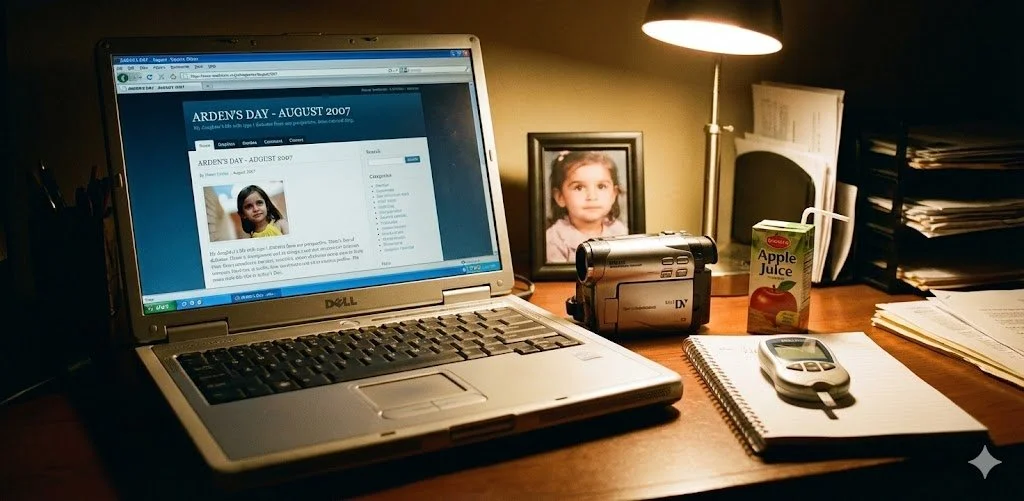
Don't miss the blog post on Arden's Day that accompanies this episode...












#003 The Time I Decided to Share
The Time I Decided to Share
Scott goes back to 2007 and the birth of Arden's Day — the first videos, the hardest early days, and why sharing the worst moments is exactly where the hope comes from.








- The origin of Arden's Day. Scott started writing in 2007 — on a piece of Mac software called iWeb, before “blog” was a household word — just to explain type 1 to family and friends who couldn’t see the daily reality of it.
- Advocacy became community. It began as fundraising for the JDRF — raw videos that helped raise around $12,000 in one walk year — then shifted into honest sharing meant to help other families feel less alone and more prepared.
- Perspective is the payoff. The hardest moments hand you a perspective Scott says would otherwise take “two lifetimes” to earn. Type 1 is never something he’d choose — but while it’s here, he chooses to learn from it.
- Where the hope comes from. You get through today, your eyes open tomorrow, and each hard moment quietly makes the next one more manageable. In Scott’s words: it never gets easier — you just get so much better at it that it can feel easy.
- The worst already happened — and she’s fine. The fear every T1D parent carries, a severe low, happened to Arden years ago. Today she’s a thriving, active kid. Scott’s point: the thing you dread most is survivable, and it teaches you how to keep it from happening again.
- Arden's Day — Scott's type 1 diabetes parenting blog — where the story, and the two archival videos he mentions, began in 2007.
- JDRF (now Breakthrough T1D) — The type 1 research and advocacy organization Scott and his family walked and fundraised for.
Every word of the conversation
Welcome & the Origin of Arden's Day0:00
This is the Juicebox Podcast episode three. I'm Scott Benner. Today, we are going to delve into the very beginning of my type one diabetes parenting blog called Arden's Day. Let's see where to start. Okay.
My daughter Arden was diagnosed with type one diabetes a few weeks after her second birthday in 2006. Just about exactly a year later, I began writing about my experience as a parent of a child who has type one online. But I didn't do it the way you're thinking of it now in 2015. In 2015, you hear somebody say I started a blog and you go, of course you did. Everybody has a blog.
Blogging in 2007, Before Everyone Had One0:44
I've been told that there are approximately 4,000 personal type one diabetes blogs on the Internet, which is amazing here in 2015. But back in 2007, I didn't really know what a blog was. I had never read one, although there were some in existence. There weren't many. And the only real reason I found blogging was because there was this piece of software on my computer called iWeb.
And iWeb allowed you to put your thoughts down on your computer and share them online. And that seemed like something that I wasn't really excited to do, but it seemed like something that I needed to do. So Arden's Day wasn't called Arden's Day when it started. It was just my attempt to reach out to my family, and extended friends and my circle, you know, the people that we knew, and explain type one diabetes. That's all I was looking to do.
How Do I Get This Out?1:46
If you have type one or if you're the parent of a child with type one, you know exactly what I mean. There's this whole life, this whole kind of microcosm of diabetes that other people just don't understand. You know, I find myself saying it all the time. Come live at my house for a week and you'll leave running scared, you know, like the Normies did from the Munsters' house. You will run away and have a completely different perspective on what's going on.
So I thought, okay. I'll start telling people about it, but I can't go door to door. You know? I can't spend my whole day calling people on the phone explaining. How am I gonna get this out?
I thought about — I used to do this thing for fun. I would get up in the morning, and while I was kinda getting myself together, I'd read the news. And I'd pick a couple of news stories and just make fun of them and email them, you know, messing around, to a couple of friends. Now you do that on Facebook. You get up in the morning, you think of something witty to say, and you send your witticisms out into the world on your Facebook status.
But a long time ago, I was doing that through email. And I remember that as being a pretty viable way of reaching people because if somebody thought it was funny, they'd send it to somebody else, and before you know it, you were getting emails like, put me on your email list about when you make fun of the news. And I thought, well, that's a good way to get this information out, but I can't send these long, full emails to people about diabetes. I'll use iWeb. I'll write my little stories, you know, little bits at a time, digestible bits at a time, and then I'll send out an email and let them know it's there, because how else, you know, in 2007, would you let someone know there was something on the Internet for them to read?
The First Viral Video4:07
So the day I picked to tell people was just a regular day. We got up. We had to go somewhere. My kids had to go to the dentist. We were gonna have lunch, etcetera. We had to drop something off at someone's house. And I remember leaving the dentist office and thinking Arden's blood sugar was okay. You know, this was before CGM and all that stuff. She was good. She was in a good spot.
And we left and got food. And I do remember thinking she needed the food. I grabbed the food, and on the way home, I just tried to stop at someone's house and drop something off. Just it was an errand I had to run. And I think we just got caught in the driveway talking for a couple of minutes, you know, and there was no insulin involved. I hadn't, you know, this is well before I would have had the nerve to give insulin before eating. So this was just the normal course of the day. We get home and we try to eat and I realize that Arden is lower than I expect her to be, and I test her, and I don't remember how low she was but she was low. And looking back now, I can see she wasn't just low. She was falling in low because as I was testing, she was getting lower.
Now, it's important to keep in mind that Arden was diagnosed when she was two. So this is happening in August 2007. Arden's, you know, three years old, maybe. It's not really easy to get a person with low blood sugar to be cooperative, but it's even less easy to get a three year old person with low blood sugar to be cooperative. As I was sort of scampering around in our kitchen, I saw the video camera, and I just flipped it. I stuffed it on a table, and I pushed the button. And then I went on handling Arden's low blood sugar. My son was there. If this was 2008, he's, like, eight years old. Arden's three.
And I don't even think about the video camera again till we're done. And it was a particularly difficult few minutes. She was crying and snot coming out of her nose, and she was having trouble being reasonable. And I didn't know what the hell I was doing. And when we were finished, I remember feeling sick about videotaping it. I felt really, really sick about it. And I didn't look at it for a while. But finally, when I did look at it, it was so shocking to me still. And I thought, well, this is something other people should see. Right?
Advocacy vs. Community: Why I Blogged7:11
I've been spending this time on this blog talking about the JDRF and low blood sugars and all these things that no matter how hard you try to explain to people, I just don't think the reality of it really comes through unless you're there. And I thought, okay, well, maybe this will help. Blogging was different for me back then. I wanted people to understand type one diabetes, but I wanted them to understand it so that they'd become advocates, that they would donate to organizations that were looking for cures and advancements, because I am not a doctor, and I desperately wanted to help move my daughter towards a better life.
And so I was trying to use the blog for — I can't honestly tell if I was blogging for the reasons I am today, which is sharing so that, hopefully, you can feel less alone or have a sense of preparedness in a situation when it comes up that you've never experienced before. You know, when something terrible happens and you think, oh god, I did read about this happening to somebody else and they made it through okay. And I even do remember a couple of the steps that they took. I mean, that's me today talking about and writing about type one diabetes.
It's a sharing, community-building endeavor. Back then, I just wanted you to be interested in helping my daughter to not have type one anymore. So my point is I don't think I would share that video today because it's too personal — and that's coming from a guy who shares a lot of stuff online. A lot of transparency, a lot of honesty here on Arden's Day. And you know what? Coming here on the Juicebox Podcast, there's gonna be even more of it. But I still — I can't tell you I would definitely share the video.
But back then, I thought if this makes you understand and reach into your wallet and pull out $50 or $100 or $10, so the video goes online, and it probably does exactly what I was hoping it would do, because I think we must have raised — my god, I think we must have raised $12,000 that year. That was our second year walking for the JDRF. You know, the first year, Arden had only been diagnosed for a couple of months. I think we raised a thousand dollars. But that next year, with the blog behind me and my motivation at an all time high, we raised a lot of money. And I'm sure that video, and the video of Arden getting up in the morning and seeing a needle go into a little kid's leg, I'm sure that had a lot to do with it. And I'm, in retrospect, proud of it and happy that we did it. I don't look back on it and think we shouldn't have done that.
So the blog begins. It's real advocacy heavy at first. But at some point, I feel like my asking is getting repetitive and boring. And I'm starting to see, through interactions with a community, that the videos and the sharing is really helping people. So I start writing more about the diabetes and less about the hey, help us raise money. And then I see those blog posts starting to connect with people. And my little blog that's reaching not many people starts reaching a few more people and a few more, and I start really seeing the benefit of the transparency and the honest sharing. I think the first really personal thing that I shared in writing — and you might go back and read and disagree, you might see something sooner —
A Heartbreaking Birthday Wish11:21
is that in that coming year, after the videos, we find out that Arden, as she approaches her fourth birthday — you know, we told her, I don't know what you tell little kids, you know, make a wish on your birthday. And I guess she knew that. And her aunt came to us and said, you know, I just thought you should know that Arden's telling people that she's wished for her diabetes to go away and that she's not gonna have type one anymore when her fourth birthday comes. Now that was something that, sitting here now and looking back at when I wrote about it years ago, it's just as heartbreaking today as it was then.
And it's still, to this day, remains one of the more terrible things that's ever happened to me. Oddly, not the knowledge that my daughter was running around telling people that she had wished for her diabetes to go away and it was going to. That wasn't the terrible part. The truly horrible part of it was having to be a parent and sitting down with your four year old, not even four, and explaining to her that she could not wish away her disease, that when her fourth birthday came, she was gonna wake up and still have diabetes. And I'll tell you that that was the very first time I recognized that children, despite their age, are experiencing things exactly the way you and I are.
Maybe they can't talk about them the same way. You might not see the stress or the worry on them, but when we told Arden that her diabetes was not gonna go away for her birthday, she cried like an adult who had lost someone they loved. It felt like you were at a funeral. And we have spent a lot of time since then making sure that Arden's hope doesn't die. And I think that also has been happening on the blog too.
So, terrible and as really depressing as the last two minutes I've been speaking is, it's not. And I'm gonna tell you why. Okay. You may have heard a click there, of a mouse when I paused the recording, and it is because I walked away for a second to make sure that I came back after that description of the first year and a half of the blog as, you know, something that didn't sound very upbeat. But I really want you to hang on, because this is gonna pay off for you just like it paid off for me in just a second.
Reframing the Diabetes Experience14:15
So to reiterate: blog starts. I'm just trying really hard to make advocates because I can't cure type one diabetes and I'm hoping to drive money towards the people who are trying. I use honest stories and video of stuff that people really would never imagine was happening in someone else's life as a way to bring you right into ground zero and see it. It does create advocates and it does create donations, but it's also bleak, and I start understanding that people are reading the blog who also have type one diabetes. People like you, parents of children who have type one.
And while I am showing them a mirror of their life, I'm not reflecting back anything positive at the moment. It's not bad fundraising, but it's fundraising. And it's not everything I want it to be anymore. And so now I have to start sharing my process. Something happens. There's a moment or an experience or something that you would expect is terrible. I gotta come back and tell the story from the other end. What did I learn? What came out of this? You know, what's the upside? What happened? And here's what I've learned. Whether it's my wife and I sitting in our house dealing with Arden's birthday wish, or another moment that seems just unfair — these experiences lend you a perspective that you'd have to live a lifetime or two to get in a normal circumstance.
So type one diabetes sucks. I would trade it right now for anything. Never think otherwise. But as long as it's here, I'm gonna learn the lessons that it's teaching, because I need those lessons to deal with the next moment. I am building myself into a parent every day and into a better adult than I was yesterday, and that can only benefit my children, type one diabetes related or not. So I'm gonna take what I can get out of this thing, this diabetes disaster, and I'm gonna try to grow. Because when something happens that the person you were before diabetes was in your life can't imagine — you know, when you were having children and you thought of all the things that were gonna happen, you never thought this was gonna happen. You never thought you'd be at the mall hiding down a corridor by a bathroom changing an insulin pump, or forcing your kid to drink a juice box at 03:00 in the morning when they're not even awake. You never imagined any of that, but now it's here. When those moments happen, when you find yourself in your kitchen getting ready to record a video for this blog that you don't even want to be doing, you're just doing it because you're trying to defeat type one diabetes with a blog, and your daughter just starts talking about a seizure she had when she was two. When that happens and you have to stand there and be an adult and say the right thing when they're done talking, you grow. And as much as it hurts, it teaches you.
Where the Hope Comes From17:43
And when you wake up the next day, that's where the hope comes from. When something really crappy happens today and your eyes still open tomorrow and you're not dead and it didn't knock you down, that's where the hope grows. And it reframes your ability to handle the next moment that's coming, and that's the value in it. So getting through today's issue is not only making you stronger for the next time it happens, it's going to eventually turn you into a person who doesn't see that as an issue anymore. And you will be zen-like. You will be Matrix-like at some point with type one diabetes.
Now maybe you're listening to this right now and your child's been diagnosed for a long time, or you've had type one diabetes for a long time, and you're thinking, yeah man, tell people. Tell people that type one diabetes doesn't get easier, but you get so much better at it that it almost feels easy at times. Tell them that's coming even though they can't believe it at the moment. Find these newly diagnosed people, these parents who are a month into diabetes or six weeks or a year, who are still struggling and thinking that it's never gonna get better — let them know it's coming. And that is what I'm hoping to do.
And that's what I started to try to do with the blog back then too. I started seeing my life as it was unfolding and these lessons building on each other, and I thought, I never would have believed this back in the beginning. I should tell somebody else. This isn't information I should keep to myself. So if me sharing creates a sense of sameness or a sense of calm or a sense of preparedness for you — some people say reading ahead in the blog when their child was just diagnosed makes them feel like, oh, that sucks, but at least I know it's coming, or that it may come. Maybe when it happens, I won't be completely knocked over by it. If the blog's doing that for you, I am very glad of that. It's as heartwarming as you can imagine.
I just want you to know that some really bad stuff has happened to me, to my wife, to my son, and mostly to my daughter Arden. And we're still here. We're stronger than we were then. We're smarter than we were then. We're more resilient, more determined, and more transparent, because stuff that you couldn't imagine before you had children and before diabetes came to you is going to keep happening to us. We are gonna continue to respond to it with our ever growing and ever building knowledge database of life, and I'm gonna keep sharing it back with you, and I hope you keep adding to yours. Here's the takeaway. Having type one diabetes is not fun. It's not anything good, but it's not everything bad. And there are a lot of things that are gonna happen to you in the course of a day, a week, a month, a year with type one diabetes that, sure, hindsight would tell you is not positive. And maybe you don't need that much perspective in your life, and you're not looking for that much knowledge, but it's here. You're not getting away from it.
Learning from the Worst Moments21:28
You're not gonna cure diabetes today. It's not gonna go away tomorrow, but it is gonna keep teaching us lessons. And it really is up to us how we respond to those things. Are you gonna put your head down and say, I can't do this? Or are you gonna pick your head up and say, look, I did it yesterday. I can do it today. It's not killing me. And let me see the positives in this. You know, instead of just always thinking about the negatives. I mean, my god, I'm as tired as you are. I am tired. And there are days when I look up and I think, no. Not today. Please don't need an insulin pump change today. Or why is this blood sugar high? I did everything right. I know that happened, but you've gotta roll with it quickly. Quickly in and quickly out of the situation. You recognize it. Yeah, maybe let out a big sigh. You handle it, and you move on. Bang, bang, bang.
There is no sitting around lamenting or feeling sorry for yourself. You wanna cry, go in the bathroom, cry, dry your eyes off, come out, and keep going, because you can, because I'm doing it, and my god, there's nothing special about me. There's absolutely nothing special about me. I hate diabetes. I love my daughter. I wanna see her live as long and as healthy as possible. I want each day to be as unencumbered as it possibly can be. So whatever bad stuff happened yesterday, I just look at it as a lesson for tomorrow. And I just keep building on what I know about type one, what I know about resilience, what I know about parenting, and what I know about love. And that information, those experiences, those feelings, they make the next time — I don't wanna say easier, because it really is never easier. I just keep getting better at it, and that makes it feel easier.
It's gonna work for you too. I promise. I promise, if you keep a good attitude. I promise, if you keep paying attention to what's going on, eventually you will build up your ability to slow everything down. You know, it's getting to be an old reference now, the Matrix has been out for quite some time, but the very first time something went wrong — you know, that one video that I hope you go back and look at is of Arden describing her having a seizure when she was, I don't know, she must have been about two and a half.
The Seizure Video24:24
I feel like it was about six months after her diagnosis. And a year later, completely out of the blue, she starts talking about this seizure and describing it. And I still have this video camera out because I'm making a blog. And I do it again. I flip the video camera on. It's pointing at her. She has no idea it's there. And she describes some pretty heady stuff. Three and a half year old girl talking about her eyes changing colors, which, if you really listen to her, what she's saying is she was blind. She talks about turning into a monster, but if you pay attention to what she's really saying, she was grunting because she couldn't talk during the seizure. That's about as low as it gets, man. My two and a half year old daughter had a seizure because I gave her too much insulin for some food.
It's just like an old man. It's an old man that looks like an old man.
You talking about when your blood sugar gets low?
Yeah. But when I, like, talk, it's not real good and stuff.
You weren't able to talk? Did your voice make a different sound? Do you remember that?
It makes, like, an animal sound, like a fever and stuff. How did your eyes work when you were having your seizure? It was really — I couldn't see what I was doing. It was weird, like, that was scary, and it was a monster.
She's Still Here26:04
But we're still here. She's still here. She's fine. That's pretty much the worst thing you could have — I mean, I know right now, as a parent of a child with type one diabetes, your biggest fear is that your kid might have a seizure. Mine did. She's still fine. She's still the kid you see on the blog, hitting a softball, playing basketball. She is as active and as everyday a kid as anybody else. And the worst thing you can imagine has already happened to her. And I gotta be honest with you, it's happened twice. Happened about a year later too. Still here. Has it happened since then? No. That was — you know, she was two and a half when that happened. She's gonna be 11 this summer. So I learned. I figured it out. I figured out what I did wrong. I don't do that anymore. If I make a mistake now, I know how to take care of it better.
But that's not the takeaway for you. The takeaway for you is: the worst thing you can imagine happened to my daughter, and she's still fine. We can keep that from happening to your kids with some resilience and some hard work. You can take my mistakes and turn them into your knowledge. But please leave this recording, leave it, with the knowledge that nothing is as bad as you think it's gonna be. And at least when it feels horrible, it's teaching you something. Type one diabetes teaches a lot about life. It teaches a lot about who you are and who you want to be and how you want to be that person and what you want to accomplish today and what you are hoping to accomplish tomorrow, and what is your goal. Not a lot of people know what their life goal is, but you do, don't you? I know what mine is.
We have a perspective on life, as the parents of children with type one diabetes, the people who live with type one diabetes. We have a perspective on life that you should have to live two lifetimes to gain. And maybe that's unfair, and I actually think it is. I think you should have to live a whole full life to know some of the things I know. But man, if it helps me take better care of my family, then I'm glad I have it. And I want you to be glad you have this knowledge too. So that's pretty much it, people. This was number three. Juicebox Podcast episode three felt like a bummer, but maybe it's not. I hope it wasn't. I hope you come back next week. So come on back.
Music for the Juicebox Podcast composed and performed by Sydney Miller. If you enjoyed this podcast, please review it on iTunes.
Read the full disclaimer
© 2007–2026 Juicebox Podcast. All rights reserved.