#1734 Defining Diabetes: Priming
You can always listen to the Juicebox Podcast here but the cool kids use: Apple Podcasts/iOS - Spotify - Amazon Music - Google Play/Android - iHeart Radio - Radio Public, Amazon Alexa or wherever they get audio.
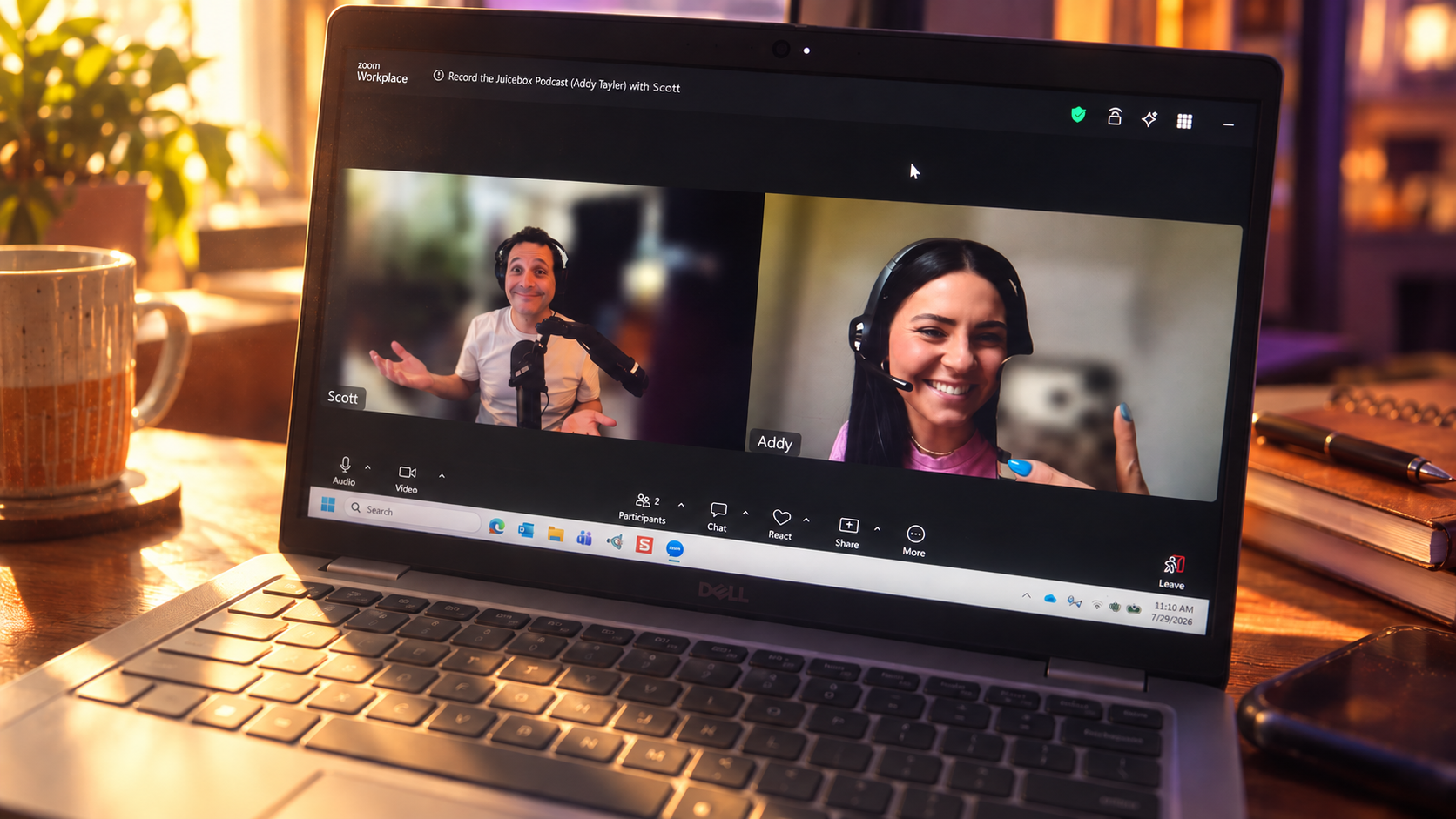
Scott and Jenny define "Priming" in this Defining Diabetes episode. Learn why filling pump tubing and cannulas is essential to avoid air gaps, and how the process differs by device.
+ Click for EPISODE TRANSCRIPT
DISCLAIMER: This text is the output of AI based transcribing from an audio recording. Although the transcription is largely accurate, in some cases it is incomplete or inaccurate due to inaudible passages or transcription errors and should not be treated as an authoritative record. Nothing that you read here constitutes advice medical or otherwise. Always consult with a healthcare professional before making changes to a healthcare plan.
Scott Benner (0:0) Welcome back, friends. (0:01) You are listening to the Juice Box podcast. (0:15) Managing diabetes is difficult, but trying to do it when you don't understand the lingo, that's almost impossible. (0:21) The defining diabetes series began in 2019, and today we're adding to it. (0:26) Go to juiceboxpodcast.com up in the menu, click on defining diabetes, and you'll see a complete list of all the terms that we've defined so far.
Scott Benner (0:38) If you're living with type one diabetes, the After Dark collection from the Juice Box podcast is the only place to hear the stories that no one else talks about. (0:48) From drugs to depression, self harm, trauma, addiction, and so much more. (0:55) Go to juiceboxpodcast.com up in the menu and click on after dark. (0:59) There, you'll see a full list of all of the after dark episodes. (1:05) While you're listening, please remember that nothing you hear on the Juice Box podcast should be considered advice, medical or otherwise.
Scott Benner (1:14) Always consult a physician before making any changes to your health care plan or becoming bold with insulin. (1:29) I wish I could tell everybody what we're laughing at as we start this episode of defining diabetes, but I can't. (1:33) That's between Jenny and I. (1:35) I think this one's gonna be a short one. (1:37) I just need to define priming.
Scott Benner (1:40) I realized this never made it on the list because Arden has an Omnipod and has her whole time. (1:46) And I just watched somebody the other day on who was I watching? (1:50) Oh, I had, you don't know TikTok, but I had a woman named Marley.
Jenny Smith (1:55) I know it. (1:55) I just don't I don't TikTok. (1:57) Yeah. (1:57) I don't TikTok. (1:58) I think
Scott Benner (1:58) it's a pretty good indication that you're not on TikTok. (2:00) Marley is the mom of this little boy named Bane who was diagnosed really young. (2:05) Right?
Jenny Smith (2:05) Okay.
Scott Benner (2:07) I had her on the podcast recently. (2:08) So I was making a TikTok to, you know, kinda connect with her so people could tell she was on. (2:14) And I looked through some of her videos, and there she was priming tubing.
Jenny Smith (2:18) Uh-huh.
Scott Benner (2:19) And, like, holding it up, stripping. (2:21) I think it was her. (2:21) By way, if it wasn't her, I'm sorry. (2:22) It was somebody. (2:23) She's holding it up.
Scott Benner (2:24) It's stripping out. (2:25) She's trying to assess if it's working. (2:27) Cannulas, you know, little stickers with, like, you know, cannulas on them. (2:31) And I went, I don't know anything about this stuff.
Jenny Smith (2:34) Mhmm. (2:35) Because you've never used I she Arden's only ever been Omnipod and has never used anything else.
Scott Benner (2:41) Never. (2:41) I was like, I don't understand. (2:43) I mean, I understand what you're doing. (2:44) I'm not an idiot, but, like, I, hands on, don't know what it is. (2:47) So Right.
Scott Benner (2:48) So priming defined is?
Jenny Smith (2:51) So priming defined is and you talk about tubing. (2:54) Right? (2:54) There is in tubed pumps. (2:57) It's a little bit different in Omnipod. (2:59) I can describe the difference.
Jenny Smith (3:00) But in tubed pumps, you have to actually fill the tubing to begin with, in which case at the end of the tubing is your cannula, which is what goes under the skin to deliver the insulin. (3:11) Right? (3:11) So you're filling the tubing first, watching for drip drips to come out of the end of the cannula.
Scott Benner (3:19) Mhmm.
Jenny Smith (3:19) But in all except steel needle cannula, the normal plastic flexible cannulas, once they are inserted and you remove the insertion device, a needle gets pulled out. (3:33) Okay. (3:34) That's what delivered the cannula under the skin. (3:36) Mhmm. (3:37) So what does that mean?
Jenny Smith (3:38) Yes. (3:39) You saw drips coming out, when you remove that needle can nail that needle from the interior of the cannula, what's now in the cannula? (3:48) Blood.
Scott Benner (3:49) Oh, I was gonna say blood, but I don't know why. (3:51) But air. (3:51) Okay. (3:51) Oh,
Jenny Smith (3:52) okay. (3:52) Underneath. (3:53) Right?
Scott Benner (3:53) Okay. (3:53) And then so you have to prime it out.
Jenny Smith (3:55) Push insulin through. (3:57) Prime every time you put that under your skin then, there is a priming key on your pump. (4:03) It it encourages you. (4:05) This is priming time. (4:06) Each cannula length has a specific priming dose that you have to put in.
Jenny Smith (4:12) Oh. (4:12) So based on three millimeter, nine millimeter, six millimeter kind of cannula, there's a certain dose of insulin that you have to prime that cannula that's now sitting under your skin, but it is it's hollow. (4:24) It's empty.
Scott Benner (4:25) Okay.
Jenny Smith (4:25) If you don't prime, you end up missing that amount of insulin until you've delivered enough bolus or basal has dripped in enough to fill the space, which can create, as you like to call it, kind of a black hole into the future of insulin. (4:40) Right?
Scott Benner (4:41) Right.
Jenny Smith (4:41) There's prime the cannula, fill it with insulin so that as the basal starts dripping, it's absolutely dripping underneath the skin.
Scott Benner (4:48) There's no gap.
Jenny Smith (4:49) There's no gap.
Scott Benner (4:50) When I have to shut the water off at my house to fix something in the toilet, and then I turn it back on, and you have to open up the faucet to let the air out again. (4:57) This is the idea.
Jenny Smith (4:58) Similar idea. (5:00) Exactly. (5:00) Yeah. (5:01) And as I said before, you know, even tubed pumps, some users, myself included, I could never use the the little flexible cannulas when I was using a tubed pump.
Scott Benner (5:11) Okay.
Jenny Smith (5:11) I always use the steel needle cannulas. (5:14) The steel needle cannula is kind of like a thumbtack. (5:17) It gets popped right underneath the skin, and you have primed the tubing. (5:20) Mhmm. (5:21) You've watched for the drips to ensure that it is coming out.
Jenny Smith (5:24) You pop that under your skin, but you don't pull the needle out.
Scott Benner (5:27) Right.
Jenny Smith (5:28) It's The cannula is the steel needle, and so there is no priming with a steel needle.
Scott Benner (5:33) There's no priming with a steel needle. (5:35) Okay.
Jenny Smith (5:36) Once you pop it under your skin, the cannula is the steel needle in which you've already watched the drips take place before you put it under your skin.
Scott Benner (5:44) So then in either scenario god. (5:46) I hope I get this right. (5:47) You fill the tubing
Jenny Smith (5:49) Yes.
Scott Benner (5:49) Then you prime the cannula once it's inserted. (5:54) You don't have to do that with the steel. (5:57) Correct. (5:57) But you do have to fill the tubing with the seal.
Jenny Smith (6:00) But you still have to fill the tubing. (6:01) Yeah. (6:01) Absolutely. (6:02) And you always fill the tubing without the cannula under your skin. (6:06) Mhmm.
Jenny Smith (6:06) You never wanna fill tubing with it under your skin. (6:09) Right? (6:10) Now Omnipod, you're right in terms of it doesn't technically do priming yourself, but it does it itself. (6:17) It's an automatic process.
Scott Benner (6:19) That's the clicking.
Jenny Smith (6:21) It is. (6:21) So once you when you have it laid down and you filled it with insulin. (6:24) Right?
Scott Benner (6:25) Mhmm.
Jenny Smith (6:26) What it's actually doing there is it's pushing the the little, valve at the bottom of the car the cartridge inside the pod. (6:34) Right. (6:35) It's pushing it up to meet the back of the insulin amount that you filled it with. (6:39) Mhmm. (6:40) That's it's almost fill tubing if you think about it.
Jenny Smith (6:43) Yeah. (6:44) So it's getting rid of air in the cartridge. (6:45) But then once you put it on yourself and you hit deliver or insert cannula, right, I have to think of the words. (6:52) They use insert cannula. (6:54) It does that clicking.
Jenny Smith (6:55) And once it clicks, it has inserted the cannula under your skin. (7:01) The needle has been retracted. (7:02) You get the little pink square on the top of the pod to indicate that that's what happened.
Scott Benner (7:06) Right.
Jenny Smith (7:06) And that clicking is the actual fill and priming of the cannula.
Scott Benner (7:13) Okay. (7:13) So in my mind So
Jenny Smith (7:15) it does it all for you, which is why you have no clue how to do it.
Scott Benner (7:18) I mean, she's, like, dangling it up. (7:20) It's dripping. (7:20) I was like, I've never been through this in my life. (7:22) I could change an Omnipod. (7:24) I'm gonna I'm gonna say, if you put a vial in front of me, a closed pod, and a human arm, if you gave me those three things, I think that I could get a pod onto somebody and insert it in less than ninety seconds.
Scott Benner (7:38) I've done it so Absolutely. (7:40) So many times. (7:41) Like, you know, almost with my eyes closed.
Jenny Smith (7:43) Yeah.
Scott Benner (7:44) Yeah. (7:44) Yeah. (7:44) I mean, the priming takes the longest amount of time. (7:48) And there's a little so there's you put it in, it it primes. (7:51) Right?
Scott Benner (7:52) And it's like there's a little clicking with that. (7:53) Do you do the tap tap at the end of the priming to clear the oh, Jenny just looked at me like she doesn't know what I'm talking about. (8:00) So after the pod primes, you pop off the needle cap.
Jenny Smith (8:04) Yeah.
Scott Benner (8:04) I always pinch the pod at the back and then smack it in the center over my finger a couple of times to knock any loose insulin out of the window because it keeps
Jenny Smith (8:16) because it helps I
Scott Benner (8:18) You know what I mean?
Jenny Smith (8:19) Because the viewing window then doesn't look like it constantly is wet.
Scott Benner (8:22) Right. (8:22) And your skin doesn't like, because if there's too much in there, you can get, like, almost irritated from it as well. (8:27) Like, all that insulin is just laying in there, plus it's hard to see in the window. (8:30) I do that. (8:31) Or I realized I I think Arden does it only because she saw me do it.
Jenny Smith (8:35) Probably. (8:36) Yeah. (8:36) It's a habit now to do that. (8:38) Yeah. (8:38) Yeah.
Jenny Smith (8:38) Yeah. (8:39) Yeah. (8:39) No. (8:39) I don't do the tap tap. (8:40) Now every time I do it, I feel like it's supposed to be like, I've never in the twenty years no.
Jenny Smith (8:46) Is it twenty? (8:47) Twenty years. (8:47) Oh my gosh. (8:48) Really? (8:48) Twenty years that I've used Omnipod.
Scott Benner (8:50) Wow. (8:51) Were you right from the beginning with it?
Jenny Smith (8:53) I used Animus, and then Omnipod came out in 2005. (8:57) And once Omnipod was out, I had a friend who actually I was in the stage of deciding on a new pump.
Scott Benner (9:06) Mhmm.
Jenny Smith (9:07) And at that time, I'd started doing triathlons, and I was kind of really to the point of irritation with having to disconnect all the time and whatever with the swimming part of doing triathlons.
Scott Benner (9:17) Yeah.
Jenny Smith (9:17) And she's like, just wait, Jenny. (9:19) She's like, there is this pump coming out that you won't have to do that. (9:22) There's no tubing. (9:23) It's waterproof. (9:24) Blah blah blah.
Jenny Smith (9:25) She got me connected with the clinical rep for the area where we were living. (9:29) And then as soon
Scott Benner (9:30) as it was out on the market, I it
Jenny Smith (9:32) was covered by my insurance, thankfully.
Scott Benner (9:34) So Wow. (9:35) That makes me knowing that timeline changes a little bit, even the story I have about Arden getting on a pump at first doesn't fit here. (9:43) But, yeah, because Arden we put her on a pump right before she went to kindergarten because it was in our head that we didn't want her to we didn't want a stranger to give her shots, actually. (9:53) Think that is exactly why why we did it. (9:55) Yeah.
Scott Benner (9:55) I don't even think we understood the how valuable the pump would be when we decided to get a pump. (10:01) It wasn't till we really started paying attention to it that we knew. (10:04) Okay. (10:04) Alright. (10:05) I'm sorry.
Scott Benner (10:05) This was great. (10:06) I really appreciate it. (10:07) Thanks so much. (10:07) Yes. (10:08) See you.
Scott Benner (10:14) Okay. (10:15) Well, here we are at the end of the episode. (10:17) You're still with me? (10:18) Thank you. (10:18) I really do appreciate that.
Scott Benner (10:20) What else could you do for me? (10:22) Why don't you tell a friend about the show or leave a five star review? (10:26) Maybe you could make sure you're following or subscribe in your podcast app, go to YouTube and follow me or Instagram, TikTok. (10:35) Oh, gosh. (10:35) Here's one.
Scott Benner (10:36) Make sure you're following the podcast in the private Facebook group as well as the public Facebook page. (10:42) You don't wanna miss please, do you not know about the private group? (10:46) You have to join the private group. (10:48) As of this recording, it has 74,000 members. (10:51) They're active talking about diabetes.
Scott Benner (10:54) Whatever you need to know, there's a conversation happening in there right now. (10:58) And I'm there all the time. (10:59) Tag me. (10:59) I'll say hi. (11:01) If you'd like to hear about diabetes management in easy to take in bits, check out the Small Sips.
Scott Benner (11:08) That's the series on the Juice Box podcast that listeners are talking about like it's a cheat code. (11:13) These are perfect little bursts of clarity, one person said. (11:16) I finally understood things I've heard a 100 times. (11:19) Short, simple, and somehow exactly what I needed. (11:22) People say small sips feels like someone pulling up a chair, sliding a cup across the table, and giving you one clean idea at a time.
Scott Benner (11:30) Nothing overwhelming, no fire hose of information, just steady helpful nudges that actually stick. (11:36) People listen in their car, on walks, or rather actually bolus ing anytime that they need a quick shot of perspective. (11:43) And the reviews, they all say the same thing. (11:46) Small sips makes diabetes make sense. (11:49) Search for the Juice Box podcast, small sips, wherever you get audio.
Scott Benner (11:54) If you have a podcast and you need a fantastic editor, you want Rob from Wrong Way Recording. (12:00) Listen. (12:01) Truth be told, I'm, like, 20% smarter when Rob edits me. (12:05) He takes out all the, like, gaps of time and when I go, and stuff like that. (12:10) And it just I don't know, man.
Scott Benner (12:11) Like, I listen back, I'm like, why do I sound smarter? (12:14) And then I remember because I did one smart thing. (12:17) I hired Rob at wrongwayrecording.com.























Please support the sponsors





The Juicebox Podcast is a free show, but if you'd like to support the podcast directly, you can make a gift here. Recent donations were used to pay for podcast hosting fees. Thank you to all who have sent 5, 10 and 20 dollars!
