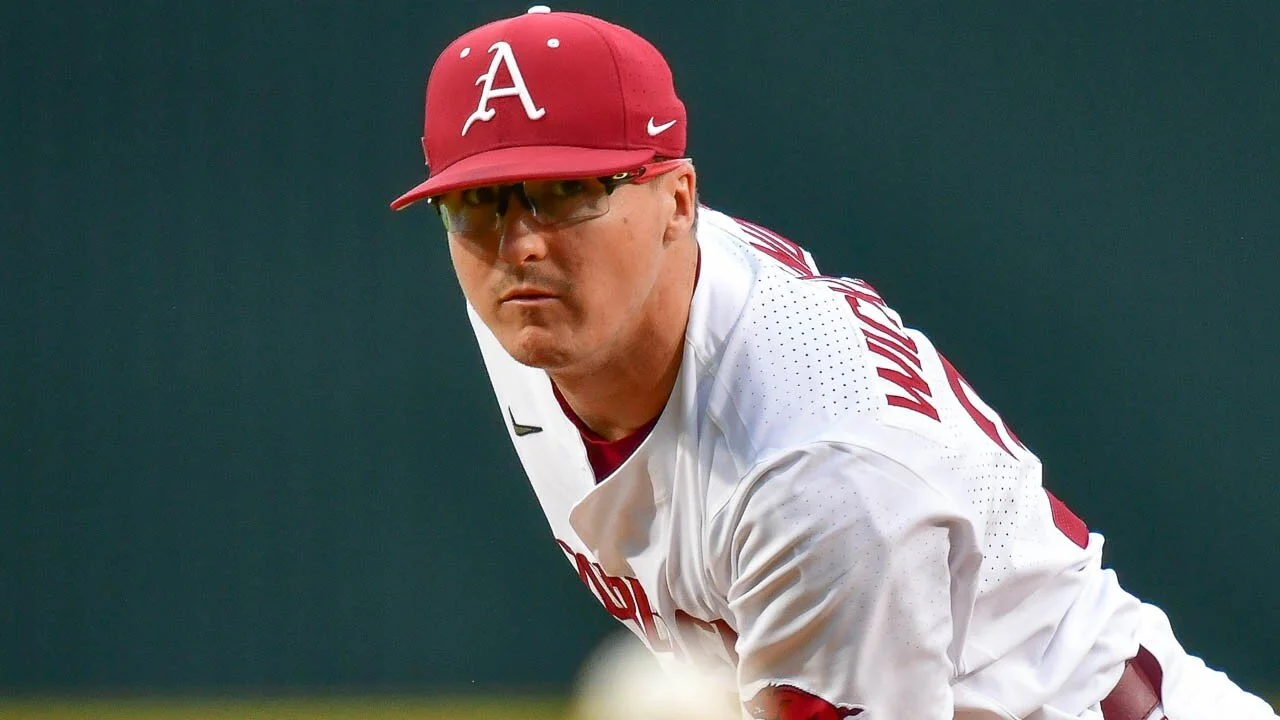
#512 Patrick Wicklander was Drafted by the Tampa Bay Rays
Patrick Wicklander was just drafted by the Tampa Bay Rays.
He was diagnosed with type 1 diabetes last year.

You can always listen to the Juicebox Podcast here but the cool kids use: Apple Podcasts/iOS - Spotify - Amazon Music - Google Play/Android - iHeart Radio - Radio Public, Amazon Alexa or wherever they get audio.
+ Click for EPISODE TRANSCRIPT
DISCLAIMER: This text is the output of AI based transcribing from an audio recording. Although the transcription is largely accurate, in some cases it is incomplete or inaccurate due to inaudible passages or transcription errors and should not be treated as an authoritative record. Nothing that you read here constitutes advice medical or otherwise. Always consult with a healthcare professional before making changes to a healthcare plan.
Scott Benner 0:00
Hello friends, and welcome to Episode 512 of the Juicebox Podcast.
With the 200 and 51st pick, in the 2021 MLB draft, the Tampa Bay Rays have selected Patrick wick lender. And Patrick's on the show today, just a week and a half after he was drafted. It's pretty excited. He's gonna talk to you today about what it's like to have type one some of the family history has around type one playing in school, we'll go through his diagnosis story, talk about being drafted. And a lot more.
Please remember, while you're listening that nothing you hear on the Juicebox Podcast should be considered advice, medical or otherwise, always consult a physician. The word physician just got caught in my throat, I'll try again, always consult a physician before making any changes to your health care plan are becoming bold with insulin. About Patrick, getting drafted. pretty damn cool. Let's hear about it.
Not gonna put any ads on this episode, but I am going to remind you about the advertisers. Here's why I'm doing that. The show is my job. And I'm able to treat it that way. Because of the advertisers just getting Patrick on the show in a timely fashion. After he was drafted before he goes to sign his contract and all the stuff that has to happen. A lot goes into that a lot of scheduling and trying and doing things at odd times. And because this podcast is ad supported, I can make the time for that I can be available for those things. So I'm squeezing in an extra episode here this week. So I don't really have any ads for it. But it wouldn't exist without the support of Dexcom on the pod Contour Next One blood glucose meter, g evoke hypo pen touched by type one, that relationship I have with the T one D exchange every time you guys sign up for the exchange, I get some compensation. That's not really an ad thing. They don't buy ads. But there's that even all of you who bought me a cup of coffee, you make it possible for me to be available to do this stuff. And so I appreciate you. Advertisers appreciate you. And that's why we've got a conversation today with Patrick. So that's it. There's links in the show notes and links at Juicebox Podcast comm to all of the advertisers, if you need one of those things, or you're interested in one of those things that I mentioned, just using my link is a lot of support for the show.
Patrick Wicklander 3:09
I'm Patrick Wicklander born and raised San Jose, California. Just finished my junior season. University Arkansas, left handed pitcher drafted a throne 20/51 pick overall by the Tampa Bay, Tampa Bay Rays.
Scott Benner 3:23
Is that like the best thing you've ever said out loud? Honestly, yeah. I imagine I think our conversation is gonna go differently than it goes with a lot of people. So the first thing I'm interested in knowing is how old were you when you started playing baseball? or five, right? Or Five, four. Right? I remember. My son was born in February. And my wife started bothering me the spring of that he was three years old. She's like, he's got to play baseball, like because we bought him. So we bought this house right. And we were, we had to clean up the outside, there's a lot of work to do. And, and he was, you know, two, three years old, we bought him this little plastic T and a plastic bat and some balls and we stuck it in the backyard like the backyard or like a bomb went off in it. So we're like, here's a safe split space. And my wife and I are picking sticks up and we're cleaning things up and trying to get it looking like a like a yard. And we just notice, like three year old Cole is just taking the same exact swing over and over again, the ball is just going like this little plastic balls going like 45 feet into the same spot over and over again. And my wife's like he might be good at this. So you know, you go to the little league and they laugh. They're like you got to be five to play Little League Baseball. So I think we took him to the YMCA. And I was like, Come on, let him play. So he played his first game when he was four. And yesterday I was out on a football field with him while he was throwing in long toss and everything so I'm starting to get too old for it. I gotta tell you, Patrick, my pointer finger on my gloved hand is bruised and it's purple and it hurts and I don't think he throws nearly as As you do so your dad must have given up a long time ago is what I'm saying? No. So my dad, I think it was like 11 or 12 years. I can't play can't do anymore. Yeah. I was like, I remember, I remember the day I knew I shouldn't do it. And I'm still because we don't live in a baseball Mecca. Like there's, there's no one form to do it with. Like he's trying to do a thing that other people aren't trying to do, and you can't find people to. So I'm out there. So Patrick, I will tell you a secret. I know I've never said on this podcast before. When I have a catch with call. I've learned because my eyes have changed over time. That's the biggest problem, right? Your hand is not bad. It's that your vision goes to the ball sort of disappears on its path a couple of times like you see it that you don't see it, then it's back again. And it's way closer the next time you say it. So I don't let anything extraneous bother me. I stare in his eyes the entire time we're having a catch. And I think in my head every time I see his arm move, I think I swear to God, I think to myself in my head, I go catch the ball, catch the ball catch.
Patrick Wicklander 6:05
Okay, let's meet with one of our freshmen last year. So we have a freshman he's down to 99.6. So I'm not going to give him credit for 100 yet yeah, like a true freshmen. 1819 years old. I'm playing catch with them. And I'm always online, I bomb Walker. And so like, behind me, I have all these fans. I'm like, I can't miss a ball or kiss. A kid is going to the hospital.
Scott Benner 6:31
Exactly how I feel. I think if I eat this ball, first of all, he'll never do this with me again. And I don't know who else he's got to do it with. And and I am never going to live it down. And plus, it looks like it's really going to hurt. So I just think to myself, like do not for anything if the world blows up right now. Catch the ball first is how it feels. So So tell people a little bit like what is your memory of playing baseball as a child? Do you have any? Or how does it feel to you when you look back on it?
Patrick Wicklander 7:01
Gosh, I play bass. I played so much baseball. I look back on I played so much baseball. A best memory I would say is my freshman year going to the World Series in 2019. I mean it was just like the atmosphere all like festivities stuff like that. Just playing in front of that big of a crowd. Yeah. Like Don't get me wrong. You probably like you and your listeners probably seeing what our regional look like when Charlie watch it that walk like that. Go ahead to run jack. He has a basket that place was wild, right? But playing in front of the pack, TD Ameritrade, Omaha, Nebraska, there's
Scott Benner 7:44
no better feeling. Yeah, it's interesting what happens to the crowd once people start collecting. So this is not nearly as similar story. But my son was playing for like, some district title when he was a little kid. And something like 500 people showed up to this little field and they had it surrounded. And I think he was in left that day. And the ball went in the corner. And he said he was heading into the corner and there were grown men yelling at him. Don't worry, he's not going don't throw it don't drop the ball. Like he's like I was like 12 years old. And they were screaming in my face, like, let it go. Let it go. He's like he said, he said he picked the ball up. He made a throw. And he's walking back to his position. He's like, wow, these people are really excited to be here. And he said he thought more excited than I am, I think. But something about when everybody gets together and then something happens and adjust. And then something on that level. It's just crazy. You know,
Patrick Wicklander 8:40
the first time I experienced like a huge crowd like that. It was my senior year we're playing for our sectional, I would say because California is home state for some reason. And so it was our sectional title. And we're playing a low a park in my hometown of San Jose. And we're playing like one of our rival high schools. And like, the minor, the minor league team doesn't get the stadium filled out. We had this place pack like there's people standing on the side. I was like, Well, is it gonna be this is gonna be fun.
Scott Benner 9:14
Everything is feels multiplied. Did you? Have you always pitched or did you play? I mean, we're a little kid you do more than one thing, but when did you
Patrick Wicklander 9:23
just oh, I've always I've always pitched I wasn't I kid that through Harvard never really knew where I was going until I was like 12 or 13. But up until eighth grade I actually caught blue not left handed catcher.
Unknown Speaker 9:34
Yeah. We're younger growing up, like bigger than the other kids. Not not like Jurassic I was just a little taller.
Patrick Wicklander 9:43
But a weight like weight structure wise. I was a little beanpole until freshman year of college. Really? Yeah. first year of college. I weighed in at 169.
Scott Benner 9:53
Wow, how hard were you thrown at that point?
Patrick Wicklander 9:57
I'm not tonight. I was up to 94 Mark freshman year of high school like senior high school at least whether they like obviously went down because I was getting used to the workouts the way college work. I'm just like that every doing it every single day. Yeah. But then as everything had progressed, I kind of might be looking back and
Scott Benner 10:20
yeah, now you own out. So a charity is a big piece of it after that, too, right?
Patrick Wicklander 10:24
maturity is 100%. Legal. I mean, because if I was as good as all these other high school kids coming out of the draft like me myself, I was like, I know I'm not good enough. Like I wouldn't pan out and put a lot of high school, or going to college is probably the best thing I ever did.
Scott Benner 10:37
Yeah. It's, it's interesting, when you look back, at after every, I don't know how other people think about baseball, but it happens in sections. Like once you have enough time in it, and you can look back, you can see that everything that you thought was super important when your kids were 1011 1215. It was meaningless. You know, the best kid you played with when you were 15 is a is an accountant somewhere now, you know, and
Patrick Wicklander 11:00
I see I can say, the best kid when I was 15 that I played with was 15. He was the first overall
Scott Benner 11:07
unless you played with him. And I guess, but you know what I mean? Like, usually a kid who's great when they're 14 is just kind of great, because they're bigger than the other 14 year olds. And you know, and then it moves on from there. But the one piece that's interesting, I would think for you now to look back on is that even when you're being taken at college, it's still just a flyer, it's a like, maybe the Patrick kittel workout will take him, maybe this kiddle workout, and then they throw you back into a bucket again and mix you back up to see who comes out again, right is that basically.
Patrick Wicklander 11:38
So the way you call it, like the way I kind of knew college is that you kind of have the kids that aren't really like the highly scouted, highly recruited, like those kids that make their way to campus. It's like, okay, those kids are gonna have a chip on their shoulder, they're there to work, they're gonna keep their head down. It's a menace, the kids that like that, like, it's our surprise, I made it to campus because it should have made it to, like they should have been drafted, they should have assigned. And those are the kids that are feel like everything's kind of owed to them. Right. So that's what I kind of see him for just from experiences and kind of seeing that all around the country to interesting and here and here and other stories. So it's kind of you just kind of get it, you have to go into college, right? Like mindset and attitude. But I've always my dad taught me to just always like your head down on work. So I'm being taught that growing up it kind of like it kind of helped me out through college. I mean, I was fortunate to start my freshman year in the sec. Yeah. So and that's not something you do, like you hear every day.
Scott Benner 12:35
No, a lot of kids that show up and they sometimes don't play to their juniors. It's Yeah, it's a shock when it happens to you. Okay, so you throw in hard you coming out of high school, you go to a great, I mean, it's a great baseball school to go to, were there other places that you were, were talking to you like how did it almost go?
Patrick Wicklander 12:58
So I was actually committed to the Dallas Baptist, my sophomore year of high school fall like that after recommended. junior year, the pitching coach left the guy who recruited me. So my talk from my parents were like, okay, we'll see how like, wait a year, we'll see how it plays out. If the programs and everything is not gone as you plan like, well, we'll reconsider. So okay. Um, Jr. went by nothing really happened. When senior went by I got a call from the pigeonholes that recruited me. Do you know that Arkansas? He goes, Hey, how would you like to be a hot?
Scott Benner 13:39
Salt? Take it. Thanks. Sorry, sign me up. Let me just call this Dallas Baptist place real quick. Tell him I'm sorry.
Patrick Wicklander 13:48
But it was just it was a straight It was a strange process. Because it's like one of those phone calls. It's like a breakup you don't like you have like, you have to do it over the phone. Because like I was in California, you can't just walk up to the coach and be like, Hey, I'm decommitted. Yeah, I was like, This is gonna be such an awkward phone call.
Scott Benner 14:05
Did you find it that it was or did you find that this happens to him? And he just was like, All right, good luck.
Patrick Wicklander 14:12
It was kind of he the cosa dBu try to keep me while I was like, hey, like, I can't really? Yeah, it's a better fit, like a better. Yeah,
Scott Benner 14:23
it was too big of a leap.
Patrick Wicklander 14:25
And then he came when he came to the conclusion like, Okay, if this is what's best for you, good luck, then after that.
Scott Benner 14:32
Yeah. That's that. But I think it's hard to remember that coaches have like, really one job. They're just trying to win baseball games. And they don't, they don't.
Patrick Wicklander 14:43
That's the thing. I realized, too. It's the coaches care for you. And it's like, it's also a business. Right? Call it a business.
Scott Benner 14:52
Yeah. I would say that, um, I've had, I've had conversations with a number of major league players who have type one diabetes. One of them told me something privately that is stuck with me forever. And, and I don't remember the exact words, but the gist of the message was, I am a tool that they paid for. And if I can't, if I'm a hammer, they can hammer a nail anymore than they're gonna throw me in the trash and get a new hammer. And the person was not like, wasn't a sad statement, it was just like, this is how this works. You know,
Patrick Wicklander 15:26
there's nothing once you get paid based on your investment now. Yeah, that's just it's just how it is, I guess. We'll get on there's relationships. But at the end of the day, it's business.
Scott Benner 15:37
He said some of his best friends were made playing baseball, but he's also played baseball with people who he, you know, has no connection to whatsoever. They were just they were coworkers. Just a strange thing when you watch it on television, or you see it in person, because he can't imagine it. That's how it is. But but it makes sense. So you've made that that leap now, right? So I guess this is where I want to ask you. How old are you right now? 21 going on? 22? How old were you when you were diagnosed with Type 120 so a year it's only been about a year?
Patrick Wicklander 16:13
Just a little over may 23 was a year ago.
Scott Benner 16:16
Was there any indication through family lineage that type one existed in your life?
Patrick Wicklander 16:21
So a bunch of people my family have it The thing was is that I you know the symptoms like blurry vision, constant urination, calm consequently, you get all that, like he just kind of catches up to you over months. But no, mine hit me like a training two and a half, three weeks.
Scott Benner 16:40
Didn't come on slowly. So you didn't have much of a honeymoon, then your insulin needs went right to what they were.
Patrick Wicklander 16:45
No, so that was like right before diagnosis. Oh, okay. But I'm actually very low Basal, right. Like I use point eight. How much do I like point a of a unit? I am going to five to 200 pounds.
Scott Benner 17:01
Okay, how tall are you? 6262. Okay, so that's I'm gonna guess is your activity, like you work out every day? You're 100 100%.
Patrick Wicklander 17:12
Yeah. And basil rates really low. I mean, there's times where I'd like, I'll eat I have a lot of times I don't have to use more than two years of insulin
Scott Benner 17:25
for a meal.
Patrick Wicklander 17:27
Yeah, yeah. Because like my diet, it's not really carb heavy to begin with. Right. And the thing is, I just don't snack on sugar, either.
Scott Benner 17:37
Yeah, that makes it a lot easier. So a lot of people in your family like aunts, uncles, grandparents, like that kind of deal.
Patrick Wicklander 17:45
My uncle both biological grandfather's one of my biological grandmother's.
Scott Benner 17:49
Oh, wow. You were so so I'm just gonna diagnosed with Type two. So like, you were definitely getting diabetes. So it's almost like a family gift. They were passing down. But. But did you ever think about it? Like when you were growing up? Did you ever think or just hit you out of nowhere?
Patrick Wicklander 18:08
It literally hit me out of nowhere. I just thought like, I'm like, I knew diabetes is hereditary. I mean, I've lived with my uncle for a little bit too, like he lived with he overheard that he was with us because I just the way the economy was. Sounds Uh, yeah. I got to see the highs and lows of it. And I noticed hereditary, but I was like, I don't think I'll get it. I mean, I'm, I'm doing everything a doctor tells you to do to not get
Scott Benner 18:34
it. Right. You're about to listen, my son. I think his best day ever hit about 91 and a half. Okay. And he's 20. He's your age. So he's smaller than you probably by about 10 or 15 pounds and a couple of inches. So he's about six feet. And he bounces around 190 he's trying to get more. But it doesn't matter. In the end how hard you throw if you're training to do a thing. I've watched him. It's fascinating. You probably could spend three hours a day working right? At least. That's the least I spend. Yeah, yeah, that's like the bare minimum. I've seen his days go six hours in a gym like Hill recoveries. And I don't know if you use Pio balls like plyo balls and like all this stuff, and it's it just it's an immense amount of work. And I would imagine that it it helps you with your insulin as a matter of fact, we just got done doing. We just got done doing a we're doing a little series right now about variables of diabetes and one of the things we talked about was quality of food. We talked about exercise heat, you know, all that stuff. And and how it impacts your insulin usage. So, alright, so you're diagnosed at the time you're diagnosed a year ago. Was it your expectation that you might get drafted at that point.
Patrick Wicklander 19:59
So why It was more during the COVID shut down. And like I was like, Okay, I'm another year. I mean, a year is plenty of time for me to get back getting the shake. Get the COVID got me to be quite honest with you. That's how bad it was. I was like, I like taking a shower was fatigue like fatigue? Oh, you cut
out for a second. Did you cut off when you were telling me you got COVID? Oh, no, no, I was like, Wait, what? When I was diagnosed, I was like, right in the midst of the COVID shut down. Okay. was two months into it. And like, like I was 25 anywhere between 25 and 40 pounds in two and a half, three weeks. Wow. And I didn't realize what it was. So my. So I go to Urgent Care on and I'm like, please don't COVID like that's going through my head. Like I just hope I've covered at this point, right. And so the nurses running all these tests, I lay down, she draws blood and my my brother has been labored for those two and a half, three weeks. Yeah, he was very nervous. Not Not at all. Then it's like, okay, we'll speed up on these test. tests come back. She's shy. She's he walks into the office, and I'm just like, so what? Do I have? COVID? Like, please don't, please. Yeah. Because what are the other options feel like at that moment? Like, that's a big wake loss. Cancer. Yeah, like something?
Like, I was like, I need something here. Like, tell me what's going on? Yeah. And she goes, Well, do you have any family in town? I'm like, closest family houses in Texas. I'm in Arkansas at this time to write. as you as well, you need somebody out here. We're going to ambulance you to the ER, like what I have. And she says we're 90% sure you're type one diabetic. And we don't know how you're walking with these numbers. So what are the numbers? Choose your a one? A one C is 13.7. And your blood sugar's 535. And going up? Wow.
Scott Benner 21:56
scared. You feel like a little boy. Are we okay?
Patrick Wicklander 22:00
No, no, no. So growing up, I always tell my mom first want to get diabetes wins. I know it's a little a little dat jam. So I call my mom. Is it a mom? You know, he's always say like growing up. She was raised a winter. I did it. And then she goes Patrick, Daniel, wait, no, but seriously, like, and then the ER like, we're going to the ER, What do y'all need to get out here? I don't care who just get out
Scott Benner 22:26
with the insurance card, please. That, okay, that's a lot. I want to know. And if it didn't happen, it's fine. But in any point during these next couple of days, do you have the conscious thought, but I can throw a baseball really fast? What the hell? Like I was on my way to something like that, or did you just know like, I'll go, it's okay. I'll pull this together and get back to it.
Patrick Wicklander 22:53
My first question the ER was when can I get out of here? Okay, first question to the nurse. Cuz I was like, I need to get back. I mean, going. And when I was out of the hospital, or no later than a week later, I was back to working out. Good. Yeah, I saw that like the constant struggle of trying to find like, hey, what works best for me what my blood blood sugar's gonna work best. Um, but as soon as I got a hospital, I mean, it was constant trial and error with the insulin and just trying to make it work with my workouts and stuff.
Scott Benner 23:28
Yeah. How quickly Did you find technology like a pumper? A CGM. Less than
Patrick Wicklander 23:35
two months after. Okay. land up my endo is my endo. really helped me out on that one. really helped out on that one. Got it sped up for you a little bit? Yeah, so she, she was one of the other college geologists that is like associated with the school because she's not the first diabetic athlete in Arkansas, that she I'm not the first that she's had. But she goes, I understand where you're at, and especially in your career, so we're going to get this set up for you. All right, cool. Yeah, no kidding.
Scott Benner 24:05
So, you know, when you and I messaged and Originally, I asked you this question, but I'm gonna ask it to you again. I guess I know the answer. But did when teams found out you had type one, did it dissuade some of them from being interested?
Patrick Wicklander 24:21
100 that's what my agent was telling me. He goes, you're going to get some of your money cut. And it's just because you're diabetic,
Scott Benner 24:34
right? It's good because they're scared and they don't know what the what to make. Cuz you're a liability. Yeah, you become more of a risk, I guess.
Patrick Wicklander 24:42
I mean, prime examples. Garrett Mitchell in last year's five rounds, rounds like he went 20th. Overall, he was the type one diabetic. He was a I believe he was a top five player in the nation.
Scott Benner 24:52
Yeah. No, I I watched him too. And I was surprised. I mean, I guess I wasn't surprised, but it was still shocking to see him fall even as far as he did. And I mean, obviously, being picked where he was picked is amazing. But, you know, when you're thinking you're up in those top few, there's top choices. And I mean, for clarity, right, like you get picked in the top few. It's a fair amount of money. It's, it's, it's enough money that if things go completely wrong and you go, Oh, well, that didn't work out. Like, you know, like, You got it, you got a bigger safety because you know the most Right, right, it ends up being nice and that money dwindles down and plus I see the teams. I mean, they were talking a lot this year about how the teams were taking players higher that they didn't think should be that high. So then they could nickel and dime them later. Like almost like, hey, you're lucky we took you here. We're not going to pay as much money now and then took the guys from the higher ones a little lower. I don't know a lot about that. But that was interesting. Even.
Patrick Wicklander 25:51
I mean, I didn't really like dive too deep on that. It's just all a bunch of like, Guys, I was like,
well, like it kind of shocked me like how high they got, like how high they were because I like I didn't recognize some of the names. Right? I was like, Huh, I don't even my first I was like, I wonder. I wonder what he's gonna get?
Scott Benner 26:09
Yeah. So are you for just being left handed? I guess for people who don't understand, maybe I'll be wrong, but you tell me throwing as hard as you do. Left Handed is fairly uncommon, right?
Patrick Wicklander 26:26
Well, nowadays in baseball, it's not like everyone knows. Everyone's from the left side. I mean, it does. It does have its benefits. Because 70% of pitchers are right handed. Yeah. So being that 30 being part of that other 30 that you could start and still throw that hard. I mean, it does help you out. Like, longevity wise,
Scott Benner 26:49
right? Have you ever been hurt? Seriously? Knock on wood? No, I'm not gonna look for it. I just I was I mean, it's a it's a reasonable question. If you've been throwing, so does it ever. I don't know if you think of it this way. But the matriculation up to a professional athlete. So many things have to go right for you. But one of them is that your body can't give up on you. Like, there are plenty of guys that can do it and their elbows explode or, you know, like something happens? And how do you think of that? I mean, I just think of it as is randomness and luck, right? But is there a way you you think about like being here? Is there like when you put your head on the pillow at night? You're like, I can't believe this happen? Like,
Patrick Wicklander 27:34
could you actually mean like me and my buddy, were actually talking about it last night. So he got picked up in the cemetery by the angels. And like, he went our salvation in Northern California. And he got like, as soon as we both got drafted, he snapchatted me and goes, Hey, Pro, pro baseball player. And a bunch of the guys he talks to like, cuz he works out with a bunch of pro guys. And they're like, the moment you realize that the moment you're not an odd anymore as a moment, it's over. Right? So I like he said, I was like, Well, what do you mean, he goes, you gotta be a kid in the candy store the entire time. Like, that's the passion you got to have for it. And I was telling my girlfriend last night too. And I was like, I'm a professional baseball player.
Scott Benner 28:21
I'm gonna want something better for my birthday this year. That's all I'm saying. Well, I got to watch. So Cole went out to drive line for five weeks. And for him, it was just one of those things where, you know, he's, I mean, he's obviously he's a little smaller than most people being. I know, that sounds crazy to most people listening like my kids six feet tall, he weighs 190 pounds. He's a little small. And you know, like, it's a weird feeling. But he's super athletic. And he's never really been a pitcher. I think he's thrown a handful of innings in college. And you know, and in high school, but he was mainly where we kind of started to figure it out. And it got put in the back of your head a little bit was in the process that you probably didn't have to go through as much, which is trying to find a school to go play at. And you start showing up at all these their cattle calls for baseball players, and you get there and if there's 110 kids there, you can be damn sure 85 of them can't play baseball, right? And you're and you're just like what is happening, but they get to the end and there would always be more hitters and pitchers. And they would come into the dugout and be like, Look, can someone just throw five or 10 more kids, we got to get out of here. And my son was just like, Look, I'll do anything to get out of here. We've been here for three days now I'm done. I'll do it. And then we would inevitably leave those things and someone would pull them aside and say you know you had the best vilo today, but you're not listed as a pitcher. And my son would tell them just because I throw harder than those kids doesn't make me a pitcher. It makes them not a pitcher and then he would kind of just leave. But at some point you start realizing like like if you want to keep playing, you'll follow Any path, that's even like a dim possibility and as a hitter, if you don't stand up there and just mindlessly hit like a truck, you know, it's kind of it's hard to get found. So my son has, he has he has the worst, best skill. He is a pro level outfielder. Like you drop him in centerfield. And any game you've ever been in or any game, you will play it and you would think that person belongs their arm range, like he's legit, right? Just drop him in center and leave them there. I've seen him throw, I saw called throw a kid out at third base without bouncing the ball from right center from the warning track, a kid trying to tag going second to third. And he caught the ball going over his shoulder turned, planted his foot in the ground and put the ball in the third baseman's glove. And like that's, that's his arm, right? So he heads out to do this thing. And I The reason I brought it up is because I saw I went out with him for the first couple days because it was across the country. And we didn't know where we were sending them. And I was like, I'll go help you get set up, and then I'll come home, you know. So I went in one day, and there were guys that walked in there with their heads down. And they looked like old men go into work. And then they would kind of mindlessly go through this, these exercises. And then they'd put their head down and walk out again. And it made me think what your what your buddy was telling you about kind of keeping the childlike joy about it, because those guys clearly did not have that anymore. And I hope that's something you can hold on to because me there's nothing better if you can do this, you know?
Patrick Wicklander 31:40
I mean, this is something like I want to do ever since like a pic of baseball.
Scott Benner 31:45
Yeah, I remember my son telling me when he was eight years old. Before I think he knew what college was. He said, I'm gonna play baseball in college. And I was like, okay, and at that time, I wouldn't tell you he was even the 10th best baseball player on his baseball team, you know, is one of the smaller kids and I think for people who love playing, it's magical. And, and I'm, I get sad when I when you see it. I mean, it's cool to watch people ascend so high, but it's weird to watch them. When it turns into a job like I
Patrick Wicklander 32:20
that part. It's just mindless work. And it's just one of those things is like, do you want to keep doing this? Or what's the what's the whole deal here?
Scott Benner 32:29
Yeah, what's the plan? So do you? What's next? Like do you go then they put you on a team and you go play? Did they give you workouts? Like how does it work after you're drafted?
So just like I promised at the beginning, there's no ads. I'm just reminding you again, that the show is sponsored by Dexcom, makers of the G six continuous glucose monitor. By the Contour Next One blood glucose meter, the Omni pod tubeless insulin pump, g Volk, glucagon touched by type one and the T one D exchange. If you have any interest in any of those things, using my links is a big help and a big deal. There are links in the show notes of your podcast player. Links at Juicebox Podcast comm where you can type in the web addresses dexcom.com forward slash juice box on the pod.com forward slash juice box g Volk glucagon.com forward slash juice box Contour Next One that comm forward slash juice box touched by type one.org T one d exchange.org. forward slash juice box. That's all I got for you. Like how does it work after you're drafted?
Patrick Wicklander 34:03
So I'm still working out? Um, I haven't been home since Christmas. So actually, later today after I'm done with this, I'll be driving to Albuquerque to stay the night. Then tomorrow, Jeff from Albuquerque back home.
Unknown Speaker 34:15
Okay,
Patrick Wicklander 34:16
I'm there for the week, then I fly out to Tampa on Saturday. And then I'll be again all acclimated to pro ball and all that.
Scott Benner 34:26
Okay. And then did they put you because I was talking to a I was talking to a scout last summer during COVID who I only got to talk to because my kid made some crazy catch and throw in this man with a clipboard comes running across the field whose son is that? And I was like finally. And of course it never goes anywhere but you're talking and I said what are you doing with guys you're taking right now and they said we're giving them workout plans to do at home. But that's that's all they had at that point. They're like here do this. So so that kind of brings up something that I want I wanted to ask you about. So I don't imagine you listen to the podcast too much. But there's this CD that comes on. Her name is Jenny. And she's had type one for over 30 years. And we talk about kind of nuts and bolts ideas about management that we talked about in the podcast. And she was telling me, I hope she doesn't mind she was telling me a private story the other day, where at one point in the past, she was brought on to a major league team to help a guy with type one. And the first thing that she realized when she got there, she told me was that she was astounded by how poorly they ate. Like the players like the food that was like, and so I wonder, like, have you given thought to the fact that maybe you're gonna have to be in charge of that for yourself?
Patrick Wicklander 35:44
I've always been pretty good about how I eat by um, my, if it's the only thing there, I'll eat it. But I don't mind spending a few extra dollars on something a little better. We got the airport, I won't go to like some of the fast food fast food places in there unless I have to. Yeah, well, if not, I'll go to like the little sandwich kiosks. I'll spend $12 on a sandwich. That's probably the size of my hand. It sounds a little crazy. But but it's, I rather I rather eat this because one, it tastes a lot better right now. And two, it's going to be better for me,
Scott Benner 36:17
right? So you're gonna have to keep doing that, because the team's not going to put out like quality stuff. And, and you're not going to be one of those guys just got like a, like a nutritionist and the chef walking around behind? Not yet soon, Patrick. So do you have a timeline on me that will say that you froze? I'm sorry. You, you froze? You said you said you're not going to be or you want to?
Patrick Wicklander 36:47
I'm not going to be that guy with the shelf walking around. It's like, I'll bring my own food if I have to. I have no issue doing that for you.
Scott Benner 36:54
Yeah, I just think you have to. Well, listen, maybe you'll find a different situation in Tampa, but you're gonna have to look out for yourself. Like is, is the is the is the message I got from her that if you were waiting for the team to put out a absolute which is such a strange thing, right? Because you guys are like their bodies to the whole thing. But I guess it's expensive to put food out. And so it doesn't get done as well, some places as others. But yeah, no, that's, that's amazing. So you're gonna have to take so you're gonna go, you really don't do really even know what's about to happen to you. I mean, I just go to the field, do my physical best.
Patrick Wicklander 37:36
I saw I sign at Tropicana. Go back and get Okay. Tell
Scott Benner 37:41
me get guys start throwing a baseball. Did you get a phone call from the team? How does it work when you're taking in a later round like that, but now
Patrick Wicklander 37:49
I still get a phone call. It wasn't from the GM it was from the Midwest scout. So he's kind of in charge, like putting like my contract and get everything situated. So he sent me I got an email that's like, Hey, this is what we're going to be required, like, the complex dress code, what you need to bring what we're providing? How is this going to work? So very cool. And like the first question, I asked him before, like he sent that I was like, hey, how's the living gonna work? He goes a lot, the complex will put you up like a hotel. And then like, on the road, I'm not sure like, for like mentally, like, where I would start out like, I'm not he goes, I'm not 100% sure if it's a condo, or a hotel. But let me get back to you on that one. Art, because like, that's the big thing. I just want to know, like, how to get everything set up. So I'm not walking anything blind,
Scott Benner 38:47
you know, for a number of years in Trenton, New Jersey. The Yankees? Like Aaron judge played there for a while. And those guys lived with host families.
Patrick Wicklander 38:59
Like Yeah, and, um, because in San Jose, like we have the sounds of giants, and they used to host families. Yeah, I would not mind staying with a host family at all. Right?
Scott Benner 39:07
He's at least they're kind and it's homey, and you know, they might cook. But it's interesting, because so do you think a guy that goes one? Who's Ariana in the top? 10 who's probably just cashed a $6 million check sometime in the last week? Like, like, do you think he's staying with everybody else?
Patrick Wicklander 39:29
Well, 100% cuz usually those guys that go that high are not one just talented, but to like good people. Okay. Um, so just kind of see like, because a lot of them are like, like the, like, this year, it was a lot more pitchers in the top 10 I believe. But I think like two of them were teammates in college. Right? They know, it's, it's like you're used to being around other people. And like, you know how to like live on the road. So it's more All right, I don't think they get I wouldn't get put anywhere else. It's just your your another dude right now. Yeah, you gotta get after like, you know how to call wasn't
Scott Benner 40:09
Seattle at least and he was out there for those few weeks I think he might have stayed in the house with 13 to 15 guys like they each had a room but they you know everything happened in one place and everything. And I was like how'd you like it so it was fine. Like he just it was just the place to be before you went to work out a place to come take a shower and eat afterwards and stuff like that. It's really interesting.
Patrick Wicklander 40:30
How that works like, for me, like whenever I was on the road, it was always I will tell you guys scouting report, or cool be able to this time go to do that breakfast share, report, come back sleep. Or let's wake up. Let's let's get rolling.
Scott Benner 40:45
I gotta tell you guys I'm gonna generalize baseball players now are so interesting, because they're either moving 100 miles an hour, or they're sitting completely
Patrick Wicklander 40:54
100 I don't disagree with you on that one.
Scott Benner 40:59
I could watch my kid do something for six hours that I think like, I don't even know how anyone's doing that. And then it's back. There's that that rush you have to let that rush go through you like you know what I mean? Like where you're kind of jacked up, and then that goes away. And then that turns into Should I shower or eat shower or eat and then one of them happens then the other one happens and and then it's like, absolutely sedentary after that. And trying to
Patrick Wicklander 41:24
sit on the couch doing nothing, like few hours and just sleep.
Scott Benner 41:28
Yeah, exactly. It's very, it's taxing man. It's a lot and you're not having any trouble doing it with your what pump are you using?
Patrick Wicklander 41:37
within the tandem execution?
Scott Benner 41:39
Okay, so you're using control iQ? Yes, sir. Cool. That's excellent. So then that means you have the G six. Yep, yeah.
Patrick Wicklander 41:47
So wait on the g7 come up.
Scott Benner 41:49
I am interviewing someone from Dexcom on Monday, and we're gonna go over all the new stuff that's happening with G seven. I just need a release date. That's all I need. Yeah. them every time. And every time. They say that they're a publicly traded company. And they can't say stuff like that out loud. Because if they don't meet their dates, it's a problem for their stock and blah, blah, blah. And so, but I think, here's what I can tell you, if I'm talking to this person, it's getting closer because I interviewed the CEO a couple of weeks ago, and he kind of did a high level overview. But if they're letting me talk to this person to get more details, then that means things are starting to speed up. So sick. Yeah, I'm hoping for some time in this calendar year, because I mean, it's gonna be way better for, especially for active people, right? Like, it's just going to be lower profile, and they'll have leaving less of a chance to get a compression low or to to bump it on something. Um, let me ask you a little bit like, I don't know you obviously I see you through Instagram. But you appear to have a steady girlfriend. Is that right? Yes, sir. Yeah. How does she handle the diabetes thing?
Patrick Wicklander 42:53
So she wasn't with me during it. I actually met her after. I mean, so like, she'll joke all the time. She goes, if you're to like, if you're, like, going into a dumpster, I'm not gonna know what to do. I said, if I'm going into an episode is cuz I'm going to be too low. Right? So just give me some sort of sugar. As she goes, I don't know if I want to like if you're too high, I don't know if I'll be able to stab you. I said, you're going to have to
Scott Benner 43:21
listen, this is part of it. This is part of the contract. If we're going to be you could Um, there's their sponsor of the show. But g Volk, hypo pen is a glucagon pen that works very similarly to I feel like I have a sample here. But now I can't see it to just like an epi pen. So you just like click it and boom, and that's it. So if she was that worried you could get one of those. And that because I think anybody could do that.
Patrick Wicklander 43:51
No, when I was first diagnosed, my endo gave me like the nose like the sugar mill spray.
Scott Benner 43:56
Oh. I can't remember the name. Bass. Something. It's hard to be right.
Patrick Wicklander 44:02
Yeah, but I literally just I did it one time because I will get about 35 after coming back from Ole Miss. And I didn't want to restart a sensor at that time. So it is overnight and I woke up shaking. I say I need this. Let's try this. Let's figure this out.
Scott Benner 44:16
Did that make you think next time I'll put on a new sensor if it runs out?
Patrick Wicklander 44:21
No, it's not just a new sensor running. I was I got in at midnight. I'm like, I'm not staying up till 2am this start this. You sleep?
Scott Benner 44:32
Yeah. No, I hear you. It's It's It's gonna be interesting for you because you're living in a like a completely different world with diabetes than even a number of the guys that I've interviewed recently actually found the trainer pal. I can show it to you real quick. So this is obviously just a dummy. Would you pop the cap off and just and that's it. That's glucagon. So like crazy. So my daughter never used to carry blue. Got it. And then I became aware of this. And we got it for and now she carries it like before, you know, when the one with the red box and all that, like she's like, what am I gonna do with this? And she's like what? Like, my 16 year old friends are gonna figure this out. She's like, they can't figure anything out. I got to put them in charge of this. And but now now that she has that she carries her weather. But yeah, so timing, I mean, this is all going to be a thing for you, right? Like you're going to be, you've got to think that it's going to be alright, I'm going to be Yes, my question. I'm going to change in mid sent. So you have a training regimen, right? That works for you. You go there? Do you have an expectation that they're going to have ideas? Or do you have an expectation that you're just gonna keep doing what you're doing? Like, are you trying to add speed? Or what is your focus now,
Patrick Wicklander 45:49
we're not trying to add weight because if I add a weight, my velocity will go up, and I'll be able to maintain longer. And the thing is, obviously, I need to eat less in order to gain weight, gain weight, you need to eat an account calorie surplus. Yeah. So I just feel like if I'm doing that everything will be a little easier. I'm not I'm sure they had their ideas with me. But I always say kind of got adhere to what they're going to what they have. Right? So there's gonna be a bunch of bouncing ideas off one another and I'm, I'm really excited for it. Because I'm back home in Fresno one of the West Coast guys for the race is actually wanting to workout with like, he's a scout for him. So he kind of like
Scott Benner 46:34
shoot Patrick, you froze and said if I need anything, let him know. He'll be able to help you. Yeah, he'll be able help me so I mean, right now it's just kind of gaining weight. What do you give a go to to gain weight? Because I know my son talks about like how hard it is to eat that much food sometimes.
Unknown Speaker 46:51
It is.
Patrick Wicklander 46:53
Um, just a lot of chicken rice. I haven't really teriyaki chicken rice and beef fried rice.
Scott Benner 47:01
That sounds like my house make more rice make more rice make
Patrick Wicklander 47:05
it just keep putting, like what I what I needed to gain weight really fast. It was a lot of mass gainer and creatine. I still do I still take creatine but not as much as I used to. Okay,
Scott Benner 47:17
is that like a shake or something you can put into a drink.
Patrick Wicklander 47:19
So creatine, something you can base with anything I use myself my data raid, it just makes it a little more salty. That's what I got for me. But mass gainers like a protein shake. It's just over 5000 calories and a shake.
Scott Benner 47:33
Wow. I know he was he was telling me the other day. He's like, I gotta get something else. He's like, I can't keep eating all this. Because I think the thing people don't know is when you eat a lot of food. A lot of food comes out the other side too. Yeah. Not as much fun as it sounds like. Okay, is there anything? I'm not asking you that that you think I'm missing? Before we like I'm not wrapping up right? The second I don't want to make sure I'm not missing something? Is there like you have some amazing experience or something that's happened or something you'd like to share with people?
Patrick Wicklander 48:06
I'm not it's just like, the amount like I'm sure you probably seen all social media like I don't know if you follow us on Twitter. Like I had two kids. Like, only kid wrote me a letter. Like our like natural like our new station, like a big deal about it. Like after the game. Like I had a camera in my face with a bright light. I was like this is this is right. Like just just to meet the kid. I mean, really great family really like a kid was down to earth. Like you could tell he was nervous. But he was very well spoken for being how old he is. I don't think he's any older than 10. Wow. Another one like I'm sure you saw, like, I have type one too. We're close by here. I'm sure you saw that sign somewhere. Yeah. And so I asked one of our news reporters see if she could like reach out because I was like, I don't even know where to start to reach out to find this.
Scott Benner 48:55
right to say hello. Well, I would say that the thing you're doing right now talking to me that you probably don't even realize, and I only know because I've spoken to so many people is there's a calm matter of factness about you. It's a it's a blue collar vibe. Like, just keep going, that kind of thing that I think people will find comforting because this happens. You know, somebody is diagnosed, it's a child or it's an adult. And if you don't have that vibe, you could get sucked down a real crazy path, you know, out of nowhere, you start panicking and worrying and stop doing things. I mean, you're as active as a human being can be. And and you have type one, and you're doing, you're doing really well. So do you have any idea where your agency is right now? Last time I checked, it was 5.1. Yeah. Are you doing really well. So all we're really talking about here is an active reasonably healthy lifestyle, right?
Patrick Wicklander 49:52
I mean, I'm like I'm, I feel like I'm doing everything a doctor tells you to do to try to avoid trying to avoid getting down
Scott Benner 50:01
Yeah, yeah, the idea of like, this is a healthy way to live. And yeah, but anybody with anybody,
Patrick Wicklander 50:06
right? And it's just like another thing like, I just like the first few weeks, it was hard for me because I was like, this sucks. I really like it's something like I'm not like didn't really want to take care of half the time like when I woke up with alone like I really don't want to get up. Yeah, I get my guys column go off. I'm like, this is gonna piss me off. But then I mean, actually being diagnosed is probably like I've told scouts, this has been a blessing in disguise. Knock on wood haven't had any setbacks. Just everything way right? weight, room wise, baseball wise has done nothing but my numbers are up on the field has been so much better just because it's just like, it's like I got something to pay attention to. That's literally life or death. Yeah.
Scott Benner 50:58
It helps you focus, I think, is just Tom Cole last night, some of the healthiest people I've ever met in my life have diabetes, because they're so aware of themselves. You know, they're aware of what they're eating. They're aware of what they're doing these things that most people who don't have health issues, get to pretend I'm going to live forever. And you can just do whatever you want. Right? And when you suddenly realize like, if I don't do the right thing today, it's going to adversely impact me today and maybe down the road. It can give you like a real clarity and, and make you feel like paying attention to your own health is important. And I imagine you're finding that the closer attention you pay to some of the things the easier the day goes.
Patrick Wicklander 51:43
On probably that's just it's because I'm very routine driven. I'm sure you you've seen out there sound like baseball players are very routine driven. Yeah. Being able to like stick to a routine and keep it that's it's not only made my life easier, it's made everything else I do easier.
Scott Benner 52:01
How are you making out with the heat like in the set? Is it harder? Playing in a hot, like humid climate?
Patrick Wicklander 52:08
When I play, I don't shoot down. The adrenaline actually shoots me up. Okay. So during the game I love like the controller IQ guys like after eaching I checked it. I checked my ball and it was like, Oh, you're at 98 with a downward down. Downside. They're like alright, cool. Let's chug some Gatorade. It's usually the Gator that's mixed in so it's really sugary. This is gonna be great.
Scott Benner 52:34
Sam fold is the GM of the Phillies now, but he's been on a couple of times. And he and you know, had diabetes long time ago. So he would say if you see old tape of me, and I'm in centerfield chewing gum, I thought I was getting low. And if I'm chewing seeds, I thought I was okay. Like it was just sort of like that easy. You know? I think that's, it's funny because you're gonna find as you get, as you, you know, blossoming, this, people with diabetes are gonna come to you, they're gonna want to know your secret because they're gonna think there's a secret. And I'm here to tell them that I've interviewed a lot of athletes, and they don't have a secret that you don't have. Like, they're just living their life, too. I just, I just keep going. Just don't stop, right. Oh, my gosh, that's amazing. So all right. Well, I mean, I can't thank you enough for doing this is really cool. I want to wish you a ton of luck. Tampa. Sounds like a nice place to live. So hopefully,
Patrick Wicklander 53:31
I'm looking forward to it. Yeah, it's gonna be it's gonna be fun to get going.
Scott Benner 53:35
If everything goes right for you. And I just mean, like, there's no setbacks and your progress happens where it happens. When do you think you'd be ready to pitch in a pro game? How many years do you think it takes?
Patrick Wicklander 53:48
No more than a major leagues? Yeah, more than no more than three. Okay.
Scott Benner 53:53
I just think that's surprising for people like to know that beginning because football, you get drafted. And they're like, Listen, go home, pack your stuff up, get back out here and go try to sack somebody because that is a different it's a different pathway. You know,
Patrick Wicklander 54:08
similar basketball. That's one thing a lot of people like, they're like, Oh, are you in the miners? I like Yeah. Oh, the other miners I gotta, like, if you watch Major League pitchers, everything they do is very methodical. It's perfect. Sometimes. Yeah. Yeah. And I'm just like, I barely know what I'm going to eat for breakfast or dinner that night.
Scott Benner 54:29
You got things to figure out. So I'll tell you that I'm a proponent. Because I've seen baseball from the side of somebody playing it, that you when you're watching a baseball game, and you're watching a pitcher, and they're and they're just sucking. That's still one of the best baseball pitchers in the whole world right there. You know, like that's that that's something to keep in mind that if you stood up there as a regular person, and the worst Major League Baseball pitcher threw a pitch to you, you'd cry. And you know, it would be frightening. And you would cry and go Way, and you would probably swing the bat a full second and a half after the catcher caught the ball. Like it just it's crazy. What Yeah,
Patrick Wicklander 55:08
like you see people like absolutely dogging on someone who's given up like four or five runs out like, he's in the big leagues. Yeah, that's right.
Scott Benner 55:17
Those guys can hit too, by the way. It turns into a real it's a game of perfection. Like I think of baseball, like progresses, I used to tell my son, you know, I'm like, Look, the, when he was really thinking about like, I want to play in college. And he was still small, like he recruited like, this will mean something to you, I think my son recruited at like five, nine 150 pounds, right? And he's six feet 190. Now he just grew late. And so it wasn't okay. You know, for what he was trying to accomplish his skills were there, we'd go to these things. And I remember in Georgia scout from North Carolina came up to me and was like, Hey, your kid's got a ton of skill. I wish he was bigger. I was like, that doesn't make anybody happy to say Don't say that, please. You know, but like, that was the vibe. And so what I'm trying to make it feel better about it. I said, Look, man, the year you started playing Little League, when you were five, 4 million American boys started playing Little League Baseball. And this year, 9000 of them are going to go play in college. I was like, you just got to keep going. Like you just go wherever they'll take you and maybe you'll grow and maybe you won't. And you'll find out, you know. But you're up at the top. Now there's very little left to hold on to and this is just you. And I mean, how many how many minor league baseball players? Are there?
Patrick Wicklander 56:40
There's 1000. I will be playing like 1000 guys on a major league roster. Yeah. And every year, right?
Scott Benner 56:47
That's that follow kids down to 1000. Yeah. And then and they're all different ages, they're not even out of the same 4 million like the odds. They're get like, I'm not good at math. But, you know, once you're in this situation, the situation you're in right now is statistically improbable.
Patrick Wicklander 57:06
Yeah, I'm not just like not only competing against other guys in this country. I'm competing internationally.
Scott Benner 57:12
Yeah. Oh, no. You kidding me? Like, sometimes you watch baseball and like there seems like there's an endless, like supply of people who, who weren't born in America didn't go to college in America didn't play baseball in America. And you're like their that you're competing with them? You're competing with other guy. I mean, that's why I think being in the minors from college, I think it's a big deal. It really is. Because there are other countries where they would have like, saw you at 15 taking you out of school and said throw this baseball on, if your arm doesn't blow up, we're gonna see if we can't get you a job one day. Like, you still had to live a life and go to school and hang out at the mall and stuff like that.
Patrick Wicklander 57:54
You know what I mean? No, no, I totally get why the international people signed so early. Like I get it. But um, I've seen it firsthand. It's just, it's, it's the way they live. Yeah. No, I understand it. And they love playing baseball, too. Yeah. Oh, they that's why they play every second night. They're the number one guy on the team. I love it. I love the flair.
Scott Benner 58:18
It's hilarious. And I it's good for baseball too, by the way, a couple years ago when they tried to like PR campaign about having fun. I thought that's a good idea. Because, you know, it's not 1950 and I don't expect these out guys. They'll walk around like, you know, they're super serious. They hit the ball, and then they just wander around that. It's it's fun watching those guys have a good time while they're playing. It's good for the sport. But I will say this. I think I think that changing baseball for a market that wants the game to go faster is not a great idea. Like I think baseball is great for people who love baseball. You shouldn't make it something else. Because then I don't know that I would like it. That makes sense.
Patrick Wicklander 59:03
Yeah, um, I see your view. It's just one of those things is like, trying to get grow the game. Yeah, but you see, like, before everything happened with Trevor, like you like if you watch his vlogs that's what got me through COVID just that excitement. Yeah, it's just like, this is the inside life of a baseball player for the reds. Right. And it was like one of the things this is really cool to watch like his whole channel that he started. It was just like, when I couldn't do it. I could watch it.
Scott Benner 59:33
No, I just think I think sometimes baseball games take four hours and too bad if you don't like it. And twice a year. The backup left fielder is going to be pitching in the 15th inning and too bad if you don't like that's the game, you know.
Patrick Wicklander 59:47
So I wouldn't position players purchase the best thing in the world, especially in Major League Baseball.
Scott Benner 59:51
So funny. A couple of years ago, Velasquez had to come in and play left field for the Phillies and he made some crazy catches. Through a guy, how did Whoa. It's amazing. Like Like, that was that was the probably the only thing I remember from that year. And that's the thing they want to get rid of. And I'm like, No, like, there's something about it. Listen, if you ever tried to hit a fastball, or you ever tried to throw one pass somebody, you would know that when it's 95 degrees outside, and there's sweat rolling down your back, and you can't kind of find the spot where your foot fits that you need a second before you're going to throw this ball. Because if you throw it wrong, that it's something bad's gonna happen in a second. And it's, and guys got to be able to step out of the box and tighten their gloves again. And that might seem silly to you. But there's a way that bat feels in their hand, you know, and they needed to be like that before they swing. And I don't know, there's something about that I find kind of poetic, and I like it. So anyway, I hope it's that way, I hope you play forever. And I hope it's that way. I hope, moreover, that, um, you might come back and do this again sometime. Because it would be interesting to see how it grows. And I would love to when you first mentioned, messaged me, you go, Yeah, like, I hosted like one of the things diabetic. So I go look at I was like, holy crap. Like, just the amount of episodes I'm gonna listen, like, I'm scrolling through Spotify. I'm like, wow, there's a lot there. I know, I said, I said something like, because you have to try to imagine if you're me, you're reaching out to a person you don't know. In most expectations, I had that in a couple of weeks from then you're gonna get drafted. And I'm like, you know, can you come on my diabetes podcast, which is a it's a, it's a weird thing to say out loud. So I think I gave you some stats about the podcast. And I said, I know that's a weird flex. You don't hear a lot of people don't know, you'll hear a lot of people going, may I tell you about the downloads on my diabetes podcast. But I just wanted you to know you won't be wasting your time that people would hear you, you know? No, I appreciate it. That's awesome. That's a weird place. Hey, I'd be typing every every. See, I need to hang out with more guys. Like you really get to tell people. I would if I was you, I would write how fast I threw on my forehead and a sharpie. So as I approached people, they were aware that
hey, huge thanks to Patrick for coming on the show and sharing all of that, and I want to wish him a ton of success in Major League Baseball. If you'd like to follow Patrick, he's on Instagram. His handle is at Patrick wick lander. It's spelled just like it sounds. Give him a follow. Chairman. Thank you so much for listening to this episode of the Juicebox Podcast. Don't forget the sponsors if you need them, use my links. That'd be terrific. If you're listening right now, for the first time, subscribe in your podcast app or following your podcast app. Some of them use different words. If you're having trouble finding a podcast app, there's a bunch of links that Juicebox Podcast com
















Please support the sponsors


The Juicebox Podcast is a free show, but if you'd like to support the podcast directly, you can make a gift here. Recent donations were used to pay for podcast hosting fees. Thank you to all who have sent 5, 10 and 20 dollars!
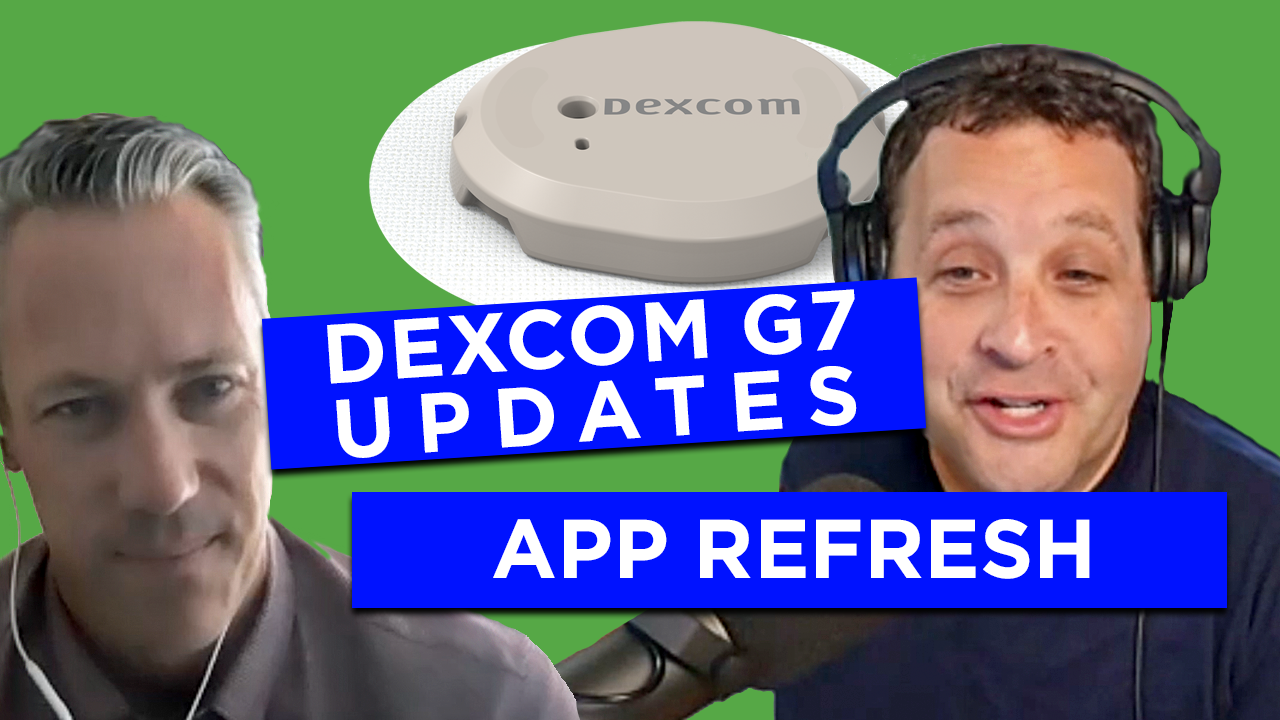
#510 Dexcom G7 App Refresh with Dexcom CTO
Jake Leach is Executive Vice President and Chief Technology Officer at Dexcom.
Jake is here to share Dexcom updates, talk about G7 and an impending app refresh. Some cool Apple watch news too!
You can always listen to the Juicebox Podcast here but the cool kids use: Apple Podcasts/iOS - Spotify - Amazon Music - Google Play/Android - iHeart Radio - Radio Public, Amazon Alexa or wherever they get audio.
+ Click for EPISODE TRANSCRIPT
DISCLAIMER: This text is the output of AI based transcribing from an audio recording. Although the transcription is largely accurate, in some cases it is incomplete or inaccurate due to inaudible passages or transcription errors and should not be treated as an authoritative record. Nothing that you read here constitutes advice medical or otherwise. Always consult with a healthcare professional before making changes to a healthcare plan.
Scott Benner 0:00
Hello friends, and welcome to Episode 510 of the Juicebox Podcast.
On today's episode, Jake Leach returns, Jake is the Executive Vice President and Chief Technology Officer at Dexcom. Jake is responsible for the leadership of scientific research, engineering, product development and product management. He oversees the development of next generation products and leads a large organization of amazing people. I've actually lost track of the amount of times Jake has been on the show, but my best research tells me that the first time he was here was in 2016. Is it 2021 now? Wow. Okay. Jake is gonna answer some of your questions that you sent to me through the private Facebook group for the podcast. He's going to answer a couple of my questions. He's going to talk a little bit about what's going on. If you like Dexcom you're gonna love this episode. While you're listening? Do me a favor and remember that nothing you hear on the Juicebox Podcast should be considered advice, medical or otherwise, always consult a physician before making any changes to your health care plan. were becoming bold with insulin. Less than a month ago I interviewed Dexcom CEO Kevin Sayer and that's available at Episode 498, where we talk more nuts and bolts about Dexcom g seven. Are you all excited for Dexcom g7 to come out? I am. Just so you know, I'm geeking out over here. This show is sponsored today by the glucagon that my daughter carries g vo cuyp open. Find out more at G Vogue glucagon.com forward slash juice box. This episode is also sponsored by Omni pod. Now if you're listening to the show, you know that you may be eligible for a free 30 day trial of the Omni pod dash tubeless insulin pump. All you have to do is go to Omni pod comm Ford slash juice box to find out. But there's some new exciting news from Omni pod. And I'd like to share it with you right now. There is no need to wait for the next big thing. With the Omni pod promise, you can upgrade to Omni pods latest technologies for no additional costs as soon as they are available to you and covered by insurance terms and conditions apply. But you can find out everything you need to know all the details at Omni pod comm forward slash juice box. I don't want to waste any time because I'm looking. I'm looking at a pile of an absolute pile of questions here. From listeners for the first thing. And I guess Also, I'm excited because whenever I get you after I get Kevin, it means something's about to happen. So. So take a second just so I have it for posterity Introduce yourself, please.
Jake Leach 2:58
Hi, Scott. I'm Jake Leach. I'm the Chief Technology Officer at Dexcom. thrilled to be here. Thanks for the opportunity.
Scott Benner 3:05
I'm really excited to have you back. I appreciate you doing it. Thank you very much. So like I said, I I interviewed Kevin a little while ago, and he kind of went over some high level stuff that was happening. And I recognized from the cycle over and over again that it might mean we're getting close to the Dexcom g7. So I asked if I could get you back on the show. It's been a little bit since you've been here. And I'm excited to do this again. I don't know where to start, other than I should probably let you start I think where do you feel like things are at?
Jake Leach 3:38
There's so much happening. We just got some really exciting news last week with our API being approved real time API. So that was exciting in a lot of different ways. One because it expands our ecosystem for G six, and ultimately g seven as well. So this is a web API that allows third party developers of applications, mobile apps to connect directly to the Dexcom Cloud cloud and receive glucose readings directly in real time. So that's a big step. Our previous Web API was a retrospective. So the data was a bit delayed. Now this opens it up to real time, data. So it's exciting in that way. It's also exciting seeing that the FDA is getting back to device, you know, reviews, there's a lot of pandemic COVID related emergency authorizations that they're working on. And so it's really great to see them getting back to, to the diabetes devices, and we're excited to get that approval.
Scott Benner 4:32
Yeah, me too. Give me an example of where this API might work. I own I don't know, a smartwatch manufacturer. Like is that the idea?
Jake Leach 4:42
Sure. Yeah. So it's exactly right. It's got the Garmin one of the folks that we was quoted in our press release about this. They're looking at some really exciting, smartwatch connectivity. So they're, they're connected watches can display glucose. That's what they've got a bunch of different options that they're working on. But that's the idea. It allows for real time data display, and a multitude of different experiences whether it could be a smartwatch, it could be in a mobile app, like another example is livongo and teladoc. Right. teladoc is about remote care accessing physicians remotely. And the livongo platform is about Diab treating diabetes with the right level of support needed for the individual. Putting real time glucose data into that system basically takes the power of Dexcom CGM, the accuracy, the reliability of performance, and puts it right into their user experience within their mobile application. So it's a really exciting way to create different experiences for users around the reliability of Dexcom.
Scott Benner 5:44
How far does this travel? Like? I'm making this up right now. But could I hire an app developer and make a Juicebox Podcast app that also you could connect to your Dexcom?
Jake Leach 5:53
You could, as long as you follow, it is still considered a regulated medical device. So you have to have those types of classifications in controls, but it's not. You know, you could Scott, you absolutely could if you wanted to.
Scott Benner 6:08
She's gonna happen. You're imagining me as like a bathtub pharmacist right now I would actually like, like a person who understood what they were doing. So what I'm saying is, it's not limited to people you have agreements with right now, or you do business with already.
Jake Leach 6:21
Yeah, that's right. Any anybody? We have a website Dexcom, developer calm. And you can go there and basically access all of the information, how to get started with our API's? How to download the tool set. And then yeah, basically how to work with us. It's all there. And so we welcome folks to check it out.
Scott Benner 6:40
What's the reasoning like, from your perspective, from a business perspective to make this available? It's, you know,
Jake Leach 6:46
we can't solve, there's a, there's a lot of different experiences that people want or need around CGM within diabetes. And it's, it's basically we acknowledge that we can't do everything, we're not going to solve every problem, or provide every experience that's wanted. So we want to basically build an ecosystem around Dexcom, where we have Dexcom at the heart, but we allow others to create really exciting products around our CGM. And it just makes the user experience for our customers that much better. Yeah,
Scott Benner 7:21
I think it also ends up supporting the company backwards to it, right. Like the more things that are out there that people can use, it's, it's better for you guys and better for us. By by extension, I believe. Okay. So that's pretty exciting is that that's launched now that's good to go.
Jake Leach 7:38
Yeah, it's it's, it's, it's approved. And we've got partners that have been working with it actually already in a development format. And now that it's approved, as soon as they get their solutions ready, they can launch them.
Scott Benner 7:49
So talk about for a second because your app, I'm, I'm, I'm hoping I guess that you're gonna tell me that the the apps have been updated, and we're gonna see them when g seven comes out, right. So when people want things that are people want things updated all the time? Can you explain why that's not feasible? Because I'm assuming you've made things that you know, people want that you wish were in the original apps that you probably could slide in. But why doesn't it happen like that? Why does it happen in a big release? I guess?
Jake Leach 8:22
It's a you know, Scott, it's a great question that I'll answer the first one, around g seven. Yes, the G seven app is a completely new experience, it has a lot of similarities to G six. So it'll be familiar for people. But it is a much updated user experience, the startup wizard to get going and how to use the product is significantly enhanced. As well as the data display, we've got some of the clarity features built right into the g7 app. And there's a lot of other exciting things that we're actually holding some of them back, we're really excited to launch g7, we want we have some surprises. And there's some really exciting new stuff. So I can't talk about all of it. But what I can say is, we're really excited about it. And we think users are going to be going to be thrilled. to the to the second part about releases. It is true that often, the releases come in, in larger waves. And a lot of it has to do it with history. Historically, the FDA would review our products. You know, we had to show the FDA, the product, the validation and how it works before we could provide the customers with the new classification that we got with G six a class two designation, it does allow us to bring updates to the apps more frequently. And so what we've done is we've invested pretty significantly in building our software team up to be able to put out more releases per year than what we've been historically doing. We're really excited about it so users haven't quite seen the frequency yet come out but we are have a whole roadmap plan for g7 that once we launch it, we plan to update it quite frequently, with new functionality, new feature requests, there's a lot in the backlog of stuff that we want to do. And so the first step was getting that lower designation by the FDA so that we can get things out faster. And one point about that designation, the reason we got there was because with G six, the level performance and reliability the CGM got to a point where the FDA was comfortable. If you met those standards, the ice CGM standards that they set forth. If you meet those from a performance and reliability perspective, then they're comfortable with that being in class to product, which means we can bring a lot of things to users much more, much quicker than we used to in the past. So lots to come with with the app portfolio.
Scott Benner 10:51
Okay. Is there a conscious decision to build slowly when you're making a company? Like, I mean, I don't think I don't know how people think of it. But you know, when I think of you, I think of Omni pod, I think of stuff that I use every day in my mind, right? There must be this amazing place. It's huge. There's 1000s upon 1000s of people working there, and it's running around, but you start as a small company, you gain some success. But if you start just throwing people in, I imagine it could get overwhelming and things start heading off in the wrong direction is like is that like bringing an app developers as an example? Like, more slowly? Is that on purpose? You know,
Jake Leach 11:28
it is I think there's two ways I look at it, one way I look at it is it's always important to look at what's the number one priority for the team. And so for, as we look at our apps and our features, we're always working very hard to prioritize which one comes next. And it's all based on customer feedback, we listened to our customers, and there's plenty of requests. And so what we do is we look for the ones that based on their feedback are the most important, the most needed. The other thing that we always prioritize is anything for that the FDA wants to see, you know, they will continue to evolve to. And so priorities are important. And then the other thing is, as you mentioned, it, you know, the product of development team is the app that the users use the customers use. And it's so important to have a consistent experience and quality. Quality is also so important with software. And so it is important as you onboard team members that they understand the culture, they understand why we do it, they understand that we always put the customers first patient first. It's a it's a whole mindset. So we do have an onboarding program as we bring developers on. And it's both development and test. The testers that test our apps are just as important as the people who write them, because they're the ones who are guaranteeing that the users get the experience they deserve.
Scott Benner 12:46
Yeah, I wonder how much like I just got a picture sent to me the other day from a listener who's wearing four different g sevens. She's testing adhesives. And yeah, she's got them all over her. And I know that that. I mean, that's assumed, right that that stuff happens. But it takes time. And it's hard to find people to do stuff like that. Going back to the app for a second, how much does visual simplicity come into your thinking, like, so you're not overwhelmed, because I don't know how frequently I look at Arden's app to be perfectly honest with you, or how frequently she looks at it. But you don't want it to be like this. Information overload every time you sit, you want what you need. But you don't want more than that. I was wondering if that's a consideration.
Jake Leach 13:27
It's It's It's at the top of the list. Our user design group is very thoughtful in the way that we communicate information. And one of the things which IE seven was, we knew that we wanted to expand the capabilities of the app without making it overwhelming. So the way that the app is architected you, there's lots of new information you can access. But it's not. It's there with a quick at your fingertips, but it's not in your face. And so what it allows you to do is you can choose the experience you want. If you want to jump right to your clarity report, it's right there, you can go see time and range. And you can see daily stats, if you want, or you can just you don't even have to scroll down to that you can just stay on the the normal real time display page, which will be familiar for users. It's a lot like JSX. But the way that the information is organized, we purposefully designed it so that we could put more functionality into it without it being overwhelming, particularly for new users who are just, you know, you know, potentially newly diagnosed diabetes still learning about, you know, how different things affect their blood sugar. And so you want it to be as simple as possible. You want the alerts and the alarms to be accessible and easy to use.
Scott Benner 14:41
So I if I'm wrong about this, please stop me but I feel like perhaps as long as three years ago, I spent a number of hours over a number of different days giving my feedback about what I would want to see in a Dexcom app was that the start of this process that we're gonna see this year. It was Yeah, it was telling you Was this year? I didn't mean to. Yeah, that's what I did. No, no, no, it's
Jake Leach 15:03
definitely you're, you're gonna see. So those are the exact types of sessions that we do with with our users. And that's the idea we want to hear. Because, you know, we we've got a lot of folks at the company who use the product as well, yeah, and live with diabetes in or, you know, using the CGM to help manage. But isn't that nothing's better than customer feedback? So that's, that's exactly what it was those sessions were all about, what do we put into this app? What functionality? What experience do people want?
Scott Benner 15:32
Yeah, so I'm going to take a second to say something that I think is important for long term for people with type one, I think, whether it's going to be an algorithm on a pump, or your product or anything like it, at some point, there should be levels, expert levels of the app that you can unlock, maybe your doctor has to say okay to it, or something like that. But I'll use this example any of these algorithms that are coming out right now for pumps, right? control IQ on the pod five, they're not going to be as customizable as the Do It Yourself loop that exists in the world. Right? And so for the people who know that they can keep their blood sugar at 85, overnight, super steady, when the algorithms more customizable. And giving over to the idea that there are far more people who are probably walking around with a onesies that are eight 910 1112, and would just be thrilled to wear one of those algorithms and have a six and a half a one c that's super stable, right? Like that would be life changing for them. But how do you make it so that it helps everybody who's in every situation, and in my mind, it's like, it's like the way Photoshop does it you can click on the beginner the intermediate, or the Advanced tab and when you move up, you get more features is that anything that's ever talked about?
You heard me talk about it at the beginning of the show. Omni pod has a promise for you. The Omni pod promise says this. You can upgrade on the pods latest technologies for no additional cost as soon as they're available to you and covered by insurance. Think about that. Okay, now listen to this. You can get a free no obligation trial of the Omni pod dash right now by going to Omni pod comm Ford slash juicebox. Okay, so you may be eligible for a free 30 day trial right now you go to the link, you get started. Even you know if you love it, it's great. The first 30 days are still free, so you get a free 30 days. And then if on the pod should ever come out with a new product, the Omni pod promise covers you. You can upgrade Omni pods latest technologies for no additional cost. As soon as they're available to you and covered by insurance. Everyone follow what I'm saying? terms and conditions apply. But you can find out all the details that my link on the pod comm forward slash juicebox there's links in the show notes of this podcast player that you're listening in right now. Or links at Juicebox Podcast comm I mean, in case you can't remember on the pod.com forward slash juice box which I feel like you can do. Alright, does everybody get what I'm saying about Omnipod because it's time for one more thought. Gee vo hypo pen has no visible needle, and it's the first premixed auto injector of glucagon for very low blood sugar and adults and kids with diabetes ages two and above. Not only is chivo hypo pen simple to administer, but it's simple to learn more about. All you have to do is go to G evoke glucagon.com forward slash juicebox g vo shouldn't be used in patients with insulin, Noma or pheochromocytoma. Visit GE Vogue glucagon.com slash risk. I have a little more time here. So let me tell you about the diabetes pro tip episodes from the Juicebox Podcast. They are management focused. It's me and my friend Jenny Smith. Jenny is a CD and she's had diabetes for 33 years now. And we talk through the concepts and ideas that are mentioned here in the podcast. So the diabetes pro tip series has them condensed down into topics. They begin at Episode 210 in your podcast player, or you can find them at diabetes pro tip calm or at Juicebox Podcast calm. And if you're really newly diagnosed, you might be hearing a lot of terms that don't make sense. Go to that same link diabetes pro tip calm, and you'll be able to find the defining diabetes series from the Juicebox Podcast. simple terms that may not be simple to you explained quickly, easily and in a fun way. So not only will you know what the term means, when you're done We'll know how to use it. A hammer is not a hammer until you know how to bang on a nail. And if you've never seen a hammer before, well, that can be confusing. So go find out what a rage boluses Basal insulin, it's so many other words that you may be hearing for the first time if you're newly diagnosed and using insulin. Okay, guys, last thing, they're not sponsors of this episode. But if you're hearing stuff you're liking about Dexcom using my link would be a big deal to me. dexcom.com forward slash juicebox. Let's get back to Jake.
Like the Way Photoshop does it, you can click on the beginner the intermediate or the Advanced tab. And when you move up, you get more features is that anything that's ever talked about?
Jake Leach 21:04
It is it's a I think the one of the ways that I see CGM is it's it's an education tool, right? You learn so much it You mean it helps you manage, but it also you learn over time as you use it. And so the way that we construct the apps, the idea is that there's a user journey when they first when you're first starting out and CGM. And then once you have learned how to use the product, you start gaining more insights from it. And so you kind of step it up. And I think, you know, there's so much innovation going on in the space of insulin delivery, whether it's the automated insulin delivery systems you mentioned, or, you know, algorithms around multiple daily injections and pens, and smart pens, we're just starting to see smart pens come out. And so there there is definitely a user experience journey where they you gain more experience in managing diabetes. And the concept of a more advanced app or more advanced features is definitely something that we talked about. And I think over time, you know, our goal is still to have an app that can serve customers in the way they want to be served. And so the ideas with the API's and the rest of the ecosystem, there's tools, our pump partners, you mentioned, tanaman, and insolate. All of those are designed, they're powered by Dexcom CGM, but it's designed to, you know, give users choice. But you know, how do you deliver insulin? All of those things. And so we try to support that as much as we can.
Scott Benner 22:29
Okay, so before I jump in and barrage you with questions that hopefully you can answer, maybe you won't be able to, I just want to say thank you, because you said something a moment ago that I believe to be 1,000,000% true. And everyone listening to this should know, if you've gotten any value out of this podcast as a listener about how to use insulin, most of what I was able to teach myself came from that little screen in front of me with that Dexcom like watching that graph, seeing insulin impact the numbers, seeing food impact and watching the speeds. I learned more in a handful of years than I think I would have learned in a lifetime of not seeing that I don't even know. Like, I don't want to sound like I don't want to be ham fisted. But I don't generally, I generally, genuinely do not know where my daughter's life would be right now, if you guys didn't do this, this seriously, like I heard a one C is consistently in the mid fives, she eats whatever she wants, she's active some days, not active other days. It's, um, it changed her life. I mean, it changed everyone's life. But I don't think I'd be able to do what I do. If it wasn't for what you guys do. So I think
Jake Leach 23:37
it's so it's so great to hear. It's, it's, you know, the best part of doing what we do is when we hear, you know, feedback like that, that people get to live a normal life with diabetes. And it's one of the things that we've seen it over time, you know, with our first systems they were they were helpful, but they weren't a great solution for everybody. And over time, with remote monitoring, and all the you know, automated insulin delivery. And it's just so exciting to see. And you're so right about the real time feedback, whether whether it's type one diabetes, or even type two, we're seeing you know, recently we saw that, you know, folks on Basal insulin only using CGM can really improve their time and range by using CGM, because it's just, it's feedback you never had before.
Scott Benner 24:16
So I'm seeing that too. There are people listening to this show now and joining the there's a private Facebook group for the show that's like up to like 13,000 people, or more and more type twos coming into it. Yeah, they're having similar experiences just by listening to the conversations. So anyway, I genuinely mean that. So I really appreciate it now, Jake, I'm, I'm vexed here because I buried what I think is the thing people want to know the most about 10 questions into this, but I'm just gonna start off with it so people can, can can get one bit of happiness if you're able to answer this when the new app comes out, and I'll ask you if you can tell me when later but when it comes out, is there any chance that delta will be on their rate of change? I can't I can't exactly answer that. Sorry. Okay. Do you know that that is something people really, really want? I do? Yes, I do. Absolutely. Do you go to work every day trying to make the patients happy? I do. I do. Absolutely. And we'll just move on. That's fine. So I guess maybe I should ask. It. Will. Will the new app launch with the new device?
Jake Leach 25:25
Yes. Yeah, absolutely. it'll, it'll come together. It's a it will remove your G's. When you upgrade to G seven, you remove the G six app, and you download the new g seven app. And then you enter in your your credentials for your account, your your Dexcom, username, password, and you're off to the races with G seven.
Scott Benner 25:40
That's it. Okay. I'm going to ask you a couple of questions that I know that the answer's no to. But I think it's good for people here because they have this thought all the time. Can you make your receiver Wi Fi enabled? Like
Jake Leach 25:54
so? It is a great question. And we debate we debate it all the time. And it is technically possible to do it. And so and we know that that is a request, we you have to put the hardware into it to make it compatible with Wi Fi, you have to put the silicon in there, the chips, but the the current one is not my Wi Fi enabled. And we are launching a new receiver with G seven, it's a new display device. But and that one is not Wi Fi enabled. The idea there is we wanted a very, very simple display device for users that prefer the receiver. But it's helpful to know that Wi Fi is a desired option. I assume it's around being able to remote monitor when in a one five range with the receiver is what I'd expect. Yeah,
Scott Benner 26:42
so the answer the questions usually are around the convenience for younger children. They and then this runs right into this next question which I don't have the technical background to explain to people but I feel like you do. Why? Why can't people be connected while they're swimming or in a bathtub? Can you just very simply, I mean, I'm assuming the Bluetooth signal just doesn't travel through water. But
Jake Leach 27:07
that's exactly what it is. It's it's basically that the Bluetooth is a 2.4 gigahertz is the frequency. And what happens with that higher frequency around water is the water absorbs the radio signal. And so it can't transmit. And so 2.4 gigahertz is not as frequently not used for anything that's in either implanted or under, you know in a body water or anything but just because the it's not an efficient frequency for use in anywhere around, you know, inside water or tissue. The reason we use Bluetooth is because of its it's such a ubiquitous standard for mobile phones and with with our our original goal with G five was to get to a mobile experience with our CGM. And so we moved to Bluetooth. And it's been a great tool or pump partners have adopted it. But the one thing one of the things about it is it doesn't work well underwater.
Scott Benner 28:06
Just it's You have no idea how many times somebody was like, why does it not work? When I go swimming or above? I'm like, Well, I think physics, but somebody wants to know if in the future, there'll be an automated way of reporting a failed sensor
Jake Leach 28:21
100%. So one of our a very important goal of ours, it's a company wide goal is to simplify that experience for users when a sensor does fail. And we know that there are some pain points in that process of trying to get a new sensor and a replacement. And so we we very much want to make the experience simpler with automated tools. And it's it's the way that we think about a lot of things that we recently launched a new FAQ page or that you can access from within the JSX app. And this has a lot of answers to basic questions. And you know, more than half of the phone calls we get at the company or around people asking questions on how to use the product. It's not really tech support in terms of, I have an issue that I need you to help me resolve. It's just simple things. And so we've updated the FAQ page, that's a first step in we want to build more automation into the apps to help users solve problems quickly, without having to pick up the phone and call us. They were still there if they want to call, but we do want to help them resolve their issues as fast as possible.
Scott Benner 29:26
Okay, I'm going to make a note about that. I want to bring something up to you afterwards. That I think is interesting, but maybe not interesting for everybody listening. Will it work with tide pool at launch? Will it work with on the pod five and tide? So tide pool loop is one of those things that I guess. I mean, I probably thought we were gonna see it by now. And now I realized that I was kind of crazy for thinking it would come so quickly. But how about that will will g7 work with those devices.
Jake Leach 29:57
So g seven the Bluetooth functionality Seven is very similar to G six, but we've made quite a few enhancements to it so that our partners will have to do some updating to their communication protocols. That's one and then two, they have to get the product approved for use with their system. With g six being an AI CGM g seven is intended to be an AI CGM. When approved by the FDA, that makes the path to upgrade for those for our pump partners and our insulin delivery partners, it makes it easier for them, it's a faster process because the performance of the product proven out. It's important to note it's I CGM. For AI D, there are different categories of ai CGM is the one g six is the only one that's in the category for automated insulin delivery. And so the tools are there for those those partners and we are already working with a number of our partners on G seven integrations that we have been for quite a while. And so they're they're moving quickly. And so those approvals, timing will be based on those companies, how quickly they can get their validation through the FDA, but we anticipate that it will be as fast as they can do, do you have employees that are bridges to pump partners? We do we actually have an entire group that reports into me, that's, we call it our alliance management group. And what they do is they work with all of our different partners, digital health partners, insulin delivery partners, and they're really the focal point of communicating with the partners. And then we have separate support teams like our we have a separate Bluetooth support team, specifically for helping people integrate with our transmitter, particular pump partners. And then also testing those implementations to make sure they work properly.
Scott Benner 31:42
So this partners aren't left to their own devices, they're not over there scrambling around being like I don't know what happened, dig, they can contact, you have meetings together all kinds of stuff like that.
Jake Leach 31:51
Yeah, we strive to be the best partner possible and have all the support we can. Because we know that by supporting partners like tanaman, sled and others, it's all about, you know, serving the customers and giving them choice. And so the more that we built around g six, and G seven, the better.
Scott Benner 32:09
So in for simplicity, g seven comes out it hits when it hits, the partners need to get it, get it set up, do the testing, get it to the FDA and get the okay and the reasonable to consider they're working on that as
Jake Leach 32:22
we speak. Yeah, yeah, exactly. g7 needs to be approved first. And then they will get their approvals very, very quickly. I expect we already working on those integrations and doing testing, which IE seven and multiple partners.
Scott Benner 32:35
Okay, so I put my foot in my mouth when I was talking to Kevin, so I will know not to approach it the same way this time. I will I will change this question to can you please explain to people why it is difficult to go directly from the transmitter to an apple watch?
Jake Leach 32:50
Hmm. Scott, that is a great question. Okay, so really exciting. So there's a, I'll start in the beginning. So when Apple first announced, hey, we were opening up Bluetooth connectivity directly to the watch the core, core Bluetooth. And we were one of the companies that they said they're giving access to. And we got really excited, we started working with them on it. And what we started to recognize is that when you communicate between the transmitter and the watch directly, the watch becomes your primary. Well, in our language, it's your primary display. It's the it's not only giving you the real time CGM readings and access to the data. It's also your alerts and your alarms. And so one of the things that we pay a lot of attention to and work really hard is to ensure that users always get their alerts and alarms, even when their phone is like for example, in the phone, it's potentially configured in a Do Not Disturb mode. And they don't realize that that's how they've done it and they're not going to get their CGM alerts. And so within like, for example, the Android app, we actually detect whether that setting has been applied to GE six, and we remind you to turn it off, do not disturb you want your alerts. So the alerts are so important. And one of the things that as we've worked with Apple on the integration, we started to realize that there were a lot of use cases on the watch where users would not reliably get alerts, things like when the watch would go into a lock state, like when you took it off. Originally, it wouldn't, you wouldn't, your alerts would suddenly stop working. Okay, and so really not a safe place. So what we've done, though, over time is and there's been multiple watch OS releases over time. all we've done is basically focused on making sure that those alerts alarms come through, I'm happy to say that we have figured out how to do it. And we figured out we have the Bluetooth functionality that we actually implemented that quite a long time ago. The Bluetooth functionality to the watch what's needed to be in the transmitter inside the g7 to talk directly to a watch. It's in there. And so the next final step is to release a g7. When we release g7. We will need to release a g7 app that has the watch direct to watch functionality in it. And so we're kind of finalizing that the exact timing. I'm still, you know, landing exactly when it's going to come out. But it's going to be soon. And really excited about the functionality. It's been a long time coming. It's been even internally a bit frustrating going back and forth over those use cases and making sure we have every single one of those potential cases where the alerts wouldn't work. Make sure it's covered. And so we're in a good place. Now we're really excited.
Scott Benner 35:26
I laughed, because if anybody pays attention to Ilan Musk is it's coming in two weeks, it's coming in two weeks. I think that's your version of it. We got the Apple Watch thing. It's coming. Because Yeah, I feel like I've asked three different haircuts of you that question, you know, 100%, and it's just so is it going to be just the latest version of the watch? Or will it be any backward compatibility at all? Yeah, no,
Jake Leach 35:49
there definitely is. I think we go all the way back, I think two series, the series one watch even will work. Okay, I believe, yeah. So it actually it goes back quite a ways apples, we support it, we tried to support at least, you know, two OS versions back, and then also older phone hardware. And so the watch hardware, it'll go back quite a bit.
Scott Benner 36:11
I have to say, for me, I loved Apple Watch, right until my eyes wide until I turned, I got my late 40s. And I'm just like, why is it so small, all of a sudden, became less valuable to me. That's great news. You think? I know. It's hard to say. But I guess here's the place where I'll ask. So I'm gonna ask the next question. Do you have any timelines for g7? Right now?
Jake Leach 36:34
Oh, we've got we've got timelines completely locked down. I just can't share them. Okay. But we're very we our launch planning is well underway. Everything is, you know, we've got our submission that we're working on. So we're really excited. And yeah, we've got to lock that in, I just can't share with the timelines are,
Scott Benner 36:53
let me ask a different question. When you were getting ready to launch g six, how much sooner before the launch? Did you start working on that stuff?
Jake Leach 37:02
We so with G six, we did start working on it quite a ways ahead of the approval. But with G six, the approval came a little faster than we actually had planned. And so we had to react to that. And we've you know, we didn't at first have all of the capacity, we couldn't build as many as we wanted. So with G seven, we've taken all of those learnings from G six, and built it in up front so that we have a launch ready date well ahead of when we expect approval. And so we in the capacity that we've built up in manufacturing, we already have lines up and running. But we've we're continuing to build more lines. And we want the transition from G six to G seven, to be as fast as possible. We want customers using the latest technology, you want to get into their
Scott Benner 37:49
hands when we pay you a compliment for my wife. So my wife is drug safety guru, both devices and like she's like the central brain for some pretty big places. And she said that you guys did a really good job of understanding the regulatory process. And and she's she said she's kind of amazed. She's like, newer companies don't usually figure out how important that is right away, but that you guys really did. So I don't know who's who thought that was important all those years ago, but that one little decision makes things go faster.
Jake Leach 38:20
For he does here it does. And you know, we approach our relationship with regulators as a partnership. They're just as interested in getting the latest technology to people as we are. They just want to make sure that products are safe, and they do what they say they're going to do. And so you know you as a partner, you work together to find better solutions on How to Get Products approved as fast as possible. I think the I CGM designation for G six is an example of that, you know, working with the FDA and on how to you know, what's the real performance bar fridge for a CGM is actually, which is six. That was the first time there was ever a performance bar. That was stated for CGM, until g six, it was all about, here's how the product performs. And this basically labeling it to that now it's there's actually a performance bar that's quite high to that you have to meet to be in that designation. So yeah, we definitely value our relationships with regulators. And we spend a lot of time investing in our regulatory team, making sure that we've got the best and brightest there. So you
Scott Benner 39:20
seem really comfortable and and kind of proud of the next product that's coming out. So what are the real world like? Are we going to see increases in? I don't know stability? Are we going to see increases in in what it's doing? Like, is it going to be better at what it's doing? How do you think of it?
Jake Leach 39:37
it's it's a it's an improved product. One of the things I think about when she's seven is that because of the number and the size of the clinical studies that we've run ahead of actually running the study for approval. We ran a lot of studies and all what that was is to understand the product performance and then tune our glucose algorithm to produce the most accurate, reliable readings. And so it is an enhancement over g six. One of the things that we're from a technology perspective that we're most excited about is the 30 minute warm up on G seven. So that's was quite a technical feat, you know, for I've been working on CGM for more than 20 years. And the startup has always been one of those things that it takes a certain amount of time for the sensor to acclimate to the body, as well as to hydrate. There's an electric chemical component. So there's all these things to it that it we've kind of been stuck at Dexcom at that two hour mark for for many, many years. And now with the g7 in the 30 minute warm up that we've produced, it's it's really exciting when you when you put on a g7. And by the time you pair it here, you've got about 25 minutes before you see glucose readings, which is just, it's better for all kinds of reasons. The automated insulin delivery system starts getting CGM readings right away. You don't have to wait the two hours. And so we're from a technology perspective, that's one of the things we're really excited about.
Scott Benner 41:01
How are you seeing accuracy in those first number of hours?
Jake Leach 41:05
It's good. Yeah, it's really good. You still it's, you know, we with CGM in general performance in the first days is more variable than the other days. But it's it's still very good. And it's just gets better on the second day and throughout. So it's, yeah, g7 is is a great product. One of the other things that is really exciting about it is when you deploy it, the the sensor starts the session starts. So there's no more this concept of I want to start my sensor session, then the new concept, which you seven is I want to connect to my g7. And it's already up and it's already up and running from the second you press the
Scott Benner 41:41
button, well, from a person who has once thought that they touched the Start button and didn't, I appreciate that very much. So I'm going to start jumping around in my head here, I can feel it. But there's going to be it's all one package right like the package comes the entire thing. So for people are thinking about g six, and right now you have a sensor, the sensor goes on with the adhesive, there's a plate there that you clip the transmitter into. But now this whole thing is just one piece, right?
Jake Leach 42:10
It is it's just one piece, it all comes in a box and even the box. purposefully, we wanted to minimize the waste. And so the boxes like I think it's 67% smaller in volume than g six. And it's just a little box that has the sensor in the transmitter applicators, all one piece. And it's a smaller applicator than g six. But still large enough, you can hold it nicely. And it's a single button press and deploys a sensor. But yeah, it does simplify things that simplifies things access perspective, right, you don't need a separate prescription for a transmitter, you don't have this concept of I need to, you know, 90 days after Remember to get a new transmitter, it's just all in one. And you know, one of the other exciting things that I look to with g7 is that, because it's a new transmitter with every device, it allows us as we want to make upgrades to the product, we can, you know, there's not this concept that people have to wait till their transmitter expires to get the latest technology it's coming out with every time and so we you know, we recently made an update to our transmitter to reduce the time where we would see sensor error. So that's the time where the sensor has failed. But it's not showing glucose readings. really significant improvement for for customers who had had that issue, we put in the transmitter, but you can until you know people get new transmitters, they didn't get the functionality. So that's one of the things I really like about the concept of it's an all in one, all the technology is in the one piece.
Scott Benner 43:40
So if it gets confused, and it it won't show you a number because it's not certain of it, you're seeing them come back more quickly after that.
Jake Leach 43:48
Yeah, that we with, particularly that sensor error rate with these new transmitters, if we're for G six, it's 50% less time spent in that sensor Earth and we had with the previous version g sex and what that was, was just getting more experienced with the product over millions of sensors, you start to better understand when you when you know it's working and when you don't, because we want to make sure that we're only displaying reliable data. And so when you see that sensor error, it's the system is there's some sort of signal in the sensor that is telling us that we can't rely on that reading. And so that's why we we show the sensor here and often it comes back, there's a lot of more transient. And so that's kind of what we've done with that new version of transmitter dial it in.
Scott Benner 44:32
So you're, you're starting to have this historical knowledge of of your product and you're starting to be able to make it better and better. Do you think that in 10 years, we're laughing at the size of this thing and and then there's a warm up or do you think there's a ceiling to this? No,
Jake Leach 44:51
I don't think there's a ceiling there's there's so much innovation still to go in the space and our pipeline is very full of You know, even reliability enhancements, sensor accuracy? I mean, I often get the question Is it good enough. And while it's really good, and, you know, tremendous number of people use the product and get great, great success with it, I still want it to be better, I want it to be more reliable. I want it to meet every user's expectations. And so there's plenty of work for us to continue doing. And so I think, in 10 years, we're going to be a whole nother space where Yeah, we'll be laughing at the size of today's devices, we'll be laughing, that is the warmup period, what's that, you know, it's just that we're gonna continue to push down below. And in, it's exciting, the way we do our research is, we have a lot of different programs running independently. And as they prove technical feasibility, we start to bring them together. And so all of our products over time, and JSX is one of the first that was a very large group of new programs that all came together, and we built g six with that. We know years ahead of time, which programs we're going to put into it. But like for g8. Right now, I can't tell you exactly all the technology, it's going to go into g8. Because a bunch of it's still under feasibility. But soon, we'll start that that protocol start taking shape and in our r&d team. And so we've we've got plenty to come.
Scott Benner 46:14
That's really cool. The new form factor of G seven, do you think it'll cut down on compression lows?
Jake Leach 46:20
I think yeah, it you know, it's debatable whether it will actually cut down on it, we see more compression in the arm actually, just in general, it would use x and, and in G seven, there's just wearing a dice in the abdomen seems to be less prone to compression. But it's it's really a personal thing for users, they, you kind of have to figure out what works for you. compression is a reality of physiology, when when the tissue is compressed, there's less perfusion, and you don't get, you know, the same glucose flow there. And so it's one of those things that we have some creative concepts of how to in the future, how to continue to reduce it. But it's still it's still there, it still can happen. What do you think it's a software fix? Well, it's a really good question, Scott, I think with software, you can detect it. But you can't you can't even glucose sensor can only measure the glucose it can measure. So it's more about predicting or anticipating it, detecting it, and then how do you react to it and respond? I think that's part of it. The other part of it is mechanical design. We're always learning. It's so funny over being in this industry for so long, and working on so many different generations of sensors. We still learn every day more and more about the technology and how to make it better.
Scott Benner 47:36
Well, you You're the one that that explained the compression low to me in a way that I could understand it. And I wonder how many people realize that, you know, if you roll over on it, you're dispersing the interstitial fluid, you suddenly get a lower reading the readings actually accurate for the spot around the wire, right, but not accurate for the amount of glucose in your body. It's like putting oil in a bowl of water and then putting something in the middle that repels the oil, the same amount of oil still there. You just can't measure it in the center anymore. It's a great analogy. Yeah. So I just I knowing that is really helpful. And then once you can see it, it's fascinating, right? Like it it, it jumps your heart, like if your kids blood sugar's 80. And then all of a sudden, it's 55. You're like, oh, but after a while, like, I don't know how to explain it. But I know I've told you this before the three hour line on the graph is the most valuable for me, I can infer the most out of three hours. And so there's something about the band in the drop, where I'm like, Oh, that's a compression low. And then I can relax. And then it's interesting. It's sort of the way you guys learn to and I go into my daughter's room, I say roll over, you know, she rolls over, I don't I get to go back to sleep, because I'm not worried about it ever. You see that a few times. It just makes sense to you all the sudden your heart doesn't jump anymore. And you have this historical data that you can start making better decisions with and I don't think people would think of it that way. But even what's going wrong, quote unquote, is a learning experience. I it makes me want to ask you about body chemistry. So you make a product, it does the thing, but every person you put it into is different. Do you ever run into people who that CGM just flat out will not work for.
Jake Leach 49:18
So in the past, in our first series of products, the STS three day in the seven, we actually saw that we some people about and actually it was quite a high percentage. It was like 25% of the people that tried our product. We couldn't get reliable glucose readings from them because it was the way that their body was interacting with the sensor. And the as you mentioned before, the glucose sensor will accurately measure glucose but it's the measure of the glucose in the vicinity of the probe. And one of the things that happens with sensor probes when they go into the skin is the body can react to them. And it sends you know, macrophages, a bunch of things occur in the space of what we call the sensor wound. It's actually a little little pocket. And so over time, what we've done is both with the working on the probe, kind of characteristics of the actual sensor probe, and the materials that we put on the sensor probe that do the glucose sensing. The other thing that's really important about those materials, glucose sensing is that they're biocompatible with the body, and not just one person, but all customers. So today, we don't see that with g7, we see people, we do see people, they'll have a higher rate of sensor error, because and a lot of that has to do with physiology and differences. But we didn't, we don't see folks that the product won't work for like we did in the past. And the way that we got rid of that issue was sensor probe design and the materials on the on the sensor, those are that's how we solved the problem of certain folks couldn't use it, it was it was challenging to tell them, you know, this product just doesn't work for you. But we're working on a new version, and then we're able to overtime. Pretty good with Gen four, which kind of resolve that issue.
Scott Benner 51:01
I'm interested to know. piggybacking on that, did you see any similarities in those people? Like physiologically, did they have low magnesium or like you don't I mean, like something that you could point to and go, there wasn't,
Jake Leach 51:12
we didn't find anything, but we could just from the sensor signals, we could see that their bodies were reacting similarly to the sensors. And so we could tell that the sensor signal wasn't accurate, because of some of the signatures there. And the signatures were similar. But what it was in the physiology, exactly. We, we don't know, it's one of those things. That's the that's the one of things we learn a lot, as we do more and more clinical studies. And, you know, we're still, like I said, learning every day, you you, there's still more to learn about the physiologic reaction to sensors, and the wear time, and the longevity of the sensor and quite a bit there that we're doing some exciting research on.
Scott Benner 51:50
Yeah, I would be so interested to see the blood panels of every one of the people who says the same thing. You know, I know, that's probably not even something you could do. But I think there's, I think there's a lot for people's health, that we're beginning to understand more and more, that if you have that data, you might really start being able to help people in ways you never imagined. So, you know, just the littlest things. Sometimes it's just the nutrient or you know, something you need, or it's just interesting. Hydration even is so huge, right? Like how often you tell people that your sensor is acting wonky Drink, drink a glass of water, you your interstitial fluids not moving around. So it definitely helps. How much time do we have? Jake, do you know what we did for this?
Jake Leach 52:30
ad? We've got another? I think we have about 10 more minutes. All right, here
Scott Benner 52:34
we go fast pace. Any more flexibility for alarms? Different snoozes? Can are people going to be able to set up a night time versus a day time and that school versus an at home?
Jake Leach 52:50
What I can say is yes to those those things, we definitely have been listening to user feedback and came up with some really creative solutions to safely provide those types of features like different snooze and some things. I can't go into all the details. Okay. But we definitely listen to customers. And that is the features are built into g7. Excellent.
Scott Benner 53:13
Android, people want to know, if there might be more frequent updates to Android phones, I don't have an Android. So I don't know why they're asking.
Jake Leach 53:20
Yeah, it's, it is so androids just it's a more complex process. Because, you know, with Apple, the it's both the manufacturer, the hardware, and they've manufactured the operating system. With Android, you've got different hardware, from different manufacturers. And then you have the OS coming from Android. And then each manufacturer does their own version of the iOS. And so we have to do quite a bit of testing. One of the things that we are focusing on investing more in is our bandwidth and capability to do testing of mobile phones and apps. And we've been overtime. Sorry. So we've been focusing on expanding the capability. The other thing too is, over time, we've gotten quite good at testing and learning where things can have issues basically the point of compatibility, what we have to do is we have to prove that the product will reliably work with the mobile device, the Android phone, for example. And we want to it's really generally around the Bluetooth functionality is the primary place where we have our main focus, making sure that Bluetooth works reliably because all the phones have different chipsets in them with different levels of reliability. And so we have to verify that users are going to get a good experience. And so when we say a phone's not compatible, it's not necessarily that it's not compatible. It's just we haven't tested it and proved it's compatible. So we do you customers will see an acceleration in our compatibility of devices. And the chance to do app allows for note taking,
Scott Benner 54:51
like this is what happened right here. They see something and they want to leave a note.
Jake Leach 54:55
There there is there are some specifics around two things. One We made event entry even simpler so that you can get into there and enter some things. And it specifically for entering text, right at that one actually, I'm not positive that I know that's in the in the feature list. But I don't know if it's in the initial,
Scott Benner 55:18
I'll tell you why the person asked, so maybe it'll feel important to you later, she said that sometimes like a compressional is an example. Then they do a finger stick, but then the endo doesn't believe them. So. So they're, they're having to fight with their endocrinologist? No, he's not really low there. Because then the endo wants to change their Basal insulin that it turns into this whole like, like landslide of problems. Got it? Okay, they want to be I hadn't heard that one before. So three months later, when you're like, I don't know what happened on June 10, at three o'clock, but it would be nice to be able to notice is what the person saying I'll go verify, hey, it seemed seemed interesting to bring up a lot of questions about alarms, and being able to schedule different alarms. The ability to dismiss a notification with a swipe people are asking about, so yes, well, that yeah.
Jake Leach 56:07
So. So the swipe on the phone or on the
Scott Benner 56:11
like on your screen?
Jake Leach 56:13
Yeah. So when the notifications come up, you have to go in and acknowledge it. And so you still do have to acknowledge the the alert. And so that's it. That's an important kind of guarantee that we know that it was acknowledged. So you do have to go in and acknowledge it through the window.
Scott Benner 56:32
I have a question that's not on here for myself. Any chance we'll be able to see the blood sugar on the lock screen? Possibly possibly. How about the follow up? Is that getting an update to?
Jake Leach 56:45
Yeah, so that's a great question, Scott. So one of the things that I've always wanted to do is I want more updates to our follow up, what we had our teams focused on was internationalizing, g six. So we are continuing, you know, even just recently introducing g six to more countries. And so the team was really focused on that, and also this new g7 app. And so we weren't doing as many updates to follow as we wanted. So one of the things about our expanded software capacity is our our ability to make updates to follow. And so we have a great list of features that we're working on implementing into follow. The great thing about followed is it is independent of G six or G seven. It works with both. And so we'll continue to update follow. And then when g seven comes out, it'll seamlessly work with it.
Scott Benner 57:32
Right? So like that. I think the biggest thing people want to know is whatever is happening on the G on the AP side, can I see that this is a no data or there's a sensor error, or that kind of stuff will warm up that top
Jake Leach 57:45
top on the list of things, your number one priority for fall. Okay,
Scott Benner 57:49
why there's so many people are really like ninjas about how they use this app. Will there be changes to the app right now the soonest we can get a low notification is after 15 minutes are two and a half year old can drop super fast. Is that true? That it's 15 minutes?
Jake Leach 58:04
I'm trying to follow that question. Specifically,
Scott Benner 58:07
if I set a low level of 70, as soon as it hits 70, I just turned the slider right now to zero, right? And then I get it right away.
Jake Leach 58:15
Yeah, it alert alarms. The other thing too is the urgent low soon, is also can be can be helpful for you know, rapidly dropping pretty good that scenario, right? If they're rapidly dropping, you know, urgent, listen can be really helpful to that that kind of predictive alert. But know, though the alert happens. goes off when you cross the threshold.
Scott Benner 58:37
Yeah, I think that, um, I can say for myself, I found that confusing the first time too, because it kind of goes in 15 minute increments than the last one zero. And I think it feels like but you just set it to zero. So that's your point earlier, but I guess you, you know, do something you think it's right. And then people are like, Oh, be better like this. And, you know, sometimes it is I'm skipping all over the Delta rate of change questions. Yeah, people want to know about like snoozing overnight, like things like that, I do think you did a great job of explaining why that's important. Like, you can't tell somebody you're set, you're selling them a thing that's gonna beep if their blood sugar gets low, and then they're suddenly allowed to decide, well, it doesn't because you've made a medical promise to them now and the FDA is let you sell this item because of that, that is what is happening, right?
Jake Leach 59:26
That's right. And and it's in the worst case scenario is you you did something like silence the alert on accident, you didn't you don't know. You know, you're basically putting your phone on Do Not Disturb mode, but not recognizing that it's going to actually silence your glucose alerts that are so important. So that's, that's what it's all about. But with g7 we have come up with some great ways to be able to do that safely and inform users and allow them to do things like snooze alerts I, I get a lot of feedback, and even my own experience with the product where we really want to know if there is a low alert Going off, and you really want to silence it. And you're like, Yes,
Scott Benner 1:00:02
I know I'm low. And I don't want to be reminded for a while, that functionality is not in G six. Now, we have built that type of functionality in the g7. Cool. I'm going to this last question is not really a question, but I thought you would find this amusing. So it's five seconds, after you've announced that there'll be a 30 minute, you know, delay to use it, and somebody wants to know, if they can soak in the new sensor.
Jake Leach 1:00:26
You know it with g7, you can apply a sensor and it's going to start, it's going to start its warmup period, the second you deploy it, so and then you just, you know, you can, you could start it if you wanted to. And one of the fun things about it is sometimes if you if you deploy g seven, and then, you know, get busy and forget to pair to it, and then you actually pair to it. And you know, you started it an hour ago, you're gonna get 30 minutes a day to suddenly on your phone.
Scott Benner 1:00:51
So So if I'm wearing a G seven, I have an hour and a half laughter, three hours left, I could put on another one, and stay paired to both of them, or they want to do additional one
Jake Leach 1:01:02
as a part of the initial one. And then when you're done, you go on and move over to the new one, through Bluetooth settings, I would just go in and do it within the app, you just say I'm starting a new sensor.
Scott Benner 1:01:13
And you just paired. Jake, your diabetes, geek bone a few days just went up crazy with. It's amazing. I'm super excited. I'm gonna let you wrap up here in a second, I have to say that in the middle of this conversation, it went by so quickly, you were a font of knowledge about this, like you, obviously, you've been working their way through. But you said something in the middle of just about not having a transmitter anymore. That made me realize that all of that anxiety that comes from insurance, and is there going to be one at the end? And what happens if I miss it that really does almost disappear now because of the form factor, right? Yeah,
Jake Leach 1:01:52
it's a lot simpler. You don't have a separate transmitter prescription that you have to fill or access to depending how you get your product. Yeah, it's all it's just you all you need is a sensor when you're traveling, you don't have to like worry about when the transfer is going to expire. You basically just need to love g7 sensors. And yeah, you'll always have a fresh transmitter with you.
Scott Benner 1:02:11
Does this make it more reasonable that they might be accessible in pharmacies more easily now?
Jake Leach 1:02:16
Yeah, we're seeing it does help with that. But even with G six, we're seeing more and more access in the pharmacy. We see that that's, you know, with the insurance, the individual has will cover it through the pharmacy. That's our preferred route, because it's simpler for the user. It's actually simpler for us. So that we will see greater and greater CGM access in the pharmacy. Okay,
Scott Benner 1:02:41
well, Jake, thank you. I literally could have done this all day with you. I love when you come on. It's a blast. I appreciate you giving me the time. A huge thank you to one of today's sponsors, g Vogue glucagon, find out more about chivo hypo pan at GE Vogue glucagon.com Ford slash juice box, you spell that GVOKEGL you see ag o n.com. forward slash juice box. If today's episode got you thinking about a Dexcom, head over to dexcom.com forward slash juice box. And I want to also thank Omnipod for sponsoring this episode. And for making the Omni pod promise.
One more time because this is new and exciting. And I want to make sure you know you of course can get a free 30 day Omni pod dash trial at Omni pod comm forward slash juice box head over to see if you're eligible. But there's also no need to wait for the next big thing. The Omni pod promise says to you that you can upgrade to Omni pods latest technology for no additional cost as soon as they're available to you and covered by your insurance terms and conditions apply. And you can find all the details at my link. But really, this time in this moment, soak up what that means on the pod makes a thing. If you want it, you can go get it right now. If they should ever make something else, as long as it's covered by your insurance, there's no other impediments. So it's not like oh, I just bought the dash. I can't have the new thing. That problem does not exist with the Omni pod promise. All the details are on the pod.com forward slash juicebox. Last thing, these episodes that are around technology often bring in a lot of new listeners. If you're still listening and you enjoyed this, please find the show in a podcast app. podcast apps are free you can get them anywhere for Android or iPhone. If you can't find one, go to my website Juicebox Podcast calm there's links to them there. Subscribe to the show and give it a chance. Just Just check it out. I talked earlier about the diabetes pro tip episodes and the defining diabetes episodes. So if you're still listening, and you haven't checked those out yet, or you don't know the show, I'm just gonna read you a quick review. This person left this review in 2000 on Apple podcast, this podcast has changed my life. I had a desire to lower my agency and manage my blood sugar's better, but was going about it blindly finding this podcast put everything into a tangible and practical management approach that has taken my agency from 8.3 to 6.3, in less than six months. And that's just right now, it's going to keep coming down. Thank you, Scott. I'll be quoting you forever. I could read you these reviews all day, but it would feel self serving, and I don't want them to feel that way. Just head to diabetes pro tip calm and see for yourself. Try the defining diabetes episodes. Try the diabetes pro tip episodes. Subscribe in a podcast app. Find the private Facebook group for the podcast. 13,000 plus people in their Juicebox Podcast type one diabetes, talking about management in ways that you'll find accessible and easy. Just like you'll find the podcast. I promise you. Fun, light. I know fun and diabetes don't go together. But it's a light conversation that leaves you with a better understanding. Please check it out. And if you don't come back, thank you so much for listening to this episode of the Juicebox Podcast. And for the rest of you. Don't forget to share the show with someone who you think can benefit from it or will enjoy it. Thanks so much guys. Your support means everything. The podcast is going crazy strong right now is because of you just because you listen it's because you subscribe and download and share and I can't thank you enough. I'll be back soon with another episode.
Please support the sponsors
The Juicebox Podcast is a free show, but if you'd like to support the podcast directly, you can make a gift here. Recent donations were used to pay for podcast hosting fees. Thank you to all who have sent 5, 10 and 20 dollars!

#509 Rough, Ruff, Roof
Ashley is an adult type 1 with a great accent.
You can always listen to the Juicebox Podcast here but the cool kids use: Apple Podcasts/iOS - Spotify - Amazon Music - Google Play/Android - iHeart Radio - Radio Public, Amazon Alexa or wherever they get audio.
+ Click for EPISODE TRANSCRIPT
DISCLAIMER: This text is the output of AI based transcribing from an audio recording. Although the transcription is largely accurate, in some cases it is incomplete or inaccurate due to inaudible passages or transcription errors and should not be treated as an authoritative record. Nothing that you read here constitutes advice medical or otherwise. Always consult with a healthcare professional before making changes to a healthcare plan.
Scott Benner 0:00
Hello friends welcome to Episode 509 of the Juicebox Podcast. On today's show, Ashley, and Ashley says words funny. But that's not why she's on the show. But that is why this episode is called Ruff, ruff, ruff. If you're from Wisconsin, you're dying, laughing right now the rest of you are kind of confused.
You are all in for a treat because I have Ashley for you today. Ashley is an adult living with Type One Diabetes. And I don't really need to tell you much more about this other than really terrific episode. The people who come on the show, just give and give and give when they come on. And Ashley is no exception to that rule. You're going to hear a great conversation with a lovely person who has a freaking terrific sense of humor. It's just a lot of fun talking with Ashley. While you're listening, do me a favor. Okay. Remember this, nothing you hear on the Juicebox Podcast should be considered advice, medical or otherwise, please always consult a physician before making any changes to your health care plan, or becoming bold with insulin. Also, if you're listening online, please consider listening and following or subscribing. In a podcast app. There are a lot of great free podcast apps. You can find them all at Juicebox Podcast comm all that you need. Just go there. say oh, I use Apple click. I use Android click and you'll find one. Don't be listening on line. If you are. I mean if you love it, don't let me stop you but get an app subscribe.
This episode of The Juicebox Podcast is sponsored by the diabetes pro tip episodes of the Juicebox Podcast and the defining diabetes episodes. They both can be found at diabetes pro tip.com, or at Juicebox Podcast comm or you can go right into your podcast app and search for them. Juicebox Podcast diabetes pro tip and they'll pop right up. The pro tip series begins at Episode 210. I'm not sure where the defining diabetes episodes start. Again, probably best just to go to diabetes pro tip comm to find them. But these are the management specific episodes that you probably hear people talking about all the time. If you haven't started listening yet. I really hope you give them a try. Thanks so much to the sponsors. sponsor. I'm thinking myself. Alright, let's get started with Ashley.
Ashley 2:47
Yeah, I'm really glad we can make it work. I felt so bad and stupid. Same time. Why first time around? Well, when I got my time zones mixed up.
Scott Benner 2:59
Do you know that happens a lot though, right?
Ashley 3:01
Okay. Okay, hopefully I'm not the only one. Well, I felt so stupid and I was getting so much crap from family and stuff. People in
Scott Benner 3:09
your family. Were giving you problems for getting timezone things wrong. Yeah. Being on a podcast. Yeah, I didn't care. Like, give me a hard time. Why do they care? Do you think? I don't know. Oh, by the way, you're being recorded. So be careful. Not to your mom or something like that.
Ashley 3:25
I know. I don't have the best Mo. So I will say that in advance.
Scott Benner 3:30
We have the best. Or the best mom which
Ashley 3:36
say it again like oh, words, and I don't have the best mouth. Oh, that's clean his mouth. Oh, that's
Scott Benner 3:41
what I thought. I thought you might have said mom and I was like, is she about to dump on her mother? This is gonna be no. No, no, she's saying you might get a little Kersey at some point. Yeah, maybe. Okay. See what happened? Yeah. My eight year old reminds me of that, mom. Yeah. So well, you know, what's so what's your stance on the cursing? Is it just this? I'll tell you what, I'll make this easy on you. I'll give you my stance on cursing. Okay, I don't know an adult who I trust who doesn't curse. So that is a really good point. I make a point of thinking that eventually everyone's going to curse whether they let us hear it or not will be another thing. Right?
Ashley 4:24
I guess I just I don't know. I am how you see it. And I guess I just don't pretend with anything. So I just I try not to be y'all.
Scott Benner 4:35
There are no pretenses with you, Ashley. We are not pretending to be anything. We are not. Alright. I like that. Yeah. Excellent. Okay. Well, that's pretty much now that we've all come to terms to the fact that you're going to say Mother her at some point during the conversation probably. Well, not so much that Oh, really? This is interesting. What will you say? Well, just like the F word probably. You want to say it now to get it off your chest. And I'll just Cuz you have a funny Oh yeah, well, I am sure I will swear at some sound like a Canadian who like jumped on the back of somebody from Chicago or something like that. Yeah, you guys are talking the same mouth right this point. But you're at one in Minnesota. Yeah, southern Minnesota. Yeah. Southern Is it important to say southern Minnesota? Well, Mankato, Mankato, Minnesota. I just heard of it. I know of course I have it. But that's not the point is that, um, is that I wonder like, you were so specific. If you asked me what state I was from, I would say New Jersey. I would never think to say what portion of New Jersey I was in. I was wondering if there's like some relevance. Well,
Ashley 5:43
yeah, I mean, I don't know. I feel like as far as like, you know, like Duluth Wait, northern Minnesota. I feel like it's a little like the dynamics a little bit different.
Scott Benner 5:55
Actually. I feel like if I press you a little bit, I can get you to absolutely trash the central and northern part of Minnesota. Is that correct? Say nothing. I was just wondering. Yeah. Introduce, introduce yourself, I think definitely leave out your last name. And and
Ashley 6:16
I was just gonna ask you, so how much information I mean, cuz I don't care. I really don't give a shit. Like how much info you know, I mean, cuz that's why I'm here to
Scott Benner 6:26
ya know, I think that if you're going to be like, Listen, if you're going to share something that you wish knew no one else knew. By the way, I've been recording the whole time. You know that right? Oh, yes. Very good. Okay. So, yeah, weaving all this? And I'm fascinated. So if, if I'm, seriously, if so, if you're gonna say something, you know, I don't know how to gauge it. Because people have said some rather shocking things to me in the courses of these conversations. So I think if you're going to come out and say that your neighbor runs a meth lab, I would just use your first name. And I know God, no, no, nothing like that. So just go ahead. Tell me your name. And then I'll ask some questions. And you'll make a bunch of noises that sound vaguely Wisconsin in Minnesota. Yeah. And we'll get out of here. Yeah. Okay. Sounds good. Yeah, so my name's Ashley. I'm 36. I have been type one for it'll be 28 years in February. This coming February. And I have three boys. that keep me very busy. I would imagine. Yeah. 885 and three, with two dogs. Wow. And my husband. Wow. Oh, hold on, slow down. So Tony, you threw me off when you said you've had diabetes for 28 years because I started doing the math on when you had your eight year old because they felt like you had an eight year old. So I was like, Oh, she was 28 when she had her oldest. Then you said I've had diabetes for 28 years and I and then my brain fried for a second. And then I felt like you told me that there are three children yourself. A couple of dogs and a man living in your home? Yes, that's correct. Three, I'm counting six that there are seven living things here. I'm given the power keys. Yes. gerbils hamsters? Anything like that?
Ashley 8:14
No, God. No, no, I don't think they would survive in our house with my three crazy voice. No,
Scott Benner 8:21
I think something's too small would just be pummeled by your show. Oh, yeah. Yeah. Oh, definitely. Yeah, excellent. Okay. We're doing well. When you meet your husband? Oh, 2008. See, sorry. 1008. You started talking in years, then you like years ago? And then you went to the Yeah. So 12 years ago, right. Yeah. Yeah. And you've had diabetes for 20 years?
Ashley 8:49
Yeah. Got a house? Oh, nine months later, got married a year later and in house first, it's right after that. Yeah. Yeah, I know. Shocking.
Scott Benner 9:02
It's probably because it's cold there. You can't even go on a date until you you know, yeah, it well.
Ashley 9:07
It's not really bad right now. It's actually pretty decent supposed to be like 55 today, I think. And my five year old one to wear shorts to school. So that was a big dilemma. changing clothes and fighting with him this morning. Know when we got our house. I was like March. And it was it was pretty cool. We were in an apartment at the time. And we were transitioning into our house and updating it and stuff before we actually moved in.
Scott Benner 9:35
Do you mind if I pick into your life a little bit? Oh, that's just fine. Cool. So two questions popped into my mind about getting a house before you get married. It made me feel like either the two of you were a little transient in your lives, or you just knew you were going to get married. Or literally you want to see if this guy could afford to put you in a house before you were willing to marry him. I'm wondering what's going on.
Ashley 9:58
I think it was more like We met, and then everything just kind of moved quickly. We both were on the same page. We're, we're in our life. And, and he's younger than me, too. So I'm Ashley.
Unknown Speaker 10:13
Yeah, yeah.
Ashley 10:14
So I think we were just ready. And and. Yeah,
Scott Benner 10:19
how much younger? A year and a half. That's not that much. Yeah, no, no, actually, I'm wondering if what you're telling me is you met a man. You like the sex and you thought you would just skip ahead to the rest of it? Is this what happened? Or does he have a good job? What is it we're talking about right now? Or do you have a good job? Is he is has he hooked up? What's going on?
Ashley 10:39
Well, we had a strong interest in music. That was the that was one of the things. We were both you know how to say we were both like, not angry people. But just like we we had hard times growing up both of us we could relate, you know, as far as like going through gotcha. certain situations, things like that. And we were just kind of done with the ball. And just, you know,
Unknown Speaker 11:08
moving forward
Scott Benner 11:09
Yeah. veterans of the same war. The only Yeah, not only that, yeah. But you've grown up in a way that was similar to each other. You knew what each other had been through. Yeah. Okay. I like this. Alright. Yeah, yeah. Yeah. are you killing something right now? What was that noise?
Ashley 11:25
Oh, my pump. You know, ragging on me. It's Yeah, what kind of pump cuz i don't i didn't recognize the the tandem. Okay, slim.
Scott Benner 11:34
That's an irritating noise it makes there. Yeah, yeah, it beeps and I don't think I can put it on library. Don't worry about it. I just thought it felt literally sounded like you were dragging a metal chair across the stone floor. Oh, no. It was like Ashley sits still we're doing No,
Ashley 11:49
it's just, you know, my morning. I struggled probably the most in the morning.
Scott Benner 11:55
How so? struggle you get like, well, first you listen, you listen to the podcast much.
Ashley 12:01
I do. And I will be honest, I haven't lately cuz I, I did every day when I worked. I was a refill nurse, an RN. So I would sit at my desk, I could have my headphones in and the work I did, I was able to, you know, listen to something and and my doctor, you know, had mentioned you couple years ago, and I started listening and and I would listen to you every day. And then I stopped working when the pandemic happened. And my kids were, you know, then at home for school. And so I yeah, so then I listen to you and I like workout or I'm on the treadmill or something like that. We
Scott Benner 12:39
got to get this pandemic under control so that you can listen to more of my podcast.
Ashley 12:42
Well, that's a I don't know, it's pretty rough here. But you know, as far as like, the, you know, our numbers and just it's spreading like wildfire.
Scott Benner 12:56
Yeah, it's tough. It is really, I'm in that part of the country. Also, you did something that I was really hoping you would do. My brother married a woman from Wisconsin, and I love it when she says ruff. Can you just say it one more time for me? Yeah. Thank you. What is your dog? Yeah. Our dog? Yeah. When your dog makes noise? What is the noise he makes?
Unknown Speaker 13:18
Oh, well, I have a senior dog. You're girlier losing my point. Does he go rough? Oh, yeah. No, no. I was totally not falling there. That's okay. Yeah, yeah. takes me a while to catch on. So we'll start over. What noise does a dog make? rough? rough, rough? Yeah.
Scott Benner 13:38
work when it's difficult is rough. And the thing on top of your house is called a roof. It's fantastic. I love this accent. I'm sorry. We might never get back to the diabetes. Well, it's okay. So seriously. So you had to stop working. When you say because of the pandemic you're saying because work left, you're off like you lost your job? No.
Ashley 14:02
So I Well, I eventually did so. Long story short, I, I was recommended. You know, at that time, everything was like a little more. We didn't know as much as far as the virus and my doctor was just like, you know, with your history with as far as your diabetes, like I'm in good health, but in the past with respiratory illnesses. I've, I've had it like I didn't tolerate it as well, if you want to say and so I guess he just said you know, I think you should pull your kids you should be at home your high risk. And my job was recommending to if you're a high risk employee, you should be you know, a little bit safer and isolating yourself. So I did that and I think I was then on like, like a short term disability thing for you know,
Unknown Speaker 14:57
what is it
Ashley 14:59
FMLA For a while, weeks, and then my daycare had closed as well, during that time, and then I didn't have any care for my kids. And so I just eventually ended up losing my job. But honestly, it was I started school back to college may, I thought, well, if there's any, you know, anything that's good, that's going to come from this pandemic. It'll be you know, just getting further education. And as far as just going further with it, which I've always wanted to do. better time than now to, to do it. And so my bachelor's in nursing that I'm that I'm working on right now.
Scott Benner 15:43
Oh, that's so cool. So you were a refill nurse before which meant you were explain that a little bit to me. So is
Ashley 15:50
it kind of a unique position? I I have been a nurse since 2011. I actually 2010 I was an LPN for a year, I went back to school. During that time for that year, I worked at the clinic, the local clinic here, and I did a variety of things. I floated everywhere. So pediatrics, cardiology, family practice. And then I went back to school, I got my Rn degree. And I, during that time, I was it was like a month, I was looking for a job. And it was at the State Hospital, just town outside of here. And it was more like mental health. So like, you bought the street as far as like being mentally unstable things like that. I had found out I was pregnant a week prior to that. And then so my husband's like, I don't know if I feel comfortable you being out there and doing this line of work. And so I was only out there for a short time, and then ended up being hired through a local clinic here in town, being a refill nurse, and we actually did mail. resupplies So, mailing out medications to patients.
Scott Benner 17:11
I'm wondering, Is your husband just gonna get you're pregnant so many times that you're physically incapable of leaving the house? Because of the pure way?
Ashley 17:17
Yeah. No, no, no, no. Yeah, it was just I think it was, like all the timing of it. And then yeah, that was our first kid. And then I understand it makes sense. It really does.
Scott Benner 17:30
I'm gonna go back now and try to get what degree
Ashley 17:35
Well, my bachelor's in nursing out I should, I should finish by June. That's like my graduation date. But with our situation now, Friday is the last day of school for my kids. And then they're going to be home. So that kind of allows, you know, it'll be it'll be hard, like homeschooling them doing my schoolwork. You know, just trying to stay on top of everything. Trying to set up care. care for my mom to Sorry, my pump. Oh, no, it's okay.
Scott Benner 18:08
The waste is the tanto makes is like a sales pitch for the Omnipod.
Unknown Speaker 18:11
Yeah.
Ashley 18:11
It's got all kinds of you know, I mean, I think every system has their bad.
Scott Benner 18:19
You know, you're 100% right to is that. I don't think any insulin pump is perfect. And no, and they're ones that fit you better. That's for sure. Yeah, for sure. Do you know this episode is gonna be called ruff ruff roof. Because my Minnesota accent Well, yeah. Well, I mean, yeah, it doesn't matter. Why not? I would get some for that. Yeah, yeah, that's fine. It's totally fine. Yeah.
Ashley 18:47
Yeah. So anyhow, it's, it's it'll be interesting. The next I'd say, you know, till this pandemics over when it will be over, but what's kind of up in the year but my, my end goal is to be in endocrinology, diabetes care. You know, that's my main purpose, I guess other than my kids. So other than being a mom, is what i would i would love to do with
Scott Benner 19:12
other people. Yeah. Well, I want to ask you about that. But before I do, my last question remaining from what you just said, is, you stopped working because you felt like you were at a higher risk? Do you still feel like you're at a higher risk? Because you have type one, you know? I don't know. I had a visit with my doctor. I see him every three months. And I don't know it seems like now it's just so up in the air. Like as far as how it affects everybody. It affects everyone differently. You see, perfectly normal, healthy people, you know, getting this and then they they're not Okay, next second. It just none of it makes sense. There's no pattern to it. It's just so reality of everything. I guess I I feel like at times I am just because with any kind of virus that I've had, I am very like, I don't know how to say it sensitive to any kind of illness, I can always tell my blood sugar will go up. And my no demand for insulin is like, super high hit, like doubles. And so I guess that would be my main concern is like the Yeah, the sugars and being all wacky and crazy things now I agree with you. I I know that in my heart that feels the same way. It's like, there's part of you that feels like, you know, okay. I mean, we kind of live our lives pretty. I guess similarly to before, we don't go out as much obviously. There are, you know, there's I haven't been in a restaurant a very long time. You know, there are stores that make you call ahead for appointments now, if you want to come in and shop and things like that. And you know, we've been keeping distance from older family members, right? Thanksgivings. Coming up next week, and we're not really doing anything for Thanksgiving. I know. Which is all you know, okay. You know, that's what needs right. Right? If that's what we need to do, yeah, but we are lacking the history. Because it's such a new problem, we are lacking the history to be able to look at and feel some comfort about, you know what I mean? Because that really, yeah,
Unknown Speaker 21:20
you're saying
Scott Benner 21:21
you just you would love somebody to say to you look, it's probable or improbable or you have this percentage of a chance you're looking for those kind of thing? Yeah, whether they're true or not, they make you comfortable when you hear them. So
Ashley 21:36
right. Like I was at last week, I, you know, I like Facebook groups of, you know, type one, whatever, and Dexcom. And I think your your podcast is on there, too. And so I just I just put a thing out there, just for curiosity, you know, how many people with diabetes have had the virus? How did you? You know, how did you respond to it? How did you handle it? Did you recover? Okay, just just, I guess I was more curious. Yeah. And so it was just a variety of things. But most of them, they were pretty consistent, you know, they got fairly sick. And if you and almost I would say, more than not a higher percentage of them, they ended up like in the hospital. I can't end up in the hospital, because that's probably my biggest worry. Because, like, I have three little people that depend on me. And so, you know,
Scott Benner 22:34
and if you leave, you leave those kids with that guy for six weeks, they'll just be out on an
Ashley 22:39
lol My god, I don't know what would happen. Yeah, shooting. You can get mad at me for saying that. But yeah, it's it's kind of like, I don't know.
Unknown Speaker 22:47
I mean, I definitely have a
Ashley 22:49
more patience. And he would agree with me, you know, with that with with the boys. I use just because there's so much energy, and then they fight. And then they're loving each other. I mean, it's a love hate relationship. So it's like this swinging of emotions, you know? Yeah, but yeah, it's I to most of it all. But it can get overwhelming. So
Scott Benner 23:11
I just stare through them, Scott. That's all. They're not. They're the little pills that I put them in imaginary little bottles, and I mail them away.
Unknown Speaker 23:20
Yeah, no, yeah.
Unknown Speaker 23:23
Well, yeah, pretty much. Tell
Scott Benner 23:24
me a little bit about being diagnosed with type one when you are.
Ashley 23:28
So it was kind of interesting. I was eight. So then, you know, my oldest is eight. So I try not to sit and like obsess about all my guys peeing a lot, you know, all those things that a parent worries about, I guess, with having kids and so yeah, I was eight years old. I I got a virus of some kind. I got sick, like the flu. And I just kind of declined after that. I lost weight, very ill at the time, when the youngest of four kids, my mom was a single parent.
Unknown Speaker 24:11
And so I
Ashley 24:13
think a lot of it was just overlooked, like my symptoms and how I was presenting at that time. Okay. And, you know, back then I feel like it wasn't as common either type one and so I feel like a lot of us overlooked and then as far as hirving distracted with being a single mom and having a lot on her plate. I the school Finally, you know, had said something and I I think I fell asleep at my desk is what happened and I just remember having this horrible headache. I could hardly I was very, barely coherent. And I want to say it was like 38 pounds, 3840 pounds, and I was eight years old. Pretty Little. And, and I remember that they're like you have to take her in otherwise, basically we'll call someone because she needs to go in to be seen. Because I would fight it every time I was such I was a bread. That'd be like, I don't want to go and I get my way and my mom would,
Unknown Speaker 25:17
you know,
Unknown Speaker 25:18
not take me because I'll throw a big fat or something.
Scott Benner 25:21
I was like, I have three other kids. If this one dies, it'll be fine. Well, oh, yeah.
Ashley 25:30
Yeah, pretty much pretty much eating. Yeah. So, you know, um, but yeah, during this time. So it's kind of interesting, because I knew what was like going on. I didn't know what was happening to me. But I learned about diabetes, while I was actually becoming diagnosed with it, how?
Unknown Speaker 25:51
Because
Ashley 25:53
our teacher, my teacher was reading a book called sugar isn't everything. And it's by Willow Davis Roberts. It's an older book in, in, it's about a girl who gets type one diabetes, and going about the story about how she has to, you know, adapt to this new lifestyle and, and so it was just very interesting. During this whole time reading this book, I, I'm diagnosed with it. So when the doctor had told me after they drew a blood sugar, you know, and told me it was almost 700 that, you know, she has type one diabetes, I remember sitting there my mom's lap, and it was just like, I just started bawling, because I knew I knew at that moment, you know, this was a forever thing. I knew what it meant. And my mom was kind of more like, I she, you know, like, she didn't really know what it was. And so it's just interesting that I knew more than she did at that time. And how it all kind of worked out that waves is very weird. You were being read a book in class?
Scott Benner 27:02
Yeah. Now, it says a detailed description of juvenile onset diabetes using a fictional form in which 11 year old Amy discovers that she has the disease, learns to treat it, and deal with her anger and finally accepts that she can live with it. And you're being read that in school when you're diagnosed with Type One Diabetes. Yep. Wow. And that's how you knew sitting in the doctor's office. That's incredible. Yeah, it was,
Ashley 27:27
it was bizarre. It was. It was like you got You're kidding. Right? You know what I mean? I was just like, Really? I don't know. It was just it was really strange how that worked out. But
Scott Benner 27:39
I wonder what would have happened if your teacher was reading your book about like winning the lottery and becoming a millionaire? Do you think that would have happened to you? Like, no, but that would have been? I think there was this magic thing that was happening in the room. And that's the you got because she was? Yeah. It's too bad. It Wasn't that nice if she was reading spider man. I mean, come on. You're way better. I think powers Yeah, you think although, you'd have to leave Minnesota. too cold to be in that underwear outside? I think
Ashley 28:12
I know, it's you know, it's, it's not too bad when we have the days where like, we have the nice snowfall. And which we had was a couple weeks ago. It's just really random. This weather. Were like a blizzard. And then it was like 70 degrees and super weird. Yeah, but you know, it's nice with the boys. They love it. He can sledding and next I want to, you know, I take him skiing. I used to ski and my husband he he's never won either. So it'd be all there. You know, first time going, right? So yeah, I, I don't know. It's it gets long. If it wasn't as long or winters. It wouldn't be so bad. But
Scott Benner 28:53
I feel like because you live online, but you don't realize how terrible it is. Like if you were to go somewhere warm. You'd be like, Oh, I'm never going back there. By the way. interesting side note about algorithms online and how amazing they are. I just recently finished watching a television show called long Meijer on Netflix, which is basically like a modern Western TV show. In that television show. They reference the book Lonesome Dove a couple of times. And when I went to Amazon and searched for sugar isn't anything it said hey, books you might also like, and Lonesome Dove was one of them. Oh, really? I feel like that's that you know when it gives you that feeling? Like someone was in the room while you were watching a TV show? like sending notes that Amazon This was one of those moments It has nothing to do with you Minnesota diabetes, rough roof rough, but it is Yeah. Like oh my god, that's creepy. All right. Yeah. I have never thought about reading the book alone some stuff in my entire life. Yeah. It's interesting. So that makes me wonder. Since we are so impressionable, or computers are, I wonder how much of your early experience with diabetes? Did any of it mimic the girls experience in the book? Like Did you take up any of that as your own without realizing it?
I know it's a good question, right? You're happy to think about like, wow, Scott, really thoughtful question. I can't wait to hear the answer to it. Well, you're gonna find that answer in just a moment. As soon as I tell you about the diabetes pro tip series from the Juicebox Podcast. First thing I'm going to do is really the last review I got for the pro tip series. It says this, this show meaning the Juicebox Podcast This shows pro tip series has literally changed my life. My son was diagnosed with Type One Diabetes five months ago, a few weeks before he turned to, I knew nothing about type one. In the past five months have been a struggle. My son's honeymoon period lasted a few days. And then every day was a battle of highs and lows even with an insulin pump, and a CGM. I had instincts on what I needed to do for him, but felt scared because the endo shut down all of my ideas and suggestions. I truly felt hopeless and out of control and scared for my son's health. Then I had this podcast recommended to me by another mom. And it was life changing. All of my instincts were validated. And most of my fears eased. It shifted my perspective on type one diabetes and medical devices. within two days of listening to the podcast, my son's average glucose levels went from 150 to 119. His spikes past 200 disappeared or became a rarity. Most importantly, after listening to the pro tip series, I feel so much more in control and less fearful about his diabetes, I feel empowered to make decisions that I know are right for him. And I trust that what I think is going to happen will happen. I know every day won't be perfect. But after this pie hast I feel up to the challenge for the first time since he was diagnosed, I finally feel like a good mom again. Thank you. That's from March 3 2021. Please check out the diabetes pro tip episodes, and the defining diabetes episodes and the defining diabetes episodes. Again, they're right there in your podcast player. Or you can go to diabetes protip.com. To get them listed out for you, you can actually listen there online, which I don't think is really handy for most people. But at least they're an order, you can see what episode numbers they are, then you can go back into your player and listen through. That's just one person's review. I could read you a lot more. But I'd like to get you back to Ashley. So I will. If you have type one diabetes, type two diabetes, I mean, if you're using insulin, whether you're MDI, on a pump, the caregiver of someone with type one, or an adult who has been living with it forever, check out the diabetes pro tip episodes from the Juicebox Podcast. Make sure you know the terms that you're using with diabetes, check out the defining diabetes episodes for the podcast. That's all I got for you guys, I want you to get back to Ashley and find out the answer to that question, a great question that the interviewer asked. It's really insightful. Alright, here we go. Looking back,
Ashley 33:31
you know, I think so because I don't know if it was the book. Or I don't know if it was just my take on it. Or maybe how I saw my mom at the time, because I knew it was affecting her pretty badly. And like, we she just went through a divorce with my dad. And he was, you know, not a good person not good to us or my mom or anything. So I think during that time, I was just kind of like, well, this is a lot and it's a lot for her to take on. And this I mean, it's just kind of funny to I mean, it's funny now but so I get this weird thing with, with blood sometimes which everybody's like Ashley er, nurse, you're a type one diabetic and you faint, you know, but it's only when people is a control thing. So like, if I have my blood drawn, I have to lay down every time my anyone sees it's really kind of silly, but, um, so at that time, they're just like, how are you going to give yourself a shot, you're not gonna be able to do that, you know, you're gonna pass out. So it was more what drove me is like my siblings and family be like, not she's not gonna be able to do it. You know, it's like had this whole whole impression that I just don't think she's gonna be able to do it. And that kind of drove me more to be like, I am going to show every one of you that I'm going to do this and I did and I was doing shots myself before I left that house. But all well, and I continue to do that.
Scott Benner 35:03
So mainly because people thought you couldn't you felt like you had to prove that you could.
Ashley 35:08
Yeah, like proving them wrong type of thing. I guess I've always kind of been
Scott Benner 35:11
give like an adversarial, like, vibe about you in general. Yeah, I mean, I don't mean that in a bad way, I guess. Yes. There's also, you know, a way to be impacted by that, where you just like, you absorb it, you just think oh, okay, well, they don't think I can. So I can't, uh, you know, like, obviously, yeah,
Ashley 35:31
I don't want to be like, Oh, I can't and then play like the victim role and be like, poor me. You know what I mean? Like, I just feel like this, this isn't cancer. So I'm grateful that it's something I can control. And I am gonna, I'm gonna do this, you know, I mean, then they had me in the hospital, I think it was like eight days. And because I was in DK, and so I had, like, you know, nutritionist come in and back then, you know, it's all different, how you had to eat and all this stuff.
Unknown Speaker 36:03
And so,
Ashley 36:05
you know, a lot of information, obviously, for an eight year old to take in, but I felt like I just already was prepped for it, maybe because it was listening to the book. Yeah, I wanted to about like, had something to do with it.
Scott Benner 36:17
Because there's some heady things you're talking about as an eight year old. I'm drawn to ask. Were you a little on your own to begin with? I'm not trying to?
Ashley 36:26
Well, no, maybe. I mean, my siblings were pretty good. I mean, my oldest sister, she's 10 years older than me. And so what 18 so seniors, so she's, you know, preoccupied with school stuff and whatnot. Um, my brothers two years older than me. So we were pretty close growing up, but I don't know, I kind of, I guess during that time, I felt maybe a little bit more. I'm just gonna have to figure this out on my own type of thing, but I had support, not like I didn't have a support, but the same sense, is like, well, really the only one who's gonna do this is gonna be me. You know, I mean, my siblings are giving me shots. You know, to think my 10 year old brother was giving me a shot and back my arm. It's just crazy. Me. But you know, it was scary, too. They had to come in and they had to learn on an orange.
Scott Benner 37:24
And you and your mom. Yeah. Wow. And all my siblings. Yeah, they had to take like classes fun for them. They must. Yeah, no. They've been like, Yeah, what is going on? The whole thing is, is kind of crazy. It's only and it's only I shouldn't say only 20 years long time ago. So yeah. And so what was your How would How did your care go? like would you wear Do you remember? Like your a onesies being because they were measuring those back then? Right?
Ashley 37:55
Yeah. Oh, yeah. So I, when I, you know, signed up to have this interview with you.
Unknown Speaker 38:00
I
Ashley 38:03
you know, one at all my records. So my mom didn't really remember. You know, what my agencies were, I knew they weren't the bus. Okay, I knew them. You know, doctors were like, Oh, yeah, just keep her above 250. And she won't die on you and, you know, type of thing. And, you know, a little my mom, no, I think it was just the resources of, or lack of resources, I should say, that she had, and knowledge so nothing, nothing. That's her fault. Um, but I did run. Not in a healthy range. I mean, I was 13 when I was diagnosed that a one C of 13.2, I think. And then they finally got it down to like, 11. And then it was like, a few years after that. It was like 797 point nine. But yeah, I always I never ran like in the six five or sixes until now to last, you know, eight years.
Scott Benner 39:04
Okay, what changed eight years ago. I'm a pump.
Ashley 39:11
I finally convinced myself and the phobia of getting low blood sugar. I always I struggled with that since I think high school I had a really bad hypoglycemic episode and I think it was like in the 20s and I just remember being not in control of myself. And I hated that feeling. And more like a panic impending doom feeling I get I still when I when I'm trending down. It's kind of weird. That's my first symptom is I won't get sweaty or shaky. I'll send I'll just have this thought. Like a bad thought. Die super horrible, just like just like an anxiety, headache. Be anything random. They're just come to my mind. And then I'll look at my pump like, Yeah, sure. I'm coming down. You know,
Scott Benner 40:07
where's that number happen at? Like, where does that feeling come in at?
Ashley 40:11
Any time I starts trending down, like like below 100
Scott Benner 40:17
like the fall Arden you have a softball, you know art and art I would say she felt the fall. Yeah,
Ashley 40:23
yeah, it's you feel the fall. It's almost like if you were, I compare it, it's just if you were to, you're on a roller coaster, you know, you're going up. You're you're there you feel okay, it's not moving, and then all sudden, you start going down. And you can feel the you know, the gravity and everything, just the weight. pole. And it's kind of the same concept.
Unknown Speaker 40:45
Yeah, I feel like
Scott Benner 40:45
your insides just feel weird and pulled on. Yeah, yeah, just a literal feeling of you literally feel like you're falling. It's like a change of pressure on your head or?
Ashley 40:57
Yeah, well, no, it's just like a, like more like, I don't know, just like a little, I'd say a little dizzy, a little dizzy, and just like anxiety.
Scott Benner 41:09
And then my heart rate will go up. And you know, what can happen if you keep going? Right? Okay. All right.
Ashley 41:16
And I try not to be because I've tried to be more aggressive with with insulin, you know, obviously, I just I want to be in better control. Now. Not for my own sake, but for my children, mostly. And that's probably what has changed. You know, I've always had Try, try to a good control. adolescent years are the hardest, I would say. Um, but as far as like, being a mom, you know, there's, I'm just gonna do everything possible that I can to have it in good control. And not only one sugar control, but like, cholesterol and blood pressure, and all those other factors that play a big role.
Scott Benner 41:56
So being a mom made you feel like you need to be healthier.
Ashley 42:00
Yeah, yeah, healthier than what I, you know, used to be or I tried to be, I've always been very active person into fitness. And I was a personal trainer before, you know, doing massage therapy. And then before I was a nurse, so I have all kinds of different random roles that I've that I've done as far as jobs and stuff. But, you know, then fitness has always been a big, big thing. You know,
Scott Benner 42:25
so many people have come on the show and said that they had type one diabetes, they've had it their whole life. And it's normally women. And they say that once they either meet someone they want to marry or have a child, that's the first time they become, like, serious, I guess about a lower more stable blood sugar. I think that's and I find that to be fascinating. The, because I don't think it's uncommon that you write that it's hard to write something for yourself, but but for some reason, yeah, for sure. Do it for someone else. For sure. Yeah.
Ashley 43:02
I mean, I've always wanted to have good control, because I felt like, you know, at that time being diagnosed, that this was something I can control. I saw other people who, you know, died from cancer, you know, I just things that can't control or manage, I should say. And
Unknown Speaker 43:25
it's,
Ashley 43:26
I don't know, to me, I'm not going to complain about that. And I want other people to not think the biggest thing in school when I was in elementary school, you know, people would be looking at me, and, you know, a few kids have told me the AIDS girl, and I would let you know, laugh because I'd be like, okay, just don't know anything and you're stupid and whatever. But, um, you know, I wanted to really educate other people about it, because at that time, I was like, the only diabetic in the school. And so, I did a blood sugar check on my meter in front of the classroom, because then, you know, you could bring the needles out and won't matter. I had a few kids pass out on me, but you know, from seeing needles, they would get woozy. Yeah, the blood I think, you know, I was doing a demonstration festival.
Scott Benner 44:15
And I'm sorry, I want to make sure I heard you. Right. They called you aids girl. Yeah. And a few kids that did that as you were sick. And they thought you were they felt like you were sick. And that I think they thought they can
Ashley 44:26
get it from me or something. Like I was contagious. Oh, like, yeah, I think they would get
Unknown Speaker 44:32
that's terrible diabetes from me. Yeah,
Ashley 44:34
I know, isn't it? I just, I didn't care because I would just kind of laugh and because I'd be like, well, you're you need obviously, you don't know anything. You know? You just look silly saying that's all. But yeah, I think throughout my whole I mean, adolescent years, even though I didn't have like the best control. I think it wasn't because I didn't want to I knew it was important and I knew knew all the complications that could happen. I knew, you know, I was very informed about it, and I understood it. I think it was more of more of a, I had that phobia so badly of the low blood sugar and like being out and about and being a friends or like a party, you know, wasn't the best kid. So I was very, you know, like, as far as drinking and stuff, you know, I did a lot of that throughout my high school years and and I was very smart about it, obviously, it I was like, check my sugars and stuff, but But yeah, it was just like the those years of then I switched doctors is what really changed things too. And he's like, we really have to get, you know, tighter control for you.
Scott Benner 45:54
No kidding. Well, let's act you. So when you the first time you're pregnant, do you get pregnant on purpose? Like do you say yeah, so yeah, the lead up to it. Did you do anything about your blood sugar prior to becoming pregnant? Or how did you handle Yeah,
Ashley 46:07
so I didn't see my ob doctor. Once, it was like the fall before that. I was like, February, March, or whatever, I found I was pregnant with my son, and, you know, he did all like, want to make sure your kidneys are fine. And we're gonna check everything. Just make sure you're good and healthy. And you know, he did everything. It was fine. He's like one thing, just got to try to get your my agency at that time was like 7.2 or something. Like, I really want it down, like six, five or six to six, five. And so I did I was I was, you know, I had the pump then. It was a Medtronic pump. And then I was doing I don't think the sensor at that time. I think it No, I think I was the very first one. Which was awful, by the way. Oh, my God. I have so much scar tissue. It's terrible. Which one? It was the to the n light with n light. Yeah, who made that? But that's what Medtronic yeah. Oh, yeah. I
Scott Benner 47:12
said you live in Minnesota. You're not even allowed to say anything bad about Medtronic, they'll kick you right out of the state. Well, I'm not I'm I am meant to say a few words. And I'm not a fan of Medtronic. I will just say that. All I'm gonna say I'm not gonna bash I'm just going to keep my mouth shut. When I had my experience with it, but yeah, not only technology, in fairness to them very early technology. Yeah. Well, not great stuff.
Ashley 47:39
Yeah. And they were, I think one of the first who came out with it. I just did one of my papers on healthcare technology, and I chose to do it, you know, on sensors, why not? So I, I did all research on that. It was very interesting. Yeah. Like, you know, as far as when, what's the came out and, and just advances to for the future? As far as
Scott Benner 48:03
Yeah, listen, whenever you can move on from something that people used to refer to as a harpoon to something better, I think is it is a definite Right, right. Yeah, for sure. Well, um, well, hold on. Let me let me kind of poke around a little bit here for a second. Okay, so your media guy. How long until you have the baby after you're married?
Ashley 48:29
Oh, we got married 2010 and then 2012 February,
Unknown Speaker 48:38
March of 2012. A couple years that's pregnant
Scott Benner 48:41
Yeah, so yeah, those years a one see more in the sevens kind of Yeah, yep. Six Seven. Yeah. Still reasonably wild or life or are you kind of settling in by then I was doing schoolwork. Okay, life consisted of nursing school at that time. Gotcha. Yeah. And then when sort of kind of kind of intersects that having the baby and the getting on a pump all that sort of intersects time wise together. Then what about having a pump helped you?
Ashley 49:19
Well, I think well first, I was hesitant to go on it just because I technology and I just trusting It was my biggest thing. But then once I got on it, I'm like, why didn't I do this before? You know I mean, I think a lot of people feel that way. Um, I don't know it's just the the flexibility I can go run and then I don't have the you know what I mean? It's just a lot more. It it's just yeah, flexible, like compared to the lantis. And the novolog. are in Better yet, but NPH and regular, which old school but that's how they sold it
Scott Benner 49:57
back then though, right. Like, oh, you'll take less Shots will be fewer shots. And you only have to take one insulin and this thing's gonna make all your decisions. You'll just tell it how many carbs you're having like that was the sales pitch for a pump? All right. Right. Yeah. Right. And so yeah. And so what it basically allows you to do was, I mean, what were you doing prior on MDI, that wasn't happening on pumps? Were you skipping injections or not? Pre-Bolus thing? Or? What gets these work? Yeah, I
Ashley 50:26
think, I think a lot of it was not as I would say, closely monitored, my blood sugar, I would tend to just run higher, so then I knew I was safe, safer, and then I could go, you know, work out for two hours. And then I would be, you know, something crazy, because I was very active, and you know, and then I wouldn't crash. I mean, I wouldn't have that anxiety or that feeling of being low.
Unknown Speaker 51:01
Some people
Ashley 51:02
I don't, some people can tolerate it just fine. And they don't feel crappy when they're low. But
Scott Benner 51:06
well, back then your blood sugar was higher, more free. Great.
Ashley 51:09
So then your body, it's like a shock. When you're not used to, you know, even on blood sugar, like people who run high all the time, then they're like, 120. And they feel like they're low. Yeah.
Scott Benner 51:21
How about now? Is it different for you now?
Ashley 51:25
Yeah, it's, I mean, it's way better? Like, I'll be sometimes I'll I mean, it's actually, right. Don't feel it. I mean, if I don't have the swinging, like, my deviation is huge. You know, like, if it's not swinging so much, it's a lot better, and I won't feel hurt. I won't have hardly any symptoms. Okay. Like, I could be 55. And I won't have any or 15 I won't have symptoms, which can be a bad thing. Yeah. But, you know, if I don't have a ton of insulin on board, I know, I'm not going to die. I have glucose, you know, I'm not, there's things to intervene. Yeah, I guess I don't know why i've i've had just those few times that I had a really bad experience. And then I actually had to have like, not like therapy, but kind of a little bit to like, work through some of that.
Scott Benner 52:17
Oh, so you were really freaked out by it?
Ashley 52:19
Yeah. Oh, yeah. Like it, it. It affected me for a while. And then. And then I was able to kind of overcome some of that, you know, and not be so afraid of it. Yeah. So it's just kind of getting that under control. Getting on a better system. You know, I had the Medtronic, the closed loop system. I felt like it would, when it worked. It worked great. But, you know, it was just like a couple day thing here and there and then calibrating. And it was just like, No, I can't I can't do that. So then my doctor I was recommended another system and gave it a shot. And but I did because I think I had two Medtronic pumps that they failed on me, unfortunately, like over the weekend. And so that really sucked. Because I was doing manual injections every two hours.
Scott Benner 53:12
I don't know where it's and the more people get on technology sooner and sooner and their diagnosis, the less they know how to do. I got a note from somebody in their day that was just in a panic because their pump broke. And they're like, I don't know how to do this other thing at all. Right? just completely lost, you know, right? Yeah. Yeah. Well, okay. So, when you asked to come on the show, what are you hoping to talk about? Like, are we getting to I guess,
Ashley 53:40
Well, okay, well, there's a few other things I would like to bring out. Tell me about it. Um, so obviously, like, I don't know, like you said, with hole lake. Fingers, like, less needle pokes. And then you feel like, at least for me, people like, Oh, you got to give yourself shots. You know, like, that's got to be the worst thing ever. And that's not the worst thing at all. Like, that's probably the easiest thing out of out of all of it. It's just, you know, like maintaining that window, and like balancing that teeter totter and making sure it's not tipping too far to the left or too far to the right. And, and I think it's just important for people to, to understand that and understand a difference of how it affects people differently. Like as far as diabetes goes,
Scott Benner 54:29
do you feel Do you feel like the people around you just don't get it? And there's
Ashley 54:34
so many people around here that don't get it. It's unbelievable. And like, I had a really bad experience. Two weeks ago. I had to go in. I had to go get checked out. Because I was not feeling good. My husband had come home. I went into the ER, we were exposed. Prior to that I had a babysitter here and she she texted me Hey, I'm sorry, I have a positive result. And so I thought, Okay, well, whatever we're just gonna get it waited out. And I, my sugars were higher that weekend. And then come Monday. I, I just did not feel right. And here I was like dehydrated. And I think it was just the busy what the void is not drinking enough. And my electrolytes were like all wacky. So anyways, I get into the ER, the ER doctors like, well, in order to check your blood sugar. And obviously I was like stressed at the time. So like my sugars, like I'm very sensitive that I get adrenaline, you know, just like shoots me way up, right? And so right away, he's like, Hey, you need to take your pump off more certain insulin drip, and look at him. And I'm like, the hell if you are like you're not starting an insulin drip on me. I said you can call my doctor and my doctor and I have that relationship, right? Have a cell phone number, don't call him up, you know? Because this doc was very adamant. Well, no, I have a 12 year old, you know, down the hallway. I know a DK is none. And when he said that, I go DK
Scott Benner 56:09
What? How high blood sugar.
Ashley 56:12
I think it was like 260. And I was just like, I don't know, I was just like, one 100 a 130. All that morning. And this was like at 1230. And I explained the situation I explained that, you know, I was not feeling the boss, I think I am just dehydrated. And sure enough, you know, when they drew metabolic panel on me and they you know, all my, my sodium was off potassium. And my bicarb was a little bit lower, too. And so because of that I wasn't NDK. But he basically said, you're going to be in DK starting you on a drip and you're taking the pump off. Like he wasn't a fan of the insulin pump.
Scott Benner 57:02
Well on so that's weird, because you would think that if you just got hydrated with, you know, through wine, your blood sugar probably would have fallen pretty quickly.
Ashley 57:11
Oh, yeah. And it did. I said you just wait a little bit. I said, once I get fluids, I will be fine. I will I guarantee it. I said I've had this for 28 years. And know myself. No, trying to tell the doctor this and just having them tell me is like probably the worst thing to do. Like I when it comes to that. You know what I mean? Like something you've had
Scott Benner 57:35
you just pick up for yourself? Yeah. Sounds like
Ashley 57:39
I get I get very like, like, protective, weird thing to say but like, just more like defensive a little bit when someone's going to tell me that they don't really have a lot of knowledge about I mean, some Yeah, he's a doctor. But, you know, my, thankfully when he did call my doctor then cuz he agreed to call before they did anything, because he wanted to give me 10 units of insulin right there your IV
Scott Benner 58:05
for 260. Yeah, that seems excessive. And I don't know what are your ratios? And that seems Oh,
Ashley 58:12
my sensitivity level like one unit will drop me 50 points. I said. I said you're not giving me that. And I was kinda like, not a panic, because I was getting I was getting a little bit angry. Not gonna lie. And so there's like two other people that came in, I kind of was like, Really? I mean, what you strap me down, you're gonna give me this? Like, I don't know, it was pretty crazy. And I don't know if it's just like the stress of pandemic right now. And everybody else was stressed. But it's just like, hey, you're just you're not doing that. You're gonna call him first and then you're, then we're gonna reevaluate the situation.
Scott Benner 58:48
Sounds like you handled it really well.
Ashley 58:50
I tried. I tried to just keep my cool, I don't get upset. It takes a lot get me upset. Yeah. And that is one thing that will get me upset.
Scott Benner 58:57
Well, you know, as far as I know, I get a note the other day from a mom who's a child is newly diagnosed. And her husband is a doctor. And so she's going through the diagnosis thing, more recently, doctors and hospitals not recognizing what's going on, had they not something and said something, you know, who knows what kind of care the kid would have gotten? leads the mother to say to me, you know, newly again, she's newly diagnosed family. And and she's like, you know, there should be more awareness around this, which obviously, people have been around diabetes for a while know that there's, you know, a constant push for there to be awareness around testing when people aren't feeling well, and generally speaking, explaining Type One Diabetes better to physicians. But I think the truth is that you can't really do that. No magic thing that any of us are going to do that is just going to blanket the country in the world with knowledge that everyone's going to soak up and have forever and never forget again the next time they see somebody with diabetes or showing signs or symptoms. It's just the the world's a continuing process. And yeah, oh yeah, you just have to keep educating, keep educating keep going. Right,
Ashley 1:00:07
right. Yeah. And that's, that's why I wasn't trying to get too upset. But in the same sense, like, I was, though, because you're gonna do this to me, and this is my body, and you're gonna bother me. Oh, wait, I have had bad experience in the past. And that has happened to me.
Scott Benner 1:00:24
No, I don't want to ignore, like the very visceral feeling you have, because I think it's obvious to have. But it that intention of people need to know, like, that sounds that I've heard spoken to me. Type to me said to me a million times over the last 15 years with well, meaning people have had bad experiences, who are like people need to know. And I'm like, Yes, they do. How are you gonna do that? I don't know. So there's not much you can do. Like, you know, like, as far as much awareness if this as this podcast spreads to people about type one in general, and how to manage insulin and things like that. If I went up on the internet right now, and deleted all these episodes, three weeks from now, everybody who learned something from this podcast would dissipate back into the world. And they that would be it, it would all start over again. And and i'm not i'm not reaching nearly everybody with diabetes. You know what I mean? Like, so it's just very difficult to, to quell that. That thirst for I wish everybody know that there's no bright, right? Yeah, I appreciate you adding your voice to the podcast, so that hopefully more people will know it, and this will help somebody. But
Ashley 1:01:37
well, I hope so. Cuz I mean, it's not like I'm trying to be like, okay, you know, get down on somebody, but just to be like, hey, like, I mean, they're obviously there's, there is like stereotyping with this disease. Yeah. I mean, wouldn't you say? I mean, as far as like, people, people just be like, oh, sugar, and that you can't eat that, you know, old school stuff. Right? Or aids girl. But yeah, right. Like, I yeah. And, and so I feel like, awareness needs to be more out there. And just the fact that diabetes isn't just, you know, just the shots. And it's, it's not, it's about just a constant balancing act. You don't I mean, it's just like, everything you do, you know, you sleep, it never goes away. I mean, for me, I mean, cuz I like to be in good control and get up go to the bathroom at night, I check where I'm at, you know, just because I like to be at a good number. I sleep the bus that a good number. I mean, and you feel the best.
Scott Benner 1:02:39
You want to wake up? Well, the whole thing, right? Listen, right? in absolute honesty, the way I think about diabetes, is that it just doesn't stop. And, and it does, I don't think about it. I don't think of that in like, necessarily a bad way. I mean, what I mean by it is, is that people segmented into Oh, my mornings are a problem or my overnights or I struggle at lunch, I just don't think about it that way. I think about it, like driving a car, like my car's in between the lines. And it's my goal to keep the car in between the lines, we don't want to swerve too far one way or too far the other way. Because when we do you know, when we go too far off the road, now we're in the weeds, we're bouncing rocks, and it's a lot harder to get back on the road and get stable again. So right in my opinion, much simpler to act, be an active participant in driving and just make the little adjustments the bumps in the notches and hold yourself in the lane, right? And then you never get high, you don't get high and then you don't get in that fight and then you don't crash down later. It's to me it's about small efforts throughout the day. That being proactive, basically. Yes, big things needed to be done. To I, I don't know, it just it makes sense to me that way. And it works that way. Like this morning, this morning at 6am. When I did not have to be up until seven at 6am. I got a text message from Arden that said, My pod is out of insulin. So she just we, you know, we thought we were gonna make it till the morning and we missed by an hour. So, you know, six o'clock comes, she texts me my pods out of insulin and I'm like, Alright, I'm gonna get up and I'll grab another pot. I'll fill it. I'll just take it up to a room. We'll slap it on. I'm gonna see if I can go back and get like another half an hour's worth of sleep and I knew she's still asleep. But keep in mind she didn't pop out of bed going while there's something to take care of. Now she told me when I said okay, she was like, okay, and she went right back to sleep again. So Phil, I let the dogs out. I'll be honest, yeah. Okay, the dogs. I grabbed a little insulin, put it in a pump went upstairs, we cleaned off a spot, put the pot on and buy in that free in that little amount of time. Her blood sugar went from 108 to 127 diagonal up so it was rising and I put that we put the pump on, I gave her what I felt like was a healthy Bolus, like she got like two units. You know, and trust me, it doesn't take two units to move Arden from 128 to, you know, to 95 or 85. Right. But I just figured why she hasn't had basil for the last 20 minutes or so. And, you know, right. I don't know how this is all going. And we never experienced a spike after that, like 111 now, and she's only been wearing the new pod for a few hours. And I would like to make a small adjustment. And I probably will, after I get done talking to you, I'll talk to her about being a little more aggressive right here with a 111. But I think that's just a great example of, of just not getting too far off course, ever. Right? You know, right? Yep. And, by the way, going back a second, I wish that I could think of a better way to spread awareness about type one. Because, you know, I don't talk about it much. But that was my whole goal when I started my blog. Yeah,
Ashley 1:06:03
I think I mean, through, through everyone's, like, listening to you. I learned a lot. I mean, I didn't. I would Pre-Bolus but not as often as I do. Now, I mean, just hearing, hearing other people's stories to that you have on there. It's It's all I think you learn from other people's experiences, too. Well, I agree. So you are, you know, spreading awareness. Yeah, you know, what you doing is like, really great thing.
Unknown Speaker 1:06:33
You're very nice. I wanted to be on here. Oh, thank
Scott Benner 1:06:35
you. Get you sweet talking me trying to get title change, but it's not gonna work. It's not gonna work. Well, but first of all, thank you. That was very nice. And secondly, what I meant was, I don't I believe that I'm spreading awareness. And I think there's valuable information in the podcast like, Yeah, but I mean, like that one blanket magic wand. Everyone knows and we can start from a new reality that doesn't agree. You know? You can't Yeah, mandate, that kind of understanding. Alright, sure. Yeah, I very much enjoyed this. I just want to go over it again very quickly. When life is difficult. That is what what's the word? rough. Right. A dog says, and not a wolf. Right. But what's the rough right and the thing on the topic? rough and rough. But what's the thing on the top of your house? What was that? What's the thing on the top of your house that keeps you dry? Oh, rough. Let's see. You said roof the first time and I change it. trying too hard the first time and you said there's no way she says roof in general. Like just when she's talking? It's rough. Right? It's It's rough. Alright, so I knew I get for the Minnesota accent. Hey, listen, I was already anticipating it was three different words. That mean three completely different things. Yeah, you do what you're saying? Exactly the same way? Yeah. Pretty much. You're too landlocked. I need to get you to an ocean. When's the last time you saw on ocean?
Ashley 1:08:20
Oh, my God. Right before it was 2012. We went to Mexico. I know we haven't we were supposed to go on a trip. My husband and I tell your story. It was through his work. And it was right at the pandemic though. And it was a free trip. Yeah, losing my trip is the worst thing ever. Super bummer. I know. And so he was really looking forward to it, which I don't blame him at all. And first time leaving the kids too. So it's just
Unknown Speaker 1:08:51
like, well,
Ashley 1:08:52
let's just do it. It'll be good for us and for them. And you know, yeah. And then I got canceled because of everything. And so it's been I think it's just been a really rough year for a hard year.
Unknown Speaker 1:09:06
I should say.
Scott Benner 1:09:06
No, no, you should say a rough year.
Ashley 1:09:08
I know. I probably say that. We're way too much. There's other words I say way too much to my husband always reminds me
my kids say it too. I mean they're like little you know everything I do I hear what they say and like, Oh my god, I
Unknown Speaker 1:09:23
say that way too much.
Scott Benner 1:09:24
Well, generally speaking, what kind of work does your husband do? I'm like hydraulic builds elevators. Wow. And that was gonna get you a trip somewhere. Nice.
Ashley 1:09:37
Yeah, he works for a company that they are. They're really generous and they they you can like when trips places. I mean it wasn't the ocean.
Scott Benner 1:09:46
But it was not home wherever those kids are. Right which way just need
Ashley 1:09:51
a little break because we haven't, you know had just us time in a while but that should get me a lot
Scott Benner 1:09:56
which which closet were you going to lock the children in when you left Are we gonna leave them aside? We the
Ashley 1:10:01
downstairs room a little bit of light, but it can hear on them? Yeah. We have really good friends that would have taken them. We had it all planned out. And then, you know, plans change.
Scott Benner 1:10:14
But well, I think that when you especially when you live in the middle of the country, it's hard to get to the ocean. Now I'm not I got my brother married his wife in St. JOHN, the Virgin Islands, which I always very grateful because he's like, you know, we're trying to decide if we should have he said, we're trying to decide if we should have a bigger wedding here in Wisconsin are a much smaller wedding in St. JOHN. And I said, Well, I'm voting, much smaller wedding in St. JOHN, mainly because I don't want to come to Wisconsin. But But. But mostly because I'd like to go to a beach. And as he went back and forth, I actually sent him a note once and I said, I'm willing to make the gift larger, because we're going to give the money. I was like, I'm willing to make the gift larger if we can go to do this on an island. And so my brother got married on the on the beach, which was really lovely. Except it was very interesting to see his wife who had pretty much like, never seen the ocean before. See it for the first time in St. JOHN, you know? Yeah, yeah. Just the I feel for you guys. And at the same time, I'm jealous. I would. When I dream about running away and retiring somewhere in my mind. It's like Wyoming or Utah or something like that, you know?
Ashley 1:11:27
Yeah, it's beautiful out there. Like Idaho. Yeah, I've been out there a few times. It's a whole different country.
Scott Benner 1:11:32
Yeah. I'll end up dying in New Jersey. But I understand what you're saying. I felt lymph node right now. I just reached her on my neck the other day at a bump on my neck. And I said to Kelly, I'm like, feel this. What is this? What does this she? He goes, Well, that's not good. And I said, why would you lead with that? I said, I might have a little bit. Like I said, My nose is a little stuffy. And she goes, do you have COVID? I'm like, No, no, I'm like, but this is definitely a lymph node. Right. You know, when they get kind of like, yeah. Oh, yeah. We're fighting something swelled up. It's a No, I'm just touching it. Like I'm positive. I have neck cancer. You don't mean like she is Yeah. Yeah, but I'm just like, Oh, this right here. I'm never gonna make it the Wyoming. I want to see. I mean, don't you want to see a bison? Do you guys have moose or elk there or something? Don't you?
Ashley 1:12:22
Yeah. So we have there is like a state park over here. And we can drive through and see the bison over there. And we have like a Yeah, we have a lot of state parks around here. Which is nice. Because then we can go you know, actually do something because you can't really do anything else. Or then stuff that's outside. So you know, COVID
Scott Benner 1:12:43
I'm down with that. I really am. I was selling it to Kelly the other day. I was selling not telling I was like, I just need a good internet connection and a microphone. I can do my job. And I was like so where can you do yours from cuz it's I hate this place. Not New Jersey. Like I like the people. I think it's a guy living runner. It's just I wish it's gonna get cold and dark and gloomy. And stay that way for way too long. While
Ashley 1:13:09
Yeah, I've never been on East about last winter California. Texas xcO. Idaho, Wyoming, but I've never been out. Oh, so I think the most we were in South Carolina for a honeymoon. Hilton Head Island.
Scott Benner 1:13:25
Yeah. The banner. Yeah. All right. We still we have. I've been to the Outer Banks of North Carolina a couple of times. And that's a nice trip. But I've enjoyed I enjoyed it. When I was in Texas. I wish people would I wish a COVID would go away and people would invite me back to Texas. I'd like to I'd like to see Austin and yeah, yeah, it's Yeah, it's fun. But anyway, all right. Well, listen, we've done a good thing here today. I don't know what we did. But I enjoyed it. Yeah, yeah. Thanks. I probably could have rambled on a little bit more. But no, you're cool. You got something else. I'm not gonna cut you off if you have something else.
Ashley 1:14:00
Well, I mean, I think that the other thing too, like during the time I scheduled this with you. And then and then I think you told you about my stepdad passed away, like two, almost three months ago. I'm sorry, it was the end of August. And so he was type one. So not what related. But the other family member I know other family members. My cousin is actually but
Scott Benner 1:14:24
your cousin. So yeah,
Ashley 1:14:25
yeah. So we're a Yeah, he so that is I would say there's one on my mom's side. But as far as him my stepdad, you know, he, he, we got like an autopsy. And how because I thought he was wearing a pump. That was it was weird because I had the recall letter in the mail about it. And about some other reservoir, you know, infusing the entire thing or something like that, okay. And he was wearing that pump and so I was just like, Well, you know, it was very unexpected. A mom found him. I mean, really unfortunate that it happened we did. But, um, but yeah, I my first thought in my head was I want to see his pump. And so I got ahold of it. And I saw, like all the history on it. And everything and I got maybe he gave too much, or the pump gave too much. And he just he woke up, he was not coherent. And that was that. And so they're still actually looking into it right now. But they did find other things. I mean, as far as like, you know, what I talked about, it's important to have a good agency, but it's also important to have good cholesterol, and good blood pressure, I remember an episode you were talking about, you know, if you were to look at or to think about diabetes, from a physical standpoint, like if you would actually see inside your vessels in your veins, and you have too much sugar in them, it's like sandblasting your veins, I think you were talking about that one episode, right? And basically, that's he, he didn't keep the bus care, you know, manage his diabetes the bus, but he was was trying, I think that like the end. And so he did have like, arterial sclerosis of his arteries of his heart, which they did fine. And so I think with just being type one, I think it's just important to take all those preventative health measures, you know, like getting the cholesterol checked, and all of the things you should be doing. Other than having a good agency. Yes. I guess my other thing I wanted to bring up for people take care of your overall health
Scott Benner 1:16:41
is a is a big deal for everybody. Not just people with diabetes, that's for certain.
Ashley 1:16:46
Yeah, yeah, for sure. Sure. So yeah, I think there's just some other factors that go into it that that play a huge role, and just overall health and and, you know, and women who are type one, two, that was the other stigma I wanted just shortly touch on was just like the you know, your type once you're having a big baby, you know, that's, that's why your babies are huge, because your blood sugar is out of control, because my last son was almost 12 pounds. And he wants he was six, two. Okay. And so I just had these ginormous children. Like I was carrying
Scott Benner 1:17:28
triplets. You get hate mail from your vagina ever? Well, I mean, I'd see sections. Oh, okay. I don't think I don't think that was even possible. I would have zipper installed. You know, just in case I'm not like the biggest person so I carrying these boys. Let's take it up to the statue right here in my side. If you don't mind, that'd be great.
Ashley 1:17:51
Yeah, I mean, I would walk around, I would get the craziest looks from people and, you know, but it just how tall are you? I five, six.
Scott Benner 1:18:01
Okay, with this giant baby in front of you. Yeah, yeah. So I
Ashley 1:18:07
yeah. So I have my my first son was very preterm. He was like, he was airlifted and stuff, but he was six pounds. My middle son was full term. And then my youngest son was a big boy. It was 23 inches long, just big in early. Oh,
Scott Benner 1:18:25
I just held my hands out in front of me. 24 inches apart. And now I'm making it 12 pounds in my mind. And I'm thinking,
Unknown Speaker 1:18:31
wow, big baby.
Scott Benner 1:18:34
You had your three year old dog is what Yeah,
Ashley 1:18:36
yeah. Yeah, pretty much, right. Like, I mean, my cousin has, you know, twin girls, and I don't think they've even reached like, nine pounds yet. You know, they're like Kibana, you're four months old. But like, my mom had big children. And so it's not that she's not diabetic or anything. I think it's I just think there's more things that play into it that why people have big babies, but that was my biggest thing. Oh, you're diabetic? Yeah.
Scott Benner 1:19:05
You're no one's ever said that to me before that, because I have diabetes. So my babies are bigger. I'm gonna bring that up to Jenny. Next time I talked to Johnny. That's it.
Ashley 1:19:12
Yeah, they I always got that there was just like, Oh, well, you're like, No, I won't see it with my middle son was like in the 5%. The whole time. He was 10 pounds, 12 ounces.
Scott Benner 1:19:25
I just think people know what they're talking about. And they just get you don't
Ashley 1:19:29
they do? They do. And I think that's my, my biggest reason why I'm to come on here is just obviously sharing my experience with this disease and how it really does affect everybody differently and just not pass judgment right away, I guess. I mean, I think we've all done that at some point in our life. I'm guilty of it. And but I think it's just the fact that it's becoming so much more common is the right word to use
Scott Benner 1:19:59
for people. Just Just Yeah, yeah, they don't. They don't really know to be true. They'll just willing to say out loud.
Ashley 1:20:06
Yeah, we're just, you know, just on educated. You know, yeah, they're just saying thank you saying,
Scott Benner 1:20:12
Yeah, people just like to blurt out the first thing that comes to their mind. And then a lot of anecdotal evidence and what people say, Yeah, for sure, sure. I'm a fan of that, of knowing that that's true. And so that you can avoid it. I just last night, had a person telling me like, I'm trying to get a pump for my kid and the doctor won't give it to me. And I was like, why should they wouldn't say, I was like, well just tell them you want to pump it be persistent. Tell them I don't care just I'm getting a pump for my kid. And I like the kids basil could support the pump. The kids basil needs could support the pumps. So there's no reason that they can't have it if they want it. And you know, just why some arbitrary idea of, you know, this is how we do it. Or, you know, wait, we don't give pumps out till you had diabetes for a year because that's how we
Ashley 1:21:00
that's how it is around here is like, you know, if you're, I mean, I'm thinking in my head, okay. One of my boys get it. They they're going on a pump. They're old enough. Where they are going up. There's no way in hell I'm doing. You know? Yeah,
Unknown Speaker 1:21:15
yeah, there.
Scott Benner 1:21:16
Yeah, there wrote the pot roast story. Really, it's the the little girl and her mom are making a pot roast and the mom pulls the meat out, cuts both ends off, it puts it the pan sticks in the oven. daughter's inquisitive and asks why she got the ends off the pot roast. The mom says she doesn't know that's how my mom always made it. So they go find the grandmother and ask her why. And the grandmother said, I don't know. Like, that's just how my mom made it. So they went to the old folks home and found the great grandmother and said, Great Grandma, Mom, mom and grandma mom say that. You cut the ends off the pot roast and learning how to cook. And I'd like to know why do we cut the ends off the pot roast? The old lady thinks and thinks and thinks she goes oh yeah, I used to have a really short pan. And you know, that's just how people's minds work. They start doing things for reasons. They don't know why they're doing them. And at some point, they start believing there's a really good important has to be reason why the ends get cut off the pot roast or why you can't have an insulin pump for 12 months or whatever other stupid thing that you get lulled into believing as a rule, because it's just been happening for so long. You forgot to ask why. Right? You know? Right, right. Yeah, so sure. I hear you. Well,
Unknown Speaker 1:22:25
yeah, actually, thank
Scott Benner 1:22:26
you very much for doing this. I really appreciate it.
Ashley 1:22:28
Yeah, thanks. Thanks for having me. I was really looking forward to this. Oh, my God, I gotta make sure I make it work this time. I just that first time around. And then I made sure like, as you know, someone needs anything for my kids. And like, Don't call me during this time. Usually, I'm a busy person. So I'm really
Scott Benner 1:22:47
appreciate you taking that seriously. For clarity, what you're talking about is that you're you're an hour behind me. And so I basically sat in front of my microphone for 15 minutes going, this girl is not coming.
Ashley 1:22:58
It's I know when I felt horrible, like God, he probably thinks I'm totally ditching him. And I just I felt terrible. And then my husband's like, Ashley, I'm like, I know. I'm like, I
Unknown Speaker 1:23:07
didn't think about the time.
Scott Benner 1:23:10
So I think my sister, but I don't think people I just think it's a comment like you. You hear nine o'clock or 10 o'clock and you think your time you don't think somebody else's time, right? It took me years. Makes me feel better than other people. But I'm not the only one. Yeah, that's the first one. That's for sure. And I know how I can pivot away from it very quickly. I'm like, okay, seems like a timezone problem. We can redo this Goodbye, and then I go back to my life. So yeah, you didn't hold me up or anything. I really appreciate this. Good. Good.
Ashley 1:23:37
Yeah, me too. I'm glad we can make it work. And I was a pleasure being on here.
Scott Benner 1:23:43
I'm glad you had fun. Yeah, yeah, for sure. For sure. Well, I want to wish you luck with with school. And yeah,
Ashley 1:23:51
thank you. Yeah, it'll be it'll be a little challenging. I think we're having them all home, but we'll develop some kind of some kind of system.
Scott Benner 1:24:00
Now. You've got that closet downstairs. They could always just say that, right? Yes, there'll be fine. desk in there. Shut the door. And here you go. Good work. They really sound like some kids. You could just put them on like a I don't know like a 20 to 30 foot lead maybe and stake them to so they could get outside inside reach a bathroom go to school. I think they'll be fine. These kids sound tough to me, sir. I just have a water dish there and some sea snacks. Yeah. All right. Thanks so much. Yeah, thanks, Scott. I appreciate it. Of course.
Did I not tell you Ashley was terrific. And did I lie? I did not. Thank you so much, Ashley for coming on and being so honest and open and such a great conversationalist. Thank you to the diabetes pro tip episodes of the Juicebox Podcast and the defining diabetes episodes of the Juicebox Podcast are sponsoring this episode of the Juicebox Podcast. I'm just kidding. Head over to diabetes pro tip calm and get started today. Before the music ends, let me thank all of you for your support of the show. seriously amazing. Whether it's people in the private Facebook group helping each other great reviews that are being left, how you're sharing the show with each other, subscribing and podcast apps Your support is seen and really appreciate it.
Please support the sponsors
The Juicebox Podcast is a free show, but if you'd like to support the podcast directly, you can make a gift here. Recent donations were used to pay for podcast hosting fees. Thank you to all who have sent 5, 10 and 20 dollars!