
#508 After Dark: Adult Child of Divorce
ADULT TOPIC WARNING. Today's guest is an adult type 1 living from a divorced family.
Child of Divorce

You can always listen to the Juicebox Podcast here but the cool kids use: Apple Podcasts/iOS - Spotify - Amazon Music - Amazon Alexa - Google Play/Android - iHeart Radio - Radio Public or their favorite podcast app.
+ Click for EPISODE TRANSCRIPT
DISCLAIMER: This text is the output of AI based transcribing from an audio recording. Although the transcription is largely accurate, in some cases it is incomplete or inaccurate due to inaudible passages or transcription errors and should not be treated as an authoritative record. Nothing that you read here constitutes advice medical or otherwise. Always consult with a healthcare professional before making changes to a healthcare plan.
Scott Benner 0:00
Hello friends, and welcome to Episode 508 of the Juicebox Podcast.
Today's show Lucas is our guest and today, by the way is an after dark episode of the podcast. So you know that means usually it's a topic that you may possibly find triggering somehow, Lucas heard the afterdark episode about divorce which came from the perspective of a parent of a child with type one. And he wanted to come on and give his perspective as a now adult who has type one diabetes, and grew up in a divorced family. This episode got much deeper than I expected it to it really is terrific. Lucas is to be lauded for coming on and sharing his experiences. While you're listening, please remember that nothing you hear on the Juicebox Podcast should be considered advice, medical or otherwise. And please always consult a physician before making any changes to your healthcare plan, or becoming bold with insulin. Also, there are a lot of afterdark episodes at this point, I can't list them all for you. But you can find them at Juicebox Podcast comm scroll down, you'll see a list of them there. And of course, they're available right now in your podcast player. If you're listening in a podcast player, please subscribe or follow the show. And don't forget to share with somebody who you think might also be interested.
This show is sponsored today by the glucagon that my daughter carries g vo hypo pen, Find out more at G Vogue glucagon.com forward slash juice box. The episode is also sponsored by the Contour Next One blood glucose meter. The easiest to carry easiest to use best accuracy, blood glucose meter that I've ever had. While none of that was English, g sorry, contour,
you have such a great meter, I should have done a better job. The Contour Next One blood glucose meter is accurate. It's easy to use at night, it has a bright light and easy to read screen. It's super, super karibal is karibal word fits in your pocket or your bag so well. And those test trips allow Second Chance testing, which I'll tell you more about during the ad. There was one person that came on one time this has been recorded just so you know. So and very thankfully, they had terrible audio. And we had to bail on it. And it was their microphone set up. And I had to say to them, you know, listen, I think you need to get a new mic and we can we can reschedule this, like we had tried everything but we tried to do it, you know, and the entire beginning of it was the person just I don't want to use overly simplistic terms, but they were a COVID denier. They were just like it doesn't exist, you know? And I'm just I don't like what's happening. Maybe I don't know. I don't understand exactly. I can tell you if you want to tell me that you don't think it's as much one way as it is another way you think has been politicized. And I can have a lot of meaningful conversations around a lot of things, but they were just like it's not real. I'm pretty sure it is.
Luke 3:22
Good news. I took my meds last night so I'm not crazy. And I've had COVID twice, so I know what's real. over twice. Oh, wow. Okay, well, we'll get into it. Hold on a second. My name is Lucas or you can call me Luke. If you want. I've had type one for just under 24 years. Wow. How old are you? 20 I'll be 28 next month.
Scott Benner 3:48
I got in the game early. Yeah, four years old. Yeah. Wow. Geez. before school even?
Luke 3:54
Yeah, I was in. I was in some preschool thing in Colorado. And it was like one of those half day deals where you go in and hang out with kids and color. Yeah, yeah. beat each other with like, notebooks or whatever. Yeah,
Scott Benner 4:09
they're just they're just trying to figure out if you're gonna if you're going to flip into credit you Well, you know, it's interesting is you would have Do you have any children yourself? I do not. Alright, so here's my perspective on preschool. I think it's just really competitive. Parenting run completely amok and turned into a into a business. You don't I mean, like, I always feel like it's just people were like, I wonder if my kids showed up, first day, day one of kindergarten and already knew their ABCs they'd be ahead. And then they'd probably be a patent attorney and make a bunch of money one day. Yeah, I just I always think it's like the ones like the first person who got their kid like private pitching lessons ruined it for everybody like until then it was a bunch of 11 year olds just trying to get around. At the plate, you know, and then all of a sudden one guy's like I can, I can dial this in a little more. And then it forces people to continue to up their game and up their game, Either that, or it's daycare and they just want to get rid of their kids. Not certain which I'm sure there are other reasonable reasons about people having jobs and stuff like that, which aren't as funny and I'm ignoring but
Luke 5:19
funny story My name is Lucas because my mom wanted me me Luke, but my great grandma said that Dr. Luke press and didn't sound as good as Dr. Lucas.
Scott Benner 5:29
And tell everybody what, what do you what medicine do you practice now? Look,
Luke 5:34
I work in the oil field. My mother, Miss Lilly little bit that she just graduated high school never went to college. So yeah, she she missed that one just, I don't know, couple yards outside. But you
Scott Benner 5:48
were oddly in a student in biology.
Luke 5:52
Actually, science was one of my better classes in high school. Oddly enough,
Scott Benner 5:57
she can sniff it out right there in the hospital. She's like this kid. This kid knows what a cell is. I can tell.
Luke 6:03
Yeah. And you know, being a diabetic for so long, probably gave me a little up on some other kids makes you a little interested. Right. And
Scott Benner 6:11
some of the words that least makes sense. So you're, you're vibing along. So you know, you you on? Your episode has more of a purpose than some of them do. I wish I probably shouldn't admit that out loud while people are listening. But most fun. Most of the times, I'm just like, hey, this person seems interesting. And we'll find our way through it. But I think you've got a lot of specific stuff. So I'm going to maybe dig in a little quicker than than normal. So you sent an email that really got my attention, I thought, do you want to just tell me about it?
Luke 6:48
See, I think I messaged you on Facebook first, but the email. I first started listening about a year ago and one of the first episodes I listened to was about divorce parents of a type one child. And as a child with type one who had divorced parents first thought was well, I want to figure out the other side of this. Yeah. So I asked you and you didn't have anything. And we just kind of started talking. And so that's how we ended up here. Yeah, I'm
Scott Benner 7:17
super interested. And I love your idea of flipping it around and trying to look at the other side of it. Real quickly, you're getting Are you getting alerts on your phone and they're vibrating? Yeah, I moved it. Yeah, we're just sticking under your leg or something like that. You can.
Luke 7:30
Yeah. So it was my work phone. I'm on. I'm supposed to be off. But for some reason. They're still bugging me. Yeah,
Scott Benner 7:35
it's not okay. Your job right now your job right now Lucas to be on the podcast. Let's just like, you know, let's focus this money that you pay your bills with. It's not important for the next hour. So
Luke 7:46
well, how do you get if I do good enough here, maybe I'll start my own podcast like you.
Scott Benner 7:51
I would like to say to everybody listening, please do not start podcast. I mean, this one's fine. You don't need your own. I'll tell you what, honestly, go ahead and start a podcast. There's so much work, you will give up very quickly. The first time you're like, only 12 people downloaded my podcast and I put a week's worth of effort into it. Your brain goes, Hmm, maybe this isn't a good use of my time. I think that must be what happens to most of them because there are so many. But nobody, but it's not important. But I think there's millions of podcasts, most of them are not active. So I think it happens to a lot of people. Oh, yeah, for sure. They're all just like, shut out of accounting. And no one ever sees like that house in your neighborhoods half painted. Yeah. I have one in my neighborhood right now. See, I just imagined like some guy got up on a Saturday morning isn't gonna repaint the house. It's like, it's halfway down the side. He's like, so much work. just terrible. I grew up my entire my entire life grew up with friends. There was a stack of siding next to their house. Excuse me. Hate the springtime, always like an in between thing, Jose. Excuse me, stack a siding next to their house. And their dad was like I'm going inside the house. Well, I mean, 15 years later, you think to yourself, I don't think he's gonna do this. You know? that long. Oh, my God. I'm not lying. Like, I'm sure he lived his whole life. And it's still
Luke 9:30
just was someone else bought the house. They got a stack of siding for free.
Scott Benner 9:34
Yeah, it was like buying a car that had extra wheels. They're like, Hey, I got some winter and summer tires. You can you can have this house. So all this siding if you want it, you know, it just it literally sat there for 15 years that I was aware of. I'm sure it's still there. Anyway. No, it's not a bonus. Yeah, that should be an indication you that this house was not well taken care of and you should run away. So your parents, so when you're diagnosed, your parents are married.
Luke 10:00
No. Okay. So ironically, I spent the first I'd say 21 ish years of my life thinking I was the cause of their divorce. Really? They? Yeah, they separated in July of 97.
Scott Benner 10:19
When you were held?
Luke 10:21
I was four, I just turned four that may.
Scott Benner 10:23
Oh, I'm seeing what you're saying. Go ahead.
Luke 10:26
Yeah. So and then in September of 97, I was diagnosed
Scott Benner 10:32
so easily. You got diabetes, and that split your parents up?
Luke 10:36
Right. So that's what happened in my mind. Right. I guess my little brain didn't understand that they had separated before, or I just don't remember it that way. So I kind of carried that guilt for, like I said, 20 some years.
Scott Benner 10:53
Did you ever? I mean, I'm assuming you didn't voice it, or someone would have addressed it. Right.
Luke 10:59
Right. Yeah, I didn't. I didn't bring it up to my mom until 2013 when I got engaged myself. And I was talking to her about, you know, my concerns after their failed marriage, and, like, never really grew up brown married people or anything and told her how, you know, I was like, man, I feel like I in the reason you guys got divorced, and she, you know, had to set me straight. But
Scott Benner 11:25
how did she take that?
Luke 11:29
She laughed. My mom, my mom and I have a weird relationship.
Scott Benner 11:37
So she'll go ahead if she laughed, not at you like, oh, you're a fool. She laughed, because she remembers your dad. And she was like, no, that's not why is that?
Luke 11:46
Yeah, exactly. Exactly. So yeah, it was she laughed at them. She, you know, explained everything, like how it happened, why it happened, and all that fun stuff.
Scott Benner 12:00
Does that have any comfort to you?
Luke 12:03
Um, yes and no. Because like, I still, I still have these. I guess you'd call them false memories. about them fighting over stuff that I could have swore was because of my you know, being a diabetic and stuff that I was doing wrong, or, you know, whatever parents deal with when they have a newly diagnosed child? You know, I'm sure that's stressful.
Scott Benner 12:33
Dude, it's really stressful. But yeah, I couldn't. I can't imagine. Yeah, I never had a moment where I thought there was any blame for the for my daughter. I can't. I mean, I think your parents would have to be unstable to have that feeling. Honestly, you know, they can Yeah, I can promise you they didn't feel that way. But it would be. I mean, I mean, there are other things that would indicate like, if you ever heard your dad say, the Earth is flat or anything was strange.
Luke 13:01
You know, um, I know, my mom carries a lot of guilt. Okay. about her. Oh, yeah. her oldest brother is a type one. Okay, and so she kind of put two and two together that says, You know, I kind of got it from her side of the family. So it's still bugs her today? And she's 65. Yeah,
Scott Benner 13:25
I think it's pretty common for parents to feel that way. I mean, everyone I've ever spoken to. Even if they know it, intellectually, they take on some sort of feeling of, Oh, this is my fault. I don't think that's just about diabetes. I think people do that with health in general. You know, they got that from my side of the family. Like it's fun when it's, you know, blue eyes. Like, Oh, you got that from me. You get your beautiful ice blue eyes from from your mother, you know, but when it's I don't know, when it's anything when it's a like a weird bent finger or, you know, one of your ears is oddly larger, the other or your pancreas stops working, then people take it on is like I did that to them. It turns from you got that for me, too. I did that to you.
Luke 14:14
Right. Yeah. Have you been checking out my facebook profile? Scott, because I have icy blue eyes.
Scott Benner 14:20
I have not looked. But I have to be completely honest with you. If I had been and I somehow like subconsciously used that example. I would not admit to knowing I 100% would have said no no matter what when you ask that questions now. But in honesty, No, I haven't like that would infer that I put some effort into pre like interview stuff, which I don't do. I really don't like to know anything about you. Like your camera popped on at the beginning. And I was like, Huh, that's not what I expected. And there was no reason like, I don't know what to expect. You sent me a five line email, you know what I mean? And when and I've had to Um, I've had to reschedule you. I mean, and other than that we I don't think we've had any real like, contact at all. So, wow, no, you're poor mom. Yeah. And so you said, You and your mom have a strange relationship? Are you breaking each other's balls all the time? or something? Or what's going on?
Luke 15:20
Oh, yes, sometimes. I mean, there's a lot of give and take there. But her and I've been through a lot together. And it was mostly just her and I that went through it. I mean, you know, I do have an older brother, but he was out of the picture a lot. So it was just her and I kind of battling it out.
Scott Benner 15:44
been through a lot in terms of like bad things happening to your family, or disagreements that took a long time to fix and
Luke 15:54
bad things that happened to our family. We're kind of my mom says, We're kind of the black sheep in the family. So when things go bad, we're the ones they call.
Scott Benner 16:05
Explain. So give me like a job. Do you don't have to say something specific. But tell me what you mean by that?
Luke 16:11
Well, I'll just I'll give you a quick one. I was really close with my grandpa. When I was 15, he got diagnosed with an aortic aneurysm. And we took between my mom and myself, when I was a freshman in high school, we took care of him until he had a surgery, took care of him for a couple months after surgery, you know, helped my grandma around the house did all that stuff.
Scott Benner 16:40
So when the unpleasant stuff happens to a larger family unit, you and your mom ended up being the ones that stepped in and helped and the burden of that stuff? Yeah, pretty much I say. So you're always sort of around. People don't realize this happens. But if you have a handful of brothers and sisters, there's this weird math that happens in people's heads like, oh, Billy doesn't have a real job. He can do it. Like there's that or you know, she lives closer, it's up to her, whatever it ends up being. And then once you do it once, the rest of them are like, that's what happens. Luke and his mom take care of that stuff. And it just sort of like gets pushed on you because nobody else wants to do it. And it's 100% Yeah. 100%. Yeah. And then once you know, the real once you really understand what it's like for people who are struggling and need help, it's very difficult to just walk away from them. But that's time and effort and energy and money that gets taken away from your life. Is that about right? Yeah, that sucks. Well, then the other people in your family suck. That's all.
Luke 17:46
It's a well, I guess all families have their quirks but mine seem to have some really strange ones.
Scott Benner 17:52
I believe you're right, that everyone does, honestly. But okay, so you guys kind of got put into that space? Did that cause friction between you and your mother? Or did it just cause the less than the harmonious life in general?
Luke 18:07
It caused some friction, but it actually like it made us really close. Yeah, I would imagine. Like, she had a full hysterectomy when I was a freshman in high school. And brother wasn't around he was off doing drugs or whatever it was he was doing at the time. And I basically took care of the house, went to school full time take care of the house and help my mom out while she was healing, you know, and after that, she became less of like a really strict parent and more of like kind of just like a she let me kind of do my own thing. But yeah, she had basically two roles. I have to be home before she gets up and if I go to jail that I don't call her so it went from a list of like laundry list of rules to those two.
Scott Benner 19:05
I don't know why that's hilarious. But please don't call me if you go to jail and just don't stay out so late that I know it happened. And it makes a terrible Well, you guys, you guys were married all the sudden. Right? So you know what I mean? Like you were like taking care of a household together and and property each other up. Once your mom becomes like sick for a little while and knocks Rafer game stuffs got to go by the wayside. And now so now you're doing laundry and cleaning the house shopping stuff like that.
Luke 19:37
Yeah, yeah, I go shopping my grandma. Like every was every Saturday every other Saturday, whatever it was. Yeah.
Scott Benner 19:46
Does your Do you talk to your brother anymore?
Luke 19:49
Um, yes, no. We live about 12 blocks away from each other and I see him Three, four times a year maybe? Yeah. Okay.
Scott Benner 20:05
Your dad when your mom and dad split up, did you see your father while you were growing up or no?
Luke 20:11
Yeah, so the weekend before I was diagnosed, we went to visit his dad in the nursing home in the town in Colorado where he was at, and my dad realized something was wrong. Because I couldn't make it like 20 minutes not going to the bathroom. Like it was like a two hour drive back to Denver where we were living. And it took us like four because I just like, couldn't stop going right. And so he told my mom, that Sunday when he she picked us up, she took me to our family doctor, thinking I had a UTI, which, looking back on it. I'm like, I knew better. I just didn't want to believe it. shook my blood sugar. Think it was like 390 400 something like that.
Scott Benner 21:05
How did your mom then take your blood sugar cuz she knew from her brother?
Luke 21:08
No, she took me to the doctor. And that's the first thing the doctor did when she walked in and check my blood sugar. Oh, okay.
Scott Benner 21:13
I meant I was I'm sorry. I got confused for a second. I was wondering how your how your mom knew that it wasn't a UTI.
Luke 21:20
Well, no, my mom thought it like she's like it's just a UTI. But she said in the bag. In the back of her mind. She knew better. She just didn't want to believe it. Okay. So anyways, to my blood sugar doctor writes down the address to the Barbara Davis center, and said you need to take a look here. And any questions call, you know, whatever. And my mom called my father Well, I called my uncle, my dad's brother and said, you know, told him what was going on? Look, Luke has type one, we're going to the Barbara Davis center. Can you please get a hold of stab? And so he did in my dad's like, I wasn't on that, that, you know, important or whatever? He's like, I'll go tomorrow.
Scott Benner 22:03
Wait, where was your father? Was he on the moon? He
Luke 22:06
was working. He was working. Okay. Like, I know, he's probably half hour from the Barbara Davis center.
Scott Benner 22:15
So on that day of your diagnosis about how long is it until your parents separate from that day?
Luke 22:23
It was almost three months prior to that.
Scott Benner 22:27
Okay. So they had been separated for three months. Now your mom's calling with a medical thing? And he's like, yeah, I'll come when I come. It's probably got nothing to listen, here's where it gets dicey. Right. So like, you probably know from listening, my parents were divorced. My dad left my mom on my 13th birthday. Like he came home from work, had my birthday dinner with us took a shower left and did not come back. So I understand how you feel when you say you can look back and it feels like suddenly you did this thing. Right? So I'm 13 years old, my dad leaves on my birthday. It feels like it's my fault. It's at least feels like a, like a shot at me. You know what I mean? You know, it's it's, you know, I'm saying. And in the meantime, you find out as you get older, my parents had, like, my dad had been cheating on my mom for a decade. You don't I mean, like, I don't know why he picked my birthday. But I don't think it had much to do with me. And it's so easy to look back on these things, and apply your perspective to them. And have no ability to understand anyone else's perspective. Like, I don't know, if my dad's just a bad guy, or if he's just a cheater. Or if maybe my mom's a giant pain in the ass. And I don't realize it like, you know, not that that would. I'm not saying that that would make it be a good reason why my dad would cheat on her but like, you don't understand the dynamic of their life. Like you have no feeling for laws, their kids because to you, they're just these two people who take care of you. And they say they love you. And, you know, they yell at you when you do something bad and they buy you stuff on your birthday, like, you know, and they bring the food in the house right here eat this. Yeah, like, that's it. You don't know them. You don't know how they grew up, you don't know the things they've seen or what's impacted them because now that you're older now that I'm older, I know about the things that I've lived through and how they've impacted me and how they've changed who I am. I don't know what those things that you know what happened to my parents, like it's so easy to just in a cartoonish way. Say my mom and dad got married and my dad cheated on my mom and enjoy doing that so kept doing it and then they kept fighting and then they got a divorce one day cuz they're like, yeah, and they don't get along and they didn't try hard enough. You can say all those like, things that you would hear on like a 45 minute you know, television show From the CW, you know, but that doesn't that's that's not the, that's not the core of anything. But there's no way to get that across to your kid. Like, even if your mom would have sat down and thoughtfully explained it to you were four, and you just been diagnosed with diabetes? Like, I don't know, I think it's kind of amazing that she was there. You know what I mean? Like, it's how I always think about it. Like, I watched my, my mom struggle after my dad left, like greatly. And I learned to just feel like, well, she didn't leave. You know, like, this is much less fun than it was when he left. And, and he bailed, like, she still here. And it wasn't until I got older, and learned that at some point in the first couple of years of my dad leaving, that we didn't have much money. And the state offered to take my brothers and me off her hands, because they thought she couldn't handle it financially. And my mom said, No, I'm out, figure this out. So for all the things that I didn't realize about my mother, and our life, the one thing that was really important was she had an out, somebody gave her an out, and she's like, no, not doing that. You know, to me, she's like, you know, in my mind, she's the greatest person in the world for sticking with us. And it's easier for my brothers not to feel that way. Because they're, they're her kids, but I'm adopted. Like, somebody had already bailed on me once. And then my dad, my adoptive father bailed on me. And then my adoptive mother got the shot to bail on me and was like, No, gay, you know, so. But growing up, I wasn't aware of all that. I think you don't I mean, it's just the stuff you think, you know, is usually not the most important stuff.
Luke 26:49
Well, it took me a long time to realize too, that like, so my dad's mom died of cancer, when he was like, 1617, his brother left for the Navy went to Vietnam. My dad's dad was a drunk, you know, not the best household to live in as a kid. So I think he just he kind of struggles with, you know, medical issues or hard times like that. And, you know, I don't I don't blame him for not being there. But like, I know, he wasn't there. I've known that my whole life. And I mean, it still kind of hurts. But I get it same time, if that makes sense.
Scott Benner 27:34
Well, Luca does and, and I am not here to tell you how to feel. But I blame him for not being there. I'd not blame him for how he felt. Like it. To me. That's the that ends up being the real difference about great parenting, which it's being a parent and having to do something that you have no, no background in. no understanding of no comfort with and still doing it. Because you, you know, you've got these children and they can't do it for themselves. Like somebody needs to step up and do it. I mean, most of what I've done over the last 21 years of being a father. I know what the hell I was doing. You know what I mean? Like I just didn't give up. We have a little noise. Lucas, what is that? Is there a fan noise? Something started?
Luke 28:24
That might be my furnace. It's like 30 degrees outside.
Scott Benner 28:26
Hi, well, we're gonna let you stay warm. Okay. But that's, it's snowing right now. So there have been people who have sat in rooms without the air conditioner on when it's hot. So, I mean, this is this moment. If you if you want to struggle for the podcast, you can.
Luke 28:45
I mean, I definitely can. That's okay. I just got to go upstairs and turn the furnace off.
Scott Benner 28:52
You're allowed to stay warm. Are you in a log cabin? What's happening? No, I'm in my basement. Oh, you're in your basement where the furnace is? Correct. It's not even keeping which is probably plenty of warm where you are. Kind of at you live on a mat. Do you like that? Colorado? I don't understand that at all. That's the thing you drive through and you're like, I'm pretty this is you don't stop. What's your problem? I don't live in Colorado anymore. Oh, no kidding. Yeah. Okay. You got a colder place. I did try North Dakota. I was gonna say Jeff to go north for colder. I did.
Luke 29:33
There was a week this this February where it didn't get above 15 below.
Scott Benner 29:39
Yeah, I would have left immediately.
Luke 29:41
Yeah, I worked through it. I worked through it all one day I got to my first location and it was 36 below without the Windchill.
Scott Benner 29:49
What do you do like that? Like I know you work in an oil field but like what is it you do there?
Luke 29:54
I'm a lease operator. So I got a producing oil wells. Make sure there's no leaks me You know, no environmental issues, check on the production, everything's working properly. And it's not okay. Just have a couple of environmental issues when it's 36. below. We can't just live with
Scott Benner 30:09
that for a day or two. Nope, can't look at you doing that. That's Thank you. Because if I got up and it was that cold, I'd be like, I don't care if you all die, I'm staying inside.
Unknown Speaker 30:21
I can't, I can't do
Luke 30:23
Christmas birthdays, Thanksgiving. 35 below 106 degrees outside in the summer doesn't matter, you got to go.
Scott Benner 30:31
Tried to you know, it's funny when I we were kids, I tried to, like, scare my brother straight about high school. And I brought him to work with me on a weekend I worked at a sheetmetal shop. And it was the horrible place to work as far as like, you know, cleanliness and heat and cold and that kind of stuff. And I made him stay with me a whole Saturday and helped me and it was in the summer. And it was just, like you said 105 degrees in there. You've got a box fan pointed at you. It's the only thing saving your life. And, and I said to him, there's no in between. It's either this hot, or it becomes freezing in here. Like there's no air conditioning and the heat is just enough so that the pipes don't break. Like they're not like, Let's toast you up for the wintertime. Like I was like I basically work outside with a roof over my head. And it's you know, which some days could be worse, honestly, because there's no air moving. But but it did not work. He he he picked similar work. He's very happy at it. He likes it. But I my plan didn't go as planned,
Unknown Speaker 31:30
I guess.
Scott Benner 31:32
I'm sorry. So we got way away from that. But your your father did not count. By the way. How do you remember all this at four?
Luke 31:39
I don't know. I think I have a memory of an elephant because I remember some weird things, man.
Scott Benner 31:46
Are you sure they're real memories?
Luke 31:49
Yeah, before I did this, I sat down my mom. And I like this is what I remember how much of it real? And she's like, well, this is real. This is real. This isn't this is
Scott Benner 32:00
then you got it, then you're also memory is a funny thing, isn't it? Like, I wonder how important it is there isn't? If any of its real, maybe the most important thing is just how you feel about it. Sometimes, you know, on the bigger stuff, not like obviously, you know, you don't want to sit down with your kid and go, Hey, your birthday is not the 15th. Like I mean that kind of like recollection we want to have right. But I mean, wouldn't it be more important if you could live as an adult? Because you're still young man? Like, wouldn't it be more important if you could live as an adult, just knowing that your parents were flawed people like everybody else, you didn't cause or not cause their disillusion. And that's it. Like, this is how stuff happens. I wonder some sometimes I think of my life as like an anthill. And I don't think of the antha get stepped on as being any more or less fulfilled or important as the one that lives his whole life. Like, I don't know how creepy that is for people, but we are just like, scattered all over this planet. And it sucks when you're the one that happens to but I don't think it happens to you on purpose. I don't think it happens to you because of you. Like Don't get me wrong if you rob a bank and get shot that happened because of you. But you know, at the same time. What I mean, what if you got put into that position through generations of poor parenting, abuse, money issue, whatever, like, do you mean like, what if it just was fait accompli that seven generations in the great, great, great, great grandson of some guy was going to rob a bank? Because how could he not because this is the direction we were headed in. And I think when you think about it like that, it takes away blame, which really doesn't fall with you like it's not your fault. Your parents got divorced. It's not your fault. You have diabetes. It's not your mom's fault. Certainly not my fault that somebody gave me up for adoption. And then I got adopted and then the guy left and it ruined my mom's life. And that made it hard on her like I didn't, that's not me. And if my dad wanted to sit back and go, yeah, it's that one. It's the crackheads fall. That'd be bullshit. That would just be him trying to feel better about something he didn't do, you know?
Luke 34:21
Yeah. is weird, like the the whole faith thing. I was I, I've been in and out of therapy and counseling for Well, my mom put us in when I was like four, through like divorce counseling. And the Barbara Davis center did it for us, newly diagnosed patients when we were kids and stuff. But the whole faith thing is actually like a religious belief in some cultures and like we don't actually have control over what we do. It's already been pre planned and stuff. And I kind of agree with you like that. Maybe there's just like we were chosen for certain things like I was chosen to have this because I could handle it or you know, Arden got it, because she had you as a father and now look what you're doing for you know, what, 2 million people I think you had downloads last month or something of that.
Scott Benner 35:19
We got some we got some downloads going it's happening. Yeah, yeah, we had some the other day. I don't I don't know. I mean, I hear what you're saying. And I also think you can reverse engineer that idea quite simply by it and so it doesn't matter. It doesn't matter if you get diabetes can because you know, you can quote unquote, handle if you're coming at it from that sort of more religious bend. Or if you come at it from the idea of Hey, I was, you know, kind of lucky that, you know, art and God diabetes, because of all the stuff that happened to Scott, he was more ready for it.
De veau hypo pan has no visible needle, and it's the first pre mixed autoinjector of glucagon for very low blood sugar in adults and kids with diabetes ages two and above. Not only is chivo hypo pen simple to administer, but it's simple to learn more about, all you have to do is go to G Vogue glucagon.com forward slash juicebox. g Vogue shouldn't be used in patients with insulin, Noma or pheochromocytoma. Visit je Vogue glucagon.com slash risk.
Alright, let me do a better job for the Contour Next One blood glucose meter that I did in the opening, a Contour Next One blood glucose meter is legit. It is accurate, it is easy to use, easy to read and easy to see when it's dark. That's all. Like really, I think what you need, but I'll give you a little more fits well in your hand, meaning you don't fumble with it, it isn't hard to hold on to. But yet it fits well in your bag or your pocket. The test strips are made so that you can get some blood on them but not enough. Like if you make a mistake like are the drops not big enough which you don't need much blood with a Contour. Next One. But you know, sometimes you hit it, you're like, oh, that wasn't enough, you go back. When you do that with a Contour Next One blood glucose meter, it does not affect the accuracy of the test. And the accuracy is stunningly good. This is in fact, the most accurate blood glucose meter I've ever used for my daughter. Go to Contour Next one.com forward slash juicebox. To find out more, really is a fantastic website, which you don't often find yourself saying about a website for a blood glucose meter. But it has a ton of information on it. It's useful and easy to sort through. That makes sense. Anyway, you're gonna love this meter. I mean, I love it. I imagine you're going to love this meter, I guess I can't promise you you will. But if you don't, I don't know what else you want. This thing has it off. And it's as simple and easy. What you need when you need it. And when you don't need it. It's not in your way. Contour. Next One comm forward slash juice box, links in your show notes, links at Juicebox Podcast comm check it out, I think you may be eligible. Yeah, hold on here that some people may be eligible for a free meter. And it's possible that you might find that buying the meter or the test trips in cash directly will be less expensive than buying a different meter or shifts through your insurance. That's a possibility. You can also check out at the website. It's like I said the websites legit. Head over now. I'm gonna get back to Luke, you're ready. music's gonna go away. Don't panic. It's happening right now.
But it's not like everything in my life is like that. Like we're not like, like, I'm not a superhero. You know what I mean? Like I'm not walking around with a cake blowing behind me. Everything is going perfectly. I happen to be really good at this one thing. I'm bad at other stuff. You know, like there's other stuff I'm not prepared for. I'm married, like it's not easy to be married for anybody. Anybody who tells you it's easy to be married is lying to themselves or really newly married like one or the other. It's difficult. And it becomes different as time goes past and you have to adjust your expectations as it moves forward. Your marriage when you're in your 50s is not going to be like it was when you were in your mid 20s like you don't run around the house being like wow, we should have sex again. doesn't work that way when you're like you know 60 year old people are not right now going you know what do we got to do right now. Let's disappear bushes here at this. This car park it doesn't. It's not like I mean, I'm sure somebody is doing it. But mostly it's, that's not what's going on. Like at some point you say to yourself, here's a person I've been with for three decades. And this morning, they did something really irritating. But I remember being there when we got past this hump, or when we had our kids or when we had money trouble, like, they were there for me when this happened, I was there for them, I want to see this through to the end, like I, you know, as odd as it sounds, to me, uh, when in my life is my wife and I really old somewhere, like, bitching at each other until we die. Like, like, to me, I'll feel like why we like we did it. You know what I mean? Like we hung in. Like, that's how it seems to me like not that there's something to hang in through. But, you know, stuffs not, it's not, you can't sit around when you're 50 or 45, dreaming of a life of when you were 23. And trying to recreate it all the time, because then you just kind of missed the other stuff. And then you'll just put, he just had lived one big party for a number of decades, like I don't know, like, I guess I mean, that's fine. If that's what you want to do. It's just for me, it's not like that. And so with parenting, I think similarly, I'm trying to constantly adjust for what my kids need. And you're always behind, because they're their needs change. And then you rush to catch up, if you're lucky, you can get ahead of it sometimes and be ready. But you also sometimes you plan to get ahead of it, and you just mess it up. And they zig and zag and you miss each other. I don't think personally, that Arden has diabetes, because I would be good at handling it. And because it ends up helping a lot of other people, I think that something bad happened. And I kept adjusting to try to make it better for her. And then at some point, I thought, I wonder if I couldn't share this with other people. And you know, like so I just kind of kept adjusting, I had all this information seemed weird to just give it to just her. So I'll give it to other people. And I wrote a blog. And then I started talking to people on the phone to try to help them. And then one day, I thought I bet your people would benefit from hearing these phone calls. And so then I started recording them. And you know, then I met Jenny. And I was like, Oh, you know we should do from here should do this. And I don't know, to me, that's it. Like I just kind of try to keep growing with the information that I have around me doing the best I can with it. And I don't expect to be happy all the time. And I think that's important too. I don't expect that every day is supposed to be like a big party. I don't know, maybe I'm maybe I'm making a mistake. Maybe every day, maybe I should. Maybe I should be drunk and high and running around and having sex in the weeds. I don't know, maybe I'm wrong. You don't I mean, this is how I feel. But it's comfortable to me like this, probably because of how I grew up. very specifically, I was aware that I was adopted. And then my dad left my mom, I saw the impact that had on my mother, I would never want to make a woman feel that way. So I couldn't live with myself if I did that to my wife. And I don't know. And I grew up broke. So I don't expect great things. Like when great things happen. I'm like, Oh my god, can you imagine was so amazing. And then when you feel amazed by little things happening, that you're not always waiting to win the Super Bowl to be happy. You know what I mean? Like, like my I made a steak the other day and it came out really well. And I've been talking about it for like three.
Unknown Speaker 43:44
Yeah, Lucas, I
Scott Benner 43:44
don't know. Like, I just I find like, I find happiness in simple things. I get online this morning. And I see this woman named grace. And she had diabetes for quite some time found the podcast in three days had her first stable line of her life. And I was like, Oh, that's so cool for her. And I guess somewhere underlying I think I did that. You don't mean like she did it, but I did it, too. And that's nice, then that makes me feel good for the rest of the day.
Luke 44:14
Yeah, well, I'm like, like, I was like I was saying like with the whole faith thing. Like, it all depends on this the person what you want to believe in. Like, I spent most of my life trying to figure out like, you know, why my dad? Why don't trust my father and like, you know, looking back, you know, he wasn't there when I was diagnosed and like, he never really was able to take care of me and you know, when when we go spend weekends with him, you know, I'd have panic attacks and as a five and six year old I'd have like complete meltdowns not knowing that it was, you know, a panic attack. I just thought I was sick and you know, being abused by my brother and watch my mom get abused by our stepdad like from probably like 2012 Two years old. Till now, I spent most of my life just trying to figure it all out what it all means. Yeah.
Scott Benner 45:06
So you're kind of a thoughtful person stuck in a less than thoughtful environment sometimes.
Luke 45:12
Yeah. I'm like my own worst enemy. I spend way too much time in my own head. And I just like, despise myself whenever I make a mistake, even though I know I'm human humans aren't perfect. I still just hate that feeling of not doing the right thing, which stems from a little bit from how I was raised.
Scott Benner 45:39
And probably it will, it probably stems from a lot of people around you doing the wrong thing and you feeling badly about it? Because you want them to do the right thing. And they should, and you see the impact it has on other people. But you're still trying, but you're still turning it in on yourself.
Luke 45:56
Yeah. Yeah, well, I mean, I, then, like my stepdad, Prince, let's just go there real quick. Um, we moved in with him a couple years after my parents were divorced. You know, he basically used us like free labor, we lived out in the country in Wyoming, you know, cutting wood, hauling it into the fireplace, all that stuff. If some wasn't done right, or wasn't done the way he wanted to, I mean, the way he would just make you feel or like, you know, uses belt or whatever, it just, like, I was so young, that just stuck with me. So every time I make a mistake, but even now at work, you know, if my boss gets on me about something, it's not my boss yelling at me, it's my stepdad. Or it's my dad being upset because I'm having a panic attack or, you know, whatever blood sugars aren't right, and he doesn't know what to do. So he's angry about it. Or it's my brother just being a bully, and, you know, beating on me because he resents I think he resents me, or resented me as a kid because of how much attention my mom had to give me as a type one, and, you know, all those things. So I have a trust issue with men. Even now,
Scott Benner 47:20
right? You should move to Mars, you should just get a rocket and start over somewhere else around people you've never seen before that don't look like anybody you've ever met before. How do you do that? And still live here, though? And, and that that really is the question right? Like is how do you? And can you reset those feelings, so that it doesn't feel like your boss being like, hey, do your job doesn't mean that he's not about to like whip your ass, you know, and that you're not letting down the guy who took in your mom and you because that's the that's that parent, that abusive step parent thing seems more egregiously terrible than anything else to me, because you have to feel grateful on some level, because someone took you in after someone abandoned you, and then they're shitty to you. And you're like, Oh, my God, like, this is the person I feel grateful towards, you know, and it doesn't matter at that point. What brought this stepfather to that spot makes him you know, be domineering, and usual, like labor and stuff like that. It doesn't matter to you. I mean, it might matter to him and his personal journey, but it's got nothing to do with what's happening to you right now. But it still doesn't stop you from thinking about it, does it? No, yeah. As you're a good. I try to be sure. Don't, don't tell you that you are a good person like this, this conversation is is a picture of a good person trapped in a bad situation with a lot of bad actors. And you're not bending, you're not whipping on somebody or treating somebody terribly. Like you're staying true to who you are. Like you're doing the most commendable thing in this whole thing. And now you want to start your own family and make sure you keep it going somehow.
Luke 49:08
Yeah, but that's not entirely true. I I did whip on myself as a teenager. She took it out on yourself. Yeah. Cutting. Um, no. I don't know if you want to put a disclaimer at the beginning of this podcast. I said my mom was single parent working like swing shift at a plant here in North Dakota and basically my insulin intake and everything was in my control. So I started reading on the internet how these people were, you know, they couldn't afford insulin, so the rationing and they were, you know, basically just being found dead in the apartment or whatever. I decided to start cutting back insulin skipping shots. I was on a pump yet but i skipping shots from meals. corrections. I think my last agency before I was put on a pump, I was like 13. Seven.
Scott Benner 50:10
What was the? What was the reason for doing it? You were trying to save money for your mom or trying to hurt yourself? What are you trying to do?
Luke 50:17
I just thought it would be okay. If I didn't wake up one day.
Scott Benner 50:21
I say, yeah, that doesn't change what I said about you, though.
Luke 50:26
Well, right. But I just, I mean,
Scott Benner 50:29
no, but I'm just saying that I said, you were a good person. And you said, well, not entirely, because there was part of me that wanted to die. And I don't, that doesn't stop me from feeling like you're a good person that that stops me for a while doesn't stop me. It makes me believe it more, because you're, you're in this scenario. Like I said, if you've got a bunch of bad actors around you, and your options are, be yourself. Or be like them. You chose Be yourself, even if you couldn't stand it. And I think that's credibly commendable that you didn't bend, and give up, even though it felt like you wanted to. And yeah, you don't I mean, like I get I get the I get what you're saying. But and I'm not arguing with you about how you feel about yourself, but just know it doesn't make me see you differently. That's all Yeah,
Luke 51:24
I appreciate I appreciate it. I just, you know, I just saying, you know, cuz like you said, I didn't take it out on anybody else. I mean, I didn't take it out on myself. It's just the point I was trying to make. Here, you know,
Scott Benner 51:35
how long did you feel like you? How long did you feel like it would be okay, if you didn't wake up
Luke 51:41
a Basal about two years from when I was like 13 to 15? Yeah, I just been, I just been put on a Medtronic pump and did a site change. I either put it in a muscle or the candle event or something. I wasn't getting insulin, my blood sugar was just creeping up. And I just decided to go to bed that night, and I woke up you know, puking my guts out, I was hardcore DK. Blood Sugar was like six, I think it topped out at like 635. kidneys are starting to shut down liver wasn't functioning properly. I was in the pedes ICU for three days. And I the like one of the few memories I have of that was, you know, the doctor getting the dialysis machine ready. And basically telling my mom start making phone calls. Tell people that, you know, this might be it. And my mom was so angry at my father. I didn't know this at the time, but she told me later. She called him tell him what was going on. And he's like, well, I guess I don't hear anything. No news is good news. Like that. That was his answer.
Scott Benner 53:05
Yeah, that's
Luke 53:12
it sucks cuz I agree with you. But at the same time, like I still love him. He's
Scott Benner 53:16
my dad. Hey, listen, man. I cried like a baby standing in a in a hospital room as my dad was passed away. And he was nothing but not good to me for most of my life. And I was completely devastated when he was passing away. So
Luke 53:30
this is why besides the, you know, type one, health and everything. This is why I love your podcast, because I associate with some of your stories so much. And it's just like, I like this guy gets it.
Scott Benner 53:44
I just I stood there. I was like, it was such a strange thing because it happened in the middle of the night. And like that, I got called, by his, you know, his new family to come to the hospital. So first of all, crazy fun showing up at the hospital for your father's passing in a roomful of people you do not know. And you know, and they love him in a way that you're like, that's how I'm supposed to feel about him. You know what I mean? So that's hard to begin with. And now you're in there. And at some point, they just realized, like, oh, that kid's his son. We're just people he met in his 50s you know what I mean? Like, they actually kind of stood back a little bit, which was very nice. My, I have two brothers, my one brother lives in the Midwest, and, you know, telling him wasn't gonna help anything. But my other brother was reasonably local, and I couldn't wake him up. And so the whole time I'm trying to like be with my father and wake my brother up so he can get there because I'm like, my dad's not gonna last whole morning. Like, I know he's not. And I couldn't I couldn't get my brother up. I couldn't get him to like, hear his phone. And so I just stayed with my dad and I did what I thought my brothers would want and what I felt was right. And he passed away. And everyone laughed, and I stayed. And I just thought, well, this is my shot, right, like, so I said everything to him that I never said to him. And I figured, like, let me leave it in this room the best I can. And, and that was it. But, I mean, the way he died was, in large part, in large part due to the decisions he made, you know, so it was, um, I mean, it's another way for me to feel like, like, do the right thing. get big do right by the people around you, the people that you make in this world and like, tell them you're going to take you know, when you're holding them in the hospital in their newborn, you're like, Don't worry, I got you like, actually, you know, have my dad was in a room with the some of the children of the woman he went to after my mother.
Unknown Speaker 56:01
And
Scott Benner 56:03
a woman who he had lived with after that woman, and me, and I just thought like, this is a mess. You don't I mean, like, my mom would have been here, my brothers would be here, like, we would have been around him while he was sick. Like, we love them. Like what the hell, man? And it just, I was stunned at the end, about how much I cared about him still. And I still do, I still have very, like strong, loving feelings about the first, you know, the first 12 years and 364 days of my life, even though he was, in a lot of ways, the way you describe, like, angry, hate you if you know, he didn't do what he wanted. You know, he wasn't particularly, you know, 2021 loving the way you think of it now, like I joked with some girls The other day I was recording with and I was like, Oh my god, like, now I see parents like driving their kids, please. Like my parents wouldn't have driven me somewhere, it would be like you want to go somewhere, you find a way to it. And that's the end of it. You know, we're not doing it. I've got my own life. Like it's different now. Like, so making for that, that in the 70s and 80s. It was different than it is now. Like, there are moments where my dad was like, generally genuinely warm to me, but they weren't for long. And they weren't frequently. It's just not how when he was brought up on a farm, you know what I mean? Like, it's not how it worked. I think we were just just north of like, livestock to him, you know, and he, but I don't know, man like I would, I would feel the same way. Yeah, I think you should love your dad. But you shouldn't take out everyone else's failings on yourself. is all I'm saying. I guess. Yeah. No, I get you. Yeah. How are you making out now? Like, are you still in therapy?
Luke 57:51
Yeah, I just, I just started going back. A ci last month. Okay, I'm trying. We're trying something trying something new. Something I've never done before. So we'll see how it goes. Good luck.
Scott Benner 58:08
Yeah, I am. I hope I hope it works out well, for
Luke 58:11
Yeah, my therapist actually said that I have to tell her when this podcast is posted, because she will be listening. So
Scott Benner 58:17
hey, listen, as long as she subscribes and listens to other episodes, she's more than welcome. And if she shares she shares it with other people. Don't let them hear it from your phone. Make them download it on their phone as well. Oh, oh, 100%. Really download got to get the numbers up. Yeah. numbers up downloads. Let's make this happen. That so she's gonna listen to this. Yeah. Well, I wish I could talk to her. How am I doing? I'm wondering, just answer to yourself in your own head while you're listening. I'm now talking to one person.
Luke 58:49
Well, I'll tell you what, I'll find out from her and then I'll shoot you a message after supposed to.
Scott Benner 58:55
Yeah, unless she doesn't like what I said. And then just keep it yourself. I don't need the pressure. So I'll just I'll just lie make you feel good. Now let's see now that you said that I can't believe anything you're gonna say to me. I was honest with you in the beginning, and I told you there's no way I would tell you the truth if I didn't notice that your eyes. I guess I just did the same thing I asked you not to do Nevermind. Oh, yeah. So. So you're how old now? 28.
Luke 59:22
I'll be 28 next month. Yeah. And you're getting married? I was married in 2014.
Scott Benner 59:28
No, you've been married for quite some time. Wait a minute. 2014. Let me do some quick math. That was seven years ago. Yeah. You've been married for seven years?
Luke 59:38
Yeah, I've been with my wife. We started dating. I asked her out to be my girlfriend. The night of her senior prom in 2010.
Scott Benner 59:49
So the first time she didn't threaten to hit you after you did something not quite right. You were like this girl's for me. Like your bar was probably pretty low. And now I'm not saying If you think about your working for you, we're probably just like you're not yelling or striking me, this seems much better. Thank you, and you guys are doing well.
Luke 1:00:08
I think so. Um, you know, we both have pretty steady jobs. We bought a new builds for our first home, which was pretty cool. You know, both have our own vehicles. The reason we had to reschedule This was because I'm going to pick up a new Harley. So I mean, we're financially stable we can do the things we want to do and you know, we're married is probably the hardest job I've ever had. But being with Steph, it makes it fairly manageable. Even you know, no matter what the struggles are, that's lovely. Now, are
Scott Benner 1:00:45
you going to be? Do you find yourself being the kind of person who sees the things that happen in their life and says, I don't want to be like that? Or do you find yourself mimicking any of the stuff that was around you?
Luke 1:00:58
Um, I'm more so the guy that's not going to do you know, I'm not going to repeat the same mistakes other people have.
Scott Benner 1:01:08
It's good. When you have kids, it gets pressuring again. So be aware of that. Like, it's like right now you're, you're in the middle of things that you can kind of control more like, you're good at your job, you can make money with it, you can buy your things. But when you start having kids, if you should, they have their own thoughts, it's very strange. And they're not always going to agree with you, even younger ages. And that pressure to make a perfect life for them. So that they don't have the struggles that you had, or your family members before you can like throw you into a situation where you just have weird reactions. So be aware of that, when it when it happens that you know, if you find yourself doing something that you think oh, my God, my father, or my stepfather would have done this. Like, just step back for a second and figure out what made you upset? What what are you worried about right then in there, because whenever I have moments where I'm like, this is not how I want to be. It's normally because I'm scared for my kids. I usually do that. Yeah, when I was younger, I would do the wrong things in those scenarios. Now, I'm just older. Doesn't matter. No one expects anything from me. So I'm pretty good.
Luke 1:02:17
I don't know if we're actually gonna have children. But if that changes, I'll definitely keep that in mind on purpose. He a yes and no.
Scott Benner 1:02:29
Yes and no. Is this something you don't want to tell me about?
Luke 1:02:33
No, no. I just not sure if we can have kids. Do
Scott Benner 1:02:40
you not know how it happens? Because I can explain it to you.
Luke 1:02:43
Well, I had a class in fifth grade. I think I'm doing it right. But
Scott Benner 1:02:48
you just gotta find the places where hair grows, basically. That's the first step. And then yeah,
Luke 1:02:52
so I started the armpits. And that wasn't right. So I just kind of work my way down. For years, we weren't having any luck conceiving? No. So we're just haven't really looked into it medically to see if it's thing but at the same time, we're not sure if we actually want to have kids. Um,
Scott Benner 1:03:17
well, did you have did your wife have similar upbringings? Like issues?
Luke 1:03:24
Yeah, yes. And no, like she her, she has a family, her parents are still together. She has two siblings. She was the middle child. But her dad is very controlling. I'm manipulative. him and I do not get along whatsoever.
Scott Benner 1:03:44
So is it fair to say that you both are pretty concerned that you might not be great parents, and therefore you don't want to put people through what you've been through?
Luke 1:03:53
That might be part of it. This is gonna probably sound terrible to a lot of people on this podcast. But my thing is, I don't want to, like I don't know if I could live with myself if I gave my like, if I had a child ended up being a type one, like I would burden you could not. could not imagine that. Yeah. After what I like how I was brought up and the stuff I went through.
Scott Benner 1:04:16
Well, I think understanding your limitations and staying within them sometimes is pretty commendable. So I'm not judging you. Everybody doesn't have to have kids. I'm you know, I don't think that's how this has to work. And yeah, if you really feel like that would eight sounds like you feel like it would crush you. But like, psychologically, not just like emotionally right? Right. Right. Yeah. Well, then like, yeah, then do the right thing. Don't make a baby and then like, it gets diabetes, you just fall apart. Now the kids like, Oh, great, now I'm alone. And it's just basically your life starts over again in his body or her body, you know, so, yeah, breaking cycles is a good idea.
Luke 1:04:58
That is my number one sheet. So, yeah,
Scott Benner 1:05:01
well buy a reindeer or something. What do they call caribou? That's the same thing as to be fed and taken care of. It'll get sick. You have to help it. It'll be very similar. perfectly.
Luke 1:05:13
Yeah, I guess I could do caribou or I could get out and oligo a mule deer or something.
Scott Benner 1:05:17
That'd be nice. I mean, listen, I guarantee you right now, if I showed you eight seconds of art and being angry at me yesterday, you'd be like, Yeah, I don't think kids wouldn't think twice about it again. Listen, do it. Do what makes sense. Like, that's what I was talking about earlier. Just, you know, take the information around you and make good decisions with it, move forward and continue to reassess. And maybe one day you'll think you want kids. And maybe one day you won't. I mean, whatever they done, you know, what are you gonna do? Like, you know, my dad, right? Well, yeah,
Luke 1:05:55
I'm young yet. I mean, my parents weren't. What were they? They were in their mid 30s when they started having kids. So
Scott Benner 1:06:02
you got me you got married when you were 12? basically. So yeah, I mean, 21. But yeah, I mean, if you're dyslexic, it was 12. Listen, that's how my wife was when we got married. And allow me to tell you a huge mistake. We didn't know what the hell we were doing. I think it's just random. Sometimes it had even worked out as well for us. You know, God, we didn't have a lot of good information.
Luke 1:06:25
Yeah, if you were to ask me at 16 how old I was gonna be when I got married. I would have never said anything younger than 25% 45.
Scott Benner 1:06:33
That look, you know, you get this magical idea that you're gonna understand the world at some point, but doesn't happen either. I'm sorry. I cut you off. No, you're good. My pump is going off. Oh, really? Yeah. How's your blood sugar been during this? Some people say their blood sugar's go up, bother interviewing
Luke 1:06:53
minds up a little bit, but I just did a slight change. So cool. That's not my fault. But yeah.
Scott Benner 1:07:01
So um, how was this is my wife and I were talking recently about an episode that I did. And Arden says, I come down after I record, and I'm like, full of energy for a while. And I do think that's true. Like, I, I feel very like tuned in right now. Like, I'm focused and listening and trying to think and everything. Anyway, she teases me about it. But my wife and I started talking about one of the episodes, and she's like, are the afterdark episodes becoming people like doing therapy on the podcast? And I was like, I just think that's what they are, in general. Like, I don't think they're becoming that I think that if you expect someone to lay out their life with some trauma attached to it, that's what's good, if they're going to be honest. And this is what's going to happen. You know, and I don't see it as like, people using the podcast for therapy. I mean, and if you are thinking about and you're listening, like, just keep in mind, I'm woefully under prepared to help you with anything. I just, you know, I'm just interested in talking to people, I like hearing what they're thinking. And I like asking the questions that pop into my head, like when I'm listening to something else, that's audio, and someone says something. And the next question that's asked, isn't the question I would ask. I'm irritated. I'm like, that's not what we need to know. We need to know this, you know, so that, that's all it is to me. But you were just trying to add to the fabric of the podcast, right? Like you enjoy the podcast, and you're trying to fill a void that it has.
Luke 1:08:32
Yeah, I'm mostly like, I granted I know, now, like, you know, Dexcom, and Omnipod, t slim, all these, you know, closed loop systems, or whatever. Parenting is, the type one child is probably way easier than anything my parents had to deal with. But I just wanted to share my story. Because, you know, not every marriage ends with, you know, 75 year old people bickering at each other in a Walmart parking lot or something. Yeah,
Scott Benner 1:09:04
most of them don't, by the way, look,
Luke 1:09:06
right. So I just thought maybe, you know, if I share my side of the story, you know, for anybody listening to the podcast that is divorced, or going through divorce, they'll see just kind of how their actions do affect their children, and maybe it'll help them keep their kids from doing some of the stupid things I did, and making, you know, feeling the way I felt. Yeah,
Scott Benner 1:09:28
I had a question for you. I want to answer that. Now. I don't want to forget this question. But well, first of all, it's it's lovely that you shared and you you know, tell your mom even thank you because the perspectives of the things and the decision she made are helpful to hear. Even your father you know, seeing what he did. That was not great. You know it. It's valuable for other people to hear because I don't believe mostly I don't believe that people know they're being bad people while they are like I don't think But your dad was making decisions. And while he was making them saying to himself, I'm about to do the wrong thing, here I go. Like he might have done it later and felt let down. But then people just justify what they do so that they don't have to feel that way. And, you know, even the stepdad thing like, Hey, I took him in, he can cut some would, I bet you that seemed reasonable, you know. So I don't think that people are busy. I don't think it's a it's not a movie where we're all twirling our mustaches and saying, you know, what we're gonna do next? It's gonna be nice to people. Yeah, like, I just don't, I don't think it's like that mostly. I mean, there are some people are, are broken and maybe tried to hurt people. But for the most part, what I think is important is to know that people who are hurting, you are not always doing it on purpose. And you're still going to feel it as if they are. Right. You know, the question I had, that I didn't get to ask earlier is when you stopped taking your insulin when you were younger, and you woke up? And this was all happening to you, how soon did it take you? Or did you regret doing it? At any point
Luke 1:11:13
is probably I was probably the last day I was in the ICU days getting discharged. My grandparents had my cell phone. My grandpa was a big part of my life. So they were always like, we moved to North Dakota, particularly for my stepdad. And because my mom wanted us around him, and my grandma helped them raise us. But my mom gave me my cell phone. And when I was finally lucid and coherent enough, you know, he gave it back to me and said, you know, all your friends are calling and texting you to see what's going on. And there was a girl I was interested in trying to date and she was, you know, worried and all this stuff. So after, after seeing all these people, besides, you know, my mom, my grandparents kind of freaking out is like, is almost like a realization like, yeah, you know, I might be in pain, you know, emotionally hurting emotionally. But if I were to kill myself, the pain doesn't end, it just gets kind of pushed on to other people. Yeah. And then after that, it kind of just, I was like, wow, this is really not the best. Not the best way of doing this. He just made me think that there's a certain amount of pain in the world. And
Scott Benner 1:12:30
if we can distribute it evenly amongst the people, then you shoulder the bits that that are yours to shoulder, that that makes it bearable. But when you start shoving it on to somebody who can't help it, or can't handle it, like a 13 year old kid, then that becomes like an unfair balance of it. So I don't know if that makes sense. Like maybe as a father, who left You are cheating, the amount of life burden that you're supposed to be holding, but it doesn't fall to the ground, it just falls on someone else. Is that what you're saying?
Luke 1:13:16
Yeah, yeah, like, you know, I was I was obviously I was depressed. I was, I was done with, you know, being a diabetic, I was done taking shots, I just, I didn't want to do it anymore. just tired of the pain, the needles, you know, all this stuff. I'm sure we all go through, at some point, you know, as a teenager,
Scott Benner 1:13:37
when what I'm wondering is, is there an amount of that reality that if someone else would have taken off of you, or at least helped you hold up, if you would have not fallen to where you did? I guess we'll never know that. But I mean, if you were in like, I Leave it to Beaver family structure, and your dad was, you know, helping with the diabetes, and like, all this stuff was happening, like, could they have gotten you through that part of your life? Where that impact? Because I mean, that's a spot where kids feel the way you feel like 13 1415 like, there's so much going on in your brain and hormones are changing, and you don't have great perspectives on some things like, like, I wonder if like in the right setting, if you wouldn't have felt like that maybe?
Luke 1:14:22
I don't know. Maybe, um, you know, it was it wasn't just, you know, the family side like I was getting bullied in school because I was the only kid you know, that had type one. So I got to leave class. I didn't have to take tests when I was low, or, you know, I had snacks and I was just I was different and kids are Well, I mean, that age group was like Gladiator training school, right? You just you pick on each other and weak ones get bullied, whatever. So I don't know if if having a complete family would have helped or not Maybe
Scott Benner 1:15:02
you'll never know I just did fascinating to kind of consider. And yeah,
Luke 1:15:06
I have a friend now that I'm really close to she had her own sort of issues about the same age, she was assaulted. And her and I are really close. Because we just like, I guess our our unhealthy coping mechanisms are similar, you know, we both pop pills at one point, we both, you know, had some form of self harm. So now that, like, I mean, granted, we're older, we can handle it a little bit better, but having that person who gets what you're saying, and can kind of like, take some of that, like you said, some of that grief off your shoulder and handle it is actually really helpful. And it's kept me grounded a lot more now that I'm older than, than anything prior. I don't know if that makes sense.
Scott Benner 1:16:01
But it's lovely that you found somebody like that. And yeah, it's funny, like, as we're talking about it, there's something kind of beautiful about the idea that some people can hold more than other people. And it's, you know, just as striking to me that if you get paired with a person who can't pay a little extra for you, it's not even their fault. It's not your fault. It's just unlucky. Like I, to me, that's all that seems to me, is luck, randomness, whatever you want to end up calling it, you know, I get notes all the time from people, and that they always end with Arden. So lucky. And I don't know, like, I that's sad that everybody's not that lucky. Like, I don't think of hardened as being lucky. I just think of me as doing the thing I promised to do when I met my wife and married her. And we said we were gonna have kids. Like, that's all I say about this. But I guess when so many times people don't stand up and take on the responsibilities that they say they're going to? I guess maybe it doesn't make it lucky when someone does. I don't know, maybe more people do, then we know we just don't hear from them. That's what I would like to hope. I would like to hope that your story is not the norm. And maybe it just feels a little more that way because I have a podcast where people talk about stuff like this. Because I don't I don't want to think of it being that way to be honest.
Luke 1:17:37
Well, I like Arden, in my opinion is lucky because in my in my eyes, you wouldn't like an extra step. Maybe maybe that's just because I know you through the podcast and how much you've done. But like just on on the Facebook group. I think I'm kind of the anomaly, like seeing how many people ask questions I kept. It was about a week ago, someone asked a question about the Bolus thing for for high protein meals. And I've been working with that for a while. So I was going to answer and they posted it, like 30 minutes before I saw it. And there was already like 76 answers. And I scrolled through, I'm like, well, all these people are saying exactly the right thing, you know. So if you take a snapshot of the diabetic community and look at through your podcasts Facebook group, I'd say 95% of people are probably closer to you than closer to what I was brought up. And
Scott Benner 1:18:38
it has done a really good job of bringing together people who think similarly, around management of insulin and ideas around diabetes and living with it, I have to tell you, that we've been talking for an hour and 15 minutes. And I've not felt like crying the entire time. I think I'm which I'm assuming means I'm pretty good with my parents divorce and how it all went. And so I don't feel real emotional around that anymore. I feel like it's something that's happened, and I understand it. And I'm not pushed by it anymore. But to hear you describe that, that there's a thing I made that brought a bunch of people together that helped another person, which I guess really is just a distribution of burden. That made me feel very emotional. I was very happy to hear you say that. And I agree with you. I see it happen all the time. And it's it's fascinating, and it's fulfilling. And then I like to imagine all the people who are listening who aren't in the Facebook page, and I like to hope that that either exists for them somewhere or that they're getting to it, but I'm happy to know that it's possible. And I used to think that it was my responsibility to get that To get everybody listening to that spot, but I don't feel that responsible anymore. Now I just feel like the podcast shows them the way that it's exists and that it's real. And if they can find a way to follow it, it's there for them. And they can get that information. So I've found a way not to feel burdened by that either, because there were a couple of years during the podcast where everyone listenings Health felt like my responsibility. And I knew that wasn't right. So I had to, I had to figure that out. And you guys all coming together. And that Facebook group, actually was a big part of helping me feel better, because it didn't feel like it was just up to me to answer people's questions anymore. So So that's, it's been a really great thing. I agree.
Luke 1:20:44
Yeah, it's almost like you're the captain of the ship. And then, you know, that group's kind of just your crew, you know, we step up and help you out.
Scott Benner 1:20:52
You know, I appreciate you saying that. That's, um, that's really nice. I think of similar way like I don't captains, not what would have popped into my head. And it's interesting that a pop is yours, because you're in a landlocked state. But nevertheless, I think it's, it's almost like a good coach to me. Like, you know, you know, when you're young if you ever played a sport, but you can get coached by people who are just there, and they're nice people. But every once in a while, you get somebody who sets a tone. And the responsibility for the players is to meet the tone, it feels like, the best way I can I explain that is that when my son was younger, before, it was common for kids to be very good at tracking fly balls in the outfield, he was incredibly good at it. And I asked him one time, like, just wondering like, you know, I mean, people who don't play baseball, don't know, but this tiny little white thing jumps up in the sky in a split second. And in two or two and a half seconds, it's going to travel three or 400 feet, and then be on you. Like, how do you get to the spot where it's going to come down? Like how do you how do you see it? How do you follow it? How do you run and still know where the ball is. And my son would say that he more than anything, didn't want to let the coach down. And so there was something about this one specific coach, because he was coached by a number of people, but there was something about this one specific guy, that I when the ball went up in the air, my son was like, I'm gonna catch it for him. You know, and, and I think that whatever that man did to make my son feel that way, was magical. And he did, like, in this very small way. He just he laid the groundwork for him. And so I just think of the podcast is me saying, like, here's the here's the way it could actually happen. And now, for reasons that I can't completely wrap my head around, there are plenty of people listening who are like you, okay, Scott, I'm gonna go catch the ball for you. And I just think it's terrific. It's, it's really great. I can't believe that. It's helping so many people. And we don't usually talk about this seriously. Usually by now I joke about it. And
Luke 1:23:11
yeah, it's well, not to talk about other podcasts on your show. But I listened to one that does a sports movie breakdowns. And called the brick wall test, like, you know, would you after, like, if you've seen the movie miracle, Herb Brooks, give that speech for the Russia game. You know, you want to run through a brick wall just for that guy. Just, you know. Because of what he did for you, you want to pay him back, and you definitely pass the brick wall test. For me Anyways,
Scott Benner 1:23:42
thank you. That's right. Yeah. It'll, that'll help me later today, when my family thinks I'm an idiot and yells at me for something. And life is real. Like, it's not very real. When I'm on this microphone. It's very segmented and focused. So it's, I always think of it as um, you know, there's somewhere there's probably some like, like, really great athlete or, you know, famous person who just brings their kid to dinner and the kids like, Oh, it's not what I asked for. And they're not like, they don't go Hey, three time Oscar winning man. is just like this idiot always messes up my dinner. So it's, it's really nice. My, my wife and I were talking about something about this maybe a month ago. And she said, Don't worry, I'll keep you grounded. And I said, Yeah, don't Don't worry. I know. You. think there's a sensor on her phone? And if she feels me happy, she's like, Oh, we got this guy. A little too happy.
Luke 1:24:39
That I've got to bring up that thing you did wrong. 10 years ago. Yeah.
Scott Benner 1:24:42
You remember when we were dating and I said this. You said that what you are. You remember that? live in it for a second. I don't care how many people's pay one ceaser better. You failed me when I was 23. Everybody lied and said I looked Add in that dress is very much like that they're on top of me like right now my wife's like this. I just got a text from her. This is running over and the dogs need to go out. Yeah, I'm sorry I'm getting you in trouble. Look. Oh, now she's like, Don't worry, he laid back down. This reminds me long time ago. It's not apples to apples. But Jim Carrey did this interview on the stern show after he got divorced, and he said he would come home from a movie set and then his wife wanted him to take out the trash. And it rubbed them the wrong I'm pretty sure it was Jim Carrey and it just like he couldn't reconciled anymore. He was so like, famous that he's just like, why somebody's talking to me like this. Like I don't have to take the trash out. Like he had that whole like thing. I don't ever want to feel that way. I don't for clarity, but I don't ever want to like at that always made me sad that he that he had slipped down some rabbit hole that he couldn't find his way back out again. And that just simple things didn't seem like they fell to him anymore. I like this part of having a family. Like I like being responsible. And I like helping people. It sounds like you're gonna have you have a bit of a caregivers mentality as well. You just don't seem like you have any place to point it at the moment. But you want people around you to be well, it sounds like
Luke 1:26:19
yeah, it's my it's my like, I enjoy making people feel good. You know, it, it's always been easier for me to help other people feel better than than myself. I've kind of just clung to that my whole life.
Scott Benner 1:26:35
But listen, it's a it's an odd I mean, it's obvious why if you've been listening for the last hour, it's obvious why but it should be obvious to anybody, like people are stopping you from being happy. But you see somebody who can be made happier and you're not going to then later hit them with a belt or scream at them like you're you can be their their conduit to that feeling. And it makes you feel good. It probably also, on some level makes you wonder why somebody can't treat you that way. But I just think it's because there are a lot of different kinds of people and you're not as common as as some of the others or at least in your in your ecosphere. You aren't as common, but there are a lot of people like you. You know, you just got to meet them. And I don't know, man, I really enjoyed this. So interesting. Yes.
Luke 1:27:24
This is fun. If you ever do decide to get a Jim Carrey head, though, just remember, you almost choked to death on ice t on this podcast. I bring you back down.
Scott Benner 1:27:36
Yeah. Oh, if I ever feel that's a good point. If I ever start feeling special, I'll just remember the time I couldn't ingest iced tea. Almost did get me that stuck with me for like, I must have been like 20 minutes without recording everyone. So I was like, what's happening again?
Luke 1:27:52
You and the guests like she was so sweet and concerned. And all I was doing in my pickup driving home from work is I was just laughing so hard that I have a terrible person. But this is hilarious.
Scott Benner 1:28:03
I'm glad you were happy. I you know, I just I couldn't really did this cat way down the back hit me right in the back of the throat. And I was like, oh, and then I just couldn't shake it. My eyes were water. It was terrible.
Luke 1:28:15
I mean, we've all been there it just you don't get reported. It will be so funny as yours was recorded. You could have edited it all out. But you didn't.
Scott Benner 1:28:25
I don't I don't see any reason that editing is really a pain in the ass. And I don't like doing it very much. I edit the show for sound more than anything. I like people to have like a nice, clean sound experience. That makes sense. Yeah. So some people breathe heavy, smack their lips. You know, there's all kinds of little things. I think that people do that. While you're having the conversation you don't notice but when you're listening to it, it can be distracting. So that's pretty much what I added for I don't think I've ever Well, not ever, but very infrequently do I take content out of the podcast?
Luke 1:29:03
I like Well, let me know besides my furnace, how bad my audio is
Scott Benner 1:29:07
how your audio is terrific except for the furnace. And it's actually enough in the background that I think it'll add to it. I think people will be like, no, Luke's freezing his ass off in the in the basement to be part of the podcast. I appreciate that I really do. So much. There's a one woman that always sticks in my head that she had to go after her car during the summer in the northeast. And by the time we got all the noises going she was in a sealed car that wasn't running. And there was like a sauna but she did it. It was a really good episode and I was like stunned because I wouldn't have done that. If you said to me close the car doors and sweat your ass off in the heat to be on my podcast. I'd be like no, I don't I'm not doing so I was always really grateful for and I in my mind you're in the in my mind you're like in a in a there's a furnace behind you like out of the horror movies. It looks the great on the front looks like teeth and it's lighting up and coming down and lighting up and coming down. That's how I've been thinking about it the whole hour. We've been talking, I've been aware of it. Sure, it's not,
Luke 1:30:10
I won't. I won't ruin that image for you.
Scott Benner 1:30:13
You're really just surrounded by a bunch of Christmas decorations.
Luke 1:30:17
Well, not a whole lot of Christmas decorations. I got a deer mount and some hockey flags. And that's about it.
Scott Benner 1:30:26
Alright, let's go with my picture. Is that mine? Mine was better. Yeah, wait better? Yeah. Look, I didn't ask him. Like, let's just finish up with. How's your management right now? Is the podcast been valuable for you that way? Or is it more of a community thing for you?
Luke 1:30:39
A little bit of both. I'm not gonna lie to you. I don't listen to every podcast.
Scott Benner 1:30:43
But there's,
Luke 1:30:44
Yeah, I know. I know. There's certain ones that just don't like I can't take anything from it. Sure. You know, but I can't remember which one I listened to last. It's been a while. But you're talking about, you know, adjusting basil and cutting back your Bolus. Because you Bolus dip and then you'd get heigen. While I was kind of fighting that, with how weird or whether it's been it's gone from like 70 to 30 and snowing for days. So that's been helped me out. But my last day one C was 5.9. That's great. Good for you. And then before that was a five, three. That's excellent.
Scott Benner 1:31:27
Man. You're doing great. That's so yeah, yeah, I listen, I I listened to audio. Like I enjoy audio a lot. So there are things that pop up in my player for shows that I listened to that I'm just like, I'm not. I try every one. I think it's the creator in me, I don't skip them. I try them. But there's sometimes I'm an hour into a conversation on my I just don't have anything in common with this person. And I'm not jiving with this. I'm gonna find something else. But that's also why I think good creators put out a lot of content too. It's because they know not everything that happens on every episode is going to be for everybody. If I expected that would be insane. You know, right. Yeah. Yeah. I mean, there's going to be an episode that comes out with three girls who know each other who all have type one diabetes. And I find it incredibly interesting. But if you don't want to listen to an hour and 45 minutes of a 1315 and 17 year old girl talking, I would understand that, you know, just as I would understand if they don't care to hear about your, you know, sad childhood, because they have a really great child. And they're like, this doesn't make any sense to me at all. You know, that just, everything's not for everybody. But as long as you say, subscribe and download your episodes. I don't even want to delete them afterwards. It's fine, but I need the download. You people need to understand my needs here. Download. I need downloads. Anyway, I really appreciate you doing this. You were incredibly honest. And this was really great. I'm glad we were able to get it rescheduled and get it out. Can you hold on a second? Yeah, I'm good. Thanks.
A huge thank you to one of today's sponsors. g Vogue glucagon. Find out more about chivo Kibo pen at G Vogue glucagon.com forward slash juicebox you spell that GVOKEGL Uc ag o n.com. forward slash Juicebox. Podcast I want to thank the Contour Next One blood glucose meter for sponsoring this episode of the Juicebox Podcast. Go to Contour Next one.com forward slash juice box. And of course, thank you so much to Luke for coming on the show and laying his story out so well. And so honestly, I really appreciate everybody who comes on the show. It cannot be easy. If you're enjoying the Juicebox Podcast, please share it with someone who you think might also enjoy it. That's pretty much it. The show grows when you share it. Thank you very much. I'll be back soon with another episode of the Juicebox Podcast.





Please support the sponsors


The Juicebox Podcast is a free show, but if you'd like to support the podcast directly, you can make a gift here. Recent donations were used to pay for podcast hosting fees. Thank you to all who have sent 5, 10 and 20 dollars!

#506 Listen to the Doctor
Kathleen Moltz, MD, ProMedica Pediatric Endocrinology is on the show to tell Scott what she thinks of the Juicebox Podcast.
You can always listen to the Juicebox Podcast here but the cool kids use: Apple Podcasts/iOS - Spotify - Amazon Music - Google Play/Android - iHeart Radio - Radio Public, Amazon Alexa or wherever they get audio.
+ Click for EPISODE TRANSCRIPT
DISCLAIMER: This text is the output of AI based transcribing from an audio recording. Although the transcription is largely accurate, in some cases it is incomplete or inaccurate due to inaudible passages or transcription errors and should not be treated as an authoritative record. Nothing that you read here constitutes advice medical or otherwise. Always consult with a healthcare professional before making changes to a healthcare plan.
Scott Benner 0:00
Hello friends, and welcome to Episode 506 of the Juicebox Podcast. it finally happened. I received an email from an endocrinologist who wanted to come on the show. I've been waiting for this for so long.
On today's show, I bring you Kathleen bolts, MD, pro medica, pediatric endocrinology, she's got a title and everything is like legit. I have been waiting so long for this day, to get an endocrinologist, someone who's been helping people with type one diabetes for years. And then they found the podcast and have some thoughts to share. I'm up for this, you know, this is what I'm looking for. I want to talk to more endocrinologist, you've come on, keep coming. I love this. I love this. Please remember, while you're listening, that nothing you hear on the Juicebox Podcast should be considered advice, medical or otherwise, please always consult a physician before making any changes to your health care plan are becoming bold with insulin. And while I'm at it, let me just say that Dr. molts is representing her own opinions right here. And not the opinions of any of her employers, past, present, or future. I edited this a week ago and I am still excited to do this right now. I'm just putting some ads on this thing and get it out to you guys. So excited.
This episode of The Juicebox Podcast is sponsored by the Dexcom g six continuous glucose monitor. You can find out more and get started today. even@dexcom.com. forward slash juicebox. Do it just do it. Just listen to me. Just go do it. While you're out there doing things want to check out the Omni pod dash you may be eligible for a free 30 day trial of the Omni pod dash tubeless insulin pump. I don't know if you just heard what I said. But you could be pumping with insulin for free for 30 days. Find out if you're eligible. omnipod.com forward slash juice box. I'm getting right to this a long episode. I loved it. I was very emotional at points. I don't want to ruin it for you now. But dig in Kathleen's terrific. This is an insightful episode.
Kathleen C. Moltz MD, FAAP 2:36
I'm Dr. Kathleen Moltz. I'm a pediatric endocrinologist and I'm really excited to talk to you, Scott,
Scott Benner 2:44
I'm very excited to talk to you as well, I have been waiting for an email like yours for a very long time. So thank you very much sincerely. I'm genuinely saying that. Okay. So I guess Let me tell you why. I start this podcast. And I think to myself, everybody can benefit from good information. And I think that's counterintuitive to how people think about it. I think I think on some level quietly in spaces and corners, there's the idea that some people can understand this stuff better than others, and that some people just aren't going to do as well as others. And maybe that's maybe that's it, maybe that's just how it has to be. And I always thought, like no, like, we could boil it down to these simple, simple ideas that I think almost anybody could understand. And then once it started to prove itself out on the podcast, I started thinking like, maybe doctors will hear it one day. That was really like, like my thought. And I do get notes from people who tell me that they found the podcast through their physician, which I think is amazing. But if you listen, you know that every once in a while I throw it out there. I'm like, Hey, if you're a CDE or an endo like and you find this helpful, and you're the one that said hello, so thank you so much.
Kathleen C. Moltz MD, FAAP 4:01
That's exactly why I actually sent the note. I actually didn't start listening to your podcast until maybe a month before I sent the note. Okay, just maybe two three months ago, um, I had heard about it before. I mostly listened to other kinds of podcasts, science fictiony types of podcasts on my 70 minute one way drive to and from work. And I got caught up on all my other podcasts. And then I was looking for something so I searched for a bunch of different diabetes podcasts, listened to one super boring listened to another really not focused on type one focused on type two. So I'm like well, I've heard of juicebox before I'll try this and I listen to one of yours and I enjoy So I listened to another one. And I enjoyed that. So then you mentioned the pro tips podcast. And I started at the beginning, just like you recommend. And I listened to the pro tips podcast, and I almost quit listening to you. Because Because I'm excited. Go ahead. Why? You bash doctor?
Scott Benner 5:22
Do you feel that? Is that how it feels?
Kathleen C. Moltz MD, FAAP 5:24
That's how the first time that wasn't just me because I turned to everybody in my group. And I said, after I listened to a few more, I didn't give up. I listened to a few more. And after I listened to a few more, I told the rest of my group I said, Hey, guys, you have to listen to these protests. But you've got to get past the first one because the first one seems to medical bash, I call it doctor bashing because I'm a doctor, but like, it bashes the medical community a little bit. Not. I don't think you intended it to come across that way. To be honest, having heard now Oh, gosh, how many of your podcasts have I heard? I don't even know. I'm 130 140 out of the 50 150 500. Right. Um, but it definitely is harsh. And one of my nurse practitioners who listen to the first one came to me and said, Dr. maltz, I don't know if I can keep listening to this. Does he continue on like this? And I said, No, no, he doesn't, you have to listen, the concepts are really awesome. And it got me thinking about a lot of things. And that's how I binge through all of the pro tips, and then all of the defining diabetes, and then I listened backwards through 2021. And then I started in 2015. And I'm July or August of 2015, at this point, and still keeping up to date on 2021. And moving backwards through 2020. Wow, that's amazing.
Scott Benner 6:57
First of all, everyone should listen like that. Thank you very much for saying it that way.
Kathleen C. Moltz MD, FAAP 7:02
You're welcome. I agree. That's how I tell people to listen, when I recommend your podcasts, I can't
Scott Benner 7:06
wait till you get to the first handful of them. That's gonna be super interesting to hear how you feel about those. So okay, so now I want to say that if I was letting you take this out of our space for a second, if I was a garbage guy, and I every week, I rode by your house, and I grabbed the garbage. And I did a really good job of grabbing the garbage for some people. And for some people, I did a medium job. And for some people, I left trash strewn on their front yard. And, and I was going to make a podcast to talk to all people who are serviced by garbage men, I might start by saying, Hey, I know some of you get great service. And I know some of you get what you think is great service. But some of you aren't getting good service at all. And so I imagine if I'm a, if I'm now the garbage man, and I'm the guy that does a great job. I'm like, Hey, what's this about garbage men do great jobs, but they do a great job, not everybody. And so I get that. No, but I'm super. So is that actually a term like is Doctor bashing like a, like a term that exists in this like ice that I'm just not aware of?
Kathleen C. Moltz MD, FAAP 8:11
It really is. Um, so I belong to a number of Facebook groups. I don't spend a lot of time on Facebook, but I do find I get a good amount of support. And there's great forums for asking questions. Some of the groups I belong to are women physician, some of them are endocrinologists, both adult and pediatric. Some are just pediatric. Some are just like, people who are interested in the same things are going through the same life experiences. And doctor bashing is a real thing. We often I'm not going to speak for we I'm going to say I have come across a number of situations where people will express their disappointment in their interactions with their group of physicians, nurse practitioners, physician assistants, not always being able to tell the difference between us. And many people in the same conversation will agree with them. And then they'll turn and look at me and they'll say, Oh, I'm sure you're different. With very little sincerity. So there is a little bit of what's the right word. defensiveness that many of us come into conversations with when we hear others making critical statements that don't seem to recognize what at least I feel like most pediatric endocrinologists basic motivation is Yeah,
Scott Benner 9:54
well, I would imagine Everyone's so I want to say this. I imagine everyone's Basic motivation is good. Like, I think it would be a weird, a weird profession to take up if you weren't interested in helping people. But I don't know that that makes a difference. For this, maybe maybe I do sound harsh. I don't know if that makes a difference. Ready? Here we go. I don't know if that makes somebody if you're not good at your job. Like intentions not helpful at that point. If, if, if a person comes into a medical practice, and says, Hey, I learned how to Pre-Bolus my meals, and I fixed my basil rate and look, my a one sees 5.8. And then you spend 10 minutes yelling at that person. I don't care whose feelings it hurts. You're not a good doctor. Right? Okay. That is correct. That happened. I agree. A lot, a lot. Actually, two people. That's really sad. Yeah. But now I think I see the other side of it, though. Because if I'm a doctor, who doesn't have great up to date information for people, and I think to be fair, the advent of continuous glucose monitors, pumps faster acting insulin could leave a lot of people who have been teaching people how to manage type one, since the ad is at a loss. And so if they're used to seeing an A one, C, that's 5.6. And thinking, this means these people are having frightening lows, because no one knows how to get an A one c like this, I even get the initial reaction of like, Oh my god, you're gonna kill yourself. But how do you, I don't know how to take that person and teach that old dog a new trick. And so I have to put myself in the position of speaking to the people who are going to end up getting yelled at and empower them. So I'm not bashing the doctor as much as I'm telling the person to expect better and that some doctors might not have better to give. Does that seem fair?
Kathleen C. Moltz MD, FAAP 11:51
That is fair. Yeah. And again, as I continue to listen to the pro tips, and has now become a serious fan of the podcast, in general, I agree. And I think the way you get to physicians and the rest of the world, is by having exactly what you're putting out a really enjoyable, easy to listen to friendly podcast, that goes over information, not just in a dry academic way. But also in a way that's conversational, that brings in real life experiences, that talks to people who are living the diabetes, and not just people who are practicing the medicine for whatever, 10 or 12 hour shifts that each of us does.
Scott Benner 12:47
Well, I appreciate that it struck you that way. Because that was surely my intention. Which because I think it's funny, because I'm sort of I don't think I'm growth Personally, I have a very low threshold for bullsh, I guess. Right. And so I know that I know, people, like I know, that's gonna sound strange. But I think one of the reasons I'm good at communicating with people is because I, there are times where I know what people need, not just what they think they want, and you need good information. But you also need it to be delivered in a way that you can take it and and you need to be able to take it up and it can't be thrown at you all at once. Listen, I've spoken at so many live events, I have lost count of them. And I will stand at the back of rooms when doctors present. And I think to myself, I understand this. And I can't make myself Listen to this. And it's not because it's boring. It's because it's so academic, that it's not even usable. Right. And so you're sitting Yes, it's a failure of people not to understand their audience. And to understand, you know, I'm gonna say something that feels committed to saying I think outside of the box, and I hate that, but you have to meet people where they are.
Kathleen C. Moltz MD, FAAP 14:09
Absolutely, absolutely true. completely true. I think too many professionals of all fields, when they're talking to people outside of their fields, don't do a great job of remembering how little they knew, because before they became a professional in their own field. And
Scott Benner 14:31
let me see what's hard. You may not be able to answer for your own personal safety and 42. Well, I'm 35 that if that's where we're going with this? No, no, no, no, the answer to everything. Oh is 42. Okay, you know, the most commonly guessed number between one and 137. If you ask people for a number between one and 100, they will most randomly come up with 37. Don't worry about that. Let's move on. So I'm going to ask you a question. You might not Feel comfortable answering? Am I better at being an endocrinologist and some people's endocrinologist in regard in regards to giving people information that's usable?
Kathleen C. Moltz MD, FAAP 15:14
you actually are okay. And I think I can go on record by saying that you also have the ability to make endocrinologists better endocrinologists, if they take what you're saying, and think about it, and turn it around in their own heads and their own experiences. And I say that coming from I actually, before we had this conversation, I sat down and did like a little Google document my career and diabetes tab. And there has I sort of, I sort of want to like, share it with you. And that's
Scott Benner 15:47
okay, I would love you to,
Kathleen C. Moltz MD, FAAP 15:49
um, I graduate, I'm going to date myself now. I graduated from college undergrad in 1986.
Scott Benner 15:58
Oh, bedrock University.
Kathleen C. Moltz MD, FAAP 16:02
Um, and the first insulin pen didn't come out till 1985 was the novo patent. When I graduated from medical school, we were using regular and NPH human and pork, two shots a day, nobody did more than that. And a standard new patient stay in the hospital was six to seven days, right? And so the first day or so you're on IV insulin, and then you went on every six hour regular. And then from the regular, we calculated your regular and mph doses and gave you your meal plan. And that's that's the cut and dry. You have to
Scott Benner 16:41
Can I ask you a question before you go on? What was the medical intention of that? keeping people who otherwise would die alive as long as possible? Sorry, I have a phone ringing and you're not allowed to have a personal life while you're making this podcast. It isn't a personal life. It's a landline I want to get rid of. I think you know, it's somebody right now seeing if you have solar panels on your house, or if you'd like to get an extended car warranty.
Kathleen C. Moltz MD, FAAP 17:05
I may have the liberty to update my market.
Scott Benner 17:09
100% Yeah. So so and so. So that's not a judgment. That's no, no, no,
Kathleen C. Moltz MD, FAAP 17:15
I understand. It was truly, this is the best window that will help people live a reasonable life with low risks of having hypoglycemic seizures and dying. And probably higher than we want risks of having high blood sugars and complications. Yeah. But But as much as we thought that high blood sugars weren't good, the dcct started in 1982. It didn't stop until 1993. And that's the year I finished residency. Wow. So we didn't have all of the stuff that you and your daughter benefited from, which was even checking your blood sugar more than once a day was actually important right now, in those first date, years when I was in residency, like having a patient come in, and having a handwritten logbook, because nobody had download programs, and looking at the logbook to see how many days of numbers were written in the same color ink or pencil. So you could guess how many of the numbers were accurate and how many of the numbers weren't? That was kind of the standard we worked from. And you manually calculated averages for breakfast, lunch, dinner, bedtime, based upon, you know, the three glucose numbers a week in each category that someone might get you, you made a guess about which regular and NPH doses might need to be changed. So wasn't malicious. It was truly what we had to work with.
So So tell me as a person who came up through that, how do Is it just not? What's the question? Why is it so difficult to learn something new when you've been taught a certain way? So you gotta listen to the rest of my story? I'm listening. Go ahead. Okay. So, I graduate from residency, I go into fellowship, humalog is approved at the end of my fellowship, and I have, I think, a really excellent fellowship. Um, I feel like I got excellent training from people who are thought leaders and research leaders. I didn't even through the entire training, have the opportunity to teach another patient how to give an insulin injection. And I joined a practice that was a private, mostly outpatient specialty only practice in the greater Boston area. And the practice model was no one is admitted to the hospital unless they're in moderate to severe decay. A, we teach everybody in our office, the doctor stays after work and does all the teaching. And so I found like my second day of work, I'm like, Okay, I have to teach somebody how to give insulin. And I've never done this before. The practice, I think was really instrumental in my being encouraged and supported and being more assertive. I'm not going to say aggressive with insulin. So we use humor log on almost everybody, we would mix humor log regular and mph or humor log regular and ultra latte. We would do two or three shots a day, we expected our patients to check blood sugar's four to six times a day, we tried to we beta tested a bunch of the original one touch glucose meters, the old clunky ones. And by the time I finished at that first job, I felt like my practice of diabetes was pretty aggressive. There were no CGM still, right. They were just the blinded occasional patients who got the blinded professional CGM, which were really impossible to use. They were painful to put in. It's really hard for somebody to gather enough information that you can look at the less accurate old CGM and make any sense out of it. And it was three days. Yeah. So I moved on to my second job. It was a more academic job. And at that point, when I changed jobs, the mini med Guardian CGM was just released. Um, we were still sometimes using pork insulin. And the Omni pod hadn't come out yet. By now, I understand. So through the next few years, I was kind of the lead in the diabetes section. And I tried to encourage continued proactive, let's give shots at lunch. Let's do insulin multiple times a day, let's I'm a very big pump proponent. So I've never had artificial durations of diabetes you have to have before starting on an insulin pump. And that, by the way, drives me that's loony. I hate sorry for the swearing. I hate I hate when people say you have to have diabetes, for a certain length of time before you can benefit from a pump because it's artificial, right? There's zero common sense or science. Do you think that go ahead, I'm gonna jump in for a second is that just end up being like the pot roast story then? Like, I know, you guys, I love your pot roast story? Yes, it's the pot recipe. It's just that this is how we do it. And it might stem from that's what we've learned through insurance problems, or that's what we've learned through the company. So you just give people this artificial number, so that they're not, it's almost, it's almost the idea of you should under promise and over deliver. Right?
Like it is it is a and there's a surprising number of people that back in the 90s and early 2000s thought that that was very, very reasonable. I, I never did that. I had people argue with me. Um, why are you giving this person a pump? So soon? You know, we need to have X months of data first. And I'm like, why? How is that? How is that going to affect what we do at the time we set up the pump or any of the changes that we make? And nobody could ever give me a good answer. And I've never believed that. Okay. Okay. So, I'm going to kind of skip ahead,
Scott Benner 23:52
go ahead. I'm making it next. I don't want to forget to ask me something,
Kathleen C. Moltz MD, FAAP 23:55
no problem. Dexcom. Seven comes out. The mini med rebel comes out the Dexcom four plus g four comes out. things move forward. And there's more and more pushback from institutions to follow evidence based medicine and national guidelines. And in retrospect, it I didn't even think about this till I started listening to your podcast in retrospect, my my interest in being assertive and pushing that squashed it frankly did. I was criticized for not following national guidelines. I was put in a position of having to defend why I thought a toddler's target range should be 90 to 200 instead of 100 to 200 which is still a ridiculous range to you.
Scott Benner 24:57
It's not really that big of a difference and an odd range. Well, but so my eyes fit it into the rules. Right?
Kathleen C. Moltz MD, FAAP 25:03
Right. So you're trying to fit it into the rules. But also, I, over the years have found a lot of patients, or rather parents whose kids were diagnosed as toddlers, who never got over their fear of double digit numbers. So if the target range is 100 to 200, and you spend the first x years of your child's diabetes, thinking that a 99 is scary and dangerous, double digit numbers are always scary. And I found that if I gave a family a target range of 90 to something, then they would less scared and then I could move it down to 80. Or I could move it down to 70. Yeah, and I was through that barrier of double digit numbers are scary, we can't see them.
Scott Benner 25:50
You needed that 90, just so you could keep the the moving. Yeah, it's a bait and switch, eventually, you're just gonna keep kind of moving the carrot on the stick, you're just gonna keep moving them a little closer and moving them a little closer, but you needed them to see a non triple digit number so that the anxiety in their mind could slowly dissipate. Exactly. So you're brilliant.
Kathleen C. Moltz MD, FAAP 26:11
I'm not brilliant. Because I let I let my interest and I let my enthusiasm get squashed. And there were a lot of reasons for that for profit medicine is part of it. I'm very happy in my current position, which is my third position after fellowship. I will insert interject here and say that nothing I say, is reflective of my current or previous employers that everything I say is my own opinions in my own work.
Scott Benner 26:42
I don't know about you, but when somebody makes a disclaimer, I'm super excited to find out what they're going to say next. So let me get through these ads quickly and get you back to Dr. molts. Let me think this is off the top of my head. Nothing written down in front of me. I can't see anything. The Dexcom g six continuous glucose monitor. What does it do for my daughter? Oh, it lets her sleep easier. lets her go out with her friends. It lets her find out what her blood sugar is, and what it's on its way to being. That's pretty crazy, right? Not only seeing that your blood sugar is I don't know what my daughter's blood sugar is right now. I'm gonna open up my phone and tell you how's that sound? phones open 81 her blood sugar's 81 aren't his blood sugar is 81. It is one o'clock in the afternoon. And it is steady and stable. I can tell that by what the arrows on my Dexcom follow up are indicating. You see, Arden has an app on her phone, you could do this for Android or iPhone, but Arden has an app on her phone. And right now it's showing her her blood sugar. And should she leave the range that we've preset on her phone, it will indicate to her that she's gone below 70 or above 130. You could make your range whatever you want. on my phone, actually, the range is 70 to 120. Nonetheless, nevertheless, whatever that saying is, you will get an alert if you leave the range that you have set. So if you want to know when you're over 150, it'll tell you if you want to know when it's rising quickly or falling quickly, it'll tell you and it'll tell up to 10 followers of your choosing. Now you can share this with somebody if you want to like your husband or wife or stockbroker, I guess if you have a stockbroker and you want to know what your blood sugar is, doesn't matter, you could as long as I guess if your husband was a stockbroker, to for one there, but not the point, right? You can share it with up to 10 followers. That's astonishing. Other people could be looking out for you to think about that, that can be a school nurse even. Right? Are you listen, are you putting it all together with me. And when you know what your blood sugar's doing, and where it's heading, you can make better decisions with insulin, at least that's how I think of it. I think of it as being able to make great decisions that stop rises and stop falls, you'll find out what you want to do with Dexcom when you get it in your hot little hands. And you'll do that@dexcom.com forward slash juicebox head over today and get started. While you're out changing your life on the internet. Get yourself a free no obligation. 30 day trial of the Omni pod dash is for those who are eligible, so you have to go find out if you are the eligible ones. But there's a pretty good chance you will be 30 days my friend 30 days is swimming and playing and jumping and involved in your sports activities. And if you're an adult like stuff you do with other adults, all kinds of stuff the way you live your life cooking in the kitchen, wandering out in the backyard pulling some weeds. I don't know what your life's like, but am I got a crystal ball. I have no idea but whatever you're doing, you can do it with the Omni pod dash on and decide for yourself if this is the way you want to go. If it is you keep going and if it's not what else Right, they're not like holding me up, you can do whatever you want. But a free 30 days to try an insulin pump is a pretty crazy offer. On the pod.com Ford slash juice box, head over and find out if you're eligible or just pick around or you know what, maybe you're already pre sold. Maybe you're in then get started. Get started today, being unencumbered. It's summertime and on most of the planet, which I don't know if that's true or not, it's summertime around that, like you right now might be in Australia, like, Dude, it's winter, but just go with it. Okay. omnipod.com forward slash juicebox dexcom.com, forward slash fuse box, links in the show notes, links at Juicebox Podcast Comm. Let's find out why Kathleen thought she had to make a disclaimer before she kept talking. People that was one take four minutes straight talking top of my head, I'm legit proud of myself, I don't know if you are or not. But just trust me, that's not easy to do, you should try it sometime. Now here's caffeine,
Kathleen C. Moltz MD, FAAP 30:56
you really get into the habit. And if you are used to looking at things a certain way. Unless you're challenged by patients, or by society guidelines, or by, by articles that you read or conferences you go to, unless you're challenged in some way. After 25 years of doing this, there's certain habits that you form, just like you would if you were a car mechanic, and you had to then take care of a newer car that had a newer system, it would be a little bit of a switch.
Scott Benner 31:30
Can I ask a tough question? Absolutely. Was I bashing? Or did it just make you uncomfortable to look at yourself like that?
Kathleen C. Moltz MD, FAAP 31:39
I think both. Okay. I think both because if it was just me, that said, this is this is the problem with doctors, I would absolutely accept that it was my own issues. And I do in fact, thank you for the wake up call. Um, but it wasn't just me. Other people that I had listened to the podcast came and said, I don't know if I want to listen to the second prototypes, right. And I said, I have to insist you listen to the second pro tips.
Scott Benner 32:11
I like that there's a person that can force people to listen to the podcast. That's very lovely. I wish everyone had that power. Well, okay, so follow up question to that is,
Kathleen C. Moltz MD, FAAP 32:21
absolutely. And that's that kind of catches me up. I'm sorry, that catches me up to the President, which is like, I find I'm using more of your words, I find I'm listening to my patients who are telling me things that I now can recognize as coming from whether from your podcast or similar concepts, I can recognize what they're saying to me. Yeah, so we're speaking the same language again. And that's, that's really why I wrote it,
Scott Benner 32:47
I have to ask you how that makes you feel like on a personal level,
Kathleen C. Moltz MD, FAAP 32:51
it makes me feel awesome. It makes me feel just as excited about practicing pediatric diabetes and endocrinology as I did the day I
Scott Benner 33:00
graduate. That's excellent. I'm so happy for you that I had any little part in that makes me feel very warm inside. And I'm grateful that you're telling me about this. And, and moreover, that you're willing to tell it to other people? Is there is a God complex among doctors a real thing?
Kathleen C. Moltz MD, FAAP 33:21
I think more so in the generation that came before mine. Okay. So I get I graduated medical school in 1990. I think there was more of that in the people who graduated before that. Um, I don't think it fails to exist today. I think people who have that personality are more likely to be choosing non pediatrics and non pediatric endocrine careers. Because
Scott Benner 33:58
Do you think it's ego? Or do you think it's the protection? Or do you think it's both and provide protection? What I mean is, if I'm the General and I'm telling you where to shoot the missiles, I don't need seven people yelling in my ear while I'm trying to figure it out. It's already enough pressure. And it's on me. Is that is that part of it? Or is that is is there a part of it? Hey, I'm a smart person. I went to a lot of school, you are not as smart as me. You did not go to as much school as me and shut up like it is or is there a black? Go ahead, Tommy,
Kathleen C. Moltz MD, FAAP 34:26
there's a black, there's a black. So I think again, before, kind of the time period I graduated medicine was taught as you are in charge of the health care, you are the leader of the team. And whether it was my medical school, which was very avant garde, or whether it was the time that I was in residency and fellowship. Things have really switched to you are a leading member of the team, but you are not the only member of the team and team based care works better than solo practitioners sitting on their doorstep handing out prescriptions. Without instruction,
Scott Benner 35:13
does it? Does the podcast become more difficult? Because it's a faceless, nameless person who, by the way missed 53 days of his senior year of high school and never went to college? No, okay. It just it just, it's just difficult. Is it difficult to I'm imagining there are some doctors that just probably out of practice, or, again, out of comfort or or maybe security, say, if the system doesn't tell me that these are the rules we're following? I don't want to hear about it. Right?
Kathleen C. Moltz MD, FAAP 35:45
That is correct. Okay. Um, I think my viewpoint has always been, I know a lot about diabetes, you know a lot about your kid, we have to work together to figure out a system that's going to work. And where I fell behind was in recognizing how many internet based resources there are, like podcasts, like blogs, um, that
Scott Benner 36:17
I'm not aware of other resources for anybody, I mean, you have those resources podcast, and then I don't know, Danny, Jenny, Jenny's different. Jenny's a deity. She's a diabetes goddess, right? That's where she is.
Kathleen C. Moltz MD, FAAP 36:30
But she is another resource, and you can contact
Scott Benner 36:34
me, I just don't want people to listen to their pockets.
Kathleen C. Moltz MD, FAAP 36:37
But that is a part that people now have available that wasn't available when I graduated. You got information from textbooks that were already obsolete by the time they came out? Yeah. And whatever Jocelyn published about take care of your diabetes, I actually have a really old Joslin Diabetes book from the 1950s, with glass syringes and a picture black and white picture of a girl at diabetes camp smiling.
Scott Benner 37:06
Well, I think this format is amazing. I'll tell you three is the official number of book deals to write about diabetes, I've turned down. And always for the same reason, because by the time I write it down and hand it to somebody, it's too static, and it's going to change and, and then one day, someone's going to pick it up and make bad decisions with it. I agree. That's why I like this, this way of talking to people.
Kathleen C. Moltz MD, FAAP 37:30
I agree. But go ahead. And I haven't thought I will. I will preface this by saying I haven't looked at your blog. I really haven't. You don't have I don't have a lot of time to read stuff. So I find the podcast to be perfect for me. Yeah. Um, but do you have like, cheat sheets that go along with the topics? know people who want something? Want to hear my
Scott Benner 37:55
theory on? Why not? Okay, yeah, I don't have time. I am literally I am the podcast. I know that guy. There's no one else. So you have that group of volunteers that are like cataloging, they show off a little bit. If I had the ability to yell at them, I might yell at them. So But no, anybody who else is generally nice and amazing. But here's my theory. It has to come in slowly. And it has to come in organically to your brain. Because that's how you'll understand it. So I mass market talking. And you can listen to other people who say like, Oh, I read a lot of people read my blog, or a lot of people listen to my podcast. I know how many people listen to his podcast. Based on numbers, no one's listening to them. Okay. So when you're, when you are talking to hundreds of 1000s of people at a time, you have to come from a different perspective. So I can't speak to everyone. I can't meet people where they are. So I have to start with slow matriculation ideas that are get repeated in different ways. They need to be able to listen at their own pace. They need to be able to go back and listen again, if they don't understand they do need a place to go ask questions if they don't, if they can't get something together. But I think that there are some people you can bring up to speed too quickly. And there are some people who are readily available to the information and can just absorb it. In three seconds. I think there's an episode called diabetes fast forward, where I had a woman on who found the podcast, in the hospital during diagnosis. I heard it and never once experienced any of the problems that you associate with people who live with Type One Diabetes. Now I heard that's amazing to me. All that tells me is that's possible for some people. Right? And for other people, for other people. Like I'm following a kid right now, who's I think had diabetes for four or five years and the mother reached out just said, Look, I'm lost. I listen. It's not hitting me, right. I'm always chasing the insulin around. I don't know what I'm doing. So for her I said you call me on the phone. And I can't do that for everybody. But the process of me speaking to her for an hour, and then getting to watch how she figures it out, helps me talk about it so that other people in her situation can maybe benefit. And I think that's it, I think there's something to do with the way it's disseminated my theory about how it should be disseminated and my understanding of how to speak to people and that I'm speaking to a varied audience, but do not want to leave anyone behind. I've said here all the time, I do not understand when we take a classroom full of people, choose the five that are, you know, need the most help and then abandon the other 15. Because we want to make sure no one falls behind, I think there's a way to teach everybody where they are, without letting anybody fall behind anybody who's interested. So if you, I find that when I speak to people, the one, the one factor that ties them all together, the one reason I can tell they're going to be successful one day for whatever they want success to be, is because they're genuinely interested. And they're trying, that's the, that's what you need more than anything. Now, if you try really hard with the wrong tools, or the wrong information, then you're screwed. And then diabetes will make you insane, you know, because you're going to be like, I don't understand, they said to Pre-Bolus. But if your Pre-Bolus in 10 minutes too long, or five minutes too short, it's not gonna matter if you're Pre-Bolus, he's just gonna create a different problem that you don't understand down the road. Will everybody get to where I am? Where to where Jenny is? I hope so. But I don't imagine they will. But I do think that a lot of people can, can roll around with six a one C's without getting low all the time, and get to keep all their fingers and toes and vision for their whole life and live into their 80s that I think is possible and very humbly, or maybe not. So humbly. I believe that information lies within the episodes of this podcast. So I agree, but I have a question for you. How to phrase this, okay, it's hard, isn't it? Good?
Kathleen C. Moltz MD, FAAP 42:09
It is hard. You're this? I'm not. So, um, I agree with everything that you have just said, I think that having the right tools, and having the information at a pace that you can accept, and understand and implement, and then reassess. And move forward is super important. And so I'm interested in hearing your, your opinion on how new onset education with a family that has no background or information about diabetes can be better?
Scott Benner 42:55
That's easy. See, yes, made easy question. And remember earlier, when I said I wrote something down to ask you, it says, How do you fix the system? I will just erase that. And we'll just start right now.
Kathleen C. Moltz MD, FAAP 43:06
And I'll share with you my ideas after
Scott Benner 43:08
I am. I'm very excited to hear your ideas. I'm excited to hear anybody's ideas about this for me what I've seen work. And I want to say something I'm going to preface this by saying that I came up through a community of bloggers about diabetes, I have been podcasting about diabetes for this is the I'm halfway through the seventh season. So seven full years, no no BS 20, you know, episode seasons, like, you know, every week, seven and a half years, I have still not caught up to podcasting for as long as I blogged. Okay. And I came up through a system where those people no matter what they would say public facing, would say to each other privately. I am not teaching anybody about how to use insulin, because I'm not getting sued by somebody. Okay, so they there were people who knew and would not say, and there were people who didn't know. And those people who don't know, and still want to say exist today. I'm fascinated by you, people. If you're listening Shame on you. I know what your a one C is stop acting like you should be telling other people what to do. Okay. That's, that's very scary to me. But the idea of not giving people information is even more frightening to me. So you can't say there's no one that gets to decide who gets the information and who doesn't get the information. There. There are some honest truths about the world. And some of us don't know how to do algebra. I'm one of them. Okay, but you don't not teach algebra because I don't understand it. So everybody gets to hear it. Hopefully they'll all respond to it well, if they don't, protecting them is not protecting everyone. So you can Not, should not, in my opinion, hold back information for the fear that someone's not going to react well to it. So what do you tell people when they're newly diagnosed, you say, Listen, this sucks. This was this is a bad turn, I am sorry, I'm not going to lie to you, this ain't going to be fun for a while. But on the other side of this feeling, and you will go through a number of the of the impacts that you would associate with any kind of loss, right, this is a loss of health, you're going to feel that way, it's going to be overwhelming sometimes. But there are some empirical truths about using insulin, I'm going to teach them to you. And then with any luck, they'll start making sense to you over time, and you will find a rhythm. And one day, it won't feel like this anymore. That is the first thing I would tell them. And then I would say the word basil about 1000 times until they believed it. Because people ignore basil. In a way that is frightening. It is absolutely the basis of the entire thing. If your basil is not well tuned, if you are not flexible, about about your basil growing as your honeymoon ends, if you're not flexible about using your basil, when you have your period, or when you go from being active to inactive or whatever, nothing else works. And basil is spoken about, like you inject it, and you never think about it again. And that's that that is a travesty to not teach people how to use Basal insulin, they should be the most important thing in the world. I agree. Okay, after that. If they're honeymooning, and that makes you uncomfortable telling them the Pre-Bolus. Fair enough.
But you have to tell them in a normal situation, we're going to need to Pre-Bolus your meals, we can't right now, because your pancreas is still working a little bit. But moving forward, that should be your expectation, you don't leave that bit out, and then get them used to doing it one way so that when it's time to do it the other way, they can't make the leap, right, you got to show them the 90 so they they believe in the 90. After that, you have to find better words for glycemic index and glycemic load, because they're boring and they feel like school. And and because of that doctors see people glaze over. And don't go over it enough. Understanding the difference between 10 carbs of white rice 10 carbs of basmati rice, 10 carbs of banana and 10 carbs of mashed potatoes is the whole thing. You have to be able to like stand there and kind of groove with it and go, alright, my insulin to carb ratio says this, but I got a ripe banana here instead of an unripe banana. So I'm going to go out and a little harder, you have to be able to do that. From there. You have to tell them that they're always going to need to be flexible. And there is some vigilance involved. But that over time, these things become so Matter of fact in your life, so obvious to you that you won't be thinking about it the way you're thinking about it. Now, it won't, it won't take up so much space in your brain one day. And the faster we get to that, the more quickly that you have experiences to learn from the less often that you have one of those experiences, and then run around crying and screaming and full of drama. I almost killed somebody. Isn't it crazy that a cookie saved my life? Like it's crazy to cookie save your life? like okay, like, let's let's keep going now, right? Like, why did you need the cookie? What happened here? Don't waste this experience, right? The more more experiences you waste, the more experiences you're going to have to have go wrong before you figure it out. You tell people that and then trust them. And some people are going to want to do well, some people aren't some people are going to struggle, some people are going to thrive. And then you figure out who those people are and reorder them and go over it with them again. But I have I have about 90% confidence that there is no one you could find that I couldn't speak to for an hour and stabilize their blood sugar's in less than 48 hours after that. And if I can do that, then everybody listening should be able to do that if you're a doctor and endo and if you can't, you got to look at yourself and ask why. Like, why is this my job if I can't do that, it would be like saying I change people's tires. But I can't do the cars was six lug nuts. It's just beyond me. I can't figure it out. You can figure it out like and if you don't want to figure it out. have the nerve to tell the people that say look, I'm going to do a good job for you. I'm never going to do a great job for you. We're going to get your a one c two, seven. And if that's okay with you, I'm the right man for your job. But if it's not stop looking at me like I have the answers because while you're not and I'm directly speaking to doctors, while you're in helping those people, those people believe you are helping them. And then they go home and have experiences that counter that feeling. And you are making them crazy. You're telling them It's okay. And then they go home. It's not okay. They don't know what to do. They can't trust how they feel. They want to trust you. And there's a mental conflict that happens that I've seen burden people to the point of wanting to end their own lives. So you can't just you have to at least be honest with them. there that was way more than your answer to your question. I'm so sorry. I talked forever. I'm going to talk
Kathleen C. Moltz MD, FAAP 50:37
to a lot. So thank you, first of all, um, I think I've worked with a lot of different doctors, nurse practitioners, diabetes, educators, dieticians, social workers, psychologists over the years. And there's definitely something that some people do well, and some people don't do well. And that setting up the fact that what someone needs to know, in the crisis moment of learning that your kid has diabetes isn't all there is to know.
Unknown Speaker 51:21
I'm
Kathleen C. Moltz MD, FAAP 51:23
my entry into a room for years has been Hi, I'm Dr. Kathleen Moulton, I'm sorry to meet you. Your kid has diabetes, none of us wanted that. But I'm glad I'm here to help you. And what we're going to teach you for the next couple of days in the hospital is going to be the beginning of what you need to know. And I think giving people all the information at once, when they're struggling with figuring out the beginning stuff doesn't necessarily work. But making sure everybody knows all of the stuff exists and has access to it, right? I think is important. So like to give the to give the off off label example, you're not going to have somebody read Shakespeare if they can't identify the letters of the alphabet.
Scott Benner 52:22
know for certain, I mean, if you ask me more directly, I'd say the defining diabetes series is huge, because it takes weird terms that you don't know, it puts them into some context, and gives you an example that you'll probably bump into along the way of it. That's huge. I, I have to say that at the end of all that I would probably tell them, everything I just said to you is probably going to fall out of your head in the next 30 seconds. And I don't expect you to hold on to it. But here's where we're going to start, I'm going to try to help you get your Basal insulin, right, we're going to figure out your own son to carb ratio. And then we're going to move forward. But I think what you need to leave with them is the idea that this is going to change, these ratios are going to change, right? That because the amount of time that I see people who can't take their basil rates from point 252, point three, five, because they think it's an exhaustive amount of insulin that's going to kill everyone, right? You know, like, they they like no, no, it's point two, five, I use my personal example all the time, someone handed me novolog in a hospital. And for five years, I just believe that's what insulin was. I didn't know there were other brands of insulin, I had no clue. Because the guy in the white coat was said, Hey, here's your insulin. I was like, Oh, this is insulin. I never once could have questioned that. And when someone told me, You should try a Piedra. I was like, oh, like I remember the moment I said, how would I be able to do that this is insulin novalogic insulin, I wouldn't be able to try another instance, the doctor didn't say another insulin, you get caught in that loop so quickly about trying to get somebody to Pre-Bolus trying to get them. So you can't My point is Yes, I understand. They can't know too much. They can't run before they walk. That's obvious. But you can't tell them walking is the only thing that exists in the world. Because then they get scared and screwed over and they get stuck walking, then
Kathleen C. Moltz MD, FAAP 54:15
agreed? Yeah, agreed. Yeah, no, I think we're I think we're saying the same thing. I think I think a lot of people, really, a lot of doctors, a lot of educators don't do that second part. I think we're all pretty good at doing the first part, which is this is what you need to know to survive and get your kid home from the hospital. Or if they're not in the hospital. This is what you need to do to survive. And the part that a lot of people miss is and everything is going to change, right? And 90% of what we thought was true 10 years ago is now not true. And that's going to be the same thing. 10 years from now.
Scott Benner 54:57
Two questions about the same sentence. Do you I agree with the sentiment that that's do not die advice. And do you hate that? That's the way I say it. Yes and no. Oh, thank you. The more you agree with me, the happier I get just so everyone can understand my psyche.
Kathleen C. Moltz MD, FAAP 55:15
No, no, no, that's very. You like you like being right? I do. Most of us do.
Scott Benner 55:21
I don't, I don't like being right. Because I Well, I like everyone likes being right. I'm just stunned when I'm right. Sometimes like, and because the podcast is completely off the cuff. So the first time I said that's do not die advice. Those are just the words that popped into my head. While I was saying it. That pro tip series that you that you listened to was not in any way scripted. And many of the episodes started with me going, Hey, Jenny, you want to talk about Pre-Bolus thing today? And she'd go, okay, because I didn't even tell her what we were going to talk about until we got on the call. So those are real, legitimate conversations that were not pre planned in any way. That's why this works. Yeah, I think so too. That's why this word Yeah. You start writing down bullet points. I just know how my brain works. If I started, if I started some jackass came on a podcast and started reading to me from the Pink Panther book, I'd be like, whoo, I'm out of here. You know, like, pretty quickly, even even if, and here's where I'll talk to you. Forget diabetes for a second. As a communicator. I always say, I don't think I've ever said, Maybe I've never said it out loud on the podcast, but I've learned something about people. Okay. If you put dog crap in a bag, and offer it to somebody, they don't want it. But if you call it free dog crap, they'll be like, cool. I didn't know it was free. Like so there's a there's a, there's a psychological thing that people people will take a free thing. I learned that in a marketing job I had when I was little. Here's what I learned about podcasting. If it sounds forced, or fake, or it's noisy, or people click when they talk or breathe heavy after they talk, people will not listen, it turns them off. Even if you told them 45 minutes into this conversation, you have to listen to all 45 minutes, but 45 minutes into this conversation exists the secret to life 65% of the people would shut off, if you just clicked your words, if I popped my piece, they would just they'd leave. You have to give people they don't even realize it about themselves. But you have to give it to them in a way that they're happy to take it in so that when that information comes out, they're having a good experience already. And so everything that gets said, gets absorbed, you're actually doing a great kindness for people in the future right now. You don't even realize it. But by giving me kind of your quote unquote seal of approval, anybody who hears that, the next time they hear me say something that that rubs them wrong. They'll take an extra second to listen. And so that's where the trust piece comes in. It's super important. I just told a woman this morning, she told me her 14 year old daughter is difficult and won't listen about diabetes. I responded, You're hilarious that you think it's your 14 year old daughter. That's difficult. I also said that. I also said, by the way, for anyone listening, I like I like girls who who ask a lot of questions and aren't pushed around. I think they end up being amazing adults. And it's a little difficult when you're parenting them. But it's a great sign for the future. But she said Why won't she listened to me? And I said, my best guess is you've been wrong about this a lot. And she said I have been I said, so you've come to her with a bunch of stuff about let's try this. Let's try that it's not worked out. And now you're saying I found a podcast, we should try this thing. I was like in the back of her head. She's like, lady, you don't know what the hell you're talking about. And then what is the kids say all the time, I've got this. Every parent listening has heard their kids say, I've got this and then they go do it. And I mean, honestly, most of the time, they ain't got it, you know, but they they're tired of you being wrong about it. And so, that's another thing for doctors to know, every time you say something in that room. And then some parent goes home and tries to assert with that child this thing, and then your thing doesn't work. That kid gets farther and farther away from being able to believe their parents. And lastly, being able to believe you. So you're hurting your own Cause if you're not giving them good information up front. That's correct. Thank you. I'm so worried I'm gonna stop talking you're gonna be like that's completely wrong it
Kathleen C. Moltz MD, FAAP 59:40
Yeah. I'm gonna circle back to the don't die advice. Go ahead, please. Don't die advice is still important.
Scott Benner 59:50
Yeah, not dying is hugely important.
Kathleen C. Moltz MD, FAAP 59:52
I mean, I mean, so and this is a bummer and a downer but like i Last two patients in the past year. And there were horrible tragedies. And I spend a little bit of time every day thinking about what could I teach? What could I do differently? So that doesn't happen again.
Scott Benner 1:00:20
Can I ask these people and I'm sorry for your loss? Did these people die from uncontrollable high blood sugars or from low blood sugars?
Kathleen C. Moltz MD, FAAP 1:00:30
fees? Well, the two this year in the past 12 months, were related to high blood sugar's a couple years ago, it was related to low blood sugars. I don't think there's a single pediatric endocrinologist working, that doesn't have memories and scars on their heart from the people we've lost. And the do not die advice isn't something to be just thrown away, and it's just not enough. Like you have to start with a please don't die. And then you have to go to the end. You I want you to thrive. I want you to have a good life. I want you to enjoy yourself, I want you to have appropriate developmental stages, both in your regular life and in your diabetes life. And then you have to move from the thrive to the really excel
Scott Benner 1:01:21
when you hear me say do not die? Do you take it the way I mean it? Meaning Do you hear me say there's more to this than that? I do now. Okay. You did? I didn't at first, because you have a different perspective than I do. And and the people listening, none of us have had to shepherd along a person who doesn't who's not with us anymore.
Kathleen C. Moltz MD, FAAP 1:01:43
And to be frank, I don't imagine anyone listening to your podcast, or it would be a very rare person listening to your podcast, who has lost a family member from what I can only list as a diabetes error. Yeah, and whether that error was in action in understanding and technology in what they were taught in what they took in insurance coverage of what they needed, in the Postal Service, in parenting.
Scott Benner 1:02:19
So when you get back to the beginning, you're gonna you're gonna bump up on a, on an episode, I think just called Matthew haulover. Oh, so
Kathleen C. Moltz MD, FAAP 1:02:29
so you forget that I went back to the beginning that I'm listening. From beginning forward and backward. I'm
Scott Benner 1:02:36
doing both. So my experience speaking with Lindell about her son who passed away in college. I took I can't remember any of that conversation except the part where she said that she would have rather her son have 21 exceptional years, over having 40 scared years. And that really, really stuck with me. And so I have, I'm money where my mouth is because my daughter could pass away. Like there's nothing to say that she couldn't. And I just kind of, I believe right now, in this moment, that if that were to happen, I think I could say what Lindell said, at that moment. I believe that academically right now, I also want to point out that one of the things doctors lack through no fault of their own, but I get to have, and it's an amazing benefit of the podcast, is that I get to, and the more the more popular the podcast gets, the more of the world that it covers, the more far reaching it becomes, and the different stories I get to have. So you guys get to listen to them, which is one experience. I listen to podcasts that I don't produce, and it's one experience. But having a conversation like this with a person, every time I do it, the one we're having now, but when I had yesterday, the one I'm gonna have on Tuesday, they changed me and informed me differently every time. And then, and this is gonna sound really high minded, please don't take it that way, then I become a conduit for that information. So then it's my privilege to stay here and have these conversations, and then say something off the top of my head. That just occurs to me, but it doesn't just occur. To me, it comes from this amalgam of conversations that I've had. And so there's something about having like a sphere of information that can listen to you, and then spit back out the best guess it has based on everything that it's heard, that I think is really valuable. So that makes sense.
Kathleen C. Moltz MD, FAAP 1:04:41
It does, does and to some extent, like as a physician we hear over years 1000s of stories, and as a pediatric endocrinologist, I have the privilege of helping and watching kids grow up And getting information from them and learning and then kind of letting it stew and transforming it into something that someone else can use is the same thing I feel like I get from listening to your podcast and I feel like other medical professionals, if they listen can get from listening to your podcast is very cool.
Scott Benner 1:05:25
I will tell you to you're at a disadvantage because I imagine that the stories you hear are probably fairly similar from person to person, and never the good parts. It's probably always Moreover, the struggles what's not working. And then once in a while, like, Hey, thank you get this happen, like, Look, I'm gonna tell you right now one of the best memories of my life is the first time I got Arden's a one seater really move after we got to Dexcom. And I left the room. And we were going out to fill out paperwork at the at the end, and I happened to look up and see the the nurse practitioner there. And she looked me in the face. And we did not have the agency yet, because we actually got through the whole visit without it coming out of the machine. And she goes, Oh, I was just coming back to see you. And she told me Arden say one se and then I broke down uncontrollably sobbing in front of her. And then this tiny little woman hugged me. And she's like, you're doing a good job. And I was like, thank you, like an all I could think was like, I've been trying for years for this to happen. Like, like, I really didn't think I could do this. I never, I never thought this was gonna happen. I always thought I was killing my daughter, like constantly felt like that 24 hours a day, seven days a week, in the middle of the night, I opened my eyes. And my first thought was, is Arden alive. I'd put her in her bed. And the last thing I think when I left the room was please don't die tonight. Like Like, that's just like, my whole life was like that. And no matter how hard I worked, or no matter what I tried, or how much I cared he once he just sat in the eights. I didn't know what I was doing. I had no idea. And I go to what I think you would consider to be a really good Children's Hospital on the east coast. Yes, right. I know which one yeah. And it didn't matter. It just didn't matter. I didn't have the tools, I didn't have the understanding. I'm a pretty bright person. And I couldn't figure it out. And I could see my whole life was going to be like this. And then I could see her whole life was going to be terrible. And I have the perspective of my friend Mike having type one when we were in high school. And Mike in the last two years has passed away. And I can tell you right now, Mike passed away because he didn't understand what he was doing. And when technology got better, he did not move along with it. So I'm never going to make that mistake. I think that as much as what we do right now for Arden's care probably will work better than any retail available algorithm that's going to be available in the future coming up right now that most people living with diabetes will benefit significantly from being on one of those algorithms. And it's so exciting to me, that that exists in such a short time, right? Like, what it's 2021, the Omnipod five is gonna come out soon. That thing's gonna learn and make changes, right? That's insane. In 1988, my buddy was diagnosed with diabetes, he couldn't even make it to see that technology. That's how different the care is from the late 80s. Till right now, that's mind numbing. Everyone needs to know that who has type one, everyone who uses insulin needs to know that. And I'm going to take the last 10 years of my professional life trying to make sure people understand it. If sometimes I talk in a way that makes a doctor uncomfortable, you have to see the bigger picture of what it is I'm trying to accomplish. And you being here is such a fulfilling thing for me. And a note that I got the other day that said someone just changed their major because they want to be a CD now because of the podcast. Like I this is gonna sound crazy, because I'm too direct. Like if I spoke more flour early around this, it would probably sound better. But I'm going to change the next generation of how people talk about diabetes. Like that's my goal. I want my if my daughter has a kid with type one, she better never go to a doctor's appointment, where they're like, Oh, you got a seven, five, you're doing great. Get out of there because somebody ever I'm gonna come back from the dead and find somebody if they say that to my grandchild one day. Okay, so I just, I want to make a bigger impact. And I want there to be people who talk about it this way. And I think if I just keep talking about it, then other people will learn how to talk about it like this too. My goal is that one day I meet people who are so much better If this than I am, who tell me Hey, I figured this out through your podcast, that that's that's my very overarching high minded idea about diabetes. So I don't even remember what we were talking about, but
Kathleen C. Moltz MD, FAAP 1:10:11
it's okay. Because I have a couple responses, please. And the first one is I think your legacy is changing the way people talk and think about diabetes. Hope so not that you have to end that now.
Scott Benner 1:10:28
Yeah, don't make me cry either. It's sad.
Kathleen C. Moltz MD, FAAP 1:10:30
No. Okay, but I'm gonna now. So the other thing I really feel like I need to say to you, is that even though you spent all of those years every single day, thinking, am I killing Arden? Is she gonna wake up? You every day saved her life. And you learned from what you did. And you were flexible enough to take advantage of technology, even when it wasn't what was recommended by your professionals, like the Omni pod. And if people can start from a place of, I'm saving my kid's life, and I have to get better at doing that. How much easier would it be to accept your own faults and your own advantage advances? You saved Arden's life all those years, and now you know how to do it better. And now you're sharing it with other people. But you didn't fail her? You didn't fail this child. You succeeded. You saved her.
Scott Benner 1:11:49
I think, um, um, I don't know how to answer that. But I think that we all if this podcast means anything to anybody listening, like you really have to. Sound sounds crazy, but you have to be grateful for how poorly Mike's life went with diabetes. Because I have to tell you that it was such a part of our existence. And he was absolutely my best friend in the whole world, that when Arden was diagnosed with type one, it took me weeks to realize that Mike had Type One Diabetes to it didn't even occur to me. His care was so in the background, and almost an afterthought, that when my daughter was diagnosed with Type One Diabetes, my first thought wasn't my best friend has type one diabetes. I didn't think of him that way. And that care model? It it led to it. I mean, that led to his demise. It really did. Yeah, and, and so I can't sit here and know that there are still people giving that advice. And it happens.
Kathleen C. Moltz MD, FAAP 1:13:04
It does. It does. And that's wrong. Right. I have to not the same but similar to Mike's that I think about when I was in kindergarten, there was a little boy, I still remember his name, if you're out there. And I remember you, um, and he was diagnosed with diabetes between kindergarten and first grade. And I remember I remember, as a six year old as a five year old thinking, what is diabetes? What does that mean? And I can't remember ever seeing him do anything for his diabetes. He disappeared from the school I went to after first grade, I have no idea what became of him. But I always wondered like, how was his life. One of the first patients I took care of, in my first job out of fellowship is another person who was probably a victim of what we didn't know and what didn't change. I picked her up as a young adult patient, because in that practice, I also saw young adults, and she already had retinopathy and neuropathy in her early 20s. And she passed away. I believe, a month before her nephew was diagnosed with Type One Diabetes. And her brother brought his son to see me and said I don't ever want what my siddhart my sister went through to happen to my son, you have to we have to do better. You have to do better. Tell me what to do.
Scott Benner 1:14:54
Well, I'm going to tell you something that I think is going to make you kind of shocked and happy. You said you started listening to podcasts a handful of months ago. Yeah. Okay. Do you believe that the way you're doing your job is better than it was prior to that? Different more enthused, I
Kathleen C. Moltz MD, FAAP 1:15:15
think that's a, that's a that's a correct statement, I feel better about how I'm doing my job. And I think I'm doing my job better.
Scott Benner 1:15:22
So do you know I have a website called juicebox, Doc's calm, where listeners, I've heard of it. They're sending their doctors that they think do amazing jobs for them. And three days ago, someone sent you in. So you're up there now to think did a gentleman sent you in and the stuff he said about you was really very wonderful. So I think you'd be thrilled. Okay, now you're gonna make now you're gonna make me cry? Well, I've been saving that for the whole hour. You mean, me? Okay. But you know what, thank you. Thank you for telling me No, but what made me think to say it just now was that you said hello to the kid in from kindergarten. And you said, if you're listening, and I thought he might be listening. Because that's crazy to me, like, I get an email and it says, Hey, this is an entry for Juicebox Podcast, a really like thoughtful thing about why the doctor should be in here. And then I looked down it and it was you. And I thought, that's so full circle crazy. It's it's like there's a story, that from the Facebook page, a couple weeks ago, a woman walks into a Costco with a Juicebox Podcast t shirt on. And she intersects a woman who points at her shirt and goes, I listened to the Juicebox Podcast, and they have a quick back and forth, and they go on their way. The woman with the shirt comes to the Facebook group and says, You'll never believe what happened today. I was at Costco, and blah, blah, blah, blah, blah. And in a half an hour, someone else comes in and goes, that was me. And I'm like, Oh, I'm building an empire. Like, that's all like, I know, I thought it was such a lovely thing. But but the Joking aside of that, I thought, I started a podcast about type one diabetes, not even about diabetes. And a lady just walked into a Costco in New York, and walked past another listener of the show. And I was fascinated by that, just that piece of it. But then that they both are in that other space. I was like, wow, maybe this is the model that helps people. Like because of like this distribution. I mean, the joking aside, and it is cool that I have a podcast that people recognize and etc. And I'm not saying that like, but that the distribution works that well, was very heartwarming to me. I thought, I think I'm onto something like I think this works, whatever this is right now works. So if you're a doctor listening, and you've listened to something and thought that guy's bashing me, I want you to please just know that I have never sat down in front of this microphone, and consciously started talking about anything. I've never once thought today I'm going to talk about this or that. I've never taken a note the people I speak to, I don't even let them talk to me before we do it. So we start Truth Truth. Yes. Okay. So I don't like that actually, everyone. And sometimes I leave it in because it fits. But mostly what happens is people get on I say, Hello, we get the tech set up. And I tell them in a moment, introduce yourself any way you want to be known. And then I'll ask you a question. And then in an hour, we'll be done talking. And that is as much consideration that I've given any of these recordings so far. So because I like I like what comes out of this, like this thing, whatever this is we're doing like you and I are making an amazing episode of this podcast. I understand that on one level. But personally, we're just having a really great conversation. And then on another level, we're helping people with diabetes. And on another level, we're helping physicians that help people with diabetes, like there's so much happening within these minutes. And I'm not aware of them in totality, while it's happening, and just I'm just answering the questions the best way I can. And I think there's something to be said for that for people who don't
try to make everything seem so professional and clean that it doesn't work for most people. So I don't know where I got that from. But anyway, it's cool that somebody bought a T shirt even that freaks me out caffeine that somebody was like, like I being serious to to see how growth works. I have never in my life thought to myself, I'm gonna sell t shirts. I don't want to sell t shirts. I don't like that. It makes my life more complicated. It doesn't make me very much money. You know, but people said, When enough people come to you and say I want a T shirt. You think this isn't about shirts. Make them a T shirt. When very recently, it's gonna sound weird the wording, but I had to put up a buy me a coffee campaign, because that's how many people said to me, I want to give you a couple of dollars, and there's no way for me to do it. And I just thought like, That can't be right. Like when the first time that gets said to you, you think, Oh, this is an outlier. It's a crazy person. That's so nice. I'll thank them. And, but when the 50th person tells you, I'd like to give you three bucks a month, because it'll make me feel better. It's an odd feeling. But you have to it's sort of the same thing with a T shirt, you think this is something they really want to do. I know that I'm going to end up with $3 when it's over. But I think I have to let them do this. I don't know if that makes sense or not.
Kathleen C. Moltz MD, FAAP 1:20:51
It makes sense. And you do have to let them do this. You are providing something. You're doing it for free. People have ads, it's not free. Well, okay, yeah. But for the people, it's free.
Scott Benner 1:21:07
I understand,
Kathleen C. Moltz MD, FAAP 1:21:07
okay, there's no fight, you've said it, and I will repeat it. There's no firewall. There's no content hidden that you have to put in your, you know, password to get to. This is just all out there. It's available. It's waiting for people, for doctors, for nurse practitioners, for anybody who wants to have another way of thinking about this. Have your perspective and all of the people that you've talked to. And if somebody wants to give back to you for the hat, accepting the gift honors the giver,
Scott Benner 1:21:46
that's I, it took me a while to get to that because it just felt wrong to me the whole time. There's one person whose name I won't say who Badger's me more than anyone else. And I finally was like, Okay, I'll do this, no one's gonna do this. She's like, Yes, they are. And I'm like, No, they're not like I, it's not necessary. I do make money from the ads. It's not about money. But then I started having this other thought, as crazy as it sounds, the more I could make from this, the more I could do with it as well. And I'm not telling you, I wouldn't pay for my cable bill or send my kids to college or anything like that with any of the money people would send. But there is like bigger ideas, like I have stuff going now, that takes money I'll tell you about afterwards that I think you'll be excited about. But there's no doubt that more money would help that. Like there's no no doubt that it would be nice if I could pay somebody to, you know, prep the shows for me, because we're up to, I don't know where the listeners are up to like 498, maybe. But I already have the next seven prepped and up, I've already recorded the next 60 or so they all need to be edited, put together, like there's a lot that goes into like an hour of listening for you is probably eight or nine hours of my life, I would guess. And so at least at least it's a lot and, and this is 100% a full time job. Now I work on the podcast six days a week now. And there are times where I have to stop myself, and I have to walk away from it. And I'm gonna get a big fat. But if I keep sitting here, so I got to get up and move around a little more, although I have a fairly flat, but I don't think I could make it. The fat will just go somewhere else probably Catholic. But I don't think it's an item, I think I'd end up being a big balloon with a flat but if that happened to me, but but but joking aside, I do see the value of it. And and I don't in any way disregard people's ideas that they would like to do that I understand it. I am a person who not on purpose. And not by design receives about 10 emails a day that at some point, say you saved my life. And that's heavy and it's it's hard to absorb sometimes, you know? So
Kathleen C. Moltz MD, FAAP 1:24:00
it wasn't what you set out to do you set out to share ideas. You have Episode 497 posted. And somehow my pod player says there's 507 episodes that I've listened to 126 of them. Yeah,
Scott Benner 1:24:15
there's probably some extra ones in there before I knew how to really number them and do all that stuff, probably.
Kathleen C. Moltz MD, FAAP 1:24:20
But 497 is what's up right now. That's what I'm listening to before I go back to 2015. Yeah, we're actually interesting. It's interesting to hear your different style to just for reference, like I would say to people who are hearing this or who have been told to listen to juicebox. Scott is right. You got to listen to the pro tips. You've got to listen to the defining diabetes, and then listen to whatever strikes your fancy. Yeah, do what in whatever order you want, because there isn't a perfect order for anything. They're all good episodes and they're All, providing different information,
Scott Benner 1:25:03
I have never put up an episode and thought that is crap. But I need something today. So I'm putting this up, I've never had that feeling there, there's, there's some, like, I know, there's so much if you're listening, I know there are so many episodes and it feels overwhelming and promotive, you're not gonna be able to listen to them all. And I get all that. But I think that to be a good content provider, you have to provide content. And if I put up one episode a month, or one episode a week, I would never get to all the stuff that I've recorded. So I have to do exactly what Kathleen just said, I have to put it out there, and you have to pick through it, and nobody can hold your hand you're gonna have to fit. And I know I don't help you. I know that some of the I know some of the titles don't have anything to do with anything. And I mean, there's one up now called monkey's eyebrow. So good luck figuring out what that's about. And but I can tell you this about it. I couldn't give you a synopsis of that episode right now to save my life. But what I know about it is I spoke to an adult female type one who moved around the country a lot, has a really heavy job is super smart, talked about what it's like to live with diabetes, had a really funny father with a lot of great stories. And I had a wonderful time talking to her. Will you take something different away from that? That I will probably, but I can't tell you what that's going to be I have no idea. You know, it's a very strange art form. Because I don't think it's the same thing to other people. I also think, am I getting better at it as I go? Yes, yes, absolutely. Makes sense. But I don't know like talking to you right now. I can't academically tell you. I speak more slowly. I listen better. I don't feel as forced to be funny. Like that. I know, I've learned over time. So I definitely have gotten better at it. But then that just makes me feel like I'm such a competitive person with myself. That that sentence just makes me wonder like how much better I can be at it next year. It doesn't make me feel happy about this space. It's like the downloads. I get so many downloads every day. Every time I see the number, I just think about how to make it into more downloads. I never think, Wow, a month and a half ago, it was 30% less than this. I never think that I'm always like, well, if we hit this, I wonder what we could do here. And yes, that's about distribution. Because the more people that listen to show, the more likely somebody is to want to find out more about a free 30 day supply the Omni pod dash, which makes people continue to buy ads, but and I do take money. Like Don't get me wrong, but what it really gives me a side of the money is the ability to keep making the podcast and to keep putting effort into it the way it deserves. And the way everybody listening deserves it should this should not be a fly by night thing. Like I might sound unprepared. But I actually have a kind of a fabric woven concept of what this all should be like, as by mistake is this all seems it's incredibly on purpose. But I try to hide that because I don't want you to feel like you're being talked to, if that makes sense. Talk that I guess I mean, anyway, now you know something about making a podcast? Never gonna do it. Yeah. Yeah. And no one else should either, by the way, dammit. I don't need the competition. Just shut up and listen to mine. Dammit. You're here. Yeah. Thank you, Kathleen, is there anything that we have not spoken about that you wanted to talk about?
Kathleen C. Moltz MD, FAAP 1:28:32
I think we covered almost all of it. Okay, I think the only thing I can say is
I would really encourage people to tell their physicians, nurse practitioners, diabetes educators, what they like about the podcast, what they've learned from the podcast, so that it's not seen by some medical people, as this guy talking. Because there's so much value that I've I mean, just me I feel like I've received so much value from listening. And I feel like there's so many other people that can receive that value. Also, if they have time to listen,
Scott Benner 1:29:20
can I ask a question based on I'm assuming, you know, a lot of doctors. What would it feel like if I'm a doctor, and the best time doing lead somebody to a 8.1 a one c? And then they come in three months later, with a five nine and I start to freak out and they stop and go No, no, don't worry. I'm not having frequent or extended lows. And I'm not spiking Look, look at my data. And when the doctor says Where did you learn that? And they say, from a podcast. Do you think that's hard for a doctor to hear? What do you think they're just happy for you?
Kathleen C. Moltz MD, FAAP 1:30:00
I think the number one thing is happy, right? I actually don't think most doctors freak out at a 5.9 anymore if we have CGM data to look at. And I, truly I think truly, it doesn't hurt that somebody got information somewhere that helped them. In the end, every pediatric endocrinologist wants every kid with diabetes, to have a long, healthy, fulfilling childhood, and a long, healthy, fulfilling life.
Scott Benner 1:30:42
I'm lazy,
Kathleen C. Moltz MD, FAAP 1:30:42
we want to be we want to be extraneous. We want to be like, how can I add value to this person's life? Because they're already doing great.
Scott Benner 1:30:50
That's what I was thinking, yeah, that's what I want. I'm lazy. I would, I would tell everybody out the podcast and be like, Oh, my God, I'm gonna look like a genius. If everybody comes back with a nine, nothing to be amazing. I see if I'm the doctor. I'm like, I'll just keep getting the checks. I'll probably play golf a little bit. Maybe I'll learn to fly a plane. Maybe then like, I'll just be like, all mine have five nines. I don't know what your problem is. And I'm glad to hear that you think that's the case? Can I ask you? Your thoughts on why? adult endos don't seem to be like, Why do people say the best care I ever got was from my pediatric endo. What's the disconnect?
Kathleen C. Moltz MD, FAAP 1:31:28
I think there's a few things. So and again, this is my opinion, it doesn't reflect that everybody I've currently or in the past worked with.
Scott Benner 1:31:37
Um, but bill, now I'm just getting good. Excuse don't die before we're done, I need this.
Kathleen C. Moltz MD, FAAP 1:31:44
I have this, I have this thing where if I could laugh, I sometimes cough, so I can't make me laugh anymore. Um, I think so much of training for adult endocrinology is type two diabetes, which doesn't mean, they shouldn't also be aiming for a 5.9. But there's a lot of emphasis placed on the comorbidities and 40% of people who already have nephropathy, when they're diagnosed with type two diabetes, and the heart disease and the feeble little old lady who can fall and break her hip and we can't let her have a low blood sugar. I think it's difficult for a lot of adult endocrinologists to individualize what they're telling to fit the person that they're actually seeing in front of them. And not the fear that they've experienced over and over again, when something bad happens.
Scott Benner 1:32:45
What does it say to you that the most well controlled, I know people don't like that word, but it paints a picture, person with Type One Diabetes that I meet, all see their doctors as the nice people with the prescription pads, and the a one c test. What does that does that I
Kathleen C. Moltz MD, FAAP 1:33:03
think they should see them as the nice people with the prescriptions and a one sees, and they get to talk about, you know, the kids play or what the dog is doing? Or, Hey, did you know that there's this new product? You know, you're in Europe, and I watching to see when it gets to the United States that I think is really good. I hope you like there should be more that we can offer, then correcting or incorrectly correcting things that somebody is doing right?
Scott Benner 1:33:34
What does it feel like when you take someone's pump and make a change? And you I because you have to know I'm inferring this on you. But you have to know that this is a crapshoot that you're about to involve yourself in right. I'm going to turn a couple of dials, push a couple of buttons and hope this thing gets better. I'll see them again in three months. Does that feel bad?
Kathleen C. Moltz MD, FAAP 1:33:53
So I don't, in my practice, see them again in three months? I say look, I kind of reviewing the data, you told me what's happening here. What do you think about making this change? Right? I could do this, I could do this. What are you more comfortable with? Is there something else that you would like to try it? They put it in the pump. I teach kids to program their pumps with their adults watching. And then I say, Look, do you have a computer at home that you can upload two in three days a week? If you do, I would be happy to look at this. Even once a week. I probably can't look at it as often as Scott would look at his own daughters. But I'd be happy to look at this once a week if you want to shoot me an email and say hey, we upload it. Can you go look? So in my practice, it's not three months, it's never like unless somebody on their end doesn't want to think about it for Three months. That's not what I offer.
Scott Benner 1:35:01
Well, that's excellent. I bet it's but it's a common thing that I've described, right?
Kathleen C. Moltz MD, FAAP 1:35:06
Oh, absolutely, absolutely. And that is a crapshoot. And in the end, like, there are things that I don't get finished in my job, then there are things I don't get to do with my family. Because I've got stuff I've got to take care of. If they ask you, if a family wants to reach out and say, Hey, can you look at this, right? I'm never going to tell them no. And it doesn't matter whether I can build for it or not. Like that's just that's what I'm here for.
Scott Benner 1:35:36
If I picked you up and dropped you in a setting where there was a person with uncontrolled blood sugar's 250, managed is that the words we use,
Kathleen C. Moltz MD, FAAP 1:35:45
manage, we don't say controlled, you can't control diabetes, it's a wild animal. You can tie it out, I
Scott Benner 1:35:51
do a pretty good job over here caffeine,
Kathleen C. Moltz MD, FAAP 1:35:53
you can tie it up you test insulin, he you can tie it up, okay? I can't control it. Because you know, something is going to change, I'm
Scott Benner 1:36:00
gonna give you your my respect on your feelings around the world. But if I, okay, a person who's having that experience, I drop you in their home, give you full control? How long until you've got their blood sugar low and stable?
Kathleen C. Moltz MD, FAAP 1:36:16
I see. You're asking me a question that I've never experienced. And I've thought about
Scott Benner 1:36:21
you should try it. kidnap one of those kids just take them home.
Kathleen C. Moltz MD, FAAP 1:36:27
I have people asking me to take their kids home, right? Um, my family is not at that point at the moment. Um, how long would it take me? It was a it would take me longer than you. Because you've been doing this for a long time with people remotely. I think being able to see what's happening, being able to make adjustments continuously. I think I would have things in a healthy, stable place. I'm going to give myself five days, yeah. So five to seven days,
Scott Benner 1:37:12
I'm gonna make a suggestion to you. And I don't know if this is possible, you should do it. You should pick a person and do it because the experience will be invaluable to you. It puts you in the mindset of Do you remember before people could remotely take control of your computer, you'd have to call them on the phone to find out like my computer is broken. Here's how I need you to fix it for me. On the other side of that phone call was a person who could imagine your computer without looking at it. It's a great, great skill to have around diabetes. It's very cool to be able to know the parts, the variables that you can ignore for the moment to make the bigger changes. Right. Like I this morning. The woman I spoke to this morning, her kid had a waffle. And I sent her a text and I said you need to Bolus more this is about to go wrong. No, no, no, no, no, he's doing an activity right now. It's going to be fine. Well, now the kids blood sugar's to 40. And guess who was right? You were right. You were right. And but but she just doesn't have the experience to know she will one day, but I could see it across the country. Just looking at the Dexcom graph. And knowing this, the kid got up at this time got this much insulin ate this. And then I can look at the time, I can start inferring from the graph. And I'm like, No, no, the insulin is gone. The food still there. This is about to be a problem. Do it now. That came from talking to all these people. And and I can I use it for my daughter all the time. Like last night Arden's blood sugar has been trying to go up at like 11 o'clock the last few nights. I don't know why. I don't even care why. I just know that's happening. So around 1030 I looked at her blood sugar last night, and I start saying things like, let's, you know, we basically she's looping we jacked up her intensity, like 50% lowered the targets a little bit. So it would be more aggressive, put some insulin and like all that stuff, blood sugar went to like 145 and came back down again. If that doesn't happen tonight, cool. If it happens one more night, whatever. Like that flexibility comes from knowing how to react in the moment. Because while it is true for most people, and I'm interested in what you think about this, like when I tell people that what you do now with insulin is for later, but it's more appropriate to think about it as what you've done in the past with insulin is for now. Do you understand what I mean when I say that?
Kathleen C. Moltz MD, FAAP 1:39:40
I do. I do. I think what I'm trying to teach residents or newly hired people about how do you figure out what to do with the pump. And somebody comes to me with a graph and says Look, they're having all these lows at this time I was going to change this Basal rate. I'm like now No, no, you have to go back a few hours, right? That isn't happening because of what's going on now that's happening because of what happened before
Scott Benner 1:40:07
his blood sugar goes up every night at 11 o'clock makes me think you're bad at dinner. That's the first thing. I think when it happened.
Kathleen C. Moltz MD, FAAP 1:40:13
No, it makes me ask the question, when was dinner? Okay, and how much did he have to eat between dinner and night time? And did he get bonuses for anything? Right snack time between dinner and
Scott Benner 1:40:23
latency. Now, you're 100%? Right. I would agree with you in spades in court. But what you just heard me say is the leap that I've learned to make from having been asked the question by so many different people, and that's where the shortcuts come in, to teach it to people. Because your, your questions are all right, in my opinion there. But if you said that, to me, as a person who's had a kid for diabetes for two years, I'd start going like, Oh, hold on a second. That's a lot. Right? Right. Where I were, what I'm saying is, dinner is getting messed up some way and you're drifting highlighter. Let's go back, make sure we're Pre-Bolus and dinner that we're using enough insulin for that we're thinking about fat and protein that might cause a rise two hours after you eat. Let's let's simplify like, I'm all about turning diabetes into t shirt slogans. Right? Because I think that's how they're actionable in the moment. Not that you're you're 100%. Right. But I think you and I just said the same thing. You use more words than I did.
Kathleen C. Moltz MD, FAAP 1:41:20
Well, I said, No, use more words. And I think I get one of the things I'm working on improving myself as I get lost in the Why did this happen? When it doesn't always matter? why it happened? It happened.
Scott Benner 1:41:32
It happened. Yeah. I never was like,
Kathleen C. Moltz MD, FAAP 1:41:36
that's part of that's part of what I've learned about myself. Yeah, is that I can get sidetracked wondering, why did this happen? And, like, in the end, good. Just got to take care of it.
Scott Benner 1:41:48
Do you have a type A personality? Um, my family would say so. Yeah. Well, they're probably right. There's times you need to listen to other people. That's one of them. I know, because you would never know. But so to me, that's one of the things that I've spoken about on the podcast for years. It's super important that I think that I can't infer to you in a moment. Because if I just say to you Don't worry about what happens. You're gonna mess everything up. That's a vibe. Not an idea. Right, that's the like, Arden's been getting hired. 11 o'clock, I don't really care why it's happening. It's gonna stop happening soon. I just need to get ahead of it. Like, I'm all about staying ahead of problems. It's so interesting to listen to somebody, with your perspective, talk about all this.
Kathleen C. Moltz MD, FAAP 1:42:33
So like, one of the things that frustrates me that I'm trying to wrap my head around is the attitude I get from a lot of patients. Oh, your blood sugar's were high on last week, but that's because they had a cold, so I didn't change anything. And it drives me crazy.
Unknown Speaker 1:42:50
I'm like, No, no,
Kathleen C. Moltz MD, FAAP 1:42:51
there's nothing wrong, you should have changed something, the cold is gonna go away faster. If the blood sugars are high, the white blood cells are going to work better. If the blood sugars are Ty could have always changed it back.
Scott Benner 1:43:05
I mean, what you just said made me think that people would probably really enjoy hearing the five minutes of Jenny and I talked before we start recording. Because it because the way I see my job, and I guess this is my job now it's self appointed. But yes, it's my No, it's your job, right? is that there are confusing things that people think that that mess them up, and they don't even know it. And being cognizant of that, and being able to stand back and see it happen, it's super easy to feel like that like, like, how could you ask this question like, but the truth is, it's everybody's first day having this thought somewhere, right? And what builds a really strong community is never, like, you can think that stuff. And I think it's sometimes too, but it's it's never saying it out loud. So that the next person feels free to ask that question. Again. It's, it's the idea of there's never a dumb question. Right? Exactly. And you have to see how cyclical The space is. I hope I use that word, right? Where people I really should have went to a couple of those days in high school, probably where new people come in there. It's very interesting. In my, in my current day, there are any number of 1000s of people who interact with me, who all feel like I'm a very good friend of them. And I'm aware of their little avatars like I see them. They make sense to me, but those people are constantly getting the information they need and dropping off, which to me seems like a huge success. I don't want you living your life in a Facebook group. Right, right. I don't want you living your life worried about what happens if my daughter's blood sugar goes up at 11 o'clock at night. I just want you to be in this kind of like loose mode, where something happens. You recognize it, you jump all over it. It stops being a problem. You move on you go to the next thing I wish For everybody, and I have not figured out a way to teach it to them yet. But I wish for everybody that you could look at a graph on a Dexcom and have the thoughts that I have when I look at them, because I just see them immediately as basil issues Pre-Bolus Singh issues, insulin to carb ratio issues. And it's just they're incredibly obvious to me. But I don't know how to teach that to you, other than to say, you should talk about diabetes every day, until it starts making sense. And of course, I
Kathleen C. Moltz MD, FAAP 1:45:27
would just to back up, I would never say, why don't you change things to a patient? Like, that's a teachable moment? I'm glad you told me, right. Um, I. So in all of your non existent free time, maybe if the world provides you with more assistance, it would be lovely to offer insight into inside the mind of Scott voiceovers as you look at things. Yeah,
Scott Benner 1:46:01
I wait, definitely. It's on the left people to see it's on the list. Teaching graph reading is definitely on the list. It really is, I let me finish by telling you this and asking you your opinion. So it's possible and I have my fingers crossed, that I'm about to go to a hospital, and sit down with the staff of an endocrine chronology department and explain to them how I talked to people about diabetes, and what I think they should be saying to them. So I'm gonna sign you up, oh, I would definitely do that. I'm dying to do that. It almost happened last year at a really big institution. And then that fell apart. And now it's happening again, it's a smaller hospital, but it's in a big healthcare system, which is exciting for me, because I think, I think that I could spend two hours talking to people, and then they could go do a better job talking to people. And is there anything obvious about the set the setting that I'll walk into? That knowing me from listening to the podcast, I will be ignorant of? And how do I not make enemies walking in the door? Is my question, let me think for a sec, I want everybody to be open minded.
Kathleen C. Moltz MD, FAAP 1:47:18
I think the first thing you should be aware of is probably that a number of the people working in the environment are going to be people with diabetes. Okay. And they may or may not enjoy following your podcast. Yeah,
Scott Benner 1:47:37
it's hard to hear from somebody who doesn't have diabetes, it doesn't have a degree, right. Um, I hear that.
Kathleen C. Moltz MD, FAAP 1:47:43
But then the other thing I think is, I would emphasize that this is a process that what you want to explain to people, and what you want to share with them, is a process that took you years to figure out, you've kind of distilled it down to this little bit. And that no one is going to walk out the door with a certificate of excellence in a better diabetes. Like, that's just not going to happen. But that if people practice using some of the ideas and tools that you give, that better is better. Yeah. And that things will be better for a lot of people.
Scott Benner 1:48:30
Okay, I would definitely come out and do it at your hospital, I would enjoy the first five minutes where they threw rotten fruit and vegetables that make the tomato maybe in the side of the head, but as long as it's soft, I'd be fine. No, I listen, I'm not gonna just put a banana under your foot. I'm not gonna front as the kids would say, this is one of my end of life goals is to do this. So I've been on a plane since COVID. And I'm not afraid. So give me a call.
Kathleen C. Moltz MD, FAAP 1:48:58
I one of the things I wanted to ask you and I actually put it on the after the broadcast was, do you have any plans for teaching the teachers for teaching the physician to the professionals, I really thought
Scott Benner 1:49:09
it was going to happen at a huge institution last year, and then my conduit to the idea switched jobs. And I now have a new conduit, which is just a listener who wrote me a nice note and said something to the effect of If I hear someone say 15 carbs 15 minutes one more time, I'm gonna go off in this place. And so and then we started talking about it and I made the offer and it actually looks like it's moving forward. So I have my fingers crossed for that. I think it's well, let's talk offline. Yeah, of course. I think it's amazing idea. I have to let me wrap up by saying this. You do not come off like you know how brave this was. So let me tell you that I thought this was really astounding if you to do and I appreciate it very much. I think it will mean more coming from a doctor to other doctors that it will ever mean coming from me. And that you were open enough to hear something that made you think differently and feel poorly first. And that you stuck with it and got to it again is really astonishing. You must be an incredible person privately as well as professionally. And that's not for agreeing with me. That's for being open minded. Oh, it's a little bit for agree for agreeing with me. There's other things that are great about.
Kathleen C. Moltz MD, FAAP 1:50:28
Thank you. Thank you very much. I don't I guess I don't see it this brave. I'm not I'm not a particularly brave person. I'm rather risk averse.
Scott Benner 1:50:35
But don't many people are gonna hear this, maybe you'll start feeling more brave after that.
Kathleen C. Moltz MD, FAAP 1:50:40
No, I don't want to think about that. Okay, I'm just talking to you. I'm sitting in my like home office, and you're sitting in your home office, and we're having a conversation and I need to remember that's part
Scott Benner 1:50:50
of my superpower. It feels very personal. This conversation we're having that everyone's gonna listen to you later. Excellent.
Kathleen C. Moltz MD, FAAP 1:50:57
But I have to say thank you, because having the opportunity to chat with you is is really meant a lot to me too. And I would be ecstatic to like, circle back with you at some point
Scott Benner 1:51:08
I talked I told you before we recorded and I mean, it right now that this is the most excited, I've been to record the podcast in like a year and a half. So I I think that the far reaching implications of what you share today are incredibly important for people living with diabetes, people who are helping people living with diabetes, and people who may get diabetes in the future. So I think this is really cool. Thank you very much. Thank you. Appreciate it. We have to have Hold on. Where's my little button that I need?
Unknown Speaker 1:51:42
participants?
Scott Benner 1:51:46
Jessica, come back on. I'm still recording. Yes, I'm unmuted now. So for everybody listening the PR person at the hospital that Kathleen works that has been listening the whole time. And I am dying. You're being recorded. Are you okay with that? I'm fine with that. Yeah, how they do give a list of notes.
Unknown Speaker 1:52:06
I don't have a list of notes per se. But I think this is great. I have a lot of respect for Dr. motes. I've heard from other patients. And she when she told me about the podcast, I listened to several of your episodes and thought they were real. And I wish this kind of access existed for other diseases, other conditions that were patients could access in this way. I think it's really important. I appreciate both of your advocacy.
Scott Benner 1:52:38
That was so professional. Jessica, I was hoping you would I am professional like that. Be like buddy, 18 minutes and 17 seconds, we're gonna have to talk about what was said here, but uh,
Unknown Speaker 1:52:49
no, all right, really, I just like to listen in to kind of pull out you know, we're gonna want to help share this and get the word out to more people too.
Scott Benner 1:52:58
So, Jessica, I have one last question. And then I'm gonna I'm gonna stop the recording and we can keep talking if you want to after that, but I'm okay with this work as a live event. Yes, okay, that was all I had. I'm gonna stop the recording now so you can start cursing and saying your weird stuff just right. That's it. That's what I'm gonna do. I know dirty you get.
Well, I hope you enjoyed that. I had a great time making that episode for you. And I really appreciate kathlyn coming on. Thank you also to Dexcom makers of the G six continuous glucose monitor. And of course, on the pod the bestest tube listen until in this this pump ever. By there's no words there at all. I love on the pod. It's a tubeless insulin pump. You might love it to find out on the pod.com Ford slash juicebox, bestest, and tubeless in this list is not a word, either. Those are words or not words I, I got confused. If you're a child listening, try to forget these last couple of moments. But if you're an adult, why don't you go see if you're eligible for a free 30 day trial of the Omni pod dash. And seriously, if you're an endocrinologist, and you want to come on the show, send me an email. Don't forget, we're putting out some extra episodes this week. So be subscribed in your podcast app so that you get a notification that lets you know they're coming out. There'll be episodes on days you're not expecting. They're going to be the diabetes variables episodes, in case you're wondering. But I just need to catch up a little bit over here. So help me out if you can, and subscribe in a podcast app. Also, thank you so much for listening. Tell a friend, share the show with someone it grows when you share. I know you hear me say this all the time, but it's incredibly important. And it's really true if you need anything. And the advertisers that I have on the show are up your alley are what you're looking for just using my link to check them out is a big deal to the show as well. Thank you so much for listening. Kathleen. Again, thank you so much for coming on. I look forward to talking with you again. Soon


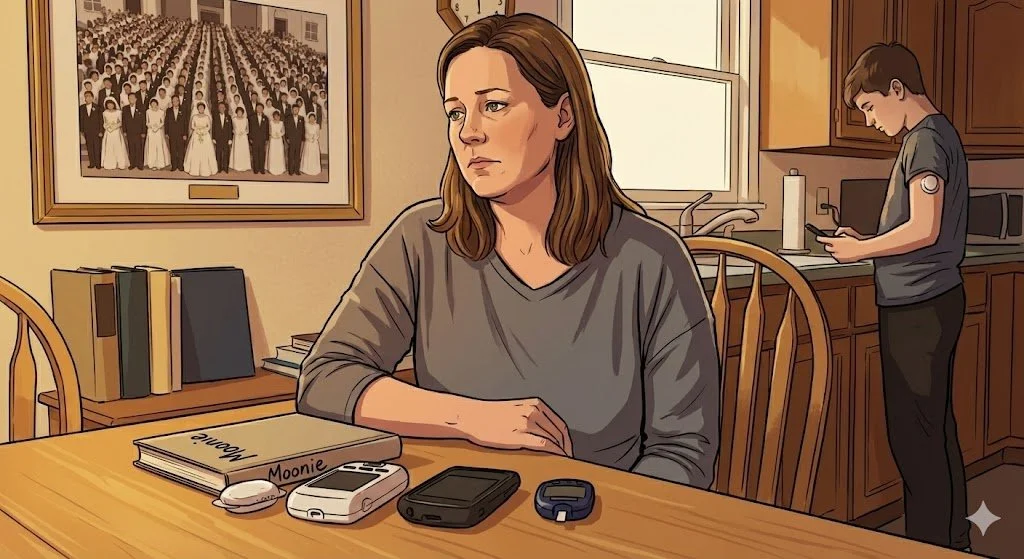


















Please support the sponsors


The Juicebox Podcast is a free show, but if you'd like to support the podcast directly, you can make a gift here. Recent donations were used to pay for podcast hosting fees. Thank you to all who have sent 5, 10 and 20 dollars!

#504 Allergic to Insulin
Sacha Cardinal has type 1 diabetes and is allergic to insulin.
You can always listen to the Juicebox Podcast here but the cool kids use: Apple Podcasts/iOS - Spotify - Amazon Music - Google Play/Android - iHeart Radio - Radio Public, Amazon Alexa or wherever they get audio.
+ Click for EPISODE TRANSCRIPT
DISCLAIMER: This text is the output of AI based transcribing from an audio recording. Although the transcription is largely accurate, in some cases it is incomplete or inaccurate due to inaudible passages or transcription errors and should not be treated as an authoritative record. Nothing that you read here constitutes advice medical or otherwise. Always consult with a healthcare professional before making changes to a healthcare plan.
Scott Benner 0:00
Hello friends, and welcome to Episode 504 of the Juicebox Podcast.
I'm squeezing an extra show in here this week and why now it's because Sasha is allergic to her insulin. Well, she was. And she, well, she is. But now there's a workaround. And it's fascinating. Sasha just graduated from high school, she lives in Canada, she is allergic to insulin, allergic means painful raised welts, and decreased efficacy. What follows is her story. And we'll find out together what she was able to do. It's a really interesting story. Please remember, while you're listening that nothing you hear on the Juicebox Podcast should be considered advice, medical or otherwise, always consult a physician before making any changes to your health care plan. or becoming bold with insulin. I want to thank new members of by me, I don't even know how to say this. There's a buy me a coffee link where people can become members of the show. And part of becoming a member is getting a shout out on the show. So the first time you become a member, get your name, shout it out. So I've got a list for you here before we get started.
Thank you so much to Jeanette, Jennifer, Daniel, Grace, Julie blue, Leah, Melissa, Larissa, Alison, Marilyn, Shannon, Sue, Nancy, and Jessica for becoming members and supporting the show. Like you are really amazing. Buy me a coffee calm forward slash juice box. And a sincere thank you to many of you who just bought me a couple of cups of coffee and didn't do it annually. But still, it's really amazing, but out to use some of your money to buy hard drives, hubs, and a few other computer based objects that I need computer based objects who says that anyway, thank you. Right. Before we get started, I'd like to remind you that if you go to T one d exchange.org, forward slash juicebox. And fill out the survey completely. The show benefits and so to you. As a matter of fact, I saw someone on Instagram today who became a T one D exchange supporter they went they filled out the survey the survey super simple, I'll tell you about it a little later. And they are in the middle of doing a trial for a CGM company testing their adhesives. It's kind of an interesting little thing that came from being part of the T one D exchange, you don't have to do stuff like that. The T one the exchange is happy to just have your, your brief questions to their to their short survey. By the way, you have to be a US citizen type one or US citizen caregiver of a type one. But anyway, other possibilities do pop up afterwards. It was so cool to see someone online doing something for everyone with Type One Diabetes. And when I kind of liked their posts, they said I'm here because of you and I thought oh, that's really cool. So T one d exchange.org. forward slash juicebox.
My name is Sacha Cardinal. Sacha How old are you? I'm eight in October. Wait, you're definitely not eight years old. So I didn't hear everything you said. I don't think how old are you? I'm 18. In October in October, you'll be 18 Are you still in high school? Ah, yeah. I just graduated in June. Congratulations. Thank you. Like last month? Sorry. Like last month you graduated? Yep. It's kind of exciting. I mean, is it exciting? Or is it just like, oh, now that's over? Yeah, more like oh, it's over. Are you Do you have plans for university? Yeah, I'm going to you Ottawa. Nice. Congratulations. You have a focus something you're thinking about studying. criminology definitely. criminology. Okay. Excellent. What made you interested in that? I really know. You're definitely doing it. But you're not sure why. Yeah, exactly. It sounds like my days plans. How old were you when you got diabetes? I was two years old. Oh, you have been rocking this for a while? Yeah. So you're
Unknown Speaker 4:40
18
Scott Benner 4:42
just about we'll call it anything. Your you've had diabetes, pretty much your entire life. Yeah, What do you remember about it from when you were little?
Sacha Cardinal 4:55
Not a lot. Mom was doing most of the work. When I was little, so I just remember having to give insulin when I was eating, and that's about it.
Scott Benner 5:06
No kidding. So it was sort of really part of your life, not something that you think of is this extra thing that happens? No, definitely not interesting. Okay. My daughter was also to and she was diagnosed, and she's going to be 17 in a couple of weeks. Oh, wow. So you guys, probably what were you 2005? Maybe when you were diagnosed? Ah, yeah. January genuine. rarey. 2000 602 1006. Yep. So my daughter was diagnosed in August that year. So you guys really have almost had diabetes the exact same amount of time? Yeah, like seven months. That's interesting. So. And Arden, my daughter, Arden has a very, I think, similar experience in that she doesn't. I don't think about diabetes. In the same way who somebody who maybe was diagnosed when they were a little older, and and remembers like a stretch of time not having it may describe it. So the entire time you were young, were you using? Would you start with needles and how did you start managing? Like, what was your mom using when you were a little?
Sacha Cardinal 6:18
Um, when I was when I first got diagnosed? I had the needles, but then when I was four, they gave me the insulin pump.
Scott Benner 6:28
Okay, so you had a pump since you were four years old? Yes. You know how old my daughter wasn't? She got a pump. Sorry. Do you know how old my daughter was when she got a pump? No, she was for a while. guys might be twinning the whole thing here. And we'll see as we go. So what pump were you using? When you were four? Had the Animus? And you're in Canada, correct? Yeah, yes. Okay. So your health system is a little?
What's the word I want? It's slower to make changes, maybe. Is that fair? Yeah, I think it would be fair to say, okay,
so you're using animist pump since you were four? And Gemini real issues, managing your diabetes? Was everything pretty normal?
Sacha Cardinal 7:21
everything's pretty normal except for the allergy. When do you have to insulin?
Scott Benner 7:27
Yeah. So is that the entire time? And since you're too, or is it something that just started to happen? No, it just started to happen. Like, what, a couple years ago? Okay. So maybe, I'd like to know about that. What was the first thing you noticed?
Sacha Cardinal 7:46
Um, well, it started, it wasn't really an allergic reaction. I just started to get really big bumps on my legs to begin with about almost five years ago. And then last year, in February, I got hospitalized in DK a. And that's when they realized that something bigger was happening than just like little reactions of resistance to insulin. And so in June of 2020, they did some tests and testing and everything. And that's when they realized I was allergic. I had I was like, reacting and everything. And then February this year, that's when they did the test to see if I was allergic to insulin.
Scott Benner 8:38
And they found out I was okay, go back to the bumps on your legs, like mosquito bites. Um, no. Bigger than that, like a big bruise, like a big bruise where they raised up. Yep. Do they hurt? Yeah. Okay, all over just your legs. Like anywhere, I would inject actually Oh, at injection sites. Gotcha. Okay. What kind of insulin are you using? Where are you using?
Sacha Cardinal 9:10
I was using the Nova rapid at the beginning, and then they change me to all kinds of insulin, but they would all do the same thing
Scott Benner 9:17
no matter what. Okay, so, just I'm gonna just talk to you for a second. I know you're young. So I don't want you to be upset. But when you realize that you're allergic to the only thing keeping you alive, what do you think about?
Sacha Cardinal 9:35
Um, well, the first thing that came to my head, like I already have diabetes, why do I have to have like an allergic reaction to it as well?
Scott Benner 9:45
Did you ever make the distinction in your head? Like, what happens if I can't use the insult anymore?
Sacha Cardinal 9:51
Yeah, it's definitely something we were all thinking about.
Scott Benner 9:55
Yeah, yeah. So but you felt like there was a way to deal with it.
Sacha Cardinal 10:01
Yes and No, at the beginning I did but then again, I wasn't sure anymore.
Scott Benner 10:07
Okay, so when it first happened, you thought this is just a problem, we'll fix it. Yeah, right. Okay. How long does it go on before you start worrying that? Maybe there's no fix? Um, a couple years, about three years. Wow. So when I realized that nothing was gonna happen, so for three years, you're just using insulin, and it's making these big welts on you? Yep. did that affect how you ate?
Sacha Cardinal 10:36
Um, it did in the beginning, but then after a while it did. Um, because the insulin wasn't being absorbed in my body. And so my always high but I didn't want to give myself insulin either since it was hurting after a while. So sometimes I would like skip meals or like, skip snacks to like, eat something that doesn't have high carbs or things like that.
Scott Benner 11:01
Okay, so, so not only was the the raised up welts happening, but you weren't getting the effectiveness of the insulin that you would expect. No, exactly. Did anyone ever tell you what the raised up bumps were? Um, it's inflammation in the fat tissues. Okay. All right. Well, this seems like scary. Like, I know you're young. So you're probably all like, it'll work out because that's what happens like something. Something goes wrong, and then we fix it. And that's life. But that's frightening. Like, were your parents like, freaked out? Like have they told you since then, like that? They were really worried or?
Sacha Cardinal 11:41
Yeah, my mom was stressed out that I know for sure. But I think which because firming really know how many people would be allergic to insulin like, in the world or anything. Like for me, it was just another problem that doctors knew about right? But then we actually realized that only three people in the world were reacting that like having this treat, like to insulin the way I did,
Scott Benner 12:09
yeah, it didn't matter which insulin It was. It just you have this reaction and really just three people like you're one of three people. Yep, Sachi. That's incredibly unlucky. That sucks. Yeah, wow. really does No kidding. I'm sorry. That's terrible. Hey, just for fun for a second. How does your mind know? She's right there. But how does your mom act when she's stressed out? Um, she's not herself. That's for sure. But, um, how can I say it? You mean? How can you say so? She won't get mad at you when you say it. Is that the question? Yes. Yeah. Um, she starts acting up, if that makes sense. That's how you talk about children when they get upset when they're tired. Yeah, exactly. Okay, that's fine. We won't tell her that part. You she's gonna listen, but it doesn't matter. We're just but I mean, my point was that it's stressful for everyone. Do you live in like a kind of like a standard families or dad? Do you have a dad and siblings?
Sacha Cardinal 13:13
Yeah, I do. Well, they're separated. But I do see my dad every week and then my mom and the other week. Okay. Do you
Scott Benner 13:19
have any other brothers or sisters? Or do you have any brothers sisters? Yeah, I actually have two brothers and one little sister. Do any of them have any autoimmune problems? Nope. Nothing? celiac? Nothing at all. thyroid? Nope. Does their hair grow weird and that's not an autoimmune thing. Nevermind. Okay, so Okay, so you really are like the one in a million here? Yeah. Okay, so. So what ends up being the fix for this. Um, so they actually inserted a dire port in my belly. Okay, in the domino cavity. Um, so that the insulin would go, would like be absorbed by my body, but not in the subcutaneous part of it, since that's where I was reacting. So that's so in the end. It's not the insulin. Well, it is you're allergic to the insulin, but it's in this subcutaneous system, like, that's where it's bothered. So if you get the insulin deeper than that in your body, it's fine. Yep. Wow. So so there's a I've been looking online since I knew you were gonna come on. So there's this like, Did you get to see it before they put it inside? You? Know what? Sorry. Did you get to see the diet board before they put it inside of you? I did. Did it freak you out? Yeah. How big is it?
Sacha Cardinal 14:58
Um, it's sex. Should not that big it's like the size of like, I can't even. I'm okay, you know, like that little button you have on your gene so you can type them up. Yeah. about that size. Yeah,
Scott Benner 15:17
it's like so a button size. I was hoping we're gonna pick a coin like a Canadian coin that had a funny name. That was my hope when you started describing the size of it. I don't think you have like a loonie, or is that England? What am I thinking of? Yeah, the loonie, but it's smaller than that. That's what I was hoping you were gonna say just so you know. Okay, so it's about the size of a button. And is it very thick? Or is it very thin? What is it?
Sacha Cardinal 15:44
Um, it's thick, since it has to go all the way to the abdominal abdominal cavity. And it also has to come out of my body. So I can like, put the little port on it so I can inject. Okay, so definitely tick, but nothing more.
Scott Benner 16:03
Gotcha. So this button is under your skin, but it has a port that comes through your skin. Yeah. Ah, and then how do you handle swimming, for instance?
Sacha Cardinal 16:18
Um, you do have to cover it for a little bit. But then after a while, you can just
Scott Benner 16:26
put the like reconnect when we're just like you want to take like a wine cork and stick it over top of it or? Um, yeah, well, we have what they call the ghetto. What's it called? I'm sorry.
Sacha Cardinal 16:42
together. It's just like, a clear cover that you put on top. Oh, teraterm. Yeah, exactly.
Scott Benner 16:50
Are you from Canada originally? Are you from Europe? Canada. Okay. I love your accent. And your mom's is thicker. I like it. No, don't be sorry. I'm having a great time. What do you mean? Sorry? You apologizing for how you talk? I don't like my accent. Really? How come?
Sacha Cardinal 17:06
I don't know. It sounds like French. So it's like, I don't know. I sound I sound like weird when I talk in English. Oh,
Scott Benner 17:15
I see. So what's so you speak French at home? Usually? Yep. Interesting. Alright, so hold on a second. Introduce yourself again. Like we're restarting the podcast and say you have type one diabetes, but say it in French? Hello. manasi Sasha gullfaks. She jiobit Super. Oh, wow. So English is not your first language? No, it's not. Ah, do you speak it just at school? or How do you do? How do you do that?
Sacha Cardinal 17:51
Um, yeah, basically just at school or like at work when like, I have clients that are English.
Scott Benner 17:55
Interesting. I don't know why you don't like your accent. They're like, are you aware of it? Yeah, I am. So so it's uncomfortable for you to talk to me like this because you're thinking I sound funny.
Sacha Cardinal 18:09
Yeah, like when I compare myself to others, I'm like, Oh,
Scott Benner 18:13
I shouldn't do that. Nobody cares. I have to be honest. I know. You're young. And it feels like everybody like looks at each other. And nobody really, it doesn't matter. Nobody. It doesn't matter what anybody thinks. I think your voice sounds great. So don't worry about it. very welcome. Alright, so they've got to put this thing in your abdominal cavity. And this is a lifelong situation, right? There's no better answer than this. This is the one. Oh, yeah, this is the one Okay. Does it hurt? No. All right. Can you feel it through your skin? I could at first but not anymore. Okay. And so, are you getting much better reaction to your insulin? Like did your Basal rates change and stuff like that? Like, do you need less insulin now that it's being absorbed this way?
Sacha Cardinal 19:08
Yes, and that's another type of insulin, I get the same amount of insulin except it's less concentrated.
Scott Benner 19:14
Oh, okay. So this is not you didn't go back to Nova rapid or something like that? No, you can't with that system. So what are you using? Um, I can't tell you the name because it's in Wait, like cuz you're a spy. And if you tell me you'll have to come kill me or something like that or what? Cuz you
Sacha Cardinal 19:36
know, um, cuz everything that like the insulin is actually from Germany. Because that's where they have that Daya port and like from Europe. Oh, so everything on that low like insulin bottle is written in Germany, you're using,
Scott Benner 19:53
you're using it insulin, and the bottle is not in any language that you speak Nope. So you would tell me what it was called. If you had any idea what it was called. Exactly. Well, hold on a second. What happens if you like, need to go to the pharmacy and ask for it? Um, I bring an empty bottle. This morning this lady. Yeah, exactly. So I I just googled Daya port insulin Germany and under images you're like the fifth hit. Oh, really? Yeah. With a picture of you wearing a shirt from the office. Oh, the one from to Okay, so you have Wow, this is fascinating. I I just thought for certain I'd see the insulin, but it's just not there. At the Ottawa Citizen calls you diabetic team, diabetic teen allergic to insulin injections undergoes first in Canada operation. Wow, the ones ever had this before in Canada, but you
Sacha Cardinal 21:09
know, actually no one on I call it the left side of the planet. So like the only place that has it is
Scott Benner 21:18
Europe. What do you think they call their side of the planet on the right side of the planet?
So beginning to really like you. Alright, so you're saying that you look, I know, this isn't about diabetes. But when you look at a map, canvas on the left side? Yeah. That's really interesting. Do I need this? Anyone else say that? Or is that just the thing you say? Um,
Sacha Cardinal 21:51
I never heard anyone else say it. I just started using that phrase the other day when I was trying to explain that only Europe had it. Okay, but I was losing my words. And then I was like, well, the left side of the planet doesn't have the diet for
Scott Benner 22:07
soldiers just in your head and not out loud for a second. Explain that in French in your head. Does it come out differently when you think about it in French?
Sacha Cardinal 22:22
Not really, actually. When I think about it, no.
Scott Benner 22:25
Okay. All right. I was just wondering if it was one of those things where you just didn't have the words. And so you just read for the closest word you had? You got a little softer. Do you know I get? I'm not sure why your voice got softer. Is it good? No. It's still sort of the same. I think sometimes you just get excited and you speak more loudly than when you're talking at a normal rate maybe? Yeah, that might be Yeah. All right. So. Okay, how long is the surgery that puts in the port?
Sacha Cardinal 22:59
So it's about 20 minutes for in Europe since like they already are used to it. But in Canada took an hour and a half.
Scott Benner 23:11
Come on Canada. Right now. That makes sense. Were you asleep for it? Or was it a local? asleep? you're asleep? Okay. Scar? Yeah, I do have one. Does it suck?
Sacha Cardinal 23:29
I think it does. People are telling me it doesn't really show but
Scott Benner 23:33
my daughter had to have a little cyst removed from near her fallopian tube, like a year or two ago. So she has these little scars on her belly now. And I have to say, I don't think she cares. Like I think she got used to it.
Sacha Cardinal 23:49
Yeah, that's what everyone keeps telling me that I'll get used to it. Yeah.
Scott Benner 23:52
What do you think you think you'd rather not have a scar on your stomach? I
Sacha Cardinal 23:56
definitely would rather not have one. But, but saving my life right now. So
Scott Benner 24:02
yes. It's an incredibly interesting thing. Isn't it? Like you have a problem? That if it wouldn't, have you thought about this, like, if you were born in 1950, they probably would have been like, we can't help you.
Unknown Speaker 24:17
I know. That's really crazy, right? Yeah. You're lucky in a weird way.
Scott Benner 24:25
But you don't need like, it's how you think about it. Right? You can either say I'm unlucky because I got diabetes. I'm incredibly unlucky because I'm allergic to insulin, and apparently no one else is. Or you can say that that was going to be true no matter what. And I'm really lucky that the technology and the medical understanding exists to mean that they saved your life. Really? Yeah. It's pretty crazy. I would think of it as being lucky if I was you. I'd call that my lucky scar.
Sacha Cardinal 24:54
Yeah, well, I like to say that I'm only like one of like three people.
Scott Benner 24:59
Yeah. And I don't know those other two people. So basically, you're the only one. Yeah. Just exclude that if you want. Oh, are you the only one in Canada? Maybe we could get you to the number one ranking somehow if we think about it. Yeah, the only one in Canada. Nice. So you're like a Canadian superhero, basically. Yeah. Right. That speaks that speaks French. Which is your superhero name? Um, I didn't think of that. No. All right. If it comes to you, let me know. So this thing goes in, you're able to begin using it right away after the surgery. And immediately, you can dial your blood sugars in and get your blood sugar better than it was. Yep. And no bumps. No bumps. Was that exciting? A little or?
Sacha Cardinal 25:54
At first, I was a little bit anxious because I was like, yeah, maybe right now. It's not reacting. But what about in like, a couple injection and then it's doing like big bumps again. It's a reason now it's been almost a month.
Scott Benner 26:12
You only had this month? Almost. Yeah. Three weeks? Wow. You're on the podcast because one of the listeners of the podcast, sent me a note and told me about you. I didn't realize that it only been a month. Yeah. Wow. You're like brand new, basically. Yeah. But you stopped you've been able to stop keep being concerned that it's going to stop working. Yeah, cuz right now it's perfectly fine. Along nice. Do you use a glucose monitor by any chance? Sorry, do you use a glucose monitor like Dexcom or a Libra or anything like that? Yeah, t Dexcom. t 66. Okay, so you can you really see the difference right now in your blood? sugar's Uh, yes. I went from 30 to four Wow, whoa, whoa. Oh, so you your blood sugar was you How long had you been leaving it highlight that? Three years now. Oh, holy. Can we curse? I mean, I can't if I want to. It's my I just don't know you're under age, but I was gonna say holy.
The T one D exchange is looking for type one adults and type one caregivers who are us residents to participate in a quick survey that can be completed in just a few minutes from your phone or computer. After you've finished the questions and they are simple I did in about seven minutes for Arden. You will be contacted annually to update your information and to be asked further questions. This is 100% anonymous, HIPAA compliant, and does not require you to ever see a doctor or go to a remote site. Every time someone completes the process using my link, the podcast benefits. So if you've been looking for a way to help T one D research, the podcast or both, nothing could be easier or more beneficial. T one D exchange research has led to increased insurance coverage for blood glucose meter strips changes in the ADA, changes in the American Diabetes Association guidelines for pediatric a one c goals. This is a big deal whether you know it or not. The FDA is expansion of Dexcom labeling to include finger stick replacements and Medicare coverage of CGM devices. And there's a lot more going on. Like I said, I saw somebody online the other day involved in a in an adhesive trial. They've got like four different spots on their arms, and they're just helping out. Now you don't have to do that. You can just answer the questions and be done with it. But if more opportunities come up, and you're interested, they'll let you know. T one d exchange.org. forward slash juicebox. There's links in the show notes. Links at Juicebox Podcast comm it only takes a couple of minutes to complete the survey. That's crazy. Say holy French for me. Holy cow. Wow, that was a letdown. Okay. You're Wow, your average blood sugar was in the five hundreds. And your a once he was like 21 ish. Um,
Sacha Cardinal 29:27
well for us it goes up to 14 so mine was higher than that. But we don't know the exact number.
Scott Benner 29:35
Do you feel a lot better? Definitely. Yeah. Kidding. So were you like, brain fog? Like, didn't have a lot of energy, all that stuff? Yeah, and I was always grumpy. Yeah, no kidding. Always grumpy might be the name of your episode. But that was um, wow. And but that was your only option. Yep, I'm sorry. That sucks. Well, your life is about to get so much better. Yeah. Good for you. Well, no kidding. Don't go crazy. You don't I mean, dude, I'm saying, like don't start running around with weird boys and doing stupid stuff and yeah, I mean maybe it's too late for that. Oh by the boys already weird. Yeah, joking. Wow Do you feel like can you describe how you feel like thinking about it? relief? Mostly. Um but definitely here say it again I'm sorry. happier happier. Yeah relieved, like in the big sense like did you think you were gonna die? Um, after last year? Yeah, I did. Is it hard to keep taking school seriously and worrying about things that you think aren't gonna matter? Because you won't be here?
Sacha Cardinal 31:14
Um yes and no. Cuz I still wanted to in my head like sometimes when I would stop and like think about it, then I was like, yeah, there's big chances that I won't make it to my 20s. But on the other side, when I was just running around doing things and not thinking about it, it was more that while you have to get your grades up to go to university, you have to do this. Like, I wasn't thinking about not being able to see that time either.
Scott Benner 31:52
Was it difficult to keep your grades up with your blood sugar that high?
Sacha Cardinal 31:56
Yes, and it was hurting so bad that the only thing that was going through my mind when the teacher was talking or anything was the pain and the
Scott Benner 32:07
pain from your your blood sugar being from the injections, oh, from the injection sites. So you were caught in a loop, where you couldn't give yourself enough insulin to bring your blood sugar down. So your higher your you know, all the things that go along with a very high blood sugar. And then on top of that each and every one of your injection sites was in pain. What kind of pain sharp stabbing dull, achy?
Sacha Cardinal 32:38
Um, there's actually no word to describe that pain, because it's like, all mixed together.
Scott Benner 32:45
Did it burn it? It did. I'm so sorry. And so every time you thought to give yourself insulin, you knew you're gonna create another one of these pain centers? Yeah. Were they better anywhere on your body over other places? Or did it not matter where they were? No, it did not matter. Holy crap. Wow. Yeah. Oh, geez. Did you cry a lot? I did. I was just thinking I would cry a lot. You know? Did were your friends aware of your situation?
Sacha Cardinal 33:20
Some of them more. But the ones that were aware of it, they didn't know the full story. And they did not know how bad it was? Or how about how bad it was like getting? I should say,
Scott Benner 33:36
if you don't have an answer to this next question, that's fine. I just want to ask it. Is there conscious thought that goes into how to pretend to not be in pain?
Not really, but are you trying to just act like it's okay.
Sacha Cardinal 33:56
Yeah, that's mostly how I was trying to cope with it. But it was always there.
Scott Benner 34:05
So walking, sitting, didn't matter. Walking
Sacha Cardinal 34:09
was the worst. Because especially when I was injecting all my legs, or my arms or like even the belly, like sitting down, getting up walking around, like everything was like my legs were moving, my arms were moving. My belly was moving. So like, you could feel the bumps. And then sitting down. It's, um, you were like, kind of relaxed, like you're relaxed when you're sitting down and everything. So you could feel the pain that way as well. And then standing up was putting so much pressure because there were bumps and they were heavy. So you could feel the pain and the pressure from these sending up as well.
Scott Benner 34:53
Oh, so not only were they painful, but they were pulling on your body too. Yep. Could you? Is it gonna sound strange? Or maybe it won't? Could you feel them when you're sleeping? Um, sometime? Yeah. Yeah. Like, do you get that feeling like you're never quite completely asleep and you're aware of the pain even when you're?
Unknown Speaker 35:14
Yeah, yeah,
Sacha Cardinal 35:15
I would get the max I had of sleep was five hours.
Scott Benner 35:21
Wow. And it's been going on for three years. Yeah, the pain and everything three years. And today you don't have any pain? No. Wow. That's amazing, isn't it? It's kind of magical. But there's a problem with all that, which is, some of this isn't paid for by?
Sacha Cardinal 35:43
No, actually, nothing is paid for right now.
Scott Benner 35:46
Nothing. So the surgery for the for the implant that wasn't covered by what do you guys call it the health? What do you guys call that? Um, Health Canada, Health Canada. Yeah. Health Canada, except for Sasha is what it should be called. But so the surgery your mom and dad had to pay for.
Sacha Cardinal 36:09
So on that side, we were lucky. The company that that I import, which is called a clash. They decided to pay for the surgeon from Germany to be flown over here. They also paid for the surgery. And they're paying one year of
Scott Benner 36:37
how can I say it like insulin fight and everything? Oh, the the site? So the tubing and all the other stuff that goes with it? Yeah, exactly. Gotcha. But then after that. Let's just say Justin Trudeau is not willing to pay for it. Is that right? Oh, yeah. Can we put it on him? Is that possible? He's getting gray. Haha. I know nothing about the man. I don't mean but I just I just pulled up a photo of him real quick, late. I was like it was beard back. Right? Must be a stressful job. So so we know maybe I'm maybe I'm getting ahead of myself. I was gonna say you need a plan here. But maybe not. You're independently wealthy, and none of this matters. I'm like, you guys have not really dollars in the bank. Sorry, you guys have like millions of dollars in the bank? And you just? I wish not. Okay, so. So there's costs involved here that the health care system in Canada won't pay for? Is it just a matter of you having to explain it to them? Or have they already had it explained? And they were like, No, thank you. And I
Sacha Cardinal 37:43
know, we explained a lot. And then we sent more letters that then more explanation. And then I think we sent about three to five letters to them.
Scott Benner 37:55
Okay. They're still not paying. They're just saying no. And the bigger they said the the biggest problem is the cost of the insulin that we don't know the name of Is that right?
Sacha Cardinal 38:08
And all of the others, so well together. I think it's a no sorry, all together, like the slides and everything. It's $15,000.
Scott Benner 38:17
So for the year, the insulin and the sights together are like 15. Yep. You're gonna have to get a job. No, I'm just kidding. We're gonna have to figure out something to do. Right. So yeah, at the moment, you have a GoFundMe? But but that's, that's not the, that can't be the answer forever. So no, exactly. Yeah. Yeah. See, you have to find a way to explain to Canada that you need a different help. Like, if you had like a weird, something else that nobody else had? They would cover it, I would imagine. I mean, I don't know. I think so. Hell Canada's special. I'd say is that what? What what are some of the things you've guys have talked about to try to figure this out? Like, if you thought of moving to other countries, or what have you considered?
Sacha Cardinal 39:17
We haven't really thought about anything else. You know, we were talking about the GoFundMe and things like that. Gosh, and the doctor said, like, if that doesn't work, then we'll try and find something else. But right now, we don't really have a plan. No. That's
Scott Benner 39:38
that's not fun. So do you feel like this is something that's going to get worked out? Or what's your level of hope for this? 5050 Yeah, you think maybe they'll help you and maybe they won't, but you don't have any reason to think one way or the other? Yeah, exactly. Gotcha. Wow. Well, I mean, I'll make sure people know about the GoFundMe for certain here. But I just feel like the bigger thing to do is to find someone who knows how to how to get inside of Health Canada and make people listen. And as crazy as it sounds, I might know somebody. So I'm gonna ask that person when I get done talking to you today, and see if they have any suggestions for you. They've had a little bit of luck getting coverage for CGM in Manitoba. And so they I think they know how to maybe talk to people or move them a little bit. And I'm wondering if they wouldn't have some suggestions for you. So I know of course, it's actually strange as we're talking about it. I think on Friday, this week, the episode goes up with Trevor about, about what they did in Manitoba. I'm actually gonna look real quick. I said real quick. And then my internet slow down. Yes. On the ninth. I'll put up an episode called Manitoba Strikes Back. So Oh, wow. Yeah. So and there's a pretty compelling blog post that he wrote about how to how to make change that I'll make sure you have to. Okay, so is there? I mean, is there anything that you would want people to know about this or anything that I haven't thought to ask you?
Unknown Speaker 41:37
Um, no, my thing that was we did all at the same. Yeah, we did a good job. Yeah. You're really?
Scott Benner 41:48
You're brave for doing this and talking about it. You're all your friends? No, I guess it made it to the newspaper. Right. So everybody knows. Yeah, we did. What was it weird to be like, like, famous like that?
Sacha Cardinal 42:04
Um, it was, especially at the beginning, because I also got hospitalized for four months. And then starting to get messages from my friends like asking where I was, and things like that. So I was like, Oh, well, I guess. Now it's time to tell them that I'm actually not doing as great as they think.
Scott Benner 42:25
Oh, I see. You're keeping a pretty private for a while. Yeah. When you're in the hospital, how were they giving you insulin in the hospital?
Sacha Cardinal 42:36
They weren't giving it through IV. So into my veins so that I wouldn't react. And was that working? Well?
Unknown Speaker 42:44
Oh, yeah, it
Scott Benner 42:44
was actually that's how they got my numbers now. At first. What, um, what is it like being in the hospital for four months? Um, as stupid as it sounded, was exhausted. exhausting. Okay. Was it good? Tell me why. Sorry. That's, I was gonna say, Tell me why. But it sounds like a fight broke out about a baguette in the background. Yeah, my mom and my brother are playing. But what was exhausting about it? Um, well, especially with COVID. Right now, you can't really see anyone inside or outside, you can't go out you can't do anything. And then being sitted in a bed all day long, and not being able to move around because you have this big pole following you everywhere. Yeah. made it even harder. You tried to do school while you were there? Yeah, I actually didn't really have a choice. So I wouldn't be graduating. didn't have a choice. I would think you might get a pass. Maybe. Maybe they'd be hoping for one. But they didn't. Well, you still need to learn. I'm sure you learn some very important things while you're in there. I feel more over there. I could be a nurse now. You learn how to be a nurse while you're at the hospital. Like after a while you're like I see how this goes. I could do this. That is really super interesting. Um, well, I'm happy that you have an answer that is, you know, health wise, like forget the rest of the stupid stuff for a second. health wise. It is a pretty exciting time for you must feel like you have a brand new life. Yeah. Good for you. That's exciting. Um, do you have a website or is it just the GoFundMe?
Unknown Speaker 44:37
I just okay.
Scott Benner 44:41
I don't know a lot about GoFundMe. But I'm going to go to it for a second and hit search. And I imagine if I type in your name, sa si ha. And then do I need your last name? I'm not sure I haven't went on it in a while. Well, I'm gonna look on a second. I typed in your name and it didn't come up with you. That's not a good sign. Is your mom there? Are she going your brother? She's still with my brother. She like she beat him up or what do you think is happening right now? I really don't know. How old How old is he? He's 20 Oh, I see. Yeah, yeah, like Yeah. Alright, so I'm gonna your mom's I mean, I'll get a link or something. And I'll put it in the show notes of the podcast so people can find it. Okay. Thank you. Yeah, of course. I really appreciate you doing this. It was nice of you to come on and tell me about this is really like such a rarity that it's kind of crazy. I know. It's your life. So it doesn't feel that odd but it's very strange to hear. So no, thank you for having me. No, it's my pleasure. Well, how about that, huh? allergic the insulin and have is type one diabetes. That is as bad as frightening as it gets for me. I don't know about you. If you'd like to help support Sasha, she has a GoFundMe and I'll tell you how to get to it at the very end. For now, thanks so much for listening. Thanks for considering going to the T one D exchange and joining the registry at T one d exchange.org. forward slash juice box. For those of you who became members of the show or bought me a cup of coffee, thank you so much. Buy me a coffee.com forward slash juice box.
We'll put a link to Sasha's GoFundMe right here in the show notes and a Juicebox Podcast calm on the episode page for this episode. Her name is spelled s AC ha that will help you the title of her GoFundMe is help Sasha have a normal life without worries. There's a picture of her in her hospital bed. When you get there, you'll see it. Or you can go to go fund dot m e forward slash d f zero c a six A B, but it might be easier to get the link for my website and click on it. Help Sasha have a normal life without worries. If you're interested head over and take a look. Thank you so much for listening to this episode of the Juicebox Podcast. I'll be back soon with more. Until then, I hope you have a great day.
Please support the sponsors
The Juicebox Podcast is a free show, but if you'd like to support the podcast directly, you can make a gift here. Recent donations were used to pay for podcast hosting fees. Thank you to all who have sent 5, 10 and 20 dollars!