#1797 Pressure
You can always listen to the Juicebox Podcast here but the cool kids use: Apple Podcasts/iOS - Spotify - Amazon Music - Google Play/Android - iHeart Radio - Radio Public, Amazon Alexa or wherever they get audio.
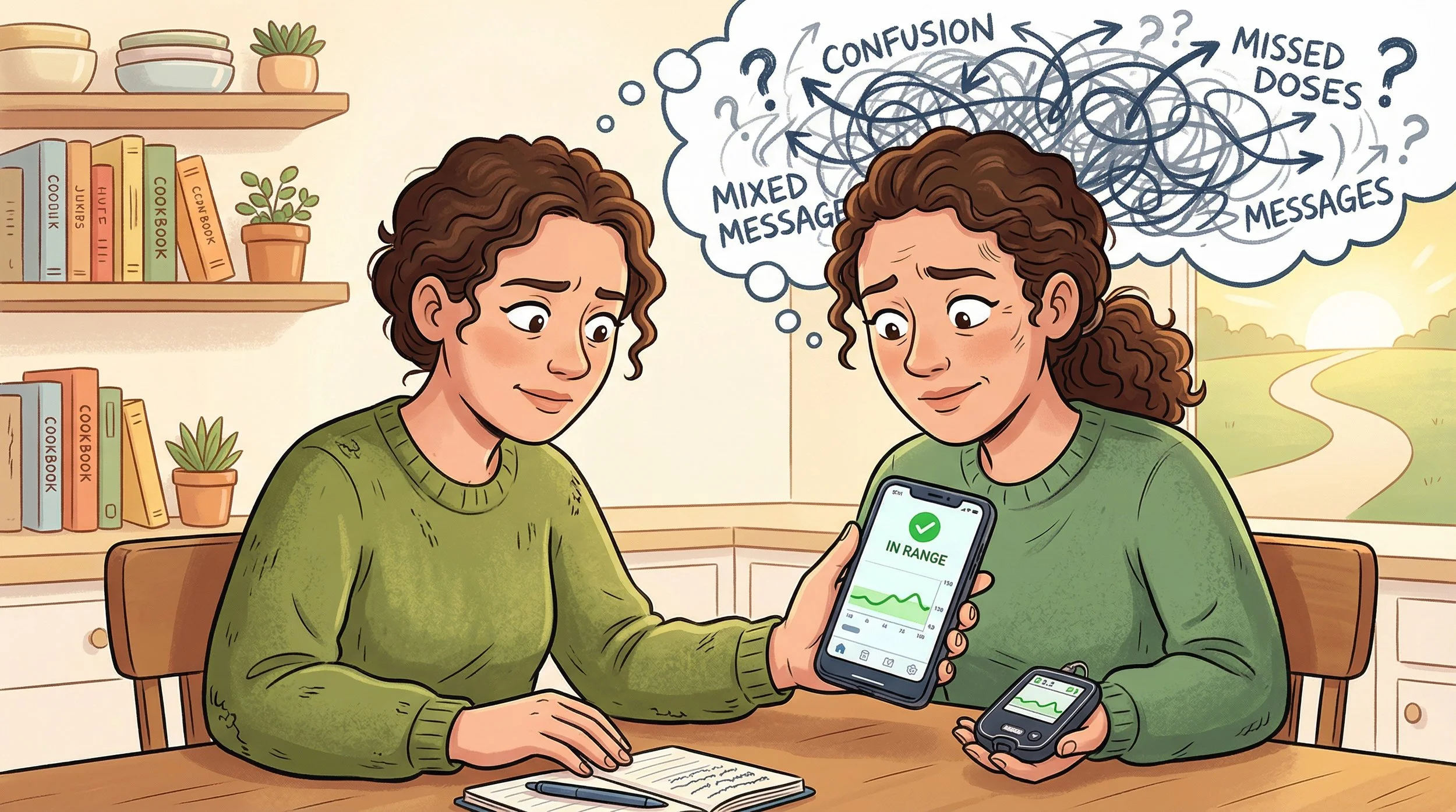
After confusion, missteps, and mixed messages, Britt shares the moment everything changed—finding clarity, better management, and a steadier path forward with type 1 diabetes.
Key Takeaways
- Advocate Relentlessly but Respectfully: Assume positive intentions when working with school staff, but don't hesitate to push for necessary accommodations like a 504 plan to ensure legal protection and consistent care.
- Prioritize Mental Health: Diagnosis is a "marathon, not a sprint." Utilizing therapy and medication (like Zoloft) can help transition from a "fight or flight" crisis mode to a more sustainable management routine.
- Empower the Child: Balancing the burden of management is key; allowing a child to have discreet treatments (like Starbursts in class) helps them feel "normal" and builds their confidence in managing their own condition.
- Education is Evolving: Standard hospital education often focuses on "survival" rather than day-to-day optimization. Seeking out community resources and veteran advice (like pre-bolusing) is crucial for better outcomes.
- Adaptability and Community: Connecting with others in the Type 1 community—whether through podcasts, support groups, or school staff who also have T1D—provides invaluable perspective and support.
Resources Mentioned
- Tandem Mobi System: tandemdiabetes.com/juicebox
- US Med: usmed.com/juicebox (888-721-1514)
- Eversense 365 CGM: eversensecgm.com/juicebox
- Omnipod 5: Mentioned as Courtney's daughter's current pump system.
- Dexcom G7: Mentioned as the CGM used in conjunction with Omnipod 5.
- Juicebox Podcast Website: juiceboxpodcast.com
- Diabetes Network of Arizona: Mentioned for family support and 504 plan assistance.
- Wrong Way Recording: wrongwayrecording.com (Podcast Editing)
Introduction and Diagnosis
Scott Benner Here we are back together again, friends, for another episode of the Juice Box podcast.
Courtney My name is Courtney. My daughter was diagnosed with type one as a five year old two years ago.
Scott Benner If this is your first time listening to the Juice Box podcast and you'd like to hear more, download Apple Podcasts or Spotify, really any audio app at all. Look for the Juice Box podcast and follow or subscribe. We put out new content every day that you'll enjoy. Wanna learn more about your diabetes management? Go to juiceboxpodcast.com up in the menu and look for bold beginnings, the diabetes pro tip series, and much more.
Scott Benner This podcast is full of collections and series of information that will help you to live better with insulin. If you're looking for community around type one diabetes, check out the Juice Box podcast private Facebook group. Juice Box podcast, type one diabetes. But everybody is welcome. Type one, type two, gestational, loved ones, it doesn't matter to me. If you're impacted by diabetes and you're looking for support, comfort, or community, check out Juice Box podcast, type one diabetes on Facebook.
Scott Benner Nothing you hear on the Juice Box podcast should be considered advice, medical or otherwise. Always consult a physician before making any changes to your health care plan. Today's episode is sponsored by the Tandem Mobi system with Control IQ Plus technology. If you are looking for the only system with auto bolus, multiple wear options, and full control from your personal iPhone, you're looking for Tandem's newest pump and algorithm.
Scott Benner Use my link to support the podcast, tandemdiabetes.com/juicebox. Check it out. Today's episode is also sponsored by US Med. Usmed.com/juicebox or call (888) 721-1514. US Med is where my daughter gets her diabetes supplies from, and you could too. Use the link or number to get your free benefit check and get started today with US Med. The podcast is also sponsored today by the Eversense three sixty five. The Eversense three sixty five has exceptional accuracy over one year and is the most accurate CGM in the low range that you can get. Eversensecgm.com/juicebox.
Courtney My name is Courtney. I am a school administrator and elementary school principal, and I've been in education for twenty years. And my daughter was diagnosed with type one as a five year old two years ago.
Scott Benner She's seven now.
Courtney She's seven now.
Scott Benner Yeah. You have other children besides that one or no?
Courtney I do. I have a younger son who is he's five now.
Scott Benner Seven and five. He was three when she was diagnosed. Were you gonna have more kids and then you stopped? No.
Scott Benner No. Two two is good?
Courtney Two is good. Girl, boy, and you're like, look what you did. We're done.
Courtney Exactly. My husband wanted a third and I said, I'm good with that as long as you carry this third one.
Scott Benner I hope your new wife and you will be very happy. Exactly. Because I'm not doing this again. Thank you. Yeah.
Scott Benner That makes sense.
Courtney Yep. In the family, you, your husband, extended family, other autoimmune issues? No. Nothing. Nothing. Celiac?
Courtney Knock on wood. Not nothing right now.
Scott Benner Somebody has eczema.
Courtney Eczema. Yes. Eczema.
Scott Benner Yes. What about a vitiligo, a changing of the color of the skin? Nope. No. Mm-mm. Thyroid?
Courtney Nope.
Scott Benner Get out of here. Not one not one low energy person in your family?
Courtney No. Really? No.
Scott Benner I believe you. Okay. Who's got the eczema?
Courtney My son.
Scott Benner Your son does. Okay. Yeah. Let's see. You so you don't have any knowledge of diabetes. It's not like you're looking around corners for it. What happens to your daughter that first piques your interest?
Courtney Well, it was interesting because I was at my twenty year college reunion, and one of my closest friends from college, her son had just been diagnosed about a year prior. And she was talking to me about the symptoms and his diagnosis. And I thought to myself, you know, it's funny. Maggie, my daughter, has some of those symptoms. Like, she's going to the bathroom a lot. She's drinking a lot of water. You know, all the classic symptoms. And she's like, it's probably not type one, Courtney. It's probably something else. But, like, if you're worried, like, make an appointment with your pediatrician.
Courtney So I went went back home, waited a few more weeks. And, again, easy to as I'm sure many of us do, like, you know Yeah. Excuse away the symptoms. I was like, I'm just gonna take her in. And sure enough, they she had glucose in her urine, and her blood sugar was three fifty.
Courtney I love my pediatrician, and she said, you have to go to the emergency room right now. I'm like, no. I don't. She's fine. She just had you know, she just was at school. So she wasn't in DKA, which was good. Thank you to my college roommate.
Scott Benner Did you go to the ER?
Courtney Yeah. Mhmm.
Scott Benner Isn't that funny? Your first like, somebody said, you have go to emergency room. You're like, no. No. No. Silly.
Courtney I don't.
Scott Benner No. You don't know what you're talking about. Did you even go to school? I've never checked.
Courtney Exactly. Yep. And then drove to the, children's hospital in our city, and she was admitted for several days, and it all started.
Scott Benner Wow. How how bizarre is that? You're talking to a person you probably hadn't seen in forever. And they're like, oh my god. You. And you're like, you. I remember that time we got drunk at the thing, and you're like, yeah. Yeah. Exactly.
Scott Benner What's going on with you? And she's like, oh, my kid got diabetes. And she's like, oh, bummer. And then said she starts rattling off her life, and you're like, this poor lady looks exhausted. Also, she's describing my daughter to me.
Scott Benner Uh-oh. Oh, wow. Yep. Wow. That's really something. Did you, a year later, look like she looked at the—
Courtney Yes. Absolutely. She just got together with her last weekend. I was meant to go to that reunion and hear that information. And and, you know, the funny thing is working in schools, we have kids with type one at my school, obviously, that I work at. And I still had no flipping idea.
Managing Anxiety and Mental Health
Scott Benner Yeah. That's the You know? Does it stick with you or are you okay with it? That you What's that? That it just didn't pop the front of mind as soon as you saw it.
Courtney No. Because even even working in schools and teaching kids who had type one, I didn't know, obviously, the depths of it and the extent of it and what it all entailed. I just sort of remember thinking, yeah, they have to take insulin. You know, no big deal.
Scott Benner You're not an anxious person?
Courtney I'm a very anxious person. Yes. Oh, it's like it's just the way you said it. That was you were like, oh, no, Scott. You've misread that completely. I'm a disaster. I am a disaster. Yes.
Courtney Well No. But I just you know, you don't until I I I think it's interesting now when I see, you know, kids with, you know, different types of medical conditions, how much you don't really know until you're experiencing it. We have a student that, you know, she has spina bifida. Then, again, that that's a, you know, pretty complex medical condition that she has has to navigate her entire life, and you just never really know until your your kid is the one that is going through it.
Scott Benner No. Of course. Wait. Tell me more about your anxiety. How long has this been around?
Courtney My entire life. Since I was three, Scott. Since yeah. Yep. I remember. But, you know, after Maggie's diagnosis, it was obviously yeah. I shouldn't say obviously, but the worst it ever was. I did the things. Went to therapy, got on medication. I actually found a therapist who her son is type one. So Okay. That was really helpful.
Scott Benner I was gonna say that's probably incredibly helpful. Well, I did the thing. So there's a checklist. I followed it. Do you still do, talk therapy?
Courtney Occasionally. I do. When things feel hard to handle? Yeah. I know the indicators for myself. And, you know, when things when things start to feel really overwhelming, I know, okay. Time for time for a tune up.
Scott Benner What about the medication? Did you keep doing it or did you use it for a while and then stop?
Courtney No. I keep I'm still on it. Yep.
Scott Benner Okay. And what what does it do for you?
Courtney It's funny because I think I can just sort of, like, operate as a normal human being as opposed to somebody who is in this, like, you know, fight or flight crisis mode all the time. So I was just talking with my provider, and she was like, you probably feel like you can go off of it because it sounds like you're doing pretty well. I'm like, I do. And she was like, yeah. You shouldn't.
Scott Benner She's like, no. You should stay healthy. To know you, Courtney, and let me just tell you something. The meds are the only thing holding this together. And those meds are—using bath salts? What are you using exactly?
Courtney No. Not bath salts. Just Zoloft.
Scott Benner Oh, okay. Yeah. And the first one you tried, and it worked out well for you?
Courtney It did. Yeah. Does your husband or other people in your life mention it to you? Meaning, is the shift noticeable to others or just something that's more internal for you?
Courtney I think it's noticeable to others, especially, you know, after diagnosis when our world was rocked. You know, I couldn't sleep. I couldn't eat. I lost 30 pounds. I, you know, just was constantly worried, anxious. So that's—and now I can—I can sleep. I can eat. I can go to work. All those things, you know.
Scott Benner Did someone help you back then? Did you know yourself? Like, how did you know you needed help? Did you overhear your husband telling the kids, don't worry, new mommy will be better than this? Or like, what what happened exactly that kinda made you think like, okay, I have to do something.
Courtney Yeah. The people in my life. My husband, my parents, my siblings, some of my good friends. Courtney's, like, people who I bumped into at the grocery store. Everybody's got Exactly.
Scott Benner I went to get my license renewed, and the lady's yelling at me, you need help. And I'm like, wait. What? Exactly. But the 30 pound weight loss, were you, like, not eating, or what was happening?
Courtney I wasn't eating, and, you know, I just suddenly kinda developed a strange relationship with food. And at the beginning, we were pretty restrictive with my daughter, which I regret now. You know, we just did all low carb. Yeah. I would feel guilty about eating things that were, you know, had carbs and sugar.
Scott Benner Oh, you weren't feeding it to her, so you stopped eating everything too. Were you mad at your husband because he kept eating? Because I know he did.
Courtney Yeah. He was like, listen. That's your journey. I'm over here with my tortilla chips. How did the dominoes fall that make you go low carb with the the child right away?
Courtney I think insulin was scary for a long time, and it was just easier to manage when she was eating low carb. And, you know, I'm a straight a student. I I remember thinking, like, I can I can figure this out? And I couldn't until I listened to Juicebox podcast.
Learning Through the Podcast and Low Carb Phase
Scott Benner Oh, I didn't know that was gonna happen, Courtney.
Courtney Seriously, though. It was—I I remember thinking, okay. Podcast. Someone had sent it to me. I was like, this is good. What it what will it be? Like, ten, fifteen episodes? I'll listen to it. I'll learn everything I need to know, and we'll be golden.
Scott Benner Yeah. Doesn't work like—So when you're like, there's probably, like, three things I have to know. I'll write them down while he's talking. Exactly. So you're saying she's having outcomes, not commiserate with your desires. Things are not going well at all. You try to, like, pull a little bit of information together. It doesn't get any better. And you're like, you know what? Instead, what if we just never had a carb again? Let's try that. Totally. Okay. Yep. And that was, I imagine, probably worked pretty well. Right?
Courtney It wasn't bad. Except that, you know, my poor five year old couldn't have cupcakes when it was someone's birthday or, you know, she wanted something and I said no a lot.
Scott Benner I said no. She's like, mommy, are we married? No. No. So take the, like, kinda like ham fisted cupcake example away. Like, day to day, what was it impacting? Or was it not? Was it just like you got to a birthday party, you're like, god, jeez, we're low carb.
Courtney I don't know. I think it was more about, for me, like, her mental health and her mental well-being and and wanting to be like, you know, "every other kid." Mhmm. Then I tried to relinquish some control and and learn more and say, okay. You're gonna, you know, eat what every kid wants to eat and within limits, of course. She's not having ice cream for breakfast.
Scott Benner But On top of a cinnamon bun? Wash down with a milkshake. That one—that's not—you're just you're just saying, like, common day to day items, like—what happened? She was eating low carb and she—do you think she felt, like, marginalized in that situation or was it your guilt or—diabetes comes with a lot of things to remember. So it's nice when someone takes something off of your plate. US Med has done that for us. When it's time for Arden's supplies to be refreshed, we get an email. Rolls up and in your inbox says, hi, Arden. This is your friendly reorder email from US Med. You open up the email. It's a big button that says click here to reorder, and you're done. Finally, somebody taking away your responsibility instead of adding one. US Med has done that for us. An email arrives, we click on a link, and the next thing you know, your products are at the front door. That simple. Usmed.com/juicebox or call (888) 721-1514. I never have to wonder if Arden has enough supplies. I click on one link. I open up a box. I put the stuff in the drawer, and we're done. US Med carries everything from insulin pumps and diabetes testing supplies to the latest CGMs like the Libre three and the Dexcom g seven. They accept Medicare nationwide, over 800 private insurers, and all you have to do to get started is call (888) 721-1514 or go to my link, usmed.com/juicebox.
Scott Benner Today's episode is sponsored by a long term CGM. It's going to help you to stay on top of your glucose readings, the Eversense three sixty five. I'm talking, of course, about the world's first and only CGM that lasts for one year. One year, one CGM. Are you tired of those other CGMs? The ones that give you all those problems that you didn't expect? Knocking them off, false alerts, not lasting as long as they're supposed to. If you're tired of those constant frustrations, use my link, ever since cgm.com/juicebox, to learn more about the Eversense three sixty five. Some of you may be able to experience the Eversense three sixty five for as low as a $199 for a full year. At my link, you'll find those details and can learn about eligibility. Ever since cgm.com/juicebox. Check it out.
Relinquishing Control and School Management
Courtney I think a little bit of both. Maggie is—I mean, she's a great kid, but she's not "but." And she's very aware of—
Scott Benner Scott, she's a great kid, but she's a little bit of an asshole, I gotta tell you. Like—alright. It's just so funny where you paused. She's a great kid. I'm sorry.
Courtney She is, but what's really important to her is also, like, what other people think and, you know, wanting to be as, quote, normal as possible. She didn't wanna, you know, have to say no to the cupcake.
Scott Benner Did you struggle with that? Like because I I can kinda see myself being of two minds there. Like, if we started off, you know, with the carbs and it wasn't working and we're like, well, let's try lower carb and lower carb worked. And then you start feeling like, well, I you know, I'm not like everybody else. Is there—was there a part of you, like, from a parenting perspective that wanted to say to her, hey, it's not our job to be like everybody else. It's okay? Because that that's a weird position to be in as a parent all of a sudden. Totally.
Courtney Yeah. I I think it was such a contrast and such a, obviously, curveball for all of us, but for Maggie most especially that—and it was it was my own, like, control, you know, issues that I needed to sort of just, like, let go and learn. And, okay, there's gonna be highs and there's gonna be lows, and we can manage those. Maggie gets to be Maggie. What do you call a high blood sugar? Where's the number when you start going, oh, jeez, I didn't do something right.
Courtney I'm not a diabetes ninja. Not yet. And it's one of the things that I would I want parents—I would want parents to know about schools. Like, for me, I'm willing to relinquish a little bit more control when she's at school. I'm not worried about a blood sugar of one fifty or one eighty when she's at school. I'm gonna let that ride out. The pump's gonna take care of it, and she's, you know, just gonna be, you know, high for a little bit. That's okay. She'll come back down.
Scott Benner What system is she on?
Courtney Omnipod and g seven. Omnipod five? Yep. Okay. If she's at school with a one fifty blood sugar, you wouldn't send a text to somebody that said, hey, why are we bolusing here? Nope. No. You'd say, I I think the algorithm's gonna bring this down at some point. Totally.
Scott Benner Is there a number where you call the nurse and go, okay, we're upside down. Let's do something.
Courtney Yes. I think if she's above two fifty, which I know seems high, we're—I still feel like at the beginning of this diagnosis even though it's been two years. But for the most part, she's pretty well controlled when she's at school. And if anything, I'm I'm calling to have her eat a Starburst because she's, you know, in the seventies, which I don't really care for when she's at school because she can drop pretty fast depending on if it's, you know, PE, recess, whatever. Right. So most of my calls are on the low end as opposed to the high.
Scott Benner So you're you're adding context, but she's not walking around $1.80 all day most days. No. I gotcha. I just wanted to understand the the you know, what you're using to calibrate yourself with. And so you were able—to you weren't able to. Zoloft was able to give away that anxiety.
Scott Benner This episode is sponsored by Tandem Diabetes Care. And today, I'm gonna tell you about Tandem's newest pumping algorithm. The Tandem Mobi system with Control IQ plus technology features auto bolus, which can cover missed meal boluses and help prevent hyperglycemia. It has a dedicated sleep activity setting and is controlled from your personal iPhone. Tandem will help you to check your benefits today through my link, tandemdiabetes.com/juicebox. This is going to help you to get started with Tandem's smallest pump yet that's powered by its best algorithm ever. Control IQ Plus technology helps to keep blood sugars in range by predicting glucose levels thirty minutes ahead, and it adjusts insulin accordingly. You can wear the Tandem Mobi in a number of ways. Wear it on body with a patch like adhesive sleeve that is sold separately, clip it discreetly to your clothing, or slip it into your pocket. Head now to my link, tandemdiabetes.com/juicebox, to check out your benefits and get started today.
Courtney I I think some of it was Zoloft. I think some of it was—it's just time. Right? This just becomes part of—you know, I remember listening to one of your podcasts, and somebody was saying something like human beings just adapt. Right? And this is just—we've just adapted. This is just part of our life. And do we wish we didn't have to deal with it? Sure. But I don't—can't—I can't waste time or energy on that anymore. Just gotta keep moving forward.
Evolving Roles and School Advocacy
Scott Benner I think you're going to find because you're—you know, she's diagnosed young and you're a young family still. Right? And how old are you?
Courtney I'm 45. Not that young. Okay. But like—well, you can say it, Scott, but it's not true. Did you start a little late on purpose?
Courtney I did. I got married at 35. And then I had—got pregnant at 36 and 38. Long line of losers behind you? Or—Yeah. That's right.
Scott Benner Oh, jeez. I kept trying to find one, Scott. They're not as plentiful as you think. The one I settled on isn't actually great. It's just—it is great. No, I'm kidding. I'm sure he's fantastic. Well, I I guess what I was—what I wanted to say was that this is gonna morph and change so many times. You won't even recognize this part of it six months from now. Let alone six years from now. If Arden was seven and she was at school, and, of course, this would have been before algorithms and stuff like that, I would have absolutely bolused the one fifty. I probably would have bolused to, like, one thirty, to be perfectly honest. Because I was acting as the decision maker already. Now and then moving forward, you know, after kinda learning how the system she was using, the different systems she's used over the time have worked—there's times when you're like, well, there's no reason to interject here. It's gonna take care of it. There's times when you see and you go, I don't think this is gonna work out ever or or it's gonna take too long. But then, you know, morphing forward, forward, forward, forward till she is, you know, who she is today. The reasons you don't bother somebody to bolus a one fifty when they're 21 are different than the reasons you don't do it when they're seven. You really do have to keep rolling with it and making new decisions. And then at some point, like, the give-it-away part of it—I know how I hope Arden ends up being as an adult taking care of herself, but I also feel like I've talked to countless people and I realized that that's not—it's not reasonable to expect everybody to do something based on, like, directions or a check sheet or something like that. People are just who they are.
Courtney Yep. Well, the other jackpot that we hit was our school nurse is type one. Maggie's school nurse is type one. Oh, wow. Okay. And how do you find that to be valuable?
Courtney First and foremost, just the education and knowledge. I continue to be struck by, you know, how many people don't know the ins and outs. Not that they should, but, or the that it can be critical and scary. And that you have to intervene, you know, immediately. It can turn into a medical emergency. So I think that was helpful. I also think just from my daughter seeing her every day and seeing her sensor and that that it's just part of—you know, she's a great successful adult and school nurse. They have their own little community there of support. Which is—it's just so great. That's excellent. Did you—do you work in the same district your kid goes to school in?
Courtney I don't. No. So you didn't, like, hire the type one nurse on purpose? No. Scott, it was a little bit of abuse of power, but—Exactly. I would've if I could've. But it's very nice. Let's see. How is—I do—Go ahead. Your thoughts?
Courtney I was just gonna say, I I have to be pretty aware of my role at school when it comes to type one kids at my own school because I want to overstep, I think, at times when that's not really my role. I had a student whose blood sugar was low, and we had a substitute who was having him eat Jell-O. And I said, oh, how many carbs are in the Jell-O? And she was like, I don't know. And I said, zero. He needs juice. He's in the fifties. And, again, I was glad I was there to support, but and then I, you know, the community that I serve is a lower socioeconomic than the community that I live. And so there's really a lack of resources sometimes that hurts my heart as a mom and an educator. I just think there's more we could do in terms of advocacy and education.
Scott Benner The Jell-O is interesting. You step in—do you step in and say, oh, I have—or do they know you have a a child with type one, or did you just, like, be like, hey, I have some background on this, and that's not gonna work?
Courtney Yeah. My my staff and students know that I have a child with type one. This was a substitute, so I don't think she knew. Where'd she get the Jell-O?
Courtney I don't know. Funny. I know. I'm low. Would you like my lime Jell-O? Exactly. Why do you have lime? Ugh. Everyone knows orange is better, but that's that's neither here nor there. You know, Jell-O is Jell-O ground up horse hooves? Disgusting. Yeah, it is disgusting, but Jell-O is great.
Scott Benner Why'd you wanna come on the podcast? Also, don't forget to mention that I'm famous like you did before we started recording.
Courtney Scott, seriously. I am still nervous talking to you because you are a celebrity in my house and in my community. And my type one mom friends were so excited for me to be talking to you today.
Scott Benner Seriously? That's lovely. I watched my wife run away from me in the kitchen yesterday. I was like, hey, can I tell you something? She's like, not now. And she just—If that ain't marriage in a nutshell, I swear to you, we were in the car the other day. She brought something up. It was like a social thing. It was a pretty deep point about something she brought up. We're chatting about it, not for long, and I had, like, a—I wanted to add to it. And I—it's—I literally don't remember what it was. It's not important. And I added to it, and there's this long pause, and she didn't say anything. And I turned and I looked at her, I was like, are you gonna respond? And she goes, I'm just listening. I have nothing to say about this. I'm like, you brought this up. You started this conversation, and I'm trying to keep it going. And you just went mute in the middle of it. She's like, yeah, I'm not interested. Okay. So just tell Arden—and Arden goes, I do that sometimes. Sounds like I just get bored in the middle. Anyway—yeah. That's just so lovely. How long have you—I'm sorry, you told me, but you've been married since how long?
Courtney I've been married for ten years. Are you and your husband splitting duties on the on the diabetes stuff, or does he have a thing he does? How do you manage the workload?
Courtney Yeah. It's—I think, you know, been probably one of the biggest challenges in our marriage because when Maggie was first diagnosed, I took it all on. I'm still probably the point of contact. I wouldn't let him do a lot to start, which was, again, just my own issues with control. But then it it got to the point where, you know, I couldn't leave. I mean, literally, I was with my daughter twenty four hours a day, seven days a week. Couldn't go anywhere. Couldn't do anything. Couldn't trust anyone else.
Scott Benner You were spiraling, you would say?
Courtney I was. And my husband is a wonderful, capable, intelligent man. And it was—it became very important for me that we, you know, both were doing things and, you know, and then I just started resenting him for it even though it was me who was preventing him from doing it.
Scott Benner "Don't touch this kid. I cannot believe you are not helping me with this kid." Exactly. That was exactly it. I wanna just say this right now. Kelly told me I was cooking sausage incorrectly last night. Hilarious. It was like—what's happening? And so she said—I wish I would've—I've been married almost thirty years, and I still didn't know to be quiet on this next little bit. She goes, "what's this all over the sausage?" And I went, "are you referring to the pepper?" And she goes, "yes." "Why did you"—what did she say? "Why did you, like, flavor the sausage? The sauce is going to do that." And I said, "well, I'm just doing it the same exact way I've done it for the last thirty years." And I kinda let it go. But I was just—I was standing there with the sausage, and she's doing something else. And we're cooking together. Right? In Cosmopolitan magazine, they tell you that's sexy, but trust me, it's not. They're lying to you about that. And I couldn't let it go and I just I waited, like, three solid minutes through, like, some real silence—because I mean, I was clearly not looking for her input on the sausage making. And I just said, "I gotta tell you, you're a special person." And she says, "how's that?" And already in her voice, she's like, "go ahead. Say the shitty thing you're gonna say." Exactly. "How could you describe pepper as 'what's this all over the sausage?'" Marriage. It was revealed twenty four hours later that she might be having her period. But I don't think that has anything to do with it, Courtney, because her period does not change how she reacts to things. Okay? She is the same person no matter what. And I will use her words, her menstrual flow, and and the hormones that come with it, they only change her inability to deal with me being stupid. Yeah. And so in a normal situation, she would have shut up about how I just spread whatever that is all over the sausage. But on that day, it needed to be described as "what is that all over the sausage?" It has to be said. I swear to God when she said that, I thought, what is she talking about? What is all over the sausage? And then I finally went, "are you talking about the pepper?" "What else is on this?" she said. And I went, "onion, garlic, pepper, the same goddamn thing I put on it my whole life." She goes, "ugh."
Courtney You—she should've done better. Goddamn. I know—was wrong with me. I'm just a horrible person. I was the only man in America cooking during that football game last night, by the way. You're welcome. So, anyway, so you ostracized your husband, and then ostracized him again for allowing himself to be ostracized. Absolutely. Since that's been cleared up, what's the deviation of work? How does it work now?
Courtney It's pretty much fifty fifty. I tend to be the point person for school just because schools are where I feel comfortable. But I just went away last weekend, and I know that he does a great job and is on top of things. And Maggie knows that too now, and I don't think she did at the beginning. She would always only come to me, and some of that was, you know, a mom—Premeditated? Yeah. "Don't go to him. He's horrible." Exactly. but I think she needs to know that there's lots of people and that dad can take care of her just as well as mom can. I agree. We're in—You made your way through it. And you went away, didn't think about it the whole time you were gone, kind of it was kinda free and easy for you?
Courtney It was actually. It was pretty easy. You're selling Zoloft today like water in the desert. There's a lot of ladies right now going, "how do—was that a z? Z o what?" Exactly. Don't think you can ever totally turn it off, but, you know, I glanced at her blood sugar, and I think maybe I texted him once or twice to be like, "did you give her something? She's on the low."
Scott Benner Pretty awesome. Are you from the Midwest originally?
Courtney I'm not. I was born in Boston, and then I grew up in Jersey for most of my life. And now I'm out in Arizona. Your accent's like a really interesting blend. I can't figure out what it is while it's happening. It's nice. It's part of what made me when I incorrectly said a half an hour ago, "so you don't have any anxiety." You sound calm while you're speaking. Is that the school thing?
Courtney I think so. It's just yes. Years of practice. I have a tone, Scott, that stops people from throwing things in my office. Exactly. I learned it in college. That was most of my last year. because you really do make me feel at ease. Your voice makes me feel at ease. Oh, that's such a nice compliment. And you come off so, like, somewhere between Minnesota and Wisconsin/Chicago when you're talking, but you're not at all. Funny, no.
Public School Realities and 504 Plans
Scott Benner Did the whole group of ladies that love me pick straws as to who got to come on the podcast?
Courtney Well, it's funny because one of my good friends is also an educator, and she volunteers for Diabetes Network of Arizona. They do a lot of work with families who are newly diagnosed in terms of helping them get 504 plans set up and support with school. And she was saying as educators, we can kind of see both sides of things—the experience working at a school and then the experience of, "holy crap, now I have to send my five year old to school with this life threatening medical condition and trust that the staff there are gonna take care of her and keep her safe." So she was like, "you go on, Courtney. You're a principal. Go on."
Scott Benner Well, it is hard to know. Because I'm sure for all the good nurses out there who have type one, you probably have worked with people in the past where you're like, "I wouldn't leave my guinea pig with that person." Absolutely. And how are you supposed to know?
Courtney Exactly. And I think—what I do think is that ninety nine percent of school employees want to do the right thing. They're there because they love kids. They wanna make sure kids are cared for, that they're physically safe, emotionally safe. I think what gets in the way sometimes is just a lack of education and a lack of knowledge around type one. And so I feel like gross negligence aside, you can always, and you should, problem solve with the school. I mean, I had to do it for my daughter when she was first diagnosed. I requested a 504 meeting. I went in, and I said, "I want someone to follow her numbers." And they said, "well, we don't have an iPad." And I said, "you can get one." And they were like, "well, we—no. We don't have one." They're for sale. You can get them anywhere. Yeah. And then it was like, "if you don't have the power to get an iPad and follow her, who should I talk to? Is that your technology department? Is it the superintendent?" I think the best advice I could give any parent is, assume positive intentions of the school. They wanna do the right thing. And then you problem solve as a team or you advocate up. You go up the chain of command. No problem. Who should we talk to then? How can we make sure?
Scott Benner Yep. First person says, "iPad. I don't have an iPad." You see that person as the school instead of the person who is in a position that doesn't have an iPad and doesn't have a budget to buy an iPad. And so instead of saying, "look, I don't have one of those, and I don't know how to get it. We could talk to somebody else," they just go, "nope. I don't have an iPad." And it's that simple—those kind of simple answers then spark you on the other side to go, "ah, they don't wanna help me." Meanwhile, who's they? It's just this person in front of you who's limited by their options. Totally.
Courtney And listen—my kids go to public schools. I work in a public school. Public schools are understaffed, under resourced. And oftentimes, your school nurse, your health tech, they are—literally, my daughter's school has 1,100 students. If at any point, I was worried that she wasn't getting the care that she needed because the workload was too much for the health staff, I would advocate. And I know that I could go to the superintendent. Schools are really, for the most part, doing the best that they can. And I'm willing to work with schools all day long as long as we are assuming positive intentions, we're kind to each other, and we problem solve. And if we can't solve it, great. Who else should we talk to then? Who can help us?
Scott Benner What would pre-Zoloft Courtney tell me? Because that sounds like a very measured response when somebody tells you they can't help your kid. Because I'm trying to imagine a person who's more newly diagnosed, who doesn't work at a school, and all they can think is, "I gotta be able to see the numbers." And the people are watching you to see the numbers. So you guys gotta be able to see the numbers, then somebody goes, "we don't have an iPad." You go, "they don't understand." And then it kinda goes like that real quickly. So before—can you contextualize how you would have managed this before you were in your Zen place?
Courtney I mean, I can. And listen, I think it's not just type one diabetes. We as parents are—our kids are the most important thing to us. So it is, I think, natural to get fired up and to immediately wanna come in hot. My brother says, you never wanna go full nuclear right away. So you can, and I do, bitch and moan to my friends, my family, people that get it. And then when I'm interacting with school employees, my professional hat is on. And I try to be kind and respectful and acknowledge the place that they're in while continuing to relentlessly advocate for my child.
Scott Benner I hear you. I wish it was 1978 still. It was so easy. You'd be like, "hey, you gotta get an iPad." And they'd be like, "no, I don't." And you just smack them. And then there'd be an iPad and somebody would get arrested and everybody would be laughing about it for five minutes, then it'd be over. The world—everyone's you're like, "I have to think about where they're at." I agree with you, by the way.
Courtney But I'm saying I think both things can be true. I think you can be a pain in the rear end and relentlessly advocate and still be kind. I think all those things can exist. And in my current role, my professional life, I'll work with parents like that all day long. But the minute someone comes in and is yelling out the seams, it makes it difficult to wanna help them. Not that we don't, but having them on the other side of it, I feel like it makes it easier for me when I'm advocating for my own child or my own children.
Scott Benner When someone's yelling at you, do you ever wonder "maybe they're right? Maybe we are really missing the point here?" Because that's gotta be hard while you're being yelled at to be considerate of.
Courtney It is. We talk about—adults just like how we interact with kids. You can set a boundary and hold that boundary and be kind all at the same time. So I don't think there's ever been a time where I haven't tried to acknowledge, "I hear you, and I hear why you're upset and angry," and all of those things can be true. But again, when you've gone full nuclear and you're yelling at school staff, I think you've lost. I think you lost the battle.
Scott Benner Oh, I agree with you. I tell people all the time, your kid's gonna be at that school for a very long time. You get one chance not to be the crazy guy and once you're the crazy guy, you're the crazy guy forever. Forever. No one's giving that away. Once you pick up that monocle and put it on, they're gonna be like, "alright, here they come." The monocle of crazy. And it can happen easily. You start talking about diabetes to an uninitiated person. Just saying the things that are actually important makes you sound like you're out of your mind. Tough situation to be in. You need answers in the short term, but you can't wait six weeks till you guys figure out what to do. We have to do it now. Let me explain to you why—and then the person on the other side is like, "I think they're making half of this up. It sounds ridiculous. They're out of their minds." Tough situation.
Courtney It is. And if anything, many of my friends worry about being, quote, "that parent." I don't wanna be that parent, so I'm not gonna—Oh, you can call. You can email. You can request a meeting. You can have a conversation and problem solve together. That's actually what we're paid to do in our role as education professionals. So don't worry about being that parent. Be a pain in the neck, but you can do that in a way that's nice.
Scott Benner And I should have a 504 plan. Right?
Courtney You should have a 504 plan. Absa-freaking-lutely. And when the school tells me I don't need one, they are really just trying to get out of being legally bound to something? Not necessarily. I think there are schools that are like, "well, we're doing it already. We're doing all the things that you're asking for. So don't worry about it. It's not necessary." To which I would reply, absolutely, it's necessary. And I'm glad that you're doing all the things and the accommodations are in place for my child, but I need it documented in a 504. Absolutely. I need a leg to stand on if you should stop doing it. 504 is nonnegotiable. And it needs to be specific. Absolutely. And my other guidance for parents would be, decide what's your priority. Obviously physical safety is everybody's priority. But for Maggie, she hates being called out for diabetes.
Scott Benner Okay.
Courtney So we had to kind of figure out—and she's had some amazing teachers. Like what we do right now—I'll call the nurse. I'll say, "can you have Maggie eat a Starburst?" She'll say, "no problem." She calls into the classroom. And when the phone rings, Maggie looks at her teacher, and her teacher puts up a number one. And she knows that means go and eat a Starburst. She doesn't wanna be called out for it. She was like, "mom, we had a substitute the other day. The substitute was like, 'okay, Maggie has to go to the nurse before lunch.' And it was so embarrassing, mom." We're trying to prioritize—and take cues from Maggie what she's comfortable with. My priority as a parent was to keep her out of the nurse's office as much as possible. I don't want her in the nurse's office all day long, which I think schools tend to do because it's easier. But I was like, she can be treated in the classroom. She can eat a Starburst in her classroom when she's low. She doesn't need to go to the nurse if she's in the sixties and having a Starburst. She's fine. She's gonna stay in class, and she's gonna learn.
Empowering Maggie and Looking Forward
Scott Benner How long do you think before you take them out of that decision chain? Like right now, you're calling the nurse who's calling the teacher, who's telling the kid. At what point do you take out the nurse and the teacher?
Courtney I actually think it's probably pretty soon. I was just talking to Maggie this weekend and gonna get her a watch so that we can just start texting because she's there. She's seven. She's really bright, and she wants to take it on. That's the other piece—I wanna take on this burden for her as long as I can. I don't want her to have to worry about her blood sugar during the school day. I want her to worry about being a kid and passing her math test and playing with her friends. On the same hand, this will be her life. And so she should feel empowered that she knows what to do.
Scott Benner Yeah. You don't want her just sitting around like, "I feel low. I'm waiting for somebody to tell me what to do." Seven. She's embarrassed at seven about that? "I don't want people to talk to her."
Courtney She's pretty cool, Scott. She—I turned most of her alarms off because she would get so embarrassed. And then it's also just navigating how you respond when kids ask questions. "Why does Maggie have a phone? Why does Maggie have to go to the nurse?" And we're past that now. What does she tell the kids? I would say, "my parents love me." Well, she's said a lot of different things. Diagnosed in kindergarten, I was like, "you could just say, 'oh, I I need insulin for my body.'" And she was like, "mom, nobody knows what insulin means." She's like, "listen. I'm surrounded by a bunch of these little dumbasses. Trust me. They don't know nothing, mom. Okay?" But I gotta spend my life explaining insulin to these little idiots. Is she, like, kinda older than her age?
Courtney Yes, she is. She's wise. But we talk about it with kids like, "everybody has something." My dad has hearing aids because his ears need help hearing. The little girl who is in a wheelchair because her legs need support. The little boy who has alopecia. Our bodies all need different things. This is a five year old conversation we're having with five year olds, but kids are the best. They just accept it. You just have to tell them once, twice maybe, and then yeah. They're pretty good after that. And I also understand if she doesn't want everybody to be in her business too. So—I guess I'd like to understand a little better on the management side. You started off low carb. What was the a1c during low carb time?
Courtney I don't remember what it was at the beginning. We did it for a few months. Her a1c was 10-something when she was diagnosed. And it's not where—where I want her a1c right now is not where I want it to be. But I love our endocrinologist. She's like, "you're doing great. It'll get better. I'm not worried. You also have to prioritize your own mental health, your daughter's mental health, and this is a marathon, not a sprint." Do you know why she thinks it's going to get better?
Courtney I think the realities of eating and little kids—there's probably things we could be doing differently and better. But, you know, okay, bolus for pancakes, and then she decides she doesn't want pancakes. And then I'm like, "oh god." Just some of those things—the learning curve was so steep for us in understanding how all of the different things impact her blood sugar. You're still catching up, really. Yeah. Totally.
Scott Benner And so I'm assuming where the doctor imagines things are gonna get better is because as your understanding grows, you'll be able to implement those things easier. I think that's completely reasonable. You're educating yourself along the way and learning and you're having experiences that are probably making the next experience even easier. It takes time. It does take time. I remember being pretty upset couple months after diagnosis and calling a close friend. I was like, "I just can't do it. I can't get it right." And she was like, "oh, you haven't mastered diabetes in three months, Courtney? That's weird." I still feel like I should be further along. And—I love you, Scott, but I gotta—I take the Juice Box podcast in doses too. There's times where I'm like, "I need a diabetes break." I need to, like, not—not take a break from care, but from the social media stuff, the reading about it, learning about it. I just need to take a break. And then I feel better and throw myself back in it. But it can be a lot.
Scott Benner Yeah. Courtney's like, "listen. I don't know if you can hear it. I'm gonna cry." I'm in a unique position where all I can do is give it to you the way I see it. And then you're supposed to take from it what you want and what you have space for. And if you wanna come back and get a little more later, that's great. I think it would be wrong of me or anybody to come out and just say, like, "hey, here's some milk toast thing, and it's gonna leave your a1c in the eights, but you're doing great, don't worry about it." And then you might think that for the rest of your life. If you're not ready to do the things that lead to a six or a five—it doesn't even matter. At least you know what it is. And there are plenty of people who understand the concepts, don't have the headspace to implement all of them, but aren't overwhelmed by knowing there's more out there. Totally.
Scott Benner Maybe because you're an educator, you'll understand what I mean here. There's 20 people in a class—two kids are limited, five are average, five are a little above average, two are brilliant, one doesn't pay attention. I don't think we do anybody any good teaching to the lowest common denominator. I think you have to be aspirational when you teach. Agree. Absolutely. And I get—I'm not insulted by what you said at all. I completely understand looking at it and going, "I'm not ready for all this yet." When you're first diagnosed, you're drinking through a fire hose. Right? And you're still sort of mourning and dealing with the grief, but I am forever grateful to this podcast because I think I'd be lost without it. Well, tell me about that. If you're not really ready for all of it, but you're still really grateful for it, explain to me what it's doing at the moment for you, what you expect for it to do later.
Courtney Well, this is a silly example, but we're in the hospital and she's been diagnosed and they are saying, "okay, count up her carbs after she's eaten and give her a shot." And nobody told me that we should pre-bolus. Not a single person at our children's hospital told us that. I think there is so much—and it's not to be critical of the hospital because I think they're teaching you survival. They're not teaching you day to day management. They couldn't. You are so clearly a teacher because you're like, "listen. They're trying their best. I love my nurse." Now let me tell you something bad they do. You love them. Now tell me the bad part. Go ahead.
Courtney But that's my next undertaking—redoing the education that newly diagnosed parents get in the hospital because it was crap. How are you gonna make an impact on that? Well, my type one mom friends and I were like—you're getting diagnosis kids left and right. There's a way that we can provide education to families that also honors that they're in crisis right now. Good education is not handing parents a book and saying, "here's what you do. And here's insulin that your child needs to survive, but don't give them too much because they might die." I actually think the diabetes educators that I've worked with are wanting to improve the education that happens. And I think it would be wise to partner with people in education to say, "how do adults learn? How can we give them more information, but not just 'count up their carbs and give them a shot afterwards'?"
Scott Benner May I break your heart? I was speaking to a health care provider recently. And when I got finished, I thought, "oh my god, I understand this better than they do." And I checked myself—I went to a friend and I said, "is it possible that they maybe are just holding back what they really think, but are saying what is safe to say?" I just felt like I was getting a real vibe—they were saying one thing, and I was adding onto it by saying, "but you have to really consider this too." And then when they said, "oh, no, I agree," but then they went back to the more basic idea, I thought, "I don't feel like they're following me on the rest of this." And the person I spoke to again was like, "yeah, I think sometimes you meet people who really don't get the bigger picture about this at all." They were trained a certain way, and that's all they really know how to talk about, and they haven't dug into it any more than that. And then sometimes those people are in charge of how things get decided. That's scary.
Courtney Well, Maggie had a stomach virus last year, and we ended up in the ER. And the physician asked me when the last time I gave her her long acting insulin was. And I said, "oh, she's on Omnipod five. She's on a pump." And he was like, "yeah, no, I know. When did you give her her Lantus?" They don't know. Yeah. And you're like, "well, a couple years ago, I guess. It's been a while." And the fight of, "oh, take off her pod." No, you're not—over my dead body. You're not taking it off. That's what you're up against. A lot of personalities and understandings and understandings. I just think of it more as—some years you get a good one and sometimes you don't. You just have to bob and weave your way through it. Even when Arden got to high school—I look back now on this lovely thing that the nurse said to me when I was meeting the nurse for the first time: "oh, so Arden will come down and we'll work out her boluses before every meal." I was like, "Arden's never coming down to the nurse's office if we can help it." And she's like, "no, no. She'll come down. We'll be friends." And I'm like, my daughter doesn't need a 45 year old buddy at school. But also I see what she meant, and it was literally from a nice place. It was lovely. But then when I talked to her about diabetes, she really didn't understand it at all. So very quickly, she realized Arden wasn't—that's just where we kept the extra supplies, honestly. We weren't really looking for a lot of input. I wish I could talk to those people, but then you have to count on those people having a self awareness commiserate with the idea that they don't know what they're talking about either. It's a hard conversation to have.
Courtney But again, I think at the end of the day, we can trust that the people who live this experience twenty four hours a day, seven days a week, they're gonna be the experts. I'm never gonna understand spina bifida in the way that the family that's lived it does. I agree. You're doing a great job. Is there anything that we didn't talk about that we should have or anything we missed?
Courtney I don't think so. Again, a shout out to all the public school educators who are doing God's work. And don't be afraid to be, quote, "that parent." That's okay. Get in there and advocate for yourself. You might not come off great, but just try to stay balanced. Don't be the crazy person. That's always my message. Try not to be the crazy person. Not a sprint, a marathon. Absolutely. And if you get a bad one this year, you might get a better one next year. You can still work with the bad ones most of the time. If it's the nurse, if it's the teacher—I'm gonna request something different. I think you can always problem solve.
Scott Benner Can I tell you that I have two children? One has gone through school and then four years of college, and the other one is three and a half years in. I have seen them treated wonderfully by lovely people. I've seen them treated admirably by people who are solid workers—they're just, you know, they get in there and do the work job. And I would tell you that there have been teachers who just flat out do not like your kids. And there's no more high mindedness to it than that. Arden has had experiences where female teachers have said to her, "well, yeah, I'm sure you're used to things going your way because you're pretty." And—I don't know what meeting you're gonna get that all worked out in. So then you realize that's the person you're dealing with, and you try you just melt into the background and just try to get by. You stay out of—this is obviously not the rule, it was an outlier, but it happened. And I probably have about four examples of people being—forget that they're teachers, they're just terrible people. It's sad that kids have to learn that lesson as kids. We wanna protect them, but on the same hand, yeah, there's gonna be people that don't like you. That's a hard lesson. It doesn't always have to make sense either. Meanwhile, most of them are fine. Some of them are like you. You seem lovely. Are you still nervous? We're done.
Courtney I still am nervous. It's just literally a full circle moment in my life. Listen, you're on the short list. When the lady leaves me eventually, I'll throw your name out there—because you seem like you'd be impressed by whatever it is I do for a living. I'm sure that would wear off. I'm gonna need that help in the dating process is what I'm saying. Alright, Courtney, thank you so much.
Scott Benner The podcast episode that you just enjoyed was sponsored by Eversense CGM. They make the Eversense three sixty five. That thing lasts a whole year. One insertion every year? Come on. You probably feel like I'm messing with you, but I'm not. Ever since cgm.com/juicebox. Learn more about Tandem's newest automated insulin delivery system, Tandem Mobi with Control IQ plus technology at tandemdiabetes.com/juicebox. There are links in the show notes and links at juiceboxpodcast.com. Arden has been getting her diabetes supplies from US Med for three years. You can as well. Usmed.com/juicebox or call (888) 721-1514. My thanks to US Med for sponsoring this episode. Thank you so much for listening. I'll be back very soon with another episode. If you're not already subscribed or following the podcast in your favorite audio app, like Spotify or Apple Podcasts, please do that now. Seriously, just hit follow or subscribe. If you go a little further in Apple Podcasts and set it up so that it downloads all new episodes, I'll be your best friend. And if you leave a five star review, oh, I'll probably send you a Christmas card.
Scott Benner If you've ever heard a diabetes term and thought, "okay, but what does that actually mean?" You need the defining diabetes series. Defining diabetes takes all those phrases and terms that you don't understand and makes them clear. Find out what bolus means, basal, insulin sensitivity, and all of the rest. Check it out now in your audio player or go to juiceboxpodcast.com. If you have a podcast and you need a fantastic editor, you want Rob from Wrong Way Recording. Truth be told, I'm, like, 20% smarter when Rob edits me. He takes out all the gaps and when I go "um" and stuff like that. I hired Rob at wrongwayrecording.com.



















Please support the sponsors






The Juicebox Podcast is a free show, but if you'd like to support the podcast directly, you can make a gift here. Recent donations were used to pay for podcast hosting fees. Thank you to all who have sent 5, 10 and 20 dollars!

#1796 School Ties
You can always listen to the Juicebox Podcast here but the cool kids use: Apple Podcasts/iOS - Spotify - Amazon Music - Google Play/Android - iHeart Radio - Radio Public, Amazon Alexa or wherever they get audio.
A deeply personal conversation about living with type 1, invisible burden, and the quiet strength it takes to keep going when no one else fully understands.
Key Takeaways
- Advocate Relentlessly but Respectfully: Assume positive intentions when working with school staff, but don't hesitate to push for necessary accommodations like a 504 plan to ensure legal protection and consistent care.
- Prioritize Mental Health: Diagnosis is a "marathon, not a sprint." Utilizing therapy and medication (like Zoloft) can help transition from a "fight or flight" crisis mode to a more sustainable management routine.
- Empower the Child: Balancing the burden of management is key; allowing a child to have discreet treatments (like Starbursts in class) helps them feel "normal" and builds their confidence in managing their own condition.
- Education is Evolving: Standard hospital education often focuses on "survival" rather than day-to-day optimization. Seeking out community resources and veteran advice (like pre-bolusing) is crucial for better outcomes.
- Adaptability and Community: Connecting with others in the Type 1 community—whether through podcasts, support groups, or school staff who also have T1D—provides invaluable perspective and support.
Resources Mentioned
- Tandem Mobi System: tandemdiabetes.com/juicebox
- US Med: usmed.com/juicebox (888-721-1514)
- Eversense 365 CGM: eversensecgm.com/juicebox
- Omnipod 5: Mentioned as Courtney's daughter's current pump system.
- Dexcom G7: Mentioned as the CGM used in conjunction with Omnipod 5.
- Juicebox Podcast Website: juiceboxpodcast.com
- Diabetes Network of Arizona: Mentioned for family support and 504 plan assistance.
- Wrong Way Recording: wrongwayrecording.com (Podcast Editing)
Introduction and Diagnosis
Scott Benner Here we are back together again, friends, for another episode of the Juice Box podcast.
Courtney My name is Courtney. My daughter was diagnosed with type one as a five year old two years ago.
Scott Benner If this is your first time listening to the Juice Box podcast and you'd like to hear more, download Apple Podcasts or Spotify, really any audio app at all. Look for the Juice Box podcast and follow or subscribe. We put out new content every day that you'll enjoy. Wanna learn more about your diabetes management? Go to juiceboxpodcast.com up in the menu and look for bold beginnings, the diabetes pro tip series, and much more.
Scott Benner This podcast is full of collections and series of information that will help you to live better with insulin. If you're looking for community around type one diabetes, check out the Juice Box podcast private Facebook group. Juice Box podcast, type one diabetes. But everybody is welcome. Type one, type two, gestational, loved ones, it doesn't matter to me. If you're impacted by diabetes and you're looking for support, comfort, or community, check out Juice Box podcast, type one diabetes on Facebook.
Scott Benner Nothing you hear on the Juice Box podcast should be considered advice, medical or otherwise. Always consult a physician before making any changes to your health care plan. Today's episode is sponsored by the Tandem Mobi system with Control IQ Plus technology. If you are looking for the only system with auto bolus, multiple wear options, and full control from your personal iPhone, you're looking for Tandem's newest pump and algorithm.
Scott Benner Use my link to support the podcast, tandemdiabetes.com/juicebox. Check it out. Today's episode is also sponsored by US Med. Usmed.com/juicebox or call (888) 721-1514. US Med is where my daughter gets her diabetes supplies from, and you could too. Use the link or number to get your free benefit check and get started today with US Med. The podcast is also sponsored today by the Eversense three sixty five. The Eversense three sixty five has exceptional accuracy over one year and is the most accurate CGM in the low range that you can get. Eversensecgm.com/juicebox.
Courtney My name is Courtney. I am a school administrator and elementary school principal, and I've been in education for twenty years. And my daughter was diagnosed with type one as a five year old two years ago.
Scott Benner She's seven now.
Courtney She's seven now.
Scott Benner Yeah. You have other children besides that one or no?
Courtney I do. I have a younger son who is he's five now.
Scott Benner Seven and five. He was three when she was diagnosed. Were you gonna have more kids and then you stopped? No.
Scott Benner No. Two two is good?
Courtney Two is good. Girl, boy, and you're like, look what you did. We're done.
Courtney Exactly. My husband wanted a third and I said, I'm good with that as long as you carry this third one.
Scott Benner I hope your new wife and you will be very happy. Exactly. Because I'm not doing this again. Thank you. Yeah.
Scott Benner That makes sense.
Courtney Yep. In the family, you, your husband, extended family, other autoimmune issues? No. Nothing. Nothing. Celiac?
Courtney Knock on wood. Not nothing right now.
Scott Benner Somebody has eczema.
Courtney Eczema. Yes. Eczema.
Scott Benner Yes. What about a vitiligo, a changing of the color of the skin? Nope. No. Mm-mm. Thyroid?
Courtney Nope.
Scott Benner Get out of here. Not one not one low energy person in your family?
Courtney No. Really? No.
Scott Benner I believe you. Okay. Who's got the eczema?
Courtney My son.
Scott Benner Your son does. Okay. Yeah. Let's see. You so you don't have any knowledge of diabetes. It's not like you're looking around corners for it. What happens to your daughter that first piques your interest?
Courtney Well, it was interesting because I was at my twenty year college reunion, and one of my closest friends from college, her son had just been diagnosed about a year prior. And she was talking to me about the symptoms and his diagnosis. And I thought to myself, you know, it's funny. Maggie, my daughter, has some of those symptoms. Like, she's going to the bathroom a lot. She's drinking a lot of water. You know, all the classic symptoms. And she's like, it's probably not type one, Courtney. It's probably something else. But, like, if you're worried, like, make an appointment with your pediatrician.
Courtney So I went went back home, waited a few more weeks. And, again, easy to as I'm sure many of us do, like, you know Yeah. Excuse away the symptoms. I was like, I'm just gonna take her in. And sure enough, they she had glucose in her urine, and her blood sugar was three fifty.
Courtney I love my pediatrician, and she said, you have to go to the emergency room right now. I'm like, no. I don't. She's fine. She just had you know, she just was at school. So she wasn't in DKA, which was good. Thank you to my college roommate.
Scott Benner Did you go to the ER?
Courtney Yeah. Mhmm.
Scott Benner Isn't that funny? Your first like, somebody said, you have go to emergency room. You're like, no. No. No. Silly.
Courtney I don't.
Scott Benner No. You don't know what you're talking about. Did you even go to school? I've never checked.
Courtney Exactly. Yep. And then drove to the, children's hospital in our city, and she was admitted for several days, and it all started.
Scott Benner Wow. How how bizarre is that? You're talking to a person you probably hadn't seen in forever. And they're like, oh my god. You. And you're like, you. I remember that time we got drunk at the thing, and you're like, yeah. Yeah. Exactly.
Scott Benner What's going on with you? And she's like, oh, my kid got diabetes. And she's like, oh, bummer. And then said she starts rattling off her life, and you're like, this poor lady looks exhausted. Also, she's describing my daughter to me.
Scott Benner Uh-oh. Oh, wow. Yep. Wow. That's really something. Did you, a year later, look like she looked at the—
Courtney Yes. Absolutely. She just got together with her last weekend. I was meant to go to that reunion and hear that information. And and, you know, the funny thing is working in schools, we have kids with type one at my school, obviously, that I work at. And I still had no flipping idea.
Managing Anxiety and Mental Health
Scott Benner Yeah. That's the You know? Does it stick with you or are you okay with it? That you What's that? That it just didn't pop the front of mind as soon as you saw it.
Courtney No. Because even even working in schools and teaching kids who had type one, I didn't know, obviously, the depths of it and the extent of it and what it all entailed. I just sort of remember thinking, yeah, they have to take insulin. You know, no big deal.
Scott Benner You're not an anxious person?
Courtney I'm a very anxious person. Yes. Oh, it's like it's just the way you said it. That was you were like, oh, no, Scott. You've misread that completely. I'm a disaster. I am a disaster. Yes.
Courtney Well No. But I just you know, you don't until I I I think it's interesting now when I see, you know, kids with, you know, different types of medical conditions, how much you don't really know until you're experiencing it. We have a student that, you know, she has spina bifida. Then, again, that that's a, you know, pretty complex medical condition that she has has to navigate her entire life, and you just never really know until your your kid is the one that is going through it.
Scott Benner No. Of course. Wait. Tell me more about your anxiety. How long has this been around?
Courtney My entire life. Since I was three, Scott. Since yeah. Yep. I remember. But, you know, after Maggie's diagnosis, it was obviously yeah. I shouldn't say obviously, but the worst it ever was. I did the things. Went to therapy, got on medication. I actually found a therapist who her son is type one. So Okay. That was really helpful.
Scott Benner I was gonna say that's probably incredibly helpful. Well, I did the thing. So there's a checklist. I followed it. Do you still do, talk therapy?
Courtney Occasionally. I do. When things feel hard to handle? Yeah. I know the indicators for myself. And, you know, when things when things start to feel really overwhelming, I know, okay. Time for time for a tune up.
Scott Benner What about the medication? Did you keep doing it or did you use it for a while and then stop?
Courtney No. I keep I'm still on it. Yep.
Scott Benner Okay. And what what does it do for you?
Courtney It's funny because I think I can just sort of, like, operate as a normal human being as opposed to somebody who is in this, like, you know, fight or flight crisis mode all the time. So I was just talking with my provider, and she was like, you probably feel like you can go off of it because it sounds like you're doing pretty well. I'm like, I do. And she was like, yeah. You shouldn't.
Scott Benner She's like, no. You should stay healthy. To know you, Courtney, and let me just tell you something. The meds are the only thing holding this together. And those meds are—using bath salts? What are you using exactly?
Courtney No. Not bath salts. Just Zoloft.
Scott Benner Oh, okay. Yeah. And the first one you tried, and it worked out well for you?
Courtney It did. Yeah. Does your husband or other people in your life mention it to you? Meaning, is the shift noticeable to others or just something that's more internal for you?
Courtney I think it's noticeable to others, especially, you know, after diagnosis when our world was rocked. You know, I couldn't sleep. I couldn't eat. I lost 30 pounds. I, you know, just was constantly worried, anxious. So that's—and now I can—I can sleep. I can eat. I can go to work. All those things, you know.
Scott Benner Did someone help you back then? Did you know yourself? Like, how did you know you needed help? Did you overhear your husband telling the kids, don't worry, new mommy will be better than this? Or like, what what happened exactly that kinda made you think like, okay, I have to do something.
Courtney Yeah. The people in my life. My husband, my parents, my siblings, some of my good friends. Courtney's, like, people who I bumped into at the grocery store. Everybody's got Exactly.
Scott Benner I went to get my license renewed, and the lady's yelling at me, you need help. And I'm like, wait. What? Exactly. But the 30 pound weight loss, were you, like, not eating, or what was happening?
Courtney I wasn't eating, and, you know, I just suddenly kinda developed a strange relationship with food. And at the beginning, we were pretty restrictive with my daughter, which I regret now. You know, we just did all low carb. Yeah. I would feel guilty about eating things that were, you know, had carbs and sugar.
Scott Benner Oh, you weren't feeding it to her, so you stopped eating everything too. Were you mad at your husband because he kept eating? Because I know he did.
Courtney Yeah. He was like, listen. That's your journey. I'm over here with my tortilla chips. How did the dominoes fall that make you go low carb with the the child right away?
Courtney I think insulin was scary for a long time, and it was just easier to manage when she was eating low carb. And, you know, I'm a straight a student. I I remember thinking, like, I can I can figure this out? And I couldn't until I listened to Juicebox podcast.
Learning Through the Podcast and Low Carb Phase
Scott Benner Oh, I didn't know that was gonna happen, Courtney.
Courtney Seriously, though. It was—I I remember thinking, okay. Podcast. Someone had sent it to me. I was like, this is good. What it what will it be? Like, ten, fifteen episodes? I'll listen to it. I'll learn everything I need to know, and we'll be golden.
Scott Benner Yeah. Doesn't work like—So when you're like, there's probably, like, three things I have to know. I'll write them down while he's talking. Exactly. So you're saying she's having outcomes, not commiserate with your desires. Things are not going well at all. You try to, like, pull a little bit of information together. It doesn't get any better. And you're like, you know what? Instead, what if we just never had a carb again? Let's try that. Totally. Okay. Yep. And that was, I imagine, probably worked pretty well. Right?
Courtney It wasn't bad. Except that, you know, my poor five year old couldn't have cupcakes when it was someone's birthday or, you know, she wanted something and I said no a lot.
Scott Benner I said no. She's like, mommy, are we married? No. No. So take the, like, kinda like ham fisted cupcake example away. Like, day to day, what was it impacting? Or was it not? Was it just like you got to a birthday party, you're like, god, jeez, we're low carb.
Courtney I don't know. I think it was more about, for me, like, her mental health and her mental well-being and and wanting to be like, you know, "every other kid." Mhmm. Then I tried to relinquish some control and and learn more and say, okay. You're gonna, you know, eat what every kid wants to eat and within limits, of course. She's not having ice cream for breakfast.
Scott Benner But On top of a cinnamon bun? Wash down with a milkshake. That one—that's not—you're just you're just saying, like, common day to day items, like—what happened? She was eating low carb and she—do you think she felt, like, marginalized in that situation or was it your guilt or—diabetes comes with a lot of things to remember. So it's nice when someone takes something off of your plate. US Med has done that for us. When it's time for Arden's supplies to be refreshed, we get an email. Rolls up and in your inbox says, hi, Arden. This is your friendly reorder email from US Med. You open up the email. It's a big button that says click here to reorder, and you're done. Finally, somebody taking away your responsibility instead of adding one. US Med has done that for us. An email arrives, we click on a link, and the next thing you know, your products are at the front door. That simple. Usmed.com/juicebox or call (888) 721-1514. I never have to wonder if Arden has enough supplies. I click on one link. I open up a box. I put the stuff in the drawer, and we're done. US Med carries everything from insulin pumps and diabetes testing supplies to the latest CGMs like the Libre three and the Dexcom g seven. They accept Medicare nationwide, over 800 private insurers, and all you have to do to get started is call (888) 721-1514 or go to my link, usmed.com/juicebox.
Scott Benner Today's episode is sponsored by a long term CGM. It's going to help you to stay on top of your glucose readings, the Eversense three sixty five. I'm talking, of course, about the world's first and only CGM that lasts for one year. One year, one CGM. Are you tired of those other CGMs? The ones that give you all those problems that you didn't expect? Knocking them off, false alerts, not lasting as long as they're supposed to. If you're tired of those constant frustrations, use my link, ever since cgm.com/juicebox, to learn more about the Eversense three sixty five. Some of you may be able to experience the Eversense three sixty five for as low as a $199 for a full year. At my link, you'll find those details and can learn about eligibility. Ever since cgm.com/juicebox. Check it out.
Relinquishing Control and School Management
Courtney I think a little bit of both. Maggie is—I mean, she's a great kid, but she's not "but." And she's very aware of—
Scott Benner Scott, she's a great kid, but she's a little bit of an asshole, I gotta tell you. Like—alright. It's just so funny where you paused. She's a great kid. I'm sorry.
Courtney She is, but what's really important to her is also, like, what other people think and, you know, wanting to be as, quote, normal as possible. She didn't wanna, you know, have to say no to the cupcake.
Scott Benner Did you struggle with that? Like because I I can kinda see myself being of two minds there. Like, if we started off, you know, with the carbs and it wasn't working and we're like, well, let's try lower carb and lower carb worked. And then you start feeling like, well, I you know, I'm not like everybody else. Is there—was there a part of you, like, from a parenting perspective that wanted to say to her, hey, it's not our job to be like everybody else. It's okay? Because that that's a weird position to be in as a parent all of a sudden. Totally.
Courtney Yeah. I I think it was such a contrast and such a, obviously, curveball for all of us, but for Maggie most especially that—and it was it was my own, like, control, you know, issues that I needed to sort of just, like, let go and learn. And, okay, there's gonna be highs and there's gonna be lows, and we can manage those. Maggie gets to be Maggie. What do you call a high blood sugar? Where's the number when you start going, oh, jeez, I didn't do something right.
Courtney I'm not a diabetes ninja. Not yet. And it's one of the things that I would I want parents—I would want parents to know about schools. Like, for me, I'm willing to relinquish a little bit more control when she's at school. I'm not worried about a blood sugar of one fifty or one eighty when she's at school. I'm gonna let that ride out. The pump's gonna take care of it, and she's, you know, just gonna be, you know, high for a little bit. That's okay. She'll come back down.
Scott Benner What system is she on?
Courtney Omnipod and g seven. Omnipod five? Yep. Okay. If she's at school with a one fifty blood sugar, you wouldn't send a text to somebody that said, hey, why are we bolusing here? Nope. No. You'd say, I I think the algorithm's gonna bring this down at some point. Totally.
Scott Benner Is there a number where you call the nurse and go, okay, we're upside down. Let's do something.
Courtney Yes. I think if she's above two fifty, which I know seems high, we're—I still feel like at the beginning of this diagnosis even though it's been two years. But for the most part, she's pretty well controlled when she's at school. And if anything, I'm I'm calling to have her eat a Starburst because she's, you know, in the seventies, which I don't really care for when she's at school because she can drop pretty fast depending on if it's, you know, PE, recess, whatever. Right. So most of my calls are on the low end as opposed to the high.
Scott Benner So you're you're adding context, but she's not walking around $1.80 all day most days. No. I gotcha. I just wanted to understand the the you know, what you're using to calibrate yourself with. And so you were able—to you weren't able to. Zoloft was able to give away that anxiety.
Scott Benner This episode is sponsored by Tandem Diabetes Care. And today, I'm gonna tell you about Tandem's newest pumping algorithm. The Tandem Mobi system with Control IQ plus technology features auto bolus, which can cover missed meal boluses and help prevent hyperglycemia. It has a dedicated sleep activity setting and is controlled from your personal iPhone. Tandem will help you to check your benefits today through my link, tandemdiabetes.com/juicebox. This is going to help you to get started with Tandem's smallest pump yet that's powered by its best algorithm ever. Control IQ Plus technology helps to keep blood sugars in range by predicting glucose levels thirty minutes ahead, and it adjusts insulin accordingly. You can wear the Tandem Mobi in a number of ways. Wear it on body with a patch like adhesive sleeve that is sold separately, clip it discreetly to your clothing, or slip it into your pocket. Head now to my link, tandemdiabetes.com/juicebox, to check out your benefits and get started today.
Courtney I I think some of it was Zoloft. I think some of it was—it's just time. Right? This just becomes part of—you know, I remember listening to one of your podcasts, and somebody was saying something like human beings just adapt. Right? And this is just—we've just adapted. This is just part of our life. And do we wish we didn't have to deal with it? Sure. But I don't—can't—I can't waste time or energy on that anymore. Just gotta keep moving forward.
Evolving Roles and School Advocacy
Scott Benner I think you're going to find because you're—you know, she's diagnosed young and you're a young family still. Right? And how old are you?
Courtney I'm 45. Not that young. Okay. But like—well, you can say it, Scott, but it's not true. Did you start a little late on purpose?
Courtney I did. I got married at 35. And then I had—got pregnant at 36 and 38. Long line of losers behind you? Or—Yeah. That's right.
Scott Benner Oh, jeez. I kept trying to find one, Scott. They're not as plentiful as you think. The one I settled on isn't actually great. It's just—it is great. No, I'm kidding. I'm sure he's fantastic. Well, I I guess what I was—what I wanted to say was that this is gonna morph and change so many times. You won't even recognize this part of it six months from now. Let alone six years from now. If Arden was seven and she was at school, and, of course, this would have been before algorithms and stuff like that, I would have absolutely bolused the one fifty. I probably would have bolused to, like, one thirty, to be perfectly honest. Because I was acting as the decision maker already. Now and then moving forward, you know, after kinda learning how the system she was using, the different systems she's used over the time have worked—there's times when you're like, well, there's no reason to interject here. It's gonna take care of it. There's times when you see and you go, I don't think this is gonna work out ever or or it's gonna take too long. But then, you know, morphing forward, forward, forward, forward till she is, you know, who she is today. The reasons you don't bother somebody to bolus a one fifty when they're 21 are different than the reasons you don't do it when they're seven. You really do have to keep rolling with it and making new decisions. And then at some point, like, the give-it-away part of it—I know how I hope Arden ends up being as an adult taking care of herself, but I also feel like I've talked to countless people and I realized that that's not—it's not reasonable to expect everybody to do something based on, like, directions or a check sheet or something like that. People are just who they are.
Courtney Yep. Well, the other jackpot that we hit was our school nurse is type one. Maggie's school nurse is type one. Oh, wow. Okay. And how do you find that to be valuable?
Courtney First and foremost, just the education and knowledge. I continue to be struck by, you know, how many people don't know the ins and outs. Not that they should, but, or the that it can be critical and scary. And that you have to intervene, you know, immediately. It can turn into a medical emergency. So I think that was helpful. I also think just from my daughter seeing her every day and seeing her sensor and that that it's just part of—you know, she's a great successful adult and school nurse. They have their own little community there of support. Which is—it's just so great. That's excellent. Did you—do you work in the same district your kid goes to school in?
Courtney I don't. No. So you didn't, like, hire the type one nurse on purpose? No. Scott, it was a little bit of abuse of power, but—Exactly. I would've if I could've. But it's very nice. Let's see. How is—I do—Go ahead. Your thoughts?
Courtney I was just gonna say, I I have to be pretty aware of my role at school when it comes to type one kids at my own school because I want to overstep, I think, at times when that's not really my role. I had a student whose blood sugar was low, and we had a substitute who was having him eat Jell-O. And I said, oh, how many carbs are in the Jell-O? And she was like, I don't know. And I said, zero. He needs juice. He's in the fifties. And, again, I was glad I was there to support, but and then I, you know, the community that I serve is a lower socioeconomic than the community that I live. And so there's really a lack of resources sometimes that hurts my heart as a mom and an educator. I just think there's more we could do in terms of advocacy and education.
Scott Benner The Jell-O is interesting. You step in—do you step in and say, oh, I have—or do they know you have a a child with type one, or did you just, like, be like, hey, I have some background on this, and that's not gonna work?
Courtney Yeah. My my staff and students know that I have a child with type one. This was a substitute, so I don't think she knew. Where'd she get the Jell-O?
Courtney I don't know. Funny. I know. I'm low. Would you like my lime Jell-O? Exactly. Why do you have lime? Ugh. Everyone knows orange is better, but that's that's neither here nor there. You know, Jell-O is Jell-O ground up horse hooves? Disgusting. Yeah, it is disgusting, but Jell-O is great.
Scott Benner Why'd you wanna come on the podcast? Also, don't forget to mention that I'm famous like you did before we started recording.
Courtney Scott, seriously. I am still nervous talking to you because you are a celebrity in my house and in my community. And my type one mom friends were so excited for me to be talking to you today.
Scott Benner Seriously? That's lovely. I watched my wife run away from me in the kitchen yesterday. I was like, hey, can I tell you something? She's like, not now. And she just—If that ain't marriage in a nutshell, I swear to you, we were in the car the other day. She brought something up. It was like a social thing. It was a pretty deep point about something she brought up. We're chatting about it, not for long, and I had, like, a—I wanted to add to it. And I—it's—I literally don't remember what it was. It's not important. And I added to it, and there's this long pause, and she didn't say anything. And I turned and I looked at her, I was like, are you gonna respond? And she goes, I'm just listening. I have nothing to say about this. I'm like, you brought this up. You started this conversation, and I'm trying to keep it going. And you just went mute in the middle of it. She's like, yeah, I'm not interested. Okay. So just tell Arden—and Arden goes, I do that sometimes. Sounds like I just get bored in the middle. Anyway—yeah. That's just so lovely. How long have you—I'm sorry, you told me, but you've been married since how long?
Courtney I've been married for ten years. Are you and your husband splitting duties on the on the diabetes stuff, or does he have a thing he does? How do you manage the workload?
Courtney Yeah. It's—I think, you know, been probably one of the biggest challenges in our marriage because when Maggie was first diagnosed, I took it all on. I'm still probably the point of contact. I wouldn't let him do a lot to start, which was, again, just my own issues with control. But then it it got to the point where, you know, I couldn't leave. I mean, literally, I was with my daughter twenty four hours a day, seven days a week. Couldn't go anywhere. Couldn't do anything. Couldn't trust anyone else.
Scott Benner You were spiraling, you would say?
Courtney I was. And my husband is a wonderful, capable, intelligent man. And it was—it became very important for me that we, you know, both were doing things and, you know, and then I just started resenting him for it even though it was me who was preventing him from doing it.
Scott Benner "Don't touch this kid. I cannot believe you are not helping me with this kid." Exactly. That was exactly it. I wanna just say this right now. Kelly told me I was cooking sausage incorrectly last night. Hilarious. It was like—what's happening? And so she said—I wish I would've—I've been married almost thirty years, and I still didn't know to be quiet on this next little bit. She goes, "what's this all over the sausage?" And I went, "are you referring to the pepper?" And she goes, "yes." "Why did you"—what did she say? "Why did you, like, flavor the sausage? The sauce is going to do that." And I said, "well, I'm just doing it the same exact way I've done it for the last thirty years." And I kinda let it go. But I was just—I was standing there with the sausage, and she's doing something else. And we're cooking together. Right? In Cosmopolitan magazine, they tell you that's sexy, but trust me, it's not. They're lying to you about that. And I couldn't let it go and I just I waited, like, three solid minutes through, like, some real silence—because I mean, I was clearly not looking for her input on the sausage making. And I just said, "I gotta tell you, you're a special person." And she says, "how's that?" And already in her voice, she's like, "go ahead. Say the shitty thing you're gonna say." Exactly. "How could you describe pepper as 'what's this all over the sausage?'" Marriage. It was revealed twenty four hours later that she might be having her period. But I don't think that has anything to do with it, Courtney, because her period does not change how she reacts to things. Okay? She is the same person no matter what. And I will use her words, her menstrual flow, and and the hormones that come with it, they only change her inability to deal with me being stupid. Yeah. And so in a normal situation, she would have shut up about how I just spread whatever that is all over the sausage. But on that day, it needed to be described as "what is that all over the sausage?" It has to be said. I swear to God when she said that, I thought, what is she talking about? What is all over the sausage? And then I finally went, "are you talking about the pepper?" "What else is on this?" she said. And I went, "onion, garlic, pepper, the same goddamn thing I put on it my whole life." She goes, "ugh."
Courtney You—she should've done better. Goddamn. I know—was wrong with me. I'm just a horrible person. I was the only man in America cooking during that football game last night, by the way. You're welcome. So, anyway, so you ostracized your husband, and then ostracized him again for allowing himself to be ostracized. Absolutely. Since that's been cleared up, what's the deviation of work? How does it work now?
Courtney It's pretty much fifty fifty. I tend to be the point person for school just because schools are where I feel comfortable. But I just went away last weekend, and I know that he does a great job and is on top of things. And Maggie knows that too now, and I don't think she did at the beginning. She would always only come to me, and some of that was, you know, a mom—Premeditated? Yeah. "Don't go to him. He's horrible." Exactly. but I think she needs to know that there's lots of people and that dad can take care of her just as well as mom can. I agree. We're in—You made your way through it. And you went away, didn't think about it the whole time you were gone, kind of it was kinda free and easy for you?
Courtney It was actually. It was pretty easy. You're selling Zoloft today like water in the desert. There's a lot of ladies right now going, "how do—was that a z? Z o what?" Exactly. Don't think you can ever totally turn it off, but, you know, I glanced at her blood sugar, and I think maybe I texted him once or twice to be like, "did you give her something? She's on the low."
Scott Benner Pretty awesome. Are you from the Midwest originally?
Courtney I'm not. I was born in Boston, and then I grew up in Jersey for most of my life. And now I'm out in Arizona. Your accent's like a really interesting blend. I can't figure out what it is while it's happening. It's nice. It's part of what made me when I incorrectly said a half an hour ago, "so you don't have any anxiety." You sound calm while you're speaking. Is that the school thing?
Courtney I think so. It's just yes. Years of practice. I have a tone, Scott, that stops people from throwing things in my office. Exactly. I learned it in college. That was most of my last year. because you really do make me feel at ease. Your voice makes me feel at ease. Oh, that's such a nice compliment. And you come off so, like, somewhere between Minnesota and Wisconsin/Chicago when you're talking, but you're not at all. Funny, no.
Public School Realities and 504 Plans
Scott Benner Did the whole group of ladies that love me pick straws as to who got to come on the podcast?
Courtney Well, it's funny because one of my good friends is also an educator, and she volunteers for Diabetes Network of Arizona. They do a lot of work with families who are newly diagnosed in terms of helping them get 504 plans set up and support with school. And she was saying as educators, we can kind of see both sides of things—the experience working at a school and then the experience of, "holy crap, now I have to send my five year old to school with this life threatening medical condition and trust that the staff there are gonna take care of her and keep her safe." So she was like, "you go on, Courtney. You're a principal. Go on."
Scott Benner Well, it is hard to know. Because I'm sure for all the good nurses out there who have type one, you probably have worked with people in the past where you're like, "I wouldn't leave my guinea pig with that person." Absolutely. And how are you supposed to know?
Courtney Exactly. And I think—what I do think is that ninety nine percent of school employees want to do the right thing. They're there because they love kids. They wanna make sure kids are cared for, that they're physically safe, emotionally safe. I think what gets in the way sometimes is just a lack of education and a lack of knowledge around type one. And so I feel like gross negligence aside, you can always, and you should, problem solve with the school. I mean, I had to do it for my daughter when she was first diagnosed. I requested a 504 meeting. I went in, and I said, "I want someone to follow her numbers." And they said, "well, we don't have an iPad." And I said, "you can get one." And they were like, "well, we—no. We don't have one." They're for sale. You can get them anywhere. Yeah. And then it was like, "if you don't have the power to get an iPad and follow her, who should I talk to? Is that your technology department? Is it the superintendent?" I think the best advice I could give any parent is, assume positive intentions of the school. They wanna do the right thing. And then you problem solve as a team or you advocate up. You go up the chain of command. No problem. Who should we talk to then? How can we make sure?
Scott Benner Yep. First person says, "iPad. I don't have an iPad." You see that person as the school instead of the person who is in a position that doesn't have an iPad and doesn't have a budget to buy an iPad. And so instead of saying, "look, I don't have one of those, and I don't know how to get it. We could talk to somebody else," they just go, "nope. I don't have an iPad." And it's that simple—those kind of simple answers then spark you on the other side to go, "ah, they don't wanna help me." Meanwhile, who's they? It's just this person in front of you who's limited by their options. Totally.
Courtney And listen—my kids go to public schools. I work in a public school. Public schools are understaffed, under resourced. And oftentimes, your school nurse, your health tech, they are—literally, my daughter's school has 1,100 students. If at any point, I was worried that she wasn't getting the care that she needed because the workload was too much for the health staff, I would advocate. And I know that I could go to the superintendent. Schools are really, for the most part, doing the best that they can. And I'm willing to work with schools all day long as long as we are assuming positive intentions, we're kind to each other, and we problem solve. And if we can't solve it, great. Who else should we talk to then? Who can help us?
Scott Benner What would pre-Zoloft Courtney tell me? Because that sounds like a very measured response when somebody tells you they can't help your kid. Because I'm trying to imagine a person who's more newly diagnosed, who doesn't work at a school, and all they can think is, "I gotta be able to see the numbers." And the people are watching you to see the numbers. So you guys gotta be able to see the numbers, then somebody goes, "we don't have an iPad." You go, "they don't understand." And then it kinda goes like that real quickly. So before—can you contextualize how you would have managed this before you were in your Zen place?
Courtney I mean, I can. And listen, I think it's not just type one diabetes. We as parents are—our kids are the most important thing to us. So it is, I think, natural to get fired up and to immediately wanna come in hot. My brother says, you never wanna go full nuclear right away. So you can, and I do, bitch and moan to my friends, my family, people that get it. And then when I'm interacting with school employees, my professional hat is on. And I try to be kind and respectful and acknowledge the place that they're in while continuing to relentlessly advocate for my child.
Scott Benner I hear you. I wish it was 1978 still. It was so easy. You'd be like, "hey, you gotta get an iPad." And they'd be like, "no, I don't." And you just smack them. And then there'd be an iPad and somebody would get arrested and everybody would be laughing about it for five minutes, then it'd be over. The world—everyone's you're like, "I have to think about where they're at." I agree with you, by the way.
Courtney But I'm saying I think both things can be true. I think you can be a pain in the rear end and relentlessly advocate and still be kind. I think all those things can exist. And in my current role, my professional life, I'll work with parents like that all day long. But the minute someone comes in and is yelling out the seams, it makes it difficult to wanna help them. Not that we don't, but having them on the other side of it, I feel like it makes it easier for me when I'm advocating for my own child or my own children.
Scott Benner When someone's yelling at you, do you ever wonder "maybe they're right? Maybe we are really missing the point here?" Because that's gotta be hard while you're being yelled at to be considerate of.
Courtney It is. We talk about—adults just like how we interact with kids. You can set a boundary and hold that boundary and be kind all at the same time. So I don't think there's ever been a time where I haven't tried to acknowledge, "I hear you, and I hear why you're upset and angry," and all of those things can be true. But again, when you've gone full nuclear and you're yelling at school staff, I think you've lost. I think you lost the battle.
Scott Benner Oh, I agree with you. I tell people all the time, your kid's gonna be at that school for a very long time. You get one chance not to be the crazy guy and once you're the crazy guy, you're the crazy guy forever. Forever. No one's giving that away. Once you pick up that monocle and put it on, they're gonna be like, "alright, here they come." The monocle of crazy. And it can happen easily. You start talking about diabetes to an uninitiated person. Just saying the things that are actually important makes you sound like you're out of your mind. Tough situation to be in. You need answers in the short term, but you can't wait six weeks till you guys figure out what to do. We have to do it now. Let me explain to you why—and then the person on the other side is like, "I think they're making half of this up. It sounds ridiculous. They're out of their minds." Tough situation.
Courtney It is. And if anything, many of my friends worry about being, quote, "that parent." I don't wanna be that parent, so I'm not gonna—Oh, you can call. You can email. You can request a meeting. You can have a conversation and problem solve together. That's actually what we're paid to do in our role as education professionals. So don't worry about being that parent. Be a pain in the neck, but you can do that in a way that's nice.
Scott Benner And I should have a 504 plan. Right?
Courtney You should have a 504 plan. Absa-freaking-lutely. And when the school tells me I don't need one, they are really just trying to get out of being legally bound to something? Not necessarily. I think there are schools that are like, "well, we're doing it already. We're doing all the things that you're asking for. So don't worry about it. It's not necessary." To which I would reply, absolutely, it's necessary. And I'm glad that you're doing all the things and the accommodations are in place for my child, but I need it documented in a 504. Absolutely. I need a leg to stand on if you should stop doing it. 504 is nonnegotiable. And it needs to be specific. Absolutely. And my other guidance for parents would be, decide what's your priority. Obviously physical safety is everybody's priority. But for Maggie, she hates being called out for diabetes.
Scott Benner Okay.
Courtney So we had to kind of figure out—and she's had some amazing teachers. Like what we do right now—I'll call the nurse. I'll say, "can you have Maggie eat a Starburst?" She'll say, "no problem." She calls into the classroom. And when the phone rings, Maggie looks at her teacher, and her teacher puts up a number one. And she knows that means go and eat a Starburst. She doesn't wanna be called out for it. She was like, "mom, we had a substitute the other day. The substitute was like, 'okay, Maggie has to go to the nurse before lunch.' And it was so embarrassing, mom." We're trying to prioritize—and take cues from Maggie what she's comfortable with. My priority as a parent was to keep her out of the nurse's office as much as possible. I don't want her in the nurse's office all day long, which I think schools tend to do because it's easier. But I was like, she can be treated in the classroom. She can eat a Starburst in her classroom when she's low. She doesn't need to go to the nurse if she's in the sixties and having a Starburst. She's fine. She's gonna stay in class, and she's gonna learn.
Empowering Maggie and Looking Forward
Scott Benner How long do you think before you take them out of that decision chain? Like right now, you're calling the nurse who's calling the teacher, who's telling the kid. At what point do you take out the nurse and the teacher?
Courtney I actually think it's probably pretty soon. I was just talking to Maggie this weekend and gonna get her a watch so that we can just start texting because she's there. She's seven. She's really bright, and she wants to take it on. That's the other piece—I wanna take on this burden for her as long as I can. I don't want her to have to worry about her blood sugar during the school day. I want her to worry about being a kid and passing her math test and playing with her friends. On the same hand, this will be her life. And so she should feel empowered that she knows what to do.
Scott Benner Yeah. You don't want her just sitting around like, "I feel low. I'm waiting for somebody to tell me what to do." Seven. She's embarrassed at seven about that? "I don't want people to talk to her."
Courtney She's pretty cool, Scott. She—I turned most of her alarms off because she would get so embarrassed. And then it's also just navigating how you respond when kids ask questions. "Why does Maggie have a phone? Why does Maggie have to go to the nurse?" And we're past that now. What does she tell the kids? I would say, "my parents love me." Well, she's said a lot of different things. Diagnosed in kindergarten, I was like, "you could just say, 'oh, I I need insulin for my body.'" And she was like, "mom, nobody knows what insulin means." She's like, "listen. I'm surrounded by a bunch of these little dumbasses. Trust me. They don't know nothing, mom. Okay?" But I gotta spend my life explaining insulin to these little idiots. Is she, like, kinda older than her age?
Courtney Yes, she is. She's wise. But we talk about it with kids like, "everybody has something." My dad has hearing aids because his ears need help hearing. The little girl who is in a wheelchair because her legs need support. The little boy who has alopecia. Our bodies all need different things. This is a five year old conversation we're having with five year olds, but kids are the best. They just accept it. You just have to tell them once, twice maybe, and then yeah. They're pretty good after that. And I also understand if she doesn't want everybody to be in her business too. So—I guess I'd like to understand a little better on the management side. You started off low carb. What was the a1c during low carb time?
Courtney I don't remember what it was at the beginning. We did it for a few months. Her a1c was 10-something when she was diagnosed. And it's not where—where I want her a1c right now is not where I want it to be. But I love our endocrinologist. She's like, "you're doing great. It'll get better. I'm not worried. You also have to prioritize your own mental health, your daughter's mental health, and this is a marathon, not a sprint." Do you know why she thinks it's going to get better?
Courtney I think the realities of eating and little kids—there's probably things we could be doing differently and better. But, you know, okay, bolus for pancakes, and then she decides she doesn't want pancakes. And then I'm like, "oh god." Just some of those things—the learning curve was so steep for us in understanding how all of the different things impact her blood sugar. You're still catching up, really. Yeah. Totally.
Scott Benner And so I'm assuming where the doctor imagines things are gonna get better is because as your understanding grows, you'll be able to implement those things easier. I think that's completely reasonable. You're educating yourself along the way and learning and you're having experiences that are probably making the next experience even easier. It takes time. It does take time. I remember being pretty upset couple months after diagnosis and calling a close friend. I was like, "I just can't do it. I can't get it right." And she was like, "oh, you haven't mastered diabetes in three months, Courtney? That's weird." I still feel like I should be further along. And—I love you, Scott, but I gotta—I take the Juice Box podcast in doses too. There's times where I'm like, "I need a diabetes break." I need to, like, not—not take a break from care, but from the social media stuff, the reading about it, learning about it. I just need to take a break. And then I feel better and throw myself back in it. But it can be a lot.
Scott Benner Yeah. Courtney's like, "listen. I don't know if you can hear it. I'm gonna cry." I'm in a unique position where all I can do is give it to you the way I see it. And then you're supposed to take from it what you want and what you have space for. And if you wanna come back and get a little more later, that's great. I think it would be wrong of me or anybody to come out and just say, like, "hey, here's some milk toast thing, and it's gonna leave your a1c in the eights, but you're doing great, don't worry about it." And then you might think that for the rest of your life. If you're not ready to do the things that lead to a six or a five—it doesn't even matter. At least you know what it is. And there are plenty of people who understand the concepts, don't have the headspace to implement all of them, but aren't overwhelmed by knowing there's more out there. Totally.
Scott Benner Maybe because you're an educator, you'll understand what I mean here. There's 20 people in a class—two kids are limited, five are average, five are a little above average, two are brilliant, one doesn't pay attention. I don't think we do anybody any good teaching to the lowest common denominator. I think you have to be aspirational when you teach. Agree. Absolutely. And I get—I'm not insulted by what you said at all. I completely understand looking at it and going, "I'm not ready for all this yet." When you're first diagnosed, you're drinking through a fire hose. Right? And you're still sort of mourning and dealing with the grief, but I am forever grateful to this podcast because I think I'd be lost without it. Well, tell me about that. If you're not really ready for all of it, but you're still really grateful for it, explain to me what it's doing at the moment for you, what you expect for it to do later.
Courtney Well, this is a silly example, but we're in the hospital and she's been diagnosed and they are saying, "okay, count up her carbs after she's eaten and give her a shot." And nobody told me that we should pre-bolus. Not a single person at our children's hospital told us that. I think there is so much—and it's not to be critical of the hospital because I think they're teaching you survival. They're not teaching you day to day management. They couldn't. You are so clearly a teacher because you're like, "listen. They're trying their best. I love my nurse." Now let me tell you something bad they do. You love them. Now tell me the bad part. Go ahead.
Courtney But that's my next undertaking—redoing the education that newly diagnosed parents get in the hospital because it was crap. How are you gonna make an impact on that? Well, my type one mom friends and I were like—you're getting diagnosis kids left and right. There's a way that we can provide education to families that also honors that they're in crisis right now. Good education is not handing parents a book and saying, "here's what you do. And here's insulin that your child needs to survive, but don't give them too much because they might die." I actually think the diabetes educators that I've worked with are wanting to improve the education that happens. And I think it would be wise to partner with people in education to say, "how do adults learn? How can we give them more information, but not just 'count up their carbs and give them a shot afterwards'?"
Scott Benner May I break your heart? I was speaking to a health care provider recently. And when I got finished, I thought, "oh my god, I understand this better than they do." And I checked myself—I went to a friend and I said, "is it possible that they maybe are just holding back what they really think, but are saying what is safe to say?" I just felt like I was getting a real vibe—they were saying one thing, and I was adding onto it by saying, "but you have to really consider this too." And then when they said, "oh, no, I agree," but then they went back to the more basic idea, I thought, "I don't feel like they're following me on the rest of this." And the person I spoke to again was like, "yeah, I think sometimes you meet people who really don't get the bigger picture about this at all." They were trained a certain way, and that's all they really know how to talk about, and they haven't dug into it any more than that. And then sometimes those people are in charge of how things get decided. That's scary.
Courtney Well, Maggie had a stomach virus last year, and we ended up in the ER. And the physician asked me when the last time I gave her her long acting insulin was. And I said, "oh, she's on Omnipod five. She's on a pump." And he was like, "yeah, no, I know. When did you give her her Lantus?" They don't know. Yeah. And you're like, "well, a couple years ago, I guess. It's been a while." And the fight of, "oh, take off her pod." No, you're not—over my dead body. You're not taking it off. That's what you're up against. A lot of personalities and understandings and understandings. I just think of it more as—some years you get a good one and sometimes you don't. You just have to bob and weave your way through it. Even when Arden got to high school—I look back now on this lovely thing that the nurse said to me when I was meeting the nurse for the first time: "oh, so Arden will come down and we'll work out her boluses before every meal." I was like, "Arden's never coming down to the nurse's office if we can help it." And she's like, "no, no. She'll come down. We'll be friends." And I'm like, my daughter doesn't need a 45 year old buddy at school. But also I see what she meant, and it was literally from a nice place. It was lovely. But then when I talked to her about diabetes, she really didn't understand it at all. So very quickly, she realized Arden wasn't—that's just where we kept the extra supplies, honestly. We weren't really looking for a lot of input. I wish I could talk to those people, but then you have to count on those people having a self awareness commiserate with the idea that they don't know what they're talking about either. It's a hard conversation to have.
Courtney But again, I think at the end of the day, we can trust that the people who live this experience twenty four hours a day, seven days a week, they're gonna be the experts. I'm never gonna understand spina bifida in the way that the family that's lived it does. I agree. You're doing a great job. Is there anything that we didn't talk about that we should have or anything we missed?
Courtney I don't think so. Again, a shout out to all the public school educators who are doing God's work. And don't be afraid to be, quote, "that parent." That's okay. Get in there and advocate for yourself. You might not come off great, but just try to stay balanced. Don't be the crazy person. That's always my message. Try not to be the crazy person. Not a sprint, a marathon. Absolutely. And if you get a bad one this year, you might get a better one next year. You can still work with the bad ones most of the time. If it's the nurse, if it's the teacher—I'm gonna request something different. I think you can always problem solve.
Scott Benner Can I tell you that I have two children? One has gone through school and then four years of college, and the other one is three and a half years in. I have seen them treated wonderfully by lovely people. I've seen them treated admirably by people who are solid workers—they're just, you know, they get in there and do the work job. And I would tell you that there have been teachers who just flat out do not like your kids. And there's no more high mindedness to it than that. Arden has had experiences where female teachers have said to her, "well, yeah, I'm sure you're used to things going your way because you're pretty." And—I don't know what meeting you're gonna get that all worked out in. So then you realize that's the person you're dealing with, and you try you just melt into the background and just try to get by. You stay out of—this is obviously not the rule, it was an outlier, but it happened. And I probably have about four examples of people being—forget that they're teachers, they're just terrible people. It's sad that kids have to learn that lesson as kids. We wanna protect them, but on the same hand, yeah, there's gonna be people that don't like you. That's a hard lesson. It doesn't always have to make sense either. Meanwhile, most of them are fine. Some of them are like you. You seem lovely. Are you still nervous? We're done.
Courtney I still am nervous. It's just literally a full circle moment in my life. Listen, you're on the short list. When the lady leaves me eventually, I'll throw your name out there—because you seem like you'd be impressed by whatever it is I do for a living. I'm sure that would wear off. I'm gonna need that help in the dating process is what I'm saying. Alright, Courtney, thank you so much.
Scott Benner The podcast episode that you just enjoyed was sponsored by Eversense CGM. They make the Eversense three sixty five. That thing lasts a whole year. One insertion every year? Come on. You probably feel like I'm messing with you, but I'm not. Ever since cgm.com/juicebox. Learn more about Tandem's newest automated insulin delivery system, Tandem Mobi with Control IQ plus technology at tandemdiabetes.com/juicebox. There are links in the show notes and links at juiceboxpodcast.com. Arden has been getting her diabetes supplies from US Med for three years. You can as well. Usmed.com/juicebox or call (888) 721-1514. My thanks to US Med for sponsoring this episode. Thank you so much for listening. I'll be back very soon with another episode. If you're not already subscribed or following the podcast in your favorite audio app, like Spotify or Apple Podcasts, please do that now. Seriously, just hit follow or subscribe. If you go a little further in Apple Podcasts and set it up so that it downloads all new episodes, I'll be your best friend. And if you leave a five star review, oh, I'll probably send you a Christmas card.
Scott Benner If you've ever heard a diabetes term and thought, "okay, but what does that actually mean?" You need the defining diabetes series. Defining diabetes takes all those phrases and terms that you don't understand and makes them clear. Find out what bolus means, basal, insulin sensitivity, and all of the rest. Check it out now in your audio player or go to juiceboxpodcast.com. If you have a podcast and you need a fantastic editor, you want Rob from Wrong Way Recording. Truth be told, I'm, like, 20% smarter when Rob edits me. He takes out all the gaps and when I go "um" and stuff like that. I hired Rob at wrongwayrecording.com.
Please support the sponsors
The Juicebox Podcast is a free show, but if you'd like to support the podcast directly, you can make a gift here. Recent donations were used to pay for podcast hosting fees. Thank you to all who have sent 5, 10 and 20 dollars!

#1795 Had Enough - Part 2
You can always listen to the Juicebox Podcast here but the cool kids use: Apple Podcasts/iOS - Spotify - Amazon Music - Google Play/Android - iHeart Radio - Radio Public, Amazon Alexa or wherever they get audio.
Justin returns to talk anger, money, burnout, and why 21 million downloads matter. A raw, funny, honest look at what it really costs to live with type 1.
Key Takeaways
- Pharmacy vs. DME Savings: Navigating insurance to move supplies from Durable Medical Equipment (DME) to the pharmacy can result in massive savings. Justin saved $2,000 annually by switching to pharmacy co-pays for Omnipod and Dexcom G7.
- Retinopathy and A1c: Justin observed that his mild diabetic retinopathy improved or receded in one eye after achieving better blood sugar stability and a lower A1c.
- Hardware Reliability: While "looping" with old Medtronic pumps is a viable entry point for DIY automated insulin delivery, hardware failure is a risk; modern options like the Omnipod Dash offer current hardware with pharmacy accessibility.
- Accessibility Commitment: The Juicebox Podcast invests in transcripts and ASL translations for the "Bold Beginnings" series to ensure life-saving management information is available to those who are deaf, hard of hearing, or non-English speakers.
- The "Legacy" Purpose: Beyond building a top 1% podcast with 21 million downloads, Scott’s primary motivation remains creating a comprehensive resource for his daughter to use as an adult.
Resources Mentioned
- Eversense 365 (1-Year Wear CGM): eversincecgm.com/juicebox
- Tandem Mobi (Control IQ Plus): tandemdiabetes.com/juicebox
- Touched by Type One: touchedbytype1.org
- Juice Cruise 2026: juiceboxpodcast.com/juicecruise
- Erica Forsyth (Therapist): ericaforesight.com
- Dexcom G7 CGM: dexcom.com/juicebox
- Omnipod 5 & Dash: omnipod.com/juicebox
- Wrong Way Recording: wrongwayrecording.com
Health Complications and Retinopathy
Scott BennerFriends, we're all back together for the next episode of the Juice Box podcast. Welcome.
JustinI'm Justin. I'm a type one diabetic. I've had diabetes since I was just shy of three years old, and I'm pissed off.
Scott BennerThis is part two of a two part episode. Go look at the title. If you don't recognize it, you haven't heard part one yet. It's probably the episode right before this in your podcast player. Check out my algorithm pumping series to help you make sense of automated insulin delivery systems like Omnipod five, Loop, Medtronic seven eighty g, Twist, Tandem Control IQ, and much more.
Scott BennerEach episode will dive into the setup, features, and real world usage tips that can transform your daily type one diabetes management. We cut through the jargon, share personal experiences, and show you how these algorithms can simplify and streamline your care. If you're curious about automated insulin pumping, go find the algorithm pumping series in the Juice Box podcast. Easiest way, juiceboxpodcast.com, and go up into the menu. Click on series, and it'll be right there. Nothing you hear on the Juice Box podcast should be considered advice, medical or otherwise. Always consult a physician before making any changes to your health care plan or becoming bold with insulin.
Scott BennerI'm having an on body vibe alert. This episode of the Juice Box podcast is sponsored by Eversense three sixty five, the only one year wear CGM. That's one insertion and one CGM a year. One CGM, one year. Not every ten or fourteen days. Ever since cgm.com/juicebox. Today's episode is also sponsored by the Tandem Mobi system, which is powered by Tandem's newest algorithm, Control IQ Plus technology. Tandem Mobi has a predictive algorithm that helps prevent highs and lows and is now available for ages two and up.
Scott BennerLearn more and get started today at tandemdiabetes.com/juicebox. The podcast is also sponsored today by Touched by Type One. Please take a moment to learn more about them at touchedbytype1.org on Facebook and Instagram. Touchedbytype1.org. Check out their many programs, their annual conference, awareness campaign, their d box program, dancing for diabetes. They have a dance program for local kids, a golf night, and so much more. Touchedbytype1.org. You're looking to help or you wanna see people helping people with typeone, you want touchedbytype1.org. Do you have any complications right now?
JustinNo major ones. My eyes seem to be struggling a little bit. I had corrective eye surgery back in, I think, 2004. I had glasses for a while as a kid, and I went with corrective eye surgery to fix that. And then maybe, like, two years ago, I started needing cheaters a lot more often for reading. I can drive without glasses. Mhmm. They say I have mild diabetic retinopathy, but it's I think I had it in both eyes, and I wanna say the one eye I don't know if it's receded or gone away or whatever, but it at least in the one eye, it's improved. And the other one, the current eye that it is noticed in, she's had a harder time finding it.
Scott BennerI've interviewed people that say that they've had pretty significant issues that once they got their a one c down and they've got nice stable blood sugars that they've experienced a lot of progress and positivity in their eyes. So, yeah, that's awesome.
The Financial Burden: DME vs. Pharmacy
JustinI I would say the only other complication is financial and with hardware. Stuff costs more now. Well, it it costs more, but maybe two years ago, it was nice. I at the one endo office, I said I was looping, but I need the old pumps. My NP went into a drawer, pulled out about eight of them from patients who would surrender them to the office once their four year warranty was up, and she just gave me six of them. I thought, this is great. So I but I think in a matter of a year, two broke and one died. So I thought, oh, that doesn't make me feel very good. And then I thought back to I had been on MiniMed since the early two thousands. I was on Desatronic before that when I first went on the pump. Medtronic's all I knew, but then I said, well, that girl at the ADA tour de cure event, she had the Omnipod, and dashes are still being made. So that's new current hardware. And, oh my gosh, it comes through the pharmacy.
Scott BennerI was gonna say, you're not still looping with an old Medtronic pump. Right?
JustinI think I have two of them upstairs. But you're doing it with Omnipod right now? I am. I am. For a couple reasons. First one's financial. I don't ask me why. Okay. Back to the anger. It pisses me off that I went, oh, boy, probably five years paying the rates for DME through my insurance for the Medtronic supplies or the MiniMed supplies, which were separately reservoirs, tubings with the infusion sets, and oh, at one time, the n light sensors.
JustinBecause the CGM went through them too. So, eventually, the first thing I switched off of was the nLIGHT, and I went to DexCom because lo and behold, LOOP would let you use Freestyle DexCom or the nLIGHT sensor if you had the Medtronic. Mhmm. And I thought, well, if I'm gonna switch off, let me try the Medtronic pump with the Dexcom sensor to get on more current hardware, and Dexcom has always been, in my mind, from what I've heard, the gold standard for CGM. In that day, certainly starting off, I migrate to Dexcom. Then eventually, I think after I broke the third pump, I said, boy, I gotta get this other pump. So I I go to Omnipod. Now that had to go through the pharmacy, so that was a single co pay. I got to easily drop the co pays or move away from DME for the Medtronic supplies. And then I said, yeah. Omnipod only goes to the pharmacy. And for some stupid reason, I looked up on the formulary list for, I think, MiniMed. And sure enough, all the supplies are in the pharmacy. Yeah. And I'm saying, where are people to—
Scott BennerTell me that. Yeah. Yeah. Yeah.
JustinWho's gonna stand up and say, DME may work? Because I guess it worked. I asked my mom recently, how much did you pay for my supplies as a kid? And she goes, gosh. I really don't remember, which to me says—not that much. I doubt it was free or covered, but it couldn't have been much. So now I'm like, how much am I paying? And so I added everything up, doing the, like, four circuits of it a year for the ninety day supplies, switching all the mini med supplies. If I changed nothing—switching the mini med supplies would save me a thousand dollars a year out of pocket.
Scott BennerThat's awesome.
JustinThen switch that around and with the change to Omnipod, which is a single co pay every ninety days, plus doing g seven instead of G 6 because G 6 was two scripts, transmitter and sensor. Yep. Going to the G 7, since it's all one unit, that's one co pay and one script. And then moving from DME to pharmacy, out of pocket, I saved $2,000 a year.
Scott BennerThat's a significant amount of money. Jeez.
JustinAnd where is somebody to say, hey. Maybe you should check that out? Or think to search through the Apple podcast app and say, oh, who's got podcasts about diabetes loop? Oh, this dummy Benner has it.
Scott BennerI'm uncomfortable with you calling me dumb. Man, I'm happy the podcast is valuable for you. I really am. It's it makes me feel great.
JustinAnd it's it's not just me. I mean, clearly, what are your downloads like each day?
Podcasting Stats and the Top 1%
Scott BennerWell, I don't share that. But Okay. I could tell you that I have this is January 2026. I've just started producing my twelfth solid year. We did 320 episodes last year. We'll probably do somewhere similar, you know, maybe a fewer this year. I, woke up this morning. The podcast was number 12 in the Apple US medicine category. It was top 200 in 42 other countries. Australia, Canada, England, there were, like, in the top twenties, top 30 in those countries.
JustinAre you just buying time to try to get a number, or are you gonna answer the question?
Scott BennerI've I've done close to 21,000,000 downloads the time I've been making the podcast. The podcast is in the top 1% of all podcasts that exist. Let me be honest. Not that I'm not being, but let me be further honest. I am in the top one percent of all podcasts. Having said that, there are about four and a half million registered podcasts. Only about 800,000 of them actually produce an episode. Of those 800,000, something like 86% of them don't do enough downloads to get an ad. So you're basically talking about 14% of about 800,000 podcasts that are, like, viable, actually get more than about a 130 downloads per episode. But of those 800,000, I'm in the top 1%. If you take the top 1% and break it down into a 100 parts, I'm, like, the top 40% of the top 1%. Meaning that, you know, the big the famous people—
JustinYeah. You're you're no Joe Rogan. You're no Jason Kelce.
Scott BennerThose people are probably doing my daily downloads in an hour. If I did some rough math here correctly, I would this is my opinion. You're in the four figures, probably— A day? We do millions of downloads a year. So the rough math would suggest that you're around maybe 10,000 a day. So that's 10,000 downloads a day Mhmm. from people like me. Hopefully, not too many people like me because I'm a jerk.
Scott BennerSo angry and mean, Justin. I'm also looking out the window. It just started to snow. So I'm gonna get angrier. Where are you at? Saratoga, New York. Yeah. That would piss me off. I don't want it to snow here. I just wanna say that right now. Go ahead. I'm sorry. People like you.
JustinThere are roughly 10,000 people who are listening to you every day because they are scared. We are scared. I'm gonna let myself in. We are scared. We are let down. We are lost, and we need you, the guy from Jersey, to basically tell us and show us what we're not being told that's more valuable than the blessed safe thing. Because what happens if and when—let me run a a crazy theoretical. What happens if somebody comes out with research that says GLP ones don't work? You've been banging that drum for a while for good reason. Let me be clear. But if you were a medical professional and that blew up in your face, you would lose your license or you would have a reputation that would hurt your well-being. What happens to you if that comes out? Probably nothing. You pivot because you're just a guy—
Scott BennerSharing people's stories. That's really it. And guiding us. I mean—that's where the value is. Justin, listen. I've come to think of it more like this. I'm sure I have some skills that make this listenable. That's all well and good. But what I've done if somebody with type one diabetes wants to say thank you to me, I think that what I've done is I built this thing up to be large enough that it attracts people to come in and tell their story so that you can hear their story. I just think of this more as like a I don't know. I own the megaphone. It's kinda how it feels. I could be doing all kinds of cool stuff with my megaphone if I wanted to, but instead of going to a football game and using it and picking something that I'm could make a bunch of money off of or whatever, I just take my megaphone every day and I hold it up and I find somebody with type one diabetes or is impacted by diabetes somehow and I say, here's my megaphone. You go ahead and use it today.
Tandem Mobi and Eversense Sponsoship
Scott BennerLet's talk about the Tandem Mobi insulin pump from today's sponsor, Tandem Diabetes Care. Their newest algorithm, Control IQ plus technology and the new Tandem Mobi pump offer you unique opportunities to have better control. It's the only system with auto bolus that helps with missed meals and preventing hyperglycemia, the only system with a dedicated sleep setting, and the only system with off or on body wear options. Tandem Mobi gives you more discretion, freedom, and options for how to manage your diabetes. This is their best algorithm ever, and they'd like you to check it out at tandemdiabetes.com/juicebox. When you get to my link, you're going to see integrations with Dexcom sensors and a ton of other information that's gonna help you learn about Tandem's tiny pump that's big on control. Tandemdiabetes.com/juicebox. The Tandem Mobi system is available for people ages two and up who want an automated delivery system to help them sleep better, wake up in range, and address high blood sugars with Autobolus.
Scott BennerWhy would you settle for changing your CGM every few weeks when you can have three hundred and sixty five days of reliable glucose data? Today's episode is sponsored by the Eversense three sixty five. It is the only CGM with a tiny sensor that lasts a full year sitting comfortably under your skin with no more frequent sensor changes and essentially no compression lows for one year. You'll get your CGM data in real time on your phone, smartwatch, Android, or iOS, even an Apple Watch. Predictive high and low alerts let you know where your glucose is headed before it gets there, so there's no surprises, just confidence. And you can instantly share that data with your health care provider or your family. You're going to get one year of reliable data without all those sensor changes. That's the Eversense three sixty five. Gentle on your skin, strong for your life, one sensor a year that gives you one less thing to worry about. Head now to eversincecgm.com/juicebox to get started.
Education and Curriculum through Entertainment
JustinBut you balance it with Jenny and Erica and doctor Blevins, folks who are adding more curriculum, more structured. Yeah. I mean, listen. Put another way, I think I trick you into taking care of your diabetes by entertaining you. That's what I'm trying to do. Like, I make the podcast something you wanna come back to so that you'll listen to the stuff that helps you because I think if you just made a very cold podcast about diabetes, don't think anybody would listen to it. Actually, I think other people have proven that out. You provide the wants of the stories alongside the needs of the curriculum.
Scott BennerListen. I can tell you this. The ADA has a podcast. They do? Yeah. Well, listen. The ADA has a podcast that there's been blog talk radio shows before mine, but I think I had the first type one diabetes podcast, January 2015. And when I really went back and looked, I think the ADA might have had one a couple of months before me, and I just didn't realize it. But in their social media somewhere, I saw them celebrate a million downloads, but it took them, like, ten years. And and I thought I mean, because the information in the ADA podcast must be pretty rock solid, you would imagine. You know what I mean? Listen. Getting a 100,000 downloads on a podcast in a year, and I don't know what they are, but I'm kinda saying ten years, 1,000,000, kinda breaking it down that way. That's just it's insignificant as far as a podcast goes. You know, if you're just trying to reach a small group of people and you're using it for a business or something, that might be amazing. But if you're trying to cast a net that reaches the whole world and brings back in—you know, I hate to say it, but if you're doing a $100,000 a year on a podcast, you're not reaching very many people. It's about making it something that is listenable, that you leave with something actionable, and that could be your mental health feels better, you feel heard, you feel like somebody understands you, you understand how to pre bolus now, whatever that might be for you that day. And you leave with that improved so much so that you think to go tell someone else about it. And that's how it grows, and it's why I get as many downloads as I do and why the podcast continue—actually, this year is starting off great. Like, it's growing like crazy right now again. And so that's why that stuff is happening. And was that my intention when I started? Like, I don't know. Like, I I really don't know. I just didn't wanna lose my blog was popular and it helped people. And I didn't wanna lose it and people stopped reading, so I made a podcast. And this thing has clearly grown since then.
JustinI like audio better myself personally. None of us read anymore. That's pretty much over. Well, that's true. Yeah. But it also sticks to you better. And by the way then, there's people who, like, came to me years ago and they're like, well, listen. I it's nice to hear that this pro tip series is helping people, but I don't learn that way. And I'm like, oh, okay. Well, here's transcripts. Do you know there's a person I just learned this in the last year. There's a person who helps me online. Like, I have these group of people who help in the Facebook group. Lovely, lovely, wonderful people. And I learned recently, one of them doesn't even listen to the podcast and never listens to it. And I was like, wait. What? And they go, no. I read it every day. I'm like, you read the podcast every day. He's never once heard it. Wow. Ain't that fascinating? Because when people came and said I need transcripts, I was like, why? Because I would never read it. But then I realized some people did, so we added transcripts and that helped immensely for another group of people. I don't know if 50 people will ever see it, but I, out of my pocket, paid for an ASL translation of the bold beginning series.
JustinAnd I watched one of those videos. I don't know sign language, but I watched it because you had put in that effort and expense, and that lady does a terrific job. She's awesome. The way I thought of it was for the person who needs that, my gosh, that's gonna be big for them. Right? And I only knew that because I hear from so many people who are like, a woman just contacted me recently and said, would you mind if I took all your transcripts and translated them to another language? And I was like, they're on the Internet. You can do whatever the hell you want with them. Like, go ahead. But she's got a whole population of people, I don't wanna say exactly where, but, like, on a small island somewhere who need this content. And she's like, they just don't have any context for English at all. I do. I'm gonna translate it all and give it to them. And I said, you should do that. But at the same time, Justin, what I'm gonna tell you is Facebook is doing it now. They're picking, a few videos that they're running, and you can live click on the video and choose a different language, and it just translates it right there.
Technology and Accessibility (iOS 26 and AI)
JustinOh, see. I know you talked about I think it's your AI agent in Circle. It does that too. Yeah. You can go into that Circle group, and, basically, there's, like, a couple of 100 transcripts of the podcast in there. You can type a question in a different language, and it'll query everything and answer you in your own language. But the problem with that circle group is is that it's hard to build up. I think I have, like, a thousand people in there, which is lovely, but people use Facebook because Facebook's on their phone. It's in their face. And what I'm learning after a year of running that circle group is that it could just isn't drawing people in, and it costs me $400 a month. And so I'm thinking I have to shut it off, and it breaks my heart. I wish you would all just go use it and talk to each other there and get the benefits of what else it does, but I just don't think it's gonna work. People who are on Facebook are programmed to be on Facebook, and to ask them to open up a different app, it just doesn't translate. But I also don't know that that's gonna matter in another year or so because my point is is that Apple just updated their podcast app again. If you have iOS 26, your podcast app looks a little different now. And I actually think you can update it without going to iOS 26. But update your podcast app in Apple because now it breaks it down into chapters already. As you're listening, it says, like, this part's about this. This part's about that. The live translation to text is pretty seamless. I think the Apple Podcast app makes better transcripts than whatever the services I'm using online. And my expectation is if I pull back and see the big picture, if you can type into something in one language, it can query a different language, come back to you in your language. If Facebook is starting to mess with videos that you can click on and change it into German or Spanish, like, right there, like an English speaking video, then my expectation is that we are not far away from going into Apple Podcasts or Spotify, listening to an English language podcast and just pushing a button and saying, wanna hear it in this language. I think that's probably pretty close. So once that happens, most of the things I've been trying to get to are gonna happen automatically, which is good because I along the way, didn't have the resources to do half the things I wanted to do anyway. It looks like AI is gonna take care of that for us.
JustinThat's pretty wild. Yeah. For the different languages, the spoken and written languages, that's wild. I mean, I already knew about the written translations that you could do out of the AI agent, but if they're doing that—live. Yeah. It's happening live in front of you. In audio or video. That's incredible.
Scott BennerI'm listening to an episode today because I tried a different editing thing today, and I was trying to listen to the audio. So I'm listening to my own podcast this morning to hear it, but I'm in the player right here. If you click on it, it drops down, and it breaks into chapters. The $15,000 dog, a frustrating diagnosis journey, early medical trauma, compounding health crises, finding answers through listening, redefining diabetes management, advocating for better care. Broke it down into those chapters. I didn't do that. I didn't tell it that. I just uploaded my podcast, and when it comes out on the app, it's got those chapters on it now. Everything's gonna speed up really quickly.
JustinI've never noticed your episodes that have the chapters, and I've seen—
Scott BennerNo. Apple did it. It just started happening. Yeah. Like, everybody go download iOS 26 if you wanna help me. That would be a big deal. Get the new podcast app. Anyway, the Circle Group is it's $5,000 a year.
JustinWhich was great for when you had one of the sponsors. Yeah. I got a sponsor to cover it last I'm paying for it now this year. So, like, I just go in there, and it sometimes it feels like there's, like, 20 people using it. I do see the same people I see, Monica and Domino and Jen. Yeah. Which Jen, by the way, very sheepish and concerned about what she said in her interview with you. So she's not real keen on how it's gonna come out.
Scott BennerReally? She's scared. No. You scared her, Scott.
The Unscripted Nature of the Show
Scott BennerWell, listen. What I can tell you is that most people leave this thinking like they did a bad job. And what I always say is I might be getting close to 1,800 episodes, and everybody does a good job. You're not doing a good job or a bad job. You are telling your story the way you know how to tell it, and it's it helps people. I think that one of the great things about the podcast is that it's me talking to people who have never been on a podcast before mostly. Yep. It's not somebody who's out there. Like, it's podcasting is used to be that if you got together and you in you'd interview a blogger, but bloggers became rehearsed. And so it didn't matter what you asked them, they had pat answers. And so no matter how many times they did an interview, it just all looked the same. And now with people trying to be influencers, they've all made the same mistake. Like, I could get thoughtful about why I think my podcast is popular, but I try not to fall into that, like, well, I shouldn't say that or I just def you know, don't say this. Don't talk about that. Like, know, just say these things. But it all works the same way now too. So there's the same group of people that are running around doing diabetes media basically, and they all just say the same damn thing over and over again. And so there's no value in that at all. Or they're trying to get out the word about their thing. Oh, you know, I have a coaching service or I have this or, like, they tell their stories so they can get to the thing they want you to click on or whatever. I don't have any of that. Although, I would like you to come on the cruise. The cruise is awesome. If you don't come, I'm okay with it. You know what I mean?
JustinAnd you've had, you know, some people—clearly, Jenny's from IDS to get more treatment and consultation with her. You gotta go to IDS. You've had Erica who I imagine has her own practice. She does. Yeah. But those people aren't picked by me for that reason. Jenny's picked from me because Jenny just came on the podcast, like, in the first year or so of it. And I just left that conversation thinking, oh, I love the way she talks about this. And it was maybe a couple of 100 episodes later when I decided to make the pro tip series, but I thought it would sound ridiculous if it was just me talking. It would. Yeah. And so I said, like, why don't I see if Jenny will do it with me? And then she was really tickled by it because she said, for as many people as I help in my profession, I I still don't feel like I help enough people. And she likes the way I talk about it. I mean, Jenny's probably been on this podcast hundreds of times, and it added something to it. There's no doubt the pro tip series is better because Jenny is there. If there's no doubt. Right? For sure. Yeah. And then we go on and we make other stuff, but Erica—no disrespect to other people—Erica is, like, the fifth—maybe the—I mean, I tried so many different psychologists, and I never vibed with them until I got to Erica. And I was like, I like the way this feels when I'm recording with her.
Scott BennerSo now I have somebody who can come on and entertain my my silliness or my ideas about the world or mental health or whatever like that and try to keep it, you know, together. We just finished a series that's gonna start running in a week about body grief, which is an idea I didn't understand that she brought the light, which is awesome. The next series we're gonna do is the opposite of the aces. So that aces list of life traumas that lead to difficulty later, we're gonna do a list of things that parents can do that lead to successes later. That kind of stuff is with her. And, yeah, ericaforesight.com. If you need a therapist, you should go check her out. But we don't push it. Like, she comes on and does the thing, Jenny. I don't think I ever mentioned what Jenny does for a business. It's something people figure out for themselves. And I have no business relationship with the company that Jenny works for. Sure. Yeah. Jenny just yeah. By the way, I don't have a business relationship with Erica. Like, I'm not getting a piece of anybody. If I did, I would tell you, but I'm not.
JustinRight. Have your sponsors that you do your ads for in the show, but then you're happy to have on people who have value to add for all of us, like Kenny Fox—Kenny. Yeah. Who brought me to you. His original—The Fox and the Loop House. Episodes. And then there was, is his name John Fawcett with Sugarpixel. Yeah. John and I are doing a whole thing this year together. John and I are gonna be at ADA, ADCES, Friends for Life. We're gonna do a booth together at all those events this year. You're not shy about highlighting something that will help the audience in their daily lives, but you're not shilling either.
Ethics of Free Information and Ad Revenue
Scott BennerNo. I'm definitely not. There are things that I have, like, personal discomfort with. I I don't begrudge anybody a living, but I am not gonna drive you towards a coaching service that's basically just gonna tell you you can do it and here's how you're pre bolus. I don't think you should have to pay for that. Right. There are plenty of coaches that try to come on. I'm like, I'm I'm not doing that with you. Like, you're not charging somebody a few $100 to tell them how to, like, do a sit up, you know, or something like that. And there are people who need that. You're gonna hound us to pre bolus, but you're gonna do it free. Yeah. I don't think you should have to pay to understand the bare bones ideas about diabetes. Right. Which is why I set the thing up the way I did. And I tell people, anybody who buys an ad on this podcast has sat through a meeting with me when I've said to them, I am gonna take your money and use it to make that podcast so that these people don't have to pay for this stuff. I say it to everybody. And and don't get me wrong. Like, I make a reasonable living. I'm not, like, I'm not over here telling you, like, I'm barely getting by or anything like that.
JustinAnd for the people who don't like the ads, tough. Yeah. And honestly, even as the years go on, that becomes less of a complaint. People understand how the Internet works now. You know what I mean? Like, they know if they want something for free, someone's paying for it. And if it's not them, then why should you care who it is? Right. Also, maybe you'll enjoy a Medtronic pump or an Omnipod or a Dexcom or you know what? Try US Med. I really love getting art and supplies through US Med. I'm not making that up. I was using them before they came on as an advertiser, and that's awesome. I think the Kontoor Nextgen is the best blood glucose meter you could get. That even makes that easier for me because I am not out in front talking about anything that I don't feel really comfortable about. I'll tell you right now, I drink AG one, but I didn't enjoy my business relationship with them. So I told them to go away last year. You know, I was like, and it's a significant loss. You know, I pay an editor. I I have bills. You know what I mean? Like, it wasn't easy just to say, I'm not doing this with you anymore. It was a financial loss for me.
JustinOh, no doubt. Yeah. I see AG ads often. And plus—hi, Rob. Yeah. Somebody's editing your podcast. Right? Like, that person makes a living too. Like, there's trust me. The thing I'm doing on this topic, in this niche, the thing I'm delivering at the consistency and the quality that I'm delivering at, it is nothing short of a miracle that it's happening. There are plenty of other people out there trying to make it happen. I'm the only one who scaled it. So, like, I don't know why that is. I don't even care. It doesn't matter to me. Like, it just worked out. You know?
JustinAnd you were doing the right thing at the right time starting with the blogging stuff, and then it morphed. It changed. You've described that you were a first mover. So you were in the right place at the right time. That podcast became more popular. You have the dedicated app right on your phone, so you're in everyone's pocket.
Scott BennerIt just works. And there's a little mix of me and the people. And, I mean, the truth is is that I probably don't cover every topic that people want, but I listen to them when they speak up and say, you know, hey. How come we're not talking about this? I mean, the bold beginning series is because Isabelle told me the pro tips are great, but what if we had it one for people who are a little more newly diagnosed so it wouldn't seem as scary? And I was like, alright. A bold beginning series is great. Then small sips comes from people saying, like, I can't get my kids to listen to a forty five minute podcast episode. Is there something you could do? And, you know, then all the effort that goes into that, that small sip series might seem like a throwaway and easy, but it took like a year and a half to put together. That's why my content isn't here's a great cake you can bring to a fourth of July party that won't make your blood sugar spike. Like, that's why you're getting actual thoughtful stuff that it seems like it's off the cuff, but a lot of effort goes into it in the background. This is a business. It is a ton of effort to make this podcast. Like, I'm not kidding you. I didn't realize it was gonna be this much work or I might not have started. That's the first thing. And secondly, I'm even finding it hard to believe that I'm good at doing it, but I am. Nothing's written down, Justin. I don't have any plans. I have a whiteboard, and that's it. Everything you're hearing is just my interpretation of what you guys need based on what I think, what I'm watching with my daughter, and what I'm witnessing and experiencing with people online. It's pretty much it.
Influences and Interviewing Style
JustinPlus you have the pedigree or wisdom from listening to radio hosts for the better part of, I think, your childhood and young adulthood. So it comes naturally. You see how they conduct their interviews, their shows, and you apply it to this. Yeah. Some of you might not like it, but if you like this podcast, you've got Howard Stern to thank. And if you like that it's a podcast, you also have Kevin Smith to thank. He's a movie director who was making a podcast long before podcasts were a thing. Silent Bob. Yeah. I loved his podcast. So, actually, his mom just passed away and it made me feel sad. I've met Kevin a few times. But yeah. I mean, I just based on listening to Howard Stern since I was in high school, I know to keep things moving. If I get bored, I move on. I don't let people drive the conversation. I believe that I know what people wanna hear, and I do my best to, like, keep things moving in that direction. I must be right. It's working out pretty well. Because it would be easy to let somebody come on and prattle on and just go, well, it's their story. Let them talk. And I'm like—but you can hear in my mind—this is probably a quote from Howard Stern—but I can hear the radios turning off if people get boring. And not only that, but, like, even this thing here you and I are doing right now, we don't know each other. We've been talking for an hour and a half. I've just, like, articulated some fairly deep ideas off the top of my head a 100 miles an hour. If you go back and listen to it, it makes sense. I am good at talking. I know people who aren't good at talking. They know their story, but to get it out of their mouth is a struggle. And plenty of those people come on here as guests and I help them get their story out. And but I'm proud of that. Like, I'm proud of helping somebody who can't just sit down and talk a 100 miles an hour like I can to sit down and feel like when they're done, I was able to express myself. I think this podcast is awesome. I'm trying to keep it going for a decade.
JustinYou should be proud of what you've built. Thank you. You clearly reach 10,000 people a day, roughly. You you just gotta scroll through, like, three screens worth of your Facebook group to see the people that you've helped and touched and made cry, and that means something. Yeah. Yeah. Yeah. Whether they cried because they are so scared because their four year old was just diagnosed in DKA, which I don't even think I was in DKA when I was diagnosed. My parents, even back then, saw that I was being irritable with my grandparents, and that probably mixed with frequent urination and thirst were the big signs. I didn't have some catastrophic event. Yeah. But you beating that drum of here's the signs and symptoms. Here's the tools and techniques to get through your day, to do the best for your blood sugar and for your life, your family members, loved ones' life. That means a lot, and you should be proud of what you've built. Yes. I said I'm angry with you, but I truly am incredibly thankful for what you've built, what you give to all of us, for having these intimate conversations. Yeah. I was reading through the Circle group, and it's I think Jen was saying that Monica said that she hasn't even listened to her episode. It's too bad because—good episode—you should listen—Yeah.—to them all. But Jen was worried about what she had said in her episode with you, and I I replied and said that it's the embarrassing, the sensitive, the vulnerable stuff that you pull out of us and that you add. You know, you add very intimate stuff about you, your health situation, your, you know, Arden's, Cole's, Kelly's situation that, you know, at a dinner party, you probably wouldn't tell to somebody else.
Scott BennerJustin, you don't know me, but I probably would. Most of us would. Most of us. Most of you wouldn't. Yeah. I would. Listen. I just interviewed a doctor that I had something done with the other day and his episode will be up. I don't know when. But I talked about something in detail where I was like, oh god. Like, why am I even doing this? But the real reason is because I don't know how to expect you guys to come on here and open up if I'm not willing to do it as well. And, you know, if we want this thing to be valuable for people, then it has to be it has to be like this. It can't just be pleasant or, you know, it can't be two people going like, does your blood sugar get low when you work out? Yeah. Diabetes. So, like, I I can't stand all that. It's just such a waste of your time. Yeah. I just cringed. Yeah. Yeah. Yeah. But you know what I'm talking about. There's a ton of it out there. It just doesn't help anybody. I mean, it's nice and all, but it doesn't get to the core of the issue. I get done interviewing somebody and sometimes the the recording stops and they'll be like, my god. I feel so much better. You know, where people will joke that they're gonna send me their copay and not go to therapy this week. Or, you know, they leave and send me an email five minutes later and they're like, oh, I you know, I'm gonna try that thing. I just called my endo, like, that kind of stuff. Like, that's what we need. We need people being really clear and honest about what's happening to them so that you can say, oh, wow. That happened to me too. What did you say worked for you? Then actually have that a leveling up of your life, whether it's how you feel or where your health is or maybe a lessening of the burden, whatever it ends up being. This is how I think it has to happen. It has to happen in long form conversations where people are being really honest. And I know there are people who tell me, I can't listen that long. I feel bad for you. I don't know how else to do this.
Sharing Personal Stories Honestly
JustinWell, I was just looking it up. The Harry Potter audiobooks are, like, like, on average, near twenty hours a piece, and people go crazy for Harry Potter. Well, listen. I that's why I said it must have felt magical to you. See? I'm trying to get the Harry Potter group. Man, Justin, I don't know. Like, it's not for everybody. Also, if people hate my guts, you should check out some of the reviews. Oh, it's true. Yeah. Yeah. Oh, yeah. Yeah. But it just is what it is. If it works for you, that's awesome. And if it doesn't, let me try to leave you with this. When I hear other people who make podcasts, like, really popular podcasts, and they talk about how I can't worry about what other people think of me, and then you hear about how, like, some of the people dislike them, you realize it's all bull—from me to somebody who's got five people listening to them, to somebody who has 5,000,000 people a day listening to them, there are some people out there being performative and saying what they think you want them to say. I get that. But for the ones who are just talking, the bottom of their heart or the back of their head like I am, not prepared for this at all every day when I make this. For people who are just talking, I don't have a deeper—you know what I mean? Like, if this was a political podcast, this would just be me talking. It wouldn't be me trying to affect politics. If this was a, like, a lifestyle podcast, this would be how I feel about things, not me trying to get you to eat a certain way or do a certain thing. Like, I am just sharing how this occurs to me. I am not trying to make you do something. I'm not trying to make something happen. And I think that the average listener to content always is looking for, like, what's this person's ulterior motive? Like, why did this guy just say this about the senator in my state? Why did he just say that about the food pyramid? Why did he, or whatever it is that people think, I have no ulterior motive. At this point, I make this podcast because I know it helps people and I enjoy doing it, and then it pays my bills. Those are the three reasons I make it. And I have never once gotten on here and thought, well, let me say this because it will make x happen. I do deliver content that I think you guys need, but it's not some Machiavellian thing. Like, I say it out loud. I say I'm trying to trick you into listening to podcast content about diabetes because I think it's boring and you wouldn't listen otherwise. It is just really me being myself. And if you're out there listening to somebody else's podcast or watching someone's YouTube channel and they're just talking the way I am, you should stop wondering what it is that they're doing because they're probably just doing what it appears to be, like, on face value because at face value, I am just doing what it appears that I'm doing. I don't have another and I know that bothers me when I see people break apart. Like, I'm not on the level of some of these people that take it all day long in the media and everything like that. People are like, oh, this is what he meant. This is what he's trying to say. And I'm like, you don't know that. You don't know that person. You know? I go anyway. And sometimes I don't know what the hell I'm saying too, but that's part of making this thing. It is what it is, man. It works the way it works. You know?
JustinIt does work the way it work. I mean, you wanna see people have their a one c's down. So you you bang your drum of pre bolusing, and you get stories all the time that the a one c's are good for people. Yeah. It's nice. It's nice to see. Like, on my day, I just told somebody three days ago. They were asking me what I did for a living, I said the the part about this that I could have never expected is that it just it fills me up every day. I feel like I sound like a douchebag saying that. Right? But, like, it really does like, seeing you all out there doing well makes me feel lighter. I say this all the time and I'm happy to say it here too. If you guys are enjoying the podcast or it's helping you, I'm glad for you, but I'm making this thing for my daughter. Like, that's it. Like, I am trying to put together a spot where she can go as an adult when I'm gone and get answers that she might need. I started writing the blog for her. Yes. It starts to help people, and it does become about that at some part because I I've had times in my life I have felt like I'm not helping enough people. I've been able to give that away, but there's there are years where I felt bad about the number of people I was reaching. And now I just this is what it is. It works the way it works. And every day, I'm having a conversation that maybe one day when I'm dead, my daughter will listen to. And maybe she's listening right now fifteen years from now and saying to herself, like, yeah. I gotta get back to pre bolusing. Know what I mean? Like, who knows? That's it. I'm trying to make money. I'm trying to help you, and I like this. That's it. That's my triangle of why I make the podcast.
Managing the Community: Behind the Scenes
JustinYou're trying to make money to sustain the production of the podcast. You're not trying to make money so that you retire in Cabo or on the shore. You know? Hey. Listen. If that happens, I'm not gonna say no. But, no. Like, it you're right. I'm I'm trying to make a living. I'm trying to get through my life. And for all of you that think like, oh, it's you know, whatever you might think about how this is, there's an editor and people help me with Facebook. But other than that, this is me. I get up in the morning. I come into this room. I sit my ass down here. And last night, I stopped working at 09:30 at night. So, god, I easily put sixty hours just into the podcast, and there's other countless hours about Facebook that, like, happened fifteen minutes, thirty minutes at a time. Like, I was in the middle of working yesterday, and I had to stop and go online and stop a problem, you know, because one person was saying something insane and another person was chiding them. And I'm like, I wish I could just have both of them in front of me right now and just say, like, look. I'm happy for you to, like, share your experiences, but we're gonna have to put a caveat on this here because what you're saying is a little weird. And the other person, leave her alone. Just stop because I'm trying to make the podcast, and now I've stopped to do this. But that happens all the time. It's forty five minutes just shot in the middle of the day to manage something like that. But it's also really important because, yes, that happened, but at the same time, that Facebook group is overwhelmingly positive and runs overwhelmingly smooth for what is just about to be 80,000 members. And so it's very important to keep it moving smoothly like that. I'm not like, oh, I gotta stop to do this. I'm just saying it takes up my only fear is that I'm gonna get done doing all this and look back and think, oh, wow. I spent twenty years talking into a microphone and keeping people on track, and a lot of my life is gone now because I really don't have a lot downtime. And I've been trying to fix that over the last couple of years, so I'm starting to get there. But, anyway, as I said that, I'm getting a text right now about something that needs to be managed online. So I'm gonna go do that now.
JustinYour twenty year investment is gonna lead to thousands of years collectively for us listeners to have our lives extended and then be better health. So—that's lovely. Thank you. On behalf of everybody, I will thank you for that. Thank you. A few of you come to my funeral, please. Just a couple. Hold some signs up in the back. Anything. That that man brought my a one c down. Anything like that just so my family will see because I don't think they think I'm doing anything in here.
JustinAnnoy me, but lower my a one c. By the way, I still I'm always gonna say my favorite reviews are the ones that are like, I don't like that guy, but you should see my a one C. That makes me so happy. I have no idea how to explain it to you. That says something. Yeah. No kidding. Alright, Justin. Thank you so much, man. I appreciate you spending the time with me. Thanks, Scott. Yep. Hold on one second. Okay? Holding.
Outro and Series Resources
Scott BennerThis episode was sponsored by Touched by Type one. I want you to go find them on Facebook, Instagram, and give them a follow, and then head to touchedbytype1.org where you're gonna learn all about their programs and resources for people with type one diabetes. Today's episode is also sponsored by Tandem Diabetes Care. Learn more about Tandem's newest automated insulin delivery system, Tandem Mobi with Control IQ plus technology at tandemdiabetes.com/juicebox. There are links in the show notes and links at juiceboxpodcast.com. Are you tired of getting a rash from your CGM adhesive? Give the Eversense three sixty five a try. Eversense c g m dot com slash juice box. Beautiful silicone that they use. It changes every day. Keeps it fresh. Not only that, you only have to change the sensor once a year. So, I mean, that's better. Okay. Well, here we are at the end of the episode. You're still with me? Thank you. I really do appreciate that. What else could you do for me? Why don't you tell a friend about the show or leave a five star review? Maybe you could make sure you're following or subscribe in your podcast app, go to YouTube and follow me, or Instagram, TikTok. Oh, gosh. Here's one. Make sure you're following the podcast in the private Facebook group as well as the public Facebook page. You don't wanna miss please, do you not know about the private group? You have to join the private group. As of this recording, it has 74,000 members. They're active talking about diabetes. Whatever you need to know, there's a conversation happening in there right now. And I'm there all the time. Tag me. I'll say hi.
Scott BennerHow would you like to share a type one diabetes getaway like no other? Join me on Juice Cruise 2026. You may be asking, what is Juice Cruise? It's a week long cruise designed specifically for people and families living with type one diabetes. It's not just a vacation. It's a chance to relax, connect, and feel understood in a way that is hard to find elsewhere. We're gonna sail out of Miami, and the cruise includes stops in CocoCay, San Juan, Saint Kitts, and Nevis aboard the stunning Celebrity Beyond. This ship is chosen for its comfort, accessibility, and exceptional amenities. You're gonna enjoy a welcoming environment surrounded by others who get life with type one diabetes. I'm gonna host diabetes focused conversations and meetups on the days at sea. There's thoughtfully designed spaces, incredible dining, and modern amenities all throughout the celebrity beyond. Your kids can be supervised and there's teen programs so everyone gets time to recharge. Not just the the kids going on vacation, but maybe you get the kickback a little bit too. There's gonna be zero judgment, real connections, and a whole lot of sun and fun on Juice Cruise 2026. Please come with me. You're going to have a terrific time. You can learn more or set up your deposit at juiceboxpodcast.com/juicecruise. Get ahold of Suzanne at cruise planners. She will take care of everything. Link's in the show notes. Link's at juiceboxpodcast.com.
Scott BennerMy grand rounds series was designed by listeners to tell doctors what they need, and it also helps you to understand what to ask for. There's a mental wellness series that addresses the emotional side of diabetes and practical ways to stay balanced. And when we talk about GLP medications, well, we'll break down what they are, how they may help you, and if they fit into your diabetes management plan. What do these three things have in common? They're all available at juiceboxpodcast.com, up in the menu. I know it can be hard to find these things in a podcast app, so we've collected them all for you at juiceboxpodcast.com. Have a podcast? Want it to sound fantastic? Wrongwayrecording.com.
Please support the sponsors
The Juicebox Podcast is a free show, but if you'd like to support the podcast directly, you can make a gift here. Recent donations were used to pay for podcast hosting fees. Thank you to all who have sent 5, 10 and 20 dollars!