
#1160 Off By Two Gummy Bears
Beth is the mother of a type 1; a neuroscientists and a professor.

You can always listen to the Juicebox Podcast here but the cool kids use: Apple Podcasts/iOS - Spotify - Amazon Music - Google Play/Android - Radio Public, Amazon Alexa or wherever they get audio.
+ Click for EPISODE TRANSCRIPT
DISCLAIMER: This text is the output of AI based transcribing from an audio recording. Although the transcription is largely accurate, in some cases it is incomplete or inaccurate due to inaudible passages or transcription errors and should not be treated as an authoritative record. Nothing that you read here constitutes advice medical or otherwise. Always consult with a healthcare professional before making changes to a healthcare plan.
Scott Benner 0:00
Hello friends and welcome to episode 1160 of the Juicebox Podcast.
Today I'll be speaking with Beth who is the mother of three children, her 12 year old son, who has a twin has type one diabetes and was diagnosed at nine years old. Beth is a professor of biology, and she used to be a neuroscientist. I think we're going to talk about neurons and brains and stuff. Nothing you hear on the Juicebox Podcast should be considered advice, medical or otherwise, always consult a physician before making any changes to your health care plan. Don't forget to save 40% off of your entire order at cozy earth.com. All you have to do is use the offer code juice box at checkout that's juice box at checkout to save 40% at cosy earth.com. If you have type one diabetes, or are the caregiver of someone with type one and a US resident, the T one D exchange is looking for you. T one D exchange.org/juicebox. Take it 10 minutes to fill out their survey. It's all they want. They have simple questions about type one diabetes, and your answers can help to further type one diabetes research. P one D exchange.org/juicebox.
This episode of The Juicebox Podcast is sponsored by us med U S med.com/juice box or call 888721151 for us med is where my daughter gets her diabetes supplies from and you could to use the link or number to get your free benefit check and get started today with us met. This episode of The Juicebox Podcast is sponsored by ag one drink ag one.com/juice box. head there now to learn more about ag one. It's vegan friendly, gluten free, dairy free, non GMO, no sugar added no artificial sweeteners. And when you make your first order with my link, you're going to get a G one and a welcome kit that includes a shaker scoop and canister. You're also going to get five free travel packs in a year supply of vitamin D with that first order at drink ag one.com/juice box. This show is sponsored today by the glucagon that my daughter carries. G voc hypo Penn. Find out more at G voc glucagon.com. Forward slash juice box.
Beth 2:41
My name is Beth. I am a mother of three and a college professor and my oldest child has type one diabetes diagnosed in October 2020 2020.
Scott Benner 2:53
How old is your child? Now?
Beth 2:55
He's 12. He was nine when he was diagnosed just going into the fourth grade.
Scott Benner 3:01
Okay son or daughter? Can
Beth 3:02
we say son he has a twin sister. So I have two daughters and a son. Oh, he's a twin. He's a twin. That's
Scott Benner 3:10
identical. Or the other one?
Beth 3:13
No fraternal it's boy girl so identical. You
Scott Benner 3:17
know, that makes a lot of sense. Sorry, hold on a second.
Beth 3:25
I do get that question a lot.
Scott Benner 3:28
I'd understand if everybody shut this off now. Hey, have you listened to a podcast the guy just asked. Boy, okay, hold on. I'm sorry. I'll do better.
Beth 3:40
No, no, it's fine. It's fine. You know, if you don't think about it right away that there boy girl and that, you know, it just doesn't
Scott Benner 3:47
there was a light my eye and I just shut it off. I'm gonna blame that. Keep moving. My gosh. So are they identical? No. I just said one of them's a girl and one of them's a boy. They don't look exactly alike. Okay. Do they look oddly alike? No.
Beth 4:02
You know, all of my kids look very different from each other. And I think that's because my husband is from India and my background as you know, you're Irish Scottish. So blond hair, blue eyes. So we have an interesting mix of traits in our children.
Scott Benner 4:22
I just want you to know that when you said my husband's from and you paused my husband, I thought you're gonna say isn't all their fathers are going at first? I was like, how could this make a difference? But anyway, alright, so he is all their fathers. He
Beth 4:39
is all there but yeah, we're very sure on the on the first two because we we went through some years of infertility. So the twins were the result of in vitro fertilization, so we're absolutely positive.
Scott Benner 4:52
And if I'm not good, I'm sorry. Go ahead. No, no, please.
Beth 4:55
I was gonna say my son is like a carbon copy of my husband but with lighter skin It's
Scott Benner 5:00
so interesting. So all of your husband's features more all
Beth 5:03
of Yes, it looks he looks at people have a lot of trouble understanding what race he is. I don't think I'm gonna say his name on the podcast. It's a very distinctive name. We did give them traditional Sanskrit Indian names. So people are confused, especially if I'm with them and their names, you know, and yeah, they youngest daughter has blond hair, blue eyes.
Scott Benner 5:31
Oh, yeah. No, they definitely think you still those kids, that's for sure. Yeah, exactly. There are people making photos like I'm seeing human trafficking at the Macy's right now. I know for sure. You gotta come now there's a white lady stealing some oddly caramel Indian children. I don't know what's happening.
Beth 5:46
You know what they they're not Carmel. They're white.
Scott Benner 5:50
Oh, wait a minute or so white. Oh, no kidding. Is your so I'm not going to know the names. Although my daughter's friends has them around me all the time. And I don't pick them up right. But is your husband darker or lighter? He's
Beth 6:04
lighter. He's from I guess his mom is from Delhi and his dad is from Gujarat which is a city in northern India. So his sister has hazel eyes. So he does have a lighter skin but he's clearly Indian you know,
Scott Benner 6:19
so we're gonna get off this now but your son looks like I took a picture of an Indian person put it in Photoshop and move the contrast all the way the wrong direction.
Beth 6:28
Yeah, he does have the darkest skin of the three kids but his skin is lighter than what you would expect for an Indian child.
Scott Benner 6:36
Could you make a new drinks good for you? Wonderful. Okay, now I'm going to test myself because I prepared for this a tiny bit. What do you do for a living? If you take insulin or sulfonylureas you are at risk for your blood sugar going too low. You need a safety net when it matters most. Be ready with G voc hypo pen. My daughter carries G voc hypo pen everywhere she goes because it's a ready to use rescue pen for treating very low blood sugar and people with diabetes ages two and above that I trust. Low blood sugar emergencies can happen unexpectedly and they demand quick action. Luckily, G voc hypo pen can be administered in two simple steps even by yourself in certain situations. Show those around you where you storage evoke hypo pen and how to use it. They need to know how to use G vo Capo pen before an emergency situation happens. Learn more about why G voc hypo pen is in Ardens diabetes toolkit at G voc glucagon.com/juicebox. G voc shouldn't be used if you have a tumor in the gland on the top of your kidneys called a pheochromocytoma. Or if you have a tumor in your pancreas called an insulinoma. Visit G voc glucagon.com/risk For safety information.
Beth 7:59
I'm a college professor, I actually teach at a community college I was a scientist for many years. And then once the twins were born, my husband and I both quit our jobs and moved to Ohio to be closer to family. So
Scott Benner 8:14
nice. But what did you do when you were in an industry? And what's your what's your thought when
Beth 8:18
I was doing research? Yeah,
Scott Benner 8:20
what I'm trying to get at what your educational background is, I guess? Oh, so
Beth 8:23
I have a doctorate in neuroscience. So I I spent many years studying the neural circuitry of motivation and addiction. And it's so strange because I actually was trained in an obesity research center. And everyone around me was working on a cure for obesity and also diabetes. Got it
Scott Benner 8:46
right. My hands now Beth, I have to take it after we record.
Beth 8:50
I know. The funny thing is, are you talking about well, govi I'm holding the Go V right now. Yes, yeah. So there was a grad student when I was in grad school, she was working with a GLP one agonist. And I still remember like she was she was investigating its effects and anxiety. We work with rodent models. And I remember the rats were like jumping off this plus maze, which is insane behavior for rats. Okay, so they were it was whatever, I can't remember if she was using something that activated or blocked that receptor. So it was either something like we'll go V or the opposite. But anyway, the rats were jumping off the maze, which meant that this was an incredible anxiety reducer. It needs animals.
Scott Benner 9:37
Oh, I wasn't hurt. Oh, Beth. I'm sorry. I'm cutting you off, but I wasn't following it first. So you took their anxiety away so much. They were like I could jump off of this. Yes. Exactly what
Beth 9:48
explain how plus maze works but I don't think people would be interested in that all. They like to stay in dark places. They do not typically jump off of elevated mazes. Wow.
Scott Benner 9:59
Give them the right thing. They're like, I can't do anything. I'm Superman on my cell phone. Yeah, you don't even have to let them watch a video game, they still thought they could do it. That's excellent. Well, I'll say this, I'm holding my like, I'm at a therapeutic dose now. So I'm using 2.4 milligrams weekly, I'm going to actually inject it, I do a little diary about it. So I'm going to record with you that I'm gonna open my diary up and uncheck this and record the diary. But I'll tell you, I'm down 31 pounds. I started in March, all of my measurables are going in the right direction, with the exception of muscle mass, which I expected because I'm losing weight. Right. And so I'm beginning to add, like exercise in to try to move that in the other direction as well. But it's fascinating. Like, I don't believe that I'm eating that much differently now than I was before I started taking it.
Beth 10:53
So can I ask you something? Because I'm actually really curious about this just based on what I used to. I used to work on the motivational circuits, and I was sort of like the expert in food motivation. Before
Scott Benner 11:05
you ask your question. Let me just tell people a little tease. I don't know if you've ever heard tickle your to the feather. But I'm going to ask Beth a lot of questions about about having low blood sugar and your brain later. So everybody, yes, yeah. Hang on. So good. I'm
Beth 11:20
excited to talk about that, too. But first, they ask and high blood sugar, right? Oh,
Scott Benner 11:25
why not? We're here. Yeah, go ahead. Good.
Beth 11:28
So my question is, do you feel like, do you feel not hungry? So when you take will go V? Do you lack that sore? Are you not getting as much reward from the food that you eat? I
Scott Benner 11:42
guess, yeah. So it's, it's a bit of a process, like because you start on a very low dose, they titrate you up, etc. The hunger piece, hit me immediately. So you don't feel physically hungry. I didn't, I should say feel physically hungry, almost ever, meaning like in your stomach, like a grumble or an emptiness in your stomach, that kind of thing. Never never felt that. Also in your head. Not hungry, like your brain is not saying, Hey, we should eat. In the first couple of days, I had to set timers to eat like like alarms. Because I was getting to like three, four in the afternoon. Like, I'm dizzy. Like, why am I dizzy? And then I thought I have not eaten anything today. So it's
Beth 12:25
so amazing, because that those were the things that I was working on. And my colleagues were working on when I was in graduate school and and during my postdoc, and you get to a point where you tried so many things, and you think none of this is ever going to work unless we're able to inject it directly into the brain. A lot of things just don't work because they can't get past the blood brain barrier. But it seems like they found something and I'm wondering if it actually is going to be useful for other addictions, too.
Scott Benner 12:52
That's what I'm seeing papers popping up about. Is this going to help you with other addictions? Is it going to also the idea that maybe people have GLP deficiencies? Eight Yeah. And that's the one thing that I start leaning towards, because I listen, it's been a week since I took this injection. I've lost like two and a half pounds this week. Okay. In this week, I have eaten crab legs and fries at a at a bar. Now there's like a pound of crab legs. And, you know, I had a couple of French fries. But, but I did that Arden had a moment one night at like 1030 where she goes we should go get cookies. And we drove like across town to this like all like cookie plays about crappy cookies and ate them at like 11 o'clock. Yesterday, I had a big sandwich, like an eight inch turkey roast beef, provolone sandwich, and a handful of Doritos. Okay, and I lost two and a half pounds this week. So it's,
Beth 13:53
it's so strange. It must be affecting, you know, something on the metabolism side as well. So I don't know enough about it. I was just curious about the motivation aspect.
Scott Benner 14:06
I'm holding this in a hit my hand I'm telling you unless this gives me some sort of debilitating disease or it rots my brain from the inside out. I'm gonna take this for the rest of my life.
Beth 14:15
Every everything that I've seen come out and I'm very skeptical when things first come out like this. Everything that I've seen has been positive.
Scott Benner 14:24
Yeah, so my brother's taken ozempic My brother has type two diabetes. We're not related by blood, but he said that his resting blood sugars and his spikes are so much lower on ozempic than they than anything else that he's tried. He's never tried insulin but anything else that he tried and his haste lost like I think he's lost like 40 pounds or something like that. Wow.
Beth 14:47
That's amazing. It's insane.
Scott Benner 14:48
Like I'm I started in March, it's September I weighed 31 pounds less. And I don't think I'm done. By the way. I think I easily I think this stuff easily gets me to 180 At some point, and I started, I started to 34. That's crazy. Yeah, no, I
Beth 15:08
mean, that's great. I'm so happy for you that is, and anybody that's having those kinds of results, it just think about, you know, how that's gonna look for your health in the future. I was just thinking about my husband's pre diabetic, and but He's thin. So I'm thinking what a drug like that even work for him, he forgets to eat on a regular. He just doesn't. He's like missing that part of his brain that tells him it's time to eat. So
Scott Benner 15:33
I don't, I don't know that it's for everybody, obviously, but I can just tell you through my life. diabetes comes with a lot of things to remember. So it's nice when someone takes something off of your plate. US med has done that for us. When it's time for art and supplies to be refreshed. We get an email rolls up in your inbox says hi Arden. This is your friendly reorder email from us med. You open up the email. It's a big button that says click here to reorder. And you're done. Finally, somebody taking away a responsibility instead of adding one. US med has done that for us. An email arrives, we click on a link and the next thing you know your products are at the front door. That simple. Us med.com/juice box or call 888-721-1514 I never have to wonder if Arden has enough supplies. I click on one link. I open up a box. I put the stuff in the drawer. And we're done. US med carries everything from insulin pumps, and diabetes testing supplies to the latest CGM like the libre three and the ducks comm G seven. They accept Medicare nationwide, over 800 private insurers. And all you have to do to get started is call 888-721-1514 or go to my link us med.com/juicebox. Using that number or my link helps to support the production of the Juicebox Podcast. Taking care of your health isn't always easy, but it should at least be simple. That's why for the last three years, I've been drinking ag one every day, no exceptions. It's just one scoop mixed in water once a day every day, and it makes me feel energized and focused. That's because each serving of ag one delivers my daily dose of vitamins, minerals, pre and probiotics and more. It's a powerful, healthy habit. That's all so powerfully simple. Before I was taking age, you want to get that brain fog in the middle of the day and I just couldn't seem to get on top of it. But now that doesn't happen anymore. By starting my day with ag one I found focus and a renewed ability to perform at my highest level all day long. Drink ag one.com/juice box when you use that link, you're supporting the production of the Juicebox Podcast. I drink age you want in the morning, but you could use it as a coffee replacement before workout or in your smoothie. If there's one product I had to recommend to elevate your health it's a big one and that's why I've partnered with them for so long. So if you want to take ownership of your health start with ag one try ag one and get a free one year supply of vitamin d3 k two and five free ag one travel packs with your first purchase exclusively at drink ag one.com/juice box that's drink ag one.com/juice box check it out. The joke I've totaled on here and I've sent it through my personal life forever and ever. I retained water like a pregnant lady. Like like if I go out and have if I would have eaten this sandwich and chips yesterday not on Weibo V I would have woken up to pounds heavier, and I and bloated but not excessively eating anything. It just it just never. I don't know my body never seemed to work correctly. is the best like my digestive systems better like everything's better. And so I don't know what to tell you other than I'm in my renaissance right now. I feel like I'm gonna live at home like 95 There was just a some preliminary talk the other day about it reducing heart disease. Right? I made
Beth 19:05
something about cancer to my God. I don't know. Maybe I'm making that up. I never
Scott Benner 19:10
die Beth. That's, I'm just saying this maybe I could live forever and be thin like a model. Yeah, be pretty, you know, great all around. Yeah, I would have liked a sunken cheekbones. And they'll have to Rouge me up so I look alive now. I'm just kidding. But I am it's and I'll tell you the the thing I've learned more than anything. Is that artists, she showed me a video that she goes oh my god, look at this. Remember when this happened? This just popped up on my timeline. And she showed me this video of me just I don't know, I was doing something stupid in the kitchen. And she's holding it up and I'm trying to listen to the words. But all I can think is Oh my God, look how fat I am in that video. Oh no. I was like, Oh my God. Is that what I looked like last year? And then I was like it was a little like defeating because you learn to be setting, it's like it's like that slow drip water torture like you Next
Beth 20:03
up on, you know, and our bodies are you know, as far as homeostasis of body weight goes we're kind of made to gain about a pound a year, which I that one of my one of the guys I worked for used to say it's a potato chip a day, that's how much we're off like one single potato chip a day 1313 calories, I think is towards the positive side, that ends up being a pound a year. And you know, it's just that's the way we're, that's the way we evolved.
Scott Benner 20:36
So all I can tell you is that I'm all for this now for intervention. I'm going to try I'm trying other things that I'm not even ready to talk about on the podcast yet. And I am fully expecting that in six months, when I go back to the doctor to talk about how this is going. I'm going to ask them for testosterone to build my muscles.
Beth 20:54
Yeah, that's what I was gonna say the one worrying finding is the muscle mass and that, I think for you, it's probably fine. But for people who are older, I mean, having enough muscle mass is is really important. And you know, bones breaking and yeah,
Scott Benner 21:10
I'm just telling you we go V has taught me I can't beat mother nature, so I'm gonna help it awesome out of this. Yeah, man, I'm gonna be I'm gonna look good. For one moment, my life. You guys will know what I'm happy. I will take a photo of myself every 16 minutes. And like, tell all my family and friends like, please just keep these for my funeral.
Beth 21:30
You know, we don't see like, I mean, I see pictures of you. But I don't see you on a regular basis. So I probably wouldn't even know that you'd lost weight. If I saw you.
Scott Benner 21:40
The other really disappointing part of it. Is that so? Well, no, actually, I should say this. It's lovely. Okay, but my kids don't see that I've lost weight. Like I saw my son after I lost like the first 15 pounds. And I'm standing there like it's Christmas morning waiting for somebody to hand me my gift. And my gift is going to be oh my gosh, look, you've lost 15 pounds. He did not notice that I looked any different.
Beth 22:05
Oh, well, you're expecting way too much there. So I could dye my hair purple and no one.
Scott Benner 22:13
I mentioned it to him. And he said, Yeah, I don't think of you as a fat person. Oh, that's nice. Yeah. So and by the way, I didn't think of myself that way, either. Until I lost 30 pounds. And now I look in the mirror and go, Oh, what were you doing? Like, yeah, but not your fault,
Beth 22:30
though. I mean, again, the way that the you know, your genetics and yeah,
Scott Benner 22:35
I mean, I usually preface all this by saying like, if you got a picture in your head of me, like eating like a bag of chips every day. And you know, like handfuls of I don't know what I it's just not who I am. I just my body just held on to weight. Like crazy.
Beth 22:51
So yeah, I mean, if you look at your your adopted, though, right, I was gonna say if you look at your parents, you can pretty much tell what you're going to look like. I was
Scott Benner 22:58
purchased at a at a bargain bin situation. So I they tell me I was adopted, and maybe I was human trafficking. I mean, look at your story from earlier where you stole those white Indian children. So, okay, so Beth, tell me, like, let's just dive into it. Like, let's not talk about your son, or diabetes or anything like that. You, I think possess knowledge we need to get to, because one of the No pressure, one of the most often asked questions that I don't know how to answer is, How low is too low? And what's it doing to my brain?
Beth 23:33
So the reality is that the research on this topic is not excellent, because you can't, you can't do this, the studies that need to be done, you can't take people you know, and make their blood sugar low and see what it does to them. Well,
Scott Benner 23:49
not in this country at this time. Let's just say, right, right. Right. So,
Beth 23:54
you know, and when you read the pay, I've read a lot of papers, because obviously, you know, after my son was diagnosed, I dove into the research. And what I came away with is that being severely hypoglycemic, like having a seizure, you know, below, you know, 50 for like an urgent low, that's not good. For the brain, like the brain needs to have a constant supply of, of sugar of glucose, neurons, that's the only thing that they can use for fuel. And when they don't have enough they're gonna start undergoing like cell death. And once you lose neurons, you know, except for a few places in the brain, you're not you're not going to make any more so it's, it's not good to to have severe hypoglycemia especially repeated.
Scott Benner 24:46
And so what what the severe mean? That's a
Beth 24:50
good question. So you know, it doesn't it doesn't say in most of the papers, they don't define it. Well, I think typically they're talking about severe enough where the person needed help in some way. Either they had a seizure, or they were,
Scott Benner 25:06
you know, so we're not talking about a blood sugar of 65. No. And,
Beth 25:11
you know, I, you can't say that for sure, because there has not been a study where they've looked at long term outcomes of people that, you know, allow their blood sugar to go into the 60s. But I will tell you what I think is just as bad as having those severe hyperglycemia is, I think that blood sugar variability, so the ups and the downs, I think, is actually more dangerous, especially for type ones. I think one thing that people do that that is actually very harmful is to leave there, especially this, this is from a parent perspective, but it could be you know, type one, you know, to keep their blood sugar high, because it feels safe. Because what that does is it causes the brain to adjust the way that it takes in glucose. So if you are bathing your brain and high blood sugar, the brain is like, whoa, that's too much. And then it reduces the number of transporters, so that it's kind of trying to keep out the excess sugar, which is harmful to the neurons to the brain cells. And so it down regulates the number of transporters. And then what happens when that person that individual inevitably will have a hypoglycemia, because, you know, oftentimes, when you're keeping your blood sugar high, you eventually, you know, are yo yoing. And then the hypoglycemia is, I think, more dangerous because you don't have enough glucose transporters because the brain has gotten used to the high blood sugar. And then, you know, you feel you often hear people say, Well, I feel low at 100. And, and you're like, Oh, well, that's not a real low, but it is for them, because their brain is not getting enough blood sugar, because they don't have enough glucose transporters because they've been existing at this higher level for so long. And it is dangerous. And I've read a lot of things where the highs followed by the lows are, you know, the repeated highs followed by the lows are really, really bad. downrange, just
Scott Benner 27:15
Yes. So the bouncing is dangerous, because your brain is like, Alright, you're gonna keep your blood sugar high, I'll adjust and then zoom, it's low all the sudden, and
Beth 27:25
it can't, it can't, you know, it can't change that fast. Like it does have an ability, your cells have an ability to like change how they interact with these things. So it can change the amount of glucose it's taking in across the blood brain barrier, but it can't, you know, the blood sugar. If it falls really fast, it can't adjust fast enough. And then you basically are starving your your brain cells of sugar. And so some people say, Oh, well, I don't want to, you know, keep my child at a normal blood sugar range, because then they don't feel their lows. And they're talking about they don't feel the 60s in the 70s. But, you know, if you look at a normal person's blood sugar, sometimes you're in the 60s or 70s.
Scott Benner 28:05
Yes. See, there was a man named Rick that came on once. Have you ever heard Rick lives on a boat?
Beth 28:10
Oh, yeah, I did listen to that one. And Rick
Scott Benner 28:13
says something to me. Hundreds and hundreds of episodes ago that has never left me. He said, You know, if you test people's blood sugar, who don't have type one diabetes, sometimes their blood sugar's in the 60s for more than an hour a day. And I went, Wait, really? And he goes, Yeah, and I thought, I'm gonna believe right? He sounds smart. I didn't do any research, that
Beth 28:32
there is some research on that there's I forget the name of the article. But the first author was Shaw. And he looked at CGM in non diabetic healthy individuals. And he his argument in his paper was that we should change the, you know, what we call low because it was normal for people who don't have diabetes who have you know, normal glucose metabolism to be in the 60s a couple times a day. And after I read that paper, I you know, put on a Dexcom myself one of the you know, transmitters that was going out, I put it on I'm like, let me see about this. I was in the 60s frequently, not low 60s But I was oftentimes in the high 60s and I would double check it with a finger stick and go fine. So I just you know, to me that 6068 That's not a low blood sugar. To me.
Scott Benner 29:28
The way I think about it, it like is I say it a lot but I'm eight like Arden's budget is she's sleeping right now because she's leaving in two days for school. So I think she's taking up the rest of what she calls her puddle time, which is she comes home and melts into a sleeping puddle and we take care of her again, as she goes. I revert to a princess for three months during the summer. So she's sleeping right now her blood sugar is 85 in any focus that I can tell you, that's my goal, right about 8085 That's what I'm shooting for. I think of it 120 as action time, if it's rising, I begin to think of high as 130. A 150 to a 180. Blood sugar constitutes a pretty big miss for me, as far as like a meal or a spike, right? And then on the low side, I don't care if she sits in the 70s. All night long, est a stable 70 is fine for me a falling 70 I'd be concerned about right. You know, and if she were to I mean, she's using an algorithm if she was in the 70s. And it was to dip into like 65 and branch and the algorithm took away insulin and brought her back up. I wouldn't think twice about that. Quite honestly, like low is, in my heart low is when she's altered, right? But if you asked me what number do you not want your daughter under? I would say 70. Like, so that seems conflicting, but I don't think it is like if she bounces down to 65 and comes back up, I'm fine. If we get a falling low, and we catch it, and she dips into the 50s for a second and comes back up but never feels it. I think okay, well, good. Good job. We caught it. giving an example. Last night Arden and I recorded a podcast together. It's our third podcast we've ever recorded together.
Beth 31:17
Oh, awesome. Yeah, I'm looking forward to that one.
Scott Benner 31:20
You're not gonna hear some of it. I'll tell you why. So. So we're we recorded for like 90 minutes. And we had been out that day and she had had. So here's how the day got mucked up. She spent the night at someone's house unexpectedly while she was sleeping in the morning. Her pod round of insulin, Oh, no. I was asleep. And she was asleep. And we both kind of woke up at the same time. And I was like, hey, her blood sugar has been rising for like two hours. So I texted her, I'm like, where are you? And she's like, I know, I'm on my way home. And I was like, Okay, so like, be clear. She was writing in the 80s for like, 12 hours. We just started a new algorithm. It's working really well. And I was like, I was actually like, and I'm like, Oh, I'm gonna get like a 24 hour graph where she's like, not over 110 and not under 70. I was like, this thing's crazy. Then I wake up and I flip my phone open. And she's 250. And I'm like, Wait, that doesn't make any sense. And I'm looking, I'm like, why is the thing not Bolus thing. And then I'm like, oh, cuz the thing doesn't have access to any insulin anymore. So I, you know, I'm trying to wake her up. She's like, I know, I'm on my way. So anyway, it was kind of bad. She didn't have insulin for two hours. And her blood sugar had up to 320. Before we could fix it and bring it back down. Did it pretty quickly. I mean, she got the new pod on, I think we pushed nine units through it. And by the way, we just went with what the algorithm said, I was like, let's see what happens. It made her it got her down fast, but it couldn't catch it. So we had to catch it with a little carbs. There's no problem. But then we had to eat. So we went into that like low drop, can't really Bolus here's food spike again. 200 gets it back down. And now it's eight, nine hours after this all started. And we're sitting in maybe 12 hours after this all started. And we're sitting in here recording a podcast. And she's we we start her blood sugar's like 110. It's still kind of drifting back down. It's all good. But we're talking for like an hour, hour and 15 minutes, and we're getting ready to wrap up. And neither of us are looking at our phones. Our phones are muted, because we're making a podcast. And I I asked her one more question. And as she starts answering, I'm like, Why is she being so mean? Like no. And like, and none of it hit me. I have to be honest with you. I was like, is she trying to be funny and missing the mark because she's 19 You know what I mean? We're talking and she's like, you know, and she's been like, now she's, she's starting with a kernel of truth, like a thing she believes. But as she's defending it, or explaining it, she's being cruel. And I was like, I'm actually thinking, no one's gonna hear this. I'm cutting this out for sure. Like, like that protect her. But then she goes, Hey, we got to stop. And I'm like, what? She goes on low. And she's like, I don't I don't feel good. And I was like, okay, so we went downstairs, and we got her some food and all this stuff, but it was one of those lows that stuck with her for a while like it didn't come right back up again. Okay, yeah. And then we started talking when she was okay. But as soon as it came back up, her knee started to hurt her ankle started to hurt. Like she got all achy all over, we had to stretch her out and everything and I was like, I think this is from the high low, high low thing today is that I mean,
Beth 34:31
I That makes complete sense to me. I just you know, I don't I there's no research that you can point to or study that that is going to definitively tell you that but to me, the ups and downs I think make you feel like crap. And like just from a you know, looking at my son when we because we have bad days like that, too. I think everybody does it when that happens. He doesn't. He doesn't feel good and he's not him. Self. Yeah, yeah, no. And is it high or low? You can tell from his because he's such a sweet kid. Just so kind and funny and just so just such a great person and if his blood sugar is high, he's mean. Like, if it's above 200, I, you know it, he's not he's not, he's a different person. And if he's low, he gets silly. And then, you know, he can be mean. And two, I think it depends on the situation. But it's
Scott Benner 35:32
fascinating because as she's sitting there going, like, I'm not okay. Like I said, Oh, I just hit stop. She was that was an abrupt way to stop the podcast. I'm like, I don't care about the podcast, like, you know, like, I get up and I turn the ceiling fan on to like, hopefully like to help her as we're moving out of the room. And then it's feels good. And she just sits there. And I thought, Oh, wow, she would sit here and die if I didn't just tell her to move. Like, oh, my God, and we have to get on switch. Because put the fan feels good. I'm like art, and we, you need to go eat something like, let's go. And she wasn't like, I don't know, if she was gonna get through a seizure. I don't think it was I honestly, it wasn't that kind of drop, but it got lower than she should have been. And it hit her. Alright, I
Beth 36:12
wonder if the brain hadn't, you know, sort of, I don't know how long it would take for the brain to acclimate to high blood sugar. I was thinking more of someone who sat in the two hundreds all the time. But you never know. I mean, maybe you're in the two hundreds for a few hours, and it changes your brain chemistry a bit. And then you're more, you know, you're more susceptible to those lows at higher blood sugars,
Scott Benner 36:35
no idea. But all I can tell you about is that she was like Arlen's not a cruel person. Like we like I asked like a question that I thought was gonna make her introspective. And instead, she just took the side of the argument that she agreed with. And then everyone else was an idiot. And I was like, this is not her. Like this. This is not how she talks about how she thinks it's not how she it's not how she breaks ideas down. And it just took me a minute, like to go like what's happening, but I was also trying to like, interviewer, so I wasn't thinking of her as that person with diabetes. I was, you know what I mean? I was like, where's this going? Like, you know, that kind of thing. It was very interesting. Anyway, I'm sorry. So there are high blood sugars. There are low blood sugars, and there is stability. And those are kind of the focuses the way I think of it at least. So let's ask you for a person who's read all these things and has a deeper understanding of them. What's the blood sugar you're trying to keep your son under?
Beth 37:32
Well, that, you know, I would love it. If I could keep my son in the 90s. I think that's where where he sort of is at his best, maybe, you know, below 110. He's on tandems control IQ. So that's not really
Scott Benner 37:48
it's more of a 112 and a half target. Right? Yeah,
Beth 37:52
I mean, we keep him in sleep mode. And that sort of is a little bit more aggressive. His settings are aggressive, that works well for us, I wouldn't recommend that for everyone. But his his average blood sugar is typically somewhere between 105 and 110. So, you know, we do pretty good, if he's when he's with me, and I am bolusing for him, and, you know, doing the bumping and nudging kind of in the background, he's in he's in range 100% of the time, and he just basically is gliding along, you know, kind of like an aeroplane with very little spikes. But when he's away for me, it gets more difficult. And he I don't think I mentioned this, but he is he does have dyslexia. And he has been diagnosed with ADHD, but he's a different kind of type of kid. He's, he he has a very, he has a very high IQ. And they call these kids this sounds terrible, like I'm bragging or something, but it's not bragging at all, because it's actually very challenging. They they labeled these kids as twice exceptional, because he
Scott Benner 39:04
did what they call being in school. academically talented, you know what I wasn't, I was not academically talented.
Beth 39:12
Probably you may have been twice exceptional to You bet.
Scott Benner 39:16
Let's just say I was not academically talented, but I was twice exceptional to write that down. And that's what they should have called me, by the way. Also, you shouldn't tell a five year old they're smarter than other people. That's not a good idea, either. No, it's
Beth 39:29
never a good idea. It's the whole the whole way. They do gifted programming, and at least in the public schools around where I am, it's just a complete nightmare, but I won't get into that.
Scott Benner 39:39
Let's get into it for a second. The lady that was talking to me was a big dummy compared to me. She didn't know how to talk. I'm just kidding. She didn't. She didn't know how to talk about these things. But no, it was um, I mean, I'm old. So it's in the 70s. And they were like, you're academically talented. We're gonna put you in an 80 class and I was like, okay, and the way that it was six Explain to me when I was five word for word is Scott, this man thinks you're smarter than the other kids. You don't use I'm a parent, that's not a thing you tell people. So
Beth 40:09
right, yeah, that's not not a way to get the best data. If that's
Scott Benner 40:13
the thing you think you keep that to yourself. But anyway, so now they're saying twice exceptional. What's
Beth 40:21
exceptional is for children who like he, you know, when they give the, in our school, they give a test for to, you know, figure out whether someone's gifted or not, which is sort of like an IQ test. And both, all three of my children, you know, qualify as, quote, unquote, gifted. I'm not sure how we can tell someone's gifted in elementary school, but what they're not profoundly gifted, like they're not Mozart, or doing calculus or anything like that played a
Scott Benner 40:48
piano with their butt while they're doing calculus with their toes. Yeah, you
Beth 40:51
know, they're not like that, but they have, you know, relatively high IQs. But then my son wasn't, he wasn't learning to read, it was the strangest thing. And you know, he had a twin sister. So she's, she's reading like, chapter books. She's reading Harry Potter in the second grade, and he's not able to read like the easy readers, right? So I'm going up to the school and I'm like, he can't read, like, something's wrong. And they're like, oh, no, his test scores are great. He's fine. And it was just, it was very strange. So, you know, it took three years to get him on what we call an IEP for his dyslexia. And we had to get like outside evaluations. And that's when we learned about his his twice exceptionality, which what it looks like on an IQ test is that he has really high highs and really low lows. So his fluid reasoning is like genius level, but his processing speed is, you know, below average,
Scott Benner 41:51
I can't do anything that you would think of as academic. So but I guarantee you when the monsters come, I'm going to be alive and you're all going to be dead. Because I can, I can on a on a on a
Beth 42:05
pinhead. So my son could build a car engine like today, like if I put if I gave him all the pieces of a car engine and said build this, I have no doubt in my mind that he could build it. But he still can't read very well. And, you know, that's just who he is. He says he's a smart guy. But it did pose a bit of a challenge when he goes to a special school now for kids that have his type of, you know, he's dyslexic, so he needed extra help with reading. So it's a private school. And when he he actually started there, and then the month after is when he was diagnosed with diabetes. So it was kind of a weird timing.
Scott Benner 42:44
I will tell you that. The I think the only thing I'm good at is thinking, Oh, really? Yeah. So when I sit and talk about like big ideas, I can hold on to all of the extraneous impactors. And I can see how they hit each other. Yeah. So if I talk to somebody who's too black and white, and I start explaining an idea, they get focused on an aspect of it. And I'm like, No, you don't get it. I'm just like, there's this thing over here that's impacting this other thing. And then, three years ago, this happened, and that's why this is happening over here. Now. Yeah. So you were
Beth 43:20
academically talented? Because, like you're able to think outside the box.
Scott Benner 43:25
I can't. I can't do algebra. I don't understand. I don't understand science. I so every, everything they were measuring me on I was like, I don't know what this is. But again, like I can think things through really quickly and maintain a vision of other people's perspectives or other impactors. I actually, I never really say this out loud. It's why I'm good at managing the Facebook group.
Beth 43:51
Oh, yeah, you're really good at that. I would be dreadful. Know how you do that. And I just, it's because you know, kudos to you for your ability to cut, like, some of the times you come on there. And I'm like, wow, that was so well said.
Scott Benner 44:06
It's because I see everybody's perspective. And I understand their perspective. I don't agree with them, but I understand them. And I operate on the fundamental idea that everyone's right, and everyone's wrong, and it doesn't matter.
Beth 44:20
Yeah, it's great. It works really well. Yeah, I, I get on there sometimes. And I'm like, Oh, that's not right. You know, or like a scientific perspective. And I'm like, let me share this journal article with you. It's really not the right approach on Facebook. Now,
Scott Benner 44:35
there's a lot of different ideas in the room, you just have to try to keep focused on the goal. What's the goal? Yeah, you know, the goal is that a person needs to leave here with more information than they came with. They need to be comfortable and live a healthier, happier, more productive life from something they took from here. The goal is not for you to tell them how you feel about the thing they asked.
Beth 44:53
Yeah, I mean, I have to tell you, that group I wasn't a big Facebook person before diabetes. I I would post like, pictures of, you know, family stuff for my family, but I wasn't in groups like I didn't do. I didn't have a group thing. And, and I found the Facebook group must have been a couple months after he was diagnosed. And I joined a bunch of the diabetes groups like I joined all of them that I could find, especially the ones that I thought were geared towards parents. And I was in those groups for about two weeks. And this was like, right when he was diagnosed, and I was in a really bad place, as you know, as you are. And I left all these other groups, I couldn't stand them. I was like, these people are crazy. And all the graphs that they're posting, were just giving me like, I don't know, I just felt like everybody was in such a bad place. And it was so depressing. And the juicebox group was the only one where I felt like people were actually giving real advice that was useful. And I don't know, I found it very helpful. Prior
Scott Benner 45:57
to that all you use Facebook for was to put up photos, so that your husband's family would say there are 700 million Indian ladies here and he found an Irish girl. Great. Is that what happened?
Beth 46:09
If you're just talking, honestly, Facebook's really big in India, and I have all these family members that I don't know. And friend me. They have my husband's last name, and they look like my husband. And I'm like, well, that must be a family member.
Scott Benner 46:24
Actually, the podcast is exploding a little in India. Oh, really. It grows and grows. They're constantly it's very, very cool. That's great. Anyway, so All right, you and I are chatting in a good way. It's fun, by the way, because usually a person usually I cringe a little somebody's coming on. And they have like a real scientific understanding of something like Oh, they're not going to be conversational, but you're very conversational. So that's terrific. You're, you're gonna end up back on this podcast if you keep doing such a good job.
Beth 46:51
Well, thank you. I appreciate that. But I don't know this was hard for me to do to be honest. Really? Yeah, it really was because I've not like I I'm not an active bench scientist right now. And I, you know, I've read a lot of papers, but I'm not like an expert on who's
Scott Benner 47:11
an expert on it. Who would be an expert on it. On type one diabetes? Yeah. This this type? No, like, so my point is this, you have this educational background, and you're motivated by your son's diagnosis, and you went and read a lot of stuff. I want to hear what you think. I mean, if you know what I mean. Like, if we go to some person who did research, like, they're not going to know, to say something like, Hey, listen, 65 like, you know, right? Yeah,
Beth 47:38
there is something to be said for when you do when you do have that personal connection to the disease. When you're reading the papers, it's much more engaging. I will say like I, you know, I read, you know, 1000s of articles. i This is a funny story. When my son was when my son was diagnosed. They, he, he went to a, you know, a major university, we're in a city that is known for hospitals, and so he has very good care providers. But I had already pulled up the lancet article on top lism AB, well, he was being diagnosed, and I'm like, we need this. I like this. I'm like, Where can I get an infusion of this for my son? And then, you know, they're like, how do you know about that? And I'm like, uh, we need a Dexcom right now. And, you know, so I don't know, no, did
Scott Benner 48:29
differently, you get treated differently? Because they think you know, something?
Beth 48:32
Yes. And my husband's a physician. So he, you know, we just get treated a lot differently. I think it's not fair. Right. But but we do.
Scott Benner 48:40
By the way, I stopped myself from saying, of course he is because he had no choice. That's what his family told him. It was gonna be right. That's
Beth 48:48
exactly right. That's, you know, what he does is a hobby. He's, he's basically an ID, he should have been an engineer, which is, I mean, that would have been the second choice of career but he he makes medical devices as a hobby. And he has some patents. And he's actually very, he's a very smart guy. Sounds like he made this. So I, I am the one that takes care of the diabetes. I'm like the full time diabetes manager in our house. And so when our son, you know, has a compression low at night, I'm the one that gets up. And we have a bedroom on the ground floor and I have we have a rather large house, and I have to walk up a flight of stairs down two hallways into his bedroom climb up into this loft bed, which I wish we'd never got him but he has a loft bed get hit by a ceiling fan. Oh, this just to roll him over because he doesn't wake up. And so I was, you know, very tired. And I'm like, there has got to be some way we can get this kid to roll over. And so my husband created we call it the buzzer, but he created this device that my son wears on his on his pants and it buzzes me and tells him to roll over. And I think it's a great like invention, really. And he has it patented. I'm like, why? He's like, Well, and you do clinical trials and this and that. And I'm like, Well, I feel like this doesn't need a clinical trial. I think we should just, I think we should just sell it. And we actually live pretty close to the guy that does the sugar pixel. Okay. Yeah. And I'm like, let me just figure out who that guy is. And you need to talk to that guy about, you know, getting this thing out there.
Scott Benner 50:28
I can give you his email address if you want. Yeah, that'd be great.
Beth 50:31
I mean, I could probably, he's on the Facebook page sometime. I've seen him. Yes, yeah. But my husband is. So he's just he makes all these things. But he doesn't, you know, they never go anywhere. Because he just, he doesn't have that entrepreneur. side, one of
Scott Benner 50:47
my brothers in law, he one day, he builds things with his hands. And I'm always like, This is amazing. Like, what are you doing? Like, why do you work where you work, like, get a job with nerf or something, you know? And I don't know, he's like, he's like, check this out. And it's like a, like, I don't know, a gun that shoots like a potato. And it does, like all this stuff. And you're like, that's a you made that. And then I'm like, I don't understand what you get the woody. So I took an old cutting board and I caught and I'm like, wait, you've made this out of a cutting board? I'm like, I don't understand. You know, and he just he but if you said to him, You should go do that for a living or salad. He'd be like, Nah, yeah,
Beth 51:24
that's exactly my husband. You know, I told him. This was when we first when when I was first dealing with trying to help our son manage while I was like lecturing and things I'm like, it would be great if I could just see the numbers on a screen or something. And he built me a whole screen. He all it is is like a wooden box. And it has it projects Nightscout. I mean, we kind of probably could have used, you know, anything else. But it's so nice. And he built it for me. And oh, he's very talented. And that
Scott Benner 51:53
way I can tell me you married him and let him give you babies and everything. So you must have liked him. Yeah, he's
Beth 51:58
a great guy.
Scott Benner 51:59
That's pretty cool. I just I know, I just know a number of Indians. And the idea of like, my mom told me I'm going to be a doctor, or nowadays, it's cybersecurity. Coding, like, like, knowing how to, like, do Python and stuff like that, like that kind of stuff is very popular in in the with kids. My daughter. I
Beth 52:21
mean, it's my my husband has two sisters. One is a dentist and the other is an ophthalmologist. So
Scott Benner 52:29
they're just out there doing it, whether they want to or not. And that's that. That's fantastic. Okay, so I'm sorry, we did not get back to my question. Again, I like you. So you're shooting for a 90 blood sugar people like remember when you asked her about the blood sugar? Can you? You're shooting for 90. The algorithm keeps them more than like the 110. So what's this a one C round? 6162? Normally, it's
Beth 52:54
five. It's I think the last few times it's been 5.5
Scott Benner 52:58
by five. So how are you doing that? Well,
Beth 53:01
I so we keep His settings. So his his total daily insulin. I know what that is, because I can look at the history of the pump about what he's getting every day. And I will set his what what he's getting. And then I'll look at 50% of that. And I will set his basil higher. So that, you know, instead of setting the basil to what he should be kidding, I'm setting it a bit higher. And then that tends to make the algorithm that works for me. I don't want anybody else to take away the idea that here
Scott Benner 53:36
on the Juicebox Podcast should be considered advice, medical or otherwise. So go ahead. Yeah. But yeah, but tell me what you do. You're not telling people what to do. If you by the way, if anyway, you're listening, and like, I'll just do it because Beth said, so. Whatever, do whatever you want, but it's not best fault. And it's not mine if it doesn't work out. So, so you're being more aggressive with his basil. Yeah,
Beth 53:56
so his Basil is pretty aggressive. The correction factor is not as big a deal for us because we don't we don't use the mode that he gets auto corrections, but that is set more aggressive at times when I know he's gonna have these rises like early in the morning. In general, it's a very set I have his settings very simple. They're just you know, one or two Basal rates a day one or two correction factors. But the key for us was really look at what he should be getting, you know, Basil wise, which is around 10 units, 12 units and increase that by about 20% in the settings. And then because we know the pumps going to suspend sometimes, right? The other thing that I do is I A lot of times I'm pretty aggressive with boluses I would rather overshoot it and him need like, like I just texted him this morning. He had a doughnut for breakfast and his blood sugar went from like he woke up in the one And hundreds and he went down to 70 of the Pre-Bolus. And then he went up to one 130. He had a glazed doughnut from the bakery. And I had probably over Bolus a little bit because we were running a little late and he just had to eat to gummy bears to stay in range. That
Scott Benner 55:17
sounds pretty close to me. Good job.
Beth 55:19
Let's Yeah, go kill gummy bears. I feel like if you're off by two gummy bears, you know, some people are like, Oh, they went low. And I'm like, well, two gummy bears. It's not. Yeah,
Scott Benner 55:29
so we should definitely call this episode off by two gummy bears. I'm writing that down. It's excellent. No, I think that sounds terrific. I glazed donut not over 130. And you only had to correct with with? What? Six carbs?
Beth 55:42
Yeah, so that's pretty good. Right. I mean, that's every morning doesn't look like that. But that's, you know, Matthew, calling
Scott Benner 55:49
that pretty good. It's the humblest brag, since you told me all through your kids are really smart. So that's pretty good. It's better than pretty good. That's amazing. It's really terrific. But you're saying when he's on his own? He can't quite accomplish that. Yeah,
Beth 56:01
I It's, and the reason is that he, he relies on me right now. But mainly because when he's at school, I want him to be focusing on learning and not on managing his blood sugar. So he doesn't Pre-Bolus his lunch, which is, you know, that can that can cause problems. His because he goes to this different type of school where there the school is designed for kids with ADHD and dyslexia, they tend to be much more active, like they might take the kids out for like an unexpected recess, or, you know, when they're learning to read, they might be doing something like jumping around in the classroom. And so I never know what his activity levels going to be. So because of that, because I don't know if he's at home, I know he's going to be outside playing basketball, I'll turn his pump down a little but can't do that, you know, when I don't really know what's going on? Sure while he's at school, so it's
Scott Benner 56:53
excellent. I mean, that this is terrific. The good doing so well. Do you know that? Or is it a thing where you're like, Oh, we're struggling? How does it feel to you?
Beth 57:01
Know, I feel like we're doing really well. And I didn't feel like that in the first year. It was a real struggle. So anybody that's listening to this, that's newer, I just want you to know that it is like this is achievable. But it I feel like it takes a lot of trial and error, especially with bolusing. So it took me a long time to figure out how to Bolus for that donut. The timing, like looking at the waking blood sugar and seeing where it is and looking and seeing how much Basal the pump was giving him. And it's like a calculus problem, trying to figure out all these different variables and, and then I just don't go based on the carb ratio anymore. I take into account all those things. And then I put in the number of carbs that give me the amount of insulin that I know will work at the right time you
Scott Benner 57:48
learned that from the podcast, or did you figure it out? Absolutely.
Beth 57:51
I think that is the key to the podcast is is, for me at least was giving me the confidence to go in and do what I knew I should have done anyway. Because this is all like as a scientist, this is what we do, like trial and error is how we work in science. It's like, oh, that didn't work. Let's change this and try it again. And you know, so once I started looking at it like that, and being more flexible it it was it got much easier. Good.
Scott Benner 58:19
That's excellent. I just think again, like I want to like circle back. You're in a unique situation. So I really do just want your opinion. So you're shooting, you'd be happy if he was 90 all the time. You don't like him over 130? Is that about fair? 121 30? And I'm actually
Beth 58:36
good. I'm good under 1/5 150? I think and what do you what are you at school? Yeah,
Scott Benner 58:43
and what do you call low
Beth 58:44
65 is what his settings are. But we you know, I don't generally the goal for me is to not let him get to 65 So no, I
Scott Benner 58:54
understand. Yeah, like
Beth 58:56
the gummy bears that I gave him more when his blood sugar was 85 but I could see that he was going to be heading down so but
Scott Benner 59:02
you you call 60 in your mind. See I'm I'm worried about worried about I'm trying to illustrate how you think about it. So you think of 65 is low? Where are you comfortable with him sit? How long were you comfortable with him stable? Like if he was 70 all day? Would you say a word?
Beth 59:16
Oh, that would be great. I I'm fine with a 70 stable. I mean, that's where my blood sugar was when I had a Dexcom on. Yeah, so I think that's great. You know, that's, that's where that's where a non diabetic person would be. So to be there's really no reason to not be happy about a normal blood sugar.
Scott Benner 59:38
What's the number that makes you go Oh, hell we messed up.
Beth 59:43
Oh, you'd be like a high low. Start
Scott Benner 59:45
with a low first. You see that number? That's not okay. Oh,
Beth 59:50
anytime I see that he's in the 60s with like a diagonal down arrow. Like I can see that I'm not gonna be able to catch it. You No, like I missed it or something, and I could see he's going to be heading into the 50s, that makes me feel really bad. So
Scott Benner 1:00:07
what low number makes you think about all the research, you read and go, Oh, I hope I'm not frying this little brain,
Beth 1:00:12
anything below 50. And that's when that's when it that doesn't happen very often for him. But that's when I anytime I start to notice that he is different. And to me, when the behavior becomes different, that is when the brain has been impacted. So, you know, that's that to me, you know, some people are going to have those symptoms at a higher number. And I would argue that's because their brain has become tolerant to higher blood sugars. So it's, it could just be different physiological differences too. But for my son, you know, anything below, like the low 50s or below that is really not good. So if
Scott Benner 1:00:52
I'm wrong, you stopped me. But do you think that the phrase feels their low has been kind of CO opted by something that people don't understand? Does that make sense to you? What I just said, maybe not.
Beth 1:01:05
I'm sorry, I don't know what you mean by CO opted, but I think people use it incorrectly. Okay. So I, you know, I feel like it's because sometimes I'll say, Oh, I like my son to have, you know, normal blood sugar. And then someone will be like, Oh, it's bad, because they can't feel their lows. And I'm like, but he can't feel slows. It's just his lows are different than, you know. Yeah. So
Scott Benner 1:01:27
that the scale is weird in their head, right? So they are keeping higher blood sugar's so that it's 70. They feel a low because they think if we catch a low at 70, then we can stop it from like being a real like medical emergency. And yeah, and so that idea puts into their head that 70 is low. Yeah.
Beth 1:01:46
And they're also people get they get so stuck on the numbers, when what they really should be paying attention to is the arrows because you know, the number like it, who knows exactly what that you have your Dexcom stuck on your thigh? Or what, you know, it's measuring interstitial fluid, which is the fluid between the cells in, you know, the subcutaneous fat on your thigh? What does that mean to the glucose in your brain? That has always been like a question for me of and even the, you know, the blood that is coming out of the capillaries in your fingers? Like, how is that relevant, relevant to the blood sugar that's going into your brain? So
Scott Benner 1:02:27
it's just the best measurement we have? Exactly.
Beth 1:02:31
It's, you know, it's a correlative. The arrows are really the most important thing. So 70 horizontal arrow, I think that's awesome. I would not touch that with anything but 70 with a down arrow, that is a major concern for me. So the arrows are so important, and I think, especially newly diagnosed people, they get so focused on the, the exact value instead of thinking about the trends and the graphs and the arrows, and
Scott Benner 1:02:57
yeah, am I right? Am I falling? How do I exactly right? Yeah, you almost wish that, again, it's people who think very black and white, and I understand that, but it's the idea of like, Oh, there's the number 68 is a great example. 68 is low, we're in a panic right now. 6868, if you could, like you said, somehow put a sensor in your brain? How do you know the level of glucose in the brain is not 72? And oddly enough, that would make you more comfortable? Yeah. I
Beth 1:03:28
mean, the levels in the brain are very highly considered like the it's, your brain is probably the last thing to go, I would imagine. The body is going to make sure that your brain has sugar
Scott Benner 1:03:40
as best they can. Yeah, yeah. So like, if you're
Beth 1:03:43
if this is, again, I don't have any data to back this up. But I think if the, you know, fat cells are, you know, at 68, your brain is probably a little bit higher. But that would just be my guess.
Scott Benner 1:03:55
And Beth, let's just be clear. You work in a community college. We don't believe you at all. So don't worry. I'm just okay. The community college. Okay.
Beth 1:04:03
Let me tell you this, though, because there's a lot of stigma around community college, you know, I quit my job, which I was on the tenure track. I had a research lab. And you know, I was in state school in Maryland. I was doing really well. And then when the twins were born, my husband and I both quit our jobs and moved to Ohio. And I don't regret that because I so I stayed home with my kids for three years. And then I took this job at a community college, and I make more money. Now, like twice as much money as what I made before and I work less I don't have to work on Fridays. If I don't want to I have tenure. Yeah, they can't fire me. And I love my job because I am. The people that I interact with are absolutely amazing. I teach biology and anatomy and physiology. So I have a lot of pre med pre nursing and it's just it's a very Well, rewarding job. And I have to say everyone that I work with, they all have PhDs, they all left industry or, you know, research in some way. So,
Scott Benner 1:05:08
well, I want to be clear, I barely got out of high school, and I did not go to college at all. I'm not discouraging anybody. I took one community college English slash writing class when I was 23. Maybe I got to like an, you know, a great grade in the class, like an A plus, in the class, I got done. I was like, there and my wife's like, see, you could go to college. And I was like, all this tells me is I don't need to go to college.
Beth 1:05:33
Yeah, I mean, not everybody needs to go to college, a lot of the people in my classes are like, you know, switching careers, or, you know, just,
Scott Benner 1:05:41
it's just a different way of thinking like I was, so I started, you know, I grew up very Baroque. So, I never thought like college was never presented to me by anybody, like, what was presented to me was you make it through these 12 years, and then go get a job. And that that's how life was presented to me that I met Kelly, who'd gone to college and you know, had aspirations about things. And she's like, you know, you're very smart. You could just do this too. And I was like, I don't think I need to. And in her mind, she's like, No, you absolutely have to everybody has to go to college. Like that was her perspective. And mine was, I think I'll be all right. And how well, you've done well, I have a podcast, but I taking that class and doing well on it. Like were it to her, it was like, see, you could do this, you should go do it. I thought, Oh, see, I can do this. I don't need to do this. Like it was a really interesting moment. Like, where I think she was disappointed, actually. And I was like, No, I this just tells me I'm okay. I'm where I thought I was. Yeah, interesting. No, I
Beth 1:06:42
think that's you. You may or may not believe this, but we have very similar backgrounds. As far as that goes,
Scott Benner 1:06:49
Why would I know? Huh? Why would I not believe that? I don't
Beth 1:06:53
know. I mean, you know, people think, Oh, she has a PhD. She must have you know, okay.
Scott Benner 1:06:57
I thought You thought like, maybe I thought you were lying to me. But no, no, no,
Beth 1:07:01
no, no. I mean, I grew up like, I don't think I was poor. Well, I take that back. I mean, we I grew up in Kentucky. And you know, neither my parents went to college, and I was not expected to go to college. So, you know, I, there were people in my family that had addiction issues. And that's kind of what led me on the path that that I went on,
Scott Benner 1:07:27
oh, to learn the look into the brain and addiction, how that works. I was
Beth 1:07:31
going to fix people. Were ready to ready to find a treatment. And I didn't, but you know, I learned a lot of things along the way. So were
Scott Benner 1:07:41
you looking to help them? Or were you also worried that if this happens to me, I might, maybe I can stop this from happening to me?
Beth 1:07:47
Oh, no, I was going to fix them. Was my main goal. Are
Scott Benner 1:07:53
they alive now? Or no? Yes.
Beth 1:07:55
Very much. So doing well. But I yeah, I even I have a paper I wrote in the eighth grade about alcohol addiction. And I found this. I found this really old book in our public school library on the genetics of alcoholism. And I got a really bad grade on that paper because the teacher didn't like what I was saying. But it was you know, I was I was held in to, to figure that out. And, you know, it sounds
Scott Benner 1:08:26
like your teacher was an alcoholic.
Beth 1:08:29
I don't like you know, the town. The town I grew up in it was you couldn't they didn't sell alcohol was a dry county.
Scott Benner 1:08:38
So Well, that just means you have to drive drunk to another county to get
Beth 1:08:41
your booze. That's exactly right. Yeah,
Scott Benner 1:08:43
that's not a great idea.
Beth 1:08:44
Which caused me a lot of problems when I was younger.
Scott Benner 1:08:48
Did they send you for the booth? No. You had to go get them when they were in a ditch?
Beth 1:08:54
No, I mean, it just led to some, you know, some some issues with you know, jail.
Scott Benner 1:09:02
Oh, I don't know. I say, Well, I see why you gravitated towards a smart man. You were like, I'm getting the hell out of this. Not that. I want to say not that smart. People can't be alcoholics. That's not my point. But yeah, yeah. Oh, interesting. I love this. This is great. Okay, so I so I think I have your ideas about highs and lows and what you're thinking. I hope we went enough into the idea that I don't think we did actually they did if you could find a way to disconnect yourself from the number because none of this stuff is like there's no God level absolute about your blood sugar. Exactly. And you have to let that go. It
Beth 1:09:46
just Yeah. You know, people on the on the Facebook group that posts, they're like, this is my Dexcom number. And these are my five meters that I have and you know, they're all there. Yeah.
Scott Benner 1:09:57
Which one of these is right? I'm like, oh, i You're never gonna know. And it's a weird thing because I was lucky enough. I didn't see it as lucky at the time. But I was lucky enough to have that experience in the hospital during artist's diagnosis when they tested her blood sugar with the crappy bubblegum meter, they gave us the take home, and with the $10,000 thing that the hospital uses, and the numbers were wildly different. And I said to the nurse, I don't understand which one are we going to dose off of? And she goes, Well, the one you're taking home and like, what, what I'm like, good. I'm like, give me that one. She was this one cost, like 10 grand was like, I don't care. Like, I'll take that one. Right? And she goes, No, no, it's okay. And I'm like, It's okay. By the way, she didn't know what she was talking about. But the experience made me realize this is what we have. Like, this is the thing I have screw the number. I gotta figure out where the number correlates to how she feels. Yeah.
Beth 1:10:56
And you're so smart for figuring that out. So early on. I, you know, I think that was pretty impressive. Yeah,
Scott Benner 1:11:06
well, guess what, Beth, I knew that. And I couldn't do anything else with it. Because without a CGM, you're just constantly testing and testing and plotting in your head and trying to be like, he was this here and this here, and like, you know, but it was more
Beth 1:11:17
Yeah, I cannot imagine. I remember when we were in the hospital. I'm like, Yeah, we need this thing, this Dexcom thing. Yeah. And they're like, well, we'll send off a prescription. But you might have to wait on your insurance. And I mean, we are lucky that we don't have to worry about that. Because we could just pay out of pocket and I'm like, I, I need you to send this in. Like I can't sleep without having having this data. So we had a Dexcom. Like the instant that we got home. And I am so grateful for that. I do not know how people do it without the constant monitor. I just, it'd be very hard.
Scott Benner 1:11:51
I you know, the the modern conversation is, I don't understand how am I supposed to wear an algorithm if the Dexcom might be wrong. And I actually saw it happened to somebody recently, like their blood sugar was reporting higher than it was. And their, their algorithm delivered insulin. And then they thought I don't feel right and tested their blood sugar, and they were much lower than the CGM said. And that brings in a host of people going see you can't do this. And I'm like, you're thinking about this backwards? In my opinion. Like, like, that's a one off. Like, that's
Beth 1:12:23
a one time thing. Yeah. And if you didn't have it, and you didn't have the algorithm, your blood sugar would be up and down and all over the place, and your brain definitely would not be doing good. So I agree. I, I you know, sometimes there is going to be a disconnect where I, you know, my son's been wearing T slammed with Dexcom for, I don't know, three, almost three years now. And we had that happen one time that I can think of.
Scott Benner 1:12:50
So I mean, I really think I've seen it once or twice. I actually think yesterday was part of it. Like she was coming down from being high it was probably reporting higher than she was and still Bolus thing and she got low from it. But guess what, she also wasn't 300 for five or seven hours, which happens to a lot of other people like so. I'd rather stop a lower falling blood sugar than fight with a high one. I make that into a t shirt, but I don't think anybody would buy it. And
Beth 1:13:13
it's so harmful to to like I think a lot of parents have fallen into this trap of just letting their children hang around and the two hundreds even the high one hundreds at school. Yeah. And and thinking that's okay, and that those children's brains are not functioning, you know, like they would otherwise it's just not okay. It's
Scott Benner 1:13:32
a tough it's a tough decision to make, especially if you're don't have the equipment don't have the stock and don't work the understanding or the time like it. Listen, you just said a very white lady thing that I said what I said a white guy thing this morning and texted Isabel, I just said a very white guy thing here. I'll pull up. I'll pull up the I'll pull up the text. So I can show you. So Isabel text me this morning. She says good morning. She goes, Oh, I hope it was fun recording with Arden last night and I was like yeah, it'd been it was until it wasn't. And then I out of nowhere said hey, did John Lennon coined the phrase life is what happens when you're busy making other plans or did you just use it in the song and she goes, I'm not sure I said I'll figure that out today. And she goes, please let me know. And I'm like, okay, and then she said, Hey, I just want to let you know when you do this, like back. It's background stuff you guys don't know about like, once you do this telling me I'll put up a post about that. I said I will. I told her when I record today, and I said I recorded 11 and at 330 today and Arden's packing for school so I have a lot going on and then I thought about and I said oh my god I'm so white packing and podcasting such a full day I have a Caucasian thing to say I I don't know how I'm going to get through today. I have to record two podcasts and put my daughter stuff in a bag. I
Beth 1:14:48
know you know, I just listened to a like a new duly released podcast by you this morning and the guy was talking about how you couldn't afford insulin and he was having to buy the Walmart insulin and I did I mean, I can't imagine I know that there's a lot of that out there. And I know, you know, in other countries, people don't have the ability to get a pump right away or to get a pump at all or, you know, so it's
Scott Benner 1:15:12
we're in the infancy of spreading this stuff throughout the world. And it's, it's very, it's very, you know, again, it's in its infancy, everybody doesn't have the stuff they need, or they deserve. And it's, but I've just found myself like, laughing at myself, I'm like, did I just complain about having to record two podcasts and help Arden pack today, I was like, What a ridiculous thing to say out loud. And she goes, Hey, by the way, podcast, packing, and podcasting, it's a good episode title. So write that down. But if somebody doesn't have these experiences with this technology, and those people don't go back and prove to their doctors how valuable it is, and those companies then don't make money, and then they can go to insurance companies and make claims and try to push things through insurance. And by the way, that the what many people don't understand is that the way to get your insurance, if you're, if you're a manufacturer of a device, the way to get an insurance car and pre company to cover it widely, is to first get the government to agree to get Medicaid, and Medicare to agree. Yeah, and so it is going to slowly help everybody, it's just doesn't happen as quickly as you know, you would like because people's health is declining as they don't have these things, obviously. But you have these conversations and and you spread it around and and slowly you matriculate towards better. And, you know, maybe it's horrible to say, but maybe a generation from now, it won't matter how much money you have. Or if you have insurance, you'll get diabetes. And somebody will say Here, put this CGM, your
Beth 1:16:44
pump with the algorithm, here's your glucose monitor 100%.
Scott Benner 1:16:48
Like I mean, that really is you're not going to educate everybody. Like some people aren't going to be available to it. And some people aren't going to even know to look and some people might not care. And there might be psychological issues that stop people from doing these things. So why not try to get to a place where you can automate it in a way that will just help their lives. And you know, and forget that they can't like when Arne and I are talking last night, I said to her at one point, you know that without this algorithm, your life would be more intensive. And she was he asked that I know, I used to manage diabetes before algorithms. And I was like, I'm like, Yeah, well, if you really feel it, though, and I realized, she she knows, but she's not impacted by it like I am, because she doesn't have like a 17 year memory of all this. She just knows there used to be more to do. And now there's less to do. And if you you know, that's That's all she knows. Like, and you know what? That's good. Like some people would say, oh, like she she needs to learn the history of this. So you get it. Who cares? Like Like she's trying to live her life not feel bad about the diabetes got easier for you underneath me. Like
Beth 1:18:00
if I could put a system on my son that did like everything for what I was telling my husband the other night is like, why is this system not not smart enough to look at the arrows and tell him like how many carbs he needs to take in to stabilize his blood sugar? You know, like, I don't understand why that it said. It's just like, warning that soon. It's like, This is so stupid. It seems like such an easy thing to put. I don't know, I'm not a computer coder, but I do follow a lot of the
Scott Benner 1:18:30
Yeah, why? Think about it. Yeah, I
Beth 1:18:34
feel like these things can be done. I feel I think in the next decade, these these algorithms are going to be absolutely insane. Especially if AI comes on board. I really, I don't see diabetes management being the hard slog it is yeah, now teach
Scott Benner 1:18:51
that machine to pivot on a pinhead. And then that's going to Well listen, by the way, I think the algorithm to say this is how many carbs I think you should eat right now probably exists already. And I'm gonna guess that like somewhere between the FDA and liability there, it's, you're not going to see it as fast as you want to. But yeah, I mean, that. Again, I know very little about programming, but that seems like a no brainer. To me.
Beth 1:19:14
It's so simple. Like if my brain can figure it out. Yeah. And I feel like a computer should be able to do it.
Scott Benner 1:19:20
When can it start to learn and remember and like exactly
Beth 1:19:23
like, Oh, you took in? You know, you ate two gummy bears last time. And it wasn't enough this time have three?
Scott Benner 1:19:29
Oh, no, it's it's I interviewed somebody recently who was talking about algorithms that are like, even with like, geo locations are going to be able to say, Look, I know you said this is pizza. But the last time you were at this geographic location and ate pizza, it took 20% more insulin than when we were at that geographical location and ate pizza. So when I'm when you're at, you know, I don't know when you're Verdoux cheese. We're gonna go 20% heavier and when you're at this one, you know we're gonna go 20% lighter, or whatever like that's not crazy. Yeah, that is not crazy. So, you know, and listen. Does that mean that there'll be a whole generation of people who don't have my granular level of understanding about managing this? Yes. And if you think that's a bad thing, I can make an argument for it being a good thing, too.
Beth 1:20:18
So yeah, no, I think it's better to just put people on these systems. And, you know, not I don't understand the need to make everybody go, you know, MDI for six months, or whatever it is, I think that's ridiculous. Unless they want to, I feel like it should be a choice, of
Scott Benner 1:20:34
course. But that's exactly right. There are gonna be people who want to understand it like this. But here's the thing that you don't know about me. I don't want to understand this, like this. Hilarious. I just had to, yeah, no, I get it. I get if you think that like, Arden and I were talking last night, she said diabetes for 17 years. If you think 17 years ago, I was like, You know what I'd like to put a lot of my focus on, I want to figure out how french fry fat slows down digestion so that I need another Bolus 90 minutes after our needs. That's what I really want to understand. That's not what I want to understand. I wanted to write movie scripts, by the way, when I was younger, that's not happening at all. Maybe you should start doing it now. Sure. But what I'll do is I stopped making this podcast to write a movie that'll go well, and which I think, by the way that I don't know if I'd be any good at it was just something I wanted to do when I was younger. I tried it once. It's a different story. I'll tell you at the end, but But my point is that like even last night, Arden said you love talking about diabetes, and I said no, I don't. And she goes, Yes, you do. I'll bring mom up here. She'll say the same thing. And I'm like, Oh, God, you guys misunderstand. I don't love this. But you have to write Yeah, you think I love this? Oh, my God, you don't think I could make a podcast about something more fun? And it would be more fun for me? And she goes, I don't know. I'm like, Oh, I definitely could. I mean, right now, I
Beth 1:22:01
have to agree with you there because I actually am a person that listens to podcasts. So I like you know, listening to a lot of science podcasts, and some other ones in there. And you are very, you're I listened to even now and I feel pretty good with diabetes management. I listened to all of your podcasts just because it's enjoyable to listen to. Not so much that I'm you know, looking for management tips or anything. And plus, I think people with type one, or parents of type ones, they just end up having really interesting lives for some reason. I don't know, if you just
Scott Benner 1:22:37
made my day. I and I want to tell everybody, I don't know how mature it is to tell everybody how mature I am. But I want to tell everybody how mature I am now because you started talking and I thought she's gonna say a good podcast diabetes or not, that you're good at making a podcast and I almost jumped in and said, Oh my god, are you gonna say I'm good at making a pocket, but I stopped myself. I just stood here. I clenched my fists. I was like, don't say anything, let her talk. Let her talk. And so
Beth 1:23:04
I mean, you you really are I have other like, My children have other issues like one of them is autistic. And so I I've listened to other podcasts just merely to get information. And, like, really bad patch.
Unknown Speaker 1:23:20
Oh, you know, it makes you tell yourself, oh, the
Beth 1:23:23
sound quality is not good. Or, you know, they're they're just so boring. But I'm listening to it to try to glean some piece of information. For
Scott Benner 1:23:33
I saw a clip on the tick tock this morning. Some lady telling a story about how she like this woman looked like she was in her. Listen, what do I want to say she looked like she was in her mid 50s. But her plastic surgery made her look 48 And she's telling a story about bedding an 18 year old and and how this kid took i don't i By the way, I don't know who this person is. You might all be like, Oh my God, that's I don't know. And like how the kid took a selfie while they were in bed. She didn't have her makeup on. And she was so upset. And she sent it to friends and I don't like my stuff being out there. And I'm like, I'm listening to a woman tell a story about having sex with a kid. 40 years younger than her it looks like and she somehow making it boring. Like, as she's talking like, You're so bad at this. Like if that was my story. We'd all be gathered around the campfire going oh my god, and then what happened? But instead she's telling it and I'm like, Oh, you're terrible at this. Like, like really bad at talking in so it's a I would never call it a skill. I think it's just the thing I'm randomly good at. But
Beth 1:24:40
I do think it is a skill like I feel like it because I've listened to your podcast from the beginning. Like I after I started I started with the technology ones and then those were the only ones I listened to it first and then I started listening from the start and all the way through. And I feel like you've gotten better. I'm getting it but they were always good. But well, listen,
Scott Benner 1:25:03
I started off as a person who if you put me in a room full of people, people would gravitate to me while I was talking.
Beth 1:25:09
Yeah. And yeah, it used to be you talked more, right? You know,
Scott Benner 1:25:13
I'm learning to listen to people.
Beth 1:25:16
Know, you're great at interviewing, I think that you asked really good questions. And you're always good at like bringing the topic, you know, back back on topic, but not, you know, not avoiding the, you know, side topics that are really interesting.
Scott Benner 1:25:31
We were talking about blood sugars in like neuroscience, and somehow I know your family's problems with alcohol in the law. So. So that that turns into that's one of my superpowers that people like to tell me things. Yeah, it happens in my personal life, too. So,
Beth 1:25:49
so you have a lot of secrets, then people
Scott Benner 1:25:51
tell me a lot of stuff. And I'm just like, like, I heard a woman the other night, say, online, she goes, I don't listen to those after dark episodes, because they don't have anything to do with me. And I'm like, you are making a major mistake, if that's how you're thinking about that. Those things are the best one. Oh, they're fascinating. But but she's like, well, I don't have a heroin addiction. So why would I listen? I'm like, Oh, you got that all wrong? You are thinking about that bass, ackwards as my mom would have said. And so yeah, like there's where? I don't know. I don't know. I love talking to people. I am unendingly interested in people and where they come from, but not in a judgmental way. Yeah, my wife and I just had this like, weird conversation the other day where she's like, you're very judgmental, and I'm like, I'm not judgmental. I'm just accurately depicting what I'm hearing. That is
Beth 1:26:41
so funny. I had a conversation, I actually listen to your podcast. Sometimes when I'm cooking dinner and my husband, that's the only time he hears it, because he doesn't listen, otherwise, he's the son of God. There was a girl on there. And she was saying something that was a little bit like, it was scientifically inaccurate. And I could tell that, like you knew, but you weren't, you'd never tell anyone you're wrong about that. And let me tell you how it is. And instead, you let people tell their story in their perspective. And oftentimes, it leads to something, at least for me that I was not expecting about why that person feels that way, or, you know, the what brought them to that opinion. So I just find it very, thank you. I don't know, I think you have good interviewing skills, I don't think I would be able to do that I would stop them and be like, actually, let me educate you on this.
Scott Benner 1:27:32
I think of that very much the way I told you earlier, I think of other things. So that I used to think of it when I was younger as a tree with never ending branches that created more never ending branches. And I don't know a way to, to explain that by I should probably not deep dive into this without being able to explain it to people. But But I think of life as I started in a spot. And I took a step forward. And then I was presented with two branches. And I could have gone left or right. And I went left. And then there were two more branches. And then I went again. And that keeps happening. And so I think about existence and expansion like that. This is going to be I don't have big words back because I didn't go to college. But so my point is, is if I if I would go back to the start and make a right. I don't think I'd be a wildly different person. But I would be a different person. And wouldn't it be interesting to see where that person ended up? Or if you made a left on branch 9 million, like that kind of thing instead of a right. And so when people are talking, I want to hear how they got there. And and why they think this not to tell them they're right or they're wrong. Because the truth is, is that for them, they're right. They believe what they're saying you don't get anywhere telling someone, hey, the thing you hold in your heart. That's not right. Because it's right to them, because they made 9 million decisions that they didn't realize, after they took their first step. And so this is this is their reality. They live in a world where this is all true and right. And you can't tell them they're wrong. I mean, there are some notables, right. Someone picks up a piece of aluminum that says this is cold rolled steel, you know, no, it's not. It's aluminum. Like that's, that's a thing. But when you're talking about people's feelings, and their experiences, it's the only way you're going to quote, unquote, fix the world is if we all understand how we get to where we are. And then somehow in my mind that feeds back into you doing better with your diabetes?
Beth 1:29:35
Yeah, no, I think it's great. That's one of the reasons I like listening to the podcast. So
Scott Benner 1:29:42
I really appreciate it. It's very kind of you to say that I swear to you, you made my whole week. I because because just the fun part of me. I think I make a good podcast. And by that I mean enjoyable to listen to something you want to go back and find again. Yeah, that's how that's how it occurs to me and then I I've said it before, I'll tell you, I think my job around diabetes is to trick you into paying attention to your diabetes and learning stuff about it that you would never learn otherwise, because it's, it's really boring. And who would take the time? Exactly right. So that's my job. I'm here to trick you into taking care of yourself. By saying something funny about you making translucent Indian people, I don't know how I tell I get to that's how I get to the end. You guys can like it or not like it. Honestly, I couldn't possibly give it. So I'm doing this for me. And my kid who will never listen to this. I guarantee she told me last night, but she goes, if you somehow turned this podcast into a $20 million a year organization, I'm like, right? She goes, and you retired and said, Here, take the podcast, you can be the host now she'd go, I wouldn't do that. I was like You motherfucker. Like, like, What do you mean? Like soonish? Yes, you wouldn't. She goes, I wouldn't. Just like it's just not a thing I'm interested in.
Beth 1:31:00
Oh, my God, that sounds so much like my son. He is like, last night at dinner. He He's obsessed right now with climate change and global warming. And I don't know, he's in science club. And he's, he's absolutely obsessed with with solving climate change. So that has led him to an obsession with nuclear fusion. And just talking, I was talking about vertex opening the factory for the stem cells, I'm like, isn't this great? You know, I'm like, I'm like, you know, maybe and you know, a couple decades, there'll be a stem cell, you know, cure for for diabetes, he's like, that doesn't matter. Because diabetes is so insignificant.
Scott Benner 1:31:41
Just like you have diabetes. I have to tell you, I want to say this out loud. The podcast is not worth $20 million a year if it was, you know, because I would probably tell you, I would probably start instead of like, Hello, friends. And welcome to the IB. Like, Hey, guys, welcome back to my $20 million a year podcast. I did it like I'd probably every day say that just so you all know what level of trashy I would probably be if I had $20 million every year. But I was like, Wow, you really wouldn't. And I, you know, in the end, I was proud. I was like, I raised the kid who is interested in what she cares about, and interested in the thing she's passionate about. And this is
Beth 1:32:22
not so like, yeah, they don't have diabetes on their mind. 24/7 I think that's always good. Michael, it's like, if you could just not have to think about that all the time. Yeah.
Scott Benner 1:32:32
I mean, there's part of me that I actually said to her later, because her blood sugar was a little low when she said that, apparently, no, I said it were later on, like, I gotta be honest with you. I think you would do the podcast, because you know, oh, yeah, money. And she goes, No. And I'm like, Yeah, that's 19 year old. You saying that? I was like, Wait a 30 year old you. That's your house? Like, how much is a car? I was like, wait, wait, do you realize that little thing we do you realize that like car payments are like a thing. And then there's insurance, and then you have to gas them. And then they need oil and tires. And that's just your car. When you realize that the house doesn't stay cool by itself, or worn by itself or the food. And like when you get all that in your head? I'm like you. And by the way, here's the other crazy thing that I think if Arden took this podcast over, it would continue to help people in a completely different way. And I think it would keep the management conversations alive so that people could go find them. And but I would definitely be a different perspective, right? You have no idea she'd get on here and be like, What is wrong with you people? And then she would just she just like, I saw you do this online? That's ridiculous. Don't do that. She'd be much she told me last night she goes, you're more. You're not the same in real life as you're on the podcast. And I was like, no, no, I wouldn't imagine I am. And, and I was like, how? And she's like, I don't know, like, you're more like you're like, I'm like, Do you think I'm nicer to the people in the pocket? Because you're definitely nicer to the people on the podcast. And I was like, Oh, I probably am more direct in my real life. Well, maybe we'll do that at the end Beth, where I, where I just get really direct, and blow everybody up for the last couple of years. That's how it will go out. But I don't in the end. I don't feel that way. Like I don't think that's how people learn in your personal life. I mean, you know, I talk obviously, I drag Erica on here to talk about all the time because I'm trying to figure it out. Like we don't people don't communicate well. And I'm, I'm no different. So I'm just better at communicating on this. Anyway, I'm not going to tell you about the time I tried to write a script, and all I ended up doing was getting 20 pages into something that completely resembled a Bridge to Terabithia. Which is which is, which is the saddest, which is a book I had never read. And Oh really? Here's the two minute here's the two minute drill. My early 20s Kelly and I are just married. I make this like proclamation. One. day when I wake up and we're all getting ready to go to work, and I said, I have a great idea for a movie script. I'm calling out sick and writing it. And she's like, go ahead. And because we were young, like now she'd be like, you want to get out there and make some money, leave in your stupid ideas. And so, I stayed home, I put like a 20 page treatment together started writing the beginning of it came home, she reads it. She goes, this is very good. And I said, Thank you. She goes, have you ever read a Bridge to Terabithia? And I said, I don't read books. Probably. I said that. It's funny. I had never read it. And I said, No. Why thinking she was gonna make like some like, oh, you know, she goes, Well, you're writing it right now is a movie. And I was like, Are you kidding me? And that was so defeating to me, Beth, I stopped trying to do it. It was a great movie, though. Well, I this was long before the movie came out. Oh, really? Yeah. This was back when it was just a book. So I had written this treatment about these kids who live in this old creaky house. And there's this property behind them with a fence and beyond the fence is Forest and woods and in the woods were magical creatures that I like, I literally like had that going for 20 pages. I had never heard of that book in my life because I am an illiterate basically. So anyway, that depresses me so much. I stopped writing things. Well, maybe you'll go back to it. I don't know about this podcast pretty popular. I think we should keep doing this for all right. I appreciate you doing this very much. Thank you. Yeah, sure. No
Beth 1:36:24
problem.
Scott Benner 1:36:24
Hold on for me for one second. Okay. Okay. A huge thank you to one of today's sponsors, G voc glucagon, find out more about Chivo Capo pen at G Vogue glucagon.com forward slash juicebox. you spell that GVOKEGL You see ag o n.com. Forward slash juice box. A huge thanks to us med for sponsoring this episode of The Juicebox Podcast. Don't forget us med.com/juice box. This is where we get our diabetes supplies from you can as well use the link or call 888721151 for use the link or call the number get your free benefits check so that you can start getting your diabetes supplies the way we do from us med. I'd like to thank ag one for sponsoring this episode of The Juicebox Podcast and remind you that with your first order, you're going to get a free welcome kit, five free travel packs and a year supply of vitamin D. That's at AG one.com/juicebox. Thank you so much for listening. I'll be back soon with another episode of The Juicebox Podcast. If you or a loved one was just diagnosed with type one diabetes, and you're looking for some fresh perspective. The bulb beginning series from the Juicebox Podcast is a terrific place to start. That series is with myself and Jenny Smith. Jenny is a CDC es a registered dietitian and a type one for over 35 years. And in the bowl beginning series Jenny and I are going to answer the questions that most people have after a type one diabetes diagnosis. The series begins at episode 698 In your podcast player, or you can go to juicebox podcast.com and click on bold beginnings in the menu. The episode you just heard was professionally edited by wrong way recording. Wrong way recording.com




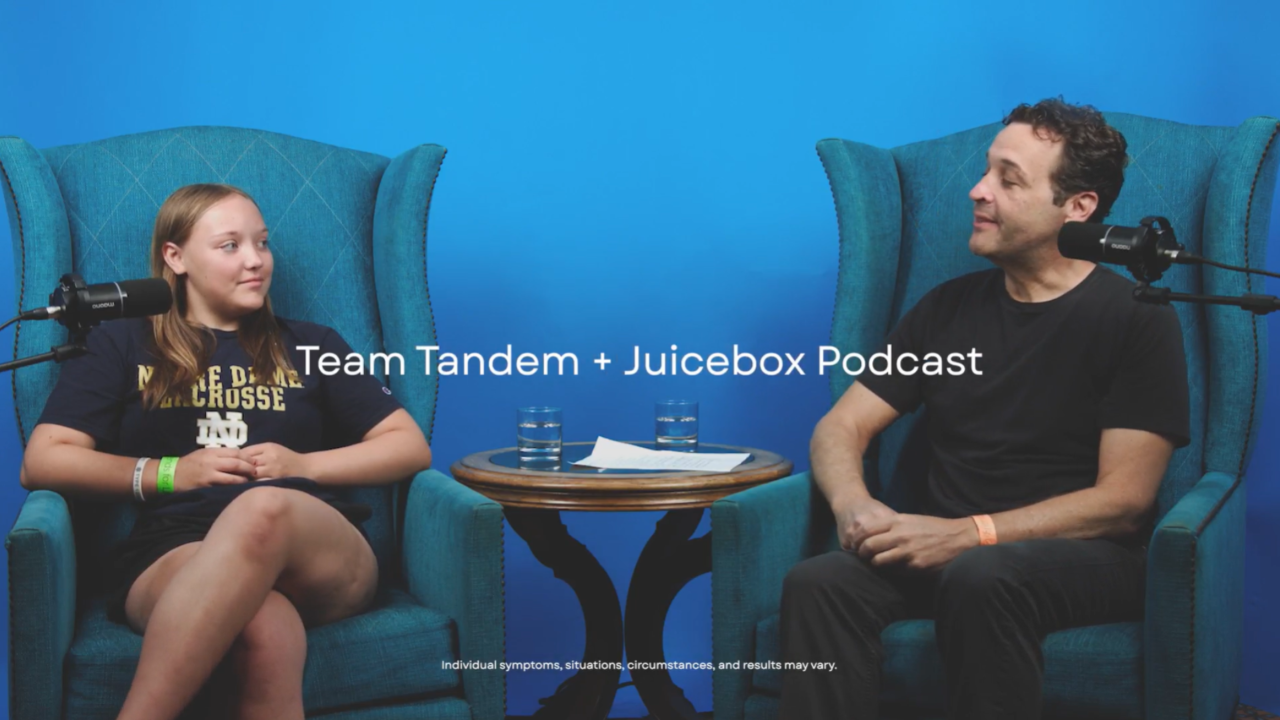













Please support the sponsors



The Juicebox Podcast is a free show, but if you'd like to support the podcast directly, you can make a gift here. Recent donations were used to pay for podcast hosting fees. Thank you to all who have sent 5, 10 and 20 dollars!

#1159 Weight Loss Diary: Ten
The tenth installment of my weight loss series. I've now switched to Zepbound.
You can always listen to the Juicebox Podcast here but the cool kids use: Apple Podcasts/iOS - Spotify - Amazon Music - Google Play/Android - iHeart Radio - Radio Public, Amazon Alexa or wherever they get audio.
+ Click for EPISODE TRANSCRIPT
DISCLAIMER: This text is the output of AI based transcribing from an audio recording. Although the transcription is largely accurate, in some cases it is incomplete or inaccurate due to inaudible passages or transcription errors and should not be treated as an authoritative record. Nothing that you read here constitutes advice medical or otherwise. Always consult with a healthcare professional before making changes to a healthcare plan.
Scott Benner 0:00
Hello friends and welcome to episode 1159 of the Juicebox Podcast
Welcome back everyone who's following my weight loss journey I know we've been calling this week govi diary like number one number two etc last one was we go read up we go very last one was we go V diary number nine except I'm not on Weibo V anymore. So we're going to call it Zep bound diary. Now, where am I going to change it to weight loss diary GLP weight loss diary. I don't know, I'll figure it out. Nothing you here on the Juicebox Podcast should be considered advice, medical or otherwise, always consult a physician before making any changes to your health care plan. If you're a US resident who has type one diabetes, or is the caregiver of someone with type one, the T one D exchange is looking for you. And they would like you to fill out a survey, it is just a 10 minute survey. They want to ask you one question you don't already know the answer to T one D exchange.org/juicebox. Go do that you'll help other people living with type one diabetes, you might help yourself, you're definitely going to be supporting me. And you're going to be doing a good thing. T one D exchange.org/juicebox. If you all went and did it right now, you'd never have to hear about this again.
This episode of The Juicebox Podcast is sponsored by Dexcom dexcom.com/juicebox. Get the brand new Dexcom G seven with my link and get started today. Welcome back, everybody. It is January 13. This is my I think second Saturday injection check in. I've moved my injection date from Tuesdays to Saturdays. And of course, I've moved my medication from we go V 2.4 to zero bound. And I'm starting with the five milligram I think when we look Yep, five milligrams. Apparently it goes up, like seven and a half 10. I go up to 15. I'm not sure. But I got the five here. As you all know, if you don't know, I guess I should say, Go listen to the other nine diaries about my journey with weego V from March of 2023. Until January of 2024, where I've lost just about 38 3940 pounds, it was dancing around there, I was putting all along back and forth. I had, as they say in the business plateaued. And that plateau went on for quite some time. And so I asked my doctor about options, and she switched me to zap bound. Zap bound, of course, is the weight loss version of Manjaro. No. And they of course are the same exact drug just branded differently for insurance purposes, and dosing reasons. I am here to report that I have weighed in this morning. But before I tell you about that weigh in, let me tell you about this first week on zap bound now this is after being on bigoli for quite some time obviously. I didn't have a ton of like changes in my body. I did start going to the bathroom more frequently than I was in the last few weeks with we go up the bathroom being the number two poo you understand I'm saying and so that frequency I think helped keep things moving. And my stomach feels emptier than it did on egoriy I don't know exactly how to explain this yet. When I started we go V i got it started with this full feeling like it felt like food almost stopped like eight inches below my neck that went away eventually. And now with that bound when I wake up in the morning, I have an actual hunger in my stomach like my stomach's churning. Like it's empty and I can feel it. It's not like mentally dragging me to the kitchen or anything. But oh my god, I should eat for sure. But this is my first physical sign of hunger because Enrico via didn't have many physical signs of hunger. Today's episode of the podcast is sponsored by Dexcom and I'd like to take this opportunity to tell you a little bit about the continuous glucose monitor that my daughter wears the Dexcom G seven the Dexcom G seven is small. It is accurate and it is easy to use. And where Arden has been wearing a Dexcom G seven since almost day one of when they came out and she's having a fantastic experience with it. We love the G six but man is the G seven small the profile so much closer to your body the weight, you can't really feel it and that's coming from me and I've worn one. I've worn a G six I've worn a G seven I found both of the experiences to be lovely. But my gosh is that G seven and tiny and the accuracy has been fantastic Arden's Awan C's are right where we expect them to be. And we actually use the Dexcom clarity app to keep track of those things. That app is built right in to Arden's Dexcom G seven app on her iPhone. Oh, did you not know about that, you can use an iPhone or an Android device to see your Dexcom data. If you have a compatible phone, your Dexcom goes right to the Dexcom app, you don't have to carry the receiver. But if you don't want to use the phone, that's fine. Use the Dexcom. receiver, it's up to you. Choice is yours with Dexcom dexcom.com/juicebox. Anyway, I weighed myself this morning. Now last week, on the sixth of January, I weighed 294.8 pounds. Today, on the 13th 192.6 pounds. Now I don't know how you guys are with the math 194.8 192.6. That's 2.2 pounds, my little friends. I don't know the last time I lost two pounds in a week. Let me go all the way back to the beginning. My first week of weego VI was to 33.4. And then I went down to 32.6. That is not quite two pounds. The following week, I went to to 29.4. So the following week, yeah, to 29 to 3031 32. I lost like 3.2 pounds that week. All right, fair enough. Well, geez, if I lose three pounds next week, that'd be crazy. Anyway, I was saying to a friend this morning who listens to this. So hey, Vicki, how are you? I was saying to her friend this morning, that the first 40 pounds are like life changing for me. But these last, what I expect to be 15 pounds, I think are going to be just mind numbing. I look really hard at myself in the mirror today. And I can see places where I am. I'm fat. Like it's not like, Oh, you could lose some weight Scott or blah blah, like there's, you know, deposits, bags of fat on the front of me still a bag, there's a bag of fat on my stomach. So I'm holding it in my hands right now. It's talking to you. Hello. I'm squeezing like Jim Carrey in that movie. What do you do with this, but I'm doing it with my belly. So I've got what I would consider to be four handfuls of fat on my stomach, like the equivalent of once that's gone. I don't have I don't I can't think of another place on my body where I'm going to be like, Oh my god, this is unhealthy. So then I think it's going to really turn into a maintenance and, you know, strengthening situation. But let's go through my other numbers, which I have not looked at yet. I'm gonna look at them with you right now. Let's see what the Renfro scale said happened to be this week. Well, obviously my weight dropped. My BMI went from 28.8 to 20.5. Body fat 26.4 to 25.8. My body water measurement went up significantly. About that. From 53 to 53.6 doesn't usually climb like that. That's so interesting over this last week, it's gone up really drastically. Same with skeletal muscle 47.5 47.9. I BMR dropped from 1778 to 1769. That free bodyweight. Wow. 140 3.6 to 140 2.8. That's like a half a pound there. subcutaneous fat 23.1 to 22.4 Ooh, my visceral fat dropped for the first time and for Hold on a second. Damn. Last time I visceral fat dropped it dropped from 13 to 12. On September 8, it has been riding at 12 that whole time. Now it's 11. We take that we like that. Muscle mass is holding 130 5.8 from 130 6.4 bone mass holding 7.2 protein rows 16.7 to 16.9 and metabolic age. Well, that's still 56 and I'm 52 Or we're getting there, right? Anyway, I still got a long way to go well on the main screen. I'm tracking all those things just easily color coded green, blue, yellow, red, you know, levels of okay adness I have, let's see of the 369 1213 things it's tracking. I am now in the green and seven of them. Yellow still in three, which you know, they're the big ones subcutaneous BMI and weight. And my body fat, of course is still in the red at 25.8%. All right. Well, there's a lot more green than yellow and in red, so that's good. But my weight, my BMI, my subcutaneous fat and my body fat are all you know, I'm obese still, I've lost 40.8 pounds. Since I started this thing. I've lost 9.2% body fat. My BMI has gone down. 6.1 and I'm still obese. Okay, well, I'll see you next Saturday. I'm zip bound and down, loaded up and trucking. We're going to do what they say can't be done. Hey, nobody steal that. And Eli Lilly, if you're listening, you go get the rights to that song. And don't cut me in your mother. That's right. You know east bound down from what does that is that the I have to shoot the bounce. So is that the what is that? The band? What goddamn movie? Am I thinking of what Burt Reynolds? How come I can't fit? Oh my god, hold on a second. Burt Reynolds is smoking the bandit. God dammit. I can't believe it. I typed it in and then I remembered it. Now you feel like I looked it up. spoke in the back. There's that song Eastbound and Down. Right. Well. Let's find the lyrics is found and lyrics. God bless Google unless they're stealing our souls. Jerry Reed Eastbound and Down loaded up in trucking. We're going to do what they say can't be done. We've got a long way to go and a short time to get there.
I'm eastbound just watch old bandit, Ron. Here's what you do. You change eastbound zip bound. It's genius. Right zip bound and download love and truck and we're going to do what they say can't be done. We've got a long way to go in a short time to get there. I'm zip bound just watch little Scottie run. Alright, let's shoot this thing. Seriously, Lily, spend the money. sell those AP round. Cut me in. That was genius, also by an ad. Alright, so this one's different than the GUI. You guys. I did it one time before I'm gonna do it again. Last time we got a little drop of blood at the end. But it was the teeniest tiniest little bit didn't hurt really. So you pop the cat
and then you put the little thing on the belly which of course we still have to get my glasses on because I don't want to hit alright, I can't believe I'm saying this. I don't want to hit a stretch mark they they can not feel good. All right, I got a spot. I'm gonna use the lucky spot from last week was worth 2.4 2.2 pounds. You hold that on there. Then there's a little lock on the end you click the lock lock is now unlocked. But the business on the Jimmy, some of you like send me like it doesn't hurt. And I'm like, No, but if it did, who cares? 40 pounds ready
let's go. A little bit of pressure. You don't feel the needle you feel the pressure the juice going in. But that's that life Givens that bound juice? Who cares? And I got no blood this time. I'm out. January 20. It's a Saturday I'm here. I have my little app in front of me. I go back to the sixth. Just to tell you that on the sixth of January. I was 190 4.8 then of course you heard from me on the 13th now on the 13th I was 190 2.6 That's a week ago today. I thought wow, this is great. Like motion, right? Do you want to guess how much I weighed today? Well, this morning, I was one 90.8 And two days ago hit a low of 190 but another guy ate enough the day before so I ate a little more you know had some more protein and everything and whatever anyway one 90.8 versus the 13th when I was 190 2.6 that is just about two pounds in a week on this EP bounder not bad at all. Not bad at all. Body fat fell. I think a significant amount point for body water rising skeletal muscle rising from last week. From 47.9 to 48.2. All right, what else we got here fat free body weight is down from 142 Eight to 142 to subcutaneous fat down from 22.4 to 22.1 visceral fat stayed the same. Doing well here. Okay, listen. Let me tell you what I know so far about this outbound from this week. Good job with my hunger was never hungry. I still experienced that empty or feeling when there's nothing in my stomach but it's not painful. It's not like oh no, you know, just I can lay down and feel like oh, there's not a lot going on in my stomach right Up, bathroom being consistent every day. That's good. And I've eaten a cup my wife's 50th birthday was this week. We had cake. I think I had sorbet two nights ago. Last night for dinner I had rice and like a concoction of rice, steak, shrimp and chicken that I sauteed up, made myself. What else have I been eating a lot of eggs. I eat a lot of eggs in the morning. I don't even scramble them. I whip them up and then I kind of put them in the pan flat and instead of fluffing them I fold them so almost like a fat omelet. I mixed in some sausage once this week with it had bacon once this week. I don't need a lot of vegetables had some salad. Shrimp. Fair amount of shrimp. coconut yogurt. What else did I eat this week. Trim coconut yogurt shrimp. Something out the freezer can't think of what I took it out of the freezer. Anyway, I'm not hungry. I look great. All the weight that I've lost over the last couple of weeks has come out of my midsection. I got no complaints. We're going to try zip bound again today of course. five milligrams pop off the cap. Cap is off. Look down at my ever shrinking belly. Choose a spot. I could use a glasses for this. My spectacles. Want to make sure I can see what I'm doing. Oh, I see a spot I like all right, turn off the lock. Cross your fingers and hope for two more pounds. If I get into the 180s That's gonna be insane. I genuinely don't know the last time I weighed 180 something pounds. I have no idea. I 20 years old maybe has to be I don't think I've ever been this low. You can see a real let me shoot this little tight. Hold on ready. That was a little pinchy. Whatever. I mean, up until the Zep bound where I've got motion again. And I mean, you know, five pounds lighter than I was like three weeks ago, may have lost weight everywhere. But I'm starting to see like, definition in my thighs. That's crazy. And weight is still coming out of my midsection. And my um, what would you call this here? side boob? Yeah, that's almost completely gone. I almost don't have any side boob. Pretty impressive. I know. Fat on my back is going away. I still have a little love handle stuff here. But mostly it's love handle. I'm squeezing myself as I'm talking to you. So I can tell you love handles, belly from like, sternum down. I have more of like a hanging belly than like, turtle shell classic, like your belly. You know, I think I described it as like four handfuls the fat the other day. It still is but it's for smaller handfuls, the loose skin on the inside of my thighs is disappearing. And the loose skin under my arms and to Mike like, under my bicep. Like when you make the Popeye thing back into my armpit. There was a lot of hang there, but there's significantly less. I can't tell you how excited I am to like, I wish I could fast forward two months right now I'd love to see where I'm gonna be. Anyway, have a great weekend. Arms up bound and down. Saturday again, kids. Today is January 27. I am Scott. And this is my zip bound diary. I don't have a lot of deep thoughts this week. Other than Well, I went to get a pair of glasses today to you know, place I've been going forever actually happened to know the doctor. So I don't see him very often, but we're friendly. He knows who I am, you know more than just a little bit. And I walked in and the guy at the counter. He looks up he goes Hello. He looks again. He goes Scott Hello. And I said hey, how are you? And he said, have you lost weight? And I said yes. And he goes since I've seen you last and I said yeah. He said Oh you look great. Thank you very much. And we started having this conversation turns out the lady behind the counters using we go we've no ozempic for her type two diabetes. She's only been using it for about five weeks. We spoke for a while I gave her some pointers. Then the doctor comes out of the back. Oh my gosh, I haven't seen him in a little bit. He looks at me and he goes, Scott, you look like a completely different person. And he's not wrong. It was really nice to hear. Today is the 27th as I said I have lost points 6.8 almost a pound since last week. I was one 90.8 on the 20th Today I'm 180 9.4 You have no idea But yesterday I was 180 8.61 88.6 I couldn't believe when it went to 188. Anyway, I don't have a lot to say other than somebody said, I looked like a whole new person. I told them, I feel like a whole new person. I explained what I was doing. I'm not embarrassed or ashamed. It was nice to be able to educate people, instead of listening to them say the rather, ill informed stuff I hear about these GLP medications from people who just want to say stuff like you should try harder, have some willpower, stuff like that. People who don't get the big picture. Anyway, I got some Zep bound here. five milligrams. Got to put it in the belly right now. kept coming off. Unlocking the pen. Looking for that spot? Who calls out look? I just touched it with my dirty finger. Now I can't use it. Different spot. You're like what's on your finger? I'll tell you this. Right? On the spot looks good. But it's dark in here. I want to make sure there's no stretch marks. Don't like to shoot the needle through a stretch mark. That's not good. I don't have like crazy stretch marks. But you know, better safe than sorry. Okay, body still reshaping very nicely. I look terrific and close. I've had to start wearing like a little bit of a compression shirt to I don't know, I think that's vanity actually, because I don't actually have to, but I'm trying to train my body to you know what I mean? Tighten up. Anyway, is that bound five milligrams in 4321. All done, baby. All done. This week. There was a meal like a big meal. Other than that, I was pretty good. I don't think I eat enough food this week, if I'm being honest. So I'm going to try to rectify that get back on a good way. I think what happened was my wife's 50th came up, we went to a restaurant, and I ate some stuff. I was like, I shouldn't eat that. And then the next day I kind of like didn't need to make up for it, which wasn't the right thing to do. I should just get back on my schedule. So I'll do that tomorrow. I promise I will wake up. Have me a couple of eggs and get my day on the way. I will see you in a week. I'm set bound and down. February 3 I did what I said I was going to do I ate more eggs for breakfast. Add some protein with it a number of times this week. I did just eggs with shrimp like precooked shrimp. They were from another meal. I did eggs with
I don't think I had bacon this week. No, but I feel like I had something else at one point. Maybe in a wrap. Might have put it in a wrap with mushrooms one time shrimp. Anyway, it was doing that for breakfast. Throughout the week. I had last night I had Chinese food. Not a ton of it. But I did. I had some generals chicken fried rice. And I had sorbet last night as well. Two days ago I had a cookie. And this week I also had chocolate at some point this week like a half of a
handful of like chocolate chips. They were good. I don't remember when dinners this week. We did pasta with sausage, meatballs. We did a shrimp thing like stir fry.
What else we do this week I cold sandwiches in one place at one point deli deli sandwiches. I ate them a couple of days this week because I like had one and I saved the rest of it. And I think I had pudding this week. Like when I was having a sweet moment. Think that's it. Anyway, wait, do you hear how much weight I lost? It's crazy. Let's not stretch it out. I weighed 188 pounds today that is 1.4 pounds less than last week. That's like a pound and a half almost. It's binoculars. I was gonna say redonkulous I don't know what happened there. March 28. I weighed myself for the first time came on here. And since then, that's 2023 Today's February 3 2024. I am 45.4 pounds less than I was on March 28. My BMI is down 6.8 and my body fat is down 10.2%. My visceral fat is an 11 now, which is like acceptable, acceptable, like it may be an acceptable fat free body weight. Now acceptable at 141 and a half. Got some other things here still getting a lot more green on this scale. Body water bone mass protein BMR muscle mass all green visceral fat, green fat free body weight green. still a ways to go on weight BMI subcutaneous fat body fat. My skeletal mass is climbing still just a little low. The next time it moves I'll be in a standard range. My metabolic Age Of course is still three years older than I am, which I don't love. Not for nothing. Another great week bumped into some more people I haven't seen in over a year, five minutes after they asked me how I was they were like, how do I get that? What is that? Exactly? They had type two diabetes, we're all interested in it. I'm going to go out today, I have to buy new pants again, I'm gonna go to a waist size that I don't think I've ever worn as an adult. That's incredible. Like, really crazy. Large T shirts that three weeks ago I thought oh, I shouldn't bought these too soon. And now they fit. This is just my own theory. But I've been wearing kind of restrictive undergarment like almost like a spandex, almost like as like a spandex shirt to hold my like midsection in I'm hoping that helps with like, you know, shrinkage and tightening. I really think I'm prepared to do some exercise. Finally, I've done a number of things around the house recently that have not resulted in any wind deadness no sore knees, no coughing, like really, my feet haven't hurt in a while. So I feel like I can get into that slowly. Eating was fine this week. Like I said, kind of a boring week here working. I don't think I was out this week. Besides the takeout last night that we had. Yeah, I didn't I don't think I was in a restaurant this week. Pretty much it really other than to say, I'm still a little put off by people saying you're gonna lose too much you have to stop, you know, then I have to point out to them. I am not healthy. Still, my body is not at a healthy size. I'm just thinner than you're used to seeing me. My face I think is holding up which is good. I don't have droopy skin on my face, which I guess I was a little concerned about when this all started but it hasn't been a problem. I'm seeing more tightening under my arms have loose skin inside of my thighs is tightening up more. All in all, it's going amazing. And I've lost. I mean, the Jumpstart from the switch from we go V TOS up bound is is hard to put into words but I think over seven pounds in what is it been six weeks now. That's beautiful. I have a lot of episodes coming up in the podcast with people with diabetes using GLP medications, type twos and type ones, they'll be spread out over the year. I really hope you catch them teasing out for you. One of them is a teenage girl who has had type one diabetes for three years and is down to now only injecting Basal insulin and the significant drop and even the Basal insulin is insane. Definitely a type one really, really cool story she'll be on well her mom will be on to tell us about it soon enough. I hope you check that out. If you're finding this and you don't normally listen to the podcast, you should probably try the Facebook group to Juicebox Podcast type one diabetes great conversations going on there about as epic and Manjaro No, we go visa bound GLP is etc. It's pretty much it kids. I'm going to shoot this and go live my life. Got some Zep bound here five Milly's. Take off the cap. Unlock the pen. Find a place. I don't want to move from the place I've been doing. Feels like it's good luck, though. I don't believe in that. though. I don't believe in that. I'm absolutely going to do that. All right, I'm set bound and down. Here I go. That was easy, wasn't it? Little blood that time. Little drop a dot? Boop. Boop. I gotta get a tissue. A tissue. You're not from Philly. You don't know that. But tissue. Oprah is Oprah. Bill Cosby, but I guess we don't talk about him anymore. Angles, water, Bagel, Wawa. Alright, there's another set bound in the trash. And another week on my way, hopefully of losing another pound and a half. I have adjusted my goals. Again, in my app, I've put my goal weight to 169. I don't know if I actually get there or not. But I had my goal previously set at 180. And I'm 188. Now figure well, pounds. Maybe I can get the 180 in a couple of months. Right? Maybe I'll be down this stuff's might be magic. You know, I want to mention, and I'll get out of here quick. I know it's not gonna work for everybody. And I hear people online like I saw somebody had a bowel obstruction and I saw and I'm like, I get it like everything's not going to work for everybody. If it's you tried it, it didn't work for you. I'm sorry, I really am. But to say you're gonna get a bowel obstruction. You know, because you heard it on the news once is a little ridiculous. We can't take into account Everything we don't know when people tell stories like that. That's why I'm trying to tell you everything I'm doing here, you know, what my situation was prior. If you already had gastroparesis, and you tried to use one of these drugs, I mean, I could see where you might end up with some real digestive issues, because your digestion is already, you know, very slow from the gastroparesis, and the medication slows it down more, you know, I can see where you could end up with, with a problem. You also don't know if people are supplementing correctly, if they're drinking enough water moving around enough. You don't get people's honest, sometimes you don't get their honest evaluation of what they were doing just I use this thing and then I had a problem doesn't work. See that all walks of life. But you know, before you go running around telling people not to do something or not even to look into it, you might want to have some real, either personal experience or, or listen to somebody who does. I've been using this now for a month shy of maybe two months shy of a year. Different GLP meds started with the we go V switch to zap bound about six weeks ago. Like I said, I'm 45 pounds down. The changes to my actual life are amazing. And I don't just mean like that I look better. I feel better. It's psychologically It's freeing. There's a lot going into this, my body's working better, my elimination works better. I'm retaining my nutrients more efficiently. But I'm also you know, I'm taking vitamins that drink at one I'm not just I didn't just inject the stuff and then head off to eat the way I you know, have a cheeseburger and go I can't believe this didn't work. I just did along with it. If you're interested in finding out more, I would if I was you and pressure your doctor, if they don't seem interested send them this if you like, you know don't sit idly by if you think this can help you give it a whirl. Okay, this is the last entry for this episode. And I have a surprise. Not a great surprise but an interesting one. So today should be February 10. Saturday, but I forgot to take my injection yesterday. So instead today is February 11. Sunday. Now yesterday I got up I was on the right path to jump on the scale. So I'd have my number. So when I recorded I know how much I weighed, weighed 187.8 pounds, which was just point two pounds fewer than the week prior on the third. I had a moment during the week where I was 187. But you know a pretty uneventful week as far as weight loss goes. I did start adding in bodyweight squats into my my routine this week. But other than that, not a lot. didn't really do much. I missed my breakfast a couple of times this week because I had to record early. So I was eating like twice a day instead of three times a day. probably drank more of most like carbonated water I have once in a while instead of regular water. Anyway, that's not where the surprises yesterday. Saturday I got up. My whole family kind of slept in and I did things i replanted
like plants into different pots. And then I got it into my head to make homemade potato chips for the Super Bowl today. So I spent a few hours cutting up you know, potatoes, soaking them salting, frying the whole thing like you know, it's, I find it relaxing. I'll probably have a handful of potato chips tonight. But I found it relaxing. I enjoy. This is not the point. The point is that I didn't eat breakfast. And then, you know, maybe two o'clock my wife and my son like we went out to lunch. And I had a half of a sandwich a half a Cubana sandwich. So what does that ham ham pork, right pork pickle piece of cheese, mustard. Bout peppers about like that right? At half of it. I couldn't eat the whole thing. It came with french fries. I had three French fries. And I had a bowl of lobster bisque. Not a big bowl. Came home. I had about 20 jelly beans in the afternoon. Somebody had jelly beans as their habit I jelly beans in law. And I had a little bit of sorbet at night. This was not a great eating day. This is not my point of telling the story. It's also not a bad eating day. He drank iced tea unsweetened during the day and might have had a can of diet soda at some point, because we were out thirsty and that's all that was available at this place. Again, this is not the point. You want to know what the point is. I woke up this morning I said oh I gotta do my injection. I want to record the episode I've gained. If you've been listening to this for a while you've heard me talk about that. I feel like I might have a GLP deficiency or something is being replaced by something in this GLP I haven't been able to explain it my entire Life I just eat like a normal person and I gained weight, right? So I didn't inject it on Saturday like I should have. So I'm at the end of a seven day like this meds basically out of my body now. And although I guess I shouldn't just say that I don't really know what the half life is, of the Med, maybe I should check before I say that out loud. Half Life bound. But I'm gonna guess. Yeah, here we go. This is from Lily. Time and body after discontinuation because the half life of desert Repatha, whatever they want to call it. It's a medical word is approximately five days. If you stop using it, it should be gone from your alone. It should be gone from your No, I'm not a healthcare professional. Can I just get on the page, please? Is it not going to give me the information because I'm not a healthcare professional? Come on, slowly. All right. So I had to go from the blurb on Google, but it looks like yeah, HalfLife, Manzano. Again, I'm here and five, it says five days here. So I'm shooting it every seven days, which probably means that the last two days are less efficacious to begin with. But by the seventh day, it's, I guess it's gone. Anyway. 180 7.8 Saturday morning, even though I didn't shoot the medication. This morning, I got up, went to the bathroom. So you know, offloaded anything I could 180 9.4 I weigh almost two pounds more today than I did yesterday. I'm not a doctor, I'm not a scientist. But that is something I saw my whole life. And this is the first time I've missed this medication. Since I began in March of 2023. Missed it, meaning didn't shoot it seven days, like I was supposed to. So this is the eighth day. And I know that was I just thought that was amazing. And you guys would enjoy this. This is gonna be the last entry into this episode. So I'm gonna put it up soon for you. And start a new one where you'll find out, I guess what happens seven days from now. So I'm gonna uncap the pen. Unlock the pen. By that little spot that I like to shoot Lynn on the other side today, I think there we go. In 321 Ooh, let's go that bound. Get in there do the good work. Anyway, the maze, not quite two pounds was a 1.6 pounds. But I just say that's a lot. I mean, I just didn't, I didn't eat as far as calories or quality of food goes or anything like that any, you know, anything that I haven't eaten while I was on the medication. So anyway, I'm set bounded up today. But I imagine the next time I talk to you, I will weigh probably three pounds less than this today. I guess we'll find out. Thanks so much for listening. I'll be back soon with another episode of The Juicebox Podcast.
I'd like to thank Dexcom for sponsoring this episode of The Juicebox Podcast. And at the same time, I want to remind you that seeing your blood glucose levels in real time, not only the number but the speed and the direction is going to help you in ways that you maybe can't imagine right now. You should definitely check it out at dexcom.com/juicebox. I know that Facebook has a bad reputation. But please give the private Facebook group for the Juicebox Podcast. A healthy once over Juicebox Podcast, type one diabetes. The group now has 47,000 members in it. It gets 150 new members a day. It is completely free. And at the very least you can watch other people talk about diabetes, and everybody is welcome type one type two gestational loved ones, everyone is welcome. Go up into the feature tab of the private Facebook group. And there you'll see lists upon lists of all of the management series that are available to you for free in the Juicebox Podcast, becoming a member of that group. I really think it will help you it will at least give you community you'll be able to kind of lurk around see what people are talking about. Pick up some tips and tricks. Maybe you can ask a question or offer some help Juicebox Podcast type one diabetes on Facebook. That Juicebox Podcast is full of so many series that you want and need afterdark s gotten Jenny algorithm pumping bold beginnings defining diabetes the finding thyroid, the diabetes Pro Tip series for type one, diabetes variable series, mental wellness type two Diabetes pro tip, how we eat. Oh my goodness, there's so much at juicebox podcast.com. Add up into that menu and pick around. And if you're in the private Facebook group, just go to the feature tab for lists upon lists of all the series. always free. Always helpful. If you're not already subscribed or following in your favorite audio app, please take the time now to do that. It really helps the show and get those automatic downloads set up so you never miss an episode. Thank you so much for listening. I'll be back very soon with another episode of The Juicebox Podcast. The episode you just heard was professionally edited by wrong way recording. Wrong way recording.com
Please support the sponsors


The Juicebox Podcast is a free show, but if you'd like to support the podcast directly, you can make a gift here. Recent donations were used to pay for podcast hosting fees. Thank you to all who have sent 5, 10 and 20 dollars!

#1158 Kelly Uses Afrezza
Kelly uses Afrezza, an inhaled insulin.
You can always listen to the Juicebox Podcast here but the cool kids use: Apple Podcasts/iOS - Spotify - Amazon Music - Google Play/Android - Radio Public, Amazon Alexa or wherever they get audio.
+ Click for EPISODE TRANSCRIPT
DISCLAIMER: This text is the output of AI based transcribing from an audio recording. Although the transcription is largely accurate, in some cases it is incomplete or inaccurate due to inaudible passages or transcription errors and should not be treated as an authoritative record. Nothing that you read here constitutes advice medical or otherwise. Always consult with a healthcare professional before making changes to a healthcare plan.
Scott Benner 0:00
Hello friends and welcome to episode 1158 of the Juicebox Podcast.
Kelly is 54 years old she was diagnosed with type one diabetes at 25 back in 1994. Right out of college. Today, she's got a great story that includes using a Frezza the inhaled insulin, we're gonna hear all about it. Nothing you hear on the Juicebox Podcast should be considered advice, medical or otherwise, always consult a physician before making any changes to your health care plan. Don't forget to save 40% off of your entire order at cozy earth.com All you have to do is use the offer code juice box at checkout. That's juice box at checkout to save 40% at cozy earth.com. When you place your first order for ag one with my link, you'll get five free travel packs and a free year supply of vitamin D. Drink ag one.com/juice box. If you're a US resident who has type one diabetes, or is the caregiver of someone with type one, go to T one D exchange.org/juicebox. and complete the survey. That's all I need from you. T one D exchange.org/juicebox whole survey 10 minutes start to finish bing bang boom. They won't ask you one question you don't know the answer to. This is a test you're getting 100 on if you know what I mean. This episode of The Juicebox Podcast is sponsored by the ever since CGM. Ever since it's gonna let you break away from some of the CGM norms you may be accustomed to no more weekly or bi weekly hassles of sensor changes. Never again will you be able to accidentally bump your sensor off. You won't have to carry around CGM supplies and worrying about your adhesive lasting. Well that's the thing of the past ever since cgm.com/juicebox. Today's episode is sponsored by Medtronic diabetes, a company that's bringing together people who are redefining what it means to live with diabetes. Later in this episode, I'll be speaking with Mark, he was diagnosed with type one diabetes at 28. He's 47. Now he's going to tell you a little bit about his story. And then at the very end of the episode, you can hear my entire mini interview with Mark to hear more stories from the Medtronic champion community or to share your own story. Visit Medtronic diabetes.com/juice box and check out the Medtronic champion hashtag on social media. My
Kelly 2:37
name is Kelly. I'm 54 years old. I was diagnosed with type one diabetes, obviously, when I was 25, which was 1994. Okay,
Scott Benner 2:49
two years before I got married. I don't know why that's important. Well, because there's Kelly. Yeah, yes. It's because your name's Kelly, you were 2125 45? Were you in grad school or out of college or working?
Kelly 3:05
I was out of college. And ironically, when I went to college, I had a degree in nutrition. And it's a long story. I was originally doing engineering. And I decided that I wanted to maybe go into sales. And at that point, I thought, well, it could really be anything that I have a degree in. So nutrition seems interesting. You know, I I'm sure it's something that I can use one day, I really did not want to become a dietician. I did not want to work in a hospital, I did not want to tell people what they could and could not eat.
Scott Benner 3:41
Can I ask you why you got that degree? So I know,
Kelly 3:44
right? Because I was at a school that was very competitive. And when I decided to change my major, frankly, it was one of maybe three things I could change to Okay. And I thought well, you know, it's not the worst thing i I'm sure that I will benefit from this is what I thought. So I graduated from the program and started working. And I was working in the kind of more food service industry side of it was sort of a food science degree. It was food science and nutrition is what it was. And so I did that for a couple of years. And then I moved from the state that I was in to another state. And about a year after I moved, started having classic diabetes symptoms, which of course I had no idea what they were. I lost a lot of weight, I'm guessing about 20 pounds, kind of took about four months from when I started noticing something was up until I was diagnosed. And so during that time, really, really thirsty. Really really hungry eating and drinking like crazy still losing weight and you know, part of you is like awesome and And the other part knows something's wrong. I was married at the time to man who became my ex husband, but he was,
Scott Benner 5:08
how do you do that?
Kelly 5:09
You're gonna understand why in a minute. I was like, something was wrong with me. And he kept telling me I was crazy. You know, there's nothing wrong with you. I don't know, he just he was he was not supportive. Okay. Back in 1994, there was no internet. So I didn't have access to any information, no diabetes, and my family learned a little tiny bit about it in my nutrition degree, which you would think you would know more. But, but I didn't?
Scott Benner 5:38
Well, I wouldn't think you would know more. Because I imagine when you switch that degree, I see your parents just crying at home. While you're explained to them like, well, it's just one of the three options. I can switch to their public. Oh, God, our money. Goes there goes. I would cry be like, Oh, come home. You're confused. And it's costing me money. I need you to get back here. Right. Yeah, exactly.
Kelly 6:01
Okay, so thirsty, hungry? Losing weight, really, really dry mouth. I don't know if that goes along with a thirst. I don't know what that was. But at the time, I was a runner. And I was running. And I would always have to take a candy or a piece of gum or something to chew or while I was running, or else I was like, you know,
Scott Benner 6:25
just like that, that like really dry stuff together. Yeah,
Kelly 6:29
right. really dry. Okay, so I told you, I had just moved to a new state. And you know, I'm a healthy 25 year old or so I think actually, I was 24. At that time. I don't have a doctor, I don't have a primary care doctor. I, you know, frankly, I don't think I need one. So I'm trying to figure out a doctor to go to and symptoms keep getting worse. And what finally put me over the edge is yeast infection. Never had them prior and got one and it was like, Oh, my word what on earth? So that sent me to the doctor. Yeah,
Scott Benner 7:01
I hear that a lot, by the way. From women. Yeah, diagnosis. I
Kelly 7:05
mean, and it's such a bummer because you go through the whole rigmarole of all the stuff you have to use. And it it may be went away for like a day and came right back. Right back the vengeance. So that is what ultimately forced me because I just, that was not fun. I go to a nurse practitioner and I get in there. And I'm like, Okay, this is all the things that are wrong with me. I've lost 20 pounds, I am thirsty all the time. I'm eating like crazy and losing weight. I don't know why I have this recurrent yeast infection, you know, keeps coming back and she sits me down, reaches across the table holds my hand and says you're 25 you're stressed your body is changing. And I was like, No, I think it's I don't think I'm terribly stressed.
Scott Benner 7:56
Had I not had a daughter? I wouldn't realize how dismissively women get treated around their health. Like by by men and women who are doctors. By the way, it doesn't even matter which one it's the prevalent idea that if a girl's having a problem, it'll just pass is like medical folklore. What they want to say is we don't know. But what they go, is it most of the people we see they stopped complaining about that eventually.
Kelly 8:22
Right? Thanks. Yeah, yeah. Well, and to make it even worse, she had taken a urine sample and was testing me for pregnancy. And I said, and so I can't remember now all the details, but I remember being at that meeting and saying something about diabetes, I think I had, I don't know what gone somewhere, read something found, you know, found something. So the urine cup is sitting there, like, right on the counter right next to us. Yeah. And I said, you know, is it possible this could be diabetes? And she said, Oh, no, you don't want and I was like, well, could we test for it? Because I mean, I didn't know what the test was anything like that. So I said, can we test for it? And she said, that is a really expensive test. And you know, here I am. I'm 25 I did not have a job at that time with medical stuff. And I'm thinking oh, my gosh, okay. Yeah. So you know, she thinks I'm crazy too. Clearly. I'm, I'm likely crazy here. No, I knew I wasn't crazy. But when
Scott Benner 9:23
everybody tells you, it's probably not that and then hit you with the money thing when you're younger, too. Yeah, but we can't spend that money. Yeah. How many times have you thought it's time to change my CGM? I just changed it. And then you look and realize, Oh, my God, it's been 14 days already a week, week and a half. Feels like I just did this. Well, you'll never feel like that with the Eversense CGM, because ever since is the only long term CGM with six months of real time glucose readings, giving you more convenience, confidence and flexibility. So if you're one of the Those people who has that thought that I just did this, didn't I why we're gonna have to do this again right now, if you don't like that feeling, give ever sense a try. Because we've ever since you'll replace the sensor just once every six months via a simple in office visit ever since cgm.com/juicebox. To learn more and get started today, would you like to take a break, take a shower you can with ever since without wasting a sensor, don't want anybody to know for your big day, take it off. No one has to know have your sensor has been failing before 10 or 14 days. That won't happen with ever since. Have you ever had a sensor get torn off while you're pulling off your shirt? That won't happen with ever since. So no sensor to get knocked off. It's as discreet as you want it to be. It's incredibly accurate. And you only have to change it once every six months. Ever since cgm.com/juicebox.
Kelly 10:57
Yeah, so it kept going on. I don't know when that was that might have been like the beginning of May. So I continue and it's just this vicious cycle, I started getting really bad leg cramps. So I would wake up in the night and my calves were just like, locked. And it would hurt the whole next day. That was another symptom that I had. But I went home back to where you know, I'm originally from to visit my sister. And she picked me up at the airport. And she took one look at me and she was like, Okay, what is going on with you? Are you you know, having an eating disorder. You know what's happening because you look like a skeleton. So you look
Scott Benner 11:38
like eating disorder or drugs to your sister when she saw you immediately. Yeah.
Kelly 11:42
And I and you know, when you're looking at yourself, I knew I had lost weight, but I didn't see it because it was gradual. And she was like, dude, something is up with you, you know this, this is not okay. And so I told her at that time, everything that had happened. And I mentioned diabetes, again, I don't know, where I was even knowing that I might have this thing. And I obviously didn't know how serious it was where I would have taken myself to the hospital. But so she happened to have a friend that was a diabetes educator and the friend said meet me at my office. I think it was a Saturday or something. So we went she you know, tested my blood sugar with a meter in her office. And I think it was 497 479 something like that. Yeah, right off. So right then in there, we were like, oh, okay, this is what this is. So again, I'm out of town. I so that was the maybe the second day I got there. So it was probably Saturday. I wasn't returning home until Monday. So I call my ex husband
Scott Benner 12:44
still waiting to find out how we accomplish this but really like hysterical
Kelly 12:48
crying upset like I don't know what this means. I don't know if we can have kids. I remember this conversation and he is like on the other line going. Oh, and your sister told you this? Yeah, your your wacko sister told you you have diabetes is basically how he did it. And then he promptly got on a plane and went for a guy's weekend with his friends and was gone. So I fly back home, I arrange for a doctor's appointment with a really great just primary doctor that a friend of mine told me about. I showed up to his office fasting. I'm like, I think I have type one diabetes, can you do the bloodwork? It's sort of like whoa. So I told him the whole story. He believed me. He said, Well, you're gonna have to fast and come back and I'm like, nope, already fasting. Let's do this thing. I had to fasting lab draws done two days consecutively and both were around 250 fasting. Okay, it was an interesting thing for me. You know, I don't know, it seems like when kids are diagnosed, it seems like it's a much quicker, you know, from when symptoms kind of start until it's, yeah, very, very serious. And for me, I think it probably started in February. And then my actual diagnosis was June 3.
Scott Benner 14:05
Yeah, a lot of people can have I mean, like a slow onset. Yeah, they'll call it Lada or one and a half or something like that. But it's not uncommon for adults it's it's also not that uncommon for kids to have slower onset to but you probably just don't see them because they're young and you just don't think anything of it then all of a sudden they're gone and then boom, you're at the doctor right? So
Kelly 14:27
and at that time I'm sure that agencies were a thing but I don't remember ever having one done or anyone ever telling me this was your agency it would it would say well your glucose you know on today's test was this but I've looked back and I cuz I have the ones still where I was 250 something Yeah. And there's no a onesie on there. So I never knew
Scott Benner 14:53
what that was. Are you seeing an endo? Are we just seeing a general practitioner with general practitioner might not have fun Even thought to test for it. I mean, it definitely existed. So they just didn't get after it. How long after the boy's weekend? Did you get rid of that guy? I have a number in my head. I think you made it two more years.
Kelly 15:16
Ah, I think it was three.
Scott Benner 15:19
Very close. I appreciate this. Yeah,
Kelly 15:21
I think it was. Yeah, I think it was three. Yeah. And even once, I don't know, even when I know that the very first time I gave myself an injection, I was home alone, because he was still out of town. And the injection didn't happen for several days, because I had to do to, you know, two consecutive days. And then that after the second day, he sent me to an endo to learn you know how to give shots. All they taught me and it was NPH. Only. Okay, no, NPH twice a day. That's how it started for me. 30 years
Scott Benner 16:00
about 30 years ago. Yeah, that makes sense. Hey, I'm gonna get past this. But was the ex husband very handsome, trying to figure out how we got
Kelly 16:10
here's the truth about the ex husband, I had a less than desirable childhood and parents, I gotcha. Okay. Amazing parents, I adored them, absolutely adored them. And I think I tolerated him so that I could have them. That's
Scott Benner 16:26
a episode of New Girl, if you've ever seen it. I really asked because we find ourselves looking at each other today, which I don't always do with people. But you're an attractive woman. I imagine you were an attractive younger person. I'm trying to imagine what like, like, why did you in your early 20s. With options, I'm assuming, like, stick with that is what I was trying to figure out. That's all. That's all?
Kelly 16:51
I think. Yeah. That Well, and that's the best that I can tell you. He was not bad looking. So so there's that, but you were definitely not compatible. And I knew he was really, really selfish, you know, just and maybe it was because he was young guy. I mean, he was a good guy. There was nothing about him that in terms of what I knew about, like, bad guys to be, he was not that person. But he was not. I don't know, he just, he was selfish, you're very, most
Scott Benner 17:23
of us are like that in our 20s. Like, so you have to have something that Bond's you together so that you can wait on us to get into our 30s. So that you can go oh, I can say he's going to turn to a reasonable person eventually. But you didn't have that, like, you don't have kids. And then you had a need, and he wasn't there for it. So that's where you don't get the opportunity to stick to each other, then it's interesting, isn't it?
Kelly 17:47
I know. And back in those days, I really don't remember him being, you know, interested involved in any way, just any of those things. And then we moved, we obviously split up, I got a job and met my current husband at that job. Yeah. And the difference was, and you know, I already I already had diabetes when I met my current husband. And so he knew a little bit about it just from watching me operate at work for a year before we started dating. And but he knew the first thing he wanted to do was learn every single thing he could, right. I remember, you know, letting him do my shots. I remember him wanting to give himself a shot. So I loaded up a syringe with one unit of Lantis. That was like, Here you go. And he gave himself an injection. And he just he wanted to understand it. And he wanted to help me. And he has been just awesome. So awesome.
Scott Benner 18:46
It's great that you found that I listen, I look at my own life. And I tell you, my wife is articulate and smart and pretty. And if we didn't have kids in our 20s, there's no way she wouldn't have left me. I mean, honestly, I think she held on to the beginning because she was like, if I have another kid, I'd like it to look the same as the first one. And he's my option for that. And then I think as I turned into a reasonable person as I got older, she was like, yeah, she had the energy to bail on me at that point anyway. But like, there's that thing where you kind of bond yourself together, everything's and, and just the other day. I was dropping her at the airport. And we were talking about traveling, I just traveled and she was getting ready to travel. And she said, Would you rather fly alone or with somebody? And I said, Oh, obviously alone, unless it was with you. And she's like, why? And I said I don't know because you can't really talk on a plane anyway. And so being with somebody is kind of ridiculous. Like you can't really have a conversation. What am I getting when you're around? I just feel better. Like there's good energy when you're with me. And then she started going through like other people like well, what would you would you like to travel with this person? She's naming people in our lives and I'm like, No, that all sounds really irritating to me. And she goes, Why irritating and I'm like, I don't know. I just I you're irritated when you bring this up. Like she was mentioning women specifically, like, like, and I'm like, she's like, they're not irritating people. And like, I know, I'm like you don't understand. I'm like, I could do it with you. No problem. That's lovely. I don't want to do it with other people. And when we dug into it, I said, it's because you know, everyone's got something like, extra assisity why that word just did not come out, right. But people are eccentric and weird ways. And it's bothersome. And I'm like, You're a pain in the ass too. And I'm pointing at her. And I'm like, as am I, I'm like, but with you. I can picture you in my head when we were 20 and 25, and 30 and 35 and 40. And I know when you've been sick and happy and unwell. Like I know your life, we have a history together. I'm like, There's nothing crazy you can do that I'm bothered by, because I love our time together, as well as you. And she's so Irish. She barely blinked an eye. Like you would think like most women would be like, Oh my God, you're amazing. My wife was just like, hey, I got it. And then I knew it touched her. Because when I got her bag out of the car and gave her a kiss, she said, I love you. And I was like, Oh my God. She was really like, you have no idea how Irish she is, like so. So like, I was like, she was really touched by that thing. And I said in the car, like, I need to do this, or I mean, I was so pissed. She was getting on a plane. No, it was like, because this is gonna wear off by the time she gets to where she is.
Kelly 21:22
Absolutely, yeah, you need to do that when she comes back.
Scott Benner 21:25
When will that opportunity pop up again, for us to have that conversation. That's it. That was my once in like five year chance and three nice days in a row, and now it's gone. But anyway, right now we're going to hear from a member of the Medtronic champion community. This episode of The Juicebox Podcast is sponsored by Medtronic diabetes. And this is Mark.
David 21:45
I use injections for about six months. And then my endocrinologist at a navy recommended a pump. How long
Scott Benner 21:51
had you been in the Navy? Eight years up to that point? I've interviewed a number of people who have been diagnosed during service and most of the time they're discharged. What happened to you?
David 22:00
I was medically discharged. Yeah, six months after my diagnosis. Was
Scott Benner 22:05
it your goal to stay in the Navy for your whole life? Your career was?
David 22:08
Yeah, yeah. In fact, I think a few months before my diagnosis, my wife and I had that discussion about, you know, staying in for the long term. And, you know, we made the decision, despite all the hardships and time away from home, that was what we loved the
Scott Benner 22:22
most. Was the Navy, like a lifetime goal of yours? lifetime goal.
David 22:26
I mean, as my earliest childhood memories, were flying, being a fighter pilot, how
Scott Benner 22:31
did your diagnosis impact your lifelong dream?
David 22:34
It was devastating. Everything I had done in life, everything I'd worked up to up to that point was just taken away in an instant, I was not prepared for that at all. What does your support system look like? friends, your family caregivers, you know, for me to Medtronic, champions, community, you know, all those resources that are out there to help guide away but then help keep abreast on you know, the new things that are coming down the pipe, and to give you hope for eventually, that we can find a cure, stick
Scott Benner 22:59
around at the end of this episode to hear my entire conversation with Mark. And you can hear more stories from Medtronic champions, and share your own story at Medtronic diabetes.com/juicebox. It's very interesting to me, because I hear so many people talk about how concerned they are that they're not going to find somebody who will like care about their diabetes and really understand it and be involved in it and look at you you had to go through some like, hurdles to get to that. But you have that. So that's really great. Yeah, yeah.
Kelly 23:32
Yeah.
Scott Benner 23:33
Well, well, that's excellent. All right. I want to leap ahead a little bit for you. Because do you use a president now? I do. Am I saying it correctly?
Kelly 23:41
You are okay. Okay.
Scott Benner 23:44
So are you like, why don't you tell me about your management, like, where it started, how it progressed through your life and how you got to where you are now.
Kelly 23:51
Okay, try to be quick. So in 94 Put me on mph twice a day, which was a nightmare. I basically walked around with food with a little brown bag of food all the time, because I think NPH spikes every three hours. Does that sound right to you? Oh
Scott Benner 24:08
my gosh, that's it's a little bit. Yeah, not I don't know. I've never used it. Yeah.
Kelly 24:12
So basically, you would get up and you know, you wanted to take your shot, I think every 12 hours. And so I think my dose was 10 units in the morning and five units at night. Okay, now I can't remember if it was bedtime for five units, or if it was dinnertime, I don't remember anyway. So I did that my sister who was like CFO totally not health related at all came across a diabetes article in a newspaper. And they were talking about intensive insulin therapy. And so that was regular using regular with a long acting to sort of count carbs and I don't even know if they really counted carbs at that time, but it was talking about using regular insulin with meals. And I was like, Oh my gosh, yes. So I go back to this window that I had started out with. And I'm like, hey, I want to do this. And the guy goes, Oh, no, no, you don't want to do that. That's intensive. That's harder. No, no, no, no. And I was like, No, you don't understand. I am a 25 year old woman I am, you know, working full time and living life and whatever. And feeding insulin all day long is a job. I don't want this is ridiculous. This is no way to live. So he said no. So I went right on down to the local Rite Aid, or whatever it was, and bought myself a bottle of regular because you did not need a prescription. And I started it myself. Now. I think I was still using NPH. And I think I decreased that dose. I don't remember exactly how I did it. But I did. Got a new window went to him. He's like, your management is amazing. How do you do this? And like, did it by myself, know what it was all figured it out? I don't know. So did that. Then I went to ultra Lin Tei as a background, insulin MDI, then, so I did that forever. In 2003 2002, I, my husband, and I very carefully planned our pregnancy, very carefully had found the perfect Doctor Who knew my management was good, wasn't going to ship me off to a high risk OB group, I was so excited, get halfway through my pregnancy. And she calls me up and says bad news, the group that I work with, or not comfortable having, you know, someone with type one diabetes, and because they kind of, you know, rotate, who's on call, and that kind of thing. They did ship me off to the high risk group, which was, oh my gosh, disastrous, but anyway, disastrous, because they, we had an appointment with them. And it was sort of halfway through my pregnancy. And they sat us down and said, basically told us, we should have never done this, like, your baby is going to have major cardiac defects. Just all kinds of horror stories, stuff that you hear about diabetes, I walked out of there, seriously, the worst medical appointment I've ever, ever had in my life. And my husband and I went home, and it was sort of like, oh, my gosh, what have we done? Like, you know, she told us it was fine. And I think my agency, so I never knew what it was from the very beginning. But it was always in the sixes once I got once I started having it done, I guess. So that was, you know, great at the time. And I think I was even in the fives when I was pregnant with my daughter, but so I get there. We're already halfway through the pregnancy. They tell us all these terrible things are going to happen. And they say, oh, and you're going on the pump. I was like, wait, what? Why? Why do I need to go on a pump? Oh, well, that's how we do it here. And I was like, okay, you know what, I've had just about enough of you people. Okay, guess what? I'm not going on the pump. How about that? You can't I want to have some power at some point. And this is where I'm gonna put my foot down. But you're
Scott Benner 28:02
four or five months into the pregnancy already. And things are things are fine. Yeah. Okay. And I think I understood what you're saying or even though you don't think you were tracking you're a one sees at that point. In the future when you were tracking them managing the same exact way you were then you feel like you had you have a one season the sexes. Well,
Kelly 28:19
just in the maybe first like two or three years of my diabetes. So probably by the time the 2000s rolled around. I definitely had a onesies being drawn. But in the very beginning, I did I got
Scott Benner 28:34
no no, yeah, so you felt like you were doing okay. And you're testing and your blood sugar's aren't crazy and all that stuff.
Kelly 28:40
I mean, you know, you have crazy blood sugars, but generally speaking, you know, I was I was testing a ton, I was really, really on it. You know, I was doing the best I could do with the tools I had at the time. Okay. I wasn't ninja by any stretch of the imagination. But you know, I was having a one season the low sixes and it wasn't because I was 400. And then 30. And then you know, right.
Scott Benner 29:04
So they're trying to push you on a pump, which would have put you on a faster acting insulin got you off of what you were doing. You resist it. Did you stay with what you were doing? I did. Did you have to leave the practice for that? No, no. Oh, they just gave up that easy.
Kelly 29:17
Yeah. They were like, okay, Kelly, this
Scott Benner 29:20
endlessly fascinates me. When people say this has to happen, and then you go, No, and they go, okay. I swear to every time someone tells me that sort of like, what is happening that's actually having to happen, like, are we just just people's if this is what we do, and you go, I don't do that. And they go, Oh, all right. Well, that's not important. How the hell was it important? And now it's not important. Five seconds later. I don't understand that. It's either is or it isn't. So, yeah, I think that's just an important lesson for people to hear for when they get pushed in certain directions. Like ask why, you know, I'm sorry, but go ahead. You push back. Okay. Well, what
Kelly 29:56
I was gonna say is, you know, as an adult getting diagnosed with type When so I was never hospitalized, you know, they said, Oh, yeah, you've got type one, we're gonna send you for education. And you know, that's going to be that I think I had two days of education, then. And then nothing. I mean, literally, you just you go to the doctor, they look at your numbers. Okay, you know, here's your prescription, what I mean, it was just, there was nothing, I, it was a really lonely feeling, honestly, because I knew no one with diabetes. And you know, when kids get it, it's like, oh, my gosh, there's JDRF. And there's, you know, hospital stay for four or five days, whatever the whole family is involved. I mean, my friends and family were, it was, it was as if nothing had happened to me, really. And you're just kind of out there. You're like this little island. And you know, you don't really know, by the way, I can't remember now what it was. But you and Jenny, were going through diabetes myths. And I'm the one who my mom said I must have gotten diabetes, because I ate too much sugar as that
Scott Benner 30:58
was you the chant that in me, I appreciate that. We had a lot of fun making that series. Actually, I know, it's not completely up yet. There's still more to post, but we're done recording it. It was sometimes really frustrating. Like, Jenny so sweet that it might sound put on, but when she's upset, like she's really, like, mortified when things like that happen, you know, but Oh, that's nice. You just send something in and nice of your mom to say.
Kelly 31:25
I mean, I have two amazing sisters. And they we traveled together at least once a year. And so you know, we stay in the same room overnight, and they get it as best someone can that doesn't live with it stuff. But but not my mom. She has no, she just doesn't understand. And I honestly I'm like, I'm so thankful that I got this as an adult and not as a child, because I'm not sure she could have handled it. Oh,
Scott Benner 31:49
I see. Maybe you'd have been okay, but Oh, yeah. husband's parents.
Kelly 31:56
Very fortunate to have gotten this as a 25 year old, let me feel
Scott Benner 31:59
like you're, you're a classy person, and you're not going to trash your parents. But I feel like there's a whole story there about your parents. So we don't need to go that way. But I understand what you're saying. Yeah. So once you have your daughter, how many kids do you have? By the way?
Kelly 32:12
I have two. Okay.
Scott Benner 32:13
So once you have your daughter, she came out there was a foot in her head, I imagine like growing out of her.
Kelly 32:17
Absolutely perfect. Oh, how about that? Yeah. I thought and so part of the part of the story. So when I was pregnant, and they said, okay, so sorry, let me back up. As an adult, no one cares. No one cares what you're eating, you know what you're doing whatever. Well, all of a sudden, I'm pregnant. And this new OB group is like, Oh, we are going to dictate every second of every day for you. And so I think part of that, for me was like, why no one has ever cared before. Why in the world? Do I need your help? Now you think, because I'm pregnant, my brain shut down? Or why are we? Why are we having this conversation? So that was hard for me. Because I was not used to anyone trying to help trying to give me information, you know, certainly trying to tell me what to do. So I really, really resisted. And so anyway, the pregnancy was fine. She was eight pounds, five ounces. i All of my siblings, and I were eight pound baby. So it seemed, you know, that was? Yeah, that would be expected. And then when I got pregnant, the second time with my son, both pregnancies, super planned, and you know, trying to be in best management possible. I got approached again with Hey, would you like to go on a pump. And by that point in my life, I had a toddler, I was pregnant again, I was starting to not remember, you know, when you have diabetes, your diabetes is really priority one until you have a baby. Right? And then it's priority two, or three lucky. You know, and I would never, ever, ever, ever tell a person with diabetes, you know, you shouldn't have kids or don't have kids. I would never say that. But the reality of the situation is your diabetes takes a backseat to your baby. Period. It just does. And if someone else tells you it doesn't, I'd like to talk to him because I don't think that's true. But anyway, so they said, you know, how would you like to find a pump? And I was like, You know what, I think that is a great idea. Because I couldn't tell you if I did my shot this morning or not. You know, it was like, Yeah, I did it because I needed the history. I needed the memory. Oh, I
Scott Benner 34:27
see. Yeah, it wasn't about the automation or anything. You just were looking for something to remember what you had done. So you could go back and look.
Kelly 34:34
Yes, yeah. make my life easier. So I did it. And I have to tell you that gosh, within two or three hours of wearing that thing, I was like, Why didn't I? So that was 2005. So because because 11 years MDA
Scott Benner 34:50
Yeah, but switching in the middle of a pregnancy because some new doctor who just were forced onto tells you to it's not that wasn't gonna work one way or the other. Yeah, so But yeah, it is something I actually aren't. And I mentioned it last time I interviewed art. And I said to her, Do you know how like, much these algorithms take off your back? You know, and she's like, Hey, I know she goes, but it's still my reality, like, um, you know, it's fine. But I watch her some days. Like, I look at our 24 hour graph, people ask me all the time, like, when's the last time you like, how often do you look at Arden's blood sugar? And I have to be honest, I looked at it this morning. And it was like the first time I looked at it in two days, so she's away at college. But I mean, this is a 24 hour graph. I don't know if you see that. Yeah, those last those lines are between 70 and 120. Yeah. And she's in college. And so, you know, the amount of effort she put in yesterday into her diabetes was probably minimal. At best. It's so small, that just a slight change, sometimes makes her go like, Oh, I can't believe I have to do this. You know, not now. I'm busy. And I'm like, like, I sent her a text. And I'm like, Arden, you know, I just need you to like, do this. Now. It's, it's getting away from you. I can't, I'm too busy. And I'm like, imagine if, like, she's 19. She's a college. What if it was on her to inject? Every single time she did something, you'd miss things, you'd be too busy, and you'd miss them. And it's exactly what you're explaining. So what was your first pump?
Kelly 36:30
Medtronic? Yeah. And what kind of insulin is I was pregnant, it was the biggest one that holds the most insulin at that time. And I can't remember what that was like a seven or something. Okay. And then, and then my second pump four years later was another Medtronic, but it was the five. I'm saying Fine. It was like 510 or,
Scott Benner 36:50
but that was actually you going from regular and mph to best acting for the first time?
Kelly 36:55
No. So I did mph just for a little while. And then I did Ultra Lin Tae
Scott Benner 37:02
I'm sorry. Right. So you went from that to a pump?
Kelly 37:06
And then Lantis. Okay, I think yeah. And then Lantis. And then I went to a pump.
Scott Benner 37:12
Okay, in the pump. What were you using? Do
Kelly 37:13
you remember? Probably human log.
Scott Benner 37:16
Okay, that makes sense. And now, you go along, pumping for a long time. It sounds like you're doing well. What makes you switch to a president? How, yeah, and how does it work into your life? Okay.
Kelly 37:29
I did Medtronic pumps for eight years. And then a friend of mine was diagnosed with diabetes, and she used Omni pod. And so then I switched to Omni pod. Loved on the pod. Oh, my goodness, after wearing a tube pump and then having that pump. It was like, oh, never. Never, ever, ever do a tube pump again. But never say never. Because there's more to that story. So I was on Dexcom. And you know, when the original inhaled insulin came out, I think I don't remember what it was called. But it looks like a big huge flashlight.
Scott Benner 38:04
I don't remember that one. Okay, it was gigantic,
Kelly 38:07
like picture pulling out a flashlight that you shove, you know, two D batteries into, you know, like you're going camping. And that was how that one delivered. So you pulled out this big huge, you know, Bong looking thing. Oh, yeah. And had to inhale that. And I was like, Oh, my goodness, what are we doing million years, but I do that
Scott Benner 38:28
you have this big, like LTO of your fit? Yeah, that's probably not a great look. Right? Right.
Kelly 38:34
Good luck for anyone at a restaurant, or at all. So that was never an option. But I have I'm a part of a local group where I am now and about monthly, they would kind of have get togethers and this one in particular was the Frezza sales rep was coming with a type one diabetic person that used a Frezza. And I was like, Oh my gosh, I have to go see this all the time. I didn't really. I didn't even really know what a Frezza was entirely what the mechanism looked like. I knew nothing but I get there. I meet this guy. His name is Anthony. He's fabulous. You should absolutely have him on the podcast one day he pulls out his XCOM and he shows me this graph and it looks better than Arden's and I'm like, Okay, this is a joke. You do not have type one diabetes. This is not your graph. Who is wearing?
Scott Benner 39:24
We are being scammed. The Grad Dex comes on a lady outside the room. She does not have diabetes. She does not even know why she's here. She paid $20 to sit there with the CGM. Yeah,
Kelly 39:34
I am not kidding. That's exactly what I thought. And he's like, no, no, I've had diabetes, you know, my whole life. But here's this stuff. And here's how this works. And it's fantastic. So I was pretty sold on it after hearing him being at the event seen it so the next day, ironically, I'm heading towards to go visit my sister's for one of our trips and he is on the same airplane as me. So we have more time to sit and talk and I'm like Uh, oh my God, I want to do this, I absolutely want to do this. Now I started Dex calm. In 2016, I was just kind of a late bloomer to everything, I didn't want one. And I didn't think I needed one. And then all of a sudden, I was having, you know, lows that wouldn't really feel them coming on until I was, you know, in the 40s, kind of two arrows down, and then it was troublesome. So I got Dexcom in 2016. And it was so frustrating to me, because I wasn't Pre-Bolus Saying no one ever told me to Pre-Bolus ever, in my whole life, never, ever, ever, and it just didn't occur to me to do it. I just thought that, you know, you take your insulin, you eat, you go up to 250, and you come back down. And that's, you know, probably what I did most of the time. So when I got the Dexcom and saw that I was like, Oh my gosh, this, you know, I don't think I even want to know this, I think I want to not wear this and not see this. So I thought, okay, you know, this other thing looks so much better. So came back from my trip, got in touch with my doctor, got the Frezza ordered. And then Anthony and my doctor had never, never prescribed it before. So I was the first person knew nothing about it. So she's like, here you go, you know, good luck, let me know. Yeah,
Scott Benner 41:14
if you don't die, I'd love to hear how this goes.
Kelly 41:19
So he, oh, I mean, he, I just I love Anthony. And it's funny, because I feel like he just changed my life in this just way that, you know, it's like, you just don't know what you did for me, you know, opening the door to this, you know, reality of insulin for me. So anyway, he he and I spent probably a month and I'm not exaggerating, on the phone texting multiple times a day, every day for a month because a Frezza is different than the injected insulin. And if you just start taking it, like you take your insulin, it doesn't work. It doesn't work the same way. So you have to learn how to use it. And you have to forget how you used to do it, right. So a Frezza is like, I'm going to eat right now. And depending on what I'm going to eat, I either need to take some right now, or I need to wait a little bit because as soon as I take it, it's going to work right now. And so I wouldn't do that.
Scott Benner 42:24
So your Pre-Bolus in your A Frezza. At first Well,
Kelly 42:27
I mean, I would Pre-Bolus at first and then you know, it's very quickly in and out. So you take it and I mean, it depends on and for me, it's very activity driven. So if I'm moving around, if I'm exercising, it doubles up its effectiveness, just like the other insolence do. But if I'm not moving around much, it doesn't do a whole lot. So you have to there's just a lot of things that you have to learn about it. Okay, whenever I'm talking to people about a Frezza, I feel like if they had been given the option from day one, okay, there's two different, you know, methods of managing insulin, you can use this stuff that you have to inject, you need to take it before you eat, you know, yada yadi these are all the things that you have to do with it. And this is how it works. You can do that. Or you can inhale the insulin, and it works real time. It works right now. And you take one shot a day of a very stable long acting insulin, and then you just take the Frezza as you're watching your blood sugar, okay, and it's like, I can't imagine that anyone would choose, like, the liquid insolence.
Scott Benner 43:40
So you're like shooting like, like a Joseba? Something like that. Yeah. Okay.
Kelly 43:43
Yes. So I use Joseba. And one of the things that was just so kind of life changing for me when I started this management was one of my biggest issues was exercise. So I'm pretty sensitive to insulin. I don't use a whole lot I never have except when I was pregnant, but I take 12 units of to receive every day and that's kind of the dose that works for me that you know, keeps me stable. And then when I exercise so I think what a lot of people don't understand is Basil. True basil insulins Don't peek. So there's never a activity component there. You know what I mean? Like if you do your 12 units of true Seba and go run three miles, it's not going to double up on you and act like 24 units of trustee but these new
Scott Benner 44:32
modern Basal insulins are much more stable they cover like get better Lantis love Amir that stuff would like kind of burn hot at some points and and then go away. Yeah,
Kelly 44:43
right but your Siva doesn't so for me, you know a person who I tend to not like I'm a fitness fanatic or anything but I like to walk I like to do things and it isn't typically pre planned. So I would always find myself like okay, I want to go for a walk now or better. We're gonna do Spock's with me, or I better bring blah, blah with me. Because, you know, sure enough, as soon as I start walking, my blood sugar is gonna drop from this fast acting Basal insulin in my pump. Yeah. And it was always a fight like that. And it was just so frustrating to have to always worry about that have to Oh, you know what I mean? And so we use a Frezza I don't have that issue,
Scott Benner 45:22
even being a person who watches somebody use an algorithm now. Even that's starting to seem foreign to me, the idea of being on a pump that is just delivering a Basal insulin constantly, like, like, dumb pump, I guess you would call it but, but even that's starting to feel very old school to me. You know, like, seriously, like the idea of like, wow, like, it doesn't know that you're getting lower and take away your basil or like, what is wrong? Why would it not do that? Yeah. I mean, to me, that seems like, I mean, looking at control like you on the pod five, Medtronic is putting out a new one coming up soon, like all that stuff, like looking at those things. My expectation is that in the next couple of years, if you go on a pump, that's what you're getting, like, no one's gonna put you on a pump anymore. That doesn't make decisions like that. I can't see that happening, like much longer, you know, unless your insurance isn't going to cover a CGM. I guess that that would be the caveat there. But just the way they work is astonishing. And then and what you're describing here is you're putting in baselines, it's not enough to make you low. So you're not going to get low from your basil ever. So basically, let me see if I understand this. Okay, you go to eat. And if you're going to have something like maybe that's like simple sugary, like you're going to have, I don't know, like chicken with like some sauce on it, you might need to put the president pretty quickly because you the sugar from the sauce is going to hit you pretty quick. But if it was a very low carb thing, and you were going to catch a rise later, maybe from protein or fat, you might sit on it till you start seeing the rise and then put it in. Is that right? So what do you have like a very low threshold set on your CGM. And when it beeps? It's time to go. Exactly.
Kelly 47:07
Yeah, so I'll keep my CGM set at 70 and 130. And so and you know, most of the time, I probably ride higher than you would, then you would like,
Scott Benner 47:18
I don't care. Yeah.
Kelly 47:22
I've heard you say a million times, like, if you can be stable at 130. You can be stable at 120. You can be stable at 175, whatever. And you can and I don't disagree with that. But for whatever reason, I think I rent tend to run around 120 Most of the time, okay. And it just, I don't know why. And when I see 120, I don't think Oh, I better lower that. I look at it and go okay, that's fine. I also look at 90 and go okay, that's fine. Can
Scott Benner 47:51
I say that? When I see a 120? That's super stable. My first thought is not like, oh, my gosh, health. My first thought is, oh, the site's not working. Right? Yeah. Because the way I have the settings set stability should happen lower than this. So that's what my first thought is now is more about the delivery of the insulin like oh, 120 super stable, something's going on, like this site, on its way out, or this pumps old or something like that. If I see that higher 141 50 I'm like, change the pump, like get it off and change it. But I think people would be surprised that I don't look at a 120 and think, oh my god, she's dying. Like I don't, that doesn't strike me that way. So well, I
Kelly 48:33
look at it. And I'm like, oh, Scott would be so upset right now. But I'm fine with it.
Scott Benner 48:39
It's interesting to hear you say my words back to me is interesting, because I hear what you feel. But I know what I meant. And they're not exactly the same. So when I say like, if you can be stable at 150, you can be saved about 120 you can be saved 120 You could be stable at 80. That's to me, I'm trying to share the idea of optimism. And that that's a possibility for you. I don't have any thoughts about where people want to keep their blood sugar. Like I just if your blood sugar is always 150 and you wish it was always 120 I don't want you to just think like, well, that's not possible. And so like that statement for me, like from my heart, like I know what I mean. I don't know, like, I can't control how people hear me, I guess. But what I mean by that is, hey, you know, if your settings are right, and you know how to use insulin, you can create that stability anywhere you want. Like, that's all I'm trying to say. I don't know. But anyway, it sounds like generally speaking, you told me the way I met. But yeah, but I wouldn't be upset if your blood sugar was.
Kelly 49:46
Well, so I keep it at 7130 and I if it is kind of a complicated meal that I'm not entirely sure how it's going to work. I will. I will wait and I'll kind of keep an eye I on it. And I mean, maybe that's a little labor intensive. I don't know, I have it on my watch. It's just a quick glance down, you know, am I moving yet? And once it starts moving, I might even whip up on my phone and take a look at the graph and see how quickly it appears to be moving and make my decisions based on that. Yeah, so you there's definitely learning, you know, the insulin to carb ratio. And, you know, there's a learning curve to it for sure. But it is insulin that works. Amazingly, you know, it's so good at doing what it does. But you know, a complex meal like a Mexican food, oh, my goodness, you know, if you sit there and eat half of the chit bowl, which I desperately try not to, but sometimes it happens. Yeah, they're very salty. That is five hours got that is, you are asleep in bed, and your blood sugar is skyrocketing five hours later, and there's nothing a president can do about that. So you do have to be careful with dinner. If you're a big dinner eater,
Scott Benner 51:02
what do you mean by I can't do anything about that? Like what? Well, we put a real number a number to it and tell me what what would happen?
Kelly 51:08
Well, I'm just saying so I keep my you know, things set 70 to 130. Sometimes at night, I don't hear my alarm. Not gonna happen. I mean, I try to but sometimes you don't. And so you know, let's say I don't know, you've had dinner at seven, you're going to bed. It's 10. Everything's looking great. You've got your number where you want it to be. And 12 o'clock rolls around and blood sugar is skyrocketing from the fat and the protein and whatever else and you're asleep. Yeah. And the FISA is not active in your system, because it only lasts about an hour.
Scott Benner 51:43
So if you're in that situation, and your blood sugar's out to 85 hours after these chips, you have this stuff and it goes right down or if it I mean, that's what you're doing right. You're after. So
Kelly 51:54
you Yeah, yeah. So
Scott Benner 51:57
I mean, but it goes right down. You
Kelly 51:59
wait, yes. And it I mean, the drops are really cool to see on the graph, like you can go from 400 to 100 in an hour. Does it
Scott Benner 52:09
feel bad like it does when you're dropping on liquid insulin? No, you know what I mean by that, like, you can get heavy and feel the fall like Does that ever happen? I
Kelly 52:18
cannot say that I experienced that.
Scott Benner 52:21
Had you experienced that on Humalog ever? Not?
Kelly 52:25
No, no, I don't think so. I mean, I think that way when I'm low, but not if it's just coming down.
Scott Benner 52:31
Yes. Some people can feel the fall. Okay. Yeah. So they're higher. Yeah. And they can feel it. They're like, they feel like, Whoa, it's something's happening. It's interesting. Yeah. So I was just wondering, okay, so, I mean, what is the right word?
Kelly 52:44
What would it looks like?
Scott Benner 52:45
I didn't know what it looks like. Yeah. Okay.
Kelly 52:47
And you just go. And that's it. Right? Yeah.
Scott Benner 52:53
You're vaping. Your kids are no, no, you're all set? Yeah,
Kelly 52:58
I had to tell all the kids that have substitute teaching the last couple of years. And I'm like, Okay, I need to talk with all of you guys about this. I have diabetes, I inhaled insulin. This is insulin and is not a vape pen. When you see me taking this.
Scott Benner 53:13
Yo, Kelly getting high in here. That's what they're sure. It's just the it's just the it's just the CBD. I understand. No, but you know what it made me think when I just saw it. I don't obviously, I'm not an engineer, or a doctor, or honestly, probably somebody should even be listening to it. But that's not the point. But why couldn't they put that in a pen and give you a bigger cartridge that and meter it off? Like, like, like, that thing has how many? They measure by units? Right? But like what that one has four? There's a there's like that it goes like that, right? So why couldn't you have like a bigger device that had like 100 in it and you could just like dial it to four and then hit it. And then you wouldn't have to throw it away? And that you could look like a proper stoner while you were taking care of your blood sugar's and, yeah, yeah, but you don't I mean, like, that's got to be that. Why would they do that? If they could? Maybe because they're not selling it? They don't have any money. But I'm so sorry. I really wish more people would use it. Like there's I do, too. Yeah. Yeah. Because as you're describing it, I think I could see Arden doing this. Mm hmm. You know,
Kelly 54:25
I and I've tried to talk to you about it before, but oh, yeah, she would argue
Scott Benner 54:29
immensely. I tried to get her to make a setting in our app the other day, I'm six days into waiting for it. I'm like, can you make the 1.3 1.35 And she goes when I have time.
Kelly 54:42
So Well, the problem honestly, I don't know why it hasn't taken off better because as I said, if someone was diagnosed today, and the doctor said you can do this or you can do this. I don't know anyone that would say give me the needles, give me the pump. Give me the tubing give me all that stuff. No. I don't want to carry this around. You know, I've
Scott Benner 55:03
honestly never heard anybody talking about it, who likes it to said anything different than what you've said? Like, really? I do think like, being genuine, like, people are gonna be like, Oh, here he goes. But taking something into your lungs thing. I think that scares me. I just think that scares people that that I think is one of the biggest problems with it. Like, is that is that whether or not it's going to harm you in a different way or not? I mean, anything that you take that says, Hey, by the way, if you have bronchial problems, stop taking it immediately. Makes me go, Well, why don't I just not do that at all, then? Like, you know, it's like, you know, if Scott, I don't want to say a drug name, because I'm just gonna make something up afterwards. But if this drug makes your penis fall off, you should stop like, Okay, I'm just not going to do that, that if you don't mind, like, you know, like, it's, it's okay, cuz everything's still stuck to me. And I'm not taking it. I think that's part of it. I don't think it's the visual aspect. I don't think people would diabetes, kind of give a crap because they're already injecting things and pulling out stuff and pushing buttons. I don't imagine people would care too much about that. But I'm only going on, like, how it strikes me and how it struck me originally, when somebody came to me, it feels like 10 years ago to talk about this. And I was just like, I don't know, like, how am I supposed to ask my nine year old to inhale? Something? Like that? Seemed like, what if that isn't? Okay, five years from now? Like, what am I going to do, then? You know, is my concern. But anyway?
Kelly 56:23
No, and I have the same concern. I mean, I think everybody probably does. And I've been on it now, just for I started in 2017. So I've been on it six years. Yeah. I also see a allergy and asthma doctor. And when I started taking it, I did not talk to her first, I was a little scared about that. And I just wanted to try it. And so when I did go back to her, I told her all about it, her partner in her practice has type one. And she it was amazing her response to me because I was like, oh, so I'm taking this, you know, drugs, I'm using my lungs. And she was like, Do you know, like, every single drug I prescribe all day long to every patient, they take through their lungs, and let me tell you why it's such a good idea. Your lungs, you know, the the insulin goes into the lungs and the lungs? Well, I'm probably not getting all this biology, right. But it just shoots into the bloodstream. So it is in your lungs for like, I don't know, a split second. It's not really it's not really, the lungs kind of act like the syringe and it's, it's already in your body, and then it's instantly in your bloodstream. And that's why it works. So well. I've had people say, you know, if you've ever smoked anything before, that's why smoking is so popular. It's instant. Yeah, whether it's, you know, marijuana cigarettes, whatever it is, you take that drag, you inhale that in, and you're like, Whoa, and that's what a Frezza does. So that's kind of the beauty of it. But what she said to me at the time, and it's just, it's given me comfort. She said, Listen, you may not know if this drug, you know, could be harmful to you, like, let's be real, we don't know that. We don't know that it is, we do know what poorly controlled diabetes will do to your body. Absolutely. 100% been proven over and over again. So why not take the chance, you know what I mean? If you are going to control yourself better with this thing, then that's what I would do. That's what
Scott Benner 58:32
I'm imagining a setup where you do this along with like a GLP drug to, and probably need even less of it. Like there's so I can only speak, just, you know, from what people tell me. But there are people listening to the podcast now. One I'm thinking of specifically, whose kid went on a GLP medication. And that kid as type one, and their insulin needs are going down significantly. Like not only did the kid like lose weight, but like, boom, like, their needs go went way down. Like I'm trying to imagine if I honestly think that if the research keeps going in the way it's going, you might see people with type one put on a low level GLP to keep their insulin needs down. And so now if you're on that, and you're shooting the true Siba and and huffing your fries at your meals, like I wonder if that wouldn't like be even like a smaller need for the Joseba and for the A Frezza. And if you could eliminate, you know that I don't know that that's crazy. You know, so I don't know if you know anybody using a GLP medication, but I don't have diabetes. And I've worn a CGM while on a GLP and my blood sugar is astonishingly low unstable, like not too low, but like just it just doesn't move around a lot anymore. And that, you know, that alone is a big deal. Also, I've lost 36 You've never like met me in person before but a handful of months ago I was 35 pounds heavier than I am right now.
Kelly 1:00:06
Are you sure you don't have type one? No, I
Scott Benner 1:00:09
don't I just I'm taking GLP medicate, I just shot it this morning. It's still in the trashcan, actually. But that's just like, I haven't changed how I eat drastically. Like my wife and I were sitting in a restaurant before she left for the maybe day before she flew this week. And it was like Saturday. And I think we felt young for a minute, like the kids are gone. And we were like, who had to go shop. He felt young, she needed a bra. Like we were like, gonna go out and go shopping and everything. Oh, wow. We're like fancy. And we're gonna leave the house, except in our car. We're showered. It was all really exciting. And you won't understand when you get older if you're listening. And like, she's like, let's stop and get lunch. I'm like, oh my god, we're gonna go to lunch too. I was like, this is such a big day. I didn't know we sit in this restaurant. And it's just like a, it's I don't know, it's just a, it's just a place near the bra store. Like it wasn't anything special, you know? And I was like, I'm gonna get a burger. I haven't had a burger. And like, ever. And I was like, I got a burger. And it came with some fries. And she got, I forget, like some sort of a wrap or something. And 20 minutes later, we're both looking at the food. Like, why did we order all this like we could have just like, we could have got one thing and split it. I took a picture of my food, because it looks like it's a week. Ovie burger, it has two bites out of it. And I had three French fries. And I was like, dear Lord, what are we doing here? I can't eat anymore. Yeah. And, and the waitress comes up and she goes, you want a box for that? And I looked at her and I went, you really think that's going to reheat well? And she goes, yeah, it's not going to and I was like, Yeah, I don't want to waste the box. No, thank you. She goes, were you guys not hungry. And I was just like, I know, my wife and I are on that like stuff, you know, but you've probably heard of, and she's like, telling me about that. And as she's telling, as we're explaining it to her, my wife said something that really like I'd never heard somebody say out loud before she goes, it really is very low effort. Like, I'm not doing much. And it's I mean, I think my wife's lost, like 45 pounds. Like it's incredible, right? And she's like, the truth is, it's not hard. It's just happening. And is some of it just that you can't overeat? But yes, but I don't think that most people would consider what I had on my plate, even if they finished all over eating. But now I'm starting to see, I think it is. So like, you know, when people talk about portions and stuff like that, like it's the first time that I was like, I would have probably eaten this burger. Like, you know, without the weego V, right, I eat a little less of it than I would hope to win on it. Like, I wish I could have got half of it. And that might have been nice. But I just think that calories and portion and everything like our brains are like, flummoxed at this point about what actually makes sense. I gained two pounds in the last two days for eating dry rubbed chicken wings. So just adding extra salt to my diet for a couple of days. Had me like retained to pop two pounds worth of water, it'll go away in a couple of, but that's not a thing you think about when you're like living your normal life. And now I can kind of see it more clearly. Anyway, that's a long way away from the idea that I think GLP medications will get prescribed to type ones in the next handful of years. And I think you're gonna see an astonishing drop in their insulin needs from it. That's pretty much it.
Kelly 1:03:23
It's funny when I was first diagnosed, I used to get just furious furious furious with the researchers and the pharmaceutical companies coming out with new insulin new insulin new insulin. I was like, we don't need new insulin. We need a cure stop spending money on this new stuff. And now I'm so grateful. You're like damn right? Like oh, maybe they were onto something there me
Scott Benner 1:03:49
inhaling my insulin like a fancy lady although the little plastic thing is a little ridiculous looking like it would be nice if it came in on like a nice case or something you
Kelly 1:03:58
know. So and then the other thing with with a Frezza. So it does come in these prefilled cartridges. And the consistency of it is like powdered sugar. It's very very soft. Fine. I don't know if I can show you I'm sure I can't that's beyond
Scott Benner 1:04:18
my imagination. Then it just air it. The little Oh, I see. Okay.
Kelly 1:04:23
Have you seen it in person or No, I
Scott Benner 1:04:26
have held one. Yeah, like so it goes into the cartridge and then the cartridge kind of like, Aaron I'm using the wrong word. Like, what's the word I'm looking for? It's an O one at the top. There's a hole in the top. Now it takes the powder and
Kelly 1:04:39
you see the little hole right there. My fingernail. Yes. Okay. So when when you slide it in to the thing this little basket goes from this position to the center. Oh,
Scott Benner 1:04:51
you don't have to do it. So it slides over to the hole and makes it available to the hole then.
Kelly 1:04:55
Exactly. Then you use slurp it up with this thing. A lot of people I think it's nasal spray for some reason, or like, then you stick it in your nose like, yeah, no. Yeah, so when this thing opens, oops, I had one in there, oh, I see, oops, there's a little, that's how it sets in there, you close it up, it's snaps into place. And that snap causes this thing to move to the center. And then you take it, and that's it. So
Scott Benner 1:05:21
it's not propelling it at all, it's just you something that's making that happen. Right and that interesting. So it
Kelly 1:05:27
comes in four unit cartridges, and then an eight unit cartridge that one is green, instead of blue. And a 12 unit cartridge is yellow. I because as I told you, I'm pretty sensitive to insulin. Most meals for me are maybe eight units, and it's more like I need to take it at two separate times. So I need a four when I'm first taking it, and then maybe an hour later, maybe a little bit longer, I might need another four. So I only order for this is all I get. And if I need less than this, I open this little baby up very easy to open up. And this is off label splitting your insulin cartridge. So then you grab another one that you just used and you lips and you just dump it out. Oh, you poor you eyeball it total eyeball.
Scott Benner 1:06:18
So you are looking like a pothead dividing up your weed on the countertop. And
Kelly 1:06:24
I first did it. I was using magazines and credit cards and my husband's like honey, syrup syringes to white lines. But anyway, so then I mark it like that. Okay, a little black. Know what you did. I know that this is one that split. So this is basically one unit of insulin of of human log like the equivalent of one unit of a fast acting insulin. This one is equivalent to about two, I see. Now I've even gone so far as to split this, the one that I already split, make to make it more like a half the equivalent of a half of the unit. So a phrase that comes in the four, eight and 12 unit doses, but a four unit cartridge of a Frezza is equivalent to two to two and a half of like the Asper homologue or Novolog, or any of those. So it's not a one to one comparison. So what
Scott Benner 1:07:20
if there was a meal that literally was like 100 carbs? Let's say you went that you had the chips and the salsa? Yeah, how much of that you end up using that?
Kelly 1:07:31
Oh my gosh, a lot. So I would say if I was going to eat something that I knew was just trouble. One of the things I love is also evals. And those can be very troublesome. I try to get protein added. I tried to you know, add stuff, that's protein II, but if they've got bananas on top and bananas inside, and banana, banana, banana, it's a lot of carbs. So I would definitely take two fours to start with. And then I would probably need to fours in about an hour. And then I would probably need another for about an hour after that. And maybe even another for an hour after that. So probably, I would say that my insulin to carb ratio is maybe like one to 12 Probably.
Scott Benner 1:08:24
Did that change for you when you went from liquid to this? Your carb ratio? No, I don't think
Kelly 1:08:29
so. Really. Okay. So anyway, it but it did take a long time to get used to this. And the other thing that I feel like I'm jumping around right now. But the other thing that messed me up when I was first learning how to use it is I would wait two hours to take another dose because that whole don't stack your insulin right thing was so strong in me. And so Anthony, I would call him and he'd be like, Hey, I see you're too 20. Like, what's up? And I'm like, well, it's only been an hour and a half. And he's like, yeah, go ahead and take it
Scott Benner 1:09:03
because it's so fast in and out. It's gone already. It's gone. How long do you think it lasts inside
Kelly 1:09:08
you? For me, and it kind of lasts longer the bigger dose you take. So if you get their pamphlet, you know the paperwork and read it. It'll tell you I think it tells you up to 90 minutes for four units for the four unit cartridge. It does not last that long in me. I would give it 45 minutes tops. And pretty much by about 30 minutes. It's mostly done and that's
Scott Benner 1:09:32
your with food act of venue is how it feels like what if you what if you were 150 it had been six hours situate you put four units in do you think it would it would hit you longer than or do you still think 45 minutes and it would be done for you know
Kelly 1:09:46
45 minutes and it would be okay. Yeah, you know for correction purposes at night when I'm asleep and I wake up and I'm high. A four unit cartridge will lower me by about 40 to 50. That's it During the day, a four unit cartridge probably drops me you know if I'm just moderately active walking around the house doing stuff not exercising, right? It'll drop me probably 70 ish, maybe 80. If I'm exercising and I take a for holy goodness, just look out I hope you brought some glucose, because it blasts through your pretty quickly. It will absolutely double whatever it is at its best. So no, I mean, I could drop 150 from a four unit cartridge for sure.
Scott Benner 1:10:35
We should probably get a type on who smokes crack to really explain to us how how it works when you inhale something, right? Yeah, no, it's just a different, like the delivery system is just different. So people's understanding is different. Like you don't have any understanding of injecting insulin till you have to do it. And then you slowly figure it out as you have examples of it. But you just did the same thing you just started over and figured it out. Now you have it down to how long have you been doing it?
Kelly 1:10:59
Since 2017? So it's 23. Now, so six years?
Scott Benner 1:11:04
A long time? Yeah. And what's your what is your one say now.
Kelly 1:11:06
So the last one I just had was 6.2. But we just moved and really being in a big huge house after 12 years of living, there is no joke. So I had a big struggle on my hands when we were moving because you know, there was just always too much activity going on. So anyway, I blame it on that. But when I started, I think I was 6.5 when I started a Frezza. And I the next agency I got was 6.0. The next one I got was 5.7. So I'm usually between 5.7 and 6.2. That's is is typically what I am. And it's and the reason you know that it's just so nice is because there's no effort. I mean, yes, I keep track of my CGM. But that's it like I don't have to order. I don't have to worry about you know, ordering a pump and pump supplies and stuff to keep my pump on. And you know what I'm saying? It's like, yeah, I have to see, but I have a Frezza. And I have my Dexcom also something about a Frezza that, you know, again, all off label stuff. But I have a Frezza that expired in 2019 in my drawer in my bedside drawer, and every now and then I pull one out. No problem. I don't think it expires. It can be in any temperature hot or cold. Where I live, it is extremely hot in the summer and very, very cold in the winter like snow. And I keep a Frezza in my car year round just in the glove box if I ever need it. And in fact, the 2019 stuff that I have on my bedside drawer I had in my car for probably two years before I brought it inside. No problem works great. Your insurance covers it no trouble. It does. They gave me a bit of a fight in the beginning and I loved it so much. I was like I don't care. I'm gonna pay for this stuff. Anyway, very glad that I didn't have to because if you think normal insulin is expensive, a Frezza is very expensive. Like I think it's a lot more than the liquid insulins are, however they do. The company has you know, savings cards and all that stuff and and will work with you. But my husband has a wonderful job with a big big company and I pretty much get whatever I want whenever I want it with insurance. Yeah, I find oil and I'm so I mean I'm so thankful for that. I know joking about it. But I'm so good thing though. I
Scott Benner 1:13:36
feel the same way. Like when when we went to the doctor and they were like, you know, we could put you on we go reefer Wait, I was like, great. She's like, well, a lot of insurance doesn't cover it. So we'll see. But our insurance was like, Yeah, sure. And then I've heard other people who are like, you know, they get fought like tooth and nail over. I have a family member who was told you can use it. After you become pre diabetic, we'll give it to like she was like on the verge of prediabetes but not there. And so they would not give her like we go V or something like that to get her to keep that from ever happening. But they said don't worry, once you're pre diabetic, we'd be happy to give it to you that and she was like, so if I just get a little sicker, then you'll pay for it. And they were like, yeah, that's pretty much it. She went through a different couple processes and couldn't get them to budge on it. That's exactly what they're waiting for to get sicker so they can make her better again. I was like, wow, it's fascinating. So, I mean, listen, I feel grateful to I can also tell you that from a very young age, I was very focused on having good health care, and good credit like that stuff was in my head when I was in my early 20s. I worked towards that like it's I didn't lock my way into having decent insurance like we kind of broke arms together, to be perfectly honest. So anyway, it's very cool. Is there anything I'm not asking about that? We should be talking about?
Kelly 1:14:56
I know I'm so trying to think of all the things with a Frezza Because I, you know, people ask me a lot. And I've kind of given given back a little bit with, you know, friends, family, strangers, whatever, in terms of trying to help people get started on a Frezza. Because part of the issue and it's a huge part of the issue is most endos do not understand how it works or how to educate people on it. Yeah, that's everything. And so they just give it to them. And then people take it and they go, Oh, this stuff doesn't work. I gave myself a four. You know, normally, I take four units of human log with this meal. And that's all I need to do. I took before and nothing happened.
Scott Benner 1:15:38
Well, if you're listening to this, welcome to the problem, because everyone has the same problem. Pump companies have that problem. CGM manufacturers have that problem. Everyone has that problem, they put this thing out, they need somebody to teach them how to do it. FDA doesn't let the company teach it. So then they're stuck with, hopefully your doctor understands it. But most of the time, what ends up happening is this people end up going this thing doesn't work. Right, whatever this thing is. And
Kelly 1:16:05
so you know, with a Frezza, again, it's not a one to one ratio. So if you used to take four units of, you know, human log with your meal, you take four units of a Frezza. It's really two units of SEMA log that you're taking. And it's going to be out of your system in 45 minutes. So depending on what you ate, that may not be it's well, it already isn't enough. If you thought you were taking four, you really only got two, it just goes on and on. So a lot of people, you know, go online, and they're like, I did this and nothing happened. Like, well, something did happen. I promise you would have gone a little higher, had you not taken it. But it all it did was tried to hold that blood sugar as best it could for 45 minutes.
Scott Benner 1:16:49
That's that's all it does do. Yeah, the education part is, is endless. I mean, there's a reason why the podcast is so popular. Like it just, it talks about a thing that nobody understands. And nobody talks about, like you said earlier, like no one ever taught, told me to Pre-Bolus Like, I just got the chance. I've had a couple opportunities to speak in public recently. And when you say this out loud, and talk about, you know, just Pre-Bolus Singh and the idea of lining up the action of your insulin with the impact of the carbs. I can see people's faces. Go, oh my God, that's the Oh, holy hell. Yeah, yeah, that makes a lot of sense. And you just think like, the same thing. Like you said, you just never would have thought to do it on your own. Like somebody said, Do it like this, and you skip past that part. You never go back again. You think, Oh, this must be diabetes, my blood sugar goes up, it comes back down. Like, you know that I get low I eat it goes up like this is this is the game. And it's fascinating to watch people like, like, they think all this experience that they've had, and all these moments when they thought something must not be right here. But the doctor told me so they let that part go to watch. It hit them as fascinating. Like it really is.
Kelly 1:18:01
And for me, I can't remember what it was. But regular, they did tell you to Pre-Bolus with regular. And it was either 30 minutes or an hour. I can't remember which. And I did that with regular. And then when homologue or whatever the next fastest, you know, acting insulin came out. It was like, Oh, this one works fast. Never said yeah, it was never said. And by the way, you need to take this before
Scott Benner 1:18:30
it wasn't fast. It was faster than the last thing. And even the new stuff isn't fast. It's just faster. The thing before this, that's all Yeah, and you know, when they tried to make them quicker, it you know, V ASP and those things, it works for some people and then doesn't work for other people. Or like my daughter can't use them. It makes her skin burned. Like not not this top but like she gets a like a burning sensation under her. I think it's the vitamin B they put in it or something that speeds it up. I'm not sure. Again, you probably shouldn't be listening to me for the fine D hills of science, but but she can't even use it. So it's still not instantaneous. It's not like wow, it's working. You know what I mean? Like it's just quicker. So yeah, yeah, I don't know if they're ever gonna get anywhere with that. It would be nice if they did, or, you know, if they could find a balance with people. I mean, inhaled like any mankind makes. Makes a Frezzer. Right. That's the company. Yeah. Their stocks not exactly going crazy. Which makes me think that it's not catching on. Yeah, as fast as they could.
Kelly 1:19:34
I mean, it is, but it's literally catching on by word of mouth. And a lot of countries don't have it yet. Sure. And you know it and then it really, especially if you are, you know, if you've had diabetes, and you've used the other types of insulin, it really really takes someone to hold your hand and I have probably worked with 25 people over the course. Over the past six years, who have started using a Frezza? Yeah, there have been a couple who decided that it, you know, for whatever reason, it just wasn't for them. But I truly believe without me. And it's not just me, it's someone that understands it, holding their hand and walking them through how to use it, when to use it, why to use it, what it does, you're not good. Everyone would fail. Yeah. And so it's a pretty, it's like using any other insulin and really learning how to use it properly. It doesn't happen in one day, it doesn't happen in one hour. And that piece of it just isn't there. And, you know, it's really frustrating. So I told you, I had a degree in nutrition. And based on my experience being diagnosed and stuff, I decided, man, I just have to go into diabetes education, this is just, you know, this is my jam. This is something I'm passionate about, this is what I want to do. And so I either needed to go back to my nutrition roots and do an internship, which is an unpaid year long internship, or get another degree that would give me a different route. So I went back to school and became an RN, with the sole purpose of wanting to do diabetes education. That's all I want to do. I don't want to be, you know, a nurse that works in the hospital. I don't want to do those things. I want to be
Scott Benner 1:21:18
an Instagram health coach. No, no. I'm sure there are very nice Instagram health coaches, it's just become a thing at this point. So
Kelly 1:21:27
yeah, it definitely yeah, that's always you know, that's just always been my passion. So anyway, I have actually stayed at home with my kids, my youngest is a senior in high school this year. So I'm feeling like once he's left the house, it's maybe time for me to get a job. But you know, I really do want to go into diabetes education, however I do. And I don't, I would love, love, love to go work for mankind and go out there and spread the word, but half of the stuff that I do, I can't tell anyone I do if I work for them. You know, it's just like you and your podcast. I mean, the things that you share with people and that people, you know, that this community shares is like, hey, there's a hack for everything. And if you work for one of those companies, your hands are tied, and you can't tell people about those hacks. So I don't know what I'm going to do. Because I don't want to do that.
Scott Benner 1:22:21
Somebody asked me one time, you should be a diabetes educators like, do you want me not to help people with diabetes anymore? Because that will be the quick way to that happening. So
Kelly 1:22:29
exactly. Yeah, that's, I feel like I would start every day with I'm not supposed to tell you this. But
Scott Benner 1:22:35
well, I think it's just the one on one, like, even Jenny will tell you like, she's like, she was like, I come on the podcast, because I reach a lot of people. And, you know, like, in my regular life, she said this out loud on the podcast, I see one person at a time for an hour, you know, and it's, it's really incredibly, like fulfilling and valuable for me and that person. But, you know, you're saying things that if 1000 people could hear it, you'd help 1000 people at a time. And that's how I think of the podcast is, you know, it's a podcast, it's doing like over a half a million downloads a month right now. So you know, you're not like, you know, it's not a half a million people, but it's still, it's a lot of people and you, it's your opportunity, like the technology finally allows you to reach people like I don't want to under I'm not saying that there aren't like diabetes educators aren't important thing. But it's a lot of effort and a lot of work to learn something that you're learning years ago while you're training. And then you get here into present day, and the thing you already know might be not as valuable anymore. And now you're stuck telling people one at a time about it, when you know, I mean, and it's not as just as easy as making a podcast, either, by the way, like there are plenty of diabetes podcasts that have completely failed, and they, they don't go anywhere. So it's not you can't just say, Well, I'm gonna put the information out there. And that's how you'll reach people. It is a fine line, it's quite the dance to make something that is entertaining enough that people will come back to and listen through and still put information and at the same time, we have to joke about your ex husband, to get them to the Frezza like I know, people don't know that about themselves. But you should know that about yourself. Like, yeah, yeah, people don't want to sit and just be lectured to. Like it's not fun. So, and then you actually have to be entertaining, which is me taking credit for being a little entertaining. But I mean, me aside, like, there are plenty of people out there that have good information, who are hard to listen to. Yeah, they don't know that about themselves. So it's very difficult to make it happen. And I can't even take credit for it. i If you asked me about this privately, I would tell you I don't know how I made this work. Yeah, so
Kelly 1:24:47
I know you do a really good job. And it's you know, I was I was leading up to this because I think I scheduled this a year ago. That's how bad your your calendar was. And I was like, Okay, I need to have a timeline. I You know, I need to come up with all this stuff. And I thought no, because, yeah, that's exactly what you just said. And you're just so good at asking the right questions. And I think you have a really funny sense of humor. I have been told by people before, whenever I just, you know, I don't know what started acting stupid, not that you're stupid. I don't mean, plenty stupid, don't
Unknown Speaker 1:25:21
worry, they will say you
Kelly 1:25:22
are a 12 year old boy. And I, sometimes when I hear you say certain things, I'm like, he is just like me, he is a 12 year old boy.
Scott Benner 1:25:30
No, we obviously have a sensibility. We put cameras on and I asked you to tilt your lid down on your laptop a little bit to make the sound better. And you sort of like it started to go down your shirt. And we both had the same exact thought at the same I watched it happen on our faces. We were like, Oh, geez. So I know you're thinking, like all broken up in like a child like I am. So I'm like, go knock down your shirt. And you're like, and then you just said I probably shouldn't wear this shirt. I didn't say that. By the way. We're almost there. Kelly can almost hear you know what I can see on your face like you immediately and in a joking, light hearted way. You were like, Oh, I shouldn't wear this shirt. And I was like, Well, I don't mean for that. It is it is very, I get your point. It were at the end of the podcast. So I'm going to tell you this now leave. There was this video that came on YouTube. And it was this very respectable person in the diabetes space. And they say like, you know, there's two problems with diabetes education. Oh my god. Okay, let me hear this.
Kelly 1:26:35
There's at least two Yeah.
Scott Benner 1:26:37
This this person had to one of them was that the information is never interesting. It's never entertaining outside. While they were right about that. Let's see where this goes. And the other is this thing I'm going to tell you later on, like always building suspense. I'll listen. And they've got a moderator moderating it. Like they plucked like a pretty big name out of the diabetes space to be a moderator. And I was like, I don't know that this is any more entertaining, but whatever I'm buying in, like, Let me listen. Well, anyway, this person goes on for what seemed like my entire life, it felt like an eternity, about talking about how things aren't entertaining. But while they were talking about I was not being entertained. I was only there now, like, for the shot and Freud. Yeah, I was like, this is gonna go way wrong. He's boxed himself into a corner. And sure enough, he was incredibly boring. And then he made the second announcement about what is going to fix diabetes education. He's figured it out. He's done research research, Kelly. There's been research done. He's been on this for years. He's got it. Here it is. He is gonna lay it out for you right now. CGM are helpful. And I went, Oh, we figured it out. I, oh, my God, that I stopped. And I closed my iPad, and left like a small child in my bed for many minutes. And Mike to the point where my wife goes, Why are you laughing? And I then told her, and then she laughed, and then we went to sleep. Anyway, that really important video has maybe almost 50 views now. So it was just fascinating to watch this person who, you know, if you just sat them down, and we're like, let's just chit chat about diabetes. they spew out so much good information for people. But instead, they spent the last two years of their life doing research to tell me something, I figured out the 16th minute I saw a Dexcom for the first time, I did not need more research to let you know how valuable this information was to your decision making. And I was just like, This is why nothing ever gets anywhere. Yeah, this right here. He's not entertaining, and he thinks he is. And he's having big ideas that I had seven years ago after five minutes. And it took him like he had to get a research study to figure it out. I was like, Yeah, we're in trouble if this is what we're waiting for. Anyway, if the person who did this heard this, no offense. I still think you're great. Oh, my God, I appreciate it. So anyway, I'm here by myself because my wife went to jolly old England for a meeting, and my dog is downstairs barking he is old. And this means he will pee on the floor and the next five minutes if I don't go, so. Okay, you were delightful. Thank you very much. I'm sorry. I'm cutting out on you quickly. But thank you very much.
Kelly 1:29:19
Thank you, Scott. Yep.
Scott Benner 1:29:26
Mark is an incredible example of what so many experience living with diabetes. You show up for yourself and others every day, never letting diabetes define you. And that is what the Medtronic champion community is all about. Each of us is strong, and together, we're even stronger. To hear more stories from the Medtronic champion community where to share your own story. Visit Medtronic diabetes.com/juice box. Don't forget we still have marks conversation at the very end. It's a terrific kind of mini episode about 10 minutes long, that goes deeper. into some of the things that you heard Mark talking about earlier in the show. I want to thank the ever since CGM for sponsoring this episode of The Juicebox Podcast. Learn more about its implantable sensor, smart transmitter and terrific mobile application at ever since cgm.com/juicebox. Get the only implantable sensor for long term wear. Get ever since. If you're looking for community around type one diabetes, check out the Juicebox Podcast, private Facebook group Juicebox Podcast type one diabetes, but everybody is welcome. Type one type two gestational loved ones. It doesn't matter to me. If you're impacted by diabetes, and you're looking for support, comfort or community, check out Juicebox Podcast type one diabetes on Facebook. And now my full conversation with Medtronic champion, Mark. Mark. How old were you when you were diagnosed with type one diabetes? I was 2828. How old are you now? 4747. So just about 20 years?
David 1:31:04
Yeah, 19 years?
Scott Benner 1:31:05
What was your management style when you were diagnosed?
David 1:31:07
I use injections for about six months. And then my endocrinologist and a navy recommended pump.
Scott Benner 1:31:14
How long had you been in the Navy? See
David 1:31:15
eight years up to that point?
Scott Benner 1:31:17
Eight years? Yeah. I've interviewed a number of people who have been diagnosed during service and most of the time they're discharged. What happened to you?
David 1:31:26
I was medically discharged. Yeah, six months after my diagnosis.
Scott Benner 1:31:29
I don't understand the whole system. Is that like honorable? Yeah. I mean, essentially,
David 1:31:33
if you get a medical discharge, you get a commensurate honorable discharge. I guess there could be cases where something other than that, but that's that's really how it happens. So it's an honorably discharged with but because of medical reasons,
Scott Benner 1:31:44
and that still gives you access to the VA for the rest of your life. Right?
David 1:31:47
Correct. Yeah, exactly.
Scott Benner 1:31:49
Do you use the VA for your management? Yeah, I
David 1:31:51
used to up until a few years ago, when we moved to North Carolina, it just became untenable, just rigmarole and process to kind of get all the things I needed. You know, for diabetes management, it was far easier just to go through a private practice.
Scott Benner 1:32:04
Was it your goal to stay in the Navy for your whole life, your career?
David 1:32:07
It was? Yeah, yeah. In fact, I think a few months before my diagnosis, my wife and I had that discussion about, you know, staying in for the long term. And, you know, we made the decision despite all the hardships and time away from home, that was what we love the most. So that's what made it that much more difficult
Scott Benner 1:32:24
was the Navy a, like a lifetime goal of yours or something you came to as an adult,
David 1:32:28
lifetime goal. I mean, as my earliest childhood memories were flying, being a fighter pilot and specifically being, you know, flying on and off aircraft carriers. So, you know, watching Top Gun in the 80s certainly was a catalyst
Scott Benner 1:32:42
for that you've taken off and landed a jet on an aircraft carrier 100 times. Is there anything in life as exhilarating as that? No, but
David 1:32:51
there there's a roller coaster I rode at. I think it was at Cedar Rapids up in Cleveland Sandusky, and they've got this roller coaster rotation from zero to like, it's like 80 or something, you go up a big hill and you come right back down. So the acceleration is pretty similar. I would say to catapult shot. I'm
Scott Benner 1:33:08
gonna guess you own a Tesla.
David 1:33:11
I don't I I'm a boring guy. I got a hybrid rav4 I get made fun of I get called. You know, my, my wife says I drive like a grandpa. I'm a five miles per hour over the speed limit person. No more than that. So yeah, in the car. I'm boring Scott. So
Scott Benner 1:33:26
you've never felt the need to try to replace that with something else.
David 1:33:29
You can't replace it. It's you're replaceable. That's what I thought. So up until the point where someone you know, buys me an F 18 or allows me to get inside a two seater and fly it you can't replace it.
Scott Benner 1:33:40
How did it make you feel when you saw or maybe you haven't seen? gentleman named Pietro has his large aircraft license. He's flying for a major carrier. Now he has type one diabetes. Does that feel hopeful to you?
David 1:33:50
Yeah, it does. You know, when I when I was diagnosed, that wasn't a possibility. The FAA prohibited commercial pilots who had type one diabetes, but I think it was 2017 when they changed their rules to allow type one diabetics to be commercial pilots. And part of the reason I did that was because of the technology advancements, specifically in pump therapy, and pump management. So I don't have any aspirations of going to the commercial airlines, but one of my sons who has type one diabetes very much wants to be a commercial pilot. So you know, in that respect, I'm very hopeful and thankful. Yeah.
Scott Benner 1:34:23
Do you fly privately now for pleasure?
David 1:34:26
I do. Yeah. One of my favorite things to do is fly my kids to the different soccer tournaments they have all over the southeast us so last week, my wife and I and two of our boys flipped to Richmond for their soccer tournaments up there and Charlie who's my middle child has type one diabetes so you know if I can combine flying family and football and one weekend to me that's I think I've just achieved Valhalla
Scott Benner 1:34:49
so then it sounds to me like this diagnosis was a significant course correction for you. Can you tell me how it affected your dream?
David 1:34:56
Well, I you know, if I guess three words come to mind first It was devastating. Everything I had done in life, everything I'd worked up to up to that point was just taken away in an instant. And I was not prepared for that at all. The second emotion was, it was scary. I hadn't thought much about life outside the Navy, certainly not life as anything else, but a fighter pilot. And Heather and I were getting ready to move to France, I was going to do an exchange tour with with the French naval air force. So we're taking French classes. So pretty quickly, I had to reinvent myself. And then probably the most important thing at the same time that all that was going on, I had to learn how to deal with type one diabetes and how to manage it effectively. The third thing that pops into my mind, I guess, is challenging. You know, new daily routines I had to establish first was injections, and then eventually, you know, through pump management, and then learning how to count carbs and recognize highs and lows, how my body reacts to blood sugar trends based on exercise and stress and those types of things. And my goal at that time, and it still is today is to leverage technology and make sure my habit patterns are effective so that I take diabetes management from the forefront to the background.
Scott Benner 1:36:03
Have you had success with that? Do you feel like you've made the transition? Well,
David 1:36:07
I have I mean, I believe in continuous improvement. So there's always more to do. I will say the technology since I was diagnosed specifically with pump management, it's just, it's just incredible. It takes less of me intervening. And it's really done by the pump itself and by the algorithms through the CGM EMS. And to me again, that that should be the goal for everybody is to not have to focus so much on the daily aspects of type one, diabetes management, you know, we should let technology do that for us.
Scott Benner 1:36:36
What else have you found valuable? I've spoken to 1000s of people with type one diabetes, the one thing that took me by surprise, because I don't have type one, myself, and my daughter was very young when she was diagnosed. I didn't really understand until I launched this podcast, and then it grew into this kind of big Facebook presence. I heard people say, I don't know anybody else who has type one diabetes, I wish I knew more people. But until I saw them come together, I didn't recognize how important it was. Yeah,
David 1:37:06
I think similarly, I didn't know anyone with type one diabetes growing up as an adult up until when I was diagnosed. And then all of a sudden, people just came out of the woodwork, and when CGM first hit the market, certainly within the last five years. It's amazing to me and my family, how many people we've noticed with type one diabetes simply because you can see the CGM on their arm. I mean, I would say, a month does not go by where we don't run into someone at a restaurant or an amusement park or a sporting event or somewhere where we see somebody else with type one diabetes. And the other surprising aspect of that is just how quickly you make friends. And I'll give you an example. We're at a soccer tournament up in Raleigh, this past Saturday and Sunday. And the referee came over to my son Charlie at the end of the game and said, Hey, I noticed you're wearing a pump. And he lifted up a shirt and showed his pomp as well and said, I've had type one diabetes since I was nine years old. I played soccer in college, I'm sure that's your aspiration. And I just want to tell you don't let type one diabetes ever stop you from achieving your dreams of what you want to do. And this gentleman was probably in his late 50s, or 60s. So just having that connection and seeing, you know, the outreach and people's willingness to share their experiences. It just means the world to us and just makes us feel like we're part of a strong community.
Scott Benner 1:38:25
So would you say that the most important things are strong technology tools, understanding how to manage yourself and a connection to others. Yeah,
David 1:38:35
technology for sure. And knowing how to leverage it, and then the community and that community is your friends, your family, caregivers, you know, for me to Medtronic champions, community, you know, all those resources that are out there to, you know, help guide away, but then help help you keep abreast on you know, the new things that are coming down the pike. And to give you hope for eventually, you know, that we can find a cure. You
Scott Benner 1:38:56
mentioned that your son wanted to be a pilot. He also has type one diabetes, how old was he when he was diagnosed?
David 1:39:02
So Henry was diagnosed when he was 12 years old. That was just at the start of COVID. We are actually visiting my in laws in Tennessee, we woke up in the morning and he had made his bed. And several years before that we had all four of our boys tested for trial net. So you know, predictor of whether or not they're going to develop type one diabetes and whether or Henry and one of his brothers tested positive for a lot of the indicators. So we always kind of had an inclination that there was a high degree of possibility he would develop it, but we always had at the back of our mind as well. And so when that event happened, at the beginning of COVID, we had him take his blood sugar on my glucometer and it was over 400 And so right away, we knew that without even being diagnosed properly by endocrinologist that he was a type one diabetic, so we hurried home to get him properly diagnosed in Charlottesville, and then we just started the process first grieving, but then acceptance And, you know, his eventual becoming part of the team that nobody wants to join? How old is he now? He's 15 years old. Now,
Scott Benner 1:40:08
when's the first time he came to you? And said, Is this going to stop me from flying? Almost
David 1:40:15
immediately. So like me, he's he always had aspirations of flying. In fact, he out of all four boys wanted to be in the military, that was a difficult part of the conversation, and maybe something that we don't talk about as a community. But there are some things you cannot do as a type one diabetic, and that's a hard fact of life. And unfortunately, joining the military is one of those hard and fast things you cannot be, you cannot join the military as a type one diabetic. So it was very difficult for him and for me and my wife to get over. Then we also started talking about being a commercial pilot. And so I saw that same excitement in his eyes because like me, you know, he can be an NFA teen or a 737 or a Cirrus SR 20 That I fly and be just as happy. So he still has that passion today and still very much plans to eventually become a commercial pilot.
Scott Benner 1:41:00
I appreciate you sharing that with me. Thank you. You have four children, do any others have type one?
David 1:41:05
They do? My oldest twin Henry has type one diabetes, and my middle son Charlie has type one diabetes as well. The boys are twins. The oldest two are twins. One has type one diabetes. My middle son, who is not a twin has type one diabetes. I see. Is there any other autoimmune in your family? There isn't I'm really the only person in my family or my wife's family that we know of with any sort of autoimmune disease, certainly type one diabetes. So unfortunately, I was the first to strike it rich and unfortunately, pass it along to to my sons, but celiac thyroid, anything like that. Not about nothing. We're really a pretty healthy family. So this came out of nowhere for myself and for my two sons. That's really
Scott Benner 1:41:46
something. I appreciate your time very much. I appreciate you sharing this with me. Thank you very much.
David 1:41:51
Anytime Scott.
Scott Benner 1:41:52
Learn more about the Medtronic champion community at Medtronic diabetes.com/juice box or by searching the hashtag Medtronic champion on your favorite social media platform. Thank you so much for listening. I'll be back soon with another episode of The Juicebox Podcast. The episode you just heard was professionally edited by wrong way recording. Wrong way. recording.com
Please support the sponsors
The Juicebox Podcast is a free show, but if you'd like to support the podcast directly, you can make a gift here. Recent donations were used to pay for podcast hosting fees. Thank you to all who have sent 5, 10 and 20 dollars!