
#656 Defining Diabetes: Barriers
Scott and Jenny Smith define diabetes terms
In this Defining Diabetes episode, Scott and Jenny explain barriers.

You can always listen to the Juicebox Podcast here but the cool kids use: Apple Podcasts/iOS - Spotify - Amazon Alexa - Google Play/Android - iHeart Radio - Radio Public or their favorite podcast app.
+ Click for EPISODE TRANSCRIPT
DISCLAIMER: This text is the output of AI based transcribing from an audio recording. Although the transcription is largely accurate, in some cases it is incomplete or inaccurate due to inaudible passages or transcription errors and should not be treated as an authoritative record. Nothing that you read here constitutes advice medical or otherwise. Always consult with a healthcare professional before making changes to a healthcare plan.
Scott Benner 0:00
Hello friends, and welcome to episode Wow 656 of the Juicebox Podcast. That number took me by surprise
today, today's episode defining diabetes with Jenny Smith is going to be just a little different than usual. First, Jenny and I are going to define a term, we're going to talk about barriers. Jenny and I are going to talk about some situations where you might need barriers between your medical devices and your skin. And then I'm going to read to you a ton of suggestions from the private Facebook group about the barriers and creams and wipes and all the stuff that they find helpful. little bonus content on the end of a defining diabetes episode. While you're listening, please remember that nothing you hear on the Juicebox Podcast should be considered advice, medical or otherwise, always consult a physician before making any changes to your health care plan. We're becoming bold with insulin. Don't forget that Jenny Smith does this for a living you can find her an integrated diabetes.com. And if you're a US resident who has type one, or is the caregiver of someone with type one, I would personally appreciate it if you took the survey AT T one D exchange.org. Forward slash juicebox.
This show is sponsored today by the glucagon that my daughter carries G voc hypo Penn Find out more at G voc glucagon.com. Forward slash juicebox. Alright, Jay, so my only my only only experienced with this came when Arden was about eight years old. I haven't thought about this in a while I wrote a blog post about a really long time ago. But she was starting to get irritation under her insulin pump. Okay, and I was at my wit's end, I really didn't understand that I wasn't as entrenched in all this back then as I am now. The Internet wasn't as helpful as it is now. And I I didn't know what was going on, right. So I stand there one day like thinking I swear to you like just standing thinking. And I was, I don't know what happened was rubbing my fingers together while I was thinking. And I was like, wow, my fingers are so dry, like dry and cracked. And like, why are my hands dry and cracked. And I thought about I thought about it, I was like, I am touching alcohol constantly. Right? I'm cleaning Arden sites, I'm cleaning her pod sites, I'm always my hands always behind them. And that sent me to the internet, where I did some Googling and learned that in Europe, I believe this a long time ago. So you know, don't hold me to exactly where but the standard of care is that you don't prep sites with alcohol, right? You prep them with I forget what they do a mild soap and warm water or something like that. And then just dry the site, dry the site. And I switched to that and art and stopped having irritation. And my fingers aren't crusty and hard anymore. So that's how I fix that. Now Arden obviously didn't have a real significant reaction because the alcohol I think was just drying her skin and then making her more susceptible to whatever was in the adhesive, which I imagine the adhesives probably made out of something completely different now than what it was made up back then. But that was the first time I thought about it. And then in the first like 20 episodes of this podcast, a woman came on. I can't even remember the kid's name still Mason. Because this kid had, like he put on any kind of medical graded he's of and his entire body broke out. It was horrifying, right? And but she wanted to use these things. And this woman just man, she just figured it out. Like she built a concoction of barriers and wipes and everything and made it to this kid could wear it. But it's a world I don't know much about so I'm going to ask you like how many people do you think out of 10 or 100 have to put some sort of adhesive barrier on is it many?
Jennifer Smith, CDE 4:25
I think that a an easier estimate is probably out of 10 I'd say that there's probably one person out of 10 Give or take that probably has experienced some type of adhesive irritation at some point. So like you found you removed something that was essentially just it was literally taking all of the natural oils out of the body. That's what alcohol wiper Alcohol does, right? It just it's a degreaser it takes everything off. So does it clean your skin? Sure, but it cleans it almost to the point that then when you're putting something else on top of it, that kind of like locks in that dryness and is sticky, you're irritating skin that's now dry, and you're doing it over and over. It's not just like one time, right. So sometimes it's cleaning up enough of what you're doing that can take care of it. Other people though, definitely have to use a barrier of some type. I mean, I've seen rashes that are very just specific, right around the edge like the the underneath the adhesive doesn't seem so bad. But it's like right around the edge of the adhesive. That gets irritated enough that it almost looks like the pump site is still there. Or the CGM site is still there, even though it's not. Some people have it bad enough that it it blisters, like horribly like blisters, like almost like you'd see in Oh, what is it leaves of three, let it be, you know,
Scott Benner 6:13
poison ivy or poison ivy,
Jennifer Smith, CDE 6:14
poison ivy, I couldn't like I knew the little rhyme but I couldn't think of the plant like poison ivy, poison oak, which I actually had, I had one of them, they didn't know which one it was, but I had one of them in the blisters. And it's so itchy like unbelievably right. So some people get that degree, and it takes forever to heal. And when you have I mean any kind of body, but little tiny bodies have such little real estate to begin with. That if you've got this big inflamed site on one area that takes an entire month or six weeks to heal up. That's now you're sticking it someplace consistent enough that you can start to cause problems in another place just because you're not rotating well. Right, right. So I mean the kinds of barriers there are some, like hypoallergenic types of barriers like tegaderm, there's another one called IV 3000. It's like a really, really clear thin that you kind of cut a little hole in where the infusion set or the sensor is going to go into the skin. Clean the skin, put that on top of it, put the pump site or the in the in the sensor on top of that. So really, it's adhesive is sitting on top of this barrier not on your skin. That works for some people. Other people as a barrier can get away with just using like a topical kind of like a spray Benadryl let it dry, put the side on top of it or a spray floaties can spray it right over their skin same thing and that can be enough. So I've seen I've seen everything that we
Scott Benner 7:54
have to be a little bit so I went to this so after this this lady came on and and she actually the kid's name was Henry. That makes me feel bad. Why did I say Mason? I don't know. Damn, I was so confident when I said Mason. But the woman's name was Rachel and after she was on the podcast I actually asked her to write a blog post which I still have on the on the face of my of my my website because people use it so much. But here here's this is from 2015 But she washed the area with warm water and antibacterial soap Do not use alcohol. Completely dry the area. She applies one puff of Flonase she says you can sweet talk or demand this prescription from your endo if it's necessary. Then she applied a thin layer of have Alon barrier cream that she got from Amazon it's made by three MC a V i l o n again this is like eight years ago. Then she says she applied a layer of tegaderm HP 9534 HP not just tegaderm and I'm like boy this lady dug deep you know
Jennifer Smith, CDE 9:00
and the ticketor comes in multiple sizes too. So if you're looking for it know the size of your site that you want to cover because it comes small to big she listed
Scott Benner 9:09
six by seven centimeters. Place the inset through the tegaderm HP. Then she said they placed another layer of tegaderm on top of the pump to provide an extra layer or barrier for the adhesive of the detached inset. Not sure what she means there when wet blow dry sight with a hairdryer on a cool setting. Apply prescription hydrocortisone after removing the tegaderm hp on at on an old site and she only removes extra adhesive with something called Callan doula oil. Yeah, so she this is I mean, if anybody wants to see it's this this little kid. His face is red. He's got splotches all over him nowhere near where his medical adhesive is either. He was just allergic to this.
Jennifer Smith, CDE 9:56
I had a gentleman who emailed me an adult diagnosed as an adult, who all of a sudden for some reason, started having irritation around his sensors, like had been using them forever. And on a business trip was itchy itchy around the site and he removed it. And it was like that blistered that blistered level of skin. And then he was like, Well, maybe it's just the site, you know, maybe it got like, maybe I didn't clean it well enough. So he put a new one on, and by the next morning, he had irritation, same thing around the skin. And the funny thing is, it went on and into that week, places up the same side of his body where he had no sights at all sounds like the same little boy. He had, like, Welty blistery places on his body that had not even been touched by a site yet something
Scott Benner 10:51
else. It's terrible. If anybody's interested, I can't believe I'm saying this, as we're in the six hundreds now, but it's episode 14 of the podcast. Wow, that was a long time ago, Scott 2015. And
Jennifer Smith, CDE 11:05
she's got a lot of really awesome. I mean, all it sounds like she's gone through like, all of the products, the only thing that that we would usually caution is what we call green housing, a pump site, or even to CGM
Scott Benner 11:21
because of humidity. Right? Right. You
Jennifer Smith, CDE 11:23
would, in fact, if I'm glad it worked for her again and have one great, we don't recommend it, though, because the humidity or any moisture underneath that could actually create more irritation underneath yet. But again, her story, it works for her and her son, so that's great. Yeah,
Scott Benner 11:42
I mean, it's a it's a real indication, at least to me that if you I mean, try hard enough, get the right information, get a little lucky, you might be okay with it. But I see people who just persevere and there's no need for that, like, there's some of these barriers are just too available and work too. Yeah, you know,
Jennifer Smith, CDE 12:00
well, and the one thing I was gonna bring up to about this is that in terms of when you might see a seasonal need to use barriers versus other times of the year that it's not necessary at all. So you know, if that's something that you're noticing, don't think that you're crazy, you know, once you get into like, fall and winter, your issues go away, or once you get out of the dry season and you get more into summer, it goes away. It could certainly just be seasonal, based on kind of the humidity and nature of the air.
Scott Benner 12:31
Yeah, well, okay. Well, I'm, I'm glad we talked about this, I'm going to put you know what I'm gonna do with this one, I'm going to, I'm going to do some work, Jenny, I am going to go back to the Facebook group. And I'm going to ask people for what they're using modern day here. And I'm going to put the list at the end of the podcast. Awesome. All right. I mean, I'm busy, but I'll do it. Thank you very, very, so helpful for everybody. Well, I'm looking for a pat on the back here because this is extra effort. But I think it's not just kidding. I know I think I think it'd be interesting because because this article that she wrote is so old to hear if people are found updated stuff and maybe get a good list. So I think it's a great idea. All right, awesome. Thank you. Yeah.
Hey. G voc hypo penne has no visible needle, and it's the first premixed autoinjector of glucagon for very low blood sugar in adults and kids with diabetes ages two and above. Not only is G voc hypo pen simple to administer, but it's simple to learn more about. All you have to do is go to G voc glucagon.com Ford slash juicebox. G voc shouldn't be used in patients with insulinoma or pheochromocytoma. Visit G voc glucagon.com/risk.
Don't forget there are a ton more defining diabetes episodes right there in your podcast player. And at juicebox podcast.com. You can also find the diabetes Pro Tip series and many of the other series. All right, wherever you listen, you might want to check out the private Facebook group for the Juicebox Podcast. It's called Juicebox Podcast type one diabetes. And please consider taking the T one D exchange survey AT T one D exchange.org. Forward slash juicebox right back to the episode now. Maybe I'm going to read people's suggestions in different voices. Each suggestion gets a different voice. I'm a man of 1000 voices are you ready
so I put a post on the private Facebook group after Jenny and I recorded this. The post was simple it said barrier wipes creams and patches. If you have a recommendation, please leave it here. Your product or methods may be used in an upcoming episode. Now I'm going to get through this as well as I can, there were 187 responses, I'm quite certain I won't be reading all of them to you. Alright, I'm sorry, there's not going to be any attribution to the people who left these because it'll make it'll just make me crazy to try to add the names. So you're ready. Smith and Nephew skin prep, which is a protective barrier wipe available on Amazon. In the past, we've used that company's version of adhesive to put overtop of Ardens CGM. Currently we're just using the overlay that Dexcom provides. Somebody here says they use expression med patches. This person says what works best for them before a pod they put on kavalan spray as a barrier. And for removing the pod Lift Spray and then lift wipes. They say they work amazingly well. They use dream cream from Lush on the site where the pod was afterwards and then somebody came in and said I love dream cream. I don't know what dream cream is. But two people here think is pretty cool. Someone here says they're using baby oil to help the devices come off to loosen up the adhesive and they're using a adhesive called HyperFlex which they say is available on Amazon. This person says they use two layers of Flo neighs base and then skin tack that works well for them. Here is a person that says wipe site with alcohol wipe. Spray Flo neighs. Dab one skin tag placed x comma on the pod. Then they put on Alexa cam patch for Dexcom or a pod pal for Omni pod. When they have a skin reaction, they use hydrocortisone to clear it up. Brandy Johnson here to make a good point. I'm going to read it for you. She said the one thing I'm seeing here is that there are two different issues some people in the thread have a typical mild allergic reaction and they can get away with less prep, but others have major reactions that are almost like chemical burns. She said hers was the ladder and the only thing that worked for her was to completely cover the device adhesive. Bandaid brand extra large size, Hydra colorectal bandage on the skin and then the device on top of that this next person says that when you're dealing with type one and eczema, a cloth feel adhesive patch works better than a latex feel adhesive patch. There go to is something called simp patch or sim patch Excuse me. And they also use the Smith and Nephew remover wipes which is a good company and I've used some of their products in the past as well. Becky says that she cleans sites after the device comes off with something called my cellular my seller water M IC e ll AR to remove the residue. This person is suggesting something called LaRoche Posey Lipikar balm. Wow for the rashes says that their child gets horrendous dry cracked skin in the winter. LaRoche Posey Lipikar balm AP plus intense repair body lotion sounds like I'm doing an ad for it. I don't even know if it works. Here's a vote for skin tack for a barrier and then they use a stay put adhesive for Dexcom they've bought peels for fun but they don't last as long they say not as long as the stay put brand
here's another person says floaties is a barrier for preventing a rash but you really have to let it dry out where the adhesive won't work well. They also like skin tack wipes and tech away wipes as a person here talking about how hype effects comes in a two inch roll. That looks like another Amazon thing. Here's someone talking about a wipe they use to prep the skin. They say it's like alcohol more portable than soap and water dries quicker they don't need Flonase brava skin barrier spray is what they're talking about brava skin barrier spray they're also talking about something called BZ K antiseptic, antiseptic tablets but you guys use a whole bunch of stuff. I have to be honest I just wipe it off with some warm water boom we slap that thing right on there I'm starting to feel lucky that we can do that. Um Let's see what we got here. Smith and Nephew tincture of benzos pump spread A liquid bandaid spray and it worked really well they said and they've added the Smith and Nephew but haven't tried it yet. Some people said they use googan for removal. I didn't know that was for people. Is it here's one for next care mmm 11803 spray liquid bandage. This person says they remove the adhesive afterwards with an alcohol wipe hmm I personally don't like using alcohol but to each his own. This next person says kavalan spray is the best. There are T one is elite allergic excuse me to all adhesives. Even breaks out from skin tack Flonase helps them but they prefer the calculon spray. This person says for for a barrier they use try my Jesus Lord Tria, MCI n o l o n e spray. Creams these baby oil Aqua four and Vanicream patches they love expression med patches and for removing adhesive they like baby oil. Sometimes yunusov But they don't like the chemical smell. I'll tell you what that yunusov works really well but it does stink. Stinky stinky stinky. Like after you use it you almost have to wash and wash the area so you don't smell it. But it is what we use here yunusov When we use it I don't really don't really use that often. Someone here is talking about a liquid adhesive called Marisol three M kavalan wipes for tea slim antibiotic cream for after the change. This person says they've tried several different brands of over patches. By far the most sticky and long lasting has been Lex cam adhesive waterproof looks like they make a Dexcom G six adhesive this Lex cam company another Amazon item wow there's so much here you guys are pretty cool to answer these questions like this person says they're allergic to expression med patches. And they go through a whole thing here skin tack is a possibility currently they're doing a clean slate with hypoallergenic soap dry Flonase times to dry Smith and Nephew dry hype effects sugar under patch then the Dexcom and hype effects on top and acute sugar patch for design so Alright, well that's nice. Wow, this she put a picture of her kid's arm here. It's really terrible. It he said he's uh, allergies are just nasty sometimes for people. Okay, Cavalia and cream tegaderm. Alright, I'm getting pretty far down the list here starting to see a lot of duplicates. Although here's a new one. All care protective barrier wipes. That's a ll kare. That one's from Isabel Isabel. Look at you helping out. What's next? This person says the sugar patch best patches the sugar patch.
Let's see. Let's do another sugar patch skin prep. Alright, we're getting down to it here. I think it's a great thread by the way. I'm going to leave it up for a little while in the private group. If you go to the top and go to featured I'm going to leave this thread in there so you can really go pick through it. Yeah, I think I'm down to I think I'm down to some repetition here. I'm just I'm scrolling real quick to be sure. Oh Goo Gone does make a bandage remover so they make one for your skin as well. Here's a vote for not just a patch calm tegaderm Fixi see adhesive patches for G sixes fixie see if i x i see on Amazon expression met against they put medical again. Sensi care barrier wipes and Cincy care adhesive remover spray have been awesome, says Julie. Sugar patch they put medical Flonase What's this one? This one's different. colo past barrier wipes to protect the skin COLOPL A S T. This one first person says I have to be honest what we use. It's hard to beat the free Dexcom over patches. They'll send you 10 of them every month if he asked for them. I agree we use them. They're terrific. Arden of course isn't allergic to anything so we don't have to worry about a lot of this but they are great if you don't have any allergies to adhesive. Here's one from Josh he says freedom band for Dexcom G six Benadryl, Some people use Benadryl spray underneath a barrier to prevent adhesive reactions. This person says not to use alcohol I have to agree. Alright guys, I think that's it. We've, we've, as they say, done it. I'm still scrolling. By the way, there's so many lovely people. Here's one safe and simple skin barrier on Amazon. I haven't seen that one yet. So another vote for fix IQ. Let's see. And we've done all right. Wow, I'm looking at some people's pictures of the reactions to adhesives and they're just terrible. Okay, guys, that's it. 187 replies, I've done a good job of picking through them and getting you everyone that was in there. None of these people are sponsors. I did not take any money to say anybody's the product I just thought this would be something for you. That might be helpful just to hear what everybody else is doing. Again, if you go to Juicebox Podcast, type one diabetes on facebook and join the private Facebook group. Right there in the featured tab at the top. You'll find this post which I will leave up there for absolutely as long as it is popular and people are commenting on it. Last thing I want to say is that for a great many of you, if not for most of you, and he's problems like this will never be an issue. But for the people for whom it is an issue. It is a serious one. And I hope something here today helped you.
A huge thank you to one of today's sponsors, G voc glucagon find out more about Chivo Kibo pen at G Vogue glucagon.com Ford slash juicebox you spell that? G v o OKEGL. You see ag o n.com forward slash juicebox. Thank you so much for listening. I'll be back very soon with another episode of The Juicebox Podcast. If you're enjoying the show, please share it with someone who you think might also enjoy it.


Please support the sponsors


The Juicebox Podcast is a free show, but if you'd like to support the podcast directly, you can make a gift here. Recent donations were used to pay for podcast hosting fees. Thank you to all who have sent 5, 10 and 20 dollars!

#655 Roll Tide
Trace Beasley has type 1 diabetes and is the Director of Clubhouse Operations for the University of Alabama Baseball.
You can always listen to the Juicebox Podcast here but the cool kids use: Apple Podcasts/iOS - Spotify - Amazon Music - Google Play/Android - iHeart Radio - Radio Public, Amazon Alexa or wherever they get audio.
+ Click for EPISODE TRANSCRIPT
DISCLAIMER: This text is the output of AI based transcribing from an audio recording. Although the transcription is largely accurate, in some cases it is incomplete or inaccurate due to inaudible passages or transcription errors and should not be treated as an authoritative record. Nothing that you read here constitutes advice medical or otherwise. Always consult with a healthcare professional before making changes to a healthcare plan.
Scott Benner 0:00
Hello friends, and welcome to episode 655 of the Juicebox Podcast.
On today's show we're going to be speaking with trace Beasley trace is the director of clubhouse operations for the University of Alabama baseball team, and he has type one diabetes. If I'm not mistaken, we're all supposed to say Roll Tide. Please remember, while you're listening today that nothing you hear on the Juicebox Podcast should be considered advice, medical or otherwise. Please Always consult a physician before making any changes to your health care plan or becoming bold with insulin. If you have type one diabetes, and are a US resident, or are the caregiver of someone with type one diabetes, and are a US resident, please consider going to T one D exchange.org. Forward slash juicebox. Join the registry, fill out the survey, the whole thing will take you fewer than 10 minutes. When you do this. When you complete that survey, you'll be supporting the podcast and supporting people with type one diabetes. The questions are easy. The entire thing is HIPAA compliant and absolutely anonymous. You'll be happy you did
it this episode of The Juicebox Podcast is sponsored by Dexcom, makers of the Dexcom G six continuous glucose monitor. Learn more and get started today@dexcom.com forward slash Juicebox Podcast is also sponsored by the pod makers the Omni pod dash, find out if you're eligible for a free 30 day supply of the Omni pod dash at Omni pod.com Ford slash juice box.
Tracy Beasley 2:02
Hello, my name is Tracy Beasley. I'm a baseball manager from the University of Alabama baseball program. And I have type one diabetes for 14 and a half years.
Scott Benner 2:14
- How old are you now? 2030. You are nine.
Tracy Beasley 2:19
I got it. I was diagnosed two days after my ninth birthday.
Scott Benner 2:24
Oh, no kidding. Happy birthday to you, Chase. Thank you. What a wonderful gift. Was there? Was there's the wrong word like me nine years old. It's pretty young. Do you have any recollection at that time at all?
Tracy Beasley 2:41
I just remember. I was in second grade and coming back after Christmas break. Going back to school. I remember just not being myself at all. Just I've always been a kid that enjoyed going to school. Just never really like I woke up and be like, I don't want to go to school today. Just just tired of it. And then playing lowly baseball growing up. I remember just in the middle of games having to go use the restroom. Pot about five times just during the game. It was just an I would drink three to four bottles of water during the game just because I was so thirsty.
Scott Benner 3:25
Yeah. How long did it go on for before you were diagnosed? Do you think?
Tracy Beasley 3:31
Occupy said about three months? No. Four months?
Scott Benner 3:34
Do you lose a lot of weight?
Tracy Beasley 3:36
I lost 20 pounds. I was 75 pounds. And then I went to 55 pounds real quick and I don't know how parents like you know how this happened? I was like I had no idea.
Scott Benner 3:46
I you have any brothers or sisters? I do have a sister she older younger. She's older, okay. I mean that's so that's a lot of weight off of 20 pounds or 20 pounds off on a 90 pound frame is a significant amount of weight. You must have looked like a skeleton.
Tracy Beasley 4:04
Oh, I was tiny. Very, very tiny.
Scott Benner 4:08
No kidding. So your parents take you to the hospital to the doctor. Do you remember any of it?
Tracy Beasley 4:13
So my birthday is May 21. Then I was diagnosed on May 23 2007 is on member may 23. Actually, but not before I went and spent the night at my grandparents house. Both my parents are teachers. So no the last few days school when your elementary school you know you really don't have to go because you know elementary school don't have fun or anything like that. But my parents they were teaching high school high school so they had to give final exams. So I remember on May 22. I went and spent the night at my grandparents house and I'm ever waking up at one in the morning. I went and woke ma my granddad up and I was telling him I was so thirsty. Well made him go into the kitchen. I had 10 cups of water that night. Because I was so thirsty. Yeah, the my grandmother, she woke up and she heard us in the kitchen. You know, she'll ask, you know what was going on? And my granddad told her what was happening, and then that it didn't matter what time in the morning it was my grandmother called my mom and said, You need a trace to the hospital. Something's wrong.
Scott Benner 5:24
Yeah, you were probably dying, man. Right? Yeah. Are you in decay when you got to the hospital?
Tracy Beasley 5:31
When I went to the doctor, my blood sugar was 536.
Scott Benner 5:36
Yeah, plus you it sounds like it have been going on for quite a little bit of time, too. Right? Yeah. Wow. How long were you in the hospital?
Tracy Beasley 5:42
For four days?
Scott Benner 5:44
So what's it like then? When you're done? And at the hospital, the hospital stays over and you come home and you have to manage diabetes. Now we're talking about What year was this? Was this 2000 777? You were diagnosed just after Arden. How long have you you've had diabetes. 14 years. You're about me, ginger. You're not quite a year behind my daughter. As far as far as lifetime she was diagnosed. August 2006. So yeah, you're only maybe maybe eight, nine months after her. You were nine. She was two. So I mean, I remember so this is interesting. Because you're what you get you got you have needles, and a meter. That's about it. Right?
Tracy Beasley 6:33
That's about it. Yeah, I got to the hospital. I was on four shots a day. I didn't know what a pump was. I didn't know what a Dexcom Oh, you know Dexcom was a thing then.
Scott Benner 6:42
It wasn't back then. I don't think
Tracy Beasley 6:46
right so I had no idea what a Dexcom was or nobody did. I was on four shots a day for six months. And the prawns with you me my parents got pretty tired to me just having four shots a day because no growing up I was trying to get my white back and everything in a shower just to be just eaten. I'm just ham and cheese just no no carb diet for snacks and it's pretty hard when you're trying to gain your weight that
Scott Benner 7:17
trace was that were you using a slow acting insulin to
Tracy Beasley 7:21
or reason a fast that it was pretty much like my meals.
Scott Benner 7:27
Okay, but they didn't give you a Basie
Tracy Beasley 7:30
I believe yesterday, I believe they did. Okay. Then at night, when I took my last shot for the bed, it was a long lasting insulin helped me night.
Scott Benner 7:44
Okay, so the Basal they gave you at night, but they limited you to form. They just limit you to four meals a day.
Tracy Beasley 7:52
Or really, it was just pretty much three, three, not three, not three meals then my last shot was at night before I went to sleep.
Scott Benner 7:59
They wouldn't let you correct a blood sugar. So you couldn't you couldn't do another injection or have a snack or something like that.
Tracy Beasley 8:07
No, sir. Oh,
Scott Benner 8:08
how long did that go on for?
Tracy Beasley 8:10
About six months. Wow. Endo. He introduced me today. We're like we're pre retired a shot. So parents are like, hey, you know, let's see if there's another thing that we can do. And he said, Well, how about a pump? And then once I got my pump? I've been on it ever since? Yeah.
Scott Benner 8:33
Which one? Did you start with?
Tracy Beasley 8:36
Medtronic.
Unknown Speaker 8:36
Are you still had?
Tracy Beasley 8:38
Yeah, I'll still use the Medtronic the nice
Scott Benner 8:42
Wait a man that's that but that's summer must have suck.
Tracy Beasley 8:46
Oh, yeah, it was it was brutal. Having to learn you know, having to change you know, like I'll mirror my first time I ever went to my blood sugar dropped. I remember that. It was the weirdest feeling in the world to know what was happening. Yeah.
Scott Benner 9:01
Well, you're just old enough to really be aware and not really old enough to help yourself a whole lot. It's a me nine is young. Did you try to play baseball that summer?
Tracy Beasley 9:13
I did I think I needed to finish my season I missed about I think three games in those four days I was in the hospital. But then once I got back it was it was hard to get back in the swing of things but then once after a few at bats, I think I got my I got everything back under control figured
Scott Benner 9:30
it out. Yeah. Wow. That's crazy. Alright, so you've been pumping for your almost your whole time. Right? Okay. Do you know I'm gonna stay with them? Let me stay there for a little while longer. So what was it like growing up with diabetes and you know, going to school and how did you guys manage all that?
Tracy Beasley 9:52
When I was the only school at my elementary school at the time, I was the only kid with type one diabetes in the whole school. So it was It was pretty hard at times because you know, growing up, you're like, No, why do I have to go through this? Why do I have to, you know, miss class, go check my blood sugar. And, you know, all my friends are, you know, playing at PE and you know, I'm having to go to my bliss, you're pretty much every 15 minutes, I'm outside just to make sure I'm okay. But then at the time, I was not very happy that I was diagnosed with it. But then now looking back, I wouldn't change it for anything.
Scott Benner 10:30
No kidding. At the time, not happy just because obviously it made you different and gave you something to do when you're plugging your pump around and everything. But why? Why in hindsight, would you not change it?
Tracy Beasley 10:43
Because type one diabetes has given me a platform to help younger kids today and be able to help inspire the next generation of young kids that have that grew up with type one diabetes, I know it's very difficult at first, but then realizing you know, you can do anything you want with this, the with this disease, and this has helped me tremendously and growing up and I've helped, I've been able to help out at diabetes camps growing up in high school and just now being with the University of Alabama baseball team now just giving me a platform a little bit just to help, share and give that to anybody else that has diabetes.
Scott Benner 11:27
Do you have? Have you ever since then, like coming up? Have you ever played with or going to school with or, or managed at a place where there were other people with type one?
Tracy Beasley 11:39
When I finally got to middle school, there's another, um, another kid, about four years younger than me, had type one diabetes in my elementary school. So it was made and it followed. Yeah.
Scott Benner 11:55
Do you guys did you guys become friendly? Yes, sir. Yeah. Do you still know?
Tracy Beasley 12:00
I do.
Scott Benner 12:02
Imagining my How do you end up doing what you're doing for a living? Like, is it you? Is it a sports management degree that leads to this? Or?
Tracy Beasley 12:12
Yes, sir. Um, it's actually a funny story. I actually stopped playing baseball when I was about 10 or 11 years old. Because I played football and basketball as well. And I'll just thought baseball was probably the most boring out of all three, just a lot of standing around. And no football and basketball, it's pretty much high, hot tempo going up and down court. You know, you get the baseball and it's just, you know, a lot of just standing around a lot, a lot of times, but then I actually must be only into my senior year of high school. No, I really didn't know what I knew I was gonna go to school, but I just didn't know what I was going to go for. But I knew I was going to go to junior college because I had I went to the small high school, I didn't have all the credits or anything like that for, I guess the university yet. So I knew I had to go to junior college first and Junior College helped me tremendously. Um, so my junior college, I went to bevel State Community College and PhET, Alabama. They go into my senior year of high school, they didn't have sports at all in 2011. They shut down all sports teams. I still don't know the reason why that happened or anything. But they shut down all sports in 2011. And then 2017. They said they're bringing all sports back. So my mom, she teaches math at bubble state. And she knew the the head baseball coach, that was you want to be the coach, my freshman year of college and he was like, he came out to my mom one day, it was like, Hey, what's your son doing next year? She is? Well, he's coming here. But I think he's just going to do school and work probably the thing about it, but he was like, Well, how would you like to be my former baseball managers? Well, then that's how it played out. Like, I went to junior college for two years. You know, I was out out of baseball for probably about 778 years. And you know, baseball is a game where you have I mean, there's just a ton of stuff that you have to be in the game to know about. And I was I was very far behind. But then that will stay. They helped me tremendously learn about the game more. They helped me basically start my career off and I got free school for two and a half years. And it was it was awesome.
Scott Benner 14:45
Oh, wow. Oh, good. Because you worked for the school technically.
Tracy Beasley 14:49
Yes, sir. I worked for the team and it was a full ride scholarship and I took it and yeah, the best thing that happened for me at the time,
Scott Benner 14:56
no kidding. That's a wonderful that it really is. And then after you finished up there. You went and did two more years somewhere else.
Tracy Beasley 15:04
I actually I went, I started I went to Alabama. Yes, I went to University of Alabama and I got in touch with their director of operations. A jack Cale. He's, he's awesome. He's one of my bosses were with the team and he I got in touch with him. And now I'm this my second year with the University of Alabama and so
Scott Benner 15:27
so you working and going at the same time?
Tracy Beasley 15:31
Yes, sir. So I'm the baseball manager slash clubhouse clubhouse guy, so I'll make sure everything inside but the facility and clubhouse their thing is stocked up with food, protein shakes, I help. I help out with the equipment operations as well. I put out your help out, put jerseys out before games. help out with laundry schedules. And I do laundry for the team. And
Scott Benner 15:59
at the same time, you're working on your degree. Same time working on my degree. Yes, it's excellent. But you got to get through school without on anybody. Nickel. Huh? Right. Sorry. Take that for
Tracy Beasley 16:11
me. Yeah, a lot of work. But at the same time I have this has been the most enjoyable two years of my entire life. Like growing up. I grew up in Tuscaloosa. I mean, I went to probably I've been to 100 football games, 100 basketball games, 100, baseball, softball games, and just growing up llamando was never to make it like pro it was always to be like, either play for Alabama, or work with Alabama athletics. If that was my goal. That's so I'm, I'm living the dream.
Scott Benner 16:44
Yeah, choice. That's, that's well done, man. Like it really is. It's, um, I have friends locally, whose son really wants to do what you're doing, you know. And freshman year, he showed up at his college and went right to the baseball stadium and sat outside the gate, just sat there and watched practice. And he did it day after day until somebody walked up to him and said, Son, what are you? What are you doing here? You know, and he's like, I won't work for the team, you know, and, and now he does, it's, uh, he really, he started off by just, he picked any baseballs that went on the stadium, he picked them out and bring them back. And then one day, they were like, Well, hell, if he wants to do it, let him in the stadium to do it, you know, and then it just, he just built a relationship with people and and got it done. It's, it's not a common pathway to something. But if you want to do something or not, you find a way to do it, you know?
Tracy Beasley 17:38
Right. And you, you make as many connections as possible, no matter where you start out. I mean, I started at a junior in college program that my summer of my senior year, we were out building, batting cages by hand and putting up the outfield fence by ourselves because they didn't have a team for six years that we had built pretty much build everything back up from scratch, right? You must have raked a lot of dirt. We will lie it was a lot of work. But now they now if I go back to a game or something I look and be like, Wow, man, I I helped put this thing back together. So that's probably the most satisfying thing in my entire life was the hill. Yeah, got programmed back up.
Scott Benner 18:21
And countless boys will play on that field for years. You know, and, and you had a part in it. i We used to drive through town My father grew up in and he'd point to a restaurant. And he'd say that when he was in high school, they were building that restaurant and he worked there, and he could tell how proud he was that the building stood there and he had something to do with it. You know? That's really cool. He that's, that's excellent. Hey, did you um, Arkansas, Alabama pretty close together. Were you aware of Patrick when he was diagnosed when he was playing for the Razorbacks?
So you've decided that you don't want to do injections anymore. You don't want to carry a pen, and you want a pump, but you don't know which one. And it feels daunting, I would imagine to just pick one. Well, because what if you're wrong, right? You don't want to start this big whole process with something and then find out I don't like this. That I think is just one of the reasons why on the pod offers a test drive. Actually, you may be eligible for a free 30 day trial of the Omni pod Dash. And there is but one way to find out. You get on your little browser machine that computer bits maybe even your phone and go to Omni pod.com Ford slash juice box. That's all you have to do. You go there to find out if you're eligible for a free 30 day trial the Omni pod dash 30 days will give you more than enough time to decide if you like the Omni pod. And if you don't, it's Cool, no big deal. But if you do, and I think you will, it is very simple to keep the whole process going just like that. You've made a decision, made sure it was the right decision and moved forward. Look at you. You're an adult. Well done. omnipod.com forward slash juicebox. Give it a whirl. See if tubeless insulin pumping is for you. I mean, how could it not be right? No tubes, you can swim and bave participate in sports and other activities all without ever taking off your pump. That's not something you can do with the tube pump. But you can with the Omni pod. For full safety risk information and free child terms and conditions. You can also visit omnipod.com forward slash juice box. Alright, now you know what pump you're getting. You need something to go with it right? You don't just go out and buy a new bag, you get shoes too. Am I wrong? Of course, I'm not wrong. Dexcom. That's what you want a continuous glucose monitor, you want to be able to see the speed, direction and number of your blood sugar at a glance on your Dexcom receiver or your Android or iPhone. This seems obvious to me. But maybe it isn't to you, because maybe you don't know about it. But you could know about it, you could go to my link dexcom.com forward slash juice box. I'm going to tell you how we use the Dexcom. Tonight, a couple different ways Arden came home from school, she wasn't feeling well. And she took a nap, we were able to make adjustments to her blood sugar while she was napping that allowed her to sleep for an extended period of time, with a nice stable blood sugar could do that, because we could see the data coming back from her Dexcom. Later, when she woke up, she had some sort of a weird spike in her blood sugar that we didn't understand. I don't know where it came from is what I'm telling you. And we were able to aggressively correct it and get it back down without causing a low. We did that with the data that we have from her Dexcom. Those are some high level ideas. But day to day, just seeing your blood sugar and how it reacts to insulin and food. It informs you, it allows you to understand the bigger picture. And when that happens, managing insulin can begin to feel intuitive, you can start to see what's about to happen, and get ahead of it. Not only that, but Dexcom has alarms and alerts that you can set that help you understand when your blood sugar is rising or falling. And up to 10 people can follow a Dexcom that could be your spouse, the school nurse, your mom, your dad, whoever dexcom.com forward slash juicebox. Do yourself a favor. Go take a look.
Tracy Beasley 22:59
Oh, funny story about that. So last year, we played at Arkansas, but since it was my first year with a team. I didn't get to go to travel to all the road trips. I only got to but I didn't get good Arkansas. So that Friday night opening game of the series, me and my girlfriend are here at my house. We're watching the game. And all of a sudden I do like a little story behind Patrick. And he's pitching his first game in the series and they talk about him being a type one diabetic and everything else. And we're like, oh, look, he's he's diabetic. And it's it's pretty cool to be like, Oh, wow, like he's like he's like me. So then after that story, I reached out to Patrick on Twitter just being like, Hey, I heard about you being a type one diabetic. I think it's awesome that you're, you know, you're getting the pitch and the best conference in the whole entire country. And I wish you the best of luck. And me and Patrick actually were diagnosed on the same day just 13 days apart. 13 years apart.
Scott Benner 24:03
No kidding. You know, I was I was just talking to him last night. It's the only reason why it's in my head. So that's crazy. I had no idea.
Tracy Beasley 24:13
And his blood sugar I believe he said on your show his blood sugar was 535 and Ma was 536.
Scott Benner 24:22
Yeah, one just want to add one after just one after one year. One. One point. It's a that's a small world situation there that really is I just he messaged me last night. He wants to come back on the show and I want to I owe him a message back and he's in my head and you know me, I'm like, I'm sitting here you're talking. I'm like, I think Arkansas and Alabama are pretty close to each other. I'll try to picture try to picture the map in my head before I asked you and I was like they're just one state apart or two maybe. So that's crazy. I just, I mean there's nothing like if you're gonna play college baseball. Playing in the south is a It's just a dream come true. It really is. I know, for a number of reasons, it was hard for my son because they don't really reach too far north for players and, and he places he got, he got a couple of, of offers down south to play D one ball. But they weren't the schools were so small, and they didn't, they didn't hold up academically to what he wanted. And, you know, you should have seen us sitting here, you know, with a 16 and 17 year old kid telling him like, I can't let you go there and play baseball, like you're not gonna, I need you to go somewhere where you're going to get, you know, a degree that people are going to look at and think well, that's, that's a good reason to hire you one day, you know, and he could never get into the, you know, you couldn't get the bigger schools to, to offer him. But he got a lot of the smaller ones. And in the end, the argument was down to I just want to go down where it's warm and play. You know, like, it would seem so important, and we hold him back from that I'm sure he's probably still mad at us to some degree. But it's, uh, you know, it's, it's really, if you play baseball, you know, you're in the part of the country where you want to be. That's for certain. So can you talk a little bit about what it was what it's like to enjoy a game have played it when you were little and be around it now but not be a player? Do you feel that brotherhood? Or do you feel on the outside of it? Do you feel like management? Or do you feel like part of the team when you're there?
Tracy Beasley 26:32
A little bit of both, to be honest with you, um, I know, everybody on the team and they treat me just like anybody else. I mean, though, me, we go eat dinner together at the dining hall. We all sit together. I help out with the equipment. So they I'm the guy they come to and asked for a new pair of batting gloves if they need it. Yeah, during baseball games, I help out with the umpire like I go get, I'll get foul balls. If they hit it to the backstop. I'm the guy that goes and runs out and gets it then come right back into the dugout. During like when team switching innings, I go out and umpire but I need three more baseballs. I give it out. I give more and then Fievel I can't get a drink of water and I go out and give them a drink of water then it's back to the dugout.
Scott Benner 27:22
Trace when do you start in sleep?
Tracy Beasley 27:26
is anytime you have a little bit of time. Like we played last night I got home about 730 and it was I had a slot to assignments due and you have to just time management is very key.
Scott Benner 27:39
I would imagine you still have that girlfriend. Do you ever get to see her?
Tracy Beasley 27:42
Oh, yes, sir. Awesome. Okay.
Scott Benner 27:45
Trying to figure out where you're making time. Because a D one schedule you guys are gonna play when you play 50 games that the 66 and you're already 10 in because it's warm there already right?
Tracy Beasley 27:59
Yes, sir. In Yes. Last weekend, we played at the University of Texas, which was awesome atmosphere.
Scott Benner 28:05
And your your traveling bus trips, couple three hours.
Tracy Beasley 28:10
Texas was 10 and a half for me and the other managers. But here's the thing about that, though, like growing up now we can talk about that for the rest of our lives. But hey, you remember that time we drove two and a half hours to debt system? Two and a half back? So
Scott Benner 28:24
yeah. My Sunday night. We left Virginia. My son was playing in Virginia. And we laughed and drove away and the bus left and they went a different direction. And about an hour later I get a text bus broke down. Oh man, like, I was like, oh, and he goes new bus gonna not get here for three hours. And I was like, What do you guys gonna do? And he's like, I have no idea. So they got the bus started enough to drive it like another like 1000 feet. And they could walk and he's like, the entire team is in a Chili's right? And he said they spent like three hours in there. And he was irritated because he's tired and he wanted to get back and everything but at the same time I take your point I bet you 20 years from now he's gonna remember that bus breaking down and sit in that restaurant with those guys you know?
Tracy Beasley 29:19
Right? This just traveling and everything with the team is one of the biggest blessings I've ever had in my lifetime just know you like you can look on YouTube and see like Day in the Life videos of teams and everything and that was me growing up I was like, man I wonder what it's like to travel there all these college teams and professional teams now I'm getting to live in it's like wow, like I get to do this.
Scott Benner 29:46
Wow, that's really great. You think Is your goal to stay in college doing what you do?
Tracy Beasley 29:52
Yes, sir. Ma, um, no, whatever God has for me. That's why I'm going to do and no If it's college or professional, no, I'm fine with both. But, you know, whatever God's plan for me is I'm willing to do what's what's
Scott Benner 30:08
wonderful, what's best. So let's talk about your diabetes a little bit. I mean, you have, I mean, we've described now, an active day, you know, you're not just like, up and awake, you're moving. I'm assuming it's warm in Alabama. You know, like, how do you manage day to day? Are you eating on a schedule? Is the pump? Are you using a 670? G? Metro?
Tracy Beasley 30:34
I have a mini man. Oh, okay. Yes, sir. So 70 G, it's a mini mad is that one. Then also use the Dexcom G set. That's probably my best friend. Just to I'm moving around so much. And then I'm just no look on my phone. But I was gonna bless you right now, the knocking, you know, just saying mail to give corrections and that sort of thing.
Scott Benner 31:04
So you're just just paying attention, like you're just nothing special, you just living your life? Listen, trace, the reason I bring it up is because I think you're a great example, for people who were afraid that maybe they are their children, you know, can't be as active with type one. But it sounds to me like you get a minimum amount of sleep, you're going to classes, you're you know, you're going from being incredibly active running around in a baseball game to sit in on a bus for 10 hours. And you're not in Are you having any trouble managing or things going? Okay.
Tracy Beasley 31:37
You know, I'm feeling like, I'm just like, every other type one diabetic, and I have my bad days, I have my good days, you know, some days, you know, I'm, I mean, yesterday before game, dropped to 85. But then all of a sudden, went got a G from the athletic trainer. And then after that I was good to go. So I mean, it's just, you just keep going. Just keep going. Yeah, thing just, no, I'm not gonna sit out for for the team, or I'm willing to do whatever they need me to do get job done.
Scott Benner 32:09
Yeah, I enjoy your attitude about this. And that's why I wanted to bring it up. So I think sometimes people can kind of get in their own heads a little bit, you know, and scare themselves, but it's doable. It's very doable. I mean, listen, we just brought up Patrick Patrick's. Yesterday was his first day of spring training. He's in spring training for the Tampa Bay Rays throwing a baseball, that's not easy. And, and he's doing it you're doing the thing you're doing. There's plenty of people out there with type one who are living lives that are, you know, vibrant. And, and I wouldn't want other people to think it wasn't possible, you know,
Tracy Beasley 32:49
right. Now you can do anybody that's watching this. Now you can do anything with this disease. I mean, anything you put your mind to, you can get your garlis of any circumstance.
Scott Benner 33:00
I agree. You just got to be flexible. Right? Arden started a um, she has to take, what am I thinking of? Oh, my God steroid pack for six days. Well, yesterday, she took the, you know, took the first few pills, and then the next couple in the first day, take a lot of them. And I'd say inside of about four hours, I had to double her Basal. Like her Basal rate is like two units an hour right now, which is is literally doubled from where it was. And I wasn't even scared of it when the doctor gave it to us. She's like, her blood sugar is going to be high while she's on this thyroid pack. And I said No, it isn't. I was like, Oh, I'll take care of it. Don't worry. And and he come to realize while you're doing it, I mean, it's a leap of faith to double someone's Basal insulin, you know, but I just turned it up. It didn't work. I turned it up again. And I just kept pushing it up until I got it to a place where it was it was holding where I wanted it to be and I know that would be a hard thing for most people to do most people would probably listen to the doctrine sale my blood sugar's just gonna be crazy for the next few days, but I thought I don't care if it's I don't care if it's pizza, or it's wrong around the heat or it's a steroid pack. There's an amount of insulin somewhere that's going to work for this you know, and I was determined to find it last night. I did i It's really terrific what you're doing any other people in your family have type one or other autoimmune diseases.
Tracy Beasley 34:28
The last person I can think of that had type one diabetes in my family was my dad's first cousin.
Scott Benner 34:34
I probably took your parents by surprise and I would imagine
Tracy Beasley 34:37
Oh, it was like a total just total of 360 just the mean. I was a healthy little boy and all sudden bang just
Scott Benner 34:46
Yeah, little skeleton playing baseball. What about um, thyroid or celiac or anything like that? No, sir. No. Okay. No more sweet tea. Ptrace
Tracy Beasley 35:00
No, no. Mallos yellow cap is my favorite.
Scott Benner 35:06
I'll tell you, you know what? We were just we were just in Georgia recently. My daughter's thinking to go into college. And so would you drive in South and there's somewhere you hit. I didn't exactly remember where it was, but somewhere you hit and once you go into a store to buy a drink, the concept of diet is gone. They don't I mean, like they don't this the stores don't carry a ton of like diet versions of things or no, it's, it's interesting, especially iced tea. But you say you have one my What is it called?
Tracy Beasley 35:37
It's called Milo's. Pylos Okay, I'll look for that. It's a yellow cap. This uh, it has a it's yellow because it has a Splenda sweetener in it. And it's, I've been on to it on that ever since I've been diagnosed and it's no know all this stuff now with the Nio. Thanks for college athletes Mallos if you're listening to this, I would love to have nio deal. I don't know if they would sign a manager but you know, hey, I'm willing to do change it up a little
Scott Benner 36:09
bit. You're willing to run out get those baseballs holding an iced tea.
Tracy Beasley 36:14
Hey, whatever, whatever it takes.
Scott Benner 36:17
Trace trying to get through college everybody he needs. He needs somebody to come along and help out a little bit. Now I was just we were somewhere middle that like I mean, we drove down. Man, it must have taken us 14 or 15 hours to get the Georgia because we hit traffic at some point. And we stopped somewhere where I was so dizzy by then. Like I went into the store and Arden and I went in to get a drink and and use the bathroom and and I said to the guy who registered us like where are we? Like I don't even know what state I'm in, you know? And I think he said he I think we were in South Carolina at the time. And I said desert like can we get a diet drink here? And he goes no, sir. Like, okay, so we grabbed some bottles of water and we took off. But yeah, it was really interesting. Wow. So um, do you ever feel like I mean, you said you one you met one kid in school. Nobody in your family has diabetes. No one on the team has at the moment. I feel like that, like xever Feel isolating, or do you ever feel alone? Or do you not think about it like that?
Tracy Beasley 37:22
I really don't think about like that, you know, I'm just I just feel like I'm just one of the guys on the team. A little bit, you know, I mean, obviously, you know, I have this disease, I have to take care of every single day and make sure I'm healthy but players and everything else. You know, they'll see me snacking know if I'm low during practice to buy you good. But yeah, I'm good. Just give me about five minutes and I'll be right back out and yes, but they they firstly, have team practice last year. No, I was introduced myself. All the players and everything. And they're, you know, they saw my comp and they're like, you know, what's that? And so the only story a few years ago album baseball had a type one diabetic on the team. His name was Keith hokum, and he played football and baseball for Alabama. And he was probably one of the best baseball players like that a long time.
Scott Benner 38:19
And so the got some of the guys were aware of it or just what, in general.
Tracy Beasley 38:24
They were just like they were aware of a little bit. They just didn't really know a lot about it. Yeah, but but some were Maryland. Law member Keith hokum Didn't he have diabetes a lot? Yeah, that's, you know, I've been fortunate enough to meet Keith before and he's awesome.
Scott Benner 38:39
He's also huge. I just Googled him real quick.
Tracy Beasley 38:42
Yeah, he's, he's a big boy.
Scott Benner 38:45
I say he's a mountain. Look at him. She's six, four to 35. He was listed at his last year now. That's, that's big. So So you said a second ago, if you they see you eating something or doing something there's some concern guys passed by you they check on you stuff like that.
Tracy Beasley 39:04
Yes, sir. Yeah, even the other managers say they're like, Hey, I'm here one day like my pumps, I just fell out my arm they're like, hey, you need to go and I was like, yeah, just probably right back and I went and put a new side in then I'll drive back to practice.
Scott Benner 39:18
You ever grab a glove and shag flies or try to jump into BP?
Tracy Beasley 39:23
Oh, yes, sir. I've yet to share BP us being managers we actually get to customize our own glove with within what the team so I've got been able to get two gloves. And last year, this year, I got outfield glove just be able to shag better so it's awesome. It's x.
Scott Benner 39:40
I know. I know. I'm just thinking about my son. He would just like, you know, if he wasn't on the team. I wonder. I always wonder about baseball. Like if you know if and when he has to stop playing like if he'll try to find a connection back to it. Or if if it'll be painful not to be able to play you know, like I always wonder how that's Gotta go. Yeah, you see a lot of pro athletes that kind of, some of them spin out of control when they when they lose the ability to be, you know, be involved with a team and I think they're incredibly competitive people and then there's nowhere to put that competitive thing. You know, it's a, it can be difficult to leave it behind. I just wonder, I was just thinking for you, man, it just must feel like Little League all day long. You know, just exciting.
Tracy Beasley 40:27
Oh, it's awesome. Like, I remember my first law opening day last year, the 2021 season now it's just like in shock, just to be like, Wow, I'm in the dugout.
Scott Benner 40:37
Yeah, people attend those games to their well attended games, right?
Tracy Beasley 40:42
Oh, yes, sir. We, especially when we play start playing SEC themes. Last year when we we play Auburn, three game series. It was it was a big crowd every night we played.
Scott Benner 40:55
I have to tell you, I just remembered something. So I told you before we started playing, or we first started recording playing that my son took off a semester during COVID. And he and a number of his teammates went out to Wyoming and they snowboarded for a couple of weeks. And then they made their way back home. But they they did a big long loop south and then came back up the East Coast. And as I'm sitting here, I think they stopped in Alabama and saw a baseball game. I well, I am now sitting here thinking that I have a photo of coal in the stands. Write up the first baseline at that at one of those games. I'm gonna have to go back and look when I'm done, because I'm certain they stopped at a game. And now I really think it was with you guys. In that intro, wow. Yeah. very random. I think they just they went through Texas had barbecue, and then they started heading back up, coming north and one of their friends is a student there and got them tickets. And that's how the in who kidding. That is what happened. How about that? So I, you you mix and match. You're using the Medtronic pump with the Dexcom. So you're not using an algorithm. But do you think about ever doing that?
Tracy Beasley 42:15
Yes, I believe. Um, I would like to get the T slim here in a few years. That's like one of my main goals, because I said the Dexcom and the tastes lamb torta like, connect together, like work together. They do. Yeah. So that's something I've been very interested in and getting, but I have like two more years left on this pump I have now. So I feel like just using these two years up, and then once that's over, just move to the T slim.
Scott Benner 42:41
Okay, because you're going to try the app. I'll tell you Arden's about the startup using the Omni pod version of an algorithm. And we're very excited to give it a try. Why do you see it like it'll fry your mind the first time like, you notice on your graph, like you're trying to get low, and the pump takes away your Basal, you know, and catches the low before it happens. And suddenly you don't need a snack, man, you're gonna be like, you're gonna be in heaven. You're gonna think that's the most amazing thing that's ever happened. I'll tell you. It's a it really is something else. It feels like magic. While it's happening. It really does. Well, that sounds awesome. Yeah, I'm telling you, you're gonna love it. Medtronic makers want to, but you would need to use their CGM with it. Dexcom works with tandem control IQ. Dexcom works with Omni pod five. So you'd have you have more opportunities there to choose pumps. Because the interoperability of them, but I'm telling you, man, you're gonna, you're gonna think you think you died went to heaven when you see that? It's pretty great. Do you? Um, you're young though, man. Right? How old are you? I'm 2323. You're not thinking about having kids, right?
Tracy Beasley 43:54
Oh, no, no, no, not right now. No,
Scott Benner 43:58
I was gonna ask you if you ever thought about diabetes and having children, but then I realized how old you are. And I thought he hasn't thought about having kids once.
Tracy Beasley 44:04
Oh, no, I, I graduate in August with my undergrad, then I'll have five classes left in my graduate program that I'm in. So then after that, it will be no trying to find a job in MMA career that I love. And then after that, you know, just try to step by steps, you know?
Scott Benner 44:24
Yeah, no, I understand. I guess it's it's a tough, a tough world when you pick a job that there's not that many opportunities for, right. I mean, honestly, there's as many college baseball teams as there are. I mean, honestly, at most colleges, your job might not even exist, right because they don't have the budget for it. So it's a finite amount of colleges that that run the way Alabama does. And then minor league and Major League Baseball teams, right. Those are options.
Tracy Beasley 44:53
Yes, are pretty much. No, just Yes. But then again, going back to what I said again, Just know you just got to make connections and you know, somebody will know somebody and then be like, No, I got, hey, I have a job opening. Do you know anybody? And no, well, I got some by 40 right now just trying to make as many connections as possible when you're in college and bust your tail every single day for him and just do whatever that needs to be done.
Scott Benner 45:23
I would guess too, you could, you could get it immediately baseball and do other sports too, right? No reason why.
Tracy Beasley 45:29
Yes, sir. What's the equipment operations and everything I'm willing to do? You know, man, I'm a big basketball fan, too. So you know, I love to you know, help out with basketball. Also, softball, you know, it's just like baseball, but smaller field and everything. And obviously, you know, girls play it. So
Scott Benner 45:48
my son met a girl once in he was playing in Georgia. And he's like, the guys are going down to the we're gonna hang out in the lobby of the hotel, and I was like, whatever. It's fine to me. I just slept. You know what I mean? Trey says, I'm old. Like, you drag me around to a cold baseball fields. I'm pretty much done. And, and he comes back up and he says, I Oh, my god is this Alabama? Two is the story about Alabama. He comes back up he goes, I just met a girl who is going to pitch it Alabama one day. She's big, tall, blonde girl. And then she ended up being their main I'm going to look she ended up being their main starter. I think recently, because he's my son, still a senior, they were the same age. But all he could talk about when he came back up was how tall she was. He's like, she's so tall. I wish I was that tall. And he was young back then they were still in high school. Down there playing and there was an overlap. Like sometimes, you know, there's people don't know. But like, there's places where people play baseball, and there's a week of softball, and then their softball clears out. And then there's a week of baseball and you know, high school students and I don't know her name. I feel badly I'm not going to come up with it. But he was just I just remember I'm talking about like, how tall this girl was. So do you know do you know they're there's who are their weekend starters? That's softball. Do you know?
Tracy Beasley 47:15
I know. One. Montana files.
Scott Benner 47:20
I'm looking now. I see her got where I bet you that's her. I bet you that as her? I'm gonna ask him later. Yeah, it just, I don't I just remember him being like 16 years old and coming down. He's like, this girl's over six feet tall. And it's funny. And she says she's gonna go to Alabama and pitch and then, you know, three, four years later, he's like that girl I met like he, she starts for them. And I was like, that's really cool. And people don't understand either like that, you know, this example, I don't know, specifics about but, you know, every school tells about 10 kids that are going to come pitch, you know, and they all show up. And you know, a couple of them pitch and a couple of them never ended up doing it. And so it's a it's a, it's a big leap to make between being a prospect as high school student. And actually playing in the game as a as a college student. It's a it's not a, you know, for anybody listening who have little kids, you know, it probably seems difficult just to think to get a college to be interested in to take your kid. And it is is hard. But it was very difficult. Yeah, you don't just magically play once you show up. That's that's not how it works, either. So it's, I'll tell you what, I would imagine that the you take humility out of this almost more than anything else, you know, to make it that far. And we've talked about it a number of times that I don't know if you're aware of this, but I think it's the number at least when my son was was, was a little kid playing Little League. Every year in America, 4 million boys start playing Little League baseball. And when those boys turn 18 and go to college, 9000 of them go on to play college baseball. That's it like those, that's how the numbers break down. And then you get there. You still might not play. You know, it's it's a heck of a climb. You know? Can you talk about that a little bit like watching it from your perspective. It means somebody not that I would want you to say their name, but someone pops into your head hard worker deserves to be on the field. There's no space for them, right?
Tracy Beasley 49:34
Yeah, obviously, we have a lot of guys in our team that's like that. Um, yeah, that comes to mind is our shortstop Jim Jarvis is started at shortstop for us since he was a freshman. And he is the probably one of the hardest workers I've ever seen. Um, ever since I've been in college. I mean, he comes up he shows. He comes to work every day. He comes to practice every day and he's worried He's ready to work. I mean, there's no. And he's always happy to like me. He's never I've never seen him mad or anything like that. I mean, he, he enjoys being at the baseball field every day. Yeah. And that's somebody that you want to be around too. Because, you know, baseball, you know, you play pretty much every other day. Yeah, it's, and you just have to be like the kid in the candy shop every day. Because how hard the season is. And, you know, like, these guys are getting to live their dream right now playing what for the University of Alabama and us as managers as well. We're getting to live the dream of being with a team.
Scott Benner 50:37
No, I listen, for people who don't know, I can tell you right now, if I think my son would be proud to tell you he was the seventh outfielder at Alabama, you know what I mean? Like, it's, there's guys there that that might never even sniff the field who are still going to have that same exact experience of, of the camaraderie and the the feeling of being there. It's, yeah, now there's some there's some places you want to play baseball in college, and Alabama is one of them. That's for sure. Yes, sir. Yeah, no kidding. So what made you want to come on? Like you just kind of want to kind of be a shining light for people?
Tracy Beasley 51:15
Yes, sir. That's pretty much it just to be know, let other young kids today know that, you know, they can do whatever they want to with this disease. And, you know, I know some days are harder than others. But I know that just keep pushing, keep, keep fighting. And you never know what the plans God has for you. And you can just do whatever you put your mind to. And I never thought in a million years, if you told me, Hey, you're going to quit playing baseball at 10. But then your own go and college and be a baseball manager, your whole college career. I've been like, You're crazy. I never saw me. Growing up, you know, growing up here watching Alabama football my whole life. You know, that's the team that I wanted to play for. But obviously, it just just wasn't for me. But you know, and that's okay to my sister. She was in the million dollar band here as a crypto Unit here at the University of Alabama. And then my brother in law. He played football here at the at Alabama, so I got to experience that side of it as well. But it was awesome.
Scott Benner 52:23
No. is Was there ever a time where you thought that the diabetes could hold you back? Because it's something you had to battle through? Did you just set your mind to it right away?
Tracy Beasley 52:32
I just set my mind to it right away. You know, I'm all grown up. I'll watch the Jay Cutler play for the for the Chicago Bears. I know he will start one day. And also, Nick Jonas, I heard he was diabet. So you know, I saw I'll say these two guys, you know, they're doing what they love to do. So why not? Do what I want to do with it?
Scott Benner 52:55
I see. That's just common sense to me. I think that's fantastic that it hit you that way. Because you know, there aren't I mean, you're making the point you want to you want to let people know they can do whatever they want to do because it can be a burden to some people. And it does weigh them down sometimes to the point where they lose faith or give up you know, I'm not sure how to think of it. But yeah, I don't see. I don't see how it can stop you if if if you but you still need to understand it right? Like it's easy to say like, I'm not going to give up but you know if your blood sugar's going from 40 to 400 all day long. It pretty hard to battle through that. Like you have to have you have to have a firm understanding of it and and be able to, you know, to manage it. Well to give yourself that chance. Do you listen to this podcast with any regularity?
Tracy Beasley 53:48
Yes, I do. When once you had Patrick on I was Oh, I gotta listen to this. I gotta listen to this one.
Scott Benner 53:55
I hooked you with baseball. You know, I get a lot of later I get a lot of letters from mom or like gets enough for the baseball. So like, Well, yeah, I like baseball. So you got to listen to it sometimes though. But I'm glad that that found you like that. Have you ever tried like the pro tip episodes or anything like that the management stuff? Yes. Or has it been? Has it had any value for you?
Tracy Beasley 54:17
Yes, sir. has been just hearing about you know, different things that you know people do and no just try to do it in my in my time and just do it on my time too. So just whatever try to you know, little tweaks here and there just to say like, if this helps, or if it don't, you know,
Scott Benner 54:36
what do you shoot for? Like, what's your range that you try to stay in?
Tracy Beasley 54:41
I try to stay in between 120 to about 175 Okay, I feel like that's where like, light Oh, my best during games and everything to
Scott Benner 54:54
you because you said something earlier that caught my attention you you talked about low being at five Like you said, you got low, you're at 85. And I thought, Oh, that's not low for for us, but I thought maybe it might be for you. So that makes that make sense. Boy, I'll tell you, you would really you are going to like those algorithms because they, it's going to just shoot for like 110 in that range there. And it's gonna do a pretty good job of holding you there. I bet you an algorithm would just just based off of what you said, I'm going to guess that you're a one sees like around six, eight, something like that.
Tracy Beasley 55:28
Ah, last time, it was 7373. Okay, yeah,
Scott Benner 55:32
that that space, that's what I'm talking about right there. I bet you that algorithm is gonna move you down. Without making you lower than you're comfortable with. I bet you that algorithm gets you more down to like, probably the mid to low sixes. I'd bet that'd be that'd be a big deal for you.
Tracy Beasley 55:48
Oh, it'd be awesome. I would love to get down to the sixes.
Scott Benner 55:51
Yeah, it's um, so let me ask you a question. So do you stay a little higher? Because you're afraid of getting lower? Or do you stay a little higher? Because if you don't, you absolutely are going to get lower?
Tracy Beasley 56:04
Are their trust a little bit higher than No, not go crazy high? No, but I try to stay life before game my blood sugar's 190. May I'm not going to try to do like, give a correction or anything like that, just because I know if I feel like, if I get into something I'm probably just gonna bomb out during the game. So I feel like you know, being a little bit higher on this is a little bit on the safe side a little bit. But then also at the same time, you know, you got to know like, Hey, I think I need to give a little bit of insulin here before the game or just be like, Hey, I think I'm okay. Just to check it in that.
Scott Benner 56:40
In that scenario, or thing. I'm sorry, I cut you off. But in that scenario, does that 190 Come down on its own with a running around at the game and everything? Yes, sir. Yeah, how far does it come down?
Tracy Beasley 56:54
So yesterday, before game, I was 182. Then after the game, I was 157.
Scott Benner 57:00
Okay, well, then trace, let me be the one to say do that. I bet if you were 150, before the game, that after the game, you'd be 120.
Tracy Beasley 57:08
Probably so yeah. I'm, uh,
Scott Benner 57:10
I don't want to be the reason why the umpire doesn't have any balls. But I do. I do want to say that there's probably a small correction you could make that would mean, even if you just chop 25 points out of it. The mean, there's a small correction you can make that would do that. That I don't think would, would cause a low you don't I mean, right. Yeah. It's interesting. How much you Why can I ask?
Tracy Beasley 57:37
away? 185? What's your Basal rate? Level about? I think it's 1.2.
Scott Benner 57:45
Okay. 1.2. Hmm. And if so, when you sit stable away from food and Bolus, so overnight, is I guess my best question like overnight, where do you sit stable at?
Tracy Beasley 58:00
Just aim about around 160 to 190? A little bit.
Scott Benner 58:08
Alright, trace the next time you have a day off, where you don't have to do something the next day, make your Basal like 1.4 and see what happens. Overnight, just see what happens. I bet you there's a spot in there, where you could cut some points out of your blood sugar. I know you didn't ask me, I apologize. I'm not just giving you like my my thoughts. And I didn't ask you if you wanted them. But we got to fill time tray. So you have to listen to me. So if you if you just if you just turn it up the tiniest bit, I think it's possible that you could take some of those numbers out still stay in the range you mean to be in and maybe cut your agency under seven without causing you the loads that you're worried about while you're while you're working. But that's I mean, obviously that's up to you. I'm not trying to pressure you. I just think it's possible that that exists. So
Tracy Beasley 58:55
Oh, yes, sir. Notice, I'm gonna do no any tips or anything like that just to stay healthy. So I'm on to that's the whole goal. Right? Right. That's right.
Scott Benner 59:06
Yeah, you work this hard to get this life so that you that you can't live it, you know, so for sure. Alright, well, listen, is there anything that we haven't talked about that you wanted to?
Tracy Beasley 59:17
Um, a little bit? Yeah, about just when I was growing up in high school, I worked to diabetes count called camsell Harris. It's here in the state of Alabama. They have overnight camps they had day counts and out of the camper at first and I became a counselor at the camp and I can honestly say cancel Harris was a big help growing up with type one diabetes. They helped me tremendously.
Scott Benner 59:45
Trace I'm sorry, I know you don't think of yourself as having an accent but I can't hear the the name of the camp spelled for me.
Tracy Beasley 59:52
See a MP. Yep. S E A L E Then Harris, H A. R s
Scott Benner 1:00:05
got it. Camp seal Harris. Two words SCA le A. Okay. Yeah. Okay. Yeah, two words. Oh, it's no big deal for you was a big help for you as a kid?
Tracy Beasley 1:00:19
Yes, sir. It was because like I said, growing up, you know, I didn't really understand why No, I had to go through this every single day. And then I went to, I had a diabetes checkup with my endo one day. And he comes in with to my room and has the locker packet in his hand. And it's about capsule Harris. And he goes a capsule, Harris is bringing their account to the University of Alabama for the first time in having they're trying to have a Tesla day camp. And it's for three days, and it's going to be at the university. And once I went, it was probably the best three days my entire life. That's great.
Scott Benner 1:01:00
I have it here. It's camp seal with an E. I'm going to spell it a second. harris.org. So camp, s e a, l e. H, a RR is.org. Yes, sir. That's correct. Cool. Oh, that's very nice of you to spread the word for them. It seems like it meant a lot to you. Did you meet people there that you still know?
Tracy Beasley 1:01:19
Yes, sir. Amanda, some of the counselors that I met and everything like we're still in a group message.
Scott Benner 1:01:26
As many years later,
Tracy Beasley 1:01:28
many years later, me. And I've been able to still help out a little bit here and there, not as much as I'd like to. But again, at the end of the day, they let's, if I were to one day, win the lottery, I would give a good bit about of money to them just to help out. That's what that's how much they mean to me.
Scott Benner 1:01:47
Yeah. Sounds like it was really impactful to you. Oh, it
Tracy Beasley 1:01:51
was like, that was probably the most when I played football in high school, we got like, the one week off to basically do whatever we wanted play before we started. Fall practice. And that week, I was like, they're like, Oh, you go into the beach? Or, you know, you go into Disney World or someone's like, No, I'm going to diabetes camp.
Scott Benner 1:02:15
I'm going to diabetes camp.
Tracy Beasley 1:02:18
They're like, why don't you go there? I'm like, oh, it's like because there's other diabetes there. I mean, why would you why would you not go there?
Scott Benner 1:02:24
Yeah, you get to finally meet people have your you know, your similar situation, right? It's a it's almost impossible. I mean, listen to your as a you know, you're open with your diabetes and you know, you don't hide it and you still you don't meet that many people. You know, it's hard to it's hard to find people that you are the connect with on a level like that.
Tracy Beasley 1:02:45
Right now, I remember the first day of camp that I went to, I was like, Oh my gosh, like there's people that have diabetes, like just like me, and they're having to fight the same battles that I had the fight every day. And it's like, oh, my blood sugar went low last night. Oh, you went low. Oh, I went low too. So it's sort of like that.
Scott Benner 1:03:04
Yeah, there's some common stuff that you get to talk about right? Yeah, no kidding. Hey, I just realized you guys open against Xavier Yes, sir. Boy grew up in my town. I think play centerfield for them. So I just I just realized that now that's crazy. Tracy, I really appreciate you coming on and spending your time with me this morning and sharing all this. I appreciate your reaching out and and the excitement that you have when you're talking about diabetes and being open with other people. I think it's really important.
Tracy Beasley 1:03:38
Yes, sir. I appreciate you having me on Odroid it this my first ever podcast so well, you did reach as you have my own absolutely
Scott Benner 1:03:45
did terrific. And you're smart because you're going to move up on the schedule because I will obviously still want to put you out during baseball season. So you're gonna have to wait too long to hear yourself. Yes, sir. Thank
Tracy Beasley 1:03:56
you. No, thank
Scott Benner 1:03:56
you. Hold on one second. Okay. Stay with me. Okay.
I really love Tracy's story. And I appreciate him coming on here and sharing it. I want to thank Dexcom, makers of the Dexcom G six continuous glucose monitor for sponsoring this episode of the podcast. And I'd also like to thank Omni pod. You can find out about that dexcom@dexcom.com Ford slash juice box and the Omni pod at Omni pod.com forward slash juice box. You may be eligible for a free 30 day supply of the Omni pod dash. There are links in the show notes of your podcast player and links at Juicebox Podcast comm to these and all of the sponsors is this where we say roll tide again. I'll do it Roll Tide. Probably sounds better with a southern accent but I cannot approximate that. So Roll Tide. See just like that. That's all I can do. Hey, if you're looking for those diabetes pro tip episodes, they begin at episode 210. In your podcast player, where you can find them at Juicebox Podcast calm and at diabetes pro tip.com. There are a ton of other series within the podcast off the top of my head defining diabetes, diabetes variables, how we eat after dark algorithm pumping. Hmm, I feel like I'm missing something. You want to stay with me while I look? When I'm gonna look, I have to look at my own website. Don't laugh at me.
I didn't forget anything, either. Good. Well, you're me. Let me think of that. I just fell back in my chair. Don't worry, I'm okay. Well, I'm a bit of a liar. Because I did forget some stuff. There's a pregnancy series, sorry, a big mental mental wellness series, a whole bunch of episodes about fat and protein that had a Bolus for them. There's the defining thyroid series that one I feel bad for missing. I just completed that one. I get so much good feedback from people. And we're working on other series that will help you I think next up, I'm I don't think I actually know because I'm the one doing it. But I'm laying out right now defining celiac series and looking for people to record with about it. So that'll be in the future. But you're talking about right now. So again, I mean, if you're not listening to podcast player, I wish you would follow and subscribe in any audio app. Please don't pay for one you don't have to Spotify. The free version works great Apple podcasts. Amazon music, Google podcasts, there's a ton of them. They're all free. They all work great. You can listen to the podcast for free. You shouldn't even be paying a couple of dollars for a podcast app. You don't have to. I mean, if you have a favorite podcast app, and it cost a couple of dollars. I'm not trying to stand in your way you understand. But I'm just saying, who doesn't have to be any impediment to you getting this information? What else should I talk about here? Oh, you know, what are you in the private Facebook group? You should be Juicebox Podcast type one diabetes, about 23,000 active members right now. Now join is jumping. You want to talk about insulin or watch people talk about insulin, and diabetes and all that comes with it. Head over to Juicebox Podcast, type one diabetes on Facebook, we add about 300 new members every week. It is a really lovely supportive place. Very unlike the internet. And there's something there for you. I promise. Anything else? There's always something else later I get emails from people you're supposed to mention this. He didn't do that. Go do my best here. You don't I mean, I'll remind you again to go to T one D exchange.org. Forward slash juicebox. Fill out the survey. That's a big help to me and to people living with type one. You know, they didn't buy an ad on this episode, but the touch by type one golfing event is coming up really soon touched by type one.org. Head over there and check it out. It's not too late. If you're in the Orlando area, I believe you can still play through what else what else? What else? I didn't have time in the ad to talk about on the pod promise. But it's a real thing. And you should check it out. And now I got to explain it to you. Hold on. All right on the pod. This is a freebie here. I know I talked about getting the dash. And you might be thinking but I really want to get the Omni pod five. So I'm just gonna wait. The truth is you don't have to wait you get on the pod dash tomorrow. And the Omni pod promise says that you can upgrade to Omni pod five for no additional cost as soon as it's available to you and covered by your insurance. That's a pretty great promise. I mean, you could have on the pod dash for two weeks. And then if only pod five was available, you could start the process of switching. There's no impediment. You shouldn't be waiting if that if this is what you want. I think I am beholden to tell you that hold on. This is what happens when I'm not ready to do what I'm supposed to do. I believe that I have to tell you after I say that that I do I have to say that for full safety risk information on the pod promise terms and conditions. You can also visit alibaba.com forward slash juicebox. Okay, now I've done what I'm contractually obligated to do, but it's a big deal for you guys, because I don't know exactly when Omni pod five is gonna be available to you. It could be a month, it could be three months. It could be six months. Like I don't know how the rollout works. You understand? I don't understand the word I'm not in charge of everything. Well What I'm trying to say is I've gotten upset for no reason. You weren't yelling at me, I can't even hear you. What I'm trying to say is, I don't know when it's going to be available. But because you want it and it's coming sometime in the future soon ish is not a reason why you should be sitting around not using an omni pod if you want to. So go ahead and try the on the pod dash, do the free trial, and then loop back around to five when it's ready. What else? I don't know. I'm very ready for winter to be over. It was so cold here today. And it's just it was unseasonably cold, and it was very unpleasant. I didn't like it at all. Oh, I'm getting knee surgery. Do you care? I tore my meniscus.
Anyway, here's what the doctor says to me. He goes 15 minutes surgery. I'm just gonna poke two holes in the knee, clean that thing up. Two days on crutches you'll be back driving and 48 hours, no big deal. That's how he sells it to me in the store. The store in his office. It's the same guy that fixed my shoulder. So I figured, I mean, he didn't do too bad of a job. But that says like, I'll let him try the knee. So anyway, then I get the MRI, you know, confirms that everything for insurance. And he says, you know, no big deal. 15 minutes, poke two holes cleaned up. Just you know, two days on crutches a week icing and elevating and six weeks of PT afterwards. I was like, Where was the icing and elevating and PT talk? Back in the office when you're like, oh, go get an MRI, we'll get this thing fixed up for you in no time. Now, don't get me wrong, doesn't sound bad. I can ice and elevate and, you know, go up the street to a place and bend my knee for a couple of weeks. I'm up for that. I'm young. You know what I mean? I still need to be active. But anyway, I don't know why he undersold the work that I would have to put in upfront and then, you know, once he thought I was, you know, definitely gonna do the surgery. He's like, Oh, did I tell you about the rest? I don't know. Seemed a little disingenuous to me. That's the wrong word. I don't know. I didn't like it didn't seem like anything. I just thought he should have said law up front. Meanwhile, nothing stopping me from getting my knee fix. Because it hurts like a mother. Do you understand? And I can't live like this. So I'm getting this thing fixed up. What else? This is like, this is like I had a folder full of things to say. And I'm just like, clicking through them real quick. And but that's not true. I'm just running through my brain real fast. What else? What else? What else? What else? I don't have anything. I think I'm done. Do you feel good about this? You feel like we've we've done something here. I mean, I appreciate it. Let me thank you real quick for listening for sharing the show with others for leaving those great ratings and reviews my way you do? Everything that you guys do. It means the world to me. That's it. I'm out of here. So you







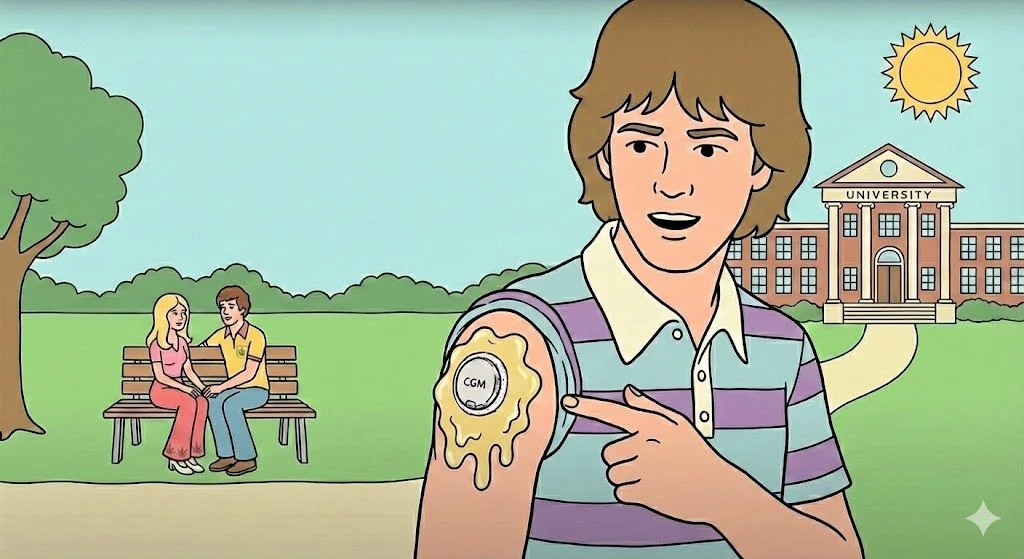







Please support the sponsors
The Juicebox Podcast is a free show, but if you'd like to support the podcast directly, you can make a gift here. Recent donations were used to pay for podcast hosting fees. Thank you to all who have sent 5, 10 and 20 dollars!

#654 Ball of Anxiety
Kara is the mom of a young type 1. She's here to talk about her challenges.
You can always listen to the Juicebox Podcast here but the cool kids use: Apple Podcasts/iOS - Spotify - Amazon Music - Google Play/Android - iHeart Radio - Radio Public, Amazon Alexa or wherever they get audio.
+ Click for EPISODE TRANSCRIPT
DISCLAIMER: This text is the output of AI based transcribing from an audio recording. Although the transcription is largely accurate, in some cases it is incomplete or inaccurate due to inaudible passages or transcription errors and should not be treated as an authoritative record. Nothing that you read here constitutes advice medical or otherwise. Always consult with a healthcare professional before making changes to a healthcare plan.
Scott Benner 0:00
Hello friends, and welcome to episode 654 of the Juicebox Podcast.
On today's episode of the podcast I'll be speaking with Cara. She is the mother of a child with type one diabetes who has a unique perspective about anxiety and type one. While you're listening today, please remember that nothing you hear on the Juicebox Podcast should be considered advice, medical or otherwise, always consult a physician before making any changes to your healthcare plan or becoming bold with insulin. Are you a US resident who has type one diabetes, or a US resident who is the caregiver of someone with type one? If you are, it will take you fewer than 10 minutes to fill out a survey at T one D exchange.org. Forward slash juicebox that will help people living with type one diabetes. It also supports the podcast when you finish the survey, head over to t one D exchange.org. Forward slash juice box. Join the registry take the survey support people with type one.
This episode of The Juicebox Podcast is sponsored by the Contour Next One blood glucose meter. Head over to contour next one.com forward slash juicebox get a look at that little meter that does so much Contour Next One. If you're looking for the diabetes pro tip episodes of the podcast, they begin at episode 210. They're also available at juicebox podcast.com, and diabetes pro tip.com.
Kara 2:01
My name is Kara. We live in Penticton, British Columbia, Canada and my husband have two kids sleep by and Keon and Levi's six and he's our type one diabetic.
Scott Benner 2:17
When you were saying where you lived it cut out a little bit, but I heard British Columbia. Is that enough? Yeah, we're in Penticton
Kara 2:23
Penticton. Yes, We're originally from Vancouver, but we moved to Penticton, which is like five hours away from Vancouver.
Scott Benner 2:33
How do you make a decision like that? You look at the map and you think what name sounds really ridiculous. I'm gonna go there.
Kara 2:40
Yeah, it was actually after Levi was diagnosed, and we just wanted like a simpler small town kind of life. So yeah, and then my parents are also here. So that's kind of
Scott Benner 2:55
you move closer to some people to Okay. Yeah, exactly. Originally.
Kara 3:00
We're originally from Vancouver.
Scott Benner 3:02
Okay, so your parents found this place and you kind of followed them?
Kara 3:06
Yes. Yeah. Gotcha.
Scott Benner 3:09
I want to start with that if you don't mind what? Sure what precipitated the move.
Kara 3:16
Um, I, we were kind of always thinking about moving away from kind of like the city life like both of us had long commutes. And then when Levi was diagnosed, it just really solidified that we needed to be home more and just have kind of an easier slow paced life. And just like our our hostel hospital that leave I was went to was, like, maybe an hour and a half in traffic on a good day. So just knowing that link where he goes now is like five minutes down the road. And
Scott Benner 3:58
yeah, there's traffic in Canada. Yes, there. Sorry. I learned something new every day. I know. I know that people probably think I'm just at this point, leaning into the idea of teasing people from Canada, but I'm not you said there was traffic. I was like, huh, wow.
Kara 4:16
Yeah, yeah. No, it's It's like a full on city,
Scott Benner 4:21
Vancouver. Yes. Also a major exporter of American television.
Kara 4:27
Yeah, it's like Hollywood north. I think they call it
Scott Benner 4:31
Have you ever been an extra on something?
Kara 4:33
No, but it is pretty common. And there usually is like, parts of different streets shut down for movies and commercials and stuff.
Scott Benner 4:44
Okay. I remember one time I interviewed Victor Garber, who has type one diabetes as an actor. I interviewed him in between shooting a television show that he was making at the time and he was in Vancouver. Oh, right. So yeah, but you're not there anymore. None of this really matters. Yeah. Would you describe where you're at now as like in the middle of nowhere or is it just a smaller place?
Kara 5:09
Yeah, it's just a smaller place like there's maybe 30,000 People in our town. And then it's sort of the bigger town in the area. So it's like small town but not too small.
Scott Benner 5:26
30,000 people Yeah, that's not that's not huge. It I mean, I think I live I think I live would it be nice if I knew I was gonna say like, the the population in my towns maybe under 15,000. Okay, even know how many square miles it is? I don't imagine it's much. It's interesting. I like the idea. I often dream of moving somewhere a little farther from people.
Kara 5:49
But yeah, it's been good. Yeah.
Scott Benner 5:52
So how old is Levi now? And how old was he? When he was diagnosed?
Kara 5:56
Levis? Six. He's almost seven. And he was diagnosed at three.
Scott Benner 6:03
Okay. That's a while. He so he's coming up on four years. Yeah, I guess so. Do not think about it.
Kara 6:13
was trying to think the other day how many years it was, but Yeah, almost four years.
Scott Benner 6:20
How old's your other child?
Kara 6:22
He's two. Oh, you
Scott Benner 6:23
just had him recently? Yeah, gotcha. Okay, so you you kind of got through the beginning of the diabetes thing and then just kind of got back to your plan your your family plan.
Kara 6:35
Yeah, we found out I was pregnant, I think like a month after he was diagnosed. I wasn't exactly planned. Like it would have been nice to have a little bit more time but
Scott Benner 6:49
no more freakout time when you didn't have all the hormones running around maybe? Yeah, exactly. That definitely makes sense plus your side job of skinning Wallace's or whatever it is you do up there.
Kara 7:01
making maple maple syrup. Yeah, it
Scott Benner 7:03
takes a lot of effort, I would imagine. So yeah. So it was his diagnosis, like out of nowhere, or do you have other autoimmune stuff in your family?
Kara 7:13
It was kind of out of nowhere. But we do have some auto immune stuff in the family. And some like type one diabetes, but distant, like my great grandfather. But it was never really on our radar. He didn't have anyone close to us that had it.
Scott Benner 7:35
Yeah, I used to be your your answer used to confuse me when people would say like, No, I was it was completely out of the blue. But yes, there's a lot of type one in our family. But I understand that idea now that really no one believes that this is going to happen to them.
Kara 7:50
Yeah. And I think we never really asked if anyone, like I would never think to ask if any of our great grandparents had diabetes. It just wasn't relevant to us.
Scott Benner 8:02
I was there any other autoimmune in your, in your, in your family, your husband, yourself and your two children?
Kara 8:09
Um, my mom has some thyroid stuff. My grandmother had sclera Derma. But that's kind of it.
Scott Benner 8:18
sclera Darmowe? Yeah,
Kara 8:21
I don't know too much about it. I just know it's like an autoimmune
Scott Benner 8:26
type of localized scleroderma, a group of autoimmune diseases that may result in changes to skin blood vessels, muscles, internal organs. Disease can be localized to the scanner involve other organs as well. symptoms may include areas of thicken skin stiffness, feeling tired, poor blood flow to the fingers or toes with cold exposure. Wow, that's interesting, did it? Do you know did it impact her life terribly?
Kara 8:51
Yeah, she had to have like her joint three point replaced slightly in her hand. And then she just always like she had nerve pain. And I don't think there's too, they know too much about it. But she had a lot of like, different symptoms that they attributed to it. So
Scott Benner 9:12
it's interesting. You did you did you know her? Well, or?
Kara 9:15
Yes. Yeah, we were really close. I lived with her for a few years too.
Scott Benner 9:19
Did it shorten her life?
Kara 9:22
Um, I It's hard to say like she also had lung cancer. So that probably didn't help but I think the Scleroderma was in there as well.
Scott Benner 9:34
Okay. Yeah, that's kind of fascinating. I'm looking at it now online. Just teaching myself that's really interesting. Okay, so your son's diagnosed. You living in Vancouver at the time? Can you walk me through what happened?
Kara 9:50
Yeah, so our whole diagnose going to the hospital experience was really awful not because of Levi but because of the hospital in times of care and our whole process going through that. Levi since been diagnosed with anxiety and PTSD because of medical trauma. And then he's recently diagnosed with ADHD as well.
Scott Benner 10:24
What leads you to get diagnosis and that what's going on in his life that makes you say, this isn't? Right.
Kara 10:31
Yeah, so, um, he every like in the hospital when they had to do an injection or a finger poke. He would act like like his arm was being chopped off, like he would scream and fight and kick, and it would take him a really long time to recover. And the staff just told us like, this is normal. He's young, he'll eventually get used to it. But like months and months later, it was still still happening at home like we would have to hold him down. Usually would take two of us he like broke so many needles are scratched himself with the needle.
Scott Benner 11:18
Pulling away and resisting. Yeah,
Kara 11:21
just like every muscle in his body with fight against getting, like even the finger pokes. It took like months before he was like, okay to do that. Yeah, and he had like, really bad night terrors. And even just us walking towards him, he would kind of jump and be like, What are you doing what's in your hand? They're like, any trust he had towards adults, or medical staff was completely gone. Yeah, and it just seemed like this is not normal. This is not getting better. It's, it's getting worse. So
Scott Benner 12:03
how we kind of gone for before you looked into it.
Kara 12:07
Um, I'm a bit in the hospital, we asked like, this seems a little bit more than what we would expect. And then we came home, we kind of kept pushing this and saying, like, it's not getting better. And we are eventually referred to a psychologist. But they were at the hospital where he was diagnosed, and even just pulling into the parking lot. It retriggered everything for him. And the psychologist wasn't able to do their assessment because he was just so elevated and wouldn't even go in the door. And so I think the psychology
Scott Benner 12:49
actually jump in the car and meet you for a maple Longjiang or something and just do it at nothing. What the hell?
Kara 12:56
I know, that's what you would think. But we had we realized that we kind of had to adapt to their schedule and their agenda and Levi, what Levi needed wasn't really considered.
Scott Benner 13:14
Got a good experience overall. Hey, can you talk a little more about the impact on you and your husband, having to like restrain your son and all the other things that went through that, like, how did that build up on you over time?
Kara 13:33
Yeah. I mean, obviously, it was heartbreaking. And I remember just getting like the injections ready, like feeling this dread. And one of the things that they would tell us is that if you're nervous, he'll feel that and so try and just stay relaxed and don't react to him. So we tried to do that. But yeah, it was hard. And I think one of the things is, as his parents, we were his main source of comfort. But were also the main source of re triggering him and causing all this trauma. So he, there is a shift in our relationship for sure. Like the trust that he had is of being his mom and dad, I think waned a bit.
Scott Benner 14:31
Yeah, so first of all, I don't know enough about the psychology of small children to know if treating them like a skittish horse is the right way to approach if you stay calm, he'll be calmer. Yeah. Did that work at all? No, no, no, no, no, you weren't able to. Hey, we're just hanging out buddy. Everything's fine. I'm not holding a syringe. But prior to this, anything I mean, I realized He's He's super young. And so it's difficult to like, But was he like skittish before this? Or?
Kara 15:07
No, not at all. Like he is, like, Adventurer kid, like just go all the time. No fear, no shyness. So I think that really like there was a huge change in him. Like that hit us like this is this is really affecting him Did anything
Scott Benner 15:27
happen in the hospital that was like crazy out of line? Like did a like a clown with weird makeup in the room at the time or like there's there's something that they stick him a ton with? You know what I mean? What they have trouble finding his veins was? Yeah,
Kara 15:42
like. I mean, not really. But kind of like when they did the IV, he fought them a lot. And so they had to wrap them up in a sheet so that he couldn't flail around. And I think there was probably three or four nurses holding him down. And then one of them was trying to get the IV and so that kind of, I think, like, set the tone for the rest of the hospital visit.
Scott Benner 16:14
He just had a real adverse reaction to that happening.
Kara 16:18
Yeah. Like he saw the kind of like the needle come out and was like, No, this is not happening. And then it kind of escalated from there.
Scott Benner 16:28
So you said he had an adverse reaction to the two of you because he starts relating you to the care. Did you ever have a third party who wasn't a doctor with somebody else? Try to do it to see if it? If he was anywhere, I'm trying to figure out like what you could have done back then. I don't imagine there was much.
Kara 16:45
Yeah, and he was he actually only wanted me to do it. Because like, he needed that comfort. And I think, even though I was the one doing it all, like I was also like, mom, so if anyone was gonna do it, he referred me to. And it kind of still is that way with his pump and his Dexcom like, he usually only wants me to do it.
Scott Benner 17:14
Present day does he still fight and squirm or is that mostly over?
Kara 17:21
It's way better. He is on anxiety medication, which has really helped. But he's still I mean, compared to where he was, it's full 180. But like, we try and do it when he's sleeping, or it's like a bit of a thing. Like he has to be alone, he has to have a few minutes to like pick where it's gonna happen. And he needs a little bit of recovery time afterwards. But it is way better than it was for sure.
Scott Benner 17:52
You or your husband or people in your family any anxiety in the family.
Kara 17:58
Yeah, my side of the family is is pretty riddled with anxiety and depression and like I've dealt with anxiety my whole life so and, and kind of have like, my attitude has always been like, just deal with it. Like I've been to counseling for many years and stuff. So I think that that's probably why I recognized it and Levi as well that this isn't just him being scary like this something a little bit more.
Scott Benner 18:30
So first of all, you've moved me off of Canadian rodeo onto to riddled with anxiety for the episode title. So excited about Canadian rodeo, and I don't know what I'm gonna do. But so you you take medication for anxiety?
Kara 18:50
Yes, I have, like, on and off. Okay, since I was I don't know, like a teenager.
Scott Benner 18:56
So now this is asking you to suppose but do you think if it wasn't the diabetes, something else would have brought this out of him?
Kara 19:04
Yeah, maybe? I don't know.
Scott Benner 19:07
I mean, riddle. Riddle. Riddle makes the assumption that everyone's got to, like, you know, I mean, is there somebody in your family that you all look at and go how is this one not having any anxiety? Or does it? Is it really I'm laughing at you laughing trying to think of a person in your family who's?
Kara 19:26
Well, I mean, my it's mostly my dad's side that we're all a little crazy. And my husband like he is just always like, he's the good at suppressing everything and just sort of like marching on. Yeah, so I mean, maybe it's hard to say probably it's
Scott Benner 19:50
impossible to say I've asked you a question. There's no answer to I just wanted to see what that's all.
Kara 19:55
Yeah, I wouldn't be surprised but but before the diabetes I wouldn't say he was like an anxious kid.
Scott Benner 20:03
But this lit something up in him. Yeah. Is there a plan to take him off the medication at any point? Or do you think this is a long term? situation?
Kara 20:16
Yeah, so the problem is that he still is pretty young. And like he goes to a place therapists pretty regularly. Any he asked to kind of go through the trauma that's happened. But because the age that he's at, that's really difficult, and it takes like a really long time. So our hope is that as he gets older and kind of can have more perspective on what happened and why this had to happen, and all of that. But until then, we're just sort of gonna keep him on it, and slowly work towards that.
Scott Benner 21:03
So you can move them to weed when he's a carrier like I don't mean to like do you manage with any recreational drugs?
Kara 21:13
No, I it just makes me more anxious. Really?
Scott Benner 21:17
Well, lucky. Yeah.
Kara 21:20
Yeah, well, or not? I don't
Scott Benner 21:21
know. That was sarcasm. I know. It's not for everybody, but some people report great. You know,
Kara 21:31
I know I'm jealous. Like, have some have a great sleep like, that sounds amazing.
Scott Benner 21:37
But did you try it and then just go Oh, great. This made it worse.
Kara 21:41
Yeah, I've like we, because it's legal in BC. So like, there are weed shops, like every corner. We will like go into like some of the fancy ones and try some of the gummies and stuff. But every time I just like, I hate it. Okay, so
Scott Benner 21:58
I am not an aficionado. And it is to say that I've literally never tried it. But from what I hear smoking gives you a different situation than eating it. Because of the way your body metabolizes it. So yes, yeah, try a pan or something at some point. Yeah. Yeah. But being serious, do you see that as, like, let me ask you like, how to think about this. If, if I got headaches constantly, and I had a baby and the baby started getting headaches, I would find it to be incumbent upon me to figure out how to manage the headache for myself so that I could pass that to my kid and tell them hey, maybe this do you have that feeling about all this? If you feel like it's your job to figure this out, so that they can have relief?
Kara 22:43
Yeah, for sure. I mean, I like that's how I feel about my own mental health. Like, I need to be really good. So that I can be there for Levi. And then I think just having like a better understanding of it, so I can I help them when it when it starts to come up.
Scott Benner 23:06
Your father give you any advice. Sorry, say that again. Your father. Did he pass any advice on to you?
Kara 23:15
Yeah, my dad's actually a counselor. So he's, he has lots of good advice and tips and stuff like that, but it's also just so different in kids.
Scott Benner 23:27
Okay, yeah. situation. Yeah. Yeah. Listen, an argument can be made that, uh, if I walked into a counselor's office, and I said, How are you doing? Because I'm kind of anxious. I might be like, I'm gonna find somebody else. It's like a, it's like, it's like, it feels like I'm hiring a roofer with the leaky roof in his own house. Yeah. No, it's not fair. Actually. It's meant to be stupid, but I just I do think it would, it would strike me if I was in that situation. I might be like, huh, my counselor seems a little jumpy. But, so his so your dad's advice. I thought maybe your dad's advice was like, sweetie, they make a makeup whiskey and the, the, you know, I don't know, like, you know, because people manage this stuff in all different ways. They manage it with food, they manage it with anger, they manage it with liquor, or they manage it with weed or harder drugs even. Because it's no joke, right? Like, can you give me an example of what that like how it can cripple a day? How sorry. So is there are there examples that you have from your life? That would explain to us what anxiety can do to a day in your life?
Kara 24:41
Um, like for me or for Levi?
Scott Benner 24:44
Well for you, and then we're gonna talk about Levi after
Kara 24:46
Okay. Um, yeah, like, I always feel like if I'm having an anxious day, it's like, you're in a crowded room where everyone is like talking are yelling, and you just can't like, think clearly. But then you're trying to like get all the stuff done, you need to get done.
Scott Benner 25:09
So a noise in your head that doesn't allow you to focus on any one thing.
Kara 25:14
Yeah, or just it's just this like kind of background buzz like intrusive kind of. Yeah, I wish I had a word.
Scott Benner 25:26
That's a pretty good. Do you have ADHD as well?
Kara 25:29
No, no. Okay.
Scott Benner 25:31
So that's how it manifests for you. And then does that just make things? And the Putin does that roll into depression ever for you?
Kara 25:38
Yeah, for Yeah, for sure. And then, when I had both kids, I had postpartum depression. So there's definitely like a hormonal aspect to that.
Scott Benner 25:50
Yeah, no, I mean, obviously, plus the plus the realization that you have to take care of these kids and pay for
Kara 25:56
a little Yeah. And then diabetes.
Scott Benner 26:00
That some smartass rolls around to let you know what college costs are. I mean, you guys. That's University. I mean, but know why you have to be so fancy about it. So this is something for you. How are you?
Kara 26:12
I'm 32.
Scott Benner 26:15
Okay, so then how does the anxiety impact Levi's day?
Kara 26:21
Um, he gets very, like, rigid and stuck. Like he won't like if he has to go to school, he won't want to go to school, you won't get dressed at school, he, like won't kind of follow what the class is doing, or the teachers doing. Like sometimes they'll even just go like sit in the corner and ignore anyone trying to engage with him. And then he also gets like, pretty severe night terrors. Mostly where he thinks that there's somebody coming to like, give him a poke. And so he'll like, try and push you away or try and hide or.
Scott Benner 27:10
Yeah, so he hit does he wake up screaming or how does that happen?
Kara 27:16
Yeah, he'll wake up screaming. Yeah. And then you come in and he gets like, he's aware of that. There's a person but it's he's still dreaming. So he thinks that you're somebody trying to get him.
Scott Benner 27:27
Okay. Yeah. Plus, you're the person who actually does give him the pokes. So yeah, exactly. Have to hire a third party calming person. Just for that. I was thinking I hear my wife yell at night sometimes. Do you think she's coming? She thinks I'm coming to poker. Oh, probably. A different anxiety hair, isn't it?
Kara 27:49
Yeah. Totally.
Scott Benner 27:53
Like, gosh, this poor i Oh, God, I'm gonna curse I get Jesus this it's a lot, you know? Yeah. Yeah. The ever get a break? Does he ever have days where it doesn't impact him?
Kara 28:08
I'm like, we try we, we try and kind of given as much normalcy as we can. And activity is a huge stress reliever for him. So like we back on to basically for us that just kind of goes on forever. So he spends a lot of time out there and running and friends. And so we kind of try and do that for him.
Scott Benner 28:38
I say, so, so that you think that that's being in an unconfined space that helps him? Is this? Is it being away from people like what do you think about just being outside? Do you ever I mean, I don't know how you might not know but what do you guys,
Kara 28:55
I think, when he can be like in control of what he's doing. So like he's outside and he has this whole thing going on in his head of what he's doing and he can like he likes to lead if we're hiking, he'll be at the front and he thinks kind of he's like the expert on everything. He'll explain like, this is this kind of mushroom. And this is this kind of bird and
Scott Benner 29:25
I don't know at all I have to get him a podcast. Yeah, exactly. So is How old is he now? Seven? He's almost seven. Yeah. Is he not ready to be put in charge of his pokes and his broads and things?
Kara 29:39
Um, yeah. So he, he can do a finger poke. And he we actually started looping a few months ago. So in those few months, he's become a lot more independent.
Scott Benner 29:54
And help him does that alleviate his anxiety like taking you the rest of you out of the situation?
Kara 30:02
Um, I don't Yeah, I It's hard to tell. I think he's feeling a little bit of, like the burnout from it, especially at school. Because he knows that he needs to be responsible and kind of like on all the time, so we've noticed when he comes home like he's just doesn't want to engage with the diabetes stuff.
Scott Benner 30:23
Yeah, I don't think any of them do. But yeah, by any of them. I mean, any people with diabetes? Yeah, yeah, I have a question. It's gonna sound accusatory it's not so don't read it that way and answer it for me if you can.
The Contour Next One blood glucose meter is highly accurate, it offers Second Chance sampling, and it doesn't need to be coded. The Contour Next One blood glucose meter offers remarkable accuracy at a reasonable price. Head to contour next one.com Ford slash juicebox. Right now, to find out more, it's actually possible that the Contour Next One and its test strips may be cheaper out of pocket like not going through your insurance. Then the meter you're using now costs with your insurance. That's inexpensive, my friend. Here's the part you care about most. The meter is easy to handle, right? It's small, but not too small, fits in your pocket. It fits in your diabetes bag, word fits in your purse, it's not so small that when you're trying to use it, you're fumbling with it and it's hard to hold on to. It's a perfect size. I have big hands and I have no trouble with it whatsoever. On top of all that it's got a beautiful bright light for nighttime viewing. The screen is simply laid out and easy to understand and if you so desire on your Android or Apple phone, you can get yourself the app that goes with the meter just pairs right up and all of your information is there for you know your perusal later. Great thing is if you don't want to use the app, the meter works perfectly without it. I forgot to say this little bit which is kind of strange because in my heart it's the most important part. I didn't just rhyme heart and part on purpose. But nevertheless, the Contour Next One blood glucose meter is accurate. accurate, accurate, accurate, like an archer at the Olympics. Understand I'm saying right there. Right in the middle bullseye. Bullseye. Bullseye bowler, it's a damn good meter contour next.com forward slash juicebox stop using any old meter. You're paying the money anyway. Get a good one. Get a Contour Next One
Have you ever been in a situation where your anxiety makes you put something on his act? Put something on him that doesn't exist? Do you ever get so anxious that you're like he's he's not okay. But he the your husband goes he looks fine to me. Just like no does that ever happen? Or does your husband not have the nerve to say that? Yeah, you do live in the woods and you probably know how to use an axe so I might not say much to you either. But
Kara 33:25
yeah, um I don't know like my I really like internalized my anxiety like it's it's very like physical for me so I'm not like worried about a particular thing. I just like feel anxious.
Scott Benner 33:44
physically sick. Sorry. Will it ever make you physically sick? Oh yeah, for sure. Yeah, stomach issues. Stuff like Yeah,
Kara 33:53
yeah, not for a while but yeah in the past good for sure.
Scott Benner 33:58
Yeah. Vacation did you find that helped you?
Kara 34:01
Um, I yeah, I've taken probably all of them and haven't really found one that works. So
Scott Benner 34:12
all of them and yeah, nothing good. So SSRIs like intake uptake inhibitor stuff like that you you know you don't find much relief from
Kara 34:21
no and if I do it's like for a few weeks and then I it stops working so
Scott Benner 34:28
I'm almost afraid to ask this. I don't want me to ask a question somebody can answer me in a way that even shocked me but what what's your leading in the woods like what helps you?
Kara 34:39
Um yeah, I think just like trying to stay balanced and and everything like not, it's really easy to get burned out. So I try and like not take on too much like a sloth of why we're living where we are and Do you know that balance is really having fun and resting and doing work and parenting and all of that kind of stuff? But
Scott Benner 35:09
is there activity that makes you feel freer? Yeah. Can you not think of one or do you not want to tell me what it is?
Kara 35:20
I just I think it's just like a it's like, a bit of everything. It's not like a particular thing.
Scott Benner 35:26
Being in that place helps you more. Yeah. Yeah. Okay. Yeah, I'm gonna bleep all this out. But like, I'm so worried that one day I'm going to ask somebody a question and be like, Hey, what did we beat your anxiety and someone's just gonna blurt out like, I gank the neighbors. It really, really calms me down, Scott. I'm so worried that one day somebody is literally gonna say something that I'm like, I'm not. You guys will know if I don't know how to answer something crazy happen. Yeah. I won't leave all that out later. Some people will just have to wonder what I said to you. But I do have like a genuine concern that one day something's gonna happen that I'm going to be like, uh, you know, I don't know. Yeah. So when you don't know how to answer, I'm like, she trying to talk around something? Or does she know?
Kara 36:14
I just don't think I have anything like that interesting that I do to help us just sort of like, the boring like, life balance thing.
Scott Benner 36:22
Well, listen, I think you're being a little dismissive because you guys made a big move. You moved yourself to somewhere else to support your mental health. That's a really big deal. And it's, it's thoughtful, because for no reasons. Who cares why, like that Big City Life of Vancouver. It's not right for you. I wasn't saying that sarcastically. Did my tone inflect sarcasm maybe I will. Yeah. Yeah. Like, but you know, like being in a more hustle bustle situation just wasn't right for you. And your job? Yeah, yeah. Are you a stay at home mom? Or did your job like switch okay to that?
Kara 37:01
Yeah. So I'm a, I'm a social worker I work with like, in mental health and substance use. But once Levi was diagnosed, like I've never worked full time, just because I have to kind of be around for him. And it's impossible to get childcare for a type one diabetic.
Scott Benner 37:23
A deer can't watch your children.
Kara 37:26
No, unfortunately, not.
Scott Benner 37:29
But I asked you a question that I asked of every mental health professional who falls into your category again, it's gonna sound accusatory, it is not. Why is there something about people who struggle with mental health that draws them to want to work in mental health?
Kara 37:46
Yeah, I think it's a bit of that. It's like, I love the science part of it. Like, why why people use drugs? Why, like, all that kind of nerdy stuff. And then I think just like, the stigma around mental health, and especially substance use, I've always been kind of, like an advocate and love sort of the political side of that. So it just seemed like
Scott Benner 38:15
fits for you. Yeah, but is there any feeling of like, if I can help them? I get help myself?
Kara 38:23
Ah, yeah, I don't know. I mean, because usually the people I work with like they're living on the streets and like ferry and trenched in drug use and that, so it's, I try not to see myself in that because you can go down kind of like a dark hole that way. Yeah.
Scott Benner 38:44
No, I worry about people who do your kind of work. Yeah. And I've interviewed a number of them. Did you ever hear the episode? Josh has all the fields? Yes. Yeah. Right. So and Josh has been back on since then. I've recorded with him. It's not out yet. I'm gonna tell you that the second time he came on was more emotional than the first time he came on. Oh, my God, by the end, you're like, Dude, where are you? I'm gonna come give you a hug. And it's it, but he's in that he's in that industry. And he, I don't know, like, there's part of me that just thinks like, Oh, my God, like, quit your job and go do something completely different and see if that doesn't help you. Yeah, I don't know. Like, I could be 1,000,000% Wrong. Please, everyone believe that. I believe that. It's just fascinating. You know, like to, I mean, you know, you have one conversation with somebody and you think I spoke with a therapist today who's depressed, or then you're a social worker and you have anxiety Your father has his situation like, you know, Josh described his life the way he did. And on and on and on. It's just really, I don't know people are fascinating. That's for certain.
Kara 39:50
Yeah, I think it's just everyone has their their thing. Like, I don't know if you could find somebody that's completely Lately, mental health free check could do that work? Like?
Scott Benner 40:04
You have to understand that we're all a little bit maybe,
Kara 40:07
yeah, yeah, I think you got it, you have to have gone there a little bit to get it.
Scott Benner 40:13
Where else you end up being me where I'm I'm basically on the verge of going, why don't you just stop? Which I don't think, personally, and this podcast has actually helped me a lot understand, you know, different psychological issues. But I would tell you that I don't have any perspective on it. So it does sometimes boil down into my head to like, just like don't do that then, which I realized, I realized isn't the answer. But it's an indication that I don't have enough depth of perspective.
Kara 40:45
Right. Yeah. I mean, I do agree that there is a level like you need to be solid. And you need to know what, how you're feeling and what triggers you and your boundaries when you're doing that kind of work. But yeah, I think everyone's at least everyone I've met in the field has at least some level of something.
Scott Benner 41:07
No kidding. Yeah, that's good to do. Well, it's like an incestuous circle them because don't therapists, the other therapists? Oh, yeah, we should just move you guys all to an island with
Kara 41:21
a tribe will be really self aware and healthy.
Scott Benner 41:25
You'll be really anxious aware people.
Kara 41:28
Yeah, exactly.
Scott Benner 41:31
Well, I have a ton of say, even though nothing that I've said, but indicate otherwise, I ever have a ton of empathy for you like, because of the conversations I've had with other people. Yeah. It's just it's really something if I if you came into your office and described your situation, what would you tell yourself?
Kara 41:53
Ah, yeah, I see. I mean, I think I just have a lot of compassion for myself like this. It is hard. And so I think sometimes I do get in that, like, I'm not doing good enough has a one C is not low enough. Like he's, we could be parenting better. And so you know, just acknowledge, like, this is hard. And so just, like, do it with compassion and go easy on myself. And you? Yeah, you know,
Scott Benner 42:26
a few 100 years ago, you would just wander away from him and leave him in a cold place by himself.
Kara 42:30
Yeah, exactly.
Scott Benner 42:33
That that horrible joke aside, people used to have 910 kids knowing that some of them wouldn't survive. And they did treat them as expendable if they if they proved to be too much or a problem in the family. Yeah, exactly. And that's how you ended up with I mean, is that where the term survival of the fittest comes from? I have no idea. But But it shows that in a short amount of time, as human beings we've gone from, hey, you broke your leg? Tough luck. Would you like us to beat you with a stick or just leave you? Wolfie. And two, we're taking people who have significant issues and trying very hard to shepherd them through an entire life, that that change has happened in just a few 100 years. Yeah, for sure. Yeah. It feels like we're not up for it yet.
Kara 43:25
Yeah, I think I think our brain is still still a few 100 years behind, how we how we cope and deal with all of that.
Scott Benner 43:34
Yeah, we have these great goals and no tools for them. Mm hmm. You know, that's good, though. I mean, it's, it's good to have aspirational ideas for society, and realize that you're going to hammer your way through like I used to hear people say like, every time I turn on the news, something different eat me, don't eat me, bla, bla, bla, they can't decide. And the truth is, yeah, they can't decide because we keep studying people and then looking at things and men science expands. And, you know, on and on and on, we're still figuring it out. Do you buy into the idea that anxiety in a modern person comes from some degree can come from the fact that our lives are so easy that we don't have anything to worry about really compared to the way our brains and our bodies are built up, you know, run from wolves and you know, exist outdoors and stuff like that.
Kara 44:30
Yeah, I mean, for sure. Like, that's a whole fight or flight thing like we're running away from the lion but there is no lion. And I think like, we we don't get to like complete the stress cycle. Like we're always just stress we never have that relief of, of realizing you're free from the line and you can relax like we're just constantly like at one 100 all the time.
Scott Benner 45:02
Is that what you're that? Is that where your move was hoping to? To help with?
Kara 45:07
Yeah, part of it for sure. Yeah.
Scott Benner 45:11
Yeah, no, that's such a good point. Like, there's always, like, we're always on tilt, basically, right? From the moment you wake up, you know, like, your alarm goes off and you pick up your phone your phones, like, here's your first appointment, or you know, you have to be at work or then you know, you have to be at work and you have to take a shower and you got to get dressed. You have kids and they d those kids are going to get into a car and they're going to drive to school by themselves and you're worried they're gonna have an accident. And are they going to get to college and be in you haven't even like you mean like setup yet? Yeah, no. And then it just piles on and piles on and piles on when you get home. It continues. And I guess right up the pit. Some people are many people have trouble sleeping. Even. Because, yeah, so we are. We're basically like goldfish living in a frying pan. Like we're we're not right for our surroundings. Yeah, exactly. Oh, all right. I'm understanding. Yeah, what do I do care? How to make my life better?
Kara 46:10
But I know that's the golden question. I,
Scott Benner 46:13
I need help from you. What are you talking about? That's going to make you nervous. You're going to be like, right now I feel anxious because I can't help the guy from the podcast. But exactly. Is it um, so for Levi, I guess we're saying that 300 years ago, he would have been great, because we could have just set him out with a stick and don't like bring some food back you a little crazy person. And he would have he would have went out there and been like, ah, and done it probably. Yeah, yeah. Yeah. Hmm. Interesting. I didn't mean crazy person in a pejorative way.
Unknown Speaker 46:43
I got it. Yeah.
Scott Benner 46:44
Did you get it? Like, I'm Canadian, I can handle it. Yeah. Why did you want to come on the podcast?
Kara 46:54
Um, I just thought that, like, I haven't heard many parents come on, talk about the struggle with their kids diagnosed at a young age and how traumatic that can be for them. Because I just any of the comments or conversations were usually like older kids, and that transition and the teaching them and the responsibility, but I just hadn't heard the, the younger kids and like how scary that is, and how that can affect them going home in the months after that.
Scott Benner 47:35
Yeah. Have you ever heard me kind of brusque against the idea that kids are so brave and resilient? Like I always say, like, well, what's the alternative? Yeah, yeah, I know, people like to say they're like, Oh, my God, my kids so brave. I'm like, is he brave? Or is he seven? And there's nothing you can do about it? Because yeah,
Kara 47:52
and people say that to us all the time. Like, oh, you're doing such a good job. Like, the alternative is that he's dies. So
Scott Benner 48:01
you wander away from in the woods and just leave it there. But yeah, exactly. Yeah. There is no.
Kara 48:08
Yeah, like, we don't have a choice. So yeah, and I think too, like we really had to, like push to get any type of recognition that Levi was dealing with this a little bit differently. That like, we felt like we were the only people and like, this was something they've never heard of before. Like, it was many emails and phone calls to the hospital and the endocrinologist just to like, get them to consider that he might need extra support. should ever
Scott Benner 48:47
have to video him to prove it. You guys have cell phones right? Off the video or anything like that.
Kara 48:54
Um, I thought of that, but I just felt like it wouldn't be fair to leave. I like that's a really vulnerable moment for him.
Scott Benner 49:05
dehumanizing, right.
Kara 49:07
Yeah. Yeah, I just didn't feel like that was he would like that.
Scott Benner 49:15
Yeah, yeah. No, no, I appreciate that, too. I was just wondering how far you had to go to to get them on your side plus your health care systems different there. It was that part of the struggle?
Kara 49:28
Yeah, like I'm not sure how it would work in your situation. But like for us, you have to get you can't just go to a doctor, you have to get a referral. And like you, you have to, they're not just like giving out referrals freely like they have to really believe that you are needing the help. So like for us to get referred to the psychologist. It took like, a few months of constantly calling and emailing And just like being that squeaky wheel,
Scott Benner 50:03
do you think that they just thought that you were overreacting and the kid was just being a kid in that situation?
Kara 50:10
Have you ever? Yeah, yeah, I think and I. Yeah, I think they thought I was overreacting and that Levi would just be okay, that he would eventually get over it.
Scott Benner 50:24
I wonder, I wonder how much of them do they know what you do for a living?
Kara 50:30
Um, as few points they did, we actually had to get the social worker to come in when we are the hospital. Because we wanted to take Levi to the playground. And in kind of a subtle way, they told us if we did that they would take away Levi from us.
Scott Benner 50:49
Wait, wait, wait, slow down. When was this?
Kara 50:53
This was during our like Education Week,
Scott Benner 50:56
I said after diagnosis during the time, he said the hospital said, Hey, we're gonna roll out of here and hit the swings for a second like you can. But then we're gonna make him a ward of the state or whatever you guys have up there? Probably. Yeah. So we
Kara 51:09
have like the the ministry of Child and Family Welfare, I think.
Scott Benner 51:19
Sorry, is that a Harry Potter thing? The Ministry of Magic or something? What do you guys do? Your leaders? Yeah, it's
Kara 51:26
kind of it's kind of like that just a lot more depressing. I think
Scott Benner 51:30
your guy is too pretty. It's ruining everything. Yeah. You need a more grizzled person to run things you can't I get when your man pops up on TV. I can't go but a handsome guy. Like it doesn't. Anyway, so So the ministry of something or other like they were going to take your kid from you? Did they say that? Or did they just kind of like, I mean,
Kara 51:48
you say it directly, but they kind of, like danced around that idea. And the social worker said, like, we wouldn't take him away. But kind of like, if you do this, we're going to have to take steps towards that direction.
Scott Benner 52:07
If you do this, if you go outside to the swings.
Kara 52:11
Yeah, because Levi was like, panicking, scared that a nurse is going to come into the room at any moment and give him an injection. And we're at the hospital for like eight plus hours a day doing this education thing. And we're like, he just needs a break. Like we can one of us go out to the playground and they're like, if you do that, then we're gonna maybe take him away from you or put you down as like a non compliant parent or
Scott Benner 52:43
goodness. I thought Canadians were nice.
Kara 52:47
Yeah, so Did I what happened?
Scott Benner 52:50
That's a bizarre story.
Kara 52:52
Yeah, they're they're very rigid, like you have you had to follow kind of their agenda on, on how to do things.
Scott Benner 53:02
So maybe Canada's not as free as I think it is. Is that possible?
Kara 53:08
Yeah, I don't know if it's Canada, I just think it's like the the hospital and the kind of like, the
Scott Benner 53:16
carry, I think it's right for me to take your one experience at a hospital and pay for the entire country.
Well, what a valid statement from you, okay. I won't generalize Canada, which, in my mind is, is like permafrost with a tree in the middle. Oh, my God. Yeah. So, but that's a bizarre story. Like, I mean, that's an overreach in my opinion.
Kara 53:45
Yes. Yeah. They were, like, extremely rigid in how they wanted us to do things.
Scott Benner 53:54
How did you manage that? You just go oh, sorry. Okay, we won't go outside.
Kara 54:00
We eventually got permission to go out for like, 10 minutes. And that was like a huge deal. But it was hard because like, I was on no sleep. And I was like, still in shock that this was even happening. So I wanted to like push more and really, like, this is not okay, and everything, but I just didn't have it in me.
Scott Benner 54:26
Are you pregnant at that point, and don't know it yet.
Kara 54:29
No, I wasn't pregnant then. At that point, okay. No. But and then I saw it like, you know, a few months down the road, maybe I'll pursue this and, and write some kind of letter or something. But yeah, it just was like too, too painful, I think to go through and
Scott Benner 54:50
like when you have a bad experience at a hotel, and you're like, I'm gonna call tomorrow and then you're like, yeah, it was only $100.
Kara 54:55
Yeah, exactly. Yeah.
Scott Benner 55:00
Let the other people find the answer. No, but there's only so much you can do at some point, right? Like, there's so much energy and time. And
Kara 55:10
yeah, it just at that time, like we were so exhausted and like there was just no space for us to start this whole thing. Yeah. Yeah,
Scott Benner 55:22
I hear you. I mean, what is your what are your thoughts for his future? Like, what do you think's going to happen? Do you think he's going to be a kid who 14 1516 years old has trouble managing the things that he needs to do? Or do you think that you're finding your way through this?
Kara 55:43
Um, I that that is the worry that, like, we're always concerned that it's all kind of going to be too much for him. But I mean, at the same time, like, as he's getting older, he really is taking on a lot more responsibility. And he's very, like, proud of his diabetes. Yeah. And like, we're doing every like, he's going in counseling, and we anything we can to give him like this really solid base, as he's growing up. But yeah, I mean, that is a worry, we have for sure
Scott Benner 56:28
you're describing a life that seems a little untenable, first of all, and it also mirrors a person I'm thinking of that I know, listens to the podcast, who's whose child is, you know, maybe a senior in high school, that age has had diabetes for a couple of years, who has a lot of these similar problems. And he does become more difficult when they get bigger and stronger. And, you know, yeah. And they even think a little more clearly for themselves. Well, not so clearly, I guess. But, yeah. I mean, it might be a blessing that you found it about it so early, and you can get ahead of it. Because yeah, yeah, it's it can turn into quite a thing does he ever make you take his gear off? Like me? He's looping? Is he using Omni pod? Dexcom?
Kara 57:16
Yeah, his Omni pod index calm.
Scott Benner 57:19
He's never trouble wearing those.
Kara 57:22
No, he's pretty. He's pretty good with that. Like, I don't think he remembers not wearing at least his pump. He. He's just, it's just kind of always been there.
Scott Benner 57:35
Do they do that rapid eye therapy with him?
Kara 57:38
Yeah, that's it's hard. Because he's so young. But that's we're working towards that.
Scott Benner 57:45
Yeah, firstly. How far back do you remember being anxious?
Kara 57:52
Oh, like, probably? Forever. Like my earliest memories, I think. Yeah.
Scott Benner 58:00
Wild it is. It's really a wild statement to think of, especially like, you know, to think of you as a five year old, you know, being like, ABCD we got to get out of here, man.
Kara 58:11
Yeah, yeah. Yeah. It's just always been been a part of, kind of who I am.
Scott Benner 58:17
That's great. So and you do manage? Okay, like you, if I asked you to quantify your life in on a happiness scale, or do you live well, with it? I guess is my question.
Kara 58:30
Yeah, for sure. i Yeah. i I mean, there's moments where I've struggled more than others, especially when my kids are born. But um, yeah, I think I do pretty, pretty good.
Scott Benner 58:44
Do any plans to have more kids? No.
Kara 58:48
Definitely not. No. We call diabetes like our third kid, because it just takes so much. time and energy. Yeah, and money. Exactly. And then both Levi and our other kid are just like, crazy, like, energy. Yeah. Well, yeah, full boy all the time. From like, 6am to 8pm 100% all the time.
Scott Benner 59:18
Like, you're just gonna look out the window one day, and they're gonna be like riding a squirrel chasing, like another animal or something like that. Yeah, like, Oh, that makes sense. Yeah. Yeah. As your husband like that. Does your husband have a little bit of that like wild streak in him?
Kara 59:31
Yeah, yes, for sure. He's, he can kind of go on forever. Even Even he agrees like he could not handle another child.
Scott Benner 59:42
Another one. He doesn't want any more people like him running around. Yeah, exactly. How did you end up picking this boy with all this crazy energy?
Kara 59:50
You don't think about those things when you're first dating like
Scott Benner 59:55
to get you divorced. I don't want to ask you don't listen. Since God with hindsight, I see what you're saying, but think about the dorky kid who understood science and said, Hey, you're cute and gone that way. Yeah. It says what kind of work is your husband do?
Kara 1:00:14
He's a plumber. Okay,
Scott Benner 1:00:16
so he's got a he's got a pretty, like steady jobs as far as hours go. He could be home at a certain time to help you most of the times.
Kara 1:00:24
Oh, yeah. Most of the time it is. He does like service work. So it is some kind of depends on a day, but where we live like everything's five minutes away, so even if he is late, it's really not that big of a deal.
Scott Benner 1:00:42
I was super excited to hear your toilets. Sorry, I was super excited to hear that you had toilets. Oh, wow. Plumbing. Fancy.
Kara 1:00:54
Yeah, you should really, really come and visit and see for yourself find
Scott Benner 1:00:58
out that I look like I'm in Ohio when I'm there or something like that. Or just like no.
Kara 1:01:01
Like Vancouver is like Portland or Seattle.
Scott Benner 1:01:07
Wizard. Is it got the hippie vibe? Oh, yeah, sure. Okay. Yeah. That's the part of the country. It just makes you feel that way. I guess. Yeah, I was just in Seattle.
Kara 1:01:19
Oh, you should have popped. Oh, I guess cat because of COVID. But
Scott Benner 1:01:22
yeah. Oh, really? You still keeping us out?
Kara 1:01:25
Yeah, I think so. Are there some some type of rules? I'm not too
Scott Benner 1:01:30
sure. I listen, I have to go somewhere with some people pretty soon and I'm looking desperately for a way to get out of it. Yeah, these people are definitely gonna make me sick. But that's really something. Yeah, I mean, I was I only ever been there once. It's a very specific vibe. You're not wrong. And I get it. Like I would see why it was attractive to you. Yeah. And want to do and want to live that way. How was it work when you moved? I'm not joking now. But schooling still okay. Up there. You're like that stuff for your kids feels right.
Kara 1:02:11
Um, yeah. The, the diabetes stuff was school has been really hard. Just they do. They're like do not die care, but not really the managing it and steady kind of lower levels. Like they would be happy if he was, like, just rode high all day.
Scott Benner 1:02:37
He would be okay. That kind of thing.
Kara 1:02:39
Yeah. So we just pulled them out of public school. And he started private school this week. which already has been so much better.
Scott Benner 1:02:52
You guys are doing all right. This plumbing pays okay. Yeah, I mean, wasn't a euphemism for like Canadian mob or something like that?
Kara 1:02:59
No, no. Just close. Okay. Yeah. Well, you're making
Scott Benner 1:03:03
me think I should have become a plumber like, private school for the kid. It's not bad. Yeah. You're like, you're like, maybe not. I mean, is there a big pile of money sitting around?
Kara 1:03:16
No, no, the private schools pretty reasonable. So
Scott Benner 1:03:20
you're able to do it. That's nice. That's really great that you could find something like that. Yeah. Yeah. Do you have anything? Like, is there anything I because I realize I don't know what I'm talking about in this like context that have I taken you so far away from what do you want to talk about? Are we getting through things pretty well?
Kara 1:03:38
Yeah, no, I have nothing I can think of that. I didn't talk about
Scott Benner 1:03:45
so you're thinking I'm doing a good job. Yeah, for sure. That's really what I was trying to get to target. You just, you know, you're doing a great job. Thank you. I mean, she's gonna make me work for my compliment. I mean, I know, I want to make sure that we're not skipping over anything, because I do find a lot about what you said. Fascinating. And I did find a lot about you. Interesting. And I know that's not what you were expecting when you came up. Yeah, yeah. But you I appreciate that you kept going and hung with it. How long have you been listening to this silly podcast?
Kara 1:04:17
Oh, man, like, pretty early on? Probably Probably around three years.
Scott Benner 1:04:24
Yeah. Figure out looping through this through me.
Kara 1:04:27
We did. Yeah. Yeah. And it was it was like, I remember the day that I found it because it was like you were seeing everything that we thought was how we should be doing diabetes. And we're getting all this pushback from the endocrinologist and the diabetes nurse and all of that. So it was like, Oh, my God, yes. Like, we're right. This is like we're not crazy. Like he shouldn't be high all the time. And
Scott Benner 1:04:59
yeah, No, yeah, that's excellent. So what did they have you doing? That's that seemed like wow, this isn't right.
Kara 1:05:07
Um just things like wanting his a one C like around eight and just not being as aggressive with the insulin.
Scott Benner 1:05:22
Have you bolusing like after meals?
Kara 1:05:26
Yeah, yeah. Yeah. Which that like with his school they were only allowed to Bolus after a meal so like every day he would come home super high and then crash out and it was just like a mess.
Scott Benner 1:05:41
So are you seeing better is his his panicky nature better now that his blood sugar's are more stable?
Kara 1:05:50
Yeah for he is a lot calmer with specially with the loop. Like in the night time we get this like super steady low numbers. And even just that I think he's sleeping better. We're not having to wake him up to do a juice or a correction.
Scott Benner 1:06:13
And that's good for you. Not just for him.
Kara 1:06:15
Yeah. Oh my god. It's like slept through the night for the first time since diagnosis.
Scott Benner 1:06:20
Oh, what's your husband dressed up too much? Because he's, he's a professional pipe player. By mistake. Third boy what you know, it's gonna be a boy, by the way, and he'll be as like, you know, energetic as the first two and then yeah, 100% What are you gonna do then? If the strap one of them do a bear and just see what happens? Yeah. Have you ever seen a bear?
Kara 1:06:43
Yes. When's the last time we have bears quite frequently?
Scott Benner 1:06:47
And still you don't move?
Kara 1:06:49
No. Bears are more like past like a raccoon or just bigger. We don't have we don't have like grizzly bears. They're like,
Scott Benner 1:07:02
Well, yeah, like, like Winnie the Pooh, like little bears. Or
Kara 1:07:06
we have like black bears. So they're like, medium smallish bears. They're not really aggressive. I mean, we wouldn't want to go pet it, but you can just tell it to go away. You know, run away.
Scott Benner 1:07:18
Yeah. That's what would happen. You don't think it would hear me crying and come kill me? No. Cuz I'd start crying. And I think it'd be like, I don't usually kill people, but this guy deserves it and then just come get me. Yeah, that's all they really eat honey or No, not really. No, that's disappointing.
Kara 1:07:40
I mean, I I mean, I guess they could if they came across them, but we don't really have like honey hives.
Scott Benner 1:07:48
Have you ever seen a bear walking with a sad donkey? No, never see a lot of what you see on television. It's not real.
Kara 1:07:54
Yeah, exactly. Yeah.
Scott Benner 1:07:56
Don't don't believe what you see. Bears are pests. Mm hmm. You've never once thought I will probably die at the hands of a bear.
Kara 1:08:06
No, never interesting.
Scott Benner 1:08:07
I would think that 24 hours. I would have anxiety. If I came to where you are. You'd be like, come up here. It's really common. I'd get up there and be like, no, no, I'm gonna die.
Kara 1:08:17
We do have like cougars and snakes. Like, so. There are scary things, but the bears are rock. Bottom as less. Yeah, we have rattlesnake.
Scott Benner 1:08:26
Yeah. Are you afraid of those? Yes. 100%. Right. See? Maybe you're not anxious. Maybe you're just being reasonable. Just think of that. Think like maybe if you move somewhere with some concrete on the ground, you'd be like, Ah, I'm probably gonna be alright.
Kara 1:08:46
We do have a house or not like camping.
Scott Benner 1:08:49
No, but I'm saying they think the snake could come in your house, right?
Kara 1:08:53
I guess so. But yeah, never really more like if we're out in the wilderness. I
Scott Benner 1:09:00
don't know. That seems like a lie that you're trying to trick me to come in there and being killed by a rattlesnake is what I
Kara 1:09:05
know. Like we were proper neighborhood and
Scott Benner 1:09:10
Scott, they come and get our garbage.
Unknown Speaker 1:09:13
Don't have a do.
Scott Benner 1:09:14
I don't have to burn it outside.
Kara 1:09:16
No, we have a garbage truck that comes once a week. Super
Scott Benner 1:09:20
fancy. Alright. I appreciate this. One day I'm going to I was gonna say One day I'm gonna come to Canada but that feels like a lie. So not going to say that out loud. Somebody did ask me to speak in Canada once and I think I was on my way to agreeing to it and then you know COVID And now, right? I don't think I'm ever going to speak in front of live people ever again. Yeah. Which may be fine when the the flying the flying is not fun. I don't I don't love that part of it. But if I was to visit Canada, I'm on the East Coast. Where should I try first?
Kara 1:09:57
Um, I like So BC is the West Coast. And the East Coast is like very far away. So we don't really like It's like California and New York.
Scott Benner 1:10:10
Alright, so I mean, I guess I got to just do the touristy thing and go to Niagara Falls or something like that.
Kara 1:10:15
I guess so I I don't really know. Like, it feels I personally wouldn't want to visit the east coast of Canada. It's a lot colder and um,
Scott Benner 1:10:26
are you about the bad mouth east coast of Canada? Go ahead. I those people just trash What are you trying to say?
Kara 1:10:33
No, it's just it's like a very different vibe there than in BC.
Scott Benner 1:10:37
I was joking. By the way, like I just okay, somebody from Manat. Manitoba, Manitoba Z's right.
Kara 1:10:44
Yes, that's like the prairies like very flat and not much going on. They're
Scott Benner 1:10:50
lovely people. Is my point. Like when I was at trashes I can go I was I was literally, I mean, I think it was obvious. I was joking, but I don't know if you all get the sarcasm or not. So sometimes, I mean, we're an hour into it. Now. You got to think that the only people left listening are people who are like, legitimately think like Scott's great. I mean, who would be laughed at this point? Yeah, but Okay, so you don't really know where I should go? No. Have you ever been to Alaska? No. Does that seem like a wilderness to you when you think of it?
Kara 1:11:22
Yeah, it's kind of like service very touristy. So I don't know if
Scott Benner 1:11:29
I interesting gentrifiers to go there. Yeah. See, is there a place that you think of, if I said, move to this place, and you would have the reaction that I'm having about where you live?
Kara 1:11:42
I'm probably like, Wisconsin, or like Utah, or something like that.
Scott Benner 1:11:50
Interesting. Wisconsin. Too cold.
Kara 1:11:53
Yeah, like cold and hot or like, little too conservative.
Scott Benner 1:11:59
Right. And Utah desert? No good for you.
Kara 1:12:03
Yeah, cuz it's like, that's a little Mormon.
Scott Benner 1:12:06
You have a lot of Mormon listeners. We cannot say anything, even a little judgy. about Mormons. By the way. Hold on a second. Let me just put up a disclaimer here. I love you guys. I don't know anything about your religion. But I love all your Mormon listeners. And don't listen to Kara. She didn't just not at all.
Kara 1:12:24
I just don't know enough about it. It would just be like culture shock.
Scott Benner 1:12:28
I gotta tell you the amount of people who I've interviewed who are Mormon who after done interview and say things about being Mormon that Oh, no, no, like, they would say, well, they're being recorded is those numbers are growing as well. Yeah, maybe you're onto something. Maybe you're not. I don't know, I just want people to learn about diabetes. So yes. My last big question, which I should have asked a half an hour ago is, does this anxiety impact? Levis blood sugars at all? Like, do you see issues with that?
Kara 1:12:57
Yeah, for sure. We see that quite a lot. Like if he's nervous or anxious, like he will just spiked up. And pretty quickly, too.
Scott Benner 1:13:09
Okay, so then I can see where the loop would be valuable because it's giving him insulin when he needs it. Whereas in the past, have there been times where you thought like, hey, his blood sugar is 130. But if I come at him to adjust that, then I might drive it up instead of down because the anxiety?
Kara 1:13:27
Yeah, I mean, yeah. You could have, right, yeah. And it's, it's always kind of a guessing game. Like, is he anxious? Is this like, just something D? Like, it adds another level to try and figure out what's going on.
Scott Benner 1:13:45
Okay, now, I would imagine, so the loop and algorithms has been valuable for you, I would guess.
Kara 1:13:50
Oh, yeah. It's been like life changing. Good.
Scott Benner 1:13:54
Good. I'm glad. What would you share as a onesie with me?
Kara 1:13:59
Right now? He's 6.8. Wow, that's really great. Yeah, and that was we were just doing loot for about four weeks when you have that. So I'm excited to see his next agency. Good for you.
Scott Benner 1:14:12
That's excellent. Well, I I really am impressed that even through all this, you just took the bull by the horns and figured out those management ideas. And it's not easy. You know, it's a lot of a lot of initial upfront work to get that thing set up. Mm hmm. Yeah. Good for you. And you. I mean, you you have a computer and everything. It's fascinating.
Kara 1:14:32
Yeah. computer and internet and Yep.
Scott Benner 1:14:34
Yes. You didn't have to plug a pine cone in anything to make that
Kara 1:14:37
work. No, no, just the regular plug.
Scott Benner 1:14:41
You know, I'm kidding, right? Yeah, yeah, but there's enough truth in it that it makes it tolerable. Is that right? Maybe maybe don't get you protecting Canada now. I had no trouble with taking a swipe at Utah but Canada. No, no, no, it's okay. Yeah, Is there anything left that we should talk about that we haven't? Oh, no, I don't think so. I really appreciate you doing this. Yeah. Oh, thank
Kara 1:15:07
you.
Scott Benner 1:15:08
Did your nervousness go away at some point?
Kara 1:15:11
No, but
Scott Benner 1:15:14
you have the same level of nerves now that you had when we began?
Kara 1:15:18
Yeah, I think so. It's just very intense. Like, I probably listened to you every day. So it's very strange. Hearing your voice reacting to mine. Just feels very like, surreal.
Scott Benner 1:15:31
You do have that feeling like people describe to me sometimes that I asked them a question. And it feels like they're like their cell phones asking them a question.
Kara 1:15:39
Yeah, exactly. Yeah.
Scott Benner 1:15:41
I'm sorry about that. That's okay. Is there anything I could have done to make you more comfortable?
Kara 1:15:48
No, I don't think so. It's just, it's just a weird thing like it. You're just like, your voice is a common thing in our house. So
Scott Benner 1:15:57
yeah, that's nice. I mean, that's very nice. Thank you. You should try some narcissism, because that would really help you get through. I did an interview yesterday for a different podcast. So I got approached by, I get approached by a lot of podcasts to be on podcasts. And I just I sometimes I don't even respond, but mostly I say, No, thank you. But I got one. And it was like, Well, I want you to be on the vagina blog podcast. And I was like, yes. I don't even know why you're asking me. But I definitely want Right, right. So I recorded an episode. And, like, I It's no matter what I told myself, like, as it was getting ready to like, I was getting ready to go on, I knew we were going to be connected in a second, like I get in my mind. I'm saying it's her podcast, not yours. He's gonna ask you questions, and you're going to answer them. And then she's going to decide when you move on to the next question. And then four seconds, I don't I just took the whole thing
Kara 1:16:53
for Oh, my God,
Scott Benner 1:16:54
I was like, Oh, I'm so sorry. I was like, I don't know another way to do this, I don't think. But I was incredibly comfortable. And what I'm saying is probably psychologically too comfortable.
Kara 1:17:05
Right? Or you're perfect for the job you have? Well, that's
Scott Benner 1:17:09
a nice way of saying if I think I need about 10% of whatever you have, and you probably trust me, you'll need a couple of percent of what I have would balance your right out. So Right. Like, yeah, look, everything's fine. We're good. Yeah, yeah. Am I from a professional? Perspective? Am I broken? Or?
Kara 1:17:27
Um, I don't know. I, I'm not qualified to say so. But
Scott Benner 1:17:32
first of all, you're Canadian. Secondly, you help people. I'm saying you're qualified. You know, what I meant was, and I'm not going to push you into something you don't understand or don't want to talk. But I just meant like, Is there is there a point where, like, this should make me I've never felt nervous making this podcast once in my life. Right. But like, the first time where this time or if anywhere in between? If you said, if you told me that five seconds from now, I was gonna get off with you. And I don't know that today's show was gonna pop up in front of me and I had to talk about this. I wouldn't even like blink an eye. I'd be like, let me make another bottle of water. Yeah, you know, so I thought maybe there was something wrong with me.
Kara 1:18:13
No, I think you just found your niche.
Scott Benner 1:18:16
Yeah. All right. What's that I can't trust you. You're not afraid of bears, but the.
Huge thanks to care for coming on the show and sharing her story. And another thank you to the Contour Next One blood glucose meter for sponsoring this episode of The Juicebox Podcast. Go to contour next one.com forward slash juice box to get started today, with the best little meter you're ever going to see. Don't forget to take that T one D exchange survey AT T one D exchange.org. Forward slash juice box looking for those diabetes pro tips. They're right there in your podcast player. They begin at episode 210. And you can also find them at diabetes pro tip.com and juicebox. podcast.com.
Not too much else to say I got some really great ratings and reviews recently on Apple podcasts. Thank you so much to whoever left those. I appreciate when you guys share the show with other people. It is how it grows. And you have my heartfelt thanks when you do that, whether you're telling your doctor or a neighbor or somebody you bumped into at the Costco what else? As support the sponsors, please there's links in the show notes of your podcast player and links at Juicebox Podcast comm to today's sponsor, and all the sponsors. I appreciate when you use those links very much. Oh, if you're listening in a podcast that please make sure you're subscribed or following in that app. And if you're listening online Consider listening in a podcast app they're free and they're handy I mean you got your phone everywhere so you don't I mean pretty easy it's pretty much all I've got I'll be back soon with another episode of The Juicebox Podcast
Please support the sponsors
The Juicebox Podcast is a free show, but if you'd like to support the podcast directly, you can make a gift here. Recent donations were used to pay for podcast hosting fees. Thank you to all who have sent 5, 10 and 20 dollars!