
#472 After Dark: Living with Bipolar
ADULT TOPIC WARNING. Today's guest is a type 1 living with bipolar disorder and thyroid issues.
TRIGGER WARNING: This is a frank discussion with a female living with bipolar disorder.

You can always listen to the Juicebox Podcast here but the cool kids use: Apple Podcasts/iOS - Spotify - Amazon Music - Amazon Alexa - Google Play/Android - iHeart Radio - Radio Public or their favorite podcast app.
+ Click for EPISODE TRANSCRIPT
DISCLAIMER: This text is the output of AI based transcribing from an audio recording. Although the transcription is largely accurate, in some cases it is incomplete or inaccurate due to inaudible passages or transcription errors and should not be treated as an authoritative record. Nothing that you read here constitutes advice medical or otherwise. Always consult with a healthcare professional before making changes to a healthcare plan.
Scott Benner 0:00
Hello friends and welcome to Episode 472 of the Juicebox Podcast. Today's show is another in the after dark series, the After Dark series deals with topics that people don't often speak about out loud topics such as, believe me, and type one diabetes, heroin addiction, PTSD, sexual assault, bipolar disorder, divorce, intimacy from both male and female perspectives, in all, a lot of things that you just don't talk about that frequently in mixed company, but we talked about it here on the podcast, I'm always looking for more people to add to the afro dark series. So if you've had an experience that you think fits, or you'd like to talk about something that's normally a little taboo, send me an email.
Even though in Episode 384, we did bipolar disorder and type one diabetes. That episode was with a guest who was much younger, and had different perspectives. Today's guest is a little more mature, has been dealing with type one and bipolar for longer. And to be honest, their story's completely different than the first one we heard. I hope you enjoy it. Please remember, while you're listening that nothing you'll hear on the Juicebox Podcast should be considered advice, medical or otherwise, always consult a physician before making any changes to your health care plan. or becoming bold with insulin. You're going to hear short gaps of silence in today's episode. That's where the guests name was spoken, and we later took it out. The Substance Abuse and Mental Health Services Administration is here to help you the SH m h essays national helpline is free, confidential, open 20 473 65. their phone number is 1-800-662-4357 where you can find them at www.samhsa.gov. Today's episode of The Juicebox Podcast is sponsored by the Dexcom g six continuous glucose monitor, find out more and get started dexcom.com/juicebox. Want to find out if you're eligible for a free 30 day trial of the Omni pod dash tubeless insulin pump omnipod.com/juicebox. And of course, whenever you want to see good things being done for people with type one diabetes, all you have to do is go to touchedbytypeone.org or find them on Instagram, and Facebook.
Anonymous Speaker 2:54
My name is and I've been diabetic since December 12 1994. So this December will be 27 years and I was diagnosed with bipolar on September of 2003. And I don't work right now. No one else's.
Scott Benner 3:16
It's so hard for people to describe themselves as fascinating. It's my favorite part of the show. I'm going to a clean piece of paper here on my thing. How old were you when the bipolar came?
Unknown Speaker 3:28
2323.
Scott Benner 3:30
And you probably thought, well, things can't possibly get worse. And then next year you got diabetes?
Anonymous Speaker 3:36
No, I was diagnosed with diabetes in 1994.
Scott Benner 3:39
Oh, how much? So how old were you when the diabetes came?
Anonymous Speaker 3:43
I was a month after turning 14.
Scott Benner 3:46
Oh, I'm sorry, 14. Let's just do that joke backwards. So you got diabetes, you probably thought this can't get any worse. And then right? Yeah, nine years later. I got it. Okay, we're good. Okay, now I understand. Oh, wow. So I guess let's talk first, about your recollection of diabetes through your teens in high school, etc. Well, I
Anonymous Speaker 4:09
was just listening to your interview with Caitlin. And we sound very similar. I actually didn't have to go to the hospital. When I was first diagnosed. They told me I was tied to and then pretty soon after that, I went to a place in Denver called the Barbara Davis center. And it was like an intensive Type One Diabetes camp. And then I don't know I remember going to the grocery store. And like bawling because my mom was like, Oh, you can't have this anymore. I can't have this anymore. You have to have sugar free and it was really emotional.
Scott Benner 4:44
Yeah. So your mom took you to the grocery store to show you all the things you couldn't eat.
Unknown Speaker 4:49
Yeah, that's horrible.
Scott Benner 4:50
Oh, nice. That's great guy. Does anyone remember Cocoa Puffs, as if it was a version therapy. Do you think she was like She wasn't smacking you as we're looking at. No.
Anonymous Speaker 5:03
No, I think she was trying to be honest.
Unknown Speaker 5:05
I know I understand hit
Unknown Speaker 5:06
me hard.
Scott Benner 5:07
I can't imagine it wouldn't at 14 like it is interesting. I have to say from a parenting perspective. You try to be very honest with your kids. And honesty comes, I mean, at least for me, it comes in, like sort of a dry adult way, like, hey, you're going to get a test today, they're going to draw blood, this is going to happen, like you're trying to lay it all out. It is almost impossible as an adult to put yourself in a child's shoes when they're hearing it. Like, yeah, you're kind about it, and you want to be gentle. But you also want to be factual. And at the same time, I don't know if there's actually a way to impart some pieces of information that are Stark and an in, like, firm contrast to how you've been living your life prior. without it being upsetting. You know, I mean, can you you don't I mean, like, what, what would the way have been? Exactly. And how long ago was that? You're 14? Would you say? 20? How long ago? Was this? 27 years?
Anonymous Speaker 6:07
Yeah, yeah, this December will be 27. So,
Scott Benner 6:11
I mean, what could anybody have possibly taught your mom about Type One Diabetes 27 years ago? That's probably what they told her. Right?
Unknown Speaker 6:19
Yeah. Yeah.
Anonymous Speaker 6:20
We went to the Barbara Davis center, and the nurse bless her heart was having my parents give her a shot. The poor lady had this arm, and she probably gotten how many shots from people learning. So instead of putting in an orange, she had my parents do it in our arm. And that was an interesting experience, having to deal with arm shots. But then they first put me on regular, right, and NPH and I had to wait 30 minutes before I could eat and my mom would freak out. If we go to a restaurant and the food took a little longer. She's like, she needs to eat something right now. And she would freak out.
Scott Benner 7:01
We're getting to this. So you met a sadistic CDE in Colorado, who was getting strangers to help her with her love of being stuck with needles. It sounds odd.
Unknown Speaker 7:15
Yeah. Like why
Scott Benner 7:16
not a banana or an orange or something? Like why my arm? Do you think? Oh, all right. We can't dig into that. But if that woman's listening, you're on the show. I want you. And is your mom. Is your mom alive? Yes. Okay. Are we going to is she is your mom. reactionary? in general? Or did this really get ahold of her? Do you think?
Anonymous Speaker 7:41
I think it really got a hold of her.
Scott Benner 7:43
Yeah. I can imagine we wish she married then.
Unknown Speaker 7:47
Yes, she still is.
Scott Benner 7:48
So was your dad. Like? Like, I mean, was it like classic? Dad? 30 years ago? Was he like, I'm just gonna go make money while you girls take care of all this? Was it that vibe? Yeah, it was. Yeah,
Unknown Speaker 7:59
he nailed it.
Unknown Speaker 8:01
I'm gonna go to work. You guys. Good luck. Yeah, as my dad was like, we see people arguing he just he just like, boom, right out the door.
Scott Benner 8:13
Goodbye. My job. Title doesn't include Listen, everybody yell at each other for some reason. While that sucks? Is there any? Do you guys ever talk about it now in present day?
Anonymous Speaker 8:27
Um, she's still old school and on things that I can't have anything with sugar in it. And when I do, she really kind of glares at me. Which, which is kind of hard because I'm trying to explain to her I can't I can't have it. I just watched myself like I test afterwards and stuff like that. But she thinks that I should live in eliminate it completely. So I'm under a lot of stress when she's here. Not only with the bipolar, but with the diabetes, too.
Scott Benner 9:01
Yeah. Oh, so she's just she got indoctrinated at a certain time. And you probably only I mean, how long did you live with her after you had diabetes?
Anonymous Speaker 9:11
Well, I was in eighth grade. So three years, five years.
Scott Benner 9:15
And then that's it. So her her understanding of diabetes is 27 years old. And that's it. And she stuck on that. Yes. Yeah, that seems fun for you. And when you when you explain it to her, she doesn't care to hear it. Have you stopped trying to explain it to her?
Anonymous Speaker 9:30
I really want her to listen to 371 your episode that explains it. And I think that would be a less of a blow. Like it's nicer than me saying, Oh, I can't eat it and like starting an argument.
Scott Benner 9:44
I have to tell you, the older I get, the more I believe that people who you are close to need to hear things from somebody besides you. Exactly. It really is difficult for people to accept new or challenging information from someone that's too close to them. It really I it's just you just need to hear it from somebody who you don't have other entanglements with, I guess, you know what I mean? Like, who doesn't look at you like you're a little kid, or right? Or even? I mean, I know, a couple of people who are bipolar. And as supportive as I see their family be like, to their face, like behind their back. I always, it's, it's judged as a you know, it's a mental disorder that is judged by other people. Like, it just really is. It's how do you find that? I mean, I'm sure you have like, some people in your life, we're just like, you're that's that. But are there other people who don't see it that way? You mean, like, do you think? Do you think you're judged harshly by others? For the bipolar? Like, you know what I mean?
Anonymous Speaker 10:58
Yes, yeah, I try and keep it hidden. But then sometimes my, I act impulsively, or I go on, spend a lot of money or do something that kind of, I'm embarrassed on myself. And that's when I'll be like, well, I am bipolar. And this is what's going on and talk about my mania. And just say, this is one of the symptoms my my brain isn't working correctly. I'm sorry, I said something. mean, I didn't mean it harshly. I don't know my tone.
Scott Benner 11:26
Yeah. So you can't I get your so you can't have it. In a moment when it takes over. You can't not explain it to somebody.
Anonymous Speaker 11:35
Yeah, do you? Sometimes it takes me a little bit to apologize, because I don't realize they did it.
Scott Benner 11:40
So yeah, let's um, do you mind digging into that? Like, what's their? What's the, the general flow of how this goes? Like? Does it go in blocks? Like are you like, like manic sometimes? And how long does that last? And then what like, what's the transition? Is it just in a circle? Does it just happen over and over again? How does it work?
Anonymous Speaker 12:03
Um, when I was first diagnosed, I was on my honeymoon. And it's hard to describe, my husband can explain it better than me. But he's told me that I would hide myself in the place that we slept and I would lock the door, and he would freak out. And then I wouldn't sleep when I walk around the boat. And I want to we came back because we were on a cruise boat, we came back into to the emergency room, and they didn't know what was going on. So I think my diabetes is kind of put on the back burner, because of me dealing with a bipolar. And I've been in the hospital twice. And both times I needed to change my medicine drastically, in order to see an inpatient to see how it's gonna affect me before they let me go. Um, but I, I know that we try and stay under the best control and my husband has like this radar. And he's like, Okay, we got to nip this in the bud before you have to go to the hospital again.
Scott Benner 13:07
So there are things he sees behaviorally that indicate medication needs to be fine tuned. Exactly. Okay. So can you stay in front of it that way? I mean, I realize you're waiting for a symptom to change the medication so you're not really in front of it. But that's the goal. You're just it's sort of like changing basil rates for for a woman who's of menstrual age, like you just like you're like, oh, something's happening. More basil here, like, and then you go through the cycle and you're like, take it away. But do you ever take it away? Or is it always just increasing?
Anonymous Speaker 13:41
No, I'm fall as usual, my hardest time of the year. That's when I was first diagnosed. And just because everything happens within the span of four months. Um, so we have taken away over the summer.
Scott Benner 13:57
Oh, so not not completely gone. But
Anonymous Speaker 14:00
no, not completely. We've lessened it.
Scott Benner 14:02
Right. Wow. And he's helping you. I'll tell you what, first of all, good guy. I might have jumped. Oh, yeah. I'll be honest, I've been like, I don't know. I haven't been around that long. I got to go. on a cruise ship. Yeah. Oh, my God. That sucks. Yeah, I
Unknown Speaker 14:21
don't even know another way to say that.
Scott Benner 14:23
You were on your honeymoon on a cruise ship when someone realized you had bipolar disorder. And may I ask what happened that made someone realize was it just the locking in the room thing? Was that it?
Unknown Speaker 14:37
Oh, no.
Unknown Speaker 14:38
There's a story.
Unknown Speaker 14:40
There's what?
Scott Benner 14:41
There's got to be a story like you were in Puerto Vallarta at a stop and what happened? You know what I mean? Like that kind of thing.
Anonymous Speaker 14:48
Well, my mind wasn't really there. Like my mind was racing so much. I remember like waiting in line for one of the buffets and getting pizza or I don't remember what food was. But I, my mind was racing so much that I felt like everybody else was moving really, really slowly. And so I flipped out. And we had landed, or we had docked someplace and my husband was snorkeling or something like that. And I freaked out not knowing where he was, like, had a run in the water. We knew something was going on. But it took a while to get the diagnosis.
Scott Benner 15:26
Do you? Um, there's, there's a little bit if you do some googling, right? bipolar and immune, autoimmune, are a little connected, aren't they? Do you? Do you ever? Have you ever read some of the articles that say that?
Anonymous Speaker 15:43
No, I've always felt like I'm the only one.
Scott Benner 15:45
One of the more recent discoveries in the study of bipolar disorder is that autoimmune disease may play a role and it's in the conditions development. Studies have found that having an autoimmune disease or suffering a severe infection increase the risk of also having bipolar disorder. I mean, you got to be like the third person who's on the show who's like, hey, I've type one diabetes and bipolar disorder. And I'm thinking that I remember, you know, when you meet somebody you don't really know about their extended family, like my wife has extended family that I've never met, like, real extended. And I feel like there's a bipolar person back in her line to somewhere just super interesting. Like I I mean, I don't know, obviously, anyone who listens to the show realizes I have no medical training, but I just I make sure wonder, I mean, it just, it's weird. For certain I don't know that you're the only one Have you never heard Jonathan on here?
Anonymous Speaker 16:43
No, I'm actually new to listening to the podcast. Oh, wait, he was the child right.
Scott Benner 16:50
Now, there's another person, another person you? I'll show you later. But there's a there's a an afterdark, about bipolar? And so how does it? How does it intersect with the diabetes? Because you said it one's got a backburner? And I understand what you mean, you know, there's only so many hours in the day to apply to trying to figure out your medical things, call doctors get appointments, do stuff like that make changes the medication? Does. Does your diabetes take a big hit? Like Where does your a one c set?
Anonymous Speaker 17:25
Um, the last time that I was supposed to go in to get my a one c tested, because I go every three months? It was right around seven. But when I was pregnant, it was in the sixes.
Scott Benner 17:38
Yeah, well see, that's not too bad. But you're saying that sometimes you just you can't think about it. Because like, what, what keeps you from thinking about it? I guess is my question.
Anonymous Speaker 17:49
I guess I'm so focused on trying to be normal. And having both of these conditions makes me not be normal in my mind. So I guess I try and pretend like I'm not diabetic. And I try and watch what I say and watch what I do. And to not make it obvious that I'm bipolar.
Scott Benner 18:15
So you don't want to be in a situation where somebody just real really sees either of those things about you
Anonymous Speaker 18:22
know, right. And usually I talked about being bipolar or diabetic over being bipolar. Because sometimes my blood sugar will drop or sometimes that I, I can't drive because on the Starburst haven't kicked in. And that's when I'm like, Oh, yeah, I'm diabetic.
Scott Benner 18:40
I have. I can't drive right now. Are there any people in your life who know that you have one, but not the other thing?
Unknown Speaker 18:51
Um,
Anonymous Speaker 18:53
you mean like family members? Or just people?
Scott Benner 18:55
I don't know, right? I'm not sure what I mean. Like, I'm wondering if you've like, had to tell somebody about the diabetes, but the other things never come up. So that just stays away. By the way, everyone has medical issues. No one runs around telling everybody about them. It's it's the stuff that's forward facing that might impact somebody else, like you're saying, so you feel like you have to say, you know, my outburst or I'm sorry, I'm dizzy or that kind of thing. That's just I guess, common sense, honestly. But nobody, like I have, you know, I struggle with like low iron. It's not anything like this, but I don't meet you and go Hey, how are you? Sometimes? Not the second thing that comes out of my mouth when I meet somebody and I really understand the idea of wanting to keep it private. Especially when, hmm, but but how much of a struggle is that for you? Like, is that a portion of your day? like trying not to tell people you have these things?
Anonymous Speaker 19:48
Oh, yeah, trying to hide it. Yeah,
Scott Benner 19:50
the best that I can show the hidings a job.
Anonymous Speaker 19:55
I really don't feel like I like to explain it to like I almost want to say okay, bye color. This is what happens by,
Unknown Speaker 20:02
huh?
Scott Benner 20:02
Have you ever seen that? That card that Steve Martin carries? It's a business card, and it said you've had a brush with greatness. And when people ask him for a signature or something like that, he just hands it to them. Maybe you need that.
Unknown Speaker 20:17
That's great.
Scott Benner 20:19
Maybe you need to like, you know, bump into somebody yell at them for no reason. Just pull a card out of your pocket and go, boom, here you go and wander away from them.
Unknown Speaker 20:28
I wonder if.
Scott Benner 20:32
So my question is when you do end up telling people, is it bad?
Anonymous Speaker 20:38
Now most of the time, they're very receptive.
Scott Benner 20:41
So then, you know, the question, I'm gonna ask you Next, right?
Unknown Speaker 20:45
Why don't you
Unknown Speaker 20:46
get why are you bothering hiding it from them?
Anonymous Speaker 20:49
If it's cost, I want to try and be normal, I think.
Scott Benner 20:54
Listen, those two things feel in Congress just so you'd like. Because what we've learned so far is, it doesn't seem to my people don't seem to mind when you tell them but you don't like explaining it. But once they know it's no problem, but hiding it from them is stressful.
Unknown Speaker 21:11
You nailed it.
Scott Benner 21:12
Thank you. And I've googled Steve Martin's card. It's signed by him. So he's not a not a deck. He actually signs it. But it says, this certifies that you have had a personal encounter with me, and that you found me warm, polite, intelligent and funny. Steve Martin.
Unknown Speaker 21:31
There you go.
Unknown Speaker 21:32
Let's get you a business card company. I think we're
Unknown Speaker 21:35
all love that idea.
Scott Benner 21:38
Oh, my God. Apparently, Nathan Fillion does it too. This is to certify that you just met Nathan Fillion. How did you do? Great. He was impressed and now calls you friend. You called him captain. And it was good. It was friendly. Oh, it's got like choices for you to tell people about what people are geniuses. Alright. Can you imagine? How many people bother Steve Martin?
Unknown Speaker 22:03
You know, they
Scott Benner 22:03
mean, like if Steve Martin, I think I would like a little girl yell. Oh, my god, you're Steve Martin. Then he'd be like, Yes, I know. And people tell me every 25 seconds. Thanks so much. Here's a card Leave me alone. Even the cards probably not fun anymore. But okay, so back to you. Seriously, listen, everybody in the world does something that doesn't make sense, right? Because of some sort of, you know, you know, an internal reason. But I don't you just described something. It sounds like you like better when you tell people but you want to be normal, but I don't know what normal is. So
Anonymous Speaker 22:43
I feel like I have to be in the mood. Like I understand. When I had the insulin pump, I whip it out and I do my Bolus and train my banglori or cover it in the movie theater. I said when I first got it, like, that's when you turn on the light is when you're in a movie theater, and you have to cover it with insulin. But if I pull it out, and you're like, Oh, that looks like a pager? Or what is that kind of thing, then sometimes I'd go into detail as much as I wanted to. And other times, I'm like, it's just an outside pancreas. Don't worry about it.
Scott Benner 23:16
So when we sit in a movie theater, if we're right up on people, I will turn to the person next to me and say, Hi, how are you? And then they have a horrified look on their face because they're trying to see a movie and not gonna bother you again, just wanted to let you know my daughter has type one diabetes, I might have to take my phone out to give her insulin, I'll do my best for it not to bother you enjoy the show. And then I turn away from them. And that's that. But I am not encumbered by the need to feel normal, which I'm assuming everyone listening is not laughing about because they know but I don't have like I don't have that I heard somebody talking about recently about people rush through lines, like when you're in, you know, in line getting food and there's people behind you that a lot of people rush to they feel very pressured that there are people behind them. And I thought Huh, I've never really felt that way. Like I mean, I want to do I am one of those people like I sit at a traffic light and when it's my turn I go because I am cognizant that there are people behind me. I am cognizant of other people, but I don't feel rushed by the knowledge that they're there. And but it feels awkward to see you have a much different like, you know, story like you were diagnosed when you were 14. When did you first get a pump?
Anonymous Speaker 24:38
Right before I went to college in 1999. I had good old Kaiser. So I did do all kinds of readings and my agency and I think I had to fast and I think the two things I could have or mustard and celery and get blood sugar readings for that. So it took a while. That's actually the only time
Scott Benner 25:00
What you just said something that most people can't even fathom? That's how long ago you've had diabetes. So you had to prove what did you have to get to show them fasting blood sugars? Yes. Because if they were still high, then you needed a pump.
Anonymous Speaker 25:15
Apparently I needed to be under good control to be enabled. Yeah, it's kind of backwards.
Scott Benner 25:22
It's all just inch. I bet you I have no idea but I bet you it's all just insurance bs that they were just looking for ways to restrict what they had to pay for for some people. Because that, that literally sounds like three people have never seen anyone with diabetes. You forgotten a room. I was like, what should we do to make them get a pump? We can make it a little girl eat celery. That'd be great. Let's do that. My maniacal laughing. So you had to prove to them you needed a pump. You got it right around college. That's a real new thing at that time in the world. So that's definitely something you were trying to hide. I imagined but yet, not real high level back then. Right?
Unknown Speaker 26:03
Oh, yeah. Yeah.
Unknown Speaker 26:05
How are you?
Anonymous Speaker 26:06
Well, it was able to be hidden because at that time, people had pagers.
Scott Benner 26:12
Oh, so you can play it off that way?
Unknown Speaker 26:14
Right. Gotcha.
Unknown Speaker 26:16
Can you just pretend that you're a drug dealer?
Anonymous Speaker 26:21
Well, I heard I actually went to diabetes camp, and one of the lady said that she was giving herself her insulin in the bathroom. And someone came in and saw her and she they thought she was taking illegal drugs.
Scott Benner 26:37
So they called the cops
Anonymous Speaker 26:39
now that I think they just approached her and they're like, what are you doing? And she's like, Oh, I need to do this. It's okay. Please don't turn me in. See.
Scott Benner 26:50
I my friend Mike used to just tell people he was shooting up. And then he would say things like, I can't I can't deal with you guys. Unless I'm high. Like stuff like that. I had to, you know, and he would shoot right in his stomach. Do you remember where you would give it like, you know, I said, the ordinary day, you've never given yourself a needle in your stomach. And she's like, people do that. Oh, yeah. All the time. She goes, Oh, I'm not doing that. I was like, okay, she went to her buddy there. Oh,
Anonymous Speaker 27:20
I have a funny story about that. My, my routine when I was in high school is I would test my blood. And then my mom would leave a needle and then I take my insulin, do my shower, get ready and stuff like that, and come up and have breakfast. And before that she used to give me a shot. And she did it in my butt and got a big old bruise. And after that happened, I was like, okay, you're you. It's my turn. From now on. You lost your excuse me? You lost your privilege. Yeah, you're not doing that again.
Scott Benner 27:52
Isn't that great? She hit a blood vessel and you're like, that's your fault. Aren't we be like you she stills? Like, we don't do it that often. But we do it so infrequently that everyone looks at it sort of like Pulp Fiction, you know, where it's just like, remember how to do this. Let's try here. It's just it's interesting how, how things have changed, but at the same time you hit off the college. any signs of man, can you look back in retrospect and see bipolar coming? Or does it just come like a light switch? How does it start? Was it a slow progression or quick?
Anonymous Speaker 28:34
Honestly, I think the stress of the wedding just finally caught up to me. And then you would think that honeymoon would be like I would be relaxed and not a stress. But I think that leading up to it didn't really cause a bipolar but kind of made it come into fruition.
Scott Benner 28:55
You just got pushed over a line. You hadn't been passed, but was planning a wedding. That's stressful.
Unknown Speaker 29:01
Yes. Is it? Yeah,
Scott Benner 29:02
I don't know. If I got my wife and I decided to get married. And we're married like I think seven days later so I didn't have a lot of Oh my goodness. Yeah. But that's so what is it like a year lead up to a wedding and you're like buying cakes and dresses and is it pressure from outside? What makes it stressful wanting it to be nice or people's expectations?
Anonymous Speaker 29:28
Well, both of those and also financially. Ah,
Scott Benner 29:31
so you're trying to hustle money to pay for it as well? Yes. We got married to park I think we had to pay a fee of $20 to the park for us. For them to let us use it and we had to pay a justice of the peace. I think $100 to show up and do the ceremony. The whole Wow. Yeah, that we went on the cheap. We did buy a dress for Kelly. Very nice.
Anonymous Speaker 29:55
We got married at the top of Vail pass and Um, my father in law helped build some cabins up there. Yeah, for cross country skiers. So we did it off season. And it wasn't for everything that we chose to do.
Scott Benner 30:18
Yeah, I am. I remember, one of my sister in laws was getting married my father and I was like, I'll just give you $20,000 if you don't have a way. And, and I think if you found her today, she'd be like, I should have taken that 20. But I understand it, I understand the idea of it, and I get the pressure. So the pressures building because of the wedding, it just you make it to the thing. So not that like if you said to your husband, like, How long were you guys courting before you were married?
Unknown Speaker 30:51
Um,
Anonymous Speaker 30:53
I had just gone to college in August, and then I met him that January or that February? So I told him, I wouldn't marry him until I graduated. So in May of 2003, I graduated. And then that September, we got married.
Unknown Speaker 31:10
Yes, you did college stress and marriage stress on top of each other? Yes, that's interesting. And I said, courting, which I've never said before in my entire life.
Scott Benner 31:22
I really don't know where that came from. Sorry. I'm all over the place today.
Unknown Speaker 31:28
We might want Okay,
Scott Benner 31:31
we might want to test me. I just there's a lot to wrap your head around. When you're when you don't really understand that a lot. And it just is. It's a it's hard not to feel like a lot of compassion for you when I'm talking. And at the same time, I don't want to in any way in for pity, because I don't feel pity. You don't mean? Like it's it's hard to try to be compassionate without seeming or maybe that's just my hang up? I don't know. But I wondered if the medication for the bipolar affects your blood sugar at all?
Unknown Speaker 32:15
Um,
Anonymous Speaker 32:18
I think it depends on which medication I'm on.
Unknown Speaker 32:22
does it vary?
Anonymous Speaker 32:24
Yeah, it's changed throughout the years, but I really don't think it affects it because I've always thought that stuff with hormones checks it. But all the medicine that I take is anti psychotic or seizure medication and mood stabilizers. So in all honesty, I don't think it affects my blood sugar, but other stuff that affects my blood sugar, but not my meds.
Scott Benner 32:49
do those things have other impacts? Like what are some of the side effects of the meds that you take?
Unknown Speaker 32:56
Well,
Anonymous Speaker 32:59
I recently had a colonoscopy, and they put me on oma protocol. And I have to wake up an hour beforehand, because I also take thyroid medication, and then I have to test my blood and then eat 15 minutes later. So my morning is pretty chaotic, and then I have to take medicine throughout the day.
Scott Benner 33:19
Okay, so it's like scheduling, it definitely throws you off. So I hear what you're saying. So the weight the oma persol What is that for? What do they find in your colon?
Anonymous Speaker 33:28
know if something my stomach, your stomach, like some, some juices or I don't know, I could look at it, but don't
Scott Benner 33:34
pick with stomach juices. That's better for the podcast. Okay, so they found some weird stomach juices put you on a med, but you can't overlay that med with your thyroid medication you left out? Are you hypo or hashimotos?
Anonymous Speaker 33:49
Um, I don't know the difference, but I know that I'm on a pretty high dose. Okay. And they took it out completely. Oh, it's gone.
Scott Benner 33:56
Gotcha. Was there a cancer?
Anonymous Speaker 33:59
They had, they had ultrasound it. I guess that makes sense. And so they checked it and they found some nodules. And then when they checked it a year later, they had gotten bigger and they're like, we don't want to mess with his he's got to come out.
Scott Benner 34:14
Okay. So when they found the nodules the first time did you go on medication?
Unknown Speaker 34:19
Not then. No.
Scott Benner 34:21
What year was this? Where are you living in the country? We need to get you to a to a population center so you can see a doctor. Wait, no. Wait, so wait, what year did you find out about the thyroid?
Anonymous Speaker 34:32
Um, not that long ago. Okay, maybe three or four years. I guess the dates kind of mixed up on
Scott Benner 34:38
that but three or four years ago, they find nodules on your thyroid, but don't give you thyroid medication, which by the way, would have helped with that. And so what did they tell you like your your? You they tested you and said you're in range? Did they tell you that bullshit?
Friends, the Dexcom g six continuous glucose monitor not only shows you your blood sugar, it shows you what direction it's moving in. If it's moving in a direction, and what speed, it's moving in that direction. I do this almost every ad I will now open up my cellular telephone, go to the Dexcom app and tell you that my daughter's blood sugar is 79. She's in school right now. And I can see the last three hours of her blood sugar. I can actually turn my phone and just run my finger along the graph. Listen to the numbers 9190 490-685-9491 80 780-580-4380 7877 This is me just dragging my finger through the last three hours of Arden's life. Isn't that magical? You can do that on your iPhone or Android phone. And not only can I follow Arden but so could nine other people if that's what we wanted. up to 10 people can follow her blood sugar's and see them in real time, and get alarmed if they go above or below a setting that we decide on. My alarms, for instance, are set at 65 and 120. My wife's alarms are set at 70 and 139. Interesting customizability you get to decide you want your alarm set at 150. That's where you put it. You want to set it at. That's where you put it. And it will tell you hey, Scott, you're dropping below 80 you're going over 150 BB a little beep. What does this mean? I see even the beeping tells you two beeps is higher. Three beeps is lower. You get to know this information is at the core of how we make decisions about Arden's insulin. Does she need more? Does she need less? Should she take in some carbs? Or just a few carbs enough to stop this fall? This information is I don't want to say life changing because people say that all the time, but it is it's life changing information. If you're using insulin, check it out. dexcom.com forward slash juice box. You can learn more for Get started today, right there at that link. That's talking about having your life changed. When Arden was four years old, we decided to get her an insulin pump. And luckily we got her the Omni pod. She's been using it every day since then. Since she was four years old. She's going to be 17 soon 13 years wearing an omni pod every day. You heard those blood sugars back there in the Dexcom add. Where do you think they come from? They come from the ability to change. Basil rates make timely boluses extended boluses through high fat meals. Arden can wear the Omni pod without convergence while she's showering, sleeping, running, playing, working out doing whatever it is she does. Arden has a tubeless insulin pump. It doesn't get caught on doorknobs. It doesn't have to be taken off to bave shower or swim. It's a special device. One that I'm thrilled My daughter has. And you can find out right now if you're eligible for a free 30 day trial the Omni pod dash at Omni pod comm forward slash juice box. There are links in the show notes of your podcast player and at Juicebox Podcast comm to Dexcom on the pod and all of the sponsors, even in fact touched by type one.org. You have to be impressed I did that all in one take off the top of my head and use the word cumference properly.
They tested you and said you're in range.
Anonymous Speaker 39:02
Yeah, I think they did test my blood. But then they also gave me the option of taking out half of it.
Scott Benner 39:08
But they never just tried to give you like Synthroid
Anonymous Speaker 39:12
not until I was sticking out
Scott Benner 39:14
until it was until it was gone. Okay. Alright, so you need to the Synthroid, you take and it needs to be away from food or other medications. So that's what I'm talking about. So you have to get up in the morning. Take the Synthroid, wait 30 minutes, take more and then eat or something like that. So your whole morning's kind of like screwed up like that. Yes. And Okay. And then the, what's the cocktail for the bipolar? Like? Do you mind sharing that?
Anonymous Speaker 39:42
You mean the specific drugs?
Scott Benner 39:43
I mean, if you want to if you don't want to, if you don't have to,
Anonymous Speaker 39:48
um, I take Seroquel. Um, I take Depakote and what's the other one? lamotrigine,
Scott Benner 40:03
I don't know why they can't give you things better names. And
Unknown Speaker 40:07
would be easier to remember.
Unknown Speaker 40:09
Really,
Scott Benner 40:10
why not call it like, I don't know, nevermind, I just I don't I actually understand the naming system through the FDA and why they make it, why they make them do it like this. But it's just, it's just difficult to remember when someone's on a drug their whole life, and they can't say it, that's a problem happens to everybody. So you take these three medications, that they have to be with food, or at certain times a day or anything like that.
Anonymous Speaker 40:34
Um, the circle needs to be spaced out through the day. Um, I take a pretty high dose that night, and then I take the other one in the morning. And then in the middle of the day, I take another one at lunchtime. And it usually makes me sleepy. So I'm probably the best time for me to drive is in the afternoon before dinner. So this is because of the medication. So
Scott Benner 40:58
this is one of these things has a very short half half life in your bodies, you have to keep taking it to keep the efficacy built up. Is that how that works? Yeah. Okay. And if you don't take that, what happens?
Anonymous Speaker 41:12
Um, the mania starts kicking in.
Scott Benner 41:14
Okay. Do you know what mania looks like? Or do you not know, you're like, do you not recognize like, I'm talking to now the person you are right now on using the medications? Do you fully understand what it looks like when you're not? Or do you not have that kind of recollection of it?
Anonymous Speaker 41:32
Um, I'm aware of it. But my impulse control is not there my tone, I could go to the grocery store. And in my mind, saying, I, I need this when it's actually a want. So I'm like, oh, like throwing things in the cart that I don't need. But my mind, I'm like, Oh, I, I need this, I just don't want it. And then so I spend a lot of money. And then I don't have a filter. So certain things that I say, should not be said to a certain person, or they can take offense to it. And that's not what I'm doing. And for some reason, I send out a bunch of cards, to friends, and like people that I know is thank yous and stuff like that. And if I start like, doing five or seven a day, it's kind of a red flag.
What else happens? I can't think of anything else that happens right off the top of my head. Well,
Scott Benner 42:30
greeting cards is, I mean, at least it's not like I kill five or seven cats a day, it's I send five or seven greeting cards. I mean, there's a high side here for certain, but spend a lot of money like, have you ever gotten in a situation where you've had to go and say, Look, this happened? I need to return these things. Like, is it been that bad? Or is that always something you guys can kind of cover on your own?
Anonymous Speaker 42:54
My husband really doesn't like returning anything. So he just kind of holds it over my head. Like,
Unknown Speaker 43:01
is there a mania room full of stuff you don't use?
Anonymous Speaker 43:04
No, it's actually not that bad. Because we usually hate sometimes when I'm at the store, I have to contact him and I'm like, Can I get this? And he'll either say yes or no. But I went to Costco, and which is not a very good place to go when you're manic. But I had bought this huge thing of powdered Parmesan cheese. And I and then I returned it and he needed it. He's like, Well, where is it? I'm like, well, you got so mad at me I returned it.
Scott Benner 43:39
Just imagine you're carrying a 50 pound bag of Parmesan cheese or something. He needs three pinches for something then goes for it. It's not there. And so some stuff, but we had 50 pounds of it now I just need three little benches.
So So anything you ever tried to hurt yourself or anything like that,
Anonymous Speaker 44:00
um, I was on material for a little while. And one of the main symptoms that got me was confusion. And that's when I had suicidal thoughts. with one eye when I was confused again, it's different from psychosis. psychosis is my mind. wouldn't let me go to sleep and it would just keep running. And then like I would walk around in my underwear, I would do like weird stuff. Like I would stare at the ceiling. It was bizarre, so I forgot where I was going with that.
Scott Benner 44:40
You were just telling me about psychosis. But I think we all got lost imagining you're walking around in your underwear and thinking we all thought holy real psychotics because it was walking around in my underwear like two hours ago. psychosis may occur as a result of psycho psychiatric illness. like schizophrenia and other instances that may be caused by health conditions or medications or drug use. So this one medication gave you these, these symptoms, you had to stop taking that. Yes, gotcha. How do you feel? Like, personally, can you separate the illnesses from you? Like, are you sad that this happens to you? Or have you made your peace with it that this is like how your life is? Do you not? Or you're not able to think about it that way?
Anonymous Speaker 45:33
No, I feel like I'm still in denial that I have it. I wish I could get over it and just kind of embrace it.
Scott Benner 45:41
Yeah, I don't I mean, how old are you again? 40. You're halfway there. I mean, I know we all want to think we're gonna live forever. But yeah, I saw my mom trying to get out of a chair the other day. Trust me. If you're still alive. It's not great. You're not in a you're not in a commercial. hanggliding 78 years old? Yeah. You're at home going? I hate the news. But I watch it. So Well, look, I gotta be honest with you. It's gotten me this far. I don't know that that's a terrible thing. And I don't is it denial? Or is it just the idea that you don't want to say it out loud? Because you're afraid of what will happen? Right? Because it's not Yeah,
Anonymous Speaker 46:30
I don't want to be judged.
Scott Benner 46:32
But it's not like you think the bipolar thing will go into another gear, if you just say, I'm bipolar. And I have type one diabetes and all this stuff, socks, but this is what I got to do. You don't think it'll get worse if you like, just give yourself over to it?
Unknown Speaker 46:49
You mean?
Scott Benner 46:51
Like, I guess what I'm asking is, are you worried that you're on a precipice, and by not fully accepting that you have bipolar disorder that you're stopping yourself from? something worse happening? Or he just is to just suck to say out loud?
Unknown Speaker 47:10
It just sucks to say it out loud.
Unknown Speaker 47:11
Okay. All right.
Anonymous Speaker 47:14
That's why it was so scared. Like, that's why I kept emailing you and be like, Okay, I need to prepare for this. I don't know what I'm gonna say. Can you ask me the questions beforehand, so I can be ready with the answer. Well,
Scott Benner 47:27
that's why that's why my next question was going to be why in the hell did you want to do this? Is this you're trying to accept it. thing?
Unknown Speaker 47:35
Yeah. No,
Unknown Speaker 47:36
do you think it's gonna work your help?
Anonymous Speaker 47:39
Well, I can listen to it as many times as I want. You definitely can.
Scott Benner 47:43
Hey, that's a good point. If I just had enough people with enough problems, come on, I could get my downloads up by them just re listening to their basically, free therapy thing that we do here on the podcast.
Unknown Speaker 47:54
That's why I'm feeling it's like,
Scott Benner 47:56
is it hell? I mean, we're 45 minutes in How are you feeling?
Anonymous Speaker 48:01
Like I have more to say. lay it all out.
Scott Benner 48:05
Yeah. Well, then go ahead. What do you want people to know.
Unknown Speaker 48:09
Um,
Anonymous Speaker 48:11
one kind of fun thing is when I went to diabetes camp, they were called juice ferries. And because you're so active, and you had to walk to do everything and walk to the bathroom and walk to eat and stuff like that. They would test you before you went to bed and they would come and they would test your blood and give you juice and graham crackers with peanut butter. And they're called the juice fairy and then they leave you alone.
Unknown Speaker 48:39
So the juice fairy comes and Jacks up your blood sugar and then lets you sleep.
Anonymous Speaker 48:43
Yeah, basically. Well, if your blood sugar was high enough, obviously, they wouldn't give you anything. But
Scott Benner 48:51
I'm just thinking that the next time I have to go into Arden's room, I'm gonna say, hey, the juice fairies here. Never thought that before my life, but now I say it out loud. Yeah, I don't it's that that makes sense. It. The juice fairy is a is a nice way to how old were you when people you weren't like 20 years?
Anonymous Speaker 49:14
No, um, I think it was right after I was diagnosed. I was diagnosed in December. And because I was 14, I was still able to go to diabetes camp. Yeah. So I hadn't been diabetic for very long before I went there. Okay, I guess is what you do.
Scott Benner 49:32
I think if I ran a diabetes camp, it would look much different than other people's diabetes camps. And back in the day, I mean, 20 years ago, I did use very makes a lot of sense, but I was just thinking about that. I was like, what would you do? I get everybody together and we get their bases all straight and get their blood sugar stable, and then we go do a bunch of stuff. And that'd be it.
Anonymous Speaker 49:54
No, this is when everybody was on shots.
Scott Benner 49:56
Yeah, right. Just shooting and Hoping and if you got dizzy ate something
Anonymous Speaker 50:03
that was like a bonding time.
Scott Benner 50:06
I get that, like you're all waiting around to be dizzy. Did it happen to some people more than others? Yeah, were you one of those people? Or were you fairly? Not Not so much. So
Anonymous Speaker 50:21
what cuz I was still trying to figure out what to do. I think they had to test me a lot. Yeah.
Scott Benner 50:27
All right. Okay. Listen, a minute ago, you were like, a split second from your coming out party. And I was like, tell people what you want to know. And you're like, there were juice fairies a diabetes camp. That is not the way I thought you were gonna go? Did you check it out? Or is that the first thing that popped into your head?
Anonymous Speaker 50:44
No, when I was going over this morning, in my head, what I wanted to talk about that was the first thing that I thought was kind of fun,
Scott Benner 50:50
cool. It's definitely fun. But I want you to unburden your soul. Like, I want you to get out of this at the end and be able to walk around and treat your self the way you want to be treated. Because I feels like you want to be one way and you're stopping yourself. Because you don't want people to know. But I mean, you're aware, because I have not hidden it from you. I got a lot of people are going to hear this. So you're good now, like you told people and it's green because as many people here it, probably not one of them will know you. So it's true. Yeah. So you have you get the you get to have the reality of unburdening yourself and telling people without the unpleasant part of your dentists looking at you and going, I didn't know you had diabetes, or you know, something like that. So, I mean, I guess put yourself in that position, somebody is in front of you, and you want them to know, but you don't want them to judge you. What do you want them to know? You said, What do I sorry? You just cut out? No, I'm sorry. What would you want them to know? about you?
Anonymous Speaker 51:58
I think that I'm, it's not my fault. Like, I want them to know that. Because I have bipolar, there's something in my brain that's not working like you would think. And then it wasn't my fault that my pancreas decided to die. Like, I want to be able to express that and explain why I do the things that I do. And it's not my fault, that what I do, yeah. Does that make sense?
Scott Benner 52:26
No, it does. So similar to the idea of, you know, you're afraid if you if you if somebody is afraid if I say I have cancer, someone's gonna think well, what did you do to get it? diabetes? What did you do to get it you? Do you? I hope you understand, and maybe you don't, but my belief is that that reaction from other people is self defense. Like, they don't want it to happen to them, which is an obvious reaction. And the end, because it's nebulous, because there's no reason why you have bipolar, and I don't, or my daughter's thyroid works, not as well as someone else's. There's no reason for that. So the fear when you see it happen to other people is Oh, my gosh, this could just randomly happen to me. I don't want to deal with that feeling. So I have to ascribe a reason why this happen, and then avoid that reason. So you smoke, you have cancer, that's your fault. I don't smoke. I'm never going to get cancer. And then which isn't true, but makes people feel comfortable. Yeah. And, and for you, the most important thing is for people to know, like you didn't make some bad decision that made you bipolar, or, you know, eight, you know, 819 pounds of sugar, like some people just seem to assume that's how diabetes happens. And yeah, and that makes a lot of sense to me. It really does. Because, like, you didn't like smoke some like laced crack or something like that. And like, all of a sudden, you were bipolar. It just happened. Right, right. And even if you did, by the way, I want to say, I've never said this before. If you did smoke crack, and it messed you up, it's still not a good reason to just like, make you feel bad about it later. Like, I mean, it already happened. You don't mean, you didn't hurt anybody but yourself if that's what happened. So I don't know. I definitely understand what you're saying. So what's the fear? What happens to you if they say to you some version of what did you do to yourself to make that happen? If that's what they think, why does that matter to you?
Anonymous Speaker 54:41
Basically, I shut down.
Scott Benner 54:43
Ah, okay. So just the assumption that they think you've done something to cause it kind of pushes you into a different and bad place.
Unknown Speaker 54:54
Yeah. Got it. Okay.
Scott Benner 54:58
So you can't just ignore it. The way I would write, alright. Like, I don't actually care what other people think. I mean, I do in some very specific and important situations, but like in the grand scheme of things, small things that don't matter, your opinion of, you know, my politics, I don't care about you like that kind of thing. Like, you know, if I, my neighbor cuts his lawn in a really specific pattern that makes me think he has a mental illness. And I just sort of go around the perimeter of my house and cut wherever, like, I don't think I've ever cut my lawn the same way twice. I'm just like me, and I got the edge and it means nothing to me. I don't want to wake up And see the lines in the grass. I don't care. I just want the grass to be shorter. But if someone said that to me, like you don't cut your lawn, right? I'd be like, what? Whatever. And then that would be and then I would never think of it again. But that could actually make you go inside and say, I don't cut my lawn right? And you shut down, then how long does? How long does that last for? If you get pushed into that situation?
Anonymous Speaker 56:10
I think it depends on the person.
Scott Benner 56:13
So how much you feel it from them dictates how long you feel badly about it afterwards? So it would mean more coming from your husband or your mother than it would from someone you just met in the store or something like that?
Unknown Speaker 56:28
Yeah. Okay.
Scott Benner 56:31
You alluded earlier that having your mother talk to you about your diabetes was not good for you? How often does is she involved still? How often does she get to say to you, you shouldn't eat that?
Anonymous Speaker 56:47
Only when she comes to visit? Oh, well, we ever since COVID, we've been talking or playing a game called trickster online. So we're able to play cards with with them in Colorado, because we're in South Carolina. And she doesn't really get to say what I eat until she gets here. And then my anxiety is going up because of her visit. And then my blood sugar's way out of whack.
Scott Benner 57:17
And just saying to her, Mom, I need you very I need you not to comment on my food. Why? And I don't want to see any side eye or stinky face or anything like that, when you see me do anything, because it really is bad for me. That wouldn't stop her from doing it.
Anonymous Speaker 57:33
I don't know what happened because I've never tried it.
Scott Benner 57:36
This is while we're playing trickster, we start we start talking about this a little bit. Or maybe you just have to. I mean, I assume the obvious answer is you need to call her on the phone and say, hey, look, there's no way you would ever know this. And I'm certainly don't want you to feel badly about it. Although I imagine you might. But please try not to for long. This is got an impact on me, I really need for this not to happen, you know, very matter of factly. Like, this is what happens. This is how it makes me feel. Can you please not do that? I know you have an understanding of diabetes that's a couple of decades old. And I appreciate everything you did for me back then. But the way people manage is really different now. And so when you tell me not to eat something or judge it, it's really hard for me, I really need you not to do that. Would that not put an end to it? Do you think
Anonymous Speaker 58:32
wide open would open our eyes to how she's been acting and that she's is living in the 1990s rather than in the 2020?
Unknown Speaker 58:46
range? feel bad, but a long time later. Right?
Anonymous Speaker 58:51
Yeah, don't. But that's why I want her to listen to your episode. And then we can talk about it afterwards. And I can like you, you know, I've kind of been feeling like when you come here I'm attacked. And that's not healthy for either one of us.
Scott Benner 59:09
Yeah. Well, you know, normal situation. By the way, it's not healthy for either one of you. But you have an extra layer with the bipolar. By the way, why could it not get a better name than bipolar? Maybe it's
Anonymous Speaker 59:21
exactly what used to be called manic depressive. manic depression.
Unknown Speaker 59:25
That's not it either.
Anonymous Speaker 59:27
No, that's not
Scott Benner 59:28
what's the name of that elephant in that Pixar movie? Maybe they should just pick like a random word. You know, Billy, and then just go you know, Billy, oh gal upset. And then I think it would be nicer anyway. We are not having a contest to rename bipolar disorder here on the podcast. Well, I hope that helps. I hope that um, that letting me basically let me do the heavy lifting part and then you come in and say, Hey, you heard that like, please don't do that anymore. Yeah, well, if she ever Listen to this like, Mom, you know, ease up. It's not that big of a deal. Like just she's doing something you don't understand and, and people don't. She's not using that old what we're using back there regular and mph mph. Yeah. Your daughter's using this fast acting insulin now it works so much differently. You don't have to do things the way you used to. And you can still get really great outcomes. And and you know, reduce variability. Are you going to CGM. Now surely I'd like you to have a CGM. But do you think it would make you nervous or upset?
Anonymous Speaker 1:00:41
No, I did try it probably in the pre stages. And I couldn't figure out how to make it. Oh, it wouldn't beep when I would become an arranger, because I was, I probably should have learned more about it before I put it on. But it would wake me up in the middle of night and he get mad. So I got so frustrated with that I even donated all the supplies back to my endocrinologist. But I I do feel like I've had it for long enough that I can tell when I'm higher low and I just have to test to confirm it.
Scott Benner 1:01:17
Okay, two things. Did we just assign the pronoun heat to bipolar? Or were we talking about your husband, he would get mad
Unknown Speaker 1:01:25
husband, okay.
Scott Benner 1:01:26
It's like maybe we're renaming bipolar right now. Just calling him. And that's not how that's gonna work like you. So you don't stop it from beeping, by learning how to turn the beeping off. You stop it from beeping by learning how to use your insulin. So you don't leave the range. Right? Yeah. But you didn't have the time like so you basically threw it on before you knew how you were going to use it. And then that starts beeping all night long. And I will say this, and I mean this with love. How you feel is not important to what your blood sugar is. If if people could just know what their blood sugar was by how they feel, then that's what everyone would do. And no one would be wearing a CGM. But the truth is, is if you put a CGM on and you can start looking at how different foods impact your blood sugar's you can start making different decisions about when the insulin goes in and stop those spikes and those falls. I know you haven't listened to the podcast that long, but if you ever feel like digging into the pro tip episodes, it was it'll walk you through all that stuff. And CGM work. I mean, I don't know how long ago you tried it the first time? Which one? Did you try it? Was it the Medtronic back then? Or was it the Dexcom? Like, seven plus, which one did you have? Do you remember?
Anonymous Speaker 1:02:44
I think, yeah, cuz I was on a mini med pump.
Scott Benner 1:02:47
So you had the Medtronic one. It is widely accepted that that Soc. So so now that Now Dexcom has something called the G six, or the g7 should be out pretty soon. There's another company called libri. That does like a flash CGM where you like hold your phone up to the thing and it gives you your blood sugar so you can see it more frequently. There's a lot of different ways to do this, where you could really kind of like manage your stability. And not I would tell you that I think that most most days, my daughter's blood sugar does not go over 140 even with food. And a major mess up would be 180.
Unknown Speaker 1:03:36
Wow. I used to have to calibrate it.
Scott Benner 1:03:39
Not anymore.
Unknown Speaker 1:03:41
Oh, wow.
Unknown Speaker 1:03:41
I mean, that was huge.
Scott Benner 1:03:42
Yeah, the caliber it used to be had to calibrate like every number of hours or something like that. g six does not require calibration. I have found sometimes at the end of a sensor, it you know, it starts to get a little wonky, then it might need a little help to get you to the last day, but it's fascinating. I'm looking at her last 24 hours now. And actually to go to our last 12 hours. Arden's blood sugar has been between 112 and 71 for the last 12 hours. And over, over 24 hours, there's Chinese food in there.
Unknown Speaker 1:04:22
Oh, wow.
Scott Benner 1:04:23
On a pump after a pump change, so her pump ran out of insulin, right. And we changed it and ate Chinese food in the same 20 minutes. 169 was our highest blood sugar. Wow, it only lasted for about 30 minutes before we got back to 118. So I think you can do that. I think anybody can do that. be perfectly honest with you. And I do wonder how much better you'd feel. If you cut some like spy And variability out of your life. Like maybe maybe you could maybe you could take some of the, you know, the thinking you have to do around diabetes and lessen it over time. Like I'm not saying you would learn in a day. But if you gave yourself time to absorb the ideas, listen through the episodes, got a CGM, I'd say six months later, you'd be in a better place. And you wouldn't have to rush yourself in that. Do you have the the my real question is do you have the ability to do something like that without letting it overwhelm you? Or do you? Can you do that?
Anonymous Speaker 1:05:37
If I take small steps?
Unknown Speaker 1:05:39
Yeah, you should.
Scott Benner 1:05:42
I mean, you should pick something. Tell your mom. Get a CGM. Do one of those things. Seriously, right outside your house right now. yell out loud. I have diabetes and bipolar disorder. Okay. By the way,
Unknown Speaker 1:05:58
if anybody's listening, well, that's
Scott Benner 1:05:59
perfect. Then you get the freedom of feeling like you did it. No one knows. So you said something earlier that I just have to ask about you said you. You were pregnant. Like how many children? do you have?
Anonymous Speaker 1:06:11
Just one, one of them?
Scott Benner 1:06:12
How weird is it to make a decision to have a baby when you have bipolar?
Anonymous Speaker 1:06:18
Well, when I was pregnant, it was under pretty good control.
Unknown Speaker 1:06:21
Okay.
Anonymous Speaker 1:06:23
I don't even remember it. She's 12. So it's been a little while. I was vegetarian at the time working in on the pump. So I would have to go to see the endocrinologist every week, every other week. And then the times in between those I went to get ultrasounds to make sure that she was okay. And diabetics typically have bigger babies. So she was nine pounds, nine ounces. And she was one day shorter being three weeks early.
Unknown Speaker 1:06:52
So
Anonymous Speaker 1:06:55
that's my pregnancy in a nutshell. Can
Scott Benner 1:06:57
you take the meds for the bipolar while you're pregnant? See, that's
Anonymous Speaker 1:07:00
what I was wondering. I think I had to lessen or I didn't have to have any at all.
Scott Benner 1:07:06
You had to for the baby. Yes, gotcha. But it's so longer you don't really remember the whole thing like,
Anonymous Speaker 1:07:14
this is not that long.
Scott Benner 1:07:15
Are you kidding me? What would you give to me? 12 years younger? I mean, I don't think I'd murder a stranger. But I think there are some things I would do to be 12 years younger, like, I think you can pretty much get me to probably like commit a small crime. I think 12 years is a lot I would take it. But there's no fear about like, even just like, did you think about what if I have a baby that ends up having type one diabetes? Was that a concern? Yes. Okay.
Anonymous Speaker 1:07:47
She's actually had the antibodies test and she passed it. So it it supposed to predict whether she has antibodies in the next five years to develop type one.
Scott Benner 1:07:59
Does she have What does she have any of the anybody's if there's like five they test for?
Unknown Speaker 1:08:04
Nope. Oh, that's lovely. She's good to go.
Scott Benner 1:08:07
Excellent. And do you worry about the bipolar thing? Like do you owe yourself like, try not to stress her and things like that?
Anonymous Speaker 1:08:16
Right. And try not to call attention to it. Anything if I start seeing symptoms in her I don't want to make her even more self conscious. Yeah, right. She's, she's in middle school and wants to fit in. Yeah.
Scott Benner 1:08:30
And aren't there certain ages? That bipolar rears more than others? preteen teen like 1314 and then college age, right? Aren't those the two? I think I think it seems to come it's more specific ages. But I don't know if you've ever heard that or not?
Anonymous Speaker 1:08:50
No, I have.
Unknown Speaker 1:08:51
You have?
Scott Benner 1:08:55
Yeah, I mean, that would I just I think in general. I feel like that all the time. Like with the kids. I'm like, oh, if you can just get them past this age right here where this stuff usually happens. And then this you don't I mean, like you always just sort of feel like, I mean, while it's nothing you can you really can't control anything, right? Like what are you going to do just not be stressed out your entire life? Yeah, doesn't seem reasonable. The average age of onset is about 25. But it can occur in the teens were more uncommonly in childhood. Okay. So, you talked a lot about mania, but do you get depressed?
Unknown Speaker 1:09:33
No. You
Scott Benner 1:09:35
get more on the manic side but you don't ever get depressed. That's interesting. So is that definitely bipolar.
Anonymous Speaker 1:09:44
I don't even know if it's should be considered bipolar because bipolar obviously with the by it's the depression and the the mania or the anxiety. And you could also be rapid cycling. So you could have both but No, not really.
Scott Benner 1:10:01
Alright, I'm googling mania without depression. Okay, I'm gonna second.
Anonymous Speaker 1:10:06
I'm curious to know what it is to.
Scott Benner 1:10:08
You shouldn't go to all this stuff but I will Don't worry about there are lows minutes depressed. Wait, what's bipolar two? bipolar two involves a major depressive episode. Well, it's not you mean he is.
Anonymous Speaker 1:10:29
Bipolar two usually doesn't have psychosis. But
Scott Benner 1:10:32
do you think that's from the medication?
Anonymous Speaker 1:10:37
For type one,
Unknown Speaker 1:10:39
or type two? No. Do
Scott Benner 1:10:40
you think the psychosis came from that medication? Or do you have that with or without the medication?
Anonymous Speaker 1:10:45
When I was first diagnosed it, I had no medication. Right.
Scott Benner 1:10:49
Oh, okay. And that was what was happening. Yeah. So you there's so many different like, so self centered concerns and attitudes inflated self esteem, grandiose ideas. Do you have any of that?
Anonymous Speaker 1:11:03
grandiose ideas? Yes. Okay. Like you feel like you can take on the world and you, I can do all these projects in the house. And I'm like, I'm going to clean my closet and give everything away. And I'm going to clean every room in this house. So it's like speaking spans, so people can come over and visit and usually I don't finish the projects. Like in my mind, I'm like, Oh, yeah, it's gonna happen. But then I get distracted. You're very swell.
Scott Benner 1:11:29
You're so sweet. Like you thought of grandiose ideas is cleaning the house not like I think I can fly like nothing like heightened levels of energy, decreased need for sleep. Increased physical activity, feeling jumpy. any of that. Yeah, all the above. Okay. Rapid abstract speech. Excessive talkativeness. talkativeness. Frequent interruptions.
Unknown Speaker 1:11:50
Yes.
Scott Benner 1:11:52
You're not doing that today.
Anonymous Speaker 1:11:54
But I am random today.
Scott Benner 1:11:56
No, I am, too. It's not very helpful. Plus, I didn't like whoa, hold on. We'll talk about that in a second. racing thoughts, abrupt changes of mind frequent shifts in topic?
Anonymous Speaker 1:12:06
Yes. randomness. When it first starts happening. And my husband tells me afterwards, we'll be at dinner. And sometimes I make like they'll be talking about spaghetti and all of a sudden I'm like, oh, what about meatloaf and it completely Besides its food? It just completely blindsides everybody.
Unknown Speaker 1:12:26
You keyword it,
Anonymous Speaker 1:12:27
I didn't see that bridge
Scott Benner 1:12:29
you keyword jumpers that even more random than that, like, I know.
Unknown Speaker 1:12:33
It's topics.
Scott Benner 1:12:35
Like I know somebody like you could be talking about the fall of the Roman Empire. And and at some point in that conversation, like someone could just say, it was it was there were blue skies that day, and they're like, we should go on vacation. Like Like, right, like that. Okay.
Anonymous Speaker 1:12:51
Right. But in my mind, it makes sense.
Scott Benner 1:12:54
Yeah, well, why not your blue skies. Hyper focus on non essential tasks excessive and idealistic planning for future conduct? restlessness, motor agitation, like, I guess your limbs. Not so much. Not so much impulsive decision making poor judgment, reckless behavior, what's the most expensive thing you've ever bought? That you shouldn't have bought.
Anonymous Speaker 1:13:21
Um, I went to my eye doctor and had gotten my eyes dilated. And I told my husband that I was going to go to Costco and get like those really cheap glasses, like reading glasses, or universe caption but get the frames that are really cheap. And I went to the I looked in the Yellow Pages and found an ophthalmologist and went to see them. But $600 frames are with my glasses. He was not happy.
Scott Benner 1:13:52
You really are delightful. Like your biggest like, even with bipolar disorder. Your biggest spending spree was a $600 pair of glasses. Yeah, is that you didn't buy a car or person like you didn't like nothing crazy, right? You didn't like you didn't get involved in like human trafficking. Like you just just bought a pair of glasses. See your I think it's possible. This isn't as bad as you think it is. No, but seriously, it's it's very, I think, I think quite obviously the medications working like if you didn't have this medication, you'd you'd be out like yacht shopping or something like that. Oh, yeah. Yeah. Okay. So well, that's good. That's really great. Your husband's not independently wealthy or anything like that.
Unknown Speaker 1:14:39
No, no.
Scott Benner 1:14:42
worries. doesn't tell you. A giant pile of money somewhere. He's like, Oh, we can't tell.
Unknown Speaker 1:14:50
So take it go.
Unknown Speaker 1:14:52
Oh my god show by so many parents.
Unknown Speaker 1:14:57
are like by the glasses by the sunglasses.
Scott Benner 1:15:00
I thought for sure you're gonna tell me like you got laser eye surgery or something like that. Like you're like I, you know, decided screw this I'm getting my lenses reshaped. They're doing that now. Did you know that there? It's sort of some version of like the cataract procedure, but it's for nearsightedness, so you don't need reading glasses anymore?
Unknown Speaker 1:15:19
Wow.
Scott Benner 1:15:20
I'll tell you, I might do that. I hate that. As I get older my visions. Like that's one of the things that bothers me more than anything else. It's just like me complaining to you.
Unknown Speaker 1:15:32
I can't read close up. Here's like my pancreas. Working.
Unknown Speaker 1:15:41
Sorry.
Scott Benner 1:15:45
Oh, my gosh, you are really lovely, by the way. Oh, thanks. Yeah. What was the concern about not knowing what we were going to talk about? While we were talking? How did that make you feel?
Anonymous Speaker 1:15:58
anxious. Well, excited and nervous. Also,
Scott Benner 1:16:02
did it end up mattering? where an hour and 15 minutes into this didn't matter? Oh,
Anonymous Speaker 1:16:07
my goodness. Seriously?
Scott Benner 1:16:09
Yeah. Did it end up mattering to you? No, no. Is that a lesson that you can do? Is that a lesson you can take with you? Or will it not work that way?
Anonymous Speaker 1:16:19
No, it's definitely a lesson.
Scott Benner 1:16:21
Yeah. I there's a handful of people and I don't remember them by name anymore. But it's fascinating like, because I'm very loose about how I booked the show. Like, there's, there's certain little protocols you kind of jumped through. And then once you've done that, you have to pick a time to record that significantly in the future. Now, you didn't have to do that. Because I've learned that people who have depression, or anxiety or mania, that kind of stuff, it's not good to put something too far off in the future for them. Like for the same reason, I'll put your episode up sooner, I will not make you wait six months for this to come out. Because it'll kill you. Like I've learned that. It's so I know out of kindness to you, this needs to go up pretty soon, right? You need a little time to think about it. And then it needs to appear. But for most people, most people have to like there are it's February right now. Actually, my son's birthday today. And oh, well, happy birthday to him, I will definitely tell them that. And I can tell you that I can scroll forward. There is someone booked to record this show as far out as the latest one I have right now is a woman named Leanne who's recording on November 2 2021. And there are so many recordings between now and that date, like well set up. And then so you have to want to be on the show because you have to book something out in the future then. And then I do very little to make sure that you're here. There's like I think two automated emails you get right, like one the day before and something. And then, but do you know that I've never turned this thing on and the person's not been there. They're always here. And that's how I make sure that I get people who really want to be on the podcast. Right. But that process did not work for you at all, and has not worked for a handful of people in the past. And I've learned to like accommodate that. But the problem is, I don't know what I'm going to talk to you about. And so I can't give you questions ahead of time. That makes me feel terrible. But I felt like you handled it. Okay. But I probably had to reassure you four to four times you think
Unknown Speaker 1:18:37
at least
Scott Benner 1:18:38
Yeah, we were married there for a minute. I was like, hold on let me help. But, but you never got to to work. Like you were worried. But it seemed like every time I I explained it to you were okay again. Was I reading that writer? Were you not okay.
Unknown Speaker 1:18:57
No, you were reading it right. I just need to be reassured.
Scott Benner 1:19:00
That's what I thought. Yeah, like, it's gonna be fine. Don't worry, it's gonna be great. You're gonna be great. I'm not gonna ask anything you don't know the answer to. And you even before we started, excuse me, you said like if I asked, like, if you ask something that I don't want to answer, what should I say that I come close to asking you something you didn't want to answer. Can you hold on a second? I apologize. What's a question? I don't know if this is the right thing to ask or not. But what question Could I have asked you that you would have said no, I'm not going to answer that.
Um, it does one come to mind without even telling me.
Anonymous Speaker 1:19:51
Um, maybe the fact that I've been hospitalized because it's such a stigma that in Till now, I don't like to talk about it.
Scott Benner 1:20:03
Interesting because the craziest thing I thought of asking you that I didn't ask you was Has this ever led to any weird sexual encounters that you regret? that literally is one of the questions I had.
Anonymous Speaker 1:20:16
That was one of the symptoms of bipolar Taiwan, right?
Scott Benner 1:20:19
I don't know. I'm just I just been like, since you emailed me months ago. I'm like, I wonder if they just run around banging people before they know about the medication and stuff. Does that but I don't want to ask like that. Because well, seems rude. But that's that's one. You don't have to answer by the way, but like, that's one of unless you want to
Anonymous Speaker 1:20:38
know, I can answer. It's not that's not the case.
Scott Benner 1:20:41
Didn't happen for you like that. No. Does it happen to some people?
Unknown Speaker 1:20:45
Oh, yeah. Yeah.
Scott Benner 1:20:47
Everything's just bang, bang time. Right, just based and that's the impulsiveness. And I would imagine there's impulsiveness involved feels like there's probably that whole like intensity and love. And like all that stuff probably gets mishmash together.
Anonymous Speaker 1:21:04
That's no conscience.
Scott Benner 1:21:05
Yeah. So it's just you don't have to worry that you don't know the person or anything like that. But that hasn't happened to you. does it impact your personal sex life?
Unknown Speaker 1:21:18
Stop
Scott Benner 1:21:18
jealousy. We found one I knew I could be if I tried hard enough. So yeah, you don't I that's, that's, that's all I was saying earlier. Like, just say, Don't ask me that. So now, how do you like knowing you're not going to have to answer that question? Does it still make you uncomfortable that it was asked? Yes. Gotcha. Did I ruin something? Like, Did I ruin your day? By asking that or? No?
Unknown Speaker 1:21:44
I'll get over it.
Scott Benner 1:21:46
But it sticks with you for a second. Gotcha. Does it like? Is it like being excited or scared? Does it feel like somebody walked up behind you and said, boo? Or is it deeper than that?
Unknown Speaker 1:21:57
Think it's deeper? Yeah,
Scott Benner 1:21:59
that's really interesting. I appreciate you sharing this, because there's no way for me or other people to know about any of that. And the only way is going to be if people like you are willing to tell stories and answer questions and tell other people how they feel. Because there's no way for me to like I've had people ask me questions that I didn't want to answer. And, you know, eight seconds later, that experience is over for me. It's really something I'm sorry, by the way that this happened to you because it is really random. And you obviously didn't do anything to cause any of this. just bad luck, right? Is that how you want to think of it? What guide I'm sorry to mean to stop you.
Anonymous Speaker 1:22:44
I don't remember as in say, maybe that's a symptom of my medication.
Scott Benner 1:22:52
Seriously, it's just the thing that happens when you get to 40. I had a little glitch here. And then we had to stop for a second. But we were just really kind of up on it. And I wanted to, I wanted to thank you for doing this and see if there's anything left that we didn't talk about that you wanted to talk about.
Anonymous Speaker 1:23:11
When I was reviewing in my mind what I think I wanted to talk about, um, you had mentioned that asked me if I become depressed? And I said no. And it's usually because the little things in my life. Like I love wearing fun earrings, and I love wearing fun socks. And like my socks right now have little mice and cheese on them. So I think that's kind of puts my mind in perspective to not be depressed.
Scott Benner 1:23:40
So you have like, just little like things around you that that help you stay kind of focused on happy stuff. Is that fair?
Anonymous Speaker 1:23:48
Yeah. Yeah, pictures and good movies. And
Scott Benner 1:23:52
that's excellent. I that so that that's a part of your process for for living? Well. That's excellent. That and how did you figure that out?
Anonymous Speaker 1:24:06
Like, well, I was. I don't know about the Sox. I feel like that's always happened. But after I got my ears pierced at 10 it was just fun exchanging them and being like, okay, it's Halloween. So I'm going to put a jack o' lantern on my ears and it's gonna be Fourth of July. So I'm gonna put on red, white and blue and stuff like that.
Scott Benner 1:24:27
Just a happy memory from when you were a little.
Anonymous Speaker 1:24:30
Well, that's my golden birthday. Because I was born on the 10th of the month.
Scott Benner 1:24:35
Your golden birthday. I don't know what that means. Tell me what that means.
Anonymous Speaker 1:24:39
Well, whatever day you were born, like the number day, it's your golden birthday when you turn that age.
Scott Benner 1:24:45
Oh, so if I'm born in the 10th when I turned 10 years old. Yes. I think I've never heard that before my life.
Unknown Speaker 1:24:52
Did I make it up?
Scott Benner 1:24:53
I don't know if he made it up. But I totally missed my golden birthday when I was 12. I wish someone would have said something At least had to have been worth an extra gift. And now I got nothing out of it 24 maybe I can, I already missed my 48th I'm gonna have to wait forever for the next time for it to come around. Alright, I got this I got screwed. I I never know why people in situations similar to yours want to do this. But I'm always very grateful that they do. I think that for you this hour and a half will be one thing. And I think for people listening, it'll be something completely different. And so I wanted to share with you something that a listener shared with me recently, they said that they've learned so much about the world listening to the podcast beyond type one diabetes, because so many different people come on and tell stories that aren't, you know, specifically connected to type one all the time. And, and they thought they said that, you know, it's just, they never thought they would learn something about, you know, I, you know, I forget what the example was back then. But they learned something completely disconnected from diabetes from the show. And I think that you sharing this will help somebody else understand how you feel, and maybe that'll maybe that'll move people's opinions in a certain direction. So that one day someone in your position won't have to worry that, you know, a person will believe that they broke themselves or, you know, did something on purpose or, you know, by being just not careful and led to something like diabetes are order bipolar. So, I think you did that I think you definitely explained to so your, your you spoke to me for the last hour and a half. And I have to tell you, and I I don't know if you would believe this, but if you didn't tell me you had bipolar disorder, we could have just talked about diabetes, and I would have known. Well, that makes me feel good. I'm just gonna say, Are you aware of that? Or do you think that the minute you open your mouth, people are looking at you going there's something wrong?
Unknown Speaker 1:27:05
Um,
Anonymous Speaker 1:27:10
I don't know how to answer that. That's okay. Because it might be both.
Scott Benner 1:27:15
Well, okay, that's fair. But from my perspective, it's not. And I talked to a lot of people, a lot of people. So you don't, you don't make me think like, Oh, I wonder what else is going on here? You know what I mean? Like, it just doesn't, it doesn't seem like you're a person who's got some deep, dark secrets that they're hiding. You seem very real and honest. And then, yeah, you're lovely. You just seem nice. Cheers. Thank you. You're welcome. Plus, you said he threw you threw me off in the beginning, because you said Barbara Davis. But then you said bless their heart in like the same five seconds. How'd she get from the south to Colorado? And then I didn't want to get I didn't want to get sidetracked. So I didn't ask you. But But no, you honestly, if you think that people are looking at you thinking something's out of your out of line? I mean, I can't see you. But from talking to you, I have no, like, if you're wearing like a tinfoil hat, then maybe. Maybe you're not are you?
Unknown Speaker 1:28:20
No. Okay.
Unknown Speaker 1:28:24
I think you're okay.
Scott Benner 1:28:28
Can I ask you one last question before we stop? Yes, sir. Do you have any idea of how it feels for your daughter? To have a parent who has bipolar? Like, what's her? What's Is there a change to her life because of that or not particularly?
Anonymous Speaker 1:28:45
She definitely is her personality being an only child that she likes to be bossy. And when I would go through that confusion state, she would always say that she flips being a child to being an adult and to take care of me. So that's her, and she's very proud of it. She'll tell anybody. She's like, I gotta take care of my mom. She needs my help right now.
Scott Benner 1:29:12
Probably like being a lion tamer in those moments. Sharon a whip, right? She's like, I'm trying to keep her from buying glasses and a big bag of Parmesan cheese.
Anonymous Speaker 1:29:25
Well, she's just as bad as me when we go to the store.
Scott Benner 1:29:29
Well, listen, everybody loves to go shopping. I don't know. I think that there'd be a great game show or a reality show where we just take you off your medicine from it and give you $1,000 and see what happens.
Unknown Speaker 1:29:40
Oh, my.
Scott Benner 1:29:42
I feel like he would just buy bulk food. Oh my god at least promised me that the next time you lose it and go do something like that you pie something fun. Get yourself some air pods or something? I don't know. Oh my god. Alright, let's Let me say goodbye. And thank you very much for doing this.
Well, I want to thank you very much for being on the podcast today and opening up about her life with Type One Diabetes, or thyroid issues. And her bipolar disorder. Not only did we hear a real vibrant, lovely person, we have a better understanding now of bipolar. We heard it from a person who has a wonderful sense of humor, and a great sense of purpose. coming on the show to share these things cannot be easy. I really appreciate it when people do it. Thank you. Thank you very much. I won't say your name. Because I don't wanna have to bleep myself again. But I really appreciate you doing the show. You know what else I appreciate it, appreciate Dexcom on the pod and touched by type one. In fact, thank you to all the sponsors of the podcast for supporting this kind of content. Find out more about the Dexcom g6 continuous glucose monitor dexcom.com/juicebox. See if you're eligible for that free 30 day trial the Omni pod dash tubeless insulin pump at Omnipod.com/juicebox and of course, the greatest things in the world seem to happen at touched by type one.org. There are links in the show notes of your podcast player links at JuiceboxPodcast.com where you can just type those addresses into any internet browser. I'd also like to thank you for listening today for supporting and sharing the show and for leaving those amazing reviews. Wherever you listen. If you have a story that you think would be great on the Juicebox Podcast, either in these after dark series or otherwise, send me an email. I currently have some space available in the last third of 2021 for some recordings, maybe it'll be you.





Please support the sponsors


The Juicebox Podcast is a free show, but if you'd like to support the podcast directly, you can make a gift here. Recent donations were used to pay for podcast hosting fees. Thank you to all who have sent 5, 10 and 20 dollars!

#471 Bolusing Insulin for Fat
Learning to bolus insulin for the fat in your food with Michelle from Waltzing the Dragon.
You can always listen to the Juicebox Podcast here but the cool kids use: Apple Podcasts/iOS - Spotify - Amazon Music - Google Play/Android - iHeart Radio - Radio Public, Amazon Alexa or their favorite podcast app.
Waltzing the Dragon < CHECK IT OUT!
+ Click for EPISODE TRANSCRIPT
DISCLAIMER: This text is the output of AI based transcribing from an audio recording. Although the transcription is largely accurate, in some cases it is incomplete or inaccurate due to inaudible passages or transcription errors and should not be treated as an authoritative record. Nothing that you read here constitutes advice medical or otherwise. Always consult with a healthcare professional before making changes to a healthcare plan.
Scott Benner 0:00
Hello, everybody and welcome to Episode 471 of the Juicebox Podcast. Today,
we're gonna talk about bolusing for fat in your food, and it might be easier than you think, to figure out. Michelle is here, from the website waltzing the dragon to try to help us understand. If you're thinking right now Wait, that doesn't make any sense. There are no carbs and fat I only Bolus for carbs. Well, you ever eat pizza and in a weird high Three hours later, french fries, milkshake, anything like that, where you think it's gone, you've handled it But suddenly, two and three hours later, this persistent high. If that's happened to you, you're gonna love this episode. And let's be honest, if you're using insulin, this has happened to you.
We're gonna get started in just a moment. But first, I'd like to remind you that nothing you hear on the Juicebox Podcast should be considered advice, medical or otherwise, please always consult a physician before making any changes to your health care plan are becoming bold with insulin. I'd also like to say right up front, that I've put a link in the show notes and a link at Juicebox Podcast comm to Michelle's website. And that link will take you directly to everything that we've spoken about today. And the way Michelle talks about it on her space. But I think this conversation will be enlightening. And I hope you enjoy it. At the very end of this episode, I will actually read from Michelle site in case the conversational nature of today's show. didn't let you take notes or or kind of walk through things incrementally. So after you hear the whole thing at the very end, I'll walk you through it one more time. Alright, little more music and we'll get started.
This show is sponsored today by the glucagon that my daughter carries g vo cuyp open, Find out more at G Vogue glucagon.com forward slash Juicebox Podcast is also sponsored by the Contour Next One blood glucose meter. You can find out if you're eligible for a free meter, check into contours test trip program. Or while there's a lot more you can do so I can't just list it all but all the information you need about the Contour Next One meter. It's a Contour Next One comm forward slash juice box there's links in your show notes. Links at Juicebox Podcast Comm. Let's talk about bolusing for fat now with Michelle.
Michelle 2:57
My name is Michelle and I am the mom of two kids. Gemma who is 12 just turned 12 and Max who is 13. It's max who has type one diabetes. He was diagnosed at just over a year in 2007. Actually 14 months to the day.
Scott Benner 3:15
Well was how old he was. Wow, that's pretty damn young. Jeez, that was Yeah.
Michelle 3:24
It was tough. I think it's tough at any age. You know, I think they're just different challenges.
Scott Benner 3:29
I agree with that. Yeah, I agree that it's that it would it's not like, Oh, I got lucky. I was diagnosed at 46 perfect age to be like, it's that's not how it is. But but that 14 months thing with a low body weight not being able to communicate well, it's just an end back then. I mean, you didn't even have the ability to to break Bolus down into smaller bits. And
Michelle 3:52
now although he got his first pump at three years old. So that's when things really changed in terms of being able to break it down. But before that, for the first two years, we use diluted insulin to try and get smaller boluses. Like really half as much as you could drop in a syringe. Yeah, I don't know if you did that with Arden. I know she was quite young to where she's two years old.
Scott Benner 4:14
She was Yeah, she was just after her second birthday. What I did was I took expired insulin, squirted it into a dish, added food coloring to it, drew it up into a needle and I would practice pushing the plunger slightly to make a drop come out. I just used the food coloring so I could see the liquid and then kind of think about Okay, this much pressure made a drop come out. And that way when I used insulin for real and the needle was in Arden, I could put that same pressure on.
Unknown Speaker 4:46
Interesting. Yeah,
Scott Benner 4:47
yeah. So it was a it was a good motivator to put weight on her. That's for sure.
Michelle 4:54
We're still trying Max's skinny as a rail. And I'm like, Where can we put these infusion sets? We need some fat No
Scott Benner 4:59
kidding. Oh, Yeah. Well, do you know how you ended up on this podcast today? Um, do you listen enough that
Michelle 5:07
you messaged me? And I responded? Okay, so that's I'm guessing Jenny had something to do with it
Scott Benner 5:12
right? So Jenny and I sat down. So I not, I mean, I can pull the curtain back here a little bit like you people listening here, Jenny, like every couple of weeks on the show or something like that. She is awesome. She's my favorite person. But what, but what I do to make that for everybody is Jenny and I carve out some time. And we power through topics. And I do not tell her what we're going to talk about first.
Unknown Speaker 5:41
So did you say that?
Scott Benner 5:43
Yes. So I said, Okay, like we finished a topic. And I said, Hey, Jenny, Next, I want to talk about how to translate fat into carbs for bolusing. And she goes, I don't think I'm the right person for that. And I said, Oh, okay, that's no problem. And I just put it on my list, like, find somebody else. And she says, Do you know that blog, and then she told me about your blog, which of course, I know, because of the the unique name, but tell people your your, your blog title.
Michelle 6:12
So the website is while it's in the dragon. And it was started in 2011, with another diabetes mom, Danielle, and I started it. Because we realized that when we talk to other parents, we just got the most helpful tips. Like other parents knew how to put the theory into practice. Yeah, they knew what kind of infusion sets worked. They knew you know, how to get around things, like you're talking about, you know, food coloring and making some really small boluses. When you're still using syringes, that's the kind of stuff that we learned from other parents. And we just thought, wouldn't it be awesome if we had a place where the theory and those practical tips existed in one place where I could look up? I don't know, illness management strategies at 2am, or my kids throwing up, and they would be there. I wasn't like shuffling through that jumped or looking for that handout that I got. Yeah. So that's, that's where Walton dragon came from.
Scott Benner 7:11
It's interesting. I don't want to go too far into the weeds here. But it's interesting that you can't just devise one repository, and it exists everywhere. Because that's not how people find out about things don't mean like the, the best movie I've ever seen in my life you may never have seen or ever heard of. And so that other places keep popping up is a is a gift to people because the internet is sort of, it's sort of cyclical, and at the same time, it's bubbled like you're in a sphere, you don't realize it, you're not seeing the whole internet, you're seeing the part of it, you see. So if somebody you know, has a blog like yours, that's great. And it can be frustrating for people listening. I imagine Michelle has felt this before too known how valuable the information you have is, and there's just you can't figure out how to get it to more people. Because you're not in charge of that. It's and I figured that out a long time ago, if the if people don't know immediately to go to the ADA to get information about something right, then that means that the ADA is information isn't so amazing that everyone who's ever seen it runs around telling everybody else about it, right, which is not to denigrate their information. It's just that that's not how it works. It's why you see somebody who's incredibly popular on Instagram today, who 11 months from now, you'll never see again, because everything just keeps going. But I always felt badly about like all this great information that just, you know, just kind of its cycles away. And so the podcast for me is, is an idea of like, how do you bring it alive. So that it It keeps existing and it keeps drawing people in and they keep finding it. So as soon as Jenny said the name of your blog, I was like, I've heard that name a million times. Now I don't read diabetes blogs. And I never have. But that was always a creative decision. I didn't want to, I didn't want to read something you wrote and then find myself saying it not realize that I had heard it from somebody else, right? So I always stayed very kind of insulated around it. But immediately is like, because how can you not remember that name like waltzing the dragon is just so you know, unique. So anyway, I go there, don't please. And there's all that information. And I was like, Okay, I'm gonna send someone an email and ask. And I picked around I think I think I figured out how to get you through Facebook. So I really appreciate you doing this. Because I want to take what you know about this one specific subject and kind of blow it up and leave it here inside of the podcast for other people. So awesome. Yeah. So tell me how you first realized that fat made blood sugar go up.
Michelle 9:52
What would happen is we would go somewhere like McDonald's like we had good control. You know, I wouldn't say it was fantastic. But you know, our overnights for good. We knew how to handle this kind of foods that we made at home. Max was pretty little. So we weren't eating a whole lot of high fat food. And then when we started to, like I said, go to McDonald's or have a pizza, we would have these incredibly high persistent highs that I just kept correcting and correcting and correcting and he wasn't coming down. And it was changing. Like, it was frustrating for me. And it was changing our family's lifestyle. Like I felt like diabetes was winning. I felt like okay, we're No, we're not going to go to McDonald's to get fries today, because I don't want to deal with the highlighter. We're not going to have pizza tonight. Because I don't want to deal with being up all night and correcting and correcting and correcting. And that was incredibly frustrating to me. Because we've always lived like diabetes, we have to pay attention to it, but it's not going to control us. And it was definitely controlling our family. So So I went looking for ways that I could cope with that. And within a couple of weeks of each other two different people brought up this idea of bolusing for protein and fat. Shannon, who was one of the CDs, one of the nurses at the Alberta Children's Hospital diabetes clinic, which is where Max is seen. And also Lorraine Anderson, who is a registered dietitian here in Canada, she worked for at the time animus was my son's pump company. And so I had had contact with her over that. They both brought up this idea of both protein and fat, which we had never done. But it seemed perfect. And it seemed almost divine that they were both talking about at a time when I really needed to hear it. Yeah. So we started experimenting, as a family. And just to back up, I guess that's, you know, I remember talking at a conference and people said, Well, wait a sec, you know, I guess I should start bolusing for fat because we've never done that. And you through the conversation, it came to be that they didn't really have post meal highs due to fat or protein. So So I was like, well, then you don't if it ain't broke, don't fix it. I mean, you don't, you don't need to do this unless you're seeing this pattern. That is one aspect of of diabetes management that you would like to address. But many people I mean, if you eat the same amount of protein, and most meals, or the same amount of fat in most meals, then you don't need to do anything different. Your insulin to carb ratios and your Basal rates after that are probably covering it just fine. I think the problem for us as a family was that we tend to eat low fat, but we didn't binge very often on things like pizza or, you know, burgers and fries at McDonald's. And so when we did I could really see the difference. Yeah.
Scott Benner 12:54
Well, almost divinely. Yesterday, Arden had a five guys double cheeseburger with bacon, french fries, and a milkshake. So she took her SAP, and she came out of the SAP and she's like, I want some food. And I was like, okay, actually, she took a sap prep class and the guy said, when she's done, she's gonna want to eat and take a nap. And I was like, Oh, you don't know Arden right? Like she won't boom, she ate this food, walked upstairs and fell asleep.
Unknown Speaker 13:25
seen a few of these kids,
Scott Benner 13:26
he's aware of what was gonna happen, but what I knew for certain was much like you are not gonna have a cheeseburger every day. Right? It's not going to be a meal like that every day. So now we have these fries. That are potatoes, which we know are difficult to Bolus for soaked in peanut oil. There is the protein in the burger plus the fat in the burger. There's cheese, there's bacon, then there's bread. And then she has a it's a milkshake. A real milkshake like real ice cream, you know? No, she actually says
Michelle 13:55
not ice milk. But ice cream.
Scott Benner 13:57
Can I get an ice cream? Can I get a milkshake with Oreo pieces and Oreo cream? So they put the ice cream in and then they scoop in chunks of Oreos and extra cream. Right? So what that tells me in my head, the way I think about it is, is that the the range of time that this meal is going to impact her in my mind goes right up to about five or six hours. Like that's how I first think about it. And then and then I just dump in as much insulin upfront, as I think she can handle. And then any indication that there's going to be arise gets re attacked along the way. The problem is when people are saying, Well how do i Bolus for fat and protein? That's not a real, you know, that's more of a here's what I do. You can try to see if it works for you. Do you have more of a formula for something like that? Absolutely.
Michelle 14:50
It's not my formula. No, but let me back up because you know, I've heard you talk about how you do like a Temp Basal, to deal with those sort of rises that come from food and we tried that. Danielle, the other original co founder of waltzing the dragon. That's what she did with her son, right? If she would set a Temp Basal after the meal for, you know, whatever, and her gut said was the right amount, and she had done all this experimentation. But when I tried it, it was an abysmal failure. Okay, like, I tend to be very systematic Anyway, I'm not a, I'm not a kind of a, you know, let's see what this does. I want I want to have something concrete, you and I are probably the Yin to the other's Yang. But in any case, we tried it a couple of times, and it just didn't work. Either he bottomed out, or he was still super high later. And I thought I do not have the mental energy that it's going to take to experiment with these rates and ratios. And, and, you know, pull numbers out of the air for the next two years until we get it right. I just don't, right. And so what both Shannon and Lorraine had brought to me was what's called the Warsaw school program. in Eastern Europe, they Bolus for carbs just like we do here in North America. But there's also a more of a practice of bolusing for protein and fat. So they've spent some time figuring out Well, what does that look like? Yeah. And so that was the program that I did more research on. And so what they basically say is that protein is kind of complicated, it protein creates in your body create some insulin, but it also stimulates the release of glucagon, which we know rises, raises blood sugar. And so the effect of it is a, like, if you if all you ate was protein, the effect is a longer rise in blood sugar longer after you eat it. So it might be three to five hours, if all you ate was protein without carbs, it might be three to five hours, you'd give a maybe an extended Bolus or a Temp Basal. I don't know, maybe three hours, I think Jenny said something like 50%, I'm trying to remember she had a great way of looking at it. You do that after the meal, and then it covers that slow rise of protein. So that's part of what they talk about. Then they also talk about the effect of fat, which is not at all unpredictable, that raises blood sugar. And the reason is you get insulin resistance, you've got fat in your bloodstream, that makes your insulin less efficient. But you've also got that fat is harder to break down. So it takes longer to digest. So what we found with Max was that when he would eat a high protein slash high fat meal, he would go low first, and then he'd be sorted me high. And the reason was, if we gave all of that Bolus up front, so let's say he had cheeseburger and fries. And that would be think like, maybe at that age, it was like the McDonald's Happy Meal. So it might have been like, I don't know, 3640 grams of carbs for the fries. And then the burger might have been another 20. So we're talking about, let's say 60 grams of carbs. And with that would come maybe 3040 grams of fat, I'll say 30 at that age. So we would give the Bolus for the 60 grams of carbs, which you would think okay, that's great. If he just eaten the bun and potatoes that weren't, as you say, soaked in peanut oil, then that Bolus up front would have covered that. And everything would be great if we do the correct timing to the insulin and all that. But what's happening is because there's such a high fat content, it's digesting more slowly. So that initial Bolus is all getting in before all the food gets in. So he'd go low first, which of course we would correct. And then that correction would add to his high blood sugar later, right. So then we were fighting both
Scott Benner 19:02
because it's so incredibly difficult to say to yourself, oh, I've gotten the meal and so on ahead of the impact of the meal. Now I'm going to correct with food. I actually have to Bolus the correction right now that is the hard right leap to make in your mind. But
Michelle 19:15
I have to Bolus that correction with an extended Bolus. Or perhaps if you're still on injections with like a split Bolus because I need it because if I Bolus it now, he may go lower dam. And we've found that that depends on the amount of fat to like, we don't do this. We won't even consider the amount of fat if it's under about 10 to 15 grams. Okay, so under 10 I don't even think about it. 10 to 15 maybe depends what else has been going on in his day hasn't been you know, fighting some highs has been exercising hard. Whatever that I might consider but over 15 we will almost always Bolus for the fat. Yeah. Because that's where we see the impact. Right. So getting back to This Warsaw schools, what they do is they talk about fat protein units. And there's this process that they go through to calculate fat protein units. And I don't know Do you want me to? It's all on Walton, the dragon. I'm looking at it. Do you want me to go through it? Yeah. Okay, Joe, I'm gonna go through it basically.
Scott Benner 20:16
Yeah. I'll just tell people now Oh, geez. Alright, so it's your Canadian. So it's waltzing the dragon.ca. And I'm actually
Michelle 20:25
ta although the.com will get you there, too.
Scott Benner 20:28
okay.com will get me there too. But on this specific page, it's got kind of a long title. So is there a quick way that you can tell people to get through your website to get to what you're
Michelle 20:38
watching the dragon.ca slash fat,
Scott Benner 20:41
slash fat? Okay. I'm doing it to waltzing the dragon.ca forward slash fat. Okay, how fat and protein affect blood glucose? Okay.
Michelle 20:56
So there's two articles, the first one that how fat and protein affect blood glucose, just sort of the introduction, it just talks about the fact that what we just talked about, right protein will raise blood sugar, slowly, fat will make you insulin resistant and give you a resistant high later, okay. And then the second article is how to reduce those spikes. or avoid them might be a better word like, if you if you use the Warsaw formula, then you can you can have a pretty close to flatline, if you you know, sort of tweak it enough for your own personal needs.
Scott Benner 21:33
Yeah, if you actually go through and figure this out. So this, this episode really is for people who want to look at a nutrition label, and say, I want to apply this to that. And I do want to agree with you, before we start, that I don't Bolus for all the fat or needs. I do think, though, that it's an elusive idea to people because I'll take I'll take a very basic example, every once in a while, like once or twice a year, I make my own potato chips. That's how bored I get. Okay, so you start with an amount of I use peanut oil, because it holds a nice steady temperature, right. And however much peanut oil you start with, you make your potato chips, you put your potato chips aside, each one's thin and crispy and doesn't even have a hint of oil on it. But then you go back and look at how much oil has been absorbed by the potatoes. And it's a fascinating amount of oil, right? So if you eat handfuls of these potato chips, you might as well take a cup, fill it with peanut oil, and drink it because what you're doing eating those potato chips, right as an example, or cheeseburger, or you know, all kinds of things like that, that have grease in them have way more grease in them than you imagine. And so, you know, did I know, fat from ice cream plus fat from cheese and fat from beef and oil from French fries and potatoes and bread was gonna crush Arden. It did. And if I told you that based on the carb count of that meal, even though it was an insane car mount, I mean, gosh, by the time you go through the burger, the roll, the roll is the rolls like 25. And then I just throw in five for the burger, because why not and a couple of more for the cheese. And now I'm at 35 and then the fries are probably 50. And now I'm at 85 and the milkshakes probably like 80. And like, in my mind, I'm like it's like 180 carbs, right? And even though you give that insulin for that, it comes back to haunt you like a bad acts. Absolutely. You know, every couple of hours. It's and you're putting in another, you know, oh, it's gonna happen again, here's two or three more years before you know it. You've used by half more insulin than the actual carb count. Kind of would indeed
Michelle 23:51
Oh, absolutely right. And the amount I've found since we've started bolusing, for fat, I found that the amount of insulin we use up front as an extended Bolus is a fraction of what we will have to use to correct it. Right. It's absolutely insane. Like we might add a I don't know, like a three unit extended Bolus. If we you know, do it at the front, if we forget to or when we were learning this, we might have to use like eight or 10 units to get him back down to range. And so the difference is just striking. Right? There's doing it proactively is is a huge benefit.
Scott Benner 24:28
You will being ahead of it. You're using far less than you will if you chase it, and absolutely when you're ahead of it, you most likely won't cause a low later because it's almost like that food, it almost precludes a low from happening. You know, it's almost the it's sort of the antithesis the idea of when people are newly diagnosed, someone will tell you to like oh, give them like a little protein and a fat at bedtime. If you don't want their blood sugar to fall like that kind of note that'll just not but except you're doing it times. Like 30. So, yes, so you're very aggressive. You know, the way I think about it is balancing the impact of the in some, or the impact of the carbs with the action of the insulin, trying to keep everything working at the same time, so that when the foods finally digested and the insulin is finally gone, you don't crash later. But yeah, once you're chasing fat and protein like this, especially high fat, you're just it takes so much more insulin than you could imagine. And your basil rate is nowhere near up to the challenge that you've that you've given it. Absolutely. I'm sorry. I love our conversation, but I'm not letting you get to what you're trying to say. So,
Michelle 25:38
no, that's okay. I just want to back up for a minute because you mentioned a lot of things like if people are curious what sorts of things that we do this for. You've mentioned a lot of them, like we talked about pizza. We've talked about burgers, cheeseburgers, french fries, funny if we have french fries, if we have homemade frozen french fries made in the oven, they don't have enough fat and we don't need to worry about it. But any restaurant we go to those fries will need a fat Bolus. Mass loves nachos lately. So the tortilla chips have fat, which we don't really notice if he had say, tortilla chips and salsa or hummus. But if he has nachos, so he throws all that cheese on top of it, and sometimes even like ground beef on top of that. Absolutely. He'll need a fat Bolus for that. Yeah. Real ice cream.
Scott Benner 26:26
Yeah, go ahead, jump on your Nacho thing. Arden loves kaiso from Moe's which, which might not be all over the countries and everything but it's a it's a restaurant you go into they fried the you know, the tortilla is right there for you. She buys the case. So we throw the chips away. And she uses like a toast Tito's brand like instead. And it by half makes this an easier project for us.
Unknown Speaker 26:53
Absolutely. I
Scott Benner 26:53
don't know how, let me hear I'll say this and to people who really are probably believe in me listening to the podcast, I I can't figure out how to Bolus for most chips for Arden. Like I haven't had the nerve to put in enough insulin yet to those chips in the heat and pretty aggressive. You know, so I'm sorry. And you were gonna say ice cream in a second real ice cream. And and that that's where people's confusion comes in online. Somebody will say, hey, you have to do this for ice cream. And another person will say oh, no, you don't. We don't have to, except there's no context the one person might be actually eating ice cream. And the other person might be buying something out of the freezer section that's 17 chemicals and might actually have very little bridal ice cream in it to begin with. So
Michelle 27:36
right or what we do we have here in Canada a brand called Chapman's, which their frozen yogurt tastes just like ice cream. It's awesome stuff, but it's got a fraction of the fat. So when we're having it at home, I buy Chapman's frozen yogurt because then we don't have to stress about it. McDonald's for example, there softserve is ice milk. It's not ice cream. So if you had a huge one that maybe we might have to but like if we go to Dairy Queen there softserve is ice cream. Right? So it's got a much higher fat content. What peanuts if he has a great big bowl of peanuts, we might have to Bolus fat for that. compared to any other nut like not almonds, not even walnuts. I mean maybe it doesn't eat enough walnuts. But like eats it down with a bowl of peanuts. You know, like salted roasted peanuts. Those we would have to Bolus for sometimes chocolate bars. Again, it depends on how much fat is in them. Do they have things like cocoa butter or coconut oil in the ingredient list will make them kind of perk up? Um, oh, all the meats. pepperoni sticks. You know, if you have like a footlong pepperoni stick, they could have 1418 grams of fat in a single stick. Bacon. Yeah, big Tam. Like if we have ham for supper, probably that will have to be Bolus for and on the idea of pepperoni sticks to like if you can get turkey pepperoni. It's much lower fat. So sometimes we'll do that instead. sausages. Yep. sausages. Absolutely. Yeah, they have probably like the lighter turkey ones even have like three grams of fat per like regular breakfast sausage.
Scott Benner 29:14
Do you know what I do that? doesn't know. I keep Turkey and regular bacon in the house. And if she has pancakes or French toast, I put the turkey bacon with it. And if she has eggs, I put the regular bacon with it. And I don't I don't know that I tell her that I do that. And they're actually now Well, she she won't listen to us. Don't worry, we're good. Yeah, so there are times when she'll specifically say I want to have french toast with regular bacon and I'll go Okay, then Bolus now. And you know, and I don't she doesn't see the difference. And I'll tell she'll be on the show one day and I'll tell her little stuff like that. So she knows but yeah, that that's just the kind of stuff that I think is intuitive for you a person who paid so much attention to this or to me, somebody who talks about it so much that I hard for me to forget Got it even, you know, but for most people, most people are not going to think, oh, there's a higher carb value here with some more fat. I won't pair it with the same fat as I, you know, I just think that's, it's a bridge too far, especially when you're first diagnosed. And in your mind, you're thinking bacon, no carbs. Good. Right. You know, I'm sorry, I keep cutting you off. But you're doing terrific. No, no, that's, that's great. Good. Good. Yeah.
Unknown Speaker 30:26
So what were we talking about? Well, listen, I want to,
Unknown Speaker 30:29
I want to tell you to do about all that. Right, before we
Scott Benner 30:32
get back to the calculation, you're gonna have to thank Michelle in your own mind here, or at least by visiting your website cuz she's got lists in front of her. And I have never sat down and made this podcast without anything written down in front of me ever. She's trying very hard. And I am just over here going like,
Michelle 30:45
Scott, you got to be systematic. That's why this process works for me,
Scott Benner 30:51
I win. That's why I love you being here. Because there are, listen, I think there are a fair amount of people who pick up what I'm putting down, like they used to say, in the 80s. But I think there are also people who hear it, and whose brains work like yours. And they're like, you got to tell me a number or something, you know, and I just don't, I don't know how to do it. I am literally a person who looked at a plate two nights ago, it had chicken and carrots and rice on it. And I looked at it, and nothing was measured. And I just looked at it. And I was like chicken 10 carrots, I don't know, 10 rice looks like 40 do 65 carbs. I literally counted the 60 and then said 65, which even made me wonder why I counted? Like why did I just like, wasn't it just look at and go
Unknown Speaker 31:41
process to get there? Sure.
Scott Benner 31:42
A weird thing. And, and that that's a you know, I do believe that most people can, with most meals get to it. But there's some of these things that we're talking about today that are just, they're just too much, you know,
Michelle 31:56
and just on that idea of looking at a plate, like I think we've had to teach yourself systematically over the last 12 years how to do what you do intuitively. So what I would do is I would measure that whatever pile of strawberries or that, you know, mashed potatoes, or whatever it was French fries, I would I would guesstimate what I thought how many carbs were in it. And then I would measure it and see how far off I was. And then from there, if you do that enough times, now you can start looking at a handful of cantaloupe. You know, a handful of potato chips, you can start looking at that and going, Oh, this is what I think. But I had to get there through very systematic like teaching myself, this is how far off you are right? Next time, guess a little higher, gets a little lower. So I had to get there very systematically, and you do it very intuitively, which I admire. But I would never be able to do with that kind of pull a number out of your bum approach.
Scott Benner 32:54
I imagine that that's my skill. If I put that on my CV, I'd never get a job.
Unknown Speaker 32:59
skill.
Scott Benner 33:00
You were able to figure it out in a way that's quantifiable Trust me, I don't mean, quantify it is to tell people stories about potato chips. get something out of it. Alright, so this.
Michelle 33:12
So just to point out, I didn't figure out how to make it quantifiable. I took a program that already exists. And I applied it to our family. And it worked. Well
Scott Benner 33:20
see that was a huge, you're very, you're very kind to give attribution where it's deserved. And I didn't mean that you've made it up out of thin air. I know. But you still went and found it and put it into practice. Like you could have showed me that at a certain time and Arden's diabetes, and I would have been like I can't read that. That would have been like the end, I've
Michelle 33:37
been told I can complicate things a little bit. Yes, it's my nature to go into it in deep, deep detail. And this is an aside all of the information on the website. So it's it's less of a blog and more like collecting information repository and only because what you do very easily sharing your personal experience does not come as easily to me, I'm much more comfortable sharing the information than I am sharing my life, which is why I kind of have a love hate relationship with social media. But there's a whole other topic for a whole other day. But what we've done on watching the dragon is set things up as beginner, intermediate and advanced articles. And this one is solidly in the advanced. It's like not for the faint of heart because it does look intimidating. But if you follow it through, follow the example through it makes sense.
Scott Benner 34:29
Well, let me tell you that anybody who's made it 34 minutes into this wants it so go ahead and give it to them.
Michelle 34:36
No Holds Barred. Let me tell you what to do that.
Scott Benner 34:48
g vo hypo pan has no visible needle, and it's the first pre mixed autoinjector of glucagon for very low blood sugar in adults and kids with diabetes ages two and above. Not only is G vo hypo pen simple to administer, but it's simple to learn more about. All you have to do is go to G Vogue glucagon.com forward slash juicebox. g Vogue shouldn't be used in patients with insulin, Noma or pheochromocytoma. Visit g Vogue glucagon.com, slash brisk.
Look, if you're the kind of person that's here learning about how to Bolus for fat in your food, then your data is important to you. And that data begins with your blood glucose meter. Are you using a good one? is it accurate? Is it reliable? How do you know you just take the one the doctor gave you or buy the cheapest one at the pharmacy, maybe you should check into the Contour. Next One blood glucose meter. This is the meter that my daughter Arden uses, it is absolutely the most accurate and fundamentally easy to use blood glucose meter that she has ever had. You can find out more about it at Contour Next One forward slash juice box. The Contour Next One blood glucose meter has Second Chance test strips meaning you can touch some blood not get quite enough, go back and get a little more without changing the accuracy of the test or wasting a test trip might not seem like a big deal. But till I get 3am it will be is the light on your meter nice and bright. The one on the Contour. Next One is now allow you to see in low light situations. And the screen is simple and easy to use. And if you'd like you can connect the meter to your phone, they have an app, it'll Connect by Bluetooth. And you can share your data back to your phone and make better sense of it later if you want. But if you don't want to use that app, you don't have to, you can just use the meter, it's absolutely up to you. Go to Contour Next one.com forward slash juicebox. To learn more about the meter, and all the products that you'll find on the site. You know it's possible you'll even be eligible for a free meter. It's possible that the meter and the test trips will be cheaper cash out of your pocket than through your insurance company for other meters. This stuff is mind boggling. My mind is boggled. Before I get you back to Michelle and she talks in depth about how she Bolus is for fat. I'd like to remind you to support the T one D exchange, please go to T one d exchange.org. forward slash juicebox. Take a few minutes to answer some simple questions and make the lives of people living with Type One Diabetes better. If you are a type one who lives in the United States, or the caregiver of a type one who lives in the United States, this is for you. It is super simple to do, you can do it right there and your phone or your laptop. Again, it only takes a few minutes. It's 100%. HIPAA compliant, is 1,000% anonymous. And the answers you give go a long way towards helping people live better with type one. That's all you need to do. When you do that. You're helping those people. And you're supporting the show. T one d exchange.org. forward slash juicebox. Please take a couple of minutes. Alright, you ready for Michelle, she's got a whole system here. She's gonna tell you all about it.
Michelle 38:20
Basically, you start with figuring out how many grams of fat and how many grams of protein are in whatever you were about to eat. So you know, for your, for your cheeseburger, and fries. example, you could go to the company website and see what do they say is the amount of protein and fat in that meal, you could put something at home on a nutrition scale, you could look at the nutritional panel of the packaged food. You could look in a food database, like calorie King has a book or there are all kinds of apps that do it fig we and calorie King and our ones escaping me track three. Anyway, any of these ways. It will tell you the grams of protein and the grams of fat. You add those together. And then you can convert that into units of energy, which is just kilocalories I don't fully understand this except that I know that they've given me a formula, which is to convert the grams of protein into kilocalories I multiply by four. Why I have no idea. Maybe Jenny, as a dietitian has a better idea. I don't know I just take it on faith. To convert the amount of fat into kilocalories you multiply by nine. So let's say the example that I've given on the website is for an ice cream bar covered in chocolate with nuts, real ice cream, as we talked about, it's a Klondike bar, you know, ice cream chocolate covered. So on the nutritional panel, it says there's three grams of protein and 14 grams of fat. So I multiply the three grams and 14 by four, the 14 grams of fat by nine and I Come up with the total kilocalories, which I've got here is 130 830 for
Scott Benner 40:10
the fat, so that's 14 times no
Michelle 40:12
138, for both. So it is 12 kilocalories of protein, and 126 kilo calories from fat. Again, those are just units of energy. Okay? Just think about how much energy your body can take from that. So then you add those two together, you come up with that 138. From there, you calculate the fat protein units, which is just dividing by 100. Again, why I don't know gotcha, the Warsaw school people, no dieticians? No, I just do what they tell me to do. This gives me fat protein units. The reason that this is relevant or why that number is important is because it tells you how long to extend your Bolus. Okay, so they have a handy little chart, that just tells you, if you come up with one fat team protein unit, you extend your Bolus over three hours. If you have four fat teen protein, you fat protein units, you extend your Bolus over eight hours. So they just got this chart that's got 123 and four fat to protein units. I just looked at the chart. And that's what my extended Bolus is. So then we go, we got fat protein units, but how do we figure out how much extra insulin we need? What is the size of this Bolus that we are going to extend. And what they say to do is to multiply by 10, and divide by your insulin to carb ratio for that time of the day. I often don't remember what it is. So for max, like his insulin carb ratios vary from 5.2 to like, 7.5, I just picked six. Because I mean, it's sort of like I'd like to be very precise, because there's so many variables of diabetes that I like to make as many of them a constant as I can, so that there's less variability overall and less, you know, mass in the system. But by just picking six, I sort of acknowledge that there is variability in this, that even if I'm absolutely precise, there's still a different day, it's a different food, it's a different, you know, he's eating different things with the meal, right? So I just picked six, because it can be complicated, and that works for him. But like, when I look back at this example, I was using 15. So when he was younger, his insulin to carb ratio was one to 50. That's a very different thing when he was six than it is now that he's 13. Sure. So that's where the insulin carb ratio does matter on an individual basis, but whether or not you call it six, or 6.5, or seven, probably doesn't change things,
Scott Benner 42:43
a heck of a lot closer than the way it was going to go down
Michelle 42:47
the gas. Right, right. Absolutely. So if you do that, you come up with a number of units. So in this case, if I took that 138, and I divided it, or multiplied it by 10, and divided it by his IC ratio, which for this example was 15, then I come up with point nine units of insulin. So I would have given him point nine units of insulin extended over three hours, 01 100, nothing up front, everything extended over those three hours for the Klondike candy bar when he was six years old.
Scott Benner 43:22
And that was that the entire Bolus or is the point nine, the extra on top, just the extra for fat, right. So
Michelle 43:30
whatever the carb amount was in the candy bar, I would have Bolus up front and Pre-Bolus. Again, depending on the amount of fat, you may not Pre-Bolus. But this doesn't have a huge amount of fat. This only had 14 grams of fat. Gotcha. So all the carbs up front with a Pre-Bolus as you normally would. And then after he's eaten, and sometimes a couple hours after he's eaten. That's when extendible is comes in. So now when it becomes a couple hours after is if there's a huge amount of fat, then even setting this extendible is right after he eats means he will go first.
Scott Benner 44:07
Yeah. So you have to understand then, when that second wave arrives MB just appropriately ahead of it with a Pre-Bolus. So your Pre-Bolus second wave, but using a number that you can rock solidly believe is going to handle the impact of it. Because you use the formula,
Michelle 44:27
because I use the formula, and I did some experimentation, right? So let me take this one step further and say and maybe I should have said this earlier, for anybody who's not listening to the whole thing. When they use the warsop program, they get a really high incidence of lows. So if you use it as I just described it, your chance of going low is what I think and what many people in Canada think is unacceptably high. This is not best practice according to the clinical practice guidelines. And that's one of the reasons why
Scott Benner 44:56
what's been known as it. Yeah, so I I'm sorry. I find that when I talk to people, one of the most fascinating things is the word low and high is not quantifiable between people. So we if you said, If you said to me, this will make you low.
Michelle 45:12
Yeah, I would be saying under 3.9 millimoles per liter, or I think for you guys, I've got my chart here somewhere. That's 70. Right? So under 3.9, or 70 milligrams per deciliter. Okay.
Scott Benner 45:26
And so for me, if you see if you were talking to me, you said, Oh, no, this is gonna make Arden low. I'd think oh, like under 60. You know, which would
Unknown Speaker 45:35
it could it absolutely can.
Scott Benner 45:36
And it could, it's just, it's, it's tough to just say, it's this, the one thing I've learned from doing the podcast is that people's idea of high and low are different, like when I say absolutely got art and got really high after a meal, I mean, 180 to 200. And when other people say it, they're like, my graph is just flat across the top. I don't know how far over 400 I am. So we can't
Unknown Speaker 45:57
tops out at 22.2. You
Scott Benner 46:00
can't have an equal conversation when you think high means 400. And I think high means 180. Sure, right. So I just always like to make sure that we're talking about that way. So I'm going to go back over this because I am not the target audience for this. And I think I understand what you just told me. So this kind of exciting for me as a person who could not be time. You don't realize how bad I was at school. So
Michelle 46:23
you see you take this hasn't hurt you one little bit. How's it I don't
Scott Benner 46:26
know, my wife mocks me openly about it sometimes. So I read in that, in that vein, perhaps. So you have this example here of a an ice cream bar that has three grams of protein and 14 grams of fat. It also has 27 carbs. So you would have taken this ice cream bar, you would have known from experience. I don't know it needs a 10 minute Pre-Bolus not too much for your son, whatever. 27 carbs was in his insulin to carb ratio, you put that insulin in, he eats the bar. But then you take this information three grams of protein, you multiply the protein by four you come up with 12k cows, which are our total k cow from fat and protein. What is k cow stands for? Why don't I remember?
Michelle 47:13
It's a unit of energy kilocalories kilocalories.
Scott Benner 47:15
Okay. So you come up with 12. Then you take the fat from the bar, which was 14, and you multiply that by nine 126. You combine these together, you get 138. You take that 138? You divide it by 100. Is that right?
Michelle 47:31
Yeah. Okay, that gives you fat protein units.
Scott Benner 47:33
So then you came up with 1.38 fat protein units, is that correct?
Unknown Speaker 47:38
Yep. Totally.
Scott Benner 47:40
You just rounded it to one. Because the chart only really works because
Michelle 47:44
the chart says 123 or four right?
Scott Benner 47:46
And one fatty one fat protein unit indicates a three hour extended Bolus two indicates a four hour three indicates a five hour four indicates an eight hour. Yeah, so So you came up with using his ratio. Now this is the part where I got a little behind. So you took the 1.38 times 10? Because that was his ratio. Is that right?
Michelle 48:09
Nope, because there are 10 fat protein units. So fat, protein, fat and protein get converted to a certain amount like glucose, okay, so one fat protein unit is converted in your body, about the same as 10 grams of carbs would be?
Unknown Speaker 48:30
Okay.
Michelle 48:31
So if you didn't eat any carbs, and you ate one fat protein unit, that would be like eating 10 grams of carbs.
Scott Benner 48:39
Okay? This is the moment where I'm going to say this out loud. And take advantage of the of how popular the podcast is. The person who made the conversion calculator for the website, if you're listening to this, and you think you can program this into an app for online, please comment. Yes, yes, yes. Okay. And that'd be awesome. Then you would you would get that code for your website if you wanted it.
Unknown Speaker 49:03
Oh, thank you.
Scott Benner 49:04
So, okay, so then you you do this, this last bit here. And you can you came up with, it's going to be point nine because you round it again, because you came up with point nine, two, you round it at the point nine because that's how the pump would do it pump
Michelle 49:18
1.929 you
Scott Benner 49:20
extended that over three hours. Now in this specific scenario. How long after the ice creams consumed? Did you end up putting this in
Michelle 49:29
one hour? Okay, we started the extend Bolus at one hour after he started eating.
Scott Benner 49:33
So is that an indication to you that that ice cream cone has about a four hour life in his body?
Unknown Speaker 49:39
Yeah, I guess so. Yeah. All right.
Unknown Speaker 49:41
Well, plus the
Michelle 49:42
longer because at the end of your extended Bolus, that insulin is going to last for another three hours. It's gonna
Scott Benner 49:49
hell as well.
Michelle 49:51
And I've heard Jenny talk about how fat can affect you for you know, she said eight or 10 hours. We have at times of found that Max is still resistant. The next morning, like we're talking 1215, even 18 hours later, they'll be there. Right? It depends on how much right not the content and other things like how activity how insulin sensitive is he right now? Or has he been, you know, as he had a long weekend and sitting around in video games all weekend? Yeah, in which case, all of this compounds,
Scott Benner 50:24
hey, let me tell you a fun story while we let this sink into people's heads before we move forward. All right, two hours ago,
Michelle 50:30
there is an easier way to do this to let me
Unknown Speaker 50:32
say, we're gonna get to that
Unknown Speaker 50:33
I take the whole thing and make it easier we're
Scott Benner 50:35
gonna do with your funny story. Michelle, listen, you get a tease it out. I want people listening through the whole thing. All right, my listen through rate is important to ad sales, just so you all know.
Unknown Speaker 50:46
So listen to the end, I go
Scott Benner 50:48
pick up artists contact lenses today, there they we placed an order and they had to be picked up. And they get there. And I'm in a in an office that. I mean, I've been taking my kids to for so many years. There's a lovely woman at the front, who's been there for forever. And we're standing around talking, and I said to the person that was helping me, Hey, I gotta go, I have to go record a podcast. And he said, What's it about? And I said, oh, we're going to talk about how fat and protein impact blood sugars kind of more long term than people that who use insulin, but you know, probably think they do. And the woman behind the counter goes, I have diabetes. I've literally known her for a decade. I had no idea she was I struggle with this all the time. She goes, What are you doing? And I started explaining to her, she's like, how do I find this podcast? And she's like writing it down and showing me her phone and asking where podcast apps are and stuff like that. And I walked out and I just thought like, how did I not know? But there she was she had a Medtronic pump on her belt. She keeps it covered with their shirts weren't a sensor, nobody can see it. And, and there, she was just like a while she said this topic vexes me. Just it just controls my life. And she's like, even if I just need a piece of chicken, I'm down to just trying to eat a piece of chicken. And two hours later, my blood sugar tries to go up 40 points. And I said, Well, yes, your body can take that protein from that chicken and it converts it and stores it as glucose and then impacts your blood sugar. And she's like, I have no idea. I've had diabetes for decades. And I was like, No, okay,
Unknown Speaker 52:24
I said so. Okay, common. Yeah, just
Scott Benner 52:26
it was crazy. I mean, very, like, if I told you, I just thought to myself, hey, I have a little extra time here. I can make it to the store and back again to pick up Arden's contacts, like I just tried to squeeze and
Michelle 52:36
you were supposed to be there because she's supposed to hear your podcast. So
Scott Benner 52:39
lovely. Like I had a very nice feeling about the whole thing. Okay, so we just went through something, which let's be honest, is not that convoluted. But it's more than it must be out. It's Yeah, yeah. Right. So you're telling me there's a simpler way I could have gone through this. What would that have been?
Michelle 52:55
Well, first of all, as I said, we don't Bolus for protein. And there's a couple of reasons for that. Number one, because we found when we first started using this formula, including protein max always went low. And one of the things about protein is that it really only affects your blood sugar in a significant way. If you're not eating carbs, and we're pretty karbi family, I mean, I don't I think there are very few times when Max, like he wouldn't sit down and have like a steak in a salad. He wouldn't eat a burger without the bun. I would do those things. I have celiac disease. So, you know, I tend to be I would eat more just protein alone, but he wouldn't. So in a way because carbs are the body's preferred fuel source. If he's got carbs in there, then it's just going to use the carbs for fuel, okay, and the protein isn't going to have the same effect as if he had protein without carbs. Okay. So like think, you know, steak and a baked potato. You probably don't have to Bolus for the steak, although it sounds like you do and it works. So maybe there's something I'm just missing there. But salad will be good. Yeah, I
Scott Benner 54:08
don't do a ton, like red meat. I did a little bit you know, and if it's if it's more lean, I do a little less. I just, I just throw five I'm always throwing five like because you know what kids will put like a little dip in a bowl like honey mustard or something like that. People like how much is it? I'm I don't know, five more. Everything's always five more because isn't it interesting? I think for everybody who's listening, think how specific you are with your insulin. Oh, this is 43 carbs. And it's gonna be 14.8 units or something like whatever you end up doing preaching to
Unknown Speaker 54:41
the choir.
Scott Benner 54:46
And you're more frequently never right to weak, then you are too heavy.
Unknown Speaker 54:53
Absolutely. I get
Michelle 54:54
because everybody, you're speaking my language. We laugh because if we go out to a restaurant, and there's No carbon permission, you're like at a mom and pop place. So there's no you know, Boston Pizza website to go to or whatever, you're just, you're there and the food's there and you have no choice but to pull a number out and just go blind, this many carbs. And it's funny when we do that, quite often his blood sugar is much better than when we systematically counted. Now, that being said, we still systematically counted because I think if I did that, all the time, it would miss necessarily work out in our favor. Yeah, there'd be
Scott Benner 55:35
where you'd be in the parking lot going, well, Max can't stand. No, I think I'll tell you a measurement I use very privately in my own head when you're out in a restaurant. If it's a chain, it's more, because I always think there's more just stuff in it. It's not food, and the better it tastes. There's more because the better it tastes always, to me means food and means fat and salt. Absolutely. Right. So the better it tastes, the you know, the more it hits your pleasure center and makes you go I don't care about anything else in the world, the more you feel like that, the more insulin it's gonna take
Michelle 56:13
five units of insulin. Yeah, exactly. So
Scott Benner 56:18
I just it, it became, like, evident as Arden got older. And now I'll tell you, you know, now that she's a full blown lady. That's a whole other aspect of it. There's a you know, there's some foods that hit her differently now that she's mature than they did when she was a kid. And I don't even know if that's if I'm right or wrong about that. It's just, it's what it is. And there's some foods lately, there's a simple one, she likes these little baked Ritz crackers, right, so, so not the regular round Ritz crackers that everybody thinks of in the in the sleeve, those those we Bolus pretty easily carb for carb. But these ones that come in a bag that are like rich chips or something like that, I just take whatever the carbs are and add half if it's 20. It's 30. If it's 30, it's, you know, it's it's 15. More on top of that. And these things, just hitter? I don't know what's in them, but it ain't good. You know, they mean,
Unknown Speaker 57:14
have you looked at the label? Well, no,
Unknown Speaker 57:16
that would take a lot more effort. I just figured out how much insulin
Michelle 57:19
I'm just curious about how much fat and maybe even protein is in there, I'm gonna look but or if it's a glycemic index thing, like if they you know, if they digest super slowly, then something
Scott Benner 57:30
hit her like a truck. And then the truck stays parked on top of her for a while. Yeah, it doesn't pull off and go, I'm sorry, it just stays there. And the reason I don't look too deeply into it. And this might be helpful for people to with younger children, is because she will cycle through these. Like, I don't know if other people's kids do that to
Unknown Speaker 57:49
be gone a month from now. So it would be a moment where she'll sound go, Hey,
Scott Benner 57:53
did you want some of these crackers that you love? And she's like, I hate those. I'm done with those and then she'll never eat them again the rest of her life.
Michelle 57:57
Yeah. And you go donate those six boxes that you just got on sale. Yeah, yeah,
Scott Benner 58:01
like here. So crush your blood sugar. Congratulations. They're free now. But yeah, but no, seriously, it's um, she doesn't do the same thing for like, She's on a grape kick. Right now. I have four pounds of grapes and four pounds of grapes in my refrigerator right now. Cuz she just two weeks ago said, Hey, everybody, I'm doing grapes now. Like, there are things so let's say stock then I was like, okay, so
Unknown Speaker 58:24
no worse things. Yeah.
Scott Benner 58:26
Right. So I'm like, okay, whatever, and then they'll be gone. Like, you know, I'll try to give her grapes three months from now. She's like, Oh, I don't need grapes. What am I gonna do? Anyway, I'm sorry. So, okay. There's an easier way to do this.
Michelle 58:41
Right? Okay. So what we do is we first of all, like I said, we don't include the protein. So what it comes down to for us is that we just take the grams of fat, we multiply at 5.09, which is the time sign and divided by 100, all in one step. And then I might multiply by nine or 10.
Unknown Speaker 59:07
So that's what's the multiplication for?
Michelle 59:09
That's the 110 grams of carbs, for one gram, one fat protein unit. Okay? So we, because he's still sometimes goes low, if we use this with the 10. If he's in a good place, and things are, you know, he's insulin sensitive, and all that's going well, then I will reduce that number. So when he was younger, I might reduce it all the way to eight. And so that's another way to make it more conservative, reduce that risk of bottoming out.
Scott Benner 59:40
Gotcha. Well, I like to ask you to go through it again in a second. But I like the way you just said if he's insulin sensitive, and you didn't mean that in a bad way you meant if the insolence working the way I expect it to work in this moment. So I'm going to get a reaction that I expect and by expect, I mean, ratios. Basal rates are all Doing what we expect them to do.
Michelle 1:00:02
Absolutely. Right. Okay. And as an aside on that, like, I'll notice that they have a long weekend. Like they just had a five day long weekend from schools, teachers convention and things by the fifth day, because he hasn't been walking back and forth to school. He hasn't had gym class. He's been spending more time on the computer or hanging around with us watching movies, that kind of stuff by the fifth day, but probably the third day, really. I know that we need to crank things up a bit. Yeah. And if I forget that, then it comes back to tell me we need to crank things up a bit.
Scott Benner 1:00:33
being sedentary to me hits exactly like an old and full set. You know what I mean? Yeah, you know, when you're the last part of your infusion set, and it's starting to get like, suddenly it's like, this should be a unit but it's two units. And and, you know, it almost feels like it almost can feel like a leaky sight. It's almost like everything I'm putting in there. It's not getting in there is it like but it's it's wrong. Yeah. But instead, it's everything I'm putting in there. It's not having the impact that it should because right sitting around for a week or etc. I right? I'm glad people cuz all of us, this is good.
Michelle 1:01:05
So on those days, I will absolutely lose us 10. So using 10 would be more aggressive because you're multiplying it by more. Okay, so going through eight would be more conservative.
Scott Benner 1:01:16
Do it. Do it with me one more time. So let's just put 10 grams of fat in this imaginary thing we're eating? Yep. How do you do it?
Michelle 1:01:24
10 grams times point oh nine.
Unknown Speaker 1:01:27
Okay. Should I
Michelle 1:01:29
times 10. Okay, divided by the IC ratio, which for him right now is six. We just use six across the board.
Scott Benner 1:01:39
So in 10 times point oh nine times 10 divided by the insulin to carb ratio. Yep, that's it. Okay.
Michelle 1:01:48
So you'd end up coming up with what nine divided by six?
Scott Benner 1:01:52
Did I miss something on the second? Let's just do this the easy way, shall we? 10 divided by 10 times point oh nine.
Unknown Speaker 1:02:02
Oh, hold on. It's zero.
Scott Benner 1:02:07
10 times point oh, nine times 10 divided by four. It's 2.25 2.25. That would be ardens. Because our insulin to carb ratio is like four, four. So if there were 10 grams of fat in this thing that Arden ate, I would take 2.25 units and extended over three hours.
Michelle 1:02:29
Um, what did we come up with the fat protein, we have to pause at the grams of carbs times point oh nine because that tells us our fat protein units.
Scott Benner 1:02:39
My stupid idea. So that's
Michelle 1:02:40
so that's point nine. So just under one. So yes, it would be three hours. Yeah.
Scott Benner 1:02:45
So now
Michelle 1:02:46
and I should point out that we never actually would do this for 10 grams of fat. That wouldn't be enough fat for us to bother. Right. But I think for for example, purposes, screenings, round numbers
Scott Benner 1:02:55
for round numbers and simplicity, which is clear. But so that's a good point, though, because and why is that a good point? Let me Google something for a second. When I say five guys, five guys fries, fat.
Michelle 1:03:12
While you're googling that, I just want to point out that they go to a local mall to do Pokemon GO TO Pokemon 90. And they always stop for lunch. This is my husband and Max. And n W is the usual meal on that day. And it has 64 grams of fat for a cheeseburger, fries, and a pop
Scott Benner 1:03:33
Listen to this. This is from the Food Network. A large french fry has an unbelievable 1300 calories, 57 grams of fat, 1300 milligrams of sodium. So you're gonna get crushed if you eat if you eat this, because not only all of this, but the sodium is going to dehydrate you which also slows the insulin we're
Michelle 1:03:53
never even take that into account. polling numbers that on my phone like she's got
Scott Benner 1:04:01
a taste good more. So so there's a good example 57 grams of fat in just those fries yesterday. So leave the milkshake out of it leave everything else out of it when I'm telling you she used you know, just multiple 10s of units of insulin more it really isn't that crazy because in this scenario here, if we just round this to 60 right, hold on a second. If we just round this to 60 grams of fat for Arden for the french fries yesterday and I do 60 times point oh nine
Unknown Speaker 1:04:36
I get five minutes right?
Scott Benner 1:04:38
times 1054 divided by her insulin to carb ratio is four. She needed 13 and a half units more insulin for the fat in those french fries than the carbs in those french fries indicated and think about how many carbs are in the french fries. So Hold on a second, and five guys, large fries, carbs. Okay, there are 72 carbs. So So we've just decided Arden needed 13 and a half units of insulin for the fat in five guys fries. Now let's look at it as carbs 72 divided by 418. So while everybody's wondering why their blood sugar gets high, and they don't understand why it takes so long to come down, Arden needed 31 and a half units of insulin just for the french fries. But it had to be stretched out over the impact of the carbs because of how the oil is holding it up, which we've talked about a million times this podcast and anybody's listened to the pro tip series knows, the food goes in, it starts digesting, you're leaching out carbs, the more fat is in your stomach, the slower the digestion goes, the longer it takes, the longer you're slowly just basically infiltrating your blood with cart with sugar. So that really is telling honestly.
Michelle 1:06:09
And with that amount of fat, like I said, for the Klondike ice cream bar, we would start the extended bowls one hour after and by the way, we just say, Alexa, she's gonna listen to me. Now, we would just say Alexa set a one hour fat Bolus timer, which usually results in hilarity because she often says by balls timer. But anyway, all that aside, we just set a reminder,
Unknown Speaker 1:06:33
right?
Michelle 1:06:34
So that we actually do that an hour later, if he had this much fat. If I did that, an hour later, he would bottom out first, okay, because the food would take that much longer to reach his bloodstream and the ease in the car beat.
Scott Benner 1:06:50
Yes. And the easiest explanation for that, for most people is pizza, who you know, you look at pizza and you go, this is 30 carbs a slice, you put it all in, and 45 minutes later, your blood sugar's 40. And you're like, I don't know what to do. And you drink a juice, and that doesn't work and you drink another one, and then all of a sudden, the fat and protein hits you and the juice hits your 400. And you don't know what to do.
Michelle 1:07:10
Right? Right. And that wasn't a problem with the amount of insulin you took. It was a timing issue, timing that the insulin got in before the food did.
Scott Benner 1:07:18
I was talking to somebody today. And I said to them, in the end, all the things that we just talked about here, all we really said was right amount of insulin at the right time. It's all timing and amount. It's always it's always timing and amount.
Michelle 1:07:30
And fat messes with that in a big way. Because it's not just that you get that high, it's that it takes so much longer for it to digest that you can go low in the first place. Okay, or like you've said, on other podcasts, you've got this beautiful number and you think I nailed that. And then four hours later, you know, you're through the roof. And that's why, because you might have nailed the first two hours of it, but not the next eight. All right, Michelle, there's one
Scott Benner 1:07:57
thing I was I'm still lightly confused by. So it's the idea of one fpu, two, three, when we did it in the short version, we just said 60 times point or nine times 10 divided by insulin to carb ratio. Yeah, how what what would? How would I know if it should be over four hours or five? What number would change in that
Michelle 1:08:21
we stopped, we stopped at the 60 times point or nine. So that's the fat protein units. And that was 5.4. So for five units. Now here's here's the other thing that we run up against with 60 grams of fat. The chart only goes up to four protein units. Okay. So beyond that, I take the Scott Benner approach, and I just guess more. So for five units, I might say 10 hours because for fat protein units would be eight hours. So for five fat teen protein units, I might go 10 hours or maybe 12.
Scott Benner 1:08:52
Okay. I okay. So my confusion was, is that our original number that we started with? cabasse in the three hour range?
Unknown Speaker 1:09:01
Right, right. Okay, right,
Scott Benner 1:09:02
because we were only at 60. If we would have gotten two. Is there. Is there a cheat in there? Is there a number of FP us that makes it to like in your mind? I know you don't think of it this way, but pretend you were me for a second. And
Unknown Speaker 1:09:15
sometimes I do.
Scott Benner 1:09:16
Yeah. Yeah. So like, How many? How many? How many k Cal's would tell you, okay, this is going to be four hours. Do you have that number in your head? Um,
Michelle 1:09:30
nobody can reverse engineer it, like four hours would be to fat protein units.
Scott Benner 1:09:38
Yep.
Michelle 1:09:40
So then to fat protein units would be 18 grams of fat. Okay. So if you were looking at somewhere around 2020 grams of fat, you might say, yeah, let's extend that four hours. Okay, you can totally just do that shortcut. The other thing is insulin is insulin. So once you know that, you're looking at a four hour x Bolus, you can do a Temp Basal, that will equate to the whole thing,
Unknown Speaker 1:10:04
do the same thing I would normally do that,
Michelle 1:10:06
you know, it's a pump doesn't care if you do an extended Bolus or Temp Basal, it's the same thing. It just draws it out. Yeah, it's whatever makes sense to you in your head and whatever you can,
Scott Benner 1:10:16
you know, work with. So with 64, the French fries, that actually puts us up into the more like the five, six hour range, right?
Michelle 1:10:23
Yeah, when Max has a n w, and he's 64 grams of fat, we extend it over 12
Scott Benner 1:10:29
hours, 12 hours,
Michelle 1:10:30
which I believe is the upper limit of his current.
Scott Benner 1:10:34
And when you're doing that with a small person, what you're really telling the pump is I need extra basil for the next 12 hours because it is a small, it's a smaller amount of insulin once you break it up over 12 hours. Yeah. Okay, well, that's when
Michelle 1:10:48
you could convert that into Temp Basal. I guess my problem with that is like, he's still growing. So when he goes to bed, he's got growth hormone, and his basil rates almost double. So for me to go, Okay, how much of this would it you know, to tell it a Temp Basal, I would have to sort of figure out okay, well, between the hours of 11pm and 2am, his Temp Basal would be double. Yeah, but earlier in the evening, it's not gonna be like, it's a lie. Just go extended Bolus, yeah, just give me give me whatever, an extra five units over 12 hours.
Scott Benner 1:11:20
Yeah, Michel, the way if you if I'm sorry, if you've heard me say this, you have to suffer through it for a second. But I just think of, I've found a number of different ways to think about it over the time, there's an impact range that the food has, you know, from the minute that goes in till it's done, and I try to cover that range. With a heavier blanket of insulin. Sometimes I think of it that way. Sometimes I just think, you know, just basically like, Oh, it's going to be cold overnight, I need an extra quill. And so you know, my blood sugar is going to try to go up between here and here. Because I've eaten something with fat in it, I'll just lay something heavier in the form of basil overtop of it to hold it down. I've described as carpet bombing, before, you know, just picking the picking the range where the food is, and just try to decimate it, you don't I mean, just stay on top of it. There's all different ways to it. I mean, however, people can picture it in their minds. The idea here is that this fat is going to force your blood sugar up over, over hours, and the amount of hours is going to depend on how much fat it is and all kinds of other stuff. And And still, what we're talking about. While this while this method doesn't work for the idea still existed for some of you, protein will cause a rise a number of hours later, too. And if you can learn that you can count on that that a chicken breast with my meal is going to mean the two hours after I eat my blood sugar is going to try to go up 60 points, well, then an hour after you eat the chicken breast, you could do a Temp Basal to stop that or an hour and a half after you eat the chicken breast you could Bolus for it even so
Michelle 1:12:59
my problem was always how heavy of a blanket do I need? And how long am I going to put it on? So do I need that? You know that light summer blanket? Do I need the really thick dubay? What do I need here? And and so for me using this formula told me how heavy should the blanket be? I know you can have it on all night or just through the beginning of the night or what. So for somebody like that, who is eating the chicken breast and a salad and no carbs, and therefore needs to Bolus for it, you can use the same formula. But just the same way that I leave protein out of the formula and only do fat. You can leave fat out of the protein out of the formula and only do protein.
Scott Benner 1:13:37
It's fascinating. And I do mean this in a very kind way. Like I I would imagine you could take this wrong, so don't but the people who I've seen asked me for this information, as near as I can tell through the internet, have a similar personality to yours.
Michelle 1:13:55
What a shocker. Yeah, and it's I don't take that the wrong way. Yeah,
Scott Benner 1:13:58
it's fascinating because we're, those are the people who hear me go, I don't know, put in mourn, just don't let it cause a problem. They're like,
Michelle 1:14:06
No, no, try that, Scott, because my brain doesn't work that way. When I tried that, it just failed. And I was discouraged. And I was like I cannot put in the energy that it's going to take to keep trying and experimenting and figuring it out and trying this in China. I just can't. And the other thing is you have this incredible memory. I have asked to be introduced to people that I have met before people I have had in my home at my dinner table I have asked to be introduced to and so I don't have that memory. So if I don't write it down systematically and come up with a process that works, then I'm starting over every time I sit down with that food. I'm like, I don't know what to say. We're gonna try so I
Scott Benner 1:14:51
can't take credit for memory. It just occurs to me. Like I just look at it and then the answers in my head. I don't have a process to come to it. And I can also Yeah,
Unknown Speaker 1:15:01
that's awesome,
Scott Benner 1:15:02
please, it is an odd gift to have. But I would much rather
Michelle 1:15:07
the kid you've got that's incredibly valuable show.
Scott Benner 1:15:09
What if I ran a sub for 60 and could catch him was six feet five, then I could pay someone to do this, you
Unknown Speaker 1:15:15
have a different gift.
Scott Benner 1:15:18
But but it isn't it this conversation has been in an extended way interesting for me, because I can see now that you don't think in pictures. And I think in pictures No,
Michelle 1:15:30
right? Yeah, numbers in language, right.
Scott Benner 1:15:32
And the people who I hear describe me as Oh, it's this guy. It's just really aggressive with insaan. I was like, Oh, they think in numbers. Not in pictures, right? I sound like a lunatic who's just yelling, like pour it on and see what happens. But I don't
Michelle 1:15:48
you do that based on your sense of what is appropriate? And I'm saying I don't have that sense. Yeah. So I can take this formula. And then once I know, then, I mean, you don't have to go through the formula every time. It's not like I spent all my time, you know, doing Warsaw calculations, right. Once you know, when you have that same food again, you just use the same thing. And, and I literally kept track. I said, So what was the result? Okay, he went low first. Okay, I'm gonna give maybe less upfront and extend it more on, you know, I could tweak from there. But once we've tweaked it, and we get success, well, then when we have McCain's frozen pizza, this is what we do. Yeah. Or when we go out to a and W on Pokemon GO day, this is what we do. And so I think it gets us both to the same place, but just a different path to get there. No, I
Scott Benner 1:16:39
think the last 30% of the process is the same for you. And I, I think it's the how we understood it, how we made the decision. And when we use it, that yours is more calculated. And mine's more like, that feels like five units to me. But you know,
Michelle 1:16:55
and it also puts me in a position then when I get one that I don't know, and I don't know how much fat is in that I don't know how much protein it is. I can look at and go well, it looks like an A NW meal or it looks a little closer to you know, nachos, or it looks like then I can be in the ballpark. I can say well, I have no idea on this one. But I'm gonna compare it to something I do know something we've done before. And I'm going to try this. And that gets me in the ballpark. And it makes Max's blood sugar's post meal. manageable. Yeah. So that now we can do the the bumping and nudging that you talk about rather than this, you know, runaway freight train, but
Scott Benner 1:17:32
everything is held there is nothing maybe more confusing than seeing a blood sugar that's to at putting what you think is a massive amount of insulin on it and watching it go to 260 and then bounce back to to a again. Oh, yeah. Then your brains just like fried, because you're only thinking correction factor, and not considering any of the other things that are happening. And then you're just
Michelle 1:17:54
before we started analyzing this had no idea like I might think oh yeah, it's fat. But then when you think 64 grams of fat. That is that puts my understanding on an entirely different level for me to go, Oh, that's why when one unit would normally work, and I gave him three units thinking, oh, let's watch for the low. That's why it didn't even touch his blood sugar, right? Because we're talking about this astronomical amount of fat,
Scott Benner 1:18:19
right? Because and obviously Arden's insulin, insulin to carb ratio is different than other people's but because a large french fry from five guys for Arden needs 28 or 30, like 32 units of insulin 32 units of insulin, her pump only holds 200 for three days. Right? So I can. And so anyway, this was really great. Did we not say anything that you wanted to say? Did I find a way through it all?
Michelle 1:18:51
Um, I think so. Let me just look and see. Yeah, look at
Scott Benner 1:18:54
your notes, please. Ah, usually people with notes. So check it out. Make sure we're
Michelle 1:18:59
systematic. One other thing to think about is there are times that we would have he'd say, make himself nachos for lunch. And then we have pizza for supper, or, you know, we'd go to McDonald's for separate. If this happens twice in a day. The The effect is compounded. So like if I sort of imagine that, you know, his first is nachos for lunch, there's some fat swimming around in his blood, and that's making things a little bit harder to deal with. But we covered it and things look great, but underneath the surface. Wow, he's still got that extra fat in his blood. Now we go and we pile on more fat that's going to need even more of a hit. So yeah, you're more insulin, more insulin really applies if you're eating fat more than once in a day, which doesn't happen incredibly often for us, but we've seen the effects Yeah, and I think already Oh, sorry, go.
Scott Benner 1:19:53
I was gonna say I see it with Arden during her period like when she gets like cravings, sometimes craving They match each other. So it goes, you know, I've had days that have gone from nachos to Chinese food, you know, and you're just like, well, this is gonna be like, it really does feel like, you know, like, like the greatest football team of all time. So showing up the play you and you're like, Okay, I guess we're gonna lose. Let's try not to lose by too much.
Michelle 1:20:24
And that's where you you know, when you if you'd normally do Chinese food, you go, Well, this is how many units it needs. And we need to extend it over this many hours. The day that you have Chinese food after nachos, you need to ramp that up, it'll change or at least we find that we do because the effect is is cumulative. I definitely see that too. Okay, I'm sorry, cut
Unknown Speaker 1:20:44
you off. You're gonna say something else?
Michelle 1:20:45
No, I think that that might be I think we've I think we've addressed everything that I've got here.
Scott Benner 1:20:51
Well, Jenny was right, you were the right person to talk to about this. So thank you, I have to say this
Unknown Speaker 1:20:56
pleasure. No, I
Scott Benner 1:20:57
had a good time. But let me say this because I want to mention again, it's waltzing the dragon comm or.ca. There'll be links in the show notes for you to go find it. I'm going to try to talk Michelle into the day that this goes up to like popping up in the Facebook group and chatting with people about it if she wants to. I would love to but I want to say this and I mean this genuinely. She would never say this out loud. But there are not that many places where Jenny directs people for diabetes advice.
Unknown Speaker 1:21:24
So you
Michelle 1:21:25
ruin my day because I really admire her she is a smart cookie and has great advice
Scott Benner 1:21:30
is a big deal. She's I've outed her now she's only ever told me that privately but there are very few sources that Jenny will tell somebody about so that she brought was a big deal. So I that's how I knew right away to reach out to you because if she was willing to say it out loud, then I knew it was going to be a good conversation. So thank you very, very much. This was amazing. Thank
Unknown Speaker 1:21:49
you for your time. Scott.
Scott Benner 1:21:51
Are you kidding me? You stop it this is this is all all the things go to you. A huge thank you to one of today's sponsors. Je Vogue glucagon, find out more about chivo hypo pen at G Vogue glucagon.com forward slash juice box, you spell that GVOKEGL Uc ag o n.com. forward slash juice box. The episode was also sponsored by the Contour Next One blood glucose meter. Learn more at Contour Next one.com forward slash juicebox. There's links in the show notes and links at Juicebox Podcast comm for these and all of the sponsors.
You can support Type One Diabetes Research and the Juicebox Podcast. The T one D exchange is looking for type one adults and type one caregivers who are us residents to participate in a quick survey that can be completed in just a few minutes from your phone or your computer. After you're finished with the questions. And they're really simple questions. I did them in maybe seven or eight minutes. You'll be contacted annually just to see if there's any updates to your information and to be asked any further questions if further questions exist. This is 100% anonymous, completely HIPAA compliant and it does not require you to ever see a doctor or go to a remote site. Now every time someone completes the process using my link, T one d exchange.org. forward slash juicebox. You'll not only be benefiting people living with Type One Diabetes, but you'll be helping out the podcast. Just use my link in the bio, then click on join our registry now. And then just simply complete the survey. T one D exchange research has led to increased insurance coverage for blood glucose meter strips, changes in the American Diabetes Association's guidelines for pediatric a one c goals and even helped get Medicare coverage of CGM devices. So if you've ever wanted to help out people living with Type One Diabetes, or the podcast or maybe both, this would be a simple, quick and safe way to do all of that T one d exchange.org. forward slash juice box. Okay, now I'm on Michelle's website, waltzing the dragon, and she has examples here for you. This is very clear and easy to follow. She's got a lot of examples of what foods are high in saturated fat here. She talks specifically about the what the Warsaw approach is. And she walks you through an example number one identify how much fat and protein the food contains. And she has an example here that she used on the podcast. It's an item that has three grams of protein and 14 grams of fat. Number two, you convert into units of energy. It's k Cal from protein equals protein in grams times 4k cow grams. Now when you see that You're just like, Oh, my God, I don't know about you, my brain goes, Oh, I guess everybody's blood sugar is gonna be high because scouting and figuring this out. But if you've got the kind of brain who loves this, go look at it, because it is incredibly well I know, when I look at it, I think if my brain worked this way, I know I would appreciate how this is being shown to me. Number three, calculate the total calories. Number four, calculate the fat protein units. Number five, how long to extend the Bolus, it walks you through it very easily step by step instructions, gives you the amount of extra insulin that you need Step six. And then it talks about the end result. She says here to make a long story short, in this example, to cover fat and protein. Her son had this bar after supper, she would first give the usual Bolus for the carbs before he starts eating. Then later, she would deliver an extra 2.3 units of insulin in this example, in an extended Bolus that covered a duration of three hours. So you've heard her talk about it now for an hour we've been talking about in the podcast. If you want to see her step by step instructions, there's a link in the show notes for this episode. And there's a link at Juicebox Podcast comm for again for this episode 471. Now in the meantime, I'm going to be paying closer and closer attention to how I'm using this idea in our life. And I'm going to come up with a way to say it that doesn't involve adding, subtracting, multiplying or dividing. I'm going to come up with a way to talk to you about this. And I will be sharing it as soon as I absolutely can. You know me I'm just like there's a lot of fat in this and then I you know, I just got a lot more insulin and I stretch it out. You've heard me talk in the diabetes pro tip series. You know how I do it. If you've liked this and never heard of the diabetes pro tip series, I really think you should check it out because if you like this conversation, you'll love those conversations. The diabetes pro tip episodes begin at Episode 210. They're available at Juicebox Podcast comm in your podcast players, or if you just like to see a list of them diabetes pro tip calm. Hope you found this interesting. If you did, please share the show with someone else. And of course check out Michelle's website waltzing the dragon.ca or calm and there's of course links right there in the show notes and Juicebox Podcast comm to this exact article. I'll talk to you soon.


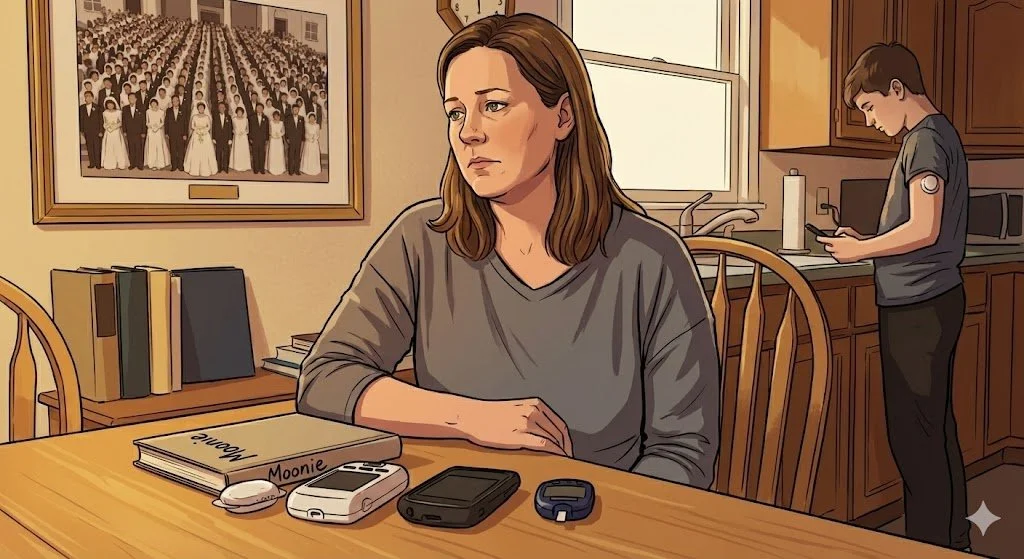



















Please support the sponsors


The Juicebox Podcast is a free show, but if you'd like to support the podcast directly, you can make a gift here. Recent donations were used to pay for podcast hosting fees. Thank you to all who have sent 5, 10 and 20 dollars!

#470 Diabetes Pro Tip: Weight Loss
Understanding how insulin works is the first step
Scott and Jenny Smith, CDE share insights on type 1 diabetes care
You can always listen to the Juicebox Podcast here but the cool kids use: Apple Podcasts/iOS - Spotify - Amazon Music - Amazon Alexa - Google Play/Android - iHeart Radio - Radio Public or their favorite podcast app.
+ Click for EPISODE TRANSCRIPT
DISCLAIMER: This text is the output of AI based transcribing from an audio recording. Although the transcription is largely accurate, in some cases it is incomplete or inaccurate due to inaudible passages or transcription errors and should not be treated as an authoritative record. Nothing that you read here constitutes advice medical or otherwise. Always consult with a healthcare professional before making changes to a healthcare plan.
Scott Benner 0:00
Hello friends and welcome to Episode 470 of the Juicebox Podcast. Today, we're adding to the diabetes pro tip series with an episode that has been asked for by listeners forever. And for that reason in many others, I'm very excited to give it to you today.
The diabetes pro tip series from the Juicebox Podcast began almost two years ago now, when I decided to take the tools that were being spoken about in the podcast, and condense each one into its own episode. That was my original thought anyway, the pro tip series has become so popular that it's just you know, it's like watching a baby grow up and you just kind of go like oh my God, look what they're doing it. It's become more than I expected, and it continues to grow. And today is another another link in that chain, diabetes protip weight loss with Type One Diabetes. Please remember why you're listening that nothing you hear on the Juicebox Podcast should be considered advice, medical or otherwise, always consult a physician before making any changes to your health care plan. We're becoming bold with insulin. In just a second, I'm going to tell you a little bit about Jenny, a little bit about the sponsors and where you can find those other diabetes pro tip episodes. Then we're gonna jump right in
this episode of The Juicebox Podcast is sponsored by the Omni pod tubeless insulin pump, and you may be eligible for a free 30 day trial of the Omni pod dash right now. And you can find out if that so at Omni pod.com Ford slash juice box Get started today with the Dexcom g six continuous glucose monitor@dexcom.com Ford slash juice box. And if you're looking for those diabetes pro tip episodes, you'd like to start from the beginning, they started Episode 210 with an episode called diabetes pro tip newly diagnosed or starting over, he does a series it's made to be listened to in order. And it's of course available to you as a subscriber to the podcast. All you have to do is go back in that podcast player to Episode 210. And there it is. If you're having trouble finding the other episodes, you can look at Juicebox Podcast comm there's a tab at the top that says diabetes pro tip. If you don't want to go to all that trouble, go to diabetes pro tip.com, where you will find the pro tip episodes and the defining diabetes episodes, which I also am very fond of. In just a moment, Jenny and I are going to get started. But first I want you to know that Jenny Smith has been living with Type One Diabetes since she was a child. She holds a bachelor's degree in human nutrition and biology from the University of Wisconsin. She is a registered and licensed dietitian and certified diabetes educator and a certified trainer and most makes and models of insulin pumps and continuous glucose monitors. Jenny happens to be the bomb diggity. I love her. And in a couple of weeks, her 33rd diversity is coming up. So if you're in the private Facebook group for the podcast, please take a minute to go to the thread celebrating Jenny and leave her a little message. And I'll be passing those messages on to her on her diversity. Last thing I want to thank the listeners who sent in questions for this episode specifically, we get them about two thirds of the way into the episode. But first, Jenny and I are going to talk about ways to lose weight when you have type one diabetes. Every time I think there's nothing more to do for the protests, then somebody asks something and I think No, no, that that would work there too.
Jennifer Smith, CDE 4:01
Is the variables in life that I think will always bring in something to discuss in terms of what it could be in, in diabetes? Like management? Yeah,
Scott Benner 4:13
no, I'm really happy. I'm really happy to hear from people because I think that others perspectives can make me go Oh, yeah, wow. Just because that hasn't happened here. Doesn't mean that's not happening somewhere. And then if it gives you no good focus for what to do. So this is it. We're gonna talk about trying to lose weight, you have type one.
Jennifer Smith, CDE 4:32
As I mentioned, I think I texted back to you. I was like, this is a big topic. It's not just like five minutes of just go out and start running. I mean, it's it's kind of like a rabbit hole, honestly. I mean, there are many different like, little avenues to kind of talk about and you had a lot of really good questions that came in, or like comments about Gosh, I don't understand this or why isn't this quite right or whatever. So
Scott Benner 5:00
Yes, we actually knew three topics. So I'm gonna have very little to say here probably. And I apologize for that. I guess this is the time, the time we pretend like I just came on your zoom. And I'm like, hey, how do I help? And then you just talk. But what what's the I mean, where do you think we should start? Because to me, I think we should start at the idea that people correlate taking insulin with gaining weight. And then they don't think about calories and get that right. Go. Hi, Jenny. Oh,
Unknown Speaker 5:34
you help me please? Yes, well, maybe.
Jennifer Smith, CDE 5:39
I know, it's a good place to start in terms of like, one thing that everybody with diabetes specifically thinks about is that it's insulin. And I think a good place to even go with Why does that start is because it's often something that a practitioner will tell people, you know, using insulin, you may be likely to gain weight. I think that was one of one or a couple of like, the comments that came back about this topic, were specific to you know why I've been told that I'm going to gain weight or why, you know, why is this going to happen? or Why did I lose weight, and now I'm gaining all of this weight back like after diagnosis, right. So insulin itself, whether your body makes it or you take it with an injection or with a pump, it's a storage hormone, that's its job, it's supposed to move a certain quantity of carbs, sugar really out of your bloodstream and into places to either be used or stored, right. So in terms of management, insulin can make you gain weight. In terms of like initial diagnosis, a lot of people with type one specific have lost weight. Prior to diagnosis, maybe it was very rapid. Or maybe it was like a lingering loss that people were like, well, I could just keep eating the whole cake. And Gosh, I don't gain any weight, and I'm actually losing weight. And then they're like, wait, this is wrong, this is bad, that shouldn't be happening. So they go to the doctor, right, they get a diagnosis of diabetes, they've lost weight. And in terms of that loss, it's often relative, it's usually a relative to the fact that their blood sugars have been so high, that their body isn't storing those calories, right. So you're essentially paying them out, thus, decay, and all of those things that can come about, you know, around diagnosis time, but because you're losing all those calories, and your body's not packing them in, once you have back the piece of the puzzle that was supposed to help you use that food that you were taking in, your body's gonna start storing it.
Scott Benner 7:43
And so and so. And that is the one confusion you see from newly diagnosed people, like I don't understand, I lost all this weight, and they don't understand the function of it. So explaining the function of it, I think is great. I think boiling it down into one simple idea is that you were dying. And yeah, and your body is using itself up and not storing at the same time trying to stay alive. And then all of a sudden, everything's all right. Now, the more weight at Listen, if I'm if I'm talking about a school, here, you're stopped me. But if you've lost a lot of weight, before you get to this skinny, emaciated, those are my ribs, you probably had weight to lose to begin with, right? Because it was there to lose,
Jennifer Smith, CDE 8:22
likely and especially more as the adults who are diagnosed Yes. If you had weight to lose for whatever reason, you may have just thought, like I said, Oh, good, I'm actually able to take weight off. Now. I don't know why I'm still doing the same three mile walk every day. And now it seems to be working better. Great. But yeah, once you get to that, like, I shouldn't be able to see my lower ribs or Gosh, my face looks really sunken in when I look at old pictures. That's not what you want.
Scott Benner 8:52
And I think that, again, I this probably sounds I don't want it to sound like distasteful, but if you had weight to lose, you were probably it's likely that you were taking in calories that helps you stay at that weight. Meaning that when you start taking the insulin back in, there are calories there to be packed away to facilitate the weight gain again,
Jennifer Smith, CDE 9:14
and that's in any case, whether you could have lost weight, you know, and successfully hopefully helpful, you know, left it off. But the goal was starting insulin is in general to maintain a healthy weight then right to get Yes, you will come back from the weight loss, but you should also with the proper insulin dosing, you should be able to get back to a stable healthy weight. You know, if you lost 40 pounds when you were diagnosed and Hey 20 of that you could have definitely lost and the other 20 you really didn't need to great, we should gain back maybe 15 to 20 pounds and then we don't need the other
Scott Benner 9:56
what is the functionality of the proper insulin dosing It makes you gain too much or not enough
Jennifer Smith, CDE 10:03
in terms of insulin dosing, that's correct. The amount of food you put in to work with it, of course, is a piece of the puzzle there. But if your insulin is being balanced along with your use of the energy that it's working with, then you should be able to gain energy back to your body that gets stored, that keeps you at a healthy weight, and you shouldn't then continue to gain if the dosing is correct. And it's so it kind of goes back to, on a baseline initially, make sure your insulin doses are right for you. And a lot of people wonder, you know, they, I just leave it to my doctor. Yeah, it tells me how much more or less to take.
Scott Benner 10:43
And does that mean that if you're not using enough insulin that your blood sugars are left higher, so you're still having some of the action that you noticed before you were diagnosed? Right? Yes, you're a little You're too high, and your body's not storing the, the calories correctly, the glucose collect correctly, and so you're not gaining as much weight. So you could have unhealthy blood sugars, but feel like your weights good. And then you kind of come to that point, you're like, Oh, I'm good. And that really is the beginning idea of diabetes aimia to write, manipulating the insulin to keep your weight down, okay, so that's going the other way, if you're too low all the time, you'd have trouble putting on weight.
Jennifer Smith, CDE 11:26
If you're too low all the time. One, you've that's actually kind of an, it's an opposite of what you would think really, if you're low all the time. And that's a big reason, then when we start working with somebody, we analyze insulin to begin with, and the first thing we look for, even if there are highs, high highs, we first look for lows, because if weight management is another piece that they're really concerned about, then all of those lows that you're treating, you are feeding insulin, and you're feeding insulin, which ends up packing away the excess that you're taking in, and you maintain a weight that you don't want, or you keep gaining weight that you don't want.
Scott Benner 12:11
So this, this puts you in the position of having to look at carbohydrates as medicine, and being scared because you're low taking away more than you need. And then suddenly, you're back back up again. And maybe you've got enough insulin in there to handle the carbs for your blood sugar. But you've taken in way more calories than your breakfast once got it.
Jennifer Smith, CDE 12:31
Yeah. Yep. So that's, that's that insulin is, it's kind of the key place to start really. And you know, then a lot of people ask, Well, how much insulin? Should I really be on? How does this enough for me? Is that enough? For me? I know, we just talked about that kind of in depth in another episode, but really, you know, figuring out about how much insulin you need based on a wheat to begin with. That's kind of a starting place that you could go to, how much total daily insulin Are you using right now? What's your like current body weight, etc? Should you be using this much insulin? is it taking this much more insulin to counter things? Or are you using like a heck of a lot more like let's call it Bolus insulin, right? But you see that your Bolus insulin is for a lot of corrections. And when you're looking at your data, you can see that the corrections are following lows. There again, more insulin than you really need. And thus your body is going to pack away by allowing the insulin to use up the food.
Scott Benner 13:38
It's funny because I wasn't 100% sure what you were gonna say today. And yet I feel like we're into this situation, again, where the podcast should maybe be three minutes long. And it should say limit your variability use the right amount of insulin. And it kind of addresses so many things. I know this isn't weight loss specific. But let me just ask you one question. How many people you know what percentage of people do you think just a guess, are are getting to reasonable outcomes by mistake. Like their bolusing too much, but they're eating on time and their basil is too low and it works out or their basil is too high and they eat before they get low. And they don't have to Bolus too much in it like how many people are getting there the wrong way, but it seems like it's working and then have underlying issues that they don't recognize. Like I
Jennifer Smith, CDE 14:35
wouldn't say it's I wouldn't say it's anywhere near a majority of people. Honestly, I'd say it's a small percentage of people who have figured out insulin needs. Even though the dosing strategy that they're using might be wrong, like you said, maybe there's way too little basil, but they're offsetting it with boluses and maybe the little amount of basil they're using is right for their overnights and that's why it looks stable or, you know, Vice So whatever. But I don't think that's the majority of people, I think the majority of people who are having issues with blood sugar fluctuations that they don't want, and also likely are having some issues with weight management of some type. It's, it's a start of let's look at what the initial factor could be insulin. And then you move on further. And you know, lifestyle is a big part of it, obviously. So then we look at things like calorie intake. And I think some of the some of the questions that came in were kind of, you know, around that, well, you know, I've run a calorie deficit, and I've like, run myself ragged, going to the gym, or, you know, exercising 90 hours a week. And it's still not working. But I, you know, and then, you know, there's the fasting component, and all of these things that people try to put into the picture. But from the standpoint of calorie, your calorie needs should meet your baseline kind of need, in general. And then if you were working out on top of that, or you know, a training athlete or whatnot, then calorie needs go up. But at a minimum, there is kind of a minimum, on average, that needs to be there. It's about 1000 calories a day, give or take person to person. But when you start dipping below that oftentimes what ends up happening is your body conserves. Because you're not meeting a need. And then you wonder, Well, I'm at a deficit, why am I not losing? Because
Scott Benner 16:38
your mind thinks you're lost on a desert island, and it doesn't, it's trying to hold on to everything you put inside? Exactly. I had that problem where I've, by eating more food, I've lost weight and eating less. It didn't, it didn't impact me as a fact. In fact, it sort of made me go the wrong way. So okay, so if someone asks you, is it not as simple as Hey, I need to lose weight? Can you tell me where to start? Is it really person to person? Like, because what do you have to do first, like, think about if you were listening to this right now? And you could be any of the varied people who are listening? like where do people start?
Jennifer Smith, CDE 17:17
I would definitely say with Well, first might even be an analysis of Where are you? And where do you want to be? Or where have you been weight wise, right? What's your goal to get to? And how much more Are you above that, then you want to be and also in that timeframe, it goes back to insulin analysis. If you've gained weight, as many people have in this past year, if you have gained weight, but your insulin doses haven't really shifted, there in lies a piece of the puzzle to write usually, for about a 10% change to your baseline like Wait, you're probably going to expect a need to change your your basil and your Bolus ratio is by about 10% as well, to be more aggressive and to take, you know, take into consideration that gain now when people are looking for loss. They're like, Yeah, but I don't want to use more insulin, because that's not going to work
Scott Benner 18:20
anything. Insulin, put the weight on them. Correct. Okay, gotcha.
Jennifer Smith, CDE 18:25
But really, they need to first manage their blood sugars. And then they can start working on whittling away or wiggling back and some of that comes into, okay, let's look at the lifestyle things. Let's look at are you exercising? Are you active enough? Does your calorie intake meet what your actual need is? You know, where can we whittle away some things so that weight comes down and along with it, then as you do lose? The same thing happens with insulin, your insulin doses should be adjusted back based on loss.
Scott Benner 18:59
You're making me think so strongly about when somebody comes to me and says, Hey, I just got diabetes, and I play a sport or my kid, you know, is on the team and we're so worried about this and I very badly don't want to give them a band aid answer about how to get through the sport I want to tell them let's take the time now and get your insulin right so that during the activity there really isn't any issue and it's hard for people to believe that once they've seen it once they see cause and effect once they say I ran around and my blood sugar went down. They imagine that is going to happen no matter what all the time. And I Ardennes. I'm sure you're the same way. But Arden's insulin so well balanced at this point, like activity doesn't make her lower or higher. Really, it's not it doesn't really change too much.
Jennifer Smith, CDE 19:46
Yeah, it depends. I think that brings in, you know, the consistency of exercise or activity, right. The more attune your body is, let's say you go out for an hour every single single day to get some form of real exercise right Your body gets used to that. So initially, you might see that your insulin needs drop off within the hours of the active time, right, and maybe even stretching several hours later, depending on what you did. But over time, that impact is lessened, you will usually need to be less aggressive with insulin adjustment, or maybe not at all. I mean, I can typically take my kids to the park and not really worried too much about that, unless I know I'm really going to run around crazy with them, and I likely have insulin on board. Right. So then something needs to be you know, offset. But, um, so yeah, I mean, once you get to the point of like, lifestyle adjustments, and a base insulin that's working, your fluxes in insulin dose, then will be minimized. I think, oh, sorry, go ahead, we'll
Scott Benner 20:52
see I think people need to be certain to that, once they start exercising their body is going to use the insulin better. The answer then is not to feed the low, it's to adjust the insulin, you know, maybe the first time you have to feed it, but then you have to learn from there and make an adjustment so that you're not constantly battling yourself because that is what happens, right? They exercise they get low, they eat it out, though it out. It overpowers what they meant to accomplish, okay,
Jennifer Smith, CDE 21:18
and then they and then you end up getting frustrated too. Well, goodness, you know, I go to the gym, but I have to eat like a whole sandwich and a half a banana in order to go to the gym and not have a low blood sugar. What's the purpose of that when I'm trying to lose weight, and then
Scott Benner 21:30
I stopped doing it because
Jennifer Smith, CDE 21:31
and they stopped doing it right. Or on the other side of it, you know, someone who may actually, okay, I'm going to really focus in on my diet, I'm going to clean it up, I'm going to you know, cut my macros down and actually meet the caloric need that I'm at right now. And then what they end up with many times are lows, especially the cleaner the diet gets, and the more accurate intake of calorie value is for that person, your insulin needs will actually come down sooner. So to avoid lows and needing to treat in the time period where you're really trying to be Let's be good, let's say right, just take your insulin doses down by maybe even it's just your basil, take it down by maybe five to 10% across the board.
Scott Benner 22:17
Okay? So it's get your insulin, right. So it's understand diabetes first. And then it's the normal stuff, we all talk about it being active, getting your heart rate up. A sedentary lifestyle leads to more resistant blood sugars, which leads to more insulin, which probably leads to more lows, because you get out of balance, blood sugars, and what you just said, about clean eating. We don't really talk about it like we like if we were all out in a field, okay, let's say if it was 400 years ago, and somehow insulin existed, but we were still just farming and breakfast might be an apple you found on the ground, and maybe on Wednesday, if you're lucky. The guy up the street kills an elk. And we get a steak right? Like if we were still eating like that, and we had manmade insulin, people would not be using nearly as much as long as they use now, Jenny?
Jennifer Smith, CDE 23:14
Oh, no, not at all. I mean, if you were living on like, berries that you picked along the trail that you were tracking the elk on and then you stopped and you ate some of the watercress. Hey, get your vitamin C out of the like stream that floated by whatever. No, what No,
Unknown Speaker 23:33
you might not need as much insulin right?
Jennifer Smith, CDE 23:34
No, you wouldn't. You're also active level that I mean most like let's call them you know, cave dwellers or whatever at that point of life, right? activity was part of your day. They didn't have a gym that they went to. Their hunt for the bison man was like, act.
Scott Benner 23:53
I bet you're running from a mountain lion burns carbs. What do you think? What do you think? So I guess my point is, is that while I'm not telling anybody how to eat, and I'm not certainly telling you that my daughter's counting macros or anything like that. Processed foods, right? manmade foods, stuff that comes in bags, oils that don't belong in your body, all the stuff that we consume all the time that we're not aware of. It's making your variability greater and it's making it more difficult for you to use insulin
Jennifer Smith, CDE 24:24
true in fact, I've also kind of heard people and there's truth to it.
Scott Benner 24:39
Hey, let's not let's not waste any time shall we? just did it nice. How I said let's not waste any time it took me 10 seconds to say let's not waste any time then I went over it for 10 more seconds. I better jump in. Get yourself a Dexcom g six continuous glucose monitor why you'll be able to see trends, directions impacts of insulin on blood sugars, impacts of food on blood sugars, the impacts of life on type one diabetes, you'll see it all with your Dexcom g six continuous glucose monitor. And how does it do that? Well, it shows you your blood sugar in real time, not just the number, but the speed and direction of your blood sugar. Are you 184 and dropping or rising or stable? That's a big deal, isn't it? Because in each of those three situations, you might do something different. A rising blood sugar might get some insulin, falling blood sugar might warrant you paying attention to it, and say it's super stable, right where you want it, you know, you've done the right thing. The Dexcom g six gives that feedback in real time in ways that is so usable, you hear us talk about it all the time on the podcast. So check it out. dexcom.com, forward slash juicebox. Sure, there's alarms, you can set, those are a big deal, too. You can say, I'd like to know if I'm going below 80. Or if I'm going above 140. And it'll tell you don't want to know till you're 160, you can change that, that's up to you. The Dexcom g six is a vital tool. If you're using insulin, I'm talking about type one or type two, check it out, support the podcast when you do use the links in your show notes. Or type in dexcom.com forward slash juicebox. After that, you're gonna want an insulin pump. Right? Maybe you don't have one and you want one, I say check out the Omni pod, you have a different pump. And you're a little sick of the tubing. I say check out the Omni pod. You use an MDI giving yourself the shots and you're kind of sick of it. You know what I say? Check out the Omni pod, do that Omni pod.com forward slash juice box, you have two options when you get there. You can see if you're eligible for a free 30 day trial of the Omni pod dash system. And I mean 30 days is like a long time. And it's free. Or ask for a free no obligation demo pod where on the pod will just send you out one nonworking pod. So you can try it on and see what you think there's a lot of options when you get to that link. All of them are going to give you more information and help you make a good decision. On the pod.com forward slash juice box, use an insulin pump that doesn't have tubing that doesn't need to be taken off when you shower, or run or kick a ball. an insulin pump it doesn't have something on it along to from an infusion set back to a controller that can get caught on a doorknob or just kind of be a pain to carry around. When you like to carry nothing, just have that little pod on that talks wirelessly to a device where you give yourself insulin, not something that's tethered to you with tubing full of insulin. And they if you don't want it on the pod, whatever, do the trial, say you don't like it, don't like it. Nobody's holding you up, can do whatever you want, but at least then you'll have real data to make decisions with. As you know, I think data is very important. Okay, that's it on the pod.com forward slash juice box dexcom.com forward slash juice box links in the show notes links at Juicebox podcast.com. And again, if you're looking for these diabetes pro tip episodes, you can find them they started Episode 210 in your podcast player, where they're available at diabetes, pro tip calm and Juicebox Podcast comm
Jennifer Smith, CDE 28:38
many people have found that if they eat a true cart, let's say they eat an apple and they Bolus for it, they end up with the ratio that they're using for that simple, like very clean carb to go low. Okay, and then when they mix it up, and let's say they have potato chips or something along with the apple or they have something, you know, more processed along with it, their carb count ends up looking clean, like okay, it comes out I don't get low later. So what gives it really is that the body processes more natural food in a better way. There's there's less left over to kind of linger in impact. And a lot of people are basing their insulin to carb ratios, more specifically, around combination meals that are not quite as for lack of a better term clean,
Scott Benner 29:36
right. So your your heavier. Insulin ratios work better if you have the orange with the potato chips, but if you just eat the orange, the orange doesn't need as much insulin so the ratios you have or too heavy. Correct. I now Arden's ratios are heavier because she doesn't you know she eats a diet that has processed foods mixed into it, but she'll go on a kick around this time. If you're about oranges, where I have to buy like 10 pound bags of oranges to keep around the house, and she's like, I want an orange I want like now these are big like softball size oranges that I'm going to
Jennifer Smith, CDE 30:10
cara, Cara oranges. Those are my fav.
Scott Benner 30:12
Yeah, I think they are and they're really good, right? And but I bet you I've never looked, but I bet you that the carb count on them's got to be more like 25 or something like that, like he could be more, right. But I only give her enough insulin for like 11 carbs. And and she does a little 130 rise and comes back again. Because I you know, because I know her ratio is higher to handle other things, which is why you look at plates and go Okay, tonight, I don't need as much, you know, for right. But this is not this is not going to be a satisfying, you know, people just want to hear like, please just tell me what to do. And I'll do it right. So work, but nobody wants to hear. I guess this? I know, I don't like it. You know what I mean? I don't have diabetes, and I'm listening. I was like, Oh, this is how I would lose weight. So you know, it's, um, it's just, do you think that we've just spent so much time as a society looking for marketable sellable ideas about how to get around? The idea of being in shape? There's no, it's, it's exercise and calories. Right.
Jennifer Smith, CDE 31:21
And I think that's the reason that there are so many, I mean, if you look at around the first of the year, there, I can't remember which publication it is. But they come out with an analysis of I think, like the top most, or maybe it's the 25, top most like us call them diets, right, in the past year, and what's kind of proven true to what it promotes and what really isn't, it's kind of like flimsy, right? Um, and some of the top ones are things like the Mediterranean diet. And you know, by no means am I promoting that, or whatever. I'm just saying that that ends up being taught from a lot of different health parameters. And it's also a clean way of eating. Most people think Mediterranean and they think well, lots of breads and lots of starchy things. And that's actually not true. A lot of it is plants, especially the really good non starchy vegetable types of plants. And then if there are grains that are hardier grains, right? I mean, it doesn't tell you to eat your carbs as a bag of Doritos. It tells you to go and eat some keen Wah On your salad with, you know, an orange on the side. Right. But I think it brings in diets. Yeah, this idea that there is the perfect thing out there.
Scott Benner 32:43
Right, right, and that it's going to be doable for somebody because maybe, listen, maybe macro counting, maybe there's a biologist somewhere that could give you the perfect diet for your body. But where am I getting that from? And where are most people getting that I have to tell you that a couple of weeks ago, I started getting an ad, right. And then I looked in the mirror and I was like, My face looks puffy. And I went to the Costco and I bought two little roaster, chickens, and four steaks. I spoke them all, slice them up, put them in the refrigerator, and I've been eating those and salads and some of those oranges because they're around the house. for about the past eight or nine days, I'm easily 10 pounds lighter than I was. And I know that I know, I'm a fluctuating person. Like I know I jumped around like because what'll happen is at some point, someone's going to give me a piece of bread and I'm going to pick Oh my god, bread does everyone remember Fred? And then I'm going to eat a lot of bread for a week and I'm going to go Oh, now my back's deaf. And I feel like I gained five pounds and all that stuff. But just if I explained to you that most of my meals have been like a couple of eggs in the morning, and a couple of tiny slices off of that steak and then at lunch, some some of the chicken and some of the steak with a salad. And I've I feel great and I know it's true, because I've been through it enough now now to talk my stupid childish inside into like just continuing on that way that I don't know if I'm ever gonna get to do but I do know it's honest. And it works for me. And I've seen it work for other people too. Like you take out processed food and carbs. And your your you're better off like I don't know, it just seems obvious. But
Jennifer Smith, CDE 34:16
it's, it's you know, like you said you're not focusing on like macros. You're not focusing on how many do I need in a day? You're what we end up finding and I think this is the premise behind a lot of the like, the Palio kind of diet and the keto type of diet, right. It's, if you're following the rules of those plans pretty well. They can be very clean eating plan. They can. There can also just like being vegetarian can be or vegan can be very healthy way of eating, but they're also like the complete like backside of that where you're eating a lot of processed vegan or like the key You know, like kinds of things that are like the treats and whatnot, you're focusing your intake on a lot of that kind of stuff, you're lacking in quality. And then your macros may very well without you realizing it be completely out of order. And I think that's why a lot of like plans like this end up failing, you know, I followed keto. And it was supposed to be this magic, like weight loss, and I also have diabetes, and it was really supposed to help with my blood sugar management and whatnot, well, I haven't lost any weight, well, maybe there are some things then to evaluate within it, you know, the keto diet is a way to get your body to start utilizing fat instead of carbs. So if you haven't really analyzed how you've broken that down to make sure that you are one maintaining ketosis in the right way. And that the kinds of like carbs that you're eating are really not offsetting, then it may not work well for you,
Scott Benner 36:03
don't you find that you have to be in tune with what your what satisfies your body? Like Not, not what satisfies your brain, right? But what satisfies your body. And I've absolutely, I've seen myself go either way, like where you're just eating for taste and flavor and comfort. And that's never usually good for your body. And then there's a way where you're just sort of never hungry. It's it's that's where I am this week, I have not been hungry this week. And if I had any like inkling towards a sweet, I've been specifically careful to take just like dark chocolate, like just a little bit of dark chocolate like this will this will get me through, like, what I'm assuming is basically withdrawals from flour and sugar and stuff like that, you know? So I don't know, like, are you telling? He's telling me that all these questions aren't even worth looking at? Or should we ask them? No, I
Jennifer Smith, CDE 36:53
think they're very worth looking at, because I think some of them may relate to what we've kind of already gotten into. And then some of them, I think, are really good questions in terms of the why it wouldn't be working. Right what's or why it might actually work. So yeah, let's
Scott Benner 37:12
pick a favorite or should I just pick, you just pick right? Well, so Jennifer's asking about her son, she says any any advice on how to balance all this high carb gluten free food from my growing always hungry, 14 year old T one D with celiac. So she has a son who seems to need blending down and at the same time. She's giving him a lot of carb heavy stuff, because it's like it's some of this. For the celiac diet, it seems like right? The gluten stuff,
Jennifer Smith, CDE 37:43
right? And that's it. I mean, celiac is a hard addition. It definitely is because while we now have a plethora of gluten free, very tasty products on the market, most of them are made with very, very processed very high glycaemic, I mean higher glycaemic than even your wheat based bread, you know, type of pasta, whatever it might be. So when you start processing things, like rice into a flower, or, you know, potato into a flower, you have a quicker digestive component to that, and it raises the blood sugar faster, its glycemic index is just high comparatively. So when you have to do these types of things, especially if you have a teen who is growing, is active, but also could maybe use some slimming down, or maybe needs to gain a bit of weight. One, it's may be sitting down honestly, with a dietitian to see what are my child's growing nutrition needs right now? Are we you know, keeping kind of a log a couple of days of what are they really in taking? And then looking at what their nutrition needs should be for the point in life where they are, you know, are they moderately active? Are they heavily active? Are they kind of couch potato video gamers? What is it and what do they need? And then looking at the kind of food that you put into their caloric need, right, again, I mean, parents are typically the purchasers of the food in the house. Yeah,
Unknown Speaker 39:27
give or take. You don't think this 14 year olds got a credit card?
Jennifer Smith, CDE 39:30
Yeah, no, I mean, and my kids, gosh, I mean, if we walk down the aisles in a grocery store, and they see like, the pretty packages and you know, like, I never got we don't eat cereal, so I don't go down the cereal aisle, but they'll always have something on like an end cap, you know, at the grocery, especially my eight year old, like, boy, that looks really good mom. I'm like yeah, and not really good for your body.
Scott Benner 39:56
That's why they have to make the picture. So nice. Right? There's no fun here, stop it.
Jennifer Smith, CDE 40:04
Well, so I think, you know, from from that standpoint, you have to look at what is the child in need of? Are you meeting it? are you creating access? And then potentially from a gluten free standpoint? Yeah, finding substitutions that can be fit in to meet his tastes, because all kids and teens are different, you know, as much as you want them to eat asparagus, they might not. Yeah, so you know,
Scott Benner 40:29
right. So, so you have to be, it's Listen, I know, if you've been listening for a while, you know that I took me a while to diagnose my low iron thing years ago. And during that a doctor made me eat like, gluten free for a month, and I gained a lot of weight because I went out and bought all these gluten free items. And somehow in my mind, I was like gluten free equals health. That's how it felt to me. So I was like, oh, it felt like zero calorie stuff when I was going in. And man, it was just not. I think if this was me, if Jennifer was me, and I didn't know what I was doing, I think I'd introduce, like, lower carb, more meat friendly, like meals, like that's what would occur to me first, right? Make some chicken, make some steak, put it with a salad or a vegetable, and maybe cut down on carbs. But then you got to remember, like we spoke about earlier, not to dose it as harshly as you would some of this gluten free stuff, or you're just going to create a low and you're and then have what you did buy with them. Right?
Jennifer Smith, CDE 41:27
And I think you know, when we look at, you know, going back to just that, like clean eating idea, quite honestly, you can be gluten free. If you're choosing to not buy as much processed food pretty easily. Yeah, I mean, you know, things like qinhuai, or, like a wild rice, or even like a brown rice, or what, that's 100% gluten free.
Scott Benner 41:52
It's the fun stuff where it causes your problem,
Jennifer Smith, CDE 41:55
right, it's not taking it out of the diet, it's just that you know, and I know the struggle with kids, I work with plenty kids and teens to know that what they get at home, under mom and dad influence because this is what you're eating turns around, it changes considerably once they start to do things with their friends, you know, now gluten free in the picture. If the child is paying attention to that, and knows that they just can't have gluten, they may already then have limitations, even compared to what their friends are eating, because they know that they just can't do it, or they're not going to feel good, right? But in that circumstance, then it kind of takes sitting down and figuring out well what that what will possibly be there that you could have, um, knowing that it's still more of like a process Trini kind of thing, but also that, you know, we're not going to do this at home. But you could have it when you're out.
Scott Benner 42:54
Okay. Laura has a question. It says, Is it true that insulin on board prevents the body from breaking down fat? Meaning that in order to burn fat, you need to have stretches of time with only your Basal insulin and no insulin on board? That's interesting. I've never heard that.
Jennifer Smith, CDE 43:11
Yeah, it is, I guess it's an interesting way to frame it. I mean, we know that in the we know that in the overnight time period, without any food on board. And on basil, only. Our body does get into more of that, like fasting state, right, of actually transitioning to some fat burn, etc. Because you're on a low level of insulin.
Unknown Speaker 43:34
I see what you're saying. Okay.
Jennifer Smith, CDE 43:36
But when you have insulin on board, technically, there's a reason for the insulin on board. Right? Right. You're dosing for food, so that insulin on board should be covering food that is there. So yes, your body's processing carbohydrates. And your body is not at that point then going to be in fat burn mode. It's kind of correct in a way of stating it. Yes. I mean, the same thing for a high blood sugar that you've corrected. Now you've got iob. And the high blood sugar indicates that there's excessive sugar there, and your body needs to process it. And as such, it's using the insulin to process it and break it down and get it in the right places. So again, technically, as long as there's not an insulin deficit in that high blood sugar scenario, and insulin is working to get it down then your body isn't also breaking down fats either. Then is that a vote for intermittent fasting for type ones? It could be and can intermittent fasting work, right? It can. But again, a blanket statement is to stay that any plan that you choose. No longer term that you can continue this, right? The problem with the diets that are out there isn't the diet itself. In fact, there's a lot of research around a lot of the diets that proves long term, these people have had this success in weight management and cardiovascular benefit, etc, etc. But they've stuck with it. Yeah, it is the Oh, I'm going to do intermittent fasting, oh, I'm going to do the keto diet, oh, I'm going to do the, you know, cabbage soup diet for the next month. And once it starts kind of showing benefit, I'm like, I can do I can kind of step outside of the rules, parameters, which are often for diets very black and white. Yes, do this, this and this, but don't do this. And as soon as you do that, don't do this. You've broken the piece of that plan. That was getting you to your goal,
Scott Benner 45:52
right. I found intermittent fasting, the easiest to stick with, because to me what it was was as long as I don't eat, like don't eat after ate, and don't eat before noon. That is basically how I did it. And I have to admit, it's very effective. Now, I realized while I was doing it, that Arden basically does that already, without the late night thing. But she's so young, I don't think it matters, right. But she gets up in the morning and is not normally hungry in the morning. And so I've had to over time thoughtfully balance out how her insulin works in the morning, right? How do I come out of sleep into feet on the floor, off to school without a rise that needs a bunch of insulin so that I don't create a low because she really doesn't want to eat until she's done with school or till lunchtime, right? Sure. So basically, Arden does intermittent fast, except she doesn't do 16 is it 16 wait 1819 2016 eight, that was embarrassing. A lot of people would edit that out, but I'm not going to. She doesn't do 16 eight and as much as she probably does, like, maybe 1410 something like that. But also she's 16 so she can write you know, she can like we over Bolus her meal last night for dinner. We had stuffed peppers, like Turkey stuffed peppers, and, and a salad. And my wife, my wife, like swung at it really hard. And about a half hour after she ate I was like, Hey, your blood sugar is like stuck at seven. I was like I This doesn't look okay to me. Like I think this is gonna go the wrong way. You know. And so as it started to trend away, Arden got a little light in her eye and she goes cinnamon toast crunch, please. So she knew she had basically Pre-Bolus cereals. So she was like, let's do it. And she had some of that have my wife go on. I'm gonna guess 10 or 15 carbs less on the Bolus. She hit it right on she was so close. But But you know, that's a young kid. And Arden's also helped by other things that I think are worth mentioning here too. Because those of you listening have type one diabetes, or love somebody who does, you really have to get your thyroid levels checked. Like you could be fighting against a borderline thyroid problem that's making weight loss impossible. You know, and you if you're going to do that you really need to go back and listen to the thyroid episode with Dr. Benito because the range that your doctor is gonna say your thyroid your TSH levels, okay, and a real badass endocrinologist will not accept you know, they mean they will not like if you're over a two Doctor beanitos giving you thyroid hormone like and there are people right now we're listening. You're like oh, my TSH is a five my doctor said it's okay. I'm borderline. Yeah, yeah, right. But I but my hair does fall out a little bit or I'm having trouble losing weight or I'm a little nasty sometimes or whatever the other things come. But I'm just telling you if your thyroids moving the wrong way, deal with it, because it makes a lot of life easier.
Jennifer Smith, CDE 48:56
And it's a lot within this whole topic of weight management. Absolutely. If you've the Hashi moto is which is very common autoimmune. Once you've got you know, type one, it's good to get tested thyroid levels at least once a year if not every six months, especially if you've got other family who has a thyroid disorder known already. But that's huge in terms of metabolic
Scott Benner 49:20
Yeah, but you have to you have to advocate for yourself. You can't say oh my god, Scott, you're right. I am tired all the time and I can't lose weight and blah blah blah, and then go to the doctor and the doctor say Oh your TSH is four you're fine your TSH just for you are not fine. That's the equivalent That to me is the thyroid equivalent of in diabetes. When somebody says yeah, your blood sugar, your average blood sugar is 180 You're doing great. Right? Right. You might you know you're not dying, but you you're not living at a healthy level. And that has other impacts on your life. This thyroid thing is it is crazy. It is like the equivalent you trust me at this point. I've seen everyone in my family except for me deal with it. It's like taking a long metal like paper. clip and just touching it on a computer circuit board. It just messes with stuff, you know what I mean? Yeah, but,
Jennifer Smith, CDE 50:06
and with with Ardennes doses, have you noticed that when things get out of order, do you notice a shift in her insulin need, because that's very common right away that, you know, metabolically, she's feeling more sluggish, sluggish and fatigued. And insulin is just not working, like it was supposed to work. And if there's a timeframe in terms of adjustment, or even just starting on a thyroid medication, where you will then start to notice a shift back to normal insulin dosing. See, again, that insulin manipulation in terms of the weight management piece with thyroid in the picture, you have to be very kind of eyes on right to make sure that you're adjusting then where you had bumped everything up in terms of insulin need, you're going to need to start bumping down. And if there's weight loss in the picture at the same time, definite need to bump down or you're gonna just run lows. Yeah,
Scott Benner 51:01
I there's something I use, I think I should even have a flowchart for myself like If This Then That kind of chart because you're right. If the thyroid level starts to get away, then her insulin needs go up. And then we adjusted, it doesn't happen right away, and our insulin needs start coming back down again, the same thing with she had to start a birth control pill to regulate her periods. Hall. I lost three months of my life to figuring that out. Like it was just first they gave her a pill with not enough estrogen in it. So it was basically just two wasted months. She was exhausted all the time because she was bleeding constantly. So I had to get her through those pills. Those aren't the right pills put her on the right pill that started working the bleeding, regulated. Yay. Now she's lost so much blood, I had to go get her an iron infusion. Got her the iron infusion. Now we're waiting for that to come back up. When the iron infusion comes on board, her insulin needs are gonna change again. Yeah, vitamin D levels seem to impact insulin knee. Yes.
I just,
Jennifer Smith, CDE 52:05
in fact, many people for vitamin D that you bring it up. That's another like piece. And I think in terms of like, like, again, going down the rabbit hole of discussion and weight management, the we're kind of on the track of like medications, and medications in terms of thyroid, as well as things like iron. But vitamin D, you know, your lab will tell you optimal is between or standard is 30 to 100 optimal according to the female specific physician that I'd worked with years ago, before I had my first son, she was like, you know, optimal range is really 50 to 70. For vitamin D, she's like, and if it is not in there, you need to be being supplemented, because otherwise, especially with diabetes, vitamin D works on the cellular level. And it allows insulin to be seen correctly, it for lack of a better term by the cells. And so it lets insulin actually work the way that it's meant to have one of the many things that can so if your vitamin D level is off, supplement, I mean, in general, someone with type one, adult wise, should be supplementing at least 2000 I use a day. And if your levels are not optimized at least 4000 a day. And if they're really on the low end, you need to be doing like the hyper significant doses of vitamin D for a short period of time, if you
Scott Benner 53:30
like. And then for 50,000, I use and you take one once a week or something like
Jennifer Smith, CDE 53:34
once a week, or I've even seen some doctors do like 110 1000 iu a day for you know, a couple of weeks and then retest. But vitamin D is huge.
Scott Benner 53:43
And I'm not a doctor, but there's something about vitamin D deficiency and autoimmune that go hand in hand. So just look
Jennifer Smith, CDE 53:50
at the studies out of Finland,
Scott Benner 53:52
right? I listen, I take 5000 a day. And I take 5000 a day of vitamin D, I take a zinc tablet, I taken a sorbic acid with iron and a B 12. And that's that's what I do every day. And that's what you know, my kids do and and everyone here is doing because when the D levels drop again, problems with insulin, I'll tell you right now too, because Jenny mentioned ranges that you need to be in versus what lab values will tell you, Dr. Benito back on the thyroid things that if you were a woman of childbearing years, anything under 74, your ferritin is too low. And they're not going to tell you you're low till 20. So she's like if you are having a period, he gotta be above 70. And so there's a lot of things. And then all of these things also impact your body's ability to work correctly, which is in part and parcel of losing weight or
Jennifer Smith, CDE 54:50
losing weight, right. There was one in here that does go along with medications that I think is a really important question. This woman has a son on a medication that is more for like attention. And it's specific to using it versus not using it school year versus spring date break or summer time and what ends up happening in terms of insulin needs. And I think it's an important one, because I've seen a lot of kids who are using a DD ADHD kinds of meds. And a very, very common thing with those is that it decreases appetite. Okay. And if they're using it in their school day, and they're also the brain uses carbs. And so the more thinking that's going on, and the potential that they're really not hungry, they may not even finish the lunch that you packed for them, they may pick at the lunch that comes from the school lunch, because their brain is just saying, I'm not hungry enough to eat, you may end up having to have two types of basil profiles, maybe one for like a spring break, time off another one for school days. And again, as kids get more into the teen years, that becomes really beneficial in terms of growth and the potential for weight gain in the wrong direction. Because if you're constantly feeding loads again, or constantly adjusting insulin up and down, but it's kind of willy nilly and not quite right on with need. It's a medication adjustment kind of thing that goes along with adjusting insulin
Scott Benner 56:31
again. We're right up on it. But there's enough questions in here that all circle around menopause. Do you have any feelings about what happens at that time? And
Unknown Speaker 56:41
yeah,
Unknown Speaker 56:42
that's a fun one.
Jennifer Smith, CDE 56:45
I mean, in general menopause in and of itself. I mean, perimenopause really is the start of kind of that time period in a woman's life where your cycles might start to get less evenly spaced, right, let's say you were the typical, like, 29 days, and you was right on spot. And now like, Huh, now it's like 26 days and next month, and might be 32 days, and that may be 29 days. And, you know, periods can get a little bit more aggressive, or kind of look more spotty. But that perimenopause kind of leading into menopause, which is really, a woman has not had a cycle in a 12 month time period. Right. So insulin needs can look very jumpy, you might even find that, again, as we get older. And these things come into the picture from a female perspective, our metabolism does slow down, we oftentimes start to need a little bit more insulin, or it takes a little bit more activity to maintain or burn off what we were able to do when we were 30. That doesn't work anymore when you're 45 or 50. So a menopause, perimenopause, it brings in a whole circle of hormone impact, right, that may more aggressively change your insulin needs, especially around your cycle times.
Scott Benner 58:10
So not unlike, well, I guess, more aggressive but not unlike having your period and seeing right hormone fluctuations throughout the month,
Jennifer Smith, CDE 58:19
right. And then once you're in menopause, oftentimes, you know, outwards of a year or two post no longer having a cycle. Many times, then insulin levels should get more stable, because you don't have that hormone flux. And as we age men and women have less and less and less growth hormone cycling anyway. And so we end up especially women passed about the age of 65, or people passed about the age of 65. Oftentimes, their baseline Basal needs definitely go down. And the reason there is because their hormone cycling has kind of started dropping off. Okay.
Scott Benner 59:01
All right. Did we do this justice in an hour? Because I feel like we did, but I don't know much.
Jennifer Smith, CDE 59:06
I think that we did as much as we could get it in an hour. I mean, if we really wanted to focus in again, dig really deep into that information hole. There's a whole bunch about meds that are very specific to like weight loss, and you know, things like the GLP ones and things like the stlt tos and what despite them being type two meds, they are getting a lot more. They're kind of climbing on the ladder of benefit for those with type one and who are just insulin users. And they do have promise in terms of weight management, if use the correct way.
Unknown Speaker 59:51
Okay, so
Scott Benner 59:53
do you feel comfortable talking about that? Because maybe you say here that if you like this episode, look for that one coming in? Yeah. Okay. Great, thank you. Yeah, Jenny, you have to do all the talking. I was at some points. uncomfortable. Not for because he was like, Huh, there's not a lot for me to do here. I was just checking. I was just saving files and checking rates and looking at questions I
Jennifer Smith, CDE 1:00:18
was like, so like, I should have just gone and gotten an extra cup of tea.
Scott Benner 1:00:21
kind of nice. I should have just said, Jenny, tell me about weight loss. I'll be back.
Jennifer Smith, CDE 1:00:26
Really is I was looking at all the questions. I mean, there are a lot of really good questions, but I think a lot of them honestly. Go back to insulin. Yeah. dosing it the right way for what you're kind of taking in. And then also, secondly, looking at what are you taking in,
Scott Benner 1:00:45
right? And obviously, in my mind, these questions all are, they're similar, they're tied together, whether it's vitamins, or your thyroid level, or your calories or, or whatever it ends up being, there is a balance that optimizes your body, it's not going to be the same for everybody, some people's vitamin D level can be crashy load to the floor, and they'll never notice it, and it won't matter to them. But for some people it does. And when you get those things in the right balance, then you feel better and feeling better. To me, as you feel stronger, you're more rested, like all this stuff happens. You're clear in your mind. But how. But some of these things nobody would even know to look into. No, you know, even vitamin D like I can remember 10 years ago, my ardens nurse practitioner gone, we're gonna start checking vitamin D was almost like a mandate came down from a mountain, you know what I mean?
Jennifer Smith, CDE 1:01:35
Yeah, actually, I don't even know when that would have been. But if it wasn't, I remember when I was working in DC, and the endo practice I worked with within the, our director was very, like high up within the whole, like, diabetes management, like realm of information. And his he was like, we are testing vitamin D levels for every person with diabetes. And at that point, it was really just, if the thought was it was relevant more to type two. But as we started testing, then I went to my own end to when I was like, you know, I run I'm outside all the time. I have, like, you know, like brown skin from being outside. Like, I don't take my, I'm like, I'm sure it's fine. In fact, my vitamin D level came back and my doctor himself called me, not his nurse. He was like, this is really weird. But he's like, I want you to go and get it tested again. He's like, this can't be right. And my level was 18. Yeah. 18. And so when it got to test again, nope, it was 18. Again, he was like he did he that was the one time a week the 50,000 I use, I came back in eight weeks, it had moved to 21. And he was like, Huh, so I he sent me to see like a naturopath, who was also a physician who knew a little bit more in that realm. And she actually had me started, she started me on oral drops, okay, and the drops get absorbed through your oral mucosa rather than having to go through your gut. And because we know there's a lot in terms of gut and absorption in autoimmune disorders, she's like, I guarantee your body's not absorbing it. She said that's the problem. And is within about I think it was 10 weeks after that I got it retested and was already up in the high 40s. Yeah,
Scott Benner 1:03:25
you know, I have to, I thought I was gonna have to live getting iron infusions my whole life, because I couldn't absorb it through my gut. And I do probably have some like weird stuff going on down there. And instead, I mix it. So first of all, I use a really pure like supplement from a company that you know, you can do your own research and find one that you like for yourself, but I researched out found a really pure supplement. And I have to take the iron within a sorbic acid at the same time. I do that it absorbs great if I take just the iron tablet without the sorbic acid won't won't work. Yeah, that's it. There's a over the counter when called via Tron or by Tron D or something like that. It's it's iron that comes with it. C, Vitamin C. Okay, gather that helps that too. But yeah, these are the kinds of things no one's going to tell you about. Or they're just gonna blurt out. We're testing for vitamin D Now, then you come back, quote, unquote, in range, and they don't give you one anyway. And you're like, wow, this was a lot of fun. So anyway, everybody balanced your body, balance your insulin. things should get better. That makes sense. All right. Thank you, Jenny.
Jennifer Smith, CDE 1:04:30
Yeah, you're welcome. Absolutely.
Scott Benner 1:04:38
Let me thank Dexcom and Omni pod for sponsoring this episode of the Juicebox Podcast. I'd also of course like to thank Jenny, you know, Jenny works for integrated diabetes. So if you want to learn more about what she does for a living, you could even hire her. You go to integrated diabetes comm I think there's even a link in the show notes to email Jenny, but I don't remember I haven't looked in a while. You'll find out, just go route around, see what you can say? Would you like to see if you're eligible for a free 30 day trial of the Omni pod dash, go to Omni pod.com forward slash juice box. And of course, to learn more about the Dexcom g six and to get started, it's dexcom.com forward slash juice box there are links in your show notes, links at Juicebox Podcast comm or you can just type those right into a browser. Since we're at the end, and you're still here, let me tell you a little more about the diabetes pro tip series. First, I'm going to read you a couple of reviews, all from Apple podcasts, this podcast that changed my life, I had a desire to lower my agency and manage my blood sugar's better, but was going at it blindly finding this podcast put everything into a tangible and practical management approach that is taken my agency from 8.3 to 6.3 in less than six months. And that's just right now, it's going to keep coming down. Thank you, Scott, I'll be quoting you forever. My son was diagnosed with type one about five months ago. And I've learned so much from just the pro tip shows and we'll be listening to all of the episodes. This podcast is amazing both for the information and for the shared experiences from Scott and his guests that make you feel less like you just got hit in the face with a shovel. And more like you can find ways of keeping your loved ones happy and healthy. And finally, I saw I mentioned this podcast and one of the Dexcom g six groups on Facebook. The pro tip series is filled with such great information. Thank you. For someone who has been living with diabetes for 30 plus years. I wish I had been more proactive in finding the information sooner. I'm going to recommend this to my endocrinologist. So that's a little bit about the diabetes pro tip series and the podcast from other people. You can just subscribe right now in a podcast player just hit subscribe if you're there, and you can listen to the podcast every week, three new episodes every week. If you don't know how to find a podcast player, there's tons of links to free ones at Juicebox Podcast comm where if you want to start with those diabetes pro tip episodes, or in my opinion, I like seeing you start with the defining diabetes episodes which are much shorter, and give you a good basis for all the terminology means and how to use it. All that information is at diabetes pro tip comm you can get there just by typing that into a browser. Or if you go to Juicebox Podcast comm there are links to the top one of those links as diabetes pro tip. start listening. I mean, wouldn't you love to send a review and that says my agency went from eight three to six three in less than six months would be amazing. So I hope you keep listening. I hope you enjoy the podcast. Thank you so much for checking out this episode. Please share the podcast with a friend. And don't forget to subscribe. Thank you so much. I'll be back soon with more episodes of the Juicebox Podcast.
Please support the sponsors
The Juicebox Podcast is a free show, but if you'd like to support the podcast directly, you can make a gift here. Recent donations were used to pay for podcast hosting fees. Thank you to all who have sent 5, 10 and 20 dollars!