#1661 The Trolley Problem
You can always listen to the Juicebox Podcast here but the cool kids use: Apple Podcasts/iOS - Spotify - Amazon Music - Google Play/Android - iHeart Radio - Radio Public, Amazon Alexa or wherever they get audio.
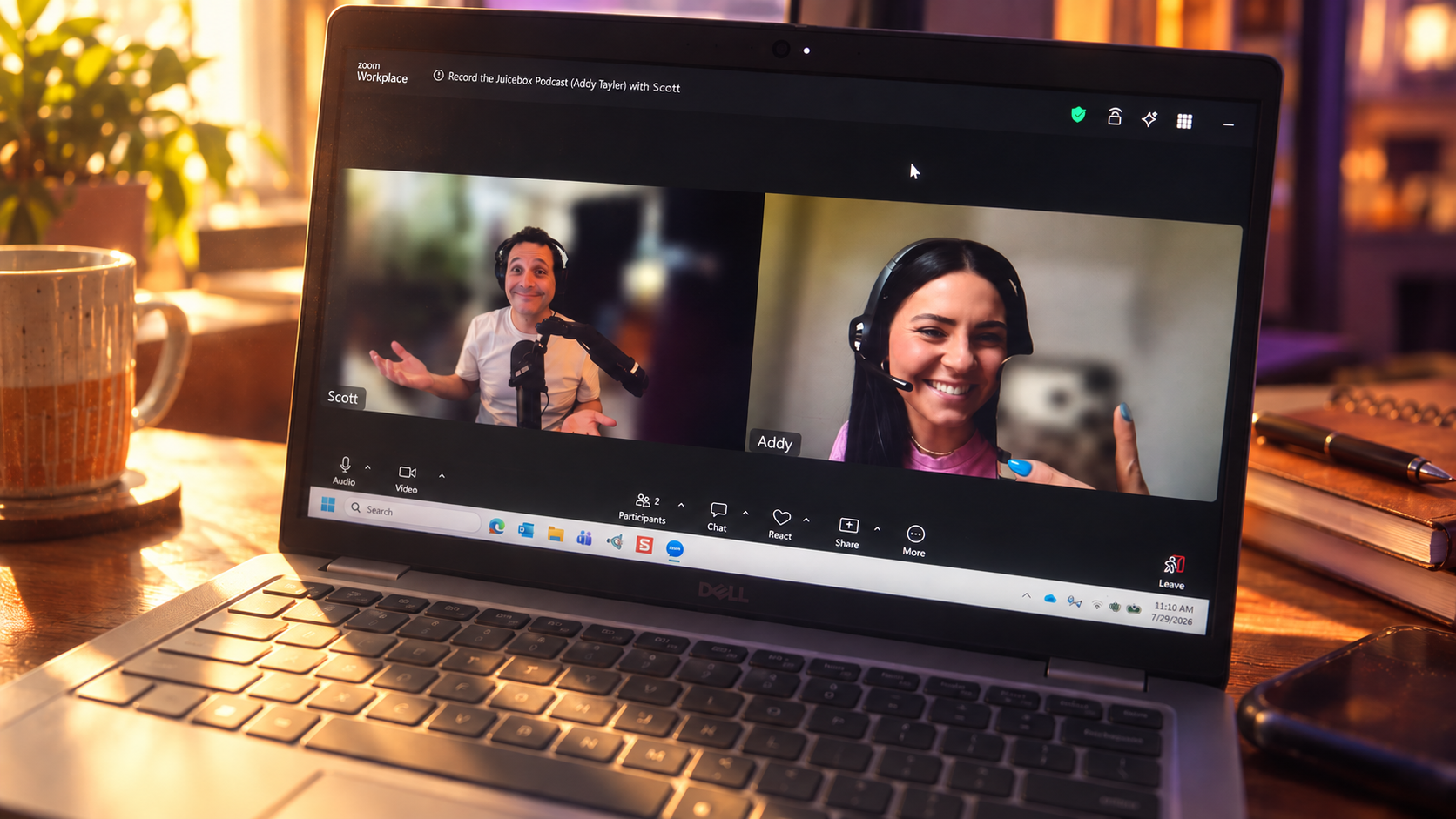
Scott and Erica unpack the trolley problem’s comeback, wrestle with action versus inaction, and connect moral choices to daily diabetes management—pre-bolusing, fear, responsibility, and compassion—aiming for practical mindsets that help.
+ Click for EPISODE TRANSCRIPT
DISCLAIMER: This text is the output of AI based transcribing from an audio recording. Although the transcription is largely accurate, in some cases it is incomplete or inaccurate due to inaudible passages or transcription errors and should not be treated as an authoritative record. Nothing that you read here constitutes advice medical or otherwise. Always consult with a healthcare professional before making changes to a healthcare plan.
Here we are back together again, friends for another episode of The Juicebox podcast. Very recently, in the last few weeks, it became very fashionable in podcasts and stuff for people to talk about the trolley problem, but I got a little captured in it and thinking about it again and seeing it pop back up. It's a thing I've known about for years. I'd like for us to kind of lay out what it is, and both of us take a turn describing how we might answer the question, and then see if there isn't some ways to think about that help you live day to day with chronic illness. If this is your first time listening to the Juicebox podcast and you'd like to hear more, download Apple podcasts or Spotify, really, any audio app at all, look for the Juicebox podcast and follow or subscribe. We put out new content every day that you'll enjoy. Want to learn more about your diabetes management. Go to Juicebox podcast.com. Up in the menu and look for bold Beginnings The Diabetes Pro Tip series and much more. This podcast is full of collections and series of information that will help you to live better with insulin. Nothing you hear on the Juicebox podcast should be considered advice medical or otherwise, always consult a physician before making any changes to your healthcare plan. This episode of The Juicebox podcast is sponsored by Medtronic diabetes and their mini med seven ADG system designed to help ease the burden of diabetes management. Imagine fewer worries about Miss Bolus is or miscalculated carbs thanks to meal detection technology and automatic correction doses. Learn more and get started today at Medtronic diabetes.com/juicebox today's episode of The Juicebox podcast is sponsored by the contour next gen blood glucose meter. This is the meter that my daughter has on her person right now. It is incredibly accurate and waiting for you at contour next.com/juicebox Okay, Eric, oh, you and I haven't recorded together in a little bit. Why? It's been a while. Where'd you go? We had summer. That's where we went. Is it okay to let people know that what your daughter did this summer took up a lot of your time? Oh yes, my daughter, who's 10, was on the All Star softball team, which Scott knows a lot about. So it is. It does take up a lot of time, but it's really exciting. That was a fun way to spend most of our summer watching her play softball. Well, listen, did you have fun? Did she have fun? Absolutely, yes. A great team, great families. They got second place. Oh, that's awesome overall in their league. So congratulations. Great first experience. Thank you. I will not tell you that Arden somewhat believes that she thinks that she's more critical of herself as an adult because of her time playing softball. Oh, gosh, so interesting. What I Well, I'd be curious to hear more. Yeah, specifically, because so I guess in a lot of places, right? This is a fun thing. It's, you know, competitive gives you an opportunity to keep the kids together a little longer, make them better at softball, if that's your goal. But my town specifically has gone to the Little League World Series for softball a number of times. Wow. So there's a lot of pressure to be very good at it, and that pressure flows through the men who coach the teams, who think that they are, I would say, think they are defending their themselves against the ones who came before them. So the closer you are to being on the team that is happening now, but the last team went to the World Series, the more pressure there was. And we were very much after that. So there a team had gone to the World Series, done very well. Another team went did not quite as well. And then it was Arden's team's turn. And there was a lot of a lot of pressure I should get on here sometime. And let Arden tell the story of she was undersized when she was playing, which is ironic now, because Arden is five, seven now, and probably one of the tallest girls that is in her friend group, or even that she knows, but she was undersized when she was playing, and she was a rock solid, awesome third baseman, and every year they would try to replace her with a different girl, and every year she had To beat that girl to stay at third base. And it happened seven years old, eight, 910, 1112, every every year, they would do anything they could to try to replace her because they thought she was too small, and then they'd eventually end up with her, and she would do great every time. So anyway, that's got nothing to do with the trolley problem. I. That so very recently, in the last I'm looking at my my calendar here, in the last few weeks, maybe last month, it became very fashionable in podcasts and stuff for people to talk about the trolley problem, which probably just means that somebody that wrote a book was making the rounds, doing their doing their interviews, trying to sell their thing. But I got a little captured in it and thinking about it again and seeing it pop back up. It's a thing I've known about for years, and, you know, views as an example. But I'd like for us to kind of lay out what it is, and both of us take a turn describing how we might answer the question, and then see if there isn't some, some ways to think about that I don't know, help help you live day to day with chronic illness. So let's see if this works. Maybe it won't. We'll find out what an opening. Hey, yeah, keep listening. This might work out. Join us as we figure out what this is. So just reading to you the trolley problem is a moral thought experiment. It's used to explore questions of ethics and decision making, first introduced by a philosopher, Philippa foot and later expanded by Jarvis Thompson, it is not about trains, but it's about the trade offs in decision making. So it's set up like this, and I'll ask it of you first, and you can ask it back to me. Erica, there is a runaway trolley. It is speeding down the track. Ahead of it are five people tied to the main track who are going to be killed if the trolley keeps going, you are standing next to a lever. If you pull the lever, the trolley will switch to a side track where one person is tied up. So your choices are you do nothing and five people die, or you pull the lever and one person dies, but five people are saved. So with giving that serious consideration, what do you think you would do? Well, I would remind myself, there's there's no right answer. You think you would let me help a little bit. Oh, my God, that trolley is going to kill those people. Erica, help us. So I you know, as you've set this up, right? This is a way to think about how we're going to respond in situations, how our our hearts and our brains make decisions and actions. I would like to say, and think that I would instinctively pull the lever okay. But I also know there's a part of me that would probably freeze and panic and try and weigh out all of the decisions, or the two decisions, right, potentially. So yeah, I think I would like to say I would pull the lever there. That would be my answer. You would like to pull the lever. I would like to pull the lever if I don't know if I would be able to in the moment. So you don't know if you'd be able to physically take on an action that would kill somebody because you didn't set the trolley in motion. This isn't your fault when the five people get sliced up. Sorry that it's fake. Makes it so much fun that the five people are going to get run over by the trolley has nothing to do with you. You didn't do this. You've never built a trolley. You didn't build a track, you didn't tie these people up. You have nothing to do with this. If you do nothing, the trolley kills those people, and you take on no responsibility other than inaction. But your inaction would have been you deciding to kill a person who was not going to be killed if you didn't do anything. Right? Have you seen this video recently, going around of staged videos of out on city streets people snatch up kids and run down alleys in front of other people to see what other people will do when it happens in front of them. I have not seen those videos. Oh, my goodness to me, these are very similar ideas. Yeah. So they're also very interesting, because I've seen, like, burly guys grab a kid, the kid starts screaming. They run down an alley, and big men look at it and go, my name is Paul, and this is between y'all. They keep walking, right? And I've seen women pushing their own children in strollers, chase the men down the alley and vice versa. I've seen guys go after them. I've seen women turn a blind eye. It's very interesting, like, and listen, I don't know if some of it is set up or not, but some of them look very real, and it's, again, just a great experiment, because, like, I didn't pick the kid up. I didn't run away with the kid. I'm not gonna hurt the kid. This has got nothing to do with me. If I keep walking, I've got nothing to do with it. But do you not spend the rest of your life wondering, etc. So now, okay, so you like to think you'd pull the lever. What about you? I'm there with you. I think it's a numbers game. Right on its face. I pull the lever, one person dies instead of five people, I would probably be able to later make myself okay with it by saying that those six people were put in that position by another entity that's not me. Just because the one person wasn't with the five doesn't mean that their life was necessarily safe. I don't think I'd carry a ton of in the. Moment, I don't think I would hesitate. I think it would choose the lesser number, but I know it would bother me for the rest of my life. I know I killed that person, right? But then change it a little bit, so now it's five people on the track and one person on the side track, but that one person lives three doors down from you, and you've, you know them, like, you're not friends with them. You're not like tight but like, that's Jane. She lives three streets over. I've seen her a bunch of times. Does that change it for you? Do you think? Yes, I do. If I knew the person that I would kill if I pulled the lever, I would absolutely, you know, if I'm if I'm frozen already in the initial example, that's gonna keep it. That's gonna keep me there. Now, the person on the single track is not somebody you know, but they're 80 years old. Do you say, Oh, they've lived a pretty full life, gosh. Because when you say yes, I'm gonna then put their grandchildren next to them, saying, save my grandma. And like, and so this goes on and on and on. Yes, yeah, the plot of every horrible horror movie. Yeah, you see this played out in a lot of lot of different entertainment, yes, a lot of different things. Okay, one more time, would you do it to an older person? Because, like, you know what, if there were five elderly people and one, we could do this for an hour. We probably could just keep doing this. I mean, what are we really saying? Like taking the trolley problem out of it? Like there are a ton of different variables here that would change how it would feel. But you think for yourself personally, I think for most people listening, having to take the action is the real thing. Like, right? Like, if I pull the lever, it's on me. If I don't do anything, it's on somebody else. You think so? Contour, next.com/juicebox that's the link you'll use to find out more about the contour next gen blood glucose meter. When you get there, there's a little bit at the top. You can click right on blood glucose monitoring. I'll do it with you. Go to meters, click on any of the meters. I'll click on the Next Gen, and you're going to get more information. It's easy to use and highly accurate. Smart light provides a simple understanding of your blood glucose levels. And of course, with Second Chance sampling technology, you can save money with fewer wasted test strips. As if all that wasn't enough, the contour next gen also has a compatible app for an easy way to share and see your blood glucose results. Contour next.com/juicebox and if you scroll down at that link, you're going to see things like a Buy Now button. You could register your meter after you purchase it. Or what is this? Download a coupon. Oh, receive a free contour next gen blood glucose meter. Do tell contour next.com/juicebox head over there. Now get the same accurate and reliable meter that we use Today's episode is sponsored by Medtronic diabetes, who is making life with diabetes easier with the mini med 780 G system. The mini med 780 G automated insulin delivery system anticipates, adjusts and corrects every five minutes. Real world results show people achieving up to an 80% time and range with recommended settings without increasing lows. But of course, Individual results may vary. The 780 G works around the clock, so you can focus on what matters. Have you heard about medtronics, extended infusion set? It's the first and only infusion set labeled for up to a seven day wear. This feature is repeatedly asked for, and Medtronic has delivered. 97% of people using the 780 G reported that they could manage their diabetes without major disruptions of sleep. They felt more free to eat what they wanted, and they felt less stress with fewer alarms and alerts you can't beat that learn more about how you can spend less time and effort managing your diabetes by visiting Medtronic diabetes.com/juicebox Yes, so yeah, it becomes more personal, right? When you're thinking through making the action, taking the action to save, but also saving means killing. So the consequences get shifted onto you because you were it's the difference between the action the inaction, you took the action you did it right? I think that it's really hard. It would be. I know this is not a real life example, but you're you're making decisions in that moment. What is driving you are is either two things. One is the outcome, right? You're thinking about, Okay, I'm going to make this decision because I know that the outcome will be, quote, unquote better, in terms of lives saved, versus I live by these morals, these values, and I and I do not kill, or I do not lie, or I do not steal, or whatever it is. In that moment, regardless of a potential better outcome. Do you make decisions based on the the rules, morals, values that you live by, and that is a driver? But then I think there's the the other issue of like D Are you the fight, flight, freeze or fun response in this moment of making a quick decision. Okay, so now that we've done this, I am fully I have my mind fully back to where I was on the day that I asked you to talk about this with me, because it you guys don't realize, like, I reached out to Erica, like, five weeks ago, and I was like, hey, this trolley problem thing, I see how it applies to blah, blah. Then we get onto the call, and I'm like, I don't know if I remember what I was thinking back then when back then when I said this to you, but I knew if we just started having the conversation, that would kind of flood back to me, and it has. So Eric is like, great, because I didn't know where we I didn't know where we were going to go from here if that didn't happen. So to me, in consideration, I don't know how to say this exactly, but like, pivot that idea of action and inaction, you know something bad is going to happen one way, or I get to make a decision, and then the outcome is on me to me, that's the core of this, right? And then you apply it to living with a chronic illness, or you apply it to having to take your vitamins or your medicine or bolusing or food decisions. And what I found myself wondering back then, when I was wrapped up in listening to people talk about the trolley problem, which, by the way, I don't know nearly enough about to talk about it in depth, there are people who understand it. You could, you could listen to them talk about it for an hour, and you'd be completely interested in it. But taking that idea from I need to Pre-Bolus my meals. But if I don't, I know what happens next. My blood sugar goes up. It's difficult to deal with all day long, blah, blah, blah, but I didn't do anything. I didn't cause this. Diabetes caused this, right? So whatever happens afterwards, whether it's a high blood sugar or or whatever, whatever happens after that decision isn't really on you, it's on the people who tied the people to the railroad tracks. Do you see what I'm saying? It's diabetes. And I think that that can happen to people. I think that they can take the consequence of inaction, and blame it on an unseen figure, and therefore it makes it easier to make decisions that in the end, not to stretch this, this out a little too much, but in the end, you pulling the lever almost points the trolley at you, right? Because now, if it goes wrong, like, if I mess the Bolus up, it's my fault, like I did it wrong. You know, so is ignorance bliss, right? That's really the question of the trolley problem, like, would ignorance be bliss if I just said it's got nothing to do with me? I'm walking away. Could I forget it afterwards? Could I get could I give myself a pass and not think about it anymore? My point here is that if you are doing that with your care, then I just think you'd be better off pulling the lever if you have diabetes. I think you'd be better off pulling the lever if you have thyroid, or if you're celiac or, you know, if you I don't know, whatever you wake up with and fight with every day like, I think it would be better for you to be in the fight, be part of the decision making process, than it would be for you to just say, hey, this, I didn't do this. Does that make sense to you? That what I'm trying to say, yes. So the cut you said the consequences of inaction. It feels like, if you're intentionally choosing to not engage in your in the management, for example, it feels easier when you're when your numbers are higher or lower to blame diabetes. Yeah, I think it makes it easier for you to say that's just diabetes. And in the trolley example, like I, you know, in my mind, I'm imagining like a spindly guy with a long mustache that He's twisting in a big hat, who's tied these people to the railroad, right? And wants to put you in this bad position. I think in that scenario, the diabetes, I mean making quotes around it, the autoimmune, whatever it is that put you in this situation, they're the bad guy. And you didn't choose to have type one. You didn't choose to, you know, feel sick after you eat bread or whatever your situation is, right? And being asked to do something about it, this is not quite one to one, but being asked to do something about it is difficult for people, and not everybody just pops up in the morning and throws their thyroid med in and skips along their way. Not everybody's like, Oh, I'm going to eat in 20 minutes, and I know I'm about to have a fatty meal, so I really want to get a good Pre-Bolus. And that's just not how it occurs to most people. And I think that for the ones who know they should be doing these things. Can't bring themselves to do it, who won't bring themselves to do it, who forget to do it, whatever the reason is, if you take responsibility for it, well then when you don't do it, the shame falls on you, right? I know I should be doing this thing for myself, and I'm not, and therefore I've let myself down. I've let down my loved ones. I've let everybody down. Blah, blah, blah, but if I just don't do anything, then I can say, this wasn't me. It's the dastardly man in the in the mustache. He did this to me. And I think that's what I see when I see people online. Sometimes I think it's easier to ignore it and blame something than it is to grab the lever and say, Hey, I'm in a bad situation here, but I'm going to make a decision anyway. That's my connection. That's this desk, this it's so it's good and complex and deep, and I'm trying to wrap your time my mind around it as I think about, you know, where do we end up when we have a chronic illness? It's so natural to we want to find blame right after, you kind of go through the dismissal this, you know, I'm fine, and there's a shock. And then eventually you get to like, why did this happen? Why me? And then that usually lands on you want to find blame, you have to, we have to write, is it is it me? Is it my body? Is it my family, genetics? Is it God, right? We want to find blame, and usually it lands on my body failed me. So then you're in this kind of battle where we are pitting ourselves against our bodies, and I think that's where we land, if we're thinking about it through this lens of inaction versus action when we want it's hard. It's hard to be in this place of, okay, if my body failed me, if I'm thinking about it in this way, then I'm going to live in a place of blame and shame. And it's hard to make choices out of that, to be, you know, because you're you're stuck. You can be stuck right there, right? And so I'm wondering, yeah, I think the minute you grab the lever, you're taking this nebulous bad guy and saying, I'm part of this now. So the next time something doesn't go the way I want, I can't blame it anymore. Like all those things that you just said, are completely valid. Some people are. You know, it's my body let me down. It's, it is my uncle's fault. He has all these problems. It's in my God, did this to me. Blah, blah, blah, whatever you want to blame, right? But if you stay out of it, then it's that whatever that is for you is to blame. My point is, is that you got to get into the fight to do well for yourself, right? Because there is well that you can do, but it's going to take a while for you to figure out, like, you know what to do. Like, I mean, it's, there's, there's a lot going on here that my example here would be, like, when you go to eat lunch and you have type one diabetes, you're not just picking food. You're not just saying, like, what am I hungry for? What sounds good today? What haven't I had in a while, you are making conscious decisions about your health, your safety, your future, everything, right? Like no one thinks that way. Now, by the way, I want to say something. Everyone who chooses something to eat is making that decision. It's just not obvious to most of us in the in the moment, right? Conscious, really? Yeah, because, I mean your health, your safety and your future, whether you have type one diabetes or not, you know, is at stake when you decide to drink a case of soda, right, right? You've made a decision that's going to impact those things same way. If you decide to, you know, drink water or, you know, have a salad or have a steak or whatever, like, there are going to be impacts of everything but day to day that doesn't hit you. A healthy 25 year old isn't eating a steak thinking, I hope this doesn't clog my arteries and cause me to have to have a, you know, a roto rooter done for 20 years from now. But a person with type one has to say to themselves, my blood sugar is going to do something as soon as I eat this, this is a immediate feedback I'm going to get. Was talking to somebody today who was helping a college student with bolusing, a person who had previously been just awesome at their diabetes, and they got to college, and all the food at the college is garbage, and they just can't they can't figure it out, like they can't seem to win no matter what they do eating on on campus. Now there's a 1819, year old person trying to go to college who is instead, three times a day looking at food and thinking, What do I do here? Like this is coming for me. This is going to give me a high blood sugar. This blood sugar is going to go on for hours. It's going to change how I. And think and how I feel and how I can do, you know, take care of school today and end my long term health and blah, blah, blah, and it would be easier. And I think a lot of people end up choosing the like, this isn't my fault. The school gave me this food, and so my blood sugar is going to be high forever, and there's nothing I can do about it, because this is my situation. I'm saying, grab the lever, pull the lever, take responsibility and find something. I mean, just try. I guess I'm not even saying there's, there's an answer, but I at least like you being in the fight, I think is what I'm what I'm trying to say, and I know that that puts the responsibility for the outcome on to you and takes away your ability. Probably feels like it takes away your ability to blame a faceless thing, but I actually don't even think that's true. If you need to blame somebody, I think he can still blame diabetes like I think he can still blame, you know, the thing that happened to you. You know, I found myself talking a lot lately about and I know I'm using your words when I'm saying it is that what it feels like when your body feels like it fails you? I know that's the thing I've learned from you. Like that phrase, I was able to use it recently in a professional setting where I was asked to pass on what I've heard from other people about living with type one and what I've experienced, you know, as Arden's father. And at the end of what I was saying, I said, I can't imagine what it feels like for the shell that you're walking around in to feel like it's purposefully fighting against you, that you feel like your body is has abandoned you in your trip through the world. You know it's got to be a like a serious mind to have that happening to you constantly, still in all I think you've got a better chance if you're an active part of the decision making process. Yes, that was a very beautiful, empathetic posture that you just shared there. And I think that that's resonates with those of us living with type one or any real you know, chronic condition is this, yeah, my body failed me mindset. And as I've referenced before, Jane Mattingly in her book, this is body grief, toxic coins that has perceived body betrayal. And that's where we when we get stuck in that place of that mindset that my body failed me, my pancreas failed me, my thyroid has failed me. That's a normal response. But we can't get stuck there, because that's when we get we get stuck in a kind of, more of a self pity victim mentality. That's okay to we're all going to get we're all going to experience that at some point, but then where we want to go, and this is where I think the action, you know, getting in the fight, as you say, pulling of a lever, taking the responsibility, is more about taking care of our Body and allowing ourselves to trust. Again, using Jane's term this body trust like we want to trust. In order to trust our bodies, our body has to trust us to take care of it. Yeah, but when we stay in this my body failed me. Mindset, it almost feels impossible to trust our body and our body to trust us to take care of it, vice versa. It's just like a reciprocal thing. I might be getting off tangent, but no, no. So it's a feeling that you can expect to have. It's not a feeling that you can live in forever and do well, yeah, yeah, you find your way through it. At some point. We're gonna We're always as any human being, regardless of whether you're living with a chronic condition or not, you will experience that my body failed me mindset with some point, yeah, and even in this is in the trolley situation, you might be like, I can't, I can't decide. I can't, I can't. What am I going to do? I'm frozen. And then later you might look back and like, wow, why didn't I do something? Or you might look back and say, Gosh, I I pulled the lever, and I wish I didn't, yeah, but at least you mean honestly, the way I think about it, at least you took some action. At the very least learn from it, if it didn't go well afterwards. But to sit there and just say, I don't have anything to do with this. Cover your eyes until you until you drop dead. Like, I don't know, like that. That doesn't seem like the way to go to me. And I think too, that if you put me in that trolley situation, I'd feel the same way, like I really would, like, I would think I'm here now, right? You can try to make the argument that I didn't put those people on the track, but I'm aware of the track. I'm aware of the situation. I know what the lever does. I'm now involved, whether I want to be or not. And truth be told, if you put a four year old on the single track and 580 year olds on the track, I'd let the trolley hit the 580 year olds and I'd save the four year old. I know I would like I know that's where my brain would go to and. I would live the rest of my life knowing I killed those five people. I don't think I'd be able to pretend that somebody else did that to them. And I think that moment like that understanding there is super important. I'm walking along. I've got nothing to do with this. I didn't make the trolley, I didn't make the lever, I didn't make the tracks, I didn't put the people on it. But now I'm involved in it. And, no, I didn't want to be involved in it. Yes, I was forced to be involved in it, but you are involved now. You can't go backwards from that. It doesn't matter if it's fair or not, and that I see as autoimmune illnesses like right there, like, Yes, this is not fair. And I am upset almost every day that this stuff impacts my kids and my wife and and all of you. It's very, very upsetting. There are days that like, you know, Arden is 21 years old. She's in college. I'll look some days and see she hasn't taken her thyroid meds in three days. And I'm upset. I'm not upset at her, because I get it, like I understand what's happening to her. But I started thinking about thinking about what's about to happen to her for not taking the medication, and I got to go to talk to her. She don't want to talk to me about that she believes she can take care of them on her own. The minute I pointed out to her that she hasn't taken it, think she's mad. She's not mad. She's ashamed, right? She feels like she's let herself down. She feels like she's let me down. She feels like she let every about everybody. She feels like, oh, I messed this thing up. That's not how you want her to feel. If you're smart, you know that four years from now, she's not going to feel like that at all when you when, when she's faced with this. So you just kind of got to get her through this point to where she's a, like, a full fledged adult with like a non jell o brain, and then she'll be okay, right? But that doesn't stop me from waking up in the morning, and the first goddamn thing I think, before I can even open my eyes, is, I hope Arden took her thyroid medication, right? Like, so that doesn't go away. That's not fair. I don't deserve to be in this position, but I am, and it's not my fault, but I'm here, and I just think, like, once you're here, it's it, it's you're part of it. Now it now. It doesn't matter how you got there, right? So I kill five old people to save one young person two seconds, no problem. And I think of diabetes and all of this in a similar way. Actually, maybe the worst thing that's ever been said to me is, wow, you wouldn't have this podcast if your daughter didn't have type one. And I'm like, Yeah, I wish I didn't have the podcast. Yeah? Like, really. I mean, this is, I can do another job. It doesn't need to be this one, you know, yes, I don't want this for any of you guys. But I also don't want you to sit around staring at a wall, pretending that what's happening to you is not happening to you, and then writing it off as, you know, I didn't put these people on the track. It's not problem, because it is going to be your problem at some point. And by the way, if I walked away from that lever in that trolley, Eric, if you just said, Hey, listen, you I'm out of here. Okay, I'm not killing that one, and I'm not killing those five. You know, when you walked away, you'd feel just as bad as if you made a decision, right? Yeah, that's all. How would you relate this back to just psychology? Like, do you look at the trolley problem and does it relate back to things that you see people struggling with in some way? It's an unfair question. I haven't asked you to think about it before. You might big, yeah, that's a big question. But I think before we go there, go ahead, going back to what you were just sharing, you know, landing at, you know, the it's not fair mindset, like you do have to work yourself through various stages of grief to get to the place of sometimes things just are right. And that's a hard pill to swallow, and you might get to that place, you might be at the place, and you're standing at the trolley and that okay, sometimes these things are, are I'm going to do, make the best decision possible with the best outcome possible. And I think applying that mindset to, you know, you asked me, Do I see this, this mindset? I think we are constantly whether it's with diabetes or not, making decisions. What is the best outcome I'm going to make a decision now for the best outcome, or am I making a decision now out of fear, grief, anxiety, a feeling, right? Are we acting on our feelings, which aren't always facts, but then later, we look back at those actions that we made based on our feelings, and then in comes blame, shame, just knocking at the door, like, why didn't you know? Why didn't you do that? Why did, why did you say that thing? Why didn't you Pre-Bolus sooner? Gosh, why didn't you give yourself five units instead of 10? Now I'm low, and now I'm high. Or even, you know how we relate to other people, why did you say that thing? They must think you're so stupid. Like, this is you. This is your internal talk, right? Like, or a lot of times I think we. See this concept, the psychological concept, being played out with anxiety, and how we either decide to do something or not, and then later on, when we're looking back at that conversation or action we are we often judge ourselves with either shame or blame. I am also thinking about most often clinically, and we've talked about this, I think we've done an episode or two on this is the fear of low blood sugars. And this is kind of more going into a specific topic, but that is, is still a pretty big driver for people and how they make decisions in their management. Yeah, usually, because of a fear of a low blood sugar later, they have this mindset, it'll be safer. I'll feel safer if I'm a little bit higher later than being low when I'm in a meeting, at a doctor's appointment, when I'm out and about, right? So they're making that decision based on feeling when it comes time to actually Bolus or not, or adjust your settings or not, or change your site or not. Whatever that decision is, if you're thinking about the future saying, Well, I'm going to feel, I'll feel safer later if I'm just a little bit higher, yeah, and then, and then you then, fast forward a couple hours. You're in the two hundreds, three hundreds, and you're saying, well, that I feel safer now because I'm not experiencing that feeling of fearing being low. So that, you know again, it's going back to like causing harm. It feels like you're going to cause harm or prevent harm. How is that driving your decisions? In terms of the Pre-Bolus, I think is an actual application time after time, all day long, yeah, Arden said to me the other day she was leaving for school, and it was just a side thing, and I forget what I honestly don't remember the context other than I said, I think you need a Bolus here. And she said, Yeah, I'm only going to do this much. I don't want to get low in class. And I never think of her as thinking about it that way. But now that she's older and she's on her own with it, obviously that's the thing that she's thinking about. I don't mind being low at home, I don't mind being low in some other places. But, and it wasn't even an aggressive Bolus, it was more of an indication to me that it was in her mind. So I think she had gotten a little lower in a class early on, and then she was like Mount, guarding against that happening to her again, and that's gonna stay in her head forever. And I didn't like, you know, I didn't respond back and say, No, you know, just do what I say. I said, okay, like, I understand how you feel. Like, you know, keep an eye on it. I think. I said, if it hits a certain number, I think you should, Bolus, but I don't know if she did or not, because she went to a class, is a two hour class, and I don't know if she looks at her blood sugar when she's doing that, I wouldn't imagine she does, you know. So I don't know when we make that decision or or you might even see, you know, if you're looking at your arrow go down slightly diagonal, and you know something's coming up. So if we're thinking about the lever, do you I guess it depends on how you see this. But do you pull the lever and either give yourself a glucose tablet because you're fearful of continuing to go low during that thing that's coming up, or do you not give yourself a glucose tablet or correct with a dose because of fear of the outcome, like there's both fearful of either going high or going low, yeah, in this situation, yeah, go ahead. I think it's why I separated the idea away from the trolley problem and brought it more to the idea of just action inaction. Because, yeah, I mean, in the end, the the analogy falls apart a little bit. Because, yeah, you're not, you're not cutting people, you know, with a trolley if you're making decisions about your diabetes, right? Like, there's different versions of outcomes that are coming. I really think it's more about like, it's that part of the conversation about the trolley problem, about, like, would you get involved? Like, would you have the nerve to be a decision maker in this? Or would you because I think what ends up happening is that, if I'm not mistaken, let me see if I can figure it out. I think most people choose not to touch the lever. I'm even looking at your your post about the trolley problem. The studies on this find actually, this is crazy. 80 to 90% of participants say they would pull the lever to save five people so they do get involved. It turns into a moral issue. 2001 in moral psychology study of fMRI, 84% chose to pull the lever. And other replicants of the study find results in the same range. That's very encouraging, actually, but that other version. And we didn't go into this, but there's another version of the trolley problem where they changed the scenario a little bit. I'm gonna have to do this off the top my head, right? Like you're walking over like a bridge. You see the trolley thing happening, but there's a person there, and if you push the person over the bridge, they'll fall in the tracks and derail the trolley only 10 to 20% of people would push the person. So 84% would pull the lever to save the five people, but only 10 to 20% would physically push a person to do the same thing. Interesting, right? What this says is that it shows that people see a connection between indirect and permanent harm and direct harm. That's kind of forbidden. Even when the outcomes are identical, like the harm that they're inflicting, they see differently. It's interesting. Globally, patterns are similar when, when this is talked about, it shows two competing moral systems in our brains, a utilitarian system that's outcome based, I'll save more lives, and a deontological system, which is rule based, that says you don't kill people. That's interesting, yeah, okay. Erica, I enjoyed this. I'll ask you what you thought of it. We both were kind of thinking through and I was maybe even struggling to articulate how I was thinking and feeling and wanting to explain it clearly. I think it actually reflects that this trolley problem is complex, and there isn't really a right answer, right and so I think we I want to get to applying it clearly and have you know these great things to share and encourage you all with, but it's a struggle because it's a struggle to articulate, because it is a complex situation, and there are no right answers, and oftentimes you just land at we just get to be kind and compassionate to ourselves and make the best decision possible, and then be kind to ourselves after the decision, I want to pull the curtain back for people. Like, right before we hit record, Erica was like, Maybe we shouldn't do this today. And I said, that'll be fine. I mean, in the end, it's, I mean, obviously not A, not an apples to apples comparison. It's just a thing that it kind of lit up this conversation in my mind. You know when, when I saw it? Like I said, I don't remember the person who I saw who was describing I don't remember where I saw them describing it, because, like I said, it popped up on so many different places in my feed in in the course of a week. But the person who I saw describing it had a real firm understanding of the trolley problem, and it was really incredibly interesting to listen to them talk about it with other people, who would give their opinions, then they would change the problem slightly by changing people's age or their health or something. It was interesting to see how people would pivot again. I just I got done listening to it, and I thought, This, to me, is like the core of a thing I've been saying on the podcast for a decade. The thing I really do hate most about listening when people talk about diabetes is when they say, oh, that's just diabetes, as if they don't have any say in what happens. And then this made me think, oh, gosh, maybe it's not that they don't think they have a say in what happens. Maybe it's just the way people's minds work, like maybe they just can't bring themselves to grab the lever. Then, you know, here at the end, surprise me. Show me the study that 80 or 90% of the people do have the ability to grab lever, which makes me happy, because that means that I think, I think that means that 80 or 90% of you out there have the ability to, you know, grab the bull by the horns and and make some decisions for yourself and live with the outcomes, learn from your experiences and make better decisions next time. Yeah, I think you should do that. That's what I think you should do. I think you should try. I guess is my point good enough? Yeah, yes, yes. All right, I didn't put you into any professional I didn't put you into any professional quandaries with this one. Everything's okay. Yes, I'm in a practice just being kind and compassionate to myself. Yes. Thank you also for people who are keeping score. This was not an episode where I tricked Erica into giving me free therapy. So I'll see you guys later. Okay, bye. Having an easy to use, an accurate blood glucose meter is just one click away. Contour next.com/juicebox That's right. Today's episode is sponsored by the contour next gen blood glucose meter. Thanks for tuning in today, and thanks to Medtronic diabetes for sponsoring this episode. We've been talking about medtronics, mini med 780 G system today, an automated insulin delivery system that helps make diabetes management easier day and night, whether it's their meal to temp. Technology for the Medtronic extended infusion set. It all comes together to simplify life with diabetes. Go find out more at my link, Medtronic diabetes.com/juicebox, okay, well, here we are at the end of the episode. You're still with me. Thank you. I really do appreciate that. What else could you do for me? Why don't you tell a friend about the show or leave a five star review? Maybe you could make sure you're following or subscribed in your podcast app, go to YouTube and follow me, or Instagram. Tiktok. Oh gosh, here's one. Make sure you're following the podcast in the private Facebook group as well as the public Facebook page you don't want to miss. Please. Do you not know about the private group? You have to join the private group. As of this recording, it has 74,000 members. They're active, talking about diabetes, whatever you need to know. There's a conversation happening in there right now, and I'm there all the time. Tag me. I'll say hi. I am here to tell you about juice cruise 2026 we will be departing from Miami on June 21 2026 for a seven night trip going to the Caribbean. That's right. We're going to leave Miami and then stop at Coke. Okay, in the Bahamas. After that, it's on to St Kitts, St Thomas and a beautiful cruise through the Virgin Islands. The first juice Cruise was awesome. The second one's going to be bigger, better and bolder. This is your opportunity to relax while making lifelong friends who have type one diabetes. Expand your community and your knowledge on juice cruise 2026 learn more right now at Juicebox podcast.com/juice, cruise. At that link, you'll also find photographs from the first cruise. The episode you just heard was professionally edited by wrong way recording, wrong way, recording.com



























Please support the sponsors



The Juicebox Podcast is a free show, but if you'd like to support the podcast directly, you can make a gift here. Recent donations were used to pay for podcast hosting fees. Thank you to all who have sent 5, 10 and 20 dollars!
