
Dexcom Alerts are now User Definable!
The Dexcom G5 Mobile App version 1.7.5 adds user definable alerts...
If you rely on your Apple or Android device to view your Dexcom Continuous Glucose Monitoring (CGM) System glucose readings, you will see new features when you update your Dexcom G5 Mobile App to version 1.7.5. These updates are a result of requests from our valued customers, like you. We hope they help.
We know that your life runs on more than one schedule – and now your Dexcom G5 Mobile can, too! The new Dexcom G5 Mobile App feature, Alert Schedule lets you schedule and customize a second group of alerts that only apply during the hours you specify. For example, set the schedule to match your work hours, active Monday-Friday 8am-5pm.
The first time you turn on Alert Schedule in the app’s Alert Menu, you will be guided through setting up your schedule and choosing days and times for which the schedule applies.
We’ve also added a setting to Alerts called Always Sound, which replaces Mute Override and is on by default.
Use Always Sound to ensure Alerts sound when your device is silenced or on Do Not Disturb. For example, you want to silence your phone during school, but still hear your Low Alert. To do this, turn on Do Not Disturb in your phone settings, turn on Always Sound in the Dexcom App, and choose a sound other than Vibrate Only for your Low Alert.
For safety, turning off Always Sound won’t silence:
- Urgent Low Alarm
- Transmitter Failure Alert
- Sensor Failure Alert
Important:
- On Android, all Alarm/Alerts are silenced when using the most restrictive Do Not Disturb setting.
- On Apple, your Signal Loss can’t sound in Silent or Do Not Disturb.

















Amazon, Berkshire Hathaway and JP Morgan Chase join forces to tackle employees’ health-care costs
By Carolyn Y. Johnson January 30 at 8:31 AM - Washington Post
Three major employers, Amazon, Berkshire Hathaway and JP Morgan Chase, announced Tuesday they were partnering to create an independent company aimed at reining in health- care costs for their employees.
The independent company would be jointly led by executives from all three companies and would be focused on technology that could increase transparency and simplify health care, according to the joint announcement. It will be free from the need to deliver a profit.
"The ballooning costs of healthcare act as a hungry tapeworm on the American economy. Our group does not come to this problem with answers. But we also do not accept it as inevitable," Warren Buffett, Berkshire Hathaway chairman said in a statement.
Few details were available about the new initiative, described as in the initial planning stages. The announcement comes amid anticipation that Amazon could disrupt health care as it has in other industries -- sending tremors through companies that make and supply prescription drugs.
“The healthcare system is complex, and we enter into this challenge open-eyed about the degree of difficulty,” Jeffrey P. Bezos, Amazon founder said in a statement. “Hard as it might be, reducing healthcare’s burden on the economy while improving outcomes for employees and their families would be worth the effort. Success is going to require talented experts, a beginner’s mind, and a long-term orientation.”
the original article can be found here

News: Justice Sotomayor ‘fine’ after treatment for low blood sugar
By Associated Press January 19
WASHINGTON — The Supreme Court says Justice Sonia Sotomayor is “doing fine” after emergency medical personnel treated her at home for symptoms of low blood sugar. Sotomayor is diabetic.
The court’s public information office says in a statement that Sotomayor experienced symptoms of low blood sugar Friday morning. The court says she later came to work and “resumed her usual schedule.” The justices held a private conference Friday. The court said Sotomayor will be “participating in planned activities over the weekend.”
Sotomayor, who is 63, was diagnosed with diabetes as a child.
The incident was first reported by Politico.

US NEWS: Emergency Services Crews Often Unprepared for Diabetic Crises
By Serena Gordon
HealthDay Reporter
FRIDAY, Jan. 26, 2018 (HealthDay News) -- If you call 911, you expect to get the medical services you need.
But new research suggests that when it comes to severe low blood sugar episodes in people with diabetes, first responders might not be able to administer a potentially lifesaving medication called glucagon.
Glucagon is an injectable medication that prompts the liver to release stored glucose. This quickly raises blood sugar.
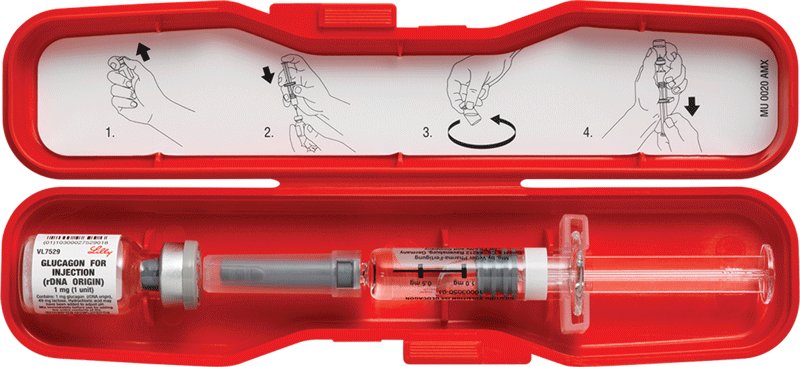
But paramedics can give the injections, said Dr. Craig Manifold, medical director of the National Association of Emergency Medical Technicians. That's because paramedics get between 750 and 1,500 hours of education compared to about 100 to 150 hours of training for EMTs.
Low blood sugar levels (hypoglycemia) generally occur in people with type 1 or type 2 diabetes taking insulin or other blood sugar-lowering medications. Researchers said more than 100,000 serious hypoglycemia episodes occur each year.
Gabbay noted even U.S. Supreme Court justices aren't immune to this problem. Earlier this month, Justice Sonia Sotomayor, who has type 1 diabetes, had to call emergency services for help with serious low blood sugar.
You can read the rest of the article here

Johnson & Johnson is trying to sell its diabetes care business
Johnson & Johnson is trying to sell its diabetes care business to Chinese buyers for up to $4 billion
- Johnson & Johnson, the world's largest health care company, is seeking to sell off its diabetes care businesses, including LifeScan, Animas, and Calibra.
- Several Chinese buyers are interested.
- The businesses could fetch up to $4 billion.
Chinese bidders are circling a diabetes care business owned by the world's largest healthcare company Johnson & Johnson in a deal that could fetch up to $4 billion, five people with direct knowledge told Reuters.
New Brunswick, N.J.-based J&J said in January last year it was evaluating options for its diabetes care companies, specifically LifeScan, Animas, and Calibra Medical. One option was a sale of the business, it said.
LifeScan makes devices to monitor blood glucose levels, which are key to controlling diabetes. Animas and Calibras -- which J&J acquired in 2012 -- make insulin delivery devices. In October, Animas, which makes insulin pumps, said it would shut its business in the United States and Canada amid increased competition and after failing to find a buyer.
Chinese interest in the J&J unit comes as the market for diabetes care in China is expected to grow rapidly. Almost one in three of the world's diabetes sufferers lives in China, according to World Health Organisation estimates.
Among the potential bidders is a consortium being formed by Shenzhen-listed Sinocare, which develops and manufactures blood sugar monitoring systems, and China Jianyin Investment (JIC), a unit of sovereign wealth fund China Investment Corp. The group has hired an advisor to work on a bid, according to two sources.
"The evaluation of potential strategic options for LifeScan and Calibra Medical Inc. is ongoing and we do not have an announcement regarding these businesses at this time," J&J said in a statement in response to Reuters request for comment.
The company has hired Goldman Sachs to work on the sale, according to three of the people. The bank declined to comment.
Sinocare's investors relations office said it could not confirm the information when contacted by Reuters. JIC and CIC did not respond to requests for comment. The sources declined to be identified.
Asia accounts for more than 60 percent of global diabetes cases, with increasing levels of wealth, unhealthy diets and more sedentary lifestyles sparking "diabetes epidemics" in the region, according to BMI Research.
George Lin, chief financial officer of Hua Medicine, a diabetes-focused drug developer, told Reuters on Wednesday that according to the most recent market research there were more than 110 million diabetes patients in China alone.
"The market right now in the world is already close to $50 billion," he said, referring to diabetes drugs. "In China, it is expected to grow from $6.6 billion in 2016 to $20 billion by 2025. This is a very large, fast-growing market."
Lin left a senior role at Bank of America Merrill Lynch to join Hua in December.
It is not yet clear if potential Chinese buyers are interested in the whole of J&J's diabetes care business or one or more of the member companies.
Sinocare, which has a market capitalisation of about $1.8 billion, in 2015 teamed up with Citic Securities to bid for Bayer's diabetes devices business that was eventually sold to Japan's Panasonic Healthcare Holdings, majority-owned by U.S. investment firm KKR.
JIC, wholly owned by CIC, mainly invests in the industrial manufacturing, consumption and information technology sectors, according to its website.
CIC's vice-chairman and president, Tu Guangshao, said at a panel discussion during the Asian Financial Forum in Hong Kong this week that it would look for more investment opportunities in the healthcare industry.
The sale of the diabetes business has also attracted interest from global private equity players, according to the people with knowledge of the process. But analysts said China could offer a tonic to J&J's struggling diabetes care unit and a turnaround opportunity for regional investors. Revenues at J&J's diabetes care unit have been falling since 2012, a Reuters study of the company's financial results found. In the first nine months of 2017, sales slid 7.7 percent year-on-year. In 2016, it suffered a similar decline.
Any sale by J&J of its diabetes device units would fit with a drive to exit from lower-margin, commoditized categories such as glucose meters and strips, but analysts said Asian buyers may be able to squeeze more out of the assets.
"Could a Chinese company extract more value from this than a multinational? It's possible because they have different expectations of profitability than multinationals so they can be happy with lower margins," said Franck Le Deu, Hong Kong-based senior partner at consultancy McKinsey.
"One complication of being in diabetes for a Chinese company is that you need a broad portfolio to be able to compete, and a broad footprint because it's a very dispersed market," he added. "So the investment levels needed to be competitive in diabetes are quite high, it's not an easy game to play."