#1751 Body Grief: Dismissal and Shock
You can always listen to the Juicebox Podcast here but the cool kids use: Apple Podcasts/iOS - Spotify - Amazon Music - Google Play/Android - iHeart Radio - Radio Public, Amazon Alexa or wherever they get audio.
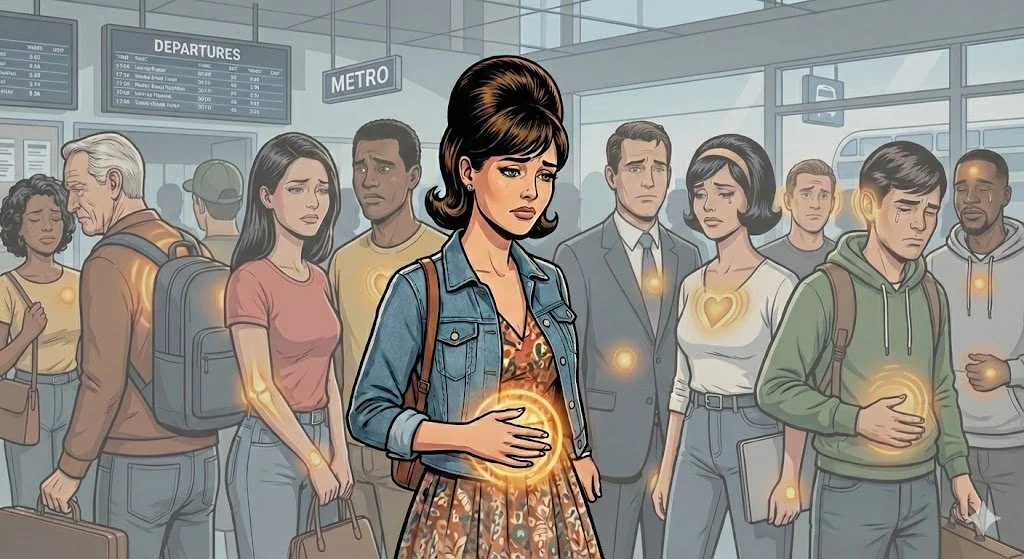
Dismissal and Shock in body grief, especially with type 1 diabetes, revealing how fear, isolation, and overwhelm show up—and offering grounding practices to rebuild body trust and move forward.
+ Click for EPISODE TRANSCRIPT
DISCLAIMER: This text is the output of AI based transcribing from an audio recording. Although the transcription is largely accurate, in some cases it is incomplete or inaccurate due to inaudible passages or transcription errors and should not be treated as an authoritative record. Nothing that you read here constitutes advice medical or otherwise. Always consult with a healthcare professional before making changes to a healthcare plan.
Scott Benner (0:00) Hello, friends, and welcome back to another episode of the Juice Box podcast. (0:15) Hey. (0:16) Welcome back. (0:16) This is the second installment of the body grief series with myself and Erica Forsythe. (0:22) If you like Erica and you wanna learn more about her, please go to ericaforesythe.com.
Scott Benner (0:28) Nothing you hear on the juice box podcast should be considered advice, medical or otherwise. (0:33) Always consult a physician before making any changes to your health care plan. (0:43) If your loved one is newly diagnosed with type one diabetes and you're seeking a clear practical perspective, check out the bold beginnings series on the juice box podcast. (0:52) It's hosted by myself and Jenny Smith, an experienced diabetes educator with over thirty five years of personal insight into type one. (1:00) Our series cuts through the medical jargon and delivers straightforward answers to your most pressing questions.
Scott Benner (1:05) You'll gain insight from real patients and caregivers and find practical advice to help you confidently navigate life with type one. (1:12) You can start your journey informed and empowered with the Juice Box podcast. (1:16) The bold beginning series and all of the collections in the Juice Box podcast are available in your audio app and at juiceboxpodcast.com in the menu. (1:31) US Med is sponsoring this episode of the juice box podcast, and we've been getting our diabetes supplies from US Med for years. (1:39) You can as well.
Scott Benner (1:41) Usmed.com/juicebox or call (888) 721-1514. (1:48) Use the link or the number, get your free benefits check, and get started today with US Med. (1:54) This episode of the Juice Box podcast is sponsored by the Omnipod five. (1:58) And at my link, omnipod.com/juicebox, you can get yourself a free what did I just say? (2:05) A free Omnipod five starter kit.
Scott Benner (2:09) Free? (2:10) Get out of here. (2:11) Go click on that link. (2:11) Omnipod.com/juicebox. (2:14) Check it out.
Scott Benner (2:15) Terms and conditions apply. (2:16) Eligibility may vary. (2:18) Full terms and conditions can be found at omnipod.com/juicebox. (2:23) Links in the show notes. (2:24) Links at juiceboxpodcast.com.
Scott Benner (2:27) Erica, I'm just gonna say this while we're recording. (2:30) I don't know to I don't know how to start this. (2:31) Like, we'll figure it out together, I guess. (2:33) Okay. (2:34) So so we've done the intro to body grief, and now we're gonna kinda get into the very first episode that, you know, expands on all the ideas that we did the overview for.
Scott Benner (2:43) But I don't I don't know how to introduce it. (2:45) So I'm guessing I'm gonna let you pump her through it for a second. (2:47) Tell me.
Erika Forsyth (2:48) Okay. (2:49) So, yes, in our intro episode, we talked about what is body grief, again, stemming and coming from the book called This Is Body Grief by Jane Mattingly. (3:00) And so just to review that the definition of body grief is the sense of loss and mourning that comes with a with living in an ever changing body. (3:12) So similarly to kind of the general grief that we are more familiar with around loss and death, there are many stages associated with that. (3:22) And with body grief, there are seven stages that we are that we sort of introduced in our first episode, and now we're gonna dive into the first stage, which is called dismissal.
Scott Benner (3:36) Okay. (3:38) Is there something for me to do here, or am I gonna be mostly, like am I mostly gonna be listening and then asking inane questions? (3:45) Is that my job today?
Erika Forsyth (3:46) That that's your job today.
Scott Benner (3:47) Yes. (3:48) Alright. (3:48) Go ahead.
Erika Forsyth (3:48) You can listen and interject and reflect as you do.
Scott Benner (3:52) Go ahead. (3:52) Go for it then.
Erika Forsyth (3:53) Okay. (3:53) So and as a reminder that these stages, these body grief stages are are not linear even though we are announcing them numerically and in an order, you obviously can go back and forth, at any point in your life. (4:09) And we are certainly talking about body grief through the lens of living with diabetes, but this also can be applied to any other issue that occurs within your body. (4:20) So it's just getting a cold. (4:21) You might go through some of these stages or having surgery or changing, you know, going through menopause, you'll experience this.
Erika Forsyth (4:29) So you can kind of listen to these stages through various lenses. (4:34) Yeah. (4:34) But we'll be we'll be applying those, specifically to diabetes also.
Scott Benner (4:38) And I wanna reiterate. (4:40) It's not like it's not like there's certain number of stages, and they happen in an order. (4:44) These things could some of them could happen to you. (4:46) All of them. (4:47) Some of them could repeat, that kind of thing.
Scott Benner (4:49) Right?
Erika Forsyth (4:50) Yes. (4:50) Okay. (4:51) Absolutely. (4:52) And so this first stage dismissal could occur most most definitely at at diagnosis. (5:00) Mhmm.
Erika Forsyth (5:00) But as we get into it, you'll see where it might show up at any point in your life, as as the both the caregiver as well, but also for the person living with with diabetes. (5:11) So dismissal sounds like I'm fine. (5:16) Everything's fine. (5:17) Like like, when someone says, how are you doing? (5:19) I'm I'm fine.
Erika Forsyth (5:20) Everything's fine. (5:22) But underneath that, if you are in the dismissal stage, what you're really trying to do is stay in control of the narrative when you aren't really sure what's going on in your body. (5:35) Right? (5:36) So you're kind of ignoring, dismissing, and it is a response to fear. (5:43) Now there's a couple different reasons why.
Erika Forsyth (5:47) So you might be fearful. (5:50) When someone says, how are you doing? (5:52) And this is just for the example here. (5:53) And you say, I'm I'm fine. (5:54) Everything's fine.
Erika Forsyth (5:56) Maybe you're fearful of inconveniencing yourself or the other by going into detail. (6:03) And this is where we're gonna get into this point a little bit later when we talk about misconceptions.
Scott Benner (6:08) Okay.
Erika Forsyth (6:09) We might be also fearful of the future. (6:12) Right? (6:12) When someone says, how are you doing? (6:15) And you dismiss how you're actually doing? (6:17) Mhmm.
Erika Forsyth (6:17) Are you really are you scared of what what is to come? (6:20) You're not really sure. (6:22) Or are you fearful that your body, the way you lived, the way you functioned, will never go back to the way you were before. (6:31) Mhmm. (6:32) So you're responding to some of that fear without maybe even knowing it.
Scott Benner (6:37) Do you think that when someone says, I'm fine, that some people are doing that thing that you just described, like trying not to talk about what maybe they're not fine or maybe they're not sure how they're gonna be. (6:49) Do you think there are some people that just have an out of sight, out of mind mentality and that they really are fine, or do you think that's still something just someone says and they maybe don't consciously realize how they feel? (7:02) That makes sense?
Erika Forsyth (7:04) Yes. (7:04) I think if we're discussing this through, like, the lens of knowing that something just happened majorly to your body, for example, the diagnosis, and you're really feeling the the burden and the grief from that and you're responding,
Scott Benner (7:19) I'm
Erika Forsyth (7:19) fine, I think there are two big drivers of that within the diabetes context. (7:25) One is the fear of not knowing what's actually happening. (7:29) You're trying to just stay keep it together.
Scott Benner (7:31) Yeah.
Erika Forsyth (7:31) And the other one is the is the kind of misconception, which we'll get into. (7:35) But in your response or your question, I think sometimes you might just be fine. (7:42) Right. (7:42) And you might not be struggling with how your body is adjusting to something that has happened.
Scott Benner (7:48) Because I've interviewed people who have said that, and I've believed them. (7:52) And I've interviewed people who said that, and I thought, oh, you're lying to yourself. (7:56) Mhmm. (7:56) But I don't know if that's conscious or unconscious. (7:58) But there are there have been some people that I just think you could drop them into any situation, and they're just like, keep going.
Scott Benner (8:04) All good.
Erika Forsyth (8:04) Mhmm.
Scott Benner (8:05) You you know? (8:06) But it's I don't know. (8:08) I always still wonder about those people too. (8:10) I because I think I'm one of those people, and I wonder about me. (8:12) Like, am I really just okay, or am I have I decided that this part we won't think about anymore and, therefore, we can pretend we're okay.
Scott Benner (8:21) I I I I just think it's interesting. (8:23) But I
Erika Forsyth (8:23) It is. (8:24) Yeah. (8:24) Well and I think even just conversationally when you're, like, checking out at the grocery store, how are you doing? (8:31) I'm fine. (8:32) Thanks.
Erika Forsyth (8:32) How are you? (8:32) Right? (8:32) Like, it's such a part of our cultural kind of common exchange, being polite, being social. (8:39) And there also is that caveat too of, like, of course, there are appropriate times to maybe keep it more surface y
Scott Benner (8:45) Yeah.
Erika Forsyth (8:45) Or or not.
Scott Benner (8:46) Oh, sure.
Erika Forsyth (8:47) But here, we're kind of focusing in on those moments. (8:50) And and whether it's conscious or not, are you responding, I'm fine, everything's fine, when really underneath the surface, you are freaking out, and you're uncertain about what's gonna happen. (9:01) How is and I'm thinking also through the lens the caregiver, you know, you're you're really worried about what your child's future is gonna be like, and you're and you're maybe longing and missing and grieving the, you know, the past. (9:14) Mhmm. (9:15) Okay.
Erika Forsyth (9:16) So in that space, if you are operating in out of dismissal, it could be that you're fearing once you say the truth out loud, again, that being inconvenient, it might be too troubling. (9:30) It might be even too confusing for the other person and just too painful. (9:34) Right? (9:35) So you're just trying to, like, keep keep things going. (9:37) And are there times when you need to do that?
Erika Forsyth (9:38) Yes. (9:39) But this is kind of, again, if you're operating out of this stage consistently, you might be in dismissal stage. (9:46) Is
Scott Benner (9:47) there a piece of that where you can't you can't get the genie back in the bottle so you gotta kinda keep it there too? (9:54) Like, know what mean? (9:55) Like, once I say it, I can't go back to the part where I pretend this wasn't happening anymore.
Erika Forsyth (10:01) Absolutely.
Scott Benner (10:02) Yeah.
Erika Forsyth (10:02) That's that's the part. (10:03) Right? (10:03) So if you you don't wanna acknowledge if you're scared and you don't wanna acknowledge what you were just saying, you don't wanna acknowledge what's happening, that's when this dismissal stage shows up. (10:15) So you're trying to you're just trying to keep it going. (10:16) Mhmm.
Erika Forsyth (10:17) Right? (10:17) I'm too scared. (10:18) I don't really know what's going on in my body, but I'm gonna try and control the narrative and keep it going.
Scott Benner (10:23) Okay. (10:24) Yeah. (10:25) It occurs to me. (10:26) This is I hope this feels on point. (10:28) But, I mean, as human beings, isn't that this how we have most of our long term successes?
Scott Benner (10:33) Like, at some point, don't you have to, like, turn the other cheek or turn a blind eye or pretend or whatever at some point in all different parts of your life. (10:41) Right? (10:41) Like, so some of it's not just coping. (10:45) I think some of it's you know what I'm saying? (10:47) Like, in every personal relationship that's ever existed, if we all stopped sometime when something happened that was it was actually in a front to us and we put our foot in the in the dirt, it would probably break up all kinds of different things.
Scott Benner (11:01) Like, everybody's gotta take I don't know. (11:03) This is interesting, but do you do it with yourself is what I'm wondering. (11:06) Like, do is that the same idea? (11:09) Like, if I wanna get to the end of this, do I have to dismiss a portion of this? (11:13) But you're gonna tell me if I'm if I'm as you keep going, I think it's gonna come in a picture for me.
Scott Benner (11:19) This episode is brought to you by Omnipod. (11:22) Would you ever buy a car without test driving at first? (11:25) That's a big risk to take on a pretty large investment. (11:28) You wouldn't do that. (11:29) Right?
Scott Benner (11:30) So why would you do it when it comes to choosing an insulin pump? (11:33) Most pumps come with a four year lock in period through the DME channel, and you don't even get to try it first. (11:39) But not Omnipod five. (11:41) Omnipod five is available exclusively through the pharmacy, which means it doesn't come with a typical four year DME lock in period. (11:49) Plus, you can get started with a free thirty day trial to be sure it's the right choice for you or your family.
Scott Benner (11:55) My daughter has been wearing an Omnipod every day for seventeen years. (11:59) Are you ready to give Omnipod five a try? (12:02) Request your free starter kit today at my link, omnipod.com/juicebox. (12:08) Terms and conditions apply. (12:09) Eligibility may vary.
Scott Benner (12:10) Full terms and conditions can be found at omnipod.com/juicebox. (12:16) Find my link in the show notes of this podcast player or juiceboxpodcast.com. (12:20) I have always disliked ordering diabetes supplies. (12:24) I'm guessing you have as well. (12:26) It hasn't been a problem for us for the last few years, though, because we began using US Med.
Scott Benner (12:31) You can too. (12:33) Usmed.com/juicebox or call (888) 721-1514 to get your free benefits check. (12:41) US Med has served over one million people living with diabetes since 1996. (12:45) They carry everything you need from CGMs to insulin pumps and diabetes testing supplies and more. (12:52) I'm talking about all the good ones, all your favorites.
Scott Benner (12:55) Libre three, Dexcom g seven, and pumps like Omnipod five, Omnipod Dash, Tandem, and most recently, the Islet pump from Beta Bionics. (13:04) The stuff you're looking for, they have it at US Med. (13:08) (888) 721-1514, or go to US Med Dot Com Slash Juice Box to get started now. (13:15) Use my link to support the podcast. (13:17) That's usmed.com/juicebox, or call (888) 721-1514.
Erika Forsyth (13:25) Yes. (13:26) And I hear this. (13:28) So what we're thinking, it feels confusing maybe a little bit or not as clear because when we're talking about dismissal and I'm fine, everything's fine, in response to there is you are experiencing grief as a result of either the diagnosis. (13:47) And this is a really natural part of going of processing what is actually happening in your body. (13:53) So this isn't like we're we're not this isn't wrong Yeah.
Erika Forsyth (13:56) Or bad, but this is really normal. (14:00) And I think what to to recognize that you are doing it, these are some signs. (14:06) Right? (14:06) So so so signs that you are in dismissal. (14:09) If you're noticing that you don't want to be seen as too much or too needy or too difficult, so you're keeping at real surface level with yourself or with others.
Erika Forsyth (14:19) You might be canceling plans with your friends. (14:24) You're not responding to texts or emails or phone calls because you don't want them to actually see how you're actually doing.
Scott Benner (14:33) Right.
Erika Forsyth (14:35) Conversely, you might overwork, overproduce, overschedule to prove you're you're doing great. (14:42) Like, look at me. (14:43) I can do all these things. (14:43) I'm I'm fine. (14:45) I'm I can keep it going.
Erika Forsyth (14:47) With this is where we're talking about with diabetes and dismissal. (14:53) This is a really common, place of pain and tension for people, particularly diagnosis, but this happens all the time when I feel like dismissals is a tricky and complicated stage because of this duality that we've talked about before with with diabetes. (15:13) Do we wanna do we wanna keep it private, or do we want to explain it to everyone? (15:17) When when someone says, how are you doing? (15:20) And you've been up all night with lows, or you're just burnout.
Erika Forsyth (15:25) You're you're faced with this. (15:27) Do I try and explain it to them how I'm actually feeling? (15:32) Do I keep it private, but then I'm feeling I'm either feeling isolated and alone in it, or I'm gonna try and explain it, and maybe they aren't really gonna get it. (15:42) So I'm gonna feel misunderstood, and their platitudes might not land the way I want them to. (15:49) So then do you revert back to, I'm fine.
Erika Forsyth (15:53) Everything's fine.
Scott Benner (15:54) The other option, really?
Erika Forsyth (15:55) Right.
Scott Benner (15:55) Right? (15:56) Because you're either going to, like, struggle through the explanation, and they'll understand, and then you've had to put out a bunch of energy. (16:02) Or you struggle through it, they don't understand. (16:04) Now you're frustrated that even though they've heard it, they don't seem to get it. (16:08) I just had this person online talk about how, like, one of their best friends just told them their friendship was over because they couldn't handle listening to them about their diabetes anymore.
Scott Benner (16:17) That's horrible. (16:18) Right? (16:18) Like, so you're running that risk. (16:20) Yeah. (16:20) There's a lot of risk in there.
Scott Benner (16:21) But if I'm fine is not the is there an answer besides I'm fine in polite society? (16:29) This is none of your business? (16:30) Like, do I say, hey. (16:31) Why don't you leave me alone? (16:32) Like like, because like, don't make me lie to you.
Scott Benner (16:35) Maybe you should say don't make me lie to you. (16:36) That'd be a great way to respond.
Erika Forsyth (16:39) Yeah. (16:40) I wanna be honest, but can you handle it? (16:42) Yeah. (16:42) Yeah. (16:43) I that's the tricky part.
Erika Forsyth (16:45) And I think this there's this there's the internal fear and avoidance of dismissal, but then this external dismissal, which I would probably just define as as misconceptions
Scott Benner (16:56) Mhmm.
Erika Forsyth (16:57) May keep us in that place of what you're saying of, like, is there an is there an alternative besides I'm fine? (17:03) So when people are saying things and, like, you know, aren't you grateful it's not cancer? (17:09) Or it's it's easier with that pump and CGM. (17:12) Right? (17:13) I get that all the time.
Scott Benner (17:14) Yeah.
Erika Forsyth (17:15) You don't you don't seem sick. (17:17) You don't seem like you have a chronic illness.
Scott Benner (17:19) Mhmm.
Erika Forsyth (17:20) Or or you're so strong and resilient, you know, the warrior thing. (17:26) And so we're we are faced with those misconceptions. (17:31) And those will land, and they will feel they will sting at any point in our lives because we're human. (17:40) Probably more intensely, I would say, at diagnosis when you're trying to figure out what is your identity with diabetes. (17:50) But left unacknowledged, I feel like this is where we talked about in the intro episode of this is where kind of diabetes distress and and body grief, I think, kind of overlap.
Erika Forsyth (18:03) Okay. (18:03) Right? (18:03) Like, we experience distress when we're constantly being faced with those misconceptions along with all the other things we're having to manage. (18:12) And so we're gonna get to a practice of what do we do with these misconceptions besides trying to educate everyone, which is, you know, impossible.
Scott Benner (18:20) Yeah. (18:20) I I had an experience recently during an interview where a parent kept saying that thing, like, the kids are so they're heroes. (18:27) They're this. (18:28) They're that. (18:28) And I I I did not have the heart, like, to stop and just say, I don't think you should put that on them.
Scott Benner (18:35) Like, because I think maybe you're just trying to talk yourself into believing they're gonna be okay cause they seem okay or they're so tough or something like that. (18:43) And I I just always revert back to, like, what's the alternative? (18:46) Like, you know what I mean? (18:47) Like, people I don't think people are brave because they want to be. (18:51) I think they're brave because they don't have any other choice in those situations.
Scott Benner (18:54) You know what I mean?
Erika Forsyth (18:56) Yes. (18:56) I know I know we've wrestled with this, you know, the phrase of that you're a t one d warrior or, you know, whatever kind of warrior. (19:04) The I think that's that's positive, and I totally affirm and encourage that.
Scott Benner (19:10) Yes.
Erika Forsyth (19:11) And there also has to be space for the kid to say or for yourself to say, this sucks. (19:16) Yeah. (19:17) This is hard.
Scott Benner (19:17) Top line.
Erika Forsyth (19:18) Because I'm a warrior and it is hard.
Scott Benner (19:20) Yeah. (19:20) Top line. (19:21) And and, I mean, that person's intention, I think everybody's intention Yeah. (19:25) Says it, is it's incredibly positive. (19:28) I just think that sometimes you have to look downstream a little bit to see how it might be, you know, perceived by the person who you're describing that way who probably does not feel brave or strong.
Scott Benner (19:39) You you yeah.
Erika Forsyth (19:39) Or or maybe doesn't wanna be.
Scott Benner (19:41) Right. (19:42) Right. (19:42) Or doesn't want to be or is pretending to be or whatever. (19:44) It's just it's a lot to put on another person. (19:48) You know what I mean?
Erika Forsyth (19:49) Yes. (19:51) Yeah. (19:51) And I think that nurturing and encouraging and and and speaking those words out loud is positive because it's a positive thing for for yourself as the caregiver or the person living with diabetes. (20:05) But you always get to acknowledge the other side. (20:08) Or else then it feels like, well, there's no space.
Erika Forsyth (20:11) There's no room. (20:12) I'm not allowed to feel anything else besides I'm brave and resilient and strong. (20:16) But what if I don't wanna be? (20:17) What if I hate being like that today? (20:19) Yeah.
Scott Benner (20:20) No. (20:21) I hear it. (20:21) I and I I also feel it for the people on the other side of it who it's often friends, family, loved ones, your parents, somebody who are is really worried about you. (20:30) And I I I don't think they can handle thinking that you're not somehow a superhero in this scenario. (20:36) Right?
Scott Benner (20:36) Like, I've even I I've said before, like, some of the most together people I've ever met have type one. (20:42) Right? (20:42) Because it feels like they have a ton of perspective. (20:45) But I I think that's true. (20:46) I think they've been through a lot and they have a lot of perspective.
Scott Benner (20:49) I'm not saying they wanted the perspective. (20:51) Like, you know, like, I I say sometimes, like, I feel like I have the perspective of, a 95 year old man. (20:55) I had it when I was, like, 30. (20:57) I didn't want it though. (20:59) Like, you you know what I mean?
Scott Benner (21:00) Like, I would have liked to have learned about life the same way everybody else does, not through 17 horrible things that happened very quickly over a twenty four month period. (21:08) So Mhmm. (21:08) Anyway. (21:09) Okay. (21:09) Alright.
Scott Benner (21:10) Where where do we go from here? (21:11) How do we fix this? (21:12) No. (21:12) I'm sorry.
Erika Forsyth (21:12) We don't fix our budget. (21:15) We have to work through it, Scott.
Scott Benner (21:17) Okay. (21:17) Alright. (21:18) How do we work through it?
Erika Forsyth (21:20) So, well, before we get into the kind of the body residency practice, which we're gonna do in a minute, I think having also a practical tool in the moment when you're wrestling with this, I'm I'm saying I'm fine. (21:36) Everything's fine. (21:37) But underneath, I'm I'm freaking out or I'm really struggling. (21:42) I think with starting from kind of this concept of the misconception of, you know, people think it's easy because we make it look easy. (21:50) But when they make comments, we're not quite sure how to respond.
Erika Forsyth (21:53) So that kind of perpetuates this loop of misconception. (21:56) Mhmm. (21:57) One of my favorite statements that I make and I practice with with my clients is, when they say, you know, how are you doing? (22:04) Or, like or they'll ask questions about the pump and the CGM, and and consider or hope that it's easier. (22:12) Let's see.
Erika Forsyth (22:13) You know, living living with diabetes or living with even with this technology is is way more complex and complicated than I ever imagined. (22:22) And I think in that moment, you're kind of teaching them that, oh, yeah. (22:26) I used to I used to think it was easy
Scott Benner (22:29) Yeah.
Erika Forsyth (22:30) Until I got it.
Scott Benner (22:31) Right. (22:31) You put it on
Erika Forsyth (22:32) And then I realized it's really hard.
Scott Benner (22:34) You kinda put it on yourself a little bit. (22:35) Like, you I felt that way too until I I got into it here, and it's it's it's nice. (22:41) You know, it there's value in it, but it's not it doesn't just make it easy. (22:45) You do see people say that about the pumps especially, like, oh, well, it just takes care of everything. (22:49) Right?
Scott Benner (22:50) Like, that's a real interesting mistake.
Erika Forsyth (22:52) I wish.
Scott Benner (22:52) Yeah. (22:53) Yeah.
Erika Forsyth (22:53) I wish.
Scott Benner (22:53) That'd be awesome.
Erika Forsyth (22:56) Or have having something prepared. (23:00) And, you know, again, it it it feels really intense in the beginning. (23:06) And I think, you know, wrestling with that, people are not understanding how hard it is. (23:11) So either I'm just gonna say I'm fine when I'm not or when I try and speak something out say how I'm actually feeling, they're not really understanding. (23:18) And they'll say, oh, yeah.
Erika Forsyth (23:19) I I was sick too once, or I, you know, struggle with this other thing. (23:26) And then you're you're just you're left with feeling alone. (23:29) And so deciding in those micro all of these micro moments of how do I wanna respond, it will get easier over time when someone says, oh, you can you eat that cookie? (23:43) And I'll be like, heck, yeah. (23:44) I can.
Erika Forsyth (23:45) I'm gonna have two. (23:46) Or or I'll it'll I mean, I but these moments, I as I've shared these a lot of these examples, I know, over the years, they still stick with me.
Scott Benner (23:55) Right.
Erika Forsyth (23:56) I still remember almost all of them.
Scott Benner (23:57) Do you ever
Erika Forsyth (23:58) But they have sting less.
Scott Benner (23:59) Yeah. (23:59) Ever have two cookies just to show them you can when you don't want one? (24:03) Can you have one of those? (24:04) You're like, I'm gonna grab another one now. (24:06) What do think of that?
Erika Forsyth (24:06) Yeah. (24:07) Yeah. (24:08) Or, you know, just recently, a friend was traveling abroad, and they said, what can you bring back? (24:13) They're going to, I think it it was Switzerland. (24:15) I said, oh, can you bring me back some chocolate?
Erika Forsyth (24:17) And and they said, oh, can can you eat chocolate? (24:22) I said, oh, yes. (24:23) I love I love dark chocolate.
Scott Benner (24:25) Just keep it nice and simple. (24:26) Don't explain it. (24:27) Just Yeah.
Erika Forsyth (24:28) Yes. (24:29) So but then I I wanna validate that that type of comment I've been living with with type one for thirty five plus years. (24:38) I know that that would really bring me down. (24:42) Be like, that person, how do they not know? (24:44) They know me.
Erika Forsyth (24:45) Yeah. (24:45) And and I still feel that. (24:47) I still feel like, wow. (24:47) They they don't. (24:48) But then it's, choosing just to respond to say, yes.
Erika Forsyth (24:52) I can. (24:53) And moving on will feel easier at some times than others.
Scott Benner (24:57) You would have ex you would have, responded differently when you were younger, you think?
Erika Forsyth (25:02) I probably would have shut down and not talked to anybody. (25:05) Yeah.
Scott Benner (25:05) Oh, really? (25:06) Okay.
Erika Forsyth (25:06) But inside would have been really angry or, you know, the shame around that. (25:10) You shouldn't you shouldn't be eating that.
Scott Benner (25:12) Right.
Erika Forsyth (25:13) But I think or and then deciding if it is a good friend to say, well, actually, you know, I I can eat. (25:18) I and deciding, do you wanna explain more? (25:20) How much do you wanna go with that person?
Scott Benner (25:24) Current day, when you ask somebody for to bring you chocolate home from Switzerland as an example, do you know that the follow-up is gonna be that? (25:31) Are you already prepared for when you ask for the chocolate? (25:34) They're gonna say, oh, can you have chocolate? (25:36) Or do you not think of it
Erika Forsyth (25:37) that correctly? (25:38) I was surprised.
Scott Benner (25:38) Oh, it took me as surprised.
Erika Forsyth (25:40) Yeah. (25:40) Okay. (25:40) Yeah. (25:43) Yes. (25:44) So I think that it just it you're I'm kind of constantly surprised around the misconceptions even with my close friends.
Scott Benner (25:52) Are do the levels you know who I always feel the worst for? (25:55) The people whose parents still don't get it. (25:58) That that's just a certain level of, like, just, are you kidding me? (26:02) You you know, like, my mom still doesn't understand this. (26:05) I grew up with this, and she doesn't get it.
Scott Benner (26:07) Like, I've I've I've seen people be, I think, extra damaged. (26:12) It's the word that keeps coming into my head, but, like, extra impacted by that. (26:15) You know? (26:16) So Mhmm. (26:16) Interesting.
Scott Benner (26:17) So as a friend of yours, you expected would not say that, and you got and you said the right thing. (26:21) You said what you meant to say. (26:23) Look at you.
Erika Forsyth (26:24) Oh, wait. (26:24) What?
Scott Benner (26:25) I mean, your your response was, oh, yeah. (26:27) I can have that. (26:27) I love dark chocolate.
Erika Forsyth (26:28) Yeah. (26:28) Yeah.
Scott Benner (26:28) I love I love
Erika Forsyth (26:29) dark chocolate. (26:30) And then we didn't go into it. (26:31) I we I could have, and then it just the the subject changed. (26:36) Mhmm. (26:37) But the fact that I'm bringing it up and I remember it also means oh, yeah.
Erika Forsyth (26:41) It it landed somewhere in my in my heart. (26:44) Right? (26:44) You didn't
Scott Benner (26:45) you didn't go, are you kidding me, Patty? (26:47) Are you out of we have known each other for fifteen years. (26:50) Hey. (26:50) You didn't do that. (26:51) Right?
Scott Benner (26:52) Like, start stomping your feet. (26:53) You know, like, that's it. (26:54) We're done. (26:55) Son of a bitch.
Erika Forsyth (26:56) Yeah. (26:57) So, I mean, it just it it does happen in having prepared responses. (27:03) And over time, you're gonna hear it more. (27:05) And so then you also have that practice. (27:07) Okay.
Erika Forsyth (27:08) Anyway, we sorry. (27:10) We went a little bit off topic. (27:12) But what can you do having those those responses prepared? (27:18) And then secondly, going back to, you know, what so what do you do with that feeling? (27:23) There's one there's one respond you could have that verbal response in the moment.
Erika Forsyth (27:27) But then maybe when you go home and you're just feeling, like, either isolated or misunderstood or invalidate invalidated, You want to engage in that in those feelings. (27:37) You know, I know, Scott, you joke about, like, well, how do we fix this? (27:41) So we can't we can't fix it, but we can feel it. (27:44) And so engaging with the body grief, engaging with the feelings means meeting your body where it's at right now. (27:51) So we're gonna we're gonna do something that if you're driving, I encourage you not to do it.
Erika Forsyth (27:56) So maybe you can pause and listen to this later. (28:00) But we're gonna do a body scan exercise because one of the practices, that is encouraged if you're noticing that you're in dismissal is to practice body residency
Scott Benner (28:11) Okay.
Erika Forsyth (28:12) Which means really kind of like, what maybe some of you already do, like body scans, mindfulness, mindful eating, stretching, yoga, grounding exercises, anything where you are actually pausing and engaging and connecting with how your body is physically feeling, how your body is emotionally feeling. (28:36) And it can be done sixty seconds. (28:39) You could take an hour, but that's what we're gonna do right now. (28:43) Is that okay?
Scott Benner (28:44) Yeah. (28:44) I would love to. (28:45) I I was worried that like, you when said you can't do it while you're driving, was like, I hope this is a pants on thing. (28:49) I don't know what's happening right now. (28:51) Go ahead.
Scott Benner (28:51) Alright. (28:51) So what are the steps?
Erika Forsyth (28:54) Scott. (28:54) Okay. (28:54) So so and and going back to the concept of body trust. (28:59) Mhmm. (28:59) Right?
Erika Forsyth (29:00) Which is this two way street in order to trust our bodies, our bodies need to trust us to take care of it, be kind to it, and nourish it. (29:10) And that is the concept that Jane talks about, that we're always trying to return to body trust. (29:16) Alright? (29:17) So in order to trust our bodies, our body needs to trust us to take care of it. (29:21) So when you're feeling like you're in this dismissal stage, you can check-in and engage with your body, and that is part of processing through the body grief.
Erika Forsyth (29:33) So we're gonna do a body scan right now.
Scott Benner (29:36) Am I gonna close my eyes? (29:37) I'll
Erika Forsyth (29:37) do it. (29:37) Yes. (29:37) You are. (29:38) Okay. (29:38) I'm gonna lead you through this.
Erika Forsyth (29:39) Okay? (29:39) So I'm going to invite you. (29:42) If you can get just take a minute to get to a place where you can sit down and close your eyes and place your feet on the floor. (29:52) Just notice your feet on the floor.
Scott Benner (29:55) Got it.
Erika Forsyth (29:56) Notice feeling your back back up against the chair. (30:00) Mhmm. (30:00) And you can be relaxed. (30:03) And take a deep breath in through your nose and hold and out through your mouth. (30:13) And continuing to take deep breaths, I invite you to place your hands either on your stomach or your heart or your legs.
Scott Benner (30:26) I chose my heart.
Erika Forsyth (30:27) Yes. (30:28) And just feel just notice the warmth of your hands wherever they are. (30:33) Just notice the warmth of your hands over your heart or your stomach or your legs wherever they're resting. (30:40) And just feel that connection. (30:46) And continuing with the deep breath, notice any places of tension in your body.
Scott Benner (30:53) My neck?
Erika Forsyth (30:54) Your neck. (30:55) So you can take a deep breath in, and you can roll your neck around comfortably and slowly. (31:06) For many of us, we keep a lot of tension in our our neck and shoulders. (31:10) You might wanna take a deep breath in and roll your shoulders up and back down and breathe out. (31:23) And keeping your eyes closed and your body relaxed, I'm gonna read some affirmations that you can read to your or read to yourself or say to yourself in your mind.
Erika Forsyth (31:38) It is normal and healthy to grieve. (31:45) It's okay not to have the answers today. (31:52) My body is changing, and I am safe. (32:00) I know my body, and my body is wise. (32:09) And if any of those affirmations seemed to resonate or stand out for you, just take another deep breath in and holding on to those words and exhale.
Erika Forsyth (32:26) And when you're ready, you can open your eyes and return to the room that you're in.
Scott Benner (32:34) That's really nice. (32:36) Seriously. (32:38) I might come back and listen to this again.
Erika Forsyth (32:41) Yeah. (32:42) So that was a bit rushed just for the sake of, you know
Scott Benner (32:47) For this. (32:47) Yeah. (32:47) Sure.
Erika Forsyth (32:48) For this, for being on the podcast. (32:50) But it's something that you can do. (32:54) Honestly, a body scan is something that a lot of people build into their daily rhythm. (33:00) In the morning, you could take sixty seconds and just connect with your body, noticing if comments are coming up from the day, whatever feelings or sensations you have, and just connecting with them. (33:14) So you're not fixing it or doing anything besides just acknowledging them.
Scott Benner (33:18) Yeah. (33:19) Have that Mhmm. (33:20) After I have that after a massage feeling. (33:22) Like, it's not as big yet, but I have I have a little bit of it from that. (33:26) It's really it's kind of astonishing how putting your feet on the floor is really helpful too because Mhmm.
Scott Benner (33:31) When you started, people don't know, but, like, we're recording and I've been, like, really listening to you. (33:36) So I I had my feet up on, like, the bottom of my chair a little bit. (33:40) I crossed my legs, and I was sat way back when you started. (33:42) And I didn't realize you wanted me to sit up and be forward. (33:45) And as soon as I put my feet on the floor, I was like, oh, that makes it makes it feel different.
Scott Benner (33:50) It's interesting. (33:51) You know? (33:51) So that was great. (33:53) My gosh.
Erika Forsyth (33:54) Good. (33:54) Well, yeah, some some people feel more connected and grounded when they have their feet on the floor. (34:00) Mhmm. (34:00) But for some people, they feel more connected and energized when they tuck their feet up in, like, kind of sitting crisscross. (34:08) So just noticing and either way works.
Scott Benner (34:11) Whatever's better.
Erika Forsyth (34:12) Yeah. (34:13) And these affirmations that I read, I I do come from the book, and there are lots more in there. (34:22) But I think having, you know, two two kind of memorized mantras, maybe something to say to people who make comments that are not trying to be ignorant, but maybe land as ignorant. (34:32) Having that ready, but then also having an internal mantra like, know my body, and my body is wise, or my body is changing, and I am safe. (34:42) Having something to kind of ground and comfort yourself, and acknowledging how you're doing and feeling is also really helpful.
Scott Benner (34:49) I I chose the my body is changing and I am safe as my repeat at the end just in case people are wondering. (34:55) So Mhmm. (34:56) That was really lovely. (34:57) That's right from the book, the body grief book?
Erika Forsyth (35:00) Yes. (35:00) Those affirmations are. (35:02) Mhmm.
Scott Benner (35:03) Might sell a couple books because that was that was bizarre. (35:07) Listen. (35:07) As soon as we talked about it last time, I I ordered one for Arden. (35:10) So Yeah. (35:11) You know, put
Erika Forsyth (35:12) it on a good book.
Scott Benner (35:13) On our Christmas gift pile. (35:15) I I think
Erika Forsyth (35:16) So that is dismissal.
Scott Benner (35:17) Yeah. (35:17) Go I if you have time, I'd I think we should go into shock and
Erika Forsyth (35:21) keep going. (35:21) Yeah. (35:22) Let's keep going.
Scott Benner (35:23) Alright.
Erika Forsyth (35:23) Okay. (35:25) The second stage, but again, might not follow dismissal immediately. (35:31) But as we're talking about it, shock sounds like it is. (35:36) And this might if you're speaking it out, might sound like I'm overwhelmed. (35:42) I can't do this.
Erika Forsyth (35:44) This feels intolerable. (35:48) That also to me sounds a little bit like burnout. (35:51) Okay. (35:52) Yeah. (35:52) But if we're thinking about it from either, you know, original, you know, stages of diagnosis or at another point in in your journey with diabetes, it often will show up when there's no more room for dismissal or denial.
Erika Forsyth (36:08) Right? (36:08) Like, there's no you you've said I'm fine one too many times, and you are about to explode.
Scott Benner (36:15) Mhmm.
Erika Forsyth (36:16) And, actually, Jane calls it the shock is the embodiment of a reality check, which I kind of love that. (36:24) Right? (36:24) Like, you you've been kind of going, going, going, going, going, and there's been all this kind of these feelings that have been percolating underneath. (36:33) And when shock shows up, it can feel very overwhelming, very violent, and almost feeling like, is this is this the end of of life, or is this the end of what I felt like my life was was going to be? (36:46) And oftentimes, there's a fear of allowing yourself to feel shock that you won't come out of it.
Erika Forsyth (36:53) Right? (36:54) Like, if and that's why you kind of are trying to stay in dismissal or denial of, like, how you're actually doing or feeling because you feel like, oh, no. (37:03) If I actually feel what I'm feeling, am I ever going to pull myself out of this shock stage? (37:11) So this this kind of wrestling again, like, with is the shock is that diabetes burnout? (37:19) I don't know.
Erika Forsyth (37:20) But I would I would argue that it might look and feel very similar when you're just so overwhelmed. (37:25) You feel like you can't keep going
Scott Benner (37:27) Mhmm.
Erika Forsyth (37:27) And you just kinda wanna check out. (37:29) And with burnout, you know, you have all these feelings of dis of really emotional dysregulation and anger and rage and sadness and and just overwhelm. (37:40) Yeah. (37:41) And that's what shock can look like too.
Scott Benner (37:44) That's such a the the shock, it shows up when there's no more room for dismissal. (37:51) That that struck me. (37:53) Mhmm. (37:53) That was so it's just like a it's Popeye. (37:57) Right?
Scott Benner (37:57) What what did he say? (37:59) It's all I can stand, so I can't stand no more.
Erika Forsyth (38:01) Oh, nice. (38:03) Yeah. (38:03) Yeah.
Scott Benner (38:04) And then right? (38:05) Is that Popeye?
Erika Forsyth (38:06) I don't know, but I know that phrase.
Scott Benner (38:08) Yeah. (38:08) I think that I that's what it made me feel like. (38:11) Like, that made me feel like when my wife is like, I can't I've I've taken this shit long enough. (38:18) And I'm like, so but but so in diabetes specifically, you're dismissing, you're dismissing, you're dismissing, And then you can't dismiss anymore, and then you have to give it away. (38:30) And that's when it appears like you're not paying attention any longer.
Scott Benner (38:33) That's the burnout.
Erika Forsyth (38:35) Yes. (38:36) Yes. (38:36) And I think with with signs that you might be in shock, you're you you are kind of surprised. (38:44) Like, you're kind of blindsided by these intense feelings of anxiety, the intense feelings fear of the future. (38:53) And you might notice yourself disassociating more, like, with numbing, you know, with with entertainment, drugs, alcohol, food.
Erika Forsyth (39:02) You might be distracting.
Scott Benner (39:04) Okay. (39:04) You're
Erika Forsyth (39:04) you're maybe just scrolling mindlessly on your social media. (39:09) You're over scheduling, so you're trying to numb the feelings.
Scott Benner (39:13) Mhmm.
Erika Forsyth (39:14) And it can also feel more intense based on our expectations of life. (39:19) And I and when I say Jane, the author of the book, she makes this point, and I think it's really important, that we've talked about before in a lot of episodes that we are because of our culture, our society, we are kind of born into this mentality that this isn't how life is supposed to be. (39:39) This isn't I'm I deserve a pain free life.
Scott Benner (39:42) Mhmm.
Erika Forsyth (39:42) And so if that is kind of the narrative that you are living with, you the shock, the feelings around shock are gonna feel more intense.
Scott Benner (39:52) I see. (39:53) Because your expectation sense? (39:54) Your expectation is so big and not realistic. (39:57) And that is really a modern expectation, isn't it? (40:01) Everything should be free.
Scott Benner (40:02) It should work. (40:03) It should be there when I need it. (40:05) I should never be in pain. (40:07) I should never be cold or uncomfortable. (40:08) And if I am, then the world let me down.
Scott Benner (40:11) Everything's let me down at that point. (40:13) Yes. (40:14) Meanwhile, not that this is the conversation, but if I take you back fifty or a hundred years and then, you know and I and I brought one of those people here for a week, they'd be like, I would never complain about this. (40:25) Although, you know, in a month, they'd be complaining about it.
Erika Forsyth (40:28) Mhmm.
Scott Benner (40:28) Yeah. (40:28) Yeah. (40:28) Mhmm. (40:29) So what I I I have such a, like, a a side road I wanna go down. (40:33) It has nothing to do with this, I'll just keep it to myself.
Scott Benner (40:35) But but keep but keep going, please.
Erika Forsyth (40:38) Okay. (40:38) Okay. (40:38) Well, hold hold that if you wanna okay. (40:41) So the the the problem with the disassociating, it can work for a little bit. (40:47) That's why we we go back to it.
Erika Forsyth (40:49) Right? (40:49) Like, when you're you're blindsided by all of these feelings, you go into this numbing these numbing patterns to not feel these intense emotions, and you can feel maybe stuck in these patterns of being in the shock stage Mhmm. (41:06) Because you you feel it, and then you disassociate by numbing. (41:08) And then you feel it, and then sometimes you might go back to, oh, but but I'm okay. (41:13) Right?
Erika Forsyth (41:13) I I'm I'm fine. (41:14) I can keep going. (41:16) So those are those are kind of the signs or signals that you might be in this shock stage. (41:24) Okay. (41:24) So what what can you do?
Erika Forsyth (41:27) And she calls it the one of the the practices is the the shift down perspective. (41:32) And this goes back to that kind of maybe entitlement that we are born into because of our our our culture and society Mhmm. (41:40) That we we deserve a pain free, quote, normal life. (41:47) And so if you acknowledge that, it it might feel like a downer. (41:52) Like, well, maybe I shouldn't have that sense of entitlement, but it actually can become more empowering.
Erika Forsyth (41:58) So taking us to the diabetes lens, when we adjust our expectations, the kind of the shift down perspective of what our bodies can and can't do with with diabetes. (42:14) We that might feel like I'm encouraging dismissal of the pain or feeling like you're missing out. (42:22) But, really, it's saying, okay. (42:24) With with diabetes, I can do pretty much anything anyone else can. (42:29) But there are gonna be times when I'm gonna have to sit and wait for my load to come up.
Erika Forsyth (42:34) There are gonna be times when I have to wait for everyone while I change my sight, Or there are gonna be times when I'm gonna I'm just I'm gonna be stopped at security at the airport. (42:44) I'm just gonna it's just gonna happen. (42:46) And so when when we are operating from that, having more realistic expectations of what our bodies can and can't do, that is she's kind of suggesting that that is a place of empowerment
Scott Benner (43:02) Mhmm.
Erika Forsyth (43:02) As opposed to placing you and putting you back into this kind of either dismissal dismissal or the shock and rage and and feeling of, wait. (43:14) What? (43:14) This happened again? (43:16) Like, I got stopped at at TSA again? (43:18) Yeah.
Erika Forsyth (43:19) How could this be? (43:20) Now with that said, I also wanna highlight that as a teenager, when you're all your friends are running off to the corner store after school and you feel like you can't go or you have to wait and pre bolus or you say, screw it, you're gonna go eat the Slurpee anyway. (43:39) Like, there's there's there's real feelings in that in that space.
Scott Benner (43:42) Right.
Erika Forsyth (43:43) But the more we can adjust our expectations of what our bodies can and can't do, that is going to bring yourself to a place of peace and body trust. (43:55) Right? (43:55) Going back to that, like, trusting our bodies so our bodies can trust us to take care of it. (44:00) Sorry.
Scott Benner (44:01) No. (44:01) You you know, you've said a number of times as we've been doing this that it's that this this applies to everything. (44:08) I think that's some way. (44:09) And I the longer we talk about it, the more I feel like that. (44:13) That that this isn't, like, we can focus this idea on diabetes or on, like, a health struggle.
Scott Benner (44:21) But it really I I mean, metaphysically feels like a bigger idea that I don't have my my brain already, like, completely wrapped around yet. (44:28) That's really just kinda where I am right now going through this.
Erika Forsyth (44:33) Yes. (44:34) Yeah. (44:34) And I think the important like, this lens of body grief, I think, and the stages that are applied from it are, yes, focused on, like, what you experience when you're going through life and something happens physically to your body. (44:54) Mhmm. (44:54) And and you are gonna experience these stages.
Erika Forsyth (44:57) But I agree that, yeah, a lot of this can be applied to a lot of other things or a lot of these concepts.
Scott Benner (45:02) I just feel like after we're done making this series, it's not gonna be for months or longer before I start adapting what we've really said to each other and then, like, seeing how it applies. (45:15) I think I'm gonna see this in other parts of life in the future is what I'm getting at. (45:20) Mhmm. (45:20) You know? (45:20) Just it's it feels like a simple but bigger idea to me at the same time.
Scott Benner (45:24) I don't have my head all the way around it yet.
Erika Forsyth (45:26) Yes. (45:26) No. (45:26) I I agree. (45:27) I I feel that as well. (45:29) Yeah.
Erika Forsyth (45:30) Which is why I think this was the book is so great and why I'm feeling so strongly about applying it to diabetes. (45:36) And it just it does feel really significant.
Scott Benner (45:38) Right. (45:39) Yeah.
Erika Forsyth (45:39) For sure. (45:40) So in this kind of what can you do when you're in noticing that you're in the shock stage or if we're saying it kind of feels like burnout a little bit as well, I I love this tool of what can you do to feel one to 5% better. (45:57) So when you're feeling so overwhelmed, so either fearful, anxious, or or just burned out. (46:05) Like, what small thing can you do? (46:07) Not to, like, change your life, not to change you know, we can't get rid of diabetes, but what can we do to make yourself feel five one to 5% better?
Erika Forsyth (46:17) And those are small things like, you know, the warm bath, like asking for a hug, playing your favorite song, and dancing in the kitchen. (46:25) Like, something really small that doesn't take a lot of time, effort, or resources.
Scott Benner (46:31) Are those soothing ideas that aren't bad for you? (46:34) Like, because you mentioned soothing stuff before, like like doom scrolling and stuff like that. (46:39) I mean, alcohol, drugs, like, it really did open up a bigger idea in my head. (46:44) Like, if everybody feels like this at some point I mean, you know, the the instance of how many people drink to numbness is huge, right, in in the country and across the world. (46:53) The number of people who use drugs to to disassociate, who gamble online or, you know, I mean, the amount of people I've been intersecting with, like, who describe themselves as having a a a some sort of, like, a a masturbation, thing that they can't break free of or, like, sex addiction.
Scott Benner (47:13) Yeah. (47:14) Addictions. (47:14) Like, my my bigger question was this is unfair to ask of you, so I'm not really asking it of you as much as I'm kinda putting it out there is what happens like, we say those things like they're all bad, and I don't believe that they're not. (47:26) But what if we didn't do them? (47:28) Like, where would people be then?
Scott Benner (47:29) They'd still feel the way they feel, but without the because we're we're saying, like, if everyone was enlightened enough to have these conversations, then maybe you could process this stuff and walk through it. (47:40) But that feels fairly unrealistic to me as I'm sitting here talking. (47:44) Like, so Mhmm. (47:45) If everyone just stopped numbing themselves, like, what what would it be? (47:48) Would it would just be pandemonium in the streets?
Scott Benner (47:50) Like, would we be back to, like, the fourteen hundreds? (47:52) Like, what you see what I'm saying? (47:54) Like Oh, yeah. (47:55) Wonder where it would go.
Erika Forsyth (47:57) It's I think it's a great question. (47:59) And I think the the problem is that the numbing works. (48:03) It works. (48:04) Sure. (48:04) Right?
Erika Forsyth (48:04) Like, when you're feeling overwhelmed and you wanna disassociate with whatever your choice of disassociation activity Yeah. (48:13) It works. (48:14) Because the problem is is that is that all you're doing?
Scott Benner (48:18) Right. (48:18) No. (48:18) You yeah. (48:18) Obviously, you don't wanna just be ignoring yourself into the grave. (48:21) Like, be but if when you stop and even look how people's lives are set up with, like, television, for example, like, just take it big.
Scott Benner (48:27) Forget before social media. (48:29) Mhmm. (48:29) You get to the end of the day. (48:30) You you maybe you're disappointed with your job choices. (48:33) Maybe you're looking across the room at a spouse you wish didn't get married to.
Scott Benner (48:36) You look at your dumb kid. (48:37) Like, who knows what, like, you know, your dog limps, whatever is pissing you off. (48:40) Right? (48:40) You know, like, you know, let me turn on Archie Bunker's place and have a beer and get the hell out of this. (48:45) Right?
Scott Benner (48:45) Right? (48:46) Like, maybe that's and I don't know. (48:48) Like, it just it feels very it feels very human. (48:53) You know? (48:54) Everybody wants I almost said this earlier, then it just didn't fit anywhere.
Scott Benner (48:58) I said, like, well, if you if we went back in time and found somebody brought them up a hundred years, showed them life, they wouldn't complain. (49:05) And I said, oh, you know what? (49:06) They would eventually. (49:07) Because people are, like, hardwired to want better, which I think probably drives society forward in a really positive way. (49:15) I think macro, that's a great human trait.
Scott Benner (49:18) And micro, it's really devastating. (49:20) Like, you know what I mean? (49:21) Like, you you you grow up, you go to college, you learn a thing, you meet a person, they say, I love you, they actually mean it, you make a baby. (49:28) And then instead of sitting and enjoying it, you go, what's next? (49:31) What do I have to conquer now?
Scott Benner (49:33) You you you know? (49:33) And then you can't possibly do that. (49:35) You've pretty much already exhausted what's available to an average person. (49:41) You know? (49:41) Like, you've done all the things.
Scott Benner (49:43) Instead of sitting and enjoying it, you're just mad at yourself for not accomplishing this other faceless, nameless thing. (49:48) You don't even know what it is. (49:49) You just think there's more somewhere. (49:50) Mhmm. (49:51) Like, the desire for more keeps I think it keeps us alive, and it kills us at the same time.
Scott Benner (49:56) I hope that makes sense, or I'm not out of my mind, but that's how it feels to me.
Erika Forsyth (50:01) Yes. (50:01) Yeah. (50:03) The desire for more, yeah, can leave you feeling empty when you achieve the thing that thought you thought was gonna bring you all the pleasure.
Scott Benner (50:12) Yeah. (50:12) It happens to me. (50:13) Yeah. (50:13) Like, when I I I just thought I just got done telling somebody recently, like, I I I feel bored making the podcast recently.
Erika Forsyth (50:18) Mhmm.
Scott Benner (50:19) And it's not the I love making the podcast. (50:22) It's that I've gotten it down to such a a process where it's just it doesn't take as much as my time as it used to. (50:29) Mhmm. (50:29) And now I'm just like, well, what am I supposed to be? (50:31) Like, should I be out conquering something else?
Scott Benner (50:32) I'm, like, in my mid fifties. (50:33) I kinda don't wanna conquer anything else. (50:35) Like, I'm good. (50:36) You you know what I mean? (50:36) But I can't just be happy with it.
Scott Benner (50:39) It's and and that's a, I mean, a real basic idea. (50:42) But, like, when you're looking Mhmm.
Erika Forsyth (50:43) You know
Scott Benner (50:44) what I mean? (50:44) Like, when you look across the room at a spouse and you're like, that person loves me. (50:47) But, hey. (50:48) You know what they do? (50:48) They do this thing that I hate.
Scott Benner (50:50) And, like, you know, like, how how is that the thing you get focused on? (50:53) You know? (50:53) I don't know. (50:54) Don't know. (50:54) I think people are in trouble.
Scott Benner (50:55) Like
Erika Forsyth (50:56) and Thanks, Scott.
Scott Benner (50:58) No. (50:58) No. (50:58) No. (50:58) No. (50:59) But I think it's good to know it because then you can do things like this to I mean, that one to 5% better idea, that's an awesome way to think about it.
Scott Benner (51:07) You you know, like, being alive is what it is. (51:10) Can I make it 5% better right now? (51:12) I should take a minute and do that. (51:14) I I that just it makes a lot of sense to me.
Erika Forsyth (51:16) Which I well, I love that you kind of is connected to, the cognitive behavioral therapy, and one of the distortions is all or nothing thinking. (51:26) Right? (51:26) Like, I'm only things are only gonna be better when diabetes is cured or, you know, whatever you can we we we are often stuck in all or nothing thinking.
Scott Benner (51:37) Mhmm.
Erika Forsyth (51:37) And so I love this. (51:39) The one to 5% better tool kind of eliminates that all or nothing thinking. (51:44) I'm like, okay. (51:44) Yeah. (51:44) You know what?
Erika Forsyth (51:45) I can do this thing. (51:45) I can I can play this song and dance and see what happens? (51:48) Yeah. (51:48) So I think this is our yeah. (51:52) The kind of the the third practice, noticing if you're in shock.
Erika Forsyth (52:00) In order and and you're noticing that maybe you're you're disassociating, you're numbing, you're feeling so overwhelmed, fearful, anxious. (52:09) You have to feel the feelings, and this is it's hard because it is so easy to numb. (52:14) Mhmm. (52:15) But in order to move through it, it is necessary to feel all your feelings. (52:21) But when we're in shock, you know, historically, our bodies are are wired to create safety.
Erika Forsyth (52:28) So we are often trying to flee, fight, freeze, fawn, and move, you know, move away from the feelings in any way possible. (52:38) But in order to move through shock, you have to feel the feelings. (52:44) We have you know, we've done breathing techniques before. (52:48) I can go through those or not. (52:52) We can do do you want me to list through
Scott Benner (52:55) those examples? (52:56) Okay. (52:56) The five four three two one method?
Erika Forsyth (52:58) We've done yeah. (52:59) The five four three two one is the grounding technique that I think we recorded a whole episode on that one. (53:05) Other techniques so when you're feeling like you, gosh, I just want it. (53:09) I wanna numb or disassociate, and the other techniques are not working. (53:14) I know we we all know about breathing techniques, but they they are important because they work, and they can connect you to that feeling.
Erika Forsyth (53:24) So the three ones that I often, teach, the the five finger breathing. (53:29) So when you're holding up your hand, you're tracing with your pointer finger of your other hand up one finger. (53:37) And as you're tracing it up, you're inhaling. (53:40) So your pointer finger is going up your thumb, and then you're inhaling, and then you're pausing and holding at the top of your thumb. (53:48) And then your pointer finger is tracing down your thumb on the other side, and you're exhaling at that point and then pausing at the bottom.
Erika Forsyth (53:58) And then you're tracing your pointer finger up your other pointer finger. (54:03) Am I just I'm usually demonstrating this visually. (54:06) Am I saying this correctly?
Scott Benner (54:07) I'm I'm trying not to look at you so I can see if I can follow you. (54:10) I'm I'm on the right finger. (54:11) I hope that
Erika Forsyth (54:15) okay. (54:15) So then you're inhaling, tracing, and then pausing at the top, and then your fingers tracing down. (54:22) So, basically, you're you're kind of moving your pointer finger up and down in between your fingers and inhaling while you go up, pausing at the top, exhaling when you go down. (54:32) Mhmm. (54:32) You're doing this very slowly.
Erika Forsyth (54:34) And the reason why I like this better than just taking some deep breaths is because your mind you're interrupting your thoughts because your mind has to be intentional with moving your finger up and down the hand. (54:47) Mhmm. (54:47) You're feeling the sensation while then also breathing, which, helps your your nervous system
Scott Benner (54:56) calm down. (54:57) And the sensation's really nice because I think that's not a part that you get touched on very often. (55:01) Like, the sides of your fingers. (55:02) Yeah. (55:02) It's lovely.
Erika Forsyth (55:03) Yeah. (55:03) The side of your fingers and then in between the the do you call this?
Scott Benner (55:06) The crevice?
Erika Forsyth (55:07) The webbing? (55:08) Did you
Scott Benner (55:08) say crevice?
Erika Forsyth (55:09) Yeah. (55:09) The crevice. (55:11) Oh my gosh. (55:12) I gotta work on this to saying this audibly and not
Scott Benner (55:16) just Erica's practicing on us before she charges someone for this.
Erika Forsyth (55:22) No. (55:22) I usually do it with someone sitting in the room.
Scott Benner (55:24) I understand. (55:25) You don't have to be you don't have to be verbal about it when you're show you just show them. (55:28) Right? (55:28) In, hold, down, out. (55:30) I gotcha.
Scott Benner (55:30) Don't worry. (55:31) People understood. (55:31) Also, while you're laughing, the five four three two one method is something that I just suggested to somebody in the Facebook group last night. (55:39) It's episode nine thirteen. (55:41) So and there are people I've I've heard from numbers, a number of people on that episode, but one of them told me that that episode helped them get through the passing of a parent.
Scott Benner (55:51) So, you know, I I think it's a it's a great thing to know about.
Erika Forsyth (55:56) Yes. (55:57) Yeah. (55:57) When the grief is so overwhelming, I think, just looking at, okay. (56:02) What can I do for the next fifteen minutes? (56:05) And then you and you maybe do one of these breathing techniques or the grounding five four three two one, and then you ask yourself again, okay.
Erika Forsyth (56:13) What can I do for the next fifteen minutes? (56:14) Like, really chunking it out In place Slowly.
Scott Benner (56:17) In place of scrolling on TikTok or one of those other things that is less valuable for you personally.
Erika Forsyth (56:24) Yes. (56:25) And there might be a time and place to do that Mhmm. (56:27) To give your mind a break.
Scott Benner (56:30) A shutoff.
Erika Forsyth (56:30) But then but then so yeah. (56:31) And then, like so as you were kind of you know, is there a better way?
Scott Benner (56:36) Yeah.
Erika Forsyth (56:37) So perhaps it it's okay to to do some of those, you know, numbing exercise or activities. (56:43) Mhmm.
Scott Benner (56:44) Do you know
Erika Forsyth (56:44) Coming back.
Scott Benner (56:45) Do you know that the person, the guy that invented the doom scroll, he's publicly apologized to society for it. (56:52) Like, seriously, he you used to you used to scroll to the bottom of an app and you'd get to the end. (56:57) And he's the one that said, what if we just it never stopped. (57:01) And he says, now in retrospect, he wished he never would have done that. (57:05) So Wow.
Scott Benner (57:06) Yeah. (57:06) Interesting.
Erika Forsyth (57:07) That's powerful. (57:08) Yeah. (57:08) I don't even know who that
Scott Benner (57:09) is. (57:09) You'd have to look it up. (57:10) I'd literally just saw him talking about it the other day. (57:12) Uh-huh. (57:13) You know?
Scott Benner (57:13) And they were describing I was looking at social media, how it's changed over twenty years, and that it's not it's not really in any way the way it was. (57:23) It used to be like, oh, like, I'll go on Instagram and see my friends' pictures. (57:27) That doesn't work that way anymore. (57:28) Know, I'll go on Facebook and I'll find things that I'm interested in. (57:31) Doesn't really work that way anymore.
Scott Benner (57:32) You get delivered stuff now. (57:33) It's all about keeping you in there so that they can sell ad space off your ass. (57:38) Like, you know? (57:39) And I guess that in the early goings, that they realized that if there was something there, people would keep going. (57:46) It's almost like a slot machine.
Scott Benner (57:48) Like, your your phone's almost like a slot machine. (57:49) You don't have to put a quarter into. (57:51) You just put your life you put your life into it instead. (57:54) And so, anyway, it was just interesting. (57:57) You could probably find him talking about it somewhere.
Erika Forsyth (57:59) Okay. (58:00) Yeah. (58:00) That is interesting. (58:01) Yeah. (58:04) So we want Breathing breathing techniques.
Scott Benner (58:06) Yep. (58:06) I was gonna say breathing techniques. (58:08) Yeah.
Erika Forsyth (58:09) One other one I just wanted to say that, you know, there's box breathing, which is fairly simple. (58:14) You could also just look that up. (58:15) It's drawing a box with your or a square or rectangle, whatever you want with your finger, and you're inhaling while you draw up, exhaling while you move your finger across. (58:26) And and, again, let it letting it all go, breathing. (58:29) I also love, like, practicing that at a red light.
Erika Forsyth (58:33) You're just you're inhaling and moving your shoulders up. (58:36) Mhmm. (58:37) And then letting everything down at a you know, just kind of habit sharing. (58:47) That's not the right word. (58:49) Doing things at the same time.
Scott Benner (58:51) I do the double inhale thing to fall back asleep if I wake up in the middle of the night and I I get in that spot where your brain starts racing. (58:58) I actually had this happen to me last night where it was, like, two in the morning, and I thought I should just get up and start living start living again. (59:04) And I was like, no. (59:05) No. (59:05) No.
Scott Benner (59:05) Don't do that. (59:06) So it's like like inhaling, like it's like a certain percentage through your nose, and you kind of add, like, a sniff in and then slowly exhale out, but you kinda push it out. (59:16) Like, I I I to be honest with you, it's like a it's a Andrew Huberman thing that I saw him doing one time about like, he's like, if you if you have trouble falling asleep, like, try this breathing technique. (59:25) And it's just sort of like like, it's a double inhale. (59:29) Right?
Scott Benner (59:29) Like, the second one, like, you push and then you push out really hard. (59:32) And I'll tell you, man. (59:33) I don't know if I'm tricking myself or not, but knock on wood, it works for me. (59:38) So and then and then moving your eyes gently, from side to high side to side behind closed eyelids, I also find that really helpful for going back to sleep. (59:48) So, anyway, look it up.
Erika Forsyth (59:50) A good one. (59:50) Yeah. (59:50) There's also the 467.
Scott Benner (59:53) What's that?
Erika Forsyth (59:54) 467, which I'm giggling too with the, 67.
Scott Benner (1:00:00) Oh, oh, I was thinking 369, the monkey drank wine, but go ahead. (1:00:03) 467,
Erika Forsyth (1:00:08) not to be, yeah, confused with 67, which, you know, all the kids are saying.
Scott Benner (1:00:13) I don't even know what it means. (1:00:14) So
Erika Forsyth (1:00:15) we're Okay. (1:00:15) Yeah. (1:00:15) Yeah. (1:00:16) Okay. (1:00:16) The you're inhaling for four, holding for six, and exhaling for seven.
Erika Forsyth (1:00:23) You're a lot of people's Apple watches will guide you through that. (1:00:26) That's another good one. (1:00:27) Okay.
Scott Benner (1:00:28) Okay.
Erika Forsyth (1:00:28) So why why are we doing breathing techniques, noticing if you're in the shock stage, helping regulate your nervous system so then you can connect with your feelings and remembering that feelings are not facts. (1:00:42) They are designed to encourage you to feel them, to do just that. (1:00:48) Right? (1:00:48) To feel them and not let them drive you. (1:00:52) They are not facts.
Scott Benner (1:00:53) Feelings are not facts. (1:00:55) Mhmm. (1:00:56) What but we feel that's how it occurs to us, though. (1:00:59) I don't wanna keep saying feelings. (1:01:00) Right?
Scott Benner (1:01:01) The way I feel feels like it's a rule. (1:01:03) That rule makes it so that whatever's happening to me externally is being done to me now because it's how I feel. (1:01:10) Is there an example of that that you could use that comes up often for people when they think their feelings are facts?
Erika Forsyth (1:01:15) Right. (1:01:16) So I would go to the the cognitive triangle from CBT. (1:01:20) Right? (1:01:21) So that we feel like, our thoughts well, this is actually true. (1:01:27) Our thoughts impact how we feel Mhmm.
Erika Forsyth (1:01:29) Which impact what we do or behave and vice versa. (1:01:33) Right? (1:01:34) So but when we are allowing either our feelings to drive what we think or what we do, like so I'm feeling Ray, I'm feeling, let's say, vic like a vic I'm feeling victimized. (1:01:47) And my thought is either what did I do to get this? (1:01:54) Why me?
Erika Forsyth (1:01:55) Mhmm. (1:01:56) Then my behavior will be I'm just gonna ignore it.
Scott Benner (1:01:59) Okay.
Erika Forsyth (1:02:00) I'm going to versus, okay. (1:02:02) I'm feeling I'm feeling, like, victimized here. (1:02:06) Like, kind of like I'm a bit I'm thinking about diabetes. (1:02:08) Like, I'm feeling like, why did I get this? (1:02:10) I'm I'm feeling sad.
Erika Forsyth (1:02:14) Acknowledging, okay. (1:02:15) I'm feeling victimized or I'm feeling like why me or my thought is why me. (1:02:20) Mhmm. (1:02:21) Say, okay. (1:02:21) That's how I'm feeling.
Erika Forsyth (1:02:22) That's okay. (1:02:23) But I'm not gonna acknowledge that as a fact and respond accordingly. (1:02:28) I'm gonna allow myself to feel it. (1:02:30) So I'm going to cry. (1:02:32) I'm going to journal.
Erika Forsyth (1:02:34) I am going to, let myself engage in that feeling. (1:02:39) Yeah. (1:02:39) Like, punch a pillow. (1:02:42) Talk it out. (1:02:43) Seek, you know, a therapist.
Erika Forsyth (1:02:45) Seek a a safe a friend who you can process that feeling with. (1:02:49) Write it out in a journal, and not letting that drive your behavior of being raging towards anyone who will listen or ignoring your diabetes. (1:03:03) Right? (1:03:04) So those are all things that happen, and that's okay. (1:03:07) So letting instead of acknowledging, okay.
Erika Forsyth (1:03:10) This is how I'm feeling, and this is a fact. (1:03:11) I'm gonna let it drive my behavior. (1:03:12) I'm just gonna feel it.
Scott Benner (1:03:14) Yeah. (1:03:14) Okay.
Erika Forsyth (1:03:15) But that's hard to do. (1:03:16) I noticed I just I'm just going, just feel it.
Scott Benner (1:03:18) Yeah. (1:03:18) Just feel it. (1:03:19) Sure. (1:03:19) Well, I'll I'll tell you. (1:03:21) Just after doing those couple of breathing exercises, I feel more focused on what we're doing right now.
Scott Benner (1:03:26) I know it I I'm not making that up. (1:03:28) Like, I it's not that I wasn't before, but it's a little later in the day for me. (1:03:32) I was a little sleepy when we started, and I don't feel that way anymore. (1:03:36) I it's so much so that I looked it up while you were talking. (1:03:38) Like, what I I asked just, what is what are those breathing exercises doing?
Scott Benner (1:03:42) And it said it regulates your nervous system, amplifies your inner sensing, focuses your attention, changes your physiology, and and it's immediate. (1:03:53) It says it's portable. (1:03:54) Like, you don't need, like, gym equipment for it or a therapist or something like that. (1:03:58) It's something that can help you in the moment. (1:04:00) Mhmm.
Scott Benner (1:04:00) So I I I'm I don't know. (1:04:02) I I wish I would remember that more often. (1:04:05) I don't know how to remind myself to do that. (1:04:07) That's the the my biggest concern is because it I always see it help me in different ways, and then when I could really be using it, it's not it doesn't come top of mind to me all the time.
Erika Forsyth (1:04:18) Right. (1:04:18) Yeah. (1:04:18) And and it's something that we all hear all the time. (1:04:21) Like, practice your breathing. (1:04:22) Do some deep breathing.
Erika Forsyth (1:04:23) I think habit, habit stacking is what I was trying to say earlier. (1:04:27) Connecting these some of these breathing techniques with things you do every day. (1:04:32) Like, don't wait you know, trying to not wait until you're already into that maybe either panic or overwhelm to do it. (1:04:39) Obviously, that helps at that time. (1:04:41) Mhmm.
Erika Forsyth (1:04:42) But constantly integrating some of these techniques, whether it's with the red light or while you're brushing your teeth, although that might be hard.
Scott Benner (1:04:50) But before you get there, do it before you do it prevent preventatively.
Erika Forsyth (1:04:54) Yes. (1:04:55) Yeah. (1:04:55) Because you're building that into your muscle memory and kind of integrating it into your daily rhythm.
Scott Benner (1:05:01) Yeah. (1:05:02) That makes a lot of sense to me. (1:05:03) Yeah. (1:05:03) Well, I'll try harder. (1:05:04) I don't know if I I don't know what kind of success I'll have, but, I I mean, I've I've changed my cell phone and some other things.
Scott Benner (1:05:10) I think I could do that too. (1:05:11) It really just is like, even as I'm sitting here saying it, like, I do the breathing thing overnight if I can't fall asleep. (1:05:17) Mhmm. (1:05:17) And I know it works for me. (1:05:19) And then I get into a situation where I couldn't maybe employ it.
Scott Benner (1:05:23) Like you said, either it's too late. (1:05:25) But how do you know Erica, how do you know that you need it preventatively? (1:05:30) Because, yeah, I don't know that I'm upset until I'm saying something stupid. (1:05:33) Like, you know what I mean? (1:05:34) Like, if you would if if if five seconds before I pop off like an idiot, you'd said to me, hey, Scott.
Scott Benner (1:05:40) How are you feeling? (1:05:41) I'd be like, oh, I'd say I'm fine. (1:05:45) Are you so how am I supposed to see should I put myself on a on a schedule as the as the British would say? (1:05:51) So it doesn't happen? (1:05:53) You know what I mean?
Scott Benner (1:05:55) What would you do?
Erika Forsyth (1:05:55) Oh, I think that that is, how do you do it before you need it? (1:06:00) I think that's part of the just integrating it into, like, any kind of, you know, behavioral pattern so that your body remembers. (1:06:09) Like, so now you know your body remembers to do it at night when you wake up in the middle of the night because you now have done it a couple times. (1:06:16) And you have maybe found success with it. (1:06:19) So the more you practice during the day, even when you, quote, unquote, don't need it, it it is built kind of into your kind of, basically, your neural pathways of like, oh, yeah.
Erika Forsyth (1:06:30) When I deep breathe, I feel this way. (1:06:32) I feel more alert, more grounded. (1:06:34) My nervous system is more regulated. (1:06:37) So is that gonna also cue you when your your heart rate starts to go and people are making comments and you're wanting to to pop off? (1:06:44) Mhmm.
Erika Forsyth (1:06:45) No. (1:06:45) I mean, that's it's hard to do in the when you're already starting to be elevated and escalated. (1:06:50) But, eventually, the more you can kind of have that awareness
Scott Benner (1:06:57) Yeah.
Erika Forsyth (1:06:57) It's, I mean, it's it's hard to deep breathe when you're about to engage into, you know Yeah. (1:07:02) A conflict.
Scott Benner (1:07:02) It makes you it makes you, wistful for the time when we just punched each other and then it was over. (1:07:07) And so which I didn't live through even. (1:07:10) But and and I'm half joking and half saying that, like, we're, like you know, we, we, like, human beings, are learning stuff, building, growing, moving away from older ideas, and that continually happens over and over again. (1:07:24) You don't get to choose what part you're born in. (1:07:26) Like, you, like, you don't get to choose if you're the, like, six shoot shooters in the street part or if they're the just, like, we'll just hit each other to one of us thighs part and then you win.
Scott Benner (1:07:35) Or if you're in the part where you have to go to therapy and do breathing exercises, like, it makes me wonder, like, what's the part I missed? (1:07:41) Like, what did I just miss by being born in 1971? (1:07:44) Like, if I was born in 2040, like, where would people be then? (1:07:49) Like, because I'm not gonna know. (1:07:50) Right?
Scott Benner (1:07:51) Like, what is that? (1:07:52) Like, fifteen years from now? (1:07:54) I'll be 80.
Erika Forsyth (1:07:55) You'll yeah. (1:07:56) Yeah. (1:07:56) I mean, I'll
Scott Benner (1:07:56) be alive, but, you know, I'm making figure quotes. (1:07:59) And so, like so I'm not gonna be digging into the new things that's going on at that point. (1:08:04) I'm just gonna be, like, wondering how Drew Carey is still running The Price Is Right when he's a 125 years old. (1:08:10) And, like so, like, I wonder I I'm always gonna wonder. (1:08:14) I've said this thing a million times.
Scott Benner (1:08:16) I would give away the last ten years of my life to come back for a year every ten years just to see, like, what's happening, like, moving forward. (1:08:26) And I wouldn't wanna go away in the future because I think it would fry my brain, and I wouldn't be able to keep up with it. (1:08:30) But just for the next hundred years, I'd love to see it just a little bit here and there. (1:08:34) Like, how do things change? (1:08:35) I think I could conceptualize that at least.
Scott Benner (1:08:37) But, anyway, it makes me wonder this. (1:08:38) Like, this is the part you're you're in right now. (1:08:40) Our IQs are at a place. (1:08:43) Our our our emotional intelligence is in a place. (1:08:47) Our societal expectations are in such a place.
Scott Benner (1:08:50) This is right now how we're dealing, but it will it will change moving forward.
Erika Forsyth (1:08:54) Mhmm.
Scott Benner (1:08:54) You know? (1:08:54) There'll be a day you'll look back, not in our lifetime, but somebody will listen to this one day in a time capsule because these idiots thought, like, breathing was the answer. (1:09:02) You you you know? (1:09:03) Like, how come they didn't know about this? (1:09:05) Yeah.
Scott Benner (1:09:06) Yeah. (1:09:06) Anyway, this is I I I really love this. (1:09:09) I'm so glad that you found this book and that you're thinking about how to apply it for people with diabetes. (1:09:14) I'm I'm I'm thrilled we're doing this together.
Erika Forsyth (1:09:15) Thank you. (1:09:16) Me too. (1:09:17) Thank you.
Scott Benner (1:09:17) Seriously wonderful. (1:09:18) I'll talk to you soon.
Erika Forsyth (1:09:19) Okay. (1:09:20) Bye.
Scott Benner (1:09:28) US Med sponsored this episode of the Juice Box podcast. (1:09:32) Check them out at usmed.com/juicebox or by calling (888) 721-1514. (1:09:40) Get your free benefits check, and get started today with US Med. (1:09:44) A huge thanks to my longest sponsor, Omnipod. (1:09:48) Check out the Omnipod five now with my link, omnipod.com/juicebox.
Scott Benner (1:09:54) You may be eligible for a free starter kit, a free Omnipod five starter kit at my link. (1:10:01) Go check it out. (1:10:02) Omnipod.com/juicebox. (1:10:04) Terms and conditions apply. (1:10:06) Full terms and conditions can be found at omnipod.com/juicebox.
Scott Benner (1:10:13) Check out my algorithm pumping series to help you make sense of automated insulin delivery systems like Omnipod five, Loop, Medtronic seven eighty g, Twist, Tandem Control IQ, and much more. (1:10:26) Each episode will dive into the setup, features, and real world usage tips that can transform your daily type one diabetes management. (1:10:33) We cut through the jargon, share personal experiences, and show you how these algorithms can simplify and streamline your care. (1:10:40) If you're curious about automated insulin pumping, go find the algorithm pumping series in the Juice Box podcast. (1:10:46) Easiest way, juiceboxpodcast.com, and go up into the menu.
Scott Benner (1:10:49) Click on series, and it'll be right there. (1:10:52) Thank you so much for listening. (1:10:53) I'll be back very soon with another episode of the Juice Box podcast. (1:10:57) If you're not already subscribed or following the podcast in your favorite audio app, like Spotify or Apple Podcasts, please do that now. (1:11:05) Seriously, just to hit follow or subscribe will really help the show.
Scott Benner (1:11:09) If you go a little further in Apple Podcasts and set it up so that it downloads all new episodes, I'll be your best friend. (1:11:15) And if you leave a five star review, oh, I'll probably send you a Christmas card. (1:11:20) Would you like a Christmas card?









Please support the sponsors








The Juicebox Podcast is a free show, but if you'd like to support the podcast directly, you can make a gift here. Recent donations were used to pay for podcast hosting fees. Thank you to all who have sent 5, 10 and 20 dollars!

#1750 Door Pop - Bonus for ep 1749
You can always listen to the Juicebox Podcast here but the cool kids use: Apple Podcasts/iOS - Spotify - Amazon Music - Google Play/Android - iHeart Radio - Radio Public, Amazon Alexa or wherever they get audio.
Bonus episode for episode 1749, Half Nelson to Full Health
+ Click for EPISODE TRANSCRIPT
DISCLAIMER: This text is the output of AI based transcribing from an audio recording. Although the transcription is largely accurate, in some cases it is incomplete or inaccurate due to inaudible passages or transcription errors and should not be treated as an authoritative record. Nothing that you read here constitutes advice medical or otherwise. Always consult with a healthcare professional before making changes to a healthcare plan.
Scott Benner (0:0) Hello, friends. (0:01) Welcome back. (0:02) This episode is bonus content for episode 1,749. (0:06) If you haven't heard that, go listen first. (0:08) Basically, at the end of my conversation with Connor, he told a bunch of stories about being a police officer, and we put them right here in this short kinda ten, fifteen minute episode.
Scott Benner (0:17) So if you wanna hear about his diabetes and everything else, seventeen forty nine. (0:21) This year, 50 is the bonus to that. (0:25) Nothing you hear on the Juice Box podcast should be considered advice, medical or otherwise. (0:29) Always consult a physician before making any changes to your health care plan. (0:34) Ever have to draw your gun at work?
Conner (0:36) Oh, I mean, yeah. (0:38) You draw I I guess, like, you know, if you go to alarms and stuff like that, you're clearing buildings, you're you're drawing your gun, you say you're in a pursuit, like, I I draw my gun a a decent amount. (0:52) I guess so. (0:54) I'm in a little bit different of a of a role now. (0:58) Like, I'm not like a a road.
Conner (1:01) I'm not out on the road, like, every single day doing, like, normal police work right now. (1:06) Mhmm. (1:06) But, yeah, I have a dog, I guess. (1:10) I haven't mentioned that.
Scott Benner (1:11) You have a k you think you you run a canine unit?
Conner (1:14) Yeah. (1:15) So I'm I'm a dual purpose canine handler. (1:18) So
Scott Benner (1:19) Oh, nice.
Conner (1:19) My dog, he's trained to alert to the odor of narcotics. (1:24) That's, one one of the things that he does. (1:27) And then the other thing is he's an apprehension dog. (1:30) So, like, someone robs a bank, we we can track them. (1:34) And if needed, we can apprehend them or someone's fighting me and
Scott Benner (1:38) Well, have you ever has that ever happened live? (1:40) Have you ever watched your dog take somebody down?
Conner (1:44) So I I just got a new dog a a few months ago. (1:48) My old dog, he had a whole bunch of issues and
Scott Benner (1:52) I'm sorry.
Conner (1:52) Ended up dying. (1:53) But, yeah, my old dog, he he, he was a star. (1:57) He he definitely took some some bad guys down.
Scott Benner (2:01) So, Connor, even though it's a thing you've seen and you've trained on, when it actually happens, is there a little part of your brain that still goes, oh, damn. (2:08) Like, when it like because it looks like it's it's interesting when you see it on video. (2:13) I've never seen it in person. (2:15) But when the like, the body of, a shepherd, like, hits the body of a person and latches on, like, you realize how, I don't know, defenseless the person is really against the dog. (2:26) You know what I mean?
Scott Benner (2:27) Yeah.
Conner (2:27) No. (2:27) It's it's like I mean, it's it's like watching the YouTube videos in real life.
Scott Benner (2:32) Like, you're like,
Conner (2:34) you you still get the same, like, adrenaline and, like you know, it's it's crazy what what's the the people are thinking because, like, for me and how I was trained and how I I train other people, like,
Scott Benner (2:49) Oh, because you're saying don't run. (2:51) I'm gonna let this dog go, and it's like yeah.
Conner (2:53) Like, I'll give you one one example. (2:56) Like, I'm I'm in a vehicle pursuit, and, you know, vehicle pursuits, they're they're very dangerous. (3:02) And I work for, like, a a sheriff's office. (3:06) So, like, I don't have, like, the backup that, like, normal, like, city police officers normally, like, in the city, like, something happens. (3:13) Like, you got you got backup, like, seconds away.
Conner (3:16) Well, out in the county, like, your your backup could be, like, twenty minutes away.
Scott Benner (3:21) Right.
Conner (3:22) So you're you're in a vehicle pursuit and someone crashes out. (3:26) And I I had one where vehicle crashes out, and I can see the person, like, messing with their car door. (3:37) And I'm like, hey. (3:38) Do not do not get out of the vehicle. (3:40) Do not get out of the vehicle.
Conner (3:41) And they hop out. (3:43) I grab my dog, and they they're looking right at me. (3:46) I'm, like, I don't know, 20 feet away from them. (3:49) Mhmm. (3:49) They're looking right at me.
Conner (3:50) They see me with the dog. (3:52) I'm like, stop or I'm gonna send the dog. (3:54) Stop or I'm gonna like, I literally told them, like, five times.
Scott Benner (3:56) Yeah.
Conner (3:57) And they take off, start running. (3:58) I'm like like, I'm, like, in my brain, I'm like, I cannot believe this is happening right now.
Scott Benner (4:03) It's not what you wanna do. (4:04) Right? (4:04) Like, you're not looking to release the dog on them, but, like, that's yeah. (4:08) I know. (4:08) I it must be so adrenaline filled.
Scott Benner (4:10) Plus, if they've got something to hide. (4:12) Right? (4:12) Like, they do Yeah. (4:13) They get into
Conner (4:13) their head. (4:13) Yeah. (4:14) So, yeah, like, and then, yeah, you send the dog and the dog does its job and gets the apprehension, and you're just like, wow. (4:21) Like yeah. (4:23) It's just like the YouTube video.
Conner (4:24) Or, like, the the another cool thing is, like, on on my vest, like, I have the little button where I can it, like, remotely pops the door.
Scott Benner (4:33) Oh, till you release the dog from
Conner (4:34) a distance. (4:35) Yeah. (4:36) So, like, you know, I had one where I'm I'm out patrolling, and I'm looking for this this guy that has these fairly good warrants, and I I see him walking down the street at, like, one in the morning. (4:50) And I'm like, I'm pretty sure that's the guy. (4:52) So I flip back around and I start talking to him.
Conner (4:55) I'm out on my foot. (4:56) I don't put talking to the guy, and I I've talked to him a bunch of times so I know exactly who he is, and I confirm who he is. (5:04) Let him know he has a warrant, and I'm trying to get him to cooperate with me the whole time. (5:08) And he's just like he's like, man, like, this is stupid. (5:11) Let me go home and tell my wife or whatnot.
Conner (5:14) And eventually, you know, after, like, five minutes of trying to
Scott Benner (5:17) Yeah. (5:18) Nice about.
Conner (5:19) Yeah. (5:19) I go I'm like, okay, man. (5:21) I gotta put you in cuffs. (5:22) And he's like, nope. (5:24) And just boom.
Conner (5:25) Takes off running. (5:26) And I was like, I I had never done a a door pop. (5:31) Well, my last dog I had for probably six years, I had never never popped the door before. (5:37) Mhmm. (5:37) And that time, I I did the door pop.
Conner (5:40) My dog comes out, and it was pitch black and I just took my flashlight and I shined it on the guy and my dog was like it was like a laser beam and
Scott Benner (5:50) took off in. (5:51) I see him, boss. (5:51) I'll be right back.
Conner (5:52) Yeah. (5:53) And then the funny thing is is so my dog's biting the guy right on the butt, and I'm I'm going up to the guy, and the guy's like, man, I'm a dumbass. (6:03) Like, he's called himself a dumbass. (6:04) Knows. (6:05) Yeah.
Conner (6:06) So, like, you you have situations like that where, like, you and you always like, for apprehensions, you're always, like, warning them multiple times. (6:15) Hey. (6:15) You're gonna get bit by my dog. (6:16) Stop. (6:17) You're gonna get bit by my dog.
Conner (6:18) Or, like, when you if someone's hiding in a building, you know, you always you're always giving announcements before you send like, so people know.
Scott Benner (6:26) Yeah.
Conner (6:26) And when we do the training, like like, if I'm the bad guy and they have me in, like, the big marshmallow suit Mhmm. (6:31) Like, if I'm in the house and I'm hearing these announcements and the dogs are barking at the doorway, like, I get scared and I'm in the bite suit, and I know the dog's not gonna do anything. (6:41) So I don't know what's going through these people's minds that
Scott Benner (6:44) they're not have YouTube. (6:46) Right? (6:46) Like, do they not Yeah. (6:47) See like, it's the same thing with tasers. (6:49) Like, we've all seen enough taser videos now.
Scott Benner (6:51) When someone goes, I'm gonna tase you, just go, hey. (6:54) You know what? (6:54) I give up. (6:55) I'm sorry.
Conner (6:55) Yeah. (6:56) Exactly. (6:57) Yeah. (6:57) Like, I I don't know. (6:58) I think drugs probably have a lot to do.
Conner (7:00) They do. (7:01) They're probably high on drugs. (7:02) I but then yeah. (7:03) So, like, you you have that side of of the the police work for the dogs, and then you also have the the the detection, which my dog's narcotics Yeah. (7:15) Detection.
Conner (7:16) So, like, mainly what it is is, like, sniffing the exterior vehicles to get probable cause. (7:21) But, like, one one cool little example that I have is I go I'm watching this car at a gas station, and I know it's it's gonna be a good stop because I knew who the the owner of the car was. (7:37) And I end up stopping the car, and someone in the passenger seat just takes off running after, the car stops. (7:45) So I'm chasing them on foot, but, like, you don't know why they're running, and they hadn't committed a felony yet. (7:52) So I wasn't gonna door pop, and I'm not gonna bite someone for just, like, a a simple misdemeanor or whatever.
Conner (7:57) So I'm chasing him, and I end up I I get him, handcuffed, and I go back to the car. (8:06) And by that time I was in the city when I made that traffic stop, so there was already a whole bunch of backup there. (8:12) And they had all the end up having all the occupants, the rest of the occupants of the vehicle detained. (8:19) So I was like, they gotta have drugs in the car because what why why are they being so weird? (8:24) So I get my dog out, and I go to have him sniff the exterior of the car that I have stopped.
Conner (8:31) And my dog is like, he wants nothing to do with sniffing the car. (8:36) Like, he keeps pulling away from it. (8:38) And I'm like, at this time, I'm just getting, like, pissed off. (8:40) I'm like, what are you doing? (8:42) What are you doing?
Conner (8:42) Why will you not sniff the car? (8:44) And finally, was like, whatever. (8:45) We'll see what he's what what my dog's doing. (8:47) And, like, I'm not joking. (8:49) Like, 20 yards away, he just pulls me straight over this backpack that's, like, 20 yards away from the car in this grassy little area kind of, like, in a commercial by, like, a Taco Bell and all this
Scott Benner (9:01) ran and dumped the pack as he was running from you?
Conner (9:04) No. (9:04) He it's so he lurched to the back the backpack, and I go back and I have to, like I watch my dashcam. (9:12) And as the guy is running, they open up the car door and chuck the backpack out out the car. (9:18) Oh. (9:18) So, like, we never
Scott Benner (9:20) Yeah. (9:21) The the guy running drew your attention and they tossed it
Conner (9:24) back. (9:24) Yep.
Scott Benner (9:25) What was in that backpack?
Conner (9:27) A bunch of methamphetamine and syringes and stuff like that.
Scott Benner (9:30) Okay.
Conner (9:31) Yeah. (9:32) So, yeah. (9:33) Like, I mean, you got stuff like that where, like, you know, dogs, like, their noses are so good, like, you know, doing search warrants on houses and stuff like that. (9:45) And we'll have, like, you know, all the all the police officers that are there search the house, and they think they found all the drugs. (9:54) And they're like, hey.
Conner (9:55) Run the dog through here to see if there's anything else in here. (9:58) And, like, normally, like, you don't really find a a whole lot else. (10:04) But, like, sometimes you do, and, like, the dog goes and he starts, like, alerting to this one area. (10:09) You're like, hey. (10:10) Like, my dog's alerting over here.
Conner (10:11) You guys have already searched the whole thing, and you you somehow find, like, a little secret compartment and, like, just cool little stuff like that where, like, you would never you would never Just to find find
Scott Benner (10:24) it on your own. (10:25) Yeah. (10:25) That's awesome, man. (10:26) Yeah. (10:26) It's a great they're great house.
Conner (10:27) And you you yeah. (10:28) You build and you build a great bond with them. (10:31) Like, they're there they're there for you, you know, if if you need something
Scott Benner (10:35) Dog come home with you?
Conner (10:37) Yeah. (10:37) So my old dog, the dog that died, he was, like, he was the best dog you could ever ask for because, like, he could flip the switch. (10:48) He go to work, and he could apprehend people, sniff drugs. (10:52) And then when we got home from work, like, I could just let him into the house, and he would not tear up the house. (10:59) He would run-in, jump on and, like, I literally, I would get home.
Conner (11:04) I would go take a shower, and my dog would jump up in bed with my wife and cuddle with my wife.
Scott Benner (11:08) Yeah.
Conner (11:09) I'm like, that's the kind of dog my old dog was. (11:12) Like, he he could flip the switch and he was totally fine. (11:15) And, yeah, he they they live with you pretty much twenty four seven.
Scott Benner (11:18) Okay.
Conner (11:19) My new dog is, he's a younger, very, very, very, very energetic dog, and he's he can't be in the house because, I don't know if I would have doors and stuff in my house because he probably would have torn them down already Okay. (11:36) If he wasn't in a garage for most of time.
Scott Benner (11:39) Well, we don't want that. (11:40) Yeah. (11:41) No. (11:41) Man, I I can't thank you enough for sharing your story with me. (11:43) That's really, really fantastic.
Scott Benner (11:45) I'm so happy that you're doing well and that the podcast had a part in helping you. (11:50) And really, man, I'm just I'm I'm super happy for you. (11:54) I I wish you a long, happy, healthy life. (11:57) Really is
Conner (11:57) Thank
Scott Benner (11:57) really wonderful. (11:58) Like, I you're just you're the exact kind of person I'm trying to reach, and I'm thrilled that it found you.
Conner (12:03) Yeah. (12:04) Well, I'm I'm happy that I found you because it's definitely changed my life, and, I'm assuming it's gonna keep changing my life as we keep learning more about, you know, new things. (12:16) Yep.
Scott Benner (12:16) I'm glad, man. (12:17) I really am. (12:18) But, again, congratulations on everything. (12:21) It's really, really fantastic. (12:22) And I I honestly, I'm gonna I'm gonna hang up now and ask you.
Scott Benner (12:26) Seriously, there's you paid the girl or something. (12:28) Right? (12:28) Like, there's something going on. (12:30) I in honestly.
Conner (12:31) I I don't know. (12:32) I got. (12:32) Dude. (12:33) I I definitely got lucky.
Scott Benner (12:34) Yeah. (12:34) You shared a lot, but there's a secret you don't have that you've you've not told us about. (12:38) That's all.
Conner (12:38) Maybe. (12:40) I don't know. (12:40) Alright.
Scott Benner (12:40) Hold on for a second, Connor. (12:42) Thank you.
Conner (12:42) Yep.
Scott Benner (12:50) If you enjoyed this, jump into the private Facebook group and make a post to let me know. (12:55) Maybe we'll do more stuff like this. (12:56) Hope you enjoyed Connor and the Juice Box podcast today. (13:00) Hang out for a couple seconds. (13:01) I'll tell you about some series we have for managing your type one diabetes, and then I'll let you go back to your life.
Scott Benner (13:07) Thanks so much for listening. (13:09) I'll be back soon with another episode of the juice box podcast. (13:13) The podcast contains so many different series and collections of information that it can be difficult to find them in your traditional podcast app sometimes. (13:22) That's why they're also collected at juiceboxpodcast.com. (13:25) Go up to the top.
Scott Benner (13:27) There's a menu right there. (13:28) Click on series, defining diabetes, bold beginnings, the pro tip series, small sips, Omnipod five, ask Scott and Jenny, mental wellness, fat and protein, defining thyroid, after dark, diabetes variables, grand rounds, cold win, pregnancy, type two diabetes, GLP meds, the math behind diabetes, diabetes myths, and so much more. (13:47) You have to go check it out. (13:49) It's all there and waiting for you, and it's absolutely free. (13:52) Juiceboxpodcast.com.
Scott Benner (13:57) If you're looking for community around type one diabetes, check out the Juice Box Podcast private Facebook group. (14:04) Juice Box Podcast, type one diabetes. (14:07) But everybody is welcome. (14:08) Type one, type two, gestational, loved ones, it doesn't matter to me. (14:13) If you're impacted by diabetes and you're looking for support, comfort, or community, check out Juice Box podcast, Type one Diabetes on Facebook.
Please support the sponsors
The Juicebox Podcast is a free show, but if you'd like to support the podcast directly, you can make a gift here. Recent donations were used to pay for podcast hosting fees. Thank you to all who have sent 5, 10 and 20 dollars!
#1749 Half Nelson to Full Health
You can always listen to the Juicebox Podcast here but the cool kids use: Apple Podcasts/iOS - Spotify - Amazon Music - Google Play/Android - iHeart Radio - Radio Public, Amazon Alexa or wherever they get audio.
Scott talks with Connor about growing up with type 1 diabetes, wrestling through college, becoming a police officer, losing weight, and learning to manage blood sugar through experience, not guesswork.
+ Click for EPISODE TRANSCRIPT
DISCLAIMER: This text is the output of AI based transcribing from an audio recording. Although the transcription is largely accurate, in some cases it is incomplete or inaccurate due to inaudible passages or transcription errors and should not be treated as an authoritative record. Nothing that you read here constitutes advice medical or otherwise. Always consult with a healthcare professional before making changes to a healthcare plan.
Scott Benner (0:0) Here we are back together again, friends, for another episode of the Juice Box podcast. (0:14) I'll be speaking with Connor today. (0:16) He has type one diabetes, but he's also a police officer. (0:20) And at the end of the episode, he tells a number of stories about, you know, being a cop. (0:25) I've put them in a bonus episode.
Scott Benner (0:27) So when you get to the end of this, it's gonna say, you know, Connor's stories of being a police officer are continued in the next episode. (0:34) That's how I'm gonna do it. (0:35) So if you wanna hear that, go check out the bonus episode. (0:38) I think it's about fifteen minutes long. (0:39) Just some stories of his of his career.
Scott Benner (0:41) And if you don't care about that, I guess you can just go to the next episode after that. (0:49) Nothing you hear on the juice box podcast should be considered advice, medical or otherwise. (0:54) Always consult a physician before making any changes to your health care plan. (0:59) Hey. (0:59) Do you need support?
Scott Benner (1:00) I have some stuff for you. (1:01) It's all free. (1:02) Juiceboxpodcast.com. (1:04) Click on support in the menu. (1:06) Let's see what you get there.
Scott Benner (1:07) A one c and blood glucose calculator. (1:09) People love that. (1:09) That's actually, I think, the most popular page on the website some months. (1:13) A list of great endocrinologists from listeners. (1:16) That's from all over the country.
Scott Benner (1:18) There's a link to the private Facebook group, to the Circle community, and we have a a fantastic thing there, American Sign Language. (1:26) There's a great sign language interpreter who did the entire Bold Beginnings series in ASL. (1:31) So if you know anybody who would benefit from that, please send them that way. (1:35) This episode of the Juice Box podcast is brought to you by my favorite diabetes organization, Touched by Type One. (1:43) Please take a moment to learn more about them at touchedbytype1.org on Facebook and Instagram.
Scott Benner (1:49) Touchedbytype1.org. (1:51) Check out their many programs, their annual conference awareness campaign, their d box program, dancing for diabetes. (1:59) They have a dance program for local kids, a golf night, and so much more. (2:05) Touchedbytype1.org. (2:07) You're looking to help or you wanna see people helping people with type one, you want touchedbytype1.org.
Scott Benner (2:15) I'm having an on body vibe alert. (2:17) This episode of the Juice Box podcast is sponsored by Eversense three sixty five, the only one year wear CGM. (2:25) That's one insertion and one CGM a year. (2:29) One CGM, one year. (2:31) Not every ten or fourteen days.
Scott Benner (2:33) Ever since cgm.com/juicebox. (2:37) Today's episode is sponsored by the Tandem Mobi system with Control IQ Plus technology. (2:42) If you are looking for the only system with auto bolus, multiple wear options, and full control from your personal iPhone, you're looking for Tandem's newest pump and algorithm. (2:53) Use my link to support the podcast, tandemdiabetes.com/juicebox. (2:58) Check it out.
Connor (2:59) Hello. (2:59) I'm Connor. (3:00) I have been type one diabetic for the last eighteen years, and I'm excited to share my journey of type one diabetes with you guys.
Scott Benner (3:10) Connor, good morning. (3:11) I appreciate you doing this with me very much. (3:14) Eighteen years, how old were you when you were diagnosed?
Connor (3:17) I was sorry. (3:19) 14 years old. (3:21) I was in middle school.
Scott Benner (3:22) Wow. (3:23) So hold on. (3:23) Watch this. (3:25) So you're 32 now?
Connor (3:27) 33. (3:27) Sorry to just map that up.
Scott Benner (3:29) Sorry. (3:30) Well, whatever. (3:31) What a what a bummer way to start. (3:33) Wait. (3:34) Wait.
Scott Benner (3:34) Is 14 and 18 not 32? (3:36) Well but but it happened, like, towards the end of the year or something like that? (3:41) That's fine.
Connor (3:41) Yeah.
Scott Benner (3:42) Alright. (3:42) Hey. (3:42) Hey. (3:42) That's not my fault. (3:43) Okay.
Scott Benner (3:44) Good. (3:45) Boom. (3:46) 14 years old. (3:47) 18
Connor (3:48) Or no. (3:48) No. (3:48) No. (3:48) I was 15. (3:49) Sorry.
Connor (3:49) I was 15.
Scott Benner (3:50) You son of a bitch. (3:51) Okay. (3:52) No. (3:52) I'm just kidding. (3:52) Alright.
Scott Benner (3:53) So you're 15 years old. (3:55) Yes. (3:55) Awesome. (3:56) So what's that? (3:57) 2010?
Scott Benner (3:58) No. (3:59) 2007.
Connor (4:00) No. (4:01) Yeah. (4:01) Yeah.
Scott Benner (4:01) Yeah. (4:02) Yeah. (4:02) So I was in middle school. (4:03) It was
Connor (4:05) spring break. (4:07) So I guess I can go into the story now.
Scott Benner (4:09) I'd love to.
Connor (4:10) Yeah. (4:10) So every spring break as a kid, I have two brothers. (4:16) I have an identical twin, and then I have another brother. (4:20) My dad would always take us up to the lake, and we live in we live in Northern Indiana. (4:26) Mhmm.
Connor (4:26) And we go up to the lake, and we just, you know, put the boat in and put the jet ski in, get the dock and everything put into the lake. (4:34) And we stay in this small little lake cottage that my uncle owned. (4:39) And we're also we're a big wrestling family, so we wrestled every weekend. (4:47) But, anyways so we're up at the lake, and I remember I'm sitting on the couch at the lake cottage, and I'm trying to read the clock.
Scott Benner (4:57) And normally, I just look at the oven, and
Connor (4:59) I can read I can read the clock fine. (5:01) And then looking at it, I'm like, wow. (5:03) My eyes are, like, going bad. (5:04) I'm I need to get glasses. (5:06) So I thought that was kinda weird.
Connor (5:08) And then, you know, throughout the week, I was so my dad worked at Pepsi, so we always had the fridge loaded with, you know, like, Mountain Dew, root beer, all that good stuff. (5:22) And I was just drinking so much of it, and then I was peeing all the time. (5:28) And we we had two small little bedrooms in the lake cottage, and one was, you know, just a king-size bed where normally my dad and my mom slept. (5:37) And then the the other one, we had two sets of bunk beds where me and my brothers and my cousins would sleep. (5:43) And I I literally would get up in the middle of night.
Connor (5:46) It seemed like every half hour to go pee. (5:49) And finally, I got so tired of it that I just I slept in bed with a milk jug just so
Scott Benner (5:54) I Really?
Connor (5:55) Yeah. (5:56) It's just so I I didn't have to get up and go pee all the time. (6:00) And and the the so, my dad, you know, during that week, we got to eat like, I remember going to Buffalo Wild Wings and just stuffing my face, and we go to pizza, and I'd stuff my face. (6:13) And I still had to go make weight the next weekend for whatever wrestling tournament we're going to. (6:19) And I remember checking my weight, and, like, I was underweight.
Connor (6:25) And I was like, wow. (6:26) This is crazy. (6:27) Like, I'm eating so much food, and I don't even have to worry about my weight. (6:31) It's this is kinda awesome. (6:32) But I I I wasn't I wasn't feeling the best, but I don't think I wasn't in DKA yet.
Connor (6:43) Yeah. (6:44) So we go to the wrestling tournament after well, we're still on spring break, and I'm feeling terrible. (6:51) I lose to everyone, but I wrestled my twin brother, and I still beat him even though I was I I was feeling terrible at the time.
Scott Benner (6:58) I like how earlier you said I have a brother a twin brother and another one. (7:03) I was like, oh, I that must help be how it feels for him. (7:06) He's he's the he's the other one.
Connor (7:08) He's the other one, but he's a I mean, we're we're all we all did pretty yeah. (7:14) We're all very close.
Scott Benner (7:15) Nice.
Connor (7:16) We all did very well in wrestling, but
Scott Benner (7:18) the other Hey. (7:19) Did ever miss the milk jug when you were painting it?
Connor (7:26) I don't I don't think so.
Scott Benner (7:29) Can I share a story? (7:30) I've never said on here. (7:31) It's been eleven years and, you know, every once in a while something pops into my head and I think, oh, I've never said this.
Connor (7:36) Yeah. (7:36) Go for it.
Scott Benner (7:37) I grew up boy, this is gonna be something. (7:39) My parents rented a house from a local church. (7:43) It's a I always think of it as, like, I grew up in a three story home, but it was rented. (7:48) And I didn't realize it when I was younger, but I know now that it was, you know, it was the church being nice to my broke ass family. (7:54) Right?
Scott Benner (7:55) And and running us this this house for, like, next to nothing. (7:59) And I lived in the 3rd Floor, which was really a converted attic. (8:04) But, you know, you had to because it was a converted attic, you entered it through my parents' bedroom. (8:09) So you'd go into my parents' bedroom into their closet, and then inside their closet was stairs that led upstairs to my bedroom. (8:16) And so I one night, I woke up and I was like, I just had to pee so bad.
Scott Benner (8:22) And I didn't I just didn't wanna go down through my parents' bedroom and then onto the hall and the whole thing. (8:28) And I I am here to tell you with with absolute shame, Connor, that I peed out the window. (8:36) And then I realized how handy that was, and I may have done that a couple of times. (8:42) So Yeah. (8:43) Anyway, I feel bad saying it out loud now.
Connor (8:46) Well, it's probably something that's maybe more common. (8:50) Well, I don't know. (8:51) I guess Look. (8:52) I'm not sure.
Scott Benner (8:52) Can I say something in my defense? (8:54) Yes. (8:56) The house was so old, and this is important to me, it did not have screens. (9:02) So you just when you opened the window, there was no straining that went on and no and and very low ability to get other things other than what you wanted.
Connor (9:13) Well, that's good.
Scott Benner (9:14) Yeah. (9:15) Yeah. (9:15) Yeah. (9:15) Does it sound like I'm no. (9:17) I don't wanna say that on the podcast.
Scott Benner (9:18) Never mind. (9:19) We'll stop now. (9:20) Okay. (9:21) So you're at the you're at the lake house. (9:23) You've just beat your brother in wrestling, and what happened next?
Connor (9:26) Yep. (9:27) So then I'm guessing that I think that was probably on a Saturday, the wrestling tournament was. (9:31) And then I'm starting to feel really, really bad. (9:35) Like, I don't I don't know. (9:37) Like, I'm sick.
Connor (9:38) I can't get out of bed. (9:39) We're and now we're back home at just our my parents' house. (9:45) Mhmm. (9:46) And my my family's going to church and I'm sick. (9:49) Like, I can't get up and move.
Connor (9:51) So my grandma comes over to watch me. (9:53) And then when my parents get home, she's like, I think he he might have diabetes, which I have no clue how she would know that.
Scott Benner (9:59) Let's talk about the Tandem Mobi insulin pump from today's sponsor, Tandem Diabetes Care. (10:04) Their newest algorithm, Control IQ Plus technology and the new Tandem Mobi pump offer you unique opportunities to have better control. (10:12) It's the only system with auto bolus that helps with missed meals and preventing hyperglycemia, the only system with a dedicated sleep setting, and the only system with off or on body wear options. (10:25) Tandem Mobi gives you more discretion, freedom, and options for how to manage your diabetes. (10:31) This is their best algorithm ever, and they'd like you to check it out at tandemdiabetes.com/juicebox.
Scott Benner (10:39) When you get to my link, you're going to see integrations with Dexcom sensors and a ton of other information that's gonna help you learn about Tandem's tiny pump that's big on control. (10:50) Tandemdiabetes.com/juicebox. (10:53) The Tandem Mobi system is available for people ages two and up who want an automated delivery system to help them sleep better, wake up in range, and address high blood sugars with auto bolus. (11:05) When you think of a CGM and all the good that it brings in your life, is the first thing you think about, I love that I have to change it all the time? (11:13) I love the warm up period every time I have to change it?
Scott Benner (11:15) I love that when I bump into a door frame, sometimes it gets ripped off. (11:19) I love that the adhesive kinda gets mushy sometimes when I sweat and falls No. (11:23) These are not the things that you love about a CGM. (11:27) Today's episode of the Juice Box podcast is sponsored by the Eversense three sixty five, the only CGM that you only have to put on once a year, and the only CGM that won't give you any of those problems. (11:39) The Eversense three sixty five is the only one year CGM designed to minimize device frustration.
Scott Benner (11:46) It has exceptional accuracy for one year with almost no false alarms from compression lows while you're sleeping. (11:52) You can manage your diabetes instead of your CGM with the Eversense three sixty five. (11:58) Learn more and get started today at eversincecgm.com/juicebox. (12:04) One year, one CGM.
Connor (12:07) Because no one in any either my mom's side or my dad's side, has any auto well, my my, my mom's mom had a type two diabetes.
Scott Benner (12:19) Okay.
Connor (12:19) But that note, we
Scott Benner (12:20) That's not and that's not autoimmune. (12:22) Hey. (12:23) Maybe she learned it on Merv Griffin.
Connor (12:25) I don't know what Merv Griffin is.
Scott Benner (12:27) I know. (12:27) Might be I know you don't because you're young, but my grandmother would have called him Merv Griffith. (12:31) Just wanted to say that. (12:33) He was, like, probably the one of the OG talk show hosts, like, talk show hosts a long ass time ago.
Connor (12:39) Yeah. (12:40) That I mean
Scott Benner (12:41) You really don't know who Merv Griffin is. (12:42) No. (12:43) You ever watched Wheel of Fortune?
Connor (12:45) Absolutely.
Scott Benner (12:46) Came out of his brain. (12:47) He thought it up.
Connor (12:48) Oh, really?
Scott Benner (12:49) That's right. (12:49) It's it's a good show. (12:50) Yeah. (12:50) Alright. (12:51) Never mind.
Scott Benner (12:51) We can keep keep going. (12:52) Your grandmom, like, sniffs out die no pun intended, sniffs out diabetes, like, simply. (12:56) Does anybody listen to her?
Connor (12:58) Yeah. (12:59) So, my mom I remember for whatever reason, I was sleeping in my brother's room. (13:06) I don't I don't remember why. (13:07) But my mom loads me I'm feeling terrible. (13:10) My mom loads me up in the car, and we go to the local hospital, which, I mean, this it's not a very small city, so it's it's a decent sized hospital.
Connor (13:20) Yeah. (13:21) And I I remember, like, I I can like, I'm not functional. (13:25) I'm in full blown DKA and takes me to the hospital. (13:29) And I don't really remember a whole lot from getting to the hospital except that that I didn't even do inpatient stuff. (13:39) Like, they I I don't remember because I was 15 and I I but I do remember them, like, teaching me how to give shots and all that stuff.
Connor (13:47) But they did whatever I think they did a finger test, and I was HI high on the the glucose meter, so I didn't even read how high it was. (13:59) And then I remember they sent me home that night, and they told my mom they were gonna do another blood test the next morning and that I was supposed to eat food with not a lot of sugar. (14:11) And I remember my mom being like, I don't know what what foods you should like, what foods have a lot of sugar and what don't. (14:20) And so oops. (14:21) Sorry.
Connor (14:22) My phone is going on.
Scott Benner (14:24) Yeah. (14:24) You're fine. (14:24) Don't worry. (14:25) I can't hear it. (14:25) But you, you know, please go and do what you need to do.
Scott Benner (14:28) I'm just While you're doing that, let me tell you something. (14:31) Not only did Merv Griffin dream up Wheel of Fortune, he made Jeopardy too. (14:37) He also he also made the theme song for Jeopardy.
Connor (14:41) So this guy is, a really
Scott Benner (14:43) smart guy. (14:44) I mean, listen. (14:44) If back the man was born in 1925. (14:47) He was famous before, you know, when television had, you know, no color and and into that time. (14:52) I mean, he was just a white guy in the right place at the right time.
Scott Benner (14:54) But, like, you know, he was also like, he wrote this actually, the the the Jeopardy theme song has a name. (15:00) It's called A Time for Tony. (15:02) He wrote it as a lullaby for his son. (15:04) And later, it he's he's earned tens of millions of dollars off it and royalties from it being the the the Jeopardy theme song. (15:12) Boy, we're in the wrong business, Connor.
Scott Benner (15:13) Don't know what you do for a living, but we should be writing theme songs to game shows.
Connor (15:17) Yeah. (15:18) No kidding.
Scott Benner (15:18) What about that? (15:19) That's crazy. (15:20) Okay. (15:20) Anyway, what does Merv mean? (15:22) Before we get back to your thing, is Merv his real name?
Scott Benner (15:25) I mean, I'm not asking you, obviously. (15:27) I'm asking I'm asking the computer. (15:30) You didn't know who he is and still don't, by the way. (15:33) But that's not exactly Merv is short for his real name, Mervyn, m e r v y n. (15:39) Mervyn Edward Griffin junior.
Scott Benner (15:41) Merv. (15:42) All I know is, man, he sat behind the desk, talked to, like, famous people back before it was a thing. (15:47) It was in the afternoon, and, my grandmother watched it every day. (15:51) So
Connor (15:51) Oh, my grandma probably watched it every day too, and he's probably the reason that
Scott Benner (15:56) Let's just give Merv Griffin the credit, okay, for you Absolutely. (15:59) Getting diagnosed. (16:01) Is your grandmom alive?
Connor (16:03) The yeah. (16:04) The one that thought I had diabetes is alive. (16:06) Yes.
Scott Benner (16:06) Let's boy, is she do me a favor. (16:10) Next time you talk to her, ask her how she knew. (16:13) See if she remembers, and send me send me a note. (16:16) I'd be super interested. (16:16) But that the rest of you listening, you'll you'll never know, so screw you.
Scott Benner (16:19) But I I'll I'll get to know. (16:21) Yeah.
Connor (16:21) I'll see her at family Christmas. (16:22) So
Scott Benner (16:22) Very nice. (16:23) Very nice. (16:24) Okay. (16:24) I'm sorry. (16:25) Continue on.
Connor (16:26) Yeah. (16:27) So, they they basically sent sent us home, and they were like, don't eat a lot of sugar or don't eat a lot of foods with sugar, and then come back, and we'll do, like, the a real blood test or whatever the next morning. (16:40) And so we had no clue what to eat. (16:43) So I remember my mom took us to Sonic, and we're just, like, loading up on, like, burritos and stuff. (16:49) And then we go and do the test, and, I can't find the results anywhere for those tests.
Connor (16:56) But, anyways, we did out outpatient. (17:00) Just they just taught me about type one diabetes, and, I remember going home. (17:07) And for the next week, my blood sugar would not go under 250. (17:12) And my mom was so mad. (17:14) She's like, his blood sugar is so high.
Connor (17:16) We can't get it under control, and that the the doctors and whoever it was was in that was in charge of doing all that stuff, they they weren't really helping out. (17:26) I I guess I don't really know.
Scott Benner (17:28) Well, also, I mean, based on what your mom took you to eat when she was told to avoid sugar, she didn't really understand carbs either. (17:34) Right?
Connor (17:35) No. (17:35) No. (17:35) Absolutely not.
Scott Benner (17:36) You know, I just interviewed a lady yesterday who works for the Daphne organization. (17:41) It's which is a it's a nonprofit in England that teaches people about their diabetes. (17:46) It's really kinda wonderful. (17:47) And when she was talking, she said, like, big part of what they do is still to teach people what carbs are. (17:54) And I'm saying
Connor (17:55) If they would've just said carbs instead of sugars, it would've made a little bit easier at least for that one day.
Scott Benner (18:01) Yeah. (18:02) Who knows? (18:02) Okay. (18:03) So your mom couldn't get your blood sugar down. (18:04) And what what happened after that?
Scott Benner (18:06) I'm sorry.
Connor (18:06) Yeah. (18:07) So we spent a week, doing just what the hospital in Northeast, Indiana was telling us to do. (18:15) And finally, my mom just got so fed up and called down to the children's hospital down in Indianapolis and was like, hey. (18:25) My son just got diagnosed. (18:27) We're having a bunch of issues, and they were like, oh, yeah.
Connor (18:31) Come down here. (18:32) They admitted me for, I think, was three or four nights. (18:36) Both my parents went down there, and they, they taught me a lot more than the other hospital did, and we got everything under control. (18:46) And, yeah, we started MDI from there. (18:49) So I was on, it was either NovoLog or Humalog.
Connor (18:52) I don't remember which one of those. (18:54) And Atlantis. (18:55) Yeah. (18:55) So I was on Penns and started the journey from there. (19:00) And I I I remember I remember not I I hadn't had a low in such well, I never had a low prior to then because my blood sugar is always two fifty the prior week.
Connor (19:14) But I remember just wondering what it was gonna feel like to be low. (19:18) And one night before I was going to bed, I was up there brushing my teeth. (19:21) I was like, I feel really weird. (19:23) And I go down there. (19:24) I'm like, mom, I'm feeling weird.
Connor (19:25) And, she would check my blood sugar, and I was, I don't know, probably in the sixties. (19:31) And she she pulls out this big, like, gallon sized bag of Skittles, and she's like, Connor, start eating. (19:37) I was like, yes. (19:38) Because I had to be on such a strict thing to make sure that my basal rates and everything were together. (19:44) So I just start stuffing my face with skills, and I remember I like that.
Scott Benner (19:47) Yeah. (19:47) No kidding. (19:48) You were basal testing for a week probably, and you were just like, ah, finally. (19:52) Yes. (19:53) So then, I mean, you're 15 years old then.
Scott Benner (19:55) You have a couple more years of high school. (19:57) You're wrestling through high school, and you I know this, but everybody listening doesn't know you. (20:02) You wrestled in college as well. (20:03) Right? (20:04) Yes.
Scott Benner (20:04) How did you manage all that?
Connor (20:07) Yeah. (20:08) So it was, man, it was tough because I don't know when CGMs first became popular, but I I hated, like I I got on a so I got on a insulin pump. (20:26) It was actually January 1 is the day the first day I had an insulin pump. (20:34) So a little under a year of being diagnosed, I got an insulin pump. (20:39) And I didn't want it at first because I didn't wanna have the the just the site and everything.
Connor (20:44) Like, I I just wasn't a fan of it, and I didn't want people to know I had diabetes. (20:48) Like, I I don't know. (20:50) Okay. (20:50) I just didn't want it. (20:51) And then so but, eventually, my parents talked me into getting the insulin pump.
Connor (20:56) So that was nice because, you know, before wrestling practice, I could suspend my insulin, so I didn't have all the basal insulin going into practice just driving my blood sugar down and then just eating, like, snacks or something before practice. (21:11) This is how I started off in high school. (21:14) And and just checking my blood sugar all the time, like, man, it was it was constant. (21:22) Like, every every, like, half hour, you know, I'd be at least checking my blood sugar, making sure that it was going, you know, staying in range or starting to go up and not going down because I could handle, you know, a little high blood sugar. (21:41) But, you know, if you go low, like
Scott Benner (21:44) It's it's it's different. (21:46) Right?
Connor (21:46) Yeah. (21:47) And especially in the sport of wrestling where, like, you have to be so explosive and and all the different positions that you're in. (21:54) Like, you go low, you're you're you're gonna be you're gonna be hurting.
Scott Benner (21:58) Yeah.
Connor (21:58) So, yeah, I got through high school and actually so this is the interesting part. (22:04) My freshman year in high school, I broke my thumb, and I they told me I was gonna be out the whole season, but I ended up getting it healed, ready for, like, the postseason. (22:18) So we have sectionals, regional, semi state, and state. (22:21) Those are the that's the postseason for wrestling in Indiana. (22:25) And, so I get cleared to wrestle, like, a day or two before the sectional tournament.
Connor (22:33) And I was a little overweight, but going into practice on Friday, which is the day before the sectional tournament, I was, like, a pound overweight, which wasn't a big deal at all because normally you go to sleep and you wake up and you're a pound lighter. (22:47) So I'm going into practice, and my blood sugar is just not cooperating. (22:52) It's going low, going low, going low. (22:54) And I drink a Gatorade and gain however much weight just from drinking the liquid, and my body was already dehydrated just because I I I probably wasn't eating very healthy. (23:07) And Yeah.
Connor (23:08) Yeah, I worked out so much, and I I could not make weight. (23:13) So I missed weight my freshman year because my blood sugar went low, I had to overcorrect. (23:17) So that wasn't fun.
Scott Benner (23:19) That easy. (23:19) It was that easy to for that to get messed up.
Connor (23:22) Yeah. (23:23) Yeah. (23:24) Yes.
Scott Benner (23:25) And there's no, I don't know what the word would be, but but no no way they could just say, alright. (23:31) Well, I mean, you have diabetes, but we, you know, we can't ask him to drop dead because he doesn't wanna change his weight. (23:38) That there's no consideration for that whatsoever?
Connor (23:41) No. (23:42) I mean, there there was already someone up at the next weight class, and I would have had to wrestle them off. (23:47) And it was actually might have been my brother or something. (23:50) Who knows? (23:50) I don't remember.
Scott Benner (23:51) I
Connor (23:51) see. (23:53) Yeah. (23:53) So I miss weight, and the backup had to had to, make weight and wrestle. (24:00) So that sucked for me. (24:01) It sucked for my team, but I learned to not do that again.
Connor (24:07) Well, at least I learned how to control my blood sugar a little bit more. (24:11) But on top of that, like, my parents, they they were so on top of, like, my blood sugar as well. (24:19) Like, my mom, she would stay up late and check my blood come in and check my blood sugar while I was sleeping. (24:25) And then my dad, he always went to work early at, like, two or three in the morning. (24:28) Mhmm.
Connor (24:28) And he I remember him opening up my door and walk him in there and checking my blood sugar and he and making sure I was, in range. (24:40) And if I wasn't, give me a shot or
Scott Benner (24:41) or Connor, did your did your dad have COPD? (24:43) What was going on there?
Connor (24:45) No. (24:45) It's I don't know. (24:46) It's just how I picture it.
Scott Benner (24:48) You just met you remember him kinda huffing and puffing?
Connor (24:50) Yeah.
Scott Benner (24:51) Just It's interesting.
Connor (24:52) He doesn't have any I I don't know.
Scott Benner (24:54) That's just No. (24:55) It's just interesting the way you like like, your remembrance of it is interesting.
Connor (24:59) Yeah. (25:00) Yeah. (25:00) So, yeah, my my parents would always come in and be checking my blood sugar, making sure I was in range or if I was high or low, they would, you know
Scott Benner (25:11) Do do what was appropriate.
Connor (25:13) Yeah. (25:13) And I remember one time it was my senior in high school after whatever wrestling match it was, my mom comes in to check my blood sugar, and I must have been dreaming or something. (25:25) And she said she she, like, pricked my finger. (25:28) And, like, I started, like, trying to wrestle her or something when we were in bed.
Scott Benner (25:33) Did she wake up? (25:34) Did you have her in a full Nelson when you woke up? (25:36) Or
Connor (25:36) Yeah. (25:36) I I don't remember. (25:38) I had her in something, though. (25:40) And
Scott Benner (25:41) That's a real wrestling move. (25:42) Right? (25:42) It's not a thing I learned from the WWF, is it?
Connor (25:44) Yes. (25:44) Full Nelson is an illegal move in wrestling. (25:47) A half Nelson is legal.
Scott Benner (25:49) A half Nelson's legal. (25:50) Okay.
Connor (25:51) Yeah. (25:51) Yeah. (25:52) So yeah. (25:54) Just a lots of blood sugar checking. (25:56) This is in high school, and I had no CGM.
Connor (25:59) So all all I did was finger pricks. (26:02) So then I move on to college, and this is when, like, I really
Scott Benner (26:09) especially Is this when the shit went off the rails? (26:11) Is that what you're about to say? (26:13) Well, I I
Connor (26:17) my my first three years in college, I I did not eat the healthiest. (26:23) I, you know, I pretty much ate whatever I wanted. (26:26) And, you know, I took my my blood sugars were fine, but, like, you know, for someone who's an athlete who wants to perform at the highest level, you should probably be eating healthier and not, like, going to the the dining courts and eating basically making your own McFlurries and
Scott Benner (26:45) and eating
Connor (26:46) bunch of pizza and stuff every night.
Scott Benner (26:48) Did you stop can I ask, did you stop caring about wrestling, or was it just like was it the freedom? (26:53) Do you think it had anything to do with restrictions from diabetes? (26:57) Or, like, what why do you think you shifted like that so drastically?
Connor (27:02) Well, I mean, I guess it kinda was the freedom. (27:05) I mean, I we always at our our household, we always just kinda ate what whatever we wanted, like
Scott Benner (27:14) Mhmm.
Connor (27:14) Just as kids. (27:16) And we we were always so active that, like, we're always pretty fit. (27:21) And so I moved on to college, and, you know, you got the ice cream machines, you got the buffets at the dining courts and stuff. (27:29) And I was just like, you know, you get out of wrestling practice, and you're just you're tired and you're hungry. (27:35) And I'm like, man, you know, it sounds good.
Connor (27:37) A bunch of ice cream with Oreos and M and M's in it. (27:40) And then, you know, the one thing I I stopped drinking, so all I drank was water, though. (27:47) So my first three years in college, I I ate like crap, and, you know, I covered it with insulin. (27:55) And I was I was able to control my blood sugar. (27:58) I was always under a seven a one c.
Connor (28:01) Mhmm. (28:01) But my senior in college is like so my senior year in college was my little brother, you know, the other one. (28:11) He was an an a national champion. (28:14) So we all wrestled at a small division three NCAA school Mhmm. (28:19) In Indiana.
Connor (28:20) And my junior year my twenty ninth junior year, my my little brother's freshman year, he wins the national championship, first year there. (28:30) And that was really eye opening. (28:31) We're like, wow, man. (28:32) That was so cool. (28:33) And I was like, I need to lock in and do whatever I can to to do that because I don't wanna I don't wanna be sitting in the stands watching my brother do that.
Connor (28:45) I wanna be out there with him. (28:46) Right. (28:46) So I locked in and, you know, my diet, I had every this is literally what I ate every day. (28:54) I wake up in the morning, and I would have a huge bowl of oatmeal. (28:59) I'd throw a bunch of peanut butter in there, and I'd make, six eggs.
Connor (29:04) And I would eat that every single meal. (29:06) So I ate 18 eggs a day and, like, three humongous bowls of oatmeal, and then, I had that every day. (29:13) So, you know, eating the same thing for every meal, I learned how my body was gonna react to it, and I knew how much the, like, you know, the exact amount of insulin that I need to take. (29:24) So, you know, I don't know if it was, like, the healthiest thing in the world to be eating, but at least I I could lock in my blood sugars. (29:32) And I'm sure it was healthier than, you know, going to the food court and eating ice cream and whatnot.
Connor (29:37) So that's what I would would
Scott Benner (29:40) So you did this, Conor, just to catch up to your brother? (29:44) Like, like, did you make that shift? (29:47) Because you're like that he can't be the only one to win this or no?
Connor (29:51) Well, I mean, I was, like, I was a national qualifier that year. (29:57) My twin was an all American, and then, yeah, my little brother was a national champion. (30:03) And I man, like, I just knew, like, my my little brother worked so hard at everything, and and we always did the same stuff. (30:11) But, like, you know, there's just, like, the little things. (30:16) It's just the little things, that, you know, get you up over the top.
Connor (30:20) And I was like, if I start eating healthier, I think that'll help. (30:25) And then just my mindset at practice too. (30:27) Like, you get tired and, like, you you gotta not break mentally. (30:32) You gotta be so mentally tough too, you know, in certain, you know, wrestling positions. (30:37) Like, you know, if I take someone down on the wrestling mat, I can lay lay on top of them for the rest of the the live go and practice and and, you know, just kinda relax.
Connor (30:47) Or I can work hard and try to turn them and pin them and and score more points. (30:51) Or if I'm on bottom, you know, I can I could just relax and and wait until it goes over, or I can, you know, have a mindset that I need to get up? (31:01) Like, nothing is gonna stop me. (31:03) And so, like, my my mindset changed a little bit because that's how my little brother's mindset was. (31:09) I had to I had to have that same mindset and, you know, it eventually, you know, it worked out.
Connor (31:14) And on top of everything, changing my diet, it it allowed my weight to to I I I made weight so much easier. (31:24) Like, I wrestled a 174 my senior year in college, and I had to have been the smallest guy at the national tournament. (31:33) Like, I remember, normally, people are cutting weight. (31:36) Like, I would imagine, like, 10 pounds or or something like that. (31:41) Five to 10 pounds, like, in a in a wrestling practice, a two hour wrestling practice.
Connor (31:45) Like, if you have a good practice, like, just wearing t shirt and shorts, you can lose, like, nine pounds just sweating really much. (31:52) Jeez.
Scott Benner (31:52) That's crazy. (31:53) Although my my son goes out and plays basketball, and he's fascinated by he weighs himself before he leaves, and he weighs himself when he comes back. (31:59) And he's like, I I lose, like, five pounds playing basketball.
Connor (32:02) Yeah. (32:02) Yeah. (32:03) Is there anything anything physical when you're sweating and stuff?
Scott Benner (32:06) Yeah.
Connor (32:06) And and, like, a lot of times they crank the heat up in the wrestling room and stuff like that. (32:11) Yeah. (32:12) You'll sweat a lot.
Scott Benner (32:12) Hey. (32:13) Do you have a cauliflower ear?
Connor (32:15) Yes. (32:16) I do in both ears.
Scott Benner (32:17) In both ears. (32:18) Also, this has fascinated me since you mentioned it, but at today's prices, you were eating over $200 worth of eggs every month.
Connor (32:26) Yeah. (32:26) So my mom my mom would buy, like she would come down to to the rental house that we had, and she'd have those humongous cartons of eggs and just we'd fill our fridge with them.
Scott Benner (32:39) Oh my god.
Connor (32:40) And then she'd buy, like, the huge big boxes from Sam's Club of
Scott Benner (32:44) Yeah.
Connor (32:45) Oatmeal. (32:45) And, yeah, my brothers my brother and I, like, we just
Scott Benner (32:48) Went after it.
Connor (32:49) We went after it and we ate a lot of eggs.
Scott Benner (32:52) A lot of eggs and a lot of oatmeal.
Connor (32:54) Lot of eggs and oatmeal. (32:56) And
Scott Benner (32:56) yeah. (32:57) Just I just found myself thinking about today's, like, prices. (33:00) And I was like, because I saw I bought eggs the other day, and I my options in the grocery store were somewhere between, like, dollars and 50¢ and, like, up to $7. (33:12) Like, I don't know why one egg cost twice as much as another egg. (33:15) I mean, it, like, says free range, and the package looks nicer.
Scott Benner (33:18) But other than that, I'm not sure. (33:20) And I just thought, oh my god. (33:22) You guys must have been going broke. (33:23) So it wasn't just you eating the eggs. (33:24) It was your brother's.
Connor (33:25) Yeah. (33:26) Oh, yeah. (33:26) I mean, my brother and I, we did the exact my twin and I, like, we always did the exact same thing. (33:31) Yeah. (33:32) We are literally twins in pretty much every way.
Scott Benner (33:35) Your parents should have bought eggs or or bought chickens. (33:38) I think that would have been quicker maybe.
Connor (33:40) Probably. (33:40) Yeah.
Scott Benner (33:40) No kidding. (33:41) So what'd do in college? (33:42) What did you, study besides wrestling?
Connor (33:45) So started started off at a school in Northeast Indiana. (33:52) My brother and I both did. (33:54) And we started off we were like, oh, my mom's an accountant. (33:58) We wanna be CPA. (33:59) So we started off with accounting, and then that school didn't really work out.
Connor (34:05) So then we transferred to another school in Midwestern Indiana. (34:10) And it's a liberal arts school, so they don't have, like, the the regular, degrees.
Scott Benner (34:19) You can't you can't learn math there. (34:21) They they teach they teach you about poetry. (34:22) Is that right?
Connor (34:24) Yeah.
Scott Benner (34:24) So I didn't know what what I was gonna study. (34:26) I was like, man, I don't
Connor (34:27) know. (34:28) And, I didn't wanna go to school. (34:31) Like, I didn't wanna have to go to school, like, an extra year. (34:35) Like, I wanted to get school done. (34:37) Mhmm.
Connor (34:38) And so my brother and I just ended up picking history because, you know, we're twins, so we picked the same thing.
Scott Benner (34:44) Okay.
Connor (34:44) And so, yeah, I studied history, and that's what ended up I had no clue what I wanted to do after school. (34:57) And when I got diagnosed with diabetes, this is one thing I do remember them telling me is they were like, hey. (35:03) You can't be police officer, firefighter, pilot in the military. (35:07) And I was like, man, because I always wanted to be a fighter pilot. (35:10) I always thought that'd be so cool.
Connor (35:13) So I I didn't know what I wanted to do. (35:15) So then I was like, well, I guess I'll just become an accountant because my mom's an accountant, and she seems to be doing pretty well. (35:22) And yeah. (35:23) So I went to college and studied history and didn't know what I was gonna do with the history degree. (35:30) But
Scott Benner (35:30) Did you enjoy it?
Connor (35:34) I mean
Scott Benner (35:35) That sounds like a no finish this sentence. (35:36) Forescore and.
Connor (35:39) Forscore and?
Scott Benner (35:40) Yeah. (35:40) Finish the finish that sentence. (35:42) Forscore and.
Connor (35:43) Yeah. (35:44) I'm
Scott Benner (35:44) Yeah. (35:45) Oh my god. (35:45) It's it it that's the preamble. (35:47) Like like Yeah. (35:48) Yeah.
Scott Benner (35:48) Yeah. (35:49) You weren't. (35:49) Okay. (35:49) I see. (35:50) Was there at least a pretty girl that was keeping your attention?
Connor (35:53) I went to an all guy school. (35:56) You could so you could literally like, there there were, like, everyone they would have, like, interns or, you know, like, people from other countries that would come in and and, like, teach classes or whatever. (36:09) And sometimes they'd be girls, and you could literally smell them from across campus.
Scott Benner (36:15) Because because everything else just smelled like guys?
Connor (36:18) Yeah. (36:18) You're like, yeah. (36:19) Exactly.
Scott Benner (36:20) I I wanna say I
Connor (36:21) that perfume?
Scott Benner (36:21) I misspoke a second ago, and now I feel silly. (36:24) But, four score and seven years ago is the beginning of Lincoln's Gettysburg Address, not the first not the preamble of the constitution, but damn it. (36:30) I I I was onto something. (36:33) Anyway, so you didn't particularly care for history. (36:38) You cared for getting a degree and keeping wrestling.
Scott Benner (36:41) That's what you were trying to do in college?
Connor (36:43) Yes.
Scott Benner (36:43) Yeah. (36:44) Fair enough? (36:44) Yes. (36:44) Okay. (36:45) The boys school thing is so weird.
Scott Benner (36:47) Like, how did that happen? (36:48) Like, that
Connor (36:48) Yeah. (36:49) Yeah.
Scott Benner (36:49) Yeah. (36:49) Kinda seriously. (36:50) Like, when somebody said go here, you didn't go, but there's no girls there? (36:53) Because that would have been the first thing I thought.
Connor (36:55) No. (36:55) That's exactly what what I thought. (36:57) Okay. (36:58) So, yeah, we went to to the one college at first, my brother and I, and then we're like, okay. (37:03) We need to find a different school.
Connor (37:06) And, you know, the school is the the all guy school. (37:10) We're like, my brother committed, and I was like, dude, like, I don't wanna go to an all guy school because I'm never gonna find a girlfriend. (37:19) I've never like, I I I wanna get married someday. (37:23) And I I you know, how am I gonna find a girlfriend if I go to an all guy school? (37:27) But, eventually, talk me into it.
Connor (37:30) So, yeah, I don't it all worked out in the end.
Scott Benner (37:33) Yeah. (37:34) It's a
Connor (37:34) great school.
Scott Benner (37:35) Where'd you find the girl?
Connor (37:37) At Tinder. (37:37) My brother and I both met our wives on Tinder, my twin and I.
Scott Benner (37:41) No kidding.
Connor (37:42) You know, we're identical twins, so we do the same thing.
Scott Benner (37:44) Oh my god. (37:44) Do you match to the same girls?
Connor (37:47) I don't know. (37:48) What
Scott Benner (37:48) do you mean you don't know? (37:49) Stop it, Connor.
Connor (37:50) Well well, no. (37:51) So I met my wife, probably a year or two before my brother met his. (37:58) Oh, yeah. (37:59) Was funny. (37:59) So I met my wife on Tinder and yeah.
Connor (38:04) I mean, she my my wife is only the second girlfriend I ever had. (38:08) And, yeah, I met her and then
Scott Benner (38:11) And your brother was like, worked for him. (38:13) I'll try it too?
Connor (38:14) Pretty much. (38:15) We had one of our wrestling coaches. (38:18) So how I got mine, he literally made a Tinder account for me because I'm I was always so shy. (38:23) And so he made an account for me and pretty much just swiped right on every girl and made me start.
Scott Benner (38:29) Oh, thank god that's where that story was going because I thought for sure you were gonna say one of my wrestling coaches hit on me on Tinder. (38:34) I I like, where is this headed? (38:37) Oh, gosh. (38:38) So somebody took your phone and was like, look, man. (38:40) You gotta find some ladies and then, like, put put put helped you with your profile and then just, like, swiped on all of them.
Scott Benner (38:46) It was like, here. (38:47) Go meet somebody.
Connor (38:48) Yeah. (38:48) And I was like like, I was super shy and, like, I had no clue how to talk to girls.
Scott Benner (38:54) And Yeah.
Connor (38:54) And, yeah. (38:56) I don't know.
Scott Benner (38:56) I Well, you spend a lot of time rolling around on a mat with guys, I would imagine. (39:00) Like, I've seen the same thing. (39:02) I mean, my son played a lot of baseball growing up. (39:04) And sometimes you get those kids off that baseball field and start talking to them. (39:07) You're like, uh-oh.
Scott Benner (39:08) Somebody's been standing in a piece of grass by themselves a little too long. (39:11) You you know what I mean? (39:12) Like, you you you don't have a lot of social skills. (39:14) You're really good at baseball and, like, sometimes not nothing else.
Connor (39:18) Yeah. (39:18) Exactly.
Scott Benner (39:19) That's how long have you been married?
Connor (39:21) Eight years.
Scott Benner (39:22) You're a Tinder success story.
Connor (39:24) Yeah. (39:24) Absolutely.
Scott Benner (39:25) Do have little Tinder babies?
Connor (39:26) Yeah. (39:27) One little Tinder baby.
Scott Benner (39:28) Kidding. (39:28) What'd you name him?
Connor (39:30) Zoe. (39:31) Zoe. (39:31) Oh. (39:32) Yeah.
Scott Benner (39:32) She's awesome. (39:32) That's an awesome name for a girl. (39:34) That's really awesome. (39:35) Look at you. (39:36) Wow.
Scott Benner (39:36) And what what may I ask, since we're talking about this, your your wife, when she found herself on Tinder, have you guys talked about it? (39:43) Like, what led her there? (39:44) Did somebody grab her phone and stick her there, or how did she end up on it?
Connor (39:49) You know, I'm not really sure how she ended up on Tinder, but she said that she was, she was liked the name Connor, which that's my name. (40:01) So Perfect. (40:03) I it was either she liked the name Connor or guys that start with the letter c. (40:08) And
Scott Benner (40:09) Well, I'm trying too hard. (40:10) I didn't know that's what was going on.
Connor (40:12) Okay. (40:12) Liked she liked what my bio said. (40:14) I don't really remember what it said. (40:16) But my picture, my profile picture was like a picture of me, like, in my wrestling single when I won the national championship my senior year. (40:25) Mhmm.
Connor (40:25) And, apparently, the the picture's, like, from behind. (40:30) Like, I was, like, yelling at them to the stands, and it's only my back. (40:34) She can't even see my face. (40:35) And my wife was like, you didn't even have a picture of your, like, your face, so I didn't even know what you look like in your profile picture. (40:43) So I didn't know if you were just, like, ugly and didn't wanna show yourself or what.
Scott Benner (40:47) But But she still she still learned how about that? (40:51) It's really interesting because you had a c in your name or your name was Connor.
Connor (40:55) Yeah. (40:55) Exactly.
Scott Benner (40:56) Let me tell you something. (40:57) This is this is, should I say this? (40:59) Probably not. (41:00) Oh, well. (41:02) My son and his longtime girlfriend, they broke up last year.
Scott Benner (41:05) And so he's very private about, you know, his dating habits and stuff like that. (41:10) But every once in a while, like, he'll be, like on Friday, he'll be like, yeah. (41:13) I'm I'm going to the city. (41:15) And then he doesn't come back, you know, that night. (41:18) And I'm like, where are you?
Scott Benner (41:19) You did you meet somebody? (41:20) No. (41:20) No. (41:21) No. (41:21) I just I just met some friends.
Scott Benner (41:22) I might and I'm like, that's not what's happened. (41:25) I know what's going on. (41:26) So yeah. (41:27) Anyway, it's it's it's cute that he doesn't wanna, like, tell us. (41:31) But that's crazy, man.
Scott Benner (41:33) So you just you're just a shy person. (41:35) Now is your twin brother shy?
Connor (41:37) Yeah. (41:37) I mean, we're we're identical twins.
Scott Benner (41:40) We're Very similar.
Connor (41:41) The same thing. (41:42) So my brother starts using well, so he he he has Tinder. (41:48) He's, like, Christian Mingle and, like, all of whatever other dating websites. (41:52) And I remember my wife and I were trying to create him, like, an eHarmony profile, and we type his email address into it. (42:00) And it says, already account already created.
Connor (42:04) But it was funny because, like, he would he would be going on all these dates with all these different girls, and, like, it was just fun watching watching So the
Scott Benner (42:15) so you go on this I guess I don't I'm not asking, like, a lot of details about them. (42:21) But did you go on a lot of dates, or did you meet your future wife pretty early in the process?
Connor (42:26) Oh, no. (42:26) It's like she was the first Oh. (42:28) Person I ever went on a date
Scott Benner (42:30) with. (42:30) That's kinda boring, but okay. (42:31) Alright. (42:32) So but so when do you tell her about diabetes? (42:35) That's I'm really interested about that.
Scott Benner (42:37) Like, so she's meeting you almost sight unseen to begin with. (42:40) You're getting to know each other completely cold. (42:42) You're pretty shy. (42:43) But when does it occur to you that she should know about the type one?
Connor (42:46) I would imagine.
Scott Benner (42:47) I I You don't remember?
Connor (42:48) Remember, but I would imagine I told because we talked for, like, a week or two before we even went out on a date.
Scott Benner (42:55) Okay.
Connor (42:55) And and I would imagine I told her, like, pretty much right away.
Scott Benner (43:00) I would do good in this new ecosystem because I think the the chatting upfront part, you know what I mean? (43:06) Like, I think that would overcome a lot. (43:08) Like, I you know what I mean? (43:10) Like, I think they wouldn't care that I wasn't very tall by the time they liked me. (43:14) It's a whole, like there's a whole vibe to that.
Scott Benner (43:16) Hey. (43:16) Did did you know that there's a there's a height cutoff that, like, a large percentage of women won't won't consider men on dating apps under a certain height? (43:26) So there's a a rash of men lying about their height.
Connor (43:29) I've heard of that. (43:31) Yeah. (43:31) And I know I'm five six, so I'm not the tallest person.
Scott Benner (43:34) Oh my gosh, Connor. (43:34) No. (43:35) Yeah. (43:36) Again, then the and there's this other, there's this other stat I find fascinating, but it's not popping right to my head. (43:43) But, like, let me see if I can find it.
Scott Benner (43:46) There's a stat about about dating that women have what is it about dating? (43:56) Hold on. (43:57) Let me see. (43:58) Women, like, they have a better, like, choice of, like, the what is that? (44:04) Like, a certain percentage of the top percentage of women are only going after certain, like, percentage of guys, and so most other guys getting, like, queried, and it's, like, it's leaving to this whole imbalance of, like there's, like I don't know how to put it exact.
Scott Benner (44:20) Have you am I making sense right now? (44:22) Hold on a second. (44:23) Let me
Connor (44:23) I've heard of, like, I don't like, certain, like, dating apps or whatever. (44:29) They have, like they make a whole bunch of, like, fake women like, female profiles or something like that. (44:37) I don't know if
Scott Benner (44:38) that's what you're trying to No. (44:39) It's not, but that's happening too. (44:40) What do mean they're making fake profiles? (44:42) What so they can, like how what would that what would that
Connor (44:46) I feel like I've seen it on, like, Netflix documentaries. (44:49) Like Okay. (44:51) What what's the whatever the the website that people go on and cheat on their spouses. (44:58) Oh. (44:59) Like, they they would Oh.
Connor (45:02) They would make a whole bunch of, like, fake female profiles
Scott Benner (45:05) Mhmm.
Connor (45:06) Because, like, a lot more dudes are getting onto that website than than
Scott Benner (45:11) It's a whole weird ecosystem. (45:13) So okay. (45:14) Well, neither here nor there, I guess. (45:15) I'll figure it out while we're talking. (45:17) But when when you tell her about the diabetes, does she have context for it, or is she just like you're just like, I gotta give my child a shot or this is my pump, and she's like, right on.
Scott Benner (45:25) Who cares? (45:25) Or how did that go?
Connor (45:26) Yeah. (45:26) That I mean, that's how I remember it happening. (45:29) It it didn't really seem like a big deal at all. (45:32) And our and, you know, we went on our first date at a restaurant, and I showed her I I I'm guessing I told her everything about diabetes, like, in the first two weeks that we're talking to Texan. (45:46) Because I remember going on our first date, I was like, man, we've been talking for two weeks already.
Connor (45:52) I feel like I've already told her everything there is to know about me. (45:55) Like, what are we gonna talk about on our date? (45:58) Because I've already told her everything. (46:00) That's what I remember thinking going on.
Scott Benner (46:01) Were you then?
Connor (46:03) So that would have been I was probably 22.
Scott Benner (46:10) Mhmm. (46:11) Okay. (46:12) Wow. (46:13) And and she's, your first, like or your second girlfriend?
Connor (46:16) Yep.
Scott Benner (46:17) I well, I'm no kidding. (46:18) And how long did it have been between the first one and the second one?
Connor (46:22) Probably, like, six months. (46:26) Maybe a little less than that.
Scott Benner (46:27) Okay. (46:27) Okay. (46:28) Alright. (46:28) So you were you were doing it then. (46:30) So this I've I found the thing that I'm talking about, and I think it is a thing that maybe sometimes people say isn't true.
Scott Benner (46:37) But there's this idea that, like, 80% of the women are only looking at the top 20% of the men. (46:43) Like, so, like, so if you don't, like, fall somehow into a, you know, a desirable category at the top 20% of whatever that desirability is, that most women aren't looking for you. (46:56) And some something about the the the dating sphere being online like that allows it to like, I guess, it lets them, I don't know, be more choosy. (47:06) And and and it's easier because you can probably just filter by height or filter by, like, I did my son did tell us once on a dating app that he started talking to a girl, and she said, you listed your height as this. (47:17) Is that really how tall you are?
Scott Benner (47:20) And and he said, And she was, like, basically, like, do not show up here if you're not that height.
Connor (47:25) I was like, oh my god.
Scott Benner (47:27) It's pretty interesting. (47:28) You know?
Connor (47:29) Yeah. (47:29) Yeah. (47:29) I think I think I did put my height on there, I guess.
Scott Benner (47:32) Is your wife shorter than you?
Connor (47:34) We're, like, the same height. (47:36) I think I might be a little bit taller than her. (47:38) But every time we go out somewhere, she's always wearing, like, heels or something. (47:41) So I have to wear, like, thick thick soled shoes.
Scott Benner (47:43) Yeah. (47:44) My my wife is five nine, and she walks around. (47:47) She's, like, over six feet tall in shoes. (47:48) And I think she does it just to screw with me. (47:50) But but but she wore shoes like that before I knew her, so maybe not.
Scott Benner (47:55) I don't really I don't care. (47:56) I liked that my wife's tall, actually. (47:58) So, nevertheless. (48:01) So okay. (48:02) We so at that point when you're dating and you're using a pump at that point.
Scott Benner (48:06) Right?
Connor (48:07) Yes.
Scott Benner (48:07) Okay. (48:08) And how long or maybe never like, you've been married eight years. (48:13) I don't really know how long the courtship was, but it sounds like it's been about a decade here. (48:17) So how much does your wife know about your diabetes present day, and how comfortable were you giving the information that she has?
Connor (48:29) I mean, she knows I guess, like, I like, she she knows, like, if my blood sugar's high to give me insulin, like, insulin. (48:40) She knows, like, how to look it up because I use TandemObi.
Scott Benner (48:43) Mhmm. (48:44) She
Connor (48:44) she knows it's all on my phone, how to plug in the carbs and all that stuff. (48:50) And, like, if I go, woah, she knows I need to eat. (48:53) You know?
Scott Benner (48:53) But if I brought her to my house and said, hey. (48:55) Take care of my daughter. (48:56) Make all the decisions. (48:57) She wouldn't be great at it?
Connor (48:59) Yeah. (48:59) I I don't think so.
Scott Benner (49:00) You don't think so? (49:01) By the way, I wanna just say tandemdiabetes.com/juicebox if you'd like to get a tandem Mobi. (49:05) Absolutely. (49:06) Yeah. (49:06) Thank you.
Scott Benner (49:08) Okay. (49:08) So she's got enough of an idea of it that, like I don't know. (49:13) Like, if if you passed out, would she give you glucagon?
Connor (49:17) Yeah. (49:17) So that's a funny thing. (49:19) I hadn't had a glucagon the whole time we've been dating. (49:23) And then, like, my last endo appointment, I because I'd started listening to the podcast. (49:29) I was like, you know what?
Connor (49:30) I need to get it. (49:30) I should probably just carry around a glucagon, just in case. (49:35) So I ended up getting the Bisquimi. (49:37) Is that the the nasal one?
Scott Benner (49:39) Aiabaximi. (49:39) Right? (49:40) They you squirt the powder up the nose?
Connor (49:42) Yep. (49:42) So I got that one. (49:44) So I have one that I keep in my little fanny pack.
Scott Benner (49:47) That's always with me. (49:48) I think everybody should have something like that. (49:50) Also, they're not a sponsor, but, you know, it's fine. (49:52) I'm happy to talk about it. (49:53) I don't just talk about people who are sponsors.
Scott Benner (49:55) Although, in fairness, I think I got most of the companies as sponsors, so we're pretty close. (50:01) But, no, I I want people to have glucagon. (50:03) I really don't care which one you have. (50:05) I just I would really like you to have it, when you're walking around. (50:08) And I want the people around you to know how to use it and when to use it.
Connor (50:11) Yeah. (50:11) And I figured that would be, you know, just shoving it up your nose. (50:15) Because all glucagon I had was the one that in that red box.
Scott Benner (50:19) The red box.
Connor (50:19) Mix mix everything and give them a shot. (50:21) And I was like, it'd probably be easiest just for my wife to shove something up my nose and
Scott Benner (50:27) I'm pretty sure Lily stopped making that anyway. (50:30) So Oh, really?
Connor (50:31) Yeah. (50:31) Yeah.
Scott Benner (50:31) I think the red box is gone. (50:34) Yeah. (50:34) So, I mean, yeah, if you use Gvoke or you use Baqsimi, like, I just I just really think it's important to carry it with you.
Connor (50:40) Yeah. (50:41) Yeah. (50:41) So my wife, like, if if I needed help with something, she could do it. (50:45) But, like, I'm
Scott Benner (50:48) Taking care of yourself.
Connor (50:49) Yeah. (50:49) Like More granularly. (50:51) I'm very on on top of all my management.
Scott Benner (50:54) So What's that mean, Connor? (50:56) Like, where's your a one c set? (50:57) How's your variability?
Connor (50:59) So my last a one c that I had was a 4.9.
Scott Benner (51:03) Holy hell.
Connor (51:04) Yeah. (51:04) I was I was surprised. (51:06) And then, well, I guess and then, what's the the standard deviation or variability? (51:12) It was, like, 28 on my last Dexcom Clarity thing.
Scott Benner (51:17) Incumbent upon me to say congratulations and to ask you, get low a lot?
Connor (51:24) No. (51:25) So, like, I I've just, like so, like, there's a the whole big story. (51:31) You know, I get out of college and, you know, I I win my national championship and I do all that. (51:37) And, you know, after I'm I'm done wrestling, I continue I I go back to, like, kinda eating whatever I wanted because I was like, you know, I can eat whatever I want. (51:47) Mhmm.
Connor (51:47) And so I ate whatever I wanted. (51:50) And, you know, I go from one seventy four, up to two years ago. (51:56) I I weigh in, like, two hundred twenty five pounds.
Scott Benner (51:59) Wow. (51:59) You put 50 pounds on it. (52:00) I I'll tell you, man. (52:01) I I my son stopped playing baseball at the end of college, and we preached to him. (52:07) Like, cold that eating you were doing, that was because you were so active and you were working out so much.
Scott Benner (52:12) And, like, in a regular life, that's not gonna work. (52:14) And he's, as soon as and to his credit, as soon as his weight started to tilt one way, he was like, oh, no. (52:19) No. (52:19) No. (52:20) No.
Scott Benner (52:20) But, like, that happened to you.
Connor (52:22) Oh, it happened. (52:23) And, yeah, I I just thought, like, I thought I was always gonna be able to eat as much as I wanted and that I'd be fine. (52:31) Like, I would literally, because I I was working night shift most of the most of the time, because I'm now up I'm a police officer. (52:41) And
Scott Benner (52:42) Yeah. (52:42) I knew you weren't a history professor.
Connor (52:43) Yeah. (52:44) So I get home I get home from work, and I was like, man, what do I wanna eat? (52:50) So I would literally, like, pull out a bag of
Scott Benner (52:52) tortilla chips and then, like, a huge
Connor (52:54) tub of buffalo chicken dip, and I already eat, like, the whole thing. (52:57) And I'm like, man, I'm still kinda hungry. (53:00) I I would eat, like, Reese's and Kit Kats out of the freezer. (53:04) I would like
Scott Benner (53:05) Are you doing shift work? (53:06) So you you having these meals at, what, midnight sometimes? (53:09) Sometimes 7PM? (53:10) Like or do
Connor (53:10) you No. (53:11) I would I I would, work from, like, 6PM to 6AM. (53:15) So I get home, like, 6AM.
Scott Benner (53:17) Oh, eat like a monster in the middle of the morning. (53:20) Yeah. (53:20) Yeah.
Connor (53:20) I get home, eat, take a shower, go to bed. (53:24) That's what I did.
Scott Benner (53:25) Eat a tub of buffalo chicken dip, which I'm gonna tell you is grease and protein and and chips, then go sleep it off for 08:10 hours.
Connor (53:33) Yeah. (53:33) And yeah. (53:35) I don't I don't know how, like, I was able to control my blood sugar. (53:41) Like, I'm sure it wasn't that great.
Scott Benner (53:44) Mhmm.
Connor (53:44) But my my a one c's were always, you know, mid sixes and whatnot. (53:49) But my weight was always going up, and and I didn't have a CGM. (53:55) Like, my doctors were always like, we we want you to get a CGM. (53:58) And I'd had a CGM before, so, right when I got out of college because I I didn't want one when I was wrestling because, you know, I did the the med I was on Medtronic, pump at the time when I was in college, they had the the Guardian CGM. (54:14) And I was like, man, that thing is so big.
Connor (54:15) And I remember they gave me I tried it out during one summer, and, like, it was just such a hassle for me to to put that thing on. (54:24) There it was just so many different steps, and it was big.
Scott Benner (54:27) I think Medtronic is super excited to get their new Oh, yeah. (54:31) Out to people. (54:31) By the way, medtronicdiabetes.com/juicebox. (54:34) And, hey. (54:36) Yeah.
Scott Benner (54:36) I think the the Simplera and then the other one. (54:38) Like, they right? (54:39) They have one they're making.
Connor (54:40) The Libre?
Scott Benner (54:41) Yeah. (54:41) They're making one in house, and then they're and they have Libre is making another one with them, right, for their devices. (54:48) Yeah. (54:48) Yeah. (54:48) Yeah.
Scott Benner (54:48) It's gonna be like a whole little offering now from them.
Connor (54:51) Yeah. (54:51) Yeah. (54:52) That that's that's that's
Scott Benner (54:54) Exciting for people. (54:55) Like, because that Medtronic because those Medtronic pumps are like, that algorithm's good. (54:59) That seven eighty g algorithms is Yeah. (55:00) Is pretty good.
Connor (55:01) Absolutely. (55:02) And they so I they I tried out the Guardian the first time, and I was like and it kept falling off because I go to the lake, and it get ripped off, like, wakeboarding stuff. (55:13) They get ripped off, you know, wrestling. (55:16) And I was like, I'm not gonna do a CGM. (55:18) So go another however many years.
Connor (55:21) And then when I got out of college, I was like, well, I'm not wrestling anymore. (55:26) I'll try out the Guardian CGM again, and they got me whatever. (55:30) I don't remember which version of the pump I had. (55:33) Oh, it was, I think, the six eighty maybe. (55:35) Okay.
Connor (55:36) And so I try the the Guardian CGM again, and, man, I I don't know what it was, but the alarms and stuff, like, you couldn't control them as much as you can with the Dexcoms or the Libres. (55:52) Mhmm. (55:52) At least that was my experience Yeah. (55:54) At the time. (55:55) And I was just like, I I can't do this.
Connor (55:58) Like, I'm I'm better with just finger pricking. (56:00) So I I did finger pricks all the way up into a year and a half ago. (56:05) And then, my warranty had been up on my insulin pump on Medtronic, and I was like so I started doing a whole bunch of research and watching YouTube videos, and I saw the tandem Moby. (56:18) And there's a whole bunch of different reasons why I went with the Moby. (56:22) Mhmm.
Connor (56:23) But, like, at work, you know, I'm wearing my whole police uniform. (56:27) And for me, like, I I, like, cut holes in my pockets and would run the tubing through, like, my pockets. (56:34) So, like, the tubing never got caught on anything. (56:37) Yeah. (56:37) And, but I always had to pull my insulin pump out of my pocket, and it's hard with, like, the gun belt and everything.
Scott Benner (56:43) Mhmm.
Connor (56:43) So I was like, it'd be nice to have something else. (56:47) And, you know, the idea of the Omnipod is cool because, like, it's all con controlled through your phone or the PDM or whatever it but I just didn't like how you couldn't take it off. (57:00) Like, if I was gonna go wakeboarding or if I go to a wrestling practice or something, like, I'm gonna tear that thing off.
Scott Benner (57:06) You wanted there to be an infusion set still.
Connor (57:08) Yeah. (57:08) Because I I, like I mean, I even tore infusion sets off a lot. (57:12) Mhmm.
Scott Benner (57:13) Well, let me just say if, people disagree with you, omnipod.com/juicebox. (57:18) Links in the show notes. (57:19) Links at juiceboxpodcast.com. (57:21) Now now we keep going. (57:22) So you went with the Mobi, which is a great pump.
Scott Benner (57:24) Love the algorithm. (57:25) Absolutely awesome. (57:26) Right? (57:26) Did you do the update recently that gives you Absolutely.
Connor (57:29) Yeah. (57:30) Good. (57:30) Yeah. (57:30) So I I go with the Mobi. (57:32) Yeah.
Connor (57:32) And I ended up getting the Mobi, like, the day that it got linked that it was able to get linked with the g seven.
Scott Benner (57:42) Oh, okay.
Connor (57:42) So I've I first so how I got introduced to CGMs was I am on a I was on a special unit at my police department that's, like, a whole made up a whole of a whole bunch of different agencies in our area. (57:59) And one of the guys on our unit was, his son's type one diabetic. (58:02) He's like, oh, you need to get a CGM. (58:04) I was like, I don't want another thing to stick on my body. (58:07) He's like, trust me.
Connor (58:08) You need to get one. (58:09) They're awesome. (58:10) And so the funny thing is is we were fostering this dog. (58:14) My wife was, and, the dog's diabetic, and they would give her they gave her CGM to to measure the dog's blood sugar. (58:26) And, Sonja ended up adopting the dog, and we had, like, an extra Libre CGM laying around.
Connor (58:33) And I was like, you know, and I'm I'm just gonna throw this on and try it. (58:36) And it was really nice. (58:38) So then I was I just asked my doctor. (58:40) I'm like, hey. (58:41) Just the Libre Libre three was a small CGM.
Connor (58:44) I was like, that's the smallest one. (58:46) That's the only one I wanna use. (58:48) So I used the Libre three for, like, two weeks, and then I ended up getting the Mobi. (58:53) And it it connected to the g seven, and I was like, I really don't wanna use the g seven because it's bigger. (58:59) But I did, and I I love it.
Connor (59:02) Yeah. (59:02) Like, then the and especially with the new Control IQ plus, like, being able to do the temp basils, man, it's it's amazing that, like, I have such good control. (59:15) Like, I guess, like because, like, I I've started working out a lot more. (59:22) Like, I'm just trying to be really healthy because, you know, I gained all the weight. (59:27) And then, basically, it took me about a year, just with, you know, eating and exercising.
Connor (59:36) I got I'm down to about one sixty right now.
Scott Benner (59:39) I've been
Connor (59:39) maintaining one sixty for about the last year.
Scott Benner (59:44) That was just calories exercise? (59:46) That's how you how you got about it?
Connor (59:47) I had no clue how to lose weight at the beginning. (59:51) I knew that you had to eat less calories than what you burned. (59:54) So I had, like I downloaded MyFitnessPal or whatever. (59:57) And I remember when I first started losing weight, I was like, I don't know how many calories I should be eating in a day. (1:00:03) I was like, I'll just, like I'll eat, like, 1,600 calories a day.
Connor (1:00:06) That's how I started. (1:00:08) But I I still wasn't eating healthy. (1:00:10) Like, there's, like, leftover pizza in the fridge. (1:00:13) Like, my wife had pizza pizza that they had from her work that she leftover pizza. (1:00:19) And I was like, you know, I'm just gonna eat this pizza until I reach the calories and then, but eventually, I started, you know, eating healthier.
Connor (1:00:28) And, you know, now, like, I meal prep pretty much all my meals. (1:00:32) Right? (1:00:33) So I know and I I pretty much eat the same things for all my meals. (1:00:37) So I know, you know, it's kinda like I was my senior in college where I know, like, what I'm gonna eat and how much insulin I need to take and how it's gonna affect me. (1:00:48) And so I I've got it down to a science.
Connor (1:00:50) Like, I wake up at, like, 05:50 every morning, and I I do, like, an hour workout on my Peloton. (1:00:58) And, so the cool thing about the gosh. (1:01:02) I feel like I'm all over the place.
Scott Benner (1:01:03) No. (1:01:03) You're doing fine. (1:01:04) I I'm interested. (1:01:05) Keep going.
Connor (1:01:06) So the really cool thing about the Mobi I mean, you can do this probably on any of the insulin pumps, but you have all the different profiles that you have set. (1:01:15) And, like, I have a a morning workout profile that I I set, before I go to bed every every night. (1:01:22) Mhmm. (1:01:22) And, basically, whatever time I wake up normally, I wake up at, like, 05:50 in the morning on workdays. (1:01:29) And I have it set so two hours before I wake up, I set my basal to zero.
Connor (1:01:39) And and, so then I'll have no onboard insulin. (1:01:44) So I'll wake up depending on, like, what I what I eat the prior night. (1:01:48) Like, I'll wake up anywhere from from, like it's really cool to watch it on the CGM how it how it starts to work. (1:01:55) But, like, if it cuts off my my basal insulin at, like, let's say, 04:00, at, like, 05:00, it slowly starts rising up. (1:02:07) And then by the time I wake up, I'll be anywhere from, like, one fifty to one sixty normally.
Connor (1:02:12) Mhmm. (1:02:12) And then I know I, I work out and for my hour. (1:02:17) And by the end of my workout, because I do pretty hard workout normally Yeah. (1:02:22) Anywhere from 70 to 80. (1:02:25) And I know but the thing is since I haven't had the basal insulin for the last, by then, three hours by the end of my workout
Scott Benner (1:02:32) Yeah.
Connor (1:02:33) I know even if my blood sugar's 70, like, when I'm doing my cool down, I give myself point six or point seven depending on if I'm 70 or 80. (1:02:42) I'll give myself point six or point seven units of insulin, my last fifteen minutes of the cool down even if my blood sugar is at 70. (1:02:51) I'll still do that. (1:02:52) And then I go and take my I throw my food in the oven, and I go and take my shower. (1:02:58) When I hop out of my shower, I hit my pre bolus for one point six units.
Scott Benner (1:03:02) Yeah.
Connor (1:03:02) And then, you know, fifteen minutes later, my food's ready. (1:03:06) I eat it, and then my blood sugar's, like, steady at, like, to 90 to a 100 until I eat again. (1:03:15) And then yeah. (1:03:16) And then so I do that. (1:03:19) And, you know, in the afternoon, I like to take my daughter to the park and take her on walks and stuff like that.
Scott Benner (1:03:24) Right.
Connor (1:03:25) And, normally, like, my second meal, I'll have, like, I don't know, probably around, like, 20 grams of carbs with potatoes and, broccoli and stuff like that. (1:03:37) And
Scott Benner (1:03:39) You're kinda you've taken that what you learned, like, wrestling with how to manage food, and you're just doing it with this now.
Connor (1:03:46) Yeah.
Scott Benner (1:03:47) Yeah. (1:03:47) You're you're specific with it and careful.
Connor (1:03:50) Yeah. (1:03:51) And yeah. (1:03:53) I it's like I have a couple
Scott Benner (1:03:55) of questions, though. (1:03:55) How did you like, so first things first is I looked you up online because I didn't like, I saw you when you came on, and I've and and now I found a a a few photos of you that are just a few years old. (1:04:07) I mean, you really did you lost a lot of weight. (1:04:09) It's awesome. (1:04:09) Like, congratulations.
Scott Benner (1:04:11) Also, I saw that girl. (1:04:12) I don't know how the hell you tricked her into marrying you, but good job. (1:04:15) And I know. (1:04:15) Yeah. (1:04:16) Yeah.
Scott Benner (1:04:16) I mean, really. (1:04:17) Like, seriously, it's way way too pretty for you, Connor.
Connor (1:04:20) But but
Scott Benner (1:04:21) that's that's I did get lucky. (1:04:23) Yeah. (1:04:24) No. (1:04:24) No kidding. (1:04:25) But but you you decided to do something, obviously.
Scott Benner (1:04:29) You found the podcast at some point. (1:04:31) You look you were looking at ways to change your health. (1:04:33) Like, did you have has your diabetes management gotten any better, or has this all been food for you?
Connor (1:04:40) Yes. (1:04:41) So my diabetes management has gotten a lot better. (1:04:45) Like I said, I've always been in this in the below this seven a one c that you're supposed to have. (1:04:52) You know? (1:04:54) But, you know, I would just, you know, eating eating unhealthy and then just I would just, like, load myself up with insulin, and my insulin sensitivity has
Scott Benner (1:05:06) I dropped that blood.
Connor (1:05:07) Oh my gosh. (1:05:08) Yeah. (1:05:08) It's it's insane. (1:05:09) Like, I would go from I would take, like, sixty units a day. (1:05:14) I mean, granted, I was probably eating a lot more more carbs than what I do now, but I still I mean, now, like, I feel like I'm eating, like, different kinds of carbs, like veggies and stuff like that.
Connor (1:05:28) But I still like, I'll eat 300 carbs a day.
Scott Benner (1:05:32) Wow. (1:05:32) But they're Like,
Connor (1:05:33) my total daily my total daily units, like, I'll take, like, fifteen fifteen to 18 is is how many units I I take a day. (1:05:42) And if I ate that same thing back when I was when I was, you know, two hundred twenty twenty five pounds, like, I'd be I'd be up over, like, 50 units.
Scott Benner (1:05:53) Oh, sure. (1:05:54) Well, the the extra weight's gonna have something to do with your sensitivity and, you know, the types of carbs as well, but, like, you you start changing all of that. (1:06:02) You get your weight down by 50 pounds. (1:06:03) Right? (1:06:04) And and you you eat cleaner even though you're still eating a lot of carbs.
Scott Benner (1:06:08) That's a it's a big difference for you. (1:06:10) I'm I'm I'm happy for you.
Connor (1:06:12) And it's not only the diabetes. (1:06:14) Like, I, I had, like, acid reflux. (1:06:17) Like, I mean, it's actually me buffalo chicken dipping candy before going to bed. (1:06:21) But I remember, like, being in bed and, like, getting acid reflux and having to go take omeprazole or whatever and then, like, my blood pressure and, like, just, like, little things.
Scott Benner (1:06:35) Yeah.
Connor (1:06:35) And I remember I mean, just looking at yourself in the mirror, I remember telling my wife, I'm like, I think I'm fat. (1:06:40) And she's like, oh, you're not fat. (1:06:42) I was like, I think I am. (1:06:44) And I remember the thing that that got me to actually start losing the weight was we had a a training at work where it was like a firearms training and defensive tactics training, like, mixed together. (1:06:56) Mhmm.
Connor (1:06:57) And whatever the defensive like, we had to, like, wrestle around with these guys and then go shoot a handgun course or whatever. (1:07:05) And I remember I was so tired after doing the defensive tactics portion, and I was like, man, I was a a national champion in college. (1:07:13) I shouldn't be, like, this tired after doing this. (1:07:16) Yeah. (1:07:16) And I was like, I got I gotta change something.
Connor (1:07:18) And then that that was right after I had my daughter too. (1:07:21) And I was like, I I need to get healthy so I can
Scott Benner (1:07:24) Yeah. (1:07:24) Go go to the park.
Connor (1:07:26) Yeah. (1:07:26) Absolutely.
Scott Benner (1:07:27) Listen. (1:07:27) My buddy just retired last year, but I remember from years ago, like, the vests were really something. (1:07:33) Like, are they different now? (1:07:35) Are they not as bulky as they used to be? (1:07:37) Because I imagine that gets tougher as you're putting on weight and you're trying to wear a pump and, like, all the other stuff too.
Connor (1:07:42) Yeah. (1:07:43) I mean, it's luckily, the department that I work for, you know, you you you you have the the old school police uniform, you know, like the the the shirt and tie with the, you know, the trooper hat or whatever.
Scott Benner (1:08:01) Right.
Connor (1:08:01) That was kinda what we we had when I first got hired. (1:08:05) But now we have, like, the, you know, the load bearing vest where, like, you can put your radio
Scott Benner (1:08:10) Vest on the outside now.
Connor (1:08:11) Yeah. (1:08:12) So, like, it it it takes a lot a lot of the weight off your hips and stuff because you used to have to have everything that you carried was on your gun belt, and it was, like, a leather gun belt. (1:08:23) And it was, like
Scott Benner (1:08:24) Mhmm.
Connor (1:08:24) You know, just, like, not very comfortable. (1:08:27) And, like, now we our uniform, like, the the pants are a lot more comfortable. (1:08:31) The shirt's comfy. (1:08:33) The vest just takes a lot of the weight off
Scott Benner (1:08:35) of you. (1:08:36) It's almost like your it's almost like a ruck like a ruck then because Yeah. (1:08:39) It's up on your torso. (1:08:40) Yeah. (1:08:40) My I mean, I just I can picture Ray, like, if that thing's stuffed under his shirt, like, you're wearing a shirt and it like you said, he wore a tie in the beginning, like, over top of it.
Scott Benner (1:08:49) They got rid of the ties eventually. (1:08:52) And he was always pulling on that vest and pulling on that belt, like, constantly. (1:08:56) You
Connor (1:08:56) you know?
Scott Benner (1:08:57) So
Connor (1:08:57) It's it's and it's still, like, there's so much stuff. (1:09:00) Like, it gets it wears you out, but it's better than what it was. (1:09:06) And the thing with me is measured me from my new vest that I have now, like, right before I decided to lose all the weight. (1:09:13) So it's, like, kinda big on me.
Scott Benner (1:09:14) So Well, I was gonna say, like, it must just be more comfortable working and and managing your diabetes with your pump and and all that other stuff.
Connor (1:09:22) Yeah. (1:09:22) So that with the Mobi, it's really nice because, how I wear it is I use a 23 inch tubing, and I have, like, compression short underwear, and I have, like, the phone pockets on each side.
Scott Benner (1:09:33) Yeah.
Connor (1:09:34) So I just put the the Mobi on the same side that my CGM's on, and then, like, it so it's it connects better. (1:09:43) And then, like, if I need to adjust my basal or take a bolus or whatever I need to do, you know, I can just do it from my phone, which is so nice with all that gear on.
Scott Benner (1:09:53) It's awesome.
Connor (1:09:53) Which is why I love the Mobi.
Scott Benner (1:09:55) Yeah. (1:09:55) No kidding. (1:09:57) We should call this episode four score and 50 pounds ago.
Connor (1:10:00) Yeah.
Scott Benner (1:10:01) I'm happy for you, man. (1:10:02) And how old are you? (1:10:03) 33, did you say?
Connor (1:10:05) Yep. (1:10:05) 33.
Scott Benner (1:10:06) I mean, you you got a lot figured out and changed around for yourself in a in a short amount of time while you're still young, which I I I just feel good about that you didn't spend decades, you know, suffering and then figuring something out as it got worse and worse. (1:10:19) Yeah. (1:10:19) What and really, like, what it just was there all the things you mentioned just like wrestling around on a, you know, in a training and realizing you were out of shape and looking at yourself in the mirror, and these things just all kinda, like, piled up on you. (1:10:31) Like, I gotta do something here.
Connor (1:10:33) Yeah. (1:10:34) Yeah. (1:10:34) I'm I'm a I'm definitely a person that, I guess, I I live for the future. (1:10:41) Like, I I don't wanna, you know, like like, how I even gotten to this podcast, like, I used to I used to just listen to, like, finance podcasts, like, the MoneyGuy Show and Dave Ramsey and stuff like that Yeah. (1:10:56) To try to set myself up for the future financially.
Connor (1:11:00) And so that's all I did. (1:11:01) And then I came across Juicebox. (1:11:04) Someone there was a picture of someone wearing a Juicebox podcast shirt on Facebook, and I was like, Juicebox podcast? (1:11:13) I was like, that sounds kinda weird. (1:11:14) But then I looked it up, and then I started listening to the Juicebox podcast probably, I don't know, probably, like, five five months ago.
Connor (1:11:23) And, like, oh, man, I go through all the episodes, like
Scott Benner (1:11:26) I'm glad.
Connor (1:11:27) Yeah. (1:11:27) I love I love it. (1:11:28) I wish I would've started listening earlier because it definitely would've helped me.
Scott Benner (1:11:33) But And don't worry. (1:11:34) There's a 1,500 episodes you probably missed. (1:11:36) You can go find them somewhere. (1:11:37) But but that's interesting. (1:11:38) So you didn't learn about it through, like, somebody saying, hey.
Scott Benner (1:11:42) This is a diabetes thing. (1:11:43) You should check it out. (1:11:43) You just, like, literally saw it and thought it was odd and checked on it?
Connor (1:11:46) Yeah. (1:11:47) It it was probably so I wish I would have known about it when I got my Mobi because it I I probably would have learned a little bit more about it. (1:11:55) But, like, the funny thing with my Moby is is I did all I did was, like, research the Moby on YouTube. (1:12:02) I I didn't really do a whole lot of research on, like, podcasts and stuff like And I never went to a formal training with my Moby cause I just plugged in all the the same settings from my Medtronic, and I watched a whole bunch of YouTube videos. (1:12:17) And I was like, I'm throwing that thing in sleep mode twenty four seven.
Connor (1:12:21) And, that's what
Scott Benner (1:12:22) I how I do, and that's how
Connor (1:12:24) I manage it. (1:12:25) But then, yeah, somehow on Facebook, when I was just kinda digging in on the Moby a little bit more, I saw someone wearing a Juice Box podcast t shirt. (1:12:38) That's great. (1:12:38) And I was like, I'm gonna start listening to that. (1:12:41) And yeah.
Scott Benner (1:12:41) Yeah. (1:12:42) I'm in the process of putting up a whole Tandem, like Control IQ series together with Tandem. (1:12:49) So it's taken a little bit of time, but I think it's gonna be really good when it gets done and it comes out. (1:12:53) So hopefully that'll help you out a little bit too. (1:12:55) Yeah.
Scott Benner (1:12:56) Yeah. (1:12:56) It's awesome, man. (1:12:57) I'm I'm I'm just thrilled for you. (1:12:58) Do you ever I mean, you said you think about the future. (1:13:00) Do you ever worry about your daughter?
Scott Benner (1:13:02) Like, do you think about testing or, you know, is anything like that in the back of your head?
Connor (1:13:07) I do worry about it. (1:13:09) I mean, I don't, like, worry a whole lot, but I I don't I I sure hope she doesn't have to deal with with type one diabetes. (1:13:17) But my wife and I actually just did the, the trial net.
Scott Benner (1:13:22) Yep.
Connor (1:13:22) You know, they mail us the little kit and you prick her finger, and we did that. (1:13:26) And luckily, she, has none of the antibodies.
Scott Benner (1:13:29) Oh, that's great.
Connor (1:13:29) Now she's she's two and a half, so they said we could check her again. (1:13:33) And the funny thing is is we were not growing up when I when I, was diagnosed, they had me in a whole bunch of studies, me and my brother, because we're identical twins. (1:13:44) We did the exact same things our whole life, and somehow I got it and he didn't.
Scott Benner (1:13:49) And so I told my brother, I'm like, hey.
Connor (1:13:52) You should you should do this trial net thing and see if you have any of the antibodies right now. (1:13:58) So he contacted them, and they were like, yeah. (1:14:00) We've already tested you, like, five times, and you don't have any of the antibodies. (1:14:04) And we had no clue.
Scott Benner (1:14:05) Oh, because when you were little, it was happening, and they didn't your parents probably not telling you all that.
Connor (1:14:10) Yeah. (1:14:10) Yeah. (1:14:11) So so yeah. (1:14:13) We tested my daughter, and she doesn't, luckily, now, have any of the antibodies. (1:14:17) So that's good news, I guess.
Scott Benner (1:14:19) Yeah. (1:14:19) I'm glad. (1:14:20) No. (1:14:20) It's it's great news. (1:14:20) I'm happy for you.
Scott Benner (1:14:21) That's awesome. (1:14:22) Anything we didn't talk about that we should have? (1:14:24) Anything that we missed or that I skipped over or what anything at all? (1:14:29) Just wanna make sure.
Connor (1:14:30) No. (1:14:30) I mean, I just man, there's a there's a lot. (1:14:34) Like, I guess, for my my wrestling, like, back to the year that I won my national championship. (1:14:43) Like, I was still on the insulin pump. (1:14:47) But you know how, like, I said, like, sites get torn out and stuff like that.
Connor (1:14:52) So, like, I would during wrestling tournaments, I would still carry syringes and stuff, and I would take shots manually because, like, I knew if I took it with like, if I went and warmed up and somehow my sight got torn out, but, like, it's still sticking to your body so you don't like, you can't really tell if the cannula is still in or not.
Scott Benner (1:15:12) Yeah.
Connor (1:15:12) So I would always take shots, and then I don't know. (1:15:17) I I would I would like to help other people with diabetes and, who are active and who just need more information.
Scott Benner (1:15:31) How how how would you like to be helpful to them? (1:15:34) I'll tell you how you could actually be helpful to them is tell me how you get trick this girl and I marry you. (1:15:38) I think everybody like, seriously, man. (1:15:39) I gotta click off this. (1:15:41) It's freaking me out.
Scott Benner (1:15:42) Well done. (1:15:43) Like, you you outkicked your coverage. (1:15:46) So, and you're not a bad looking guy. (1:15:48) I'm not saying otherwise, but I'm just like, but but but seriously, how how do you wanna help people with diabetes? (1:15:54) Like, what do you feel like they need?
Connor (1:15:57) Man, I don't know. (1:15:58) I just you know, you see on the the Facebook groups, like, just people just having issues and I I people not I guess, a lot of people not taking things as seriously as what they should because, you know, as a as a diabetic, you can you can have the same quality of life. (1:16:22) You can live just as long or heck, I think, you know, I'm healthier. (1:16:27) I I think if I didn't have diabetes, I wouldn't be as healthy because I I probably wouldn't have taken, you know, my health as seriously. (1:16:38) But, like, you can just I don't I don't know.
Connor (1:16:42) I mean, you like, being eating healthy, working out, learning how to, you know, adjust your ratios on that that's another thing is, like, don't don't rely on your doctors because my like, I don't wanna talk bad about my doctors, but, like, man, they're like, I asked them about Afrezza, and they they were like they had no clue. (1:17:07) I told them I was in sleep mode twenty four seven on the Tandem Moby, and they were like, Like, what what's that? (1:17:13) Like, they they just I don't know. (1:17:15) Like, I I do all this research on my own so I can help better myself.
Scott Benner (1:17:23) Yeah.
Connor (1:17:23) And I feel like that's what people need to do, like, to, you know, take control of their their diabetes and do the best that they can. (1:17:32) Like, don't rely on other people. (1:17:34) Like, you gotta figure it out for yourself Mhmm. (1:17:36) And do the research for yourself and and reach out to other people, you know, listen to the podcast, and figure out what you need to do. (1:17:46) Like, don't don't rely on your your diabetes doctor, your endocrinologist, every three months or whatever to change your basal rates and your your correction factors and stuff like that.
Connor (1:17:58) Like, if you see, like, you you you're going high, like, change your up your basal. (1:18:04) And if you're going low, lower it. (1:18:06) If if you need to pre bolus, like, man, like, all these different things.
Scott Benner (1:18:14) I I'm glad you said that. (1:18:15) Actually, Connor, I I I really genuinely believe that where people end up having the most success is when they have the knowledge and the tools to make changes to their settings and make adjustments to their insulin. (1:18:28) Like, I think that's just incredibly important, a hallmark of of people who are successful and and, keeping their numbers where they want them to be. (1:18:37) Yeah. (1:18:38) Yeah.
Scott Benner (1:18:38) And and not that you can't get a great doctor because you you might. (1:18:42) Like that, and that would be awesome, but you also might get a bad one. (1:18:45) And I'm always struck by the idea that, like, how would you know the difference?
Connor (1:18:50) Yeah. (1:18:50) Right. (1:18:50) Yeah. (1:18:51) Absolutely. (1:18:51) Like, when I the last the one of the last times I went to the doctor, she was, like, she was concerned because, like, my blood sugar was, like, leveling off at 80.
Connor (1:19:03) And she's like, I don't want it to go low. (1:19:04) I was like, well, it's it's not gonna go low. (1:19:07) Like, I know it's gonna be fine. (1:19:09) And she was trying to change she wanted me to change my correction factor
Scott Benner (1:19:15) for whatever reason. (1:19:16) Sugar higher.
Connor (1:19:17) And I was like I was like, hey. (1:19:20) I'm in I'm in sleep mode twenty four seven, and I don't remember the last time, like, I had I've had to take, like, a correction, like, a big correction. (1:19:30) And she's like, what do you mean? (1:19:32) Like, how is how would changing changing the correction factor, like, adjust adjust, not make your blood sugar go higher? (1:19:42) It's like because my pump doesn't give me automatic boluses because I'm in sleep mode twenty four seven.
Connor (1:19:49) It only adjusts the basal, and she didn't she didn't understand.
Scott Benner (1:19:52) Yep. (1:19:53) Now listen. (1:19:54) I mean, you're not gonna obviously, everybody's not going to have the same level of understanding. (1:19:59) And for people who are new to this or, you know, you know, I I I guess it would make them a little weirded out to hear that your doctor might not understand something simple about how your pop your pump works, but at the same time, like, I mean, they're they're busy people and they do a lot. (1:20:16) I've just I've interviewed enough of them now to realize that you're gonna get one that knows, you're gonna get one that doesn't, and the rest of it's up to you.
Connor (1:20:23) Yeah. (1:20:24) So yeah. (1:20:24) Yeah. (1:20:24) I'm at the the point where where I I I kinda like just, you know, doing the research on my own, like, listening to podcasts, learning new things, doing my research on YouTube. (1:20:38) Just Yeah.
Scott Benner (1:20:39) You're not you're not looking for a buddy at the doctor's office. (1:20:41) You're looking for somebody to give you some scripts and
Connor (1:20:43) get out of your way. (1:20:44) I I would I would like to I I I asked him about Afrezza because I I was kinda interested in it. (1:20:51) Like, I'm
Scott Benner (1:20:52) not Yeah.
Connor (1:20:52) I'm not gonna switch off the tandem Moby. (1:20:54) I love the Moby. (1:20:55) I love how
Scott Benner (1:20:56) But you might wanna try having the IntelliBull with you. (1:20:58) Yeah.
Connor (1:20:59) Yeah. (1:20:59) Because one of the issues that sorry if this is going too long, but
Scott Benner (1:21:03) You're fine.
Connor (1:21:04) One of the the issues, like, every once in a while, you know, like, I'll take I'll do my pre bolus or whatnot. (1:21:10) And, like, if I put a new site in or something and it it's it doesn't work out, like, my blood sugar will shoot up. (1:21:17) And it would be really nice to you know, if my blood sugar's 200 or Smile like, down. (1:21:22) Just taking a Afrezza and bam, it's back down. (1:21:24) And also on top of that, I my my meal timing, how I eat is, like, I kinda plan it around my activity.
Connor (1:21:34) So because I don't wanna take insulin for the food I have. (1:21:39) And then, like because my insulin sensitivity is so high just because of of how active I am and how much weight I lost that, like, my blood sugar will just drop, like, drastically even, like, if I go for a little walk, like, I'm going low if I just took insulin. (1:21:56) With Afrezza, like, it will it won't it I don't think it would it doesn't stay in your system as long. (1:22:03) Right. (1:22:04) So that's another reason why I wanted to to try it, and it'd be it'd be nice.
Connor (1:22:11) I I also, like, I would love to try the Eversense.
Scott Benner (1:22:16) The implantable.
Connor (1:22:17) Oh, I I would really like to try it because, like, I love the Dexcom. (1:22:21) Like, it's awesome. (1:22:23) But I do have, like, issues with it just because of how active I am and how much I sweat. (1:22:28) Like, I feel like, you know, I a lot of my sensors, they'll fail or the the the numbers will just start jumping around so much that they end up having to replace a lot of them.
Scott Benner (1:22:40) Are you are you waiting for the Eversense CGM to work with, like, your system? (1:22:45) Is that your hope?
Connor (1:22:47) That's that's my hope, but, you know, I don't I I can't see it coming to I I mean, maybe it will. (1:22:54) I would love for it to come to the Mobi, but I don't I I I really like the the algorithm of the Mobi. (1:23:04) Yep. (1:23:04) So but I'll let you know that there's the twist pump, and that's kind of appealing to me too. (1:23:10) And the Eversense is supposed to be able to link up to the twist pump eventually, so that's an option.
Connor (1:23:16) But the another thing is, like, I love how the Dexcom has direct to Apple Watch. (1:23:24) So, you know, like, I just got an Apple Watch, like, a couple months ago, and that's super nice because, like, you know, you just gotta look at your wrist and you can see your blood sugar, and I can look at the graph. (1:23:37) And that and that's the major thing with me is, like, I can see the trend of where my blood sugar's going and, you know, your pump it, it will, like, suspend your insulin or whatever. (1:23:51) Like, it can it can make the guesses or whatnot, but I know I know what I'm gonna be doing in the future. (1:23:57) Like, I know if I'm going on a walk or I'm gonna do an operation at work and my blood sugar will probably go low because I'm gonna be active or stuff like that.
Connor (1:24:06) So I know that, like, oh, it looks like it's kinda trending down a little bit. (1:24:10) I should probably, you know, do a temp basal of, like, 50 or 20% or whatever it is. (1:24:18) So it's really nice to be able to, like, just glance at my watch, see see how, how my blood sugar is. (1:24:25) And I don't know I don't know if there's I I know you can have watch settings on other devices, but I don't know if it's, like, as real time. (1:24:39) Like, I know that g seven, it's real time.
Connor (1:24:42) But I either way, like, I would love to have the Eversense because it's just, like, I'm not gonna have the issues of of, you know, the sweat and the stuff that's gonna make The
Scott Benner (1:24:55) stuff about CGMs you don't like. (1:24:56) Yeah.
Connor (1:24:57) Yeah. (1:24:57) On top of that, like, I get a lot of, like, the pressure loads and stuff like that. (1:25:04) Like
Scott Benner (1:25:05) Compression.
Connor (1:25:05) But, I mean, all that, yeah, all that stuff is just, like, I deal with it.
Scott Benner (1:25:10) Be nice to it.
Connor (1:25:11) Yeah. (1:25:12) But I would yeah. (1:25:14) Well, May may
Scott Benner (1:25:15) Connor, listen to this. (1:25:16) This is a press release from September 2025. (1:25:20) I'm just gonna, like, jump around it for half a second here. (1:25:23) CGM commercial operations to transition from Ascensia diabetes care to Senseonics. (1:25:29) Brian Hansen to be appointed chief commercial officer.
Scott Benner (1:25:33) Looks like they pulled some money together, but here's the gist of it. (1:25:36) Since 2020, Ascensia has held the exclusive worldwide distribution rights for Eversense products, including Eversense three sixty five. (1:25:44) Under the terms of the memorandum of understanding, Senseonics would assume responsibility for all global sales, marketing, and commercial in The US beginning 01/01/2026, blah blah blah. (1:25:56) Here's the part you might like. (1:25:57) Brian Hansen, president of CGM at Asensia since February 24, who is formerly the chief commercial officer at Tandem, will join Senseonics as the chief commercial officer in January.
Scott Benner (1:26:10) So it sounds like somebody is gonna be working at Senseonics. (1:26:14) They're take they're taking back over control of Eversense. (1:26:18) These are pretty broad terms, but this guy's got a connection at Tandem. (1:26:21) So maybe that'll help you. (1:26:23) May maybe that'll
Connor (1:26:23) help hope he had a good relationship and left in good terms. (1:26:26) Yeah.
Scott Benner (1:26:27) I guess I hadn't thought about that. (1:26:28) But, yeah. (1:26:29) And I will, probably have the opportunity to ask them about it in the coming months. (1:26:33) So I'll ask.
Connor (1:26:34) Yeah. (1:26:35) That'd be great. (1:26:36) Yeah. (1:26:37) Because I would love to I mean, it would be so nice just to have something that, like, I didn't have to worry about bumping into things. (1:26:46) And if I do, you just, you know, slap it right back on, and you don't have to worry about the accuracy or whatnot.
Scott Benner (1:26:50) Hey. (1:26:51) The the next line of this, by the way, says, as awareness of Eversense continues to grow with the momentum of the Eversense March, I'd just like to say to that, you're welcome. (1:27:01) I mean, that's good news. (1:27:04) Yeah. (1:27:04) I I feel like I've had a little bit to do with the, the understanding of Eversense, being, how did they put it here, growing.
Connor (1:27:11) Yeah. (1:27:12) Yeah. (1:27:12) Absolutely. (1:27:13) Yeah. (1:27:13) I'd never I'd never really heard of I mean, I hadn't heard of Eversense until I started listening to the podcast and, you know, doing my research and stuff.
Connor (1:27:23) And, man, yeah, like, I've learned a lot about it, and it's it's really interesting to me. (1:27:30) I just you know, it's kinda hard to to I guess if Eversense is like, oh, yeah. (1:27:36) You you wanna just try it? (1:27:37) And I I I would wear two CGMs just because
Scott Benner (1:27:40) Give it a shot.
Connor (1:27:41) But, like, I'm not gonna go out
Scott Benner (1:27:43) and Connor, the thing I really heard is that Eversense should buy more ads in 2026. (1:27:47) Is that what you're saying, really?
Connor (1:27:49) Yes. (1:27:49) Absolutely. (1:27:50) Okay. (1:27:50) Hey. (1:27:50) They should because, like yeah.
Connor (1:27:52) I don't know. (1:27:53) You know, get more people aware of it. (1:27:56) And That's
Scott Benner (1:27:56) why you know about it. (1:27:57) Right?
Connor (1:27:58) Yeah. (1:27:58) Right on. (1:28:00) Yeah. (1:28:00) Yeah. (1:28:01) And, hopefully, they they get it to link up to them With the tandem.
Scott Benner (1:28:04) And all the other stuff. (1:28:06) Hey. (1:28:06) I like this. (1:28:07) I like I like how our conversation has gone. (1:28:09) A couple of quick questions at the end here.
Scott Benner (1:28:12) Yep. (1:28:12) They're not to do with diabetes, so I'm just interested. (1:28:15) Do you ever have to draw your gun at work? (1:28:23) This is episode seventeen forty nine. (1:28:25) If you want to hear Connor's answer to that question and a few other stories about being a police officer, they're in episode 750.
Scott Benner (1:28:31) It's available right now in your podcast player. (1:28:35) Are you tired of getting a rash from your CGM adhesive? (1:28:38) Give the Eversense three sixty five a try. (1:28:41) Eversensecgm.com/juicebox. (1:28:44) Beautiful silicone that they use.
Scott Benner (1:28:46) It changes every day, keeps it fresh. (1:28:48) Not only that, you only have to change the sensor once a year. (1:28:51) So, I mean, that's better. (1:28:55) The podcast you just enjoyed was sponsored by Tandem Diabetes Care. (1:28:59) Learn more about Tandem's newest automated insulin delivery system, Tandem Mobi with Control IQ plus technology at tandemdiabetes.com/juicebox.
Scott Benner (1:29:09) There are links in the show notes and links at juiceboxpodcast.com. (1:29:19) My diabetes pro tip series is about cutting through the clutter of diabetes management to give you the straightforward practical insights that truly make a difference. (1:29:28) This series is all about mastering the fundamentals, whether it's the basics of insulin, dosing adjustments, or everyday management strategies that will empower you to take control. (1:29:38) I'm joined by Jenny Smith, who is a diabetes educator with over thirty five years of personal experience, and we break down complex concepts into simple actionable tips. (1:29:48) The diabetes pro tip series runs between episode one thousand and one thousand twenty five in your podcast player, or you can listen to it at juiceboxpodcast.com by going up into the menu.
Scott Benner (1:30:05) Okay. (1:30:05) Well, here we are at the end of the episode. (1:30:07) You're still with me? (1:30:08) Thank you. (1:30:09) I really do appreciate that.
Scott Benner (1:30:10) What else could you do for me? (1:30:12) Why don't you tell a friend about the show or leave a five star review? (1:30:16) Maybe you could make sure you're following or subscribe in your podcast app, go to YouTube and follow me or Instagram, TikTok. (1:30:25) Oh, gosh. (1:30:26) Here's one.
Scott Benner (1:30:27) Make sure you're following the podcast in the private Facebook group as well as the public Facebook page. (1:30:33) You don't wanna miss please, do you not know about the private group? (1:30:37) You have to join the private group. (1:30:38) As of this recording, it has 74,000 members. (1:30:41) They're active talking about diabetes.
Scott Benner (1:30:44) Whatever you need to know, there's a conversation happening in there right now. (1:30:48) And I'm there all the time. (1:30:49) Tag me. (1:30:50) I'll say hi.
Please support the sponsors
The Juicebox Podcast is a free show, but if you'd like to support the podcast directly, you can make a gift here. Recent donations were used to pay for podcast hosting fees. Thank you to all who have sent 5, 10 and 20 dollars!