
#544 Diabetes Variables: Masturbation
Diabetes Variables: Masturbation
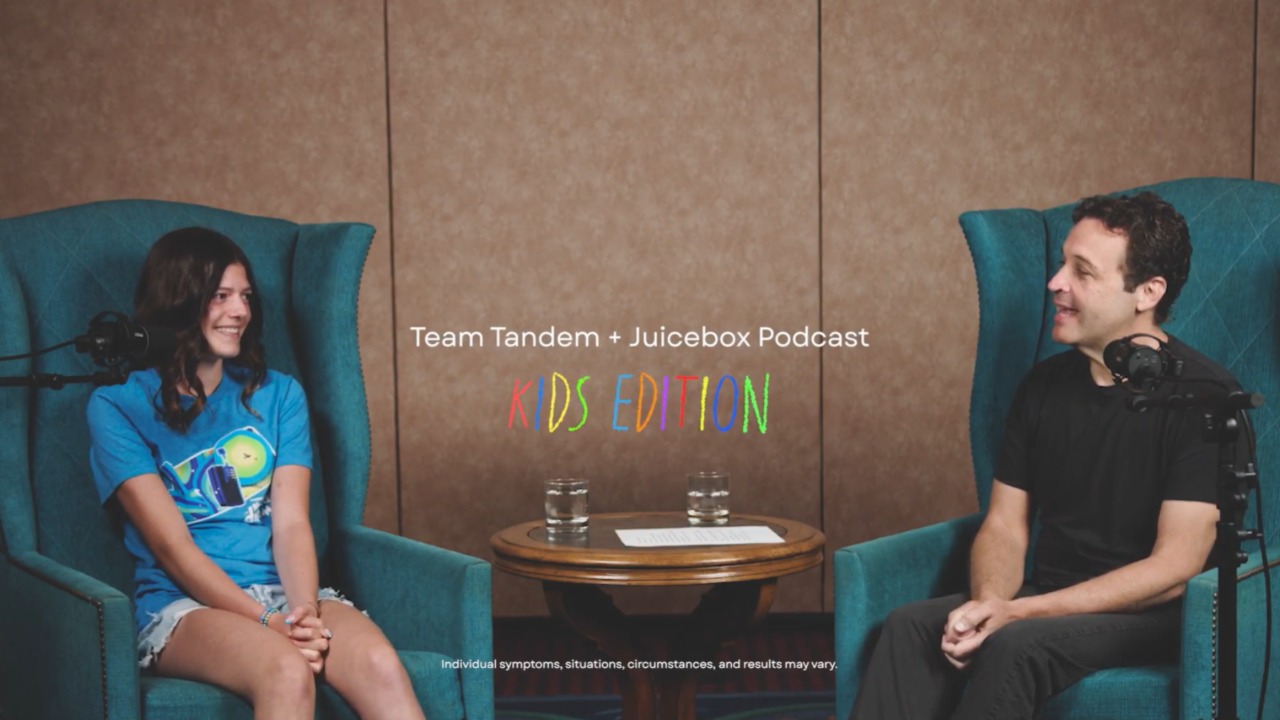
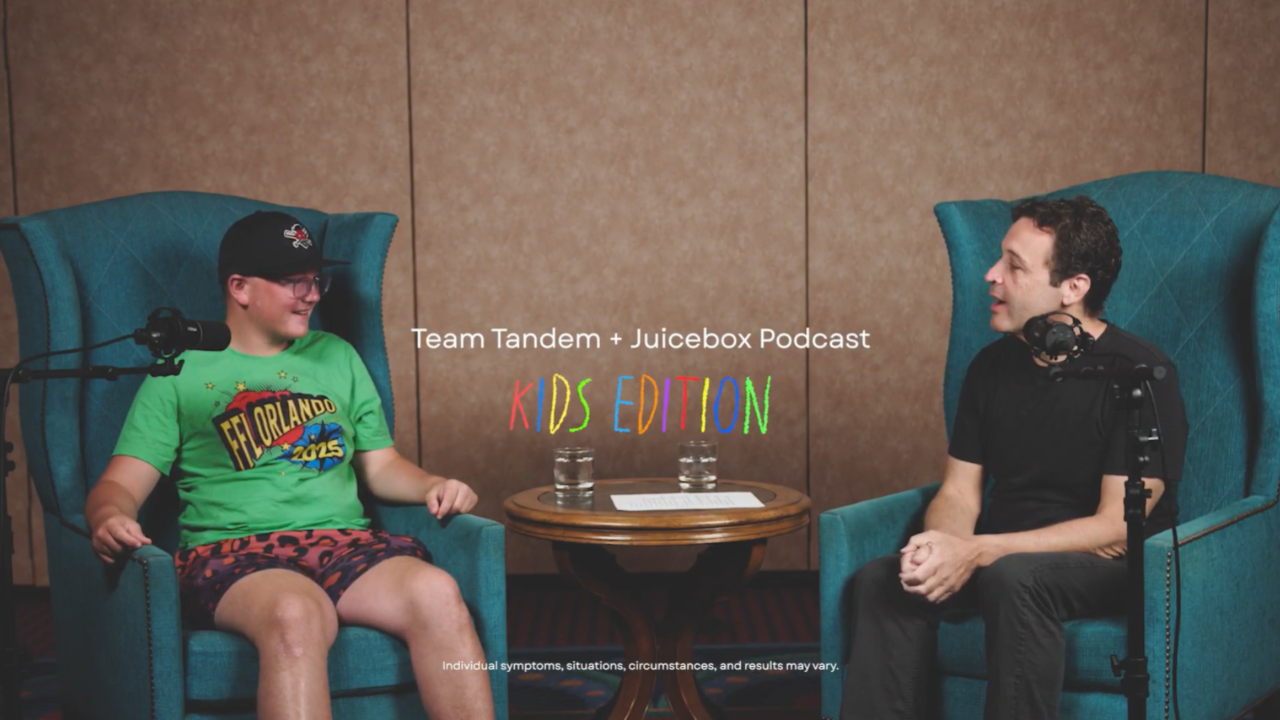
Scott and Jenny Smith, CDE share insights on type 1 diabetes care

You can always listen to the Juicebox Podcast here but the cool kids use: Apple Podcasts/iOS - Spotify - Amazon Music - Google Play/Android - iHeart Radio - Radio Public, Amazon Alexa or wherever they get audio.
+ Click for EPISODE TRANSCRIPT
DISCLAIMER: This text is the output of AI based transcribing from an audio recording. Although the transcription is largely accurate, in some cases it is incomplete or inaccurate due to inaudible passages or transcription errors and should not be treated as an authoritative record. Nothing that you read here constitutes advice medical or otherwise. Always consult with a healthcare professional before making changes to a healthcare plan.
Scott Benner 0:00
Hello friends, and welcome to Episode 544 of the Juicebox Podcast.
Hey everybody, this is the next episode in the diabetes variable series. So it's going to be me and Jenny Smith. Jenny, of course, is a 30 plus year type one, a CDE, a nutritionist, she says a whole bunch of stuff. And she's here today to talk about a new topic, something that might come up in your life, that very well may impact blood sugars. The variable that we'll be talking about today is masturbation. I know you probably saw that in your podcast player, but I'll just give you a second to let it sink in. Right. So you know, that's what we're going to talk about. And it's gonna be serious and it's gonna be silly. So try to expect both serious and silly here. Please remember, while you're listening, that nothing you hear on the Juicebox Podcast should be considered advice, medical or otherwise, always consult a physician before making any changes to your healthcare plan. or becoming bold with insulin. I looked up some euphemisms for masturbating, because I thought I would put a couple in here, but if I'm being honest, a number of them are disturbing, so we're just gonna skip it. Instead, I'd like you to say your favorite euphemism out loud right now, no matter where you are.
This show is sponsored today by the glucagon that my daughter carries. g vo cuyp. Open. Find out more at G Vogue. glucagon.com forward slash juicebox. Okay, all right. I'm just I'm just gonna ask you before we start, are you Oh, are you up for something here?
Jennifer Smith, CDE 1:53
Sure. It's not like technically research, like, Oh my gosh, I have to delve into like studies for this question
Scott Benner 2:00
the exact opposite of that. Okay, you're ready? I feel so weird. I'm not gonna look directly at you, Jenny. Okay, I want to talk about a variable today that I'm hoping I mean, honestly, if you can't help me with this is going to be such a sad conversation but orgasm. Oh, interesting. Good question. It's a honestly, do you want to know where I got it
Jennifer Smith, CDE 2:26
from? From your questions online besides
Scott Benner 2:29
the list? The The reason I moved it up on my list was, there was a massive conversation in the private Facebook group amongst parents. I just it's so weird to say, who all had an aha moment at the same time. And a lot of their statements sounded like this. Oh, I just thought that at a certain time of night, my kids blood sugar went up, or I thought a shower made my kid's blood sugar go up, or I thought and I was like, Oh my god, I never thought of this. So
Jennifer Smith, CDE 3:04
that's in the population in which that will occur. Yes, because I've got little kids who are like five and their bath makes their blood sugar go up, I guarantee it's
Scott Benner 3:16
gonna be a different thing. So the the, so the conversation started very boy centric, like people are very much like, Oh, this is why my son showers make his blood sugar up. This is why when my son's like, door is locked, his blood sugar goes up like this stuff, right? But then very lovely. adult women who have type one in the group jumped in and said, I gotta be honest with you. My blood sugar goes up to when I'm doing that. And I was like, Okay, now some people said it doesn't. And some people says it does. But I want to, I guess I'm separating orgasm, during intercourse from orgasm while you're by yourself, because I guess it's probably if you're doing it right. It's probably more vigorous when you're doing it with somebody else. Right. So then there's other things to think about, like I
Unknown Speaker 4:09
would guess so. Yeah, two children stop.
Jennifer Smith, CDE 4:16
Oh, yeah. Yes, I would guess so. I mean, experience wise. And actually, because I get into those conversations with my female clients. I don't think it's honestly ever been something that I've worked with, that a gentleman has brought up to me, but the women that I work with, especially like in preconception time, and all of that kind of stuff. It's it's a topic that that's brought up. I've actually found I think, it seems to be about like a 5050. And in women, so to speak, not the teens but women who seem to have more of a drop in their blood sugar. After but, you know, I'd have To have data with markers so when and whatever to actually see was there actually arise before like the drop off almost like you drop in blood sugar after exercise, but not maybe during it. So that could be but I would expect in the teen population, I'd expect if I, if there's a little bit of maybe like, maybe there's like a behind the scenes like anxiety, especially for teens who live with their parents and are in their shower or lacking their bedroom door. And there are other people in the house, right? So they're kind of at a point of like,
Scott Benner 5:39
So are you saying that while in my
Jennifer Smith, CDE 5:41
mind, maybe a little anxious doing this because they might be discovered maybe I don't know. I thought
Scott Benner 5:48
I enjoy thinking mister with you. This is fun. So the plotting, you're saying could bring your like an anxiety or something? While I'm walking around the house, making sure I got door locks tissue. Whenever I need, I might be getting like, like, Hey, I'm about to do this thing. Maybe somewhat. Maybe it's exciting. Maybe I'm excited. I'm about to do it. Maybe I'm worried somebody is going to catch me. Right? Okay,
Jennifer Smith, CDE 6:15
I would I would put it kind of in the class of like, practice running, usually will keep your blood sugar steady or drop it right. You get to your a race and the adrenaline of the race day performance expectations and everything. Many of the athletes I work with on their race or their you know, team kind of competition, they their blood sugar's go up, I see what you're saying. Maybe it's I mean, again, studies would have to be done to the
Scott Benner 6:44
point. I guess we can just talk these are all thought yeah. So
Jennifer Smith, CDE 6:49
that's a great question. That's a great question. Really, it is,
Scott Benner 6:52
listen, it is something that I would guess impacts most people. I might be giving something away here. But I would say many days of the week. Yeah. frequently with enough frequency that it should be talked about. There's no way anyone's going to talk about you said earlier. This has never come up with any gentlemen, I'm going to tell you Jenny, a guy who brings up the Bleep this up. But a guy who gets on with you to talk about diabetes and starts talking about their health habits probably not going to come across like gentlemen. This is true. That's why they're not asking. They're probably just figuring out on their own. That's why the podcasts here so we can talk about stuff like this.
This show is sponsored today by the glucagon that my daughter carries. g vo hypo Penn. Find out more at G Vogue glucagon.com forward slash Juicebox.
Jennifer Smith, CDE 7:54
Podcast Funny thing is about it that from a parent's standpoint, it's not something I've heard in terms of a question from parents either. Yeah. And the topic of alcohol comes up very frequently for my teen population. I mean, I've had questions as young as kids who are like 13 and 14, parents questioning, you know, well, we don't encourage this. And we've been, you know, we've discouraged until this certain age or whatever. It is a point that I want you to bring up to reference the dangers of it. But this other topic,
Scott Benner 8:30
people don't want to think about it. I'm here, don't bring up by going through the the Facebook, the thread, it was forever long. And most people found it incredibly valuable. Because you realize that especially for a mom, I think, like I would imagine it dad's just like I get that happening. And I don't say anything, but moms are probably like they look at their sons. And they don't think of them that way when they're young. And then you hit that moment where you're going to figure this part out. That's not nearly the first thing that's going to pop into your head when you're like, I wonder why his blood sugar is going up. Because you're going to be thinking like, oh, maybe this is happening. Maybe it's a Grossberg maybe it's this, maybe it's that
Jennifer Smith, CDE 9:06
or maybe he's sitting and eating the bag of Pringles in his bedroom and forgot to Bolus or whatever you're thinking other things.
Scott Benner 9:13
But more more accurately what happened is somebody they found attractive, he probably scrolled by on Instagram. And now there you go, now we're gonna see what we can do. So is there a physical like suit? But to start over again, you're saying women, when they're by themselves as often as not finish? And then their blood sugar's drop? Or what do you see there?
Jennifer Smith, CDE 9:38
Yeah, I mean, I would say again, in the women that I'm working with, mostly that the topic comes up, it's like in the preconception stage, right? Where they're actually trying to have a child and have to do things in order to have the child we you know, into terms of that many are very willing and want to actually make notes about things that they can figure out what to do. And so most often, I would say, like I said before about 50, at least 50% of women find that it's more the after is a drop in blood sugar. Versus the during. Okay, so. And I would expect maybe it has to do with movement and length of time together and all of the other things that could propel more of a drop in blood sugar, or it could be, you know, like the end of a run. Many people have a lower blood sugar in the aftermath of a run for hours because of the lasting effect of those like, feel good hormones and the exercise, so
Scott Benner 10:47
Okay, but if we're, if we're talking about Have you had any experience with like, women talking about masturbating, or no smoking, mostly, yeah. So no, nobody's ever come to you and said, like me when I flick my been like stuff, nothing like that. By the way, what's your favorite? What's your favorite? Well, I'm gonna bleep this out. So no one ever tell me your favorite euphemism for masturbating that a woman can use?
Jennifer Smith, CDE 11:14
Oh, my God, I don't even know. I know. There was I guess I never think about that. I mean, in terms of like, what you would call it? I don't? Yeah,
Scott Benner 11:26
I don't know. Fine. All right. I just thought totally funny. Alright, so. Alright, so
Jennifer Smith, CDE 11:34
I think it's a great question, though. Especially considering all of the like, tuning commentary that was kind of being discussed online about it.
Scott Benner 11:45
Yeah, it was super interesting how interested people are I also listen, as I think through what I know about masturbation, and what I know about diabetes, I would say for an older person who doesn't feel a guy who doesn't feel like oh, someone's going to catch me doesn't have any of that build up stuff. I would say that, you know, you'd be surprised how it pops into men's heads, like, in the course of a day, you know, like the way you might the way you might think like, I'm gonna get a glass of water now, like a guy might be like, Oh, you know, I'm gonna do and so that might be very blunt, say leading into it. And then so I'm a guessing there's vigor and excitement. dooring.
Jennifer Smith, CDE 12:22
And then it could be like an adrenaline rush could
Scott Benner 12:24
be a bit of an adrenaline rush, although sometimes it's medical journey. You know what I'm saying? Sure. No, you don't even know you're such an awesome person. I such a white person, you're such a nice person. Like, here's my sometimes it just needs to be accomplished. Okay. It's like a chore and not not a fun thing. But I would think that to
Jennifer Smith, CDE 12:44
get it done, it's like mowing the lawn, check it off.
Scott Benner 12:47
See, there's your euphemism. It's, it's next time your husband like disappears for 15 minutes, and he comes back go, Hey, were you mowing the lawn? Never know what you were talking about. And, and so I would, I would guess, too, for a lot of women it might feel more intimate than then for guys who might see it more as utilitarian sometimes. I guess. Yeah. So there's a lot to be considered here. But if you're the parent of a adolescent child, and you can't figure out why every time the door's locked, there's a blood sugar change. I mean, I don't know where to go from there with that I never had to have that conversation with my kids so far. Although in the course of the conversation online, an adult woman talked about her mother could see her orgasms on this CGM and knew it over like, because her mother was like, inspect your clue. So so the girl would go out sometimes on a date she see this thing happen, the girl comes home. And then no mom started putting two and two together and then the girl grows up and becomes an adult and the moms and now though girl's mom knows when she's having sex by your CGM data.
Jennifer Smith, CDE 13:59
I feel like my you got to get rid of Yeah, that would be time to go then. You can't follow me anymore. I'm
Scott Benner 14:04
so sorry. But anyway, that's a variable. It's really interesting. I guarantee you no one else is going to bring up on their diabetes blogger podcast except for me.
Jennifer Smith, CDE 14:14
No. So that might be more of an after dark.
Scott Benner 14:18
I think I can do it. After Dark berry diabetes variable after dark, and then I'm just gonna call it I don't even know what I would call it. I'll use my I can't use my favorite euphemism. But anyway, I will share something personal with you or not about me about a euphemism that I think is funny. All right. We're done with this. Now it's over.
A huge thank you to one of today's sponsors, g Vogue glucagon, find out more about chivo hypo pen at G Vogue glucagon.com forward slash juice box. you spell that g VOKEGL Uc ag o n.com forward slash juicebox. And if you enjoy Jenny she actually does this for a living so you can find her at integrated diabetes comm Let me help you with your diabetes needs.
Before I go, I'll remind you that the diabetes pro tip series begins at Episode 210 and goes on for quite some time. Episode 211 is called all about MDI while 212 is all about insulin to 17 Pre-Bolus to 18 Temp Basal to 19 insulin pumping to 24 mastering a CGM to 25 bump and nudge to 26 the perfect Bolus 220 excuse me 231 variables, that's a pro tip that just talks about variables. And then this is a episode about a specific value anyway. Let's not get confused, you're probably writing 237 diabetes pro tip setting Basal insulin 256 exercise 263 fat and protein 287 illness injury and surgery 301 glucagon and low VGS 307 emergency room protocols 311 long term health 350 bump a nudge Part Two 364 pregnancy 371 explaining type one glycemic index and glycemic load 449 postpartum 470 weight loss they are available right here in your podcast player at Juicebox Podcast calm and at diabetes pro tip comm check them out. Please, please, please. Thank you so much for listening. I'll be back soon with another episode of the Juicebox Podcast.












Please support the sponsors


The Juicebox Podcast is a free show, but if you'd like to support the podcast directly, you can make a gift here. Recent donations were used to pay for podcast hosting fees. Thank you to all who have sent 5, 10 and 20 dollars!

#543 Something is Fishy
Lexi has been living with type 1 diabetes since she was 4 years old.
You can always listen to the Juicebox Podcast here but the cool kids use: Apple Podcasts/iOS - Spotify - Amazon Music - Google Play/Android - iHeart Radio - Radio Public, Amazon Alexa or wherever they get audio.
+ Click for EPISODE TRANSCRIPT
DISCLAIMER: This text is the output of AI based transcribing from an audio recording. Although the transcription is largely accurate, in some cases it is incomplete or inaccurate due to inaudible passages or transcription errors and should not be treated as an authoritative record. Nothing that you read here constitutes advice medical or otherwise. Always consult with a healthcare professional before making changes to a healthcare plan.
Scott Benner 0:00
Hello friends, and welcome to Episode 543 of the Juicebox Podcast.
Lexi's on the show today, she's a young person living with Type One Diabetes for a long time. It's got a lot of good stories in her life so far it's been quite a quite a ride. She's gonna tell us about it. While you're listening, please remember that nothing you hear on the Juicebox Podcast should be considered advice, medical or otherwise, please always consult a physician before making any changes to your health care plan. We're becoming bold with insulin. I have said that so much in my life. I'm now pausing it weird spots to make it fun just for me. Your healthcare plan are becoming bold with insulin. It just I'm just playing with it at this point. I don't I just I mean, I have to say it, but I've said it so much. And I don't want to pre record it. So every day I give you a new one. You probably don't care about that, right? Hey, have you checked out the T one D exchange yet? T one d exchange.org. forward slash juicebox. Hear us resident who's has type one, or is the caregiver of someone with type one, you can take the survey at that link. They'll be supporting people with type one diabetes, while supporting the Juicebox Podcast. p one d exchange.org. forward slash juicebox.
This show is sponsored today by the glucagon that my daughter carries. g vo hypo Penn. Find out more at G Vogue glucagon.com forward slash juicebox this episode of The Juicebox Podcast is also sponsored by the Contour Next One blood glucose meter. Please go to Contour Next one.com forward slash juicebox to take a good look at the best darn little blood glucose meter I've ever seen. Are you in a bathtub right
Lexi 2:02
now? Why does it sound like I am hearing dripping water? Oh, I you know it's my hearing isn't taking off. Really? Yeah.
Unknown Speaker 2:11
Is that taking off?
Lexi 2:15
Well, I have my air pads and I don't know is that better for you? Or Jeremy to take them off?
Scott Benner 2:21
It wasn't the earrings for some sort of an electronic noise. Yeah. Oh, it's a fish tank. Can you like I can kill the fish? I mean, I won't kill the fish to turn the filter off for an hour. Well it?
Unknown Speaker 2:38
No, they're my boyfriend's fish that want to mess with it. Listen.
Scott Benner 2:44
Hey, I can't be your problem. Technically, they're my stepkids treats those fish like his kids. Yeah. I feel like they all have names. Yeah, oh, yeah. All right. Well, this is a strong start to the podcast because I am recording already. And we're going to absolutely find out the names of your boyfriend's fish before we get started. And why you chosen a boyfriend who names this fish? And at no point was this like an indicator for you? Were you like, what did you do? Did you love him by the time he told you that?
Lexi 3:20
Well, so before there were eight fish, and some of them looked the same. But so like some of them had names and some didn't. And then now they're some of them. You know, COVID like this whole mess of like, we live in Chicago. So we were downtown Chicago, and then everything shut down. So he went back to the suburbs, and we lost the fish. And then halfway through this pandemic, like we came back after, I think it was like three weeks, grab the fish brought them back to the suburbs there. And then one of them jumped out and died and then another one disappeared. So it's just been like a mess. Now they all have names.
Scott Benner 3:58
We're never getting to your diabetes story Alexi Just so you know, just introduce yourself very quickly so we can keep going.
Lexi 4:04
Yeah, sure. Okay, my name is Lexi. I am from Chicago. I am I'm 28 years old and I've had diabetes since I was four.
Scott Benner 4:12
Okay. All right, hold on. You lost the fish.
Lexi 4:18
So, one of them just like it's not in the filter wasn't around the floor. We're assuming one of the bigger guys ate her or him? I don't really know. So I mean, when I say it disappeared, it legitimately disappeared.
Scott Benner 4:34
Well, I know I can only be certain that the girl from a recent episode called vegan cat her cat did not kill it because it can't eat protein. So okay, okay, okay, okay. You lost the fish. You will abandon the fish for a while like at first you're like you know Coronavirus is that can Coronavirus affect fish and then I realize you meant that you like took off because the Coronavirus and got out of the way Yeah. All right. Get out of the city. Okay. All right. Let's just start over. Here's the really strange thing. I'm learning about this podcast. How old are you? Well, I'm 27. But I'll be 28. A couple months. Okay. Because when you wrote me you were 26.
Lexi 5:18
Just grown to yours? No, I'll be 28 in December. So I'm assuming that by the time this airs, maybe it'll be 28.
Scott Benner 5:24
Please, by the time this airs will be 33. And those Yeah, maybe like this in February. Okay. All right. So I just don't like her note says she's 26. Nine, like, how long have you been putting people off to get on this podcast? Is it at the point where by the time it's time to record the podcast, do you think like, Oh, that's right. I wanted to be on a pod. Yeah, that's what I woke up this morning. And I was like, it's podcasting. It's nice. I'll tell you what the other secret of how I make sure that the people who are on the podcast want to be on the podcast, is I make almost no effort to remind you of when you're on the podcast. Yeah. Because if you're here today, eight months after you sent me an email, you really want to do this. And that's listen every day. Do you really?
Lexi 6:15
I do. I feel like I was catching up for a while. Um, but then I guess it just, you know, honestly, like I said, I'm a recruiter. So I review resumes 45 minutes every day. So that's my podcast listening time.
Scott Benner 6:27
Yeah, that's cool. I appreciate that. Okay, so Lexi, who's 28 was diagnosed at what age was four? Okay. Do you remember diabetes from being four years old? Or when do you begin to remember it?
Lexi 6:44
I think I really, really begin to remember it when I went to kindergarten. But before that, like I remember bits and pieces of like, right before I was diagnosed. And then there are things that my parents told me like, I didn't go to preschool because it was right when I was diagnosed, and then we moved out of the city and into the suburbs. So there wasn't really a time for me to go to preschool. So I remember like those little things, but I'd say kindergarten just because I was so different than all the other students. I had to go to the nurse's office, I had juice boxes at my dad's my teacher, you know, always kept an eye on me things like that.
Scott Benner 7:17
Do you ever wonder? I wonder. So I'm going to find out if you wonder if my memories are because someone told it to me where because I remember.
Lexi 7:28
You know, I was asking my mom that because I asked her like both my parents. I was asking him about my like diagnosis ever since. You know, we figured out a time and date for this. But there was one story I told her and she was like, I can't believe you remember that? And I was like,
Unknown Speaker 7:43
I don't? I didn't. I don't know. I
Lexi 7:45
thought someone told me the story. She's like, I for sure has never have never told you anything about like this specific. Like moment. It was like a weird memory that I had. Like, maybe like two months before I was diagnosed. I think I was really really sick. Like pukey puky like all the time, and I'm
Scott Benner 8:04
episode title Lexie, hold on a second. puke up all the time. Go ahead. Lexi Foyle pppp.
Lexi 8:13
Well, no, there was this memory that I had. I remember I was like, in the bathroom. I was puking. And then afterwards, I my mom was like carrying me and we lived in like a little apartment at the time. And I was like, Can I have a pickle? My mom's like, yeah, you had such strange cravings. Like, you would have these full meals at dinnertime and then go in the fridge and just like eat lunch meat, like right from the bag. And I was like, as a four year old. I don't know what I was doing. But you know, it's just so weird.
Scott Benner 8:42
Do you wonder how many people right now are thinking Wait, you just can't eat lunch meat out of the bag. That's wrong. Oh. My last thought, by the way about memories is that I am starting to believe that photos that I've favorited in my in my I have iPhoto. So we have all of our pictures are in this one place. I'm starting to think that I believe that my favorited photos are my favorite times of life because I see the pictures more frequently. So I remember the time. I'm starting to think that I'm impacting what I think about my life by the pictures that I say. Yeah, that's a good point. I
Lexi 9:21
mean, I feel like when I look the happiest in my picture is probably a really happy moment or really sad moment, whatever. And I do like tend to cling on to those memories. I
Unknown Speaker 9:30
don't know. That's a really good
Unknown Speaker 9:31
point to bring up though.
Scott Benner 9:32
I'm just telling you that. I don't know why I have so many stoner thoughts and I don't smoke but I just I'm like I think I'm impacting my memories with these pictures. Yeah, anyway. Okay, so I got to do some quick math. Let's we're calling you 28. And it's a phone. It's a 24 years ago, and it's like 1996
Unknown Speaker 9:57
Yep, exactly. Married by the way.
Scott Benner 10:01
What do you say? The year I got married? Oh? Yeah, well, I'm just saying, either you're really young or I'm really old, but there's something going on here. Okay, so interesting. What was it like back then? Did they give you a pump right away? or What did you do?
Lexi 10:20
No. So, um, I don't remember too much of it. I got it. I went on mini med. When I was in second grade, so I think I was eight. But before that, we had to dip I think it was like, ah, and our, he was an insulin. And my parents did everything for me. I'm very grateful for that. But I remember, definitely, there was no pens, so it was all syringes. So you had to pull it out of the vial. I definitely tested my fingers. I mean, my my fingers looked like pasta streeters. I could, like squeeze my finger without poking it and blood would come out. Like that's how. And my parents tested me 12 times a day. So it was like equivalent to a Dexcom. Now but finger cricket. Yeah. So I mean, my fingers were just like, so. So like scabby and like I couldn't feel much. But I mean, now that I've moved on to a CGM, it feels much better.
Scott Benner 11:14
Just just, that's what it was. That's what are just so I don't get a bunch of emails later. I think it's RNN. Or l&r. I think you said, I'm not sure. I just don't like I just thinking humalog. I don't know. I'm just telling you. I am I agree with that. If I agreed with that, and it's wrong. It's email city. Hey, Scott, an episode of the podcast. You said. Lexi said and then you agreed with her and I'm okay. I'm trying to talk here. It takes a lot of effort. Okay. Everything can't be perfect. So wait a minute, you could really squeeze your fingers and make blood come out. Yeah, it was disgusting. Oh, do you have? Do you have a like a clotting issue or anything like that? No, I
Lexi 11:53
from what I know. No, but it was always like my pointer finger. My middle fingers were the ones that I tested on the most. And those are the two fingers that would do that.
Scott Benner 12:01
That's an interesting party trick. Yeah, right. Okay, look what I can. Do. You ever get the double bang? Like you click it once, but you have two holes, and they're not near each other?
Lexi 12:11
Mm hmm. Yeah, actually, I got that a lot. Or I would just poke one side and then like blood from the other side of my finger would come up to so I don't know. Like, okay, well, that one wasn't enough. So I can just go from the other side, too. And that was the other thing, like, now I can, when I'm testing my blood sugar, if I have to, I can, you know, go back and like re poke my finger and put more blood in it. But before it was like you had three seconds. And if you didn't make it in that three seconds, like you had to use a whole new strip.
Scott Benner 12:40
I know. Well, technology's come a long way. All right. Listen, I think everybody needs the buckle. And I think Alexi is gonna be a fun ride. So let's, let's figure out what happened here. So I am a you have a pretty detailed email. You obviously write emails professionally, I can see that. So so moving through that time, not not very much of a big deal for you. Like, you don't seem to indicate that your early years were any kind of a burden or anything like that. Going into middle school, and you started playing a lot of different sports. Yeah. How did that get managed? Well,
Lexi 13:17
so at that time, I was on the pump. So I had a two pump. So sixth grade was when I started volleyball. And I remember the coach specifically telling me like, you can't die for a ball, because you're going to your bomb said, you're going to mess up your pump. And I was like, Okay, well, I can never go for the balls that are going to hit the ground, but that's fine. And then later on that same year, I started track. And I remember this, like memory of I was going through hurdles, like hurdle practice. And I remember jumping through one hurdle, and I was making it and I had this worry in the back of my head where I knew that my pump was just gonna fly off. Like I just like, had this worry. And then lo and behold, that's exactly what happened. I went through the fourth hurdle, my foot got caught on the hurdle, I fell to the ground, but like, my pump went one way. And I went the other way. So I remember my mom had to come and pick me up from practice, because I didn't have insulin on me. And you know, at the time, like the pump wasn't so like, I couldn't carry it with me to school to if I had to change it. There were just so many pieces to it. So I remember like the second I got home, I was like, get this thing. You can't have it and by that summer I my mom's we got we switched to the patons. So that was okay for me. And then I had lantis and novolog. Okay, and I don't remember anything crazy going on, like low blood sugars or high blood sugars or anything.
Scott Benner 14:42
Did you like show up a volleyball practice the next year? And we're like, hey, guess what? I can die for balls. Oh, yeah, I made the 18 I would assume if you can't dive it's pretty hard to be good at volleyball. Right? Right. Exactly. I can imagine the the absolute joy on the volleyball coach when your mom was Hey, Lexi can't die if he was probably like, say What now? Like, we just put this girl on our team and said no to get the girl that can dive. So the whole game lady, what do you want from me? That's very funny, actually. So you you pushed your parents to get you back on MDI then?
Lexi 15:22
Yeah. Oh yeah, I think at that point well, when I was in second grade I, I wasn't old enough to make that decision. I didn't even know I was going on a pump. I just remember, one day I was stayed home from school and the mini med people can't or the majority people came to my house and they were putting this thing on me. And I was like, What is going on? My parents, my dad, I remember it was like, No, this is going to be fair diabetes, it's going to help you and I was like, okay, whatever. I mean, yeah, like everyone in school knew I was diabetic, for so long. So it wasn't anything that I had to go to school and explain to people. From that time I pushed them to get off of it. Yeah. So
Scott Benner 15:57
from that time to the track incident, you had a pump, then you got rid of the pump. And you didn't have one for a long time, right?
Lexi 16:04
Yeah, so I didn't have one, all through high school, or the rest of middle school all through high school, all through college. And really, actually, a year ago, I might memories on my photos came up a year ago that I switched to the 670 g last year. So it's been a year since I've been on it, actually.
Scott Benner 16:25
Right. And so there's a big gap of time. Now, I think this is where a good part of your story happens. Right? So you're doing well all through high school, you told me your parents, you know, made you promise to take care of things keep track of stuff, if they let you go back to the shots. And you know, that was no trouble through through high school. What do you know about what you're a one sees worth through high school?
Lexi 16:46
Yeah, I don't think they want to, or over 6.5, I think they were I was really in good control up until then. But I still had like my parents, like, hey, make sure you Pre-Bolus like, Hey, we're eating dinner in 15 minutes, make sure you give yourself your shot. So I had those reminders that were really helpful. Gotcha.
Scott Benner 17:01
Your parents did not come to college with you, I assume? No, they didn't. And did it become an issue that there wasn't somebody there telling you what to do?
Lexi 17:10
No, in the back of my head, I knew like I still gave myself insulin and just wasn't like I would be more private about it. And I was thinking a lot about this. Because in my earlier grades, my mom would come to school with me my first day, and she would read a book to everybody in my class, about like taking diabetes to school. So everybody knew I had diabetes, it wasn't like everyone got excited when they had to walk me to the nurse's office, like before lunch, or if I was low. But then like, when I went to college, I didn't have that parent there to teach everybody that I had diabetes, so no one really around me knew about it. So I my roommate, obviously knew, and she was just like, okay, like, do I need to do anything? I was like, No, I'm saying I'm self managed, like, I can do anything, I can do everything I need to. So it was kind of like, I don't know, if it was an embarrassment kind of thing, or I just didn't want to explain it to people. You know, like, what happens if I'm hire like, if I'm moody or you know, this and that and like, what the side effects could be from higher low blood sugars, that I was just like, you know, if I just don't tell anybody about it, and just like manage it myself, I think that I can do it. I can do this, you know,
Scott Benner 18:17
did not telling them make it feel weird when you did something and that therefore you weren't doing it as frequently or like did was cast exactly, I
Lexi 18:26
had a friend who didn't like shot. So I would never do my shot around her. I would wait until I go to the bathroom or but I would never say like, hey, let me go to the bathroom real quick. Because we're going to eat soon, I would be like, Oh, actually, I have to go to the bathroom now. So I just bring my shot with me and do do my shot there. But I would just pull it out. And like some of my friends wouldn't even say anything as I just you know, injecting myself. But if
Scott Benner 18:49
I was around you were like consciously trying not to make who I'm just making up a name, but but you didn't want her to be uncomfortable. Exactly, exactly. That's interesting. I would never occurred to me, I might have a personality disorder. It's possible. I've never considered another person in a situation like that before. But I get why you would. And I understand how it could happen. But that's so that so nobody's there to explain it because nobody's there to explain it, then you feel like Well, I don't feel like explaining it to everybody. And or I don't want to freak everybody out by whipping this thing out that they don't understand starting that whole, that whole rigmarole. So then,
Lexi 19:28
and then also part of it was I had lecture halls of like, fall like, you know, 100 people. So I remember like every class that I had in high school, middle school, whatever, I'd go to the teacher and say, Hi, my name is Lexi. I'm diabetic. You know, the nurse knows this. Like, here's my IEP is what we used to call instead of 504 plan. Like here, here's glucose tablets, if you can just keep it when you're asking case I have a low, but I remember doing that my first day in college, to my professor and he was just like, okay, like, I'm not going to carry these around with me. You know, and I was like it dawned on me I was like, Yeah, that's right. Like 500 students said he sees a day, there's no way that he's gonna remember who I am just because I'm a diabetic. It's not like me sitting in the front of the lecture class, he's gonna be like keeping an eye on me. So I think that, like,
Scott Benner 20:14
you know, whatever. He's given a lecture to 300 people in from the back of the room he hears and he's got exactly I hope that's not Lexi. I gotta get the glucose tablets. It was that Lexi? And then what do you wait for someone to say no, sir. Lexi, this is me. I'm Lexi. I'm good. That was good. We're good. That kid fell for a completely different reason.
Lexi 20:35
Exactly. So I think there's that moment dawned on me and I was like, maybe just people don't care. Like if I don't explain it to people, it's not gonna matter. And if I do explain it to meet people, it's still not going to matter. So I don't know. I just I think at that point, I just kind of assumed that everybody was the same and wanting to learn about it. And I just kind of quote closed was really closed off about it right? Yeah.
Scott Benner 20:54
Your parents did you a disservice by not explaining to you at some point in your life that nobody really cares about you just you say Oh, yeah, there's not one person in the world walking around gone. This Lexie. Very interesting. I'm keeping an eye. Yeah. Exactly. No one cares about about you know that nobody's got time to care. And you know, I just mean of like regular everyday people. Obviously. You have family and friends who care. That kind of thing but the general public is not it's not worried about you.
Lexi 21:25
Right? Exactly. I don't have some sort of watch person as I'm walking to camp like walking on campus to school every day. It's why sell sugar. Okay, yeah. Fat snack and you ate that snack and you didn't Pre-Bolus for it a Skittle earlier, like,
Unknown Speaker 21:38
no, no one's there.
Scott Benner 21:40
The guy the guy running the security desk is like Is everything all right? Like she's you walk by like it's a 1950s TV show and you're walking on a black and white Street and the market guys like Lexie, take a piece of bread in case you get low. everybody cares about Lexi? Let Yeah, no, it's not like that. Yeah. It's interesting, isn't it? That we're also self conscious? Because really, no one's watching you. Except, except, except everyone people watches. But that's meaningless because it's fleeting. Right? Like, like, do what you must. Do. You look at every person you walk past.
Lexi 22:13
No, I mean, kind of like if I'm in a group. Let's say I'm at the pool. And there's a bunch of people at the pool. I love to people watch. But if I'm just walking to the street, or like down the street to my cart, I am one track mind just going to my car. And that's it.
Scott Benner 22:29
I know what every person looks like, who I pass on the street. As I'm driving, I look over I look at their face, I assess their car. And then I move on. Now that information is going out of my head a split second later. And if you were to say to me, you know what the last guy looked like, I don't know. But for some reason, I'm mesmerized by finding out. I love it. But my point is, is that it's completely fleeting. It's three days later, I don't sit down and go, we just hit it again. I just hit the stop button. Lexie and I'm recording again, for the first time in like 400 recordings, I just reached forward touched my keyboard and it stopped. That was weird. But I what I was gonna say was is that I never, it's not like three weeks later, I'm like, you remember the guy in the orange car with a blue hat? I've got to track him down and let him know that that hat did not match that car. Like that's what I mean about being self conscious. Like, who cares? Even like what someone else thinks you're never even going to know it. That's why I'm always weirded out by people who can be impacted by like, the internet. Yeah, like, you can just shut the internet off. You know?
Lexi 23:36
It's not like no, you don't have to log in every day. And you know, read every comment that everyone makes exactly for
Scott Benner 23:41
guys. Yeah, go ahead. No, I was gonna say for guys comes to your house and threatens to punch you in the face then punches you in the face that I'd be worried about. But, you know, if if a man in Argentina tells me he doesn't like the podcast, the way I get around that is by never ever paying attention to him. Like he doesn't exist. It's fascinating. Really, when you stop and think about it, what we what we give power to? I know and it seems like it really impacted you at school though. It's interesting. Yeah,
Lexi 24:09
I was Yeah, that's what I was just gonna say is that at school for some reason it I mean, I didn't care what anyone thought of me up until I went to school and then vote and that was like six years probably like all through school and then my first like, couple years in working life, I cared about everything and what everyone what everyone thought about me. And then once I switch back to the pump last year, like I don't care what people see, like if it's on my arm or on my leg, or like, I have this like, pad just bulging through my, my pant leg. Like, it just doesn't matter anymore. And I don't know when that switch for me. Maybe it was just because it was like, you know, you find someone that you start dating and you want to start, like making yourself healthier. And I've heard this on the podcast so many times. You want to get yourself healthier so that you can have a longer life with somebody else. That's when I think everything just turned on, like just flip the switch and I'm like, No,
Scott Benner 24:56
I need to get healthy. I'm more important than somebody else. Right, my odd thoughts about what other people may be thinking about me. And yeah, well listen, you gotta come correct if you want to attract a man who names this fish. You can't just come out Yeah, you can't just be doing it half assed I mean, that guy's gonna pass you right by he's obviously got a lot of options. So the least I could do is take care of myself I really want to know I want to take you back in a time machine and have him tell you that he names those fish before you cared about him and see if he's still your boyfriend.
Unknown Speaker 25:33
Imagine right. Hey, Mom,
Scott Benner 25:35
I thought I had a guy I was interested in but then you know he named US Fish and so we don't go out anymore. I just wanted to let you know. So you go to college you become self conscious about the diabetes. And and Do you ever work through it at college? Or is it just something that just plagues you the entire time?
Lexi 25:54
It was like something that was just in the back of my mind, but I didn't know what it was it was school first than diabetes. So I had a I remember I didn't go to the endo that often. And I think it was also this weird transition where I had this amazing endo from when I was four until 18. And then I was just expected to get a new endo and everyone every endocrinologist I met I hated I was just like no I'm not going back to them like I've got to find a new one. So that was kind of a struggle for me a little bit like I couldn't relate to any of them
Unknown Speaker 26:27
up until that point,
Scott Benner 26:28
and if I'm right here from what I remember from your email, you just you stopped testing during college completely
Lexi 26:37
Yeah, I know my parents are gonna listen to this and be like what but I'm not completely but I'd say like it went from like three times a day before meals and then it went to like in the morning and then before I went to bed and then it just like slowly weeded out I wasn't good.
Scott Benner 26:55
And you were not seeing an endo during that time either.
Lexi 26:59
No, I would get me a once he tested if I went to see like the yearly doctor. So I remember one and once a once he was at at 12 and then it just started coming down to what was like 8.8 last year before I switched to the pump
Scott Benner 27:15
okay all right. Hey real quick let's do a plug for juice box Doc's calm there's like three great doctors on my my list right from Chicago that apparently won't help you while you were there. Let's just real quick melody beers. I need to Swami Karis. Zimmer. Those are just three. Oh, I'm sorry Karis in wheaton, my fault. That's okay. It's close enough. I don't know Chicago at all. All I know is that for some reason you guys are excited that your pizza stick and I don't understand that either. So
I don't know what that means. Why would I use it? It does it. That's just bread and bread. Just say you want bread? Like let it go? Yeah, I mean, that's fine. I'm not judging you. Just, you know, eat bread and throw some ketchup on it. Tell me it's pizza.
Lexi 28:04
You know, I will clarify. I like deep dish pizza. But if I had to eat pizza every day, I'm not getting deep dish pizza. Every
Unknown Speaker 28:12
Neapolitan song? Yeah, right, right. Well, I mean, obviously. If they're mad, or this, they're not from Chicago, like,
Lexi 28:22
so do you eat deep dish pizza all the time? Like, no, it's like, a once a quarter kind of thing. But it's good.
Scott Benner 28:28
I don't even know how you could eat a cheeseburger last night. And when I was done, I started thinking I might not eat for like three days. I just I don't know how to. I would not eat a deep dish pizza and then be hungry again. No, exactly. All right. Well, listen, let's dig in a little more here. Pretend your parents aren't listening. Help some kids out in college, right? Like and parents who are getting ready to send their kids off. It just becomes less important or because you're not paying attention to it like this, obviously, then you don't have a glucose monitor. So you're just you're on a pump. you're counting your carbs. Giving yourself food. Not testing that frequently. What's the like? Did you did you notice that you didn't feel well as your a once he started to go up? And then you got accustomed to it? Do you remember that by any chance? Yeah, I
Lexi 29:12
remember like my lows. If when I did check my number. If I felt low, it was only 80. So it wasn't even that low unless I was dropping really fast. And that's I mean, I there would be no way for me to know. But yeah, I just became accustomed to that weird feeling. And then in in jumping ahead now I kind of felt like I had like a gluten allergy last year. And then once my numbers got better, I got over that. So now I can eat it. And I'm I feel great. But yeah, it was just like this weird. Like, I just was always thirsty. And I just felt like I had a friend that was always thirsty too. So I was like, oh, we're just always just friends and we're always thirsty. I don't know. So it was just like a weird thing. I just became accustomed to just feeling like crap all the time. Okay
Scott Benner 29:58
and then he So I don't want to I'm just gonna say you get out of college. And you test your a one. See you said in your note for the first time in four years, and you tell people what it was. And did you tell your parents? I did not tell my parents I think at this point when asked me Well, yeah, let's do they know now or is this gonna be a big reveal for them? This might be a big reveal for them. So mom and dad, if you're driving, I'm looking at the number here. Let me just say to you, I'd pull over Okay, or do you know what although I'll put the ad here, and that'll give you time to stop your car.
De veau hypo pan has no visible needle, and it's the first pre mixed autoinjector of glucagon for very low blood sugar in adults and kids with diabetes ages two and above. Not only is chivo hypo pen simple to administer, but it's simple to learn more about, all you have to do is go to G Vogue glucagon.com forward slash juicebox. g Vogue shouldn't be used in patients with insulin, Noma or pheochromocytoma. Visit g Vogue glucagon.com slash risk. People using insulin need a great blood glucose meter. That means if you're type two or type one, and I think you should take a look at the Contour Next One blood glucose meter. When you get this meter, here's what you get with it. It's holdable. Not really a word. But yeah, it is. It fits in your hand nicely, and allows you to be dexterous with the meter, like you can really come at the blood from a lot of different angles because of how the meter itself is shaped. That's important. It's small. So it's easy to carry or keep in your purse or your pocket. But it's not so small that you can't get a hold of it. There's no I'm saying it's the perfect size. It's the perfect shape. And it has Second Chance test strips. So if you get in their towards the blogging, I got hit a little bit of the blood, but get some in not enough, that doesn't ruin the test trip. Just go back and get more with your second chance. Not only that, sometimes you're gonna need to test your blood sugar when it's dark out. And the Contour Next One blood glucose meter has a nice bright light. If you're interested in seeing your data on your phone, you're in luck, it also has an app. And the app will connect to the meter through Bluetooth, and just update the data right on the application. And if you don't want to use the app, it's fine. You can just use it like a meter. It's very versatile. This thing is small, easy to hold but still the right size and very versatile. Understand I'm saying the Contour Next One blood glucose meter is for you. Check it out at Contour Next one.com forward slash juice box now there are links in the show notes and links at Juicebox Podcast comm if you can't remember them, but otherwise Contour Next one.com forward slash juice box. I don't even have time to tell you today about the cost of the thing, it actually may end up being cheaper if you pay cash than what you're paying now for your meter through your insurance. I mean, that alone is bizarre, you should check it out. They have a test trip savings program, you may be eligible for a free meter, all this information is on the website. Head over and check it out. I'm earnestly telling you about this meter. Okay, like that I had options to have other meter companies buy ads on the podcast. I didn't just choose the Contour. Next One for my daughter. I chose it in a lot of different ways. And I think if you check it out, you might choose it as well.
And what was your agency? Lexi? I don't even remember. 12.3 Yeah, it was not good. I remember looking like oh, shoot. Mom, if you're having chest pains right now just call 911. Don't even wait to see what happens next. Okay. But no, there's some good news coming. Don't worry. But that's really fascinating because you are a kid in middle school in high school who is in that in the low sixes most of the time, right? And then your a once he doubled in four years of college. hindsight did that impact your experience at college? The high one say, like your health in general, or do you not? Or would you just not know because you became accustomed to the feelings.
Lexi 34:34
I think I just didn't know because I was accustomed to the feeling. And I know that and my parents know this. I was drinking like I was in a sorority. I was the president of the sorority I like had all these things going on that diabetes are just way far back in my head. Like I knew I had it obviously I would Bolus you know whenever I had to and that was that was it like that was the extent of my care was just giving myself a shot of 10 units and calling it a day.
Scott Benner 34:58
Wow. You You were The president of alcohol basically, exactly did just a run for that position, or do they just see it in you and give it to you? How does that work? No, they picked me to be that person. Lexi, they looked at you and they were like, Huh. She can handle this. Yeah. lm sorry. Yeah, that's right. It's true. I said, to take a side bar for a second, when you're the president of a sorority, do you feel a pressure to like lead the charge in partying? Like, do you feel like you're like, setting the tone? I'm being serious?
Lexi 35:35
Yeah, I'm serious. Okay. So at that time, my school didn't have a lot of like restrictions and rules on Greek life in general. So when I became president, we also had to implement a risk management policy. So I think when I became president, I tried to tone our party down, down, because when we had to throw all these like risks and things people can sue you for, and this and that, and I was like, Alright, we're not gonna deal with this. We're gonna put this policy in place. Everyone's gonna follow the rules. And that's what we're gonna do. So there were a lot more things you could get in trouble for at a party. And I don't I don't I think people still had a good time, obviously, from what they've told me. I don't think they would tell me that they didn't. But yeah, at that time, I wasn't like, out leading the charge of, hey, let's go to this fraternity party tonight. And this one tomorrow, and this one on Sunday night. And actually, let's make it Sunday during the day because we have school Monday. No, that's not how it was.
Scott Benner 36:28
I just reached out to you on LinkedIn while you're talking because I want to see how your life progresses. And because that's interesting that you took kind of the opposite approach where you're like, well, let's tone this down a little bit. But still tone down partying at college is still it's still so somehow it gets you to a 12 a one c i guess Exactly. Yeah.
Lexi 36:48
I mean, you're drinking Margarita is it's not like I like to Cabernet back then. Or vodka sodas, or Baca waters.
Scott Benner 36:56
Do you think you got to be honest with yourself here? Because you have a glucose monitor now? Is that right? Yep. Okay, so do you think that if you had that in college, that it would have changed anything for you? Oh, I
Lexi 37:09
think so. Totally, because I thought it was just a hassle to check my blood sugars and my fingers. I told you were so bad that I was like, I don't want this anymore. But I didn't also know about glucose monitors. I had one when I was 18, I think right before I went to school, and it was like this giant clunky thing that nobody told me there were these little ones that just you know, like the duck, the ducks come now. It's just so tiny. And it's just sticks on my arm for 10 days. I don't even realize it's there. But if I knew that that existed, I think I would be okay wearing one as long as it was under my clothes.
Scott Benner 37:42
I see it. But do you think having the information would have changed your activities? Or do you think you would have just ignored it?
Lexi 37:50
I think I would have ignored it. I think just seeing it being able to see it on my phone. I could I would know like okay, there's I know that there's sugar in these drinks that I'm having, like, let me give myself more insulin, at least I think I don't know if it would have changed like, you know, Pre-Bolus thing or anything like that, because I was still self conscious of doing shots in front of people. But I think I would have been more aware of how much insulin I was giving myself or maybe trying to prevent Loeser. If I saw that I was high, I would give myself insulin because I was high
Scott Benner 38:20
because I've seen people that just turn the alarms off to like I'm always fascinated. Like, how did you get the 400 when you have a CGM, and they're like, Oh, my alarms at 400. Oh, yeah. So I just um, I wondered like, so you were reasonably. So you were more hamstrung by the social side of it than you were a of the the other part like you would have tested your blood sugar, but you didn't want somebody to see it.
Lexi 38:48
Yeah. And in high school I had even growing up I had friends that were diabetic. I had a few of them. So it was just so normalized everywhere. I went that I haven't met another diabetic since I was young, like I couldn't tell you any other diabetics that I met in college, even maybe one or two and like work settings, but not that I was close to them that I talked to them. But
Scott Benner 39:12
yeah, so somebody would have been helpful just to anybody really make you feel
Lexi 39:15
just a support system. And I think that's what it came down to was. I guess I thought no one was interested in learning about it. I was like, Okay, well, I'm not gonna tell anybody about it, because they don't care. And I think it just that's what it came down to.
Scott Benner 39:26
Yeah, it's interesting. It really I do find that fascinating that on one hand, you cared what people thought, but on the other hand, you didn't expect that they thought anything of you that they cared enough to know. Do you see what I'm saying? There's like a paradox, or somewhere. Yeah, people are weird. And that I mean, you because you were in college, and you were a kid and you were having these like, these two completely competing ideas, and somehow they both drove you in the same direction. That's fast. It really is fascinating. So you, obviously you graduated. You didn't die. That's excellent. Good job. Yeah. Your parents are like, I did not know that this was gonna be the Mendoza line. Like, look, she's still alive. Yeah. But okay, you got through it. And that's accent Do you have any issues from the four years?
Lexi 40:12
Not that I know of? I do. I don't know, I worry about it, you know, in the future more than I do, like whenever I start wanting to have kids and all of that, but right now, it's hasn't been anything that's affected me so far, thankfully, and you know, knock on wood that it still doesn't But yeah, I think helping having it controlled for 14 years before that probably was my life seems like just my savior in general.
Scott Benner 40:38
It's such an interesting thing. Like, is it cumulative or not? Like Jenny says it's not and at the state like, like, there's some damage that was done during those four years. Now. Can your body regenerate like that damage? Like, that's another question, right? Like, it's just right. But the good doesn't like it's not a it 10 years of good a one sees don't act as a shield for four years of bad ones, like the four years still do what they do. And then hopefully, you're young enough and got back to it fast enough. And you really did get back to it. And that's the part that we're going to talk about next is you get out of school, you did finally find an endo that you liked. How long what was that process like of trying to find that endocrinologist?
Lexi 41:16
Yeah, so there was this just back thing, this other thing in my head where I graduated from school, I was going to get a full time job. But I didn't want to get on the full time jobs insurance yet because it wasn't great. So I was still on my parents. But I knew that that was going to end soon. So I didn't want to find a new endo that I would have to change after I turned 26. Okay, does that make sense? So once I started a new job, my second job out of college, that insurance was awesome. So I found an endo, I found a bunch of doctors that I ended up really liking. And that endo, the first thing he said to me was like, hey, let's test your one. See, it's 8.8. And he was like, why aren't you on a pump? And I'm like, you're the first person in how many years now? That asked me that question. And I think that's when it really got me thinking. And he was like, oh, what do you want to do for your future? Where do you want to see yourself here when, you know, in five years, like, What do you want? And I'm like, Yeah, I mean, that's so true. Like, I can't just continue on like this, I'm going to die. So um, that's what really struck me with the pump. And that's what I got on it as fast as I could.
Scott Benner 42:16
It's interesting that if you probably had any kind of diabetes community in the years prior, that thought would have been put in front of you. And you probably would have had a similar reaction to it. Like Vegas, why am I not doing this? Like, you know, but listen, also, in fairness, brain growth, what do they say goes to like, 25? Right? Yeah. So I was right at my peak at 25. So it worked out. Well. We're finally a person, like a whole, like, legitimate person who can think and you know, because when you're 22, it's like, Where are you going? In five years, you're like, Listen, where I'm going is across the room to grab another Margarita. And hopefully, I get a job. And if I don't get a job, that'll be a problem for a different day. But right now, what I want is some drink. And I want to hang out with these girls and say silly stuff. And, you know, boys and etc, right? I mean, that's it, right? I mean, thumbs up. 18 to 22. Parents. Let's make a list right now. I'm gonna make 1234 I'm gonna go five. See if maybe six. Let's really shock parents. Were on your list of, of things you care about does actually doing your college work fall in your top five? Hmm, like what was important? Seriously, drinking was important, right?
Lexi 43:34
Yeah, social life was important life. Um, I don't know. For some reason. Sometimes I put my sorority work over my schoolwork. Okay. That's
Scott Benner 43:44
how you look. Like Like, like,
Lexi 43:48
my appearance. Yeah. going to the gym. Yeah, you throw that under your parents. Right. Go ahead. And then schoolwork. No, no, no, no, no,
Unknown Speaker 43:57
no job. Oh.
Scott Benner 43:59
So you were you were you had an in school job.
Lexi 44:02
I had like three jobs. And I was in college, at the gym at the Rec. I was a manager, like a student manager. And then I worked at a T shirt store so that my sorority to get discounts on printed t shirts.
Scott Benner 44:16
Your parents are in the middle of an actual stroke right now. If they're listening by the way. I'll ask them what will get them on the phone at some point and ask them what they paid for this degree. But, but Okay, so see, I'm being charged with drinking. Social Life sorority gym job that was for somebody else more than it was for you. Now we're down. Are we just schoolwork yet? Yeah, schoolwork. Yeah, there's no dating.
Lexi 44:43
I had a like a long term boyfriend in college that he went to a different school. I'm sure it wasn't really like much upkeep.
Scott Benner 44:50
I guess that was smart. Your dad worked that out. I imagine. Right? Right. Boy, nowhere near her that she feels connected to very smart dad. Good job. Okay, and now we're down to school. Now, once we're down to school, is it? Is it about doing a good job? Or is it about getting it done? and timelines? Yeah, a little bit of
Lexi 45:12
both. So I went into college wanting to study chemistry and biology. So I did two years of that before I realized it wasn't what I wanted to do. Well, I was not good at it. So I switched. So we switched to a management degree. And that was at that point, I had so much to catch up on that, it was a lot of just getting the work done. And then once I got into, like, my senior year classes, where they were more, I guess, real life aspect where I was working, like consulting for a company, a management consultant for a company or I was learning negotiation, I was learning, you know, this and that, like, that's when I started to really care about school was, I think, when I was a senior and those classes applied to me.
Scott Benner 45:55
Wow. Okay, so I'm now nauseous about how much money I spent for my son to go to college and everyone else listening who has younger children is in a panic. But do you think your life would have been different now as an adult? Had you gave the full effort from your senior year all four years?
Lexi 46:15
No, because I think in those three years, I learned a lot about myself. And even though my GPA wasn't amazing, yeah, my major GPA was awesome. But I also had those heavy college or like those heavy chemistry classes that weighed in my GPA was an awesome. No employer ever asked me that every thing that I took out of being a sorority, and being a manager, and like those life experiences actually helped me get a job versus, you know, that weight of a GPA, if that makes sense. Like, I felt that a guy gaining all that experience was more helpful for me than making sure that I had a 4.0
Scott Benner 46:51
Yeah, and I'm not judging, I'm really trying to understand like, like sincerely and you're doing a you're being very honest. And I appreciate that very much. Okay, so you get out of college, get through the whole insurance thing, you find a good endo, they put you on a pump, and things start to get better. Or, like, what do you do once you have that pump? Because it feels to me like you would have no idea what to do with it if you had it.
Lexi 47:15
You know, if that's so funny that you say that when I got my pump, I something like a flip switch. And I knew exactly what I was doing. I think I took everything that I knew from my parents, and I just applied it like, and then plus listening to the podcast really helped me I think I started listening to the podcast, either. Once I got the pump or maybe a few weeks before
Scott Benner 47:37
Aleksey, let's slow down. No, no, no, I mean, let's not skip over that the podcast was really helpful for you that's a little slower. Got a plug in. Also, by the way, you've just inverted two words while you were speaking. And so I do that. Yeah. You wanted to say a switch flipped. And you said a flip switch. I'm very close to making that the title Just so you know, wrote that down and circled it. So a flip switch.
Lexi 48:07
Yeah, switched in my head. And I just knew everything but I was supposed to do
Unknown Speaker 48:13
a crazy
Scott Benner 48:15
Lexie for clarity. You know, it's a switch flipped, right? Is it colloquial? I mean, maybe like in a different part of the country. Oh, God, we got to Google Now. Hold on a second. Hold on, because it's a switch flipped is the same. But then again, my my father, I flipped a switch. You said you said a flip switched? Oh, I think I'm probably the first What you said was right. I do this a lot. My father in law says six of one dozen of the other and it's half a dozen of the other is the saying which you know, I'm just like, he's like in his 70s like your whole life. Like it. No one's ever looked at you when you're saying that wrong. ever wants
Lexi 48:57
one of those. So sophomore year I lived in my first apartment. You know, the Swiffer mops. Sure. I called it a swifter for a year and none of my roommates told me until we all moved out and they were like, hey, by the way, you can sing swifter instead of Swiffer.
Scott Benner 49:12
weed. It's not swifter. It is sir. Swiffer Yeah, I didn't know that either. Yeah, I don't know that it matters that I didn't know that but you just blew my mind.
Unknown Speaker 49:23
I thought it was something new every day
Scott Benner 49:25
cuz you clean the floor more swiftly with That's what I thought. That's what made sense. But it's a Swiffer. Oh, yeah. I'm together with the on that. Swiffer. Huh? Yep. Hey, Swiffer. Reach out if you wanna buy some mats. Okay, so can you imagine we just clarified a whole bunch of people? Like a couple weeks from now Mike. So the Swiffer mop. Why'd you get none of that money if that works out Lexi Just so you know, you have no no click for me on that. is an awkward conversation. So you get that. So is it just learning the pump? Or did you like what did you do? It sounds to me like in your note like you, you really put a lot of things in order at that point.
Lexi 50:12
Yeah, I yeah, I implemented everything started Pre-Bolus thing started looking up. I didn't we didn't have that extend or like the Temp Basal is on the Medtronic and there's reasons why I switched. But just being able I think, really what you mentioned before just being able to see my blood sugar's I think helped me tremendously.
Scott Benner 50:34
Okay, and you change some of your food choices. Is that true?
Lexi 50:38
Yeah. So yes, that's when I was telling you like, I had that weird gluten allergy. And I think that was just because my blood sugar's were just so bad. And I started really losing a lot of weight. And I think, again, that was that whole conversation with the doctor when he was like, you're not healthy. And that's when you switch to the pump. But um, yeah, I
Scott Benner 50:59
sorry, forgot the question. Did you change like the clothes?
Lexi 51:02
Yeah, so I started, I stopped eating gluten, I started eating like more rice. Not that often just for dinner. But I'd have like a lot of salads, I had a much better diet than not that I eat poorly before. But I definitely incorporated more bread and more pasta. So I took a lot of that out. And that really helps study my blood sugar's check out
Scott Benner 51:21
some of the higher glycemic stuff. You know, like, I never really talked about this too much. Because at the core of this podcast, the goal really is that you understand how to use insulin, and then you apply it to your life. Any way that you see fit, like, I'm not here to tell people how to eat, you know, at the same time, I'm always astounded by, you know, what's happening to me right now. I'm helping somebody, you know, privately, and they're like, I don't understand what's going on. And I finally was like, Look, I'm not your mom here. But could you try it? And one thing that's not horrible a day, you don't even like, like you have you have the worst diet? And they're like, No, we don't know. It's like, No, you do like, really look at it, you know, and, and so, I want you to be able to eat a pop tart and Bolus for or a bowl of Cheerios and Bolus for because I don't think that I don't think that wanting a bowl of Cheerios should mean that you're destined to have a 300 blood sugar for nine hours. Yeah, but make it easy on yourself once in a while. You don't even like like cut yourself a break. It's, it's it's just the case, you eat a little healthier, less processed food, you know, less glycemic load. It's going to be easier. You know, like, it just it really is. And again, I'm not. I'm no one to talk, and I'm not. But you know, you can't, you can't, you can't jump online and be like, I don't understand what happened. Look at my blood sugars. They've been high for three days, all I did was have Chinese food, and we had pizza the next day. And then we had this and I don't understand what's wrong, like, oh, you're not good at using your insulin and you're eating the harshest foods on your system. That's, that's, that's what's wrong. You know, like, it's not it isn't brain surgery. So you figured it out. And and you really like, like, pulled yourself like into a new way of thinking honestly. Right? Yeah. Yeah. Cool. Good for you. I want to jump ahead from so that email that you sent me initially was the end of 2019. Like, I think around this probably around this time a year ago. And then, about four or five months later, you just send me a very excited email. Yeah, like a like, you're very excited. Like, it's one of the I get these a lot and they're lovely. But they are like, when I read them. I'm like, I don't know this person. And it's just No.
Unknown Speaker 53:43
I think I put in that email, like, I just have to, I feel like I have to tell you, because you have done so much for me without really knowing it, but also kind of knowing it. Oh, I
Scott Benner 53:52
love it. Like, don't get me wrong. It's um, it's amazing. And I love every one of them. And no one should stop sending them I absolutely love. But it's funny when you're reading them. Like, there's this part of me that's like, it's so odd that you're sharing it with me, but obviously, it's not like you, you know, like, it would be like if I just found somebody on Facebook that I didn't know. And I've sent them a private note. And I was like, let me tell you the things that are going right with my life right now. It's not apples to apples, but it feels that way, sometimes to me. So anyway, first you do By the way, this is great. I was just talking about this with someone last night. People who contact me and then contact me a second time. I think they believe that we're friends now. So they just pick the conversation up where they left off as if I've been waiting patiently to hear back from them. And I'm always like, I don't know who you are. And I'm trying to figure it out with like, I'm trying to be polite. And I'm like, I don't know, I just don't you right away. I emailed you back in October, boom, right there. I like that. Thank you. Now I can't go back and look again if I need to. But you said I have. I have some updates. You're like oh my gosh. I have this feeling that I need to tell you what's going on with my diabetes because without really knowing it, but I guess also knowing you've taught me so much and and seriously, you had an agency in July of 8.8. Which which in this note, you're saying is just better than you've had in years. You said you became obsessed with improvement. You got on a Medtronic pump for over three months a once you went to seven six, you said you were a static, you switch from the Medtronic to the Omni pod in December. And no appointment last week a once he was 5.8. And then you wrote out five freaking point eight, which by the way, a lot of people do now. I love it. It's great. What made you switch pumps.
Lexi 55:38
That CGM on Medtronic is just trash I. I wish it was better. And I thought the whole idea of what they tried to do the whole looping system with that was like I thought it was a great idea. And that's what made me go for it and being animatronic when I was younger, I was like, Okay, I'm I, I'm going to rely on this. But I had so many lows that said I was high. So I don't know my numbers were just so wacky all the time. And then I just was going to try to get off the Medtronic CGM and use the Dexcom with the Medtronic pump. But I am I'm address where I like I there's no way for me to clip those pumps. So I, I ended up switching to Omni pod and they had this like, it was like a miracle. They had this, this promotion going on where they would pay out whatever pump you were on your contract so that you could switch to Omnipod. So that's what ended up happening for me. And it was like a blessing.
Scott Benner 56:35
Do you think that hurts when you're the other company and you get a check from another pump company? It's like, it's like they do that with cell phones. You know that?
Lexi 56:42
Yeah. Imagine? Yeah, you go to at&t telling. So Medtronic gives you somebody like a rep that you can text if you have some sort of problem. And I was telling this lady, I was like, I don't know, I'm looking at Omnipod. Like, unless you can try and help me here. She never would never respond. And then I texted her and I was like, hey, just so you know, I switched to Omnipod. I'm no longer a part of Medtronic. And she responded right away. And I was like, I mean, if you responded to me, like basic customer service, and if you would have responded to me months ago, we wouldn't be having this problem. So
Scott Benner 57:13
maybe she was thinking, Oh, I would switch to if I was you.
Lexi 57:17
She also told me she used to be an Omnipod rep and then went to Medtronic. So I don't know. She's probably like, yeah, good job.
Scott Benner 57:24
Yeah, I can't tell you to do that. So I'm not gonna respond back to you. But you know, Oh, that's interesting. Well, listen, first of all, at this point, like 10 of these episodes should be called sorry, Medtronic, but I don't I don't pre screen these people. Okay, just so you know, I don't know what they're gonna say. But I do hear from a lot of people that they don't like your CGM. That's for sure. So I want you to talk about that for a second. Like, what's it like sitting in the office? removed maybe a year or two from not even probably from a 12? A one C and you're in the fives. And by the way, in the fives without lows? Right?
Lexi 58:00
Yeah, I wasn't under 60. Something. I was like, 16. Maybe in that time.
Scott Benner 58:06
Excellent. What does it feel like to have that to get that news?
Lexi 58:09
Well, I was sitting there. And my endo showed me this piece of paper. It was like a receipt. You know, he was like, Hey, your agency's 5.8. And I was like, I mean, my jaw just immediately dropped. I was like, What? Are you sure it's not 6.8? Did you read like, read it wrong. He was like, No, 5.8. And I was like, Oh, my God, like, in my head. I'm like, this is amazing. I can't wait to like, call my family and tell them this and this and that. And then the guy's like, well, I like it, but I don't love it. And I was like, What? And he's like, I just I'm worried that you're having too many lows. I'd rather see it at six. And I was like, okay, and I'm sitting there like, I just like had this major accomplishment. Like, did you see my agency the last three months, like three months ago when I was here. I mean, I was baffled that Pisa had said that. And so he changed some settings on my on my pump and I just want the second I left in my Uber back to work. I changed them back.
Scott Benner 59:04
Oh, doctors, you have to listen, if somebody is listening to the podcast, you change their pump in the office. They're just gonna change it back when they walk outside. Yeah, especially if it's working. Well, well, I'm most interested by the idea that like 5.8 to six apparently is a big leap and the doctors like oh, no, this is dangerous. Go up point two.
Lexi 59:25
Yeah, I know. Silly. Like, okay, like, Well, my goal is to be like 5.5 Next, so I don't know what Yeah, what this conversation is gonna look like Next I have to
Scott Benner 59:34
tell you that. I consider that the last three months of Arden's diabetes care have been like so so in my mind, and hurry once he was five, eight, like like, I'm not I'm not like you're five, eight like it's amazing. And by the way, I was thrilled when Arden got a five eight, but a five eight. Like as we were leading up to the a one c i was like, Yeah, because of this, like the COVID lockdown and everything I was like, Yes, I've been funky. And we haven't gotten ahead of as many meals as I wanted to. So I've been kind of corrected more on the back end. I know this isn't going to be what I'm hoping for. And it went up. I think hers went from like, five, six to five, eight. And yeah, yeah, but I think that also, I'm sorry, God,
Lexi 1:00:15
oh, yeah, I had an appointment with my endo in June. And I had a five, nine. And even he, and then he like, completely flipped the switch. And that's another conversation. But so I was a five, nine, and I thought the same thing. Like, during COVID, I lost my job, I went back to my parents house living at my parents house, I mean, all these stressors, and I did not think it was still gonna maintain the same that I had, which you did.
Scott Benner 1:00:39
That's amazing. Well, that was gonna be my point, actually, thank you for saying it is that I think that after you listen to the podcast long enough, it just happens. After a while you do the things that you do those things lead to an agency in the fives. That's it. That just unless the things you do lead to an agency in the sixes, wherever you find your comfort zone, you don't I mean, I think you just start repeating those things. And they just pay off over and over again, in the same way.
Lexi 1:01:07
Yeah, and I think I when I had that five, eight, a one C, I went in knowing my agency was going to be good, just not that good. And that was because I changed all these things. And I was very aware of what I was changing. And now it's so I'm so accustomed to it, that when I go in then like, it's probably gonna be that great. I haven't done anything new. And it's the same, like Oh, actually, I've just been still doing the same things that I changed I just now in my daily routine.
Scott Benner 1:01:32
Yep, that's it. It just becomes commonplace and it happens. So actually, did you get Have you pieced together that you're the reason juice box Doc's calm exists?
Lexi 1:01:45
I have actually when I was reading through my messages to you, I was like, Oh, yeah, I reached out about asking you about a new endo.
Unknown Speaker 1:01:51
That are podcast friendly.
Scott Benner 1:01:53
Yep. You you email me in April and said, Hey, I'm looking for an endo in like the Chicagoland area. And and that would be, you know, friendly. The podcast, I was like I can find out for so I went online, I asked, and it was quick, how quickly somebody came back was like, oh, try this one, or this one. And I screencap that, and I sent it to you, and that was sort of it. But I was like, it was your initial? Your initial email is like, do you know somebody? And I said, I don't, but I would like to build a list of them. And, and I and I remember telling you like how this has given me something to think about. And then I was like, I know what I could do. Like, instead of like, This always happens. Like somebody asks, I go into the community, I asked for them, I send it back. I'm like, why are we not building a list of these people? like that just makes sense. So Alexei, you are the founder of the feast. As far as juicebox. Doc's calm goes. So thank you very much, because it's it is actually growing and building. And it's fascinating to see that people are very careful about the doctors they send into like, I don't, they don't willy nilly. It's not like, Oh, this guy's fine. Like, it's people have to have really great experiences, then they're willing to share the doctor. It's really cool.
Lexi 1:02:58
Yeah, thank you. I went to go put in my, my pediatric endo, but he's no longer in practice, which is sad. But I was I once you said that on the podcast one day, I was like, Oh, I can't go put in Dr. Duck. And then I noticed he wasn't in fact us anymore. And I was sad. But yeah, I'm glad that that was helpful for everybody. For me,
Scott Benner 1:03:17
you did it like you, you made me I was like, why am I not doing this? Like, why am I not like making this a more like, you know, concrete place that people go instead of just asking me, and then me reaching into a group of people and doing like, Hey, who knows somebody? And then you got to go find out if it's right or not. And it just seemed like I was like, Huh, I have a, you know, I have a popular like place online. Like, why don't I just put the list there. So anyway, I thought that was really cool. Like, so much good stuff comes from, from interactions like the one you and I had. So I wanted I wanted to thank you, because I know you're basically trying to thank me so I'm, I'm, I'm thanking you instead. Because I'll get ya when I'll get uncomfortable. Like, at some point, you'll be like, Hey, I just want to really thank you and I'm gonna go like, Oh, it's okay. Like, no problem. So I'm gonna do like a big deal out of it. All right, you're making me feel weird. But that's really something now you realize that. I'm gonna ask you more questions about the fish and the boyfriend. So when you you live together with a guy and then you lose your job. So you go back with your parents. Did they take in the boyfriend?
Lexi 1:04:26
No, no. So we didn't live together yet. And I was furloughed. I wasn't I didn't lose my job. But actually, it was kind of just another blessing in disguise where I was I was so unhappy at that job that I was like, Hey, I guess this is kind of a good kicker for me to start looking for new jobs anyway. So I do have a new job that I recently started a couple months ago, which is exciting. Thank you. Yeah. So we both went to work. So okay, our me so my boyfriend is john Carlo and we both We both are very similar. So me Our parents, both of our parents were born in Italy. They came here were friends before we met. And then me and john met through mutual friends in college, and then just started dating a few years ago. My parents know each other. Yeah. Which is super cool. But our minds are very similar where they were both like, Okay, well, cities on lockdown, you better come home and you better stay here for six weeks.
Scott Benner 1:05:24
That's it. So he had to go home. You had to go home. Yeah, by the fish were left here. He came back and grab them. But yeah. Do you think the kids will be Catholic? I'm just kidding. Of course, they will be there. Yeah, I mean, I'm thinking it's absolutely going to happen. Do you think they'll have dark hair? dark hair, dark eyes? olive skin? Yeah, that's exactly what you think they'll just walk outside for 10 minutes and have the greatest tan ever. And that'll be that. Yeah, yeah. Except for by the way. I dated Italian girl in high school. She got the most amazing tan, but her sister was pale. Like translucent. Honestly, like you could see veins under her skin. And she never could take on like, it didn't matter if you put her in the sun. She She wouldn't get darker. I was always fascinated by that.
Lexi 1:06:11
That's so interesting. I am typically paler. You said you saw my LinkedIn. Did you actually go to my LinkedIn? Yeah. What do you think? Okay, so my picture is like, very, I'm very pale in that picture. That's what I look like, eight months out of the year. And then in the summertime, I am dark. And then it just goes away.
Scott Benner 1:06:28
Yeah, you're very Google oval. Right? It's, it's probably because of how people have to get jobs now and do things. But I do have a question about that. What was it like applying for and getting a job during Coronavirus?
Lexi 1:06:45
It wasn't very stressful. I'll be honest with you. Because I didn't work. Part of the reason I didn't want to leave my old job was because it had great health insurance. So I wanted to find similar health insurance somewhere else. So a lot of it was just like being very nitpicky about which jobs I wanted. Because there was a point where you're like you're either desperate or to like that you need a job, or you know, you can be picky and find which one and luckily, I could be picky just because my boyfriend had a job, he has a good job that could support him. And my old job was still covering health benefits up until the end of July. So I really used that time to do a lot of research. But I did I interviewed virtually, I still haven't gone to the office. We're virtual throughout the rest of the year, and maybe even into the spring. So it's interesting. And as a recruiter, I'm constantly telling people about our work culture. And like, honestly, I haven't been announced this yet. So
Scott Benner 1:07:42
but but I mean, so wait, so you do it normally, right? You just you send out resumes, they contact you. And then you just do video chats with like massive amounts of people. Like my wife goes into interviews. And she's gone for a whole day. And when she comes out at the end of the day, she looks like somebody had been shooting at her for the last six hours. And she's just been running from it. Did you do you go from like zoom to zoom to zoom talking to people? Or how does that all work?
Lexi 1:08:09
Yeah, there was one day I had three different zoom interviews with three different companies. Excuse me, and each one of them were an hour and a half. At the end of the day, I came out of our like office bedroom, and I was like, I need a nap. It's just a lot of brainpower. But this is my job. Now my interview was three and a half hours long.
Scott Benner 1:08:31
Okay, resume. And what about onboarding? Does it all happen over video?
Lexi 1:08:36
Yeah, every I mean, everything is over video. Our team meetings or video are like one on one conversations or video. I have a performance review later on today. That's one on one over video. So it's kind of crazy.
Scott Benner 1:08:50
Is there an office that you may go to again, one day?
Lexi 1:08:54
Yep, it's actually it's a mile from my apartment. So it's not too far away. I can walk whenever we can go there. It's a really cool office, from what I've heard. But yeah, hopefully, we have about 25% of the office there. And it's the people that absolutely need to be there. And then everyone else's work from home.
Scott Benner 1:09:09
What's the like, everybody's had a new job as an adult knows that, like you get there. And it's not like, it's not like in the first day someone explains your job to you completely, and you just understand it, right? And part of it is meeting people bumping into them asking questions, like, you know what I mean? Like, like literally leaning on a water cooler and being like, hey, real quick, Marcy. She's crazy, right? And then, you know, somebody looks at you with a wink back. Like I should stay away from Marcy, you make a sticky note for yourself. Like that kind of stuff. How does none of that happen like this? Is it just a whole new world?
Lexi 1:09:42
It's a little lonely. I'll be honest. There's meetings that I've just set for myself just to get to know my team like one on ones and luckily, we can go and sit out on a patio in Chicago and eat outdoors. So I've grabbed dinner with a couple of people on my team and that's been really great. But yeah, I don't know anyone outside of six members of my team,
Scott Benner 1:10:01
then you are recruiting to so now this is your job to find other people and do this to them.
Lexi 1:10:07
Yeah. Yeah, it's so it's a little bit it's a definitely a learning curve at that point. But also, I have this weird advantage from everyone else on my team that I can tell people how comfortable I was interviewing virtually and also accepting a job remotely or you know, to be remote. So it's been it's working in my favor so far.
Scott Benner 1:10:28
Yeah, that's pretty cool. It really I mean, it's just feels like a completely different world. But it's hitting you right, as you're graduating. I mean, so it's your second job, right?
Lexi 1:10:35
This is my third job. So I was at my first job for three years. And then my second job for two years, and this is my
Scott Benner 1:10:40
third shift. Okay, so this is not, it's not like you're an experienced, you do understand the process. And it is really different. Yeah, it's
Lexi 1:10:47
very different. And I'd say I probably had less technical issues starting remotely than I have starting in person, which is crazy to think about. But I mean, I think it's just shows like, at that point, you have to be adaptable. And you have to onboard all these people that you really, there's no room for error.
Scott Benner 1:11:03
Yeah, I just passed an hour ago, I passed Arden in my bedroom, because her rooms being like, fixed. So like she's not in there today. So she's in my bedroom, going to school. And I went into my bedroom to grab some stuff. And I came out to come do this. And she's putting on sneakers. I'm like, Why are you putting on sneaker shoes? I have gym next. And I was like, why? Excuse? Yeah, we're gonna get up and do exercises. I'm like, in front of the camera. And she goes, Yeah, I said one at a time, or is a group She goes, I don't know, this is my first class. I was like, gotcha. Oh, interesting. But I don't think that's gonna be a valuable way to exercise.
Unknown Speaker 1:11:39
No. need that does not
Scott Benner 1:11:43
seem reasonable. And she want to set up a follow up on how that goes, I'm sorry. I trust me, I'm going to because it felt like a waste of time while she was explaining it to me. And then, you know, she muted the muted herself. And we're talking and she's like, they probably think I'm having a stroke. She's like, I'm just, they can't hear me and I'm My head's moving around, and my mouth is going but you know, and and she's telling me about, like, the day so far. And she's just like, I don't she's like, I don't know what we're doing. I don't think any of this makes any sense. And I was like, Yeah, I don't know, either kid. I was like, you know, but here we are. So good luck. I hope you'll learn something. Fake it till you make it again. I don't think they're gonna learn that. I actually am starting to believe they weren't learning that much in school either. Right? Especially when you see it now it like literally in your kitchen. Sometimes. Yeah, I'm listening. And I was like, this was it. Like, this is what they were being told, like, maybe I should have just kept her home. homeschooler and like, got her a bunch of good YouTube videos, but like your watch, that'll explain the math thing, and then just do a couple of until you understand it will be good. Anyway, well, I really appreciate you doing this. Lexi, is there anything we didn't get to that you were hoping to talk about?
Lexi 1:13:00
No, I think we covered everything. Um, not that I like prepared anything, but just thinking of topics that you know, you feel good about it? Yeah, I feel good. Yeah, I can do too.
Scott Benner 1:13:11
I feel great about it. And in the last couple of minutes, I found a Twitter account that I don't think you use anymore. And I'm seeing I'm seeing some of your retweets from college or from you know, from a couple of years ago. And I think we could have been friends at some point I really do. In another life, if I'd have been born in a different time. I definitely think I would have enjoyed knowing a person who would retweet a tweet that said, raise your peacock if you are Whoa. You know, that's your last retweet. That was um, oh my god. And there's such a weird story behind that. And I'm not getting into it, but I'm not getting into that. I'm gonna spend all day wondering what peacock is. And this is terminology. That's all. Yeah, I'm not gonna say I don't even I can't even remember. I know you can remember you just tell me it's fine. I like soil. You remember, but I don't know if it's right. It's either your hand or your ass. I'm trying to figure out which one it is. So I'm not sure that I may be wrong. Also looks like he got screwed over by American Airlines a couple of years ago while traveling to Vegas. Yep. People should not use Twitter. I don't know if they're aware of it or not when they're doing it, but it's not a great idea.
Unknown Speaker 1:14:34
I'm deleting this account it's not even an app on my phone anymore. I okay, Google myself now and figure out what's out there.
Scott Benner 1:14:44
Well, just so I can I mean, we can't call the episode Lexi's the peacock and Whoa, that isn't good or bad at all. You don't you don't you think this might be worse for your mom than the Margarita is and the 12 a one say
Unknown Speaker 1:15:01
This one I don't even know.
Scott Benner 1:15:02
Yeah. Did this conversation make you rethink having children of your own one day?
Lexi 1:15:07
Oh, totally every day it does now that like, however I grew up, I'm just like, I don't know. I don't know.
Scott Benner 1:15:13
There's a peacock in your banner image. Yeah, so it's my, my sorority mascot was a peacock. Oh, yeah, there's
Unknown Speaker 1:15:22
some underlying story behind my sorority that must have prompted that. I think we should all be getting to know this Maria girl too, just in case.
Scott Benner 1:15:34
I really do appreciate you doing this. I genuinely do. And I appreciate knowing, you know, to be serious at the end. Because, you know, listen, seriously. That that the podcast was valuable for you is is really exciting for me. And I'm thrilled for what you've accomplished. I don't see why you couldn't continue to do this, you know, ad nauseum forever and ever. Now that you've got the tools, right? You just you just use them right moments. And that's that. It's really, definitely I think you'll go to the I
Lexi 1:16:02
mean, I'm grateful for the podcast, even I remember, at my old job, we said, there was somebody who, like, reached out to a bunch of people and was like, my daughter's diabetic. I'm interested if there's anyone else that was, you know, that's diabetic, and I did send them the podcast link. I was like, this has been such a great tool for me. So I you know, use this however you can. And unfortunately, after I was furloughed, I haven't talked to that person. But I hope that they definitely were able to start listening because I mean, it changed my life.
Scott Benner 1:16:29
That's wonderful to hear. It really is. I'm thrilled for you. And I appreciate you sharing it with other people. So thank you very much. Yeah. Cool. All right. Listen, I'm going to stop the recording for a second just in case you do remember what the peacocking thing was, and you want to tell me privately? Hold on. A huge thank you to one of today's sponsors, g Vogue, glucagon, find out more about chivo hypo pan at G Vogue glucagon.com Ford slash juice box, you spell that GVOKEGL. You see ag o n.com. forward slash juicebox. also want to thank the Contour Next One blood glucose meter for being a sponsor on the show. And for making such an amazing meter. Please check it out at Contour Next one.com forward slash juicebox. Don't just take whatever meter someone gave you. Use a good one. Thank you guys so much for listening. I'll be back very soon with another episode of the Juicebox Podcast. As a matter of fact, the next episode is a variable diabetes variable episode with Jenny and it's going to embarrass her. So if you want to hear Jenny get embarrassed a little bit. You definitely don't want to miss the next episode. She's such a delightful person. What do you guys love Jenny who doesn't love Jenny? Everybody loves Jenny. If somebody doesn't love Jenny, you come see me. Please, no one show up at my house.
Please support the sponsors
The Juicebox Podcast is a free show, but if you'd like to support the podcast directly, you can make a gift here. Recent donations were used to pay for podcast hosting fees. Thank you to all who have sent 5, 10 and 20 dollars!

#542 Type 1 and Multiple Myeloma
Susan has had TD1 for 34 years. She also has multiple myeloma, a blood cancer, for 10 years.
You can always listen to the Juicebox Podcast here but the cool kids use: Apple Podcasts/iOS - Spotify - Amazon Music - Google Play/Android - iHeart Radio - Radio Public, Amazon Alexa or wherever they get audio.
+ Click for EPISODE TRANSCRIPT
DISCLAIMER: This text is the output of AI based transcribing from an audio recording. Although the transcription is largely accurate, in some cases it is incomplete or inaccurate due to inaudible passages or transcription errors and should not be treated as an authoritative record. Nothing that you read here constitutes advice medical or otherwise. Always consult with a healthcare professional before making changes to a healthcare plan.
Scott Benner 0:00
Hello friends, and welcome to Episode 542 of the Juicebox Podcast.
It's often said but worth repeating. People come on this podcast and share very intimate details about their life and their health. And we're all better for it. I just sometimes can't even imagine where they get the strength to do it. And with that in mind today, I bring you Susan, who has type one diabetes and cancer. Susan's story is rather phenomenal, full of Rocky roads, and a lot of hope. Please remember, while you're listening, that nothing you hear on the Juicebox Podcast should be considered advice, medical or otherwise, please always consult a physician before making any changes to your health care plan. We're becoming bold with insulin. If you've heard a lot about the diabetes pro tip episodes from the Juicebox Podcast and you're wondering where they are, they begin at Episode 210 in your podcast player, where you can find an entire list of them at Juicebox Podcast calm or diabetes pro tip.com. Okay, sadolin this is Susan.
Today's episode of The Juicebox Podcast is sponsored by the Omni pod dash. And the Omni pod promise, which I'll tell you about a little bit. But if you want to find out if you're eligible for a free 30 day trial of the Omni pod dash, head now to omnipod.com. forward slash juice box to find out. The podcast is also sponsored by the good people at touched by type one. And you can learn more about them on their Facebook page, their Instagram page, and it touched by type one.org.
Susan Gimilaro 2:05
I'm Susan Gimilaro. I live in New Hampshire. And I've had Type One Diabetes for 34 years. So Susan, I'm gonna ask you
Scott Benner 2:15
to stop because it sounds like someone's getting out a pan to make eggs with behind you that hold on. Okay, did you meet somebody? Did you just go in the other room? And I did. I did. Introduce Okay, so let me try this again. Tell me your name again.
Susan Gimilaro 2:36
Okay, so my name is Susan Gimilaro. And I live in New Hampshire. I've had Type One Diabetes for 34 years, I was first diagnosed as gestational diabetes with a blood sugar of 350. And after birth, my diabetes seemed to disappear for three months. And then came back full force
Scott Benner 3:03
was that. Can I ask Was that your first pregnancy or another? No, that was my first pregnancy. How old were you then? I was 2727. Wow. All right. How many kids do you have total?
Susan Gimilaro 3:16
I have two kids. So I was fully diabetic for my second pregnancy.
Scott Benner 3:23
Fully diabetic. I like that term. So you just you had gestational. And then they tell you Oh to go away after your pregnancy is over. And for three months. You thought they were right. And then they weren't. They weren't hot. We're not calling back with a vengeance. And that's what I want to know about. What What did it look like when it came back?
Susan Gimilaro 3:47
Well, it was funny. I was feeling okay. But then I was out with my sister and I looked up to read a sign in was completely blurry. And I thought that's my, that's diabetes. I'm sure that's diabetes. And sure enough, it was
Scott Benner 4:05
presented that way during pregnancy as well. It did. Yeah. That's a with a three month old baby. Was it heartbreaking?
Susan Gimilaro 4:14
You know, um, I guess I had never had that attitude. Scott. It's been more of these are the cards I'm dealt. So let's play.
Scott Benner 4:24
Yeah. Let's play like that. Okay, so, wow, 34 years ago. I don't even want to try to do the math. I think it'll make me sound silly. But give me a second anyway. Is that the 80s? That was 1987. Look at me. I was gonna say 1980s went with my gut. And that means I'm 62 Ah, there we go. You listen to this podcast.
Susan Gimilaro 4:52
I do. So I had started listening to the podcast I had just come upon it and started listening to it and and that's when I reached out to you to ask if you had ever met someone who had both diabetes and cancer. And because I had not. I had met people with type two diabetes, but but no one with type one.
Scott Benner 5:18
Well, yeah, I was gonna say your, as I was thinking about you getting ready to get this going this morning, I thought, jeez, I'm usually just so like, you're the only person I've ever felt like, I'm sorry that you had to come on the show because it means that you have this, you know, mixture of illnesses that that I don't hear about very often, honestly, not that it doesn't happen. And I'm sure we'll hear from more people that it does, but so let's dig into the diabetes a little bit. And then we'll we'll kind of come full circle at some point. What What did diabetes management look like in 1987?
Susan Gimilaro 5:55
Well, I was on one injection a day and I think it was Lantus. That was it.
Scott Benner 6:05
They just started you with a slow acting. And that's right about the time those things started becoming more popular too. So right. So how and you weren't doing meal insulin injections.
Susan Gimilaro 6:16
I was doing insulin injections. Yes. Just one a day.
Scott Benner 6:21
Right. But not for meals. You were just doing like a background in sauna basil. Just background. Yeah. How long did that last until you had to start shooting for food?
Susan Gimilaro 6:31
Okay, only a couple of years? Only a couple of years. And then I started using regular I think it was back then.
Scott Benner 6:40
No kidding. Isn't it interesting how something can be such a big part of your current life? And with some perspective, standing back 30 some years, you're like, I don't really know, like you don't even like it. I seriously think there's a lesson in that. Not so much. It's not funny that you don't know it's not it's not even expected. I don't I mean, I go back 30 years of my life, you start asking me questions. I don't know the answers to anything either. It's more of an indictment of how maybe unnecessarily? Seriously, we treat everything in the moment. You don't I mean, everything seems so important in the moment. And then you look back on it, you go I don't know, like I took some insulin I don't even remember. But back then it was probably a little more on the president your life. I don't know if that makes sense or not.
Susan Gimilaro 7:31
Yeah, it does make sense. And for me, part of it was that I was determined that diabetes would be part of my life, but would not be my life. And so I i certainly kept track of everything. And initially it was high priority until I became accustomed to giving injections and and back then, of course, it was the three meals a day, two snacks a day. Make sure you have your bedtime snack and make sure you eat right on time. Yeah.
Unknown Speaker 8:08
So that was the regimen I followed. So is it possible then you were using regular and mph and not Lantus? It may have been NPH. Yeah,
Scott Benner 8:18
it's balmy, I think for timing wise. And for the way you're describing using the insulin. I don't think it would have been Lantus. First I think I wonder when lantis was ready. We're going to do the internet during a podcast. People love that.
When was Lantus invented, ah, Lantus was developed by Sanofi in the year 2000. Okay, so I was on NPH then I think this is kind of fascinating. That is fascinating. Yeah. I just think it's like when you said that I thought, well, that can't be right. Because my friend Mike was diagnosed around that time and he was regular on mph for a long time. And you know, a little on him. He didn't switch when faster acting insulins came up, but it's crazy as we're sitting here today, and I'm sure younger people don't understand what I'm saying. It is insane to me that the year 2000 was 21 years ago. I know you know, like it's it's mind boggling really. Like I saw that I thought oh that was recently and it's not myself true. Yeah, that's great. Okay, so you start regular an MPH likely do that for a I guess a while Do you eventually switch to a basil and and mealtime insulin method and was that still injections for you? Or did you ever go to a pump?
Susan Gimilaro 9:49
It was still injections for me for a long time and through my second pregnancy. I which was five years after the first so 1992 I by Ben. Let's see what was I on then? I had to have been on multiple injections then. And I was in very tight control. Okay, during that pregnancy,
Scott Benner 10:14
what did that look like back then? What did they call tight during your second pregnancy?
Susan Gimilaro 10:19
They call tight being right around AD. And, and they were actually not very happy with that and said it was too tight of a control and that, you know, there was a chance that my blood sugar would go low. I wouldn't, I wouldn't feel it. And so they asked me to boost up to like 110.
Scott Benner 10:40
Isn't it funny the other night are doing better blood sugar was 78. I was like, Oh, it's perfect.
Susan Gimilaro 10:46
Yeah, great changes. I know everything changes. And it's interesting, because someone said to me, why are you listening to that podcast? You've had diabetes for 3040 years, you know, what is there to learn? And I just laughed. There's so much still to learn
Scott Benner 11:05
plenty. And it's always changing. And it is, yeah, I, well, I want to whoever told you that, please tell them stop it. I have a life over here too. I'm trying to accomplish things don't don't, you know, heartless for me to find a person to get them to be a listener. Now, like, You're telling me, I got somebody behind the scenes like you don't need to listen. I know, he's cut me a break. Imagine if you were like sitting around watching CSI and someone came up behind you is like, don't watch this. The guy who made CSI would be like, Hey, I totally send my kids to college. What do you do? That's right. So funny. But no, I take your point. There's, it's and I and I love your point, especially man, I say at your age, because it this thing is always going to keep morphing. And I realize there'll be a moment when you don't you don't go with it anymore. Right? And that'll be my expectation is that age, like at some point, you just get to a point where you're like, you know, I don't care what the kids are reading the newspapers on, I get the new york times on paper, like you don't I mean, like at some point, you'll need to hit that spot. But you don't want that to happen when you're in your 40s or your 50s or your you need to keep your 60s. Yeah, you need to keep moving with it. Because I mean, look at what's next algorithm pumps, right? Let me know. Now and I'm imagining you've thought about what that would mean for you. And you're in even your 70s and beyond.
Susan Gimilaro 12:27
Oh, sure. Yeah. Well, I've had two pumps now. And right now I am on the T slim with control IQ. And prior to that I was on the Medtronic pump. Okay, CGM is with both of them.
Scott Benner 12:44
Did you use the 670 G or just were you? It wasn't automated with the Medtronic. How long ago was that? that'll probably answer the question. Oh, that was probably 15 years ago. Yeah. Okay, that's 670 G's so much nowhere, even though it was it's kind of the first algorithm pump. It's it hasn't been that long ago. So you've used one pump. Along with the CGM, with the CGM from Medtronic, did you use the one that people used to refer to as the harpoon? Yes, that was the one. That's how you want your medical devices described to you, right?
Susan Gimilaro 13:23
Oh, that one hurt that really hurt. So I had that for quite some time. And and once we get into the cancer part of the story, I'll tell you what happened. What when I would that CGM Well,
Scott Benner 13:39
okay, let's not happy that was not happy. Yeah. Now, you wouldn't be the only one that's ever said that to me. Um, so. Right. So now you're using control like you right now. You're using an algorithm? I am. Wow. Yeah. With a Dexcom g six. Yes. Yeah. Is it? Is it? What's the question here? You've been? I am not. Just keep in mind as we're talking. I'm not I'm not commenting on your age. It's just you have a different scope and makes it interesting for me to talk about. So yes, that's fine. Yeah. Do you feel like you gotten a rocket ship and went to another planet when you see that? Or?
Susan Gimilaro 14:14
Oh, it's amazing. It's really amazing. It has really changed my diabetes care and my ability to engage more fully in exercising and hiking and just being out and about it's it's been a real blessing for me, it's really been such an improvement in my life. It I have to say, it has taken me a bit to to understand it, to learn about it to get my settings in the correct place. And I have to say I was listening to this podcast that I realized I was having a problem with my basil. And it wasn't my Bolus wasn't my carb ratio, it was my basil. And so thank you for that. And, and since then my, my diabetes has been much better, my control has been much better.
Scott Benner 15:11
That's amazing. Well, so I want you to say a little more about this because earlier, you said, you know, you made a decision early on the diabetes, you know, wasn't going to be your life. But in truth, it sounds like it was limiting some things for you.
Susan Gimilaro 15:28
It was, you know, back in those early days, I'm understanding my blood sugar. And particularly if I was out hiking, it was a real challenge for me. And, you know, I would be like, the the pack meal because I would have so much food in my, my backpack, so much juice in my backpack. And it was, yeah, I had a lot of food and juice with me everywhere I went. And it it did control a part of my life. And, and even in the early days, I didn't tell many people that I have diabetes, you know, it felt like a stigma. And it took me a while to be able to talk openly about it. Without people having pity for me.
Scott Benner 16:24
Do you think they pitted, you ready to just felt like pity do? It felt like pity? Yeah, to me? It really did. I, you try to put yourself in a perspective of now today, where you still meet some if you meet someone who doesn't live around diabetes, they don't understand it in any meaningful way. And this used to come up a lot more on the podcast, I understand that. And I always used to use as the example like, I don't have any perspective on cancer. If you started talking about it, I wouldn't know the first thing about it. I would sound like an idiot if I tried to expound on it. You know, like that kind of thing. But going back 30 some years and saying diabetes, and you're a person your 30s, then right. Right, then that probably be at that probably would have turned you into the lady on the street. We crossed the street when we see her coming, because we don't want to catch diabetes from her, you would think that would be the vibe.
Susan Gimilaro 17:15
Right? And it would be you know, Susan can eat that. So let's not put this in front of her or Susan better not have that. So, so let's not bring that to this party. And and can we even invite her out for dinner because we don't know what she has to eat? And of course, she has to eat at a specific time. And that doesn't seem like a good time for us. was complicated.
Scott Benner 17:37
Yeah, no kidding. It's complicated. And I mean, how long does it take to get to dinner and the Studebaker probably pretty I'm just kidding. That's the 50. That that's, that's really something that I've thought of thought about intellectually, but never heard anybody say out loud before. And I get what you're saying that you might keep it to yourself, but different world now you're saying it's complete? Yes. Yeah. How much of management being different changes how you interact with people like because that's the only real thing. It's changed besides your perspective and having it for a while. But if you were still, if insulin had never progressed, if technology didn't exist, and you were still like regular an MPH right now or or, you know, even you know, shooting, you know, Lantus and guessing at your meals and testing the hope, where you fall in line, you might still feel like that today. Do you think that's a fair statement?
Susan Gimilaro 18:37
I think that's a fair statement. I think that's a fair statement.
Unknown Speaker 18:41
Yeah.
Susan Gimilaro 18:42
Because, you know, it's still be the person who's got the bag of food and the bottles of juice and the glucose tabs and, you know,
Scott Benner 18:51
let's not be the woman without her because it was out. Yeah, that really is the other side of it, isn't it that people it is don't want to feel like they're around sick people. Right? Right. Not everybody but but you're gonna bump into someone that has that feeling.
Susan Gimilaro 19:09
It is and it's not just that feeling. It's also the the sense of, you know, we don't want to be with her because she's just too complicated. You know, there's too much that we have to be aware of, you know, to be with her. And that's that really was what prevented me in the early days.
Scott Benner 19:32
So I have to say much I have two versions around that. What is hiding it look like? Like, how do you pull that off? How do you go to dinner without being the complicated the complication for them?
Susan Gimilaro 19:46
Oh, I ended up with high blood sugar. That's what I was gonna because I'm not going to go to dinner with a low blood sugar.
Scott Benner 19:51
So you ignore your your health to avoid a low right because they can see it. But they can't see a high. Correct. Gotcha. Right? They do anything to avoid alone? Yeah, well, that just made me sad. Susan, early in the morning, don't kill me like this. I just put a tape, I just I swear to you, if sadness felt like something, it just ran from the top of my head to the top of my toes.
Susan Gimilaro 20:21
Yeah, those were hard days. They were hard days. But, you know, I didn't have all the knowledge either. And maybe the diabetes is, you know, community didn't have enough knowledge to share with me as well, because I did not get much guidance. But again, I say, Did I not get enough guidance? Or was that the knowledge that was there? You're going to eat three times a day, you're going to have your snacks and everything's going to stay on time?
Scott Benner 20:53
So yeah, I think the I think the ladder. I mean, I wasn't there for that, aside from having a friend who had type one, but we never talked about it. And you know, I've said before, like he was just the guy like you when he was driving you all like the whoever's in the front seat with him would just pay a little extra attention. It was almost like you were driving to eat because and you never knew why, like, just sometimes Mike didn't make tight turns, you know what I mean? You know, sometimes my guts thoroughly Mike's sometimes he got silly, and, you know, he or he'd get very insistent that he would need to eat. And I look back now. And Gosh, I really wish that I knew then what I know now, because I wonder how much differently his life would have been. But I think it makes the point that you're saying, which is I've been digging into this in a couple of recent episodes. That's all there was. And it means and it was so much better than prior. I do think we forget that. I mean, insulin is, is even discovered in the in the early 20s. I think it's 21. I think this is the 100 year anniversary in 2000. Right? So So prior to 20 or 1921. If I have the net if I have the year right. Prior to that you my daughter, my friend, Mike, pretty much everyone listening to this just just gets diabetes, they look up at the mall one day, their visions blurry and then in a couple of weeks or months, they're gone. Right, right. And so so being able to inject the thing twice a day, and to live back then what were they hoping for 40 or 50 years? Do you remember what they told you?
touched by type one is a great organization. That's just me telling you that from my heart, you can choose to believe me or not. Or you can check it out, touched by type one.org. Well see here an ad where people just say we just want you to check us out. If there's no Have you ever noticed about the touch by type one ad there's no big sell. They're not asking you for anything. They just say come over and check us out. It's worth doing trust me touched by type one.org. We're also on Facebook and Instagram. music as well.
Now let's find out about that on the pod promise, shall we? It's super simple. Okay, super simple. Here it is. The Omni pod promise says this. You do not need to wait for the next big thing from Omni pod. Because with the Omni pod promise, you can upgrade to Omni pods latest technologies for no additional cost as soon as they're available to you and covered by your insurance terms and conditions apply. But you can find out everything you need to know at Omni pod.com forward slash juice box. Let me break that down again. in smaller words. If there's something you're waiting for, like you think, Oh on the pods probably gonna come out with something else one day, I'll wait for that. Because I don't want to get stuck with the thing I have now. Which by the way you wouldn't be getting stuck with because it would be amazing. But that's not the point. That's how you're thinking. You don't need to think like that. The Minami pod promise isn't a thing. It's not a piece of paper you hold you don't have to get them to make you the promise it just exists. So like if you went to alibaba.com forward slash juice box right now. And you found out let's say that you were eligible for a free 30 day supply of the Omni pod dash, then you would get that you would use the dash for 30 days for free. No, nothing to do except use the free insulin pump. And then let's say a number of weeks after that, or months after that, or whenever something else happened. I'll be like oh look, we made a thing. You're like oh, I want the thing. I want the new thing but I just got the dash. You can have the new thing on the pod promise. Am I being clear? I feel like I am on the pod.com forward slash juicebox. Don't wait. Do it now. There are links in the show notes to all of the advertisers and links at Juicebox Podcast comm in case you can't remember the pod comm forward slash juicebox or touched by type one.org. What were they hoping for 40 or 50 years? Do you remember what they told you? Oh, they
Susan Gimilaro 25:27
told me back then they wanted me to last 25 years, they said that was the that was the golden number. And a lot of people were not making it. 25 years. So for you, that would have been right up
Scott Benner 25:41
just around 60 years old. Am I right? You were 34 at the time?
Susan Gimilaro 25:47
Um, let's see. No, I've had her foot. No, I have it for 34 years. I've had it for 34 years. So what would 25 have been 27 and 2552? Well, Susan, someone stood in the doctor's office when you were a young mother in your mid 20s. And told you, if you're lucky, you'll live to 50. Yes. Okay. Yeah. Yeah.
Yeah. And, you know, I kept aiming for that 25 years, 25 years, because the, the diabetes organization that where I received my care, they kept pushing for that 25. And then you would get this medal, and there'd be a ceremony. And so when I got to 25 years, I said, hey, I've made it 25 years. You know, we should have a ceremony, you know, I want to apply for, for my medal. And the doctor said, 25 years is no big deal anymore.
Scott Benner 26:46
Like, wow, I wish someone would have come to me and updated me.
Susan Gimilaro 26:49
Yeah, yeah. Really. And, and I, I felt a little cheated, because I wanted to say, you know, what, 25 years ago, when I was first diagnosed, it was a big deal. And I made it through Yeah, I made it through all those 25 years in good health.
Scott Benner 27:07
I don't have a metal to give you but I give you I'll give you a slap on the wrist and say way to go. That's really something else, you know, virtually, of course, I think a person, we'd have a whole problem. But I'm here. Imagine if I was a diabetes coach. And I went that way. I was like, Hey, good job. But but good job. I mean, honestly, what are some of the things that you did over those 25 years to make it?
Susan Gimilaro 27:34
Well, I really tried to learn as much as I could about diabetes. After you know, when I was first diagnosed, I was pregnant, and I was just determined to do what I could for the health of my baby through both pregnancies, and then, you know, I had this I'm sick to death of having diabetes, I'm going to do what I want. And that lasted for about a week. And and then I pulled myself together just tried to stay on that regimented life as long as I could. And I eventually I'm trying to think whether I went to the pump first, or whether I went to the pen first. I think I went to the gym for us. I took a lot of classes to to understand about diabetes, because I knew the knowledge was changing. I went to a couple of diabetes fairs and talk with different manufacturers. And so just tried to gather as much as I could. Yeah. And stay active, really stay active.
Scott Benner 28:43
I love it. How people have had diabetes for longer save the pump. Like it's a mystical thing that exists off in the distance. I got the pump, pump. It's very common. It's very common phrasing, but I'm always I'm always I'm interested by it like that. It seemed like this, this sort of mystical thing that was out in the future. And if you were lucky, you could ascend to it and maybe put a pump.
Susan Gimilaro 29:09
Yo, yes, yes. Right. And, you know, I remember going to a couple of meetings about about the heat pump and learning so much from other people who were there who were already either wearing a pump or or in we're getting their CGM or or they are to cheerlead us and, you know, back then, the trick was to cut a hole in the pocket in the pockets of your pants, so that you could thread your your pump through your pants, tubing, and they had the tubing through the pants because there was remember there being holsters. I'm sure there were but they may have been gigantic things. And for me, that was the Biggest trick, and I started cutting holes and and all of my pants and my shorts and my skirts and so that I could just thread it right through.
Scott Benner 30:09
Yeah. So you could have the magic of the pump. Right. So the things that you did to make it You said, you know, you tried to learn about diabetes. But earlier you said to that there might not have been a lot of information, I think we've picked through the idea that maybe information just didn't exist, which is why it wasn't there. It was just a lot of people who had been told, hey, if you're lucky, you're going to live 25 more years since your diagnosis. So right, you know, and I want people to hear too that Artem was diagnosed in 2006. And it wasn't, she's gonna live a certain amount of time. The message then was, you shouldn't see any significant long term problems from diabetes for at least 30 years. And I remember thinking, but she's to me, you mean, when she's 32? She's gonna have significant problems. And that was 2006 16. That's only 15 out why am I doing the math, she's gonna have diabetes 15 years this summer. So that was 15 years ago, they were still talking about, like, Oh, you've got 30 good years before your eyes explode. You don't mean like, and it was really the vibe they were giving you they never used the words, right? They never said the words, but they, they would never say like, have vision problems or you know, etc, etc. They just be like, check your feet. You know, there's a lot of check your feet, you know, a lot of check your feet. Yes. And, but that's even just 15 years ago. And so what a great leap is that? I know, this sounds like it's not a great leap. But it's a great leap. If you if you if you step back far enough and take a macro enough view. Susan was told, you're gonna die in 25 years. My daughter was just told, hey, we're just going to probably take a couple of your toes and 30 years like it's, it's, it's a big leap. And now today, no one would say any of that to you when you were diagnosed. Right?
Susan Gimilaro 32:10
Right. And I tell you, when I first started going for treatment, and my appointments, I would walk into the clinic, the where I have treatment is really a well known Diabetes Center. And I'd go and NFB amputees there. And I thought, Oh my God, if I don't get this under control, that's me. Yeah, they're amputees or people who are blind. You know that that can't be my future. No.
Scott Benner 32:42
Did you happen to hear Sophia? Who lives in Russia recently on the show? She's 14? Oh, I started listening to that. Okay. I haven't finished it at some point. She says, because I said to her, like, how did you figure out all this on your own? Like, you're 14? You know, she said that all she could think about when somebody told her she had diabetes, was that she was going to lose a limb. That's what's all she could think about. And that made her dive into the internet to figure out how to manage your diabetes, you didn't have the internet to dive into back then. Limited, it really is. You know, I was I just recorded the 500th episode of the podcast, which is just really me talking for like a half an hour about what the podcast has been so far. And I came to realize while I was while I was talking, basically talking to myself, but I just imagine all of you, which makes it not seem weird while I'm doing it. But the years and years ago, when I first started writing a blog, I used to pitch to companies all the time, that there should be like a depot, a hub, and you should go out and get all the best diabetes bloggers, and collect their writings in one place. Because you're you're making it too difficult for people to find their voices is how I set it. No one ever listened to me. Okay, like Susan. I pitch stuff in meetings, and they're like, Ah, you're not hearing it. And I never mind when I realized why I was saying it the other night recording that that's what I did with the podcast, except it's not bloggers, it's people with diabetes, right? And I'm bringing them all together in one place so that somebody can easily find their stories. I didn't even realize that. I know that sounds weird. You'd think that might be something I realized, but but it's ease of getting to the information. That's always the most important part. You know, people can talk all they want about like, Oh, we have a program to tell you about this or that. It's all boil. It doesn't matter if some company launches a program about the importance of some aspect of diabetes, it doesn't matter because they're not going to actually reach anybody with it. If you can't find it, you don't have time to find it, you need to have everything in a place. So that's, I think what you lacked back then.
Susan Gimilaro 35:08
Yeah, I mean, I think, you know, when I think about your podcast, you you provide us with so much information. But and then on the your Facebook page as well, the bold with insulin it is where we're hearing from real people who have real lives and real experiences with diabetes. So, you know, we feel like we're not an anomaly someone else's, is running high blood sugars for unknown reasons, or someone else who doesn't have their basil set correctly. And, you know, you don't feel alone, when when you're connected with other people who are on the podcast or Facebook,
Scott Benner 35:53
I appreciate that. And I'll tell you the other thing. I said this again, on the in the fight, I don't love that I'm on Facebook, I am not a person. It's like Facebook's amazing. It's just, it does this exact thing. So well. It allows, it allows people to have a private place to talk about things. And the what I what I like about it. People might people from the outside might not see it the way I see it, right, I see it as a tool for all of you to be able to talk to each other. Sometimes you can be there and have this feeling you see it on Facebook all the time. Like somebody just asked that question were searched, the pot is searched the thing like don't be lazy. I'm like, No, no, that's wrong. You want to encourage people to keep saying even if it's the same thing over and over again, wait, what you don't realize is even if you saw somebody say this thing twice or three times, and it starts feeling repetitive to you, there are 1000s of people who don't comment, who are seeing it for the first time. And so diabetes really isn't an unending number of problems to talk about. I mean, there's a lot of variables, right, but there isn't an end to them at some point. And so you need them to keep being turned around. Like you have to turn it up, like if they go down to the bottom and pull it up and bring it back to the topic. And because someone new is there to see it again and again. And someone else has ascended to a spot where they understand it well enough to answer you. So you want to encourage those conversations like So anybody who says, you know, search the forum, don't ask questions that have been asked already, you are missing the exact reason why it's so valuable. That's right. Keep being sad, and it needs to keep happening. Because you might have diabetes now. And you might have gotten over the shock or gotten over this or learned how to Pre-Bolus to whatever you figured out how to do and good for you. But today is somebody else's first day of having it today is somebody else's first day of having the courage to try to find out more about it, to speak up. It's somebody's first day for so many different steps along the journey. And you have to let it keep happening. I'm very happy to be the person or a person who will has a space where that happens. And I think and we all appreciate it. We really do that. That's it to me, it's just, you know, it's me saying like, oh, See, I told you I want it like there is a small part of me that wants to go back in time to all those meetings ago. I told you people to do this. But all right, he didn't do it. I did it instead. But I had to wait for the technology to allow me to do it. Right, because I wrote I wrote a blog and the blog was great, but it still doesn't work the way the podcast works, the podcast ranks better. And so, you know, to be honest, it's a full circle idea of what you talked about about learning about diabetes. I had to wait for the technology to share diabetes the right way. Right. I think this is a sweet spot to I mean, honestly. no judgment. Again. You're a woman in your 60s listening to a podcast that probably shocked you the first time you did that I'd imagine.
Susan Gimilaro 39:09
Well, you know, I really didn't think I would find. Well. You know, what really shocked me is a few minutes ago when you said Oh, when you were diagnosed 34 years ago, there was no internet thinking. You're right. There was no internet. There was no internet. So there was no way to learn. The information that we we have today there there was no Facebook for us to connect and podcast. You're right there. It didn't exist. So so times certainly have changed for me. And listening to a diabetes podcast was not something I would think I would be doing. I didn't think there'd be one out there
Scott Benner 39:55
who would even know what a podcast was probably you know why they call them podcasts. I do not Because the first time they were available to people was through the the apple book was called iPod. That's amazing. I couldn't think of the I, it was the first time you were available. podcasts were available. It was audio that people would record from their homes that was available through an iPod and they became podcasts because you were casting your voice over the iPod. not know that. Yeah, that's great. Now I think iPods don't even exist. Or maybe they do. But I don't even know. Because everyone even now. But in 2007 when I launched my blog, I learned later that I think it was maybe the fourth diabetes blog in the world. Like, you hear a blog now and you think like oh, blog yet everyone has a blog. My dog has a blog. You don't I mean, but right. And there are people whose cats have Instagram, so I'm just saying like it. But back then that was not a real thing. No, no. My link to my my link to my blog. Was http colon forward slash forward slash www died. I want to say it was max something that I forget even I used to use this program iWeb It was iweb.com forward slash and then I swear to you, maybe 60 characters and letters jumbled up afterwards? Oh, my gosh. Times have changed. Yes. Yeah, it was. It that's how long ago it was. And so I get excited thinking about, like, I don't know what comes next. Right. Like, I don't know what, better than podcasting. Right? If blogging was better than you, you know, at the, at the library. And and podcasting is better than blogging, like, I don't know, what comes next. Or this may be is just kind of the pinnacle of of being able to talk right into people's ears. But I'm committed to keeping up with it. Because there's more to learn that we don't even understand exists yet. That's right, you know, that's right. I can't wait to find out what that is. I can't I am. I describe the podcast, in that 500th episode, as it's basically a time capsule, I'm leaving behind for my daughter that other people get to benefit from, you know, so I just hope one day that she listens through it as an adult. And can can accomplish what you did. And even maybe what I did, and what people listening if done without having to go through all of the the harshness that I had to go through to figure it out. Right, he's you know, so me. Alright, Susan. So in this term, tumultuous story, where the hell do you get cancer in this timeline?
Susan Gimilaro 42:56
Well, it was, it was quite a shocker to me, I have to say, and, and, and this is when I was diagnosed, thanks to my diabetes ophthalmologist, which is kind of strange. I had been, I had been writing a grant my first large ish kind of large grant large for me. And once I was to start a new project, once I was finished with it, I was exhausted, I was so tired. And, and then the eyes again, my eyes were really sensitive to light to the point where I would have my sunglasses on my nightstand and put them up, put them on when I got out of bed until my eyes adjusted. So I said, Well, this, I get to see my ophthalmologist. And I walked in to her office, and she said, there's nothing wrong with your eyes. You know, she did all the testing. She said, there's nothing wrong with your eyes, but you look awful. And I said, Ah, it's a makeup free day. And she said, it's not that kind of awful. You need to be seen by your doctor right away. Okay, so the next day, I went to see my doctor and walked in and the nurse said, You look awful. Like, I've heard
Scott Benner 44:31
you everyone. Everyone's saying it.
Susan Gimilaro 44:34
Yeah. And then the doctor said the same thing. And he's like, what's up, I said, I'm tired. I'm a little bit sluggish on the treadmill, just, you know, just tired. And so he sent me off for blood work. And at the end of the day, he called and said your red blood cells are Below, well below normal your white blood cells are well below normal and the emergency room is waiting. You need an immediate transfusion. Like, okay, all right, so off to the emergency room, my husband and I went and my sister joined us. And four days later I was out of the hospital after having five transfusions and a bone marrow biopsy. The following week, I was diagnosed with multiple myeloma, which is, as of now in uncurable blood cancer. So, how long ago was this? 10 years ago? Okay, 10 years ago, and I don't know what I would have done if it hadn't been for going to see my diabetes. ophthalmologist, I don't know what would have happened.
Scott Benner 45:57
Could your have blood values have gotten so far off that it impacted you? Could it have killed you at that point? Like, where do you think you would have just passed out and somebody would have shuffled you off to the hospital?
Susan Gimilaro 46:09
Yeah, I think that's what would have happened. The doctor had said to me, I don't know how you're at the gym, I don't know how you're on the treadmill, you're all of your blood cells are so low. So I, I got the diagnosis. And at that time, they gave me three to five years to live. And I took the I took my diabetes playbook out and said, Well, you know, I have diabetes, that's part of my life. Now I have cancer, that's part of my life, and neither of them will be my life. I'm just going to move forward. And if only it were that simple
Scott Benner 46:57
way, you can say it. It's like, you know what I'm gonna do, I'm gonna cut out some carbs. And I'm gonna drop 10 pounds. And then like, a week later, you're like, I'm eating potato chips. I don't know what just happened. So yeah, I mean, saying it's one thing, right? And then right, but you're you're saying something that you feel like you don't have real control over. Is that right? Yeah. I'm sure attitude.
Susan Gimilaro 47:20
Well, of course. Yeah. I mean, I have a very positive attitude. I mean, they gave me three to five years. And here it is. 10 years, you know. But my first Rude Awakening was when they started me on treatment, which was the following week, and part of the treatment was Dexcom. methadone. that lovely steroid that puts your blood sugar's through the roof. Oh,
Scott Benner 47:46
yeah. So yeah. So now you're fighting? does it become difficult to focus on everything you have to focus on?
Susan Gimilaro 47:57
Again, I really think that's where my, all my years with diabetes really helped me. It's like, this is your life, you get into a routine, you know, what you need to do, and you just got to move forward with it. So but it was always little hurdles that I had to, to overcome. So the dexamethasone was needed. And so we had to adjust my, my insulin at that point, and and I was on a pump, then. I was on a pump. I was on a pump, then.
Scott Benner 48:36
How much do you earn? How much more did you have to go to? Like, what was your percentage increase? Oh, like 50%? Wow. Yeah. That's almost like being pregnant at that. Right? Yeah. Yeah.
Susan Gimilaro 48:50
The dex was only once a week for three weeks, and then off for a week. So it was just a day or two where I really had to adjust my insulin. And then I would settle back down.
Scott Benner 49:05
What was that treatment? Like? Was it hard on you physically?
Susan Gimilaro 49:09
Besides actually it? It was not? And oh, and I have to tell you, so as I said, I had been really tired because I had written this grant. So the morning I was diagnosed with multiple myeloma the afternoon I got the award letter for the grant
Scott Benner 49:28
which I accepted just all anti climatic I would imagine like Oh, great, good. So but but Susan, you don't do that thing. Do you? You from a different generation, like you don't look at the grant coming in and go well, if it wasn't for my bad health news, I'd be able to enjoy this. Like you don't feel that way about things.
Susan Gimilaro 49:51
No, I don't know. it for me. It was kind of the yin and yang that day. I you know, I got this terrible diagnosis and Morning, but then I had this great news in the afternoon. And I wonder how I would have responded if I got the great news in the morning and the bad news in the afternoon?
Scott Benner 50:12
Yeah, I don't know, you would have been a little higher coming into the other thing, but also, look, I don't, I don't have a first hand knowledge of, of cancer. But I have had my, my iron be so low that a doctor said to me, I don't understand how you're standing. Right? You know, so I do get that idea of, I think it's fascinating how your body can just, like almost will itself to keep going. Right? You don't, you don't really realize it's happening. You have this decline in function. And the people around you can see it, but you can't, because your body is just like, stay alive, stay alive, stay alive, right going, which, which should be something that people who who have higher blood sugars and say, Oh, I feel fine. That's what you need. That's one of the things you need to realize is that whether you feel fine or not, you're not fine. That's your body just going stay alive, stay alive, stay alive, like your body when your blood sugar's 250. All the time, your body is basically saying to itself, let's just try to keep going until hopefully this gets fixed, or we fall over one or the other. And it's fascinating how how the human body can do that. It is at no point did you think, Wow, they are really trying to get me off this planet, like the one guy told me 25 years now this one's telling me three to five, like people are like, Did that ever occur to you?
Susan Gimilaro 51:38
Um, you know, I really am a very positive and optimistic person. And
Scott Benner 51:45
not Hi, Susan Are you know,
Susan Gimilaro 51:49
when I was diagnosed, you know, he's, the doctor said to me, the oncologist said, Well, why don't you call them and think about it for a couple of weeks? to think about, you know, I'll start treatment this week. You know, I have nothing to think about. I want to live and I've got a life ahead of me. And so it was, it was quite a journey. You know, I had a couple of infections, one for my CGM. You know, my white blood cells were low. And, and I thought I had cleaned by my sight, very well put the CGM and ended up with a massive infection and in the hospital for eight days and a small surgery because the infection was so bad. You know, I didn't anticipate that. And
Scott Benner 52:40
your body wasn't up for fighting. Even small bikes are the way you put your CGM on a million times that right. Yeah, I see. Okay. No, no, my
Susan Gimilaro 52:49
white blood count was low enough that even when I went in the hospital, I would have an isolated room. Isolated room because the fear of infection was was great. How did
Scott Benner 53:02
you handle COVID?
Susan Gimilaro 53:05
Well, you know, it was, the isolation was hard. But between having diabetes for so long, and having cancer, for then, at nine years, you know, I had already learned that I'm never going to touch a doorknob in winter to begin with, you know, I'd always use my sweater that you know, the sleeve of my sweater, or, you know, so I had some of those habits already in place. Because I knew, you know, with having to, you know, serious illnesses, I really had to manage my infection control, and I always would come right in the house, wash my hands first thing, and so
Scott Benner 53:51
it's okay, so some of those projects are teaches you how to open a doorknob with your butt cheeks, I guess, basically.
Susan Gimilaro 53:56
That's right. Yeah, I will say I did have a moment. I had about a week where I was pretty frightened by COVID. Because I thought, you know, you look around, people are catching COVID people are dying, they're over 60. They have to, they have one or two illnesses. And I thought, if I catch it, then I may die. I'm not going to die because I've diabetes and I'm not going to die because I have cancer. But if I catch COVID I might die. Yeah. And so so that was quite sobering. It took me about a week to pull myself out of that and saying, you know, you know what to do. You know what you need to do keep your blood sugar in good control. Keep away from germs and railings.
Scott Benner 54:48
Yeah, don't look Rawlings, right. And so, before we move on for that, I just want to Did you get vaccinated? I did. You did. Okay. I did, too. Honestly, I didn't think that I wasn't anywhere near the situation you were in, I was still like, I'm doing it. Also, my wife worked on one of the vaccines for, you know, a year and a half in my dining room. So it almost felt like, it would have been rude. Sleeping on our dining room table, I felt like, you know, it would be like, if it took me a year and a half to make dinner and everybody was like, No, I'm okay. So, yeah. But anyway, um, well, I'm glad. Are you moving around more freely now with a vaccine? Like feeling better about that? Yeah,
Susan Gimilaro 55:34
I am, I feel better about that. Occasionally, if I'm going to be in a big crowd, I'll still put a mask on. And I think some of the, the, the habits that I've always had will continue like washing, you know, wiping down a shopping cart. Before I go in a store. I was doing that pre COVID.
Scott Benner 55:56
And I'll continue doing that. Just continue it. I have to say, I know you hear people say it all the time. But I really feel it. I have not been sick. And I think maybe one time in a year and a half, like, Yeah, I thought maybe out maybe I will do the same thing. Like if I'm going to the Home Depot in the middle of flu season, maybe I'll just be like, Huh, pop a little mask on and jump in. You know, I mean, other cultures do it. Without hesitation. Right? Right. You know, if you're sick, you don't go outside without a mask on in Japan or China. That's a, it would be considered to be like unthinkable there. So yeah, no, I mean, something got to come to this understanding of other stuff. Well, well, so. So you've been living with, you've been living with the diabetes that was supposed to kill you. 14 years ago, for 30 years, you've, you've now been living with cancer for 10 years that they told you three to five. And I don't want to ask you some trait like does everyday feel like a gift thing, but I do want to know what it's like to wake up every day, when you've been told these things.
Susan Gimilaro 57:09
You know, I wake up every day saying today is gonna be a good day. I honestly do. I read this book called tiny habits. And that's one of the first habits they've tried to teach is wake up every day saying today is gonna be a good day. And it is,
Scott Benner 57:26
I'm in, you know, a totally optimistic person. I'm very hopeful. But I'm also I'm also not Pollyanna. So I see what's wrong with the world. And I know what and I know where the problems are. And I know where the fights are in the struggles are. But I, I swear to you, I wake up every day like Groundhog Day. I'm just like, let's go get it. By now, has anyone not seen if you've not seen the movie? Groundhog Day, please. When this episode is over, go watch Groundhog Day. But yes, but but I wake up every day like, Okay, here we go. And if something bad happens, then I get in front of it. And if it doesn't, then I just do the things I was meant to do that day or the things that I would like to do or whatever we had a we had like tile replaced in a shower. And the the person we had do it really botched it. And I had my phone in my hand to call them and be like, Hey, get back here and fix this. And I was like, yeah, I'll do it. Yeah, and I just got down on the floor, and I fixed it. And it ate up about the next 18 hours of my life. Hmm. And then I just went back to doing the other stuff I supposed to do, right? Like I just I was like, Alright, well, now the floor in the shower needs to be fixed. And, and. And I just think of it. That's how I think of life. like everything's not going to be perfect. When it's not perfect. You fix it and move forward. And it sounds like you do the same thing except with bigger. I mean, you know, obviously I'd rather fix the shower floor than get bone cancer, but I'm just saying like, you have the same attitude about it. What did you What did you do for a living? You talked about writing a grant? Are you still working? or What did you
Susan Gimilaro 59:09
do? I am still working? I'm an education consultant here in New Hampshire. Okay.
Scott Benner 59:15
What kind of college did you have for that? I have a master's degree from Cornell. Ah, see, you're super smart system. I still have a lot to learn. We all have a lot to learn. But you don't get to Cornell by mistake. No, True. True. I sent the application to the wrong place. And I have a message that you've never heard anybody tell that story before. So how much of I'm trying to figure out where your perspective comes from. So was it how you were raised? Was it like where do you get that kind of thoughtful perspective, from Did something happen in your past, like, I know, for me, I grew up really broke, and then my dad left. And, and, and bad things that usually fell, people keep happening. And I find that that falls under the category of, you know, you know, I don't know how to eat, how do you hardened steel like you beat on it or something like that, like I find that like that falls into there did something like that happened to you in the past?
Susan Gimilaro 1:00:24
I don't think so. I think it really comes partly from maybe partly from prayer, but I think more from mindfulness and meditation, and trying to, to take in the knowledge that, you know, today is here, you know, and whatever, there's this great poem that says, you know, whatever is put on your doorstep, you know, whether it's happy feelings, or bad feelings, accepted as a guest, you know, it's come to, if it's something bad, it's come to clear you out for something good, that's going to, to follow. And so that's, and I have that posted in my, in my home. And in my office, it's just my perspective, it's life is, every minute is passes so quickly, and you just take it head on. And
Scott Benner 1:01:29
so there's an ebb and a flow to life, and you expect both,
Susan Gimilaro 1:01:32
there is an ebb and flow to life, it's not always going to be great. And even though you know, I've talked about diabetes and cancer, it doesn't mean that I go into my doctor's office for my labs feeling like nothing awful is going to happen. I do get nervous. I do get nervous when I go in for my exams, because, and for my labs, you know, I've had both of these illnesses for so long. I'm lucky I have no neuropathy at all. And I really, to be honest, I have very few side effects from either the diabetes or the cancer. And I know I'm very fortunate for that. But you know, the shoe can fall, the other shoe can fall, I just choose not to think about that every minute of every day. Yeah,
Scott Benner 1:02:26
good for you. It feels to me like you're, you're on the beach, at the ocean and you want to look at the surf, and you you walk down to the water and enjoy it. But you know, it's going to come crashing in and you don't stand there defiantly you back up, and you go, Okay, let me let me ride this out, right, the way this is going to go next. And then when goes back out to sea, I'll walk back down to the edge again and stare out there for a while longer. Yeah, yeah,
Susan Gimilaro 1:02:53
that's a good thing. So I mean, I think it's important that we accept whatever feelings we come our way, whether there are happy feelings or, or sad feelings or grieving feelings, we accept them, we acknowledge them. And then you know, let them ride right out as long as they need to, and then let go and move on to the next day.
Scott Benner 1:03:15
So when you listen to me say, get your basil, right, have a strong foundation, understand how insulin works Pre-Bolus understand how food impacts and then stay flexible. That's why all that made a lot of sense to you when you heard it.
Susan Gimilaro 1:03:31
Totally, totally in it. You know that basil? The couple of episodes on basil really changed how I manage my diabetes now. You know, it really changed it. And yeah, you have to be flexible and everything that that I hear on the podcast from your, from you from your guests from Jenny, just brings true to me.
Scott Benner 1:03:57
Jenny's gonna love to listen to this episode. Jenny. Are you listening? Hi. She does. So hi, Jenny. She's gonna be thrilled to hear that. And I am as well. Yeah, I have to tell you, I it was Father's Day recently. And I I wrote this little post on my private facebook page about what I thought being like a good dad was and I looked back at it and I thought I just told people, I just basically said Get your basil right Pre-Bolus understood. What I said was like, lay a strong foundation. You know, try to stay ahead of problems. I said, you know, you know, like that kind of stuff. And when I read it back to myself, I thought I just said basil Pre-Bolus glycemic index, they flex. I just said it about and I was like wow. And I dug through it. I was like that's just how I see life. Like the way I talk about diabetes, it's just the way I see everything. And it's just a plot and and maybe there are like simple truths about Psychologically come existences, I don't know if that's that there's maybe a better word in there for that. But there are, there are simple things that you can do that make a lot of things better and easier and, and and more fulfilling. You just have to have to come at them from the right perspective, I guess.
Susan Gimilaro 1:05:22
I agree. And I think part of it, you know, some people have said to me, Well, you know, haven't you ever said, Why me? Why me? I'm like, No, I've never once said that with either diabetes are cancer, because, you know, it's just happened, these are the cards I have been dealt, I'm going to play the cards and, and, and when it comes, you know, when it comes right down to it, I have a choice. You know, I can choose to live and and do the best I can with both illnesses, or I can stay at home and, and worry, and, you know, choose not to live? Yeah, no, we all have a choice.
Scott Benner 1:06:11
It makes a lot of sense to me. I don't you know, I not that I'm acquainting a person with a bug. But I don't think you know, when a shoe comes down and on, and I don't think the last thing I thinks is why May I think it just lives its life and and some of them get stepped on? And some of them don't. And that no one. I mean, listen, you said prayer earlier. And, and I've been candid throughout the podcast that I don't have any religious holdings at all. And yet, the way you see the world in the way I see the world are exactly the same. Right? I think so. Yeah. Yeah. I just, I just think that there's randomness, and the randomness might smack you in the face? And if it does, I mean, you've got a choice ready to lay there and die or get up and try to keep going? Right? Right. There's no other option, in my opinion, especially for me, because I don't really believe that anything happens after my brain shuts off. So I need to stay here as long as I can. Right? You know, I mean, like, I need to see a I need to watch the bad TV shows that I need to see more of that. I but no, but it truly what I need to see is I want to watch my children, like have a life as far as I can. I want to talk to my wife one more time, like I want to, you know, those are the things that I'm here to do. I want to see things I want to go kind of experience different places that I haven't seen before. But moreover, like, continue to talk to people and hear about like, I mean, all the stuff you said today is, I would have no way of knowing any of this without this podcast. Like you, you all have no idea like what a say, I'm gonna say blessing, because that's the only word that fits here, like what a blessing it is for me to host the podcast. And to get to have all these conversations. It's it's expanded who I am in a in a really meaningful way. And I can't thank everybody enough. Honestly, it's it's really wonderful that we have to share with people so that other people listening know, Susan sends an email and basically says, I'd love it if you'd get somebody on that has type one diabetes and cancer. And I was like, you could be that person. And because that I'm right, right. You weren't looking to be on the show you were looking to, for me to find somebody who had a similar story. That's correct. Do you still feel nervous? You said at the beginning, you
Susan Gimilaro 1:08:37
know? Yeah, yeah. It's been a wonderful conversation. really a wonderful conversation. I'm
Scott Benner 1:08:44
very glad I don't want to sound conceited. But I used to have these phone calls with people who had diabetes. And that's one of the ways that the podcast started. I was like, come on, people would love to hear this phone call. That's what I thought when it was over. That's like, maybe I could record them. Here you go. There you go. Is there anything that we should have talked about that we didn't
Susan Gimilaro 1:09:06
think the only thing I'd like to add is what I have learned from having both of these illnesses is that you need to be your own best advocate. You really need to be your own best advocate you know your body better than anyone else. You know, I had a major procedure with with this cancer and I had been working to keep my eye with my pump keeping myself really under very good control before going in for for this and when I got to the hospital. They said well, you know, we're going to take your pump off and will take over your care. And I really fought them on that. And but they did indeed take my pump away and They, in 24 hours time no one had come in checked my blood sugar. And I thought you don't even know what doses I take, you don't know when I should get them, you haven't checked my blood sugar. And I and I got my pump back. I said I'll take control of, of my, of my insulin, my blood sugar and in this part of my health care, and I had to sign all kinds of papers for it. And and no one ever came back and checked. See how I was doing was
Scott Benner 1:10:37
once you sign the papers? They were out of it? They were out of it and they were answers and they only took your pump so you wouldn't get low. They didn't they're not they weren't going to manage your blood sugar. They just were going to they didn't want you to get low. That's right. Yeah, well, I was 300. I fixed that you weren't low G's. I wasn't low. That's for sure. So it was like it was like you met yourself from back in when you were first diagnosed, like I don't want to pass out I'd rather be high than low. I don't want anybody to see in their case, they were like, this is not a problem we want to create. And I am always fascinated by the fact that a hospital will put you into a procedure where you're going to need your your white blood cells and you're going to need your body to fight infection and to help healing and then they drive up your blood sugar. So that that's not possible. Right? Fascinating.
Susan Gimilaro 1:11:26
Right? So so you know, I always tell tell people, just please be your best advocate. No one knows you better than you know, knows your body better than you. And
Scott Benner 1:11:37
I would add to that no one cares about you more than you. I would agree. Yeah. Even though there are medical professionals and I'm not saying they don't care, they're still there in a business. Right? You know, they got to go from you to the next person to the next person. They're not your personal physician is not a movie. This is not your personal physician. You know, they mean it's a brain who's their mechanic and they're running from car to car.
Susan Gimilaro 1:12:01
That's right, you know, and they don't have it's it's not again that they don't care but they don't have the time to really get into your understanding what your life is like and and what your blood sugar's are like, except tweak it here, tweak it there, and I'll see you in six months.
Scott Benner 1:12:20
That's amazing. I really appreciate you doing this. This was wonderful. Thank you
Susan Gimilaro 1:12:24
so much. I was so nervous about it. But I really this has been really wonderful experience. Thank you so much, Scott,
Scott Benner 1:12:31
my right back at you. I completely agree and and your computer didn't crash the whole time. That's right, your computer crashed three times this morning, but never once while we were talking. So thank goodness and maybe your prayer work.
First of all, a huge thanks to Susan for coming on the show and sharing us her story and sharing her story with us. Thanks also to Omni pod makers of the Omni pod dash and the Omni pod promise Learn more at Omni pod.com forward slash juice box. If you want to check out an organization doing wonderful things for people with type one diabetes, you have to look no farther than touched by type one.org. I want to take a second to thank you all for listening to the show the way you do being so supportive and and sharing the show with others. It's a big deal to me and that really, really helps the podcast. Thanks so much for listening. I'll be back soon with another episode.
Please support the sponsors
The Juicebox Podcast is a free show, but if you'd like to support the podcast directly, you can make a gift here. Recent donations were used to pay for podcast hosting fees. Thank you to all who have sent 5, 10 and 20 dollars!