
#505 Diabetes Variables: Temperature
Diabetes Variables: Temperature
Scott and Jenny Smith, CDE share insights on type 1 diabetes care

You can always listen to the Juicebox Podcast here but the cool kids use: Apple Podcasts/iOS - Spotify - Amazon Music - Google Play/Android - iHeart Radio - Radio Public, Amazon Alexa or wherever they get audio.
+ Click for EPISODE TRANSCRIPT
DISCLAIMER: This text is the output of AI based transcribing from an audio recording. Although the transcription is largely accurate, in some cases it is incomplete or inaccurate due to inaudible passages or transcription errors and should not be treated as an authoritative record. Nothing that you read here constitutes advice medical or otherwise. Always consult with a healthcare professional before making changes to a healthcare plan.
Scott Benner 0:00
Hello friends, and welcome to Episode 505 of the Juicebox Podcast.
Today I'm bringing you the second in our diabetes variable series. Today's topic is temperature. Don't forget while you're listening that nothing you hear on the Juicebox Podcast should be considered advice, medical or otherwise, please always consult a physician before making any changes to your health care plan. We're becoming bold with insulin. Obviously today Jenny Smith will be with me Don't forget that Jenny Smith has had Type One Diabetes for 33 years. She holds a bachelor's degree in human nutrition and biology from the University of Wisconsin. She is a registered and licensed dietitian, a certified diabetes educator and a certified trainer on most makes and models of insulin pumps and continuous glucose monitors. Besides that, she's Jenny. So if you don't know what that means, you got to go check out the pro tip series, the defining diabetes episodes and get yourself a good dose of Jenny Smith.
This episode of The Juicebox Podcast is brought to you by touched by type one. To learn more about them go to touched by type one.org or find them on Facebook and Instagram. Touched by type one started as a community fundraiser organized by a middle school student in a small group of her trusted advisors. It has blossomed into an impactful and well respected nonprofit organization, spreading awareness about type one diabetes. Seriously, they do amazing work. Check them out at touched by type one.org. It's the number one touched by type one.org. Their founder Elizabeth is featured in Episode 454 of the Juicebox Podcast. If you haven't heard it, check it out. Okay, here comes Jenny, and our second diabetes variable. Jenny, we've been just started with the variables. And like I said, we've got this list of like 150 different variables that listeners brought up that impact their blood sugar. So today, I was hoping to talk about the temperature meaning like your body temperature, the outside temperature, I guess times of year fits in there. I have to admit, I don't know that I see it that often. I can remember Arden playing softball in like high heat situations. But she was so active that her blood sugar's were always pretty stable. But I do have to admit, I guess after those softball games, she was more her blood sugar tended to rise afterwards. But I never associated that with temperature. I always associated that with shoes playing playing was holding her pretty stable, almost acting as extra basil and she was eating throughout the day too. So I always thought that that eventually that that drift up might have been from the food that happened in betray games and stuff like that. But what do people I mean, I guess we should just start with you Like, you live in a pretty interesting part of the country where the temperature fluctuates, do you see differences with your blood sugar's cold, the hot
Jennifer Smith, CDE 3:41
not for short durations of time? No. And I think this kind of crosses over into the majority of people, if you're going to see something, it's more the length of time you spend in a particular temperature that's kind of out of the normal like comfort level zone, right? Of what I would just say is like room temperature, let's say, you know, the extremes in winter, winter can get cold where I live,
Unknown Speaker 4:07
but and
Jennifer Smith, CDE 4:10
if I'm outside in the cold, I've got loads of clothes on, I'm usually moving, I might be pulling a sled or shoveling or something like that. And so the cold in and of itself isn't my concern. And it doesn't seem to be what the impact on my blood sugar is. It's more the movement in that extreme right. And the fact that I've probably got many more layers on than I would in spring or summer, even fall. And I think with that if there is a temperature consideration, maybe it's just that I'm warmer and moving, and I've kind of metabolically kicked up, then you know what I need? I see lower blood sugars, essentially.
Scott Benner 4:51
Let me break this down for a second. So let's start with something unnatural. What if I just lowered your blood your whole body type What if I just made you 50 degrees? Would your blood sugar move? Like, I know that that's not what like natural life is. But so because I want to work off of that idea, because what I'm feeling like is that people probably think, oh, cold weather makes me low. But they're really going outside in the cold and then being more active and not recognizing it, like so. So at its core, does just the temperature lowering change?
Jennifer Smith, CDE 5:26
Well, it could a could for me, I've not noticed that in particular, I mean, my, my temperature overall, runs lower Anyway, my normal core body temperature is not 98.6. I mean, that's just an average standard that's been given out, I run in the 97. That's my normal kind of temperature. So I would say just knowing physiology, that if your temperature core temperature had dropped, then metabolically, your body is actually working harder to keep you warm, which I would expect then that metabolically burning heavier, you're going to use insulin better, you are going to have a drop in your blood sugar.
Scott Benner 6:13
Okay, so whether you see that happening to you or not, it's still a variable that could impact you. That's a good so like, you could start shivering and your body starts trying to keep you warm, and that uses up resources. And some of those resources are glucose in your blood. Right? Interesting. But isn't it funny how, like one thing we talked about this a lot, but you see one thing? You think, oh, the cold weather makes me low? And I guess it could but then you're like, well, what if I put on a big heavy coat and I'm not really cold? And I'm still getting low? Maybe that's because I'm outside frolicking about fairness. You live in United States, Canada, so?
Jennifer Smith, CDE 6:52
Not really. But
Scott Benner 6:53
it's pretty normal. Yeah. And there's there's a north. Yeah. But being serious the place where you live? Like you you involve yourself in outdoor activities in the cold. Correct, right. So if so I could go skiing and some and somehow misinterpret the skiing impact for the coat legs, it could get confusing, but still, on a metabolic level, there is a possibility there that that would happen there
Jennifer Smith, CDE 7:22
is and I think you bring in another variable that we'll talk about, which is altitude when you talk about skiing. Yeah, that's another piece. A different episode. We'll get there. Yes. But on the opposite of cold, though, is hot.
Scott Benner 7:37
Okay, so what happens when I get hot my blood vessels.
Jennifer Smith, CDE 7:41
So you you're like your blood vessels are the little capillaries, they kind of get closer to the surface of the skin to allow cooling of the body to again, keep your core temperature kind of around that 98.6 where it's meant to be right. So the more cooling effect that you get. And also Where is your insulin being infused and or even injected, it's being infused or injected into that like sub q layer, right. And as the vessels get closer to the surface of the skin, the body works harder to cool itself off. Potentially, you could have more circulation around that area of insulin infusion or absorption. And so that could increase the rate of the insulin working. I know myself for hours outside in the warmer temperature. We lived for a short time after we got married in Orlando. And it was for about a year. And there's no real weather change down there. I mean, people think that it gets cold in the winter, and they bring out their like fur lined parkas, and I was outside and a T shirt and like shorts, and I was like you people are kind of funny. But it is just what you know, it's the extremes. I mean, it is what it is. It's just the norm. But Florida is pretty like it's just warm. I think of it as warm, right? And so the year that we were there, the time period outside, when it was really hot in the summer. I know that I needed less insulin, if I was going to spend time out. I mean, we had passes for Disney. So I would take less basil on the days that we would go walk around at the parks. Some of it I know was the heat and some of it I know was the heat and the movement that was consistent in that type of day.
Scott Benner 9:28
Okay. Did humidity make a difference?
Jennifer Smith, CDE 9:32
humidity seemed to make a difference. Yes. The more humid it was, again, the more your body is trying to cool off and so that like the stickier you're going to be, and along with that temperature and humidity then comes hydration. Okay, are you taking in enough fluid, you know, if you're dehydrated, you may actually see blood sugars that go up, which would be kind of counter to what you would think would be happening if you're well hydrated, then likely you're responding more appropriately to blood sugars, your CGM works better, etc.
Scott Benner 10:06
So if it's hot out, I might see an advanced use of the insulin. And so might work more efficiently. Correct more so than I normally say. But if it's hot out and I get dehydrated, those two things could conflict with each other. Yes. And the dehydration might went out over the. That's enough. Yeah, right. So again, it's what we're saying is that there are things hat variables that happen, that are hard to see in the moment, because you see the big stuff go, it's hot outside, my blood sugar went down, and then somebody else will come along and say, oh, when it's hot outside, my blood sugar goes up. But they also don't say I only drink 16 ounces of water every day. They're missing that piece when they that's what's interesting about online, it's funny not to get too far into this. But you and I were just talking about this privately about something else that the ability to explain the entire scenario. Not everyone has that. So sometimes they just come in with a piece of the puzzle, which then makes it more anecdotal. But then right, you hear four or five people say something like that, and it feels like a rule all of a sudden, right? Yeah. So there are, and by the way, 150 other variables on this list, it could be hot out, you could be dehydrated, while you're going for a walk or on an airplane, or like, you know, like, there's
Jennifer Smith, CDE 11:23
no, that's the variables overlap each other, right? You're not just going to experience one variable in a setting of a day and be like, yep, it was that it was the temperature, right? Totally know.
Scott Benner 11:36
That, and that's why people make the I know this is gonna, cause colloquially, this makes sense. But when people say something like I can do the I can eat the same thing one day, and then the same thing the next day and something completely different happens. Diabetes is so unknowable, except there are other things happening that I guarantee you're not thinking over. See. Okay, did we cover that?
Jennifer Smith, CDE 11:58
I think so. Yes.
Scott Benner 11:59
Nice. We're getting very good at this. Thank you so much, to touched by type one, for sponsoring this episode. Of course, check them out on Facebook, Instagram, and it touched by type one.org. And Jenny Smith, Jenny is I mean, she's the best, it's obvious, right? But she also works for a place called integrated diabetes Comm. So if you ever wanted her input, what she does for a living, go find Jennifer Smith at integrated diabetes.com. Thank you so much for listening. I hope you're enjoying the new variable series. We're going to put a couple of them out in a row here. So look up for another one. There might actually be an episode every day this week. I got to catch up a little bit. If you're not subscribed in a podcast app, this is a terrific reason to be.















Please support the sponsors


The Juicebox Podcast is a free show, but if you'd like to support the podcast directly, you can make a gift here. Recent donations were used to pay for podcast hosting fees. Thank you to all who have sent 5, 10 and 20 dollars!

#504 Allergic to Insulin
Sacha Cardinal has type 1 diabetes and is allergic to insulin.
You can always listen to the Juicebox Podcast here but the cool kids use: Apple Podcasts/iOS - Spotify - Amazon Music - Google Play/Android - iHeart Radio - Radio Public, Amazon Alexa or wherever they get audio.
+ Click for EPISODE TRANSCRIPT
DISCLAIMER: This text is the output of AI based transcribing from an audio recording. Although the transcription is largely accurate, in some cases it is incomplete or inaccurate due to inaudible passages or transcription errors and should not be treated as an authoritative record. Nothing that you read here constitutes advice medical or otherwise. Always consult with a healthcare professional before making changes to a healthcare plan.
Scott Benner 0:00
Hello friends, and welcome to Episode 504 of the Juicebox Podcast.
I'm squeezing an extra show in here this week and why now it's because Sasha is allergic to her insulin. Well, she was. And she, well, she is. But now there's a workaround. And it's fascinating. Sasha just graduated from high school, she lives in Canada, she is allergic to insulin, allergic means painful raised welts, and decreased efficacy. What follows is her story. And we'll find out together what she was able to do. It's a really interesting story. Please remember, while you're listening that nothing you hear on the Juicebox Podcast should be considered advice, medical or otherwise, always consult a physician before making any changes to your health care plan. or becoming bold with insulin. I want to thank new members of by me, I don't even know how to say this. There's a buy me a coffee link where people can become members of the show. And part of becoming a member is getting a shout out on the show. So the first time you become a member, get your name, shout it out. So I've got a list for you here before we get started.
Thank you so much to Jeanette, Jennifer, Daniel, Grace, Julie blue, Leah, Melissa, Larissa, Alison, Marilyn, Shannon, Sue, Nancy, and Jessica for becoming members and supporting the show. Like you are really amazing. Buy me a coffee calm forward slash juice box. And a sincere thank you to many of you who just bought me a couple of cups of coffee and didn't do it annually. But still, it's really amazing, but out to use some of your money to buy hard drives, hubs, and a few other computer based objects that I need computer based objects who says that anyway, thank you. Right. Before we get started, I'd like to remind you that if you go to T one d exchange.org, forward slash juicebox. And fill out the survey completely. The show benefits and so to you. As a matter of fact, I saw someone on Instagram today who became a T one D exchange supporter they went they filled out the survey the survey super simple, I'll tell you about it a little later. And they are in the middle of doing a trial for a CGM company testing their adhesives. It's kind of an interesting little thing that came from being part of the T one D exchange, you don't have to do stuff like that. The T one the exchange is happy to just have your, your brief questions to their to their short survey. By the way, you have to be a US citizen type one or US citizen caregiver of a type one. But anyway, other possibilities do pop up afterwards. It was so cool to see someone online doing something for everyone with Type One Diabetes. And when I kind of liked their posts, they said I'm here because of you and I thought oh, that's really cool. So T one d exchange.org. forward slash juicebox.
My name is Sacha Cardinal. Sacha How old are you? I'm eight in October. Wait, you're definitely not eight years old. So I didn't hear everything you said. I don't think how old are you? I'm 18. In October in October, you'll be 18 Are you still in high school? Ah, yeah. I just graduated in June. Congratulations. Thank you. Like last month? Sorry. Like last month you graduated? Yep. It's kind of exciting. I mean, is it exciting? Or is it just like, oh, now that's over? Yeah, more like oh, it's over. Are you Do you have plans for university? Yeah, I'm going to you Ottawa. Nice. Congratulations. You have a focus something you're thinking about studying. criminology definitely. criminology. Okay. Excellent. What made you interested in that? I really know. You're definitely doing it. But you're not sure why. Yeah, exactly. It sounds like my days plans. How old were you when you got diabetes? I was two years old. Oh, you have been rocking this for a while? Yeah. So you're
Unknown Speaker 4:40
18
Scott Benner 4:42
just about we'll call it anything. Your you've had diabetes, pretty much your entire life. Yeah, What do you remember about it from when you were little?
Sacha Cardinal 4:55
Not a lot. Mom was doing most of the work. When I was little, so I just remember having to give insulin when I was eating, and that's about it.
Scott Benner 5:06
No kidding. So it was sort of really part of your life, not something that you think of is this extra thing that happens? No, definitely not interesting. Okay. My daughter was also to and she was diagnosed, and she's going to be 17 in a couple of weeks. Oh, wow. So you guys, probably what were you 2005? Maybe when you were diagnosed? Ah, yeah. January genuine. rarey. 2000 602 1006. Yep. So my daughter was diagnosed in August that year. So you guys really have almost had diabetes the exact same amount of time? Yeah, like seven months. That's interesting. So. And Arden, my daughter, Arden has a very, I think, similar experience in that she doesn't. I don't think about diabetes. In the same way who somebody who maybe was diagnosed when they were a little older, and and remembers like a stretch of time not having it may describe it. So the entire time you were young, were you using? Would you start with needles and how did you start managing? Like, what was your mom using when you were a little?
Sacha Cardinal 6:18
Um, when I was when I first got diagnosed? I had the needles, but then when I was four, they gave me the insulin pump.
Scott Benner 6:28
Okay, so you had a pump since you were four years old? Yes. You know how old my daughter wasn't? She got a pump. Sorry. Do you know how old my daughter was when she got a pump? No, she was for a while. guys might be twinning the whole thing here. And we'll see as we go. So what pump were you using? When you were four? Had the Animus? And you're in Canada, correct? Yeah, yes. Okay. So your health system is a little?
What's the word I want? It's slower to make changes, maybe. Is that fair? Yeah, I think it would be fair to say, okay,
so you're using animist pump since you were four? And Gemini real issues, managing your diabetes? Was everything pretty normal?
Sacha Cardinal 7:21
everything's pretty normal except for the allergy. When do you have to insulin?
Scott Benner 7:27
Yeah. So is that the entire time? And since you're too, or is it something that just started to happen? No, it just started to happen. Like, what, a couple years ago? Okay. So maybe, I'd like to know about that. What was the first thing you noticed?
Sacha Cardinal 7:46
Um, well, it started, it wasn't really an allergic reaction. I just started to get really big bumps on my legs to begin with about almost five years ago. And then last year, in February, I got hospitalized in DK a. And that's when they realized that something bigger was happening than just like little reactions of resistance to insulin. And so in June of 2020, they did some tests and testing and everything. And that's when they realized I was allergic. I had I was like, reacting and everything. And then February this year, that's when they did the test to see if I was allergic to insulin.
Scott Benner 8:38
And they found out I was okay, go back to the bumps on your legs, like mosquito bites. Um, no. Bigger than that, like a big bruise, like a big bruise where they raised up. Yep. Do they hurt? Yeah. Okay, all over just your legs. Like anywhere, I would inject actually Oh, at injection sites. Gotcha. Okay. What kind of insulin are you using? Where are you using?
Sacha Cardinal 9:10
I was using the Nova rapid at the beginning, and then they change me to all kinds of insulin, but they would all do the same thing
Scott Benner 9:17
no matter what. Okay, so, just I'm gonna just talk to you for a second. I know you're young. So I don't want you to be upset. But when you realize that you're allergic to the only thing keeping you alive, what do you think about?
Sacha Cardinal 9:35
Um, well, the first thing that came to my head, like I already have diabetes, why do I have to have like an allergic reaction to it as well?
Scott Benner 9:45
Did you ever make the distinction in your head? Like, what happens if I can't use the insult anymore?
Sacha Cardinal 9:51
Yeah, it's definitely something we were all thinking about.
Scott Benner 9:55
Yeah, yeah. So but you felt like there was a way to deal with it.
Sacha Cardinal 10:01
Yes and No, at the beginning I did but then again, I wasn't sure anymore.
Scott Benner 10:07
Okay, so when it first happened, you thought this is just a problem, we'll fix it. Yeah, right. Okay. How long does it go on before you start worrying that? Maybe there's no fix? Um, a couple years, about three years. Wow. So when I realized that nothing was gonna happen, so for three years, you're just using insulin, and it's making these big welts on you? Yep. did that affect how you ate?
Sacha Cardinal 10:36
Um, it did in the beginning, but then after a while it did. Um, because the insulin wasn't being absorbed in my body. And so my always high but I didn't want to give myself insulin either since it was hurting after a while. So sometimes I would like skip meals or like, skip snacks to like, eat something that doesn't have high carbs or things like that.
Scott Benner 11:01
Okay, so, so not only was the the raised up welts happening, but you weren't getting the effectiveness of the insulin that you would expect. No, exactly. Did anyone ever tell you what the raised up bumps were? Um, it's inflammation in the fat tissues. Okay. All right. Well, this seems like scary. Like, I know you're young. So you're probably all like, it'll work out because that's what happens like something. Something goes wrong, and then we fix it. And that's life. But that's frightening. Like, were your parents like, freaked out? Like have they told you since then, like that? They were really worried or?
Sacha Cardinal 11:41
Yeah, my mom was stressed out that I know for sure. But I think which because firming really know how many people would be allergic to insulin like, in the world or anything. Like for me, it was just another problem that doctors knew about right? But then we actually realized that only three people in the world were reacting that like having this treat, like to insulin the way I did,
Scott Benner 12:09
yeah, it didn't matter which insulin It was. It just you have this reaction and really just three people like you're one of three people. Yep, Sachi. That's incredibly unlucky. That sucks. Yeah, wow. really does No kidding. I'm sorry. That's terrible. Hey, just for fun for a second. How does your mind know? She's right there. But how does your mom act when she's stressed out? Um, she's not herself. That's for sure. But, um, how can I say it? You mean? How can you say so? She won't get mad at you when you say it. Is that the question? Yes. Yeah. Um, she starts acting up, if that makes sense. That's how you talk about children when they get upset when they're tired. Yeah, exactly. Okay, that's fine. We won't tell her that part. You she's gonna listen, but it doesn't matter. We're just but I mean, my point was that it's stressful for everyone. Do you live in like a kind of like a standard families or dad? Do you have a dad and siblings?
Sacha Cardinal 13:13
Yeah, I do. Well, they're separated. But I do see my dad every week and then my mom and the other week. Okay. Do you
Scott Benner 13:19
have any other brothers or sisters? Or do you have any brothers sisters? Yeah, I actually have two brothers and one little sister. Do any of them have any autoimmune problems? Nope. Nothing? celiac? Nothing at all. thyroid? Nope. Does their hair grow weird and that's not an autoimmune thing. Nevermind. Okay, so Okay, so you really are like the one in a million here? Yeah. Okay, so. So what ends up being the fix for this. Um, so they actually inserted a dire port in my belly. Okay, in the domino cavity. Um, so that the insulin would go, would like be absorbed by my body, but not in the subcutaneous part of it, since that's where I was reacting. So that's so in the end. It's not the insulin. Well, it is you're allergic to the insulin, but it's in this subcutaneous system, like, that's where it's bothered. So if you get the insulin deeper than that in your body, it's fine. Yep. Wow. So so there's a I've been looking online since I knew you were gonna come on. So there's this like, Did you get to see it before they put it inside? You? Know what? Sorry. Did you get to see the diet board before they put it inside of you? I did. Did it freak you out? Yeah. How big is it?
Sacha Cardinal 14:58
Um, it's sex. Should not that big it's like the size of like, I can't even. I'm okay, you know, like that little button you have on your gene so you can type them up. Yeah. about that size. Yeah,
Scott Benner 15:17
it's like so a button size. I was hoping we're gonna pick a coin like a Canadian coin that had a funny name. That was my hope when you started describing the size of it. I don't think you have like a loonie, or is that England? What am I thinking of? Yeah, the loonie, but it's smaller than that. That's what I was hoping you were gonna say just so you know. Okay, so it's about the size of a button. And is it very thick? Or is it very thin? What is it?
Sacha Cardinal 15:44
Um, it's thick, since it has to go all the way to the abdominal abdominal cavity. And it also has to come out of my body. So I can like, put the little port on it so I can inject. Okay, so definitely tick, but nothing more.
Scott Benner 16:03
Gotcha. So this button is under your skin, but it has a port that comes through your skin. Yeah. Ah, and then how do you handle swimming, for instance?
Sacha Cardinal 16:18
Um, you do have to cover it for a little bit. But then after a while, you can just
Scott Benner 16:26
put the like reconnect when we're just like you want to take like a wine cork and stick it over top of it or? Um, yeah, well, we have what they call the ghetto. What's it called? I'm sorry.
Sacha Cardinal 16:42
together. It's just like, a clear cover that you put on top. Oh, teraterm. Yeah, exactly.
Scott Benner 16:50
Are you from Canada originally? Are you from Europe? Canada. Okay. I love your accent. And your mom's is thicker. I like it. No, don't be sorry. I'm having a great time. What do you mean? Sorry? You apologizing for how you talk? I don't like my accent. Really? How come?
Sacha Cardinal 17:06
I don't know. It sounds like French. So it's like, I don't know. I sound I sound like weird when I talk in English. Oh,
Scott Benner 17:15
I see. So what's so you speak French at home? Usually? Yep. Interesting. Alright, so hold on a second. Introduce yourself again. Like we're restarting the podcast and say you have type one diabetes, but say it in French? Hello. manasi Sasha gullfaks. She jiobit Super. Oh, wow. So English is not your first language? No, it's not. Ah, do you speak it just at school? or How do you do? How do you do that?
Sacha Cardinal 17:51
Um, yeah, basically just at school or like at work when like, I have clients that are English.
Scott Benner 17:55
Interesting. I don't know why you don't like your accent. They're like, are you aware of it? Yeah, I am. So so it's uncomfortable for you to talk to me like this because you're thinking I sound funny.
Sacha Cardinal 18:09
Yeah, like when I compare myself to others, I'm like, Oh,
Scott Benner 18:13
I shouldn't do that. Nobody cares. I have to be honest. I know. You're young. And it feels like everybody like looks at each other. And nobody really, it doesn't matter. Nobody. It doesn't matter what anybody thinks. I think your voice sounds great. So don't worry about it. very welcome. Alright, so they've got to put this thing in your abdominal cavity. And this is a lifelong situation, right? There's no better answer than this. This is the one. Oh, yeah, this is the one Okay. Does it hurt? No. All right. Can you feel it through your skin? I could at first but not anymore. Okay. And so, are you getting much better reaction to your insulin? Like did your Basal rates change and stuff like that? Like, do you need less insulin now that it's being absorbed this way?
Sacha Cardinal 19:08
Yes, and that's another type of insulin, I get the same amount of insulin except it's less concentrated.
Scott Benner 19:14
Oh, okay. So this is not you didn't go back to Nova rapid or something like that? No, you can't with that system. So what are you using? Um, I can't tell you the name because it's in Wait, like cuz you're a spy. And if you tell me you'll have to come kill me or something like that or what? Cuz you
Sacha Cardinal 19:36
know, um, cuz everything that like the insulin is actually from Germany. Because that's where they have that Daya port and like from Europe. Oh, so everything on that low like insulin bottle is written in Germany, you're using,
Scott Benner 19:53
you're using it insulin, and the bottle is not in any language that you speak Nope. So you would tell me what it was called. If you had any idea what it was called. Exactly. Well, hold on a second. What happens if you like, need to go to the pharmacy and ask for it? Um, I bring an empty bottle. This morning this lady. Yeah, exactly. So I I just googled Daya port insulin Germany and under images you're like the fifth hit. Oh, really? Yeah. With a picture of you wearing a shirt from the office. Oh, the one from to Okay, so you have Wow, this is fascinating. I I just thought for certain I'd see the insulin, but it's just not there. At the Ottawa Citizen calls you diabetic team, diabetic teen allergic to insulin injections undergoes first in Canada operation. Wow, the ones ever had this before in Canada, but you
Sacha Cardinal 21:09
know, actually no one on I call it the left side of the planet. So like the only place that has it is
Scott Benner 21:18
Europe. What do you think they call their side of the planet on the right side of the planet?
So beginning to really like you. Alright, so you're saying that you look, I know, this isn't about diabetes. But when you look at a map, canvas on the left side? Yeah. That's really interesting. Do I need this? Anyone else say that? Or is that just the thing you say? Um,
Sacha Cardinal 21:51
I never heard anyone else say it. I just started using that phrase the other day when I was trying to explain that only Europe had it. Okay, but I was losing my words. And then I was like, well, the left side of the planet doesn't have the diet for
Scott Benner 22:07
soldiers just in your head and not out loud for a second. Explain that in French in your head. Does it come out differently when you think about it in French?
Sacha Cardinal 22:22
Not really, actually. When I think about it, no.
Scott Benner 22:25
Okay. All right. I was just wondering if it was one of those things where you just didn't have the words. And so you just read for the closest word you had? You got a little softer. Do you know I get? I'm not sure why your voice got softer. Is it good? No. It's still sort of the same. I think sometimes you just get excited and you speak more loudly than when you're talking at a normal rate maybe? Yeah, that might be Yeah. All right. So. Okay, how long is the surgery that puts in the port?
Sacha Cardinal 22:59
So it's about 20 minutes for in Europe since like they already are used to it. But in Canada took an hour and a half.
Scott Benner 23:11
Come on Canada. Right now. That makes sense. Were you asleep for it? Or was it a local? asleep? you're asleep? Okay. Scar? Yeah, I do have one. Does it suck?
Sacha Cardinal 23:29
I think it does. People are telling me it doesn't really show but
Scott Benner 23:33
my daughter had to have a little cyst removed from near her fallopian tube, like a year or two ago. So she has these little scars on her belly now. And I have to say, I don't think she cares. Like I think she got used to it.
Sacha Cardinal 23:49
Yeah, that's what everyone keeps telling me that I'll get used to it. Yeah.
Scott Benner 23:52
What do you think you think you'd rather not have a scar on your stomach? I
Sacha Cardinal 23:56
definitely would rather not have one. But, but saving my life right now. So
Scott Benner 24:02
yes. It's an incredibly interesting thing. Isn't it? Like you have a problem? That if it wouldn't, have you thought about this, like, if you were born in 1950, they probably would have been like, we can't help you.
Unknown Speaker 24:17
I know. That's really crazy, right? Yeah. You're lucky in a weird way.
Scott Benner 24:25
But you don't need like, it's how you think about it. Right? You can either say I'm unlucky because I got diabetes. I'm incredibly unlucky because I'm allergic to insulin, and apparently no one else is. Or you can say that that was going to be true no matter what. And I'm really lucky that the technology and the medical understanding exists to mean that they saved your life. Really? Yeah. It's pretty crazy. I would think of it as being lucky if I was you. I'd call that my lucky scar.
Sacha Cardinal 24:54
Yeah, well, I like to say that I'm only like one of like three people.
Scott Benner 24:59
Yeah. And I don't know those other two people. So basically, you're the only one. Yeah. Just exclude that if you want. Oh, are you the only one in Canada? Maybe we could get you to the number one ranking somehow if we think about it. Yeah, the only one in Canada. Nice. So you're like a Canadian superhero, basically. Yeah. Right. That speaks that speaks French. Which is your superhero name? Um, I didn't think of that. No. All right. If it comes to you, let me know. So this thing goes in, you're able to begin using it right away after the surgery. And immediately, you can dial your blood sugars in and get your blood sugar better than it was. Yep. And no bumps. No bumps. Was that exciting? A little or?
Sacha Cardinal 25:54
At first, I was a little bit anxious because I was like, yeah, maybe right now. It's not reacting. But what about in like, a couple injection and then it's doing like big bumps again. It's a reason now it's been almost a month.
Scott Benner 26:12
You only had this month? Almost. Yeah. Three weeks? Wow. You're on the podcast because one of the listeners of the podcast, sent me a note and told me about you. I didn't realize that it only been a month. Yeah. Wow. You're like brand new, basically. Yeah. But you stopped you've been able to stop keep being concerned that it's going to stop working. Yeah, cuz right now it's perfectly fine. Along nice. Do you use a glucose monitor by any chance? Sorry, do you use a glucose monitor like Dexcom or a Libra or anything like that? Yeah, t Dexcom. t 66. Okay, so you can you really see the difference right now in your blood? sugar's Uh, yes. I went from 30 to four Wow, whoa, whoa. Oh, so you your blood sugar was you How long had you been leaving it highlight that? Three years now. Oh, holy. Can we curse? I mean, I can't if I want to. It's my I just don't know you're under age, but I was gonna say holy.
The T one D exchange is looking for type one adults and type one caregivers who are us residents to participate in a quick survey that can be completed in just a few minutes from your phone or computer. After you've finished the questions and they are simple I did in about seven minutes for Arden. You will be contacted annually to update your information and to be asked further questions. This is 100% anonymous, HIPAA compliant, and does not require you to ever see a doctor or go to a remote site. Every time someone completes the process using my link, the podcast benefits. So if you've been looking for a way to help T one D research, the podcast or both, nothing could be easier or more beneficial. T one D exchange research has led to increased insurance coverage for blood glucose meter strips changes in the ADA, changes in the American Diabetes Association guidelines for pediatric a one c goals. This is a big deal whether you know it or not. The FDA is expansion of Dexcom labeling to include finger stick replacements and Medicare coverage of CGM devices. And there's a lot more going on. Like I said, I saw somebody online the other day involved in a in an adhesive trial. They've got like four different spots on their arms, and they're just helping out. Now you don't have to do that. You can just answer the questions and be done with it. But if more opportunities come up, and you're interested, they'll let you know. T one d exchange.org. forward slash juicebox. There's links in the show notes. Links at Juicebox Podcast comm it only takes a couple of minutes to complete the survey. That's crazy. Say holy French for me. Holy cow. Wow, that was a letdown. Okay. You're Wow, your average blood sugar was in the five hundreds. And your a once he was like 21 ish. Um,
Sacha Cardinal 29:27
well for us it goes up to 14 so mine was higher than that. But we don't know the exact number.
Scott Benner 29:35
Do you feel a lot better? Definitely. Yeah. Kidding. So were you like, brain fog? Like, didn't have a lot of energy, all that stuff? Yeah, and I was always grumpy. Yeah, no kidding. Always grumpy might be the name of your episode. But that was um, wow. And but that was your only option. Yep, I'm sorry. That sucks. Well, your life is about to get so much better. Yeah. Good for you. Well, no kidding. Don't go crazy. You don't I mean, dude, I'm saying, like don't start running around with weird boys and doing stupid stuff and yeah, I mean maybe it's too late for that. Oh by the boys already weird. Yeah, joking. Wow Do you feel like can you describe how you feel like thinking about it? relief? Mostly. Um but definitely here say it again I'm sorry. happier happier. Yeah relieved, like in the big sense like did you think you were gonna die? Um, after last year? Yeah, I did. Is it hard to keep taking school seriously and worrying about things that you think aren't gonna matter? Because you won't be here?
Sacha Cardinal 31:14
Um yes and no. Cuz I still wanted to in my head like sometimes when I would stop and like think about it, then I was like, yeah, there's big chances that I won't make it to my 20s. But on the other side, when I was just running around doing things and not thinking about it, it was more that while you have to get your grades up to go to university, you have to do this. Like, I wasn't thinking about not being able to see that time either.
Scott Benner 31:52
Was it difficult to keep your grades up with your blood sugar that high?
Sacha Cardinal 31:56
Yes, and it was hurting so bad that the only thing that was going through my mind when the teacher was talking or anything was the pain and the
Scott Benner 32:07
pain from your your blood sugar being from the injections, oh, from the injection sites. So you were caught in a loop, where you couldn't give yourself enough insulin to bring your blood sugar down. So your higher your you know, all the things that go along with a very high blood sugar. And then on top of that each and every one of your injection sites was in pain. What kind of pain sharp stabbing dull, achy?
Sacha Cardinal 32:38
Um, there's actually no word to describe that pain, because it's like, all mixed together.
Scott Benner 32:45
Did it burn it? It did. I'm so sorry. And so every time you thought to give yourself insulin, you knew you're gonna create another one of these pain centers? Yeah. Were they better anywhere on your body over other places? Or did it not matter where they were? No, it did not matter. Holy crap. Wow. Yeah. Oh, geez. Did you cry a lot? I did. I was just thinking I would cry a lot. You know? Did were your friends aware of your situation?
Sacha Cardinal 33:20
Some of them more. But the ones that were aware of it, they didn't know the full story. And they did not know how bad it was? Or how about how bad it was like getting? I should say,
Scott Benner 33:36
if you don't have an answer to this next question, that's fine. I just want to ask it. Is there conscious thought that goes into how to pretend to not be in pain?
Not really, but are you trying to just act like it's okay.
Sacha Cardinal 33:56
Yeah, that's mostly how I was trying to cope with it. But it was always there.
Scott Benner 34:05
So walking, sitting, didn't matter. Walking
Sacha Cardinal 34:09
was the worst. Because especially when I was injecting all my legs, or my arms or like even the belly, like sitting down, getting up walking around, like everything was like my legs were moving, my arms were moving. My belly was moving. So like, you could feel the bumps. And then sitting down. It's, um, you were like, kind of relaxed, like you're relaxed when you're sitting down and everything. So you could feel the pain that way as well. And then standing up was putting so much pressure because there were bumps and they were heavy. So you could feel the pain and the pressure from these sending up as well.
Scott Benner 34:53
Oh, so not only were they painful, but they were pulling on your body too. Yep. Could you? Is it gonna sound strange? Or maybe it won't? Could you feel them when you're sleeping? Um, sometime? Yeah. Yeah. Like, do you get that feeling like you're never quite completely asleep and you're aware of the pain even when you're?
Unknown Speaker 35:14
Yeah, yeah,
Sacha Cardinal 35:15
I would get the max I had of sleep was five hours.
Scott Benner 35:21
Wow. And it's been going on for three years. Yeah, the pain and everything three years. And today you don't have any pain? No. Wow. That's amazing, isn't it? It's kind of magical. But there's a problem with all that, which is, some of this isn't paid for by?
Sacha Cardinal 35:43
No, actually, nothing is paid for right now.
Scott Benner 35:46
Nothing. So the surgery for the for the implant that wasn't covered by what do you guys call it the health? What do you guys call that? Um, Health Canada, Health Canada. Yeah. Health Canada, except for Sasha is what it should be called. But so the surgery your mom and dad had to pay for.
Sacha Cardinal 36:09
So on that side, we were lucky. The company that that I import, which is called a clash. They decided to pay for the surgeon from Germany to be flown over here. They also paid for the surgery. And they're paying one year of
Scott Benner 36:37
how can I say it like insulin fight and everything? Oh, the the site? So the tubing and all the other stuff that goes with it? Yeah, exactly. Gotcha. But then after that. Let's just say Justin Trudeau is not willing to pay for it. Is that right? Oh, yeah. Can we put it on him? Is that possible? He's getting gray. Haha. I know nothing about the man. I don't mean but I just I just pulled up a photo of him real quick, late. I was like it was beard back. Right? Must be a stressful job. So so we know maybe I'm maybe I'm getting ahead of myself. I was gonna say you need a plan here. But maybe not. You're independently wealthy, and none of this matters. I'm like, you guys have not really dollars in the bank. Sorry, you guys have like millions of dollars in the bank? And you just? I wish not. Okay, so. So there's costs involved here that the health care system in Canada won't pay for? Is it just a matter of you having to explain it to them? Or have they already had it explained? And they were like, No, thank you. And I
Sacha Cardinal 37:43
know, we explained a lot. And then we sent more letters that then more explanation. And then I think we sent about three to five letters to them.
Scott Benner 37:55
Okay. They're still not paying. They're just saying no. And the bigger they said the the biggest problem is the cost of the insulin that we don't know the name of Is that right?
Sacha Cardinal 38:08
And all of the others, so well together. I think it's a no sorry, all together, like the slides and everything. It's $15,000.
Scott Benner 38:17
So for the year, the insulin and the sights together are like 15. Yep. You're gonna have to get a job. No, I'm just kidding. We're gonna have to figure out something to do. Right. So yeah, at the moment, you have a GoFundMe? But but that's, that's not the, that can't be the answer forever. So no, exactly. Yeah. Yeah. See, you have to find a way to explain to Canada that you need a different help. Like, if you had like a weird, something else that nobody else had? They would cover it, I would imagine. I mean, I don't know. I think so. Hell Canada's special. I'd say is that what? What what are some of the things you've guys have talked about to try to figure this out? Like, if you thought of moving to other countries, or what have you considered?
Sacha Cardinal 39:17
We haven't really thought about anything else. You know, we were talking about the GoFundMe and things like that. Gosh, and the doctor said, like, if that doesn't work, then we'll try and find something else. But right now, we don't really have a plan. No. That's
Scott Benner 39:38
that's not fun. So do you feel like this is something that's going to get worked out? Or what's your level of hope for this? 5050 Yeah, you think maybe they'll help you and maybe they won't, but you don't have any reason to think one way or the other? Yeah, exactly. Gotcha. Wow. Well, I mean, I'll make sure people know about the GoFundMe for certain here. But I just feel like the bigger thing to do is to find someone who knows how to how to get inside of Health Canada and make people listen. And as crazy as it sounds, I might know somebody. So I'm gonna ask that person when I get done talking to you today, and see if they have any suggestions for you. They've had a little bit of luck getting coverage for CGM in Manitoba. And so they I think they know how to maybe talk to people or move them a little bit. And I'm wondering if they wouldn't have some suggestions for you. So I know of course, it's actually strange as we're talking about it. I think on Friday, this week, the episode goes up with Trevor about, about what they did in Manitoba. I'm actually gonna look real quick. I said real quick. And then my internet slow down. Yes. On the ninth. I'll put up an episode called Manitoba Strikes Back. So Oh, wow. Yeah. So and there's a pretty compelling blog post that he wrote about how to how to make change that I'll make sure you have to. Okay, so is there? I mean, is there anything that you would want people to know about this or anything that I haven't thought to ask you?
Unknown Speaker 41:37
Um, no, my thing that was we did all at the same. Yeah, we did a good job. Yeah. You're really?
Scott Benner 41:48
You're brave for doing this and talking about it. You're all your friends? No, I guess it made it to the newspaper. Right. So everybody knows. Yeah, we did. What was it weird to be like, like, famous like that?
Sacha Cardinal 42:04
Um, it was, especially at the beginning, because I also got hospitalized for four months. And then starting to get messages from my friends like asking where I was, and things like that. So I was like, Oh, well, I guess. Now it's time to tell them that I'm actually not doing as great as they think.
Scott Benner 42:25
Oh, I see. You're keeping a pretty private for a while. Yeah. When you're in the hospital, how were they giving you insulin in the hospital?
Sacha Cardinal 42:36
They weren't giving it through IV. So into my veins so that I wouldn't react. And was that working? Well?
Unknown Speaker 42:44
Oh, yeah, it
Scott Benner 42:44
was actually that's how they got my numbers now. At first. What, um, what is it like being in the hospital for four months? Um, as stupid as it sounded, was exhausted. exhausting. Okay. Was it good? Tell me why. Sorry. That's, I was gonna say, Tell me why. But it sounds like a fight broke out about a baguette in the background. Yeah, my mom and my brother are playing. But what was exhausting about it? Um, well, especially with COVID. Right now, you can't really see anyone inside or outside, you can't go out you can't do anything. And then being sitted in a bed all day long, and not being able to move around because you have this big pole following you everywhere. Yeah. made it even harder. You tried to do school while you were there? Yeah, I actually didn't really have a choice. So I wouldn't be graduating. didn't have a choice. I would think you might get a pass. Maybe. Maybe they'd be hoping for one. But they didn't. Well, you still need to learn. I'm sure you learn some very important things while you're in there. I feel more over there. I could be a nurse now. You learn how to be a nurse while you're at the hospital. Like after a while you're like I see how this goes. I could do this. That is really super interesting. Um, well, I'm happy that you have an answer that is, you know, health wise, like forget the rest of the stupid stuff for a second. health wise. It is a pretty exciting time for you must feel like you have a brand new life. Yeah. Good for you. That's exciting. Um, do you have a website or is it just the GoFundMe?
Unknown Speaker 44:37
I just okay.
Scott Benner 44:41
I don't know a lot about GoFundMe. But I'm going to go to it for a second and hit search. And I imagine if I type in your name, sa si ha. And then do I need your last name? I'm not sure I haven't went on it in a while. Well, I'm gonna look on a second. I typed in your name and it didn't come up with you. That's not a good sign. Is your mom there? Are she going your brother? She's still with my brother. She like she beat him up or what do you think is happening right now? I really don't know. How old How old is he? He's 20 Oh, I see. Yeah, yeah, like Yeah. Alright, so I'm gonna your mom's I mean, I'll get a link or something. And I'll put it in the show notes of the podcast so people can find it. Okay. Thank you. Yeah, of course. I really appreciate you doing this. It was nice of you to come on and tell me about this is really like such a rarity that it's kind of crazy. I know. It's your life. So it doesn't feel that odd but it's very strange to hear. So no, thank you for having me. No, it's my pleasure. Well, how about that, huh? allergic the insulin and have is type one diabetes. That is as bad as frightening as it gets for me. I don't know about you. If you'd like to help support Sasha, she has a GoFundMe and I'll tell you how to get to it at the very end. For now, thanks so much for listening. Thanks for considering going to the T one D exchange and joining the registry at T one d exchange.org. forward slash juice box. For those of you who became members of the show or bought me a cup of coffee, thank you so much. Buy me a coffee.com forward slash juice box.
We'll put a link to Sasha's GoFundMe right here in the show notes and a Juicebox Podcast calm on the episode page for this episode. Her name is spelled s AC ha that will help you the title of her GoFundMe is help Sasha have a normal life without worries. There's a picture of her in her hospital bed. When you get there, you'll see it. Or you can go to go fund dot m e forward slash d f zero c a six A B, but it might be easier to get the link for my website and click on it. Help Sasha have a normal life without worries. If you're interested head over and take a look. Thank you so much for listening to this episode of the Juicebox Podcast. I'll be back soon with more. Until then, I hope you have a great day.
Please support the sponsors
The Juicebox Podcast is a free show, but if you'd like to support the podcast directly, you can make a gift here. Recent donations were used to pay for podcast hosting fees. Thank you to all who have sent 5, 10 and 20 dollars!
#503 Manitoba Strikes Back
Don't mess with Trevor.
You can always listen to the Juicebox Podcast here but the cool kids use: Apple Podcasts/iOS - Spotify - Amazon Music - Google Play/Android - iHeart Radio - Radio Public, Amazon Alexa or wherever they get audio.
+ Click for EPISODE TRANSCRIPT
DISCLAIMER: This text is the output of AI based transcribing from an audio recording. Although the transcription is largely accurate, in some cases it is incomplete or inaccurate due to inaudible passages or transcription errors and should not be treated as an authoritative record. Nothing that you read here constitutes advice medical or otherwise. Always consult with a healthcare professional before making changes to a healthcare plan.
Scott Benner 0:00
Hello friends and welcome to Episode 503 of the Juicebox Podcast. This episode comes to you directly from the great white north. And in a second, I'll tell you what it's all about.
Trevor and his family live in Manitoba. And they got very involved in politics, and fighting for people with type one interesting story about making change. And if you're looking to make change of your own somewhere in your own life, is a heck of a blueprint in here. On top of that, Trevor wrote a great blog post about how they did what they did, which you'll find out about in a second, and I will link in the podcast show notes. It'll also be available at Juicebox podcast.com. While you're listening, please remember that nothing you hear on the Juicebox Podcast should be considered advice, medical or otherwise, please always consult a physician before making any changes to your healthcare plan, or becoming bold with insulin.
I wonder if anyone listening to this remembers Bob and Doug McKenzie. That has nothing to do with today's episode. But I said the great white North earlier than it made me wonder. And if you know what I'm talking about. Anyway, here's Trevor. This episode of The Juicebox Podcast is sponsored by Dexcom, makers of the Dexcom g six continuous glucose monitor, please learn more about the dexcom@dexcom.com forward slash juice box. The episode is also sponsored by Omni pod, and you may be eligible right now to get a free 30 day trial of the Omni pod dash that is using an insulin pump for free for 30 days, run over to Omni pod.com forward slash juice box find out if you're eligible. And I'd like to thank some members of the Juicebox Podcast recently in an episode I described that there is now a buy me a coffee campaign for the podcast. It's buy me a coffee.com forward slash juice box. It's a place you can go and throw in a couple of dollars. We're even by our membership. The money just goes to me just money I'll use to pay my bills and support the show. And, you know, I explained it in other episodes or people who were looking to do some more. A number of them reached out to me. We ended up doing this. And much to my surprise, somebody actually went and did it, which was was really heartwarming and touching honestly. But anyway, when you join and become a member, I say your name. So thank you very much, Marilyn, Allison, Larissa, Melissa, Leah, blue, Julie, Grace, Daniel, Jennifer, and Jen that it was very kind of you to support the show in this way. And I appreciate it. Ladies and gentlemen, people who are sending me money, yay. Anyway, the podcast is ad supported. It is my goal forever to keep it free for you to listen to. This has nothing to do with that. Don't think that I'm moving towards something else? I am not. I am definitely not as long as I can cover this podcast and my costs. With advertisements, I absolutely Well, this pod cast should be free for everyone who wants it. And it is part of my fight to keep it that way. This is just a thing that incredibly kind people have done. And I thank them. Alright, let's get to the episode. So I can stop being uncomfortable. Because anyway, this is a nice thing that people did. I don't think it's something I would have done on my own. But I appreciate the support very much. Here's Trevor.
Trevor 3:59
I'm Trevor. I'm the parent of 10 year olds with Type One Diabetes. We live on a small farm in Manitoba, Canada. It's the traditional territory treaty, one territory, the the original lands of the Anishinaabe, a. Cree, Oji, Cree, Denny, Dakota peoples, and the traditional homeland of the maytee people. You know, Trevor, if you ever want to context, if
Scott Benner 4:31
you want to talk about diabetes stuff, you shouldn't leave with something like that.
Trevor 4:36
Um, it's, I guess it's, it's something that we're trying to do more in Canada, no matter what we're talking about, to just give some context to the place where we are. So a lot of people are doing this now. In in their introductions, oh, and also my pronouns are he and him?
Scott Benner 4:58
Well, here's something that you're not going to I'm saying that I think is super important. You look like you're 12. And I can't believe you have a child.
Unknown Speaker 5:07
I don't mean that.
Scott Benner 5:09
There's no way you're 30. Like if you said to me right now, Scott, I'm 18. And I'm just getting going in life. I'd be like, yeah, right on, let's talk. You would have never, I would never think that it's just a, it's hilarious, but it's great. When you're older. You'll be thrilled about it. Trust me.
Trevor 5:26
I guess I don't know. Yeah, I'm waiting for that. When you're 50 match up.
Scott Benner 5:32
That's a long time to pay you back. But when you're like, 5055 years old, and people are like, Oh, my God, Trevor looks is 40. Right? You'll be like, Yes, I definitely 40 you just go along with it. you nod your head and that'll be that. Yeah, there you go. I'll pay you back soon. Well, that's very nice. Tell me a little bit. You said your son, right. Yeah. How old was he when he was diagnosed?
Trevor 5:53
He was eight. I think in some ways, we had a really typical diagnosis story. Nothing like DK on a plane. was incredible. I couldn't believe that story that that was amazing. But yeah, here in
Scott Benner 6:11
I'm sorry. I should have been here. When I was recording it. My heart started beating. I got all sweaty and clammy. And I was like, Oh my god, it was like, you know, and you're, like watching Titanic. And you're like, yeah, you as I was listening. I know this boats gonna sink. But I'm still really like, invested. And I was I was just listening and so invested in what she was saying. And, and yet, I'm like, I know the child's fine. I know. It's years later, you know, all that stuff. So anyway, I'm sorry. Let's get worse. I
Trevor 6:40
wish that she could have remembered where in Canada she had landed. I was just so curious to wonder like, well, which hospital was that?
Scott Benner 6:49
wasn't an interesting that it was so such a harried experience that she was? Yeah, literally in a place. And she didn't know where she was. And it didn't, right. That's fascinating. Yeah, really. Anyway, a couple years ago.
Trevor 7:02
Yeah, he, I mean, he had all those typical signs, like, was so thirsty, and really tired and super hungry and peeing a lot. And we tried to get an appointment with our nurse practitioner, and she was on vacation, and we got an appointment, that would have been like two months out or something. And so again, my my husband took him to a walk in clinic, and the walk in clinic doctor there completely missed the diagnosis, and said, Well, you know, there's been this virus going around. And a lot of kids come in looking like this. And and, I mean, the doctor, at least did want to do bloodwork and did ask, Is there any diabetes in your family, which there wasn't. But the the appointment was on a Saturday, and it was the start of a long weekend, and all the labs were closed already. So and I think I think we had a bit of a false sense of reassurance, having seen a doctor who didn't say, you know, rush this child to the emergency room, right? We waited out that weekend. And, and then my husband took him to the lab on Tuesday when the lab opened up again. And, and took him to have his blood work drawn, and brought him back home. And then he went to work. And I just, I looked at our son sitting on the couch. And I could see his breathing was different. And at that point, I was like, Okay, this is just terrible and scary. And I have to take him in right now. Like then I knew we can't, we can't wait for lab results. Like we just have to take him in.
Scott Benner 8:54
I have a question. And it's gonna be a little hindsight. But when the doctor says is there any history of diabetes in your family, you say no. If he would have said is there any history of autoimmune and started listening, listing them celiac thyroid like that, would he have hit on something?
Trevor 9:12
Yeah, yeah, my partner has thyroid.
Scott Benner 9:15
And that's something it's just you can't you just have to ask the bigger question because it doesn't always go you know, thyroid doesn't always be get thyroid, diabetes, etc, etc.
Trevor 9:26
Yeah, well in the the people at the emergency room, they like the endo there I think ended up phoning that walk in clinic doctor and saying like, Look, if you even suspect that it could maybe be diabetes in a child that's a pediatric emergency. You don't wait over the weekend for that.
Scott Benner 9:45
You don't you don't ask two people who aren't doctors hate you think this is diabetes? Yeah. I don't think so. Oh, okay. Good enough for me.
Trevor 9:56
Thanks. Yeah. So like when I took him to the hospital, the key He was in TK, a, the, the intake nurse knew exactly what it was. I didn't even get through listing all the symptoms. And she got out a blood meter and pricked his finger and the machine just read Hi.
Scott Benner 10:17
Oh, that's somebody who's seen it before, you know, know what to do right away. I will never forget. We we had basically diagnosed Arden prior to taking her to the hospital. And we told the intake nurse, she has diabetes. And she was like, and what's happening? And we went, Oh, no, no, I'm sorry. We're telling you, we just figured out she has diabetes, like it first it came off like, oh, we're here. Our daughter has a problem in the emergency room. We just want to let you know she has diabetes. But what we were trying to say was, hey, hey, look up. We just figured out she has diabetes, using Wow, very primitive internet back then, by the way. I wish I knew what website we landed on to figure that out back then. But I don't remember. So for you. So what happens next year, you're in the hospital DK a younger kid. I was just speaking to someone from Canada the other day, who did not have glowing things to say about the health care system. But did tell me that in an emergency situation you skip you know you don't. The waiting that apparently happens on other stuff doesn't happen, obviously with emergency stuff. So what happens afterwards? Yeah,
Trevor 11:25
actually, that was what I was about to say. Like we didn't even see the waiting room. We just went right in and the the ER nurses were really great. I will never forget them. Their names were Rico and Nico. Those were two of the nurses that we had. They, they had to struggle to get an IV into him because he was so dehydrated already by that point. So that was pretty rough. But he was also feeling so awful. That he didn't, he didn't complain, he didn't fight the needles going into his arms.
Scott Benner 12:01
That's a sad remembrance that you're that somebody was so sick, that stuff that would normally make you go Whoa, what are we doing right now? You're just like, whatever doesn't matter. You know? Yeah, fight back. Oh, my gosh, hey, Rico and Nico. Did you go to a hospital run by the Disney Channel? That's amazing.
Trevor 12:18
Yeah, right. And I also one, one thing one of them told me that I'll never forget. And, and that I think really affected my whole outlook was, he said, this is really overwhelming right now. But within a few months, you're going to be the expert on this for your child, you will know more than any nurse or doctor because you're going to be living it and you'll know what to do. And at the time, I thought like, That's impossible. I'm not gonna know more, more than the endocrinologist or whatever, you know, but but then you get in that situation and and you realize pretty quickly Yeah, we live with this every day.
Scott Benner 13:01
That's a loving thing to say, because it's not a great in the moment message, but it is the right message, you know, to me, like, you know, because I could see you having the exact response that you had or like looking at, I'm like, wait, what is this person talking about here? Like, I'm never gonna know more than a doctor about this like, but just that that's something you look back on two, three weeks, I would imagine a month later and you think, Okay, well, the person told me, we're going to gain knowledge and, and soon we're really gonna have this and I would think of that as comforting moving forward.
Trevor 13:31
Yeah, it was an it was a really busy time in our lives. I was about to run for election in, in our country's next federal election, actually, my nomination meeting happened 10 days after our son's diagnosis. So that was, that was a time of a lot of learning for us to try to run our first ever election campaign is that was a huge, huge deal. And when the endo was like, well, you're going back to school now. Like you're gonna learn diabetes for the next three days. for eight hours every day, it's like, Whoa, do I have to do this right now? It just it seemed it seemed like a lot and I didn't know anything about it. I didn't you know,
Scott Benner 14:24
what did you do? Did you put something aside or did you balance the whole thing?
Trevor 14:29
Um, we just did everything. We somehow did it everything I looking back I still I have no idea how we did it. are really really kind friend of ours who has a child with type one who was diagnosed as an infant. She came to see us in the hospital. This was back before COVID when people could actually visit people in the hospital. And she brought she brought a bag of coffee as well as a food scale. And she showed us how she was watching her kids blood sugar's on on their CGM. And actually they were looping. And so she told us about loop and all that stuff. And the bag of coffee really clued me and I was like, oh, okay, like, there's something about this is going to make it so I don't get to sleep anymore.
Scott Benner 15:25
I love that idea. I thought they would just bring you hammered hit yourself in the head with a seat, I'll have to have to have to experience the whole thing in exact reality. Well,
Trevor 15:34
she she was really great because she also said, Don't leave the hospital without a prescription for a CGM. And that was fantastic advice. And it actually it took a fair bit of fighting to get that because we what we were going to find out is that our clinic here is very old school. Like I always I get a kick out of it, when when I listened to an episode, and you're talking to an older person or someone who was diagnosed, you know, 20 years ago or something, and, and you you'll say something like, Oh, so was that back in the day of NPH. And in Toronto, insulin or something. And I'm like, yeah, we still use that now. Here in Manitoba. I'll tell you right now we have a big pile of it over here for using it up, right. And that's still how they'll start people off just they start every child here on NPH. Insulin, and it's in part because of the school system. Because we don't have any nurses in the schools, and school staff are prohibited from helping children with their insulin. They're also prohibited from giving glucagon. So you're really you're on your own. And, of course, NPH it's an intermediate acting insulin, that peaks somewhere between six and 12 hours after it's given in, you're supposed to somehow use that to cover their lunchtime carbs.
Scott Benner 17:05
Trevor, I have to tell you that more and more people coming on to the podcast from Canada, and it, it ruins the shine that I think about with Canada every it's such an odd idea that I mean, we're going to give somebody a medication that is considered to be, you know, from another era, because we don't want to put a nurse in the school.
Trevor 17:30
It is such a huge problem. Like our our health care system will pay for a lot of things. It will pay for you to go into DK twice a month and be hospitalized twice a month for as many times as that has to happen. But it won't pay for for a nurse in the school. It won't pay for a CGM. Yeah, really interesting. Yeah, yeah. Because we, you know, we have health care, but we don't have we don't really have a pharmacare system. Right. So there's, there's a lot of problems.
Scott Benner 18:06
But it's such a constant. I mean, that's such an I know there are a lot of problems in the room. And they're not all easy to fix. But this one's right there. It's obvious, right? Like it's, you can explain it to somebody who doesn't understand it in five minutes. They'd say, Oh, I think we're doing that wrong.
Trevor 18:20
Yes. Yeah, exactly. Exactly. And, and we've been a group of us have been working really hard trying to get this changed here. And it's it's incredible how difficult it has been. What I heard one person say is fighting so hard for never enough.
Scott Benner 18:42
That's a good point. Yeah. You're never really getting even when you when you don't get what you need. You get a concession.
Trevor 18:49
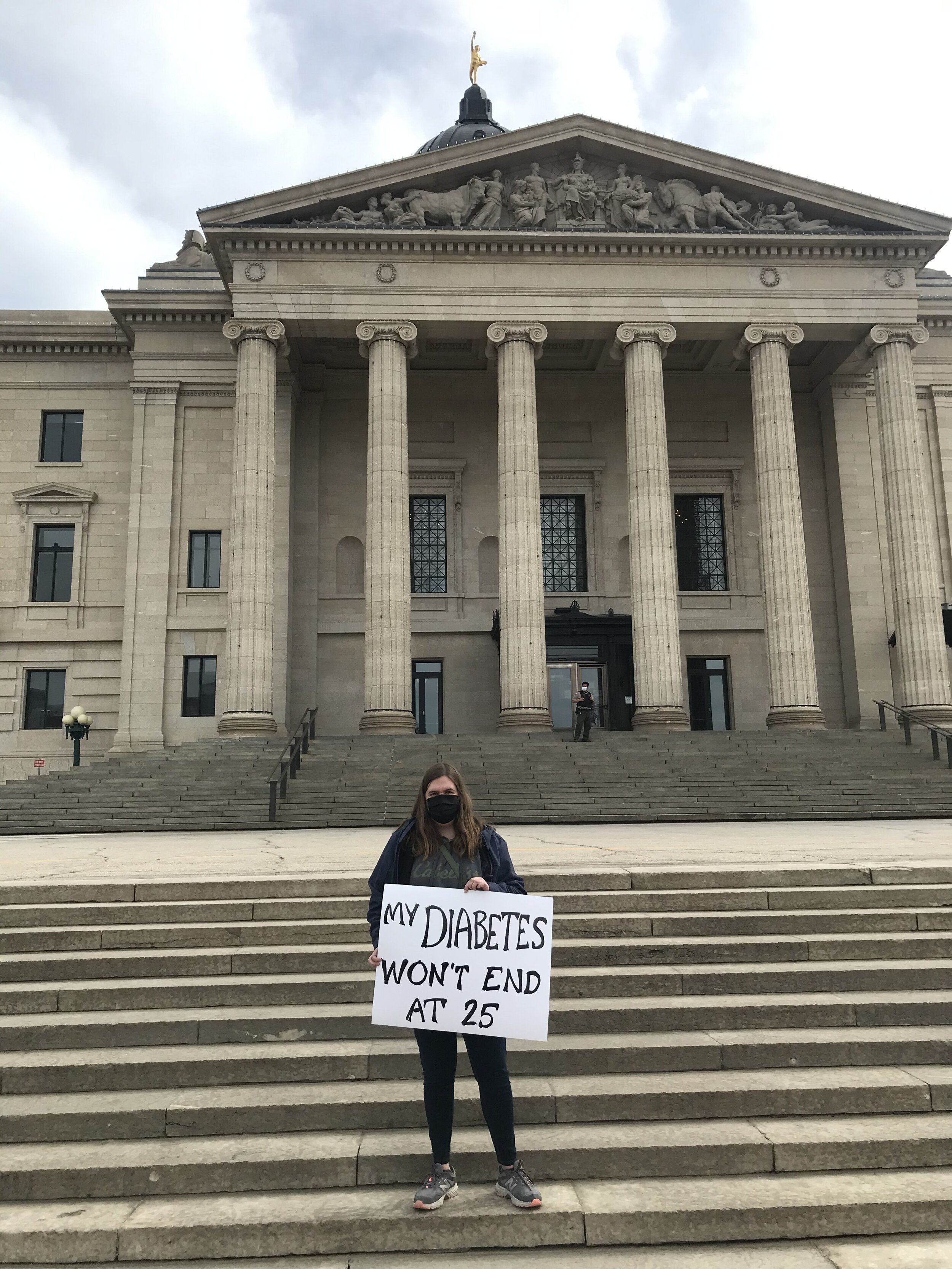
Right. Yeah, I mean, when when we started working on this, our province had no coverage for CGM for anybody. And, and after months and months of putting pretty intense pressure on the government and getting a lot of stuff in the media. In the in the recent budget announcement, they announced coverage of CGM and insulin pumps up to age 25. And this after 25 you just just do a better job on your own.
Scott Benner 19:21
What is that Manitoba? That's where you got that done? Yeah. Tell me how, who spearheaded that? Was it you and or somebody else and how do you how did you pull together? Kind of a grassroots fight like that?
Trevor 19:35
It was a whole group of us. I think a lot of people have been trying for a long time. So it wasn't any one person doing it alone. But I think it was the coordination this time that made it kind of different. I think a lot of people have felt very isolated and lonely, having their battles kind of one person at a time. Like there's so much to battle for I mean, we had to, we had to actually fight to get off of NPH. Even that was a fight, even though I could drive to my kids school every day and give him insulin every day for lunchtime, and I said that I was willing to do that. But that was a fight to, to convince them to let us make that change. So you're, you know, you're fighting with the clinic, and you're, you're fighting with the government and, and it's all it just feels like too much if you're doing it alone. But when the when the pandemic started, in our private local Facebook group, there were just so many posts from people struggling where it had always been hard, like this province had some of the worst worst diabetes coverage in the country before and, and then with people losing their private health insurance for what little coverage they did have and losing their income. It, it just got so bad. And I convinced a couple of people to participate in a news interview for CBC. Okay. And finally, when a couple of people were actually willing to talk about it publicly, then a whole bunch of other people saw that it was not just them alone. And and then suddenly, it was like the floodgates opened. And we set up this public Facebook page where people were sharing their stories. And people started out kind of sharing more privately, anonymously. And then the more that people shared, the more confident everybody seemed to become, I think, you know,
Scott Benner 21:47
it's funny, this is not related to doing anything good. But somebody's got it in their head to mess with me, during the pandemic, and I said to my wife, I was like, this person better stop, because I have a ton of free time right now. I'd be happy to get into this just to give me something to do. And isn't it interesting, too. And I want to understand, like you said a little bit, but I do want to share a little more deeply how you got some success. But I think that the it's not a misdemeanor, I guess it is the mistake, the mistake some people make when they're fighting against something like this, is that they think they're fighting for right versus wrong. They think that they're going to hold up, look, this is right, this is sensible, you're in charge of helping us see that this is sensible, make it make sense. But that's not really the path you need, the path you need is take the person who makes sense. And I know this is terrible, who's in power, and show them how helping you will help them. And when you do that, you get things done. But you know, people don't do things for the right reasons. They do things, sadly, most of the time to move themselves along. And you know what I mean?
Trevor 22:58
Yeah. Is that Yeah, we we have a government right now that it's a it's a conservative government, it's very interested in saving money. So in that budget announcement, almost everything else that was announced was cuts. Yeah. And and people really applauded Oh, wow, you got coverage up to age 25. Which, of course, we felt like Well, that's it's really not good enough. But people were excited that that we got something. But yeah, I think I think from from a citizens standpoint, you feel like, you know, I took half an hour and I, I wrote an email to my representative. And, and that was a big deal for me. And on their end, they don't even see that stuff. Like, I mean, those emails and phone calls, they go through assistance, and they don't even get passed to the representative until there's a certain volume, I think. And then if you also get something in the media, that's when there's suddenly you get noticed.
Scott Benner 24:06
And so May I take play devil's advocate for a second, as a person who runs a Facebook page. It's not apples to apples, but it's sort of is if you think about it, one Kook, you can't respond to, because then you get mired down in just like someone's crazy focus. But when you start hearing from 20 people, you go, oh, maybe this isn't a crazy thing. Maybe this is something people think. And it brings your attention to it, then you're like, Okay, like it part of me thinks that's terrible. That one person's voice doesn't make it to where they intend. And then then there's a part of me that goes, Well, it does make sense if I was on the other end of this and I addressed every single piece of email that came. I'd never get anything else accomplished.
Trevor 24:52
It's sure yeah, I mean, they're, they're busy and overwhelmed. It's the middle of a pandemic, but but also People have been trying to get this done for years. And there have been organized efforts before done by diabetes Canada and jdrf. Through their advocacy branches,
Scott Benner 25:11
do you think I don't mean to cut you off? But do you think that that's known from elected officials elected official? Like, couldn't that have been done while someone else was in that office? And then the new person might not even know anything about it, right?
Trevor 25:23
Yes, yeah. There's that too. Yeah. Yeah. Yeah. I mean, some of them there. There were some people that we, we found, I mean, we went back into Hansard is where you can look up everything that's ever been said in the legislature. And so we found some people that were like, hey, when back when you were in opposition, 20 years ago, you were talking about how, how the government needs to do more to support people with type one diabetes. And and now you're the health minister. What, like what's going on? Why is it so hard to reach you?
Scott Benner 26:01
because nothing's about you want to hear a little bit of my thoughts about things. Nothing's about what it seems like. It's about everything's about having power and keeping it or not having power and getting it. That that's how people's minds work.
Trevor 26:16
Yeah, one that's where it's so important to bring in the media, I think.
Scott Benner 26:22
Right? Yeah, to to shine, it's the bright light, you shine the bright light on you go look, we can't ignore this. You're doing a bad thing. We're gonna let people see if you don't do something. It's it. You're holding people's feet to the fire.
Trevor 26:34
Yeah, and we tried to always keep it really positive. We we've always just said like, this is about education, we're sure that once they really understand that they will support this because it's so obvious once you get it, you have to do something. So so we came up with with all sorts of stuff to get this into the media. The first one was the great manitoban fingerprick challenge, where we invited all our MLA is to pick their own fingers 10 times in one day, because that's what Manitoba pharmacare does cover right. It covers those finger pricks right but not a CGM and and we actually had a surprising number of MLA is take us up on that challenge. We got about 15 of them to do it and we asked them all to make videos of themselves doing it and post about it on social media and a lot of them said that they they learned a lot oh and this is where we could do your ad for the Contour Next One because when I we worked with a pharmacist actually my kids pharmacist he has a kid with Type One Diabetes and and so he supplied the fingerprick kits for the politicians and he like he was so happy to do this and and have them have that experience. But when we were talking about well which kind of which kind of finger picker should we give them like what brand are we going to go with and we both agreed that it would not be the Contour Next One because it has that option to try again with the same strip all the other ones don't right we were like it could be anything else but not that one.
Scott Benner 28:26
Trevor This is unprecedented for the show but the Contour Next One blood sugar blood glucose meter offers Second Chance test strips meaning if you go in one time get some blood but not enough you can actually go back get more without ruining the test strip or messing up the accuracy of the test contour next comm forward slash juicebox Okay, no, we'll go right back into that Trevor that was excellently done. So you didn't want to give them a good meter you wanted them to struggle a little bit?
Trevor 28:52
Well, no, I mean, we wanted to give them a good meter we did we did give them a good meter just not the Contour Next
Scott Benner 28:59
One that was gonna help them I see.
Trevor 29:02
Yeah, so So I mean, they they got a very nice modern meter just not not the Contour Next One. And yeah, there there was not a single politician who was actually able to complete the whole test without getting any error messages and without wasting a strip. So I think they all learned a lot from that experience from having to actually do it because a lot of people go through that.
Scott Benner 29:31
Yeah, that's excellent. That's a great idea. You know, it's funny when you first said you did the Manitoba finger prick challenge. I thought you just told a bunch of people in Manitoba to give the finger to the person government. That's exactly what I thought you were gonna say. We ran up to their buildings and gave them the thing. You can see that my um, my ideas probably would not have led to any success, but what did your ideas lead to?
Trevor 29:56
Well, the first thing was really great media coverage. which helped a lot. I think for for media, you kind of you need a reason why should they cover this right now, you can't just say, hey, look like these people with diabetes, they don't have good enough coverage. And it's always been like this, and we would like it to change now. But if you create an event, or I mean, I hate to say gimmick, but it's almost what it is, in a way, in a very fancy and educational media gimmick, then they will report on that. So each time we put together something like that, we put out a press release that we sent out to every local journalist. And so a lot of them right away, picked up the great manitoban fingerprick challenge. And they wrote about it before we even had a single MLA signed up to do it. So that that was pretty cool.
Scott Benner 30:58
I would love to have seen in the backroom, like in in the government side, like if they're just like, Oh, I saw that in the news. I guess we should not ignore these people. Like if it's just that base and simple. You know what I mean? Like you put it in their face. So they're like, well, we can't ignore this. We're hearing about it somewhere. It's almost like see three tweets. And you're like, Oh, it's a thing. It's not a thing. Yeah, three tweets. But yeah,
Trevor 31:18
I think it might be as simple as that. And then we just we kept going, we got a certain number of MLS that did the fingerprick challenge. And that was great. But But then we needed more reasons to get the media to cover it. So the next one that we did was the antique diabetes roadshow. And a group of us showed up outside the legislature, with with antiques from the same era as as fingerprints, right, from, you know, stuff from the 80s. And also also, we talked about NPH, insulin being so ancient. So we brought things like a typewriter, and just made a display outside the legislature. It's a real challenge with COVID. Like how he can't really do a protest, you can't, you can't have 1000s of people show up and show your strength in numbers. So you, you have to be really creative at that time, our gathering limit here with 1010 people in a public place. So we coordinated amongst ourselves and made sure to have no more than 10 people. Media don't count towards the public gathering limit.
Scott Benner 32:36
Which was very helpful. And funny, by the way, if 10s that Oh, yeah, right. What's 10? Unless you're in the media, then there could be 50 people here, you're fine.
Trevor 32:47
That's great. Yeah, yeah. Well, I mean, I guess because they cover, they follow protocols, right for them for themselves. And, and I think it's important for media to be able to cover events, ya know, they're very important part of our democracy. So I guess that's, that's why they don't count towards that limit. But But again, so we sent out a press release the day before, and then we sent it out, again, the morning of and all the media showed up to cover this event that we had. And then two weeks later, we did another one, we did The Amazing Race for diabetes coverage, and kind of had had this events sort of Amazing Race style. And so for that one, we invited MLA is to partner with someone with Type One Diabetes. And by that time, the gathering limit had changed to 25. So it was a little easier to coordinate that. And then so we had the MLS, doing things like, oh, at this table, you've got to count carbs, and you've got to figure out an insulin dose, and then we would kind of we would make it so the insulin dose would be really hard to do with pen needles. It would work out much easier with an insulin pump, but then it would be this opportunity to explain to them, like this is how this is so difficult. Yeah, on a daily basis. Without this, these are echnology
Scott Benner 34:12
really creative, brilliant ideas to show things to people. It's easy, because you have to make yourself you have to make yourself a human being in their eyes. Because I think that I think the one thing that happens in government, and I certainly don't want to be in charge of a government but if you put yourself in the shoes of someone who is not just thinking about people with diabetes, or people who have cancer, people can't afford their electric bills, but they're trying to think about not just I think you you want to hope that a leader is thinking about everyone.
What is your blood sugar doing right now? Is it rising or falling? Is it playing nice and staying stable? What Number isn't that I know my daughter's with a flick of a florist for the flick of a flick the flick of my finger I open up my iPhone lickety split, Arden's blood sugar is drumroll please 92 it's actually been incredibly stable at that number for about the last 55 minutes. Prior to that, it was a little lower at 75, I can actually see what rate it came up at. It's amazing Dexcom that's how I know I have the Dexcom g six continuous glucose monitor. On my daughter right now she is wearing it. And it is sending her her blood sugar on her iPhone and me on mine, she could actually share it with up to 10 people. And those people could have an iPhone or an Android or a mix. Right doesn't have to be anything specific. It's whatever you're using. Imagine being able to see the speed and direction of your blood sugar in real time. It's astonishing. The Dexcom g six is a triumph. It is a leap in how people take care of diabetes, absolutely imaginable. Learn more@dexcom.com forward slash juicebox. Actually, you can learn more or get started with Dexcom gs six today by going to that link. The Dexcom is that the core of every decision that we make about insulin, and about carbs. It is super simple to use. It integrates well into your life. It does what it's supposed to do in a way that just makes things better. That's my opinion, but I think you'll find the same. Another thing that I love is the Omni pod, your omnipod.com Ford slash juicebox. When you get there, guess what? Guess what you might find out when you get there, you may find out that you're eligible for a free 30 day trial of the Omnipod dash. Take that pot out for a test drive my friend for 30 days match if you want to test drive a car and then like bring it back next month. You'd be like legit, okay, that's what all the pods doing here. On the pod comm forward slash juice box, no tubes to get in the way. Simplify your meal times, no more multiple daily injections, head over check your eligibility and your coverage. This could be the beginning of a summer for you like no other swimming, bathing, running, jumping, frolicking a tumbler salt, which I believe is called a somersault. You could do that. And you're like, well, needles wouldn't come flying out of your pockets. And if you had like a two pump, the controller wouldn't come flying off. Like I imagine a somersault with a tube pump could lead to the pump being wrapped around your neck multiple times. And probably when the tubing gets a little shorter Is it like zings around your neck, like, you know, when you used to take the swings, and you hit them up really quick. You know, I mean, you'd get the swing when you were a kid, you throw it really hard to wrap around the hole. That's how I'm seeing the pump, you wrap it around your neck, you do a somersault and and then when you know what happens when the tubing gets short enough, it just the thing just smacks right in the head. So anyway, with on the pot, that wouldn't happen. That's pretty much what I'm saying. I'm the pod comm forward slash to stop cheese box on the pod.com forward slash juice box, do a somersault don't get hit in the head with an insulin pump. But that's a marketing campaign. You're welcome on the pod that extra bit there that was free links in the show notes links at Juicebox Podcast comm let's get back to Trevor.
But I think they're thinking about the machine about keeping the country moving about being here in 50 years, 100 years about not having your democracy fall apart like that. They're thinking about bigger ideas. And it's hurtful, but kind of obvious to realize that on a person to person level, you really aren't the focus. Did you know what I mean by that? Like it's almost like with a mother ducklings walking along with eight or nine ducks and one of them breaks a leg. She looks back and goes alright, well now I got one less talk and I keep going like that's that, like keep the pack alive mentality that I can understand, but makes this kind of stuff. So difficult to fight against because and then I guess the only way to really do it is to stop and go look, we're not a pack of ducks. I'm a duckling with a broken leg, like see me and then help me because not only do you have the power to help me, but we are putting effort and money into things that are far less productive than what we could be doing.
Trevor 39:50
That's I mean, that's where like we also have to point out that the broken leg is actually really expensive for the whole system right and here in in Manitoba, we have the highest per capita rate of dialysis in the country. And of course the system pays for that and has to pay for that. Excellent.
Scott Benner 40:09
Excellent. Excellent that people have dialysis. Sorry. I got ahead of myself there. Yeah. What you point out to them is no, we can't walk away from this duckling. It's chained to us. And we're dragging it along with us. It's it's Yeah,
Trevor 40:22
right. Yeah. Well, one, one of the health ministers assistance actually was the inspiration for the next event that we planned because this was after the budget was announced. And, and we just we kept phoning. We kept phoning the health minister's office saying, Well, what about everybody over the age of 25? What about all those people? And And what about all the long term complications on how expensive they are? And in one of those complications, the health match one of those conversations, excuse me, the health ministers assistant said to me, Well, not everybody with Type One Diabetes ends up on dialysis, you know, and I think like he was trying to say this in the context of the cost savings analysis, right, but it comes down, one would be looking at, but he gave me this idea. I was like, Well, how many people with type one diabetes do end up on dialysis? How does that work out? And I was shocked to look up those statistics. It's, it's really scary, Trevor, it's
Scott Benner 41:30
almost as if that insulin that was being used in the 70s. And 80s, is not the best way to take care of type one diabetes. And that's shocking. Right? Oh, my God. Yeah, you must have been just knocked right over.
Trevor 41:46
I mean, like, when, when our son was diagnosed, that, that first day in the hospital, the endocrinologist talked to us about our private health insurance and what we had, and as a Canadian, that's really shocking. We're not used to that you're used to like, you go to the doctor, you never pay a cent. You just show your health card. And, and it was, it was incredible to, to have that conversation. And then, and then the diabetes educator said something like, you know, I think she wanted to impress upon us how serious this disease is, and the consequences of long term complications. And so she was talking about all that stuff. And I was like, Yeah, I am really scared of that. I, I have a friend my age, who is on dialysis, has had an amputation, and has lost his vision. And I don't want that to happen to my child. And I don't understand how this happened to my friend who's the same age as me. And she said, Well, that it doesn't really, it doesn't have to happen anymore with the technology that we have today. Great. And and then you go, okay, but that's not covered for everybody.
Scott Benner 43:07
And I know. You can't have it. But I'll tell you what, if you did, you'd be so much better off anyway. We'll see you later,
Trevor 43:15
right. Yeah, yeah. So I think I mean, it was some of those early conversations that also planted the seed for me that that eventually, once once our family personally got out of just struggling with how to cope with everything that that hopefully we could do something. The day that the day that we went to the clinic to get off of mph. I actually I drove through a terrible snowstorm to get there. But I was like, I am not going to miss this clinic appointment. This is not going to read delayed again, like we just have to get them off of NPH. So we drove through this horrible snowstorm. And because of the snowstorm nobody else had showed up at the clinic that day. So we were just kind of chatting and the diabetes educator told me a story about a child in foster care that she'd cared for. And that had seen another kid wearing a CGM and said to the educator, why can't I have that? Oh,
Scott Benner 44:25
geez, did they tell them why? Because you're poor, and you don't have parents and we don't care about you? Because that seems like how it feels. You know what I mean? Like really, really? I don't mean to be harsh. It just, it feels like what else would you say to them? And not that you would ever say that to a kid? Let me backtrack. But I mean, if that's the honest truth, then what do you say? You say, look, you don't rank here. And so you know, you don't get to have this stuff. It's it's just fascinating and like you said, but they are banking up money so that when that poor kid grows up, they can put them in the hospital for DK twice a month and get them on, you know, some sort of a kidney. dialysis? Really, it's just do you think do you? Do you have a feeling for why the thinking is that way?
Trevor 45:10
I think, um, I think governments like to think very short term. So even when you talk to them about long term complications and the money that they would save, if they covered the appropriate supplies and devices, I mean, even insulin, there are people in Canada who are rationing insulin, because they can't afford it. And I know, it's it's nothing like the problems that you have in the US, but it shouldn't be happening anywhere. But so they they think, well, that's, that's long term. And we want to save money. Now we want to, we want to say that we're being fiscally responsible, we want to cut taxes, we want to do all those great things. So one thing that we've we've started trying to talk to them about is understanding what it can mean with diabetes. When you say long term complications. If you're talking about retinopathy, it's not really that long. Like, I mean, I think it's something like 8% of people with type one diabetes, will start showing signs of retinopathy. Just three years after diagnosis. It's not that long.
Scott Benner 46:21
Yeah. Being well managed. Things are going to go downhill quickly.
Trevor 46:26
Yeah, yeah. So it's important, I think, because politicians don't they don't know what what you mean, when you just say long term. They're used to it. If they're used to thinking about infrastructure or something, then they're thinking 80 years. Right,
Scott Benner 46:42
right. Yeah, that bridge will start crumbling in 2093, we'll get to it. That Yeah. And by the way, they because they thinking because they're thinking about the money part of it, you really don't get thought of as a person, like, you're not a bridge, we can't just come along and fix you. Like, once your eyes don't work. You know,
Trevor 46:59
they don't work. You don't you don't get to like patch them back together again. And there are treatments, but they're not. They're not going to put your normal, there are treatments that are also very expensive, like the you know, the eye injections that they do, right? I finally found a source for that for the just how much it costs, and it's about $7,000 per injection per eye. And they're
Scott Benner 47:25
not ever you have to get a needle in your eyeball. So right. Can I just have a CGM, please?
Trevor 47:33
I know, right? Yeah. Yeah. So we I mean, we try to talk about all those things. But it's, it's there a lot of moving pieces there. Because even if you convince, say, your local politician, and the person is like, Yes, I get this, you need this. But I am not the health minister. I am not the civil service. And I am not the finance committee in Union to convince all of those people. So how did
Scott Benner 48:00
you like, how do you do that? Like and how big is Manitoba? Like, give it to me, like, pick a state in the United States? What does it measure up to like size wise?
Trevor 48:10
Well, Manitoba is not that big. I mean, we have about 1.3 5 million people here.
Scott Benner 48:16
But but but this is where you focus on and this is where you were able to make the change.
Trevor 48:21
Yeah, yeah. Because in Canada Health is it's provincial jurisdictions. So we focused on our own province here, where we live.
Scott Benner 48:33
So let me ask if you somehow ended up magically changing everyone's mind in that province. It's not like what you taught those people would have an opportunity to bleed out into a different province. Is that right?
Trevor 48:46
I think it could help. One, one thing that we did here was there while we were running this campaign, a couple of other provinces made commitments to improve their diabetes coverage. And then it became very clear that Manitoba was the worst in Canada. So that was another press release. No, nobody likes to be the worst in the whole country for something. So we kind of we did capitalize on that a little bit. But you just you have to work with every every different component, and you have to understand how changes can get made. So I mean, with if the Health Minister really cares about something and says, hey, look, I've been getting all these emails and phone calls from these diabetes people like what is going on? She will direct her staff to look into it. And and then the civil service experts will look at the studies and look at the research. And that's a whole nother problem that we have, which is they'll they'll only consider certain types of studies they prefer they prefer clinical trials. I guess they're What are they called? Like the double blinded kinds, right? They prefer that kind of review. They they don't prefer to look at what they call real world studies that are more retrospective. Yeah, they're harder. Yeah, so. So another thing that we did, like, we managed to get some meetings with the civil service as well. So then you're talking to clinical analysts, and you have to speak their language. So we were, we were looking at studies, and we were poking holes in our own governments, reviews of the technology we have in Canada, a body that is kind of more more federal, that's supposed to help to not have to duplicate the work so that each province one at a time doesn't have to look at all this stuff on its own. So so we were looking at the federal review of the technology and saying, like, Hey, you know, it was published in 2020. But when you actually go and look at what they say they're talking about, they're talking about other meta analysis of multiple studies. And when you go back and look at when those studies were published, some of them are from like, 2006. Well, which which version of Dexcom were we using in 2006? Yeah, like, yes, it was a lot more expensive back then. And much less accurate. And things have really changed. Now how about we look at a study where the data was actually collected in 2018, using a much more more recent version of a CGM, and look at those results. So we we did things like that, and the civil service, folks, they seem to be very appreciative, I think, for that sort of help, because they're, they're looking at new new drugs and devices all the time. And it's a lot of information to go through. And I think I mean, I think it's reasonable that if you have this federal body that has written a report, and someone's asking you, well, what about this CGM thing? And you go and you look at that federal report, and it says, not that great. Not sure if it's worth it? Well, yeah, I mean, what what decision Are you going to make, but if somebody can come and help you and say, Hey, like, these are the reasons why that federal review is not actually that strong. And why don't you look at this and this and this instead? It's easier for them to make a better decision, I think,
Scott Benner 52:44
yeah, I wonder if I wonder if there's not a way to think of it more like a marketing problem to like, could you, you know, if you were a CGM company, like, could you go into an area and just pick, I don't know, 50 or 100 people and put them on product, and not even help them with it, just put them on it, and then gathered their data for six months, and then gather 100 people's data that don't have the the ability to see their blood sugar for six months, and just see if you can say, look, this was beneficial here and give them a questionnaire about their stress, lifestyle and stuff like that. If that wouldn't be an easy way to turn to people and say, Look, this is what we found, as a matter of fact, for anybody listening in a company, that's a great commercial, you know what I mean? Like that would be key. Imagine a 62nd ad where you you saw that break down very quickly. You know, these 100 people did this, these 100 people didn't have it, here's the outcomes. After six months, everyone living with diabetes would understand that every endocrinologist would understand that.
Trevor 53:42
Well, that's that's been done. really mean nobody cares. Well, with the with the libri. In Europe, that was exactly what happened. But it was done on a on a huge scale, because they started to have federal coverage for those devices, right. And so what libri did was it looked at Okay, like in the year before people had this coverage, what was their rate of decay? And, and severe hypoglycemia? And in the year after, how did that change, when people got coverage, and the reduction in DK was about 50%. And it's looking at a huge sample size, it was like 70,000 people in France. And so this was the kind of thing that we were bringing to the civil service saying like, Look, look at this study. It's a it's a massive sample size. They've already done it over there. Like they just decided to have this coverage. Why wouldn't we want this here? And how can how can we ethically keep doing this to people when we know what a huge difference this technology makes? And and yet, after the budget, drop The age 25 cut off when we would go back and talk to the politicians like, why age 25? Why did you do this, they would still be talking about cost, which tells me that they they still don't fully understand the cost savings argument like even if they don't care about people's kidneys, even if they don't care about people's quality of life. If we can just talk about the dollars here, DK a and treating it in a hospital is really expensive. And that's a short term emergency,
Scott Benner 55:34
but it's the problem. Trying to put myself in their shoes is the problem that that money for DK is going to places they want the money to go to. I hate sure you don't I mean, I hate them boil it down. I hate to boil down people's health into such like cold ideas. But if I'm the politician am I sitting there going look, DK is much more expensive than putting somebody on a CGM. You're 100%. Right. But in column A, we're giving the money to the CGM company. And in column B, we're putting it into the hospital that hires doctors and nurses and people to clean the hospital. And we're keeping the machine moving this way.
Trevor 56:10
like Oh, sure, like it's I mean, yeah, I think just that it's a different pot of money can be a problem, because the people that run the drug plan, they look at the costs of the drug plan. And maybe they're not looking at the costs with associated with the hospitals. I mean, we also keep trying to point out to them, that right now, like this is an emergency, it's urgent. And now is not a good time to have people going to the hospital when it could be avoided. So if there's anything that we could do to keep people out of the hospital, that would be great. Like, actually, as of yesterday, Manitoba now has has the highest per capita rate in North America, of new COVID infections. And also yesterday, they transferred three ICU patients to a different province because the ice user full here,
Scott Benner 57:09
Trevor, maybe show up instead of trying to fix Manitoba and might be underwater. What are we talking about? Yeah, yeah, it's, it's pretty scary. Um, yeah. Well, I just, I mean, maybe you repurpose people. So instead of saying, look, we need you to get sick, because that's how nurses and doctors and hospitals get paid. Maybe you could turn nurses and doctors and hospitals in the people who showed you how to put on your CGM and how to read it and how to make better decisions. Like, you don't I mean, like, why is there? Yeah, it just listen. It's obvious, like worldwide problem, right? We attack problems after their problems, like being proactive is not anybody's strong suit.
Trevor 57:49
Right? Yeah. Yeah. Well, I mean, like, right now, we have a shortage of nurses, we obviously have a shortage of space in the hospitals. So I don't think that it. I don't think that anybody's even saying like, you know, that's how nurses and doctors get paid is by people going into DK. That's the I don't think that's really an argument here, though. I may be a little different from how it is in the US in that regard. But, yeah, I think those resources could be spent on training people on their insulin pumps, and yet teaching people how to use the CGM.
Scott Benner 58:30
Can you talk for a couple of minutes about the overall attitude that you guys used? When you're undertaking this? Because there are a number of, you know, patient advocacy, things going on all over the world. And every one of them is, is not just well intended, but needed. But some of them their messaging, you can you hear their messaging, and you just think that's not going to go anywhere. Like, no one's gonna listen to you when you're talking to them like that. And I and it's not even that the message isn't, isn't deserved. You know what I mean? Like, I'm not saying that, like, I'm on the side of the person saying the thing. I just think as a, as a person who's standing back watching it happen, I'm like, I don't think that's how conversations like this get anywhere. But how did you actually like so you did all these things. But they worked. And that's and what do you attribute that to?
Trevor 59:27
I think it was really the collective action and the coordination of so many people. So many people were writing to their MLS and emailing and phoning. And so it wasn't just a meeting with the health minister, but it was like every, every person in our group with type one diabetes or who is connected in some way to type one diabetes was trying to get a meeting with their own MLA and also phoning the health minister. So we we had many many meetings. With different MLS, and then when they're all hearing similar messaging about why this is so desperately needed, then I think when they do have those moments in caucus, and they're together, and one of them says, Hey, you know, I keep hearing from from people diabetes, it's like really a problem. And then somebody else chimes in Yeah, like, yeah, I, I've been hearing this too, right. And they, they all started to get education around it, we we've always tried to focus on the education aspect of it. And with each media event, we kind of chose a different topic to educate around. And there, there's so much it's like, it's almost endless, like you, as, as you know, very well, you can keep talking and talking about different aspects of diabetes. And we just kind of kept hoping that eventually, they would understand enough to want to take that action. And we also, we also focused specifically on members of the Finance Committee, because even when you've persuaded the civil service, and you've persuaded the health minister, then if the Health Minister eventually comes to the finance committee and says, look, I'd like to do this, but we don't have quite enough money for it. That's where it can die. It can die if the finance minister doesn't understand how important it is, for what I need to understand
Scott Benner 1:01:27
those when you come into those meetings. I mean, that's amazing. But you're not. I'm guessing, yelling. You're not saying Oh, you're like it's coming from like, you. Listen, I'm not trying to denigrate anybody. But you know what I'm talking about. Right? Yeah. Okay. So
Trevor 1:01:44
So yeah, no, I think I think we always approached it. And we continue to approach it from a perspective of they just don't quite understand yet. But they will, will understand.
Scott Benner 1:01:57
You don't make they're a monster trying to kill you. And you're defending yourself against this charging horde?
Trevor 1:02:04
No, no. And I think that positive attitude, really helped with our events. At each event that we hosted, we've managed to get people to attend from each political party, not just from the government side, and not just from the opposition, but all of them. We have three political parties here in Manitoba. So that that really speaks to you know, if if you've got politicians from all sides willing to be seen with you in public, that's a really good thing, like you want to, you want to aim for that to, to not to not be so abrasive that, that people are just going to be scared to actually be near you in public that the way this you don't want to, you don't want to do that, from what
Scott Benner 1:02:53
I could see from the outside and the way you guys handled this, and I realized it's a big effort. It's one of the great reasons I wanted to have you on because you, I mean, you didn't kill them with kindness, right? But you just you came at them. Constantly, intellectually, constantly, data constantly with, I know you have a problem to fix, here's how you can fix your problem and fix our problem. And it never felt contentious. And it never felt like I'm sure you were, you know, frustrated behind the scenes and everything. But in the moment at the events, or in any of your Ford messaging, it was always very positive. And I just think you don't I you know, like, Listen, somebody could be as wrong as wrong could be you running up to them and yelling, you're wrong. And I don't like you. And why do you hate me is not the first sentence that ends without and we worked it all out later. It just it doesn't go that afraid. You don't I mean, so. To me. Yeah.
Trevor 1:03:54
I mean, I think I guess we focused a lot on personal stories. When when we had meetings with MLS or with the health minister, we tended to open with personal stories. One of our members has a kid who experienced a lot of seizures before getting a CGM. And now seizures are no longer a regular part of this child's life, which is great. So she, Liz, you have to tell your seizure story in this meeting that we have coming up and she's like, yep, okay. All right. I'll do I'll do that again.
Scott Benner 1:04:34
One more time, just so we can get Manitoba squared away here. But, you know, I think that if you're obviously you're looking to expand it past the age of 25, which is clearly obvious, but I, you know, if I had, if I could make a wish for you, I would wish that that you'd go back to those people who you've already whose minds you've already changed and ask them to put a little effort into contacting an official in a different province and explaining to them what they've learned. Because maybe you could get that like spread effect that way. Because you've already got you've already built more warriors. And they're prepared. They know the whole story. And if they were just to call a colleague and say, Hey, give me 20 minutes, I want to explain something to you that I've figured out here. And just make you aware of it. But that would, to me that would, that would be how you how you make it spread across Canada? Yeah, seems obvious.
Trevor 1:05:32
Yeah, definitely. I think so. And I think also, I would love to see less of the burden of this placed on patients who are dealing with this chronic disease every day, which is already plenty to do. I would love to see more people who are not actually living with Type One Diabetes, trying to do what they can to help.
Scott Benner 1:05:56
Well, now that we're on Star Trek lined, man, I
Trevor 1:05:59
don't know, but you know what, some people did that for us here. There. There were phone calls made to our premier from other provinces. And I I'm sure that that really helped.
Scott Benner 1:06:11
No, I imagine what's an MLA I realized an hour into this isn't the time.
Trevor 1:06:17
That's a member of the Legislative Assembly here.
Scott Benner 1:06:20
I just assumed everybody heard government person when you said that.
Trevor 1:06:23
Yeah, yeah, totally government person. That's what it is. But you know, we haven't talked about our ridiculous insulin pump process at all yet.
Scott Benner 1:06:31
Well, can we make sure that we do? Yes. Can we end with that? Because I'm, I'm on such a strict time schedule today. So yeah, I'm not gonna, I'm not rushing you. But let's, uh, let's button up with that. So I, the best I can tell you is that my interactions with Canadians happen mostly, you know, over the internet. And I hear a lot about we can't get a pump. We can't talk somebody into something. That's not how we do things here. You know what I mean? Nobody wants to hear that. It's a lot of that old timey. Like, it just feels like you're managing diabetes in 1983. And yeah, and that's the direction you're getting. But what happens specifically with pumps?
Trevor 1:07:12
Yes. So here, it's, I think, again, it's one of the one of the most difficult parts of the country to get an insulin pump. And I haven't exactly been able to figure out the reasons for that. Maybe it's just because they don't want to pay for them for that many people. But again, I think they're spending a lot of resources on barriers. So for one thing, you have to have three a one C's in a row that are under 10%. And, and of course, they have to be at least two or three months apart. So if you're, if your kid has a flu, or just a really hard couple of months, and they get an A one, see that's 10.2% then they fail that and they have to start again from the beginning trying to get those three a one sees in a row. Under 10%. Yeah.
Scott Benner 1:08:05
So for clarity, you have to take something that you're not getting good direction at, you're getting kind of lousy insulin from and no help. You're struggling with it, which is why you're asking for the pump. But before you can have the pump, you have to prove that you can be good at it without the pump, which is the whole reason you're looking for the pump. Exactly. Ah, yeah, that's more gene. You know, I have to say, I think that pretty Prime Minister has me fooled. Like I see that big smiling face and I'm like, everything must be terrific up there. And then I imagine just, you know, Mounties riding polar bears. And I'm like, Canada, you know, and it sounds like maybe it's just like everywhere else.
Trevor 1:08:48
Yeah, there are some big challenges here. We have a really unique and special one in Manitoba. I haven't been able to find that this exists elsewhere, actually. And I would love if you've heard of this happening somewhere else, please let me know. But after you've got your third a one c under 10%, then you have to do a psych assessment to determine your insulin pump readiness. And the first part of that is his paper survey pages and pages of it. And I mean, when when we were trying to go through it, our kid was eight years old, and he couldn't even really like his reading level wasn't good enough to read some of those questions. And they were really bizarre. They were asking things like, if he was worried that his type one diabetes would affect his chances of getting married or his chances of getting a good job one day. The kid had to fill out the paperwork he was supposed to, but I mean he couldn't really so we can get with him one time
Scott Benner 1:09:58
in my early 20s I had the option to go to a girl's house to have sex, but I had to get gas first. And it seemed like too much work. So I didn't go. So I'm trying to imagine people at the end of their day, at the end of their week fighting with this diabetes had like, Oh, now I gotta fill out this giant survey full of questions that I, my eight year old couldn't possibly know the answer to your eight year olds not thinking about getting married. Are you kidding? Oh, my God, right? The gas station was not far from our house. I just want to be clear. I was like, we could do it Saturday. Beautiful girl, lovely person. I'm not saying anything about her. I'm just telling you, it's hard to at the end of a long work day, it's hard to it's hard to do more stuff. And then they
Trevor 1:10:51
imagine that being attached to whether or not you get this really expensive item that you're you're pretty desperate for. And so instead of answering those questions, honestly, which I mean, some of them may be relevant. I guess, like in the psych survey, instead of answering those Honestly, I think what you end up doing is saying to yourself, okay, what do I need to write down? That they will feel like is the right answer is I don't want to fail this and make it so my kid can't get a pump. Right, right.
Scott Benner 1:11:23
Oh, no. I mean, listen, that's just human nature. I had to take Arden to a doctor's appointment a number of weeks ago, having her wisdom teeth out. She just had to go in for a, you know, first look, and then handed a piece of paper, and it was a COVID thing. Now luckily, all the questions, you know, we could answer honestly. But I just thought to myself, if I went to all the trouble of driving here, and I didn't really think COVID was, you know, I was maybe on the fence about caring about it. Wouldn't I just lie here on this paper like this paper is not, it's not really a good way to get the truth out of me. And and then when that becomes the issue, to me, in my mind, I think what is just take the barrier away then like, why are you asking people questions about an answer? They want an insulin pump, they have diabetes, give it? What is your
Trevor 1:12:07
Yeah, what's your point? In in, in our case, our son was really struggling with needles and with eating food. He was at a point where he, you know, we would be like, Matthew, do you want an apple? and apples are one of his favorite foods? And he just go? No, cuz he didn't want the needle? Yeah.
Scott Benner 1:12:29
You're not asking if he wants an apple. You're asking if he wants a needle?
Trevor 1:12:32
Yeah, it was so sad to see that. And when when we realized how how long it would take us to get through this process. Because after the paper psych assessment, then there's an in person psych assessment. And then there's the clinic assessment. And then you can go on a waitlist to get an insulin pump. And then there's pump training classes. Like it's just it, there's so much ridiculousness, and when we realized that it would take us another year, and we were looking at our kid who wasn't eating normally, what we did was we went to North Dakota, and got him started on an insulin pump in like a day. Were you
Scott Benner 1:13:13
able to do that? Because your accent sounded similar, and they thought you were from?
Trevor 1:13:19
No, I mean, we were able to do that because we have the financial privilege that our family can do that i right now, I understand. But a lot of people can't obviously, right. So
Scott Benner 1:13:31
yeah, I was gonna say while you were explaining this, this is the three a one season a row followed by the paperwork, followed by the in person followed by this. I was like, this is a year, year and a half we're talking about here if if it goes right, yeah, yeah, if you stumble, you imagine you get two in a row. And on the third one, your ad agency doesn't come back. Right. You're now nine months into you get to start over again.
Trevor 1:13:52
Yeah, I mean, I know a small child that that happened to share in it. It took them almost three years to get a pump and they like that family was trying so hard to get through all those hoops and they just couldn't do it. Yeah, I'm gonna
Scott Benner 1:14:07
go out on a limb and and use a word that might people might not think fits here, but that's an atrocity. Like, that is a that is a that is a human rights violation to treat somebody
Trevor 1:14:17
i i agree. Yeah, I think that's that's the right word for it. That's just and and I mean, we have to go through a psych assessment, where it's like, yeah, I mean, this diabetes stuff and heating needles. It is it is giving me some, some mental health challenges here, like things are not okay. But for some reason, I have to pass this mental health assessment first, to get the thing that could help improve my mental health
Scott Benner 1:14:49
and not for nothing. What does any of that have to do with getting an insulin pump? Can you see one relation? Yeah, I don't see one relation to what you just explained. And an insulin pump. I mean, if you will make me go through that to get a machine gun, I might be like, Alright, well, that makes sense, you know, like or something but but to get an insulin pump, like a thing that's just going to, you know, give me my base is what it makes me think is, is that this is this old thinking again, like I've had enough older people who have had diabetes, like for decades tell me this, that pumps used to be considered a thing that you would put on somebody if they were just ignoring their care, because then at least they'd get their Basal insulin from the pump. So you were thought of as a problem if you need a pump at a certain part in history of insulin pumps, and maybe they're just stuck in that idea.
Trevor 1:15:44
I don't think that's quite it here. Because, I mean, if that was the case, then the kids with those super high Awan C's, they would be put on an insulin pump, right? But that's not what they're doing. Well, no only but the best clients on it.
Scott Benner 1:15:59
I'm saying it's letter, the letter of the idea. It would be that way. But I'm saying maybe over the years, it's morphed. Maybe it's just the remembrance that proper, you know, quote, unquote, problem. People got insulin pumps. So we have to prove you're not a problem before you got it. Like, I don't know, I see. Like it maybe you know how some things get commingled after decades. And you don't know why the hell you're doing what you're doing at this point. Like, if you pulled a person aside out of this and said, Why are you doing this? I know that I know, I would bet everything I had, they wouldn't have an answer. They might not know why they're doing it.
Trevor 1:16:32
It reminds me a little bit of psych assessments for transgender people wanting to transition. I am trans myself, okay. And when I when I wanted to transition and wanted access to medical transition, I had to pass a psych assessment. And at that time, what people would do is we like we would get together in our support group at at our local center for that, and people would talk about like, Okay, what do I need to say to the psychologist? And if I say this, will that set me back a year? If I say that, will she just wave me on? Like, how does this work? And so you just you try to figure it out? And and it seemed like what they wanted to check for was, does this person have some sort of mental health issue going on? That That means, you know, we should address that first, before letting them transition, not acknowledging the fact that your depression or your struggles, could could very directly be related to the fact that you haven't been able to transition? Right? let's admit, it could get a lot better. Once you do,
Scott Benner 1:17:52
I could understand that question coming into a person's mind who's never considered transitioning? Like I could see a person having that thought, I can also see that they, I could also see that there might be bad actors who just think, well, I don't agree with this. So let's prove that they shouldn't be able to do it. Like I can see bad actors and good actors and the same thing. But here's the end of it. I have to bleep this out letter later, Trevor, but who cares what you want to do? Like just like, Who cares? like and what other walk of life? are we stopping people from doing what they want to do? I see people pull out teeth, that they that are completely healthy, because they want their smile to look differently. We're gonna make them go through a psych evaluation for that, like, it's, it's your life.
Trevor 1:18:35
Yeah. Right. And I mean, that's like, it's been changing for trans people, a lot of clinics have been changing more to an informed choice kind of model that's like, Do you understand what this medication is going to do that you want to take? Yes. Okay. Like you can make that choice. And, and so I think, too, you know, to tell a person who's having a lot of trouble with needles, that they need to have a psych assessment first and discuss their trouble with needles before he'll let them have an insulin pump. So they don't have to deal with so many needles, it, it just doesn't make any sense.
Scott Benner 1:19:11
You want to sit next to that person every day. And every time they put something in their mouth jam in the arm or the needle.
Trevor 1:19:18
Right? Yeah. And I think that's that's another point. Like, they don't have that experience. They don't get it. No, I know. We, when right when my kid was diagnosed, we were offered an appointment with one of the psychologists just to talk about things which I think like that's great to have that support. It is a it's a big thing to deal with. And that's really nice that a clinic would have a psychologist to talk to right. But unfortunately, the psychologist just didn't seem to know anything about living with diabetes. So one of the things that my kid was talking about in this appointment was how awful he feels when his blood sugar is really high and Just the terrible physical feeling of that and, and that it also made him feel really angry. And he actually described in this appointment that he did something kind of inexplicable and really mean to his sister on a day when he was having a super high blood sugar. And it was it was just soon after diagnosis. The psychologist said, Well, I thought that wouldn't have anything to do with your with your high blood sugar at the time.
Scott Benner 1:20:27
It just all person online, their kid broke their arm. And they started explaining to the doctor that you know, they had to use more insulin because that's how they knew the arm was broken. Because their insulin needs went up, they realized there's something wrong with the arm, the doctor, and this is going to fry your mind, Trevor, who had Type One Diabetes told them that that would not have an impact on your insulin use.
Trevor 1:20:50
I think I saw what I can't understand is like, how could a doctor who has type one diabetes not have ever seen that in in themselves?
Scott Benner 1:21:00
So let me move the microphone a little farther away from my mouth for a second because everybody's idiot. That's why Okay, so that you you've a bunch of people, we're all trying to pretend we're something and doctors do the like, I know everything you can't like I'm infallible like and I get why they need to feel that way. I almost do understand it. But But the real message isn't fixed doctors. The message is control your own life. Like I have an I have to go in a minute. But I have a horrible feeling thinking of you sitting in a doctor's office, while your kid is explaining how they feel with a high blood sugar and how you must feel in that situation. Like
Trevor 1:21:40
Yeah, like, well, and what I did after that appointment is I was I just decided, you know what I think I want to hear from adults who live with this disease. And after that point, I just focused on that, like I read books written by people who actually have type one diabetes. And I that's also what I appreciate so much about the podcast is listening to people's actual experiences. Because when you live with it, you know, like you know how you're feeling and you can look at your CGM and take out the medical
Scott Benner 1:22:13
middleman is what you end up doing. Yeah, so that the message doesn't get truncated on the way to you. Or it completely blocked. I mean, if I start talking about how upsetting it is, for how many people I hear back from or like, found the podcast, listen to it, put things into progress, I really started to understand it started to work out went into the doctor's office super excited a once he was six got yelled at. That's terrible, we'll get
Trevor 1:22:42
that so sad. And I think I mean, for, for my kids, I've tried to make it a learning experience for them. To understand that, you know, we we went to this clinic in Manitoba, it's the only clinic for children with type one diabetes, and it really wasn't working out. And so it's okay to go somewhere else and find somebody else. Like, you don't have to stick with that. That one doctor. I mean, here, it's, it's really hard because there isn't another local choice. But I am glad that at least for my super privileged kids, they were able to see, oh, well, we can just go see a different doctor. And that person does click with us does does make sense. She was so happy for my kid to get an insulin pump when he needed one. And she's super supportive. And, and she's very happy with his a one C and timing range and all that stuff. And so that's the right choice for us. And I think people have to realize, you know, any doctor can can be wrong about stuff. They're a human being, and maybe they haven't kept up to date the way that they should or didn't learn what they should have in school, or whatever it is,
Scott Benner 1:23:58
you have to trust your gut, because you might live in Manitoba, your own version of Manitoba somewhere too. And as Trevor told you, 45 minutes ago, a lot of people who live there who have diabetes end up in renal failure. And so, you know, take care of yourself, you have to like you can't just sit there going, Oh, the guy said it's alright. You know, like it just if you don't think it's all right, it's probably not all right, if you don't have the answers, go find them somewhere else but do not keep going back to a person who tells you uh, you know, who's you know, sticking their finger up your nose and smacking the side of the head and going on being nice to you? No, you're not.
Trevor 1:24:38
I mean, like, I get it, it can be very hard to do that. And I don't blame somebody who of course maybe hasn't felt confident to do that. I'm like your your kid is diagnosed, they nearly died and the people in the hospital saved. At that point were perceived yourself if you were diagnosed as an adult in decay and so it's it can be hard to kind of move by Their initial advice and figure out what else there could be out there.
Scott Benner 1:25:06
It's a difficult it's a difficult transition to make from. This is the person who saved us to somebody just like that person seems to not understand what we're going through. Trevor, I hate to do this, but I have to go. I'm having a great time. And I would definitely keep talking. But I am literally going to say goodbye to you and then take a drink of water and record something else.
Trevor 1:25:29
This has been awesome. I really love talking to you. Thanks so much for having me on the podcast. It's my pleasure. I
Scott Benner 1:25:35
quite enjoyed it as well.
How about Trevor? Just getting into the fight swinging with both hands, huh? Really amazing story. Don't miss there. Don't miss Trevor's blog post Juicebox Podcast calm either. If you're listening on day one, two or three, it's probably right on the front page right now. Just head over there. And take a look. Thanks also to Dexcom Did I say thanks to Trevor? Because then thanks also Anyway, thanks the Dexcom makers of the GS six continuous glucose monitor and Omni pod makers of the Omni pod dash tubeless insulin pump find out more dexcom.com forward slash juice box head over and get started right now. And see if you're eligible for that free 30 day trial the dash add on the pod comm forward slash juice box
thank you so much for listening. Thanks for sharing the show a few bought me a cup of coffee at buy me a coffee calm. I mean, thank you, thank you, thank you, we're actually going to be new members that do that will get their name mentioned when they start their membership. There are some people who bought a level of membership who will get mentioned at every show. Have was um, I couldn't believe that anybody did that. But anyway, no matter how you choose to support the show, I am very grateful. I'll talk to you soon. I'll be back with another episode of the podcast before you know it. Couple sleeps and there'll be a new one waiting right there for you in your podcast that you are subscribed in your podcast app right please, please subscribe in your pockets that I say I should say something like if I lived in Canada now.
Please support the sponsors
The Juicebox Podcast is a free show, but if you'd like to support the podcast directly, you can make a gift here. Recent donations were used to pay for podcast hosting fees. Thank you to all who have sent 5, 10 and 20 dollars!