
#1151 Grand Rounds: Jon Oden, M.D.
Jon was diagnosed with type 1 diabetes at 11 years old. Today he is a Pediatric Endocrinologist.

You can always listen to the Juicebox Podcast here but the cool kids use: Apple Podcasts/iOS - Spotify - Amazon Music - Google Play/Android - Radio Public, Amazon Alexa or wherever they get audio.
+ Click for EPISODE TRANSCRIPT
DISCLAIMER: This text is the output of AI based transcribing from an audio recording. Although the transcription is largely accurate, in some cases it is incomplete or inaccurate due to inaudible passages or transcription errors and should not be treated as an authoritative record. Nothing that you read here constitutes advice medical or otherwise. Always consult with a healthcare professional before making changes to a healthcare plan.
Scott Benner 0:00
Hello friends, welcome to episode 1151 of the Juicebox Podcast
today I'm going to expand the Grand Rounds series. It's not Jenny and I today today, it's Dr. John Oden and myself talking about type one diabetes care. Up until now it's been Jenny and I talking to doctors about what we think people with type one diabetes need. Today we're going to hear from one. Please don't forget that nothing you hear on the Juicebox Podcast should be considered advice, medical or otherwise, always consult a physician before making any changes to your health care plan or becoming bold with insulin. How would you like to help with type one diabetes research from wherever you are right now? In fewer than 10 minutes? Go to T one D exchange.org/juicebox. and complete the survey. That's it. You need to be a US resident who has type one diabetes, or is the caregiver of someone with type one. And they're very interested in hearing from caregivers of Boys, boys of color, men, men of color, but everyone is welcome. If you're a US resident, you have type one where you're the caregiver of someone who is T one D exchange.org/juicebox. You'll be helping, it won't take much time. Please consider it.
This episode of The Juicebox Podcast is sponsored by the ever since CGM. And sure all CGM systems use Transcutaneous sensors that are inserted into the skin and lasts seven to 14 days. But the Eversense sensor is inserted completely under the skin lasting six months ever since cgm.com/juice box. This episode of The Juicebox Podcast is sponsored by the contour next gen blood glucose meter. Learn more and get started today at contour next one.com/juice box. This show is sponsored today by the glucagon that my daughter carries. G voc hypo Penn. Find out more at G voc glucagon.com. Forward slash juicebox Hello, I'm
Jon Oden, M.D. 2:19
John oden. I am a pediatric endocrinologist in Arkansas. I work mainly at a little rock but go into the Northwest every once in a while. John,
Scott Benner 2:29
why am I talking to you today from where are you at?
Jon Oden, M.D. 2:32
I am currently in a town called Springdale, which is the house of one of our newest pediatric hospitals. For Arkansas Children's. It's our it's Arkansas Children's Northwest. I think our discussion today was born from a couple of my diabetes education people. Roxanna Hutch craft, recommended I reached out to you because, well, I'm an endocrinologist, your podcast is is highlights diabetes quite a bit, which I applaud. I'm an advocate for people with diabetes, and I'm a person who has had diabetes for the past 42 years. And okay, John, how old are you? I am 53 years old. 33.
Scott Benner 3:14
So you diagnosed your 911 11 Oh, damn, you know, I had nine or 11 in my head has a choice. And I don't know why I went with nine. I also don't know why my brain can't figure that out. But that's,
Jon Oden, M.D. 3:23
that's okay. Because I keep thinking I was diagnosed when I was 10. I keep thinking that for some reason. But I was diagnosed in September of, of 81. So I'm sorry, September of 82. So
Scott Benner 3:37
John, you're diagnosed? You're What do you take in regular mph?
Jon Oden, M.D. 3:41
Yeah, two shots a day regular mph? Very strict meals, very strict times exchange diet, if you will. You had to, you know, one slice of bread is a starch. That
Scott Benner 3:53
kind of stuff. Yeah. Now is there in hindsight, other autoimmune in your family? There
Jon Oden, M.D. 3:58
is my mother suffers from thyroid, as does my sister, hypothyroidism. So there is
Scott Benner 4:05
nothing beyond that, though. Celiac? No,
Jon Oden, M.D. 4:09
no. psyllium. But I mean, remember, I mean, my, my, my mother and my sister. You know, they're they're not they weren't born in a time where celiac was a focus. So I can't remember if my doctors ever screened us and I certainly don't know if their endocrinologist screened them. So it's very possible.
Scott Benner 4:26
Can I ask you a strange one that you might not connect? But I asked about because I've been making the podcast for so long. I hear so many people's answers. How about depression, anxiety, or bipolar? Specifically? You mean for me personally, family, like family member even like either side going back anywhere?
Jon Oden, M.D. 4:44
I wouldn't be surprised if there was a touch of depression and anxiety and all of us family members meaning I don't mean to say that in a bad way. They certainly weren't, you know, dark room depressed, you know, they, but you know, every once in a while you could you could probably see the glimmer of some anxiety. My sister and myself. Sure, okay,
Scott Benner 5:02
I just I, over the years and I'm now well over 1100 episodes, the amount of people who will say there's a bipolar I have a bipolar aunt or uncle is kind of overwhelming when you talk about inflammation and, you know, kind of things that we're still learning. Obviously, we're, I think our medical understanding of a lot of things is very young still. So I just like to ask, okay, so you're 11 years old? Just what you do into a day you're eating very specifically, your parents help a lot, or did you get into a rhythm and it was just on you?
Jon Oden, M.D. 5:36
To be honest, it was always on me. And that was not my parents choice. It was mine. From day one. When I was admitted, we were in Houston. So I went to UTMB in Galveston, and from day one nurse walked in, said, Hey, you're gonna start insulin injections. I remember it very clearly, she walked in with this needle that was, you know, six inches long. Not really. They were they were Terumo or BD, you know, big. They were pretty long needles. I took it from her hand. I said, I'm going to do this and ever since then, I can honestly say a nurse has other than vaccinations has never given me a shot.
Scott Benner 6:14
Do you think you wanted to do it? Or did you not want someone else to do it? Oh, that's
Jon Oden, M.D. 6:19
a great question. wasn't afraid of it. So I guess, I guess, you know, it just felt it was on me to take care of it. Okay. And in my practice, you know, you see, you see kids like that. And you know, they're very independent predicts pretty good control. Although, you know, in my instance, it was a lot of obsessive compulsive I want to be controlling things, you know, controlling blood sugar that's part of the reason why my control is so quote unquote good partly why I have as many lows as I do, you know, I don't I don't like to be high. And so part of that is, you know, that obsessive compulsive nature of I want my blood sugar to be x and I'm going to fight to make it x and I want to be the only person that puts a needle in my skin and that's, that's what's gonna happen is
Scott Benner 7:07
that focus that attitude prevailed through your whole life or is that just how you treat diabetes? Or can you also not can I not have the remote control for watching television or something like that? If you take insulin or sulfonylureas you are at risk for your blood sugar going too low. You need a safety net when it matters most. Be ready with G voc hypo pen. My daughter carries G voc hypo pen everywhere she goes, because it's a ready to use rescue pen for treating very low blood sugar and people with diabetes ages two and above that I trust. Low blood sugar emergencies can happen unexpectedly and they demand quick action. Luckily, G vo Capo pen can be administered in two simple steps even by yourself in certain situations. Show those around you where you storage evoke hypo pen and how to use it. They need to know how to use G Bo Capo pen before an emergency situation happens. Learn more about why G vo Capo pen is in Ardens diabetes toolkit at G voc glucagon.com/juicebox. G voc shouldn't be used if you have a tumor in the gland on the top of your kidneys called a pheochromocytoma. Or if you have a tumor in your pancreas called an insulinoma. Visit G voc glucagon.com/risk For safety information. That contour next gen blood glucose meter is the meter that we use here. Arden has one with her at all times. I have one downstairs in the kitchen, just in case I want to check my blood sugar. And Arden has them at school. They're everywhere that she is contour next one.com/juicebox test strips. And the meters themselves may be less expensive for you in cash out of your pocket than you're paying currently through your insurance for another meter. You can find out about that and much more at my link contour next one.com/juice box contour makes a number of fantastic inaccurate meters. And their second chance test strips are absolutely my favorite part. What does that mean? If you go to get some blood and maybe you touch it and I don't know stumble with your hand and like slip off and go back. It doesn't impact the quality or accuracy of the test so you can hit the blood not good enough, come back get the rest without impacting the accuracy of the test. That's right, you can touch the blood come back and get the rest and you're gonna get an absolutely accurate test. I think that's important because we all stumble and fumble at times. That's not a good reason to have to waste a test trip and with a contour next gen. You won't have to contour next one.com forward slash juicebox you're gonna get a great reading without having to be perfect. Oh
Jon Oden, M.D. 9:57
yeah, I you know, I am obsessive compulsive about certain things my wife will tell you I have this compulsive nature to buy vintage audio and repair it and she just gets sick and tired of seeing old tape players. And so there are pieces in my life that that Yeah, I think you can see that. But to the most extent, I feel that it's pretty mild. I'm a pretty open person and willing to hear others others thoughts on how things go. Are you using that
Scott Benner 10:27
word clinically? Or just kind of colloquially?
Jon Oden, M.D. 10:31
Obsessive compulsive? Yeah, I would say mostly colloquially, I think it's, it's somewhat clinical. But over the years, I've learned to kind of manage it. So it doesn't really doesn't really frustrate my family. And I here I am the kind of guy that gets up, you know, right before we go to bed and checks the doors three or four times to make sure that they're locked, even though I know I've checked them 100 times.
Scott Benner 10:54
Maybe it is clinical, John, I'm not a doctor.
Jon Oden, M.D. 11:00
Not medically managed, I guess is what I mean.
Scott Benner 11:05
So you grew up this way? How long does the exchange diet idea? Go through your life? Like when did they because if you're an 81, when when did they give you I'm trying to guess what you get? Like Basal insulin and like 88 around then?
Jon Oden, M.D. 11:20
I never started Lantis? No, no, I always was on mph, I started human log in the early 90s. Okay, the honest with you, if my recollection is correct, and I was one of these people that, you know, I kept my diabetes in pretty good control. And we had to drive 45 minutes to an hour, my parents night to UTMB every, I don't remember, I don't think it was every three months. But it could have been up until I graduated high school. And then I started seeing a dolt. And by that time, I had learned how much insulin to give myself based on carbohydrate volume. So I was already doing kind of a meal ratio before doctors or dieticians had talked to me about it.
Scott Benner 12:02
Yeah, that's excellent. So you saw it enough in your own life? You're like, I'm going to make an adjustment here on my own. Yeah. But what was the what was the measurement of success? Like you said, you were in good control. But how did they tell you where you are? Because it was it? I mean, you didn't have a meter right for a while, I would imagine at home.
Jon Oden, M.D. 12:20
Oh, we so we use those old accucheck meters. So we started using those in the mid 80s. And you know, you had to have a big dollop of blood. And you know, it gave you a range of like 80 to 120 or like a roundabout number, you know, so it wasn't, you know, hugely accurate, it took five minutes to get anything, you had to wash it off with sterile saline, that kind of stuff. It was, you know, very technical. But shortly thereafter, we started seeing meters kind of pop up measure of success was always kind of a one see how many low blood sugars did you have? Were you ever in the hospital? And there was a question on the on the questionnaire at UTMB that always struck my parents. And it was does he use he or she use his or her diabetes to get out of, you know, chores or responsibilities?
Scott Benner 13:07
So a one C, amount of lows. Have you been in? DKA? Do you use this as an excuse? Interesting. Okay. And how were your lows? Manageable?
Jon Oden, M.D. 13:19
I think, you know, back then when we were only kind of checking blood sugars with finger poke. And the chemical Kimmy luminescent strips, you know, that gave you a range or the meters that gave you a range or a roundabout number. I think I probably had a couple of lows a week. But in reality, you and I know that was probably not very accurate. You know, we I probably was experiencing lows once or twice a day.
Scott Benner 13:45
So John, tell me what you call low under what? Less than 70? Or 70? Where do you feel it? Like? Where do you feel like you're not yourself?
Jon Oden, M.D. 13:53
Well, with a rapid drop, I can certainly feel it. So when when my CGM shows me with an arrow down or two arrows down, I'm going for like, I'm going to be very conservative, you know, 200 to, you know, to 90 pretty quickly, I'll feel it, you'll feel a little wobbly. You feel a little, you know, shaky, sweaty. But if it if it's a slow decline, I would say I'd probably start feeling less than 6060.
Scott Benner 14:19
Where can you not help yourself anymore? Do you know?
Jon Oden, M.D. 14:23
Oh, goodness, I've been in a teens and still been able to take care of myself. But then I've had some some pretty significant drops overnight that my wife had had to help me and when we measured it was in the 40s. Okay.
Scott Benner 14:35
Does that happen to you now as much that there's the technology's better, like Does that still happen? Oh, no.
No,
Jon Oden, M.D. 14:45
not that it hasn't happened in years. Yeah. You know, we certainly my onesies have been in the lower 60s upper fives for a while. So Right. Yeah. I would say that it's it's very, very rare.
Scott Benner 14:59
Mm hmm. Now it's just that back then. Right there was, I mean, it's just there wasn't as much precision you didn't have any kind of the main the monitoring was, you know, right catches catch can.
Jon Oden, M.D. 15:10
But I've never I never had a severe low I will tell you I'll be honest, I never had a severe low while I was living with my parents never okay, in one time when I did have a low that required glucagon that my wife had to give me. My mom was actually staying with us. And she did not know how to use the glucagon. About that years later. Yeah, years later. And we found that the times that I had severe lows were always associated with like yard work or moving. So if it was hot outside, and I was really active, and got dehydrated, that tend to predict a significant low and so you know, my wife and I are always like, okay, so you chop down a tree today or whatever. You're gonna go, you're getting loads and loads tonight. So tonight, you're going to eat a
Scott Benner 15:57
lot. What's interesting is what age did that that one low? You're talking about where your mom was visiting where you'd like in your early 20s. And you just gotten married or something? Or?
Jon Oden, M.D. 16:07
I was in my fellowship. So I'm guessing I was in my late 20s. Okay.
Scott Benner 16:13
That's interesting. And what was your management like back then? for that?
Jon Oden, M.D. 16:17
I was on a pump. So I started pumps around the same time. If memory serves, I started my pump and my daughter was one. She's 23 now. So it was around the same time.
Scott Benner 16:29
Yeah. Okay. Do you use an algorithm now?
Jon Oden, M.D. 16:32
I'm on the OP five. Okay, so I used to use tandem, but I switched the OP five because I can I can put it in different places on my my torso and my arms. You like
Scott Benner 16:43
the form factor of the Omni pod? I do. Yeah. And up for that use Control IQ or just the tandem Basal
Jon Oden, M.D. 16:51
control IQ? Yeah, okay. I use Basal IQ for a brief period of time, then I switched to control IQ, I find both platforms are just are phenomenal. Yeah,
Scott Benner 16:59
I agree. Also, it's interesting how quickly they went from baseline IQ to control IQ. They, they almost like, released that first thing like, look what we got, like, approved. And then before I feel like they, they didn't expect the next one to come back quickly, because it was really quickly after that. Yeah, it was it was but the tubing and the form factor meant enough to you to move on from something you enjoyed
Jon Oden, M.D. 17:22
the tubing not so much. You get used to the tubing, I just Yeah, I think it was the fact that the pump sites for me, I couldn't put them on my legs, because I'm a runner. And I couldn't discipline myself enough to carefully remove my shirt, so I don't rip my pumps out off of my arm. I tried it a couple of times. So I developed a pretty significant amount of like hypertrophy around my around my, the front of my torso. So I was like, hey, it's time for a change. So you're
Scott Benner 17:51
overusing your only site that you that you were willing to use. Yeah. I also I don't understand when people say I'm a runner, but that's a different podcast. So you go out and run somewhere on purpose. And nothing's chasing you.
Jon Oden, M.D. 18:03
No, nothing's chasing me. No, no, but I can tell you that I am a an amateur runner. I'm not I'm not a person that runs every day. But I am training to do the half marathon this year in Little Rock, which is
Scott Benner 18:16
all five of your toes pointing forwards still.
Jon Oden, M.D. 18:19
Oh, they are lost. Last time I did it. I lost the the big toe nails, which was a little gross for my kids. Yeah,
Scott Benner 18:26
that's gross for me, John, I don't know you and I can't say it. So it's fantastic. When did when in your life do you say I'm going to do you think you would have been a doctor with or without diabetes? This episode of The Juicebox Podcast is sponsored by ever since and ever since is the implantable CGM that last six months ever since cgm.com/juice. Box. Have you ever been running out the door and knocked your CGM off or had somewhere to be and realize that your adhesive was about to fall off? That won't happen with ever since ever since won't get sweaty and slide off, it won't bang into a door jamb and it lasts six months, not just a couple of days or a week. The ever since CGM has a silicone based adhesive forge transmitter, which you change every day. So it's not one of those super sticky things. It's designed to stay on your forever and ever, even though we know they don't work sometimes. But that's not the point. Because it's not that kind of adhesive. You shouldn't see any skin irritations so if you've had skin irritations with other products, maybe you should try ever since unique, implantable and accurate so if you're tired of dealing with things falling off or being too sticky or not sticky enough or not staying on for the life of the sensor, you probably want to check out ever since ever since cgm.com/juicebox Will links in the show notes links at juicebox podcast.com.
Jon Oden, M.D. 20:04
Probably not, I will be honest I, before I was I developed diabetes I am mistake take a step back, my family comes from my mom's side, a lot of people in the Navy and I have a lot of respect for our military. In this country, right? I had planned to become a naval aviator, I wanted to fly a fourteens back in the day, but then after diagnosis, my uncle and I had a conversation about the possibility of a person with diabetes joining the Navy and in any way, shape or form. And he just told me very, very honestly, and frankly, that No, that wouldn't be possible. And that just broke my heart. So thinking back on the days when I was, you know, with Dr. Travis and Dr. Bro hard at UTMB, which is phenomenal group, great doctors. I just liked what they did. And it's it kind of formed an idea in my head to do that. And that's what I, you know, again, with my obsessive compulsive nature, I just kind of went after it.
Scott Benner 21:02
And when you say that they're good doctors, what in your mind, like with the experience you have now in hindsight, what made them good physicians for you.
Jon Oden, M.D. 21:14
They were brilliant. In my eyes, they were brilliant. They knew exactly what they were talking about. So they had this force when they walked into a room, which I don't know anymore, because I'm one of them. So another doctor walking into a room coming in with this knowledge about what's going on. And what's going to be the treatment strategy is just commonplace for me. But back then there was just this, this, you know, this presence in a room and Dr. Travis walked in. I mean, Luther Travis was a big name and diabetes, and they were they were fortunate to have that you haven't met UTMB and Ben, bro hard. Likewise, if memory serves nephrologist, both of those guys went on to write a book about diabetes not too long after I have a copy of it in my office. It's it's in the 80s I think so it's relatively old. But the other thing was that they were just very kind, very direct. They my mom was very anxious at the time, of course, her son was diagnosed with diabetes, but I just remember these guys has been very patient and kind of walking her through the process and walking me through the process. And
Scott Benner 22:18
I'm going to tell you why I'm asking this in a second. But kind honest and smart is what I heard overall, and that they had a there was a lot about them that they knew what they were doing. Yeah. Okay. And then when they walk in, you put yourself in their hands because of these these ideas, and then they know what they're talking about. They're able to lead you. Right. Okay, so are we talking about leadership? You know, yeah, just, yeah, I'll take let me tell you why I'm asking because I know somebody put you on to being on the podcast, so you might not listen to it. I've been doing a series this year, I've been doing two kinds of concurrently. One I'm having health care providers on and other people around medicine. So anywhere from like a human resources professional, up to a I've had CDs, ER nurses, I've got a doctor on the docket coming up, but these people are coming on. And they're speaking anonymously, we're actually even changing their voices. And they, they're dishing about their jobs. I've heard anywhere from I wouldn't go to the ER that I work at, if I had trouble with my diabetes, to I've been directed over the last 23 years to fire so many people because of their medical problems, you wouldn't believe it. Like like that kind of like so that kind of honesty, right. And at the same time, I'm doing another series with a CDE. I know I don't know if you're very particular about the C D. C 's thing now. But her name is Jenny and Jenny works for Integrated diabetes, which is a company where you can go and they'll manage you remotely and help you. She's type one for like 35 years, she a very similar story to yours, like, you know, grew up on regular mph was eaten on a schedule. She's like, we ate at the exact same time every day, like that kind of stuff. And she's just kind of brilliant about how she talks about diabetes. And she and I are doing a series where we're basically we call it grand rounds. And we went out to the audience of the podcast, which is significant. And ask them what do you wish your doctors would have said to you? What do you wish they would understand, you know, what are you looking for in your interactions? Where do they fall short? And so we're kind of kind of doing this series where we're talking directly to doctors and saying, look, look, this is what people need. And I've just been very involved in it in the last like three or four months now. Hearing from physicians hearing from medical people that my doc I work with doctors that overwhelmingly don't know what they're talking about when it comes to diabetes, or the healthcare system isn't even set up to help people with diabetes. Like you'll come into the emergency room and say like I'm having an issue with my heart, but then you look at them and their type two, for example, and they have, you know, significant gaps and how they care for themselves but nobody even explained to them what they're doing wrong. And it's and sort of just trying to parse through the whole thing. So just to hear a person like yourself, who has good control over a lifetime, is an endocrinologist and thinks back on their doctors as being good. I was really interested because I, there's this phenomenon that happens when people come on, and I'll say, What do you think your doctor and like all my doctors, fantastic. And then through the course of the conversation, I learned that they're a one sees in the high sevens, it has been for 10 years, and I'll stop and ask them, Why do you tell me your doctors, fantastic if you're a one, see 7.9. And then they go on to say, Oh, they're lovely, very nice people, you know, and you tend to realize that the personal partner, they liked the person, but the person is not really doing a good job for them. But when they think about it, they think they're doing a good job, because they like them. Does that all make sense? It does.
Jon Oden, M.D. 25:53
It brings up a lot of really sensitive topics, right? I mean, you know, who's responsible for diabetes control in the end, right? It's your doctor, or is it you, likewise, the workforce today is much different than it was in the 80s, there's a lot of meat on that bone that I think you you're gonna, you're gonna pull off a lot of it talking to the right people, I applaud you that. The first one that you described as a hacker, you were probably gonna find a lot of interesting information, depending upon which hospitals you get people from. And then the second one is fantastic. I think asking people what they wish, a doctor would say is, is information that is not taught in medical schools. And I learned after I graduated from fellowship years after a basic saying that that really helps families out. And that's just to look at them in the eye and say this, this wasn't your fault. And that's just one little piece of a conversation that probably needs to be a lot longer than it is now. So I That's great. Well,
Scott Benner 26:54
I think that what I'm coming up with is that there's some mixture of humanity communication and knowledge that the doctor has to have. Yeah, sometimes. I'm not trying to be funny, but sometimes what makes you a good doctor does not lead you to be a terrific communicator. And that I'm kind of seeing but but I also at the end of the day, and at the end of it, that's not to blame anybody, right? Like it's a, it's, it would be like saying, you know, I mean, I'm gonna build a building, I want a good engineer, this is not the same guy would ask to put on a community play. Right? Like, like, okay, right, traditionally, like that an engineers mindset and personality might not be, you know, right. For other
Jon Oden, M.D. 27:36
things. You don't have to be a renaissance man to be a good, a good doctor million
Scott Benner 27:40
percent, right? And, but at the same time, when I'm hearing these conversations, I came up with the exact same thing that you said, which is, at what point, if I'm a physician? Can I beat my head against that brick wall? telling somebody? All the good information I have, and feeling like they're going to just ignore me anyway? And there are eight and whose responsibility is it? And I think the answer is it's everyone's responsibility. If I had to push it to one side, I have to push it a little more towards the doctor, because I am making an assumption that they at least have a level of intellect that should allow them to get through this problem. I don't know everybody who has diabetes has that. Yeah, yeah. The the capacity. And that's not their fault, right. So you, and at what point, though, does a doctor burnout and just think, I'm not gonna say to this person, it's not even gonna, it's not gonna matter. Like, what happens when they get to that point in their career when, you know, they mean, they start having lower expectations, I guess, and that stops them that
Jon Oden, M.D. 28:43
unfortunately, that's true. And that's not just the doctors kind of mindset, or it's not always just burnout, but it's the way we kind of Metra size, or measure satisfaction in clinic. I mean, we can't look at a family who is not doing what we asked them to do, what is standard of care, for example, and tell them, hey, if you don't do what we asked you to do, send us blood sugar logs, take your injections every day exercise, etc, etc. We're gonna have to kind of take this to the next level and talk to, you know, CPS or DHS, or whoever it is. Because satisfaction for both parties really goes down. You have to build this ability. And I know very few doctors who can do this. And I wish they would give some sort of masterclass on it because I am not one of these doctors, but there are doctors out there who can have conversations that are very direct, and kind, but forceful. Hmm.
Scott Benner 29:42
So yeah, come in from that. That's the one thing you were describing about your doctors that I didn't want to put a label on it first, but they cast a big they cast a big shadow, like they're smart and bright, and we know that they do a good job so that when they come in the room, you kind of step back a little bit and go Oh, there's the guy Like I heard stories, you know what I mean? The guy,
Jon Oden, M.D. 30:01
there's the guy that's gonna tell me how to take care of myself and I want to be in good control.
Scott Benner 30:05
Yeah. And I believe you healthy. Well, what happens? Here's the thing that happens constantly. So I'm in a weird position John, where I have no medical training at all. I have a daughter who has type one diabetes, she was diagnosed when she was two, I was a stay at home dad, she's 19. Now, I started writing a blog about it the year after she was diagnosed, but in honesty was just trying to raise money for JDRF. Right, and then became, I was bad at diabetes like Jen genuinely. And my daughters, they once he was named to the nines, but I went to a very good or she went to a very, very good what you would consider a very good Children's Hospital for for endocrinology. But it didn't matter, right. Like they tell me what to do, I'd go home and do it, it didn't matter. I just didn't have enough knowledge. I didn't have enough tools. And I build them up along the way, as you know, is a very common story. But because I was writing this blog, I started to like, share what was working for me. And then I started seeing it helping other people, right. And I was like, Oh, wow, my experience transferred to you, you end up having the same outcome I have. That's, that's pretty interesting. And, and then I did that for years, 2007, up to 2015. And it was a really, I'm just saying this, for context was a very popular blog, like it had millions and millions of clicks. And then one day, blogging got passe, I guess, people stopped reading. And I pivoted to a podcast in 2015, January. And it was the, I think, the first diabetes podcast that existed. And I started sharing more like, this is what we do. This is how I feel, blah, blah, blah. And now, John, like, the podcast has a collective total of 16 million downloads, or it's in the top 100 chart of like, 48 different countries. And I have a Facebook, private Facebook group with 46,000 people in it, they're almost all active. And if you go in there, and just if you were to go in there right now and say, Hey, my name is John, I'm an endocrinologist. Tell me what about this podcast helps you, you will probably get responses back for the next five days. And, and so the thing, the things that I figured out about diabetes are transferable, and I'm able to share them without knowing you. So without knowing who you are, or knowing any of your details, because it's a one way communication medium. I'm getting people back like maybe once he came down three points, I'm in the sevens now study, I'm in the sixes, I'm in the fives, I know how to use this. I'm very comfortable. Like, all this stuff happens. When I look back, I keep thinking like, Why can't a doctor do that? For people? Like why they come to me because they have no satisfaction through their health care? Like if they didn't, there'd be no reason to go look for help. Right? They, they'd be okay. Yeah, and the only thing I can come up with, is it's the, it's the frequency, it's so that we can keep connecting that you can have bigger conversations, and you can pick ideas out little bits at a time. Anyway, my thought is, and I say this whenever I can, I think endocrinologist should go to like, group appointments. And so instead of someone coming in for 15 minutes, you should come in and sit in a room for a couple of hours where different physicians will come in and speak to their ideas and, and take questions so that other people can hear other people's concerns, and go back and forth. I think it's the only way for that model to like help people in mass. And I don't know what you think about that. I was wondering, like, I know, they like taking out HIPAA things and you know, billing billing, all the problems that would get in the way that do you think that would work, though?
Jon Oden, M.D. 33:48
I mean, you're talking about kind of mass education on a frequent on a kind of more frequent level. Right. I mean, that's, that's no, I think that would work if you did take away issues with billing issues with productivity productivity measures, for physicians, because hey, we've got you know, X number of physicians in the state and they have to see one in every 600 Chuck kids three times a year that kind of process that you're you're describing although check yes, I think that would that would do a lot for kids would take a kind of Herculean effort to pull off but I will I will add a little bit a little bit of a variable in your in your calculus for please how how things kind of move at least in my in my opinion, and part of that is transference of blame on in some of these patients eyes, I've had families that you know that after years of seeing me and getting to know me and building a pretty good rapport I you know, I have to say I love all the kids that I see Yeah, I look forward to seeing them. I think they're wonderful. I think their families are all wonderful in all ways, shapes and forms all forms of, of control, I feel for them, I empathize with them. But a few of them have come to me and said, You know, when we were first diagnosed, I blamed you for the diagnosis, because you were in the room, but it happened. And I think that that baggage carries a lot of restrictive emotional absorption, if that, if that makes sense. Meaning, you know, I can tell them all I want to tell them, I can have a 50 minute long conversation about pathophysiology and Treatment and prognosis, and hey, kids with diabetes do great. If they have good control, but in that mindset, for however long it, it lasts, because it doesn't last forever. I don't think in any families, I think they they come to terms with it after a while. But I think the absorption of information with that with that mindset of I am in a, in a medical community, with a physician that told me my child had diabetes and X percentage of them hold that physician responsible.
Scott Benner 36:12
Yeah, I had this experience when my son was younger, like very smelly had a blockage in his ear, like like a wax buildup, and I took him to the pediatrician who I happen to know. And he sent a nurse in with like a lavage kit. And then he left the room very specifically. And he came back and I asked him afterwards, like privately as like, Why did you run out? And he goes, I don't want him correlating his experience with me. Yeah. And I was like, Oh, no kidding goes, yeah, let them hate the nurse. And I was like, Okay.
Jon Oden, M.D. 36:45
I mean, that's, yeah, we have we have families that, you know, they'll come in with our kids. And you know, they'll say, just trying to be funny, mom and dad will say something like, if you don't behave, Doctor is gonna give you a shot. And I'm like, No, I'm not going to give them a shot. Please don't tell him well make me
Scott Benner 36:57
the bad guy. Right. Right. Yeah, like but, but that is what so, you know, here's the little like, not so dirty secret about the Grand Rounds series that I'm making is, as much as we are talking at doctors. I'm also that's not the only people who are going to be listening. So I am, I'm trying to simultaneously say to a physician, here's what people expect from you. But I'm trying to say to the patients, you know, here's who people are like, they're doctors, they're just people. And you know, here's some of the problems that they have. And you know, some of their hurdles, you have to understand that everybody's got to meet halfway. And you maybe you're the problem, and you think it's the doctor or sometimes, you know, John, I will have people listened to I have a series called diabetes pro tip. It's like 25 episodes, I guarantee you, if you listen to it, you're able to see you'll be in the low sixes. If you if you even reasonably understand what you listen to, if you really understand it, you'll get a high fives I handled whatever you're up to. So but but I'll have people tell me, I listen to the Pro Tip series. I got my a one C down, my variability is better, fewer lows, this whole thing. I go to the doctor, and the doctor says, There's no way you got this a one C without a bunch of lows. And then they Yeah, and then people like No, I didn't but but listen to the chain of events, then John, then they go. No, I listen to a podcast. And then the doctors probably like Oh, okay. And you mean, right? So it gets this missive. And they will tell them bring your A one C up. This is dangerous because they believe so specifically that they must be having a low. So there are physicians out there in maths, who don't even think that a low six is achievable. And if you have one, you're offsetting high blood sugars with very low blood sugars. Yeah,
Jon Oden, M.D. 38:47
yeah. No, I've met those guys. And we had it Dallas. I think we had one of our fellows had a conversation with a doctor out in the boonies somewhere who didn't believe the DCCT. And so his goal for the patients he was seeing was not improvement in a onesie. So I absolutely believe you that there are people out there that say you can safely achieve those kinds of numbers Despite improvements in technology
Scott Benner 39:15
significant. Yeah. Here's some other things that happen all the time. I had a low it. I don't know, two in the morning, or one in the morning, right? And the doctor will tell you, Oh, well then turn your Basal down at like, you know, midnight. They never asked them what they had for dinner, what they ate what the Bolus was three or four hours before, then they make this deficit and in Basal, which then of course creates a high later in the morning. And then then then the next time you come back like hey, I'm getting high at 5am and they they keep messing with it but they don't seem to understand how insulin works. Yeah, you know what I mean? Like that thing you figured out when you were a kid like you You looked and said this amount of carbs needs more insulin I can tell And but it happens so frequently, that I'm going to tell you that the whole basis of the Pro Tip series is just, it's timing and amount. It's understanding how insulin works. And under. That's it. Like, that's the whole thing. Like if if you made me stand up in front of a world full of people using insulin, and said, Scott, you have 30 seconds to fix these people's lives, I'd say it's timing and amount. It's using the right amount of insulin at the right time. I, you know, I don't I don't have time to give you the rest of the details. But that's the entirety of it right there. Go figure that out. Yeah, yeah. But then you're absolutely right. Listen, it's also not brain surgery. John, I was just the first one willing to say it out loud and have my voice recorded that was in, you know, in this kind of medium. If you listen to other diabetes content, they will always artfully speak around giving what they think might be medical advice, I'm don't think I'm not giving medical advice on telling people what I do, they can do whatever they want. And I have a good disclaimer, it's rock solid, John. So don't worry about I just think it's wrong to know this stuff about managing diabetes and not share it with people. But I'm fascinated and dumbfounded by a physician who can't figure out how to adjust a situation for a low blood sugar like, how would you not that my first question would be, what did you eat for dinner? Does it have fat in it? Was it? Did it have protein in it? Did you, you know, what would you eat today? How was your activity? Like just turn your Basal down randomly at midnight, for one low? You saw at 1am? Like, you know, it's just that stuff? That's baffling.
Jon Oden, M.D. 41:32
I think what you'll find, as partly an answer is that the medical community now is struggling. You have primary care physicians who really aren't trained in diabetes, but are in some ways forced to see patients with diabetes, because the volume of endocrinologist is dwindling. Well, there's not that many of us left in this world. And there's many reasons for that, that will take hours to discuss, but I understand your argument. And I think you're right, it's It's baffling to think about, but realize that some of these guys and gals are are having to see, you know, 30 kids in an afternoon and one of them happens to be a person with diabetes. And you know, hey, I have a low in the middle of the night, and they're going to be first thing off the top of their head, the easiest answer is going to be exactly what you described. Yeah. And the answer to make all of that better, apart from improving education, which I wholeheartedly support and work towards, in fact, we're wanting to do kind of a endocrinology for pediatrics conference in Arkansas, which we're kind of crossing our fingers we get funding for but the other other issue would be to explore a way to make sure that either primary care physicians are trained in diabetes, or keep bolster the number of endocrinologist that are being trained, which both of which are going to are, are massive undertakings, would it
Scott Benner 42:57
maybe not be pertinent to to create a new specialty? Like, what why do we ask endocrinologist to know about like, this wide range and diabetes, like there's enough people with diabetes in the world now, like, couldn't a, you know, a specific diabetes endocrinologist be like a lucrative like career for someone? Well, there
Jon Oden, M.D. 43:19
has been discussions about changing the fellowship from a three year to a two year program. And that would be kind of a motion towards that. But think about it this way. We graduated maybe 50 or 60 fellows, every year for the past couple of years, there are hundreds and hundreds of open positions, and more and more opening every month, around the country around the world. Yeah, trying to, you know, kind of find that needle in a haystack person like me, or some of my colleagues that want to do specifically diabetes, which is a chronic disease that is difficult to manage and has social barriers to it, financial barriers to it. It would be hard. Without, you know, I don't I don't mean to say financially incentivizing, but some sort of,
Scott Benner 44:13
kind of It's a hard job. Yeah, you know, I guess John, where I get tripped up is some like 30 years ago, I graduated from high school at the bottom of my class and went to a job at a sheetmetal shop the next morning. And if you ask the right person, you want to come to me to learn about diabetes. So I always feel like if I can do it, like anybody could, like I just I know my communicate. Listen, I understand that my communication style works for a lot of people. I'm sure there are plenty of people who doesn't work for too. That's not the, you know, not up for debate. As far as I'm concerned. I'm sure there are plenty of people that hate me. But like, I know how to talk to people about diabetes. I know how to explain it in a very kind of easily digestible way. And I think that if I can do it, like Jesus, a doctor could do it and been doing it For 16 years, I'm also have a ton of practice. And that is the thing that Yeah, see, I appreciate you saying that because that's even something that I would lose sight of, because I wrote that blog with no, like, it didn't make money. I wasn't trying to make money with it. I, my, my entire focus was to be to share a personal thing with you, John, as I wrote that blog thinking, if I educate enough people about what this is, then one day, if my daughter's out in the world, and she falls over in public, maybe somebody will understand what's happening to her. Like, I really that's what I used to think when she was two years old. And it stemmed from just a newspaper article about a guy that got kicked off the train on the Northeast Corridor, I think, between New York and Washington somewhere, he was on a train, he was strong, they kicked him off at a at a stop. Six o'clock in the morning, when the commuters were coming in, he's laying literally in a stone driveway, and everybody's walking past him and mocking him for being drunk. But this one person who grew up with a sibling with type one diabetes, recognized what was happening with them and stopped and save the guy. Right, because he really had a low blood sugar. And I used to think, maybe odd that crazily, I used to think if I could reach enough people and tell them about diabetes. If my daughter falls over like that somebody might help her one day. And that's a really Pollyanna idea that I had in the beginning, obviously, but I also wasn't trying to make money at it. And I and I was able to have experiences and build on them. And I had feedback coming in from people who were reading so I knew what worked and what didn't work. I could write something and see like, Oh, it doesn't work to speak to people in this tone. It doesn't work to be too specific, too technical. You need to be more you know, it needs to be easier to digest. I had a lot of time to develop this. You should
Jon Oden, M.D. 46:46
well I don't know if masterclass is anything that you should do a masterclass on educating people with diabetes.
Scott Benner 46:51
John, twice a year, a hospital will contact me and ask me to come out and speak to the staff. And then eventually it gets up the ladder far enough at the hospital, somebody puts the kibosh on it never happens. Well, because because I'm not a doctor. Yeah, yeah. But I'll tell you this, John, I did a talk in Austin. This year, or just recently, a couple months ago, it JDRF said, you know, we do these little like, coffee talks, like, would you fly down here and talk to like, there's like, 40 people in our, in our thing, and it's like, if I come down there, it's not gonna be 40 people, like we sold, think every ticket they could for the space, they found, like 350 people showed up. And we had to hold it in the in the Texas State Capitol, which is really cool. She says, so you know, how long do you want this to be an hour and a half? And I was like, No, all day. Oh, well, she goes, people won't sit as like they'll sit. And so we settled finally on 10am to 4am 4pm. So we came in, we did a two hour Jenny came with me. We did this two hour just kind of like chat. It didn't have like, I promised you that Jenny and I talked to each other before we went on stage and said, What do you think we should talk about? And then we went up there started, we talked for two hours, they went to lunch, they came back at one o'clock. We did q&a for three hours. Nobody left. And that evening, I got an email from a woman that said, hey, you know, we did a lot of traveling after we left there. My daughter's blood sugar's normally would have been troublesome in a car, you know, crappy food on the highway, that kind of stuff. And she said, but they weren't they were very stable and and where we wanted them to be. But I don't know why. And I was like, Yeah, you know why? Because we sat around. And we talked about these little like, micro ideas about how to manage and, you know, let's Pre-Bolus And, you know, let's, you know, if you see a high blood sugar, let's knock it back down again, don't look at it. Like, I promise you, there was no slide show. I didn't give any bulleted points. We just had a conversation. And then she left it had a better outcome. And I think that I can I know how to do that. That's the maybe the only thing in the world I'm good at. Chuck, I take your point, that I don't know how a doctor would be expected to accomplish that? Well,
Jon Oden, M.D. 49:06
I think it goes back to my idea that, you know, in some ways, a doctor is kind of looked at in a certain way. And the educators looked at it a different way. And I don't know if there's ever a mix between the two where you can kind of separate it where so Dr. Odin is going to give a lecture on how to manage your blood sugars, and it would it would come off as you know, kind of trite and, and unscientific. Whereas a person like you with a vast amount of experience now and knowledge can give just basic tips and comfortable tips on how to do things in the real world. And that's I think that's a that's a huge bonus for our community. I mean, I think that's great that you do that. The
Scott Benner 49:50
success of the podcast tells me that it works, right because you know, doesn't matter if you have a little kid or a teenager or you're an adult, like I get as many notes from people are like, I've had diabetes for 25 years. Why didn't nobody ever told me this? You know, as I as I do from newly diagnosed people, I think it just works, you know, and this interesting thing that I've been toying with lately, it's nowhere near ready for primetime. But we now have so many conversations, that the way AI works is I've been loading the more management heavy conversations into AI and learning, you can ask it almost anything about diabetes, and it knows the answer. Does
Jon Oden, M.D. 50:32
it really, I mean, so you created that? Or is that just something that's I'm like, I'm
Scott Benner 50:37
using a service, I'm uploading literally the audio from my episodes. And like down to like we have, we have episodes about like how to set your Basal insulin, like the math of your Basal insulin, right. And it's never late. It's just a conversation where we mentioned the math here and there and everything. But you can ask, you can have aI ask that audio, basically, that transcript, I weigh this much. I'm a reasonably active adult, where should I start with my Basal insulin, and they brings back the right range?
Jon Oden, M.D. 51:06
It's, it's, it's creepy and cool. At the same time.
Scott Benner 51:09
Yeah. So I, my my goal is I'm nowhere near done making the podcast but my goal is, the last thing I'd like to leave for people with diabetes is a website where they can just go ask questions about diabetes. Yeah, that's my, that's my end goal for when I'm finished. But for right now, the job is very repetitive. Like, because 150 new people come into my Facebook group every three and a half to four days. And so, you know, you're always kind of saying, you know, you pointed them to the right episodes to get their answers from, and that's also great, too, because they can learn on their own time. They don't have to sit in front of a physician and feel, like judged or like, dumb, which, um, I've, you know, I felt that way, sitting in front of doctors before. So yeah, there's a lot about why it works. Yeah, that's pretty cool. Did I think the truth is, I was talking to somebody about this the other day, they said, every once in awhile, you'll run into somebody who's like, pissed that, like, I don't have diabetes, if that makes sense. I don't know if that would bother you or not, but and I always tell them the same thing. Like, I think I'm able to be like kind of dispassionate about it. Like, I don't have it, right. Like i When my daughter was getting low, I didn't feel low. I just saw a problem that needed to be handled. And so the way I would come up on fixing that problem might be different than the way you would think to if your blood sugar was 50. Yeah. And you know what I mean, and I was motivated, by my, I mean, I want to give my daughter a long life like to be candid. Like I don't I want to die before my kids. Like, that's really like, what most of my focus is. And you know what I mean, I don't want to be a 70 year old guy looking at my daughter, and she's sick. Yeah, yeah, no, I would,
Jon Oden, M.D. 52:45
I would, I would tell you, you do have a form of diabetes. My friend, family members who have you know, my wife has been with me for 34 years. And she has a form of diabetes. Yes, she does. She doesn't have to take insulin. But she does have to worry about blood sugars and exercise and routine and pump site changes. And yeah, she has to do that.
Scott Benner 53:08
It Oh, no, I don't this, I don't discount it. And I appreciate that. I just once in a while online, I'll get some, I'll get from people who are like, I don't know, one person said recently, how much it bothers them that the most popular diabetes podcast in the world is run by a person that doesn't have diabetes?
Jon Oden, M.D. 53:24
Yeah, I don't I don't subscribe to that. I think anybody who has a family member that they love and care for with diabetes has a form of diabetes, it's not path. You know, it's not necessarily affecting their their metabolism, but it's certainly affecting their lives.
Scott Benner 53:40
It's a very thoughtful way to consider it. I appreciate that. So I think I want to make sure I heard right from you that there's a system set up and you said Herculean, at one point, like to sit again, anything really changed is probably unrealistic. So what are we waiting for, for people with diabetes are we waiting for? I mean, eventually is like going to a doctor going to be online? Is it going to be are you going to go to a portal and tell it what's wrong? And it's going to give you like five ideas of what it might be and then put you on a call with a doctor and they'll chat through with you like, do you think it's all going to move in that direction?
Jon Oden, M.D. 54:14
I certainly hope not. I think there is a there is a proximity and physicality to to being a doctor. It's I've done telemedicine before, and I think it has its place, not a huge fan of the experience for my patients or for me, as a physician. I like to see people and kind of have a really good conversation before I make any decisions, or recommendations, I guess I should say. So I think in some in some futuristic view of medicine, there is going to have to be somewhat of a change. I think the pendulum changes though from time to time. So now we're more focused on primary care because there's not enough primary care out there and as our numbers dwindle, there is going to be a more focus on subspecialty He's like endocrinology, pediatric endocrinology, which is what what I do. But in the end, we are going to have to rely a lot on technology and AI, as you mentioned, and you know, all the all the things that we can bring to focus to make sure that our kids are safe and happy, live long lives in our healthy
Scott Benner 55:19
town. Are there? Are there fewer doctors or more people?
Jon Oden, M.D. 55:24
Yeah. Okay. I think I think both is very true. And I can tell you, there are fewer and fewer endocrinologist in my, in the past four or five years or so I know, five or six of my close colleagues that have either retired or quit, or passed away. And I can tell you, the people that mentored me when I was coming up in endocrinology, most of them if not all of them, have retired or passed away. But there were a couple of guys in San Francisco that I just idolized. And there was one in North Carolina that I idolized. And they are two of them are gone. And one of them has retired, and the other one
Scott Benner 56:05
retired, so it's are fewer people becoming doctors. You know, I
Jon Oden, M.D. 56:09
don't know that I can't answer that intelligently. I get a sense that we are struggling to fill seats in medical schools. But I can tell you with almost certainty that we are struggling to fill positions in fellowships. And that is going to affect the way that that diabetes and other sub specialties approach their patient, just
Scott Benner 56:33
applications, the medical school in 2020 to 23, numbered 55,001 88 11.6%, fewer than in 2021 2022. But 4% More than in 2020 to 2021. That can be COVID, though, right? A total of 22,007 12 students enrolled in medical school in 2022 23. Three, about the same as in 2020. Listen, my, my wife wanted to be a physician coming out of college and she had like financial trouble, which just didn't allow her to make a lot of applications. Oh, yeah, border fence is really expensive. She had good MCAT it's like great undergrad like she, she would have been a good doctor. And as she was lamenting that, in the first couple years where she was working in industry, a friend of ours who's a physician said, you know, listen, you're probably going to do better than I do. And you're not going to have to pay all these, like insurance problems. And like all this other stuff, he's like, don't worry about it. Like he actually was telling her like, don't be a doctor. That's doctors telling people don't be doctors. Because of the the headaches that come along with it. Oh, yeah. Yeah. So I mean, I see the slide, the bigger picture is, once you get somebody to be a doctor, they are who they are. And they may or may not be great communicators. I know everybody thinks smart. Right? But not every doctor is brilliant, like, you know, so you're looking for kind on a smart, you know, can be able to communicate, if you're lucky enough to get those things. What if you're then the impediment as the patient? What if you're not, you know, paying attention motivated, etc. There's a lot of a lot of different tripping points through the process.
Jon Oden, M.D. 58:14
To that point, every doctor has a bad day. Every doctor has multiple bad days such a good point. Yeah, you're on call the week before. It's Monday, you're you've got a full clinic and you're just tired. You know, sometimes you don't put your best foot forward. And, you know, with the way that we're measuring satisfaction and the way we're measuring productivity, it weighs on you all the reports that we get all the nudges that we get from people that are above us it, it does it weighs on you. It's a stress, and it does, as you mentioned before it contributes to burnout. Yeah,
Scott Benner 58:52
I use a boutique and Oh, for my daughter. And you know, look, we're lucky our insurance covers that after the fact really well. But I have the ability to text or email a doctor, and she still has trouble keeping up. And she has a limited, you know, practice. She doesn't take everybody actually I don't think she's taken new patients in the years. And still, it's hard. as much of a personal relationship as I feel like we have with her. I still recognize that every time we see or speak to her the first five minutes is you reminding her who you are and what your situation is, because there's no way for her to keep all that in her head like she'll, she'll be like, Oh, I remember all that kind of stuff. But I actually think that's a problem people. Like I see one doctor, the doctor sees hundreds of patients. But when I go to see them, I feel like I'm having such a personal interaction that I just expect that they remember everything that's been said between us. And that's not nearly the case either. In the end, a lot of these conversations, whether they're the cold wind, which is what I'm calling the anonymous conversations or these grand rounds or anything at the end, what I come down to is like this whole process it See human limitation issue on both sides? Yeah, yeah. And that's not a thing you're going to fix or change. No,
Jon Oden, M.D. 1:00:06
yeah. Not not completely and not in the short term now. Right.
Scott Benner 1:00:10
So the answer is what you hear people say all the time, you have to advocate for yourself and take your care into your own hands to some degree. Yeah, yeah, I agree. It's pretty, right. Yeah. Well, I guess we keep saying that out loud. Long enough. People will listen. But you know, I don't know. I can't reach everybody. John, I'm trying. Well, I think
Jon Oden, M.D. 1:00:29
you've done a good job. I think the the podcast my educators, some of my education, educators listen to it, and they really enjoy it, and they get something out of it. So that's, I appreciate that. No, I'm
Scott Benner 1:00:39
glad a printer and thank you for thanks. So I really that is my underlying goal. You know, day to day, I want to help people living with diabetes, but long term, I just want to impact enough people who will end up in medicine, that maybe they'll say, Hey, you got low, one o'clock? What'd you have for dinner? That's all. Yeah, that's yes, that's my hope. A little bit. I'm just looking for little, little, little advancements on that. I'll ask you one last question. I'll let you go. I know we're up on time. Why do we not talk about the impacts of fat, protein and general food quality with type ones?
Jon Oden, M.D. 1:01:13
Oh, good Lord, I have been, well, I'm not going to blow my own horn, because I certainly don't emphasize this in clinic and in any force at all. But I've always been an advocate for a healthy diet, you know, I grew up on the exchange diet, which was in some way, a healthier diet than kind of a meal ratio diet, which allows kids to eat whatever, whenever. But it's because of the kind of westernized diet that we have that kind of brings that down the ratio down because kids don't have access to really good healthy food. I think the other answer is that the metabolism of protein and fat, although defined in some scientific reports, is difficult in pediatrics, because of their their variability in metabolism. So it's hard to build out a structured education component to, you know, say, for example, a 14 year old football player versus an eight year old gymnast versus a 12 year old who likes to play video games. I mean, how do you build that kind of one size fits all education?
Scott Benner 1:02:18
I can tell you how I did it. Say if you see a rise 960 To 90 to 120 minutes after you've eaten, that's another impact that's coming from slower digestion, you should probably Bolus for it.
Jon Oden, M.D. 1:02:31
That's pretty. Yeah. That's one way I was thinking more along the lines of hey, if I'm gonna have a steak and potato, or pizza, or spaghetti and meat sauce, how do I dose for that? Yeah. And that's, that's challenging. You
Scott Benner 1:02:47
don't want to set somebody up with an extended Bolus, for example, if their activity will burn through that. Right, that right push, right.
Jon Oden, M.D. 1:02:55
And then again, to some families are set up to where they can they can process that information relatively simply. And then there are other families that, you know, Mom and Dad worked three jobs and you know, sisters helping out in the evening. And, you know, it's hard to kind of get them on board with that. That kind of math.
Scott Benner 1:03:13
Yeah. Yeah, I do see the bigger problem. I really do. I just Yeah. But once they ask the question, why don't they get the answer, then, like, once they show the propensity for like, Hey, I don't understand what's happening here. Like, you can't just tell them fat slows down digestion, and because of that your insulin might wane while there's still food being you know, carbs being leached into your system is blood sugar. Like, is that not difficult? No,
Jon Oden, M.D. 1:03:39
no, no, no, no, no, that's not when the question does arise, I think at least I mean, I approach it that way. But I'll tell you, the question doesn't arise very often. What I
Scott Benner 1:03:50
tell people all the time is that maybe the phrase I hear the most that I hate the most is, oh, that's just diabetes. works. Yeah. Which gives away the idea that there could be an impact here that we could understand and do something about.
Jon Oden, M.D. 1:04:03
Yeah, yeah. No, I think and then, yeah, it's one of those things. I think, if you had that hour long, two hour long education piece with a very few number of families, and you looked at their downloads, and you could see their, you know, the waves of their blood sugars and insulin boluses. You could probably say, Okay, on Friday at six o'clock, what G and they would say, Oh, we went to you know, Buster Steakhouse. And you would say Oh, so this is probably fat and protein, we need to do it this way. This is how we would do it. But that doesn't happen in real life.
Scott Benner 1:04:36
So do you have a minute for another question? Sure. No, great. So for people who are never going to get it? Do we just want them to be on like an eyelet pump for example? Oh,
Jon Oden, M.D. 1:04:46
wow, good question. I think there was space for an eyelid pump and it's curtain current programming for such statement. Yeah,
Scott Benner 1:04:55
yeah. Just say look, you got an eight a one say there's nothing and by the way, eights being I'm being polite, right? Like the people who don't get it don't get it to the tune of like 910 11. A one sees, right? Sure. Yeah, yeah. So you say to them, Look, you put this on small meal, it's breakfast, you're gonna get a seven a one C, is that a win? And you because they were never gonna get it anyway, that makes you
Jon Oden, M.D. 1:05:16
look at it from the lens of an agency as being your target metric, then yes, check. And the DCCT did show that I was in a conference a couple of years back where one of my colleagues said something that has just stuck with me. And she was commenting on how some algorithms, you know, shut down insulin delivery for X number of hours. Yeah. And she said, Well, we don't know what happens to your body when it doesn't have any insulin at all. And it alluding to the fact that it could kind of be producing in some small way, you know, metabolites that aren't healthy for you. Interesting. And so I think before we answer that question as to whether or not that pump would be, quote, unquote, good in the long run, we need to know exactly what it's doing to their metabolism. And I think that's going to be, that's not going to come out in the near future that's going to come out over the course of the next five to 10 years. It's
Scott Benner 1:06:16
interesting. I've watched a lot of different algorithms work a lot of different ways. My daughter at the moment is wearing Iaps, which is a DIY algorithm. It kind of manages backwards, like it front loads with insulin, and then takes away basil until it needs to come back again. But you're not really without insulin, because you have a pretty large Bolus going. Right? Do you know what I mean? Yeah. Is that person talking about like, when Basal gets cut away for a very long time? To try to try to save a low? And
Jon Oden, M.D. 1:06:46
yeah, and what is a very long time? Is it five minutes? Is it 30 minutes? Is it an hour? Is it two hours? We have we have? It varies, yeah,
Scott Benner 1:06:53
in this situation is going to keep it because if you're everything settings, like in algorithms, like your, it's all about your settings. So it's your settings, and you timing your meal, boluses. That's pretty much where you're gonna get success from. But it's an interesting idea. I just think that if someone's going to have that unhealthy of a lifestyle to begin with, and time has proven that, that for whatever reason, they aren't changing that, if you can at least put this thing on them that would keep them in as at a seven. I mean, that's got to be a net positive. Like, I get that I get that you can't say that, for sure would be but it feels like it would be,
Jon Oden, M.D. 1:07:28
it feels like it would be to me as well. Yeah, I don't disagree with you. And I think in some ways, you have to say that it's a win, because, you know, their agencies are better and their blood sugars are better. And their, you know, their triglycerides are probably better. So, metabolism has probably moved to a space that it's it's better, but it's better good enough,
Scott Benner 1:07:45
right? Oh, no. Yeah, and I don't think it is. But I guess my question is, what if that's a person who was you just weren't going to reach? Do you know what I mean? Like, it almost feels like, I can't believe I'm saying this feels like a clean needle program for diabetes. Like, I'm not gonna get you to stop using heroin, but I can at least give you a clean needle. Yeah, yeah. No, I mean,
Jon Oden, M.D. 1:08:04
I mean, that's, that's an interesting analogy. But um, I think for now, we can say that it would be a good, a good pump, a good platform to recommend. We can have some baseline assumptions on what it's going to do with some, with some kind of joy in our heart that it's going to do better. But again, do we know that it's the best step forward?
Scott Benner 1:08:28
Okay. My last question about algorithms are after seeing people who are paying attention, learned to understand their diabetes go to an algorithm, did they get dumb about diabetes? So they forget things? Or does that not happen?
Jon Oden, M.D. 1:08:41
I don't think so. Yeah, I
Scott Benner 1:08:43
don't think so either. But that was a concern at the beginning that people had, like, if we put we keep slapping these algorithms on people, they won't know how to take care of their diabetes, but I don't think that's the case.
Jon Oden, M.D. 1:08:52
I don't think so. I honestly I have noted the opposite. In fact, you know, many of these families, and they come from all different backgrounds, I don't want to say that, you know, there is a certain socio economic norm to those groups, but there are people out there who absorb this stuff. And when they get on an algorithm, they understand a little bit better. And they they apply it a little bit better, and they understand it and they're able to do things independently, and they come to see me and they're like, Oh, hey, Dr. Owen. We're doing great. We just changed his you know, his sensitivity other day, and he's doing great, we don't really need you, thank you very much. And then they're out the door.
Scott Benner 1:09:28
I learned more about watching the loop work through like Nightscout I was already but when my daughter started looping a number of years ago now I was really good at diabetes like I had array one C and the fives It was no trouble. I was basically an algorithm already we were you know, Temp Basal Ling taking insole away giving extra that kind of stuff. But watching it do it automate idli I think upped my game. And so I agree with you. I know I keep saying one last thing, but I want to share something with you and get your, your top line reaction from it. So my daughter is 19 and uses Basal 1.1 and our her insulin sensitivity one to 42. Her carb ratios like one to four and a half like pretty, pretty strong stuff, right? But she also has what we thought maybe like some PCOS symptoms, okay, so her physician put her on the lowest dose of ozempic. That's allowable point, like point two, five is as low as you can inject, right? She has not moved up. And she's been doing this for two and a half months now. She lost 10 pounds that honestly, I didn't think she had to lose. But after she lost it, you go okay, that's, that's fair. But that's not the point about the weight part. Her Basal went from 1.1 an hour to point seven, and our insulin sensitivity went from one to 42 to one to 63. And her insulin to carb, I think now is like one to seven and a half or eight. And I'm calculating that show us more than 12,000 fewer units of insulin next year. Yeah, that's great. Yeah, that's great. I have an interview coming out real soon with a third of the mother of like a 13 year old girl has had type one diabetes for over three years, I think was using 70 units of insulin a day on average. And she's down to between four and seven units of injected Basal. She took her pump off and doesn't have to Bolus for food anymore. And she's using weak Ovie for weight loss.
Jon Oden, M.D. 1:11:36
Yeah.
Scott Benner 1:11:38
Are you seeing that? Well,
Jon Oden, M.D. 1:11:41
no, because we can't get those medications approved. Yeah,
Scott Benner 1:11:44
they're cash based off for sure. Yeah, well, not for the but not for this one little girl because she got it approved for weight loss. And then she just happened to have type one and got all these other benefits from it.
Jon Oden, M.D. 1:11:55
every state and every insurance company is different is what we're finding, and we fight the good fight for a little bit. And we've just been kind of pushed back for the majority were advocating for the GOP ones to be covered. But we haven't quite made that a success story. Yeah,
Scott Benner 1:12:14
I think we get there in the next couple of years on that. And that would be great. But I mean, how fascinating is that? That my daughter's needs change, by the way that they would call point two, five of ozempic a non therapeutic dose? Oh, yeah, yeah. It's insane what it did for?
Jon Oden, M.D. 1:12:32
Well, I've had, like I said, I was a runner, and you know, you go on kicks, if not running for very long, and my insulin sensitivity goes down, and my requirements go up. And then I start running again. And, you know, I dropped, you know, 1015 pounds and, you know, comes right back. And it speaks volumes for healthy appetite. I mean, healthy meals, and good exercise every day, which is what we try to instill in all of our kids,
Scott Benner 1:13:00
for sure. And I agree with that. But I need to tell you that the my daughter's insulin adjustments came before the weight loss. Like literally within the first four days, we had to start taking her insulin away, she was getting low. Right, right away. It was insane. Yeah, I keep wondering out loud, if we're gonna learn that people have some sort of a GLP deficiency at some point in the future. Because I will tell you that I, I, the only reason I knew about it to talk to the doctor about my daughter is that I used week OB for weight loss. And in a year, less than a year, I've lost 45 pounds, but I haven't really changed anything about my lifestyle. So it's, I lost four pounds in the first five days after shooting it with just the Iso I don't know, like I can't, I'm trying to stay alive long enough to hear the how this ends, John, because I'm very interested.
Jon Oden, M.D. 1:13:52
But these medications are, are going to be critical in the management of type two. And, you know, there may be there may be a space in there. For certain patients with type one, it's
Scott Benner 1:14:04
very, it's possible. It's not going to be for everybody. I know that like, I also see I don't know if you're hearing from people or not, but the Manjaro know, or the step down. Like that seems to have fewer kind of impacts on people's bowel habits, I guess and stuff like that, like, kind of like indigestion stuff, but but it's just very, it's very interest. It's all in its infancy. And it's incredibly interesting. I'm excited for people to start talking about it like oh, that's what famous people do to be thin. I'm like, there's a lot of application here. So now I can go. Alright, man, I can't thank you enough for doing this. Was this what you expected?
Jon Oden, M.D. 1:14:38
I hope? Yeah, yeah, this was this was a lot of fun. Thank you very much for accepting my request. Oh, are you kidding?
Scott Benner 1:14:45
So some pretty cool people said you were good. So I was like, Alright, oh, good, Lord. So I was like, Alright, I definitely would love to do this. Thank you. Hold on one second for me. Oh. A huge thank you to one of today's sponsors, G voc glucagon. Find out more about Chivo Capo pen at G Vogue glucagon.com forward slash juicebox. you spell that GVOKEGL You see a ag o n.com. Forward slash juice box. Having an easy to use and accurate blood glucose meter is just one click away. Contour next one.com/juice box. That's right Today's episode is sponsored by the contour next gen blood glucose meter. I want to thank the ever since CGM for sponsoring this episode of The Juicebox Podcast and invite you to go to ever since cgm.com/juicebox, to learn more about this terrific device, you can head over now and just absorb everything that the website has to offer. And that way you'll know if ever sense feels right for you. Ever since cgm.com/juice box if you were a loved one was just diagnosed with type one diabetes, and you're looking for some fresh perspective. The bowl beginning series from the Juicebox Podcast is a terrific place to start. That series is with myself and Jenny Smith. Jenny is a CDC es a registered dietitian and a type one for over 35 years. And in the bowl beginning series Jenny and I are going to answer the questions that most people have after a type one diabetes diagnosis. The series begins at episode 698. In your podcast player, where you can go to juicebox podcast.com and click on bold beginnings in the menu. If you're looking for community around type one diabetes, check out the Juicebox Podcast private Facebook group Juicebox Podcast type one diabetes, but everybody is welcome type one type two gestational loved ones. It doesn't matter to me. If you're impacted by diabetes, and you're looking for support, comfort or community check out Juicebox Podcast type one diabetes on Facebook. Thank you so much for listening. I'll be back soon with another episode of The Juicebox Podcast. The episode you just heard was professionally edited by wrong way recording. Wrong way recording.com




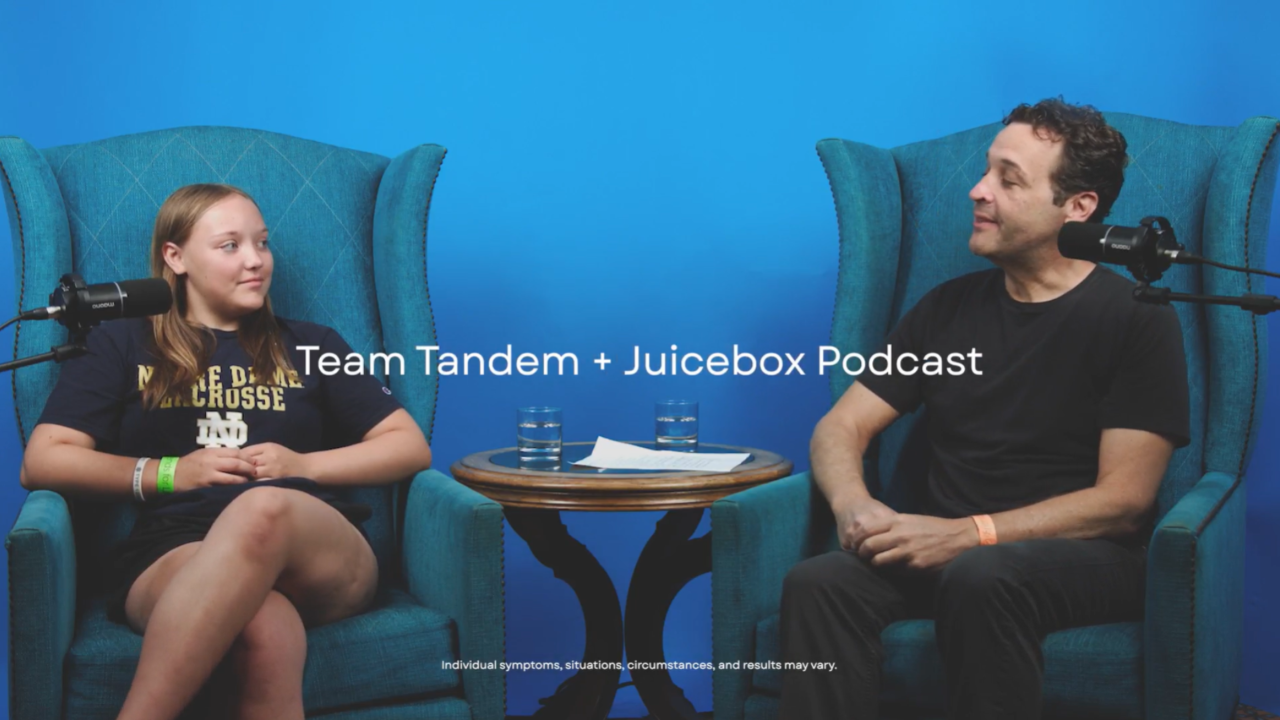












Please support the sponsors



The Juicebox Podcast is a free show, but if you'd like to support the podcast directly, you can make a gift here. Recent donations were used to pay for podcast hosting fees. Thank you to all who have sent 5, 10 and 20 dollars!

#1150 Noki Pokey
Faygie is 45 and her son Daniel was diagnosed with T1D 2 years ago when he was 10. Celiac, thyroid issues and Crohn’s disease are all medical conditions that run in her family. Faygie herself has MS.
You can always listen to the Juicebox Podcast here but the cool kids use: Apple Podcasts/iOS - Spotify - Amazon Music - Google Play/Android - Radio Public, Amazon Alexa or wherever they get audio.
+ Click for EPISODE TRANSCRIPT
DISCLAIMER: This text is the output of AI based transcribing from an audio recording. Although the transcription is largely accurate, in some cases it is incomplete or inaccurate due to inaudible passages or transcription errors and should not be treated as an authoritative record. Nothing that you read here constitutes advice medical or otherwise. Always consult with a healthcare professional before making changes to a healthcare plan.
Scott Benner 0:00
Hello friends, welcome to episode 1150 of the Juicebox Podcast.
vagy is 45 years old and her son Daniel was diagnosed with type one diabetes about two years ago when he was 10. There celiac thyroid issues including Hashimotos and Crohn's disease in their family vagy actually has MS and was diagnosed with it two years ago at the same time as her son began with his type one journey. Please don't forget that nothing you hear on the Juicebox Podcast should be considered advice, medical or otherwise, always consult a physician before making any changes to your health care plan or becoming bold with insulin. Do you have type one diabetes or are you the caregiver of someone with type one? If you've answered yes to that and you're a US citizen, please go to T one D exchange.org/juice. Box and complete the survey. This will take you less than 10 minutes and you will be helping people living with type one diabetes, you'll likely help yourself and you're definitely going to be supporting the show. T one D exchange.org/juice box. When you place your first order for ag one with my link you'll get five free travel packs and a free year supply of vitamin D drink ag one.com/juice box
this episode of The Juicebox Podcast is sponsored by cozy earth.com Cozy Earth is where I get my clothing, linens and towels from they are incredibly comfortable and temperate. I love them. I really do love them. And I love that I can give you an offer code that will save you 40% off of your entire order. Just use the offer code juice box at checkout and you will save 40% at cosy earth.com Today's episode of The Juicebox Podcast is sponsored by Dexcom makers of the Dexcom G seven and G six continuous glucose monitoring systems. dexcom.com/juicebox us med is sponsoring this episode of The Juicebox Podcast and we've been getting our diabetes supplies from us med for years, you can as well. Us med.com/juice box are called 888-721-1514. Use the link or the number get your free benefits check it get started today with us med. Hi,
Faygie 2:38
my name is Shay ghee and my son Daniel was diagnosed with diabetes about two years ago after coming home from camp.
Scott Benner 2:46
How old is Daniel now? He's 12. It was 12. So it was diagnosed around 10. And Biggie are there other autoimmune issues in your family?
Faygie 2:59
Yes. A lot. And listening to your podcast has made me realize that connections. We have celiac we have thyroid issues including Hashimotos. We have I have MS. Actually. Husband has Crohn's disease. So we have a lot of them.
Scott Benner 3:18
Well, how about going past you and your husband? Down family lines? Do you see more?
Faygie 3:24
With cousins and and my relatives spread out? We see the celiac and the thyroid things. Not really anything else? And there's no other diabetes?
Scott Benner 3:37
No other diabetes. Okay. So Daniel's The first type one? Yeah. How did it present? It
Faygie 3:44
was kind of crazy. So basically, when I got diagnosed with MS, I had like a big, whatever you call it flare up and had a lot of crazy symptoms. And I'm in the hospital. They're trying to figure out what's going on. So Daniel was supposed to go to summer camp for like four weeks, it was his first time going away. And it was like right after COVID Only some camps were open, and I wasn't feeling well. And we were like, Let's just send him away. So he ended up going and having a great time and the camp called me and basically said we know like you're not feeling well let him stay the second month like it's fine. He's having a great time. He wants to stay we'll give you a great deal. Like, and I even though I was really nervous. I said okay. And some point in camp, things started to go south, but like, I wasn't there. So I didn't realize, you know, they called me to say that he had wet the bed and I thought it was so strange. And I'm like, that's weird. And everyone was like, Oh, he's under so much stress because you're sick. Like, it's probably because of that. And then they said he was vomiting. They didn't pick up on it which whatever is really upsetting. Okay,
Scott Benner 4:50
well so let me ask a question your How does your MS diagnosis present? Like what happened to you to put you in that situation?
Faygie 4:57
So like About a year prior to my actual diagnosis, I had like a weird, a headache with weird visual changes in one eye. And that ended up with the doctors saying they did an MRI that they're watching for Ms. Right now it doesn't look like Ms. But they're watching. It may turn into Ms. And then about a year later, I had a full on episode half of my face was numb. My tastes was affected. The hearing on one side was affected. Several vision for like, an hour after I woke up in the morning. No balance, like I couldn't get up walk. So it was pretty intense. Wow.
Scott Benner 5:39
That's crazy. How old were you when that happened?
Faygie 5:41
It was about two years ago. So 43.
Scott Benner 5:46
Okay. Anyone else in the family have that? No. No? Ms is all new immune. Correct? Yes,
Faygie 5:54
it is. Yeah, your body is attacking the nerves. Wow.
Scott Benner 5:59
Okay. I'm gonna ask a question. It's just a shot in the dark. If I'm wrong, I'm wrong. If I'm right, I am but your first name. Your Jewish right.
Faygie 6:07
Yep, yeah.
Scott Benner 6:09
Are you orthodox? Orthodox? Jewish? Yes. Okay, I'm getting this quickly. Don't worry. Yeah, I see what's happening. Have you and I met? No,
Faygie 6:18
I am on the Facebook group. Actually, my nickname Fe Chang. That's whatever. It's a long story. But I'm on your Facebook group. And we've had some, you know, back and forth, but now he's never met. Okay.
Scott Benner 6:30
I just I did a big orthodox event last year. So I wasn't certain If we met at it or not. I
Faygie 6:35
know about that event, actually. And I was I saw on a chat afterwards. They loved you. Oh,
Scott Benner 6:42
good. Oh, I'm glad I actually thought I'm like, I'll never know. And they, they have that? Yeah, like the like a whatsapp chat or something like that. They hate me. They'll just talk about me incessantly in there. And I'll never know.
Faygie 6:56
What happened was was, I had just joined that chat. A lot of it. A lot of them are actually Hasidic, I'm not Hasidic, and I don't speak Yiddish, and they speak English. My family's very American. But I joined that chat. And then I saw you post this cryptic thing on the Facebook group like that said, I'm going to an event where like, people won't be able to something about won't be able to communicate with me after or won't be on the Facebook group. And I want to, I want, please send me like some information. I don't know when I said to my husband, oh, my God, he's gonna go to that event. I want to go.
Unknown Speaker 7:30
Well, then I
Faygie 7:31
found out you were going but it was only for adults with diabetes. It was not for kids. So I couldn't go.
Scott Benner 7:39
That's well, first of all, it was a it was a great time. There were only 400 people there. It was a huge, huge. Yeah. Wow. But yeah, they didn't. The group asked me not to publicize their event. But I had like a couple of questions. I was like, I don't know how to do this. And this. And anyway, I learned a lot that weekend, I'm sure. But the reason I asked is because your social circles can be smaller than and so that when you start meeting people with autoimmune, like you might start marrying people with autoimmune and getting born autoimmune. And that's that's what I was wondering.
Faygie 8:13
Yes, you know, there's actually it's not auto immune, but there's a genetic disease that Orthodox Jews actually from European descent test for before they even date or marry because it was running, like you said, it was like, people kind of marrying and like the same circles. And it became a concern. Yeah,
Scott Benner 8:35
no kidding. Oh, that's fascinating. Yeah. Yeah. Do you know did that help them to get ahead of the problem when they started doing absolutely,
Faygie 8:42
people, everyone, basically, everyone in those circles will test them. People will not get married if they're both carriers, because it's a devastating, early death, like disease. Yeah,
Scott Benner 8:54
I'm now envisioning, like a dating system was swiping where you get a blood test first. And it eliminates people who will put you in these situations, but nobody's actually no one. No one takes that idea. That's mine copyright.
Faygie 9:13
So my husband is Iraqi so I don't have the same. His dad was born in Baghdad, so he doesn't have those European genes. Even Crohn's disease is very rare among people and from his where he comes from, it's weird that yes, I
Scott Benner 9:28
say, oh, that's something else. Okay. The Dexcom g7 is sponsoring this episode of The Juicebox Podcast and it features a lightning fast 30 minute warmup time. That's right from the time you put on the Dexcom g7 Till the time you're getting readings, 30 minutes. That's pretty great. It also has a 12 hour grace period, so you can swap your sensor when it's convenient for you. All that on top of it being small, accurate, incredibly wearable and light. These things in my opinion, make the Dexcom g7. A note brainer. The Dexcom G seven comes with way more than just this. Up to 10. People can follow you, you can use it with type one, type two, or gestational diabetes, it's covered by all sorts of insurances. And this might be the best part, it might be the best part alerts and alarms that are customizable, so that you can be alerted at the levels that makes sense to you. dexcom.com/juicebox links in the show notes links at juicebox podcast.com, to Dexcom. And all the sponsors, when you use my links, you're supporting the production of the podcast, and helping to keep it free and plentiful. sitting here right now it's late at night, according ads, and I'm wearing the most comfortable joggers I've ever touched in my life. They're from cozy Earth. And if you use my link in the show notes, everything you see at cozy earth.com will automatically be 40% off. Or you can go to cozy earth.com. Pick whatever you want. And then at checkout, use the offer code juicebox. And again, you will save 40% off of everything in your cart. Cozy, earth.com. Comfortable, and quality. Those are the words that come to mind when I think about my cozy Earth towels, sheets, and clothing. Cozy earth.com use the offer code juice box at checkout to live the life of luxury, or use the link in the show notes and see what all the prices look like with the 40% already off cosy earth.com Alright, so you're getting Ms. I'm sorry, that doesn't that sounds good. And there, it's a stressful thing for the family in general. So people are believing that like your son's just not well, because he's not handling that. Well. I
Faygie 11:47
mean, at first that's what people thought, you know, and the nurses I can I kind of I wasn't, you know, I wish that the nurse would have just done a simple blood test. What happens in the end was I was getting more and more nervous. I almost wanted to pick him up because he was vomiting and like, he was Scott, he was really sick. I didn't know. I told my husband, I'm coming with you to the bus stop to pick him up. So we get there. And he gets off the bus and I didn't recognize him. He had lost like 25 pounds. He was breathing strange. He was completely confused. He didn't say Hey, Mom, how are you? He's like, I think my backpack is still on the bus. Immediately. I knew something was really wrong. And I brought him to the car sets. My husband set the GPS for go straight to the doctor.
Scott Benner 12:38
How long have you been gone? Had he been gone? Eight weeks. Eight weeks? He lost 25 pounds? Yeah. Oh, wow. So he's in? He's in decay when he gets off the bus? Severe? Yeah.
Faygie 12:50
I mean, he was breathing that breathing that you talked about that deep breath kind of situation.
Scott Benner 12:56
Cool. Small respiration? Yes, yes. Okay. So
Faygie 13:01
then it became a complete nightmare. Because I said, if we start driving to the doctor, my husband's like, Oh, he's probably just not feeling well, let's take him home. He still is like terrified that he almost like tried to convince me to bring him home. And the doctor didn't want to take him. One of the doctors was out on emergency and they said they have no space. And they sent me to like this. I don't know, walk in type of situation. Emergency. And I was still like, COVID I went there. And the lady told me three hour wait, and I said can you please triage him? He's not breathing, right? No one would listen to me. So finally I called someone in my family. I was hysterical, like screaming on the phone. Something is wrong with my kid. And no one wants to see them. I think I'm gonna go to the hospital. But I don't know if that's the right thing to do. And like, finally, I don't know, my brother in law just said to me go to the doctor and just walk in. So that's what I did. And the nurse said, you know, he said he had to pee, you know, let him pee in a cup. And then of course, within minutes, the doctor came in and said to me, you need to go straight to the hospital. Yeah. It's
Scott Benner 14:06
it. It's interesting, actually, that Yeah. Give me a second that in most doctors offices. The first person you speak to is often not a medical person.
Faygie 14:16
Yes, she was a receptionist. Yeah, yeah. It's interesting.
Scott Benner 14:19
So you would think that I don't know like, I like your I like your brother in law's idea. Like just show up the look at him and go, Oh, my God help him in a good idea.
Faygie 14:28
And my doctor's office. I've never had issues like this. And it was really upsetting. And actually, the main doctor gave me his cell phone number and said to me if anything ever happens like this again, call my cell phone. This is ridiculous. Like, okay, well, because they didn't want to see him. They were fighting with me, which is crazy. Yeah.
Scott Benner 14:46
You also know when people are really upset. They're either really in trouble or crazy. And so
Faygie 14:52
my doctor's office knows me and although it can be a little crazy, I am not the person that calls them every five seconds. This happened my kid, I have like six kids, thank God, you know, and I, I don't run in for every little thing. So if I'm calling you they should know, if I'm calling you hysterical, something's really wrong.
Scott Benner 15:12
I take your point, I really do. Okay, so he gets in there, they dip his urine. And we
Faygie 15:17
started driving to the hospital because it was only six minutes away. And my doctor of disaster actually pulled me and said, pull over and call an ambulance. They're busy and he needs immediate care. And Scott, he was passing out while I was waiting for the ambulance on his side of the road. I'm standing outside my car, and I'm banging on the window trying to like wake him up because he was literally He was passing out. So they in the ambulance, they you know, they took him to where we're near li che and they were amazing. But it was so scary. It was like a movie because they didn't stop moving. They wheeled him in, they didn't even stop. And three nurses were on him trying to get IVs and like three different places. Whatever, thank God, they told me we know what this is, and we know how to treat it. But they didn't say oh, he's gonna be fine. I mean, he was really bad. It was very scary. Yeah.
Scott Benner 16:06
Yeah. It's anybody who's ever been in like an emergency medical situation, they they will often give you reassurance and when when they don't offer the reassurance. It does make you think like, oh, wow, like, they didn't take the time to say don't worry, this will be alright. And right. Yeah. And plus, I'm assuming you were standing on the road, waiting to wave down an ambulance and at the same time trying to parent the situation. That is what was going on. Right? Yeah.
Faygie 16:35
Right. And unfortunately, my younger son was in the car. So he was six. And he's a very anxious kid, and he is watching all this play out. And there's nothing I can do about it. I'm saying, he hears me screaming at the doctors and he watches us get into an ambulance. You know, my husband drove him home. I went to the hospital with my other son. Like, it wasn't good for him, either.
Scott Benner 16:58
Yeah, I was gonna say that didn't help him that day, stare at the wall, like, covering.
Faygie 17:03
It comes home. And he needs shots every second and he's like, Oh, my God, that's a thing. You can like, go to the hospital and then come home and you need a shot every five minutes.
Scott Benner 17:14
How's he doing now? The six year old.
Faygie 17:17
He's eight now. And he's he's got a GED. And he's, he's adorable. He's very helpful to his brother. And he loves to kind of be involved. He could probably talk diabetes, talk to you about diabetes, he could talk circles around anyone he knows everything. Right?
Scott Benner 17:32
Well, I'm hoping he doesn't have too many bad memories from this. Well, I'm interested in the progression from like, disoriented to passing out to when he comes back around. How long does that take?
Faygie 17:44
I mean, we were in the intensive care unit for five days. His his potassium was off his heart there was like, I think God, His heart is fine now. But there was it was a lot. It was so involved. He did wake up, I would say, a few hours later. And I said to the nurses, like, Please don't tell him right away. What's going on? Let him get a little stronger. Let him get. And they one of them was like No Mom, he has to know he's gonna deal with this for life. And I'm thinking okay, I know. But he needs like an hour two, you know? So yeah, I mean, he handled it like a pro. He's got a great attitude. He's an amazing kid. He was comforting me in the hospital, because I stayed with him and I wasn't feeling so well. And he's like, singing to me and trying to make me feel bad. That's
Scott Benner 18:35
very nice. I would not have done that. I would have been like, Hey, I don't know if he just saw it happen to me, but it's my day.
Faygie 18:46
No, it was it was mostly all his day. But there were times when he saw that. You know, he was noticed he noticed that it was hard for me. Wow. He's an awesome kid.
Scott Benner 18:56
That's excellent. So did they start him with any technology? I mean, does he leave on shots or pens that they talk to you about CGM EMS. I used to hate ordering my daughter's diabetes supplies, and never had a good experience. And it was frustrating. But it hasn't been that way for a while actually for about three years now. Because that's how long we've been using us med us med.com/juice box or call 888721151 for us med is the number one distributor for FreeStyle Libre systems nationwide. They are the number one specialty distributor for Omni pod dash. The number one fastest growing tandem distributor nationwide, the number one rated distributor index com customer satisfaction surveys. They have served over 1 million people with diabetes since 1996. They always provide 90 days worth of supplies and fast and free shipping. US med carries everything from insulin pumps and diabetes testing supplies to the latest seeds ATMs like the libre three and Dexcom G seven. They accept Medicare nationwide and over 800 private insurers find out why us med has an A plus rating with the Better Business Bureau at us med.com/juice box or just call them at 888-721-1514 get started right now. And you'll be getting your supplies the same way we do.
Faygie 20:27
So we got some pretty good education in the hospital for like, you know, first level type of stuff. He left with pens. It was very overwhelming when they tried to explain the math to me. I was almost hysterical. It's too much to handle when you're like dealing with all this. And you know, I made my mom's day and listen, they're telling me add up this divide by this. It was like very overwhelming. We went home with pens. We actually went home for one night and then went on a family vacation kind of like where we are now. With extended family. Yes. The doctor said you take the insulin, you take food like you're gonna be good you take the blood, you know the bloods has blood glucose tasket there's no reason why you need to be home. So he had a ton of support the family like rallied around them they they sang a song because we call him Nokia's, his nickname. They said do the gnocchi pokey every time he like stuck his finger. And like he got he had a lot of support. But we were doing we were waking up in the night. We were very high running high correcting calling the doctor every few hours.
Scott Benner 21:34
In hindsight he led you went Yes. Okay. Does the No Keep turning around? That was my other question.
Faygie 21:44
He was dancing. But I mean, it, I think started the foundation of a very healthy acceptance of his disease and like ability to laugh at it. And I think it's the attitude is so important for a kid dealing with it. He doesn't hide it. And he got you know, he got the validation from everyone. And my brother who's an actuary did all the math in his head for me, it was great.
Scott Benner 22:09
I have to tell you, the math is what freaks me out because I really did relate to what you were saying. Like, you don't recognize that you're not doing well, in a crisis. You don't I mean, like you think because you're standing up and listening and not crying that you're doing okay. But that's not true. Like you really are in a you're in a city. I mean, I've always said like, it feels like somebody just whacked in the head with a shovel and then starts asking you questions, right? Yeah. And then when someone you know, starts talking to you about math, at least for me. I was like, wait, what? This sounds reasonably easy, but I can't follow. I don't know what's happening right now. Yeah. So right. You're in like a fog. Oh, my God. And I've been thinking a lot about this lately, because we're going to make a series that's for health care providers. Yes. I asked you to do that. Yay. Jenny and I are doing that. So we're in the planning stage stages, right now. It's hard, because there's like the hospital, right. And then there's people's opinions like that nurse saying to you, like he needs to know, but you were just saying like, give him like 45 minutes before you tell him and like and now she's got her own personal beliefs that are here and and they're kind of pushing them and you're asking your thing. And you need to learn about this because you're going to go home, but obviously the hospital is not a great place to learn these things. So what should the process be? And what should people know along the way? What should emergency staff know? How quickly should you get to another doctor? Like, you know, if you can't get to a doctor, is there a way to train you online? Like, that's the stuff we've been thinking a lot about. So it's interesting.
Faygie 23:43
Oh, yeah. Yeah. Online training with from you sounds great.
Scott Benner 23:48
Well, I will say that Jenny and I are gonna, we're figuring it out right now. But anyway. So you guys are on vacation. Everybody rallies around them. He's doing well. He's got a good attitude. You get back home. What happens? Is it when do you when do you realize you don't know enough? Do you go to another appointment? How does that work? So
Faygie 24:09
we got we got a CGM fairly quickly within maybe like four weeks or so the doctor really wanted, you know, wanted it right away. I didn't even understand all the benefits. They just told me, Oh, you won't have to prick his finger. You won't have to wake up and mill the night. They didn't tell me anything about the arrows. You know, they got him on a Dexcom was the GSX. And they told me about the pumps. And he was very interested in waiting for the Omnipod five. But, you know, they kept pushing off the date pushing off the date. And finally, we said okay, let's just get him on the T slim. It was his choice. And he you know, we wanted an algorithm pump. Yeah, we thought it was amazing. It was explained to me, by the way, as if I would not have to interact with it. Like, oh, it's just gonna, you know, correct him when he needs it. And it's just gonna I was not given the proper training really for the T
Scott Benner 25:03
slot. They gave you that feeling of like, oh, you're getting the pump. It'll take care of everything. touch and go. Yep. That's a shame that from what office like Who told you that? Yeah. So
Faygie 25:15
chronologie office? Yeah. Yeah.
Scott Benner 25:18
Again, words are very important. If you use them in the correct order and use the correct words, and yeah, it's just one person, slight misunderstanding that they don't recognize will send you in a direction. And they have such power over you in the beginning. Because you're listening. And you're taking everything as gospel like everything. They say, you're like, Well, this is this. This is an automatic pump. Great. I won't have to do that. Who even knew that existed? This is wonderful. Like it's
Faygie 25:48
right. Yeah. Right. And I'm a person that really does dig into things. And I try to find out things for myself that I really thought the doctor was giving me everything I needed. I had no idea what was out there. No idea. And I'm not even a Facebook person. I mean, now I'm on your group. I joined Facebook just for you.
Scott Benner 26:07
I've got a couple of people like that. I've dragged into Facebook, by the way, I'm one of them. wasn't exactly using Facebook a lot either before all this, but but anyway. Okay. All right. So you get the algorithm. The T slim, right. And yeah, well, let's break it down first. How did you like the CGM? So the
Faygie 26:28
CGM was amazing. It's definitely helped. But it also made me realize that like, like, we suck at this, like, we're not like getting, he was high. He was like, high a lot. And I didn't, they did not allow me to ever give correctly was like the three hour rule with the corrections. I had no idea that like, I could be adjusting settings myself or, you know, changing numbers or anything like that. I found your podcast while I was on the tea slum. And my husband had he one of his students, parents had diabetes. He's a teacher as a science teacher. And they told him about the podcast. I really just like, out of curiosity, like, I know how to do all this already. Like I really thought I knew everything.
Scott Benner 27:14
So that was that? How do you find the podcast is just searching online? No, she
Faygie 27:18
told one of my husband students parent one, okay, I'm sorry, can she liked was that parent teacher conference. And in her five minutes, she said, I heard your son got diagnosed. This podcast Juicebox Podcast, tell your wife like it's amazing. So I think the first episode I heard with my husband, we were in the car was a woman from India, whose daughter has diabetes. And she was talking about how it was so hard to get the right equipment and how no one understood. Type one in India, it wasn't very, you know, but there were like a few things thrown in here and there that gave me pause. And then I was listening to one of your episodes, and I heard you say something about art in like, 120. You're correcting and I was completely shocked. Oh, I think I listened to that part. Like four times. I said, Wait, what? Everybody listens to being sarcastic now, like,
Scott Benner 28:11
am I not hearing sarcasm, which would be crazy, because of your background, you should definitely be able to hear sarcasm, and maybe I misunderstood? Yeah. I think that it's a great example, again, of like, whatever they tell you in the beginning, you're like, Okay, this is it, you know, don't correct. high numbers. All right, we won't. And you know, that's a loan could lead you on a lifetime of problems. And I don't want to I just don't understand what I don't understand as I go through. Because, you know, to make this series that I was talking about, what we did was we went online and ask people like, what do you wish your doctor would have told you? And we got back like 85, like in a document 85 pages of information from people. And so we pored through it took out duplicates, you know, put them into, you know, under headers and sections and, and what you overwhelmingly take away is that whatever I was told first, I believed, and that was a rule to me. And that leads you down a path you don't come back from because you never question it again. Does that make sense? Yeah, yes. And so you're getting this information either from well meaning people with strong personalities like you gotta tell him now because he's got to live with this for his whole life. Like, I'll just and that person by the way, that's not a bad, like statement. It just, they just misunderstood what you were saying in that moment. And then they have their own dogma that they're attached to and so now, they're pushing you in that direction. And it's just, it's so anyway, so all these people's like, information comes back. What did they want? My wish, what I wish would have happened. And along the way you intersect so many different doctors who are just kind of talking. They don't like you know, the person in the emergency room, it tells you the barebone stuff that they think you need to know. But nobody ever finishes sentences. And I think that's the takeaway is you, you say to somebody, instead of saying, Look, these are your Basal rates, and this is your correction factor. You say, today, based on weight, you know, whatever else, we're going to make your settings this, but these settings are going to change for a number of reasons moving forward. reasons like activity, weight, age hormones, like, if you just knew that, you'd say, Okay, well, these are today's settings, they're going to change. But instead, you say, these are the settings. And then when you move forward and start seeing high blood sugars, you never question the settings again, because somebody told me Yeah, and that I think, is the core problem.
Faygie 31:01
Just knowing that it would be flexible, would would change your whole outlook and make you more flexible. Oh, this might change like, right? You're assuming that everyone knows, Si, I have a theory that a lot of people who deal with diabetes don't even know a third of what you know. Yeah.
Scott Benner 31:22
And they might be, I wasn't agreeing to say that I know a lot. But they might be they might. They might be saying what they believe. And maybe they don't know what's going to change. So we should teach them just to add on to the rest of the sentence. And by the way, this is going to change moving forward. Or, you know, this is not the only insulin, if you're not having luck with it, talk to your doctor about other insolence. You know, this, maybe you'll get an insulin pump one day, there are many different kinds. I don't know about them, you should look into them. Like the rest of the sentence is the problem, right? Yeah. So there's nobody, we've,
Faygie 31:57
we've had a diabetes educator, nurse or whatever, tell my son, like when I'm asking why he's going high after this. And this meal? How much protein did he have? Oh, that's too much protein. Like, tell me that you can dose for protein, tell me that there's a way to dose for fat. Don't tell me that's too much protein. He just can't eat that. Like, what does that even mean? Like? Those were the kinds of things I was cutting. And honestly. It was, I honestly want at one point, when I asked the doctor, the endocrinologist, I said something about dosing for the arrows. I was starting to learn from the podcast, and I was, and she looks at me like I had three heads. I don't know if she knows that. Dexcom has arrows. How are you? And Endocrinol? Like, I don't know,
Scott Benner 32:41
the error is what error is, what are we talking about? She gave
Faygie 32:45
me that look like I'm crazy. Okay,
Scott Benner 32:48
now, I finally have someone to talk about this with. So let's divert for a second. When I, when I gave the talk at the Orthodox event, by just the luck of the draw. I got to be the sharpest boy for somebody. And I was excited. And so, so this great thing happened for me, not for everybody else. But at sundown, the elevator became my private elevator. Nobody else was nobody else would get into it anymore. So I had a private elevator for that. But I was standing at the elevator at the end of an evening, waiting for the car. And there were a bunch of people at the stairwell getting ready to go up the stairs. And, you know, I looked at them, and I smiled because what I was really thinking was oh, I'm so sorry that you can't use the elevator, but I'm gonna get into it anyway. And these two people who are not together, a woman and a kid in a stroller and a guy, an older guy, I don't know, mid 20s they start talking to each other. But in Yiddish, and I'm like, this is probably about me, but that's okay. So I just
Faygie 34:01
I don't actually speak it. Yeah, don't worry.
Scott Benner 34:03
That's not the point of the story. And then in English, she goes, he doesn't know. And I went, I might know. So he turns to me, by the way, I was right. They were talking about me. And he turns to me, and he goes, Can you are you on the sixth floor? And I said, I am and he goes, Can you help me? And I went, do you need me to shut off lights? And they laughed a little. And he goes to her he knows and I was like Chava school? And they start laughing? As the guy goes, How do you know when I went Howard Stern that got more laughing and and he gave me his his his room number. I was waiting at the door. I was so excited. And and so then it was just very interesting. It was only 30 seconds but it was very, very interesting that first of all, I came in the room he first checked to make sure his wife was decent. She's in bed like under pillows and blankets trying to sleep. But she can't because every light room is on and, and I come in, and he this is the part I didn't quite understand but it felt like he couldn't directly asked me to shut the lights off.
Faygie 35:16
Yes, yes, that's correct. Okay. Okay. And so
Scott Benner 35:20
like I just walk into the room, make the assumption. And I'm like reaching for a light and waiting for like, I think this one's okay. And I push the button it went off and this voice comes out from under the blankets and it's, it's an exhausted voice. And she just goes, thank you so, so now the rooms dark except for the bathroom light. And as I'm walking past the bathroom to the door, I kind of like look at it like this one too. And he sort of looks at me like, and I thought, oh, they'll shut the door, and then they'll have access to the light overnight. I was like, Okay, I got it. Anyway, I walked out of that room, I felt like I was at Disneyland I was so it was like texting my wife. I'm going on the home like oh my god, guess what I just got to do. Anyway, you actually
Faygie 36:15
right? You're you're supposed to only hints to someone like say, oh, it's really late in here. But we can turn off the
Scott Benner 36:21
I had such a good time that we can because I have like, I have enough Yiddish phrases, again, from listening to Howard Stern for my whole life that I saw that I was like whipping them out. And people were very impressed. Like me. We were I was giving a talk. Oh my gosh, what happened at that talk? Somebody used a phrase. Eating my kiss goes out. Oh, no, wait, they were eating something called a Kiska? That's right. Yeah. And I tried to imagine like, there's 200 people in the room because everyone's split up men and women for for dinner. And I was giving a talk that night in the in the lady side. And so it was kind of interesting and a little weird, if I'm gonna tell you like we were up on a riser. So I was like, I was at my own wedding. And everybody was down on the floor, and I was up on the riser. Anyway, they're bringing out food. And every time food came out, they'd come around and tell us what it was, etc. And I and I stopped the person. I was like, Wait, I don't understand this is a KitKat. And she says yes, I'm like, well, then where does the phrase eating your kitchen? Because out come from? And then that turned into like, a whole conversation with the entire room and people are like laughing and you can hear people going, how does he know what that is? And like, you know, it's such a good time. That's awesome. Yeah. Anyway, private elevator was the best part of the weekend. Like, this is just for me. It's waiting on your floor. When you wake up in the morning. Swear to God, it was lovely. Anyway, okay. So I don't know. I just want to tell somebody that story. So today, modern day is only two years since all this happened to Daniel, he sounds like he's doing really well. Yes,
Faygie 38:03
yeah. Your podcast has literally Scott, you're you don't know what you're doing. It's out of control. You're like literally changing the world. It's not normal. I, he he has, you know, obviously I went and listened to a lot of episodes, I listen to the Pro Tip series that was very helpful. And we kind of changed one thing at a time. And I think I told you in my letter, there was a month where he was only 40% in range and range at that point was up to 180. He had he had really hurt his leg. He was in a wheelchair as a whole, whatever. And so he was running super high. And I did a few changes. And the last week, which is part of that average of 40. He was 80% in range. Well, from one week from probably I probably did a Pre-Bolus and you know, correcting I don't remember what it was that we changed but I mean, he went from so he we really we got down to a nice like 6.2 6.1 A one C, we switched to Omnipod five when it came out. And actually a month ago, we started looping. I was fighting with the Omnipod five too much okay, and I didn't like where he was sleeping. He was sleeping. It was okay. It was a nice flatline but it was like at 131 25 and I just couldn't. So we actually, I actually hired Jenny she's been amazing. She helped us switch over to Lou and helped me with the settings and we're getting there I can't say we have the settings completely dialed in. But I can see that the potential is amazing.
Scott Benner 39:38
Oh, that's excellent. Good for you. I am thrilled that the podcast is helpful for you. Actually I just had this will be way later than that. So it doesn't matter if I tell you but I just had the Pro Tip series professionally remastered by an by an audio engineer. And so
Faygie 39:55
you put that up on Facebook yeah Amazing. Yeah,
Scott Benner 40:00
I'm really excited because I went back and realize that in the first like, 15 episodes, Jenny's microphone was not good. And, and a lot of the leveling was off. And I didn't really know what I was doing. But I'm so busy making the podcasts like, I can't, I can't go backwards, you know what I mean? Like, I can't go back to deal with something else. So, spend some money. person did a wonderful job. We're gonna rerelease them at the episode 1000. So that they're all they're all amazing
Faygie 40:27
that series is is really incredible. That series alone can change people I listened to all the episodes, I listened as many as I can. But that one series, I think is like key.
Scott Benner 40:39
I was having, actually, yesterday, I had a meeting with an advertiser, and I'm basically I was selling ads on the, the remastered purchase series. And so I'm on the, on the call. And I said to this person, I'm just gonna say this, I was like, I can't make this claim anywhere. Like, for real, I'm like, but I believe you listen to the Pro Tip series, if you understand it reasonably, you're gonna get an A one C between like six and six and a half. And I said, that I think if you really understand it, and want to put in the time, I think you get a one C and the high fives, mid high fives. Yeah, just with what's in there.
Faygie 41:15
We got to 5.9 My son was like dancing in the gym, right? But then I then our last one was like, 6.2, we were you know, we're gonna have to, I think with looping, we're gonna it's gonna take us a little longer, because you really have to adjust the settings yourself. It doesn't. It's not a smart system, it's not going to like, you know, figure out your Basal or, you know,
Scott Benner 41:40
no, no, of course, we're not up to that yet. I mean, I even think like Omnipod, five, for example, T slim all these things. I think that as time goes forward, you should see them. I mean, if I was running those companies, I think you should see them kind of turn the screws a little bit on the algorithm and make them more and more, you know, like customizable, that kind of stuff. Yes, yeah. Because right now, you know, for someone like me, who's I mean, Arden's been looping for years at this point. And so we're just sort of ahead of the curve a little bit like and write it all, it'll all catch up. I like the way they started it to be perfectly honest. Because if you think about the world, in general, you can't just drop a device on everybody that shooting for like a thought that they can shoot for a five, five and a half a one C, because people don't get low constantly. They're not going to know what they're doing. Like, you're gonna have to teach the populace how to do this. And then and move forward. I think so.
Faygie 42:40
Now, the fact that there are systems that you can kind of slap on and you don't have to be that you'll get a decent a one C better than for these devices. Yeah. Oh, it's knowing that much is amazing for most people. I
Scott Benner 42:55
mean, listen, if we can somehow put this in the ear of every person living with diabetes, not just the people who listen to a podcast are out searching for, you know, better ways. And you told them, This is Omni pod five, were it, you'll be 130 110 overnight, stable, they'd run they'd be like, Oh, my God, how? Like, please. Right. Yeah, you know, so I think we can get a little confused. Sometimes, at least I try very hard not to thinking that the people who find the podcast are very motivated. They're people who are out there looking, you know what I mean? And so you end up finding people who are similarly mindset it about like outcomes, or their desires for their diabetes. That's not most people. Most people have the story you have or the story someone else has, where they get bad information in the front. Their blood sugars are high all the time. And they live their whole life like that. Right? Yeah, right. Yeah. Anyway, I didn't want to get fascinating.
Faygie 43:51
I actually, I, I might, right now I'm occupational therapist, but I really do want to maybe train to be a diabetes educator. I have a lot to learn. But I would, I'm very interested in it very interested. It's fascinating. It's excellent. Good for you. I see how you could help people. People call me all the time, you know, people who are newly diagnosed kid or something, and I'll talk to parents and like I, you know, I find like, information is so valuable. Like it just you could really change someone's life. Yeah,
Scott Benner 44:22
no, I agree. I think it's wonderful. I hope you do that hope everybody, like helps somebody. Because that's, that's what's gonna spread the information more quickly. I can't do it. Like as much impact as I'm having. It's not that much. Like in the grand scheme of things. I mean, if you know, everybody with diabetes, heard just the Pro Tip series. I mean, this podcast would be bigger than, you know, Joe Rogan. So like, you know,
Faygie 44:47
I think that, that in like 20 years, you're going to realize people are going to look back and realize that you actually tipped the world in terms of diabetes. You're doing something no What else is doing? It's not it's not normal.
Scott Benner 45:02
Thank you. Should I ask for a statute that when that happens, I'll probably be dead. Don't you think? Like,
Faygie 45:10
I hope you're not dead.
Scott Benner 45:13
The world will like understood what happened. And I and they'll come to tell me. And like whoever answers quarterback guy you just thought you were calling to tell them why oh, he would have loved to have known that. No, no, he left about six hours ago you left? Well, you're very nice to say that. I don't know if that's true or not. I can just tell you that. I think through maybe a confluence of, you know, the where technology is being able to podcast, getting in the situation where I learned what I learned. And I practice talking about a lot of blog, so I'm probably good at explaining it. I think it all just sort of came together. Meeting Jenny is such a big deal. You know, because you just think without Jenny, the Pro Tip series is just me pontificating about things. And maybe that even wouldn't have been okay, like maybe the style would have not been right or, like it kind of helps that Jenny and I seem like two such incredibly different people. But if you really listen, we really agree about diabetes.
Faygie 46:16
I don't know how you found Jenny. Yeah, you you think exactly like a
Scott Benner 46:20
wonderful person named Ginger. Ian introduced me to her another person in the diabetes community. She just said, I think you would really like Jenny. And so had me on the show once as a guest. Back in the one hundreds maybe. And oh, wow. Yeah, loved her, brought her back, like a year later, because I just was like, Oh, I really love talking to her, I should put her back on the podcast. And then as the podcast started approaching 200 episodes, I found it unreasonable to say to people, if you listen to the podcast, you know, I think you're able to see all blah, blah, blah, there's information inside of it. You'll you'll call it out and put it together. And I was like, why don't I just take all that stuff and put it together in a series? I'll call it like, diabetes pro tip. And oh, what if I had Jenny? On with me? That's pretty much how it went. Right? Yeah. And then we just got on. It's all that entire series is freestyle. So
Faygie 47:18
meaning, right, yeah. You guys didn't plan it, right?
Scott Benner 47:20
No, we made a bullet list of ideas, and then took the bullets and made each bullet and episode and sat down and recorded. So I would say, okay, Jenny, today, we're going to talk about Pre-Bolus thing, and then we would just start talking.
Faygie 47:34
So you left some of that ends. So we know, you
Scott Benner 47:37
know that it wasn't planned. We didn't have any notes. Just in case in case you're wondering, like, why did this go astray, hear widely tell a story about an elevator and we're just chatting. Anyway, it's really cool. I'm thrilled that it's helping you and and other people. And it's very nice of you to say thank you. It's been amazing. Yeah. All right. Well, I'm terrific. Let's move forward. What else? What else? Are we not talking about? Is there anything else you want to want to go over? Not
Faygie 48:05
really, I just, I feel like, sometimes being part of the Orthodox community, I feel like people are trying to hide their diabetes, a lot of people for some reason, and I don't know if that's specific to this community, or if it's like, it goes on everywhere. But I find it to be so unhealthy. And so it really, it's, it's even dangerous. My husband found out like, last year that he had students go through his classroom that had diabetes, and he didn't even know no idea. And like, it's so dangerous. And I find it to be like, I think for a child also imagine, like, having to deal with diabetes. And then also feeling like you have to keep that a secret. Like that kind of pressure on a kid is crazy. Like it can make you you know, in addition to being really dangerous, I mean, we know and adults who actually no one knew they had diabetes until they passed out at work. And they called his wife and she's like, he's diabetic, give him sugar, give it like, and it's like that should be that should never ever happen. Like, yeah,
Scott Benner 49:12
I mean, I wouldn't want to give away anybody's confidences and I certainly wouldn't. But I did have that experience where I was with 200 type ones who are Orthodox and their spouses. And it occurred to me that it did look like people were very quiet about it, and people would kind of tell me, like, keep pushing, like, nobody talks about it, like, you know, like that kind of stuff. And at one point during one of my talks, I think I was giving a talk about supporting a spouse with type one. And I just sort of offhandedly said, you know, make sure that you know how to use the glucagon that your spouse has, and hands went up. What is that? No, they were like, yeah, so there were situations spouses had it and weren't even telling their spouse about it. And like keeping it that's kind of quiet like so it was upsetting. It was an upsetting conversation, because I was like, oh, okay, well, insulin can make your blood sugar low, my Oh god, am I saying this in front of a bunch of people that don't know it, you know? And oh my god. Yeah. And there were also some newer diagnose people there to like, so I don't think everybody wasn't talking about it. But it was clear that people were very, very private about this stuff. And right, I take your point, I think you have to, no matter if you're orthodox or not, like I think you have to let people around, you know, like, this is my situation. This is what could happen. And here's how you stop it. Because if you're, if you get into a spot where you can't help yourself, you can't help yourself. Right? Yeah, that's
Faygie 50:45
right. And it's also just the, you know, for someone living with diabetes, you already have a lot of difficult things that you're dealing with every day. To add secrecy on to that just increases your stress level by a million managing a kid that feels like they can't tell their friends or their teacher that that's crazy. Like, so to me, that's a really like, I don't know, my son, we I mean, we spoke to everyone at the school before he started school that year. And he spoke to his classmates on the first day of school because it happened over the summer. And his friends, you know, and he told him, I get a phone call from a friend because her kid came home and said, gnocchi and won't say his last name. He is the coolest kid. He has a rabbit and a lizard, and he has diabetes. And she's like, whoa. She calls me and she's like, something happened over this.
Scott Benner 51:37
We got diabetes over the summer, we also bought up an inground pool.
Faygie 51:43
But the kid thought it was the coolest thing, I guess. I don't know. He came with his technology. And he's showing everyone you know, his phone. And you know, they're not allowed phone. So he has a phone, obviously. And
Scott Benner 51:53
do you? I don't know what the word is. I don't have the word. But Chavez, do you do that every weekend? Yes. How does he make out with that? Well,
Faygie 52:02
by Jewish law, you can do anything for diabetes, on Shabbat, you can use your phone, you can use a scale to weigh your food you can use diabetes is considered like a dangerous situation, because an emergency can develop. So we treat it at just about like a regular day, he puts his case his phone in a special case, actually, that says Shabbat on it. And on the back, it says in Hebrew, you should guard your life, which is a quote from like the Torah about you know, taking care of yourself. And so he keeps it in that case. And then if he takes it out somewhere, people know that, like, you know, he's using it for some reason.
Scott Benner 52:40
I see. Is that specific to your? What am I trying to say?
Faygie 52:47
Like my branch of Judaism? Yeah. Like, do
Scott Benner 52:49
you need somebody to tell you? That's okay. Like, could you do? Would you have to move temples, for example, to find somebody who's okay with that or not necessarily. In this
Faygie 52:59
situation? No, because with life or death situations, even the strictest Jews, life is very, very valued in the Jewish religion. And it supersedes anything. Like, I think the only thing we wouldn't be allowed to do to save your life is like, kill someone. Like if you put a gun to my head and said, kill this person, maybe I wouldn't be allowed to do it. I don't know. Basically, we we guard our life over everything. So in that counts more than the other, you know, prohibition. So, in terms of like Shabbat, we handle it just about the same. I mean, I try to do things to make it a little easier. We have like an iPad glued to the wall in the kitchen. That's on constant display of follow. So I don't have to take out my phone and look up to see his numbers. I could just see it all the time. We actually leave it up all the time. So it's really easy that way.
Scott Benner 53:51
Oh, I see. That makes sense. Okay, what about the kind of mean? Are you now having like traditional foods after the end? After after, like one when the lights come back on and you guys are eating? Like a lot of those traditional foods were difficult to Bolus for you avoid those? What kind of food? I don't know. I don't know. It was a bunch of food I'd never seen before in my entire life. And it was all like, there's a lot of oil, it was heavy. And I was like, Oh my God, how are you guys? bolusing for all this, like it's really so
Faygie 54:26
that organization that I think is the one that brought you in to speak they actually have a handout that the doctors have I got it from a friend. I don't know why my doctors didn't give it to me. Maybe they don't think I'd look as I don't know, I dressed religious like from my hair. I don't know. But it's a sheet that actually has tells you how to Bolus for different foods like by weight or by volume but in general. My family does not eat I think as as heavy as that we eat kind of more, more American and a little bit more how Coffee, I read the glucose revolution I tried to incorporate some of those strategies. We eat more healthy in general. My son has magic spoon, he likes it. So I know there's a whole debate about the taste, but he likes it. So he takes up for school for breakfast. We do eat like more on Shabbat and we probably eat like some foods that are less healthy, but not all the grease and the not Not really. You
Scott Benner 55:26
should have seen when they were at meals, where I was there with a CD, there was also another person there speaking and he and I kind of became close. We were both not celebrating. So we're just next to each other. But at one point, I said, Is it midnight? Are we eating at midnight? What is happening? I shouldn't be asleep. Saturday night. Like I guess. I was like this late meal. And I was like what is happening? And then they they like showed us a plate and they're like, how would you Bolus for this? So he and I like kind of went off to the side, we both came up with a bolusing strategy for this meal. And he kind of went with one idea. And I went with it other and we stood up and we were we gave it people like no, that's not right, and blah, blah, blah. It was really fantastic. And then the next day, someone came up to me and said, I did what you said for my meal and my blood sugar was like 77 Afterwards, that's never happened before. Just like you really know what you're doing. And I was like, I mean, I guess he's like, I never would have done what you said to do. And it just worked out so well. And I was like, Oh, I'm I'm happy for you. And I was like, there we go. Like,
Faygie 56:36
I'm gonna go to me.
Scott Benner 56:38
It's really it was I had a great time. But anyway, okay, well, you're on vacation. So I'm gonna let you go. And and but I really appreciate you going over all this with me. It was incredibly interesting. You were very kind a number of times about the podcast. I appreciate that too. I'm glad Daniels doing so well. And that you guys are still learning things and moving forward. It's all like really heartwarming for me to hear. So now it's amazing. Thank you so much. Well, it's my pleasure. We hold on one second for me. Sure, thanks.
Arden has been getting her diabetes supplies from us med for three years. You can as well, US med.com/juice box or call 88721151 for my thanks to us med for sponsoring this episode. And for being longtime sponsors of the Juicebox Podcast. There are links in the show notes and links at juicebox podcast.com. To us Med and all the sponsors. Huge thanks to cozy Earth for sponsoring this episode of The Juicebox Podcast cozy earth.com use the offer code juice box at checkout to save 40% off of your entire order. A huge thanks to Dexcom for supporting the podcast and for sponsoring this episode dexcom.com/juice box go get yourself a Dexcom g7 right now using my link. Thinking about getting an algorithm pump don't know where to begin juicebox podcast.com up in the menu click on algorithm pumping and you're gonna get a long list of a lot of episodes that will help you to understand better juicebox podcast.com Find algorithm pumping. If you're looking for community around type one diabetes, check out the Juicebox Podcast private Facebook group Juicebox Podcast type one diabetes, but everybody is welcome type one type two gestational loved ones. It doesn't matter to me. If you're impacted by diabetes, and you're looking for support, comfort or community check out Juicebox Podcast type one diabetes on Facebook. If you're not already subscribed or following in your favorite audio app, please take the time now to do that. It really helps the show and get those automatic downloads set up so you never miss an episode. Thank you so much for listening. I'll be back very soon with another episode of The Juicebox Podcast. The episode you just heard was professionally edited by wrong way recording. Wrong way recording.com
Please support the sponsors

The Juicebox Podcast is a free show, but if you'd like to support the podcast directly, you can make a gift here. Recent donations were used to pay for podcast hosting fees. Thank you to all who have sent 5, 10 and 20 dollars!

#1149 Cold Wind: Healthcare Whistleblower Dr. Feelgood
'Veronica’ was diagnosed with T1D when she was 12. We talked about doctors inibriated at work while dispensing questionable drugs out of the endocrinologist office. Her voice and name have been changed to protect her identity.
You can always listen to the Juicebox Podcast here but the cool kids use: Apple Podcasts/iOS - Spotify - Amazon Music - Google Play/Android - Radio Public, Amazon Alexa or wherever they get audio.
+ Click for EPISODE TRANSCRIPT
DISCLAIMER: This text is the output of AI based transcribing from an audio recording. Although the transcription is largely accurate, in some cases it is incomplete or inaccurate due to inaudible passages or transcription errors and should not be treated as an authoritative record. Nothing that you read here constitutes advice medical or otherwise. Always consult with a healthcare professional before making changes to a healthcare plan.
Scott Benner 0:00
Hello friends, welcome to episode 1149 of the Juicebox Podcast.
Today, the person we're calling Veronica is a 47 year old type one. She was diagnosed at 12 years old and she works in a doctor's office. Today's cold wind is particularly chilling, as Veronica will talk about how the doctors in her office were drunk and high and dispensing drugs that were outside of what you might expect from an endocrinologist. Nothing you hear on the Juicebox Podcast should be considered advice, medical or otherwise, always consult a physician before making any changes to your health care plan. The T one D exchange is looking for US residents who have type one diabetes are are the caregiver of someone with type one. All they want you to do is go to T one D exchange.org/juicebox. and complete the survey. That's it. It'll take you about 10 minutes it'll help people with type one diabetes. It will help you and it will support the Juicebox Podcast T one D exchange.org/juice box. If you're looking for community around type one diabetes, check out the Juicebox Podcast private Facebook group Juicebox Podcast type one diabetes
this episode of The Juicebox Podcast is sponsored by the only implantable sensor rated for long term wear up to six months. The ever since CGM ever since cgm.com/juicebox. This episode of The Juicebox Podcast is sponsored by us med U S med.com/juice box or call 888721151 for us med is where my daughter gets her diabetes supplies from and you could to use the link or number two get your free benefit check and get started today with us MIT. This episode of The Juicebox Podcast is sponsored by the Omni pod five, Omni pod.com/juice box. My daughter Arden has been wearing an omni pod every day since 2006. And it has been a constant friend in her life with diabetes, consistent tubeless and worryfree Omni pod.com/juice box. So let's find out a little bit about you. Do you have type one or do you care for somebody? Who does?
'Veronica' 2:44
I have type one?
Scott Benner 2:45
How old were you when you were diagnosed?
'Veronica' 2:47
12
Scott Benner 2:50
Okay, about how old are you now?
'Veronica' 2:53
47.
Scott Benner 2:55
Seven. Okay. 20 230-240-2035 years ago? Yeah, that's a long time.
'Veronica' 3:04
It's been a hot minute time flies when you're having fun.
Scott Benner 3:07
Are you having fun?
'Veronica' 3:08
The first couple decades were rough.
Scott Benner 3:12
last 15 years, it's really coming together.
'Veronica' 3:15
I mean, honestly, yes. The technology has made things much, much easier. My highest agency was 19. Oh, wow. And that was 10 years after diagnosis. So I mean, I knew better.
Scott Benner 3:30
Yeah. And 20. That's just 25 years ago, which makes it like 1999 2000 ish around there. Yep. Yeah. Wow. You know, I just saw I get when people leave comments on things like I get notes about it and stuff like that. I just saw somebody leave a comment on like a YouTube video. And the person's like, you know, I've had diabetes for a really long time. And I was very accustomed to blood sugars and the 300 words and a one sees like, as high as 12. And then I got an Omnipod five, and the person's like, you amazed at what's happening. I'm waking up my blood sugar is like 115 in the morning, like that kind of stuff. And then I read that 20 minutes ago, and then you literally came on and said everything was a hot mess till technology got better.
'Veronica' 4:13
Well, I got a pump in 2001. And but I hate finger sticking like that is the worst. And so and I didn't like those early CGM that forced me to prick my finger. So
Scott Benner 4:27
I kind of avoided it.
'Veronica' 4:30
Did you try it? At least or no? So I got a pump in in 2000 2001. And I've worn a pump since then. And my agency was probably 1011 until the Dexcom G six came along.
Scott Benner 4:44
So walk me through how that happens. Is it partially because you don't want to test your blood sugar? Is it apathy, like where do you
'Veronica' 4:51
it's apathy but like so when I was diagnosed, I was told there would be a cure in five or 10 years and I think at that point, I just kind of decided I don't want to live five or 10 years with this disease. And I didn't make many plans for the future. And I got to the 10 year mark, and I was like, What do I do now? I mean, there's just a lot of stuff but so on with G six, and pumping, we were probably at eight, nine. And then with the control IQ, then it's like six, seven.
Scott Benner 5:21
So if you have access to the data, with a G six, for example, and you have a pumps, you're not shooting insulin all the time. So it's, it's as easy as pushing a button. And eight or nine a once the C still says to me, I'm not really counting my carbs. I'm not Pre-Bolus and meals, I'm not correcting highs Is that about right?
'Veronica' 5:39
Yeah, I still I'm not great at Pre-Bolus meals, I just, I struggle with that. And so, and there's a lot of other things that have happened, I struggled with depression for a very, very long time. diabetes, most of us know comes with a very generous side serving of depression. So and but I was able to mask it very well. And about five years ago, I had my first TMS treatment, transcranial magnetic stimulation. And that was pretty life changing, but it unmasked the ADHD that has always been there. But the depression always hit it. And so now I'm learning to like, I can finally identify the ADHD and know why. I'm not good about Pre-Bolus thing I just forget, like, I'll just skip a meal altogether and not even notice. So skipping. Bolus is like child's play. Like that's just how I roll
Scott Benner 6:37
when you said you could mask the depression. How did that work? How did you like nobody
'Veronica' 6:41
really knew the extent of the depression like I, if you meet me face to face, I'm happy I'm like, but there was still just this bone deep. And there were times that it would get a lot worse where I just couldn't get out of bed and couldn't function. But all of my energy would go into my work. So there was not any energy for anything else.
Scott Benner 7:08
Do you have a thyroid issue at all?
'Veronica' 7:10
Absolutely. That's the other side surfing.
Scott Benner 7:14
Were you depressed prior to the diagnosis? The podcast is sponsored today by ever since CGM ever since cgm.com/juicebox. With ever since there's no need for frequent sensor changes, no more sensors falling off, fewer failed sensors and less skin irritations. And that means more comfort with ever since you only need one sensor insertion every six months, and there's no need for constant sensor changes, which means less hassle. There's also no need to carry extra sensors with you. So that's less stuff to worry about. And you can say goodbye to unexpected disruptions from sensors falling off or being knocked off. Because the ever since CGM is implantable and the sensor stays comfortably in place for six months. The ever sent sensor is incredibly durable. And of course that means fewer frequent, unexpected sensor errors that happen before the end of the suggested wear time. But what do you really want to know about accuracy? The ever since CGM performs exceptionally over its six month life. If you'd like more details or are interested in getting started, use my link ever since cgm.com/juicebox. I'll be telling you a lot more about ever since this year, so make sure you pay attention to upcoming advertisements. There you'll learn about the implantable sensor, the smart transmitter and their mobile application. The Eversense CGM lasts up to six months eliminating the hassle and discomfort of frequent sensor insertions. Simply put, it makes managing your diabetes so much easier ever since cgm.com/juicebox. This episode of The Juicebox Podcast is sponsored by Ali pod five tubeless automated insulin delivery with the Omni pod five. Omni pod five is the first and only tubeless automated insulin delivery system to integrate with Dexcom G six. It's available for people with type one diabetes, ages two and above. And it features smart adjust technology and smart adjust is watching out for you by helping to protect against high and lows both day and night. Just like the Omni pod dash the Omni pod five is tubeless waterproof, and can be worn almost anywhere you give yourself an injection. Each pod eliminates the need for multiple daily injections. Plus, the automated insulin delivery system and CGM integration helps simplify life in so many ways. If you find yourself having FOMO fear of missing out on Omni pod, you don't need to all you have to do is go to Omni pod.com/juicebox to learn more and get started today.
'Veronica' 9:55
I don't remember much prior to diagnosis. I don't believe I was depressed I also believe that my elementary education was unique and could easily mask ADHD. Then I went on to middle school and sixth grade I get diagnosed. That's a whole nother story. That sounds crazy. How
Scott Benner 10:16
is it unique,
'Veronica' 10:17
your that education piece that would mask ADHD. So I went to a public school. And it was a special program that I got to choose my teachers and my classes. And there were no letter grades. I just wrote a letter home to your mom and dad, this is what I've been working on. So the mornings were split up between language arts and math. And it was a very tiny school that were for teachers when I started there. And I was there for five years. And then the afternoons the teachers would do two to three week units, teaching something that they were interested in which let me tell you, it makes a huge difference in education when the teacher is passionate about it. I didn't. This is crazy to say, I did not know the difference between science and social studies until I was in middle school. Because get this it's all connected. The
Scott Benner 11:10
what hippie part of California you from exactly. It was in the Northeast? Oh, it wasn't California. It was not California. All right. I got it. I see what's happening here. Yeah, so not hippies, high minded intellectuals.
'Veronica' 11:23
It was a nice combination of the two. Gotcha. But so for example, if we were studying monarch butterflies, we were looking at their migration patterns and how the weather affects it and the geography of where they go and calendars of when they when they migrate and their lifecycle. And so everything is connected. And that's why when I talked to people I talked about, well, we can look at the science of history, and we can look at the history of science. And so that's why those two things have have always been they're all interconnected. There's not any difference in my brain.
Scott Benner 12:00
All right. So is there any chance that well, let me ask first, when did the thyroid diagnosis come?
'Veronica' 12:08
I was 17. Do you can manage that? Well, it's okay. It goes up and down. And I, you know, I'm not great about being super consistent with my doses. Right now I have it set to where the doses set. Well, I just changed insurance. So I have to switch to unit three. So that's going to be a cluster of confusion. Yeah, I the dose is set so that I can miss every once in a while and not see a big impact.
Scott Benner 12:38
Or do you have as much trouble with that as you do with the insulin?
'Veronica' 12:42
Not as much? I don't think okay. I mean,
Scott Benner 12:45
so high blood sugars, and an unmanaged thyroid could easily give you depression? Yeah, yeah. But there's a doctor ever tie that together for you. Like, hey, Veronica, if we take our insulin and keep our blood sugar from being high, you'll avoid this cloudy feeling you maybe you'll feel better, your head will be clearer, you'll be able to, like live easier, like that kind of stuff.
'Veronica' 13:08
Not in relation to the depression, you know, lack of energy in my late 20s and early 30s. They're always like, it's your blood sugar. It's your blood sugar. It's your blood sugar. And I'm like, I'm doing the best I can with what I've got. Like, I don't know why I can't do the things I need to do. And so it was always get your blood sugar under control. And I never really believed them. I was always like, that's just a line. Like, there's gotta be something else.
Scott Benner 13:33
But the man is just trying to get you to do what they want to do. Yeah, they're
'Veronica' 13:37
trying to manipulate. But now that that my agency is better, and like, I'm feeling more energetic, and my husband and I joke, and we're like, we're in the prime of our lives right now. Like, who needs your 20s or 30s? Like, this is this we're loving life.
Scott Benner 13:55
I see your knees don't hurt too bad. No, no, no, here you go. Wait a lot of sores. Okay, so you just said I'm doing the best that I can like referring back to the past. In hindsight, were you doing the best that you could? I'm starting to take it for granted. I am I'm starting to take for granted that Ardens diabetes supplies just show up. But they do because of us med us med.com/juice box, we get an email that says you know do you want to refill your order? And you click and say yes, and then it just comes to the door. There's not a lot to say when things are done well yeah, I could stand here and tell you us med carries Omnipod five Omnipod dash Dexcom G seven G six tandem x two libre three libre two. I mean, they've got there's so much. I'm not even listening at all. I should be. I will at the end. I promise. My point is this. It just works and we Don't talk about things enough when they just work us med.com/juice box or call 888-721-1514 Get your free benefits check and get started today with the white glove treatment offered by us med us med here's what they got. FreeStyle Libre three and two. They got it. Omni pod dash. Yes. Omni pod five, aha, tandem? Yep. What about have they served a million people with diabetes since 1996. They have better service and better care is what you're gonna get from us med but you're also going to get 90 days worth of supplies, and fast and free shipping. They carry everything from insulin pumps to diabetes testing supplies, the latest CGM, and they accept Medicare nationwide. Find out why us med has an A plus rating with the Better Business Bureau at us med.com/juice box or call 888721151 for not the best that there is the best that you that you had available to you did. Does that make sense? The difference? Yeah,
'Veronica' 16:03
yeah. Like I'm gonna be really generous with most diabetics out there. I honestly believe that most people with diabetes are doing the best they can with the information they've been given, and they are sorely under educated. And you are as well. I don't know that I am. Like, I am able to pick things up and piece things together. And so in my role, currently, I talk a lot to people. And I'm a big advocate for experimenting with yourself. You know, I'm like, especially with the type twos and putting them on CGM. I'm like, experiment, see which foods drive it up. And then and I'm not about saying don't ever have that food again and like, minimize it, reduce it, don't don't use that as much. If you notice that rice makes you go up every day, then, you know, you got to change that has to change or find a good substitute. But I think most I mean, honestly, when I was, I don't know, 13 I had a week of inpatient education at Joslin diabetes Center in Boston. That was when insurance would pay for such wonderful things.
Scott Benner 17:18
But it didn't I mean, you still struggled right out of the gate though, right? With giving yourself insulin you didn't like the the fingerprint looks like I didn't like
'Veronica' 17:26
the fingerprints. So alright, let's go to the diagnosis story. I had an afternoon paper route. And the day before I was diagnosed, my one of my teachers said, NAME you're not looking very well. Are you okay? And I said, Well, my mom thinks I have something called diabetes, but I don't know. I'm going to the doctor tomorrow. I do remember drinking a ton of water. In fact, I felt like it. I would drink water. It would just still come out cold. right through me. It's
Scott Benner 17:56
a funny way of saying it went right through.
'Veronica' 17:57
Yeah, it was it was ridiculous. I finished up my paper out that afternoon, grabbed a snack at home before my dad took me to the doctor. And my mom ran a home daycare. And so the snack of the day was fluffernutter on graham crackers. And so that's peanut butter and fluff. Marshmallow Fluff. And I took an entire sleeve of graham crackers with and made them into the peanut butter and fluff sandwiches and ate the whole thing before going to the doctor. Oh my gosh. So yeah, my blood sugar was 800 or something.
Scott Benner 18:33
How did your mom know you had diabetes? She knew
'Veronica' 18:36
somebody that had it. And so she had grown kind of concerned I was losing weight. When I was diagnosed I was 95th percentile for height and fifth percentile for weight. And I think her cousin's kids had it as well. diabetes, I had never met them. I still don't think I have kids.
Scott Benner 18:58
I got it. So she had seen it before a little bit and then recognize some of the symptoms from other conversations she's
'Veronica' 19:05
probably had in the past. Yeah. And she didn't take me to the doctor my father did. Because she was at home with the kids watch. at the daycare. Yeah. And so they he took me to the doctor and the doctor said, okay, she's got type one diabetes. This is not a death sentence. Life still goes on. So continue with your normal activities. My dad took me over to the hospital and they started an IV. And he left to go home to get mom because they only had one car. Because this was the 80s Yeah, that candy striper came around and asked if I wanted a candy bar. I was like, oh, yeah, and and then she looked at my chart and she's like, you can't have candy ever again. I was devastated. So what are you talking about? So my mom came that night. This is where it gets tricky. The the doctor had said don't change you know your Plants life isn't ending life goes on. So keep your plans. The next day, my mom flew halfway across the country, to her parents on a trip that she had planned. And so I was in the hospital, she was still away. My dad learned to give me the injections and brought me home from the hospital on a Friday and gets
Scott Benner 20:22
tricky because you felt abandoned or why? Yeah, I
'Veronica' 20:25
mean, like, What parent does that?
Scott Benner 20:30
I mean, is this a thing we have come to expect from her over time? Or was it a one off like, weirdo thing, whereas the doctor said, Don't change your life? And she's like, well, I have a trip planned. So I guess I'll take it.
'Veronica' 20:40
She's never been real involved with the diabetes care, and partly probably from the beginning. And and you know, we joke about the abandonment issues now. But I still got a lot of work to work through with that. But that's just my work
Scott Benner 20:53
to parents still together. Yeah, yeah. And she didn't leave you leave you she just went away on this trip and came back. You went away on
'Veronica' 21:00
the trip. She didn't tell her parents before she left. And then she got there. And they could see something was wrong on her face. And they were mad at her for going. But they were auctioning off the family farm that had been in the family for 150 years. So I mean, I don't know, like, what would I do as a parent? I don't know. Like, you don't know. Do
Scott Benner 21:20
you have kids? Yeah, I
'Veronica' 21:21
have one. I would probably stay with her. Make sense. Which is funny, though. Because I, in our family on the hands off mother, my husband works at the school that she goes to and so they commute to and from school together. And, you know, he's was a teacher and so he's more hands on with the homework. And then I am is that
Scott Benner 21:44
because of how you were raised? Do you think you are you mimicking what your mom did?
'Veronica' 21:48
I don't know if I'm mimicking I just I know that the way that it's set up that they spend more time together. I also know that the elementary school experience that I had doesn't lend itself towards understanding her elementary school experience. Now that she's in high school, you know, we we compare, you know, we we talk Latin, we talk, biology, whatever she's taking, and, you know, work through the whole the homework, so,
Scott Benner 22:17
but you're not you're not emotionally disconnected from her though. No, no, just some of the day to day stuff falls more toward your husband. Yeah, I gotcha. All right. What do you do for a living now?
'Veronica' 22:29
So currently, I am. My title is point of care specialist. I work in an endocrinology office for a small distributor slash pharmacy have diabetes technology. And there have been some changes in the office since I've been there. But when I started, I was paid mostly by the company I worked for and a little bit by the doctor's office so that I could fall under the pump training contracts. And so I'm a certified Omnipod, and tandem trainer. And so I start people on CGM EMS, I get their orders going into the Alright, was doing prior authorizations. The doctor has since been acquired by the hospital and now I have no access to records at all. So it's changed but it's really it's been good. Okay. So
Scott Benner 23:19
you work for a company that we does distribution? Yes. Okay. So they're
'Veronica' 23:24
both DME and pharmacy, mostly Medicare, but soon to have some changes to that. So that's going to be good.
Scott Benner 23:31
And what's your educational background?
'Veronica' 23:32
Oh, gosh, um, I found a five colleges five, I don't know four or five. And I have an associate's degree in general studies. And I have that's an AE in General Studies. And then as in nuclear medicine, technology.
Scott Benner 23:48
Okay, what did you do before this?
'Veronica' 23:50
I worked with a homeless for a year and before that I was at another Endocrinol office as front desk, but ended up being their pump trainer and doing pretty much what I do now. So that job prepared me for what I'm doing now. But it was a Worcester house. So. So that was during COVID. So that was right when COVID started. And they work from home for a year and a half. Everything from home. And so I went into the office every day through COVID, collecting co pays, and doing punk trainings and all of that, but they also Hindsight is 2020. I didn't always see it while I was there, but pretty sure there was some pretty heavy drug use and a lot of drinking and
Scott Benner 24:36
for I'm sorry for you or for them for them. Okay, so are you talking about the people running the office?
The providers? Oh, okay. So
the doctors were involved in a lot of heavy drug use and drinking. Yes. I think he's your endocrinologist. Yes. Ah, geez. How did that impact the practice? They were were
'Veronica' 25:00
able to hide under the cover of COVID. And so a week before I was fired, one of them was like, Oh, we love you so much. We want you to stay with us forever. You're going to be such a wonderful diabetes educator level, blah. And I just smiled and nodded. I was seeking an exit plan at the time. But I also had a home refinance in the works. The day that I got fired, the phones went out and I was in and out of the office, trying to fix that. And I came back in and I could tell she was not happy with me. And she just started screaming in front of a room, waiting room full of patients get the eff out of my office. You have no I top of and then her husband had, it was a married couple that were the two providers in the office. And he had she charged at me at one point, and he had to hold her back. And I was like, I'm gathering my stuff. And I'm out. And I still to this day don't know why that happened. Were they both using? I am not sure. I suspect okay.
Scott Benner 26:02
Did they do it in the office? Like were they hired drunk? Like during the day,
'Veronica' 26:06
once they came back from COVID, there were a number of days that we had to send her home, quote unquote, sick. And he would he would cancel his day too, and take her home and care for her. And Hindsight is 2020. And I'm like, Oh, my. So yeah.
Scott Benner 26:26
Do you think that impacted the care they were giving to people?
'Veronica' 26:29
Oh, absolutely. People, the patients absolutely adore them. Absolutely adore them. In fact, she was my provider before I got fired from working at the office. And I enjoyed her. But I knew there were some things that were off. But like, it's a very codependent relationship, they will tell patients with patients want to hear and do whatever the patient wants. And, but, and if the patient has any problems with the front desk, they'll say, Oh, I'm so sorry. The front desk let you down. And I can't go and say to the patient, I have messaged her 15 times every day for the last 15 days and she has not responded. She is not doing her job.
Scott Benner 27:15
And then puts it back on the people working out front rack
'Veronica' 27:18
she'll she'll put it back on the people working up front and then play savior. So she's, she's making this problem and then saving the patients from it so that they never abandon her.
Scott Benner 27:30
Oh, you think that's on purpose? Like, do you think she created the problem to save the problem?
'Veronica' 27:36
I don't think she knows any other way of operating. Okay. Okay,
Scott Benner 27:41
I see what you're saying. Maybe somebody was pretty bad to her raise and her is what you're thinking of? It's quite possible. Yeah. Gotcha. Well, gosh, I wonder how many people ever wondered if their doctor was drunk? What kind of drugs do you know?
'Veronica' 27:58
Everything except ketamine.
Scott Benner 28:01
So heroin?
'Veronica' 28:04
I don't know if that was happening while I was working there. Okay. Coke. I don't know what was happening while I was working there. I know that hindsight, and from the wine I've seen in the office and the the pictures of of the alcohol consumption for COVID. I know there was alcohol and highly suspicious there were other drugs. She is flat out admitted to, to me that she's used everything except ketamine. I see another girl in the office that constantly had to heroin not like another employee. Yes. Like it like out front or a nurse in the back or something like that. The medical assistant? Yeah,
Scott Benner 28:45
I guess it's easy. But
'Veronica' 28:47
I grew up fairly sheltered. I didn't. I didn't even know what we'd smelled like until the job after that. Which is hysterical to me. After that. I went and worked with the homeless for a year and I absolutely adored that. So that's where I learned about weed.
Scott Benner 29:06
That's the homeless tell you about weed? Yeah, doctors more high end liquor and things like that. Yeah. It's nice. Holy crap.
'Veronica' 29:17
Oh, that's just the tip of the iceberg. Keep going. Like, that's that office. That pretty much sums. Oh, well. I mean, the other part of the story is, I can't make a report to the state or anybody about that, because I was fired. And then because it would be retaliation. But my dentist is in the same building. And every time I go to the dentist, he says, Oh, I started stumbling to work again today. And I say, okay, I get that. I can't report her, but you can make somebody has got to report her. But he says, oh, no, that's her husband's job. Okay, whatever. How long
Scott Benner 30:00
as that I mean, that practice been up for over a decade, probably
'Veronica' 30:03
a decade or less. Okay. They've, you know, they've made the rounds in our area in different hospitals and groups, and then they made their own practice together.
Scott Benner 30:15
Do you think you have to work there to know that about them? Or do you think that's common knowledge and people just ignore it?
'Veronica' 30:20
I think you have to work there to really understand it. But if you look on the court records, you can see the DUIs. Oh, I see. Gotcha. Oh, and felonies, I'm sorry, felonies for assaulting a police officer.
Scott Benner 30:36
Oh, you can't do that anymore. What's the World Cup? Oh, my gosh, I wonder how people can go about looking into their physicians. You don't I mean,
'Veronica' 30:48
I mean, other than knowing, like, if I look up the NPI, there's nothing. It's not until I look on the court records that I can see. I say,
Scott Benner 31:02
did you notice any like, was there a decline in care that they were offering people? Like I know, you said they basically just did whatever people wanted. You call it a code to pay? Yeah, between her and the.
'Veronica' 31:14
I mean, like, I will say that was the first endo practice I worked in. There were a lot of testosterone patients that were having to go to the one blood, because they will probably say keenetic. Which means if I'm not mistaken, that just means you're given way too much testosterone. The other thing was like, they were like, Oh, we don't need to palpate a thyroid, because the changes are so minuscule that we're just gonna send them out for for ultrasound anyway.
Scott Benner 31:53
So they may be overmedicating testosterone patients. Yeah. Yeah. And then not doing the physical checks on thyroid that that are called for. Yeah. And then if that if patients pushed for something, whether it was medically necessary or right or didn't matter, they would just kind of went with the flow to keep everybody happy. Keep everybody coming back.
'Veronica' 32:16
Yeah, well, I mean, he's, he's practicing as an endocrinologist. I don't think he's a board certified endocrinologist. But he's prescribing a whole lot of controlled substances for an endocrinologist like I don't in the other practice I'm in they're not prescribing. Other than testosterone. There's no controlled substances prescribed. What
Scott Benner 32:41
are some examples of stuff you saw prescribed out of their
'Veronica' 32:45
oxy code on from
Scott Benner 32:47
your Endo? Yeah.
'Veronica' 32:51
In fact, one patient, she wasn't real old, she passed away. And apparently, he joked to one of the other people in the office that it could have been his fault.
Scott Benner 33:02
That's something her third third hand, third hand, okay. Like, hey, I might have given her too much of the Oxy
'Veronica' 33:11
might have over medicated or, I mean, like she was, she was drug seeking. Like, like, Yeah, but when you're using yourself
Scott Benner 33:20
in the game, yeah. game knows game. I see what you're saying. Yeah. Oh, well, that's that's something. Yeah. This is usually the time in the interview when I tell everybody give up. Oh, my gosh, I never know what people are gonna say. So this has been something that's an adult endocrinologists office. Yes. So I'm assuming plenty of type two patients. Yes. Now these people, if they're going there for good help, they're not going to be finding it.
'Veronica' 33:53
They care. It's just such a weird thing. I don't know how to describe it because like I was her patient, and I, you know, she did what I needed her to do and was helpful and some patients are getting okay care and other patients are iffy. And it really depends on
Scott Benner 34:12
if your oxy buddies or not.
'Veronica' 34:14
I don't know. I have no idea. Like, holy
Scott Benner 34:18
hell. Now you're at a different doctor's office now. I am okay. And do you see any wrongdoing there? Is that a good experience?
'Veronica' 34:29
I enjoy this office that I'm working at now. I like it a lot. I'm not sure I could find another endocrinologist to work with that would understand my perspective the way this doctor does, okay. Because he has type one. And so there's a doctor in the office and there was a nurse practitioner. And at one point after Easter last year, I had my desk drawer are full of stale Easter candy. And the nurse practitioner came in and was like, Do you have any snacks? And I was like, Yeah, and I opened up my drawer and sheets. Her eyes got wide and she's like, Oh my gosh, you're so bad. And I'm like, normally when people tell me I'm a bad diabetic and like, you're not my doctor, leave it between the doctor and I. But I like, I was flummoxed. Like, are you kidding me? And so
Scott Benner 35:27
you took that you took that as a bad diabetic, not just like, oh, my gosh, you have so much candy in a drawer. Yeah, yeah,
'Veronica' 35:33
you're bad diabetic. I mean, I've heard it called patients that diabetics frequently so to their faces. Oh, no, behind their back. My mantra is, there are no bad diabetics, we're all just trying to keep ourselves alive. There may be some that are actively trying to kill themselves, but they're on the installment plan, if you will, but she went and got the doctor and was like, You're not gonna believe this. Come look at this. And he picked his head and looked in my desk drawer and looked at me and goes, No wonder you're so happy. And I was like that right there is what makes a good provider that understands that life is not over. I still have my favorite candy as long as I'm eating it in moderation and not going hog wild. Which I'm not always great about between the ADHD and just having a dysfunctional pancreas. But, so yeah, I
Scott Benner 36:30
like he overtreated a lower two.
'Veronica' 36:34
I've retreated some lows and maybe even some highs.
Scott Benner 36:40
overtreated highs with candy?
'Veronica' 36:42
Well, you know, you crave sweets when you're hot. Yeah, that's interesting, until you get too high. But he gets it. However, he's been in practice 30 or 40 years. He's not done anything for himself in the practice. What does that mean? I'm sorry. Like, he doesn't do the prescriptions. He doesn't like the the MA's, write the prescriptions, okay, and send the prescriptions and everything. So he just signs off on everything. He doesn't understand how the pump technology works. And so even the other day, I gave him a pump start order form. And it was completely blank. And I just got it back with a signature on it. No, you're supposed to fill it out. He's like, Oh, I trust you to do that. You got this, you know what you're doing? And like, that's all well and good. And I certainly would not trust him to do it. But that's not in my scope of practice.
Scott Benner 37:38
Is that lazy? Or is it just inadequate understanding? He understands
'Veronica' 37:42
because he wears some that he kind of wears the technology he wears, he wears a five but in manual, so he understands early pumping,
Scott Benner 37:52
there's an endo, who has type one diabetes, doesn't really understand how to use the technology. Exactly. And is basically like what, like, I don't know, like just the person who like comes in and waves and says the nice stuff to you and then sends the nurses chips, and then tells the nurses take care of the rest of it. Yep. Have you ever heard him give people advice as he helpful to people with
'Veronica' 38:17
their diabetes? Um, it depends on the day. He can be. And he has some things that he says that I think are helpful, like, I can't take your diabetes away. But I'm gonna have you talked to NAME, and she'll help you with some of the technology that can ease the burden a little bit. Yeah, diabetes sucks. Like, I've heard him say that a number of times. So he, he gets it from, like, having lived with it. He's also trying to change the practice a little bit now that it's been acquired, doing less with diabetes, and more in some other endocrine areas,
Scott Benner 38:54
because they're more they make more money on it, or,
'Veronica' 38:57
Oh, I still can't figure that out. It's weird. Because people I mean, endos for diabetes are hard to find very hard to find they're horrifically under compensated because, and this is the thing that we're finding since the acquisition is that the managing diabetes from a provider standpoint is very labor intensive. It takes a lot of time, if you're going to pour over the data the way you should and that type of thing. But not just pour over the data, forget the data. If you're talking about DME orders, ongoing prescriptions all the time, it is way more labor intensive than any other. There's there's nothing else like it. Yeah, even CPAP supplies aren't that labor intensive. I
Scott Benner 39:48
understand what you're saying. I didn't think of it that way honestly prior but there's more to understand there's more to explain. There's more paperwork to do more getting people for on the devices. Send, make sure they have their insulin and all this other stuff that and you're not being paid for that. Right?
'Veronica' 40:05
Yeah. So that's why the company that I work for puts these point of care specialists in the office to free up the time, so the doctor doesn't have to explain the CGM. I go in and do that for him. And we'll even put it on if I've got a sample to put on. But he relies on me for all the education. And I'm not trained
Scott Benner 40:29
for that. What do we really need the doctor for? I mean, maybe except for oxy. But like, what are we? What are we? What are we really, if they're just glad handing you coming through and then somebody else in the office is doing all the work on the paperwork side and training you on the stuff? Is the doctor just there because they need to be because we need that degree? Yeah. That's all very uplifting. I cursed the moment I thought to make this series by the way.
'Veronica' 40:55
I'm sorry. Like, there's there are glimmers though. Go ahead. So there's there's glimmers of positivity and hope. Of course, my story hasn't given many of those glimmers. But like I there's some other things I'd like to see change. For example, diabetes educators, from what I understand of the certification process that they have to go through. They're only tested on some very antiquated medications. And most of it is about type two. They're still talking Pio glitter zone, they're still talking NPH and regular
Scott Benner 41:37
wait in the States. Ca
'Veronica' 41:41
for the series, CDC is exempt from what I have heard, I haven't taken the exam yet. I'm also in school for nursing degrees, so I can become a CDE. But that's a whole nother story. I mean, because I'm pretty much doing it. Now. I add live as I go, which is really wonderful. But that's part of the reason I'm all about experimentation. And I say find what works for you. Because each and every person is unique. Each and every body is unique. And so we know what works in general. And the doctor says this all the time. We know what works in general, we just got to find out what works for you. And that's why he's pretty laissez faire, when it comes to Oh, it doesn't matter what you put on the pump start, you know, it's close enough, we'll fine tune it as we go. But when we're talking diet, I'm talking to people and I'm like, figure out what food does to you. And then I say, okay, so figure out if eating your food in a different order helps your blood sugar. And I then I got the glucose goddess and say, Okay, try this and see if this works. And they look at me like, Where
Scott Benner 42:48
have you been all my life? Yeah, just changing my digestion might help this like my god. Thank you. Yeah, yeah. Are you in nursing school right now? Like, where are you at in that, in that time?
'Veronica' 42:57
Finishing up my prerequisites for a nursing program. Okay, so I haven't gotten in yet. But I've been feeling pretty positive about it. Good for
Scott Benner 43:06
you. And then how long will you be in? In the nursing program? Oh,
'Veronica' 43:10
I'm just, I'm all about collecting the associate's degrees. So it'll be an Associate's in nursing. I should I mean, I'd had enough hours in this endocrine clinic that
Scott Benner 43:20
should be eligible for the CDC ces test, right? Well,
'Veronica' 43:24
I think you have to work in nursing for like, two years. So I'll have to, you know, put around and do something until I can sit for it. I can't. I like I feel like we could have a lot of other people encouraging people with diabetes. Not maybe not necessarily CDC es, but people with diabetes have a lot of knowledge. There are no dumb diabetics.
Scott Benner 43:46
You do pick up a lot as you go. That's for sure.
'Veronica' 43:48
You pick up a lot as you go. But there are no dumb diabetics. Unfortunately, it is a game of survival of the fittest. And if if you're not able to, to make the right choices for your blood sugar, you don't really last as long. The
Scott Benner 44:05
fittest you mean as much as being able to, like do the things over and over again, every day that you need to do. Well,
'Veronica' 44:11
I mean, like, what I mean is the fittest from a, a smarts standpoint, if you're not smart, you're not surviving. Oh,
Scott Benner 44:21
I think I get what you're saying. So, if people are challenged by the process of managing diabetes, like intellectually challenged by it, yeah, and they can't rise to the task, then they're gonna have more outcomes that are or are bad, and that really could shorten their existence. That's what you're saying. Absolutely.
'Veronica' 44:39
I mean, I knew guy. I don't. I don't know how much of the story I really know. But he got it from when I was growing up. He was having a low blood sugar and thought it would be a good idea to unfreeze his pipes with a blowtorch
Scott Benner 44:56
during his low blood sugar. Yeah, let's
'Veronica' 44:58
just say that didn't end well.
Scott Benner 44:59
I don't understand what's alright. Well, what the hell? I mean, I'm really stuck back on the drunk Doctor handing out the oxys. Like, it's really crazy.
'Veronica' 45:12
It's wild. It's, it's been a wild ride. But what I would like to see back to the CDC, yes, I would like to see some more specific certifications. So when I became a nuclear medicine technologist, you got your certification, and you were a nuclear medicine technologist. A few years later, they came out with some specific certifications. So you could specialize in cardiology, or PET CT, you had these areas of specialty. And I would love to see that with the CDC. Yes. So that you have people who are a diet specialist, or an exercise specialist, or a technology specialist, or type two specialists where you still have to qualify for the entire thing. But it's an extra step to prove that, you know, more than the average bear about these different topics.
Scott Benner 46:03
Yeah, that would be a big shift in how it works. Because then you have to find a way to build for those things, too. Right? Because that's what I mean, they don't, not the doctor, I'm saying that the industry itself, like, they'll come up with new subsets of, I don't know, job titles, if they can bill for it, you do see that moving that way, a little bit with like, nurses, right, like they're more training some nurses for in very specific things. Yeah, you know, so that they can say, oh, you know, this person needs this attention from a will have that person go through and do the training or whatever with them, then that's the thing we can build for. If that is really kind of how they think about it. They think about services as as billable time. Right. Yeah. I don't even know. Like, that's, you're pretty far away from getting that accomplished. But I know, I know. And I've
'Veronica' 46:53
been told that you reminded me of something that the first provider that I worked for, she had prescribed me Jardiance. And so as we came out of COVID, I had an incident where I was just, we were coming out of COVID. And I went outside and was outside all day. And but it was one of those cases where you can't take your mask off your face. And so I was way under hydrated, and I ended up in New glycemic DKA I had no idea I thought it was having a heart attack. And because she had put me on this, and she had told me but I completely forgot. I do think that when Doctor, or any provider prescribes something that's off label that they need to reiterate at every appointment. Don't forget, you need to stay hydrated, or you need to Don't forget you're using new 500 and a pump, you know, because those reminders, save lives. So
Scott Benner 47:52
you were on Jardiance which made being dehydrated, more dangerous. CHARNY
'Veronica' 47:57
it's is contraindicated in type one, especially when you get dehydrated it It lends itself to you, glycemic DKA. Why did she give it to you? blood sugar control and weight loss. And it was great for both of those. But I forgot to stay hydrated. And I honestly thought I was having a heart attack. But then when I got to the ER and the doctor was like, Oh, you're in DKA. And I'm like my blood sugar's to 12. Like what gives? And it wasn't until a month or two later that I put two and two together and was like, oh, it's the Jardiance that's what it was. But I bought myself a heart cath because my when when you're in DKA, or you leaked your opponent's, which is a thing that's released when you have heart damage, and so I leaked your opponent's and because I went in with heart symptoms, they were like, You got troponin, so we got to do a heart cath. But I've been worried about my heart for years and so I got the plane Bell health on that. So I was I was thankful for that whole experience in the end. Did
Scott Benner 49:00
a doctor you know it's so funny. I find myself saying that a doctor tell you but the more of these that I i do I'm like ah, it's a difference. But But did the doctor tell you that the Jardiance had was the reason behind what happened to you is just something you suppose I
'Veronica' 49:16
don't remember if I've had a discussion with her or anybody else about it since but the hindsight is 2020 and I go oh no, I know that that's exactly why that happened. Because I was warned about it went both way before it happened that if if you're not hydrated enough, you can go into DKA and you won't even know because your blood sugar will be fine. Yeah
Scott Benner 49:38
10 Side effects of Jardiance medication commonly used to treat type two diabetes and some heart problems common giardia and side effects include UTIs fungal yeast infection on your genitals that's fun, more serious giardia and side effects include dehydration, low blood sugar and serious infection. ketoacidosis too much acid in the blood is also possible but rare. When
'Veronica' 49:59
I had that 19 A one C, I had a low while in the ER with the dka. And they didn't believe that it was low. And my doctor, my endo at the time was nearing retirement and how only seen that, like two or three times in his career, and he's like your body is just majorly stressed out. And so my body does seem to want to boot me into DKA quicker than most. But that was my first time since being on a pump that I went into DKA. So it's not bad for 24 years of something. Oh, how do
Scott Benner 50:36
you knowing what you know, and having seen what you've seen in doctors offices? How do you moving forward take doctors seriously. I realize that everybody's not like that. And probably like, a using Doctor giving up is probably not the norm. I'm not saying that. But like, every day, you know what I mean? Like, how do you make the leap then?
'Veronica' 50:56
So I have a theory about that, or a sneaking suspicion? I've been trained since since age 12 that I'm responsible for keeping myself alive. And the doctor I currently work for will tell. Well, he told me that caring for type one diabetes is 90%. Patient led and 10% Doctor Yeah. And I would say it's, it's even less doctor and more educator or education. We don't relate to MDS are DEOs like other patients do. And so I've learned that I have to tread very carefully when I'm dealing with doctors and other specialties or PCPs. Because I've been taught that I am responsible for keeping myself alive. I am very attuned to what's going on in my body. Each of my shoulders has been frozen at different points in my life. And both times I went to a doctor early on and said, Hey, I think my shoulder is starting to become frozen. What are we going to do about what are we doing about this? And they're like, no, no, it's not frozen. And then six months later, I go back and see them. Oh, yeah, now it's frozen. Let's get you into physical therapy. I think cardiologists and are used to playing savior, you give the patient this pill, they take it, everything's better. diabetes doesn't work like that. And, and people living with type one have a very different relationship to all doctors than other patients. Does that make sense? It does.
Scott Benner 52:34
And it's something I've noticed, you know, by having these conversations, too, that I just interviewed a doctor the other day, we really like straight, straight guy like good stuff, like straight laced guy like thoughtful has type one is a peds, Endo. And, you know, still, like some of the messaging from him was like, you know, don't expect too much from your doctors. And, you know, it's interesting that the way you put it I agree with it's, you know, most things that you go to a doctor for are sort of finite. It's like, you go for this thing, and I'll give you a pill and it'll, you know, take it for eight days, and they'll go away. Or, you know, you have hypothyroidism take it forever. We'll test your blood sugar every test your blood every six months, make sure we have your dosing, right, like very, like kind of finite stuff like that. Yeah, there's no world where you're like, Okay, well, every day, every time you open your mouth, we're going to change the dose. And you're gonna have to figure that out on your own. So doctors aren't prepared to handle that. Right? So the ones that you get lucky when you get lucky, and you get one that is that's maybe more random than that not? Yes, yeah. Yeah, I hear. And for reasons that you brought up earlier, because there's not a ton of money in it, you need a lot of time to put into something to help them with their diabetes. Maybe they're not going to put that effort in to begin with. Right? Yeah. And some of them are high as a kite.
'Veronica' 53:57
Hopefully not many,
Scott Benner 53:59
what a great story. Franca. Thanks for coming on the show. This is terrific. I really do appreciate you doing this seriously, because my pleasure. First of all, no one listening should be like, Oh my god, I gotta go find out if my doctors you know, smacked out of their mind or not. I'm assuming most of them aren't. But you know, what? Day drinking, you know, alcoholism, functional alcoholics. Definitely a thing. You know, people using drugs to get through their days is a is definitely a thing. And why would it not also include doctors, I guess? Yeah. Doctors aren't immune from. Right. So just another one of those things you'd like to imagine. isn't happening. Yeah, like I get it. When I'm going to get new tires and the kid at the tire place is stoned. I'm like, Okay, I understand it like it's okay. He'll be able to get the lug nuts off. I'm alright with this. You just don't think about it. And you don't I mean, like I know the kid getting the carts at the grocery store is just a little high. I'm okay. Yeah. Yeah. Like I understand that I get oh well. I'll help. I appreciate you doing this very much. Is there anything we left out that we should have talked about that we didn't?
'Veronica' 55:04
I think the other thing I'm I want the whole world to know is that it's not a test. It's just a check. We're not testing blood sugar, it is not pass or fail. It is just information. And it is information about what's happened in the past. The only thing you can do is react and change going forward. You cannot change the past. So keep looking forward. You know, now we've got the arrows with the CGM. And that's great. Can we please stop calling it a test is the verbiage bother you that much to gauge? It really? Does
Scott Benner 55:40
he tell me why?
'Veronica' 55:43
Because it's not pass fail. And I feel like probably I've been called a bad diabetic too many times. And you heard me say it earlier. There's no bad diabetics, we're all trying to do the best we can. And for the most part, the ones that are not doing real well haven't been properly educated by their doctors, and there are a few out there that don't care, don't give a rip. And that's on them. That is their choice. There's no need to shame them for that choice. Like that is on them. Yeah. That is not your responsibility. It's like, if they want to live that way, they're gonna live that way.
Scott Benner 56:23
Is that something you take on yourself, though? Because like, I don't know, I don't own a pool. But if he I know somebody who does, and you have to test your pool water. Now nobody's thinking like, Oh, I'm gonna test my pool water to see if I've passed or I've failed. Like, is that? Are we just not commingling thoughts? Like, I get the idea. I know, you don't want to be judged every five seconds. And that a number is just data. And I completely agree with you. But I mean, if someone were to call it test your blood sugar, like, why would that set you off? Is that because of past experiences you've had you think? Probably.
'Veronica' 56:56
And I just I think that words matter and how we talk about it matters that I don't want to feel like I have to do 10 tests a day if I'm not wearing a CGM. And I feel bad for people that have test anxiety. What's funny is, as I'm in school, I love the tests. I want to know where I'm at. I don't want to know if my blood sugar but hey, when I'm at school, yeah, I want to know how I'm doing. But
Scott Benner 57:23
also Veronica, you know, there are other people who aren't bothered by the word, right? No,
'Veronica' 57:27
I know, there aren't. But I do. I feel bad for anybody who hasn't really thought through it and processed it and start seeing that, oh, it's a test. Oh, I got another I got a test again.
Scott Benner 57:40
Can I ask a question? If I say to you, hey, Veronica, you gotta check your blood sugar. And then you check it? And then it's 250. That doesn't feel like a failure to you? Because I said check in not test, you know, saying, like, what's the difference? I don't understand that. It feels like just a word to me. But I don't know. Because I also I'm not in your position,
'Veronica' 57:57
I think because it's not pass fail. Like it's not, there's no grade, it's you're just checking to see the status.
Scott Benner 58:06
It's not, you can't just be testing to see the status. So yeah, I don't know. I feel like I'm coming off as difficult. I don't mean to be because I completely agree with you. So yeah,
'Veronica' 58:16
I'm a verbal processor. And I haven't gotten there yet. And you're asking the right questions to get me there. I'm
Scott Benner 58:21
just I don't know, I it just bothers me. It feels like to me that something happened to you at some point. And now you have an unkind relationship with the word in this context. But I mean, there are plenty people who don't. And so that's where we get into this weird thing with like, you see people online, like don't call it diet, like don't say, I'm diabetic. That was the thing for awhile, people like, don't call me diabetic. I'm not diabetic, I have diabetes. I gotta be honest with you. I don't see the difference. So like, you don't I mean, well,
'Veronica' 58:50
I will say that my husband worked with children with autism for a while, and he's like, they are not autistic, that does not define them. I am not defined by my diabetes. So I occasionally I will say, I'm diabetic. But typically, no, I've lived with diabetes for a hell a long time, and I'm over it.
Scott Benner 59:11
I think a lot of those words come down to like intent when the person speaking it to me like, I mean, I can, I can imagine a way where I could call somebody a diabetic in a pejorative way. But to just say that person is a diabetic. I don't know. I mean, I don't know. Like, I am not sure just because I don't know how to like feel like I've been overweight in my life. If you would have said to me, Scott's fat, I would have been like, yeah, I am. You know what I mean? Like, if you were to call me a fat person, I would have said, Oh, that's accurate. I mean, I wouldn't have liked it. You don't I mean,
'Veronica' 59:47
I think there's some stigmas with diabetes that don't need to be there. And and some of those stigmas are more about type two but they get placed on type one. Okay. I'm so sick to death of people telling me what I can and can't eat. And that
Scott Benner 1:00:03
happens in your life the hell up. Yeah. People tell you, you shouldn't be eating something. Yeah, you can't eat that.
'Veronica' 1:00:09
You're diabetic? No, first of all, I
Scott Benner 1:00:12
am a diet badass. And secondly, you're not my doctor. So shut up, do not take them as verbalizing their thoughts. Like you can't eat that. I always expect is them in their brain going, Oh, I didn't think she could eat that she has diabetes, and then it comes out of their mouth that way.
'Veronica' 1:00:32
So I use it as an opportunity to educate and say, No, really, I can I just take a little more insulin for it. And so I do use it as an opportunity to educate but sometimes I do get snarky because, well, it's a pain
Scott Benner 1:00:49
in the ass to hear over and over again. That's Oh, yeah, obvious. Yeah. It's not your job to educate every person who notices you. Right? You know, eating. I mean, I take all your points. I am just playing devil's I hope people know I'm playing devil's advocate. But uh, yeah, get up. Get a note here from somebody's like, it's, you know,
'Veronica' 1:01:04
I love playing devil's. So I appreciate that. Yeah. You know, one of the ways I've described my diabetes is that the first 10 years I fought against it the second 10 years, I was like, Oh, I guess I was kind of resigned to it. Now. I'm leaning into it. And I'm making diabetes, my bitch. And I'm using it to encourage other people for you. That's excellent. So I'm trying, I'm trying. Yeah, no, I'm
Scott Benner 1:01:24
glad you got to that part. Seriously. What do you think stopped you from getting to it quicker.
'Veronica' 1:01:29
So I've blamed the diabetes on a lot. But I honestly now and thinking that the ADHD was, was like a legitimate thing. And I, I had no plans for my future. After high school. I didn't go to college right away. So I had a teacher in high school that said, she was the music teacher, and she was like, I will play at your wedding. If you accomplish a number of things before you get married. You need to travel the world, and you need to have a college degree. And you something else, I don't know what you need to know the person at least a year or two or something. And so I've like, I took that seriously. And I I traveled the world. Before I was 15. I didn't get my college degree ever. She still played in my wedding. So diabetes has not been a it's a weird dichotomy here. It's not been a limitation to me. But it has been such a limitation to me. I've limited myself because of it. But early on, I didn't when I was 14, I said, Hey, Mom and Dad, I saw this thing in this magazine about a mission trip. Can I do that? And they were like, sure if they accept you. And if you can raise the money, and I think they thought I wouldn't get accepted into this mission organization. Well, when I was 14, I went to the Amazon rainforest for eight weeks with a bunch of people my parents didn't know us. When I was 15. I went around the world, most of it on the Trans Siberian Express, flew from the US to Ireland to Moscow, took the train all the way across Siberia, even went in a Siberian prison at one point. And then on the other side from Qatar. It was Khabarovsk flew to Anchorage, to San Francisco and back to the east coast. But while you're doing all that you're not managing your type one really soon. Okay, high school, early years were were okay. It wasn't until I mean, later in high school, that was early high school later in high school, it started to fall apart. First college I went to I ended up in DKA. And, and the doctor in that other state was like, We need to get you on an insulin pump. And I went back to my home state and my regular endo was like, No, you don't have good enough control. And so I went through that for a couple of years until I moved away from my hometown, you know, 10 states away or something, and ended up in DKA, twice in six months. Got myself an endo. Who was like, let's get you on a pump yesterday. And then, and then I got married. And now I'm stuck happily stuck, but stuck nonetheless, in this state, and with a bunch, you know, I've had great endos and not so great. And I was here in my current state, and it's been a
Scott Benner 1:04:23
dream. Well, it's quite a journey. I appreciate your sharing it with us very much. My pleasure, sincerely. Thank you. Hold on for me for one second. Okay, absolutely.
I want to thank the ever since CGM for sponsoring this episode of The Juicebox Podcast. Learn more about its implantable sensor, smart transmitter and terrific mobile application at ever since cgm.com/juicebox. Get the only implantable sensor for long term wear. Get ever since. A huge thanks to Omni pod, not just my longest sponsor, but my first one Omni pod.com/juice box if you love the podcast and you love tubeless insulin pumps, this link is for you. Omni pod.com/juice Box A huge thanks to us med for sponsoring this episode of The Juicebox Podcast. Don't forget us med.com/juice box this is where we get our diabetes supplies from you can as well use the link or call 888-721-1514 Use the link or call the number get your free benefits check so that you can start getting your diabetes supplies the way we do from us med the Juicebox Podcast is full of so many series that you want and need afterdark s gotten Jenny algorithm pumping bold beginnings defining diabetes the finding thyroid, the diabetes Pro Tip series for type one, the diabetes variable series mental wellness type two diabetes pro tip, how we eat. Oh my goodness, there's so much at juicebox podcast.com. Head up into that menu and pick around. And if you're in the private Facebook group, just go to the feature tab for lists upon lists of all of the series. always free. Always helpful. Thank you so much for listening. I'll be back soon with another episode of The Juicebox Podcast. The episode you just heard was professionally edited by wrong way recording. Wrong way recording.com
Please support the sponsors

The Juicebox Podcast is a free show, but if you'd like to support the podcast directly, you can make a gift here. Recent donations were used to pay for podcast hosting fees. Thank you to all who have sent 5, 10 and 20 dollars!