
#465 Easy Rider
Kyle was diagnosed with type 1 diabetes as an adult.

You can always listen to the Juicebox Podcast here but the cool kids use: Apple Podcasts/iOS - Spotify - Amazon Music - Google Play/Android - iHeart Radio - Radio Public, Amazon Alexa or their favorite podcast app.
+ Click for EPISODE TRANSCRIPT
**DISCLAIMER: This text is the output of AI based transcribing from an audio recording. Although the transcription is largely accurate, in some cases it is incomplete or inaccurate due to inaudible passages or transcription errors and should not be treated as an authoritative record. Nothing that you read here constitutes advice medical or otherwise. Always consult with a healthcare professional before making changes to a healthcare plan.
Scott Benner 0:00
Hello everyone and welcome to Episode 465 of the Juicebox Podcast. I'm happy that you're here.
Today I'll be speaking with Kyle who was diagnosed as an adult has a number of people in his family with Type One Diabetes. It's a very interesting story. I really enjoyed our conversation. Here's the one thing though Kyle has a very deep voice, he's gonna make me sound like a soprano. So get ready made vibrator right out of your seat. I wonder if I could mess with my settings and make myself sound even deeper. 1234567 how's that sound? Nothing you hear on the Juicebox Podcast should be considered advice medical, let's go farther, medical or otherwise, always consult a physician before making any changes to your health care plan. We're becoming bold with insulin. And at work, we put that back to like normal.
This show is sponsored today by the glucagon that my daughter carries g vo hypo pen. Find out more at G Vogue glucagon.com forward slash juice box. The episode is also sponsored by touched by type one, you can find out more about them on their Facebook page on Instagram, and it touched by type one.org. Do you ever look at your blood glucose meter and think I wonder if that thing's accurate? If you do, and you don't wanna have to worry about it anymore, you really should check out the Contour Next One blood glucose meter. And you can do that at Contour Next one.com forward slash juicebox. There's links in the show notes and links at Juicebox Podcast comm to these and all of the sponsors. When you click on the links, you're supporting the show. All right. If you got any glasses near the edge of the table and you're not listening through headphones, now's the time to slide them towards the middle of the desk before Kyle's massive voice shakes them free.
Kyle Knudsen 2:33
Well, I'm Kyle Knudsen. And I live just outside the Minneapolis area.
Scott Benner 2:39
Okay, Kyle, parent of a type one type one yourself.
Kyle Knudsen 2:43
I am a type one myself.
Unknown Speaker 2:45
When were you diagnosed?
Kyle Knudsen 2:47
I was diagnosed August 1 2019. As a 39 year old later in life.
Scott Benner 2:55
Just got interesting. Right off the bat, didn't I? Yeah.
You know, I expected you to say like I was diagnosed in 1974 or something, you know, something like that. But but just recently at 39. Okay, so, you know, requisite question any diabetes in the family or other endocrine issues?
Kyle Knudsen 3:12
Yeah. So my older brother was diagnosed at 19 years old. So that would have been in 1997, I believe. So he has been, he has been, you know, 20 plus years as a type one diabetic and my younger sister was diagnosed, I believe at 33 or 34 just a few years ago. So I am the third of my three siblings to be diagnosed with Type One Diabetes. So
Unknown Speaker 3:43
you were the holdout?
Kyle Knudsen 3:45
Yeah, I was the Hold on. I thought I had made it you know, I figured if I hit four oh, I was going to be good to go. But 39 it's not getting there. I'm super interested in that. Did
Scott Benner 3:53
you have like a arbitrary cut off in your head?
Kyle Knudsen 3:58
You know, I'm so so my, my older brother was the first of anyone in our family to get it. So we kind of just thought it was a fluke. Okay, right. I mean, that's, that's the premise we had lived with for the better part of 20 years. It wasn't within my aunts and uncles or grandparents that there was no Type One Diabetes anywhere in our family. And then my sister got it and I had that little bit of like, Alright, well, maybe there's something more to it, but I'm a healthy 30 something at the time I you know, I didn't think a lot of it. And then my my personal diagnosis story, I didn't go into decay. I didn't luckily have to go through that. But I had a couple of weird things going on. Again, not paying that close attention now knowing the signs that would have been pretty easy to pick up on. But I was at a normal checkup mentioned a couple of things to my doctor. You know how You know, he said how you feel and I said, Fine, I had a little numbness in my right caption area. And then I had lost weight prior to diagnosis and then stopped losing weight and then started losing weight again without trying. So it's just kind of a weird, you know, little thing. Next day, he called me and said, your blood sugar registered at 429. Pretty sure you're type one diabetic, like your siblings. Wow.
Scott Benner 5:30
Hey, you said that you you just kind of offhandedly said like I'm a healthy person in my 30s. Did you think of your sister as not optimally healthy? Or is it? No, no, no, I
Kyle Knudsen 5:41
would say no. All three of us, you know, no major health problems take reasonably good care of ourselves. And you know, we're there was nothing that when she was diagnosed, that would have led me to believe she was going to be diagnosed either. Yeah. Maybe it was just, you know, blissful denial on my part. That's why
Scott Benner 5:59
I was wondering like, if it was, if you would just like drawn an arbitrary line in the sand. You're like, obviously, I'm healthy. So this will be fine. I always think of friend of my parents when I was growing up, who was super skinny eight, whatever you wanted, and, you know, had a heart attack and died in his 40s. Yeah, but he was never heavy. So he just thought, like, I must be the person food doesn't impact.
Kyle Knudsen 6:19
It's what's inside, right? Yeah,
Scott Benner 6:21
yeah, sure. But it was just, it's interesting. And I like people have context too, because, you know, you just said it, but you can't look at somebody and tell if they're gonna get type one diabetes or not. And it but it was just interesting how it was building up around you, and you were probably looking for any kind of false flag that would keep you thinking that wasn't gonna happen.
Kyle Knudsen 6:40
Yeah, right. Exactly. That's that Well, one of the one of the unique things about when I was diagnosed, so I had just, from a personal standpoint, decided I was going to get in better shape, lose some weight, I was approaching 40. So I had been doing intermittent fasting as a part of my weight loss. So there's so many things with that, that that would create similar symptoms to early stages of diabetes, right. So I'm guessing I probably missed some of those pieces because of what I was doing from a dietary standpoint leading up to it.
Scott Benner 7:15
So with both your siblings being diagnosed as adults, do you have any feeling before you're diagnosed for what it is to live with diabetes? Or is it just something you see them do across the room? Like how involved or aware were you?
Kyle Knudsen 7:31
Yes. So no, no idea what it's like to live with it as an adult prior to diagnosis. I, you know, 23, four years ago, when my brother was diagnosed, it was a different time and diabetes, we're close. He's two years older, and we've always had a great relationship. We went to college together, and he got it in college. So I was two years behind them, but you know, just being around him understanding kind of some of the signs of when there might be a low or, or some of the stuff he was dealing with being aware, somewhat of a type one diabetes, but really, you know, it was it was an afterthought for me so I never dove in to really understand what it was what it meant, how it changed your life, what you know, the steps that you have to take everyday to effectively manage it was a completely new learning curve for me.
Scott Benner 8:27
What would you say? Was the the first Stark thing that struck you after you were diagnosed and you were home and trying to manage like, what did you like? What What were your like inner monologue? concepts?
Kyle Knudsen 8:41
Yeah. So out of the gates a huge fear of hypoglycemia. Because they were so aggressive, what I saw was the aggressiveness that my my brother's doctors used with him to get his sugar's down to a normal level. So he had lows quite frequently when he was first diagnosed. So that's just kind of what rang in my head. Right and not scary lows. I don't know that have you ever had a seizure or anything like that, that I'm aware of, but but lows, you know, wake up in the morning and be often strange and you know, all the things that happens to type one diabetics when you go into hyperglycemia. So so getting over I mean, that was kind of the first phase is just not being willing to, not not being willing to manage it somewhat aggressively because of that. So right out of the gate, my whole thought process was around, I don't want to go low. I mean, that kind of dominated my thinking. And that's, unfortunately, how a lot of care teams train you right out of the gate. Don't go low, right. here's, here's how you manage it. Don't go low, but not really having an understanding of all the other pieces of it.
Scott Benner 10:01
So interesting. He's got a completely different management style because it was so many years in the past, but it was the one thing that resonated with you when you look back on that time. Right? Yeah. Okay. And so there, you don't want this to happen to you. Now, what kind of gear Are you using as you begin?
Kyle Knudsen 10:20
So out of the gates, man,
Scott Benner 10:22
you're in Minnesota, they gave you a Medtronic pump, right?
Kyle Knudsen 10:25
Yeah. You know, no, no Medtronic, they
Scott Benner 10:28
don't take them to your forehead when you leave hospital.
Kyle Knudsen 10:31
They don't. It's funny actually, my so my farm D I've actually, quick side note, I've never met with an actual endocrinologist, I use my primary care doctor and then the farm D, okay. And he, he was not a huge proponent of Medtronic out of the gates, not that he didn't dislike it, he threw it out there as an option, but he was much more on the Omni pod or T slim option. So, so out of the gates, I was MDI, for MDI and finger sticks. From August 1, the time I was diagnosed until I think it was right around October 1, actually, that I ended up getting the Dexcom. Okay, so it was a it was a couple of months of time. In that time is where I discovered the Juicebox Podcast, I'd also started reading sugar surfing, and the type that dives into it. So I wanted to learn and understand and you know, I try to control my existence. I'm a controlled person. So this was one piece where I needed to figure it out. So out of the gates, it was sticking my finger, trying to understand the trends that my blood sugar was doing, you know, what it was doing, and waiting anxiously and bugging my care team daily about when I was going to get the prior authorization for my Dexcom. So I could get it, use it and start to actually see what my blood sugar was doing.
Scott Benner 12:01
You were really proactive then. And I like this. I want to understand this a little better. Did you build this care team purposefully on your own? Or were there just no endocrinologist near you?
Kyle Knudsen 12:13
So No, I didn't. It wasn't on purpose. And there is. There is an endocrinology team within the system that I that I've, you know, gone to for a while now. But my my primary care doc who actually the day before I was diagnosed was the first time I met with him. He was a new doctor, to me, kind of has a specialty or a liking for the endocrinology system, so it fits within his wheelhouse. So we spoke about it. And I said, So when do I go see the endocrinologist and he said, You don't have to, he said, you can we can set up that appointment. But he said, I'm in touch with him, I'm happy to handle your care. And then your farm D would be kind of your primary, you know, toys and gadgets and dosing and all that stuff. He works with us on that. And he's focused specifically on type one diabetics. And I said, Alright, let's roll with it. I didn't know any better. So I said, let's give it a shot. And it's worked out really well. For me, I
Scott Benner 13:16
tend to agree with that idea. I know that people, especially as adults talk about having trouble finding good endos that are helpful with diabetes anyway. And you got people who are thoughtful about it, and they can write your prescriptions. That seems like most of it, you know?
Kyle Knudsen 13:32
Yeah, yeah, absolutely. And he's been really good about letting me do what I want to do. He sees my numbers he understand you know, he sees my my graphs, my numbers. He understands he hears me understanding dosing and what I need to do for my body and he says, Look, you're you know, you're better than us. So do your thing. Let me know how I can help and that that's been great. So
Scott Benner 13:52
hey, Kyle, you're riding the rails you're going across the country there's just a satchel thrown over your shoulder eating out of the can is that what's happening?
Kyle Knudsen 14:02
Yeah, there's a train about three blocks away that is blowing it's on the train that goes by about once every three days. So I'm it's decided right now is the time to go by.
Scott Benner 14:14
This is the time of year while I'm recording where my neighbor will pull out. It's I can only describe it as a lawn vacuum. It is a giant thing that is gas propelled. It has this incredible motor on it that creates this suction. And he pulls it behind a lawn mowers, the lawn mowers running, and the blade and the lawn mowers running. And then the vacuum is running. And it it's actually quieter outside than it is in my house for some reason. So every once in a while it happens like once a year. And he's sort of neurotic about it. Like I don't know how everyone else feels about their lawn. I'm not messy. But if I see some leaves in the backyard, I'm not like oh gosh, this needs to be rectified immediately, but If he if leaves fall, which they do all season long, he jumps out there and vacuums his whole lawn. I imagine he's got a mental illness, but he's a lovely man. I very much like it very particular about his lawn. And now
Kyle Knudsen 15:15
you got to talk him into doing your lawn while he's at it. Well, yeah,
Scott Benner 15:17
I don't know, I were on opposite political side. So I'm not sure he would just keep coming over. But But when he's out there, it would if I have to stop the recording, or otherwise, it would just go. Like the entire time. It just vibrates in my house. It's fascinating.
Kyle Knudsen 15:33
I think the trains done now. Ryan's done. Well, we
Scott Benner 15:35
have three weeks that noise. Exactly. Okay, so I had a thought before we move forward. Much. I don't want to lose my question. I'm trying to imagine having two small children and a wife I'm imagining that you have and then you're coming home from the doctor with a with a really serious illness. What's that? Like? for your family? Like, what did you see the impact on them? How did they do they treat you differently?
Kyle Knudsen 16:03
Yeah, no, that's a great question. So a couple of things that helped with my, with my wife in particular. So she has a she has two cousins on her side that have from different not they're not siblings, either their cousins as well, that have type one diabetes, one was diagnosed, I think at like age 910 11. And the other one was late teens. 1819. So she had a familiarity with it. Obviously, with my siblings having it she had a familiarity with it as well. So extremely supportive. out of the gates, right. I remember when I when I found out I was driving home from work, it was 530. At night, my doctor called me, which is never a great thing. So it was I was 10 minutes from home and he said, Hey, I'm just gonna cut straight to the chase, do the blood sugars for 29 year, you're pretty sure you're a type one diabetic. I need to see you tomorrow. I said great. There wasn't a whole lot of conversation, because there's not much to say. I said, We'll talk tomorrow. And I had 10 minutes to think about it. I got home and walked in and looked at her life. And I said, so. I'm a type one diabetic, and she kind of gave me the look of was for real, like, you know, it's just that, that, wow, okay, this changes things. And that, that it drastically changes things. And now it doesn't affect our lives a whole lot at all. But really supportive out of the gates and the girls, you know, my girls at the time were nine and six. And they, you know, we haven't we have a great family relationship throughout. And they didn't really understand it, but wanted to understand it and saw things and ask questions. And, you know, I've just tried to be really, really open with them about what I'm going through and what it means. And now it's become just a normal way of life. They joke with me make fun of me at times about stuff and and you know, they have a healthy comfort with it.
Scott Benner 18:09
Do you think they're scared that they're going to get it? Because I mean, at this point, it looks like the one thing your parents are really good at is making babies with diabetes?
Kyle Knudsen 18:16
Yeah. You know, I think I'm probably more worried about it than they are I tried to shield them from concern. I know what to look for. My wife knows what to look for. So we pay attention. But luckily at this point, we have two healthy girls that are showing those signs. So
Scott Benner 18:34
is the population where you live? Particularly Nordic? Yes, okay.
Kyle Knudsen 18:41
Most most of Minnesota has is Nord. I'm Swedish, Norwegian and Danish. My wife is mostly Swedish with a little bit of Norwegian I believe so mostly Swedish. Yeah, yeah, we're a bunch of nerds.
Scott Benner 18:53
Yeah, your last name is spelled incorrectly. Like it's got letters where they don't belong.
Kyle Knudsen 18:58
And so that's the Danish version of it.
Scott Benner 19:01
It looks like someone took your last name and shook it up. Just a little bit, but but you know, I think that that's really the diabetes is prevalent through that. That lineage. Is that correct? Do you think
Kyle Knudsen 19:15
that's my understanding? Yeah, I haven't looked deep into it. But I have read a handful of things that have said that, you know, that the diabetes is is more prominent in that part of the world
Scott Benner 19:27
that type one and super pale. People don't go well together for summer. Yeah,
Kyle Knudsen 19:30
exactly. Yeah. Well, it's
Scott Benner 19:32
either that or Vikings football gives you diabetes. And I was well, I was willing.
Kyle Knudsen 19:37
Yeah, Vikings. Football gives us a lot of
Scott Benner 19:39
at least heartburn. Right?
Kyle Knudsen 19:40
Yeah. A lot of herper. A lot of hurt.
Scott Benner 19:44
Okay, that that makes it easier wife. similar background. As far as, like from a kind of European northern. Yeah,
Kyle Knudsen 19:54
yep. Yep. Sweet, mostly Swedish. She grew up we both grew up in and around the Minneapolis St. Paul. area so, yeah, we have we have color heritage.
Scott Benner 20:05
Let me ask you a question that has nothing to do with anything. Are you guys really tall?
Kyle Knudsen 20:09
So I am I'm about six, three, my brother's about six, six. My wife is not she's five, six or five, seven. So we're
Scott Benner 20:18
one of the girl. I like that you're like my wife's not tall. She's just two inches taller than the average woman. Arden five, seven, and she looks like a giant walking around her her high school.
Kyle Knudsen 20:32
So my oldest is very tall. She's always been about three, four inches taller than the next closest in her class. The boys are starting to catch up now. But she's taller than my my youngest is. She's She's on the taller side of normal. But
Scott Benner 20:49
I don't know if you realize just your voice makes you feel tall.
Unknown Speaker 20:53
Well, good. I appreciate that.
Scott Benner 20:55
I was starting to wonder how people are going to tell us apart but your voice is deeper than mine. So and by the way, my deep voice is no inclination of my height whatsoever as I'm a completely average height. But actually to you I probably look like deficient somehow you'd probably look at me and think oh my god, something happened to that guy.
Kyle Knudsen 21:13
Yeah, well, it's funny, funny story about my height. And I said my brother's six, six. My dad is five, eight. And my mom is five, eight as well. So, you know, it probably came from my mom's side. But
Scott Benner 21:25
that is absolutely I know, my son. My son is legitimately 511 like he plays baseball. So people think that people who say they're 511 are five, eight, and people who say they're six feet or 510. But he's actually 511. And he did say to me recently, he's like, why don't we tell people I'm six feet tall. I look six feet tall. And I was like, Listen, man, what's the difference? You know, but I know he's pissed at me. He's got to be because my wife's father is six one. her brother's six, four. They have a cousin who's like six, eight. They've got an uncle who was six, nine and Mike sons. Like, I know. You're the reason I'm not that tall. Like he's just I think he sees me as what held him back from being over six feet tall. I'm sure it'll it'll it'll last in Burnham for the rest of his life.
Kyle Knudsen 22:08
Yeah, it's gonna affect the relationship long term.
Scott Benner 22:11
It's difficult not to not to feel it. You know, sometimes even like at a baseball game, he'll do something kind of extraordinary. And I know when people look at me, they think, hmm. Wonder if he stole that kid from a mall or something like that? I know. I know. They don't think we're like related by blood. I they can't pop. I don't look sometimes I'm like, Oh, my mailman must be incredibly athletic. Is
Kyle Knudsen 22:40
my dad got that several several times through high school college. You know, we're both my brother and I both being athletes looking at him looking at us looking at him like this matches together. Do you
Scott Benner 22:52
know that during college recruiting, I'd sometimes I'd walk away from him so people wouldn't associate me with him. So they wouldn't look and go. Oh my god, that kid's gonna get fat before he's on college. We'll just take care. He's too much of a risk. Oh, that's
Kyle Knudsen 23:07
funny.
Unknown Speaker 23:07
Oh my gosh. Okay, so
Scott Benner 23:08
you said you found the podcast? How does a 39 year old guy find a podcast?
Kyle Knudsen 23:14
Yeah, good question. You are officially the first podcast I have ever listened to. So, you know, kind of navigating through the front side of it. As much as I didn't want to be hypo. I got i did i in the same respect, I got, you know, anxious about my numbers being too high. So trying to find that balance. There's not a lot of resources and on Facebook. My, my doc had said, Hey, check out. Type One is not beyond type one. It was a Minnesota type one community. Okay, blanking on the name right now.
Scott Benner 24:01
Doesn't matter. Okay. It's not me. Yeah. Juicebox Podcast and other stuff. So right.
Kyle Knudsen 24:07
So So I said, Alright, cool. So I checked it out. And truthfully, out of the gates, I was like, well, this is everyone's just scaring me more when I you know, and read through this group and all the problems and people are this and, you know, it's like, it kind of made me a little more nervous. Well, through that some of those people were connected to the juicebox community on Facebook. And we're talking about the Juicebox Podcast and I never really thought much of it the first few times I heard it, you know, just still early on. What resonated? Was your bold with insulin. I saw that a few times and I saw some people posting pictures of them wearing your T shirts of all things. And it just piqued my interest or like all with insulin. Alright, that seems like what I want to do. How do I find out more about that? That's, that's honestly how I landed. And then I dug and landed on your podcast and listened to a few and then kind of went right into the pro tip series because you were early on the pro tip series. Yeah, at that point and kind of follow that through from there.
Scott Benner 25:15
Kyle, it's fascinating that you found a podcast because people badgered me into making a T shirt.
Unknown Speaker 25:23
That's how it worked. Really,
Scott Benner 25:24
it really is interesting, because I am not a person who's interested in you know, being in the T shirt business. It's not. It's not a fun idea for me, and it's just not something I but everyone's like, Can you make a T shirt? I'm like, I'm alright. You know? And then it really is kind of insane that it got to you like that. That's it? And isn't it interesting, too, that you had to? how, you know, listen, it's marketing when you come down to it. But obviously, in a personal situation, it's not you had to see something, three separate ways. And then you were finally like, Alright, I mean, I guess this sounds reasonable. I'll take a look. And it's something way out of your wheelhouse. Because you have no idea how difficult it is to explain what a podcast is to most people how to get it. There's a woman right now online, saying to me, I want to subscribe to the podcast, and I can't figure out how she's in a podcast app. And I'm, like, you're looking at the show in the app, but push the button that says subscribe now. And then, you know, it's just it's an arduous process to get people to it. So I have to thank all the other people who who talk about the show, so fervently, because you're a person I never would have reached. So yeah,
Kyle Knudsen 26:39
no. And I, I will say that it truly, it was life changing. And I you know, I'm not I'm not saying that to pump you up, just having a community where everyone is trying to figure out how to be better at managing type one diabetes, whether for themselves or someone they're caring for. And, you know, props to you, Scott, you've done a just a fantastic job of putting your energy into trying to help people live better lives with a disease. That's a total pain in the, you know,
Scott Benner 27:11
I appreciate that. I really do. And I have to tell you, that it's me, is confounding to me. Did you know I don't know if that makes I get that? No, I
Kyle Knudsen 27:21
don't I get it. Yeah,
Scott Benner 27:22
I get it. It's just I look up every day. And I'm like, really, like, you know, like, the emails come and they come constantly, and I love them. It's hard for me to answer them. I'm like, actually, today's email day, I've already spent two hours before talking to you trying to respond to people's emails. And and it's just once in a while I stopped but I think, how am I the guy that? How is that? How is this the thing? Like, do you mean like, like, I'm happy it works. And it really is just a slow building of it. What is it? It's the reason it's sad that you die when you get old, because I'm finally getting good at being alive. You know what I mean? Like, I finally learned enough things and was able to step back far enough to see them as a bigger picture. And, and even that, I think it's kind of a, I'm gonna say blessing, but people who listen know that I'm not religious, but I do see it as a as a blessing that I'm even able to communicate my thoughts, because I think that's one of the bigger problems around managing insulin is that nobody knows how to explain it to someone else in a way that's digestible and doesn't take, you know, seven years, you know, 15 minutes at a time. And I don't know, like, I can't believe that I'm the one that understands this. I mean, not that there aren't other people don't get me wrong, I'm just, it's weird that it's that I'm one of them,
Kyle Knudsen 28:43
I guess, you know, you it comes across in listening, and maybe it's different being you know, now 40, but pushing 40 when I was diagnosed, it just comes across that you're, you're genuine about it, Jenny is also genuine about it. So it's not like someone's preaching or, or telling you how to do things. It's it's exploring, you know, your path and managing Arden's diabetes through her life. And just making it practical and applying it and welcoming the input of others. And it's, it makes it really easy.
Scott Benner 29:19
I'm glad I wouldn't know another way to do it, honestly. And I am lucky in a couple you know, I was having this conversation with somebody yesterday, I'm getting ready to write a blog post for for a website. And they asked me to write something and I was having this conversation and she said, Why do you think the podcast is so popular? Because she reached out to me, she's like, you're it? She's like that podcast is all I hear about everywhere? And I was like, Oh, that's cool. Great. You know, and she's like, why do you think it's, it's gained traction like this? And I said, I just really don't want people to be unhealthy. And, and I figured out how not to do it. So feels weird not to tell somebody else right. You know, and And I'm lucky, I went on to teller and I'm happy to tell you I'm lucky My wife has a comfortable job. And so I was a stay at home dad. And so I actually got to witness it live through it not have to get up and go to work every day, not you know, not think about it from five in the afternoon till nine at night and pass out, go to sleep, get up in the morning, put eight seconds worth of thought the diabetes, worry about it all day do it again, like I was actually able to really diagnose it. There was a person that came into the private Facebook group yesterday and said, it was kind of funny. The private Facebook group has become so popular that people show up there but don't know what the podcast is. So this guy comes in and says, Hey, um, you guys are all having all this great success. I'm dying to know, like, what is it you're like, do like, where do you like, Where'd you learn this? I think what's the question and people like the podcast? And he's like, what podcast? Like, that's really like, trippy, you know, but I thought about going into the thread and saying, the way I learned about diabetes was to stare at my daughter for years, and figure out how to help her. And then I wrote about it on a blog until I was really good at explaining it. And then I started this podcast, because that's really the truth if I didn't have the time. And I guess the desire to I guess if I was a different person, the time might not matter. But I'm just the I'm the perfect blend to figure this out. I had time. I'm a caregiver at heart. I'm kind of emotional. So when I was failing her, I, I felt it very deeply. And at the same time, I'm a guy, so I didn't like fall down a rabbit hole of emotion. I was just like, damn it, I gotta fix this, you know, right. So it's just, it's a lucky dumb random mix. If I could try to get thrown into a different life. I might be, you know, a complete failure. Like who knows? Seriously.
Kyle Knudsen 31:51
Well, I'm glad you landed on this one, because it's been helpful.
Scott Benner 31:55
While I'm happy, you're better off I'm pretty sure Arden doesn't share your sense.
Kyle Knudsen 32:01
I get that.
Scott Benner 32:03
But it's even she's really even. That's a good example. Like, she's completely comfortable. Like, think of all the personal things we talked about on here about Arden. Yeah, she doesn't care. She doesn't know. She's never thought in the world about it. She doesn't know who any of you are. And I don't think she cares though. She's just she's like, if it's helping people. That's cool. And that's it, you know? But yeah, so what what struck you first so you're you you're scared of lows, but you realize you don't want to be higher. You don't want to have that variability like what was what was the breakthrough thought for you.
De veau hypo pan has no visible needle, and it's the first pre mixed autoinjector of glucagon for very low blood sugar and adults and kids with diabetes ages two and above. Not only is chivo hypo pen simple to administer, but it's simple to learn more about. All you have to do is go to G evoke glucagon.com forward slash juicebox g vo shouldn't be used in patients with insulin, Noma or pheochromocytoma. Visit g Vogue glucagon.com slash brisk. I want you to go to touch by type one.org and check out their programs. their annual conference their awareness campaign bowl for a cause the dance program dancing for diabetes, their di boxes, and upcoming events. Actually, Kyle banks is coming up on April 26. for them. Kyle was on the show last year. So if you enjoyed Kyle, and you want to meet up with him personally, he's the Broadway actor from The Lion King who has type one diabetes go find out more at touched by type one.org. I just saw it now. Quite literally, I just clicked over to my web browser to go to touch by type one to find out the date for Kyle bags. And there's a person who has a continuous glucose monitor and a meter and they're looking at the numbers and they don't match and they can't figure out why I look and it's obvious in a second they're using a Dexcom g six and a meter that was made in 1914 or at least it feels like that. So if you've got an old busted up janky meter, it's probably not accurate. The Contour Next One blood glucose meter is super accurate. It's also very affordable and has Second Chance test trips. You can find out all about this at Contour Next one.com forward slash juicebox Contour Next One comm forward slash choose box. Check out that Contour Next One blood glucose meter. Find out if you're eligible for a free meter. Check into their test trip program. Look around the website for a blood glucose meter website. It is incredibly well put together and easy to navigate. There's also a ton of information there Look, I love this blood glucose meter. It's easy to hold, easy to use and easy to use at night has a super bright light and easy to read screen. I like the way it feels in my hand. I love that if I missed the blood drop the first time or don't get enough I can go back and get more without ruining the test strip or messing up the accuracy of the test. Touched by type one.org g vo glucagon comm forward slash juicebox and Contour Next one.com forward slash juice box check them out they are worth your time the links in the show notes links at Juicebox Podcast comm when you click on those links you're supporting the show let's get back to Kyle what was the breakthrough thought for you
Kyle Knudsen 35:48
when I was diagnosed you know my blood drop blood sugar level was we unfortunately nine like I said but my my a once he was 14 too so quite high Yeah. And and that that 14 two is what I started kind of doing some research around like what do they want see me? What is that? What is that? You know, what does that telling me and and that's where probably some my anxiousness about the highest came around. So trying things, you know, I was on Lantus and novolog pen out of the gates and just trying things and watching you know, watching my trends through fingerprints that first night, once I found your podcast, I still didn't have my Dexcom. So I'm trying to establish trend lines through I don't know, 15 fingerprints a day. I mean, I was you know, mildly obsessive about it. Because I really wanted to understand what my blood sugar's were doing. Getting the Dexcom obviously made a huge difference. And with before that I was already just being more bold, right? If something wasn't working, I wasn't just saying, Okay, well, you know, 15 grams of carbs is one unit. And that's just is what it is, if if something was sideways, I was correcting, I was I was starting to pay more attention to what different foods were doing to me, you know, from a glycemic load standpoint, whatever else, you know, maybe a protein bar at certain grams of carbohydrates is going to be true to, you know, one to 10 or one to 12 ratio. But that same carb load in a piece of white bread is much different. So I started just to pay more attention to that. And then really started to just be more aggressive and be more bold and try things and know that if I could catch it a low wasn't really scary anymore. The other thing that really resonated with me, and I think I mentioned to you in our first kind of communication a few months back, is stopping the arrows. And stopping the arrows is so key to my daily diabetes management. Because again, another one of your sayings. If you prevent highs, you're just as likely to prevent those lows, right? If you keep yourself from going high. So I try to make sure my trend lines are are stable, I try to make sure all of those things and that's really what I started to focus on is understanding when you have to take the infant, when does it need to hit? When when do I maybe have to do a split dose because I was MDI at the time, so on and so forth, and really honed in on that. So I went in end of October for check on not a diabetes related check. But I what since I was in I said well, you might as well do a blood draw and see and I had brought my a one c down to 6.8. So from August 1 at 14 to to end of October, I was 6.8, which I felt like was a pretty great start to my diabetes journey
Scott Benner 38:55
and listening to the show. It didn't resonate with you immediately. Did you have trepidation that you were able to blow past because I'm asking because I see people intersect with the information in a couple of ways. And one of them is they'll see it. It'll make sense to them. But their fear so overwhelming. They can't they can't break past it. And like you're, you're not, you're not the typical like archetype listener for the show. Do you know what I mean? Like you're I there are men listening. But I don't know how to say this. Like, I've interviewed a lot of guys. And you know, most of them are more like me. They're you know, I don't know, I don't know what to say here. Hold on a second. You're a very manly guy, Kyle, is what I'm saying. Right? Like, you're a big motorcycle riding guy. And and you know, I think of Jeremy who was on a few weeks ago who's you know, like works at a Harley dealership. And I'm like, I'm like how did I reach Jeremy because it seems like you and he shouldn't intersect Well with this but you did better than a lot of people.
Kyle Knudsen 40:04
Yeah, I I jumped right in, once I once I, once I had kind of affirmation of there's a better way to manage it. And that was both through your your podcasts or reading what people were posting within the online community. You know, reading a couple of the books that I was reading, I, I kind of made that switch right away to say, I'm going to give it a shot. I'm going to get aggressive I'm going to do this because what I'm currently doing isn't working the way I want it to. So it's, it's, I'm making the change. Yeah. So it didn't take long for me to really just embrace it and go with it and get bold and, and do it. It hit right away. And yeah, again, you were my first podcast. So I would imagine that I am probably not the normal listener, the normal one, you know, I ride a Harley, I snowmobile, like, you know, we boat all summer and it looks like you build something
Scott Benner 41:04
with your hands at some point, or at least a bow and arrow or something.
Kyle Knudsen 41:08
I you know, I hunt some Yeah. Yeah.
Scott Benner 41:12
I'm good. Imagine you riding an elk? That's all.
Unknown Speaker 41:17
I haven't done that yet.
Scott Benner 41:18
We'll get to that guy. What the hell? No, but even like, I'm trying to imagine you intersecting with me through a podcast. And sticking with it, you must have really been desperate.
Kyle Knudsen 41:30
I guess I probably was. Yeah, I was
Scott Benner 41:33
from New Jersey, just talking a million miles an hour about a lot of things that no one has said to me yet. And you you stuck in and listen, that's really cool. It really,
Kyle Knudsen 41:43
I know, I can say this to because I appreciate your sense of humor. But I do remember early on reading, you know, the way people were writing about this Scott guy, you know, and how he's changed their lives. And I'm like, you know who who these people think this guy is like some diabetes Savior. podcast, you know, that was early on. But then I got it. I understood, right. I it resonates
Scott Benner 42:08
I have to tell you, man, I see some of the really kind things that people post online or you know, an Instagram and stuff. And there's part of me that wants to jump in and be like, Hey, you guys gotta calm down a little bit. I swear to you, there are there are moments when I feel like I'm being spoken about like a deity. And it really is. It's strange for me, just so you're like, I'm not. I know somebody out there thinks I'm lying. But I don't see that and just go, oh, finally being treated the way I deserve. Like, I just I'm like, Oh, this is it feels weird to me. I'm really thrilled that people are having such great success, and that they're willing to tell other people, but you have to understand that I don't see me the way you see me. It's,
Kyle Knudsen 42:47
you know, I I can tell that very readily. Thank you. And I totally get it.
Scott Benner 42:53
Because I my family teases me constantly. I walked in the room the other day. Alright, hold on. I need a drink. Sorry. No, I got this really nice email. I get a lot of really nice emails. And apparently, if I think to tell my wife about them, I apparently start the conversation by going Hey, I just got a really nice email. Would you like to hear it? So I guess I've used the phrase really nice email enough. So I come in the room literally last night. And Arden and Kelly are together. Our house is so strange. Now Kelly's taken over the dining room. And you know, like she's working in there. And Arden was doing her homework in there. And I come into the room and I pause and Arden's got my sense of humor, like, exactly. And before I can open my mouth, she looks at me goes, any chance you received a really nice email you'd like to share with us. I was like, so I said no. And then she laughed. She goes, were you coming in here to tell us about that? And I was like, well, I did just get a really nice email.
Kyle Knudsen 43:52
That's really great.
Scott Benner 43:53
It's, um, if I really stopped and thought about it, I think I'd be overwhelmed by it. Yeah. And so I try to just keep going. I see the podcast is growing, and it's reaching people, and it's generally helping people. And so I just want to keep going. I also don't have the burden of how do I want to say this? There are a lot of people who share things online. And I don't know that they're not sharing it, because I think it's a business first to them, I guess, is what I mean. And, you know, I just don't have that feeling. I think that the podcast, I mean, it makes money because it has ads, but it has ads, because it's helping people. And because I don't, I don't do anything to grow the podcast, I can't, I couldn't afford to buy an ad or note, nor would I know how to do that. And so people are helped by it, they tell somebody else about it, it gets bigger, because it's bigger, it can support advertisements. And And to be perfectly honest, at this point, it takes up so much time that if it couldn't support advertisements, I don't think I'd be able to do it. So I think it's a pretty fair trade off. It's been Basically my full time job at this point, and you got it for free. And so and so I feel good about that. What I don't feel good about sometimes is, you know, seeing people say like, Hey, I bet you don't know about Pre-Bolus singing, of course, people don't know about it a lot of times and they go, if you just for $60, I'll explain it to you in my one month course. I'm like, Ah, that feels dirty to me. But then I don't need $60. I don't know if I don't know what I would do. Kyle, if I did, like if I was financially struggling, like, would I pimp this podcast out? I'm not sure. I don't think I would. It doesn't seem like me. But it's also it's not my life. So I'm not I'm not certain. So I'm not judging anybody. I'm just saying that I think it's easier for you to accept, because I don't appear to be asking you for anything. And you know, that makes it? Or am I am I overthinking it?
Kyle Knudsen 45:48
No, 100% I that that's that's what got that's what got me into listening to it is I could tell you, we're doing it to talk about the different products within Type One Diabetes that support your podcast, right? That's not why you were there. You're there to try to get the information out to people who who can really benefit from the information.
Scott Benner 46:09
I'm glad I'm very it's hard to know if you're doing what you mean to be doing sometimes. I don't know if that that makes sense or not. Yeah, that is my intention. I just, I I've probably said it 1000 times, but I used to cry in the shower. And I don't think that's how people should have to live. Especially if, if I'm if I'm telling you like if I said to you right now. Hey, Kyle, now that you've heard the podcast, does it make sense that I think that you can manage your type one diabetes really well manage insulin? Well, if you just get your Basal insulin straight Pre-Bolus your meals and understand that different foods have different impacts? Yeah,
Kyle Knudsen 46:46
that's it right? Yeah, that's it. Yeah. Yeah, it's almost that easy. It really is. Yeah. Yeah. I mean, I've you know, I'm a 15 1414 months 14 and a half months into my journey at this point in time. And, you know, if I look at my two week Dexcom right now, it probably says my averages 106107. And my standard deviation is somewhere around 15 to 18. And that's not difficult for me to maintain. Week after week, month after month at this point. It's, it's once you have and it's a few basic tools I Pre-Bolus. I you know, I watch my Dexcom around the time that I'm eating so I understand what's going on. I'm now I'm I'm I'm on the pod as well. I'm not looping at all, I just kind of do it organically at this point. Yeah. And I got both of my siblings on to Omnipod as well. And neither of them were on a pump. My brother the 20 some odd years in wasn't on a dex or up pump. He was still just finger sticking and doing multiple daily injections. And I've since turned him into a dex and Omnipod user and he loves it. And he's lowered his agency and he's doing doing really well with it. So
Scott Benner 48:06
do they listen, or do you kind of pass what you've heard to them? How does that work?
Kyle Knudsen 48:12
My sister listens. And then I just talk their ear off all the time when we're together and ask them questions and push them and you know, they probably get sick of me, but I don't know if it's a good question. I don't know if my brother's listened to or not. He's certainly familiar with it. And I know he is a part of I believe he is part of the the Facebook community.
Scott Benner 48:35
Is the IGN or Thor or something like that.
Kyle Knudsen 48:38
Yes, it's Yes. That No, it's Kirk. So
Scott Benner 48:41
close. Actually, I would have gotten to it if I guess three more times.
Kyle Knudsen 48:45
That's right. Yeah, that's right. Yeah, we're all Ks. Kirk and Kim and Kyle nice.
Scott Benner 48:51
I I'm I'm falling for children. Right now. My daughter being one of them. It's 11 o'clock here. Arden's just powering through a school she probably hasn't even eaten yet. There's a little boy, whose mom I would describe as patently lost eight days ago, my daughter's friend and mother of a 11 year old who again three days ago, whose graph was a disaster. And I have blood sugars in front of me that are 126 148 120 and 119. And they're all stable. So it really isn't, I'm not trying to say diabetes is super simple. I'm saying that there are steps you can take that will lead to that. I mean, three of those kids have eaten breakfast already. And two of them were what I would call bad at diabetes less than a week ago. And and now they're not and they're getting over their fears. They're understanding how to use their insulin, and I'm going to, you know, these two other people that I'm following, I'm going to be unfollowing them, probably today. They don't need me, they're fine. And get it you know, it just it comes to them and I I don't want to. I don't want to say there's three things you understand. You know, what I'm saying is, is that the culmination of this podcast will lead you to Kyle's outcome. If you can hear it and and not be afraid of it. I don't see how it doesn't I by now I keep Arden's a one C and the fives by mistake. You know what I mean? Like I'm not even trying anymore. So it just it just happens you do the things and then it happens. I don't know yeah,
Kyle Knudsen 50:29
I checked I mid summer I had my you know, annual a one c check. It was sometime in July and I was at I was at a six. That's excellent. And, and the month leading up to that I had a motorcycle trip and a couple other things where my blood sugar was probably higher than it normally would have been. So Truthfully, I would guess I'm consistent five and a half to six. Point.
Scott Benner 50:52
How is it? Did you keep your blood sugar higher to ride on purpose?
Kyle Knudsen 50:56
No, I didn't. So that's a that's an interesting dynamic to my life as being on motor sports and, and where the blood sugar threshold crosses, right. I I probably would knock back my, my mealtime insulin by maybe a half a unit while a while if I knew I was gonna then hop on my motorcycle and ride just to be on the safe side because I tend to be a little more aggressive. So you know, I just dialed it back slightly. With a with kinda in my head, if I could kind of land in that 100 to 110 range. Once everything settled down, then I know I'm comfortable. And I have time to react. But I didn't I didn't want to get into that. I'm going to keep it up at 130 or 140 all day long, just because I don't want to have to think about it. Because, you know, it's just that gives that makes me anxious to be at that point for that long so. So a little bit like right now I'm looking at it right now I'm at 91 straight as an arrow, and I've been that way for the last 45 minutes and I low 90s. Kyle, you're a disciple of this podcast.
Scott Benner 52:13
You're gonna have a T shirt one day. I don't know if they come in your size, but I think but
Kyle Knudsen 52:20
I'm only an XL. I'm taller than I am. Why?
Scott Benner 52:23
Well, listen, let me let me run my male bone a few days up the pod up the pole for a second here. I only wrote a motorcycle for years. I didn't have another form of transportation I grew up I was so broke growing up that I need to look I need a way to get to a job. Right. So my job I worked in a sheetmetal shop making $5 an hour is about 20 minutes from my house. Now I couldn't afford car insurance. My father left my mom my mom didn't drive so nobody in the house was insured. So the state of Pennsylvania thought that I needed to pay $4,000 a year to insure a free car my uncle gave me you know, that was worth eight cents. And so I couldn't figure out how to get on the road. So I went to a local motorcycle place my dad had written off and on. You know, when I was younger I so I had been a passenger on a motorcycle but not frequently. And I had never ridden a motorcycle in my entire life. So I go to this place. I pick out a motorcycle that looks like it's, you know, a good starter bike for lack of a better term. I think it was a Suzuki something 500 has had a little 500 cc engine. And I was broke. But it was only I think the bike was like 20 $500 brand new, so I could get like this loan on it where I paid like $89 a month for this motorcycle and insurance was like free, basically very inexpensive. So I do all this and the guy's like, okay, when do you want to pick it up? I said, I need you to deliver it. And he said, We don't deliver them. And I said well, I don't know how to ride a motorcycle, so I'm going to need you to deliver it. And they they begrudgingly brought it to my house and left it there. And then I would go outside in the afternoon after work in a parking lot next to my house and taught myself how to ride a motorcycle. And I just did it over and over again. The first time I went out on the road I thought my heart was going to explode. You know from my nerves, by remember that feeling horrible, but by the time I was done I had written almost 200,000 miles on a bike by the time I last wrote one and you won't be you won't care about this but I wrote a GS xr 750 for a really long time. It's a great bike. I love that bike so much. I miss riding motorcycles in a way that's hard to put into words. But I lost my nerve one day in the strangest way I'd been hit by a car didn't bother me. I'd laid my bike down a couple of times never bothered me. One day I parked it outside of a store on a hot day. And the the kickstand kind of melted into the blacktop and it fell over. And when I picked it up, it had like $2,000 worth of damage on it. And for some reason, my brain said, Hey, if that could happen to it falling over, why aren't we worried about it when it's moving and I swear to you after 200,000 miles, I lost my nerve to ride. Just I don't know what happened. I just lost my nerve. I sold it. And I I've never been on a bike since then. But
Kyle Knudsen 55:20
I laid my bike down. Last spring, last May, May of 2019. I someone was in my lane, so I had to lay it down to not run into them. And I wondered if I would lose my nerve. But you know what? I knew my bike was totaled right away. It was a Friday night. Saturday, I was bike shopping. And I just hopped right back on and kept going.
Scott Benner 55:44
I am a person who was comfortable. 90 miles an hour was 40. To me. And, and I've been, I got the 165 once and let me explain that to you. It ain't fun. And so I
Unknown Speaker 55:57
haven't done that. I was
Scott Benner 55:59
on this highway one morning. It was like four in the morning and the sun was up. And there was like just it felt like there was not another soul in the world that was out there. And I was at a light, you know, and it was one of those. It's one of those. It's in the Southside of Philly. So people who know there's like lights on the highway, and then there's not for a while. And so I'm sitting at the light. And I looked down at the speedometer, and I thought 170 wonder if it goes 170 It's the first time I ever thought that my life. I'm gonna find out. What I can tell you is that at 160 miles an hour, you can't focus on anything. But things are flying past you so quickly. Like I picked a point off in the distance, and I just tried to stay on it. And I got to that speed. I think I counted the two and I brought it right back down again. I was like, Well, I'm never gonna do that again. But that was it.
Kyle Knudsen 56:50
But you did it. Yeah, it was.
Scott Benner 56:51
It was exhilarating. I have to tell you, oh, my God, I was pulled over one time. What a good story. It doesn't fit here on the podcast. But let's just say that if you appeal a ticket enough times, you can't get out of it.
Kyle Knudsen 57:03
Good to know. Notice.
Scott Benner 57:06
by a third of the first judge, Kyle, I, she comes in she reads the thing. And she says you're being charged. You're being charged with going 105 miles an hour over the speed limit.
Unknown Speaker 57:21
How do you plead?
Scott Benner 57:24
started to speak, I swear to you as a female judge. I got a half of a word out of my mouth and she slammed the gavel down I went guilty.
Unknown Speaker 57:36
Oh, wow.
Unknown Speaker 57:36
I was like, Thank you, Your Honor. How do I appeal?
Unknown Speaker 57:41
Word.
Scott Benner 57:41
So by talking skills, eventually I eventually ended up in a court in Center City, Philadelphia. And I talked my way out of it. I explained to him that it was stupid. And that I you know, I my family, you know, counted on me. And my mom doesn't drive. My dad's not with us. And I don't know why I did this I shouldn't have. And I don't know what I said I was in a I was in a zone, you know. And when I got done, he said okay, and he found me guilty of avoiding a stop sign. And, and as I turned around, the district attorney said, We owe you a refund. And I said you can keep it and I walked out the door because I was afraid somebody could change their mind, you know?
Kyle Knudsen 58:22
Yeah, right. I don't need it.
Scott Benner 58:23
I paid them like $400 fine. I ran out of the courtroom. I got outside and that officer comes out and he goes, Yo, man, that was impressive. And I said thank you. I don't even know what I did. You know, and then you hear a voice and it's the judge. And they want me back in the chamber. And I walked back in and I I honestly was walking towards him thinking he can't change his mind. Like he already hit the table with the stick like, Yeah, he did the thing. And he and I was like 21 years old. And he said, Hey, man, what do you want to do with your life? And I said, right now I just really want to get out of here. And he laughed, and he goes, No, I mean, like for a job. And I said, I have no idea. He said, what do you do now? We're working a sheetmetal shop and he goes, you should be an attorney. And I was like, yeah, how come and he says cuz I have no idea. Why just let you out of that.
Kyle Knudsen 59:12
That's a great story.
Scott Benner 59:13
It was like excellent, man. I gotta go goodbye. By the way, props to Philadelphia three and a half years later, that money showed up in the mail refunded to me.
Unknown Speaker 59:23
Oh, wow.
Scott Benner 59:24
They actually found me and gave me my money back. And I was so broke. It was like somebody sent me a million dollars. Anyway, I love writing and and i but i am interested. Like when if if you see a number because you I'm assuming you bump your numbers a little bit. Can you bump while you're while you're going? Or do you pull over to do that? How do you handle it?
Kyle Knudsen 59:45
Yeah, so um, my buddies will make fun of me here and there. If you know they call it the beetus. Stop. There's there's times where it if I'm going high, I'll pull over and just say, you know hey, I I need five minutes just to do something with my pump here quick and then we'll be back on the way. If I'm trending low, and again, I'm normal. I'm not in a situation where I'm where it's a freefall, right? It's a slow trend with me generally, I keep a couple of lifesavers in my jacket pocket and, you know, pop it out and Papa lifesaver in and keep heading down the road. And I mean, if it gets more than that, I'll certainly pull over and make sure that it's safe. But for the most part, I can manage it while I'm on the road, and we do trips. We're in Utah for five days. And we're riding three 400 miles a day, this last summer, and I managed pretty well for the whole trip without any major incidences. So
Unknown Speaker 1:00:41
yeah, beautiful there. Right, Utah.
Kyle Knudsen 1:00:43
Oh, Unbelievable. Unbelievable. There's a lot of writing I've ever done.
Scott Benner 1:00:47
Yeah, there's a lot of listeners to the show that I get emails, so he should move to Utah, because I always talk about like, I want to retire somewhere where there's no humidity, and I don't want snow. And sometimes you're like, well, the snow, but look here and they'll send me like pictures of places. I'm like, Man, that is gorgeous. You know, like really something? Plus, I'm huge. I'm huge in the in the Oh my god, we're just slipped out of my head.
Unknown Speaker 1:01:11
How would that happen? Not hunting? No, it's the church in in Utah.
Kyle Knudsen 1:01:17
Oh, the Mormon Church.
Scott Benner 1:01:20
I'm the diabetes like, like, I think I'm the diabetes guru in the Mormon Church
Unknown Speaker 1:01:24
within the LDS. Yeah, I
Scott Benner 1:01:26
don't know how that happened. And I'm thrilled about it. By the way, in case people are listening, I would also like to be huge. And all the other churches in case you're on Yeah. steadfastly trying to get people listen to the podcast absolutely everywhere. That's really something so you can I don't want to talk about people who aren't you because it seems unfair. But your brother seems to fall into a category for me is that time when people were diagnosed, were really it was just about like, Hey, man, eat at the certain time, give yourself this insulin. You know, it was all very just regimented and not specific, I guess, at the same time, which is interesting mix. And they don't those people so frequently don't seem to translate out into a modern management system. Do you have any idea why? Like, why did you have to push him out of it?
Kyle Knudsen 1:02:15
Yeah, I think it was probably just not knowing, you know, not, again, to your point not to necessarily speak for him. But I started talking to him about Pre-Bolus Singh. And I'm like, and then at the same time, he had a CDE that he met with that had pushed him on Pre-Bolus Singh. And I remember he and I talked about it probably 30 days after he started doing it like that, that makes a huge difference. He said, You know, I rarely see myself go above 200 anymore, because I Pre-Bolus. So it wasn't an unwillingness it. I think it was just in not knowing, not knowing that there's another way to go about it. But I think it's as simple as that.
Scott Benner 1:02:58
Yeah, the most heartbreaking notes that I get, usually include the sentence, how could nobody have told me this? Yeah. You know, for older people who've been living with diabetes for a long time, like, it's, it's confounding to them as it is to me, but to them, especially when you've been living with a seven, five or an eight a one see your whole life and someone tells you, you're doing great, you're doing great. You're doing great. Yeah, like, Oh, I'm doing great. And then, you know, three weeks after, I mean, let's be honest, college, if nobody can say you, and I can say, I'm 49 years old, and I have a podcast, it's kind of ridiculous. And you know, and you're listening to it. So, you know, yeah. Yeah. But it, it shouldn't be this isn't where it should come from. Right? You know, right. It just isn't. And, but it is, and it's going to be like we could say, you know, we could pick any number of political, you know, or society type ideas and say, This isn't how it should be. But it is how it is. And I guess that I'm glad that it works and that it's helpful to people. It just is, you know, on a on a very basic level. It's sad that no one ever said that to your brother before and that you had to get diabetes for him to find out.
Kyle Knudsen 1:04:10
Yeah, you know, yeah, I wish there was another way.
Scott Benner 1:04:13
I mean, honestly, stop and think about your brother knows the Pre-Bolus because, three years ago, I got so many emails where he was like, Can you make a T shirt? And I was like, Oh, God, alright, I'll do it. But But you know, like that's, that should not be the pathway to health. Here's what I'm getting back.
Kyle Knudsen 1:04:30
No, it's in that you know, I have another friend a gal that's had diabetes longer than my brother She's. She's from Minnesota and was on a certain, you know, Minnesota manufactured insulin pump with with reasonably good success, and asked me about the Omnipod Dexcom set up and was astonished that there was another option. Like I my care team had never talked to me about anything, but You know, the Medtronic system. And she switched. And there's nothing bad about Medtronic in that she just the tubeless the fact that it was a little The Dexcom was a little more reliable than than the Medtronic CGM. And she's had great success with it since switching and was like I would if I hadn't asked you I would have never known and had I not gotten on your podcast, I would have been on the T slim. That was my plan from my early listening. But the Omni pod was ultimately what I landed on because of the other features, the flexibility that you said, the ease of use, you know, no tubes, so huge for me. No tubes, I
Scott Benner 1:05:42
just want to say out loud in case someone from Omni pod is listening, let's not go round and round about the ad costs next year. Did you hear what Kyle just said?
Kyle Knudsen 1:05:50
That's right. That's my stamp of approval.
Scott Benner 1:05:52
I gotta be honest with you. They're actually very nice to me, that we don't argue about stuff. But I just want to tease there for a second.
Kyle Knudsen 1:05:58
No, they're, they're great.
Scott Benner 1:05:59
They're, they're great. You know what, it really is lost on most people, and there'd be no reason for them to understand that sales. People come to your doctor and talk to them about drugs. And I mean, it's it's not nefarious, it's just it's the only way that drug companies can you know, if there's three different drugs that lower your blood pressure, you know, and I'm drug B, how do I get the word out? I send somebody to your office to tell you about drug B. And and if I get there first, that's the one you prescribe. And I think that you being in Minnesota, where I mean, I don't know how aware people are, but that's where Medtronic is, and and they probably just have a stranglehold on the area because it's easier for their salespeople to get out. I would think, you know, they don't they don't have to travel. You don't have to set up a remote office. You're right there.
Kyle Knudsen 1:06:46
Yeah, and Medtronic has such huge name recognition in Minnesota, and they're a great company, and philanthropic and all of those things. So there's so many good things about Medtronic. Yeah. But I had no idea who insulet was before, you know, but truly listening to your podcast. But looking into it in general, I had no idea. I didn't even know it was an option.
Scott Benner 1:07:07
That's real. I'm glad that said I'm glad you had the option in the end. Joking aside, I don't care what insulin pump you use, I want you to be happy. But if you know about them all, then you can make a decision. It's not just like, Oh, this must be the insulin pump. It's how I and I feel that way because that's how I felt about insulin. Like my daughter struggled using novolog. But I just thought that's what the doctor gave us. So this is insulin. I never imagined there was others and, and Arden is you know thrives on a Piedra. And not that not to say that there aren't people who use Nova Laude with a ton of success. And I'm sure there are plenty of people use Medtronic pumps with a ton of success, etc tandem whatever, but you need to know so you can choose. And yeah, you know, I think I I started on novolog and actually switched in for some reason with me, I'm on humalog now, because I had to try to humalog before I can try it for biography as you say, that's what I wanted to try but I had to try both human log is a completely different experience for me my I Pre-Bolus the 20 to 30 minutes to get Abend as opposed to novolog there was some times I had to wait 60 minutes for my blood sugar to start to bend after Pre-Bolus Singh. My my I have friends and siblings that are on novolog that don't have that same experience. So it's just it's very it's a very personal everything about this disease is very personal in art and novolog would take forever to work mpwc at the wrong time and Crusher, a Peter piedras super smooth for Arden so I could I could Pre-Bolus have an 8920 minutes out like it's nothing and it just it's super smooth and consistent for she tried fiasco recently. And I'm going to tell you, it was great. It was an absolutely great but it burned her constantly. So you know people talk about injection site burning. So with with V ASP. I guess there's I don't listen, I'm out of talking about school here, but I think there's a protein in there or something that makes it work the way it works, etc. I don't know. Obviously that's not very technical, but it whatever it was. Not only did it did she have injection site burning at a Bolus, but she'd wear a pod for three days. And when she got done, it was brew, it felt bruised. She said it's really just from the basil rate. It's thung constant and she was a real trooper. She went through two vials because some people had reported it going away after a while so Arden's like I'll tough it out and see what happens but she was sore for a while while she was wearing it and when it came off for a day or so afterwards. And so we wanted to keep using it because the Pre-Bolus time was real short and it and she was not having any If the lows at all, after meals, and not to she is a ton, but they were even better, like her time and range got better, her line got more stable and we wanted to keep using it. And it just it. It just wouldn't because of the burning sensation in that, but what feels like, you know, bruising when you're done with it.
Kyle Knudsen 1:10:19
Yeah, that's it. I had read about that, that burning sensation when I was looking at it. So that's interesting. My experience with humor blog is very similar to hers with a Piedra, I can Pre-Bolus 2025 minutes on 85 to 95 with confidence knowing that it'll pick up right where I needed to be once I eat. So it's been a good experience for me,
Scott Benner 1:10:41
we actually did a thing last night, her pump site, just, you know, when a pumps like goes, and you and you really start getting good at it, you can see right away like, Oh, this is it. Like even though the pumps not done for seven hours, like I'm gonna, I'm gonna try it now. Right? So last night, she's sitting around doing homework around like seven at night, and I'm watching her blood sugar go up for reasons that I don't think makes sense that and that when you hear me talk about like when the insulin doesn't do what I expected to do, like that's what was happening. I knew it wasn't food. I know. It wasn't a Bolus. I was like this is I think it's the site. So as she climbed over 140, and we Bolus and she didn't move. I was like, Hey, you gotta change your pump. So she's doing something, I'm cleaning the kitchen, we finally get the pump on. And she's gone. Like she popped right up to 190, which is fairly uncommon for us. And she's like, I'm hungry, too. So we switched the pump, which now has a pager in it again. But we still had the fiasco. So we injected a couple of units of, of the fiasco. And I was like, Huh, let me see what happens here. So, you know, because you change the site sometimes, and they're not as reactive right away. So I was like, well, this is like, so I put in a little fiasco, it ate up her blood sugar. I Bolus, we Bolus 10 units, or 10 grams, excuse me for a cookie she wanted to have. And then we watched the this very slow decline, like 191 8171 60, she got the 130. And I was like, you still want that cookie? And she said, Yeah, I said, I think now it's time to eat it. So she eats the cookie, I swear to you, goes down to 69. And levels off and comes up to 85. And when it was over, I was like, I'm so good at this.
And to this moment, the only way I could describe to you all listening about how to do it is that after enough time, you can see when to eat. You can just see it on the on the on the Dexcom I just number and and and I took the right steps to use the right amount of insulin. I knew the two units of injected was the right correction for the 190. And then, you know, we put in insulin for the 10 carbs. And I could just see it. I don't know, I don't know another way to explain it yet. I'm gonna figure out a way to explain it one day, but for now, he just, you know, after a while, you know?
Kyle Knudsen 1:13:06
Yeah, I totally agree. I mean, getting to that point, I know that's, that's made my life even that much easier as not looking at my decks and saying, alright, either I need to do something to correct this, whether it's, you know, turn, you know, turn my basil down or just have something to eat to stop it, or vice versa. Just knowing it's gonna go too high and knowing Alright, I gotta act now, knowing knowing when to step in, this makes such a huge difference. I mean, for me to get, for me to see north of 160 or 165 on my decks is rare because of reacting FDA at the appropriate time.
Scott Benner 1:13:46
I'm thrilled for you, man. I really am. I'm, I'm kind of a little amazed that it got to you and that, but and I'm just, you know, I'm listening for people listening. I'm older. I generalize about people, just so you know, it's part of how I grew up. And Kyle doesn't fit the profile for listening to this podcast.
Unknown Speaker 1:14:05
I agree.
Scott Benner 1:14:07
Thank you. Obviously, I'm wrong. And anybody can be anything. I hear you. I hear millennials. I hear what you're saying to my ear. And I'm not I'm not resistant to the idea. I'm just telling you that as a person. Listen, if you've listened to this podcast long enough, you've heard me guess about people a lot and be right about people I've never met before. Sometimes my generalizations work out this one just really surprised the heck out of me. It really did. So I'm thrilled for you. And I'm super happy you came on into this. Did we not talk about anything that you wanted to
Kyle Knudsen 1:14:36
know I really enjoyed the conversation. It was good. I would just add I one of the reasons I reached out to you when you put a posting out about an adult that you know might want to talk to you is that I feel like I don't fit the profile. I feel like I've I was blessed with the ability to get this disease later in life. Not that it's a blessing. To have this disease, but I'm so glad that I didn't get it at age five or 10 or 15, that I was able to get it as an adult. And I just encourage anyone who is listening or know someone that doesn't need to listen to, to take control, because it's doable at really any age.
Scott Benner 1:15:18
It's so just be bold, right? Be bold. Yeah, I can't believe that that turned into a, you know that in Episode 11. I just, I was just searching for words. And I said, I don't know you have to like be like bold with insulin. I had never said that before. I never, I don't think I ever wrote it down. I never had the thought. And as my process is I record and then I go back and edit. And, and I don't edit for content as much as I edit for sound and flow and things like that. And, as I don't, I never know what I'm going to name the episodes. And when I got done, I thought oh, I'll call this one bold within. So I said that in the podcast, and that seems like catchy. And I put it on the episode. And like a year later, it took like a year because the podcast was not particularly I shouldn't denigrate it, it was more popular than most podcasts. But it wasn't like it is now in the first you know, couple in the first year, so but like a year into it, I started seeing people were hashtagging bold with insulin. And I was like, that's me. Like, I don't I've never heard anybody else say that anywhere. You know, and, and that was I was like, Oh, that must be resonating with people. And that's really how I that's all man, I just said something randomly into a microphone that made sense to you. So
Kyle Knudsen 1:16:32
yeah, that's what grabbed my attention. And that's what truly has been a big part of being where I am today from a management standpoint. Now
Scott Benner 1:16:40
again, I'm I'm genuinely thrilled for you. And I appreciate you coming on here spending the time and then talking with me. And I love that your ride. So I don't understand that you sit back like that while you're writing but
Kyle Knudsen 1:16:51
it seems so comfortable that backrest and kick the legs up and high handlebars, it's great. I love it,
Scott Benner 1:16:59
I used to just lay on the gas tank and hold my head up with my left hand. under my chin, we'd go out and ride. a close friend of mine is a police officer, and he's actually bursal old now he's getting ready to retire. But when we were younger, they do three, two elevens. And then there were a handful of guys that rode and you've never experienced motorcycle riding until you've written in the dead of night with a bunch of cops. Because you just you know, no one has a fear of getting a ticket. So it's Yeah, it's very interesting and fun way to ride and, and I'd go out with them sometimes, and they'd go on these long rides. And I would just like, I'd be tired at some point. It's like, had these guys ride forever. Like my riding was more like, you know, transportation, and then a little bit of leisure. But at the same time, like I was the guy, I'm the guy that like I'd come up to a left turn. And I'd be like, I wonder how far I can lay this bike over before that foot peg hits the ground. Like, you know, like, more like that. And so I'd get bored because they cruising along and I jump out then come back and jump out and come back. I think they hated me. But uh, but when they got real cruzi I just lay on the gas tank and put my hand under my chin hold my head up. And they were all just seated back like they were in a Barco lounger. So
Kyle Knudsen 1:18:16
yeah, no that so you're not understanding how I ride the way I ride. I'm the same way How can you lay down and look up and that just sounds uncomfortable. But hey, takes all kinds and I'm a motorcycle enthusiast. So I love motorcycles.
Scott Benner 1:18:28
I really do. I genuinely hope that I like to move somewhere more rural and and
Unknown Speaker 1:18:34
do it as an older person for leisure, but I don't know Utah's pretty good for it. So my wife,
Scott Benner 1:18:41
my wife's gonna make me stay near these kids. I know she I mean not that I don't want to but here's my biggest fear cause one of them's gonna go live one place one's gonna live in the other place and my wife's gonna be like, we have to pick a spot in the middle of an airport. And then I'm gonna end up in somewhere I don't want to be you know,
Unknown Speaker 1:18:57
Omaha.
Scott Benner 1:18:58
I'm not denigrating the insurance capital of the world. I'm just saying that I don't I don't want humidity and I don't want snow and can the kids please move like that? Because as I get older alright man, thank you so much. I really appreciate it.
Kyle Knudsen 1:19:12
Yeah, thanks for having me, Scott. It's great time.
Scott Benner 1:19:25
A huge thank you to one of today's sponsors, g Vogue glucagon, find out more about chivo hypo pen at G Vogue glucagon.com Ford slash juice box you spell that GVOKEGL you see ag o n.com Ford slash juice box. Thanks also to touched by type one, check them out at touched by type one.org and the Contour Next One blood glucose meter which you can find out more about at Contour. Next One COMM forward slash juice box

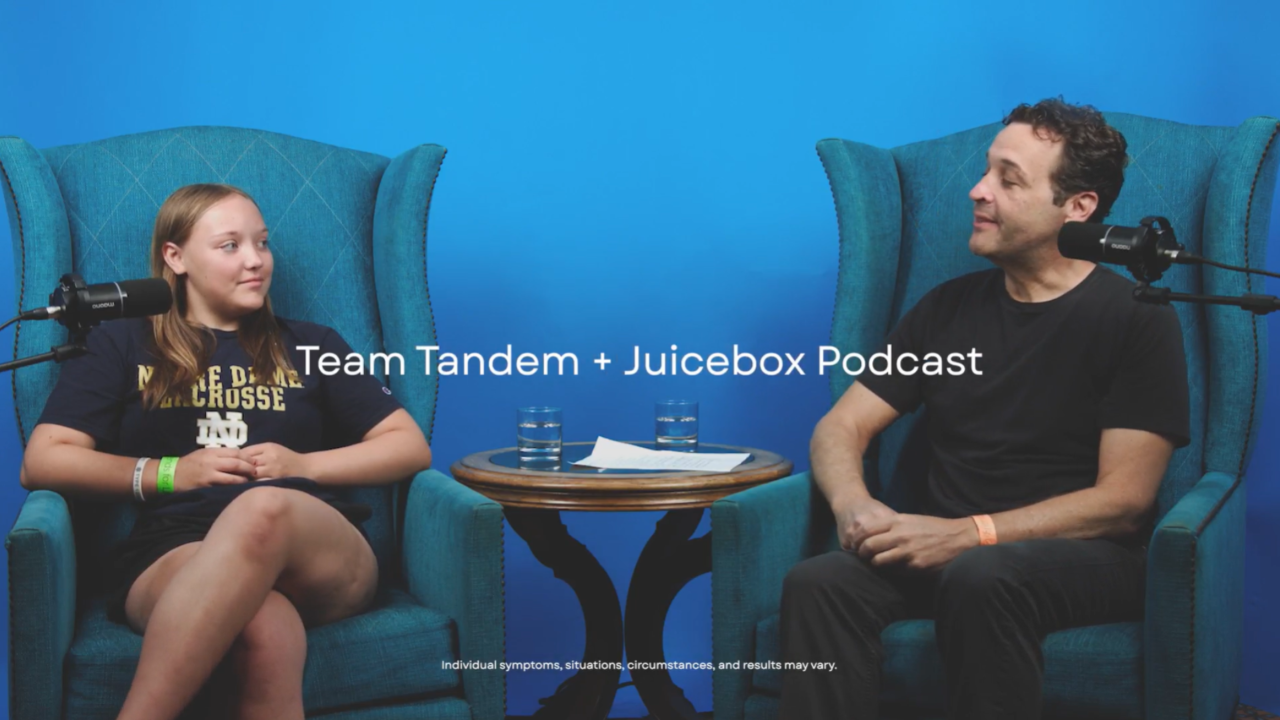











Please support the sponsors


The Juicebox Podcast is a free show, but if you'd like to support the podcast directly, you can make a gift here. Recent donations were used to pay for podcast hosting fees. Thank you to all who have sent 5, 10 and 20 dollars!

#464 Cass on Top
Cassandra has type 1 diabetes and I don't remember why I picked this title - let's find out together.
You can always listen to the Juicebox Podcast here but the cool kids use: Apple Podcasts/iOS - Spotify - Amazon Music - Google Play/Android - iHeart Radio - Radio Public, Amazon Alexa or their favorite podcast app.
+ Click for EPISODE TRANSCRIPT
**DISCLAIMER: This text is the output of AI based transcribing from an audio recording. Although the transcription is largely accurate, in some cases it is incomplete or inaccurate due to inaudible passages or transcription errors and should not be treated as an authoritative record. Nothing that you read here constitutes advice medical or otherwise. Always consult with a healthcare professional before making changes to a healthcare plan.
Scott Benner 0:00
Hello everyone and welcome to Episode 464 of the Juicebox Podcast. Hey, it's a palindrome for 64. Same frontwards as it is backwards goes for letters to palindrome. Anyway, today's show, I remember loving when I recorded it. And as I edited the show, I loved it too, so much so that I made myself a note to call it cast on top. But in this moment, for the life of me, I don't remember why I did that. Here's what I do remember, off the top of my head, Cass was diagnosed as a child, she's an adult now living with type one. She's from the Canada, a place called Toronto, apparently. And she was really delightful. Please remember, while you're listening that nothing you hear on the Juicebox Podcast should be considered advice, medical or otherwise, please always consult a physician before making changes to your health care plan, or becoming bold with insulin. You do not however, need a doctor's okay to push subscribe in your podcast app that you can just do right now.
before the show get started, can I make a personal plea here for a second? If you're gonna send me a note that's going to make me cry? Can you warn me at the beginning of the note or something I don't know we have to come up with a code word so that I'm not looking at notes and grocery stores and tearing up. I'm thrilled that you guys are doing so well. And I love that you thought me now and don't stop sending me the notes but I don't want to cry and grocery stores.
This episode of The Juicebox Podcast is sponsored by touched by type one, go to touched by type one.org To find out more about my favorite diabetes organization. The episode is also sponsored by the content. The episode is also sponsored by the Dexcom g six continuous glucose monitor. And you can find out more and get started with dexcom@dexcom.com forward slash juice box and slightly new link for Omni pod. It's Omni pod comm forward slash juice box remember it used to be my Omni pod comm now it's just Omni pod.com forward slash juice box you have all bought enough on the box they can afford to buy their name on the online now. I'm just kidding about that. I don't know why it used to be my Omnipod. But I have to admit it did confuse me at first, but don't worry, we'll get used to it. I'm the pod.com forward slash juicebox go there and find out if you're eligible for a free 30 day trial of the dash system. Are you kidding me? Like actually use it for 30 days for the free? Like have a non shield I'm saying you get the Omnipod dash, it's free and you can use it to manage diabetes for 30 days. Go find out if you're eligible omnipod.com forward slash juice box links in the show notes. Links at Juicebox Podcast comm I even think you can get a free demo pod at that link if you don't want the dash thing. Alright, that was a lot. I got carried away here with the Omni pod link thing.
Cassandra 3:25
I'm Cassandra. I'm from Toronto, Ontario. And I'm a type one diabetic.
Unknown Speaker 3:31
How old are you?
Cassandra 3:33
I'm 28. I'll be 28 on Boxing Day this year.
Scott Benner 3:36
Boxing Day is like your Christmas right?
Unknown Speaker 3:38
Yeah, yeah.
Scott Benner 3:40
What do you guys do on the boxing day?
Cassandra 3:42
Everyone just goes shopping and spends a bunch of money but my my family we just kind of get together celebrate my birthday and yeah, that's pretty much it. It's very it's very easy. But boxing day here in Canada is like a big thing. Everybody goes shopping crazy. Like lineups are out the door at like 6am it's absurd. Wait, okay, so
Scott Benner 4:01
hold on a second box. So it's Black Friday. Is it or no Boxing Day is a holiday celebrated the day after Christmas Day. Thus being a second day of Christmas tide. It originated in the United Kingdom. And it's celebrated a number of countries that previously formed part of the British Empire. Okay, so you see, do you celebrate Christmas as well? Yes, gotcha. So you do Christmas and then you go spend a bunch of money the next day.
Cassandra 4:25
And that's pretty Yeah, that's exactly exactly what it is. There's like a bunch of sales in Canada all through the stores and everybody just kind of goes goes crazy and splurges Yeah,
Scott Benner 4:35
they do that the day after Thanksgiving. I mean, I don't but I've seen people in the news do it. There. Yeah, they're like struggling for like $200 flat screen televisions and trying to kill each other. I though I guess this year that might not happen.
Cassandra 4:50
Yeah, that's true. Right? Because of everything going on. Yeah, but uh, yeah, I guess it's kind of like black like they call Black Friday right? When there's all those sales but yeah, it's
Scott Benner 4:58
we're already learning things here. Because I was certain Boxing Day was more of a, like a religious thing, but obviously the religion of money is the only religion I see here. So okay.
Cassandra 5:10
I don't know honestly, it could be a religion and I just don't know about it. But here in Canada, like Boxing Day is known as like everyone goes shopping or does everything online after Christmas?
Scott Benner 5:19
Let me get the right.
Cassandra 5:21
Okay, I even know some people that like on Christmas day they'll wait till midnight at midnight for the Boxing Day sales just so they can go crazy and splurge. So
Scott Benner 5:29
I see that happen here, as well. Okay. All right. So we found that let's dive a little farther into my ignorance for a second. You said, I'm from Toronto. And I thought are people really from there? But I guess they are right people are born there.
Cassandra 5:42
Yeah, well, you know what it is, is everybody kind of when you think of Toronto, Ontario, like everyone knows of Toronto, like the big CN Tower, right. So I'm actually I'm not from them from a little city around there. Brampton, Ontario is where I'm originally from, but everybody always knows Toronto. So I guess that's why I'm from Toronto.
Scott Benner 6:01
It's so cool. How you take the Oh, right out of it when you say it to
Unknown Speaker 6:04
Toronto. Yeah.
Scott Benner 6:06
It's Toronto. Like, it's Yeah, that's cool. I see. Okay, so my ignorance out of the way, and we're on our way, we're moving right along. How old were you when you were diagnosed with Type One Diabetes?
Cassandra 6:18
I don't even remember it. I remember the days. So it's March 24 2004. I was grade five. So think it was about 10 910 years old.
Scott Benner 6:26
Hold on a second. 2004. Right. Yeah. 10 to that is 2014. Yet another 10 is 2024. That's too far, because it's only 2020. Now, so we go back to 2014. We've got 10. Now we start counting by ones 2015 1617 1819 20. That'd be 16 years ago. So it's was 16 years ago. And you said you were How old? 2028 over you 12 or 11 or something like that? Yeah,
Unknown Speaker 6:51
yeah. around there. Yeah.
Scott Benner 6:53
Did you see how he did that?
Cassandra 6:55
Yeah, that was really good. Yeah, that's not my forte.
Scott Benner 6:59
Seriously, Are you being serious that it was really good? Because you're in trouble? If you think I would I just did this.
Cassandra 7:05
Well, it's funny, because that's actually how my partner does math. I like the way you just did. You're like, okay, 24, subtract it. Like, that's exactly how he does it. So when you're explaining it, I'm like, wow, that actually all makes so much sense. Because that's how he explained it to me.
Unknown Speaker 7:18
I believe the there's other ways to do it that are better, but
Cassandra 7:23
he does it. And he's actually really, really good at maths.
Scott Benner 7:26
Listen, Cassandra, it's very possible that he's just better at math than you are. And you think he's really good. You'll know for sure. When you commingle that money for real and it starts to disappear. And you'll be like, Hey, wait a minute. He might not know what the hell he's talking.
Unknown Speaker 7:41
Oh, my God, it's so
Scott Benner 7:43
you're on 12 years old in a fifth fifth grade ish. You know, I take him by surprise that it run in the family?
Cassandra 7:50
No, so diabetes does not run in my family. Like, none of my grandparents don't have it. My parents don't have it. From what I'm aware of my great grandparents don't have never had it. Gotcha. Um, more like heart disease and heart condition runs in my family. But But no, not diabetes.
Scott Benner 8:06
Right. Okay. Okay. So just a little out of the blue now that you know, and you've had it for a while. Do you see any other autoimmune issues in your family line? celiac? gluten intolerance, thyroid issues, anything like that?
Unknown Speaker 8:19
No, none of them.
Unknown Speaker 8:20
Were just a random one out of the group, huh? Yeah, I
Unknown Speaker 8:22
was the lucky one.
Scott Benner 8:24
I'm the lucky one. That's from a movie. I don't know what it is anymore. But it's sticking in my head now. Okay, so 12 years old. Nobody knows what they're doing. How does it go?
Unknown Speaker 8:35
Well,
Cassandra 8:36
my parents like so my parents got divorced when I was seven years old. For me, it was scary. Like it was a little I it was a little scary experience. And when I first became diagnosed with diabetes, I didn't take it seriously at all. So when I first got diagnosed, I know that the numbers are different, like in the state, they calculated differently. But mine in Canada was 40.5. When I was dying, I'm pulling up my calculator
Scott Benner 9:01
Cassandra, hold on one second, the calculator that by the way, is available at Juicebox podcast.com. forward slash conversion, and then you tell me what your blood sugar was again.
Cassandra 9:12
So is 40.5 when I was originally diagnosed, so it was about I think of for you guys is like 747 5729
Scott Benner 9:19
with an A one an average a one C of 27. Yeah, yeah. Hi. I guess it's very, very
Cassandra 9:26
high. That's when the ads when I was diagnosed,
Scott Benner 9:28
you remember how they brought it down in the hospital was very slowly over days.
Cassandra 9:32
It was very slowly over days. I was I think when I when I was first diagnosed. So I went to a walk in clinic and he was the one who actually told me, the way he explained it was horrible. Like, he basically told my mom that he's like, I'm shocked. She's not in a coma. And he's like, you need to go to the emergency department right away. So my mom was just like in panic, she's like, Oh, my God, okay, like, Okay, let's go give her just super weird and shock. What's the reason my mom goes,
Scott Benner 9:56
What's that old saying? Cassandra where they say when only you can hear it. It's a And when everyone can hear it, it's talking. Like, why would I get the doctor being shocked? I don't get him saying it in front of you or to your mother who's about to go through the, you know, her child being diagnosed with Type One Diabetes.
Cassandra 10:15
Right? Like even my mom, she just couldn't believe like the way he just explained it and like we weren't even sitting down like I remember I actually remember like, I had just gotten really sick in that washroom. And then I went back and I sat down and my mom was standing up and he was just like, the way he just explained. It was just like, yeah, you gotta go the emergency room like she's, I can't even believe she's not in a coma. Like he actually I remember hearing those words out of his mouth, and I was just like, shocked. It was a coma. I was like, what's like, what is that?
Unknown Speaker 10:41
Weird Shane deady. Thanks a lot.
Unknown Speaker 10:45
Like, okay,
Cassandra 10:46
cool. Like, what's that? I'm like, Where are we going? So was he
Scott Benner 10:50
also the sheriff? Or is was that being a doctor? His only job?
Cassandra 10:54
I think that was just being a doctor. Yeah, right. Like,
Scott Benner 10:58
now what am I What does that show I'm thinking of that was in Alaska in the 80s. And there was a moose walking down the street. You're so young, you're not gonna remember any of this. Old people right now are like, Oh, I know what he's talking about. I just imagine that like after he's done doctor, and he runs over and like, you know, writes tickets on the meters down Main Street. And so I realized that's not where you live, but it's how it feels to me.
Cassandra 11:20
It's crazy yet.
Scott Benner 11:22
So you you had right off to the hospital. From there. Yes,
Cassandra 11:25
yes. Yeah, we went, we went there. I was in there for what I remember. I think it was about two weeks. They did do it slowly. I had, like, I remember everything like a nurse would come check my blood sugar every night. And ya know, I remember them just explaining everything to me. So I was fairly young. So I don't remember a detail to detail. I'm sure my mom could explain it, like precise. But um, yeah, I know, I just remember being diagnosed and it was all very new to me. Like they were explaining like how I had how often I have to check my blood sugar and everything like that. And I, they were just trying to explain it to me. But as I got older, I kind of just did my own research. And I started going to like my di bedich appointments on my own. And then that's what kind of like, made me like understand, like, Oh, my God, this is actually a lot more serious than what I thought it was. So after in high school, like late in high school, that's when I started to take things very seriously.
Scott Benner 12:16
Okay. Do you think in those early days in the hospital and at your, you know, at that age, do you think that all that explaining, none of it really got into your head at all?
Cassandra 12:27
No, yes. I don't think any of it got into my head
Scott Benner 12:29
at all. And so you just you just left there with what I count these carbs and I give myself this insulin I eat.
Cassandra 12:38
Yeah, like I just, I didn't really understand it. I know my nerves like the nurse that was there. She was great. Like, she was great. I remember her name was Amanda. She was great. I still remember her till this day. But it was just a matter of I don't know, I guess it was just a matter of so young. And it was also my like, the lifestyle that I lived. I didn't realize how serious it was until my mom was like, okay, like as we now need to start going, we need to go the grocery like that day when I was discharged. My mom took me to the grocery store and she changed everything. Like I used to eat white bread. It was very different. And then I remember right away we switch to like the thin like this thin slices of the weightwatchers bread. And I was like mom like what is this? Like, this? Isn't this isn't bread.
Scott Benner 13:16
I see old ladies make this toast? And it's not fun It can you bet you ever noticed the weight watchers bed? When you toasted? It bends? It's like It's
Unknown Speaker 13:25
weird. You're like, Mom,
Scott Benner 13:27
I don't think there's flour in this. Wait, what are we doing?
Cassandra 13:30
Oh my What is this? This isn't bread and like, yeah, so like I remember just things drastically changing. And then like, I went so basically, when I got to high school, it was all about being thin, right? Like, that's what that's what I remember. I was like it was always about being thin. And when I was a younger girl, like from grade five to grade eight, I was not i'm not not overweight, but I was a little bit on the heavier side. Like I wasn't a super thin kid. And so when I got to high school, I noticed and that's one thing that I always noticed is when I had high blood sugars, like I would look a lot slimmer and I wouldn't eat as much and I wasn't as hungry as much. So I went through this phase where I would not give myself insulin like pretty much all day. And I would go to school, I wouldn't eat lunch, I wouldn't eat breakfast. And I would have like a bottle of Pepsi. I remember that was always my lunch. I'd have like a bottle of Pepsi. And then I go home and one day I'll never forget this. I got I felt really really sick. I walked home that day in my walk home was about a 45 minute walk. And I walked home that day and I felt very very nauseous. When I got home I felt super sick. And I did I got really sick. And then I remember checking my blood sugar. And it was about I think like in the high 20s like 2425 and I got super sick and I was like man I look and then my mom came down and she's the cast what's going on and I remember telling her like mom, I don't feel well my blood sugar is really high and she asked me what to eat that day. And what I've been doing and I totally explained everything to her because me my mom have a very open relationship. I never hid anything from her there. was never any reason to. And so when I told her I'll never forget, she was just explained to me like Catholic, you can't be do this. You're literally killing yourself. And then shortly after, like I think about two weeks later, I met, I went and I did a carb counting class because my mom had thought like, maybe a pump is a better option for me. So I'm not always coming like taking out my syringe and giving myself injections.
Scott Benner 15:21
Okay, well, let me stop you for a while you just you were consciously not injecting because you were trying to stay thin, or because you were just not paying attention. Or I was
Cassandra 15:33
embarrassed. I didn't. Yeah, but my main my main goal, like not giving injections was to stay thin. Okay.
Scott Benner 15:40
And so, so that, you know, is categorized as an eating disorder. Yes, yeah. And do you feel like that went on for how long?
Cassandra 15:49
Um, I would say probably majority of my high school. So I would say probably grade nine grade 10. I did that. And then once I realized, like, I kept constantly getting sick, and I did not enjoy the feeling. That's, I would say probably at the end of grade 10. That's when I ate changed. Like, I completely stopped and then I started taking care of myself.
Scott Benner 16:08
24 blood sugar's for 32 in the United States, just for people's like context. And so your Did your mom, recognize your mom didn't recognize Oh, hold on a second. I have a little problem here with Why is it saying this to me? Oh, sorry. Sorry about that. Just jumped in and asked me if I wanted to use my air pods, which I'm assuming someone else in the house just opened up air pods. That was very odd. Everyone's working from home and going to school from home and I don't like I know. I like being here. My house by myself and everyone else goes somewhere.
Cassandra 16:40
Right. enjoying your time a lot? Yeah.
Scott Benner 16:42
What is wrong with them being here? But my question was, your mom wasn't aware that you were trying to manage your weight by not taking insulin, right?
Cassandra 16:53
No, my mom was a single mom. I like I've actually, like my mom's never owned. We never owned our own home. I've actually lived with my grandparents my entire life. So I lived with my grandparents at the time, my sister and my uncle and my mom. And my mom was a baker at Longo. So, um, like, she was like, my mom was always constantly working, taking overtime like it was even like when I became diabetic, I had dropped a lot of weight significantly, and my dad when I went to go see him one weekend, that's actually he noticed and he was like, Listen, like she's dropped significant amount of weight, like you need to go take it to the doctors, and that's what led my mom to go take me to the doctors. Okay. So with her being so busy, it was hard for her to notice. But if she did notice any little things, she would always talk to me about it.
Scott Benner 17:38
Can I I'm trying to understand that contextually for a second, like 14 years old. How tall are you?
Cassandra 17:45
I'm five, four and a half.
Scott Benner 17:47
So when you were they think when you felt like your weight wasn't where you wanted it. Where was it versus where was like, how many pounds like difference was that? I guess?
Cassandra 17:58
Yeah. Okay, so when I was before I became even diabetic, like I would say I was probably like I was probably 171 at like one before. Yeah, so I would say 171 80 when I was in grade five, grade six, so that goes by I was a pretty like, I was pretty heavy girl. And then when I became diabetic before getting to receiving treatment and insulin, I had dropped I would say about 2030 pounds within a month span. Right? Wow.
Scott Benner 18:28
Yeah. Okay, and so that to you, whether you were sick or not, you were like, wow, I'm way closer to the weight I want to be
Cassandra 18:36
Yeah, I'm looking great. Okay, nicer clothes, everything spinning better. loving us is
Unknown Speaker 18:41
really moving along. I
Scott Benner 18:42
don't know why people are calling this illness. This is really fantastic. And you even understand now obviously, and for people listening that even though that you were when people say oh, I lost so much weight before I was diagnosed, they were just they were you know, their blood sugar's were higher they were in decay. And that's the you know, one of the things that happens there obviously is you're wasting away you're dying, you know?
Unknown Speaker 19:03
Yeah, like
Scott Benner 19:04
you're in severe dehydration, right? So it's well, it's just there's so much going on. And and your body is just withering away. Like Like if you if you're not diagnosed, you end up dying at a much lower weight even than 20 or 30 pounds off of your number. Yes. And so you did you notice it? Like even at that age? Did you start using insulin and think oh, I'm gaining weight again? Like how did you figure out that someone tell you like I'm fast? I'm such I'm such an a middle here because I don't want to tell people Hey, by the way, if you don't take your insulin, your blood, your your weight will go down, but I assume that's something people know. But how did you figure it out?
Cassandra 19:44
Um, I just I don't know. Like, I just I know like, for me, it was my clothes like, um, back then. I was it was very, I was very superficial. I was very into like, I cared a lot about what people thought of me. I was very insecure. I didn't have like my self confidence. Like there was no confidence in myself whatsoever. And so basically, the way I noticed was just literally through my clothes. And I noticed like when ROM after becoming diabetic, like, when I went back home and like I was trying to like live the normal, like live vessel, the lifestyle as a diabetic, like my clothes was starting to get a little bit more snacks, I was putting back on that weight again, right? Like, well after giving me insulin and getting the treatment I needed. So I wasn't saying I was gonna gain all that weight back because I was technically eating healthier. So but I was I was putting back on my weight. Because I went back to those old habits in
Scott Benner 20:35
a way because not sure how did you connect that to the insulin? Like how did you figure out like, oh, if I don't take this insulin, my weight will stay down? Do you remember?
Let's talk about today's sponsors. And let's talk about them honestly, from the heart, shall we first This one's easy, touched by type one, an organization doing wonderful things. For people with type one diabetes, it's super easy for you to find out about you just go to touched by type one.org. You can also follow them on Facebook, and Instagram. That's all they want you to know. They just want you to know they're there and go check them out. So once you're done with that, you're probably going to want to look into the Dexcom g six continuous glucose monitor. dramatic pause for the music. The Dexcom g six allows you to follow the person using the CGM. Imagine this if your child is reading the CGM, and you're somewhere else, you can see their blood sugars live and in person, I can actually see four people's blood sugars right now, because I'm watching for different people. I see a blood sugar of 160 to one of 81 of 103 and one of 116. Now you're probably not going to be following for people ever, but you might want for people to follow you. Maybe your husband, maybe your brother, your sister, your school nurse, trash truck driver, because he just looks like a good guy, who do you want on your side? Anything, right? You're at the mall, some lady makes a cupcake at the mall. And you're like, I love this lady. I wish she knew what my blood sugar was, you could actually let her follow you if you want to do the cupcake lady at the mall. I mean, that's technology right there. It's amazing. They can fall on an Android or an iPhone and see your blood sugars in real time. If you want them to see them. If you don't want anybody to see them, you don't have to share them with nobody. That's up to you. It's your information. But it's information, it's going to help you make decisions about bolusing. Eating, correcting blood sugars, so much more, you're gonna see the speed and direction in real time of your blood sugar. And that's how great decisions are made with information with data with the Dexcom g six continuous glucose monitor dexcom.com forward slash juicebox get started right now. Next comes for anyone using insulin, you could have type one or type two. And by the way, if you get your insurance to the Veterans Administration, in the United States, I think you might be very happy with the coverage. Go check it out. Okay, now you're going to have your Dexcom and be able to see your blood sugar and what it's doing. How are you going to make it do the thing it's doing? How are you going to make it stay stable? How are you gonna get your basil so good that your blood sugar just sits super stable when you're away from a Bolus or food? How are you going to Pre-Bolus and stop those spikes at mealtimes? How are you going to make small adjustments to your insulin? How are you going to do all this? I think you should do it with an omni pod tubeless insulin pump. That is the decision I made for my daughter. And I would make it again right now today, the Omni pod tubeless insulin knob and they're willing, if you're eligible, go check out if you are they're willing to send you a 30 day supply of the Omni pod dash system right now for you to actually use and try. That's amazing. They also have a free demo pod where you can just get one to try on and where that's nonfunctioning, but if you want and you're eligible, three, free 30 day trial of the Omni pod dash Are you kidding me? On the pod.com forward slash juice box you'll you'll know soon just head over there you felt a tiny bit of information and on the pod is going to get back to you. Next thing you know you're going to be wearing an insulin pump that is tubeless it doesn't have to come off for adult roughhousing or bathing or swimming in the ocean or jumping up and down or kicking a soccer ball or doing a commercial a temper salt is not a thing but I'm running out of time so I got a little nervous there on the pod.com forward slash juicebox Dexcom comm forward slash juicebox touched by type one.org This is the sponsors support the show back to casandra where she says Cassandra, back to Cassandra Come to think of it though she also says trunk toe so maybe we shouldn't be listening to Cassandra when it comes to pronunciation or is it pronunciation or consideration, I
Unknown Speaker 25:00
don't know.
Scott Benner 25:03
How did you connect that to the insulin?
Cassandra 25:05
Honestly, I don't remember. I was in high school. So I just noticed, like, again, like I have a diet like I had that Pepsi. And to me, needless to say, it's not even I wouldn't even see maybe it was, I'm not giving the insulin, maybe it was just like the fact that I wasn't eating. And so I had that loss of appetite. Because when I noticed, like when my blood sugars are really high, I don't crave any food, I don't crave anything except water. And so I'm pretty sure that's like the standard for most diabetics, when your blood sugar is pretty high, you just want water constant, like I was always thirsty. And I was always like, because I was drinking so much water, I was always constant going in the bathroom. So it's not even needless to say that it was not giving the insulin, it was just the side effects of not giving the insulin that maybe made me drop the weight. So I right, so I would have related to the insulin, so I would just put it in my head, okay, if you don't give that insulin, you're going to drop that weight. So I kind of, maybe that's what it was I related the two, if that makes sense. So
Scott Benner 25:59
it starts out with you not really knowing how to use the insulin and your blood sugar getting high, then you see it happening. And then you connect the dots there. Why did you not? So it's hard. It's not hard for me, I understand because I talked to so many people. But when I think of my daughter's management, and very likely how we're going to find out eventually that you manage your blood sugars. Now, I don't I don't understand a world where your blood sugar goes up and you look at it. But that was just common, right? Like you did whatever you were supposed to do. And then you didn't think about your blood sugar again until it was time to eat again. Is that how you did it?
Cassandra 26:36
Yeah, so like, I would go home like after my school day, I go home and I give myself like a big injection to like, correct all that stuff. Like, if that makes sense. I'd go home, I'd give myself an injection just to correct that big high that I had at that moment and then go back to normal. But that's not that's not a healthy way to do it. Right?
Scott Benner 26:53
It was that novo rapid back then.
Unknown Speaker 26:55
Yeah, yes. Yes.
Scott Benner 26:56
I see. You had to slow acting and so on. You were using overwrapped as your path acting fast acting. You get up in the morning, you did you test in the morning?
Cassandra 27:04
I would, um, I would sometimes like it's honestly, it would depend on my mood. It would really depend on my mood, because like, again, while I was also a very angry child when I was younger.
Unknown Speaker 27:17
Let's hear about that. I want to hear about that.
Cassandra 27:19
Right? Oh, yeah. No, I was a very, very angry child. Again, it was just my parents going through a divorce and all like all that stuff when I was younger, so I feel like when it came, like even not that they were afraid of me, but I was very like, I'm not I was never I was very outspoken. So if my like mom would be like, Oh, go test your blood sugar. Like I'd be like, No, I don't have to like I would always I was always I would always seem to have something to say back and sorry, mom.
Scott Benner 27:46
You were a pain in the ass is that you're telling me?
Cassandra 27:48
I will I honestly like God bless my mother. Yeah, no, I was I was really bad. I was very stubborn. And I would I would give attitude back. I always have something to say back. Yeah, so it was like I wasn't easy child to manage either. I guess like I definitely would diabetes, so I can't.
Scott Benner 28:03
So she's a she's a single mom. There's a lot going on in the morning. She's probably trying to go to work. You're trying to go to school. She's telling you, you know, you can't do this to yourself. But she's not exactly like following that up with but what you should do and in the moments when she does try to explain to you what to do you just like Lady Get away from me. Yes. Wow. Yeah. Great times. Huh?
Cassandra 28:23
Right. Yeah. Mother? Yeah. No, it's horrible. Yeah, no. And it wasn't like, even in elementary school. Like, I love like, I love how involved you are. With your daughter's like treatment. Like, you know, you guys like verbalize it to the teachers and the nurses and everything like that. Um, it was a whole different situation for like myself, like my, I think my mom may be told, like my principal, in elementary school, but like, my teachers were not involved. My nurses were not involved. So it was just a very different time. And it was just like a different experience. Right? So it was more like, it was me my it was basically me doing this on my own. And then as I got into high school in grade 11, that's when I took matters into my own hands and like, things completely changed for me after that,
Scott Benner 29:06
let's find out why that happened. But first, I want to say you've dispelled the rumor that Canadians are just a bunch of very kind people, and that you're, you know, you're you're nice to your mom. And and by the way, I'm trying to imagine what your mom said to the principal, like, hey, if she passes out, you know, call 911 and she's got the she's got the sugars, you know, like, I wonder what she said and that the principal just went like, alright. You didn't say you want to talk to the nurse, or should we make a plan for they were just like, Yeah, okay. Yeah, so Okay.
Cassandra 29:42
It was different. It was a different, very different time. But um, I don't know, like, I don't know if like maybe like if they were more involved, if like, I would have been more aware of my blood sugars and like, maybe in high school, I wouldn't have done the things I done. I did sorry. So I'm wondering. Well, no, like, I was took
Scott Benner 30:00
me six years right to want to take control of things. So when what makes that happen?
Cassandra 30:06
Yeah. So it's actually so funny. So we reach so my, my pediatric doctor, she changed my life. Her name was Dr. Goldenberg. And it got to the point where she would see how high my blood sugars were. And she would call me every day at dinner. I'm like, did you trust your blood sugar? Did you give insulin? She did that for me every single day. For I think, three or four months. she'd call me every single day at dinner. And like, what were your readings today? She made me read them out to her every single day. And all like throughout the day and the time. And then if I didn't test my blood sugar, she'd be like, why didn't you test your budget and she was like, a strict doctor and which I felt like I needed because I was kind of our heart. I was kind of a difficult pain in the butt to say I was a hard ass.
Scott Benner 30:45
Is that what you're? What? So you didn't feel like you could yell at her?
Cassandra 30:53
No, like, I was kind of afraid of her if that. And I that intimidated me So, but in a good way, like I till this day? I absolutely respect that my doctor for doing what she did. Yeah. Because she made me come out of my comfort zone. And she made me realize that like, Okay, I need to take this seriously. And so I remember one day, she sat down with me when I went to go see her, and she didn't let my mom in the room. She's like, I want to talk to you, woman. And she's like, Listen, if you don't start taking care of yourself, you're going because my number one fear. She asked me what my number one fear is. And my number one fear is to go blind. I'm terrified of losing my eyesight. And she's told me that that is a symptom. Like if you do not take care of yourself, that can be a side effect. And I was like, Oh my god, like, I don't want that to happen. So after doing some research and things like that, she thought maybe going on a diabetic pump would be something to help me stabilize my blood sugar's but for me to do that, to go on that pump, I had to already manage and stabilize my blood sugar's off the pump. So that kind of made me Okay, so I'm like, Okay, I got to get things in order. So I can make things better. So after having that talk with her that kind of woke things up for me. And right after that, I think maybe a month later, I went to a carb counting class. And when I went to that carb counting class, it was a big class with a group of people. There were seniors there, like people of all different ages, different races. It was amazing. And a gentleman he had lost two fingers and an eye. I said on one of his eyes, and I, we had asked him like, how did that happen? And he told us it was from diabetes. And it was because he didn't manage his blood sugar's when he was younger. And he was just explaining his story and hearing other people's stories that woke me up to this thinking, like, Oh, my God, I have to take care of myself, I don't want these things to happen. I want to be able to see the rest of my life. And I want to be able to have children one day, so
Scott Benner 32:40
somebody yell at you, at some point of balance the scale out, I think, Well, you know, isn't it interesting that you had the fear, but until you like until somebody like double down on it, and then you met somebody who your fear actually came true for that, it's not enough to just know it could happen. For some, it's interesting how people's minds work, isn't it like, and by the way, that your fear isn't being mauled by a bear or abducted by an antelope? Or elk or whatever you guys have up there? I think that would be it's interesting that that isn't your fear. If I lived in Canada, my fear would constantly be bear attack, just so you know. I would walk around, we
Unknown Speaker 33:16
have no bears where I don't care.
Scott Benner 33:18
If you're lying to me, I know there are bears there. And well, it's funny too, because, you know, we love to generalize. And you'll hear plenty of people will will be vocal in communities and say, you know, scaring people about their diabetes is not the way to get through to them. And I happen to think it wouldn't be my first choice either. Right? I, but it worked for you. Isn't that interesting, right? Like, like someone like you're the one in high school that went to the Scared Straight program, sat in the room with the felons and was like, I am never breaking a law. You know, like, I don't want to end up like this. And then and so it did. Really, it's interesting. It worked for you that I guess the problem is like, how do you discern the kid who needs to be scared straight? You know, I'm making little quotes with my fingers. And And who do you and how do you know the people just need to have it explained to them one way? Because do you think, like, so you're listening to the podcast now? Right?
Unknown Speaker 34:15
Yes.
Scott Benner 34:16
Do you think a 14 year old casandra and I met at some point, and I was like, hey, Cassandra, look, if you just Pre-Bolus and get, you know, let's get your Basal insulin right. And we'll count these carbs a little bit. It'll all be okay. Do you think you would have needed to be scared at that point?
Unknown Speaker 34:32
That's a great question. Um,
Scott Benner 34:35
there's no way to know I'm just wondering like your top line reaction to that idea.
Cassandra 34:39
You know what, I still think I would have I don't know you know, why? Because like, I I listened to your, like your podcast now when I hear of different situations. Like, there's some things that I hear people think of, like one of my favorite stories that I've heard so far is the one were having sex before having sex like as a diabetic, and I never think A lot of things like ROM one of the topics that when the girl was saying like how she wish she goes on top thing, like she uses more exertion and things like that. I'm like, wow, like as a diabetic, like I've never thought of things like that. I've never thought about going low. And so I don't, I don't know, like maybe when I was younger if I had heard these different situations from different people like you listening to the podcast itself. Yeah, maybe it would have woken me up a little bit and then like, okay, Catholic, ah, take this seriously. But I don't I've always I've realized that about myself that I am like that I learned from things like that. So like, again, Mom, I love you to death. But like my mom, like I've learned from her mistakes, like I've seen the mistakes that she's made in her life. Because my mom had me at 18. Like, I basically grew up with my mother. And so I've watched her grow up, and I've seen them sticks that she's done. And so I've learned from those mistakes. And I'm like, I don't want to make those mistakes myself. And I haven't till this day. And so I'm wondering, I don't know, I feel like sometimes I'm for me to learn in a hard way. Like, especially like big life lessons. I couldn't need to be scared straight away.
Scott Benner 36:01
That's interesting. That makes sense. Also, I think, and we're learning that the podcast is made you a lazy lover too. So like if I if your partner was here, right now, what do you say? Oh, my God, like she has wanted to be on the bottom a lot more lately. Does that happen to you? Have you been like, why am I making my blood sugar low and working so hard? Dammit.
Unknown Speaker 36:23
No,
Cassandra 36:25
no, um, no, I just, it's just things that like now. It's just the perspective like those are just things like I would never have thought about like, Oh my god, like, I could have a low while I'm being intimate with my partner. I've never, you know what I mean? Like, I've never thought about that before getting intimate. So like hearing that from like somebody else's perspective. I'm like, oh my god. Like that's so interesting to think that people actually do think of things like that. Gotcha.
Unknown Speaker 36:47
And so right in
Scott Benner 36:49
cash, you're still on top, but you're more cognizant of it now. Oh, and by the way, obviously, this episode is gonna be called casts on top I just realized Okay, by the way, I'm just gonna I'm gonna just jot that down right now. Actually, I don't want to lose that thought. We're done right there. Cast on top. And by the way that you said it's perfect. is fun, because now I'm wondering what else you think is fun. But
Unknown Speaker 37:16
oh my god, my partner's gonna die right here.
Scott Benner 37:20
Listen, cuz now we all learned he's lazy. I don't know what other way to put it. Honestly, the guy just lays there. Okay, so we saw you, you get scared into doing what you you know, to paying more attention? What does paying more attention mean in 11th grade? Like, how did you bring yourself into a better place?
Cassandra 37:40
Yeah, um, so I was more on top of like, checking my blood sugar. So for me, like I checked my blood sugar before every meal before driving, like almost anything that I do. So when I back then like, I would not check my blood sugar. I would probably check it once a day. If that. And so I that's like doing like basically just being a diabetic like just taking care of yourself. Like, that's what I realized I had to do so I would check my blood sugar's more, I was more on top of my insulin, I became more aware of my diet. So grade 11. I had gotten up to I think about 210 pounds. I got, like, I went from, like, dropping all the way to then going through like that big change where I wasn't giving insulin and then Okay, I'm like, Okay, I gotta take this seriously. And so I did gain weight, but I didn't, I did not gain weight because I was taking care of myself. So I just want to make that clear. Yeah, I started gaining weight just because like, I started getting into old habits, like I started eating out almost every other day. And then I was like, okay, like, we need to seriously buckle down. take this seriously. It's not just about checking your blood sugar and giving the insulin for what you eat. It's also your diet. So yeah, lifestyle. That's when everything changed. So I basically start I started off with working out on boat six days a week I started doing is like turbo jam with chalene Johnson.
Unknown Speaker 39:02
That sounds very Canadian for some reason.
Cassandra 39:06
I'm like, Oh, my God was I can't remember his name. But he was like the big like, he was like the big black guy that were like his big scrubs and the big Nike shoes. My mom used to remember his day, but Bill Gates.
Unknown Speaker 39:17
Hold on a second slow down. We got to go to Google. Talking about is this Oh, is this a workout thing?
Cassandra 39:23
Yeah, I'm like he was like kickboxing. I Oh my god. I can't remember
Scott Benner 39:27
but we're gonna figure it out. Wait, do you see this?
Unknown Speaker 39:33
Oh my god. I
Scott Benner 39:34
see this Google search. Hold on. All right, well, for clarity black guy in scrubs just gives you the picture of the actor from scrubs. But that didn't,
Unknown Speaker 39:45
by the way.
Unknown Speaker 39:48
kickboxing workout.
Unknown Speaker 39:55
Billy blanks really very good.
Scott Benner 39:58
You get you figuring it out. Billy blanks. Well, he's huge By the way, or did they just put him next to a very tiny person? It's hard to tell. He's a big man. And this man taught you how to be
Cassandra 40:10
healthy. This man is where that's where it all started him and chalene Johnson is I started doing those workouts. I started getting more top of my diet like the big thing was I stopped eating out. And I stopped pop like I loved guys. I loved Coca Cola. I don't even remember the last time I've drinking Coca Cola. It's been years. It's
Scott Benner 40:32
just drinking straight sugar and soda. It
is. Did you know you weren't eating well. While that was happening?
Cassandra 40:40
I did. I did. I did. And I didn't like I knew like, I knew McDonald's and all that. I knew it was bad for you. But like even now, like, I know, it's so bad for you. But it just it tastes so good. I know. I know. It's bad. But no, like I said I was working with LMC diabetes and endocrinology. I don't know if they have that in the States. But um, my diet it basically they give you an endocrinologist, which is your doctor and a dietitian. So my dietician aman. She was absolutely amazing. Like I could reach out to her about like, different things that I was eating and she'd be like, Okay, try substituting this for this. I could textures like she was honestly. Amazing. She worked with me. And then I remember she actually moved to Australia. She left the company. She moved to Australia about two years ago. And I'll never forget when she left when she left she told me like you are one of my llinas clients. I now I weigh 143 pounds. I started at 210. Wow.
Unknown Speaker 41:37
Oh, good for you.
Scott Benner 41:39
I don't think these are the breasts that shillings mother gave her as I'm looking through your your guru is your online
Unknown Speaker 41:50
definitely not hers.
Scott Benner 41:52
I mean, they're hers. She paid for them. They're hers fair's fair. But okay, so she, you're because it's funny that you're telling the story. I think it's kind of interesting for young girls to hear too. Because you're I only I only know what you look like from like, I literally looked you up on LinkedIn real quick. Because, you know, and you are, you appear to be a fit person in their late 20s. Like, there's nothing about you that I couldn't look at your photo and think that you used to not be a fit person. Like, I don't think I could figure that out from your photo. You don't need me for that.
Unknown Speaker 42:28
That's so sweet.
Scott Benner 42:30
It's just honest. And I think it's important to hear too, because, you know, look, fair's fair fair's fair for shaelyn and fair's fair for this. I think this podcast is about understanding how to use insulin. And from there you need to eat whenever you're going to eat. I'm not in charge of what you eat. Right? I think that I take that tactic because there are plenty of people who don't have great diets and to start off when they have diabetes and they're struggling to control their blood sugar's by telling them hey, you know what your problem is, you don't eat well. Like that's just doesn't seem like a recipe for success to me. I would rather I would rather people learn how to use insulin, and along the way, say to themselves, Hey, you know what? ends up being true here. I'm way better at managing a healthier cleaner diet than I am at managing pop tarts. And and then they can decide for themselves if they want pop tarts. Again, not up to me. Right. But because I talk about it that way so much. I do every once in a while hear people say, oh that guy he says you can eat whatever you want. I'm like, that's not what I said. What I said was you can Bolus for anything. I didn't you know, I didn't say you could eat whatever you want. Everything was just gonna be okay. Like it's you know, you might you might be a very you could end up being an unhealthy person with really good blood sugars.
Cassandra 43:55
And that's exactly what it's so true. And that's and I think that's what people also don't miss consume too is like people always assume like, oh, you're a diabetic. You can't eat this. You shouldn't have this. Guys, let me tell you, like people will tell you I work at a hospital. I'm one of the administrators there and people will tell you I'm the doughnut queen. Like I I love donuts. I'm donuts and burgers is like the way to my heart but I just I eat it in moderation. And I like you said like I just I Bolus for it. But also keep in mind, I do lift very heavy weights and I work out about four times a week. So like I do balance my lifestyle and I eat very lean protein as well. Like I have a very high protein diet. Okay.
Scott Benner 44:36
Your body is eating up those carbs when you're using them for something. Oh yeah, like if I eat a doughnut it just it just goes in settle somewhere. It's not i'm not using it up later picking up something heavy. Well, yeah, I mean, I just I really want to come back around on that one last time. Like there's a difference between understanding how to use insulin being so good at using Insulin that you can pretty much conquer anything that you put in your body, and those things being good for you, in other ways. Like, there's, there's a problem. Sometimes people with diabetes have where they either see themselves as you know, diabetes all the time, or forget to see it. Some of the other times, it's the, I don't know, I'm not saying that correctly, but we somehow have decided that if our blood sugar doesn't get high than what we ate is okay. And, you know, for, like, if you want to talk about, you know, personally immorally I don't care what you eat none, I'm not, that's not my game, you know what I mean? But you also you also can't walk around telling me like, Hey, I'm, I'm, I'm heavier than I want to be, or I'm not as in shape as I want to be. But my blood sugars are great, but I'm doing a good job of keeping them great and eating, you know, Cocoa Puffs at the same time. So, you know, like, you got to pick one up and, and decide just that it matters to me, my nutrition, or it matters to me, not my nutrition, as long as I manage my blood sugar as well. And maybe again, these don't have to be mutually exclusive. You could do both, you know what I mean? And, and you could also have a doughnut sometimes, and, you know, you just can't eat a doughnut every day for the rest of your life. That's not going to work out. Well.
Cassandra 46:18
Exactly. That's, yeah, no, 1,000% Yeah, like, I feel like if you just if you do eat, like, I feel like if you go, if you do eat well, kind of just your blood sugars will, will kind of be kind of just balanced out like it it kind of it almost kind of goes hand in hand. But that's not needless to say, like, you can't go have a Big Mac at McDonald's and just Bolus for that once in a while. You know what I mean? Like, you definitely have to enjoy the little things in life. And, and that's another thing like, I don't want people to always look at me in the vehicle that's cashis the diabetic know like, cuz that's not that's not just all I am, that is a part of who I am. But that's not all I am. And I'm not like before I used to be very embarrassed like I used to, if people will ask me if I was diabetic, I would lie and say no, like, I because people would see me take my tester and test my blood sugar and get my syringe I'd lie and say no, like, what
Scott Benner 47:05
did you think? What do you do want them to think when you were like,
Cassandra 47:08
I would be? I'd be like, Oh, don't worry about it. Like, I would just I would like I was so rude. I would tell people like it's not your business, like people come up and be like, Oh, is that? Are you telling me a bunch? That's not your business? Don't worry about it. I
Scott Benner 47:21
wasn't sure where the line was. You're like, no, this is heroin. Leave me alone. Like if you were just like, I would rather people think this then I wasn't sure where your line was exactly like what it is. You were what you were willing to say? Because there's not a lot of excuses for diabetes. You know, that leads you in a different direction. No, I started to have a really good time with you.
Cassandra 47:42
Right, but like, but now it's funny because like now I'll be at the grocery store and like I where I'm on the Omni pod. So like people will see my little pod on my arm. And I've had people come up to me and be like, oh, like my daughter just turned diet like is just dog became diabetic like and they've asked me about my experience. I've had people at the hospital when I'm walking in the hospital, like a gentleman has come up to me and be like, well, his daughter is 10 years old and she was just diagnosed and he was asking you about my experience. And we taught it ended up being like a quick conference. It supposed to be like a quick conversation right between the elevators and we ended up talking for like a half hour.
Scott Benner 48:13
That is really nice. I think that's terrific when people can help each other like that. I also love that you almost misspoke and said his daughter turned diabetic and I was like that's such an interesting way to think about like, I turned eight years old. I turned diabetic.
Unknown Speaker 48:26
I turned a diabetic. Yeah. I turned
Scott Benner 48:30
a gold mine. What did you say at the beginning? I'm afraid I won't have something to talk about. Yeah, I know. I gave up on matching your energy like 10 minutes in I was like, Oh, hell just let her talk. I'll be fine.
Unknown Speaker 48:42
I tend to ramble on sometimes. So just stop me. I
Scott Benner 48:45
don't know. I was just like, I tried to keep up and I was like, she doesn't need this. Like she'll, she'll be okay without me. That's it's really, um, it's a great story, too, because you really did. I mean, we skipped over it too. But I'm assuming 14 you just started getting your period too, right?
Cassandra 49:03
Yeah. Yeah. Great stuff. No, grade eight is actually when I got it. I don't even know how old I was. So yeah, around that time.
Scott Benner 49:09
So you're still not understanding diabetes. And then you start this starts happening as well. And I'm assuming by your urine your mom's life must have been? How is it now? By the way? How do you guys get on now?
Cassandra 49:23
Oh, me and my mom. Yeah. Best friends. Oh, my God, my daughter
Scott Benner 49:26
anymore. Are you still yelling? Oh, I
Cassandra 49:28
have so much respect for her. I love her so much. And like, honestly, thank you for every like, even though she may not have been as involved as she would have wanted to be. I know she did the best she can. And I love and thank her for everything that she
Scott Benner 49:40
did your mom Your mom is listening to this right now. And she's like, look at her given with one hand and taken away with the other one right away. She's like my mom, she's my best friend. She escaped into everything she could, but you couldn't let her have it for a second. That's wonderful. I like it's very nice. And as a parent, I understand. I watched my children do stuff like that all the time. You know, they're like Look, he looks too happy. Oh, I'll remind him of something he's done wrong. By the way, you know, I have to tell you it's funny if you were born in the 70s you wouldn't have yelled at your mom. When you were 14. Yeah, you would have had a whole different life you would have been like, that lady's gonna hit me and you I'm gonna shut right up. She be like, take more. So you just said Yes, ma'am. No problem. I'll take care of it.
Cassandra 50:24
It's so true. And honestly, I swear to God, like that's why I was like that with her. But with my dad, I was terrified because that's the way it was. My
Scott Benner 50:32
dad wasn't taking it out.
Unknown Speaker 50:33
You want the shoe? Yeah.
Unknown Speaker 50:37
Know, maybe,
Unknown Speaker 50:38
maybe the shoe ends up being the title of the episode, although cats on top still very strong contender
Unknown Speaker 50:45
for this shoe,
Scott Benner 50:46
were you ever I'm now wondering what you do with the show. But I am wondering to wish Did you ever live with your father or spend a significant time with him with
Cassandra 50:54
the diabetes? Um, no. My data. I saw him every other weekend. So it wasn't it was enough. No, I didn't really see him that often. Like my mom did teach him like basically what he had to do. But again, like when I was with my dad, my dad had just gotten remarried. So my dad was kind of just going out with my, my ex stepmom and like, kind of just like, enjoying his life. So I was just kind of sitting there watching the kids. I was more of like, I had to manage things on my own
Scott Benner 51:22
cash. Look at you slipping in that your dad's marriage didn't work out. Yeah. Very sly. Everybody. Now, that homewrecker didn't it didn't work out there.
Unknown Speaker 51:34
I see what you're saying. Okay. You're great. You should never let your family listen to this Bible. I
Cassandra 51:41
know, they know. I'm like the base. So they're ready for it? Yeah,
Scott Benner 51:45
they're not no one's been surprised yet at home. I know. What What's up, you know? So he didn't really he was just kind of following rules from your mom, were you actually doing them when you were with him? Um,
Cassandra 51:58
you know what? That's a great question. You know, honestly, I don't, I don't remember. I also have, I'm the oldest out of one. So I have my sister and then I have two half brothers and a half sister. So when I was there, I was kind of watching everybody. So in all honesty, I don't. I don't remember. I don't remember ever having any really seizures with my dad or anything like that.
Scott Benner 52:19
What about high blood sugars? Were they lower with him? Because you were doing what he told you to do? Or do you just like yes him to death and just do things the way you normally did?
Cassandra 52:27
I think when I was around him, I did things the way I was supposed to do. But then like the moment I went home, and but when I did things I was supposed to is more like out of fear not because I wanted to. Yeah,
Scott Benner 52:36
I understand why that's interesting. Okay, by the way, you said something earlier, I just figured we might as well touch on it. While we're here. You said something about your dad. You sound like your parents divorce made you mad? Yes. Yeah. Do you have any clarity on? What about it really bothered you?
Cassandra 52:57
Yeah. Um, so when I was younger, I was I was a daddy's girl. So when I remember seeing my parents fight, and I remember, my mom kind of made my dad leave. So I had a lot of resentment and the way like, I'll give the full story, I have no issue talking about it. So what happened was my dad had tried to commit suicide while in front of me and my mother. And so I had witnessed it with my own eyes. I remember till this day, and so I kind of blamed even though I saw him do that. I blamed her for everything. And then as I got older, and I've kind of got to see and my mom explained things to me more I realized it wasn't her fault. It was kind of my dad's full. So immediately, I don't hate my dad. It's an open conversation. Like I still have an open communication with my father. But um, yeah, back then I just kind of I hate like, I know, hated them, but I hated. No, I did I hated I hated both of them. I hated them for like, undoing our family. And then like, when I became diabetic, I was like, wow, we could have been doing this together. But instead now like, Dad remarried. And I have to, I felt like I kind of had to do it on my own. Because my mom was just so busy taking care of me, my sister. And then my dad was just kind of on his own doing his own thing.
Scott Benner 54:09
Yeah, it was really honest. And given that I just put up an episode with a kid who's bipolar and has tried to kill himself a number of times, and all the other stories that people have told, that was one of the most stories anybody's ever told on this podcast. I'll bleep myself out later. Seriously, like you. Thank you for being that honest. And wow, that that was really, you took me by surprise with that. Your mom, your mom thought your dad wasn't stable, and she wanted him to be away from her kids.
Cassandra 54:41
So and it's funny because he was actually diagnosed, I think, a year and a half ago, bipolar and mild depression. So he's on medication now, but it's funny because that's exactly what it was, too. Yeah. And so yeah, she does. She just felt like he was unsafe for me. Like are her family. Yeah. And so she asked him to leave but at the time, I was so young. I didn't understand what Are you making dad leave? Making dad leave? Right?
Scott Benner 55:04
You made my dad leave here and so now you're mad at her. So anytime she says something to you, you argue with her because you're just looking for a way to hurt her. And then you get older realize that hurting her is hurting you fix yourself fix your relationship with your mom. This is really a lovely story. Really? I mean, except for the part where you live in Canada. It's almost perfect.
Unknown Speaker 55:25
Oh my god.
Scott Benner 55:30
Oh my god. So have you ever written a moose? Yes or no quickly? No. possible to write a moose.
Unknown Speaker 55:38
Things are huge. You
Scott Benner 55:39
couldn't get on a moose right?
Unknown Speaker 55:41
There beautiful
Scott Benner 55:43
luck, just real quickly while we send ourselves. Let's just see if there's any pictures of people riding a moose on
Unknown Speaker 55:48
my car real quick.
Scott Benner 55:52
And let's hope it's not a sexual position I'm not aware of. Okay, it's not a sexual position as near as I can tell, like
Cassandra 55:58
a naked Canadian girl on a moose.
Scott Benner 56:02
I got a picture of Teddy Roosevelt riding a moose and Canadian border patrol. Well, there's Is this a real picture?
Cassandra 56:13
There's one thing I do notice though, is Canadians do say a lot like I will.
Scott Benner 56:18
Not a thing we made up that's for sure. Oh, my goodness, you can write a moose.
Cassandra 56:26
I would never try it. I'm not that country. But by all means.
Scott Benner 56:31
It's so possible this episode is now going to be called you can ride a moose but oh my
Unknown Speaker 56:35
god cast
Scott Benner 56:36
on top is such a strong contender that there's no way to know how I'm gonna go until the very end. There are people here taking photos sitting on this is wonderful. what's what's the plural of moose? I hold on a second. I'm gonna find out.
Unknown Speaker 56:51
Nice.
Scott Benner 56:53
You keep guessing while I look. The only correct plural of moose is moose. So more than one moose is moose. Moose, that's not as much fun as I was hoping to see them. Over there. I wanted to say mostly I wanted to say Moses's or musas. This is is really what I was waiting towards. But I didn't sound right. As I was thinking it just in case all of you think I'm stupid. You're so funny. Yeah, you can see really, if I did a podcast, but anything except diabetes, you'd be like, I don't like that guy very much. He doesn't say anything. It would just be me wondering if mousse is plural or not. And although you know what, we'll try it at the end, when this diabetes thing runs out. I'll give another I'll try one more. Try to be like what the Scott think it'll be boring, but odd. Okay, you've said a lot here. I want to wrap my head around everything. And kind of like talk about how things are obviously you're gonna you're a fitness person. What does that really mean in real life? Like, how frequently do you work out? Um,
Cassandra 57:56
so when I first started, when I first started, actually, the journey a lot easier is that my sister did it with me. So my sister was actually around the same weight as I was, and then we kind of lost the weight together. We started doing workouts at home and then we started going to the gym. So now now on my life, I probably I used to work out about five to six days a week. Now that I'm at a good weight, I work out maybe three, four times a week.
Scott Benner 58:23
Cool. So it's not it's not like you're not like I don't mean to disparage anybody who is like a workout lunatic. But you're not just like working out twice a day, seven days a week or anything. It just it's a reasonable exercise regimen.
Cassandra 58:36
Yeah, like my like I work about five to six days a week at the hospital. My hours can range from eight till 8pm. And so yeah, like I work out three to four days a week, I do it at home, it's my own weights, and it does help that like my partner works out too. So we have we kind of just do that. Like we have that in common. So we kind of do that together. It's like an activity we do together.
Scott Benner 58:56
Nice. Oh, that's really great. And it's really cool. Did your sister do it for you? or was she looking to do it for herself as well? And you guys just did it together? Was she supporting you? We're doing it a little First off,
Cassandra 59:06
I was doing it first on my own and then she kind of just joined in and then it became a thing that we did and then I'm like even when I when I had to move out so I live now on my own with my partner when I had to move out it was so hard for me and her because we were like partner in crime like I we would work out together we would make dinner and then like when I was finished work I call her and be like okay, so are you getting the gym bag ready? She's like, yep, I got it ready. Like I'm ready to go like we were like Bonnie and Clyde me and my sister and then when I had to move out it was like one of the saddest moments like it was even now like I'll cry just talking about me my sister very very close. And so feel free to cry on the
Scott Benner 59:41
people love it when people cry just so you know. So, Mr. Sister a lot Cass Is it like
Cassandra 59:47
I miss I miss her. My sister I would love my sister 24 seven. I love her so
Scott Benner 59:52
much. That's really nice. That's that's for it's actually nice to hear as a parent that that you guys have such a nice relationship as well. Really
Cassandra 1:00:00
Yeah, we're like almost five years apart. So when I tell people that they're like, Oh my god, really you guys are that close like we are inseparable we call each other every single day. If she gets like a little like she's put on a little bit of weight sometimes like she'll put on a little bit of weight sometimes or I'll put on a little bit of weight and then she'll call me crying. I'll call her crying or like, No, it's okay. We can do this thing will like workout together over the phone.
Scott Benner 1:00:21
Oh, that's that's really something I genuinely mean. I think that's, that's stunning. Really nice for you guys. Especially because you didn't. Did she have as many problems with your mom? Or did she not see it? The same because she was younger.
Cassandra 1:00:34
She was a lot younger. So she didn't see it the same way. I think she was more affected by my dad. So like her and my mom have always had a really close relationship. It was never like mine and my mother's. But more like her and my dad's relationship has severely been affected by it.
Scott Benner 1:00:49
Okay. All right. So let's imagine now you said you have an on the pod you were Dexcom are another CGM.
Cassandra 1:00:57
I'm in the process of getting a Dexcom. So like I'm in the process of like, getting all the forms completed going through my insurance and everything, but I'm in the process of it.
Scott Benner 1:01:04
Because you live in Canada, you're only able to get the G five, right? Yes, yeah. Okay. So you're managing differently. Now? Obviously, you're you're exercising, you're eating differently. You're taking care of your insulin. What's your agency right now?
Cassandra 1:01:18
Um, last time I checked was a month ago. 7.2.
Scott Benner 1:01:21
Okay, and what do you think your average blood sugar is? In the course of a day?
Cassandra 1:01:28
Um, I would say probably 6.8.
Scott Benner 1:01:31
Okay, hold on a second. So 7.20? No, don't worry. I'll get it 7.281 7.2 a one c one translates to like 160 or an 8.9. I have it here. So do you have a little too would you consider that you you know what's so interesting. You're going to see, when you get a CGM, you're gonna see fluctuations that you don't know exist in between your testing points. And your a one C is gonna be in the sixes in like, a month.
Cassandra 1:02:04
That's, that's what everyone that's what my doctors even telling me and I'm like, I gotta get up there. I gotta get ready for the babies.
Scott Benner 1:02:10
Well, no, but seriously, like, because what's happening is, is there's obviously blind time in between your tests, that you're going higher than you think you are is my guess. And you'll do a little better job with your boluses and probably get your your Basal like tightened up a little bit. Your a once he's gonna drop like a point in no time. As soon as you can see the information that's gonna be super interesting. I want you to like, send me an email. Let me know about that. Whenever it happens. Yeah,
Cassandra 1:02:35
no, definitely I am. It's funny that you actually mentioned that because like, um, so for me, I know, like my body. Like in stressful situations, my body doesn't handle it. Well, like I break out in hives. I'm like, like, certain like, sometimes I'll like because I'm a woman. Like, sometimes I've missed my period, like months at a time because of the stress. Yeah, so like, I know, like, even like, I'll be at work, especially now with all this pandemic stuff going on. I'll be at work and like, I'll test my blood sugar and it'll be like 12 or 13.1. And I'm like, Okay, well, why is it so high? And right away? I'm like, Okay, I'm really stressed this morning. That's why and then I just got to do a correction. They got no stress definitely affects my blood sugar levels significantly.
Scott Benner 1:03:14
hardens blood sugar's 200. Right now she's all she's doing is she's across the hall from me zooming for school, right? And she gets out of bed, her blood sugar's 95. It's nice and stable. I don't know what happened over the next couple of hours. She hasn't eaten anything. And her blood sugar started creeping up and creeping up and it went quicker than I anticipated. And so we've put like a significant Bolus in to stop it. But imagine in a time where traditionally, and most days, I would see Arden's blood sugar stay very steady around that 95 she might jump to 120. And we'd bring it right back down again. But it would be very much very, like a rolling Hill, you know, not a not a giant spike. But there's no way if she wasn't wearing a CGM, right now would we know that her blood sugar was jumping up, we never would have given her this much insulin and I guarantee your blood sugar would have been 300 because we weren't, we wouldn't have been trying to stop it. And so why do you say it's, it's gonna be really I'm excited for you. It's gonna be great.
Cassandra 1:04:11
I'm so excited. I tried like, I did try a different brand before the leap, the leap Ray or the leap, or I can't remember the name of it correctly. But I didn't actually I actually did not like it. And the reason I did not like it was because of my experience. So when I went to go scan it, I remember it said, like, 6.4 my blood sugar was but then I kid you not. I while it's in 6.4 I grabbed my actual blood tester and checked my blood sugar and it said 4.8 by blood,
Scott Benner 1:04:37
what's your me what meter using?
Unknown Speaker 1:04:41
The Gosh,
Scott Benner 1:04:43
because I want you to have a nice, accurate,
Cassandra 1:04:45
I still use the freestyle Omnipod.
Scott Benner 1:04:48
Okay, so listen. Alright, that might not be that's an older meter, okay. So I'm going to give you a little like workaround. I'm here for you. So a lot of people, and this is not medical advice, which we've made clear at the beginning of the podcast. So your test strips for that on the pod PDM are code 16. Is that right? Yes. And your meters code lit 16?
Unknown Speaker 1:05:19
Yes. Okay.
Scott Benner 1:05:21
I if you try to move the meter code to 17 your blood sugar's may look higher, and you may use a little more insulin and your a one c may come down
Unknown Speaker 1:05:34
right away.
Scott Benner 1:05:36
Because it might be a little more accurate and in the interim, it you might be interesting to ask your doctor to prescribe a better meter for you a more accurate newer meter I Arden uses the Contour Next One to great meter. If your insurance covers they get that one stop using the one on the PDM.
Unknown Speaker 1:05:58
Yeah, the contour Contour. Next One.
Scott Benner 1:06:01
Yep. That's that's the one by the way. Contour. Next One comm forward slash juicebox. But actually, seriously, use that, like if you buy it, and but um, but seriously, like, an accurate meter is the one thing that like, you'll hear people complain, you know, on the pods going to, like the Omni pod dash. And the new dash PDM doesn't have a meter and and people like I love having that meter with me. Except that meters like 10 years old at this point. And there are there are better meters now. So you know, the one reason you don't want a piece of mechanical technology built into a piece of digital technology is because you can't upgrade it. So I actually think it's a good thing that Omnipod took the meter out of the out of the PDM. But yeah, code, we used to use code 18 for code 16 strips. Jenny has said on the podcast before she used to use 18 for 16. I know a lot of people do 17 for 16. But what you end up doing is, is after a while, you'll be able to see like does my average finger stick match my expectations for my a one c? Because I just heard it in your voice. Like I thought you were gonna say that was the meter you're using, because you gave me your blood sugars. And you thought your average was going to be lower than it was. And I was like, that doesn't sound right to me. So I think that's it. I think you just need a little more. A little more accuracy and your blood sugar testing.
Unknown Speaker 1:07:35
Yeah. All right.
Unknown Speaker 1:07:37
Thank you. I appreciate it. Listen,
Scott Benner 1:07:39
you don't have to trust me. I'm not a doctor. This is an advice that would be off label use of the device. And I'm sure on the pod would 100% tell you not to do that. But I know I have done it in the past. And it has worked out really well for my daughter and I know a number of other people who have as well. And you could always just change it back. If you're finding it's not. It's not perfect. All right, cool. All right. Well, have we missed anything? Although I can't imagine there's something we left out but but is there anything that we didn't get to that you want to talk about?
Unknown Speaker 1:08:09
Um,
Cassandra 1:08:11
no, no, everything I'm doing, I just wanted to share like one quick experience that I had. So um, one thing that I happen to me has happened to me twice as being a type one diabetic is I had uncontrollable hives. So when I'm saying high blood sugars, I'm talking in the 20s. And we're talking about you're giving yourself amounts of insulin. So my first pump that I use was the enemas pump and the story and Miss ping and his pain. And so when I was first using that pump, it would didn't have a cord and so when I was using that pump I would have happened once where I got uncontrollable highs they were it was all day from morning tonight. I have my blood sugar's were high 20s they would not go down I was giving myself amounts like serious amounts of insulin. When I told my dietician, I was giving him these amounts of instances like okay, like, that doesn't sound right. You don't even need that much in a day. So something's wrong. So I had to go to the emergency room. When they did my blood work they checked for like your ketones to make sure your nine ketoacidosis everything like that. Everything looked great. They said so um, they looked at my bloodwork, and they're like I actually they they looked at me and they actually told me I don't know what's wrong. I don't know what's causing these high blood sugars. And they told me from a medical standpoint, from the bloodwork that we have, you're perfectly healthy, like your cholesterol, everything's in perfect range. So I wanted to share that story. So just if people ever go through that just know like,
Unknown Speaker 1:09:39
my guy thinking your tubing, right? Yeah, yeah. Well, it
Cassandra 1:09:42
was funny though, because it wasn't my tubing because I was I actually took out my tubing, and I had given myself injections and the injections weren't working. And so my doctor was actually at one point thinking like, Oh my god, like is she just like is this insulin just not mo no longer working for her body? But that wasn't the case. Because by the next day when I woke up in the morning, my blood sugar was back to 8.6.
Scott Benner 1:10:07
Yeah, just back again. Yeah, you have to wonder if you were fighting some sort of an illness or if they check,
Cassandra 1:10:14
they check your white blood cell count all of that, right. And
Scott Benner 1:10:17
stress could have been stress, anxiety. Yeah, like
Cassandra 1:10:20
it was so weird. And, and then like, when you're looking at your blood sugar's and you're seeing them that high, and then you don't know why they're that high that makes you more stressed as a diabetic, right? So it's kind of like, right, it's kind of like a loop factor, like you're just non stop stressed. I'm wondering if that like, that could have definitely been part of the reason. But, you know, just to like, just, it just goes to show you like diabetes is just so unknown. Like, there's just so many things that can happen. And everybody's kind of like, everybody's situation is different, right? But for sure, it's just so interesting.
Scott Benner 1:10:48
It's not uncommon for people to experience stress that drives up their blood sugar. And like you said that once then you look at it and you become in you're just caught in a loop. And then, you know, what do you do? And now you're at the hospital, which is anxiety ridden. And you know, I and then the doctor started saying big things like, I don't know what's wrong, you I wonder if insulin just doesn't work for you anymore? Which, of course, it seems kind of ridiculous. Yeah, like the insulin would magically stop working all of a sudden at 10am. And, you know, so, but then that adds to the anxiety. So, you know, I always think when blood sugar's go up, if you're wearing a pump, and you think it's your pump site, the first easiest thing you can do is just inject some fast acting insulin to see what happens. You know, if it starts to go down, then you maybe can say, well, maybe my pump sights bad. But it you know, listen, sounds like you got overwhelmed by the scenario when you went to the hospital, which in the end is the is the best thing you could have done is if you weren't able to fix it, then, you know, especially when you started giving yourself massive amounts of insulin. That seemed like way too much for you. It probably got scary to
Unknown Speaker 1:11:50
Yeah, yeah,
Scott Benner 1:11:51
I hear you. Wow, that's really cool. You were so nice to come on, and do this. Seriously, you know, thank you.
Unknown Speaker 1:11:58
Great talking with you, as well.
Scott Benner 1:12:11
Hey, a huge thanks to Cassandra for coming on the show and sharing her story. Thanks also to touched by type one.org the Dexcom g six continuous glucose monitor and the Omni pod tubeless insulin pump. Check out touch by type one on Facebook, Instagram or at touched by type one.org. Learn more about the Dexcom G six@dexcom.com. forward slash juice box you can even get started there. And of course, see if you're eligible for that free 30 day trial of the Omni pod dash insulin pump tubeless insulin pump on the pod comm forward slash juice box there are links to the sponsors in the podcast player that you're listening to the same podcast player that I'm asking very, very gently if you would please press subscribe in or those links are available at Juicebox Podcast comm you can find the diabetes pro tip episodes right there in your podcast player beginning of Episode 210 or find them at diabetes pro tip.com. Also, you'll find the defining diabetes series in the same place. One last thing, consider supporting the T one D exchange. This will just take you a few minutes. It's completely anonymous 100% HIPAA compliant, and you'll be helping people living with Type One Diabetes, super simple to do. I've done it. All you need to be is a type one from the US or the caregiver of a type one from the US. It's T one d exchange.org. forward slash juicebox. You want to support people with type one, including yourself. And this show T one d exchange.org. forward slash juicebox. Taking about five to seven minutes can do it right there on your phone or your laptop. You could probably do it while jogging in place where the standing desk you could definitely do it sitting down. You could do it at a school. You could do it by the pool. You could do it with your fam, even if they were eating. Damn I'm stuck saying ham. And then I just made fun of Cassandra earlier or Cassandra that whole Zeus thing just fell apart on me. Is it Seuss it's not Zeus Zeus Wow. Look at me. potholes everywhere on pronunciations that I brought up and now my brain is making me pay the price. Dr. Seuss, Cassandra, I can do it. Ham. See. I should start leaving secret messages at the ends of the episodes. The password is Genoa salami.
Please support the sponsors
The Juicebox Podcast is a free show, but if you'd like to support the podcast directly, you can make a gift here. Recent donations were used to pay for podcast hosting fees. Thank you to all who have sent 5, 10 and 20 dollars!

#463 Defining Diabetes: Crush It and Catch It
Scott and Jenny Smith define diabetes terms
In this Defining Diabetes episode, Scott and Jenny explain Crush It and Catch It.
You can always listen to the Juicebox Podcast here but the cool kids use: Apple Podcasts/iOS - Spotify - Amazon Alexa - Google Play/Android - iHeart Radio - Radio Public or their favorite podcast app.
+ Click for EPISODE TRANSCRIPT
DISCLAIMER: This text is the output of AI based transcribing from an audio recording. Although the transcription is largely accurate, in some cases it is incomplete or inaccurate due to inaudible passages or transcription errors and should not be treated as an authoritative record. Nothing that you read here constitutes advice medical or otherwise. Always consult with a healthcare professional before making changes to a healthcare plan.
Scott Benner 0:00
Hello friends and welcome to Episode 463 of the Juicebox Podcast today, Jenny and I are going to define a diabetes term that I made up.
Don't tell the other episodes, but I quite like the defining diabetes series. What was once just in my head and idea of like, oh, I'll tell people the definitions of words so they know the tools they're using and what they're supposed to do. But I've come to see these episodes is more than that as time has passed, I think they're their own special little. I don't know, I just like them. Like a Mini Pro Tip series, defining diabetes. They're just good. And they're helpful. Actually, they're made even better with the presence of Jenny Smith, my friend and certified diabetes educator who helps me on these and the pro tip episodes. Today, Jenny and I are going to define crush it and catch it. There's a little more to it, actually, there's crush it, catch it. And well, you'll find out in a second. But I just like crush it and catch it. The rest of its like implied once you understand you'll see in a second. Please remember while you're listening that nothing you hear on the Juicebox Podcast should be considered advice, medical or otherwise, please always consult a physician before making any changes to your health care plan. We're becoming bold with insulin. Hey, new listeners. Did you know bold with insulin actually comes from the title of Episode 11. I thought I would tell you that because now that the podcast is seven years old, it's possible you don't even know how this thing got started. This episode of The Juicebox Podcast is sponsored by the Contour Next One blood glucose meter. It's the meter my daughter uses. It is the most accurate meter I've ever held my hand. And it's absolutely lovely. Check it out at Contour Next one.com forward slash juice box. You know what else this show is sponsored today by the glucagon that my daughter carries g vo hypo pen, Find out more at G Vogue glucagon.com forward slash juice box I have come to I broken down the idea of how do I get a blood sugar back down into three simple words. I crush it, catch it and start over. Okay, so if I see it, if I see a blood sugar that's high, and it's stuck, instead of messing with it, I crush it, catch it and start over. Now sometimes I crush it and it catches itself. And those are days when I'm like oh, I really did it. And then there are some days when I crush it so hard, it needs to be caught with some sort of fast acting glucose. This comes up a lot when I'm talking to people because I just feel like I feel like staring at high blood sugars is a bad idea. Now when I used to say this, people say oh, it's not good to bring your blood sugar down too quickly. And I know it isn't. But is it not? A good idea when your blood sugar is high all the time to bring it down too quickly. But what about a person whose blood sugar is normally like 85 to 105 and it sits there most of the time but then you get this big spike from something you messed up or did wrong or bad pump side or whatever? Is there any value in watching it and bringing it down slowly over four hours versus crush it? Catch it
Jennifer Smith, CDE 3:40
there when I'm glad you kind of brought it up because that was like the first thing on my mind to like spit out
Scott Benner 3:46
was I know you would
Jennifer Smith, CDE 3:48
it really does depend I mean somebody who's typically sitting in a nice beautiful, you know, glucose range that they're happy with. And now oh, you know, grandma's apple pie came along and I thought I'd only one piece and now I've eaten three and Oh, I didn't Pre-Bolus that I you know all the things that go into a higher blood sugar that happens occasionally. The occasional high blood sugar that you do your little you know, crush it catch it kind of component. Is that detrimental? No, I mean, you're taking care of the high blood sugar, you're bringing it down, you're doing it quickly. I would say that the opposite of that though, you know for a high blood sugar that's that's randomly high. And you're kind of worried about doing that and bringing it down so quickly is there is there trauma, the same way on just leaving it hanging high and come down slower by just taking a small amount and gradually getting it down? I think they're both honestly about the same in terms of any potential like you know, back end, which I don't see there at all, you know problems and you either take care of it on the back end On the front end quick and it comes down. And now you don't have to do it the high blood sugar anymore, or you end up with a high blood sugar for hours watching, it's like slowly come down. And you may not feel great during that lengthy time. But on the same if you crush it early, and it drops really fast, you also might feel the drop. Yeah, too. So you know, in either of those, I don't think that it's necessarily bad. The long term of consistently doing that, like if you are the roller coaster, and you're constantly crushing highs, and on the back end catching them with a load of extra food. They're in something needs some adjustment,
Scott Benner 5:41
right? And so that phrase would not come into my mind. If Arden was constantly high, I would think oh, there's so many other things that I don't understand. I am really talking about specifically, when you just have this, like out of nowhere, like where did this come from? Because I think one of the problems with messing with it for hours is that that runs into another meal. And now you don't have any resolution of the carbs. And this the insulin right? Like there's no, like I found myself years ago always saying to my wife, look, we need to get this down, get it level, get this insulin out of her so we can start over again. Because if not, you have all these other variables going on. You don't know which ones are impacting and then you go into another meal and it takes years to be able to just on the fly, go Okay, there's still some active insulin but the food's gone now. So I'll Bolus this and I'll take away 10 cars because I know there's some insulin left like most people can't do that off the top of their head, right? So I my my theory has always been get it down as fast as you can. Because the insulin you use to get it down is kind of gone after that, like it gets. I don't know if this is a technical term, but it feels like it gets used up dealing with the carbs Does that make sense?
De veau hypo pan has no visible needle, and it's the first pre mixed autoinjector of glucagon for very low blood sugar in adults and kids with diabetes ages two and above. Not only is chivo hypo pen simple to administer, but it's simple to learn more about. All you have to do is go to G Volk glucagon.com forward slash juicebox g vo shouldn't be used in patients with insulin, Noma or pheochromocytoma. Visit g Vogue glucagon.com slash risk
are you or your child carrying around an old busted up nasty blood glucose meter? Are you not even certain if it's accurate? Does that sound like the situation you find yourself in because if it does, it would be very easy and possibly financially advantageous to check into the Contour Next One blood glucose meter. This is the meter My daughter has been carrying now for a couple of years. It is phenomenally accurate for us. I'm talking about a good old fashioned blood glucose meter that just works. It's got a bright light. So when you're using it at night, you can see what you're doing. The test strips allow for second chance testing, meaning you can hit that blood drop not quite enough and go back in and get more without messing up the accuracy of the test or wasting a strip. And it's possible that you could be eligible for a free meter. And you can just find that out right now. At Contour Next one.com forward slash juicebox. Alright, so go check out that g vo glucagon, the Contour Next One blood glucose meter. Even there's a link in that show notes there for Jenny. A lot going on there. You can find these links. Like I said in the show notes of the podcast player. We're at Juicebox Podcast comm I don't know if this is a technical term, but it feels like it gets used up dealing with the carbs. Does that make sense?
Jennifer Smith, CDE 9:12
Yeah, I usually say it gets eaten up faster. It's like there's so much sugar for it there when you've got a high blood sugar that all that insulin gets sort of used up faster. There's it's kind of like the same concept of a Pre-Bolus is you're getting the insulin action going now to hit what's coming and get it used up and on the back end. If you've done it right and you figured it you should have a smooth landing.
Scott Benner 9:40
It's always it always appears in my mind like a fistfight that just goes to the death that just like when it's over, both fighters just drop over backwards and on their way down. They're like well done and then they're they're just gone. they ever get back up again. You know, and, and you're right. That is how I talk about and how I think about Pre-Bolus Singh, which is to put Both people's aggression at the same time make the insulin working while the carbs are working. So that one's not not doing its job without the other one because how you get a higher low blood sugar. But so in a bigger idea. I hear it's exactly right, like so what do you do in that situation? Like, how does Jenny handle a high blood sugar that she gets?
Unknown Speaker 10:22
She doesn't like high blood sugar.
Jennifer Smith, CDE 10:27
I like your I like well, one, you know, with using the system that I use for managing, I don't typically deal with that unless I have a pump site that's gone bad and hasn't been dealt with obviously. And for some reason, I haven't paid attention to any alerts and alarms that are going off on my CGM. So there are lots of catching points that obviously I haven't I know a lot of people use similarly. But with high blood sugars, I do the crush it catch it kind of thing. More than not,
Unknown Speaker 11:01
I think there's because I don't
Jennifer Smith, CDE 11:02
want to sit high. I don't like sit and kind of like you with my day the way that it goes. I don't want to have to wait out a high to eat. As often my meals are with my kids. And I don't. I don't want to sit there while they're like chowing down. I'm like mommy's got to sit here.
Scott Benner 11:26
Kelly's not saying she feels that her kids will feel odd. If she's not eating. She's saying she doesn't want to watch somebody eat and not
Jennifer Smith, CDE 11:32
be eating at the same time. Right. That's the enjoyment of a meal together.
Scott Benner 11:36
I think it's a abundantly clear why you and I get along about talking about diabetes. So I was thinking now for the alternate viewpoint. Here comes Jenny with exactly what I just said. Yeah, I just think that I think it leads to so much more success. Because that staring at highs is stress inducing, and like people are like, well, I don't know, I'll make myself low. And I get that, like, if you're hearing this episode, first. Go back and listen to the pro tip series. Don't start with this. This is like ninja level, like I already understand what's going on 1000 times over. And I've got a high blood sugar. You know, if you Oh, sorry, I don't know, I was gonna say if you usually have high blood sugars all the time, your basil is wrong, you don't understand how to Pre-Bolus like, all these other things are first not this. This is not step one.
Jennifer Smith, CDE 12:28
No, no. And I was also gonna just sort of go back and say, you know, my, my day to day like crush, it is definitely much more the case overnight. I mean, my husband will wake up to an alarm. But he is definitely much more the like, sleep through a train coming through the wall than I am now have being a mom and waking up to everything. So overnight, I can say because I am, I am my own manager. I don't have anybody catching or following or anything for me. So if there was a conservative time that I'm going to do less aggressive correction for a high, it's definitely going to be overnight. And it's usually if I've had a highlight that overnight, it's usually like, the pump site is bad, or it's gotten pulled out and like I've got this dangling pod on my body and I haven't obviously gotten insulin and then it leads to well, how much insulin do I have left? So it's kind of a questionable, and I'm a lot more conservative. Sure, for my own self overnight. Because
Scott Benner 13:33
Yeah, I would think that for an adult, it's different than for a caregiver for certain and, and I don't want to give anybody the impression that I use, you know, 50% more insulin than the situation needs. And then I just give her like a filet mignon dinner at the end, like, although, I could go into how you can get out of a high and go into a meal by correcting the high end Pre-Bolus eating the meal, even sometimes hours ahead of time, and then just introducing the food at the exact right time. Maybe that does fit in here. But we're not talking about that right now. So I don't I mean, I don't want anybody to think that I'm overdoing it over time, I've learned that you know, I can be really aggressive here and maybe I'm gonna mess by eight carbs worth of insulin, right like just a little bit and you can kind of, you know, add a little bit in I there's an episode called Utah Gen, where I talk about how I how I helped the person over the phone. This is probably not something I should have recorded. But how I helped the person over the phone bring like a seven year olds budget or from 400 to 70 and like two hours, and it involved crushing it and then introducing a meal at the right time. And that kid's blood sugar went like 76 I think if I'm remembering it just leveled right out, it was like that was one of my, my most happy moments in my life. Walk around my house with my head. So I was like I did it. And then she ruined it by feeding him but that's not the point. Anyway, it's a great app. But not what I was talking about. Alright, Jenny, I'm gonna stop putting his
Jennifer Smith, CDE 15:03
reference to it, though. I mean, in terms of like that introduction of the meal at the right time, I think when you said this is like ninja level? Yeah, I agree. Because over time you have an idea, you have a sense of how much to potentially crush it with. And where, with hindsight, you can tell where you're going to need to add something because it's you're not going to, it's not going to catch it on its own, you're going to have to help with the catch.
Scott Benner 15:30
Yeah. And if somebody is listening to this and thinking, Oh, yeah, I try that all the time. I always mess it up. I really genuinely think go listen to the pro tip episodes, because then you'll get through the little reasons why you mess that up. Because, you know, I could go one of them is that people are constantly chasing blood sugars. They're always like on the wrong timeline. I don't like no one other way to put it other than to say, insulin you use now is for later, but a better way to think of it is that insulin from before is affecting you now. And if you're trying to affect before, now, you're caught in a time travel movie, and you're on the wrong end of it. So anyway, try the pro tip series. Okay, Jenny, thank you very, very much.
Jennifer Smith, CDE 16:12
Yeah, you're welcome.
Scott Benner 16:19
A huge thank you to one of today's sponsors. Gvoke glucagon. Find out more about Gvoke Hypopen at Gvokeglucagon.com/juic box. you spell that? g v o OKEGL. UC, ag o n.com. forward slash juicebox. Have you been thinking about that Contour Next One blood sugar meter. Have you been thinking about that Contour Next One blood glucose meter since I brought it up earlier, this is your time. Go check it out. ContourNextone.com/juicebox. You can find links in the show notes, too. Hold on a second, I'm gonna run out of music. You can find the links in the show notes to today's sponsors to Jenny Smith. And to all of the sponsors of the Juicebox Podcast. Right there. In your podcast player. There are show notes in your pocket, podcast podcast, there are show notes in your podcast player, you can click on them from there. And you know, the links are there. Or I don't want to get too technical when I say the links are there, or you can find those links at Juicebox podcast.com. Allow me to take this moment to thank you for listening to the Juicebox Podcast for sharing the show with other people. And for making last month march of 2021. The most popular the most downloaded month ever in the history of the podcast. I'm not giving away the numbers. But last month, did by a multiplier better than the first year of the show. Is that not crazy? Anyway, I have you to thank. So thank you. I appreciate it. Again, when you share the show when you subscribe in a podcast player, when you tell somebody about it, when you leave a review, and you're like oh my god, I love this podcast as a review. And then you give like a really thoughtful reason why those reviews are very helpful. Mostly for listening. That's the best thing you can do for the show, listen and tell someone about it. I really appreciate this. I feel like I've gone on too long about this now, but there's no going back. And I don't feel like editing it out. So I'll see you soon with another episode of the Juicebox Podcast. I'm just going to keep talking you can leave if you want to. But some people don't know about the other episodes that I think would be really helpful to them. So I'm going to take a moment. Juicebox Podcast comm is the website for the show. Everything you need is there, there's menus at the top. And you'll be able to find the diabetes pro tip episodes, and the defining diabetes episodes under one link, the link that says diabetes pro tip. If you can't remember that you can just go to diabetes pro tip comm where I've also put those episodes. I know a lot of you find the show. And people tell you Oh, if you listen to this podcast, like your variability will get better and you're able to go down you just have a better idea what you're doing. And everybody's like, Well, how do you do that? I think it's by listening to the show. I think that listening gives you a firm understanding through conversations with many people who are parents of children with Type One Diabetes, or adults who have lived with diabetes for a long time. Just hearing the conversations, hearing ideas come up, things get spoken about. I find very helpful. I find it builds your kind of diabetes knowledge. But if you really just want to dig into management ideas, you are looking for the defining diabetes episodes just like this one and The diabetes pro tip episodes. So again, diabetes pro tip comm they're also right there in your podcast player, the thing you're holding right now with your phone. The Pro Tips begin at Episode 210. They do not run concurrently. So you have to find them. And I think I say I think but I'm looking so it seems disingenuous. I was buying time the defining diabetes episodes begin at Episode 236. There are many of them actually.
Probably number in the dozens. And I don't see any end to them as we define. You know, I don't even see them as like definitions. I started talking about this the beginning like it's not just like Bolus means this. It's Jenny and I, we define it, but then we talk it through. And now you know what that tool is, it would be like, it would be like if you came from another planet, and someone handed you a hammer and a pair of pliers and a screwdriver and told you to go put together a bed. You might not know what the hammer is for. You wouldn't even know what it was called. So if you were helping me and I said Pass me the hammer you wouldn't know. So I like for you to know what a Bolus is what basil is why hydration is important. What's an insulin deficit? His feet on the floor a thing? What is the fat and protein rise a compression low or rage Bolus? Like I want you to? I want you just to instinctively know this is a hammer. I know what a hammer does. And that way when you need the hammer, you won't hesitate. To me that's what the defining diabetes series is about. And then while there is no doubt that I would love for you to listen straight through this podcast, start at first one and listen all the way through. I know not all of you are going to do that. If you did, you would glean everything that is inside of the pro tip episodes. Don't skip the pro tip episodes. Just listen to them straight through Episode 210 diabetes pro tip newly diagnosed are starting over and they go on from there. If you're not an MDI, still listen to the MDI episode. Right if you're on MDI, still listen to the Pre-Bolus episode. If you're on MDI, listen to the insulin pumping episode. If you've never had to CGM in your life still listen to the mastering a CGM episode. Don't miss bumping and nudging the variables exercise like don't just skip one because you think oh, this isn't for me. Those are going to lay down a firm foundation around your diabetes management in my opinion, and they're free so why the hell not right. Okay, thanks so much. Now I'll really see you next time. Bye bye. Hit subscribe.


Please support the sponsors
The Juicebox Podcast is a free show, but if you'd like to support the podcast directly, you can make a gift here. Recent donations were used to pay for podcast hosting fees. Thank you to all who have sent 5, 10 and 20 dollars!