
#1100 After Dark: 73 Years So Far
Claudia has type 1 diabetes and is 73 years old. Today she tells me her life' story. WARNING: Sudden conversation about molestation.

You can always listen to the Juicebox Podcast here but the cool kids use: Apple Podcasts/iOS - Spotify - Amazon Music - Google Play/Android - Radio Public, Amazon Alexa or wherever they get audio.
+ Click for EPISODE TRANSCRIPT
DISCLAIMER: This text is the output of AI based transcribing from an audio recording. Although the transcription is largely accurate, in some cases it is incomplete or inaccurate due to inaudible passages or transcription errors and should not be treated as an authoritative record. Nothing that you read here constitutes advice medical or otherwise. Always consult with a healthcare professional before making changes to a healthcare plan.
Scott Benner 0:00
Hello friends, and welcome to episode 1100 of the Juicebox Podcast.
My guest today is Claudia. She is 73 years old and was diagnosed with type one diabetes when she was 40. I want to warn everybody up front that Claudia is going to tell a long story about a long life. And there are going to be shocking I don't even know how to tell you this. Claudia is going to talk at some point about a molestation that she went through as a child. And it is not something that I knew about before we started where that was planned to be spoken about. And so it's going to be during a free flowing conversation. It's just going to come up and you're not going to be ready for it when it's said. So prepare yourself now. It's a small part of a very lovely life that Claudia has led. It is not her whole story. And in fact, just a very small piece of it. Please remember that nothing you hear on the Juicebox Podcast should be considered advice, medical or otherwise, always consult a physician before making any changes to your health care plan or becoming bold with insulin. This show is sponsored today by the glucagon that my daughter carries G voc hypo penne Find out more at G voc glucagon.com. Forward slash juicebox. I
Claudia 1:43
am Claudia. I have type one diabetes. I was diagnosed when I'm 40 and 73. Now
Scott Benner 1:54
Wow. You were 40 when you got to type one. Yes.
Speaker 1 1:58
And so everyone said I was type two. Yeah,
Scott Benner 2:01
I bet you they did especially 33 years ago. Do you remember anything about the diagnosis? That's a long time ago is why I said
Unknown Speaker 2:13
I have a whole story about that.
Scott Benner 2:16
I would like to hear it please.
Speaker 1 2:18
Really? Yeah, of course. Okay, well, I was working as a licensed massage therapist and a Wellness Educator. In the first all female medical practice in Cincinnati was called Deaconess women's care. And so I was surrounded by five physicians to psychologists, me a whole bunch of medical staff nurses. I walked around with a large bottle of Perrier, I could not get enough to drink. And I bought Perrier by that case, because I could not get enough to drink. And I my normal weight is 115. And I weighed 85 pounds.
Scott Benner 3:13
Oh my gosh, how long do you think it took for you to lose that weight? Like over weeks or months? I'd
Speaker 1 3:20
say months. I think I would it was coming on. For a long time. I I think in paint. In college, I couldn't stay awake to study unless I stood up. So I think my blood sugar had been going up and down for years. And for years. I knew there's something wrong with me. And I stayed off we tend I did all kinds of things.
Scott Benner 3:52
So you're getting diabetes. So you cut out wheat.
Speaker 1 3:57
Doctors said to do no one checked my blood sugar. Not one single
Scott Benner 4:03
person. Yeah. And you think this went on for years? Yeah,
Speaker 1 4:07
I think I was in therapy because I knew I I knew my brain didn't work right. And I got angry and tired. And it was just so hard being me. But I I saw I went to therapy. Now I think well, I really needed insulin. But I was in therapy. I was doing the macrobiotic diet. I was.
Scott Benner 4:34
You were trying right? You were doing everything you could think to do and did my best. Yeah, no kidding. What was that? 1990 7am I right about that? No 93 So
Speaker 1 4:48
people could take blood sugar in their offices in the mid 80s. Isn't that true?
Scott Benner 4:55
Not sure. But I'm trying to do I didn't do the math but if You've had this for 33 years. This was 1990. Yeah, yeah. So type one, management was kind of just going the way of faster acting insulin in the late 80s. Testing, like in home testing was there. But it wasn't great. It was in the kind of the very beginning of like, I believe, smaller machines, because in the late 80s, my friend had a glucose monitor. I mean, I guess, if you want to call it that, that, I mean, I have a computer that's smaller than the glucose monitor he had, you know, back then. So I do wonder, but no blood work, if they didn't send you out for like a CBC, like that kind of stuff.
Speaker 1 5:45
And the same thing was also going on, through the years, more than five years. My left kidney always ached, really. And I went from doctor to doctor, the doctor, like every six months, I'd go, I can't stand this anymore, and I go to someone else. And they'd say, well take it and biotics, so I do that that, of course, just made me sicker. And I drank water. And I took one physician said, Let's do exploratory surgery. Well, at least I knew not to do that.
Scott Benner 6:28
You're like, I'm not doing that. None of you have known anything yet. I'm definitely not lying to you cut me open. So
Speaker 1 6:34
I finally decided, really, after going to, I'd say maybe six to 10 different. I would just do it on occasion, I'd say I cannot stand this. But now I think the whole time. My kidney was suffering.
Scott Benner 6:55
Yeah, it sounds like you just had like a lotta and you had a very slow onset of type one diabetes. That's terrible. And nobody know.
Speaker 1 7:04
And I think my personality really was affected. And I, I, I was married at the time. And I think that poor man, it was like living with the
Scott Benner 7:17
crazy person. And you actually thought you were having mental illness. Right?
Speaker 1 7:21
I actually thought I was crazy. I felt crazy. I bet. So that's why on the podcast, when people are saying, This is so hard, and my child, it's so hard, and I'm saying please get a hold. All I think that all I think the therapy did for me was it did give me skills in acting more normal. Like I would say to myself, what would a normal person do going on? And I would try to do that quite a bit. Do
Scott Benner 7:58
you think that after you got your blood sugar under control that those things go away? Or did you
Speaker 1 8:03
oh my god, yeah, my whole personality got, it became much easier to be myself. Sure. And I'm always still wanting to make amends to everyone. I dealt with me during those years.
Scott Benner 8:23
Yeah, but you wasn't you really?
Speaker 1 8:26
Well, it wasn't me, but it's your look like me and acted like man, I still responsible for the people and my behavior, even though Yeah, yes, my life got easier. I thought I wasn't compulsive eater. Because you know, when you're low you'll like, and even when I'm high, I want to eat. I think I was always low or high. So I was in doing Overeaters Anonymous because I was sure it was a compulsive eater. But now I never am not
Scott Benner 9:02
something, you just that fluctuation of insulin can can really impact your hunger that for a person who doesn't have diabetes, as well,
Speaker 1 9:10
it just my whole life got easier. And I just thought, Oh, my goodness.
Scott Benner 9:19
Yeah. Well, it's something how a small change can make such a big difference. I'm sitting here so I don't normally do this. In video, I don't usually talk to people where I can see them and they can see me so I doing this for you today, which I'm happy to do. But I've lost 17 pounds. And I keep I keep looking at myself in the video thinking that doesn't look like me. But it really like I'm like, I haven't looked like that since I feel like three years ago, maybe. And it's off putting like right now while you and I are talking I'm having trouble like, anyway, just this small and what was the small change? I've been talking about a little bit on the podcast, but I started taking We go V for weight loss, which is really ozempic. But rebranded and you know, allows doctors to prescribe it for weight loss. And I can't tell you like how different it feels, just to have either have a, I guess, I guess I have now the right amount of GLP, one of my system or my body's using it more effectively, one of the other, like, kind of no different than a thyroid medication like, right, like when people need thyroid medication, they're making T three, but they don't use it correctly. So you put it in an amount that kind of forces your body to take it up. And I feel like that's happening now. And just my day to day life is different. So I can't imagine you with your blood sugar, you know, bouncing up and then wondering if you're out of your mind. That's gotta be a terrible existence. And you said a man you used to be married to did this breakup your marriage?
Unknown Speaker 10:54
I believe it did. Yeah.
Scott Benner 10:56
I'm so sorry. It was a good man. Yeah. Does he know have you been able to talk to him and tell him or? No,
Speaker 1 11:03
he we were married for 20 years and I'm pretty sure most of it i Well, I'm the blood sugar's stuff started in college. So I was married. My senior year in college. She's back so sorry, requested that we not be in contact. And I thought that's the least I can do to honor him.
Scott Benner 11:31
He didn't do anything super weird digit Claudia. Did you know No. He didn't wake up one day with you hold the pair of scissors talking about something. Okay,
Speaker 1 11:41
I control my behavior. Well, that's good. But I didn't I felt weird. I felt like I could murder and kill. But I never did.
Scott Benner 11:53
How long after your marriage broke up? Did you figure out you had type one? Well,
Speaker 1 11:58
that's I think my contribution because when my former husband finally said he fell in love with someone else, and had been in love with someone else. He told me for a year and a half. So he left and I used to lie on the couch. In our big house.
Scott Benner 12:24
If you take insulin or sulfonylureas you are at risk for your blood sugar going too low. You need a safety net when it matters most. Be ready with G voc hypo pen. My daughter carries G voc hypo pen everywhere she goes because it's a ready to use rescue pen for treating very low blood sugar and people with diabetes ages two and above that I trust. Low blood sugar emergencies can happen unexpectedly and they demand quick action. Luckily, G voc hypo pen can be administered in two simple steps even by yourself in certain situations. Show those around you where you store G vo Capo pen and how to use it. They need to know how to use G Bo Capo pen before an emergency situation happens. Learn more about why G vo Capo pen is in Ardens diabetes toolkit at G voc glucagon.com/juicebox. G voc shouldn't be used if you have a tumor in the gland on the top of your kidneys called a pheochromocytoma. Or if you have a tumor in your pancreas called an insulinoma visit G voc glucagon.com/risk For safety information.
Speaker 1 13:37
Say please do not let me wake up. I just I was still undiagnosed then. Yeah. And so I just didn't know how I could continue. And but I kept waking up. So then I changed my prayer to please let me find a non violent way to commit suicide, which now I always chuckle when I hear that, that you can't commit suicide in a non violent way. Pretty
Scott Benner 14:15
much all the ways out are going to be violent one way or the other. I mean, maybe maybe pills but that's neither here nor there.
Speaker 1 14:22
No violence to your body. Of course. Yeah. But I within I never know the exact day I was diagnosed. I don't remember that. And I can't get that information. But within two, I'd say one or two months. I was diagnosed with type one diabetes which answered my prayer exactly, which is if I screwed up, I won't wake up. And with insulin, I always have a way to commit suicide that will be relatively easy. How
Scott Benner 15:03
long did you feel like that? Like, how long? How long did you feel like, oh, maybe I'll make a mistake. And this will be over.
Speaker 1 15:10
I was praying for a way out. But I didn't. I didn't know enough about anything like diabetes to pray for that specific thing.
Scott Benner 15:23
Okay. Okay.
Speaker 1 15:24
But I, my main lesson was, oh, my gosh, what I hold in my mind, I really get. I mean, now I have a way that I might not wake up. And I can leave when I want to. That's I didn't get cancer, I didn't get any of the things that under high stress, you could have gotten a diagnosis. And so Well, I'll tell you ever since then, I watch what I think you don't
Scott Benner 16:05
want to write because what if I guess what if you would have left before finding out that there was a way to honestly take care of all the problems you've been having your whole life, right? And just insulin did that for you?
Speaker 1 16:17
Insulin did that. To take care of the mood and the exhaustion and the all those consequences of high and low blood sugar. But insulin, realizing, I think that gave me the courage to start a new life. Well,
Scott Benner 16:42
yeah, maybe for the first time since you were a young girl, right? You had some stability and and you are yourself enough to think, wow, that's something. So did you. I guess, first of all, how did they start you with insulin? Was it? Were you doing regular an MPH or? No, was it No, first,
Speaker 1 17:01
they started me on Metformin. But my blood sugar only came down to 300. It was 900 Death diagnosis, gosh. And I was functioning. I mean, I was working full time and doing everything. Thriving, just feeling weird. But since I had always felt weird, I just kept going. The people around me before I was diagnosed, they said to two different people said my one friend, Mary Lynn. She said, Claudia, you are too thin. And then my other one of the nuns at work where I was a teacher said, You look like a child from Ethiopia. My ribs showed right? Why was Why did I start talking about?
Scott Benner 18:02
Well, I was wondering about what your management was like when Oh, okay. Yeah. So
Speaker 1 18:07
after they no one took a C peptide. Okay. But they just said, they concluded which I now would conclude immediately. You're a type one, but just because of my weight as well, maybe? I could be wrong about that.
Scott Benner 18:30
Yeah. But people make assumptions. So if you were super skinny, and definitely had diabetes, but they thought type two, they might say okay, well, you know, what's that old thinking would have been if they're not heavy than they don't have type two. So it must maybe it just got them thinking in the other direction. I mean, you know, also
Unknown Speaker 18:48
my age was 40. So that I think people
Scott Benner 18:54
weren't looking for type ones to be diagnosed at that age, either. You weren't. And
Speaker 1 18:58
these were my friends, these, the doctors in that practice, were my friends. They were all watching me walk around. The big joke was, like, different friends went on a road trip with me to Atlanta. We went to Bob Evans for breakfast, and I ordered a number one and number three. And then number four. They said Claude, you cannot eat that much. And I said, I'm holding back. Yeah, I could not get enough food and I could not get enough water. But I weighed 85 pounds. So even my one friend Linda, who was my doctor, she took me out to breakfast ones and she saw him much I ate she said, Claude, you're eating so much. But no one put it together.
Scott Benner 19:52
That's something. No. Well, eventually they did right. So do you start with me you start with Jack shins, do you go to an insulin pump at some point,
Speaker 1 20:03
now was a long time till I went to a pump. And I forget how many years I always did check my blood sugar at least 10 times a day. Somehow I knew I could not do it. Once I started on insulin without checking a lot I am and my doctor would only give me four strips a day. And my insurance would only pay for that much. Yeah. So I was like dealing in blood sugar strips in the back alleys. I mean, I somehow I bought enough strips to do it 10 times day.
Scott Benner 20:50
Did you really you bought them on the kind of on the black market? Bottom
Speaker 1 20:53
here and there. And I just
Scott Benner 20:57
You Don't Know What gave you that feeling? That idea? Like I need to have more data than what I have. Was it fear? I mean, I'd be if I always tried to put myself in that position. I don't know how you'd give yourself insulin without knowing what was happening. It must have been frightening.
Speaker 1 21:12
I might not have known enough to be free.
Unknown Speaker 21:16
That sounds like Yeah.
Speaker 1 21:19
At the the office where I worked medical office, when I started on insulin, they gave me a meter from the office. So I could check. Because my friend Linda, the doctor said, Claude, you have to go in the hospital. And I said, I'm not going in the hospital, the food alone, no kill you. I wouldn't go in. I said, if I'm unconscious, you can take me. But I'm up walking around doing five massages a day, doing everything I do. I'm not going in the hospital. She said, well, then find yourself another doctor. We just got into it. But in the end, she said, Call me every morning with your blood sugar. And I'll tell you how much insulin to take. Well, now I know. That was silly. I mean, I'm amazed I lived with my parents. I was Yeah,
Scott Benner 22:22
I mean, I'm looking at you now. I'm I'm very, like pleased with how healthy you appear. So do you have any side of like, side effects or anything long term complications?
Speaker 1 22:32
My feet hurt sometimes. Okay, but I don't know if that's diabetes. But that just started in the last year.
Scott Benner 22:41
My feet have been hurting for a while. But that's for other reasons. I think they're actually getting better as I lose weight, which I don't think would be surprising to anybody. My knee feels better to me. Yeah, but Okay, so do you ever remarry?
Unknown Speaker 23:00
No,
Scott Benner 23:01
did you want to?
Speaker 1 23:02
Well, I started out with the belief of now no one will ever love me with this big problem of diabetes. And my friend Linda said, Oh, you're more interesting with diabetes. Yes, yes. someone to love me. And actually, Linda love me and I'm a straight woman. But I fell in love with Linda and Linda fell in love with me. So I think that's maybe why wasn't real afraid. I have a doctor. Now. The doctor thought she was very good with diabetes. That was her reputation. I and I trusted her. I said, Oh, great. So I wasn't afraid because I as Linda,
Scott Benner 23:53
you and Linda were
Speaker 1 23:54
a couple. Yes, we turned into a couple was amazing. Oh, that's
Scott Benner 23:59
how long? How long? How old were you when that happened? And how long did you
Speaker 1 24:03
already I was 40. And it took a long time because I've only love men since and before. But I think if my mind had been you know how a orphaned baby duck will last long or what's that word glam on to the first thing they see when they love them. I think I had been feeling crummy for so long. That I didn't have a capacity to love. So now I'm on insulin. I start feeling better. There is Linda taken care me. Oh, love her.
Scott Benner 24:43
How long were you together? We
Speaker 1 24:46
were together for two years. And the the poignant part is Linda was an MD and she saw what I was doing with my body work and the different kinds of minds allergies I was using. And she started referring everyone to me. She said, Claude, I don't think I'm helping people. So she knew there was a whole part of the practice of medicine that she didn't know. And she thought I knew it. And, and I kind of did know, things she didn't know. So the two of us together, we, we were pretty good team. Yeah. And so we decided to do a study and get it published. And that's how I was diagnosed. I was already type one, but didn't know it and functioning pretty well. And we decided to do this study about depression. So the way in my modality I took care of depression is a technique called cranial sacral therapy. Because we're taught that depression is actually compression, of the bones of the skull. And if it doesn't have an external cause, if the depression isn't, by something obvious, like somebody died or something, then sometimes it is just compression of the bones of the skull. And this very gentle body work can free that. So Linda was very depressed. So she said, I want this cranial sacral therapy. And she said, If someone comes to me, and they're depressed, I take their blood sugar, and I take their thyroid. So she said, I'll take your blood sugar and thyroid, you help me with cranial sacral therapy. And that'll be the beginning of our study, is how to help depression with these two modalities. So as soon as I took the blood test, she called me at 11 o'clock that night, said, Claude, how are you doing? And I said, I'm fine. She said, Well, please come in tomorrow, even though it was my day off, because we ought to check this number. Again. This, she said, This can't be you. They just call me from the lab and said, contact this person, whoever she is, because she's probably in a coma. said, This can't be you. We must have done this wrong, but it was me. And it was hired the next day. And that's when she said, You've got to go in the hospital. And I said, Never. And so I I did whatever I did without going in the hospital.
Scott Benner 27:50
No kidding. Yeah. And so but she's prescribing, like your medication for you to as your doctor like insulin, things like that, that you need you're getting from your doctor, and you just all
Speaker 1 28:02
I got was insulin. Okay. But anyway, I got distracted because Linda had suffered from depression, her whole life. And she ended up committing suicide. Oh, I'm so sorry. Here's Yeah, it was a huge, huge sometimes. I mean, it's unspeakable really what suicide does but was also a huge gift. Because boy did I wake up about when somebody says they're suicidal. You better believe them? Yeah.
Scott Benner 28:40
So sorry. That's my still hurt even all these years later.
Speaker 1 28:48
Just gives me compassion for people. Suicide, she was suffering so much, but such a good doctor. But when people found out she committed suicide, everyone kind of was mad at her. You know, like, God. How could she do that? So many people need her and that kind of lack of awareness of if someone is even thinking about suicide, they're really suffering. Yeah. So it's just woke me up. And before one of the when we were working together and helping people and our little health center. I said, Well, Linda, tell me what vitamins to take. I mean, you're the perfect person for me and I have right now because I need help getting well. And here what's her gift? Claude, I am not trained to get you well. I am trained to keep you from dying. I mean, you'll have to get well some other way. And so that became my job, how to get well and stop relying on physicians to do for me what they're not trained
Scott Benner 30:15
to do. Yeah. That's very smart. It was
Speaker 1 30:19
her great gift to me. Now, I think some physicians now are broadening their training in their interests to help people get well. But back in that lintas day, she knew she wasn't trying to get people well. And that's why she was so depressed.
Scott Benner 30:43
Yeah, no, I mean, it's it's a cloudy, it's super. It's obvious, right? You, you have a problem. You go to a doctor, you say I'm having a problem. I'd like to not be having this problem anymore. You never go to that doctor and say, Hi, you're a cardiologist, for example, I don't ever want to have a heart attack. So how would I do that? And if you ask the cardiologist that they'd be like, you have to go talk to a nutritionist. They wouldn't they wouldn't get involved in that. It's it's really just, she's right. It's the way it's set up. And you had a gift of my life. Yeah, you have to take care of yourself. You really do. Well,
Speaker 1 31:19
you don't have enough information to do that. So we turn to that whole level of medicine and health, which are my herbal is my licensed massage therapist, my cranial sacral people, my Feldenkrais people, they're the ones who keep me well. That's
Scott Benner 31:40
something. So how do you do that for your diabetes? Now, all these years later? I mean, well, let me ask you this first, actually, what do you call? Success? Like, what are you shooting for blood sugar's variability? What are your goals?
Speaker 1 31:56
I'm shooting for and this is only because of this podcast. Oh, okay. Even though enough to shoot for this, I'm shooting for an A one C in the mid fives. 95% time and range.
Scott Benner 32:10
Are you doing that? Oh, no.
Speaker 1 32:13
I, I when I first started listening to you and heard people are going, you know, much closer to normal a onesies. I, I went, Oh, cuz I had been taught, I'm doing great at a seven. And I was like, proud of myself. I'm at a seven all these years 30 however many years that was. Now I'm here and go lower. So I go to my doctor. And I'm going to name names here. But this I was in Colorado at the time. And I was going to the Barbara Davis Clinic, which in Denver. It's a it's a well known teaching hospital or clinic for diabetes. Of course, I go into my doctor and I said, look, look, I want to be 95% time and ranging. And they went see him in the mid fives and he said that's impossible. How long ago was this? 2022
Scott Benner 33:16
Huh. That's interesting. Okay. Barbara
Unknown Speaker 33:19
Davis Clinic.
Scott Benner 33:21
Yeah, I'm not I'm not following.
Speaker 1 33:21
Oh, my gosh. So I know by then, you know, I'm not there to convince him of anything. So he just gave me mine next, whatever I was there for and but so now I'm starting to try to do it myself.
Scott Benner 33:40
For you. How are you trying to? How are you trying to accomplish that?
Speaker 1 33:43
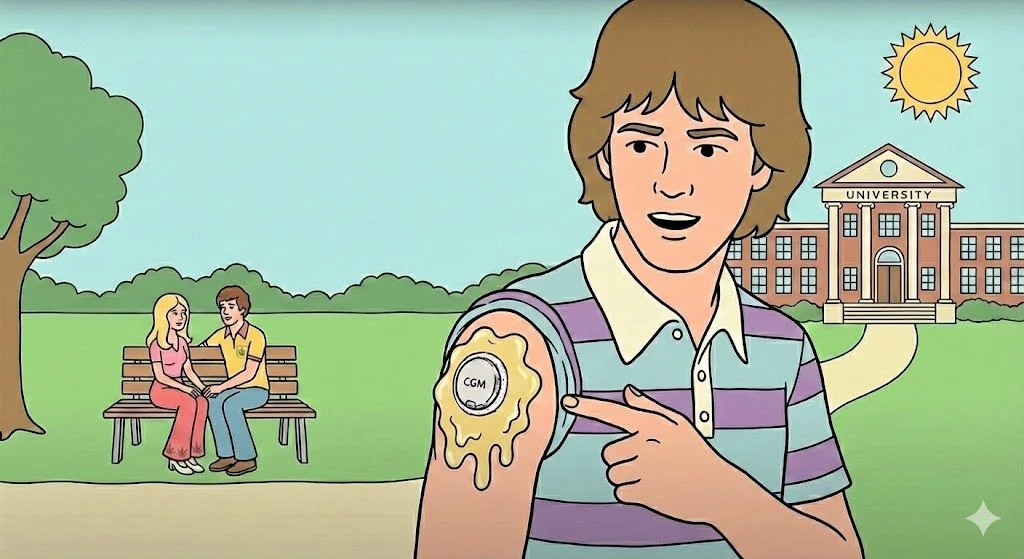
Oh, you know, I listened to the podcast and I'm more bold with insulin and I giving myself and not letting it go so high. I do have a CGM Anna, Dex calm. Yeah, but I didn't get very good training on those. I mean, I'm just now starting to really work on my settings. And still when I eat. Oh, I'm learning the Pre-Bolus. That's thought that's my challenge. Remembering before you eat. Oh, I remember but I don't want to do it.
Scott Benner 34:24
That's very honest. Claudia. How long? How long have you been listening to me?
Speaker 1 34:30
I started listening to you when I was in Colorado. So that means a year and a half
Scott Benner 34:35
about and what was your agency a year and a half ago? It was always
Speaker 1 34:40
- Now on my own, I've gotten it down to 6.20. That's amazing. I had many days, many days in the 85% range, but I even got one and the 98 Was
Scott Benner 34:59
it 85 is pretty good first of all, but you know, that's Oh, 6.2 is astonishing. Good for you. Seriously,
Speaker 1 35:08
but now I know I can get the five so, but I still it's luck. I don't really have this. I don't really can't predict. Now my settings. I know my basil is good because if I don't eat anything, I'm pretty steady. Yeah, it is I eat. I eat the same thing to let God mastered. But something's going on that I don't get. So my one of my favorite things is half an avocado on a piece of zekiel Toast. Okay, that's really solid breakfast oh, with, I make my own alfalfa spouts. So I pile loads on there. And I It told me for hours. But I ate that for like a couple of weeks because it's really working. It's 2.5 units. I wait, I eat it. And I'm Smith itself. Well, about a week ago, I stopped working. And I peeked, I spiked. Like for hours, I couldn't get down. And I thought what? So now I have a new trick. And I think I heard you say this. I raised my basil for a couple of hours. So I have a new profiles called high. And it gives me a three unit per hour. Basil. Wow. Which is a whole lot. Now I have to remember to turn that off in a half hour, or else I'm dealing with big lows later.
Scott Benner 36:54
What pump Do you have? T slim? are using control IQ or no? Yes, yeah. Oh, so you're doing can you do with Temp Basal on it temporary, so it shuts off on its own?
Speaker 1 37:06
Well, I think that would be the answer. But I don't know that yet. And I'm seeing a new Endo. I'm back in Ohio now, which is where I'm from. I'm seeing a new Endo. Tomorrow. I was going to ask her. You know, it just depends. When I go in some endos I started calling around in Ohio for a new endo because it was going to be here and I said can you help me with my goal of a one C of 5.5 time and range in the 90s? They all said to one no. That's not you'll get too many lows with that's not the way I can't find that. No, yeah, you might not I finally decided I'll just take the endo that my insurance tells me to go to. And I'm gonna have to keep doing this myself. Now if I have a lot of extra money. I would hire Jenny.
Scott Benner 38:12
Well, author,
Speaker 1 38:14
I have the amount of money I have. Yeah. And so
Scott Benner 38:22
but I mean, but clearly a 6.2 is fantastic. Like, I mean, it's really terrific. But you should be celebrating that every day. I'm not saying if you if you don't want better if you can't work on it, but you shouldn't think of this as not a success. This is very successful to me.
Speaker 1 38:42
Yeah, and I am a new regular nd and she took a seat peptidome me the other day when I told her my one seat. She didn't believe on type what's funny. She's not but she's a lovely woman, but she's not real familiar with diabetes body be
Scott Benner 39:01
carrot don't turn her. Okay. I don't you're gonna get this one too. As a as a girlfriend. Oh,
Speaker 1 39:10
I don't I just I'm not even looking for a partner right now. Because I'm, I'm having this wonderful time on my life. Well, I've had a wonderful time since I was 60. I thought honey, you are 60 Maybe you better do what you really, really want to do. I had always kind of done what I really wanted to do, but undone was I wanted to be with horses. And for some reason I had a story. There's horses out west. i There's tons of great horses and horse trainers here in Ohio. But I had a story. I had to go out west.
Scott Benner 39:53
So how long did you move out there?
Speaker 1 39:56
Well, when I 60 I just apply went for a job on a ranch at 60 with no experience who would hire me? They did.
Scott Benner 40:07
And how long were you there? Well,
Speaker 1 40:09
I would it was seasonal. Most of my jobs had been seasonal. So I just, I don't know, I wouldn't do that. Now. I don't have the energy now. But I had the idea. I just kept saying, Okay, this season's over. Where are you gonna go now? So I would find the next place. So I went, Cody, Wyoming, Nebraska, Idaho, and Colorado, and stayed and stayed and stayed till the next thing opened up. Wow.
Scott Benner 40:44
You just made me cry a little? Do you know that?
Speaker 1 40:47
The joy of my life? Yeah,
Scott Benner 40:51
that's really lovely. Good for you.
Speaker 1 40:53
I gotta tell you why it's connected with diabetes, please. And also after that time, somehow, diabetes, just, I did have a few incidents where I went low. I never needed help with lows. Until I was in my 60s. And then I did pass out. And my poor people I was living with had to call 911. And that was so stressful for them. Yeah. But anyway, I first I think got this horse going out west idea. Because when I was 10, my mom sent me out to live with my uncle, who is a forest ranger in Elko, Nevada in the Humboldt National Forest. And I was by myself. By myself, he's out doing forest ranger stuff and I'd get up and I have three Hershey bars for breakfast, then my horse tends Bob would always be saddled out there and I would climb up on him and Bri around till lunch, and I'd come in and I made this was my typical lunch. I made raw cake batter and ate the whole bowl. Amazed I didn't have diabetes, even sooner, but my mother fed us really good food. Okay, so back in Ohio, I was eating normally. But out there, man, nobody cared. I just say what I wanted. But I love being out there because I didn't really get along with my mother. I have a story. She didn't like me. And that may have been true. But so I was thrilled to be with my uncle who was nice and gave me a horse and didn't make me do any work. And I love being out there. And I think then, but the sad part was at night. There was incest. Wait, but wait, with my uncle. But even with that weird, I didn't know when interest was and I didn't know what was going on. But I liked my uncle. And he was nice to me. So every night I felt weird, but it was a trade off because he got me cowboy boots. And he let me drive this truck all around. And how, how old were you then? I was 10. And then the next year? I was 11. Wait,
Scott Benner 43:28
I'm so sorry. Claudia. Let me make sure I understand correctly. He was touching you inappropriately when you were 10. Yeah. Oh my gosh.
Speaker 1 43:36
But I didn't know. I didn't know to say I knew I didn't like that. But he was so nice, in all the other ways. And he wasn't mean like my mother. So I even wrote my mother a letter and said, I want to live with George. I don't want to come home. I want to go to the mountain city school and but Georgia never asked me to live. I wanted that. That's how much I didn't like living with my mom. How long
Scott Benner 44:07
did that go on? For
Unknown Speaker 44:08
two summers?
Scott Benner 44:10
Wow, you took me by surprise. I have to be honest. That's
Speaker 1 44:14
why I have that's why this is after dark. Yeah. Also, I mean, it may even be in midnight, it may be more than after.
Scott Benner 44:24
Honestly, Claudia, I've been thinking recently of starting up a string of episodes that you have to pay to listen to. And that would be that would be very, like just beyond what even after dark is and I don't know you might have just qualified just the first one. I swear to you like you just like I swear to God, I thought you were mispronouncing insects. I thought you were saying the only thing I didn't like weather or insects at night and I thought I misunderstood her. So I now we're talking I need to ask you, was he raping you or touching You know,
Speaker 1 45:02
I'd say what's a call when you touch inappropriately and this is hard for me to say but he is. He would ejaculated on me at night. Oh my god, I'm so sorry. And, but I didn't know what ejaculation was. So I thought I wet like I was always getting embarrassed. I'd say, oh my god, I wet my pants. I've never done that in years, and I would go to the bathroom change my wear. How are you? I was all mixed
Scott Benner 45:35
up. Listen, it's 63 years later and all but how do you have such a good? Oh, I don't understand how much
Speaker 1 45:44
therapy Yeah, I have done more therapy out the WHA hoo. And I think it really helped me but I gotta tell you this about my uncle. Because you usually ask people, does anyone in your family have type one? You didn't ask me
Scott Benner 46:01
that? Well, no, I don't know what to ask you about your family now. But go ahead, does anybody in your family
Speaker 1 46:07
was the only type one in my family, my uncle. But now through all the therapy, see, I waited to do my horse and going out west thing. And sagebrush, I love the smell of sagebrush, I think it took me that long to kind of just deal with the craziness of incest, which really makes people crazy. And remember the benefits of the gifts of that time in my life, the gifts of that time in my life were horses, sagebrush being out west. And so it made sense to me that all of a sudden at age 60, because I'm done, I in therapy, or incest doesn't wake me up at night, or I am just complete with that. And now I get to do the fun stuff I learned being at West, so I got to go. But the big trauma and this is still going on. And with me. The big trauma wasn't my uncle. It was my family. Because my uncle was the favorite uncle of our whole family. We all we have great uncles. I mean, I really, they'll never listen to this. So I'm not gonna hurt anyone's feelings. But all of our uncles are good guys. But it was the favorite. Because he was out west. And yeah, to horses. I mean, the whole story. So when I got back from being out west, and finally kind of woke up to what George was doing was not healthy. Yeah. And I started to process all that. I didn't tell anything to my family. But my family, we always tell songs and stories about George. And once I had a friend there with me, my friends all knew my incest story, but my family did not. And they said, Claudia, why is your family singing songs in front of you about the man who molested you? And I said, Well, they didn't know. So then my therapist said, well, and my friend said, Claudia, you should see yourself, you kind of shrink away that nothing. So I said, I am going to tell. So and I thought, I'm the oldest of 10, and a mom and a dad. So I thought my family would say, Oh, we're so sorry. Of course, we won't talk about that when you're there. Right? They all got mad at me said it was lying. My mother especially because it was her brother. It kept going on and on. Like I'd say just don't talk about them when I'm there. But they couldn't. For some reason, there was enough lack of respect or lack of trust in me or and so that's when I did leave my family. How old were you? When I was 60 is when it was all like, See, I don't know these years so well. But somehow it was perfect for me to go out west because I had to get away from this group of people who acted like so
Scott Benner 49:51
you're you're out west around 10 years old.
Speaker 1 49:54
That first outlet yeah till 12 But
Scott Benner 49:58
then when you ask your family not to speak about him any longer. How old? Just yeah, it was in my 50s. Really? You were an adult at that point? Oh, yeah. And
Speaker 1 50:09
my family but led by my mother. Just My poor mom. She could not find a way to remember. When I'm around. She I don't want to hear her stories about. Yeah.
Scott Benner 50:26
So help me for a minute, though. So you're for 40 years, you have this secret from your family, but you do share it with your friends. And you've talked about it in therapy. Is that right? Yeah,
Speaker 1 50:37
I was taking care of myself about that. I did. Oh, my family would be so have such a hard time with that. Yeah. But now what I really think is, it goes back to my relationship with my mother. And I think most moms would remember. Their kid was molested. And don't bring that up. She could not how old? Was she at that point? Oh, man. Um, I don't know. I mean, she's a grown up lady. Like, it's not that she has dementia, right?
Scott Benner 51:15
I mean, I'm saying if you're 50 at that point, is she 70?
Speaker 1 51:21
Right now she is 96.
Scott Benner 51:24
Okay, so she's 83. She's 23 years older than you see, she was your age when you were 50. She was 73 when you were 50. So, and she didn't want to hear about it. Was her brother still alive at that point?
Unknown Speaker 51:41
Yes.
Scott Benner 51:42
Is he now?
Unknown Speaker 51:43
Yeah, he died.
Scott Benner 51:46
Can I ask you? Did it make you feel any certain way when he passed away?
Speaker 1 51:50
No, I didn't know. I just feel kind of grateful that I got to be with horses and out west. And my uncle. He clearly had a sick piece. Yeah, yeah. Most of my experience with him was he was so much nicer to me than my mother, that I
Scott Benner 52:16
exist. So your experience at home was so terrible, that being being molested by a guy who was otherwise kind to you, was preferable to you. But trade off? Oh, my gosh. All right. Well, Claudia, I add that to the list of things I didn't think anyone would ever say to me,
Speaker 1 52:34
I wouldn't say it was a good trade off. But right now, in this moment, I don't have a screen G feeling or a stomach ache or anything when I think of it. And I also don't have that with my mother anymore. Because guess what? Now my mother does have dementia. And when I I go to see her on occasion, I'm not taking the responsibility that my siblings believe I should be taking. Yeah, I don't have a deep connection.
Scott Benner 53:16
Yeah, I can't imagine why you wouldn't. But
Speaker 1 53:21
my siblings do not understand that or hear it? Or they they're just they have their own beliefs. Yeah.
Scott Benner 53:32
Do you think your uncle molested anyone else in your family?
Speaker 1 53:35
I asked. Because the second year I went, my little sister went with me. And I asked her directly. Did anything happen to you? And she said, No. But I was glad she went with me. Because when I first told about George, in my effort to say, Hey, don't talk about this when I'm there. And people didn't believe me. But my sister who was there by then have enough memories of things. She spoke up for me and said to my mother, it really did happen. So my mother believed my sister even though my mother never believed me. But I think that just said, When I stepped back, it's I said, if a mother could treat her daughter like that, the break in the bond happened much earlier. We just hadn't built a bond but the miracle is now when I go see my mother, she forgot she doesn't like me. Her tone of voice is loving, just like she used to speak to the other children and I I couldn't hear it was different.
Scott Benner 54:58
Yeah. So you Are your
Speaker 1 55:01
voices really kind and loving? I'm like, Oh, brother, I had to wait a long time to get apartment loves me. But here she is.
Scott Benner 55:13
I mean, it really one of the benefits of a long life, right is that you're able to have this much distance and clarity about something that I mean, you just describe something I think would mess most people up pretty, pretty badly. And I mean, it's upsetting to listen to, I don't know how it would feel to have it happen. So. But you're you feel like you're on the other side of so many things like your relationship with your mom.
Speaker 1 55:39
I'll tell you, my mother, my story, my belief, and because you never really know, maybe she did love me, but I looked like someone she didn't love or I never know. Yeah, I would not say but who knows what happened to my mother? Yeah. Well, I
Scott Benner 56:02
mean, something bad happened to your to her brother. So I would imagine some she's had an impact just the way he did. I mean, and honestly, if you're 70 Let's think about this. If you're 73 Now,
Speaker 1 56:16
what year were you born? 4949.
Scott Benner 56:20
Which makes your mom born like around the around the depression. Maybe?
Unknown Speaker 56:27
I you
Scott Benner 56:29
do the math? Well, you just said she's How old 8696 96? Jesus? Hold on a second. These are bigger numbers. I'm going to do some guesses. I got three. And then I take to your mom's 23 year old 23 years younger than you you were born in 49. Six, if she was born in 26, just after the depression, so I bet you she didn't grow up well at all. And George either or and how many kids? Do you know how many aunts and uncles High Five kids broke ass people? I bet you she went through some stuff, too. I'm not excusing anything. But I bet you they didn't grow up. Well. Did you ever have children?
Speaker 1 57:09
No. You know what? The oldest? 10 I never wanted children. I was so clear.
Scott Benner 57:16
You're the oldest of 10. Yes. Holy hell. We
Speaker 1 57:22
were tapped in. So I'm not a practicing Catholic now. But yeah,
Scott Benner 57:26
I mean, you've you've said enough that would get me away from religion too, but tend to you. Oh, oh, hold on. Do you think your mom didn't want kids? Do you think she was pissed at you for being there?
Unknown Speaker 57:36
She wanted kids she was a
Scott Benner 57:38
boy. Does she want a boy you think first?
Speaker 1 57:42
Well, I'll tell you Scott. I've taught I've trained myself to stop spending my time trying to figure out about my mother here. Because I I was really obsessed with. My mother doesn't love me, my mother. That was my dominant stress in my life. Yeah, it was much bigger than diabetes. It was much bigger than divorce. It's been the challenge of my life. But now I just am really coming to experience. My mother's beliefs and stories are not my business. Okay. Yeah. In my business, to be in this moment. And have a good life
Scott Benner 58:34
quality you are from another generation. And I am very impressed by how you handled everything in your life. We in an hour, in an hour. I started off thinking, I'm going to interview this nice older woman who likes to ride horses. That's what I thought I was going to do. Right? And then we get on you been married, divorced, had diabetes undiagnosed for so long. You thought you had mental illness. You were molested as a child. Your mother didn't love you. You I fell in love with a woman dated her for two years she took her own life. Your life essence is so jam packed with amazing stories and pain and suffering and love and forgiveness and redemption. It's just it's amazing. You're like a Hallmark movie. Plus some. Do you know that about yourself? Do you know that? Well,
Speaker 1 59:30
all I know is now and starting at age 60 When I left my mother and my family I am happy almost all the time. Please content
Scott Benner 59:45
good for you. But that's amazing. I'm so glad for you. You know like just what a wonderful I mean what uh, what the your story is built of terrible pieces, but the overall story is, is lovely. Yeah, Yeah,
Speaker 1 1:00:00
in fact, right now I get to build this wonderful little cabin and live in one of the most beautiful parts of the woods. In Ohio of all the places I've been. Ohio as the most beautiful woods.
Scott Benner 1:00:18
You're building it can't wait. You're building a cabin in the woods. Yeah,
Speaker 1 1:00:22
well, my friends are, are really building it, but I get to live in.
Scott Benner 1:00:26
Wow, Cody. Are you a hippie? You think of yourself as a hippie?
Speaker 1 1:00:31
You don't do actually kind of conservative you.
Scott Benner 1:00:36
That's amazing. Okay, it's amazing. You're terrific.
Speaker 1 1:00:42
I didn't go to Woodstock or you smoke weed. Did you know about Woodstock?
Scott Benner 1:00:50
Oh my god Woodstock. I know everything about what's probably too young. Oh, no Hendrix. Was there fish? Who else was there? Um, doesn't appeal
Speaker 1 1:00:57
to me at all. You don't like that? Okay, I would not think
Scott Benner 1:01:02
so. Wait a minute. So you don't you've never smoked weed.
Speaker 1 1:01:06
Oh, I only smoked weed for one year of my life. And that was I don't know why my husband, my former husband didn't want to have sex with me. But he didn't. And, and I loved having sex. And so I how I survived those 20 years was I had affairs and I'm not proud of that. And it was hurtful. And but what I like about myself is I had integrity. I said, I'm going to have an affair. And I say to myself now why didn't you just get divorced? But the I have enough Catholic left in me that we don't get divorced. And my former husband had that same part. Right?
Scott Benner 1:01:58
Where did the weed come in? Now? Hold on. Oh, well, anyway,
Speaker 1 1:02:01
yeah, I smoked weed for with a good friend of ours. God, I still do have a shame that I did this. But that I think took enough down of my barriers that I had an affair with. Okay,
Scott Benner 1:02:19
hey, this is an interesting question for your because of your generation. Are you more ashamed of milking weed or cheating?
Unknown Speaker 1:02:27
Oh, I'm more ashamed. There's
Scott Benner 1:02:29
cheating cheating, because it hurts somebody's shame about smoking. Weed. You didn't have any. Okay. Wow. I just want to say Claudia's getting a drink right now. And I want to put out there to anybody listening. When you come on the podcast. This is the level of honesty I'm looking for right here. This is your Can I curse? Claudia, you're amazing. I love this. I swear to God, this is the greatest, like, from my perspective, like you understand, like, I got on this morning. And I was like, Oh, 73 year old lady with diabetes. I don't know what we're gonna talk about. I didn't think we're going to talk about any of this. This is really, this. You being on the show, is what makes this show so great. So thank you so much. I mean, it's amazing. Like, like if I said to you right now, tell me a crazy story that hasn't come up yet. Just one pop into your mind. Something you've done that you think people would be like, Wow, that's astonishing.
Speaker 1 1:03:25
I know the most something I'm the most proud at. I did go ahead. And this was before I was diagnosed, but I'm sure I was already suffering. This is Claudia trying to reparent young Claudia. And I got interested in Montessori education. So I said, I need to get my Master's in Montessori. I like decided that in like one minute. I don't know how but it just was true. So I lessonly got a full scholarship at Xavier University, which is a really good Montessori training. And I was one of the staff who founded the first public Montessori school in the United States. Oh my gosh. And now here in Cincinnati, you could go to public Montessori through high school. And the big get and that's I was at the foundation of that wonderful gift to this community. And now there's public Montessori schools all over the place. Yeah. But the huge gift that came from that is my best friends. And I'm going to name names Sandy. Nancy. A Suzanne. Well, Jerry, we don't know her for Montessori, but her daughter became a Montessori teacher. Those are my family. And when my family could not understand me, and respect me, those women were my family. And the miracle is they still are. And I have that. I'm sure though I'll listen to this. And they know what we have. It's, it's the, I think some people might feel like this about their mothers, like, Who do I go to? When I really need help. And when, when Linda died, my mother said, I call my mother and I was still hoping, farmer, my mother to be like, loving to me. And I said, committed. I mean, I was like, frantic I couldn't lend a committed suicide was what I was trying to get out. And my mother said, Well, I hope you're finished with this lesbian thing now.
Scott Benner 1:06:12
Oh, my gosh.
Speaker 1 1:06:16
I call my friends. This my core group of friends, Sandy, Nancy. I said, Come over here. I can't stay. Oh, I can't stay alive through this. And they come over. And Sandy grabbed my shoulders and said, Claudia, when you need mothering, stop calling your mother. It's like, I couldn't get that I would. And that's my friend, Sandy. And she's my friend. And more whatever you call that when someone is a sister. Yeah. Lucky that now. Some of my sisters are becoming my real sisters.
Scott Benner 1:07:03
Oh, that's nice. Your family's kind of getting closer as you get older. I love it. Yeah, that's excellent. But your life, your life is a triumph. It really is like I can't I keep coming back to that word in my mind, like you just you triumphantly conquer things that I think would just stop other people. You keep going, you know? Yeah,
Speaker 1 1:07:27
I don't want to act like they didn't stop being for a long time,
Scott Benner 1:07:31
though. You were clear about it. But I mean, you're still here. And you're doing it. And you have a crystal clear attitude. And it's, it's wonderful. I mean, it's it's uplifting and hopeful.
Speaker 1 1:07:41
Yeah, I mean, now, I think, because you know, I need a kept that insulin. I feel like even if you could get well from type one, there was part of me, that said, but what if I ever need to check out? Like, what if I have to live under a bridge or I lose my feet? Or what if I can't stay? And so I thought, well, that means you can't ever get well from type one if you've got to have the story that you're getting need insulin. But now I feel like do I trust the process of life enough to trust the process of my death? Whenever that comes? Do I trust that all my needs because my my main story in my life is being amazed that all my needs are met, because I'd be out west fall of a horse broke my arm. I mean, it specially my out west adventures. I thought my needs keep being met in these odd ways by people I didn't really know. And, and so I started to believe, oh, all my needs are met. But my life is a little odd and that some people kind of know how their needs are met by their families or their husband. But I haven't done that
Scott Benner 1:09:19
people. So people have been I mean hard on you, but other people have been very kind to
Speaker 1 1:09:24
you. Oh my god, people more people have been kind extraordinarily out of their way. stunningly kind to me. And then I have a few family members who because of their own dysfunction. Want to keep talking about a child abuser in front of me. Yeah,
Scott Benner 1:09:50
I think you should expect the kindness then. It sounds to me like I
Speaker 1 1:09:54
do. Yeah, not around. There are a few family members. I will not interact with
Scott Benner 1:10:00
Yeah, I mean, that's fair. Nine, nine brothers and sisters, it's gotta be a couple clunkers in there, right.
Speaker 1 1:10:08
I actually love them too, but you don't get it back from them treated respectfully. And so I've, I've said kind of generally, I'd be loved to meet with you talk about these disagreements we have. But there must be a skillful third person there. Yeah, like a therapist, because if I have the skill to resolve things with you, I would have done it right. We wouldn't be in this spot. That's very, I don't have the skill that's very mature of you.
Scott Benner 1:10:43
Did any of them take you up on it? Yes, the miracle.
Speaker 1 1:10:45
This is the miracle of my sister Gina. And she's gonna listen to this. So she'll love that I'm honoring her. But I did. I backed off from everybody. But my sister Gina and I, we did have a pretty, I thought we had a pretty good relationship. But I also have compassion for her predicament. She's a middle child. And the middle child, their goal is you bring peace to this family. So it was very hard for my sister to take sides. And I really actually needed someone to say, Mom, stop being mean to my sister, you know, I need that. But I also now I have compassion for her her innate role as a middle child. But I was in Colorado doing my horse thing. And my sister was in California. And my sister offered to drive in did drive from California to Colorado to meet me at the equine. I was starting to study equine therapy at that time. It's a wonderful way to do therapy, you include horses, instead of office furniture.
Scott Benner 1:12:11
You are not the first person to bring up equine therapy on the podcast, which
Speaker 1 1:12:16
I'm just very excited. Yeah. combined my awareness of emotions with horses, they are much more aware than we are.
Scott Benner 1:12:27
Yeah, no, it's amazing. I heard somebody explained how they take their daughter to it, I think, um, you know, you care for the horse. And then the, I guess the idea is that the horse kind of can feel how you feel. And then you can sort of you can, you can, like work on yourself by how the energy you're getting back from the horse. Is that right? Oh,
Speaker 1 1:12:46
horses do things they cannot be trained to do in response to people. Wow. That's really, you don't know? What's going to come up. And I can tell you a whole nother podcast, of course equine therapy stories. But my sister just out of her wanting to reconnect with me, she drove and her boyfriend came to, to, he supported her. Yeah. From California, to Colorado, have the session with me paying for the session, and then started back
Scott Benner 1:13:29
to California. Very nice. That's very nice.
Speaker 1 1:13:33
So we still have some unresolved stuff. But I just say, Gina, it doesn't matter what you do from here on. Yeah, just let it go. You have money in the bank with me? Because of what you did?
Scott Benner 1:13:48
Yeah. You can just let it go. Let everything go and just move forward. Right? Well, we
Speaker 1 1:13:53
don't let it go. But we both I trust that she is not. I trust that she's on my side. Yeah. And if anything comes up, it's just one of our lack of skill. And we both have skills to talk about things. So I trust I'll do whatever it takes to reconnect with Gina because she did that for me. That's beautiful. Majan what that dedication? Yeah. No,
Scott Benner 1:14:25
I can't say enough about that. Honestly. That's wonderful.
Speaker 1 1:14:29
That's Gina. Yeah. Well, Claudia, we're over time.
Scott Benner 1:14:33
So I'm going to wrap up with you. But I can't thank you enough for sharing this story with me. It was really unexpected, and I can't it's just very nice of you to share it with everybody. You're not going to be the only person who has been through some of these things. And I think it's good for people to hear other people talk about it. So that's
Speaker 1 1:14:54
what I decided in one to contribute. And I want Especially my story of how my desperation to not live brought me type one diabetes. It seemed even though it was already coming on but felt
Scott Benner 1:15:15
like the path the path that you were on taught you something every step of the way.
Speaker 1 1:15:22
Just been one amazing lesson after another. Yeah,
Scott Benner 1:15:27
you've had a hell of a life.
Speaker 1 1:15:28
I always when the people come on and they say I hate this disease, like, it's such a, you know, all the hate about diabetes. I've never hated it. Because I feel like it. It is my life style.
Scott Benner 1:15:47
Yeah, no, I mean, you can't hate who you are. If you have diabetes, it's part of you. And you know, if you're gonna hate diabetes, you're gonna end up paying yourself. So there's a lot people can take from your, your general attitude and the way you tackle things. I'm very glad you added it to the podcast. I want to thank you very much.
Speaker 1 1:16:05
Thank you for talking with me and letting me tell my
Scott Benner 1:16:10
story. That's my pleasure. It really was Hold on one second for me.
I want to thank Claudia for coming on the show today and telling us her life story. A huge thank you to one of today's sponsors, G voc glucagon, find out more about Tchibo Capo pen at G Vogue glucagon.com Ford slash juicebox. you spell that GVOKEGLUC AG o n.com. Forward slash juicebox. If you're looking for community around type one diabetes, check out the Juicebox Podcast private Facebook group Juicebox Podcast type one diabetes, but everybody is welcome. Type one type two gestational loved ones. It doesn't matter to me. If you're impacted by diabetes, and you're looking for support, comfort or community check out Juicebox Podcast type one diabetes on Facebook. Thank you so much for listening. I'll be back soon with another episode of The Juicebox Podcast. The episode you just heard was professionally edited by wrong way recording. Wrong way recording.com








Please support the sponsors



The Juicebox Podcast is a free show, but if you'd like to support the podcast directly, you can make a gift here. Recent donations were used to pay for podcast hosting fees. Thank you to all who have sent 5, 10 and 20 dollars!

#1099 Healing Heart
Willie has type 1 diabetes and a healing heart.
You can always listen to the Juicebox Podcast here but the cool kids use: Apple Podcasts/iOS - Spotify - Amazon Music - Google Play/Android - Radio Public, Amazon Alexa or wherever they get audio.
+ Click for EPISODE TRANSCRIPT
DISCLAIMER: This text is the output of AI based transcribing from an audio recording. Although the transcription is largely accurate, in some cases it is incomplete or inaccurate due to inaudible passages or transcription errors and should not be treated as an authoritative record. Nothing that you read here constitutes advice medical or otherwise. Always consult with a healthcare professional before making changes to a healthcare plan.
Scott Benner 0:00
Hello friends, and welcome to episode 1099 of the Juicebox Podcast.
On today's show I'm going to be speaking with Willie Willie as someone who I've been trying to get on the podcast for years. You can follow him on Instagram at T one D artists. And I think you're gonna love this episode. Willie is 40 years old he was diagnosed with type one diabetes in 2003. He also has hypothyroidism fibromyalgia, frozen shoulder, restless leg syndrome, and a little bit more. What he doesn't have is a bad attitude. Willie is who I think of when I think of hope. When you place your first order for ag one with my link, you'll get five free travel packs and a free year supply of vitamin D. Drink ag one.com/juice box. Nothing you hear on the Juicebox Podcast should be considered advice medical or otherwise, always consult a physician before making any changes to your health care plan. Don't forget to save 40% off of your entire order at cozy earth.com All you have to do is use the offer code juice box at checkout that's juice box at checkout to save 40% at cozy earth.com.
This episode of The Juicebox Podcast is sponsored by Dexcom dexcom.com/juice box get the brand new Dexcom G seven with my link and get started today. Today's episode of The Juicebox Podcast is sponsored by Omni pod and the Omni pod five. Learn more and get started today at Omni pod.com/juicebox.
Willie Streets 2:00
My name is Willie, aka Willie streets, aka the T one D artists and it's been a long time coming. In the words of my iconic hero Mr. Tupac Shakur. This won't be the real issue ever.
Scott Benner 2:16
I'm ready for that. Excellent. Willie, how long have we been interacting online? Do you think? For myself?
Willie Streets 2:22
It seems as though it's been a while. But when I go back and look at dates and whatnot, since 2020
Scott Benner 2:32
Oh, that's a reasonable amount of time. It's almost a three full years. Right. Right. Yeah. So
Willie Streets 2:38
like, right in the midst of the pain, the onset of the pandemic? Yeah,
Scott Benner 2:44
I love the podcast. You know, I hate to say and I you starting to hear people talk like this. Now the further out we get from it, you don't want to say good things that came from COVID. But it really helped the podcast. You know, people were at home and and I guess had time to consider their health then a lot of people found it. And it kind of blossomed from there was doing well. And it was growing kind of incrementally but man right around 2020 2021 It like like it took off. So yeah, so
Willie Streets 3:13
it really helped me during that time.
Scott Benner 3:17
I'm glad we'll talk about it for sure. How old are you? When were you diagnosed?
Willie Streets 3:21
I'm 40 years old. I was diagnosed March 10 2000 and 312 years? Yep, we've got 2120 years. Seven months. 22 days
Scott Benner 3:37
keeping track? Yes. That's a long time ago. 20 years a long time ago. Yeah. Were you expecting it? Was it in your family at all?
Willie Streets 3:46
When I got diagnosed? That March, I was not expecting it at all. My dad was diagnosed as a type two diabetic 1995. Okay, so I was not expecting that at all. I didn't know that I had any family history of diabetes, both type one. I had a large family history of type two. I had actual two uncles that are in both both worlds by my dad's sisters that were diagnosed as type ones. My mom's sister, my uncle, Jonas, he's passed. He was type one diabetic also. So I knew a bit about it, but didn't know of any family history. Yeah,
Scott Benner 4:36
so it was there, but not something people spoke about or didn't type to get more of the attention.
Willie Streets 4:41
It wasn't it was there. People spoke about it. But I did not know there was a difference. I just new diabetes.
Scott Benner 4:50
Oh, I got it. And you're young too. I mean, your father's diagnosed you're not maybe more than like eight or nine years old. So like you're a younger person that was a kid Yeah. I gotcha. From
Willie Streets 5:01
the beginning. Like when he there is diagnosis. Like he showed us everything, like his meter, how to use it, how to test. And it's crazy. I remember when he came home, it was like around Christmas. And he showed us actually how to use his meter and we all prick their fingers to see what our blood sugar's were. And I don't even remember chains and the lancet like we all just checked, pass it around.
Scott Benner 5:28
So he was pretty open about it than he was. Yeah. Is that a thing that you remember him working at? So
Willie Streets 5:35
my dad was always a bigger guy. So he was always working on his health. My mom was big into what was the QVC, home shopping club, all those things. So they will buy all types of gadgets, AV rollers, ad lounges, all of those things, and he will work on his his body, his weight and things of that nature. But on his diabetes, when he was actually diagnosed, he did not work on that. And he says it today, because he makes sure him and my mom make sure that my health is at the most optimal level, because he's had many complications over the years.
Scott Benner 6:17
Yeah. It's such a shame that even even 20 years ago, what what was really known about it, and even the medications that are available now that weren't available. I mean, you look at that story, and you bring it to present day and you think, Oh, he takes ozempic He probably drops all that weight and is a once he goes down and you know, he's he's doing better in a year. It's something How old is he now? How old are your parents?
Willie Streets 6:40
My dad just turned 66. And my mom will be 60 Fool in December.
Scott Benner 6:46
I mean, it sounds like at the very least he laid down a foundation for you and then took it more seriously. Isn't it interesting? It's easier to help somebody else than it is to help yourself. A lot of the times were
Willie Streets 6:57
very, my dad. Yeah, he really took it serious. Because I mean, it's because of him that I believe my life was saved upon my own diagnosis.
Scott Benner 7:08
Tell me a little bit about it. What do you recall from the time that you were diagnosed?
Willie Streets 7:11
Let me take you down this, this tunnel. So a lot of people when they speak about their diagnosis, it's usually some kind of like a physical ailment that occurs, whether it's sickness, virus, things of that nature. But all for me. It was more of a traumatic experience, more emotional. In 2003. My parents were going through a lot. My dad, my mom was on the brink of separation. Because my dad was out here in the streets doing and my parents actually lost their home. Like I remember that day. There was a sheriff's note on the door. My older brother, he's six years older than me, he went and got the U haul truck pack, the U haul truck, went and put everything in storage. We were staying at a motel was a travel Lodge, my parents were staying in one room, me and my brother, my younger brother, who's three years younger than me, we're standing in another room. I remember their neck rare for about three weeks. And me and my younger brother, we would like do whatever to uplift each other. Because I mean, that's my heart. That's my, that's my best friend always. And we would go to like this bowl of Rama and play bowl, play, shoot, shoot pool and bowling and things of that nature. And about two weeks later, my parents had got a house while it was an apartment. And that first week there that that first week there I don't know what occurred. But I remember not being able to sleep and continuously having to get up and go to the bathroom, repetitively, repetitively. And there was a McDonald's that was down the street, and I will walk to that McDonald's and fill up these big cups of lemonade. And I've spoken to other type ones recently, and they were like, you had that lemonade cream. And also, like, I did not know that was a thing. They said something with the citric acid and I've never heard that before either. That's interesting. Yeah, there's some with lemonade, vinegar. All of those things like people crave it. After a few days of not being able to sleep in going into the bathroom repetitively and drinking gallons of water on in. Like I remember sleeping in the bathroom on the floor, because I knew that I will have to get up and go back to like having to go back to the bathroom after going and laying in the bed. And my dad worked overnight. And I remember one morning it was like seven o'clock in the morning. And he was sitting on the couch. So my parents had me me men's women's Biden like they were We're all good. And I walked into the living room and I said, I don't feel good. He's like, what's wrong with you? And I said, I don't know. Like, I can't stop using the bathroom. I said, I can't stop using the bathroom. I'm so thirsty. I feel so dehydrated, like my buddy string. And he looked me straight in the eyes and said, you're a diabetic.
Scott Benner 10:23
He recognized that from his life. Yeah, yes.
Willie Streets 10:26
He recognized. US said to him, like, I just need to go to the hospital. So he told me grandma stuff. My parents don't drive. They've never driven. I mean, lived in a city always called public transportation. We're not. So we hopped on a bus went to the local hospital. Scott, I'm going to mention where I'm from. So I'm from Wilmington, Delaware. I know we got a connection with Delaware.
Scott Benner 10:55
I could tell by your area code when you signed up to be on that. I knew where you were from that?
Willie Streets 10:59
Yeah, right. So I know about your connection with University of Delaware
Scott Benner 11:03
and my wife. My wife got her undergrad there. I spent a lot of time in Delaware. Yes,
Willie Streets 11:08
yes. Yes. So we went to a local hospital, St. Francis, a small hospital, a small private hospital. And before diagnosis, I was big into my physical well being. I'll follow this routine by a former great Philadelphia, running back where he would do 1200 Sit ups and 2100 Push Ups per day. And that was me. I would do that. Hey, are
Scott Benner 11:41
you talking about Herschel? Yeah, no, no.
Willie Streets 11:46
Yeah, he used to be my guy. But, uh, yeah, follow that routine. And I was I was fit like, I mean, I'm a little under six feet tall, 180 pounds. And when I got into that hospital, first thing they asked me to do was step on the scale. When I stepped on that scale, weigh 244 pounds. And my heart just sunk
Scott Benner 12:11
in. Okay, that's a lot of weight.
Willie Streets 12:14
And I could picture my dad sitting in the chair, but his hands like on his
Scott Benner 12:18
face, like heartbroken. Yeah,
Willie Streets 12:23
like, I'm his junior. So, you know, even like, we've had a bunch of problems growing up, as you know, boys and our fathers do. I could, I knew that his heart was broken. His soul was very broken. But yeah, that was the day I was diagnosed on a couple years ago. So right before the pandemic started, so that first February 2020, I actually contacted St. Francis Hospital, because I didn't have my parents didn't have any paperwork. I didn't have any paperwork on the grounds of my diagnosis. So I contacted them. And they told me that they get rid of medical records after 10 years. They don't have to keep them. But they do keep the intake and discharge papers. So I emailed them and fax them. And they were like, yes, shortcoming. Come and get them. So I went and got them. And on there, it says, like it tell us about my diagnosis like, Oh, he's been diagnosed as type one diabetic. My blood sugar. It said it read the max reading, which was 499, I guess the meters they had didn't pass that my agency was at a 14.7. And really,
Scott Benner 13:35
you think that the stress of you're getting out of your home and your parents fighting and all that stuff? You feel like that was part of what brought it on?
Willie Streets 13:43
I do. Get that stress in being a type one diabetic for the amount of time that I have been? I do know that certain things such as stress, so hormonal imbalances and changes do alter your blood sugar. So I do believe that it pushed forward. My diagnosis. I believe
Scott Benner 14:09
that as well. Do you think did you have to say two brothers right? older and younger? Yes.
Willie Streets 14:15
Yes. Two brothers and a sister were three years apart. 7780 83. That's
Scott Benner 14:21
a spread. Do they have any issues, any autoimmune stuff at all? They
Willie Streets 14:25
do not. My younger brother, I keep telling him he, he should go get checked. He always had stomach issues, gut issues. And a few years ago, he was like, I know what it is. I just think that I'm sensitive to dairy and so he's been popping these little dairy tablets or non stop and I'm like, You should go get checked because like I know now that like I have an aunt was diagnosed with irritable bowel disease, colitis when she was a child and In just recently, she got her thyroid removed. She has hypothyroidism. I have this is all on my mom's side. I have two aunts with rheumatoid arthritis.
Scott Benner 15:12
Yeah, there's a fair amount of autoimmune, the IBS and the RA. Maybe your brother's got celiac or digestive issue or something to that effect, right? Yeah. Yeah. I
Willie Streets 15:26
told him he should go get checked out. But he's like, people don't listen.
Scott Benner 15:33
That's why I get a tricky with this podcast and make it silly and stupid. So you're listening about your diabetes? Because it is. It's just tough man. Nobody. You know, sometimes people think they have it figured out and sometimes they don't want to hear the news. So, you know, I
Willie Streets 15:47
thought I had it figured out until the pandemic, really? Everything was cool to me. I mean, I suffered from hypoglycemia on awareness. I mean, I've had many episodes of EMTs EMS at my doorstep. waking me up. I remember a paramedic telling me that it was normal.
Scott Benner 16:12
That's because he sees it so much to probably, yeah, right.
Willie Streets 16:16
He said, he said, I see it all the time. He said, at least it's not happening every day. He said, I got a guy down the street. I'm at his door, like every day or every other day,
Scott Benner 16:24
really, as well. That's a long time between your diagnosis and Pandemic time. So how were you living through that? And you said, you felt like you had it figured out? What did that look like to you? And when did you realize it wasn't? Today's episode of The Juicebox Podcast is sponsored by Omni pod. And before I tell you about Omni pod, the device, I'd like to tell you about Omni pod, the company. I approached on the pod in 2015 and asked them to buy an ad on a podcast that I hadn't even begun to make yet. Because the podcast didn't have any listeners, all I could promise them was that I was going to try to help people living with type one diabetes. And that was enough for Omni pod. They bought their first ad. And I use that money to support myself while I was growing the Juicebox Podcast. You might even say that Omni pod is the firm foundation of the Juicebox Podcast. And it's actually the firm foundation of how my daughter manages her type one diabetes every day. Omni pod.com/juicebox whether you want the Omni pod five, or the Omni pod dash, using my link, lets Omni pod know what a good decision they made in 2015 and continue to make to this day. Omni pod is easy to use, easy to fill, easy to wear. And I know that because my daughter has been wearing one every day since she was four years old. And she will be 20 this year. There is not enough time in an ad for me to tell you everything that I know about Omni pod. But please take a look. Omni pod.com/juice box, I think Omni pod could be a good friend to you. Just like it has been to my daughter and my family.
Willie Streets 18:14
Having to figure it out for me was more so take your insulin. As long as you feel okay, you're good. That's how it was for me for too many years. Many years. I just did not know. I wasn't given the education, the resources, the guidance, the support, that I know is needed to live your best life. Oh, it was like it was skipped. Like even going back to 2003 of my diagnosis. Like looking at the discharge papers. It actually says on there that they're not sending me home with a meter. Because my dad has accucheck meter at home. Good enough.
Scott Benner 18:58
You got one. That's perfect. Yeah. Yeah. As long
Willie Streets 19:01
as he had his accucheck meter. I was okay. That's
Scott Benner 19:05
interesting. Right now, companies are giving away like candy, you know, in here, take a meter. And it's so interesting. Yeah, right. Right. Right. Right. So yeah, Willie, basically, if you're alive, and the guy in the rescue squad tells you, it's all right. You don't pass that as much as the guy up the street. You figure, this is what this is. And I'm looking forward and I'm standing up so I'm doing okay. Yeah, right.
Willie Streets 19:30
I was not doing okay. And I hope that today, the things that I wasn't given or gifted, don't come back to haunt me now. Because those, I mean, Scott, like literally, there was 15 years in between that time where for the first six or six years before I got my current general practitioner, I was on a routine of just giving thing 7030 Mix insulin 30 units before, before breakfast 15 units before dinner. And then probably a year or so later, I realized like I needed more insulin because my blood sugar was rising. So I would just manually inject that, like insulin whenever I felt high. And that created me having so many overnight loans, like our I think it was 2005 2000 fours, a girl who I used to date I was at her house, and I woke up in the bathroom, like half naked with blood all over the place. empties. I had been off half my tongue.
Scott Benner 20:47
Oh my gosh. From a low. Yeah. You mean you were using a regular an MPH for 15 years? Not
Willie Streets 20:54
for 15 years now. So I was using that from 2003 until 2009. Okay, right around that time. Yes. And when I met my general practitioner, he looked at me and said, What are you doing? And I said, What do you mean? He said, We have to get you a Basal and a Bolus insulin immediately. And he did bring eight one C checks because Scott, during this time, I didn't have I didn't get my eight one c check. I'm just wondering that, okay, I didn't at all because I was seeing my dad's doctor and my dad had an issue with him. So I had an issue with him. And I remember going in with my dad and him saying things like, telling my dad how bad he was doing and my dad cussing him out. Because my dad is no holds barred. Like, really, like my dad telling him like, Eff you. You're not gonna be saying this to me and whatnot. So I didn't want to see him. Only use them for my script. Yeah. Yeah, that I was using that for all that time. So like, I truly hope and I tell my wife this, that the things like the education I was in giving doesn't come back to haunt me. Like, really?
Scott Benner 22:09
But you got six. You mean, you have six tough years in there. But you were you were using the insulin though, right? I was using it. Yeah. And you added more when you knew your your blood sugar was high. And it led to lows overnight, but at least it was in there and it was doing something. Right. Yeah. When they finally check your agency, which I'm guessing is right, in your like, you're around 26 or 27. In that age group right there. Right. What was it? You remember?
Willie Streets 22:34
The first one was, I think it was 10 point something like, I think it was like a 10.3. Somewhere around that. So that showed that I was running in that range for all those years,
Scott Benner 22:46
likely? Yeah. Did the fast acting insulin bring that down? Yes.
Willie Streets 22:51
So I remember getting it down to the eight. And then I remember being like around 7.5 for a few years. Then in 2017 2018, I was down to about 6.7. And from that moment on, like, I looked at it, and I started learning more about insulin. And I've been able to keep it between 5.1 to 5.64. Since that time, so since about 2018 2019, my blood sugar has been my glucose levels have my agency has been between 5.1 and 5.6. That has not been above 5.6.
Scott Benner 23:32
And as well done. Good for you. It Were there a lot of lows in there while you were figuring it out.
Willie Streets 23:38
Yes, there were. I had an incident where I was at work in 2015. So I did like I worked at for a big retail company in the shipping receiving merchandising support system. And one day I was out moving something some kind of fixture and my body just started jittering. Like, out of like, I didn't feel it coming on. I've always been hypoglycemic going to where and I don't know if that's because of how was using that. That insulin before that mph and regular regular. Yeah. And all of us next thing I know, I'm on the floor like no down, and I'm shaking. And one of the managers who's working with me, he looks at me, he's like, Well, are you are you alright? And I'm like, I'm not able to talk. And next thing I know the paramedics are there. This was throughout 2015 Because my wife and I worked at the same place. That's where we met. And I remember her meeting me there at the job because she was home on maternity leave at the time. And then don't take me to that same hospital St. Francis Hospital. It was it was it was hard.
Scott Benner 24:58
And when you Have a Dexcom now I hear it so yep, yep, you heard it because my adrenaline. Yeah. Are you nervous?
Willie Streets 25:05
I'm not nervous. No, Scott is crazy. My daughter, she's in seventh grade and she plays basketball. So at a basketball game, I couldn't enter at seven. And I didn't realize this until last year, that I could sit there calm employees, but within half an hour, my blood sugar can go up 50 to 60 points. So I was set in temp basals for her basketball games. It's crazy.
Scott Benner 25:34
Listen, I sit Nicole's baseball game one day, and he hit a ball in a gap and I was screaming and when it was over, I thought I'm gonna have a heart attack watching these baseball.
Willie Streets 25:44
So look, I will go so I started going into her bad basketball games and like doing like a peaceful meditation first.
Scott Benner 25:54
You got this didn't work. When a Temp Basal work that
Willie Streets 25:57
Temp Basal work. That was just a mental thing. Yeah. So yeah. I had another incident at work where I felt my blood sugar dropping like I started getting like real, like, jittery, that's what I always call it. And I'm walking to the break room to try to get a drink. I'm dropping everything. So I ended up getting like iced tea and some peanut butter crackers. And I go and sit down. And next thing I know, I see someone running over to me. They're like, Well, are you okay? Are you okay? And I'm like, I'm just trying to eat these crackers. I'm just trying to eat these crackers. And they're like, you're it looks like you're about to have a seizure. So they're taking the crackers from you. They're like, You can't eat if you're having a seizure. I'm like, I need these crackers. I need these crackers. And they're trying to take them from me like it was crazy. So next thing you know, there there comes the ELT again.
Scott Benner 26:46
I was gonna say so you call it jittery? If you heard Arden. Describe how it felt like she was phasing in and out. Right? I have yet is that similar for you? Yes, yes. Yes.
Willie Streets 27:00
I was thinking about this last night. I recently heard a episode where a young lady was talking about a out of body experience. And I have felt those out of body experiences. Not in the sense of like, I know, she was talking about like, seeing where things think of her parents were doing crazy things to her or whatnot. But um, more so. Like with the jittery feelings, like it's like, I can't control myself, but my brain is trying to control what I'm doing. But my hands are moving a different way. My legs are shaking. My eyes are twitching. But my mind is saying you got this will you got this? Because every time the My wife has found me in the kitchen spilling glasses of juice or whatnot over the years, she's like, You always tell me you're okay. You always say I got this. And she says, I know when you say I got this. That means Oh, hell no. Like, and I say I said thank you. I said just know I never got this.
Scott Benner 28:05
100% Sure. I don't know what's going on at that point. Yeah,
Willie Streets 28:09
I you
Scott Benner 28:10
carrying glucagon nowadays, the Dexcom g7 is sponsoring this episode of The Juicebox Podcast. And it features a lightning fast 30 minute warmup time, that's right from the time you put on the Dexcom g7. Till the time you're getting readings, 30 minutes. That's pretty great. It also has a 12 hour grace period, so you can swap your sensor when it's convenient for you. All that on top of it being small, accurate, incredibly wearable, and light. These things in my opinion, make the Dexcom g7. a no brainer. The Dexcom g7 comes with way more than just this. Up to 10. People can follow you, you can use it with type one, type two, or gestational diabetes, it's covered by all sorts of insurances. And this might be the best part. It might be the best part alerts and alarms that are customizable so that you can be alerted at the levels that makes sense to you. dexcom.com/juicebox links in the show notes links at juicebox podcast.com to Dexcom at all the sponsors. When you use my links, you're supporting the production of the podcast and helping to keep it free and plentiful. Yes,
Willie Streets 29:19
yes, I do. Carry glucagon. I do not leave the house without something on me on a fast fast acting core. Even something with protein to stabilize it as as is once it does rise
Scott Benner 29:35
for you. Yeah. Hey, the lows are they as frequent now as they used to be? Or is that a thing from the past? That's
Willie Streets 29:41
a thing of the past like truly a thing of the past. So I'm currently like, my timer rings is always between like 91 94% God use Omnipod five, but I recently because of insurance is You all went back to using the original Omni pod barrel system. And it's the same like I thought I was going to have this huge like brain for going back to using that but it's the same everything's good but yeah, I don't have those loads as frequently at all. Okay, I still don't feel them much winner coming on.
Scott Benner 30:22
I mean you're using better insulin you know how to use it better now so you've got to CGM has a lot of advancements here for you really? Yeah. So
Willie Streets 30:29
yeah, I was because I was using Lance's from that initial visit with my doctor 2009 until 2021. Okay. glances and humor over and over log. And what do you use now? So, because of the honorable Scott Benner, the man behind the scene, the myth, the legend, I use Omni pod index calm. I did not know of this technology before the podcast before the podcast like I did not. I mean, I've heard of people wearing insulin pumps. My doctor offered me a FreeStyle Libre in 2017. But he never he just told me like this is this seven to 14 day thing you can wear to manage your or you can check your blood sugar. Yeah, I was like, Okay, I checked both 20 times a day with finger sticks.
Unknown Speaker 31:34
So that'd be better.
Willie Streets 31:37
Right? So yeah, the podcast told me that I
Scott Benner 31:41
have to ask you a question. I hope it's not uncomfortable.
Willie Streets 31:43
I'm comfortable in my skin. Well,
Scott Benner 31:45
I appreciate that. And I don't know, you're such a lovely person. And you're so connected to how other people feel, and giving of your time online and your desire to help other people. I'm just wondering where that comes from?
Willie Streets 31:59
Where does it come from? Scott, I've always had a heart. And I've always had a heart to heal, where that comes from. My parents don't even know where it comes from. But they said since I was a kid, I've always been like that, like with my friends. I remember sticking up for them. Like when they were bullies me always hopping in and be like, if you want to mess with them, you gotta mess with me. I've always been that person. Whether it was his school and work have always stuck up for the whether it was the less fortunate, the smaller person or wherever. Because I've never, I've never had a fear of man. I remember I used to tell people that my dad is six foot 300 pounds. If I'm not afraid of him, why would I be afraid of you? So like,
Scott Benner 32:52
I've had that thought a couple times in my life. Yeah, yeah. Just stand there. And you're like, I can take it.
Willie Streets 33:00
Yeah, right. Like, it's nothing. It's just, you're just to me, mere mere mere mortals. But
Scott Benner 33:06
that idea, though, that like being a guy in this space, there are not a lot of them to begin with. Yeah, they're not a lot of man. Oh, and let's be honest, like, there's, there's not a lot of black people in general talking about their diabetes online. And as a matter of fact, I was in Austin last weekend giving a talk. And this young lady in the back, she posed that question to me, she said, The podcast is great. Look at all these people here. And you can see how they're helping. What do you do to reach the people who aren't in this room, and I knew what she meant. I answered her for a while because it's something I've thought about for years, and I've tried, but I don't know. Like, I can't seem to break whatever that wall is. And that's why you're kind of a unicorn to me. So
Willie Streets 33:45
sky. Me being a black man who's always been about his business, always about his family all about God and protecting. I take that with everything I do. It's not just like I said in school, but every aspect of my life is using my heart first. It's crazy, because in the DLC diabetic online community, when I first got on like Instagram, I searched for type one diabetics, and I found many of them. And now everyone comes to me for like, they say, I'm like their online therapist. And I tell everyone, seriously, I'm like, if I can't help you guide you give you to get the educational resources you need, then I don't know who can because I take it upon myself to try to embody who you are. It's a great form of empathy, so that I can navigate the things that you need. Like I have a cousin, who's also a type one diabetic. I didn't realize this until more recent believe that she was a type one diabetic because we haven't spoken much over the years, like me and her brothers grew up like brothers. Like we did everything together. But she's their baby sister who's she's maybe 1014 years younger. I think she's 2627. Somewhere around there, then the youngest brother, so we didn't grow up that close. And she was diagnosed at 12 years old. She came to me in 2019. They live in North Carolina. Now, they moved there a few years ago. And she was asking me if I had any 7030 insulin because she had broke her pin or something. And I'm like, she doesn't want me use it her name. I'm like Khadija. You're still using that. 7030. And she's like, Yeah, I'm like, You need a regular. I said, you need a basil and a Bolus. She didn't know what that was. Right. So since then, like I've been helping her because she's, she may be a little older than that. 2728 And she's had the most complications. I've come across the someone so young. And she started off she told me that she had neuropathy and her foot. And like I said, it's got like, this is gonna be the realest. You ever heard one eight. So she got into Robert D and her foot because she actually got shot and her foot. And when she got shot her foot, they didn't get out the they weren't able to take out all the fragments of the Bolia her bones was crushed. And her foots never healed. Like her foots been broken for about six or seven years. Now. She's, and she has minimal movement in it like it's swollen. She has that she has written off at the she did not know she had written up the two years ago. She about her dad had told me she was like, You need to talk to Khadija. Because they said she's going blind. So I called her and she was like, yeah, they said, my left eye is completely blind. It's blocked. I can't see out of it. So I told her, I said, I reached out to people that I know online. When it comes to diabetes. There's like I can reach everyone. Like, I am a very communicative guy. Like it's easy to approach me. Yeah. And I will take my time to write down the things that you're going through and reach out to whoever or whomever you need to help better your your existence. You're
Scott Benner 37:36
acting as a bridge for people who don't know how to get to the doctors and the information and the technology.
Willie Streets 37:42
You're actually you know, why? Because I didn't have that. Yeah, no, I know, I didn't have that we
Scott Benner 37:48
kind of glossed over it before. Before you go on. You talked about having to embody the person that you're dealing with and really feel what what's happening to them so that you can actually help them. That's, yeah, that's it's very important, like a and it's hard to is Do you find it hard on you because I do it. And there are times it's hard on me. I mean, you and I have been talking for 40 minutes. I've almost cried twice while you were talking just when you were celebrating like successes in your in your life. It's
Willie Streets 38:15
not for it for me. It's not. I actually love it. Like you hear about people who hate diabetes all the time. I absolutely love it. And you're not going to hear that often. Because the reason I love it is because it gives me the opportunity to help other people heal other people like it gives me I don't it just feels so good to me. And I tell people that every day. If I checked my inbox or like Instagram, I'm pretty sure I got 20 messages right now. Yeah. Like I've created communities. I have one community. It's just Philly region Daya crew. That's what I call my communities, the dye crew. And we're about 65 deep. I have one that's all people of color, different origins. That's 80 Plus, I created one in Atlanta area because I had a young lady who reached out me reach out to me in the summertime she didn't have insulin. So I went and searched for people in Atlanta area and created a group for them. I I do that because there was a point in time when I didn't have that where I had to find out how I was going to get insulin. Join different programs such as three four UB prescription program, join different medical clinics, things of that nature. And like when I hear people talk about how they they're scared that they're going to lose their insurance and I'm never afraid of losing my insurance because I know the different resources and how to how to navigate them. I'm always okay, right
Scott Benner 40:01
340 B, solutions, pharmacy benefits, I'm looking into what it is right now. Can you explain it to me.
Willie Streets 40:10
So with the 340 B program, if you have a community health clinic, there are more so for people who meet under certain FPL federal poverty levels, you go to that clinic, and that clinic is linked with a pharmacy such as Walgreens, CVS, and it gives discounted prescriptions, okay? to persons who are in need.
Scott Benner 40:41
And you know how to get that's what you're saying is you know how to get to that. So you're comfortable, and you're teaching other people how to get to it as well and creating communities. By the way, next year, I might do a little tour sponsored by a company of like in person talks. So if I can actually make that happen. I'll contact you about doing one in Philly.
Willie Streets 41:01
Yes, sir. Let's, let's make it happen. I have events coming up this week. Next week in Philly, do you write for the paradise film, I have a event coming up on November the 14th. At the in theater, where like, I reached out to someone who was like, I want to do this, because I wanted to host an event T one d plus love, which means is type one diabetics plus people who they love people who mean everything to the people who shouldn't know. So we're hosting that event. And you bring people bringing their significant others, partners, family members, so that they can sit down and learn more,
Scott Benner 41:45
Willie, you're the you're the answer to a question that I've watched people ask over and over again. So I'll share some behind the scenes stuff here with what's that question, I'll share some behind the scenes stuff here. And like the diabetes space, when you talk about companies and stuff like that, I've watched and you've probably seen this too, about once a year, they get it into their head that they are going to you've seen it, they're going to help black people, right. And they started push, and it never goes anywhere. And then they let it go. And I've watched it happen time and time again over the years. And just not six weeks ago, I was on a call with somebody. And she says to me, Oh, we have a big initiative coming up, we're gonna really reach out to the black, the black and brown community and I laughed at her, I was like you doing this again? Like, I might because you keep doing it the same way. And it keeps not reaching people. And I mean, not for nothing between you and me, what it feels like is a bunch of like, I don't know, another way to say it is it feels like a bunch of white ladies trying to help and they don't know what to do. They want to help. And they have great intentions and they have resources, but they don't know how to reach people. And I think once they reach them, the people that are reaching might look up and think, you know, I'd be more comfortable. If this was Willie reaching out to me. That's the thing I don't understand. I don't understand why they never find a person like you to spearhead this kind of stuff. Because that makes sense to me. Because I feel like with some resources, I mean, look what you're doing by yourself. You know, like, I feel like with some resources you could really, like get that movement moving like that girl talking to me last weekend. I'm not gonna be the one to do it. Like you're a unicorn Willie, that you listen to my podcast seriously. And
Willie Streets 43:24
now and when you were saying that about the girl, all I'm doing is I got this Rolodex in my head. And I'm trying to I'm thinking like, do I know who that is? Because I know people in the Austin area. That whole Dallas Fort Worth area. Like I know people will over write all over the world,
Scott Benner 43:40
Scott. Yeah, no, I mean, man, listen, I've cracked a couple of social circles. I didn't expect to the podcast is big in India. I didn't expect that one. And it actually does pretty well in sort of the United Arab Emirates, like that part of the country as well. Like, there's places where I've found different cultures and they've they've jived with the podcast, but I don't make inroads in the black community. I just don't. And I can't, I mean, I'm just me, you don't I mean, like, I'm doing the thing I do, and it hits the people that hit but I've tried having guys on, I've tried to have a women on, you know, I'm not usually a person who points out the color of your skin while you're talking. So there's been a number of people on here I've been I've never mentioned it, like as we're going but I bring it up with you specifically, because you are so adept at gathering people together and getting them good information. You know,
Willie Streets 44:32
think who was there during the beginning of the pandemic. I'm very grateful to date. I was diagnosed with something called hassle when I'm going to younger, highly superior autobiographical memory, really believe it was August 2020. And you had a guess it was like August September, Cameron. Oh, Cameron. Yeah. He was terrific. So Cameron's a great friend. Yeah, yeah, we formed We begin to die crew together. You had you were talking to him about those types of things.
Scott Benner 45:05
I recall going on a hell of a rant when I was talking to Cameron. And
Willie Streets 45:09
yes, you did. I remember like it was yesterday. I
Scott Benner 45:13
remember feeling bad when it was over. I was like, oh, man,
Willie Streets 45:15
I talked about it. But um, it was needed. That's what I always tell people. Yeah, voices are needed.
Scott Benner 45:21
Yeah. They're not just saying they want to be helpful. I talked to them. I know them personally. Some of them, they really do it. They're not just trying to look like they're doing something they really when it doesn't work, they're defeated. Like, they really want it to work. But I just don't see how a 45 year old white lady who lives on the main line is going to reach you know, somebody in somewhere else who they don't have anything culturally, you know, in common. Nothing. I don't know, I just I wish one of them would just see somebody like you and say, This is the person, like we need to hire this person and let them do the thing that they're already doing and just support it instead of trying to do it themselves. But when they know damn, well, it's not gonna work, you know?
Willie Streets 46:05
Right? Because when they do reach me, I try to help them as much as I can. Yeah. So like, even a few weeks ago, I had a young lady from University of Chicago reached me about a research study they're going on, they're doing with T one DS, a black tea, Wendy's, and they couldn't really find anyone. Yeah, it's hard. Someone had someone had sent her my when I told her, I said, I'm willing to help. And I said, I have a community that I'm willing to share the information with. So we did like a 45 minute conversation, and they just wanted to know how to reach people, but not and I told them, I'm the guy. I'm the link.
Scott Benner 46:41
Yeah, no, I have 1,000,000%. I believe it completely. Is it cultural? Why can't they find people?
Willie Streets 46:46
I wouldn't say cultural. But I know for a fact that when we say the word diabetes, it gets ignored. It's not like many people say, it's the sugar everyone like people, you get the sugars. It's more so any disease, any chronic illness is hidden from like, my dad has stage five, kidney disease. And I've been advocating for him, my younger brother has signed up to actually give him his kidney. But my dad is he has to go through all these like, what I consider like pre prerequisites to make sure that everything is good, because he's getting older, right? And I remember telling him to reach out to his nieces and nephews, everyone, because like, they're very close. But he's like, Nah, I'm not going to do that. Because they're not going to help me. I know, they're not going to help me. And we hear that often. I don't know if it's because of the things that we've been through as a community as people that because of these things that when it comes to things such as health, we don't speak about them. Are
Scott Benner 48:07
you saying that a quiet struggle is a is a learned? Response?
Willie Streets 48:12
Yes. So if someone asks for money for a bill, like someone say, I can't pay my electric bill, someone will be like, okay, here are the resources for it, or I can help you or whatnot. But that same person, if they're in need of, like I said, like a kidney or whatever, they won't reach out to those resource those people, those family members, those friends. And it's, it's crazy. Like, I don't understand why.
Scott Benner 48:41
Well, that's even a severe example, like, I'm just talking about knowing that your health isn't optimal. And how can i Is there a way for me to fix this, but you know, that also, this is, it's also a little silly to talk about it in this light, because there are plenty of white people who don't know that their, their health could be better either. It starts with your doctor, having the knowledge and passing it to you and giving you the idea that there's better out there, I can go find it. And the truth is, I don't think many physicians are in that position. And do that. It's, you know, it's sad, but how is that not the case? Like how was everyone walking in? I mean, look at you had a 10.3 and a 275. Is that, you know, no one ever says to you, hey, you know, geez, if you're a one sees 10, maybe do this. You got one doctor who said use us better insulin. That's all you need it all you need it to get you on the path of doing better with somebody to say, hey, there are better tools than the ones you have right now. And
Willie Streets 49:41
at the moment, I stepped into an endocrinologist office, my endocrinologist who's like, do you want to join our team? We need you. Yeah. Because my doctor and my nurse practitioner are both women of color. And they're both like we need you because there are so many People that don't know that they can better manage to live their most optimal lives. So they're like we need you in this space. So that's a few years ago, I have made a post on the Juicebox Podcast Facebook group about taking the steps to becoming certified diabetes educator. And I started that process during the pandemic. I paused that and started doing a MPH program, because I saw that it wasn't diabetes that I needed to help navigate through, it was more of a public help. Yeah, it's
Scott Benner 50:43
right. Yeah. If you know how to get people to services, then you can do that in every space, not just in a diabetes, because I didn't know you were trying to get an MPH. Yes. Oh, that's good for you, man. That's terrific. How many kids do you have?
Willie Streets 50:58
I have three kids. So they are? Well, my oldest is about the 15th, November 23. My daughter will be 13 November 10. And my nine year old His birthday is in February, February sixth
Scott Benner 51:10
beautiful, congratulations. That's lovely. They're
Willie Streets 51:13
the best. And, you know, you raise to two wonderful children. And I tell my children every day that we prepare to take over and just to take on the world, like my kids are absolutely amazing. My oldest, he has highly functional autism, Asperger's. Okay, you're 50. And yes, something we've recognized is he was younger. So he was diagnosed with like, ADHD and stuff, but so with him, mom and I, or practicing to be able to somehow support him into adulthood, because we know that he's going to need more resources or whatnot. Yeah. My daughter. She's just like this life, wildfire. Who's ready to take over the world. She's like, she already she's in seventh grade. But she already knows where she's going to college. She already knows where she's gonna live. She already like she knows everything. She doesn't know the steps in between. So figure that part out. My nine year old, he's considered a child prodigy. He is the absolute smartest, most brilliant person that I know, like, serious Scott,
Scott Benner 52:34
like real academic, or is it very, like just aware of the world? academic
Willie Streets 52:38
world? Everything? If I asked him, or if you set to mention to him any animal, he could tell you where like, is that that tension is nation of origin, all of those things? Chemicals, biology, plants, world history, anything cultural world history, like he could tell you about every dynasty. Anything very
Scott Benner 53:07
curious, knows about the things that he reads about afterwards. That's very cool.
Willie Streets 53:11
It's excellent. Yes. And his math skills every like, he's been like, we've been talking to him and other people have also about skipping ahead and whatnot. He's like, I will never ever skip a grade because I need every every grade. He's like, he loves education. He loves his schooling.
Scott Benner 53:27
That's beautiful. That's wonderful. Yeah. Wow. How long have you and your wife been together?
Willie Streets 53:32
We've been together since 2010. So, yeah, that math doesn't add up with your oldest. Yes, because, um, I actually took March 24 2010, his biological father was was murdered. Oh, my gosh, like in front of his home. And my wife. And I, like I said previously, we've worked together since 2006. And, I mean, we've always been cool, and like close or whatnot. So I remember telling her during that time that she was going through the storm, that I will be there to help her and her baby. Make it through Willie, and
Scott Benner 54:24
your wife's son, her oldest, your oldest son is hers from another relationship. And that gentleman was murdered, and you stepped in and helped her? Yes. And that's how you guys got together after being friends? Yes.
Willie Streets 54:40
I've never any and just the other day, I got a call from his school. Because, like, I told you that as far as like, keep going, take off his hood or whatever. And I showed up at the school. And a guy who knows his uncle, his biological uncle, like as we're leaving, he goes, Man, he's like, you're gonna Great, awesome job. And I said, What do you mean? He said, Because you stepped up. I said, I did not step up. And he's like, but you did. I said, That's my child. Yeah. Yeah, I'm the only father. He knows him. But like, I make sure that he knows about his biological father. He has a relationship with his grandmother and his uncle and stuff. But um, I told him like, I'm like, Yeah, I'm going with a father does were his children, my
Scott Benner 55:29
brother's stepfather to two kids, and there's no way to discern that he's not there. Their father? Think, you know, he doesn't think about that way. He doesn't talk about that way. None of his actions would tell you that. It's really it is it is, it is a wonderful thing. You know, but I take it from your point, you don't see it as a stepping up, you just see it as this is how it is because that's my son.
Willie Streets 55:53
That's my oldest. That's what I told him. I said, That's my oldest. Yeah, he's he shook my hand was like, I appreciate you.
Scott Benner 56:00
But really, you're just, you're just a different person than like, it's like,
Willie Streets 56:03
that's what I was telling you. Like, I've always been this person. Yeah. You know, something that oh, it's not fabricated. It's like, like, my iconic hero was to Baltimore, Chicago. And he was the realist. He never held his tongue. He always he was, he was trained in political warfare, political climate. But at the same time, he was innate to his community, his upbringing, those types of things. And I'm deeply rooted there, whether
Scott Benner 56:36
you're not giving yourself enough credit, though, like Willie, the other night, you sent me an image, my mom passed away this year. And when I realized that that was going to get around the internet, I kind of got ahead of it by putting her eulogy, you know, up on the Facebook group, because I realized that my people are going to know and then it's going to be 1000 questions, I thought, maybe I'll just keep them all in this one post so that it doesn't get overwhelming. But I used an old photo of my mom that I actually have hanging up behind me when I when I make the podcast, and the other day you sent me out of nowhere, you're recreating the picture in a painting. And I don't like that's beautiful. I just I mean, I can't tell you so many people have done nice things for me over the years. But it was stunning, and absolutely lovely and unexpected. But when I saw it, if anyone else would have sent it to me, really, I would have been like what's happening. But when it was you, I thought, this completely checks out. You just have such a big heart. And I've never met you in person. I know that to be true.
Willie Streets 57:34
Scott, that's my gift to you. Because I don't think you know, the things that you do. Well, I know, you know, but the impact and influence. I just wanted to give you your flowers. That's really never in a person's lifetime, do they ever think that the influence from experience they share will become impactful. Your life truly is meaningful. And the things you do are important and impactful. Thank
Scott Benner 58:04
you. I don't know what else to say. But thank you, but I really do appreciate it. It is hard to know, when you're doing something, it's hard to know who it's reaching. Or you know, like even doing that, that in person thing. I've done a couple of them recently. And it's you look out on the crowd and you realize like all of these people listen to that podcast. It's crazy to me still, you know what I mean? Because I'm isolated when I mean I'm in a room, like I'm just in a small room with some equipment and doing this thing. And if I don't get that feedback, I'm left to just imagine that it's going well like you wouldn't know this but last night I port Isabel Isabel helps me with the Facebook group at Port Isabel endured about 45 minutes of like self loathing texts from me about how I'm not doing well enough. And I'm not growing the podcast fast enough. And I'm letting people down. Like, you know, like, like, I just had a moment where I was like, I could be doing more with all this. And
Willie Streets 59:06
you know what I'm gonna say about that. Look back at 2015
Scott Benner 59:10
No, I know. I know. But it's hard to when you're when you're in it. Like when you're in it. And it's it's like well, we I think we're going to do maybe five 6 million downloads this year. And we did like four and a half last year and I think it's not a very big leap four and a half to six it which is ridiculous. I know. It's ridiculous. Well, I don't worry. But every once in a while. I don't want to call it pressure because I don't feel like pressure. But that feeling that I know I have something and I've seen it help this many people. Why am I not reaching more people? How come I can't find a way into a black and brown community? Like why am I like why am i It feels like you know what I mean? It feels like you have the answer and you can't get it to the people with a question.
Willie Streets 59:54
But I think everyone that does this type of impactful work. Think that That way, like, every, every day, I'm helping someone navigate. So like, even like I've created a hub where I get supplies. And I reach in, like, if I see someone there need, like, I'll share the supplies with them. I had a mom, two weeks ago drive up from Cherry Hill area to meet me in a parking lot in New Castle Delaware, so that I can give her daughter some some insulin.
Scott Benner 1:00:31
So lovely like, and you're kind of creating that network where you can actually help people.
Willie Streets 1:00:36
Right? Yeah, that's we have to do because, look, I have, like I told you about my cousin, who's a type one diabetic. But everything that I do is to make my grandma's proud. Like, I look at them all the time with the visions that are secure in my head. Because in 2003, during that traumatic experience, my grandma was diagnosed with cancer. Going through her treatment, she was diagnosed with diabetes. I remember her at the time, even being more advanced than me, she was using Lantis because I remember going over to her house and she had a box of them. She used to use Atlantis and when say humor log at that time, and they said that her diabetes was offset from her treatment. And then this past year, I had me and my brother, I think like Thanksgiving last year, we started looking into our family ancestry. And the one person we wanted to look into was our great grandmother because even my parents, my grandma, my mom and her sisters and brothers never met her she passed in 1954. My great grandma Viola, okay. And we were always told that she had an indigenous upbringing that she was a native woman I want to say of the Susquehanna hawks, and that she was abandoned as an infant. And she was taken in by a family in Lancaster, Pennsylvania. So I look at her death certificate because my grandma was only 19 when she passed, and they always said that Viola passed from they said that she had became varietals that was frail, thin, and like she was dehydrated and whatnot before passing. So I look up her death certificate, Scott, you know what it reads, as diabetes, every Viola was tended to from January 19. Until February 3 by a nurse, it says it says she became frail, thin, she's always small out. So she became frail, thin, and on the death certificate every eat death due to acidosis. What year is this? 1954? Before they should have known what to do, and they lived in a rural area?
Scott Benner 1:03:04
Yeah. You know, the Egyptians, they think called diabetes, the great drain, because they believed you urinated yourself to death. Right? Yeah. That's a similar description, honestly.
Willie Streets 1:03:16
So a lot of the things I do always look and say, I just want to make my grandma's supper. Yeah. Me, Viola didn't have the best upbringing. She, I mean, she was abandoned as an infant. But she was raised by a great woman, just like just like yourself. Yeah. She raised my grandma, who was a great woman.
Scott Benner 1:03:36
I think about that all the time, that I'm just, you know, when when somebody gives you up for adoption, or abandons or whatever you're just left up to its randomness at that point, like, who lands on you and helps if anybody, and hard not to see my mom at the end of her life and realize that, you know, just this thing of her wanting to have a baby, this lady in Pennsylvania, you know, is the reason where I, you know, why I grew up where I did and how I did and all the little things that go into who you are. And it just, it's random, like the next person could have got me like they, it was actually really, the adoption agency called my mom and dad, and told them if you want the baby have to come today, or he'll go to somebody else, but there was she raised the issue. Yeah, but there was incredibly bad weather. Not normal for the area was there was a hurricane. And, and my mom and dad, like, thought through that got to me anyway and grabbed me because they said, If you don't come today, he'll go to somebody else. And that's just, you know, even that little decision, because, you know, you never know somebody could say, well, it's a hurricane. That's scary. We'll wait for the next baby. It could be that easy. So yeah, I've always thought about that. It's nice that you're thinking back on those people and still trying to be representative of
Willie Streets 1:04:56
them. It's really nice. They needed you and you needed them.
Scott Benner 1:05:00
I hope so. I hope I helped them somehow, you know? Yeah, but I have the same dude, I have the same feeling you do. Like I very much want to help people. I know about that joy that you're talking about, about how it fills you up. When you when you do that for somebody, it's undescribable. Everyone should try it if they haven't worked
Willie Streets 1:05:21
really, really good. And when I hear about people sitting there, like they're going through diabetes, burnout or whatnot, like, I did go through a burnout when I transitioned from, from MDI, to a pump, but that was about it. Because the community that I've built and how I help people that alleviates any stress for me, like it feels good. I actually, like it feels so good. Yeah,
Scott Benner 1:05:48
I don't know how to, I mean, I guess people learn it in their own time. And hopefully, they come across it in their life by really, you know, like, I tell, I'm pretty honest here, like, I'm not a religious person. But being in service to other people is incredibly filling, it very much helps you, I usually the way I usually say it on the podcast is you guys might not believe this, but this podcast helps me way more than it helps you. So and I think, and
Willie Streets 1:06:14
I've listened to every single episode many, five, five times over. And I know you've seen like, like I've shared many episodes, but I've never spoke about how how fast you got, I know we're winding down to time, you're fine. The way I found you, Scott was, again, during the pandemic, was listening to a few podcasts. And I'm trying to during the pandemic, you keep seeing all these things pop up about diabetes, and the virus, and whatnot. And I said, I need to buckle down, I got to do everything I can to make sure that I'm going to be here for my children, for my family, for my wife for life. I did a Google search of podcasts, and diabetes. And you know, what came up first hope it
Scott Benner 1:07:04
was me, or my SEO sucks.
Willie Streets 1:07:07
You know, you know, some say your top 10 medically but I say number one in my heart, like for real. So the it came up and I started listening. I took a break for about two months. And then like I began, I started, I started going on these walks with my pup. And on his walks, I would just plug you in, tune you in and started from episode one. And I went through every single episode because I just wanted to, I liked seeing the evolvement of people. And I just I can't Can't hear you reaching more, getting more articulate in your speech and how you were able to break down things. But it felt good knowing how it started naturally. And I know today because of the algorithm pumping and whatnot. Like it's less technical when it comes to like management. And I've heard this like throughout the podcast. But knowing the incremental steps you took the measurable steps you took to help people like I knew that this guy was real. Like, you're you and Orton did something for this world that one day she will recognize right now she's living her best life as she deserves. But she will recognize that one day, and I am sure you recognize it. With the 20 million plus downloads to impact.
Scott Benner 1:08:40
I feel it now. I didn't like before I was hard to accept but I'm okay with it now. And that's the wrong phrasing I maybe it's not, maybe I do maybe I accept it now. And it's just, I don't know, like, like I said it just now it just feels like an imperative to reach more people and, and to move on I and I take your point, by the way about watching me evolve in it can kind of give you the feeling like Oh, I could evolve through this too. And yes, sir. Yeah, it's a leading by example thing not you know, it's funny, Billy person probably doesn't know that. I'm not gonna mention them by name. But I, Somebody, please no one else do this. But somebody reached out to me recently. And I was doing like an Ask Me Anything on the Facebook page. And this one person was like, Would you listen to my podcast? And I did. And then I, you know, we spent maybe an hour on the phone afterwards. And I gave gave her my feedback about it. And the one thing I kept telling her was, is you have to stop explaining your story. And just tell it, you just tell it Yeah. And like I said, like you're telling me why this is an important story. I said if it's if it's a well told story. I'll know it's important when it's over. Like you don't either.
Willie Streets 1:09:56
There will be a continuation of it. Yeah,
Scott Benner 1:09:59
you don't have to tell For me, it doesn't have to be repetitive. Yeah, it's beautiful. And I got a nice note back from her. And she's like, that was really great advice. And she's like, I think it might be good advice for my life as well and start talking about how she finds herself justifying herself sometimes. And I said, Oh, that's exactly it. I'm like, you're explaining to me why it's okay that you tell your story. Just tell it. You know, and that's something that I've learned, like, making the podcast that, you know, you put yourself out there and, and it's, it's picked up by the people who, who needed or wanted. And for those who don't need it, or don't want it or don't like you, for whatever reason, that's fine. Like, just, it's not meant for everybody. It's meant for the people that will intersect well with it. Yeah, it's just
Willie Streets 1:10:44
like, I'm not into, like, always mentioned reinventing the wheel. So even before us, search for your podcast, like I had some people lined up that I was going to record with that I was going to create a pocket. And then once I found yours, I said, I'm not reinventing the wheel, because this is amazing. Like, this is the need. And I'm going to continue to share this with everyone. Thank you. Right? It
Scott Benner 1:11:15
is true. I heard somebody say it, who was I listening to the other day? I forget, they were talking about businesses, and how hard it is, once someone has the momentum, it's almost impossible to take it from them. And, and I do think that sometimes I see people going out there and doing something and they have all this desire to help. And I'm like, don't beat your head against this wall. I got this like, like, I don't I hope that doesn't sound terrible. But like, I'm dominating this space, you can't get into it now. Like I have the momentum. And it's not that you shouldn't try if you want to. I'm not saying that like absolutely do. I'm not trying to dissuade anybody from doing anything. But if you really have this heart to, you know, help, there are probably avenues that are better suited for you that you'll have a better opportunity of getting into. And I know that probably sounds pompous, but trust me, it's not like you're not going to, like if you woke up this morning and decided you wanted to make an electric car. You too late. Tesla did it. Like they did that already. So put that effort in. It's something where you can really like shine is kind of what I mean, it's a weird thought. And maybe only a few people get to have that perspective. But it is very also just in credibly intelligent of you to like, have that thought. Like, seriously, your your your I love you, man, like you're fantastic.
Willie Streets 1:12:38
So fully understood. And
Scott Benner 1:12:41
that's, that's just the exact right thought to have in that situation. I'm going to do this. Well, somebody's doing it already. How am I going to? How am I going to break through? I don't know, some people might hear that and think, no, try anyway. And I'll get old one day and one of you will do it. But like, you know, in the moment, makes a lot of sense. That probably sounded terrible. But I really do believe that. So I
Willie Streets 1:13:03
know where I come from. I'm not from a place or a town where everything is available for me. So I'll come from a disenfranchised community of black and brown people. So I know that it's harder for someone on the outside to reach in. But like when I first heard your voice and realize, like I said, I got a connection with this guy. I said because he's from the Philly area. And I spent most of my life in the Philadelphia area. So and I know that when it comes to like cultural barriers, if you can make it in Philly, you can make it anywhere. Yeah, that's true. You know, that, like, just walking the streets, like whether you're in fish town, Center City, like anywhere.
Scott Benner 1:13:53
I remember seeing on this podcast once. If you want to know what it's like to be from Philadelphia. Imagine you're walking down the sidewalk and you fall over. First, everyone's gonna laugh at you. And then they're gonna check to make sure you're okay. And then if you're okay, they're gonna break your balls while you're walking away. It's like, it's crazy. Yeah, if you can live through that, you'd be fine. You know? Yeah, it's it's a wonderful area. I just I know somebody who's getting ready to move here now, who you know is from the south and said, You know, I really am attracted to Philadelphia. I'm gonna move up here. I was like, You should like it's, I think that for five seconds back when media was very focused on just a certain few things. We got hit pretty hard because somebody did throw D size batteries and Santa Claus and an Eagles game one time and I think that were snowballs or something like that. I think that you know, gave everybody a bad taste, but maybe even with sports, that's going to change now because all of a sudden, you know, if you're a professional baseball player, build off is one of the places you want to play now. And through the Yeah, and the Eagles are fantastic. And you can see those guys bring in another guy You know, we just the Eagles just picked up a safety from what Tennessee the other day and came up here. And what did what did AJ brown tell him like when he got there? He told him like, Hey, you're a winner now? Like, right like, and that's the vibe that's around Philadelphia sports, not the flyers there. It's that rocky mentality. Yeah. But it finally exists in a way that people see it and see that oh, yeah, exactly. Right.
Willie Streets 1:15:25
We got rid of James Harden other day. We're all winning.
Scott Benner 1:15:29
Really, I can't tell you, I woke up and James Harden was gone. And I was like, Oh, my God.
Willie Streets 1:15:35
It was too much going on about that conversation. Like, let's just move past it. Seriously, just
Scott Benner 1:15:41
that guy. The minute we got him. I was like, this is going to end poorly. Like, it's like, it's like when you see your buddy dating the girl and you're like, Man, that's gonna end with your shirt on fire in the street. Like,
Willie Streets 1:15:52
I told my brother that he's like, he's gonna be this. He's got them. Like, no,
Scott Benner 1:15:56
my son did the same thing. He's like, No, he's great. Two years later by kids like, Oh, thank God. Like, yeah, no, James Harden is a hot girl burns your clothes at the end. That's exactly what
Willie Streets 1:16:10
he sees. He sees something different.
Scott Benner 1:16:12
No kidding. That's hilarious. Something different.
Willie Streets 1:16:14
He's become a persona that can nobody meet.
Scott Benner 1:16:19
Yeah, and interesting enough when he decides to when he turns it on. Do you think that's one of the best basketball players on the planet? It's crazy. Yeah.
Willie Streets 1:16:26
He's very, very gifted. Yeah, no kidding.
Scott Benner 1:16:29
Anyway, all right. are we covering everything that we wanted to? I want to make sure we're not missing anything. Look,
Willie Streets 1:16:33
I had a bunch of things. Yeah, I have. I have some notes. Some bullets. But um, for the most part, yeah. We didn't delve into I do have some some complications. Well, I'm gonna consider him really complications, like I don't have any diabetes related complications. But talking about the pandemic 2020. I caught COVID Like that early, solid, two years without catching COVID until 2022. July 30. I mean, these dates are remember more. And after that, I started getting this crazy brain fog. Yeah. Where I couldn't remember. Like, from point A to point B, what was I doing? And coming from knowing that guy had the superior memory, like I had to like really, like look into like, what's going on scary. Like I was diagnosed Previously, I had high blood. I have hypothyroidism also, you know, I've got my levels below. too. Nice. On top of that, like I was diagnosed with fibromyalgia, because I've always like I've had I have this chronic pain, especially at these different points, like my knees, my back, my shoulders. Like I went 12 years with being told that I had a torn rotator cuff, getting injections or whatnot, come to find out. There shoulder to shoulder many times older calcific tendinitis. So I had start seeing a physical therapist for that I have more or less, which is restless leg syndrome, Polly Orthology, which is a chronic arthritis. I've been tested for you, but it's, it always comes up negative. Well,
Scott Benner 1:18:22
you gotta be careful that ra thing you can come up negative and still have it. It's right, you are describing it, maybe they're calling the RA Fibro, is that possible? Possible.
Willie Streets 1:18:32
But like when they connect, they connected with the neural, neurological in differences there like it seems more like Fibro if not Fibro. So I have a appointment with a neurologist in March to get screened for Ms.
Scott Benner 1:18:53
Really?
Willie Streets 1:18:54
Yes.
Scott Benner 1:18:55
Do you think that's possible? I do. How come? What are you saying?
Willie Streets 1:19:00
It's more like the brain. The main reason why I continue to do as much as I can in the community is because I have to put it out there before it goes away. That's why I finally decided I needed to be on a Juicebox Podcast is because I did not want to lose the gift that I have of giving your flowers sharing insight and education. I did not want to lose that in my brain where I was able to put it out there. Even though they say things such as Fibro and a mess that they say it doesn't get worse. It just it just there. Yeah.
Scott Benner 1:19:43
See, I've always wondered because you're one of the people I've been trying to like I've been saying forever, like she'll come on the podcast and you're always like, no, no, there'll be a time there'll be a time I never knew what that meant. I don't pry like you know what I mean? Like I figured you had your reasons, but I'm thrilled that you that you want to I just remember you like coming at me one then you're like, I'm gonna, I'm gonna get on the podcast now. I'm like, I'm gonna use that link and get on. I was like, Oh, great. That's fantastic. I didn't know this is why though. That's kind of a little sad, but you're telling me yes. But
Willie Streets 1:20:10
I have a friend, a close friend in the diabetic online community. And she's always like, that's your car, you gotta get on there. You gotta get on there. So I sent her a message the other day. And I said, I'm getting on. And she was like, for real? She's like, okay, like,
Scott Benner 1:20:28
I'm so happy. No, I'm thrilled you're here, I really am. So when you go to this appointment, they're gonna give you testing. And they're going to tell you more about, about what maybe can be done or
Willie Streets 1:20:37
very, right. So I have no fears, none at all. And I'm okay with that, it's better to be diagnosed, than to just sit there in a waiting, like, trying to manage Interborough life.
Scott Benner 1:20:54
Yeah, Willie, thank you for saying that. Like, that's the thing that I, it breaks your heart over and over again. And you've told you're telling the story for the last hour and a half of people who need help. And just for whatever reason, decide, I'm just going to silently go down with the ship instead of like, stepping forward and trying to, like, make things better for themselves. I just wish more people would, would do that. And you know, have that opinion of like, I, there's got to be something out there I could do and try and go after it. Like, don't just give up the first time somebody says Now there's nothing you can do. You know, like, just really work towards it. I do that with my kids. And my, you know, myself and my wife, like I don't give up like, I started using that we go V for weight loss. And I look at oh my god, like
Willie Streets 1:21:44
look at your brain and get out there with coal and catch that ball.
Scott Benner 1:21:48
I could do it now.
Willie Streets 1:21:51
It's not gonna knock you over this. Well, now
Scott Benner 1:21:53
I don't want anything. No, my Oh, my. But no, like, that's the like when I had that thought. I'm like, What's, like, why are people afraid? Like, I'm going to try this thing. Maybe it'll make my life better. And look, now, it's 10 months later, not even. And it is better. I weighed 40 pounds less. I'm like, in a significantly better healthy situation. And, you know, people are like, what are you going to do? Like, you know, do you keep taking the injection? I'm like, I don't know, I'm going to do whatever I need to do. But I'm not. I'm not sitting back. Like, I really thought about your dad when you started talking hour and a half ago. And I thought that poor bastard. Like if he just had this pen I have sitting here. He probably because really I haven't. I don't know what I talked about on here sometimes. But my brother has type two diabetes. And he and I were just texting the other day, seven, eight to a five six on weego V and hasn't really gotten his diet together yet. He lost. He's lost like 35 pounds. And his a once he dropped to full points. That's just awful. We go we just while he's ozempic? Because it's type two. Same, same drug. Yeah. And so that's significant. And you say that out into the world. And somebody goes, Oh, I tried it. It made me nauseous. I don't like okay, if it's not for you, it's not for you. But don't get swayed everybody else from thinking about it. Like know
Willie Streets 1:23:18
what I say about that? Like, I'm like how you say what you're like you try to your brother tried into things that it doesn't benefit you. Yeah, I've looked at the advent of insulin. I mean, we're in year 101. Just think of how it's going from, or is no pork, to beef. to regular. We got fast acting ultra fast acting like, yeah, exactly. Things that things change. Things evolve to, like medicine, science, like they do things like that. We didn't think that were once capable, right? Like, these things are here. And they're making lives better.
Scott Benner 1:24:01
Yeah, you need attitudes that say, Oh, what's that about? Let's see what that does. Let's see where that goes. Not, not the like, Oh, you want to lose weight? You should exercise. You think I didn't exercise. It didn't work for me. Sometimes you get influencers online and they're, you know, rock solid and they're like, all you got to do is sit up and I'm like yeah, I did a sit up I'd never ended up looking like you. So I you know, I don't know what to tell you. But I need this thing. And your point of what's going to happen next is huge. I'm texting last night with a woman who I don't think would want to be identified but it might come on the show. Eventually he talks about her like 13 year old daughter who doesn't have a lot of weight to lose or anything like that. But he's the type one and was able to get we go V because she had a couple of pounds over whatever you know, the the chart said so it got through insurance. But how about the kids barely using any insulin now and not seeing crazy spikes from food? Like I think there's a world where you're gonna see GLP medications on people with type two and type one type one. Yeah, and I think you're good Gonna see it significantly shift, not just the community of health, but maybe the world's health. You know, I say that now I'll sound crazy to people. But you might look back 20 years and go, Wow, we don't have the same problem with food that we did 20 years ago, because this medication came along help people's brains not be so like, you know, ravenous for carbohydrates and stuff like that. So
Willie Streets 1:25:24
we made life less complicated. And speaking order. I did want to, as I give you your flowers, I wanted to give flowers to someone else, please. My number one episode that I've listened to where there's two 371 explaining type one, I've shared that with the feels like 1000s of people on your journey, but there's another one. Number 531 Mike Green. Yeah, wasn't my wonderful after dark complications. Yeah, Mike pulled me in. I said tears will Mike. But Mike kept saying, like he, as I rephrase, he kept saying, like, like, he kept putting in a but like, I've been through this, but it's not the end of me. I can do this still never give up. He kept on saying there are better things out better insulins. I wasn't given this information previously. But now that I have it, I know what I can do. And he was like, now parents of young children, they have these things at their fingertips. And they can use them now. He kept embodying that and it like it spoke to me like, like, like, he's like, like, I've never been big into religion, church or whatever. But impactful speeches where you can feel like someone is pouring their heart into it. Like I felt that from Mike. And I still feel that. So even in preparation of today. You know what I did this morning?
Scott Benner 1:27:11
Did you listen to him again, Scott,
Willie Streets 1:27:13
me and my pup, after I dropped my daughter off to school, got back to the house, put on his leash harness. tuned into Mike.
Scott Benner 1:27:21
It's one of the best episodes of the podcast. It really is he he did a favor for people with diabetes that they'll never appreciate fully. Maybe it sounds like you do. But he got on here and laid out his life. And what happened to him? And
Willie Streets 1:27:39
I believe he was the first after dark episode.
Scott Benner 1:27:42
He's one of them. He's up there. I think the first one was drinking. And then we did and I don't know where it went after that. I forget. It was somewhere around yeah. But he was in the he was towards the beginning of it. And he just he's got a similar heart as yours. Like he really does want. What happened to him to help other people?
Willie Streets 1:28:00
And it does. Yeah, no,
Scott Benner 1:28:02
it very much does. It's one of the hardest things about social media making the podcast is there is part of me, who just everyday wants to say, hey, you should check out this one and this one. But I know if you don't feed people new content, then your thing kind of withers away. So like there, it's just it's overwhelming. So you pump out new content so that people have a choice during the week. And hopefully they stay with the podcast, and then you hope they find their way back to stuff like that. Because even the Pro Tip series feels like that, to me, there's part of me that thinks I should just put the Pro Tip series out every day. And that that might be the best way to handle except that's not how this medium works. So it's it's you know, content content content, and then mix in hey, don't forget about this, or you should go check out that it's a it's hard to get people back to those episodes. But there's so many of them that are valuable, you know, for more than just sometimes it's just entertaining or, I mean, how about that lady? You talked about her kid being diagnosed on an airplane while they were like going from country to country? Like that's horrifying, you know? But yeah, Mike, Mike does a real solid for people with type one. And that was even harder for me because my friend's name was Mike. He passed away from type one a number of years ago now. And to hear him to hear another man named Mike and have to interact with him with his name. It was almost like he was speaking to you. It was terrible for me, like it really was hard. And, you know, I don't bring my friend Mike up a whole lot because his story is not mine to tell. And you know, he's not here to tell it anymore. You know, he's just one of those people who didn't come along. He was he had everybody else's story. They put him on regular and mph and they left them there forever. And he had a doctor who didn't help him and he was standing up and moving forward. So he thought he was okay, except that entire time his body was deteriorating, you know, and then by the time he bumps into it Doctor Who says, Hey, this is no vlog and this is Lantus. He doesn't know what he's doing. He's making himself low all the time. And he's got a story he told me once about crashing his car from a low blood sugar, because they moved him from regular and mph to fast acting, but didn't really tell them how to use it. So he shot is fast acting the way he would have shot his regular and then got caught up in a conversation then realized he had to go eat gotten his car. And the police reports of the crash or he wasn't hurt somehow. But the police reports of the crash are horrifying. And he doesn't remember any of it. He fell out of bed from a low blood sugar, broke his arm, and then eventually ended up on dialysis and, and then eventually had a heart attack. And that's all from not having the right tools.
Willie Streets 1:30:46
And you know, it's crazy. But again, I have I have a story. Similar to that crash, Nicole are not knowing what happened. Crashing into a telephone pole.
Scott Benner 1:30:57
I bet they you sound like you got low quite a bit. Yeah. You're lucky to be alright, after something like that happens to you.
Willie Streets 1:31:04
You know what change that it made me get on the route on more? My daughter as seven years old? 2018? Yeah, we purchase our house 2090. So yeah, my wife was at work. And I'm at home with the kids instead of summertime. She finds me in the bed, I mean, a bathroom, laid out. And my wife is trying to call she's not getting getting me. So she brushed his home. And my daughter at seven years old tells him my wife, Mommy, I don't know what I would do. If I lost him. He's like, I don't know what I would do. And she's like, I was so scared. And like, when I came to him, my wife told me that my heart just dropped. And I said, That was 2013 2018. So from that moment on, I opened up the books, and figured out how am I going to live my best life. For myself first and for my family.
Scott Benner 1:32:11
Yeah, it's what it takes man. I mean, it's one of the things I've learned talking to people over and over again, is that just, it's just a very human thing. People take care of themselves for other people. It's very infrequently for themselves. So, you know, when my friend didn't have kids, and maybe if he did, I don't know, maybe he would have had that thought, you know, like, I gotta be here. But instead, you know, instead, I'm left behind to tell you all that, you know, to take care of yourself, and you have to keep up with the times and you have to understand the tools that are available to you. And you need to know what diabetes can and, and is doing to you if you're not on top of it, because, you know, keep
Willie Streets 1:32:55
on telling us? Yes,
Scott Benner 1:32:57
I'm trying,
Willie Streets 1:32:58
I hear I hear and I share that. I
Scott Benner 1:33:01
appreciate it very much, man. I you stayed very long with me. I appreciate that. So, thank you. I mean, I'm gonna take back what I said earlier, you ought to go record yourself. Just do it. You know, I could easily see you sitting down and doing 15 minute episodes, where you just chat through your day about diabetes and, and get it out into, you know, into a community that I maybe I can't find as easily. And maybe you could maybe you could be that bridge there and and get this information to people I can't find it. Oh,
Willie Streets 1:33:33
Scott, look out for me on World diabetes there in November 14. Oh, yeah, I have something that I'm releasing that. I tell everyone. That's a part of it. We're going to take on and over the world.
Scott Benner 1:33:47
Nice. That's excellent. Where will people find that? You
Willie Streets 1:33:51
can find it on my Instagram, at my Instagram to indie artists. And everyone's going to share. So I have a huge community that came together as I just reached out to people one time, and they're like, I got you Well, great.
Scott Benner 1:34:09
Well, I can't wait to find out what it is actually, when I stopped recording. I'm gonna ask you so you can tell me privately, although, well, this will come out after that. So I know you were just telling me.
Willie Streets 1:34:20
So you asked how do we reach the community people of color? Oh, well Black, Brown community so I guess I am that link to previous years 2001 2014 and 2022. On World diabetes, they released a video or like 15 people stating their diagnosis and things about diabetes was like 20 seconds. So this year, I said we got to change this up a bit. Because in this space, everything is looking the same. So I asked myself, I said, How many type ones do I know of color? And when I went into looking at like my followers and stuff, and people I follow, I said, Wow, I did not realize I had this, this amount. Okay, so I created this, this chat with people with persons and I reached out to each of them individually. I said, Can you shoot me a 45 second clip of telling you who you are, where you're from, how long you've had diabetes, something you want to share with the world. And I got, like, 80 responses back. It's excellent. And I created a video that has 50 plus people on it. And they're all sharing a bit of their story. And how they're basically telling people like you can live with this. Some people were stating the obvious facts of the complications, the risks, but it's more so about the reward of community. And we're going to release that on World diabetes de 2023. To take the take on and take over the world. If
Scott Benner 1:36:21
I were you, I would love to share that as well. And I would ask you to put it in the in the group too.
Willie Streets 1:36:26
And it's not just people here in the US. These people are from all over people from the UK, people from India. I even got some people from the Middle East. I've got persons from that are actually going through war right now along the Gaza Strip. I told them, I'm not going to hold off on their videos. Because right now, during this time, many of them are basically fighting for survival. Yeah. And don't. Don't don't want to. Yeah, no, I
Scott Benner 1:37:01
understand that I actually, behind the scenes, I've been trying to get supplies sent to that area. And I'm not having a lot of luck with it. I reached out to some people who I thought could come through and so gets up into those companies and the, you know, pretty big machine. It's hard to I think they say it's hard to turn the Titanic, it kind of feels like that sometimes we
Willie Streets 1:37:23
get so many different communities organizations that say they're doing that, but yeah, until you actually see it there. You'll notice actually bring Yeah,
Scott Benner 1:37:33
it didn't happen until it happened. So people like Oh, I think we could do that. And I'm like, great, and then you kind of don't hear back from them. And you know, anyway, I'm still trying on that one. It's, it's not easy to get anything to move. So when you get something accomplished like that, it's a big deal to get all those people to send their videos that put them together and everything. People don't know man until you try to do something like this. Getting content to people or creating something every day or every week it's it's an insane amount of time and effort and even dude, if you're watching some guy on Twitch like play a game they're putting 50 hours a week into bringing that video to you like you don't you don't realize that but it's it's tough. Hey um can I call this episode heart to heal
Willie Streets 1:38:15
and call it whatever you want Scott because I feel like if I'm gonna hit the hill to your to your
Scott Benner 1:38:21
very nice man, you're one of the kindest people I've ever virtually met. Willie I sincerely mean that. I appreciate you coming on the show and, and, and sharing all this with everybody. Thank you.
Willie Streets 1:38:31
I appreciate you brother.
Scott Benner 1:38:33
I know you do. Thank you
think it was well worth the wait to have Willie on the show. Thank you so much Willie for coming on the podcast and adding your story to all the others. Today's episode of The Juicebox Podcast is sponsored by the Dexcom G seven which now integrates with a tandem T slim x two system. Learn more and get started today at dexcom.com/juice box. If you'd like to wear the same insulin pump that Arden does, all you have to do is go to Omni pod.com/juice box that's it. Head over now and get started today and you'll be wearing the same tubeless insulin pump that Arden has been wearing since she was four years old
don't forget to check out Willie on Instagram at T one D artist Willie sent me this just after we recorded I hope you enjoy it.
Speaker 2 1:39:36
I'm trying to think out of the box but willingness stop. I was a kid for 20 years and that the blink of an eye all that just stop. And as I went from boy to a man, I sweat out when it was cold. I remember looking in the mirror like damn Lou. Is this the end of the row Because I haven't been through a lot, but I'm noticing the plot of how my story got told. So I switched up the game. Got my mind a little clearer. Got a little bow instantly. It's crazy how that one phrase help erase the fear, had the grasp and think fast, leave my pen passed in the rear. Whether we're starting over or getting bolder, knocking this chip off my shoulder, I buckled down and got my mind clear. jotted down some key points and added some more detail scarf real and that you truly know what you got here. And if anybody ever asked, I don't gotta boast nor brag considering my pass. But let me magnify and clarify Benner, you're the real deal. And not only as a stamp have been signed, tagged, and Sue, Sincerely yours, Willy Street.
Scott Benner 1:41:04
If you're looking for community around type one diabetes, check out the Juicebox Podcast private Facebook group Juicebox Podcast type one diabetes, but everybody is welcome type one type two gestational loved ones. It doesn't matter to me. If you're impacted by diabetes, and you're looking for support, comfort or community, check out Juicebox Podcast type one diabetes on Facebook. If you're not already subscribed or following in your favorite audio app, please take the time now to do that. It really helps the show and get those automatic downloads set up so you never miss an episode. Thank you so much for listening. I'll be back very soon with another episode of The Juicebox Podcast.
Please support the sponsors
The Juicebox Podcast is a free show, but if you'd like to support the podcast directly, you can make a gift here. Recent donations were used to pay for podcast hosting fees. Thank you to all who have sent 5, 10 and 20 dollars!

#1098 Cold Wind: Healthcare Whistleblower, Clinical Pharmacist
Today's anonomous guest is a clinical pharmacist working with patients in the hospital.
You can always listen to the Juicebox Podcast here but the cool kids use: Apple Podcasts/iOS - Spotify - Amazon Music - Google Play/Android - Radio Public, Amazon Alexa or wherever they get audio.
+ Click for EPISODE TRANSCRIPT
DISCLAIMER: This text is the output of AI based transcribing from an audio recording. Although the transcription is largely accurate, in some cases it is incomplete or inaccurate due to inaudible passages or transcription errors and should not be treated as an authoritative record. Nothing that you read here constitutes advice medical or otherwise. Always consult with a healthcare professional before making changes to a healthcare plan.
Scott Benner 0:00
Hello friends, welcome to episode 1098 of the Juicebox Podcast.
Today I'm introducing a brand new series called cold wind. The long title is cold wind health care whistleblowers. On today's show, we'll be speaking anonymously to a person we'll be calling Valerie. Valerie is an inpatient clinical pharmacist working with patients in the hospital. She has a five year old son who has type one diabetes. And she's here on the show today to give a behind the scenes look at what happens at her place of work. We're going to learn about Valerie's comfort level with taking her own son to the hospital she works at and so much more. Each episode of cold wind will feature an anonymous guest whose voice has been changed to protect their identity. The voice altering process we're using feels natural. You'll never know what they actually sound like. Just listen to how well the voice alternative works.
Speaker 1 1:18
My name is Beth and my oldest child has type one diabetes diagnosed in October 2020. My name is Beth and my oldest child has type one diabetes diagnosed in October 2020.
Scott Benner 1:33
When you place your first order for ag one with my link, you'll get five free travel packs and a free year supply of vitamin D. Drink ag one.com/juice box. This episode of The Juicebox Podcast is sponsored by us med U S med.com/juice box or call 888721151 for us med is where my daughter gets her diabetes supplies from and you could to use the link or number to get your free benefits check and get started today with us met.
"Valerie" 2:10
My name is Valerie I am inpatient clinical pharmacist, which means that I work in a hospital with patients who are in the hospital as opposed to like a retail pharmacist who would work at say a CVS or Walgreens. I have been doing this for about 10 years now. Well, I currently work at a pretty large hospital in an urban setting. So it's like an 800 Plus bed hospital. It's part of a larger healthcare system with Sister hospitals and other locations. Excellent.
Scott Benner 2:39
And you're so you're a pharmacist by trade though?
"Valerie" 2:41
Yes. Okay.
Scott Benner 2:42
went to undergrad, then how does all that work? How do you get that degree? Yeah,
"Valerie" 2:47
so, pharmacy has changed a lot over the years that used to be able to practice with just an undergraduate degree basically with like an extra two years. And then they made pharmacy a doctorate degree program. So most people have an undergraduate degree and then they go to four years of pharmacy school. I have my undergrad degree in biochemistry. And then I attended pharmacy school and I actually did a joint degree programs. So I have a master's in clinical research and an MBA as well as my doctor of pharmacy.
Scott Benner 3:20
Valerie, that is a lot and thank you for explaining it. Do you have a connection to type one diabetes? Yes.
"Valerie" 3:27
And so my son is five years old, he was diagnosed type one when he was one.
Scott Benner 3:33
Any other autoimmune in your family? No, no. Okay, so you have a five year old who's had type one diabetes for four years? Correct. Okay. Do you have any other kids?
"Valerie" 3:45
I have a seven year old also seven year old as well. Okay.
Scott Benner 3:48
Now you're on the show today, because I reached out into the world and said that I was looking for people working in hospitals, nurses, doctors, pharmacists, anybody at all? Who would be willing to talk about why the treatment of diabetes in a hospital setting is the way it is. That's what got you to come on. Is that correct? Correct.
"Valerie" 4:13
Okay, yes. And my specific role in my health system now is unique, and we are trying to improve our treatment of diabetes in the hospital. So we are implementing a lot of things within our healthcare system, which has included the role of the pharmacist being part of the diabetes management team, and patient as well as inpatient diabetes educators. That is something that our health system used to outsource to a third party without the pharmacist component. And now it's a more of an internal program and it's been going on for about a year now and our health system so you've
Scott Benner 4:52
been doing it for a little while. So what did What job did this give you? How are you helping in the process?
"Valerie" 4:58
So what my job is tells now is every patient who is in our hospital, we can run a report and look at if they have had glycemic excursions. And so we sort of prioritize looking at those and look at the hyperglycemia. First, anyone who had a blood sugar less than 70 in the last 24 hours, then we try to look at all the patients who've had a blood sugar over 300. And then we'll look at patients that have had at least two blood sugar's over 180. And we do this on a continual basis. So it's always just looking back at the last 24 hours to patients in the hospital. Is
Scott Benner 5:33
that happening for every patient that's in the hospital or just people who are flagged,
"Valerie" 5:37
it is happening, the report is run for every patient in the hospital. Our team, as it exists currently cannot address every patient that shows up on that report. So that's why we try to prioritize the way that we deal with the extreme like the hypoglycemia is first and then the extreme hyperglycemia.
Scott Benner 5:56
If this is seen, if if hyper or hypose are seen what happens then do you contact the physician? What do they do?
"Valerie" 6:05
Yeah, so as the pharmacist, there are certain things that we can do now within our scope. And that sort of as we're expanding the program, there are more things that we can do. So we can modify their sliding scale or their nutritional insulin orders, kind of going back and forth about modifying their Basal regimens. And with or without provider approval, depending on which particular physician is covering the patient's determines a lot about what we will do automatically. Or if we want to ask that provider first. And then as far as the, the nurses who serve as the diabetes educators, they try to meet with all of the patients who they have a little bit different report. So they're looking at agency mostly and trying to meet with all the patients that have the agency greater than mine. So
Scott Benner 6:52
if there's someone being treated in the hospital, and your system flags them as having higher blood sugars, you can make an adjustment to their dose for their meal, for example, and then the nurse that comes in the room with the actual insulin, they're not making that decision, it would be the pharmacy in your situation.
"Valerie" 7:11
Yes, a bedside nurse has no autonomy to make any decisions about the orders. Okay, and the computer
Scott Benner 7:19
from the gecko. I bet that surprises a lot of people. Don't you imagine the wind you think that people think like the nurse must be the one making decision about this or the doctors making like there's a doctor outside the door somewhere he's making or she's making the decision? I
"Valerie" 7:33
think that people with children with type one that have dealt with this school nurse will have some kind of understanding of this, because that's a lot of the conflict that comes up with school nursing, right? It's like the nurses saying, Well, I have to follow what's in the doctor's orders right here. And the parent is saying like, well, they're sick, or well, this happened, like I know that they need more insulin today. And the nurses kind of saying, well, that's not what the orders say. So that is also how it works in the hospital,
Scott Benner 7:59
your health system, or at least the hospital you're working in. What did they see that made this program come about? What do you think got it started? Well,
"Valerie" 8:09
there's, there's more kind of a push from the accrediting bodies. So Joint Commission and CMS to say that we need better glycemic management, in hospitals. So that was sort of the pitch behind it. So this is one initiative that our health system has chosen based on like kind of initiatives that were put out there saying like, we need hospitals to do better at these things. This is one thing that our health system decided to focus on. Okay.
Scott Benner 8:36
Did you have anything to do with this? Or were you just happily surprised when you heard about it?
"Valerie" 8:41
No, it just happened to coincide with my son having recently been diagnosed with diabetes, I have always worked in an inpatient hospital setting. So I have not really as a person, like, I don't know, as a health care professional, I would say, I don't really like like the ambulatory care setting as much the diabetes that was never a disease state that really interested me, it was always like, oh, diabetes is boring, until my son was diagnosed. And then it's like, oh, you know, all of that changed for me, I have a completely different perspective on it. So then, as this program happened to me implemented, you know, right after that, and that was why I, you know, got involved in it and applied prior to that I was working on overnights,
Scott Benner 9:25
can you maybe try to tell me something that maybe you haven't thought of before, I'm going to ask you to think about something prior to your son's diagnosis. If this new thing would have happened at your hospital, do you think you would have been met by you with like, oh, I don't know why we're doing this or this is more work. Like you see the value in it now because you know about type one from a personal perspective, but do you think you would have seen the value in it prior to that?
"Valerie" 9:54
No, not at all.
Scott Benner 9:56
How would it have struck you if if it came back that came across here? desk. It was 10 years ago except for example,
"Valerie" 10:03
you know, I think that we tend to think about things in that way as okay, like this isn't an inpatient issue or an outpatient issue. This is like an acute care setting or an ambulatory care setting. And it's like diabetes, other than if a person is newly diagnosed or in DKA is sort of like an ambulatory care disease state, like a chronic care, you know, something that you work with outpatient. And so that just has never been my thing that I've enjoyed. I've preferred working in a more acute care setting, inpatient setting. So that is primarily why I would have been like, Oh, this isn't, you know, this is more applicable to outpatient and even trying to recruit pharmacists to the position that is the responsible on IT people with like, Oh, this is really like an outpatient issue, even though we know we know, in our clinical care setting that having good glycemic management can improve outcomes for patients in the ICU and things like that. That's kind of the extent of it there, right? It's like, well, yeah, but we don't want to monitor all the like oral diabetes meds and that kind of stuff.
Scott Benner 11:10
But is it fair to say that even though we know outcomes are better if blood sugars are tightly managed in a hospital setting that that doesn't make it exactly a top of the line concern. I used to hate ordering my daughter's diabetes supplies, and never had a good experience. And it was frustrating. But it hasn't been that way for a while, actually for about three years now. Because that's how long we've been using us med us med.com/juice box or call 888721151 for us med is the number one distributor for FreeStyle Libre systems nationwide. They are the number one specialty distributor for Omni pod dash, the number one fastest growing tandem distributor nationwide, the number one rated distributor in Dexcom customer satisfaction surveys. They have served over 1 million people with diabetes since 1996. They always provide 90 days worth of supplies and fast and free shipping. US med carries everything from insulin pumps, and diabetes testing supplies to the latest CGM like the libre three and Dexcom G seven. They accept Medicare nationwide and over 800 private insurers find out why us med has an A plus rating with a better business bureau at us med.com/juice box or just call them at 888-721-1514 get started right now. And you'll be getting your supplies the same way we do.
"Valerie" 12:48
Right? Yeah, I mean, because it's it's not because it's not like an acute thing, right? I mean, hyperglycemia is, but if your sugar's sitting at 210 While you're in the hospital, but you're here because you just had a stroke, and you can't eat food anymore, because you have you know, aphasia and dysphasia. And you can't swallow, we're more worried about that right than the fact that your sugar's sitting at 210. Or that you just had a heart attack or you know, whatever it is that you're here for. That's always the priority. And then it's like, well, your blood sugar is a secondary kind of thing that we're looking at.
Scott Benner 13:25
Yeah, they focus on the thing that they think is going to kill you first. Correct? Yeah, by the way, because I only knew the word ambulatory from Grey's Anatomy, I actually looked it up, it actually means able to walk about and not bedridden. That's what it means.
"Valerie" 13:42
So yeah, I guess that is what the word at face value means. But then that makes sense why we call it like ambulatory care. So yeah, like ambulatory care setting is an outpatient setting. I think we kind of use those terms interchangeably in health care, outpatient ambulatory care. But yeah, inpatient doesn't necessarily mean that you can't get out of bed. But you are assigned to a hospital bed. So Oh, okay.
Scott Benner 14:06
That's interesting. That's such a word that you just hear all the time. And then when I looked at what it meant, I was like, that seems random. But, but, yeah,
"Valerie" 14:14
well, and then when you're talking about like patient care, like and the patient ambulating, like, can they walk around? It's used in that context, too. So
Scott Benner 14:20
earlier, you said we may or may not adjust the doses? It depends on the doctor. And then you giggled. Why did you why did you have that reaction? So
"Valerie" 14:31
yeah, I mean, in preparation for this, I listened to you know, I tried to get caught up on some of your podcasts more recently having to do with, you know, healthcare, healthcare system, health care providers. And I think so I think that people who don't work in hospitals sometimes forget that, like doctors are people too, and they come with their own personalities and their own like inclinations and their own ways that they were trained and Like, just like any other place that you work, you know, there's some co workers that you love and that you're easy to get along with and very collaborative. And then there's some co workers that are like not team players, and very much like, this is the way I do it. And I mean, their personalities come into play. So like, physicians, you know, pas, rnps, any everybody is that way, we're all people at the end of the day. So some are more receptive to interventions from pharmacy or from, you know, other specialties, and some are less receptive to that.
Scott Benner 15:36
So you're saying that it's possible that some doctors might have an ego that doesn't allow them to take direction from a pharmacist?
"Valerie" 15:42
That's possible.
Scott Benner 15:45
I like that it makes you giggle every time. Okay, so working where you work, knowing what you know, having had the experience for four years of taking care of a human being with type one diabetes, what is your comfort level, with your child going into a hospital system through the ER, zero,
"Valerie" 16:03
I am not at all comfortable with my child going. So I mean, so for example, when my son was diagnosed was during the height of COVID. He was diagnosed March 27 2020, we kind of realized that you knew he was sick from the pediatrician. And so our our pediatrician diagnosed him, which is different than a lot of people's stories, and it was a Friday afternoon. And most kids, he wasn't sick enough to be in full blown DKA. But his sugar was high on the meter, you know, over 500. And my first thought was like, he cannot go to the hospital because they weren't allowing parents to come in when their kids were admitted, like that had just happened that week, where it was like we parents, like we don't know, you know, and my pediatrician is part of the same health system. And that was what I was kind of saying to her was like, if he has to go in the hospital, like, I can't be there with him. So this is even before like, knowing anything about diabetes, it's just the hospital for someone who can't advocate for themselves can be a scary place. Yeah. And then when you add in a very specific disease state like diabetes, where it's very misunderstood, it's very different, like what diabetes means to one person can be vastly different. Even if you are a healthcare professional, that it's like, yeah, you need someone there to advocate for you. So actually, my son at diagnosis was never even admitted to the hospital. We managed him outpatient. The only time we have been in the hospital was where I work and the ER and it was because he was he was throwing up, I don't even check him for ketones at home, right? It's like, but if you if you're sick enough to where you can't keep fluids down, that's where I get worried. We need to go get you IV fluids. And they really weren't hearing me, like they were worried about he had a little congestion like, oh, let's get a chest X ray. And I'm like, you know, I could have done that other urgent care, like, I'm here because he's been throwing up and they're like, well, it's sugars only, you know, at the time, I think when they first stuck on when he came in, it's like, Oh, it's 130. And it's like, well, you glycemic decay as a thing. You know, I'm worried like, can we get Can we look at as bicarb? Like, can we look at it as the anion gap. And they just weren't receptive to hearing me even though I it's like, I work here, you know, in the meantime, you know, they have it's the children's er, so they have someone come in, and it's like, Oh, does he want a popsicle? And I'm like, Well, is it a sugar free popsicle? How many carbs are in it? They're like, I don't know. And it's like, what do you know that he's diabetic? Like, has anyone Wait, do you do this? Do you know, with all the patients, I'm starting to ask these questions that it's like, how much awareness is there among all of you about like, type one and what that means and like, you know, everyone keeps coming in and saying, Well, it's sugar is this, whatever it was when he was first admitted? It's like, well, we've been here for five hours, and we have a CGM. And like, I've been giving him insulin during this time as his sugar is gone up. Like, you know, you're not supposed to do that in the hospital. But that is what I'm gonna do with my son and Sarah because otherwise you're you're waiting. You're just sitting there and you can't do anything. Yeah,
Scott Benner 19:06
the process in the ER at this point takes forever so my daughter has had, she had some pain that we couldn't figure out at while she was away at college, and she spent 12 hours in an ER twice in three days. Then I'm going to ask you, Valerie, how many times was Arden's blood sugar checked by the hospital staff in a 24 hour stay over three over three days to different stays. We
"Valerie" 19:35
typically check blood sugar every six hours. So
Scott Benner 19:39
so if I told you Arden's blood sugar was never checked while she was in the ER would that surprise you? Know, if I told you she was 19 in there with a roommate from college, obviously scared in pain, put on morphine, and no one ever wants asked her what her blood sugar was, or check to see But it was it wouldn't surprise me that's not surprising to you. Okay? So aside from the idea of your, your child being diagnosed during COVID, you now have this experience of going in for vomiting. And even though you're in there saying I'm a pharmacist, by the way, a pretty well credentialed pharmacist, not just like, you didn't just get out and be like, I'm gonna go push pills, you really put your eggs into your education, if you don't mind me saying, Yeah, and you work there. So you're standing in front of somebody going Hi, I work here. I'm a pharmacist. I'm worried about my kids blood gases. I'm worried about this kind of stuff because I'm concerned about DKA. They don't even know that you could have DKA with a lower blood sugar. Today's episode is sponsored by ag one and I drink ag one every morning. I originally heard about ag one on a different podcasts. I had been using other drinks and not enjoying them. So I decided to try each one and loved it. I was using it every day when they approached me. And I was like, wait, you want to sponsor my podcast? I heard about this on another podcast. Alright, cool. So here we are. When you use my link, drink, ag one.com/juice box. Your first order will include a welcome kit. That's an ag one shaker scooping canister, the Ag one itself, five free travel packs, and a year supply of vitamin D. I drink ag one in the morning before I start my day, ag one makes me feel like I'm giving my body the nutrients that it needs to get through a hard day of podcasting. I'm just kidding. It's not that hard to podcast. But still, I feel great when I drink age one. Ag one is my foundational nutritional supplement. It helps me start my day, it helps me to support my immune system. And I think you're going to enjoy it. So if you want to take ownership of your health, it starts with ag one drink ag one and get a free one year supply of vitamin D and five free ag one travel packs with your first purchase. Go to my link drink ag one.com/juice box that's drink ag one.com/juicebox Check it out.
"Valerie" 22:08
No. And it's like, I'm not even gonna get into that argument with you right now. Just please, like, draw his blood. Because they're kind of like, you know, do we even want to get IV access? And it's like, yeah, yes. That's the whole reason why we're here right now. Like, I'm not no, don't send us for a chest X ray, like give him fluids first, and then you can do whatever else workup you want. Um, but yeah, I mean, me advocating for that it still took several hours and going to do the chest X ray first before anybody did what I was even there to do.
Scott Benner 22:39
Is there any validity to me saying with the complaints you came in the door with, they know they can do a chest X ray and Bill for an insurance won't be upset. So it's a thing they do to make money? Because you're there now. So
"Valerie" 22:53
no. So I think that a lot of people have that concept of it was interesting, because so let me answer your question. And then I'll say that the care is directed poor, you know, what can be billed for? That comes into play and in a lot larger scope than the individual, like health care providers standing in front of you. We don't care about that. Like as the clinician trying to help you as a patient, like, I am not ever thinking about billing, because that's I work for a large healthcare system. That's their job to figure that stuff out. Now, they might implement policies or things that I have to abide by that correlate back to billing, but it doesn't influence how I'm like directing my care right now with you as a patient. Okay,
Scott Benner 23:40
so the clinicians not thinking, hey, chi Ching, chest X ray, because they said this, but the policy could be set up so that even in the situation where you don't need a chest X ray, if you present a certain way, we're definitely going to do it anyway. Yes.
"Valerie" 23:54
And I would say even more so than billing. I think what drives maybe unnecessary testing is a concern about the liability if you didn't do it.
Scott Benner 24:05
Yeah, that's fascinating. Because Artem presented with initially she presented with appendicitis, it was pretty classic presentation. And they gave her a CAT scan. And then they came back hours later and said, your appendix is fine. But we see cysts all over your ovary. And we have to go do a another test now to see if they're twisted because they could require surgery like so this is what 19 year old Arden was told by herself in a hospital 700 miles away from my house with just a roommate sitting with her who by the way, had never had a medical issue and had literally never been in the hospital before. Try to imagine I'm managing Arden's blood sugar remotely through a roommate because Arden's high as on morphine, right, so we're doing all that. And you know, they said okay, we're taking you back For an ultrasound now she gets on the phone with me she's faced she's clearly scared. She's loaded on the morphine Arden's not a drinker or a drug user. So the morphine hit her really hard. And she's like, Dad, like, I have to go get a thing because if these cysts are twisted, then they might burst and I might need surgery. And I'm like, Okay, well go get the test, then call me when you get back from the test. So she calls me back a couple of hours later, the doctors here he's gonna give me the results from the ultrasound. And he literally gets on Arden's phone puts a smile on his face, because Hi, and I'm like, is she okay? She doesn't have any cyst on her ovary. And I went, what? You're the guy that four hours ago said that you took a CAT scan and saw cysts all over her ovary. And he goes, CAT scans, not a good way to tell if they're cysts on an ovary. I said, But you're the one who said that based on the CAT scan. She needed this other tests because this was a definite problem. It was clearly there. And now we just have to make sure that she's not in an emergent situation. And now you're telling me up, see. And he's like, yeah, good news. She doesn't have those tests. The good news, you're the only one who presented the bad news. I said, Okay, what's next? He goes, We're gonna send her home. I go Arden, are you still in pain? Yes, Mike, you're just gonna send her home? Well, she doesn't have an appendix. And I was like, could it be something else? He goes, Well, we're gonna have her follow up with her. OB. I said based on what? No answer. And then he treated her after 12 hours and let her go. So she spent the entire next day in a bad situation. And like not feeling well was not getting better. There's she had this low abdominal pain that had stabbing. The stabbing eventually went up into her. What would you call it? That kind of the center of your stomach your why is this basic word escaping me? Helped me a bottom my ribcage in the middle.
"Valerie" 26:56
I don't know what's in the anatomical word for that. Or even write about them. But for unknown, yes. Right away.
Scott Benner 27:03
Thank you right about there. And then the day goes on. She's able to eat and then she's like, you know, maybe it's gonna get better. And then all of a sudden around midnight. She's texting me dad the stabbings in my chest. It's going through the left side of my chest into my shoulder. Yeah, that's scary. Right. And so now you you do a little more looking at points. The gallbladder makes sense, right? They didn't check her gallbladder when she was there. Last time. I sent her back to the ER at two o'clock in the morning. And then I get on a plane and arrive where she is at 10am. When I get there at 10am They've done nothing for her except put her on more morphine. They have not checked her blood sugar in the now eight hours that she's been there. And as I walk in the door, there is a burly man standing over her in a raised voice demanding that she leave because she's been. He told her, we straight at you, you have to go. her roommates crying. Arden who does not cry about anything has puddles of tears in her clavicle. And she is telling him I am not leaving here until you tell me what's wrong with me. And you have to admit me. If you can't figure it out in the ER, that's the sentence I gave her before I got on the airplane. Yeah, if it wasn't for that sentence, he would have kicked her back out again without ever testing her gallbladder. Which by the way, it didn't end up being. But literally when I walked in, a jacked guy in his 50s was yelling at my 19 year old daughter to get up and leave the emergency room. And again, he had never touched her, checked her blood sugar, didn't check her for anything. She had had any testing. They ran some blood work, the same blood work. They ran 24 hours earlier. In that same room. There were four other sick people cordoned off into corners. And I often said that woman's been vomiting for six hours and no one has helped her. And then she pointed to the other lady and said, Wait, do you hear how they talked to her? And I stood there for a little bit. I was able to strong arm them into checking Arden's gallbladder within the proper test. And while I was there, I watched the doctor walk in to this woman who had Ms. And no no excuse me. Cystic fibrosis. And he walks in he goes Hey, so cystic fibrosis. Tough call. I was like what what just happened? Did he just look at her and go wow, cystic fibrosis tough roll the dice, honey, because that's what he did. I looked over and she had a look on her face like, ah, yeah, it's a terrible thing that has happened to me. Like this is your bedside manner right here. It was fascinating. Right? Yeah, I gotta go back and tell you Arden would have been better off laying in her bed and hoping it went away. Then what ended up happening to her that hospital? Fascinating. I'm sorry. Good night. No,
"Valerie" 30:00
I mean, that is a very so and that is a very nothing that you just said about that surprises me, unfortunately, I guess because I work in health. So it's hard for me to see them. So well, you know, I read a lot of this stuff on the on the juice box group and see and it's like, oh, yeah, I'm always, you know, people are rightfully so because they have a different expectation of what's going to happen when you show up to the ER, like, very offended and surprised. And I'm usually like, yeah, that doesn't surprise me. And some of it goes back to what I was saying as far as like inpatient versus outpatient, like, do you like to work in an acute care setting? Or do you like to work in an ambulatory care setting, so somebody with good bedside manner, who likes talking to their patients and is very sensitive, they are going to likely want to work in an insecure setting, like as a primary care provider or pediatrician, the type of people who, like the environment of an emergency room, are not the type of people that like, take your feelings as a patient into consideration. Because you can't because your career is dealing with traumas. And you know, the worst possible things that have happened to people, they roll into the ER. And that's what you don't see when you're in the ER waiting room, because you're seeing the people that physically got themselves there. You don't see the ambulance bay and all of the like five gunshot wounds and car accidents and everything coming into the back of the ER through the ambulance. And so you're thinking like, well, there's five people here, but it's like, no, they just brought 20 people and you know, what's the explanation
Scott Benner 31:42
for not doing a gallbladder test in eight hours with classic gallbladder symptoms? That I
"Valerie" 31:49
mean that that would be the only thing is that you triage, you triage your patient like ers work through a triage system. And it's like, every time someone more urgent comes in, you just bumped ahead of you. Yeah, so
Scott Benner 32:05
they weren't literally trying to make her leave. Without doing the test. I basically had to bring New Jersey to the, to where she was to the south, which straightened everybody up pretty quickly. And then got me a physician to speak to who assessed her and said, Yeah, it's very appropriate for us to test for gallbladder. I'm not sure why that hasn't happened. We'll do it right now, eight hours later. But the other guy, the other person was trying to kick her out
"Valerie" 32:29
someone telling her to leave when she's there for that. But that, unfortunately, I mean, that is whatever individual made that decision, right? That was like, I just need to clear out this, er, I'm tired of this person asking me and they're like, Oh, I'm gonna bully them into leaving, instead of like staying here and advocating for themselves. That's not necessarily a system thing. I mean, that's that, that individual deciding to deal with it that way. But
Scott Benner 32:58
I'm completely convinced that what happened was, is he needed to move somebody out of that building. And she was young, and he thought he could lean on her a little bit, and she just go, that's what I think. Except I, well, she's my kid. And I armed her with the right words before I got on the airplane. Yeah, yeah. So but who would know that? Like what regular? You know what it always always, here's what scares me. People on the Facebook group, you know, people get ketones, right? They get sick, they come on, they're like, I don't know what to do here. Hey, my ketones are really high as my blood sugar. I'm not sure what to do. And a flood of people go to the hospital, go to the ER, go to the ER and others. Pardon me? It's like, oh, I don't want to say something that puts you in a bad way. Like, you know, I mean, if you need an ER, you need an ER, but have you tried drinking a lot of water and giving yourself some more insulin? Like, is it maybe a bent cannula? Did you like you know, have you been sick? Do you think you can get this down on your own? Because you're gonna get to that er, and then all the stuff that we've talked about in the last half an hour is all going to exist? Maybe? And that's the thing I don't it's a coin flip? Like, am I going to show up and find a nurse who understands DKA? Or am I not? And then if I don't more than likely not? More than likely not. So. All right. But you also see people who are admitted, correct? Like, yes, yes,
"Valerie" 34:20
yes. So only I only we only looked at the patients that are admitted, right?
Scott Benner 34:24
So I'm gonna move away from this er idea and talk about somebody who's admitted for kind of like long term care, which could mean a couple of days to longer. I imagine. I'm in there with type two. They're feeding me. I've seen the type two diet at some pretty big hospitals. And it's fascinating how many carbs and crappy food are in it. Correct. It's not even it's not a type two diet. It's just you don't get to pick off as many portions of the menu. They only give you one dessert, but they'll still give you what we
"Valerie" 34:56
do with people on a carb controlled diet. Yeah, and there's a standard, and it's 45 grams for women, 60 grams for men.
Scott Benner 35:05
But on that list is grapefruit juice, apple juice, stuff like that stuff that's going to drive your blood sugar up in a split second. Right,
"Valerie" 35:13
the glycemic index of those foods is not taken into consideration at all. But we actually go back and forth about whether patients and even you know, we're kind of told to it's, you know, the nutrition services, it's a whole nother department kind of, of the hospital. And like whether or not patients are allowed to order more than their carb control, because it's like, okay, if I'm assuming this person is eating 60 grams of carbs with each meal when I'm dosing their insulin, but they're not, because maybe a relative is bringing them food, that's one thing, but they can actually order more than what their diet should be. And, you know, trying to like, figure that out and work with these other departments. And like, you know, we get information from one person versus another person has been a challenge that we that's one of the biggest challenges we found with our program, as it is currently is, is the diet. And then of course, as a type one parent, I'm like, oh, you know, and a lot of you I mean, you don't if you're insulin dependent, the type two diet is meaningless, kind of at that point. I mean, like, we're not trying to control you through your diet anymore. Like you need insulin, and we but but we do need to be able to dose that insulin with some concept of what you're eating at each meal. The diet is really, it's really tricky. No,
Scott Benner 36:35
I mean, that seems you just said something that didn't, it never occurred to me that people would just bring in outside food, of course, right. I'm not saying that the patients in certain settings and situations are not culpable in some of the problems that we're having. I'm certainly not saying that. I'm not saying that the people working in hospitals are ill intended. I don't think that either. I think that what you're describing is a system that is basically not set up to understand or control blood sugar. No, the understanding is just not there.
"Valerie" 37:07
The understanding 100% is not there. So the whole the whole thing about type one versus type two, I have tried very hard in this role to like get rid of those labels and just refer to patients as insulin dependent or non insulin dependent, that's a lot more useful way to describe someone's diabetes, if they are insulin dependent, they need Basal insulin every day, they've got to have some insulin on board. If they're diabetic, they may or may not need Basal insulin to avoid going into DKA. I mean, their sugars can be high and uncontrolled, but they're not going to become acidotic. You know, it's still a the terminology and talking to other like talking to the nurses is hard and other providers and using that terminology I find brings a lot of clarity to it. So if we could get rid of the type one, type two, that would be very helpful. Yeah. And then also just the idea of, of Yeah, like, what, what is this patient doing on their own, like the autonomy of the patient. So you have like this, some patients that are doing you know, all of like the podcast listeners, like doing their best to really like get a handle on their management. And then you have patients that just lie to you. And it's like, yeah, I take 80 units of love me or twice a day, and then we give them 80 units and their sugar's 20. And it's like, no, you don't. So but but they don't know, they think that they will be in trouble, I guess or like, you know, they say that they're doing it, which is what they've been saying to their doctor outpatient, which is why they're on that huge dose. But it's like, they don't understand the ramifications of saying that they're compliant, and then we give them that and it's like, no, we don't find out until we give it to you that you don't really take that out.
Scott Benner 38:56
Yeah. Is it possible that there are maybe two distinct, I don't know societies and diabetes, people who are steadfastly trying to understand trying to pull their education together and and to do a, you know, a better job, and that there are a group of people who have maybe just sort of, for whatever number of reasons bad direction bad, you know, education, intellect, not being desirous of caring, whatever, whatever. They're just not they have a onesies that are in the 10s elevens twelves. And that hospital employees see sick people more frequently than well people so they're accustomed to seeing diabetics who are higher a one sees higher variability don't have as much idea about how to handle themselves is and then you come in there with your kid, because he got a little stomach flu or whatever. And you actually know how to keep his a one to where she gets a one to 6.8 on our loss. Yeah. So you know how to keep it a one Seeing the sixth is you have a better understanding coupled with expectations. And that's why the hospital system looks roughshod to you and to me, but to most people, they probably don't even care or think about it when they're in there. Is that fair? Oh,
"Valerie" 40:18
100%. I mean, that's. So that's kind of the difficulty that I was listening to your podcast, like leading up to this, some of the more recent ones, you had one with Jenny, where you kind of went over, like the things that people were saying that like health care providers had ever said to them. That was very offensive. And they're like, there was one where the mom was like, Oh, the kids sugars 400. And they said to them, well, it's okay. As long as you get it down. There is a real, it's not like, Oh, that was stupid advice. Because, and that kind of the response, right? That's all the parents responses. Like, That's so dumb. It's not okay to be four, seven? Yes. And no, right? I mean, it is, it is what it is, you're 47. And you talked about that, like, you know, you just have to work with what you have get it down. So I think that they're coming from the perspective of like, it's okay, you don't have to freak out and go to the hospital, just because you hit four, seven, you can as long as it comes down, it will be okay. Right? That's a different conversation than like, is it okay to be for someone every day? Exactly. And so what we're looking at in an acute care setting is like, Yeah, are you going to immediately die from this, and most things diabetes related, as long as it's not hyperglycemia, no one's going to immediately die from it. Yeah. And so you have these different levels of education. I mean, you're taught as a health care provider, that everything should be communicated to patients at no higher than eighth grade literacy level, where I work at the large hospital on urban setting, the majority of our patients don't, they're indigent care, meaning they don't have private insurance, they don't have government insurance, they are not insured at all. They're typically, you know, homeless, a lot of mental health issues, substance abuse issues. So the idea that you could even provide education, or the patient's going to do anything that you you say they should do, I mean, they don't even have somewhere to sleep, much less like a way to get to the pharmacy to pick up their insulin. And so we have, you know, these frequent fliers where it's like, especially people who are type one, that are insulin dependent on that have all these psychosocial barriers to being able to manage their disease state. And that's the majority of the patients that we see. So it's a completely different perspective than, like the outpatient, Endo, who's seeing you know, you.
Scott Benner 42:43
So, yes. And so what you're telling me, I feel like this is what you're saying to me. You're saying, look, there are a lot of people who have a lot of things trying to kill them. And they come to a hospital. And their blood sugar is not nearly on the top of our list about what we need to do for them. Even when they're admitted. You're still trying to get them through this thing that's happening. And because that's overwhelming, Lee, what happens in a hospital setting that kind of, I don't know, rinses through the staff. And so when someone comes in there who's like, Hey, I've had type one diabetes for 40 years, my one sees five and a half. I know what I'm doing. That's completely foreign to people. No, that's
"Valerie" 43:28
where you get the comments like, Are you sure you have diabetes? Oh, wait, that's where that comes from. Because it's, you'd never see someone with diabetes, like you're taught, like, you have a very basic understanding of diabetes, and it's all taught from a diagnosis perspective, right? So like, your concept of diabetes is someone's a one sees higher than seven. And it's like, you come in with a 5.5. They're like, Are you sure you have diabetes? And it's like, you know, we know like, Yeah, I'm insulin dependent. Not like, but you know, if all you see is type two diabetics, then that that's not diabetic, you know,
Scott Benner 44:06
insane that somebody would even have anyone seen the fives and be using the word diabetes.
"Valerie" 44:11
Right? That's, that's foreign to Well, I mean, that's what people say, Oh, aren't you a nurse? Aren't you a nurse? And it's like, Yeah, but that this is a nurse that has been working for 20 years now in a huge hospital where all of her patients are type two. And so she doesn't see type ones unless she's maybe on like a med surg floor like saw someone after impact you or something or like the type one that said you have a onesie and the fives you're not going to decay all the time. So you're not in the hospital. Yeah,
Scott Benner 44:42
it feels like what you're saying. Seriously? Interesting, right? That it's commonly known that people who are law enforcement for over there's this scale that they go up as the longer they're in law enforcement. And by the time they get I think it's to a decade if I remember correctly. Their ability to trust people, even people that they're not intersecting at their work, it gets lower and lower and lower, because that's the experience they're having all day long, because they are seeing criminals, mostly. And then they run into a nice person. And they're like, I don't know, like, you know, are you going to shoot me? Are you going to like, flip out and bite me? And are you going to do this kind of thing? Because that's what gets. That's how they're colored. As as the time goes on, I was pulled over once. I want you to try to picture this. I'm a young man in my 20s, maybe in my late, mid to late 20s. I'm driving I think at the time, a Volkswagen Passat. I mean, it's a lady's car. I'm wearing a tie. And I'm going to my job. I get pulled over speeding to work because I'm late. And I watched the police officer in my I just want to be clear with you, lily white town where nothing happens ever come down my side of my car, one hand on the car, one hand on an unbuckled gun to come get my driver's license from me. And I'm looking in the rearview mirror going, what is happening here, and no lie when that person turns the corner. It's an older police officer, somebody who's been at it for 20 years, who doesn't want this day to be the day that they get. They get it. And meanwhile, nothing they're looking at indicates that I'm going to jump out with my GAC and start popping off. Do you see what I'm saying? And so like it, but I understood, I understood what they were doing, because I have a friend who's a cop. But if it was just me, I'd be like, wait on me. Like, I'm just going to work at a credit union right now. Like,
"Valerie" 46:42
I'm the least, that is that is so interesting, because that happened to me also when I was in undergrad. And I mean, my car was maybe a little more sketchy because I had a lot of stickers on it. You know, what a college student. But I'm still, you know, like a young, white female, I wouldn't think I would look like a threat. And I realized when he pulled me over, I had left my wallet and like the way back, I was like a Ford Explorer. So it was very bad. And so I just started to open the door once I realized, and he pulled his gun on me. Yeah. And I was like, Oh, my God, you know, like, and it's but yeah, it's like, Oh, you thought I was gonna like, do you know? Okay, I see that. But I was the one of course, like, scared. It's like, Oh, my God. And he's like, ma'am, stay in your vehicle, like, oh,
Scott Benner 47:28
yeah, the worst thing I've done is not told my parents where I was last night. But so taking that idea that you can be in a high pressure situation over and over again, where you see a specific scenario over and over again. And then suddenly someone comes into it, who doesn't fit it, you're not going to get the service that you expect in that hospital? And so the answer really has to be, you need to understand your diabetes care backwards and forwards, go in there and immediately begin to explain it in a way that lets the people listening know, I know this better than you do. Here's what we're going to do this is what's going to work for us. But you tried that and you couldn't even get them to listen. So what luck Am I gonna have, I'm not a pharmacist, but I don't work at the hospital.
"Valerie" 48:17
They did listen, eventually, it's just you know, don't be a Don't be surprised at how long it takes you to get your point across. Be Don't be surprised at how many people you have to keep repeating that too, because the healthcare is so specialized. And now you are going to have so many different people in and out and it's like, you know, the nurse assistant or the patient care technician, they don't necessarily need to understand your diabetes, but that's typically the person in the hospital who's doing the blood thing or, you know, if your checks your finger sticks, so if you have just drinking apple juice, and this is what we're assuming it's like a pre premium blood glucose, like you should probably tell that patient care technician I just drank an apple juice, but like, they don't necessarily know what that means. Is
Scott Benner 49:11
it my real goal to separate myself from what they normally see. Like to let them know if I am in fact a person who understands this on a greater level to like, get out in front of it and go look, I recognize what you normally see in this setting, but this isn't us. And and here are some examples of why that is like is it is just as easy as saying I have a glucose monitor and a pump and I know what I'm doing my one season the four in the fives, it's in the sixes like don't worry, we can help like, I'll help you with this. I know how to Bolus for food. Like we want to keep our pump on while we're here. Like that kind of
"Valerie" 49:42
stuff. And you and you need to lead with that. And that's like it was interesting because you had a conversation with that same Look Jimmy about the things and she was talking about her prescription for her test strip and the pharmacy technician saying like, Oh, why would you need like eight to 10 a day and I I did that. I did that as an intern when I was in pharmacy school, and I was an intern in a retail setting. And I had a woman come in who was newly diagnosed type two starting on insulin, and the inch, because so what we see is, oh, look, here's a prescription for 10 test strips a day. Medicare doesn't pay for that, I can tell you right now, it's not gonna go through your insurance. And it's gonna be a problem, because you're not gonna want to pay cash for it, where you need a prior authorization from your doctor. It's like a whole that sets off a whole chain of events. And it's like I said to her, you know, you shouldn't need to test your sugar this many times a day. And no, I didn't, I didn't say it in a rude way, like, Oh, this is a problem. I also did it, you know, she was also very nervous. And it's like, Oh, my God, like, it's overwhelming, right? Like, I've got to do this many fingers six in this many injections. And so part of it was me trying to say like, let's start with what insurance will cover. And if you find that you're needing to test more than that, then there's a process to get them to cover more. But it's not like an immediate thing that can happen. And part of it was kind of trying to reassure her that it's like, Hey, you're not going to have to be sticking yourself every two hours, indefinitely. Like you might feel like you need to do that now to get really tight control. And the reality is like, yeah, we aren't like my son's on Omnipod and Dexcom. And it's like, we still have a prescription that says eight to 10 times a day, but I'm not sticking a stinger eight to 10 times a day. But like everyone, I like to work supplies. And I mean, that that poses a bigger question of like, what what are the ramifications of that on the healthcare system at large? Like, you know, certain people aren't like, the idea is that, you know, there's someone at that insurance company whose job is for it to be profitable. And it's like, you know, giving, like, people getting more supplies than they need, is that somehow taking away from people that, aren't you? No, not really, because we don't have socialized medicine? But
Scott Benner 51:52
are you saying, Valerie that if I worked at that hospital, or somebody like me with the understanding that I have, at my level, my job would not allow me to take as good of care if somebody is I even would know how to do?
"Valerie" 52:03
In some ways. Yeah, there are constraints within the healthcare system that come down to billing like that with the insurance with the outpatient stuff, for example. I mean, everyone, that's the, like a diabetic or a parent of a diabetic kind of knows that with insurance, you're restricted to what's on your formulary, unless you go through a process to try to get her authorization. And so it's kind of that same concept. It's like, well, there's certain protocols and policies in place, like like with the nurse, and what the order says, say, you are type one, and you have your orders in the computer for you know, your insulin, and you get your meal tray. And it's like, okay, you know, that nurse has this order to give you four units, and you're like, why would normally take six units to cover this? She can't just give you six units, right? Like she has to give what's ordered, or she has to try to call and get that order changed, which is, there's policies in place to let them do I mean, there's not most hospitals, most health systems don't have that. So
Scott Benner 53:06
that's where you're stuck with like, go ask the doctor. And then even in your situation, I might have to go ask the pharmacist and then those people are busy with 1000 other things. And just getting to this like idea of like, changing my dose by two units, which seems so important to me, and is important to me. It's not important in the grand scheme of things in this ecosystem that I'm now in because I've gone to the hospital.
"Valerie" 53:27
Oh, yeah, not at all. I mean, there would be providers who would be annoyed that you would call them about that, and like really like, and they're just gonna say, no big try to teach you a lesson. I'm like, don't call me about stupid stuff like this anymore. Because if that person sugar goes up to 250, after this meal, when normally at home, they never get over 150. Like, it doesn't matter in the grand scheme of things. It matters to you as an individual. It matters to me as a parent of type one, but like, it doesn't matter as far as like the clinical outcome of that patient's hospital stay.
Scott Benner 54:00
So I only got art in the test for the gallbladder because I had the nerve to stand up to the male nurse, push him back, force him to the doctor force the doctor into the room, remake my concerns to the doctor. And I reached the doctor who was older and seemed more reasonable. And heard what I said and agreed with me. So the test happened. But if I don't do all of that, eventually we would have gotten kicked out of that hospital. If I just stood there waiting for somebody to help me. Somebody would have handed me paperwork and told me to leave. I think yeah,
"Valerie" 54:35
potentially or you would have been there like during shift change, and then someone new, a different attitude. But yeah, I mean, yeah, it sounds like you definitely my biggest lesson is you have to advocate for yourself. And I mean, that's in all aspects of health care, right? Like if you have a lump or you have a funny mole or whatever. Like, you can tell your primary care about it and then like Do you need to follow up with a dermatologist or you need to follow up with, you know, whatever specialist, you have to do that, like, no one's gonna call and make that appointment for you. But people I think don't realize that because you kind of think they're there to help me. It's like, they're there to do their job. And sometimes that's make a referral and whether you follow up on that referral or not, that's up to you. So it's kind of the same coming into the hospital. It's like, if you think, oh, everyone here is gonna now manage my diabetes. For me. It's like, well, they're gonna keep you alive. You know,
Scott Benner 55:33
they're gonna try not to make it worse. Yeah, hospital equals try not to let me die. Right? Yes. And, and even like, I had a surgery on my toe recently, it didn't even happen in a hospital. It happened in an office building. You know, like I was put under, in a place that could have been an insurance company. Seriously, you know, like you go into you go into an office building, and they have a surgical suite. And that's that. Yeah. Okay, I got it. But, and I think everybody listening gets it. I really appreciate you sharing your knowledge on this. Just for fun. Tell everybody where you're at right now doing this in the hospital? Are you at least on a break?
"Valerie" 56:10
Are you still in a conference room? Yes. I took my lunch break. Okay. And it's Friday, and it's a holiday. So you know, what happens in the hospital on days like today is that everyone's like getting discharged. Actually. They tried to discharge everyone yesterday. So that because it's a long weekend below for? Yeah.
Scott Benner 56:28
It's interesting. That's very interesting. Okay. I know we're calling you Valerie. So I'll say Valerie, thank you very much for doing this. I really do appreciate your time. Yes, I
"Valerie" 56:37
appreciate it. Thank you.
Scott Benner 56:44
This episode of The Juicebox Podcast is sponsored by ag one. Drink ag one.com/juice box. head there now to learn more about ag one. It's vegan friendly, gluten free, dairy free, non GMO, no sugar added no artificial sweeteners. And when you make your first order with my link, you're going to get a G one and a welcome kit that includes a shaker scoop and canister. You're also gonna get five free travel packs in a year supply of vitamin D with that first order at drink ag one.com/juice box. A huge thanks to us med for sponsoring this episode of The Juicebox Podcast. Don't forget us med.com/juice box this is where we get our diabetes supplies from you can as well use the link or call 888-721-1514 Use the link or call the number get your free benefits check so that you can start getting your diabetes supplies the way we do from us med if you're looking for community around type one diabetes, check out the Juicebox Podcast private Facebook group Juicebox Podcast type one diabetes, but everybody is welcome type one type two gestational loved ones. It doesn't matter to me. If you're impacted by diabetes, and you're looking for support, comfort or community. Check out Juicebox Podcast type one diabetes on Facebook. If you're not already subscribed or following in your favorite audio app, please take the time now to do that. It really helps the show and get those automatic downloads set up so you never miss an episode. Thank you so much for listening. I'll be back very soon with another episode of The Juicebox Podcast.
Please support the sponsors
The Juicebox Podcast is a free show, but if you'd like to support the podcast directly, you can make a gift here. Recent donations were used to pay for podcast hosting fees. Thank you to all who have sent 5, 10 and 20 dollars!