
#1069 Reckless No More
Kamaron has type 1 diabetes and an interesting past.

You can always listen to the Juicebox Podcast here but the cool kids use: Apple Podcasts/iOS - Spotify - Amazon Music - Google Play/Android - Radio Public, Amazon Alexa or wherever they get audio.
+ Click for EPISODE TRANSCRIPT
DISCLAIMER: This text is the output of AI based transcribing from an audio recording. Although the transcription is largely accurate, in some cases it is incomplete or inaccurate due to inaudible passages or transcription errors and should not be treated as an authoritative record. Nothing that you read here constitutes advice medical or otherwise. Always consult with a healthcare professional before making changes to a healthcare plan.
Scott Benner 0:00
Hello friends and welcome to episode 1069 of the Juicebox Podcast.
Today I'll be speaking with Cameron he is 31 years old and living with type one diabetes since he was 10. And he's had a bit of a rocky road. Today Cameron comes on the show, and tells us all about it. While you're listening, please remember that nothing you hear on the Juicebox Podcast should be considered advice, medical or otherwise, always consult a physician before making any changes to your health care plan for becoming bold with insulin. Learn more about comfort at cozy earth.com. Learn more about savings by using the offer code juice box when you check out. Get a free year supply of vitamin D and five free travel packs with your first order of ag one when you use the link, drink ag one.com/juice box, find the private Facebook group Juicebox Podcast type one diabetes, and please subscribe or follow in the audio app you're listening in right now. Subscribing and following in like Spotify Apple podcast Pandora, wherever you listen is a huge boost to the show. I don't normally put a brand new episode out on Thanksgiving. But I put one listener in charge of deciding about today's episode. And she happened to be Canadian. So she chose new episode. This one's for Canada, everywhere else in the world, and people in America hiding from their families. This episode of The Juicebox Podcast is sponsored by touched by type one touched by type one.org. They're also on Facebook and Instagram. And they are an amazing organization helping people with type one diabetes, they just want you to come by and check them out. Find them on Facebook on Instagram, and it touched by type one.org. The podcast is also sponsored today by the place where Arden gets her diabetes supplies. US med us med.com/juicebox or call 888-721-1514 at the link or at the number you get your free benefits check and you get started with us med
Kamaron 2:19
name's Cameron 31 years old, live in live in Indiana, Pat diabetes for 21 years now. So I know you're you're a big math guy, you could probably figure that out. I was I was 10 years old when I got diagnosed. And it's definitely been a journey to get to where I'm at today.
Scott Benner 2:40
Cameron, if if the country is hinged on people being math guys who can subtract 21 from 31 quickly in their head. I think we're in trouble. But yeah, so you were 10
Kamaron 2:52
I was 10 Yeah.
Scott Benner 2:54
Do you have any brothers and sisters?
Kamaron 2:55
I do. So my parents were never married. So I'm the only the only child that my biological parents have. But then they remarried. And so I have three siblings on my mom's side and three siblings on my dad's side. Wow.
Scott Benner 3:15
With any of them around when you were diagnosed?
Kamaron 3:18
All but one. Okay. All but one.
Scott Benner 3:22
How did you work? How did you work that? Did you go back and forth between houses? Or did you live with? Yeah,
Kamaron 3:27
yeah. So. So I was born in Ohio. I lived there for a seven years, seven years. And they used to live like, literally you could walk to the end of the street and see my dad's house or walk to the industry and see my mom's house. They live really close. I think God spent considerable amount of time in both places. But they I wouldn't say they were the the friendliest with each other. But they definitely co parented well. And my, both my stepmom and my stepdad were both big factors of allowing the smooth transition, I guess. Yeah.
Scott Benner 4:13
How was that getting? Input from so many adults? Like, did you find it? Did you find it valuable? Like hearing, I guess more, more perspectives and, and getting different ideas from people like Did it make you more well rounded?
Kamaron 4:32
Definitely. They're two totally different people. And I knew that when I was with my dad, you know, I was going to be exposed to these types of things and these type of people when I was with my mom, I'd be exposed to something completely different and I wouldn't say one was better or worse than another. But like you said, it definitely helped me and shaping who I am today, my childhood and ultimately why we're here. The care of my Diabetes. Yeah. So
Scott Benner 5:01
well, let's get let's get that's really fascinating, actually. But we'll we'll move forward to your diabetes. So you're diagnosed? Are your parents together at that point? Are you living?
Kamaron 5:11
So no, no, no, they are not.
Scott Benner 5:14
So what do you remember about it anything?
Kamaron 5:18
Oh, man, it's, I feel like it's a funny story. So it was May of 2002, the Harry Potter movie had come out, I think in like, the holiday season like 2001. And I was really on my mom about wanting to go, I pushed her and pushed her like to take us. And it's not that she didn't want to, but she made us earn things that we got. And so she ended up buying the complete book set up until that point, I think it was like, maybe the fourth book or something. And she said, If we read those books, that she would take us to the movie. Well, you know, I was nine at the time. Didn't really, I mean, I'm, let's say, I'm a great student, but reading has just never really been my thing. And so read, she said, Okay, this day, we're gonna go super excited about it. We get to movie theater. And at that time, it was at like the second run. Yeah. You know, like sometimes, once a movie is out for so long, it'll go to another theater where it's kind of like older movies, but not ready to go to DVD yet. DVD. That's how long ago it well,
Scott Benner 6:33
I'm thinking, I don't even know if people understand this. But there used to be second run theaters where they'd like pull you in for a couple of bucks for a ticket and they'd give you a free popcorn. Trying Yeah, that's
Kamaron 6:43
exactly how this that's exactly how this one was. Yeah. So yeah, so we get a bucket of popcorn candy, drink the whole nine yards. movie starts I'm real excited. I've already read the book. So I kind of my mind know how the movie is gonna play out. But Cameron, I lost you five times camera. I
Scott Benner 7:06
lost you. I'm sorry. You knew in your mind how the movie was gonna play out.
Kamaron 7:09
I knew Yeah, of saying. I knew in my mind how the movie was going to play out. But I'm still excited to see it. But in the first 30 minutes of the movie, I get up to the bathroom like four or five times. You know, the first time it's like, you know, understandable second time. My mom's like, geez, like, maybe you shouldn't, you know, she put the drink down. After the third time. She's like, Okay, if you don't want to see the movie, like just say that, you know, you're the one that wanted to come to this. I'm like, Mom, I don't know what's wrong. I just I have to use the bathroom. And it's like full bladder every time. After the fourth time. She's like, okay, let's just get up and go. And I'm upset. Think I start crying? Like my brother's upset with me? Because he's like, man, we waited so long to come see this movie, and you just messed it up for us. And I'm like, I just don't know. Like, I just cannot stop using the bathroom. Think we get home? Mom's like asked me like, you know, do you feel sick or anything? I'm like, no, because at that time, I wasn't really aware of like the symptoms. But my mom, she was a she's a type two diabetic. And she just kind of thought in her mind. Like, you know what, let's just check your blood sugar and see what it is. I'm like, what, what does that mean? My mom's really jokey lady. And she's like, Oh, that's just you know, the the meter be a nice tea saying Hi. How you doing things like that. But I can tell like in in the way she was acting in her in her voice that something was wrong. We wait a little bit, I think like maybe a couple hours. Check it again. Still says hi. And she takes her to the emergency room. And right then and there. They just listing off everything that had happened. They're like, Yeah, we're gonna go ahead and admit you to our peds RPG unit. At that time, they tell me like, you know, you have type
Scott Benner 9:06
cameras to my life camera, and I'm so sorry. They tell you you have type one. And they
Kamaron 9:12
told me I had type one diabetes. My blood sugar 1600. And at that point, I realized like, my life was gonna be changed forever. Wow.
Scott Benner 9:22
1600 Yeah. Oh, geez. That's crazy. How had you lost weight? Like in hindsight, did you say oh, I've lost weight, you know, and
Kamaron 9:33
I've always I've always been on the thin side. You know, outside playing around so you're always drinking water. You've always been a skinny kid. She said that she never really noticed any of that stuff. So yeah, like, I mean, I can't really remember any symptoms before. Going to see Harry Potter. Yeah.
Scott Benner 9:56
In that something. Just all of a sudden it all Just kind of washed over you at once.
Kamaron 10:02
It did. It definitely did. Wow. So
Scott Benner 10:06
you go you go to the hospital or a doctor, I'm sorry, I kind of missed,
Kamaron 10:09
ya know, so I, They admitted me to the hospital. I was there for four days, I think which, after hearing everybody else stories seems like a long time. But from what I can remember what my mom said, she, she said that like it was it took a while to, to kind of get you back to stable. And then like I said, like things just kind of things just kind of changed like guy, you know, they put me on was like human log. And I was trying to wrack my brain, I think it was humulin. But maybe remember, there was a red cap and an orange cap and one was like slow acting, one was fast acting. And so trying to like regulate that trying to try to you know, explain how everything works and everything. Because with my mom having type two, I think all she took was like oral medications. And so the use of insulin wasn't something that she was Uber familiar with. Sure,
Scott Benner 11:11
sure. She didn't know about that at all. Why? Right, right, man, that's crazy. So she obviously start with me, it's 21 years ago, right? So isn't it by the way. So far, the most stunning thing you've said is that 21 years ago was 2001. And you were like talking about the first Harry Potter movie. And I'm like, Oh my God, how old am I? You know what I mean? Yeah, yeah,
Kamaron 11:38
like, whenever I say 20 years ago, I'm still thinking like, 1980s
Scott Benner 11:42
I swear to God, that's exactly how it hits me. So oh my gosh. So how do you? Does your mom help you with management? Or is it something that gets given to you? Everybody who has diabetes has diabetes supplies, but not everybody gets them from us med the way we do us med.com forward slash juicebox or call 888721151 for us med is the number one distributor for FreeStyle Libre systems nationwide. They are the number one specialty distributor for Omni pod dash, the number one fastest growing tandem distributor nationwide. And they always provide 90 days worth of supplies, and fast and free shipping. That's right us med carries everything from insulin pumps to diabetes testing supplies, right up to your latest CGM, like the FreeStyle Libre two, n three, and the Dexcom, G six and seven. They even have Omni pod dash and Omni pod five, they have an A plus rating with the Better Business Bureau and you can reach them at 888-721-1514 or by going to my link us med.com forward slash juicebox. When you contact them, you get your free benefits check. And then if they take your insurance, you're often going and US med takes over 800 private insurers and Medicare nationwide. better service and better care is what US med wants to provide for you. Us med.com forward slash juicebox get your diabetes supplies the same way Arden does from us med links in the show notes links at juicebox podcast.com. To us Med and all the sponsors. When you use my links, you're supporting the show.
Kamaron 13:31
She she definitely she she empowered me to the counting of the carbs and everything. She empowered me to do that stuff. But she her and my dad and my stepdad and my stepmom. They all kind of kept that like, hovering eye on me to make sure that I understood what I was doing. They made sure that I was doing the right thing. So like I said they were very helpful in the in the process of learning and managing, I'd say up until I was in high school.
Scott Benner 14:06
Wow. That's great. Yeah. Did you have good outcomes because of that kind of support?
Kamaron 14:12
I did. Up until high school. Yeah, when they completely gave me rain. And it just it kind of went downhill from there.
Scott Benner 14:20
You stopped paying attention or not
Kamaron 14:23
that I stopped paying attention. But I mean, it was to that point, I was still taking injections. So it was like kind of easier to hide. And it's not ever something I've been embarrassed about. But at the same time not something I'm like just very forthcoming with like, I don't just go tell people, Hey, I'm type one diabetic. Yeah, it was never anything like that. But yeah, when I got to high school, I got put on an insulin pump. I never really wanted an insulin pump. Because I felt like that would just be something to tell people like oh, he has diabetes or he has something wrong then what's that thing sticking out of you? It was just something I was kind of ashamed of. I mean, it sounds terrible, but I was like a shame to have it felt like I was less than. And so once they did kind of like Give me control because I was I wouldn't say I was like a rebel kid but I definitely was very independent in my my thinking and my actions and everything. And so I just be have to be had my endo appointments every three months or whatever. No, I should check my blood sugar every time I eat when I wake up when I go to bed. So, you know, six to eight times a day, I should be checked my sugar. I was lucky if I was check my sugar once. And so then when it came time to go to endo appointment, and my mom's like, Okay, do you have your notebook with all your numbers written down? You know, because there was no gluco or any kind of like, data sharing back then I would just make up numbers. And, you know, I never wanted to make it seem like I was, you know, not in control. So I'd write down that I was having good numbers, well, then my a one C comes back. And it's, you know, 10.5 and they're just like, well, what is going on? Like, there's no way that these numbers match up to a one C? I'm like, Oh, um, oh, maybe just something's wrong with the with the, with the monitor. And so we had to have gone through like seven or eight different monitors. Different, you know, stop using your blood, my fingertips, I start using my forearm and my pom. Things like that.
Scott Benner 16:29
Cameron, while all that's happening? Are you sitting in that office thinking here? I'm not really doing anything like that, girl. Yeah.
Kamaron 16:37
And looking back on it, man, I feel I feel bad about it. Because I know I put my mom through hell trying to figure out what was wrong. I feel like my endo knew. But she didn't want to be, you know, accusatory or anything like that. But I know I put my mom through hell and my dad's kind of just like, Man, this is this is not making sense. I don't know. But, you know, you seem like you're okay. But really, I wasn't. Yeah. So another thing that's kind of, like, ashamed of, but from, like, the age of, let's see, so I got diagnosed when I was 10. From the age of like, 10 to 12. Like, I probably went to bed like at least once a week. And it was because my blood sugar was so high all the time. Sure. And you know, and it before then, like, you know, never had accidents or anything like that. But, you know, it's just something that I hid and so my mom didn't know that that was going on. And it was I think he had she you have known she would have known like, Hey, okay, your blood sugar's aren't right. And the things that you're writing down on this notebook as far as what your blood sugars are, that's, it's not adding up. So let's, let's try to maybe let's rein back your control. Let me get back to kind of take over more control. I think if, if she would have known everything that was kind of going on behind the scenes, you know, had the classic like muscle cramping. Just always felt kind of tired and dry. My eyesight was like, I didn't know them on. Wednesdays, I was like, Oh, my goodness, like I was blind. But yeah, it was a rough. It was a rough four years in high school with with all of this. Wow.
Scott Benner 18:26
And so because the, the impacts of it on your health are slower. And it's not, it's not like immediate, are you thinking you're getting away with something? Are you like, I don't really need to do as much as they're saying, what was it? Or was it not?
Kamaron 18:45
And I think that's why I was I was able to go those four years throughout high school. I'm gonna go to kidney dialysis having to go through dialysis and losing limbs, but that's not going to happen to me. I mean, I'm still able to get out there on the football field and score two touchdowns or be on the basketball court and the score 20 points. Like it wasn't slowing me down at all. So at least what everybody else could see. Now, I knew on the inside that I felt like crap, but you know, I just figured I just pushed through it and didn't seem like it was stopping, you know, not at all. So, okay,
Scott Benner 19:23
yeah, I see. So what, what finally gets you through that?
Kamaron 19:29
The summer of my senior or, I guess, after graduation, of high school, going into my freshman year of high college, I find out that my girlfriend at the time was pregnant. And she you know, I had plans to go off to one school she had plans to go off to another school. And I just I have such a great, like foundation as far as my parents go and even having, you know, like I said, my, my stepdad, my stepmom, I knew that I couldn't be just like somebody who didn't care about their child or, yeah, he's gonna live off with them, and I'll see you twice a year or whenever she comes back from whatever. So we both made an agreement to stay in our hometown. And then once he was born, I kind of just knew like, Man, I, I gotta make it to his high school graduation to his wedding to his children being born. And I gotta do something different. Now, it wasn't like an overnight like realization. But at that time I started, you know, actually checking my blood sugar and seeing like, Damn man, like, your blood sugar is like 300 all the time. And that's, that's not going to get you to where those goals or those milestones that you say you want to be at. And so the birth of my, of my first son definitely changed, or at least put me in the path of like, getting better. Now, I still wasn't exactly doing what I was supposed to be doing. It definitely made me feel like I need to, I need to change something or else I'm not going to make it. Yeah.
Scott Benner 21:17
Tell me how old are you when you're you have your son?
Kamaron 21:21
So I just turned 18. Wow. That's hard. Yeah, like, Forget diabetes. Yeah. So it made me grow up real fast. And like I said, I was very kind of independent in my actions in ways and so I didn't have to move out of my parents house. But I was like, No, I'm going to live, but I'm going to live on my own. I'm gonna get my own apartment, I'm going to take care of this child, I'm going to graduate college, I'm just gonna do it all by myself. It was it was challenging. But like I said, I knew that I had something to live for now. It ended up being for the better
Scott Benner 21:57
camera. It is the most common theme in my conversations with people who are adults who have type one diabetes is that it took like, the concern for someone else, or a relationship of some kind, to make them focus on themselves and pull things together. It's yeah, just the most common theme. It's in
Kamaron 22:18
something else. Yeah. And it's like, to me, it seems like that's a like, man, so you care about somebody else more than yourself. But, I mean, I do care about myself, but I felt like I was managing. So I was like, I don't need to change anything. But then the, like I said, having having the birth of my son, knowing that I need to be around for him. It just, it just gave me that extra push that extra motivation that I needed, because, and I always tell him this, like without him like, I probably wouldn't be alive today. Well,
Scott Benner 22:50
because you think you would have just continued on that path and then gotten into real trouble with your type one?
Kamaron 22:55
Most most? Definitely. I mean, there were times where like, my blood sugar, I check it when I wake up in the morning, and it's 500 and I'm just like, oh, shoot, like, I didn't take any insulin yesterday. So then, I'm like, This sounds terrible. I don't maybe this needs to be like an after dark to, to maybe shield some kids listening or something. But like, I would take like, I will take 30 units of insulin. Oh, dear God, yeah. Yeah. And like I said, that was just how I was doing things and how I was managing my diabetes. But I just felt like, Okay, well, you know, I can just take this insulin, everything will be fine. I had never listened to the Juicebox Podcast I've never really cared about, like, the little things that I could do to make such a difference in my life, not only for my, my physical health, but like for my mental health. And just for like, all the relationships in my life. Because I felt like those kind of were on one edge sometimes because of my up and down with my blood sugar, just you know, it messes with your, your irritability, your mood, your your your focus. And I sometimes I didn't have the the focus and control of myself to, to take to take on the initiative to stop, stop myself from letting my sugar get so high and then doing something dumb like taking a big Bolus of insulin, they let it get so low. And so you know, mess with my mood and irritability sometimes and I was probably it's probably hard to deal with. It's just
Scott Benner 24:32
such a cycle, right? You, you don't manage your blood sugar, your blood sugar gets very high, you stop, you know, you're not making these decisions the way you would if your blood sugar was lower. And now you know, it just snowballs and then eventually the number slaps you in the face and you say, I guess I gotta do something. And then it breaks through all that and then you do another thing that's not safe and then just try to catch it on the backside. I hear a dog I'll say, you know, when they have friends with diabetes that, you know, when people have trouble, like with really low dangerous blood sugars, it's often because of this, it's often because they get into a situation where they just get very aggressive with insulin and then sometimes fall asleep afterwards or things like that. And then they're not there to help themselves. Exactly.
Kamaron 25:19
Yeah, exactly. And that's, that's kind of what was happening. You know, there's a, there's a difference between being bold with insulin, and then being careless and reckless with insulin. And I was definitely doing the latter, you know, wasn't really thinking about the consequences of what was going to happen to me. And
Scott Benner 25:39
got lucky, I guess nothing ever went to wrong. Yeah,
Kamaron 25:43
I mean, I definitely, I had my moments where, you know, like I said, I was living by myself. And you know, my mom would come over to see me or see, see my son, and she knocked on the door. And it's like I can, I can hear that she's knocking, but in my, my body, I just can't get up. And so you know, she used her key open up, and I, here I am on the floor. After my diagnosis, she went to nursing school and got her RN degree. And so she became a lot more aware of things to look for, and how to how to manage things. But, you know, there'll be time to she'd have to call, he'd have to call the EMS service to come out, give me back a D tend to, you know, save my life. And
Scott Benner 26:35
that's scary. Yeah. But
Kamaron 26:39
like I said, it. It helped me going through all of that helped me get to where I am today.
Scott Benner 26:45
Cameron, can I ask you, if at that young age, was it, just you and the baby are with you? Are you with the baby's mom, too? Are you guys married? Or?
Kamaron 26:53
No. So me and my son, and my son's Mom, we were kind of on and off for maybe like, two years after he was born. And then just kind of realized, and I think it kind of goes back to, you know, just my, my instability and my actions and mood and everything. We ended up not being together. So yeah, for like, two and a half, three years. Before I met my now wife. I lived on my own with my with my son.
Scott Benner 27:27
Wow, that's a lot. That's a That's pretty impressive.
Kamaron 27:31
Yeah, in my heart, I don't know if I can allow you to keep doing this. Because not only are you putting yourself at risk, but you're putting this this child at risk to. And me being all machismo and having having a huge ego. I'd be like, Oh, no, I'm fine. I'll take care of it. But luckily for me, this these things would never happen when when I was with my son, because we would, you know, he come stay with me for the weekend or a couple of days throughout the week. And I'd be on top of my game. But then when I wasn't with them. That's kind of when I would slip back into old Cameron ways and not take care of myself the way that I should.
Scott Benner 28:17
Yeah, well, Cameron, I mean, in honesty, you're really just describing an 18 or 19 year old guy, you know, or person and that the application of diabetes to your life. I mean, is obvious. It's unfair, it's unexpected. And you're still going through like a growth and maturation process. You're not finished with it yet. And now you have this serious thing to do. Like, it's easy to say, like, oh, I should have done better I could have or I wasn't, but I mean, I don't know how many 19 year old people, you know, taking anything very seriously. Not a lot. Not a lot. Yeah, right. You know, so you're, you just you just put in a bad situation and a bad time in your life. And it mean to your credit you you pulled yourself together, you know?
Kamaron 29:01
Yeah, but I cannot take all the credit for that. Because like I said, meeting my wife, she definitely had an impact. When I first met her, I was getting better at the management of my diabetes, but I still wasn't doing everything that I was supposed to, but she kind of like put it down like I can't keep seeing you like this because she also had to see me sometimes with those low or high blood sugars and she had to call EMS a few times. But she got me to the point where I could see that like I was really going to lose something great if I didn't take care if I didn't change something and stick with it. It couldn't just be you know, do it a little bit here a little bit there type deal. And yeah, without without her. I definitely wouldn't have the control that I have today.
Scott Benner 29:58
Yeah, well listen, I mean I got that story or I think a lot of guys that story. But, but did you have that that realization of like, why already? Like, I'm not with the mother of my child now because of like, and it's gonna happen again did you see like, oh geez, this is happening again?
Kamaron 30:16
No See because at that time I was only so when I met my wife I was 2021 I didn't have I didn't have the the knowledge that I have now. So like looking back on it like yeah, I'm probably Well, I wouldn't say the only reason but one of the reasons I'm not with my first son's wife, my first son's mother was because of my diabetes, but I mean, now I can say that. But back then I'm just like, oh, no, she's crazy. You know, she doesn't she doesn't realize what she's losing out on. Stop. Just I can't deal with her.
Scott Benner 30:51
Yeah, Cameron, every girl wants the guy laying on the floor uncapable of helping themselves.
Kamaron 30:56
But I realized that I could, I could lose something good. And pretty much from day one. She has been she has been good for me and good to me. So that's
Scott Benner 31:07
excellent. Yeah, you can't beat a good pairing. And I mean, honestly, it just gave me that
Kamaron 31:13
extra. Yeah, extra push the, the thing that I needed to, like, stay consistent with my, with my care and everything that I was doing.
Scott Benner 31:22
Yeah, I mean, it sort of makes sense to because generally speaking, women mature faster than men. And I mean, I needed like, Kelly helped me a lot when I was younger, you know, she was just, she was more like, emotionally mature than I was. And so she can kind of point things out and be like, Ah, that's right. And then you know, then it comes down to someone points something out about you, you're either gonna face it, or run away from it. And like you said, you're like, Well, I really liked this girl. Like, I don't want this to stop. So I'll face what, what, what I'm learning about myself and, and grow from here. It's good stuff. Yeah, it's good stuff. And
Kamaron 32:01
so, so Yeah, and like, I mean, so then you could also thank my wife for leading me to you. Because so I was working at a school with kids who are not the most well behaved, it's an alternative school. So some of these kids should, should have probably been in some kind of juvenile correctional system. But they're given a second chance, they got to go to this alternative school. And these kids realize that, oh, oh, Mr. Cameron, he has this insulin pump in him, or he has this, this tube hanging out of them. And every time it beeps, you know, he stops what he's doing, he'll check it. But if that chord comes out, then he'll leave the classroom, and we'll kind of have free rein to ourself, you know, for 556 minutes. And it happened a couple of times where they, you know, call me over, like, Oh, hey, I need help with whatever worksheet or assignment they were doing. And they would pull out my cord, they pull out my my infusion set. Wow, sounds terrible, but it's to be expected from from choke from kids like this. And she's like, well, not only is that damaging your health, because now you don't have insulin or whatever. She's like that, that cost money. And, you know, insurance was I had insurance, but it wasn't the greatest and so it was a big bill for us to pay every month to get those supplies. And so she, she looked up like alternatives to to insulin pumps, and she found the Omni pod. And I thought like, okay, yeah, that sounds cool. I'll try it or whatever. I got it. It was cool. But I felt like I was missing something. So I start doing some research about like, you know, could I watch a YouTube video and maybe like somebody who had this stuff, and she found the Juicebox Podcast, start listening to this. She listened with me for like, the first couple of months and she's like, you know, this guy says some pretty good stuff. Like maybe you should try to incorporate that into what you do. And the rest from there. I mean, it was only up from there. I have a one C start coming down. was able to finally like to start keeping weight on it. It was it was it was a great. It was a great find by her. And then shortly after I got the dex calm, and things just kind of start clicking. That's fantastic. How
Scott Benner 34:30
long ago was this?
Kamaron 34:31
This was in 2016. Wow, you found the podcast really early? Yes. Back when you were like, before we got to Episode 100
Scott Benner 34:43
Yeah, back when my dogs were barking in the background and stuff. Yeah, I didn't have this great microphone. Wow. That's really boy that's that's interesting. And very, I don't know how to put it like, like while you were explaining her finding the pod cast. And just when you said like, you know, there's things being said here, I think you could incorporate. It's hard for me to imagine, like, still one on one, like, I know I say something in the microphone and a lot of people hear it. But that like it, that's not a, it's not a human thing. Like it's a number, right? Like, oh, it goes to this many devices. But the hear of like, you and your wife having a conversation, and then it leading to value for you, is really gratifying. I don't really know another way to say it. I'm appreciative that you share that with me. Thank you. Yeah, I
Kamaron 35:35
mean, it's, it's great. And I mean, sometimes always asked, like, you know, like, why is Scott not like, in the medical field? Why is he not like, why is he not an endocrinologist, or, you know, a diabetes educator, because half the stuff that I hear from him, I've never heard from endo team, or, you know, and they make you do trainings every time you get a new pump or something like that, like, you know, and, you know, not to not to be little, like your experience or intelligence or anything, but he's no medical professional. So, you know, how was he able to come up with these realizations, and they're not
Scott Benner 36:09
strange thing. Just, it's, you know, I think that the system teaches away. And that's then people get into a professional setting, and they do the thing they were taught, and you're being taught based on old ideas. I can, you know, I can shift in the moment. And I still don't like, don't get me wrong. I never had like an experience and ran right to a microphone or keyboard and said, like, hell, this just like, I wait a while until I think like, this is really consistent. Like, I'm seeing this over and over and over again, this this is, this is the thing that's not letting me down. Now it's a good time to share with people what we're doing. And you know, but then I can pivot. Like, right, like if you, you know, if you're at a hospital right now, working and you're like, yeah, man, I'd love to tell people to Pre-Bolus but they won't let me do that here. There's no way there's no way to make a change. You know,
Kamaron 37:03
to me, this is so mind blowing, because like, if you're not doing that, you're chasing that number. And granted, yes, sometimes there are certain situations where Pre-Bolus thing isn't necessary might even be detrimental. You know, if your blood sugar's 60, before you start eating, well, yeah, maybe you should eat and then take insulin, like in the middle of your meal. But like the term Pre-Bolus, and I even used that, like, when I first met with my, my current endocrinologist, and I use the term Pre-Bolus. He's like, what does that mean? I'm like, great, man, you got all these pictures on your wall? Like you've been doing this for 20 years, and you've never heard the term Pre-Bolus Like, or
Scott Benner 37:44
never, never just considered the idea of matching up the impact of the insulin with like, you know, like with the food that is that? Is that a crazy? A crazy thought.
Kamaron 37:57
So it just, I don't know. And then, like, just the whole idea of, you know, foods, eating differently. Like I said, I've just I've learned, and maybe it's stuff that I knew, but I didn't really know how to put that into practice. But yeah, listen to the podcast just kind of opened up like a whole new whole new way of thinking. And being bold with the insulin on throat like I said, not not being not being reckless with the insulin but being bold, like not being afraid to push that number down. Like, yeah, it's 120. But let's, let's try to get it to 100 Let's try to get it to 90 you like, feel so much better and over the long run, you know, it'll help your your
Scott Benner 38:44
carry, you jumped out there for a second, but I'll just say like, you're back. Yep, I'm
Kamaron 38:50
here. Yeah. Sorry.
Scott Benner 38:53
I used to hear people say that to like, Oh, this guy is saying to be like, careless within sound. I was like, where did you Where did you get that from? I said bold one time was like, just, you know, just be a little bold. That doesn't mean you know, it doesn't mean like your hair on fire and jump off a cliff. It just, it just means don't lay back. And, and then as as I was saying it for longer and longer. I don't hear that anymore. Now that there's a bunch of content up, and people who listen really understand it, you realize that that's no different than any other knee jerk reaction that you see in media anywhere else, like you can hear a snippet of anything anyone says and argue about
Kamaron 39:34
it. Yeah, take it out. It gets taken out of context. 100% Yeah.
Scott Benner 39:38
So now that now that it's up, like and people can listen, they go, okay, I get what he's saying. You know, like, just maybe not be scared would be right,
Kamaron 39:46
because I mean, we're being proactive instead of reactive. And that's, I feel like what helps, what helps lower that a one see what helps get your standard deviation down? You know, because if you're not taking insulin until you're You know, 150, arrow up? By the time it levels back out, you might be at 200. Sure. And then what does that do for the sensation in your, your fingers? Like, and those are things I'm sure nobody wants to lose. So, yeah,
Scott Benner 40:15
right. Like, what what did those deviations, those jumps in those spikes? They're, they're very, they're very harmful to your body. Like every time your blood sugar spikes up and stays up and comes crashing back down. That's hard on you. And it, it's a cumulative effect. If that keeps happening, then things get worse. I mean, you were having real problems when you were younger, and you weren't even doing it that long. And you know, you get bad impacts from it. Exactly. Yeah. No, no kidding out. Yeah. I mean, so Cameron, don't be scared of insulins not a good logo tagline for a T shirt. So I went with both. Don't be snappy.
Kamaron 40:51
I think it sounds it sounds great. Good. Good. I
Scott Benner 40:54
appreciate it. And, and it hit you. Well, you heard something, you thought, well, this makes sense. And then you tried it. Like, I think there are times when people think like, oh, I have to do exactly what that guy says like, I don't think that at all. Like I think of myself as delivering concepts and ideas, and I'm just sharing, and then you take them back in your life and see where they fit or that we're not, you know, right? Because
Kamaron 41:17
I mean, they're I mean, you're like, Yeah, you're, you know, about to hit like 800. You might even pick on past 800 episodes now.
Scott Benner 41:27
Well, from
Kamaron 41:28
where, because sometimes I will get the notification that you posted a new one, and I'll see the title and I'm just like, that doesn't really catch my shot doesn't really catch my attention right now. So I'll listen to it later. Yeah. But, you know, we're, I hear these sometimes I'm just like, oh, maybe that works for them. But for me, and like, in my job. And that's, I guess, maybe something I should mention, here later. With my job, I can't I can't do this, I can't necessarily do that. I can't, I can't always Pre-Bolus Or I can't always eat a low carb meal or, you know, do things like that. So
Scott Benner 42:04
yeah, I get confused when people feel like the thing they heard, like has to be done. But then you look at the medical field, and that is how it's set up. It's like, here are the rules, follow the rules. And then somebody comes
Kamaron 42:16
is no, there is no, no, there are some variables in this. There's,
Scott Benner 42:20
there's 1000s of possibilities. And you need to cherry pick the ones that fit in your life. And, and, and work for you like and there's things that people do that don't work for others, there's sometimes they don't work because they're doing them wrong. And sometimes they don't work because it's not right for them. And that's for you to figure out like, I can't figure that out for you. But what I know is, is that when people go to a doctor's office, and they're given a static set of five rules, what I'm hearing back from people is that does not help me. And I live in unhealthy life. Right. So I say, give everybody all the information that exists. And then let them let them write their own story with it, you know?
Kamaron 43:04
Yeah, but I mean, it does take time, though. Because newly diagnosed, I would never be able to be like, Well, okay, so yeah, my blood sugar is this. But I know, if I've just kind of bumping nudge a little bit, I can get it down without fearing that it's going to get low. Or I can eat a bowl of pasta, that maybe has 80 grams of carbs. And then I could also eat, you know, a steak dinner with some potatoes. And that also has 80 grams of carbs, but that's gonna hit me completely different. Like, you don't have that. You don't have that, that baseline or those life experiences to help kind of guide that. So I can kind of understand why they give the Omega kind of static, like, just do this and see if it works. But I mean, when, you know, you've been going to the same endo for 10 years, and they're giving you the same information. And it's like, whoa, as I need to adjust, you should also be adjusting Oh, yeah, as well. No. And
Scott Benner 44:02
you just, I mean, I don't know how many people I have to talk to who didn't have access to the information. And now I do and things are so much better for them. I mean, you just, you can't hold back information from people. It's that it has to be readily available to them. And then they can I mean, they're adults, they can do what they want to do with it after that. Like it's, you know, and hopefully people have good success like you did, you're doing terrific. It's amazing. I'd like to think so. Are you kidding? What's your emergency now?
Kamaron 44:31
A one C now is 5.4. Which I mean, like, I remember when I looked on the clarity app, and the clarity app said that my agency was going to be like five, six or something. And then I go to the doctor's office, you know, we get my blood work back and it says it's five, four, and I'm just like, so excited. And he's like, Well, you already knew it was gonna be that right? I'm like, Yeah, but five, four. That's that's almost seven holes. points lower than what I was five years ago. And then what I was 10 years ago. And so just the the progress that I'm making, like is always just look back and be like, Man, I've come a long way. Yeah, I've come a long way
Scott Benner 45:14
you have enough history to appreciate the the success that you're having. Right? Yeah,
Kamaron 45:20
I mean, because I can, I can remember times where, you know, I would be I'd leave on a trip, maybe go out of town, somewhere for whatever reason, and forget to bring, forget to bring insulin like, Man, I packed everything else that I needed, but I forgot my insulin, whatever, I'll just, I'll be fine for the weekend without it. And now like, I can't even leave the house without like, Okay, do I have my go bag with me? Do I have my do I have my PDM? Do I have an extra sight? Do I have an extra sensor with me just to, you know, prepare for all that stuff. And without all those bad times I went through before, I might not have the knowledge to or even the wherewithal to think like, let's let's prepare for let's prepare for everything. Not everything. So you can't really and that, but let's be better equipped to handle this thing called diabetes. Yeah,
Scott Benner 46:14
within reason. Like there's there are times when, you know, I see people are like, I'm in another state. And I need a you know, I need an infusion seven, like, how did you get? How did that happen? Yeah, that's
Kamaron 46:25
like when when we're packing, like we just got back from, from a spring break trip. And the first thing that was on my list was diabetes supplies, and not only my academy, my diabetes supplies could just mean having my PDM and an extra site with me. But you're going out of town, like can you know, you're going to be gone for a while, like, why don't you have you know, you might only be gone for a week, but I'm going to take four different. I'm gonna take four sites with me, I'm going to take two sensors with me. And sometimes it might seem excessive, but you never know what might happen. Well,
Scott Benner 46:58
it's better to unpack it at home later or not use it then not have it. And that's not to say
Kamaron 47:03
yeah, that's yeah, that's something I say all the time. And my kids even will repeat after me Dad always says it's better to have it and not need it than needed and not have
Scott Benner 47:11
it. Damn right. I'm pleased when we go on trips with Arne. I mean, I could probably take care of two people who use it on the pod. Right? Because why not like and
Kamaron 47:21
then like, yeah, just seeing sometimes seeing all the posts and things like on the Facebook site and everything and people are, you know, they might be, you know, five hours away from home and say that they need something, I would like to be able to help those people, if ever I could. So that's another reason I never know he might run into and people are kinda more open about it now. So like, you might see somebody's Dexcom like, on the back of their arm and be like, ooh, they have diabetes. And, you know, my wife will be like, Oh, he's gonna go say something to him or whatever. Or
Scott Benner 47:57
he kids think you're corny, Cameron or no?
Kamaron 47:59
Yeah. But sometimes I kind of liked that I liked when people approached me about it. So I would think that maybe this person would like the same. Yeah,
Scott Benner 48:08
no, I think everybody's in a different part of their journey. But I think that it is a mentally and psychologically freeing thing, to not hide your diabetes, and to meet other to meet other people who have type one or type two, I just think it's a, it's terrific, you know, like, it's absolutely can pull you out of that feeling of like, oh, this is just happening to me, and it's not happening to anyone else, it's valuable to know that that's not true. Right
Kamaron 48:38
to have that just that community. And that's one thing, like listening to your podcast, and then joining the private Facebook group, and everything, like hearing some people's stories. It's like, ah, yeah, I remember when that happened to me. And so I'm able to share my experiences sometimes. And, you know, sometimes people are just like, oh, no, I could never do that. And other times people are like, Thank you like, that was I needed to hear that. And it's like, I'm just saying stuff that, you know, I've experienced or maybe even heard from you and your podcasts or maybe from your guest. But, you know, maybe they didn't hear that episode. And so, you know, just being a resource sometimes. is all we need in this diabetes community. Yeah, because it can feel it can feel very lonely sometimes, but it doesn't have to be Yeah,
Scott Benner 49:24
and you could shift. I mean, it's a, it's a pie in the sky idea for me, but, you know, I have a limited time on the planet, and I have a limited, you know, influence in in this space. And I'd like very much to see if I couldn't shift a generation of thinking, and, you know, maybe we get to a point where, you know, instead of you going to your doctor and saying, Hey, what do you think it'd be Pre-Bolus thing for a meal, the doctor going, I don't even know what you're talking about. Like, wouldn't it be great if a generation from now, people came in saw a spike and said, Hey, are you Pre-Bolus In your meals, you know, like, like, let's change how people Think about it, because you're not going to change the system like that. No, that moves too slowly, like, you know, creeks along like an iceberg. So, you know, you need something that's more nimble, that can change with technology. And I just think this is a, this is a golden moment, you know, all these algorithms are going to be delivered to people over the coming years, you're gonna see a lot more six a one sees on people who previously would not have been able to get out of the nines and 10s. If they were lucky,
Kamaron 50:30
and say, it wasn't even imaginable to me before, before the podcast before the Omni pod index calm with the Omnipod, five. Now, you know, before that, I would not even be imaginable to me to be in the fives, like I hear that. And I'm just like, whoa, like you, you take way too much insulin, or that must be because your blood sugar is low all the time? No, it's just because your blood sugar steady.
Scott Benner 50:54
Yeah. And the only reason you thought that, by the way is because you just didn't have the information you needed. Correct? Yeah, that's great. Like I said, just it's information, just keep pumping it out there and people can can do what they can do with it. And you're gonna help overall, like, Are there going to be people who are overwhelmed by it. And they're just like, I don't understand, or I can't make sense of this. They are. And that's unfortunate. And hopefully, we can find ways to help them as well. But those people weren't going to be helped one way or the other. And so you got to you have to look at the goods.
Kamaron 51:25
That's where the community comes in. Yeah. And you know, you feel like it's too much. It's whatever. But I think when you realize that, like, oh, man, they're dealing with it. So why can I?
Scott Benner 51:34
Yeah. So yeah, I find it helpful to know that, like, I don't have a degree in anything, that I couldn't be a doctor. I think that people can sit in their doctor's office and think well, yeah, of course, you can do it. You went to medical school, I, you know, I'm an idiot. Like, if this guy with the podcast is doing it, like Jesus, maybe anybody can, you know, and I actually believe in that. And I and I hope that's what I'm getting across the peoples. I don't know anything. I mean, I know a lot about diabetes, but I don't have any special ability to think about it that you don't have I just, I just know the information. And yeah, and I apply it when it needs to be applied. Listen, Arden's going through a menstrual thing right now she had a big hormonal impact. And she says to me the other day, I'm going to eat a very large bowl of cereal now. I'm like, okay, she's in school, you know. And she gave herself an aggressive Bolus. And it knocked her blood sugar all the way down to 50. And I texted her, I was like, You all right? And she goes, Yeah, I'm fine. She's like, I feel fine. Like, this is going to trust me. She's like, I eat a lot of cereal. And I'm like, Okay. And it's still like, even though she had Pre-Bolus so much that her blood sugar got to like, 50. You know, after she got done eating, her blood sugar still went up to 170 after that. Now, imagine you don't Pre-Bolus that? Oh, yes, in the three, three, hundreds easy for and for hours, and so up to 170. And then she managed it back down, and she was good. And it's just, you know, like, that's an 18 year old kid at college. Right? So and she doesn't listen to my podcasts, you just listen to me drone on in her ear about it. You know? So I generally believe that if you if you just listen, I know there's so many episodes. But if you just listen through this show, I don't see how you don't have an A one C, at least in the high fives or low sixes when it's when it's over.
Kamaron 53:39
I mean, it's not like you're, you're given a kind of rocket science. It's just like, hey, like, did
Scott Benner 53:44
you ever think about this, you're throwing out things that aren't really given to you information that's not, you know, provided when you're first diagnosed, or when you've been struggling with, with, with diabetes for 10 years, you know, because it's not so like you said, it's not. It's not a new age, it's we're not in a generation where the endocrinologist will be willing to kind of step outside of what's in the textbook that maybe was written, yeah, five years ago, it's a privilege to have the information because so few people get it. I don't want to I'm not going to out anybody. But I was asked to privately give my talk to somebody, like there's a 45 minute talk camera I could give that would like, write, you know, write your thoughts about diabetes. And so this person comes and says, Well, you know, you're having so much success helping people with diabetes, what does it tell them? Like get on a private, you know, thing, and I give the talk. And when it's over, the person says, you know, I knew all that already. And so I was kind of dismissed as well. You You're not saying anything special? I thought you're saying something special. You're helping so many people. You just said things I know and I thought Yeah, you know them Lucky, like you're gonna meet like they don't like, everybody's on that same day. Yeah, it doesn't. And isn't that kind of comforting that they don't need rocket science text to figure out their diabetes, they just need these kinds of common ideas and they need to be reinforced, they need to understand when to use them, they have to understand the impacts to their food and how insulin works, that it's not that hard. And I'm very upfront in the podcast, I say all the time. Like, there's not that much to it. You just don't know it, like you'll you can get to it, you know, when you're purely talking about management, not the psychological stuff in the community and all the other stuff that's really valuable. But I was kind of like, I'm not gonna lie, like, I hope they never hear this, because this good person and everything, but I was like, Man, that was, you know, like, I was like, Yeah, I I said, Yes, it's not groundbreaking information, but I'm very good at delivering it to people. And if and that's a special thing, because if it wasn't, then I wouldn't have a popular podcast because people wouldn't need this information. Right, you know, and so anyway, I was off putting to me I was it actually upset me a little bit. Now,
Kamaron 56:07
you definitely put it out there that I feel like it's very digestible. It's fun to listen to. I mean, I listen, this podcast, I'm on my way to work. Sometimes when I'm in the gym working now, you know, just doing stuff around the house, because it's like I can, I can hear it. And sometimes I can really key in on something that you're saying. And other times it's kind of just like a conversations going on in my in my ear. Yeah. So your, your way, your way of delivering is definitely I think one of the driving factors of the success of this of this podcast, I
Scott Benner 56:40
appreciate that very much. I mean, I have people telling me sometimes like, well, I, you know, I'm not good at learning when I'm listening. And I'm like, Yeah, I understand that. That's not for everybody. And they're like, well, you should do it like this, I'm like, I this is how I do it. But I can't just like make another thing for you. Like, I don't know how much time you think I have left, but they're like, you know, make videos. It's like when she like I have to sleep. I don't know what else to tell you to do this. But I think that, I also think that if they kind of just listened without the intention of learning, just to hear it and absorb it, you'd be surprised at how much information would be at your fingertips when you needed it. Even though if I put a piece of paper in front of you, and tested you, you might not be able to answer the questions. I just think there's something to that I listened to some pretty heavy podcasts where people are talking way over my head about things. And I'm sometimes I'm like, I don't even know what that word means. But I get to the end of it. And I have a general understanding of what they were speaking about that. And I think that's, you know, I think that's what this is, you just have to listen long enough to where a problem pops up. And without thinking, you just go, Oh, I know what I'll do here. I'm gonna set a Temp Basal. And, you know, like that kind of stuff. That's when it becomes really valuable when it becomes second nature. Right?
Kamaron 57:56
because it challenges you and I mean, that's the great thing about listening to podcasts on your phone is like, Okay, well, while he's talking about, you know, while he's talking about different different things that go on with diabetes, like let me just Google that. Let me like, oh, okay, that's what that means. And sometimes that's why you're like your little sub series or your, what do you call them? Like defining diabetes to find like defining diabetes, or the variables or anything with that, that those are always really helpful, because sometimes it's like, Okay, I've heard that word before. But what does that actually mean? Yeah, like, is that something I'm Is that something that I'm dealing with? Or, oh, that finally puts a, I can put a word to what I've been experiencing. So now when I go into the doctor's office, and I talk about, you know, like my gut health, or I talk about different hypo or hyper glycaemia things like, you know, it's, I'm giving you I'm giving them words that maybe they don't, they don't have to like will ask 1000 questions. They're like, okay, yeah, you're dealing with this. Okay. Let's try this. Yeah,
Scott Benner 59:04
yeah, you you have the language to speak to them, and not put them in a position where they're trying to figure out like, what the hell's this guy talking about? Right? Yeah, no, it's Listen, it's, it's terrific. I'm actually Jenny and I are getting ready to start another series. We're finishing up the type two series that we did, which I you know, it's interesting camera, like, it was very important to me to put together a type two series. And it hurt me a little bit like my downloads were down because I put type two information into the podcast, but I didn't care. I was like, I think it's going to help people. So I'm making, I'm making
Kamaron 59:39
definitely there's definitely a market for it. Because when I told my mom about the podcast, she was she started listening and she's just like, you know, he talks a lot about type one stuff and you know, it's good because I have a better understanding of what what you're going through what you've been going through, but she's like, it doesn't really help me much. Right. And so then when I did see I can't remember what I remember who your guest was, but you were talking about type two diabetes and the different the different things that they go through. I shared it with her. And she's like, this is what I needed to hear. Yeah, this is I wish that there was more of this. Is there a type two podcast for? Or is there a podcast for type two diabetics? I'm like, Well, I'm sure there is. But it might not be as good as Scott as
Scott Benner 1:00:24
well, we put together this type two series, which I'm really proud of. It's a very honest conversation about, you know, exercise and food, but also the, you know, how medications can help and insulin can help and technology. So a blend of what I think real world impacts, you know, people, but we're getting we're bundling that up and getting done with it. And we're moving on now we're going to do a debunking series, like we're gonna debunk myths about diabetes. Because there are a lot of Yeah, and because it's funny, as some of them are, I start wondering, like, how many people believe this, you know, so, Jenny and I are going to do kind of a shorter episodes about that. And I just, you know, I think that if I'm going to continue to help people and reach them, the podcast just has to stay current, like, it has to be new information. I mean, man, I could lay back and just point to the Pro Tip series and be like, Look, listen to that you're able to see is gonna go down, because it will, you know, but people people want, they also want content, they also want to be entertained. And they and there's a shocking number of people shocking to me, that know how to manage their diabetes, but just want to hear from other people who have type one. You know, and so that even that's terrific. So I don't know, I appreciate it. So you mentioned we're over time, but if you're okay to keep going? Oh, yeah, sure. What is it you do for a living? Now you no longer are children pulling your insulin pumps offering? No,
Kamaron 1:01:52
nope, not that I am actually a firefighter. And I mean, that, that, and it's so fulfilling, could be a whole could could be a whole episode. But just dealing with that, and like the the variables that go into just my everyday shift, we work 24 hour shifts. So, you know, having to deal with that, having to kind of educate my crew members about diabetes and talking, and I'm not making sense. Or if I, you know, I'm sweating a lot, and it's not really hot. So that just doesn't really make sense. They've, they've learned those things, and you know, it, it can be annoying sometimes, because, you know, maybe I'm just sweating, because I just got done.
Scott Benner 1:02:43
Karen, hold on, you broke up for a second. But hey, I'm sorry, you broke up for a second, but I'm assuming what you were telling me was that sometimes you're just sweaty, and people are like, Hey, man, are you alright? Right?
Kamaron 1:02:54
And it's like, no, I'm just hot, or, you know, I have my gear on. So that's why I'm sweating. And I'm working harder than you. That's why I'm sweating. But I mean, they even know, like, the different sounds that come from my phone or from my PDM. Like, up I know that that sound means and it is it's refreshing to know that I don't have to be embarrassed by it. Yeah. I'm very forthcoming now that I have, you know, diabetes. I wasn't in the beginning of my career, because I felt like, I mean, it was even a hassle just to get on the department with my diabetes had to go see a couple of different doctors for them to say like, okay, yeah, he manages it well enough, this will this won't affect his ability to do the job, things like that. It's been good. And then I don't know if I mentioned it, but ever since getting on the comedy, Part Five, and using this algorithm, it's made it to the point where sometimes like, people ask like is your is your is your is your PDM not working today? Because I haven't heard it beep at all. And I'm like, Whoa, look at this line. I mean, it almost looks like a ruler, because it's so straight. Yeah. I'm just like, oh, so that it must be working out really well for you. It's
Scott Benner 1:04:09
amazing. Isn't it amazing to see like a sea of machine do the thing that we talked about in the Pro Tip series? Like take it away? Give a little more like that kind of stuff. It's so wonderful. I mean, it really is. Yeah, and
Kamaron 1:04:21
it's for me, I think what what helped a lot was just the adjustable Basal. The smart AI. It's not called Smart IQ. It's called what
Scott Benner 1:04:31
else? Oh, geez, isn't that funny? I you got it in my head about control like you with with tandem because they Yeah, but smarter. Just they call it
Kamaron 1:04:41
smarter. Just yeah, sorry. Yeah. Because before, you know, I might have been taking like 35 units of Basal insulin every day, which was way too much and now with this, like sometimes I'm at like 18 or 19 units and I'm just like, man, that would have helped that bouncing around a lot. because I'm getting in so much Basal, and it's making blood sugar low so that I'm eating more, which makes my blood sugar high. Whereas now, you know, I could, I could not eat all day, and my blood sugar would still stay in the 90 to 100 range. That's all I can eat. I can eat like a king. And you know what the right with the right Bolus with the right boluses and carb inputs, you know, still stay at a pretty pretty flat line in the on the CGM. So I'll
Scott Benner 1:05:29
tell you that's one of the more fascinating things about an algorithm is you know, to watch art and like I don't know, sleep in one morning and not have eaten for 12 hours. And our blood sugar is just super stable and she doesn't get low. It
Kamaron 1:05:42
is the best feeling in the world to see like that overnight, your blood sugar didn't jump up or drop down like it stayed right where you want it to be. Just looking at that, like I'll even like before my wife wakes up, I'll be like, Hey, babe, look at this. And she, you know, turn over what do you want? But look how straight that line is? Good, good, good for you. Good for you. Now let me go back to sleep. But it's just something I get excited about still on. I've been on it for a year now.
Scott Benner 1:06:11
So not Oh, no, you just you made me like just talking about it. i It makes me want to talk for 20 minutes about the value of being able to fast like not eat, you know, without, without being like, Oh, I'm gonna get low. Like it just I mean, just to get up in the morning. Like if you have to go to a blood test. And it says, Oh, it's a fasting blood sugar. Or, you know, you're not like, Oh, God, well, what am I going to do? Like, what if I have to eat? Like, what if my blood sugar is definitely gonna get low, and then I'm gonna have you know, just that that little bit of anxiety gone. Just the idea that you can sleep and extra
Kamaron 1:06:43
worry about the net. And it just, it frees up so much space in your mind like not saying I don't think about it, but I know that I can. I can be at work and we can be we can be on scene of a fire for you know, five to six hours. And I know that my blood sugar is not going to drop down.
Scott Benner 1:07:01
Or even if I'm sorry, even if you do get low the value of knowing that it's been cutting back basil for like an hour before that. Like it's not like going to be one of those like crazy falling lows. Like all right, I got low, but at least it's not a panic situation. That right?
Kamaron 1:07:17
Yeah, might have dropped down to 70. Which I mean, I can I mean, having having the tighter control now I can feel that. Whereas before it's like my blood sugar would my sugars being in the 203? Hundreds? Yeah. Right. Yeah, sensitivity has gotten gotten a lot better
Scott Benner 1:07:36
and fantastic glucose monitoring algorithms greatest just really, I I'm excited for them becoming more affordable and more available. You know, you might you might really change like, you know, the the world for a lot of people and their health. Just fairly exciting. Oh, yeah. Yeah, cameras. We haven't talked about that we should have. No, this
Kamaron 1:07:59
was this was great conversation. I guess I just, I like to share my story. Because, you know, people see me now and they're just like, man, you. I wouldn't even I wouldn't even know that you have diabetes, like, you know, kind of going into that myth thing that you're talking about, but they're like, you know, you're not a big person or you're not old or, you know, you don't eat like crap. So how do you have diabetes and psycho had type one diabetes? Yeah. Oh, well, how can you do the job then? Because, you know, I have a cousin that has diabetes, and they're, you know, they're not nearly as fit as us. So just, I guess, talking about the growth that I've had in the 21 years, I've had diabetes, I just talking about it makes me feel like proud of myself and grateful for all the people and the technology that has that has come a very long way. Since my since my initial diagnosis is is a great thing. You have a ton
Scott Benner 1:08:52
of perspective for a younger person two, because it
Kamaron 1:08:56
was an old I got an old soul.
Scott Benner 1:08:59
Yeah, well, yeah, I definitely feel that. But you're also like your diagnosis time was interesting. Like, you weren't in the 80s or the early 90s When everything was just kind of like a mess. Like as far as insulin was going and stuff like that. It was still just very much coming together. Like you came into it 2001 You know, there's not quite like, like CGM is aren't there yet. Like there's a couple more years away. There's a pump or two that are that exist. But it just this thing start happening. You're, you're about ready to start taking care of yourself like so. You know, you you while you were struggling 1718 1920 the industry being that and the technology and the insolence we're just really kind of all coalescing and so when you popped up out of your out of your, you know, out of your hole and you're like, I'm ready to take care of myself. There was an offering of things there to help you do that. The podcast insulin pump Um, better insulin CGM. You just like took off with it. You know, like it's really, really cool. Well,
Kamaron 1:10:08
I'd be, I'd be amiss to say, I didn't pop up out of that hole. My wife pulled me out of
Scott Benner 1:10:14
that. Yeah. Okay. That's very nice. So she,
Kamaron 1:10:16
she is definitely a very big factor of, of my care today. And I mean, and I can even sometimes like I'll I'll be annoyed because so I don't need you to text me that my blood sugar's dropping like I get that on my watch, I get that on my phone, I get that on my PDM. Like, I don't need another notification. But she's just like, Okay, I'm just letting you know, because sometimes I know, like, you hear and you think that you're going to be okay. So she, she stays on top of it, she stays on top of me and with me has has allowed me to be where I'm at today. Yeah,
Scott Benner 1:10:56
it's good for to do that. Because it's easy to get pushed off of that. And like, I get your perspective, I really do. But, you know, I could go on forever about the perspective of a person who cares about somebody who's using insulin. Right, you know, like I was in the car. Yeah, I hear
Kamaron 1:11:13
that all the time when you're talking about art. And I'm just like, Man, I kind of feel like art and sometimes like, yeah, I don't need you texting me, like, leave me alone.
Scott Benner 1:11:21
Please, that happened the other day, just the other day. She had a really. So she had a thing where her she tried to make a site last too long. And I texted her, and I was like, listen, just change this pump before you go to class. And she's like, there's 40 units left in this pod. And I'm like, Yeah, but look like look back over the last six hours. Like it's not, it's just not working the way we want it to. And she went out. And she, you know, tried to eat and her you know, cuz she was holding a decent blood sugar, it was holding it like 120. And it was pushing like the algorithm was giving more insulin but couldn't get it down, which is the site's going bad, right? And so, right, so she tries to eat and that 120 goes to 150. And then now it's creeping, and I'm watching it 161 70 She's in class, like, there's nothing she can do. So we're just like pushing as much insulin through it as we can. And then she gets, I think too hopeful and tries to eat one more meal on the pump. And like, bang, like she's just like, 300 like, it just can't hold up to that crappy college food. And so she, you know, doesn't need me to tell her she goes back, she changes her pump. And she makes a you know, a Bolus. But now you're you're in it. Now camera. Now this is going to be two and a half hours to break this 300 and get it back down again. And so she does a really great job of doing all that. But I'm in the car when it breaks. And I don't know if like when it breaks is that idea that like translates to everybody. But if you have a CGM, like it's a sticky, high, it's a sticky, high, and then all of a sudden, you're like, oh, here it comes. And you're, you know, she's falling double arrows down. Yeah, like, and so I texted her, I'm like, Hey, and she doesn't answer me because she sees the text and goes, Yeah, I know. But I don't know. She knows. And now and I'm in the car. So I called her and she, like, denied the call, and I and she's like, Stop, I know. And I said, Listen, that's cool. And, but I'm in the car, and I can't look. And I know that this isn't, like perfect for you. But I can't drive a half an hour and look up and find out you're dead. Like, I can't live with that, like I need, I need to tell you this. And you know, and, and I believe in you. I know you're taking care of it. And I don't think you're ignoring it. But what if I don't know? What if you just missed it? And then I don't say something? Like that's the part that I don't know that people would diabetes can appreciate. Because they're not on the other side of it. Like, I can't, I can't be the one not to say something if you know, if something bad's gonna happen, like, that's the other. So
Kamaron 1:13:54
she always says she's like, I'd rather annoy you and you stay alive than for me to just say like, Oh, he's got it, and then get a call that, you know, you bought you bottomed out somewhere. Yeah,
Scott Benner 1:14:03
no, please, I'm not gonna I listen, I tell her. I'm like, I love you. I'm just trying to help. I just, you know, I want you to be safe. I believe in you. I know, you've got this. But you know, this is a situation that calls for a little redundancy. And I think she understands it later. It's just in the moment. i It must be so and I can't I can't imagine it must be so irritating in the moment, you know, for you.
Kamaron 1:14:30
It is. And I feel like maybe you could talk to your friends at Dexcom. And just say like, you know, maybe in the follow app, we can put like a chat feature where you can, you know, put a thumbs up like you see that it's dropping low so that you like the person knows who's following you that, Hey, I see this. I've acknowledged it. I'm good.
Scott Benner 1:14:48
It'd be great, wouldn't it just to like be able to like go into the app and just touch something that says I'm aware that this is happening so the people who are following you right just are like, Oh, they know. I know. pleased that said it would be I think that'd be a really great idea. That's just
Kamaron 1:15:03
just a one of my many ideas that I think would make the user interface better. I mean, I can I get that this to save your life? So yeah, and that's and that's what those people who are following you, I think, you know, when they reach out to you because they see that, hey, your blood sugars like double arrow down and you're at, you know, 140 like, maybe you should do something or, you know, your blood sugar has been at 250 for two hours now, like, are you going to take some insulin?
Scott Benner 1:15:35
Right, right. Yeah, going back to Arden cereal story, like the vibe from her was, I can't possibly die. You have no idea how much the cereal is in me right now. And then that's her perspective. Like, she's like, I know, I'm okay. Right? Because
Kamaron 1:15:52
you don't you don't see that you don't see what she's eating. So all you see is the number in the direction of that arrow and it's just like, Oh, I got to do something.
Scott Benner 1:16:01
I enough uncertainty. That's just it's unnerving. You know, and so you need someone to say I know where I got it. And it takes away a lot of the stress on the other side. Well, anyway, I mean, I don't I don't see that changing much. That dynamic seems pretty set in stone and rather human. So anyway, but it's all for the better. Yeah. Oh, my God, please. You have, like, you know, but some people don't know some people are newer to this, the worst CGM their whole life and never know diabetes without it. It ragdolls you when you can't say it. Like you just feel like you're being thrown around some days when you're blind. And there's still plenty of people living without CGM. And they still know that feeling. So that sucks, really does.
Kamaron 1:16:45
I hate when like, you know, at the doctor's office, they'll tell you like, oh, well, you got to, let's wait six months before we talk about putting you on a pump. It's like, well, if the technology is there, like, let's just go ahead and give it to him now. Like, why would why make them suffer to deal with that. But at the same time, I think having that time where I didn't have a CGM, and I didn't have an omni pod, like, it allows me to appreciate like, Man, I got a really good thing here. And like, how was that? How was I surviving before?
Scott Benner 1:17:17
Yeah, well, I agree with that. But you get to have that perspective, because you made it through it. And there, you know what I mean, there are plenty of people who get told like no to an insulin pump, and never go back and never ask again. And they they end up going down a much different path. So like, Yeah, I agree with you. Like, there's part of me that says, Just give it to everybody. Like, what are you doing? There's part of me that appreciates that the struggle builds understanding. I always just kind of default to the idea of like, what about the people who struggle and never come out of it? Like, would it have been better just to slap an algorithm on him? Right, yeah, we
Kamaron 1:17:52
don't always have to learn the hard way. thing, right.
Scott Benner 1:17:57
That might be generational. I don't think my kids think of it that way. Like I don't, I don't need to be hitting the head to learn something. Right. But we'll say, oh, man, it's great. I enjoy talking to you very much camera. I appreciate what to do this.
Kamaron 1:18:07
This was good man. I'd like I said, just just hearing your voice in the in the headphones here. It's like, Man, am I listen to a podcast? No, I'm actually talking to him. So it's good. And just to kind of share my thoughts and hear your opinions about it. It's very valuable.
Scott Benner 1:18:23
I'm glad Thank you. I just listened when I realized how long you've been listen, I like I parked right up. I was like, I can't let this guy down.
Kamaron 1:18:30
I gotta come. I'd say I'm, I'm one of the OGS when it comes to this Juicebox Podcast.
Scott Benner 1:18:35
No kidding. You really are. I appreciate that very much. I'm in I'm being serious to like, I know, everybody can't listen to every episode. Like that's not my intention. I mean, I think if you look like I try to spread things through through one week, where, you know, there's might be a couple things there you're interested in, you might want to listen to all of them, but you, you should at least find something that would would engage you and that you would enjoy. So I'm you know, I'm aware of that. But yeah, I
Kamaron 1:19:03
mean, you use I think your title, your titles of things, you know, definitely sparked interest. Sometimes I'm just like, wait, what, what, what does that have to do? Or, you know, what does that have to do with diabetes? Like, we're that kind of sounds like provocative, like, I'm curious to find out. And then I think it's also kind of like, a marketing genius tool that you use, where you don't give a lot of description in like the podcast, you might give like one sentence and then your, your list of ads or whatever. So it's like, well, I guess I gotta listen to this. So thanks. See, and then once you once you're in it for 20 minutes, you're like, Whoa, this isn't the most exciting, but I'm still gonna listen because I'm already I'm already in it now. So yeah,
Scott Benner 1:19:44
and eventually, even people who you have nothing in common with, I find eventually say something that you're just like, Hmm, I never thought of it that way. And, you know, like, I think that's kind of valuable sometimes is to listen to people that have nothing to do with you. And I I mean, don't get me wrong, like, there's plenty people I interview and I think like I could have done without hearing this I like, but then every time I have that thought, I hear from a bunch of people who are like, I love that app. There's one I have in mind from this year, I got done it and I was like, am I even gonna play this? Like, like, I just I thought, God, this, I thought it sucked. But I really did. And then I added it back. And I thought, no, someone's gonna like this. And I put it up and my God that I get a lot of good feedback about it. And I don't know until you know, yeah, I couldn't even have imagined. Like, if you gave me one that I for sure knew I could have just been like, I'm just going to pretend I lost this one. Like it would it would have been that episode. Man. Did people get back to me? I loved her. This was great. I really, I was like, oh, okay, cool, like, so I don't try to judge any more what I think people enjoy or want to hear like, I just I tried to put it all out there and let them find it. But my point to you was that I appreciate you sticking with it for this long. Because it really is. I know I say it sometimes. But you have no idea. Like this is an absolute full time job. Like I wake up in the morning, I start doing something for this podcast, and there are many nights, I don't stop till nine o'clock at night. And if the podcast didn't have ads, then I couldn't do that. And then the podcast wouldn't exist. And you know, it's because of how people support the show. It's because they listened to it because they drive big numbers to it. That, you know, a certain percentage of those people are like, I could use some sheets, or I do want an omni pod. And yeah, and enough of those people use those links to bring those advertisers back. And those advertisers allow me to get up in the morning and focus on making a podcast for people who have diabetes. So it's really I mean,
Kamaron 1:21:48
those ads, they definitely work because like when I first started listening, all I had was the Omni pod. And then I started listening and I was like this Dexcom thing kind of sounds cool. I should try that out. Yeah, I went to went to the link that you had and one of the show notes and like got into it. And then like once I had it I understood like man, yeah, this is a great tool to have. So and I mean, and like you were saying, you do this so much. Like, even when I think like me, Okay, I've got this thing really down. I listened to a pot. I listened to an episode. I'm just like, Oh, okay. Yeah, that's, that's an interesting take on that. Like I should. I should try that. Yeah, it's helpful.
Scott Benner 1:22:30
I appreciate it very much. I really do.
Kamaron 1:22:32
I did have one question. I did have one question for you though. I don't know if he lets go edit this out. But with the so when I'm listening to the podcast, like I subscribed,
Scott Benner 1:22:43
you broke up Cameron, hold on a second.
Kamaron 1:22:47
But you always talk column downloads? Oh, I know that you can download the episode but I just listened to it is that how is that helping or hurting you're hurting your numbers or anything? Exact
Scott Benner 1:22:56
same thing. So I think the the download just comes from back in the day to listen to a podcast you actually had to download onto your device. And so now we stream most people stream their their their content, right? Okay, so a download or a stream to me is the same thing. It's a it's it's a delivered episode.
Kamaron 1:23:18
Yeah, cuz I was feeling bad one day, I was like, oh, man, I don't I don't download these episodes. Like I just click on it and it starts playing and I feel like if I listened to it all the way through then it counts as it does it should count towards his towards his metrics. But no, it absolutely does. I mean, if you've maybe I'll go through and just start letting letting all these podcasts that didn't listen to play through or maybe I have to click download on all of them. Well, just so you know, Scott can get his numbers. This is the
Scott Benner 1:23:43
level of of, of interest I want from people listening. Thank you very much. But no, it's if you listen to a show, like technically, you've you're downloading it slowly as you stream it, it's just not being saved. So it's all the same. It's all the metrics just, it's listen and listen through. So, you know, I can see, like, I can actually see where people stay till where they drop off. It's interesting, you know, it's very interesting. My listen through rate is really high. And I'm proud of that, like, more people out of every 100 than our normal for podcasts. actually listen to the entire episode, which is really cool. And, and I appreciate it very much. Yeah, no, thank you. You can I'll leave this and I appreciate you caring very much.
Kamaron 1:24:33
All right. Cool. Yeah, man. It was great. I like this.
Scott Benner 1:24:37
I appreciate it. Tell your wife I said. Hello. Sounds like she she saved your life. That's pretty cool. How many kids? Hey, how many kids do you have in total now?
Kamaron 1:24:47
I have three have three sons three boys. Wow.
Scott Benner 1:24:51
Wow. Do they have any autoimmune or do you have any other autoimmune stuff, Cameron?
Kamaron 1:24:55
Nope. I do not know. And I was here you asked this question to people and they're just like, Well, no. I don't but then I have this or I know I have that and I'm like, Well, that's an autoimmune disease.
Scott Benner 1:25:06
That's why I ask because I don't think people know most of the time like no, I don't have any autoimmune stuff. I do have been a Lago like Wait. Okay, hold on.
Kamaron 1:25:15
But, but yeah, no, no, none of my boys do. There was a time where I thought that my middle son, he would we do that we did the trial net thing and came back that, you know, he was he was good. Didn't have any of the markers or anything.
Scott Benner 1:25:34
That's great. I'm glad. So far. Good. Good. I'm glad. I hope everybody stays that way. Anyway, thank you very much. Can you hold on for a second for me? Sure, thanks.
Want to thank Cameron for coming on the show and sharing his story. And I'd also like to thank us met not just for getting me art and supplies quickly and easily, but for sponsoring the show us med.com/juice box or call 888-721-1514 Get your diabetes supplies from us met. Please don't forget to check out touched by type one.org and find them on Instagram and Facebook and give them a follow. They really are helping people with type one diabetes in a unique and special way. Thank you so much for listening. I'll be back very soon with another episode of The Juicebox Podcast. Don't forget to subscribe and that app


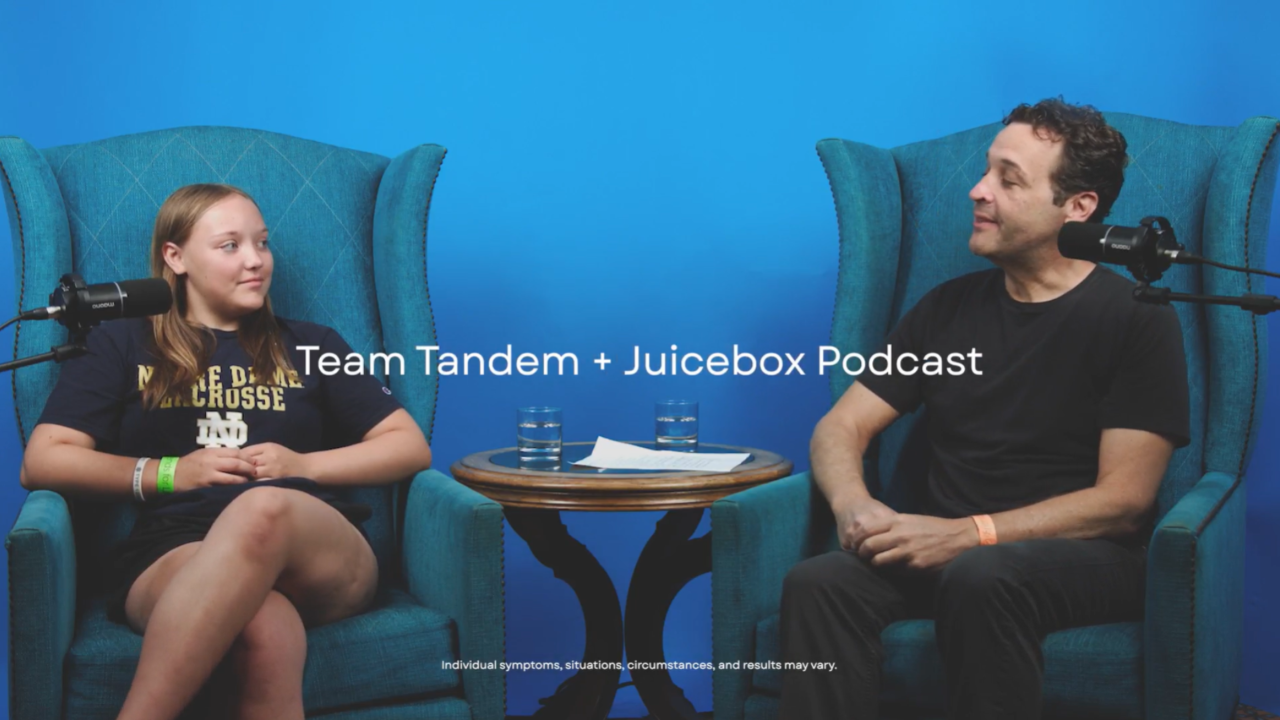









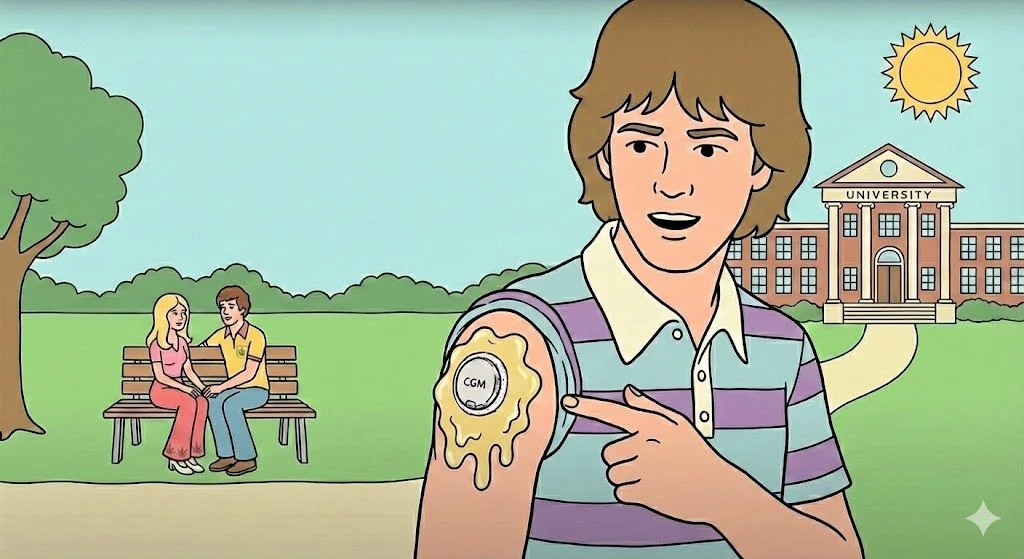





Please support the sponsors




The Juicebox Podcast is a free show, but if you'd like to support the podcast directly, you can make a gift here. Recent donations were used to pay for podcast hosting fees. Thank you to all who have sent 5, 10 and 20 dollars!

#1068 Turkey Tutorial Remastered
Prepare for Thanksgiving—or any day—with Scott as he applies all the core principles of the podcast to this potentially anxiety-producing holiday. He discusses tried-and-true concepts like being bold with insulin, bumping and nudging, using increased temp basals and extended boluses to provide a “blanket” of insulin to help make the grazing and unusual mix of food associated with the day easier. Episode first aired on November 21, 2017 as episode 139.
You can always listen to the Juicebox Podcast here but the cool kids use: Apple Podcasts/iOS - Spotify - Amazon Music - Google Play/Android - Radio Public, Amazon Alexa or wherever they get audio.
+ Click for EPISODE TRANSCRIPT
DISCLAIMER: This text is the output of AI based transcribing from an audio recording. Although the transcription is largely accurate, in some cases it is incomplete or inaccurate due to inaudible passages or transcription errors and should not be treated as an authoritative record. Nothing that you read here constitutes advice medical or otherwise. Always consult with a healthcare professional before making changes to a healthcare plan.
Scott Benner 0:00
Hello friends, welcome to episode 1068 of the Juicebox Podcast
Today's episode is quick and to the point. It's called Turkey tutorial. This episode is a mainstay on the podcast if you're new to the show, you might not know it. If you've heard it before you're in for a treat because the audio has been completely Remastered. This episode first dropped on November 21st 2017. What you're getting is a quick kind of, it's a pep talk, and it's a pep talk for how to Bolus on a day full of food. I put it up around Thanksgiving, for obvious reasons, but the truth is, what you hear inside will work for you every day. Please remember that nothing you hear on the Juicebox Podcast should be considered advice, medical or otherwise, always consult a physician before making any changes to your health care plan or becoming bold with insulin. If you're looking to save 40% off of your sheets and towels and other comfortables use the offer code juice box at checkout at cozy earth.com. And don't forget to check out all of the sponsors. Right there in the show notes of your podcast player where juicebox podcast.com.
This episode of The Juicebox Podcast is sponsored by the Omni pod five, Omni pod.com/juice box, my daughter has been wearing an omni pod every day since she was four years old, she is now 19. And I am completely comfortable saying to you that you should go and learn more about Omni pod five, or the Omni pod dash at Omni pod.com/juice box where the same insulin pump that my daughter wears, check out Omni pod. Just gonna go through a couple of ideas, talk about them very briefly. And then I'm going to ready? Let's jump right in. When I'm making insulin decisions. For Arden, I have a bunch of tenants to some basic concepts that I consider each time. So I'm going to mention one of them. I'm gonna talk about it for a little bit. Here's the first one, do you find yourself being accepting of high glucose levels higher than you want them to be because you're afraid of insulin, I understand if that's how you feel. But you need to get over that you have to get past that part until you dispense with your fear and stop looking at a 200 and going well. 200 is not bad. 150 is not too bad. At least it's not 250 until you can stop doing that your own head, it's going to be difficult to move on. So you have to dispense with the fear. Fear and diabetes do not go hand in hand unless you let them. Insulin is like fire in as much as it should be respected but not feared. It's a simple concept. Sometimes it's hard to bring into practice. Don't be afraid Be bold. You'd much rather have a lower blood sugar to deal with than a higher blood sugar to deal with, especially on Thanksgiving. I mean, wouldn't you rather have a 60 than a 260? Right? Wouldn't you rather be fighting with a 70 Diagonal down that might need a little more food, especially on a day when there's so much food around the house anyway, then a 270 Diagonal up. You don't want to be fighting with a 300. That's sort of how a day like Thanksgiving gets ruined, you get a blood sugar up and now the anxiety, the guilt and the insulin in your Bolus and eventually you crack the 300 all sudden it's crashing down. You'd much rather just overdo it a little bit with insulin, and then just have to stop a little bit of a low. The next thing you need to consider is action time. How long does your insulin take to begin working? And how does that affect your blood glucose you need to understand that you're never going to be able to balance the insulin the carbs together if you don't understand how the insulin works, when the insulin goes in how long until it starts moving my blood sugar. This is incredibly important to understand and very easy to figure out. Whatever your blood sugar is right now, if it's 150 and you haven't had insulin for a few hours, give yourself some insulin. When do you see it start to move, do a little testing little trial and error figure it out once you understand how long it takes for the insulin to begin working. That is a key building block for the rest of what you're going to do. Okay, next big thing. Big part. Here we go. When your blood glucose levels are high, you've likely miss timed, miscalculated or combination of the both your insulin exactly the same if your blood sugar is low. You have Miss timed, miscalculated, or possibly a combination of those two. You've lost the balance between carbs and insulin. But there's no great secret about why your blood sugar's high. We sometimes can get caught up in the whys like Is it because of my pump is old or maybe my insulin tool. Do you see people all the time going through all the myriad of things? Why is my kids blood sugar 250 I can't figure it out, here's why you don't have enough insulin. The reason you don't have enough insulin really isn't important in the moment more insulin, it's something to understand in a bigger way, because it has applications throughout diabetes. If your blood sugar's high, you haven't used enough insulin. And if your blood sugar's low, you've used too much insulin. Now, maybe that's a balance between the timing and the amount. But still, it's a basic concept that will hold true over and over again, here's a simple rule of thumb I use all the time it cannot be overstated. Trust yourself, and what your experiences with diabetes have taught you. Very simple. It's a convoluted sentence that makes the point, you have to believe that what you know is going to happen is going to happen. If I Bolus this much I know this is going to happen if he eats that, but I don't give him insulin until he's done, I know this is going to happen, you have to trust that you know what's going to happen is going to happen. And then you need to do something to stop it from happening. Here's another one that's very important, especially on Thanksgiving. Don't confuse carb counting with carb understanding. Because not all carbs are created equal. You can't just say, well, that's 30 carbs, it's going to do this, it needs this much insulin, that's not true. 30 carbs of one food may affect your blood sugar much differently than 30 carbs of another food, it is much better for you to look and say that's two slices of bread. I know when two slices of bread are consumed, it requires this much insulin. Forget that two slices of bread are five carbs less if it's that kind of bread or five carbs more for that kind of how much insulin is it going to take for those slices of bread? When you look at a pile of stuffing? How many pieces of bread are there? How much insulin is that going to take? Don't worry about the count or the amount of the weight? Worry about what you know what happened last time when he ate the sandwich? How much insulin did it take, let's say I looked at a food and I thought I can lower my carbs. I said that's five units of insulin. Then I gave the five units of insulin, I did a reasonable Pre-Bolus. And still, my blood sugar ended up at 250. And I had to do three more units to bring it back down to where I wanted it. Well, if it took five units up front and three units to bring it back, you probably needed eight units of insulin. Give it all up front, get rid of the spike. If you really time the Pre-Bolus Well, we're gonna talk about Pre-Bolus in a minute. But if you're really time that Pre-Bolus Well, maybe you don't need the full eight, maybe it's only seven. These numbers are specious. They're not specific to you. But you need to figure that part out. I use this much, then this happened. So I needed this much more. I probably needed that whole amount up front. That's the rule. I can tell you that I Bolus the amount that I think is correct. I really never count carbs. I never worry about what my insulin to carb ratio is tell me, I worry about what I historically know that food is going to require. Same thing with a high blood sugar. I see a high blood sugar that stuck and I need to Bolus for I don't worry about what the pump says. I worry about what works. Okay, Basal rates for those of you who are pumping. If you find yourself bolusing all the time, your Basal rates are probably not correct. You should not need the Bolus just to keep a blood sugar where you want it. Don't be afraid to adjust your Basal rates even temporarily. Well, let's use Thanksgiving is an example. If there's going to be more food, the food is going to be more consistent than usual on Thanksgiving, increase your basil by how much? I don't know. I can't tell you you can figure that out. But I can tell you that when I make adjustments to Arden's Basal rates, I usually move them 30% of the time. I'm just going to jump in here for just a moment. Omni pod.com/juice box Omni pod is sponsoring this episode of the podcast. And they'd love it. If you'd go check out the new Omni pod five, or the Omni pod dash at my link, Omni pod.com/juice box tubeless insulin pumping. It's the way it's meant to be. Go check it out and get started today. There are links in the show notes and links at juicebox podcast.com to Omni pod and all the sponsors. When you click on these links, you're supporting the production of the podcast. When she has a growth spurt. I'm starting to Bolus too much to keep blood sugar's where I want them. I raised her basil rate I raise it by 30%. See what happens. So you can use temporary basil on days where you're going to be really food heavy. I think on Thanksgiving. I'm going to talk about what our day is going to be like at the end but I'm going to start setting Temp Basal for Arden right away in the morning. Managing type one diabetes is all about understanding the limitations of manmade insulin, having the nerve to be bold when you're using it. And most importantly, acting first. When you wait for diabetes to attack you. You will always be on the Defense Act don't react. I'd rather Bolus and have something happen, then at least I can say, Okay, I did this and that happened next time. I'll do this. It brings up a very simple formula for diabetes. It's the it's the E equals MC were of the Juicebox Podcast, I Bolus to half a unit, the blood sugar moved 40 points, I wanted it to move at points. So next time I'll Bolus a unit, I Bolus 10 units, but my blood sugar still went up to 150. Maybe next time, I'll do this much. I did this, this happen, I wanted this to happen. Next time, I'll do this, the E equals MC squared of the Juicebox Podcast. Okay, let's
talk about Pre-Bolus thing and the tug of war of the carbs and the insulin, I want you to picture a tug of war between the carbohydrates and your insulin, in the middle of the rope is a flag. Now, unlike most tug of wars, the goal isn't for one side to win, the goal is for both sides, the pole and the flag to never move from the center. That is the balance of your blood sugar, that flag, if you start eating, when your blood sugar is 180, you're going to be high, there's not a lot you can do about it unless you're credibly aggressive with with insulin at the time. And that's maybe hard for some of you to do. So give yourself a chance at these meals and Pre-Bolus. Now, I can't tell you how much of a Pre-Bolus is right? But we did talk earlier about understanding how your insulin works. Get that understanding of yourself, can I give myself insulin, 15 minutes before I eat, can I give it to myself? 10 minutes, 20 minutes, it differs for everybody. But what you want to happen when the food starts affecting your body, you need the insulin to already be working. So that while the carbs are pulling up on your blood sugar, the insolent is pulling down, and they're fighting and they're pulling on that tug of war rope but they're not winning, no one's winning, because no one got a head start, you give one of them a head start, that's going to be the side that wins. If the carbs pull first, then they're always going to be winning and you're gonna have a hard time to get back into that game unless you add so much insulin that eventually you all go crashing the other way you don't want that. If the insulin pulls too soon before the carbs start working, you're gonna get really low and you don't want that either. You want the insulin and the carbohydrates to pull at the same time. And the most important thing is they need to stop pulling at the same time. A low after a meal just means that you had insulin left in your body after the carbs were gone. A high after a meal means you had carbs left in your body after the insulin was gone. It's all about the timing. Remember what I said if your blood sugar's high, you've either miscalculated or mis timed and if your blood sugar's low, you've either miscalculated or you've missed time, a significant Pre-Bolus one that allows the insulin to be working when the food starts working, is key. If you want to stop a spike at a mealtime, that's it. Now if you didn't stop the spike, don't just wave your hands ago, I got it wrong. You see a blood sugar that's going up, attack it, especially if you have a Dexcom CGM stop the arrow. But I mean, with a big carb heavy meal like this, your kid eats test again and a half an hour see where you're at. If you're 200 a half an hour after a meal, you miscalculated or miss time, you may need more insulin, how much more is up to you. But you want to stop that rise and get it back where you want to without overtraining. And that is really one of the last points. You can't over treat. You can't over treat a low you can't panic and pack in the whole refrigerator for a low and you can't panic and packing too much insulin for high or you will be up and down all day long. It's about bumping and nudging your blood sugar if you have a Dexcom. Think of that line on your CGM graph is something you're just trying to nudge just up and down like a little video game. Just try not to leave the lines. And if you're testing, and you don't have a CGM test frequently and bump and nudge and bump and nudge, keep pushing that blood sugar back to where you want and expect good things for yourself. Set a goal for yourself of around 100 have around 80 of around 90, because often you get what you expect, especially with a CGM. Please move your tolerance lines to a lower spot. You don't want a high tolerance on your CGM of 200. It's too late by then pull it 130 react upfront. Remember what we said you're either going to attack or be attacked, you would much rather act first. So axial 130 Diagonal up, bump it with a little bit of insulin, see a 70 Diagonal down, bump it with a tiny bit of carbs. Or maybe you can even stop a 90 day going down by just restricting your Basal for a little bit. You'd much rather do little bumps than giant corrections. As someone once said high blood sugars cause low blood sugars because you're sending so much insulin and you're bound to get a low later. When you bump and you nudge they're just these tiny little corrections. They don't really have the opportunity to push you too far one way or the other. So on Thanksgiving morning we're going to wake up we're going to fall one of my wife's family traditions of having cinnamon buns. Now I'm going to get up a little bit before my daughter to make sure that her blood sugar is nice and low and steady so that when I Pre-Bolus for these cinnamon buns, I have a good starting point for the day. There is nothing more important than a good starting point. After that there's going to be food around the house all day I'm going to be using Temp Basal rates increased I will stop them and start them as need be when it's time for them. meal, I am going to look at the plate, I'm going to do my best to decide how much insulin this is going to take. And I am going to Pre-Bolus. I'm going to be bold when I Pre-Bolus. And I'm going to try to time the food in my daughter with the insulin beginning to work to get that tug of war that we talked about. If I miss, either with too much insulin or too little insulin, I'm going to make small adjustments. And I'm going to keep on top of it during the day, it's going to take a little bit of effort, but not a lot. And I'll tell you what, it's way better than having blood sugars all day that make you feel sick to your stomach, that give your kids a foggy feeling that make them have a terrible time and give you the guilt that you know you don't want. And if you're an adult living with type one diabetes, trust me, it's much easier to pay attention up front to make the small decisions that give you good outcomes than it is to be stuck thinking about this all day long. Towards the end of the day, we'll do our best when the pie comes out and the ice cream and all that to keep ahead of it. And if she gets a little low at some point, we'll add a fast acting card where it's necessary, because it is far easier to stop a low or falling blood sugar than it is to affect the high one. But I'm not going to let this day be ruined by the fear and the anxiety and high blood sugars. I don't think you should either. Please remember that nothing you heard today is advice, medical or otherwise, I wish you a ton of luck and success on Thanksgiving. I hope that being bold helps you. And if you're listening after Thanksgiving, these things that I do. I do them every day of the year, not just on Thanksgiving. I just thought today would be a really nice day to say Happy Thanksgiving. Here's some of the things we've been talking about in the last 138 episodes, the Juicebox Podcast, please if you're just finding this episode, now go back and listen, there are hundreds literally, of conversations with people just like you. We talked about type one diabetes, what it's like to live with it, what it's like to try to management. These kinds of tips and tricks are scattered throughout every episode. I think you'll love them. So that episode was Wow, November 21 2017, and episode 139. There are now over 1000 episodes of the podcast. Actually a number of the episodes are grouped together so they're easier for you to find you can go to juicebox podcast.com. And kind of look at these with me if you want or you can go in the private Facebook group Juicebox Podcast, type one diabetes, and go up into the feature tab. They're listed there as well. But we have the diabetes Pro Tip series. Now that's also recently remastered and runs between Episode 1001 1026. But there's also the diabetes variable series mental wellness type two diabetes Pro Tip series how we eat defining thyroid defining diabetes bold beginnings algorithm pumping after dark. Ask Scott and Jenny and much more. You just want to talk about the management, the nuts and bolts of diabetes. Everything you need is right here at the Juicebox Podcast. If you're new to the show and you'd like to hear more, please subscribe or follow in a podcast app like Spotify or Apple podcasts. If you don't know about those apps, you can also find a list of them at juicebox podcast.com.
I'd like to thank you for coming and I also want to thank Omni pod for sponsoring this episode of The Juicebox Podcast Omni pod.com/juice box find out more about the honoree pod five or the Omni pod dash and use my link to get started today. I also want to thank everyone who shares the podcast with other people and remind you to check out the private Facebook group Juicebox Podcast type one diabetes and of course, happy Thanksgiving or whatever meal you're using this episode for. I hope you have a good one. Thank you so much for listening. I'll be back soon with another episode of The Juicebox Podcast.
Please support the sponsors
The Juicebox Podcast is a free show, but if you'd like to support the podcast directly, you can make a gift here. Recent donations were used to pay for podcast hosting fees. Thank you to all who have sent 5, 10 and 20 dollars!

#1067 Börk Börk Börk
Geoff is the father of a child living with type 1 diabetes.
You can always listen to the Juicebox Podcast here but the cool kids use: Apple Podcasts/iOS - Spotify - Amazon Music - Google Play/Android - Radio Public, Amazon Alexa or wherever they get audio.
+ Click for EPISODE TRANSCRIPT
DISCLAIMER: This text is the output of AI based transcribing from an audio recording. Although the transcription is largely accurate, in some cases it is incomplete or inaccurate due to inaudible passages or transcription errors and should not be treated as an authoritative record. Nothing that you read here constitutes advice medical or otherwise. Always consult with a healthcare professional before making changes to a healthcare plan.
Scott Benner 0:00
Hello friends, and welcome to episode 1067 of the Juicebox Podcast.
Today I'm speaking with Jeff he is the father of a child with type one diabetes. He was born and raised in Seattle, Washington, but has spent the last 25 years living in Sweden. And because I am mostly devoid of any culture, I've called this episode, bork, bork Bork. While you're listening. Please remember that nothing you hear on the Juicebox Podcast should be considered advice, medical or otherwise, always consult a physician before making any changes to your healthcare plan, or becoming bold with insulin. If you'd like to get a free year supply of vitamin D and five free travel packs, you can with your first order at drink ag one.com/juicebox podcast you can save 40% off of your entire order at cozy earth.com When you use the offer code juice box at checkout. And you can really help me by subscribing to the show in whatever audio app you're listening in Apple podcasts, Spotify iHeartRadio doesn't matter. If you're listening. Please subscribe or follow and set up your auto downloads so you never miss an episode. Last thing, definitely check out the private Facebook group Juicebox Podcast type one diabetes. We're approaching 44,000 members, all we're missing is you. Today's episode of The Juicebox Podcast is sponsored by the contour next gen blood glucose meter. Get the most accurate meter I've ever held at contour next one.com/juicebox podcast is also sponsored today. Buy Omni pod Omni pod.com/juicebox Learn more about the Omni pod dash and the Omni pod five. There are links in the show notes and links at juicebox podcast.com to Omni pod, the contour next gen and all of the sponsors.
Geoff 2:06
My name is Jeff. I'm born and raised in Seattle, Washington. I've lived in wheaton for just over half of my life. I have three kids. My son is 19. My daughter is 16 Excuse me, my son is 20. My daughter is six. My oldest daughter is 16 and my youngest daughter who's T one is seven and a half and her name is Madeline. We call her Maddie
Scott Benner 2:33
2016 Seven and a half. Maddie has type one, seven and a half. How long have you lived in Sweden?
Geoff 2:42
Just about 25 plus years. I've been here about half my life.
Scott Benner 2:47
Wow. What made you move?
Geoff 2:50
What made me move here? Yeah. Well, when I was a senior in high school, there was a Swedish exchange student at the school that year and we became friends we eventually dated. And she moved, obviously back to Sweden after her year. And a year later, I came to Sweden as an exchange student to live with her and her family. Our relationship continued to develop. We ended up getting engaged. I ended up getting married a couple years afterwards. Live back in the US for four years to get qualifications, and then moved here to permanently in 96. So I've lived here since then,
Scott Benner 3:36
you and she are no longer together or you are she's
Geoff 3:40
my first strike
you know you because your son played baseball, you know all of that. Oh, the baseball terms. I get three strikes. I'm out. Oh, I don't do that stuff anymore.
Scott Benner 3:57
Jeff, you've been divorced three times.
Geoff 4:00
Hey, yeah, I'm like, you know, like a celebrity pro at it. I think I'm probably better at assigning divorce papers than most people are signing most other documents. So yeah.
Scott Benner 4:15
Are all three of these children from one of these ladies? Are they spread out?
Geoff 4:20
No. They're two from Strike Two and one from strike three.
Scott Benner 4:27
We're just gonna make a note here. I don't know. Any other way to do it. I'm gonna put number two and number three next to the children on my notes. case it comes up for autoimmune stuff. Okay, well, three lucky girls. So have they formed yet? By the way the three of them are?
Geoff 4:52
Not that I know of, but there could be a Facebook group
Scott Benner 4:55
there. Definitely a Facebook group with three people and just Just caught. I escaped Jeff, there's three
Geoff 5:08
Yeah, it's, it's what it is. It's not really something I'm obviously not something I'm proud of, but you know, life throws you curveballs and all kinds of stuff. So it's just the way it is. Yeah. Jeff.
Scott Benner 5:20
One, when those curveballs come out, you're supposed to move when those curveballs you got to stop letting them keep hitting you in the leg, you know?
Geoff 5:32
So, two, two of the strikes, were not my initiative, and one of the strikes was my initiative. So I don't take credit for all of it.
Scott Benner 5:42
I was just the passenger a couple of times. All right. That's right. So okay, so you, you're Maddie, seven and a half? How old was she when she was diagnosed?
Geoff 5:52
So it was in February of last year. So February 22. So she was six and a half months, she was diagnosed, oh, we're just the just over a year and about 15 months. And
Scott Benner 6:04
I was gonna say it's not long at all. Just for context, were you married to her mom at that time? Or? No?
Geoff 6:12
No, no, no. Strike three and was about just over three years ago.
Scott Benner 6:16
I see. All right. Yeah. What was? So I think the reason that I was so excited for you to be on the podcast is because the type one is fairly prevalent in your part of the world. Is that right?
Geoff 6:33
That's absolutely correct. So Finland has the highest rate of new cases of Type one. Birth 1000 under the age of 18. You see that? I say that right from the right logical order. And I think if I remember right, I'm going to try and like regurgitate some, some numbers here. I think the number is like 5.6 per 1000. Us. And Sweden is number two, with like, 5.4. I'm not exactly sure on those numbers, but because it was about a year ago that I got them. But I don't think they changed too much over time. So Sweden and Finland are number one and number two.
Scott Benner 7:16
Okay. In the I'm just, I'm doing some looking right now, in my stats, I'm just gonna go back to like the beginning of 2022, I guess, just to give a little bit of a sample size here. And if I go back to January 2022, and just run my downloads 1234. Sweden is the sixth most downloaded country that listens to the show. It lags behind the top, the top four are the chunk of my downloads. But but then Ireland, Sweden, Germany, New Zealand, Saudi Arabia, are the next. So it's just interesting.
Geoff 8:01
Is Finland in your top 10 Or your top 15?
Scott Benner 8:04
Me Look. I'll read through it. I'm
Geoff 8:08
just curious because they're the Finnish language is just like a different, completely different language group. And it's not related at all English. So there's my personal experiences that bins aren't as good at English as Swedes are. Well, that makes sense. While I'm a little bit curious,
Scott Benner 8:24
let me look US, Canada, Australia, UK, Ireland, Sweden, Germany, New Zealand, Saudi Arabia, United Arab Emirates. Israel, Norway, Spain, South Africa, Switzerland, Austria, Denmark, France, Mexico, Egypt. I'm doing. Yeah, I'm heading into the 21. Netherlands, Bulgaria, India, Italy, Hong Kong, Romania, Portugal, Belgium, Singapore, China. Now it's in the first 30. I don't see it. I'm jumping ahead now.
Geoff 8:54
Yeah, but Finland and Estonia and Hungary are in the same language group. And that's actually a very different language group than, like, the Western European
Scott Benner 9:06
languages. So if I speak Finnish, do you think I'd be huge in diabetes?
Geoff 9:10
I do. I actually I do. Yeah. Because they're very like digitalized. Like we are here in Sweden. Lots of people listen to podcasts. There's everybody has like, super high tech. Like Finland, Sweden and Norway are very similar. And I think it's interesting that I think Norway is the third ranked country after Finland and Sweden, or at least is in the top five in terms of new cases. In Sweden. Swedish and Norwegian are basically mutually intelligible languages. So it doesn't doesn't surprise me that Norway is up there. In the top 20x.
Scott Benner 9:48
That's really something. Yeah. So your child is. I mean, how do you think of it your, your axis Swedish, I'm assuming?
Geoff 9:59
Yes, that's right. Matty's Mama's Swedish. Okay,
Scott Benner 10:02
so is there any autoimmune on her side or your side? My daughter Arden has been wearing an omni pod since she was four years old. And she is now 19. That is every day wearing an omni pod for the last 15 years. I think what we love most about Omni pod is that it doesn't have any tubing. But I don't know is that the thing you love most about it? You don't have to take it off to swim or bave you can leave it on for activity and exercise. It's small. I don't eat. I mean, it's so easy to put on. Right to fill it and to put it on. It's just it takes us no time at all. Yeah, I guess it's hard to figure out what my favorite thing about Omnipod is. I guess I'll just say that my daughter loves it. It's easy, and it's worked for her. For so many years. It's just such a friend at all this Omni pod.com forward slash juice box you can check your coverage there for your insurance. Or take a test drive right? Would you like a free trial of the Omni pod? You can do that there as well. Then you can just get started on the pod.com forward slash juicebox. Now you have a decision to make. Do you want the Omni pod dash, which is an insulin pump where you make all the decisions? Or do you want the Omni pod five now the Omni pod five is the first and only tubeless automated insulin delivery system to integrate with the Dexcom G six. And it's available for people with type one diabetes ages two years and older. It features smarter just technology, and it's gonna help you to protect against highs and lows both day and night. That's an algorithm based system making decisions about insulin given it and taking it away. It's pretty damn cool. Omni pod.com forward slash juicebox links in the show notes links at juicebox podcast.com. When you use those links, you're supporting the production of the podcast and helping to keep it free and plentiful. As you heard earlier, this episode of the podcast is sponsored by the contour next gen blood glucose meter. But when you get a contour meter, what you're really getting is their test strips. Contour next test strips feature remarkable accuracy as part of the contour next blood glucose monitoring system. They're the number one brand and over the counter test strips. And they of course have Second Chance sampling. Second Chance sampling can help you to avoid wasted strips, contour next one.com forward slash juicebox. Near the top of the page, you'll see a Buy Now button it's bright yellow. When you click on that, you'll get eight options of places online to buy contour meters and test strips walmart.com Amazon Walgreens CVS pharmacy, Meijer, Kroger target Rite Aid. These are all links you'll find at my link linking D link links blink blink blink link. I'm just getting head over there. Now, won't you please listen, the contour meters are incredibly accurate. They are simple to use. They're easy to hold, easy to read, and they have a bright light for nighttime testing. Part of me wants to say that the second chance sampling is the biggest deal. But honestly, it's the accuracy. These meters are accurate. And I know a lot of people like to think well I have a CGM. I don't need a meter. You do. You need a meter. You need to be accurate. You deserve it to be accurate contour and x.com forward slash juicebox. Take a look at the contour next gen and the other meters available from contour. We use my links you're supporting the production of the show and helping to keep it free and plentiful.
Geoff 13:37
Well, this is kind of interesting. And I wanted to this is one of the things that I wanted to share. Maddie is mom has a son who's Nine, eight years older than Maddie. Okay, and he also has type one. That voice bothers family has no has no autoimmune. My family has no autoimmune. The autoimmune or the type one needs to come from the mom. But she doesn't. Well doesn't need to but like you would think it would. So half siblings have type one. There is no other type one in the mom's family. But there's some other autoimmune issues. Do
Scott Benner 14:23
you know what they are though?
Geoff 14:24
But yeah, bipolar. That's the one that I'm like, definitely aware of. I don't know a lot of the other medical histories of the family. But there's another thing that came up in diabetes, like some posing that I was asked the other day that I thought was really interesting kind of had to do with this. So to kind of run some numbers for Sweden what T one community is like you're the population of sweetness 10 and a half million. There are 8000 youths with type one in Sweden. So not a lot up, but still quite a few are the size of the population. In the city that I live in, there's a population of 160,000 people that are 240 type one children. And when I say children, I mean under the age of 18, in the city that I live in, where have mandolin and her brother are one of five sibling pairs in the community in the city here. Wow. So pretty uncommon to have siblings. Yeah. Take it into the big, big picture.
Scott Benner 15:33
Well, does a lot of the population get diagnosed after 18?
Geoff 15:38
I don't know. You know, I wish I knew more about the adult pipeline community here, but I don't really have any connection to it. I don't know any, any adults who have type one. I know a guy who has type two, but I mean, that's confirmed is not the same thing. He is insulin dependent, however, uses insulin with his breakfast. But that's it. I don't know anybody. When Madeline's half brother was diagnosed eight years ago, the doctors talked about a surge that summer, they had more new cases confirmed cases of Type one that summer than any other time period prior to that. This is after like a four? No, this is before COVID. This was back in 2000, or eight years ago, well, without being 1516, something like that.
Scott Benner 16:32
I'm looking here online. It says type one diabetes is one of the most common chronic diseases that affect children in Sweden, the majority are diagnosed between the ages of 10 and 14, the number of children among children, excuse me, the number of diagnosis among children is increasing. And the percentage is among the highest in the world. Sweden is second after Finland. That's right. I mean, do you have any idea why that is?
Geoff 16:57
Well, so I went about a month ago, not even a month ago, two and a half weeks ago. So I went to this annual diabetes symposium here in the city that I live in. They hadn't done it for a couple of years because of COVID. And so this was the first time back so it was well visited. And one of the things that they talked about was one of the things that I've spoken with my daughter's doctors about as well they endo is that, like, what is this from and they don't know, the only thing that they can kind of like stretch it to is the idea of lack of sunlight. So like too little Vitamin E is what it is, right? So when my older kids were newborns up until they were I think two years old, we would give them vitamin drops every day. They were called ag drops, the vitamin A and vitamin D drops. They've been researching this whole thing with the cause of type one, the high cause of type one has been for a long time and one of the things that they think might be a contributing factor is the lack of sunlight.
Scott Benner 18:06
Or these vitamin drops very common for children. All children
Geoff 18:10
take them here. Yeah. Yeah, all do. So it wasn't I wasn't like picked out for some reason. But it's that's just standard procedure. All kids get it here. Wow.
Scott Benner 18:20
When they're little. Alright, I have to tell you something funny. Before we move on Jeff. I googled Sweden type one diabetes just to see what I could find. Someone misspelled the word sweet in their Google thing. So it says Can diabetics? Can diabetics eat sweets? And that came up as part of the search.
Geoff 18:48
In the zombie apocalypse, they will well know
Scott Benner 18:50
if you read all the information about it. Obviously it just meant sweets, but it's kind of funny. Oh no, wait, I know Excuse me. I'm wrong. Swedes are a vegetable. how crazy it look. We're learning together. Jeff Swede plays plays the role of white potatoes but does not have as many carbohydrates that break down simple sugars. A sweet is a Get the hell out of here. Homeless second, I'm sorry. Swede. Rutabaga comes up. Oh, rutabaga. Rutabaga. Root, rutabaga or a sweet is a root vegetable. How about that? Oh, I
Geoff 19:33
think I've heard about that.
Scott Benner 19:36
Like turnips.
Geoff 19:38
Yeah, something like that.
Scott Benner 19:41
Unbelievable. I just thought it was a typo. Now we've all learned something. Swedes are rutabaga. rutabagas the root none of us are eaten. Imagine there's a whole crops of these things being made and brought to grocery stores all over the world and people are like, what is that? What am I making? I'm sorry, just one more step Jeff, what are we making?
Geoff 20:08
Can I just go to the candy department and get my Swedish Fish?
Scott Benner 20:13
Rutabaga recipes, roasted rutabaga recipes. 1313 best ways to cook with rutabaga. There you go. It's like still, you can make noodles out of it. Hash. Or Groton, mashed rutabaga with sour cream and dill. Sweet magnet. Wait. Sweet nutmeg cake with brown butter frosting. Rutabaga soup, no one's eating this. If I get one
Geoff 20:43
eat something weekend is save recipe.
Scott Benner 20:46
You know what I could do? Here's french fries with them. All right. I don't find any of this. If I get one email that someone's like, I regularly cook with rutabagas. I'll be amazed. Well,
Geoff 20:57
you have you have your have your your Nordic grouping stuff in Minnesota there. Maybe maybe you'll get something from there.
Scott Benner 21:05
I'm waiting. So what are the signs that Maddie has? Science when she was diagnosed? Yeah. What did you see that made you think?
Geoff 21:15
Yeah, so that's also one thing I really wanted to share. Because, I mean, I've obviously listened to most of your episodes. And I haven't quite heard a diagnosis story quite like Madeline come close a couple of times, where people catch it early. But not quite as early as we caught hers. So I just kind of wanted to share that a little bit. So in the fall of 21, Madeline got a urinary tract infection. She got penicillin important. We didn't think that much of it. I mean, her mom's had lots of those, though, we just don't pick on us on and on you go. I'm a skier, alpine skier, I spend my winters in the mountain skiing. And I have a small little camper that I put up at a ski area every year. And so Madeline and I would spend our weekends in the camper scheme. And I mean, you can imagine they're pretty close quarters, they're small. And we have it, there's a little like, porta Potti thing in there. I don't know what you call it. And so she would do her business in there. And like you don't open the latch. You keep the latch closed until you're done. And then you open the latch. And he runs down into this holder thing underneath the camper. And so we're there one weekend, and I'm like, hey, you know, he just smells strong. And so we had gone up on Thursday, we were coming home on Sunday. And for some reason, I can't remember why. But I was supposed to leave Madeline with her mom that Sunday evening. So I left her bedroom mom's and I said, I said hey, can you just take her by the local clinic and run a urine test on her? Because I think she might be getting an infection again. He was like, Yeah, you know, that's no problem. So Monday, they went in, they left a urine sample came back negative. And the nurses were like, well, that's kind of weird, wait 48 hours, and, you know, do it again. So they went back on Wednesday, did it again. And it also came back negative. So they that sets like that kicks in a protocol and a couple other tests they do. Were one of them was that they they do a stick your finger and they actually take a urine sample and send it away to have it tested. So he came back in and her blood sugar was elevated, or that fingerstick blood sugar was elevated. So you're gonna have to you might have to get your calculator out. I only know the Swedish number systems or the European system, I guess. All right, I'm ready we have. So four to 10 is our target range here, right, which I guess is like 70 to 180 for you. But she came back the blood sugar thing came back with 11 in her finger. We all know from listening to your podcasts that you know you can eat a pizza and drink two liters of coke. And you can get your blood sugar to go up but then it comes back again. So we thought well, maybe it's just that. But when when that happened then because she was elevated, the doctors wanted to come back again in a couple of days and again in a couple of days. So it actually took them a couple of days to like really start to get the idea that she might have diabetes. But they weren't sure. In fact, the other day, I was looking through her journal and it says in a journal like unlikely to have diabetes. And that's actually a doctor's comment in there was so early, even
Scott Benner 24:41
though they didn't even though her brother has type one. Yes.
Geoff 24:45
And it's actually noted in all the posts in her journal, brother half brother has type one. But the doctors just were like, No, we don't know we can't confirm this yet.
Scott Benner 24:58
That seems misguided. I have To be honest, I mean 11 blood sugars is 200. It's, you know, it's high, it's high, it's higher than you should be able to get your blood sugar if your pancreas is, is, is working properly.
Geoff 25:12
Yeah, yeah. So then like they went into some other clinics, like we're just doing this out on like the local community, doctor's office where we're at, and they then they send them into the clinics here in town, which are like, they have a lot more advanced equipment and stuff. So they started and then they did anyone see test on her? And you're gonna have to help me on this as well. I have no idea like, numbers are in in sure the American equivalent, but 43 I think it's a 6.1. Was her a one C on February 8. She had and that's basically she was checked into the hospital
Scott Benner 25:52
with a 40 drops or a 43. A one C? Yeah. Man, my, my, my calculator doesn't go that high.
Geoff 26:02
So no, no, no, no, but I mean, like this, the Swedish equivalent of like, we use a different scale for the A onesies here. And I I've only found one thing on the internet that converted? I can't find any other thing. Yeah. So what I found the conversion to be as a 6.1, I think, or a one C was February, it was 6.1. Gotcha. And 11 days later, her agency was 6.6. I don't know, maybe you can tell me? Should there be room for variation like Canon a one seed read wrong when they test it? You have any experience with that? Have you heard anything about that,
Scott Benner 26:42
but genuinely says that an AE one c is an average of three months, but it's heavily weighted towards the time closest to when you're taking the test. So I mean, could she have had a whole week of like normal blood sugars that would have made it go down a little bit? That That doesn't seem unreasonable?
Geoff 27:03
Well, between that. So in those other days, it went up from 6.1 to six months,
Scott Benner 27:09
I'm sorry, or vice, but actually, you know, like, she could have had less help from her pancreas for a week, and then it could have ranged up. That's it?
Geoff 27:18
Yeah. Because then it did go down again. Three weeks later, it was actually lower. But then we had started administering insulin.
Scott Benner 27:29
It just sounds like so an average honeymoon of there's some help than there isn't, then there is.
Geoff 27:34
Yeah. So and this is also something that I wanted to share with you because this, like her a one sees over the last well, basically exactly a year, I think are uninteresting scale are interesting to think about in terms of what management gear we had. So when we started when we got the official diagnosis on February 19, that she had a one, or that she had type one. That's when we got the antibodies back. Would they confirm and it took them a while to get that. So we only have one lab here in Sweden, it's way down in the south of Sweden. So any blood tests that are done anywhere in the country, get transported down to this lab at the very, very bottom of the country. That lab is obviously as what you just said it was very high in the world. In terms of new cases, they're brushed with work, they got a lot to do to test all these things. So it took them a couple of days to get it back. Like they couldn't just do it on site or anything. So it took a while. So they started us with a Libra one and pens. When her a ones he was 6.6. And buy exactly two months later. So on the 12th of April, her her Influency was 6.5. So she hadn't really I think she was still hunting winning pretty hard than she was only using 11 units a day. That's both with long acting and the short acting. And then fast forward three, three months to the middle of June, I guess it's only two months, middle of June, then we've switched over to the two. But we got her on a pump on the dash. And so on the middle of June her agency was 6.8. So it had gotten up a little bit more. And then after the summer, going September, she was holding steady at 6.8 than the last reading that we have. So we put on a Dexcom on I think like mid November and on December 8 So what about nine months and my guess 910 months in or agency was 6.9 and this is where everything changed. inched, okay. So the Dexcom and the dash together, like they changed everything for us. And I really want to like, I want to share this because there's so many people who use these things and they get such better results for a one see from December 8 until February 10, which was her one year went from 6.9 to 6.2. Which for me, that's a nice reduction. Yeah. That's a nice downswing. But I was really happy about that. So we have a target. Here in Sweden, they set a target, like what they want people do strive for, are there a one See, and that's 6.5. Like they say, if you can keep a 6.5, then that's good. And they don't they want less than 18% lows. And they want less than 20% highs. But they want you to stay. Like there's Facebook groups here called 5.5. That's where they want your blood sugar to be. Yeah,
Scott Benner 31:04
less than 18%. Lows. I find that to be a high number. Honestly, yeah. Yeah.
Geoff 31:12
Well, they want they want obviously, they want like no extreme lows, but they want it. I mean, that's like they say like, that's what's your max should be like from any given a one seat to the next. I don't have more than 80%.
Scott Benner 31:27
Well, I mean, that's yeah, I would like to, I'd like to see you have fewer lows than 18% of your of your reading speed. Be lows. You don't I mean, it's a little. It seems high to me. But so
Geoff 31:39
at our one year, we did an A one C, and she had less than 4%. Lows. That's great. So yeah, so we were we're doing good. And she had, I think she was 72% in range, no extreme hives. So and obviously, like your Facebook group and your podcast was the one of the biggest contributing factors to this are what I consider to be our success. But I remember so vividly. We would go in for these quarterly meetings or every other month meetings and they would put this graph up, and they'd look okay. And now we're going to adjust her basil here and adjust your basil there. I kept thinking to myself, I want to do that graph. I don't want to wait two months to have to go into the doctor's office to see that graph. And then I listened to your episode, which was at the ninja IQ with Jeremy, where he goes through the AGP report. In three weeks, we got our dial down between 4.5 and seven on our blood sugar. We jumped from about 56% and range to over 70%. And we've stayed there. We've stayed there since then, even though she's even though she's had the stomach flu, which threw her off for three weeks and we had crazy numbers. And two weeks ago, she broke her leg got a spiral fracture in her right way. Which I thought was kind of interesting, because that mess with our numbers, your body. I think your body sends out all kinds of hormones, including loss of adrenaline and stuff when you go through that kind of acute pain. Sure. And so she like for the first time in three months, her blood sugar went up to 18, which is really high number and her mom said I just couldn't get it down. Like I will go down insulin. So she had to just kind of wait and let it float down. Like when the pain subsided. The adrenaline stopped flowing. Yeah. And then our blood sugar would just kind of float down.
Scott Benner 33:39
Here. adrenaline's crazy out it's Yeah. Do you and your ex? Do you guys agree on how to manage? Yes
Geoff 33:49
and no. That's also something I wanted to talk about because we have like we share Madeline 50% of the time. It's kind of weird to share but Madeline is with us 50% So we are on on a seven day rolling schedule. In terms of doing a lot of like the programming of her basil program and stuff and the dash I've done a lot of that myself based on listening to your podcast and asking the doctor endo for help and stuff. She had up until December 8, like our appointment where everything changed there. She had her own basil program. And I remember that when we were there and I said I was gonna leave Madeline whether I said oh don't forget to change the Basal program yours. And the doctor looked at her and the doctor looked at me and he looked back at her he said don't change from Jeff's Basal program. Leave it on her leave it on his and that's the one we've been dialed in on since then. Now that's been working so well for us. And that's solely because I was using the AGP report like every two to four days and I would make this small adjustment. And I'd wait two days, make a small adjustment a few days, you know, just like Jeremy said to do just like you're supposed to do that. And just, it's amazing how well it works. It's really, really great.
Scott Benner 35:10
That's and what a win. By the way, Jeff in the doctor's office finally being told you're right.
Geoff 35:15
Yeah. Yeah. I mean, think about think about where strike three is coming from. I mean, she's been taking care of her son's diabetes for eight years. I mean, she's pretty routine to us. He knows what she's doing.
Scott Benner 35:28
Well, my next, my next question was going to be has anything that you've done with Madeline made its way to her half brother?
Geoff 35:37
Not that I know of, not directly anyway, because when he was, he's 16. Now when he was 13, he basically took over his own management, okay. And kind of said, you know, Mom and Dad, you don't have to get involved in this. And it's been, I mean, he's, he's not doing too bad, but he's not doing great. In fact, the doctor said to Madeline at the last appointment, he said, you know, Maddie, I want you to go tell your brother that he needs to have as good of a onesie as you do. So,
Scott Benner 36:11
does the half brothers see you as a step parent?
Geoff 36:15
Not anymore. He did for the 10 years that we live together. I was a step that for sure. And that's another thing that I've, you know, been in a Facebook group. And you know, there's when I joined a Facebook group, there was only 23,000 people. Now what, what are the numbers now? 35,000?
Scott Benner 36:33
I don't that's unimportant to brag about these things. is huge. Yeah. We're about to get the 38
Geoff 36:42
Yeah, that's gigantic. Anyway, but you see, you see posts in there a lot about it had dads who don't take care of their, their kids when they're with, you know, weather with them in the monitor all and seem nervous when the kids are with their fathers. And I get that because those fathers in there aren't doing a good job. But there's gotta be fathers out there that are also doing good. Mike. I am
Scott Benner 37:07
Jeremy is a great example to Jeff, you know, I mean, yeah.
Geoff 37:10
And I've seen some other names in there. And I'm like, Wow, you guys know what you're doing. There's a couple other guys that make some really good posts on there. One thing I thought about a couple weeks ago, I was like, I wonder if Scott realizes how biggest hair
Scott Benner 37:25
my weight my wife,
Geoff 37:28
your hair on? Quite the following a women's
Scott Benner 37:33
I've never thought of it that way. I've never once said to my wife be nice to me or I will just go just go to my corner find a lady who would be appreciative of these things that I'm good at.
Geoff 37:48
No, so but kind of bring it back to to when I was a stepdad to Madeline's half brother, his mom didn't really let me get too involved in his care. Sometimes I would go down and check on him at the night and during the nights and you know, I don't hear it, take some take some sugar tablets and fall back asleep. But I I mean, honestly, when Madeline diabetes, I didn't know anything. I really didn't know anything. I didn't know what any one C was. I didn't know the difference between a dash and a pen. I didn't die went on a serious crash board. That's also another thing that I just wanted to share was so kind of a crazy story. So back up to the weeks before Madeline's diagnosis. So I had bought an airline ticket to the States to visit my cousin in California. The day that Madeline's mom called me to tell me that you'd likely as if one were being admitted to the hospital, I was sitting at the gate at the airport to get on my plane to the US. Oh, wow. And I said to her, I said, Do I need to walk away from the gate? And she says, No, it's okay, go. But like program yourself that when you get back, you're going straight to the hospital. So when I came back, home, I went straight straight to the hospital and spent a couple of days there with her just to do all the educating stuff. Because I was green. I didn't know what I was doing was totally green. Yeah.
Scott Benner 39:17
And so even though your steps on for that time had type one, you just weren't that involved in it. Five
Geoff 39:23
years. We lived in the same house and and I say, you know, I wasn't let into his care. I would have been willing to learn more and stuff. But mother was pretty restrictive and and didn't want to. Didn't want to let go of the of the control and the care side of it. Yeah. And it's, I mean, it's not easy to have your Be responsible for your kid for a week. And then let him go for a week. And then get him again a week later. That's a that's a That's not a real easy thing to do.
Scott Benner 40:01
Of course not. Plus, I don't think she was that sure about you.
Geoff 40:07
Apparently not.
Scott Benner 40:10
She was still deciding it was only five years. So you mentioned Omni pod and Dexcom are those things that are readily available where you live, or you bind them somewhere else.
Geoff 40:24
So here's another thing that I did. This is also one of the things that I wanted to share. Because I believe that when you when you know up for the go have an alternative, you can like, kind of deal with your own situation a little bit better. But you guys in the US, you have this whole phenomenon of insurance and insurance companies can dictate, you know, what gear you have, or what management tools you have kind of stuff. We have socialized medicine here. So everyone, regardless of age, and everything you need for diabetes is paid for by the Government. Wow. So yeah, I've even seen like on the Facebook group, somebody posted. Yeah, there's the Remove little sachets, you know, that you use to get the glue off your body, like those are on sale on Amazon, go buy them, right, wow, we get we get that for free. We don't pay for anything. I have a whole cabinet of stuff in the kitchen. And I don't have to hoard. Because I don't have to think about my economy, I just go down to the pharmacy and get new ones when I need it. If it's run out if they're if it's done in her. I can't think of the word of it. The word. This is kind of a weird phenomenon with me. You know, I've learned a lot of words in Swedish. And I can't always translate something
Scott Benner 41:52
interesting. I speak to a lot of people who are, you know, don't have English as their first language. And there's, there's, there's always a moment where they go, I can't find the word for this. Yeah, but listen, in fairness, Sweden has a third of the population of Texas. So yeah, it's probably
Geoff 42:10
the size the size of California 10 million in population. And to give an idea of a reference.
Scott Benner 42:18
Is it pretty spread out? Yes.
Geoff 42:20
I wouldn't say when they say like three fourths of the population lives in a third, the southern third of the country?
Scott Benner 42:26
Oh, I see. Yeah. Okay. Because it's a that's a quarter of the population of California. So that's pretty interesting. But I mean, still, I don't know if he can, if it works. There's part of me that's like, Why can't somebody scale it? You know, I mean, if it works, yeah.
Geoff 42:42
I've had that discussion a lot with people over the years. Why would you know, would be first the Swedish political system work? And would the socialized medicine work? And I'm just not sure that it would work in a country as big as the US 360 360 million people or something like that? I don't know why I think that might just need to be.
Scott Benner 43:04
What's your tax? Tax Rate?
Geoff 43:07
What do you tax a 33%? Income tax?
Scott Benner 43:10
33%. So that's, that's a percentage that I think here would be, I can look it up. But I think that would be pretty indicative of making hundreds of 1000s of dollars a year to get the 33% here. Yeah, I mean, that's, so that's gonna see you pay a higher tax percentage than we do. Generally speaking,
Geoff 43:32
but you know, we get quite a lot for it. I mean, the socialized medicine is pretty impressive. I actually, I didn't, like I said earlier, I didn't know I don't know any adults with type one. So I actually posted on Swedish Facebook group. For Kids. I said, Hey, to adults pay for any management stuff here in Spain, and they said, like several people immediately wrote back, no, you don't pay for anything. What you do pay for is you pay like a $25 copay. When you go to the doctor for your, for your annual and, or something like that. Yeah,
Scott Benner 44:06
well, the doctor needs peer money. So we have our tax rates ranged from 10% to 37. So it's 1012 20 to 2430 to 3537. So I was kind of close with my guess. But yeah, then that, you know, obviously goes up as you make more and more money, but is it for there and
Geoff 44:28
it does here as well. You can you can go all the way up to things like 48 No,
Scott Benner 44:35
I wouldn't even work. Jeff, if you took 40% of my money. I'd say Oh, I'm homeless. Now you take care of me getting any effort from Scott anymore?
Geoff 44:47
I'm not sure about those numbers. But I mean, it gets it goes up pie but that's a really small percentage of the population. Yeah. There's a lot of people who like say no to raises because they don't want to move up.
Scott Benner 44:58
I don't care how wealthy that person is there banging them to their head right on the wall as we speak right now. 48 all I was talking about
Geoff 45:05
when they I think when they reached a bracket they probably move to another country with for the better tax.
Scott Benner 45:10
Yeah, I gotta go. In here I come my kids, my kids are gonna get diabetes, and you're taking half of my income. Terrific. absolutely terrific. what a what a? What a visitor's guide. It must be come to Sweden. diabetes will take your money. But hey, I
Speaker 2 45:32
really only free it does it doesn't work out? Does it work out just like do you stop and think about the money you put out? And then the money you're saving by not putting it? Is it kind of a wash?
Geoff 45:43
You know, I think we've got it really good here. So you don't have to think about I mean, obviously, I'm like, tunnel vision a little bit? Doesn't my daughter's type one. But I don't I have five weeks paid vacation every year has a minimum. My kids if they want to go to university, they pay like a couple $100 a year. Usually they can get paid to go over the university if they set it up, right. So there's a lot of things that are way different. I hear all the time about how much Americans like how much you spent on your kids. College patients is just astronomical. Some. Yeah, but on the other hand, for the same job, you probably make twice as much money as us. But you need to because your cost of living as a lot higher. Yeah,
Scott Benner 46:31
I'd be embarrassed to tell you what I paid to send my son to school.
Geoff 46:36
It's terrible. It's probably more than what I make in a decade.
Scott Benner 46:41
If we'll talk afterwards, because I want to know, because if that's if that's true, I'm more upset. Like Arctic Ardens is significantly cheaper than coals was, and still flabbergasted by how much money I sent for her. So. So
Geoff 46:57
here's another thing that you if you want to if you want to look at more things in the equation, so what do we get for the money that we pay in taxes? Well, we get 450 days to be home paid with our newborn children. 450 days, Scott, think about that. Yeah, I wouldn't have not 40 to 57 days in a row like you can break it up.
Scott Benner 47:18
I see that. Here's my here's how I'm wired. I want to hear more about this. But if you gave me that much time off, I wouldn't go back to work.
Geoff 47:26
Well, you know, you keep pumping up the kids and you don't have to go back to work.
Scott Benner 47:29
I mean, psychologically, I don't believe I could. I think I'd be like, I can't go do that anymore. I'm accustomed to another lifestyle. Okay, so a lot of days off if I make a baby, what else?
Geoff 47:41
Well, the college education free. For free. Yeah. socialized medicine. We have huge subsidies on all kinds of other stuff as well. Yeah, I mean, I, it's interesting, my strike to right. She's actually Dutch. She moved up here worked for an American guy at the hospital and did research in the field of psychology. He had lived here for at that time, for like 30 years and East. And he was a PhD doctor in psychology working with pain research. That's a huge field internationally, obviously. And he we had dinner with him one evening, and we talked back and forth about you know, why did why do you choose to stay in Sweden when you could go to America and make five times what you're making here? Even maybe six or seven times the amount of money? And he said, Yeah, but you know, I get five weeks of paid vacation every year. I get all the holidays off, I work 40 hours a week. I have money every year. Even though I have all this time off, I make enough money that I can take my family to America and visit their relatives every year. And I I get paid to do that. It's just a different, like work environment. You
Scott Benner 49:00
know, I know my wife works with some people in Europe, generally speaking. And there's times where she's like, well, we can't get this project done for two weeks because they're on holiday. And you know, and it shuts
Geoff 49:13
down. Sweden shuts down for I would say from about June from about the fifth or 10th of July, somewhere in there the second week of July until the second week of August. So that four week block is you don't get along. Yeah, it
Scott Benner 49:31
makes me mental. I haven't had five weeks off in 10 years. Like I just I just literally get up every day and make this podcast and then on the weekends I try to like not die so that I can do it again. Try to try to sleep and
Geoff 49:46
I've heard all about your scratches and he says you need to stay out of your garden. Please
Scott Benner 49:53
I have to cut the lawn later today. I'm scared But no seriously, like we don't take time off like like when my wife He talks about a gap where she's like Cancun seems like it makes people mental here. They're like, you know, I mean, it's work and die. Like that's pretty much what we do. So in
Geoff 50:10
January of this year, so just couple months ago, I was over in visiting my mom and Alaska and was there for my stepfather's memorial service or celebration of life. And I met this gal, and we were talking and she said, Yeah, I was sick. And I missed work for two weeks. And I thought, wow, that way of phrasing it would never go through my head. I would say I was sick for two. These See, there's no reference to work. Like her reference was, I was away from work for two weeks. My reference is I was sick for two weeks. But we she and I could have been saying the exact same thing, like referring to the same thing.
Scott Benner 50:50
Oh, no, for sure. You get sick here. You worry about your job immediately. Yeah.
Geoff 50:54
So it's a different it's a different environment creates a different kind of mentality. Yeah, yeah, I'm not so sure you can you can slide the one towards the other. We like our five weeks vacation. Yeah.
Scott Benner 51:05
So there's no like, the killer be killed. vibe. Doesn't? doesn't live there.
Geoff 51:12
No, no.
Unknown Speaker 51:13
Interesting.
Geoff 51:14
You know, I pay I pay $14 A month insurance. Which is if, if for whatever reason I am to become unemployed, I get 80% of my salary a year. On national insurance policy that cost me $14. That sounds which is nothing. Yeah,
Scott Benner 51:35
that's crazy. My gosh, our health insurance costs hundreds of dollars a month comes out of your check. And then there's another I think, for us, like six or $8,000. That's out of pocket before it starts paying that year. So I probably pay 10 or $12,000 a year to insure my kids and that it's funny, I think of myself as having good insurance. Like no live this morning, my brother asked me about a medication. And he and I'm a medication I'm using and he was thinking of somebody in his family is thinking of using it. And he said, What do you pay for this? And I said, $24. And he goes, Wait, I thought it was like and he gave me a number? And I said, Oh no, that's my insurance cost $24. I have good insurance. It's what I said. And now I realize, well, but the medication is so expensive. Without insurance, this specific medication, if I if I used it without insurance, it would cost I think $2,000 a month. So I guess technically because I'm using my insurance it's paying for for itself. But people who don't use it move, you know, they get Yeah, they get run over. You're paying you're paying just in case, and then something doesn't happen, you know, whatever. But okay, so I'm sorry, my original question. I'm still not sure about though, that was like 20 minutes ago, they sell on the pod and Dexcom are readily available in Sweden. Yes, yes.
Geoff 53:02
So. So there's like, there's kind of a traditional, there's the old school traditional way of starting in with diabetes, they want you so you get hooked up with the Libra one, basically immediately for children. And they want you to do MDI. And at that time, when I knew Madeline's brother had, he had Dexcom and a dash. And I was like, why don't we just start on that right away? The doctors like Well, yeah, you know, we want you for the first thing. There's two uses only 11 units of insulin a day, which is like not enough to justify using the Omni pod. But they wanted us to learn so that we would be able to use them later. And in fact, I'm very thankful for that. Now when I can look back in retrospect, when I mean when she's got a sticky Hi, and I think the site is bad. If it's day three of the pod, I'll pull the pot off and give her an injection. And I wait you know, 45 minutes for for the the numbing thing you put on her arm helped me wait
Scott Benner 54:08
the numbing thing you put it on? I don't. I don't we don't use it numbing thing you put like a cream on.
Geoff 54:14
It's an eye cream. It's like a It's a band aid that has like this numbing stuff in it. You put it on, you put it on where you're going to set the pod and it will like desensitize that area of skin and you leave it on for half an hour and then you put the pot on and you really can't feel the annual going in. Oh she's She's sensitive. So we do that.
Scott Benner 54:36
That's very nice, but I'll use what's actually that's very nice of you when Arden said it hurt when she was little I'm like it'll stop
Geoff 54:44
away. Let me go no so so but I'll always give her an injection like you know, she's floating high and I can't get it down because it's day three. I'll give her an injection and pull the power off and that works really well. And there are there are times when she's at school so her holes school staff, her resources, a school that take care of over, they're all trained with depends as well. Because if she for pod falls off at nine o'clock in the morning, well, I don't want to dish out to work to go fix that. So they need to give us the penance for the day. So it's kind of this thing. And so I'm glad that we have that knowledge and that ability to use it. And she's not afraid of them. Yeah. All this kind of stuff. I find that helpful.
Scott Benner 55:25
I take your point, and I don't discount at all. There's one thing that you said that, that I wanted to respond to was the idea that she was only using 11 units a day. And that would be a waste of the pod. I still don't see it that way. I guess. Like, there's still things you can do with the insulin pump you can't do with MDI. And
Geoff 55:41
I didn't know that until I listened to the ninja IQ up. So but when I learned that, I was like, yeah, no, don't you dare take my pot away from me. Don't take. Don't Don't do that. So like that. It just is. I mean, yeah, yeah, you got to understand that it was just a massive game changer. Like getting the understanding of the AGP report and being able to myself go in and make the micro adjustments and just watch her curve flatten out. I was just like, Man, I did my little my little dance lots of times those weeks. Yeah. I put my little blue cape on, and I did my live with dignity. Damn. I was I was celebrating the successes on twice a week, watching that curve flatten out. I was it was amazing.
Scott Benner 56:26
That's excellent. Hey, Jeff, I know you have a lot on your list to do and we've already been talking for an hour and I don't feel like divorcing you which I found surprising. But I
Geoff 56:38
you know, there's no StrikeForce you have to make up a new sport.
Scott Benner 56:43
It just wanted to make sure we're getting to the things you wanted to talk about.
Geoff 56:49
Last one, you're having fun, I don't want to go.
Scott Benner 56:54
I don't know if you start getting on my nerves or something. You know what I mean, I might have to go.
Geoff 57:00
Well, there's a couple more things that I want to share that I find. Maybe useful. Probably more just interesting. So because of Finland's high rates and Sweden's high rate, and both countries have socialized medicine, which means all kids have gear. And every single time you go into your Endo, you upload everything into this database. Okay, what's it called? diacetyl diacetyl, or something like that. You have something like I've
Scott Benner 57:30
seen that here. Yeah, we don't. We usually go in and they're like, You have anything download? We're fine. Just let's get the prescriptions right and get out of here.
Geoff 57:38
But what's the word I was looking for a little while ago? prescription? Oh, you
Scott Benner 57:41
couldn't find that word. Okay. Did you not have them? Well, how do you get? Yeah, oh,
Geoff 57:45
yeah. Oh, yeah. So the endo writes a prescription puts the whole list of stuff in there. And then when something runs out, we just make a phone call. Hey, can you renew this prescription? Yeah, we'll do it for another year.
Scott Benner 57:57
Wow. A year, it's nice to get lucky if we get three months.
Geoff 58:02
Everything is extended a year? Or based on count? So like, the Remove little sachets things? I'll get like two boxes at a time. I don't know how many there are. But there's hundreds in the box. So yeah, every couple of years, I'll get a new box. Okay. I see. Anyway, so I wanted to go back. So every time a kid goes in for quarterly checkup or biannual checkup, all the data from their PDM, or whatever is uploaded into a database. That database is all the data from Finland and Sweden, to all the kids in Finland, all the kids in Sweden are uploaded into a database. And you can't google search this database, I asked Matty's endo about this, it's not a public thing, because it's really like a secure database needs to be, but all of the management tool companies in the world will ask to get numbers out of this database. So a lot of the statistics that you see in a lot of this data that's used to further develop the gear that we're all using, comes out of the Swedish and Finnish database, which I find really interesting to know. And that is made possible because I believe because of our relatively small populations and our high percentage of management use, though, we're all using electronic devices that save all the data and that can be loaded up into the database. But I think that's, that's just interesting to know. So and sometimes, this is probably one of my cry, like when I think about, you know, Maddies management on my, my daughter's type one, and our efforts to take care of her are not only helping her but in a long kind of long shot way through that. Database, there's lots of kids in the world who have a better day to day life, thanks to the management tools that are available, that are partially developed out of this database. I find that kind of interesting. No, the world is a small place. Yeah,
Scott Benner 1:00:15
and not just the kids that are alive now and living with type one, but the stuff that's going to happen moving forward, it's going to happen more quickly, more efficiently, you know, algorithms are going to get better and better. And, you know, all that stuff is, I mean, it's moving, we're at the beginning
Geoff 1:00:34
of, of what's actually going to happen, I think, yeah.
Scott Benner 1:00:38
It's very easy to like, you know, I'll draw a parallel. Maybe I don't need to talk about it. A management company approached me about managing my, me. I don't know, apparently, I'm, I'm very low. Well, I might want to divorce you. I might be, I might be a very low level celebrity. So I was approached by a management company who said, you know, stuff like we think we can grow the podcast, we think we can, you know, get you speaking engagements, like stuff like that, right. And so we were having kind of an introductory conversation. And I said, well, the podcast has been up for nine years. But it really just took off about four years ago. And that's a hard thing to wrap your head around that over half of the time I've been doing this was just preamble, you know, not that it wasn't helping somebody in the first five years. But speaking about scope, and scale, it was just preamble getting to it. Like I don't actually think the podcast is done growing. I think it might just be at a tipping point, now kind of coming up this year, in the next year. And it's funny, when you think about management styles of diabetes, you can look back, you know, and say, Oh, well, they came up with insulin in the 20s. And but yeah, but a lot of that's preamble, right. Like a lot of it is like when you think I mean, how amazing it is that somebody found insulin. I'm not saying otherwise. But you know, it was probably catches catch can for a while. And even now are still people were like, I've been alive with diabetes for this many years. And I've been using insulin since and you can't find a rhyme or reason why it worked out for that person. You know, it's just in the last me my opinion, the last 10 or so years, when CGM came. And now I mean, look at how fast things are moving. You know, 20 years ago, you were still it was still a little like good luck. You know, 30 years ago, they still don't expect you to live very long. And now we're talking about a technology that came out that a pump is attached to, and now people are getting their insulin without having to do it. Crazy. And that's all just in the last decade, you know. So anyway, that inflection point, it's a long lead up a long runway to get to sometimes the good part, so.
Geoff 1:03:04
So yeah. And that's interesting. And that leads me into something that I also wanted to share. So two more things that I want to I want to share. And one of them, I'm probably enough to get my go give me some juice here in a little bit. You're fine. She's slowly drifting down, we'll see. We'll see what happens. Anyway, so I went to this diabetes symposium a couple of weeks ago, and there was a speaker there who is like one of the most prominent researchers in the Taiwan field in Sweden, and in fact, in the world. And he's published science in scientific journals more than 407 years of 470 times seven over 700 articles. He's either an author or co author, too. So this is a like, a central figure in in the research of type one. Obviously, the question is, where are we when's the cure, etc, etc. And he did this long presentation about why he why why where they are in their research, and where he thinks it's going to be in 10 years. And he said, he hopes that they're going to be making some significant breakthroughs in 10 years, and within the next 10 years, and one of those things that he referred to was the autoimmune condition of I think it's called psoriasis or excema, or something that's a skin condition. And he said that they're actually making like real progress in that medical condition. And that they want to try and use some of the ideas that they're doing with that autoimmune illness and put it into the type one diabetes. Okay. And he had this long explanation I thought was interesting about why they think that Diabetes starts in kids. Because his his, like Central Research is with children. And so he, he explained like he had, he explained like where the pancreas is in the body, and why we can't take like tissue samples have it because it's like way down in the in the part of the body, it's like, behind all the other organs, you can't really get to it without messing around with all the other organs on the way in. And he said that if you look at the physiology of it, the biology of it, there's a tube that goes from the pancreas down into the intestine, that tube is connected to the tube from the gallbladder. And those two things together go down into the intestine, where the food leaves the stomach and goes in the first section of the intestine where it's actually really broken down. And then you start to pull the nutrition out of it. And he said that. So one of the things that can happen is that the, all the enzymes and the bacteria and stuff from that section of the intestine can go back the other way on accident. So there's a vowel that's not working really well. And he said, I said, I thought was fascinating. And he said, so you know that people can have their gallbladders taken out. And I was like that, and I was like, wait a minute, Maddies mom had her gallbladder taken out. And when they took it out, there was over 150 stones in her gallbladder, when most of them were the size of peas, or maybe a corn, like a piece of corn, but three of them were the size of marble, like say the andyour thumb like they were you, right? And he said that that is a consequence of like, bacteria and things going where they are not supposed to be. And your body tries to fight them off. They say, Well, what if it doesn't go to the gallbladder and it goes into your pancreas, and your body then has to fight this somehow on the gallbladder. What it does is it it puts up, makes a stone out of whatever gets in there. And in the pancreas, your immune system shoots there, and takes it takes it down. Right? Well then it's also taking down the, the the islets which produce the T cells which produce the insulin, it says in the end, they think they're hypothesizing about that this, they think this might be one of the reasons it starts on I was thinking to myself, Okay, so Madeline's mother has two children with type one and herself taking her gallbladder out. I don't know, this could be a reach big, big, big reach. But I can't stop thinking about it. Like it just something that I chew on a little bit. And the other thing that he said was that when babies are born, their pancreas is the size of your little finger. And when you're an adult is about the size of an average sized banana. He said, so if this kind of thing is happening, where these enzymes or bacteria or whatever going up into the pancreas, when they're babies, then they're affecting a larger percentage of the pancreas than it would in an adult. And he thinks that that might be one of the reasons that it's there's more cases of Type one developing in small children.
Scott Benner 1:08:20
Who's this person or children isn't
Geoff 1:08:22
even as hola Courtney Gilliam as first name is o l l e and his last name is K O R S. GR em. If you go on Google Scholar and and search his name, you can see all the articles at
Scott Benner 1:08:36
least spell the last name again.
Geoff 1:08:39
Kors g r e n.
Scott Benner 1:08:44
Okay, I have. Thank you.
Geoff 1:08:49
It's fascinating that he it went on and on and on. He had graphs and he was talking about, you know, why don't why aren't we working as a society in the medical community? Why aren't we working to prevent the onset of a type one, instead of just treating the symptom of type one? Like, why are we passive? And that's an interesting question. Why are we why are we that and while we're good at it? Not a lot of people, not a lot of kids. No, no children. So far. I know children have died in Sweden from complications related to type one and over 10 years. That's a long time.
Scott Benner 1:09:31
There good. You guys are good at setting it up good at treating it. You make sure people have what they need. And yeah, maybe because of that, you lose, you lose focus on is it possible we could just be stopping this ahead of time? Because we're so good.
Geoff 1:09:47
So he was talking about what he wants to see in the future is like a higher screening. How can we go if there is autoimmune in the family then we can start screening these families. and checking for the antibodies? And how can we then develop ways to avoid more antibodies and specific first? Things like that, I thought it was really interesting. And he actually said, so like this is supposing it's funded by all the management tool company. So Dexcom and Omnipod, they were all there, they all have their tables, handing out brochures, and there was probably another 12 or 15 companies there with all of their gear, and he looked he hooked up in the auditorium, like towards the doors where these people were, I don't think you'll need those people out there, then you're, that's a pretty hefty statement to make there. And then that's how competent he is in what's going on. I don't want to give anybody false hopes. I mean, we just keep working on what you're doing. But the research community is moving forward, for sure.
Scott Benner 1:10:53
That's excellent. Also, I would be remiss not to point out that these people sometimes need donations to keep going and a lot of what they do is sales too. So it's it's tough. You know, like, it's tough to read through it all. It's incredibly interesting. It makes me wonder why if I get a, I see somebody get a pancreas transplant, and then they redevelop type one like that. Like would that be because that valve? You know, that all that process just happened again?
Geoff 1:11:25
Right? Well, it's a biological, I guess, like, mistake, you know, like that valve? doesn't close like it's supposed to? Yeah, are open and close. No, super
Scott Benner 1:11:33
interesting. Guys. Ready? Yeah. Listen, I never, I would never say, you know, no to anything like people. I hope people do all kinds of different research, just thinking about, like, what you just explained from this gentleman, just looking at it a different perspective, like somebody else could see the same thing and think, oh, it's obviously this and then their research starts from there. So you need everybody to kind of follow their heart and, and do the work and, and get funded. So they can do it. It's just it's tough, because I've been around this long enough to see what I what I kind of term research season comes around. And there's suddenly a lot of articles about like, Oh, we got this figured out, I got that figured out, make a donation to me and like, and it's tough, because newer diagnosed, parents get sucked into it really easily. And, you know, and it's tough, because you're like, Well, yeah, let me give them money. And it'll help. And, I mean, there's a lot of people doing research, and you know, most of them are wrong. So like, how do you? How do you know which one is which? But yeah, but you want it all to go forward? Like I said, I think that that's fascinating what he's laid out. Yeah, really interesting.
Geoff 1:12:47
Yeah, it was it was cool to sit there and listen to
Scott Benner 1:12:50
him. I imagine. Yeah. How long did it go? The talk? It was a
Geoff 1:12:53
full day. While this symposium was a full day deal. He spoke for an hour. So I mean, I just touched on it just like maybe getting 20% of everything.
Scott Benner 1:13:03
Yeah, that's really something
Geoff 1:13:04
I could regurgitate a lot more. But I thought this was the most the most interesting and he went in a lot about so that they're the eyelets in the in the pancreas that are shut down by the white blood cells that the body sends there to fight off whatever's happened, the infection that's happened? Well, they think the infection is from the bacteria from the intestine, why? But you said, we don't think that the cells are destroyed. We think that they're just kind of put into hibernation, like, anything. You said that we think we might be able to, we don't know, but we might be able to reactivate them. But until then, we need to start screening. Yeah. All this other stuff about?
Scott Benner 1:13:48
Well, avoiding good luck to him. That's right. Yeah.
Geoff 1:13:51
But I mean, it's, it's, there's some exciting stuff going on. Oh, for sure.
Scott Benner 1:13:55
That's excellent. Yeah. Let's see what else anything else? You said two things. Do you remember the last Yeah.
Geoff 1:14:02
One of the things that I really try and work with that I've taken a lot from the podcast. From obviously from from the Facebook group and stuff is in the beginning, I really struggle with managing my daughter, I felt like down a lot. And obviously in the beginning, things aren't going well and you have to learn and you have to learn but I've gotten to the point now where I realized that the way I think about things, the words I use to describe what I do and and and what Madeline has type one diabetes affects my mind my mindset on a day to day basis. And I've wanted to was like an example is I've chosen not to call type one a disease. I call it a chronic medical condition. And when you Google the word disease, it has a lot of negative connotations, but the word condition doesn't But on a dictionary level, there's not a lot of difference between the words. Like the difference is chronic is something that has to go on longer than a year. And a disease that there are references to like, like some kind of malfunction in the body. So I choose to, and maybe it's thanks to the I mean, I went down a big dark rabbit hole when Madeline got diagnosed, I was, I was with her in the hospital, when I found your podcast, we're talking like day two, after her diagnosis, and just learning more and more and more about it and figuring out how her body works and how to make everything as good as it can be, has made a big difference for my mental health. And, and I remember the doctor saying to me or the the therapist in her in her endo group, self care, take care of yourself, if you can't take care of yourself, if you're not taking care of yourself, then you're not taking care of your daughter as best as you can. I just I want to advocate for that. Because I think it's really important that first you choose the words wisely to just to explain what you're doing for yourself and for others, but also take care of yourself in your relationship with other people in your relationship to yourself. And in your relationship to five one. Yeah, I think it's really important. Well, I
Scott Benner 1:16:27
think the way you talk about it is the way you end up thinking about it. So that's just make sense to use words that are kind of Kinder, it's kind
Geoff 1:16:35
of a Yeah, kind of a self fulfilling prophecy. This is kind of the way I see it. Like, like you use use that expression. What is it something about expecting you get what you expect? Yes, yeah, exactly. And the words you use to describe what you expect is going to affect your mental health. Right.
Scott Benner 1:16:55
And if you so if you say I have a disease, then that's a that feels negative. And it has
Geoff 1:17:02
a negative connotation. And if you say on the other hand, my daughter, like my daughter has a disease, my daughter has a chronic medical condition. That sounds very different. Even if you say it in the same home, you think you have different associations to the word. So I choose like, I've done some posts on my Instagram, right? I talked about like, how I see my daughter's, like one where I talk about the words that I use, I just would like to advocate for people to think about that. And think about what they, what they call it for themselves and in their heads and, and stuff that makes a difference. You can see it in the Facebook group as well. How there's patterns from different people. Well, there's some people who who did. It's definitely the word disease that's used the most in the Facebook group, I hate this disease, this diseases is I'm done with this disease, all these kinds of diseases killing, I started to realize that I myself was being negative, negatively affected by those comments. And so I just I would I would actually, like find myself scrolling over them, like, Okay, I don't I don't want that negativism, I need something else. And then I would see people post about, we're getting this, we're making this work. We've got the upper hand now. And then I realized that that's what I I looked for. And it made me feel better. So you get what you get what you expect. Yeah, like you said,
Scott Benner 1:18:40
Well, I tried to, I try to think of it like this, and that everybody comes in at some different part of the journey. And there are going to be some people who were just like, been doing it for three months, they don't understand it, and they're overwhelmed. They're like, I hate this. And you know, there are going to be people who lived with it for their whole life and don't know don't understand it, yet. They might feel the same way. But if we let all those people together, they'll just reinforce to each other that it's horrible and they can't figure it out, blah, blah, blah. So you need other people there who are like hey, you know, I found out that this works or we've had a lot of success with this or try not calling it a disease and see if it doesn't make you feel like whatever your input is. And I think that's how that's how the community aspect of it is so valuable. You have to have people from every kind of like I said part on the journey. The problem is is that some of them are such neophytes that it feels like what they're saying is so negative sometimes, but it's just because of where they're at in the process. It
Geoff 1:19:48
could be a bad day like I get it oh my god I've I had bad days. I put my almost put my fist through a wall one weekend because I was just freaking out. I couldn't get her blood sugar's where I wanted them to be Be. And you know, that's where that Facebook group is absolutely invaluable. I've put a long post on there. This is all the these are all the factors. This is everything I've done. I'm like three people, I can name them. They're like, pirates. I was like, what? I didn't even think about that. And then two days later, so I upped her basil. Two days later, here comes the green snot. I was like, wow, this is amazing. Thank you. Thank you. Yeah,
Scott Benner 1:20:29
cuz you're making yourself mental. I mean, you've you've listed out every possible thing in the world. And they just like, Oh, you didn't think of this. It's like, when someone comes,
Geoff 1:20:37
you're looking at me, you're looking at my posts. And they're like, like, I put everything down. Like, my posts are long, like, every single thing I've you can possibly think of. And they're like, Yeah, virus,
Scott Benner 1:20:46
like, like, Oh, thank you. It really is lovely. Like it. It's just, you know, where else you're gonna get that from? You don't
Geoff 1:20:55
know. Exactly. And that's, like, I mean, you know, I'm, I'm a single father, I have my daughter 50% of the time. At two o'clock in the morning, I don't have anybody to call. But that Facebook group is always there. Always. I can't tell you like dozens and dozens of times, where the it has saved my sanity, going into the Facebook group making a posting and question and getting specific answers from specific people. And I'm like, Oh, thank you.
Scott Benner 1:21:26
I am completely proud of that group. It really is. Even when it goes to shouldn't be Oh, thank you, even when it goes through growing pains are there you know, once every once in a while someone comes in, and they're, they're just a mix of like, lost and angry and drunk. And you're like, alright, well, I think he tried to talk them down. You're like, Hey, calm down, like, you know, blah, blah, like just hanging out. Like, you'll see the group's not like this, you'll you know, and most people do like it as much as you think like, oh, I actually had a thought the other day, I said it out loud on the group. I was like, this space is so calm right now. Like, I really think we transcended something like we leveled up or something. It's, it's fascinating how well it's running. And, um, even though like, you know, once in a while, like, even behind the scenes, that there's people who, somebody who helps me moderate the group, and there are people who helped me, you know, they're like, group experts that leave links for people like, Hey, you have a question about this, and might be in this episode, and which is wonderful. Actually, I need more of those people. But, but like, every once in a while, like privately, we'll message each other. And I'd be like, I think this lady's drunk Does she seem drunk Do
you like, Let's get her a break here. I don't think she's having a good day. It's something else, like we went through a whole like we've gone through, we went through a wave where the group got very popular. And some people tried to come into it, and affect it, like they wanted it, I think they saw the power of it. And they wanted their message to be more brightly shown in there, which is even odd to me, because I don't stop anybody from talking about anything. So people are in there talking about all different ways they eat all different ways. They manage, like, you know, I don't care, like, it's all good to me. But it got to the point where it was oppressive. And, you know, we had to put in a rule that you don't tell people how to eat. And then you had to manage that rule. And it took, I'm not gonna lie to you, it took a year. And now it doesn't happen anymore. It's just really fascinating. Like you can, you can keep a space like that valuable and loving. Without it going crazy, you just have to kind of just bump and nudge it once in a while in the right directions.
Geoff 1:23:46
I mean, I, I live in a country with an amazing resources for type one management and care. We a year in or 15 months in whatever we are, we would not be where we are without your podcast. And without that group. That's just, that's just a fact. Thank you.
Scott Benner 1:24:06
That's very nice for you to share with me, I appreciate it. I really, I really do appreciate it. I mean, it's a labor of love at this point. It just really, it takes up all my time. And I don't mind. It's just wonderful.
Geoff 1:24:18
I leave an impressive library of information, are you you are in a process I kind of see it as like the wake from behind the boat, you know, it just keeps getting bigger and wider and wider. Keep going can't stop that kind of thing. It's just going to reach further and further and help more and more people on that's Wow, hat off to you. Thank you for the amazing accomplishment in life. It's not many people who can can pull that off.
Scott Benner 1:24:44
Well, you know, a decade or so ago. I just had. It's longer than that. Now I just had a popular blog, and I tried to get a company to bring it everybody together, because my first thought was all these, like great bloggers are writing. But nobody knows about all of them. They know about one or two of them, we should put them in a centralized location. Like, what if a company came along and just, I don't know, just subsidize the bloggers little bit paid them. And it's like, you know, here, we want to use your content here in this in a hub. And I pitched that idea to a couple people, and they're like, I'm like, you know, trying to try to, you know, they're, they're trying to run a business. I was like, it would be amazing. Like, you'd bring all the great voices together in one place. And, you know, you could put your signage at the bottom, you know, whatever, you know, we support this. Cattle.
Geoff 1:25:37
Yeah, otherwise grow. Yeah. You're trying, yeah, be you know,
Scott Benner 1:25:41
I don't mind your capitalism, if you don't mind us helping people. And nobody, nobody was up for that. And I was like, Alright, so then I moved along, and I watched the space again, everything's still to me, it was too fragmented. I was like, This can't help anybody. Like, it'll help the people who find it. But it can't find enough people. So can't really onScale help anybody. And that's when I thought, well, I could just keep having these conversations. And this will be a centralized location for the information, then, again, I can't take credit for the Facebook thing. Like I knew it was a good idea. I just didn't do it. Like, I mean, any, like marketing 101 for a podcast was how you like, have your own Facebook group. But I just thought I was like, I just don't really want to do that. It just seemed like a lot of work to me at the time. And the truth is, is that most, if I'm being honest, most podcasts that start through on Facebook group, they don't become very popular. And then they're just they languish, they have a couple of 1000 followers and nothing comes of it. It's a place where you post links to your new, you know, podcast episodes, and nobody clicks on. And so I just like, oh, it's gonna go that way. I don't want to be bothered with it. And then enough people came to me and they're like, We really need a place to talk about the podcast as well, this many people are saying it, then there's a real desire, and I'll put it up. It hasn't been up that long. I mean, maybe 2019 is not even write like it. Maybe it was 22. I don't remember how it's not that long ago.
Geoff 1:27:09
That is young.
Scott Benner 1:27:12
And it grows 300 People like every six days. It's exponential. It's actually like their days. Oh, my God, this is insane. Like, I'll put up a post to welcome new people and like, hey, there's 285 new people in here like welcome. And but by the time though, the weekend passes, and I look up again, I'm like, I gotta make another one of those posts. Oh, my gosh. And then, and then I see that as a positive thing, because we're growing the hub. And then someone comes along goes, oh, all these people are being diagnosed. It's so sad. I'm like, don't get me out of this. happy about this. And the truth is, it's not that that many more people are being diagnosed, it's the pages that popular. It's attracting the truth is at 38,000 People were by the time your episode goes up, I mean, maybe 43 44,000 people by the time your episode goes up. It's not enough. It's not nearly enough. Like it's impressive. Compared to other Facebook groups. It's not impressive compared to the amount of people who have diabetes. Like you have no idea like, there's a small part of me that was like, oh, Finnish people can't understand my English. Like, I actually, like, there was 30 seconds where I was like, Can I translate it? Like, what am I missing here? You know, and what am I missing? Yeah. And the truth is, is that someone there is going to have to do it, you know? And then then how's that going to happen? Because it just doesn't work that way. Like, it's a special, unknowable mixture of things that end up working out. And I can no more take credit for them than I could tell you how to duplicate it. So it's, you know,
Geoff 1:28:58
and I mean, I find like everybody says, like, one of the phenomenal strengths of the podcast is the variation in the stories you hear all the time. I love the after dark episode while I do too. I mean, I love listening to them because it makes me think, wow, people that have this messed up lives or backgrounds or whatever, they can actually make this condition work. Like they can get it to work. They've been through really horrible things. Like there's there's stories on there that I was like, I was almost driving off the road like this is crazy, um, are these people going through, but they still make it work. They still move on? Yeah, I appreciate that insanely much like so much but also just I love listening to because of my own situation. I love listening to stories by parents about their kids. I find that's my kind of like, tip of the iceberg of feeling of community in your are huge ocean of podcasts or I'm
Scott Benner 1:30:02
glad I love it when an adult, here's a parent's story and thinks, I gotta call my mom, I didn't realize. But you know, like, I've gotten those notes so many times, like, oh, I called my mom and I thanked her for taking care of me when I had when I was younger. I didn't I just never occurred to me. And it didn't understand. Yeah, no reason it should. I mean, listen, it never stops. I tell people. If you were to sit down to ask me about like my beginning and all this, I tell you how I started the blog. And you know, I'd get a couple notes every month and said, Oh, your blog is really helpful to my family. And now I don't even know how to count them. Because they come in from so many different areas. I just woke up my mother, I got started thinking that you and I were done. And so I woke up my other computer. And my Facebook group is in front of me. And there's a post here that's nine minutes old picture of a little girl. Picture of her agency says my daughter eats anything she wants, whenever she wants. These are our results. What a great surprise. I want to thank blah, blah, blah, blah, blah, kids a once here 6.6 A little kid, you know. And the truth is, I could click on this and keep scrolling, and it would just keep happening. And then I could jump over into my messages. I'm helping an adult. No one bugged me. Okay, I'm just sharing this for the podcast. But I'm helping. I'm helping an adult that I don't know, over Instagram messages. And I have brought his care along exponentially the last six months. And just by he was just in a good headspace wanted to help himself I reached out said hey, what do I listen to? I pointed him towards some episodes. And then he said, if I have questions can I ask? And he's like, Sure. And he just kept asking questions. And I kept answering them as often as I could. And I mean, it's life changing. The guy's life has absolutely changed. And I mean, I just I'm scrolling here. It's like, Thank you. Thank you. Thank you. Thank you. Thank you just goes on forever.
Geoff 1:32:04
So do you ever? Do you ever just go downstairs and have a blue cape in a closet somewhere that you can put on and around the house with and do a little dance? I mean, can someone get you a cape?
Scott Benner 1:32:18
I don't have time for that. So if I don't live in Sweden, I live in America where I make a bunch of money. Well, that's in a joking aside, like for all the podcasts does, if the podcast doesn't serve advertisers? Well, it'll disappear in five seconds. Absolutely. It'll be like you would have to come along, you would have to come along and say to me, Scott, how much is it gonna cost you to stay alive for the next 20 years and into retirement? I'll write you a check for that. Can you just make the podcast forever? And don't put ads on it? And I'd go, Yeah, sure. That's fine. Like, I'm not trying to get rich, I'm just trying to stay alive, you know. And so I could do that. But if the podcast doesn't make money, then my wife will look at me and immediately say, Listen, Strike one. Yeah. Either either get a job, either get a job or strike one. I believe she already assumes I'm strike one, just that we haven't actually swung the bat, you know. But but but still, by the way, all of your marriage is a strike while you're just hanging in there. So relax as you're judging Jeff.
But, but it's an extra pressure. Because I you know, as I was talking to that management group the other day, yeah, the guy said, you know, well, how many employees do you have? And I was like, what's like, what was it gets me? I'm like, their employee goes, you edit the show? And I go, Yeah, he goes, You don't farm that out? I was like, No. And he goes, I said, Man, I do. I set up the, you know, I set up the recordings. I do the IT work. Like, there was a moment last week where I had trouble with my internet, I walked down and my wife looked her in the face and like, don't talk to me today. And then I disappeared, I went back upstairs and fix my internet problem, because I had to have it fixed for the next day. And I'm the guy. And you know, like, and I don't care, like I love it. I think it works terrific. But there is a part of me, like, I'm not I'm not gonna lie to you. Like, I love the advertising group that I put together. And I'm proud of it. I think it's a good solid group of advertisers. But I mean, I'd like to not have to spend my evenings reading ads and, you know, editing things together that didn't have to be unedited, if I wasn't trying to insert an ad into it, and stuff like that, but it's just how it works. And I'm looking at
Geoff 1:34:39
the same at the same time you have like a feeling you have in Swedish, we call it a stinger top feeling you have a feeling for, for the dialogue for the discussion, and, and it's all in your head, like I know you leave these episodes for a while and then you've edited them and then you put it out but through your work in your solitary work in your office. And now we've all seen pictures in the Facebook group of you sitting in your office and what it all looks like. I mean, I'm not sure you can lift that out, give it to somebody else and get the same product. I really don't know, because everybody's brain works differently. And some people are going to prioritize other things. While this episode was a little bit too long, let's just cut it back. 12 minutes. Yeah,
Scott Benner 1:35:23
I don't care about that, like yours as long I don't care. There's some that are short, I don't care. Somebody's gonna like yours. I was approached by a person who said, I don't understand what you put up so much content. And I was like, yeah, like, like, here's, you know, here's a, here's a free bit of like information. everybody's not going to love everything you do. So if you only put something up once a week, you run the risk of running for a full month of something someone didn't enjoy. And if you go that long, they're gonna go find another podcast. So I tried to give people something like, even if I put four up this week, and you like two of them, that's terrific. If you like all four, God bless. That's terrific, though. If you'd like one, that's great. But imagine if I put up those four, and you didn't like any of them, but I spread them out over the next four weeks, you're gone.
Geoff 1:36:14
Be gone? I wouldn't last two weeks?
Scott Benner 1:36:16
Of course you wouldn't. And at the same time, I know, something you don't know as a listener, which is if I can keep you here long enough. Your agency is gonna go on the fives. I'm tricking you into taking better care of yourself, man.
Geoff 1:36:32
Like, yeah. And you know what? I'm expecting you to get my daughter's a one C and a five. Right? I have that expectation from listening to the podcast, like, I know, I can get there.
Scott Benner 1:36:45
Yes, it's the podcast. And it was nice of you to say, it's me. That's fine. But no, it's not at the same time. It's it's repetition. It's hearing different stories told different ways. And sometimes hearing the same story told a different way until one day your brain goes, Oh, I get it. And then then you'll get into that situation where you'll just like, people ask questions. I'm not always right. I'm not saying I am. But people ask questions. I'm like, Well, that's the answer. This is the answer to that. And there are times I don't even answer them online. I'm like, Well, let them get to it. It'll be good for the group that's in the post right now. And I'll check back on it later and make sure it's going in the right direction. And it's just, I don't know, there's, there's a way to teach people without, without letting them know they're being taught. You know, one
Geoff 1:37:30
of the things that I really liked about the podcast, I just want to share this is that, so I looked through the list. Okay, start with the beginning, do the protests, all that kind of stuff. But I was only six months into my daughter's journey, right? I've gone back and read listen to them. And I've gotten more out of the second listening than I did at first. Oh, sure. Yeah,
Scott Benner 1:37:52
that's the thing though. I listen, I listen to podcasts, too. And I listen to Radio, I'm a fan of radio, I have been my whole life. I mostly don't want music on when I'm solitary. I want to hear people talking. And there's a way that good radio is delivered. There's a feeling that it has. And as much as you like it, I don't care. One listen doesn't give you everything. I hear this from people, sometimes in the Facebook group where they're like, I don't learn this way. I tried listening, and nothing happened. And you really dig in, they listened to three episodes, and their agency didn't drop three points. And they're like, this doesn't work. I don't learn this way. Now, I don't discount that some people don't learn this way. I'm sure they don't I have trouble learning by reading. So I understand that. But if you just powered through it, and just kept listening, it would stick in your head in ways you wouldn't even expect. I've tried telling the story in the podcast. Jeff, you've maybe heard me tell you, my senior year of high school, I had to take a psychology elective. And it was right after lunch. And I was sleepy at that time of day. So I would go into my psychology class and I'd go to sleep every day. Like every day, I just didn't I never paid attention once to the point where on the last second to last day of the class, there was a final that was like a half year class. It was still halfway through the year, but it was the second to last day. We go in and I'm like oh the final thing the final go to sleep. And my very good friend of mine reaches over and he shakes me and I remember waking up and looking up and he said Don't you think you should at least take the final? And I was like yeah, he's right. So I like I literally sat there like braced myself. I was like, slap I was like dude, stay away do this. And by the way now, fun aside, turns out I think my iron has been low my whole life. So everybody should feel felt bad for me but never not the point. So I woke I woke myself up. And I took the final and the next day we come in. It's our last day of class. And there's this Solid man, a beaten man at the front of the room. He is questioning his existence. I can see it on his face. And we sit down, he says, Hey, I got the final screen. It's almost like you might hear your mother. And, and he goes, he just east mumbling. And he goes, anybody want to guess who got the highest grade? And everybody's like guessing people and everything. I put my hand up. And he's like, Yeah, I'm like me, right? It was me, wasn't it? And he goes, yep, it was you son of a bitch. He put it on my desk. I was so pissed. And, and, and sad. And he should have been by the way, his life is meaningless. That's what this moment is teaching me. He doesn't even need to
Geoff 1:40:39
be there, you know, all the all the effort was in vain. So
Scott Benner 1:40:43
all I'm saying is, I wasn't sound asleep. Some days, I just had my head down. And if you so if you listen to the Pro Tip series, a couple of times you're able to see is gonna go backwards. Because you don't, you'll remember things you don't realize you're remember. And I think that's just and
Geoff 1:41:01
every single time you hear a news story, it's told with a little bit of a different nuance. And eventually, the right nuance is going to hit your brain the right way. And it's going to stick Yeah, instead of instead of it being like Teflon, like it could be in all the other days. Right.
Scott Benner 1:41:17
Jeff, listen to this might feel like an exercise to some people in me explaining why I'm terrific. But it's not. I'm trying to explain to you why I think you should listen to the podcast. And why is it at the end of a long episode, that's also purposeful. If you're still here, you're invested, you might actually listen to me right now. Like, that's why you've never heard me at the beginning of an episode, say, Hey, if you're really enjoying this podcast, leave a five star rating and a review where you listen, because helps other people find the podcast. I say that at the end of the podcast, because I'm now talking to people who care, you know, and so I'm talking to people right now who I think care. Listen to the podcast, you'll get better at taking care of your diabetes, you might not even realize it's happening. And if you can't believe that, I go read the 1000s of reviews that are trying to turn me into one of those little Religious Candles, which is just a private joke between me and Isabel. She's like, they're gonna put you on a candle one day. I'm like, stop it. Do you have those? Via
Geoff 1:42:18
that candle? If you had a blue cape on you just make sure you've got a blue cape on your candle.
Scott Benner 1:42:22
I've always like never say this in front of anybody. It's ridiculous. And she's like, it's you know, but do you know what in the grocery store candles and the religious there's like always, like, just everybody's grocery store have kind of like an ethnic foods section. And in that food section, there's a few candles to burn it meals. And they have pictures of like popes and saints on them and things like that. It's just a thing that only happens here.
Geoff 1:42:43
Yeah, okay, because I don't know what your talk anyway. Anyway,
Scott Benner 1:42:47
she's like, they're going to put an end Isabel's French, and I can hear her French accent when she's typing to me, which is ridiculous. And, and I hear her saying like, they're going to put you on a candle. And I'm like, I'm not doing your accent well at all. But, but anyway, that's not the point is that for whatever reason, it doesn't matter. And some of the things that Jeff's pointed out some of the things I've said, I got a system and it works. So just put your earphones in and I don't know be held here. Yeah, like give it a shot. Like give it a real shot. You know, that Pro Tip series. The other day I thought about I thought about sending it out to have it like, like, corrected like audio corrected because it was older when I made it like I thought about putting it on its own podcast, taking it out of this podcast and putting it somewhere else and people can find it easier. Like it's it's golden. You listen to that you're a one sees not a low sixes then listen to it again. And it will be it will be yeah, that's all. I don't know. All right, Jeff, you're terrific. It's late where you are. I appreciate you doing very much.
Geoff 1:43:51
I just want to say that I've been looking at my daughter's graph for we're going into two hours here, right. Okay. She has been floating between 4.9 and 6.2 for the last two hours for you. Perfect.
Scott Benner 1:44:07
That's wonderful. Perfect.
Geoff 1:44:08
I'm gonna sleep well tonight. Good for you.
Scott Benner 1:44:10
I did that Jeff. I'm just kidding.
Geoff 1:44:15
Well, you did eventually
Scott Benner 1:44:17
get around with the under a little bit, but like, I actually get notes from people and they're like, look what you did. And I'm like you I didn't do that. I was like you did that. That's a lot of hard work understanding diabetes, putting into practice, you know, all that stuff. Like that's your don't give don't give that went away to me. You know, that's a that's a thing you did Jeff. You know, it's really, really something else so good for you. It's well done and in a short amount of time too. So congratulations. Thank you. Of course. Hold on for me one second. Okay. All right.
A huge thanks to Jeff. Omni pod and the car On tour next gen contour next. Contour next.com/juicebox Omni pod.com/juicebox Jeff doesn't have a link. Thank you so much for listening. I'll be Wait a minute. That was too quick. Don't forget to check out the private Facebook group sorry Juicebox Podcast type one diabetes. Tell people about the Pro Tip series. Share the show with people. Don't forget to subscribe and follow in your app. Please, please, please turn the automatic downloads on and what else? I hope you have a good holiday. Thank you so much for listening. I'll be back very soon with another episode of The Juicebox Podcast.
Please support the sponsors
The Juicebox Podcast is a free show, but if you'd like to support the podcast directly, you can make a gift here. Recent donations were used to pay for podcast hosting fees. Thank you to all who have sent 5, 10 and 20 dollars!