
#1051 T1 After Covid
Charis was diagnosed with type 1 diabetes after covid.

You can always listen to the Juicebox Podcast here but the cool kids use: Apple Podcasts/iOS - Spotify - Amazon Music - Google Play/Android - Radio Public, Amazon Alexa or wherever they get audio.
+ Click for EPISODE TRANSCRIPT
DISCLAIMER: This text is the output of AI based transcribing from an audio recording. Although the transcription is largely accurate, in some cases it is incomplete or inaccurate due to inaudible passages or transcription errors and should not be treated as an authoritative record. Nothing that you read here constitutes advice medical or otherwise. Always consult with a healthcare professional before making changes to a healthcare plan.
Scott Benner 0:00
Hello friends, and welcome to episode 1051 of the Juicebox Podcast.
On today's show I'll be speaking with Karis and adult living with type one diabetes who was diagnosed just after getting COVID. While you're listening, please remember that nothing you hear on the Juicebox Podcast should be considered advice, medical or otherwise, always consult a physician before making any changes to your health care plan. Were becoming bold with insulin. If you'd like to save 40% off of your sheets, your towels and your comfortable clothing. Do that at cozy earth.com with the offer code juice box at checkout, you can get your diabetes supplies the same way we do it us med you can get your dex coms with my link you're on the pods with my link, you can get G voc hypo pen with my link. You can also learn more about touched by type one save 10% off your first month of therapy with better health and so much more when you use Juicebox Podcast links. Those links are in the show notes of your podcast player audio app, and at juicebox podcast.com. The diabetes Pro Tip series has been remastered it sounds fantastic. And it's right now in your audio players between Episode 1001 1026 They are not to be missed. I promise you, they will change the way you think about diabetes.
This episode of The Juicebox Podcast is sponsored by touched by type one touched by type one.org. And find them on Facebook and Instagram. It's not too late to get tickets for the upcoming live show dancing for diabetes. Get your tickets now at touched by type one.org. This episode of the podcast is also sponsored by ag one drink ag one.com/juice box. When you get started with ag one with my link. You'll also get five free travel packs and a year supply of vitamin D with your first order at drink ag one.com/juicebox.
Charis 2:12
Hello, my name is Karis. And I wanted to talk to you about the link between COVID and diabetes and have a background in let's see, I started out in biotech. So I have a degree in microbiology. And it gets even earlier than that became an RN for a hot minute and worked in neonatal intensive care. So I think a bond with like parents on your facebook group because of that, just because I've like seen parents grieving a ton. And yeah, that was intense and growing and getting a master's in public health and epidemiology and ended up working at the CDC and Centers for Medicare and Department of Defense and all that fancy stuff. No, I'm like,
Scott Benner 3:03
wait, hold on cash. You just you've had three lives and you're not I don't even think you've had three legs. Yeah. How old? Are you?
Charis 3:10
- Okay,
Scott Benner 3:11
you've done a lot. So let's go slow. It sounds like there's a bio degree as an undergrad. Right? Micro.
Charis 3:20
Right. And then I did biotech. So I did like you worked in the industry. worked in the industry. Yeah. I actually moved to South San Francisco, which was like the biotech hub at the time. Yeah.
Scott Benner 3:32
I remember when my wife got a job offer out there.
Charis 3:36
And yeah, that's like, like you've really made it well, like we were
Scott Benner 3:40
like nothing. The housing market kept us right where we were we're like no, thank you
Charis 3:47
really weird roommates.
Scott Benner 3:52
We were gonna move from a house to a cardboard box and somehow double our income and I was like, no waste. So we stayed here. Okay, so biotech, then somewhere nursing for
Charis 4:04
biotech, I was doing like legal cancer research. And I actually somehow by the luck of the draw got two patents out of it, and like a bunch of papers on the stuff so like, it was weird because it's like people are like, Oh my god, yeah. That was like a lifetime ago I forgot about
Scott Benner 4:23
nothing. Like nothing. Yeah, it
Charis 4:27
made it just these two clinical trials and then bumped out but that's actually really no, that's except the grand scheme of things. You know, most things fail
Scott Benner 4:36
so it's exceptional just doesn't get you a Lamborghini. That's what you're saying.
Charis 4:39
Right? It doesn't know you you the tradition is you get a $1 bill.
Scott Benner 4:46
Well, what I love lovely, thanks for your time, but you're being paid to work at the company. So that's good. So
Charis 4:54
like great memories. You have type When I do not associate myself with a lot of at all because it was completely fulminant. And so, like when I went, when I was first diagnosed, I went on all the Facebook groups, and I'm like, these people are talking about just restricting carbs and living their happy life. And I'm like, No.
Scott Benner 5:22
It wasn't working for you like that, like, no. How old were you?
Charis 5:29
It was a year
Scott Benner 5:30
and a half ago. Oh, really? Just that short of time. Okay,
Charis 5:33
that short of a time. It was a Yeah, that's a crazy story. So do you want to get to that?
Scott Benner 5:39
I asked you about I want to hear about your diagnosis. And yeah, forward from there.
Charis 5:45
Yeah. So after I changed careers a bunch and ended up, you know, working in like data science with healthcare stuff. I got COVID in March of 2020. And so that was the original strain. And have you ever had COVID? Because
Scott Benner 6:07
you got the og COVID. I just got I got the OG Yeah, I just gotta go. Oh, my friend. Yeah. Oh, did you? You got it twice. Okay, I just got for the first time. We just got COVID.
Charis 6:22
Because you're like, do you all the, you know, shots and everything but my immune systems wonky? And doesn't really, you know, we got,
Scott Benner 6:32
we got what I'm calling the Paris COVID. I don't know if that's a real thing or not. But my after, you know, I mean, gosh, when when was when was it? It was February, March 2020. Right. When everybody was sort of like, February, it was like you guys here, the people in China are sick. Like it was like that. And then, and then suddenly, we were in Florida, for my son's baseball tournament for his sophomore year. And so it was the beginning of the collegiate baseball season, we were in Florida for like a 10 game series. And the news was popping, but we weren't living a real life. We were like, in a hotel than on a baseball field, into a restaurant and a bar and then a hotel and like back and forth, like it went like that. But like halfway through the time, people my wife was like, this is getting serious. And yeah, and she and Arden flew home, they were gonna go home earlier than I was gonna stay the whole week. Because I don't have a real job. I can just move my stuff out if I want to where my wife was, like, if I don't come to work, they're gonna fire me. So. So they went home. I stayed a couple more days. My son got sick while we were there, but not with COVID. He got like a hit like a bronchial thing in his chest. And he had to he couldn't play the last couple of games. And everyone looked at him. Like he was like Frankenstein's monster, like, Oh, totally. Oh, my God, this easy. As everybody starts paying attention in the news stories are picking up and he's, like, sick. And they're like, that kid is patient zero, like so he, it was hard. You know, meanwhile, he didn't have COVID, which was anyway just was bad timing. Right? So we get home. And it's funny. It's funny that we're talking about this today. Because I'll tell you why. Because we get home. And we're lucky enough that my job exists in the house anyway. Right? The kids kids went into that thing where they went to school from home, which was not good. As far as how well it worked. And my wife was able to work from home. But now it's, I mean, is it almost three years later, right? It's December. Now. It were a couple of months shy of three years since then. And I was just downstairs half an hour ago ranting to my family. I'm like, You need to go back to the office because my wife still working from home. And I was like, no, no, no. Beyond that, like, no one has a schedule. Like, right, like, it's just like, everybody, like I can do my job whenever. So last night, at one o'clock in the morning, I was editing a podcast, because I had to go pick something up in the afternoon. I was like, well, I'll go do that instead. But time has lost meaning in Oh, yeah. And it's thrown everyone sleep schedule off. Yeah, totally. Yes. The problem is that no, and then like, good. Oh, go ahead, man.
Charis 9:29
Learning to interact with people you like if you stay at home a lot. Go to the grocery store. And you're like, I'm going to talk this person 00 My
Scott Benner 9:40
God, you look like you're not crazy. Do you want to hear about what I saw today on television? You're like, Well, I mean, I'm lucky I get to keep talking to people. But what I'm telling you the biggest problem that's come from all this is that we are not rising and falling with the sun anymore, and that somebody doesn't have time to be somewhere and a time to be somewhere again, like that's incredibly important. A schedule. Anyway, I was downstairs, I was like, everyone's going to bed at this time you're getting up at this time. I don't care if you don't have anything to do, like, like, you know, like, because my son's looking for work. So he can do that. Right. And my daughter's home for a break. So and I said to her, I was like, think about it, you were just a college for 10 weeks. And you felt great. And you were doing great. And now you're like, all beat up and everything I was like, because you're staying up till three in the morning talking to your friends, and then sleep until one o'clock in the afternoon or something. I was like, it's it's messing you up. It's like everyone's going to sleep when the sun goes down. We're gonna be farmers, dammit. So you gotta
Charis 10:40
you gotta be a farmer mentality. You just have to, are you going to
Scott Benner 10:44
curse? I'm not kidding. I'm like, I spent the a couple minutes before I go home with you are looking for sleep experts that have on the podcast to talk to, like I really, oh, I've
Charis 10:53
read a book. There's like a guy that has the best book ever. And it's, oh my god, like 500 pages, but it's really good. I'll send it to you. When I remember his name. Thank you have to look it up. But it's really great. I mean, it's like, having a schedule and you know, really sticking with it, not changing it on the weekends. We're guilty of that. On the weekends, and then I mess it all up.
Scott Benner 11:19
Listen, I imagine like it's okay for once in a while for that to happen. But like, it's just, it can't be good. And I think it's common sense. I don't think I need a sleep expert. I think I just said it, like go to sleep at 1011 o'clock and wake up at seven or eight o'clock in the morning. And let's go. I dissolve a scoop of ag one into a cold glass of water every morning and drink it down. And here's why. Ag one is a foundational nutrition supplement. It provides nutrition replenishment, gut optimization, stress management, and immune support to my body. And unlike plans that include multiple vitamins and gummies, and powders, this is all just in one convenient scoop. One convenient scoop of bio available ingredients that my ag one is tested for over 950 contaminants. And it's NSF Certified for Sport recommended by doctors like neuroscientist Andrew Huberman. And people who aren't neuroscientists like me, when you use my link, drink ag one.com/juice box, you get five free travel packs and a year's supply of vitamin D with your first order. So if you're tired of supplementing your energy with caffeine, or tired of standing in that I'll walk in at all those powders wondering which one of these is right. You can do what I did. And drink a G one. Drink ag one.com/juice box links in the show notes links at juicebox podcast.com. mean so
Charis 12:45
anyway, yeah, you don't actually set your iPhone should remind you to do that. I do that. It's like you need to go to bed. You need to start winding down and I'm like no, not gonna let you tell me what to do. Oh, wait actually told me to do that.
Scott Benner 13:02
winding down. Shut up. Listen, I don't think it's not that hard. We've all lost the basics here. start winding down used to be let's have sex and go to sleep.
Charis 13:16
Yeah, and after COVID It's just like, anyway,
Scott Benner 13:21
back to COVID. So we were all like, look at us. We haven't. We've never had we've never had COVID Right. And you know, my wife, my wife has a business thing come up. And she's like, you know, I have to go to France for a week and we were like, Alright, we'll see you. And you know, she comes home Arden still at school. So it's just cold i in the house. She comes home. She had a great time, got worked on met some met some people that she's been working with for years. She's never met because of COVID which is very nice. A couple three days later, she's home. She's like, I don't feel good. And we were allowed. My son and I were like, Yo, get away like, you know,
Charis 13:57
your Frankenstein's monster?
Scott Benner 13:59
Yeah, now you're the monster. We shoved her right upstairs into the bedroom. And she had COVID and we stayed away from her. And we were all like, for her but
Charis 14:09
like, the rest of you? Totally what you have to do, she was gonna
Scott Benner 14:13
die to keep us sick. Say we were fine with that. Like, we were like, That's it. You're done. We took care of like sliding food under the door, you know, stuff like that. And like a prisoner. Yeah. And she wasn't doing well. So she called the doctor eventually. And they gave her this drug. And they're like, Oh, this is great. Knocks it right out. I forgot what it was called. Everyone knows. There you go. I'm telling you, like, I don't know how long it was afterwards day or two. She's like, I feel like a million bucks. And I was like, Yeah, I was like, do not come out of that room. And no one cares, stay in there. But then she she tested negative for so many days in a row that it started seeming silly to like use the tests and we're like, alright, you can come back out now. And like to days later, She's downstairs working around all of us. And she goes, I don't feel good again. Oh, no, she got the rebound. Yes, it didn't just rebound to her. He got all of us because we were around.
Charis 15:13
That's horrible. I needed to all that work. Oh, my God.
Scott Benner 15:18
Listen didn't kill me, obviously. So I'm good. But it was unpleasant. For a long time, I would tell you that. Because the three of us got sick at once. We were sick for two solid months. Because the COVID turned into bronchitis.
Charis 15:34
Exactly. You know, what attacks everything in your body like everything and messes everything. It's like, I don't even know what's gonna happen long term to the, like, burden on the health care system for all the things that it's done, you know, like,
Scott Benner 15:52
No, I mean, it was really about that. I never took COVID not seriously, I always took it as seriously as I thought I as warranted. And we were careful and did things and separated. We did everything that you know, people said to do. And there were also times during the summer like my son played baseball, like through COVID. But out, but I took seriously the idea that people were like, there's doesn't seem to be any transmission outdoors. So we were outdoors, we still all sort of stayed away from each other. The boys, of course, were in a dugout, but even they kind of spread out a little bit. And no lie like in the year 2020. Co played a full season in the summer. In a collegiate Wow. And one kid, there was like 20 teams, one kid Guy Code. And that was amazing. And then it never got through anybody. But then once it got cold, we went back inside. We were of course, like we kind of went anyway, I treated it seriously. I took it seriously. And three years later when everybody's like got nothing now like getting a cold. I'm like, yeah, not in France, apparently. The Paris COVID was nasty. So anyway, the French you got but you got OG right away. COVID, which must have been scary as hell, right?
Charis 17:07
I got og COVID. And here's the crazy thing. So I need like, with my background, that's why I told my background. It's not to show off. It's just to be like, Okay, this is why it freaked me out so bad. Because let's see, in December of 2019, my son was like, you know, he Doom scrolls a lot. Okay, like, with this COVID thing, it's gonna be real bad. And I'm like, No, I used to work at the CDC. Totally. We got this. We got this story. And then like a month later, it was like they all started dispersing out of China and like, oh, global travel. Right. Right. Right. Yeah. And I will not call it the Chinese flu that makes me so mad. Or the China virus. You know, it could have happened anywhere. Yeah. And it just so happened to be there. You know? Incidentally, no, 100% Coincidentally, like, yeah, so that's my little side thing with that. I'm sorry, what were you gonna say?
Scott Benner 18:10
No, just it might because of what my wife does for a living. She, she had been aware of it for a while. And she's like, I'm telling you like, there's a virus in China. And it's like, it's good. My wife was the first person to tell me before I heard it on the news, or anything else. She said to me and told me yeah, she told me about it. She told me what it was. And she said a year. She said at some point, she didn't say in a year. She said at some point, everyone on the planet is going to have had this virus. Yeah, that I was like, You're out of your mind. And she goes, No, this is what's gonna happen. I was like, okay,
Charis 18:44
yeah, it took me like till probably February of 2020. to, like, accept that. Because when I was working at the CDC, Ebola came out, and so I get to hear all that craziness. And, you know, and because of that, how well they handled Ebola. I was like, Oh, it'll totally be okay. It's gonna last a really long time and affect a lot of people but like, there's a whole structure in place for this, like, people like me are trained for us, we trained our whole lives for this. They didn't end up using people like me to help with it, but that's another story. So in March, I started having symptoms and it was so weird because, you know, had to be my own nurse and then I telehealth my doctor and I was like, I think I have COVID but then they were like, we're not we don't have a test you know, it's not reliable yet. And that was when they like recalled the test. And it's like, you probably have it based on your symptoms, you know, and you also have Crohn's disease so like just watch it you know, just stay at home, isolate all that and then like the master of quarantine, so I did the you know, stay in my bedroom and have food shipped on Today when I talked to my doctor, it was the craziest thing, because he's like, Harris, I don't know really much about COVID, I'm just gonna be honest, this is why I love my doctor, he's like, No, my doctor for 13 years. And he's like, you actually know more about this than me, I'm just gonna be honest with you. So what you need to do is you need to call your friends, and you need to find out what this is. And I know that you have that like, you know, investigative nature about you where you can figure this out, and then you call me and he told me what I should do. Like, because like, all the drugs right now, they're not working. And you know, we're doing things that aren't working. And so this is back, you know, in the very beginning, and I ended up contacting my friends at CDC, and I'm like, I'm positive, and they're like, Oh, shit. And I'm like, Why do you say? And then I'm, like, telling them all my symptoms, and then they're like, oh, keep going, we're writing this down, you know, and then they're like, talking till the doctors. And so I had like, my own
Scott Benner 21:16
team, you had a COVID Geek Squad.
Charis 21:20
Geek Squad. Yeah, and I could just call and be like, my arms have all these, like, purple spots on it, you know, which is like, really bad.
Scott Benner 21:31
Did you? I mean, being that early on, and, and having connections to people who you would think would have the highest level of information available? And they're telling you like, I don't know, you tell me what's happening. Like, that's not comforting, I imagined,
Charis 21:46
comforting, ya know, and then and then to be a nurse and know what the symptoms are, and be like, I can't feel my feet, like, you know, or like, my brain is not working, right. Like, this is not a normal virus like this is affecting my central nervous system. And that was before they said, you know, across, couldn't cross the blood brain barrier and all that, you know, like, we had no idea, but I was just telling them, like, what my symptoms were because I'm like, hey, you know, like, I can tell you what it's like. So I felt like a science experiment. It was funny. I don't know. It's just weird. And I got better and didn't get anybody else sick, which is great. I'm so proud of myself for that.
Scott Benner 22:29
Did they give you did it give you anything back then? Or was it just like hydrate rest? Stay away from people,
Charis 22:36
hydrate, rest? lock yourself up? You cannot come to the ER, do you not like, it was just total lockdown. Like you are on your own? You can telehealth your doctor, that's the best you can do? And I was like, yeah.
Scott Benner 22:52
No, I'm like, yeah, like, it's not fun to be the first person that have something like, like, with no answers, even by the way, you know how often we go to the doctor, and the doctor gives you an answer. And you leave and you're like, Oh, this is good. I feel like the guy with the lady and the coach told me the thing. And you're walking away and the doctor. Yeah, and the doctor is like, I don't know if that's right or not. So it's still just people. And that's
Charis 23:15
my relationship with my doctor. I mean, we have a very funny relationship, like, we joke all the time. It's, like, just awesome. He's been my biggest advocate. So yeah, and then I found out like, the whole infrastructure was falling apart, which I knew would happen anyways, because I studied abroad, in like, Barbados, and Cuba, studied their health care system and got to compare it to ours. And it was just fascinating, like, how much money we spend, and help our outcomes are and you can fact check this, you know, and look and see, like, we're 27 or something in the world by the WHO metrics, you know, like, our maternal mortality rate is horrible, you know, infant mortality rate, horrible. There's a thing that where they call it, you know, it's not health care at sick care. So, yeah, I mean, that's disheartening. But, you know, we also have incredible technology that can keep people alive for like, ever. I swear.
Scott Benner 24:21
You know, we live in a we live in a fairly quiet time in history. Well, we did. Right. So yeah, great. Your your post World War Two intil. I mean, honestly, maybe. I mean, I guess you could argue this, but 911 Maybe in that.
Charis 24:39
It was I was gonna say,
Scott Benner 24:41
post World War I was just like, Yeah, well, post world war two to 911. Everyone in America who's you know, hasn't has a job of any kind is living a life better than most people have ever lived on the planet. And even our poor you know, even our poor people are living sometimes the conditions better than what you find in other places in the world. And so, yeah, so when the 50s turn into the 60s, I mean, think about it when you think about the 50s, or like, sock hops and this kind of thing and the 60s, or like peace and love in the 70s, or like, some drugs go with this and love and,
Charis 25:17
like crazy fashion. And
Scott Benner 25:20
it's the worst thing that happened to the 80s a plane got hijacked, and, you know, oil prices went up a little bit, right. That's it. And then I mean, we started picking wars again, because we're like, this is boring, we should. You know, let's figure out what the Falkland Islands are and shoot at them, like, like you like you got like. And then the 90s are, you know, its prosperity, and everybody's making money and blah, blah, blah. And then 911 happens. So there's generations of people who think that that's what the world is fashion and music and happy and like, blah, blah, blah, and then all of a sudden, 911 smacks you in the face and you go, Oh, we are all bouncing on the head of a pin here. I don't know how we kept going like this for so long. And then then COVID happens and you realize that most of society is smoke and mirrors. And it's
Charis 26:16
so great. It's like, and it's essential, and illusion.
Scott Benner 26:20
It's easy to pretend that you know what you're doing when there's nothing to do. And then suddenly, you get tasked with something and you find out that people, you know, like, Listen, how many people do you think you work with? Who quietly in their car in the morning before they get out and come into the office think I don't know what I'm doing? Someone's gonna figure out that I don't know what I'm doing. Go in, like,
Charis 26:42
a lot had impostor syndrome, right? Like, well, it's my self. Totally Yeah, for a long time.
Scott Benner 26:49
But it's also not just a syndrome, it's that you're living in a comfortable time. Like, I mean, listening to it. Like, like, I guess I could go to ROTC as a high school student and think like, I know what to do. But if you then put me in a time machine and drop me in Vietnam, in the middle of the war, you might find out I'm not the fighting machine. You thought I was like you don't even really, like long here until until people get tested. You don't know really what they have. And I think we went a lot of generations where people were not really tested to the level that history has sometimes tested us, too. And now here we are. Oh, yeah. So anyway, that's
Charis 27:28
just like, pushed to the max. I think so. I'm surprised how well we've done actually. Because I'm an optimist.
Scott Benner 27:39
Yeah, I agree with you, too. But I'm saying that in that moment, when you were talking about, everyone was like, Oh, this isn't like, This isn't me playing a video game like this is happening? You know? Yeah. Like,
Charis 27:51
this is real. Like, it's, it's about ready to go down. Exactly. Well, and then I was working, you know, in the three letter companies, agencies. And so like, I knew what programs were getting shut down and what weren't. And I'm like, Oh, this isn't gonna work. If they shut down, say you, Sam read, for example, that's like the military version of the CDC. So that got shut down. It's now partly back up, but they're the ones that are supposed to do all the stuff in the movies where, you know, like, they come in with the National Guard. And, you know, where the Biohazard suit and all that that's not the CDC, that's you, Sam read, okay, the pandemic response team got shut down. It's no backup. But all those things, the whole infrastructure was shut down. And I'm not going to even get into politics and why. But that's what happened. And it just made the whole entire system crumble. So how it's supposed to work is the CDC is a government agency, they have to get invited into the states, they cannot just come storming in. So it's supposed to start at the county level, and then go up to the state level. And then the state goes, oh, let's call them the experts from the CDC and figure out what do we do? That didn't happen?
Scott Benner 29:11
Does it not happen? Because people don't know that it's supposed to happen? Like, it's somebody people
Charis 29:16
people knew? Absolutely, uh, specifically, this is like, I think everybody was just like in shock. And maybe there are some politics. Who knows? I don't know. I think it's just like, so overwhelming. People were like, what do we do? And like all of us epidemiologist was like, dude, talk to me. And like, I talked to a recruiting agent. And she said there was a hiring freeze for epidemiology. Which was like, I don't know, it's just, it was just like, so many series of choices that were made and it's not one person's fault. You know, it's just collectively as a society. We made some decisions that totally crumbled our or help infrastructure. And, you know, I could see the holes or the cracks on the system before. And when I talk about it, people are like, You're crazy, like, Okay. And then it happened. And they're like, how is this gonna last? Oh my God, what do you know? Maybe?
Scott Benner 30:20
Well, that was really my that was kind of my bigger point about my my long story that I told, which is that, you know, there's a running back on your team. And he's the guy, right? He's the one who gets hurt, then there's a second guy, and he gets hurt. Now suddenly, you're looking at the kid you didn't even want to have be on the team. He hasn't been tested. And now you're telling him you're starting. And I think we were in that situation like things just went along so easily for so even like some of the other big health crisis in the world, you know, that you go back over my wife was thrown at me the other day, right? I know, none of them are popping into my head. But a lot of them were offshore. Like they weren't happening here. And they were dying out over there. And you don't think of it that way?
Charis 31:04
SARS, that's the one right? Right. You don't
Scott Benner 31:07
like to think of you don't like to think that an invisible thing can just appear and start killing people. And the way that it really sometimes stops is it just kills all the people it's going to and then it kind of it then it's gone. It burns itself out. When you hear burns itself out. Your mind doesn't cognitively think of burning itself out as killing all the people that can before it dies. And like you know, like because that right, sort of what's happening.
Charis 31:34
And it's just mind boggling to think that this tiny, tiny little thing, like nanometers big can kill hundreds of millions of people. Like, that just blows my mind. And, you know, I don't want to rag on the US healthcare system at all, you know, because it happened all over the world, like everybody, like every country was like, whoa, what do we do? Yeah, sure, you know, I mean, so that was kind of a global phenomenon. But yeah, it was just weird to navigate it as a patient, you know, and then to be a patient that's also a nurse in the epidemiologists and scientists, because I'm weird. Like, I knew too much, you know, and it was really scary.
Scott Benner 32:17
I was listening to Neil deGrasse Tyson recently. And I think it was him somewhere. And he said something like, if you took a, like, a cross section of your colon, I think this is what he said, please don't hold me to any of the salient details of this. But somewhere in your digestive tract, he's like, if you just biopsied this tiny little bit, there would be more bacteria in there. I think he said, then all the people who've ever lived on the planet combined, like so.
Charis 32:45
No, I've heard them say that. Yeah. And then Shane, well, and then, like, you're not you your microbiome.
Scott Benner 32:52
Yeah. So you are basically a planet for other living things. Yeah. And, like, mess with your brain. And then you start doing the pullout, like, you think of that as the micro look, and then you start pulling out, and you realize, right, there's, there's things living on your skin that are eating like your dead skin and stuff like that. And, and yeah, then you pull back again, and you pull back again, I think the point he made was that we almost don't have the ability to pull back far enough to see our place. But then you don't mean that you're a bug on this planet. And there are bugs, you and in this planet might be a, you know, like, and he started talking about that whole big idea that that, you know, Earth could just be an atom inside of like, a bigger structure. And, and yes, technically is like, if you think about space. And so yeah, and so I started thinking about, like, somewhere inside of me, there's blood, like pooling and flowing, right? And there's, there's, there's an atom in there, if something like there's there's this, there's a cell and, and that cell can't see other cells, it's too far away from them. And even though in my measurement, that distance might be a centimeter, how far is the measurement between Earth and the Moon? If we are just floating in the blood flow of something else? And I started thinking about I was like, oh my god, I'm gonna stop totally Cartesian philosophy. Yeah, and I'm just like, that's enough of this. Right? NEIL DeGRASSE like, and
Charis 34:23
I just went down there.
Scott Benner 34:26
Like seriously, like, who where does that name come from? But that's no big deal. So so when you think about that, and then you apply that idea to like, like catastrophic illness, the you care about you? Right? I care about me my kids care about me if I die, it'll be a struggle to other people. But then you know, you get outside of my house you go to two houses down. They're not going to their life's not gonna change if I die. And I know that because two houses down some guy died. I've never met before and my life didn't change. And and so It's hard to remember that the virus doesn't know that the virus doesn't discriminate. Yeah, it's like, exactly. So anyway, yeah, scary is my point.
Charis 35:11
It's friggin scary. And I do think that people would notice if you died because, you know, you have a whole group of people
Scott Benner 35:18
whose, um, abandoned help, okay? Yeah, I'm a bad example. But you know what I mean?
Charis 35:28
cancer or whatever.
Scott Benner 35:29
There's a lady across the street, who, if she goes, she's gonna know. And I think her nephew lives with him. And then beyond that, like, she's probably all lived her friends circle and you get my point. My point is the virus doesn't care that people love you. And so you get into that situation where it's just in your own head. It's frightening. It's an invisible invader. You don't like Oh, it's terrible. So okay, but then it gets worse. After you have COVID What happens next?
Charis 35:59
So I just had all this weird things happened, like, had four toenails fall off. Like, I think I'm going to be an afterdark episode. Gonna tell you, kids are gonna be like, Oh,
Scott Benner 36:14
I after 800 episodes. That's one of the that's shocking things that anybody's ever said to me. Like I tightened up inside when you said I was like, Oh, God, no. All right. Okay, go ahead. Can I ask question on the same foot? Okay.
Charis 36:33
To like paint, it would look like.
Scott Benner 36:39
So you were painting the hard skin underneath of I don't know if anybody's ever lost the nail before. But it's kind of it's rocky under there. It's Rocky under there. Yeah. So you would paint that
Charis 36:49
I would paint it. That's how, like, how much I was trying to deny what was happening to me and have like a feeling of control. I guess. Because I felt out of control. I was like, I can't control this. Like, it's just happening. And there's nothing I can do about it. And so I have to just go through it. And it was just wild. Like, I didn't even take days off work because I work from home. So I was just like, Okay, if I lay in bed all day, I'm gonna get pneumonia, it's gonna get worse, and then I'm gonna get blood clots, it's gonna get worse. So the best thing I can do, is trying to stay active. Right? And by active I mean walking from my bedroom to my office. But you know, when you go to the hospital, the nurses are always like, you have to get up and walk and you're like, Dude, I just had surgery. Are you insane? And heartless. It's so you don't get pneumonia and blood clots. So yeah, I worked just kind of done at night. Would I think I did that because I needed to distract myself from like, impending doom. Yeah, that was wild. Just the symptoms. were crazy.
Scott Benner 38:00
How long? How long after this, though? Do you? Does Omicron come first? Or does diabetes come first?
Charis 38:08
So diabetes come. So it was OG and then about a year later diabetes, and then omachron, which completely wiped out honeymoon period. And you're gonna think I'm crazy. But you've had a guest before talk about this, where he felt like his pancreas had like pain and was being attacked. It felt like that I had pain, like epigastric pain is right there. And I had that when I got a micron. And then it was like, insulin needs totally changed. Here's another curveball. And I'd gotten five shots by them. But it didn't work for a micron. So that was funny.
Scott Benner 38:50
What's funny?
Charis 38:53
Oh, it's funny. So my diagnosis story is actually hilarious. So well, if you have the gallows sense of humor, which I do, you can't tell by now. Like how I cope with sad things, I guess. So I went to Well, first of all, my daughter was like, you know, competitive gymnast. And then all I could imagine was like, the girls on the balance beam, like, throwing snot at each other. So I was like, wow, that was a your work. And maybe like, I'll put masks on, you know, in between. And like, if you're not sanitizing the bar, you're not making everybody like now. It's just like we're done. Right? And that was really hard because she's really good. And so we got her into the whole equestrian lifestyle and bought her a pony. And my mom was like, Okay, we're going to take her, you know, he had to drive all over the freaking country to do the equestrian lifestyle. It's like the most expensive sport I did not know that my mom bought like a camper van so I could just drive around because it's got since bathroom and it's like a giant quarantine mobile right. So I called the van Demick life. What did you call it? Van Demmick. Life? Van. Van life
Scott Benner 40:25
I heard. I didn't quite at first I got it the second time. Okay, good.
Charis 40:30
Yeah, it's like funny. So like, every weekend, we were living out of the van, and one of her meats were in like, San Diego or something. And I live, you know, like, in the middle of the country, so, well, a little less. When I was driving back, I started getting really, really tired. And it was like, okay, you know, I always get tired, you know? That's right. And, you know, working yourself to death and all that and have Crohn's and that makes me tired and whatever. And then I ended up pulling into like a propane station to refill the propane tank. And I hit the little pile on concrete, whether they call or they pylons, you know, the little things that like protect you from cold, like cones, but they're concrete, concrete to protect, to protect the propane tank from people crashing into it. And then like, you know, blazing up. Yeah, and an awful mess, right. So I was pulling in and I scraped the right side of this beautiful camper. Right, like,
Scott Benner 41:46
that's van mageddon. So
Charis 41:52
that's really off. And in San Diego. I had one drink, just wondering. And I was slurring my words, like real bad, okay. And that's weird. Because like, I can handle a drink. I get home after like, it took forever to get home because I was like, Oh, I gotta stop and take a nap. Because that's the safest thing to do. And, you know, my kids are like, Cool. We'll just like go on a Wi Fi and entertain ourselves. You know? Thank God, I did that. And then I got home, and I'm cleaning out the van. And my mom calls me and she's she had been in San Diego with us. She called me she's like, I'm taking you to the hospital. And I'm like, it's just like, something's not right. It's just not right. I'm taking you like now and I'm like, Okay, well, I'm going to take a shower, because I know that when you go to the hospital, you go to bed for like days. And she's like, No, you're going right now. I was like, what? Like, I'm fine. I'm cleaning up the van and everything like this is how deeply in denial I was. Oh, and one more thing happened. This was funny. On the way back, I drove through Vegas. I drove past the Bellagio. The line was really, really long to turn. And I was like, oh my god, I have to go the bathroom really bad. And Oregon, the hazards on ran to the bathroom. In the
Scott Benner 43:21
wait, you just abandoned your van in front of the Bellagio and then ran into the hotel?
Charis 43:26
No, as the van has a bathroom. Oh,
Scott Benner 43:29
I don't know why that's funny. But okay.
Charis 43:33
It's funnier. Like, yeah, I'm just gonna, I'm just gonna say this, like, I didn't quite make it. So my kids are horrified. You know? And they're just like, What is wrong with you? So that was one of the things that made my mom go Ah, so anyhow, I get to the ER, and it was about two hours. And they were like, We don't know what's wrong with you. And then they finally started looking at glucose because that's just something that they do, you know. And, you know, they were like, if this is like some weird, man, we don't know what's going on. And finally, they looked at the glucose and it was like 655
Scott Benner 44:14
Was that on your radar at all? Having because you had Crohn's, Crohn's disease, autoimmune, right?
Charis 44:19
Friends is autoimmune and then I take a biological immunosuppressive drug. So I take that shot every eight weeks. And that just like shuts down your immune system, so you don't attack yourself, right. But
Scott Benner 44:34
anyway, so So, okay, so now you're laying there.
Charis 44:38
I'm like laying there in the ER and the doctor. It's just the kindest guy and he's just like, really puzzled, you know, just like, What is going on? I gotta fix this. They gave me an MRI of my brain because I had a headache. Because I had cerebral edema, which took three months to resolve. So I was kind of like Dory.
Scott Benner 45:03
So you think that's how you ran into the, the concrete barrier and like, why you were just off in general.
Charis 45:10
And I lost my vision. So weights part of the thing, but that didn't happen until the next day after it was admitted to the ICU. You lost your vision
Scott Benner 45:17
in the ICU. That could not have been fun. Okay, so yeah, that was
Charis 45:23
that was so not fun. So like, the, the ER doctor comes back, and he's like, he pulled his mask down. But you know, I had cerebral edema. So I could have made that up. Who knows? And he's like, Oh, my God, I am so sorry. You are becoming diabetic. And I don't think this is type two. And I'm just like, you know, they say the patients can only hear 5% of what doctors tell them. And it's really true because it just became want want want want want want. It's
Scott Benner 45:56
stunning, right? Like
Charis 46:00
he's like a UTI or something, you know, and I'm drinking a lot of water because it was driving through like, the desert. You know? We're not, you know. And
Scott Benner 46:11
do mom ever tell you in retrospect, what made her call you?
Charis 46:13
She had a feeling? Yeah. Just you didn't seem right. It's interesting. Yeah. It was the it was the one drink and I was like, like, super alcoholic. Sounding slurring, you know?
Scott Benner 46:28
Just shut you off that one drink.
Charis 46:31
Since one drink just so now. Okay,
Scott Benner 46:35
so how do you start managing diabetes? Like, like, are you in the hospital for long they send you right back out again?
Charis 46:43
Oh, no. So I go to the ICU. And they're like, the ICU because you know, we have to do IV, regular insulin, right? And I'm like, okay, cool. Can I walk? You're really sick. Like, my ANC was 13.80. Wow. That's impressive. But it's but what's even crazier was like, my labs when they looked at the whole, like, pH and carbon dioxide and all that. I mean, it was just extremely, like, you know, they show the normal zone of where you're supposed to be. And like, everything was out of whack. Yeah. And that's the first time that's ever happened to me. And it's sitting there looking at my phone going. Me, or is that like another patient? And they mixed up?
Scott Benner 47:37
Isn't it? Like, isn't it fascinating? I find it really just impressive. How out of whack. Everything can be and you're still alive. Like
Charis 47:48
seriously stole I just keep going. Yeah, amazing. You know? Yeah, didn't you have like a thing where you will forget which
Scott Benner 47:56
iron was so low at one point
Charis 47:58
iron, right? That's what it was. Like, he just kept
Scott Benner 48:01
going I just kept I kept going. I was like, it it affected my personality and my ability to rest sleep like I was a mess. But I could focus what I guarantee you that there are 5070 episodes of this podcast that I recorded with my iron, like my heart level, like 11. And like, oh, wow, so badly that if I stood up and then tried to bend down to the floor, I would have just kept going. But But I could pull it together for short bursts of time. And even like I did it during when I COVID I did it like you're gonna hear well, at this point. The way the podcast goes up six months ago, when somebody's listening to this. There's a handful of episodes of the podcast that you heard, you'll never know I was sick during. But I was I was sitting here like, either wrapped in a blanket or half naked because of my fever will never see that there's a whiteboard in front of me that I would sit down and I would just take with a marker and I would write focus on it. And then I just I just look at it while I was recording. And I don't think you'll I don't think you'll ever hear it but I was like devastatingly sick. So Oh yeah. If you hear the one of them I can point you to for sure. Is there's an episode I did along with the company for G voc. I bullpen? I was sweating during that, like I was kicking heroin. And oh man was rolling off of me in sheets. And I was just an i That's a good episode, because I listened back to it after I was sick.
Speaker 1 49:37
I was like, I can't believe I pulled that off. So anyway, so I take your point, but it's just it's interesting that you can see all these labs and they're all so far out of range and you're having all these problems. You know, the thing you talked about in your your brain you're you're experiencing symptoms there. And still, it's still you were cleaning out the van you know what I mean? Like
Charis 49:58
so I'm clean up the van I'm Do you want to die in a week or something in the van? Or it's gonna stink? You know, like,
Scott Benner 50:03
your agency's 13 Like, you were gonna go down eventually. Don't get me wrong, but like, it's, it's amazing that you could that any of us could. So I'm sorry. Yeah, it's
Charis 50:13
like there's the scene and medicine and I love it. Denial ain't a river in Egypt?
Scott Benner 50:21
Well, well, you know what else it makes me think of is it's gonna feel disjointed for a second. But have you ever been in the mall or out somewhere, and you see a kid who's got Down syndrome, but he's 40 years old, and his mother's like 90, and she's still taking care of him. And you think to yourself, like that woman is willing herself to stay alive for that kid? You don't I mean, currently? Absolutely. That is not an uncommon thing for parents of chronically ill children to stay alive a really long time. And there's got to be something to that. You don't I mean?
Charis 50:57
Oh, absolutely. I think it's just like you will yourself to go on, you know,
Scott Benner 51:04
yeah, I don't know how that happens, technically speaking, but it just seems true. I mean, honestly, my iron that low. That looks and doctors say things all the time. Like, I don't know how you're standing and everything. But my doctor. My doctor was a hematologist. And he's like, Dude, are you okay? Like, he's like, I'm like, I'm already he goes, You're not alright. But yet, I was still up in the middle of the night taking care of Arden during that. You mean, of course, because you have to. Yeah. So it's just I don't know, there's, people have a lot of we have a lot of feeling that we don't use sometimes. Yeah. And
Charis 51:39
I almost feel like it's if you're a good parent, or a decent parent, you come to the realization, maybe it takes a few years after your kids are born, but you go, Oh, it's not about me anymore. It's about them.
Scott Benner 51:54
You're a resource all of a sudden, does that mean? You're a resource? You become a resource? I mean, that like you're a resource? Yeah. Yeah. Like in the in the, you know, oil. Like, like sets, like, I mean, your your intellectual resources. Well, but, but basically, if you think about, you know, there's the mother, and then baby and the baby's, you know, it's sucking off of you getting what it needs while it's growing. And even though it comes out in the court, it doesn't stop really. Yeah. So I mean, this morning, you and I are recording at noon. 1125 Arden's like, would you make pancakes for me? I said, Well, I have to
Charis 52:35
thank you. The reason you're
Scott Benner 52:38
recording at noon, she goes, Yeah, I know. I said, alright, well, like, let's get downstairs and like hustle. And we'll do it together. And by the time she comes down, I'm almost finished, you know? And I'm like, and it's not it's not an apples to apples, but it is. It's that she's not lazy. Like me, she can make her own food. But she asked me
Charis 52:55
like, you're a good chef, right? Listen to enough of your podcast.
Scott Benner 53:01
I don't know about you. But what I think is like, I wonder how many more times I'll get the maker pancakes, like before she moves out or something like that. So I want to do it. But you don't think of it as you're giving of yourself? A little bit. No, they're killing. Yeah, real slow.
Charis 53:16
Real. Like really slow. Away pulling it from Yeah. And then they get older and you start to reclaim yourself. But yeah, it might just give us I don't know, man.
Scott Benner 53:29
They get away with just sit down and go. I just want to see how long I get last sit in this chair. I am very tired. I can tell you that much. Put any anyway. I got up last night out of bed for something. Somebody just left the light on in the hallway. And I got up. And as I'm getting up, I said to my wife, I was like I'm done with this. She goes well, I'm like being responsible for other people. I'm very close to being done with us. So yeah. Anyway. Okay, so
Charis 53:58
you must carry like a really heavy weight, though, because you care about your listeners. So imagine that that's like, I don't know, I guess the only thing I could compare it to is is like having been a nurse and feeling responsible for other people's health. And it's a really heavy burden to carry. Yeah, there was never like that for you.
Scott Benner 54:18
Yeah, it got bad a couple of years ago. And I recognized. I said to myself, basically like you I have to let go of this to some level where I won't be able to write making the podcast because the one thing that I am, I'm very careful to do is I read everyone's correspondence. And I respond. I respond to it. It's sometimes it takes me a couple of months, but I definitely I answer people. And every day, I go through the Facebook page, and my message is for people who are sharing their successes with me or asking questions, because that seems like that seems very important. And you read and I read everything and There are times that people like I'm looking at one now, there's a lovely woman that's been on the show before. And she wants to come back on now because she's now dealing with breast cancer on top of everything else. And she and she, she thinks she's got something to share with people, and I agree with her. But, I mean, listen, I don't have breast cancer, but I still, I still read her note about it. And it's hard to read. And then you don't mean like, oh, yeah, and that's one thing. So you think that's not bad. I also, if I scroll down one, the next note is from a guy whose brother passed away, and this happened, and he wants to share this on the podcast. And then you scroll to more, and this person has a problem, and you scroll, and it's so everybody who contacts me has, like stuff going on. And so
Charis 55:46
Oh, yeah. And it's like the worst thing in the world that's happened to them. And they're just reaching out because they're in pain, right?
Scott Benner 55:52
And then so I process it. I don't take it into the level, obviously, their burden, but I process it. And then I feel it for a little while, and you're like, oh, god, she's got breast cancer. And, you know,
Charis 56:08
oh, you're an empath. I'm an empath that's like, a blessing and a curse.
Scott Benner 56:13
But also, there was a moment where it was gonna kill me. And I was like, I have, I have to stop doing this to this degree. So I don't like yeah, I found a way to read it and understand it, but I don't. I don't, I don't know. It's like, I don't put a face to it anymore. You know what I mean? Yeah.
Charis 56:31
I know, I've seen people like on the Facebook site, say, I want to kill myself, like, I could just take insulin. And I'm like, okay, 510 years ago, I would have reached out to that person and DM them and be like, are you okay? Do you have a plan? You know, like, these are all the things you're supposed to do as a nurse. I was like, Okay, I'm just gonna report it to Facebook, and I'm gonna be okay with that. But like I've at least, reported it so that it is taken care of, by a team that is meant to handle that. And I'm not taking on as my own responsibility to fix them. Because the truth is that you can't fix them. Yeah, you know, and you want to, and you want to say something that is soothing, and will help them. But every time you do that, you just lose a little piece of yourself. If you're not careful. There's so
Scott Benner 57:24
there's two different ways to think about it too, which is interesting, which is you can't spend there. There's an never ending supply of people who are in that person's situation, right? Yep. So you never ended, right? You can't make it your burden to find all of them and to respond to all of them. Because once you respond, by the way, you're involved now. Oh, yeah, you're like, Yeah, you have no idea how many people you've heard on this podcast, who stay in contact with me, like so. Like, I know how people are doing. And even in little ways, the one that I always think of as an example, is in one of the afterdark, Jonathan, who was a young guy with bipolar. And if he's listening, I hope he's okay. But he'll message me. Yeah, he'll message me like every six months. And it just says something like, Hey, I'm doing well. But if I respond, but if I respond to him, he won't respond back. And now, or, but that and that's hard. But listen, again, I'm not I'm not comparing his situation with mine. But that's hard for me. And then, and he's one of many people, and so I don't want them to stop. But I also had to find a way to go okay, well, I hope Jonathan's okay, but I can't sit here and worry about him. Anyway, yeah. So I
Charis 58:45
didn't get in like a life coach for how to deal with that. Because, I mean, since I'm, like so empathic, and want to help people that's like, my mission in life is to help people. It just became such a burden that I was like, oh, man, I gotta come up with like, a ritual to, like, get that bad juju up.
Scott Benner 59:06
I just I learned
Charis 59:07
a lot of things to a lot of tools to do that. And it really helps. So
Scott Benner 59:14
yeah, it's a human thing. Right. Like, it's just, I just talked about it yesterday. You know, I gave a talk yesterday, to someone. And I told them that one of the things that you had I had to get past was the feeling that I was responsible for everybody. Because right, you make you make this thing. Like you have to imagine I make the podcast like I have expectations that I hope it will do what I think it's going to do, but I have no way to know did you ever think it was gonna explode like it? Yeah, there's no way to know that. And then, and then you start getting back from people. Oh, this is helping me and this is how it's helping me. And then you think, well, if I could help them, if I could reach 10 People would help 10 people, and then you do that? Yeah, right. And then you're like, Oh, I reach 10 people, I should get to 100. And then 100 becomes 1000 1000 becomes 10,000 10,000. It's like I wonder if I get With 100,000. And then when you throw 100,000, you start thinking like, why What if I get a million downloads? And then you get that you're like, I wonder if I get 2 million and then 5 million and then 10. And like, I'm almost a 10 now. And I thought it was five, wow, 10 million total downloads will happen like in the next 30 days? And oh my god as party? No, because I can't, because when I see that I think I did 5 million this year. Like, I wonder if I could do 10 million next year. And then you start thinking about how to do that. How do you make content that helps people, because when it helps people, they'll want to share it with somebody, when they share it with somebody, they'll reach 10 people, 100 people, 1000 people, and those will be more people who will have the moment in their life where they can say, Here's Scott, I found this podcast, bah, bah, bah. And that part I don't care about, the part I care about is when they say my agency went from this to this and my time and range went up, and I'm happier and healthier. And I have more energy and like those come constantly. Yeah, you know, and so when you know the content is going to work. It's the burden of everyone, right? Like, it's, it's like, it means it means more to me, because I know it helps somebody. And so you just, it's always about like, how do I find more people to help? And, you know, even that I found a way to, although I guess there are people who know me would say that that's not true. I am very competitive within, like with the idea of reaching more people and helping more people. So I've taken my competitiveness and put it into a positive thing. You know what I mean?
Charis 1:01:30
Oh, yeah, I mean, so I, one of the things I wanted to tell you is that after I was in the ICU, I didn't learn anything, you know, and I'm sitting there, like, you know, got cerebral edema. And my eyes are just, like, looking underwater for it just kind of boom, happened when I they moved me from the ICU to the floor. And I'm like, What's wrong with my eyes? Nobody's paying attention my eyes. It's like, that's what I fixated on. I'm like, I can't see how am I gonna function. And we're just like, you know, you like you have diabetes, you, it'll go away, it'll be fine. You know, whatever. And I had CDE come in, and sit down and say it's because the sugar is going into the lens of your eyes. And that's like osmosis, and it's dry and water and cuz like water follows sugar. And that it like, expands the lens and distorts everything. So I ended up going to boot camp with her because it was like, I don't know. I love the comments on your podcast for people are like, nurses don't know anything. And I'm like, yeah, and they tell us that too. And nursing school, they're like, don't ever, ever, ever assume you know more about diabetes than a patient that's had it for four years. If they have a pump, they know more than you, you will never know anything. Don't take that pump away from them. Don't challenge them think that you will learn from them. That's how you're gonna I mean, but I went to nursing school. So I wish everybody got that lecture. But yeah, she taught me exactly why. And then she's like, go and get a bunch of those like little optical reader glasses that you can get, like CVS or Walmart or whatever, like a box of um, because my visual would change every day. And this is a really inexpensive solution. I just feel like, am I gonna be 1.0 magnification or 1.75? You know, how long did that go on for three months? Drive for three months, it was horrible. That asked my friends to drive my kids to school and my mom and I mean, like I was a burden. And that CD II talked about your podcast and that's how I found it. And so while I was blind, I'm like, you know, I'm just gonna listen to this
Scott Benner 1:03:55
okay, can't see it. Thanks. So I'll try
Charis 1:03:58
and and it was like your voice was like, and your podcast was like my lifeline because like, I just really they just don't teach you anything in nursing. They don't and and in medicine, medical school like it there's too many diseases out there are so many and I know that that UND is a really big deal now and I really wish I could go back to all my patients I have had to end and apologize and be like, I just thought you took insulin and it was fine. Here I am like oh my god, I had no idea no idea how hard it is and what a steep learning curve it is and how much it affects the people around them and and how little knowledge is out there. Really incomplete information and so
Scott Benner 1:04:49
first, I'm sorry, you were gonna say something nice about me. Go ahead do that first.
Charis 1:04:57
I mean, I credit a credit your podcast. First, and the CD to saving my life and just like making it better, you know? Let it help. It did, it really did and then finding the Facebook community was just huge because it was like, oh, there's all these people with it. And I don't, okay. Okay. So if I'm just like patient, and I get my levels under control, then like, I will get better. And I was religious about it. You know, I got a Dexcom, like, two weeks in or something, which I had to really fight for. It was able to get from 13, eight to 5.8. Now I had, like some lows. So that's why it was a 5.8. But that's how fast you know, I was learning and trying to figure this whole thing out, you know. And it was like, I just learned so much from the podcasts that really attributed to keeping me alive.
Scott Benner 1:05:58
Well, I'm so you're welcome. Are you trying to say thank you?
Charis 1:06:01
I'm trying to say thank you.
Scott Benner 1:06:04
I can see you, we're never gonna get to it. So you're welcome.
Charis 1:06:07
You're like, say thank you.
Scott Benner 1:06:10
You know, I don't mean that. No, we're I mean, it can be hard. Yeah, it can be hard to say that. So I appreciate that you that you had that experience, and that it was valuable for you? Because, you know, like I said earlier, I don't know what I meant when I made the podcast the first time. Like, I wasn't sure all I knew was that I had written these blogs that were helping people and that people weren't reading blogs anymore. So I wrote a book about the became
Charis 1:06:39
like, the floppy disk.
Scott Benner 1:06:43
I saw myself going the way of the dodo with that blog, right? Because people I don't know what happened to all you but nobody reads. So you know, like it just it fell apart. I actually it's when the when the internet got more clickable. Oh, like so you know, you don't you can take in information without taking in words. And then people are like, I don't want to read. So I don't want to read. And so they weren't. And I luckily I keep saying this. I keep thinking maybe she'll hear it, but probably not. I had written a book about something, not about diabetes. And I found myself like on the Katie Couric show, and I got done. Oh, that was the side and she's like, Hey, you, you're really good at talking to people. And I was like, Oh, yeah. And so when that happened, that just jumped back into my head, like a year and a half later when I thought, Oh, I'm losing, like blogging is going to hell. This is going to end. And as I thought about I was like, I really don't want this to end. But I think it is because I went from like 1.8 million clicks a year, and it was falling. And I was like, it's not me. I'm still amazing, is that people? People really aren't reading. And then I thought well, that I was good at talking to people. And then I thought, well, maybe I'll try a podcast. And so
Charis 1:07:54
that's got like the voice for it, too. So
Speaker 1 1:07:59
it does make it easier. I have to tell you like there. I don't think you're wrong. I think I've listened to podcasts before where I don't jive with the person's voice and yeah, you kind of can't do it. So and there are people who don't like my voice. I've gotten emails, really, I liked the content. I don't like your voice and I was like, Okay, I like the content. I don't like your personality. That one hurts a little more.
Scott Benner 1:08:25
My mom says I'm alright, so go to hell. And so, but no, but and again, my favorite ones are I hate that guy. But the podcast is so valuable. I listen to it anyway. Like, I think I love those. Those are my favorite. Like because I just I laugh inside thinking that right now someone's listening. And not only did they hate me, but now I'm telling them I know it and they're like, and I'm still gonna listen.
Charis 1:08:54
And then if you step back, you're gonna make money.
Scott Benner 1:08:58
Absolutely tick it tickles me to no end so you hate me and I there's an ad in this episode that I paid my electric bill with. So
Charis 1:09:06
but you just don't.
Scott Benner 1:09:08
Meanwhile, I you know, I get I get that everybody can't like, I'm gonna tell you something right now. I listen to a podcast. I hate the host. Really? I hate her cadence. I hate her voice. I hate her sense of humor. There's nothing about her that I find enjoyable. But I listen to that podcast because it teaches me about something I need to know. So I am that person. I am you if you're listening and you're like, I hate this guy, but god damn it once. He's good. Like so.
Charis 1:09:40
I'll just like deal with my irritation.
Speaker 1 1:09:43
Actually in the same situation with another podcast, just so you all know I listen to a podcast. I hate the host how guests is valuable. So yeah, oh, by the way, I don't hate her. I'm sure she's fine. Just there's a lot about her that doesn't jive with what I want to be listening to. Aesthetically. That's all she You know, times, man, I, there are times that she'll laugh. And I'll say out loud, I'm by myself and I'll say out loud Oh, shut up. That's not funny.
Scott Benner 1:10:12
When she starts telling his story, and I'm like, oh my god, wrap it up Jesus Christ. And I know people are listening to me and having the same thought. So it makes me laugh twice. Anyway,
Charis 1:10:25
tick tock versus YouTube, right? We're getting so impatient that of like, you have to have this, like, you know, listen, in a perfect world, instant gratification or whatever, you know,
Speaker 1 1:10:37
in the perfect in a perfect world, I'd get the host that I like to listen to. But turns out, she's the only one making the content. Yep, it's valuable to me. And so I put up with the fact that I don't want to be friends with this person, although she seems delightful. And I'm sure that's how other people see this. I probably don't think I'm funny or whatever. But they've been listening for a while they've seen a good health response. And like, alright, well, listen, I, you know, I can do that. Having said that, was a person one time that Arden came on once? And I think in the course of the conversation, she said that she doesn't believe in God. Right. And I got notes from people are like, I can't listen to this anymore. Oh, my gosh, are
Charis 1:11:17
you kidding me?
Scott Benner 1:11:18
I'm like, That's fine with me. I mean, you are the same person who wrote me six months ago to tell me the gray one season the fives. But I mean, this is if this is the cut your nose off to spite your face like line you want to draw on the sand. I was like, okay, whatever. But I would just mean like things like that happen. It's so funny, though. It's like, man, it's understandable, don't you think? I mean, I get it.
Charis 1:11:42
Yeah. And I think I've been challenging myself the past couple of years to like, broaden my circle of friends and like what I listen to, to be not just what I like, because then I'm creating this place where I'm just shutting myself down and having like, internal bias, and then I'm not like evolving and growing as a person. So that's what I did. With all the, you know, the past three years, I was like, Yeah, I'm gonna evolve as a person. Because there's really nothing else I can do.
Scott Benner 1:12:18
We just sit here. I just as crazy as it sounds. I did the same thing a couple of years ago. I, I tried to do Oh, yeah, I took up a, it was a podcast. And I thought, I don't think I agree with the host. Yet people seem to like it. And I'm gonna listen through it. And so the host would espouse ideas. And I started to realize that there are things that I generally disagree with. And I'd have like this, like, I mean, I don't want to call it triggered, but like you, it was, it was an overreaction, say something? And I'd be like, that's not right. And then I'd realize, oh, I don't know if that's not right, or it just doesn't seem right to me. And that's exactly an important distinction. So I started listening more, to force myself to hear opinions that I didn't agree with. And that that was helpful.
Charis 1:13:10
It's very helpful, because it helps you understand the world better. I think that, you know, you're like, oh, that's why people are doing that. Now. I gotta, you know, before I was just like, I don't understand how somebody could do that. Eventually, now, it's like, oh, you know, if they listen to the other side of things, it's like, if you really ask somebody, like, what's their opinion on a controversial topic and be like, this is a safe space, I'm not going to judge you. Like, I just want to hear your side of the story. And just listen, it's like, it really expands your horizons, I think
Scott Benner 1:13:48
it teaches you not to be judgmental, as well. I just did an episode, I just did an episode a week ago that I'm going to put out in a couple of weeks, where I talked to the mom of a type one girl. And, and this mom has two daughters. They're both trans. And so like, it was like a, I had this what I thought was a really interesting conversation, where I'm trying to learn about how they think about things and you know, like, immerse myself in a world I don't know very much about and I got done, and I thought this was really good. I can't wait to put that out. And then a week later, I was like, am I gonna get in trouble for this? Like, because I don't know where to stand like, you don't you mean? And I realized I'm like, I don't care. Like it's an honest conversation. And I was honestly learning and someone else will learn will learn to and so I will absolutely put it out. And it's Yeah, I don't know like you just have to be able to get involved and hear someone say something and go I completely disagree with that. It doesn't make it wrong. And I'll tell you like you can pick the most bombastic example right like the abortion argument is that is that is a great way to like I understand pro choice people opinion and I understand pro life people's opinion. And I don't think I don't think understanding that a person's a pro life person says, Look, you're killing a baby if you have an abortion, right? Like, they say that. And then I think well, and that the other side thinks like, well, well, I want to protect the mother and bigger and bigger picture issues. And I think those things are important. And you can be right all about that, about all of that. It doesn't make what they said wrong.
Charis 1:15:30
Right? It's like, you can have different opinions and yet still respect each other. And how, like, give, I don't know, I have this thing where I just feel like I should give everybody that I interact with dignity and respect. It's like a basic human right. I know, I'm weird. But
Scott Benner 1:15:47
no, no, no, but but the point is, is that both sides can be right. Yeah. And it's just that you've decided that the things you care about in this argument are more important than the things you don't care about. So you fall on a side of it. And they feel the same exact way. And just because you're comfortable with your decisions doesn't make their decision wrong, it just means that they find more value in the parts of the discussion that they decided to take seriously. And no one sees that everybody's like, Well, I think this so that's wrong. All right. You know, and that's not the truth. You can, these are not mutually exclusive things, both. Both sides are right, they just care about, the more the details they care about are different. That's all Oh, if that makes sense or not, but
Charis 1:16:40
totally new way recently, it was like a week after Roe v. Wade was overturned, I went to my stepdad his profoundly pro life, but he doesn't ever talk about it. Like he just votes that way. And, you know, like, I've known him for 30 years. And we just never talked about it. And I sat down with him. And I was like, you know, what, I really want to hear why you're pro choice. I mean, are pro life. And I just want to hear, like your logic behind it and what that experience was like for you because he lived through when it was, you know, when 1973? Right. Yeah. And, and he said, You know, I just believe as a scientist, that life begins at conception. And so that's just my belief, and I can't get that out of my head. And who am I to tell people what to do with their body or whatever, but I just can't get that out of my head. And I was like, wow, that's just amazing that after 30 years, I finally sat down with him and was like, this is a safe place. I want to hear your experience. Because he was like, it just happened. And then, you know, people were going into clinics, and it was just shocking for him. Like almost a traumatic
Scott Benner 1:18:01
probably to learn that his opinion, wasn't that your opinion that other people's opinions don't matter, that you don't mean like, he's that in his mind. He's not anti women, or anti choice or anything like that. That's not how he processes the situation. That's not how he processes. That's, by the way, that's true for everything. So just imagine that right? Let's, I'm in charge of watching over 33,000 people talk to each other online. Whenever someone argues, it's never for the reason they think they're arguing. And you can step back as a third party and watch it and go, Oh, I see what happened here. This, this person hard, this person doesn't think that that should be the way they took it. And now everybody digs their heels in, and then they're going to argue, and I mean, obviously not the same thing as talking about big, big issues. But it's still it's still the idea. Like, there's I want to say that there's no right or wrong. There's just version, there's just like I said, there's salient details about a topic, that mean more to you than the other salient details, and then there's someone on the other side, where that's, that's flip flopped. And then you go, Well, you're wrong. They're not wrong. You know, it's, you could I mean, I had that conversation without mom, like, I understand when people say things, like, you know, like, like, did seem anti trans like, it's, it hits their brain that their brains, like can't process it, and then hear them. You hear the mom talk about the same topic from her perspective. And I go, Oh, that's, that makes 1,000% that that makes 100,000,000% sense to me. Like, I don't know how to argue with that. You know what I mean? And then the person on the other side is like, well, here's this thing that makes 100,000,000% sense to me. I don't know how anybody could argue with this. And
Charis 1:19:49
the Bible gets involved.
Scott Benner 1:19:51
And so the only way I could figure out how to like push myself past it was to listen to people that I abjectly disagreed with and to try to find their opinion It didn't make me jump to their side making error. It just made me go, Oh, I see what they're, I see why they're thinking about like this.
Charis 1:20:07
Yeah, like, like, they're not bad people, because I used to just say, Oh, they're just mad people that just have a different opinion. That was like such a young thing to say. But you know, like, as I've gotten older and like, you know, it's not so black and white. Yeah. And I think one of the things that happened during the pandemic was that my son actually said this, that it's like, we've become tribalism. So people found, you know, their people, and then they just stuck together. And I think that's one of the bad things that's happened. But there are some good things because there are people like you and I that are that can see past that and step outside of it and be like, wait a minute, wait a minute, wait a minute.
Scott Benner 1:20:51
Well, you can just argue anything to the end of the earth. Right. And, and we slogan things, so Well, we're so good at sloganeering things. That because a great, I'll just the first one that pops into my head is meat is murder. Oh, yeah. Right here, you're like, Oh, my God, it is they killed the cow, you know, like, and then you're just like a cow, such a sweet animal. And like, I'm not certain that's right or wrong, you understand? I'm saying then someone comes along and says, Listen, we've developed over hundreds of 1000s of years to eat meat. And and we're carnivores. And you go, Oh, that makes sense, too. And then it just goes back and forth. And you think, you know, if you go out to a ranch in the middle of the Midwest, where they're ranching cattle, and I don't know, if they're branding, the cattle, there's somebody who's gonna come along, go, Oh, my God, that's you can't brand the cattle, people have been doing that for forever, that so they don't lose their cattle. And here we all are, and then you go, and then you can just, if you and I wanted to start arguing about that, I could just assign a side of the argument to you, you wouldn't even need to agree with it. And you could actively and impactfully argue that side of it, because there's so many details and slogans and concepts that you can't, you know, you can disagree with like, you're right. It's crazy. Although isn't it interesting? Like, I bet you that the meat is murder crowd is probably the pro choice crowd.
Charis 1:22:20
I think you're right. And then the pro life crowd might be the, or what is the? Well, you know, like, Wait, I don't understand the logic there. I'm sure there is some, like I just Yes.
Scott Benner 1:22:38
And that's what, by the way, when that happens, that's how the other side digs their heels in there, like so you're pro life, but pro death penalty. So we can't kill a baby where we can kill it. You've heard this argument, right? Yeah. And then you hear it over and over again, to the point where like, well, that must be a rule too. And then that's, anyway, the point is, if I may, no one's right. And no one's wrong. It just leave everybody. With your life, you know,
Charis 1:23:08
people like being on the internet. It's just such a funny thing, though. Because it's like, you know, they get so worked up. And it's like, this is just, you know, and medium to read things. And we assign emotional value to words, you know, and it's just so freaking computer. So that also is pointing you into your own little bubble with the machine learning, you know, so it's like, yeah,
Scott Benner 1:23:42
there's only a fraction of people are actually on the internet, which is hard to believe, like, so that's why Oh, yeah, only a fraction of people are on the internet. So most people don't give a shit about the argument you're having, they don't have their they get up in the morning, they're feed their kids, they're going to their work, they don't have time to decide if it's okay, that a trans man is swimming in a thing against other women. Like or, you know, it's just an example that came up in the other episode, or if you're having an abortion or not, or if like, they don't, they don't care. They're they're working, you know, so it gets focused. And you start thinking, well, the opinions I'm seeing in this space, are everyone's opinion, but it's not true. It's the opinions you're seeing that space are the opinions of people who would find themselves in that space. Right? Yeah. And that's
Charis 1:24:29
like its own kind of bias, right?
Scott Benner 1:24:33
Like you like if you're on Twitter, you think you're on Twitter with the whole world you're not you're on Twitter with people who it occurred to, to go on Twitter. And there are plenty of people who it would never occur to you to go on Twitter, and they may have different opinions than yours. Or like, you know, as an Exactly, yeah. Anyway, the point is, no one's right. No one's wrong. Shut up. That's it. I'm not right either.
Charis 1:24:53
Yeah, we need to you need to put that on your Facebook page right now because like some of them are
Scott Benner 1:25:00
Oh, no, it's Christmas. Oh, and so here's what happens at Christmas. Everyone's anxiety goes up, and they get chippy. Yep, you know, chippy it's a hockey term, I think. Just you know, and so every year around this time, I just put up a message about Christmas. I just thought that I'm gonna read it. And then we're gonna get done here. So I said, the goose is getting fat. Christmas is coming. And that can mean only one thing. It's time for me to remind everyone that this time of year can come with heightened feelings. Please remember to offer your fellow travelers the benefit of the doubt, communication is key. It is highly unlikely that anyone is with you. Oh,
Charis 1:25:44
I remember that. And I totally love that you said
Scott Benner 1:25:49
peace on earth and all that
Charis 1:25:54
is your best first.
Scott Benner 1:25:56
But it's interesting like to be involved in something like this over time, you start seeing how cyclical things are. Yeah, oh, it's this time of year, people get a little upset. This happens. And then you start seeing arguments in specific areas pick up you're like, oh, it's time for them to argue about this again. It's interesting. Trust me, your free will is not as free as you think it is. That's true. Yeah, Christmas is coming. You get upset, you can't afford something. You're thinking about having to get back together with your family that you don't want to get back together with or you want to get together with a family member but you can't afford to travel or something. And then anxiety builds up. Then you see a lady online say they eat low carb and you're like you must
Charis 1:26:41
see that. Like that's all carbs, I need the carbs. I just want the life with the carbs I just before
Scott Benner 1:26:54
the food choices around diabetes are such an interesting thing. Like it fits right into this passionate about it. Yeah, yeah. And I appreciate their passion, but Shut up. Like other people can eat a different way. And if it kills them, guess what? It's there. Yeah, it's not it's not that hard.
Charis 1:27:14
It's like with with that with that little freewill. They have that choice. You know,
Scott Benner 1:27:20
I had somebody tell me recently, like, I disagree with your eating style. But I think this podcast is great. And I thought
Charis 1:27:28
oh, are they ended up with that guy's name? The crazy diet guy.
Scott Benner 1:27:34
Well see now you've said crazy diet guy. So I'm not gonna guess anyone's name. Because I don't care how people eat. I genuinely don't like if you know, I really don't care
Charis 1:27:42
super low carb. And I don't
Scott Benner 1:27:44
think you listen, if you want to eat super low carb. I don't think you're crazy. I think they're on the worst for you. Yeah,
Charis 1:27:50
but yeah, that's totally their choice. But
Scott Benner 1:27:54
come after her. Leave me alone. It's Dr. Bernstein. I was like, I knew what you meant, but I wasn't gonna say it. So, because, and seriously, because I don't think they're crazy. I think that they found. Yeah, they found something that works for them. I don't understand why they can't be happy when other people want to try to find a different thing that works for them too. But it's okay. And And meanwhile, that's also an over exaggeration. Everybody who eats low carb doesn't go online and yell at people. It's a small consortium of people who if I'm being honest, seem like they're trying to make a living off it a little bit. And so it's good to kind of keep the argument going because it draws people in. And this is where I'll tell the story. That when I wrote that book I talked about earlier, it sold for a month, like a best seller. I couldn't figure out why. Like I was top I think I was in the top 50 on Amazon, all books, all books for like, for like a week. So as this was happening, Somebody contacted me and said, see your books like number 46 in the country. And I'm like, that's not right. And then I went look, and it was, and I was like, How is this happening? So here's how it happened. There was the interview I did with Katie Couric that got reposted on Yahoo. Maybe? And oh, yeah. Okay, and it made its way to the front page of Yahoo. And comment on it. And an argument ensued, that if I was a stay at home father, it meant I was a closeted homosexual. Oh, wow. That was that was the argument. This was like 2013. And then people would come in and say that's not true. And, and then they argued with each other. And while they were arguing, you know what happened? Next people bought the book.
Charis 1:29:47
People buy the book, because they want to read what's this about? So my
Scott Benner 1:29:51
wife says to me, does it bother you that this argument is happening around you? And I was like, No. Bonus, people are buying the book. And so I think of that the same way with these arguments about how people eat. Like, you don't see, you never see just a guy arguing with somebody about you shouldn't eat carbs, you'll see a guy who's got a Facebook page about low carb, and he likes to coach people about it, or he's selling a video where he wants to get you back to his YouTube or something like that those people are happy to argue, because that argument gins up eyes, then there's a bunch of eyes in there, and then they grab some of the eyes. Yep. And those eyes become funny. And there's money behind that. So that's really, that's how you see it happen. I can even think of people who run great Facebook groups around an idea that is not monetized. And those people are not argumentative, the people who are argumentative, monetizing something somewhere, because as long as the people are arguing about whether or not I'm gay, some percentage of those people go by the book. So we argue about how we eat and some percentage of those people end up on my website, or it's someone else's website. And they're buying a six week course and how to do something, or they're donating to their 501 C three about how they eat or something. Trust me, it's
Charis 1:31:16
not Yeah, there's undercurrents of everything was a whole influencer thing.
Scott Benner 1:31:21
So when you get caught up in those arguments, just realize that you have been purposefully drawn into that argument by someone who just wants your IP address or, or something like that. Anyway, that's all I have for you. This was good, you're good. Yeah, I gotta, I'm out of time. So I gotta stop. Go take care of your kids. I got to figure out what Cole wants. And I gotta get to a meeting in a little bit. So yeah,
Charis 1:31:49
it was such a pleasure talking to you. I just want you to know, the Keep doing what you're doing and sending out, you know, positive energy in the world where not everybody does. Well, you're making a difference.
Scott Benner 1:32:04
I appreciate that. You should know that. I tried two different tactics with you because you are like, you have a lot of energy. Yeah, right. And so I tried matching your energy. And that didn't work. Because some sometimes if you match it, like everybody levels, and then so that I tried going opposite. So people were still listening can think about this, then I tried going opposite of you to see if I could draw you towards me. It was just an exercise for me. I know which one were neither of them. You blue bass, both of them.
Charis 1:32:36
That sounds like me. Absolutely.
Scott Benner 1:32:39
Neither of them worked. I thought maybe I could because I wanted you like 10% less. And so it's okay, by the way, you were terrific. But I but I thought well, I'll match her and then she'll, she'll feel my energy and come down that Yeah. Oh, real low key, and I'll try to pull her towards me. And that didn't work either.
Charis 1:32:57
That's because I am like this. Daughter of a very powerful woman.
Scott Benner 1:33:04
Oh, you're fighting? You fight for your space a lot.
Charis 1:33:07
Yeah. All right. All right. Got that model to me. So I'm not afraid to speak up. And it gets me in trouble all the time.
Scott Benner 1:33:18
Not to me. I know.
Charis 1:33:21
I'd have something to say. And so. Yeah, so as does everybody else. And yeah, so. I mean, I
Scott Benner 1:33:30
think it's great. Good for you. Great.
Charis 1:33:34
I think one thing that I forgot to mention was, like the whole link between COVID and diabetes, because people are gonna be like, Why is this? Why are we talking about COVID?
Scott Benner 1:33:44
Oh, yeah, that is what you wanted to come on.
Charis 1:33:47
I totally forgot until just when you're
Scott Benner 1:33:50
like I'm out of time. Give it Give it to me.
Charis 1:33:53
There's only studies out I find them interesting. I don't know if that's what caused me to get it I think it is my doctor's thinking is but they've done a study with 200,000 people. And it was saying that people got COVID had like a two times as likely chance to then go on into develop either type one or type shoot down the road about six months thereafter. If I'm not just like, fascinating, because
Scott Benner 1:34:22
I mean, now listen, viruses can your kick they kick your immune system in and if you're predisposed to type one, then you might be thinking I listen. I I'm my son got COVID I was like, Oh, come on. Come on. Oh, no, no, no, no, no. Yeah, it's only been a couple of months since he got it. So I mean, I'm having said that most of the people I've had on who were COVID than type one, it happened pretty quickly. But that's, that's anecdotal. Like that's just the people that I spoken to so far. But yeah,
Charis 1:35:00
yeah, it's interesting. It's just, I mean, and there's arguments. The virus actually attacks beta cells. And then, you know, other scientists are like, No, it doesn't. And so who knows?
Scott Benner 1:35:13
Yeah, back to our original conversation, actually our fourth conversation, trust.
Charis 1:35:19
Me Maybe think the one we had was better. So, yeah, no, I just think it's funny how there's so many different kinds of diabetes. I did not know that there's, like 10, or something. Last time I.
Scott Benner 1:35:32
I did an episode about that. There's like an endless there's types of diabetes. Lis Yeah.
Charis 1:35:38
Had a roommate at this time diabetes retreat I went to in Costa Rica, and she had mid. And you're like, hey, what? So that's mitochondrial inherited diabetes that comes with deafness.
Scott Benner 1:35:57
Okay. While no, it's not because Jenny and I did an episode about it. And we Oh, my God, like, there's diabetes type eight or something I forget. But it's, it's Oh, I
Charis 1:36:10
know. Like, it just opened my mind in my eyes to like, how different it is, and yet how we're all kind of going through the same thing. So back to your original point of you know, this, I see this a lot on your Facebook page, like, let's get rid of the type twos. And I'm like, that's, you know, 90.
Scott Benner 1:36:33
So it's interesting that you, it's interesting that it appears to you that way, because I have my I think if you see a couple of people say a thing, you think, Oh, I hear that all the time. But I see. I see all of it. And I've only heard it a couple of times. But it is a weird thing. It strikes me as like, like, I don't want to type two people here because we're talking about type one. And I keep pointing back to the type two people have been on the podcast and say, like, listen to these people who have, you know, needed insulin as type twos and how they're basically managing just the same way you do and how much better you know. So it's, it's about insulin, if you're using manmade insulin, the podcast should be valuable to you. Definitely. That's what I think so. All right. I have to go. This was lovely. Thank you very much. Hold on one second for me. Oh, my pleasure.
Huge thanks to Karis for coming on the show and sharing her story with us. Thanks to AG one drink, ag one.com forward slash juice box. And, of course, touched by type one, where you can find on Facebook, Instagram, and it touched by type one.org. You've got to check out the private Facebook group Juicebox Podcast type one diabetes. It's a private group that now has I think, 43,000 members in it. It's jumping. So many posts, questions, statements, ideas and things that you'll dig on and enjoy reading more about. You might even want to jump in Juicebox Podcast type one diabetes on Facebook
don't forget that diabetes Pro Tip series begins at episode 1000 In your player and goes to 1026. Thank you so much for listening. I'll be back very soon with another episode of The Juicebox Podcast.
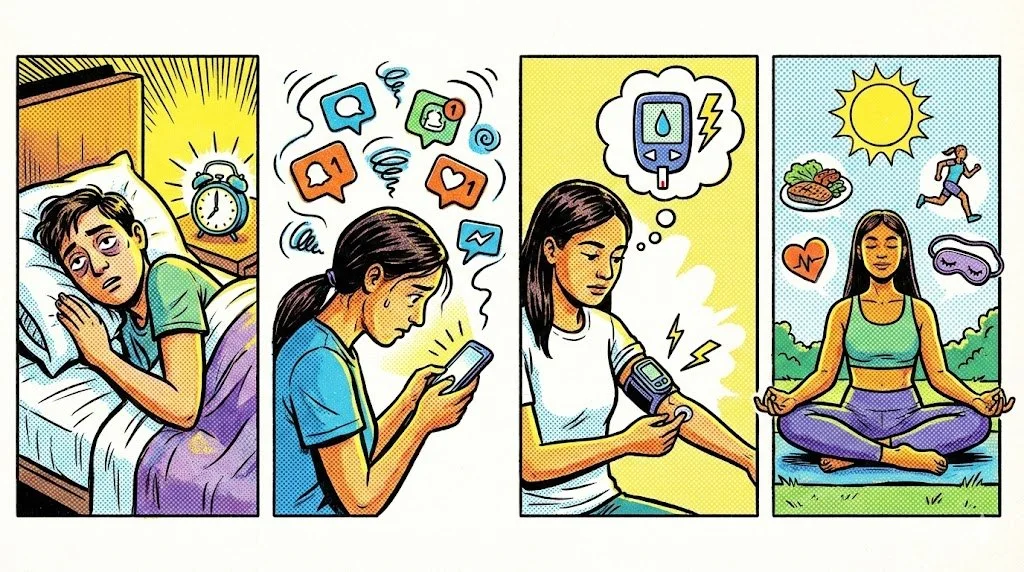







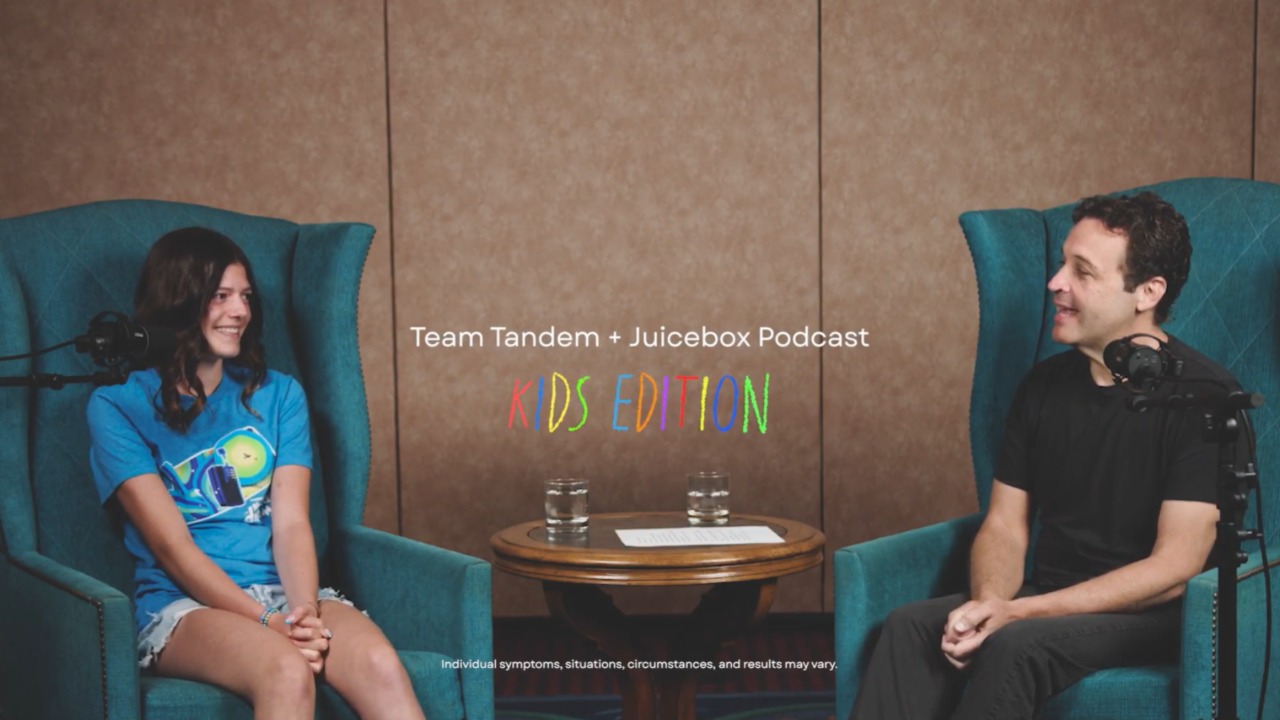











Please support the sponsors




The Juicebox Podcast is a free show, but if you'd like to support the podcast directly, you can make a gift here. Recent donations were used to pay for podcast hosting fees. Thank you to all who have sent 5, 10 and 20 dollars!

#1050 Kick The Goat
Kristin is divorced and her child has type 1 diabetes.
You can always listen to the Juicebox Podcast here but the cool kids use: Apple Podcasts/iOS - Spotify - Amazon Music - Google Play/Android - Radio Public, Amazon Alexa or wherever they get audio.
+ Click for EPISODE TRANSCRIPT
DISCLAIMER: This text is the output of AI based transcribing from an audio recording. Although the transcription is largely accurate, in some cases it is incomplete or inaccurate due to inaudible passages or transcription errors and should not be treated as an authoritative record. Nothing that you read here constitutes advice medical or otherwise. Always consult with a healthcare professional before making changes to a healthcare plan.
Scott Benner 0:00
Hello friends, and welcome to episode 1050 of the Juicebox Podcast.
Today, I'll be speaking with Kristen, she's the mother of a child with type one diabetes. Gonna talk about a number of different things here. I think Arden comes up in this episode, I think I call her doing it or text or something. And what else happens? Oh, Kristen is divorced. We talked about that with the impact of diabetes management, and a lot more. Honestly, I don't know what to call this one, so the title is probably not going to make any sense. While you're listening. Please remember that nothing you hear on the Juicebox Podcast should be considered advice, medical or otherwise, always consult a physician before making any changes to your health care plan are becoming bold with insulin. If you'd like to save 40% off of your entire order at cozy earth.com You can go get yourself sheets towels and clothing and save that 40% With the offer code juice box at checkout. You can also get a free year supply of vitamin D and five free travel packs with your first order of ag one at mydlink. Drink ag one.com/juice box
the podcast is sponsored today by better help better help is the world's largest therapy service and is 100% online. With better help, you can tap into a network of over 25,000 licensed and experienced therapists who can help you with a wide range of issues. betterhelp.com forward slash juicebox to get started, you just answer a few questions about your needs and preferences in therapy. That way BetterHelp can match you with the right therapist from their network. And when you use my link, you'll save 10% On your first month of therapy. You can message your therapist at any time and schedule live sessions when it's convenient for you. Talk to them however you feel comfortable text chat phone or video call. If your therapist isn't the right fit for any reason at all. You can switch to a new therapist at no additional charge. And the best part for me is that with better help you get the same professionalism and quality you expect from in office therapy. But with a therapist who is custom picked for you, and you're gonna get more scheduling flexibility, and a more affordable price. betterhelp.com forward slash juicebox that's better help h e l p.com. Forward slash juice box.
Kristin 2:44
My name is Christian. I am a caretaker for re an eight year old type one diabetic.
Scott Benner 2:52
Okay, right is eight. How old was he when he was diagnosed?
Kristin 2:56
She was Yeah, yeah. It's R EY like the Star Wars girl.
Scott Benner 3:02
Aren't you? Oh, like Ray. That's beautiful like that. I love that. Yeah. Okay. So she I'm sorry. So she was how old?
Kristin 3:13
She was six. So it was we're about in our two year in May two years.
Scott Benner 3:18
Okay, how did it present?
Kristin 3:22
Yeah. So she had had COVID in April of 2021. And then a couple weeks later started throwing up. And it was so funny because her sister I just had a stomach bug. So we really just thought no big deal. And then after a couple days, her dad took her to the ER because he said she seemed really lethargic all of a sudden. So I don't know quite what that looked like. But yeah, then she went to the ER, they gave her fluids and did the normal thing where they say, Okay, this is the fluid just go on home. And then right, then she started hallucinating. And then they said, nevermind. Let's keep her here a few more seconds. And then somebody finally thought to check her blood sugar, which I think was, you know, close to 700. And then it all became clear.
Scott Benner 4:04
Wow, they got to the blood sugar that quickly.
Kristin 4:08
Well, you know, it had been, I think it had been four or five hours of kind of like, okay, let's get fluids and monitor and she seemed so much better. So it did take some time. And then not long after, you know, the CDC came out with that report that said COVID leads to type one, so check for it. So I was really grateful thinking, you know, maybe next time they wouldn't have to be like super far into decay before it was, you know, discovered if someone came in post COVID They would just check. Select sugar right away.
Scott Benner 4:34
Yeah, someone would think Oh, look. Yeah. Okay. So that's a couple of years ago already. Right? How long was she in the hospital for?
Kristin 4:45
About four days? Four days.
Scott Benner 4:47
Did that seemed long to you? Or did that seem about right?
Kristin 4:51
You know, it was all kind of a fever dream. You know, I didn't sleep at all the first two nights because it was just so scary. The first night she was So, just still really hallucinating and kind of terrified and miserable. And then, and they kind of told me, you know, you're going to be here for a long time, eventually we'll transfer you to another hospital where you can, you know, go to diabetes school, but we got to stabilize, it could be a week here. So they were really telling me, I had it in my head, like, Okay, we're gonna be here for weeks. So in some senses it it seemed quick. But in other senses, you know, I'm, I've never been admitted at the ER before we always just go in and they say, Okay, go home. Right. So, in that sense, it just felt really surreal to be in a hospital for so many days. And they did transfer us but it was really just about two, two and a half days. And then she was at an ICU. And then then they had beds, the local children's hospitals, they moved us over there to like, go to diabetes school, and then we were there for, I think, just two nights and then came home.
Scott Benner 5:54
No context for diabetes at all in your family or anything like that.
Kristin 5:58
Yeah, so her dad's sister is type one, and it just never occurred to me. I don't think I understood that there could be some genetic links. And so I just didn't even think about that. And I was kind of curious if if he if her dad thought about that. When he took her in.
Scott Benner 6:21
Kristen, you broke up. I'm sorry, Sandra. You, Chris. I'm sorry. You broke up. You were wondering if? And so I think we're I'm not clear on this. So are you in her father not together?
Kristin 6:33
That's right, right. Yeah, we're divorced.
Scott Benner 6:35
So you, you said you wondered if that was in his mind when when he went to the hospital? But you don't know.
Kristin 6:42
Yeah, I don't know. And I have to guess no, just because I think he would have said somebody check her blood sugar sooner. If he had that in his mind at all. But yeah,
Scott Benner 6:52
you know, the longer I do this, I used to be kind of more shocked by that. Like, yeah, why would somebody not think of that, but then the longer I do it, I just think that that's not how it works. You know, we were talking to my son recently. And you know, Arden's had diabetes since she was two. Right? So for, you know, almost like two full decades, they live together with diabetes. And my son said something the other day, and I was like, that's not how that works. And he goes, No, and I'm like, You don't know that? And he goes, No, I guess I don't. And I and so extrapolating that forward, like trying to put my son in a situation 15 years from now, and he's in the ER with a baby going, I don't know what's wrong with this baby. Like, I don't know, if he would think to say, you know, my sister has type one diabetes. And
Kristin 7:41
right, yeah, it's strangely not top of mind. And I feel like I everywhere I go, I tell people like, Hey, did you know this is how she was diagnosed? Did you know that most type ones are diagnosed in adulthood? Now? Did you know because I just feel so traumatized by the experience. And I just think, how do we stop diagnosing and DKA it is a horrible experience, and how nice it would be to just routinely check it or have it more top of mind. But you know, it's just one of those things. It's rare enough that people don't think of it
Scott Benner 8:11
right. Yeah, the other side of that is, it's funny, you're bringing, it's really ironic that you're bringing this up, because right before we jumped on, I was running through my messages. There's this message from this person is like, you know, I'm doing a project for my journalism class, and my father has type one diabetes, and people don't understand that enough. And I was wondering if and blah, blah, blah, may ask the question. My thought was, well, you don't want me involved in this. Because what I'm gonna say to you is, I think it's completely reasonable that people don't understand type one diabetes. And then what's, what's the alternative? Like? What do we do we like, take a week out of everyone's life, and sit them down and explain everything in the world that could possibly go wrong to them? Because, yeah, that sounds like that would be overwhelming. And it's, but I take everyone's point when they're like, you know, it shouldn't get to this point. And it'd be so easy for doctors to do a finger stick check when they're certain symptoms arise. And I kind of, that's why I think it's more on the medical side, like, you're not just going to randomly expect everyone to understand, but if at least, no,
Kristin 9:10
you're right, because there's so many autoimmune disorders that I have so little information about, and it does seem like it must be frustrating to Dino to somebody else who doesn't understand like G tube and, you know, feeding tubes and stuff like that. And I just don't, I think the real frustration comes in, you're right, when medical folks seem to not get it, which I think we all run into. I see it you know, every day on the Facebook page, people run into medical staff that don't quite get it, which is very frustrating and or folks who kind of assume they get it, you know, and I think you know, maybe is it just like we need to respect each other more to understand that, you know, whatever you're going through, you're the expert of that. And yeah, I mean, I think doctors should know we had a dentist just tell us, we should be able to manage her type one with medication and we should stop giving her treatments for low's
Scott Benner 10:00
Really? Yeah, a physician told you that?
Kristin 10:03
Yeah, her dentist at the last appointment was like, Yeah, I think that's, I think you're thinking of type two and she was like, So you're telling me that her doctor wants her to have sugar? That was like, look, let's just move on here. Okay, I understand. I'm gonna try to avoid lows for you. All right, but that's, I'm not gonna get to a low and say, You know what? Your doctor doesn't want you to have sugar let's let's do something else.
Scott Benner 10:26
Sweet. In lieu of a vote cavity. Why don't we just dropped it right now instead? I don't want to have a cavity. Well, you know, cuz that's expensive for me. Yeah. Oh, my God. Insurance for dentistry is terrible. I was sitting in a in an infusion center recently getting an iron infusion, right? And I'm sitting there. And I've been there a number of times, I now have what I would loosely call a relationship with one of the nurses. And she just says like, what do you do for a living? And I was like, Oh, I make a podcast. And that's already a leap. People are just like, what now? You know, and then you're like, Well, I make a podcast and and then they go, Well, I don't understand how is that a job? Podcast reaches a lot of people. And then advertisers buy ads. And so I make a podcast and she's coming online. Right? Yeah. And then she goes, um, what's it about? And I said, diabetes? And she goes, Do you have diabetes? And I went, No. I was like, but then I explained that whole other thing, and she had met Arden once she's like, Oh, that little girl. And I'm like, Yes. And she's not little anymore. Go through this whole thing. Anyway, this leads into her telling me about her experience with diabetes and the hospital, and all the people that she saw, and what she tells people, and I want to tell you that about 87% of what she said wasn't accurate. Hey, guys, just jumping in to remind you that one of our sponsors better help is offering 10% off your first month of therapy, when you use my link better help.com forward slash juicebox. That's better. H e l p.com. Forward slash juicebox. Better help is the world's largest therapy service is 100%. Online boasts over 25,000 licensed and experienced therapists. And you can talk to them however you want text chat phone or on video, you can actually message your therapist at any time and schedule live sessions when it's convenient for you. Better help.com forward slash juicebox save 10% On your first month. Oh, wow. And so I was just sitting there like making a decision. I had like a, you know, a needle in my arm. And I'm sitting, and I'm gonna be there for the next hour and I just nodded through. I was like, Uh huh, uh huh. Yeah. Oh, oh. Uh huh. Thank you. And then I she said one thing that was so egregious that I turned her on it. And then I was like, What am I going to do? Like she's running around, by the way, I'm the only person they're lucky enough not to have cancer in an infusion center, you know? And so she's running around doing her job. And what am I gonna like, pull her aside and go, Hey, listen, you fundamentally don't understand any of the things that you just said, like, what would she have done next? You know,
Kristin 13:05
I mean, you could give her some episode numbers. Right? Well, I
Scott Benner 13:08
told her about the podcast, and I told her how to listen to it. I thought maybe she'll figure something out. She had worked in a hospital. And she knew she knew enough to deal with it the way hospitals deal with it when you're admitted, but you're not admitted for your diabetes. I guess it's the that's what she That's right. Yeah. But she thought she understood it. 100%.
Kristin 13:29
Yeah. And I think that's just the that's really the tricky part is just and that, I don't know, I have a little bit less empathy for that. I think I understand that folks in medical settings, have to just know so much information, but it does feel to me, especially when it comes to chronic illness that there, there could definitely stand to be a crash course or two about like, Okay, how do you deal with this? You know, when somebody's here, just like you said, I guess my only thought on that is that and this is generally how I feel with endos. It's like they have one job. And then as parents and caregivers or type ones, ourselves, we have a different job. And so we're going to fundamentally disagree. And that's not necessarily because we disagree. Does that make sense? It's because we just have different roles. And if you're a you know, medical professional, your job is public health, which means, you know, the best possible advice that's going to work for the largest group of people keeping things like compliance in mind. Yeah, and that's just going to be different advice than you would give your own child. I'm sure even an endo would say that.
Scott Benner 14:36
Oh, no, absolutely, uh, your your goals and their goals are different. You would think they're the same, but if you stop and really consider it, they're not you're you're talking about day to day, minute to minute care. And they're like, look, you're gonna be here for 48 hours. I don't want you to have a seizure while you're here. So we're going to keep your blood sugar at 200. Like that's,
Kristin 14:55
they're talking about advice that's going to work for every diabetic that comes in and I I always just say like, look, you're you're doing a great job for diabetics. But I, you know, I care in a broader sense about diabetic people. But in a specific sense, I care about one diabetic and that's my daughter.
Scott Benner 15:13
Yeah. And we're not going to let you do that today. So yeah, so it's something to stick up for yourself. You just sort of you educate in the moment for that moment, like, you're not trying to change their mind forever and ever, you're just trying to get you through that situation. And maybe that information sticks with the nurse or the physician or whatever. And they carried along to the next one, which is my expectation. And you know, Jenny always points out to me, adult endos overwhelmingly see type two patients and not type one patients. That's right. Yeah, yeah. If you have a child with type one, then you get this. It's a different experience. Like you go into a children's hospital, you know, generally speaking, and everything's very, I don't know how to put it like, it's nice. It's like you're ordering off the menu. You don't I mean, like, the place is really clean. And they tell you everything you need to know when you're having an experience. And like, and when you get to an adult, no, it's like, Hey, hi. What do you need insulin here, get out?
Kristin 16:12
Yeah, it's different. And it kind of relates to what you said is, you know, advocating in the moment for that moment and not trying to change the big picture. I think that is exactly perfect advice to deal with school nurses to you know, I was just talking about this with somebody else. But I feel like with school nurses that can feel like you need to get on the same page in a, in a broader sense. And you really just don't, you really just have to say, okay, how can we get this need met? And this moment? How do we make it so that, you know, I can call the shots in this particular moment, and then we can move on. But I think it can cause a lot of problems for families when they're trying to make sure you guys agree about type one management and that just might not happen.
Scott Benner 16:58
Yeah. Hey, listen, I'm sorry to do this in the middle of this, but I'm gonna call Arden because she's wearing a new CGM. And I don't know if the blood sugar I'm seeing is of a grand concern or not accurate. So I apologize. Hold on one second. I'm not going to stop the recording. So just give me a sec. Okay.
haven't done this in a while. On the podcast, I mean, she just texted me the word stop. So I'm assuming.
Kristin 17:32
Oh, my God, that's so funny. All right. Stop calling because I got this stop calling.
Scott Benner 17:42
Leave me alone. I'm trying to blah, blah, blah. She's probably running around or something like that. It's just it's a new sensor. And I sent her a text this morning. And I said, Hey, can you please calibrate this. And then there's a setting she has to flick kind of flip a switch and loop that she hasn't flipped yet. And now she's made a Bolus. A big she had a meal, very obviously, about 55 minutes ago. And at the moment, the CGM is indicating a 53 blood sugar with an arrow straight down. It just switched over now to 48. So I'm gonna guess that her blood sugar is not really 48 and it's clearly stopping like, so she knows the foods hitting her so she's not worried. And I mean, I've done what I can
Kristin 18:26
now only drops for like that. That's when I kind of sigh
Scott Benner 18:31
Yeah, it's, it's like it's just a brand. It's a brand new sensor. So I don't know if it's, like settled in well, or, you know, whatever. So, and I can never well, not never, but the process of getting her to test around a new sensor is she's she doesn't she hates it. She won't do it. Yeah, it will. She does it but I have to like cajole her sometimes. Yeah. So like, let's just check. You know, it's like, it's a couple hours old. Like, let's just be sure. Anyway, well, that was fun.
Kristin 19:04
I love the one word text. My daughter will just text me one word help sometimes. It drives me nuts. I'm like, Look, there are lots of things that that could mean and that's very stressful for me. It could mean you know you're feeling low. It can mean there's a shooter in a hallway. God forbid please text me something more descriptive than the word help mommy clean it means she wants to come home.
Scott Benner 19:27
Mommy, are you seeing the meteors falling out of the sky to down Shaolin pleases adjectives down to I can't think of the word I need for Exactly. Very helpful. Well, artists,
Unknown Speaker 19:39
my nerves can't take that word.
Scott Benner 19:41
Arden's direct she must be I'm guessing based on the time of day, she's rushing around to get to a class. Like she's, I think she's in her dorm room getting ready to leave. And she's she doesn't have the time to give away to me and my concerns for her safety. So anyway, we'll keep an eye on that as it goes because You know, whatever. Alright, so anyway, so yes, there's diabetes in the family. But no, nobody was thinking about it. You're divorced. And so am I to take from that there's not a ton of communication, or is the communication good?
Kristin 20:16
I know and maybe, yeah, it's okay. I would say that we kind of the way that we manage it is that we just do things separately. So like, even on her pump, we have separate profiles. And she kind of knows, okay, I just got to mom's I got to switch over to the mom profile. And I think in the beginning, we really tried it to kind of communicate and collaborate and it just, we just can't do it. We can't do it. Yeah, we just keep things pretty separate. And that makes it okay. I think it took us a couple years post diagnosis to kind of chill out about it and not think, okay, when she goes the other house, something terrible is gonna happen. We kind of settle and know that everyone's doing their best. Her agency is fine. She's doing fine. So yeah, I think that's about as good as it gets. For us.
Scott Benner 21:07
There's two management styles.
Unknown Speaker 21:08
Oh, yeah.
Scott Benner 21:12
I think I heard a lot in that. Oh, yeah. But okay. So it's a little higher and not as focused at one house. And at the other. You're a little more on top of things. Is that fair enough? Yeah. I
Kristin 21:25
mean, I think that's about how it feels. And I, I will say that I could go into clarity, for example, and try to measure and say, hey, look, on these days of the week, is she really more on range? I'm not going to go down that path. I don't feel like it's good for anybody. But my guess is you would see a better time and range. You know, I have my moments she was high last night. And I didn't truly know why overnight. And that's unusual. So I have times, you know, a sense or a one of those call this infusion site seems to fail or something and I have a she goes up high. But I want to say for the most part, I feel like I know what I'm doing. Fat pizza is still hard for me, but it's getting way better. But I feel like everything else, you do a secondary cupcakes, I can do cereal, like, Oh, that's good to go. And it I think the sense I get from the other house, at least in the beginning is that like, they don't mind if blood sugar is up high, as long as it comes back down within three hours. And that's kind of what they were told. And as far as I can tell, they follow the endo advice kind of perfectly. And and, you know, that is kind of the endo advice that that's okay. And I don't That to me is not a We missed you know what I mean? If we're up over 200. That's not like fine with me.
Scott Benner 22:48
So would you say that it's not apathy, right? Like they're doing? They're doing what they're supposed to be doing? It's just not what you would be hoping?
Kristin 22:57
That's right. Yeah. And I think I had to kind of come to that place in the beginning, where it was like, look, it's not like they're not giving her insulin. They're troubleshooting. When she's high, and trying to do something about it. They're up at night. And I think they both heard step by step mom there. I don't think they're married. But there anyway, she lives with them and has for years, they are doing their best. And I feel confident about that. And I say that was about 86% confidence. It's not that low. Yeah, that's not bad. So I'll take it 86%
Scott Benner 23:30
from a person who just said, I don't think they're married, which would indicate you don't have a ton of insight.
Kristin 23:39
You know, it's not my business. I think at first step parents, she does all the parents do stuff. And, you know,
Scott Benner 23:47
very nice. I mean, can you talk a little bit about what that's like, in the beginning, though, when, like, not now. But when you're doing a thing, I guess, five days a week, and then on two days, or however you're broken up, then it just changes? Does it make you mental? Are you like, Oh, my God, how did it hit you? And how did you get through it?
Kristin 24:08
Yeah, no, it was definitely really challenging. And I sound chill about it now, but I wasn't and I often am not. I mean, it comes up still, for sure. Because I think as a parent of a kid who has higher needs I, my, the way my trauma from the hospital has manifested is in hyper vigilance. And I have that's been a light switch that's turned on for me that as a first time thing prior to this, I was a very laid back parent to a fault. You know, we'd get places and I'd be like, Oh, God, we didn't eat a meal. That's so funny, you know, or, you know, we get to school without backpacks. That was just kind of normal. And that is not how I am anymore, you know, by necessity. And so it's very difficult when she's not here. I would say my anxiety is pretty high every night she's not here. Yeah, I mean, it's it's just so hard not being able to To control your kids well being as a parent period any time, but especially when there's something that does need so much input, and then you're physically not in the same house, that's really challenging. I think early on, there was a lot more. I think the kind of broad Crude Story We kind of told about our management styles was that she was always low at my house, and she was always high at their house. And I don't think either of those things were ever true. But that was kind of the story. So then there was like, extra anxiety every time she did go low here, because I felt like I was like, proving that story. Correct. And it was very stressful for me. Sometimes I would hear about it. And that was really hard. I didn't know in the beginning, how things would turn out. And I think now that we've had enough time, I can see, you know, over all, and you know, maybe 69% and range over there, maybe 70. And that's, you know, she's more in range here. So it evens out. So,
Scott Benner 26:03
yeah, can I ask them like in this situation, like just now with art? Which, by the way, do you think people are listening going, like, is art and alive? Could someone fill me? I'll tell you in a second or so but, but in a situation like this, if you were looking at like a dropping arrow, and it was frightening. You have the ability to call the house and say hi, is someone seeing this? Or is that not something you guys have?
Kristin 26:29
No, we don't have that. And you know what? I don't I don't look, I turn off on my alarms. And I don't wear my watch because otherwise I can't sleep.
Scott Benner 26:38
Yeah, no. Well, that Oh, Kristin. That's what I'm that's the thing I'm imagining like right now. If I wasn't able to reach out to somebody, like what would I do with the with the feeling you don't? I mean, I guess?
Kristin 26:52
Call therapist? Yeah, you know, it's, it's hard for sure. I have a lot of misplaced hypervigilance, and I think it lands on other stuff.
Scott Benner 27:01
Is your dining room very clean, or something?
Kristin 27:04
No, but I I started the grad school program. And I really do think that, you know, I think as far as I'm still I'm still the jury's still out on if me going into grad school is a misplaced way to spend my anxiety dollars, but I think it's okay, you know, it's me pouring into something that I can like research and learn more about and really do something productive, because I'm going to school to become a diabetes social worker. So it's it's a way for me to channel all of that like energy into the the stuff that I can control when I know ultimately, I have to just trust because calling Yeah, calling I did that once or twice. It doesn't it doesn't end well doesn't go well.
Scott Benner 27:51
It turns into the exact reason you're divorced.
Kristin 27:54
Yeah. It just doesn't promote. Uh, yeah. It doesn't do what I intended it to do. I'll just say that.
Scott Benner 28:04
It doesn't do what I do. Now. In fact, I wouldn't be fair in fairness, do you get on the phone? You're like you guys are killing or you're not paying attention? Or is it? Hi? Does it just know it's a mistrust? Even if you're like, Hi, I just saw that blood sugar's falling really quickly. And I was concerned and wanted to make sure that that just goes the wrong way.
Kristin 28:23
Yeah, I think every once in a while I have texted but yeah, I think in general, we try to keep contact really specific to logistics. And anytime there's other stuff. I would say I get more feedback than I give. And how old are you? What's that old? Are you? 37?
Scott Benner 28:45
Is your husband or your ex husband a similar age? Yes. How long were you together for
Speaker 3 28:49
abouts? Seven, eight years, something like that to meet
Scott Benner 28:53
when you were very young?
Kristin 28:54
Oh, we're in college. So average time
Scott Benner 28:58
I gotcha. Okay. I'm just trying to, like pick, you're doing such a lovely job of like, talking around at being you know, you're doing a good job of explaining your situation. There's just a couple of little details I don't have. Okay, so we understand how difficult that is, and you focused it into something else. And you because I'm imagining in those gaps of time, they probably just feel like time is paused. Right? Like they're like, the girls are gone. And then you're just sitting there like paused waiting for your turn again, hoping.
Kristin 29:32
Yeah, it's it was a it is it's still hard. You know, I kept thinking after a couple of years, I'll get used to them not being here. And I really haven't and still find it challenging. But I do think part of it is that experience I had in the hospital which really just rewired my brain. And I found like, you know in the couple of months, up to a year after I really just felt so spaced out
Scott Benner 30:00
So you're breaking up,
Kristin 30:01
hopefully remote at work, but I would get a call from the nurse. And it was like my brain was electric, I could think of a million things at once I knew every, you know, how many carbs was in each part of her lunch, and I could do any of that math. And I knew where all the supplies were and where the insurance did it. And so it was like all of my sharpness was like, retained for this one thing that was so anxiety inducing, and then everything else just felt like soup. And it's, it's not unlike that now, it's just much less extreme.
Scott Benner 30:32
Did you go to therapy? Is that how you got to this point?
Kristin 30:35
I have always been in therapy. But yeah, I did specifically call someone and say to
Scott Benner 30:43
them, Chris, I'm so sorry. You broke up. I'm getting like an unstable internet connection message from your side. So I'm not sure shoot. You've always been in therapy you called someone you called someone in what? Yeah, I
Kristin 30:56
called somebody and specifically said, I could use some help with this. And I don't want to talk about my feelings. I just really need someone to help me with the here and now kind of logistics of balancing this stuff.
Scott Benner 31:10
So in that calm in those conversations, what what was valuable for you?
Kristin 31:15
Oh, gosh, what a good question. I don't I don't really know, I think, a sounding board, I think, you know, you need connection to what's real. I feel like, you know, you just such a good job with that. There's a lot of, because our kids kind of are like, it's it's so hard to explain diabetes, right? Because it's like, listen, they're fine. They just could die. And like, those things are both true at the same time. And so you have to kind of balance between like what's real and that so like, yeah, your kid is has a 50 blood sugar, that sucks. But they're not actually really close to death, right? Like, kind of, how do you kind of ground yourself in that reality that they that if things keep going badly, they could die, but they probably will keep going badly? Because they're going to eat something?
Scott Benner 32:05
Yeah, because people don't understand. They don't have context for what you're saying. And it really is true. Like, I've listened. I've tried many times to explain it to somebody where I didn't sound crazy. That was always my I was like, Where can I get this out without me sound like I'm like being like, over the top, you know, hey, if her blood sugar is falling, and we don't do anything, it's going to end very poorly. But if we do something, it'll likely be fine. But we want to be vigilant about it and pay attention till we know speaking of vigilance, Arden's blood sugar's 16. Excuse me, 660 now, and obviously, her food hit her a few minutes later than she expected for it to. It's like 100% What's happening here? She made a nice.
Kristin 32:46
It's not still in a 57. I'm
Scott Benner 32:48
gonna guess from what I'm seeing on the Dexcom Oh, there it is. 72. Yeah, this is it. So that's why I got the stop email. Because what stopped means is, it's interesting, right? Because I'd have this conversation is coming together. But it's not much different than you calling your ex. Because I pick I picked her for a very good reason. Like, no one would say that what I did wasn't reasonable. Right. But in her world, this is already handled. Like I did a thing I ate. This is going to be fine. I know the CGM looks a little low right now. But I feel fine. So maybe she was never really, like, you know, like, she's probably higher. Like if we would have tested at 49. She might have already been 60 or whatever. And right. And now she's feeling judged and questioned. Right, right. And you're taking her out of her flow of her day and what she's doing, but none of that changes what it's like to be on this side of it. Right? And the to never even like, you know, we're sitting here almost joking, because it's between you and an X. But this is between me and my daughter who have we have a really great relationship. Right. And it's still honestly the same thing happened. Yes. And
Kristin 34:04
I'm aware that it will be that way soon, too, right. I mean, she's eight right now, but she's already arguing with me about a Bolus or you know, she has her own opinions. And I love that so much. And I really try to encourage it. And I'm aware that at some point, this will be me, you know, texting her going. Hey, hey, do you see that 15 Is everything good? And then she's gonna text back one word help, and I will have no idea what to do.
Scott Benner 34:32
I sent a Artem was on the beach on Friday. So Arden doesn't go to or does have classes on Fridays and she's close to a beach where she goes to school. I'm not like I don't pay attention to what she's doing moment to moment, you know, but I gotta, I gotta, I gotta signal and I was like, oh Arden's low and I looked and it wasn't like, like it was a low that kind of crap up on her. And I looked at her location and She was on a beach. And I texted and nobody answered. And I was like, Well, I mean it's loud there. So I sent like a find your iPhone signal to her phone. Oddly, that when I got back like hey, I'm okay, blah, blah this is what I did. I've already treated this, you know, I said I love you and she's like, that was nice like she hearted. My I love you. Which by the way, as you get older as a parent, it's interesting where you accept your like, reassurance from like, my wife, my wife will be like culpa hard on that and I'm like, you know the hearts the first thing you get to with your finger, right? Oh, jeez, but my wife's like, but it's a heart. I'm like, if the thumbs up was first you would have got a thumbs up. I'm just saying. This is about this is about finger travel. Not about feelings. But okay. And anyway, but so she was okay in her reaction was fine. And she was absolutely fine. Like she didn't mind that I helped that I was looking out for. And this time, I don't even know that she minds. I think if we got her hold of her right now. And as she'd be like, Look, I was just running around getting ready for, you know, class and, you know, I know was more typing than stop.
Kristin 36:13
Exactly, exactly. Yeah. And it's hard to know what that yeah, what that means to her if she would have she actually irritated by it. Or if she was like, Yeah, that was fine. I just want you to know I had it.
Scott Benner 36:25
Yeah. Anyway, let's Yeah, well, how do we how do we manage right? Is it MDI pumps CGM? obviously have a CGM. But what do you do?
Kristin 36:34
Right? Yeah, so she's on a control IQ.
Scott Benner 36:38
Okay. Oh, great. Excellent. How do you find that?
Kristin 36:42
You know, I really like it. I was just talking to somebody about this, who's kind of considering? Well, I don't know if she's considering looping, I was considering looping for her, I was encouraging her to look into it. And because she's on them the pod and so she was asking about control IQ. And I feel like what I feel about control IQ. And this is based on, you know, what I see, frankly, on the on the Facebook page about Omnipod. Five is that control IQ is an algorithm that helps you avoid lows and kind of get an edge on the creep up. But it doesn't get in your business too much. You can still do extended boluses, you can still jump in and it feels like Omnipod five is kind of designed for for more of a hands off approach. I don't know, I'm just kind of speaking based on what I see from folks. No, I really like being able to get in there and make my own decisions about bonuses and stuff like that.
Scott Benner 37:45
Yeah, I think Omnipod five is very specifically designed to be a thing that you don't think about. And right. And I agree that control IQ has a couple of more like options for you on a more like, I'm just gonna say on a manual, but you're not really a manual, you're still in the algorithm, but you can do a little more. And then lupus, lupus probably like the, you know, like the way the nth degree of that idea where you have a lot of, you know, autonomy to make changes as you go. And I think they all have their place for sure. And I think that if you if you ask people who are newly diagnosed, they'd say, I want the thing where I don't think like, I think that it's going that way, like I don't think people
Kristin 38:32
and I think it works for different, like you said it has its place, it works for different people. And I think control IQ works great for us, because we can set profiles, but it's not so manual that we're really fighting over every detail. So I really liked that we can kind of use it in our situation. If I if it was just me caring for her, her I would be really interested to try looping. But in my current situation, this works great. I really, I'm really inspired by some of the folks you've had on the lazy IQ. And then Jeremy but I really just leave it in sleep mode. I override every Bolus, and it's just how I do it. It makes sense to me. I was really, I think that's why I love the podcast right away. Because in the first episodes, I was listening to you were going look, I just looked at a plate of food and I go, Hey, that looks like 25 carbs, I'm gonna give five for the broccoli. I'm gonna give a couple for the burger go. And I was like, Whoa, that's perfect. That's how my brain works. I want to be able to just name the units and you know, think about it that way and not be so underwater with them with the math. So I really liked being able to Yeah, override Bolus.
Scott Benner 39:49
I think that can't. I mean, obviously it's the way I think so I'm going to agree with it. But I think I've seen it, touch so many people and have a similar impact that I really I mean, even Arden like, look, she went away to college and she's maintaining her. I mean, her agency went up like, I don't know, like point to like they don't I mean, in the first the first couple of months she was there. And then we very recently visited. So her spring break came. So it was the end of our Arden has an assistant with quarters, not trying, like not semester. So it was the end of the quarter, we took that opportunity art and traveled from where she is to where her brother is she spent a couple of days with him. Then we showed up and we spent like four or five days together. And then he had to kind of get back to work. So we went back to school with Arden and we got her like, you know, weekly, we helped her clean her dorm room and went shopping for food and stuff like got her set back up for the next quarter. And we were kind of at dinner one night. And I was like, Look, you're doing a terrific job. Like a really, really, really great job I'm very proud of. But here are the two things I need you to do that you're not doing right. And and I was like and they're not big thing. So I was like But you're looking at high blood sugar's a little too long. And you're not Pre-Bolus Singh long enough before your meals. And she's like, Okay, I'm like really hard. That's my only feedback. I said, I think you're, I think you're a one C could go back to under six, like in the fives. If you just do these two extra things, and it's saying a lot because her sleep schedule screwy. Her eating schedule school. The food she's getting is terrible. From right from the school. She actually is in the middle of trying to get an up a cot one of my I just said every word except the one I wanted a dorm that has has a kitchen in it because she wants to cook more of her own food. Yeah, like
Kristin 41:46
I can the college food holy cow that is impressive to be able to handle that even remotely.
Scott Benner 41:52
Oh my gosh, you have no I mean this Bolus that we're talking about this morning, by the way, her blood sugar's 107. Now for everybody who's concerned? Yeah, I mean, she Bolus 65 carbs this morning, which was almost 13 units of insulin. And you know, it. Sorry about that. It was I hate the set. By the way, whoever makes Nightscout I hate that noise, fix it, make it go away. Pick a different noise, anything at all. I mean, she didn't miss by much. Like, the reality of it is she probably ate five minutes too late. And if she wouldn't have this curve that she created would have happened a little sooner. Now if this 107 levels out. I don't know how to argue with that. Like, you know, then her her eating. She just she just started a little late. And that again, it's probably because she's rushing around. So I mean, she's 18 Right? Yeah,
Kristin 42:48
it's pretty good. Yeah, that's pretty good. Yeah, and I feel like it would be so much easier for it to go the other way where it went too high. And I I appreciate that perspective. And I definitely keep it in my head when she goes low. Before breakfast or something like that. Look, it was just a little the curve was just a little too soon.
Scott Benner 43:06
Yeah, stop fix it or whatever. It sounds like what Arden did was she was like that'll be fine. And because she knew that because she knew the food was in she probably if she responded back would have said you should have seen what I just the mess that these people just gave me that I just say trust me, it's gonna hit my blood sugar and and then right, yeah, right. But anyway, it's you know, and for people listening who have like a late high school aged kid who might be going to college. I have to tell you that I've one child who's gone through college has graduated already. And one child who's a freshman. The food service at the first school was terrible. But it was it was obviously terrible. Like you looked at it and you're like, Oh, God, like I'm so sorry. You're gonna have to eat this like if it felt like that right? Like he wants send us a picture of pink chicken. Oh, mom. And he's like, Hey, look, you know, here's a piece of chicken a kid got in the cafeteria the other day the kids blew the school up on on Instagram about it. Like they went after went after him on social media and the school responded with this like a like a government thing that said that because of the way they cook the chicken. It may look pink and that safe. Well, they didn't say I get you don't want your chicken to be pink. Or they just went after that's fine. It's safe. Like anyway, Arden gets the school and we're on the tour. You know, before she chose the school. And the cafeteria that she eats in is magical. Oh wow. If you walk in you're like oh my god, like I I'd happily live in here. You know, like beautiful like food everywhere and blah blah blah. But what she ended up telling me after not much time is she's like that this is all just really processed crappy food. And you know, she's like, even though vegetables are good like they're soaked in something that's not really butter, and I don't know what it is. And, you know, like, so it's just it's really impactful. Your kids are really going to need to know how to use insulin if they're gonna go to college. That's for sure. So,
Kristin 45:15
yeah, yeah, I mean, it's just a whole How do you feed that many kids without getting giant cans of green beans soaked in something, you know? How do you do it?
Scott Benner 45:24
I don't know. And that's the other thing is it's almost like the the conversation earlier about you need to understand diabetes better. But how's everyone going to do that? Like, what's Gordon Ramsay gonna show up at every school and set it up? And, you know, they're just, and it sucks. Because, you know, even she said to me recently, she's like, you know, everybody talks about, like, you know, they still say, like, I'm gonna put on the freshman 15. And she's like, maybe that wouldn't be necessary if this food was decent.
Kristin 45:52
Oh, yeah. I think that's what it is. 100% It's the food. Yeah,
Scott Benner 45:57
well, that freaked me out. Because there's a person who has put so much effort into, like making small changes. You know, for my kids, like, I was like, Wait, so 20 years, I've been at this. And now I'm powerless. You want to hear a funny story? Kirsten, hold on. So my, my son moves, you know, to take a job. And I go with him. Like, because he is poor kids. Like he got a job. And they were like, you have to be here in two weeks and start it was in another state 700 miles from our house. He had never had a job before because he was a college baseball player. So baseball was his job. He's never had a job before he's moving across the country to take a job, right. And so I'm like, I'll go with you, I'll help you get the apartment set up. Like we had to rent him an apartment sight unseen, which was frightening. Anyway, we're in the grocery store, like two days before I'm gonna leave, I'm gonna leave like the next day. And we're trying he doesn't know he's walking around. Like, I don't know what to buy, you know, like, I don't know, you know. So I'm like, Here, grab some of this. Like, I'm just trying to get him going. And I go to get him some olive oil to cook with. And they don't have cold pressed olive oil in the grocery store, which for anybody who cares when you press oil and olive oil with heat, you change it and you fundamentally make it it's just not as healthy afterwards. Right? And it's a little thing, but it's a thing I figured out years ago, Kristin and dammit, like removing other oils out of the house like canola and vegetable oil, all that stuff. If none of that exists in the house. In my house. There's olive oil that is cold pressed, and there's coconut oil to make popcorn it like that's all in my house. Okay. So I'm standing in the grocery store. Oh my god. Alright, I'll just tell you, I'm standing in the grocery store. They don't have cold pressed olive oil. And I start to cry. Oh, I literally like not like, like, you know, like soap opera. But I was just like, tears started coming out of my eyes. And I was like, so frustrated that, like, I'm like, oh, no, like, I did all this to put him in this position. And now this, so this lady next to me goes. She goes honey, you okay?
Speaker 3 48:12
Oh, yes. Thank you. Like, how am I going to explain this to her? Just say they don't have code for methodology. She's gonna call the cops, you know?
Scott Benner 48:24
So I just shifted the conversation tiny bit I said is I'm I just brought my son to the city. He's staying for a job and I'm starting to realize I'm leaving. I just lied to her a little bit. Like this is why I'm crying. Meanwhile, you know,
Kristin 48:40
part of you were crying is that you were sad to leave your son. Well, yes,
Scott Benner 48:44
those a whole shopping experience was terrible. I walked around there with blinders. I try not to make eye contact with him. Because I was like, I was upset. Don't get me wrong. I was on the edge Kristin. But the actual reason that I couldn't hold it together was the freakin olive oil. And, and I just told her, you know, I'm just sad about leaving my son and she goes, Oh, sweetheart. She's like, it's the greatest thing. It's like, oh, okay, she's
Kristin 49:11
ready. Your kids. Yeah, she
Scott Benner 49:12
didn't like she didn't like her kids as much as I like mine. I don't think she was like, Oh, please, you're gonna love this, and I don't particularly love it. Okay, sure. But my bigger point was, I guess I needed to embarrass myself on the podcast. I haven't done that. But But the other thing, just like all this preparation goes into something and suddenly gone. It's not even up to you. It's over. You know? No, I
Kristin 49:39
totally get the freaking olive oil moment because it's, it's about like you just like, you know, kill yourself to make things happen for your kids and to get things together for your family. And in the end, you have no control. And I think being confronted with that realization is sobering and sometimes makes you tear up in the grocery store.
Scott Benner 49:58
Oh my God, I'm such Baby to I mean, there's no no way around it also, I'm calling this episode freaking olive oil. And but anyway, so you're using control IQ. Do you think there are people listening are like yes about control like you 10 minutes ago, and now we're back?
Unknown Speaker 50:19
For sure, yeah.
Scott Benner 50:20
But you're liking that. So you're using the Dexcom G six using control IQ, right? That's right. Do you intend to move to the g7 once it's compatible?
Kristin 50:30
Oh, yeah, I'm so excited. I am very much looking forward to a 30 minute warmup time. That sounds so nice to me. And the the transmitter thing
are you still there?
Scott Benner 50:52
Kristen, do you have a mountain bike? I
Kristin 50:54
mean, I I live in a mountainous area. There's not like mountains right next to me. Is it
Scott Benner 50:59
do? That's okay. But like a goats? No. No, no, no. Okay. Just you just kicked out. I'm sorry. g7. Oh, yeah, I'm
Kristin 51:09
looking forward to the warm up time being only 30 minutes. And the transmitter thing but I was just asking you guys are on the g7. Is that right?
Scott Benner 51:18
So Arden just used a g7 for 10 days. And going back to use up a couple of G SIX sensors. And then I think in about a week her the rest of her G sevens get delivered for people who are like, I don't understand how that happens. I'm happy to tell you. I got one promotional g7 For Arden to use because of the podcast. And while we were visiting with her, I said, Hey, why don't you wear this while I'm here. That way we can learn about it together, then you can switch back to G six. And then you know, go back to g7. And you'll have some context for it. So she worked for 10 days, she'll be wearing it again in like a week or two for the rest of it going forward.
Kristin 51:57
Cool. Cool. And so when you put it on,
Scott Benner 52:01
I can't believe you just broke up again. Kristen. That's hilarious. Just your connection is unstable.
Kristin 52:14
I think Oh, no. Oh, sorry. Sorry. I
Scott Benner 52:16
think they're the go just stop for a second. So when you say Yeah, I heard you say so when you put it on?
Kristin 52:22
Oh, geez, when you put it on? Is there something you have to do with the transmitter? Or do you just kind of ignore it and it connects.
Scott Benner 52:29
Okay, so you unscrew the little lid from the doohickey. Sorry, you push it against your skin, it kind of collapses this, like there's a ring, once you unscrew the lid, you'll see this kind of clear ring. And then you press down, the ring kind of goes up inside of it. So then the I'm doing a poor job of this, but then the The device is now touching your skin. You push a button on the side. I've seen I've seen it inserted now for a couple of different people about a half dozen times, nobody seems to notice any pain from it, close it down, put the cover on. And then you take your phone, scan the QR code on the side of the inserting device. And somewhere between like 25 to 30 minutes later just pops on and it's there.
Kristin 53:19
Oh, cool. Okay. And I was just wondering if there's like, you know, the getting the transmitter to connect always feels dicey to me. So I was wondering like, does this make that go away? Or does this just happen every time?
Scott Benner 53:33
Yeah, I mean, I've seen four of them so far. And so far, I haven't noticed the problem with that at all. Cool. Okay, that's great. The one thing I'll bring up, is that it doesn't delete the transmitter from your Bluetooth profile on your phone, which I know it can no, there's no way for it to actually happen. But I don't know if people pay attention to this or not. But every time you put on a GSX you put on and with a new transmitter, you're pairing to a new transmitter, you're making a new Bluetooth connection to something and then your your phone holds on to that as something that it's been it's good to delete the old ones is what I'm saying. Okay, and so on G six, you know, a transmitter last 90 days, you're really only deleting a few a year, but with g7 every 10 days you're gonna I would go into my Bluetooth and delete the old transmitter being very careful not to delete the one that you're using currently, obviously,
Kristin 54:27
okay, well that is totally I can do that that's worth the headache of it's just you know, it's like one more thing just the other night we had to do a a Dexcom change I finally gave up at two in the morning and decided to pull it because it was so bad and dad once I got it and so just you know picture me at two in the morning. Hunched in the bottom bunk of a bunk bed with the sleeping kid and you know, test strips trying to pry out the transmitter to get a new one in there. It was his a rough night. So I'm very excited for that just to be one problem. instead of to,
Scott Benner 55:01
well, just just that it's one thing, like, it's so cool. Like you peel it off, you like tossed in the trash kind of don't even feel bad about it. It's so small, you know, you're like, oh, and I asked Arden afterwards, I was like so g7 What do you think she was smaller? And I was like, Cool. Like, that's really what she had to say she's, like, smaller. And so she must have noticed that it was smaller. Yeah, yeah, that was, that was kind of it. It's, uh, you know, I've heard people say, like, oh, there's, you know, like, I'm seeing connection issues with mine, and blah, blah. And like I, you know, Arden didn't have any of those problems. So I don't know what to say. And the other person that I see using it is not either. Great. And I'm being a little vague, just because it's nobody's business. But maybe one day, I'll talk about it. Okay. That sounds
Kristin 55:47
like a story. Now. I'm intrigued. Oh, sure.
Scott Benner 55:49
It is always a story. Kristen has to be a story. What am I not talking about that you'd be interested in cover?
Kristin 55:58
Gosh, yeah, I don't know. I mean, I can talk a little bit about, you know, school stuff. That's kind of interesting. I don't know that I was I was kind of having a little impostor syndrome coming on here. I was like, gosh, what in the world would make this valuable for people to listen to? They've heard all about control IQ. And they've heard all about divorce. And they've heard all about anxiety and mental health stuff. So I don't know. I don't I'm not. I don't know if I have anything unique to share? Well, no,
Scott Benner 56:23
I think that the thing, like the massive thing that came out of this, I thought, was just the intersection of the conversation about what happens when, you know, when race somewhere else, and you don't have the autonomy to reach out. And then this thing happened art and all at the same time, which is weird, but I thought that was terrific. And I don't think there's anything wrong with reminding people that, you know, you have this kind of hypervigilance that's given to you by the diagnosis. And then it's really difficult. Like, I thought it was very cool the way you talked about aiming it at something else. Yeah. Honestly, I thought that was really valuable. Because I think what happens to a lot of people is that they just stare at a number on a screen and make themselves, you know, upset. Looking at
Kristin 57:11
which I do, which I do, do I just also to school?
Scott Benner 57:16
Don't get me wrong, Scott, I do that. So.
Kristin 57:20
Yeah, that's definitely part of the deal. And I wonder if if I imagine that's true for type one diabetics, as well that you have a lot of hypervigilance and in different ways, right? Because it is your body. And I was a part for a little while of a meditation group that was virtual, and it was for type one diabetics and their caregivers. And that was really cool. Because it was just kind of acknowledging the relationship you have with your body or with the body of the person that you care for, which is just really strained in some ways, because of chronic illness in a way that, you know, it's not for the typical person with a functioning pancreas trying to meditate, you know,
Scott Benner 58:01
would you get like you got together? Like, digitally, like over zoom or something? And then yeah,
Kristin 58:07
over zoom, and there were some guided meditations, it was so cool. I'm not sure when I stopped doing it. Except that, you know, everyone gets zoom burnout every once in a while. But it was very, very helpful to see a particularly a lot of the most of the people on it were diabetics themselves and adults, and they're talking about things like how difficult it is to trust your body to be well, when it might not be and how you kind of exist in that space of learning to build that trusting relationship. It might sound a little out there for some people, but I thought it was really helpful.
Scott Benner 58:41
No, I don't think so. I also I think that people do exist in different spaces, right? So you'll see people like us. Arden is an example Arden does her thing. The diabetes does what it does, she does what she's supposed to do. Sometimes she's high, and she fixes it. And sometimes she's low, and she fixes it. But for the most part, you'd be hard pressed. If if I pulled Arden aside and said, describe yourself. I don't know that she'd ever mentioned diabetes. Right? That's right. And I think there are people who you'd pull aside and say, describe yourself and they'd say, I have the first thing that come out of our mouth is I have diabetes, and right, you know, and then they'd go from there. So does everybody get where Arden is? I kind of think they do eventually. I think that the one thing, this is kind of a big idea from a personalized perspective, because I see a lot of people talking and I see a lot of people living with things at different points in their journey. I think eventually, if I could somehow make sure that the next 10 people I interviewed had had diabetes for 10 years but also understood it. You'd hear a lot of people talk like Arden Yes. You know, and I think if you find a lot of newer diagnose people, or people who are not quite in control their surroundings like you are they sound like you.
Kristin 1:00:03
Yeah. And I think it's I'm wondering if that's true. Like, I almost wonder because there's been so much stigma around diabetes, there are folks who've been diagnosed for a long time and they're very kind of loud and proud about it. And I, I do think you're true if we were to look 10 years in the future, what what are kids 10 years in the future who are diagnosed now going to be saying about diabetes? And I wonder if it's a lot like garden, you know, these kids are in a different time, where there's, it's not this grim diagnosis that it was, it's not people are showing their CGM is just this kind of de marginalizing of, of chronic illness that's happening. And I don't want to say, oh, things are gonna be great and easy, I still think you're gonna have to advocate but that's got to have an impact.
Scott Benner 1:00:48
Know, for sure. I, I, I believe that totally. And I always try to also think about all the people who are not on social media, because that is that is most people I just saw, I just kind of put people in slots. Like I didn't mention all the slots that I think of people there also people have had diabetes for a long time don't understand it are struggling terribly. And there are people who have given up, there are people who run high on purpose, there are people who run low on purpose and feed their insulin, like everybody's doing it slightly differently, which I think you mentioned earlier, like I do the thing that fits how, how we live and how I do it. So right. But in the end, my goal is for anybody to have the Act have access to information that would let them live a stable existence at a blood sugar that's not going to cause them a problem in the future.
Kristin 1:01:39
Yeah, people have a choice, right and not feeling like they're, they're kind of stuck in one way. And I'm curious how Ray is gonna go. I mean, for her right now she's very, she really likes having diabetes, it makes her feel special. I mean, in this morning, she just said to me, mom, before I had diabetes, my life was kind of boring, I didn't have much going on. And I thought that was so interesting that now she feels kind of like herself, like there's something to focus on. I mean, I don't know what that means. It was also you know, a pandemic, so who knows what kind of was working out for her mental health wise,
Scott Benner 1:02:19
that is interesting. Like, there's something that she identity wise, like, you know, like, you're like a little kid, and there's just you get up and you do a thing every day, and blah, blah, blah, and it's just over and over again. But all of a sudden, there's a thing about you that's different. And instead of, like, brushing up against and be like, I can't believe this happened to me, she's more like, Ha, there's a thing about me, that's different. That's cool.
Kristin 1:02:43
Yeah, and I was thinking this the other day, too. And I don't know how I feel about saying this, but I just know that it's true, that if, you know, tomorrow, we would wake up and they were to say, hey, look, there's a cure for type one, and it's totally accessible. Here it is, and that we're to go away from our lives. You have to feel this way about art. And I just felt like, way that would be pretty jarring. Obviously, I'd be happy. But also, I'd be really lost for a little bit in my connection to her. Does that make sense? Oh, no, yeah,
Scott Benner 1:03:17
you'd have to read kind of rejigger your focus of your life, I think that's what it really is, is that you've put so much effort into this thing. Now, that takes up time, it is part of your identity, right? Like if I asked you about you, at some point, you say I'm the mother, you know, a child who has type one diabetes, and you know, and then all if that all went away, it would take time to to, to settle again. And by the way, that's not I put this I've put this question online a couple of times over the years, just to kind of give people some comfort. But the amount of adults with type one who say they wouldn't give it away is interesting. Yes,
Kristin 1:03:58
I've noticed that too. I found that so fascinating. I mean, as a parent, I'd have to say Yes, take it away, because, you know, obviously there's just so much risk involved. But it is true that it would shake up myself in my life, but I specifically the kind of connection we have, you know, it's funny when she switched to the pump. I had this feeling of kind of loss and despair that was very not connected to like the fact that I was very excited. I knew it was the right thing and I and I that I sat with that for a while and I was like you know this feeling of loss I'm having is the same feeling I felt when we stopped nursing and she was a baby. It's like this connection I had to her and this way I provided for her went away and it changed my connection to her and so it was giving shots which is like a pretty weird you know, not super like loving you know, intimate connection with your child but it's still was in so many ways and you You know, obviously I still have that connection with her, but just like the the way I can make eye contact with her across the room, and we know we're checking in about blood sugar, you know, you know, she plays sports. And if I walk up to the edge of wherever she's playing, she knows to run over and get a snack like I value that connection, we have an that kind of understanding and the way she knows how proud I am of her for managing or the way she'll tell me, Hey, No, Mom, I think it should be this many units. Like that's a whole thing we do. What would it be like to just, you know, give her a meal in the morning and let her go play softball and not really pay attention, you know, to what was happening, it would just change us fundamentally,
Scott Benner 1:05:42
is the message here that because of diabetes, you focused on your kids in a way that you hadn't prior?
Kristin 1:05:53
100%? Yeah, absolutely. And I'm sure it's true with any thing. I mean, even if it's just, your kid takes up a new instrument you have, you know, and say your kid starts playing the trumpet, and they get all this confidence about it. And you also play the trumpet, and you talk to them about I mean, now, that's part of your shared experience, and the way that they have, you know, they feel loved by you. And so I think that's going to be true with a lot of things. But there's something so relentless about diabetes. I mean, it is relentless. There's not something relentless about it. And yeah, it really changes the way the two of you connect. I mean, with Arden, if you suddenly never had a talk about diabetes with her again, I'm sure it would change the stuff you randomly texted her about, you know, instead of going, hey, oh, no, three, you know,
Scott Benner 1:06:49
we're definitely yeah, I mean, we're definitely closer because of diabetes. Right? That's for certain, like, it just it forces you together, you know, like, and it's not that you don't listen, it's not that you're not interested in your kids. But life gets moving. And sometimes you just like, Oh, it's on autopilot. And it's working. Like I'm gonna get through this week, I'm gonna get through work. We all ate, you know, everybody's clean. They went to school, like, you know, and that's that there's function things. They just keep happening. And you have a way of like, drifting, like apart, like during stuff like that. And this is something that holds you together. Listen, I've said this before. But I once wrote a blog post a long time ago about how lucky I felt because in the middle of the night, I hold Arden's hand, and I've watched her hand get bigger and bigger and bigger. And yeah, and no, you don't get that if you don't have to go test your kids blood sugar in the middle of the night.
Kristin 1:07:40
That's right. It's a bizarre, it's a bizarre kind of extension of babyhood where you're up in the night. And you kind of fill that role of the, just the Nightwatch. And it's become really precious to me, too. And it's always that way with kids, you know, there's always something. But this is a particularity of that relationship that is weirdly meaningful, despite, you know, all the challenges, and sometimes the, you know, just general regret of it, and wishing it would go away. Yeah, there's just some radical acceptance, I
Scott Benner 1:08:13
understand. you'd listen if you if I gave you the magic wand after thinking about it for a long time, you'd be like, Yeah, goodbye, diabetes, I'll figure out the rest of it later. But, but I understand all the pushing, but listen, about having something taken from you. This is not in the public Christmas. So this is just between you and I. But by the time people hear this, it won't matter. It will be out by then I decided to take a GLP one for weight loss. So I'm using weego V. and the details are not important here. But I mean, your appetite really does. Its I did not have a big appetite to begin with. I'm almost at the point now where I don't think about food at all, like to the point where I'm reminding myself to eat throughout the day, but I do recognize that in the evenings. Like if you sit and watch, like, even if it's just like, I'm gonna make popcorn while we watch this movie, or something like that, like you don't realize how much of that just the preparation of the food and the talking about and all that stuff is part of your day. So my wife and I sat down. I don't know, Saturday night to watch television together. We work really hard, like so during the week, my house just this very still. Nobody uses like TVs or anything. So we're like, we're really going to do this, like we're gonna stop working and like, we're all like, excited. And then I sat down and she looks over me she was are you okay? And I'm like, why? Yeah, I'm okay. Why she goes, You look sad. And I was like, I'm, I am. And she goes, why? And I'm like, I I I thought to make popcorn. And I was like, but I don't want it. Oh, no. And it was a really, really interesting moment where I was like, Oh my God, how much of my time am I filling with things I don't even want or need because it's the way Do it. Yeah, Rachel? Yeah, does that just just absolutely ritualistic and? And so I'm like, I'm not sad, like, um, but I feel empty. And yeah, and that that is the I sat there for like two hours enjoying what we were doing together, enjoying the thing I was watching. And I still had this feeling of emptiness inside. And I thought, oh my god, like, I'm like, so fundamentally broken about like, about food, like, Thank God for this. This, this injection, like, like, really like, I never would have like known this because I'm not a big eater. Like, I joke, I joke all the time. Listen, this is just this, these are the words I use in my private life. I'm like, I am the fattest person you'll ever meet, that doesn't eat. Like, I just don't take in a bunch of food, my body shouldn't. Like, based on what I take in, I shouldn't be this size. And I'm not I don't want you to give the impression that I'm like, you know, but I am like, I, obviously my doctor wrote me a prescription for something. And the insurance company said yes to it, because my BMI is high enough that I, I fit, I fit this need, right. But in that doctor's office a couple of weeks ago, I said to the doctor, before we start, because I think you need the context for why I'm asking about this. How much do you think I weigh? And I said, Please, can't hurt my feelings. I have a very close relationship with this physician. You know, it's almost like friends sitting together there. They're not going to like I stood up, I took my sweatshirt off. I spotted a circle. And she goes, I got you to 175 pounds. And I was like, Yeah. And I said, Yeah, I think that's part of the problem. And she goes, what I said, I weigh 233 pounds. And she goes, What do you mean, you think that's part of the problem? And I said, I look in the mirror, and I don't look at a person who looks like they need to lose weight. Yeah. And then I'm like, I don't know how I'm carrying it. Like, it's like, I'm broad shouldered Kristen, you don't need me. So like I just kind of like, I don't know, like, it's, it's the way you hear people say like, I just carry it differently. And doesn't mean I'm not gonna have a frickin heart attack 10 years from now from it. And so like, I'm like, I can't like I've done this, I've done this, I'm like, my body's breaking down and like, My knee is messed up, I can't ride the bike, I used to ride like, I can't, I need help, or I'm gonna, I'm gonna have a health issue. And I don't want that. And, and she was like, Yeah, let's like, you know, she gave me a full physical and everything. And then we started doing it. For context. In the first five days, I lost six and a half pounds.
Kristin 1:12:35
Oh, you know, I think I think one thing you're bringing up is really interesting, which is that we do have a lot of our food and our emotions are so interconnected, which takes us back to diabetes to but I do think that sometimes when we, I mean, this idea, right? And all these religious groups where there's like fasting, that when you take away a food ritual, like your popcorn at night, suddenly you have feelings there, and you're like, oh, wow, look at this. This is super interesting. This feeling was probably there before, but then there was also food, and there's actually help deal with trauma. I mean, this is real, you can't make this stuff up. And I was like, oh, that's why I used to get hamburgers all the time when I was going through my divorce, How fascinating. But um, you know, when you take away that food, then there's all this stuff there for you to kind of focus on. And what do you do with that? And how does that impact your relationship to all those things,
Scott Benner 1:13:36
I realized I could have busied myself with anything sitting there, right. Like, if I would have taken two sticks and tapped them together and focused on doing it, it would have been the same as eating the popcorn. And it's not gonna it's what I like, it's not that I don't like the popcorn, but what I realized is I would have made a bowl of popcorn, and then eaten half of the bowl, right? I would have been just as happy with a handful of popcorn. And you know, as far as the popcorn part goes, so for the there is value in the food part of it, but then there's the rest of it, which has nothing to do with the popcorn and the popcorn is masking it. And I was like, and the one thing I'm proud of is that in that moment, I was like, Oh, I'm doubling down on on what I'm doing. Not going the other way. Because I easily could have been like, I don't want to feel like this. I'll eat. I'll stop doing this need the popcorn. But instead I was like, no, no, I'm like, let this whatever that magic juices in that pen. Like let that help me until I can kind of rewire my brain around this.
Kristin 1:14:33
Yeah, yep. And just it'll be such a fun adventure to see what interesting emotions pop up. Yeah. And what's kind of there for you to sift through? Yeah,
Scott Benner 1:14:44
I really agree. Because I don't I've said on the podcast before, like, I don't think of myself as my physical form. Like you said that you said something or you're like that might sound weird to people. Like I like if you asked me to describe myself, I would never describe my height, my weight my Like nothing, I think of myself as my thoughts. So the only reason I had to want to address this is I just want to keep being alive and thinking. And seriously. So like, I, it's not like I want to have ABS or I care what people think when they look at me, I'm not self conscious in public like nothing like that. And I also don't want to give the idea that I'm, you know, in some serious situation that other people might be in, because I'm certainly not right. I'm carrying, probably, but I mean, 50 pounds, to get me to 175. I don't think I don't think I want to be 175. But I would be at 190, I'd have a much healthier lifestyle, because I am carrying enough fat that you can't see it, and it's that much weight. So maybe my nails stop hurting, and I can actually ride my bike again. And maybe like, you know, maybe I won't be eating to fill like time because that really is what it was. In the end. It's like boredom. And yeah, you know, anyway. Well, that's interesting
Kristin 1:16:05
what you say about you really think of yourself as your thoughts you have picked the right career, because as a podcaster, you kind of are this. You're leaning into your thoughts. Everybody kind of knows you as your thoughts. Such a great way to be actualized and affirmed, as you really see yourself.
Scott Benner 1:16:21
I'm a disembodied voice scan. Just just me, I'm just like, I'm hearing you're in your head. But for me, it's about talking. Like, I don't even think without the podcast, that I would have understood the popcorn moment. Because, yeah, because I've had to talk to so many people and pick through their feelings like, I know it feels it can feel like I know something you don't know when you're listening. But you shouldn't think of me that way you should think of me is like a person who's like, Hmm, I don't understand any of this. And I'm just asking the questions that I think get me to understand it better.
Kristin 1:16:54
Right, right. So you've like, done all the work with all these folks. And now you can offer that to yourself?
Scott Benner 1:17:01
Exactly. Yeah, this, this podcast acts as talk therapy for me, but we don't really ever talk about me that much. Although I'm sure some people think all I do is talk about myself, but whatever. I saw I saw your review. Go to hell.
Kristin 1:17:18
Oh, that's funny. Oh, gosh.
Scott Benner 1:17:19
All right. Is there anything we haven't talked about that we should have?
Kristin 1:17:22
No, I think we've we've heard it all.
Scott Benner 1:17:25
Thank you. I really appreciate you doing this. I hope the goat is okay.
Kristin 1:17:28
Yeah, I'm gonna go check that honor. Yeah,
Scott Benner 1:17:32
you're gonna absolutely when you listen back to this, you're gonna be like, Wow, I broke up more than I thought I did. Because there's times where I
Kristin 1:17:39
can be like this. I'm so sorry. Don't worry.
Scott Benner 1:17:41
I mean, maybe you should tighten the rubber bands or however it works. I like that you're like I'm in a city but a mountain. So Denver.
Kristin 1:17:52
Oh, my goodness. All right.
Scott Benner 1:17:53
Thank you very much. Hold on one second for me. I want to thank Kristin for coming on the show and sharing her story. I think I've decided to call this episode kick the goat. What else I want to remind you of the diabetes Pro Tip series has been remastered It sounds amazing and it runs between Episode 1001 1026. It's my humble opinion that if you listen to that series, you'll be able to maintain an A one C and the low sixes with very little trouble. diabetes pro tip.com and juicebox podcast.com is where you can find the series online. But listening in an audio player is probably much easier episode 1000 to 1026 Thank you so much for listening. I'll be back very soon with another episode of The Juicebox Podcast
a huge thank you to one of today's sponsors better help. You can get 10% off your first month of therapy with my link better help.com forward slash juice box that's better. H e l p.com. Forward slash juice box. If you've been thinking about speaking with someone, this is a great way to do it on your terms betterhelp.com forward slash juice box
Please support the sponsors
The Juicebox Podcast is a free show, but if you'd like to support the podcast directly, you can make a gift here. Recent donations were used to pay for podcast hosting fees. Thank you to all who have sent 5, 10 and 20 dollars!

#1049 Parenting: Brainstorming the Series
Erika is a licensed marriage and family therapist who herself has had Type 1 diabetes for over 30 years and who specializes in working with people with diabetes and their families and caregivers—from those newly diagnosed to those experiencing it for decades. Today, she and Scott launch a parenting series.
You can always listen to the Juicebox Podcast here but the cool kids use: Apple Podcasts/iOS - Spotify - Amazon Music - Google Play/Android - Radio Public, Amazon Alexa or wherever they get audio.
+ Click for EPISODE TRANSCRIPT
DISCLAIMER: This text is the output of AI based transcribing from an audio recording. Although the transcription is largely accurate, in some cases it is incomplete or inaccurate due to inaudible passages or transcription errors and should not be treated as an authoritative record. Nothing that you read here constitutes advice medical or otherwise. Always consult with a healthcare professional before making changes to a healthcare plan.
Scott Benner 0:00
Hello friends, and welcome to episode 1049 of the Juicebox Podcast.
Today I'm welcoming back Erica Forsythe and Eric and I are going to do something a little different than what we've done in the past. We're going to build an entire series around an idea. That series, as you can tell from the title is about parenting, it's going to expand beyond type one diabetes. But at the same time, I think that parenting skills and diabetes parenting skills go hand in hand. While you're listening. Please remember that nothing you hear on the Juicebox Podcast should be considered advice, medical or otherwise, always consult a physician before making any changes to your health care plan. If at any point in this series, you think I'd like to check Eric out, she has a great website, Erica forsyth.com. She sees patients virtually and in person. If you're a California resident, check out her website to see what states Erica is licensed in. If you'd like to save 40% off of your entire order at cozy earth.com, you can do that with the offer code juice box at checkout. And to get a free year supply of vitamin D and five free travel packs with your first order use my link drink ag one.com/juice box. This episode of The Juicebox Podcast is sponsored by us med us med is the place where Arden gets her diabetes supplies from her Dexcom and her Omni pods. But they have much more than that. You'll learn more about them when you check them out at us med.com/juicebox Or by calling 888-721-1514 You can get your supplies the same way we do from us med. Okay, so just so you know, like I've hit record already. Okay. All right. So I Okay, where do we want to start with this? You and I have never done this this way before. But this this is a pretty common thing that Jenny and I do. So Jenny, and I used to brainstorm privately about series. And then one day I said why don't we record the brainstorming and make that the first episode of the series. That way people can listen, decide if it's something they're interested in and get a fair idea for the direction we're gonna go in. So you and I are going to try that. Let's go. Yes, no, I was worried. I was worried. Because you are a careful speaker.
Erika Forsyth, MFT, LMFT 2:46
Yes, yes.
Scott Benner 2:50
I still don't I don't think that matters. I think we can do this. So I'll give you a little bit of my thought. And then we'll figure it out. So I was thinking we could do sort of a parenting list like, I don't know, the first way it popped in my head was, you know, what are the worst parenting mistakes that you've seen in your job? And I thought through that, there's something and then I started thinking about a little more, I thought, well, maybe there are also good things that you've seen that are valuable. And like so I don't know what we'll call the episode yet. I think we'll figure that out as we're going. But I'm wondering if we couldn't build a list of things that you have seen that have been valuable things that you've seen that have been detrimental? And maybe a little bit of what's in between? Does that make sense? Yes. Okay. Yes. I'm gonna open up a file because you're, you're gonna be the thinker today. So I'll be the TypeR.
Erika Forsyth, MFT, LMFT 3:49
Okay. I think it might be important to note before we start listing, you know, parenting mistakes, communication, mistakes, errors, just to not say the obvious that parenting is one of the most challenging things ever in life. And speaking as a parent, I am not I am far from perfect and make these mistakes myself. And but I'm sure Scott, you never do
Scott Benner 4:18
think my whole life is a parenting mistake, I would imagine. Well, you know what, I meant that to be funny, but it might be true. No, I don't mean just me. I mean, somebody parented somebody made a mistake lead to another thing that led to me that led to Bob about maybe it is all a learning mistake. But no, I think that so I don't think about it the same way. I don't think of things I do is like mistakes or wins or something like that. But I do think it's a continual learn learning process, but that there is a sweet spot and you no matter where you jump in, if you're not ready I don't know how to put this, you're going to be doing micro damages that, that you may never be aware of, or that may not like rear their head for, I don't know, 10 years or two generations, I have no idea. But it's such a bizarre feeling to think that I have the ability to do something that will create a problem or a, you know, a good thing for somebody that I might never even meet. super interesting.
Erika Forsyth, MFT, LMFT 5:33
generationally, yes. Yeah. It's crazy generational patterns. Yeah. And I think even what you said, you know, you might not be ready most of us are most parents aren't. What? And how would you define ready? What does it mean to feel ready to parent another? That's another conversation too, but I think you do. It is an evolution of learning. And maybe mistakes is even the wrong word to use. And I think the first step would be the awareness piece, right? You might be acting or parenting in a way that you are not aware. That could be causing pain or suffering or damage. But that also might be a result of your own pain and suffering as a child, as well.
Scott Benner 6:18
Let's let's do something first, before we move, okay, because you're just right. I don't think I don't think of it as a mistake, either. You know, like, I had kids, when I was fairly young, I would be a different parent if those kids came out today. Right. But, you know, if you, if you use the Magic Wand idea where you took the thoughts in my head now and put them in the thoughts in my head when I was in 20, then I think overall, things might have turned out better. Like, and I don't say that they turned out poorly. I just there may have been, you know, I don't know, better decisions made them there by me. But if you make me 52 years old, and give me a baby right now, well, then I'm going to make some better decisions. And then some things aren't going to be nearly as good because I'm not have the same energy or etc. Right. But I guess the idea is, is to share with people, things that we've seen in our own personal lives, or that you've seen clinically, that with reasonable certainty led to something, but I don't want to call them mistakes. So let's find better words, and you'll be good. So what did we call it? Because I said mistakes and winds, which was way wrong, like it just not smooth? What are we really talking about?
Erika Forsyth, MFT, LMFT 7:35
Patterns, maybe? Negative, harmful, harmful decisions, harmful patterns? inconsistent? Yeah, I guess patterns is there is really the, because we might have a really good method of disciplining. And then we might make, we might forget, or we might be tired. But it's really we're talking about the over, over time saying or doing the same thing, without changing or without either having the awareness or desire or the know how of how to change and in effect, positive change in your relationship with your child.
Scott Benner 8:21
So somebody asked me the other day that we were talking about, like interpersonal communication. And I said, the one of the things about me that I'm proud about as a as a matured person, is that I'm incredibly consistent. Like, like, and that person said back to me, you're very authentic. And I said, Well, that may be, but I'm consistent. If you ask me a question at 8am or midnight, you're gonna get the same answer for me that, you know, if it happens on Wednesday, or Sunday, or December, and everybody's had that Christmas anxiety or whatever I, I, I'm basically a common sense person. So I don't get ruled a lot by the things going on around me, if that makes sense. And I think consistency is incredibly important for anything for parenting. I think consistency is why the podcast as well, you know, and I don't even just mean like, what you're hearing. I mean, the way the podcast gets made when it comes out what people expect, right? And that's a trust. Like, think of that for a second, if you consistently make the podcast people trust that this thing is going to happen. That's what consistency brings to parenting. Is this comfort, right? Like, I hear my wife discuss sometimes, how she never knew what was going to happen. Mm hmm. And she once told me how she felt manipulated as a child. When if they were acting up, her mom would say, Hey, guys, if you're good for the rest of the day, we're gonna go to McDonald's. And then no matter how good They were or weren't. They were not going to McDonald's, like, and so it never happened. So it was like, it was like this carrot on a stick. That wasn't real. But the kids didn't know it. Mom probably couldn't even afford to go to McDonald's. She just said a thing she thought would shut them up for a couple of hours. You know what I mean? But interestingly, as an adult, four decades later, that feeling that it bred in my wife, I think it's still tournaments are the idea that you can't trust people when they they say things to you sometimes. So you don't I mean,
Erika Forsyth, MFT, LMFT 10:35
yeah, so and that might also create their narrative for as a child growing into an adult that no matter what I do, I'm never good enough. Okay, that's pretty, that's pretty common.
Scott Benner 10:46
Yeah, that's so cool that you said that, not that that happens to people. But that, right, like, even a thing that, listen it again, we get in a time machine, go find my wife's Mom, 50 years ago, and say to her, what were you doing, when you did that? She's probably gonna say, look, I was out of my mind, I had four kids, you know, like, I needed them to stop, I had stuff to do, like, whatever. If you said to her, then that action turned one of your kids into somebody who doesn't believe their parents, and that that has ripple effects in their own life. And by the way, the thing you just said, and by the way, if we put four more voices on this conversation, for more people might come up with four other things that come from that. That's the kind of stuff you can't know, while you're doing it. So there has to be some sort of consistency to your decision making to stop these unintended and undesired outcomes. That, you know. I don't know that that's it, right? Like, okay, but still good conversation. But we did not come up with better word, a word good or bad. So Hey, viewers, why don't we just said positive? I just need language for my conversation, or I'm gonna fun for over it. So I'm gonna say positive. And for the moment, I'm gonna say unintended. Hmm, I like that. Okay. Or is it intended and unintended, positive intended? Everything I
Erika Forsyth, MFT, LMFT 12:16
did intentionally unintentional
Scott Benner 12:19
unintended. Maybe the conversation is going to reveal the words. So maybe the people listening right now are yelling a word in their car,
Erika Forsyth, MFT, LMFT 12:27
they might say, yes, please share it.
Scott Benner 12:29
I've thought of this. Okay, so let's just I know, your brain doesn't work like this. So we'll get this out of the way first, okay, unintended things that people do, that you see over and over again, that don't lead to good outcomes.
Erika Forsyth, MFT, LMFT 12:48
I think we could start with what you shared the example of your wife, the inconsistent discipline, slash motivation, okay? Just like the the, if you're good, then this will happen. And no matter how good the child was, they never got it. But I also, you know, you could see, the converse of that is, no matter what happens, the child gets the McDonald's. Okay, so, yeah, so it's just inconsistent follow through in the discipline slash motivation,
Scott Benner 13:26
or sprinkling some sort of praise or gifts on them for no reason. It's just as bad. So what's that idea of just kind of like, blindly?
Erika Forsyth, MFT, LMFT 13:42
Oh, you know, usually people say nowadays, like everyone gets a trophy parenting. Yeah, praising, praising for every little thing, and not. Which could be again, going back to maybe as a child, you were not affirmed for any kind of behavior. And only were disciplined for negative. And so maybe as a parent, you're saying to yourself, I'm going to flip that, and I'm gonna praise the heck out of my child because I never got that. As a kid.
Scott Benner 14:16
I'm calling that Cecil over corrections. Nice. Because, because that's really how I think of it like right, you grow up being treated poorly. And then you want you want to correct that action. So as a parent yourself, you overcorrect and then instead of doing the right thing, you end up just making a different mistake. Correct. Right. So okay,
Erika Forsyth, MFT, LMFT 14:48
a different choice in how to parent Yeah, a different choice.
Scott Benner 14:51
But it's not just a choice, right? Because you can say, I'm going to be more positive than my parents were. But what happens when it gets into that space where your kid walks over? Around believing that everything they do is perfection, like, right, like that's an overcorrection.
Erika Forsyth, MFT, LMFT 15:07
Yes. And you might see if a if a child gets in trouble for the sun making, you know, something at school, maybe the parents might have a challenging time, acknowledging that the child could do something like that.
Scott Benner 15:25
Yeah, that's a great example. A teacher says, Hey, your kid did this, you know, my kid doesn't do those things. What are you talking? Yeah, great. But I even mean, the I mean, we all No, a child who, who believes in themselves more than they should did it. And I don't mean that you shouldn't believe in yourself. I mean, like, obviously, you want to instill, you know, good self confidence in people and self esteem. But when there's this belief that there's nothing you do that's ever been wrong, or even worth questioning you, it's how you make an asshole. Yeah,
Erika Forsyth, MFT, LMFT 16:03
yes. Well, and just it's very, maybe a black and white thinking or rigid thinking and perspective of themselves, where they cannot except they might make an error. This is rare, I would say we usually see more children and teens and adults with lower self esteem. Right? It's rare to see the bravado kid, but it does happen.
Scott Benner 16:27
Yeah, well, not to say that maybe those kids don't end up in therapy. But they are out in the world, having a bad experience, whether they know it or not, maybe they're pretending it's not a bad experience, because I'm terrific. And you must understand how amazing I am. So. But you know, I have an example I've used in the podcast before, I'm not going to like belabor it here. But I've met a kid like that is the only the only child I've ever met my entire life that I couldn't find a way to like, get you know, it was really something. And then you look back at the parenting structure. And there's one parent who's kind of quiet in the background very kind, I've never had a bad interaction with a person once in my life. Then there was another parent who was a monster. But the monster was the one pumping up the kid. And it was interesting, like, again, nasty person, I guess is the way I want to say it. Like you could see like, I don't know how to put this, like when you're speaking to them, you can see ill intentions behind their eyes, like they're calculating everything. They're sure they're better than you, and everyone around you, they've put this into the kid. And the other spouse seemed too kind to do anything about it. That makes sense. So that is that's another that's another thing you could do, I'm still going to just stick with wrong for now. But so you could overpower the other parent and not allow their input.
Erika Forsyth, MFT, LMFT 18:08
So I'd say having a united front would be the positive maybe spin on that. So okay, being united in in parenting, the decisions you make. You might have different opinions and perspectives about certain situations, but ultimately the bottom line you agree on, and that is around your the boundaries that you're setting for your child. So it's a boundary boundary setting or having lack of boundaries.
Scott Benner 18:40
Is it I'm sorry that people are gonna hear me typing during this one. But is it important that the kids believe that we're always united whether we are or not? Or is it important to let them know that there are disagreements and we've found a resolution? US med prides themselves on the white glove treatment that they offer to customers? And those customers number over 1 million since 1996. US med is the number one distributor for FreeStyle Libre systems nationwide. They have an A plus rating with the Better Business Bureau. They accept Medicare nationwide and over 800 private insurers. Did you know that they are the number one specialty distributor for Omnipod dash, but they also have Omni pod five that the number one fastest growing Tanvir distributor nationwide, they've got the T slim you know control like you're right. Go check it out. Dexcom so what do I do about this? Number one rated distributor index com customer satisfaction surveys and they can get you the Dexcom G six or G seven by the way. Don't want a Dexcom want to libre libre two and libre three. That's libre Dexcom on the pod tandem testing supplies, they've got some insulins you ECE med.com/juicebox Go check it out, or call 888-721-1514 You can get your free benefits check by going to the website or calling the 800. Number. US med always provides 90 days worth of supplies, and fast and free shipping. Like I said before they carry everything from insulin pumps to diabetes testing supplies. And the latest CGM is like the FreeStyle Libre three and the Dexcom G seven. What are you waiting for? 888-721-1514? Or go to my link? Us med.com/juicebox. We're both
Erika Forsyth, MFT, LMFT 20:43
I would say both. And for you to model to model for your child that you and your and your partner can have disagreements. But you're modeling? How did how to disagree? Right to how to have a conversation around? Well, I think I think Johnny should be able to go to the thing. And the other parent says no, I don't think so. And then you can model for them. Why do you have these different perspectives? And ultimately, you know, maybe, quote unquote, one parent wins in that conversation. But ultimately, the parents have or the, you know, the adults are modeling to the child how to have a disagreement and communicate in a healthy way and landing in a decision that may or may not be that they both are agreeing to but they've agreed how they came to the decision.
Scott Benner 21:33
So what I what I've put here for under positive is model communication resolution. Yes. Okay. But at the same time, is it not also important to let them know that everyone's not always going to agree?
Erika Forsyth, MFT, LMFT 21:55
Yes. Not everyone's going to agree. But I think you know, the classic example that you would hear as I go, I go to mommy and ask for the lollipop. And she says no, but then I can go to daddy, and I know that Daddy's gonna say yes to the lollipop. So they learned children learn those patterns. And so you want to be united? In some of the basics, I would guess I would say kind of foundational boundaries. Yeah.
Scott Benner 22:25
But when mommy pulls daddy into a coat closet to tell him he's an idiot for giving the kid the pump? Like, is it okay for the kid to see that? Like, hey, he can't have that, you know, not to give that to him? Like, I see I from for my money. That's okay. I'm okay. With age appropriate, by the way, everything's age appropriate. Yes, yeah. But for my money, it's alright. For, it's hard for one of us to be right. And one of us to be wrong, like, like, statically correct and incorrect in a situation, it's already for one person to speak up if the person who's wrong, disagrees. They need to be free to, I don't know, discuss and give light to their thought process? Well, I don't, you know, dinner is not for three hours, I don't think the lollipops gonna hurt him. I'm okay with that. Because and do those, because I believe those interactions help people to learn what they don't want to be when they're adults. I know, I think positive modeling is incredibly important. And I think that following through, and a number of other things that we will talk about in a minute. But like, those things are all important for kids to see. But I don't have a problem with them seeing things not going well. Like I think my children are completely aware of my wife's and my shortcomings. And you know, to me, what they learned from them is maybe my dad does this, I have a personality like him, I'm going to try not to do that. But big picture, we're still a successful family unit. And that, you know, we exist in the world well, and everything and I don't know, because I think that what I see sometimes from younger parents, is an attempt at perfection. And then anything less than perfection is a dumpster fire in their mind. And therefore life is terrible. Everything's horrible. My kid's gonna grow up to be a meth head. Like like it goes from zero to 100 really quickly. So under negative i guess i What is it that perfectionism does the children. That's my question, right?
Erika Forsyth, MFT, LMFT 24:46
I think leading them to believe maybe having those unrealistic expectations. I think that there's as a parent when we The whether there's a conflict and we can model conflict resolution, it's okay to have disagreements, I, I totally agree with all of those things. I think we are always able to model how to apologize and say, you know, what, we, whether it's a single parent thing or parents are made it, you know, felt like they mishandled the situation. One of the, I think the best parenting moves we can do is to say, gosh, you know, we had this conversation and I blew up at you, or, you know, we blew up at each other and trying to make this, you know, figure out this decision, and you know, we're sorry, next time, we're going to try and do it this way. Because then you get to model to your kid that, hey, we're going to make mistakes, we're going to say things incorrectly. And then I'm going to apologize, even if you're three years old, it's I think it's a beautiful intervention or, you know, practice,
Scott Benner 26:01
I would have put apology under a positive thing. And I, I wrote, arguing under negative. So I, my for my money arguing with children, like you are a child like, oh, yeah, they mean, like losing your shit. And then then finding yourself going, Oh, well, I'm as crazy as they are right now. Like, like that.
Erika Forsyth, MFT, LMFT 26:30
happens. It happens. Yeah, no,
Scott Benner 26:34
I've been involved in it. Yes. But but it's one of those things that you do have to stop yourself about also, on the apology thing. I want to be clear about this. You apologize when you're wrong. But apologizing can't be the scapegoat for your bad behavior? Yes. Right. Does that make sense? You can't willfully keep doing the same thing wrong over and over again, and then running back and saying I'm so sorry, because it's meaningless after a while.
Erika Forsyth, MFT, LMFT 27:07
Because ultimately, and I just read this, quote, someone who focuses on boundaries, that if you continue to do the same pattern, same behavior, and then you continue to apologize. Ultimately, what you're really seeking is to kind of seek that comfort for whatever shame you're dealing with. Right? As opposed to apologizing to the person that you offended. You are apology, you're doing the behavior over you're asking for forgiveness, you're apologizing? And the person saying no, it's okay. It's okay. But it's, that's then then that's about you. So I think having going to that first step of awareness of my my doing this and asking for forgiveness, and apologizing five times a day, then I would look at that if it's.
Scott Benner 27:57
So I added that doing work on yourself as an adult under a positive thing. And to that, I mean, if you're having the same argument over and over again, if you're having the same thing that makes you upset, you have to remove yourself from the unit for a minute and go, Why am I doing that? You know, and, and so being willing to listen to a partner or your kid, like, you know, first some insight into yourself is important, because that's what you're looking for, you're looking for insight into yourself. But you first have to make the decision. Like what do they say, recognizing the problems, the first step or something like that, like so you have to get the figure out what the problem is first, and then say, I want to fix it. And if you can't find a path to that, then you have to go to trusted people and say, Hey, I do a thing. Do you have any idea why I do that? Or what have you noticed, like that kind of stuff? And of course, hopefully you have somebody to go to that you can trust who will have your best thing, you know, take care of you in that situation? And give you a good honest answer. Also, they might not know you may be married to a moron. I don't know. Like some Well, some of you, Erica. Erica, won't you say anything bad? That's your therapist. I wish I knew you as a real person and not as a therapist. Well, I'm similar. Here one day when I go my wife is married to one and you go oh, yeah, no, I see it. But, but I mean, that's really important that the idea that I guess seeing yourself as accurately as you can, is a real kind thing you can do for your children.
Erika Forsyth, MFT, LMFT 29:39
And really difficult without either the the awareness desire and takes courage. I mean, you know, it takes a lot of courage and your desire to be authentic, right with who you are. And so to reach out and ask for insight or feedback You know, seeking feedback from your children from your partner from your co workers from your close friends. I mean, I'm just thinking about like, When is the last time? I asked other people that or I heard other people asked me that, you know, it's it's hard to do. Yeah, one of the problems is to seek that feedback. Yeah,
Scott Benner 30:19
one of the problems with being, oh, Eric, I'm going to use a word that makes me feel weird to say, but one of the problems with being present, is that is that life requires that is from you as well. And you also might be tired or sick or hungry, or any number of other things. And then there's these moments like I one of my biggest, like, one of the things I had trouble with, when I was younger, was if something happens, that needs attention, like right, in this moment, you know, if we get past this moment, it's going to dissipate, then all it's gonna be left is the bad thing that happened. Right? Like, like the opportunity to fix it is gone. But you can't literally stop. Yeah, that I hate that, because it feels like I don't know. It like it feels like, it feels like there's like a Geiger counter. And, and it's moved, sometimes it moves towards we're all gonna blow up. And sometimes it moves towards Don't worry, everything's fine. And once in a while you see it move towards, it's going to blow up and you go, Oh, I could bring it back to it's going to be fine. But you're on the way out the door that way, and I'm on the way out the door this way. And then it then it multiplies. Because instead of fixing it, you get in your car, and you're like she always does that. And now you're mad, right? Like, and then she's in the car, don't I my mom was right, he's such I gotta get out of this. And like, and that just keeps growing. And the counter goes the wrong way when he doesn't have to. I hope that made sense. But that's that. So a positive thing you can do is I'm just gonna say stop, drop and roll for now. And then we'll figure out a different, like, maybe even talk, there we go.
Erika Forsyth, MFT, LMFT 32:04
And take a break. I mean, maybe that the stop, drop and roll, I like to you know, you're kind of before it's about to explode, and you're feeling you could feel it in your body. Your mind is racing or heated, things are being said quickly. Practicing just knowing when that happens is just okay to stop. And particularly if you're in front of the kids to stop, and it's not going to be solved and things can be. But that's the best thing you could do for you and your partner and your children is to stop and pause. Yeah.
Scott Benner 32:38
And the extension of what I said is that you should speak to each other when you're calm. So I think maybe the thing to do there is to make an agreement, while it's heated, that we're going to come back to this later when we're not busy. And when we're calmer. And never say the word calm your wife use a different word. There's a there's a there's a marriage tip from me to you. Also, I, my wife was yelling at me recently. And as I was standing there trying to figure out what happened. In my mind, like, she's like, What are you making that face for? And I couldn't say to her, I'm trying to figure out how this happened. But like, and then later, I'm literally I'm gonna say this people are going to be upset with me, I don't care. I have made myself a promise. I've been married for 26 years. There are three days during my wife's monthly cycle that I should not talk to her about important or emotional things. And yet, sometimes when it starts to happen, I can hear the voice in my head, go yo man, not now. And then there's another voice in my head that goes she's wrong. Just tell her she'll understand. And then 30 minutes later, I'm going well, what was I doing? What do they do? And so, again, I'm not saying women are not in control themselves. I'm saying that my wife, my personal wife has a heightened emotional state. It goes about three days. On one of those days, she likes me a lot. And then on the other days, if if you start to try to have like a deep conversation with her, her mind kind of goes to all the things that are wrong. Like and she gets a little like melancholy about it. And it's just not the right time to talk to her. There's also times it's not the right time to talk to me too. And I'm sure it's got to do with my hormones probably as well. But my point is my greater point is that you are not. It doesn't matter. It could be you and what was that British guy who was so smart during World War Two and everybody listened to him. Why am I not thinking of his name? This is ridiculous. Heavy guy cigar Churchill could be you and Churchill again. It's my wife on the wrong day. And she's gonna leave believing that you and Winston Churchill are idiots and that everything is bad. Like it shouldn't it's the wrong day to speak to her about that. And I know that and I still once in a while I step in it like a booby trap. And I'm like, Oh, my God, what am I doing. But that goes for your kids too. There are times you should not push things with people is Migrator. Trying to be amusing there for a minute, but you can't like you can't push things with people, they're not always ready for it. And what you're going to get out of them is not a give and take conversation, what you're gonna get out of them is whatever horribleness is inside of them that day, they are going to put it out into the world. And everyone does that. Male Female, happy, sad doesn't matter, people are going to do that. So you have to be good at choosing time in place to have conversations without letting it get past. So far past when it happened, that it's now push that push that needle too far to one side, and you can't get it back anymore. So you can make a fixable problem unfixable by not going after it and discussing it and you can make a fixable problem and fixable by discussing it at the wrong time. Yes, took me a while to do that. But I think that's
Erika Forsyth, MFT, LMFT 36:21
and that goes I know, we're kind of tutoring into, you know, the communication. Pros and Cons patterns. But I think the what you're getting at is not only being aware of your, your audience, right, and what they may or may not be going through whether you are knowing it or not, whether it's the cycle or the end of the day, or, you know, whatever else is going on, but also being aware of your state as well. And so, as you're entering into the conversation with your partner with your child, and you're addressing something that's maybe beyond just whether it's possible conflict, or ask to just be checking yourself having that awareness of how am I entering into this conversation? And how is the My the audience, the person I'm speaking to? Where are they at emotionally? Okay. And
Scott Benner 37:17
so what are some good traits of good parents so engaged, communicative, that I think being a good listener makes you a better person, better parent in general. What else?
Erika Forsyth, MFT, LMFT 37:39
I think modeling as much as you can, healthy behavior holistically, not just how you communicate, but doing doing self care. We've talked a bit about that over the years of, because we know that parenting is 24/7. And even as you're working or managing other things, you're thinking about your kids, you're thinking about their blood sugar. And so it is so important for your kids to see you taking care of yourself in a way that might feel you might face the guilt or anything else. But I knew I know, sorry. We're sticking to just topics I go into your fine examples.
Scott Benner 38:21
That's what we're doing today. Okay, just pretend nobody's listening to us. And we're trying to figure out how we want to put this series together.
Erika Forsyth, MFT, LMFT 38:26
Okay. So yeah, I think a pro would be to, to take that self care, take the timeout, so that you can be more emotionally present, when you are physically with them. And you're not just you're not running through that, you know, brush your teeth, clean your room Pre-Bolus and all those good things.
Scott Benner 38:48
So I ask people online about things they've seen. So I'm going to spend the rest of this time like talking about them, and then pulling out nuggets of what they've said, although I also want to throw in for myself. Being a martyr or overly dramatic is really not beneficial at all. Like it's, it's really it's a it's a mess, you should not do that. Okay, so. So this person says that good parenting is acknowledging a child's feelings, no, no matter how irrational they may seem. That seems good to
Erika Forsyth, MFT, LMFT 39:21
validate validate with a capital V. Yes. So validate.
Scott Benner 39:25
I like that you're going to be able to pull the words out of their thoughts. My parents would restrict sweets. And then when I started sneaking food and would get caught, they would shout at me for 10 minutes, which just taught me to hide it better. So what's the takeaway from that?
Erika Forsyth, MFT, LMFT 39:42
I would say realistic and healthy boundaries, expectations around eating. Flexible, I'd say having flexibility
Scott Benner 40:00
Okay, so I got from that I got unrealistic boundaries and expectations. On the bad side I put be flexible on the good side with this is gonna work. Okay, hold on a second. I'm a single mom, I get no support. I'm the sole provider. One time my son was in this place where he would tell me he was going to live with his dad every time he was upset with me. I will up once and I said, go ahead and call him and see if he'll come get you tell him to pay for your insurance and all of your diabetes supplies. And let's see how long you stay alive. And she said, felt like a dick move. And I still feel bad about it today. But there's, there's a pro and a con in there. It's painful. It's for all of them, right? Because you can hear in that statement. She's struggling. The kid is being a kid and saying the worst thing they can think to say. But then she tells the kid, look, that guy doesn't care about you as much as I do. And if that's true, it's horrible for the kid. If it's false, it's horrible for the dad and the kid. And no matter what, it's not good for the mom. So what did she do? What did she mean? What did she mean to do that she could have done differently? That's, I think how we have to attack?
Erika Forsyth, MFT, LMFT 41:28
Yeah, I think that's something just to speak to her. Obviously, I know you're she's probably shaming herself or videos. She's feeling badly about that, obviously, exhausted physically, emotionally. And so the comment came out, and it would be repairable if that is the one, you know, if that's a new a new type of conversation. If it's a common theme, I would encourage her. Sorry, I'm not answering your question.
Scott Benner 42:01
Sorry. Because you're helping therapy, you're, you're like me, here's my take from that, okay, you can never be degrading of your spouse. Like to your child, like it's, it's, it's their dad, like they, they are that they they look at that person or that woman, mother or father, and they feel like they're connected to that person. I'm partly you, if he's a piece of shit, then on a piece of shit. Like that's, I think, to me, that's the biggest mistake in there.
Erika Forsyth, MFT, LMFT 42:29
I'd say yeah, if if there's one thing that when I'm working with with children and parents, who are divorced, that is one of the most challenging I know, but highly effective rules to follow is to not speak poorly about the child's other parent, when they're not when they're with you, you know, and I think that's really, really hard. But that's more about your own. That's between her and the dad.
Scott Benner 42:58
Right? I also think that they're, you know, taking her at her word, and this, she's being honest. And in a more age appropriate situ, I don't know how old this kid is, but under 18, obviously, but in a more age appropriate situation. I don't know that it's like if you're, if there's a parent that really is that much of a near dwell, and not helpful, then it's not wrong for them to know that, but I think you have to couch it to them in a specific way. You know, your dad, blah, blah, blah, your mom blah, blah, blah, you know, it's not, you know, they're trying or like to, you know, I think they're gonna, they're working on it, that kind of thing, even if it's not true. I mean, them knowing that the person isn't living up to expectations. Maybe he's, I mean, the kids got to know that. Right?
Erika Forsyth, MFT, LMFT 43:50
Right. And I would also wonder, thinking about her comment saying, whenever she would ask him to do something that he didn't want to do, he would threaten or to say, I want to go live with dad. And so maybe she had tried various different ways to problem solve every time he would make that comment. And it got to the breaking point of like, Fine, you know, go. And so I guess that I would either I would, it's hard, it's hard to kind of say what it what could she have done differently, not knowing that journey of what happened all along the way? And how she tried to connect problem solved with her son every time he would make that thread, if that makes sense. But because there's something going on in the sun as well. That's like this just a complicated hard one.
Scott Benner 44:39
Trust me, this other one's terrible. So so there are more than more than a few people who as adults are saying in this thread, like, you know, I was beaten for a number of different things. My room not being clean when my parents were not good at keeping our house clean. So even that like it's Oh, taking the the hitting out of it for a second. You can't punish your children, for your crime because you feel bad about it. So you are a collection of neurons and bacteria and all the things that make you up and you made a baby that is probably very likely like you. And then you look up and that baby's messy like you are, you don't want to be messy. So you're going to try to save them from it. And so I don't know where the lesson is in that except to say, the apple, you can't you can't yell at the Apple for fallen next to the tree it fell off of like, I mean, do you know what I mean? Like that's, I think, yes. These no hitting on my list?
Erika Forsyth, MFT, LMFT 45:45
Yes, yes, no hitting, I think the one of the things, if you have that awareness, the things that maybe irritate you or aggravate you, the most in your children are most likely the things that you don't necessarily like about in yourself. And so that's often why they might be frustrating, like if your kid is really stubborn. And you see that stubbornness at play when you're asking them to clean their room. That might really irked you. And you might not know how to respond to that. And that's something to say, Well, gosh, maybe I'm really stubborn in these ways. And this is kind of a simpler example. But to have that awareness of like, why am I why am I triggered so easily when my child does or says X, Y, or Z? It might be because you're tired and stressed. But it also might be something within you that you haven't quite either understood or faced or expressed. Going back to the grace and compassion towards yourself for why you're that way.
Scott Benner 46:49
This person said screens, it bothers them when people abandon their children on on some sort of piece of electronics. That yeah,
Erika Forsyth, MFT, LMFT 46:57
I was gonna list I was gonna say one of the, you know, just having healthy technology, boundaries, which could be connected to also having, you know, quality time.
Scott Benner 47:13
Yep, too much. And quality, time means anything, right? It means together.
Erika Forsyth, MFT, LMFT 47:22
It means together. And it means having that connection, and
Scott Benner 47:27
connected time, quality, connected time,
Erika Forsyth, MFT, LMFT 47:29
quality, connected time where your child or even teenager knows that you are attuned to them. And I think one thing that gets in the way of this is that we think it has to be this long, fabulous, planned event vent. But it can be you walk in the door, and maybe we've talked about this before, but you walk in the door from work, or out of your office and you spend five minutes making eye contact connecting with your kid that builds attachment connection, and will feel like quality time for both of you. Or it's spending seven minutes outside playing catch, you know, it's it's it can be small segments of that quality time that builds up over time.
Scott Benner 48:13
Do you think that parents can be friends with their children and parent them at the same time? Hmm.
Erika Forsyth, MFT, LMFT 48:21
That's a good question. And hard. I think you can be friendly, and have fun friend like moments. But where I guess it would depend on what your how you define being a friend as a parent.
Scott Benner 48:37
Yeah, I don't mean like smoke meth with her. But like, you know, I see what you're saying. But were you say, like, brings up like, there's a person here that says, Look, I'm very friendly with my daughter, we're buddies. But people say you shouldn't do that. But I like her. So I don't know that you can't be friendly with your kids. You just, you know, I guess the way to put it is I'm very friendly with my children. And we talked about like I told my eyes. I may or may not have made a weird off color comment to an x ray technician today who laughed like hell and then said something even funnier afterwards that I'm not gonna tell you about and then I texted my son because I thought it was hilarious. But like, that's fine. But at the same time, even at 23 years old, and taller than me and stronger than me. My son knows I am not fucking around. Like like it like when when the ship is happening. Like I'm his dad, like, we were when our son was in college for the first year. She came home or we went to see her during a break or something. She's talking about this kid she met that was doing this like crazy thing with money or something like that. And Arden said to me, you would kill me if I did that. And I And she's like, I would never do that. Like she and what I got out of that was their expectations. Right? There are rules lines and If I know if I cross too far over them, there's going to be an actual consequence. And I don't want that to happen. So that's, you know, I don't think that's not why she does anything, she doesn't do it because we kind of raised her in that direction. But she does know that if it happened, it wouldn't be okay. Like, I wouldn't just be like, okay, you know, there, I would do my job at that point, which is kind of how I say it is because nobody wants to beat like, it's not fun. Parenting sucks, in case people are wondering, it's not a ton of fun, like the love things, the only thing that pays you back, really the rest of it's really thankless. And but, but like, you still gotta do the thing. You know what I mean? Like, there's got to be rules. And and you also have to know, I think you also have to know that sometimes you make up rules when you're a younger parent, because they were things you did. You have to be it, you said be flexible, you have to be able to be flexible and go, You know what I've been saying this, but that's not necessary. Like maybe the times will change. Maybe my kid is different than I was when I was being parented for a number of different reasons. You have to adjust. But adjusting doesn't mean like moving the line, so that the kid can get away with anything they want, right? If adjusting means like reasonable adjustments.
Erika Forsyth, MFT, LMFT 51:19
And I think what, in your example, with Arden, there, there has been consistency, right? So over time, she has learned that you love her, you guys can be playful and friends alike. But she knows there are boundaries and expectations. And so I think, yes, you can be friends with your child or teenager. But where I think it becomes challenging is as a parent to say, if you're if I'm your friend, it's gonna be hard for me to say no. Because then are you not going to we're not going to be friends still, you're not going to love me is that
Scott Benner 51:56
confusing to the kid if you'd like flip flop on them?
Erika Forsyth, MFT, LMFT 52:00
Right? So what they but they what they need and what they are craving, as I think most parents really do know that they want those boundaries and expectations and for you to say no at certain times. That also instills security, safety, love a foundation of all of those really important things as opposed to saying yes, yes, yes, yes, yes. Because I think that will make you love me more as a parent. That's, that's hard.
Scott Benner 52:27
There's this one response from somebody frizzy I'm just going to put your entire response into my document well done. overpowering the child loving the child with conditions expecting more than is his or her developing brain capable of training of any kind of bad parenting. Be respectful, you know, gentle approach to the child showing unconditional love responsiveness with no exemptions. This person has been to therapy. Because like, yeah, that's all good. Go through your own childhood traumas break your cycles, break your cycles is such a thing that sounds cliched right now, me because internet and everything, but it's 100% Probably the biggest thing you could be doing. Don't put children into their own anxiety by yelling. Don't threaten punishment. Let's see. And if it happens, realizing that we are the idiots we've helped. Yeah, apologizing, letting them live through their emotions respect. Yeah, I you know what? A lot of people tell their kids what they feel. That's interesting. They hold on, don't tell your kids how they feel? Or they tell them what or who they are. Have you know what I mean by that?
Erika Forsyth, MFT, LMFT 53:50
I think you can you can affirm and praise kids just reminding them of their love and that they are valued and worthy. I think sometimes there there might be if you're waiting for that pause, your own anxiety might fill that space and get tell them what they're feeling or tell them because you're also your kids might not know sometimes they do need that language right to say, are you feeling this way? Or I wonder if you're feeling this way or that way? I think one of the greatest gifts is to give your give that space for your kid, your child teen to think
Scott Benner 54:29
there's a list here from a person who was a who was who is a I guess they have they're a daycare person. This list alone, like this is I can't I'm not going to read it. But when you don't feel good about society. These are the reasons some of these reasons are. I just gotta give you one of them. Pepsi and a baby bottle. Hey, go. So I'm going to assume that I am honestly going to assume that a person We'll put that Pepsi in a baby bottle isn't listening to this podcast, and we're gonna we're gonna raise the level of conversation beyond that. Yeah, I mean, a, I guess, you know, it's easy to say some people shouldn't probably be parents at the at certain times their life but, man, that's tough. Okay, so
Erika Forsyth, MFT, LMFT 55:22
the overpowering over protecting,
Scott Benner 55:27
overpowering protecting overpower
Erika Forsyth, MFT, LMFT 55:28
yeah overpowering over protecting could be a theme.
Scott Benner 55:35
You can also you have to think you have to be, you have to follow through. Like you're I think your children need to be able to believe that you're there. Like Like, just and I don't know what to call that exactly. But they have to be there has to be some certainty that you're the one. Right? Like, like when the bus is coming and we're all standing on the corner, you are definitely going to throw me out of the way and stand there and face the bus. Like like you you've got to be trusted.
Erika Forsyth, MFT, LMFT 56:09
reliable, trustworthy, yeah.
Scott Benner 56:13
No matter what that means, honestly, like, like, you know what I mean? Like it doesn't like you don't need to be like the CEO of a Fortune 500 company and be reliable. You can be a ditch digger and be reliable, like just consistent reliability, something that they can hang a hat on, like, say, I know this is gonna happen. Like, there's a lot of people in this thread that are like, you'd be surprised how many people forget their children in places? Or like, you know, never get them anything on time. And then how that actually does affect the kid. Like, if you have an anxious kid, and you're always late. That's gonna make that's gonna make the kid upset. Yeah. And so you kind of have to see. Let me say this, maybe I think I'm going to type as I'm talking. You need to be the parent, your kids need. Not the parent you needed. Or even be the person. You are. Like, sometimes your kids are going to need things you're not to. You still have to find whimsically? Yeah, you have to do those things. It's all on you. Like it really is. It's the worst of all the things nature doesn't do, right. Making penis happiness attached it owning a baby later. That's the worst thing in the world. Like, I understand why it happens and everything but terrible idea. Like, really, you should get a baby at the end of a 20 question. questionnaire questionnaire you take and you gotta get like 95% of it, right? And then maybe a baby pops into the room or something like that. And it's really hard to get them right. It shouldn't be like, Oh, that felt good, baby. I mean, imagine if babies came from eating candy. We'd be knee deep and babies. What does that say about sex? Is candy. Sex? Oh, gosh, oh
Erika Forsyth, MFT, LMFT 58:13
my gosh. I think I just want to pause that because as we're listing all these things, you know, I just wonder if you're, as a listener, or you're like feeling just overwhelmed. Like, oh my gosh, I you know, I can't do this. I can't do that. But like, it's also we're creating a list we're not, you know,
Scott Benner 58:34
listen, Eric is going to take this document and put it into real adult words and then that's what we're gonna make the podcast off. Then I'm gonna say silly shit in between Moreover, recording it, don't you worry. It's gonna be fun. I'm not the adult in this situation. Don't like like, really like, it is. You know, I've said this before, but I'm always very interested in watching you think? Because I will say the first thing that comes into my mind and then talk it through. You talk it through in your mind and then say the thing you mean? Like we know you don't just try stop at what you do. I if Eric and I were dating, I would sit across from her at a restaurant and go just blurt it out. We'll figure it out later. She'd be like, I'm almost done formulating my thought. But there's, there's a ton of I mean, obviously, that is that you're well suited for what you do for a living, obviously. You know, and because you're very welcome, though, the way I chatted through the spot where that could be a problem for somebody is because if you hear something I say that you like that makes your brain light up. And I haven't gotten to the point yet. You could really just go Oh, yeah, that guy said that. I'd be like that's not what I said. You didn't hear the seven words while I was still working it out. Eric has just been To say what she means and you can count on it that's that's why you're here because otherwise it just be me talking in circles and then at the end God oh my God does it mean that
Erika Forsyth, MFT, LMFT 1:00:11
but you lay on you lay on the plane you do
Scott Benner 1:00:14
fun while we're listening to it on the podcast, but like it needs a little bit of both. I have to say that we there was the rebellion episode we did. When at the end, I said, life's a crock pot and our potatoes aren't cooked yet. Oh, yes. And I looked at your face. You were like, Oh my God. That's exactly right. He's like, lovely look on your face. And I felt so good. I was like I did good.
Erika Forsyth, MFT, LMFT 1:00:43
validated. Oh, I bought Yes. That was a good comment.
Scott Benner 1:00:48
I was like I did God. I felt good. I was like, yeah. Okay, so I mean, as we, I mean, we were throw it here. Like, there's a ton of stuff to consider, you are going to like for the lovely people put a list together, I'm going to send you links, the things that people said. And we'll we'll put some of those things together in conversations. But I think mostly this is you for a professional perspective. And as a parent, and me from my perspective, and what I don't know, even people know about you, like you have younger children
Erika Forsyth, MFT, LMFT 1:01:21
do. So have a four though I have a five year old, she just turned five girl and a eight and a half year old girls,
Scott Benner 1:01:31
my kids are 23 and 19. So and but you and I are similarly aged.
Erika Forsyth, MFT, LMFT 1:01:36
But I'm old daughter? Yes. I am 45. I'm 45. Yes,
Scott Benner 1:01:44
you were like I'm not 50 to make sure they knew that. But But seriously, like it's two different perspectives. With your professionalism mixed in, I think this is a great idea. Because my idea for this is, is that nobody launches into life at the exact right time. And the exact right time would be different for every person, that time would change once you couple up with another person, like maybe you would be a perfect mom at 32. But I'd be a perfect Dad, I don't know 25. But we don't meet like that. So you know, everyone's gonna get thrown into it. Where the happy penis feeling puts them. And then, and then the baby comes out. And then immediately, I'm going to just tell you, your fear, and your your, your desire to do a good job and your fear or the overwhelming factors in the beginning, when the baby's born, you're like, I don't want to screw this up. And I don't think I can do this are probably what swirling around in your head. Even though I don't think the words come out like that from your mouth, you just have maybe a dose of love, oh, my God, that's probably a lot of that involves happiness and all that other stuff, because you're not exhausted yet. So you can still be happy. But like all that feeling is there. And then it happens, then it's a I mean, then it's a drop of water rolling down a hill, and it makes turns and gets absorbed and then gets rehydrated and then runs into a stick and gets diverted and you don't get to sit around and philosophize every time one of those things happens. So there's got to be a simple bag of tricks that you're honestly, Eric, I think the cats out of the bag. This is how I think about diabetes to write like a small tool bag that you don't have to think about. You just your hand goes in and you're holding it, you don't even know how it happened. You're like, I know what to do here. This is a Pre-Bolus. You know, I know what to do here. I need a Temp Basal here. I'm gonna pray I'm gonna Bolus for the fat here. If you have to think about those things, then they don't happen. But if there are things you understand, and things that have been kind of put into your head through storytelling, and podcasts and things like that, then when you need them, they're there. And because I can tell you or Erica can tell you all she wants not to do a thing in a situation. But the reason that's the thing people tell you not to do is because that's the human reaction in that situation. It's what people are going to do. And if you have to consciously not do it, you're probably going to fail at it. You need to it just needs to happen. So I'm hoping that that does this for people hope it helps them with their kids. And then I hope it helps them with their diabetes too, because I'm going to all finish up here and then I want to hear what you have to say. I think after talking to so many people who are adults who have been children with diabetes, that parent things more important with diabetes than even it may be in a regular situation, because there are a lot of extra things that can go wrong. And those things can lead to real bad health problems, not just you, you know, not liking blonde ladies or something like that. So, you know, which is how I would feel if my blonde mom was yelling at me a lot. Anyway like that, that I think is just anyway, that's what I say for this the bigger picture of it.
Erika Forsyth, MFT, LMFT 1:05:11
No, I appreciate that. Because I was thinking, Did we explain why we were kind of taking a bigger, broader view around parenting? And so the hope is that if we can address some of these common themes, that that would ultimately help the parent child dynamic in your in the diabetes management piece, because sometimes we kind of narrow in on like, just tell them to Pre-Bolus Tell them to not eat data. But we're not looking at the bigger picture of like, well, why is that? Why is that dynamic occurring? So the hope is that the parenting picture would help the diabetes management,
Scott Benner 1:05:48
I read an interview that just went up, where this woman describes how she was diagnosed as a teen. And just it was long time ago, before management was very good. And they just didn't want to be bothered with it. So they would do background insulin and Bolus when they got high. And that was it. Like not even for food or anything like that. And she's on the show to talk about the fact that she's lost her sight. Already had a couple of transplants hoping to get another kidney, like that kind of stuff, right? Like really like the worst outcomes that you that you worry about when somebody tells you you have diabetes. And her reasoning, for the things that happened in her life are all very, like, I got every one of everything. She said, I was like I understand this, right. But all I could think while she was talking was Well, that's what you saw. What really happened? Like what got you to make that decision, like what did your parents do? Or not do? Or what did your life experience lead you towards? That when this happened? You made this decision. And to me that's about this like you, like, listen, we're all going to be good parents at times, and we're all going to be bad parents at times. But the difference between your kid having a reaction that just leads them to be I don't know, you know, a dick to a parking attendant. And, you know, not taking care of their blood sugar. There's a big difference between those two things. And I don't imagine that anybody has the time or the or the knowledge about diabetes or parenting while they're in it, to conceive of those issues, and find a way around them. So my idea is stop the problem before it starts. So that you're not just the person that 60 years old sitting around going, I should not have done that. And now this is what happened from it. And then you just sit there looking back feeling bad the whole time. So I actually think this will be a fun conversation that will lead to some value for people. So anyway, I appreciate you doing it with me.
Erika Forsyth, MFT, LMFT 1:07:57
Yes, thank you.
Scott Benner 1:08:00
Thank you. Alright, I will see you next time.
Erika Forsyth, MFT, LMFT 1:08:03
See you next time.
Scott Benner 1:08:16
Erica Forsythe is a therapist for families with diabetes. Check her out at Erica forsythe.com. Erica offers help for caregivers and families therapy for tweens, teens and adults and so much more. Erica forsythe.com I want to thank us med for sponsoring this episode of The Juicebox Podcast us med.com forward slash juice box or call 888-721-1514 Get your free benefits check and start getting your supplies the same way we do from us med
you're gonna get a new episode of this series once every week until it is completed. Today of course was the intro episode. I think I called brainstorm parenting episode parenting episode. How am I going to do this? All right, you're gonna get to figure this out with me. I guess we'll brainstorm the rest of this. I need to need titles. Like I have like, like the next episode is going to be called Understanding parenting styles pisode after that building positive communication. I'll tell you the next few in a moment, but I need a preface like you know how it's like diabetes pro tip colon Pre-Bolus I need a blah blah blah colon for this parenting. Maybe that's it. Maybe it's just parenting colon. This one's brainstorm. Intro intro brainstorm something like that. The next one understanding parenting styles parenting, understanding parenting styles. Parenting, building positive communication. Yeah, maybe that works right. Let me keep trying that with you. Parenting self care and personal growth for parents parenting creating boundaries and expectations, right? Parenting, avoiding unintended consequences of inconsistent discipline over involve parenting, how in the hell am I going to make that a title that I'm gonna have to slow down? That one would be parenting unintended consequences of inconsistent discipline and over involved parenting. I'll call that one inconsistent and over involved. Okay, I can do this, by the way, there's more episodes and just these five that I've mentioned here, but this is how it's gonna go. And you know, you'll listen or you won't, you'll decide what you think. I hope you love it. I'm super excited. And like I mentioned at the beginning, and I think that parenting in general and ideas, things that we don't talk about or think about sometimes they impact how we do things, we could always maybe make better decisions. I know I can. And I think that extends to diabetes. So whether you find that Eric and I are specifically talking about diabetes in the moment or not, I think the information and the conversations will help you in both walks of your life. I hope you enjoy it. I'll be back very soon with another episode of The Juicebox Podcast. Thanks so much for listening.
Please support the sponsors
The Juicebox Podcast is a free show, but if you'd like to support the podcast directly, you can make a gift here. Recent donations were used to pay for podcast hosting fees. Thank you to all who have sent 5, 10 and 20 dollars!