
#1045 Southern Flair
Sarah's daughter has type 1 diabetes and Megan's father does too.

You can always listen to the Juicebox Podcast here but the cool kids use: Apple Podcasts/iOS - Spotify - Amazon Music - Google Play/Android - Radio Public, Amazon Alexa or wherever they get audio.
+ Click for EPISODE TRANSCRIPT
DISCLAIMER: This text is the output of AI based transcribing from an audio recording. Although the transcription is largely accurate, in some cases it is incomplete or inaccurate due to inaudible passages or transcription errors and should not be treated as an authoritative record. Nothing that you read here constitutes advice medical or otherwise. Always consult with a healthcare professional before making changes to a healthcare plan.
Scott Benner 0:00
Hello friends, and welcome to episode 1045 of the Juicebox Podcast
you may be thinking Scott, your voice sounds magnificent today it does doesn't it? Today I'll be speaking with Sarah. She has a daughter who was diagnosed with type one diabetes when she was eight years old just five years ago. Sarah's best friend Meghan also pops up on this interview. Megan is the daughter of a type one diabetic. And Megan's dad is 78 years old and was diagnosed when he was 12. I don't know how to describe this conversation, but it's got a southern flare. So we're gonna call it southern flare. While you're listening. Please remember that nothing you hear on the Juicebox Podcast should be considered advice, medical or otherwise. Always consult a physician before making any changes to your health care plan are becoming bold with insulin. I'm going to make this in one cut. If you'd like to save 40% off@cozier.com Just use the offer code juice box at checkout. You want to drink ag one do it at drink ag one.com forward slash juice box you will get a year supply of vitamin D and five free travel packs at my link with your first order. Dog Bart I don't care. diabetes pro tip.com. Go check it out the all new remaster diabetes Pro Tip series begins at episode 1000 is in your audio players. It's on the website. You have to listen. One takes Scott they call me. Let's try to keep this going, shall we? This episode of The Juicebox Podcast is sponsored by us med us med is the place where Arden gets her diabetes supplies from and you can too I'm talking about pumps. CGM is so much more you'll hear us med.com forward slash juice box or call 888-721-1514 I'm talking about libre. I'm talking about Dexcom talking about Omni pod and talking about tandem and talking about test trips and talking about insulin. I'm talking about us med.
Sarah 2:06
Hey, my name is Sarah. And I have a child who is type one diabetic. She is 14 and she was diagnosed when she was eight years old. Just a little over five years ago.
Scott Benner 2:18
She's 14 She was diagnosed when she was eight, six years ago. Is that right? Or did you just tell me a little over
Sarah 2:25
five years she was almost nine when she was diagnosed? Yeah,
Scott Benner 2:28
five years. Do you Sarah have type one diabetes?
Sarah 2:31
I do not know what am I immediate family. But as it turns out, I've got several cousins with type one. Okay, and one has this story is that he was in France. And he nearly died when he was diagnosed. And I didn't realize really what that meant. I had heard the story and I've just not seen it. He lives in Arizona. So I don't I wouldn't have an opportunity to see him and ask him about it. But I would love to know how his diagnosis story and how he's doing now.
Scott Benner 3:00
Yeah, my wife was in France recently and brought back French COVID and almost killed all of us. So not the same story. But I hearing the word France made me uncomfortable. Okay, Sara, so I'm gonna get back to you. But you brought a friend.
Sarah 3:14
I did her and her name is Megan. I'll let her introduce herself, though.
Megan 3:18
Hey, hey, I'm Megan. And I'm one of Sarah's friends besties. And I have the daughter of a type one diabetic. He's currently 78 years old and was diagnosed when he was around 12.
Scott Benner 3:33
Wow. So your thought for you grew up with a father that had type one? Yes. Does he have any other autoimmune issues?
Megan 3:42
Not that I'm aware of.
Scott Benner 3:43
Yeah. How about you
Megan 3:44
issues but no, no. The rest. I have to well for siblings, and none of them have none of us have any.
Scott Benner 3:54
Celiac that a Lago thyroid. Nothing. bad allergies? No, nope. Nope. Sneezing a lot during the summer. Nothing like that. Okay. You paused when you said How many siblings you have? Are some of them like half brothers and sisters. Yeah, but they're all for my dad. Gotcha. And nobody else that you know of in your extended family has anything like this? No, no. And Sarah, you weren't close with these cousins. Like, there's a guy.
Sarah 4:24
We didn't grow up together. And they're they're mainly distant cousins. I think my my second cousin, the one that was in France, that's probably the closest relation
Scott Benner 4:32
I see. Yeah. So Sarah, why don't we start off a little bit and you tell me about how you figured out your daughter had type one?
Sarah 4:39
Well, at the beginning of the third grade, if looking back is 2020 right as vision is 2020. I got a phone call from the nurse at the beginning of third grade and she said that Reagan had taken a spill at recess and had really quite injured herself and she wasn't going to be really learning Anything for the rest of the day? Would I mind coming and picking her up and I suggest her, that's fine. I'll come and get her. And she had scraped like the whole side of her body. And then after school was over, I got two or three phone calls from other parents saying that their kids had come home in tears, because she had taken a spill so hard that upset them. Well, I see. Yeah. And so I looking back, I wonder if that maybe didn't, that was not the trigger. Maybe it was not a virus that I know about. But I don't know, you know, what we may never know. But fast forward to that was probably the beginning of September, this is about mid October. And she'd been making some complaints like bathroom issues, some maybe some burning when she urinated. And I've never had a UTI personally. And so I kind of was like, You're not really selling it to me, you're complaining once you know, this one on for two weeks. Like she would say, you know, what says this little bug in you? And she'd say, well, a little bit this morning, but not since then. And then we went to Vacation. And there were some incidences that I can tell you, I can look back and say, Yeah, that was probably a lower high blood sugar. There were some incidences that while we were on vacation, and then the Monday she was supposed to go back to school, I went to go wake her up, and she is strolling out of her bathroom, combing her wet hair. And her bed is dismantled. And there's a large, wet, wet spot in the middle of it. And I said, Hey, friend, what's going on? And she said, Well, I wet the bed. And I tried to clean this as a kid that never wets the bed. And she said I tried to clean it up myself. But it was proving I just couldn't do it, mom. And then I've felt yucky because I've had pee everywhere. So I decided to take a shower. I said about what time did this happen? And she said about 4am. And this was maybe 6am. And I said, you know this is what momming is all about. So you know if you have a problem like this, please come and get me. This is what parents are for. And so I thought well, she's got a UTI, I guess. And so we went to the doctor's office has a walk at a really great walk in clinic and they took a urine sample and she was more than happy to drink the water I gave her in fact she filled up her her little paper cup twice and got a urine sample from her she peed on my hand which she thought was hilarious. And we gave a good choice where you can add the the PA came in the room and he was like there's no blood. There's no bacteria in her urine sample but the sugar is it 93 And I was enough for him to mention it weighed 793 Got him? Yeah, well and and her urine, so I don't know. Okay.
Scott Benner 7:49
So is that her? Yes. Yeah. Is she gonna come in and tell us about this moment? Yeah, because so far this story only proves to me that children do not know how much mattress is cost.
Sarah 7:59
I know. I'm so sorry. I'm gonna have to pause. We're having a few tears.
Scott Benner 8:03
Go ahead, do your thing. I'm actually going to talk to Megan you can go ahead and I'm gonna mute. Megan, I have a question for you that I am wondering now. So you guys are friends. You've known each other this whole time watching her daughter have diabetes. Does it bring up any memories of growing up with a type one or is it So did your dad handle it so differently that this all looks new to you?
Have you found that getting your diabetes supplies can be a pain in the butt. I have to but not any longer because now we're getting Arden's diabetes supplies from us med to get a free benefits check, just call 888-721-1514 or go to us med.com forward slash juicebox. US med has served over 1 million diabetes customers since 1996. And they want you to know that they're offering you better service and better care than you're getting now. US med always provides 90 days worth of supplies, and fast and free shipping. They carry everything from insulin pumps and diabetes testing supplies to the latest CGM like Dexcom G seven and libre three. Arden gets her Dex comps and her on the pods from us med. US med accepts Medicare nationwide and over 800 private insurers. US Mint is the number one distributor for FreeStyle Libre systems. The number one specialty distributor for Omni pod dash number one fastest growing tandem distributor, the number one rated distributor index com customer service satisfaction surveys and they are proud of the white glove treatment that they offer their customers. Us med.com forward slash juice box or call 888-721-1514 and that eight eight date number is special just for Juicebox Podcast listeners. Now if you decide to go to the website, it's super simple. Here's what it tells you when you get there. Getting started is easy. from the comfort of your own home or office, you can now join over 1 million satisfied customers who rely on our staff of courteous, knowledgeable and trained us med customer care representatives. They keep you up to date with your medical and diabetic supplies, delivered right to your door. Super simple benefits check name, phone number, email, zip code, and then just hit the button that says Request a free benefits check. It's that easy. Let us med take care of your supplies. So you don't have to worry.
Megan 10:47
Oh, wow. It's not all new to me at all. Sarah texted me from the ER er where the doctor went when she had taken Reagan in and said, the blood sugar is 300. You remember texted me that Sarah? Yeah, I do in this. And I remember thinking, Oh, wow, Reagan could be diabetic. Yeah. So I have watched Reagan do some of her. Whenever she changes her site. I've watched her do that. And I'm just so proud of her. Like I have so much compassion for her because I know my dad has lived a very long, full life compared with what folks use to be able to live with diabetes. So what Reagan is dealing with is not new to me. I just think it's interesting watching a child do it because I didn't get to see that part of my dad.
Scott Benner 11:38
But I'm assuming I mean, I guess I just have to ask you. How old are you? Megan?
Megan 11:44
I'm 4444.
Scott Benner 11:45
So your dad was in his 30s ish around there. And how many years ago was that? 44 years ago? See when your MBA? Yeah. So when you were born, your dad was shooting insulin twice a day probably. And just nothing else I would imagine wasn't testing or anything I would imagine.
Megan 12:07
He he's told me a little bit about the trajectory. He used to have to pee on a stick and wait several minutes. like growing up. I don't know exactly the timeline of that. But ever since I've remembered he has been testing his blood. So I remember helping him test his blood growing up. But the wait was a minute or two on the machine. When he was doing it when I was growing up.
Scott Benner 12:30
Do you think? Do you ever remember it impacting his life poorly? Hmm. Yeah. How in ways that you saw as a child, I'm wondering about
Megan 12:40
the middle of the night lows. And we had to call the emergency room that the ambulance multiple times, I can envision my mother screaming, yelling my dad's name and trying to hold him down one time he got so low, he was kind of convulsing. And it gives me blood sugar was like 20 or something. And so yes, there is several moments and he never went in an ambulance. Anytime we call the ambulance, they would come in, put an IV in and he would be back normal and not and not want to go to the hospital and not want to go to the hospital. He's a tough cookie in terms of and a little stubborn. But he did not want to go to the hospital.
Scott Benner 13:26
Was there any talk of wow, like I hope the kids don't get it? Did anybody talk like that about it? Did you ever grow up wondering if it would happen to you?
Megan 13:36
Yes, I did wonder I was dealing with some other conditions. And I remember my parents, you know, thinking that I should probably be tested. And I'm just grateful that that didn't fall on any the rest of us. So I do I do feel like I know how to deal with it being around others and it's helped me deal with students. I'm a in the teaching profession. So it's helped me be aware, when a student tells me they have diabetes, I'm hyper aware of what they might need.
Scott Benner 14:09
So Sarah, when you realize that your daughter has type one, do you think of Meghan right away? Do you think oh, I know somebody who has experience with this?
Sarah 14:18
Oh, absolutely. And just to kind of finish the story, um, the sugar in her urine was too high. Obviously, EPA brought it up. And he said he was going to order fingerstick and it came back the nurse went hmm. And I said, What was it she said, 310. And I said, Hmm, and I want to say the D word. But the PA came back in and was like, Hey, we think we're gonna send you on a children's. And I'm actually I'm texting my brother in law, who's an ER pediatrician immediately, and he's not texting me back because he had a Do Not Disturb on and so I'm texting my husband like, hey, you need to call your brother. We've got a situation here. And we actually had been going to the JDRF galas for years before her diagnosis. So I knew enough. Why were you doing that? We so have some friends of ours, their son is type one. He was diagnosed a week before he went to kindergarten. And this is maybe three or four years after his diagnosis. And so they had invited us they had bought a table and and had invited us several, I think all three years since then we had been going. It's just interesting that we also ended up with a kid with type one, and she I texted her directly immediately as well. And, you know, and of course, Megan and I don't know if you remember Megan, but she texted me back and she was like, Sarah, you're gonna be a really great diabetes mom. No. And I
Scott Benner 15:45
did that work out there or is it
Sarah 15:49
depends on the day, Scott. You know, people ask me, how's Reagan? And I'm like, well, she's 14. Like, no, how is she? And I said, No, really? She's 14.
Megan 16:01
You know, I don't remember saying that to Sarah. But Sarah handled the unique challenges that came with my own medical condition. So well, like she was a friend like no other friend I had. So I knew that the way that she dealt with me was going to transfer into her being a superstar diabetes, diabetic mom.
Scott Benner 16:22
Cool. That's it. It's also so strange that you were at like these fundraisers for years. And then it happened. My wife and I went out for our anniversary. And we just like, we were in this kind of fancy restaurant. And I said, Do you want to try sweet breads and we didn't even know what they were and they came in their pancreas is right. And then Arden gets diabetes like a little while later. And you know, I was like, Well, this is just see we got bed. We got bad mojo going now because we think the pancreas is from those.
Sarah 16:52
I'll do you one better. So we had bought a black lab over the summer. And Dolly Parton's character and Steel Magnolias was true V. Jones. And so the girls were given three choices. One of them was truly and they chose that two months before Reagan was diagnosed. Interesting.
Scott Benner 17:13
Yeah, I mean, it's all meaningless. But it's incredibly interesting. It is so
Sarah 17:17
little God winks. I see it, but But yeah, and Dolly Parton is from our area. So that's why we're kind of little a little loyal to Dolly Parton. But wait, if you've been
Scott Benner 17:28
to Dollywood Yeah. Like I go all the time. I can see you're just nodding away. Not all the time. What is Dolly? What is the theme park right like with roller coasters and things like that? Yeah, the Holly's got her finger and everything. She's also 800 years old and somehow still alive. How does that happen? Is that
Sarah 17:47
she, my daughter have the same birthday again. So I know. Right? And our pediatricians youngest son is type one, or pharmacist when we go to pick up our first pickup. He turns out he's type one. I mean, like,
Scott Benner 18:02
if it wasn't, it's possible. You're the problem, sir. Maybe you were the like,
Sarah 18:07
maybe your patients were in alignment.
Scott Benner 18:10
Like the people are going to be dodging you after they hear how many people you know you have to fight when I should buy a lottery ticket. Is it? Is it a the doctors ever mentioned it like that? You're in a spot where a lot of people have it?
Sarah 18:20
No, no, no, that's never been I think it's randomness. That's interesting. And it's it's pretty remarkable. The the nurse when she went back to school three days later, at diagnosis, her agency was only 8.5. So we got extremely lucky. They sent her home with us that night. That day, she was diagnosed Yeah, it was wild. I was a nervous Nellie.
Scott Benner 18:44
Like, I don't really know what I'm doing. But sure, well, wait,
Sarah 18:47
are you sure no one's gonna die. And I was like, I can admit her. And then I got to thinking like, that sounds scarier.
Scott Benner 18:52
Right. How did she? I mean, she just had such an interesting age. Did she, like acclimate to it well, or was it? Was it troublesome or how did the beginning go?
Sarah 19:04
She's very, she was very compliant. You know, when she was first died, and she is now for the most part. She just wants a lot more independence. And she and I are hardwired differently. And that's coming out as she's getting older. But when back when she was first diagnosed, very compliant, very willing to she poked her finger for the first time in the doctor's office. The nurses couldn't believe it. Yeah, about a month after she was diagnosed, she did her own injection in her belly. She seems to want to take ownership, and I'm really grateful for that.
Scott Benner 19:37
What do you think that means? Because I interview a lot of people. And I always kind of like I hear their voices in my head. 2425 26 years old telling me I pushed my parents for independence, but I didn't really know what it meant and ended up not doing a good job. Like taking care of myself. I just didn't want them involved in it. And so like there's that bad All kinds of trying to figure out how to give them what they need. As far as space goes, without them, you know, just going off the deep end as far as their care. I know Arden's my daughter, Meghan is 18. She's been in college now for like half a half a year. And I mean, that's there are days when I look and I'm like, Oh, she should be doing this. Or she should be doing that. And I'm just like, I'm not gonna push her about it, you know, like, so I bring it up at different times. And she does. Overall, she does a really great job. She's obviously incredibly busy at school. But I talked to so many people who get there. And it's just like that, that that switch goes off, like, I'm at college, like, whoo, you know, and then they let go of everything, not just one thing. And so you have a seat in my heart, like the way I think you have like three and a half years to like, put all your pieces in order, and then just like step back and see how they work out.
Sarah 20:57
Yeah, well, I kind of see it as practicing now. I, for a while there, I was hyper focused on Dexcom. She's not looping, so I can't Bolus her remotely. In our state, you have to have doctor's orders for certain things. And so it got really stressful for me. She just doesn't handle diabetes the way I would. And that doesn't make the way she handles it wrong.
Scott Benner 21:19
It makes I think you're talking about it. You're very type A, and she's Oh, yeah, absolutely kind of chilled out. And I can see because there's three of us talking we have I don't usually record with cameras on so I can see everybody. It doesn't look like anything's ever been on the floor in that room that you're in right now.
Sarah 21:40
In this room?
Scott Benner 21:41
Yes. That room was let me know. You're gonna turn the camera and show me the disaster. Now, so Okay, so how does that? Well, I guess first of all, are you married? Sir? Yes, yeah. Does your husband get involved in this at all?
Sarah 21:57
Yes. So actually, I don't follow her on Dexcom any longer, because it just it got to where that was, what it was where all our all of our conversations ended up a diabetes. And she she was very, at this point was very, you know, pushing back a whole lot. And Jason was like, I won't, I had a meltdown. Which MEGAN I'm sure that's very hard to imagine now. But a little bit of a meltdown, and I'm yelling at my husband, you know, she doesn't care. And he's like, get off of Dexcom get off Dexcom now, and I got off of Dexcom. I erased it from my phone. And I've been off of it ever since. And, and she does find and her first agency after I got off of Dexcom was seven, which is the lowest she's ever had. Right? And then since then she's had a 7.2. Now that doesn't mean I still get her clarity reports and so I help her make changes. And her I think she needs a reset at the moment. But I help her make changes to her insulin McCarver she's still growing.
Scott Benner 23:02
Yeah, I pushed Arden's basil a couple of times today. And if I'm being honest, she doesn't even know. So I was just like, looking, I can see, like, I can see what's happening. And, and, and I was like that she needs like two units here. And she's not she's not going to do it. Like she's in class. And I can see where she ate and I saw what she gave herself. So there's a little bit of unknown, but I couldn't I looked at the trend. And I was like she needs a couple more units. I could push her basil and maybe get like an extra unit in there over the next half an hour and see what happens. And then I
Sarah 23:35
mean, Scott in my head, I'm thinking I could win that game. Yeah. Coach, I could win. And that's what my husband says. He said, You know, you kind of see it as a game. And she doesn't see it as a game. But there's so much more at stake. But and so to me, that's what that's where the stress comes in.
Scott Benner 23:51
Do you really see it that way? Or do you just see her blood sugar being high and it makes you worried for her health? Like what's the what was your first ask? Do you actually see it as like just I'm going to try to beat the game or do you see it as her health and you can handle it?
Sarah 24:04
I definitely see as her health is at stake first. Okay, my husband has made the comment. I think you gamify it you know and I was like I'm not sure I ever consciously thought about it that way
Scott Benner 24:17
lighting you guys do that all the time. My wife said that to me one time and I was like we are not going down any woke roads. So I'd gaslighting you I'm like I'm saying something to you that you don't agree with
Sarah 24:33
those two? Yeah. We don't share brain. It's very inconvenient.
Scott Benner 24:37
But does your husband he's not doing what you want him to do though, right?
Sarah 24:44
Oh, no, he's doing exactly what I want to do. Oh.
Scott Benner 24:48
Well, you said that it made me uncomfortable as a married person. I was like she No,
Sarah 24:51
no, it's not what I expect him to do is different than what I expect me to do.
Scott Benner 24:56
Oh, yeah. But I mean you he's not doing what you want. You want to have like you, it's not what you would do. He doesn't manage
Sarah 25:02
the way I would, but I don't expect him to write. I expect him to keep her alive.
Scott Benner 25:06
What was very once you when you were on top of it.
Sarah 25:09
So I started listening to juicebox, like over the summer, and I started tightening down her, her Basal rates and her insulin to carb ratios and her correction factors. And but before that, she she would run seven and a half ish 7.7, which, you know, the endocrinologist sees seven and a half to eight and a half as being in range for her age. Yeah, because of adolescent hormones. But to me, at one point, and this is the only time I've ever been mad at the doctor's office, was when she was still on shots. And I was like, we need we need help. Or she's running too high all the time. And she's the nurse said, Well, her numbers that you just gave me those were good numbers. And I said, that's because I'm, I'm cheating the system, I'm giving her extra insulin. And the nurse had the nerve to say to me, Well, maybe you should just let her run high overnight. And I said that amounts to neglect in my head. I'm not doing well, it's
Scott Benner 26:05
just silly to you could just change the settings like yeah, it's it's, I mean, it doesn't matter what you call it, you're using a certain amount of insulin, you're having a certain outcome, and you wanted to use more you wanted the settings turned up to meet what you were doing. I think what you were doing was right.
Sarah 26:21
No, I know what I was doing was right. And I finally say, you know, well, I've told you how much extra insulin I'm giving her, tell the doctor and get the orders written. And she said, Okay. And so that's when I realized that I could change her her rates that I could change her basil. And then it got to the point where the endocrinologist said, I trust you to make those changes. Just tell me what they are, what changes you want to make. And I'll send the doctor's orders to the nurse to the school. Because it's public school.
Scott Benner 26:55
So I mean, you haven't said yet but you had her a one see it like but 6.2 Were you down there?
Sarah 27:02
No, the lowest she's ever been is
Scott Benner 27:06
seven. Okay, so you guys are doing well. You're just doing it differently, then
Sarah 27:09
we're Yeah, we're getting there. And and like I said, I really feel like she needs a reset. I need to take her total insulin consumption for the day for like a week and then like figure out
Scott Benner 27:22
and she's not pumping.
Sarah 27:24
She Yes, she is. She is now what? Yeah, that incident that I talked about before. That's when we would MDI.
Scott Benner 27:30
But yeah, so is she using an algorithm?
Sarah 27:34
She's on the control IQ with tandem.
Scott Benner 27:36
I see. Okay, yeah. Well, that thing should definitely be able to do a six in there somewhere. Yes, yeah. So what is it? So go ahead, like, just tell me what's not happening that needs to happen? Is it Pre-Bolus think Yeah,
Sarah 27:49
okay. Yeah, that's absolutely Pre-Bolus. And honestly, my kid loves to eat. And she's lazy. And she doesn't want to look up insulin to carb. Or excuse me, she didn't want to look up carb counts. And and Megan's nodding her head because I've heard her complain that her dad can can be the same way. Yeah, I think you told me at one point, it was like he was always doing 70 carbs. 70 carbs for every meal. That right?
Megan 28:12
Yeah, I don't understand all the numbers you guys are mentioning, but we definitely know how to current count carbs. But some of us exaggerate a little bit more in our house.
Sarah 28:22
Well, how do you mean exaggerate? What does that mean?
Megan 28:26
Oh, just don't realize that a cinnamon crunch bagel at Panera has like 77 carbs in it. And only Bolus for 50
Sarah 28:35
Oh, and shocking. Yeah, my blood sugar's to the roof. I'm just
Scott Benner 28:39
right about that, huh? No, it's just really interesting. Hey, man, I'm gonna want you to tell us a story in a minute. And you're rattling when you're talking. So would you jump off and jump back on through your phone for me? Yeah, with your head with this plug in headphones with your phone? Yeah. I'll let you back in when you come back. I can't wait to let her tell that story. It's crazy. I know. Because right now people are like, Why is the other lady here? I know that. Can't wait for people to find out. Why? Because it's really like it's really interesting. So alright, so
Sarah 29:09
I have to tell you after her diagnosis, this is this is kind of a really neat thing about about Reagan, when she was diagnosed, she had been training for a 5k. So all the water she was drinking, easily explainable all the sleeping she was doing between on the 10 minute ride home from school to home, easily explainable. And then she's diagnosed and I told the Endo, I said, I'm not sure I'm willing to let diabetes have this. She's been training really hard to run the five K's in six weeks. How are we going to do this? And she said, You should absolutely do this. She needs to know that exercise is important to her. And we will get it figured out so so we did and then she did the five caves, the beginning of December. And the whole time she's being diagnosed. I'm with her and If I fall apart, then it's a disaster. So I never had this like fall apart. Grief, like crystallized moment. Yeah. Now I spent the first two weeks after she was diagnosed crying over stupid stuff, as most people do, you know, that's a very normal response to the grief that you feel over losing what you feel like I had healthy child. And now I don't write that I've never had that crystallized like moment where you just like kind of fall apart. And we finished that you have to have a parent running with you. It's the Girls on the Run. And we finished the 5k. And as we're approaching the finish line, I'm like, oh, no, it's coming. I can feel it. And our families are there because they've we've been through this thing. And, and an eight year old is finishing a 5k. And we finish and we're taking pictures, and I'm like, this is the dam is about to bust and we took pictures, and I looked at my husband and I said, Oh my gosh, I'm so proud of her. But I'm, I'm so sad.
Scott Benner 31:03
Yeah. Yeah, I know. That's horrible. But it's good.
Sarah 31:09
But it was wonderful to she she did this really hard thing. And she did it really well. But yeah, that was when I had my fall apart sobbing
Scott Benner 31:21
there at the at the 5k finish line with everybody in front
Sarah 31:25
of God and every bed out of my house where I have Kleenex is my husband before thing he probably had snot everywhere. But But yeah,
Scott Benner 31:34
I've decided now's the time. Well, it's an emotional moment to begin with, and they know what to do. Alright, so Megan, when you went off for a second, I commented to Sarah and I said, I can't help people by an hour like wondering why is Meghan on the show? So I'm, I'm just very interested in this. So when when does your father say to you like that? He's having trouble. Like, where does that all start? When did when are you aware of his health issues? Well, can you hear me? Yeah, your sound right?
Megan 32:05
Okay, great. When I was 22, I was traveling. And I remember my mom telling me over the phone, that dad would eventually need to have a kidney transplant. I remember where I was, when that happened. It's kind of one of those Kennedy dying moments where you remember where you are, or 911 or something. So yeah, I remember that. And that was when I was 22. So that's when I realized, okay, we're getting to that point where it's taking a toll on his body. I don't think I was as aware of things in the past. I mean, I'd been scared from low blood sugars or high blood sugars, and hearing and vomit. But I didn't realize the toll it was taking on his body until I was I guess, 22. Sarah might remember something different, because I'm sure we discussed all this at some point. But
Sarah 32:57
yeah, interject here that I remember, we we used to live in a condo in the same condo complex right after college, and I had just gotten married. And Megan, and I would go walking. And I remember you telling me we were probably 25 at the time. And you said, you know, I keep myself healthy in case my dad needs one of my kidneys one day. And I was like, wow, that's, I mean, you were eating better than you were walking frequently. And you're doing yoga and exercising.
Scott Benner 33:29
So Megan, that weighed on you. You were always thinking about that?
Megan 33:33
Yes, because my parents had done so much for me growing up, I remember as a young person, because I went through a lot of surgeries and such. And I remember telling my parents, I'm going to pay you back someday, thinking that I would be able to like financially pay them back, which I didn't understand health insurance at the time, that that wasn't necessary. But little did I know that I would be a match for him, you know, 15 or so years, 13 years after he told me or mom told me that he would need a kidney that I would like secretly go to the doctors behind their back and to see if I was going to be a match. Because I didn't want them to get their hopes up when they said that dad was on the kidney list that kidney donor list.
Scott Benner 34:18
Did he do a double transplanted to get a pancreas as well? Not from you obviously. But did they did they talk about that at the time? Not that I remember. Okay, and how long so how long ago? Was he in his 50s when he needed to? Okay, now he
Megan 34:32
was 6868 and I was 35. Okay, and so I went through all the testing, I would go to their appointments with them just because the I'm the I'm kind of the child that's available and nearby and I'm not I'm not married or don't have any kids so I have time and flexibility with my schedule and I'm kind of I'm not as tight as Sarah, but I'm a caretaker and I definitely feel called to return The favor are my parents taking such good care of me. So I went to the doctor's appointment and I was taking notes and just thinking, I can't wait to spend 24 hours peeing into this container. So I can find out if I'm going to be a match.
Scott Benner 35:11
What a lovely fast. Yeah. When you find out you're really a match. And is there any moment your head really like, I shouldn't open my mouth? I don't want it to give anybody my kidney, or did you never, like look back at it that way?
Megan 35:26
Never looked back at it that way. It was just, there's no fear. It was just the right thing to do. And what an opportunity for me to do that there were people who criticize me because we told talk to the news. The news thought it was interesting that a daughter was willing to give a parent a kidney. Some people were quite critical. And I remember thinking,
Scott Benner 35:49
how could they be critical? What's the argument I
Megan 35:53
had such longer to live and that I was going to sacrifice a part of my body to someone who wasn't going to live that long. And I just did not see it that way. I thought I am perfectly healthy. When I learned more about the kidneys and how much you actually use of them. If you're a healthy individual. I don't even need my second kidney. It wasn't even a question. And I had, I actually asked them it was April or May. And I remember saying, how fast can we do this? I have the summer off to recover. Can this happen? Pretty soon, so that I had the summer off? And she's like, absolutely. So it was June 23. I think Wow. We 2013. So now
Scott Benner 36:35
Sarah, this is obviously a an incredible kindness that Meghan has performed. And that's like 10 years ago, right? Your dad's been gone. 10 years with it. Yep. Yeah, that's amazing. And obviously, her father grew up in a different management style and a long time ago with different insulin and different technology and all that stuff. But does that freak you out? Like, does it seem more real? Like my son thought he could play professional baseball because he knew a pro baseball player, it made it feel more realistic. So does it feel more omnipresent? Because you know, somebody who went through this?
Sarah 37:08
I think it's, it's fair to say the kidney thing actually does not scare me because it's so unlikely to happen to Reagan, and that's not according to me, that's according to her endocrinologist. So we rely heavily on their their opinion, but I do fear for her vision. And Megan, I know your dad has tunnel vision essentially at this point. That that does concern me I think because I had I was farsighted nears, I was nearsighted. I had LASIK. But I think so to me, that seems more real because I've experienced bad vision. And that that definitely scares me and then her teeth, because she ends up eating things in the middle of the night.
Scott Benner 37:51
Oh, yeah, it was. So I'm like, where's this going? Though, so you can just swish with water afterwards.
Sarah 37:57
I know that that's easier to do when you're not half asleep.
Megan 38:03
She's the daughter of a dentist. And when
Scott Benner 38:07
you're a dentist, your husband is no my dad, your dad is your daughter of a dentist. So I was like, Oh, okay. Yeah, obviously, you have to tell you, I don't know Dentistry has gone really weird in the last 10 years. Like, I feel like I'm at an integrative doctor now. And they're, they're like, let me see your tonsils. I was like, just stick to the teeth. Run. To new doctors, amazing doctor, actually, in your lane man is the best. I've never had such a good dentist in my entire life. My dentist before this was 100% doing math. So it was just I used to see a guy who had set three patients up in three different rooms. And he'd ungloved and glove and run from room to room and work on you like that. Yeah. And once in a while, but who
Sarah 38:51
is he that that's not a patriot patient centric?
Scott Benner 38:55
No, no. Once he left the room to go look at a Corvette. He was thinking of buying ice, I swear to God, that actually happened to me.
Sarah 39:03
The bar is low Scott, anything better than that? Seems like
Scott Benner 39:06
we've upgraded that the guy now is really good. Actually. He's just very interested in like a more of a whole approach. And he just, the truth is, is that I know about, I figured out I was anemic because of my dentist, who looked at me and said, Hey, you're not okay. But he thought I had type two diabetes at the time. But I was like, I don't have type two diabetes. Like I would know the signs. I thought to myself, like if I don't know the signs of diabetes, we're all in trouble. So I'm like, It's not me. It's not that but it still made me go to the doctor.
Sarah 39:42
I will say my dad did diagnose high blood sugar, high blood pressure. And one of his patients they were their gums bled a lot during a cleaning for no discernible reason. And he said, You know, I've got a blood pressure cuff over here. Do you care if I take your blood pressure and she was like 190 over one already Wow. And he said, You need this work, but I'm unwilling to work on you until you go see a cardiologist. And she came back like two months later and she said, my cardiologist told me to thank you for saving my life. Yeah. See? And so yeah, dentists, you never know.
Scott Benner 40:17
How do you two girls know each other? Like it sounds like you've known each other forever.
Megan 40:21
We were about a we've been? Sorry. Yeah. No, when as soon as I moved to Knoxville, Sarah and I met at church. And we grew up in the youth group together and sleepovers. And our parents, our friends. And now we both work at the same institution. And we've been neighbors or close to neighbors regularly throughout our 34, five years, four or five years of friendship. Wow,
Scott Benner 40:46
did it? Are you do you do similar jobs on purpose? Like when you were growing up? Were you like, one day? I'm gonna do this. And you guys were like, no, like, how does that happen?
Sarah 40:55
I wouldn't say we do similar jobs. Now.
Unknown Speaker 40:57
What what do you Okay?
Sarah 40:58
He's in a teaching capacity. And I'm, I'm we work in higher education. I work in the finance end of things. Oh, so yeah, we just happen to work at the same place
Scott Benner 41:08
when I call the College and I'm like, You're killing me? Why are you taking all my money? Are you the one that takes that phone call?
Megan 41:14
No, sir. We'll take that one. We'll take that one.
Sarah 41:17
I don't know you, Scott, who I'm so sorry. I do not know you. It's worth
Scott Benner 41:24
it's worth it. It's worth it. I don't know the one who just got a job. And I will say, off the payroll. Thank you. Well, I almost I think we're covering a couple of things. So. But yeah, you moved. And
Sarah 41:39
honestly, if Scott, if I could tell you the reason I applied to the University was for the health insurance.
Scott Benner 41:46
Oh, no, kidding. So you haven't been there that long.
Sarah 41:49
I've only been there about three years. Megan's been there for how long? 17 years,
Megan 41:54
- He gets 20 this year. And I remember my parents telling me, you need to make sure that you have good health insurance, because of dad situation, and how important it was to work for an organization that would provide that for you,
Scott Benner 42:10
because we're gonna come harvest. They also knew they were going to harvest your organs later. So they wouldn't
Sarah 42:17
let that pass down early.
Scott Benner 42:19
Oh, well, that's interesting. Yeah, I, I mean, I can tell you this, that never once my son's a very math minded, but it's a weird mix. Like he's has a quantitative econ degree. But you wouldn't think of him as like a math person, if you met him in his regular life. He just has that kind of part of his brain that does that he's a very weird mix of an athlete and a math person, which is I don't think it's something you see very frequently. I do think his degree helped him get the job that he has, but for none of the reasons that you would hope while you send your child off to it's because somebody in a hiring position, looked at a resume, and my son reminded him of himself when he was younger. And he went to a quality school. And so whatever that means, like seriously, I think what it just means is I paid more money. And and and the guy was like, hey, we'll give this guy a chance. It's just, I don't know, if, as a person who pays for it, I don't like it. Makes me very unhappy.
Sarah 43:20
I feel you because I've got a junior in high school. She's we're about to leap into higher ed on a personal level. So yeah,
Scott Benner 43:27
when Arden told me, art my, my daughter, Megan was between going, she was either going to go a pre law route, or go to fashion school to learn how to design clothing. And I told her, I wanted her to do whatever would make her happy. But I was voting for the cheaper of the two options actually, like privately in my mind. I was like, I don't think I want her to be a lawyer. And my wife's like, why I'm like, it sounds more expensive.
Sarah 43:53
I'll tell you this, my junior has no idea what she wants to do, nor where she wants to do it. At the moment. We have visited eight colleges, and at this moment, she's going to university where I work. Yeah, cuz I get half off tuition.
Scott Benner 44:05
I was gonna say, I know a kid that went to Princeton for free and his and her parents. Her father did maintenance at that school for two decades, the set in the hopes that one of his kids would be able to get school and one of them did. Like, yeah, like a robotics thing too. So like one of those like creepy smart kids. And but okay, so Megan, just would you tell me just if you comfortable like what do you teach? I teach
Megan 44:34
communication. Oh,
Scott Benner 44:36
lovely. How do you do that? How do you take somebody who doesn't have the skill and give it to them? You just give them the office side of the work. What do you do? First
Megan 44:45
of all, I don't give anything you earn it, okay. And I teach public speaking. So we talk about delivery and content and how to develop an outline and use sources and then we talk about the presentation aspect of it. Regarding your oral verbal output, as well as visual aids, if that's a part of it,
Scott Benner 45:08
does that help people in a business setting mostly or what other applications does it have?
Megan 45:14
It has an application and I would argue any field that you go into, because communication overlays all fields in some level. Yeah. How am I doing? You're doing well, you're quite conversational Scott.
Scott Benner 45:27
Would you imagine Sarah right now she was like, Can I be honest?
Megan 45:31
She would really be when we get off when we get off the podcast, people listen
Scott Benner 45:36
to this. I have notes. Now. So I, the way I do it, Megan, is that I'd like to know as little about the people I'm talking to as possible when I start, and I just follow where my interest goes. And that way, if I'm interested, then hopefully everybody else will be as well. I just find that reading bullet pointed questions. Sounds like you're reading bullet pointed questions, even when I speak in public. So I think Meghan would be impressed by this. I have spoken to up to 600 people in a room. And that is impressive. I have no nerves about it. There's something incredibly wrong with me. Because I mean, like, psychologically, I'm broken a little bit because everyone else is like, there's so many people in there. I'm like, I know.
Sarah 46:18
I can't wait depends on, you're motivated, because you have something to share that you're excited about, then, then why would that be a problem?
Scott Benner 46:26
I have to tell you, Sarah, I think if you put me on a stage right now and wrote three disconnected words together and said, Scott, please make these three words into a conversation. I'd be like, that sounds great. I don't know if I've ever told him to try to be fast, because I don't think I might have said this before on the podcast. But I think I was in eighth or ninth grade, Michigan, and my teacher said one day, you can get 50 Bonus points if you can come up in front of the classroom and speak for a full minute without saying, um, and I was like, Oh, I'm gonna get 50 bonus points. So that's the first thing I thought this is obvious. I watched a couple people do it. First one, one poor girl. I still remember I don't know her name. But she stood up there. And he said, Okay, go and she said was like, Oh, you're done. But I got up there. And I don't know what I said. But after a minute, he goes, like, you're finished. And I was like, I keep going if you want. And he's like, go ahead. So I went a couple more minutes. And it like three or four minutes. He's like, okay, just stop. And he sat me down. I don't know what that is. Like, I'm not a person who feels like, I'm not a million. I guess I I am comfortable in my own skin. And I have clear, yeah. And I have some, like, unreasonable level of I believe in myself for reasons I don't even understand. I don't think they're legitimate. Yeah, I just I would love to do that. Like I love doing this. Very, very much.
Megan 47:53
This is a version of public speaking what you're doing right now, podcasting? Yes.
Scott Benner 47:57
It's interesting, too, because it's hard. Like, you and I are looking at each other. But I don't normally look at people. Like I interviewed. I interviewed a 40 year old woman today. And we started off. And it was just a very, like, basic kind of conversation. And by the time we were done, she told me that she's a functioning alcoholic. She told me everything about our life. We picked apart drug use at her workplace loot with other people. And by the time it was over, I was like, that was really interesting. Like, because I have heard, and I always assume people lie to me that I've heard that there's like a massive amount of like it. She works in a restaurant. And I've always heard that like in restaurants and orgy like sex, drugs, alcohol, like behind the scenes. And I asked Anytime somebody's in a restaurant, nobody comes clean on it. And she was like, yeah, absolutely. And so before you knew it, we were talking about like, what's the difference between somebody being prescribed Adderall and your cook doing a bumper Coke, like, like, like, is there and we're having this big conversation about bizarre things. And I got done. And I thought she came on to talk about none of that. And I was like, so proud of myself. And it was so like, it was like, This is great. And she was lovely. And it was really, it was a really neat conversation. But anyway, so you can grade me at the end. Just a letter. I don't think you want me to grade you all I do. I would love to hear what's wrong with what I'm doing. And then I would like like, I would make these little notes like I was taking down what you're saying and I'd be writing you she was wrong about that. I would be so bizarre. Okay, so you guys have this weird relationship, meaning you've been together for a long time. Is it a little like you're married or you're not that close? Didn't they mean? Like, do you have that? Like,
Megan 49:40
it's not like that. I just think that it does not matter how long in between times that we see each other? It is just pick up exactly where you left off. Like it's just it's like a sibling almost. Yeah, I've had I've I don't know Sarah, how would you describe?
Sarah 49:57
Yeah, I worried a little bit about this because we do have Probably more than we realize nonverbal communication, like I can, you can tell me a whole lot just by with one glance. And I can tell you a whole lot with one glance. And I worried a little bit about that. But we both behaved ourselves. And then I want, I also worried that it might be a little Abbott and Costello, but we've managed to behave
Scott Benner 50:19
better. First yet. Yes. So you guys, you just know each other. So well, you don't need to say a lot. And by the way, Meghan, I've had, there's two people in the world that I have felt that way about, like it somehow. I mean, people don't understand when you're younger, but you'll look up one day and not see a close friend for five years. And it's very strange, and they don't live 20 minutes from me, you know, and then you bump into them again. And whatever that thing is, it just feels exactly the same as last time, but I don't I only have it with a couple of people. And so you guys have that?
Megan 50:49
Oh, yeah. I think when you've shared the stuff that we've shared, you know, just sleepovers and just the depth and the length. You get pretty trusting of one another.
Sarah 51:02
I think faith has played a large part in that. We we grew up together in the same church. And and while that's nice, I think I feel like we both have our faith has developed along the same
Scott Benner 51:17
arc, you hadn't you had things in common when you first met. So you can yes, you can at least be comfortable in those things then, but then you learn about each other. And you stake I guess, not just comfortable that you grew, you grew close to after that. Yeah. And I
Sarah 51:31
would argue that our parents are both part of the village that raised us. So it wasn't just my parents saying, hey, maybe you shouldn't, it was also MEGAN'S MOM, saying, Hey, that was really great. I'm really proud of you. Stuff like that. And that meant, that meant a lot. To me. That meant almost as much as coming from my parents mouse. So absolutely.
Scott Benner 51:57
So I'm gonna ask both you this question. Have either of you ever been in your home with your parents when the other one brought somebody around? And you're like, Oh, that's not the right person for them. Have anybody has anybody ever vetoed like a boyfriend girlfriend? Like, like dating situation for each other? Like, have you ever looked at Meghan and thought, not him? And told and told her? Or do you let it play out? Let's just ask the question that way. If you've ever had that thought, are there things you wouldn't say? Megan has a thought.
Megan 52:25
I have a thought from her college. But I'm not gonna go into details. But I remember thinking, this one's not going to last. I think she probably knows who I mean. Yes. Like, I don't know. She will see what she says about me. I've never had that thought.
Sarah 52:42
I mean, I trust Megan's judgment. So you know, if she feels like, I guess there probably been a handful of times I thought, Well, I'm sure he's fun right now.
Megan 52:57
Dear, yeah, I'm
Sarah 52:58
so glad I'm so grateful that it's never turned into because we do have another mutual friend that we all were shaking our heads and thinking, Oh, no. And it happened anyway. And
Scott Benner 53:12
it's a weird feeling. I remember growing up in a situation where a guy was getting married, and we all looked at each other and said, We should do something right. And no one did anything. And I'm going to tell you, like, the girl was a horror, okay? Like, like a real heart. And now 30 years later, they're they've been married forever. And they've got a big pile of kids. And I just thought, thank God, we didn't do that.
Sarah 53:38
And I think that's what that's what I'm saying is, you know, even I don't I don't have to I don't have to agree. Right. It's her life. She gets to live it the way she wants to. Yeah, I
Scott Benner 53:48
just didn't know if you guys were so close that you you knew things where you're like, don't do that.
Sarah 53:53
Well, I yeah, I trust your judgment. Yeah, that's,
Megan 53:57
I am so glad that you and Jason are together. It's precious. It's precious. Sarah got a good one. Or Jason got a good one.
Scott Benner 54:07
I have to say I don't usually get to see people's I don't get to say things like this. But Sarah you look like you were adorable when you were 19.
Megan 54:14
Oh, yeah, exactly the same. She looks exactly the same. A stunner. Oh, yeah.
Scott Benner 54:20
I just I just thought I imagined I don't know. I imagined Sarah like a skirt dance for some reason.
Megan 54:28
Oh, I'm picturing it now.
Sarah 54:31
It was khaki. It was a khaki. So I got you know, wore a white shirt with it.
Scott Benner 54:36
It's pretty much Cobell. Yeah. That's how you look in my mind. I'm being serious. It's hilarious. All right, so So you guys are you have two completely different perspectives on diabetes? Have either of you taken anything from the other one? Even though that your experiences are so different? It's Megan's father's a long time ago and Sarah's kids younger like it I guess. Megan like my question. You would be as Do you have any different insight about your dad's life watching this happen in front of you? Has it helped you like close any loops or anything like that?
Megan 55:10
My dad is just a trooper. And so as my mom, I cannot talk about my dad without talking about my mom's sainthood for being one of the reasons that my dad has lived this long, in my opinion, because she is a saint, what she cooked for all of us growing up keeping us on a schedule, so that I didn't realize that not everybody eats on a schedule, like our family does, because of dads diabetes, not that that's what we always talked about. But that's that was just how dad could manage best. And so we have built our schedule so much around that. So I don't know if that answers your question. But that's what's coming to mind is that I have to acknowledge how my parents are such a team. And in terms of managing my dad's diabetes, yeah.
Scott Benner 56:03
I mean, it's a great answer. I don't know if it answers the question, but I appreciate knowing it. I was just wondering if, if Sarah and her family have, if you've witnessed them do something with diabetes, it's made you think like, oh, now I understand or if you like, already had that full understand? Does that make sense? You're looking at me like, I'm not being clear. I think I just went down to a B minus. Just
Megan 56:26
definitely, maybe, maybe see, no, I guess I don't know. I just admire Regan and Sarah and Jason and all that they're doing to an her sister, helping her through it. So maybe he just got a daily basis. So I'm just so proud and supportive.
Scott Benner 56:43
I was gonna say, maybe you have those feelings, because you know, what, what's happening on her sites? But Sarah, you picked up differently? Yeah, got that. Right.
Sarah 56:53
Yeah, it's helpful to know what living with a type one as a kid, what that what that means. And like maybe what I need to be as a mom looking out for. So I need to make sure that Ellie doesn't feel her older sister does not feel like she is responsible for her sister, because she's not. I want to be sure that she's not got any anxiety about her sister's health. That's not her responsibility. I don't want her to grow up too quickly. Because of this, already got one kid who's, who's arguably growing up too quick, too fast, because of the vast amount of responses due to a vast amount of responsibility. I do see you Megan, as someone that I could say, you know, what do you think you might be going on here with Ellie? And if she had anxiety over something, I would send her my children call her aunt Megan. So I would say, you know, maybe, maybe you need to sit down with that Megan, and have a conversation with her. I know, she knows what's what. Yeah.
Scott Benner 57:59
It's just it's very interesting, because it's two different time periods. It's two different perspectives. And yet, I can see how it lens back and forth between the two of you.
Sarah 58:09
It is funny how one exception, all the type ones that we have are like little community with there are all on the tandem Tesla next to so it's nice to have resources. So like if you're running short on sites, maybe I call up the fields. Sorry. And then, you know, maybe a reservoir were shorter reservoir,
Scott Benner 58:34
or you guys have like you're a little swapmeet going? Yes.
Megan 58:38
Isn't it all happen? Yeah.
Scott Benner 58:39
But isn't it also interesting that you're all on the same pumps? Probably because the doctor in that area leans towards a certain pump?
Sarah 58:45
I wouldn't say that at all. No, we trailed the Omni pod and the tandem. You know, I don't know how your dad ended up on that. Oh, no, I do too. Because he's on Medicare.
Megan 58:55
I really don't know. I just know, he's, he's tried like the the Libra. But that didn't end up being what he chose. So he's on Dexcom and tandem. Oh,
Scott Benner 59:05
is your dad doing an algorithm to?
Megan 59:07
I have no idea. Yes.
Sarah 59:08
I know this because I've helped them with it. And, and we've talked to Meg and I've talked about this like if if your mom got hit by a bus tomorrow, you you would end up taking care of your dad. You know, and and I know you know this but hear me say like, I will spend however much time needs to be spent with you to make sure that your dad is okay and that you're comfortable. So I'm caring for him because I know that that is something that you've probably thought about I know you've discussed it with your mom but that is something I have thought about.
Scott Benner 59:40
Well as sweet as that is before Megan answers you I just want to say that's an empty gesture Megan because she's got all that like type a pent up inside of her. She's dying to put it on somebody. She's gonna push. She's gonna push your mom in front of that bus. Okay, just
Sarah 59:58
it's so funny that you say to Scott Because I was I'm in my churches choir, and all of a sudden I heard someone's pump, making the pump sounds and I'm like, who's high? And
Scott Benner 1:00:10
my knowledge.
Sarah 1:00:12
It's me. And I was like, Oh, do you need a glass of water? I mean, we're in front of God and everybody. And he said, Yeah, I can use a glass of water. And I was like, I'm your girl. I'll be right back. And then he showed me, he was like, How did you know that? I said, my daughter's on the same line. And he's showing me his pump. And I looked down at it. And I'm like, Dan, do you? Do you mean to be an exercise mode? And he goes, What's that? And I was like, Oh, my gosh, I'm going to take I know, I said, I'm going to take it off. Is that okay with you, and very long story short, I changed two settings for him. He now understands more about how the pump works, but I can't tell if someone just didn't. The CDE didn't show him how it was supposed to work or not. But he he was telling me I cannot eat anything without spiking really hard. And I said, you don't have to live that way. Yeah. Let's talk about this. And I've not gotten him on the podcast just yet. He's about 65 or so years old, and he can be a little technologically challenged. But that's the next step is to get him on the podcast. Not
Scott Benner 1:01:19
only is that nice for him, but I think it's fantastic for you. Because I imagine you coming home and trying to slyly drop into conversation around your daughter how you were helpful to another person? And how maybe she should listen again.
Sarah 1:01:32
She knows Dan, they're friends. Now. We've traded supplies with him at this point. So yeah.
Scott Benner 1:01:38
So Sarah, I have a question that I would ask both of you, except Megan's not gonna have an answer for it. So you listen to the podcast? I do. Okay. And it's been valuable to you, and you're coming on to add your story to it, which is terrific. answer a question for me, if you have an answer, okay. Knowing that I have no religious background what at all? And that I don't go to church, and that if you pressed me on whether or not there was a God, I'd probably tell you, I don't think there is and like all this, why do I have such a following of religiously minded people? Because I do. I can't figure it out. 100%?
Sarah 1:02:11
I think because you're willing to concede that you don't know at all. And I think like you just don't know what you don't know. And being vulnerable, like that is appealing to those who have faith, because we too, have to acknowledge that we don't know it all.
Scott Benner 1:02:28
Okay. That's, that's really, it's really, I'm like, Megan, just because you wouldn't know this. The podcast has an incredible following in the in the Mormon community, for example. And it just, it started to become incredibly obvious. And then it I was like, I don't understand, like, what did I do? Or say that would have done that? And now, you ladies and other things that I've heard from other places, and I'm like, I don't know. And my wife's like, this is ridiculous. My wife says, they don't know you. I want to tell you a story. On Christmas Eve went to church with my wife when we were just married or dating. And we're sitting there. And I said to her, what, what's happening? And she said, oh, people are gonna go up and get communion for Christmas. And I was like, I would like to go. And she said, You can't take communion. And I was like, why? And she was, well, you're not Catholic. And I was like, Okay. And so I said, I really want to see what the cookie looks like. And she's like, it's a wafer, it's not a cookie. And we're having this very quiet conversation at midnight in church, and she's like, I'm gonna go take communion, you sit right here, and I was like, okay, and she got up to your communion. And then I got up and went right up behind her. So I was like, four or five people behind her. And I'm walking up. And now I'm feeling the pressure. Because by the way, I was in my 20s. I just want to say that now. And I'm feeling the pressure, because I don't I really just want to see what the wafer is. I'm just endlessly interested in what it is. But the guy is going to put it the guy, the priest is going to put it in my mouth. And so I'm like, What do I do? Because if I eat it, I'm never gonna see it. So like I copped it, like, you don't I mean, and I brought it back to the thing. And she's like, What did you do? And I said, I really just wanted to see the thing. And she's like, Well, yeah, but now you ate it. I'm like, No, I have it right here. And then she panicked. And she's like, You have to eat that right now. And I was like, I really just want to see it. I was like, I don't know why I can't look at it for a second. Eat it, not you. Well, I forget what we did with it if I'm being perfectly honest. But I think legally, I was supposed to burn it. I don't know exactly what they'll just joking. But so like I have like, that's it for me. Like I think that's the last time I've been in church. She did not bring me back after that. But so you just think it's that you just think it's that I'm willing to say like, I'm not sure about this, or there's no perfection here where that I would entertain a conversation about why it's no different for somebody to use a prescription drug from another thing. And I don't necessarily believe that I just, I'm just interested in the conversation. Like I just I just want to know what people think. So that's it. Hmm, I'm gonna Okay, thank you. And I appreciate that.
Sarah 1:05:01
I mean, what do you think? Again? i That's kind of I think, you know,
Megan 1:05:06
I think your curiosity is quite inviting. And people are drawn to that. I'm not sure if it has anything to do with religion or faith, or lack thereof.
Sarah 1:05:17
I don't know, it's nice to hear someone have a conversation without using vulgar words, or making double entendre theatre or you know,
Scott Benner 1:05:27
but I do a little bit of that sometimes. It's not all the time,
Sarah 1:05:31
yes, I'm clutching my pearls.
Scott Benner 1:05:34
I've done that people have said things that are funny. And I'm like, oh, that means this too. But it's just it's very interesting, because I don't know, like, I'm, I'm kind of flattered by it. And happy for it. Because I don't want to, like, the worst thing that I can imagine is doing is that the information is here that you need and would be helpful to you or the or the camaraderie is here that would be helpful to you or the community or whatever it ends up being, and that somehow, I ended up being the gatekeeper that tells you no, you can't come in here, because I've done something that is so egregious to you, like, I don't want to be that, like I don't sanitize the show. But I also don't want to eliminate the possibility for someone to come to it. And I'm so far I've been really happy that the way it's being received all over. But I don't know, it's just there were such an influx at one point from a couple of different like religious like centers, I guess in the country, that I was really like, I
Sarah 1:06:32
wonder if like maybe they had like a maybe a JDRF conference.
Scott Benner 1:06:38
So I'm glad I this is why I brought it up to see where you would get to what I the only answer I've ever gotten from a person in the Mormon faith is that they're they have a very community based situation there. So people start getting type one diabetes, and they say, Hey, I was listening this podcast that really helped. And then I guess it helps them and then I probably get the goodwill from that as it goes on. But anyway, it's just if you knew me, personally, I'm not trying to say that, like when I leave here, I have somebody tied up in another room, or something weird like that, like I'm a pretty reasonably normal person. But I've just it's weird that it's me. You don't know that. But I know that. You know, I'm saying,
Sarah 1:07:16
I see I see it through the lens of faith. God's using you whether or not you believe in Him. He is using you to help others. And and if this is the reason that Arden was diagnosed with type one, then then maybe maybe this was part of God's plan for your life and hers. Oh, my God, she
Scott Benner 1:07:38
would hate that if she heard that. Way, there's already three people in my house using the same coin, right? I mean, no, no, no, it's in the end. It's really just, it's the extra words around the conversation. No matter what perspective you come from, you're saying the same thing, which is, you know, if it happened to this person, and this person picked up this mantle and did something with it, then that's, that's good, because more goods coming from it than bad. And I appreciate that very much. So. Okay. Thank you. I appreciate it. All right. So is there anything I didn't ask you that I should have?
Sarah 1:08:11
I don't know. There's plenty more to say.
Scott Benner 1:08:15
Is that a dog? It's a huge Yes. This is Travie? Oh, of course,
Sarah 1:08:20
come here. Let's see. I know, I'm delicious.
Megan 1:08:25
I just want to put a plug in I know, this is not the purpose of your podcasts. But like for organ donation. Yeah, please. Because it's, it's worth it. And it yes, it takes six or eight weeks to recover from a kidney donation, but medical stuff is getting better. And recovery times are more manageable. So you know, as much as I hope that no diabetics ever need to have to go through it. If you do, it'll be okay. Like, there are no side effects for me on this side of donating.
Sarah 1:09:00
Megan, correct me if I'm wrong. But my understanding about organ donation is that if you have donated a kidney, for example, and something happens to your remaining kidney, you are put at the top of the list. You're not put on some waitlist, like
Scott Benner 1:09:16
interesting. Is that true? Like if that's how it is, you know?
Megan 1:09:19
Yeah, I don't know for sure. But I think to remember something I do know that if I was unable to give to my dad that I could have given to someone else and my dad would have been moved to the top of the list, because I gave here and
Sarah 1:09:33
give me a change like that. I've heard that. Yes, that's well, that's
Scott Benner 1:09:36
interesting. So if you weren't a match for your father, they could have taken your donation given to somebody else and that would have accelerated your dad's
Megan 1:09:44
spot at the top of the list. Yeah.
Scott Benner 1:09:45
How about that? That kind of makes sense. That's that's like a twofer. One.
Sarah 1:09:49
Yeah, there are other situations where they wait to trade. It's a straight trade. How do you mean? So? Megan would donate to a stranger and that stranger person would donate to her dad. Oh, that makes sense, too. So it's a straight trade. That's super people who have time who have a certain level of functionality. So I think it's like that 15 to 20% range. I don't know if you remember that or not Megan. But that's that that range will get you on the list. Yes. Still not on dialysis. And so when you're in kind of that magical 5% range there, that's when they can you have time?
Scott Benner 1:10:26
Yeah. Your dad's on that cocktail of anti rejection meds? Yes, he makes out okay with all that.
Megan 1:10:34
Yeah. It's just part of the process. Like you just have to do it. So every day at 9am and 9pm. The Adele alarm goes off, and we say data time to take your pills. So he knows that it's everybody in our family knows that. Like, it's just pill time.
Scott Benner 1:10:52
Is the Dell alarm, Adele singing a song? What song? Hello? Oh, okay. I saw Delon concert. She was terrific. Oh, jealous. Yeah, it was really? It took my wife for her birthday a few years ago.
Sarah 1:11:07
It's a great present. Yeah,
Megan 1:11:09
that is a great present. Hint, hint. Jason.
Sarah 1:11:13
I remember Megan, you and I were gonna go to Oprah together. Do you remember that? Yes. Oprah she had the nerve. Wire.
Scott Benner 1:11:19
Oh, when she did Wait, when Oprah was doing those tours where she was? I don't know what happens with those tours. No,
Sarah 1:11:24
no, no, we were gonna fly out to Chicago to see the TV show a taping. Yeah. Girls trap.
Scott Benner 1:11:33
Just wanted to leave home, I see what's going on. Tried to get out of there for a couple of minutes. That is
Sarah 1:11:39
anything I didn't get to talk about today, Scott was was JDRF the importance of being involved if that's something that is attainable for you, or if they have a chapter that's close to you, not everyone is has the same access that I've got that I happen to sit on the board here locally. And it's it's really quite rewarding. I would encourage anyone who has had any sort of curiosity about JDRF, if you've not looked into it, please do. I do know that there are no small number of adults who are angry at JDRF. Because of the five years of cure, 10 years of cure, and honestly, between the three of us, they're not wrong. Data f should never have been promising things that they couldn't follow through on and I don't blame folks, but JDRF has changed their messaging. And Dexcom is a direct result of JDRF funds and influence. And so are all the algorithms that are out now they fully back all of them. They don't just they're not just looking for cure a cure. But obviously, they want to be out of a job. But they're also pushing to improve the lives of type ones. And And coincidentally, now type twos, but I'm hearing about a lot of type twos ending up on Dexcom, for example, or are using long acting like trust Seba,
Scott Benner 1:12:59
I think you're gonna see a lot of tight tubes using glucose sensing technology. And it's going to give them a better idea of how their food is impacting their blood sugar's and what they can do to, to keep the spikes away. So I think that's right here, you just need, I think the first steps actually happening where Medicare is going to cover it. It's not right, like they're trying to get it covered for Medicare first type two, which is the that's basically the that's the door opening for the other, the other insurance companies to kind of follow suit. So I think that's going to be for certain, and I have had more than a handful of type twos on the show, who require insulin and whose lives are basically, you know, that of a person with type one at this point. And they talked about like massive improvements from just understanding how to use insulin and how food impacts them. So yeah, I absolutely agree. I raised a lot of money for JDRF when my daughter was first born, are first diagnosed.
Sarah 1:13:53
diagnosed. Yeah, that's pretty common.
Scott Benner 1:13:55
And that one day, I was like, I think I could that's actually that's what my that's how i That's why I started my blog at first, because I raised money for the JDRF. And they raised something like, it was like $1,500. And I thought I put all this work in, I only raise $1,500 and piss me off. So it's like, how could I have reached more people? And I started a blog. And I started telling people about diabetes. And then at the end, I was like, you know, here, you could support this. And then it kind of grew from there over the years. But no, thank
Megan 1:14:24
you for doing that.
Sarah 1:14:25
Yeah, thank you. I didn't realize that you had got kind of gotten your start that way. That's that's really is pretty, pretty nice.
Scott Benner 1:14:31
I think we raised $60,000 By the time it was all said and done. I'm very annoying, so it's easy for me to get money from people. That's great. Yeah. Having said that, please go to the sponsor links if you're listening and click on them if you need this stuff. Yeah, the money's not gonna go to the JDRF now I'm gonna send my kids to college with it. So I'm sorry.
Sarah 1:14:50
We got to eat to Scott. You know
Scott Benner 1:14:52
why? Alright, here's my last question. Why is the food to college so bad?
Megan 1:14:57
I don't think it's not It's getting better. I mean, it is there are plenty of good options. I think students have demanded that over time and it's evolved. It's really getting good. Yeah,
Scott Benner 1:15:08
Arden needs more insulin at college than she does at home. And the food and when we visited, my son had had such a bad time at college with food that, like it was one of the things we were paying attention to that, you know, the first time around, we were just like food, they'll make them food. And then one day, my son sends me a piece of chicken, it's pink, and he goes, this is what I'm supposed to eat today. I'm like, Okay, so anyway, we paid more attention the second time around when we went around barn. And then Arden's places, like, it's beautiful. It's like a restaurant in there. It's so gorgeous. And we're like, this is gonna be better. And then she's bolusing. She's like that these carb counts are nowhere near right. She's like, she's like, I mean, I'm sure the carbs that they're listening are right, she's up at this foods hitting me so much harder than so it's basically like eating at an mid level restaurant, is what it's like being a college. And it's tough. It's tough when you're managing your insulin, especially when you're, you know, away from home. So anyway,
Sarah 1:16:05
I have found in our home, that the more food we make at our house, and if I shopped the perimeter of the grocery store in order to put together a meal, her the glycemic index seems to be a whole lot lower processed foods seem to hit like really, really hard. Yeah, they're
Scott Benner 1:16:23
difficult.
Sarah 1:16:24
Yeah. And I really, there's a skinnytaste is a blog online as well. And she has about five cookbooks out there. And all of her recipes are nutritionally counted. So I cook out of those two, I've got two of the cookbooks that are kind of like that's what I used. That's my go to, and I cook out of the weekly. Absolutely. And it makes a big difference. Plus, she can look at the the recipe and carb count herself. She does she doesn't have me going
Scott Benner 1:16:56
Hey, yeah. keeps you out of the loop again. It does.
Sarah 1:17:00
Keep me out of it.
Scott Benner 1:17:00
I'm sure in her when did you This is such a weird question. Did you clash with your mom?
Sarah 1:17:07
Oh, yeah. Yeah. How came from my raisin?
Scott Benner 1:17:13
How old do you think you'll be when you guys? Like how old were you when you were like, Oh, why am I hassling my mom like this? i Not yet.
Sarah 1:17:22
It goes in waves. Your brain.
Scott Benner 1:17:26
It's her fault for being wrong about everything. So it's not your fault.
Sarah 1:17:30
Crazy? No, she's not crazy. Maybe a little crazy. But But yeah, well, yeah, when I stopped like being a pain, and I was definitely a pill, probably, probably in college is when but let's be honest. Regan is sunshine and butterflies. And it's just that she has moments, hormonal moments, where she's very frowny, and says things in the tone of voice that makes me want to smack her mouth and which we had to warn her the other week or like, Hey, I don't think you need it this way. But your tone has got to change, right? And if we have to bring your attention to the smack on the mouth, we will. So please don't please don't make me do it. I don't want to do it. You're
Scott Benner 1:18:16
just far enough south or you're like, this is cool. We can totally do this.
Sarah 1:18:20
Definitely do it this way. But again, we don't you know, we try to roll with the punches and be like, okay, and I've told her on countless times. I don't think you meant that tone of voice. Can you please say that again? And so
Scott Benner 1:18:36
is it ever related to high blood sugars? I know you're not allowed to see, but I know
Sarah 1:18:39
right? I and that is the that's the rub is like what what is this? Is this a product of hormones? Or loved low blood sugar? Or do you just not get enough sleep last night? I mean, it's like things that can affect high blood sugar, blood sugar in general. You know, that book is about this thick? Yeah. Yeah.
Scott Benner 1:18:59
It's interesting. Well, it's what I've said in my life. I've said to art and I'm gonna look at your blood sugar. And if it's in range, you're in trouble. If there's a reason why this is happening, then okay, but
Sarah 1:19:12
no. Yeah, taking notes over here.
Scott Benner 1:19:15
All right. Well, you guys are terrific. I really appreciate you doing this. Thank you very much. It's it's really interesting how you met each other and how you've stayed together this long and how you've intersected so that's nice. You just share it.
Megan 1:19:27
Thank you for doing this, Scott. It's fun to participate. Yeah, I
Sarah 1:19:31
appreciate it very much.
Scott Benner 1:19:32
Hold on one second for me. Okay. Yeah.
I want to thank Sarah, I want to thank Megan I want to thank us met us med.com forward slash juice box or call 888-721-1514 I'm not reading this. I just know it 888-721-1514 Us med.com forward slash Juicebox Podcast that's dexcom.com forward slash juice box. I can do all of the ads right now for you off the top of my head one day, at the end of one of these episodes, I'm just going to do every one of them. One take. We'll see how well I can get through them. And I'm probably going to make some mistakes, but I'll give it a shot. Anyway, don't forget, the diabetes Pro Tip series has been remastered episode 1002 1026 or juicebox podcast.com en diabetes pro tip.com. Are you in the private Facebook group Juicebox Podcast? type one diabetes, go check it out. Thank you so much for listening. I could do this all day. I'm out of my mind. Thank you so much for listening. Sorry, I got all excited there. Hold on. I'm ready. Thank you so much for listening. I'll be back very soon with another episode of The Juicebox Podcast. You know if I didn't say that, with that voice, it would sound like this. Thank you so much for listening. I'll be back very soon with another episode of The Juicebox Podcast. You guys can vote and tell me which one I should do moving forward. Don't email me though. Do it in the private Facebook group. Don't Don't do it here. Please. I don't have the bandwidth to answer those emails. All right. I love you guys. Thanks for listening. I'll be back soon.












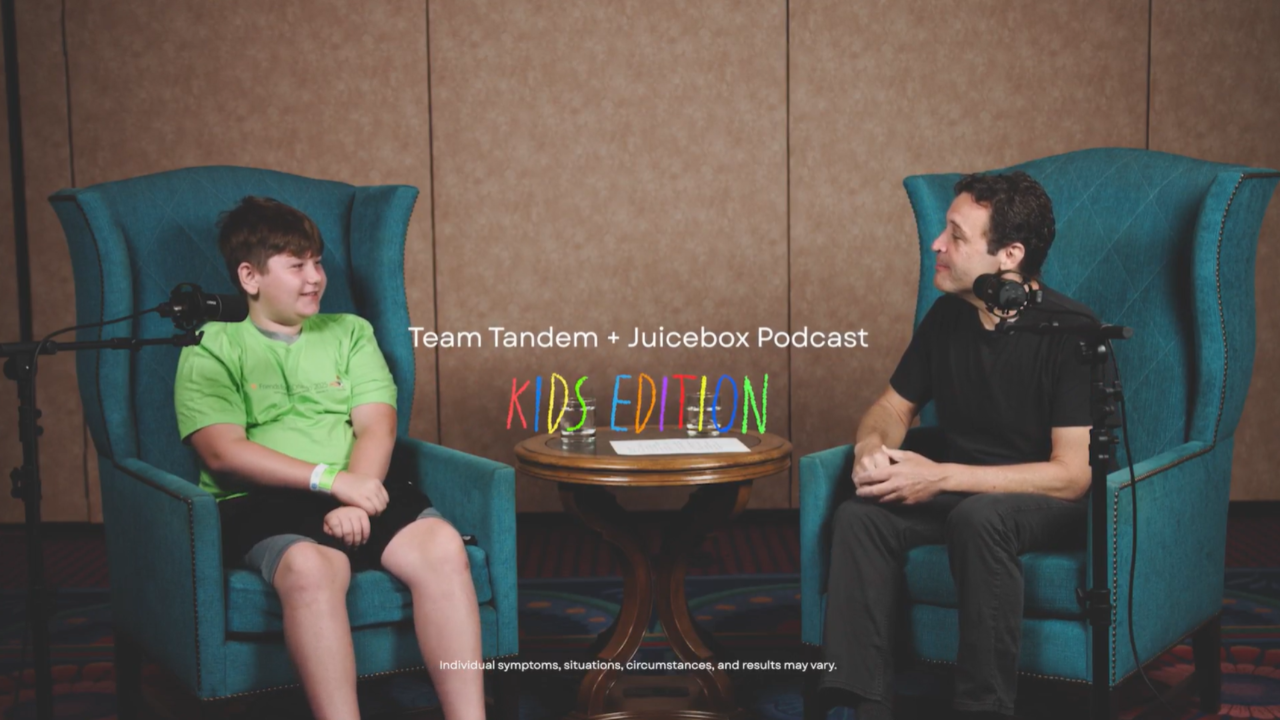






Please support the sponsors




The Juicebox Podcast is a free show, but if you'd like to support the podcast directly, you can make a gift here. Recent donations were used to pay for podcast hosting fees. Thank you to all who have sent 5, 10 and 20 dollars!

#1044 Glucagon Story: Heather
Heather's child has type 1 diabetes and this is their glucagon story.
You can always listen to the Juicebox Podcast here but the cool kids use: Apple Podcasts/iOS - Spotify - Amazon Music - Google Play/Android - Radio Public, Amazon Alexa or wherever they get audio.
+ Click for EPISODE TRANSCRIPT
DISCLAIMER: This text is the output of AI based transcribing from an audio recording. Although the transcription is largely accurate, in some cases it is incomplete or inaccurate due to inaudible passages or transcription errors and should not be treated as an authoritative record. Nothing that you read here constitutes advice medical or otherwise. Always consult with a healthcare professional before making changes to a healthcare plan.
Scott Benner 0:00
Hello friends and welcome to episode 1044 of the Juicebox Podcast.
Today on the podcast we're speaking with Heather. She's the mother of a 14 year old child living with type one diabetes. And Heather is here to tell us their glucagon story. While you're listening, please remember that nothing you hear on the Juicebox Podcast should be considered advice, medical or otherwise, always consult a physician before making any changes to your health care plan are becoming bold with insulin. If you'd like to save 40% off of your entire order at cozy earth.com, all you have to do is use the offer code juice box at checkout. I get my joggers, my sweat shirts, my sheets and my towels all from cozy Earth. They have something for everyone. It's quality, it's comfortable. And it's 40% off with the offer code juice box. It feels like everybody's using a G one. And if you're thinking about starting when you use my link, you'll get five free travel packs in a year supply of vitamin D with your first order that link drink ag one.com forward slash juicebox. And don't miss the completely remastered diabetes Pro Tip series. It's right back there and your audio app. It begins at episode 1000. You can also find it at diabetes pro tip.com and juicebox podcast.com. This episode of The Juicebox Podcast is sponsored by us med us med.com forward slash juicebox. Why would you go there to get your free benefits check and to get started with us med You can also call 888721151 for Arden gets her Dexcom and on the pod supplies from us Med and they have much more. We'll talk about that just a little later.
Heather 1:56
I'm Heather. I'm the mom of a type one diabetic diagnosed. It'll be three years ago in August and he will be 14 in September.
Scott Benner 2:05
Your son was diagnosed when he was 11. He's 14 now. Yes, sir. I'm asking the same question of I'm doing this four times today I'm asking the same question every time at diagnosis. Yes. What was explained to you, if anything about glucagon?
Heather 2:23
That it was for emergencies. Um, if you know his sugar was really low, he was unresponsive. And we had to do something right away. That was about it. Okay.
Scott Benner 2:34
Did you get the caveat at the end? But don't worry, this will never happen?
Heather 2:39
Oh, well. Yeah, of course.
Scott Benner 2:41
Not great. It's like they say to you, Hey, listen, these are the pedals in your car, the one on the right makes it go now the one in the center makes it stop. You'll probably never even need that like, right, right? Like, just if you take your foot off the gas quickly enough, you'll just cruise into like I don't. So my point around that always is to give me something and say this is very important. You might be in a life or death situation, when you need this. It's incredibly important for you to have it on you and for you to understand how to use it. But don't worry, because that'll probably never happen. And I get it. You know what I mean? Like I get that they're trying to like assuage your fears. But for me what that did was it when Arden had a seizure, I was like, I don't know how to use this.
Heather 3:24
Right, right. Well,
Scott Benner 3:26
he said we were never gonna need it.
Heather 3:28
So well. Yeah, like at this but at the same time, they kind of tell you like it's not this big a deal. You're not going to need it. But then also they terrify you of Lowe's. Yeah. I mean, I was terrified what I was going to do if he ever got low,
Scott Benner 3:41
the messaging is inconsistent as what I'm saying. Yes, yes, I would agree. Not helpful, but you did. You did? Sounds like you got a clear explanation of it. Yes. How long after that explanation? Did you receive glucagon in the house?
Heather 3:59
Like that we actually got the prescription and carried it Yeah. We I think we went home from the hospital with it.
Scott Benner 4:06
Well, okay, great. So you've got it right away. Do you have enough? Is it like spread throughout your life once at the school once in the bedroom? Or do you have we had
Heather 4:15
to, and so he kept one in his bag that he kept on him at all times. And then we had one at school.
Scott Benner 4:23
Did you spend any time explaining it to other people or did you find yourself thinking that's never gonna happen? It's okay.
Heather 4:29
Nope. I never explained it to school. I mean, obviously he knew how to use it. But if he was passed out that wasn't going to be very helpful. Yeah, no, I never explained it to anybody.
Scott Benner 4:42
What kind of glucagon that they give you in the hospital.
Heather 4:45
His was the in like, injection like we didn't have to mix anything.
Scott Benner 4:51
Okay, was it G voc or was it a different brand?
Heather 4:56
I think it might have been G voc.
Scott Benner 4:58
So they gave you Jeeva Could at the hospital? Is that the one you had with you when the event happened? Yes. You told me about that.
Heather 5:08
So he had taken too much insulin 70 units too much to be exact. Well, hold
Scott Benner 5:14
on, let's slow down. How did that happen?
Heather 5:19
So he, I, whether he was really, truly trying to overdose or not, I don't really know. But he was very frustrated, he'd been high, we couldn't get it down. He suffers with a little bit of anxiety and depression anyway. But you know, we've never really had an issue with it. And he was just kind of going through a lot of different stressors. And so we were at home, and I was actually supposed to go to dinner with family. He was going to go with us, but didn't want to. And so I was like, okay, cool, you can just stay home. And then he got really upset about that. And I'm, I probably check stuff too much. So like, I kind of always have a pretty good idea how much insulin is in his pump. And so I knew that he'd had about 70 ish units in his pump. And I decided not to go to dinner again, have no idea why just kind of that feeling that I shouldn't leave him alone. And then about 1015 minutes later, I heard his pump beeping. And so I went in and asking, you know, why was your pump deepened? And he told me because it's out of insulin. I said, What do you mean, it's out of insulin? You've had 70 units in there? And he said, Yeah, I know. I took it all. Oh, wow. And so you know, he has a 25 unit Max Bolus. So that means he had to, you know, multiple times put that in. And at that point, that was not important. What was important is I had to figure out what to do about this 70 units of insulin he had just taken. And you know, he's a teenager. So his ratios are pretty high. So I mean, I think I figured out that, like his carb ratio at the time, I think was around like seven or eight. So you know, I did the math figured out how many carbs would have to account for 70 units of insulin. And I just started shoving stuff in him, he'd had a bottle of Gatorade, a bag of Skittles, I literally gave him a spoonful of sugar at one point. And we were still double arrows down. And so I was like, I don't I don't know what to do. And I didn't want to take him to the hospital. One because, you know, was he going to make it to the hospital before something happened. And I felt like I could maybe manage this at home. I am a nurse practitioner. So maybe sometimes rely on that a little bit. But then I remembered I had a glucagon. And so I pulled it out. And I was like, we're gonna see if we can figure out you know, like, how many points glucagon will raise your, you know, your sugar or whatever. We never did figure it out. But I figured the worst thing that's gonna happen is if you go too high, then we'll deal with it. But I'd rather that be the case, then, you know, yeah. So I mean, he was still awake and talking and he was alert, and, you know, he knew what was going on. And so I injected him, actually, and I think I did it in his arm. And it stung really bad. And, you know, that it helped pretty significantly, I did have to give him another bag of Skittles. And about three hours later, he ate an entire pizza without taking any insulin. Because even after we had leveled out he kind of started to drop again. Yeah.
Scott Benner 9:14
Like a hole like I'm sorry, like a, like a pizza pie from like a pizza place pizza. Well,
Heather 9:19
it was a frozen pizza. Like, yeah, yeah. So and again, teenage boy, that's not a ton of food for him.
But yeah, I mean, he, he had to eat a whole pizza. We, I think by the time it was all said and done, he'd had like, two and a half bags of Skittles, you know, a couple of Gatorade. Like I said, a spoonful of sugar, the glucagon and a pizza.
Scott Benner 9:48
We get Arden's diabetes supplies from us Med and you could too. Why would you want to do that? Well, they're the number one distributor for FreeStyle Libre systems nationwide. The number one specialty distributor for Omni pod dash. They are the number one fastest growing tandem distributor nationwide. And, oh, what's this? They've served over 1 million diabetes customers since 1996. better service and better care is what you're going to get from us med. We use us med for Arden's Omni pod dash, and her Dexcom G seven. But you could also get G six Omni pod five, tandem. What else are they? Yeah, they got control like you from tandem. They've got libre two libre three, you gotta check them out. They're fantastic. They take over 800 private insurance companies and they accept Medicare nationwide. All you have to do to find out if they take your insurance, and I mean 800 Plus Medicare. Good chance 888-721-1514 Or go to us med.com forward slash juicebox. You're calling that number or go into that link to get your free benefits check. And then you're on your way. Arden just recently got a refill of the Scott's thinking I don't want to say the wrong thing. Dexcom supplies, I get an email that says hey, you want your reorders ready? You want it? You click a link? Yes. And boom, bang bing bada boom just shows up. As pretty much us med.com forward slash juice box. If you want to do your reorder, if you want you to do if you'd like to do your reorders the way I just described, check out us mint.com forward slash juicebox or call 888-721-1514. Cheese. That's incredible. It was the other thing. It's really not about why you're on here. But is the other thing you were gonna say is you didn't want to take them to the hospital because you didn't want them to have a psych hold.
Heather 11:53
Yeah, that was part of it. Yeah. All right.
Scott Benner 11:55
Did you ever figure out why you did it?
Heather 11:58
Um, so after everything kind of settled down, and I knew he was, you know, alive and going to be okay, we kind of talked about it. And what he verbalized was, he just wanted a break. He, he didn't want to die. He just wanted to go to sleep for a little while and not have to deal with any of it with diabetes with what's going on in his life. Like, just, you know, many of it.
Scott Benner 12:25
Was he not aware of what would happen with that much insulin? No, I
Heather 12:29
think he could we talked about that. And I think he thought that he would just go to sleep for a little bit. Like he would just kind of, you know, pass out for a little bit and he'd wake up and be fine. I don't he didn't realize that. He he literally could have died from it. Yeah, this
Scott Benner 12:45
is something I um, I think that we don't do enough. But I gave a talk recently to 400 adults, 200 of them were poor type ones. And the other half of them were their spouses. And I was doing a talk about supporting your spouse with type one. And I started just talking about like, you know, just make sure you know how to handle emergencies was another good thing to do. And I was just like, it just made sense. To me. I thought it was a throwaway line, like, you know, make sure your kids know when to call 911, stuff like that. And the number of people in the room who are like, whoa, whoa, what do you mean? It shocked me? Yeah, like, you know, like, I'm like, Well, you know, insulin can make your blood sugar too low. And if, if you have too much insulin, it could take all the glucose out of your blood. And that glucose is what your brain runs on. And your brain will shut off like a light switch and you can't turn it back on again. And right. And people were just like, why? And yeah, it just it, it resonates with me. I wonder how many people don't know that. We're had that thought of your son like, well, I've heard they said, I'll pass out. That'll be nice. I'll pass out first, right.
Heather 13:56
Yeah, I mean, that's really kind of I mean, you know, obviously after that, like, he did, you know, we went and saw a psych doctor, and he went to therapy and all that. And that kind of the conclusion from that was is that it wasn't a suicide attempt in the sense that he was consciously trying to end his life, but it was a I'm just tired of dealing with this, and I don't want to deal with it anymore. I just want a break from it. And him not realizing that that would have killed him. That's amazing. That's like, I mean, I, I, you know, not so much anymore. But when this happened, it's been a little over a year ago. I just kept going over and over in my head. What if I would have left and gone to dinner? Yeah.
Scott Benner 14:42
No, I mean, I don't want to tell you but he would, right.
Heather 14:45
Yeah, yeah, I know what would have happened. And you know, that I've been in that situation multiple other times, and I've always left like I've always just been like, you're fine. You can stay home because he was kind of thrown a fit. And so I was just like, you know, Any other time I would have been like, I'm still going to dinner like you're not going to ruin my plans. But for whatever reason that night, I didn't, I stayed home. And I mean, thank God I did.
Scott Benner 15:14
No kidding. Good for you. That's, that was well done for the whole thing he of course, I mean the glucagon and the way you walk through it and he did the math right away, which is something I don't think people think to do. They just I gave myself too much insulin. Instead of going, this is how much insulin I gave myself, and my insulin to carb ratio is this. So this many carbs will cover that insulin like?
Heather 15:36
Yeah, I mean, he and I, together, sat down and figured out like, you know, this is your carb ratio, this is how many carbs we need to make up for, you know, 70 units. And, you know, because he was a little high, so like, some of that was probably needed, you know, but definitely not 70 units
Scott Benner 15:52
in that sounds like, Wow, you did a great job. Good for you. He now what happens if his blood sugar gets too low?
Heather 15:59
He does. Yes. He. I don't know if it's because of that. But now he tends to run higher than I would like. I think, you know, because he doesn't want it to get low. But you know, it's the it's that balance, trying to find that balance. It's not, it's not easy.
Scott Benner 16:19
I think back all the time on to a story that I was told very, very early on, when Arden had diabetes. This woman's fairly younger child, you know, like, if I'm remembering, right, like eight, nine in that range, has type one, she has an older kid at 1516. And the child gets insulin for dinner. And she has to leave, can I forget she going shopping or something like that? She says to the older one, hey, remember, he's got to eat all that food, make sure he eats all that food because he's got insulin for Right. And, you know, the mom leaves, and the kid doesn't want to finish the food. Well, the 16 year old is doing their best to get the kid to eat. And it's not working. And so the kid kind of like, goes, you know, a little over the top and says, Look, you have to eat that or you're going to die. Right? And the kid goes, What do you mean? And he's like, we gave you insulin. If you don't eat the food, then the insulin is gonna kill you. And that was the first time that child ever heard that.
Heather 17:22
Yeah, yeah. I mean, definitely with my son. I mean, that was it never occurred to him that it could kill him. Yeah. I mean, you know, this is his medicine. This is what he takes to save his life to keep him alive. Right? It never, you know, occurred to him or really, I guess any of us to tell him that also, the opposite is true to do much of it can also kill you.
Scott Benner 17:44
You don't imagine your your Flintstones chewables are going to come to life and Right. Right, right. So yeah, the end of that story is the mother gets home from the shopping trip and the kids in a ball on the floor. Just inconsolable. And why did you never tell me this? Right, like so. I think we've always been very honest with Arden upfront. And and you know, we don't scare about it, but I just think she needs to know it would be like, I don't know, it'd be like putting someone in a car for the first time and telling them like, don't worry if it hits something, it'll bounce off. Like, cuz then you're like, oh, let's go. So well. Yeah. Wow. We did come through on a story. Jeez, that was great.
Heather 18:27
Thanks, it was, it was not fun. We are able to joke about it. Now. I tell him all the time that, you know, he has to be nice to me. I saved his life. And, you know, he's a he's a pretty good sport about it. I do still to worry sometimes. You know, I tell people like he walks around with a deadly weapon strapped to him. 24/7 like, you know, I know that sounds overly dramatic, but it really does.
Scott Benner 18:54
Yeah, I think there needs to be glucagon in places where you stop. You know, I think of schools a great example where you sleep on your person are these are places that I would want them to be. And I would also want people in those situations to understand signs, symptoms and how to use it.
Heather 19:12
Right? Yeah, yeah, I mean, it would be it would be nice.
Scott Benner 19:16
How did you find Chico crypto pen as a user to be?
Heather 19:21
I thought it was easy to use, but again, you know, I'm a nurse and so I'm familiar with how to give an injection and all of that. You know, I don't know how it would have been if I wasn't I mean, it's pretty simple like you just uncap it and darling.
Scott Benner 19:42
Yes. And then dark him.
Heather 19:45
Yes. And then he yells at you because it burns but yeah, I mean, I thought it was pretty easy. Obviously nasal spray the whole lot easier. Which we have also, you know, since this has happened When he got his nasal spray, like, we learned how to take it out and how to give it and I've made sure school knows how to give it and know,
Scott Benner 20:09
I think this thing is, like just part of it like, apparently, if you inject if you see the vaccine in your nose burns like hell on your nose to like, yeah, I
Heather 20:19
guess just Yeah, glucose in general like just so you
Scott Benner 20:22
know it's not glucose in the in the injection, you're not you're not injecting glucose, you're injecting something that makes your liver give off the storage that it has.
Heather 20:38
Okay, I don't think I knew that. So here, I've been a nurse 20 years and have a kid with type one and did not know that
Scott Benner 20:44
it's a completely common misconception, you are not injecting glucose you are injecting, I'm going to I'll actually get the breakdown. And I'll put it in this episode so people can really hear it. But you're injecting something that tells your liver Hey, you've stored glucagon in here, glucose in here and let it out. And that's what it does.
Heather 21:02
Yeah, that great, isn't that? Yeah, that is crazy. I mean, it's also good to know. But, you know, it makes you kind of wonder like, how long does it take your liver to figure that out?
Scott Benner 21:13
Well, the stores to how much does it take to like that, because you can't do it forever because of that, right? Because your liver will run out at some point. So and then it has to build back up again. And I don't know the answers to those questions, but I'll find out.
Heather 21:25
Yeah, yeah. Cuz I mean, I did you know, we had two pens. And so I did tell him that night, like, if it continues to drop, we're gonna have to do it again. We did it. We you know, I think all the food and pizza and all that kept him up. But
Scott Benner 21:39
you can definitely you could definitely do it twice. I mean, the last person I interviewed It was once, then twice more when EMS came. Wow. Yeah. To get them to get back to where they needed to be.
Heather 21:52
Yeah, I'm glad that I'm glad that I didn't. I'm glad we didn't get there. Right. Did you think that would have been scarier?
Scott Benner 21:59
Yeah, no kidding. Well, I appreciate you sharing this with me, that was a brave thing to do. And it's gonna help people obviously, understand better about why they want to have glucagon with them. So thank you very much. Absolutely. Talk to me. Alright, hold on, Heather. I'm recording again. Say that again.
Heather 22:15
Okay. I hesitated to use the glucagon. Because I thought this was only to use if he was like, passed out and couldn't talk to me. Like I had a moment where I thought I shouldn't give this to him. Because that's not where we're at. Very, but I didn't add, you know, I decided to, I'm just going to deal with whatever happens. I'm giving it to him. This, this is an emergency.
Scott Benner 22:41
I'm so happy you brought that up, because I have to jump on another call. And I'm glad we caught that. So thank you very much. I appreciate you going back
Heather 22:47
no problem.
Scott Benner 22:54
Well, first of all, I mean, we have to thank Kevin for coming on the show and telling us that story. If you have a glucagon story that you'd like to share, reach out to me through the website juicebox podcast.com. Another big thank you to us med us med.com forward slash juicebox number one specialty distributor for Omni pod dash and so much more always provides 90 days worth of supplies, and they have fast and free shipping. So I guess if you want your supplies, and you want them quickly, and you want to just click on an email to make them come 888-721-1514 or us med.com forward slash juicebox get started right now
I'm just gonna say this again. I'm now out of glucagon stories. I have a couple more people on the books but I found these to be very interesting conversations. If you'd like to be on the podcast, have a short conversation about a specific glucagon story please do reach out through juicebox podcast.com Don't forget to check out the private Facebook group Juicebox Podcast type one diabetes there's over 42,000 members in there at this point. fantastic resource. Don't forget the diabetes Pro Tip series has just been remastered it runs from Episode 1000 to 1026. There's actually a special add in there from should I tell you I'll just tell you a Sensia diabetes. You might not know that name but they make the contour meters. So contour next gen sponsored the remaster of the Pro Tip series. There's a really cool offer in there just for Juicebox Podcast listenership you got to check it out. Thank you so much for listening. I'll be back very soon with another episode of The Juicebox Podcast.
Please support the sponsors
The Juicebox Podcast is a free show, but if you'd like to support the podcast directly, you can make a gift here. Recent donations were used to pay for podcast hosting fees. Thank you to all who have sent 5, 10 and 20 dollars!

#1043 Cruising with Rayma
Rayma has a daughter with type 1 diabetes and a son with five anti-bodies.
You can always listen to the Juicebox Podcast here but the cool kids use: Apple Podcasts/iOS - Spotify - Amazon Music - Google Play/Android - Radio Public, Amazon Alexa or wherever they get audio.
+ Click for EPISODE TRANSCRIPT
DISCLAIMER: This text is the output of AI based transcribing from an audio recording. Although the transcription is largely accurate, in some cases it is incomplete or inaccurate due to inaudible passages or transcription errors and should not be treated as an authoritative record. Nothing that you read here constitutes advice medical or otherwise. Always consult with a healthcare professional before making changes to a healthcare plan.
Scott Benner 0:00
Hello friends, and welcome to episode 1043 of the Juicebox Podcast.
Rhema is the mother of a child with type one diabetes and the mother have another child who has been called stage one type one by TrialNet. And on top of that Raima was misdiagnosed with fibromyalgia for 12 years when what she really had was something completely different. While you're listening today, please remember that nothing you hear on the Juicebox Podcast should be considered advice, medical or otherwise, always consult a physician before making any changes to your health care plan. We're becoming bold with insulin. When you support the Juicebox Podcast by clicking on the advertisers links, you are helping to keep the show free and plentiful. I am certainly not asking you to buy something that you don't want. But if you're going to buy something, or use the device from one of the advertisers, getting your purchases set up through my links is incredibly helpful. So if you have the desire or the need, please consider using Juicebox Podcast links to make your purchases. When you use the offer code juicebox. At checkout, you will save 40% off of your entire order at cosy earth.com Get your clothing your towels and your sheets from cozy Earth and save 40% with the offer code juicebox. This episode of The Juicebox Podcast is sponsored by touched by type one, and their dancing for diabetes event is on sale right now touched by type one.org. Do you love dancing, the love helping people with type one diabetes, you're gonna love this touched by type one.org. Click on the Events tab, get your tickets, they will go quickly touched by type one.org. The podcast is also sponsored today, by the contour next gen blood glucose meter contour next.com forward slash juicebox. Get the meter that my daughter uses the one that has Second Chance test strips, the one that's incredibly accurate. Get the contour meter contour next.com forward slash juicebox.
Rayma 2:18
My name is Rima. I have a daughter who was 10 years old who has type one, she was diagnosed when she was four, I have a seven year old that TrialNet calls stage one type one. And he was 18 months old. They told us he you know would he had the highest likelihood of also getting type one and he's seven now and still has regular blood sugar. So we're talking to the endocrinologist about is it to live to live mass
Scott Benner 2:50
plasma, which I think is now 10 plays a map, which is called tz old now.
Rayma 2:55
T zeal that's a lot easier, actually. And so you're just about talking about that.
Scott Benner 3:01
You and I are talking on the same day, I put up an episode with a mom whose child was went through the whole Teasle clinical trial. I have to listen to that. Yeah. And back when they didn't, I believe it was double blind. So she didn't know if they were really getting the medication or if they were getting a placebo. You know, the kid had like some pretty amazing results. So she's pretty sure he was on the medication. It's interesting.
Rayma 3:26
We're really interested because he has normal blood sugars right now. But he has all the antibodies. And so technically, from what we've been told, when he turns eight, he'll be eligible. So it'd be like a real true prevention type of a situation versus early intervention.
Scott Benner 3:44
Yeah, they were just on I wouldn't usually do this. But last week, I have to find it for you. Episode 842 842.
Rayma 3:52
Okay, let me definitely listen to Lenny Ramos
Scott Benner 3:56
came on she's the CMO of prevention bio, they brought the drug to market and she talked all about it. They're doing talks about how they're going to use it or how they want to use it. Other studies they're trying to do like all this stuff, so might be interesting to
Rayma 4:12
Yeah, that'd be great. We're kind of like, we go back and forth. Because you know, you don't want to he still has normal blood sugar. So you just don't, you know, ya know, but everybody tells us it's just inevitable, it will happen, you know, sometime. And then to make things worse, we just all we avoided COVID This whole time until right before Christmas, and so he just had COVID as well. So I know that can be a trigger. So we're just trying to do all we can my daughter's diagnosis was a real blessing for him. And so many ways of him being able to know what his risks are and and since he's been three years old, I've been I've had him on Hydros, vitamin D and Dr. Sears omega threes that they use out of the study in Miami, and nobody else can come up with why he would have been able to lasts this long without
Scott Benner 5:01
getting it? How many of the antibodies does he have? He has all
Rayma 5:05
five right now, wow, at at 18 months old, he had three of the five, in the first one, he had two of the five, then he had three of the five and four of the five. And then through COVID, we stopped doing trial net, plus they got a little, it got a little hard for him once he was old enough to be aware that we were going in for the IV and all of that and just kind of the balance of being traumatizing for him plus the risk of getting COVID Going into the, you know, into the Children's Hospital. We just stopped and then because there's something to do now, what's the easy word for it t, tz yield, a tz yield. The my theme endocrinologist that's his daughter has started to see him. And so she's running the antibodies and everything. There, she just prescribed us a Dexcom for him. So we could see exactly what was going on. But I tested him, you know, periodically. And so far his blood sugar's have all been normal.
Scott Benner 6:03
Yeah. What is, I guess in your head? And you're married? Right? So, you know, the, the two of you when you're laying in bed at night, and the lights are off? Like, what's it like? Like, knowing like that, I mean, with pretty, pretty reasonable certainty, right? Your son's gonna get diabetes. So like, do you talk about that?
Rayma 6:25
Okay, so what's it like lying in bed? For for the two of us, Jason is, that's what he is asking. I worry, for sure. And I think about it, and I read a ton of what to do. And I think that's where I landed with the vitamin D and the Omega threes, it's the only thing I really looking at the studies have felt comfortable with, especially because he was so little, you know, I would go into the pediatrician. And they would ask me, you know, I tell him about him. And they would all look at me like I was crazy. And I even had to at one point had the trial net doctor called the pediatrician, because they were telling me like, I was giving him toxic doses of vitamin D omega three, they just thought I was nuts to be able to predict the fact that he would get it. Oh, I think they thought like, I was just projecting or something. But that's interesting.
Scott Benner 7:17
So your your pediatrician thought, like, there's a, there's a mom that comes in here. And she's, like, freaking out that a kid's gonna get diabetes, but how would she know that?
Rayma 7:28
Yeah, kind of they're like, Well, no, you can't predict that it's not genetic, you know, they weren't very knowledgeable, give it I do love the pediatrician and the office. But when I brought my daughter in, I had had her in multiple times over probably like the seven to eight months prior to her diagnosis for UTIs. And stuff like that. I mean, she was, you know, three and a half. So it was hard to, you know, at that point, it was hard to, you know, they would say, Oh, you have a new baby at home, and she's just wetting the bed because of you know, motional stuff or and I was traveling a lot for work then. So I sold pharmaceuticals and at some point genetic testing, and so I was gone a lot. And so people would say, Oh, the you know, she just hard because mom's gone a lot, you know, all the mom guilt. And then, right when we had, they're only two weeks apart, three years, but the two weeks apart. So we had a birthday party for both of them. She threw up that night, and it was like, three o'clock in the morning. And it was actual cake still. And I knew like I knew enough about medicine. I'm not a medical person, but I knew enough from always been in the medical field, selling things, you know, for almost 20 years. At that point, I knew enough to know like, you should digest your cake, you know, by then. And I just googled and googled and Googled, and the only thing that came up was Taiwan. So when I took her in for her four year checkup, I just was like, Please test let's just, you know, and I didn't realize at that point, it was just as easy as like me buying a glucometer and testing for blood sugar. You know what I mean? Because I was, wasn't as knowledgeable and, and they really pushed back and said, No, she's too young. We don't have anybody to sage in the practice that's diagnosed, and I just kind of said, Look, you're gonna put me out of my misery. Like, either you're going to test her here today, or you're going to tell me where to take her because I gotta go back to work tomorrow. And I can't keep thinking, right, you know, like, put the crazy mom at her ministry. About a half they left us in the room for about a half power. I was there with both kids by myself. And then they came in and she was like, Oh my gosh, you were right. And it still took me two or three minutes to understand. And I remember asking her, wait, are you telling me she has diabetes? Like they're Yeah, you know, you got to go home pack a bag and go to Chela.
Scott Benner 9:51
There's a an entire conversation to be had around the idea that someone at some point said your three year olds pee in the bed because you had have a job. And that's emotionally difficult for her. I'm like, That was fascinating.
Rayma 10:06
It was really, there was a lot of mom guilt in there. Yeah, a lot of people had a lot of opinions about that. But
Scott Benner 10:16
wouldn't it be nice diabetes? Yeah. Wouldn't it be nice if people's opinions were based on something other than the little thoughts in their head?
Rayma 10:23
Yeah, yeah. My mom and my mom and mother in law both had opinions that were sad. And you know, just a lot of friends said, people can do that, or and you go, and you take your kid to the doctor. And they say, well, sometimes their bladders just aren't that big. And I was like, but she was potty trained before. Yeah. And she was, she's very articulate extremely smart. So she always had been a good communicator. And sometimes she would tell me, like, I still wanted to stop playing, you know, and, and I had an accident, but then sometimes you could tell it, she just couldn't help it. And that's when I would take her and I was like, well, maybe she has a UTI. You know?
Scott Benner 11:01
I mean, in your story, the one assumption I kind of understand is, hey, listen, this lady's while their kid has diabetes. Now, she's freaking out that the boy has it. But But I don't Yeah, I don't know how the next thought isn't. But you know, she was right about the kid and the kid, then the daughter does have it. And it is a, you know, a thing that runs in family lines. So why don't we, it just everyone wants the same. Everybody thinks they know something. And they always want to say no and be right. It's not in
Rayma 11:31
this isn't a giant pediatric office. That's a really good very recommend. I really like my pediatrician there. And now they test every well check. All the way down. I think, too, because I was like you're doing cholesterol on these kids like the dragon testing for Taiwan. And I really pushed back like, come on, you're already pricking their finger.
Scott Benner 11:54
The cholesterol test on a little? Yeah, I'm
Rayma 11:57
like, This doesn't make any sense, you know, instead, but I did have to have the trial that Dr. Cole and I did have to bring studies in. And then they wanted, of course, to test him for levels. But I was already testing in various levels to that grassroots. Yeah. And so I knew like, that's how I figured out how much because I wasn't given a man, I still am given him a lot of omega threes and vitamin D, but his levels are in the high end of the range, not above the end. And you know, so far, I see only thing I can attribute because we've not done a carb low carb diet we've not.
Scott Benner 12:30
Well, you know, what's interesting, too, is when he gets COVID, I have to assume that you guys just go into a corner and go okay, well, this is it. Like,
Rayma 12:40
immediately. Yeah. And I've got my husband's more level headed and more calm. So he, he was like, it'll be it'll be fine. And hand foot and mouth was Hannah's trigger. My daughter. Oh, that's what my daughter had. Yeah, so that. That's stupid coxsackievirus. But they trialed it did call us. I think it was like March 3 of 2020. And said, essentially said hi to him. You know, he's little, and you don't have to have him in preschool, pull him out. And keep them at home. Because this has a high likelihood of triggering. So I do have to say that trauma out of Atlanta, and they were very doctrinaire, there was very thorough and called us from his cell phone on a Sunday.
Scott Benner 13:22
Oh, and was just like, hey, roll that kid up in a blanket, put him in the closet, because
Rayma 13:26
pretty much and then we just hid. And I, I had already been homeschooling my daughter. And so we just homeschooled and hid. And luckily, we had a great environment to do that. And then they got vaccinated. And we did that. And then we got that we, we thought, I thought we were good. I have autoimmune disease that we know now to which was fiber called fibromyalgia, by the doctors for 12 years until I had a first degree relative with an autoimmune disease, my daughter, and then all of a sudden they ran the right testing. And sure enough, it's autoimmune. And so, you know, her diagnosis is devastating, so many ways, but really has helped and been a blessing
Scott Benner 14:07
shined a light on it for a number of other people, right? It gets everybody thinking in the right direction.
Rayma 14:13
Well, and then all of a sudden, you're like, Okay, autoimmune disease. All right. Yeah. Well, my husband and I both have autoimmune disease on our sites and family. They're just not type one.
Scott Benner 14:22
Right? Right. Right, you know, then it all starts to make sense that you you have the fibromyalgia diagnosis for 12 years and what was really wrong,
Rayma 14:32
psoriatic arthritis and something called pots pots for that postural orthostatic tachycardia. Yeah. And I didn't know what was wrong. It took a number of doctors and a lot of time and effort and I don't work anymore because of that. But even when I was having a hard time staying with work, I didn't know how to articulate what was wrong because I had been misdiagnosed so many times and it wasn't to like really got it with the right doctors, but Yeah, her diagnosis really led to a lot of knowledge for myself for my son.
Scott Benner 15:05
We figured out my wife had hypothyroidism because Arden had diabetes. Yeah, she has a thyroid issue too. Right? rd. Arden does too. Yeah, yeah, actually, my family does but me my son has Hashimotos and Arden and Kelly that everyone takes a thyroid medication. As you heard earlier, this episode of the podcast is sponsored by the contour next gen blood glucose meter. But when you get a contour meter, what you're really getting is their test strips. Contour next test strips feature remarkable accuracy as part of the contour next blood glucose monitoring system. They're the number one branded over the counter test strips. And they of course have Second Chance sampling. Second Chance sampling can help you to avoid wasted strips, contour next.com forward slash juice box. Near the top of the page you'll see a Buy Now button it's bright yellow. When you click on that, you'll get eight options of places online to buy contour meters and test strips walmart.com Amazon Walgreens CVS pharmacy, Meijer, Kroger target Rite Aid, these are all links you'll find my link linking the link links below blink blink, blink blink. I'm just getting head over there. Now, won't you please listen, the contour meters are incredibly accurate. They are simple to use. They're easy to hold, easy to read, and they have a bright light for nighttime testing. Part of me wants to say that the second chance sampling is the biggest deal. But honestly, it's the accuracy. These meters are accurate. And I know a lot of people like to think well, I have a CGM. I don't need a meter. You do. You need a meter. You need to be accurate. You deserve it to be accurate contour next.com forward slash juicebox. Take a look at the contour next gen and the other meters available from contour. We use my links you're supporting the production of the show and helping to keep it free and plentiful.
Rayma 16:59
Oh, wow. Yeah. It's amazing how all of a sudden, it's like a light shines on it. And you go to the right doctor, and they're like, oh,
Scott Benner 17:06
yeah, when they start telling you like, exercise more eat right, do this. And you're like, I don't think that's the problem. Like, I'm just like, I'll tell you. I mentioned this to somebody the other day and I don't know if I talk about it enough but ardent takes T four and T three. Yeah, that you're brilliant to figure that out. Because Oh my god. We had to figure something out. She she couldn't stay awake. Like no kidding. In her in her year, her her high school yearbook we, you know, you buy a page to like, say congratulations to your kid, or maybe your kids are too young. But one day that school is going to hit you up for 100 bucks to put a picture of your kid in the yearbook when they're senior. And there's a really beautiful picture of her in the center of the page. And then all around her like nine different images are just cell phone pictures of her passed out on different odd surfaces. Like, like, face down on us, like on a stone countertop dead asleep. Or in the fetal position.
Rayma 18:05
That's real fatigue, like, yeah, people who have not experienced that don't understand that that's a level of fatigue, that's totally different.
Scott Benner 18:13
Art is not a like for anybody wanting to think that like art is not a lightweight. Like she's she's, uh, she battles. And so she'd make it all day through school, and then come home and sit down and just pass out, like for hours at a time. And you know, she would sleep all day and she couldn't get up early in the morning, all this stuff would happen and, and we figured it out once. And then she had a side effect from something else. And we attributed it as my fault. I attributed it to the T three by mistake. And so she stopped the T three for a while until we figured it out again and put her back on it but I'm going to tell you right now like she shuts off like a wound downclock without Saito mill. It literally is the only reason why she can she can do anything. So
Rayma 19:03
that's why it's so good that she's able to live a full life
Scott Benner 19:06
now. College she's going crazy. Yeah,
Rayma 19:10
I wish there was a like an actual auto immune doctor, you know, that is that would be more comprehensive because I think it's really frustrating to have to go to multiple different doctors, and then try to put the pieces of the puzzle together yourself. Yeah. And that is the parent. Well, that's
Scott Benner 19:26
definitely the game. The game is definitely you have to figure it out for yourself.
Rayma 19:31
People don't understand that. Like I'll talk to people that don't have autoimmune in their family or that have a simple auto immune Marcin bought immune and they just they think I'm not so I just don't talk about it a lot. Yeah. Well, here's because and then having multiple autoimmune diseases like how could you have all these and I'm like, wow, yeah, sucks. But it is what it is. You know, it's true.
Scott Benner 19:54
Yeah. And by the way, most of them have overlapping symptoms. So Yeah, fatigue is a huge one, you can look at the symptoms and be like, This could be any number of a half a dozen things. You know,
Rayma 20:07
I don't know how many times I was tested for thyroid, that was the only thing that they really looked at. But I was active. I was working, I was traveling, I had a successful career, you know, all of that and had autoimmune disease. But I would crash I would go Go, go, go go. And then I would completely crash.
Scott Benner 20:24
Yeah. Sometimes you will yourself a little bit. But it's even when you're doing it. You're exhausted. And exhausted. Yeah. And exhausted in a way that I don't think people understand. It's not like you worked all day and you're tired. Like it's a different. It's a different thing.
Rayma 20:39
I call it it's the all just take a little tiny nap while we're stuck in traffic right here. You know, like the irrational thinking you're on the freeway. stop and go traffic. You're like, I could just sleep for just like, you know,
Scott Benner 20:51
yeah, I'll shut my eyes while I'm driving. I'll be okay. Yeah,
Rayma 20:54
it'll be fine. It's like all this irrational, because you're like, well, well, well, well, yeah, that's probably not gonna be alright. If people have been fatigued when they're pregnant. It's like, just a ton of people. It's pregnancy tired. Like, it's really tired? Like, you can't? Well, are you willing to sleep anywhere?
Scott Benner 21:09
Very recently, I compiled a list of autoimmune issues from listeners, which is extensive, and you'd be like, shocked at some of the things that people are like, Oh, I have this and you think like, I've never heard of that before. And, you know,
Rayma 21:26
there's like 100, and something different autoimmune disease, right? There's so many, and they can be as you know, as some things that are fairly benign, and some things that are life threatening. It's really a scary
Scott Benner 21:36
Yeah, Jenny and I are gonna do like a defining series about them. So that, you know, if they feel like, Oh, I'm having these symptoms, they can move to that episode to try to like figure it out. Because I don't know another way you're supposed to figure it out. I spent so many years and so much time, like sitting in this chair, staring at this wall thinking like, Okay, what's happening? This is what's happening to her and Googling and reading and looking at symptoms again, and asking her frequent questions and just, you know, it's a it's not a great way to have to live. So,
Rayma 22:08
no, it's a little obsessive. I totally hear that. And I still do I read everything about prevention. I read everything about causation. I read everything about strong management, and we do a lot with management. Having good numbers.
Scott Benner 22:23
Hey, for fun, I'm
Rayma 22:24
pretty obsessive about
Scott Benner 22:25
that. Tell everybody what the noises are back home where you are.
Rayma 22:29
I'm on a cruise. And I'm sorry about the noise. They're filling the bar. I found a quiet spot to sit but they're getting ready. It looks like to open the bar at noon here. So
Scott Benner 22:39
no, that's okay. I don't I wanted to I wanted people to understand what like what you went through to be on the podcast. So thank you.
Rayma 22:46
Yeah, we're in. We're in Jamaica right now at Port.
Scott Benner 22:50
Oh, nice. That sounds lovely. Is it?
Rayma 22:53
Well, we're not gonna get off the boat. But it looks lovely. And it's nice and sunny and warm. So I use your whole family on the cruise. It's just you and your husband? Oh, no, that would be so great. No, it's all of us.
Scott Benner 23:04
No kidding. So yeah. So you did not end up like, keeping your son in the closet. He's He's allowed out now.
Rayma 23:12
He's in the kids club. Yeah. Well, he had COVID. Yeah, we take care of it at that point. We've just had it. You know, within the last really what happened was we planned this for Christmas for the kids. Because we got no, we ended up getting COVID right before Christmas. So it made sense to, to go out and venture figuring we've all been fully vaccinated. And we've had it so we probably have a few months at least. You didn't get it again.
Scott Benner 23:40
Oh, I don't know if that's how viruses work. But good luck. And I but I think I do want to ask you about that, though. So sure. I mean, obviously you did everything you could, right. Like he's got all five autoimmune antibodies, like these markers are sitting there telling you this kid's like getting type one diabetes at some point. And you're doing what you can Yeah, you're supplementing the best you can COVID comes around, you're like, oh God get in the house. Like, you know, that kind of thing. At what point? Do you just like, is there a point where you just say to yourself, like, what are we doing? Like if he's gonna get him? Like, do you ever have that feeling? Like if he's gonna get it, let him get it or, or do you? Or what's my question?
Rayma 24:23
No, I think what you're asking is like, okay, maybe this answers it and if not, you can ask it a different way. But I think we figure everyday will prevent them from getting it is a is a win. And it's so labor intensive. And once it's there, it's there. You know, I guess we've resigned to the idea that all the prevention is worth it. If he buys him more time. Right now we have to he has to be eight before he can we yeah, we got to make it till May. But I think you know, my daughter goes through so much match, you know how it is especially, you know, between Dexcom and pumps, and then they, there's always problems. And so then you're doing shots, and you're up all night and all that stuff. So I think, I think that, you know, everyday that we can save him from having to go through that as
Scott Benner 25:20
you're just trying to you. So it is as simple as you're just trying to create more days without typing.
Rayma 25:25
Correct? Yeah, I just I think that's where I've landed. And, you know, it hit me really hard at our last endo appointment. She's great. We, I really love our, our endocrinologist. And she kind of said something to the effect of, I've just, I've never seen anybody go this long with antibodies and not to diagnosed. And it was like, really a positive. And then afterwards, it hit me really hard. And I really emotionally had a hard time for a few days, you know, just with the reality of it.
Scott Benner 25:55
Yeah. Is that because it felt like there's no way we can keep this going much longer if that's her feeling?
Rayma 26:02
Yeah, I was like, for lack of a better way. It was like, you know, sucks. Oh, I knew it sucked. But denial is a is a wonderful coping mechanism. And it was a compliment. I mean, she didn't mean it in a negative way. No. But but it was still like, afterward, I was emotionally like, like, my cousin had called me with something else emotional. And I just had to tell her like, I can't even talk to you. I can't even articulate what's going on with me right now. But I'm not going to handle anything emotionally. Well, for right, a couple days.
Scott Benner 26:32
If you're looking for support on your thing, all you're gonna get is the crying person on the phone. So please,
Rayma 26:38
it was exactly it was like, I'll apologize. And then I'll just start crying. Mad any like, please, in a couple days? I'm sorry. I didn't mean to make you mad do. Please. How much? Does that understand?
Scott Benner 26:52
How much of your bandwidth do you think you're giving up to keeping your son as safe as you can?
Rayma 26:58
I think autoimmune disease in general takes up the majority of my bandwidth just between myself, you know, Hannah, and Alan. But I think for him, I mean, I'm giving him the vitamins every day, we're constantly washing. I kept him homeschooled, you know, not because I necessarily wanted to, but because I felt like it was better for him with COVID and everything else. So I'd say maybe 20%. And then another probably 40% goes through type one,
Scott Benner 27:33
all I can think about is here's the one I'm imagining you've thought about this? Awesome. I'll tell you what I'm thinking about, you'll tell me if you've considered it, that there are so many people walking around who have not had antibody testing, who will one day get diabetes, but might not. But I've spoken to people who have gotten it in their 50s and in their 40s in their 30s. And like, Do you ever do that? I know you said earlier you think that the the efforts worthwhile? But do you ever think about what if this is in his head for the next 30 years? And he doesn't get diabetes till he's 40 years old? And we spent all of this time?
Rayma 28:11
Oh, yeah, we talked about all the time. And then I have a lot of friends who haven't antibody tested their families at all, and they have siblings or themselves. But I'm a I'm a like to know person. And I believe in science. So I you know, I sold science and genetic testing and everything. And I believe in it. You know, so I am a want to know person. And that's what I figured out over the six plus yours is because you know at first I was like What do you mean, you're not going to test your family? Like what do you mean? You have a younger siblings, older sibling, like it just seemed crazy to me. But then I figured everybody's personalities are a little different. And, you know, respecting those boundaries, but we just set. Somebody sat behind us at lunch yesterday and he was diagnosed at 44. Right? He's wearing a Dexcom and MDI, because it's not quite ready for the pump, because that's how I was like, well, when were you diagnosed? Because he said he's not ready for a pump yet. That's like, okay, so it had only been a couple of years, but he's not carrying around a glucagon. He's not carrying around. vaccine. He, you know, he's got chocolate chip cookies for his lows. So my eye twitch, you know, my eyes twitching while I'm talking to him. You know, and I'm writing I'm Tom texting them our cabin number. You ever ever an emergency starts throwing up through that? I've got got back see me and my room.
Scott Benner 29:33
Well, everybody manages differently. Everyone's understanding of it is different to I mean, honestly, if you can catch a low with a chocolate chip cookie, you I mean, my like, my first guess would be that he doesn't drop fast a lot. So yeah, maybe he's not on MDI, too. Well, maybe he's not using that much insulin. Like maybe yeah, maybe
Rayma 29:54
he's running high. Yeah. A lot of people run real high and that's, you know, different to I tend to I try to keep her no more on range. So we tend to have more lows.
Scott Benner 30:07
I'm certainly not here to tell anybody how to live. You can keep your blood sugar wherever you want to. But I also have had, you know, 100 conversations with people who thought that at 1.2. And now wish they could find a time machine. So, you know,
Rayma 30:22
well that and I figure she's gonna learn, you know, four years old, she's gonna learn how to manage, from how we manage. Yeah. And so I want to try to set the right example, you know, I mean, I know she'll rebel at some point, but hopefully she'll swing back to, you know, I want my one C to be as close to six are, as we can, you know,
Scott Benner 30:41
now, I know earlier, you said that. One doctor told you, they can't believe that your son's had these antibodies for this long and hasn't been diagnosed yet. But, but has anyone like from trial net? said how? Like, what's the longest they've seen somebody with five?
Rayma 30:58
No. And they're always like, they're always shocked when we talk to them, you know, because they gave him the highest percentage at 18 months old that he was greater than 50% to get it in the next five years. And that was when he was 18 months old. And that's the highest percentage, they'll quote. Okay, so they kind of just said he will. And you know, what he keeps asking like, well, when do I get a cell phone, and we always say, Well, when you get diabetes. So we tried to make it positive. There's any positive part in
Scott Benner 31:31
you know, kids getting into Instagram along with this diabetes. So
Rayma 31:36
Hannah's had a phone such an iPhone since she was five. So it's a little bit different, you know, of a thing. So 10 years old, she's pretty good with their phones, you know, and we just tried to make anything any positive joke we can make out of it for him. And, and when he says, No, I did diabetes, we say, well, we don't know, buddy, but you know, chances are really high and your sister gave you a great gift of knowledge. And we're gonna, that's why you take the vitamins, we're gonna keep monitoring you. And that's why you get blood draws, you know, we just try to be as honest as we can, so that he can be mentally prepared.
Scott Benner 32:13
But so by being positive, but how well do you think he's acting? Do you think he's handling it?
Rayma 32:18
Fine. It's the only life you know. So like, he doesn't, you know what I mean? We've been talking about it for so long. And he watches her and sometimes he pretends to have died. You know, he wants to be like his sister. So, you know, if there's an empty pen he's carrying around pretending he's giving themselves shots. He asked to put the Dexcom Yeah, well, okay.
Scott Benner 32:39
Sorry, that was that ice?
Rayma 32:41
Yeah, totally try it the guy. But the you know, I think he doesn't know any different. And, you know, he knows he doesn't want to get it. But at the same time, he pretends he has it. So do you think he pretends
Scott Benner 32:53
because he's trying to prepare himself like practice for what he's gonna need to do?
Rayma 32:57
No, I just think that you always want to be like your older sibling. You know, little.
Scott Benner 33:01
I don't know. I never watched my brothers want to be like me. So I'm not sure.
Rayma 33:06
I don't know. I'm the only child so I can't really talk about it. But I see that a lot of a lot of kids just really want to be like their older siblings. So here's my take. That's what I attributed to
Scott Benner 33:16
knowing that we're on a on a phone call with a guy climbing bottles behind us and I don't know you take all this with a grain of salt. But you're kind of tight Bay, right? Sure. Yeah. Like, like prepared and together. Yeah. I'll tell you right now. We'll never know. I think he's practicing. It might be Yeah, I feel like yeah, that sounds that's what it says. I mean, listen, obviously, I have no idea. That's how it struck me. Like, oh, he must be
Rayma 33:41
smart, too. So he might, you know, he might be subconsciously doing that. He's real smart. He's a little reactive. And you know, hard to handle. Sometimes there's always listen, but he's real intelligent. So
Scott Benner 33:51
he's a boy. He was a boy. Yeah, pretty
Rayma 33:55
much. Yeah. He's a boy. He's but he's real smart. I mean, and he gets things, you know, he's intuitive. Yeah.
Scott Benner 34:02
I like how we've, in the last 20 years, decided to label everything to the point where, like, people like, like, they're like, my son's got like, a lot of energy. And he's hard to handle. I'm like, yeah, yeah. Yeah, that happens a lot.
Rayma 34:19
It's true. It's really true. You know, we try to be patient with it and everything, but it's a lot harder than my daughter.
Scott Benner 34:29
Gotcha. Hey, did he just kill someone with a bottle of vodka?
Rayma 34:32
Now he just took his cart and walked out a little quieter until he loads up for the next round.
Scott Benner 34:39
I was like, he definitely he just comes someone over the head and he's dragging the body out now.
Rayma 34:45
That's hilarious. There's nobody back here yet. So we weren't able to find like a quiet ish place.
Scott Benner 34:51
No, that's fine. Also, you sent me an email that I never saw, which I'm assuming during that email, you might have gone like, you know, can we move this to another date and I just never respond. Aditya so I apologize.
Rayma 35:01
It wasn't a big deal because I knew from the other episodes that you don't respond to your email. So but and I understand that feeling of being overwhelmed by email, so I didn't really think about it. But then when I got the confirmation email yesterday, I was like, oh, okay, we'll try it.
Scott Benner 35:19
So you said you're not getting off the boat? Where all the boat going? And do you get off anywhere?
Rayma 35:25
We're thinking about maybe getting off tomorrow in Haiti, cuz they have their own little private island like beach, we just really wanted to get warm. Get out of the cold weather. And then, since we just had COVID, we wanted to do something, you know, because we had been so limited. So and we'd like to travel. So this seemed like we would try a cruise and see how the kids did. Or you liked it? And
Scott Benner 35:51
are they liking it? So far?
Rayma 35:53
Yeah. Yeah, we're just kinda like, eating, I'm happy not to cook and swimming. And like kids enjoying
Scott Benner 36:00
Can I tell you one of my activities, I have a cruise experience that I'll never forget. And it's the only memory I have of the entire time we were on that ship. It's a kid took us a baby pool. And then everybody packed up and ran away. And they drained the pullout, some poor guy had to wander in there and retrieved the poo. And then they cleaned it and filled it back up. That's my only memory of that trip. So that's for days. And as I think back on it, I can only remember that, but again, nothing else. I hope you have a Pat was the I hope you get a better indorama point. Yeah, better enduring memory than I have.
Rayma 36:47
Yes. So far. It's been good. We've got a couple more days and a nice kind of getaway for everybody. Yeah.
Scott Benner 36:54
Does your daughter have any, like, reactions to the idea that her brother's going to get diabetes? Does she ever talk about that?
Rayma 37:03
No, not really, you know, we've talked a lot about her, her giving us all the gift of knowledge, you know, kind of kept her positive. She really did. I mean, give him the gift, the knowledge so we could try to intervene and change some of the course of my, what I was diagnosed with and how my treatment and management went. So yeah, we just really try to keep it focused on that. And
Scott Benner 37:28
okay, no, I was just wondering if, if like it because if she had concerns, if she had concerns or thoughts about him, I would, I would jump to the conclusion that that would mean that those are the things she thinks about for herself. So I was just wondering if there any of that ever happened, was looking for some No, no, no.
Rayma 37:45
Okay. Nothing that she's verbalized. I mean, I think she has said to him it, you know, it kind of sucks. But then she's pretty quick to talk about then you get a cell phone and you get to eat all these treats. And there's always candy around because we didn't do any candy. We didn't know juice. None of that before. Oh, I just figured they didn't need to. They were little kids. And we ate really healthy.
Scott Benner 38:10
Do you still it just there just happens to be candy now?
Rayma 38:14
I'm mostly Yeah, I mean, we still eat pretty healthy. But we do. I feel like we're much more liberal now. Because I hate to say no all the time about food and make it even more weird. Because I think that you already have a weird relationship with food. When your family's rushing in the middle and I'd be like, Please drink this juice or hurry this yogurt, you know, and they're asleep. Like what? Who would have won the world? Nobody? 99% of everybody else like no, you can't have anything to eat till breakfast. We're like, just do.
Scott Benner 38:49
And most people will never eat a yogurt in their bed at 3am. That's for certain.
Rayma 38:54
Yeah. Or have your parents like be like, Do you drink this juice? If you don't drink this juice? I have to shoot you with this needle. Please drink that. Joe,
Scott Benner 39:02
do you have a lot of lows like that that are like, panicky or no.
Rayma 39:07
We do. We manage tide. And luckily, she's never had any adverse events like from having a low blood sugar. So she'll be you know, 40s and we'll just be up for a couple hours making sure it comes. Is that like just happened to us?
Scott Benner 39:26
Is it a fast drop to 40? Or is it a slow? Yeah, it is a fast drop.
Rayma 39:31
Yeah, like we've done something wrong. Like dammit, what did I do? I gave too much or something. But the Pannu pumps are great. I mean, yeah, I was
Scott Benner 39:41
gonna ask what gear is she using?
Rayma 39:43
She's using a T slim with the IQ control right now. She has an adhesive allergy. Okay, which makes things a little bit more complicated. So the small footprint of the T Slim is much better. Has the board Yeah, she tends to react for the awfully to the off In the pods, but we've used them all
Scott Benner 40:02
using control IQ.
Rayma 40:05
Yep. Which has been a game changer. I mean, turn it off for the lows. That's amazing, right? It was the first like, I think the first couple of weeks or the first good night's sleep I had had years and years where you actually were like, oh, it's in terms of it works like that. Hmm.
Scott Benner 40:23
So when you're talking about like a fast low, yeah. Are you talking about like miscalculating? Like, what what was eaten and giving too much?
Rayma 40:31
Yeah. Yeah, swagging it wrong? You know, that's usually what or for whatever reason her body metabolizes it differently. You know that that time but what what did we just figure out on the cruise here, there's like a thing of sugar free syrup and regular syrup. And she'd been using the trick sugar free syrup. But we had been dosing for the regular syrup, because you didn't realize it was sugar free. Well, then a little things
Scott Benner 40:54
like that. Yeah, that'll make yellow.
Rayma 40:56
Yeah, yeah, you're destined for like straight corn syrup. It's not, it's not there. So then you're like, hurry ice cream, at least at that breakfast. So it's not overnight. And then on the cruise, like he just, you know, you're kind of estimating everything she's eating and guessing. And I'm really we're doing a lot of transition for her to her own management at 10. She's getting ready to go to public school. So, you know, I want her to be able to do her own management and she's going to diabetes camp, but she's also going another camp this summer. That isn't type one. So did you also kind of transition so a lot of times we'll let her does herself, which also makes that but she's on a really hard like, she's on a six to one carb ratio, too. So it's really easy to make a
Scott Benner 41:46
mistake. what's your what's your Basal setup?
Rayma 41:50
She's around her Basal setup around just under 50. Right now she's getting she's she's doing a ton of insulin way the day. Yeah, she's doing I think it was 44.6 or something when I just, of course, the pump just went in the ocean. Right before we're going on the cruise. And I had to get a new pump. overnighted. So I just did all the settings again,
Scott Benner 42:14
through the pump in the ocean. Not on purpose, I assume?
Rayma 42:18
No, she ran in the ocean with it on. Oh, it was supposed to you know, and then double down on the sand and it was done. Can I get the malfunction code?
Scott Benner 42:27
I have to ask you. If you don't have to answer me, but she's 10. Will you tell me how much she weighs?
Rayma 42:35
about 120 pounds? Like an adult? Yeah, like she's the same size as I am.
Scott Benner 42:41
Does she have periods or anything like that?
Rayma 42:43
Not yet.
Unknown Speaker 42:45
Wow. Okay,
Rayma 42:46
lots and lots of insulin. We put her on a little bit of metformin to try to help with sensitivity. really help didn't help. Not really just for whatever reason her body needs ton of insulin. And I think maybe because she was diagnosed before she had no honeymoon period at all. That meant she was dying. When she was diagnosed. She was about 500 So it wasn't you know, I caught it early enough. She seemed a lot insulin. So it only okay, we're trying not to resist. We're trying not to restrict food. Yeah, you know. So
Scott Benner 43:20
she have a like a, like an activity level. That's like she moving around every day. Is she hydrated? Like all those little things are like covered just hydration. There's that stuff?
Rayma 43:33
Well, the hydration is hard because it's a constant nag. But pretty good. I mean, I'm I make them fill up their water balls in the morning. And, you know, they can't have any other drinks till the waters gone. And you know, I'm a little bit of a Yeah, around some of that. But, you know, the hydration is hard with kids. They don't want to drink water they want to play.
Scott Benner 43:54
You know, it has her has her thyroid. I'm sorry if I've forgotten. Does she have thyroid issue?
Rayma 44:00
No, not that not that's ever shown up on bloodwork. But we constantly have checked for that. And I think she has a gluten sensitivity but not celiac. I certainly do. And I noticed that if we don't eat gluten, the numbers are a lot easier to control but then somebody because it's like super easy to control. And she's never over 200 And then some days it's like we can't beat it down with a stick.
Scott Benner 44:22
Hold on one more. I have a couple more questions. So where's your TSH when they test it? I'd have to look
Rayma 44:28
but it's like mid range, like in the fight even on the hi. Hi and yeah,
Scott Benner 44:34
okay, so I'm gonna tell you right now you should medicate anything over a two over a two. So I'm gonna guess that's gonna help with your insulin sensitivity.
Rayma 44:44
Is that the same? Like you'd go to the same endo and talk to them about it?
Scott Benner 44:48
Yeah, I mean, I have an episode you can listen to with Arden's integrative endocrinologist who handles the thyroid of all the people in my family and now a lot of people in the world have heard her talk about it. She would Medicaid over a two, a five a five is? I mean, I would think
Rayma 45:06
her like she's 2.9. I feel like that's the number I'm thinking.
Scott Benner 45:10
Okay, well, that's still that's still, I think that's still needs T three, or T four. Excuse me. Before
Rayma 45:19
I have to push on my endo with that, or I'll have to find another one does to treat.
Scott Benner 45:24
You have any other symptoms of thyroid? Like, do you think she's carrying more weight than she should be?
Rayma 45:31
Yeah, but I think that's part of her genetics. Takes after dad's side of the family, so she kind of hold it a little more. And she loves to eat.
Scott Benner 45:40
Yeah, yeah. What about energy? pretty energetic.
Rayma 45:43
Although she started hit those teeth, like preteen years or she wants to lay around
Scott Benner 45:49
and sleep mood swings, like moody.
Rayma 45:53
No, no. But I definitely think it's worth looking into. Yeah, well, I mean, there's got to be some reason for the the need of so much. And
Scott Benner 46:02
I'm a little like baffled that your endo knows that your 10 year old using two units of insulin an hour as as basil and sees her TSH at a three and can't put those two ideas together and make a decision. Like that's a strange. A strange thing. presser Yeah, and with all the autoimmune you guys have going on. Do you have like you said your husband's side had it too? What? What does he have going on over there?
Rayma 46:30
Um, like lupus and what is the MG Mastis? Okay, so yes, right. saying it wrong. And just what about you're not a ton? To be honest. I'm kind of the only one that I know of besides my cousin. I think she retired issue.
Scott Benner 46:54
Okay. I don't know. Like that. Just seems that seems reasonable to me to look into also. Yeah. Do you think she has trouble with digestion? Yes. 100%. All right. That's gonna be the other piece of it then. So
Rayma 47:09
yeah, yeah, that I've looked into those things over the years. What are your thoughts?
Scott Benner 47:15
Alright, so I just put an episode out about this, because one of the things we figured out for Arden after a long time of thinking, so I'm googling hos.
Rayma 47:26
I was gonna gastroparesis.
Scott Benner 47:28
No, no, your your pancreas has two things it does. It makes insulin and it aids and digestion. And so
Rayma 47:37
emmalin or whatever, right? That's the other one that kills off Amazon. Yeah,
Scott Benner 47:41
there was a while back where people were talking about like taking a drug to help with it. But let me see if this sounds like something that's happening for you. So Arden was not digesting food properly. And she was not going to the bathroom very frequently. Like not not eliminating every day. Does that happen on your on your side over there?
Rayma 48:01
Yes. And that's been since she was like an infant. Yeah. So type one.
Scott Benner 48:06
Right. Arden had that problem for a long time. Does she not go for days and have diarrhea?
Rayma 48:13
No, it's just not that I know of now at 10
Scott Benner 48:16
She don't tell you don't talk to you about her poop. Yeah,
Rayma 48:18
she won't. Yeah, everyone you talk to her. But I think before what would happen it was just she would have stomach ache. Be bloated and and then you'd go in and people would be like, oh, yeah, you know, this is just like school.
Scott Benner 48:33
So we intestine so ardent takes a digestive enzyme and every meal now, just a little tablet that helps you digest your food. Her stomach doesn't hurt anymore. And she added a magnesium oxide to help her go to the bathroom. These are
Rayma 48:51
magnesium, zinc, magnesium oxide, and what's the digestive enzymes.
Scott Benner 48:54
So the one Arden's using is just from a local health food store. So I can't tell to you because unless you live in like my town, you're not going to find it. But I saw how it was helping her and reexamined some of my own issues. And I started taking it too. So I was in a situation where I had to take fiber every day, or I was in trouble. And now I don't have that anymore. I'm using a company called Pure encapsulations digestive enzymes
Rayma 49:25
ultra pure encapsulation, digestive enzymes and
Scott Benner 49:29
there are certainly other competent there are certainly other companies that make it I take one at a regular meal and I take two if I'm eating something high in protein or fat, Arden's doing about the same thing. This is keeping the digestion moving, then the magnesium oxide and be careful because there's different magnesium as you want oxide. And I'm trying to find the dose I
Rayma 49:54
tried a bunch of magnesium all the time. Yeah, well I made I ever doesn't seem to do any different.
Scott Benner 50:00
no fiber is a matter of fact, when your digestion screwed up fiber can back you up more because it also can't digest the fiber.
Rayma 50:06
Yeah, I remember before the type one, we take her into the petri dish and explain it. And they were like, we'll just give her more and like Josh, and I haven't given her anything but fruits and vegetables for days, like, you think like, I'm, I haven't tried all that stuff at home before I came here. Like, I'm here because none of this other stuff is work. And then they said from you relax forever. But then if you read about that, over time, that's really not healthy for you.
Scott Benner 50:28
No, no, that's that those things are supposed to be there fixes for a problem like you think MiraLAX if you get into a bad situation, right? You want to be taken every day. Listen, I'm not a doctor. I'm almost an idiot. But if you had a digestive enzyme to that kid, and the magnesium oxide to get her going, I would be surprised if that didn't also change her insulin needs.
Rayma 50:56
Well, we're definitely going to try that. Yeah. Because
Scott Benner 50:58
that because the food because the food sitting in her longer, that's impacting her blood sugar longer,
Rayma 51:05
right? And sometimes, you're given the insulin and it's too it works too quickly. Do you want me
Scott Benner 51:12
because she's not digest her body has been digested it Yeah. And then on top of that, you're and this is as close as I get to sounding granola, but then your stomach becomes an inhospitable place, and your gut microbiome gets all thrown off. And that does impact a lot of things in your body. So her guts, probably a cesspool in there. And then, you know, she's, oh, my God, I think I think it's possible you sent me an email, like a week from now. And you're like, wow, things are so much different. Because you'll be surprised how quickly the enzymes and the oxide together make the system flow properly. Sorry for the word flow. But like, yeah, so be careful when you start doing it. Like, really, I would start with meals that are not as intensive, like, need their need for insulin, because I don't want you to get into a situation where you're, you have way too much insulin going. And you could you could see that. So well. That would
Rayma 52:09
make sense. Just because if everything else starts working better than you don't need lessons.
Scott Benner 52:13
Yes, yeah. Just, I would keep your head up for that. I'm glad we spoke. I can't tell you how many people I've heard back from after these episodes have come out about how they've tried this, and it's worked for them. So
Rayma 52:27
awesome. Yeah. Well, we would love any help. I mean, it just, I think I don't think people understand like, what a 24/7 365 You know, pain it is to try to figure everything out and, and to do a good job with it all. It's really hard, I think for us, and I feel like, it's a blessing for me to do it for her in a lot of ways until she's older. Do it on our own, because it's a lot to do on your own. Especially like in the middle of the night and everything else.
Scott Benner 52:59
I was gonna say there are some things but I think there are more than some things that I've only been able to figure out because of the podcast because I'm talking with people and somebody will say something I'm like, but that makes sense, like you'd like and then I can incorporate that into my thinking. And I think we came to a number of Arden's like, resolutions. Because I've had so many of these conversations, and I've been getting like hearing people's stories where you're like, Well, you don't digest food, right? You don't Your stomach hurts like, okay, like, the key is to not get like locked into like, well, this happens to people. So I guess this is what's going to happen to her. I was always, always coming from the perspective of I'm going to find a way to figure this out. So
Rayma 53:40
Well, that's the whole idea behind the podcast, right is to like, share the experience, like you're so popular and why people like it so much is that it's like shared your experience. gives you other things to think about. And like you said before, everybody manages differently. Yeah. So you've learned about how other people do things, and what they go through and how they figure things out.
Scott Benner 54:01
It's also about having real conversations, and not just like, going through a bullet list of things. You know, I mean, we've all heard other like media somewhere where you just realize like the person who's there as the guest came in and said, here's the things that I want to talk about, then the host isn't really a host or just reading questions. They're going back and forth. And it's all kind of canned and pre planned. But we don't get to your daughter's stomach issue today. It's not on the list of things that you told me about. Like we don't just have this like conversation. Like I hear things and I'm like, Wait, that doesn't make sense. Like, listen, there's no shame for how much insulin you need. I don't I don't subscribe to that. But it does not make sense that your daughter's using 50 units of basil a day. It just doesn't Yeah, there hadn't hasn't been a
Rayma 54:47
long time. Yeah. We're just talking about it with her Endo. You know, recently she double checked the thyroid. So I'll have to go back and double check that again and see. Yeah, and then I'll try the digestive enzymes.
Scott Benner 54:58
Digestive enzymes, the magnesium oxide and their thyroid, and I'm boy, I want to hear back from you send me send me an email, I'll actually pay attention to it. I swear. Originally, oh, sorry, you didn't I didn't see that last time. I apologize. That's
Rayma 55:13
okay. You're busy. It's a good sign of success.
Scott Benner 55:17
That's really lovely. Well, I, I'm gonna say thank you very much for for giving up an hour of your vacation for this and sharing a interesting perspective of obviously some, some different ideas and things that a lot of people, you know, don't go through. The thing with your son's antibodies is just, it's I'm sorry, it's his life. But it's fascinating to listen to, you know?
Rayma 55:43
Yeah, it should be interesting to see if we can, like if he's in the age of where medicine has caught up with us just enough where we can actually prevent it for him
Scott Benner 55:52
would be interesting. I'll tell you Yeah, like, I know, it would mean a lot to you, even if it got put off for a year or something like that, like, you know, but you know, I asked the question, well, if you go listen to that episode, with Lenny Ramos, I said, Do you have any, like hopes that this can work longer for people? And she can only answer what they've what they've said publicly and what they've, you know, what the FDA has cleared them to say about the drugs, so she can't answer. But I thought, like, I wonder what her real thoughts are about, like, how long might this be able to work for people?
Rayma 56:30
Well, I did listen to another podcast. And I'm trying to think of what the name of it is. But it had one of the researchers that was involved with the clinical trial. And what she did was did data meta analysis, I think it's called where she went back through all the data points. And she was suggesting that you would use it kind of like cancer treatments. So you would give a dose and you would monitor the antibodies. And as the antibodies started to creep back up again, and increase, or a once they started to increase or whatever, you would give another dose. Yeah. And that you would kind of keep it at bay? By managing it that way. And, you know, it seems like a lot because it's what an 11 day and fusion. Yeah. Every day, and you know that, but really, if you think about it, if you only had to do that once every few years, then it would be a lot better. Yeah. What the hell you? Yeah, management of diabetes, you know, you're 65 24/7. So we might be on the edge. And then that might, you know, what, if that prevented it for him, you know, for his whole life. And that would be totally worth it. And they're talking about even having home health. Because we don't live that close to our window. You know, the idea that somebody would just come to the house and do it for us. Seems pretty darn cool. Also
Scott Benner 57:54
seems very reasonable. There's, I mean, there's private companies now that are doing hide, like, like IV hydration is in people's homes. It's like, it's like an expensive boutique thing. But my point is, is it's possible. So
Rayma 58:06
well, I've done it for my pots. So I mean, I know you could do it. Cuz hydration is a huge part of that. And I go every week for infusions. I go into the hospital, but you know, to get the the hydration, because that's keeps the pots at bay. Okay, at least a lot of the symptoms. Yeah. And so like, before I had it covered through my insurance and had gotten the doctor went for it and had like conceded to doing that. I would go into the IV fatigue, like, right before I go do something like on a trip like this, or I did it last year right before going to Disney? You know, because I didn't think I could make it through.
Scott Benner 58:44
You kind of want to get checked back up again. And yeah,
Rayma 58:49
so I went in and had, you know, the two hour hydration. So I think I think we're getting there, you know, with the with being able to do things, but you have to be proactive. I think that's the biggest part that I've learned is that it does take up a lot of your bandwidth, like you were, you asked me before because it's, if you want it to go well, in any of these autoimmune diseases, you really got to be your own advocate. And, and that takes a lot of research. Like a lot of research, a lot of listening to thing love listening to your podcasts, a lot of reading studies, seeing what people are doing. And then the cost benefit ratios, you know, was it worth it?
Scott Benner 59:32
There's no written down answer. Like you're not you're not going to walk into a doctor's office to say I feel like this, this, this and this, and the doctor is gonna go Oh, amazing. That's this right here. It just doesn't work that way. It really had unless
Rayma 59:44
you've been figured out yourself or somebody else and you've been waiting on the waiting list to see that especially. Now that's the only time I've ever seen that happen. I rocked it and finally had saw the right cardiologist and he was like, Well of course you have this you know, but it took me a year to get in with that. And then he was like, it's just like every other patient I see all day long, have the same problems. And it's this. Like, oh, okay,
Scott Benner 1:00:10
but in a regular scenario just walking into your regular doctor, you're gonna get told like whatever's top of their mind or even kind of fashionable to be thinking about at the time. It's a lot of yeah, a lot of hit and miss.
Rayma 1:00:23
If you have pockets you're gonna get anti anxiety medicine right away because they're gonna look at your your heart rate and think, unless that's what happened to me you have fibromyalgia you have anxiety, work too hard here, take some Xanax, and then never helped.
Scott Benner 1:00:37
At one point they made Arden take a Potts test. Because it tilt table. Yeah, because of what ended up being put, she needed T three for her thyroid for
Rayma 1:00:48
it looks like a lot of things. That increased heart rate and, and it really wasn't it until I got on the right Madison, that my life changed, I still have to be really, really careful. And I still don't work, you know, which I miss a lot. But, but it's better. My health is better. You know, but it took forever. It took being intuitive and pushing and and I think a lot of it I owe to my daughter being diagnosed before with diabetes, and I'm trying to figure out why and what what was going on. And then with ln having the antibodies, and then having a background in influencing physicians, you know, hospital systems to change how they think it really kind of all boiled together for me, I'd be able to use for my own my own family. Yeah, cuz otherwise I don't. I don't know how people have the courage to push back on the doctor the way, you know, I had been trained to do for 20 years or two. Read the research papers, because they're hard to read and hard to understand.
Scott Benner 1:01:53
Yeah. Nida Podcast Answer Rhema that's the issue. You just need somebody else to figure out and tell you so
Rayma 1:02:00
well. That's why That's why your own podcast has been so great. Thank you. Yeah, it's been like, it's only been what, maybe five, eight years since podcasts are really popular. So it's just like the internet like prior to that we were all just lost in our own little silos. It's amazing how beneficial it is to be able to share your experience and hear from other people and be like, Oh my gosh, that's exactly what's happening to me. I'm not alone.
Scott Benner 1:02:27
No, I believe in it. I really do. So. Okay, well, I'm gonna say thank you. And, and I'm gonna jump off now I have to do another recording in a little bit. But, but this was really nice to do. I seriously, I'm assuming it's nice and warm up on the deck of that boat, and you're in that bar. So I appreciate this very much.
Rayma 1:02:47
Well, no problem at all. I'm headed there now. And I appreciate you and thanks for having me on. And I'll keep you updated on how things go with everybody. And thanks for the suggestion.
Scott Benner 1:02:56
I would appreciate that. I would really love to know. Yeah, yeah,
Rayma 1:02:59
maybe you'll maybe we'll have more to share with you after Owen goes through the the prevention to we'll see
Scott Benner 1:03:06
great, let me know I'm interested. Okay. Thanks, God appreciate you. Have a great day. Have a great one. Bye bye.
I want to thank the contour next gen blood glucose meter and remind you to go to contour next one.com forward slash juicebox. Get started today may even be able to buy online right there with my link and your stuff could be cheaper in cash than it is. Through your insurance. What do you think of that? Don't also forget about Don't also forget about that's not English, touched by type one.org. Go get your tickets for the upcoming dancing for diabetes event. Thank you so much for listening. And thanks to Raymond for coming on the show and giving us this fantastic story. I'll be back soon with another episode of The Juicebox Podcast.
If you're a loved one has been diagnosed with type one diabetes. The bold beginnings series from the Juicebox Podcast is a terrific place to begin listening. In this series, Jenny Smith and I will go over the questions most often asked at the beginning of type one. Jenny is a certified diabetes care and education specialist who is also a registered and licensed dietitian and Jenny has had type one diabetes for 35 years. My name is Scott Benner and I am the father of a child who has type one diabetes. Our daughter Arden was diagnosed in 2006 at the age of two. I believe that at the core of diabetes management, understanding how insulin works, and how food and other variables impact your system is of the utmost importance. The bold beginning series will lead you down the path Understanding. This series is made up of 24 episodes, and it begins at episode 698. In your podcast, or audio player. I'll list those episodes at the end of this to listen, you can go to juicebox podcast.com. Go up to the menu at the top and choose bold beginnings. Or go into any audio app like Apple podcasts, or Spotify. And then find the episodes that correspond with the series. Those lists again, are at Juicebox Podcast up in the menu or if you're in the private Facebook group in the feature tab, the private Facebook group has over 40,000 members. There are conversations happening right now and 24 hours a day that you'd be incredibly interested in. So don't wait. So don't wait. Check out the bold beginning series today and get started on your journey. Episode 698 defines the ball beginning series 702, honeymooning 706 adult diagnosis 711 and 712 go over diabetes terminologies in Episode 715 We talked about fear of insulin in 719 the 1515 rule episode 723 long acting insulin 727 target range 731 food choices 735 Pre-Bolus 739 carbs 743 stacking 747 flexibility in Episode 751 We discussed school in Episode 755 Exercise 759 guilt, fears hope and expectations. In episode 763 of the bowl beginning series. We talk about community 772 journaling 776 technology and medical supplies. Episode 780 Treating low blood glucose episode 784 dealing with insurance 788 talking to your family and episode 805 illness and ketone management. Check it out. It will change your life
Please support the sponsors
The Juicebox Podcast is a free show, but if you'd like to support the podcast directly, you can make a gift here. Recent donations were used to pay for podcast hosting fees. Thank you to all who have sent 5, 10 and 20 dollars!