
#721 Cutting It Up
Cutter has had type 1 diabetes for 50 years.

You can always listen to the Juicebox Podcast here but the cool kids use: Apple Podcasts/iOS - Spotify - Amazon Music - Google Play/Android - iHeart Radio - Radio Public, Amazon Alexa or wherever they get audio.
+ Click for EPISODE TRANSCRIPT
DISCLAIMER: This text is the output of AI based transcribing from an audio recording. Although the transcription is largely accurate, in some cases it is incomplete or inaccurate due to inaudible passages or transcription errors and should not be treated as an authoritative record. Nothing that you read here constitutes advice medical or otherwise. Always consult with a healthcare professional before making changes to a healthcare plan.
Scott Benner 0:00
Hello friends, and welcome to episode 721 of the Juicebox Podcast.
On today's program I'll be speaking with Qatar who has had diabetes most of his life honestly, we talk about everything. I mean, nothing gets left out from what insulin he's using two stories involving the police getting called and everything in between. You're going to enjoy Qatar. While you're listening today, please remember that nothing you hear on the Juicebox Podcast should be considered advice, medical or otherwise, always consult a physician before making any changes to your health care plan. We're becoming bold with insulin, have type one diabetes, or are the caregiver of someone with type one, head over to t one D exchange.org. Forward slash juicebox. Fill out the survey help people living with type one help yourself help the podcast takes fewer than 10 minutes T one D exchange.org forward slash juicebox you know I've been toying with getting away from the word forward slash this thing slash I don't know if I'm gonna do it or not, though. T one D exchange.org/juicebox. What do you think? Let me know
today's episode of The Juicebox Podcast has two sponsors. The first one is Omni pod makers of the Omni pod dash the Omni pod five. And they also have a little thing where you might be eligible for a free 30 day supply of the Omni pod five. So that's pretty cool. You should check that out Omni pod.com forward slash juice box. today's podcast is also sponsored by the blood glucose meter that just got used in this house about 45 seconds ago. That Contour Next One blood glucose meter. Go check it out at contour next one.com forward slash juicebox. You deserve an accurate meter.
Cutter 2:13
Hey, Scott, my name is cutter. I have been a type one diabetic for hard to say this 51 years now. I was diagnosed at the age of two and I'm 53 now so that's where we're
Scott Benner 2:28
at. Wow. 1979
Cutter 2:31
Yes, sir. 1970.
Scott Benner 2:33
Wow. That's crazy. Also, I was born in 71. So that wasn't difficult for me. Oh,
Cutter 2:39
you're my little sister's age show. Okay. It's all good,
Scott Benner 2:43
either. Well, it's funny. I'm the oldest, I never even think of myself as like someone's little anything. You know what I mean?
Cutter 2:52
For sure, well, real quickly for you just interesting backstory on that my dad was also a T one D and he was diagnosed when he was a teen show. Fast forward to 1970. And as a two year old, I'm apparently wetting the bed to an amount that's impressive for an adult. And my dad said, he's diabetic. And my pediatrician told my dad not to get crazy and not to start thinking big just because he was a TI one day, and they gave me a blood sugar. And it was 600. And the doctor never doubted my dad again.
Scott Benner 3:37
How old do you think your father was at that point?
Cutter 3:40
Well, he's 25 years older than me. So he would have been 27.
Scott Benner 3:43
Wow. Okay. 27. So he had a baby at 25. And two years later, it's happening all over again. How about any year? Go? No, go, please.
Cutter 3:55
No, no. I was just second. I'm the middle. So yeah, back then. Things were different. He had his first one at 23 and a half. But yes, it was 25 needed
Scott Benner 4:05
to get you guys working. Yeah. How I don't want to speak too much about somebody who can't speak for themselves. But how did his life with diabetes go? Is he with a steal? Or did you have trouble? No,
Cutter 4:16
he's not. And that's what's interesting show many things have changed in my lifetime. I thought my dad was a very physical guy. He owned his own construction firm. He was good about health. He was great about that stuff. But he didn't have the education I grew up with. I grew up doing urine tests with a chemistry set and my dad was before me. So he unfortunately had a bad ride about the last nine years of his life and all of the complications you're told will happen did happen, and he ended up passing in 2000 2000 Oh, I'm sorry. Oh, that's okay. It happens
Scott Benner 5:02
to that. How old was he when he passed? 57 No kidding. Wow. Okay. And you, you know, it's funny. I was just Jenny and I recorded yesterday. And I remember saying to her that, you know, just having had diabetes for Jenny's had it for 33 years, she's pretty much lived through every modern version of care. But you've got 17 years on her.
Cutter 5:28
That's a stat. Yeah, it's it's amazing. I mean, I have shown many stories. But I keep in mind I came along when we first had urine testing where people won't understand this. But we had a little chemistry set with it small test tube and a dropper and some pills. And you would mix ratios of, I believe it was like three drops a urine, the 10 drops of water, put in a pill, shake it up and watch the colors change. But the only problem with that is that the urine coming out of your body is like six years, six hours old. So any blood tests you were getting, you had to do Shoop or math for and then blood testing systems came out and then CGM has came out. And now powdered insulin, which is rocking my world. So yeah, we have seen some amazing things. Yeah,
Scott Benner 6:21
no kidding. It's funny too. Is your your perspective is kind of extra. I think it's extra interesting, because 50 years, but you're only? Not much. Okay, three. Yeah, yeah. Yeah. Like, it's like, you know, usually when you meet somebody who says, I've had diabetes for 50 years, they often are in their 70s. And you're by yours, it's very uncommon. Okay. All right. So what is your first kind of like, remembrance around diabetes? Like at what age do you think you, you start to remember it?
Cutter 6:55
You know, I don't have a great memory. But because I've had it since two and nobody remembers things that too. It's been my whole life. So for me, I've got a lot of different stories. But for me, I guess the thing that I do think about the most, I have really bad lows, and I have experienced some really bad lows. Over the years. Part of having it this long, as you know, is oftentimes you can get on awareness. So I will regularly be at Well, when I say regularly, often sometimes I'll be at 50 talking to you like I'm talking to you right now.
Scott Benner 7:37
Right? But you don't me feeling like not even like that, like odd. I'm going to be lower feeling or nothing at all.
Cutter 7:45
Nope. I mean, it depends. Everything varies. It's day to day, but just just on Saturday night, I had a phone call with another T one D friend of mine, and he was at 43. And we were talking like you and I are talking right now. So it just happens. The only problem is when you have on awareness, you go from fine at 50. And next thing you know, you're 35 and you you can't fake it through 35. Yeah.
Scott Benner 8:15
And for clarity, you're not faking it at 50. It's just no symptoms, no symptoms whatsoever, even when other people witness you. So you've been in a situation where somebody else is with you. You're 50 and they don't know there's anything wrong.
Cutter 8:31
No, I will say yes, that is true. But oftentimes I do have some towels and I think everybody has their own. But if I start to not understand you if I'm working with you or something, and you have to repeat a simple process. Two times, that's when people are generally hey, you need some sugar. You okay,
Scott Benner 8:53
okay. You have a deficit. You're just unaware of it. Yeah, sure. Gosh, okay. All right. I understand. Okay. But then the next problem becomes is that the step after that going lower, is incapacitation of some kind of inability to help yourself and so you don't know that's happening so CGM technology must be I mean, if I asked you to put them all in order, the greatest thing has happened in your life.
Cutter 9:18
Yeah, for sure that and I don't know because I'm new to the I don't want to name any brands but the inhalable insulin is it feels to me like the biggest thing that's ever happened. But CGM are amazing ever since I've had my CGM, those super lows rarely rarely happen now. That's excellent.
Scott Benner 9:41
Now when we say I don't mind you saying so. You mean? I don't know how they say yes, sir. Yes, that's it. It's a present. And it's, it's just like you, you have it, it's just like an inhaler. Right.
Cutter 9:52
That's all like somebody that has asthma. You inhale it through your mouth and it gets into your blood and Forgive me, I'm not exceptionally technical with all of the stuff but it's mind blowing. It's, you know how when fast acting insulin, I grew up on beef and pork insulin, which was the animal and so on, and that takes a while to get working in your body. Then they came up with human insulin. And we thought that was the greatest thing in the world. And now a Frezza this stuff, you suck it down, your blood sugar lowers in like 30 minutes. It's It's mind boggling
Scott Benner 10:35
how long you've been using it.
Cutter 10:37
I've only been using it about a month. So I'm still in the honeymoon phase right now.
Scott Benner 10:42
Yeah, I have to tell you kind of like the reason it doesn't come up on the podcast more often is because it's, it's fairly new in the in the life of a drug, and it's inhalable, and that throws me for a loop. Like I don't I don't say there's anything wrong with it. I'm not saying it's gonna hurt anybody. I obviously don't know, not a doctor, I certainly haven't studied inhalable insulin. But it's, it's enough of a of a, of a brain worm to pause you, when you think about it, like wow, you're gonna inhale it, it's gonna go in through your lungs, like, is that okay? Long term, and I'm sure they have data, you know, over many years now. But I think the bottom line is, is that that would be a tough lift for me to turn to my daughter and say, Hey, inhale this. And so in my mind until there's way more time, I guess, with people using it, I'd have a hard time. I would have a hard time suggesting to my daughter to use it. But I understand why anybody would I mean, the idea that like you're basically have a high blood sugar that with a liquid insulin, you'd have a tough time brain down and you just kind of like puff puff this stuff and a half an hour later, your blood sugar stable, it doesn't get lower, it just goes to where you kind of more want it to be or kind of get low,
Cutter 11:57
low. Oh, no, no, for sure it can. And I'm finding and first of all, let me get back to I don't think that your fear is unfounded. And in fact, I think it's pretty smart. I think I also had the same concerns. I have a circle of T one D friends that I've known forever. And whenever something like this does come up, or our new treatment or whatever, I'll talk to them because I think I'm like you. I'm the guy that's 10th in line. I'm not the guy that's first generally. And I spoke to two of my friends about it. And they talked about it. Like I'm speaking to you about it right now. And because I have such faith in them, I was like, oh, okay, I'll give this a try. And I have loved it. Now, neither of them know either about the long term effects. But they're both super educated guys. And I took their faith. I took their word on faith and it has worked out so far.
Scott Benner 12:59
I wish you a lot of luck with it. So you're just basically shooting a Basal insulin and then using the inhalable for meals and corrections. Is that right?
Cutter 13:09
Yes, sir. But I also do take admelog, too, I still inject. It's just that the the Frezza for me, is more of a like you suggest and immediate meal thing. If I'm going to have a meal. It they come in three different doses. I'm sounding like a spokesman for they come in three different doses each. There's there's three different cartridges strengths, 12 units, eight units, and four units. And I was advised, and this is a little bit of a mind bomb, that they're about half as strong as liquid insulin, meaning when you take an eight, it's an eight unit dose, you're only taking four units of injectable insulin. I will tell you from my perspective, I don't that that doesn't work that way. For me my body chemistry appears to be that age feels like 10 Oh, it is super powerful for me. But that may not be the case for everyone. Interesting.
Scott Benner 14:18
Do you take it before you eat like in a Pre-Bolus thing situation? Or do you take it as you eat or after? How does that work?
Cutter 14:25
I take it as I you know right before like if I'm going to eat I'll take let's say we're eating at noon, we sit down at the table, I'll have it at noon and then the food comes but you have to you it's not like the injectable insulin. We're used to that people that inject taking your insulin right at the top before you eat and even then you're going to be behind and this stuff. It starts working in 15 minutes. I mean crazy working. And I don't mean that to scare people. I'm just saying if you take it at noon, and you're not Meeting until 1230. That's going to cause an issue.
Scott Benner 15:03
Gotcha. Okay. All right. Well, that's very interesting. I appreciate you explaining that to me. Yeah. And I appreciate you having perspective of what what seems so impactful. Tell me a bit, and then we'll get past this then. But when you say it's impactful, it's not because you're not injecting, right. It's the speed that it works at. Is that what you feel exactly?
Cutter 15:23
Great question. Because people since then have found out Oh, you must be so excited. You don't have to take shots anymore. I don't care about shots shots or my life. I don't feel shots. So that's not a big deal. But exactly what you're saying, being able to take it at noon, and have it work within 1520 minutes. that's mind blowing for me.
Scott Benner 15:48
I understand. I really do. Okay, well, you've said a couple of times, just in a short amount of time that you have a lot of stories. And I feel like there's a reason that you reached out initially, what's the when you first reached out? You had had a problem with law enforcement? Am I remembering this correctly?
Cutter 16:06
Yes, sir. You You most certainly are. Well, first of all, I just want to say that my respect for the police is through the roof, as I know, yours is yeah, I am not here to speak negatively of the police that that is not what I mean at all. But I think training for people that are professionals in that regard really needs to pick up very long time, not very long. About 20 years ago, I had a low blood sugar here in my apartment. And it was one of those where what we talked about earlier, you know, I was 60. And then next thing I knew I was 30. And I was in trouble. And it was just one of those perfect storms where I didn't have anything in the house. We've all been there. So I decided to get into my car and drive down to the gas station and get a coke or something. I got into my car I pulled out of my parking space and realized at that point, dude, you should not be driving. I live in a very busy area. So my parking space was taken before I was even out of it. And so I just, I turned off the car, I said, You know what, this is a problem. If I drive, I'm in trouble. I don't want to hurt anybody. So I'll just turn off the car and someone will help me. Next thing I know. I'm on my face in a pool of blood. And I apparently had gotten so low I passed out in the car, somebody called 911. The police showed up and not knowing any better even though I was wearing a bracelet, they took me out of the car must have quizzed me or whatever, I obviously didn't pass any test. Then they handcuffed me behind my back and let me go. And I blacked out fell face first landed on my forehead, the top of my nose, my upper lip, and was out fast forward a couple of minutes. And one of my neighbors good friend of mine is coming down the sidewalk sees me in the pool of blood and start screaming. He's like what happened? Whatever. Well, all the officers were together, you know, talking, trying to find out what to do. And they told him stay away. He's under the effect of either alcohol or drugs back off. And he said, he's a diabetic. And the officer said, Well, how are we supposed to know that? And my friend said, you had to move his MedicAlert bracelet to cuff on. So they then one of the and I mean, this is a great dramatic story. 20 years later, but then one of the officers came over and apparently felt my neck and said to the other police officers. I'm not getting a pulse. Well, he just must have not felt it. So my friend starts going crazy. The ambulance comes I have a wall so I'm okay. But there was a lot of physical damage done as a result.
Scott Benner 19:12
Imagine falling forward on your face without protecting yourself is not great. At all. Wow. Do you remember any of the situation? Do you have any conscious memory of it?
Cutter 19:23
I don't I remember waking up in the hospital being surprised being like what happened. I knew I had the low. But I didn't recall it at the time it was imagine blinking your eyes and opening them up in a hospital room. It was that fast. It was crazy.
Scott Benner 19:42
And you were obviously low enough when you thought to get into your car that more common sense. It was like I could knock on my neighbor's door and ask them for something like you were beyond being able to make those decisions at that point.
Cutter 19:54
Yeah, sure. I just didn't I just figure and again, keep in mind I You think I'm okay. Okay, I know I'm low. But I think I'm I'm like, Oh, I can get down to the gas station. I do it all the time. And yeah,
Scott Benner 20:07
so Wow, that's crazy. Also cutter. You're only like two years older than me if you keep calling me sir. It's gonna freak me out.
Cutter 20:14
I'm sorry. It's a term of respect. I know it is. But I don't
Scott Benner 20:17
deserve your first spec like. Okay, so that's what happens after something like that. Does someone apologize? Or does it just act? The people act like it doesn't happen? Is there any I mean, it's just 20 some years ago, right. But still,
Cutter 20:35
yeah, no, no, there is no apology. And I understand. I don't know how I feel about it. But there No, there is no apology. It involves. It involves taking it to court is what it involves. And you know, I think an apology would have worked. But yeah, so no, there was no apology. There was no reaching out. In fact, what I was even more surprised by no police officer came to the hospital after realized. And I don't mean to visit me. I mean, to follow the ambulance and find out what happened to me. And that was a little bit weird.
Scott Benner 21:16
Yeah. So I feel like you were about to say something and you stopped yourself. were you gonna say I can kind of understand not apologizing, because then it's admitting liability. And it opens you up further. From what
Cutter 21:26
I just mean. Now, again, this is 20 years ago, we live in a world today where a policeman can't look at you without getting a complaint. And I get that, but I think they deal with so many things. Yes. The short point is yes, you're right. I believe that if you do admit you're wrong. You're opening yourself up to all kinds of trouble. So yes, I agree with you.
Scott Benner 21:50
It's a weird, it's funny, you're you're so like, you have a lot of hindsight on the on the situation, obviously. Because you're very even minded about it, even just when you're explaining what's happening, like because you can really, like you can flip around to the other side and say, I wonder how many, you know, inebriated people that they deal with in a day, and you probably looked exactly like all of them. And it probably just becomes commonplace for them. That's, you know, I hate to say it, but their jobs are probably no different than somebody who works on an assembly line after a while. I mean, it shouldn't be like that, but I can see how it could get like that.
Cutter 22:24
Yeah, and that's the example I always give a perfect example you gave I always say, I was probably the 100. drunk guy. They arrested that day. So yes, I agree with you.
Scott Benner 22:38
That's crazy. I appreciate that.
Cutter 22:41
But they missed the bracelet. How do you honey, they had to my friend was right. They had to move the bracelet to handcuff me and that's when angered me.
Scott Benner 22:50
Yeah, no, I would I mean, listen, any, any way you decide to feel after this is over is completely justified. You know, you've got, you've got carte blanche to feel any way you do. So what did you end up doing? Or did you do nothing?
Cutter 23:04
No, I I'm not really at liberty to discuss it. But it did go to court and I was my medical car. My medical issues were all covered. Gotcha.
Scott Benner 23:17
Okay. So it's fair to say that after you do something like this with the municipality, at some point, when it's when it comes to a resolution, you agree not to talk about it publicly? Like with? Well, I,
Cutter 23:31
I had, I had signed. And I mean, I know it's a long, long time ago, but I had signed an NDA show. I'm not going to name anybody or any And truth be told, I don't know any names. Oh, I wouldn't I just, ya know, I
Scott Benner 23:46
just want to understand what like what the hesitation was. But that makes sense.
Cutter 23:49
Oh, yes, sir. That was that was that's the reason for the hesitation cutter.
Scott Benner 23:53
I signed so many NDAs in the course. There are times when I'm talking and I'm like, I'll say a lot. I'm like, I'm not even sure I'm allowed to say this. So I know. I'm with you. It's very like, it really does stop you in your tracks. Like I think I agreed legally not to mention this. So now that's
Cutter 24:13
been it's been, what, 23 years now for that event. So I'm like if they want to come after me, I hope they don't. But I think we're
Scott Benner 24:23
I think you explained that I mean, you didn't you listen, we don't know where you live us anybody's name. I think you're safe. Although it would be partially horrifying and partially hilarious that they came back to you after a podcast. They're like, we need that money back now.
Cutter 24:38
I'd be like, yeah, good luck. Here's a rock.
Scott Benner 24:42
See if you can't get blood out of this stone. Yeah. Why do you have such a good attitude about all this? Do you think?
Cutter 24:50
I think it's because I'm lucky that I've had it since I was two years old. I always say it's the only life I've ever known. I have Friends, I have a dear friend who got it when he was 10. And that, to me is scary. Because if I had, and I know that it can, you can absorb anything. But if I had 10 years previous to that of eating normal and just being normal, let's say, to have to make that change at the age of 10, or 13, or whenever you have to make it, I consider myself super lucky, because it's the only thing I've ever known.
Scott Benner 25:30
I understand. I really do. I often think that my daughter might benefit from that she was also diagnosed that too, so Oh, great. Yeah, I also I often think like, because she's got a very matter of fact, attitude about diabetes. In fact, there's an episode with her. The very first time she ever came on here, and people really got to hear let me she's 17. And also just very, I don't know, she's very matter of fact about having diabetes. And
Cutter 25:57
oh, that is so awesome. I'm sorry that that happened to you. But you know, she, and look at me 51 years, if you saw me on the street, you would have no idea. My doctors say that I'm in great, incredible shape. And I have not always been the super diabetic. And truth be told, I certainly am not now. But if I can make it this far, with all of the extra things we have, your daughter is going to live to be 190. Because I have not been good about it. And it's so great that with everything that they have now,
Scott Benner 26:38
it is certainly interesting how it can almost like a tornado, like, you know, pass one house and go to the next one kind of thing. You know, like some somebody like you can say, Oh, I did. I did. All right. But I wasn't, you know, I wasn't always great. And I'm fine. And there are other people who can have your same exact story. And they're just they're, they're devastated. You know, like, physically, it's, it really is. Boy, it seems kind of random coming out of that old time management style. Like some people just it just worked for them. And you know, it No, no, it's fascinating to me that, that that everybody can have such different. I don't know, outcomes coming through something.
Cutter 27:18
Yeah. And you know what, thank you for making that point. Because you're right, just because I've turned out okay. Doesn't mean that I don't have a twin. But does it mean that my twin brother would too? You know, you're right. Everybody's different.
Scott Benner 27:34
Are you married? Or have you been? You have children?
Cutter 27:36
I'm not No, I am single lifelong bachelor show. I don't have any of that. Okay.
Scott Benner 27:42
I was just wondering if, if we would see more diabetes in your in your family line going forward? Do you have any other autoimmune issues besides type one?
Cutter 27:51
Yes, I also have gluten. What? The celiac? Yes, sir. I also have celiac, which I've been told is related to tea one day?
Scott Benner 28:05
Well, yeah, it's an autoimmune disease. And they do sometimes seem like they travel in groups or pairs. At the very least, do you abide a gluten free diet? Or?
Cutter 28:16
Yes, I certainly do. I do. I was diagnosed probably about eight years ago, I had dropped about 40 pounds and thought, Oh, I've got something this is it's beyond. I went to a bunch of different doctors and in college, that's 25 years ago, a college doctor had told me, I think you're allergic to wheat. And because I was in college and knew everything about the universe. I laughed and said, Come on, man. I eat sandwiches all the time. And fast forward 20 years and a doctor said no, no, no, no, you're you're definitely allergic to wheat. They did the tests and all that. So yeah.
Scott Benner 29:00
When you were younger, what kind of an impact did it have on your was that like, or does it does it take hindsight now of being gluten free to see what was happening? Or were you?
Cutter 29:09
Oh, for sure. Absolutely. I had gluten. People with celiac, it's a lot like a T one D we're different people can have different experiences. One of and again, please keep in mind, I might be wrong here. So forgive me if I am. One of the side effects of Celiac disease is something called dermatitis herpetiformis, which is outbreaks that you have and I started getting those as a kid and they can be on your face. They can be on your arms and as a teenager, that's a nightmare. But it was it was a result of the celiac disease. So that that was interesting to find out so that that was the biggest problem for me as a kid I didn't have Any gastrointestinal problems, some people eat wheat and they feel it right away and they get really sick. I don't have any of that I could eat a full pizza right now. And I wouldn't feel it. I'm very fortunate.
Scott Benner 30:13
Okay, I'm not finding the syndrome that you're talking about, though. I my
Cutter 30:19
dermatitis her pet, it's just I mean, we call it a rash growing up, and again, I could be wrong about the technical term of it. But or the the scientific name of it. It Like It's like little, like, I don't even know how to describe it, I guess like poison ivy or rat bubbles that then if they break, they turn into assure it is not a pretty side effect.
Scott Benner 30:46
And you had it, you have it when you're exposed to gluten.
Cutter 30:52
Yeah, and I haven't had it for, you know, eight or nine years now. But I had it from up until I was nine years ago. And not all the time, not every single day, but it would come in batches. And because it was from wheat. Well, there's gluten in everything. So I couldn't make a rhyme or reason I would travel through life. And I would say alright, you know what, I'm going to stop drinking beer, because maybe it's beer. And then I would stop drinking beer and it would go away. And I would think, Oh, hey, which beer? Then it would come back? And I would think well, maybe it's carrots. No idea. It was trial and error the whole way.
Scott Benner 31:34
Yeah, there's too much data, too many different possible variables, you would never have known to just eliminate an entire section of like, like gluten, something that covers so many different foods and drinks and everything I say, well, that's interesting. And so what happened is what made you finally listen to the doctor age,
Cutter 31:54
age and the weight loss in all and he was a super great doctor, I'll tell you he, and I told him I said, Man, over the last 30 years, I have heard everything. And he said, Well, what have you heard? And I listed off the things you know, and I don't remember in what order or whatever. But I said the punch line was I even had one guy tell me I was allergic to wheat. You believe that? And he was a dermatologist. He He grinned a little bit. And he's like, I think there's some weight there. And then we did the test and all that. So by me saying that cut out probably I don't even know how long of trial and error from the physician. Yeah.
Scott Benner 32:37
So the weight loss. I mean, you lose that much weight. You think Oh god, I have cancer. Right. Exactly. That's exactly what I thought. Yeah. And then you're just like, I just can't eat bread anymore. And Oh, perfect. I'll take that.
Cutter 32:50
Yep, exactly.
Scott Benner 32:52
Did you find it hard to adjust your diet?
Cutter 32:54
Yes, I will tell you that at first. But you know what, I'm not a food guy. I'm not I'll eat. As long as it's in front of me. I'll eat it. I'm really not fancy. And so maybe it would affect somebody more who's a big foodie who really enjoys different tastes of things. For me, I thought it was going to be a nightmare. But like anything in life, once you do it, once you lock in and do it for a month, it just becomes normal.
Scott Benner 33:23
Yeah, you made me think of the other day I kind of I smoked a turkey breast, just the end. And I sliced it up and I had something else within I eat it for lunch yesterday. And later in the day. Arden said to me, what are you gonna have for dinner? I was like, I was just gonna eat more of the turkey. Just like, I don't I'm with you. Like I don't I don't need a big presentation or like, I'm just hungry and I need to eat something.
Cutter 33:48
You and me both your age. So you
Scott Benner 33:50
weren't you were able to and it's been eight years now.
Cutter 33:54
Yeah, it's at least eight, maybe nine? I don't know.
Scott Benner 33:57
Did the weight stay off? Or did you put it back? Well,
Cutter 34:01
it did stay off. I got lucky that it stayed off for a little bit. But then once I learned how to eat again, it came back but then I lost it again. And now I'm at a good place. So I'm happy
Scott Benner 34:13
guts. Excellent cuz I find that. You know, you hear people say oh, there's plenty of gluten free options, but a lot of times they can be very processed too. And then they're well and
Cutter 34:23
a lot of times they're crazy expensive. crazy expensive. But yes.
Scott Benner 34:31
Interesting. Wow. It's amazing. Okay, any more crazy stories other than fell on your face after being handcuffed or?
Cutter 34:41
I mean there's, there's so there's just so many the thing. Well, I'll tell you what interesting just this week. Just this week, I had a horrible flight back to from my home. I was home visiting and every time I fly what I do is I will buy food for the flight crew. And I provide a note and informational note that just says, Hey, I'm a T one D and I do it in a fun way. It's humorous and I say I'm a T one D, I do not drink. I don't take drugs. So if you see me acting like I am drunk or on drugs, I'm probably just having a low blood sugar. And then I tell them, I just say, hey, all I need is some coke. I just say it easy for them. Blah, blah, blah, give it to me in about 15 minutes, I'll come around, I'll be good. Everything will be good. But I made a mistake this time that I was unaware of. I have vaccine me. Do you know what that is? Yeah, it's the nasal it's like glucagon. It's inhalable, glucagon. And I had some and it's just like a Frezza. Only, instead of sucking it in through your mouth, you just blasted into your nose, one blast, like, like a nasal drops. And, and in the note, I said, Hey, if I'm blacked out worst case scenario, which will never happen, and never has, I say that two or three times, all you have to do is squirt this into my nose, and I'll be good in 15 minutes. Well, normally I do that when I get on the plane, I carry the food, a little bag of food that I'm giving them with the note and I hand it to the Lead Crew member. And they always thank me after post flight, they're always so wonderful. They say thank you so much for taking the time to tell us blah, blah, blah. Well, this time I made the mistake and gave it to the gate attendant, pre flight. They I looked over and saw her reading the note with a look of concern. And then she called over two people. And then there were five, and they were all reading the note looking at me like I was some kind of troublemaker, and I was like what is going on here? Well, they had a very large crew member come over. And let me know that if something and in a very pleasant manner, by the way, certainly not negatively. He let me know if anything did happen to me on the flight, they would not be administering the back semi. And I said okay, and he said okay, and I get that they're not doctors, I totally get it. So we get on the plane. And normally, the exact opposite happens. They'll give me a little more attention. I don't like it. But I get it. They're They're very nice. And they'll just check in. They'll be like, Hey, how you doing? I'm like, I'm great. Cool. Thank you. Well, this time, I was completely ignored for six and a half hours. Nobody looked at me. Nobody talked to me. They came by with food. They offered it to my neighbor. They didn't offer it to me. It was very strange. And post flight. I asked the Lead Crew member and I'm like, hey, just out of curiosity. What happened? Why did that gentleman tell me they wouldn't administer the medicine if I blacked out. And he was very cool. Again, very nice. He said, Well, you have to understand. We're not doctors. And I'm like, No, I get that I fully understand. And then this is where it got weird. He's like, Look, you have to imagine, if you needed help using the toilet, we're not going to help you use the toilet. And automatically. I sound like a nice guy with you internally, I get angry, pretty easy. And I'm like, wait a minute, are you comparing? Giving me a blast in my nose to having to help me use the toilet? And then he equated it also he's like, No, we wouldn't do that. He's like, You should bring an aid with you when you fly. If you're going in and I'm like, okay, okay. Yeah, yeah, it was it was rough. And then he said, believe me, I understand. I'm just like you. I'm a type two, two. And I'm like, no, no, I'm type one. And he was like, oh, oh, oh, that's serious. Yeah. And I mean, they were great. Again, I realized they're not doctors. But I said to him, I'm like, Well, what if someone's having a heart attack? And you give them treatment? That's an emergency situation. And he said, Yeah, but that's different. And so I didn't want to fight I just said, Okay, thank you so much for your time. I appreciate that. He was really pleasant.
Scott Benner 39:39
Yeah. Just they were just confused. That's all Yeah, they were confused. They didn't understand instead of coming to you and saying, Hey, this, you know, they should have had that conversation first with you not at the end of the flight at the beginning. And you could have clarified and said, Oh, no, this is what I meant. Or you know what I mean? Like put it on yourself a little so they don't get all like Yes. Sometimes people get uptight if they if you feel like you're coming back at them. And you just say, hey, you know what I meant was, I'm not going to pass out. I really this never happens, but just in case it does, here's an easy way out of this. And that's interesting. How long was the flight long, right?
Cutter 40:17
It was super long. Yeah, we six hours in 20 minutes.
Scott Benner 40:22
Well, I'm glad nothing happened. And normally, you fly fine, usually, right?
Cutter 40:27
Oh, I've never had a problem I've been flying for. Since I'm 12 years old was my first flight. Yeah, I've never had an issue.
Scott Benner 40:34
Cool. That's amazing.
Maybe I could do an ASMR podcast if this thing ever goes to hell. I just make a bunch of noises and don't microphone. Probably not. Hey, contour. Next. one.com forward slash juice box is the place you go to learn about Arden's blood glucose meter, a tiny, easy to hold easy to see bright light second chance test strip having blood glucose meter that is superduper accurate. And superduper accurate is a technical term. Look it up. I don't want to get too far off the track here. But after I said that I Googled super duper accurate, because I mean, obviously it's not a real like technical term. Boy, a lot of people have Googled this. Why is that? Super duper accurate? What the superduper accurate means someone actually Google those words. I think it means you're a moron. But listen, we're getting off the beaten path here. But anyway, super duper. This is great. duper means very, making the super sound even stronger. In this case, it means something absolutely awesomely super accurate. Now, if you can't believe a Google return from 2016, who are you gonna believe? Anyway, the Contour Next One blood glucose meter is actually incredibly accurate. It is also easy to hold and easy to use. And to be perfectly honest, without any like joking around. It's my favorite blood glucose meter that Arden has ever had. It's just there's no bullet. It really is great. Contour next.com forward slash juice box. You can learn more there, buy it online. See how much the test strips are gonna cost you find out if this stuff is cheaper through cash and it is through your insurance or if you should just go through your insurance as a ton of information there at contour next one.com forward slash juicebox. I I don't know if me calling it superduper accurate is like Okay, so let's just everybody remember, I was just joking. It's just super duper, in my mind. Technically speaking. I don't know if we can completely trust Isabel TOS response from November 17 2016 on the internet, but she seems to know what duper means. I might look up duper the end of the podcast see if she was right. Well, I'm sure on the pods thrilled about how I went on because now I have to go really fast but their ad on the pod.com forward slash juicebox head over there right now see, if you're eligible for a free 30 day trial of the on the pod dash. I'm going to type it into the machine right now on the pod.com forward slash juice box. All kinds of things going on here, including a photograph of me that I'm not completely comfortable with. But that's just because I don't like the way I look at pictures. Do you think Omnipod is happy now that I've said I have to rush to the red now I'm talking about my feelings about being photographed. We're not on the pod five and see everybody. The first tube was automated insulin delivery system on the pod five is the first and only tubeless automated insulin delivery system to integrate with the Dexcom G six. And it's now available for people with type one diabetes ages six years and older. They're smarter just technology in the pod. That's where it is. delivers based on your customized targeted glucose helping to protect against highs and lows, day and night. Check it out at Omni pod.com forward slash juice box. If you don't want automated insulin delivery, get yourself the Omni pod dash, which by the way, you may be eligible for a free 30 day trial of that you can also find out the link. It's a big purple box says want to test drive the pod question mark? Yeah, can't miss it on the pod.com forward slash juice box. See if you're eligible for that free 30 day trial. I am now contractually obligated to say for full safety risk information and free trial terms and conditions. You can also go to omnipod.com forward slash juicebox forward slash we let's get back to the show. You know you mentioned a couple of different times you've spoken to people who have type one diabetes, and I wanted to know more about the importance of finding community whether it's a person or 10 people or 1000 people and and how it It has been helpful to you how it has been.
Cutter 45:03
It's been pretty wonderful. I'm a pretty private guy. I'm certainly not embarrassed about diabeetus. Not in any way at all. But I don't lead a conversation with that. I don't come in Oh, hey, Scott, I'm cutter. I'm a diabetic. You know, nobody, nobody does that. So. But the disease itself, in fact, I even have a hard time calling it a disease. I don't think that it's impairs me, but I know it does. But the hard part about it is, is that so many people have somebody they know that's a diabetic, but they're often type two. So there's so much misinformation out there. Nobody really knows about it or understands it, or everybody's got a cousin, by the way. All my cousin's a diabetic and he was treated himself horribly. And you're like, oh, geez, I'm sorry to hear that next. This is so having a community of people you do know that have had shared experiences with you is important. Case in point, have a Facebook group that I belong to that are just dear friends of mine. And we had a posting the other day, I posted a picture of an insulin syringe packet that says single use only. And because so many of us use a needle over and over again, I'm not saying it's healthy, but we all do it. I took a picture of it and just said, Hey, does anybody else follow these directions like I do. And I got a lot of replies back saying like, I change my needles once a year, and but they were jokes. You know, the next person was like, I used them until they bounce off my arm. And they were just a lot of funny. And I thought about reading that from a non knowledgeable person's perspective. And they would think what is happening with these people, but we get it because to us, we understand it. So I think having a community of people who understand the things that happen to you is super helpful.
Scott Benner 47:10
So not having to explain things that you intrinsically understand is just, I've imagined lightning, right? It's just it takes a weight off. So much. Okay, well, that makes sense. You find these people easier online than in person, or do you have a mix?
Cutter 47:29
Well, these are guys that I know personally, they're got we all went to, it's gonna sound funny. But we all went to a diabetic summer camp together. So we've been friends since we're 10 years old. So these are personal friends. They're not people that they're not strangers that I met in a support group. And hey, that's great, too. I'm fortunate enough to know all these guys personally. So when when this is happening, or when a phone call is made, or whatever, I don't feel embarrassed or weird about talking about it. Because you've been my friend for 40 years. I was
Scott Benner 48:03
gonna say, How long have you like, when was that summer camp? For me?
Cutter 48:07
I went when I was seven years old my first summer. So that was 75.
Scott Benner 48:12
Wow. You know, you still know those guys. Oh, yeah, for sure. And that crazy. That's amazing. Yeah, it's
Cutter 48:18
great. Looks like college. But yeah, yeah, no kidding.
Scott Benner 48:21
I know. There are people who absolutely adore diabetes camp. Like it's just, I mean, the people it's right for it. It's really, really right for I, we've mentioned it to my daughter a couple of times, she looks at us like we're crazy. So I think but but I think if I asked her to go to a camp for anything, she'd look at the saints. I don't think it has anything to do with it being diabetes, I think she's not. I think she's not a camp person. But I but I've heard so many great stories from people who have had just experiences like yours, just lifelong, amazing experiences.
Cutter 48:54
Well, and keep in mind, too, when I was seven, I didn't have a choice. It was my parents saying we think this would be great for you. And I had my home sick. And I probably had that. I don't know three days in and then once that third day was over, every summer for the next I don't even know how long I went. I probably went eight or nine years. I really looked forward to it show. It was a lot of fun for me.
Scott Benner 49:18
Can I ask you a question disconnected from diabetes? Why are you so good at this?
Cutter 49:22
You're very sharp.
Scott Benner 49:23
You're very good at this. Why are you so good at this? Why are you like there's no pauses you have your thoughts? You're, you're building your thoughts as you're talking. You're good in the conversation like you're there's no weird pauses like do you do something like this for a living or as a hobby or something like that?
Cutter 49:39
No, I just have a real big mouth and you can't shut me up. So you're, you're on the positive side of it. I'm sure if we were talking about something you didn't care about. You'd be thinking Oh, will you please just shut the EFF up?
Scott Benner 49:54
I've just been really, I mean there are times when people pause or they consider their thoughts for a second. But you've been clear and even when you've gone down sort of a flight of fancy during a conversation, you come back to the question every time you don't get lost, I just thought maybe you did this, or spoke to people for a living or something like that. But you should
Cutter 50:16
know. I don't know. Thank you. That's very kind to hear. I appreciate that.
Scott Benner 50:19
Thank you. That's amazing. I just communicating like this is not natural to begin with. So, you know, we don't see each other and, you know, just You're perfect on the pauses and everything. I'm not stepping on you. You're not stepping on me. It's it's been very pleasurable talking to you.
Cutter 50:34
Thank you. Well, that's a nice. You might be the first one to say that. Thank you.
Scott Benner 50:41
You're saying if we met somewhere else, and exactly talk to you,
Cutter 50:45
I'm that guy. I'm that guy. You're sitting in next booth at the restaurant. You're like, Oh, Jesus. So yeah,
Scott Benner 50:53
we're gonna have to move Honey, this guy's not gonna stop. That's hilarious. Do you live by yourself? I do. Okay, does anyone follow your Dexcom anyone in your life?
Cutter 51:05
I don't have a Dexcom. That's Libra. I have freestyle. I use a freestyle sensor, I still inject and use the Frezza. But my physician follows all that stuff. I don't have any. I don't have a tandem person, like a mate or a friend that follows that stuff. I'm sure I could share that with any of my friends. It's just not something that I have ever done.
Scott Benner 51:34
I don't know how libre works. So I'm not certain that you could or you couldn't, but I was just trying to get at what it's like to live alone with diabetes. Is it frightening? Ever.
Cutter 51:48
It's not frightening. It's weird. I have had some super lows, were getting to the fridge. And any t one D I think will have had this experience, sadly, or I should say anybody my age that's older. Getting from the bedroom, to the refrigerator that might be 1520 feet away, when you're unable to walk is it can be a bit scary. And that has been so that's been a nightmare at a few times, and again, dramatic when I say nightmare, but it's pretty scary. When you're, you know, six feet away from the fridge and you don't know if you can make it that's a little bit scary. Yeah. And there's no one else there. Nope. And you're crawling on your belly. You know, I don't say that. For pity. I'm just saying it's a reality. And it doesn't happen often. That's a very, very, it's only happened to me once to tell you the honest truth. But it was it was and then when you do grab the bottle of whatever you have in your fridge trying to get it unscrewed and into your mouth. So 80% of it goes on the floor as opposed to into your body that gets weird.
Scott Benner 53:04
Yeah, yeah, I can't imagine actually. Has it ever been an issue for you at your job?
Cutter 53:14
One time I do. One time, I did pass out at a job that I was working at. Oh, and I'll give you a good one. I when I was 18 years old, I moved out to California. And I wanted to work at Disney. And I went there to try to become a character now. This is great. It's hilarious. In hindsight, I got super low so low that I knew I needed to treat it. So I got up and I went to look for a Coke machine. And next thing I knew I woke up on my back. And I'm not kidding you. Snow White and three, the dwarves in costume are leaning over me. So when my eyes and an EMT was there putting sugar into me, but so when I opened my eyes, the first thing I saw was Snow White and three doors. And it it's one of the funniest stories that I have. Just yeah, it was crazy.
Scott Benner 54:14
Well, they could have just kept you a little low and major goofy, you would have been absolutely 52 blood sugar and Sam cutter out there. He's gonna be perfect. That's, that's crazy. i Oh, my gosh, I have to ask you. So because you're coming from a different perspective. You know? How do I mean this? I find very open to I'm trying to figure it out. I find very often that people have had diabetes for a very long time, had different expectations and goals. And now that things have I mean, now that technology has improved, it's hard to to shift. And so like I'm not I mean, obviously not judging you about like having frequent low But I wonder why they happen? And if you're not able to do something to stop them, and and or have you tried and it hasn't worked? And I mean, there's a lot in there, but somewhere No, no,
Cutter 55:13
there's a lot in there. And it is an incredibly valid question. And I will give you the honest truth. The reason that I have had so many lows, and the reason that they've been bad is that I'm an idiot. And I will often get, again, I use these words like often I'm telling you three stories that sound dramatic, but keep in mind that's over 51 No, yeah, I understand, you know. But when I have had a major incident like that, it's due to ill preparation. Now, I always have food on me, always. I don't care if I'm walking across the street, I'll have something on me just in case that took a long time to get there. I always assumed that food was two minutes away. Okay. And so I have learned to always carry sugar. When I was a kid, we carried sugar cubes, but I'll carry glucose tablets, or whatever I have show now I always have something with me.
Scott Benner 56:18
Jenny told me yesterday. She used to have reasons in our pockets when she was like, yeah. So you're, you're, you know, so you're telling a bigger story and trying to you know, it's spread out over decades? Do you think that it was experience that made you carry stuff with you nowadays? Or was it maturity? Like, were you resistant to like, did it did it? And you don't seem like the kind of person who would just be like, I'm not carrying this? Because I don't want to look like I have type one. I don't see you as being?
Cutter 56:49
Yeah, right now, it was just absent mindedness. Again, I don't think of myself as a tea one day. The first thought when I think about myself is not I'm a diabetic, because it's, it's just part of my life. So unfortunately, in the past, when I was younger, again, using that example, I always thought food would be two minutes away. And now I've just learned, you know, you wake up on the sidewalk a couple of times, and you're like, Well, maybe it's time to start carrying a power bar. So it just makes life a little bit easier.
Scott Benner 57:24
What are your agency goals right now? Like, what do you shoot for? Well,
Cutter 57:29
I mean, obviously, we all want to be at five, five. But that's not happening right now. And currently at about seven now, I spent a lot of my life a lot higher than that. So what I'm looking to get out to now would be six, and that would be perfect for me. But I know my limitations. And I think I would be okay with six, five,
Scott Benner 57:53
what do you think stops it from being a six?
Cutter 57:58
The the lifetime of non discipline, really, I am late to the game in treating it seriously when you are. And when I say seriously, I have always been aware of the effects. I'm not saying that. I didn't think it mattered. What I mean is when you're young, you're going to live forever, and you're Superman. And it's only when you get a little bit older. And you look back, and you see how bad your dad was the last nine years of your life, that you realize you're mortal. And you realize, oh, I need to pick up my game. Yeah, so that's where it is, for me
Scott Benner 58:37
sort of like no one bag of potato chips feels like it's going to be the end of your health. It's just, it's the culmination and you don't keep track of the culminating happening. Okay, so I guess this is I've been wondering this since we started talking really like how did you find me? Do you listen to the show?
Cutter 58:56
I do. Listen to the show and tell you quite frankly, one of my very good, lifelong diabetic friends was a guest on your show.
Scott Benner 59:07
Oh, okay. Are you able to say who it is?
Cutter 59:11
I can say i His name is Thomas Casey. And Tom is a really good friend of mine. And he was I think he recorded with us some time. Maybe this summer? I'm not sure.
Scott Benner 59:25
Oh, so it's possible. His episodes not even up yet.
Cutter 59:29
I don't think it has aired yet. Oh, no kidding. So
Scott Benner 59:31
he told you about the show. And because it's interesting that, well, it's not I guess I'm wrong. I'm about to say something about my own podcasts. It's not right. But I think the show I think of the show is management related in my mind, but I think it's as much if not more community oriented than that, honestly. So you, I'm guessing enjoy hearing the stories from people more than you would say go back and listen to that. The Pro Tip episodes about management. Is that right?
Cutter 1:00:02
Exactly and show you're aware, too. I had heard the podcast before I had heard it. I don't know, I'd probably listened to three or four episodes. And because I had mentioned it to him, and that's when he told me that he was going to be a guest. Okay, I was not a religious listener. But after he talked to me about it, that was when I submitted you the email just saying I had a pretty unique experience involving law enforcement. Yeah,
Scott Benner 1:00:31
no, you certainly did. I mean, your experience in general is unique. It's not. I mean, if you don't tell the story about law enforcement, to be honest with you, I still think you're, you're the right person to be on this on this podcast, for certain, okay, well, that's interesting. So if I told you that I think there are 20 episodes of this podcast that if you listen to your a one C would come into the sixes easily? Would you be willing to listen to it? Or does that feel odd to you? Does it feel odd to listen to a person who I don't have diabetes cutter, you know, and so like, would that rubbed you the wrong way? Oh, yeah,
Cutter 1:01:07
that would be terrible. Listening to something about how to get my a one C to six. Yeah, well, what are you doing? No, I mean, no, yeah, no, no, I know exactly what you're saying. Yeah, I will tell you that for me as a listener, and I'm certainly not speaking for everybody. I am still very intimidated by the science of tea one day, I am not good with it. And I never have been, I understand the basics. But when I'm listening to something that's presented in a very clinical way, I tune out quickly. The reason that I love your podcast is because oftentimes, I hear stories that I I associate with, it's just that when the tech part of it comes in, that's when I feel like a dummy. To tell you the truth. I know that's an off color word. But yeah, so if you if you have podcasts that are easy to understand, and don't threaten the listener with tech speak, that would work perfectly for me, but I understand I'm in the minority.
Scott Benner 1:02:12
Okay. So this is super interesting to me, because that's what that stuff is. I mean, so what you don't know about me, maybe, interestingly enough, but it's so interesting to me that the podcast is sort of I was having this conversation with somebody the other day, that it has so many episodes at this point, that there are almost podcasts within the podcast like there are, you know what I mean, like their series and ideas, like, there's a way for you to listen to certain episodes, and think that I'm some sort of a insulin genius. And there's a way for you to listen to certain episodes, and think this guy is just having, he's just conversational, just talking to people. And if you don't intersect with all that, you wouldn't really know. So let me give you a tiny bit of background. I'm bad at math. When my daughter was given, you know, her diagnosis excuse me, I was a stay at home dad. And I was fairly certain I was going to kill her. And in the first couple of years, I was probably well on my way to accomplishing that. Her a once he was like, you know, in the mid eights. I had no idea what I was doing. There was no good technology, it was using a meter and some needles, basically. And I began to write a blog in 2007. Maybe, yeah, I know about this, okay. And so, and then I started building ideas. And one day, I just was like, Well, I have a system here. Like it's not, I haven't quantified it at all. But I know there are steps that I take every day. And they lead to these outcomes as I got her, her eight to a seven or seven to a six or six into the fives, like you know. And then one day, I was just like, I started writing about them, kind of to clarify them for myself, I think. And then the podcast began in 2015. And by 2019, we were doing these things called Pro Tip episodes, where me and my friend Jenny, who's had diabetes, like I said, earlier for 33 years, she helped me take all the the ideas that I had kind of figured my way through over the years. And I said to her, I'm like, I want to put each idea into an episode. And I chose her because she's just, she thinks about diabetes the way I do like the management of it the way I do, but she comes from a different perspective. She's got type one for decades. She's a nutritionist. She's a diabetes nurse practitioner, like you know, she has a she has that kind of technical vibe, but nothing about the way she talks about it as technical and I have no ability to speak about it technically, like cutter seriously. I make the same. I don't know what post prayer. I can't even say that word. Post pred President pranjal like whatever that word is that your endocrinology just throws at you about your blood sugar's after you've eaten or whatever the hell it means. I can't say it. I couldn't define it for you. And my daughter is a one sees between five, two and six, two for eight years.
Cutter 1:05:11
Wait. So you mean the terms that my endo gives me that I nod my head like I know what she's saying. Just
Scott Benner 1:05:17
like when they say the glycemic load and the glycemic index of your food is very important. And you're like, oh, yeah, of course it is. Yeah. Lady 30 years ago, I wanted to be dopey. All right, I guess I'm not following you. So I would tell you, that if you listen to those prototype episodes, and your agency doesn't end up in the sixes, based on just the conversation I'm having with you today, I'd be surprised by that. And I bet Oh, geez, that's great. I bet you would literally happen in three months.
Cutter 1:05:52
Let me tell you, I saw the clip or the the episode. I don't know what when your daughter had her low. And boy, that was you had a video where you treated her at a really, really, really young age when she was low, correct? Oh, my gosh, that's from a long time ago. Yeah. Well, and let me tell you something, I want to thank you for that in a very odd way. Because my parents got divorced when I was six. And so they were still married, but my dad worked during the day. And I had never thought about what a challenge that must have been on my mom, when I was a little kid, and I was your daughter's age. And that made me give her a call and just say, hey, thank you. I always took it for granted. So being that you had to deal with that, that says a lot. And I'm not praising you to praise you. I'm saying it says a lot about you. And my mom and any parent out there that has to deal with something like that with how do you deal with that with a three year old, it must just tear your heart out show thank you for putting in that time, it really
Scott Benner 1:07:02
does rip at you. I appreciate that. You know, it's funny, I don't even know where to find that video at. But hold on one second. So dry in here. So what had happened was she had had a seizure, and from a low blood sugar. And one day, we had a video camera set up for something completely different. And she just started talking about the seizure. And I just let her go. And her descriptions were really interesting. My eyes saw colors, because she was really little. I felt like a monster. I think that's because she was grunting. She couldn't speak any more. It was just interesting to hear her pick through what she could make sense of from that experience. And like I said, Honestly, there was just a video camera there. And she started talking about it. I just pushed record. It was a thank
Cutter 1:07:58
you. Thank you for that. Because I have to honestly tell you all I was thinking and in the video that I watched I don't know if it's the same one is are you trying to you offering her pancakes or something? Oh,
Scott Benner 1:08:09
maybe that's a different one.
Cutter 1:08:11
I think it's a different one because she's actually having the low and you are trying to treat her with it. Treat her through it, I should say. And I think you might have gotten you tried to get her to eat pancakes or maple syrup something too. And she didn't want any part of anything like a diabetic often gets when they're super low. And you were really, really, really super great about it. And then you did get her through and you're doing I think it might if my memory is correct, you were doing a blood while you were feeding her. And it was a you know, it's a juggling act for moms and dads. Yeah,
Scott Benner 1:08:50
I do remember that the trying to like get her to eat and test your blood sugar at the same time. Because you're testing your blood, you're just trying to like back then without all the technology, you're just looking for any indication that this is either holding tight, or moving in your direction or going the wrong way and needing and you need more. Because even in those panic situations, I was still trying to be cognizant of not over correcting her. Because it's so hard to even fathom starting over again. And just you know, like turning this low into a high and then this is all going to happen again. So you're trying not to let her die. And you're trying not to make her blood sugar 300 At the same time with note I mean, the meter I used to have. I mean, it's like I came out of a bubblegum machine. You don't I mean it's probably crap. You know? And, and you're just like, oh, you know, you whatever the number is, you test you're like, you know 48 The next one like three seconds like you know, you try so hard to wait a couple of minutes because the anxiety is crazy. And then you test again you like 50 to like Oh, is that okay, good. You know like now I'll wait for a minute That's before I check again like you, you, you know, you check a blood sugar five, six times the middle of a low just to make sure I mean, I don't know like, I haven't tried the inhalable insulin. But I'll tell you right now, that CGM for my money is the best thing that's ever happened. So.
Cutter 1:10:15
And yeah, and it's and just to backtrack a little bit when I was a kid, you talked about all the advances we've made over the years, when I, I was probably I don't know, I was probably 12 or something. And I said to my dad, I had just come from diabetic summer camp. And I said, Oh, this is amazing technology being what it is, I think it was 1980. And I don't mean, they're probably going to find a cure for this in the next 10 years. And my dad just kind of grinned at me. And I'm like, What's up? And he said that they're never, they're never going to find a cure for this. And I'm like, What are you talking about? And I'm thinking, He's crazy. He doesn't know anything. And he said, Well, they make too much money treating it. And at the time, I thought he was crazy and insane. But now, many, many, many years later, and I don't want to get into a political. That's not what I'm saying. There's what I'm saying is now as an adult, I kind of understand that.
Scott Benner 1:11:15
The idea that he's just that, that feeling of why would anybody make their revenue stream go away?
Cutter 1:11:22
Right, exactly. And I love it. I love it. But I'm fortunate enough that I have access to this stuff. Not everybody does. Yeah, you know. And so that's all I mean, to say about that, there's no, I don't think we'll ever see a cure in my time. I just don't. So
Scott Benner 1:11:43
I have two thoughts about that. My first one is the people who are scientists that are I'm imagining working on curing all kinds of things. They're not in the same revenue stream as the person who's selling you, you know, the, the supplies, and so that makes me feel good. I also think that it's impossible to keep a conspiracy quiet in a world that's big. So if somebody has the, you know, as the formula folded up in their pocket and doesn't want to share it with us, that would surprise me too. But, you know, to your point, I don't think a company that's making needles is going to suddenly open up an arm to try to like, cure diabetes, either, you know what I mean? And maybe they will, maybe I'll be surprised. The bigger issue to me is, is that, you know, as a species, as humans, I don't think we've really cured very much. You know, like, it's not like curing things is super simple to do. And I do think that people's idea of a cure is, I take a pill or a shot, and then I don't have diabetes anymore. And our technology and sciences is nowhere near that you don't I mean, like, so if they come up with glucose sensing technology, or, you know, I don't know if they think they can one day insert a packet of cells inside of you that don't need immunosuppressant drugs, like, cool, like, let me say it, you know what I mean, but I, I keep it very simple. I live and think, like a cure could never happen. But I am always very hopeful about it. Like, so I don't lose my hope. But I try to stay. I mean, what I consider to be common sense reasonable about the Herculean effort it would take to actually cure a disease.
Cutter 1:13:28
And you know, what, that's thank you for making that statement. Because that you've just turned me. I know, I sounded like Mel Gibson and conspiracy theory at the top there. And I'm not that guy. But your, your that analogy that you just made is actually pretty great. And thank you for making that because you're right. It's not like they've cured 400 Other diseases, and they're just holding back on T one. D. You are so right about that. We haven't been able to sure we cared. We cured polio, because that was right now thing that was happening, I get that, but we don't have the technology yet to cure all of these things. So thank you, you've put that in a great new perspective for him.
Scott Benner 1:14:14
No, I appreciate it. It's just always how I've kind of like wrap my head around it. Here's a short list just from a Google search. The Google Search diseases cured by humans comes up and says successfully eradicated human diseases smallpox. Wow. Pollio my latest caused by wild polio virus types two and three. So good luck. I don't know what that is. Polio. dracoon Cooley, Asus yaws, malaria. What the heck is this one? D R. I mean, listen, this got maybe nothing to do with what we're talking about. But if we don't try to figure out what DRACUNCULIAS is, is Dragway
Cutter 1:15:02
Why are you so dumb? Everybody knows that that's your manager. And
Scott Benner 1:15:05
so even the way they break it down and make it easier is no help. So the word, the word, okay? Let's just say whatever drag cute. Let's call it Dracula. Dracula. Okay. Also called guinea worm disease is a parasite infection by the guinea worm, Dracula. mendini says, Oh my God, a person becomes infected from drinking water that contains water fleas infected with guinea worm larva. And ingested, okay, this is one of the things that we've eradicated. Like, they didn't, you know, smallpox, they didn't go into your body. And because here's the problem, right? You have a two step issue you think of, and most people think top line, my pancreas isn't making insulin, that's my problem. Your problem is that your auto immune system killed, you know, or shut down, your pancreas didn't kill it, it's still doing a lot of things, actually, it's just not making insulin. And can you a, turn that production back on, and b Stop your body from just re attacking it again, like, these are not like, oh, there's a virus and we can make a, you know, a vaccine to stop it from making you sick, or, you know, we have smallpox here. And, and we know how to like, it's just, it's not the same thing. And so, I don't know. And I, if you ask me, like, just if you put me in a bar, and we had $50, and you put it in the middle of the bar, and you're like, there's a right answer to this? Are they gonna cure diabetes or not? I bet no, you know, like, like, if you put me in that position, if he asked me to, you know, give up $50, to feel hopeful for my whole life, I could do that, too. It's just a very, it's a very interesting. What's interesting is what we consider a cure, versus what the reasonable possibility is to do that with current technology. And that's, you know, there's a gentleman that was on here this year, whose company is trying to make a drug. Just a vaccine for hand Foot Mouth Disease, you know, hand Foot Mouth, it's almost like my daughter had this right before she was diagnosed. So it's a very common, they commonly call it hand Foot Mouth. And you get these little spots all over you, you know, had a rash on your hands and feet and mouth. But for some reason, a lot of people are diagnosed with diabetes afterwards. So we've always just kind of simply thought of it is my daughter got this, this thing? And then her body got confused. And, you know, attacked her pancreas instead of the hand Foot Mouth. And for some reason, I can't think Hold on a second. Yeah, okay. For for the life of me, oh, God, this word that I know. So well just thought in my head. It's called it's Coxsackie virus. So this guy said, the guy said, Look, if so many people's diagnosis precedes Coxsackie virus, what if we could make a vaccine for coxsackievirus with fewer people got Coxsackie then stands to reason that fewer people might develop type one diabetes. Like that's the kind of like thinking that I'm encouraged by, you know,
Cutter 1:18:28
oh, and that's what a that's a scientific guy. That's just thought. I mean, that's, that's wonderful. That yeah, and I think, again, I'm regretting everything that I said earlier. I didn't, I don't ever mean it as a big conspiracy to hurt people. I don't mean it that way. I just mean, from a profit center, it certainly doesn't hurt you to have this thing to treat. But when when I hear about that, all of the scientific people that are I think they would all love to who doesn't want to help people? You know, that's what I think it is. Yeah,
Scott Benner 1:19:07
there's a bigger thing and they're like, there's some people who are researchers and they just wanted research for the rest of their life. They're not you know, there's, there's all kinds of aspects of this conversation that you can't have in just an hour honestly. But I mean, I take your point, it's not wrong. If I make fingered fingernail cutters, I'm not going to want to come up with a shot that makes people's fingernail stop growing, you know, like, someone else might want to do that. But that's not going to be my main focus and, and there's I mean, listen, there's nothing wrong with that like I would never you know, if you think about insulin pumps, glucose sensing technology, better insulin, you know, G sharper needles, you don't I mean, needles that can be disposed of all these things make people's lives better if they use insulin, so I'm glad it exists. I you know, sometimes you hear people say like, oh, that company makes too much money. And I was like, Look, you may be right, that's a different conversation. I'm a Happy they exist, whatever keeps them getting up and going to work in the morning is good with me. You know what I mean? Like I just want, I want to see what they come up with next. I'm a bit after this
Cutter 1:20:10
inhalable insulin. I honestly believe in magic now. It's crazy.
Scott Benner 1:20:15
No kidding. I can't I can't agree with you enough. Like, we're just at. I don't know how to put it like it feels like we're just at the precipice of all this, like, the diabetes is still a very new type one. diabetes is still a very new thing. I mean, honestly, Qatar, you're born in 71. No, 68 us me 68. The math on this just vaguely if you were born in 1920, you probably dead. Right? Yeah, you don't make it at all, because there's no insulin. So that's only 100 years ago now. It like 100. I'm 100%. Right. So 2020 wants the 100 year anniversary? Yeah, you're right. Am I right? Okay. Yeah. So, listen, 105 years ago, people were born, they develop type one diabetes, and then they were gone. And I think the Egyptians used to call it they had some phrase that meant that you urinated yourself to death. That's that. That's, there's historians who think that that was type one diabetes, the idea that people used to urinate themselves to death, because that's the only cause and effect they could see back then. Anyway. It doesn't help. They get help, though.
Cutter 1:21:22
Did they get help from the UFOs? No, the
Scott Benner 1:21:24
UFOs did not help them. They just kept building the pyramids and they didn't even have Asterix? Yeah, I mean, you're there and you're flying saucer, and you can't just be a little health. I mean, you just use the laser gun. They gave Dr. Spock right. And no bones. It was bones Damnit, I ruined my own analogy. So good. Yeah, you just wave it over top of them make their pancreas work again. But no, no, no, no, they were busy building a pyramid? I'll tell you right now, I could spend the rest of my life being amazed that I mean, how would a human being build cut that stone? Even? You know what I mean? How do you cut the stone? How do you move it? How do you stack it? How do you just, you know, people are? I mean, maybe that's the message really is that if, if human beings can without tools that we would think of as anywhere near modern, could fashion a stone into a certain shape and stack it up into a pyramid, maybe we can figure out how to cure disease one day, I just think it's going to take more time than, you know, a person in this moment would care to think.
Cutter 1:22:31
Absolutely. And I know that we're past the hour, but let me just say that, for me, as somebody that's and thank you very much. Hold on, let me give you a beat. For me, I just want to wrap it up with saying thank you very much for giving me this platform to talk to you, I never get the chance to talk about this stuff. And it's really pretty wonderful. And I have, I have always said, from my perspective, I won the lottery, when diagnosed. And I always say to, if you're going to pick a disease to have to live with, I don't know, if there's a better one to pick than to one day, the problems that can happen to you are pretty horrendous. I saw my dad go through a really, really, really rough nine years. But now we know that these things happen, and we can avoid them from happening and live completely normal, live show as far as getting a disease goes, I think that T one D from my perspective is is the number one is the one to get that if you're going to get anything.
Scott Benner 1:23:46
It's the best time in human history to have type one diabetes, which awesome not saying it's not saying a whole lot, but but it really isn't. I appreciate your perspective, I'll tell you, I'll let you go cutter that I would rather talk to you, or someone like you than any person who I don't know, makes their living talking about diabetes, or, you know, work somewhere. I don't know, I just think there's more value in in letting you just unfold and unpack your story, especially as you've just kind of acknowledged that it's not something that it's not something where there are a lot of places to do something like that. And you have specific thoughts and perspectives that are valuable for other people living with type one to hear. I think they're valuable for people who need insulin to hear honestly, but but but that is maybe one of the points of pride I have about the podcast is not that it just that exists but that it reaches so far and wide and allows your story from wherever you're sitting right now to be something that anyone can access. You know, so I really appreciate you taking the time to come on and do all this
Cutter 1:25:00
Oh no, I appreciate being able to do it. And thank you so, so much for that. And if you're ever bored, or whatever, do not hesitate to send an email or whatever, thank you,
Scott Benner 1:25:13
hey, if you want to be on again, book now, and I can have you on seven months from my schedule, and I'm just kidding, my schedule is a mess. I just had somebody say to me, I just took an A, I mean, it's December now 2021. And I just had somebody book in September of 2022. I think that was like the next availability I had. So
Cutter 1:25:34
I had to move I was originally scheduled with you in July. And I had to cancel it due to a work obligation. And the next available window was today. So yeah, it's amazing that you have the amount of let me ask you, I don't want to bore you. But this has become such a big deal for you. I imagine, do you you must have times where you're like, Oh, Jesus, I don't want to do another one. Well, how do you deal with that
Scott Benner 1:26:04
I like to talk. And I find people very interesting. So the recordings are not, I've never had an issue of making a recording, even like I've gotten on with people who I don't like I wouldn't personally get on with, and I still have a great time talking to them. There are moments when the editing becomes arduous. That's the part that sometimes can like, get me when people are like, well pay somebody to do the editing? Well, first of all, that's easy for you to say it's expensive. And you know, but also, I think there's in this like an aesthetic that I have, like I I think part of the reason why the podcast works is because of the way I envisioned it, I don't know that I could teach that to someone else. So there are times when I will say to give you an idea that the podcast comes out four times a week. So I record at least three times a week. And then in my off moments, like so I record your episode today, your episode will go onto a hard drive, it'll be backed up in redundancy about 1000 times so I can't lose it. And then I'm going to go eat breakfast or lunch or whatever time it is. And then I'll come back up here today. And I will listen through as many episodes as I can get through today taking out noise and some people click their tongues after every sentence like stuff like that, that I find irritating that I wouldn't want to listen to I clean it up for sound, I don't clean them up for content. I don't think I've ever chopped anything out of one of these episodes, you know, with the, you know, every once in a while somebody will say something. And they'll like, wow, that's too personal. Don't put that in there. But it's not like they agree justly say something crazy. And I'm like, Oh, I don't want to have this person be known as you know, you don't I mean, like, no one's ever come out for the Nazi Party in the middle of it. And then I've been like, no, no, no, we'll just chop that part out like that stuff. Like that doesn't happen is what I'm saying. And then people that
Cutter 1:27:59
don't know, that have never edited anything in audio. That's a real simple process that only takes about 15 seconds, right? Oh,
Scott Benner 1:28:08
sure. No, yeah. So it takes longer to edit the show than it does to record it. Yeah. And then I have to put it aside again, until I'm ready to put it up. So I basically I have a, I probably have about 60, raw edited files, I try to have 10 that are edited down for like sound. And then I have to come back every week and put in the ads and the bumpers and all of that into the edited ones, then I have to move them online, set them up so that when you open up your app, they have a title and that stuff all it's just it's painful, then I have to support it with social media. And, and the whole time, I'm still making more. So while I'm talking to you, I'm editing shows that I recorded six months ago. And it's I don't dislike any of it, I really do it to. I mean, I can't imagine. I mean, think about it, like I make a living. I help people, and I enjoy this. There.
Cutter 1:29:11
And that's the key right there is that you enjoy it. Because if you know it's an old saying and it sounds like a cliche, but if you love what you're doing, it's not work. And it what you were saying about hiring an editor and editor doesn't have the feel for the pieces that you do because it's a personal thing for you show I applaud you for that. That's that's why they come out good.
Scott Benner 1:29:37
I appreciate that. In my mind. Each episode is a narrative. And when you pile them all together into the podcast, there's a narrative there as well. You know, so I think of however many episodes there are now I think, I think maybe 594 went up today, like number 594 and And I think of the middle almost as an organism, honestly, I think the episodes are pieces of a bigger thing, and that you can enjoy them ala carte. But if you listen to all of them, I mean, I'll be honest with you, I think if somebody started listening to this podcast that number one and somehow listened to all through 594 of them, I think they're a one C is in the fives. I think their stress is lower. I think the amount of time they think about diabetes goes down. And I think their mental health around it would be calm. And or at least you'd have that possibility, at the very least. And so I'm, that's my goal. And like my big, overarching goal, I'm proud of it.
Cutter 1:30:44
Well, I'll tell you, where can I find you social media wise,
Scott Benner 1:30:49
there is a private Facebook group that has 18,000 listeners in it. It's called Juicebox. Podcast, type one diabetes, that's where you'll find me mostly, there's a public group where I just post new episodes. And I do kind of the same thing on Instagram, I'm not very active there. Although there's a fairly big following for the podcast on Instagram, but I just kind of, I don't know, I pop in once a while, you're more likely to see a picture of like a flower that I see outside then something about diabetes. But yeah, I think that Facebook group is the place to be I'm astonished by how on Facebook, my Facebook group is. And I think that has something to do with the fact that it is mostly stocked with people who listen to the podcast, you know, you eat grows, and people come in from the outside who are used to being, you know, not kind to people, or judgmental or whatever. And those people either see that this place is not for them and leave. Or I've seen a lot of people start off kind of gruff and end up being really important parts of the of the group. So I think everybody, I think everybody deserves the chance to have a conversation with another person living the life like them. And maybe just not everybody's ready to have it right away. So it takes it takes some compassion and patience on the side of people who are already in that place to help other people get there. And I don't know, like, I can't believe I'm saying that I think my Facebook page is an accomplishment, but it actually I do. So there
Cutter 1:32:24
you go. Listen, if you have 18,000 people going there, that's not your mom and your best friend from high school. You know what I mean? That's, that's reaching people. So you're doing a great job. And in closing, I would just say, I think maybe, and if you already have I apologize, maybe if you put up a posting there and I'm certainly going to go and join right after this. If you have those 10 videos or I'm sorry, podcasts that you recommend to lower your a one see, I would certainly love reading something like that.
Scott Benner 1:32:57
It's all there cutter, don't worry. They're all great lists. And there is a wonderful woman named Isabel who helps me with the podcast in Facebook, and she's got lists and graphics and she's, she's done way more online with my information than I ever had the time to. So you'll find it when you get there. It's called Juicebox Podcast type one diabetes will answer a couple of questions. Just to prove you're a real person, it'll let you throw his Rawsome
Cutter 1:33:24
and to anybody out there that is a T one d that is afraid of coming on this show because of your lack of education about diabeetus like I often feel I can tell you that was my biggest hurdle coming into this episode today and it went away after about 30 seconds. So don't be afraid here it's a good time
Scott Benner 1:33:47
I appreciate that man very much
Cutter 1:33:48
I hope you have a great day. You too you are fantastic sir back at you
Scott Benner 1:34:01
I just the door cutter and I hope you enjoyed him as well. Thanks so much for coming on the show cutter and sharing your story with us. Thanks also to Omni pod makers the Omni pod dash and the Omni pod five head over to Omni pod.com forward slash juice box you use the links in the show notes were the ones at juicebox podcast.com. Right now go go go and don't forget that you deserve an accurate blood glucose meter contour next one.com forward slash juice box it's the easiest decision you're gonna make today is to get the Contour Next One while you're out on that internet T one D exchange.org forward slash juice box take the survey fewer than 10 minutes help me out help people with type one diabetes
if you're enjoying the podcast please please please subscribe or follow in a podcast app like Amazon music, Apple podcasts, Spotify you know audio apps go into it, search the show up and then hit followers subs Right, depending on what the options are in the app, you're listening, there's a ton of other podcast apps like say you're like one of those people, it's like, but Scott, I listened in overcast, it's fine with me. Listen wherever you want. By the way, podcast app should be free, you shouldn't have to pay for them. But following us subscribing, that's the key to supporting the show. And then if you want to go a little farther, tell someone else about it. That's really how the show grows. And speaking about growing, here's a little something you might not know. You want to know something cool. I'm gonna tell you something cool. You want to one second, we put the number so you can say it. And then we're going to look up the word duper. Okay, so when I tell you to share the show with somebody, if you're enjoying it, here's why. Because it grows exponentially when that happens. And if you need proof, here's some proof. If 2022 continues on at the pace, it's that there will be more downloads, restream streaming and people get confused. Sometimes, whether you download the show into your app, or if you stream it through the app, it's the same thing. A Listen, let's call it there will be more listens inside of the calendar year 2022. Then the show had in its complete history prior to 2022. So be clear about what I'm saying. Because of the way you guys listen, and share 2022 should have more lessons than 2015 1617 1819 20 and 21 combined this year, stronger than the previous seven years combined. And make no mistake why that is, it's because you listen, you subscribe, and you share for that. You have my utmost gratitude. And thanks, I really do appreciate it. Now, let's figure out about doober. Now turns out duper is a real word, but it says a person who deceives or trick someone. So that's not what we mean. Now we get down to superduper at Webster's, okay, definition of superduper of the greatest excellence, size, effectiveness, or impressiveness. Now here's the thing. does no one know what superduper means? Does it have to be? I mean, I was just kidding earlier about it being a technical term, but Oh, real quick before I go, let's find out how the gimbal shattered here. How does the dictionary say superduper? Ready? Thank you. Hold on. They do. It's it sounds like it's a super duper budget. Why is it doing that? Super duper super duper duper. It's still saying super duper high, Hans. Oh God, if I do this for five more minutes, I'm gonna call this episode super duper super duper. That's better. The Merriam Webster website did a good job with it that the other one is Google. Listen to what Google says. Superduper that time it got it right. Interesting. Okay, hold on. So Google. Out there did it again super duper. And then Merriam Webster means subscribe. I'm not subscribing. it. Stop it. Not subscribing after I just asked you guys to subscribe to the podcast. I'm like, I ain't subscribing it crap. Hold on a second. This is Webster's super duper. Don't know which one do you like better? I wonder if there's other ones. Here's the Cambridge dictionary. I think it'd be British. Super duper. Oh, wait, that was the US version. We just have a UK version. Superduper superduper let's do that one again. Superduper This is interesting. Why did they all have your Collins dictionary? Super duper. Well, that sounds like a bad guy in like a like a Marvel movie. Super duper. What the superduper mean, your dictionary.com Nope. Superduper This podcast is over. By the way you can stop whenever you want. Super duper. That was Wiktionary which I didn't know was a thing. But I'm not stopping now. Idioms the Free Dictionary. Now Oh, spend some money idioms. Get yourself a pronunciation. Macmillan Dictionary. You guys know dictionaries used to be books right? Here we go. Superduper that was upbeat. One more time for that one. Superduper Yeah, that was super duper McMillan. I'm going to the second page results because I'm not done yet.
The Urban Dictionary, you know, it means something totally dirty and nasty in the urban dictionary. I know it doesn't. But the description is 30 Okay, hold on a second. Yeah, there's no there's no little little talky button. hotkey button Toki button. It's actually what came up in my head. The source.com. Want to hear some synonyms for superduper? We're way off the track by now but let's not stop. Attractive. Valuable. Wonderful. commendable. Excellent, exquisite, great laudable praiseworthy. Unreal. Wow, look at that super duper all this because I like the Contour. Next One blood glucose meter. And by the way, people at contour this is basically an ad right now, so, I mean, you're welcome. What else here? dictionary.reverso.net That can't be a real thing. What is that? Oh, I see that you could, um, like, swap it to different languages. Oh, that's interesting.
I don't know if I have much use for that. But that's okay. Hold on. Is there something online that can just talk like, let's see make my words audio? Well, that's the worst Google ever but speechify it's an ad so careful. So if I let's see. Says paste. Um, okay. Oh, what do I usually say at the end of the episode. Thanks so much for listening. I'll be back very soon with another episode of The Juicebox Podcast. Alright. Thanks so much for listening. I'll be back very soon with another episode of The Juicebox Podcast. We should make this thing first before we go.
On I was just saying Just saying. Whoa, hold on let's edit and try again. Okay. Super duper mother. There we go.









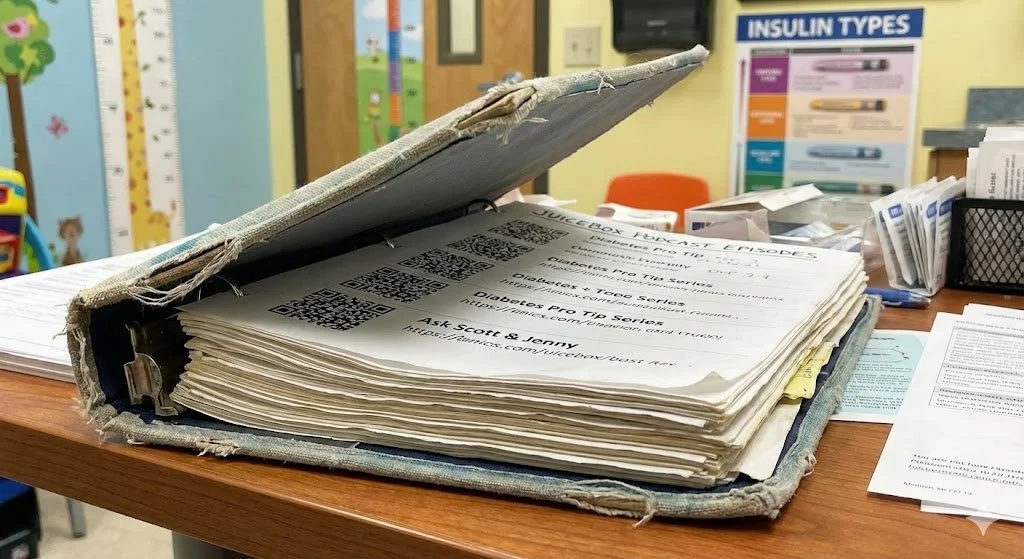






Please support the sponsors




The Juicebox Podcast is a free show, but if you'd like to support the podcast directly, you can make a gift here. Recent donations were used to pay for podcast hosting fees. Thank you to all who have sent 5, 10 and 20 dollars!

#720 Magical Thinking
Erika is a licensed marriage and family therapist who herself has had Type 1 diabetes for over 30 years and who specializes in working with people with diabetes and their families and caregivers—from those newly diagnosed to those experiencing it for decades. She and Scott discuss Magical Thinking, Cognitive Dissonance and the Other Choice Myth.
You can always listen to the Juicebox Podcast here but the cool kids use: Apple Podcasts/iOS - Spotify - Amazon Music - Google Play/Android - iHeart Radio - Radio Public, Amazon Alexa or wherever they get audio.
+ Click for EPISODE TRANSCRIPT
DISCLAIMER: This text is the output of AI based transcribing from an audio recording. Although the transcription is largely accurate, in some cases it is incomplete or inaccurate due to inaudible passages or transcription errors and should not be treated as an authoritative record. Nothing that you read here constitutes advice medical or otherwise. Always consult with a healthcare professional before making changes to a healthcare plan.
Scott Benner 0:00
Hello friends and welcome to episode 720 of the Juicebox Podcast
Erica Forsythe is back today, you know Erica, she is the licensed marriage and family therapist who also has type one diabetes. Today Eric and I are going to be discussing a few ideas ranging from I don't want to tell you, I tell you, you're gonna think they're boring and you're not going to listen, but it's a great, I'll tell you anyway, I trust you, you'll listen. We're gonna go over magical thinking, cognitive dissonance, and choice myth. There are ways that your brain works that you might not be aware of, and it impacts how you think about things like diabetes or anything really. While you're listening. Please remember that nothing you hear on the Juicebox Podcast should be considered advice, medical or otherwise, always consult a physician before making any changes to your healthcare plan, or becoming bold with insulin. If you have type one diabetes, and you're a US resident, or are the caregiver of someone with type one, I would like to ask you to go to T one day exchange.org Ford slash juice box, join the registry, fill out the survey. When you're done, you will benefit people living with type one diabetes and support the Juicebox Podcast p one D exchange.org. Forward slash juice box. Today's episode of The Juicebox Podcast is sponsored by us med. Go now to us med.com Ford slash juice box or call 888-721-1514 When you do that, you'll be getting a free benefits check to see if you can get started with us med this show is sponsored today by the glucagon that my daughter carries. G voc hypo Penn. Find out more at G voc glucagon.com. Forward slash juicebox. If you're in California and in search of a therapist, check out Erica forsyth.com
Erika Forsyth, MFT, LMFT 2:10
Good morning I'm spending to hear your voice and talk and connect.
Scott Benner 2:14
Yeah, I'm happy to hear from you again. And and I'm happy you're getting your needs taken care of too.
Erika Forsyth, MFT, LMFT 2:19
I you know, it was such a hard you know, it's I realize it's never never a good time to have knee surgery. And it's funny that you thinking about you know, the another choice myth that you had mentioned, I'm like, Oh my gosh, I've been living in that zone of well, I know everything now but should I push it off to winter break when there's not as much going on? And you know, like, I'm gonna miss this, this and this if I do it now like the conference, but I don't know what I'm gonna miss and then winter break, you know, so
Scott Benner 2:50
there's no good time.
Erika Forsyth, MFT, LMFT 2:53
I know. I knew you just had your you had a meniscus
Scott Benner 2:56
repair. Yes. So and we're recording to see, you know, that's okay. But yes, so I just woke up one day, and it felt like someone hit me on the inside of my knee with a hammer. And I was like, and my knees had been like creaky and clicky for years. So I tried for a month to kind of rehab it on my own. And I was like, this is going nowhere. I wore a brace. And then the brace started to take the pain away. And I was like, oh, there's some instability in there somewhere. I went to my guy who fixed my shoulder. And he just, it's funny. They, they know what they're doing. He's like, grabs, it moves around a little bit. He goes, Yeah, he goes, you got a meniscus tear. Is that what you learned in college? That's amazing. You know, because it took him like four, four seconds, and I guess we'll have to verify it with an MRI. So I went and did the MRI. And he's like, yeah, it definitely is. Don't worry. He's like, we're just gonna poke two holes. He goes, I'll be in another 2025 minutes. I'm gonna clean it up for you. It's gonna be great. And he's like, You're too old to fix it. I was like, well, that doesn't sound exciting. What do you mean, you can't fix it? And he goes, Yeah, we can't fix it. We're just cleaning it up. And he goes, but I don't see any arthritis. He's like, this is great. Real super easy. So I go in, I get the Jackson juice. I mean, gone out. And next thing I know, he's standing over me. When grade Scott. There was some arthritis in there. We'll talk about the appointment tomorrow. And then he just walks away. And I'm like, wait, what? Yeah, guy in the office three weeks ago said that there was not going to be a problem like this. So it turns out the interior part of my knee is just was like arthritis, and the tear in the meniscus, which was worse than he thought it was, by the way. And then the he goes because the outside of your knees like looks like you're 20 years old. It's like I'm not covered by anything you're saying. You know, and then they after the surgery says so you're probably gonna need a knee replacement 510 years. And then I go through the rehab and everything and I say Do you really think I'm gonna need a replacement in five or 10 years and he goes, maybe not. And I'm like, What do you kind of just say the First thing that comes to your mind, like, you know, like, she goes out, there's no way to know. And I was like, six weeks ago, you were like, definitely five to 10 years. And now there's no way to know. And he said, he pulls up his pant leg and he's got ice on his knee. He goes, I just got mine done yesterday. Like,
Erika Forsyth, MFT, LMFT 5:16
oh, my gosh,
Scott Benner 5:17
I'm like, did your need and he was my partner. And I was like, should I have gone to him? He's the guy you went to, you know? Anyway, it just, but it was to be perfectly honest. I mean, the rehab from it took, I was on my feet in a couple of days, no problem. And I don't think I use the crutch for more than, like, 36 hours, and even that I was kind of pretending to use it. The rehab was easy, and it feels 1,000,000% Better now. So I don't know how it's gonna last year, obviously, in a different situation, though.
Erika Forsyth, MFT, LMFT 5:48
Yes, yes, I'm at full knee replacement. But, and that's a whole long story, too. But I'm glad to hear that your rehab has. Truly Yeah. And I think they can't predict you know it because they don't know how you wear and tear you put on your knee. Really?
Scott Benner 6:04
Well. I was gonna say you were an athlete in college, right?
Erika Forsyth, MFT, LMFT 6:08
I played volleyball for 20 plus years, I did not have any known injuries from playing volleyball, but then got into hot yoga and had a meniscus tear about 10 to 11 years ago.
Scott Benner 6:24
Interesting. That's interesting. Okay, so anyway, so we were looking for something to talk about today. And because of your injury, and we're going to be you know, there's gonna be a little gap in time between I see you I didn't want to start on the series that we're thinking about. Yeah. Because there would have been weird to start it and stop it and start it again. Yes. So I sent you some ideas that I find interesting that I don't particularly understand as much as I'd like to. You okay, talking about this stuff?
Erika Forsyth, MFT, LMFT 6:51
I am? I am. Yes, they're Yeah, they can be kind of challenging concepts to fully understand. But I think they're really important to know and talk about, let's give
Scott Benner 6:59
it a shot. Do you have any particular order you care that these happened in or No,
Erika Forsyth, MFT, LMFT 7:03
no, I think the order that you wrote down, or however, whatever comes to mind first.
Scott Benner 7:07
Okay. All right. So I started with the idea of Magical Thinking. Yes. Right. And it's funny when I, when I think about it, I just think it's something that people have an idea about, or thought about, etc, then they just think there's some sort of, like, causal effect between how they think, and what happens. Is that a, is that basically, right?
Erika Forsyth, MFT, LMFT 7:34
Yes, yes. And I think it could, there are varying levels and degrees of house like either serious or connected, you are two that that causal link. And I think it's often helpful to talk to explain it with examples. But I think that definition is good that your your beliefs, your ideas, your actions, your internal world can somehow influence or affect the events of your environment, or the the, your material world,
Scott Benner 8:06
right, so that they use the term magical thinking, but it's also it's kind of superstition to.
Erika Forsyth, MFT, LMFT 8:13
Yeah, yeah.
Scott Benner 8:14
So what are examples you have that that could paint a picture for people,
Erika Forsyth, MFT, LMFT 8:19
I think one of the easiest that we often believe in childhood or you know, making a wish, when you blow out your birthday candles, that that might come true, or throwing coins into a fountain, that and making a wish, whereas you throw the coin, a fountain, those are maybe like positive hopeful ones, there could be either negative superstitions, like stepping on a crack or having a black cat cross your path or walking under a ladder, those might, then you might believe that that's going to cause bad luck to happen. Those are kind of childhood superstitions, or types of Magical Thinking, that are pretty common and normal and playful and fun. And sometimes those can carry on in to adulthood. And I think, at some point, it can become problematic, which we can get into. If you're noticing that it's really impairing your functioning and your mental outlook on life,
Scott Benner 9:24
I'm gonna give you an example. Okay, we're at what ended up being my son's last game of his senior season of college baseball. Games not going well. They're going to lose. And I watched adults, people who have, by my estimation, good jobs, who own homes, who I've seen make rational decisions about things over and over again, who I've had long conversations with and who seem very reasonable. I started watching them do the craziest stuff from talking to them. selves under their breath when their kids were hitting to changing their seating position to watch people move their phones from pocket to pocket, and I thought, oh my god, everyone's crazy.
Erika Forsyth, MFT, LMFT 10:15
Oh, yeah, we're wearing the same jersey or the same hat. Oh, are the same position?
Scott Benner 10:21
Yeah. Alright, go where did this person go? They moved to left field because the last time they stood in left field, their kid got a triple. I watched, I watched a person like, not striking themselves hard, but like, softly pounding on the side of their head while their kid was hitting. I was like, what is happening right now talking to themselves. Here's why they lost the game, in case any of them are listening. They started the wrong pitcher.
Erika Forsyth, MFT, LMFT 10:48
Not because he didn't wear the same shirt. Yeah, I don't
Scott Benner 10:50
want to give the kid up. But it is the wrong choice. That's why they lost the game. They started the wrong pitcher that was that. But my goodness, people shifting around in their seats. It was just it was fascinating. They all thought that they were about to impact the luck that was happening on the field when which Meantime, baseball is not luck. It's it's kind of like it's a it's controlled chaos. It's randomness that once in a while works in your favor. And you know, and and everyone tricks themselves into believing that they figured out the thing to do so the randomness breaks for them more frequently. And and my best example, that's still wrapped around baseball is how people talk about it. If you win a game, you know, I don't know if you win a game five nothing. You go into the dugout, you say, oh my god, we hit great today. But if you lose the game five, nothing. You don't say, Oh, we hit terribly today. You say wow, they really pitched great today. It's interesting. Right? Right, like you didn't when no one wants to take credit for losing, they only want to take credit for winning.
Erika Forsyth, MFT, LMFT 11:55
Yeah, and I think you're trying to have maybe either some semblance of control. in it. Yeah, as you said he kind of contract controlled chaos environment. And, or it's just a simple, you know, hope belief system that you're wanting to do anything you can and believe in anything that you can to hopefully have a positive outcome on a situation that you don't have control over as a parent.
Scott Benner 12:24
Is that is that magical thinking if I get up and move to left field? Or is it also a tiny bit of confirmation bias? Like, well, I did this last time in this word, and then let the magical thinking take the thought to the next step. Is that possible? I
Erika Forsyth, MFT, LMFT 12:40
think it's reinforcing like every time you do, I think going back to like, every time you throw a coin in the fountain and you make a wish and that wish comes true. That's reinforcing that bias or that belief that oh, this actually works for me, when maybe, you know, it doesn't have any bearing on that outcome or that wish that you made. That, yeah, go ahead.
Scott Benner 13:04
It's fast. It's fascinating. And you you said earlier, like, it's not really very harmful. Like, I don't care if people go stand in a different place the baseball, meaningless to me. But can that get to the point where it's at an OCD level?
Erika Forsyth, MFT, LMFT 13:17
Yeah, I think, you know, as you're thinking about magical thinking, and superstition, and that's all fun and games, so to speak, as a child and even into adulthood, with the sport theme that we're talking about, I think, and even it can be positive. When you're thinking about, you know, the power of positive thinking, if you have, you'll read and learn about the power of positive thinking for people who are diagnosed with cancer. And while there's actually no direct evidence or research, that the positive thinking has a direct causal link to reducing the cancer or you know, prolonging your life, it does have a positive effect on your management of stress and and that they can they have said, helps you heal better and respond to treatment, all that. So that can be really positive if your belief system is if I think this way, and I manifest this thing in this way, then it's going to happen. I think, if you're thinking about it in the opposite direction of oh my gosh, I thought badly, I had a bad thought about a family member or a friend. And then something bad happened to that family member or a friend then you're placing blame on yourself because you had that thought. I think that's where you there's a slippery slope getting into maybe negative pattern negative thinking patterns. Or you might be controlling you think you're controlling outcomes when you're actually not. And eventually, yes, it can become it can develop into maybe OCD behaviors or with more severe anxiety, where if you think about you're trying to control outcomes in life If I worry about this, anticipate this bad thing happening, then maybe it won't happen. Or maybe I won't feel as bad when it happens. And that, that can become really problematic.
Scott Benner 15:09
Yeah, so interesting, because then if you if you use this kind of way of thought, in a, in a bubble, like you wouldn't, it's just about you, like, I'll be positive about this. And, you know, sure, the positivity is probably not really going to affect my, my knee healing faster. But it will make take my stress away. And if I'm not stressed about it, that actually will help my knee heal faster. So there's no no harm and just seeing the high side and, and, you know, hoping for the best and that kind of stuff. It's when you're, when you're thinking, if I do this thing, then a different human being on the planet is going to have a different outcome. That's that I mean, to me, that's such a strange idea. Like, I don't understand superstition at all. And then by by understand, I mean, like, I've never had a superstitious thought that lingered with me. And it's, um, and when I see other people have them, it's fascinating to me, it really is like, there, there are actual things you could do in some moments to help things like real things, and instead, you're busy. And you know, I'm bringing all this up, because because I think it relates to diabetes, and what ends up happening to people's if you have these feelings already, and then you or your kid gets diabetes, you could get stuck in a situation where you're now making poor decisions when there are better decisions to be made. And, you know, Canada stuck. Yeah. And then you can take it all the way out to the end. You know, the the biggest thing somebody sent me an article the other day, gosh, I think it was from Australia or New Zealand, whereas another family's been arrested because their kid got type one diabetes, and they said they were going to let God take care of it. And you know, obviously without insulin, the kid died. Yeah, right. And so that that is the other end of it. It's like we're not really talking about it because I don't listen to people's religious beliefs are their own and I think they're wonderful and I have literally no trouble in the world with anybody's religious beliefs. But when your religious beliefs get in the way of you given someone insulin, then you know the outcomes are pretty predictable. I actually think that's what killed Prince.
Je voc hypo pan has no visible needle, and is a premixed auto injector of glucagon for treatment of very low blood sugar in adults and kids with diabetes ages two and above. Find out more go to G vo glucagon.com forward slash juicebox G voc shouldn't be used in patients with insulinoma or pheochromocytoma. Visit G voc glucagon.com/risk. Hey, guess where I'm getting Ardens Dexcom supplies from now? Yeah, it's not the place I used to get them from not the place that would send me 1000 emails but never the supplies or leave a bunch of voicemails on my answering machine but never get me the supplies or make me call the doctor's office instead of them doing it the way they said not that place. That's not where I get them from anymore. Now I get them from us med us med.com forward slash juicebox here's some things that US med does that you may not know about. How about they've acquired an A plus rating with the Better Business Bureau where they accept Medicare nationwide and over 800 private insurers Did you know that US med will always provide you with 90 days worth of supplies and they have fast and free shipping? They carry everything from the FreeStyle Libre to to Ardens Dexcom G six, and everything in between. They are the number one distributor for FreeStyle Libre, the number one just specialty distributor from the pod dash the number one fastest growing tandem distributor and the number one distributor index com customer satisfaction surveys. How about that? Huh? U S med.com forward slash juicebox. Or if you don't like the internet, call 888-721-1514 You can get your diabetes supplies the way we do from us med we're gonna get back to Erica right now and my story about prints which may or may not be true, or perhaps just something I heard one day anyway, don't forget to go to T one D exchange.org. Forward slash juice box fill out the survey support people with type one diabetes support the Juicebox Podcast D one D exchange.org. Forward slash juice box. Links to tea one of the exchange links to Dexcom on the pod us med in pen I'm forgetting people now at this point, Contour Next One Blood glucose meter. All the sponsors are in the shownotes of your podcast player. We're at juicebox podcast.com. Am I not wrong about that?
Erika Forsyth, MFT, LMFT 20:14
Yeah, I don't know. I can't speak to that for certain. Okay,
Scott Benner 20:17
so let me let me listen, I'll tell the story. And if I'm wrong, I'm wrong. But okay. My ex, my understanding was that Prince's religion precluded him from having his body cut open. And so he instead medicated his pain. And, you know, the drugs got him one day. So, the idea was, he could have had a surgery that would have relieved his pain, he wouldn't have had to take all these pain pills. And it might have changed the course of his life. But because of his his belief, which, you know, again, if it wasn't going to put him in the situation he was in hurts no one, it not even him. But I don't know, I just, you know, at some point, there's just there are just so many times I see online, my kids blood sugar's really high, and someone will come in and say, I'm going to pray for you. And I think that's wonderful. Like, I think that's lovely. I mean, these are two disconnected people who don't know each other, and one of them saying, Look, I can't do anything for you, but I will pray for you. That's terrific. My worry is always that on the other side, somebody might be thinking, Oh, well, this person's prayer will take care of this when you need to Bolus or something. Right. Right. Right. Yeah. Anyway, what happens when you see somebody who has has had these thoughts? Do you try to help them with them? How would you go about it?
Erika Forsyth, MFT, LMFT 21:37
I think most often, when someone is in my office, they've they've kind of maybe arrived at the place of their anxious thinking, has the magical thinking has developed into anxious thinking in terms of I am so nervous about the either the future or something bad happening, whether in the diabetes world, I'm so worried about, you know, having complications or having a low. And in there, yes, there are things that you can do to prevent, to, to protect, prevent all those things. But there are also if the anxiety is so consuming, where that's all you're thinking about all the time. Right? So you're having difficulty sleeping, you're having difficulty staying in relationship with with friends or family. Because that, that anxiety is, well, if I just I worry about it and think about it all day long, maybe that'll prevent that bad thing from happening. And so that's when we would look at, you know, what are? What are the triggers? What are some ways to kind of reduce the frequency of those of those thoughts, and then practicing some coping strategies to reduce that. But I think that that's where I would work with somebody, and when that the prevalence and the persistency of that anxious thinking, and that it really is kind of magical thinking kind of blown up, right? If I just if I worry about it and think about it all day long, it's not going to happen, or it's going to reduce the pain of when that bad thing does happen.
Scott Benner 23:21
Okay, yeah, yeah, it's, um, I know a person, Eric, I know a person who lays the groundwork for something to go wrong months in advance, it just, it is a part of their personality. It's fascinating, they lower the bar. So far, that any thing that happens, looks like success. And then that's how they keep themselves, you know, in the situation they're in, but they, I don't I, the one thing I can't tell you is if it's conscious or not, but you know, the, if I don't know if the if a holidays coming up six months from now, they'll start telling you why they'll probably be busy, or why they can't get there or why it's going to go wrong, or why they won't be able to afford a gift. Or they just they they lay out this this runway of reasons. So that in the moment when the failure happens, which I guess is how they're saying it that no one's mad at them. Maybe you just made me think about it differently. Like I always thought they were lowering expectations, but maybe they're trying to protect themselves.
Erika Forsyth, MFT, LMFT 24:29
Yeah, I think it's a protective mechanism. Because either either you're thinking if I worry about it, this this possible negative outcome, then it'll protect me when it happens. Because I've always I already worried about it so much. So when it does happen, it's not going to feel as painful which is that's a lie, right? That's a cognitive distortion. That you're that the anxiety is telling you. That if you worry about it, either it won't happen or you won't feel as much pain when it does happen.
Scott Benner 25:00
Okay, so then the next thing on my list was cognitive dissonance. Yes. And that is what you were just referring to correct? Well,
Erika Forsyth, MFT, LMFT 25:09
cognitive distortions are a bunch of different kinds of lies that and belief systems that can develop cognitive dissonance. And these are like big words, is actually is the feeling that the kind of the stress or emotional or mental discomfort that you experience when you're too different either belief system systems or behaviors have are in conflict. Okay. And I think, too, I think going back to the examples might be the most helpful to please explain what cognitive cognitive dissonance is, it's important to know that that isn't, it isn't the aftermath, it's the it's the feeling the mental discomfort when two conflicting beliefs or values or attitudes occur. And so one example is, I think the easiest example, and the most kind of challenging is smoking, somebody likes to smoke. And either however they've gotten there, they like to, they like to smoke cigarettes. But the they know that the smoking can is harmful to their body and cause cancer. So you're you you're either addicted, or you have the pattern you'd like to smoke, however often or not, but then you're so that that's your action, but then the your belief is, oh, but I know this is causing my heart harm to my body. So then you're in that space of cognitive dissonance. Okay, I think same thing with like, you could apply it to diabetes. Sorry, go ahead, where you're gonna know, I'm
Scott Benner 26:49
just I'm trying to make sure I'm following along. So okay, in like a small way. I've heard people say, like, like they're using a Weight Watchers app, for example. And they, they actually, I mean, you're the only one that's aware of what the app says, You're the only one that was aware of what you've eaten, and they lie to the app. So that's an example of this, right?
Erika Forsyth, MFT, LMFT 27:14
Yes, be? Well, that is your that is the, you're changing your action, to reduce the cognitive dissonance that you're experiencing. So they, they ate five cookies. But and but they're on a diet, they're trying to be on a diet, they ate five cookies. So now they're in cognitive dissonance. They're feeling emotionally discomfort, emotional discomfort. And so to relieve that dissonance, they're going to lie to the app to reduce some of that discomfort.
Scott Benner 27:48
That's interesting. So I'm gonna give you an example from my life and tell me if this is right. Or if I'm trying to put a square peg in a round hole. So I know a person who chose to vote in a certain direction, in a in a federal election, and then they got their candidate, and then the candidate did something that they didn't want to happen. And so initially, they spent a lot of time on social media saying, you know, you have to vote for this person, you have to vote for this person, then, you know, that happened, and they were all happy. And then the thing happened, this law got put into place. And then they come out and say, I can't believe this happened. How can we let this happen? And I looked at it, I thought, This is what you voted for, like, this is the thing you like this was going to happen if you voted, right. And I always thought, as I looked at it, I have to admit, my, my, my hot take was they didn't understand the impact of their vote. But now you're making me think that you knew this was gonna happen. And now this is them protecting themselves like I needed to vote for this person because of, I don't know, any number of reasons that I agreed with. But there were a couple of things I didn't agree with. And now that one of those things came true. I need to distance myself from that somehow. Is
Erika Forsyth, MFT, LMFT 29:13
that Yes, yeah. Or blaming. So that's kind of the that is the result of the dissonance they might have experienced,
Scott Benner 29:20
okay, so they made that just yet led to this thing. And now they need to let the world know they're not okay with this part.
Erika Forsyth, MFT, LMFT 29:29
Yeah, I mean, that's, that is. Yeah, it's so it is a complicated notion. I think, in that moment, they're, maybe they're feeling guilt or regret about voting for that person. Because now and so that that guilt or regret about voting for that person or feeling embarrassed. That's the dissonance. Yeah. And then they're gonna either you're gonna change your belief or change your behavior to reduce that dissonance right
Scott Benner 29:58
and In this example, I'm obviously trying not to make it a partisan idea. But in this example, this is a thing you can all trust me, that was very obviously attached to the candidate. It's not like, okay, it's not like the 17 thing down on their list, and they're like, I can't believe they made all the parks close at 10 o'clock. Like, I didn't know that was gonna happen when I voted for them. Like this was a thing, that that four year olds were going to know what's gonna happen if this person, you know, gotten to power. So you don't I mean, like, I always just assumed like, I don't know, it's funny, I always just assumed stupidity. But now I'm thinking, this is the same thing I was talking about with the other person who lays the groundwork for protecting themselves from feeling badly placed is super interesting.
Erika Forsyth, MFT, LMFT 30:43
Yeah, I think most often we're responding, whether we're blaming ourselves or blaming others, or trying to change or lie to ourselves or lie to others, your your can usually acting out of that discomfort within yourself, because of the your, the action that you had is, is in conflict with your belief system. And then you have to reduce that discomfort. Okay. And then, and then you see kind of different. So if we're going back to the the smoking example, to reduce that dissonance that they're feeling every time they have a cigarette, even though they enjoy it, but they know it's bad for their body, then to reduce the dissonance, they're going to say to themselves, if they're going to change their belief, or say, well, it's I don't I only smoke once every other day. And that's, I'm, I'm not gonna have any damage to myself. Or you change the behavior, because the dissonance has become so severe and you stop smoking.
Scott Benner 31:39
Yeah. Do you think generally speaking, this is one of these questions, you're not gonna like, I heard you do it when I was thinking. Do you think generally speaking, if we look at the masses, like taking everybody into account that statistically, most people aren't going to change? Right? So it because you have to recognize it, it has to intellectually make sense to us to emotionally make sense, you have to search out help or make some kind of like, tough decision for yourself. So So generally speaking, I mean, listen, I'll relate it back to the podcast, I think if you listen to the podcast, your agency is easily in the sixes, maybe in the fives if you try harder. So by that, you know, let's say that's true, then all everyone living with insulin has to do is listen to this podcast, and they're going to be okay, except we know that's not going to happen. And so these people who are involved in these kinds of thoughts, they're torturing themselves. Like, is there not a humane argument to be made for just lean into it smoke all the cigarettes you want and die earlier, but that might be better than torturing yourself and living 10 more years, that like, because at least they're not going to be, you know, mentally tortured by this thing that they know, they're not supposed to be, you know, quote, unquote, supposed to be doing? Like, I don't know, like it is what I'm saying is live fast die young, leave a good looking corpse is that like,
Erika Forsyth, MFT, LMFT 33:04
I think eventually, you will ultimately have to make that decision to say, you know, forget it, I'm, I'm going to live my life. I like to smoke, and I'm not going to keep this battle up. Every time I have a cigarette, right? I think ultimately, you will make that decision, and to say, Oh, I'm fine. It's not gonna happen to me, or I'm not gonna think about it, I'm fine. I think yeah,
Scott Benner 33:29
good even to take it out of the health room. I see people do it with homes, they have a home and they say, Look, I'm going to spend the extra money I have on living, and this house is going to fall apart around me. And when it's over, it's not going to be worth anything to me, I'm not gonna be able to sell it make a bunch of money, but I don't care. I'm gonna put my I'm gonna put my money where I want it to be. And, and they're okay with it. And they're the kind of people who that if you speak to them, there's no, they're not embarrassed. They don't care that their house is the one on the street that looks like it's, you know, the monsters live there. They really they don't, they don't care. They're good ones that decision they've made. And I'm wondering, I want I'm wondering what the, what the trade off is between not torturing yourself and just being okay with it. And, you know, sure, you might lose on the back end. But in the moment, it might be much more pleasant for you now, not to say that, by the way, there's a balance, that guy could spend some of his money on the house and some of his money on him. Or you could you know, try harder not to do the thing that you don't want to do. But But I guess in the as I'm listening to it, the sad part of this is the torture part, the part where people are, are doing that to themselves. And I guess if you could, if you could impact one aspect of this whole thing, that would be step one in my mind. Do you
Erika Forsyth, MFT, LMFT 34:51
is making that choice of how you're going to live? Yeah, yeah.
Scott Benner 34:55
So that so that everything you do isn't painful.
Erika Forsyth, MFT, LMFT 35:00
Yes, and I think that diamond, that would be the most ideal, I think we're I know we're talking about like, bigger issues. But this can happen, you know, on a day to day basis making a decision of, you don't want to miss out on going to a party, or doing something that you think might be fun. But ultimately, you don't really want to go, but you do it anyway, because of either pressure, or you feel like you should go to the party. And then you go, and you get there, and you're feeling discomfort, because you like, Why did I go? I didn't want to be here. So I think then, then you make that decision of okay, well, am I going to, you know, stay myself for going, am I going to stay? Am I going to leave? You know, that's, that's the aftermath of the dissonance. So I think these things can happen. Very, they're small, little quick moments of decision making, all day long that we have. And I think what you're, what you're encouraging is, can you be in a place of just being grounded and listening to your gut, so to speak, and responding and then being kind to yourself, whatever you decide,
Scott Benner 36:09
yeah, just whatever you did, you did. And that's it. We'll do it later. Like, you'll try again, if it didn't work out the right way. But, but so many people get caught in a in a loop. Yes. You know, the first is the first the first thing, the first decision they make, it doesn't go well. They just, they just keep reliving it, instead of just letting it go. And I hate this. Like, I'm a fairly. I'm a reasonably controlled person. Do you really mean like, I'm not an out of control person? I guess. And, and yet, I would tell you that nothing really matters all that much. Like if you don't kill somebody hurt somebody. There's almost nothing you can't rebound from, you know what I mean? Like, it's just, I don't know, Erica, do you have a? Do you have a code you live by?
Erika Forsyth, MFT, LMFT 37:02
Oh, I don't, I don't think I can. A specific code or mantra. But I think knowing that you are, that I am loved and to be kind to one another. And I preach pretty loud and clear of being kind and gracious to yourself, to oneself to myself, you know, as we go about our lives and offering that to others. Yeah, you know, equally.
Scott Benner 37:28
That just makes sense. You get well, I mean, when I was young, I mean, everyone knows, right? Like, I didn't grow up, like with a real like, you know, with parents who were like, here's the rules get an amen. The rules were listen, and we're broke, you know, so try not to eat that today. Save for tomorrow. So, so I stepped back, and I thought, I need something to follow, like, like an idea to follow, right? And there's no, I don't have religion, so there was nothing there. And I thought about it, and I thought about it. I said, Okay, well, here's what I'm gonna do. I'm not going to hurt another person. I'm going to treat people generally the way I hope to be treated. And I'm not going to lie, if I can help it like that those that teenage me came up with. And I have to be honest with you works out pretty well. Because most of the time turns out, you don't have to lie. You don't I mean, and what do I mean, if if I can help it. Here's a great example. This happened yesterday, my wife ordered a bench for the house. It came in a box, it was missing parts, the parts kept the thing from being put together correctly. So the side of the bench is not attached to the top of the bench correctly. We called the company that made it and we tried to get the parts sent to us. The part was not available. They said, We don't have replacement parts for it, you're going to have to return the bench, but we bought it through Amazon. So they said you have to do it through Amazon. I called Amazon, I spoke to a person. And she said, What's the problem? And I have to admit to you what the problem is, is that I don't want to take that bench apart and ship it back to them. But it was a couple of $100. And I can't afford to just eat it. So she said you need to ship it back to us. And I said I can't. And she said Why is it I have no packaging material and it won't fit in my car. And she refunded my money. And I'm going to use that money to buy another bench. That was a lie, Erica, I could absolutely return that bench if I wanted. I do not want it. It's not my fault that it showed up without parts in it. And I am not going to go spend the next two hours of my life ripping this thing apart, boxing it up and dragging it back to a UPS store. I didn't do this. So I made some sort of a moral judgment that I was more on the right side of this than the wrong side of it. And I called one lie to get my money back. I have no trouble with that in the world. Now. Would I walk over my neighbor and tell him that I know his wife's cheating on somebody else because I think it would be fun. No, I would not do that. I would not make up I like that. So that's my, that's my line for lying.
Erika Forsyth, MFT, LMFT 40:04
You have some limits
Scott Benner 40:06
what I consider to be a significant limit, but but you can pretty much trust. I would imagine if you were around me, you could trust that 99.9% of the time, I am absolutely being honest. If I get pinched, I'll bend the truth if I have to. Now, I always treat people the way I want to be treated, that I don't bend on. So I don't know. Like, I don't know if that's a Those are rules or not. But to me, they seem they seem like obvious things to do. And I don't know how I even brought it up at this point. I just was,
Erika Forsyth, MFT, LMFT 40:42
yeah, it's a belief value system that maybe prevents you from experiencing the disc dissonance, the discomfort of how you want your, your beliefs and actions to align. And when they don't, that's when you experience the dissonance.
Scott Benner 40:59
Yeah, man, well, you know, even this topic with you today, like these kinds of like, like many topics inside of this. I mean, if we're all being 100% honest with each other, I have the opportunity, just like you do, to see how people are really thinking, right, because they'll come on here and tell a story. And they're pretty open about it, or I get to watch them online interact with each other, when they don't know they're being watched really like kind of thing. Like it's not creepy. I'm like you just listening to what people are saying and how they're, how they're impacting, and how these things are impacting their lives. And I'm telling you, that, from my perspective, a fair amount of the trouble people have managing their diabetes is based on how their brains are lying to them at times, or these things. You know what I mean? Like, and no one's I'm not aware of it, no one's aware of it as it happens. So you have to have these conversations that hopefully something like, morphs or clicks for you. You know what I mean?
Erika Forsyth, MFT, LMFT 41:59
Yes, yes. Because I think then, where the this, this discomfort can then lead to the feelings of shame, and stress or regret that, you know, that I might hear about in my office with with clients or caregivers of I supposed to be doing this, or I made this mistake, I Bolus this way. Or I keep doing the same thing, even though I know I shouldn't be. And I keep eating the same thing. And then my numbers go this way. And now and then I experienced that discomfort because I know I feel like I shouldn't be because then you often have that should talk comes with the dissonance. And then you that leads to feelings of shame, and you can get stuck in that cycle. So we're trying to, you know, going back to it, let's be aware of those triggers. And those initial thought patterns is one of the ways that we can kind of release reduce some of that consistency and negative thinking, which is painful,
Scott Benner 43:01
talk a little more about the should like when something goes through, quote unquote. And you think this is not how it should have gone? What happens then?
Erika Forsyth, MFT, LMFT 43:09
Yeah. So I think I hear that either whether there are rules around what you should and shouldn't eat. So if you're thinking I shouldn't have had the cake, I shouldn't have had all the candy or I'm not allowed. If it's more of a child thing I'm not supposed to I shouldn't have had that. And now I'm 500 or 300, and I can't. And then I had a sticky high forever, I couldn't bring it down. And then so now you're you're feeling frustrated about the high blood sugar. You're feeling shame because you ate something that you felt you weren't supposed to. Or you can eat anything you want, and you didn't Pre-Bolus for it. And so I think when we have that should talk in our mind, I think we want to look at why. What is that rule? What is the rule that I'm saying? I should have done this or I shouldn't have done that. Should you have Pre-Bolus? Yeah, probably should Was it okay to eat whatever it was that you ate? Well, let's look at what is your family culture? Like what is all that about? Because I don't want to I don't I try not to place judgment and some families don't want to, you know, eat sugar, and that's okay. So the should talk can lead to positive change unless it's, it's around this kind of shame cycle of I should have done a better job I keep making mistakes. And I don't know how or I don't care. So should often can lead to change in some ways, if there is a desire, but I also am really careful to want to understand is there shame underneath the should talk? Okay, does that make sense?
Scott Benner 44:52
No, it does. I was gonna say that. Back in the earlier part of the podcast, I would say more frequently. that, you know, just eliminate drama. Because it because it was an easy blanket way of saying avoid all these things that your brain is going to try to trick you into doing. You know, like, because when you when you make a Bolus and it doesn't go right. And then people This isn't fair like you spiral like, No, I didn't ask for this, that that's one that I'm always fascinated by, like, you know, type one diabetes is not fair because I didn't ask for it. And I'm like, My knee hurts. That's not fair. I didn't ask for it, I floated my vision. That's not fair. I didn't like none of this is fair, you gonna hear me like, it's never never going to be fair, like you're born. And then you grow and then your body starts to deteriorate. It happens at different speeds for different people. It happens if you have different medical conditions, it's going to hit you differently. Like, I don't know what, I don't know what spending time telling me it's not fair gets you like, this is the situation you're in, like, I'm gonna make the most of it person. Like, there are no other options, you're here or you're not. And so you're here and I'm not saying some people don't have terrible afflictions that are painful and, and crippling and life altering. I'm not talking about those people, those people that they should, they should get three hours a day to tell people it's not fair. And we ought to have to listen to them. I'm talking. You don't I mean, like, I mean, that that would be that would be a little closer to fair. I'm talking about, you know, you have allergies, and you can't go outside without taking Zyrtec. That's not fair. But I mean, just take this check. You know, you live in this time, I was, when my son was diagnosed with Hashimotos, it hit him really hard. And instead of, and during a car ride, when we spoke about it, what I told him was, you know, a couple of 100 years ago, we were pretty nomadic people moved around a lot. I said, if you broke your leg, you were dead. You don't you mean like, like, the group couldn't wait for you. And so you'd get left by yourself. And an animal would kill you. Take the centroid, you know what I mean? Like, I know, this sucks and all. But the truth is, is that if this would have happened to you, 200 years ago, you would have just, like deteriorated very quickly, it would have been horrible. And instead, you have to take a pill in the morning. And so, you know, maybe 200 years from now, you'll go into a doctor's office, they'll be like, Oh, you got the Hashimotos that sucks. No, pull out a needle and jam it in. Yeah, and it'll go away. Like, I don't know, where we're gonna lead, you know where this is gonna go to. But in the meantime, there is no time machine. This is the this is the part you live in right now. And diabetes, specifically. I mean, I mean, this is the it's literally the best time in history. And tomorrow will be the better than today and six months from now. And and then people get caught up with well, it's not happening fast enough. And that's like, No, I get that. But, you know, it's, um, this is it. This is what you got, you know, so
Erika Forsyth, MFT, LMFT 48:01
yeah, yeah. And, and just like with your son, too, with the Hashimotos, it can be a journey or a process of yeah, getting to that place of acceptance. And that there's there's no real specific timeline and how to get there. Beyond just the kind of lowering yourself to feel what he was feeling.
Scott Benner 48:21
Yeah. But But Erica, where's the? Is this just the fallacy that we're becoming weaker as people? We're doing it because like, I like I knew a guy when I was growing up, my friend's father walked really poorly, because of polio, he had polio as a kid. He's basically walking on the side of his foot. And you know what he did for a living? He drove a tractor trailer. And I never in the history of knowing this guy heard him complain, ever once. Like, like, he just did it like now maybe his expectations were lower because of the time he grew up in. And just maybe having not had the polio kill him was probably more than he could have hoped for, like, I don't know exactly, but I'm just telling you, this was not a particularly tough guy. He was just from a time where you didn't complain about things. You just just did it, you know. And, and I'm not saying that people should not try to alleviate their their struggles. I'm certainly not saying that. But I'm wondering, is it is there something about modern life that sets our expectations so high that anything that goes wrong? Seems like a like a huge. What's the word I want? Like that, like they were lied to?
Erika Forsyth, MFT, LMFT 49:43
All right, right. Yeah. Or
Scott Benner 49:45
do you have any thoughts on that at all?
Erika Forsyth, MFT, LMFT 49:46
Oh, my gosh, I feel I guess that's a huge topic to discuss it. Yeah. Like, are we now in an era of either entitlement or expectation that nothing bad should happen? To me, we have oh my gosh. Well, I was just as you were talking about this man on the tractor trailer, I'm wondering how much of our connection via social media has, you know, influenced or snowballed this issue of my either my life is better than yours, or my life is harder than yours. You know, and whether through images or words on all the, you know, socials in a comparison kind of way, even though we all know everyone has their own struggles. So I just wonder how much of that has, you know, exaggerated? It's
Scott Benner 50:54
super interesting that you said this, Erica, and no, no, but I, every time we talk, I realized why we get along so well. So I grew up a Philadelphia Eagles fan football. And we have the best defensive lineman in history at that point, Reggie White. And Reggie leaves the Eagles and goes to the Packers. At the end of of a contract. This is not something that used to occur back then. Like so free agency wasn't a thing in football up until I think it was another Eagles player a tight end, who went from the eagles to the dolphins. I think that's about when it started. Okay, not the point. The point is this, it's when they started making their their salaries public how black and because they needed to, they needed people to know how much they made. So other people could come and ask for more like they had to set up that structure. Prior to that it was all very, very kind of private, you didn't really know how much people made when they started making those people's salaries public. Suddenly, a man like Reggie White who people just adored. They hated him as soon as they learned how much he made. And and I thought, Well, you were so much better off not knowing you know what I mean? Like just go to the football game and enjoy the football game if that's what you like, like now you now you look at this guy, I forget what he was making back then it was probably nothing compared to now. And but people who made 2530 $45,000 A year were like, wait, I'm I work all year for 40 grand, and this guy's making half million dollars a week, he you know, or something like that. And then they couldn't see him anymore the way they saw him. And then it just exploded from there. And we started becoming more and more aware of people who have lives that are just if we're being honest, not average in any way. And now everybody thinks they should be making $7 million a year for doing the thing they're good at. And what I would tell you is whatever you're good at, if you can get 60,000 people show up every Sunday for 16 weeks and pay you $300 to watch it then god damn right, you want to make that much money. But that's not how most of this works. And it's interesting, because you said the same thing. Like you said, social media gives us an awareness that we didn't have before. Have a life that isn't ours. And that's exactly and people can't deal with that, generally speaking, where some people can't,
Erika Forsyth, MFT, LMFT 53:25
right. And so and either response to that you're get you're either mentally just comparing by viewing what other people are posting, or you're posting yourself, you know, we talked about that last time, too. What, what is driving that behavior, I think there's just something to be you know, to be aware of, of how much you're you're being influenced by that exposure, and how that's influencing your mindset of either gratitude and acceptance, or woe is me. And grant, you will probably fluctuate between both of those things if you're living with a chronic illness. And that's okay. But I think just having that awareness of how much that is influencing your mindset is the key.
Scott Benner 54:11
There's nothing wrong with seeing someone's salary and thinking like, Oh, I wish I had that. That's, that's amazing. You don't I mean, but you can't you can't then just then stop living your life because it doesn't exist for you. I saw something online recently. A person who made a movie years ago, that was very, very popular, is making another movie, that sequel or something like that. And people are coming in and they're, you know, complaining and whatever. And I start reading the comments because they're fun. And the one person says, that movie you made all those years ago made me want to make movies. I dropped out of college, never made a movie and it ruined my life. And I was like, Oh my God. I was like he's blaming the guy for making the movie over this. Like, it's so interesting. Like, I'm not kidding. This 20 Five years ago, and this person is still thinking, the movie I saw on the story that I heard about how you made it, you ruined my life. And I was like, Oh, God, like that's, that's a horrible thing to have to live with, if that's what he really thinks,
Erika Forsyth, MFT, LMFT 55:17
you know? Right? That's yeah, his narrative. Yeah, really, really
Scott Benner 55:20
interesting. But anyway, the last thing that I have on the list here, I really don't understand a whole lot. It just felt like it fit. And if I'm wrong, you'll stop me. And but I can't in any way. Explain it. So if you can't, we're in trouble. But myth of choice.
Erika Forsyth, MFT, LMFT 55:37
Yes, yeah, the myth of choice. The another choice myth, however you want to say it the I think the grass is always greener can be another easy way to kind of explain this, you know, terms that when you're faced with a hardship, oftentimes our mind will tell us well, choosing this other alternative is going to be easier than the hardship that you're facing with now, or that you're faced with now. For example, the job is, you know, when that they often will talk about or if you read about, you're in a job, that's hard. And you start looking for other jobs, because either you don't like your boss, or you don't like your task list. And so you think, well, if I move to this other company doing the same job, it's going to be better. And you might initially have that, you so you make the different choice. And you have hope. And you have confidence in that choice, because that's just natural response, and you're doing something new. But then you're going to have another hardship, and then you kind of, and you might end in a in a more challenging position, because you thought, Oh, I thought this was going to be easier or better. And then you're going to have regret for leaving your job because maybe there were other positive things at your past job that were better than this new job. So anyway, that and then you kind of will cycle through that. I think there are other examples of I liked the one that I just recently read about of when you're at a stoplight, and your Google Maps is telling you to go one way. And you think, Well, I'm gonna go the backgrounds way. And I'm gonna get there faster. Like the unknown, you think is often the better alternative. And so that's the mess, the myth of the other choice, because then maybe you take it even Google Maps has all these algorithms and they're saying stay in this, this course, you take a different course because you think it's to be better. And in fact, it's, it's worse.
Scott Benner 57:48
You're, there's this way that we come home from my, from an extended family member's house, and you get to this certain stoplight, you go straight or right. And I always go straight. And my wife always goes right. And we both at like, like so far in two different cars. Right. And so we both completely believe that the one way is the better way. And yeah, we both arrived at the house almost simultaneously, every time. And when it happened, she's like, You spared and I'm like, No, I didn't she's like, Yes, you did. I think it just doesn't matter. But we both like i i Sometimes this is interesting, Erica I sometimes when I'm by myself turn right at that light instead of going straight, because it is not what I want to do. And I don't know why I do that to myself, but I forced myself not to believe that I've made some superior choice at this turn.
Erika Forsyth, MFT, LMFT 58:43
Oh, that's like a good exposure in practice to just try. Try new things
Scott Benner 58:48
I'm doing in my car exposure. So it's, um, I don't know how this relates, it just seems like it does to me. You know, big, big examples are I think this myth of a choice often ruins people's relationships. You know, because, yeah, yeah, you get married, you think everything's gonna be perfect. And that's clearly not going to be what it's going to be. And eventually, you know, something's gonna happen, where it tarnishes, etc. And then you start thinking, like, ah, but that guy I used to date in college, he was better, you know, a man or she was better. I'm gonna go to that one now. And the truth is for me, I mean, my truth is, I believe that your history and the love that you've built and the I don't know, like the unseen on tangible like the tangible but not holdable ideas that you that you you know, end up constructing when you're building a family or a relationship like those are valuable. Like they don't they don't make your spouse pick up dog poop when they walk past that. But you know, Arca do we all know somebody who will just like pretend the dog too. input so that somebody else has to pick it up, right? So, but But So sure, you might go to the girl at the gym, who seems to love you because you know, etc, but ensure she might pick up the poop, but be something else she's not going to do at some point, you're gonna, what are you gonna do? You're gonna go back to your wife and go like, I'm so sorry. Like it's over now your hurt feelings, you know what I mean? Not to say there aren't reasons why relationships should dissolve? I'm clearly not saying that. I just mean that, if you start getting it in your head, that everything's always better, except for the thing you have. That's just a very dangerous way to live.
Erika Forsyth, MFT, LMFT 1:00:36
You know? Yeah. It is, I think, and that's, you know, understanding what is the, if the problem at hand, and oftentimes that does happen in relationships, and I will meet with with clients about that very topic. And understanding is it is it because I have this hope that the next person's gonna be better, shinier, etc? Or is it really is not the right fit relationally. And that, you know, that takes time to kind of unpack. I think, one thing that we might do in, in diabetes, I think when you're trying to make a decision, let's say even just about, I'm trying to bring this back to, you know, the the the other the myth of the other choice, when you're trying to make a decision, whether it's about food, or even, like, you know, technology, that's a big topic that people will I you know, should I do this? Or that, should I use this pump or that pump or this, you know, in there? Or if you're using one is the other one going to be better? I think it's always important to just, what if it's a small decision, pause out, you're looking at, am I going to have this donut? Or am I going to have this banana? Like, pause? And just think through? is, am I making the right call here? Is this the right choice? If it's their bigger decisions, one of you know, the classic strategies ready do during the pro con list for both? I think if you're in a really intense situation, you're really stressed or really angry, it's often easier to say, Well, clearly, using this other product is going to be so much better, or doing this other thing is going to feel better. So I think trying to delay making any major decisions, or even small ones, if you're in a moment of extreme stress, anger, exhaustion, fatigue, because that often will drive your decision. Yeah, it'll
Scott Benner 1:02:40
do what you mentioned earlier, like your frustration will allow you to believe that anything different is going to be
Erika Forsyth, MFT, LMFT 1:02:44
better is gonna be better. Yeah. Yeah.
Scott Benner 1:02:48
Yeah. No, I was just gonna say, I mean, that's a great example, in diabetes, I was gonna use the one that, you know, listen, nobody has to listen to me. Okay. I'm not. I just said, Listen, you don't have to listen to me, which is hilarious. Poor, poor, poor, poor sentence structure there. But, you know, I'm just saying like, this is just my opinion, right? But leaving your blood sugar 200 all the time so that you don't get low? I don't think that's Oh, yeah, that's not a real choice. That's, that's, you know, first of all, I think it's a little, little confirmation bias, because it just hasn't, you know, I've never gotten low when I leave my blood sugar 200. And so this is obviously not going to lead to a low, it's not true, eventually, you're gonna get people get low when they use insulin, it's just happens. But the idea of it's like, to me, that's the smoking argument from earlier, right. Like, I can smoke as much as I want. It's not going to kill me. My Dad, I've told you this before my father would come back from like his physicals doctor says he can't even tell I smoke. And then you know, it killed him. congestive heart failure, which was directly related to his smoking. So you know, you can't leave your blood sugar 200 all the time and just go, Well, I'm okay today. So this is a good choice, because it won't, because I don't know how many people I gotta bring on here for you to listen to who you know, make that decision. And then 10 years later are on here saying I really wish I wouldn't have done that. And you know, because now here, here, all the real world, things that are happening to me that my magical thinking isn't going to take care of that I can't ignore. And that that medicine, at this time in history can't make go away anymore. Like you. Sometimes you give things away, you can't get them back. I think it's my point.
Erika Forsyth, MFT, LMFT 1:04:31
Yes, I think that you kind of just typed in all the kind of maybe three topics that we've been talking about with if I let I know the science and data tells me I shouldn't ride at 202 50 all day, every day for years on end. But yet I feel comfortable there or you've learned how to feel comfortable but you might have had experience of feeling that dissonance or just comfort. So in response to that you're you're building a new belief system is Well, I'm okay here, I'm either not going to have complications, and I'm preventing myself from going low or having a seizure. So you've kind of changed your belief system in response to that number and living there. Right. And that's that is hard.
Scott Benner 1:05:19
I'm going to tell you something everyone listening Eric just said something a minute ago made my whole day. It's gonna probably stick with me through the weekend because I like other people I need I need love. I did do a perfect job of putting that all together just
Erika Forsyth, MFT, LMFT 1:05:36
you did Scott.
Scott Benner 1:05:37
Literally pleased with myself like you guys. Here's why can I can I pull the curtain back for a second? Sure. I have you for an hour, one time right before you go get your knee surgery. Yeah. And I think what's going to help people who listen to the podcast, and then with no psychological like psychology, I didn't go to college people know psychology background. I'm basically a moron. Dude, anemia, like all I have with me is my life experience. I mean, honestly, if you saw me try to do, I'm gonna say algebra, you probably would never talk to me again. Because you would like I don't want people to know, I know. I don't have any background in this is what I'm saying. All I have is my lived experience. And the experience I have talking to people and watching people online, manage their diabetes, their health issues, their relationships, that kind of stuff. And I know that people's brains lied, we lied to them. It's a weird way to say it. But I went online, and I was like, okay, like, if you think that prior to me setting this up with Erica, I could have defined cognitive dissonance. You're wrong. I know, the I, I know the idea. I recognize it as a human trait. But I don't know what it means. And then I thought, Okay, well, there, that idea definitely fits with the concept that people think there's this magical thing that happens that they can kind of control the world, those definitely go together. And then I needed a third thing to bring it together. And it's like, oh, the myth of choice, which is not something I know about it, you know, I just understood that. That's how people think. And then luckily, somebody who was much smarter than me had already talked about it in the world. And it has an I knew you would know about it. And that's all i That's all I knew when I brought those three ideas together. I wish I wish I was lying, but I put about 20 minutes worth of effort into this, then I let you tell me what you know. And then I just tried to mirror back what I've experienced and, and in the end people, you know, you got to take good care of yourself. And if you can't, if you definitely can't find a way through it, go find somebody that can help you with it. And you know, if anxiety is your is your problem. I don't think it matters if it's because the world's changing, or because whatever, it doesn't matter, people who are crippled by anxiety that is very real. And you're likely going to need help with that part. But all these other things are swirling around you and in my heart, I want you to make the decision. I want your life to go the way it you know, the ways as fair as possible for you, and the way that makes you the most comfortable and happy and productive. And I think it's important to know that your your thoughts are letting you down sometimes. And there's conscious decisions you can make, like making a right turn instead of going straight. And goddamnit.
Erika Forsyth, MFT, LMFT 1:08:32
Be kind and be kind to yourself in the midst of it all.
Scott Benner 1:08:36
Yes. So you're saying when I pull into the into the driveway before my wife, I should not give her the finger as I'm pulling.
Erika Forsyth, MFT, LMFT 1:08:45
Yes, that's what I'm saying you should not do that.
Scott Benner 1:08:48
Anything you want to add to this because I'm, again, a neophyte. I don't know what I'm talking about.
Erika Forsyth, MFT, LMFT 1:08:53
No, I think that was a great a great wrap up in summary, I think, you know, these are big terms. And if there's still confusing there are lots of resources and talks and topics on all of them. But basically it is it's being aware of your thought patterns and and how they're influencing your actions is really kind of summing it up. And that's really the first place to go but also being aware of that self talk is key. Good. How are you talking to yourself? Yeah, so thank
Scott Benner 1:09:23
you, of course and Erica, of course if you live in California, here's the big or you want to say it here we'll say it somewhere else too. But you know, our kids been doing you know, therapy for a long time, but she did it. Was it part time or just not your full?
Erika Forsyth, MFT, LMFT 1:09:39
It was It was part time for for many many years. As I also worked as a school counselor and psychotherapist
Scott Benner 1:09:47
but expanding those children and your
Erika Forsyth, MFT, LMFT 1:09:52
eye Yes, I am in the process this fall transitioning to full time private practice, which I'm really excited about. Excellent.
Scott Benner 1:09:59
So if you If you live in California, Erica forsyth.com That's right.
Erika Forsyth, MFT, LMFT 1:10:04
Thank you so much. And
Scott Benner 1:10:05
if you don't live in California, go find your own. Erica. I found her. You could find yours.
Erika Forsyth, MFT, LMFT 1:10:11
Yes, yes.
Scott Benner 1:10:13
Well, thank you so much for doing this with me.
Erika Forsyth, MFT, LMFT 1:10:15
You're welcome. Thank you of course.
Scott Benner 1:10:27
First, I'd like to thank Erica Forsythe remind you go to Erica forsythe.com. And let you know that as soon as Eric has knee is all mended up and she's feeling better record an entire series, a Pro Tip series for mental health. A huge thank you to one of today's sponsors, G voc glucagon, find out more about Chivo Capo pen at G Vogue glucagon.com forward slash juicebox you spell that GVOKEGL You see ag o n.com forward slash juicebox. I'd also like to thank us med for sponsoring this episode of The Juicebox Podcast and remind you to go to us med.com forward slash juicebox get better service and better care with us med You can also call 888-721-1514 If you're enjoying the podcast please share it with someone else who you think might also enjoy it. And don't forget to subscribe in the app you're listening in. Some apps want you to subscribe some say to follow subscriber follow it means the same thing, go into that audio app and hit subscribe. Doing that will help me it will make the show more visible in other people's searches and it will give you access to all the new content as soon as it's available. Thank you so much for listening. I'll be back very soon with another episode of The Juicebox Podcast.
Please support the sponsors

The Juicebox Podcast is a free show, but if you'd like to support the podcast directly, you can make a gift here. Recent donations were used to pay for podcast hosting fees. Thank you to all who have sent 5, 10 and 20 dollars!
#719 Bold Beginnings: 15/15 Rule
Bold Beginnings will answer the questions that most people have after a type 1 diabetes diagnosis.
You can always listen to the Juicebox Podcast here but the cool kids use: Apple Podcasts/iOS - Spotify - Amazon Music - Google Play/Android - iHeart Radio - Radio Public, Amazon Alexa or wherever they get audio.
+ Click for EPISODE TRANSCRIPT
DISCLAIMER: This text is the output of AI based transcribing from an audio recording. Although the transcription is largely accurate, in some cases it is incomplete or inaccurate due to inaudible passages or transcription errors and should not be treated as an authoritative record. Nothing that you read here constitutes advice medical or otherwise. Always consult with a healthcare professional before making changes to a healthcare plan.
Scott Benner 0:00
Hello friends, and welcome to another episode of bold beginnings. This is episode 719 of the Juicebox Podcast.
On this episode of bold beginnings, Jenny Smith and I will talk about the 1515 rule. If you've been diagnosed with diabetes, and given insulin, someone has said to you 15 carbs 15 minutes. Jenny and I are gonna break it down right now. While you're listening. Please remember that nothing you hear on the Juicebox Podcast should be considered advice, medical or otherwise, always consult a physician before making any changes to your health care plan. We're becoming bold with insulin. If you're enjoying Jenny, and you'd like to see what she's doing professionally, checkout integrated diabetes.com. That's where she works. If you're a US resident who has type one diabetes, or is the caregiver of someone with type one, please go to T one D exchange.org. Forward slash juice box. Join the registry complete the survey support people living with type one diabetes T one D exchange.org. Forward slash juice box. At the end of this episode, I'll list all of the bold beginnings episodes that have come before it, just in case you have missed one.
This episode of The Juicebox Podcast is sponsored by in pen from Medtronic diabetes. And because this is a short episode, I'm going to give you the entire ad right now. lickety split real quick, you ready. The pen is an insulin pen that connects to an app on your cell phone. When that happens, it gives you much of the functionality that you would get with an insulin pump. It's also completely possible that the in pen may only cost you $35. Head to in pen today.com To find out more. When you get there. If you're ready to try it just fill out the form where it says ready to try and hit submit. But if you want to learn more, do some reading, find out about the pen, insulin cartridge holder dosing window a knob and injection button and a cap just like you would expect from an insulin bed. But then it connects to the app on your phone through Bluetooth, giving you your current glucose levels, meal history, dosing history activity log reports, glucose history, the act of insulin remaining and your dosing calculator. Also I also while you're on the page in Penn today.com You can learn more about the offer that is made to people with commercial insurance terms and conditions apply of course, but you may pay as little as $35 for your in pen. You know what else in Penn offers 24 hour Technical Support hands on product training and online educational resources. All of that is something you can learn about in more depth at in Penn today.com in Penn requires a prescription and settings from your health care provider you must use proper settings and follow the instructions as directed where you could experience high or low glucose levels. For more safety information again, visit in Penn today.com There are links in the show notes of your podcast player and at juicebox podcast.com. To in pen Dexcom Contour Next One on the pod the T one D exchange G vo glucagon touched by type one, US Med and those are the sponsors for right now. But if you're interested in buying an add on the Juicebox Podcast, find me and we'll see what we can work out. Bold beginnings series is going well people are enjoying it today. Jenny, I put up our terminology episode as a two parter because it was like an hour and it was like an hour and 15 minutes long. So I just kind of cut it in half. I thought it would make it easier for people to be able to find terms within them. But this morning, I was hoping to do the 1515 rule. Ah, so let me find people's feedback on 1515.
Jennifer Smith, CDE 4:17
I am I'm first very curious what people have to say about
Scott Benner 4:21
that. It's it's it's repetitive and and is it Yeah, so you know, just a number of 15 carbs 15 minutes rule one just says no. 15 carbs for a low is probably overkill. Not everyone treats I've learned with 15 carbs, we still only use two or four carbs to do a kind of watch and weight thing. So then a longer piece of feedback is the whole premise of the 1515 rule just does not do well for most people. If we had followed that consistently our toddler would have been consistently over 400 and we would have been having rebound Hi is because of these uncovered carbs. For example, 30 grams can move my child all the way up to 300 blood sugar. Now, I guess we should go over very quickly. 1515 Roll means if you find yourself low, your doctor will probably tell you have 15 carbs, and wait 15 minutes, correct retest. Now, do you think that that's a pre CGM? Theory?
Jennifer Smith, CDE 5:34
It's a, yes, that's where I was going to entirely. It's old. It's old. Like, I think the term brittle diabetes is old and not a purposeful explanation at all. But the 1515 really came from lack of any technology outside of a glucometer, that you could actually do a finger stick to confirm symptoms and see where things were going within another 15 minutes, right, because it is going to take some time for a finger stick value to show a difference in that era of, you know, that kind of use of limited technology. But we have so much information now with the technology we have, that that rule is explained very well by these comments. Absolutely. It's, I know how much it takes to bring my blood sugar up this much when I'm hovering here, or if it's a really quick like jump over a cliff drop in blood sugar, I might need this much more. I think we also understand insulin a little bit better, at least, you know, a lot of the podcast listeners understand insulin a little bit better, and the action of it. And you can say, well, I'm in the clear of any insulin on board. This low is being driven by Basal insulin only. And maybe because I got a little bit more active or busy or whatever, in this timeframe, I probably could get away with three or four grams of carb, and even this out and be totally fine. Versus again, 15 grams that you don't need,
Scott Benner 7:11
it feels it feels like to me even meters not that long ago. I mean, I want to sound like an old person. But not that long ago, even meters weren't all that accurate. And some still, actually but you know, I think now what does the FDA push them towards? Is it is it. You know, the percentage, like if your blood sugar is actually 100, the meter has to report back at least like 85 or 115 are in that range somewhere.
Jennifer Smith, CDE 7:35
There's a percent it's actually the the average difference that's allowable for the FDA to approve the meters each of the meters. I mean, if you're really interested, and you really want the information, don't throw away the little pamphlet that comes with your test strips, because it has that direct information for you. How much off could it be?
Scott Benner 7:57
Well, and but in the past, I mean, I remember people advocating for meters to get better and better to where they are now. And I can remember in the past where people are like my meter can be off by 20 25%. It's on correct. So with all this unknowable data happening, what is your blood sugar really? Is it falling? Or is it you know, is it rising, you would have no idea without a CGM. So this very, it's a safety feature from back in the day where the doctor is like, if you're low, eat 15 carbs, wait 15 minutes and test again. And if you're still low, eat another 15 carbs, right would be the next thing. And yeah, and now hopefully, you know more and more people but so is so I guess here's the question, if you don't have any good tech is 15 carbs 15 minutes still the way to go.
Jennifer Smith, CDE 8:49
From a safety standpoint, yes. Okay. Um, from a standpoint of even newer insolence are more rapid acting insulins that do have a little bit more definitive timeframe of action, it's a shorter timeframe of action. Again, I think that there's more consideration that you can still do even if you're just taking multiple daily injections and using a you know, a meter to check your blood sugar's fingerstick wise, you can still start out on the low end of treatment. If you're willing to go about a little bit more testing to evaluate the need for more. It will it will tighten your ability or it will tighten your range after treating you're not necessarily going to always need 15 grams even if you're blind with you know with no CGM data, let's say I in fact, I would say that many people could probably do well with five to eight grams of carb and not get into trouble with excessively high blood sugars. Again, that's outside of exorbitant insulin on board wording that kind of thing. But outside of that, I still think 15 is an overshoot. But it's a safe enough overshoot that it's definitely going to raise your blood sugar.
Scott Benner 10:11
So I want to kind of bring a couple of different thoughts in here. So first of all, if you're listening to this, because you are more more newly diagnosed, it's important to know that carbs will hit you at different speeds. So, you know, taking 15 grams of a baked potato for a low blood sugar is not going to be a good idea, right? You need fast acting easy to absorb simple sugars, things like that. You also have to be aware that if you have if you have, let's say you have enough insulin working, where you're low falling, and you're going to need 30 carbs to stop it. But you take 10 of a simple sugar, it could look to you even on a CGM, like the insolence just, it's just running through the sugar, the sugar is not even slowing it down, it is slowing it a little bit, but it might not be enough. So the speed, it's we're understanding glycemic impact and load a little bit helps with with stopping low blood sugars, you can eat a baked potato is going to take forever for your body to absorb, which is why the emergency gel for instance, gets rubbed on the inside of your cheeks, right gets absorbed very quickly. I know this is like a scary time for people. You know, so you're you're newly diagnosed, you're falling, here's how this goes. You do the 15 carbs, 15 minutes, eventually, you're happy because while I stopped the low blood sugar, and then you start seeing the next step and thinking well by now but my blood sugar's to 20. Now afterwards, I don't want to I don't want to stop a 70 and make it a 220. And by the way, some people are treating low blood sugars, and they're calling them low when they're first diagnosed at 110. They're like, Oh, no, I'm getting low, you know, right. And so then they see the next piece of it. And you're trying to make sense now of how do I stop this low blood sugar without creating a high one, I would even say to you, I would jump past that idea and say how do I get into a world where I'm not stopping low blood sugars all the time? Yeah, correct. Yeah.
Jennifer Smith, CDE 12:08
Right. And that's what we focus on. Even in education, we first look for lows, or percent of time, lows, are they frequent? Are they at a consistent time of day? Is there a trend to them, for example, and if there is, we go to meet those first, most people who want tighter control, they're actually much more worried about the highs than they are about the lows. But if we can take away a good number of the lows that are occurring in a in a pattern, we can also take away a lot of the highs because it's it's hard to not over treat, especially I think in the beginning when you're really learning about things, and trying to judge how your body is, you know, I guess reacting to stuff. And also how your brain is able to overcome the low and the symptoms and being able to tell yourself, well, I don't need that 15 grams, I feel these low symptoms, they're horrible. I'm only going to treat with this much
Scott Benner 13:11
right. It's all it ends up being that understanding the bump and nudge ideas from the Pro Tip series will help you understand this. In simple simple terms. If if you're standing on the sideline of a football field, you're out of balance and somebody's inbounds and they're just wandering out of bounds, you might just put your hand up and stop them without pushing them. But if they're running out of bounds, you're going to have to shove them to keep them in correct. And so if your blood sugar is and this is where having a CGM becomes really valuable if your blood sugar is 65, but it's super stable at 65, a few carbs and there's no active insulin, a few carbs might move you up to 90 no trouble. But there's active insulin or if the 65 is falling, then you'll need more carbs to counterbalance that. But in general, the blanket statement 15 carbs 15 minutes is either going to lead you to a life of bouncing blood sugars and not understanding what's going on or it's going to lead you to the the idea of like, Hey, I think there's more here for me to understand. Right, just running through people's statements again, the 1515 plan can be too many carbs for those 15 carbs was way too much for me. overtreating lows was a big problem in my management. You don't need 15 carbs for low is something I wish someone would have told me. I mean, you might, but it's not a hard and fast rule. Right. And then this person says that the 1515 rule was drilled into us. And so early on to combat minor lows. They're just doing it over and over and over again. They're seeing what's happening. But they can't, in their mind make the leap. They shouldn't be doing it or they should be adjusting it somehow because of how fervently it was it was drilled and recommended.
Jennifer Smith, CDE 14:53
Yeah, absolutely. And again, I think it's the biggest takeaway, right? Now is if you're using any kind of technology, I guess CGM specific or if you're just really, really on top of doing finger stick after finger stick, because that's what you're choosing to do, then you've got enough information, and enough accurate information to be able to say, in the past couple of weeks, I've done the 1515 rule. It's created this roller coaster up and down that I no longer want. What if I just treat with 10? Instead of 15? Right? What if I treat with eight instead of 50? Right? I mean, there, there's some navigation that eventually you're going to learn how to do your own self experimentation that say, Well, you know, this is what I'm gonna have to do, because that's clearly not working with 15,
Scott Benner 15:49
right? And you're gonna hear people say to you constantly, like diabetes is a science experiment, you're gonna figure it out, etc. That's all they mean. They mean trial and error. Don't do the same things over and over and over again. You know, once you see something and it proves itself out, trust it and do something different. Correct. Okay. So there you go. The 1515 rule, which is not really a rule it's just get says the people so many times people like it's a thing.
A huge thanks to Ian Penn from Medtronic diabetes, for sponsoring this episode of The Juicebox Podcast in pen today.com. To get started, where to learn more. Thanks also to Jenny Smith, who works at integrated diabetes.com. If you're interested in procuring her services, that's where you would do it. I also want to thank you for listening, for sharing the show, and for being terrific. The other day, I received a photograph from the ninth listener who's bought a vanity plate for their car for the Juicebox Podcast. That is, um, that's some cool listeners. It's some great dedication from you. Thank you so much. If you head over to the private Facebook page, which I'll do right now with you Juicebox Podcast type one diabetes. Get yourself in there scroll to the top click on Featured Isabel has all the lists set up for you Pro Tip series variables, etc. One of those lists is the bowl beginning series. I will read from it. Episode 698 defines the bowl beginning series lets you know what we're planning on doing with it. Episode 702 is about honeymooning 706 adult diagnosis. 711 terminology Part One 712 terminology part two, Episode 715 is fear of insulin and today's episode, Episode 719 is the 1515 rule. There's much more to come. But that's where we're at right now seven episodes deep in the bold beginnings series. There's also a list there for defining diabetes that's 44 episodes of terms defined for you that you use every day with type one and type two diabetes very often. How about a nine episode series talking about celiac, and type one, or a 10 episode series about disordered eating 19 episodes dedicated to just me talking with kids, lots of interviews with me and the children 26 episodes Excuse me 27 episodes after dark series everything from drinking to disordered eating psychedelics living with bipolar. People who have type one diabetes, and other extraordinary challenges often will be found in the afterdark series. There's a 411 list called juicebox asst that has 16 Very popular episodes in no particular order. How about a 14 episode series about algorithm based pumps from loop to Omni pod five control IQ and there's way more coming in that series very soon. You can learn how to Bolus for fat and protein. And there are so many ask Scott and Jenny episodes where Jenny and I just answer listener questions. There is a growing list about mental wellness and type one many of the episodes are with licensed Marriage and Family Therapist Erica Forsyth a type one herself. We have a small but but but strong list of type twos. I really would like more of you to reach out to be on the show. Always looking for type twos to be on the show. Please reach out if you're interested in coming on and building that series up for others. Defining thyroid is a 10 episode series that will help you understand thyroid disease. And our pregnancy list has just grown no pun intended to 12 episodes. There's a how we eat series where people come on to talk about their eating Tao carnivore plant based low carb Bernstein FODMAP keto flexitarian intermittent fasting vegan, that list is also on the move, looking for more people to come on and talk about how they eat. There's a quickstart guide episodes from episode four all the way up to episode 100. These are the episodes people say if you listen to you'll get a vibe for how I feel about type one, and it gets you into the podcast. And that's the Quickstart list. Don't miss the diabetes variable series 22 episodes, giving you look into things that impact your blood sugar that you would never think of like hydration, sleep, weight gain, and more. And of course the diabetes Pro Tip series 25 episodes with Jenny and I starting at episode 210 newly diagnosed or starting over taking you through all the steps that I believe will help you bring your agency to where you want it to be. I hope you check them out. Thank you so much for listening. I'll be back very soon with another episode of The Juicebox Podcast.
Test your knowledge of episode 719
1. Why is it important to understand diabetes symptoms?
2. What role do lifestyle changes play in managing type 1 diabetes?
3. What are the different types of insulin used for?
4. How does diet and nutrition impact blood sugar levels?
5. How can stress and emotional health affect diabetes management?
6. What are the benefits of regular physical activity for people with type 1 diabetes?
7. Why is building a support system important?
8. How can staying updated on new diabetes treatments and technologies help?
Please support the sponsors

The Juicebox Podcast is a free show, but if you'd like to support the podcast directly, you can make a gift here. Recent donations were used to pay for podcast hosting fees. Thank you to all who have sent 5, 10 and 20 dollars!