
#359 Tap Dancing Dogs
Quick start episodes disscused
Maxine is the mother of a young man living with type 1 diabetes. Scott and Maxine talk about some quick start episodes from the podcast and her son not being sure about insulin pumping.

App is free & already on your iPhone ⤴
You can always listen to the Juicebox Podcast here but the cool kids use: Apple Podcasts/iOS - Pandora - Spotify - Amazon Alexa - Google Podcasts - iHeart Radio - Radio Public or their favorite podcast app.
Check out the Diabetes Pro Tip episodes and Juicebox Docs
+ Click for EPISODE TRANSCRIPT
DISCLAIMER: This text is the output of AI based transcribing from an audio recording. Although the transcription is largely accurate, in some cases it is incomplete or inaccurate due to inaudible passages or transcription errors and should not be treated as an authoritative record. Nothing that you read here constitutes advice medical or otherwise. Always consult with a healthcare professional before making changes to a healthcare plan.
Scott Benner 0:04
Hello, everyone, welcome to Episode 359 of Juicebox Podcast. Today's show features Maxine. Maxine is the mother of a child with Type One Diabetes, who came on the show for reasons that weren't 100% clear as we started. The conversation moved into the Quick Start episodes from the podcast where we sort of went through them. I mean, you know me it wasn't exactly like we went through it. Anyway, you'll see, we do Arden's lunch bolus, and then we talk about Maxine's desire for her son to wear an insulin pump. But he didn't want to. We talked about that for a little bit at the very end. And I have an update here from Maxine in my email to let you know how that all went. While you're listening, please remember that nothing you hear on the Juicebox Podcast should be considered advice, medical or otherwise, always consult a physician before making any changes to your health care plan. or becoming bold within so today's show is sponsored by touched by type one, and the Contour Next One blood glucose meter. You can find out more at touched by type one.org. For Contour Next one.com forward slash juice box.
For the first couple of minutes of the show, you're going to hear Maxine's tap dancing dogs, but that stops. So don't panic. It won't last long. vaccine. How many times have we tried to do this? Chip? It's not terrible. How did it fall apart? The first time Do you remember? Because I don't.
Maxine 1:47
Um, I thought my kids would be in school and they weren't
Scott Benner 1:51
right. Second time somebody was sick. Both kids were setting kids. There's like this time, you're good.
Maxine 1:57
I'm good. All the kids are in school.
Scott Benner 1:59
I didn't know if you were good. Or if you just gave up and you were just like, Look, we're just gonna do it with sick kids here or something.
Maxine 2:04
I don't know. You would have been like, I hear a lot of kids screaming in the background. This is
Scott Benner 2:08
how many children what I've heard, too, right? They sound like more.
Maxine 2:14
Oh, yeah. It sounds like a zoo in my house. I have two dogs too. So between the wife three kids, but Michael's always, you know, he's at school during the day. But it's it's my ham here.
Unknown Speaker 2:23
I gotcha. All
Scott Benner 2:24
right. So I did my best this morning to figure out why you're on the podcast. And I can't even find our notes together. So
Maxine 2:31
I don't even think there was a reason I just wanted to be on it. Because I love it.
Scott Benner 2:35
That's perfect then. So we've already started Go ahead, introduce yourself, and then we'll get rolling.
Maxine 2:41
All right. My name is Maxine. My sons Michael. He's seven years old. He was diagnosed with Type One Diabetes 15 months ago today.
Scott Benner 2:51
Oh, wow. Really? Yes. Geez. you vote Juba monthly. Like do you know every buddy No,
Maxine 2:58
no, no. But I was like thinking I was like, Oh, I should probably like, think about how long ago he was diagnosed because I know it was a year. And then when I looked at the data, I was like, Oh, yeah, it was August 13. So look at that. I definitely wasn't intentional.
Scott Benner 3:11
That's excellent. Because I was worried for you that you were like a person who like every month on the 13th or like, it's been another month.
Maxine 3:17
Just the first year the first year I was. Yeah, now you're good. Now I'm like, well, it's just another day.
Scott Benner 3:24
doesn't doesn't seem like it's gonna magically disappear. You're gonna wake up from a nightmare or anything like that. You might as well keep going. Right? Yeah. Well, that's cool. So I thought I like it nice for you an easy conversation. So um, when did you start?
Maxine 3:40
And I shut it. I shut the door. So I wonder if they can hear your noise there. Your voice through the headphones?
Unknown Speaker 3:46
Sorry.
Scott Benner 3:51
Are they in the room with you? Or no?
Maxine 3:53
Yeah, they don't leave me alone. Mason, Galena, okay, that's way they relax.
We might have to do a lot of editing.
Scott Benner 4:01
It's gonna say with the charge you for editing this episode. A free podcast turns into pay for play when ladies dogbone Stop talking. Oh my gosh. So anyway, I was gonna say you found the podcast first or the blog? or How did you? How do you and I even are we in the same orbit together?
Maxine 4:23
So I found the podcast. I think my friend Jess, she, um, she's been in contact with you pretty frequently her son Jacob has typed on. Yep. So we're pretty good friends. Actually, we're really good. I feel like we're really good friends. Now. You know, now we have that mutual type one bond. And she told me the one day she was like, you gotta listen to this guy. We used to call you juicebox man. And um, and then that was probably a month into diagnosis, and it totally changed the game changer.
Scott Benner 4:51
So actually, just for clarity, if the kids were there, it would be louder than this.
Unknown Speaker 4:56
Oh, yeah. What was the buzzing?
Maxine 4:58
Oh, that's Michael sugar. He's Hi. Oh, Okay, yeah.
It was like, This is so quiet. You have no idea.
Scott Benner 5:07
Do we without revealing where you live? Do you and I live reasonably near each other?
Maxine 5:11
Oh, yeah, we live in the same state. Okay, I live in South Jersey,
Scott Benner 5:15
just gave it away.
Maxine 5:16
I'm not well, I'm sorry. I'm just kidding. I'm sure I'm sure people might have a more a better idea of where you live.
Scott Benner 5:22
It's so funny. If, if somebody were to be able to find my home from your description of I live in South Jersey, and we're in the same state, I'd be incredibly impressed right before I died is from a strangulation from diabetes podcast, man.
Unknown Speaker 5:39
So you started listening not long ago.
Maxine 5:42
Um, so he was diagnosed in August in September.
Scott Benner 5:46
Okay. And you just right away, you were in Athens and going, how did you know just that quick? Did you meet her online,
Maxine 5:52
um, I went to X ray school with a girl who just so she's a mutual friend. And she reached out to me when I posted like Michael had diabetes, she was like, you gotta, you got to reach out to my friend. She's, you know, she's wonderful. She's so like, uh, you know, world knowledge. So I did, and I'm telling you, she's been a lifesaver, to she's like, my go to person. Um, besides you.
She's my everyday go to person I hear you.
Scott Benner 6:22
That's, first of all, I want to give you a lot of credit. Because that's something that happens frequently, where someone's diagnosed, and someone else steps in and says, Hey, I know a person you should reach out to, and then people don't ever do that. I, I swear to you, I get six emails a year from friends were like, hey, somebody I work with, their kid was just diagnosed, or they were just diagnosed. And would it be okay, if they contacted you? And I'm like, Yeah, sure. You can give them my phone number or something. Let them text me. And you never hear from them. And then so I'll like circle back around. And I'll be like, hey, they must be doing great. They're like, Oh, no, they're they're struggling greatly. I'm like, well, they haven't reached out, remind them that it's okay, that I'm okay with it. I just people can't bring themselves to do it. It's interesting.
Maxine 7:03
Yeah. And especially I think with something like this, like, I feel like I learned so much more from other parents. Yeah. And even you know, social media, then I would then I've learned at the end of which I'm not knocking them, you know, it's just when you live with it. 24. Seven, it's, you know, totally different.
Scott Benner 7:22
You need more information than just a few minutes every couple of months. And let's be careful not to give just too much credit here. Because anything she knows, she probably knows for me anyway. So all the all the credit should funnel back to me.
Maxine 7:33
She's pretty amazing, though. I will say, I feel like she's the female version of Yo,
Scott Benner 7:37
what's up? Let her get a microphone, then we'll see how it goes. Not just this, because this podcast has no real ending. I could meander. I hope nobody turns out because of that, I still think it's gonna be. But No, I'm kidding. It just is terrific. And I think it's amazing that you guys Connect. And I think more people out there should be doing that.
Unknown Speaker 7:56
I agree. I have to say,
Scott Benner 7:58
Did you did you go into the the private Facebook group that I set up? And and that's having a similar effect, I'm noticing,
Unknown Speaker 8:07
oh, yeah, just
Scott Benner 8:09
like minded people, like getting together sort of, you know, saying the same things to each other, talking to each other in the same way as I was really, I'm really impressed by it. Like I, someone asked me at some point, you know, how come you don't have a place that's more private, where we can all talk? And I was just like, yeah, Facebook is not my jam, really. And I don't want to be an admin of a Facebook group, because that sounds like a horror. Yeah. But people kept like saying, Please, please. And I'm like, Alright, let's say set it up. There's like 1600 people in there. Now. It's only been up for a few weeks. And it's amazing watching them talk to each other.
Maxine 8:47
Because I think what's so great about it is the people that are in there, they want to, you know, they want to take as best care of themselves and their children as possible. Yeah. Where I think a lot of the other groups like some people are in there, you know, they're, they're kind of like degrading other parents, or, like, there's not that much like their support. But like, here, it's just different. Like, it's so much more positive.
Scott Benner 9:11
Yeah, I see it on line two, like there's, everybody's in a different phase, right. And sometimes people are like, well, if I can put them down, maybe I can feel better about myself. Like that's not a conscious thought they have but you know, it's a it's a pretty human trait.
Maxine 9:24
Right? Because they almost feel guilty for not, you know, doing so well with managing their diabetes.
Scott Benner 9:31
Yeah, I swear to you, I bumped into four or five people a year who say, I heard the podcast and I really didn't like you. And I was like, well, that's hurtful. Did you have to email me? Like, it's like, it's like, I'm like, I'm already married. I don't need to know the person telling me what I'm not doing right. Like, you know, and you know, but then they'll note so go on and I was angry and I didn't like what you were saying and all this stuff. And then I walked away from it and came back a little later. And I figured out maybe I was more angry with myself than I was with you. And I swear to you for those a year nicey nice people who just they found the podcast at the wrong time. I'm sure some people just legitimately don't like me. I don't want to discount that. That's fine.
Maxine 10:13
You know, we were too cuz like, I was never a podcast person ever. Yeah. Like, I don't even know where the app was on my phone. I actually think I may have deleted it. And then, you know, when I was told to listen to it, I was like, Okay, now it's, I mean, I drive an hour to and from work. And that's what I listen
Scott Benner 10:30
to. Oh, that's really nice. I'm sorry if I'm, if I bother you ever, but Well, thank you. I guess if you if I do, you can feel free to write me an email or you told me.
Unknown Speaker 10:40
I promise I will do that. Sure. I appreciate where then, you know, complain
Scott Benner 10:44
to somebody who's giving you something for free. It would be like, if you were at like, one of those big box stores. They were giving out food on the corner and like you want to try this? You know? Sure. Hey, put your mouth ago. I don't like that. You're terrible for giving that to me.
Maxine 10:58
It's almost like a toddler. Right? Like,
Scott Benner 11:01
I don't want to say that. No, I don't feel that way. Please, no, an email me. I'm not calling you a toddler. I just, it's just another listen. It's another response to the diabetes and the information, all that stuff. And maybe it's just they don't like me, that's fine, too. But my point is, is that there's no real reason to tell somebody I got in bed last night and my wife was watching one of the worst television shows that I've ever seen in my life, she appears to love it. At no point was I like thinking to myself, you know, I should just knock off a couple hundred word email to the producers of the show and let them know how bad it is. I just won't watch it. And and it's, it's interesting. So sometimes I think that's not it. Like, there's got to be a different, like more, there's a deeper reason, right? Like, why would anyone spend time complaining to someone about something free that they don't like? Like, just don't listen to it anyway?
Unknown Speaker 11:53
Yeah, right.
Scott Benner 11:54
Yeah, I don't get it. And so that it's fascinating to me, I also don't have enough time to delve into it. And I'm not a psychology major. So I don't really understand it in any particular way. But anyway, I appreciate all the nice people out there who don't write. That's, those are the ones I appreciate the most, the ones who listen, and don't write me to say bad things. Like that's perfect. You don't have to leave a nice review. But it's just I don't know, Maxine, like, you know, if you want to look a little bit into the human part of it, it's tough to pop out of bed in the morning and read a tome from somebody about how much you suck. Yeah, you know, and when you're trying to do something nice. Like, that's really kind of it. Anyway. So you find the podcast, what's the first part? Like? How did you get into it? Are you one of those people that started at the beginning and listen through? Did you jump around? Would you do I
Maxine 12:42
know, I started with like that list that you um, that you recommend? Everyone start with? Oh, cool.
Scott Benner 12:49
You know what? I never say that out loud. Well, you could tell me a little bit about your experience. I'm gonna find that list.
Unknown Speaker 12:58
too. I don't know.
Scott Benner 12:59
I started. You've been trying for a long time to be on this project. Coming up with I don't know, you
Maxine 13:07
know, so let me actually because what's I think, what's the first episode? Is it bold with insulin? So So I think the first episode and not that it was, um, it was interesting, because I think it's just you on that episode. It's not you talking to anybody, it's just you talking about diabetes,
Scott Benner 13:22
there's a number of them in the beginning, where I basically went back and read what I thought were some of my more impactful blog posts and kind of made myself like, like, recall them, like put myself back in that moment when I read them. And then I would record an episode about them. Because I noticed, I didn't notice I knew that these blog posts were an important part of how people who were reading the blog, were moving through management. So I went back and would sprinkle them in. I didn't expect when I started the podcast for the interview stuff to happen. That was all just crazy. Like I was sitting down to record what is now Episode Two, when I somehow got Adam last year to be on the show. Yeah, so
Maxine 14:03
I have recently listened to that one because I start I not to cut you off. No, no, I am. Because now that I've gotten through all like the recent ones, I'm like, Oh, you know what, let me come back to the beginning and see what it was like in the beginning when he started the book. How
Scott Benner 14:14
bad Am I in the beginning?
Maxine 14:16
No, you're not. But it's funny, you can just tell that you were starting out. So it was just kind of like a lot of will try to say
Scott Benner 14:22
even imagine like I had the equipment. I figured out how to like record the sound. I figured out how to like process the file, how to get it on the internet, like how to host it with a podcast company that all took a while actually. And then all the sudden there's a guy with Type One Diabetes on American Idol back when American Idol was still fairly popular. And I just reached out to him and I was like, hey, do you want to come on a podcast about type one diabetes, he right away said Yeah, sure. And I went, huh, okay. It is easy, really know what to do. And so I got him on and I remember him being really delightful. And I put it up as the first episode and it just It's crazy, because I didn't expect to be interviewing people. But then when I started doing what I meant to do, I thought, like, can't sustain this forever, like a podcast can't just be me talking the whole time, you know, constantly Plus, I only have my experience my perspective, like I get to find other people's perspectives and mix them in.
Maxine 15:19
Right, which I think is huge. And I mean, even listening to like, you know, every episode of like everyone's diagnosis story, even though they're so different. They're so alike. And like, it just brings you back every time to those like emotions from like, the day of diagnosis. Yeah,
Scott Benner 15:34
yeah, I maintain that all of our stories are fairly the same. Seriously, yeah.
Maxine 15:38
And I think well, and I think that's what makes it unique in a way where like, we can all
you know, we all feel the same way.
Scott Benner 15:47
Yeah. The details and where you were and who you were with, like, That stuff's different. But mostly, I mean, listen, if we really broke it down, there's probably like, a couple dozen different, like, versions of the story, but they all seem pretty similar. So right. So okay, so back to your point, like, so you found the podcast, and somebody shared with you this list that I put out, and this list is, I'm gonna say carefully curated, but that's probably a lie. But it's a list of episodes that I found, kind of, like, quick walk you through how I think. Yeah, you know, and, and so it's funny the other day, a listener named Jeremy, online, and I've seen him say this once or twice in the past, but he just recently said it. In the way he said it, this last time really kind of hit me. He's like, if you listen to these, like, 10 or so episodes, they put you in Scotts head. Like, you'll know how he thinks about diabetes once you're finished with them. Yeah. And then he goes, and then the other stuff starts to make more sense. And so I thought, Wow, that's cool. Like, I didn't even particularly think about it that deeply. One of the, you know, things about the podcast is that it takes so much effort to put it together, that I'm not left with a ton of time. You know, for the other part of it. Like I think if I had, if I had as much time to market the podcast as I do to make it, I think it would probably reach twice as many people I just, I'm out of time, you know, right. But anyway, I've never said them out loud. So let's go through them together, I guess. Okay. The first one on the list is Episode Four. It's called texting diabetes. Do you remember that one?
Maxine 17:28
I do. I mean, like, I think I remember it now. Just because I just had someone start listening to them. So she just you know, she just told me that. Now she wants to start texting with her daughter instead to kind of eliminate the nurse a little bit,
Scott Benner 17:46
right? It's funny, because to me, if you said to me, Scott, what's texting diabetes about like that episode? I'd say, well, overarching Lee, it's about the idea that text messaging is a great tool for type one diabetes, especially when you're helping someone else. But moreover, it's a story of the moment where I realized how much my fear of being in control was limiting what I was doing. And like and it's, you know, you you're not going to remember it word for word, obviously. But it was there's a moment in that episodes where I just tell a story about Arden being upstairs, and I was too lazy to go to her. So I texted her, like, give yourself some insulin.
Maxine 18:23
Yeah, I remember that now. And
Scott Benner 18:26
then all of a sudden, I was like, Oh, geez, this is it. Like, why does it matter where she is? And it was just a leap, you know? And I really thought about it. I was like, God, it's I'm scared. Like, I'm scared not to be there. And I just don't think that's a good reason to live or to live your life. You know?
Maxine 18:42
No, no. And it's funny, actually, now that you say that, like the past couple nights. twice this week. Michael has texted me he's, um, he shares a room with my other son, and he's on the top bunk. And he was texting me mom. I feel shaky. So I'm like, kind of like, does he feel so low that he doesn't even feel like climbing out of his bed? Yeah, to come tell me that he shaky but I was like, This is great. I mean, he can't fully spell, but he'll talk to text into Siri, and then send it to me. Oh, that's excellent. Yeah. Yeah,
Scott Benner 19:14
I got the 15 year old version of that text the other night. I'm gonna finish it for you. I'm not gonna it's too it would be too much. bleeping. So I'm going to sit on a second. How far back is this? Then we're gonna go to the next episode. Because this is worth it. I'll probably like, right now. I feel like I'll edit out this space. But then when I go to edit it, I'll think
Unknown Speaker 19:37
maybe I won't.
Scott Benner 19:40
Okay, okay. So it was at night that it was a Saturday night, and I passed out. I'm asleep. It's 1230. I get a text from Arden that says my BG says I'm dying. Oh my gosh. 1230 to two minutes later, my disease indicates death is on its way. 1236 My phone is beeping, which means it's trying to tell me to leave the earth 1237 my unworkable pancreas has told me to give up. This next one. I don't know, I don't know where people fall on the use of the Lord's name. So let's just skip that part. And say, dad, my blood sugar is low all in caps. Now at this point, I'm sleeping Just so you know, like, I'm not getting it's not like I'm ignoring her. I'm just not hearing these tags. Right. The next one says, If I told you what the next one says, you might not respect my kid anymore. I don't even know if I beat it out if it would make any sense. But there's I'll read the words I can. Holy Mother. Blank, looking ugly. blank, blank, blank head. I think Brad Pitt is at the door. Oh my god with his brothers do stupid. But just
Unknown Speaker 20:57
her humor.
Scott Benner 20:58
The bad dad joke we call around the house. Brad Pitt does not have a brother named Stu. But if you ever meet somebody go, Hey, have you ever seen Brad Pitt's brother act anything? And when they go who's Brad Pitt's brother goes to, you know, stupid. Anyway, like it's a bad dad trick. Then I get dad. Now it's 1249. But oh, my God started at 1230. Dad, I'm hungry. Now it's 101. So I finally Hold on, which will indicate my BG is low. It starts all over again. That so when I wake up, I see these. But you may ask why is Arden texting because I don't know what you want to do. Dad like and bah bah, bah. So finally, I'm like, I wake up, I read all these. I don't understand the timing of them. You know what I mean? Like, I figured they just started coming. And I woke up. And I get out of bed and I walk in a room. I'm like, what's going on? And she's like, Um, hello. I was like, why don't you like, do something because I don't know, I just thought maybe you were up and you'd want to know what to do and like, but this now I'm looking like this has been for 45 minutes. She was actually I started to get low. And then it went back up again. So I thought, yeah, and then I went back to talking to my friend. She's facetiming with their friends, you know, like, on Saturday night, and she doesn't then I started getting low again. Then I started getting hungry. And I knew that man, I was gonna get lower. So I started texting more. I was like, why did it not mean you got something to eat? And she just was like, I don't know. Just you know, like, can't really tell you. She knows what to do. She could have done any number of things. There's, you know, sugar, multiple different kinds, right in her bedside table. She was not incapacitated. She's just 15 Yeah, yeah. So. And she's got a crazy bad sense of humor. And so she's just messing with me the whole time. It wasn't bad enough that she was in a in a, you know, a dire situation. So she was just using her blood sugar as a way to mess around with me. And you know, so she ate something. And we both went back to bed. I love the sense of humor. Like I love that she can find some humor in it. She's no, she's completely just chill about the whole thing. Like she said to me the other day in a really serious moment. She goes to be honest, most of the time. I don't feel like I have diabetes. That's awesome. And I was like, cool. She's like, sometimes, like some days it's, you know, a little worse than others. And there's more to do and stuff like that. But she's like, yeah, most time, but not really. So that's pretty cool.
Maxine 23:22
So when she was was your phone alarming? Were you sleeping?
Scott Benner 23:26
Oh, yeah. Oh, please. Absolutely.
Maxine 23:28
I know. Because like, I feel like some but like even now though, I'm like, sometimes I like sleep through the alarms, and I set it up. Now we're sugarbeet calls my phone and I have it on like the loudest, you know, ring it can do. And my husband will even be like, get up. Your phone's ringing. Like, what are you doing? I'm like, this is scary sometimes that I slipped through them.
Scott Benner 23:46
Yeah, I have to. I
Maxine 23:47
mean, I still wake up. I mean, it's not like I go, he goes an hour and he's low. But I'm still like, Oh my gosh,
Scott Benner 23:53
I've had that happen. I've had it happen where you wake up in the morning, and you're like, well, she was 55 for three hours. You know, and it's not something you want to have happen. But I didn't wake up, you know, and she she's not gonna wake up that mean that she's just like,
Maxine 24:09
and then that's another scary thought. Like, once you know, once they're old, and often they're completely managing it themselves. Like, what if they slipped through the alarms?
Unknown Speaker 24:17
Yeah,
Scott Benner 24:18
I I think that and there's also some kids I know, in college who were like this when they were kids, and when they got to college, like there was a moment of reality where they're like, okay, I really, you know, I'm not looking to have a problem like that. So I'm gonna have to figure out a way around that and they and they kind of adapt on their own to, you know, yeah, it's not around diabetes, but the other day, my son said to me, Hey, you know, I he had a bad week at school. And there was this one thing, that when it came back around, he asked me, he's like, we talked about this last week. He's like, why didn't you like say something? I thought, No, you were I told him I was like, you're, you were kind of set on an idea. And I didn't think it was the right thing to do, but also didn't think it was gonna kill you if it went wrong and I figured, let him find out. And he goes, I found out I was like, Yeah, right. So good on good on you. Now, you know, you know what I mean? Like, I can't explain the whole world to you every second Yes, the time like, you're gonna have to do it a little bit yourself. So, Episode 11 is bold with insulin. How do you recall that one? Because that's the one. When I ask people what their favorite episode is. That's the one they say.
Maxine 25:24
Um, I don't know. Can you refresh my memory? Listen, I've listened to a lot of them. Like, how many episodes do you have now? To over
Scott Benner 25:30
200 270 is going up on Friday? Yeah, and I've looked for a good amount of more that are not yet. Like, so I've recorded like 300 of them. Okay, so bold with insulin again. I don't remember it. So I went back, I went, I mean, it's, it was five years ago, where I just sat down telling basically trying to impart the message about, you know, not being passive. And not waiting for things to happen to you kind of being aggressive, that kind of stuff. I'm actually going to go speak this weekend, I'll go back and listen to a couple of these episodes, just to remind myself of the energy I had when I was talking about that stuff. Because it's, there's something about that episode. That's the one that everyone's like, this is my favorite one. And so then I asked people to listen to Episode 29. It's called fear of insulin, because I think most of the problems we have is, is about being afraid of the insulin in general.
Maxine 26:25
No, I think that's the one that probably resonated the most with me, okay. And not that I was scared of it. I just didn't understand it. Mm hmm. So once I understood it, I was like, Oh, yeah, now we're gonna, we're gonna do this, like, we're gonna catch it with a juice box if we have two or a couple of carbs. But I'd rather give more insulin than deal with his high.
Scott Benner 26:49
It's fascinating that no one tells you like how insulin works. Like, it's our whole culture is like that. Really, though? Like, I mean, no one ever told you when you were 16 or 17, like, hey, the gas goes in the car. And then it actually burns and a thing called a carburetor. And that's burning. Like, you know, when they're just like, you put that in there. And the thing goes,
Maxine 27:06
Yeah, I mean, even like I said, you know, when he was diagnosed, they were like, okay, you're going to inject the insulin, and you're going to he's going to eat, and he needs to finish eating within 30 minutes, I would set a timer for 30 minutes. Yeah. And I would use Michael, you need to hurry up and eat like, let's go. Let's go, look, come on, finish eating. And now I'm like, go ahead. take as long as you want. Like, you know what I mean? Sometimes it works out better that way if he like, takes longer to eat a meal. Yeah.
Scott Benner 27:32
Yeah. Yeah. Cuz you spread the food, the impact of the food out, like we always think about spreading out the impact of the insult, but you can spread out the impact of the food as well.
Unknown Speaker 27:39
Yeah. Okay.
Scott Benner 27:40
So I think that one's incredibly important. Then you go to Episode 37. This is, this stuns me honestly, because I was just texting with Jenny a couple of minutes ago. And Jenny Smith was on for the first time in Episode 37, which if I'm doing my math, right is four 812 24. It was only about eight months into the podcast.
Unknown Speaker 27:59
Oh, wow.
Scott Benner 28:00
And she was just a guest at that point. And the way that happened was that my friend of mine, who's also a friend of Jenny's ginger, and ginger beer has been on to she wrote a book about being pregnant with type one, actually, she wrote it with Jenny. And she's written other books about diabetes, burnout and everything. And she's just a person in the diabetes community, who I trust. I like the way she talks about diabetes. She's Matter of fact, she's thoughtful. She's consider it like, it's, it's well, you know, well thought through. It's not not like kind of, you know, Ram shot, like all over the place. She's good. And she says to me one day, hey, you should have Jenny on your podcast. You and Jenny, really think about diabetes the same way. And so I still like you mean, you know, you're on and you're just like, hey, I want to come on the podcast is like, all right. Like, in my mind, I think we can make something out of the conversation, right? So I'm like, yeah, let's have Jenny on. Well, man, by the time I was done with Jenny, I was like, This woman's, a guru. Like, she knows everything about this. So Episode 37, Jenny Smith diabetes guru. Then after that episode 44 is getting off the diabetes roller coaster. And I think that's incredibly important. Yeah, I agree. Yeah. Knowing how to get off. Yeah. And knowing why to get off. Like that's the whole thing. Did you find yourself chasing blood sugars in the beginning?
Unknown Speaker 29:25
I'm
Maxine 29:30
not too much only because
I think when we got set up with Dexcom, they wanted my heart or Michaels High Line to be set at 300. And I was like, Um, no, I don't like that. Um, so she was like, well, it's going to be alarming a lot. I'm like, okay, but I like cringe when his blood sugar's high. So I set it to choose 50, which still really is high. Um, but then Like I said, a month into him being diagnosed and I found your podcast, I dropped it to 200. So I guess I was chasing it, but I was chasing it more with noticing like, I don't want his blood sugar to be high. So I was messaging, or CDE, probably every couple of days, like, his ratios need to be changed. This needs to be changed to sugars high for too long. I don't like this like, so I was chasing it more in that aspect. Not
Scott Benner 30:26
Does that make sense? No, it does. I think you were seeing it quickly. I think your first sounds to me like your first inclination was, I'm not gonna be okay with 300.
Maxine 30:34
Yeah. And I wasn't and and, you know, she was like, well, it's a lot of information, like, you know, and I'm like, okay, but I don't like his blood sugar. I don't want it that high. Right?
Scott Benner 30:45
Well, that's cool. Like, because that's normally and somebody would just hear something for the doctor, you'd be like, Alright, yeah. But I have to say, I don't know what the hospital you use. And please don't tell me because I'm gonna say something right now. And I don't want to know who it is. But that idea of like, are you sure it's gonna alarm if you put it lower is criminal? Like, why would you say to somebody, you don't want to know when your blood sugar is high? Do you know? And why not say to you, hey, listen, there's actually things you could do to keep it from getting that high? Like, did they not know like, what's your experience? Now? Did they not know? Or were they just trying to make it easier on you in the beginning,
Maxine 31:21
I think that's what it is. And especially when like you really still don't like a month into diagnosis, I still really didn't understand a lot about it. I just knew I didn't want his blood sugar high. And I knew I was scared of him going low. Okay, so I knew like I wanted him in the middle. I just didn't understand how.
Scott Benner 31:36
So I'm going to tell you that, I think and this is where someone will later tell me that I'm pompous or full of myself, but I can give a talk that goes up an hour, that would give you enough information that you wouldn't feel like that, that you know what I mean? Like when they're guarding against, they don't know anything yet. Like, why don't you tell them? Like, right, right? Why don't you like tell them the stuff they need to know, because you really don't need to know that much in the beginning to get a good launch into it. It's it's some simple things, right? So I don't know the whole thing. It's upsetting. Like, it really is, especially because I just did a talk. And you weren't there. Even though it seems like it might have been
Maxine 32:16
I know, don't don't make me feel guilty on Sunday.
Scott Benner 32:18
I'm just saying. And so I know
Maxine 32:20
I wanted to be there. I swear. I gave it a soccer game. And I didn't want to miss it.
Scott Benner 32:25
It's not a real sport. But I'm sorry. You have any idea? When I make that joke? How many people write me and say I really like soccer? It's okay. I'm sorry.
Maxine 32:35
I don't know that Michael really likes it, to be honest with you.
Scott Benner 32:37
Of course, he doesn't no one does. I'm kidding. Some people like soccer now, but anyway, I would have been nice to meet you in person. But But the point is, there were people in that room who had just found the podcast, who I'm already hearing back from that they're saying that like after an hour, it took them to a different place. And and it's so it's not that hard. And the CDE could do it. If they if they knew the points to hit on. And it's not fair to them like they're not. I mean, their CDs. They're medically trained, but they also weren't writing a blog for 10 years trying to figure out how to talk to people about this.
Maxine 33:12
Right. Well, and I think there's like a fine line too, because I think there's, and I'm not knocking other parents, I think there's some parents who get it. I think there's parents who want want to educate themselves more. And I think there's parents that just don't get it, and they don't care to get it. And I think there's like that, they could probably potentially kill their child because they just don't understand it. So I think like they can only educate them enough to keep their kids safe.
Scott Benner 33:39
Yeah, I mean, the way I usually say it is that the doctor doesn't know who you are. You could be you could be the brightest person they've ever met or the opposite of that and right. So they're not going to hand you a Howard sir, on the first day and be like, Alright, so what you do is look through here and get it like they're gonna start off with here's a flyswatter tried to knock these back with this for a while.
Maxine 33:57
Yeah, and I think like, you know, after so many messages, because I'm pretty sure I messaged RCB, every single day, like the first month, and I was like, I I'm not even kidding. Um, but I was like, I just don't like how his blood sugar spiking to 250 every time he eats, and so she actually did tell me She's like, why don't you try giving him his insulin and waiting like 10 to 15 minutes. And even at that point, I didn't understand why. And I didn't do it. Because the first time I tried he was like, freaking out that he was starving. Right. And I actually did not start doing it until I listened to your podcast, and
Unknown Speaker 34:32
I was like, Oh my gosh, that's what she was talking. How did you stop him from complaining?
Maxine 34:36
Um, he just knows now probably like to live away. I'm like, Yeah, that's it. But he's on MDI. If he was on a pump, I could do something he wouldn't even know makes me but
Scott Benner 34:49
You're hilarious. Maxine. That's great. I'm waiting for a clown to climb out of a car and blow a horn.
Unknown Speaker 34:59
Do you need to bake it? Are you okay?
Unknown Speaker 35:00
Now? That was my husband
Scott Benner 35:01
I listened to makes you feel better we call the doctor because texting wasn't even a thing back then. So I had to wake up. I woke a woman up in the middle of the night. And I was just like, I tested her blood sugar system. I want to give her this much insulin. Is that okay? That was it was the first night we were home from the hospital. It was worse because it was a vacation house. And we had a bed that was okay for my wife and I but it wasn't enough for three people. And Kelly's like I'm sleeping with Arden. So I just sleep on the floor at the foot of the bed that first night. Oh my gosh, a lot of fun. Okay, so anyway, about that episode 44. The basic idea if you're just listening for the first time is that once your blood sugar is out of time with your insulin, you go up, then you crash down, then you go up and you crash down and you don't ever consider but what you're doing right now in the moment like in in this moment with insulin isn't for now it's for later. And so when you see something going up, and you try to knock it down, it's you're out of time with it. You know, another way to say it is um, is a pretty, I think is a pretty well known story. But when Wayne Gretzky, his father was teaching him how to play hockey. He told him to skate where the puck is going. Don't skate where it is skate where it's going. And so I'll leave you thinking about that for a second while we do Arden's lunch. Hold on a second. Well, Maxine, you get a lunch episode. How exciting exciting. Arden's blood sugar is 132 it was 125 about a half an hour ago, we gave her a little bit of insulin doesn't seem to have done anything. I think her lunch has I count I thought about it around 75 carbs this morning when I looked at it. So she's like, 146. So what is that? Like? I don't know. I think that's 12.
Unknown Speaker 36:56
Did you just say a car ratio?
Scott Benner 36:58
Yeah, I have to cuz the way we're doing it. I am going to tell Arden because she's also got an elevated blood sugar. I want to get a little more going 50 carbs. Two hours. 25 carbs. Three hours.
Unknown Speaker 37:18
And that should be
Scott Benner 37:21
430 568. Right. I think it's right. Good. Close enough.
Maxine 37:32
So that makes it makes me like jealous. Like, I'm actually like, we're in like, we're getting into the bribery stages with Michael to get them on a pump.
Scott Benner 37:39
Oh, really? Yeah, money's fine. I think you do it like that. It's totally good. Actually, I guessed it. Well, I guess I wanted around 12 units, and I ended up with 12 and a half based on what I just said to her.
Maxine 37:51
When What age do you feel like she made that big jump because like if I like giving, I think the most I've given Michael was like eight units and that was for like, you know, like, birthday cake like something super super carb heavy. Yeah. Um, well, sometimes I'm like, oh, gosh, it just seems like so much. But I know there's gonna come a point especially with him being a male like he's probably gonna have like 20 units for
Scott Benner 38:14
Yeah, there's there's no, there's grown men out there laughing at you right now who are probably injecting 70 units of insulin.
Maxine 38:20
Oh, yeah. Like I can't even imagine.
Scott Benner 38:28
Head on over to Contour Next one.com forward slash juice box. When you get there, you're going to see the Contour. Next One blood glucose meter, front and center right at the top. Contour has a wonderful line of meters, they actually all use the same test trip, the Contour. Next One, the Contour. Next, One ez and the Contour. Next One all use the same strips. So that's just pretty handy. The Contour Next One is an amazingly accurate meter. And if you bought it in cash, just bought it in cash, it's 1999. That's the suggested retail price. So if you get the Contour Next One through your insurance, we're just over the counter, you're gonna be getting an amazing blood glucose meter, however you choose to pay the Contour. Next One is the meter, I would get a couple of things that I love about it is small, but yet not droppable. If that makes sense or not, but it fits well in your hand, I guess is what I'm saying. The screens easy to read. The light is bright and illuminating for nighttime testing. And those test trips allow a second chance testing, meaning if you you know hit the blood drop but don't get quite enough. You can get more blood and go back again and you'll get a great accurate test without wasting a test trip. Hands down. This is the best and most favorite meter we've ever had here. And at this point, we're talking about Jesus to Arden's search. 14 years of type one diabetes, give me a Mount Rushmore of blood glucose meters. And I'm putting the Contour Next One, front and center right at the top, biggest face, right, a small Contour Next one.com forward slash juice box. There's links right there in your show notes at Juicebox podcast.com, head over and check it out. While you're on the internet, don't forget to check out touched by type one. That's easy enough to find it touched by type one.org. When you get there, you're going to find an organization whose mission is to elevate awareness of type one diabetes, to raise funds to find a cure. And to inspire those with diabetes to thrive. They've got amazing programs and services, something you're going to be either interested in seeing, knowing about or supporting. So head over and check them out. Touched by type one.org. All right, let's get back to Maxine. There's still lots to do. This was one of those episodes as you thought it was over, it just picked back up and kept going.
Well, so for Arden, you make a point, like there's a moment with their body mass picks up, and they just aren't kids anymore. And then all of a sudden they eat more, they have more body to deal with. And in part of that 12 and a half units that I just gave her. It's not all about the carbs. Right? So it's a weird mixed bag. meal. Let me think what's in there. It's like a half of a bagel. There's a bag of grapes. But I honestly don't know how many grapes are in there. I just grabbed as many as I grabbed in a banana the banana. I remember thinking when I put it in the bag. This is bigger than the banana yesterday. That was the extent of my. My consideration or How's that? Okay, hold on one second. She said nothing happened. So I say Bolus Well, units.
I can't wait hold this gets through the FDA. So I can talk about a little more clearly.
Unknown Speaker 42:37
Talk about
Unknown Speaker 42:39
I can't.
Scott Benner 42:41
If I say it, then I lose the episode for something else, although six months down the line. All right. I'll just say Arden's looping. So she's on she's using a loop right now.
Unknown Speaker 42:54
So Riley link,
Scott Benner 42:55
yes. So I basically told the loop, consider that 50 of these carbs are going to absorb over two hours. And 25 of these carbs are going to absorb over three hours. By spreading out that those absorption times that helps the loop not take away bazel insulin because it has this feeling like oh, there's something aggressive in there, and something long lasting in there. So I'll keep the Bayes a lot because I need the bazel to write. And the The reason I had to vaguely know how many carbs is because that's how you have to talk to the to the app, the app, okay, I can't just tell the app, so I need to put the carbs in for the absorption time. And then the insulin in for the food. Now the funny thing is, is that when she put it in there, it told her like it didn't offer any insulin. That doesn't make any sense to me because her blood sugar's 131. But probably what it was going to do is like 15 minutes from now, it was going to say like, hey, put this insulin in. But she doesn't look she's eating. And I want it to Pre-Bolus so right I want it all in now anyway. Anyway, it's gonna work, right? I've I have figured out how to trick the loop and all aspects and maybe not trick it, but work with it.
Maxine 44:13
See, and I know you did an episode on loop, but like now you're gonna have to like once it does get approved. Now you're gonna have to do like a whole,
Scott Benner 44:21
like class on looping. Well, as much as it's nice that people are like, tell me what you think like, I'm still learning what I think it's gonna take me this whole year to really figure it out. And that's my goal is to be able to talk about it in a way where Jenny can come back on at some point, and we can do that. Now that I've said that out loud, I'll have to get it done before different podcasts steals my idea, which happens a lot. Every time I say something out loud. I'm like, oh, okay, so the next episode 62 unfounded diabetes, fear, right. What is she saying to me? Hi, Maxine. Hold on one second.
Unknown Speaker 44:54
It won't work. What do you mean?
Unknown Speaker 45:01
Bolus won't go through.
Scott Benner 45:15
Try six years. See if it'll take us. This has never happened before. So now you're having a conversation that's meaningless for people who are listening. They won't Bolus. So
Unknown Speaker 45:25
So what? Can you override it all?
Scott Benner 45:29
Hey, man, I have a better idea.
Unknown Speaker 45:32
Turn Riley link off, then on
Unknown Speaker 45:40
and trying.
Unknown Speaker 45:43
So
Scott Benner 45:45
we wait and see what she says about the six units. Because I think she's gonna tell me it didn't work. So I'm gonna set this text up at a time it says turn rally link off and then on again, and try 12 and a half minutes, but I won't hit send on that toy. You're back. Yeah, it's um, I don't know, this is my first go through with this, like Riley link thing? I mean, we've had it for six months now, is it? You know, does it last that long? Is it supposed to last longer? Like, I don't know, it's a little circuit board inside of a plastic case that some person somewhere? Oh, wait, nevermind. I got it. Yeah, I thought it was more of a user error thing.
Maxine 46:25
Do you think that your Do you feel like you're thinking less about it with Riley link? Or do you feel like you're actually doing more management with it? Hmm.
Scott Benner 46:36
In the beginning, it was much more. And now that I've figured out like the four basic ideas around it, that fixed my problems, it's less, okay, automation is going to be better for people. Getting them to the spot where it will be better is not going to be easy. So that that's my feel. And I'm so sorry. So Episode 62 unfounded diabetes fear, if I remember right, I think it was an interview with a mom who came to the revelation during the interview that she had become comfortable with 200 blood sugar's remember that let them creep up and creep up and creep up. I thought that was like a watershed thing. Like I really did. I thought that's something people need to hear.
Maxine 47:17
Yeah, I agree. I think that was huge.
Scott Benner 47:20
Yeah. Right. Cuz she, you can hear it happen to her right? While she's talking. Am I right? Like you remember that way? Yeah. Like it was sort of like, she was being recorded when her brain went, Oh, my God, I do that. Like like that, you know, because I was explaining to her how, you know, if you, you kind of get what you expect. And so if you expect 130, you get 130. And that's, you know, pretty basic idea till you hear the rest of the podcast, but that she started going out. It's just 150. It's just 160. And then before you know it, she's like, Oh, it's only 60 points higher than the doctor said. That's not bad. It's within range. Like they started making all those excuses. And then before she knew it, her kids blood sugar was always 200. Right. And she was just okay with it. In Episode 105, it's called all about a one C with Jenny Smith. So I saw something I was like, I'm getting that Jenny Smith person back on the podcast. Because I really wanted to break down what an A one C was. Because so many so much of your life is wrapped around like what's is a once a what's everyone see? What's my agency like that feeling? How do I get my agency lower? How do I get my agency stable? Like let people really understand what it is because you know, back to insulin, I don't know insulin? Do I really know what an agency is? And, and let her come in and just talk about it. I thought that was great. That actually believe it or not, is when I decided I'm going to get Jenny back on. Like after I get enough episodes out that I think that I've explained everything and after I've said it enough times that I can say it in my sleep. I'm going to get Jenny back on to break down the tenants of the podcast with me. And it took it took another like hundred and 30 episodes before I was ready to do that. Oh, wow. You know, and so I when I got back on and we did the pro tip series. I mean, that to me is that pro tip series is great. Like I'm really proud. Yeah, you know, yeah, I like them. And they're quick. So they're like, easy, you know, you don't doesn't take much time to listen to and it gets right to the like a point but they're still conversational, so it doesn't feel like like a teacher standing in front of you and go Okay, first thing you have to do second thing you have to write Episode 120. One's all about insulin, just understanding insulin. And then in Episode 100, I go back and listen to Episode 11 to the bold with insulin episode, and I do like a commentary track on it to see where in 90 episodes of the podcast like what I've learned about like what I would have said differently than what I said in the beginning. Right. And I think that once you get through those episodes, you're coming as close as you can be to like Jeremy said to being in my head about how I think about IVs And then I think the other stuff that I think that helps you when you're hearing the interviews moving forward. Yeah. To hear to have your own aha moments, I guess. Yep. Right.
Maxine 50:08
I agree, right? Because now you have more of an understanding of diabetes. So then you can just understand people's stories.
Scott Benner 50:17
Yeah. And I'm also, as I mean, I, I like joking around that I'm not that smart. But I'm also planting aha moments in the story. So the way, here's a real behind this curtain, look at the podcast. So a person comes on. Just like you today, we had no idea what you're going to talk about. You mentioned those lists, and I've made an episode out of it. Okay. And so and you're, you're kicking in and like, it's, it's really, it's cool. Some people talk more in some episodes, some don't. You know, it doesn't matter like it. So when someone's talking, and I hear them telling a story, I sort of think ahead. So I'm kind of proud of this, actually, just because I never thought of myself as someone who had an ability like this. But you're telling somebody telling a story. And I'm thinking, Okay, what I'll do is I'll ask this question, when they're done. It will prompt this answer, most likely, I think. And then when people are listening, they'll make the leap about this. So I'm planting your aha moments. Yeah, within the story, as best I can.
Maxine 51:26
And then it's like a lesson for other people.
Scott Benner 51:28
It just, it's nice. And it's conversational still, and it doesn't feel forced down your throat, which I think is all really important. You know, I don't I don't learn well, when someone stands in front of me telling me things. Now, you know, my son complains all the time. I wish you know that. That's what he wants. You know, so when he gets a professor isn't like that. He's like, Oh, this guy won't say anything. You know, and I'm like, hey, he wants you to figure it out. He goes, Yeah, well, I'm we're paying him. I want him to tell me.
Maxine 51:57
Oh, that's definitely like, well, he's not really a T. He's kind of an adult now. He's almost
Scott Benner 52:01
- Yeah, yeah, he's getting there. He's a really good kid. So it's, it's not a big, it's not a problem. But like, there's some in some classes. He's like, I wish the person was more expressive. And so I can only do what I do, like, you know, I, you will, I swear to God, I will hear from somebody you didn't let Maxine talk today. That's going that's funny, but you're having a good No,
Unknown Speaker 52:23
it's good. Yeah.
Scott Benner 52:24
No, I like that. So. So the point is, is that it's you know, you came on, and I asked you a question when you were like, um, I was like, oh, Maxine just wants to be on the pod.
Maxine 52:36
No, I think I just kind of had like a, I don't have a brain fart, I guess? Well, it happens a lot recently.
Scott Benner 52:45
Let's, let's, you know, we have like 10 to 15 minutes here at the end, let's talk a little differently. So when, what's what I really want to know from you? I guess, let's let's talk about this. Well, how has your life changed since your son was diagnosed?
Maxine 53:04
Um, I mean, I guess
diabetes has definitely, you know, taken the forefront of everything. So I do feel like you know, with my other two kids, like not that they get like, pushed to the side, but you know, if Michaels low, we have to, like, stop what we're doing with them, we need to treat up here they go. We have to treat my goal or, like, I kind of just feel like oh, my gosh, you have to know when I talk and they start yelling. They start barking.
Unknown Speaker 53:38
Um,
Maxine 53:41
I guess I like in that aspect. Like, yeah, I mean, my sleeps definitely, like, way deprived. Um, and finances. I think it's just, I mean, it's definitely dramatically changed. But I think a year into it now. Now. It is just a daily part of our lives.
Scott Benner 53:59
Yeah. So you'll climb back out of that hole, like the initial the initial impact has obviously created a crater and you're finding your way out of it.
Maxine 54:06
Yeah. Yeah. I mean, I think I think the biggest thing is like the financial aspect of it, you know, we've a very high deductible insurance, which we just met. So we that means we spent $7,000 out of pocket. Well, and it's November, and it's November. So now I have what a month to stock up on anything that I can. So I think that's been, you know, the biggest struggle because Michael is he adapted from day one. I mean, he was so resilient. It it doesn't faze him. So I think that made it easier on us to transition to this new life.
Scott Benner 54:45
So I know he's younger, but did he have that vibe about his personality prior to this? Was he that easy to get along with?
Maxine 54:52
Yeah, I mean, even as a baby like he was just like a textbook baby he napped. He slept well. He he he's a rule follower. Like he's just an all around good kid. Um, now if this was my four year old that got diagnosed, it would I mean, we would probably still be,
Scott Benner 55:11
probably just fix a couple problems at once. You could probably just duct tape them to the bigger, my god and go find the runway in the world. That's all. Yeah, let's pay the $7,000 deductible.
Maxine 55:23
Gosh, I'm telling you that. So that's been the biggest, you know, hurdle for us. But you know it, we'll do whatever we can, you know, the bills get paid.
Scott Benner 55:34
Does it feel like there's light? Like, do you see? Do you feel yourself moving towards something positive generally?
Maxine 55:39
Oh, yeah. Yeah. I mean, we definitely like diabetes isn't it doesn't hold us back anymore. Like it doesn't we don't we go on vacation. You know, we don't do anything. Or don't not do anything because of diabetes.
Unknown Speaker 55:56
That's excellent. I
Maxine 55:57
mean, it's nice. I mean, even my two younger ones. They're four and two, like, my two year old wants to help me do Michaels injections. Or every once in a while they want me to check their sugar. Like it's it's nothing to them, you know,
Scott Benner 56:10
they're definitely gonna have a different perspective on the world. Hey, four, two and seven. Can I ask how old you are?
Unknown Speaker 56:15
32.
Scott Benner 56:17
Right home doing the math. That seems right. That's right. That's, that seems normal. I think I had my kids so early, that I just I'm still like, sometimes, like, how am I? Like, I'm 48? My son's like a sophomore in
Unknown Speaker 56:31
college. See? That's awesome.
Scott Benner 56:33
I hope so. Like, yeah, but
Maxine 56:34
I feel like, um, I feel like I'm 16
I mean, I will say I do feel like diabetes. The first year has aged me pretty significantly, but
Scott Benner 56:46
Well, that's our life. But that's, that's also something to be considered and to be worked on, too, because you can't just get any me like, you can't just set your hair on fire and run forward forever. Like, eventually it's gonna burn out and you're gonna be, you're gonna be done. So yeah, you need to find a way in there for yourself to what, what's the biggest impediment to you getting rest? Do you think?
Unknown Speaker 57:05
Um,
Maxine 57:07
I guess? I don't know. I guess it should. It's not that like, you know, I feel like I'm actually dealing with more highs in the middle of the night with Michael than lows. Um, but yeah, I guess it's just I set my alarm every night. I still set it for 3am. Not to check his finger. But I'll get up. I'll look at my phone. See what his blood sugar is? How all
Scott Benner 57:26
the pieces arranged. Okay, how many times a week at that 3am alarm? Do you think Oh, I didn't need to get up at 3am.
Maxine 57:33
I'm probably about like three to four times a week.
Scott Benner 57:37
You hear what I'm saying?
Maxine 57:38
Yeah. This is why he needs to be on the pump.
Scott Benner 57:41
Yeah. Well, so is that is that a goal? You'll get to your 7000 faster.
Maxine 57:45
We got the pump last year when we hit our deductible. And it's just collecting dust,
Scott Benner 57:50
which we have the Omnipod Why are you not using it? Because he
Maxine 57:53
doesn't he doesn't want it. And I feel like it's just I don't want to force it on him. But I don't think he realizes like that his life will be a little bit easier to
Scott Benner 58:02
Oh boy. This is where my advice here is, uh, I guess some people don't like it. But
Unknown Speaker 58:09
Yep, send it this way.
Scott Benner 58:10
I would, uh, I massage the situation. He would just force it. I don't know, I don't force it. I mean, I'd make it seem like it was a good thing to do. And then, you know, move things in that direction. Maybe make some overtures about, you know, video games that maybe want to be purchased stuff like 87, he could probably be bought for somewhere around $65 as well. Oh,
Maxine 58:31
gosh, I was thinking getting the kid an Apple Watch. Like,
Scott Benner 58:34
I don't think you have to go that far. An Apple Watch. I would like to come live with you.
Maxine 58:38
No, I was thinking because then I could I could text him while he's in school and to
Scott Benner 58:43
lose your thinking about what you would want in a situation
Maxine 58:47
because selfishly I know, selfishly. It's definitely it's definitely
Scott Benner 58:51
I'm talking about getting to do it. Like Like, what if you said to him, Hey, look, I want to try, I think we should try pumping. We've got the pumps here. You know, they're just sitting there. It's such a waste, we should use them. Like, like, so even if you don't like it, that's okay. Let's just use them up. And how many of you have probably three months worth? Right? So you give him that right? It's November now? November, December, January. So we'll probably be all through these by the end of Christmas. And if and then if you don't like it will stop. It's no big deal to me. I don't care one way or the other. I just feel like I don't want to waste them.
Maxine 59:24
I'm gonna do it. I even tried decorating a pod. Like I decorated what you know, like a lightning. Yeah, he put it on for the entirety of the Eagles game and then he was like, I want it off. I'm like, but I think that's because he knew he could take it off. It wasn't giving him insulin right now.
Scott Benner 59:39
Yeah, I listen, I I watch my wife say probably once a month, something about my son. And I'm like, he doesn't care about that. No, you think he does, but he doesn't care. He does not care about that. You are barking up the proverbial wrong tree. Like like, here's what he cares about. These are the things the kid cares about. Just you know, go Look at him, like as a person, like put yourself in his shoes, what does he care about? And then give it to him be like, Look, we're gonna do this. And I know it's not something you want to do. And, you know, I don't want to force it obviously should always be your decision, but we got to use these up. So anyway, how can I make this better for you? Like turn it into a mob situation just
Maxine 1:00:20
and then there's like, give him a decision of what? Or like, give him the choice of what he would want for it right? Yeah, like,
Scott Benner 1:00:25
how, how can I help you help me not waste these pods? And this is just one idea. Right? Like, so. You know, buddy, I need to not waste these, you know, we paid money for them. Other people, you know, can't afford this stuff. And I feel bad about it just sitting here. So let's give it a try. Don't even say to them, maybe you'll like it, is of course they'll like it. Eventually. It's just what it's Chinese water torture, right? drip, drip, drip, drip? Is that even is that offensive to say at this point? I don't understand how in the world. Anyway, um, but without insulting someone, basically just use the same tactic. I got to keep my wife married. Like I just thought eventually. She'll just like me. Yes, keep going until she gives up. And
Unknown Speaker 1:01:07
now that you put it that way, I totally get it.
Scott Benner 1:01:10
Use why ever? You're still married to get that kid daughter?
Maxine 1:01:15
Yeah. All right. So then this is and I know you can't really give medical advice or like so right. Right now we have the regular Omni pod. We don't the dash. But we were approved for the dash. And since we met our deductible, I could technically get the dash with no money out of pocket, right? Would you recommend just starting with what we have? Or if I can get him to start it?
Scott Benner 1:01:37
Why would it doesn't matter, you should start with what you have. And then if at the end, he's like, no, maybe at the end when you're like you're cracking open your last box and you're noticing he's caught a rhythm. And he's cool with this. And you have slyly found ways to say things during the day. Like isn't it great not to have to inject or, you know, it was really cool. The other night, your blood sugar tried to go up but I gave you a Temp Basal increase and it stopped that was really cool. Because you didn't you know, or your blood sugar tried to go down the other night, I bet you don't know this buddy. But at like four o'clock in the morning, your blood sugar went to go down, and mommy shut your basal insulin off for an hour, you didn't get low and I didn't have to wake you up to eat something that cool. Like, like that kind of stuff. And then just you know, you just keep slipping it in slipping it in here and there. It's pretty much the way I'm teaching all of you about diabetes, you just don't realize it. And so and then you just sort of keep at that. And then when you get to the end, you go, Ah, you know what, I wonder if we shouldn't keep doing this, they actually have this really cool, like, we could get away better PDM like, look at this and show it to them online. Like if I reordered these for you Now we could get this instead. And then just see what he thinks.
Maxine 1:02:45
I'm gonna do it. I'm gonna bring out the box tonight, when he gets home.
Scott Benner 1:02:47
And if you need me to pull my father out of the grave and just yell at him. I'm sure you can do it that way too. But, uh, I mean, he'd probably be a little jarred by that whole experience having grown up in the 2000s ease and all. My daughter and I were joking around last night, and she said something back to me. I was like, You know what, don't push me. Or I'm gonna flip back that 1976 and you're gonna be frightened. She was like, what I was like, if I talk to you, though, like right now, she we were not in an argument. I want to be clear. We were literally talking and joking. And I said, even if I would have joked with my father that way, like Hellfire would have rained down on me. Like, you know what I mean? Like, there would have been probably a solid week of me just walk around the house going don't look him in the face. Yeah. Try not to say anything. Maybe I should skip a couple meals. They see I'm not a financial burden. Yeah. Yeah.
Maxine 1:03:39
Yeah, they definitely get away with a lot more these days.
Scott Benner 1:03:41
It's all good. Like, I must say, My kids are incredibly healthy. Like, they're thoughtful. I wasn't nearly as you know, like, connected to my feelings as they are like, I don't think there's anything wrong with it. I'm just saying that every once in a while you could like, impose your will in ways they would notice. And yeah, I think you could I think you could do that.
Maxine 1:04:03
I really don't want to do it. Yeah, good for you. I think what I'll do is I'll just set up the because what do you have to do to say lien trial? I think I'm going to schedule that. Right? You have to
Scott Benner 1:04:12
I mean, I don't know what that means. I'm in an ambiguous position right now, I can tell you that if I was you, I would put insulin in the pump in use.
Maxine 1:04:25
So I guess I should have just come over is what you're saying and help me.
Scott Benner 1:04:29
I think you should do whatever you think is right for you. That's what I should say. But that there are plenty of people who start pumps, not just the army pod without doing the things that you There are plenty of doctors offices that don't do this stuff, too. So I don't know. And if yours does, see, here's what I think. If you start with the sailing trial, then that's going to be a doctor's visit. And then yeah, the doctor visit three days from now and then all you're going to do is Make him upset. And these are going to be all the reasons he doesn't want to do it.
Maxine 1:05:03
Yeah, I think you're right. I know I am. Because you're definitely
Scott Benner 1:05:06
Yeah. Because I trust myself way too much. Some people call that narcissism. I just think it's confidence, but that's fine. Whatever. I'm telling you that I believe that as I'm looking at this scenario, and hearing what you're saying about him, the minute you put him into the process, he's gonna flip. Yeah, even maybe that's it like, you know, act like a renegade be like your mom's like an outlaw here. Here's what we're gonna do something really gangster, let's use this pump without going to the, to the thing that he might look at you and be like, here's what I know for sure. I'm only seven years old, but this woman does not know what the hell she's doing. I'm gonna let her put that insulin pump on me without that even maybe that would flip him maybe he'd be like, yo, lady, look, I'm up for doing it. But I don't trust you. So why don't we take it in and let them show us how like, whatever it is, makes it his idea.
Unknown Speaker 1:05:55
Yeah, is the
Maxine 1:05:56
cuz I because I know it's partially You know, he wants control.
Scott Benner 1:06:00
Yeah. Yeah, of course. Let him do the whole thing. Like, like, tell him Look, you can fill it, you can figure the whole thing. He screws one up, throw it away, and just try the next one. Yeah, it's not going to By the way, you put the insulin in the tube, you know, in the big syringes, make sure there's no air bubbles in it. And by the way, here's a on the pod life hack for you. You can't we can't get all the air bubbles out. But when you're filling the syringe to fill the on the pod, first thing you do, obviously, is you draw back the syringe to wherever you're going to fill it to we use 200 units, that you inject that air into the insulin, you know, so that it keeps the equilibrium correct inside of the vial. Draw back out slowly. Try to take in as few bubbles as you can, but you're going to get Wow, I'll edit that out. Excuse me, you're going, you're going to get some Okay. And then tap tap, tap with the needle pointing up, get the bubbles to go up. And then press it some back into the press back into the insulin like push the air back into the insulin Wait a second, let the insulin bubbles float up and keep drawing down drawing down on the on the vial. Try to get as much as you can, then you can tap some out, but that's folly. That's a fool's errand trying to get all the bubbles out. Just flip it upside down like you're going to inject it in the pot and tap it again make all the bubbles go up to the top. And then when you inject in the insulin, just don't push all the way down on the plunger. Don't push the air from the bubbles through just push the insulin through.
Unknown Speaker 1:07:28
Alright, does that make sense? Oh, yes. Oh, yes.
Scott Benner 1:07:31
And so that's a great way to keep bubbles out. And not spend 25 minutes hurting your fingernail going on the side of the syrup.
Unknown Speaker 1:07:40
Oh, yeah. Because eventually I know exactly what we're talking
Scott Benner 1:07:42
about, like stop, it goes in he Prime's it. I take off the needle cap and use a clean sterile we usually use a tissue that doesn't have any like oil or anything like that. Dab out the little bit of insulin that Prime threw into the needle because that keeps the the injection spot from being moist afterwards. You know, sometimes people see a What do they see like kind of like a haze in the in the window. It's because there's probably a couple drops of insulin when they put it on there. So I kind of dab those out. Okay, apply it, pinch up the skin, right? And then push the button and it clicks a couple times. And it goes in after it goes in. He's gonna be startled. And I but I heard that it actually hurts less than Dexcom. You know, Arden doesn't say either of them hurt at this. Okay, so she the clicking from the on the pod freaks her out. Like still she's been using it for 11 years. And as it goes, click click, click she gets like, you can see her winding up like a you know, like those old windup toys with a key like, you know, when you like, I think I can turn it one more time. But you really yeah, that's her she goes. And I'm like, she can see her kind of in her mind counting like 123. And it'll insert sometimes on the sixth click on the fifth click it mostly in there. And all it's really doing if I'm think I'm guessing, right is it's creating tension on the the needle to shoot the needle in. And so I'm in my mind, and this could be 100% wrong. It's kind of it's creating this tension to fire the needle. And it happens in like, you know, a split second needle goes in pops right back out. It's way faster than that, and it leaves the canyon behind. It's fantastic. It happens so fast. That it's on. Now, I think after you do that your next step is to not mess around getting his bezels. Right,
Maxine 1:09:37
right. chatswood Okay,
Scott Benner 1:09:38
right, because you don't want him to be crazy high. And then him see that as a reason why he doesn't want to do it. Right. I could.
Maxine 1:09:46
Yeah, I was gonna say I'll probably be messaging you then once I can get it on him to kind of figure out because I've heard too though that on the pump, you actually usually use less bazel than on MDI
Unknown Speaker 1:09:58
could be Could be more?
Maxine 1:10:01
Well, I Well, I guess depends on like, maybe let's just say like his general, like, hourly bazel it
Scott Benner 1:10:07
not, but probably it is. So what I usually see with people is that the doctors sometimes err on the side of caution. They make their basis lower. This dries up everybody's blood sugars. And then people go, oh my god, these pumps don't work like no matter what pump it is. And really it's the doctor wanting you to ease into it. If you were doing it over a weekend and being you know, interactive with it, I personally think I mean, I'm not I'm not trying to be boastful, but I think I could get your bazel right inside of four or five.
Maxine 1:10:37
Yeah, but that's totally what I was thinking. I'm off Friday, Saturday, Sunday, if I can get him to get this pump on Friday, that gives me three full days before he goes back to school to get it figured out right?
Scott Benner 1:10:49
And even sell him like, like, think about a Thanksgiving. You're gonna be able to snack all day on Thanksgiving without getting shots. Like, Won't that be cool to just be like, I'm gonna have a cookie and push a button instead of think I'm not gonna eat a cookie because I don't want to take us. You know, I don't like that whole thing. Like there. Yeah, show him a couple high sides to it. But you know, I don't know what you'll end up figuring out. He's obviously your kid and it's your life, you'll decide.
Maxine 1:11:12
Well, I know bribery will totally work for him. It's just figuring out in a
Unknown Speaker 1:11:18
affordable way.
Scott Benner 1:11:20
picturing you sitting across the table from a seven year old deal in one's out. And you saying something like, stop me when we get to an ami pod? For five, like how many dollars till the kid goes Hmm, I find the problem with the kids is they have no real feeling for how much money is. But I know they don't my kids will look at $20 and they'll be like, it's just $20 I'm like, No, no, no. Well, now you're gonna get a talk. That's a lot of money. Here's why. You go ahead and try to make $20 God, let me see it happen. All right, you're gonna be alright. Are you excited?
Maxine 1:11:55
To do this? I am excited because I think I'm gonna recruit Jasper and Jacob. And I think we're gonna do this on Friday. Excellent. We're
Scott Benner 1:12:02
done for you. Let me know what happens.
Maxine 1:12:04
Oh, absolutely. Because I'm gonna need your help.
Scott Benner 1:12:06
Just know, Friday. I'm flying to Kansas City. And Saturday. I'm given an all day. I'll be talking all day in Kansas City on Saturday. So
Maxine 1:12:13
all right, well, so Sunday, I might not
Scott Benner 1:12:16
be possible. I'm flying back. Sorry. No,
Maxine 1:12:18
no, it's sorry. I have just to kind of show guide me in the beginning. And then once I kind of get him dialed in, then I'll be reaching out to you
Scott Benner 1:12:27
use the pro tip episode about setting bezel and so on to I think it's really good.
Maxine 1:12:30
Okay, all right. Oh, look, I just got an alert. Clarity goal yesterday, you reached your time and range 70%
Unknown Speaker 1:12:37
compared with
Maxine 1:12:39
a 70 to 162. Excellent. Yeah, I mean, well, we cruise last night. And that Oh, that. I will say that about one. I can't remember what episode. But when you said if you can keep the overnight numbers in range that sets you know the rest of your day. And it's so true.
Scott Benner 1:13:01
Yeah. Oh my god, I like about this all the time. It's a third of the hour. It's a third.
Unknown Speaker 1:13:05
Oh my gosh,
Maxine 1:13:06
you could like he literally cruised at I mean, it's probably higher than you would like. But he cruised between like 118 and 130. The entire night and not even not much. He didn't even like fluctuate that much. But
Scott Benner 1:13:17
that was huge. That's excellent. And I'm telling you that's, you know, I talk about all the time, but that's one way you get your agency down. It's you take advantage of the night when there's no food and no activity. Yeah, right. And so once you figure the night out, that's a third of the it's a 30 year time. That's it? Yeah, cold. You know what I mean? Let's That's beautiful.
Maxine 1:13:36
Because then I don't feel so guilty if like, he kind of not that he gets out of control. But like, you know, if I have a bad day, I'm like, Alright, but he did really well. Overnight, like
Unknown Speaker 1:13:46
anxiety.
Scott Benner 1:13:47
Yeah, you're like, Alright, we messed this up. But do you remember the last eight hours? They were beautiful? I hear you. I really do. I had fun. Maxine. I
Unknown Speaker 1:13:56
could tell. Thank you. Absolutely.
Scott Benner 1:14:00
I'm going to give you a little update on how Maxine suns doing and whether or not he ended up on an insulin pump in just a second. But first, let's thank the Contour Next One blood glucose meter and touched by type one, please get touched by type one.org. Or Contour Next one.com Ford slash juice box to find out more about the sponsors. There's a complete list of sponsors. Right there in the show notes of your podcast app. We're at Juicebox podcast.com. Support the sponsors support the show. All right. Let me find this email here from Maxine. Oh, look at this. She said um, we totally bribed him. But we told him, he had to try it for a month. And if he absolutely hated it, then we could go back to MDI. That's fair. Give them a month. Check it out. Uh oh. Maxine says it's been great so much less time. consuming less thinking about diabetes, less trash. He likes being in and out of the nurse's office very quickly for his lunch balls is at school. And they love the on the pod, especially in the summer. Being waterproof. They're being let's see, they're setting up Temp Basal decreases when he's swimming all day. It was definitely worth switching for his diabetes management. And she says he's starting to get comfortable bolusing himself for meals, which has been great. Thank you so much for listening. more episodes will be up soon. If you're enjoying the show, please share it with someone who you think may also enjoy listening to the Juicebox Podcast. Take care. I'll talk to you soon.
support the sponsors













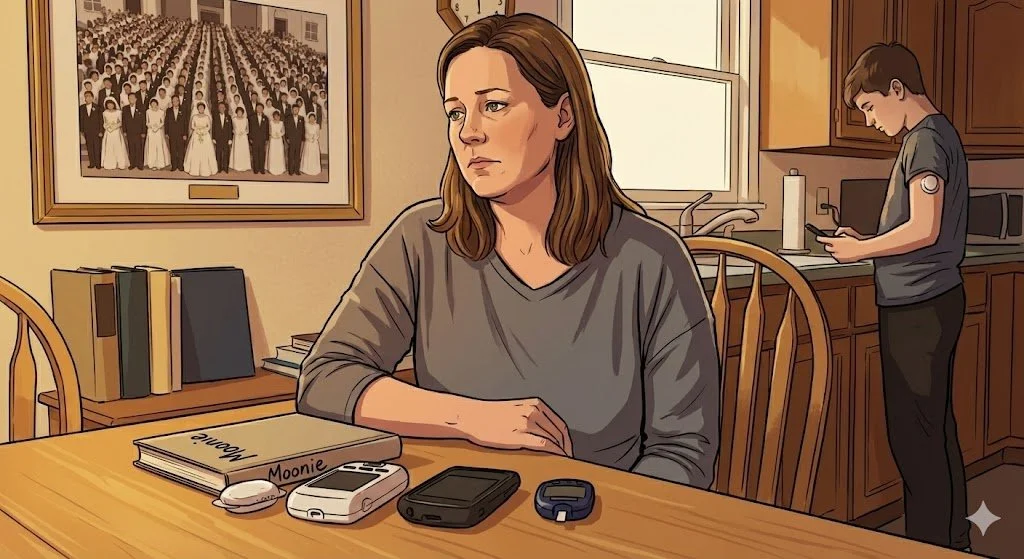



The Juicebox Podcast is a free show, but if you'd like to support the podcast directly, you can make a gift here. Recent donations were used to pay for podcast hosting fees. Thank you to all who have sent 5, 10 and 20 dollars!

#358 Defining Diabetes: Compression Low and Interstitial Fluid
Scott and Jenny Smith define diabetes terms
Defining Diabetes: Feeding Insulin. Scott and Jenny Smith, CDE define the terms that are at the center of your type 1 diabetes care.
App is free & already on your iPhone ⤴
You can always listen to the Juicebox Podcast here but the cool kids use: Apple Podcasts/iOS - Pandora - Spotify - Amazon Alexa - Google Podcasts - iHeart Radio - Radio Public or their favorite podcast app.
Check out the Diabetes Pro Tip episodes and Juicebox Docs
+ Click for EPISODE TRANSCRIPT
DISCLAIMER: This text is the output of AI based transcribing from an audio recording. Although the transcription is largely accurate, in some cases it is incomplete or inaccurate due to inaudible passages or transcription errors and should not be treated as an authoritative record. Nothing that you read here constitutes advice medical or otherwise. Always consult with a healthcare professional before making changes to a healthcare plan.
Scott Benner 0:00
This episode of defining diabetes is brought to you by Omni pod, the tubeless insulin pump, and dexcom, makers of the dexcom g six continuous glucose monitor. Find out more at my Omni pod.com Ford slash juice box and dexcom.com Ford slash juice box on the pod we'll even send you a free no obligation demo. In this episode of defining diabetes, Jenny Smith and I will be defining compression low and interstitial fluid. Now you know Jenny, she's in all the pro tip episodes and defining diabetes and ask Scott and Jenny. She's also a person who's been living with Type One Diabetes for over 30 years. Jenny holds a bachelor's degree in human nutrition and biology from the University of Wisconsin. She is a registered and licensed dietitian, a certified diabetes educator and a certified trainer on most makes and models of insulin pumps, and continuous glucose monitoring systems. Jenny services are for hire, check her out at integrated diabetes.com.
We're gonna get started in just a moment. But before we do, please remember that nothing you hear on the Juicebox Podcast should be considered advice medical more. Otherwise, please always consult a physician before making any changes to your health care plan. or becoming bold with insulin.
Do you have an absolutely spectacular endocrinologist certified diabetes educator diabetes, nutritionist you know anybody who's helping you with type one? You have one like that, that you'd love to share with other people? Or are you looking for one that fits that description? Check out juicebox docs.com. If you do JUEBOXD OCS, it's a place where I'm collecting an amazing list of fantastic support for people with type one diabetes, it's absolutely free. If you have somebody great to add, check it out. If you're looking for somebody, check it out.
So this one is Dexcom specific, although you might tell me it's more than Dexcom specific. Okay. Compression low. So if you use a if you use a Dexcom, for sure. And does it work that way for other devices, too?
Jennifer Smith, CDE 2:50
Oh, for like libri. And for Medtronic, yes. Okay. I mean, essentially, because they're all reading the same interstitial glucose from the fluid. So really, when you compress that site, regardless of the sensor brand, what it is right, you get the same impact of the same issue.
Scott Benner 3:11
Okay, so here's, here it is, if you're wearing a glucose monitor, and your blood sugar is just cruising along super stable, and then all the sudden it drops so drastically that it seems abnormal, and you panic. And you're like, Oh, I'm dying.
Jennifer Smith, CDE 3:30
I feel like it looks like a cliff die. That's how I kind of describe it to people. Like you're sitting on the edge of this beautiful cliff. And all of a sudden, like, like right over the edge it going. You're like,
Scott Benner 3:41
supposed to do that. And I Can you see them? I can see them now. Oh, yeah. Yeah, like you look at the graph, you're like, Oh, she's not really low. But But here's what could happen. You could have a glucose monitor early on, see that low, eat a bunch of food, and then 10 minutes later be significantly higher and think I don't understand what happened. I was I've been 110. Then suddenly, I was 55. And I took in enough cars. Why am I 200? All the sudden, right? So here's what happens. A continuous glucose monitor is reading interstitial fluid. And I have to say, we do this all the time. And I'm not a fan of it. Really. I say that. Like I say that, like I know what the hell I'm talking about. Okay, but interstitial fluid. I'm gonna tell Jenny like, what is it? Exactly, because I say it because I know what the function is in my life with diabetes, but I couldn't define those words. I don't believe.
Jennifer Smith, CDE 4:40
Yeah, I mean, in layman's terms, essentially, interstitial fluid is just the fluid between all those cells and everything within the body. So you know, you've got glucose in the bloodstream, and then glucose moves out of the bloodstream in through your interstitial fluid. into the cells in order to be utilized, right. So it's like this pass through effect, which is often the reason then outside of even, of compression mo issue. It's also the reason that there's lag that's visible in all the CGM systems because glucose, blood glucose is your first like real time right now value, right? And anytime that glucose is moving out and into your interstitial fluid, to see glucose levels change there, they have to first come out of the bloodstream, if that makes sense, right. So there's a lag time essentially. And a big part of the leg is often when glucose levels are changing very rapidly in the bloodstream, or around food or quick activity or whatnot. But even so then with compression low, there's still time that it takes for that change in glucose to happen from blood glucose to interstitial fluid glucose. So compression lows are very visible, like you said, you can you can almost 100% kick them out, because that you're coasting along quite nice. And all of a sudden, it just falls down. Yeah, that's not how fast blood sugar changes,
Scott Benner 6:25
it could fall that fast. If an hour earlier, you gave yourself a big bolus and forgot to eat and then there would be a moment in that drop where you were falling like that, but you don't just go from stable to like, floor falls out from under you. That's, that would be uncommon. So this, so this episode just turned into defining diabetes, interstitial fluid, and compression. Lo I just decided, as we were talking, I'm looking online. And you know, obviously, what you said is 100% is what I'm seeing here. interstitial fluid is a thin layer of fluid which surrounds the body cells. interstitial fluid becomes useful has become useful recently in the monitoring of glucose levels with people with diabetes. And let me thank diabetes.co.uk for having great see SEO and popping up in my Google search. So interstitial fluid, as Jenny's described is carrying glucose that your your glucose monitor is monitoring,
measuring, right, thank you,
when you roll over, or sit down, or push really hard on your sensor, and by the way, I'm wearing one right now. So I'm pushing very hard on mine, right now I get to wear one for 10 days for the very first time in my life. And you do that that compression of the sensor into your body is dispersing the interstitial fluid away from the sensor wire. So your blood sugar, interestingly enough, right around the wire is being read accurately as 50, all of a sudden, because you've pushed most of the glucose away from the wire that's doing the measurement. But your body, your glucose in your body hasn't changed. It's just literally changed around where you're pushing on it. That's a compression low a low that shows up because you're laying on pushing on sitting on whatever, your sensor, and what the first number of times it happens to you. I can speak. You know, from my experience with Arden, it'll flip you out, then, but then, like Jenny said earlier, the first thing you can do is look at that graph. And eventually, you'll see what that curve looks like for a compression low. And then it takes How long do you think how many cycles of the CGM before it starts figuring things out again, and the food comes back?
Jennifer Smith, CDE 8:44
You know, I think that's, there's probably a variance, but it's also a very quick turnaround. In fact, I was gonna mention to from the data point, visual, you know, each little.is supposed to represent like a five minute interval, right? Well, when that glucose has fallen off the cliff or nosedived, there's, there are less dots, it becomes less accurate with the number of dots and the like the fluidity of the dots and the movement. So you'll also see as soon as the compression low writes itself, either you move in your own sleep, or mom or dad wake you up because they got the alert and they wake you up and have you roll over whatever. It typically writes itself. Fast after that, and all of a sudden, you'll see almost like, you know, a rocket ship has shot the blood sugar back up to kind of where it had found a look on the graph. Yeah, it's how it'll look on the graph. And you'll also see those dots become a lot more stable and normal. I got a long it takes I think it depends on how soon the compression lowers address, right. You know, for an adult on their own. Maybe they didn't even hear the alert or maybe it took a while for them to hear the alert. And so it takes them a while to move enough. And so then that low might look longer than a typical up down.
Scott Benner 10:15
I find myself wondering sometimes does Arden's phone beep and just that beeping stirs are sleeping off that she turns over, because there's times I'm not woken by it, but in the morning, you'll come and go, What happened here? You know, where it's like steady, steady, steady, 50. back up to the where it was steady, steady, steady, and nobody woke up. But there are also other times where if she's, if she's, I guess sleeping harder and doesn't roll off of it. I have to make my way across the house. And I the words aren't in rollover, you're laying on your sensor have come out of my mouth a number of times in my life. Yes, Arden rollover, you're laying on your sensor, just enough to I'm trying to put it indoors subconscious or, you know, whatever it is when you're saying, like, please stay on this side or something. But isn't it interesting? Arden Where's her sensor? In the same basic two areas, she's on her hip, left to right, left to right. And because you get 10 days in between, we just bounce back and forth. It doesn't you know what I mean?
Jennifer Smith, CDE 11:11
And the likelihood that you're going to hit exactly the same place right on that side after 10 days of not being I mean, it's like a million to one we don't live
Scott Benner 11:21
it around still a little bit. But my point was, is that with like compression was don't happen to us very often, because we have good spots. But if you move it more towards your hip bone or something like that, I guess it just changes how you sleep on iOS, sometimes I just wonder, does she sleep differently? Sometimes and not others, but it's got to be more about the the positioning of the of the sensor. So that's why like stomach sleepers, if you wear it on your stomach, you might you might be getting that, you know, side sleepers on your hips, like there's ways around it. But it's one of those things that you just hear people talk all the time, like, Oh, that's a compression low and people who no say it, like, that's just a compression low, right to the person who didn't know, they were like, I thought I was dying, just so you know. So in the beginning, and probably we should say you should still test them. But like, if you see a 50, you do a finger stick and you're 108 that's what's going on. And don't calibrate your meter or your your glucose monitor. And they're like, if you're keep that in mind if you're 100 Nate, and suddenly it says 50 do not calibrate it. Because it really, really, it really believes it's 50 because it's reading that dispersed fluid and you will mess it up in that situation. So, you know, test when you're not sure. But I think it's fair to say that after a number of years with diabetes, you'll you'll know the difference. And by the way, if it's not a compression low, it won't take long for you to figure it out. Right, you know, because you'll keep dropping most likely. Right, Jennifer? We're just too good at this to be perfect. I think we could probably do this while riding on a bus. reading a newspaper like we could be sure we those two dolls in the Muppets we could be up in the rafters like making fun of the people on stage and at the same time telling people what a protein rises.
Jennifer Smith, CDE 13:11
That would actually be really humorous like skit to do.
Scott Benner 13:16
Wow, these people have found a way to make diabetes even more exciting than it is now. Friends, it's time to get yourself a free, no obligation demo of the Omni pod sent over to the house. Okay, let's talk about the Omni pod tubeless insulin pump, besides being absolutely spectacular, is the insulin pump that my daughter who is about to turn 16 has been wearing every day since she was four years old. That's a long time. Every day on the pod comes through exactly the way we expect it to. And in a myriad of ways, by being unobtrusive by being tubeless by helping us with extended boluses Temp Basal rates. And just being what's the word I want really just it's there, it's solid. You don't mean like it does. It does what I think it's going to do when it's going to do it, I get what I expect. And what I expect is a quality insulin pump. That gives me the delivery and the wearability for my daughter that we need. And that means that she can stay attached to her insulin, when she's playing sports without being obtrusive, while she's taking a shower, sleeping, running around in the backyard jumping on the trampoline, riding a bike, swimming, all of the things that your body still needs insulin for. You know when you hear people saying oh, I disconnect for that? Well, they don't have insulin during that time, and that's very likely gonna cause a high blood sugar. Now I understand that tube pumps need to be done. Connected sometimes. But the Omni pod never needs to be disconnected. It's tubeless. Wonderful. And you don't have to take my word for it. Because on the pod will be thrilled, happy, elated, delighted to send you a free, no obligation demo that you can try on yourself. Find out if what I just said is true. But you notice, but still try my on the pod.com forward slash juice box. Check it out, get the demo, decide what you want to do. If you want to keep going with Omni pod, it'll be easy. And if you don't, no harm, no foul. You were just trying. That's why they call it no obligation. Now I have an obligation to tell you about the dexcom g six continuous glucose monitor. This obligation is both business oriented because their advertisers and moral because I think everyone should know about the Dexcom g six continuous glucose monitor. Here's why. I'm gonna use an example from this morning. Arden wakes up her blood sugar is 106 I see it on her Dexcom nice and steady. I hear her moving around upstairs. No big deal. She's getting her facewash getting dressed, getting ready to actually go out right now. All of a sudden or blood sugar diagonal up starts moving up. 106 turns into 115 turns into 118 all of a sudden 125 Well,
we bolus right we're trying to stop that rise before it happens. Arden is trying to go out she's trying to do things she needs to eat. She doesn't need to walk into this day. 5060 7080 points higher than she needs to. But imagine had she woken up and tested her blood sugar with a meter boom, she would have saw 106 and thought, Hey, I'm doing great. And then she never would have seen anything that happened next. And then a half an hour 40 minutes later when she's sitting down to eat and tests again. You know in a world without a CGM. Who knows what she is to 25 now suddenly, the first meal is in jeopardy. It puts the rest of the day in question. You're looking at roller coaster going up and down and up and down are skipping a meal. Instead, beep beep Arden's blood sugar hits 120 she gets a little insulin right back to where we need to be ready for that meal ready for the day. That uniquely happened because Arden has a dexcom g six continuous glucose monitor. Now that's just one example. Imagine all of the other ways that technology can be used for you. Imagine that the way I found out about it wasn't because I was bugging Arden while she was getting dressed. It's because it popped up on my iPhone. Because the dexcom g six has Sharon follow. And that works on Android and iPhone. So Arden CGM told her app or app, put it up in the cloud, it came back down on my phone, just like that we averted a high blood sugar, burden the problem at a meal, save the day Dexcom g six is gonna save more than one day for you. That's for certain. Find out how you can get a dexcom@dexcom.com forward slash juice box. There are links to Dexcom Omni pod and the other sponsors at Juicebox podcast.com. If you can't remember them, they're also right there. in the show notes of your podcast player, you can click on them right there, like click Like with your finger. But very much appreciate when you support the sponsors because it supports the podcast, whether it's on the pod Dexcom the Contour Next One blood glucose meter or touched by type one. When you check out the links. You're telling those sponsors, I listen to the Juicebox Podcast I heard about you there. They keep sponsoring you keep getting the podcast for free. Seems like a good deal. Alright, a little bit of music, and we're out of here. Do I have any announcements here, maybe one Hold tight. You can find the rest of the defining diabetes series as well as ask Scott and Jenny and the diabetes pro tip episodes at diabetes pro tip.com. You can find them too at Juicebox podcast.com. But you know diabetes pro tips pretty easy to understand no s after the P so just the P no si p.com diabetes pro tip.com. Also, if you have a great doctor or need one for type one diabetes, check out juice box docs.com do cs juicebox Doc's calm, an ever growing list of type one diabetes, health care professionals that listeners that the podcast have recommended. Let me give you a couple of examples. For instance, right there in Australia, Rachel Baker, Rn NCD. He does some amazing work. How about up in Canada, Dr. Jeremy Gilbert, over in Ontario, that's Toronto. You understand Toronto, Ontario, right? Like Canada does their places weird? I mean compared to how we do it. How about Melissa and Tony Nik in Fairfax, Virginia, alfonzo, Armstead, Nashville, Tennessee, and many, many, many more. And people put in effort when they send in their doctors to give real examples of why, for instance, someone wrote in that Elizabeth Harris in Chapel Hill, North Carolina, she said about Elizabeth, I've worked with Dr. Harris for close to a decade and she's taking care of me through many different stages of my diabetes. From the disengaged teenager to the engaged with struggling young adult to well controlled diabetic goes online, check it out, juice box, Doc's calm. It's not a pay service. None of the doctors are paying me to be there. It's just me trying to take your good experiences, and putting them in one place so somebody else can get the advantage of what you've learned about your doctor. Thank you so much for listening. coming up soon on the podcast. There'll be another after dark episode. Another pro tip is coming with Jenny about pregnancy and type one diabetes and of course, tons and tons and tons of interviews and conversations with people just like you. I'll see you soon.
support the sponsors
The Juicebox Podcast is a free show, but if you'd like to support the podcast directly, you can make a gift here. Recent donations were used to pay for podcast hosting fees. Thank you to all who have sent 5, 10 and 20 dollars!

#357 Just Smile and Wave
Owning change in type 1 diabetes
Katie is a mother of four who is on the show to talk about how she took control of her daughters switch from MDI to pumping. I love her attitude about type 1 diabetes!
App is free & already on your iPhone ⤴
You can always listen to the Juicebox Podcast here but the cool kids use: Apple Podcasts/iOS - Pandora - Spotify - Amazon Alexa - Google Podcasts - iHeart Radio - Radio Public or their favorite podcast app.
Check out the Diabetes Pro Tip episodes and Juicebox Docs
+ Click for EPISODE TRANSCRIPT
DISCLAIMER: This text is the output of AI based transcribing from an audio recording. Although the transcription is largely accurate, in some cases it is incomplete or inaccurate due to inaudible passages or transcription errors and should not be treated as an authoritative record. Nothing that you read here constitutes advice medical or otherwise. Always consult with a healthcare professional before making changes to a healthcare plan.
Scott Benner 0:00
Hello everybody. This episode of The Juicebox Podcast is sponsored by Omni pod and Dexcom Dexcom. Of course makers of the G six continuous glucose monitor and Omni pod makes a tubeless insulin pump that I think is second to none. If you'd like to try a free, no obligation demo of the Omni pod, you can do that today, very simply by going to my Omni pod.com forward slash juice box. If you want to learn more about the Dexcom g six continuous glucose monitor dexcom.com forward slash juice box.
You're listening to Episode 357 of the Juicebox Podcast it's going to be called smile and wave. In this episode, I'll be speaking with Katie. She's got like 400 kids or something like that. And one of them has type one diabetes. Katie came on today to talk about what it was like to go from MDI, to a pump. And some of the things that she experienced along the way. This episode becomes very Guinea. I very much like Katie and I and I like chatting with her. Turns out that I've spoken to her before and really didn't remember before we recorded this, so that was a little embarrassing. As you're listening, if you'll do me the favor of remembering that nothing you hear on the Juicebox Podcast should be considered advice, medical or otherwise. And please, of course, always consult a physician before making any changes to your health care plan or becoming bold with insulin. I would appreciate that if you you know, would remember that. Alright, let's jump right in. Katie is really delightful. I quite enjoyed talking to her.
Katie 2:11
My name is Katie and I have four children and they are 14 1311. And then four, and she is our type one. The four year old, the four year old. Now when you thought to come
Scott Benner 2:25
on and be like right away, I'm gonna get made fun of for having four kids. That was it. Yeah, yeah. Yeah. And that's why I'm not gonna do it. Because it seems like that's the way I would go. And but but my God, let me just ask this then. All with the same Dad.
Unknown Speaker 2:42
Yes. All with the same dad. So then the four
Scott Benner 2:44
year old was a I don't like to say this where it's gonna be recorded. But after a dinner with a couple of drinks on a Friday night, something like that kind of a situation. I guess
Katie 2:54
we had we have the older three that are very close in age. And then somewhere in the in between the left the 11 year old and the four year old almost five. We did have two foster children that we had for a little while and then they were placed with an aunt and so that middle area was filled with six other kids. And now
Scott Benner 3:16
you get somebody back on your team because I guess the other three are gonna overpower you. But you have are the older three or do you have four girls?
Katie 3:25
No. The second one is a boy but yes, three girls one boy. Oh,
Scott Benner 3:29
yeah, that's good. Yeah, terrible. Um, so yeah, I hope that doesn't sound sexist at all. But that's gonna be horrible.
Unknown Speaker 3:37
Yeah, again. Oh, sure.
Scott Benner 3:39
Oh, sure. Oh, geez. For like, probably I'm guessing a span of like, Where's it start right around? 13 it Where does it start? Where do ya where they start coming at you like demons around 13? Probably doesn't really until he got to think maybe ready every school college and then they probably picked up again in their early 20s. And then in their late 30s. And yeah,
Katie 4:04
it's gonna keep on coming. And the
Scott Benner 4:06
younger one was a girl too.
Katie 4:07
Yes, she's a girl.
Scott Benner 4:08
Yeah, the little people are not good at like stacking the deck in your favor. I can say
Katie 4:12
no, no. And she's a handful. So
Scott Benner 4:17
that's such a polite parenting word. Like I would love to be with you somewhere quietly privately where I said you tell me about that kid. You use a different Adjective.
Unknown Speaker 4:26
Not hateful Scott. I think she's trying to kill us.
Scott Benner 4:31
Yeah. All right. So listen. It so we're not going to just it's not that those first three children aren't important but we're going to skip right over them like they don't exist and go right to the four I'm
Katie 4:41
sure that's how they feel.
Scott Benner 4:45
So why don't we start with that right. Your when your youngest is born? How long until she was diagnosed what age
Katie 4:54
she was diagnosed at. Three like just turned three. Are you coming up on two years. We are about well, about a year and a half in a little over. Do you
Scott Benner 5:03
think? Do you think the other three? Now you had you had foster kids? So maybe this is a similar thing. I'm now in my mind equating foster children to diabetes only because it's like an extra thing to do that draws the draws attention away from other children. I guess that's the way I was thinking about it. Right. And so now, like, I'm gonna get a note from every person who's ever had a fault, they're gonna be like, they're not. And But anyway, you know what I mean? It's another thing to think about. Yeah, it takes attention away from your other kids. Do you see that with the other three? How do they feel about it is near as you can tell?
Katie 5:35
Um, I do. They don't say much. But I do think, I think especially with with our youngest of the group of three, that it, they feel a little bit of that, that we're constantly well seems constantly dealing with the younger one, and they are a little left, left out left behind.
Scott Benner 5:56
Do you think that would happen anyway? Without the diabetes, though?
Unknown Speaker 6:00
Probably. Yeah.
Scott Benner 6:01
Like, isn't that just sort of like a human? Yes. Like, I want my parents attention. I want it undivided. You know, it, nobody else counts. Even my siblings, that sort of thing. And
Katie 6:10
yeah, yeah. And this little one that came along? Yeah.
Scott Benner 6:14
Like it? Yeah, years later. And then you're just like, Oh, I didn't even think mom and dad had sex. Like, what is this? And you probably were at that age where they were probably looking at you. Like I said, nice people that bring the food into the house. Yeah. Yeah, I really do feel like that, that, you know, it's easy to point at the diabetes and say, oh, somebody is upset, because we're, we're paying more attention to that. But you know, I don't know, I never heard it too much from my son. But he would like, you know, once in a while do or say something that made you feel that way. And yet, it's possible that I have spent more weekends, like full solid weekends, 24 hours a day with my son, then most people who don't have kids who are running around playing sports like that do, right, you know, I've had a ton of personal quality time together. And yet still once in a while, it's like, oh, it's always hard. And I was like, right, how are you? out of your mind? I'm broke because of this baseball thing. Like, how could that be possible? Right? Like, yeah,
Unknown Speaker 7:11
our
Katie 7:12
our older ones play, especially our older two are real involved. We have a travel baseball for my son, and then club soccer for my oldest and it's, it's never stopped them from doing anything that yeah, that they were doing, or wanted to do. So.
Scott Benner 7:27
So I think I think the moral of the story, maybe is that kids just, you know, kind of rightfully so want the attention of their parents, right? Yeah, it doesn't really matter. What's taking it away at all feels completely criminal that it's happening. Yeah, but do you do? Is it in your mind? Do you try to not let it slide one way or the other? Or do you just do what you need to do with the diabetes?
Katie 7:48
We don't think about it. I don't. We just do what we need to do.
Scott Benner 7:53
Yeah, I feel like that's what we used to like, I think a lot of those things you spend your time worrying about and then you just look he looks super like suspect. That's a kid's word. Right suspect. Look suspect. Why do I say that? There were a lot of girls in my house last night. I must have heard that word at some point. But anyway, you look you look, you know, authentic. I think when you're trying to put attention in a place, right? You don't I mean, like everybody's got like a, an aunt or a grandparent who you know, like really doesn't like you that much. But they turn it on when they see you again. You're just like, This lady is playing the part of aunt that likes me. Why is the right a lot, a lot. A lot of 30 year olds laughing right now. I don't like my niece at all. And I do pretend to like her when I see her. Anyway, it's fine that you don't like her. She's probably nasty anyway. And those boys are dirty and they smell weird if it's a nephew, and yeah, I don't understand. Okay, so, here's why this one's gonna be fun. Katie, it's okay. It's because I don't remember why you're coming.
Unknown Speaker 8:50
I don't know.
Scott Benner 8:54
What? Why don't we look at that and see if we can figure it out. Everyone together, there must have been a good reason. Right? Okay.
Katie 9:01
I don't know.
Scott Benner 9:02
You don't know. Okay. So, at this point, I don't think it's any surprise to people that, you know, correspondence comes to me through email, through Facebook Messenger through through Instagram messenger. And I'm not great at keeping track of all of it. Right? Right. And it's easier if you email me because then I could just search you out and like, Look, but also when I when we get notes. I don't think much of it. Like I'm just like, Oh, this is cool. This person looks like they'd be good on the podcast and in and by the way, I've looked at people I thought, I don't know if they're gonna be good or not, I think Yeah, let's try and see what happens. Right? I've never turned anyone down. But I'm now seeing a note from you. Back to February of 2019. On Facebook, love the show helpful parents, new parents. Oh, maybe this was it. But I just left the windows office and I'm so frustrated and confused right now. Okay, I think this is going to be up because this happens to a lot of people. And your note was coherent. So I thought okay, so I thought, let me force this person into being on the podcast and explaining the situation. So when you sent me that note back there, do you remember that time?
Katie 10:08
Yes, I think so. Okay.
Scott Benner 10:10
Do you need me to remind you of what was happening to you back that I could do that right? You said February my, my daughter was diagnosed about nine months ago, at almost four years old. She's four and a half now. We got a dexcom, two months after diagnosis. And we've been on MDI, our last two agencies were five, three and five, one. We've used our own research, like books and the internet groups and everything, listening to all your podcasts to get from 14 and a half at diagnosis to nine A month later. 9.1 A month later, then 253 and five one after that. The question in my frustration is we recently got the Omni pod and we just walked out of the windows office to start the sailing trial. And I'm totally unsure of how I feel about it.
Katie 10:48
Ah, oh, when we started, yes,
Scott Benner 10:50
because they wanted you to set a target that was much higher than what you were accustomed to with MDI.
Katie 10:56
Right. Yes, that everything much. Yeah.
Scott Benner 11:01
And so you said, This is great. You should? Should I find a new endo or go rogue?
Katie 11:08
I don't know. I did not find a new endo.
Scott Benner 11:11
Well, I don't like naming the episodes are early on. But go rogue is a strong contender. That is what we did. Yes. Good for you. So I that is what I wanted to hear about. And here's why. In all seriousness, seriousness, not that I wasn't serious that I forgot why you were coming along. But now that I've refreshed my mind, this is a huge problem for people. You started an insulin pump. And tell me a little bit about what they what they set you up for and, and how that all went.
Katie 11:38
Um, we we were MDI for for a while, it took us a while to get we lived in Texas, and then we moved to Ohio, like, maybe three or four months after she was diagnosed. And so by the time we even got into a new endo, and, and got going with the pump, it was it was a while. And so we had figured out MDI really well, and we were getting, you know, a one c 5251 with with MDI, five, three, yeah. And so I had been so long, but I knew I knew we wanted the pump and what that would help us with so we went in and I guess we have like a CD that came in and looked at everything and started talking about how we would go about this and I just had a bad feeling that feeling Yeah. And just saying how we couldn't things we couldn't do or what we couldn't continue with or how things were not going to go it just telling us and it was kind of a Well, yes, we can like an our opinions. So we we went in for the sailing trial and she walked through all the settings and and how we were going to start and that you know be prepared she's gonna run a lot higher than you're used to giving us that that speech and we came home and like I I'm like for how long you know is a day two weeks a year? What are we just gonna run high for how long and just just really didn't set well but so that's when I you know, we did but we just listened through podcasts we read everything we could read and we went back I guess is we did sailing for like six days or something. Went back for the real influence start not at our way through the she set the the Omni pod how she wanted it. We said yes. Okay, great. And I don't think we even got to the parking lot before I took that thing and how to just did all the sessions.
Unknown Speaker 13:40
Yes, lower that higher.
Scott Benner 13:42
What was this guy thinking?
Katie 13:45
Right. And I still we change things all the time. But of course, but yeah.
Scott Benner 13:49
Okay. I apologize for a second. I have to walk down the hall and push a button on his phone. She's sleeping and I'll be right back. Okay. 45 seconds. you entertain the people anyway, you feel like it's good. Okay, do you want to sing just go nuts?
Unknown Speaker 14:02
No, no.
Scott Benner 14:06
I don't want to disappoint anybody that Katie completely chickened out and sat in total silence until I got back. That silence will give us time to talk about the dexcom g six continuous glucose monitor. My daughter has been wearing a dexcom for many generations now. And the G six is by far our favorite. No finger sticks, no calibration. It's lovely. And it gives you the information that you need to make great decisions about your insulin. What's your blood sugar? Which direction is it moving in? And how fast is it moving in that direction? Mm hmm. I know you're excited. That's crazy, right? The dexcom is at the core of how we manage our daughters type one diabetes. And I think you would find it to be incredibly impactful in your life. Some of the really exciting parts of Dexcom have to be experienced. And you can read more about them@dexcom.com forward slash juice box. But the one that I think is going to tickle your fancy is that you can share your blood sugar, or a child's blood sugar, or a friend's or assisters or a neighbor's. With up to 10 followers. You can do that with Android or iPhone. So just imagine that your friend goes on a trip to Madagascar. And you're here in wherever you live. Where do you live? Wisconsin, let's say you live in Wisconsin. And your friend says, Hey, check out my blood sugar. You know, if it gets too low, just throw me a text or call me or something like that. I'll be in Madagascar. No problem, you can do that. That crazy. So no matter where you are, at school, off on a trip down the block at a friend's house. Actually, you're going to hear Katy talk about how she handles it later with her daughter, and I love her system. So you'll you'll you'll hear more about that. Anyway. Dexcom you gotta check it out. dexcom.com forward slash juice box. It's the bee's knees. Omni pod is excited. They want to they're sitting around clamoring right now they're sitting in on the pod right now waiting for you to go to my Omni pod.com forward slash juice box. Because when you go there and you tell them hey, hi Omni pod, you'll type with your fingers. You don't really have to say any of this. You just thought a little form. But it's you know, basically, here's what you're saying. Please send me a free no obligation demo of the on the pod. So I can try it on and wear it or, you know, put it on my kid. See what they think. go for a swim with it. jog around the block, roll in the hay. I don't know what you do. But I think no matter what you're going to do, trying on the Omni pod in real life situations is going to give you a great feeling for whether or not you'd like to move forward with it as your insulin pump. My Omni pod.com forward slash juice box. Get that free, no obligation demo today. No Obligation means if you get it, you don't like it. No harm, no foul. Nobody cares. You're all good. They don't bug you afterwards. And if you want it, you just say hey, I'd love to keep going with this. I love the demo. Send me a real Omni pod. There are links at Juicebox podcast.com. And right there in your podcast player to all of the sponsors. Please support the podcast. Click on those links. We're going to get right back to Katie in just a moment really dig in and get going. But before we do, please allow me to remind you about diabetes pro tip calm. It's where all of the diabetes pro tip episodes from the podcast are housed in one place. In case you need to more simply revisit them or share them with someone else. Sometimes it's hard to tell somebody you know get your podcast app download find this episode. Diabetes pro tip.com. No es pro tip. All right, here comes Katie. My apologies. Did you recite their the preamble of the
Katie 18:11
Constitution or anything? No. But that that would have been a good idea. I didn't
Scott Benner 18:15
mean I just do that so that when I go back and edit I can amuse myself with what you did. or didn't do. Like she just sat perfectly quiet. I so Arden is there three days here of school she has off Wednesday, Thursday, Friday. The teachers call it professional development. I think they all go to like Atlantic City and drink. I'm not 100% certain
Katie 18:35
But no, we sit there and meeting. Oh, so you know
Scott Benner 18:39
these things? Because Yeah,
Katie 18:40
I was Yeah,
Scott Benner 18:42
we're a teacher. So professional development this week. And she's been she's been really tired the last week, she's like a lot of testing and things going on. So she's like, I'm gonna sleep in as much as I can. Right on. I thought I was doing a good job of holding her up. And then all of a sudden, about 10 minutes before we got on. She went from like 70 to like 66. And I was like, This is moving a little quickly. So I gave her a little juice and I tempt her way back. Because I didn't want it to. I didn't want to miss you know what I mean? Because you and right You and I were talking. So now I have like a 102 diagonal up and I got to turn all the time stuff back. Oh, so I I just had to do that. I apologize. Okay. Anyway, thank you. Okay, so you had a situation that I think most people go through and diagnosing why it happens. We can kind of all guess, you know, it's probably not that important. Like, why does your doctor do that like stone like, like, cuz this person came right out and said, Hey, listen, you're gonna be higher than you expect. wasn't just because of, you know, what you were used to your five one and your five three and all that stuff that was because they're like, I'm gonna push your settings up, but I'm not going to give you as much insulin as she needs. Right? And it's so that you can figure the whole thing out like, I think I understand that premise. But I don't understand not saying to somebody, hey, look, we're going to take this thing here, you know where you used to be at, I don't know, you were getting the equivalent of, you know, a half a unit an hour for bazel. But I'm going to knock it back down to a quarter. But in an hour or two after you get home, if she's high, why don't you move it up to like point three, five, and then wait a couple hours? And then if she still had to go to bed, and then get back to where you think you need to be it right, we'll set it here. And then you'll come back in a quarter of a year. And we'll look at it again. Right? That's exactly, absolutely senseless. And you were struck by it harshly enough that you were just like, I'm not doing that. But you have any idea how many people walk out there, into that parking lot, feel that hard that you feel and then just go along with it?
Katie 20:49
Yeah, we, we just we, I feel like we work too hard to, to get where you were and, and to just be getting something we were excited about that we wanted to that was gonna help even more and
Unknown Speaker 21:03
we just know,
Scott Benner 21:04
we just took this hill, I'm not walking back down it voluntarily.
Unknown Speaker 21:09
Right?
Scott Benner 21:10
I'm gonna stand up here with my flag and keep you off on my Hill. And it just really is. I think it's kind of it's suspect, Katie, that the doctor would do that, that they would, because did you make any noise in the room at all? Like, but we don't want to do that? Or what was that feeling? Like right there?
Katie 21:30
I did the first time. So we went in I don't know how many meetings of this before they actually give gave us a pump with insulin. But one of the first times I did kind of say no, we're why I you know, I asked why and told them we weren't going to do that. And basically, around around ended up just, again, nodding your head and saying, okay, you're right. Yes, I understand. And left and then just do what you'd want to do when you leave.
Scott Benner 21:57
Do you think that's what they want from you? Do you think they want to say, look, I told them how to be you know, quote, unquote, safe and safe right on them? Like, do you think they it has to be I cannot imagine why they would set these things. Like you said to give a kid less insulin than they're currently using. It has to just be covered there. I don't want to out where you live. But if I'm right, you're near one of the better children's hospitals in the country. Is that where you're going for your care?
Katie 22:27
No, we while we were in Houston, in Texas, we use Texas Children's when we were diagnosed, and then we moved. We're in Ohio now and we do not use a children's hospital. We just use a practice of pediatric endo practice. Yeah,
Scott Benner 22:41
I'm right about that Children's Hospital in Ohio, right? Yes, it's one of the better ones.
Yeah. Okay.
Okay. Why do you not use that versus the one you're using?
Unknown Speaker 22:51
It's just really close to our house.
Katie 22:54
We don't have to drive and park and all that so and I really like the the the end Oh, she's once we got over that she's been really really supportive since then. So cool.
Scott Benner 23:05
Yeah, well, and I think that's the next problem is that you also can't become adversarial than with them like you you don't want to start this process where you are now fighting with the end or you think of them as somebody who doesn't have your best interest at heart you really do have to kind of it's unfair, right? You have to see their side of it too.
Katie 23:22
And we you know, we smile and nod when we're there um, now we don't have to I was nervous when we went back Yeah, the first appointment after being on the pump to show her my to give her the PDM to see all this stuff we had changed. If how she would react to that, but her numbers were so good that she didn't she didn't say anything.
Scott Benner 23:43
Do you prep everybody before you go in the room? Do you have to hit him with him the Madagascar penguin thing you like just smile and wave boys? Yes like it just nod and smile. I wonder how much of life is being wasted by one person telling another person what to do when the other person has pre planned to ignore them must be so much of our waking like human hours are wasted on like oh today I'm going to explain this to a lucky young man who's going to benefit from my wisdom and and then that young man is my son who I've just told look if they tried to change your swing just go like oh yeah yeah, thank you. I can't believe I have the benefit of your beautiful and and then just walk away and you're doing it in the windows office My wife is clearly doing it around our I don't think she agrees with me about anything. She's like oh Scott, that's such a good idea. Oh, I should share that with those people on the podcast the the we were talking about I'm heading out kind of on the bits the talking you know it's talking time of year for diabetes like there's this Yeah, condense couple of months where I'll jump like from city to city and do this stuff. And and I sit around like I'd like to have something when I'm talking because people are trying to write like I wish I could bring like pads of paper with us that also made He had information at the bottom about how to like, subscribe to the podcast, like, it seems like a good idea. And then I looked into it and pads of paper were expensive. And I was like, well, I can't do that. And so we're looking through and I said, Well, here's a good idea. Like, I can get this eight and a half by 11. Like, it's from a printing company. They're incredibly inexpensive. And maybe I could set them up like worksheets for the talk, where you take notes on them and stuff like that. And I said, I think that would be a good idea. What do you think? And she says, Do you think people would take that home? And I'm like, who don't like me at all? Do you like, like you? Would I sit around like, you would never come out and hear me speak? Right? Just Oh, no, I don't think so. Having said that, she's seen me do it before and she seemed like she was unless she was just smiling. Oh, my God, Katie
Unknown Speaker 25:43
Weiland on.
Unknown Speaker 25:47
Anyway,
Scott Benner 25:49
I actually I'm kind of going over that fertile soil, because I think it is. It's an actual, it's a diabetes tool. It, it really is for your own sanity, you really do have to be able to like look through them and go, Okay, what you're saying right now does not apply to us. And so I'm gonna just, I'm gonna let you feel good about this. And then I'm going to go home, and I'm gonna I'm gonna, you know, try to diagnosis on my own because your doctor really is giving you it's boy, it's boilerplate advice, right? Because I'm looking at the rest of your note here. You said, you said they want to set our target at 150 in a range from 100 to 200. And we're not supposed to correct until 300. And I don't know if I should just send it back and forget it. Well, look at that. At that time. You were like considering not pumping? Because yes, definitely. Wow, that's something and I'm assuming that there's an endo listening right now who's Okay, that's so we can make sure you understand the pump and everything, the pump pump, what was that the pump and everything? Did my lips get stuck together. But I think that you had a perspective that most people don't come in with, like you came in with all of your research and the podcasts and all those things. You don't, you don't you didn't need somebody to dumb it down. And to push it to the other side of the safety zone. So that nothing would go wrong, I find this. I find this reminiscent of when people say to me, Hey, what's wrong with my graph? And I'm like, Oh, you don't have enough bazel. And they're, and they say, but I can't turn my insulin up. I'm always getting low. And I'm like, Yeah, but you're getting low, because your Basal is not doing its job, and you're kind of putting in too much insulin to try to overcome the food. And then it all kind of like pulls up at once and drops below, like, believe it or not, if you had more bazel you'd use less meal and so on. And right, you wouldn't get low later. But that's a weird thought leader to make, you know, because if you're getting low, why would you put in more. And that's not always the situation like everybody who like that's not just an easy fix. But it's a good example. And I wonder if this isn't the same thing. Like, people end up messing up. But it's not because of where their settings are. It's because of how they use the insulin I think.
Unknown Speaker 28:03
Right? Yeah,
Scott Benner 28:04
did you So did you have any trouble switching to a pump after you decided to do it the way you want to
Katie 28:09
know it's been great. We love it.
Alright, and see what's gone down.
Scott Benner 28:14
And everybody Katie's been on the show today. We really want to appreciate it. She's done now because she's just told the whole story in a sense, Katie, you're there's you're not storytelling here at all. You're just like, no, it's great. Thank you. I don't remember.
Katie 28:27
Well, we went we went home and and I like I said, I was in the car. We got to the car, I fixed it. I mean, we've had, we've had to go in and play with it more and more. But we've learned I think, listening to your, your podcast, all the different tricks and reading with our timing and with our bezels we've been able to really, really get things to where where we want them. So like I said, we've actually improved on our timing range, our standard TV, everything. So that's really great. It's been great. Yes, I how I don't know, it's a bunch of trial and error. how we do it.
Scott Benner 29:08
And there's nothing wrong with that. And it's funny, it's because people don't have success, because that's the exact thing that you need to do. And it's the exact thing that they tell you not to do. They're like, go home, don't touch this. Come back in March, and we'll look at it again. Right and that's the 100% the backwards, ya know, when we when we were diagnosed, and we left the hospital, I remember
Katie 29:31
getting the basic what everybody gets advice. She ran really high and we'd call in those numbers and 200 to 250 300. And they're like, Oh, it looks great. Like, no, but I feel like it is I don't think so. Right But But I remember the RCD in the hospital. She did say one of the things she she they were teaching was, you should give insulin and wait before eating food. So that Pre-Bolus idea was there, which were like, Okay, give insulin, wait 15 minutes and eat. And I want to say the first week or second week, we're out of the hospital we had gone out to eat, and I can't remember his mac and cheese or pizza or something like that, that she was going to eat. And so I gave the insulin, we waited 15 minutes, 20 minutes. And that was the first time we had a serious low because we had no idea that you can't necessarily Pre-Bolus all foods the same time.
Scott Benner 30:34
We're that that macaroni and cheese would then go in and not really impact her right away. Well, exactly. Insulin was still working so quickly.
Katie 30:41
And it I mean, we were in the car driving home, and I want to say she was low 30s, high 20s when I checked her finger, and, and I'm thinking what, you know what happened? I don't understand. They did what they said. But But that was the the turning point for us. We're like, well, we need to you gave us enough information. They I think they feel like to not kill you. But in a way, that's what that's
Scott Benner 31:05
what you're like, we're gonna have to get one of those foster kids back, I think
Katie 31:10
you gave us enough information to just be dangerous. So we had to really,
Scott Benner 31:16
yeah, right? Because that that generalized look your Pre-Bolus 15 minutes before you have to get some isn't. It's not the whole idea. And no. And so they gave you, you know, we talked about this all the time, like they gave you the first sentence, but not the rest of the explanation. And now there's going to be some CD out there is thinking like now, that's why we don't tell anybody. But that can't be the answer, either. You know, the answer can't be all or nothing. Right? You know, and if you don't know enough about Pre-Bolus, to explain it to somebody, then don't. But if but don't tell them, it doesn't exist say look, there's this idea that I don't completely understand that we should all look into together and try to make better like, Look, it's just like anything else. If I was an auto mechanic, and I didn't know how to change a fuel pump, and I took your car and you were like, hey, my fuel pumps bad. I was like at school, give it to me, I'll fix it like that, right? That's wrong. Okay. So you can't if you're a CD who's really good at 95% of the stuff you do, and you don't understand 5% of it, and it's important to other people will figure it out. And then so that you can speak to people well,
Katie 32:17
right. Oh, and I go over carb counting and all of that it just mentioning, glycemic index at that point would probably be
Scott Benner 32:24
helpful, tiny bit helpful. Yeah. Or, and explain it in a way. And you know what to I think, I think that Jenny being on the show, is incredibly valuable. Because Yeah, Jenny is a CD. And she does take those big ideas. And I I'm gonna tell you right now that those episodes are not scripted. And they're not even, they're not even laid out in like bullet point form. Like, I tell her, she logs on, she's just gotten off the phone with somebody else. And I say, hey, Jenny, today, let's do this topic. And she goes, Okay, and I can watch her clear her face. And then I start talking to give her time to settle into it. And then she then I ask her a question. And she begins to answer. She doesn't have to say, oh, let me go check with a colleague, or I'm not 100% certain, or anything like that. And in the span of two or three minutes, she can roll through what glycemic index is, in a way, when you hear it, you go, Oh, I understand what that is. So why why is it possible for some people to do it and some people not to do it? It's not, it's not rocket science. I don't want to overuse a stupid phrase. But it's, it's the idea that some foods hit harder or hit longer or hit shorter. Right? I mean, there now I just explained it, Nate's and would
Katie 33:42
have been great to know right, then. Yeah.
Scott Benner 33:45
So I think the bigger problem is and not to joke about it. Not everyone's a great communicator, that that really sometimes begins to be the issues like you could be sitting across from the CD or a doctor or something. Anybody who really does 100% legit understand what they're saying, and they're just not very good at explaining it to you. Right? And you wonder if that wasn't your situation, if that person who said Pre-Bolus 15 minutes, had all those other thoughts in their head and just didn't, yet couldn't, didn't? Wouldn't shouldn't like whatever reason couldn't get it ran out of time. Yep. Oh, geez. Look at the time. Get out of here. Oh, by the way, don't eat macaroni and cheese or pizza. Why not good. I would have been nice even if you would have got that. Because you probably did you fall in that thing where like, Oh, this is working. And then you can write you got all like, I'm just gonna say cocksure, is not actually something that needs to be believed that that's a real word. Right? So you got all like fully yourself. I'll probably end up leaving it anyway. Just I'm not 100% sure. But you got awfully yourself and you're like, let's do this now. And right.
Katie 34:50
Yeah, we, you know, we were starting to figure things out. We're Pre-Bolus thing. Got the Dexcom you know, our lines are looking good. And then the
When South
Scott Benner 35:02
ardens, first of two seizures when she was really like, just diagnosed like, you know, she was still like two and a half years old. Definitely came from that. Like where I was just like, this is easy. Why do people make a big deal out of this? We should try Chinese food. Someone call 911. How does the right How does the glucagon work? Well, it seriously was like that. And it was really because things had gone so well. That it just felt like, Oh, this is easy. I did what they said. And it worked. Except back then. Imagine that her a once he was like eight and a half or nine. And I was still thinking like, I was doing terrific, because sort of that's what they told me it was okay. Right, you know, so I had a really good feeling, but I thought it was doing great. Now I look back in hindsight, I was doing terribly. I didn't understand any of it. And I should not have been in charge of giving it two and a half year old insulin for Chinese food. You
Katie 35:58
know, that's exactly how we felt. Really? What did we just do? And of course we correct and then the mac and cheese hits and now we're 400. And yeah,
Scott Benner 36:08
drinking juice on top of the macaroni and cheese. It's gonna hit in a little bit, and then you would listen. in a million years, would you have had the nerve to give her more insulin? effa. But not at that point. No. No. So you let it ride all the way up and sit there? Do you remember if you ever corrected it? Or did you just wait? Oh, I did.
Katie 36:25
Yeah. Well, we had a running around jumping on the trampoline. I'm like what it was, it was not budging. It took awhile. That moment, we're like, okay, yeah, we know nothing about this.
Scott Benner 36:35
Do you? Do you ever like I, you know, you know, when people put voices in the pets heads, like, you're like, Oh, my dog's thinking this right now, when kids are really little, you do the same thing. And there were times where I would look at art and think she's got to be looking at me thinking how did I get stuck with this? Yes, this guy is flat out gonna kill me. But I can't reach the doorknob. And I don't know how to drive the car. So I'm stuck hoping that he doesn't. Which is really parenting, you know, on every level just gets a little amped up around diabetes. So let me ask you a question here. As I look through our correspondence back then from February, I see that I came in with some classic advice, which of course was not advice even though we were not on the podcast. But I just said to you, I said my thoughts are simple. You're a one C and your standard deviation are spectacular. I would not change what you're doing. Do not think twice about what anyone thinks of you. Follow your heart on this. What they've done will jack up your blood sugar's excuse me what they've done will jack up your blood sugar's Have you bolusing constantly and cause lows. And then that was it. You kind of came back and thanked me for the response and everything. And then I think, yeah, so you still looked a little like, you looked a little dicey and your next response. So I said, Hey, listen, you'll you'll be fine, you'll be fine. They probably set those safe limits for everyone. And they'll probably be thrilled if he figured it out. And you don't need their help. And then I said, I'm here if you get stuck, but here's my question. Were they throat? Or did they look at you cross?
Katie 38:12
Oh, the first.
The first one bat. Okay, so Oh, I remember. We went back and saw there's two or three windows in the office. I'm not sure we typically just see the one. But I with the schedule. The next appointment was with a different endo that we normally see. And I don't think he had he'd never met us. just looked at the favors when we were out of there. Like it was a non issue. So
Unknown Speaker 38:39
Oh, really just a
Katie 38:42
different guy.
Scott Benner 38:44
You're You're cagey. Yes. But But when you got there were your numbers more like what you had prior to pumping by then?
Katie 38:53
Yes, we had dropped. I think at that point, we came in and dropped about a 4.9. And, and he gave us some he wanted to change the correction factor or something. And we smiled and nodded and said, Okay, no problem. And, and, and that was it. And we left. He didn't know us. We've never seen him since
Unknown Speaker 39:14
I went kind of avoided the situation.
Scott Benner 39:16
So I get this feeling sometimes, like I maybe I'm speaking out of school, but this is my interpretation. When Arden goes to the endo, you know, they come in the door. And there's this like tension, like because they're running from room to room doing this thing over and over again, where they're probably having experiences where they're mostly going, Oh my God, this person's like gonna die. You know, like, I can't I can't get through to them. And I don't know what to say about it. So this is nurses, when they come into our room. I see their shoulders relax, everything becomes friendly. They're sitting down there and we're sitting back in chairs instead of sitting in chairs, and we have this nice little conversation. How are things? Oh, they're good. What have you been up to? We change this art. had this happen her period really was tough in this month, but we fought back, you know, blah, blah, blah, then they usually look at me and they go, where do you expect her agency to be? And I go, and oh, no, I always get higher. Like, yeah, and then Arden goes, he always thinks it's gonna be higher. And then it comes in the room, they look at the paper and they go, alright, it's fine. You have any questions, any prescriptions? And then that's it. I always think like, I'm there, like, providing them like with a 15 minute like vacation from, from the whole thing. And I imagine what you said was similar. Like, the guy probably came in and looked at the papers. It's like, ooh, I don't have to
Katie 40:34
do anything. Like, right. Yeah, five minute appointment,
Scott Benner 40:38
either. Now, here's your scripts. I'll see you later.
Katie 40:40
Yeah, God, what do you do? And then we've been back a couple of times since I believe, and two or three times and they were back to the original lady, and she's very happy with, with how it's going and has no, no complaints. And so I think I figured out that we know what we're doing
Scott Benner 40:58
fairly safely. That's excellent. That's excellent. I've scrolled down to the last time you sent me something. And I realized you're not talking more than I thought we had. But, um, but there's something really interesting here that I would love for you to go over and tell people how you took care of it, but you had like incredible anxiety coming, like thinking of changing from MDI. Yes, and was that why was that first of all,
Katie 41:23
I just think we were comfortable. I just knew what I knew what I was doing. The poor kid was getting, you know, six 810 15 shots a day depending. But, but I knew what to expect. I knew what was going to happen. When I we, she was going to eat a certain meal, I knew how to dose for it. I knew when the timing of when she needed those shots, and it was just rolling. It was just working. And we're, we like you said for kids, it's busy, we travel a lot. We're always Out. Out and About we eat out a lot and it just it worked. And so I was I knew in the back of my mind how much more freedom we were going to have with this pump but to go in and mess up everything I knew and had worked so hard to learn. What made me really nervous. Yes.
Scott Benner 42:14
And so what you did was you tried to like educate yourself before doing it.
Katie 42:20
Yes. Before we I did everything I could to listen to anything any podcasts that had anything to do with it. I read anything I can find to learn learn I was trying to figure out you know, okay, exactly what put basal rate Do we need to run based off what she's getting? So I already knew that going in what what I wanted to set it with to start with and of course it was much higher than what they wanted to but like I said, we fixed that right away and then have made made adjustments you know, from that point, learning listening the pro tip series has helped a lot setting basal rates we probably test those out once every week or two two weeks or so just to make sure we're still where we need to be plus I find that especially if we test that night she will we have a lot less real flatline overnight normally, and I can sleep so yeah so so those are my favorite nights
Scott Benner 43:23
to stay good to stay ahead of it so that you can have those night's sleep by the way I think there's research out now that says lack of sleep is a precursor to Alzheimer's which has now got me worried well I'm gonna have that Yeah, well, I better I better Can I bank sleep like can I get extra now but but your point is if you keep ahead of those bezels and yeah, then you get all that it's like free time overnight right? Yeah, there's no you know for the most point and your your daughter's younger too so there's not a lot of there's not a ton of growth spurts going on yet like she's probably just growing pretty consistently and right. So this is a nice time like I always say like steel you're still you're able to see overnight definitely now it's this it's a third of the day where there's no food no activity you know and you can you can get great steady blood sugars that help offset when you do have a problem during the day and then when you do have something happened during the day you don't have to be like oh my god like you still think okay, well all right, I'll fix this and I'll get it back. But it's not the end of the world this spike isn't gonna take us to like a nine a one say it's gonna take us to a five and a half maybe. Right right. I listen.
Katie 44:34
No, we we have date I mean she's, she's in school now she's you know we have things happening today we we will spike every now and again and lose control but we do get it back and and even even those don't, they don't seem to affect the ANC much and they don't even our standard deviation is fine. And we do mess up like we miss a lot
Scott Benner 44:59
of course. No, yeah, I don't think that, um, I don't think anybody doesn't honestly I do. And Arden, you know, sometimes it's like, oh, once you say about insulin, I didn't do that, you know, like that that's still, that's still happens, it happens that it happens, everybody should probably expect it to happen. You should not get comfortable with it and then just let it go. But you should expect it to happen and you can't like freak out, you sort of have to keep going. I think this is you really did something kind of special here. Because you may not believe it, because it's just your life. I mean, you believe it because it happened to you. But this is such a common feeling for people. The idea of change in general, is difficult. The idea of changing from something that you really have a handle on that That to me is just like downright frightening. Like I used the word anxiety i would i would have been scared like when we move to a pump. I was excited because it's not like we were having some great success on MDI, you know, I right, you're doing you did with MDI, a million times better than I on my best day with MDI ever accomplished. rodden. So mean, you had that going? I was just like, Yeah, great. Let's try something else because this sucks. But it didn't suck as much as I sucked. Honestly. No, no, seriously. There's no no, you know, back then. I mean, we didn't have a CGM. We had a meter. God knows how accurate it was or wasn't. And I really wish people could like, feel like Arden's diabetes supplies. Were a vial of insulin, a couple of syringes, test strips, and this meter that was like an inch and a half long and an inch wide. Oh, that's what we carried with us. That was the whole entirety of it. Yeah, you know, and it Go ahead, go crazy. See what you can do. And what you could do was what you know what we did, which was count the carbs, put the insulin in weight a little bit, eat, weight, test, weight test, in jacked, put it around for a nap, ask her to go run around, you know, right? Pray that time would stand still. So the next meal wouldn't come up again, and want a snack?
Unknown Speaker 47:11
Like,
Scott Benner 47:12
you've maybe no idea how many times in my life, I've thought in my head or mumbled out loud. Oh, god, she's gonna eat again. Oh, she's hungry. And you look at the clock and you go, Oh, of course she is. I'm hungry, too. It's noon. It's five, you know, but it just felt like, Oh, dear god, it's time to eat again, like this can't just keep happening over right over can it like, it has to stop at some point. And it didn't, you know,
Katie 47:39
and I think when when she was diagnosed, so young, I the anxiety hit right then that oh my gosh, she's gonna have all these complications, who, you know, diabetes her whole entire life basically. And so that fear of high numbers almost like setting right away and so that we, you know, I'd see anything over 120 and I'm freaking out. And we got to get this down. And so I think that kind of drove the that in, almost killing her with mac and cheese to to get on the get on the research and start listening and finding you and and figuring out what what we could do to get a handle on this. I still thinks we have moments of honeymoon, like spurts of days when usually kind of comes in twos or threes, when her pancreas decides to work, and we fight lows, but a lot randomly, but they and then it passes and we're back to the old old settings. But I think one of the main tips we got early on in the podcast when when we started listening was you know, we could catch a falling blood sugar so easily. Then sit and stare at that, that high number for all night. And so once we learned and we're comfortable with like, hey, juice works, or these jelly beans will work. Then we really that's when we could could kind of go in and hone in on all those numbers. And if it was too much, it was too much and we fixed it. Yeah. And
Scott Benner 49:08
and she's fine. That's excellent. That happened to us last night really Arden like because the the girls don't have school the rest of the week. It started with Hey, Bella's gonna come home with me after school. And I was like, Yeah, sure. Bella, come home. And then I went upstairs to work on my presentation for this weekend. I'm doing a you know, by the time this comes up, it'll have been six months ago. But I basically am going to do my jdrf talk with an extended q&a locally. So like this free thing for people and we've got like 50 people coming already, just from the podcast, just saying out loud on the podcast, which was really cool. And so I'm putting my presentation together and everything. And I see a car pull up. And now Nadia is here. And so I'm like, Okay, I see where this is going. And then I hear some I hear this Bang, bang, bang, bang, bang, bang, bang, loudness and I'm like that sounds like so like I can tell her friends as they're coming in. Right. So now. Now in my mind, I'm going art in art. Didn't I brought Bella home I saw Daniel, or Nadia come in, so I can hear Sandra. And then sure enough, Olivia came in. I was like, Yeah, they're all here now. And so like, everyone's here, which now means we're on the hook for dinner. Like, I knew that. I'm like, oh, we're gonna have to feed these girls. So I get the call from downstairs, like, you know, um, you know, can you come down, I come down and Kelly's down there. And she's like, we're trying to figure out what to get the girls to eat. And I was like, and she goes, it's between pizza and Chinese. And I said, well, Chinese is more expensive. So get pizza. But somebody was like, buying all these girls, Chinese takeout is gonna cost like $200. And pizza will be 35 bucks. So we're a pizza. I've made the decision for everybody. Congratulations. And the girls are just nodding like, they really don't care. That's the key. By the way, for any of you people out there. You knew parents are like all into giving kids choices. They don't care. It sounds like it's a pizza. And then it comes home. And we bolused heavily heavily for it. And because there were fries, and there were a pizza, I saw broccoli was there. And I'm like, Oh, good. There's some vegetables. And then, you know, like, there was a cheese steak. And people were cutting up in a little sliver. So I'm like, I don't know what's happening. So I was like, really aggressive with that. And maybe like, an hour later, she was just bright it like 73. And I was like, This is not gonna hold. Like, I know, it's not gonna hold right. They said the minute it tried to drift down, I had seen these, um, they must have gone to the grocery store all of them together, there was a big bucket of eclairs in the, like, little miniature eclairs this one a lot. Two of these girls have their period right now. Just I won't say which ones. And.
Unknown Speaker 51:39
And so, thank you,
Scott Benner 51:40
you think and I was like, so I see what's happening here. Right? So I just texted our nose a crunchy grab a couple of those eclairs because they're a little tiny ones. And, and she's like, okay, she ate them. And I think maybe 20 minutes later, when I didn't see it move the way I wanted it to off of the food. We like say, hey, kill the bazel for like a little while, you know, and let's see what we can do here like turn insulin off for a little bit. So she did write and then we caught it. And it was good. And like it never got low, but it's what you were talking about. Like I'd rather stop a low than a high like I was just like, obviously too aggressive. But right, not that over. And crazy. Like with all that spread of food out there had just eaten six more bites of something else. I would have been Right. Right. You know what I mean? Like so I'd rather play in that pool than the one that the one that that has a 250 or 300 all the time and scampering around giving extra insulin and all that.
Katie 52:41
Right. And we definitely have a carve like that I'm like, type out a little more than I think it is just just to be safe. Yeah. And then we'll we'll fix that if we need it. And it's it. We've had to convince the the, I guess, nurse, or whoever's at our school, we're working with her that that is definitely the better way to go. Then. He always wants to back off on Infinite like, No, no, add a few more. Add another half unit to that, oh,
Scott Benner 53:07
I hear what you're saying. But I'm just gonna reach over here with my foot and stomp on your foot right on the gas pedal. And there we go. Keep going. No.
Katie 53:14
Don't you don't want to go down that road. Yeah,
Scott Benner 53:16
if we're gonna get low, I'm gonna make her low, it isn't gonna happen by mistake. Right? And actually to, it's funny, because I'm now thinking about my presentation. That is really something that I talked about when you know, when I only have an hour to take a person who's never heard me before and put them in the head of the podcast, like, there are certain things that I that I hit on. And one of them one of them is I'm just like, you have to be aggressive like you You, you need to punch first. Like, you know, because at least what happens next, you know, you did, right, right. It was kind of put into boxing terms. I'm like, you know, if you get into a fight, and you curl up into a defensive position, you put the other person in charge, like you're putting the you're putting the insulin and the food and the carbs in charge. Like it's making the decisions, like at least if you swing with that with that bolus, and you hit first and you're wrong. And you get lower, you know, you cause that like you have cause and effect I did this and that happened. So now I know how to fix it, which is what I did last night with Eclipse I was like Oh, I know what I did wrong. I'll just add this that will fix that. But had I backed off or been like you know erred on the side of caution. then all the sudden that arrows going up the blood sugar's jumping up. I don't know why. Like Like I have no idea why I don't know how do I how much more
Katie 54:35
when people ask that ask us all the time we're like well, how did you know more to correct with them? Like I
Scott Benner 54:39
don't know. Do you actually say I don't know more insulin because I
Katie 54:43
don't know. Yes more a lot more.
two arrows up not good.
Scott Benner 54:47
Yeah, yeah, right. I see you Katie. You are like my Luke Skywalker in this situation. I'm Yoda. So you you really are talking the way I talk about it. You're like, I don't know. You're two hours bad.
Katie 55:00
We moved. So we were living in Houston, we saw the end of one time and moved and then didn't see anyone for six months. So your podcast was how we learned to take care of diabetes. So
Scott Benner 55:11
I'm both grateful and sorry, that's Yeah,
Katie 55:14
we you know, there was okay. My husband's like, you want to do what from you heard it on? A what?
Unknown Speaker 55:21
Like, yeah, I think it's gonna work. Yes, kid.
Scott Benner 55:26
You, she was probably like, he looks so stable when I married you. I didn't really like what was coming, but you're not in charge of the kids.
Katie 55:34
The podcast guy says, To
Scott Benner 55:37
do this, listen, I don't know if you realize this or not, sweetie. But that man had to buy a microphone and have a computer to get these thoughts to me. So it was he's really all in on it. Yeah, at that point, when you were listening to the podcast, I was on a $200 microphone. So the my entire in on the podcast was $400. So it cost me $400 to tell you how I use insulin at that time. But my point is I had no, like, I could have been a lunatic.
Unknown Speaker 56:06
Right, right. And we had juice boxes. I was ready.
Scott Benner 56:10
You really are. This is the greatest thing ever. Now I realize why you're on the podcast. Because as I look through our notes at the end, we ended up speaking back then on the phone. Yeah, so something happened on that phone call. And by the way, I don't want to seem bizarre about this, because I really am not. But I do really talk to a lot of people. And so I'm not gonna lie to you this morning. I looked at I was like, Katie, Katie, Katie, don't remember. And I tried really hard I as Katie was getting online. I'm like, Hey, where did you reach out to me at first? She told me I was like, oh, maybe I can find it there. And I started looking. But these conversations, like yours in mind. I'm sitting here now even though I don't fully recollect it. I believe that I must have had such a good time talking to you on the phone that I The last thing I must have said to you was you should come on the podcast?
Katie 56:59
I think so. But
Scott Benner 57:01
yeah. So and I was right, because you're delightful. And this is a good episode. I can tell. I've been doing this a while. Trust me by 53 minutes in when they're not going right. I'm like, Oh, I have to edit the hell out of that one. But, but But no, seriously, that's never happened. And I'm actually I'll probably edit that out because I don't want people to think that happened. But But nevertheless, it really is. It's very big to me. You're like the regular. You're like the regular version of Jenny to me. And I'll tell you why. Because when I first had Jenny on the show, and she was just on as a guest, when I got off, I thought, Oh, I love the way she talks about this. And you know, you could say that that's ego because she talks about it the way I do. And I just liked it. Because she because she was saying what I was saying. But I like I love your attitude. Like just now when you said that you're like two hours up? Oh, it's almost like, I wish you could hear it my head. It's not even like words. I just hear the I see the arrows in my brain was and I'm like, Oh yeah, insulin, how much? How much? I don't know more.
Unknown Speaker 58:08
What a lot more. Oh, a lot more.
Scott Benner 58:11
It's moving really quickly. Do it again. You have no idea how many times is Arden is bigger now. So she uses more insulin than right in the past. The other day I saw them. I was like, I got a diagonal up. She got a diagonal up arrow. And I was like, I texted him like, Hey, you got to put in this much insulin. And she's like, Alright, I did it. She put it in. And five minutes later, the change that happened with the with the number I was like, Ooh, that wasn't enough.
Katie 58:36
Okay. 20 point jump.
Scott Benner 58:38
Yeah. So I texted her back. And I was like, you know, do do more. And here's how much more and she goes, the other bowl is still going in. I was like, Well, when I get done, put this in, right. And she's like, you're a pain. I'm like, I'm not a pain. It's not me that ate the muffin. But I don't say any of that. I just oh yes. I'm a pain, sweetie. I'm so sorry. And you know, like apologize. And, and there's more put more in. And then she's like, she actually said to me, she goes, this seems like a lot. And I went it is. And if we're wrong. We'll we'll try to trade off for bazel later. Right, you know, and that's it.
Katie 59:11
Well, she our little one. She runs around the neighborhood with the friends and the phone and we see stuff like that. We're like, oh, what's going up, come back? Well, bola third. She runs back off. And we've had to do that five minutes later call her back. She's like, ah,
Scott Benner 59:25
I just went back here.
Katie 59:27
Yes, we, you know, but with dexcom she, you know, she can run off she goes off with we can't text her. She can't really read but we can call her and, and we can get she'll do what she needs to do. We've also taken that aspect and put it to work.
Scott Benner 59:44
It would just look her in the face and be like, and he's learned to read pretty quick here.
Katie 59:47
Yeah. I send a red.at scale.
Scott Benner 59:52
You guys do stuff like that? Yes. Oh, that's brilliant.
Katie 59:56
Code. Yeah,
Scott Benner 59:57
yeah. red.is Skittles. Yep. So Do you use that in a moment when you're like, Oh crap, she's gonna die before I get to her.
Katie 1:00:05
yet. We'll call in that situation.
Scott Benner 1:00:08
Hi, sweetie. Yeah. Tell Billy to be quiet. I want to say something really important right now. Drink the entire juice shut your bazel off all the Skittles. Mommy's running towards you right now.
Katie 1:00:18
Well, we'll send one of the older kids with a Capri Sun. We're like a meter out in the middle of the road.
Scott Benner 1:00:23
there and drink. That's brilliant. Your children are like carrier pigeons
Unknown Speaker 1:00:25
for dying.
Katie 1:00:26
Yes. Yes. They don't love it. But you know, they don't love it. Work. Do you love
Unknown Speaker 1:00:32
paying for their clothes and boarding and food? No.
Unknown Speaker 1:00:36
Take the damn Capri Sun run up the stream.
Unknown Speaker 1:00:38
Yes, go. You know what?
Scott Benner 1:00:39
That's a lot easier than going to work and buying mashed potatoes and making them and then watching you not eat all of them.
Unknown Speaker 1:00:47
Exactly. Is
Unknown Speaker 1:00:48
that to make a person murderous, just in case right in your shoes. You decide you don't like? Yeah. Oh,
Scott Benner 1:00:53
my feet got bigger again. I'm like you are lying. You don't like them now that you got them home. You know, you can't cop to it. You're like, I know what's happening. They're horrible.
Unknown Speaker 1:01:04
Yes.
Unknown Speaker 1:01:05
Okay, you and I get along great. Yeah, this is nice. Did you come see me when I was in the law? I spoke there two years ago.
Katie 1:01:13
in Cincinnati. It wasn't either. Yes, we had just moved here. And so that was that was kind of how we learned
Unknown Speaker 1:01:22
that how you learned about the podcast? Uh, yeah, I think so.
Scott Benner 1:01:26
Wow. Look at you. I love that you kind of don't know your life.
Katie 1:01:29
I know. It's a blur, though.
Scott Benner 1:01:31
I've never I've never said this to anybody. Like I've never been overtly like sexual at all on the podcast with anybody because I'm married. And so you, but it's hot. A little bit how you don't know what's exactly happening? I don't know how to put that another
Unknown Speaker 1:01:44
20 Kids What's going on?
Scott Benner 1:01:47
Okay, you know what it is? I realize it now. You seem like you have a drink and a half and you
Unknown Speaker 1:01:53
and I don't drink.
Unknown Speaker 1:01:55
But you don't mean like you're it's like you've given up just a little bit?
Katie 1:02:00
Yeah, yeah. Well, cuz it's either that or I don't know what, but not good.
Scott Benner 1:02:05
No, I really believe I do believe that. It's very healthy. I mean, not not the not the drinking. But the that that kind of feeling like, you just have to let some of it go. Like, I like that you don't have recollection on everything. Like I seriously mean that I'm similar in that I, I don't hold on to things, like too tightly. And no, if you occasionally when you guys are listening this you have no idea that it's not easy for me to like, sit down and really go Oh, alright, that is what happened. Here's what happened next. My brain really is a little more like freewheeling and right? I'm impressed with myself when I when I can tell a story. When I get done. I'm like, Okay, this is what happened. I didn't even have to make up. I didn't even make up anything there at all.
Katie 1:02:47
Oh, that kind of is bad. In the middle. You know, you get done with a meal that you've made all these adjustments. And it worked out really well. And like know, how much did I give there for that? Like, I don't even know
Unknown Speaker 1:02:57
that I ordered?
Scott Benner 1:02:58
Pardon? So like that. Like, sometimes I'll just be like, Hey, what's it asking for? And she'll put it in and then five minutes later big how much when she was I didn't look? Right. Like you didn't even see it when you push the button. She knows I did. But I don't remember, like, okay, and to me a little bit. That's a comfortable, healthy sort of vibe around diabetes. Like you're not constantly running around with numbers in your head all the time. And you know, it's one of the biggest thing, right? Like, it's from this presentation that I'll start giving, you know, all over the place. I'm going to tell people like, everything I just said probably seems incredibly complex and time consuming to you. But it really only is not. It's not Yeah, no, in the beginning, maybe a little bit but then boom, right? Although in fairness, you and I appear to be the same person. So it's possible. You're just like, wow, I found my doppelganger who already understands diabetes. I'll just write do what he's doing.
Katie 1:03:55
more insulin. That's all I need. I don't need a number.
Scott Benner 1:03:59
By the way to tell your husband I agree with them. Yeah, you're insane to listen to me.
Katie 1:04:06
Well, on the school nurse, it's funny because the pump I guess, has a carb ratio in it. And she I have to send her the number of carbs in the lunch or whatever to put in and I have no idea. I just know how many units the lunch will take. And so I'm having to do calculations now going okay, well, I would give it this many units. How many carbs is that? So I can send the lady how many carbs to put in to the pump? I
Scott Benner 1:04:29
don't know how to think of it that way.
Katie 1:04:30
Oh, my God. Oh, no. Just give her two years.
Unknown Speaker 1:04:35
Yes,
Scott Benner 1:04:36
please. Stop. I'll tell you that is that it really is it's heartwarming to me. I want you to listen, all of you do what Katie's doing, if you can? Yes, she's exactly picked up what I've put down into use the 70s vernacular. I really am like super, like it's embarrassing. After talking to you for this That I didn't remember talking to you before. Like, I feel badly about that. And now that it's happening, but really, really amazing like how you did this is astonishing. And can I ask what your daughter's one sees right now?
Katie 1:05:14
Um, we just went in October and she was 4.8.
Scott Benner 1:05:19
Jesus with that one. Do you let her eat or she she's,
Unknown Speaker 1:05:22
he eats all the time.
Scott Benner 1:05:24
Yeah. And no, no restrictions to her.
Katie 1:05:27
No no restrictions and she eats this on Fridays at school, they have a they call it a snack cart, it is a dessert bar. Why they have the dessert bar feel like she she has her popsicle with lunch every every Friday at school, she eats IV nothing but carbs. I feel like but she's you know, we are she's good about ordering of foods, you know, eat the protein first. And, and so that's kind of been ingrained in us. We don't have to tell her to she just does it. You know, but just influent we just keep it Keep it coming.
Scott Benner 1:06:06
That's really seriously your this is very, it's I mean, we joke around a lot in this hour. But this is incredibly amendable. Like I that you've picked this all up this quickly, and put it into play. And came overcame the anxiety of the switch from MDI, to pumping. And, you know, share this with everybody. I think this is really cool. Because I think you know what I'm what I'm gonna say to the people listening is is that, like Katie's vibe is the goal. You know what I mean? Like if you can get somewhere near this, this is going to be a healthy way to roll through life with type one.
Katie 1:06:37
Right? And it doesn't it does not take time. I mean, it did at first like you said, but we don't think about it. We glance on my phone send attacks give her a call whatever we need to do and yeah, I don't think I don't think she has any idea that her life is much different. With with diabetes, she eats with Pre-Bolus She doesn't even know what I mean. I just run in hit her whenever I need. I know it's about 20 minutes before we're going to eat. I don't think she even is aware of of the inconvenience this could be to her she has no idea.
Scott Benner 1:07:10
You're like diabetes Wonder Woman.
Katie 1:07:11
No. But like I said, we miss we screw up Don't get me wrong. I mean, I don't know how you
Scott Benner 1:07:17
wouldn't make it such a Yeah, it's such an up in the air thing that you know, every once in a while. You just Yeah, right. Yeah. But oh my god, seriously. So I look I'm I'm gonna go because if I don't, I'm gonna I'm gonna ask you to leave your husband and come meet me somewhere. Right? Really like Katie and I, you know what would end up happening right is like two weeks into it. We'd be so similar that we'd get nothing accomplished have no ability to make money and have to like leave.
Unknown Speaker 1:07:46
What we do yesterday
Scott Benner 1:07:48
would just be a complete disaster. Like, like five seconds. Yeah. Oh, my God, my wife so counterbalances all of my stupidity
Katie 1:07:57
got on someone different.
Scott Benner 1:07:59
Oh, my God. Absolutely. Katie, seriously, I really appreciate you doing this. Thank you so very much.
Katie 1:08:03
Well, thank you. And thank your your wife and Arden and just for put it letting I mean, everything being put out there. It really helps other people. So I appreciate them for
for letting you put their life out there.
Scott Benner 1:08:18
How do you How did you know that? Maybe they're maybe they're locked in a closet.
Unknown Speaker 1:08:22
I can tell.
Scott Benner 1:08:24
Maybe they don't really exist. Maybe I'm just really good at making up what diabetes is like,
Katie 1:08:28
in our whole Yeah, we base our whole
Unknown Speaker 1:08:32
medical care off.
Scott Benner 1:08:34
By the way, I that would be a fantastic review for the podcast.
Unknown Speaker 1:08:40
Yeah, I'd appreciate that. If that popped up online somewhere.
Unknown Speaker 1:08:43
I believe that.
Scott Benner 1:08:46
Doctors Hmm, I just listened to this guy. I random met on the
Unknown Speaker 1:08:50
internet. Don't need an endo. Never said eyes on him before.
Scott Benner 1:08:54
He might not even be real. It's hard to tell. He says he has a daughter. But you know, he doesn't really share pictures ever. She might not exist. But trust me, she's here. I can feel the anxiety in my spine from her being alive every day. Yes. All right. All right. Well, thank you. Thank you. I really appreciate you huge thanks to Katie for being a good sport and sharing a very real story about what it's like to move to an insulin pump. Thanks also to Dexcom makers to the G six continuous glucose monitor. And of course ardens insulin pump the Omni pod, get your free no obligation demo of that wonderful tubeless insulin pump today at my Omni pod.com forward slash juice box. The diabetes pro tip episodes or a diabetes pro tip comm are right there in the feed of your podcast player. Thanks so much for listening. I'll see you soon.
support the sponsors
The Juicebox Podcast is a free show, but if you'd like to support the podcast directly, you can make a gift here. Recent donations were used to pay for podcast hosting fees. Thank you to all who have sent 5, 10 and 20 dollars!