
#730 A Family Thing
Hilary has type 1 diabetes as does her husband and their child.

You can always listen to the Juicebox Podcast here but the cool kids use: Apple Podcasts/iOS - Spotify - Amazon Music - Google Play/Android - iHeart Radio - Radio Public, Amazon Alexa or wherever they get audio.
+ Click for EPISODE TRANSCRIPT
DISCLAIMER: This text is the output of AI based transcribing from an audio recording. Although the transcription is largely accurate, in some cases it is incomplete or inaccurate due to inaudible passages or transcription errors and should not be treated as an authoritative record. Nothing that you read here constitutes advice medical or otherwise. Always consult with a healthcare professional before making changes to a healthcare plan.
Scott Benner 0:00
Hello friends and welcome to episode 730 of the Juicebox Podcast.
Today I'll be speaking with Hillary who has type one diabetes is married to a type one and is the parent of a type one. While you're listening, please remember that nothing you hear on the Juicebox Podcast should be considered advice, medical or otherwise, always consult a physician before making any changes to your health care plan are becoming bold with insulin. If you're looking for the diabetes Pro Tip series, it begins in Episode 210. In your audio app. If you're a US citizen who has type one diabetes, or is the caregiver of someone with type one, please consider going to T one D exchange.org. Forward slash juicebox. Join the registry take the survey it all takes fewer than 10 minutes. It's completely HIPAA compliant. Absolutely anonymous. And your answers to easy questions about type one will help other people living with type one diabetes, T one D exchange.org. Forward slash juicebox. And if you're looking for community look no farther than the private Facebook group for the Juicebox Podcast Juicebox Podcast type one diabetes on Facebook. This episode of The Juicebox Podcast is sponsored by the Contour Next One blood glucose meter, get the meter that my daughter carries at contour next one.com forward slash Juicebox Podcast is also sponsored by in pen from Medtronic diabetes. You can learn more about the ink pen right now at in pen today.com.
Hilary 1:57
My name is Hilary and I have had type one diabetes for 20 years now. I was diagnosed the second day of kindergarten. I married my high school sweetheart. And then about five years into marriage. He got diagnosed with type one diabetes. And then we have three children together and our middle child was diagnosed in April of 2020. With type one at three.
Scott Benner 2:26
Hell, okay, hold on. Hold on a second. You've had it for 28 years. But how old are you?
Hilary 2:32
I am 3434
Scott Benner 2:35
Second day of kindergarten. Yes. Like still didn't know where your copy was?
Hilary 2:40
Like, yeah, pretty much I went to I rode the bus for the first time on the first day of school and the second day I was in the hospital.
Scott Benner 2:48
Wow. Okay, yeah. All right. And then your husband got diagnosed at what age? What was that? Are you
Hilary 2:57
was no, that's my son's CGM. Tech's comp going off. Sorry.
Scott Benner 3:02
You really don't want to miss that.
Hilary 3:05
All right. My husband's got it under control. It's fine. But what was the question? was how my husband? He was new got the diagnosis like right before his 30th birthday.
Scott Benner 3:18
Okay. And, and your three kids, but one has t one, right? Yes. Okay. How old is he? He's five. How long? Has he had type one?
Hilary 3:31
It'll be two years in April.
Scott Benner 3:33
Okay. All right. Well, we have plenty to talk about the holy.
Hilary 3:38
There's a lot. Yes.
Scott Benner 3:39
How did I come upon you is my first question.
Hilary 3:42
Um, I have a friend who actually her son was diagnosed months after my son. And so we got in contact with each other and we're chatting. And she was the one that actually told me about the Juicebox Podcast, I'd never heard of it in my 20 Some years as a diabetic. And so I joined the Facebook group, but I haven't actually listened to any of the episodes yet. So you had posted on there about somebody who hasn't, who's part of the group but hasn't actually listened to any of the episodes. And so
Scott Benner 4:16
yeah, Hillary, you kind of screwed me just now. Because I'll tell you why. Because I was sorry, I was super set to talk to somebody who just didn't know the podcast, but was in the Facebook group. And then you just dropped an amazing story on me. Don't worry, let me bear down in my mind, we'll get it. Okay, I'm still gonna start where I meant to start though. Okay, sounds good. How is it being an adult who's had type one for a really long time? And then suddenly discovering this kind of information that you didn't you weren't aware of for so long? Is it uplifting or is it a little depressing or is it somewhere in the middle
Hilary 5:02
I think it's great that there is a platform that is so accessible for parents, or other type ones, but especially parents type ones, I think it's incredibly overwhelming to have a diagnosis like that, that changes your tire world. But when you don't know, or know very little bit about the disease, it's nice that there's a place for people to go and that they can find support, but also information that is very helpful. So I haven't actually listened to any of the episodes. But as I've become part of the Facebook group, and I've seen different links for various episodes, once the pod at this interview is over, I plan to listen to a couple of them. I'm really looking forward to those. But I've been trying to not listen to any preparation for today,
Scott Benner 5:54
if you've been holding out so you could still say you were like a podcast version when we got on.
Hilary 5:58
Yes, that's exactly what I've been doing. But anyway, I think it's great that you have it. And I know that my friend who introduced me to it has said wonderful things about it. So I, I have actually recommended the podcast to other type one moms, without actually listening to it myself. So
Scott Benner 6:16
I don't care how I get the recommendations. Hillary, that's fine. We do that. So we when she tells you about it, she told you about it because your son was diagnosed, not for yourself, right? That's correct. Okay. How would you characterize your overall health and management over the last 28 years?
Hilary 6:37
I would say for the first 20 years or so it was definitely in the higher range. As far as average blood sugar goes. We didn't have I didn't have a Dexcom until I was in my 20s. I didn't have a pump until I was 16. And I'm only now on like, closed loop system. So the first 20 years, I think I I didn't know a lot about the disease, I kind of just assumed that everybody ran higher that that was just the normal for type one diabetics. And you know, the lows were the scariest thing. So
Scott Benner 7:23
in your mind, you weren't doing anything particularly wrong. Right? You were protecting against getting a low? Yes. All right. And that was at the direction from your, your medical team as well, or just did that come from your personal experience?
Hilary 7:36
Um, I think my I think my parents were scared of lows too, especially without knowing without having a Dexcom in order to tell them what my blood sugar was at any given time. And, you know, like I said, I started kindergarten, the day before I was diagnosed. So that's a huge transition in most parents worlds. And, and now they have to spend a week at the hospital and then come back. And now they're trying to learn about the disease. And they're trying to educate my teachers and the staff about the disease. And so I think it was just as scary. And I think it was always let's try to stay a little bit on the higher range instead of on the lower range. And so that was just normal for me. Until Sorry,
Scott Benner 8:24
do you think don't get dizzy? Don't pass out was kind of the word of the day.
Hilary 8:29
Probably. Yeah. Were you used and then
Scott Benner 8:32
we're used. I'm sorry, we're using regular and mph back then.
Hilary 8:36
I was using regular and I think it was called Lin Tae was the long lasting, I can't remember. But I was on a sliding scale. I took two injections. It took one at breakfast and one at dinner. And yeah, that was it. And if I was if my blood sugar was high at lunchtime, then they would just, like deduct something that was like I wouldn't have milk with lunch. So to try to keep my blood sugar from getting any higher. Okay. And then if it was extremely high, my mom would sometimes come and give me a third injection until I went up to Florida with Humalog. Atlantis.
Scott Benner 9:15
Gotcha. Okay, so did you have that experience that some people talk about? Like you've had diabetes from such a young age that you don't think about having diabetes as an adult? Did it impact you differently?
Hilary 9:30
I think I think my husband and my son being diagnosed makes it more on the forefront of my mind now. So I feel like it was just kind of always a part of who I was for such a long time. And then it wasn't until we wanted to get pregnant that I went to the OB and she was like, oh, what's your a one C? And I think I was in the sevens or something. And she was like, You need to have an agency have like a 5.5 in order to get pregnant, and I laughed, because I thought she was joking. I was like, that's not realistic. Like, that's a non diabetic agency. And she was like, right, if you want to have a healthy pregnancy, and I, I was completely blown away. So a point where I like left and told my husband that we're gonna have to get a second opinion, like, we'll have to change your BS or a dog. It was it was definitely depleting to hear that because like I said, you know, my whole life, I thought that what I was doing was, was what was normal for a diabetic? I had never met a diabetic with a 5.5.
Scott Benner 10:40
Yeah, she wasn't saying she wasn't asking you to make it like 7.1 or 6.9. No, you were leaving one number and going two numbers away. And yeah, and that's that probably felt daunting. Hey, you know, as you're talking, it's occurring to me, I think you're the first person I've ever spoken to who got type one as a child, and then had a spouse get type one at after they were married? Like, I cannot genuinely remember this. May I ask, when you figured out he had type one? Did you figure it out? Or Did he figure it out?
Hilary 11:17
He was actually an active duty marine when he was diagnosed. And so he had gone to the doctor for something. And they were doing regular tests. And it came back that he had glucose in his urine. And he told me that and I was like, Oh, they must have gotten your urine mixed up with somebody else's. So then they did a blood draw. And they came back with his blood sugar being elevated. And again, I didn't believe it. And then I tested him on my own glucometer. And it was high. And I was like, Well wait and do a fasting tomorrow. And so then he woke up the next morning, and he was like, I can't remember maybe 215 or something. And I was like, Oh, my goodness, you have diabetes?
Scott Benner 12:04
Yeah. Did you curse in that moment? Or did you wonder like, how does this because I mean, I don't remember off the top of my head. I you know, the numbers ever changing. But I think it's only like 1.8 million Americans have type one. Like, how did you pick one? Like, could you see it in his face when he was little or something? Like, I mean, how did you do that? That's um,
Hilary 12:22
I don't know. It's it is really remarkable. I mean, I think it was. I don't know, God's plan is bigger than mine. So
Scott Benner 12:31
Hillary, it feels to me. Here's how it feels to me. Like you said, Yeah, I married my high school sweetheart. And he ended up being a serial killer. Isn't that crazy? Because that's how random that feels. To me.
Hilary 12:41
It was. That's exactly how I mean, it feels incredibly random to us to. And, and yeah, it changed our lives completely, because he was then medically retired from the Marine Corps. And so, you know, he, we were moving across the country, and we just had a life changing diagnosis. And he was needing to find a new career. And just like that, it was, it was yeah, all from one blood test. Well, I guess originally, they diagnosed him with type two because of his age. And then we have a friend who is an endocrinologist, and she was like, you should get him get these antibodies tested. I didn't even know that there were antibodies to test for. And so she gave us the list of the bloodwork to ask the Navy doc to pull or to draw. And so he got all that blood work drawn. And it came back that he was positive for the antibodies that he was diagnosed from type two to type one.
Scott Benner 13:41
That's insane. Like, it's if you would come on here and tell me, Hey, Scott, I don't listen to the podcast, but I get a lot out of the Facebook group, I'd say Okay, good conversation. If you got told me, you know, I was diagnosed on the second day kindergarten, I would have been like, oh, that's gonna be a good conversation. If you would have just told me that this thing with your husband happened, I would have said, wow, we're gonna have a nice time talking. But then your kid gets diagnosed. And so here's my question. Did you up your game when the pregnancy news came? Or when he was diagnosed, which came first?
Hilary 14:19
up my game as far as like my control of my diabetes, right? Yeah. Before we had our first child. I got my agency down into the fives. And then we had Lillian and then Henry. And then my husband got diagnosed, and then we had Teddy. And then yeah, we have maintained great agencies throughout all all of that. So the last eight years, I have been in the best health of my life. Wow.
Scott Benner 14:50
So was it one of those things that once you figured out you could do it that you were like, wow, I'm just gonna keep you were able to keep doing it after the babies.
Hilary 14:59
Yes. Are they It was, I think once I actually got down into the fives. And once I got past the laughing at the OB for telling me that that was something she wanted me to do I, I was like, This is how my body is supposed to feel like, this is what it feels like to feel good. Because I think I spent so many years running high that that was my normal, and I didn't know that I could, I could feel better, you know. And so it feels a lot better to be in tighter control. Yeah,
Scott Benner 15:31
when I talked, I tried to talk to people about all the time that they don't realize how quickly your body gets accustomed to a higher blood sugar. And you don't don't feel as well as you could. But you just becoming aware of that at some point, did you feel dizzy at normal numbers in the beginning?
Hilary 15:49
I'm not that I recall. Now I know that I was I could feel there was a difference. But I wouldn't say that I was like dizzy or shaking or anything like that. It's just compared to what I was normally running at. It was, you know, I could tell there was different. But
Scott Benner 16:05
So from your perspective, which I find very valuable. What's the management difference between a seven and a five?
Hilary 16:14
Oh, goodness, I was many years ago. Probably the biggest, I think the biggest thing is a Dexcom. For me. And then
Scott Benner 16:27
how to properly use it that makes it valuable to you.
Hilary 16:33
Just being able to see like, when you're starting to trend up that you should give a little nudge and give a little bit more insulin. Or if you start to see the numbers trend down. You can take one glucose tablet before it gets to be really low when you feel like you want to eat your whole kitchen. But I don't know.
Scott Benner 16:54
Well, Hillary let me say you're gonna love this podcast when you start listening to it.
Hilary 16:58
You really I've heard great things I can't wait.
Scott Benner 17:01
So I think it's it's fascinating that you just getting that information, just being able to see it in front of you. It's a shock, right? Like, you look and you go Wait, this is happening I had, I can remember when my daughter got to CGM and all the things that I didn't have any idea about, were just kind of put in front of me it was a little overwhelming at first. And then just like you I started thinking like, Well, why don't I stop it before it gets high or? Right? You know, why am I doing 15 carbs? Because they're bludgeoned at, you know, like that kind of stuff. And, and I realized how I was chasing the blood sugars constantly instead of being ahead of them. And it just all kind of kind of came into into focus. But I asked that I asked you the way I did, because a large amount of people, adults that come on here and talk about type one, at some point, will say, I didn't take great care of myself. I wish I would have done better, something like that. Until there's always in until until I wanted to get married until I wouldn't have a baby until my son was diagnosed. Like there's always this very interesting kind of human thing that it's it's somehow difficult to take care of yourself for yourself, but it's easy to take care of yourself for someone else. So true. Yeah, it's just very interesting. And so when your husband's diagnosed, is he knocked, I mean, besides losing his career, which I'm I'm having trouble even imagining. That's horrible. I interviewed a pilot one time who just, you know, in a swipe of a pen, couldn't do his job. But But when that happens to him, aside of that adjustment about career, did you having diabetes your whole life? Was that of any value to him? Or was it like he was starting over?
Hilary 18:50
Um, I think it was definitely valuable because we had dated since we were 16. And he was 30. So at this, at that point, you know, he had 14 years of growing knowledge of the disease before he even had it. And you know, there's been times when I've obviously been low, and he's needed to help treat me and stuff like that. So like, he understood a lot about the disease. I think when he finally started feeling like low blood sugars or feeling how some lows can just kind of knock the wind out of you and you're tired for hours afterwards or something. It wasn't until those kind of experiences where he was like, you would talk about how, you know, it really drains you but I didn't understand what that meant. Until I felt it myself. And so he knew a lot about it. But you know, obviously you don't know everything until you're actually walking in the shoes.
Scott Benner 19:55
When you describe your husband as a Marine you understand that I immediately not being a person Who could find anyone for any reason? Imagine that your husband is about six to weighs about 220 pounds and could pick my head and throw me across the room. Is any of that close to true?
Hilary 20:09
I think my husband will tell me that there are two types of Marines. And I think it's like, big and mean and lean and mean or something like that. So he is, he is six foot and probably like 170 pounds. A runner and he's fit, but he's a leaner fit. I guess.
Scott Benner 20:35
He's, I mean, he's, it sounds like he served, right. And he's, and so did he attack the diabetes with that sort of like, how does David Goggins put it? Like, who's gonna carry the boats? Like, did he like, it's gonna be me? I'm gonna do it. Like, did he have that energy for that? Or did you see it make him more human?
Hilary 20:55
Um, I think he. Well, I guess when he first got diagnosed, they said it was type two. So we started doing a lot of research about type two diabetics at 30. And it wasn't until we did the antibody testing, that we realized it was that he was actually type one. So he had done a lot of research from the get go of like, how did he get type two? And, you know, how does how can you manage this? Because I guess you can still stay in the Marine Corps with type two, I'm not really sure about all that. But anyway, he, he did take it very seriously, and just tried to learn as much information as he could about how to manage the disease and live with it as healthy as possible, in addition to everything that, you know, he already knew from my life experience. So yeah, he was very proactive.
Scott Benner 21:47
Were you able to be helpful to him? Was he open to your suggestions?
Hilary 21:52
Ah, sometimes, I mean, I would there's, I mean, that's still an ongoing thing, I guess, you know, when we start to see trends, and we make suggestions to each other about, maybe you should increase your basil or decrease your Basal or something like that. And, you know, there's some back and forth between things, right. But for the most part, we usually agree on most things. Okay.
Scott Benner 22:20
Do you follow each other on CGM? almost definitely. Okay. So you see his he sees yours. You both see. Yes. Okay. And we
Hilary 22:28
compete with our agencies because that's what any marriage would do, I guess.
Scott Benner 22:35
Yeah. Oh, for certain. Yeah, I Hillary I know you're not on for this reason, but I'm going to be completely just derelict if I don't ask you this question. You're the first person I've got to ask this up. I'm so sorry. You don't have to answer if you don't want to. What's it like having sex when you're both have type one?
Hilary 22:57
Oh, my goodness. That would be a conversation. That might be off line.
Scott Benner 23:05
Sir. There are a lot of devices clanking together. Are there low treats all over the room like like, give me the high level look at it. Nothing too personal. Hi. Don't know or you do not want to answer. That's fine. Don't feel pressured. Just tell me are some positions out of the question. Ah, oh, Hillary, you're very demure. Okay, I'm so sorry. Nevermind. Don't worry. Your wife of a marine you've got three kids. I didn't expect this. It's okay. Don't you're not judged, don't worry.
First of today's sponsors in pen from Medtronic, diabetes, you know what an insulin pen is? But do you know what the in pen is? In pen does something kinda great. It pairs with an application on your smartphone. And it gives you a lot of the functionality that people tend to think about when they think about insulin pumps, like dose reminders, a dosing calculator, carb counting support a logbook, it's a place where you can see your glucose history, your active insulin remaining, your current glucose and your meal history. This is pretty special in pen today.com. So if you're looking for a reusable smart insulin pen that uses Bluetooth technology to send dose information to your mobile app, you're looking for the pen. Everything you need to get started is that in Penn today.com There's not much more to tell you head over there right now and get going. Maybe this will help you decide. Now this offer is available to people with commercial insurance and terms and conditions applied but you may pay as little as $35 for the in pen. And if you prefer to read your internet in Spanish, go to in pen today.com and click the link at the top of the page turns the whole page right over to Spanish. It's pretty great in pen requires a prescription and settings from your healthcare provider, you must use proper settings and follow the instructions as directed, where you could experience higher low glucose levels for more safety information visit in Penn today.com. Now let's talk about something that everyone needs an accurate blood glucose meter. And for my money, the Contour Next One is the way to go. You head to contour next one.com forward slash juice box and there you're going to learn all about the blood glucose meter that aren't in carries. Before we talked about the meter, let's talk about the test strips. As part of the contour next blood glucose monitoring system. These strips offer remarkable accuracy. They are the number one branded over the counter test strips. And these test strips offer Second Chance sampling. This can help you to avoid wasting test strips. And it is said that up to 100 strips can be wasted each year due to application errors. But with the Contour Next One blood glucose meter, you get second chance sampling. Now the meter itself is small, easy to carry easy to use, easy to read and has a bright light, checks all the boxes, go to contour next one.com forward slash juice box when you get there, you can click on this big orange button that says buy now, when you do that, it gives you a ton of options for buying online. Because you might not know this, but the Contour Next One blood glucose meter may be less expensive when paid for by cash than when you get it through insurance. Maybe maybe not. But you'll find out. I'm just gonna click here on the Amazon link. It's gonna get the first price that pops up. Here we go. I'm scrolling. I'm scrolling. Oh, Contour. Next One blood glucose monitoring system $11.49. Okay, come on to our next.com forward slash juice box. There are links in the show notes of the podcast player you're listening in right now. And links at juicebox podcast.com to the in pen, the Contour Next One and all the sponsors of the Juicebox Podcast when you click on my links, you are supporting the show. Thank you so much. Now let's get back to Hillary.
Just I don't know how not to ask I have episodes of people who just come on and talk about, you know, like, really like what it's like and about kind of, you know, getting your blood sugar in a good place or getting a low dooring or how to treat each other and stuff like that. I just, I don't know, it just jumped into my mind all the sudden, I apologize for asking, how's that?
Hilary 28:03
It's quite alright. It's probably not something I would talk about on a podcast, but it it is, you know, obviously part of our life in our marriage and something that we navigate as well.
Scott Benner 28:20
Yeah. Okay. Do you guys all use similar devices? Or does everybody kind of have their own choice for a pump, etc.
Hilary 28:28
I was Medtronic for several years. Then I went to Animus. Then I went back to Medtronic. Then Henry started on tandem. And then I switched over to tandem as well. And so my husband's still on Medtronic, and hit once his warranties up. I think he's planning to switch to tandem as well.
Scott Benner 28:49
You guys all using control IQ. Yes. You like it? I love it. Yeah.
Hilary 28:54
I mean, I can't say enough great things about it.
Scott Benner 28:57
His algorithms are absolutely fantastic. Yeah, I, I know, the Omnipod five is coming out very, very soon, based on when you and I are talking not based on when you and I Not based on when this will actually go up. But um, it'll be out. It's gonna be out really soon. So I know, I just think that algorithms are for people who can afford the gear and who want to learn them. I think it's a it's just a no brainer, you know? Right. Yeah. Okay. So, I mean, I got to ask you, I don't want to make you upset. But how do you notice your son? I'm assuming you figured it out before too long with both you haven't type on right.
Hilary 29:39
Yes. Yeah. So I think I've, I think I dealt with guilt of not picking up the signs on my husband's diagnosis, and it still blows my mind that you had it and I you know, all the signs that in retrospect, obviously were there but I thought they were something out All right. So with Henry, it was, you know, I don't know, four or five weeks into the pandemic. So we were all at home. And I was reading him. Well, I guess I had had. There had been one day in October, when we had gone out to lunch. And afterwards, he was just acting off. And I was like, something's up. And I tested his blood sugar. And it was a little bit high, but nothing that was like out of the normal range for you know, non diabetic who just eaten. And so that was in October. And then in April, when we were all at home, I was reading him a book before lunch. And he had an accident. And I was like, very shocked that he had an accident. And my husband, who was working at home came into the room because it's about lunchtime. And I was like, hey, Henry. Henry just had an accident, I think we should test his blood sugar. And he was like, my husband said, Well, he's three, Hillary, that happens. And I was like, I know, but I just think we should test his blood sugar. And it was 374. And I gave him a low carb lunch, and I put him down for a nap. And I called my endocrinologist. And they were like, we can't do anything you need to call his pediatrician. And I was like, Oh, well, you're an endocrinologist. They're not an endocrinologist. Come on, right? Yeah, like, so I called the pediatrician. And they were like, Okay, you need to pack an overnight bag, and bring him in. And I was like, what? Why do I need to do that? Like, they're like, well, we need to test this blood sugar and testing for ketones. And I was like, Oh, well, I can use test his blood sugar when he wakes up from nap. And I just ordered Instacart from CVS. And, you know, the ketone strips will be here soon, and we'll test them when he wakes up. And she was like, No, me, I need to pack a bag and bring him you know, it's like, why do I need pack back, she's like, well, he's probably going to have to go to Children's Hospital today. And I was like, and of course, this is five weeks into the pandemic. And we have to type one diabetics in our house. And now a third type one diabetic in our house, and the hospital was last place we wanted to go. And so I, I eventually packed a bag and woke him up and took him in. And luckily, he didn't have ketones, and his blood sugar was still high. And so they called one of the local children's hospitals. And the pediatrician was actually really wonderful and advocated for us. Because asking if we needed to go to the hospital, and they eventually said that, because my husband and I both knew how to manage diabetes, and because Henry didn't have ketones, that we could just stay at home, and do all the training and everything virtually. So we didn't actually have to go to the hospital, which, in hindsight, I'm very, very relieved, because I've heard a lot of very traumatic stories about, you know, that week of diagnosis in the hospital for kids. And I remember, mine being pretty traumatic, too. So I'm glad that Henry didn't have to go through that.
Scott Benner 33:20
But listen, if there's no immediate medical issue, me, I mean, he's gotta be in reasonably good hands with the two of you. At the very least, they had to have felt a little comfortable about that. And then I would bet COVID to you know, they were probably looking for an excuse not to bring anybody into the hospital, honestly. Yeah. Did he ever have a honeymoon?
Hilary 33:39
Oh, yeah, he honeymoon for a while. He wasn't he didn't take insulin until maybe August. Oh, really? So April to August. Yeah, he was. We just did lower carb diet and was able to keep them in a good range. And then we started on Cuba log for, I think breakfast. So one meal a day in August, and then eventually it went to breakfast and lunch. And then it was breakfast, lunch and Lantis at night. Okay, I was gonna say around Christmas time.
Scott Benner 34:15
Oh, the Lantus didn't come till Christmas. That's correct. So you were just you were just shooting for meals, almost like a type two?
Hilary 34:22
Yeah, for a long time. I think his body was making enough with the lower carb diet that he was not having a lot of huge spikes. And at night, you know, he was still fasting. His blood sugar was like in the 60s and 70s. And because he wasn't on Lantus, they said we didn't need to treat it at night. So because he had no you know, we didn't do a dinner Bolus for a really long time. Right. So it was just there was no insulin on board except for what his pancreas was still making.
Scott Benner 34:53
Yeah, you know, if you're not using manmade insulin and nice 70 blood sugar while you're sleeping, it's kind of lovely. So yeah, Until you're worried about something dragging you down? Sure, it isn't something to worry about. Is there now or was there then? Or has there ever been any comfort that you can read on his face that you and your husband also have diabetes? Or does that?
Hilary 35:20
Don't know if it's comfort, but I do know that like, he, I think it's nice for him to feel more normal. Like he's not the only one. So he has his one friend, the mom that of the mom who introduced me to the podcast, and then, you know, we have other neighbors. Actually, there's quite a few neighbors in our neighborhood who have type one ironically. Yeah, there's a lady down the street who's been on insulin for over 50 years. And just at the end of the cul de sac,
Scott Benner 35:54
found that you went to kindergarten?
Hilary 35:57
No, but only an hour only an hour away. You know,
Scott Benner 36:00
I'm asking you like, is there like a cluster? I don't know. Interesting.
Hilary 36:05
Yeah, it is interesting.
Scott Benner 36:08
Okay, so. I mean, I don't know, I don't want to make you feel sad. But does it? Is it make you feel like it's your fault? Are you able to, like blame your husband? Because he is like, one just ignore it? Like, I think it's him. But I know when I'm guilty. Yeah. The mom guilt.
Hilary 36:29
The mom guilt surreal, for sure. I mean, but I would not change not having him. You know, like, of course, I love him. And, you know, I've heard a lot of people who, you know, who have type one who question whether or not they want to have kids, because, you know, they don't want to pass it on to them. But I don't know, it's, I can't imagine life without my babies. And so they're just such wonderful blessings. And that's just part of Henry's story. And, you know, something that he lives with, we all we all live with things and struggle with things. So that is just one of the things that Henry has to deal with. Now,
Scott Benner 37:12
I agree. I think that I mean, if you kind of reverse engineer the idea, right? Like you don't wish you weren't ever alive. And right. I mean, you're not looking, you're not looking to bail, because you have type one, there's no reason his life will be any, any more or less successful and you're able to be or your husband has been able to be. Yeah, it just it's just, you know, it happens. People blame themselves for things that aren't their fault. And it's hard to shake sometimes for some people. How about in your husband's family, other autoimmune or type one?
Hilary 37:45
Yes. So his mother's sister got diagnosed with type one in college, so adult, you know, as an adult. And ironically, she was married to a Marine. And so when my husband and I are dating in high school and college are like, look, we're like them, you know, a marine and a diabetic, then my husband got diabetes, too. So he will jokingly tell everybody that it's contagious.
Scott Benner 38:12
Oh, listen, if if anybody ever said anything that made me think it was contagious, it's pretty much get to class. I did just put up an episode with a young girl who has she she is one of eight brothers and sisters, and six of them have type one.
Hilary 38:31
I saw that that's one of the episodes I really wanted to watch. And so I'm going to watch or listen to that.
Scott Benner 38:37
You really don't want this podcast, you don't you don't get to see it. You only don't get to watch it. Well, that's just that's really crazy. I mean, it just is how about on your side?
Hilary 38:46
Now I'm the only only type one my mom said that her grandfather, they used to talk about how he had high sugars. So she thinks that maybe he had type one and nobody knew what it was called. Or maybe just, you know, health was categorized differently back then. Or people didn't talk about it as much. I don't know.
Scott Benner 39:05
About like celiac, hypothyroidism, rheumatoid arthritis, anything like that.
Hilary 39:11
Ah, I have hypothyroidism. My mom has hypothyroidism.
Scott Benner 39:15
Are you guys? Hashimotos or just hypo? Is it just hypo? Hypo. Okay. How do your other two kids look scared? Are they somewhere right now? Like holding up a Horcrux or something like?
Hilary 39:28
Yeah, we got our eldest tested for the antibodies through trial net. And so after Henry was diagnosed, and hers came back negative, so we're hoping that that doesn't change. You know, she has she knows a lot about diabetes for her six year old who doesn't have the disease. So you know, she will talk about it and you know, how white blood cells attacked things, you know, the pancreas and all this stuff and I And so, you know, I'll ask her questions about it. And she's like, so that's, you know, that's pretty cool. And I was like, You think diabetes is cool? And she was like, Yeah, it's pretty cool. But I don't want to have it.
Scott Benner 40:12
You know, I did talk to one adult once, who didn't have it when everyone else in our family did. And they felt like they wanted it when they were a kid. They felt like they were like, it's a weird idea that to consider, but they felt on the outside of the inner circle. Yeah, I bet. Yeah. That's crazy. I mean, that stuff happens when you're raising kids one way or the other. But, sure, you know, you wouldn't think on something like this. Just really fascinating. Wow, okay, I let me recenter myself, give me a second. Hillary, you, you dropped a lot on me. I was just like, Alright, hold on. I was planning on asking you like, what's it like? Well, I'm still going to ask you, how about that? Okay, why? Why? Why philosophize about it as an adult living with type one, right? And for having it for so long. When a friend comes along, even though it's a friend and says, There's a guy, I think you should listen to him. He doesn't have diabetes, but he's going to talk to you about it. Do you? Does that rub you the wrong way?
Hilary 41:15
Oh, no, not at all. I mean, I understand that your daughter has type one, correct? She does. Yes. Yes. So I mean, you've you're living with it too, even if, you know, the one having it. And so, I mean, I think there's, for me, personally, having diabetes myself, was easier. It's harder being a parent of a type one diabetic than it is being a type one, myself. And so it's, you know, in the last year and a half, two years, it's been completely different than it was before.
Scott Benner 41:54
Yeah. Would you talk about that a little more? What makes it different and more difficult?
Hilary 41:59
I don't know. I think it's, for me, I know what it feels like when I'm low. And I know what it feels like when I'm high. And I know that like if I choose to eat, you know, that pizza at the birthday party, and then I go high, like that was the choice I made. And I I can weigh the risks of is it going to be worth it if I don't Bolus just right for it. Whereas he's five. And of course, he wants pizza. And of course, he wants to be at the birthday party. And if I don't do it, right, then, you know, the mom guilt of feeling bad that like, Oh, now he now he probably feels like crap. And it's my fault. But you know.
Scott Benner 42:43
And so, a lot. And also, I'm sorry to cut you off.
Hilary 42:47
You're fine. Yeah. And also just the lows of like, he is not going to wake himself up in the middle of the night to treat a low. So you know, making sure that I have all the alarm set at the right volume. And you know, that I've given the right amount before he goes to bed, and all that kind of stuff. It's like,
Scott Benner 43:09
do you feel how do you affect your pressure because you feel like you could be incapacitated when he needs you.
Hilary 43:18
There are definitely been times when both of us have been trending low. And you know, my whole time as a mom, you hear a lot of moms who talk about like, I didn't have time to eat today because I was taking care of the kids. And I never I could never say that. Because if I need to eat, I can't take care of other people if I don't take care of myself first. And so I've always been, I guess a unique situation as far as a mom of young kids, because I've always had to put myself first. Because if I don't, I can't take care of them. And so there have been times when both of us have been training low. And I'm like, Okay, I have to treat me and I have to treat him you know, or what happens if one of us does become you know, if I'm not able to treat I mean, I'm obviously catastrophic sizing and you know, this is anxiety talking but, you know, what's my do I need to teach my six year old how to call 911 and what to tell them and, you know, do I need to teach her how to use glucagon or back see me like,
Scott Benner 44:22
hey, 911 It's a show over here. My mom is walking in circles. And my little brother is just flopping over. I need help.
Hilary 44:32
I mean it Yeah, it's definitely a real thought this come to mind. And
Scott Benner 44:40
you know, just did you teach her how fast
Hilary 44:43
I showed? I haven't yet. My husband now predominantly works from home. So usually there's no two of us at home to Okay, yeah, to do all the things and so, but yeah, I mean it's there are definitely times when My husband coached Henry's baseball team this past year. And it was one of those things where if I'm not at the game teaching Henry, like, if dad ever were to pass out, you know what to do, like, you know what to tell people, right? Like the daddy has type one diabetes. And you know, if you'd have, if you ever don't feel well, you need to make sure you tell people that you have type one diabetes. So just those things, those conversations that the extra conversations you have to have that you don't want to have, but just so that people are aware, in case there's an emergency, right?
Scott Benner 45:34
Yeah, no, it train it builds. I mean, if I can give you the benefit a little bit of my experience. Sure, I understand the pressure. But it builds slowly. You know what I mean? Like you have the conversation once they don't need to completely understand it the first time it gets a, it's a really slow progression. It's like teaching somebody about type one. It's just, I don't think it's reasonable to think that you're going to tell somebody the first time hey, listen, you have to Pre-Bolus these meals and expect they're gonna do it every time for the rest of their life. You know, a lot of parenting, whether it's diabetes related or not, is saying the same thing over and over again. It's just it's a lot. It's a big part of the job, you know? Yeah. I mean, if your husband starts talking about a different sport, during baseball practice, that might be a good like, indicator for your son. Just, you know, Daddy told me to go out for a pass, but I'm playing first base, so I figured I figured something was wrong. I love that your son plays baseball, by the way my son does, too. Oh, really? Cool. Yeah. My daughter has type one. She's 17. And she Okay, she was diagnosed when she was two. Oh, wow. Yeah. My son is 22. He's a senior in college. And he still plays baseball. That's awesome. Yeah. So, but he has actually he has Hashimotos. But at this moment, not nothing else. And he did not have antibodies when he was tested by trial net, about 10 years ago, either. So we always can just kind of quietly cross our fingers about all that stuff.
Hilary 47:00
Yeah, same. We're still waiting for our two year old to get old enough for I guess they recommended that we wait until he's a little bit older to do the trial on it. So yeah, it's a lot.
Scott Benner 47:11
I mean, are you okay? I never asked you.
Hilary 47:16
Right now I'm okay. Because all of our numbers are looking good on the Dexcom.
Scott Benner 47:21
What happens when it gets upside down? Does it derail a day ever? Or derail an hour?
Hilary 47:28
Define derail?
Scott Benner 47:29
I don't know you were gonna go to lunch, but now you're eating at a Wawa instead? Or something? I don't know.
Hilary 47:36
I don't know. We always have, like, glucose tablets everywhere. So usually, like I said, we try to, you know, prevent too many lows from getting too low and catching early. So we don't have to, you know, stop somewhere else before. We're going to eat a whole meal somewhere else. But yeah, I mean, there's, there are definitely times when you know, at Christmas time you eat too many things, or they shouldn't or I shouldn't say shouldn't but too many things. And you didn't Bolus correctly for them. Or, you know, go to a birthday party and didn't quite guesstimate. Guesstimate the pizza, the cake. Yeah, or the periodic candy, or whatever it is. So, but usually, we try to like, you know, do the, the foods that we don't normally eat, we try to do those in the middle of the day, try to give us some time in the afternoon to catch and, you know, make sure everything's back on track before going to bed at night. But
Scott Benner 48:39
that's ultimately that's super smart. Just don't, don't tackle something you're not good at or something you don't understand. At certain times a day like before bed is just the big right. Have it earlier in the day. Give yourself a chance to get out of it before bedtime. That's exactly that's a that's an angel level move there.
Hilary 48:56
Yeah, we don't ever go out to dinner if we're gonna go out for lunch.
Scott Benner 49:01
That's super smart. It really is. made me laugh with that. Hey, I don't I don't want to know exactly where but are you and I? We live near each other. Are you in the Northeast ish?
Hilary 49:12
I am in Virginia, Virginia.
Scott Benner 49:14
I heard you say home like it was a little filly.
Hilary 49:19
Oh, nope, sorry. That's
Scott Benner 49:20
okay. I just why I guess that's all you did the home you went home. And I thought maybe she lives around here. That's excellent. So alright, so what are your son's is he in? He's in school now?
Hilary 49:36
He is in pre K he'll go to kindergarten in the hall.
Scott Benner 49:39
Okay. And will it be in person?
Hilary 49:43
Yes, I think we are. We are actually meeting with the admin of the school on Friday to see what they're comfortable with as far as management of him at school next Hear? And if not, then I will probably homeschool him for kindergarten.
Scott Benner 50:04
Well, it isn't a public school. No, it's not. I was gonna say it doesn't matter what they are comfortable with if it's a public school, yeah, yeah. Well, I, I understand the desire, like you're worried that somebody won't want to give him insulin or? Yes, yeah, I want
Hilary 50:24
Yeah, I know, there's a lot of private places that won't administer any drugs whatsoever, which I understand that that's a liability. But I know a lot of schools have policies about cell phones, and you know, right. Well, also all the things so I only want to send him somewhere that is, you know, totally comfortable with it. I wouldn't want anybody to do something. Or accept him, I guess, and not feel fully comfortable. Yeah. With doing the things that need to be done.
Scott Benner 50:58
Yeah, I wouldn't want somebody who's gonna flinch in the wrong moment. You know what I mean? I'll tell you one of the most popular episodes of the podcast is like the fourth one, it's called texting diabetes, because the day I realized that texting was a very important diabetes toll was a was a beautiful day around here. Like, you know, I just I recognized one day, like, I can imagine what's happening to my daughter, she doesn't actually need to be with me, for me to still kind of like, know where she's at. If I know the insulin she's had, I don't know the food she's had, you know, reasonably speaking, I know where her exercise has been. I don't physically need to be with her to make decisions. And Arden. I know. She hasn't been to the nurse since the last day of second grade.
Hilary 51:41
Wow, that's awesome. Yeah, I that's part of the reason why I might homeschool next year, because I'm like, if I can teach him to read, or at least read enough that I could text him on an Apple Watch. Maybe he could just manage it all on his own. But I don't know if that's too much to ask of a seven year old.
Scott Benner 52:00
I don't, I don't know when he'll be able to do it. But functionally, the idea I love, I think you're yes, you're smart. It's gonna it's gonna be a big deal for you. Because, you know, it just allows decisions to be made in the moment. There's no waiting, there's no I gotta walk to the nurse and wait for the kid in front of me his knee to get fixed. Like, you know, it's, it's very immediate, you avoid a lot of spikes that way, which of course, avoid no lows later. And, yeah, it's just really cool. You are really gonna like this podcast, I can't wait for you.
Hilary 52:30
I'm excited. I remember when I was in elementary school, that I couldn't even test my blood sugar in the classroom. And because I didn't have a Dexcom. Anytime I felt off. As you know, an elementary school aged kid, I had to be able to tell the teacher I don't feel well. And then I'd have to have another student escort me to the clinic so that I could test my blood sugar and then determine whether or not they actually needed treatment one way or the other. Yeah. And so it's crazy to think about how my parents had to manage my diabetes, just you know, 20 years ago, as opposed to me right now looking at my phone and seeing exactly what my blood sugar my son's blood sugar is. The whole time. He's at preschool
Scott Benner 53:15
Arden Bolus during her LSAT. So Oh, wow. Yeah, just they, they just, we had all the provisions put in place. And so I sent a text that said you need insulin. And she showed the phone to the proctor. And the Proctor's paused her test. And Arden gave herself insulin that proctor asked if she was ready to restart. And Arden said yes. And she sat back down, they restarted her time, and that was it. Yeah, if you're, it's pretty easy. You know, it's, it's obviously helpful that you really know what you're talking about. And you can watch it from afar. I mean, I can't say enough. Dexcom is a sponsor, but, you know, between the the device itself and the sharing features, just crazy, you know, that 10 people can follow your value is just, I mean, it's wonderful. You know, this. Yeah. I mean, you get so wonderful. You might meet a nurse one day even who has a grasp of it, and some people have their nurses following during the day and yeah, helps the kids in class and everything. Yeah, your your your son's gonna grow up in a different world than you did with type one. That's for
Hilary 54:22
sure. already. It's amazing. Oh, my God. Yeah. Yeah,
Scott Benner 54:25
the algorithms alone are insane. I mean, the sleep that you got back from an algorithm, right? Crazy.
Hilary 54:30
Yes. Uh huh. Yeah. And for myself, too, like I never go low anymore. My daughter's
Scott Benner 54:36
not feeling well today. And something not diabetes related. Right. So she went to bed last night, I don't know like 11 o'clock. And. And her blood sugar has been so she's still asleep. It's like one o'clock in the afternoon and I'm just looking back 12 hours like Arden's blood sugar hasn't been over 120 or under 85 In the last 12 hours. She's awesome. You know, it's just if she if this happened and this has happened in the past, you know, before, even with CGM, I would probably be in there like Temp Basal Inc trying to avoid lows and, you know, trying not to stick juice in her mouth, but maybe having to and instead that algorithm just like it just, you know, it's amazing. It's really life changing. So, yes, yeah, no kidding. All right, listen, Hillary, like, I'm not kicking you off. I'm just I want to make sure I don't miss anything like, is there something about your life that I don't know to ask about? Because you have such a unique situation that you would want to?
Hilary 55:40
I don't know. I had one near death experience once I was pregnant. My third time.
Scott Benner 55:50
Yeah. Well, you wouldn't talk about the vaccine, but you'll talk about this. That's good. I'll think I'll wait a minute. So it was this diabetes related? It was yes. Oh, my God. All right. Oh, let me i gird my loins. I don't want to cry. Hillary. It's the afternoon here. And I haven't had lunch yet. So no, no, don't Don't be sorry. I just sometimes, sometimes I cry. That's all. It's not a big deal. I won't let you know. I'll push the microphone aside. So which which child were you pregnant with?
Hilary 56:17
I was pregnant with my third. Okay, so it was before Henry was diagnosed. But it was shortly after my husband had been diagnosed. And he was. So I, I love the Dexcom. And I will never not wear my Dexcom ever again. But I started wearing a Dexcom when I was trying to get pregnant with my first and so that I wore it through the whole that whole time period and through the whole pregnancy. But then typically after each pregnancy, I would take it off and not wear it anymore, because I felt like you know, I didn't have to be monitored that closely because I wasn't carrying a child. And so when I got pregnant with Teddy, I had an order in for a Dexcom because I knew I need to get back on it, but I didn't have it in yet. And so I think I was like seven weeks pregnant maybe. And I had taken the Lillian and Henry to a playdate in the neighborhood. So I was pushing the double stroller. And we had a great playdate. We walked home, and the two kids went down for naps. And I was in the first trimester of pregnancy. And I was tired too. So I was like, I'm gonna take a nap too. And I fell asleep. And I woke up to like eight EMTs in my bedroom. And so my husband was being transitioned out of the Marine Corps. So he came home earlier than he would typically on a typical workday. And when he walked in, he heard our Henry was in the crib. And he was crying. And my husband thought, wow, she must be really tired that she doesn't hear the baby crying. So we went upstairs and got him out of the crib and came back downstairs. And then a little while later, he started hearing, you know, loans coming from upstairs and just assumed it was our three year old daughter waking up from her nap and wanted attention, somebody to carry her downstairs. And when he walked into the foyer to look up the stairs, he realized that the moans were coming from the master bedroom and he ran upstairs and I was unconscious. And I guess I must have been seething when he was hearing the moans. And he gave me the glucagon called 911 and tested my blood sugar and I was 17. And so the EMTs took, you know, eight minutes or so to get to the house. And then they put me on IV co strip. And I eventually came to I remember Henry was at the window, talking to one EMT about the fire truck in like front yard. And then another EMT had like blown up one of the rubber gloves and was using it as like a puppet to entertain Lily. And then Nick was sitting right next to me in the bed holding my hand. And I was like I'm feeling very overwhelmed right now. And he was like, It's okay, you're okay now. And so that was my near death experience. And then, so I will never not use a group or a Dexcom ever again. But the crazy thing about it is because I had diabetes for such a long time. And I've you know, had been in such good control for so long. I had let my glucagon
Scott Benner 59:50
expire,
Hilary 59:51
expire. So the glucagon that was used to save my life was actually my husband's and if he hadn't just been diagnosed with type one within that year, he wouldn't have had it.
Scott Benner 1:00:02
Okay. You know, it's so interesting, I appreciate you sharing that. But it's so interesting to listen to you talk about this because you're a person who's lived in both worlds now with diabetes. And I think it's just incredibly valuable to hear you talk about it. Because there are a lot of people like you who have lived with it for decades who think, like, I don't need this technology, I'm fine. Like, or don't tell me what to do. I don't need some guy telling me to Pre-Bolus Or do like that kind of stuff. This stuff is all super important. And you should, I think people should see it as lucky that they live in a time where the technology exists, that they can see the speed and direction of their blood sugar. It's just the big deals, you know, but it is really interesting, because as you tell the story, you know, the story starts with kind of like, you know, oh, gee, Hillary, who's like, I don't need to CGM. That's just for me. That's just for making babies. You know, and I don't want to be tracked by the man. You know, and then suddenly, you're like, yeah, no, I know, trust me. I've spoken to a lot of people a diabetes, probably like over 700. And so yeah, I know, the vibe, like I know how it happens. And I know the kind of like, animosity that builds up inside and that sort of like, I can do it, and I don't need help. And I've got this, it's almost like it's armor that you needed to get through that part. But you live in a different time now. And you're still swinging your sword of dragons, and they don't exist anymore. That kind of thing? Yeah. Does that make sense? You know,
Hilary 1:01:36
yeah, I mean, I didn't get a pump for until I was 16, even though I was diagnosed it, you know, five, because I didn't want to be attached to a machine, right. And then it's like, once I got it, I was like, Oh, this is life changing. Like, I wish I'd done this sooner. And then the Dexcom after it saved my life, especially after it saved my life. I was like, Yeah, I will never not wear this. And my child would never not wear this. And, you know, for me, also, it was the fact that like, not necessarily that I didn't need it. But like I just before I wanted to get pregnant. The first time, I just didn't know that you could live a life and better control. I think I just thought that this was what was the norm. And, you know, now you hear about all of the long term complications, and you know, all those things can be very scary. But as a word of encouragement that I do tell a lot of other type one moms is like, for 20 years, I was not in tight control. And now I'm 34. And in the best control of my life, and I get bloodwork done. Last time, I saw my endocrinologist, she was like, if I were to show your bloodwork to one of my colleagues and not tell them that you were type one, they would have no idea. So you know, there is there is hope for you know, anybody who feels like, Oh, this is just a who have just accepted that this is the way it is like it doesn't have to be that way like you can, you can get to a point where, you know, you don't have to feel such great swings are the highs and the lows. And you know,
Scott Benner 1:03:21
yeah, Hillary, my daughter is a one sees man between five, two and six, two for eight years, and she does not awesome does not have any diet restrictions. So that's awesome. Yeah, it's awesome. It's just, it's the stuff I figured out and then the stuff I put back into the podcast, so other people could hear about it.
Hilary 1:03:38
That's awesome. Yeah, my husband and I got our agency results yesterday. And we were usually he beats me by like, a 10th or two tenths of a point, but we tied at 4.9 yesterday. So
Scott Benner 1:03:50
are you guys low carb?
Hilary 1:03:52
Um, I wouldn't say yeah, we're lower carb. I wouldn't. We're not keto by any means. I mean, we try to be we're about 80%, I would say plant based, so. And if there is a lower carb option, or like, we definitely substitute, you know, wheat products for white products whenever we can. Whenever it makes sense, but like, we enjoy going out to restaurants and eating whatever ordering whatever we want when we go out to restaurants and there's like no stipulations on what that is. But obviously, we try not to do that every day. for lots of reasons.
Scott Benner 1:04:33
I think honestly, I mean, you don't know me, but I'm a very much a whatever works person. I just think that people should understand how insulin works. They should understand how to use it, and then they can apply it to any style of living they want but it's a travesty not to understand the insulin and then just try to dive into things whether it's plant based or high fat or what however you're going to eat, you know,
Hilary 1:04:55
sure, yeah. When my husband was diagnosed with type one, it also led occurred to him having high cholesterol. And so then obviously, that's a concern because type one diabetes has, you know, long term risks with heart disease and stuff like that. So cholesterol just adds another layer of to that. And so we went PLANT BASE to try to, or mostly plant based trying to lower his cholesterol, which he successfully has done. So it's really
Scott Benner 1:05:25
remarkable. Did the whole family go along with you? Or just the two of you?
Hilary 1:05:29
Yeah, we're mostly plant based. I mean, I still put cream in my coffee every morning. And, you know, when we make jellies and stuff, the kids usually put cheese on it, because, you know, it's more appealing to them that way. But we we try to
Scott Benner 1:05:47
what sounds like you're doing your kid. Thanks. Yeah, it sounds like you're doing amazing. I'm now realizing that your friend who suggested the show to you was really just suggesting it to you because you became the parent of a child with type one. Yeah, I mean, were you at all.
Hilary 1:06:05
I didn't have support groups, or, you know, anything like that growing up. And when Henry was diagnosed, one of the first things that the Children's Hospital and the endocrinologist asked us to do was to join a support group. And so I went on Facebook, looking for support groups, but I didn't find the Juicebox Podcast, because I was just searching for diabetes support groups in the search window, and then when Anna told me about, you know, the Juicebox Podcast, like, I don't know, I'm not familiar with that. And so do you
Scott Benner 1:06:40
listen to any podcasts? No, not really. I'll be your first That's lovely. I like the way that yes, that way you your focus will not be drawn away by others. Like, you know, I don't need you wondering what Dax Shepard is thinking. You know what I mean? That's exactly your competition. I asked you Hillary in your life. Have you ever wondered what Dax Shepard thought of anything? No, no, excellent. It's funny. I just randomly picked up popular podcasts out of my head. That's all. I really can't thank you enough for doing this. This was this was wonderful is way more than I expected. And, and I'm really grateful for you sharing the story. I think that this went in a direction that I didn't plan on, but I think it's just incredibly valuable. So in my mind, hearing a person whose, like I said earlier lived in both worlds, is, is important for young people, and older people who have type one and even parents, you know, it's, I think that maybe one of the most important things you can do if you're living with diabetes, is to stay aware of current treatments. And technology. Don't change just for the sake of changing like you don't I mean, like, don't just be like, Oh, I'm tired of my car being blue, I'm gonna get a white one now. But when you see something that's a leap, and you should leap along with it, because you do not want to be in a position ever, where you look back and think, Oh, I've been doing this the old way for 10 years. And other people, other people are having better health easier times. More happiness, you know, a lighter existence, because of some of the things that this technology can do. I really, I really appreciate you saying all this. And you're
Hilary 1:08:27
welcome. Thanks for having me. Of course.
Scott Benner 1:08:28
Are you still nervous?
Hilary 1:08:30
Um, no, I think I'm okay. Okay.
Scott Benner 1:08:33
I did. Okay, I got you calm. I almost screwed up with the sex thing, Hillary, but I backed out of it pretty quickly. I shouldn't you know, I mean, I should have known. I didn't know you. Well, you haven't heard the podcast. I was like, I mean, how am I not gonna ask you know what I mean?
Hilary 1:08:50
Fair enough. It's a fair question. I
Scott Benner 1:08:52
love I love that. You don't want to even revisit it. Like in hindsight, this is I like you a lot. You're delightful. Well, my best to your husband and your son. And I would I if I was those kids. I wrapped myself in a hermetically sealed bubble, just in case you are patient zero.
Hilary 1:09:13
Know. That's crazy. Okay, and it's crazy how since I've heard since Henry's been diagnosed, how many more type one diabetics have come into my life. So
Scott Benner 1:09:27
do you think do you think that's like when you buy a Chevy pickup and suddenly you see Chevy pickups everywhere or? You're making
Hilary 1:09:33
no I have no idea I think I never thought to really advocate for or like, bring awareness to this disease before because it was just me. And then I think as time has gone on, and now that Henry has it, I don't want him to go around feeling like there were definitely times when I tried to, you know hide my poor high E not tell P burn an interview that I have type one diabetes or, you know not tell the coach I'm trying out for a team or whatever it might be. And I just want him to feel like, he doesn't have to be ashamed of it. And the more people know about the disease, the more normal it will be for him and other kids as they grow up with it. So I think since he's been diagnosed, I have felt more of a responsibility to bring awareness to disease. And I think because I do talk about it a lot, that more people are like, oh, yeah, you have diabetes, you should, I should introduce you to my friend, Hillary. She also has diabetes. And so
Scott Benner 1:10:40
if I don't, I'm sorry, if I gave you a magic wand, would you go back and find yourself and tell yourself that stuff? Like just tell them it doesn't matter? But like, don't hide? Do you think it's that important? worked out okay for you. But now you're just yeah, for your son.
Hilary 1:11:00
I think it worked out fine. For me in the long term, I think I've learned to, you know, tell the people who were closest to me and like, teach them about it and know what to do in case of an emergency or whatever. But
Scott Benner 1:11:17
I was just wondering, like, I'm basically digging to find out if you have any psychological issues from growing up with type one? Oh,
Hilary 1:11:23
I'm sure Yeah. I think overall, it's, it's definitely made me a stronger person. I think that I
am able to do a lot of things because of the adversity that I had growing up with disease. But
Scott Benner 1:11:43
you know, do you have a second, can I ask you one other question? Sure. Okay. Matthew has to speak for him. But I'm sure this is a conversation you've had, in your husband's opinion, could he have continued his life as a Marine with type one?
Hilary 1:12:02
My husband, he believes that all Marines should be combat ready. And I think he understood that. You know, he wouldn't be able to fully serve in the same capacity with type one diabetes. So
Scott Benner 1:12:21
there's a job he would have done. But he he when he thinks of being a Marine, he thinks that all hands on deck, like if I have to go I need to be able to go. And
Hilary 1:12:30
yeah, I think that that's Yeah, I think that's I mean, I can't speak for him. But I think that that is overall the feeling that he had. I mean, he understood when he got the diagnosis, that that would mean that he would be separated from the Marine Corps. And he understands
Scott Benner 1:12:49
how long was he? How long was he in? Eight years? Was it hard for him? Yeah, yeah. I take your point, though. You can't be breaching a building yelling. Nick needs a cookie. Yeah,
Hilary 1:13:03
timeout. I need a glucose tablet. Everyone stopped.
Scott Benner 1:13:05
My blood sugar's a little low. We can get back. Just a minute.
Hilary 1:13:10
Right. So I'm not here. Yeah. I mean, he definitely has a you know, I think it's, I think it's also harder for him being diagnosed at 30, than it was for me to be diagnosed at five, because I don't really remember life without the disease, whereas he had a life and dreams that didn't include diabetes. And yeah, you know, even though he's rolled with the punches, it's not an easy thing. to readjust to that, you know, whole new lifestyle.
Scott Benner 1:13:41
I can, I can't imagine it would be and I take your point, especially if you're if you're diagnosed as a kid, as long as you get through the awkward part of life without going off the deep end about it. I think you end up being okay. The most common story I hear, and you'll hear as you're listening to the podcast, from like, mid 20s, early 30s type ones, is my parents took care of it. When I was little, I went to college and lied and said, I was okay. I wasn't, I got out and I figured out I should take better care of myself. There are some people who are just like, like super type A or are just great at it or something like that, who don't have that story. But I think that story is more common than you think my daughter is getting ready to leave for college. I'm incredibly focused on not letting that happen to her while she's away. So I will all find out together how it's gonna go. Because trust me, I could screw this up. But, you know, I'm giving it a shot. Yeah. You know,
Hilary 1:14:37
I don't know how my parents did it. Like, in high school and in college, not having the Dexcom not being able to know what my blood sugar was at any given time. Like
Scott Benner 1:14:48
Hillary they're probably drunk. That's probably I don't think
Hilary 1:14:50
so. I don't think so. I don't know how they did it, honestly. And I just I think they just worried a lot. Um, which I would too, because anytime I don't have data for Henry, I immediately feel that same way. So
Scott Benner 1:15:07
no, no, no, no, it comes a time though in time, you'll start feeling more comfortable. Like, you know, in the warm up period, when you think, Gosh, two hours when those CGM, which, by the way with Dexcom, G seven, when it comes out, I think that's down to an hour. Oh, that's good case of Lord. Yeah, and, but I find that within reason, and maybe with one finger stick, I can imagine how just two hours is gonna go. Like, you know, after you see it enough times, it just, I mean, I realized the uncertainty of what could happen out of nowhere still exists. But once you find real stability, it's hard to not be able to see it even with your eyes closed, I think. But that takes care of a lot of experiences before you'll feel like that. It's just so interesting, that you've had diabetes for so long, even though that you've been doing great for yourself for eight years. And yet that that that confidence you have for yourself does not translate over to the care of your son yet, but it will I think,
Hilary 1:16:02
Well, every diabetic is so different. And you know, the things like we can eat the same lunch, the three of us, and we all need different amounts of insulin or different, like, you know, depending on we're eating, you know, bonds or protein pasta or whatever, like some Henry might not need any Bolus for it. Whereas I need half of the carbs and my husband needs all of the carbs to be Bolus for in order for us to stay in range. And so you know, what works for? One doesn't always work for another and then we have, we're gonna go through growth spurts and hormones, and I'm, I'm not ready. But
Scott Benner 1:16:47
also you right now, you guys must look like mathletes at dinner, you know?
Hilary 1:16:51
Oh, I'm sure that our conversations are just fascinating to the people around us. And very confusing, because we're always talking about net carbs. And I don't even know what else fiber and should we do extended or not? And all
Scott Benner 1:17:10
kinds of stuff most people don't talk about when they No, not at all. That's funny. Wow, you were terrific. I really do appreciate you doing this so much. I'm sorry, I can't be longer than I said I was going to
Hilary 1:17:20
Oh, no, it's fine. My husband went to take pick up the boys from preschool. So we're good to go. But thanks for having me. And I hope that our story is encouraging to other people. And whatever they're going through, because type one diabetes is one heck of a beast. And it can be very challenging at times. So well, I
Scott Benner 1:17:43
believe. I believe it will. I believe he did a great job today telling your story. So I'm, I'm all in on this one. This was absolutely terrific. Thank you very, very well. Thank
Unknown Speaker 1:17:53
you. Thank you.
Scott Benner 1:18:01
Huge thanks to Hillary for coming on the show and sharing her story with us. And another great big thank you to Ian pen from Medtronic. diabetes. Don't forget to go to in pen today.com to learn more. And of course you can get your Contour Next One blood glucose meter at contour next one.com forward slash juice box. It will only take you a few minutes to go to T one D exchange.org. Forward slash juice box and complete the survey. Please do because when you do you're supporting the podcast and people living with type one diabetes and you're helping yourself. T one D exchange.org Ford slash juicebox. Thank you so much for listening. I'll be back very soon with another episode of The Juicebox Podcast. Don't forget to subscribe in the app you're listening in right now. subscribe or follow whatever the app allows, please, it helps the show immensely. Subscribe and follow. I'll talk to you soon.
















Please support the sponsors


The Juicebox Podcast is a free show, but if you'd like to support the podcast directly, you can make a gift here. Recent donations were used to pay for podcast hosting fees. Thank you to all who have sent 5, 10 and 20 dollars!
#729 Dr. Harbison
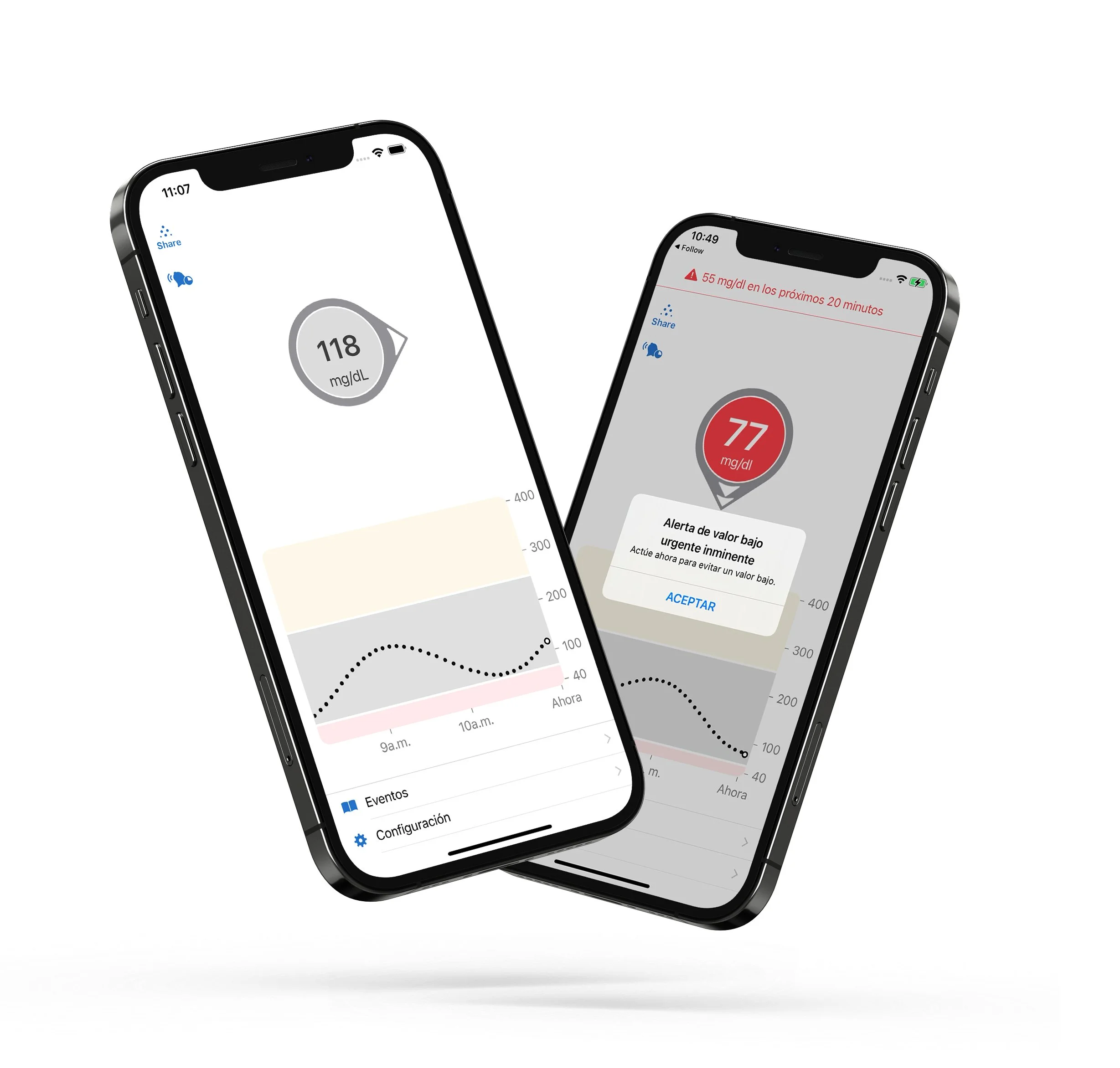
Rocio Harbison, MD is an endocrinologist in a mostly Spansih speaking practice. The Dexcom G6 app in now available in Spanish.
You can always listen to the Juicebox Podcast here but the cool kids use: Apple Podcasts/iOS - Spotify - Amazon Music - Google Play/Android - iHeart Radio - Radio Public, Amazon Alexa or wherever they get audio.
+ Click for EPISODE TRANSCRIPT
DISCLAIMER: This text is the output of AI based transcribing from an audio recording. Although the transcription is largely accurate, in some cases it is incomplete or inaccurate due to inaudible passages or transcription errors and should not be treated as an authoritative record. Nothing that you read here constitutes advice medical or otherwise. Always consult with a healthcare professional before making changes to a healthcare plan.
Scott Benner 0:00
Hello friends and welcome to episode 729 of the Juicebox Podcast.
On today's podcast I'll be speaking with Dr. Harbison. She's here to tell us a little bit about what it's like to be an endocrinologist who mostly Hispanic population. And she's going to talk a little bit about the Dexcom G six app, and how it now has Spanish language capabilities. While you're listening, please remember that nothing you hear on the Juicebox Podcast should be considered advice, medical or otherwise, always consult a physician before making any changes to your health care plan. We're becoming bold with insulin. If you have type one diabetes, or the caregiver of someone with type one, please go to T one D exchange.org. Ford slash juicebox. Join the registry. complete the survey. When you complete that survey, you'll be helping people with type one diabetes, helping yourself and supporting the Juicebox Podcast T one D exchange.org. Forward slash juicebox.
Dr. Harbison 1:11
And continue the glue Casa Dexcom hair says is Dallas probably our aura in espanol en la aplikace Yan Dexcom hair says in tanto en el iPhone como el Android, for forwarders, Kerrigan, mo e communes with Yama, I Spanien.
Scott Benner 1:32
This episode of The Juicebox Podcast is sponsored by touched by type one, go to touched by type one.org and find them on Facebook and Instagram. They're a wonderful organization, doing great things for people with type one diabetes. And they have an event coming up in August in Orlando, that I'm going to be speaking at. You can also learn more about that at touched by type one.org. The podcast is also sponsored by in pen from Medtronic diabetes. If you're looking for an insulin pen that will give you some of the functionality that an insulin pump does go to in pen today.com
Dr. Harbison 2:08
Hi, Scott. My name is Rocio Harbison, I am an endocrinologist in Houston, Texas. I've been practicing endocrinology for the past 12 years. And I have a large Hispanic population. Given that Texas is a diverse and large population of Hispanics, and I speak Spanish, I tend to have a large population of Hispanics in my in my practice,
Scott Benner 2:32
what what drew you to the profession?
Dr. Harbison 2:36
So it's very interesting. When they asked me this question, I go back and forth into deciding what made me decided to endocrinology. And really I am an endocrine patient. I do not have diabetes. But I was diagnosed with an endocrine illogical condition when I was a child. And I'm sure that that play a big role in my decision.
Scott Benner 2:59
Sure. Did you have good doctors is the kid or did you just feel comfortable with them? Or
Dr. Harbison 3:03
I did, I had really good pediatric endocrinology. And then I follow with primary care for some time. Knowing my own condition is very easy. So I don't tend to follow us often once a year is pretty good, because I've been stable for many, many years. But it's a different perspective, when you have been a patient yourself, and treating your own patients with similar conditions, you're able to identify with them to give them recommendations. And if you're able to disclose as a physician, some of the conditions that you have, it almost seems like you have a better rapport with your patients, they feel like you're truly understanding their medical conditions.
Scott Benner 3:48
And so let me just ask you, truthfully, does it just feel like that? Or is it actually true? Do you do that? I mean,
Dr. Harbison 3:57
I really think that is true when they're speaking to me. And they're telling me their symptoms. I'm like, Yes, been there, done that, I totally get it. And so it just makes that communication with our patients in a way a little bit easier. I don't think that we necessarily, obviously need to experience a medical condition to be able to treat our patients, but in a way, particularly when the symptoms tend to be pretty vague. In general, it is kind of good for our patients sometimes to hear them that we truly get what they're saying.
Scott Benner 4:31
So how much of your practice do you think is diabetes?
Dr. Harbison 4:34
It's probably a good 60%. Okay.
Scott Benner 4:37
Mostly type one.
Dr. Harbison 4:39
Most mostly type twos,
Scott Benner 4:41
mostly type twos. Okay. How do you find? How do you find? What's the question I want to ask? So, I, I know you don't know me, but I've had over 1000 conversations with people who use insulin and that have been recorded and many more like privately and And I always kind of contend that type two diabetes does not feel immediately emergent. As as the way type one does. Do you think that's one of the reasons why type ones are quicker? I guess generally speaking to focus in on what they need to do, and or do you not find that? Am I just making things up?
Dr. Harbison 5:23
No, you're absolutely correct. are patients with type two diabetes, they have a different disease process, basically a different pathophysiology. So that many of them are still producing enough insulin, to not feel all the symptoms and it tends to be this silent disease. Particularly when you have not gone to the doctor for many years, you have not been screen. So who knows? When you get checked and have a new diagnosis of diabetes, how long you have truly had the diabetes. That's why we always encourage our patients to at least get that yearly checkup with their primary care physicians. So yes, diabetes, type two tends to be silent and type one, you do require insulin for that reason, symptoms will happen early on,
Scott Benner 6:12
which sort of forces you to embrace is the wrong word. But I'm, I'm a little it's Friday morning, doctor. I'm a little lost for the for the word. But But I think it makes them jump in maybe more dreamy more. I don't know what it is, I want to say exactly. I'm trying to figure out why type twos end up not seeming as engaged with their, with the disease as type ones do. I guess that's what I'm trying to figure out? And how to help them with that.
Dr. Harbison 6:45
Sure. And thank you for asking that question. Because hopefully, we use your platform to educate a lot of your listeners, what they could do, many of them might be parents of a kid with type one, maybe we many, many have family members with type one diabetes, both of them themselves may have a high risk for developing type two diabetes. And like I said, it is silent. It is very important to know our family history, I have a very strong family history of type two diabetes being Hispanic. And I get my regular agency checks at least once a year to make sure that my glucoses are within range. And understood understanding that diabetes, type two usually is asymptomatic, meaning that they will not have symptoms of higher low blood sugars, because they're still producing some insulin. But that doesn't mean that the sugars are within range. I think one of the fears that many people have when they have type two diabetes is how much it will impact their life and the quality of life, their daily activities, the food that they like to eat. In a way it can be put very easily in the backburner. Nobody wants to be diagnosed with a medical condition. And there is fear of how many medications they will need. There's also a fear of the potential side effects of those medications. There is a fear that sometimes you make like you could develop a complication that you have seen in a family member. So it could be quite emotional to be diagnosed with type two diabetes.
Scott Benner 8:23
No, I would imagine. I also think that possibly because of the slow onset, it's just, it's hard to see it happening, right? And then before you know it, you're sort of buried underneath of it, like those tired feelings or I'm always tired after I eat or something like that. It just, I don't know, you just think it's normal after a while or culturally, a lot of times what I've seen is that people just expect to get it and so they almost don't, they almost don't bother guarding against it because they think it's like it's the family curse or something like that. You know what I mean by that?
Dr. Harbison 8:57
Absolutely. And there might be the patients where they feel like their family members have been okay they have not developed any complications. And so they go out their lives thinking that those complications will not happen to them but remember that we all have different genetics you have the genetics from mom and genetics from that and if a family member did not develop thankfully any complications that doesn't mean that you as diabetic patient with type living with diabetes will not
Scott Benner 9:25
well I appreciate you talking about that with him. I'm always very interested in it. So let me get to type ones when you when you see do you see mostly adults or children?
Dr. Harbison 9:35
Adults I do see a few adolescents there are transitioning to adult endocrinology. But my most of my patients are adults.
Scott Benner 9:44
What do you think the what do you think the biggest hurdle is when you're transitioning from from endota? Endo, especially from being a child to being an adult?
I'm going to make this quick go to touch by type one.org. Click on the program's tab, scroll down to annual conference. And there you'll have everything you need to know about touched by type ones annual conference that I'll be speaking at. It's on Saturday, August 27. At the Loews Portofino Bay Hotel at Universal Orlando, from 9am to 4pm. Registration for the conference is open right now at touched by type on.org. Just go to the program's tab, click on annual conference, and then the purple button that says register now. And the conference is for everyone who has type one diabetes, or love someone who does. So go over now. Get yourself a ticket, they're free. That's right registration is free, touched by type one.org. The ink pen is a reusable smart insulin pen that uses Bluetooth technology to send dose information to a mobile app. Offering dose calculations. And tracking in pen helps take some of the mental math out of your diabetes management. The link you want is in Penn today.com. Learn all about the embed and the app at this link. Actually, you can also get started with the impenetrable link. Schedule an online healthcare provider visit. Learn about how the app works from the dosing calculator to the digital log book and everything in between. You'll see insights from real customers and learn about the support that impact offers like 24 hour technical support, hands on product training, and online educational resources. Maybe the most exciting thing you're going to find it in pen today.com Is it is completely possible that you may pay as little as $35 for the pen offers available to people and commercial insurance terms and conditions apply. But as little as $35. This is worth you finding out about this is an insulin pen that talks to an app on your phone. And that app is going to give you access to your current glucose meal history dose history activity log dose calculator, active insulin remaining glucose history and reports in Penn today.com in Penn requires a prescription and settings from your healthcare provider, you must use proper settings and follow the instructions as directed. Or you could experience higher low glucose levels. For more safety information. Visit you guessed that in pen today.com links to in pen touch by type one and all the sponsors are in the shownotes of the audio app that you're using right now. Or you can always find them at juicebox podcast.com. When you click directly on my links, you're supporting the podcast.
Dr. Harbison 12:47
That is a very interesting question. I think in adult endocrinology, one of the first steps that I like to take with my patients is making sure that they're taking ownership of their conditions that they are in charge of filling their prescriptions. And I like to have those visits one to one without mom or dad being in the room, sometimes mom or dad will come into the room initially, just to give me the brief background story making sure that my patient is able to communicate all that information, the medications that they're on where they feel that prescriptions etc. But after that, I really kind of push them to be in charge and control many of my patients will be going to college, and oftentimes will be doing tele visits if they are within the state going to a college in the state of Texas. So taking that responsibility, making sure that they are they know exactly when to contact us when they need a prescription refill not only for their insulin, or their supplies, if they are on that list technology, but also for all of the other things that they might need, like glucagon, for example. What to do in that transition period, like I said, many of our patients come in and they're already on the way to college. So I don't have much time to get to know them and educate them as well and what could happen when they're transitioning also to college life. So that that makes it a little bit of a challenge. I kind of love it because it's pushing them to take control of their diabetes on their own and moving them from the dependency. Sometimes I'm mom and dad. And as you know, having a child with diabetes, you want to make sure that your kid is okay. And I'm a mother of five. I want to make sure that my kids are okay. They will do everything that they're supposed to. So we always kind of want to look over their shoulders. And we want to make sure that they're doing what they're supposed to. But I tried to transition that quickly.
Scott Benner 14:55
So there's this void. So I ended up interviewing a lot of mid 20s Pete All who've had diabetes as children, and then head off to college, like you said, or just sort of go off on their own. And for, in my opinion, for far too many of them, there ends up being this void in the middle where I don't think they realized how much their parents were doing. Or maybe, or maybe sometimes how much they didn't understand about what was happening. And then they spend these years in college with just, you know, not great results for their blood sugars. And then they emerge from college and have time to focus on all the sudden. And I haven't had one of them on here yet, who hasn't expressed some sort of regret for not for not understanding it better as they were going, I think part of it is the age. Right? There's that what do they say? Like people's brains? Brains aren't formed right in their early 20s. Still, like, right, you're still developing. But I think it's amazing to have somebody there who understands that. And I love the idea of you sort of separating the parent from the child in the room once the child is an adult, because I guess you really do get to assess like, how much did they really know about this? And how much have they just been a passenger on the journey so far? Right?
Dr. Harbison 16:07
Yes, and it's always good to have them review with CDE, or dietitian, we are blessed to have one on staff in the office where a very small office, only two physicians, and we do have a dietician on staff. But sometimes you might feel like you know, everything about carbohydrates, it's always good to give them a little bit of a different perspective, because as you have probably heard, every year there's a new medication to treat diabetes, particularly type two. And then we also have newer and newer technologies is, is a great opportunity to review with our patients their knowledge. And I will say the one of the most difficult things when you're transitioning for peds to adult and the crane is mean able to create that rapport with the doctor. Some of our patients were diagnosed when they were four or five, six years old, and coming into adulthood, will they have seen the same endocrinologist for the past 15 years? I assume? And I can imagine that it's a little bit of a shock? And will I trust this doctor that has given me all of this new information? And it's pushing me to do all these things on my own? And it is part of our job as physicians really to gain that trust from our patients?
Scott Benner 17:32
No, it's it seems like, it seems like difficult work. Honestly, there's a lot going on there that's on set. And and it's very important to get accomplished. So that my last question before we move on is about seeing an adult who was diagnosed, I can't, I'm trying to imagine. I'm a very simple person, I lived my whole life. Like with numbers in front of me, I thought when I was 16, I'll be able to drive when I'm 18, I'll be able to vote, I'm 21, I'll be able to do this, like you know, and then you start thinking about it more as you get older in terms of health, like, well, if I can make it through my 20s, without this happening, I'll probably be okay if I can make it through my 30s Without this happening. So when people are diagnosed with something that is, you know, generally for the last 20 years been referred to as juvenile diabetes, it has to be incredibly shocking to them, and then they don't get the benefit. If it is the benefit, they don't get the benefit of being younger and a little more, a little more, I guess, flexible in their thinking. When they're diagnosed sick, you're already set in your life and at many ages, you could think I'm okay, like I'm gonna make it to the end. You know, I'm wondering what that's like in the in the in the very early moments and how you get them to a point of acceptance.
Dr. Harbison 18:50
I am so glad that you brought this up because type one diabetes, don't use often that juvenile diabetes, I tend to like to mention the type one diabetes can happen at any age, including people having type two and then transitioning to type one because they do develop antibodies and an autoimmune condition that is causing this attack on the pancreas. That can happen in any age. And sometimes, as clinicians, we might miss that type one diabetes diagnosis, particularly if our patients are overweight or obese, you immediately think about type two diabetes or if they have a strong family history. But the truth is that we tend to diagnose quite a bit of type one in adulthood. My oldest patient diagnosed with type one new onset is a 79 year old male and so it is important to keep in our minds that anyone can develop type one diabetes, I believe that with good education and really kind of diagnose them, giving them the right diagnosis. It helps with At transition, I will say many of my adult patients newly diagnosed with type one, well, it might be sort of a shock, because you will expect as a new diagnosis of diabetes, that you may start with oral medications and not injections, that is probably the biggest shock to them. It, they do tend to embrace the diagnosis if you weren't giving them that right education or providing that support, not only in terms of treating them and educating them about diabetes, per se, but that emotional support and holding their hand throughout the process.
Scott Benner 20:35
How quickly do you go to a C peptide test for an adult whose looks like a type two, but isn't acting like one,
Dr. Harbison 20:44
it pretty much immediately, they seem to not be responding to oral hypoglycemic agents, they've been referred, they have a significantly elevated a one C, we have previously one see, for example, that will be a great guidance. Just to give you an example, there was a patient that I recently saw in in March, he was he was completely normal. And four months later, it was 11. Well, that's type one until proven otherwise. So we're getting some of that background. History is very helpful also on their symptoms, and how fast they progress, particularly if they have had regular yearly checkups.
Scott Benner 21:21
So now my next question is in kind of getting onto our topic, when someone's diagnosed, and English isn't their first language, but the world is built. I mean, the country is built around English, right? And a lot of the world is actually what what does that I mean, I can, I'm trying to imagine the extra level of difficulty that's built on top of it. And, and the reason I jumped so quickly to have you on the show, when I when when I found out you were available, is because I'll give you a tiny bit of background, this podcast has 700, and I don't know, seven or 30 episodes, it's been going for eight years. And one of the things that I hear about very frequently from listeners is, you know, we have certain content about like pro tips for diabetes and defining terms and things like that, can you please put those into Spanish and the truth is that I can't afford to do that I would need voice actors. And it would be and then the biggest problem becomes for me, even if I had that say magically, you were like, oh, Scott, here I have a pile of money, you take it now and hire to voice actress. I don't speak Spanish. So I can't QC anything that's being said. And so it almost feels like it's impossible to create that content for that audience. I mean, gratefully, what what Dexcom has done has happened. But I'm just I'm trying to find I'm trying to decide how much of this that I don't see what what ends up happening to people when, when language is also a barrier.
Dr. Harbison 22:54
So what ends up happening is that many people number one are not offer technology, they might not be offered the education. And while we do have educational material, in Spanish, many companies do provide the Spanish educational material. Not all clinicians or educators are aware that that is available, and it takes extra time. In my case, because Spanish is my native language, I can communicate with my patients very easily. I do believe that having a clinician that speaks the patient's language makes that barrier in that communication a lot easier for the patients and their education is probably in a way better than if they use a translator. Partly, I've heard people translate before. And there is always a little bit of message that is lost. Because you're listening to someone speaking to you in English, and then someone else in Spanish and your brain is going from one end to the other. When you're having the communication in your own language is always going to be easier. So that's a big barrier for sure.
Scott Benner 24:10
Every time I've had serious conversations with people about about taking content and turning it into Spanish content, they always say look, there's going to be words or phrases that just don't translate and then it's going to be on me to to explain it. Or, or that there are and I'm going to use the wrong word here, but many different versions of the same language sometimes. So if you're from one, right, is that right? Like GI Joe? Yeah, there could be differences.
Dr. Harbison 24:40
If you think about, I have learned I'm Puerto Rican. I have to learn to speak in a way we say it kind of in a jokey kind of way, you know, Mexican, Ecuadorian Colombian, because there's different slangs and there's different terminals. ologies that are being used for the same Spanish word, we are speaking the same language. But I need to understand who the person is in front of me what the terms that they use, because just very easy to give you a good example, an easy example that we find is, for me breakfast is this idea of, but for a lot of patients, that will be more so which for me means lunch. And so I had to learn that terminology when I moved to the States, in being able to communicate with my patients, otherwise, you're gonna be confused about the instructions that I'm providing,
Scott Benner 25:34
right? So do you? Do you end up limiting information or simply oversimplifying it? How do you? Or? Or is there a way to get the explanation out fully, because when people come to me, either privately or as listeners to the podcast very frequently, sometimes it doesn't matter if they've been newly diagnosed, or if they've had diabetes for 20 years, they lack some of the most basic ideas about how to use insulin. And it's it's baffling that they've seen a doctor three times a year for 20 years. And then I say, Hey, you should really Pre-Bolus Your meals. And they act like they act like I don't know, like somebody brought them tablets. You know, what I mean with was Moses that came to them with this amazing information. I'm like, this is pretty basic stuff here. It's it's bizarre that you've never heard this before. So I don't know what I don't know what happens. Like I'm always trying to imagine like what happens in that office, that somebody could live 20 years with insulin and not understand that it doesn't begin to work right away.
Dr. Harbison 26:40
And so funny that you mentioned that I've seen it happen many times. One, I think it's someone has had diabetes for many years, and they come to see me as a new patient, they've already been using insulin. I guess we tend to assume even though in medicine, we always say do not assume anything. That's like a rule for physicians. But we might tend to assume that they already know how to inject. And we might not review that. I like to review a lot of those things, because I have seen it happen. But it you know, it puts us into it's almost like a given why why even review this that I know they're already doing. But we always should. That's the truth. And when you're in a conversation with a patient, it's like going to school, if you're in an hour topic, or a 45 minute topic, I probably only get 15% of what they're saying. And then I have to take notes for everything else so that I can review at home if I am even taking notes. So I'm sure that during the visit, there is some information that we have discussed, but that they will not remember.
Scott Benner 27:52
So is the answer here? Well, first of all, it's I ended up doing this a lot better. I'm so sorry. We're 25 minutes into it. Why don't we tell people why you came on the podcast first, and then I'll keep asking my questions.
Dr. Harbison 28:04
You'd have a really good question.
Scott Benner 28:07
Still, though, you know, the title of the episode is going to be Dexcom Gs 25 minutes into it. I'm like, why doesn't this happen? And Why couldn't this happened like this? So what do you what are you here to share with us?
Dr. Harbison 28:22
So yes, as of July 27, Dexcom, G six is now available. Thankfully, for our Spanish speaking patients, the patients is very easy. Pretty much they can download the Dexcom G six app, the newest version, and they can go into their language, the preferred language and switch that to Spanish, if it's already not already set to Spanish. And they will immediately turn it up into Spanish. If you have not had the opportunity to use it Dexcom has done a really nice job in changing all of those alerts that were familiar with with the Dexcom GS six dispatch. And so it makes it really easy for them. And it's a great opportunity to start breaking that barrier in terms of health equities, because many of our Hispanic populations and minorities in general, do not tend to have access to diabetes technology. And partly, I will say, if we as clinicians know that there's nothing available that will assist our patients in a way that they can understand it, are we going to even offer it to our patients. So now we really have no excuse for those patients that speak Spanish. And we can offer technology that will be very helpful to them in terms of managing their diabetes, for us to help them educate their diabetes management as well.
Scott Benner 29:46
So two questions so there's been times for you as a doctor you thought I'd like to give this person a Dexcom but they don't know enough English to make sense of it. Correct. Okay,
Dr. Harbison 29:59
that happens and We do have occasionally biases, not that we intentionally do it, right. But we might be biased. If we see a patient. For example, to give you a great example, I have learned over time that many of my Hispanic patients, the family member is always waiting in the waiting area. And they keep the family member keeps the phone. So in a way, I kind of assume that my patient might not have a phone. So I've learned now to always ask, and to use the right terminology. For example, what you call a smartphone, that's not a familiar phrase for many. If you call it a cell phone, believe it or not, that might not be a familiar phrase. And I'm talking about saying it in Spanish to the patient, but if you say just plain phone that works. So from now on, I always ask if you have a phone with you. And so those who like little tips and tricks that you learn with clinical practice, okay, but it's important to always,
Scott Benner 31:05
yeah, so doctor, so simply speaking, the Dexcom G six app that the user uses the person with diabetes, the app that's on their phone, there's just an update to the app that now gives you the ability to switch the language. There's not like a separate Spanish app, is that correct?
Dr. Harbison 31:23
That is correct. There's no separate Spanish app that makes it easier also, for the clinicians, whenever we're asking our patients to download the app into their phone. Because we don't have to direct patients to different apps.
Scott Benner 31:36
Oh, that's amazing. Hey, did you want to while you were here, ask all the other device manufacturers to do the same thing? Yes, please. What's the breakdown in the United States? I mean, how many Hispanic people? Are there? versus me people who just look at me, I don't know how to talk about this people who probably don't speak English as their first language, like, what's the percentage?
Dr. Harbison 32:03
I actually don't know that exact percentage, what I can tell you is that there's close to 12%. Hispanics, to have diabetes. And that's a pretty large number. Not only that, is that US Hispanics, we have a 50% chance of developing diabetes in the future. That's a huge percentage. And so it is very important that we educate that we not only try to educate ourselves, but that, in general, our communities provide education for patients. Health literacy is a big barrier to diabetes Care, diabetes, technology, literacy is a big barrier. Oftentimes, our patients believe that a continuous glucose monitor might be a device that is delivering medication, rather than reading glucoses. So we need to be able to discuss and answer all those questions, and be able to bring up that conversation and explain to our patients, what technologies are available to them. And what it means because I assure you, I've mentioned it many times to our patients about continuous glucose monitor and what it means and they still at the end of that conversation, believe that the device will give them some sort of medication is reinforcing the concept and educating our patients.
Scott Benner 33:21
So it's interesting, my daughter was at a party recently, and her Omni pod was visible. And a woman came up to her she didn't know her. And she kind of looks at my daughter, my daughter's 18. And she looks at her very seriously. And she says, Do you have a nicotine addiction? And my, and my daughter was like, what? And she points to the pod and my daughter goes, No, I don't have a nicotine addiction. And then the woman gets very sullen and says, Oh, I'm so sorry. Are you going through cancer treatment. And my daughter's only knows about that, because my mom has recently won a battle with cancer. And after her chemo, they would give her this medication that actually is contained and they don't call it an omni pod. But it's literally the same exact thing. And it's used in different medical and my my daughter's like, no, and Elise, she knew about that. She's like, I'm a type one diabetic. There's insulin in this, that turns out the woman she was speaking to was a nurse. And her and her first two guesses had nothing to do with diabetes. So now you're just talking about regular people who don't have any interactions with this and you expect them to know what these things do. I'll tell you that. I think a large part of my job sometimes is just explaining, like, I have a um, I have about a 47, maybe 50 episode series that I just called the finding diabetes, and we just take every word that people run into with their diabetes, and explain them very simply, because I was I was getting notes from people that would say, Hey, I didn't realize that I was doing MDI. I had been like injecting insulin for five years. I didn't know anybody called it MDI. And so then when you hear people talking about it, even if you're an English speaker and you're listening to the the erection in English. As soon as you get to a term you don't know, it's sort of like a, it's a blank spot in the conversation for you, and you can't fill it in. And then the stuff that comes next doesn't make as much sense, etc. So I think this is all really wonderful. I really do, I hope the other people listening, think the same, because I have been, I've tried so hard over the years to get somebody to take this seriously, but I'm just not the right person, apparently, to get them to take it seriously. But there are a lot of people out there that could benefit from good information. And you just need to deliver it to them in a way they can understand. So this is wonderful, thank you
Dr. Harbison 35:35
simple is always better. And sometimes reinforcing. If there's mispronouncing, for example, a one C always kind of correcting them and what it means. i One of the things that I will like to say, because many patients, they don't like to put their fingers, right. And the continuous glucose monitor provides that opportunity where they don't need to prick their finger when they're on the G six. But the the part of the story of someone that has diabetes that helps the clinicians adjust your medication is really those glucose readings. And that glucose, Trent, one finger stick a day, as you know, is not enough information. And it's just one second of the day, versus when you have a whole day of information. But one thing that I like to say is oftentimes we look at agencies and agencies are not perfect test, they want to see can give us an average of what the sugar has been in the past three months. But it doesn't speak to what happens when you exercise or what happens when it's too hot outside or when you're under stress. Or when you eat the same meal and you have different results. What happened that particular day? And how could I adjust my medications based on that. And sometimes the agency might look really pretty, but when you look at the sugars, they're all significantly elevated. And so from not not everybody that a wants to see is the right tool to monitor. So, I would like to mention that, because there is an importance on glucose readings,
Scott Benner 37:22
ya know, and getting people to understand standard deviation, time and range, those things are such a big deal. And you're I mean, obviously you're right, like you know, a lot of low blood sugars, and a lot of high blood sugars could average out and look like a reasonable a one C and with and without this information. It's just it's difficult to it's difficult to put your finger on what's happening sometimes. So is there anything else that I have? Is there anything I haven't asked you about that I should have?
Dr. Harbison 37:52
Not I just think that, in general, I'll take the opportunity for everyone out there to help us change the barriers in terms of diabetes access to our minority friends, if you know that you have heard this podcast, and you have a family member if you have a friend that they have a type one or type two diabetes on insulin, and they do not have technology available to them. Let's educate those people so that they could bring it up to their clinicians. And perhaps they might get on a medication at the end of the day. We want to achieve good diabetes control to prevent complications. And we want that to be equal throughout all of the ethnic groups.
Scott Benner 38:45
Yeah, I agree. And I'll tell you about while we're doing this, anyone who wants to sponsor the translation of some of my episodes to help people, amen. As long as you're not doing something really crazy about like some really strange company I met for I really, I really hope someone sees the value in that and steps forward one day. So I really appreciate you doing this. Hey, can I ask you something silly? And if it's weird, you'll tell me but for social media for social media, so I can get Spanish speaking people to the the episode. Can you in Spanish give me that the G six is available now. Like whatever your explanation would be. I don't I'm not I don't want to direct you to what to say. But could you give me a soundbite
Dr. Harbison 39:27
for sure. And maybe we'll come to that the glue Casa Dexcom hair says is Dallas probably our aura in espanol en la pika Seon. Dexcom hair says in tanto en el iPhone como and Yolanda with a perfect word is Kerrigan mo e commence with Yama is find your
Scott Benner 39:50
doctor do you know I took three years of French in high school and all I know is North means nine so I feel Like I heard iPhone and Android and glucose, which I've heard a number of times, and I was like, I don't know what you're saying. So tell me what you said just for for edification.
Dr. Harbison 40:09
Sure, I said D Dexcom. D six is a continuous glucose monitor that is now available in Spanish to please, for those that habit of Dexcom to six, to download the app, either on iPhone or Android or in Spanish, and change the language to Spanish so that, you know, basically that they can use it.
Scott Benner 40:29
Thank you so much. I really do appreciate this. I appreciate this so very much. I hope you have a terrific day. And I appreciate you taking the time
Dr. Harbison 40:37
saying to you, Scott, thank you for having me. Thank you.
Scott Benner 40:53
Well, I want to thank Dr. Harbison for coming on and remind you that if you're a Spanish speaking person, it would probably be easier to see your Dexcom G six in Spanish. All you need is the latest version of the Dexcom G six app, and then change the settings to Spanish. Thanks also to the in pen from Medtronic diabetes for sponsoring this episode of the podcast. And don't forget to go to N pen today.com to learn more. Want to see me speak in Orlando, Florida or just want to find out more about a great organization touched by type one.org. Don't forget about the T one D exchange survey T one D exchange.org forward slash juice box takes fewer than 10 minutes
Please support the sponsors

The Juicebox Podcast is a free show, but if you'd like to support the podcast directly, you can make a gift here. Recent donations were used to pay for podcast hosting fees. Thank you to all who have sent 5, 10 and 20 dollars!

#728 Toni Doesn't Listen
Toni is the mother of a child with type 1 and she doesnt listen to the podcast.
You can always listen to the Juicebox Podcast here but the cool kids use: Apple Podcasts/iOS - Spotify - Amazon Music - Google Play/Android - iHeart Radio - Radio Public, Amazon Alexa or wherever they get audio.
+ Click for EPISODE TRANSCRIPT
DISCLAIMER: This text is the output of AI based transcribing from an audio recording. Although the transcription is largely accurate, in some cases it is incomplete or inaccurate due to inaudible passages or transcription errors and should not be treated as an authoritative record. Nothing that you read here constitutes advice medical or otherwise. Always consult with a healthcare professional before making changes to a healthcare plan.
Scott Benner 0:00
Hello friends and welcome to episode 728 of the Juicebox Podcast.
Today I'll be speaking with Tony, who is not a listener of the podcast, but is a member of the private Facebook group for the podcast, and she is the mother of a young child with type one diabetes. While you're listening today, please remember that nothing you hear on the Juicebox Podcast should be considered advice, medical or otherwise, always consult a physician before making any changes to your healthcare plan or becoming bold with insulin. If you're a US resident who has type one diabetes, or is the caregiver of someone with type one, please go to T one D exchange.org. Forward slash juice box join the registry, fill out the survey help people with type one diabetes, the whole thing takes fewer than 10 minutes. You can do it. T one D exchange.org. Forward slash juice box. There is an unprecedented amount of time here. Before the music ends. I don't know what to do. Hey, find the diabetes pro tip episodes at diabetes pro tip.com juicebox podcast.com. Or they begin in Episode 210. In your podcast player.
This show is sponsored today by the glucagon that my daughter carries. G voc hypo Penn. Find out more at G voc glucagon.com. Forward slash juicebox. And today's episode is also sponsored by us med. Go to us med.com forward slash juice box or call 888-721-1514 To get your free, free free to get your free benefits. Check us med is a distributor of diabetes supplies. It's where we get Ardens Dexcom and on the pod supplies from there fantastic. Go find out more US med.com forward slash juice box for me. You are clear and loud. Okay, and not noisy? Okay. Are you under 35 years old?
Toni 2:29
Yes. I actually had this debate with my husband yesterday, I thought I was 36. And he kindly informed me that I was 35.
Scott Benner 2:37
Kidding, by the way I am recording now. There's a okay, that stays in. Because? Because Tony, that happens to me. I mean, it's probably happened to me three or four times in my life. I spent an entire year believing I'm an age that I'm not.
Toni 2:53
Yeah, yeah. That happened. Like that's just part of aging. I was trying to explain it to my son and he was like, how do you not know how old you are? Mommy? I was like, um, because you? Yeah, exactly.
Scott Benner 3:06
The horrible stress and strain you're putting on my body and mind. Loving you is killing me. That's why. Yeah, exactly. Exactly. So how far into the year did you make it thinking you were 36?
Toni 3:20
Um, well, my birthday was in October. So I thought I turn 36 in October. Yeah.
Scott Benner 3:27
Is it possible that all last year, you believed you were 35 when you were 34?
Toni 3:31
Yeah, I think so. Excellent. I guess it's better than the alternative and thinking the other way around thinking I'm younger than I actually am.
Scott Benner 3:41
So I found it to be invigorating. It was like someone gave me here. Because like, Oh, you don't mean like that? Yeah. You know, you know, when people argue about like the the daylight savings time. And some people were like, the clock moves, and I'm not right for like three months and like, what the hell like just, it's just an hour. You don't I mean,
Toni 4:05
like, I know, good. Sunshine does make a difference. I mean, I like waking up when the sun is out. But you know,
Scott Benner 4:11
yeah, I hear you. i But you know what I'm saying? Like, it's not the biggest adjustment in the world. No, it's not. But but then when it happens again, you know, and all of a sudden, it's laid out till 830 at night and you're just like, oh my god, the world's my oyster. Like, that's how I felt when I learned that I was actually a year younger than I thought I was like, I know, I didn't actually receive a year of living, but it felt like it and I took it
Toni 4:37
was like, yeah, all these small wins. I'll take them.
Scott Benner 4:41
Yeah, exactly. Exactly. So you know what? Now we've been talking for three minutes, so why don't you just introduce yourself real quick, so we can keep going?
Toni 4:51
Yeah, um, I'm not sure how you. You have me on the podcast because I don't really listen to the podcast, but I'm involved on the Facebook page. So How might one introduce themselves on your podcast?
Scott Benner 5:03
I mean, I feel like you've almost done it. Okay, so are you Yeah,
Toni 5:08
my name is is Tony. Yeah, my name is Tony. I'm the mother of a five year old type one who was diagnosed when she was four in the middle of a pandemic.
Scott Benner 5:20
Cool. Yeah. So, okay, so you responded to the, the beacon. I want to talk to somebody who uses this Facebook page, but does not listen to the podcast. Is that correct?
Toni 5:33
I did. Yeah. And I'll admit that, yeah, I had listened to an episode or two, here or there. And then, you know, What, did I filled out the survey? Like, in the summer? Was it?
Scott Benner 5:47
Yeah. So people fill out like a small intake form, like so I can. I mean, if people have been listening for a very long time, you'll know that I used to have, like, guests would pop on. And I'd be like, Hey, Tony, why are you here? Because I would not remember. And it was and it was not written down anywhere. And we knew we'd have these conversations. So then I added to the intake form, like some simple questions, which I have in front of me, right? It says, let's see, your what's your relationship to type one diabetes, and basically people say I have it or I'm the parent, usually a doctor, like that kind of stuff. It asks if you've been on another podcast related to diabetes in the last six months, you said no. And it says, what are some of the themes you hope to cover on your episode? And you said advocacy in the divorce? Wait, that's not Yeah, that was yesterday. No, that's not. Hold on. Next day. Here we go. I'm sorry. I record this podcast every day. I just clicked on the wrong thing. You're a parent you have been is what are the themes you hope to cover? You said? No idea. I'm scheduling this nine months into diagnosis and won't be recording for 16 months into diagnosis. Who knows what stage I'll be in then? That's yeah, I love that.
Toni 7:01
And I'll admit that like, I went and listened to a couple episodes. So I just didn't sound like a complete bonehead when I was talking to you.
Scott Benner 7:11
That's fine. I meant. So I guess it's just kind of set up the conversation. Yeah. 2006, my daughter's diagnosed, she's two years old. 2007 I began to write a blog about my experiences being a stay at home parent to a kid with type one, right? Seems kind of like and whatever now. But back in 2007, blogs weren't a thing. And in fact, there was a stretch of time where I believed I had the only diabetes blog in the world. It was that kind of hard to find things on the internet still. Right? Right. Turns out I might have been like the third or fourth person to write one. I've never looked into it that closely. But it was very early on is the point. Did it for years and years had millions of clicks. People seem to really enjoy the podcast. It helped all kinds of people. I would get notes, handful of notes a month, this pot. I keep saying podcast, this blog, blog really helpful for me, blah, blah, blah. 2013 comes around, I write a book about being a stay at home dad, at some point during the media for that book puts me on the Katie Couric show. After the taping of the show, Katie Couric pulls me aside to tell me I'm very good at talking to people. This is very short part of that I'm shortening this way up for you. A year or so later, I start recognizing that blogging is kind of dying. My numbers are dropping, I thought, oh, maybe it's me. I run my course. I talked to a bunch of people that I know who also wrote online, they were all experiencing the same thing. I thought, ooh, people aren't reading anymore. They just want to see pictures of Leonardo DiCaprio in his bathing suit on a boat. You know what I mean? Everybody? Yeah, everybody's clicking and flicking now. Nobody's reading. Yeah. And you pivoted, I got really sad. I thought I was gonna lose this thing that I, I felt was helping people. And then I thought, well, Katie Couric said, I was good at talking to people. And I started a podcast. So then the podcast kind of build slowly. This is actually your recording for the eighth season of it. And for clarity, like when people are like, I have a podcast that has 19 seasons, they have like 10 episodes, and I do for a week like so. I make a couple of 100 episodes a year. And anyway, I'm making the podcasts the podcast starts to really, really grow. Like no lie this morning. It's 10am. You and I are talking. The amount of downloads that the podcast has just today is five and a half times greater than the first month the podcast existed. Wow. And so it builds into this thing. And people come along to me and say, Can you please start a private Facebook group for the podcast people who listen to the podcast should have a place to go speak. And I swear to you, Tony, I know I'm doing a lot of talking in the beginning, but we'll get to you. I swear to you in the beginning, I was like, Oh, I do not want this. I don't want to be involved. I don't want to be responsible Facebook, you like I had all those feelings. And I'm like, alright, well if they want it like so then I set up these simple rules that basically I think one of the rules for the Facebook page is still basically says, like, Listen, I don't want to be doing this. If you if this becomes a pain in my ass, I'll just delete the whole thing. Like it really. It's like it was that? Yeah, yeah,
Toni 10:35
I've seen that too. Yeah, and
Scott Benner 10:36
because I meant it. And, and now as you and I are talking, I believe that Facebook page has probably 20,000 members in it. And it became its own thing, sort of separate of the podcast, and wasn't right away, that I didn't notice it right away, I should say. But one day, I started realizing that there were people who kind of like existed in this eco sphere on Facebook, that not only don't listen to the podcast, some of them were unaware that it existed. Oh, wow. And that freaked me out. And that made me. So that's why you're here. Awesome. So tell me how you found it.
Toni 11:19
Um, when Evelyn was my daughter's name is Evelyn when Evelyn was diagnosed. You know, it's kind of figure out your endocrinologist recommended that we find groups and recommended Facebook forums and recommended your podcast as well. So we kind of got all of these resources at once. And I think the reason that she just laid out all these digital resources was because we were in the middle of the pandemic. So she runs a lot of JDRF local events and community things, but she said everything was shut down, it's been shut down, it's gonna continue to be shut down, I can't help you with what I provide for the community. So let me give you all of those resources that are out there. And I found it very interesting that she didn't recommend any books. There's plenty of books that I have on my nightstand that I'm trying to work through, but I'm tired. So I start reading and I fall asleep, for stress out from blood sugars. But I thought it was really interesting that she went straight to like, Facebook and all the digital things. Particularly since I'm not very active on Facebook. And I don't, that's pretty much what I use it for exclusively, if I sign on to Facebook is to check or search some of the diabetes pages.
Scott Benner 12:33
It's exclusively what I use Facebook for to so I usually I usually joke like I'm 50 and a boy, I don't really, like want to be on Facebook. In that sense, having said that, the interactions that I have with these people, I find my Facebook page to be the most and Facebook, like Facebook experience that I've ever seen. Because it Wow. Okay, so a number of different reasons. So specific to diabetes. People love to argue, you know, like, I mean, it's not even just about diabetes, it's everything. Like everybody wants to be on a team, right? It could be politics, it could be the way you eat. It could be, you know, is breastfeeding good or not. Somebody used the example the other day, I said, I think I made a post and I said, you know, I'm hoping one day to see a post where somebody finds a way to mix the topics of COVID vaccines and low carb eating in the same argument. You know, like joking around that. These are the things that I see people kind of like brusque about or they have very strong opinions or whatever. But usually on Facebook, it blows up into this just Bloodsport, right where people are just saying the worst things to each other.
Toni 13:54
Without getting too political, like that's what they're aiming for. Right?
Scott Benner 13:57
It's the goal right? Like your, your your, the way I see it is there are people who are upset and wanting to foist their opinions. And there are people who think their opinions are beyond reproach, and are just dying to be picked have not picked on. I think they want somebody to come at them so they can go Oh, woe is me. This wrong person is saying they're wrong things to write me and I've been wounded like the enemy. Like I think everybody's got like weird, like psychological desires in this like they want to they want to fight in one way or another. Yeah, yeah. It's fairly common. And I'm not saying that it's not even just like a human attribute. It's nothing uncommon for sure. But when it if it should start up in other places, it turns into full on, like nuclear war. You don't I mean, at But in my facebook page it doesn't like even if even when those things kind of get stirred. Like some like level headed person will come along and say something to me like and they seem to work it out on their own.
Toni 15:13
Yeah, hold on one second my daughter is is knocking and this is one of the reasons why I cannot listen to the podcast. Evelyn. Evelyn come on in sweetie. Yeah. Hey, I'm on. I'm on a phone call. What
Unknown Speaker 15:29
do you need? And was wanting to know have you got? Yes, so I can. I am dressed. You can go get dressed. How old is she?
Toni 15:38
She's five now.
Scott Benner 15:39
She's dressed. She's dressed.
Toni 15:42
I'm dressed. So she didn't know just we're on Week Six of being quarantined from school. Oh my gosh. So I am at home for Week Six taking care of her while dad is at work.
Scott Benner 15:52
Oh, yeah. Have you pulled her out of certain spots in your head yet? Are you okay?
Toni 15:56
I'm not hair pulling lots of tears.
Scott Benner 15:59
Yeah, six weeks a long time. That's a really long
Toni 16:03
time. And my son was my son who's eight did first grade completely virtual of the year before. So to say that it's been a tough pandemic is an understatement. Are you in Canada? No, no, I'm in Baltimore, Maryland.
Scott Benner 16:17
Oh, okay. No kidding. I know that Arden is doing right this second what I call bed School, where you sit in bed with your laptop in front of you and see if you can see if you can sleep without anybody noticing.
Toni 16:31
Oh, wow. That's a that's an art form.
Scott Benner 16:36
We'll get back to that. But so I think the um, I think this space, probably because it an initially started with so many listeners of the show. They all had very similar ideas. And I think that's the seed that it grew from. So even now that it's larger, and it can sometimes fall into, you know, more Facebook like scenarios, they don't last very long. And I'm also I don't know how to put it. I'm not up for that crap.
Toni 17:08
So yeah, I appreciate when you interject and are just like, No, you're wrong, be quiet or be gone. And I really appreciate that. And that and that's why, you know, whenever I'm going to search something, I'll go to your Facebook page first before I go to the any, any of the other ones. Because I know that at least to some degree, it's going to like that is going to be cut out or going to be nipped in the bud. And so, you know, I find that that's really helpful as well, too, when I'm kind of looking for
support or information. You know, for whatever struggle we're going through at the moment.
Scott Benner 17:47
Yeah, no, I appreciate that. I think it's just probably I don't have I'm not concerned that everybody what do I want to say? I don't care if everybody likes me. Like yeah,
Toni 17:59
no, I totally get the sense of that. That you don't you don't mind? Yeah. But I think also like being a seasoned type one dad. Like you kind of get the separation from quote unquote normal people from like, okay, okay, hold on. Evelyn's back. And
Scott Benner 18:17
what did she What are we wearing?
Toni 18:20
We're wearing a tie dye long sleeve shirt. That's three sizes too big because it's a handy hammer down from the 12 year old neighbor across the street. And we are wearing turquoise Nike shorts on that has like workout built in underwear. So we don't actually have to wear underwear, which is something that we you know, don't like doing wearing underwear. And it is currently my temperature outside. 23 degrees outside. So we're
Unknown Speaker 18:52
here to Yeah, so
Toni 18:54
we're in like some workout shorts. And a long sleeve shirt.
Scott Benner 18:59
I just had a picture.
Toni 19:01
So it does look their sleeves. They're long. They're busy. I scratch. Oh, okay. It's a sweatshirt okay, because she paired a short sleeve shirt underneath her long sleeve shirt that now makes it a sweatshirt
Scott Benner 19:14
I understand. Reasonable concepts. You have any other kids?
Toni 19:19
I do. I have an eight year old son. So we've got Evelyn who's five and the nine year old. Hey sweetie, can you go downstairs and go? Tablet a little bit more out there?
Can you plug it in? The plug is right there. Can you go watch a show with Oh in in the basement then.
This is this is what it's like to be quarantined at home with children that are very young. And then diabetes is like an additional child to monitor and pay attention to right.
Scott Benner 19:55
So I appreciate you saying what you said because to me, it just it's All just common sense to me. Right? Like, yeah, yeah, we're not, we're not here to argue with each other. Everybody has experiences and perspectives, they can lend them to each other. We're not here to tell people that they do, they're doing something wrong, that they're using too much insulin that they eat the wrong way that if they were just the low carb, then they wouldn't die. Because you're gonna die if you don't eat low carbs, like you don't I mean, like, or write the the alternate response to that, which is I'll eat whatever I want. And I'm like, Yeah, I mean, you know, I like the sentiment, don't get me wrong. I think you can learn how to Bolus pretty much anything. And I think that having that skill is incredibly valuable when you go back into your life and eat the way you eat. But
Toni 20:40
we're trying to set up really healthy relationships with food, yes. And figuring out how to use the tools to make that happen. So we're not establishing eating disorders or, you know, feeling emotionally left out or disconnected from people who are or your peers who aren't diabetic.
Scott Benner 20:57
Yeah, no, and what I think what I think probably happens, generally speaking, it's not for everybody. But I think that there are people who, who have, who have either had diabetes for a long time and have found a really great way to manage it with a very low carb diet. And, and they were unable to figure it out otherwise, which makes sense, especially with without technology in the past. And then they see other people coming in. And those people are like, I'm trying to figure out how to Bolus for Lucky Charms. And I think it makes the lower carb people feel like Oh, my God, you're gonna kill yourself. Like, let me save you. I know the way you normally mean. Everybody gets very passionate about saving each other. And then they just somehow, you know, it turns into conflict. Because, you know, everyone sees a different sort of aspect of the argument and they start trying to pick it apart. And if that doesn't work on Facebook, you can't have nuanced arguments on Facebook, like it just No, it doesn't work. And you're
Toni 21:58
not going to change someone else's opinion on Facebook, either, especially if that person is a stranger.
Scott Benner 22:03
Well, Tony, you're not going to change anyone else's opinion ever at all. In any scenario, you don't. I
Toni 22:09
mean, maybe we can disagree on that. But it might not gonna try to change your opinion on that
Scott Benner 22:14
we can move on, but it may take some time. You know what I mean? And some more nuance and hearing each other's voices is a huge deal. Like, if I if I typed out what I just said, I get eviscerated online, but here, yeah, hearing it, you're like, oh, okay, I see what he's saying. Yeah, you know, like, and that's a big part of it. So when that starts happening, I step in, and I'm like, be nice. That's it. If you don't want to be nice, just leave I don't even kick people out. I'm like, Just go if you can't be nice, you know, I'm help these people and listen to their perspective about lower carb because I'm gonna tell you something. Fewer carbs means less insulin, less insulin means more stability. And it's easier. It's not to say it's undoable the other way. It's just to say that their perspective is not without merit, and either is yours. So, I don't know I've just my whole life, I've been able to kind of see multiple sides of arguments, and I don't get caught up in what I think is right or wrong. I think that might be because I don't even know what I think is right or wrong. I just comments. Just whatever works is right. In my opinion.
Toni 23:23
Yeah, yeah, exactly.
Scott Benner 23:29
G voc hypo pan has no visible needle, and is a premixed auto injector of glucagon for treatment of very low blood sugar. In adults and kids with diabetes ages two and above. Find out more go to Jeeva glucagon.com. Forward slash juicebox. G voc shouldn't be used in patients with insulinoma or pheochromocytoma. Visit G voc glucagon.com/risk. Now, how about we talk a little bit about us met. Let's start here. You get diabetes supplies. And if your experience is anything like mine used to be it's not a lot of fun. So let's try us made shall we? Us med.com forward slash juice box or 888-721-1514 You call that number? Or go to that link to get your free benefits check. After someone lets you know hey, yeah, we take your insurance. This is what you do next. You rejoice because you're using us med now the number one distributor for FreeStyle Libre systems nationwide. The number one specialty distributor for Omni pod dash number one fastest growing tandem distributor nationwide. They're the number one they're the number one rated distributor in Dexcom customer satisfaction surveys. You know what I don't tell you very often. Number one and Google and Facebook customer ratings among large National diabetes tmes Oh, that's right. And They've served over 1 million people with diabetes since 1996. What you're going to get from us med is better care and better service. Along with that. How about 90 days worth of supplies every time you get an order, and the fast and free shipping happens every time to us med carries everything from insulin pumps and diabetes testing supplies the latest CGM, like FreeStyle Libre two, and the Dexcom G six. I also happen to know you can get the Omni pod five from us med because that's where we got it. US met accepts Medicare nationwide and over 800 private insurers. So what are you waiting for? Call 888-721-1514? Or if you're scared of your phone us med.com forward slash juicebox. What am I kidding? Most of you probably don't even have phones, right? So there's no home phones anymore. It is there. I have one. But I'm old. I prefer to talk about it too. That's how you know I'm old. Alright, check out us med check out g voc hypo Penn and all the sponsors in the show notes of your podcast player or Juicebox Podcast icon. So anyway, so this space became like I would venture to look, I guess it's weird for me to say because I don't look at other diabetes spaces online. If there are other diabetes podcasts, I don't listen to them. I'm busy making content and supporting content. I don't have time to read what other people think. Yeah, but I think this at this recording, it's got to be the most popular busy. Well tended to Facebook page about diabetes I've ever seen.
Toni 26:43
Yeah, yeah, I think so too. And and I think, you know, part of it is, is, you know, some of the pinch content is really good. The rules that you outline are really good as well. You know, oftentimes, when I'm on the other pages, what makes me not want to go to them or, you know, the continual? Does anybody have recommendations for some good zero carb snacks, my kid was just diagnosed and they're starving. I see that one every day, someone posts that every day, which I was there, I get it. And then and then I'll see the other side of it if like, my kid is in a diabetic coma. And as someone who has a five year old, who a four year old who was recently diagnosed, you're like, I don't want to, I don't, I'm not ready to read that. I'm ready to bury my head in the sand on diabetes complications and what the horrible outcomes could look like, and not that I'm not compassionate to their situation, but you're just not ready to digest any of that. So I try and avoid, you know, similar questions over and over again. And then like the grim, dark stuff that can happen,
Scott Benner 27:44
you know, what I think happens on on other Facebook groups and other content providers is that I shouldn't give my secret away here. But they're unwilling or unable to provide deeper thoughts. And, or, and they are, they don't want to maybe they know how your agency could be five and a half. But they're not willing to say it out loud. Or maybe they don't. And they're trying to hide the fact that they don't really know what they're doing either. But they want to have this space for this thing. And they're trying to get you in as a user or a member or whatever. But they think that you don't want to go deep.
Toni 28:22
I think what I was talking about my husband last night, specifically in regards to talking with you today, Scott, is that so many people are afraid to say specifics of like, I eat this meal and I bolused this way, and this is my carb ratio. You know, I'm thinking of the athlete, Mandy Marquette, who's a cyclist. And I spoke to her we share a sports agent. And when I spoke to her about her experience, she was like, I cannot legally show you my graph, I cannot show you what my line looks like, I can't tell you how I Bolus I cannot tell you what my prescriptions are. I'm not allowed to do that. And her sponsors will drop her. And I think so many people that are in the diabetes space, they're afraid they're gonna get in trouble. And I think you're the one that's the most bold to say, like, No, I crash and catch. That's what I do. And I will Bolus for adrenaline before Arden you know, has a competition in case she gets nervous. And if she doesn't, then I'll give her a juice box like these are these are the few episodes I've listened to. And that's what I really like about the Facebook page because it is an open source forum, right where no one's been held legally liable to share the information on how they do things. And that's why I go there and appreciate it and and it's beautiful to see when you're like okay, here's some pizza at a birthday party. I don't know how many carbs it is and I don't know how to Bolus for it. You read the comments and it is you know 50 different ways of bolusing for that pizza that works for many different people. Yeah. So it really is like a really nice, very specific open space for them to kind of see what other people are doing specifically. And that's what I really liked about it.
Scott Benner 30:13
It also, it as it's helping people come along, some of the people stay behind to help the next group. So one of the things that you users won't notice that I see. I used to put it like this, like, everybody, I only know people by their avatar pictures, and the avatar pictures that I see changed about every six months. The people, the people who are there don't recognize it. But I always like Michael, this person is so helpful right now, it'd be a shame when they're gone. But they will, but they will be. And then sometimes, some of them don't like some of them hang. But there's always enough people who have kind of been through the process, who want to stay behind and help the next people through the process, which breeds a group of people who want to stay behind. Like it's not the same 15 people it's, and because of that, I think the knowledge grows in a way that it wouldn't if it was just me there answering the questions over and over again, because I only have my answers. But the people who listen to the podcast, have my answers blended with their experience. And then the answers that they came up with, you know, so it just keeps, it just keeps expanding. Like if you think of, if you think of my knowledge is like the little like, oh god here, I'm gonna get my science wrong, but a little electron in the middle, right, and then they keep doubling and doubling and the and the sphere gets bigger and bigger and bigger. Like I struck the match, but everybody else is keeping the fire burning. And I think that's why it gets. Listen, I read some of those things. Sometimes I'm like, That's a good idea. Yeah, but to your point earlier, like you mentioned, crush it and catch it. And most people, I mean, might understand that if they're listening, but if it didn't make any sense to you, it became obvious to me at some point that my daughter's blood sugar was going to get high. And I wasn't going to be okay staring at it for six hours waiting for it to drift down gracefully. So I taught myself how to crush the blood sugar and stop it before it became a low and kind of come in for a smooth landing. Right now,
Toni 32:26
it always seems to smooth out when you correct the low in stead of waiting for that heidkamp. Like you know what I mean? I know. I don't understand the science behind that at all. But yeah, like over breakfast is awful for Evelyn over bolusing breakfast, and then getting her to school, the setting is what's awful. Getting her to school. And then if she needs that giving her that 10 gram of applesauce always gives her a smoother line than just bolting it all upfront and letting her to applesauce before we go to school.
Scott Benner 33:02
Yeah. And I think that because the podcast is a continuing conversation, it's obvious that I'm not saying that every day, your blood sugar is gonna go up to 250 or 300. And you're gonna give yourself a massive amount of insulin and then stop it before it becomes law. I'm not saying you're going to live like that. I'm saying that if that should happen. Here's how I handle it. Maybe you would think about that, too. And see, and what most people would say as well, I would never say out loud for people to give themselves more insulin than their doctor. Like, okay. I mean, you either understand that diabetes doesn't follow those rules, or you don't. And if you don't understand that, maybe you sit back a little bit, just listen for a while just watch people on the Facebook group until it starts to make more sense to you. Or maybe it's not for you, and you leave. And you know what, that's fine, too. I'm not trying to make anybody do anything. I'm just making the information available. And what you do with it after that is completely and utterly up to you. But right,
Toni 33:56
you're just sharing your experiences and what you do, and then people can do what they choose to do. Right. Beyond that. Right. And I think that that's, you know, there are some things that you do, or yeah, there are some things that I'm just not comfortable doing because everyone's five sure that maybe I'll do when she's older. And I recognize that too. Like how old is Arden?
Scott Benner 34:17
She's 17 right now.
Toni 34:19
17 Yeah, so 17 But she was to an early diagnosis, the technology was different, etc.
Scott Benner 34:25
Yeah, I just said while recording with somebody yesterday. It's a weird like, little like wish, but I kind of wish I could take care of a two year old for a little bit. I wonder how good I'd be at it now, like with a CGM and everything I know now, like I wonder if I'd be good at or if I'd be on that Facebook page going, Oh, my God, this is just like, I remember. It's terrible. You know, like, I know, I have no idea. What I do know is that because Arden was diagnosed so young, and we've lived through all the seasons of it, no technology, the advent of technology, figuring out what I know now, writing it out so that I could really understand it. it moving on to podcasting to talk about it, like I have affirmed, I think I'd be hard pressed for you to ask me a question about diabetes that I wouldn't at least have a reasonable answer to. Yeah. Right. And I think that I'm not the only one that knows that stuff. I might just be the only one who's willing to say it out loud, and knows how to make a podcast and is not completely boring to listen to. Yeah, I have a great mix of skills that lend itself to this specifically, which, by the way,
Toni 35:31
I'm thick skin, right, like in thick skin. And I think that matters a lot to if you're going to be in this space to say like, well, sorry, you don't like me goodbye.
Scott Benner 35:40
Yeah, well, there are. So I became, here's where I learned this. It's funny, it came up earlier, I wrote that book, it literally has nothing to do with diabetes, although if you have diabetes, or your kid has it, and you read the book, people think the whole books about diabetes, because there's like a chapter about it. But anyway, I write the book, it gets its first five professional reviews, They're glowing, I'm on cloud nine, my publisher says to me, just be ready, someone's not gonna like it. And at that point, I was like, This is crazy. The first five people that reviewed it loved it, I love it, everyone's gonna love it. And then the next person really, really didn't like it. And I read the review. And it felt like they were talking about me. And I had to learn how to think this guy doesn't hate me. He doesn't like what I wrote. He doesn't like how I write. Who cares? Like, that's fine. And that's the first time I was like, if I'm going to be a public person like this, I have to understand that I'm not going to be for everybody. Because when you try to be for everybody, you're kind of nothing. And you know what I mean? At least I'll be myself. And some people will like me, and some people won't. That'll have to be okay. The way that's translated to all this, is that very lovely. People send me notes. Sometimes they're like in this other Facebook group, they say that you're a insulin pusher. And I'm like, yeah, just pretend they don't exist in them. They don't exist. It's the internet. It doesn't matter what they say. You know what I mean? Like, I'm sitting in this room now recording with you, my wife could be in the next room right now on the phone with her friend going. Yeah, I don't know. Like, what am I gonna do? We've been married for so long. I can't leave that guy. I mean, he's an asshole. But what you like, I mean, she might hate my guts. But I don't know, I don't know that. And if no one ever tells me, I won't know. And so while that may be different in a personal relationship, because it'd be weird if my wife hated me, if some random lady in some random Facebook group is talking to eight people and telling them that, you know, crush it and catch it's bad, don't learn about it, or you don't want to Pre-Bolus because your kids too young or whatever, they whatever their set of beliefs are, that really has nothing to do with me. So I just, I don't know, it seems meaningless. What, what's meaningful to me? Is that the other day in, in a in a Facebook group. So this is pretty common. Facebook moderators, if you mentioned the podcast, will delete your, your comment. And on other on other diabetes, other diabetes pages, it's very common. They won't let anybody talk about this podcast, I think that it's but it is, and if you think about it, because if you started a Facebook group, right, and it had five 810 15,000 people in it, and all of a sudden, every time somebody asked a question, the answer to the question was you should leave this Facebook group and go somewhere else for your answer. Well, that might make you feel a little uncomfortable if you were the person running that Facebook group. Because if you think of those people as numbers, then you've gone to this work of attracting in your numbers, and then somebody else is coming in and taking them away. And the difference between that and me is I don't think of you all as numbers, I just think of the Facebook group is a place that helps people if someone asks a question, and their answer is, I think you'll find out what you need to know, in another Facebook group, I don't see that as you stealing a person for me, I see that as a person getting the help they want. So I don't feel like you're this, I don't feel like people are this commodity that I'm trying to hold on to. I feel like the podcast and the Facebook group are here for you to get whatever you need out of them. And if what you need is not the podcast or the Facebook group, then God bless like you don't I mean, like, go on and do your thing. Like I want you to be happy and healthy. And I don't want diabetes to be a burden to you, you know, as much as it can be. So I think that so then people delete the you know, or they'll they'll suspend you or tell you you can't mention that podcast or something. And if you found those people you would get any number of
you would get any number have explanations ranging from well, I can't let you go somewhere where I don't know what it is. Nobody's going to tell you the truth and say I don't want to lose my membership. I've, I've seen people lie about me. Like there is a woman who wants this people said, Hey, what helps you with diabetes? And this person came in and then said, The Juicebox Podcast us, they deleted her statement. She She messaged the moderator of this group and said, Hey, I don't understand like you asked, what helps? This is what helps me Why would you delete that. And then the moderator, who I've never met before, in my entire life, I couldn't pick their face out of a line up I've never seen their name before, wrote a long, complex, scathing description of me and claim to know me personally, and know that I was a bad person, and that I take money from people, if you go to his Facebook page, he'll just DM you and then get money from you. I've never done that my entire life. This person made up what I believe the Jewish people would call a Baba Meister about me. Pretend story, just to try to keep this one person in their Facebook group and make them not like me. It goes on constantly. And I don't care. You know, it's not true. I know who I am. And I'm okay with that. So, recently, when a pretty big Facebook group put up a statement saying, Look, we love the Juicebox Podcast, but you can't. You can't tell people to go there anymore. We will delete your comments if you do that. That person said it was because newly diagnosed people will get overwhelmed with complex information. And the podcast is confusing, and it's long and which none of this to me seems true. So I didn't say anything, a person sent it to me to say, Hey, did you know this was going on? I said, I did not know this was going on. But thank you. I don't care. It's meaningless to me. But I did go on to my Facebook group and said, Hey, if you are newly diagnosed, and either the parent of a child with type one or an adult, and this podcast or facebook group has been valuable to you, could you tell me how? And that if you go read the responses in that thread, and how the podcast or the Facebook group has helped people and how it's elevated their understanding and alleviated their stress, that's what I care about.
Toni 42:31
Yeah, yeah. And, you know, I think that I understand where that comment comes from? Because I definitely feel that and is one reason why I haven't listened to the podcast very much. I've kind of dipped my toes in episodes here there. Is, is I do find it is overwhelming, particularly for when you have a four year old, a five year old and you're dealing with diabetes during a pandemic. And I think it's overwhelming in a couple a couple of reasons. But one, like where do I start? And how can I know that I'm maximizing my time and getting the answer that I want when I'm listening to this 40 minute episode? And sometimes I don't, right? Thinking about one episode I listened to about fat, fat and protein and bolusing for fat and protein, and how you need to do that. And I agree. But then it didn't say when do you do? Pause 90 minutes later, do you post two and a half hours later? How do you know how much to Bolus for the fatter protein? How do you find that information? What what meals are you talking about specifically that work for you? To them Bolus, fat and protein, like specific examples. It was what I was looking for. And I didn't get that, right. So trying to like optimize my time trying to navigate how many episodes you have. And I know that there's that on the Facebook page. There's pictures that have specific lists of episodes and topics. But when you're scrolling through the app looking for the one you're looking for, like the format that they're laid out is not ideal. Yeah, that's not an apple podcast. Yeah, that's, that's not that. Yeah, that's another under your control. And then and then I do I do agree, particularly if your child like mine is still honeymooning. 18 months later. Like, for example, her nighttime Basal rate was point 05 for a week, because she was going to low every night, two or three times. And then I had to bump it up today to point two, because she just keeps doing this rise in the middle of the night. Now that like if I were to follow the way that you take care of art and some of the things that you say on your podcast to to try to do that. It would just be total chaos. So there is a little bit of of, you know, I'm still in say diabetes 102, right? I'm not in diabetes 101 anymore, but maybe diabetes one or two. And I really do find that your podcast is like diabetes 4.0 You know what I mean or a 401 and when When you're ready for that information, you know, I'm sure I will listen to your podcast through. And also when I have time, I'm not so tired when my kids are at school, but I do agree with that comment, particularly being a parent of a young one diagnosed during a pandemic and have talked to a couple other friends about it as well. And they have some similar similar thoughts on that. of just, it is a lot. Yeah. And we have to pick and choose what we're ready for. And that can be difficult to navigate when you have so many episodes
Scott Benner 45:33
how to present. Now, here's what I would say in everything you said is absolutely I think, right. But then what's the answer? And yeah, right. And the answer isn't, I can't tell you exactly when to Bolus for fat. I can't tell you, I can't know everybody's specific situation. So I think of it more as it's like a sci fi movie, where in the first 15 minutes, the guy picks up the shiny thing off the ground and puts it in his pocket. And it doesn't come in handy for two hours. You know, so would it be better if he walked past the shiny thing and left it there? And nobody told him that this might be important one day? Or would it be better if we stuck it in his pocket? So that three years from now, here you go, Oh, my God, I got this. I know what to do. Like, this is what these people were talking about. So there is no here to me is the is the crux of the issue. There is no perfect way to find every person and meet them where they are no way right away. And because of that, all I can do is just put everything in one place. And if it behooves you, you go find it. And if it doesn't, I understand completely. But pretending that this doesn't exist, I don't think is a viable option. And that's what most people do. That's what most doctors do. That's what most online content providers, do. They act like they treat you. I mean, you said it earlier, right? Like all the posts are the same over and over again. They're very baseline and simple. And so when that happens constantly as a, as an example, in a Facebook group, or even if it was on a podcast, it would become completely invaluable in five seconds, what am I going to do tune in every week to hear somebody talk about the same damn thing over and over again. And I might even sound angry about it. I'm not, but I lived through that blogging thing for so long. And I watched so many people just give this baseline information over and over again, they would never tell you the rest. And I saw the harm it creates for people because when you know, the first 18 months of your diagnosis turned into the first 10 years of your diagnosis. And now, you know, little Evelyn's running around with, you know, a nine a one C and you don't know what to do about it. And you've all given up and it's a show, you know, it's too late then. So the best I can tell you is that I know what I knew then. And I know what I know now. And if he took me back then and gave me a choice, I'd be one I would want to be told things that I might not understand over having things kept from me. Yeah. And that's just how I feel about it like so then, then the bigger picture is, is when the podcast starts to scope out. And it gets bigger and bigger and bigger. I mean, I think I told you at the beginning of the episode, right, how many downloads there were just today, I mean, I'm not gonna give you the real number because, you know, I'm modest a little bit. And it's a big number. But we've been recording for 45 minutes. And that number is 1300 bigger than it was when I told you what it was the last time. Yeah,
Toni 48:52
and I think that that's really, really great. And when I think about your, you know, analogy to having that sharp, shiny dagger in your pocket and picking up because you might need it later. You know, it really makes me think about hoarding. Unfortunately, you get to hoard, right, you get to be the one that has the storage unit that has all of the episodes that holds everything that then I can go and access when I need to. I don't need my house covered and things that I may potentially need. And I have my master's in experiential education and brain based learning. And so just even knowing the way that the brain works, and the brain learns that if you learn information that you're not ready to apply, you're not going to remember it. So you're not actually going to learn it, you're just going to listen to it. And I think that that's, you know, you ask the question of why are you not listening to the podcast, but you're involved on the Facebook page. That's part of it too, right? Like, if I listened to all the episodes and binge them all, if I'm not ready to learn that information. I'm not going to learn it. I'm not ready to apply it. I'm not going to apply it and then it's just wasted time. So that's the beauty of the Facebook page kind of being a different universe or running in parallel. The podcast is that you know, you can seek and find what you're looking for. And when you're ready, you can dive back into into the podcast. And that's just not, you know, for many reasons, her honeymoon in the pandemic, my kids home from school, you know, life just being overwhelming in general, the that, you know, maybe newer dials diagnosed parents or parents with T one kids in the pandemic aren't listening as much as we would like to just life is overwhelming.
Scott Benner 50:31
You know, it's it's so funny, because the podcast has never been more popular than it has been during COVID. So but I take your point, and I am not dismissing it at all. I think I think that what happens is, is that this is your experience. I would bet I'm willing to bet $50 or now American dollars, between you and I, that, that it might be a year from now. Or it might be two years from now. But I'm going to make an offer to you. And I bet you'll take me up on it. At some point. I'd like you to come back on the podcast after you've started to listen to it. Because I think yeah, I think you're going to,
Toni 51:12
oh, I know, I'm going to like I will put money down on that bit too. I just need my kids in school.
Scott Benner 51:18
And but in the meantime, I guess you're we're agreeing here. We're a little group of people agreeing with each other. But in the meantime, the Facebook page has provided enough for you to get by. Is that right?
Toni 51:30
Oh, yeah, no, if I'm, if I'm struggling with something that can go on there, like for example, you know, my daughter was rising a lot. As soon as she got to school because she was sitting down and I was like, I'm increasing her carb ratio, I'm increasing her Basal, she's still going up, and then having a slow rise, I don't understand I don't get it. And then I went to the Facebook page, and someone had mentioned something on some post somewhere about increasing their Basal for like 90 minutes before they wake up, because it's just gonna give them that little extra edge when you Bolus them for breakfast, and that fixed it, right like doing and I don't do it when she's not at school, because she's running around, but knowing Oh, she's going to school, increase that Basal for 90 minutes before I wake her up. And she doesn't have that same slow rise all morning when she's sitting at her desk, you know, and that was the answer that I was looking for. And I don't know if I'd be able to find that listening through the podcast, no matter how long it would take to find that answer. listening to the podcast? Well,
Scott Benner 52:32
I've tried. First of all, I think that that is a great example of something that seven out of 10 doctors would not tell you and probably wouldn't know to tell you to begin with. So it's not information you're gonna get there. And so when some of these other Facebook groups, like you have to ask your doctor, I'm like, don't you understand, they ask their doctor, and they're still in this situation. Now it's time to help them. And if you don't know how to help them, once you get out of the way and let somebody who does know how to help them help them instead of just being instead of having that greedy feeling of like, well, I can't help them, but at least they're a member of my group. And my numbers are bigger. And like, you know, to me, like who cares? Like, what Facebook group is? It's a Facebook group. It's not like you make money off of it. It's, you know what I mean? It's not like they're even holding you to, like, make a living like it's a Facebook group. And that's the other thing too, is that I've put everything I know into this. And it's not behind a paywall. Like there are plenty of people who pay wall information like this, that's not nearly as complete as this. And I think that part of the reason why there is such a depth of understanding within the Facebook group or a depth of information within the podcast, is because to me, it is an open source project. Like like, you know, it's I, I don't have the I don't know what it is. But I don't have it to charge you to listen to the podcast, like whatever it is like the I've said it before, there are companies who have come to me and said, you can monetize this. What if you just charged 99 cents for a download? How many downloads Do you have? And like Tony, any second now the show is going to hit 5 million total downloads. That's amazing. Right? So cool. I think that in this year in 2022, I believe it's going to add three and a half million more. Yeah, so it is it can be difficult to step back and go What if it was just 50 cents a download? Like people would pay 50 cents? Could I make $4 million? Like you don't I mean, like, and then I just think what if that stops somebody? What if? What if that stops? Tony from listening to the podcast ever? I lose what on you? Like if I charge you $1 An episode? There's 600 episodes. Let's say I lose $600 If you leave in this scenario, but what do you lose? Yeah, and I can't live with that. Like, like, you know what I mean? Like, I don't want to think that I knew something that you needed to know. And for the love of $600 I was like no Screw you. You can't? Like, I don't have that in me. I, I just don't. So Well, I'm
Toni 55:06
glad you don't have that in you. And I think a lot of people are glad that you don't know that in you,
Scott Benner 55:10
I would imagine. But it's but it's when other people pay well, their information. They also don't have any incentive to grow it like, right, because I'm not trying to just create a thing that you won't be able to argue wasn't worth the money I charged you. I'm trying to create a thing that keeps growing like I mentioned earlier, I want it to keep expanding with knowledge and ideas, because people are going to start using algorithms more, you know, more frequently, people are going to start using CGM more frequently, there's no end to how we can grow this knowledge. And maybe the best thing I can imagine is that when I'm 70 years old, that some kids going to be born, get type one diabetes, and the entire course of their management life is going to be different, because somebody who listened to this podcast is going to be an endocrinologist. 20 years from now. You mean like that to me? Like, that's so cool. Like that's, I mean, money's not worth that, you know. And the other thing is, too, is like, I take ads, like, I make money. It's not like, I'm not over here, like, like, I'm not wondering what I'm going to have for lunch when this is over. You know what I mean? Like, I'm okay.
Toni 56:20
I also wonder if legally, because you're not charging, that gives you more freedom to things that people can disagree
Scott Benner 56:28
with? Yeah, I've never considered that. But yeah, versus
Toni 56:31
having people pay for knowledge. And then that knowledge being them not using it
Scott Benner 56:36
correctly, or something like that. Well, I mean, listen, that is part like, I just got a note the other day, can I hire you to help me with my kid? And I was like, No, but I mean, I'll try to help you if I can, you know what I mean? Like, I can't, if I can't, I can't. But I'll give you the, you know, whatever comes into my head, whatever the best thing is I can think of, but I can't ask you for money. I'm not a doctor. You know, like, that's all anyway, that all just seems like common sense to me. You know, and you need. I don't know, like, at this point, maybe I'm so far ahead that people look at it and go, I can't catch him. And so maybe they're not going to try. But I think that this all only exists for very long term reasons, meaning you can't rush something like this into existence, right? Like, you know, the defining diabetes episodes.
Toni 57:30
Okay, so those are exclusively the ones I've listened to.
Scott Benner 57:33
And they're perfect for you, right. And that's why they exist. And they also exist, because 15 years ago, I saw a pharma company tried to make a, like a dictionary of diabetes definitions, and they put it up for a while and took it back down, probably because it didn't make them any money or get them traffic. So they thought it's not worth our time. But I always thought that's a good idea. Like, if I ever had a place where I could Compendium, everything, I would definitely put definitions there. That's a great idea. And so I did it, but I actually have a place to put it. And because I'm not trying to make money off of it, or because I'm not trying to drive traffic to my insulin pan or whatever it is, like whatever it is people were trying to do back then I have the freedom to just keep putting the information in and hoping that you can find it. And and then I don't know if you've noticed recently that there's a lovely woman named Isabel, who's been helping with the Facebook page. And she's just helping people like, Hey, I think your question pertains to this episode, or you should try these or that. And I think that's helping people get to where they need to be better, because I do take your point helpful. Yeah, it's a little bit of a free for all. But there's nothing I can do about that either.
Toni 58:50
Right? You're, like, shifting through the number of posts that you get a day
Scott Benner 58:54
is, it's insane. It's insane.
Toni 58:57
And so as one person trying to sift through all of that, that's a full time job in itself, not even to mention, you know, your other full time job.
Scott Benner 59:06
Yeah, the podcast, right. So I, you know, at some point, it's not that something has to give, but it's I'm recording the podcast, three, four times a week, I'm editing it almost every day. You know, it's, I am. And you can say, well hire people. But that's not easy. Like, you know, how much would you how much would you have to hire a competent adult who understood how my brain works and how the Facebook page works and what my goals are to sit in there and moderate like, like, seriously, you're a person. How much would you charge to do that for a year? Like, what would make it worth your while? It's a lot of money. Yeah, yeah.
Toni 59:41
I mean, it's not fun work. Yeah.
Scott Benner 59:43
It's not fun work. It's time consuming. And I'm not to the point. This podcast isn't to the point where I could say to you, Hey, Tony, here's a reasonable salary with benefits and you're a Facebook moderator. Now. Those people really exist in the world. There are paid people Do that I can't afford to pay somebody that much money. So I count on people who are just love the podcast and want to help it. Again, it's sort of just the best I can do like.
Toni 1:00:12
And that's what I love about the diabetes community. I saw a quote the other day that said, the like one of the few diseases or diagnoses where your friends become strangers, and strangers become friends. And it's, it's absolutely true. When Evelyn was diagnosed, I posted it on on my Instagram, which is private, only my friends. and a high school friend of mine said, Hey, this other high school friend of ours, who you're not connected with has a son named Bo, who's eight and was diagnosed six months ago, let me connect you to. And I came home from the hospital with Evelyn and I had four boxes of diabetes stuff that I didn't know I needed, that I absolutely needed, that she said would help get me started. And now we text almost daily, just about, you know, yesterday, it was What's your correction factor, and she didn't realize you could have different settings for correction factor at different times of the day. Or like, what's your carb ratio right now with Bo Evelyn is doing XY and Z, or I'm not sleeping, and I'm so tired and my husband snoring next to me, and it's driving me crazy. You know, and it's it's just incredible the way that the community works.
Scott Benner 1:01:23
i One of the things that kills me is if my wife can't sleep, but I'm awake to do something for Arden. It makes me mad that we're both alone. I'm like I said, or I'm like, if you're going to be up, why don't you just do it?
While you were talking, I pulled something up. There are on average 100 posts a day on the Facebook group a low day, a low day is like 70 or 80. A high days about 110. Yeah.
Toni 1:01:56
And it's, it's no wonder that sometimes when I post questions, I get zero answer.
Scott Benner 1:02:02
I bumped up a question that I saw today that I saw today, I thought it was a great question that was from two days ago. And I was like, hey, somebody find this. You know, there are almost 20,000 members that have the podcast, Facebook group, the private one, that's the one we're talking about. But in the course of any day, between 12 and 14,000 of them are active. So they see they see the Facebook page, which is
Toni 1:02:29
when you might have to start doing different areas like the Midwest or the south or the, you know, get up into northeast, break it up into groups just so that people can continue the conversation if so many people are posting Yeah,
Scott Benner 1:02:43
I had this idea. There's there are platforms outside of Facebook that are like better suited for this. But they I saw you I saw you asked about that. Yeah, won't work. Like no, but listen, I'll go back to when I was like 23 years old, I was. I was doing graphic design in a credit union. So as part of the marketing department, and the guy I worked for was older. And he, he comes in and he sits down and he's like, we got to do a giveaway to get people into the into the, you know, the different locations. Yeah. And I was like, what are you gonna give away and he goes, doesn't matter. You could put dogs in the bag and just write free dogs on it. And people would show up. And I was like, What's this now? You know, and he just was like, free. He's like, nobody wants to pay for anything. And so it would, you know, I found out like, if I could put this up, I'd have to pay a moderator. And it would be better for people. But you'd probably have to pay five $9 a month to be in it. And people are like, $5 No way. And I'm like, wow, that's super interesting. Maybe nobody would pay 50 cents for an episode of the podcast. The you know, are far, far, far fewer people would be because I would say it was 5050. Half the people that responded were like, I would do that. And half of them are like, no way. And so I'm like, Okay, well, I can't exclude half of them. So we'll keep it on Facebook and do the best we can with it. And it wasn't about the money. It was about paying for it. And doing it right. But I can't just write a check every year to make make this thing happen. You know what I mean? Like it just I don't know, like there's something about this. There's something about this whole process of helping people that is just, it's just very attractive to me. I like that. I guess I like thinking of myself back then. And how lost I was and how bad I was at it and where Arden's agency was and God where her stability must have been, and realizing that there are other people who could have that could have ended up being their reality and now it's not going to be I don't even care that it's because of me. I care I care that it It's not happening. You know, like, I like thinking that like your little daughter that came in it was just like mommy my iPad don't work no more like, like, you know, like one day she might be like in college and using some algorithm and meet a boy and have a nice life and that maybe I had like a little something to do with why that skeleton that way, I think that's really cool. You know? So
Toni 1:05:23
yeah, yeah, no, absolutely do. And I think just, you know, the Facebook page has been super helpful. And, you know, all the other people, I definitely have reached out to some individuals that that, for some reason gave me the time of day, and I appreciate them so much for it, if given me just little golden nuggets that have really helped, you know, I'm not going to share everyone's they wouldn't see that's not something I'm into, but she's definitely in a really good place. To a point where her endos like, she's not gonna have any complications. She's not even on looping yet. So she's doing amazing, and you guys are doing amazing, and we feel really, really happy with that. Now, it's just trying to make it easier and
Scott Benner 1:06:05
good for you. Listen, that's what's gonna keep happening, you're gonna keep learning things, you're gonna, you're basically going to take problems in front of you crumble them up and throw them behind you. And then the next thing is gonna pop up, and then you're gonna reach in your belt go, oh, you know what, Scott talked about this, and then you're gonna crumble up the next thing and throw it away, and it's gonna keep happening, like, I'm not gonna lie to you, it's not gonna get to a place where you're just gonna be like, I don't think about diabetes anymore. But right, the time you think about it won't be as frustrating or as long or as exhausting. And I think that's a big deal. Do you know where I'm recording this today, I believe today is the 100th anniversary of the use of insulin. Really, it is January 11. So I have an article that will go up today. On this day, January 11 2022. Insulin was first used to treat diabetes. On that day, 14 year old Leonard Thompson was injected with a pancreatic extract prepared by Dr. Frederick Banting. And medical student Charles Best. So that was 100 years ago, today. 101 years ago. I have a baby, it gets diabetes. She's not even alive anymore. And now we're talking about glucose monitors, test strips that, you know, allow you to go back and get it again, CGM algorithms, a group of strangers being brought together by an electronic device to hear what one person experienced 15 years ago to see what they can derive from that and do for themselves, like this. Insane. You know what I mean? 100 years ago, y'all dead? My daughter is one of you. You know what I mean? And instead, this is what we're doing. I mean, I know it's tough when people say, you know, where do you see what's coming? Where do you see what's coming, but you know, Dexcom G seven is going to come out soon. And then you know, I only part five is on its way, tandems got their control IQ, I hear they're working on another version of that Medtronic is going to take another swing and you know, put their algorithm out again, and this stuff's just gonna keep happening.
Toni 1:08:11
Yeah, yeah, I will, I will say that. I've been hearing that since she was diagnosed, like, just wait, the next technology is going to come out, it's just around the corner, and it hasn't come out. It's still around the corner. And I feel like that's a false hope that a lot of T ones. And T teams have been given their entire lives. And they were told that oh, the cure is just around the corner, it's going to happen. And being able to just understand how to use the tools that we have right now has been so much more helpful than this false hope. And giving a sense of being in control has been really, really helpful too. Like, you know what, I'm just going to change her Basal rate here, carb ratio here because I'm going to Bolus 150% of these carbs because it's not wheat carbs. It's white carbs. That that has been super, super helpful to
Scott Benner 1:09:05
hearing you say that is absolutely like, I just It's heartwarming to me. I think it's amazing that you think about it that way this close to it, and I wasn't trying to say hold on, they're gonna cure it. And I know it doesn't feel like that in your, in your moment, like five years from now, three years from now, six months from now is a long ass time when you're trying to live with diabetes. But, but the truth is, is that, you know, 40 years ago, people were peeing on test strips that really weren't giving them much value. And, you know, 25 years ago, there was insulin that didn't work very quickly and Arden doesn't tolerate it very well. But there's two insulins now fie Aspen lumen Jeff maybe. And Arden can't use it because it kind of It stings. If burn, burns things and it makes her feel bruised. It's unusable for her. It's something to do with the compound that they that they use to make it work more quickly. But the truth is For every person who it doesn't work for, it works for some people,
Toni 1:10:03
we have options. And that's what's really empowering is having options. Yeah,
Scott Benner 1:10:08
right. It's absolutely amazing, like, and so it won't be right around the corner. But one day, they will make an insulin that works faster that doesn't bother Arden's skin. And then she won't have to think about Pre-Bolus. And as much, or it might be easier to stop a high blood sugar or whatever like are the algorithms will be able to use it more, you know, efficiently. It's just like, it's not going to stop, you know, and, and 100, another 100 years from now, when some guy is talking to you on his brain cast, you know what I mean? Because you're, you have a chip in your brain, and he just, you know, he just talks and you hear it if you want to,
Toni 1:10:47
you don't even have to hear it, you just like you'll just understand it, understand it, and it doesn't take any time.
Scott Benner 1:10:52
Right, right? You walk up to a console and push the diabetes button, and five seconds later, you completely understand it. No, like, who knows? Like, I'm just saying, who knows? Also, we could all be dead from a tidal wave. I'm not saying that.
Toni 1:11:06
Anything is anything is possible.
Scott Benner 1:11:09
But yeah, in the moment, I just think this is the I think this is the best delivery system that exists right now, for people who are trying to understand a big ranging problem that they didn't have any understanding of before. Like, it's just, it's the best way to do it. And you have to, you have to be able to filter through the people who have ill intentions who are just trying to make money, who are who'd maybe don't really know what they're talking about. There's a ton of people that want to be influencers, but don't understand what they're saying even right, you know, if you're lucky enough to find somebody that you jive with, that is saying things. That is how that are helping you. You want. It doesn't have to be me like you don't I mean, you want. That's great. Yeah. And you're looking for stability. That's it.
Toni 1:12:00
All right, let me ask you, Scott, did you after the news article came out about the individual who had stem cells that stem cells injected into his body that then has given his body the ability to produce insulin, and he's no longer insulin dependent? Did you get like hordes of phone calls or text messages or emails from non T one thing? You know, this is so great and wonderful. Congratulations, diabetes has been cured.
Scott Benner 1:12:30
Well, not that last time. But it happened the first times is when artists were newly diagnosed. It happened to me so much that I talked about it like I, you'll see me pop in once in a while. And there's a time of year that I call diabetes Cure season. But it's awesome. Let me get a drink of water Hold on. So the simple truth is that people are doing research, research costs money. And so they published their findings, hoping to get more money for more research, right? Like, imagine, imagine if you were a cashier at Walmart, and Walmart didn't pay you, you had to talk other people into believing in to how great your cashiering skills were that they should give you some money to keep cashiering like, that's basically what's happening. Right.
Toni 1:13:16
Okay, that makes sense. I never thought of it from that angle. But I got so I got so many. And was just like, had to explain to them that this didn't mean much for Evelyn. Oh,
Scott Benner 1:13:28
yeah. Because those people believe that you were on your way to like, like to Costco or where a lady was going to come out the side door and inject Evelyn and she doesn't have diabetes anymore. Like, yeah, right. No, I know. Well, so when it happened to me the first time, I did it to myself. You know, it was the first time that I had read about a mouse with type one diabetes being cured. And I like went to my wife and I was like, Oh, my God, look at this. It's the greatest news ever. Like, I can't believe we're so lucky. Arden was just diagnosed, right at the time they cure diabetes. And, and my and my, and I was so earnest that my wife read that my wife has a medical science background. And she's like, Yeah, Scott, she's like, this is just a mouse study. And she's like, this is almost meaningless to harden. Like, oh, okay, she goes, I mean, good, good honors, like, maybe this will turn into something in 15 or 20 years. She's like, but this isn't like today. And then I realized that you know, how the business works. And it's very important, by the way, like, that's how it works. And so I don't, I'm not mad about it. I just tried to step up so that the people who are newly diagnosed who think Oh, my God, I just saw this thing it's over. So they understand that if there was a cure to type one diabetes, you wouldn't have to hear about it in one place. Right? It would be on every news channel. Everyone you know, would be talking about it your doctor's office would be calling you like like it would be like a deafening siren going off. You know, it's a And it's not to say it's not going to happen, or somebody's not going to figure it out, or that encapsulation might not be a great thing or any number of the other things people are looking into. It's just to say that, you know, you know, I don't know if you've heard bird in the hand, but you know, when someone's putting the burden your hand, that'll be the time for you to get very excited. Not
Toni 1:15:18
Yeah, yeah, exactly. When you're hearing from your endocrinologist about it and not, you know, online Gazette. And then then it has some meaning. But it's so hard telling those people that come up to you, and are so excited for you that like, everyone's gonna be cured, like, no.
Scott Benner 1:15:37
But as hard as it is for you to say it back to them. How, how badly did it make you feel?
Toni 1:15:43
I don't I don't know. I'm just getting to the point of like, I just don't want to have to explain it. Because I've explained it to the same people many times. And I just, yeah, I just, you know, like, you know, for example, I woke up with Evelyn every hour. She had this stubborn high two nights ago. And I think that her CGM was just wrong. And I kept bolusing and Bolus in the wrong number. So she wasn't coming down. But the alarm every hour is just like that sound. And then, you know, her friend was quarantined from school. She knows Evelyn's quarantine from school, do you want to have a play date? play date means that come to my house because your kids are full time. And my kid has diabetes. So they're going to be working. And I'm going to be calling saying Give her something and they're going to be on a work call. And I just didn't want to explain that. Like, no, I don't want any other people in my house today. I don't want any other kids in my house today. I'm exhausted and grumpy. And I have done that in the past. Like, you know, Evelyn woke every hour, and I'm really tired, and I don't. And now I'm just like, Nah, nothing. Today.
Scott Benner 1:16:55
You keep your kid over there. How's that sound?
Toni 1:16:58
Yes, you know that it gets to that point. And so with with the, you know, the, you know, as they're, like, congratulating me, it's just like, do I feel like spending energy explaining to them the reasons why this is not something that I'm excited about? Or do I just say? Yeah, cool. Yeah, I did read that. Awesome. And then like, talk about something else?
Scott Benner 1:17:20
Or come off like the lady who's like, No, that isn't gonna happen. Because if you say, if you were to say to somebody, you know, you listen, that's not happening right now. I appreciate you telling me about it. But it's that's not that's not a now thing you might come off as being like, oh, geez, what's wrong with her? Like, because they don't know your shot? You know what I mean? I hear you.
Toni 1:17:39
I know. And I did explain it to one person who I'm very close with, and she's currently battling breast cancer. So, you know, that kind of happened when Evelyn was diagnosed? So it was kind of like we both were in the thick of like some not ideal pandemic diagnoses. And so commiserating and just like medical, medical, medical, medical. And I was like, Well, you know, putting a grade school kid on immunosuppressants. Probably not a good idea, during a pandemic, and it's not affordable, and they did it to one person, and they didn't cure the autoimmune disease. They just replaced the, the, you know, I'm sorry, beta cells. So who's not to say, when this person gets sick again, that their body's going to attack the new beta cells, and then they're going to need treatment again, again, blah, blah, blah. Yeah, exactly. Blah, blah. And you could just see her drifting off and then like traveling, slowly backing away slowly. He just sort of like go back to get some food at the table and whatever. But, you know, you try to explain it to people, so they understand and you just can tell like, no, there's gone over their head. And that's okay. That's okay. But it's, it's picking and choosing
Scott Benner 1:18:56
No, I understand. And they're not going to know, and they're well, meaning. I mean, most listen, I'm assuming they're well, meaning maybe there's somebody in there who's trying to be a superhero and get to your first but the great news.
Toni 1:19:07
I beat your endocrinologist. Congratulations. Here's the cure.
Scott Benner 1:19:11
I came up with a cure. I found it on CNN, Europe.
Toni 1:19:17
It's trending all over Instagram. Did you see
Scott Benner 1:19:20
there's a it's a very, very reputable thing here called bills. Medical News. Now, I've bill seems to be a nice man who lives with his mother. And he's 48 It's weird. I know. Listen, they mean well, and that's of no real comfort to you when you've had to tell the 17 person. Yeah, yeah, exactly. Oh, my kid still has diabetes. Thanks for reminding me again. I was up all night last night. This one. I haven't had sex in six months. Thank you. Yeah. Listen, I will say you know, just functionally when you see a number on a CGM, that's higher It's not acting the way you expect. Pull out a meter and give it a give it a look. Oh,
Toni 1:20:05
absolutely, yeah. But it's, it's interesting. Like when you lack sleep, so much of the simple tools, you forget. You just like completely forgot you're exhausted. And you keep reaching over the bed because I can Bolus my daughter through the wall from my bed to her bed. If I reach over my husband's body, sleeping, snoring body, he doesn't wake from the high alarms and it's just not coming down. It's just not coming down. Oh god, it's probably the wrong number. And you know, it's just those simple things when you're sleep deprived, you just completely forget.
Scott Benner 1:20:42
Yeah, no, I hear you. It's really crazy. That Listen, my wife only hears the low alarms. The other night, she's like Arden's low, and I'm like what you say she's low, four beeps. vapes. I'm like four peeps. Let me look. So I look at Arden's blood sugar's like 90. And I'm like, What are you talking about? And then I look back, I scroll back, two and a half hours prior Arden's blood sugar dipped down to 55 for like, literally, like eight minutes and went back up again. I don't know if it was like, a compression low or whatever. I don't even know. Yeah, but so the next morning, she was Arden. All right. Last night. I was like, oh, yeah, I forgot to tell you. You're the worst Lassie in the world. And she's like, you told me that the Jimmy fell down the well, six hours after he was down the well. It was like, I'm like, you're like four beats four beeps that I look. And I'm like, and so I explained all the things. I was told like, it just happened. And I was like, yeah,
Toni 1:21:35
it didn't. Oh, my gosh, so funny. Trust. Yeah, I can I can tell my husband like, hey, I'll elbow him. Hey, it's your turn go in X y&z He's like, Oh, good. Yeah, exactly. And then he doesn't he did not wake up from the elbow. He just responded Okay, in his sleep, and he doesn't remember any of it. I'm like, but yeah, most of the time, he's really good and really helpful. But, you know, you get into those ebbs and flows where it bounces from, you know, teeter totters from one person taking the brunt to the other person taking. I hear Yeah, it's really it is my turn. It's your turn to take it. Well, it is my
Scott Benner 1:22:12
turn. What you do is on on Saturday morning, you explain to your husband, I'm not doing this tonight. So at like five o'clock, I'm done. And then it's just you and then you go to bed early, watch a little movie and then fall asleep. And just so sleep all the trouble.
Toni 1:22:29
The trouble is my husband's career. He's a collegiate swim coach. Oh, okay. Weekend, he has practice at 5am. And he works on Saturday mornings, until like, one o'clock and then sometimes works on Sundays to Gotcha. So like the sleep thing is a real struggle, because he's got to be better always kind of Burly. Yeah, he's got to get up and go to work early. So that that's been tough, but they're in intercession right now. So they're between semesters, so he's able to manage the schedule differently. Interesting, which is really nice.
Scott Benner 1:23:05
Well, Tony, I enjoyed talking to you, I think, because you don't listen to the podcast. Yeah, it was really great. You didn't like you don't have a real feel for my cadence or where I go. And I found that refreshing was nice.
Toni 1:23:18
Yeah, I asked you specifically, like, what questions are you going to be asking me because, you know, I was honestly really afraid that you're just gonna attack attack me and my experience and not listening to the podcast, or asking questions that you've answered a million times
Scott Benner 1:23:33
is that I'm sorry. I wasn't, you know, that
Toni 1:23:37
is not how you that is not how you came up? No, I mean, I'm just talking to a stranger. Oh, no, no, no, no, just who doesn't listen to my podcast and wants to talk to me on my podcast seems like, Oh, am I in trouble? Did I do something wrong? And you were like, I don't know. We're just gonna have a conversation. And I'll just ask questions that come up as we go. So that was that was really nice to
Scott Benner 1:24:02
have to reword that question. The next time I ask it, what I really wanted to know was like, Can you please explain to me what this Facebook group does? And how it and how it's valuable for you? Because yeah, I I'm not baffled. But you tried to imagine, from my perspective, the Facebook group was just a thing people asked for, like, it wasn't some like Machiavellian, like, here's what I'll do. I'll make a podcast and I'll put a Facebook group with it. And like, I didn't think of it that way. And so I was just like, I wonder what people get out of the Facebook group when they don't know the podcast. That would be interesting. I should probably have said it more like that. Sorry. Okay. No, I didn't. I think you did, too.
Toni 1:24:41
Yeah, yeah. Yeah. No, absolutely. I just, I hope people enjoy listening to our conversation.
Scott Benner 1:24:48
Absolutely. Well, because you're delightful. Thank you. Did you have you ever done anything like this in the past?
Toni 1:24:55
Yeah, yeah. So I work in leadership development. When I have time to work, and I work with athletes and collegiate College, collegiate athletics, I do some corporate leadership development as well. And so I've been on podcasts and hosted a podcast, not that I'm as good as you are at hosting. But it's not something I'm unfamiliar with having conversation, recorded conversations with people.
Scott Benner 1:25:23
So yeah, cuz you're very, you're very natural at it. So I was like, she has to thank you. Yeah, of course, it was. It was You were great. I mean, I was terrific, but you were really good. And we didn't joke around. Tony. You're welcome. Because you're very You seem very serious. But not a bad way.
Toni 1:25:41
Are you? I, I'm, I'm okay. I'm not very serious. I'm pretty silly. But I know that you're super sarcastic. And I don't speak sarcasm. So that may be part of
Scott Benner 1:25:53
it. You stayed out of that side of the pool? That was Yeah, yeah. So some
Toni 1:25:57
some, you know, I've got a really good friend who lives five doors down and comes over all the time, and he's super sarcastic. And I have to remind him like, Paul, Are you being serious? Or are you not being serious? Because I don't know how to take what you just said. He was like, sarcasm, like, okay, good. We're moving on,
Scott Benner 1:26:14
do you? Do you not hear it? Do you not hear sarcasm?
Toni 1:26:18
I don't. I, I don't unless I know someone really well, I just I'm always worried that sarcasm is steeped in some form of truth. And so that's my concern is like, what truth is there and what you just said? And should I be worried about that? Or should I overthink that or?
Scott Benner 1:26:33
Well, while I can't speak for your neighbor, I can tell you, I can tell you this, the way my brain works. It does. It's not steeped in anything. I just say the next most reasonable, most helpful, or most silly thing that I can think of, like I don't I'm not like, Oh, I'll say this now, so that later Tony realizes that what I really meant was I don't have any of that me. I just and by the way, as As luck would have it. My wife doesn't hear sarcasm very well. Oh, no. Yeah, it's pretty interesting. I have to like, yeah, I should basically hold a sign on a stick that said that was a joke. I would just pull it up. Like wily Coyote. And then Arden has exact Yes. 20 Exactly. And, and Arden has basically my personality and like a different body. So like, ganged up on, she's like, they're coming at me from all sides. I was like, we're just like having fun. Like, we love you. And she's like, it doesn't feel like it. I'm like, you are taking this way too seriously. So anyway, I will not tell you what happened yesterday. Oh, no, because my wife will like literally like she'll get a stick and beat me to death with it. But it was so funny. And it emanated from my wife. And we shared it amongst each other. And we all had such a lovely time. And we weren't making fun of her. It was just fun. And later, she's like, why did you guys do that? And I was like, do what? And she's like, it was embarrassing. I was like, it wasn't embarrassing. It was the greatest thing that happened in like the last three weeks. And she's does not see it that way. So Oh, no. 20 more years on the planet. She's gonna get it.
Toni 1:28:09
Yeah, I think you should just adopt the sign. Just make the sign. Be the wily coyote and just like a hold it up.
Scott Benner 1:28:17
Excellent idea. I don't know. I don't know if you noticed earlier. When I said, you just don't go in that part of the pool. But that was like a thing because your husband's a swim coach.
Toni 1:28:29
Well, I got it. I got it. Thank you. It was a dad. It was a dad joke. I'm happy to glance
Scott Benner 1:28:33
over though. I'm someone's dad. And if I joked on the real level of my, if I joked on this podcast on the real level of my sense of humor. Most of you would be horrified by me. So I can't do that. I have to give you the top 3% of what I'm thinking on which is which is sarcasm and dad jokes. Yes, plenty. It's plenty for this situation. It doesn't love it doesn't need the whole thing. We'll stop the recording. I'll tell you a joke. It'll curl your toes. Oh, no, no. Well, thank you very much for doing this. I really appreciate it. Yeah,
Toni 1:29:07
thank you for being kind for creating a podcast that share so much knowledge on diabetes and creating that Facebook page because that seems to be at the moment the most accessible for me for my time. I appreciate the knowledge and the community for sure.
Scott Benner 1:29:23
It's very much my pleasure. I genuinely mean that. Okay, hold on one second for me.
A huge thank you to one of today's sponsors, G voc glucagon, find out more about Chivo Capo pen at G Vogue glucagon.com forward slash juice box. you spell that GVOKEGL You see ag o n.com. Forward slash juicebox. And thanks so much to us med. Get your diabetes supplies at US med 888-721-1514 or by going to us med.com forward slash juicebox. To find the private Facebook page that we spoke about today, go to Facebook and search for Juicebox Podcast, type one diabetes. If you're enjoying the show, please subscribe and the audio app that you're listening in right now. Thank you so much for listening. I'll be back very soon with another episode of The Juicebox Podcast.
Please support the sponsors

The Juicebox Podcast is a free show, but if you'd like to support the podcast directly, you can make a gift here. Recent donations were used to pay for podcast hosting fees. Thank you to all who have sent 5, 10 and 20 dollars!