
#718 Pandemic Diagnosis
Lindsey is a nurse who was diagnosed with type 1 diabetes at the begining of the pandemic.

You can always listen to the Juicebox Podcast here but the cool kids use: Apple Podcasts/iOS - Spotify - Amazon Music - Google Play/Android - iHeart Radio - Radio Public, Amazon Alexa or wherever they get audio.
+ Click for EPISODE TRANSCRIPT
DISCLAIMER: This text is the output of AI based transcribing from an audio recording. Although the transcription is largely accurate, in some cases it is incomplete or inaccurate due to inaudible passages or transcription errors and should not be treated as an authoritative record. Nothing that you read here constitutes advice medical or otherwise. Always consult with a healthcare professional before making changes to a healthcare plan.
Scott Benner 0:00
Hello friends, and welcome to episode 718 of the Juicebox Podcast.
Today, I'm going to introduce you to Lindsay. She is an adult living with type one diabetes. She's a nurse, and she was diagnosed right at the onset of COVID. While you're listening today, please remember that nothing you hear on the Juicebox Podcast should be considered advice, medical or otherwise, always consult a physician before making any changes to your health care plan, or becoming bold with insulin. If you're looking for the defining diabetes series, the diabetes Pro Tip series or any of the other management based series from the podcast, there are lists of them on our private Facebook page Juicebox Podcast, type one diabetes, join the page, go to the top hit the feature tab, and up to date lists will be waiting for you. And don't forget that if you're a US resident who has type one, or is the caregiver of a type one, you can join the registry and take the survey AT T one D exchange.org. Forward slash juicebox. When you do that, you'll be helping people living with type one diabetes. As soon as you complete that survey, you'll be supporting them. You'll be supporting me and you'll be helping T one D exchange.org. Forward slash Juicebox Podcast. This episode of The Juicebox Podcast is sponsored by us med get your diabetes supplies from us med by going to us med.com forward slash juice box or calling 888-721-1514. As a matter of fact, we just received Omni pods in the mail just the other day from us med on the pod you say Scott? Are they a sponsor of today's episode? Well, yes, they are on the pod.com forward slash juice box. Find out if you're eligible for a free 30 day trial of the Omni pod dash links to us med on the pod and all the sponsors are available at juicebox podcast.com. Or right there in the podcast player that you're listening in right now in the show notes. And if you're not listening in a podcast player, please subscribe and follow today in your favorite audio app.
Lindsay 2:26
Hi, I'm Lindsay. I am type one diabetic. I was diagnosed March 2020. The best time for a diagnosis. And I live in New Jersey. I have been a nurse for a little over four years now. So I was diagnosed right when COVID about three days before lockdown started.
Scott Benner 2:52
Wow. Hey, right up on that mic. Lindsay get a little closer. Okay. Okay. Yeah, there we go. Yeah, look closer, keep your face towards it. You were a little back then. But everyone's gonna hear you don't worry. You were diagnosed? Oh, as it was happening?
Lindsay 3:06
Yes. So I actually remember the day because it was Friday the 13th. So I worked as a nightshift nurse at the time. And so it was my third night shift. And ironically enough, I was I was pretty lucky when it came to my diagnosis. So every year through my job, they have us do something called a biometric screening, which is just it's super basic blood work. It just tests your blood sugar, your cholesterol, and then they do like a blood pressure waist circumference. And if you pass three out of the five criteria, you get a discount on your insurance. And that's that. So like very, very exciting stuff. So I, I wasn't really seeing a primary because, you know, I was in my 20s, I wasn't really concerned about my health. I lived somewhat healthy. But every year I would do that, because you know, who wouldn't want to save money? So I was at work. And I was checking my email, and it's like, three in the morning. And all they send is congratulations, you passed three out of the five criteria. And I was like, Oh, what did I not pass? Yeah. Was
Scott Benner 4:14
he Hi, old are you?
Lindsay 4:17
I'm 26. I just turned 26. In October,
Scott Benner 4:20
you're a fair to say at the age where you don't expect to only get three of the five health things checked off.
Lindsay 4:25
Right, exactly. So I was like, Oh, I wonder what I didn't pass. And so I opened it. And what's funny is they don't even tell you if you have a critical result. They're just like, oh, you passed three out of the five you're you're good. So I checked it and my fasting blood sugar was 250 Oh, and obviously being a nurse. I was like, what? That's not good. i My first thought was now this. They made a mistake. This isn't mine. But I was at work and I obviously knew it wasn't good. So I started panicking. But it was three in the morning, I wasn't going to where was I going to go, I wasn't going to go to the doctor then. So I just kind of stuck out the rest of the shift. In that moment, the first thing I wanted to do was check my blood sugar. But the machines that we use at our job, you're not allowed to check your own blood sugar. Like you can only check patient blood sugars. So I just had to sit there I had the power in front of me, and I couldn't do it. So so once I left work, I ran to CVS and just bought a cheap glucometer. And then I and I hadn't eaten for like, I'd say, like five hours at that point. And my sugar was like, 250 something so
Scott Benner 5:35
Well, the good news is your job doesn't discriminate against people with diabetes. Yeah, yeah, that's for sure. He's still passed. So they were like, Yeah, this is Yeah,
Lindsay 5:44
exactly. Um, so yeah, at that point. I think I didn't even have a primary setup. At that point. My last primary was my pediatrician. And I was 24 at that point, so I wasn't gonna go back there. So well.
Scott Benner 5:59
I want to know like your first of all, I really do want to know, did you test it in the CVS? If the car on the sidewalk like
Lindsay 6:06
No, I, I brought it back to my house? You made it? i Okay. Yeah, I thought about it. But I went to CVS right by my house. So I figured I would just grab it and just test it right at home. When you
Scott Benner 6:18
see the number. Do you just are you resolved? You're like I have diabetes.
Lindsay 6:23
I mean, I sobbed I, I kind of knew. So my aunt and my uncle on my dad's side, both had type one. So there was a family history. So I, I kind of knew at that point. And also when I was at work, when, what after I opened my email, I saw I was a float nurse at the time. So I was on pediatrics. And I told the nurses, I was like, I need to just, I need to just go for a walk. And I had a friend who worked on critical care. So I went to visit her. And I told her the situation and one of the intensivists, one of the ICU doctors comes walking by. And so she grabs him and she's like, Hey, this is what happened. Is there anything to explain this other than what we think it is? And he kind of just he made a face like? No, he said, even if you ate ice cream, two hours before your bloodwork, it should not be that high. Yeah. So
Scott Benner 7:21
isn't it interesting, you get to see a whole other side of doctors, like, you know, we're all used to some doctors have great bedside manner. Some don't. But yeah, they don't try to be like that with you guys. Right? Like, you're just like your co workers talking to each other. Oh, yeah.
Lindsay 7:36
Yeah, they're, they don't keep anything back. There'll be brutally honest. So he said that, and I think at that point, I kind of knew I just needed the finger stick to confirm it.
Scott Benner 7:47
Gotcha. Okay. Wow. So then what happens? You go to what do you make a doctor's appointment? Do you? Yeah, so
Lindsay 7:53
I was living with a roommate at the time. So she recommended her primary. So we call their office as soon as they open and they made an appointment for me. And the good thing was they do bloodwork right in their office. So I went in and I explained everything. And he he pretty much said he's like, yeah, it's a strong likelihood that this is type one diabetes. But we're going to send the bloodwork just in case and so he tested for the antibodies, and my agency. And he said, Yeah, most of your bloodwork will probably be back on Monday, but he ended up putting a rush on the labs, and he called me that night and said My agency was 11.8. So I was like, Okay, well, that confirmed it. And then on Monday, he told me the antibodies and that it What was it the GAD antibody was elevated. And yeah, I forget what the other one is. But
Scott Benner 8:43
you had type diabetes. Yeah. So yeah, do they? Alright, so first of all, when you go into that doctor's appointment, do you think you're listened to better by the doctor because you're a nurse?
Lindsay 8:56
Um, I think yes. But also, I think the one downside to being a nurse through all this, is they kind of expect you to know how to handle it. I mean, they were as helpful as they could be. But I pretty much from that point on, figured out almost everything on my own. They kind of helped guide me a little bit, but most of my learning was, I mean, I knew the basics. I knew, Okay, I need insulin to manage my blood sugar, but I my understanding of nutrition was extremely limited. So that was a major learning curve for me. But most of it was on my own learning through I mean, honestly, your podcast was extremely helpful. And YouTube videos and things like that
Scott Benner 9:48
dimension videos, Lindsay, you could have just stopped.
Lindsay 9:52
I mean, honestly, your podcasts did. I mean, being a nurse I know. I know all the bad things that can happen when your blood sugar is not controlled in the long term. So I have been extremely regimented with my blood sugar management. So, um, yeah, I don't I don't know where I was going with that. That's right.
Scott Benner 10:14
I have a question. So you're lucky I'll yeah, we'll save you. Okay. I want to know if you reached out to your aunt uncle.
Lindsay 10:21
So my uncle actually passed away a couple of years ago, he, he pretty much had all of the, all of the side effects of diabetes. So he, in his 20s, he went blind. He had to get your toes amputated, he ended up having a stroke and kidney failure. And then he ended up passing. I want to say that was maybe six or seven years ago how my when he passed he, he was in his 60s. Okay.
Scott Benner 10:50
Yeah. At what age
Lindsay 10:53
909? Around nine. All right, yeah. So then my my aunt, but my aunt is doing well. She says she's the younger sibling. She was diagnosed at seven. So with my uncle, it was kind of like, you know, they didn't know what was going on. He was kind of at the point where he almost died before he was diagnosed. Whereas with her, they recognize the symptoms right away. So I think that was probably somewhat of an advantage to her. Now, obviously, she was diagnosed 50 years ago. So she's she told me the whole transition of diabetes over the years and how it's changed. So I definitely feel compared to what she went through, I do feel extremely lucky because as soon as my doctor told me about continuous glucose monitors, I was like, I need to be on that. Right away. I don't think I can manage this nearly as well without it, which we all know is, is the case. So I was on the FreeStyle Libre first, because it took a while for the insurance to kick in. So that one was cheaper, because I had the cheaper insurance through my job, obviously, because I didn't think I had any health issues. So I had to wait until open enrollment to get the better insurance. And once I did that, then my Dexcom was covered. So I was on the labor I want to say for like, three months, and then I switched to Dexcom.
Scott Benner 12:12
Hi, Lindsay here. I'd like to upgrade please. Yeah, yeah.
Lindsay 12:15
No, I mean, FreeStyle Libre is good, but having to scan all is really the one thing that Oh, and having having it linked to my Apple Watch was huge for my job. Yeah,
Scott Benner 12:26
I meant your insurance. But I take your point about the CGM. Oh, yeah. I meant like, hi. I used to have the one doctor's visit a year plan. I'd like the baby people get sick plan, please. Quickly. Yes.
Lindsay 12:38
Yeah. Well, I think on my old insurance, seeing a specialist, you had to pay like 100 and something out of pocket each visit. And now it's just a $40 copay. So
Scott Benner 12:49
Well, you probably weren't paying anything for it. Like, I remember that. When I was oh, yeah, it might really,
Lindsay 12:55
I mean, even. Even the insurance I have now. I mean, I'm extremely lucky. Because I think because I work for a hospital. The insurance plans are pretty good. But yeah, I think I was paying next to nothing for the old plan. But you know, I'm getting
Scott Benner 13:09
next to nothing, probably too.
Lindsay 13:10
So yeah,
Scott Benner 13:11
I'm sure. So, okay. Like, I went back on the calendar, when you told me the date you were diagnosed, I could like see where I was at, you know, like, where I wasn't. And it was that time where the only person talking to me about, hey, this COVID thing is like a real problem. had been my wife. Because of her job. She kind of is aware of like global health stuff. Right? And she kept telling me like, you know, in China, they're talking about this virus like she and she even told me about it for months. Yeah, I you know, but here, it was, like one of those things like somebody is like, somebody lit a bomb. And everybody's like, what was that? And you know, suddenly we were all aware of it. It I would say inside for days. Wouldn't you say it was like that quick?
Lindsay 13:56
Yeah. So I in February, I went on a trip to Chicago with my friends. And I remember one of my friends asking, oh, should we should we wear masks on the flight? And I remember saying, nah, we'll be fine. They're saying it's just like another flu. And we we didn't and I'm amazed COVID Because then right. It's it's like as soon as Martin all of a sudden we were all talking about it. I mean, because I work in the hospital. I think we probably were talking about it in early March. But even then, it was we know now that it was going on before that it just didn't really hit the US in terms of lockdowns until 10. March.
Scott Benner 14:34
Right. And, Lindsay, I want to remind you to keep looking right into that microphone. Okay. So, don't think you had COVID
Lindsay 14:43
No, I mean, I can't really think of that in the last year and a half thankfully, or right year and a half. We're going on two years now. I've probably been sick one time and I got tested and I was negative and that was like a 24 hour. Kind of not Got my butt and then the next day I was fine. Yeah,
Scott Benner 15:02
no, no, I was just wondering, do you have any other autoimmune issues? Or have you begun to look into whether or not you do?
Lindsay 15:08
No, not that I know of. I mean, all my all my lab works good. I don't really have anything else that would make me concerned, I think when I was working nightshift, it's funny, a lot of people asked me, Did you have any symptoms, because you know, a lot of my friends are nurses, so they know, symptoms leading up to diagnosis. And one of the symptoms I definitely noticed was that maybe like, the six months before diagnosis, I was tired all time. But the thing that's tough with that is I worked night shift, so I just assumed it was that. And I remember telling my friends yeah, I don't know how much longer I can keep up with nightshift. Because I was just like, on my days off, even if I got enough sleep, I was exhausted. Did that was? I'm sorry? Yeah. Did Yeah, that's okay.
Scott Benner 15:57
Did you spend any time as a child or as a young adult worrying that you were gonna get diabetes? Because your aunt uncle had it? I'm honestly not really. Okay. Nobody talks about
Lindsay 16:07
I think that was? Yeah, I think because they say it's usually a parent or grandparent, if they have it, you're more likely or a sibling. But none of my siblings have it. My parents don't have it. i My grandparents didn't have it. So I didn't think that that like secondary link, I didn't think it was likely. And when you're in school, like for nursing school, they, they kind of go by that old idea that people are mostly diagnosed as children. So I actually my mom is funny, she, she always says, Oh, you got to be careful about what you eat. Before the diagnosis. She's like, you gotta be careful about what you eat. Like, don't eat too much sugar, because diabetes runs in the family. And I said, Mom, it type one runs in the family, I would have had it by now. And and that has nothing to do with what you eat. So I remember saying like, Oh, yeah, I would have had that by now. Like, you get that as a kid. So yeah,
Scott Benner 17:04
you can't get cocky in the third quarter. Lindsay, you got it? Yeah,
Lindsay 17:07
I know. I was my mistake. I really brought this upon myself.
Scott Benner 17:11
Oh, my gosh. How about now looking back at your other close family members? Do any of them have like thyroid? Celiac? No eczema, anybody? Bipolar? Anything like that? No. Interesting. Hey, you guys just get the diabetes. Okay. Yeah. Fair enough. What a what a family plan you guys out there? So what's it been? Like? I mean, what was the I guess my first thought would be the adjustment to the regimen. But it occurs to me to ask you about your job too. Because what was it like trying to learn how to manage while you were nursing?
Lindsay 17:50
So I, I was lucky because so I worked. I worked as nightshift football at the time, I had been in that position, I worked as a floor nurse for like two years. And then I had been in this float position for maybe like eight months at that point. And so I, as soon as I was diagnosed, I was like, Okay, I can't stay on night shift anymore, because this is going to be something that's going to take a while for me to figure out. And it's probably not a good idea to do an on HF. So I reached out to my manager, and I explained the situation to him. So he's, but I told him, I said, you know, if I if I switch to day shift, I'd want to have some kind of orientation, because I hadn't worked day shift since I was a new grad. And it is, it is a different pace. And to do it in football, where you're you're pretty much placed wherever they need you in the hospital would have been very challenging. So he said, Well, you know, COVID is happening. Now, it's might not be a good time for somebody to take on an Oriente because we were, you know, we were starting to see an uptick of COVID cases. So he said, I'm going to temporarily put you on this, the cardiac floor, just until we kind of until COVID kind of dies down and we get a handle on this. So they kept me on the cardiac floor for maybe like three months, and I ended up just really liking the people there. I kind of told them all about the diagnosis, and they were all really supportive. So I ended up deciding to just stay there. So that's where I am now. So my, my manager, my co workers, they've been so helpful through all of it. So working through it, and they've helped limit my exposure to COVID. So a lot of times like they would try not to give me the COVID patients if it was possible. So that was extremely, extremely helpful. But it I think, actually the part that was probably the most challenging was the fact that I so I was living in a house with a roommate at the time, so I couldn't see my family like we weren't seeing anybody. I couldn't see my family. I couldn't see my friends. I had just stayed it started dating my boyfriend in February and For the first like, two or three months of COVID, the only time we'd see each other was outside with masks on. So I could barely see him too. So it was really just my roommate and I because she was also a nurse, just in isolation with each other for a couple months. And so I kind of felt like I was on my own to figure it out. And you have questions? Yeah.
Scott Benner 20:21
So too wrapped around this idea. So you were newly dating a person as you were diagnosed? Yes. How much of the diagnosis did you let him in on at that time?
Lindsay 20:33
Oh, I told him the whole thing. The day that I came home from work after checking my blood sugar, I called him freaking out about it. And the first thing he said was, See, I knew you were too sweet for your own good. Like, I was like, now's not the time. And he was like, I know. I know. I was funny, though. But, um,
Scott Benner 20:55
how long? He was together at that point.
Lindsay 20:58
So we actually knew each other in college, when we were both like 19 We had been, like, not we hadn't really dated, but we were talking for a little bit. You know, how college kids do it these days. And then we kind of just drifted apart because I, I got really busy with school. So now fast forward, we reconnected. So it was winter like November of 2019. Yeah, so we had been like talking back and forth for maybe like two months. And then we started hanging out and then in February we like officially started dating. And then it so this happened not even a month after we started dating.
Scott Benner 21:40
Hi, Lindsay. I'm gonna try to be delicate here. started hanging out. Does that mean? Naked? No,
Lindsay 21:46
no, just No, no, no, no, it does not. So then started dating? Does going on dates. Yes. Going on date. Okay, so started dating
Scott Benner 21:54
means naked. So in February. I'm just trying to figure out if you guys were having sex before COVID came and I didn't want to ask it that.
Lindsay 22:02
No, no. Oh, my God, my mom, it's gonna listen to
Scott Benner 22:07
this. Listen, your mom imagines you have sex. I'm just trying to figure out like, literally what I want to know is, are the two of you standing outside with masks on in a situation where you've been together, and now you're scared to be together? Or that you haven't been together yet? And you're like, God, I guess we'll hang out because we were so close to having sex. Just wait to see when this COVID thing breaks?
Lindsay 22:29
No, no, we were we were hanging out. So.
Scott Benner 22:33
Okay, now we're getting to, did the hangers keep happening through the COVID? Or did you pause it? No, he paused it for responsible young people.
Lindsay 22:43
For almost three months. I mean, he was he was at home living with his family too. So you know, there, everybody was just so afraid of COVID We were afraid of, oh, I work in a hospital. You know, what if I bring it home, and then I give it to him? And then he gives it to his whole family? And that's why I didn't see my family because I was like, what if I bring it to them? And they were talking about people being asymptomatic and spreading it. So I'm like, what if I haven't, and I don't even know,
Scott Benner 23:13
your long way, Lindsey, I would have at your age. Been like it probably won't kill us, Lindsay.
Lindsay 23:22
Yeah, I mean, that's, that's how I feel now. I mean, we're lucky we have vaccines now that that's an option for people. But
Scott Benner 23:30
you're missing my point. I don't think COVID would have stopped me from having sex. No. I can't imagine I have a story about mono that I can't tell on here. But I'm pretty sure it wouldn't stop me that or at least stop me from like, you know, mentioning it incessantly. Like every 35 minutes or something like that. Anyway, but that's, I do Joking aside, I really did want to know what happened there. That is really, I mean, it's an exemplary thing that you guys had started a relationship and you were like, Okay, well, we'll wait. But then how long do you wait, because, I mean, at some point, at some point, you must have been like, oh my god, like this COVID thing is never gonna work. Yeah,
Lindsay 24:17
that's exactly what happened. We were just like, Okay. Are we both okay with the risk? We're okay with the risk, okay, cuz nothing's and it was it was going into June. So, like, we were going into the summer and they were saying, you know, cases are probably going to go down in the summer. So we were like, Okay, are we willing to take the risk if one of us gets COVID? Yes. Okay. Let's just,
Scott Benner 24:41
here's my last weird question, and then we'll move on, I promise. Were you ever intimate and masked? Ah, Mmm hmm. That's a good question. Can you not remember
Lindsay 24:59
Oh, Um, well, I mean, think about it now, or you don't think, um, maybe once or twice, like when we were kind of when we were close to, we're close to the point where we were like, okay, screw this maybe once or twice, but you consider if you consider intimate like we would, we would hang out outside, we would bring a TV outside and play video games and like, sit next to each other. And maybe hold hands, not what I meant by internet. I know. I know. But I mean, time.
Scott Benner 25:33
Okay, I'm good. I just wanted to understand. It's yeah, it was,
Lindsay 25:37
it was a very weird time to be in a new relationship.
Scott Benner 25:41
I mean, that's my point. It really Yeah. And so it persevered. Because? Well, I know that it's got nothing to do about diabetes. But do you think that you became more intellectually intertwined? Because what you could do was talk, like, Did it help build a relationship?
Lindsay 26:01
Yeah, I think so. And he was really, really helpful when it came to just like being there for me when I was trying to figure out the diabetes stuff. I think it took at least minimum a year before I started to feel like I somewhat knew what I was doing. Yeah, I was doing injections for maybe four months before I switched to I'm on Omnipod. Now. So that was challenging. I mean, injections were challenging. The control is not nearly the same as the pumps and in my experience, but so the
Scott Benner 26:33
he learned about diabetes along with you. Yeah.
Lindsay 26:36
Yeah. He always asked questions. He has the Dexcom follow on his phone. So if I'm, if I'm ever low, he'll text me and be like, Hey, you had a snack? Right? Like, yeah, so he, he's definitely very. He's great. He's very helpful.
Scott Benner 26:52
Are you gonna marry this boy?
Lindsay 26:55
I don't know. We'll see. It's not up to me. I mean, it is to me.
Scott Benner 27:02
I'm the father of a daughter is only up to you. That boy will just stand there and be lucky if you decide to stay with him. And that's that. Your whole generation is about equality. Yeah, you're right. No, that's true. Take your power. You know what I mean? Yeah. Do what my wife does just look me in the face and act like I'm lucky to be around her and I go, okay, all right. Thanks. That's pretty
Lindsay 27:29
Yeah, that's that's pretty much it.
Scott Benner 27:33
That part out loud. All right. Well, listen to your mother who's probably not listening anymore. Sounds like Lindsey is like a smart like reasonable person. You know, and I want to know about the nursing aspect of diabetes. So if you listen to the podcast, and you do you may have heard me say that some of the type one parents who are nurses seem to have a lot of trouble giving themselves over to how diabetes actually works versus how they thought it worked from the hour that they talked about it in nursing school or the way they handle patients in hospitals.
As I mentioned earlier, just the other day, a box arrived from us med it was full of Omni pods for my daughter, Arden. I got them from us med Can I be honest, I switched to us med because they became a sponsor and I wanted to understand how their process worked. But also it was an easy switch to make because the because the place that I used to get Arden's diabetes supplies from was not easy to work with. And they weren't really very reliable. They'd say they do things and then those things would never happen. But so far with us med nothing but blue skies. As a matter of fact, we had such a good experience with him with our Omni pods that we just switched Arden's Dexcom supplies to us, Matt as well. And by my request, I went through the process just the same way that you will. No special treatment, it wasn't like hey, help the guy with the podcast out I just went through the process just the way you guys do. Go to us med.com forward slash juice box or call 888-721-1514 Do that to get your free benefits check. And once you know you're all good with us med here's what you're gonna get from them, an A plus rating from the Better Business Bureau. They accept Medicare nationwide and over 800 private insurers. They carry everything from insulin pumps and diabetes testing supplies to the latest and CGM like FreeStyle Libre two and the Dexcom G six. US med always provides 90 days worth of supplies and they always give you fast and free shipping. If you want better service and better care, check out us med.com forward slash s juice box with over 1 million diabetes customer service since 1996. US med is the fastest growing tandem distributor nationwide. They are the number one rated distributor in Dexcom. Customer satisfaction surveys, the number one distributor for FreeStyle Libre systems number one distributor from the pod dash, and on and on, go find out, go find out if they take your insurance, they probably do us med.com forward slash juice box or call 888-721-1514. When you head over to Omni pod.com forward slash juice box. You can read this stuff at the top. There's some stuff there about me but just skip that part. I'm not important, you want to scroll down to where you can get started. You want to scroll down right under the purple part that says want to test drive the pot. Below that there are some orange tabs to check on. First one says check my Omni pod coverage. Here's what Omni pod says right here on the website. Before you get started on on the pod, our team will take a close look at your insurance benefits. We'll check your coverage for both the Omni pod five system and on the pod dash. So you can see all of your options that nice, and there's a little thing you fill out underneath. If that's what you want to do. You can also click on the tab that says Omni pod dash 30 day free trial, the Omni pod team will check your eligibility for a free 30 day trial of the Omni pod dash, they'll take a close look at your benefits and see what your insurance will cover after the trial is complete. And while they're at it, they'll check your coverage for the other Omni pod products, again, so that you can have choice, fill out a little bit of information and you're on your way. And if you still have questions, click on the tab that says talk to an omni pod specialist. When you enter your information, one of the Omni pod specialists will call you back in 24 to 48 hours on the pod.com Ford slash juicebox for full safety risk information and free trial terms and conditions. You can also visit omnipod.com forward slash juicebox.
Lindsay 32:17
Yeah, I, I think experiencing it is completely different than than being on the other side being a nurse the understanding of diabetes, so I work in a hospital. So we get we get all kinds of different patients. So you're not we're doing diabetes 24/7. And we're managing it on an acute scale. So like, Okay, we pretty much manage it with a sliding scale. So if your blood sugar's above a certain number, then you give insulin and we give insulin like right when the food comes. And it's very temporary. And now I'd say almost always poorly managed. But you know, most of the time patients are only there for a couple days. So you can tell the patients that come in who are on top of their management, because they'll see the numbers that they have in the hospital, and they'll be like, Oh my God, that's way too high. And sometimes I tell them, I'm like, Yeah, honestly, I mean, you're here for a short period of time. Like, obviously, if it's really the numbers are really high. I'll see if the doctor can adjust the insulin, but they're very hesitant to give high amounts of insulin because they're more afraid of lows than they are of highs. Like they're happy with blood sugars in the 200. So they don't love but they're okay with. Yeah, but if a blood sugar is 60, give them juice, like you need to push dextrose I'm like, Alright, relax. I've been at 60. I mean, obviously, this patient is very symptomatic. That's a different story. But a lot of times, a lot of times the patient will just be like, they're fine. They'll just be sitting there. And all you have to do is give them a juice or a snack or something and they're fine, but other people will freak out. And I'm like I've I've been there so many times.
Scott Benner 34:02
No generation, there's no consideration for the idea that higher blood sugars impede healing.
Lindsay 34:09
Yeah, I, from my experience. Yeah, most of the time. They're okay with blood sugars. I mean, even like less than two like 150 to 200. They're definitely I mean, we will treat that if it's before dinner before a meal if the blood sugar is 150 to 200. We will treat it with insulin but it's usually a very low amount and it's usually just enough to cover that blood sugar. It might be a different story if they were a type one diabetic and they take mealtime insulin. But again, in that case, it's like Okay, five units with meals. It's not like when you're on a pump and based on what you're eating, that's how much insulin you give yourself. So unless the patient is super on top of their management, which a lot of people aren't, the blood sugars tend to sit on the high side. And yeah, and I think about I thought all the time I'm like, I mean, I had a, I had a patient one time come in whose blood sugars. He was a type one. But he was he was like 89. And his blood sugars were like three and 400. And they only had him on short acting insulin. I was like, What? What are you? I'm like, This guy's gonna die.
Scott Benner 35:20
Yeah. Is it fair to say that doctors in a hospital setting are only focused on the thing? That's their responsibility?
Lindsay 35:27
Is it? Yeah, I think most of the time, it's, you know, whatever the patient came in with their primary focus is to treat that. And then the diabetes is like, Okay, well, they have diabetes. So we need to give them this, but like, our main focus is their primary
Scott Benner 35:43
idea of like, well, they have diabetes, but they must have an endocrinologist or a doctor who deals with that. They're here for me, like, you know what it reminds me of, I don't know if you ever saw, there's this video of, again, NASCAR pulls into, you know, the pits, and everyone's doing their job. And then the thing catches fire on the corner. But the guy on the opposite side doing the wheel never stops doing the wheel. He's my responsibility, like, the whole thing's literally on fire. And he's like, Hey, listen, I'm putting this wheel back on. And, and I think of the doctors like that, like, you know, you come in and you know, I don't know, you have a I've, I've showed up at the hospital with a concern. That doctor is then attached to the concern. They come in the cars on fire, but they're like, I don't care. I'm here because of the broken arm. And, you know, that kind of thing. But the problem is, is that like, wouldn't it make sense, not that you and I are going to fix the world together, Lindsey. But wouldn't it make sense that if someone came in on insulin that they'd be assigned an endocrinologist as well to help them manage while they were there?
Lindsay 36:45
Yeah, and most of the time, they're not. Yeah, I'd say, Yeah, nine times out of 10. And it's hard, because usually they will, they'll cancel endocrinology, if either somebody's a new diabetic or, like sometimes if they're poorly controlled, but most of the time they don't. And again, it just goes back to whatever the patient came in for. That's their primary focus. They're trying to treat that problem and then get them out. But
Scott Benner 37:15
at what point do you think poorly controlled comes into their mind?
Lindsay 37:20
You mean, the patient or the
Scott Benner 37:21
dog? Like, at what point does the staff say? Well, we have to do something about this blood sugar? It's not in the two hundreds, right?
Lindsay 37:29
Um, sometimes it depends. If Yeah, if they're, if they're, I feel like most of the time, if they're like mid to high, mid to hundreds and higher, people will definitely say something. If they're consistently like low to hundreds, and sometimes the nurse will say something, I guess it just depends on the person. If they're sitting like 150s to 200, then definitely not
Scott Benner 37:57
put you in the position of the patient say you end up in the hospital. I hope that never happens to you, but like, say you do. Would you Would the first thing you say is, hey, I have type one diabetes, and I'll be managing my blood sugar.
Lindsay 38:07
Yes, 100%. Okay. Um, the good thing is, is they do as long as like, as long as I wasn't there for DKA. If I was there for some other problem, they do allow, if you're on a pump, they allow you to manage it as long as like you're doing a decent job managing it. They allow patients to wear their pumps. Now, pump, you have to really be you have to really know what you're doing to beat to stay on your pump, which I obviously assume that if you're on a pump, you do but because the nursing staffs knowledge of insulin pumps is extremely limited, because most of the time we see type two diabetics, and they're usually on induction. So I before diagnosis, I did not know anything about insulin pumps, I didn't understand, you know, carbs to insulin to carb ratio, I didn't understand that Basal insulin, it all makes sense. Like, it's very easy to, I mean, at least the Basal as the long acting, how they are kind of the same. That's pretty easy to understand, but because the hospital nurses don't really see insulin pumps that often. It's always funny. Anytime somebody comes in with a pump, now they'll they'll ask me like, what they should do. But usually they have no idea what to do with it.
Scott Benner 39:30
Okay, um, is it fair to say I've had this said to me in the past by a nurse that I have a fair amount of the people you see who have diabetes who end up in care at hospitals are not people who, generally speaking keep their blood sugar somewhere between 70 and 140 Most of the time,
Lindsay 39:52
and yeah, I, I agree with that.
Scott Benner 39:56
And so does it end up being that situation sort of like that? There's a study, I remember when I was younger that after 10 years of being a police officer, you start having this kind of like unconscious feeling that everyone's a criminal, because the people that you deal with all day are, are breaking the law. And so even when you get into your personal life, you can be like distrustful of people. And I'm wondering if that happens similarly, in nursing, where if you see, you know, 100 people with diabetes and 80 of them, you know, have a onesies that are, you know, really high, and they don't appear to understand the situation, if you don't start just assuming that that's what everybody's doing. You know what I mean? Then you get somebody new their roles in and you'll, you'll be distrustful of them, they say, Don't worry, I can take care of this. Because what, what if what they really mean is I don't take care of this, just don't worry about it.
Lindsay 40:45
You know, it is it is interesting to see what different people's understanding of blood sugar control is, because I've met a few people with type one diabetes, and to see like their goal ranges, compared to mine is and like, you know, everybody's at a different stage of their understanding of their own health and diabetes. But I just, it's so interesting to see how like different people understand blood sugar control. I mean, even so, my aunt, she, you know, she's been diabetic for 50 years. And she told me that her endocrinologist who she's been with for a really long time, says that so she she aims to keep her agency between 6.5 and seven. And her I want to say her endocrinologist tells her that anything lower than that is too low. And I tried to, I tried to explain to her I said it. Yeah, if, if you're having crazy highs and lows, like spikes and drops, yeah, absolutely. Because then you're probably low all the time. But if you're in your goal range within a certain period of time, like if you're 80%, in range and above, and your range is like mine, mine right now is 70 to 150. Trying, I had it, I had it tighter than that, but I was having some issues with lows, so I had to loosen the reins a little bit. But, um, so like, if that's your goal range, and you're in range, like 85% of the time and you're a one sees in the fives then that that is a good thing. Yeah. So I think I think she kind of, well, no note of that.
Scott Benner 42:23
You know, earlier in the conversation, I asked about other autoimmune issues, and you said, No, my labs are okay. And that's the first thing I thought to say then, and it wasn't the right time in the conversation. But I what I wanted to say was in range doesn't mean okay. Like with everything. So like, using thyroid as an example, I think in ranges up to 10 for TSH. But you're going to have thyroid symptoms over like 2.1. And yeah, it's an indicator that you need thyroid hormone to doctors who particularly understand how to manage thyroid to like a general practitioner, they would look at it and go, Well, that's in range. Because the range says, you know, I mean, look, I don't want to like I'm not crapping on doctors, but the numbers green, it's okay, is pretty much what they do when they look at a lot of those labs. And so if you're, you know, if you're thinking about your health that way, like in range instead of what's optimal. And I do take your point earlier, you were very careful about saying that people find themselves in different in a different parts of their journey on this different parts of their understanding, like, I wouldn't want to take somebody who's had diabetes for three minutes and be like, Listen, I need your blood sugar to be between 70 and 140. Or you're making some giant mistake. But if you've had diabetes now for a year, or two, or three, or five, or 10, or 20, and you don't understand the reality about where you keep your blood sugar, then that goes beyond beyond. Well, some people aren't ready to hear it. And now we're saying we're not telling people the truth so that they're more comfortable. In the short.
Lindsay 44:02
Yeah. And I think that's it's important because the people who think that higher blood sugars are better are the ones who end up having those long term complications.
Scott Benner 44:14
So yeah, it's just kind of stands to reason. It's, it's sort of like I was listening. I wasn't listening to my own podcast this morning. But an episode came out this morning and I flipped it on to make sure about the audio. Like I remember thinking, I wanted to make sure the audio was okay on this. And so when it actually popped up in my by player, I want to listen to it. And I kind of just jumped forward in it a couple of times, and I hit on a spot where I remember this woman, lovely woman, 60 years old, had diabetes for 50 years, I think. And she just talks about like, I don't have any complications, but she recognizes that it might be lucky that she doesn't. You know what I mean? Like because she's had it for so long and the management was the way it was back then. She could have just dumb luck to her I ended the situation and it also doesn't mean that it's 65. This isn't going to start becoming a problem for at some point, like, it's just, I don't know what I'm saying exactly. I think we get into this vibe of like, well, it's okay. So it's okay. So don't think about it. Yeah, you know what I mean? And I don't want to walk around everyday being worried. But I don't know how we can. I don't know how we can leave somebody's a one C at seven and a half and tell them this is great, because at least you're not low. You know, because at some point your life odds are, it's not going to be okay.
Lindsay 45:34
Yeah, I mean, that's, unfortunately, I think it's just a variation of how different providers approach diabetes, you know, so you have, you have to hope you have a good endocrinologist who is very aware of that, and at least makes their patients aware of, you know, well, that wants to be an athlete with
Scott Benner 45:57
you, right, because like, even in the emergency situation, like we were talking about earlier, you know, the doctor comes in the room, and, you know, they don't want your blood sugar to be 60. But they don't mind if it's 220. Is that That's a person who isn't looking to be an ally with you in this situation. They're not looking to be involved. Yeah, I mean,
Lindsay 46:17
yeah, it, I think it's just unless, when it comes to like acute care, unless if it's the primary issue, it's not at like the forefront of their mind. So
Scott Benner 46:30
yeah, I agree. I understand. I'm not and I'm not down, I'm trying to draw a parallel between the way people's minds work. Like, you know, if you go into your regular Endo, and they're accustomed to saying to people that 6525275 is fine, then they're not going to see your seven, two and do anything about it. They're gonna wait until you're seven to seven, eight, and then go, Hey, you gotta get a handle on this, instead of talking about it back then with you. And, and how much of that is because they don't know how to help you. And that's, that's kind of what I wanted to ask you about? Like, how did you find? Like, I don't know what your situation is right. Now. Will you tell me what your one SE is?
Lindsay 47:10
I think my last one was 5.3. I've been Yeah, I've been in the five since since diagnosis. I think maybe the first two a onesies were probably more of like the I mean, I think generally, I've had pretty good control that but I think in the beginning, being on injections and trying to figure out the pump, I probably was having a lot more lows. And I think that that probably, like I think one of my agencies came back to 4.8. And my doctor was like, Are you having a lot of lows? And I was like, actually, it's probably because of that. Right? Like, I think so maybe the first two are probably because I was having a lot of lows. Now. I think I have a much better handle on that. Yeah. And I think and they think it's just because me knowing how detrimental high blood sugars are. I was so like, determined not to have blood sugar spikes that I just kept, like giving myself too much insulin. So now I've kind of relaxed and I'm like, okay,
Scott Benner 48:09
when did you find out podcast?
Lindsay 48:12
Um, a while ago, I want to say it's probably was probably a year now, maybe a little less than a year ago.
Scott Benner 48:22
Does that hold I NS time was that around holding Anton.
Lindsay 48:27
Um, it was probably after that. But, um, I just, I think for me, I was just at a point where, you know, again, like, because of the pandemic, I really wasn't seeing my friends. Like, even like seeing my boyfriend who's limited. I wasn't seeing my family. I was figuring this out on my own. I was like, I need I need something. I need some kind of like outlet something to help me figure this out without losing my mind. So I just went on podcast, like the podcast app and just search diabetes podcast, and yours was one of the first ones that came up. And that was it. Screw the others. Well, I know you said there are others. But I haven't I don't
Scott Benner 49:09
believe. But I hear what you're saying. No, I have to tell you that during that time, the prevailing idea amongst people who make podcasts was that, oh, I think only you know, people get ideas in their head, like people listen in their cars. And now no one's driving to work. So I'm not going to put a bunch of effort into making podcasts because nobody will listen to them. I was like, I made more
Lindsay 49:32
slight Yeah, yeah. I was gonna say people are stuck in their houses, too, though.
Scott Benner 49:36
Yeah, I was like, this completely opposite. I was like, people have more time and they need content. And I was like, I think that's when I went to for a week, like during COVID Because I was doing three and I was like, huh, so many extra days that could use podcasts. And I just, you know, and it's held up and people still, you know, downloading in so I just didn't see it that way. So prior to the podcast, is when you had the lower a onesies like and then did you find stability? Like what I guess I'm trying to find out like what information was instantly valuable to you? And then how did you build off of it?
Lindsay 50:15
Um, I would definitely say Pre-Bolus thing was huge, because my endocrinologist did not mentioned Pre-Bolus at all. To me, and well, so when I, the first day that I saw my primary after I like knew about the diabetes, so because he's a primary physician, he probably an adult primary, he deals more with type two. I think most primary care physicians do. Yeah. And so we were in the office, and my parents came, and he was telling me about, like, what foods I should avoid what foods to eat. And he was like, Yeah, I tend to be, I tend to be strict with my management, I think you should have about 20 grams of carbs a day. And so, yeah, at the time, I didn't know, I didn't know what that meant. I'm like, I don't know how many carbs or food. So then I get home. Or you just look at a single slice of bread being 20 grams of carbs, and you're like, Oh, heck, that's it for the whole day. I'm gonna die. I'm not gonna do it. I can't do it. So that for the first week, I made an appointment with a nutritionist. And the first week before that appointment, I think all I ate was like shrimp, chicken, broccoli. Like that was it? And I was, I think I was like, depressed for that week, because I was like this, is this my life. And because they don't, you know, in nursing school, they briefly highlight nutrition as a whole, they don't really talk about it in relation to diabetes. So I didn't know. And even in the hospital, I'm like, Okay, we put them on a diabetic diet. I don't really know what that means other than like, don't give them sugar.
Scott Benner 52:00
The diabetic diets in hospitals are ridiculous. My mom has been in the hospital a lot lately. My mom has type two that she controls with, you know, how she eats. And, excuse me, hold on one second. And I'm in there the other day, seeing my mom, she's in like rehab now. And she's anyway. And so there's a like, what it looks to be like a crawler. Like it's a giant, like, jelly filled donut with powdered sugar on top. And it was like, and I'm like, Mom, what is this? She goes, I don't know, they sent it up. I'm like, do not eat that. And she, she goes, I wouldn't. And I was like, Wait, and I looked at her menu and it says diabetic and what it turns out as they pick a card number. And as long as you're under the card number you can have anything on the menu.
Lindsay 52:49
Yeah, that, that. And it's funny, even now I don't really I didn't really know what the diabetic diet meant. Other than like, no concentrated sweets. But that makes a lot of sense. Because, like, I have patients who are able to order, like the bags of chocolate chip cookies, and I always was like, I never really looked into it. I was like, Are they sugar free cookies, like,
Scott Benner 53:10
my mom would have eaten that thing, whatever that was, her blood sugar would have been in the two hundreds for the rest of the day. She doesn't she's not on insulin. You know what I mean? And I was like, Mom Do not eat that. And she's like, and she looked at me a little side eyed. Like, I wasn't gonna eat the whole thing, but I might have taken a bite of it. And so, but yeah, that's just another idea. So okay, so you figured out Pre-Bolus thing first? That was the biggest kind of thing for you.
Lindsay 53:39
Yeah, that was Pre-Bolus thing. And then. So after I talked with my nutritionist, he said 20 grams of carbs a day is best. There's no way that's not sustainable. And that's not realistic. You can have. He said in the beginning, a goal of like 35 to 45 per meal is definitely doable. Just in the beginning while you're figuring out yourself. So that was Yeah, yeah. So that was like the first like, sigh of relief. And then, and then listening to your podcast and hearing all the different ways people eat and like, generally, you can eat what you want was also very helpful to hear. So it's kind of like the combination of the two I was like, okay, I can figure this out and how you said like, it's kind of trial and error with with certain foods like, Okay, if you want to eat a bagel, you try dosing a certain way. And then if you have a spike, or you see that in a couple hours, you have another spike, then you say, Okay, this is how we have to tackle it next time, like, kind of taking mental notes of different situations, and not just seeing the spike and being like, oh, I can never have this again.
Scott Benner 54:46
But yeah, just bailing on immediately. Like there's going to be trial and error for certain. Absolutely. And I don't want to start a great shrimp debate here. But I'm having shrimp for lunch and I'm excited about it. But that I'm an old man and you're like a person that prime of your life. So I get what you're saying about.
Lindsay 55:03
I mean, I like strength. But if I had to just live on shrimp and like no carb foods it, that's a different story. I think I would have grown to hate it.
Scott Benner 55:12
No, I understand. I just made me feel bad about my lunch. I was like, so you're like, I just eat shrimp all the time. I was like, I was excited about my show. Oh my god. Okay, so I know you're not thinking about having children yet? Because, you know, yeah, you're young. But does it pop into your head? Ever?
Lindsay 55:36
i Yeah, I've definitely thought about, just in general, what? It's going to be like to be pregnant. Like, I, I watched this one girl on YouTube who went through like being pregnant and like having a child I started well, I watched her videos, like, a while back, but then she just had a kid. And I, I know the management's gonna be so different. And I'm, like, a little nervous, but I don't think it would, like, hold me back from wanting.
Scott Benner 56:09
Yeah, and you're not Do you think ever about like, Oh, what if my kids have diabetes?
Lindsay 56:15
Um, yeah, I do sometimes. But, I mean, the good thing is obviously having it I know, having it and being a nurse, I know, our two assets to be like things that will help but I also know how different it's gonna be. It's, it's, I'm sure a different. I mean, I've heard all the people on your podcast who have kids, it's, it's completely different. When you're managing somebody else. I feel like it's probably scarier. Because, like, whatever I'm doing to myself, it's my own body, you know. So if I'm giving myself a certain amount of insulin, and I like sometimes I can feel I'm going low before it even comes up on my Dexcom. So I know how to treat it before it reaches that point. But, you know, if you have a kid there, they're not always telling you or I know kids sneak snacks, and it's the opposite. So I know it's probably going to be a lot more challenging, but hopefully my kids don't, but if they do, I mean, it is what it is. I can't
Scott Benner 57:15
tell if your mom's gonna be excited that I was like, You're too young to have kids or if she's gonna be like, Hey, I'm working on Well, I get a grandchild here.
Lindsay 57:23
I'm, I'm the youngest of five. So your longest? Yeah, my my one sister's married. So she's first.
Scott Benner 57:33
See mom, she can I ask comfortable questions at the beginning, but I came back around the other side. That's, that's right. It's actually the lens. He's not gonna have any babies. yet. She's still building her career and figuring out if she likes this boy and all that stuff.
Lindsay 57:46
Yeah, I'll take a dog first. Yeah,
Scott Benner 57:49
I'd rather have a kid than a dog. But I hear what you're saying,
Lindsay 57:51
really? I've always wanted a dog. So that's like number one on my list. But right now,
Scott Benner 57:58
it's not the dog. It's the responsibility around the dog and that you're on the schedule and not your schedule all of a
Lindsay 58:04
sudden. And that's exactly why I don't have one right now. Like, you
Scott Benner 58:08
try to sleep in one morning and you wake up and your first panic, like, you're like, Oh, I slept a little I'm relaxed. And you have this panic. Thought about the dog hasn't been out. And yeah, I'm just
Lindsay 58:17
I when I graduated college, my first thought was, I want a dog. Like I was thinking about getting one as soon as I graduated. But I'm glad my voice of reason said just wait. And now. And now. I'm like, Yeah, okay. I mean, I love dogs, but I don't. I don't need one right now.
Scott Benner 58:35
What is? I mean, you're probably seeing friends again, I would imagine stuff. It's like, December of 2021. And so while we're recording this, so what's it What was it? Like? Kind of? Like, is there kind of a coming out that you do with diabetes with your friend group? Where did that happen kind of online? And not in person? Yeah,
Lindsay 58:58
it has it happened online. Like I told everybody around, kind of around when it was happening. But it was it was tough. I mean, I feel like most people like when they're diagnosed during a normal time, can use their friends kind of as a distraction, or like somebody to talk to and like, same thing like with family, it could be with your family, but the most I could do is be with them over the phone. And even that was not really like a ton. So I think for me, that was probably the hardest part is those first three months, which are hardest part of figuring out diabetes and feeling like I didn't really have anybody to distract me or keep me company. The whole focus was on COVID Like everybody, you know, the whole healthcare heroes, and everybody was like, praising us for taking care of COVID patients, like the whole focus was on COVID
Scott Benner 59:53
things happening and you're like, Yo, my pancreas stopped working. Like
Lindsay 59:56
yeah, I mean, it was too. It was too You it was just a double whammy. It was two really horrible things happening at the same time.
Scott Benner 1:00:04
Did you feel extra isolated? Do you think?
Lindsay 1:00:08
Yeah, I, I do think so. Most, like COVID was definitely the reason for that. But I think if If COVID wasn't happening at that time, I probably would have spent a lot more time with friends and family just to help me like, get through that part, like, figuring out figuring out how to eat. I mean, having like, diabetes really affects your perception on food. Like, it's taken me a long time to feel comfortable eating what I want, and even even then, like, I'll hesitate to eat certain things, because I know what it's going to do to my blood sugar. So that was, that was a challenge for me. I mean, it still is now like, certain foods, I still, I just avoid, because I'm like, I know, I know what it's gonna do my blood sugar, there's no point,
Scott Benner 1:00:56
I have a question about that. When you say I know what it's gonna do to my blood sugar. Are you more concerned more focused with your long term health, or your short term, how you feel when you think about, I don't know if this is worth eating, because my blood sugar is gonna go up.
Lindsay 1:01:12
I'd say both. So, I mean, I've always been somewhat health conscious, like my whole life, just in terms of like, eating healthy and exercise and things like that. So I've definitely become more health conscious. Since this has happened. Like, um, I definitely eat better than I used to. But, um, like, I don't know, my insulin needs change a lot over, you know, at different times, like, and I think part of that, as you know, has to do with like, being a female and having your period, like, during my period, I am much more insulin resistant than I am, like, as soon as my periods over my needs drop instantly. So it's trying to, like my management with certain foods changes. So sometimes I'll avoid certain foods just because, like, I might not give myself enough insulin, and then my sugar spikes super high or Yeah, bagels, you know,
Scott Benner 1:02:07
you know, tomorrow, I'm, Jenny and I are doing a pro tip about periods. And oh, I went online and ask people questions, their questions are a lot, you know, and it's interesting, because so you're saying during the event itself, your insulin needs are higher?
Lindsay 1:02:25
I think, like leading up to it, and then during my period, yes. And then right after, very shortly after my needs decreased, like I need less insulin.
Scott Benner 1:02:37
Okay. So like, the week before and the week during? Yeah, gotcha. So, and is it a big drop off, or a big increase depending on where you're at.
Lindsay 1:02:48
Um, so I tend to be like, an insulin car ratio, I mean, estimate, I kind of like carb estimate, carb guess I like to call it, I'm usually around like a one to eight. before my period, like during that, like, higher needs time, and then afterwards, it's more like, one to 10 and my Basal usually like, point five, five, the point six, pre period, and then after, like, right now it's point four so much
Scott Benner 1:03:19
you weigh, would you tell me,
Lindsay 1:03:21
like 124, right.
Scott Benner 1:03:25
Yeah, like, it's just, there's so like, seeing people's questions. It's overwhelming. And I guess other things that you might not think about, for women, I mean, women think about it around their periods all the time, but your digestion can slow or speed. It's not uncommon. I got I can't believe I'm saying this, it's not uncommon for you to have diarrhea during your period, right, which I'm sorry, I'm gonna have to agree or disagree, just listen to me talk. And so like, and so that changes how food stays in your system and how it's impacting you want, it's in there. Like, there's a lot of stuff going on that you don't really think about when it's happening. There's a reason for that we're not going to dig into it now. But listen for the Pro Tip series, when I will definitely when I explained to you why you have sometimes have diarrhea during your period, and other really exciting ideas.
Lindsay 1:04:16
It's important and clearly a lot of people have questions. So
Scott Benner 1:04:19
I have a ridiculous job is what I was just thinking. You know, like, I have diabetes, and I want to understand my period, I'm going to go ask a guy who doesn't have diabetes. He's not a medical person. He doesn't have type one, and he's not a woman. Perfect. But
Lindsay 1:04:37
you know what, like, I mean, if your whole life is diabetes, and understanding diabetes, and how it affects different people, sometimes that's even better than just seeing a doctor, you know, because the doctors are unless they have diabetes themselves. They're they're coming from a clinical perspective. So again, like before I was diagnosed as being a nurse in the hospital taking care of diabetic patients, I'm approaching blood sugars on a clinical response of sliding scales. So like, Okay, your blood sugar is 205 You're on a two unit sliding scale. So I'll give you four units for your blood sugar. Yeah. And that's it. I'm not thinking like Pre-Bolus. I'm not thinking, Oh, what if? What if you're eating a high carb meal? Like, do you need more insulin? Like, I'm not thinking any of that? So?
Scott Benner 1:05:26
Well, yeah. On top of that, I mean, you know, in The Avengers movie, when they're getting into a fight in the one guy's like, we have a Hulk. I have a Jenny. So yeah, exactly, exactly. Yeah. But no, I just, it's, it's funny, because I'll put up questions like, Hey, does anybody have any questions about this? Or we're going to be talking about this thing? If anybody wants to throw stuff up? And people do generally, but the one about periods? Man, it like, so many questions came so fast. I think just goes to show, you know what a neat it is to talk about? Because I mean, honestly, no one's going to talk about it. It's just not. I mean, I will, but most people aren't going to you know what I mean? It's not something we'll talk about. Is there anything that we haven't spoken about that you wanted to?
Lindsay 1:06:14
Know, I think we covered a lot. Okay. It's a very easy conversation.
Scott Benner 1:06:18
Yeah. I'm very glad you know why it was easy. And I'm gonna have to bleep a lot of this out, Lindsay, it's because I was able to control myself and not ask you, if you if you resorted to touring COVID face to face. And literally all that's gonna need, I might just have to delete it. But that actually popped into my head because I thought, well, that's what I would do.
Lindsay 1:06:44
I mean, I mean, yeah, you're not you're not breathing on each other. So
Scott Benner 1:06:47
made a lot of what I was thinking about it. And you have to be a little either concerned or impressed that I'm having an ancillary conversation with myself while we're talking. And I'm still involved in the conversation that you and I are having. Yeah, not that right.
Lindsay 1:07:03
Yeah, I will say totally unrelated to that. I going into nursing, I wasn't one of those people who was like, This is my destiny. I've always wanted to be a nurse. Like I, I didn't really want to know what I wanted to do. Going into college, I kind of went for nursing just because I wanted to do something that was on my feet. And I like, I talk a lot. And I liked being around people interested, I figured it's a good profession to go into. And then I kind of went into nursing school like, Well, I hope I hope I like this because it's not an easy program. I was like, I hope I like this, and I'm not putting all this work and just to hate it. But, so I obviously ended up enjoying it and but there's so many things you can do with nursing, like there's so many different directions you can go. So I kind of started out on like in a hospital so that I could get kind of like a broad experience to figure out like what I might want to do in the long term. And now I I feel like so since the diagnosis and like understanding diabetes and understanding how the management is, depending on the doctor could be better. I now I know. I like I really want to go into I want to be a diabetes educator. Like i It's the first time that I'm like, Okay, I I kind of know what I want to do now. So that's, that's one good thing that's come out of all of this is i Well, I mean, there's been there's been good, but one of the one of the good things is now I kind of have a direction to go. And so that's
Scott Benner 1:08:31
really wonderful. That must have been exciting for you. I mean, honestly, if you initially were going I like to stand and talk, I'll be a nurse Well,
Lindsay 1:08:43
I mean, I also did it because I mean I also did it because there's there's so many opportunities in nursing. There's so many, like, nursing degrees. Yeah, so like, there were so many opportunities that I would find something that I really enjoyed. And I you know, I've met a few people since diagnosis who also have diabetes. Actually, one of my co workers was recently well, she was diagnosed around the same time as I was, but she has the Lada diagnosis so it's she's kind of transitioning into the point now where she needs to be on short acting insulin. Yeah. Um, so we've kind of been talking a lot back and forth and I, I just recognize how much I enjoy talking about it with somebody who's also going through it and kind of sharing my experience and helping each other. Like that's like the first time that I or not the first time but it's like one of the few things within nursing that I'm like really passionate about so
Scott Benner 1:09:46
no, that's where I go. I gotta be honest with you. I'm paying for college right now for one person and about to start paying for it for another person. And if I found out that they had made any other decisions based on I like standing and talking, I would have had a stroke. Just like somebody that don't know how they're gonna make money with this when it's over or daddy a paying for it.
Lindsay 1:10:07
Yeah, yeah. I mean, I remember when I went to the open house at the college I went to, and the assistant director, he's like, yeah, if you're sitting in this room, you've probably wanted to be a nurse your entire life. It's in your dream. And I was like, my, like, shoot, am I making the wrong decision?
Scott Benner 1:10:26
I'm looking around, like, Is anyone else having the thoughts I'm having right now.
Lindsay 1:10:31
And, and in nursing school, I want to say maybe half of the people there were of the same mindset as me that they, they were not like, this wasn't their dream, they just it made the most sense for them career wise. And that's why they went in into it. So I ended up being one of those tour guides in college. So whenever they do the open houses while I was there, I after they, the admissions people would talk, I'd like be like, Hey, do you guys have any questions? Just so you know, like, that's not really true. Doesn't have to be your dream,
Scott Benner 1:11:02
a friend of mines daughters about your age, and she's a nurse. And she has been for like, the last year or so. Being a traveling nurse. And yeah, basically just like a gun for hire at hospitals.
Lindsay 1:11:14
And yeah, travel nursing is huge. Right now. They're making
Scott Benner 1:11:17
so much more money and seeing the world. I think she's on her way to Hawaii soon. Like, Yeah, crazy, you know, but you got to really be willing to bop around like, it's not, it's not Yeah,
Lindsay 1:11:27
I was gonna say like, I think every nurse is thought about that. But I mean, the challenge there is you wherever you're going, you're going somewhere that's really short staffed, so you could be going to a hospital, like my hospital is very, very well staffed. Compared to other hospitals. The nurse ratio nurse to patient ratio is like four to five patients, which is is excellent. Most other hospitals, on a floor like mine are probably anywhere from five to seven patients, which is I can't I can't even imagine seven patients that is just horrible. So your as a travel nurse, you're, you could potentially be walking into that. And if you're okay with that, then that's like some people. A girl I met recently, who's travel nursing, she said her very first nursing job, they had seven patients. So for her, it's like anywhere else she goes is similar or better. Whereas for me, if I was to travel nursing from having four to five patients to seven, I think I'd be having anxiety attacks,
Scott Benner 1:12:28
some of your lower Basal rate has to do with your job.
Lindsay 1:12:32
Yeah, I do. Okay, that was definitely a learning curve, too. Because it is. I mean, it's day by day. So some days are not too bad, and you're not really moving around as much. And then some days, I'm like, my, my floor is private rooms. So some days you're there, the hallway stretches very far. So some days, I'm jogging back and forth. I think I'm the only person that jogs around because it's just the for so long, and walking takes too long. Sometimes people will see me running by and I'm like, it's fine. There's no emergency.
Scott Benner 1:13:06
I just I just run forever for me to get there. You said you were an Apple Watch earlier? How far do you walk a day? Um, steps
Lindsay 1:13:14
I probably hit it really just depends on the day. I mean, I probably hit around, like the normal 10,000. On a busier day might be more, but Gotcha. Because you also spend a lot of time charting, too, so you're not on your feet, the entire 12 hours, you're sometimes sitting down charting. So or on the phone, whatever.
Scott Benner 1:13:36
That's really interesting. I appreciate you wanting to come on and do it. Why did you want to do this, by the way?
Lindsay 1:13:41
Um, I don't know, I just thought being diagnosed like right when COVID happened, and being a nurse. I mean, I'm extremely fortunate that I was diagnosed after becoming a nurse. I mean, I think about any other time in my life, it could have been diagnosed, that could have been diagnosed as a kid, but I have a brother with special needs. So for my mom to have to take him his needs on and now have to figure out diabetes. I just, I can't imagine that the management would have been stellar. I mean, she even says that she's like, Yeah, I that would have been really bad. So I think about that. And then if I was diagnosed in college, you know, that is just an awful time to be diagnosed, because you're in college and you want to just be normal and live your life. So the fact that I was diagnosed not only like after becoming a nurse, but I at that point, I was a nurse for three, four years. Yeah, a little over three years. Was was extremely helpful. Um,
Scott Benner 1:14:38
you're also pretty mature for your age. Do you? Do people say that to you? Yes, sometimes. Yeah. Thank you. No, I mean, it wasn't if you took it as a compliment, then you're welcome. But, but I when I knew I knew how old you are, and I didn't know what I was gonna get today like so for people who don't understand like, when he sent an email and said I'd like to be on Michelle and I went, Okay, and then I sent her a link. And then six months later, she's on the show. And all I know about her is nurse diagnosed around COVID. And I knew your age, right? Yeah. And I just interviewed somebody fairly recently, who's around your age, and there's nothing wrong with them. They were a great interview and everything, but you might be 40% more mature than they were. And and I don't mean mature, like, they weren't just like, Oh, my God, like, it wasn't like that. It's just life experience. And the way the experience impacts the things they say and how they say it, like, I hope everybody understands what I'm saying. Like, it's not like I'm not denigrating the other person. But you come off like you're 33 is what I'm saying.
Lindsay 1:15:44
Oh, well, that's, I take that as a compliment. Well,
Scott Benner 1:15:47
it is, yeah, unless you don't want it to be. And then in that case, I'm happy to lie about what I meant. If
Lindsay 1:15:52
well helps. I mean, it helps. It definitely helps with my job. Because before before masks, people used to always say it looked like I was 16. And I was too young to be a nurse. So now now that we wear masks less people kind of notice. You know how I guess how I look. But, um,
Scott Benner 1:16:09
well nursing is a young person's game, though, isn't it? Really,
Lindsay 1:16:13
typically? Well, hospital nursing, I mean, nursing as a whole, there's, there's so many other avenues you can go like you can be administration, you can do outpatient things, but in terms of working on a floor and a hospital, just because it's so high stress, high paced, like fast paced. It tends to be younger nurses.
Scott Benner 1:16:32
My mom just had a pretty serious surgery. And I went to see her like two days later when they let us in. And she'd been telling me on the phone the whole time, like my nurses, great. And you know, she's been here like, every day with me, and like, I guess the girls schedule is just like, lined up with when my mom happened to be there, you know? And yeah, I got there. And she walks in the room. My mom's like, Oh, this is her and I looked over. I'm like, That girl is 15 years old. She was just like, yeah, yeah, it was like what is right, and then I stood back and watch her. She was terrific, but she had the energy that I think the job needs. Yeah, you know? Yeah. So
Lindsay 1:17:09
it is hard to tell. It is hard to tell people's ages. Sometimes, though, because, like I started out as a nurse coming out of undergrad, I was 21. Like I was I was a baby. But some of the people that I work with nursing is their second career. So when they start, they're like, anywhere from like, 20, late 20s, early 30s. But in my head, because I started as a new grad. Every person that's a new nurse is like 21. So then as I get to know them, like at some point, they'll say how old they are. And I'm like, what? You're You're older than me this I don't understand. Well,
Scott Benner 1:17:45
I said right to the girl. I was like, What do you 12 And she told me how old she was. So I know how old she is. But because she just she was a baby. Oh my god, like there's nothing bad that even happened to her yet. You know what I mean? Life looked like it was just like, wrapped in a bow still, she had that fresh look on her face. You know, when you look a mother in the face, who's had his who's had a, you know, lived through, like bringing up an infant. And you can see there's like a tiny bit of like, desperation behind their eyes. And then once they have a couple of kids, you look and you realize they could kill somebody if they needed to. You only need like that whole Yeah, like, yeah, this girl didn't have any of that. She was just like, the world's wonderful and I'm taking good care of your mom. And I'm like, thank you.
Lindsay 1:18:27
Like, yeah, I mean, I guess it's it's new nurses are probably most in most cases are actually some of the better nurses to have because they're very, they're very attentive, they ask a lot of questions. Like they're not going to most of the time, you can never speak to everyone. But most of the time they if they don't know something, they will ask somebody. And they're very like, once nurses have been there for a couple years, like sometimes you get a little burnt out and you have the experience, definitely to carry you but I think newer nurses shouldn't be overlooked like they're very, they're very on top of stuff.
Scott Benner 1:19:06
What Lindsay? I gotta tell you I very much enjoyed you're a good blend for me. You have a lot of east coast in you, I would have hung up after I intimated did you have sex with masks on but just kept going? Like it was nothing. I'm twice your age, you didn't act like it was creepy. You really held up your end of the bargain on the conversation and information and I just really appreciate it. I had a really good time talking to you. I
Lindsay 1:19:28
hope Thank you for having me. This was very fun. I was looking forward to this so seriously. Thank you for all that you do. I think
Scott Benner 1:19:38
you say nice stuff about me. Let me be quiet. Yes, your
Lindsay 1:19:40
1000s of viewers would agree with me.
Scott Benner 1:19:44
assault me like there's so many more than 1000s
Lindsay 1:19:48
hundreds of 1000s Millions trillion by
Scott Benner 1:19:52
2020 one's gonna have over 2 million downloads.
Lindsay 1:19:55
That's awesome. I don't know. I mean, there's there's a reason for it. I mean, everybody enjoys reading caste and who am I? And I just, I just, I mean, well, now that I'm going to be on this podcast, I'll get some people to listen to it. And the couple of people that I know with diabetes, I have also referenced your podcast as well. So
Scott Benner 1:20:15
well, following it's a very interesting I find it to be like, this is weird, because now it's me talking about me, but I like the way I, I, I can't find a way to say this right on set like a douche bag. I think the podcast is set up really well. I think that there's management stuff that is also conversational, and the conversational stuff is entertaining, but still about diabetes. And yeah, so you can listen to the show as if it's a podcast, but benefit your health at the same time. Or you can you can cherry pick certain episodes and literally listen to the show like it's a how to write No, yeah, no,
Lindsay 1:21:01
I like the balance the balance of you know, Jenny content and informational content and then people's stories because I love to hear people's stories to me too.
Scott Benner 1:21:19
First, I'd like to thank Lindsey for coming on the show and sharing her story. And I'd also like to thank us Med and Omni pod today's sponsors of the Juicebox Podcast. Find out if you're eligible for a free 30 day trial of the Omni pod dash at Omni pod.com Ford slash juice box. You want to get your diabetes supplies without a hassle, contact us met at 888-721-1514 or by going to us med.com forward slash juicebox. Imagine if your stuff just showed up. And you didn't have to bang your head against your desk while you were talking to your diabetes supplier. Sorry, that was a flashback about an experience I had in the past. If you're enjoying the Juicebox Podcast, please tell a friend about the show. If you're listening to the Juicebox Podcast, please subscribe or follow in the audio app that you're listening in. If you'd like to learn more about the private Facebook group, it's called Juicebox Podcast type one diabetes, it just went over 26,000 members today, it's a great spot to listen and learn or get involved or share whatever you need. That space is going to help you Juicebox Podcast type one diabetes on Facebook, it's a private group. So you're gonna have to answer a couple of questions to get in. If you're enjoying the show, why not leave a five star review in the podcast app that you listen it just, you know they they offer you five stars, you just light them all up. If it's 10 stars, all 10 stars, all the stars. And then what really matters, a well thought out clear review that allows the next person to know what to expect from the show. That would be an amazing thing for me. And of course, T one D exchange.org forward slash juice box go complete the survey. It's so easy and so valuable. And it helps me so much. It helps people with type one. It's just a great thing to do T one D exchange.org. Forward slash juice box. Let me think if there's anything else here. I always want to tell you about the series of the podcasts. But you know, I feel like I'm reading to you. There's just so much good stuff in here. mental wellness, diabetes, pro tip, defining thyroid defining diabetes, bold beginnings, how we eat, I can't even think of the law. There's so much content. I'm also watching a baseball game while I'm recording this this new pitcher just came in and just the first pitch somebody just crushed it over the law. You have to wonder how that makes you feel like here I am. I'm gonna do it. People are Oh, that hurts. Anyway. Well, as I say. What the heck was I saying? You're probably like Scott watches a baseball game while I read the ads. Maybe a little. I mean, you wouldn't you don't have something on while you're working. Okay. I felt you getting kind of judgmental there. What else do I want to tell you about? A boom, boom, boom. I already said the stuff about the lists. About juicebox podcast.com. Have I mentioned that great website? Oh, you know what I never say at juicebox podcast.com. Each individual episode has its own web page. And on that page is the transcript of that episode. So if you want to read the transcript or go back to see something I know a lot of people love that feature. And that's available at juicebox podcast.com. I really should say that more frequently. I will I'm going to remind myself. I'll be back very soon with another episode of The Juicebox Podcast. Thank you so much for listening








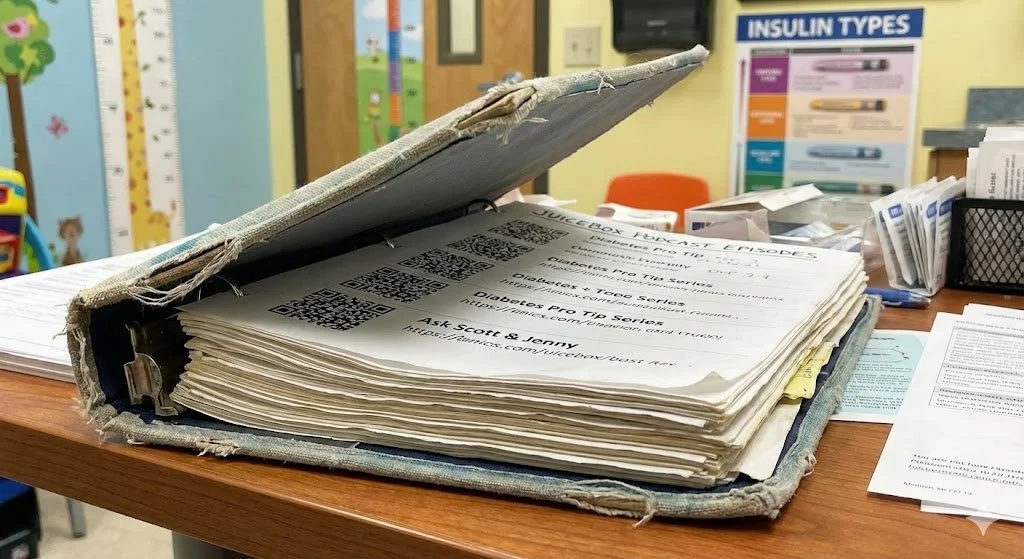







Please support the sponsors


The Juicebox Podcast is a free show, but if you'd like to support the podcast directly, you can make a gift here. Recent donations were used to pay for podcast hosting fees. Thank you to all who have sent 5, 10 and 20 dollars!

#717 Myriam's Pregnancy Story
Myriam has type 1 diabetes and she made a baby!
You can always listen to the Juicebox Podcast here but the cool kids use: Apple Podcasts/iOS - Spotify - Amazon Music - Google Play/Android - iHeart Radio - Radio Public, Amazon Alexa or wherever they get audio.
+ Click for EPISODE TRANSCRIPT
DISCLAIMER: This text is the output of AI based transcribing from an audio recording. Although the transcription is largely accurate, in some cases it is incomplete or inaccurate due to inaudible passages or transcription errors and should not be treated as an authoritative record. Nothing that you read here constitutes advice medical or otherwise. Always consult with a healthcare professional before making changes to a healthcare plan.
Scott Benner 0:00
Hello friends, and welcome to episode 717 of the Juicebox Podcast 717.
Today's guest is an adult who lives with type one diabetes named Miriam. And she's here today to talk about a number of things, including her pregnancy. While you're listening, please remember that nothing you hear on the Juicebox Podcast should be considered advice, medical or otherwise, always consult a physician before making any changes to your health care plan, who are becoming bold with insulin. If you have type one diabetes, and are from the United States, or are the caregiver of someone with type one, you can go to T one D exchange.org. Forward slash juicebox. spend just a few minutes answering simple questions about type one diabetes. When you do this, you'll be helping people living with type one and supporting the podcast T one D exchange.org. Forward slash juice box. Are you looking for the diabetes Pro Tip series or the other series within the podcast, head to the Facebook group Juicebox Podcast type one diabetes look in the feature tab. There are lists of all of the series right there to help you get started. This episode of The Juicebox Podcast is sponsored by Dexcom, makers of the Dexcom G six continuous glucose monitor, learn more and get started today@dexcom.com forward slash Juicebox Podcast is also sponsored today by Ian pen from Medtronic diabetes, there's a great explanation of the in pen at in pen today.com There are links in the show notes of the podcast player you're listening in right now. And links at juicebox podcast.com. To these and all the sponsors.
Myriam 2:09
Well, my name is barium and so I'm living with type one diabetes for over 20 years. And I'm from Canada. I'm in the area of Montreal. And I am interested in sharing a bit of my story and how I've gone through different life stages specifically my little story with giving birth to my daughter.
Scott Benner 2:32
That sounds good. Are you from Canada originally?
Myriam 2:36
Yes. So I grew up mostly in the Quebec area. And I've travelled a bit in and out of Canada, but mostly around Montreal area of my life.
Scott Benner 2:45
Okay, cool. Did we say how old you are? Are we not doing that?
Myriam 2:50
I'm in my 20s. Okay, that's actually not young anymore.
Scott Benner 2:54
You think in your 20s makes you not young anymore?
Myriam 2:58
I passed 25. So why
Scott Benner 3:00
No, no near him? I would I'd murder a stranger to be in my 20s. Again, what do you think? Oh, no. Who did nothing wrong?
Myriam 3:12
I hope not. I mean, every stage is good. And I tried to appreciate every stage. But it does kind of shock you once the years go by faster than you can count.
Scott Benner 3:20
Yeah, no, I know. I understand. And I probably would not actually, like, you know, in my fanciful idea, taking another person's life so I can be younger. I mean, I don't
Myriam 3:28
think it probably wouldn't work. Well, let
Scott Benner 3:30
me just say, you know, let's say we were in a magical situation where this happened. I'm pretty sure I wouldn't do it. There you go. I think that's as you would hope not that's as honest answers I can give right now. What do you think of that? I've never heard anything in my entire life. But my back and my knee are stiff. And you know, I'm on the back nine already. I know people don't think of it that way. Man. I digress. 14 seconds into your podcast episode. I was saying to someone the other day that I and this is because I'm now my mom is 79. Right. And I'm watching her have like a like a health issue. And I told my wife in a really, I am assuming was a serious moment. And I'm not sure if she thought I was being comical. But I definitely was not. I'm 50 years old. And I told her, I am going to start living like I only have 15 years left to live. And I was like then doesn't matter to me. If I live past the 15 years, I'm going to treat these 15 years as good, actionable, quality time. Like I'm not I'm just going to do that. And because they don't want to get to the point where I'm older. And I'm like, Oh, we finally did it. We saved up money and we retired and I'm already and then suddenly something catastrophic happens and what am I going to do that? My money is not going to save me that I save right. So I
Myriam 4:56
totally get that. I mean, I think we have a tendency to Always want to save up for retirement or save up for later, you know, we'll travel later. But that's kind of my philosophy to is just, you know, enjoy, do the most that you can right now. And it doesn't mean not saving up for the future, but it does mean you know, really living life to the fullest also in the present, because you don't know like, the future is non guaranteed. So you don't know how much time you will have or what you'll be able to do with it, or if you'll be healthy down the road. So yeah, I think it's really important to, to do the best that you can now and really enjoy life,
Scott Benner 5:31
right. And it's not like I didn't understand that all academically. But I don't I just made more sense when suddenly I saw my mom, like, my mom's older, she's not like in the even the prime of her retirement, but she was getting ready to make a move, she was gonna move somewhere, she's gonna travel a little bit, land somewhere else, then all of a sudden, like, none of that is possible. So I'm like, Alright, I am not, I'm not going to have that happen. So I'm going to save like I'm saving, but you know, I'm going to try to make a little more time for myself here at the same time. And this, I think this is interesting. This podcast is as a business on top of, uh, you know, something I just enjoy. And it is as strong as it's ever been right now. Like, I can't just, I can't set it down and say to myself, like, Oh, it'll be here when I get back. So I'm gonna have to do some pretty strategic planning around how I take time off, but I think it's gonna be worth it. So that's what I'm gonna do. That's the plan that has nothing to do with you,
Myriam 6:35
as they say, work is always always going to be there somehow, you know, in some form. And yes, I mean, there, it always seems like we have the perfect opportunity right now. But sometimes we we still need to be able to take time for ourselves and take time off. I am
Scott Benner 6:50
going to try to do that. We'll see if I will see how successful I am. Or if I'm just like, next time this year, I'm talking to someone else sounds like I go. You know, last year I told this lady from Montreal that I never did it. But okay, so how old were you when you were diagnosed?
Myriam 7:08
I was almost two years old.
Scott Benner 7:10
Okay. Wow. That's how old baby? Yeah, that's how old Arden was. Oh, wow. Do you have any other autoimmune issues?
Myriam 7:19
No, that I am very grateful for? Because I don't have any complications. And I don't have any other health issues, actually. Great. Well, that's excellent. That's enough.
Scott Benner 7:31
That's enough. Now are you what they call a couple married? Are you with another person?
Myriam 7:37
Yes. Yes. I'm married. Children. Yes. So that's, we have one daughter together.
Scott Benner 7:44
Congratulations. The baby cannot be that old because you're young. And you're calling yourself old. So?
Myriam 7:49
No, no, our babies a year and a half. Yeah.
Scott Benner 7:52
Unless I was thinking maybe you know, babies for you were calling or like a teenager already. Because you really did overestimate your own age. I feel like you basically were like, I'm on my way out. Scott. I'm in my 20s. No, no,
Myriam 8:05
I just had because my birthday was not so long ago. So that's why it's
Scott Benner 8:12
stuck in your head a little bit, didn't it? What's it sticks in your head a little like the passage of time it?
Myriam 8:19
Exactly. Yes. Yes.
Scott Benner 8:21
It does have like,
Myriam 8:23
our daughter is young.
Scott Benner 8:28
Congratulations. That's lovely. Any concerns about when you thought to make a family any concerns about diabetes being, you know, with your daughter at some point?
Myriam 8:41
Yes. I mean, it was one of our worries. I mean, I don't think we focused on it a whole lot because of the fact that I was like I was healthy. And I didn't have any complications related to diabetes. And I was eight. As far as like, my doctors were concerned, they were saying that I was doing a very good job managing my diabetes. So we weren't whole overly concerned about it. As far as her diet, developing diabetes, I think it came a bit later when she was born. And all that concern was more of like how my diabetes could affect her during pregnancy. And then doctors made sure to remind us a whole lot of times, about the concerns that might be related to, you know, having carrying a baby while having diabetes.
Scott Benner 9:36
I believe I know the answer to this question, but just so I'm certain Do you live in a part of Canada, where they manage type one like it's 2021 or they manage it like it's 1978?
Myriam 9:49
Well, it's hard to say because I haven't compared it with like other areas, but I would definitely say that it's 1970s More than 2020 As far as is like being updated or up to date on like literature and like the possibilities and all that it's definitely a bit outdated.
Scott Benner 10:09
What about insulin and technology? What kind of insulin are you using?
Myriam 10:13
I'm using humor blog, I've always used humor law will kind of just switch because now it's become a generic. So I had my log, I think it's called now. Okay, so still the same thing. And I want an insulin pump for I've been on now for I guess, about 1314 years.
Scott Benner 10:29
Okay. All right. So you've been pumping for a really long time? Yes. Either just places in Canada that will give you like, regular an MPH and give you a sliding scale and be like, there you go. Good luck.
Myriam 10:42
Yeah, no, no, it's not that bad. I mean, I did have a good opportunity to because I ended up being on the insulin pump program in Quebec. So right when it started out, back in, like the tooth early, mid 2000s.
Scott Benner 10:55
Okay, what kind of pump? Did you get back then?
Myriam 10:58
I was first on the economists
Scott Benner 11:00
book recommended the pigs.
Myriam 11:03
Yes, yeah. I'm not even the thing I think is our
Scott Benner 11:06
before the pay Oh, before that even Wow. Look at you.
Myriam 11:09
And now I got no progress at all the developments of the prompts. Now,
Scott Benner 11:13
how many? How many different ones do you think you've had?
Myriam 11:17
Well, if I, if I really didn't start on the paying, I believe I didn't. So that would be four, because I went to the paying afterwards. And then I switched to Medtronic. And then I switched to tandem. And now I'm currently on tandem.
Scott Benner 11:30
Are you using the control IQ? Yes, I am. How do you find that to be?
Myriam 11:36
Um, you know, when I was pregnant, I was using the Basal IQ control, he was an out in Canada. Yeah. And I thought it was really neat for the low blood sugars, you know, preventing low blood sugars and stuff. Control IQ is interesting. For someone that's always been like super detailed and super like control oriented. As far as, like managing my range of blood sugars, I think it's a little, I have to do a lot of letting go. Because it does keep me a little bit higher than I would like. But the numbers are good as far as like, a one C levels and stuff. So the, my endocrinologist thinks is really great. And I mean, it is great in the sense that I have less hands on work to do. But it does give you give me more like high blood sugars. And I would like
Scott Benner 12:34
how would you describe your eating style? What do you what's in the mix during the week.
Myriam 12:40
So I'm vegetarian. So I do pay attention a lot to what I eat. And I, I tried to do a lot of whole grains and fruits and vegetables and beans and all that. I try to mix it up a bit. I do find that my breakfasts are very, I try to keep it very similar from one day to the other because I get a little bit of the Dawn phenomenon in the morning. So that is a bit of a I tried to keep it as simple as possible in the morning so that I prevent as much as possible the dawn phenomenon. So that's a lot of oatmeal. Very, lots of meals in this home. And then lunch and dinner are more very you didn't I tried to change it up with different grains like quinoa, rice and all that and mix it up with different types of veggies and all that.
Scott Benner 13:30
Okay, so I, I want to I want to delve into this for a second. First thing. This is just a small aside. When you said you're a vegetarian, the thought that ran through my head was oh, wow, they can grow vegetables in Canada. Which I quickly dismissed that thought but it was the first thought I was like, wow, how did they get through the ice to plant the seeds?
Myriam 13:55
I see all year long. In the Great North.
Scott Benner 13:59
I listen, you understand it academically I know that right? But the way it occurred to me,
Myriam 14:05
like I know and I mean, we are talking alright, and in the winter. So it does add to that feeling of like it's icy and cold. But we do get summer. We do have summer. I mean, we plant like in June and we pick like we pick the vegetables and wait, you know, by the end of like September we have to pretty much pick up everything except for like squashes and stuff. I think that's a short season.
Scott Benner 14:34
Yeah. All right. Well, still. It's uh, you said that you've always had kind of like a, you know, a kind of a tight control over everything. So I want to know a little bit about I mean, obviously, if you're diagnosed when you're two, you're not doing anything. When did you start getting involved in your management and when were you completely in charge of it?
Myriam 14:57
Oh, that's a good question. I mean, I would say Like, probably conscious, that like conscious involvement or like sharing into like the decisions, what I'm going to eat and all that. I feel like it was pretty young, like around 10 ish that I remember sharing like, Okay, this is what I'm planning to eat so that I could help my parents with the, the insulin decisions and all that. But then I got involved pretty much when I started being on the pump, which was around like 1314 years of age. And that's where I started, like, it started making more sense to me. If I and I was growing up as well, and it was a lot more information, especially because I was on the pump program, which to make it simple was like when the DUC de Quebec government was deciding whether they wanted to cover the cost of the pump for children are not. So it was a first like, free pumps in Quebec, which is what I was on. So that meant a lot of work, because it was like meals, you had to write down everything you had to like, write down student to decide all the basil plants, and all that, yes, all the details for the pump. And so that one meant a lot more work. So I think I kind of got involved, because it was a bit too much for my parents. But it also helped me to get more hands on experience. And then I, I think I became more autonomous probably by the end of adolescence, I think, yeah, like, on the teen years, that I was more on my own. And I was more like, out and about as well. So it kind of required me to be more independent. Yeah, so I think it just kind of came gradually, and just transitioned, as far as also, with the pump, it was easier, less intrusive for me. So that also helped with being more independent as well.
Scott Benner 16:59
So that's interesting. I'm certainly not about to, like, ask you to badmouth your parents, because I don't think that that exists here. But are you saying that you looked up at your pants and you're like, Oh, these two are not gonna get this, like, I'm gonna have to get it? Did you have that like conscious feeling?
Myriam 17:19
Not so much. I mean, I actually kind of looked up to my Mole on my parents, I think it kind of transition because my mom was really in charge of my insulin handling the whole process. I mean, both parents were really hands on. But my, when I was really young, or younger, my mom was more in charge of like, giving me the insulin shots and all that. And then when I switched to the poem, then my dad took on more of a responsibility, my mom kind of backed up a bit, because it was a lot of technology and a lot of details, which my mom was maybe a little less comfortable with. So it kind of transitioned already. I don't remember feeling like they weren't capable, I think it was just more of like, I can communicate like all of my decisions. So that, um, you know, at some point, it kind of seemed like we're done, though, like, sitting down and just re talking about it and all that. And so it just became more simple to just do it myself. And, I mean, it made more sense. So it kind of, I think it was part of my just teen years of wanting to take control also of my diabetes. But I don't remember thinking that they couldn't do it. I mean, I still talk to my to my parents about my, like, how it's going and I still talk about like technology advancements with my dad specifically, because he's always still interested in like, looking up at what's like newest and most cool, which is probably why I'm also I've also graduated, like from one pump to the other at some level because of also his interest in like technology advancements and all that.
Scott Benner 19:04
That's really interesting. So you and your father still talk about diabetes?
Myriam 19:07
Yeah, we do. Even on my mom, it's just not like the technology is not as much of her forte, but especially when my dad I, I forget what was the newest thing, but like when the control IQ came out, I talked to him about it. I was like, Hey, check this out. It's coming in Canada. And now, there's an app that's supposed to come out soon. What of course always comes out in the US first. So we have to be patient. But yeah, so and so I'll chat with him about it. And I'll be like, hey, what do you think, you know, do you think it could, you know, be a plus? Wow, that's right management.
Scott Benner 19:39
Does he seem does it seem like it passed him by already just these advancements, or does he keep up with the idea when you're talking to him about it?
Myriam 19:48
Actually tries to keep up with it? Yeah, and he'll read up on it a bit and you know, find information or posts about like, there are different blogs that talk about diabetes advancements with up. So he'll actually keep up I think he's been, he's really keeping up with it up to now. And he's, he's doing a really good job. And I think it fascinates him to to see, like how much things have improved and have gotten so much better in just a short period of time. And so it kind of makes him happier to, to, to see that I can get on these new technologies and use these new technologies as well.
Scott Benner 20:26
How does it make you feel that he cares about it in a way that that causes him to keep up with something that and honestly, he probably doesn't have to?
Myriam 20:37
It makes me happy. It makes me kind of if it makes me feel supported to, to have that, like input and to know that, you know, he cares, even like you say like he wouldn't necessarily have to now because you know, I'm grown up and I'm not even living at home anymore. And all that. I think yes, it makes me feel like he's part is still like part of my diabetes management team.
Scott Benner 21:01
Yeah. It seems sweet to me. I mean, it really does. I mean, you're still a young mom. So that whole, like, trust me right now your lesson. I don't know your life. But this beginning of it is a lot of just like keeping up. It's a lot of functional stuff, right? Like, feeding baby cleaning, baby, moving baby from this space to this space. Like when you get to the point where you sit back and you start to kind of I don't know, like appreciate the bigger picture stuff, like one day, I think you you you'll, you'll, you'll think back on this and probably make you cry. So it almost made me cry when he told me that he paid attention to it. I was like, Oh, that's really nice. Do you think do you think? Do they don't? Do they follow you? Do they know your blood sugars?
Myriam 21:51
Not so much. I mean, we don't really talk about it anymore. I mean, they know I have a good control. They know I've always been like meticulous about my diabetes, and they're happy about it. I think we're now we talked more about like the outcomes. Then we talk about a blood sugar that was in like, things like going well, I don't have any complications. And they're always grateful for that. But no, they're not like, asking for blood sugars and stuff. And I don't Yeah, I kind of have stopped sharing it, I guess. I don't know, I shared that more like with my husband, because he experiences it like on a day to day basis. So it makes more sense to share that with him.
Scott Benner 22:30
So one last question. I'm gonna get off your parents. It was a weird phrasing. But anyway. Do they have any autoimmune issues?
Myriam 22:43
No, they don't actually. I'm the only one in the family. Okay.
Scott Benner 22:47
All right. How much? Is your husband involved? Like, do you how, what do I want to know? How long have you been together?
Myriam 22:56
So we've been thinking, well, we've known each other for almost 10 years, we've been married for five,
Scott Benner 23:02
okay? And is he like an active participant or just a person who's just aware, tangentially of what's happening.
Myriam 23:10
He's, he has an active part has had like all along. I think it's been, like it's been, he's been more involved, like, actively, before we had our daughter. And it's really nothing against him. It's really just because of, you know, the, the amount of things that we have to do. But he's been involved a lot, I would say he's an emotional support overall, like, above everything else. And as far as the management, he's really gone a lot to also get informed and also understand, he played a major part as far as diabetes management, like in the end of my pregnancy, and during labor and delivery, because that's kind of a time where I zone out. And one of the requirements of like, being able to give birth naturally, or with my pump, without like, being on the insulin drip, was that I would have someone that was able to take over for me. And so then he really learned how the whole system worked and all especially because I switched like to the tableau pump during my pregnancy, which is not a great thing to do. But I still did it so that I could have like the Basal like you and all that. And he learned like the switch and he, he got familiar with it so that he knew like what changes to make and insulin corrections and all that but I really appreciate it because it helped me to have like, the dynamic that I wanted at birth.
Scott Benner 24:46
Right. And that is really why you want to come on the podcast to write is to talk about your pregnancy.
Myriam 24:52
Yes, well, I think it's a major like obviously a major event and I'm happy to talk about like all my journey because it's really a I think it's a special journey and is out itself and but I do think it was kind of a major breakthrough and a major event also through my pregnancy and birth.
Scott Benner 25:18
The first sponsor we're going to hear from today is in pen from Medtronic diabetes. Now, the pen is an insulin pen. But it does much more than just that. Head over to Ian pen today.com. To find out, actually, you can head over to NPN today.com right now and follow along with what I'm saying. When you get there. The first thing you're going to think to yourself is Ooh, what a lovely shade of blue. And then you'll scroll and scroll, and you'll see that the M pen attaches itself. Oh, with Bluetooth to an app on your phone. Goodness gracious, that is correct an app on your phone that talks to your insulin pen. This, this is good news. And here's why that app is going to offer you and dosing calculator dosing reminders, carb counting support and a digital logbook. Furthermore, you'll be able to see your current glucose glucose, why did I do that your current glucose on your app, your meal history, dosing history, activity log, generate reports for your doctors and for yourself, you'll be able to see your glucose history active insulin remaining. And it's all in an attractive application that is easy to read and easy to understand. And the pen itself is exactly what you would expect. Now here's something interesting. This offer is only available to people with commercial insurance and Terms and Conditions apply but you may pay as little as $35 for the N pen. Why is that? Because in pen from Medtronic diabetes does not want cost to be a roadblock to you getting the therapy that you need. So head over to in pen today.com and find out if you're one of those people who can get the pen for just $35. In Penn requires a prescription and settings from your healthcare provider, you must use proper settings and follow the instructions as directed, where you could experience high or low glucose levels. For more safety information visit in Penn today.com. Now I'd like to tell you a little bit about the Dexcom G six continuous glucose monitor dexcom.com forward slash juice box, you can make knowledge your superpower with the Dexcom G six CGM system. That's right, the Dexcom G six can help you make better diabetes treatment and diabetes management decisions. All of this with zero finger sticks and no calibrations. The Dexcom G six lets you see your glucose numbers with just a quick glance at your smart device or your receiver get alerted when your glucose levels are heading high or low and share your data with up to 10 followers. And best of all, the Dexcom G six is covered by most insurance plans. Now if your glucose alerts and readings from the G six do not match symptoms or expectations, you just use your blood glucose meter to make those diabetes treatment decisions. Here's some of the highlights of the Dexcom G six, of course, seeing your glucose readings right on your smart device. Always know your number with just a quick glance, and you'll be able to see your Trend Lines, these are very, very helpful for understanding where you're at where you've been, and how you got there. In the end, in my opinion, the Dexcom does this and it does it well. It shows you your blood glucose currently, it shows you what direction your glucose is moving in, if it's moving, and how fast it's moving in that direction, speed, direction. And number. These are the things that we use to make decisions for Arden every day. And I think you'll really like them. Head to dexcom.com forward slash juicebox think get started today. links in the show notes and links at juicebox podcast.com to Dexcom in pen and all the sponsors
just the way you answered the questionnaire to be on the podcast. I thought this is a person who planned her pregnancy really well thought about it a lot ahead of time. This was not like you didn't wake up on a Saturday morning and go hey, you know I think we should get a pregnancy test like this for a while. Right. So did you want to be a mom for a long time?
Myriam 29:40
Yes. So I wouldn't wanted to be a mom. And we wanted to be like parents like I think we talked about it way before we even got married and it was really something that we wanted and we did plan about it. We did talk like we mentioned earlier about how that might play out with me having died It is and one of the goals was kind of have to have the children earlier than later. Also to, you know, to not add two more complications possible, by waiting longer. But we also I was also studying and I was in university, so we wanted to, for me to be able to finish my bachelor's before to have a child just so that things would be organized and then process. And so that was one of our goals. And then yes, we talked about it a lot about just how it would look and what we definitely wanted it to be a part of our, our little family to have children as well.
Scott Benner 30:41
This is interesting. So you're like a super mature person, aren't you?
Myriam 30:46
I don't know. I don't know about that. But I do like to be organized.
Scott Benner 30:49
But I mean, your whole life. Like you have other brothers and sisters. I have one sister. Okay, if we made one of you the super, like, responsible one of the other one lesser, you'd be the responsible one.
Myriam 31:03
I mean, of the two, yes, I am probably the most responsible. I'm not my sister to hear that. I mean, we have both. Very, I think we just grew up being really responsible and like learning responsibilities early on. But I have developed I think this I think diabetes has contributed to my being very, very disciplined and very organized.
Scott Benner 31:27
If I spoke to your sister, would she call you like, type A and uptight? Or would she just say you're responsible?
Myriam 31:35
I don't know. And I mean, I think I'd be more of they're just responsible. Why?
Scott Benner 31:40
Okay. It's fine. I'm not saying you are, I'm just trying to get to the bottom of it. So because the reason that that made me think about that, because you're with this guy who obviously you know, you're going to be married to while you're in school, while you're in school, you have this feeling. And so you're younger there. And you're already thinking ahead, like, I want to have a baby, before my body has any chance to if it's going to break down in some way before it does. And like it actually feels to me like you thought I'm gonna put my body under this stress ball. It's young enough to bounce back from it better. Like those are all thoughts you had right? Pretty much. Yeah, I think I'm getting to know you here. All right. Because I don't know, that just seems like a lot of foresight.
Myriam 32:27
I do like to plan it ahead. And I think I want to put like the best chances. And that's really like a fresh thing. I'm gonna translate because I can't remember how to say it in English, but
Scott Benner 32:38
I was sad to get into French. Oh,
Myriam 32:41
my God. No, escape my mind. But like, mythos, makuti like to plan to put like, all the best, or all the best chances on your side. So why wait and like till until you have complications or more difficulties? And, you know, then when you can, you know, you're healthy in the prime of life and that you and you can, you can give the best chance to you and to your child as well.
Scott Benner 33:12
Yeah, I mean, listen, I love the way you're thinking. I'm just amazing. You're thinking that way while you're still in school. I understand when the other kids went to a party. Do you just look at them and think heathens? Like is that?
Myriam 33:29
No, I don't try to judge others. But I do. I made my own choices that I think I was like, I was already married while I was in school, too. So it just didn't. I had other priorities. And that's kind of what I would always say, and I did not party.
Scott Benner 33:45
You were married when you were in university. Yes, yes. You're so interesting. Okay. I also, can I say something? Let me just be honest, that I hate about your generation. You won't make fun of anybody like that even like, oh, that's for sure. Anyway, like, I'm like, did you like I'm clearly making a joke like, Oh, those people went to a party. You're like, oh, he then she's like, Well, I wouldn't want to say that about I really wish you would have had the opportunity to grow up when I was that because people would have like, talk people for no reason whatsoever. It was a ton of fun. And it just doesn't exist in the world.
Myriam 34:22
We can't do that anymore. It's just not part of like how we're trained or allowed to function.
Scott Benner 34:27
Trying to tell you it's fun. So I don't I can't do it either. You guys drugged me right into your into your into your apocalypse or whatever. This is what's happening right now. So okay, so you are way planned ahead and we're going to just obviously assume that this part of your your nature took over when you were planning for so what is the like, for diabetes and pregnancy? What's the what's the first thing you feel like you have to conquer when you realize you're gonna get pregnant?
Myriam 34:59
Ah, Ah, the first thing I think, is just really like understanding like, what part diabetes is gonna play in my pregnancy, like, my pregnancy. You know, like, it's the kind of thing where it's like, oh, I'm super excited, I'm pregnant. And the next thing is, okay, so what is this gonna look like? You know, it's, so it's a little different, I think then, you know, being pregnant when you don't have a health condition, or you don't maybe have specifically diabetes, who are just like, over excited to being pregnant. Period. I think I was super overexcited, and my husband as well. But at the same time, we were kind of like, oh, so what is this, you know, and then we started, we went back to the planning process of like, how it would look. And I mean, it was to the point, like, because I didn't want it to be overwhelming, like, even before I got pregnant, like, when we started talking about, okay, this is, you know, this could be a good time and all that, and we're really open to whatever would happen. But I started, I had already started talking with, like, my endocrinologist, because I knew that based on, like, my readings and all that, that it would be best, you know, you kind of have to have a good a one C level before getting pregnant and so that you have the best opportunities, or the best chances. So I would, I had already started to have that discussion to make sure like, we were already in the green light before, actually. Okay, like concretizing Our plans. So
Scott Benner 36:30
prior to you thinking about, like, concretely saying, We're going to start i By the way, I I feel like your conception was super boring, but that's we'll get to that later, as
Myriam 36:40
it wasn't just because we're talking about this part, as part, but it does. It kind of it kind of is a major part of our life, you know, we want it or not, I mean, sometimes it is frustrating, but unfortunately, or fortunately, I don't know. It is a major part of like every thing of every decision.
Scott Benner 37:02
No, no, I think it's really important. That's why I'm happy to dig through it. I just imagine that you rang a bell with the key took your temperature and you're like, ring, it's time get over here. I know. That's not really what happened. I
Myriam 37:15
sound like that. But hopefully it was not like
Scott Benner 37:19
maybe you should ask him maybe be like, Yeah, I didn't feel like I was punching the time clock that day. All right. Alright, I'm here to work. But But seriously, what I want to know is, what was your agency prior to when you thought we're gonna have a baby?
Myriam 37:36
So I don't have the exact number because that's the thing I like I I was already, pretty much what my doctor said was that I was already in the green light. So I didn't have to do like any work. I was like, I was always around the six shows, I think I was like around 6.4 or roughly at the beginning of or before I got pregnant.
Scott Benner 37:58
Was that on control IQ or no Basal IQ?
Myriam 38:01
Neither neither either Medtronic still,
Scott Benner 38:05
yes. Okay. All right. When do you go on the Basal IQ, then?
Myriam 38:09
I actually worked on Basal IQ, like, when I was five or six months pregnant,
Scott Benner 38:15
ma'am, you're baller, you're just most people would not switch their pump in the middle of their pregnancy?
Myriam 38:22
Well, it's not recommended. I mean, I'm not making a statement like for doctors. But one of my issues was that, so I always want to be like in range, right? I've always tried my best to do that. And then when I got pregnant, it, it was more challenging, obviously, because there are all the hormones and especially like, as you progress, like through the second and third trimester, it gets more and more your body fights against you, that's pretty much what I'm gonna say your hormones really. And so it's harder to, like insensibility sensitivity to insulin is really reduced. And so that made it hard for me because I really didn't want to be high. Like I didn't want to have high blood sugars a lot of the time, which meant I was always like getting into a lot of insulin and all that. But the downside was that I was also going into low blood sugars. And so as doctors are always concerned about low blood sugars more than high, my doctor was really concerned about that. And so then she kind of recommended that as well. As far as like, maybe that'll help you. Like lower your level of low blood sugars.
Scott Benner 39:36
I want to make sure we didn't have a misunderstanding through language but what I called you a baller. I think it's amazing. You changed a pump during the break. I wasn't judging.
Myriam 39:45
I understood. Yeah, I
Scott Benner 39:46
was like, because you right away we're like, you went back to like NATO. Nothing here that Juicebox Podcast should be considered advice. I was like, no, no, no. Like, I thought that was amazing. That you were just like, I'm gonna change my pump. Now. I don't care if I'm pregnant or not. I'll figure this out like You're not scared of diabetes at all right?
Myriam 40:02
No, not at all in that, like, I meant that in the sense of like the doctors, like usually say, like, don't do that. But I was kind of like a that's an opportunity. Like, it's if it's time to do it, there's no better time than now to do it. And even if I'm pregnant, because it was going to help me do even better, like during pregnancy. And so because I think it had it just came out like it was just out in Canada. And I was like, Oh, I'm getting my hands on that.
Scott Benner 40:29
No, I like you, you're full of energy. So okay, so you were around a six or so prior? Did you feel any pressure to make it lower before you got pregnant? Or they everybody was? Okay.
Myriam 40:41
Everybody was happy. So I was just like, was like, it's fine. I didn't make more efforts to Lord.
Scott Benner 40:48
Okay. And then, of all the things that you were concerned about, about your diabetes before getting pregnant? Did any of them most of them, some of them come true during pregnancy? Or did different issues pop up that you didn't expect?
Myriam 41:06
I mean, there were nothing really scared me, like, I wasn't that afraid. I think what came up was more of like, the fear, like not it's not necessarily their fault. I mean, it's their job. But like the doctors, and I'm not talking like, I'm specifically on my endocrinologist, but I had to, like, I got on like, a team of endocrinologist for like, managing pregnancy diabetes, or, yeah. And so I think there was a lot of misconceptions. And then it was a lot of generalizations too, because they were managing, like, pregnancy, diabetes, and then I was a type one diabetes was also in that, like, seeing the same doctors. And so there was a lot of challenges more in the sense of, I was, I started being scared, and not because of my like myself, I mean, I was maybe concerned. And that's why I was really working hard. But there was all this fear of like, okay, I'm gonna get, like, high blood pressure, or I'm going to be bedridden, and all that, or I'm going to have to be ducted, which was the main thing that came back a lot was like, You're not going to be able, you're not going to bring this baby to term. And my answer was, on what basis and that was like, my answers throughout pregnancy was on what basis, and there really wasn't any basis as far as like, I was doing fine. Like the whole pregnancy, I was doing fine. But the the idea was, uh, we don't want, like any should occur before we do it. So we just want to do it.
Scott Benner 42:46
Were they planning for the worst all the time? Yes, yeah. Based on you think their expectations from their historical knowledge of other pregnancies? Or just do you think they just play from a scared position? Generally, did you get any feeling for that?
Myriam 43:03
I think that's kind of like their working like model in the sense that it's kind of like the protocol and, you know, risk management and, you know, so they're just always preventing the worst thing from happening. But, I mean, it was a challenge for me, because there was no real issue. And it's like, I, it wasn't all that different for me to manage my diabetes during pregnancy than it was before, except that I just had to make changes like more often. And I'd had to be like, more on top of it, but it wasn't all that different. And so to me, and one of the things was, like, right away having to be in the high risk pregnancy clinic. And to me, it didn't really make sense because I didn't see how I fit in with like, individuals that had like babies with malformations and individuals that had high blood pressure. And our I forget the the actual, specific terms for high blood pressure and pregnancy, but like, all these challenges, and I was like, Okay, I don't really see where I fit in, in that. And yet, that was like, the same mindset was, was present for me. As far as like, Okay, we gotta manage this. Like, we got to be on top of this and and so there wasn't a lot of freedom for just like enjoying my pregnancy, which I thought was like Central to being pregnant was actually enjoying the pregnancy. Yeah,
Scott Benner 44:24
preeclampsia. Yes. Is that blood pressure during pregnancy, right? Yes. And, okay. I'm gonna do realize for a second, I'm gonna say something that you're gonna find uncomfortable to answer, I believe, but what do you do for a living? What did you go to school for?
Myriam 44:43
I was studying in psychology, and I'm actually still studying now. I don't have I'm in my PhD now in clinical psychology.
Scott Benner 44:51
You're a thoughtful, intelligent person. Am I wrong? Or am I right?
Myriam 44:55
I would like to think so. I do like to your think your ability
Scott Benner 44:59
like, listen, part of the way I do this is on purpose so that it seems fresh while we're having the whole conversation, because it is like you and I did not speak prior to this. I didn't tell you I was gonna ask you some questions, you're not prepared for this at all. And that usually causes people to pause and formulate their thoughts. And I can feel that when I'm talking to them. But I have like, I have changed direction. I've brought your parents up. I've made it uncomfortable jokes about you having sex with your husband, and the second, my voice stops, you have a clear, concise and thoughtful answer. Raise your IQ in the 140s. What are we talking about here?
Myriam 45:40
I haven't taken the test and future psychologists I'm probably not gonna take it either.
Scott Benner 45:46
I think you should. I think you'd make me feel bad about myself if I knew you're right. What do you think of that? Are you? This is you though, right? I'm talking to you. You're not like putting something on. You're not extra focused. You didn't take like an Adderall for this or something. You're like, this is just who you are.
Myriam 46:07
No, I didn't do anything specific. I mean, I woke up this morning. And I was like, let's do this. Very much how unprepared I was. And I mean, I looked up. I was like, Okay, I'll pull up my book in case he asked questions. And that was pretty much it.
Scott Benner 46:21
I am super impressed with you so far. Just so you know. Thank you. Yeah. Is does your husband aware of how smart you are? Or is he one of the smart people to tell me the truth?
Myriam 46:33
He's also very smart.
Scott Benner 46:36
Okay. All right. Well, listen, tell this kid, I'd like it to invent a way to melt the ground in Canada, so we can have vegetables more throughout the year. I can do? Like bigger because of how big its brain is. Your baby, does your baby have a giant head to hold all the brains? Oh, I'm just gonna
Myriam 46:57
bring up her home. She has a pretty time, right?
Scott Benner 47:03
We squished it in there. I imagine it doesn't even fit in a regular size head. I literally I mean, honestly, it's just, it's, it's evident. It's very, it's just it's so easy to talk to you. Because you know, what you think you know how to articulate it. It's just I'm having a very good time talking to you, which is probably not I probably shouldn't break that wall while we're having the conversation. But I just want to tell you that I'm having a great time. And I appreciate it. Thank you very much.
Myriam 47:29
I mean, it's definitely a very, I'm very happy to be talking with you as well. And I'm happy to be sharing and to be having this conversation is really a shared feeling, I think,
Scott Benner 47:39
Oh, I'm glad. Thank you. You didn't even like do the ham fisted thing of going, Oh, Scott. That's why I listened to the podcast because you're so smart. Like you didn't do any of that stuff. You're you're really thoughtful person. You don't even like and you joke around enough in a intelligent way. Even I like I'm gonna tell you right now. I just That's it. I'm sorry. I'm done. I'm I'm gushing over you and I shouldn't be. You're terrific. So thank you. Absolutely. It was my pleasure to say you were okay. So we make the baby. Right, E equals MC pregnant. And then using I'm sure it was a lovely evening. And so where was it an evening, we made Arden in the basement on our way to trick or treating with our son.
Myriam 48:30
And it was really weird because even with all this planning and all this that seems so like, like, plan and organizing. Like, we don't actually know the data. She was me. Okay. We were trying to time nor the place.
Scott Benner 48:44
We're trying for Arden to be born in the summertime. So we had like this late fall like we were trying to get pregnant in the late fall. And my mom was at the house and we were getting ready to go trick or treating with Cole who I mean honestly could have was probably like three years old. My wife says to my mom, hey, can you like take him outside? We'll be out in a minute. I was like, What are we doing? And she's like, come here. Okay. Anyway, it was we don't have
Myriam 49:15
our very fun stories of
Scott Benner 49:16
Yeah, it was hard to get rid of that sofa.
Myriam 49:20
I bet. Memories just
Scott Benner 49:23
sentimental feeling. Yeah. Rushing to make a baby before going out to trick or treat. Anyway, babies here. When's the first time it gets hard? When do the hormones really hit you?
Myriam 49:38
And your hormones as far as like diabetes or as far as like pregnancy hormones just in general?
Scott Benner 49:44
Well, no. When does the blood sugar start getting difficult?
Myriam 49:47
Oh, okay. Yeah. Well, right away actually. Because I, the first trimester I was low, low, like really low all the time. It was very aren't actually because, I don't know, it's like I, I developed like a hypersensitivity to YES to insulin, but not in a sense that I could like control or like I could like just say okay on lower everything it was trying to just like, out like anytime, anywhere and like, just very it was haphazard and it was very challenging to, to know where to position myself. And at the same time I was like, okay, like, if it is gonna get high, you know, it's gonna get hard at some point, it's gonna get hard, right? It's gonna go. And so then I kind of had that trouble. I was like, I can't lower too much. But in the end, I was just really thoughtful about the beginning and I just needed to lower my, my insulin levels. And how long does that lasted for three months, three months.
Scott Benner 50:45
Okay. I wonder if I wonder how that works? Like, like, functionally, I wonder if it's that your sensitivity lessened? Or if there was a lack of something in your body that that used to exist that didn't anymore in that time? Do you mean like, oh, like maybe your need fell? Not your sensitivity heightened? Or maybe I'm wrong? Maybe it's vice versa? I have no idea. I'm just it's an interesting question. I guess either way, it doesn't matter if you combat it by lowering your, your Basal. It'd be
Myriam 51:17
hard to know. I mean, yeah, I mean, it it is a good argument to because I mean, obviously, you know, the first trimester are a bit more sensitive as well. I was slightly nauseous, too. So I mean, obviously, also, the amount of food and the type of food has changed as well. So there are obviously different factors involved. And I argue it as being sensitive. Anybody? It might be a lot of different things as well, for sure. Yeah. Because I can't actually test it.
Scott Benner 51:47
It doesn't matter. In the end, in the end, you changed your insulin to meet the need, the need was less. But you did think about like, when you turned it down, you thought about like, when's it going to come back? Yeah, that was in your head. Okay. When are you? Was it so much less that it was like managing a different person? Like, was it like, I guess my question is, like, if your Basal was like a unit an hour, did it become point nine an hour to become point five an hour?
Myriam 52:15
It was more like small changes, I would say. Yeah, so a lot more small changes, I think the major thing that changed was probably more of like the insulin to carb ratio. So just like how much insulin you get at meals, but ya know, it didn't see it wasn't all that bad, but it didn't seem like managing an odd an odd version of myself. Okay? Because it was like, unusual. And it didn't, it wasn't like obvious that, like you usually see, okay, like, in the evenings, I'm always high. So now I'm gonna like change my, my basil or carved race. But then this was more unusual. And like, I couldn't really put my finger on it easily. So that was a bit odd. So it didn't feel like it. It was something that I had never really encountered in that way. So it didn't seem odd at first and kind of challenging. And I think that's why it took me a while to just realize what I needed to do as change or like, just realize what I was into.
Scott Benner 53:19
And then the shift comes the second trimester, it goes the other direction. Does it go significantly in the other direction? Or is it more small changes, like you're talking about?
Myriam 53:27
So in the second trimester, I'd say I was pretty much like, I felt like I was back roughly at what I was like pre pregnancy. So I was bringing up my my insulin levels was a little late. But surely like every other week, I think, even every week, sometimes I was but at the beginning, it was more like every other week. And I was just bringing it up slowly but surely, until the third trimester, and I had the third trimester, that's where it started being like, tougher, I would make more changes more often every like other day or a couple of times a week. I was getting like input from, like, diabetes specialist, nurse, and also my endocrinologist. And so that kind of helped me. But I was also doing it by myself and figuring out like what needed to be changed or improved. It wasn't until Yes, I think it was progressive. So I think like the gap between like pre pregnancy or like beginning and end was probably bigger than I felt it. But since it was like gradual, it didn't feel like I didn't get like a big jump in, in blood insulin levels, even at the end of pregnancy. But I did. Yeah, I increased pretty much all the way to well, almost the end and then at the end it kind of plateaued and even lowered a bit.
Scott Benner 54:48
x okay. Yeah. At the end of this, did you breastfeed them?
Myriam 54:53
Yes, I did. Yeah.
Scott Benner 54:54
Okay. Did you notice your needs changed during that again?
Myriam 54:58
I'm not Really, I mean, yes or no, it was kind of an odd situation because even like right after birth, they expect your blood sugar's to go. Like to change radically. And in my case, it didn't really. Like it didn't change radically back to pre pregnancy levels. And so I ended up being in a high blood sugar because for a while, like for quite a few hours, because they started to bring back everything down, like put it back to like pre pregnancy levels, when in reality, that wasn't what I needed. And that's what I felt, I felt like I can just hide, like, just leave my blood sugar, like just leave my controls like how they are. And I'll just handle that, like later on when I get low. But yeah, so I, it was progressive, it was progressive. It progressively went back down. But not, again, it didn't drop right after giving birth. I think that's there's a lot of hormones involved in all that. So,
Scott Benner 56:01
ya know, it makes me it makes me feel like, yeah, sure, there's a way we expect this to go. But you still have to stay flexible and make decisions based on what's actually happening. It's not it's not just gonna follow like, you know, a rule book, necessarily.
Myriam 56:18
No, absolutely not. And that's what kind of frustrates me with, like, protocols. And I know there's a reason for them. And I know there's a use for them. But it kind of is what's frustrates me because like, I wasn't told, I think once like, I don't remember consciously being told once that like, during, like the, like after birth, your blood sugar's my stay up, it was just like always, Okay, be careful with their family go down, go down, even like during the birth process, because in the real process, the opposite during labor and delivery, your blood sugar's are gonna go up, for sure, you know, but then you're like, I'm sorry, they're gonna go down again, they're gonna go down. And that's like the argument, but there's like, just one sided. And you might get either one. And I got opposites on both ends, because I got high blood sugars during pregnancy and high blood sugar after pregnancy. And like after birth, rather, and it didn't. It wasn't like, in the book, it wasn't textbook. I wasn't a textbook case.
Scott Benner 57:24
How about how about the days after, like, did breastfeeding make you low?
Myriam 57:29
It did a bit, it was hard to like to know because, you know, there's like all the sleep deprivation involved and all that. So that that was that was another story. And managing diabetes right after birth is not any easier. It's worse than during pregnancy, actually, at least for me, it was because then there's all like the sleep and there's like, waking up at weird hours, and then you're hungry, but you don't know what time it is and all that. But yes, sometimes when I was breastfeeding the first few days, I would get low or right. Laughter. But it's like, quickly, like in the few weeks that went after I didn't notice it anymore. It wasn't like major drops. You figured it wasn't? Yeah, I don't know. I mean, it didn't seem like it affected me that much. But I kind of adjusted and tried to be careful if it if it wanted to go in that direction. You know,
Scott Benner 58:23
like, just recently in an episode, Jenny described her diabetes as like getting a newborn baby, like having a newborn baby to take care of sudden it's almost like getting diabetes toys, or two babies are gonna look at it.
Myriam 58:35
That's exactly how I felt actually, yeah, after birth, I felt like I had two babies to take care of, because my diabetes was out of whack. And then I had a baby that had no idea how this world function. And so now I was trying to help both. It's crazy, because now even my daughter now sleeps full knows what sometimes I still get woken up like, three, four times a night because of my diabetes. And I'm like, just let me go to sleep. I should keep my baby and my diabetes.
Scott Benner 59:05
diabetes to sleep through the night to can you Ferber eyes? It is that?
Myriam 59:10
Yes, that's what it means. Like, you're off duty just off duty at night. What that
Scott Benner 59:16
that old book from the 60s they would tell you to let it cry. Right. And then there's stuff now there's Ferber eyes. I think that's carburizing. Right. And there's some people who sleep with their with their babies and keep the keep the baby next to the bed and like a little thing and what how did how did you? I mean, this is how did you do that? How did you get your baby to sleep through the night? What's the process you used?
Myriam 59:39
Ah, well, the process was gradual. So we had her like in the room but in our own bed like the first six ish months, I think because like she would wake up like every three, four hours at night. It is. It was just it made more sense. But it was also like the recommendations that we had had from our, from a few like professionals that, okay keep her in the room, but like don't keep her in the bed. And we really made an effort to do that. Because apparently it helps also with the, like, gradually sleeping through the night. And that like six, seven months, like we were like, We were overwhelmed. We're really tired. I remember them. So
Scott Benner 1:00:21
yeah, I know that I remember that feeling of the first time like, like, we put called to bed and he didn't wake up a few hours later. And then a few hours later, he didn't wake up and you're like, Oh my God, is he gonna stay asleep? This is amazing.
Myriam 1:00:34
Yeah, then you can sleep for the whole night because you're worried about the fact that they're asleep.
Scott Benner 1:00:39
But then once you get over to it, you're like, you're so exhausted. By the time it it's usually like that first six months, and you're just so exhausted by the time it's over. I don't it's it's crazy. It really is. And and I didn't have to raise a baby. You know, the first time with diabetes. The second time aren't, too. And so I did get to I mean, in fairness to me, I got to sleep for a couple of years.
Myriam 1:01:05
Well, those that are adults, we yeah, we ration our sleep a bit more.
Scott Benner 1:01:09
I'm I don't know for everybody else, but I can walk through my house in the pitch black dark. I don't need, like, I don't need like, Oh, I know where I'm at, like, I know how to do it. Does anybody else like do that thing where you kind of like, bring your forearm up a little bit to like, touch the wall corners. And like there's one one hand or? Yeah, there's one door in the hallway. Nobody ever closes. I'm always completely aware of that. I reach out with my hand as I approach it to make sure I'm not going to walk into it. And yeah, I use the smoke detector lights as as like mile markers. Yeah, yeah. I wish that wasn't something I knew how to do, by the way. Like, wish I just, I would just go to sleep and never wake up. Arden needed insulin this morning at 530 in the morning. Oh, and I was like her blood sugar just kind of popped up out of nowhere. And I was like, and then you have that thought in your head like, oh, you know, she'll be awake soon. She'll, she'll Bolus. I was like, now I'm gonna do it now. So anyway, yeah, it'll it'll. I don't know. I'm just gonna say it'll get better, but it probably won't. Do you think you're gonna get
Myriam 1:02:21
more? They'll get more independent, you know, as they grew up? It's kind of I mean, my parents don't remember all the pain that they went through. I tried to ask them sometimes, and they don't remember. They're like, Oh, it was fine. We just took it a day at a time. I'm like, Oh, yeah. Are you sure it feels like it would have been a bit rough at some point. But you know, we all forget that at some point, apparently.
Scott Benner 1:02:44
Does it make you does it make you feel good that they don't remember? Or are you looking for somebody to commiserate with?
Myriam 1:02:49
I think it's better than they don't remember it? Because I feel like it probably was hard. I mean, I little part of me would like to know, like how bad it was. But at the same time, I'm like, you know, if they still remember now, it's, it would be like really, really bad. Yeah. So they probably focus on the good moments, which is a good thing. Yes. I'm happy about that.
Scott Benner 1:03:09
Alright, so now based on the rest of your conversation, you already have your second third child planned out? Are you just having one? What's the deal?
Myriam 1:03:17
No, well, no, not yet.
Scott Benner 1:03:20
You said, Well, hold on. Don't lie to me. Is it just something you haven't told your husband yet?
Myriam 1:03:27
Oh, no, nothing like that. It's just because I'm back in like, I'm in my PhD now. So I'm trying to get ahead a little bit before, before we have another child and go through this whole process again, because that's the thing too, I'd like to have more time, which was one thing I did have with my first pregnancy of like, during pregnancy, I wasn't all that busy. And so I had a lot of times like exercise and to handle all the appointments and all that. And so I had a lot more freedom. I didn't and so I'd like to have a bit of a structure like that as well. Where I am not like in you know, in school like five days a week and handling a child that's already there. And also a pregnancy I think that will be
Scott Benner 1:04:12
are you hoping to go into practice? Or are you going to teach What's your idea for after?
Myriam 1:04:17
My goal is to go into practice once I finish Yeah, well, there's
Scott Benner 1:04:21
all those people who have PTSD about like polar bear attacks and stuff like that. You have to help right.
Myriam 1:04:29
What about polar bears? I don't have any around here.
Scott Benner 1:04:32
Beavers. What about a beaver?
Myriam 1:04:36
No. That's where I was. I'm concerned I've seen so
Scott Benner 1:04:42
I am strongly, strongly, strongly thinking about calling this episode beaver stone attack. Gotta be careful while you're talking on the podcast.
Myriam 1:04:57
I mean, that would be a very Canadian. Turning on title.
Scott Benner 1:05:01
So you just said that I was like, oh, that's what I'm gonna call this episode. Is there? I know you're like, is there anything about the process that we didn't speak about that you wanted to?
Myriam 1:05:16
I won't, the only thing I can think of is really about like, just the fact that, you know, even with all the pressure of like the hospital, or like the staff and all that, like I was still able to, to make it a, like a natural labor and delivery process. And I didn't have to be like, induced or have the insulin drip and all that. And I think it's a message that doesn't get out all that much. Like, even when I was pregnant, that it was really, really, really hard to find any, like good stories. I don't know, if you've been able to find any, but like, personally, I have not, or just like one from like 20 years ago, like one person who was able to that had type one diabetes, and was able to give her the way they wanted when, like in which was naturally and all that. And I think that's also what really encouraged me of just being able to accomplish that. It was like a major, major accomplishment. And I always kind of like, look, it's possible. And that's what I was also like telling the medical staff and all that, like stop saying that there's only one way to do this. And there's only like one outcome possible. It's like there's, it's possible to have a healthy pregnancy as possible to have help with the labor and delivery process. Even with diabetes, and maybe even because of diabetes, because you you end up being so much more careful about what you eat, what you exercise, like how you exercise and what you do and how you try to reduce your stress and all that. And I think even like healthy moms, maybe don't spend all that time to think about every little action in their pregnancy. And so I think it's even like a benefit to have, ultimately, diabetes if you want to, like see the silver lining in a very difficult situation. Because it helps you to be very, very focused.
Scott Benner 1:07:11
Yeah, I understand. I like how important it is to you for people to hear a good story too. And I've heard a number of stories that are that are positive. And it is definitely doable. It's a lot of work, obviously. How was the baby's birth weight? Was it like a normal birth weight?
Myriam 1:07:29
Yeah, she she was 636 pounds three ounces. She was born at three weeks. So Oh, wow. Put on the fat? Yeah,
Scott Benner 1:07:39
it's like a little baby making machine over there. You're just a really nice job. Did it feel like an accomplishment when it was overdue? Did you feel like, wow, this was a lot of effort. And I did it? Or did you not even have time to feel that way?
Myriam 1:07:54
No, I really felt it. I was very, very, I felt accomplished, very proud of the whole process when it was all said and done. Like even in the hospital because it was just it was so unique. And even just the whole process was very unique compared to even regular, like labor and delivery processes. Like even the doctor was just like, I've never seen this before, like, what happened. And even the nurse like was going off shift. And because they were switching before I was getting ready nurses like I'm staying here, I want to see this baby come in this world. And so I think that it kind of was the fulfilment of like all the effort and all the work that was that I put into it. I mean, I would have liked it to be more enjoyable in the sense that to not feel all this pressure or all this fear during pregnancy. And that's probably the only thing that one of the things that I would definitely wish could change. But even with that, it's still
Scott Benner 1:08:58
well, how could How could that change? Should the doctors just be prepared themselves but not worry out loud? So much? Like, I mean, you want to be informed, right? But you don't. You don't want somebody to like, I don't know what I'm like, you don't want somebody to rain on your parade. You just want to understand what could happen and then have somebody tell you, but we're gonna act like that's not gonna happen right now. Like, is that the? I don't know. Like, I'm not sure.
Myriam 1:09:25
Well, you know, like, I think it's maybe just Well, one of the thing that we noticed during pregnancy was just, if doctors took more time to like, get to know the context and get to know the couple. It would make a big difference. And that's at least that's what we experienced like, and we had to do it kind of intentional, very intentionally, actually not just kind of, but like because we were in the like the high risk clinic or Pregnancy Clinic and the gynecologist would see us would come from Five seconds, you know, and look at the scans that the technician had done and say, okay, look, everything's good. Okay, and I'll take this pill, you know, because you're diabetic, and you have to take that. And you should already started. And you know, it was just kind of like this really quick and very protocol are very clear, very directly type of interaction. And then when we were like, Okay, this is not gonna work, like really need them to understand, like, our perspective and what we want. And so then we had, we asked the unconscious, like, come back and actually have a discussion with her, of how we wanted our pregnancy and how maybe my situation was not typical, because I was exercising daily, and like, my numbers were perfect. And, you know, all of that. And so when we gave her like, the whole picture, she was like, oh, like, okay, like, she realized, like, we're not like, we planned this, like you've seen, you know, kind of gave her this picture of like, the context of like, who we are. And like, this is not like, haphazard, it's not like maybe we made on the corner of St. Louis to get something that was fine and organized. And I was around that, too,
Scott Benner 1:11:11
do you think are made on the street corners?
Myriam 1:11:15
On any one, we had that conversation afterwards, she respected our decision, and she respected and even at the end, like when we were at 37 weeks. And she was like, Okay, well make like a more in depth. Scan, not scan there. But forget the word now. It's been too long since I've given birth. But, you know, she, they looked more in detail, and she made sure everything was okay. And she's like, okay, everything's okay. Now, if you were any other woman, I would not I would book an induction now. Like in the next few days, but I know, like you had expressed your decision. And so now like, what, are you still following that decision now? Or are you ready to change? And I was like, no, like, this was our decision, we're still keeping it, there's no indication, no reason for it to change. And so she was like, Okay, well, I respect your decision. You know, it was really like, do you think of the involvement that I think they could have?
Scott Benner 1:12:20
Yeah, it sounds to me, like your experience was that physicians took all of the bad experiences they've had in the past and applied it to you before they even knew who you were, like, like, maybe everyone doesn't do the exercise, and everyone doesn't eat well, and everyone doesn't keep their agency in check and stay on top of their insulin, but you were going to, and they just didn't know that about you. So they planned for what they see most frequently. They just did, but they don't know you well enough, you think to adjust to like, you don't mean like they don't spend enough time with you. Because, listen, I don't want to take credit here. But I talked to you for about 20 minutes. And I was like this lady's really smart. And then well thought out and inconsiderate. And like, I don't know how your doctor couldn't figure that out about your faster. You don't I mean,
Myriam 1:13:11
but they just don't have the time. I think they don't have or they don't take the time. I don't know. I'm not like blaming them for tensions. Yeah. But I think it's just Oh, it's just another woman with another baby. And it's just like, Let's
Scott Benner 1:13:22
go diabetes. And this is going to be a problem. And here's what the problems are going to be. And this is how we take care of the problems and blah, blah, blah, blah, blah. Instead of seeing that maybe it doesn't have to be like that all the time. I wonder what that experience with you. I would I would hope and wonder if if the the experience your physicians had with you would make them rethink how they talk to other people. Because I think that when you plan for failure, you kind of preordained it a little bit to like you give people permission to fail when you tell them they're going to that makes sense. Yeah, that's
Myriam 1:13:58
kind of a self fulfilling prophecy. You know, you kind of you're you're planning, you're kind of planning for failures, pretty much what ends up happening, you're planning for when the failure will occur, and not if, and I think the difference is huge. But it's not so clear. Like once you're in a high risk clinic and all that, it seems like the if becomes the win, and it's just always planning for, okay, we got to make sure nothing happens. And it's unfortunate because it creates it. So it's kind of like everybody's in the same mold. And everybody's just the same. The same, like a cookie cutter. And the challenge too is and that's kind of brings me back to when you were asking like are we in the 1978 or in the 1970s? And I mean, the challenge do is that even like, like doctors, we say it's like literature, scientific literature and all that and even the science the scientific literature, now has articles that talk about like comparing induction versus no induction Um, for individuals with diabetes and different things like that, and ultimately, you know, the results show more and more that it's not really all that necessary. I mean, there are situations that it is, and it's a procedure that's necessary in in even for individuals who don't have diabetes and certain social circumstances is necessary. But generally, even with individuals with diabetes, it's not like decision by default. And yet, like in the, in practice, it's like, doctors are not so comfortable with that nuance, or they're not necessarily offering that nuance, and it's much more the protocol like this, whatever has been done, continues to be done. Now, even if technology has changed, you know, just, I mean, research is not all that developed with insulin pumps, because it's still fairly new. But nonetheless, like, a lot of research now show, a start, you know, is starting to be produced with different insulin pumps, and like Dexcom, and all these continuous glucose monitoring systems and these these things to make a huge difference, even in pregnancy, you know, just being able to see your blood sugar's like 24/7 all the time, and then having some of the pumps that connect, you know, adjust blood sugar, insulin with that. I mean, that's it has nothing to do with how we're handling diabetes 510 years ago. So it should make a difference. And it does make a difference. But it's not like,
Scott Benner 1:16:36
takes the time for the industry to catch up the doctors really, trick Yeah. And it should be a to me, it should be a an indicator to the pump companies, everybody making an algorithm that you have to have to keep innovating these algorithms to allow for tighter and tighter control. Because people are going to want to wear them when they're pregnant. So and yeah, you don't I mean, you need to, you need to be able to give people more more access to their target ranges.
Myriam 1:17:04
Yes, because there's a thing with the control IQ, for example, now, it's still it's higher, the range is higher than what you would want in pregnancy, specifically, but it still just already makes a difference. And I you know, I think even in companies that make insulin pumps could also even do research like, that involves specifically pregnant women, I know, it probably wouldn't make, like as much of a difference for them. But it could be really interesting for the scientific world and the community to be able to have that information as well and not have to only do like independent studies. Because a lot of times, like don't exclude, like pregnant, like, don't use that during pregnancy, or don't use that. And you're like, okay, but it's just because it's they weren't included in the sample, it doesn't necessarily mean that it's dangerous. Yeah. Right, or that it shouldn't be done. So I think if they would make research or studies just for these individuals that could help as well to, to support like the the advancements and the use also, these insulin pumps and technologies that really make a difference,
Scott Benner 1:18:09
it would also help with the doctors just, you know, what's what I want to say, got the stick out of their butt, and, and just realize that they can use it off label well, and don't be, don't hide behind the fact that it's not, you don't I mean, doctors can give you a pump off label, they can, they can do anything they want off label, to be perfectly honest, they could, you know, there are people who get Metformin for weight loss that has nothing to do with diabetes, for example, like that's an off label use of a medication, doctors can use their, their expertise to make decisions like that, instead of just hiding behind the label and going, Oh, that's not for you. So I can't do it. And it's a little late. But I know you're you're too nice to say anything mean about anybody. Because you're Canadian, and you're from this generation, so you have no ability to say anything.
Myriam 1:19:02
I know then, like, there's definitely a need for progress. And there's definitely a need, you know, for Yeah, go, you know, doing more than what, like the minimum requirements of the job. And I think it's a challenge for the medical field and the like, I think one of the only ways for them to gain like confidence in doing that is also for like spending enough time with the individuals and getting to know, but also getting to know like the technologies that are available and all that so that when you're like I'm an insulin pump, they don't look at you like oh, what's that? There's that too. Also being up to date, especially if you're working with, you know, pregnancy population, it might happen more and more. I mean, there are a lot more type one diabetes and visuals nowadays and a lot more that want to be pregnant and that have children and so that kind of becomes like you kind of have to inform yourself on that as well so that you're, you're up to date on on what works and what doesn't? And what are their legitimate fears? And not just the literature fears? Yeah, no. Yeah, I agree because like one of the big arguments and is also like the size of the baby. So usually like because you get a lot of insulin resistance at the end of the pregnancy, there's a danger also for babies do become really big. So also their reason for like a need for like C section or whatnot. But that's related to like your a one C level. But even like the studies that they use, while they're looking at like a onesies that are different from like the general population. But if you're like using a system like Dexcom, or whatnot, or using like Basal IQ and all these different technologies, or even just an insulin pump, you have so much more control that your agency can stay fine during pregnancy, like my agency was even at the end was like I'm five. So there's one you see that and then you look at, okay, so the danger of getting a big baby is not really in the books anymore. Because while you're handling like your agency is like somewhat nondiabetic. And so there's, it's, you know, it's putting things in perspective and not just going limos, your risk is higher of getting bigger baby, like, okay, but like, compared to what, right
Scott Benner 1:21:20
compared to the past when people didn't have these pumps in the fast track the insulin and the CGM and the knowledge and all that stuff and stop treating 2021 Like it's 1975. That's all. It's not that hard. Jeez. All right. Hey, I have a question. I'll let you go there. Because you have to get back to your life doing whatever it is you do. And assuming it's it's, it's taking care of that baby and writing papers, but that's
Myriam 1:21:46
pretty much off right. And I just got on holiday. So I'm not writing a paper this holiday season.
Scott Benner 1:21:53
My son just wrote his last one the other day, and he seemed pretty thrilled. Yeah. So the podcast, like, why are you on the podcast? Do you listen to it?
Myriam 1:22:04
I did find it. And I specifically found it during the end of my pregnancy. I was really looking like I was saying, like for support and stories and encouragement. And that was pretty much what brought me I really enjoyed the podcast app on my phone. And so I, I looked for a lot of different resources. And that's how I found your podcast, and I thought it was a really, really nice endeavor.
Scott Benner 1:22:27
Thank you. Oh, that's lovely. See, that's a nice answer. I appreciate that very much. It is a nice endeavor. Pete more people should just refer to me as a nice endeavor I would enjoy.
Myriam 1:22:38
It will be your your slogan.
Scott Benner 1:22:40
Well, no, I love that you've that you just wanted to add like a story about a birth that went well like to the, to the pot of stories. So I really appreciate it. I just never know, I just usually, it's funny. I usually just assume that people want to be on the podcast because they listen to it. But a couple of times this year, people have been like, not on your podcasts. I'm like, Well, how did you like, they're gonna listen to it. I just, I had this thing. And I wanted to tell somebody, and this seemed like the place to tell it. And I was like, Oh, wow. Okay, so I just I like to check to see what happens. So that's excellent. I really appreciate it very much. I am done bothering you. If you were done telling me things. Do you have anything else you want to talk about?
Myriam 1:23:23
Well, I was just gonna say, I mean, I encourage you to keep going with your new endeavor. Because I think it's a really, it's a really nice, it's really nice to have that support in that area that's placed where you can just talk and hear other people's stories, too. I think it's kind of hard. Nowadays, especially to hear like I was saying, like positive stories and all that and I'm grateful for, for that. And I'm grateful for the opportunity also to have been able to share that story. I am working on publishing a book about that story, too, in the near future. And I hope that we'll also be able to encourage people to continue in that direction and just taking charge and being able to also share their story and also have a story that's really meaningful to them.
Scott Benner 1:24:08
Will you write that book in Canadian or in English?
Myriam 1:24:15
Do you think it'll be in Canadian English?
Scott Benner 1:24:18
Do you think in English or in French?
Myriam 1:24:21
It's an English it's currently an English?
Scott Benner 1:24:23
No. Do you think in English or in French? Oh,
Myriam 1:24:25
oh, sorry. I actually think in both like when I speak in English, I usually think in English and in French, I think of French
Scott Benner 1:24:32
does that bounce back and forth though? It depends on what you're speaking at the time.
Myriam 1:24:35
Yes, well, you know, I I attribute that to the fact that I learned early on. I learned English from young but yeah, sometimes we lose words especially when you're bilingual or trilingual, you lose like the words you want to use your own remember and like the other language and that goes both ways.
Scott Benner 1:24:52
Are your parents French?
Myriam 1:24:55
Yes, well, my they're both Quebec Wah, but my dad I grew up also bilingual.
Scott Benner 1:25:03
Is anyone from France?
Myriam 1:25:07
Like my mom's family, but like from way, way,
Scott Benner 1:25:10
way, way back? Okay, but your parents from your parents were born in Canada? Yes, yeah. Okay. So I was trying to figure out it was, it was extra nice talking to you today because I have, there's this lovely woman named Isabel who's helping me with my Facebook page. She has type one, and she's Canadian, but French, and so your accent reminds me a little bit of hers. So it made it like extra nice for me today.
Myriam 1:25:38
My pleasure talking with you as well. I'm very grateful for the opportunity.
Scott Benner 1:25:42
No, it was my my absolute pleasure, I appreciate very much that you took the time to do this. It's a really lovely thing for you to do. I think that you're 100% right? That being pregnant with type one seems very scary that it can become even more so when doctors lean into the idea that this isn't going to go well. And then it takes what could be a really like a wonderful memory and and you know the beginning of you building a relationship with a child and turn it into a tumultuous affair instead of it being the thing that it could be in it should be so I really appreciate you doing this. Thank you
Myriam 1:26:20
was a pleasure. I hope it encourages mothers out there future parents as well that it's possible and it's not all doom and gloom, but there are really opportunities and possibilities for it to be a joyful and successful journey as well.
Scott Benner 1:26:36
Yeah, I agree. Okay, hold on one second for me. Okay. Sure.
A huge thanks to Miriam for coming on the show and sharing her story. And a big thanks to today's sponsor in pen from Medtronic, diabetes and Dexcom, makers of the Dexcom G six head to in pen today.com To get started with the N pen or and Endor Why not both dexcom.com forward slash juice box to get yourself one of those Dexcom G six continuous glucose monitoring systems. I want to thank you so much for listening. I'll be back very soon with another episode of The Juicebox Podcast
is usually about here where I tell you about the Facebook group and other stuff. But if I'm being honest, my son wants to have a couch and my daughter needs help with her college stuff. So I gotta go. Don't worry that informations on the end of some other episodes. You should go listen to one of them.
Please support the sponsors

The Juicebox Podcast is a free show, but if you'd like to support the podcast directly, you can make a gift here. Recent donations were used to pay for podcast hosting fees. Thank you to all who have sent 5, 10 and 20 dollars!

#716 After Dark: Cate
Cate has type 1 diabetes and this conversation includes everything you've come to expect from an After Dark episode.
You can always listen to the Juicebox Podcast here but the cool kids use: Apple Podcasts/iOS - Spotify - Amazon Music - Google Play/Android - iHeart Radio - Radio Public, Amazon Alexa or wherever they get audio.
+ Click for EPISODE TRANSCRIPT
DISCLAIMER: This text is the output of AI based transcribing from an audio recording. Although the transcription is largely accurate, in some cases it is incomplete or inaccurate due to inaudible passages or transcription errors and should not be treated as an authoritative record. Nothing that you read here constitutes advice medical or otherwise. Always consult with a healthcare professional before making changes to a healthcare plan.
Scott Benner 0:00
Hello friends, and welcome to episode 716 of the Juicebox Podcast.
On today's episode we'll be speaking with Kate she is a type one, and this is an after dark episode. At any point, in the next hour or so you are going to hear Kate and I talk about drugs sex, alcohol, mental health, self harm, suicide attempts, diabetes, and much more. While you're listening, please remember that nothing you hear on the Juicebox Podcast should be considered advice, medical or otherwise, always consult a physician before making any changes to your health care plan or becoming bold with insulin. If you have type one diabetes and are a US resident or are the caregiver of someone who is a US resident, I'd love it if you go to T one D exchange.org. Forward slash juice box and fill out the survey survey should take you fewer than 10 minutes it will ask you really simple questions about type one diabetes and your answers will benefit people living with type one. It also benefits the show when you complete the survey. T one D exchange.org forward slash juicebox.
This show is sponsored today by the glucagon that my daughter carries G voc hypo Penn Find out more at G voc glucagon.com forward slash juicebox. today's podcast is also sponsored by touched by type one go to touched by type one.org. Go to their programs tab, click on it and find out about the big event they have coming up in Orlando on August 27. One that I'll be speaking at touched by type one.org. The podcast today is also sponsored by the Contour Next One blood glucose meter. You'll learn more and be able to get started right now at contour next one.com forward slash juicebox.
Cate 2:18
How did you want me to it's not so much like isn't one of those. Okay, so I've never introduced myself as a diabetic. So this is this is to start off as is very bizarre experience for me. I'll be honest. And so am I just like Hi, I'm Kate and I've been a type one diabetic for I don't even know how long I've been a type one diabetic for a long time. I even know how long I've been the type one diabetic for yet Scott. That's awful.
Scott Benner 2:45
Okay. Why don't we take the last 30 seconds of you rambling and make that your introduction? Perfect. So everybody, this is Kate. All right, well, let's figure it out. Kate, how old are you?
Cate 3:02
It's I'm this is probably the basis of my problems. I'm 36 Turning 37. And I was diagnosed either when I was 11 or 12. And my mom can't even confirm either. Let's make a round number because round numbers are easier.
Scott Benner 3:17
So you're not 1,000% sure how old you are. But now you're you're down to being 36. Right? Yeah, sure. Yeah. What year you were born
Cate 3:26
- So totally 36. maths, maths is, is very important. That's why the
Scott Benner 3:32
math school the math always holds up. So 36 Now you were diagnosed, either when you were 11 or 12. Yeah. Your mom's not sure either.
Cate 3:44
Oh, god. No, no, not at all. This is how like, like diabetes. It's it's significant. But it's not significant to me if I'm sure that yeah, if that makes any sense. It's
Scott Benner 3:56
all out don't worry Kate by the wall know exactly why everything is what it is and why. I was I was interviewing somebody the other day and like 45 minutes into it. She's like, Oh my god, this is like therapy. And you've just unwoven like, everyone knows me now. And I was like, yeah, yeah, just like, I didn't know this is gonna happen. Like,
Unknown Speaker 4:20
here we are. Nice. Nice, though. That's nice.
Scott Benner 4:23
I find my favorite moments are at the ends of episodes when people are like, I could send you my copay, if that would be. That's okay. That's okay. All right over here. All right. So there's a little noise coming through your microphone, I have to decide if you're touching something or if it's just noisy.
Cate 4:41
And it's, I'm not touching anything either. But I've moved the cord onto the desk as opposed to into my lap. So if I'm moving, if I'm moving,
Scott Benner 4:49
no, it just sounds like I don't know how to put it. That what was that?
Cate 4:56
Oh, that was just me adjusting my head my headset but that's the first time I've done It
Scott Benner 5:00
perfectly still Kate's stare straight ahead. Stare at a point in front of you. No, I'm just kidding. I don't think it was that I think it's I think the headsets a little noisy. I'm not sure why.
Cate 5:11
Probably here let me adjust it so that it's like tighter on my head. Maybe?
Scott Benner 5:16
Yeah, it's fine. Just don't futz with it.
Cate 5:21
Be an officer.
Scott Benner 5:22
You know, I said fights you don't know yet.
Cate 5:25
I mean, I don't know you. Oddly enough. It's not a language I've come across
Scott Benner 5:29
yet. I don't really know much of it either. I just there's a favorite.
Cate 5:33
We've been like I've lived in country while not lived. I've been to countries that are supposed to speak Yiddish, but I don't think I've ever heard it to be fair, but I also don't know what it sounds like. So I don't know if I've ever heard it.
Scott Benner 5:45
These are the words my Jewish friends throw around, in in conversation. So I don't really know many of them either. But here we go. So diagnosed 11 or 12. I don't think it matters either. And you're saying that this is an indication that diabetes was not made, like front and center in your life? But do you mean that the bad way? Or do you mean that no, like a healthy way?
Cate 6:06
I think it could be both like I think when I was I think it could be both the first few years ago that I was diagnosed. It was a thing. My mother, my mother very much made it a thing. But not like the ray, I took the reins. So like they weren't my my personality doesn't allow whatever control freak, so my personnel wouldn't allow them to have any control over it whatsoever. So I basically took the reins on my health, and kind of how I like I was the one that gave the insulin, I was the one that did. Like figured out what I needed to eat and all that jazz, they kind of brought me the tools, but I was a woman went through it. Um, did that work out? So it didn't didn't I think it's hard to say just because there's so much that's happened. And my I wasn't, I was not really I don't want to say normal, but like I had a lot of mental health issues and what have you. So there's a lot of things that happen that could potentially have been because of the diabetes, or it was made worse because of the diabetes, you know, like so it's hard to say that mismanagement, because it definitely was mismanagement with my diabetes, but it probably played a stronger part because my mental health was so deteriorated that I used it as a tool to self harm, really. So I don't I so control probably needed to be had from my parents, but it's really hard to control me. So like it's i I pity them for having to kind of put up with any of that nonsense when I was growing up. Because yeah, it was a fight and a half for them. So it's one of those things it's like, I also think that because it's it's not front and center, it's I have great control now and it's and I really don't I think about it, but it's not what I think about the most it's not it's just something that I live with, and it is what it is. And so I think that that's a healthy, like, I think that that's healthy for me, and I'm not sure that I would have that way of thinking if I hadn't gone through this business of, you know, my teenage years. That makes
Scott Benner 8:40
okay, I'm already enjoying being inside of your mind because you just did a thing that was fascinating. You spoke in 17 circles, but but got through all of your thoughts in a way that I understood and came back to the original question, which I was not expecting. I have to tell you, when we got inside of like the fourth concentric circle, I was like there's no way she remembered what I asked her right. And then at the end you're like so you know, and I was like God damn, she buttoned it up I was like that was both frightening and really impressive. I can gonna enjoy knowing you okay, hold on. So prior to the type one diabetes, were there were there mental health issues then?
Cate 9:23
Yeah, so it started coming about I started realizing it or it started making itself known when I was about 10. So 10 was when I started self harming. I was younger than that when I started to just get into like loads amount of trouble so I started getting in trouble when I was like in grade three however old that is. Started like wrecking things and like lighting things on fire. By the time I was in grade four and five, grade six I had like interactions with police like so it's I've been yeah so like I've
Scott Benner 10:07
been Hold on What did we light on fire? What did we laid on?
Cate 10:09
Oh my gosh. So like we there's been like little bonfires in a park like that where I used to live. That was the one so like the cops pulled over my dad at the time where I used to live before we amalgamated to become like a bigger city. My dad was a firefighter so it's not like I and like two of my uncle's were police officers, my other uncle's like an RCMP. So it's we're my family is well embedded in the public service. So I don't know, I don't know why I thought I could get into trouble without my parents never finding out but you still let like a whole bunch of fires and parks and like behind our schools and like picnic tables and used to damage school property all the time. And all that jazz. Yeah,
Scott Benner 11:07
the people listening. Know you're Canadian now because I do. And I'm RCMP. Yeah. I'm super impressed with myself because my brain actually said Royal Canadian Mounted Police when you get the acronym. And I was like, I've been doing this podcast a long time. I was like, of course, RCMP talking about how much said Yeah, and she's Canadian, which now makes sense to so you're lighting things on fire? Your, your attention seeking? Or are you can you back with any perspective on it?
Cate 11:38
No, I just used to know, it was never attention seeking, um, it was just I genuinely, I don't know, it's I have like, a, like an impulse. Like, I've got a lot of impulse issues. Okay. And I don't think of consequences. So it's I have I fall in line a lot, kind of with, like, at any social personality disorder. So the common things where people have like, it gives them conscious thought of maybe this isn't a good idea. I don't have. And so it's just yeah, sure. We like why not? Why would we not? Why would we not do these things? Right?
Scott Benner 12:29
Yeah, yeah. Okay. Yeah, do your parents do anything about it?
Cate 12:35
I feel they've, I feel like there was a summer there where I was grounded the most of it. But I never had issues being by myself. So it was never a punishment, like not being with friends was never a punishment for me, because I am comfortable by myself. And I'm comfortable in a crowd. So
Scott Benner 12:55
they didn't say to a physician or oh, gosh,
Cate 12:59
like Absolutely. It, it's, and when I started getting older, like I started, it's the hospital close to us, the Children's Hospital is called CIO. And so as my mental health continued to deteriorate, I started going into programs via CIO. So like a lot of like group therapy, I have had to go to your management classes as well. Like all these kinds of programs, um, they help now they didn't help at the time. So it's definitely I think, all the programs that have been through, I didn't feel the benefit at the time, but I feel the benefit now is it's something that you go back. Like I said, Because I struggled with impulse issues, and I have a really, I have a really bad temper to the point where I see like, red and black and can absolutely, like blackout and not remember what was going on. Before I get to that, like combustible state, I definitely reflect back on, like, the lessons that I've learned through outreach programs to be able to try and be a I don't I don't want to say normal person, but like a person that can behave in society.
Scott Benner 14:25
You're like, I don't want to shoot all the way for normal, but let's Yeah,
Cate 14:28
like normal is boring. I don't want to do that. And I think that normal is just like a societal construct that isn't actual. True. So I hate using that word, but I think what everyone deems as a normal way to interact with society is kind of the tools that people tried to thrust upon me that I do tend to back on.
Scott Benner 14:53
What can I ask you? Is that a colloquialism like see read or do you? Like, does it not In your vision, or is it just the a way of saying that you're just blindingly angry, and it doesn't nothing matters?
Cate 15:07
It's I don't it's, I know, it's I like I pulses I can't I can't explain it other than it's like the entire you can you kind of get it watching me when they're doing like a point of view, or like, not even a movie, I guess it's like a video game. The first person shooter games where they've been injured and the screen pulses, and that kind of goes red on the on the frame and the image pulses. That's kind of what it's like. And then a lot of it I don't, I genuinely don't remember. And it doesn't last long. It's not like it lasts for like an hour or anything like that. But there's definitely long word comments or long minutes, where you just kind of have no idea what's going on, because you're blindingly angry. And it really is like, you're blindingly angry that you just kind of blackout it about what's going on. And then you kind of come to and you're like, Oh, I just threw like a huge temper tantrum. But it's bananas,
Scott Benner 16:18
can it happen over anything? Or does it have to be a big thing that drives you there?
Cate 16:23
Um, it can't generally it's, it's like a definitely a build up. So again, it's one of those things where I have to go back to like anger management classes. And, you know, they, they at first they kind of push, like, go to your place, or count or deep breaths and stuff like that. And so it happens more in during like, high stress time. So if I'm, if there's a lot going on, and I'm severely stressed, it's a buildup of those stressful moments. So it could be over something really small. But it's like a building effect. It's not like everything is fine and dandy, and then suddenly I snap, it's just it's a lot of progressive moments.
Scott Benner 17:14
Empty tissue box, the 30. A thing that's gone wrong. Could be the tipping point. But exactly, it's just not the empty tissue box on its own. Exactly. Have you ever hurt yourself or somebody else during one of these moments?
Cate 17:27
I'm not somebody else have I wanted to? Absolutely. Myself. Yeah, just like I've punched walls, I've punched like, brick walls, I put my fist through drywall. But generally it I'll like smash something. For the most part, though, I'm quite clear that I need to be left alone. My mother and I used to have a lot of these blowouts. And I used to, like keep telling her that she like she needs to leave me she needs to leave me alone because I will physically harm her if she like she just needs to leave me alone for 10 minutes to calm down. And then we can resume you know, because I it's I feel like I'm going to combust and I don't I don't want to deal with that
Scott Benner 18:16
diagnosis from anybody about that, like one.
Cate 18:19
Like they've tried to diagnose me throughout the years so I've seen like several social workers and psychiatrists and psychologists and doctors and I've been admitted and you know, discharged and stuff like that. So I'm sure that there's quite a few. Diag, Gnostics running around. They're kind of tied up to like a whole bunch of things like it. Yeah, it's it just really do you identify
Scott Benner 18:47
anyway? Um,
Cate 18:52
generally, because the like any social personality disorders probably been pushed around a lot. I don't identify it as it been much like how I the first thing I when I'm introducing myself like when I was telling you like, I've never introduced myself as Hi, I'm Kate and I've been a type one diabetic for X amount of years. It's the same with that is that it's not something that I'm like, Hi, I'm Kate and I'm a mental case a lot of the time it's it's bizarre to me it's I don't find that I define myself because I don't know how to do i That's That's bizarre to me. I don't I I don't allow my personality or the things that have happened to me to defined to define myself and I feel like when I start putting titles to things that whilst it can be empowering, um, I find that it's also something to hide behind what have you so it's I'm very upfront with my mannerisms and how I deal with situations But putting a label to it or being like this is this is what I am is, is bizarre things to come out of my mouth.
Scott Benner 20:08
Okay? No, it does so because I'm like I'm looking at it's, you know, the definition of antisocial personality disorder do not. Do you not associate yourself with with its description, or do you have like, I'll read it for people. Antisocial Personality Disorder is personality disorder characterized by long term pattern of disregard for or violation of the rights of others as well as a difficulty sustaining long term relationships like does that describe? You? Know,
Cate 20:39
I'm really good. I guess I'm married. So like, I'm technically in a long term relationship right now.
Scott Benner 20:46
They qualify marriages. Sorry. Marriages qualify as long term? Yeah, exactly.
Cate 20:52
Um, a lot of the interactions I have is learned behavior. My mother will be the first one to tell you that like I'm not an empathetic character like social, she would definitely be like, yes, actually, that a lot of the symptoms of this is how my daughter is. And I can see some like, there's definitely similarities. It makes sense when going through from start to finish kind of the patterns of how things have happened. Everyone's like, yeah, no, this is yeah, that that's what you are like, this is this is this is your diagnosis. This is what you are. And I'm like yet yeah. Okay. Like that's, I guess, I don't know. Sure. How
Scott Benner 21:39
long have you been married?
Cate 21:41
I've been so we got married in 2019. I've been with Tyler since 24. To 2014 2015. Right, since 2015, the beginning of 2015.
Scott Benner 21:54
Okay, I'm gonna ask a question. This question is only based on my history of talking to other people. Not on anything about you. Does he have any issues?
Cate 22:04
No, no, it's like, the most normal person I've ever been with.
Scott Benner 22:08
Okay. And so yeah, I just think, I don't know. I don't know how normal everybody else was maybe.
Cate 22:14
Like he like he's just like, he's a very like, it's everyone is everyone who meets them. I don't think that they're surprised. But I think there's been a lot of people that are like, ah, that's not this is not who I pictured like he is. So he's South African. I think that's he's South African. So he definitely has been raised differently. But he's an he's like a an accountant and like he's an he's an introvert who is a gamer like he like he's a complete opposite, polar opposite of me in every way, shape and form and he's stable and he doesn't have like trauma and all that guys. So it's the most stable person that I have ever had in my life. It's it's bizarre to experience
Scott Benner 23:12
when you have diabetes and use insulin, low blood sugar can happen when you don't expect it. G voc hypo pen is a ready to use glucagon option that can treat very low blood sugar in adults and kids with diabetes ages two and above. Find out more go to G voc glucagon.com. Forward slash juicebox G voc shouldn't be used in patients with pheochromocytoma or insulinoma visit G voc glucagon.com/risk. Did you know that it's possible that the blood glucose meter you have right now is not as accurate as his available? Did you know that at contour next one.com forward slash juice box you may find that the Contour Next One blood glucose meter cheaper than it would even be coming through your insurance. That is a possibility. Why don't you go look contour next one.com forward slash juice box as soon as you get there. There's a big kind of yellow button that says buy now if you click on it, it takes you to all different options online right a target Kroger, CVS, Walgreens Amazon Walmart and more. Just clicky clicky if you want to buy I'll tell you what I'm gonna click on the Amazon like for what they call fun takes you right to like a contour next page where you can get strips, meter, etc. Let me let me click on the strips. Oh, look at that. I can just add them to my Amazon cart. very reasonably priced, I believe. Interesting. Anyway, maybe you're paying less through your insurance. Maybe you're not but you owe it to yourself to check it out. You also owe it to yourself to make sure you're using an accurate blood glucose meter and the Contour Next One is just that. It's the meter My daughter has been using for years. It is 100 percent and I'm holding my hand up like I'm like I'm in court and I'm getting ready to testify, right? Best meter I've ever used. Most accurate meter I've ever used easiest to hold handle, see, use great test strips Second Chance testing. You can't go wrong contour next one.com forward slash juicebox. Lastly, don't forget it touch by type one.org. You go to the program's tab, then to annual conference. And there you can get your free ticket to touch by type ones annual conference on Saturday, August 27, at the Loews Portofino Bay Hotel at Universal Orlando from 9am to 4pm. And I know I'm going to be they're making a lot of talking about diabetes. I hope to see you there. Touched by type one.org. Alright, let's settle back in there is a ton of podcasts left. And Kate is a great guest. She is very open and honest. This is a good one. Here we go. Are there aspects of your personality that that would feel fun if I was in a personal relationship with you? Oh, God, I'm a blast. Yeah. Are we having sex? And I'm like, Kate, I have an idea about this lamp. And you're like, let's do it. Yeah, let's
Cate 26:12
do it. Genuinely. Yeah. Yeah. Like, absolutely, there's nothing that I would turn down. Like, I will absolutely try everything once. And I'm always like, So Tyler. And he'll say to it's like, the reason he's had the kinds of papers that he's had is mostly because of me, like, so he's seen a lot of the world because of me, because I'm like, Hey, I have an idea. Let's go to like Spain for the weekend. So we used to live abroad so easily, okay. So it would be nothing for me to be like yet let's we're going to Spain for you know, in two days for three. So you know, pack a bag, and we're going, and he'd be like, okay, or we would go on like a 10 country drive like road trip and not book anything until we actually landed in the country. And that is completely normal behavior.
Scott Benner 27:05
So So you drive him away from his comfort and and expand him? Does he drive you towards his normalcy at all?
Cate 27:13
I think so. I think he does. Like I think he's very, he's calming. And so and when I start to spiral, because I don't understand, I don't understand a lot of people's reactions to things. It's, it's, I don't understand them. So he'll have to explain. Like, if I'm having a back and forth with my mother. So we it's a case in point we used to when we were getting married, I my father passed away a few years ago. And so, and my mother was still grieving, or she still is grieving, she'll probably be grieving for the rest of her life. But she was feeling like we were paying more homage to him than her who wish and she was still around, you know. And I didn't feel that way, because she's still around, and she's able to physically, you know, enjoy the moment with me and be there, whereas mine wasn't. And so, logically to me, her feelings just didn't make sense. And so when she would start crying and what have you, I used to have to at the end, I used to have to go to Tyler and be like, is this? Is she being dramatic? Like is she being unreasonable? Or is this a normal behavior? And so he would have to explain, he has to explain interactions with that I have with people so that I can logically understand the way that they're reacting. So that it makes sense. And
Scott Benner 28:50
after experiencing it with her, does it not make sense to you the second and third time?
Cate 28:56
Yeah, it does. So like, it's like I said, a lot of my reactions to people is learned behavior. So generally, like, he can tell. And a lot of people can tell it because I, it's because I'm super awkward if I don't, if I don't respond correctly, or the way that most people respond is most likely because I haven't encountered this situation before. So a lot of my reactions or like, what is deemed as a empathetic response isn't actually any empathy that I feel for them. It's a learned behavior that I have. Had to learn and go back to in order to I don't know, survive.
Scott Benner 29:44
That's the first frightening thing you've said so far. Yeah, the rest of it. All right. Like I've been like, I understand. I understand. You're like I have to pretend to be empathetic.
Cate 29:56
Like, that's, that's crazy. Yeah, but it's genuinely like It's not like it's not like it's I always have to explain to I was like it's I'm not like a Ted Bundy because it's like a Ted Bundy or like a What's the was something Dahmer
Scott Benner 30:12
Jeffrey Dahmer? Go ahead? Yeah,
Cate 30:14
um, it would have it's not I'm not I'm not like I'm like I purposely go out to hurt people or anything like that, but it's I don't have empathy is not a reaction that is something that I feel towards things and people and what have you it's it's not it's something that I have to practice that so
Scott Benner 30:43
yeah do you see that as something you should be doing right?
Cate 30:46
Absolutely. Yeah. So and like, like it's or otherwise if I didn't, then it wouldn't I wouldn't be reflecting, or I wouldn't have like a cache of things to say to people already handy, do you? If you didn't give her, then you wouldn't? You wouldn't put in the time and effort with people who are close to you to be to make them feel like you care, because I genuinely do feel like I do care about people. It's not your it's just yeah, it's just not the first reaction. It's, it's I, I have to I have to work at it is really what it comes down. Does
Scott Benner 31:25
it bother you, personally, that you don't feel that way? No, not at all. It wouldn't. It bothers you because you know that society expects it. And because Tyler has explained it to you. Yeah. All right. Did you have any trauma in your life when you were younger?
Cate 31:43
Not anything to like write a book about or anything like that I grew up, I'm a relatively normal person, I grew up with violence. And other than, like, having large conflict with my dad, but that was just him and I had a lot of the same. We have a lot of the same traits just in personalities. So we're, and we have very big personalities. So it's a, we take up a lot of space in small rooms. So there was a lot of conflict with him. And then there was a lot of conflict with my mother, because my mother hopes to get into things. And it's like a dog at a bone just doesn't leave it be. And so we would have a lot of conflict. And we're both females, and we're both growing up. So I don't think that there are many instances where a daughter and mother don't have conflict, especially in teenage years where like hormones are a mock and all that jazz. But my dad was a workaholic. And so it was my mom who was always around who had to deal with the mental health of her daughter, which was really destructive. So I didn't give any of them a hard time. But an easy time. Sorry. So yeah, so their conflict in that way. But no, my brain just is not wired the way that most brains are in terms of
Scott Benner 33:14
the big ones. The big ones like high stress environment. sudden, violent death, witnessing bodily harm to another person at a young age, domestic abuse, violence physically attacked, assaulted. You didn't live through a natural disaster. You didn't have to run out a hurricane like nothing. No,
Cate 33:34
no. I've been through like have witnessed things since but like nothing, that would be the triggering point for bizarre behavior, I guess.
Scott Benner 33:44
Okay. All right. And your father similarly wired?
Cate 33:49
Absolutely. Yeah. Except he's experienced more trauma than I ever have. But yeah, absolutely similarily
Scott Benner 33:55
variants trauma.
Cate 33:57
He took he was a firefighter like they like and he, at the end of his days, he was definitely he drank a lot more like definitely experienced a lot of PTSD, undiagnosed, he drank a lot more. And he the things I'm sure any, like emergency person would ever experience is traumatic, especially when you're like working in a bigger city than most so.
Scott Benner 34:26
But you you think that he mirrored some of that, like, Did you mirror it off of him? Do you think?
Cate 34:32
No, and I think like, I don't think he had like, I think he was very empathetic. I don't think in the sense that we weren't the same people in terms of how we reacted to and how we reacted to or how I'm trying to think of him and I dealt with situations similarily but not I don't think it'd be cuz we were similarly wired. And I think, because he was super always cool, calm and collected, like it didn't matter what was going on. Like he was always the calm one. So if I injured myself, he'd be like, Yeah, okay, so this is what we're going to do, this is how we're going to deal with it. And like, always be like, boom, boom, boom, that this is this is the plan, this is what we're doing. Whereas my mom would be sterics. Right. And so I that and that's how my brain automatically works that way is that like, okay, so this is the problem. These are the things we need to consider, this is what we're going to be doing. This is how it's got like this is should be the, that's not the outcome. This is Plan B, this is Plan C, like my brain automatically lists that quickly, whenever I'm going through any kind of situation. So whether it's like, whether someone's just broken their arm or gotten to a car accident, or whether I am choosing like a tile for backsplash of a kitchen, you know, like that. It's generally always how my brain works. I don't know if that's how my dad's brain always worked, or if that's just how he was trained. But it's just so we reacted to a lot of things similarly, but I don't know if it was based on personality or just because that's how he was trained.
Scott Benner 36:16
Just the way your mom thinks bother you. Even away from like, personal issues. Like if yes, if she helped you pick the backsplash the way she would talk about it would piss you off. Yes. Yeah.
Cate 36:27
I always Yeah. And my mom, like my mom has more trauma than I do, though. So she's grown up with trauma. And she's very empathetic, like she she feels everyone's emotions. And she feels hers wholeheartedly. So she's like a, she's got this huge heart.
Scott Benner 36:46
Polar Bear. Your mom loved her. Yeah.
Cate 36:51
And she has the end, she has illnesses herself, but it's basically how it's how my mom deals with things drives me absolutely. It drives me batty. Like, absolutely batty. Yes. She does. Yeah, so she has chronic fatigue and fibromyalgia. And she has depression as well. So it's definitely something that runs in the family. But the chronic fatigue and fibromyalgia is the big one is so and she height. She's as a as a crutch. Whereas I think that's also a thing with like, so I am a type one diabetic. And I also have Crohn's. And then I've also had, you know, mental illness for the more than majority of my life. And I those have never held me back or kept me back, nor have I ever used them as like an excuse not to do anything. So differ greatly there. And I definitely struggle to see eye to eye with her and most things. Guard.
Scott Benner 37:52
How old were you when your dad passed?
Cate 37:56
He died in 2012. I'm 36. So it's going to be yes, there's gonna be tenure. So I was about 26 when you died. Okay.
Scott Benner 38:05
All right. So hold on. There was a lot. Give me a second. Sorry. No, don't be sorry. I'm just trying to keep it all straight in my head. That's all and know where to go next. Okay, so you took care of your diabetes through your childhood? Yeah. What kind of outcomes did you have for type one? I mean, were you going to appointments or like how Yeah,
Cate 38:29
yeah, so and it's also like I'm because so I'm specifically I'm from Ontario I live in or I grew up in Ottawa. So our health care system obviously is not only are we different from other provinces, but obviously we're vastly different from the US. So definitely was going to appointments because they don't cost me any money. So like that's, that's it's simple. Like it's I never had to put it through insurance, none of that. And anything that did go through insurance because I was on dependent upon my father who was a firefighter. Our insurance was covered 100%. So definitely went to appointments. Twice a year, I think was the standard every six months, got my blood work done, went through like the diabetic programs and stuff like so. That was always the thing. The first year or two I was where I needed to be like my agencies was in like the sixes. And then, as my mental health deteriorated, so did my diabetes. So the worse I got, in one regard. It happened with the other one as well. So I ended up having like I ended up being diagnosed with them. neuropathy by the time I was like, just before I turned 18. So, CIO, is where I went for my diabetes. They were going to keep me Pass I was 18. So because it's a children's hospital, they tend to only keep you till you're 18 before they migrate you over to an adult situation. And so they said they thought just because of how deteriorated I was with my mental health and with my diabetes, that it would be smart to kind of keep me on for a little bit longer just to make the transition a little bit easier. But the second that I was diagnosed with neuropathy, they had to cut ties because they said that they like their children's hospital and they don't see the neuropathy is not something that children get diagnosed with. So
Scott Benner 40:35
the second one sees how long did they last before they got to the point where they were causing that neuropathy? Like when you said your mental health deteriorated, and then your your diabetes care, like followed along with it? What age does that happen at?
Cate 40:48
Um, so probably, things got really bad when I was about 14, so probably like two or three years into being a diabetic. And then they just kept getting worse. So like having my a one sees in like the 12 and 13 does nothing was nothing like that was the norm.
Scott Benner 41:08
You were not giving yourself insulin at all. Were you just doing for long, I
Cate 41:12
think I think it was just like it was just I was MDI. When I was first diagnosed, you basically pulled straws to see if you would be on two needles a day or three. And so I pulled the two needles a day straw, genuinely, that was how you had to do it. You had to pull a straw.
Scott Benner 41:33
You were just like, like, it was random luck at the doctor's office.
Unknown Speaker 41:37
You're saying yeah, oh, yeah. Well, yeah,
Scott Benner 41:39
they only had so much insulin for one thing or the other.
Cate 41:41
I have no idea. I genuinely have no idea. I don't know. I have no idea. The thought process behind it gets very bizarre like how it is now. And how it was then is I feel like probably night and day. it same with the mental health. You know what I mean? Like I think yeah, I think everything is night and day from how it used to be to how it currently is. I hear CIO is has like a great diabetic program. I've never I have never been a part of that. I didn't have a great experience with GAO and their diet program. I have great experience which to and their mental health programs, but not so much that are di BTC
Scott Benner 42:21
you're doing regular and mph or, or Toronto and whatever they call it. Right. Yeah. And and you're and you're just are you even doing that? By the time you're 40 Yeah,
Cate 42:32
yeah, so was like was so was still taking my insulin but wasn't sticking to the food so that when I was diagnosed, we were on like, to starches to fruits to like that. I don't even know what it's called anymore. But it was that kind of meal plan. But definitely ate whatever I want. Whenever I wanted at any point in time. So you were
Scott Benner 42:58
you were eating well past what the
Cate 43:01
insulin was well past. Oh, yeah. Yeah. Yeah.
Scott Benner 43:04
And then high blood sugars that, I imagine would make your situation worse now with your man.
Cate 43:11
Yeah. Yep, absolutely. But like the thing with like, high blood sugar, it works the same as an alcoholic, right, like, so the more when you become used to it. Your body. Your body gets used to it. So it's yeah, you know,
Scott Benner 43:28
so you don't you don't know. As much you Oh, god, it's
Cate 43:31
so like, even now. So now that I'm in normal range where I'm supposed to be the second I go over, like nine I feel nauseous. Like I don't feel well, like I can physically feel it. Whereas, like, back then if I was at nine, I felt like jittery and weird because it's like the lowest
Scott Benner 43:53
that I owe to you. Oh, yeah. Yeah.
All right. You said as my mental health, like deteriorated, like, what? What deteriorated? Like, where do you go from like setting fires and being combative and like what happened?
Cate 44:10
And being bananas. So as I attempted suicide, I started talking about it. I think I was like 14 And then I attempted suicide when I was either 14 or 15. And so it's how I ended up within CIO in their mental health programs. So I was self harming well before then, and I was self harming well after. And so and I don't think I realized that at a time, but I think I use my diabetes as another form of self harm, right, like so if I'm not obviously taking care of myself. One way, then I'm sure it's not going to be taking care of myself the other way right? Or if I already had plans to end my life. Why would I
Scott Benner 44:57
be why would I get a great Bolus? Yeah. He's just Yeah, yeah, he's
Cate 45:01
like the it's silly. It makes no sense. So, but genuinely, I think my mom, like, bawled her brains out after, like, every birthday I had, since I was like, 21. She doesn't anymore, but like she would a bit of an all she even said it during her the speech when I like at our reception or wedding reception. she just, she didn't obviously go into detail, but she was like, we did not think that she would make it here. Like, I did not think that she would be this age, and marrying this wonderful man, you know. And a lot like all of my doctor said the same thing. Like, in hindsight, obviously, not when I'm going through it. They weren't like, yeah, you're not, you're not going to survive that type of thing. But all of them have said, like, we did not think that you would make it out of your teenage years. Like we didn't think you'd hit 20 and 21. Yeah, so like it like, yeah, I was an absolute mess of a person. And I got like, so I wasn't through to when I was going through school, I was going through the Catholic board, even the Catholic board, and I wasn't showing up for school, like I was not going to school at all. So even the Catholic word, like kindly told my mother, I don't think it's a good idea that she returns here because we don't have the capabilities of being able to support her. Yeah. And then, which is a good thing, because I went to the public board who did and I ended up in like a spec Ed kind, of course, with this woman named Mrs. Innes, who was like a godsend. She's like this Scottish, awesome woman who was like the first woman who was like, No, you are going to survive past this, like you will. You are going to, you know, become old and gray and have babies like you are absolutely going to make it through everything. And she was like the first one to ever say it. Whoever said that?
Scott Benner 47:04
Does it start becoming like a self fulfilling prophecy? At some point? Were you just like, look, this is going wrong. And this is going wrong, like, do you? Do you think you were leaning into it at points as well?
Cate 47:14
Probably. And I think it's hard. Like not to, like it's hard to not be like, Well, I mean, it goes with the same with like decision making as well. Right, like, so if I already have an impulse shoe. And I already think that I'm probably going to die. Like who? Like, yeah, of course, I'm going to do really stupid, because I'm not going to be around long enough to deal with any of the consequences. Right? So absolutely. Probably leaned into it far, far. Yeah.
Scott Benner 47:44
So then what? I mean, did this lead to any? Do you have any personal issues? Like did they become a mountain trying to figure out how to say this, that you become I've heard the word. I know but the word feels wrong. Does it become do you become promiscuous? Oh, god, yeah. Oh, okay.
Cate 48:06
Yeah. Oh, god. Yeah. All right. Yeah. And that used to be like the running joke in the family, which sounds absolutely bananas. But like my aunt, whenever we used to get together, she'd be like, so who's the flavor of the week? And I'd be like, well, several, absolutely became promiscuous. Like, got very, because and like, it's, I think it was a part because you just do. And when you don't feel a whole lot inside or when you're feeling kind of dead. You're kind of looking for something that feels good, right? And you're, you're looking for it often. So again, that comes with the impulse you kind of get a rush Yeah, I'm gonna have this rush because really, it's the only way that I'm feeling anything and yeah, I'm gonna have sex because I know what the gratification afterwards is. And what even if it lasts for only a few moments, at least I've got it and then move on. Right? Yeah, drug addicts feel the same way. It's why they go after their next hit, right? Because they're just looking to just feel something other than what they continuously or like already feel. So it works the same way. Absolutely. Went to drugs as Oh, like, like I said, like anyway, to kind of just step out of my life for five seconds. I was on that train and riding it hard.
Scott Benner 49:19
Well, yeah. Let me ask you a question before we get into that. So actually, let me say this first. I realized while you were talking that I didn't want to say the word because I was afraid people would think that I was asking you just because you're a girl. Oh no. And I would have asked you if you're a guy too. I just like it now because it seems like a date like to me like sex is weird, right? Like if you do it with somebody you really know that seems reasonably as safe as it could possibly be. If you you know have a one night stand once in a while, like I get even that that seems reasonable. But if you start bouncing around to multiple people, yeah, you know, like you're putting yourself potentially in a hole Yeah, situation either constantly or, or maybe even like with your health, you know, so, yeah, okay. Did things ever go badly? Did you ever do you ever? Like, find yourself somewhere thinking like, I gotta get out of here? Or
Cate 50:15
I absolutely and like, and even just in relationships as well, right? So whenever I feel like whenever you don't, if you stop putting yourself first you're going to start getting into relationships where they also don't put you first either. And so it's very easy for you to find yourself in
Scott Benner 50:40
the commodity, somebody else's story. Yeah, yeah,
Cate 50:43
exactly. Like, you're just a thing, right? And you a lot of the time, I thought myself like, yeah, it's I'm, and I, it's bizarre because I used to be like, Well, it's, you know, it's a power. Like, if men can feel this way, why can't I? But I think whilst I still stand by that point, as well, is that I feel like the second it's kind of like probably why you felt uncomfortable asking me because I'm a female, but you would have said the same thing to a male as well. I feel like, because you were saying that what other people would think because other people view women who are promiscuous very different than men do. Right. So I think it was a whole bunch of things. I think it was because I didn't really value myself. But I also think it was kind of like a view to people as well, you know, like, why can't I do this? If, if I am conceptual? Why can't I? Why can't I? Why can they? Why can't I Why am I treated different? Or why am I looking? Why am I looked at different? Why am I called a slut, but this is getting like props because he's just, you know, banged his, you know, three number check, like,
Scott Benner 51:56
I gotta tell you, I've known a couple of those guys. And they seemed as broken as anybody else who would Yeah, yeah. So yeah, I mean, maybe people see it that way. But if you really know them, I don't know how you would say it that way. Exactly. They're doing the same exact thing as you're describing. They're just, yeah, you know, they're they're doing the entering instead of being entered as the only real difference between what they were chasing you were describing so
Cate 52:21
Exactly, right. Like, generally, I find people who do it, it's a void that they're missing. Like, it's there's a void in their life, and they're just trying to fill it however, temporarily, so. Okay, so yeah,
Scott Benner 52:33
how hard of drugs are we talking about? Like, what? Where does that start? And so
Cate 52:40
marijuana or like any cannabis product was probably how it started and how it ended was with cooking.
Scott Benner 52:49
Okay, that's
Cate 52:50
that. So? Yeah,
Scott Benner 52:52
how long did that part lasts for or is it still going on or?
Cate 52:57
No, so it's, it's not so I've I shouldn't say drug free, although I don't really deem cannabis as anyway. I've haven't had like, I haven't snorted Coke or had coke in any way, shape or form. Since I was about 21, or 22. So that's the last time cannabis products it I still is. It's weird for me, because I definitely view it for myself not in every situation, because I want to make that very clear, because people use that as a weapon. Cannabis definitely was a gateway drug for me into that lifestyles. So it opened doors to different people that I probably wouldn't have met had I not started smoking.
Scott Benner 53:43
So you're not saying that the weed is like, see, I think the way people think of it is that the weeds like not strong enough. So they search for something else. But what you're saying is you get put in situations where you meet people. Yeah. And then those people have stronger drugs, and then the whole vibe just pulls you towards it.
Cate 54:04
Yeah. And I think it's different for other people. And that's what I mean, because it's different. I think people who are against it no matter what, weaponize it, and they don't really understand the differences between it I think, yes, I think cannabis can be used as a gateway drug in the sense that they're looking for something stronger. I also feel like it can or at least it used to not so much here now obviously because we have legalized or at least decriminalized legalized. Yeah, we've legalized cannabis. So it's obviously a different conversation in our society or in our Canadian society now, but back then that used to open doors to people that you wouldn't have had interactions with otherwise, you know, so
Scott Benner 54:53
yeah, I feel like I feel like there's maybe two different people in that scenario where you know, like, there are probably plenty of people who are would use cannabis in some way or another in their life and never move on to anything else. And there are other people who were going to get to the cocaine no matter what. Yeah, yeah. Is that how it seems to you?
Cate 55:10
Yeah, absolutely. Yeah. Yeah. And that's what I hate when it gets weaponized. Because it's, it's not I think it's more it's the person, not the actual drug of choice. Really.
Scott Benner 55:21
Right. So if a million people are using or using cannabis, and I don't know, 100,000 of them end up using cocaine? The answer isn't one out of 10 people. You know who the answer is that 100% of the people who want or enjoy or need, we'd want to enjoy and need it and 100% of the people who are going to make it tick, okay, make it to cocaine? Not exactly one makes it to the other. Well, I mean, listen, that makes a lot of sense to me. So, alright, but you see, you want to, like a quick ride. 14 1516 to 21. Like, there's a lot happening in there. Do you how do you get off of that train?
Cate 56:03
I actually have no, I actually have no, I don't I don't know what the turning point was. When I was 20 or 21, I was diagnosed with Crohn's. I was on so when I fit Okay, so I was on when to cocaine. By the time I was 18. I was fully into morphine, which is not I don't feel like I ever. I don't feel like I ever really abused morphine but definitely was on a ton of morphine. I was on morphine because of the neuropathy. So loads of pain. So I was like crippled for six months, I was not able to walk or fully function. So I was kaput. Because I was kaput, I wasn't really doing drugs at that point. But I was up to my eyeballs in morphine, I was up to my eyeballs and morphine because literally no other drug would take the edge off. I was on like so much morphine, I still had to go into the hospital to get intravenous of morphine, just so that I could, just so that the edge could be taken off and I could even just sleep for two hours. And then shortly after I was diagnosed with Crohn's, and then was put on steroids and then my diabetes really took like a huge turn because of steroids. So I just started going down this, like this rabbit hole of health issues that the rest of the stuff kind of just started dropping off a bit. I think that and that's really all that it is. Is that
Scott Benner 57:54
where are you live in during this?
Cate 57:56
I'm still at home during all of this not Yeah.
Scott Benner 58:00
I'm sick. The neuropathy has got you so screwed up that you're on. You're on morphine for the pain. And then that sort of like this is weird. That gets you you're so loaded on the morphine you can't do any other stuff in your life. Yeah, yeah, that's an odd way to save but okay. Yeah. I mean, and then at some point do you then like start taking care of your blood sugar's because you have neuropathy now that's pain
Cate 58:27
Yeah, so I am I will it's not as bad as it used to and again because I'm a control freak and because I refuse to be on medication of any kind now it's I deal with pain every day so it's I it's again it's just one of those things that it's there I deal with it I move on I don't really think about it. i It bothers me the most when I'm at my lowest so if I'm exhausted and I'm just having because I still have bad mental health days I will always have mental health issues because it's that's my brain but it doesn't all consuming anymore so but I when I am having a bad mental health day the pain is astronomical like it's it's i I'm most likely in bed or I'm sitting and I'm not moving for the most of the day because I'm in I'm in so much pain. they're few and far between but they definitely happen. But no, it's I live with pain. Every I live with pain every day. It's just not like it used to be I guess,
Scott Benner 59:39
good, better blood sugars and better control with your diabetes help that at all. Yeah, absolutely. Oh, gosh. Yeah,
Cate 59:44
absolutely. Yeah.
Scott Benner 59:46
Can I ask you a question that might seem like it's a little out of left field? And if you don't, if you don't have an answer, it's fine. But why is it that most of the people who I speak to who are the most out of control So frequently described themselves as control freaks. I mean, not for nothing. If you're a control freak, you're bad at it. So what is the link? Because there's more in there. If we dig it apart, there's more there like, you. You like the expels all the time. Like, I'm a control freak, I have to be in charge. Like I you said at the beginning, I needed to be in charge of my diabetes, you didn't do a good job of it. But you were in charge of it. I don't it's sort of like is when people tell me like I didn't let diabetes stop me. And I'm like, okay, and then how did that go? Well, my agency was 12.
Cate 1:00:38
Well, I was diabetic, but I definitely didn't let it
Scott Benner 1:00:41
go went to the prom. It didn't stop me. I'm like, Yeah, I think you're misusing that phrase. But it's stopping you just a little slower than you're aware of. And so you're not in control, like everything about you is out of control in this story, but you think of yourself as being very much in control. What is it you're in control of?
Cate 1:01:03
So probably, like growing up? Nothing really like in terms of the circumstances that probably happened around it. Not a whole lot. Did I feel like I was absolutely I think when people
Scott Benner 1:01:19
you want that. You want control. But I think that you
Cate 1:01:21
want. Yeah. And I think I think people use the whole like, well, I didn't let diabetes control me. So I did this. And I think that they're they're doing that because they feel the most out of control. But I think they do that because they're trying to take something back from their life. Like they want to be under the impression that they made this decision and come hell or high water it's going to come through but it's I it's I'm not sure it's I because I was like anytime that my mother even tried to take the control, like control out of my grasp, I would go bananas like I would go sideways about it. And I think it's just me floundering because it's this thing that is scary. And it's, you know, a high potential that it could kill me because I don't have control, right? That I need to grasp for any kind of control in my life as out of control is that seems to everybody else that is looking at it from an outside point. I think that I think that you just kind of grasp for anything at that point, however erroneous it is, or however false it is. Just to kind of, I don't know, pretend like things are normal, or that you had control over it when you really didn't. It's just all a big fabrication. And in the end, you're incredibly
Scott Benner 1:02:52
well thought out, Kate, for somebody who is going through all this stuff. You're a weird mix. Yeah, yeah, I asked you like, by the way, I agreed with everything you just said now. And I asked you because I thought you were gonna have an answer. And I thought it would be more impactful if you said it than if I said it. But it's Listen to me over here. Like, like a puppet master in this conversation. But But seriously, like, people want control because they're out of control. And and so they choose something to feel like everything's not you know, beyond their their whole Yeah, yeah. Right. So and it can be you can see it sometimes. I mean, people change their hair color because yes, they're in control of what color their hair is. Or they they were really like nice nails. Yep. Right Like you've you've we've all like everyone's seen that right? Like somebody's horribly overweight or or ill or something and everything in their life is a disaster. But they're they're incredibly manicured. Their hair is perfect and their nails are perfect and their clothes are on point like the things they can still control they still control but but none of us see it that way. Yeah, like everyone everyone's self describes is like, oh, you know me. I got it all together. Yeah, except for the cocaine I lit
Cate 1:04:17
except for the like the ginormous dumpster fire that is my life. Totally everything is on the up and
Scott Benner 1:04:23
up. You know why they call the cops Mounties because they you know, like, like, yeah, like yeah, all the other stuff. But you're like, but I don't know if you notice my nails. They're beautiful. Yeah, but I look great. But I don't also think that that's specific to you or me or I think everyone has that everybody does
Cate 1:04:41
that. So I have I feel like I just keep being like so also I have this so I have so when I start to spiral I have obsessive compulsive disorder. So when I start to smile when I start to feel the most out of control, because I will be the first one to be like I am I feel out of control. Um But the only reason that I will be the first one to know that is because that's when my obsessive compulsive disorder really starts to show its head. So and that's, it's, it's literally, it only comes about when I start to spiral out. So, and that was that started coming about when I thought I was in the most control of my life. Like in my teenage years, I started doing these small things, and I started doing these small things because it's what I had control over. So it was like what you said what people will dye their hair, you know, they do these small things just to have some sort of resemblance. Like they've got control that up there, like from their very chaotic lives, right? And I used to, you know, sort things by color. Okay, so I have control of this. So I'm going to have control of my life, I can control this, things are going to be okay. And it would be okay. So I'm going to gather all the utensils together, and they have to be like straight and sorted and not out of place. Okay, guys got this under control. Now I've got the colors under control. Okay, I'm starting to feel like I've got control over my life, which was never ever the case. And yeah, it's it's. But to be fair, though, Scott right now I have very good control of my life. Oh,
Scott Benner 1:06:23
one of the really great. Listen, one of the reasons I'm super excited for you to be on is because you actually have conclusion to this story. You know, like, like, You're not about to like, we're not going to finish today. And you're just going to start doing cocaine and no given no. To the neighbor. Like, ya know, like, like, right, yeah, well, I'm gonna have a lot of that out. But I got, you know, I saw someone online the other day who said, said that my show was 30. And I was like, what? That's interesting. And then I realized that I just talked about things that are actually happening with people and that yeah, they think of it as 30 I don't think 30
Cate 1:07:02
No, it's not, which is the way I wish I had found when you had put out like, Hey, I'm looking for some people or whatever. And it was like what is seemingly taboo? And I it's, it's bizarre, I think, I think the world is, is weird in the sense of what they've inherited as being, you know, seen as taboo. And the only reason why it's taboo is because no one talks about it, but everybody goes through it. Like it was weird. We just bought our first house. And no one talks about money. Like no one talks about like, mortgage, no one talks about how much money they make no one talks about what they can and can't afford. And it's so detrimental to everybody, because they don't talk about it. No one knows. Like, no one knows what's normal. Do you know what I mean? Like you grow
Scott Benner 1:07:47
up and like your neighbors got three cars and a house and their kids college. And you don't know that that means that they have to make $300,000 a year.
Unknown Speaker 1:07:57
Genuinely, you're like I don't understand
Scott Benner 1:08:00
themselves into the ground to make
Cate 1:08:01
that money. Yeah, exactly. Exactly. And it's the same with like, mental health. So like, before, when I was growing up, the news don't do it anymore. But the news used to not report about suicide. So if someone even famous, if someone famous, committed suicide, our news wouldn't really report it. Or if they report it, they wouldn't say that it was because of suicide because it was believed that, you know, suicide as taboo, but it's also triggering, it's not actually. And so, but it used to be such a taboo subject and now, whilst people still aren't, you know, it's not like an everyday conversation. I think it's important that people understand that actually, it's, it's quite a lot of people go through it, or at least have ideologies about it, or think about it at least once in their life. And it may not be, you know, like completely detrimental to their health, but it's not weird, either. You know, and so many people just feel like they're the only ones going through this which is so annihilating to them it makes them feel like because they are the only person no one else will understand. When Garin T they've probably have about 15 people in their life who have gone through something similar, but because no one talks about it you're never gonna does it you're never going to know them and then you suffer in silence It's so weird to me it's bizarre it makes it's it's so illogical. I don't I don't understand it. And then people think I'm very brisk and like, brash because I don't give a like if you ask me a question about anything, if I've gone through it or if I know about it, I'm going to tell you about it and people get really uncomfortable about it, but I don't understand like
Scott Benner 1:09:42
why have some theories why I will say I will share some theories with you right in a second but first I want to say I find it incredibly comforting that life ends because then it makes none of this team all that really important. Yeah. And then and it keeps you to like, I mean, that keeps me from feeling like oh god like I screwed it up. It's So far, like, even if I screw up my kids, they'll be dead one day to matter. Yeah, eventually, you know,
Cate 1:10:07
exactly. They may need a little bit of therapy, but genuinely It's okay. Like,
Scott Benner 1:10:11
it's okay that nothing's forever. Yeah. And if nothing's I mean, honestly, Benjamin Franklin figured out a lot of things that we do. Okay. Like, I don't know if there's, um, he wrote a book. I think it's I think he under a pen name. Poor Richard, maybe I know, this seems like a left turn. But hold on a second. Poor Richard's Almanac was a yearly almanac published by Benjamin Franklin, who adopted it, who adopted the pseudonym poor Richard or Richard Saunders for the purpose he wrote under a pseudonym. It's basically just common sense written down. Right, and, and you go back, and I'm sure somebody might have done it before him, you know, etc, etc. But the truth is, is like, we don't think about Benjamin Franklin anymore. Like, and, and he really impacted people, and it's gone. Like, it still exists in the ether. And I'm sure some of the things that he said back then to a small group of people got around, and they started thinking that way, and he probably really impacted things. But day to day, nobody walks around going, huh, thank God for Ben Franklin. You know what I mean? Like, so, point is, is that none of this matters all that much. I mean, in your day to day, if you want things to be perfect, I take your point that it would be important for you not to use cocaine. But But um, but but grand scheme of things. I'm comforted by that like that you could have a 10 year swath of your life be show and, and that doesn't mean that the next 10 years are going to be like that. Exactly. I find a lot, a lot of comfort in that. The other thing that I really enjoyed talking to you, one of the reasons is because if we make a line, and we say that this is societal norms, this line, like what people understand, and everybody on the other side of that line, is not acting like you, and you're acting like you on the wrong side. I'm making quotes on the wrong side of the line. I don't know that we're all not closer to being you than people think. Yeah, you know, so I think without, without some of the things that, you know, people push back on all the time, like society and jobs, and you know, like, Oh, I've got too much responsibility. Like, you didn't have any responsibility and anywhere to go, we'd all just be in like a pile of ants running around on top of each other having sex Yeah, dying, like Yeah, it would just be happening. Crazy. And you're you're just, you just have a little bit of your brain lacks a tiny bit of fine tuning that lets you live on the other side of that line. That's kind of how I see you. I don't know if that makes sense or not. It does. Yeah. I don't see you as like I don't see it was like Don't get me wrong. I don't see was broken or like, you're just not like, you know something that you're no your brains no different than your pancreas. It just almost works and then kind of doesn't at the end. Yeah. It's not in a way that like you're delightful. In I am enjoying talking to you, I guess is what I'm saying. Yeah. Anyway, I think we're all I
Cate 1:13:15
would expect, you know else.
Scott Benner 1:13:17
Delightful. We're all. We're all about two problems away from being caged. So watch yourself while you're judging.
Cate 1:13:24
Watch. Watch it. Yeah, exactly. Exactly. Like it's, yeah, it's like, I feel the same way. So
Scott Benner 1:13:30
I enjoy this is nice. Are we doing okay for you so far? Okay, fine. You're good with how's it going? Alright, um, well, okay, so we don't exactly know how you got to where you are now. But you did. I'm guessing that the neuropathy puts you in bed, and then took away a lot of the, like, the kind of ancillary things floating around your life probably made it easier for you to focus on stuff, but I don't know.
Cate 1:13:59
I don't. And to be fair, I I don't know. It's I also get like, I genuinely feel like I probably just got bored and was looking for something else at that point. Like, I don't know what switched. I don't know, a lot of the times. I don't know if it's, I, I'm very good at being like this no longer works for me, I need to move on to something else. And which sounds bizarre is being like so you know, drugs don't really work for me anymore. I'm going to need to, you know, look for some other means to get gratification, you know, but I think it is just as simple as that. It's that like, it was the same. So I used it the first time I started smoking cigarettes, so just cigarettes I was 10 So like I said, when things started to really get it was around 10 So I first started smoking cigarettes when I was 10. I quit smoking, I think maybe when I was like 30 So I had been smoking it's still to this point I have been smoking longer in my life than being a nonsmoker. But it wasn't one of those, like, you know, I'm going to quit for health reasons or I'm going to, you know, I'm going to quit for this or it just, it got expensive. And I was like, This no longer does for me what it used to be, so I'm going to stop doing it. And then I stopped doing it. It's the same with, like, with drugs, this no longer suits, the purpose that I initially started out for. I'm no longer going to do that anymore. And then I just stopped doing it. Like something. I probably like it's I. I don't, I don't even know. Like,
Scott Benner 1:15:44
it's is this Tyler just in a corner somewhere smiling right now?
Cate 1:15:47
No, not at all. I'm like that. No, not at all. Um, no, I think like it Tyler probably just replaced, um, sort of, like, the relationships that I had with men. You know, like, up until him I think the the longest relationship I had was maybe like, nine months or a year was the longest relationship I had. And I can't even I have no idea how many people that I like, and that's a relationship. So like, the actual title, boyfriend and girlfriend. I think I've had maybe five, like boyfriends in my life, but I am. I've lost count. Like, I have a very healthy amount of partners who I've been with in my life, you know. But I was getting to the point where like this, this no longer suits my purpose anymore like this. And I'm no longer satisfied with the way that I'm a treating myself as well as like, going from person to person. Like, I don't get anything from that anymore. So Tyler kind of replaced that thing. He became my person. And is that settled with him?
Scott Benner 1:17:06
I don't think that I don't think that's a nice thing to say. I
Cate 1:17:07
think it's not it's not the way that people is. Yeah. Because you're like, Well, I have to you know, settled for something. But I settled with him like, not the me as a person, my, my whirlwind of of how I kind of run through life finally settled when I was when I'm with
Scott Benner 1:17:30
him. Yeah, no, I understand. No one I knew this part of your life began with him.
Cate 1:17:34
Yeah, yeah. Yeah. And it like started definitely, like, I don't attribute I really don't attribute a whole other than just like that. But like, because I started when I started traveling, I was it was 2009 the first time that I started traveling outside of the continent. And I think that's really what kind of took off how like I started to get a different view of the world and people and how it ticks and works and stuff like that I've finally started not seeing it's I'm definitely still self involved. I have a very healthy ego it's I'm surprised I can fit through doors most days. But I started seeing other people and how they live and it became fascinating to me and it made me not feel as big as I actually am that I'm actually like you said like we're kind of all ants or we would be if you know it's
Scott Benner 1:18:43
your gateway that you got
Cate 1:18:47
Yeah exactly. Yes Two things
Scott Benner 1:18:50
on there on top of it
Cate 1:18:54
Yeah, again perspective of like what else is outside of me and so that definitely started changing and then I moved to the UK back in 2014 and I was still going out partying a lot but I got like a I got my first ducks like desk job and became like an actual professional and became like an actual adult that how people describe adults which was weird. And things just started kind of settling that way and that was where I started like actually taking control of my diabetes I have not had great control for long but like for the last decade I've had really tight and to me I'm I find myself very admirable in terms of how I've completely like 180 My health in terms of my diabetes and my Crohn's. I like it my Crohn's went into remission and I started saying like note doctors when they kept trying to shovel pills down my throat to make you know me different I started becoming more kind of self aware of am I doing this for a purpose? Or am I doing this for a like for small gratification, you know, like, what is the the grand scheme of all of this? And I think that how I started viewing things and how I started making my decisions definitely changed within the last decade. And
Scott Benner 1:20:34
do you have an addicts mind or no?
Cate 1:20:37
I love mine
Scott Benner 1:20:38
addict, are you? Are you addicted to something else right now?
Cate 1:20:41
I know right now, other than like coffee? No, but yes, I do. So it's I tend to stay away from like, I've never been to Vegas, because I feel like that is a dangerous place for me. I don't game because I know it's the same with like, on my phone. I don't have games on my phone, because I know that I can. I know that it's very easy for me to go down that oh, yeah, absolutely. And not a healthy way. Like in a very, very disruptive way.
Scott Benner 1:21:14
exam late at night to connect the dots on some Oh, yeah.
Cate 1:21:17
You know, like the, the Big Bang theory when what's her face becomes like a you know, becomes like a gamer and she goes like three weeks without washing herself like that. That would be that's absolute that would absolutely be me. But yeah, so I definitely have an addict, addicts mine. And I'm also very compulsive like so like, I become obsessive like I'm obsessive, right. So when we when we were looking for the house that we bought, it's I spiraled I spiraled looking for the house that we bought. So like something very normal, I became obsessed with like, to the point where I was probably getting maybe two hours of sleep every night because I was looking at houses or like, I became obsessed with it. And that was what my husband had to deal with, for like a good solid year, or at least nine months from like, start to end. But that's all that I did. And like a girlfriend of mine was looking for house at the same time. So obviously, and we had just found ours, we just put in, like an offer and it was accepted. And so I was feeling I was feeling like like something was missing. Like I didn't know what to do with myself. Because now this this obsessive compulsive thing had been it's over. It's over. What am I going to be doing with my life now? And so she's like, so you know, we're putting our house on the market. And I was like, perfect. Like, and we laugh about it, because I'm like, you know, it's something else I need to obsess over. But genuinely, that was actually the point. I was like, Yes. And then so I then started staying up until like, two or 3am in the morning sending her ads about like, here's a house here's a house. Here's a house. Let me
Scott Benner 1:22:57
point my crazy at your problem.
Cate 1:23:00
Like, please give me a reason. Like, absolutely.
Scott Benner 1:23:04
Yeah. Are you okay? In silence or no?
Cate 1:23:07
I'm, yeah, to the point where it disturbs other people. I have no problem. I have no problem with being by my like I said, I have no problem being by myself in silence. I can sit and stare out the window and not have a thought cross. I'm absolutely fine being still. And I'm absolutely fine. Being in a crowd. And I have it makes people uncomfortable because I've got no problem letting them sit in quiet with me. And generally people need to have some sort of white noise. They they need to feel like fill the silence with something I hate small talk like the second someone starts small talking me I get pissed off. It's like, I hate it. Because the only reason they're doing it is just to fill the silence because they feel uncomfortable. I welcome on comfortable feelings and I it brings me joy to make other people uncomfortable. Kate,
Scott Benner 1:24:02
maybe they just like talking to you. Well, I
Cate 1:24:05
mean, I mean, I am again, I'm delightful, so I get it, but I feel like Yeah, well, that's good. It's good. Otherwise, I feel like it would be kind of weird. I feel not that you'd need to fill the silence, but I feel like you're very engaging. And that was that's what makes a bit good podcasts. So things started going quiet. I feel like I could be potentially awkward. Yeah,
Scott Benner 1:24:31
well, you won't let me talk over you. So it doesn't I couldn't if I want to. I've tried a couple of times. I know. Yeah.
Cate 1:24:37
Doesn't it doesn't happen. I know. There's like a funny meme that goes is like how dare someone talk over me while I'm interrupting? Like
Scott Benner 1:24:48
I like when people say like, he talks over people. I'm like, you know, some people will talk forever if you don't interject, and that, you know, I'm just trying to move the conversation along. But nevertheless, we are um Okay, so I want to go back to I'm sorry, I'm gonna forget myself in a second. So you've, you know, you just take a left turn, start taking better care of yourself. But then how does that happen? Like, I mean, you've been living a long time with diabetes and not doing a great job of it, like, did you know what to do and just weren't doing it? Or did you have to learn what to do?
Cate 1:25:20
I think it's a bit of both. So I'm, like I went on to it. So I went on to a pump when I started going to the adult hospital. So the one that I go to is uch is the short form for it. When I was 18, diagnosed with neuropathy, the diabetes nurse educator, QC H, automatically put me on a pump and I'd been fighting to to be put onto a pump and they didn't trust me to be on a pump. They didn't think it was good for my health, despite MDI, obviously not working for me. And Sharon was like, yeah, no, you're going, you're going straight onto a pump, it doesn't matter. Like, this is what you need. And within like, six months of being on a pump, it's my doesn't sound it still sounds awful, but like my h1 sees, went down to nine. So when I'm used to being you know, like, 12, and 13, going down to nine, I was like, Yeah, you know what I mean? Like, so this is what this is, like, that's cool. Um, and then it kind of just snowballed effect. From there. Like, I was like, okay, so I kind of, I still wasn't great at doing it. But I was a lot better at doing it and watching kind of what I was eating. And then as I started becoming, like, more aware of my body and how it felt and how it reacted to things, I saw, I started being like, Oh, my, I can feel good. Just by looking after myself. I don't, I don't need these outside sources to feel great. Like, I if I take insulin, when I'm eating, I, I can feel good about that. Like, I'm not going to go like super high and Spike and want to vomit all over the place. Because my numbers are so high. And I'm going to DKA that's how diabetes works. Oh, I had no idea that this is what control looks like, like, so it was just one of those like, Oh, this is this is what it actually means to have control over my diabetes. I can actually like function and not feel all of the time. Got you. Okay. And then it just kind of spiraled from that.
Scott Benner 1:27:39
Yeah. Did you point your crazy at the diabetes now?
Cate 1:27:42
Ah, not like, I still have a lot. I still have a lot to learn. I still feel like, there's things that I should know that I don't like. But my a one sees, like, currently is 6.1. And it has been for the last like three years. It's been like 6.1 to 6.5. So I feel like that's not just by chance, or that's not just because I fudged the numbers, you know, like I've gone, you know, because I'm really high. I just started going really low. Anything like that. To me, that's like, yeah, no, I think I'm getting a pretty good. I think I kind of know what I'm doing by now. You know, it's, like 25 years, but I feel like yeah, no, I It's okay, like, cool. So I can actually start saying like, hey, no, I do have control of my diabetes. Instead of that, what I was saying, you know, when I was a teenager being like, you know, I need to have control because I'm a control freak. I can actually be like, yeah, no, but I actually I do have control. Let me let me show facts.
Scott Benner 1:28:46
I think of diabetes control in a really strange way. Like, I don't think I think of it the way other people do. Like, I think it just once you have it, it's this thing that happens. Yes. It's not a thing you do. If not, you know, it's just you know, what, you know what to do in certain situations, you just kind of do it. They these things start to happen without you putting too much effort into them. And all of a sudden, you've got a sixth one for three years.
Cate 1:29:10
Yeah, exactly. And I feel the I absolutely, like that's the even like, even as a diabetic because I know that you're a non diabetic, I know that you're very you're very like hands on with your daughters, like type one diabetes, so it's almost it's almost like you're diabetic. Um, but I feel the same way. I feel like diet, diabetes or anything. I think anything that you have any disease, any long term illness that you have, you have it like it's just it, it is what it is like there's no point. Once things just kind of start working for you. You just kind of roll with it and everything to me just starts falling in place. You got to put a little bit of work into it at the beginning but then it becomes second nature and it just is what it is. Like yeah, No, it's I genuinely forget a lot to say, Oh, by the way, I have diabetes. Like if I'm talking to a new doctor, being a diabetic isn't the first thing that comes out of my mouth and it should be. It's, there's, you know, when you're speaking to a medical professional, hey, I'm like, I'm a type one diabetic. And I have Crohn's should be one of the first things that come out of my mouth, but a lot of the time, it's not something that comes out of my mouth, because it's just that I got a
Scott Benner 1:30:27
lot to lead with your you can you can lead that a lot of different Yeah, yeah. No, I know. Yeah. Absolutely. Well, Kate, listen, keep the shop and they and they shop will keep the that's a Poor Richard's quote. Okay. So I think Ben Franklin was saying, take care of your body and your body will take care of you. Yeah, I think it's good advice. Oddly, half the man is an older person for having that thought. But whatever. It's, it's okay. He, he was full of good ideas back then before people got a chance to have. Do you think he was smarter? Just the first one? You don't? I mean, I think give us just the first one. Because some of this is really, really common sense. Just like stuff. You'd go. Yeah, obviously. No,
Cate 1:31:11
yeah. But that's a lot of the case. I think people have become famous all that, like you talk to any kind of self help guru. And they're just all spouting common sense. Everything that they talk about is not new news. It's just, they might just understand,
Scott Benner 1:31:25
to be honest, here, no ill of a friend nor speak any of an enemy. That's interesting. So if I hear something bad about you, and we're friends, I don't I don't I don't absorb that. And if I have somebody I don't like, I don't speak poorly of them. This is it. This man is a genius. He'd been dead for hundreds of years. No one thinks of him. That's all I'm saying. Your life's not that important. Relax. No,
Cate 1:31:45
it's not. Everyone's like so hopped up on trying to leave a legacy. I don't think they thoroughly really understand what leaving a legacy actually my point,
Scott Benner 1:31:56
Kate, if we don't remember Benjamin Franklin, really? You're gonna be okay. That's yeah, yeah, we have a very odd relationship now with, with what we think of as the world knowing us, because of like social media, and it feels like everyone has this idea that everyone's aware of what they think now, because they post it somewhere, or it's on some social media place. I have to tell you, I reach a lot of people. And I really don't reach many people at all, in the grand scheme of how many people they are. There are so you know, a person on their Facebook page or on their Instagram page. They're not really talking to as many people as they think they are. No, you know, so that's a something to keep in mind. You're not spreading your genius everywhere. It's no three of your friends. And two of them are probably like, Oh, my God, this guy. Yeah. I mean, how many people follow people on Facebook just because they're like, look how irritating gene is. You know what everybody's like, I know, it's all air. You know? In his house, he's like, I'm leading a nation now. Yeah, okay. Yeah. I'm sure there are a fair amount of people listen to me, because they like think like, that guy is so wrong. I enjoy listening to it. Listening, ya know, whatever, you're just you're not, you're not doing what you think you're doing. No. I also believe that, you know, that line I talked about earlier about where, you know, polite societies rests and where you might be like, I think I'm on your side of that line. I hope so. Yeah. I don't think our company I might not be as far as like you might be for now. I don't think I can find you on the first day after I crossed over the line. But yeah, but I don't. I think that's why these conversations exist on the podcast, because as you start talking about things, I don't brush up against any of them. Like I didn't, I did not feel judgmental towards you once in the last hour and a half. And I think that if you would have tried to go tell the story to other people, they would be like, Well, let's not say that. You know, we don't want kids to hear that you had sex? Yeah. Or, you know, we don't want anybody to know that you did drugs, or you know, like, it's just and I think that's, it really is, I mean, if you if everyone's listening, when Kate needs to hear herself reflected in other people, and when you don't let her hear that. It's hard for her. And it's hard for you when you're not reflected and other people you have to let people talk. You know, I don't know people who are online and look perfect. Those Those aren't. Those aren't probably real people. They're probably just showing you the one really great part of their life. Yeah.
Cate 1:34:39
And it's really toxic. Like it's really really toxic to think because then people start thinking that that's what they need to be
Unknown Speaker 1:34:48
and then hard to attain. That it's
Cate 1:34:51
Yeah, it really is. It's the it's the it's the greatness as well as the downfall of social media is that everyone is so inert connected now that you can kind of find like minded people like you where you couldn't before. But then you also find this weird, like, pedestal like people on pedestals that it's really hard to obtain that kind of perfection,
Scott Benner 1:35:14
I think, I think sharing online is valuable if you just share reality. And then, and then then people can sift through that on their own. And there are people who are trying to be famous, and they want to look perfect. And that stops, I think their content from being valuable, to be perfectly honest. And then all you're really attracting is, you know, young people who think the world might still be perfect one day, you don't have one adult, you know what I mean? Like, not one adult is looking at you going, Oh, I can get my butt that size. You know, adults, like I gotta pay for my stuff like I need. You know, I don't have time to, I mean, how many deep knee bends do I have to do before my free time?
Cate 1:35:58
I don't have time, I do not have time.
Scott Benner 1:36:00
Now. By the way, if you'd all stop watching that person on Instagram, they wouldn't have time either. So yeah, you know, like, you get in that weird kind of, I don't know, like, what are you doing? And who are you doing it for? It's, it's all just, I mean, look, I make this podcast because I think it helps people. But it's also a business. It makes money. You know, I mean, there are days when I get up, and I think I'm going to have this conversation today. Because it's going to be really important, and people are going to get a lot out of it. I think that almost every day, honestly. But there's a small percentage of me that's like, I need to make content to put an ad on. Right? You're all you're all just lucky. I'm a decent person. Because, seriously, because if not, there'd be 12 ads on each one of these episodes. Yeah. And you all have heard something where you know what I'm talking about where you're like six minutes into it. And the guy's like glycine, you're like glycine? What is this like? Well, glycine is and you're like Jesus, Are we ever gonna get the cake. And then the cake comes on, it's got six seconds to talk, because the ads are so much I could do that I could probably, like, do it tomorrow. Doesn't seem valuable to me now, because then I don't think you'd listen. And then now it's all gone. So it's gone. I want this to exist, because I want someone to hear you. And reach out and be like, I heard Kate. And I want to be on the podcast because of that, because you have no idea how many really interesting conversations. You all have heard on this podcast that started with a private note to me that says, Hey, I heard this girl say she took heroin on your podcast. And that made me feel like I could be on. But then that person talks and doesn't ever mention heroin. So you have no idea how great it is to just be yourself and be honest. And Kate, you've helped a lot of people today, you just don't even know it yet. So thank you very much. And you gave me a place to put my ad so right on. I'm just Yes. Yes. Plus, Canadian women. There's something there. I haven't figured it completely out yet. But you're all different. In a weird way. I guess. I don't know how to. I haven't figured it all out yet. But I don't know. I think it's good. Like,
Cate 1:38:10
I feel like I feel the same way about Americans as a whole. Like, cuz you guys aren't you're not different. But you're different. And it's in I can, it's weird. I don't I don't understand it. Because a lot of us sound the same. But we're not. And yeah, you
Scott Benner 1:38:26
know, a couple of times today, I appreciated that. You were like, you just did I
Cate 1:38:31
say a boot or did I say about because so this is the thing. You did not say eat the east. The east coasters are the ones that say boot. They're the ones not all of them. Newfies especially are the ones that kind of sound a little bit funny. For the most part,
Scott Benner 1:38:48
so Okay, fair. You didn't say a boot you said about what you about. you're Canadian, though. Who in the middle? I don't know how to put it exactly.
Cate 1:38:56
I don't know how to I know. But the the people saying it's a boot it they're taking it from the East Coast, you can get like hosers like our which are also like the Canadians is more and it's not derogatory. I don't find it a derogatory term. If anyone calls me a Hoser I'm like, Yeah, I am. But like there's a, a, a very like Canadian accent whenever you start, like, all your holes are. Like, it's just a very, like, even though you're a Canadian. I know what you are not just because you've just said a very Canadian term, but no, you actually have a Canadian accent. So there is like a very specific Canadian accent that tends to be mostly outside of cities not along the US border, I find that we start sounding a lot more American, the closer to the borders we get. But the more North you get is where you start. The Canadian isms as well as a Kenyan accent is really honed in on.
Scott Benner 1:39:57
I have I have one more real question. And before I let you go, Okay, I've kept you much longer than I said I was going to apologize. Do you? Are there people in your life professionally or personally who don't know any of this about you?
Cate 1:40:12
A lot of the majority of people know what I want them to know. So there's nobody in my life Tyler included that knows the entire story, right? Yeah. So and a lot of the time, it depends on where they've entered into my life. But like, even my mom, and I'm close with my mom now, like, we're like, we're very close, which is bananas to think about? Because of what we've gone through together, like me growing up and what have you. But even she doesn't know all the ins and outs of it. She has the best understanding of it. But even she doesn't know all the ins and outs of it. That's because I keep it close to me. Yeah. But it's not something you sit down with two people at dinner and be like, yeah, so I tried to off myself back when I was 14. And man, what a trip. Like it's not really, because it's such a lot of what I've been through is very taboo, that it's not normal conversation that you have, right. It's a the rest of our dairy.
Scott Benner 1:41:22
I'm so sorry. The rest of that question to me is like if we take a coworker, for instance, like not that you would go to work and be like, Hey, did you want to hear about the time I thought to kill myself when I was 14? Like not that you would say that? But I mean, are? Are they're just like, is there a person in your life? Who would hear this and be like, Wait, Kate, the girl I ate lunch with? Are you serious? Like, like, do you come off? Like totally normal to people in some aspects of your life?
Cate 1:41:47
Oh, god. Yeah. Yeah. But a lot of it's because it's I'm really good at reflecting what they want to see all the time. So yeah. Oh, god. Yeah. I don't give like that's not it's I don't I don't care. But absolutely, that there will be people listening to this being like, I thought I knew that chick. And clearly, I did not know that.
Scott Benner 1:42:09
There's part of me that thinks that one day this recording will be used in a court case.
Cate 1:42:18
I feel like there's a lot of things that could be used against me, and it is what it is. I feel Scott,
Scott Benner 1:42:23
we need a copy of that recording. You do? Yes, she killed a fisherman with a seal. It was horrible. I don't even want to explain how it happened. But it was terrible. So yeah, okay. Well, listen. I for anyone else listening, if you're as up as Kate is, on the podcast,
Cate 1:42:46
please come on. We need a group, you need to show that there's more of us out there. Because there are there are more of us out there. Scott.
Scott Benner 1:42:55
I also don't mean up. I mean, like, who have been through things and are willing to talk about? Yeah,
Cate 1:43:01
it's okay. Like, it's okay to talk about it. And it's okay to go through a lot of production. And at the end of the day, if you if you want to you will come out the other side. And it's not to say that like if you don't want to that you're weak or anything like that, but it's I feel like it's you can go through a lot of and you can still find a meaningful relationship, buy a house, I don't Scott, I don't even have my high school diploma. And I'm, I work as a professional, I've traveled the world I've been through a lot of that should have seen me dead. And I, for all, you know, for all intents and purposes, I've kind of checked off a lot of checkmarks that people growing up, think in order for you to make it as an adult. These are the things you need to do. I have accomplished that. But it's I've just done it in an automated way.
Scott Benner 1:43:53
I have to say the least shocking thing you've said today is I don't have a high school diploma. I was like, I don't have a high school sense. Yeah.
Cate 1:44:00
I don't I had to I dropped out. I got like, halfway kicked out and then I dropped out. And
Scott Benner 1:44:06
last question. I said last question that I asked the question now second question. Do you ever think about having kids?
Cate 1:44:14
i The conversation has come up I have been pregnant and the conversation has come up. I am cognizant that I I don't know how good have an idea that is. more so because of my because of what's already been established with my mental health. I don't know if postpartum is a good idea for me. And I feel like it is more likely to happen like to have some postpartum trauma and what have you. I definitely think it is something that needs to be considered. And I will probably make it like it's it's I like to think I would be really cool mom. But, you know, I'd say, if they would be crying to me, I'd be like, I don't know what the crying about, like in that thing where we like, where parents are like, I don't know what's wrong like why like, tell me what's wrong with you? I'd be I genuinely be like I don't understand what you're saying because I don't I don't understand. So let's I think I could put a lot of trauma on my own kids. But I still think I could be a pretty cool mom because I've been through it all and yeah, I hear easygoing.
Scott Benner 1:45:28
Again, I think you, you answered exactly how I expected you to you have a lot of introspection and, and I didn't think you'd say much different. Maybe you just be cooler Kate, who knows where the coke is? Maybe that would be
Cate 1:45:39
which I already am. I'm like, I like that was the big thing. So for years, I've always been like, anti kids. Relief cool on. And that's when I am like, so I've got like two nephews and then I've got like a few best friends that have babies and they're like all my nieces and nephews. So like, so I'm like, Auntie Kate, to a lot of little kids. And I love it. Because they also get to go home to their parents. And you know, like, come see me if you want to go get a tattoo. Like
Scott Benner 1:46:08
sounds like a bad joke. But it's no kidding. There are times as parents I'm just like, What am I why did i What was that was everyone needs? Yes. I never write about anything which is fascinating. And I you know, I find myself standing in my home sometimes going you know, a lot of people seem to agree with things I say sometimes you'd be it's shocking that you all have an agree with me once ever. Just like I've never said anything sensible. Is that right? Yeah, anyway, if I'm you, I don't do it. But whatever. Yeah, don't listen to me. Thank you, Kate, very much for doing this. I really appreciate it. Thanks for having me on it last.
A huge thank you to one of today's sponsors, G voc glucagon, find out more about Chivo Capo pen at G Vogue glucagon.com forward slash juicebox you spell that GVOKEGL You see ag o n.com forward slash juicebox. Thanks also to the Contour Next One blood glucose meter visit contour next one.com Ford slash juicebox. And of course you can get your tickets and learn more about touched by type one at touched by type one.org. Also, you can find them on Facebook and Instagram
it's a pretty long episode. So I'm gonna get out of here and just say thank you for listening. Like you know, if you're enjoying the Juicebox Podcast, please tell a friend. If you like this episode of afterdark there are a lot more afterdark episodes, head over to Facebook page Juicebox Podcast type one diabetes, go to the feature tab. There's a whole list of them there where you can find them on juicebox podcast.com. If you're listening in a podcast app right now just search Juicebox Podcast juice boxes one word, and after dark again. Those are two words. So juice box one word podcast one word after one word dark one word Juicebox. Podcast after dark. They should all pop right up in front of you. I made it sound much more difficult than it is
Please support the sponsors

The Juicebox Podcast is a free show, but if you'd like to support the podcast directly, you can make a gift here. Recent donations were used to pay for podcast hosting fees. Thank you to all who have sent 5, 10 and 20 dollars!