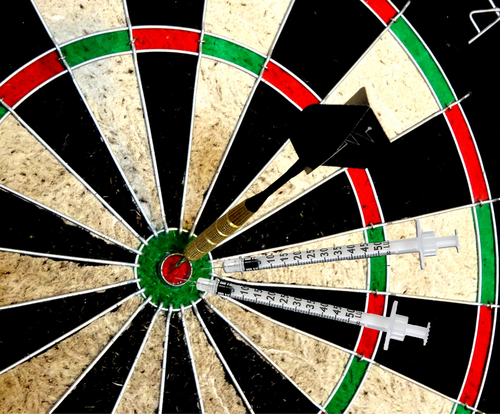
#402 Throwing Darts with Jennifer
Jennifer has seen some stuff
Jennifer is an adult living with type 1 diabetes. She'll talk about pregnancy, living and loving.

You can always listen to the Juicebox Podcast here but the cool kids use: Apple Podcasts/iOS - Amazon Music - Spotify - Amazon Alexa - Google Play/Android - iHeart Radio - Radio Public or their favorite podcast app.
+ Click for EPISODE TRANSCRIPT
DISCLAIMER: This text is the output of AI based transcribing from an audio recording. Although the transcription is largely accurate, in some cases it is incomplete or inaccurate due to inaudible passages or transcription errors and should not be treated as an authoritative record. Nothing that you read here constitutes advice medical or otherwise. Always consult with a healthcare professional before making changes to a healthcare plan.
Scott Benner 0:12
Hello, everyone and welcome to Episode 402 of the Juicebox Podcast. Today's show is called throwing darts with Jennifer. And it's going to cover a number of different topics surrounding type one diabetes. Please remember while you're listening that nothing you hear on the Juicebox Podcast should be considered advice, medical or otherwise please always consult a physician before making any changes to your health care plan. Becoming bold with insulin, or listening to a podcast where a grown woman tells you about the time her doctor threw a needle ladder.
Oh, that's right. Jennifer's got a number of good stories about growing up, living with being married with and trying to build a family with Type One Diabetes.
This show is sponsored today by the glucagon that my daughter carries g Vogue hype open. Find out more at GE Vogue glucagon.com forward slash juice box. The episode is also sponsored by the Contour Next One blood glucose meter. You can find out more at Contour Next one.com Ford slash juice box. And please don't forget to check out T one d exchange.org. forward slash juice box to see if the data they need from you is something you're willing to share. Because if it is, it's going to lead to great advancements for people with type one diabetes. Check them out T one d exchange.org. forward slash juicebox.
Jennifer Rainey 2:13
Hi, my name is Jennifer Rainey. Um,
yeah, that's it.
Do I need to introduce myself? Like what I do or
Scott Benner 2:21
no, let's just thank the sponsors and then this thing. Perfect Big thanks to Omni pod Dexcom and Dexcom
Jennifer Rainey 2:27
I'm wearing both of those devices. So way to go Omnipod and Dexcom for keeping me alive. I
appreciate it.
Scott Benner 2:33
Jennifer Do you happen to know what link they could use to check out the product? Oh,
Jennifer Rainey 2:38
it's like backslash juice box to get a free trial demo that you can wear that. It doesn't Yeah, there's no insulin in it. You just try it out. See if you like it stuck to your body. You can go shower, jump into pool.
Scott Benner 2:53
Alright Jennifer, stop.
Jennifer Rainey 2:55
I'm doing your job for you.
Scott Benner 2:56
No, no, I just it was funny. Because you like Is that it? I'm like, Yeah, sure. That's it. Jennifer was here. Yes, diabetes, and it's Yeah,
Jennifer Rainey 3:04
she's still alive. Should
Scott Benner 3:05
I start doing three minute episodes where people just say, Hey, my name is Jennifer. I have type one diabetes. And then it's over? Yes. Anyway. No, you don't have to tell me. I mean, I would assume everything's going to come out while we're talking. so sure. You don't have to you know, if you tell everybody everything about yourself. There'd be really no reason to listen to the conversation. Be like that Jennifer laid everything out in 30 seconds. That was done.
Jennifer Rainey 3:31
Yep. Oh, wait, I'm a fast talker, too. So it really is everything out in 30 seconds.
Scott Benner 3:35
Oh, everyone's gonna be thrilled you and I speed talking to this episode. Yeah, that's okay. Uh, let's, let's start here. You're single married?
Jennifer Rainey 3:45
I am married. I am married. We've been married for Oh, I'm bad at dates. He's great at dates. Um, since 2011. What? Wait, no, sorry. 2013. Wait, hold on to 612 16 There you go. Since whenever that was, so everybody's
Scott Benner 4:03
like, you know, understands now that anything you may say is, you know, it's about right. Yes. I'm sure your husband's gonna be thrilled later to find out that you missed your wedding year by two years. That's fascinating.
Unknown Speaker 4:17
Yes.
Scott Benner 4:18
What what happened in 2013? That made you think of that?
Jennifer Rainey 4:22
That's what I have my side.
Scott Benner 4:23
Okay. All right. So you got married in 2011?
Jennifer Rainey 4:27
and 2016.
Scott Benner 4:28
Sorry, wait. 16 start over. You know, your name. Jennifer. Right.
Jennifer Rainey 4:32
My name is Jennifer.
Unknown Speaker 4:33
Real quick. I am you definitely have diabetes.
Jennifer Rainey 4:36
I I do have. I have had that for 27 years. I
Scott Benner 4:40
know that. That you know, all right. Yes. 27 years. Watch this. It's 2020. You got diagnosed in 1993.
Jennifer Rainey 4:48
I did. Right before my sixth birthday.
Scott Benner 4:52
Yes. Congratulations. Six years old. 27 years. Let's think about that. That's just needles right? Little needles in a vial of insulin,
Jennifer Rainey 5:01
a big needles and two vials of insulin regular and link Tay.
Scott Benner 5:05
Oh, you were doing that.
Jennifer Rainey 5:07
I was doing that it was in 90 carb meals force force fed 90 carb meals.
Scott Benner 5:12
Wait 90 carbs in the six year old.
Jennifer Rainey 5:16
It started at 45. But then it went up to 90 because I wasn't growing.
Scott Benner 5:19
Ah, did you ever grow? Are you like four feet tall?
Jennifer Rainey 5:22
I'm still little. No, I've grown to a normal ish human size. I
think so
Scott Benner 5:27
good for you. Yes. Was that hard to eat that much food when you were a little Do you remember?
Jennifer Rainey 5:32
I do I it was very hard. And so a lot of it ended up just being like juice boxes and things like that to get my carbs up and to get fruit in. Because it was basically like, Here eat this pasta or the cereal and just chug the rest in juice, pasta, cereal
Scott Benner 5:48
and juice. Yeah. Part of the countries you grew up in
Unknown Speaker 5:52
Texas.
Scott Benner 5:56
I'm not saying I know anything. I really am not.
Jennifer Rainey 5:59
We had a lot of you know, actually, we had a lot of oatmeal growing up and grits and cream of wheat, things like that, that were very carb heavy to make sure I got my carbs in.
Scott Benner 6:10
Do you have any feeling for what your a one C was back then?
Jennifer Rainey 6:14
Oh goodness, it was it was never below 10 until I was probably 12 or 13?
Scott Benner 6:20
I wouldn't think so. Not with ya. Not with that old timey insulin and a bucket of oats.
Jennifer Rainey 6:27
Right, right. And even the testers were old timey it took 55 seconds I think on my first tester, my first glucometer to read my blood sugar.
Scott Benner 6:35
Yeah, well, you know all the numbers except when you got married. That's pretty interesting.
Jennifer Rainey 6:39
And that's what I have a reminders in my calendar. It gives me a two week reminder. And then a two day reminder. That's my like Amazon reminder. So I can order something really quickly.
Scott Benner 6:47
If you didn't do that. strong possibility your anniversary just roll by and you wouldn't notice.
Jennifer Rainey 6:53
Absolutely, absolutely, like 100% possibility,
Unknown Speaker 6:56
but you like the guy. Oh, I love him.
Jennifer Rainey 6:58
He's the best because the best human I've ever met.
Scott Benner 7:01
I just I'm saying I think it's like every once in a while on my anniversary. I'll bring something to my wife and she'll be like, Hey, I forgot to get a card. And I feel like that means Hey, I forgot it was sure.
Jennifer Rainey 7:14
Well, the good thing is I don't forget to love him. So I might forget the dates, but I try really hard to love him.
Scott Benner 7:21
That's a lovely, good for you. I want to go back in time again to these two old insulins and you basically being fed like a turkey. We're trying to get ready for Thanksgiving.
Jennifer Rainey 7:34
Like funneling food into me.
Scott Benner 7:35
Yeah. What What is it? Was that a Bugs Bunny? You're too young. Are you too young to remember? There was a turkey and they had to fatten up? Was it Daffy Duck?
Jennifer Rainey 7:45
I vaguely remember it, you know, like reruns? Yes.
Scott Benner 7:48
All right. I mean, that we'll figure out later because that doesn't feel important to your story, but it just popped into my mind. Uh, you don't think that you're a once he was under 10 for the first six years that you had diabetes? Do you know what changed, and how it started to come down,
Jennifer Rainey 8:05
um, technology, better insulins. Um, I finally started seeing a pediatric endocrinologist.
Scott Benner 8:13
And we're using that before what was happening.
Jennifer Rainey 8:16
I was I was seeing he was ancient. He was actually very traumatizing. I have needle phobia because this first doctor I saw, literally threw a needle at me from a syringe at me from across the room because he wanted to show me that it's not scary. And I was wearing. I was wearing shorts that day. And so it just kind of stuck into my thigh and flopped around for a little bit. As he's talking.
Scott Benner 8:37
You have to say, Wait, Holy Christ. When you were six years old, a man threw a syringe at you like a dart to say to you look, this isn't scary.
Jennifer Rainey 8:48
Absolutely. And I've looked him up. He's still alive. He's still alive. He's not practicing anymore. But he is still alive. syringe, Adam.
Unknown Speaker 8:56
Well, I mean, he's probably just the bar hustling darts. Don't you think?
Jennifer Rainey 9:01
I don't know if he's hustling anymore. He's probably 90.
Scott Benner 9:05
Wow, that's insane.
Jennifer Rainey 9:07
It was very traumatizing. My dad was diabetic and my grandpa was diabetic. So I, I just went to my dad's doctor because I didn't get hospitalized them at all. pediatric. Didn't go to Children's Hospital, anything like that. They just said, Oh, you're diabetic and your family knows what to do. So go to his doctor.
Scott Benner 9:26
Wow, that I don't really know what to say about that. I know. You're not misremembering that or you have a childhood trauma that you've replaced with this memory. That really happened to you.
Jennifer Rainey 9:38
I mean, it's definitely childhood trauma, but I've done the therapy to work through
Scott Benner 9:42
it. Did he do anything? I mean, what are the other things he did that were sketchy that you recall?
Jennifer Rainey 9:49
I you know, that's the only thing that I remember. I just remember he was very grumpy and very, not kind. We did. We checked my blood sugar. Good goodness. All the time. My parents actually found an old blog from when I was really young, when they were downsizing their house. And so I kept that just as a oh my gosh, I stayed alive through that because I would have blood sugar's that were like 27. And then the next one is 400. And the next one was 30. And they just that and that was that seemed okay. Right? At least with this guy who thinks it's okay to chuck a needle in a kid. But sure, there was no like, you didn't go in there being told, like, well, you're really doing a bad job at this. No, no, he was not he was not a very kind endocrinologist. He told me I would never have kids. And that more than likely most diabetics die by the time they're 30 if they're diagnosed as young as me,
Scott Benner 10:41
wow, it was true. So he was treating it. Like a dog. He found the side of the street that he didn't love but didn't just like I'll feed it and leave it. Just let it roam in the yard. So die anyway. It's gonna die. Doesn't really matter. Yep. Oh, wow, that is terrible. I'm
Jennifer Rainey 10:58
so out to pasture. So so that's good.
Scott Benner 11:01
I'm really very sorry. That's not that's not a thing that should happen to anybody. Did you have that growing up that feeling like my life is fine, very finite. And I'm not going to make it as long as other people are, was your father was alive. So that must have given you some hope?
Jennifer Rainey 11:18
I did have that. So my I, I definitely struggled with that for Gosh, my teenagers, probably my dad passed away, actually, when I was 13. And my grandpa passed away when I was younger, both from diabetic complications. So it was a glaring, obvious signal in front of me that life could end because of diabetes at any moment. Both of them had serious complications.
Scott Benner 11:45
What this doctor said to you then, it felt like it was it was actually happening to the people around you.
Jennifer Rainey 11:51
Absolutely.
Scott Benner 11:52
How do you know how old your father was when he passed?
Jennifer Rainey 11:55
He was 49. And my grandfather was not far away from that either.
Scott Benner 12:01
Did you now going into your teen years? Did you live like you weren't going to make it?
Jennifer Rainey 12:09
I definitely was wild and reckless in all of the bad ways. Because why did it matter?
Scott Benner 12:18
Can you tell me how wild Are you afraid one day your children will grow up in here? This What? Oh, no. Like, what are you doing heroin while you were driving 120 miles an hour? Like what was it? Exactly?
Jennifer Rainey 12:28
Not quite heroin, so I was maybe a little a little less wild than that. But definitely drinking didn't. And I I don't know if I drink and drive. But I definitely drove drunk myself senseless quite a few times.
Scott Benner 12:41
Just because it felt like why I mean, I guess why not? Right?
Jennifer Rainey 12:45
Why not? I mean, it's, I don't care if my liver goes out because pancreas is always already tapped Anyway,
Scott Benner 12:51
I'll be dead anyway. It won't matter. Well, you have an upbeat story, don't you, Jennifer? Okay. Uh, oh, it's hard. By the way. I've been googling Daffy Duck and turkeys and I have no definitive answer. So we're gonna skip it.
Jennifer Rainey 13:02
Oh, there was an animal that was that was funnel fed.
Scott Benner 13:06
Right? Which also seems mean, but not as mean as what happened to you know, getting through high school and becoming, you know, like a young adult. Did you go to college or what you do after high school?
Jennifer Rainey 13:20
Yes. So, in high school actually was, I started seeing a pediatrician, pediatric endocrinologist who maybe like 12 1314 and finally got an insulin pump. So that was kind of life changing for me. I had like, what was it the original mini med med truck? I think it was just mini med back then that had like a swinging door on it. A hinge door that you put the insulin inside like a
Scott Benner 13:50
cassette player kind of a feeling?
Jennifer Rainey 13:52
Yes, yes. Very similar in it. I played soccer. So if you if you ran with it, sometimes this hinged door would fly open and then the insulin would go flying out to it was very interesting. Technology has come a long way.
Unknown Speaker 14:11
Life was such a good show, but it's better now. So that's good. It was like
Jennifer Rainey 14:16
it was a fun like it was fun and wild and I feel like my life is so boring now because it just doesn't have all of these wild adventures.
Scott Benner 14:25
Do you wish you're on the pod but just flip open like some of the circuit board would come flying out or something like that? Just remember this the good old days?
Jennifer Rainey 14:33
Yes, like if the batteries just shot out or something every now and then that'd be kind of nice. Well, listen,
Scott Benner 14:37
we're not near each other. But when the travel bans and all get lifted, I have plenty I could come throw some syringes at you if you think it would bring back good feeling. No,
Jennifer Rainey 14:45
you know, I'm good without that actually, I think I still struggle with needle phobia. I don't know what the technical term is for that. But I definitely appreciate Omni pod that it just shoots in with the click of a button. I loop so it's on my phone. But it's so nice to not have to do it myself. I just stick it on there and then I'm committed.
Scott Benner 15:09
Well, I agree but this was not about on the pot. This is just about me joking about the thing coming open anything.
Jennifer Rainey 15:15
What do you need yours? Got a pump? Yeah, went to college. I took better care of myself. I had a Wednesday's typically in the seven, eight nines would get grabbed out if it was eight, nine and then bring it back down to a seven again. And then went to college did did right, got chewed out by my adult endocrinologist because I always complained about the price of any fluid. And he said, Well, you have purple and pea care. So I think you're spending quite a bit of money on that, too.
Scott Benner 15:50
That you said, Wow, insulin is expensive. And he said, what about this hair dye situation? All the money you're sinking into it? Yes. Did you say, hey, my hair might be purple and pink. But there's a really good reason for that. I grew up with an endocrinologist telling me I was going to drop that then my dad and my grandfather drop it and the guy threw needles at me. And then my pump flew open and my stuff ran across the soccer field. So you're lucky All I did was dye my hair.
Jennifer Rainey 16:15
Like I get my blood sugar in five seconds. Now I've shaved 50 seconds off of that just by staying alive.
Scott Benner 16:21
Alright, okay, listen. When did your life become decent?
Jennifer Rainey 16:29
Now, it's just I invite the crazy end. So instead of my life being crazy, I invite the crazy and, um, I let me see I got married to a not so kind person, had a kid got a divorce. And then a few years back, I met my husband. And our life is pretty boring now.
Scott Benner 16:52
That's good. Thanks, good. Boys. Good. It's
Jennifer Rainey 16:54
predictable. It's easy for diabetes. For sure. It's
Scott Benner 16:57
nice to keep your blood sugar when you don't you when you know dinners at 630 every night, it's very much easier to handle yourself.
Jennifer Rainey 17:03
Absolutely. Dan, he cooks everything for me.
Unknown Speaker 17:06
Does he really?
Jennifer Rainey 17:08
He really does. And he's a phenomenal chef. And he leaves the carb counts out on the counter. If he's using like a new product or pasta or something like that.
Scott Benner 17:19
It's lovely. That do you choose? You don't have children together? Is that really
Jennifer Rainey 17:24
not? We are foster parents. So we have my biological son, his stepson. But he's been in his life since he was nine months old. And then we foster different kiddos. We've been doing that for about a year and a half, almost two years now.
Scott Benner 17:44
Right. Now, is this when we tell people we've met each other? Sure. Oh, yes. Jennifer, I met when I was in Dallas speaking Is that right? Yes. Yes. And I very briefly met your foster son. How's he doing?
Jennifer Rainey 17:59
He is about to go home actually this week. Really? Yes, he is. Done big huge changes a once he was like above 14 and is now I believe ran out 6.9 to seven. That's he's wearing a dex calm now, which is super cool. He was anti anything that looked like he could have, you know, diabetes, and now he's wearing Dexcom and proud of it and taking selfies with the shirt off with the Dexcom showing
Scott Benner 18:25
good for him when we met that day. How long had he been with you?
Jennifer Rainey 18:29
Three days, that was a really bad decision on
my part,
Scott Benner 18:32
bringing him to that event. He looks very unhappy in case you're wondering.
Jennifer Rainey 18:36
Very, very, very unhappy with me.
Scott Benner 18:38
Yeah. She's like, Hi, this is it. I'm start talking about this kid doesn't care at all about this conversation.
Jennifer Rainey 18:45
No, no, no, no. He's come a long way and has met some diabetic friends now too. And just living with somebody else I think has helped him see. See how to better care for himself.
Scott Benner 18:55
How long was he with you and or Willie have been with you? almost three months. And so was he with you? Because of his his a one C and his care?
Jennifer Rainey 19:07
Yes. Okay. Yes. Yes, he was not being super honest with his taking care of his medicine or just not taking insulin and saying that he was and it resulted in for decades and six months.
Scott Benner 19:23
Now, does he go back to his parents?
Jennifer Rainey 19:25
Yes, yes. And I work with them and talk with them often. And we're part of their support system. And we just got him like an apple watch so that he can sees Dexcom on his phone or on his watch and they follow his Dexcom from home and then we follow it and they we've been asked to continue to follow it just to to help with that accountability.
Scott Benner 19:48
Well, you're a lovely person. That's really that's really nice. Maybe throwing a dozen people makes them nice.
Jennifer Rainey 19:55
I try I try to like, you know, take all the bad crap and then turn it into, like I'm just gonna be nice. For people,
Scott Benner 20:01
what's really amazing, I mean, honestly, to take the time, and the effort, I'm assuming the cost to just take a person you don't know and change their life like that. It's, that's really wonderful. That's a gift that, you know, he'll keep forever and you know, won't be running around with incredibly high one season. Not by the way, he's not the first kid that I've met at one of those events where, you know, DK seems to be the level of care, right? Just ignore, ignore, ignore DK go to the hospital start over again. You know, by the fifth time I heard that story from people, I thought, wow, I'm not going to stop hearing those stories. When I come to these things. Get it? You know, like, this is really what happens to a lot of folks. So
Jennifer Rainey 20:42
yeah, in a No, I've told him and I've shared my story with his parents and with others and different support groups that I was not far away from that as a teen. I had an insulin pump. So it gave me background insulin, and I would eat a honeybun Actually, my, my lunch was typically like a package of Reese's, and maybe some chips or something like that. And I would sometimes take medicine for it, and sometimes not. So it's just kind of what it was. Or I would remember, you know, two hours later, Oh, I should have taken medicine for that and just get myself a unit or two to see what happens. What
Scott Benner 21:17
do you think causes that? Is it just expectation that this is what it is? Like? Ah,
Jennifer Rainey 21:24
I think it's a lot of it. It's a defiance, obviously, your team, and it seems to typically happen in that like 15 to 25 year range. I think it's feeling that invincibility also that teens typically have. And then also the awkwardness of not wanting to stand out not wanting to be different. So you just kind of hide it. And then burnout and distress and parents jumping all over you. I was just talking with a parent. Yesterday, actually, I'm going to talk with his daughter this afternoon. But just when it going in from a place where we're not judging. You know, if you didn't test your blood sugar in a month, Okay, how about we just test it once today, and maybe once tomorrow, but it's just trying to start something little just noticeable difference instead of, you know, chewing somebody out because they haven't just checked their blood sugar in a month?
Scott Benner 22:22
Do you think that people get that way? Because it gets to that point, because that's how it starts. And then it becomes normal? Do you feel like a person in that scenario? If you were with them back at the very beginning? Wouldn't have the same feelings about testing? Or do you think they like? What's your opinion about that? Is it? Is it a learned behavior? Or is it just gonna happen to some people?
Jennifer Rainey 22:48
I think it like waxes and wanes. I think even now, as an adult, I'm 33. And I still go through phases of diabetes, distress and frustration and not wanting to do anything. I just have a little bit more, I don't know, grit in the game now and want to stay alive for as long as possible, where I really didn't care when I was 15 or 20.
Scott Benner 23:12
Well, that's lovely. It's nice to hear somebody say I have a reason to be alive. I mean, honestly, it's just, you know, that in the end, that's really sort of what we're all doing. You know, if you've never reason to be alive, they're, you know, working socks, and I mean, the Coronavirus just taught us all that now that we're home, you know, aside of the money, you're just like, wow, way better.
Jennifer Rainey 23:32
Yeah. My dad, I mean, I hate to say it, but he was a great example of what not to do. He didn't care for himself when he was younger and had horrible complications. When he was older. He had his, his blind, legally blind in his 30s had a leg amputated was about to have another one was on dialysis, all of those things that are, you know, scary and threats that other diabetics don't like to hear. And I'm like, yeah, that's, I think it's real life. And to me, it's not. It's not a horrible threat. I think it's a very real possibility. And it's a great example for me of what not to do.
Scott Benner 24:06
And his father was in a similar situation.
Jennifer Rainey 24:09
The other one was my my mom's father. Oh, yes.
Scott Benner 24:13
mother's father had type one. Your father? Yes. You are definitely getting diabetes.
Jennifer Rainey 24:17
Yes. That's what he said. I had like the double whammy.
Scott Benner 24:20
Yeah. Oh, I see.
Jennifer Rainey 24:21
So you have a brother. That's also type one. And I had a sister who had gestational, and then another brother who has type two.
Scott Benner 24:30
So everybody's getting diabetes.
Unknown Speaker 24:31
There's everybody in here.
Scott Benner 24:32
Yeah. It's like a family tradition.
Jennifer Rainey 24:34
Yeah, it's fine. actually really test your blood sugars or screenshot really bad things, bad blood sugars and high blood sugars and send them to each other. I was
Scott Benner 24:42
gonna say, Do you and your siblings have some sort of a support system together around diabetes?
Jennifer Rainey 24:48
Not really, I think I have a better support system with my friends and that I've met with diabetics or that are diabetics. But I do wish I had No more from my family members. My sister is a nurse though. So that's really helpful. She has kind of saved me and broken into my apartment when I was younger and took me to the hospital a couple of weeks. So she just gets that she knows that
Unknown Speaker 25:14
your life is a movie.
Jennifer Rainey 25:17
You know, she thought I was drunk. But I wasn't drunk. I was just low blood sugar. I had been asleep for like, I don't know, 20 hours. And she thought I was just drunk and was ignoring her. So she came over and really, I was just low and belligerent. So,
Unknown Speaker 25:30
okay,
Jennifer Rainey 25:32
was fun. And embarrassing. embarrassing. Apparently, apparently, I sounded like a drunk. That's the thing is like, I was yelling and like saying very inappropriate comments. And she was like, all right, you are not going to drink this juice. So we're gonna go to the hospital and they gave me some glucose through an IV and I was better and completely embarrassed.
Scott Benner 25:52
Okay, did you like us? Like, say things like the Cowboys don't suck, because that's the thing. A person who's not making
Jennifer Rainey 25:58
sense would say, I would never say that would never say even drunken delirious.
Scott Benner 26:08
Okay, now, the reason you're on the show is Yeah, not any of that. But how do we ignore all of that? I can't just bring you on and be like, hey, there's a topic here. Because Sure, then we wouldn't have found out how absolutely crazy your life. It's wonderful of you to share. Okay, so you, I think originally reached out after hearing Samantha's she's having a baby episodes. Yes. Okay.
Jennifer Rainey 26:38
So I heard her first one where she talked about her, I guess it was a miscarriage, and then diagnosis all at the same time.
Scott Benner 26:47
And then you were like, hey, I've had problems like that, too. I'd be willing to share. That's like, great. I get the most upbeat notes here at the at the podcast headquarters, which by the way, is a desk where I yeah. But so you've obviously had a child with your, with your, your first marriage that went okay.
Jennifer Rainey 27:10
Yes, well, we're alive. So that's okay. To me. I had what was called help syndrome. So through the whole pregnancy, and my agency was, it was broken, I was under six, the entire time, like 5.4 5.5 5.7, most of the time, I found out I was pregnant, unexpectedly, and kind of just stuck to it. I'm on management and control. And that was doing excellent. I had my baby shower. And then the next day, I was 34 weeks, and the next day I passed out at work.
Scott Benner 27:54
Well, if you didn't see an ad coming when someone said they were really pregnant, and past that at work, you haven't been listening to this podcast for very long. I love a cliffhanger. Here's something you won't have to wonder about. If I go to Contour Next one.com forward slash juice box. Am I getting a gold standard in the industry for blood glucose meters? And the answer there is simply Yes, the Contour Next One blood glucose meter is simply the best, most accurate and easy to use blood glucose meter that I've ever used for my daughter. And it's much simpler for her to carry and use than anything else she's ever tried. Contour Next One comm forward slash juice box, there's a lot going on there. You may be eligible for a free meter, you have to check to see there's tester program that could help you get more affordable test strips, there's links to their apps that link to the meter for Android and iPhone. There's everything that you need. And I find this to be a simple thing to do. Because we get blood glucose meters a year ago, two years ago, three years ago, five years ago, 10 years ago, we just get used to them. But the truth is you don't have to live with your old Genki meter that may or may not be accurate. Doesn't have to be like that. Because the Contour Next One is next level accurate and very inexpensive. As a matter of fact, it could be cheaper to buy cash than it would even be through your insurance. That's how inexpensive it is. But whether you get it through your insurance or out of pocket, what you want is an easy to use brightly lit easy to read meter that gives you great results and by great I mean accurate and by results I mean your blood sugar and the Contour Next One will even allow Second Chance testing meaning if you go in with a test trip get some blood but not enough you can go back and get more without ruining the test trip. Contour Next One calm for its slash juice box. I just need to tell you one last thing. g Volk hypo pen has no visible needle, and it's the first premixed auto injector of glucagon for very low blood sugar in adults and kids with diabetes ages two and above. Not only is Jeeva hypo pen simple to administer, but it's simple to learn more about, all you have to do is go to G Vogue glucagon.com forward slash juicebox. g Vogue shouldn't be used in patients with insulinoma or pheochromocytoma. Visit g Vogue glucagon.com slash brisk last thing, don't forget to check out T one d exchange.org. forward slash juicebox. There are links in the show notes of your podcast player and at Juicebox podcast.com. If I haven't said them so many times that they're stuck in your head. Alright, back to Jennifer story. Remember, she's 34 weeks pregnant, she's at work and she just passed out
Jennifer Rainey 31:09
which was a little strange. And then I started getting really queasy. And when I came to I was not feeling so well. So my boss actually called my mom to come pick me up because she was my emergency contact. And I ended up in the hospital on a Monday and then had my son that Thursday because I had what's called help syndrome. So it's a kind of severe low platelets, elevated liver enzymes, some of my body my organs started to shut down. And basically it was all because the baby inside me needed to come out that was the only way to to make it better
Scott Benner 31:52
help he LLP syndrome.
Jennifer Rainey 31:54
H e. l
Scott Benner 31:58
have high blood pressure during pregnancy. his liver enzymes low platelet count syndrome usually develops before the 37th week of pregnancy but can occur shortly after delivery. Many women are diagnosed with preeclampsia beforehand. Symptoms include nausea, headache, belly pain, swelling, treatment usually requires the delivery of the baby. Very rare. Ooh,
Jennifer Rainey 32:21
it was a fun rare thing. They didn't think I had it because I didn't have that high blood pressure, my blood pressure through my entire pregnancy was actually really, really low. And so it was always like, what is 80s over 50s aids over 60 sometimes 70 over 50s. And so when I went to the hospital, they didn't think I had it because my blood pressure then was like 100 over 17. And then it got up to 120 over 18 you have to
Scott Benner 32:55
know that when you Google it, it comes up as very rare 20,000 cases a year, which then made me Google type one diabetes, which is rare, saying fewer than 200,000 cases a year. Have Yes. Has anything ever good happen. Where the odds weren't in your favor, like like a lottery or do you ever win a bingo or anything?
Jennifer Rainey 33:17
Not really winning? Um, I like to like see that like staying alive is like really good thing.
Scott Benner 33:24
Oh, yeah, that's a good one. Do you have any other diseases that we haven't spoken about yet?
Jennifer Rainey 33:28
Um, I do have pcls, which is polycystic ovarian syndrome. It kind of comes hand in hand sometimes with with diabetes. Well, that's
Scott Benner 33:37
common, at least Good for you.
Unknown Speaker 33:39
Yes. Yes.
Scott Benner 33:41
Although essentially says common more than 200,000 cases a year. How can come and be more than 200,000? All right, nevermind. We're
Jennifer Rainey 33:48
just running around all over the place with little cystic ovaries.
Scott Benner 33:54
Oh, wait a minute. polycystic ovary syndrome is a hormonal disorder common among young women reproductive age may have infrequent or prolonged menstruation periods or excessive hormone levels. The ovaries may develop numerous small collections of fluid and fail to regularly release eggs. does that have anything to do with the reason you're on the show? Or no?
Jennifer Rainey 34:16
it? It does not. So what well, maybe a little bit. We tried for a while and just nothing was happening. Um, we decided go see a doctor and see what we can figure out. Ah, so
Scott Benner 34:32
you and your current husband, which doesn't? I don't like the way that sounds it makes it feel like you're 17 husbands and like, like a guy you've landed on today, Jennifer, which is not what I'm saying. But you and you're
Unknown Speaker 34:45
stuck around
Scott Benner 34:46
a guy who was like, Alright, whatever she lets me cook. I enjoy it. So.
Unknown Speaker 34:51
Yes, yes.
Scott Benner 34:52
But But how long ago did you and your husband tried to have a baby. Um,
Jennifer Rainey 34:57
so we have been fostering for quite a while. And it's it's kind of been one of those things that we came into marriage, knowing or discussing that having children was not going to be an option for us because I, my first son, I had so many complications and had the help syndrome. I ended up having to have platelets and blood transfusions to stay alive and was in a coma for a little bit after my son was born. So that was just a really bad experience. It was like all of the things that moms dream about. It's the opposite of those.
Scott Benner 35:30
You don't have a photo of you with a car carrier outside the front door when you got home or anything like that. No, I
Jennifer Rainey 35:36
was super jaundiced, and yellow and gross. I actually hate all of our likes first photos together because I look like a yellow blob. And the first time I saw him, I was FaceTime where, because he was in the queue and I was in ICU. He wouldn't let me leave.
Scott Benner 35:53
How old is he now?
Jennifer Rainey 35:55
He's almost seven. He's six. He's six and three quarters. That's very important age.
Scott Benner 36:00
Oh, yeah, I've heard about that. Okay, all right. So But recently, did you did you try to have a baby or did it just happened where, you know, the winds or something. And then
Jennifer Rainey 36:19
we went to the doctor to get some kind of clearances first, because I didn't want to go into it. completely blind. And I knew that I'm at higher risk for just basically everything because of diabetes. And and so we went to the doctor first to apologize, I'm going to move to a different room so that I'm a little bit further away from the kiddos. We went to the doctor first just to get some, you know, know kind of clarity that everything was going to be okay. And I'm not just immediately walking into a death sentence.
Scott Benner 36:52
Okay. Yeah, well, I mean, a lot went wrong. So the concern really has to be that your life could be in danger again, I imagine, right?
Jennifer Rainey 37:00
Yes, yes. And my family takes it very, very seriously. Even when my husband and I started dating, that was like, a first conversation for them was are you comfortable? Not having a kid of your own? Is that something that that you can be okay with? And and he knew that, you know, from the very beginning. So we just wanted to make sure we were wise with that. Because obviously I wouldn't want to risk my life and, and never get to see existing son ever again.
Scott Benner 37:26
Sure. So Seriously, this is like a first day come like he came to the door. And they're like, Hi, you're here to pick up Jennifer. And they're like, he's like, Yes, I am. It's like, you know, you can't get her pregnant, right?
Jennifer Rainey 37:35
Yep. Yep. Literally, when they when they the day they first met him. That was a conversation on the grill, and he's really stuck around.
Scott Benner 37:45
I was gonna say once that guy calls you back, you got to figure he likes me.
Unknown Speaker 37:49
Yeah, yeah, I
Jennifer Rainey 37:50
was like, I'd done just give me a ring and let's just get married. He's not going anywhere.
Scott Benner 37:55
Yeah, this guy's ID. I definitely know. I mean, honestly, I don't know what I would do in a scenario like that. If somebody is like, Hi, it's nice to meet you. You know, you can't get my daughter pregnant. Right. And I was like, I wasn't planning on doing it today. So I didn't he say no, that's not what I mean. You know? Yes, I just mean ever well, but then did your health just so kind of normalize and your that you thought, well, maybe I'm a different person with diabetes than I was in the past. And I'm going to go for this but you had a great day one see during your pregnancy the first time?
Jennifer Rainey 38:25
Yes, I did have a great day Wednesday during my pregnancy, afterwards, you know, obviously, single mom trying to get life together, my agency maybe went up to like the sevens like seven 475 which is not horrible at all. But it was it was higher for me. And then since my husband and I have had our, our sweet and normal, boring life. It's been in the sixes almost consistently, probably for, I don't know, the past five years. And we've just between like 5.6 and six for the past for a long while, and I just figured I'm more healthy than I've ever been. I also work out consistently now. Which I do it because it keeps my cholesterol low so I don't have to take cholesterol medicine. And then I don't know we just kind of started talking about it. We had a little kiddo who was with us? Who was just if we had the opportunity to adopt him we would have immediately he's just a fun kiddo. And it kind of made us start thinking of like do we do we want to do this? Do we want to change our course from fostering only and supporting reunification to to adopting or do we want to give it a try ourselves and we decided to give it a try ourselves because I didn't want to change our our motive on fostering and supporting families.
Scott Benner 39:53
Right. Okay, so you were considering even if we have a baby of our own we're gonna continue to do that. The foster
Jennifer Rainey 39:59
Yes, yeah. It's been something I wanted to do since I was a kid.
Scott Benner 40:02
Yeah. Why would imagine you would like to try to help some people who can't get help? Because I feel like you, you were probably a person who was not being helped very much, right?
Jennifer Rainey 40:12
Yeah, it was just yeah, it was just a different life and had some wild and crazy that went on in my life. And and I think, if I can, I don't know, do something good. We have an extra room in our house, why not? fill it up with somebody who needs a safe place to live?
Scott Benner 40:26
That's wonderful. I have a question going backwards a little bit. Yeah, talk for a minute would take a little detour. I'm really, you know, I'm not teasing out what happened to on purpose. I'm just following Association. But what is it like to be a, an adult with type one and taking care of children like so you know, there's plenty of times on here where people talk about what it's like to be the parent taking care of a child, but never really asked an adult type one. Where are the concessions that you make? Big? Because Yeah, assuming time and focus and energy, right, like, how does it
Jennifer Rainey 40:59
great question. Oh, I I like this one, because I think it is something that nobody really talks about? Um, I think, for me, I think I struggle sometimes with guilt. Because my son, who is an awesome kiddo has had to know like, Hey, mom needs a juice box. Or if I'm crying, and I'm super low, or if I'm grumpy, and I'm super low. And I say my blood sugar's low, he knows to just like back off for a little bit, because mom's not our best self. And I kind of hate that, that he has to know that and like, that's, to me, that's embarrassing. And it's something that he has to deal with that nobody else. I mean, there's sure there are other kids with parents who are diabetics, but he doesn't get it because he doesn't have diabetes. He does have low blood sugars, though. So he does get the grumpiness
and things like that?
Scott Benner 41:55
Well, how do you get that? Like, I know people get low when they have diabetes. I'm obviously not saying that. But is there a, it's funny, because you said it was about guilt. And I thought, I thought of what I see my wife go through sometimes, like, for instance, when my kids want to do something with her, but she's working from home, that she needs to get the work done. But I can see her feeling badly about not doing something with them. And I thought, yeah, that's what popped in my head. Like there's a trade off between the amount of time you spend on your diabetes, like how much would you spend on it? If you were single by yourself? And how many times have you let yourself get a little too high or a little too low? or not, you know, Chapter whatever you needed to do, because you were giving your time over to somebody else does that happen? Sure, sure.
Jennifer Rainey 42:39
Um, I would say, I've gotten a lot better at that. Just pausing. pausing to take care of myself. In trying, I've worked really hard through therapy and through just different groups that have been a part of to, to just give myself that time and to not be ashamed or embarrassed or to, you know, to not let it go and go out and not take care of it. But I do know that that means I'm taking time away from other people or even you know, sitting down at a meal, and we're all about to start eating. And then I'm like, Oh, I need a bolus real fast. Oh, my gosh, it stopped the conversation or something like that, or I'm not in the conversation. I'm not paying attention to the conversation, because I'm counting up some carbs real fast. Yeah,
Scott Benner 43:27
no, it's just, you know, I don't think that, uh, oh, no, we probably need to talk to more people who are adults and, you know, have that time poll where there's so many things yakking at them and you know, you're married, you have a son, you're fostering kids, you know, you're talking to that foster kids family and trying to help them be better prepared for him. You have a job? You know, that's a lot of stuff. Yeah,
Jennifer Rainey 43:51
I work in public health, too. So that's been crazy, because I am a communicator in all of this Coronavirus stuff.
Scott Benner 43:58
How can you tell me like high level? What is it you do?
Jennifer Rainey 44:01
Sure, I'm a public information officer for our local health department for our county. So I send out press releases every single day for the new cases, recoveries, deaths, anything pertinent to that in and do used to do all of our social media, but I have a team now of some others that have been kind of rerouted to communication so that they can help and assist with some of our Social Media Communications right now.
Scott Benner 44:27
Wow, that's cool. So this goes out to the public, or do you communicate with other states and counties? Or how does that all work?
Jennifer Rainey 44:35
All of the above. So it goes out to the public through social media, and then I also communicate with our media partners. So I'm kind of the PR media liaison, and then also with IGR. So Intergovernmental Relations, talking to our local cities and towns that are within our county, just to communicate with them about what's going on about any risks associated with their communities. And it makes sure they're in the loop too, because they don't even want As a mayor,
Scott Benner 45:03
how do you how do you get? Do you also get incoming information from your counterparts in other places?
Jennifer Rainey 45:08
Yes, yeah. So a lot of times, I'll get kind of information on the download, hey, we're about to make this change. Or we're about to make this, you know, now that we're all at stay at home orders and things like that. We're about to do this. What do you guys feel about that?
Scott Benner 45:21
Yeah, I would have guessed, especially in this moment, you can't have somebody on one side of a line on a map, say, we're not gonna let people I don't know, drive after 10pm. And then, you know, you say, well, we're not doing that. Because, you know, or, you know, one place can't close a bar in another place doesn't because I'll just drive to the place that doesn't you kind of have to be together on that. I would imagine to make it work, right. Yes. Gotcha. Wow, that's kind of crazy. Okay. So you and your husband, you go to the doctor, you do the work, you've you know, your everything seems good for you to get pregnant. Did you get pregnant on purpose? Or did you go with the like, let's just see what happens method.
Jennifer Rainey 46:01
Sure. So we did goodness, I met with my endocrinologist. Last summer, met with a maternal fetal medicine specialist, who is the same doctor who saw me in the hospital, and had diagnosed me with help syndrome before. So I, I sought her out and went and saw her and just kind of got some guidance in percentages, which was always nerve racking to say, ah, you've got a 30 or a 40, or 50% chances that coming back, she had us meet with a reproductive endocrinologist as well. Just to check on bloodwork to make sure we're not at risk for any What do they call them? fetal abnormalities, I
Scott Benner 46:45
think.
Jennifer Rainey 46:47
And everything was looking good. Other than the risk of health syndrome returning was like a 30 to 40%. She said, you could flip a coin and have it or you could flip a coin and not, but because we were going into it with that awareness. We'd be monitoring, you know, blood pressure every day and probably doing a lot more. What is it? 24 hour urine catches and things like that. to just stay on top of everything,
Scott Benner 47:12
all those fun things?
Jennifer Rainey 47:13
all the fun stuff,
Scott Benner 47:14
right? You decided like it was, was it? I guess I want to know like when the decisions made it feel risky?
Jennifer Rainey 47:22
Oh, absolutely. Yes. It even just thinking about it. Like, do we do this? Do we not? I don't know. We're, we're Christians believe in God. So it was definitely giving it over to some prayer and just asking him to, if it's what he wanted for us to let it happen. And if it's not, then don't kill me.
Scott Benner 47:49
Listen, Jesus, I just want to have a short conversation with you here. I'm gonna leave that do I get pregnant thing up to you. But one way or the other? If I'm doing the wrong thing. Please don't kill me to have a prayer.
Jennifer Rainey 48:02
I don't want to die. But like, shut it down. If it's not what you want.
Scott Benner 48:06
Somebody say something. Just a little wave of a hand. Hey, say that vase fell off the countertop right now. I would take that as a no just yeah. Anyway.
Jennifer Rainey 48:17
Like, I need something like wasn't funny ran across the road. But no, I
Unknown Speaker 48:21
don't know. Anything.
Jennifer Rainey 48:23
I'm, I'm such like a horrible, not a horrible believer. That's a really bad thing. But I'm such a horrible like, I need a glaring, like obvious sign because everything random happens in my life. And I was like, was that God? Or was that just like, Cool?
Unknown Speaker 48:35
I don't know.
Scott Benner 48:38
He'd like a guy in a beard. holding a sign in front of your house just says like,
Jennifer Rainey 48:44
can you please be in a Jesus costume and tell me no, don't have a baby.
Scott Benner 48:49
Well, since that didn't happen, you got knocked up, right?
Unknown Speaker 48:53
I did.
Jennifer Rainey 48:54
We had restarted trying that last fall. Um, and everything was like going really well. My body was working somewhat normally pcls wasn't wasn't causing too many issues. And hey, we started trying in the fall. And I thought I got pregnant. And I thought I got pregnant, but I never tested positive. I'm in November. So that was kind of strange. It was a weird like, I had all the symptoms and everything was just super wonky. And my blood sugar's were super low. And I just thought like, this is really strange, but I tested it tested it tested and I had a late period and it was like two weeks late, and I was like, that's super strange, but I never had a positive test. So
Scott Benner 49:50
do you know how babies are made? Do you need me to tell you or your Okay, yeah,
Jennifer Rainey 49:54
I know actually, I've had a lot of practice,
Scott Benner 49:57
okay, because boys have a penis and girls have a vagina and they Then when they love each other, I can explain what happens next. But I mean, you get it.
Jennifer Rainey 50:04
I get it. I've had quite a few conversations with teams.
Scott Benner 50:08
No, I think I understand. I understand what you mean. So it looked like you were pregnant. You just weren't.
Jennifer Rainey 50:13
Yeah, right. Everything in everything was pointing that way. And so I just thought it was a weird fluke, or that my PCs had had caused something to be off where there was a hormone surge or a lack of hormones or something like that. So we went to the doctor, I went to the doctor, actually, in the end of November, beginning of December, and she had ordered a couple of different medicines for me to try. But I kept going back and forth again on that, like, I don't know, God, is you because it's me? Do you want me to do this? Or like, Do I not do this? So I just kind of kept wavering back and forth on on trying the medicine or not doing different things, there was one that was going to be used off label. And it's, it's like now trek zone, which is used for people with addictions. And, and so I was very, like, kind of wigged out by it. It's like, I don't know if I want naltrexone in my system. I don't I don't know about all this.
Unknown Speaker 51:19
Now traxon.
Jennifer Rainey 51:20
Now, Trek's own I think
Scott Benner 51:24
that's interesting can read it can help prevent relapses in alcohol or drug abuse?
Jennifer Rainey 51:29
Yes. Yes. So if you take it super, super low dose, it can also help with with inflammation, which she said would would be it would also calm down the pcls, I guess.
Unknown Speaker 51:47
Wow. Um,
Jennifer Rainey 51:48
so I had to get it from like a pharmacy in Colorado and have to be compounded into smaller like doses because I'm not taking it in the normal fashion, which is used to help with? Did
Scott Benner 51:59
you have to call the pharmacy by phone and disguise your voice where you like,
Jennifer Rainey 52:05
you have to pay over the phone and like, call them and that was so strange to me.
Scott Benner 52:09
Yeah, that's it. They couldn't do that. In text. That's interesting. I don't want to fall down that rabbit hole. Anyway, you in the view in the mister get bang in every which way and eventually, yay, pregnant, right?
Jennifer Rainey 52:22
Yes, yes, that happened. I'm the beginning of January, I found out that I was pregnant. And that was super exciting. We didn't expect it. We didn't anticipate it. We had actually like said hey, let's just put it on hold because we found out my employer didn't have What do you call it that leave like to brew disability? Okay, so we had FMLA. But we didn't have temporary disability. So I set that all up through like an outside Insurance Agency, but we had to wait a month to try again. So we were like, Okay, well, we'll just wait till February.
Scott Benner 52:59
I'm thinking about all the effort you put into this. Some people just climb into the backseat of a car after a movie. And it just I know, right?
Jennifer Rainey 53:07
I know we've I mean, we foster kiddos that are like how these people just keep popping out the kiddos and
Scott Benner 53:14
just, it's just not the same you listen, you have very good reasons to pay attention. But you know, not here there. So were you like getting your blood sugar. Like, even better, like in the late like, during this time? Because you're you have a great day one scene now but they want you like under six for pregnancy, right?
Jennifer Rainey 53:33
Yes. And I've been no higher than then 6.4 for the past two or three years. But most of Gosh, for at that point, I was like 5.6 5.7 and today are the most recent one I've had now was 5.7 as well.
Unknown Speaker 53:51
That's excellent. So
Jennifer Rainey 53:52
I just kind of hanging out there. I started looping back in August, and that really just made it a lot easier to hang out. So
Scott Benner 54:01
excellent. The algorithm is just, it's pretty darn helpful.
Jennifer Rainey 54:05
Yeah, yeah, it's just a lot less to like think about it and be able to, to breathe just a little bit more. And that was what gave me a lot more competence to try to get pregnant. My endocrinologist is like, well, you would be my first pregnant looper. So let's just make sure we're on the same page as we go into this because you're in FM he knew my mfn my the specialist. And then my CD at the endocrinologist also is a looper so well. kinda have a great team on board now.
Scott Benner 54:34
That's excellent. Good for you. I guess I we should say this this pregnancy did not end the way you were hoping.
Jennifer Rainey 54:41
Correct? How
Scott Benner 54:42
long were you pregnant?
Jennifer Rainey 54:44
I saw I found out we think I found out earlier um, then maybe I should have I was only pregnant for they think about seven to eight weeks now. It it kind of Got a little sticky. I found out at the very beginning of January that I was pregnant. And I've lost the pregnancy. Whoo. Middle of middle of February, I think. And it didn't go. I knew I was pregnant super super early because my blood sugar's just plummeted. Loop was doing loop and doing amazing but I was taking zero insulin for like three days in a row. And I was chugging juice boxes like I was tired of juice boxes because I was I was in the 50s and 60s non stop and Lupo had backed off of all of my insulin,
Scott Benner 55:39
you just said something. Hold on a second. That's really helpful. So once you were pregnant, I'm actually making a note check. You needed less insulin by a lot. And there are four days prior to Arden's period coming, or she needs no insulin. I wonder what hormone if the if any overlaps in those two scenarios, I'm going to find out. Because that's a that's the first time that somebody said something that's made that click in my head. So I'm sorry, I gotta ask you. How were you pregnant when we met? I don't remember when I was in Dallas.
Jennifer Rainey 56:22
Um, I
know, you know what? No, because our our kiddo had just joined our household and we said yes to Him a few weeks after. After losing our baby.
Scott Benner 56:37
Yeah. Okay. So was it? What What did they end up telling you? It happened?
Jennifer Rainey 56:43
So it was it's a weird thing. And it's, again, again, is there more medical anomalies that only happened to me? Um, I had what they said, originally, they said was an ectopic pregnancy, which means that the baby was growing in one of the tubes, the fallopian tubes instead of growing in my uterus, which was terrifying. I woke up and I thought I was miscarrying one morning. Because just all of the graphic and gory but there was a whole bunch of blood and I would started sobbing. And I went to the doctor that same day, they got me in and they did, like 45 minutes of sonograms, which is never a good sign. And then she went in got the doctor. I guess this sonogram art artist, what do they call it? sonogram technician?
Scott Benner 57:35
Some people who do avant garde sonogram some people who do more traditional,
Jennifer Rainey 57:40
maybe not the right word, I'm
Scott Benner 57:42
pretty sure it's not but
Jennifer Rainey 57:45
it was like this is free to color growing.
Scott Benner 57:49
By the way is a strong possibility. This episode is gonna be called avant garde sonograms.
Jennifer Rainey 57:56
Oh, funny,
I guess more funny and also related as mine did look very strange and very unique. I've seen quite a bit of sonograms, because with my first son, I had basically a bajillion of them. I was getting them every week, just to make sure everything was going well with him. So I had a different doctor and and they were very, very proactive on sonograms originally. And so this one definitely looked different. I knew what a fetal pole was supposed to look like in inside my uterus, and that was definitely not there. So they were digging around and doing quite a bit of sonograms. And she went got the doctor. And then they said, All right, get dressed in and come into this other office. So the doctor originally said that it was a ectopic pregnancy, so it was going in the wrong place. But she said because of the reason that I called in because I had been bleeding a lot, there was a hope that I would be losing the pregnancy so that we wouldn't have to terminate it itself. Which is really, really hard. For me, that was something that I've always struggled with my belief system. And those are things that were just a really, really difficult place for me to be in learning that we might need to terminate because it was growing in a place that would that would cause me to hemorrhage if it ruptured.
Scott Benner 59:23
Yeah. What ended up happening did did it sort of unnaturally or did you have to intervene?
Jennifer Rainey 59:29
It did. So we had to do bloodwork every other day, and they were monitoring the HCG to see if it was dropping or rising. And it dropped significantly the first 48 hours which was a good sign. And then she said it flattened again because that can come sometimes can happen in ectopic miscarriages. Where ectopic pregnancies is your body doesn't know if it's pregnant or not. So it kind of gives you some hormones and then takes them away and so we waited Because I would have to take a trigger shot to help to help dissolve it. And we did. Gosh, we did bloodwork Monday, Wednesday and then Friday, and we just kept doing sonograms to to see what was going on. And the next one, they weren't able to find a fetal pole. In the blood flow that was going into where the the SAC was. They weren't able to find anything there. There wasn't as much blood flow going inside, which was they said was a good sign because it meant my body wasn't like feeding it so it wouldn't continue to grow.
Scott Benner 1:00:35
Right? That's just an indication that it's that it is going wrong and will just end up on its own at some point. Gotcha.
Jennifer Rainey 1:00:44
Yes. And it was in a really unique place. So it wasn't technically in the tube, it was in the opening of my uterus. And the doctor had said, you know, like, if it was one centimeter further into your uterus, like we would be completely fine. So that kind of sucked a lot. Because I had all of the full symptoms of pregnancy I had the nausea was crazy. All of this stuff was happening. I was we walked into a restaurant and I could smell the bleach that they were using in the bathroom and I was getting nauseous and had to run out of the restroom. The restaurant.
Scott Benner 1:01:17
Oh my god, I don't know what this you're poor. Listen, women. I feel bad for you. I seriously do because so much stuff happens to you guys like day to day, week to week, month to month, that it's just terrible. My wife will walk in the door, you know, at 6pm. And she can't even get it. She's like, what is that? I'm like, wait, what was there's an old apple in the bottom of the trashcan? Eight hours ago, but I took it outside. It's not it's not it's not like Oh, Jesus. What that turns into like a, like a like a hound dog out of nowhere. She could just smell anything anywhere. It's fascinating. It really is. I'm
Jennifer Rainey 1:01:56
glad I'm not alone in that my husband thinks it's so strange because I could I Can I smell things from very far away. And I'm like, Oh, what is that that you're making? Or if it smells delicious, I can smell it as I pull my car into the garage before I've even gone into the house.
Scott Benner 1:02:09
Yeah, tell him it gets more irritating after like, 25 years. You're just like, I know something smells somewhere. Let's go figure out what it is. You know?
Jennifer Rainey 1:02:17
Yes, yes.
Scott Benner 1:02:18
Because she can't get off of it either. By the way, what happened? She's just like, we have to do something about that. I'm like, about what, okay.
Jennifer Rainey 1:02:25
It's in your nose. It's there.
Scott Benner 1:02:28
I'm serious. And then you know, we find out a kid like one of the kids threw a banana way upstairs. Just like alright, I found the banana peel. I'll take care of it.
Jennifer Rainey 1:02:38
Yes, yeah, gosh. Yeah, that was that was it. We did. I did bloodwork every two days, for two and a half weeks, because my numbers kind of slowed down. But we were I was apprehensive about doing any, any kind of shots or treatments. And then I was also still having some horrible pains. And so there was this weird week where the pains were so severe that she said, if it's one point higher, you need to be in the hospital and we'll remove your ovaries and your uterus. Which was terrifying too, because here we are wanting to try and she's saying if we do surgery, we will remove it all.
Scott Benner 1:03:22
But that didn't happen.
Jennifer Rainey 1:03:23
That's it. Yeah, it was it was super scary. It ended up not having to have surgery because my body was was passing it somewhat naturally. And, and my blood sugar's I knew I knew something had changed because my blood sugar's went back down. They went back up. And my, you know, Luke was giving me normal amounts of insulin again. And that's when I knew that something had changed. Um, how long?
Scott Benner 1:03:50
How long did it take for your blood sugars to kind of regulate it was until this had kind of run its course.
Jennifer Rainey 1:03:57
I'm actually that weekend.
What was it like ml?
I don't know. There was a there was a weekend that my blood sugar's just were back to normal, and I had to take insulin for food again. And that was like a week later that I was like, Oh, that's strange. I just had a bolus for food. Um, because because I wasn't bolusing for food, and I was staying low.
And then I
yeah, I went above like, 130. And I was like, Oh, that's weird. Let me take some insulin.
Scott Benner 1:04:28
That's interesting. Oh, my Oh, so I'm sorry of this aside, because we're up to an hour now did did this change? I mean, are you gonna try again?
Jennifer Rainey 1:04:40
I don't know. I'm,
I'm still I still go back and forth. I think my husband definitely wants to try again. I go back and forth. And like sometimes I'm like, Yeah, let's do this. And then other times.
Other times, it's easy
Scott Benner 1:04:53
for him to say because an egg didn't get stuck in his fallopian tube. So I'll be like, sure you mean more sex. Like that part? Yeah, I hear that.
Jennifer Rainey 1:05:03
Yeah, yeah, um, other times, I go back and forth on it. I did start seeing therapist again. The week that we found out, we were losing our baby, we decided to name her or him. Because it felt really weird to keep just saying like the baby or the, the pregnancy or something. So, um, our son actually helped us and we talked to him about what had happened. And that mommy's body wasn't like, a good place for the baby to grow in. And it was really hurting mommy. And so the baby actually passed away. So we talked about naming the baby and he wanted it to be named in a name because his name also starts with an A.
Scott Benner 1:05:45
Did he choose? Did you guys choose? You don't have to tell me if you don't want?
Jennifer Rainey 1:05:50
Yes, no, we chose Avery tried to find a a unisex name that could be both boy or girl, depending on whatever the baby was. Oh, it
Scott Benner 1:05:57
was very nice. I agree. I mean, not that you need my, my my agreements or not. But I agree with a therapy that says it's such a great idea. Yeah, you know, just to sort of get through so because you've been through a fair amount. How old are you now?
Jennifer Rainey 1:06:13
I am 33. Now
Scott Benner 1:06:14
you gotta have stuff stop happening? Because I know. Yeah, that's enough.
Jennifer Rainey 1:06:19
I know, I would like like, I kind of like been nice and boring. Life. Like, I feel like, I feel like it makes my blood sugar's easier. It makes my life easier. And there's way less chaos. We bring in chaos through through foster care, but we try to like calm it all down and have a nice and normal schedule. My son, our son actually does really well on a schedule. He's one of those kids that like crave structure. So that's been a probably that was the biggest adjustment for me was being a parent. Like he's just, He's really good. And that structured life so
Scott Benner 1:06:55
well, I have to be honest, a Jennifer, I don't know why so many lovely and decent people end up on this podcast because just I mean, I'm, I don't know, like, I don't mean anything. I just it. It astounds me when I'm talking to people and they're telling me their stories. And, you know, just everybody's just wonderful. You know, people are, it's just a very nice, it's nice, like, I'm gonna have a good day now after talking to you. So Oh, seriously, I
Jennifer Rainey 1:07:22
share what? I don't know the other side of it. I'm not that I'm not that I'm like, oh, diabetes is bad. And it's gonna kill your babies. Because that's definitely not what I'm saying. You don't
Scott Benner 1:07:31
think I should title the episode? diabetes is bad, and it's going to kill your baby.
Jennifer Rainey 1:07:37
I mean, I would laugh at it, but I could see other people might be highly offended. It
Scott Benner 1:07:41
might make people upset is what I'm saying. I yeah, I'm gonna I'm gonna stick away from that one. I think what you're saying is that, here's the thing that happened to you and it could, you know, it's, it's worth understanding that. Yeah, yeah.
Jennifer Rainey 1:07:53
I think blood sugar is watching my blood sugar's um, you know, I was doing all of the quote unquote, right things as a diabetic I was exercising three to five times a week and had a great a Wednesday, I had pretty good control, my standard deviation is low, my time and range is like 98% going into it. And that was with a tightened range, not the normal 70 to 180. You know, I was doing all of the things and I was working my tail off. And I don't blame myself for it. I know that crap happened. But I hope that at least just talking about it. Other people can. I don't know if they're going through something crappy that they know they're not alone.
Scott Benner 1:08:34
Yeah, that's, that's, I mean, important to understand. I have to say, though, I isn't it possible this all could have happened to you, even if you didn't have type one?
Jennifer Rainey 1:08:43
Absolutely. Yeah.
Scott Benner 1:08:44
I mean, your lady parts might just be busted up or something.
Jennifer Rainey 1:08:46
They they're they're definitely busted up. Yeah,
Scott Benner 1:08:48
for sure. I mean, I mean, I don't maybe it's the hair dye. Is that possible?
Jennifer Rainey 1:08:55
The pink of the purple from 15 years
Scott Benner 1:08:57
ago, I'm saying like, I don't know what happened where it leeches to? I don't understand science and thinking. So I don't know.
Jennifer Rainey 1:09:04
I know. I haven't told a whole bunch of tattoos too. I once had a doctor that said like, Oh, that's really bad for you basically poisoning your body so maybe it's the tattoos.
Scott Benner 1:09:12
Well, you meet a lot of crappy doctors don't you? Want to tell you bad stuff? But at least you didn't know least didn't throw one of those like tattooed needles at you because they're heavy. They're like
Jennifer Rainey 1:09:24
they're like heftier versions of needles.
Scott Benner 1:09:28
You deserve a pass Jennifer I don't know therapist says that we give out to people but if they are you get one.
Jennifer Rainey 1:09:35
I would love one I would love just like that. I think that was my goal going into our pregnancy with Avery was just like to have a normal pregnancy or I are my first one was so chaotic and crazy and and I definitely felt like it kind of robbed me of that joy of you know, everybody plans, their birth plan and your holistic life with your newborn baby and all of these happy things and mine I woke up in ICU with platelets and Blood being transfused in me, and it's liquid is this dark stuff in the IV bag? And they're like, Oh, yeah, that's blood. She's just kind of wanted to like a good healthy one. And I don't know. I don't know if that's, if that's just something I need to change in my once or, or what but I know, you know, diabetes wise, I went in it with the best control possible.
Scott Benner 1:10:20
Well, I guess the real question moving forward then is, is this something if it goes badly, again, you're up for it? You don't I mean, like I Timmy, it's not so much a question of do I want to have a baby of my own? The question is, can I physically and emotionally deal with this happening? Again, if it happens, because I, I come at everything from? No, like, I start with no. And then I work my way to Yes, that's how I think so if if you asked me if this had happened to me, I'd say, I don't know if I want to go through, you know, another pregnancy that doesn't end with a baby because I you know, I don't know the rest of it. I don't know how it impacted you emotionally. And yeah, that sort of stuff. To me. That's the way to think about it. But I don't know, maybe you'll just wait for a guy and assign the Jesus costume to tell you
Jennifer Rainey 1:11:12
why he talked about it with actually my therapist asked that question like, is that something that you want to do again, and I was like, I think I could do it one more time. And she was like, really? And I was like, Yeah, like, I know, my, I don't know, my emotional strength. And I am definitely one of those people that's like, like, if I stay, I'm going to do it. I'm going to do it. Whether whether that means, you know, me getting wrecked in the process is a different story.
Scott Benner 1:11:39
I think that you know, you make a good point, though. You're a person who's been through a lot and it hasn't broken you stands the reason that one more bad things not gonna, like you don't feel like one more straw is gonna break the camel's back. Right? You're not ready.
Jennifer Rainey 1:11:54
Yeah, I think I've been endured a lot. And maybe all of that, like bad crap has just made me like, emotionally stronger person. I don't think I'm a tough hard ass kind of person. But I do think that, um, I don't know, I can endure a lot. Um,
Scott Benner 1:12:07
so you're, you might be willing to risk what it is in totality to have a miscarriage. To see if you can have a baby. Yeah,
Jennifer Rainey 1:12:17
I think I could endure maybe one maybe two more. Before I just be done. Done.
Scott Benner 1:12:23
Now, what would it look like? Would it just be like you go and be like, do you think he just like, like spring a leak? Or do you think it would just be like, Is your husband have to put you out in the backyard to pasture be like, Where's Jennifer? Oh, she doesn't live in the house anymore?
Jennifer Rainey 1:12:38
Um, no, you know,
I think that he, he's probably would be more, more distraught and more upset by it. I think there will always be that part of me that wants that, like, that happy ending kind of thing. But if that's just not part of my story, then trying to find the best. I don't know, just like everything else that's happened in my life trying to find the best outcome out of all of the bad.
Scott Benner 1:13:02
No, I mean, listen, some people's paths are just often said to me the other night she goes, can like Wouldn't it be cool if we were like a family where like, we just like a normal thing wrong. Like, just like one of us had asked him or something that'd be merged. I would definitely do better every time. You know,
Jennifer Rainey 1:13:21
I think yeah, I mean, I don't know bad stuff happens to good people. I'm not saying I'm good people. But I think that if I can just try to find a way to use my story to, to help somebody else. And then that's what I'm gonna do.
Scott Benner 1:13:36
Jennifer, I'm gonna leave you with this. And I mean, this incredibly sincerely. Do you really not know you're a good person? That was the saddest thing anyone's ever said on here. And you were just, you were hedging your bet. Are you afraid Jesus will hear you say you're a good person? But what? Why didn't you just say that? Tell me please.
Jennifer Rainey 1:13:55
Um, you know, I just, I mean, I think we all make mistakes, and we all do crazy things. I just, I just tried to be the best version of me that I possibly can be and I want to like when I do die, I know this is like a whole bunch of death talk. But when I do die, what I want people to be like, man, she lives like a full filled with love life. And that's, that's just what I try to do.
Scott Benner 1:14:18
Yeah, I just don't know why you would, would qualify. I'm not saying I'm gonna have you ever like shanked a bitch over cigarettes or something like that. Or?
Jennifer Rainey 1:14:26
I mean, I did say I lived like a crazy teenager. I'm kidding. I definitely did not think anybody
Scott Benner 1:14:33
will listen, I'm I'm no one to you. But let me just tell you that from my perspective, Jennifer, you are a good person.
Jennifer Rainey 1:14:41
Thank you.
Scott Benner 1:14:42
You're very welcome. Work on that in therapy and not laughing when somebody says something nice about you. Okay, because it took me a while to not have to giggle through somebody saying nice things about me too. And I grew up like a feral cat as well. So
Jennifer Rainey 1:14:58
I just imagined as like running Through like a forest or like a prairie scene, or just like brawling and then running. Yeah, my firm wasn't as much like out in the
Scott Benner 1:15:07
open. Like, it was just like an emotional. I was like an emotional feral cat like nobody ever checked on me. You know what I mean? They were never like, hey, you're right, right.
Jennifer Rainey 1:15:19
So like people didn't care.
Scott Benner 1:15:22
Really good student they left you alone.
Jennifer Rainey 1:15:24
Yes, I'm, again that devoted to like, I want to be the best. So I made no no A's and in everything. I just made a B again, like in grad school, and I was really, really mad at myself.
Scott Benner 1:15:38
My wife was getting her her advanced degree. She got like a 97 in a class. And she argued with that Professor for months by email. I was like, Kelly, why does this matter? She's like,
Unknown Speaker 1:15:51
89.4 It hurts so bad.
Scott Benner 1:15:54
Yeah, I was like, there's something incredibly wrong with you. Just so you know.
Jennifer Rainey 1:15:58
I get it. I get it. Tell her I totally get it. Oh, no,
Scott Benner 1:16:00
I don't think she's alone. I'm just telling you. All y'all are messed up. If that's, if that's a worry for you. You know, we
Jennifer Rainey 1:16:06
just want to be the best God like you want to be the best diabetics and the best pregnant person and the best mom and the best. Everything.
Unknown Speaker 1:16:13
I don't have
Jennifer Rainey 1:16:17
time in therapy. So
Scott Benner 1:16:18
I've never felt like that in my life. Like, you know, what, if I don't beat all of these people, it's gonna be a real letdown. Just I'm just always like, I'm doing alright. Good enough,
Jennifer Rainey 1:16:26
in my mind is not really so much a comparison to other people. Like I don't care if you go kill people,
Scott Benner 1:16:31
or yourself.
Jennifer Rainey 1:16:32
You know, it's just me. Yeah, like, I want to be the best for me.
Scott Benner 1:16:36
Oh, no, no, I see that my son is competitive against himself, too. But he really is. I've said it here before, but I don't know if it means as much to him to win a baseball game as it does for him to play well in that baseball game.
Jennifer Rainey 1:16:46
Yep. Yep.
Scott Benner 1:16:47
I can't tell sometimes, you know, he he really is in a competition with himself. So I'm sure he'll grow up to be a lunatic just like the rest of you guys. Anyway, you're really delightful. A huge thank you to one of today's sponsors, g Vogue, glucagon, find out more about chivo kaipa pen at G Vogue glucagon.com Ford slash juice box, you spell that? g d OKEGLUC. ag o n.com. forward slash juice box. I'd also like to thank the Contour Next One blood glucose meter and remind you that you can get it at Contour Next one.com forward slash juice box. And don't forget to check out the T one D exchange at T one d exchange.org. forward slash juice box. Hey, now that you're done listening, you should go check out the Facebook page for the podcast Juicebox Podcast type one diabetes, it's a private facebook page with over 7000 participants, everyone talking about type one management and other ideas. It's an equal mix of parents and adults, I think you'll like it. It's about the nicest place I've ever seen on Facebook. And that is saying something. If you're looking for a great doctor, or have one that you'd like to suggest to others, please check out juice box docs.com. And if you're looking for those diabetes pro tip episodes, and you're having trouble finding them there in your podcast player, they're all listed at diabetes pro tip.com. Check it out. Lastly, I'd love to thank you for sharing the show with other people. October was just the most popular month in the history of the show. Beating September that was the previous most popular month of the show, which of course, beat the month before that which beat the month before that, which but what I'm trying to tell you is the show becomes more and more popular every month. And that's because you're sharing it and I really appreciate it. All right. Thanks for listening. I'll see you next time.



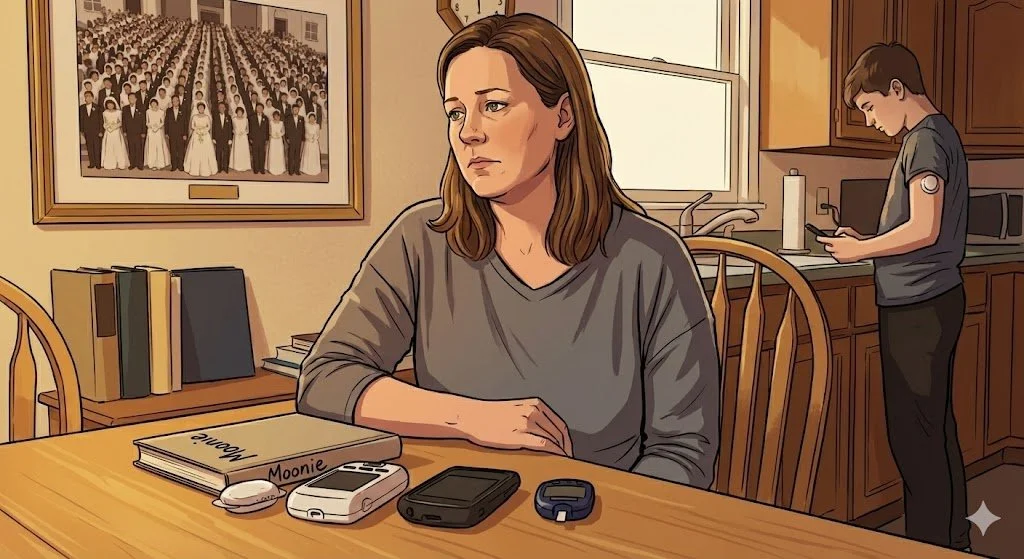
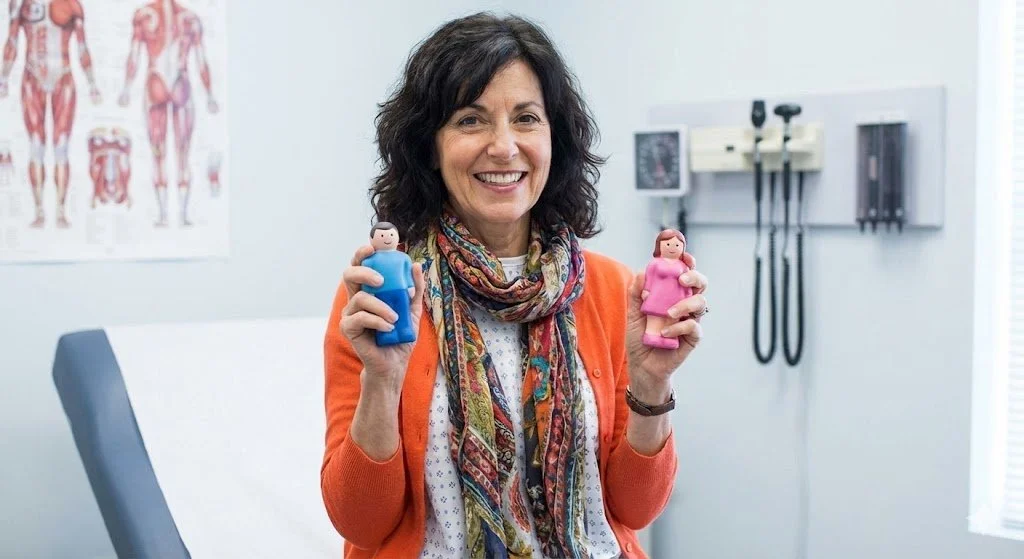









Please support the sponsors


The Juicebox Podcast is a free show, but if you'd like to support the podcast directly, you can make a gift here. Recent donations were used to pay for podcast hosting fees. Thank you to all who have sent 5, 10 and 20 dollars!

#401 Alisa Weilerstein
Classical cellist and type 1
#401: Alisa Weilerstein: Scott reveals his love for the cello when he interviews 38-year-old American classical cellist Alisa Weilerstein, who has had T1D since just before she turned 10. They discuss cello music and her career extensively, as well as a variety of issues surrounding diabetes including tight controls; avoiding lows while performing; high protein, low-carb diet; and changing technology.
You can always listen to the Juicebox Podcast here but the cool kids use: Apple Podcasts/iOS - Amazon Music - Spotify - Amazon Alexa - Google Play/Android - iHeart Radio - Radio Public or their favorite podcast app.
Visit AlisaWeilerstein.com and find Alisa on Instagram
+ Click for EPISODE TRANSCRIPT
DISCLAIMER: This text is the output of AI based transcribing from an audio recording. Although the transcription is largely accurate, in some cases it is incomplete or inaccurate due to inaudible passages or transcription errors and should not be treated as an authoritative record. Nothing that you read here constitutes advice medical or otherwise. Always consult with a healthcare professional before making changes to a healthcare plan.
Scott Benner 0:09
Hello, friends, welcome to Episode 401 of the Juicebox Podcast. Today, I'm incredibly excited to tell you that Alisa Weilerstein is on the program. Now there are two, two cellist in the world whose work touches me very deeply. Yo, yo, Ma, and Alyssa. So imagine my surprise when one day going over social media, something popped up in front of me that made me think, doesn't Alyssa Wyler, Stein have diabetes? And she does. Alyssa was diagnosed with Type One Diabetes 28 years ago when she was just about 10 years old. So she's here today to talk about that. And also to indulge me as I asked questions about the cello. Now, I know that a lot of you might not be classical music fans, but I implore you spend the next hour finding out what I love about the cello. And you might just love it too. Plus, you'll hear about some type one diabetes stuff. I'm tricking you into learning about the cello. But it's not really much of a trick if I'm telling you. During this episode, you're going to hear cuts from Alicia's newest album, Bach cello suites. Many thanks to her record label pentatone for allowing me to use some of the music. You can find out all about Alyssa on our website. Alyssa Wyler Stein comm you can see her upcoming schedule, a little biography, and of course, all of our albums right there in one place with convenient links to Amazon, apple, and Spotify. Before we start, please don't forget to check out T one d exchange.org. forward slash juice box. T one D exchange is doing amazing things for people with type one diabetes by collecting data that helps people make better decisions about type one T one d exchange.org Ford slash juice box you need to be a US resident with Type One Diabetes with a parent of someone with Type One Diabetes from the United States takes less than 10 minutes to become part of the registry, adding your answers to their very simple and straightforward questions. The data they get from you goes on to help make decisions like setting a one c standards. Whether or not people get test trips from their insurance. And if Medicare covers things like Dexcom you really will be helping other people who are living with Type One Diabetes. When you visit T one d exchange.org. forward slash juicebox join the registry today. Okay, you're ready. This is Alyssa. I'm so excited. I have a podcast that is now 400 episodes old, all about type one diabetes. And I have been for the last well since the since the the royal wedding. I guess I've had it in my head that I could actually get a type one who played the cello. Because Yeah, because cello is is is my if you told me you were gonna lock me in a dark room for the for the rest of days. And I could take one thing with me. I would take I would take some on accompany cello piece with me. Yeah, good taste. Thank you. And I have no background in it whatsoever. I am an absolute novice. I only know how I feel. When I hear it. I can only tell you that a couple of years ago when yo yo ma said he was going to be touring his his last album. I drove from the middle of New Jersey to Washington DC to hear him play
Unknown Speaker 3:59
my
Scott Benner 4:01
night and I sat about eight rows from him at the cathedral, and it was really amazing. And while my wife sat next to me, I think enjoying it and at the same time wondering how because it seems incongruous my, my whole personality and the fact that this is what I don't think they fit together very well. That's great. I really love it. So I want to hear a little bit about when you were diagnosed with type one. How long ago was it?
Alisa Weilerstein 4:31
It was 28 and a half years ago. Um, I am 38 now and it was the month before my 10th birthday. Okay,
Scott Benner 4:39
so I was gonna say when you were 10 but I didn't want to creep you out by proving that. I knew how old you are.
Unknown Speaker 4:46
That's great. All right.
Scott Benner 4:48
Do your homework. It's all right. No, no, it's not just that. I saw I was following you on Instagram before I recognize that you had diabetes. Oh really? Yeah. Okay. And then one day you did something on Instagram that made me go home. My God, that girl have type one. Because if she does, I'm getting her on the spot. I'm not embarrassed at all, by the way, the people listening, who probably would never imagine this about me, but I don't know why it's such an odd thing to some people. But but we'll get into all this at some point. So you're 10 years old? Was there any type one in your family or other endocrine issues?
Alisa Weilerstein 5:22
Not that we knew of. My mother said that her grandmother, and her grandmother, her grandmother died when she was fairly young. So she wasn't fully aware, but that there was some diabetes there. She thought it was type two, actually, which of course, as we know, has no real genetic link to type one. But um, many years later, my first cousin came down with it, and she was 23. So that's definitely on my mother's side of the family there. There's some sort of genetic
Scott Benner 5:48
thing going on. I like how you say came down with it. I felt like yes, I went down with it dad freezing. It's like you got a cold? Okay, I'm 20. Let's see, 20 years ago is 28 years ago, eight years ago. 1990 ish in the middle.
Alisa Weilerstein 6:06
- Yeah, it was actually the year, I remember. Well, because it was the year that the dcct trials came out with a definitive statement that said that a tight control could greatly reduce the risk of complications. And so it was a very kind of, I mean, if one had to be diagnosed with it, it was a very sort of hopeful time. And so that was something that my doctors really made sure that my parents understood. And that that I understood also, and it was kind of motivation to, to really keep a good eye on the blood sugar.
Scott Benner 6:37
Well, even just a few years prior to that, the disease was all about just do your best. And let's see how long you can make it. You know, pretty much Yeah,
Alisa Weilerstein 6:45
pretty much. And so my mom told me Actually, many years later that I mean, we had a lot of Doctor friends, and I was already pretty serious about the cello. And then there was a great insensitive doctor friend who said to my principal, you know, you can forget about the cello. She's going to have neuropathy, neuropathy in her fingers when she's 25, she won't be able to play
Scott Benner 7:05
Oh, my gosh, yeah, I'm glad you didn't look very nice. Let me say, I'm glad you didn't listen to them. Because so so you're gonna, there's gonna be a lot of moments where I'm gonna ask you to correct me during this if you're anything that I say that's wrong, but I hear cello playing from artists to artists. And to me, it feels, I used to think of it as like, more masculine or feminine. Oh, like control of the strings or depth of the tone. I don't even know how to put it. But you're the you're the first, like, female artist that I've heard that plays like a guy i think is the way I think. But I could be completely wrong, like my intuition about what that is, could be wrong. But you're you get more of a resonance out of the strings, then it feels like, like, I don't know what I'm talking about. It feels like some people have a harsher touch. And some people have a lighter touch. Am I anywhere near right about that?
Unknown Speaker 8:01
Yeah, I mean,
Alisa Weilerstein 8:03
although Have you ever heard Jackie do pray?
Scott Benner 8:05
No.
Alisa Weilerstein 8:06
Should I? I Yes, definitely. She was one of my issues, probably my primary role model as a child. And she had this no holds barred. Complete natural command of the instrument and strength and sensitivity. I mean, like the perfect kind of combination of that and passion. And so I was really, really attracted to that and attracted to her her approach to the instrument into her sound into her kind of into her instinct. There's something very raw about it. And so I think that's part of a part of kind of my, my own makeup with, let's say, my son, my earliest sort of sound concept, right? Um, but But yeah, I mean, I actually I feel pretty lucky because there, there is a kind of gender imbalance with jello. There are a lot more famous male cellist and there are female jealous and the female jealous that I, I mean, the challenge that I gravitated toward actually was I met and I listened to many and I admired many, but the one that I really related to was female, okay. And, and she played in such a way that I didn't think about her gender at all, not for a second I Oh, she was she wasn't a role model because she was a woman that she was just she was a role model because I just adored the way that she played.
Scott Benner 9:25
So let me give you what I think is an amazing compliment and maybe I'm out of my mind. Okay, a lot of people listening, I'm going to put the music your By the way, your record company sent me the music so I can put it in right in here what I'm talking about, but around a minute and 52 into the prelude of sweet one. Okay. It gets quick, it starts to speed up.
And then after that, I cry when Mark plays it, and you play it and no one else Oh, why is that? Like it pulls tears right out of me. And I don't know how to. I don't know how to explain it because I can listen to someone else play it and hear it and think, oh, that was done well, and it feels clinical to me. But my eyes filled with tears, and they fall down my cheeks when you play it and when he plays it, and I don't know why that is. And I just, I'm happy about it. Thank you.
Alisa Weilerstein 10:52
I'm happy. I'm happy to hear that. Thank you for telling me.
Scott Benner 10:55
Why does it happen? What what what is it like so? So for people who don't understand the cello? Yeah, there's a couple of functions about it that absolutely light me up. There's a way that the the tones lift you and keep you up.
And then there's a way that they lift you and drop you.
And then there's a way I feel like I'm being pulled forward and let go and then pulled forward again. But I don't know how to quantify any of that.
Alisa Weilerstein 12:11
But that's good. You should you shouldn't try to quantify it because it's, there's a very I mean, I think, a person's response to listen, listening to any music not only the cello, though, I'll get to that too. I mean, to why the cello also always moved me and why we're so attracted to it but there's something even if you don't know anything about what you're in the center you don't know the history you don't know who the composer is, it doesn't matter there is there is a very primal very direct and very emotional response that I think everybody has to music. babies have it to music. I mean, I remember when I might my daughter is now four and a half but let's say when she was like a newborn and I was traveling with her already, I mean there were certain things I would sing to her that would if she was fussy would immediately calm her down and you could feel her feel the rhythm you could feel her heart rate slowed down. I mean it's it's really within us I think as human beings to really have a very direct and visceral response to music that we don't to that we don't even have the spoken language as for the cello, and of course your your ma you that you've brought up before it has has said this that it's and many many others have said it but the range of the cello and the tambor of the cello is the closest to the human voice of any certainly any stringed instrument, okay. And, you know from from the, you know, from the deepest sort of Basile profunda voice into like this coloratura voice and every and almost every in every cello masterclass, you can hear the the teacher saying, Well, you know, you have to imagine the voice and how would, how would a singer go for that, you know, kind of go for that interval? How would the singer kind of go for that leap? And we are always trying to mimic the human voice and how somebody would sing. And so I think that I'm you know, I was four when I did when I told my parents in no uncertain terms that I wanted to pick cello. And I mean, I can't tell you in any intellectual way why, but that was I think, I think that was the emotional, Primal visceral
reason why I wanted to play cello
Scott Benner 14:22
I only have one other like physical. So there are lower notes with the cello that I feel take the tension out of my spine up into the neck. It just it relaxes me.
Besides being physically touched in a sexual way, I have no other competitor. And for how like the cello can make me feel like seriously like, I mean another person reaching out and touching your skin somewhere. You don't I mean,
Alisa Weilerstein 15:06
yeah, no, it's very human.
Scott Benner 15:08
Very, very. I don't know how I found it. And you know what? It's funny. I don't, I try to trace it back in my mind, because I like an eclectic mix of music, but it's a younger person. I was growing up in the late 80s. Like, we were all listening to Guns and Roses and Metallica and stuff like that. Like, you know, there wasn't really, yeah, well, I still love it. But nobody was coming up to me and saying, hey, you should really listen to this. Other than I do wonder if Peter in the wolf wasn't my first introduction to it.
Alisa Weilerstein 15:39
It's a lot of people's first exposure to classical music during the wolf. It's fantastic.
Scott Benner 15:43
Right? I feel like that may be it. But and then after that, the West Wing, an episode of The West Wing, where yo yo ma comes on in place the
Alisa Weilerstein 15:52
place the first week, right? Yeah.
Scott Benner 15:53
Right. So I mean, I can't I can't find another, but I can't remember. I'm 48. Now, I can't remember it not being it's it's my go to music constantly. And I like it and other forms and fashions. But why is why is Bach. Is there something technically about Bach that makes it? Is that the pin ultimate piece tie or no?
Alisa Weilerstein 16:19
Well, I mean, every composer that came after Bach was indirectly or directly influenced by what he did. He was a groundbreaker. He was, in every way, in terms of the polyphony that he created the rhythmic, the rhythmic language, I mean, really, pretty much everything you can think of. Um, he also, I mean, like, if, let's say, if we're speaking about the cello suites versus before, we're talking about the cello. cello suites of course, we know they were written 350 years ago or so. And yet they feel like they were written yesterday. There's a timelessness about Ba, which is an A universality. And yet it's still you know, some of the high church, some some literally church music, but this is not this is not religious music, but this is
intellectually emotionally.
It's, it's the music. That is I think it's the most satisfying and
pleasurable to listen to.
Scott Benner 17:26
Yeah, I always thought up until a couple of years ago, that it was a technical thing that all people playing it were striving for, like trying to get it exactly. I mean, quote, unquote, right. And until, until this latest yo yo ma album, where he kind of said, like, I'm gonna, I'm gonna, like, lean into it in different places. I never heard anyone tried to do that either. And now I'm excited for people to try that.
Alisa Weilerstein 17:54
But he This is his third recording of the bob sweets. Yeah. And he recorded it in three different stages of his career. And that was in a way, you know, I, I just, that's my last album actually was all about sweets. terrifying. Oh,
Scott Benner 18:06
by the I sorry, I've been listening to it for a while yours.
Unknown Speaker 18:09
Okay.
Alisa Weilerstein 18:10
I mean, I was I was terrified to record them. Actually, you know, even though even if you had told me that I was going to do it even five years ago, I would have said, Oh, no way, I'm going to wait until I'm 60. Because that's, it's, um, I suppose Bach, for us, musicians is kind of that they say the equivalent of what Shakespeare would be to two actors. And this is kind of it's very, it's it's stuff that you feel like, okay, you need the experience, you need the life, the life experience, and the wisdom to really do justice to it. And what I kind of realized, and I talked to you about this, actually, about a year ago, no, was it you know, two years ago or so, when I was making the decision to, to set down recording dates and recording times as well. And he said, and he gave me really, really amazing advice. Actually, I've known him for a long time. And it was more or less something which I was kind of wrestling with, but he, which he kind of reaffirmed, which is that Bach is living music. And I was I finally had the courage to put them down onto takes when I realized, okay, this is how I am thinking about this right now. This is I'm I was 37. Yeah. And I was in a certain stage of my life, and I lived with the sweets for, you know, my whole life basically. And in 15 years, I might record them again, and they might be very different. And that's great, because Bach is truly living music. And it's something that evolves in one's mind and one's heart and everything else. And so, that's how, that's how I kind of got the courage to do it. It's just it's you're creating something from no recordings. And and when you think back to when they were made, it's not like, it's not like he was scoring a movie when he made those things. Those sounds they just keep going It came through a pencil from his head, I would imagine. It's an it's just, it's really stunning. Okay, I should ask you a diabetes question to keep people. Or this is just gonna turn, your listeners are gonna be like, is this a diabetes podcast?
Scott Benner 20:14
I asked her about the cello and forget about the diabetes stuff. So I'm hoping people listening will be drawn to try to try your album like I really do.
Alisa Weilerstein 20:23
Thank you, that would be great.
Scott Benner 20:25
I'm just thrilled that I found it honestly. So when you're when you're diagnosed, is it pens? Do you get pens? Or do you just get insulin? While?
Alisa Weilerstein 20:33
No, ours was directions? It was syringes with NPH and regular and regular, right?
Scott Benner 20:39
How long do you do that? For? Do you remember how long you did that before you went to a faster acting insulin?
Alisa Weilerstein 20:45
Uh, yes. It was about I mean, before human long, it was maybe three years, okay. And that was a revelation that I didn't have to take my, my shot, you know, half an hour to 45 minutes before I ate a meal. And so much less planning. Thank God wasn't, was involved. And so then I switched to remember I switched to ultra lenti and lenti. And then we had Then there were the pens and then when I was 16. So I'd had I'd had it for almost seven years, I switched to a pump. Well, electronic mini med.
Scott Benner 21:20
Everyone started with that one, I think
Alisa Weilerstein 21:22
I actually just got off it I was very loyal until like five months ago, I switched to the tandem.
Scott Benner 21:27
Oh, the are using control IQ.
Alisa Weilerstein 21:30
Not to control IQ because I don't like the target. Set it set. I use the basal IQ because it doesn't keep me between 110 and 160. I want to have better control than that. So I hear people put it in sleep mode all the time to get tighter control.
Scott Benner 21:46
Things I hear, okay, my daughter uses the DIY loop loop. The the open the open APS one. Oh, like she's getting like Auto boluses when her blood sugar goes up and, and all kinds of crazy stuff.
Alisa Weilerstein 22:01
It's very well, I might have to pick your brain about that. Okay.
Scott Benner 22:05
So using the Dexcom g six, yes. Yeah, that's a big leap from how you started. That was
Alisa Weilerstein 22:10
that was huge. That was probably the biggest difference, because during my pregnancy, which was in 2015, and 2016, I was on the G five. And it wasn't as it I mean, it was it was great, but it's not it was not as accurate. There was still you know, a lot of things a lot of finger sticking. So yeah, I mean, not now. It's kind of a new life and, and even even now without, I mean, of course, I mean, I work hard to keep my blood sugar under control. But I mean, I know, I could get it better. But it was it's like it's easy to hit like six now are easier to hit six now than it ever has been.
Scott Benner 22:44
Yeah, no, I completely agree. I think that people who listen to this podcast would agree with you as well. So this show is mainly about like how to use insulin. And so most of the people who listen to the show probably have agencies that are closer to six if they've been listening for more than a couple of months.
Alisa Weilerstein 22:59
Fantastic. Really cool.
Scott Benner 23:00
Okay, and I'm really proud of but I'm wondering, that's amazing. That's absolutely amazing. Yeah, so. So I'm thinking back to middle school, where they burned us all in the cafeteria and brought all the instruments in the world in front of us. And I was like, I'm gonna go get that cello. And then I moved by the way, it would not have worked out. I, I just I know, I couldn't have done it. I'm a little like, I can listen to it, I can appreciate it. I don't think I could have created it. But anyway, I'm moving towards the cello. And this girl steps in front of me and takes the last one. And I end up with a saxophone in my hand. And I'm like, this isn't what I wanted to do the same. So anyway, I don't play an instrument. I hope that girl still does whoever she is. I hope she
Unknown Speaker 23:42
gets to. I hope
Scott Benner 23:44
she took it and did some really great stuff with it. Yeah, but if I would have found it and had diabetes, what's the what's that? Like? Like? Like? I mean, I can I think it must have taken. It must have. I mean that that yo yo ma concert I went to must have been three and a half hours long or more, and he didn't get up and move or walk away. Yeah. So how do you do that with diabetes? Well, I'm
Alisa Weilerstein 24:09
I'm very proud to say I've never had a single low on stage. And the entire 28 years that I've had it, I've always I've always wanted it. And so then even way before the technology was there to where it's much easier to avoid a low now than it was certainly in the 90s or the early the early aughts. I before the CGM, I would test my blood sugar. And I always tested quite a lot. I mean, I was not you know, I've been luckily most of the time that I've had diabetes, I've had very tight control. But the hour in the hour before a concert, I would test my blood sugar at least maybe six times. So an hour before, you know 45 minutes before, half an hour before 15 minutes before and then like twice, twice more to make sure that I was I was never below 130 before I went on stage, like we'd like between 130 to 150 is kind of my sweet spot that, you know, just, you know, a reasonable number, I mean, not like an ideal number, but a place where I had to kind of special to drop, because just the kind of the physical effort of playing, and kind of the concentration required would always, would always make me go up a little bit. Okay. And so for for that for a Bach marathon, I would, the way the way I structured
those clusters, which were three and a half hours long,
I would do the first three sweets, that I mean that the three out of six weeks, right, so the first three suites are about 765 70 minutes. And so I would make sure I was about, you know, around 140. And then there would be a 15 minute intermission at 70 minute mark, and then where I would just make sure that I was, you know, I would I would keep some protein, and maybe a few grapes backstage, right.
Scott Benner 26:00
I'm a little slow acting a little fast acting carbs, right.
Alisa Weilerstein 26:05
And of course, having glucose tablets around, you know, in case I will, you know, case, I walked the state of walked off stage with like, 65 or something, right. Which almost never happened, actually. I mean, I want to I was, like, 110 or so when I when I walked off stage after that, and then I would just rate you know, I would I would take like, I don't know, four grades or something, and I would get myself back up to 130.
Scott Benner 26:24
What's the adrenaline like, while you're playing? Is it something you control? like a, like a baseball player trying to hit a baseball, it's there, and you have to quell it? Or do you? Are you kind of Zen when you play at this point?
Unknown Speaker 26:36
Um,
Alisa Weilerstein 26:39
then the adrenaline. I mean, I'm very grateful that I that I have it and that it's not, it's not something that gets in my way. Um, I've always I in people have asked me, you know, did you get nervous? And I and I always say no, because I mean, I feel the butterflies, but it's a kind of positive rush. like, Okay, I'm ready to go. And it's, I find it that it really focuses me. So I've never had a kind of adrenaline high. From a concert, I, where I've had adrenaline highs was when I was really nervous about something else. Like, for example, my husband had to have an eye surgery, and my blood sugar shot to 320 and would not come down. But I was like pumping and pumping and pumping. The corrections were like water, they didn't do anything until he was out of the bar. And I knew he was fine. And that my blood sugar plunged.
Scott Benner 27:33
Good if you had Pre-Bolus for two meals.
Alisa Weilerstein 27:36
Exactly. Exactly. So I mean, you know that the liver was just going so
Unknown Speaker 27:41
um, so Yeah,
Scott Benner 27:42
wow. Yeah. No, I just I, I mean, what's the biggest collection of people you've played in front of ever? Do you know?
Alisa Weilerstein 27:50
I think it was 80,000. I played a concert in the park. Wow. So like, like, like a pop concert. But I mean, that that's unusual for a classical sure concert. I mean, they're one of the most enjoyable experiences I had actually was during the Boston Marathon to the Alfa lamoni in Hamburg, which it's a Toyota Hall. That is the same acquisition who did the Disney Hall, okay in LA. And it's just absolutely gorgeous. And what they also what they did with the lighting was incredibly special, like, there was a spot around the piano bench because of course, in a Bach marathon solo Bach marathon is just me on the stage, and there's a and it's um, and so I mean, to do it to do that kind of in a in a huge hole, if the lights are fully on doesn't really make a whole lot of sense. And so they were able to create a kind of intimacy, where I was very aware of the people around me, but yet it was it was it I felt like I was kind of in a room with them, like having a direct conversation the way we are now. And I just felt like I was playing kind of on a mountain on the under the stars. That sounds that was for 2200 people it has it is a capacity hole. So that was, yeah, that was really, really enjoyable.
Scott Benner 29:04
So I learned something about people at Carnegie Hall once and I wonder if you agree with this or don't I? I noticed that when people are told to be quiet. They can't be and when they don't need to be quiet. They have no trouble with it whatsoever. And it's always throat clearing. Yep. Right.
Alisa Weilerstein 29:25
And they can the gum. Sorry that the cop drivers like, right?
Scott Benner 29:29
Yeah, it's um, so I've seen here my number of times, but one of the times as was it at Carnegie Hall, and he finished playing and there was a break. I think we were seeing the goat road stuff maybe got ready. Oh, yeah. Yeah, the goat rodeo stuff and, and during the break, the places silent everybody's sitting around, sort of like you know, like they're in church and being quiet and everything. And then the lights dim a little and they start to play and that's it. It just happens everywhere. And I'm like, I like bad. This is like the most interesting psychological look into people's minds. Like as soon as they thought I have to be quiet. They couldn't be. So I'm not wrong about that, right?
Alisa Weilerstein 30:13
Oh, god, no. Well, it's like, it's like children. I mean, as I said, I've, you know, I have a four year old. I mean, and if I tell her, she has to be quiet, she's like, and if not, you know, and if I totally leave her alone, she's like sitting quietly, you know, reading book or doing a puzzle or something like that. It's totally
Scott Benner 30:32
fine. I so have always wondered what that is. Because that's the first time I noticed it. And now I noticed it everywhere.
Alisa Weilerstein 30:38
I think we're I think we're just very contrarian beings.
Scott Benner 30:41
Honestly, I just find it really fascinating.
Unknown Speaker 30:45
I think, I think it's right.
Unknown Speaker 30:47
I love it. I'm like, now it's now. Okay.
Alisa Weilerstein 30:50
Well, I think it's an interesting point. I think it's a it's also people are generally uncomfortable with silence, particularly in New York, by the way, where there's just more silence at any time. So you find very often with if there's a pause, like, for example, I don't know if you're familiar with Shostakovich first Cello Concerto?
Scott Benner 31:10
I know I have it. It's in my giant group of cello music, but I don't know if I could recall it right now.
Alisa Weilerstein 31:17
Sure, sure. There's, the third movement is a cadenza, which means that the cello is playing entirely alone for about seven minutes. And then, um, and then, of course, the orchestra comes in for the lesson. And there are these really, really quiet moments and moments of silence and pauses that are that are written in the music. And playing in a New York where it was the rhythmic pauses, you know. And it was literally I would be like, blank. And so there was no silence at all. And so at a certain time, and there was this guy who was, I think he was having kind of a problem. But I mean, he didn't have the problem when the music was actually kind of covered up. And it was, I mean, it was hard to hard not to kind of break character, as it were.
Scott Benner 32:03
Everybody needs to look deep into their soul about why they open up their phone when the movie starts. And then we're looking at it during the preview.
Alisa Weilerstein 32:13
I think there is a kind of anxiety about being in a quiet spot.
Scott Benner 32:18
It must be I need it around around the cello. Specifically, I need the quiet because I don't know how to explain this to people. I'm not listening to it, and trying to absorb it. And I don't know another way to say that really. So
Unknown Speaker 32:31
Oh, that's, that's fair.
Scott Benner 32:33
I need to be in a like, I think the best thing you could happen to me is a deprivation tank. With a cello, I think that I would
Alisa Weilerstein 32:41
be careful what you wish.
Scott Benner 32:42
That might not be great, right? Hey, our instruments. Like, I'm assuming they're all different. But can you pick one up? Play it pick up another one and play it? It's not the same? Like, I'm sure you have one that you use, but I mean,
Alisa Weilerstein 32:58
another type of instrument? And yeah, I mean, I yeah, I could I could pick up any cello and play it? Yes. But um, no. I mean, my cello is a very wonderful, rare Italian instrument, which I'm lucky to lucky to have. So.
Scott Benner 33:16
So how do you? I don't how would you? How would a person categorize you? Like, you know, like, if you were a football player, are you? Are you like an all star? Or are you like, like, do you like how did what like how does somebody who's as good at this as you are? Like, how many people in the world even do this, I guess in a notable way?
Alisa Weilerstein 33:36
Well, they're not that many professional classical musicians. It's a, it's a kind of specialized. You know, that they're there. It's definitely it's a kind of, it's a limited audience. And we are always trying to expand our audience, but let's face it, they're they're not not everybody's as new classical music every day. As much as I would like them to. I mean, I think it's the greatest music there is, but we're, we're all trying to struggle to get that message out. And yeah, I mean, it's it's a lot of it's like dancers or athletes. I mean, it as you were saying, I mean, it's a it's a huge amount of discipline and discipline, hard work, and blood, sweat and tears, in training, which, you know, not everyone wants to spend their time doing and so they're not that many people who will go go into it professionally.
Scott Benner 34:26
How? That brings me to the question of how long did it take you like, however, whatever proficiency you feel like you're at now, how long does that take to accomplish?
Alisa Weilerstein 34:36
I mean, I feel like I'm, it's a lifelong thing. I mean, I always I still feel like a student. In many ways. I mean, certain things certainly get easier or and I and I hopefully feel like my understanding of certain music, which I keep returning to deepens over time. And sometimes, sometimes I feel like Well, I mean, I used to do this right naturally, and now I don't feel like it's so natural anymore. Therefore, maybe I should put it away for a while and then come back to it later. It's that kind of thing. I mean, it's ongoing.
Scott Benner 35:06
It's an ongoing kind of evolution. I can't where you said you wanted to do it when you were four. Yeah, were people looking at you like when you were six going, Hey, Wow, she's way better at this. And the other six year olds like getting better at this the eight year olds? And I'm like, is it was there a did your parents like, tell me the story that your parents taught everybody? When they're like, Oh, we know. Like, when was that?
Unknown Speaker 35:24
I can't tell you that. No, you don't know.
Unknown Speaker 35:27
What to say.
Unknown Speaker 35:29
You have that? My parents? Okay. Where
Scott Benner 35:33
did they come from? Yeah, like some musical background?
Alisa Weilerstein 35:37
Yeah, actually, my parents are fantastic professional musician. So my, my father was the first violinist of the people quartet for 20 years. And, and from 1969 till 1989. So he left when I was seven. And my mother's a fantastic pianist. And, but but they were, you know, so many people asked, well, oh, so therefore you have to do you have to do music. And that's actually the opposite is true. They were very hands off about that. I wasn't I never felt in, in any way, any pressure coming from them. As far as becoming a musician, when I mean, they were they were they were kind of hippie parents. They were like, oh, we'll follow your heart and
Scott Benner 36:19
right? Well, I'm really glad that your heart didn't like happy lead you to like accounting or something like that, you know, that they would have been supportive of it, which is telling you I would be upset. I'm sure you all would be happy. But But my life wouldn't be as good. So I'm thrilled. I mean, I can't imagine that, you know, that it's not. I mean, there's I'm sure it's not a terrible living, but it's also not, not a not crazy ladies like money falling out of the ceiling or stuff like that. So you
Alisa Weilerstein 36:51
know, I mean, as I said, it's it's a
you know, it's not a it's not a mass marketed product. So, so no, I mean, we're not, we're not making popstar money. Gotcha question.
Scott Benner 37:07
Yeah, no kidding. So we should be, let me say that before I move on, you really should be doing something that just so few people know how to do in a way that evokes people would love it, if they listened. I know that I know. It doesn't strike some people immediately. And there's no word so they can't learn it quickly enough to stick with it. It requires.
Alisa Weilerstein 37:31
I mean, some, it requires you to sit down and as you as you were saying, absorb it. Because it's a long form. Yeah, it can't be wrapped up in three minutes. You know, it's a, it's definitely it requires more from the listener than right. Another time. Yeah,
Scott Benner 37:48
it's, um, there may have been years where I listened to certain pieces before I went to bed every night. And it just, it's how you except for people listening. Like, you know, if we just pick some random like Diddy that you can like, you know, it's on the radio and you you can just it sticks in your head right away. Yeah. Like, it's like, it's like sound crack it just like right away you. But absolutely. It happens with classical music, too. If you just you have to hear it more often. So you give it a chance. Yeah. It really does. You said you had a four year old child. Is that right?
Alisa Weilerstein 38:20
I do. I do. Yeah.
Scott Benner 38:21
I wonder how much thought goes into having a baby. When you have diabetes? What did you think about before you did that?
Alisa Weilerstein 38:28
A lot. And I read a lot of books and spoke with a lot of doctors and did plenty of freaking out and everything else. Yes. It also, I realize I had to be selective with who my with whom I chose to talk about it. Just because a lot of people had kind of outdated concepts of what it meant to be diabetic and pregnant at the same time. Right.
Scott Benner 38:55
Those are not fun conversations to have with people who think they understand this whole thing and just naysay and like, like, you got it early on. Like Don't forget the cello, you know? Yeah, exactly. Yeah. Now, you don't have to forget anything. And it's, especially with this technology. I mean, honestly,
Alisa Weilerstein 39:12
exactly. It's really, it's a very different story. And, and even even before, I mean, like, even, you know, five years ago, when I was pregnant, there was it was still it was an earlier generation of the dexcom. And I didn't have a smart pump. But I mean, I achieved between 5.8 did 6.281 C's and my baby was born completely healthy. And I was you know, I had a great pregnancy. Yeah. And, you know, a lot of hard work of course, and, you know, very restricted diet. I've always found for myself that low carb works. works much better for me than I mean, I I just, my body just doesn't process carbohydrates. Well, I'm, I'm just not I'm not one of the lucky ones with that and so I found having a not not quite ketogenic But let's say very heavy on protein and fat. diet has always worked better for me. I
Scott Benner 40:06
have an episode going out in a couple of days. Paul Saladino, he's a doctor who has a podcast about eating carnivore. He just I just recorded with him. Because on the show, we do a lot of different things. But Excuse me. One of them was, we're doing like a how you eat kind of series because people eat in so many varied ways. I will tell you that that at the core of this podcast, I, here's what happened is my daughter was diagnosed when she was two. And I was a stay at home dad, okay. And for the first couple of years, I was so bad at it and hurry once, he was always like, almost nine. And I didn't know what I was doing. You know, she had a seizure when she was little bit of a mess. Yeah. And so I wrote for years about it, I had a really popular blog, and I wrote for years on it. And one day I said to my wife, like after I had her her hurry once he was dialed in, and like, it was just easy. Like, I could just do it. You know, I said to my wife, I'm like, there's a system in here, like inside of these ideas, you know? So I put them together. And I wrote about them for a while. And then one day, almost seven years ago, I started this podcast. And I started telling people like, I started putting diabetes into like, easy to understand ideas. Right? And my goal was always I don't care how you eat. If you understand how to use insulin, you could have a one c like this as well. Right? Yes, absolutely. That that has been my whole goal. And now I'm trying to have people in who talked about the way they eat. Whether you're you know, your high protein or your your I don't know, you're a vegetarian. I don't care. Yeah.
Alisa Weilerstein 41:35
Anyway, many ways to do it. But I found for me that if for myself that a Yeah, let's say ketogenic light diet works best for me.
Scott Benner 41:46
I listen, I don't have diabetes, but if I have too much sugar, or flour, I will start retaining water like a pregnant lady. Yeah.
Unknown Speaker 41:56
Nobody wants that.
Scott Benner 41:56
No, I've seen myself both ways. This is this is a better way. But But no, seriously, like, I could eat what what most people would consider to be a very reasonable set of meals for a week and be 10 pounds heavier at the end of the week, and it's all
Alisa Weilerstein 42:09
just wonderful. Absolutely. I mean, I think, you know, for for most people, I mean, most people should lay off the flour and sugar. I mean, it's just, it's a it's an unfortunate fact of life. But it's true, right?
Scott Benner 42:21
Which is terrible. Because a cookie is nice, but and I don't care what people say, I don't want a cookie made almond flour. You can keep that. What am I doing? What am I gonna do with that?
Alisa Weilerstein 42:30
And I've always found like, if I have I mean, I would I will have a cheat meal once every 10 days. That's that's something I need to do for myself. I mean, not not during pregnancy, but during normal times. Um, and my visor actually pancakes. buttermilk, gooey.
Scott Benner 42:48
Butter. Yeah,
Alisa Weilerstein 42:49
yeah, butter brown maple syrup. That works. Yeah, I find that having that once every 10 days is far more interesting and better and more satisfying and makes me eat better the rest of the time than having these kind of diet pancakes, which are keto pancakes. I mean, which just tastes like cardboard to me. So yeah, I prefer to have the real deal once and then, you know, be really strict.
Scott Benner 43:14
No, it's it's all doable, like so my daughter's 16. Now, wow, her a one sees been between five two and six, two for six and a half years maybe I think
Alisa Weilerstein 43:23
that is amazing. And
Scott Benner 43:24
she eats whatever she wants. Like she had graham crackers and some weird Cool Whip with pumpkin recent like this afternoon. It's just, I just know how to bowl. So listen, if you had me with you, I could take care of those pancakes for you if you need me to.
Alisa Weilerstein 43:37
Does it? Well, Pre-Bolus
Scott Benner 43:38
will make a little Temp Basal increase will do things in there.
Unknown Speaker 43:43
Walk me
Unknown Speaker 43:44
through that right over?
Scott Benner 43:47
How? So when I was getting this set up, someone said that you were hoping to get a little more involved with diabetes stuff. Is that something you're thinking? Yeah,
Alisa Weilerstein 43:55
actually. Oh, I mean, I mean, I'm in. I'm now I'm an official spokesperson for jdrf. Oh, cool. And also, I'm also an official kind of spokesperson slash consultant for Genesis, which is a I mean, they research not only type one diabetes, but they're there. They're basically cloning organs. And so they're, they're in a very specific angle for curing diabetes, for research. And so, so yeah, I'm working with and we're kind of now no pun intended. No pun intended, but we're kind of working in tandem. Together with Dr. Anthony Genesis with Clinton pop. Oh, so yeah, I'm um, I'm getting much louder about my advocacy.
Scott Benner 44:42
Did you ever as a child or younger person's you ever hide it? The diabetes?
Alisa Weilerstein 44:47
Yeah, a lot. Actually. I started playing professionally when I was 14. So I signed with the management and I was I wasn't doing that much. I would maybe one week per month. I would I would be doing like a concerto with orchestra. So a couple of recitals here and there. But especially because I was so young, and, you know, it was a new management and they didn't. And this was still in the mid 90s. So the preconceptions of diabetes, they were definitely changing by that point, but they are not what they are now for sure. And so my I remember speaking to my parents about it and saying, I'm not going to tell my tell any professional conduct about this. So I did hide it, I, I kept it hidden from from, from everyone who was really not, let's say, a close family friend, or very few sort of trusted person. And so I kept it a secret from my manager for three years. Well, until just because I mean, I was I was very driven, I was quite ambitious. And I didn't want anyone to treat me with kid gloves. And from any sort of preconceived idea, and she actually found out because when I was 17, I traveled I started traveling by myself a bit, but I didn't stay in hotels, of course, at that age, I stayed with host families, okay. And I remember going I went up to a family in Maine, they were wonderful family, and I stayed with them for about five days. And they that there was a girl about my age who was living there, and she had type one. And then of course, we you know, we compared notes all the time. And, and so my manager found out this way, they said, Oh, yes. And and both of them have type one and how wonder, you know, how, when or how wonderful, but how crazy. Yeah, and then I and my manager, who was very New York style, tough, but very well, actually very warm and fuzzy on the inside. She said, I don't know you're diabetic. Why didn't you tell me?
Scott Benner 46:44
You tell her why. Or did you just play it off and keep going?
Alisa Weilerstein 46:47
No, I
Unknown Speaker 46:50
she is
Scott Benner 46:51
you broke up? Hold on a second.
Unknown Speaker 46:53
Oh, sorry. No, don't worry.
Scott Benner 46:54
Can you hear me? I can, but we got a bad. I'll cut my video out and see if that helps us a little bit.
Alisa Weilerstein 47:01
Okay. Can you hear me now? Yeah. Okay. Well, she said, she said, Are you really diabetic? And I said, Yeah. And then she said, Well, why didn't you tell me? I said, I don't know. Just because I didn't I mean, like, why would I tell you? I mean, this is irrelevant? She said,
Scott Benner 47:20
sorry. I was gonna say was it freeing to tell somebody?
Alisa Weilerstein 47:24
It was definitely writing to tell her when I realized that I didn't have to hide anymore. Yeah, cool. Definitely. So definitely,
Scott Benner 47:33
I can understand why you did it. And a lot of people do. And it makes sense to me, you don't want somebody to limit you or make a decision that Oh, you definitely can't do this before you get a chance to.
Alisa Weilerstein 47:45
Exactly. I didn't want anyone even to have an even an unconscious bias. That was that was really impossible. And I mean, even a bit later, I remember when I would want to do sort of athletic things. where, you know, and I was it, I wouldn't say was I mean fully out with it. I mean, I wasn't shouting it from the rooftops. So people knew. And they would say, Well, are you sure that you want to do that? Like, did you eat it up before? Or you're not going to, you know, get low or something? or pass out? Are you the sort of insensitive things like that,
Scott Benner 48:22
then all the questions start and all the judgments and the side? Yeah, and all that stuff? Yeah.
Alisa Weilerstein 48:26
Yeah. And there's just like, Well, all right. I don't think I'm gonna talk about this anymore. And but then there's the other side of it as well, which is that? Oh, well. I mean, I always forget that you have it, because, you know, you handled it so well. It's so easy for you. And that's also not I mean, I prefer that perhaps to the other but it's that that's also a bit you know, it.
Scott Benner 48:50
Yeah, we we have an idea. Let's just put it that way. I have an episode about how to about how a layperson can understand diabetes, and it's just sort of an explanation of it. And it's, it's a very common thing is that most things that people think to say that they believe are comforting, aren't really it, you know, when they come from the outside, they just don't recognize it. I do think they're trying to be Yeah, kind about it, you know?
Alisa Weilerstein 49:15
Absolutely. I mean, there's, um, I, I don't I don't judge anyone for making a comment this way. And it's especially when it's not as a kind of encouragement. And it's just Yeah, it's a tough one. Um, you know, you you learn to you learn to have I mean, I'm sure your daughter can relate to this, too. I mean, one learns to have a pretty thick skin.
Scott Benner 49:35
Yeah, no, I I believe so. I think even parents might try my video again. I think even parents, and anybody your loved ones, it's hard to hear someone say something that burns in your chest and your and you have to be like, Oh, let me explain it to you. It's not like that where you have to decide I'm not gonna explain this. I'm just gonna walk away.
Alisa Weilerstein 49:52
I don't owe anyone an explanation. Yeah. It's just while I'm doing what I'm doing, and that's it. And you know, I love with it and that's,
Scott Benner 49:59
that's all Okay, what kind of music do you list? So do you for for enjoyment? Do you listen to music? Or is it like? Yeah, what do you listen to?
Alisa Weilerstein 50:09
I do? A, I was Hey, actually, may 85 90% of the time I'm listening to classical music because I really love it. And, and it's, uh Yeah, I mean, it's, it's, it's what it's what moves me it's what this what I really truly love. As for other types of music which I which I also love very much. I mean, I I went through a queen phase recently, actually, I mean, I listened to Queen growing up and but I found that again, I love it. Yeah. Freddie Mercury is one of my heroes. Bjork, I loved as a teenager, and then kind of, I went a little cold on it. Now, I know, I adore her again and again,
she's amazing. She's doing a
you know, the Beatles Of course, too. And
Scott Benner 51:00
I jump through stuff, too. I have to tell you that one of the things I listened to more than I am comfortable telling people but Sarah Burrell as I listened to her a lot, and I don't know why I'm laughing. She's got such a wonderful voice and, and I just I love how she writes. And, and I don't, again, people listening are gonna learn a lot about me today. But I do. You know, I go the other way. I'm kind of all over the place. I've been listening to a lot of more. Oh, gosh, a little more jazzy stuff once in a while. And Gary Clark Jr. I really love how he plays the guitar. It's a interesting mix of Southern and not Southern. It's I don't
Unknown Speaker 51:42
know, I've never heard it.
Scott Benner 51:43
He's, he's, he's a little more like Jimi Hendrix than, than anything else. So good, you know. But yeah, and I also do this thing where I'm very careful to, and I'm glad about Apple Music lets me follow my kids. And what they're listening to. That's very cool. And I like my kids a lot. I think they're decent people. And so when they're listening to things that I don't get, I try really hard. That's good. Have you right to do it, so I do no. Pop smoke. In case you're wondering. I'm sure that rap might have missed you. But But I'm, but I'm trying to I've learned to like Meek Mill. And I just it's just some my son listens to a lot of rap music. And he's a great bright kid. And I'm like, you know what, there must be something in here. So I talked to him about,
Alisa Weilerstein 52:30
well, it's good for you for being open minded. That's great. Plus, I
Scott Benner 52:33
don't want to be an old person one day, I was like, what's that you're listening to? I don't like it. You know, like, I don't want to sound like that ever.
Unknown Speaker 52:39
out of touch.
Scott Benner 52:40
Who's coming up in cello that I should be paying attention to?
Alisa Weilerstein 52:45
Well, you mentioned the royal wedding. I mean, you heard check and kind of Mason, who was wonderful. And it was super sweet guy. And, yeah, definitely keep an eye out for him.
Scott Benner 52:55
Okay, I keep messaging him privately, and he will not answer me back. I'm sure I just I'm like, I must come. I'm like, please come on my podcast anymore. But he won't even answer me. It's fine. He seems busy. It's okay, though. But I would I wonder too, if people don't sometimes want to mix their professional with their diabetes, too, which makes sense to me.
Alisa Weilerstein 53:14
I yeah. I mean, he's very young.
And I mean, I mean, I think he's, he's probably type one diabetic. I mean, he's, he's not hiding it. But, you know, people go through different stages with how much they want to talk about it. And it could be that
Scott Benner 53:29
makes sense to me. He and his family did something like his sisters and I maybe abroad, I can't it's all the siblings, something on Facebook recently. I was like, this is as good as a concert I've ever been to, like they were like pulling it off in their family room. It looked like really something. Have you tried that whole thing since COVID? Have you been like, Hey, I'm gonna play on my Instagram.
Alisa Weilerstein 53:50
Actually, yeah, in fact, right when it's when we were truly in lockdown. I did a I did a project called 36 days of ball. So this was it was it actually went from March 17 until April 21. That was 36 days.
And because there are 36
movements of buffering for cello, so six weeks, six months, six movements each and I posted one woman per day and I went through all six weeks and I would end at the end of each week I would do a live Facebook session actually. But it was it was posted on all of my social media channels
Scott Benner 54:29
people can find it still them and
Alisa Weilerstein 54:31
that was a it especially kind of when when it when the reality hit that we were not going to be congregating in any concert hall anytime soon. Yeah, it was. You know, as performers, we are trained. And what we want to do is just to give, we want to share, we want to communicate in that way. And so that was that was my way of doing that of sharing. Well, I'll make
Scott Benner 54:53
sure to put links to your social media in here so people can find it but you are playing in public just in Europe, right?
Alisa Weilerstein 55:00
Yes, I did. I did kind of five solid no three solid weeks of work in Europe just it just now she's like September October, because they things are things are happening in Germany and, and Switzerland and to certain very, very modest extent in the UK there. I mean kind of recorded streams, kind of the way they are here in the US. But I did yeah, I mean, I kind of had this burst of activity, I had maybe two, how many, like 10 concerts in the space about three weeks. So that audiences that was a big was a big deal. Yeah,
Scott Benner 55:37
this gap of time this year is going to cause gaps in the future that we don't realize yet. People, people not performing and honing their crafts and, and getting better you think about like bands that have to go out and just bar tour to get good enough that somebody will pay attention. None of that none of that's happening right now. It's hard. Yeah. I appreciate that. You did that and you want to keep going and just try to find some. I think everybody feels that way.
Alisa Weilerstein 56:07
And actually, I've been doing quite quite a lot of recording. I mean, as soon as I arrived back in San Diego, kind of mid October and recorded all five Beethoven's almost right away at the Conrad Conrad pepper Center, which is a glorious chamber Jeremy's I call it's just the acoustics are unbelievable. Like, I mean, you want once this is all over, you've got to go and listen to some concerts there. It's really pretty amazing.
Scott Benner 56:36
I'm sorry, me to cut you off. Do you ever? Do you have a recording of a volley? I find that to be the most joyous of the cello.
Alisa Weilerstein 56:41
Yeah, no, fortunately, I'm sorry. No, don't be sorry. One
Scott Benner 56:44
day you're apologizing? Apologize. I was just that, to me seems the closest to like, the holidays. I don't know what that Oh, yeah. Is that right? You know, okay. I don't know what I'm literally a neophyte. I don't know anything about it. I can't be technical or specific. I can just tell you, it's the greatest thing ever. So,
Alisa Weilerstein 57:06
but this is what, you know, there's no need for that. I mean, we, you know, I'm thrilled that you love it. This, it makes this making my day. Great. I'm glad.
Scott Benner 57:15
What, What is there? Is there any modern music that fits? cello? Like, are people still writing for it now? stuff that I don't know?
Alisa Weilerstein 57:25
Oh, yeah. Yeah, no, for sure. There's actually it's a very special time, I think for for contemporary classical composers. Because there, it used to be that there was kind of certain styles that were acceptable, quote, unquote, to write in, you weren't taken seriously, if you wrote something that was too, let's say, too easy on the ears too accessible. Whereas now, I mean, kind of anything goes, either. And that means that there are a bunch of different languages that that people are writing, and some are writing very great kind of tonal way that kind of looking to the past. Like pretty melodies and things like this, and others are writing in totally a tonal way very dissonant. Very kind of complicated rhythmically. And I mean, I think it's all really and sorry, and others are kind of relying on technology on electronics, special effects, and it's all super, super interesting. And so I feel lucky, because I have a lot of relationships with several contemporary composers, and they're all very, very different from one another. And so um, so that's, that's something
Scott Benner 58:31
I have a lot more to find. Can I ask a question like, to the real nuts and bolts question that I've never quite been able to make sense of in my head? The bow is nothing more than horsehair.
Alisa Weilerstein 58:42
No, it's it's a wooden stick and with with horsehair and, and then the frog is? Well, I mean, some of the older bows were made with an endangered tortoise shell. Unfortunately, they both are not made that way anymore. And actually haven't been for quite some time. But um, and then there's some some metal too, to tighten the hair.
Scott Benner 59:02
But then why can you pick up one bone? Another bone make the same sound with it?
Unknown Speaker 59:06
They're not exactly the same. They're not.
Scott Benner 59:08
Yeah, so do you hear the difference in the bow and then change?
Alisa Weilerstein 59:12
Uh, I mean, I have two bows. There's one bow that I really play with and one kind of one bow that I just I have is kind of an extra in case my bow needs to be to have a kind of serious repair or
something bad happens to it basically No kidding.
Scott Benner 59:28
See, that makes more sense to me because I if you've ever watched someone like I don't know what the terminology is, but you the Bogot's role during while it's making notes and you're like, you're more on the side of it, you're more in the center of it like and it's and I just thought like how can it be the same for everyone? So
Alisa Weilerstein 59:44
she makes it? Absolutely that's a very good question there. That's absolutely not the same. And those are, no bows are all over the place in terms of the weight is always slightly different. The and even the type of horsehair that some people prefer just in case It can be different. How do
Scott Benner 1:00:01
you choose one is that like Harry Potter? A little bit. I just find you. I love
Alisa Weilerstein 1:00:07
those broomstick scenes are the are the ones you know?
Unknown Speaker 1:00:10
Like choosing an instrument?
Scott Benner 1:00:12
No kidding. So you've Wow, that's really listen, I don't know how else to tell you that I think what you do is really genuinely amazing. And it feels magical to me. It really does. I don't I, I hope people I'm going to try to put enough of your music in this episode that people will want to go find the album and listen through Oh, also, that'd be me. I really want them to it just my life would not be the same. If people didn't write music for the cello
Unknown Speaker 1:00:41
then they wouldn't be
Scott Benner 1:00:43
I like it fine mixed with their stuff. But I it it doesn't get when it gets pulled out in front is is what I like. What's that? Um, there's a thing that your your mom put out recently, there's a track it's called Walt Whitman. Do you know that?
Alisa Weilerstein 1:01:01
I haven't heard that. Actually. I'm gonna I'm gonna have to listen to it.
Scott Benner 1:01:04
And but the violin is just kind of the it's it feels very American to me. Almost like folk folk music.
Unknown Speaker 1:01:12
Oh, yeah. Well, he puts out a lot of that.
Scott Benner 1:01:14
Yeah, but but the violin I can't think of the guy's name. This is so insulting Edgar.
Alisa Weilerstein 1:01:19
Edgar Meyer is the bait is the bass player
Scott Benner 1:01:21
is the bass and he's there. And then there's a violinist and maybe and it I can look Hold on a second. And it just it the violin takes over. And I love it. And at the same time, like could you shut up so I can hear the cello. And so I was like, I'm gonna find it for you. And then I'll let you out of here. I know you have a life. And I I do want to tell you a story. So we were supposed to record the other day. And it didn't it didn't go well. We just got timezone messed up like you said, You're the people who were helping you get this set up believed you to be your site. No, no while you were in I want to tell you the rest of it because the rest of it is hilarious. Stuart Duncan, Edgar Meyer and Chris feel alone. Oh, really? Okay. You anyway, it's, it's I love that. It's a short piece. I really love it. But anyway, so the night before I was going to record with you, I'll end with this. My computer, the one I'm using right now, the one that has 63 recorded, but not released episodes of this podcast on it just shut off and wouldn't turn back on again. She says so I spent the entire night. I literally found the courage to erase it and put it back on from a backup, which was, trust me I was like, I my wife's like you think you we're gonna throw up and I said it and so. And so I re backed it up. I got this computer online, five minutes before you and I were supposed to record at eight o'clock in the morning Eastern time. And I was like I did it. I did it. And then you weren't there. I was. I really? I have to be honest with you. I was relieved. But um, yeah,
Unknown Speaker 1:03:03
well, it worked out for the best and I'm
Scott Benner 1:03:05
100% that but in the so I woke up at seven in the morning to the to the the backup just about being done. And I started getting nervous and I put your music on and it calmed me down. And so I just stayed chill and I waited for it to happen. And then it all worked out for the better because I was probably exhausted. It probably wouldn't have been as much fun as I hope this was no this is great. I really appreciate you doing this. Pleasure a ton I I don't know just means the world to me.
Just a huge thank you to Alyssa Wallerstein for coming on the show and talking about the cello and type one diabetes. I just had the greatest time. You really should check her music out at Alyssa Wyler stein.com alisaweilerstin.com. I'll put a link in the show notes to her website, as well as Alissa social media.
I'd like to thank Alyssa his record label pentatone for allowing me to use cuts from her latest album Bach Cello Suite here in the podcast. For those of you who don't love the cello as much as I do, I want to implore you to just try the cello suites take a few hours and just absorb it. It's absolutely life affirming and life changing. And Alyssa does as good a job with it as anyone I've ever heard. I'll leave you now. With Alicia's version of the prelude from sweet one, please go find her in Apple Music Spotify, anywhere you listen to music weilerstein Bach, you won't be sorry.
If anybody's listening who knows Shay ku con a Mason, please tell him. I'd love for him to be on the podcast. Thank you so much for listening. I'll see you soon.
Please support the sponsors
The Juicebox Podcast is a free show, but if you'd like to support the podcast directly, you can make a gift here. Recent donations were used to pay for podcast hosting fees. Thank you to all who have sent 5, 10 and 20 dollars!

#400 How We Eat: Carnivore Diet with Dr. Paul Saladino
Carnivore Diet
Dr. Paul Saladino is the author of the book, Carnivore Code and the host of the popular Fundamental Health podcast.
You can always listen to the Juicebox Podcast here but the cool kids use: Apple Podcasts/iOS - Spotify - Amazon Music - Amazon Alexa - Google Play/Android - iHeart Radio - Radio Public or your favorite podcast app.
+ Click for EPISODE TRANSCRIPT
DISCLAIMER: This text is the output of AI based transcribing from an audio recording. Although the transcription is largely accurate, in some cases it is incomplete or inaccurate due to inaudible passages or transcription errors and should not be treated as an authoritative record. Nothing that you read here constitutes advice medical or otherwise. Always consult with a healthcare professional before making changes to a healthcare plan.
Scott Benner 0:10
Hello everyone and welcome to Episode 400 of the Juicebox Podcast.
Just recently had my first episode was someone who was speaking specifically about how they ate. I believe it was with Jordan and she was a vegan. Since then I've been recording more and more episodes with people that are focused around their different eating styles. When the opportunity to have Dr. Paul Saladino come on the show. Now Paul has an incredibly popular carnivore podcast. So while he does not have type one diabetes, he can explain the concept of carnivore eating very, very granularly. So I thought I'd have him on to pick his brain. A huge group of people in the private Facebook group juice box podcast, type one diabetes, sent in questions for Paul, and we did our best to get through them. Please remember, as you're listening that nothing you hear on the juice box podcast should be considered advice, medical or otherwise, please always consult a physician before making any changes to your health care plan. And please remember this as well. I have no vested interest in how you eat. I'm just trying to shine a light on how we this show is sponsored today by the glucagon that my daughter carries g voke hypo pen, Find out more at G Vogue glucagon.com forward slash juice box. This episode is also sponsored by the contour next one blood glucose meter, Find out more at contour next.com forward slash juice box to give you a little background. So you kind of know why I reached out to you. Because I'm the father of a child with Type One Diabetes. I don't have diabetes myself, my daughter was diagnosed when she was two. I wrote a blog about it for a decade. And as the years went by, I started recognizing I had a system. I had a system that I knew if I did certain things at certain times and understood how insulin worked, that she could eat anything she wanted. And I was able to maintain an A one C in the in the mid to low fives most of the time honestly,
Dr. Paul Saladino 2:20
what was the system Tell me about it.
Scott Benner 2:22
It just allbasis around understanding how man made insulin works. Okay, the problem ends up being I think, for most people is that they count their carbs, right. And then they say the doctor told me that I know I one unit is for 10 carbs, so I'm having 30 carbs, I put in three units, they don't recognize that the insulin doesn't begin to work right away, that you have to you have to get the insulin in in a pre bolus situation so that as the insulin is beginning to, you know, to work, it works as the food is starting to try to drive up your blood sugar. And then I noticed that people also didn't understand that their basal insulin was very important people with type one diabetes, right. So you know, they they be using a half a unit of an hour when they needed three quarters of you know, an hour, whatever it was to keep basic life body functions, you know, quelled. And then I think the third most important thing is that they don't understand the impact of food, the glycemic load and the glycemic index of some food. So they'll Count 10 carbs of watermelon and bolus at the same way they would count you know, 10 carbs of rice. And those things don't don't work the same, the rice stays in your system longer, it impacts your blood sugar longer, sometimes long after the insulin that you put in is gone drives your blood sugar up, they don't understand because they count their carbs, and they put in their insulin. So that's kind of the basis of it. I'm I I don't not believe that there aren't better ways to eat for specific people's bodies. And I'm certainly not telling you that I think that the standard American diet is in any way healthy. My goal was just to understand that there were going to be people who ate all different ways. And that none of them deserve not to have blood sugars that were in range because they didn't understand how the insulin works. That was pretty much it.
Dr. Paul Saladino 4:05
Yeah, interesting. I mean, it's tough to use man made insulin and mimic the way the body does it. But we do the best we can.
Scott Benner 4:12
Yeah. And it's coming out. I'll tell you that most people listen, this podcast achieve a one C's pretty easily in the sixes and the people that really work on it, get it into the fives. But more recently, because I really do come from a background of not telling people how to do things. I want to start shining a light on how different people eat. So I have recently recorded with a vegan I've recently recorded with somebody who did keto. And if I'm being honest, I always see you, you know about 10 slots ahead of me and the apple podcast charts in medicine and I'm always like, that guy's constantly they're talking about carnivore and my first thought was, I wonder if he could shed some light on what people with type one diabetes see we call it a fat and protein rise. So you know and I first thought that but then I Went back to my community online. I was like, hey, if I had this guy on, would you have questions and they just asked so many questions. So I'd like you to tell me a little bit about how you eat.
Dr. Paul Saladino 5:07
Well, where do you want to start?
Scott Benner 5:09
Well, I think that the first question that people said was, you know, you talk about a carnivore based diet, can you just define what that is?
Dr. Paul Saladino 5:17
Yeah, I think it can be different things for different people. And over the amount of time that I've been researching and talking about animal based diets, my own views have evolved. And changed. I think that the the basic premise that I've come to and people will hear this, if they listen to the recent Joe Rogan podcast is that if you look at indigenous cultures, and you look at human evolution, if you look at where humans have come from, which I think can inform the way that we should be eating, as humans in 2020 indigenous cultures, and anthropological and ethnographic evidence from our ancestors suggests that animal foods have been favored preferentially for millions of years. And probably you can make a really convincing argument that the inclusion of more animal foods in the human diet about 2 million years ago was probably the single biggest catalyst in the growth of the human brain and was a major selective pressure to make humans who we are today, I would suggest that the reason we are human is because we began hunting and eating animals more. There are tons of adaptations on my website, which is heart and soil Co. There is a show notes page for the Rogen episode, which has all this evidence and the anthropology and many of the things I'll talk about today, are linked there under headings, if people want to go back to those, so I made reference that a number of times we put a lot of work into that site, okay. But there's a lot of anthropological evidence there, you can even look at the way that the human eye is structured relative to a Champions Ei, the human throwing arm, a chimpanzee has a black or a dark sclera relative to the iris. And so you can't differentiate the direction that a chimpanzee is looking like you can with a human, we have a light sclera. And so the hypothesis here is that in in humans, as we were becoming more evolved, we were sort of deciding to become a cooperative species as opposed to a competitive species. And many of the things we cooperated on were probably hunting or evasion of from predators. So we were hunting, we were letting other animals know which direction we were looking without making any sounds with a lighter sclera. Of course, we don't know exactly why it happened. But it's a striking finding that a chimpanzee has a dark sclera. And you can't really tell what direction they're looking by looking at their eyes, and humans have a light sclera. Anyway, this is all to the point that meat and organs are invariably favored by humans as valuable food. And we if we want to thrive as humans, if we want to get the nutrients that we need, we should not listen to the mainstream rhetoric which is wrong, that meat and organs are bad for us, or that they harm us in any way. It's based on bad science that's badly done, and misinterpreted, and then parroted without actually digging into the interventional studies. Okay. So one of the people in the email you sent me asked a question, can you talk about the evidence that meat is inflammatory? It's it's a very short conversation, because there is no evidence that meat is inflammatory. And it wouldn't make sense for me to be inflammatory if humans have been eating it, as the majority of our diet, specifically meat and organs, eating nose to tail for millions of years. So there's no interventional studies that I'm aware of, or that I've ever seen that anyone's ever been able to show me and humans that show that meat or organs or animal fat are inflammatory. These foods are what are meant to be eaten by humans.
Scott Benner 8:36
And by job to be You mean, it's how we evolved? It's Yeah, yeah, it's just it's what happened enough times that are due. So do you think this is crazy? Maybe. But do you think if we ate Pop Tarts for a million years, our bodies would evolve to handle them eventually? Or do you think that would be too much for us, and it would overwhelm us?
Dr. Paul Saladino 8:52
Who knows what would happen there, but if there were selective pressures, and the only thing available for humans were Pop Tarts, maybe the people that do best on Pop Tarts would thrive if there were actually a selective pressure for that. But it's hard to see. But that's what you would have to do, you would have to select the genetics in the people who thrive we may be. It's also possible that we are so far from using Pop Tarts as optimal food for humans, that we will just die out.
Scott Benner 9:18
It might kill us before we got used to it. Right?
Dr. Paul Saladino 9:21
Yeah. And this has happened. And so I didn't talk about this on the Joe Rogan episode. We didn't have time. But if you look at the anthropological evidence, look, all this common fossil is thought to be Australopithecus, Australopithecus afarensis and other Australopithecus species. And it looks like Australopithecus diverged into at least two subspecies Homo habilis and Paranthropus and we don't hear about Paranthropus because Paranthropus went extinct. But there were hominid species from Australopithecus that appear to have gone extinct now in the literature and the links to this are all on the website. It looks like home will have or excuse me, Australopithecus was eating a lot of different foods eating some plants and some animals. And the Homo habilis direction of the lineage began to eat more animals. And the Paranthropus lineage began to eat more plants. So we went from chimpanzees and bonobos, which appear to be the common human ancestor to a split, excuse me to an ancestor, like Australopithecus, which was eating more meat, and some plants on the African savanna. And then a diversion again, into more meat eating and less meat eating, and the less meat eating species went extinct. So you would think that something about the environment wasn't suited to that. That species didn't work well on the plains and appears to have gone extinct. And we can tell this by stable isotopes from the teeth of the species. So the lineage of humans appears to have come from a group of our hominid ancestors that were specialized or well adapted to eating meat. So a carnivore diet for me has become about understanding these things. Where have we come from? What are we adapted to be eating red meat, organs, incorrectly vilified, these are the centerpiece of every human diet that we need if we're going to thrive? Now, the second piece of the equation is that plants exist on a toxicity spectrum and really, are not as benign. So it's the opposite of what we've been told. They're not as benign as we've been told they are, I just don't think that there's good evidence that plant leaves, or plant seeds are benevolent for humans. And there are many downsides of these foods that were never told about lots of different toxins in these foods. So the second piece of the equation is understanding that there is individual toxicity of plants and plants exists on a toxicity spectrum. And if we really want to thrive, we should understand the way that certain plants might be creating toxicity in a human. Okay, like what
Scott Benner 11:46
kinds like you're not telling me like romaine lettuce is trying to kill me, right? Well,
Dr. Paul Saladino 11:50
in a way it is actually. I want to hear you know, I mean, think about it from the perspective of a plant does it does a romaine lettuce plant wants you to eat its leaf? No, it's going to put things in there that are going to dissuade you or any other animal or bug or organism that he from overconsuming it now, humans have gotten pretty smart. And we've figured out ways to sort of breed the most toxic chemicals out of many of these plants. But, um, I would say romaine lettuce is one of the least toxic things out there. But it's just it's not a plant food that the plant is actually trying to get you to eat. It's purposely putting things in there that are bad for you. Kale is a good example. Kale has a great publicist, but it just doesn't love you back. Kale is a leaf of a brassica plant. And there are tons of things in kale, specifically goitrogenic compounds called isothiocyanates, that are found throughout the plant kingdom, that are specifically put there by the plant to dissuade animals from over consuming them. And they have many mechanisms in the human body by which they're acting in an in a negative way, specifically interfering with the absorption of iodine, the level of the thyroid, directly oxidizing phospholipids, etc. But the intention of the plant, and the the way it's acting with these defense chemicals is very clear. So the third piece of the equation, which will be important for your listeners, especially, but really anyone is that there are a few types of food that have crept into the human diet in a very subtle way that I think are evolutionarily inconsistent, and these are acting in a very negative way. We don't think of them necessarily as plant foods, but many of them are derived from plants. The things I'm thinking about here are specifically seed oils, things like corn, canola, safflower sunflower, soybean oils. And my concern with these is that they're very high in Omega six polyunsaturated fatty acid called linoleic acid, which appears to break both our mitochondrial electron transport chain signaling, the way that our fat cells are meant to signal and divide, and also our mitochondria at a membrane level, in both the inner and the outer membrane of the mitochondria, so evolutionarily, inconsistent consumption of food is what I'm talking about here. The overarching idea is, what is an evolutionarily consistent diet for humans? What is a species appropriate diet for humans? And how many ways have we gone away from that? Well, to summarize, we've gone away from that by eating less meat and organs, because we've been told they're bad for us, eating less fat from animals, eating less of the connective tissue of animals, by eating more plants, which are highly defended, and really not great sources of nutrients, mostly full of defense chemicals. And by eating things like seed oils, and processed sugars, which none of your listeners will be great fans of, I'm sure. There's a lot of evolutionarily evolutionary and consistencies in the way that humans are eating, that I'm really calling into question. So that's a long winded answer to your question about what a carnivore diet is or what it means for me and what I'm sort of driving out with my message.
Scott Benner 14:49
No, I think that's perfect to understand where you're coming from.
I have to say that after seeing her I'm gonnablank on her name, but I saw a woman on the bill maher show, maybe this A number of months ago talk about seed oils. And I took what she said to heart, like, like, and so I've eliminated every oil in the house. Um, you know, if I need oil, I'm using cold pressed, non processed olive oil. It's the only then I even I think maybe you would tell me not to use that. But I have eliminated all of the others out of my diet. And I don't understand how those oils are bad. And I think most people don't either. So is it really marketing that I believe in my mind that canola oil is the best oil in the world? Like, like, is that just somebody telling me that and I believe it after I hear it enough times?
Dr. Paul Saladino 15:37
Absolutely. And there's a lot of debate here. It's a deep rabbit hole. But I think that canola oil has been foisted upon us as Americans for the last seven years, hand in hand with the demonization of saturated fat. And that's a whole separate story about why saturated fat is incredibly healthy for humans. Why there are unique saturated fats like stearic acid in animal fat, or more complex named fats like penta decanoic acid and animal fat specifically, that seem to have very valuable and indispensable roles in the human physiology that are left out when we shun animal fat. This all kind of began with ancel keys in the 1960s. And with the demonization of saturated fat is the, the sort of praising or the adulation going to unsaturated fat polyunsaturated vegetable oils. This is all kind of corroborated or shored up by the notion that polyunsaturated vegetable oils lower LDL cholesterol, which has also been demonized for decades. But again, I would call that into question and say, what's the real evidence that LDL is a bad thing or the tracking LDL going up and down really is an indicator or associated with the development of cardiovascular disease, I think it's an extremely poor indicator. And if you really dig into that rabbit hole, you'll notice that if you fill yourself with polyunsaturated vegetable oils, even though your LDL goes down, more valuable indicators, like oxidized LPL or LP little a go up. And what we are learning, though it's not mainstream knowledge this time is that LDL is a horrible predictor of cardiovascular disease. But oxidized LDL, oxidized phospholipids on a fo B, or LP little a are pretty good predictors of cardiovascular disease, those things move in the wrong direction when you eat polyunsaturated fat, but nobody's really talking about this, because we've become so hyper focused on LDL. And again, it goes hand in hand with this long demonization for saturated fat for really no clear reason. It's it's been exonerated recently by the American Association of one of the cardiologic associations, but the mainstream is still very bought into this kind of propaganda, that saturated fat is bad for humans,
Scott Benner 17:53
this one indicator in your blood test has to be lower, you're going to have a heart attack. And that's that there's
Dr. Paul Saladino 17:58
single, a single blood indicator that's looked at in a very myopic way. Yeah, people are not thinking about it from a contextual basis.
Scott Benner 18:04
So I'm not I don't subscribe to any specific way of eating, although I can tell you that I booked you about a week ago. And as a test a week ago, I just started eating meat and nothing else for a week. And I will tell you, I am seven pounds lighter than I was last week.
Dr. Paul Saladino 18:21
That's amazing. That's not exactly how I would recommend you do it. But
Scott Benner 18:26
I needed something to talk about with you. So and I would tell you that I do notice a lot of what people talk about my energy is good. I don't miss carbs once they're gone. And I think of carbs mainly as sugar. Because be I have to be you know, beyond bread. I don't think I'm a really carb person. You know, like, I don't eat cookies. But if you gave me a cookie, I'd eat all of the cookies. I don't have like a you know, like there's no gauge in there. But I'm not I I am never going to be a person who's like, oh, my goodness, a cookie, I'll have this cookie and walk away. But what I what I learned years ago, when the Atkins diet was incredibly popular, and tried it and found it really valuable for weight loss. The one thing I had to keep telling myself while I was doing it, and I don't know if I was wrong or not. But I can't eat these other carbs right now. Because as long as I'm eating these meats, and the fats and everything, my body was processing it fine. But the minute you add in some sugar or some carbs or some flour, your body all the sudden it feels like it holds everything in and I don't know how to quantify that. And I wanted to ask you about it. Like, why does my body begin to retain water and my energy go down when I have like white flour and things like that in my diet? Is there a reason?
Dr. Paul Saladino 19:40
Well, probably I mean white flour is from wheat. Wheat is full of gluten, which is a lectin. There's both gliadin and glutenin component to gluten. And wheat is a grain, right wheat is a seed. It's very highly defended. And the lectin which is a carbohydrate binding protein in wheat is one of the more Highly studied lectins in medicine today, and it's a very immunogenic protein. So I do think this is a good segue into discussing carbohydrates. And I'm not dogmatic to the extent that I think that a carnivore or carnivore diet needs to be low carb per se. I think that low carbohydrate diets can be beneficial for some people, we should talk about it in the context of type one diabetes. That's one context where I think a low carbohydrate diet can be very helpful. And I'll come back to that, because I've specifically seen many type one diabetics do very well with animal based diets that are low in carbohydrates. But generally speaking, I'm not vilifying carbohydrates on their own, per se. I think there are certain types of carbohydrates, white flour, refined sugars, specifically wheat with wheat gluten and other lectins that do not play well with human physiology. There are just too many immunogenic antigens like gluten, like lectins, that are that are not going to be good for you with wheat. Now, whether or not you would have the same reaction to a sweet potato, or white rice, we just had the whole stripped away, and it's a grain, which is in some ways been detoxified a little bit is questionable. And that would be an interesting thing to look at whether you would have the same reaction to that. But you when you're thinking about carbohydrates, it's important or at least valuable to consider how ancestrally consistent they are, and how our ancestors ate them. Certainly seasonally, our ancestors did eat fruit when it was available. And if you think about a plant plant is living in the ground, it's rooted in the ground. It doesn't want you to eat its stem, its leaves, its seeds or its roots. And those are often very toxic on plants. There are many toxic roots out there like cassava, there are some roots that we find in our culture today that have been detoxified. But there are many toxic plants there are many toxic seeds. But if you look at fruit generally speaking, much more fruit is edible for humans than not there is some toxic fruit out there. But there's a lot of non toxic fruit in the world as well. And many ancestral cultures, indigenous cultures consume fruit or honey now, caveat for someone whose pancreas doesn't produce insulin, eating a bunch of fruit or honey may not be a very good thing frequently, right? But for for those whose pancreas is pancreas do work well, in the context of a pancreas that works well. Carbohydrates do not cause diabetes, I should say type two diabetes in my opinion, I think there's no evidence of that. And there are many indigenous cultures that took us into the Kitab ins etc, who eat moderate to large amounts of carbohydrates and remain metabolically healthy. Now, we're shifting a little bit here to type one type, excuse me type two diabetes, which is metabolic health and insulin resistance versus type one. But in your case, if you are eating just meat, that's really interesting. A lot of people will lose a lot of weight when they go to a ketogenic or low carbohydrate diet because the glycogen stores in their muscles shift and you could lose water weight. I do think that if you continue this diet, you will lose adipose tissue in a good way. I would not recommend eating just meat I would recommend eating organs eating nose to tail Okay, getting getting all of the pieces of the animal because our ancestors and indigenous cultures don't just eat meat they eat the bones and they make bone broth and they Oregon's there are unique nutrients in those things. An animal is essentially a huge multivitamin, but you must eat it nose to tail. Now, some people don't want to eat things like liver or heart or other organs, which is why desiccated organs are valuable. That's why I built heart and soil which is my company we make desiccated organs. I mentioned the website earlier it's heart in soil co if people are listening to this, and you want to include more organs in your diet, because they have unique nutrients that are not found in the muscle meat. But you don't want to actually eat the organs. If you can get the fresh organs. That's great. But a lot of people, it's they're not ready for that. So I want to bridge that gap.
Scott Benner 24:02
You're talking about supplements, like you're not gonna send me a bunch of calf livers in the mail or something like that, right?
Dr. Paul Saladino 24:07
I'm gonna send you what what I would send you in the mail is a bunch of calf liver and heart and spleen and pancreas that's been freeze dried and put into a capsule. Gotcha.
Scott Benner 24:17
Yeah, that that seems more palatable for the male system. At the very least.
Dr. Paul Saladino 24:20
It's more palatable for most people and many of those organs are difficult to obtain in general for people, but if you can get the fresh organs, they're valuable. And so just to drive that point home. Animal meat is very nutritious, but it doesn't have everything that humans need to thrive all the micronutrients. So weight loss is about a couple of things. Weight loss is about calories. It's about satiety. And for diabetics, they're thinking about macronutrients how much fat how much protein, how many carbohydrates, that's important, but thriving long term is really about micronutrients. Where are we getting Selenium fully? vitamin B 12 bio And riboflavin vitamin K to full spectrum Amanda Quinones, where are we getting zinc and copper and manganese and molybdenum? Well, this is where animal foods really shine and plant foods start to really pale in comparison. The nutrients we need as humans are in animals. There are some implants but they are, they're less robust. They are less bioavailable, and there are many that are missing from plants in general. So I'll say something controversial right now, but it's a very important summary statement up to this point in the podcast. And the statement is that all of the nutrients found in plants can be obtained in animal foods in more bioavailable forms. And the reverse is not true. animal foods contain many nutrients that are not found at all, or in any appreciable amount in the plant kingdom. Things like creatine carnitine, Coleen carnosine, k two b 12, bieten, riboflavin, the list goes on. And on zinc, iron, copper, there are so many minerals and nutrients that are simply either not found in plants, or found in very small amounts in very, very paltry bioavailable sources. So this kind of goes back to the first notion that I was talking about that there's a real inequality between the value of animal foods and plant foods in our diet, people think that they're eating plant foods for nutrients. But if you really animal foods, nose to tail, there are no nutrients that you cannot get from that. Okay. And I'll repeat that if you eat animal foods, nose to tail, there are no nutrients you cannot get from that. And so when I say that, immediately, people say, what about vitamin C, and the shocker is that there is plenty of vitamin C in animal foods. This is widely documented. Again, it's on the heart and soil co front slash Rogan show notes, there's a whole heading vitamin C, there's vitamin C in animal foods in fresh animal foods, there is vitamin C. And I think that it's if you really look at literature for vitamin C, it's just not clear that mega doses aren't any way beneficial for humans. And I think that the the needed dose of vitamin C is much lower than we think it is. However, the point is just that there are no nutrients and plant foods that you cannot get an animal foods, everything a human needs to thrive, you can get from animals. And so when I make that statement, there are all sorts of rebuttals and questions. What about fiber? What about polyphenols, we can go down any of those rabbit holes you'd like. But I just wanted to make the point that if you're going to eat this way, eating just meat is not the way to do it. You want to get Oregon's you want to eat gnosis Hell is a good start. But you need a little more. Yeah. And for people who have a pancreas that works, carbohydrates are not the enemy, but understand that certain sources of carbohydrates are going to be more toxic than others. And I'll just say this, that in someone who has type one diabetic, on a carnivore diet, I've seen people's insulin use go way, way down. There are also published case studies of reversal of type one diabetes in young children in who it is caught quickly. So there's a nine year old published case study of a nine year old, who they saw c peptide declining, they saw insulin declining, the child was shifted to a nose to tail carnivore diet, and they saw recovery of C peptide. Now, in many autoimmune diseases, whether it's autoimmune thyroid, or autoimmune type one diabetes, it has to do with how much of the gland is preserved. But the underlying question is, why is the gland being attacked by the immune system in the first place? Is there something triggering it and I think that that's a reasonable hypothesis to say there's something in the diet of these kids that is causing the pancreas to be attacked by the immune system. Now whether that thing is cow's milk, or an egg white or a plant is questionable, but I think that if, if kids start to have issues with this, and we put them on a simple type of animal based protocol without milk, without egg whites, and without plants, this can be very helpful. And we can understand why the body is attacking the pancreas or if someone has hashimotos. Why is the body attacking the thyroid? or, in the case of all the autoimmune diseases asking the question, why is the body attacking this organ, whether it's antiphospholipid syndrome or etc, like, it usually has to do with our diet. And there is something in the diet that is triggering the immune system. That's a very radical notion for Western medicine, but I think it's one that cannot be ignored. So taking all that into consideration, I'll just throw it back to you and see if you have any questions and ask you where you want to go next.
Scott Benner 29:30
Yeah, I'm gonna run through some listener questions if you don't mind. The first one is that a person heard that carnivore eating builds his insulin resistance and I wanted to know what you thought of that. g Volk, hypo pan has no visible needle, and is the first pre mixed auto injector of glucagon for very low blood sugar in adults
and kids with diabetes
ages two and above. Not only is Jeeva hypo pen simple to administer, but Simple to learn more about, all you have to do is go to G Vogue glucagon.com Ford slash juicebox. g Vogue shouldn't be used in patients with insulinoma or pheochromocytoma. Visit g Vogue glucagon.com, slash brisk.
I don't think that we consider blood glucose meters closely enough, meaning that we'll take whichever one the doctor gives us. And we don't stop to wonder how accurate they are, or how easy they are to use the contour. Next one blood glucose meter is all of those things, it's incredibly accurate. It's incredibly easy to use, there's a super bright light and an easy to read screen even has like these little color coded lights, you set a range for where you want your blood sugar. And when you test and the range is like within, like turns green that's outside of the range, it turns right, to an easy way kind of for a sleepy mind to think okay, that's right. For those of you who are using your meters for your children, this one's super simple to use, easy to hold. And it even allows you to go back in for a second chance test. So if you hit some blood don't get quite enough you can go back without ruining the quality of the test. Some people even find the contour next one meter and the test strips are less expensive when they pay cash than when it goes through their insurance. This may or may not be true for you. But you can find out at contour next.com forward slash juicebox. And this is a complete link. There's going to be information there for you to find out about strip saving programs, whether or not you can actually get a free contour next one meter. There's other resources, including information about the contour next one app, it's available for iPhone
or Android. Just to add a little more on
to that great meter. You get
to see your readings right there on your phone. It's
going to help you make better decisions, contour next.com forward slash juicebox. The contour Next one is absolutely the most accurate and easy to use meter My daughter has ever had. There are links to the contour next one meter, g Volk hypo pen and all of
the other sponsors including Omni pod
dex comm touched by type one right there in the show notes of your podcast player, and it juicebox podcast calm. Alright, let's get back to Paul and the listener submitted questions. What was that very first question again. A person heard that carnivore eating builds insulin resistance, and I wanted to know what you thought of that.
Dr. Paul Saladino 32:51
Insulin resistance is a complex topic. It's usually used as a pathological term. So carnivore eating does not cause pathological insulin resistance or metabolic dysfunction. ketogenic diets, low carbohydrate diets, by necessity result in physiologic insulin resistance. And that is our body's way of partitioning glucose for tissues that need it like the brain, the testicles, the ovaries, the adrenal, the red blood cells, and sparing it at the level of the muscles. That's normal physiology. So if someone says low carb or a ketogenic diet results in insulin resistance, that's completely true. But it's physiologic insulin resistance, and it's glucose sparing. That's a very different physiologic state, then pathological insulin resistance or metabolic dysfunction. So there's nuance there, and I've talked about it I don't like the term insulin resistance, because without insulin resistance, everyone listening to this podcast would be dead. Many people developed some low low level of insulin resistance at the level of the muscle with an overnight fast, or if they've gotten sick and haven't eaten for 24 or 36 hours or so. physiologic insulin resistance is necessary for human life. And it has to do with which tissue is going to be most responsive to insulin. It's normal physiology. Yeah,
Scott Benner 34:14
I found talking to people because I don't use the term either for different reasons, because when I'm talking to people about how much insulin they need to combat a certain food, they, I find that they're like, well, I became insulin resistant. I usually say Well, I think what happened was you ate something that is that needs a ton of this insulin, and it didn't fit into your theory about how much I usually use for this many carbs. And I think insulin resistance in the Type One Diabetes community. The term gets a little bastardized away from the medical meaning of it. So
Dr. Paul Saladino 34:48
it's, it's complicated, right? Because then the real thing we're dealing with here is metabolic dysfunction and pathological insulin resistance. And I think that there's pretty good evidence and I've spoken about this on my podcast, which Just called fundamental health with a number of people, it's an ongoing discussion that I have. I think that in humans, when our fat cells become too large, this is a different side hypertrophy. There is there can be associated impairment of epigenesis, which is the expansion of the fat cell mass, and that's a dip beside hyperplasia. And there are compounds, specifically compounds from seed oils, excess omega six, leading to break down products like for HIV and other nine and 13 hode that appear to contribute to disordered signaling at the level of the fat cell. And if the fat cells become too big, they start to burst their buttons and spew out free fatty acids and other inflammatory mediators that signal pathological insulin resistance or metabolic dysfunction. Now, it is possible for someone with Type One Diabetes, or type two diabetes, to be consuming lots of linoleic acid, lots of seed oils, and potentially be having their fat cells grow so much that they are metabolically dysfunctional, they do have underlying insulin resistance. But there's a lot of nuance here in terms of how insulin responding at the cellular level. And I think that this gets back to another thing for both type one or type two diabetics, you want your tissues to respond to insulin, when it's around, that's very clear. And you want your body to decide when the tissues will respond to insulin and when they will not. If you are fasting, you want your bodies to not respond to insulin so that you can spare the glucose for other places, because as you suggested, people always have a basal level of insulin. Even when I checked my fasting insulin, and it's three, there's always a little bit of insulin around. And if some of my tissues were not partitioning, how they respond to that insulin, after an overnight fast, then all the glucose will get taken up by muscle cells or somewhere else. And there would be none left in my blood. And suddenly my liver would have to make glucose, it would be a major problem. Yeah. So there's a lot of partitioning of nutrients. And people can become metabolically dysfunctional or have this pathological insulin resistance developed if the diet is not correct.
Scott Benner 37:07
If we set aside carnivores eating for a second, and I said to you to make a positive change in your life, you should have less sugar or no sugar, stay away from grains and flour and processed oils. Would that in general, make most people healthier?
Dr. Paul Saladino 37:25
Absolutely. Yeah. That's a huge step in the right direction. Okay. Think about how many foods that would disqualify?
Scott Benner 37:31
Yes, I do. I think about I've been thinking about bread for six days, Paul.
Dr. Paul Saladino 37:36
Very soon, very soon, your your your connection with bread will be severed, and you'll be a stronger human because of it. And again, it's not to say that carbohydrates are the enemy, but my concern is that weed is particularly immunogenic. Okay,
Scott Benner 37:49
hey, people who have chronic kidney disease, if they were going to switch over to this way of eating, do they need to get a full checkup with their doctor before they start this person asks, because of high proteins in the diet, it could elevate creatine and people with kidney chronic kidney disease, is that something you'd know about?
Dr. Paul Saladino 38:06
Yeah, this is important to consider. So in healthy individuals, more protein is not bad for your kidneys, nor is it bad for your liver. And one of the breakdown products of creatine is creatine, and we use creatine as a surrogate marker for kidney function. The kidneys don't release creatine when they're hurt. It's the excretion versus reabsorption of creatine in the tubules of the kidney that gives us a sense of how well the kidney is filtering things, we use that to calculate a glomerular filtration rate. So sometimes when people are eating more protein, they will see the creatinine rise. But if that's the case, they should also get a stat and see, which is another measure of kidney function. Again, neither of these are direct measures of kidney function. They're both surrogates, you get to stat and see to get a sense of what the kidneys really doing. Someone with chronic kidney disease is a totally different story. The jury's still out here, but if you already have damaged kidneys, you may need to check your lipids or excuse me, your your, your blood markers closely, because it is possible that your body won't be able to handle that much protein in which case you want to do a slightly lower protein diet. You can still do an animal based diet but you may not be able to handle that much protein because damaged tissue is damaged tissue a pancreas that's damaged isn't going to start working kidneys that are damaged are not going to start working. If you have normal healthy kidneys you'll be fine with more protein damaged kidneys or like damaged pan cry, damaged thyroids etc.
Scott Benner 39:34
Right so definitely check with a doctor sothis came up a bunch and I found this in my own life like the idea of eating just carnivore How do I do that a in an affordable way. How do I do it for people who are maybe trying to make a change who are picky and talk a little bit about the quality of the meat I found myself this week. Overwhelmingly thinking about something I heard you say somewhere else about if a cow eats grain to grow. I am getting the grain through the cow's meat. Is that right?
Transcripts are automated and have not been verified by an editor. Contents, spelling and other transcripted words may be incorrect. You can listen to this episode on this page or any podcast app. FUll disclaimer availabe on the site
Transcribed by https://otter.ai
Please support the sponsors
The Juicebox Podcast is a free show, but if you'd like to support the podcast directly, you can make a gift here. Recent donations were used to pay for podcast hosting fees. Thank you to all who have sent 5, 10 and 20 dollars!