
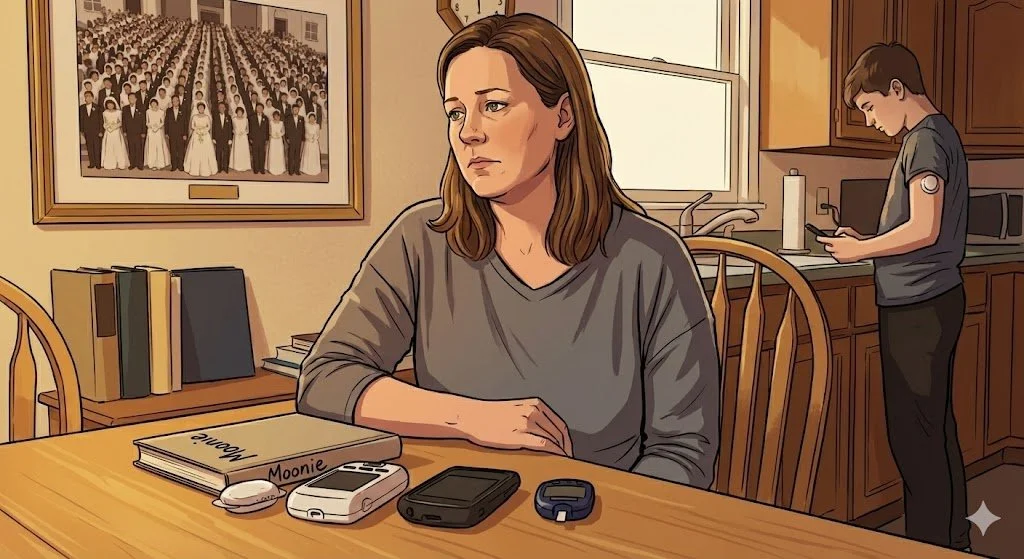
#329 Denying Diabetes
Julie is Abigail's Mom and this is their type 1 diabetes story

You can always listen to the Juicebox Podcast here but the cool kids use: Apple Podcasts/iOS - Pandora - Spotify - Amazon Alexa - Google Podcasts - iHeart Radio - Radio Public or their favorite podcast app.
+ Click for EPISODE TRANSCRIPT
DISCLAIMER: This text is the output of AI based transcribing from an audio recording. Although the transcription is largely accurate, in some cases it is incomplete or inaccurate due to inaudible passages or transcription errors and should not be treated as an authoritative record. Nothing that you read here constitutes advice medical or otherwise. Always consult with a healthcare professional before making changes to a healthcare plan.
Scott Benner 0:00
Hello everybody, welcome to Episode 329 of the Juicebox Podcast Today Show sponsored by Dexcom. And on the pod, you can get an absolutely free no obligation demo of the Omni pod sent directly to your door by going to my Omni pod.com forward slash juice box. And to find out up to date information about the Dexcom g six continuous glucose monitor, you just go to dexcom.com forward slash juice box.
Today's show features Julie now Julia's Abigail's mom, Abigail has type one diabetes. Julie is a 911 operator, and Abigail was diagnosed at the same hospital that Arden was. And that's not even the tip of the iceberg about today's show.
Hey, there's some new stuff in the Juicebox Podcast merge store. For those of you who have been bugging me, I think literally for two years about the tug of war graphic with the insolence having the tug of war with the apple and the hamburger and the milk. I finally found a way to make that image printable. So there's a coffee mug, a neck Gator. If you don't know what that is, you should go check it out. That has that and a white t shirt with it on the front it is adorbs as the girls would say in 1987. A couple other items are on sale. Anyway. Juicebox podcast.com you'll find the link at the top saysmarch. Please remember that nothing you hear on the Juicebox Podcast should be considered advice, medical or otherwise please always consult a physician before making any changes to your medical plan or becoming bolder than I made it.
Julie 1:49
Hi, my name is Julie. I'm Abigail's mom, she's 11 year old, he one day diagnosed. It's been a little over two years now. And we've been working with it ever since.
Scott Benner 2:02
All right, Julie. So Abigail is 11. So she was diagnosed at nine. That's two weeks or her birthday. Two weeks I'm sorry. Prior or before.
Julie 2:13
After, after after,
Scott Benner 2:14
okay. Two weeks after her birthday, two weeks after her ninth birthday. That must have been unpleasant. And we're the were the decorations still up somewhere in the corner.
Julie 2:26
I'm pretty sure but yeah,
Scott Benner 2:28
we just like Oh, good. Now I can go clean both streamers up. And now you're it's funny. You're I don't want to say exactly where you live, but because that wouldn't be right. But I believe you may live somewhere near where my daughter was diagnosed?
Julie 2:45
Yeah, yeah. I mean, I'm fine with it. We I mean, we live in Franklin, Virginia, but close to Norfolk. Okay, where she was taken to ch Katie.
Scott Benner 2:55
And that's the tell me the name of that hospital. Children's Hospital King's Daughters of the king's daughters. That is where my daughter was diagnosed as well. We were on vacation at the time. And okay, at the beach. And it was, it was interesting, because I woke up my friend who is also my kids pediatrician. You know, like one in the morning, I said, we're taking you to the hospital. And he said, Where are you going? And I told him, he's like, that might not be right. And I was like, what he goes, there's some hospitals that are more, you know, they have like children's I didn't know back then they have like children's wings for diabetes. And some people have like specific diabetes care, the other hospitals don't say. So my pediatrician who is also a friend ran to his computer, because this is before, you know, phones that did great things. phones, it did anything. I wonder if young people are like wait, phones didn't always do things, but no phones used to just make phone calls. And so there's my my friend, my pediatrician in his underwear, booting up his computer? And he said, No, no, I'm gonna let me give you an address. I think you should go to this hospital instead. And it turned out to be the hospital that you were, you were diagnosed that as well. So that's interesting. And we have that in common among a lot of other things. I think So tell me a little bit about that time. Was it a surprise or do you have diabetes or in the family?
Julie 4:25
No diabetes? Well, I mean, we have type two, but not type one at all. A lot of intercurrent issues in the family, thyroid issues celiacs but there was no symptoms from her whatsoever. I mean, nothing. I tried to look back on it and see if I missed anything. But absolutely nothing she she had been complaining I guess for maybe a day, maybe two days of lower right abdominal pain. So for me doing what I do for a living emergency number one dispatcher I immediately Went to appendicitis. That's what I was thinking. Sure. And you know, I even touched her right there and she like almost came out of her skin. And so I immediately said, Okay, this, this is what we've got. We've got to take her somewhere. I can literally walk across my backyard to a hospital. So we took her to the closest hospital we've got, and we walked in the emergency room, and it was wall to wall with the flu and a stomach virus. And I was like, this is not going to work because she just got off two rounds, steroids because she has asthma. And I was, yep. I don't want her to get whatever they've got. So my husband took her to oversee hospital and Suffolk with third grade hospital. And she got right in because they know me by name because I work for the police department, the fire department down there. And they took her right in. And they did all the lab work. They thought she had appendicitis. They did all the lab work CT scans, and it came back and they said, we're gonna transport you ch Katie, her bloodwork her blood sugar's 480.
Scott Benner 6:08
Well, okay, so first of all, I love you throwing your weight around getting right in. I am completely amused at the idea that you walk into the emergency room saw sick people, and we're like, this is not the place for us.
Unknown Speaker 6:21
Not getting near these sick. Yeah, now.
Julie 6:24
I'm a germaphobe. Really, really hard. I'm bad.
Scott Benner 6:29
I'm delighted by that idea. Like, this is an emergency who not that much of an emergency.
Unknown Speaker 6:36
I saw sick people blow
Unknown Speaker 6:36
their nose. And we're out of here.
Scott Benner 6:38
That's that's, that's very nice. And see. Interesting. So as soon as they see her blood sugar, this hospital you're at? doesn't excuse me that doesn't mess around just moves right over to the next hospital.
Julie 6:53
Yeah, I'd say it was maybe 45 minutes, the time she got their blood work came back how to transport it.
Scott Benner 6:58
Okay. And so you are really the first person it's one of the things that sort of attracted me to the email that you sent me was that I've never heard someone say there was a symptom. But it wasn't one of the classic. I think I might have diabetes symptoms. Did you ever find out what the pain was?
Julie 7:19
Nope. And she had it for months afterwards. Like it was always one of her complaints.
And then never figured it out?
Scott Benner 7:27
Is it possible that the pain had nothing to do with the diabetes and you just got lucky?
Julie 7:34
I guess possible. We had her pediatrician actually put her on a acid reflux medication after the fact thinking maybe that was the cause. And maybe like a month or two later, it went away. So we're thinking maybe it was just something coincidental.
Scott Benner 7:49
That's really interesting. A little Good luck, bad luck. Right? Mix up. I know, people who have gone in for one thing and, you know, left thinking something very different. And it's saved their lives sometimes. You know, and this is this is a really interesting situation because I, it feels to me, like especially 498 or what was her blood blood work like 480. That's not incredibly high. And it's possible that if she would have got that blood work done, three hours later, she might have been lower, like, Did she honeymoon much afterwards?
Julie 8:22
her honeymoon or denial phase? I call it? Yeah. Because she wasn't even today only on insulin. She was only on levemir for a month, and then she was taken completely off insulin for a year.
Scott Benner 8:35
You did find it by mistake too early. Oh, yeah. That's That's interesting. This is mistaken. Diabetes.
Julie 8:43
Denial phase with the husband and everybody. Oh, yeah. It was awful. So I only have that. IBD
Scott Benner 8:49
Yeah. So my denial only lasted about a day. And it happened fairly far into Arden's time with diabetes. And by far, I mean, you know, months. But there was a day where we just got up and she didn't need insulin all day. And it was all day and it was with meals, it didn't matter. Like everything was just back to normal. And so the pediatrician who sat in his underwear and found me a hospital to go to in Virginia, is also the same person I called later, in that afternoon, and I I knew I was being I knew I was being hopeful and ridiculous. So I started my sentence to him. I said, Look, I'm about to say something. I know I'm wrong. Just stop mean, get me off the phone. And he was like, okay, and I said, I don't think Arden has diabetes. She hasn't needed insulin all day. And he's like, yeah, I get off the phone. Scott. She has diabetes, and I was like, Okay, thanks. That was it. But did you have I mean, a year, you told me a year she didn't need insulin,
Julie 9:56
not for full. It was a year in two months, actually to the day.
Scott Benner 10:00
Did she have high blood sugars during that year in two months?
Julie 10:03
Not Not when we checked my blood now.
Scott Benner 10:06
So what? How does when that goes on for days into weeks into months, tell me about, like how that struck you.
Julie 10:15
Um, my denial only lasted until the blood work came back, you know, those tests that they send off for all the antibodies? Because once I did enough research into it to know what those should look like, so once those came back and they were off the charts, I knew, you know, this is exactly the she definitely has it. There's no way. My husband and my mom, they were absolutely in denial. They're like, nope, those tests are wrong. There's no way she's not insulin, there's no way she doesn't have this. They're wrong. Let's get a second opinion. Let's get a third opinion. When you're seeing I mean, the doctor we were seeing in the practice, he was number two in the country. pd, a pediatric endocrinologist. I was like, how do you get better than that? I mean, who's gonna be your second opinion? Right? Right. There we go from here. So yeah, where do you go from here? And we have since but that's a whole nother story. But anyways, um, so but it lasted and it was a big fight in the house. I was like, I need everybody on board. This is not helping. This is not helping her. This is not helping me. I need everybody on board. But then you go to Disney, we went to Disney for seven days, she ate whatever she wanted, it didn't matter. And she still had phenomenal blood sugar's but something in the background was going off. Because when we every three months, she would go back to the endocrinologist, her Awan see was still, you know, at eight. Yeah, there was still something we weren't saying.
Scott Benner 11:41
And you weren't testing that frequently, I'm imagining.
Julie 11:44
Now, if they still only want us testing three times a day,
Scott Benner 11:46
right? So if you test that they're correct three times every day, you're not going to see elevated blood sugar, if our pancreas is intermittently working, or right, we're working at, you know, at a half power situation or something like that. I'm very interested, I don't want to get you into more of a I mean, I know it's been two years, I don't I don't want this podcast to lead to you and your husband. Having to call you at 911. So, but, but um, gosh, I guess you can't really get into a fight like that. When you're nine one off, you're like, Look, you can call you want, they're not gonna believe you. But, but but so. So how does that manifest in real life? Like when somebody is on one side saying, Look, I don't care, you know, took a test. And sure the test said one thing, but what we're seeing is clearly opposite of that. And you're saying no, don't is Abigail hearing that too? Is she part of that conversation? You you have diabetes, you don't have diabetes?
Julie 12:41
Um, you know, Tim and I have been together for 16 years, married for 16 years, and together for 18 years. So we learned a long time ago, we don't fight in front of the kids. We don't argue in front of the kids. So no, we tried to maintain a united front together. But she kind of believed that Hey, Mom, if I'm not insolent Do I really have this? And I tried to explain to her the honeymoon phase. I was like, look, I think we're just having a really good honeymoon phase. Which to me, I don't know if I'd rather have this one or the other one.
Scott Benner 13:14
Yeah, it's like, I know people who are who go through honeymoons that are you know, drastic, where they need insulin, then all of a sudden, they don't, then they need it again. And then they don't. And it's tiring. Because you're always about to put insulin and thinking like, is this the time? I won't need it? Or the time? I do need it? That's Yeah, it's difficult. I want to sort of keep going for a second with with Abigail, thinking one way I understand the way she was hoping I would have, you know, certainly hope the same way I understand the way your husband thought of it. I understand the way you thought of it, you know, like everybody, you're trying to be pragmatic. He's trying to be hopeful. But did. And she trended to that to sort of his his side? Which opinion Do you present to her? Because it's funny, as you're talking about this, it strikes me like, two parents with two, like, really differing ideas about religion, for instance, like, you know, let's say you're let's say you're Catholic, and he's agnostic. Which one do we say to the kids? Right, right, you know, or do we say both, but and you didn't say, but you didn't say, you know, I think there's a God and he doesn't or vice versa. You said, What did you say? How did you present it to her together?
Julie 14:25
Basically, it was a let's let's live in the now Hey, this is what we're this. I'm not gonna tell you don't have it. Because I know I know that you do. And I was very upset and very honored to there from the beginning, which my husband tells me the fault you tell them too much truth, Julie. But it's, but look, this is what you have. However, right now, you get to be how you were before we don't we don't have to worry about it right now. So let's just enjoy it while we can. You know, we know at some point the other shoe is gonna drop so to speak. But let's just enjoy it while we can. I mean, we got it. Disney, we got in a trip to the beach, we got in the full cruise without ever having to worry about it. And she got to have the best year and a half ever, without having to worry about it.
Scott Benner 15:09
She just embarked on a pancreas goodbye tour.
Julie 15:12
And absolutely, like when an athlete
Scott Benner 15:14
retires, they stop at every stadium and they're like, go ahead, clap for me one more time. And I'm leaving. And yeah, you said your daughter's pancreas is sort of like, I don't know, LeBron James in the last year he'll play
Julie 15:25
Absolutely.
Scott Benner 15:28
So I like that idea. I think because there's no perfect way to handle a situation that says you're about to feel the effects of a lifelong incurable disease, but it's not here today. But it's definitely coming. I don't I mean, it must have been maddening for you. I really, did you find I'm imagining how you've described it. You found relief when her pancreas probably like gave up? How did your husband handle it though?
Julie 15:57
I think it was like a funeral. It was like a death.
Scott Benner 16:01
Yeah, because I mean, it was he really sincerely hoping right?
Julie 16:06
Oh, yeah. Yeah, I don't think he ever had that grief period. Like I had, there was a whole lot of tears and everything in the beginning for me. Because I remember thinking I did something I remember as I broke down to the doctor and ask them, What did I do to make this happen? Because I knew nothing about type one, nothing. But him. He never went through that grief. He didn't go through that mourning period, because he had that phenomenal honeymoon period. And so when it finally happened, now, this statistic turn,
Scott Benner 16:35
Julie, I just realized it's possible. You and I have cried in the same room at a hospital in Virginia.
Julie 16:41
Probably
Scott Benner 16:44
just thinking, huh, I think I grabbed that room too. So yeah, I got you. I really do. I'm just I, you know, I'm gonna move on. But I that's just a fascinating conundrum to be in, you know, I get that I get him wanting to be hopeful. And then I started thinking, gosh, he got to be hopeful for 14 months. When it actually happened. It had to be it just had to be crushing. Get You know, sorry, feel for I feel for you guys. That's that's really something. So when it happens, and you know, for 14 months after your daughter's diagnosed and she gets diabetes, because she had a pain in their side. I do wonder like, when would you have actually found out? Like, like without that pain in her side? Would you have been diagnosed 14 months later? I know. You'll never know. But that's just really interesting.
Julie 17:31
Yeah, so now like my other daughter, I'm like, everything freaks me out. Like, are you okay? Why did you pee seven times today? Like what's going on? Yeah, yeah.
Scott Benner 17:41
Did you ever test Do you ever test her blood sugar when she's not looking? Like when she's asleep?
Julie 17:45
It was she loves me. And we've done trialnet on her too. Okay. Yeah.
Scott Benner 17:49
And you? Did she have any other markers, or do you not talk about?
Julie 17:52
Gosh, she has one. She's one of them.
Scott Benner 17:55
How about you guys? Did you guys do with it
Unknown Speaker 17:57
as well? Your? We did? Yeah, we're negative.
Scott Benner 18:00
Interesting. Who's got the thyroid issue? Is it in your immediate family?
Julie 18:05
Yeah, my mom. My dad had thyroid cancer my grandmother.
Scott Benner 18:11
So so just a you. Abigail wasn't dodging this one. This was this was coming in here. It did it. Did it all skip you.
Julie 18:19
It all skipped me so far.
Scott Benner 18:21
so far? Yeah. Yeah. You don't want the thyroid thing. It's a small thing. And it's manageable. But it's also not always manageable. 100% and it's sort of sucks. So I know Arden since she's been diagnosed as hypothyroid Geez, just she can never quite even though her medication is we think really well measured. She can never ever feel completely rested. Like she just doesn't can't accomplish that. And to be perfectly honest, my wife has it too. And she always has that. She always looks tired. To some degree. I think she's learned to live with it. But she's always tired to some degree. It's, it really sucks. It's such a small little thing, but it has a big impact on you. Okay, so too interesting. You've had so you count yourself as having diabetes for two years from the day you went to the hospital. But in reality, you've been living with insulin for about 10 months. Is that right?
Julie 19:21
In reality, I've really only been living with the two types of influence and June of last year.
Scott Benner 19:29
Okay. All right. Yeah. Gotcha. So how does it start? They You know, it finally kind of kicks in. Do you just have this moment where you're like this? Is it her blood sugar's not coming back down anymore?
Julie 19:41
Yeah, it's kind of gradual. In April of last year, she started going back up slightly, so they put her back on 1111 mere half a unit. That's all we were taken, which is incredibly difficult to get my syringe. As you as you know, I've heard with Arden when she was little Yeah, I think credibly difficult. But, and then we did that from April to June, she was only on a half a unit 11 year, did beautifully. And she never went back up. We didn't have to do a unit. We never had to go to full units on it. And then we'll It was like, over a course of two days, she gradually went back up, you know, she was at 150 and 160 and 180. And it was Friday. In June, it was a Friday. And she started she went back up to 300. And I was like, okay, I've never seen this number, like on a like I've never seen it. So I called it I forgot they closed half a day, the doctor's office. And I was get ready to go to work. I work nights, I work 60 to six day. And I called the doctor on call and I said, Look, I don't know what to do. Because we weren't trained on anything in the hospital, except the long lasting, we weren't trained to do carbs. We weren't trained to do any type of rapid acting insulin, nothing. We were only trained on the left mirror. And I didn't have any at home. So I didn't know how to bring her down. So our doctor was on call another doctor was on call. He said, Well, you got two options. I can give you a crash course on how to do this. And I can call you an insolent or you can bring her in and they can get her in the emergency room and they can bring her down. And I said oh, I said let's do the Crash Course Tell me. I said I can do it.
Scott Benner 21:24
Yeah. Especially if it's sniffle season. You're not going back in that emergency room. I know that for sure.
Julie 21:28
Yeah, absolutely not.
Scott Benner 21:31
So he called me in in one and we got the crash course. And I'm I mean, I did it. And I she didn't get in to be seen probably I think it was almost six days. So we we handled it for six days. Yeah, you basically just had a like a little stick and you beat the blood sugar back with the with your needles and your new insulin and your lack of any kind of real knowledge. And they worked out. I mean, it's Yeah, that's excellent. Good for you. Well, by then, you must have been pretty ramped up for it. You must have. I mean, I can't imagine what even back in the beginning when you say to yourself, look, this is diabetes, she just doesn't need insulin yet. I can't imagine you thought it was gonna go 14 months, there had to have been a time where you forgot about it.
Julie 22:10
Like I knew it was coming.
Scott Benner 22:12
Yeah. But prior to that when the blood sugar started creeping up, was there ever moments where you just didn't think about it? Or was it always sort of in the back of your head?
Julie 22:21
Not for me, I'm a realist. Like, I'm one of those that I hope for the best. But I prepare for the worst. So I knew.
Scott Benner 22:28
Yeah, no, I understand. I also would imagine being a 911 operator doesn't leave you a ton of latitude to believe things go? Well. I mean, it's a well, it's a weird situation, isn't it? Because I know I, I mean, I'm incredibly close with a police officer and who's been, you know, a police officer for decades. I think the one harsh reality of his life is that everyone he comes in contact with while he's working is either breaking a law or had something horrible done to them. And that starts to become your expectation for the world, you know, that? I just had happen to you with your job.
Julie 23:06
I mean, yeah, I mean, there's there's certain things I guess we we all deal with there. You know, everything like I'll go into a restaurant, my back doesn't face the door. There's just there's certain things that because of what we've dealt with, I mean, I know I don't see the front lines. I don't see it in person, but I've heard things on the phone that just completely freaked me out. And so I don't I don't take it for granted at home.
Scott Benner 23:29
Yeah, that's interesting. Just just isn't it something to because you do it every day. And maybe I'm assuming you're saying, you know, what, if there's a an invasion at the, at the restaurant, the place gets robbed or something like that happens, like I want to see what's happening. And maybe you've heard maybe you've heard that, uh, I don't know making up a number. Maybe you've heard that a dozen times in your life, but it's enough to think, you know, it's going to happen because it does happen. So you You are a pragmatic person then because of that.
Julie 23:59
Yep. Yeah, absolutely. Makes a lot of sense.
Scott Benner 24:03
You did not I'm going to skip in a second skip forward, but you did not ever drag your husband into a room and look at him in the face and go I told you no, you never Did you or did you not do that? Did you did you in my
Julie 24:14
head? I wanted to I wanted to but I did it in my head.
Scott Benner 24:18
It's like the one thing in the world you don't want to be right about. You're like, oh, like nailed this one. I was so right about this. So today, you know, 11 years old does she use a pump or glucose monitor or anything like that? Are you still doing injections? Well, with any luck your brain is not as broken as mine. And during this episode, every time you realize that Julie works for 911 a voice in your head doesn't yell. Somebody call 911 shorty fire burning on the dance floor a whoo as my brain does. Anyway dexcom.com forward slash juice box there you're gonna find out about the Dexcom g six continuous glucose monitor. Now what are you gonna find out when you get there? Let me save you a little bit of reading. The dexcom g six is FDA approved for no finger sticks means you can make dosing decisions based on the information coming back from the G six, that's a big deal, save you some finger sticks. Here's the next thing, share and follow. That means someone with type one diabetes can have the dexcom on them, share their information up into the magic of the cloud, and it will come back down. Like magic on your phone, or a loved one's phone, or a school nurse or whoever you choose. up to 10 followers can see that information. Huge, right? that's available for Android and iPhone. By the way, you can wear a dexcom sensor for 10 days. That's pretty cool, right? put a new one on every 10 days get a long wear time. It's discreet and small. And it's magical. The decisions that we make every day to keep my daughter's blood sugar where it is, or a one c stable, her variability comfortably smooth. That all comes from the dexcom g six. And that could be that way for you as well. dexcom.com forward slash juice box. Check it out. Because when you get that information back, you'll be able to just switch right over to your on the pod tubeless insulin pump and make insulin decisions that are reflective of what's really happening. Not a wild gas, or a hope or a prayer. But seeing the direction and speed that your blood sugar is moving in then you just pick up your Omni pod Okay, blood sugar's 84. And little man we're gonna have 35 carbs up on the pod says it's this much insulin, push the button, little beep. And the insulins on its way of having pizza want to stretch out your insulin with an extended bolus, no problem. This is 70 carbs. But I'd like 50% of those carbs to go in now when I push the button and the other 50% can be stretched out over the next two hours. Want to do that? No problem on the pod does that. Now all the pumps do that I'm not gonna lie to you. But those other pumps, you can't get into the swimming pool with no no you can't. Those other pumps have big piece of tubing off of them. And then there's a controller on the end that you have to clip to your belt or your pants. You imagine a little four year old you know with a something hanging from their pants just pulled pants right down and probably by pulls down pants my four year old. That's not right. What if you're a nice lady and you were in a cooler? Is that clothing? You have to stick your pump in your bra then? Not good. That's busting up your head. You know what I mean? What did they say that the the lines right of the clothing you don't want that either. Here's the coolest thing about on the pod on the pod lets you try the pound. absolutely free with no obligation. You go to my on the pod.com forward slash juicebox. There's links in the show notes right here in your podcast player or available Juicebox podcast.com. If you can't find your way through your podcast player, it's no big deal. When you go to that link on the pod send you an absolutely free, no obligation pump that you can try on and wear and decide for yourself. You don't even have to believe me, all you have to do is get the demo and see for yourself. So whether you want the Omni pod the Dexcom or both. But on my on the pod.com forward slash juice box dexcom.com forward slash juice box. You can hit those links at Juicebox Podcast com right there in the show notes of your podcast player. I've made it as easy as I possibly can to support the podcast and to get great gear to help you with your type one.
Julie 28:37
She was on the MDI from June until October. She got a T swim in October. I loved it when she originally got it. And then it hit summertime. And you know what? I don't like being plugged in. I don't want to have to unplug and so we just paid out of pocket for the Omni pod. So we have posts and she has the deck comm to size
Scott Benner 28:59
the file. So not to I'm not making this into an ad at all. But it was the being connected that she didn't like about the tea sign. Just the tubing.
Julie 29:09
Yeah. Yeah, it's hard to argue with.
Scott Benner 29:13
And it's funny so when she was around the house and a little more sedentary it wasn't such a big deal. But you're saying that once she got up tried to run around outside do that kind of stuff. It felt in the way towards that point.
Julie 29:24
Yeah. And that the infusion sets honestly for me. The T slim she had so much anxiety with the infusions that it took us an hour to get them infusion sets on her. I don't have that with the Omni pod. She doesn't. I mean, I've posted on Instagram like she's so adventurous with these Omni pod. She puts them on her forearm. She puts them on their calf that has no issues. Try them anywhere. I just trade.
Scott Benner 29:49
It's I was about to say it's early in the morning. It's 1030 but it's summertime so my kids asleep. It's early
Julie 29:57
for me.
Scott Benner 29:58
Yeah, it's early for you. My children are Sleep. I believe last night at something like three in the morning I remember texting my son just saying like, would you please give up and just go to bed. And I you know, Arden was up late talking to friends and cleaning her room. She likes to clean a room at like 130 in the morning. It's a thing for her. But her pump is you and I were getting you know, the hour before I was getting set up before we were going to start recording. I'm watching her on the pod slowly dwindle down. It's out it's running out of insulin. And I'm like, oh, it'll make it till I'm done with Julie. It will it will and then about 45 minutes before I got on with you. I was like I don't think it's gonna make it. So I I went downstairs, I got insulin, I filled the pod. I walked up into a room. I put the pod down next to boom, I push the button it primed. I I whispered in her ear are not going to change your pump. I took off her old pod cleaned her site, dried it, put the new pot on insert it put the blanket back over top of her and left the room.
Julie 30:59
Yeah, that's it.
Scott Benner 31:00
She's done. She never woke up. It didn't take more than a few minutes. You know, it didn't throw I didn't have to call you and say Julia it's gonna be a you know, I'm gonna be late because we have to switch a pump. It just it just took a couple of minutes. And it's it's fantastic. And I'm looking at her blood sugar right now. And everything's good to go. So her blood sugar's at eight at the moment. Anyway, I mean, 86 Yeah, we're doing good. Seriously, same hospital, same blood sugar we're doing You and I are we're simpatico here. Right. Does Abigail play any sports? Or what kind of activities does she do?
Julie 31:34
She did gymnastics for a while. I'm hoping to get her back into it when she was on the teeth limb is a little bit embarrassed. Still, I think I think it's because it's so new. So she didn't like that and asking questions. Like they would ask about the G five and they would they would touch and she didn't like it. I was like, You know what? Just explain it to them. Tell them what it is. We're punch one of them. Or that? Yeah, I'm all for that. Like, the one that you? Yeah,
Scott Benner 31:58
kidding. We can't hit people. I'm just saying though, in a big place. If you really just lay one person out, the rest of them probably will leave you alone. Okay, let's not hit people. I think we all know I'm not saying that. But now I hear what you're saying. So she did not like the attention. And now was it? Like, was it Okay the first time but not the 50th time? Or did she just not like it at all. She doesn't
Julie 32:18
like it at all.
So, but she loves to skateboard. So she does that quite often likes to ride her bike. So we've been taking her to the skate park quite often. Except now they're flocking to her. They see the devices. And they're like, Oh, that's that's, you know, pretty awesome. They use different words there. But anyway, I won't use them on your show, because I know it's clean. So, but they see those and they flocked to her and there wouldn't help her. Because they're older kids. And they're like, hey, let me show you how to do this. And so we're trying to see how long that's gonna last before she doesn't like it either. Yeah,
Scott Benner 32:54
that's, that's interesting. You know, Arden, he has played softball her entire life, but she hurt her shoulder. Gosh, nine months ago or so. And the rehabbing of the shoulder took forever and she's having some like tight like muscle tightness and her shoulder still, it's just can't really, she can't really throw. And so she hasn't played softball in a really long time. And it's at, I think, a pivotal, a pivotal moment in her life, where she went off and found other things to do. And I think there's a sincere possibility that one day when she can throw a softball again, the way she's used to that she just might not want to. And we're actually looking right now because you know, sometimes when you let go of activity, you got to replay You know, it doesn't just get replaced with other activity. So I think she's considering yoga. I think that's actually one of the things we're going to do later today is look for a place for her to like, kind of get some yoga lessons and see if she can she's just looking for a way to stay, you know, limber and active and strong. That maybe doesn't involve running around in a pile of dirt for the entire weekend. She's fine. I if people were listening are probably Oh, Scott's probably so disappointed. I'm genuinely not I just you know, I told her I was like, you should just do whatever you think will make you happy. I'm not up for to be honest. Like not playing softball for the last nine months has made a ton of time in my life. So I sort of happy about it to be honest. It's it's very nice not to you know, get up at six o'clock in the morning and drive an hour and a half to some dirty hot place and stand in the weeds. swatting, you know, mosquitoes away from your leg. I'm pretty good with that. Plus, I thought my son to watch so I'm okay. Yeah, but But yeah, so it but her her her conflict is more around people's attention. Now. Would you say that outside of diabetes? Does she struggle with that as well? Does she not like attention?
Julie 34:56
Yeah, she doesn't like it at all. Yeah.
Scott Benner 34:59
Yeah. I think See that? We don't know if we've really talked about it here. My wife has a fairly like introverted personality. But she can, you know, she can deal in the real world. Really well, you wouldn't know you wouldn't meet my wife. I think I've just met an introvert. But if you got to see her, the hour after she got home from a large gathering, you'd see an exhausted person from, like, creating that, that energy, you need to be around people, you know, like, I'm, it just works for me. I get around people, and I'm like, ooh, I'll stay stuff and we'll all laugh and it's fun. And you know, like I can that is energizing to me, like, I, I feel pumped up by that even just talking to you. Like, you know, sometimes I think you can probably hear on the podcast, like, I get carried away when I'm talking. I love talking what is happening. My wife, not so much the exact opposite. And if Abigail does not want to be, you know, intersecting with people to begin with, it's got to be incredibly difficult when they start saying what's this and then touching her and she's so new to it still. And that just it sucks that people feel comfortable reaching out and touching people, you know, like, like that, instead of just stepping back? Is it mostly kids? It's not is it adults, too?
Julie 36:15
Um, the older kids. Okay, it's um, you know, 1617 because that's usually who hangs out at the skate
Scott Benner 36:23
park a park. Yeah. And they're not it's not a judgmental thing. You don't think it's just it's intro
Julie 36:28
now? Yeah, it's interest and and they liked it. She skateboarding? I don't think they've ever seen somebody her age. Like a girl especially. Yeah.
Scott Benner 36:38
And you're not having any luck talking her into being like, Look, they like you. This is fun. And she's like, No, tell them not to touch me.
Julie 36:46
And I'm like, Abby, I'm like, I just explained like, she went to water country. And apparently, she put it on Instagram Live the other day. She's like, has anybody ever had people stare at their devices? And I'm like, Eddie, if they're staring. Look at me be like, hey, if you want to look, ask me questions. That's the type of mom I am. I'm like, Dude, don't don't let people bully you. You know, look at them and be like, okay, what's your problem? Right? are you staring at?
Scott Benner 37:10
Yeah, it's, it's, it's and it is so personal, though, too. Because, you know, I'm just lucky on the other end of this because Arden doesn't care. Right? She'll, if you ask her, she'll show you her friends joke around about it all the time. There's the newest thing that they're doing now is when we get in the car somewhere. So I didn't recognize this was happening. So this happened about a half a dozen times before. I was like, why is this happening? But we'd get together with some of her friends for a movie, or they go shopping or something. And I'm always there, because I'm basically a lady. And, you know, I'm with the kids all the time. And, and we're driving somewhere. And I'd be like, hey, Arden, can you you know, you know, I need you to do some insulin. And she'll sometimes she'll say how much or I'll just blurt out a number or something like that. And I and the kids are all like, 783. And I'm like, Wait, what? And so I'm not paying attention. The first couple times. I'm like, Why are these children randomly saying numbers? But I think it's part of whatever they're doing, right? So the other day, we're on our way to Spider Man far from home, me and the girls. And we're all driving in a car. And I said, Hey, Arden, let's you know, let's get ready. Like what are you thinking about? You know, what are you thinking about eating at the movie? Are you thinking of getting anything? And she's like, yeah, I really want one of those icees. And I was like, oh, great sugar and water will. That'll work. And so I was like, okay, that's let's get some insulin going now then. And her friend goes three, and then I hear six. I went, Oh my god, they're guessing the Bolus, like I finally hit me like what they were doing, you know? And I turned around, I was like, you guys are trying to guess how much insulin we're gonna use? And she's like, Oh my god, Mr. Benner, we've been doing that for so long. It's so much fun. We're never right. And I look back, like in the mirror and they're all laughing and smiling. And that's sort of the level of comfort Arden has with it. Yeah, you know, if her, you know, if if she gets low and doesn't do something about it. I can, you can, like hear her friends like art and Come on, don't die. We got to go. Like let's say you're trying to go out like just drink a juice. So we can leave like that. Everyone's very loose about it. But maybe that's just because she was diagnosed at such a young age. She doesn't know any different and your daughter does, like nines are real, like a real person age. You know what I mean? Like she had a life that she understood before she was diagnosed.
Julie 39:30
Yeah, I think I think so. I think it was that awkwardness. And she was already going into that awkward age anyways. So I hope she'll get there at some point. Yeah, um, can we try to help her as much as we can? Of course.
Scott Benner 39:43
How involved is your like, what's the division of labor like on diabetes in your house? Is it because you have a weird schedule is your husband I would imagine just as involved as you are?
Julie 39:53
Absolutely. Yeah. Now, numbers wise, no. But he has involved, like he, he could change the pump, he can change his XCOM. But it's funny because when I listen to your podcast, and I'm only on episode 101, by the way, I'm just letting you know that right off the bat. I started at the beginning. But we, it's funny when you talk about how you when you look at stuff, you're like, Oh, that's going to be about three units. That's how I am. Yeah. So, like, he went to go get them a Slurpee the other day. And he sends me they have a, like a sugar free Slurpee, although it's not really sugar free. I don't know if you've seen it. Sounds. Yeah, it's based off of Powerade. Okay, if you read the fine print under it, it tells you like, it's, it's like six grams of carbs per eight ounces. And so he sent me a picture of what it looks like. And he's like, so it's sugar free. So she doesn't give anything, right. And I'm like, I'm on a zoom in on the phone, you know, really tight. And I'm like eating. I'm like, No, I'm like, so that's like 48 grams. And for eight ounces. And like, Okay, I'm gonna need you to give her 66 per 60 grams of carbs. And he's like, but it's only 48. I'm like, do it for 60. He's like, how did you come up with that? I'm like, just do it. Because I know, because it's liquid and it's gonna hit way different.
Scott Benner 41:17
Right? And so quickly, so you need to be a little a little stronger up front to catch that that initial slam. And then Oh, yeah. Did you have to adjust out of it later, did that number end up working for you?
Julie 41:29
I'm still learning a lot. So it that one hit really good. I'm still learning how to eat out. Things like a pancreas has helped me a lot with that. Actually. That book, we actually had like a we went out to Applebee's and had like a is almost 100 grams of carbs. And we went out to eat which is rare for us. We don't usually have that many grams of carbs. But she never went over 100 but that meal.
Scott Benner 41:51
That's excellent. Fantastic. Yeah, and that's fantastic. And some of those chain restaurants especially are are hard getting any meal like they really are hard on on you know, you can't it's it's difficult to just guess it's not the same as it would be in your house I guess is what I'm saying is you know that you look at a cheeseburger like oh, that's probably like this, but I don't know they have like magic elixir. They put on food in those restaurants so that it tastes extra foodie. You know, it's hard. It's funny. You said think like a pancreas, which is a terrific book. The author of think like a pancreas is the owner of integrated diabetes where Jenny Smith works. So Oh, I didn't know that. Yeah. So when you add because you're listening in order, which by the way, also, Julie, I'd like to say to everyone listening, when you find the podcast and you love it, you should absolutely start at the beginning, I listen to every episode, because it makes it much easier for me to you know, have those contract conversations with the advertisers later when you guys really download all the episodes. So thank you very much joy. But, but But yeah, Gary, Gary is the owner and the operator of integrated diabetes. And when you'll hear Jenny Smith come on and do the pro tip series, as you're listening through, and Jenny works for Gary at his company. So it was very interesting that you just said that it's a great book.
Julie 43:13
Yeah, it is. It is. And it helped a lot discussion during that meal. I did I think his book he said, you know, for high fat meals, you know, do a extended our Temp Basal for like 50% for like six hours and then wait to Bolus after the meal. And I was like, Dude, this is not gonna work. It worked beautifully.
Scott Benner 43:31
It's great. Yeah, it's really something I I've said before, but I had lunch with a person doing like a very low carb diet. And they had a lot of there was a fair amount of meat and you know, fat in this thing that they ate. And they didn't like Bolus for I think like 45 minutes after they ate. It was really but they put in insulin. I was like, this is fascinating. Yeah, it's it's, it's all really but what you just said honestly, is the right amount of insulin at the right time. Like just have to get it in the where it belongs. You know, where when, when there's a need, you need to meet it with insulin, that's all. Yeah, very cool. Okay, so how are things going overall? Are you feeling good? Are you feeling lost? Is it a slow progression? You know, what would you tell people? You know, if I said to you just Hey, how's this diabetes thing going?
Julie 44:24
Um, you know, once you got on the pump, we learned a lot with the Dexcom has been fantastic. I learned how everything works, how food works for her. We learned the doctor we were originally with, he wanted her to have anywhere between 50 and 60. And he wanted to have 60 plus grams of carbs every meal. Unfortunately for Abby, that didn't work for her, that would shoot her straight up and drop crashed her it didn't matter what kind of carbs they were, how we Pre-Bolus how we extended anything. We learned real quick that did work. So at home, we very low carb, very low. I just don't bring it in the house. We splurge when we go out. And so that's worked beautifully, you know, at this point? Well, I don't know about right now because we have to go back in July. But you know, right now we have her down to right about a 681. c. And it's, you know, it's been great. She averages right about 110, hundred and 20. At night, I keep her around 85 to 100. We're doing amazing. I had to get comfortable. And I think I put my email to you that now my husband knows I'm not insane. Because I'm not I'm aggressive with insulin, and I'm not scared of it. He was scared of it. I'm not.
Scott Benner 45:47
Totally let's say that he thinks you're insane about one less thing. Like, let's not get crazy and say that he thinks it's true.
Julie 45:52
Yeah.
I am insane. And it's cool. So am
Scott Benner 45:57
I but I'm just saying that if my wife decided oh my god Scott's actually right about that one thing. She would not make a blanket statement out loud that everything I've ever said about him wasn't right.
Julie 46:09
That's probably true. I'm crazy. In a good way, though. I think,
Unknown Speaker 46:13
Oh, I believe it too.
Julie 46:14
And I think that's because of the scare tactics that they give you in the hospital, which is probably rightfully so that, you know, hey, here's this kid, they have this insulin can save them. However, insulin can also kill them. Yeah. So he was definitely afraid of it. Where I wasn't because I read what 180 and 200 blood sugars can do to them in the long run. And that was an acceptable to me.
Scott Benner 46:37
You guys just chose a different thing to be scared of. That's all like you picked one thing he picked the other thing he picked, actually his brain picked now over later, your brain picked later over now. And and not necessarily over. You know, you didn't say, I don't want this to happen one day. So I'm going to be dangerous about it. Now, you just said, I think this needs more attention right now. So that later doesn't happen. I listen, is in most married situations, there's someone who you would look to for an illness, you know, just a regular illness. And there's someone who, you know, sometimes does the other stuff. It just happens that way. Sometimes, those things inform no differently than you're having a job as a 911 operator, those things inform how you feel about things. And the guy who's not in the room during the flow, might think, Oh, this will pass or it won't be that bad. And you were a mom, so you have that extra gear. You know, I believe there's a, you know, an extra an extra gear in every every mother, that that just is protective in a way that's difficult to you know, put into words. And you didn't just see now you saw the entirety of it, you know, and that's excellent. I think we all need to see that to be perfectly honest.
Julie 47:57
Yeah. Oh, I just I don't know. So hopefully that you know, that would be I think that would be my only advice is to just definitely not have out of continuous glucose monitor though. I don't think I would have done it. I don't think I would. Yeah, yeah. If I couldn't have seen what it would have done to her. You know, at night, they wanted her before the CGM. They want her around 180 I still didn't keep her there. We would put her to bed around 120. And she would wake up around 120 now what she did in between there, I don't know. But she always woke up. I didn't check her at night. They didn't tell me to Yeah.
Unknown Speaker 48:39
I hear you. Um, so
Scott Benner 48:42
I do agree with you. I sat with a teenager, two nights ago, you know, 20 1920 year old guy. And he is just pins and a meter. and has been for like seven years since he's been diagnosed. And he I was at I was with him at a meal where we were going to talk about, you know, I was basically going to give him a crash course in the podcast because we know them personally. And when he took out his meter and tested his blood, and then made this, you know, injection bolus for his meal. My brain was like, Oh my god, I wonder what's happening now. Like, how does this wasn't enough for too much or? And I got I got transported right back to what that felt like. And I because I hadn't been around that in a really long time. You know, that idea of something's going on right now. It's either right or wrong or indifferent maybe. And we have no idea and I said I was like when will you check again? Next thing is like before bed. I was like, it was like seven o'clock. And I was like, oh my god. No, no, no. And and it's so but he's completely comfortable that it's his life and it's how it works for him. is a one He's not where he wants it. It's not bad and it's not good. And, you know, he came into that restaurant with a blood sugar that was almost 200. And that seemed incredibly normal to him. And I just thought, wow, like this is, this is how people feel, you know, when they they don't know any better. And they don't have this technology. It's it's just it's very, it was just very normal for him. Yeah. I just I guess I have to I guess I'm looking for it from you, because you're so new to this still? Is it? Like, how would you describe the difference between before you could see and now?
Julie 50:40
Night and day? I mean, once she was on the two different insolence, I checked her more regularly, not at night, I still I don't, I guess it comes from the mentality when I had babies. You don't wake a sleeping child. I never woke her at night ever. But during the day, I wasn't one to just check her before a meal. And never check her until the next meal, we would check before we would check you know, roughly 30 minutes after and then we would check her an hour after and probably two hours after I wanted to know what was happening. So her poor little finger tips were brutal until we got the G five.
Scott Benner 51:20
Wait, I want to stop you about the overnight thing for a second. Because that's fascinating to me. Because I I can't it's hard to wrap your head around I and why does it matter what your blood sugar is when you're awake, but not when you're asleep? And I'm not coming down on you. I see a lot of people do that. And it's fascinating like the this simple idea that just stops you from looking like well, she's asleep. So that's it, you know, but but those things you were incredibly worried about during the day you just were you magically not worried about them when she was asleep? Or did you just not think about it that way? Or can you describe that because I've never asked anybody right out and you brought it up. So I'm interested in to kind of dig I don't think
Julie 52:01
it's further that I wasn't worried about it. I think it's that there was always a cut off that I didn't give her insulin. So I knew it wasn't active in her body. I knew it wasn't working. So there wasn't really anything that could cause her to go incredibly low. I knew what I was sending her to bed with. And if say she was 110 I knew I was going to give her some chocolate milk or I was going to give her something to bring her slightly up was less of a chance. I knew I just knew how our body worked. There was less of a chance that she was going to go low. And she never did. I mean, let me even rephrase. I'm not gonna say she never did. Because I didn't know. Right. But she never went to a point that she didn't wake up. And I know that's horrible to say. But I was. I mean, I work. You know, between 60 and 80 hours a week, my husband worked 40 hours a week, I go to school full time. So waking up every hour to two hours. And I know it sounds horrible. I love my kids with everything in me. We just we just can't.
Scott Benner 53:05
Yeah, no, so you just use a little bit of chocolate milk or something like that. And and we're gonna kind of err on the side of caution now. Now that you have gear that was very honest of you. By the way. Thank you so much. When now that you have a CGM, would you let her be 150 all night?
Julie 53:23
Absolutely not that interesting.
Now she stays it's like I said between 85 and 100. And she's pretty steady. Right? It's a very rare occasion. She goes well at night.
Scott Benner 53:34
My point is, is if you see a 150 at two o'clock in the morning, are you getting up and correcting it?
Julie 53:41
Yes, yeah.
Yeah. Usually, usually I'm at work. And I'm waking my husband up, like get up and fix that. You must love that. Yeah,
Scott Benner 53:51
you must love waking up to do that. I my wife looks delighted. Even in her sleep. She's like, Scott, that thing's going on. That CGM is going off? I'm like, oh, I'll get it.
Julie 54:01
Yeah, he doesn't hear it. He sleeps like the dead it can be going off right next to him. And I still have to call to wake him up.
Scott Benner 54:07
Oh, I believe that I I have trouble hearing it sometimes. And it gets different more difficult as you you know, like anything else. I sometimes like in a time when I when I was growing up, I lived on a major roadway, like my parents were broken. You know, our house was like on a four lane street that constantly had traffic. And you could invite somebody over to the house that had never been there before. And you could see the look on their face was they could just hear the traffic going by the entire time and those of us who live there, we didn't even hear it. Like it just became background noise, you know. So it's just what, you know what you just said, but like I said, was incredibly honest about like, Look, I needed to sleep, there's no way around it. So we make our blood sugar a little higher so that everybody can do that. And then the minute you saw what that really meant, like in real terms, like looking at it on a graph. He said, oh god, I can't let this happen. I'm gonna push it Down here and find a way to do this. But you couldn't have done it blindly. Because because it just would have seemed too dangerous. And it very well may have been to put her blood sugar at 80 and hope that it like stayed there all night without being able to check it. It's a very unfair disease. It sucks that we're standing here saying that like without this technology, I've got to err on the side of caution. And what that means is a raise blood sugar and everything that comes with it. It's not fair. It's just it's I feel like I just felt incredibly sad for you as you were saying it and yet I did the same thing years ago. And at the time, I did not feel sad for myself. I just thought I was doing the best I could, you know?
Julie 55:42
Yeah, Dexcom should be standard issue or some type of CGM should be standard issue when you leave a hospital.
Scott Benner 55:48
On this podcast, we don't talk about other CGM. But I hear what you're saying. And I'm just kidding.
Julie 55:54
Yeah, but it's, I mean, they should it should be standard issue. Um, oh,
Scott Benner 55:59
no, I've said it before. Like, if you had a heart issue, they'd put you on a heart monitor, they wouldn't go, let's just hope your heart's Okay. Go ahead home. And we'll just hope, you know, like, it's, now this stuff exists. And you see what it does. And you can also see what happens if someone lives so long without it. And all of a sudden, you give them the information, it can be overwhelming. You don't I mean, so just like diabetes itself, and all the other things that come with it. I say get it early. It's everything's uncomfortable in the beginning Anyway, you get accustomed to it, you'll learn as you grow, and then it just becomes a, you know, a simple part of your life. To me, that's the best way. I mean, obviously, anybody can do whatever they want. If you're listening right now, you're like, I don't want to see gentlemen, I'm doing fine. Like, right on, I don't care. You know what I mean? Like, do what I need to do. I'm my experience. So. But I agree with you. I really do. I just, I don't see, I know for certain that the things we talked about on this podcast management wise become much more difficult and intensive. Without a glucose monitor, then you're testing more frequently, you're probably not being as aggressive as you want to be, which I'm assuming leads to more like misses on insulin and higher blood sugars and things like that. And how do you correct that blood sugar when you don't know? You know, like, like, when you don't have that information? Like how do you make this like, like bold decision to put in a bunch of insulin? To get a head of a Slurpee get on a man? Something like that?
Julie 57:27
Absolutely. Yeah.
Scott Benner 57:29
So when you guys make insulin, you don't when you're not at home? Does he always contact your husband always contact you and say, Hey, this is dinner. What should I do here? Or does he get it? Get it sometimes on his own? Or do you guys talk about it
Julie 57:42
every time? Not always know. He's gotten much better at it. Especially since we've gotten the pump. He's I don't want to talk bad, but he would agree he's bad at math. So when we were on MDI, he doesn't, he doesn't like math at all. But once we've gotten the pump, and it kind of does for him, he's he's fine with it. But if he's eating out, and it's not that standard meal, because I cook every day, like we have a two week menu, I cook meals every day. So he's got the carb counts. He knows what they are. That he's fine with that if he's at taking the girls out to dinner like they're going to Busch Gardens this weekend. I'm sure I'll get phone calls. Yeah, like Hey, hey, we're,
Scott Benner 58:28
yeah, that's activity and heat. And then I'm assuming some weird soft pretzel. It's probably not even flour because it was made six years ago and it's for sale at Busch Gardens. And you know, like all that other stuff. Ya know, there you need a little bit of a I don't know little Zen little ninja little judges, whatever you gonna call it? Right? Yeah, just that kind of feeling where you can just go out. I know what that is. I in this situation. That's very cool. And texting I would imagine is like a huge part of it.
Julie 58:55
Oh, yeah. We're hoping to get that in the school next year. We'll see how that goes.
Scott Benner 59:00
Oh, you're gonna you're trying to manage the way we do like, just with the kind of direct contact? Is she going to the nurse right now?
Julie 59:07
Um, yeah. And that was that was mostly on the it wasn't anything with the school. The schools actually phenomenal. The doctor was the problem. So we've since changed doctors.
Scott Benner 59:19
Gotcha.
Julie 59:20
Oh, yeah. We like our new
Scott Benner 59:22
doctor a lot. A wonderful note from a person last night. That said, that thing we talked about all the time happened to them. They were like, I would just heard you talking about this in an episode yesterday. I it happened to me, I have my great agency and my doctor yelled at me and told me to make it higher. And then the rest of it said so you know i? I have another appointment three months from now, but with a different doctor. I was like, Wow, good for you. Like that was just that person did not take that crap for one second. Like I've been working at this so hard. I randomly bumped into a podcast like you can't take this from me like I'm an adult with diabetes. Like I just got this right and you're gonna come along Don't say no, I'm not doing this with you and didn't even didn't argue with them just was like, Yeah, okay, thanks. Thanks. Thanks. Got their prescriptions left change doctors.
Julie 1:00:10
Yeah, I think that's the only thing I would you know, advise any, is stick up for your kids. But if your kid you know, I think are the doctor we had, he was fantastic. Please don't get me wrong he's a fantastic doctor, but he thinks every kid is the same. And it came down to our fork in the road was during sLl to shear I don't know if you're familiar with sLl in school that standardized testing that Virginia has tried
Scott Benner 1:00:36
to get out of luck. Now I have to put a beep in dammit.
Unknown Speaker 1:00:42
That's what I thought.
Julie 1:00:45
It is kind of what else me but it's standardized testing in Virginia. And it's a massive test that they prepare for all year. And Abby has horrible anxiety with tests. And her blood sugar's go through the roof. It happened last year. And and I tried to get them to manage it in the test, like having have her cell phone with the proctor where I could text and say, Hey, she needs to do this. So she wouldn't have to leave the test because the way it works, they have to stop the test for everybody. She has to leave. And they keep the test stop until she comes back. That's her she was ridiculous. Yeah, that's not right.
Scott Benner 1:01:25
That's what Arden does. Arden has the has the phone in the test. I will say this. It took a meeting. It took me getting a person in the on you know, at the school level on my side for the idea that person had to go to the state and advocate for me the state actually listened. And now in New Jersey, if you live in New Jersey, guys, you can press now for that because we did it now they're okay with it. So you can do it too. But yeah, Arden's phone stays with the proctor and I'll text and be like, you know, just point six, the proctor season walks over to where holds the phone up, and she gives herself insulin and you know, she does the point six or whatever it is, and she's on her way.
Julie 1:02:09
Well, the school had no problem with it. It was it was her medical plan. And so I had to have the medical plan change. And when I called him and asked, I was like, Hey, can we get this change? Because you guys were planning on making her independent next year anyways, that middle school, he was like, I'm not making her independent Middle School, probably not in high school. I'm like, whoa, wait a minute. What? Wait,
Scott Benner 1:02:32
what somebody's gonna end in this situation is gonna be me from you.
Julie 1:02:36
Right? And I was like, I was like, Okay, I was like, well handle that the next deployment when I'm face to face with you. However, at this moment, I was like, she goes up to three and 400. And he's like three and 400 for a 30 minute test isn't a problem. I was like, it's not a 30 minute test. It's a four hour test for the next four days, four times in a month. And he's like, that won't hurt her. I was like, Oh, no, I was like, this is a problem. I was like, this is a serious problem, it will hurt her.
Scott Benner 1:03:05
I don't understand if your doctor doesn't know that. Or if your doctor just is trying to comfort you and thinks there's no way to fix it. But I would just say to anybody, if you if you're not involved with a medical professional, who's willing to sit down and figure something out that fits your life, you're with the wrong person. Like whatever it is, like, forget diabetes for a second, just you need to be able to say, look, I have a specific situation. This is it. Let's all put our heads together for a half a second come up with an idea, especially you who came up with an idea. You're like, Look, this will work. I know for sure. Because there's a guy on the internet that told me it worked. And so you know, I get that part. Maybe you don't tell him that part. Right. But but like I had this great idea. And this is gonna work, all I need to do is like change this sentence here in her medical order that and then the school will go with it. And that's it. And and to tell you that maybe I won't let her be independent, even into high school. Who is he? I don't like that at all. That may I guess, is this doctor over? 50 years old? Yeah, yeah, you need younger, younger, more agile thinkers. Not people who have been doing lacks the same way for decades. You know?
Julie 1:04:14
I think the problem is, is he thinks that he's the only doctor in the area and probably for people that way he is but we live so far. West that I drive an hour and a half because that office is it is so I go an hour and a half the other way I hit Richmond. Gotcha.
Scott Benner 1:04:30
So he doesn't have a monopoly on you. You're already you're already making a day of it. So right. I might as well make a day of it and go talk to somebody else. Boy, that's just that's terrible. I hope that person is listening. And if they are, I don't like what you do. But for everybody else, stick up for yourselves. do what's right. When somebody won't let you do what's right. Find somebody who will there always will be someone out there. And I mean, listen, Joey's driving an hour and a half, which by the way, oh my god. I'm so sorry. I think our endo is like eight minutes from the house as I'm driving all the way over here, you know, so
Julie 1:05:08
you probably have more traffic than I do too, though, so I don't have much traffic.
Scott Benner 1:05:11
Oh, there's something here. Yeah, I hear you. So is that did Abigail make it through the whole hour in that room watching you do this?
Julie 1:05:21
Yeah, she's still there.
Oh, no, no, no, she left the board. She bailed on.
Unknown Speaker 1:05:27
How long did she make it?
Julie 1:05:31
About 40 minutes. She did pretty well. She's on her phone.
Scott Benner 1:05:33
Nice. That's nice. I was gonna try to say goodbye to her if she was still there. But she's gone. We've done a terrific hour together. Thank you very much. Are you still nervous now? Or has it passed?
Julie 1:05:44
No, no, I'm good. I'm good.
Scott Benner 1:05:47
Should we start over? You can really jump into it right now. Trust me, that doesn't go well. I had a technical problem once and we I literally interviewed a person and then had to interview them right away again right afterwards. And it's tiring in the second hour. I'll tell you that much. Joy, just I really appreciate coming on. You were incredibly honest about some difficult things that I think people will be will find a lot of commonality. And I think he helps some people today. So thank you very much for doing this.
Julie 1:06:17
Oh, good. Thanks for having me. Absolutely.
Scott Benner 1:06:21
Huge thanks to Julie for coming on and telling her family story around type one diabetes. She was incredibly honest number of times. And I really think that's why the podcast is, is what it is. It's pretty cool that people are willing to come on and do that. So thank you, Julie. Thank you all so Dexcom and Omni pod for sponsoring this show. I appreciate it greatly. dexcom.com forward slash juice box, my Omni pod comm forward slash juice box. There's also links in your show notes at Juicebox podcast.com. Check out the sponsors. Click the links, please. And thank you. Alright, guys, it's the end of April. I don't know about you. We've now been inside for 123456 weeks, three days, six weeks and three days. Quick. Math tells me six times seven is 4242 plus 345. By the time you hear this, it'll be tomorrow. Let's call it 4646 days in my home 46 days in your home. Hope you're not getting stir crazy. I found myself actually bored the other day, just bored. And I sat down. I was just like, Alright, I'm gonna stop, like, ignore the feeling that I'm always supposed to be doing something. sat down. Kelly sat down. Cole sat down, Arden sat down. We're all sitting around the table doing nothing. We're there for 10 minutes, I swear to you, people are quiet. Some people are looking at videos working on homework, just sitting I was reading something. I'm thinking about getting a new grill, I was reading about a grill and art and goes, Hey, this is really weird. What are we doing? It shouldn't be weird that we were all just sort of sitting together for a couple of minutes. So you know, interesting. Anyway, hopefully we'll all be out and about soon, but not before it's safe and right to do. But definitely before I give in to the odd impulse to buy a drone. Now, keep in mind, I could never fly a drone. I know for 100% certainty that if I had a drone, it would go up in the air and turn upside down and crash right into the ground. I have no spatial awareness around things when they get out of sync with me. Like I can drive and I mean, but that's because I'm looking through the car. The minute you point the car the other way and keep me in control of it. Not going to go well. So I have to fight off the urge to look into buying a drone about every three days during our shut in period. I don't know why it is I think it's something in me that thinks it would be amazing to fly it away and be able to see things which maybe it would be but the the intelligence side of my brain that knows that I would just crash the damn thing in five seconds. Plus, I don't want to buy it. It's very expensive. There is I can tell. Anyway, that is one of the urges I'm fighting off during the during our time of incarceration. I wonder if you're not doing the same if there's not something that every day you're stopping yourself from buying just like I don't want this I don't need this but so bored. But then you know, I realized it would come in a box and then what would I do and have to redo the expert What do you people do do you spray the box with Lysol or wipe it down with wipes or something and then did like a special place open boxes in the house that then gets like completely wiped down in the box gets you know incinerated right away. You'll laid on fire and wash your hands like up to your elbows like you're gonna do surgery. That's that's the get the mail, right? That's the meat the Amazon guy. So anyway, that's how I talked myself out of it. I'm like, I don't wanna have to unbox it. But the truth is, I would crush it tree. Okay, guys, I really appreciate that you're listening. podcasts are down. Some say 17%. during April, do the Coronavirus This podcast is not down nearly that much. I do miss you guys commuting a little bit. There's a couple of shows in there. You're not catching because you're at home. But uh, you know, I respect you. I respect that you're, you've got a different situation right now. We'll get back into the car one day and start listening. I'm good. But I don't have a 17% drop is what I'm saying. And that is in large part due to you I so I really appreciate it. Please continue to share the show if you're enjoying it. And I just really appreciate you all. Please stay safe. Wash your hands.
This is a bonus episode and was not sponsored. That said, these are the show sponsors.



Please support the sponsors - Contour Next One












The Juicebox Podcast is a free show, but if you'd like to support the podcast directly, you can make a gift here. Recent donations were used to pay for podcast hosting fees. Thank you to all who have sent 5, 10 and 20 dollars!

#328 Ask Scott and Jenny: Facebook LIVE Edition
Answers to Your Diabetes Questions…
Ask Scott and Jenny, Answers to Your Diabetes Questions LIVE on Facebook.
How do I attack meals that cause spike without crashing later? Is it with a longer pre bolus? More insulin? How to evaluate your bolus strategy.
Any recommendations for helping with Freestyle Libre accuracy?
What are the pros and cons of CGMs being used on patients in hospital settings?
What is the best way to tackle losing weight for a type 1?
Should I calibrate Dexcom on day one if off and how do you manage that if using an algorithm?
How do you know if it’s a bad site or another variable?
What are good tips for managing diabetes when you are trying to get pregnant?
Is there anything physiologically wrong with a post meal spike if it comes down later without extra insulin? Should we try to master that meal?
Let’s talk about pod changes and patterns.
Is it possible to have the opposite of Feet on the floor?
Let’s talk about female sex hormones.
How do you manage the inconsistent eating pace of a toddler?
What is honeymooning?
Is there a cure on the horizon and near future?
How do you manage kids and growth hormones? Finding the right amount of insulin.
Can you explain insulin deficit?
How do you manage unexpected diabetes variables like unplanned exercise, sudden stress?
How do you know when to start eating when pre bolusing and looking at the Dexcom arrows?
What factors affect the hypoglycemic risk value on the Dexcom Clarity app?
You can always listen to the Juicebox Podcast here but the cool kids use: Apple Podcasts/iOS - Pandora - Spotify - Amazon Alexa - Google Podcasts - iHeart Radio - Radio Public or their favorite podcast app.
+ Click for EPISODE TRANSCRIPT
DISCLAIMER: This text is the output of AI based transcribing from an audio recording. Although the transcription is largely accurate, in some cases it is incomplete or inaccurate due to inaudible passages or transcription errors and should not be treated as an authoritative record. Nothing that you read here constitutes advice medical or otherwise. Always consult with a healthcare professional before making changes to a healthcare plan.
Scott Benner 0:01
Hello, everyone, and welcome to Episode 328 of the Juicebox. Podcast. Today's show is the audio from a recent ask Scott and Jenny, Facebook Live. Now the audio is super good. It's clean, clean the way you like it on a podcast. Don't worry, it's not all Facebook. It's not like Jenny's like, I think that we should do this thing with the input doesn't sound like that at all. Sounds crisp and clear. Right? Imagine Wolf Man jack and your house is like, hey, their kids. No one knows who that is. But that's not the point. The point is, it's a good recording for podcasting. And I didn't want you guys to be left out. So I was just trying to do a little live thing on Facebook if people you know, something to do during the day while they're trapped in their house. But then I wanted to get that audio right up here for you guys to listen to, in your ears the way podcasts are supposed to be heard. Anyway, Jenny and I started with one question from my ask Scott Jenny list. And then we let the viewers of the live ask the rest of the questions. I thought it went great. actually had a fun time was nice to hear from everybody. I'm giving you this episode. As a bonus this week. This is the third episode this week. So there won't be any ads on it. But it isn't going to stop me from mentioning the advertisers so that you remember that the good people at Dexcom on the pod Contour Next One blood glucose meter and touched by type one are the reason why I could be messing around yesterday doing a Facebook Live. So I'm gonna put links at the end. And they're going to be in the show notes here. If you'd like to check out any of the sponsors, clicking on the links is very helpful to me. And I appreciate when you do it. Alright, so let's get to it. This is episode one. I say 328. It's a live ask Scott and Jenny from Facebook. And you need to remember while you're listening to it that nothing you hear on the Juicebox Podcast should be considered advice, medical or otherwise, please always consult a physician before making any changes to your health care plan. We're becoming bold with insulin. And just like that, you're listening to Scott and Jenny. redirecting to Facebook. Oh, there it is. I'm making a funny face. There we go. We're alive. Oh, that was easy. Okay, so obviously, it's gonna take a couple of minutes for people to get on. Gonna first say that. I'm Scott Benner. This is Jenny Smith. You may know Jenny and I from the diabetes pro tip episodes on the Juicebox Podcast. Jenny also does ask Scott and Jenny and defining diabetes. And today we thought we would do an ask Scott and Jenny live. Now we have a question to get started with that came from one of you. But we're totally willing to see some questions from other people. So first, I need somebody in the chat on Facebook. Tell me if you can hear me and Jenny Say something. See if I can hear you.
Unknown Speaker 2:53
Hello. Okay.
Scott Benner 2:55
Just somebody tell me in the comments if if you can hear us. Oh, hi, Maddie, how are you? Have you never seen Jenny live before?
We already have 18 people? Awesome. 24. We'll start right at three o'clock because you guys are on time. I like prompt.
Jennifer Smith, CDE 3:18
You got a minute or maybe less? I don't know my plaxis 150 or 259.
Scott Benner 3:23
They should definitely be everybody can hear. Cool. All right. They should definitely be rewarded for being on time that people will come later. Gonna have to watch, you know, watch the replay or hear it on the podcast. I can hear both of you. All right, Laura. Thank you. Whoo. All right. So if you guys have questions, throw them in there. And we'll see what we can do. But Jenny and I thought we would start with let's see, I have it here. I have it here. Here it is. Um, oh, you know what, before we start, did you guys know that? I'm Jenny. I'm gonna give your phone a few days here. Jenny Smith is an RD LD CDE T one day. She has a bachelor's degree in human nutrition and biology from the University of Wisconsin. She's a registered and licensed dietitian, a certified diabetes educator and a certified trainer on most makes a pumps and continuous glucose monitoring systems. Jenny has had Type One Diabetes for how long journey
Jennifer Smith, CDE 4:17
on May 15. It will be 32 years. Okay, so that's a long time.
Scott Benner 4:23
And that is definitely a long time. So any of you who have heard us on the show before? No. This is basically what you know, it looks like for Jenny and I when we record and you guys just don't usually get to hear so we're gonna get started with the first question. Yeah, it's how do I attack meals or times of day that cause a huge spike, but come down eventually. If more insulin is added, I go low later, when I wait longer, like when I Pre-Bolus I go low earlier in the meal. Now by the way, guys, there's a disclaimer here. We're not healthcare professionals. This is not advice in this cause, just us talking and you hanging out so if everybody's okay with that. Cool if you're not jumping, all right, I went, we did not do any problems for you people just get it. You don't like it? Okay. All right. All right, Jenny. So I, you know, I hear this question a lot. I tried to Pre-Bolus. But I got low before I ate or, you know, I tried to shorter Pre-Bolus. And I just got high later, what are some of the reasons that can happen?
Jennifer Smith, CDE 5:23
So to begin with beginning of the question would be your bolusing getting high, and eventually, without correction, it comes down. That initially would be a bolus timing thing, right, where you need to Bolus sooner to stop the rise. It's an indication that there is enough insulin there because ultimately, the Bolus you took does get you down to where you want it to get later after the meal. There's just not enough time between taking the insulin letting it get started, and the food actually impacted blood sugar. But the further part of the question sounds more like if you add more insulin, like upfront thinking there wasn't enough to begin with or you correct, and then you end up going low in either of those scenarios. Clearly, there was too much insulin, right, you didn't need more insulin, you just did it in a different bit of timing for taking it right. The third part of it. So like little segments here. The third part of it really is, if you do take the amount based on your ratio, you end up climbing, or you Pre-Bolus with enough time, and you end up sinking within the time period after you Bolus, but then you still climb up later. That could be especially for those who are using an insulin pump. That could be not only a timing issue, but also a delivery of insulin issue. Okay, right, where you would probably need to use all the pumps have some type of extended bolus feature. Could it be combo bolus extended bolus dual or squarewave. bolus, all the pumps call it something different. But essentially, it allows you to take a certain percentage up front, potentially in this scenario to stop the bump up, gives you let's say you decided to take 50% of the Bolus now and then distribute the other 50% in the back end, what it allows is the 50%, you take now you can Pre-Bolus thus decreasing the amount at the beginning that you get. So you don't have a drop, but you also get the Pre-Bolus benefit of not having that rise up after the meal. And then the later impact is that you still get a finish of that end of insulin, which you knew was enough. You just needed to distribute it a little bit longer to impact, you know, the full content of whatever this meal, I guess, added.
Scott Benner 7:50
Okay. And I like obviously I agree with you. But what I was gonna say is that when when I see that I don't often see a Pre-Bolus It's so like heavy that she crashes before she gets low. And so I think that ends up being a situation where people are like, well, I Pre-Bolus and then I got high anyway. So I'll keep trying longer and longer and longer. But it's not at some point, the length of the Pre-Bolus is just not your issue. You know, and and I hate to I don't want to put a number on it. But you know, if your Pre-Bolus thing, 30 minutes in the future, you're probably coming out of a much higher blood sugar to begin with, and you have issues on the back end that you're not dealing with. I find myself saying a lot that diabetes, using insulin specifically is like time travel, everything you do now is for later, right, right. But everything that's happening to you now is from before. So if you're putting in a healthy Pre-Bolus, like you said on a good site that you can count on, etc. And you're you know, you're still climbing afterwards. I mean, the Pre-Bolus probably at this point isn't the question. And there's little things for CGM users, you can kind of look at the trend, the angle of the trend, right. So if you're, if you're shooting straight up like this, you've either missed, I think, huge with the amount of insulin you're using, or you know, if you just bolus and five minutes later start eating a real sugary thing. You're going to shoot straight up, if you come more on that, that kind of gentle rise that I tried to describe as the it's the minor or no, not the minor, like the the mountain climber on the prices, right? Any guy keeps like rolling back and forth like this, right? Because when you have a Dexcom and you you have that gradual lineup, everyone's done it, they stare at it, they're like it's gonna stop, it's gonna stop, it's gonna stop and then eventually that guy falls off the end and true Carrie says you can't have the money and it's all over right and your blood sugar's 280. And, and then that's sort of the end of it. So like Jenny's saying, there's just 1000 different ways. But in the end, what you're trying to do is manipulate your insulin and put it where it's needed. So you need that nice Pre-Bolus but if an hour later You started having this crazy rise, like she said, an extended bolus, or even coming back and readdressing with more insulin, at some point is the answer you get low later, when you put so much insulin up front, to control that line, that eventually when the impact of the food goes away out here in the future, the insulin still leftover and you crash low. So you've got to, you know, for the lack of a better term, you have to put the insulin where it's needed. I always say when you're about, you know, you have to address your body's need with with the right amount of insulin. So, right, that's cool. That's a really it's a great question. I appreciate that question. And people have left other questions. So dig in here, and see what I can
Unknown Speaker 10:40
love questions, right? Oh, yeah. But I'm
Scott Benner 10:43
on the wrong browser to see I got to get into it. Everybody chill out a second, this is my first time doing this. So a lot of pressure, like running the show, and
Unknown Speaker 10:52
like asking the questions.
Scott Benner 10:54
I was gonna feel under pressure here. Alright, I'm on a different browser. So one browser is sending you guys the Facebook Live? And then I'm going to look on a different one. Where am I looking at? I mean, the wrong I have too many Facebook groups.
Jennifer Smith, CDE 11:16
While you're looking, I'm going to add something extra to that comment. And question from before to it you were talking about, you know, the trend kind of even coming into the meal. And that can definitely determine things, you know, if you were if you were at an excessive insulin coming into a meal, and you are already on this slope headed down, right, and or if that's commonly happening within the same meal time, it could be that your Pre-Bolus thing with a load of extra previous insulin on board. Thus, you're consistently coming down in this time period of the day. And so any Pre-Bolus, it's going to look like that Pre-Bolus is causing you to drop within the first time period of that meal. So you're less likely to Pre-Bolus as much as you need to from previous experience. And thus you're getting this rise up that you wouldn't have if the hours leading into this meal. Again, if it was a consistent problem at this time of day, it sounds like the hours ahead in this setting, could need to be evaluated. Maybe the bazel is too high heading into this meal, okay, or maybe the insulin to carb from a snack three hours ago, is also giving you too much insulin. So you're consistently coasting down into this meal time. So you've got this excess behind the scenes insulin. So are some other things that could be evaluated to cool.
Scott Benner 12:36
Alright. And somebody said I was lower than you. So I just turned my voice up. So if I got if I'm now too loud, somebody told me. All right, Anna asks, I have been having trouble with the accuracy of my freestyle libri. Sometimes there's a big difference. I think I will change Dexcom was I finished? The my inventory I currently have at home. But do you have any recommendations in the meantime? While I'm using these?
Unknown Speaker 12:59
That's a good question.
Unknown Speaker 13:00
Yeah. Is there an answer?
Jennifer Smith, CDE 13:02
Well, is there anything to adjust? There's nothing from our, from our practice, all all of us within our practice. At integrated, we've all used the libri all got our like trial, you know, couple of sensors to try out and I try to as many people often do you make yourself the guinea pig, right, you try a couple products at one time to see what's actually Right, right. So I wore my Dexcom along with the lever a and the three sensors of the libri that I wore, they were all consistently reading lower than my actual sensed Dexcom and fingerstick values were consistently center to center they were all consistently different. And enough that from a blood sugar and a meal bolus and a correction standpoint strategy, it would have been enough of a difference to make adjustments kind of diff difficult to base off of, is there anything that you can do about it? In this setting, what we usually recommend is for the prime times that insulin is going to be dosed based on a glucose value, do a finger stick, get a finger stick and dose off the finger stick don't dose off of your libri what you can know from any sensor system that might be reading a little bit off or different than you know it should be is that while there is a difference in the number, the trend is still a good, it's still a value for you. So you can still tell whenever you're trending up or trending down, and you can use that to your advantage for future planning. Okay, so but you wouldn't necessarily dose off the value.
Scott Benner 14:43
So um, I guess what he's saying is when you find you're not trusting the device, test, but still look for I mean, I guess I've never used the library but arrows and direction and rate of change and stuff like that. And then when you really need to know I guess what we're saying? Is that if it's a pre meal, and it says you're 120, but you think you might be 150. That's important to know when you're making your Bolus, right. Okay. But Hmm, it's still important. I don't want to minimize the idea that a big a big difference is a problem, but at least you can be safe. When you're when you're putting in like more when you're
Jennifer Smith, CDE 15:19
putting in insulin. Yeah,
Unknown Speaker 15:21
yeah. Cool. So,
Jennifer Smith, CDE 15:23
to let her know that that's not uncommon. Gotcha. A lot of people find the variants,
Scott Benner 15:27
it's gonna be hard to keep. See, I want to, we only have an hour, so I need to keep Jenny movie but Jenny will talk and like, get all her knowledge out. And then we're gonna answer one of your questions if we do that. So Maddie, how do you Jenny see CGM being used in patient hospital settings now that we're seeing COVID-19 error How is going to help diabetics? And Maddie, what I'll say to you is, did you hear the episode of the podcast that went up today? Because Dr. Dan disalvo came on and talked about how decks coms are being used in hospitals right now. But so I have something to add, but you go first.
Jennifer Smith, CDE 16:00
That's pretty awesome. Because I have I've not obviously listened. I've been working with people all day. So I'm, so I have I both pro and con feelings to it. Okay, so from the standpoint that great, there's a lot more information, there's a lot more data, it can be beneficial. On the con side, however, there's a lot of data, and healthcare workers in hospital who we already know, have have little experience with type one, consistent glucose information management, they are used to doing finger sticks every several hours, to base decisions on right, whether it's dosing or whatever adjustments in doses. With all of this extra information, the trends, the alarms, the things that are going to be visible to them. Yeah. There's no, there's no quick education that can be done within 10 minutes to the thousands of health care, nurses, doctors, whoever that's looking at this information to help the person wearing it. Yeah. I feel like there's a lot of information, they're not going to know what to do with it. So that's what I feel like I feel like it's good. But it's also, I don't know,
Scott Benner 17:20
let me share with you what Dan said. Dr. salvo told me that what it was really helpful with in the moment was, it was preserving PP for nurses because they were, you know, they do finger sticks on patients a lot. And now you're asking them to go in and out and change their gear every time. So now they're, I guess, Dexcom. If I, if I heard him, right, gave the patients like Android phones. And so there's a cloud service. And now the nurses are able to look at the patients through the share and follow, right? And then they're like, okay, you know, they come down the line. And here's Mary and Mary's blood sugar's this, it seems pretty reasonable. I don't need to go in there. So that was the idea. What I heard while he was talking was a great opportunity nationwide for health care professionals to see how glucose monitoring works, right. And maybe, maybe in the future, things will go better. I told him a story of when Arden had a surgery. And you know, the nurse didn't know anything about it. I just kept talking to nurses till I found wonders like I have a friend who has diabetes, I go, you're my friend. Now come over here and explain to all these people why we need to leave the CGM honor during this procedure. But anyway, that's what I thought of it, Matty, I thought it was I think it's, um, it's great for that saving of the PP. And on the other side, I think it's a good first step in bringing the technology out to people. So
Jennifer Smith, CDE 18:35
yes, yeah. I also think, you know, in that scenario, as if they're using it based on the protocol that they would have used finger sticks, and they're only checking at certain points to see what the values are or responding to alarms. Yeah, it's absolutely valuable. I just hope that I would expect somebody has schooled them in what to pay attention to what not my, my
Scott Benner 18:57
thought was that it was, it was going to be used in a really, I don't know, like a limited way in the beginning. Just to keep you know, from being with people. I saw Donnie ask about managing weight with type one. So and he said, Thank you for being here. So thank you very much, Danny for being here as well. Yeah. Best way to tackle losing weight for type one. Why do why can people with diabetes who are using insulin have trouble with weight loss?
Jennifer Smith, CDE 19:24
The first thing is definitely insulin management. That's that's a huge piece of it. Because insulin is a storage hormone. It's meant to move food glucose out of the system into the cells, either it gets used by your muscles or it gets packed away into fat, right? So from a physiology standpoint, even if you look at a body that doesn't have diabetes, if you out eat what you really need, then overall your body can only pack away that extra calorie, right? Okay, and it does it with insulin. Right to manage the normal blood sugars that should be there. Same thing is happening though. And so person, even without diabetes can gain weight, that that's how they gain weight. Essentially, their body should packing away more than what they needed because their body is managing blood sugar the right way. In a body with diabetes, though, because insulin management is something that we control, body's no longer doing it for us. It's something that we have to, we have to adjust more precisely than people are often given tools to manage. Right. So overall, one, make sure that your baseline dose that bazel is right to begin with, it's in the right place, then the next thing to tackle is the food management, strategizing around meals timings, you're not using more insulin to cover then you actually need to, you're not covering with extra food when drops happen, because you used too much insulin that you didn't really need to have there. And then the other piece, of course, beyond that is, are you eating what your body needs to eat? You know, because if even in this case, if you've got great looking blood sugars, but you're constantly like popping food in and covering it with insulin, you could have wonderful looking blood sugar values, you could still be out eating what you need.
Scott Benner 21:17
Right? So I usually it's funny, I saw john pop in and he said, Don't feed your insulin, which is this is what I was gonna say. I think I think that when people who listen to the podcast have, there's two trains of thought, when you're learning how to use the insulin in the beginning, I will say be more aggressive, you can always have juice later. I don't mean that for the rest of time In Memoriam. I mean, while you're figuring it out, like if you continue to bolus and get low, fix the bolus, don't keep fit, you know, don't keep drinking juice. But it's a great point. Because people with type one can start to think of diabetes first. And instead of health, right, so all of a sudden, an Oreo cookie is not a bad thing, because I need it because I'm getting low, except your real issue is you need to stop yourself from getting low. So you don't have to eat an unscheduled Oreo. And by the way, don't eat Oreos, they're, they're poison. But But you know, like, I really I don't think there's any food in them whatsoever. But my point is, is that don't feed the insulin, but learn the steps so that you can do that. And Jenny, this is a wonderful place to say that diabetes pro tip calm is now open and available to find all the diabetes pro tips with Jenny and I all in one place in case you guys have had trouble finding them in the podcast player.
Jennifer Smith, CDE 22:34
Yes. And we've also gone over that weight piece in there. It's a great episode at least one if not a couple mentions.
Scott Benner 22:42
Yeah. All right. I have. I have one for you. And one for here's a quick one. Yeah, Jenny, you are g six. And so does Arden. Do you ever calibrate on day one? If it's off? No, you don't you let it go?
Unknown Speaker 22:57
Let it go.
Scott Benner 22:58
And how do you manage that with your algorithm that you're using?
Jennifer Smith, CDE 23:02
I manage it by doing finger sticks. Because I have had, as we talked about right away. I've had diabetes long enough that finger sticks have always been a norm. Even once things got approved for not having to do that anymore. I still do that. So that's my thing. And with the algorithm that I use for my insulin management, I can I can populate in my finger stick value for my algorithm to use that value rather than the CGM value. And then I get proper dose adjustment.
Scott Benner 23:41
And you have an apple iphone, right?
Unknown Speaker 23:43
I do. So you go Apple Health,
Scott Benner 23:45
you go into the health kit, and you tell it, you add your blood sugar there, and then that program you're using, yes, the loop app will see it and then it knows what your posture is. Correct. And so my my way of dealing with it is if it's close eye roll, you know to me like if and I test to their their advertisers on the show, but we use the Contour Next One meter, I find it to be incredibly accurate. And so in those first number of hours while the sensor wire still you know, baking in, I will test but I'm going to tell you that if it says she's 70 and she's really you know, and she's really 90, I might let it go a little longer to see what happens. But there are times I do calibrate to get it together. It's not a frequent thing. I probably only calibrate on day one when I calibrate but having said that we don't do it very often law we leave the finger sticks though
Jennifer Smith, CDE 24:42
and there are a There's your so many that trains of thought in terms of that that I've run into in working with people, some people who've got this like system, it works really well for them. Awesome, great, even if it's not what's recommended if it's working for you. I'm not going to tell you this Stop doing that. Right. But from the standpoint of education, you know, we recommend following the recommendations of Dexcom. Don't calibrate in the first 24 hours,
Scott Benner 25:13
you would never do anything like that. Somebody asked for links, I just put them in the comments. And honestly, Jenny and I are not used to being seen we, you know, I mean, for those of you who are new, I have a podcast called the Juicebox Podcast, and Jenny is a frequent contributor to it. And she's not on every episode. So if you really like her, and you hate me, you're gonna be pissed when you like tune in today, and she's not there. But anyway, calibration day one. Actually, that's sort of covered. The next question I had for you. If there's a person who is excited about algo, their algorithm pumping in the in the future, right, but is worried that because they don't always see their CGM rock, you know, rock solid, and they're afraid of what's gonna happen next, what I would say to that is, you know, Arden has definitely done both ways. And it's never been an issue. Like, I've never ran around the house going, like, Oh, my God, everyone's gonna die. Because you know, Dexcom was off and we're using an algorithm, it just, it's a it's a reasonable worry if you've never done it, but once you do it, I don't think it's something you'll think about again, does that strike you like that?
Jennifer Smith, CDE 26:19
No, it does. And it's actually a question that I've gotten more than a number of times from people that I work with, especially parents of kids, you know, wondering, Well, what about those? compression lows? Right? What happens if an algorithm is using that? And now it's not really low? What will have happened? Well, you know what, because the system if you're using one of these hybrid types of systems, whether it's, you know, on the market, or yet to be on the market, um, if you're using one of them, it's going to adjust based on that change in blood sugar, that's being seen, right. But most often, especially in this example, of a compression low, that writes itself pretty quickly. In fact, you can tell it's a compression low, because it looks like your blood sugar is literally like nosedived off of a cliff. Yeah. And then it comes back up very quickly. I mean, you could you can tell it's wrong. Well, yes, the system will have reacted to that drop in blood sugar, it may have taken away insulin where it was supposed to, but within the quick timeframe of it writing itself, that algorithms also going to write what it took away behind that, right. So I've personally, I've had sensors that have been off, thankfully, not very many, my Dexcom, thankfully, has been very accurate for me. In all the years, I've used it. But I have had compression lows. And since I've been using, you know, this algorithm, I haven't noticed that that's honestly been an issue. I've never had any problems of excessive high blood sugars or no problems with like, strange, odd low blood sugars that shouldn't have been there because of this sensor. You know, okay, she being off.
Scott Benner 28:00
Yeah. I hear you. I'm, I'm down. I think it's, it works. I mean, I've I'm not gonna tell you I haven't gone Norton's room been like, She's like, the first thing I do if she's laying on her side, because she wears hers on her, like her body, her hips. So I'll touch her hip that she's not laying on. And if it's not there, I'm like rollover. Just kind of like shutter and, and then you'll wait a minute, it comes back. interesting side note about a compression low with a CGM. The number it's reading is actually correct still, although not indicative of what your blood sugar is. So it's reading your interstitial fluid, which is you know, freely running through your body. But when you press down, it disperses it. So it's dispersing some of the glucose that it's reading. So it might tell you your blood sugar's 60, all of a sudden, the truth is, the interstitial fluid around the wire, the glucose value is 60, your whole body might be 110. But that's why when you roll off of it after it gets to the algorithm gets to think a couple more times, it'll come back and tell you Oh, no, you're one time. And that's it. How does that engineer makes a great point, if that happens, the worst thing that's gonna happen is the algorithms gonna take insulin away, you might get hot, but you know, you might get a little higher, but you're not going to be in a dangerous situation. And that's a great trade off, I think, yeah, you know, Jenny, I'm gonna ask you, somebody jumped on and said that I recently said on the podcast that I don't abide a bad pump site that I get, I get away from a by a pump site pretty quickly. But she wants to know, how to, you know, it's not just your period, or, you know, and so I'll you know, because you and I deal the same way about that we don't stick around for like,
Jennifer Smith, CDE 29:39
I don't stick around. And and I guess, you know, from a female perspective, if you're like, well, gosh, is this my period? Or is it you know, a bad sight or whatever? I mean, most women, most not all, but most women have a pretty consistent timing rhythm to their cycles. Yeah, right. So if it's You know that it's probably coming into that time, or you know that it's that time and your high blood sugars are usually associated with that. You wouldn't necessarily think that this is unless you, you haven't changed your, let's say, your settings or your insulin doses as you needed to for this time period. And if you forgot to do that, obviously the high could likely be associated with that. The best way to tell though I mean, because even in your period, you could certainly have a bad sight. Like two things hitting you at one time. That's not fun, either. It's
Unknown Speaker 30:31
okay, hit from both ends. Right? That's not
Jennifer Smith, CDE 30:33
that's not joyful at all. So, you know, if that's the case, I think, regardless, for anybody, whether you're male or female, if you've got an odd looking high blood sugar,
Unknown Speaker 30:45
yeah, that
Jennifer Smith, CDE 30:46
shouldn't be there. Right? You know, you've done everything you would normally have done. And this is just a weird, all of a sudden, you're like, double arrow up and you're to something. You take a correction, right? In my case, and what I recommend, if it's not coming down within the next 30 to 60 minutes, that's it's done. Yeah, it is done. I don't play with it, even if I pull it off. And I'm like, well, it doesn't look like I don't know, whatever the problem was, that the candle is not bent. It's not bloody, it doesn't look weird. Sometimes it might look a little bit wet, or mediawiki. So maybe for some reason, the site was like leaking up along the canula. And you didn't really get as much insulin as you should have. Yeah, um, but yeah, I don't, I don't play with like numbers that aren't where they want to be. Right. And
Scott Benner 31:32
there's a couple of ways that the way I taught myself so the answer to a lot of these questions ends up being repetition, you do something over and over again. And one day, it just makes sense to you, right? And you don't you lose that checklist in your head, like, well, I said, this is it, this, like you stopped doing that. You just see it, you recognize it, and you go, so before I could recognize it, I would inject with a needle. So if the pump didn't act the way I expected it to, I'd come back with a syringe. Now if there was no reaction after that, then I was pretty sure that my site was over also, last day of a sight, you know, or you just put it on and it just never ends up working. Because I know some people switch their pumps and they, they they'll experience a little bit of a high when they put it on. There's a lot of you know, talk about why that is I part of me thinks in children that it's anxiety. It's the you know, it's the that whole thing kind of gets you jacked up a little bit. That could be it. That's what it used to be for Arden. She's obviously much more relaxed around it now. But we've changed upon this morning, it went on and we did a more aggressive bazel rate for the next hour to try to her blood sugar was good at like 110 but to try to mitigate any kind of arise you know, same thing on the other side, if you think it's not working anymore, once you get it back on, you have to really think about for a second How long has this like not been working? And now I'm just going to slap on a new site and go oh, everything's fine now because the insulin deliveries back it's not because everything for now is for later and everything that's happening to you now is from before I get insolence always from before, go back to the beginning if you're falling late, but that's really it. Now the next one is more for you. Although people are asking follow up questions, so hold on. This is great info inside. Oh, great. Okay. Oh. By the way, there are people in the comments helping each other somebody was like, what's the compression level before we could explain it they jumped in You guys are awesome. Jenny, I drew a picture of a lady with a big belly to remind me that someone asked about good tips for thinking about getting
Unknown Speaker 33:41
everywhere just didn't write down pregnant. But anyway, I'm not showing anybody it's not a good drawing but
Jennifer Smith, CDE 33:47
good tips for getting pregnant. So preconception time. Um, we we kind of define preconception time, the three to six months, potentially even a year up to when you want to start trying to conceive. And the goal there is to aim to get glucose values into the pregnancy target. If you think about and or don't know what the targets are for pregnancy. The goal is to be under 7%. And then in pregnancy and even see more around 6%. Within the fives if lows aren't the big reason for being in the fives. But typically, most practices will say under 6.5%. through pregnancy more around six is the preferred just from the standpoint of health of you and the developing baby. For the preconception time then it's really focusing in quite a lot on what are the variables that you can learn and manage better in your life. And if some of the variables like every Friday night you eat the whole box of chocolate, you know ice cream bonbons And you can't manage around that. You know what, for nine months, you can manage not eating your bonbons on Friday night? Yeah, I mean, that's, you know, those are the things those are the strategies that you sort of learn in that preconception time. I mean, the beginning tips really are, look at what preconception or look at what pregnancy targets for blood sugar should be. Because aiming to get those as close preconception will make it so much easier. Once you're pregnant, as you don't have to shift this whole mental. Oh my gosh, now my blood sugar has to be 90, and it's been riding at 150.
Scott Benner 35:36
Just count on, I'm going to get knocked up, and then I'll do this better. Right, right, just and that probably wasn't the right way to say that. But you know what I mean, thoughtfully and through love, make a baby and then trying to get better at your blood sugar, get better first, prove it to yourself that you can do it over and over again, Jenny, if you had to say to somebody, how a way they could get better at this, what would you tell them to do?
Unknown Speaker 35:57
What would I tell them to do? Like a web address? Yes, well, they can call me
Scott Benner 36:03
just put Jenny's email address in the comments.
Jennifer Smith, CDE 36:05
They could. They could also i we've got, I wrote a book with a good friend of mine, Ginger Vieira, who's written a couple of her own books. It's, it's pregnancy management for type one diabetes. You can find it on Amazon. And we actually have a big preconception, month to month guide for pregnancy management, postpartum lactation, we've got all of the information in the books, I would
Scott Benner 36:31
also bet that sometime later this year, there might be a pro tip episode about being pregnant with somebody too, because that just sounds like a good idea. And I typed it into our running list of ideas for the podcast. Awesome. Yeah. Okay, that's a great answer. I wanted to just say that.
Unknown Speaker 36:48
I think
Scott Benner 36:50
I think that once you figure this all out, you get pregnant, you keep your blood sugar, super stable, and you're a onesies nice and low forever. It's gonna be difficult, but try not to lose track of it after the baby comes. Like, just you can do it. If you did it, then you could do it forever. You know what I mean? Like, you know, it's interesting, as I interview more and more people over the years, to see that some people who have trouble managing their diabetes, for themselves, don't have trouble managing it for someone else, you have no idea how many people have come on and said, I met somebody and I fell in love. And I got married, and I wanted to be healthier, so that our relationship or I had a baby, and I realized I wanted to do more. That's not specific to diabetes, by that it's a very human idea. But yeah, keep putting yourself at the top of your list of things to worry and be concerned and
Jennifer Smith, CDE 37:38
he can take care of you. You can take care of other people.
Scott Benner 37:40
100% I think and Wait, do you see having a baby? It's It's wonderful. Nothing like having a kid my wife and I were just sitting on the other night going, we think having these babies was really, really good idea. No, we were choking, because they were both being annoying at the same time. People are thanking us, which is very lovely. Thank you very much. We really appreciate that. You guys listen. evany asks a question back about bolusing. That I feel like I have something to say he said, Is there anything physiologically wrong with a post meal spike? If it comes down later, without extra insulin? Would you try to master that meal? I think you probably can. I mean, unless it was, like you said, Well, you know, I can't even say unless it's cereal, because I can get cereal, right? Sometimes, too. So yeah, I have an In my opinion, if you're going up, hanging up, coming back and leveling out again, and never getting low, there is a way to get more insulin up front. And you know that and we talked about it earlier that really Evan should go back to the beginning of the live, right.
Jennifer Smith, CDE 38:44
Yeah. And I also think, you know, from the standpoint of that kind of management, what it also leads into longer term, if you consider, for the most part, you're looking at your day, let's say you're using a CGM, and you can see how much of the time you're in range and where you want to be. And you're only, let's call them problematic times are these spikes above where you really would want to be after a meal. Yeah, but the end result is that you're back in target. And that looks awesome to you. Right then, one managing the timing, again, it's all about timing the insulin right, but to that peak is still leading into your overall a one C, okay, it's still leading into time out of range. And those post meal spikes also lead towards things like some of those many things people don't want to talk about, but the complications, more of those microvascular complications with these peaks that come into play, the more you can minimize and have more gentle roles, the better long term, so right.
Scott Benner 39:57
To do your best and keep messing around little sooner, a little later. Little more or a little less in there somewhere is the answer. It sounds like he's got the amount right and the timings off. Listen, even if you don't listen to podcasts, I maintain that most of managing insulin is timing and amount, it's just about getting the right amount in the right place where the need comes in. If you can get more up front to stop that initial spike, it might not have to be that much more, you'd be surprised it could end up being a couple more minutes of a Pre-Bolus or another half a unit of insulin or something random like that. That's still because that momentum from the food is so great. At that moment, it'll eat up that insulin, it won't leave you extra on the back end that will make you low. Right, hopefully. Julia asked, What do you consider a gentle roll? Did you just use the words gentle roll? Okay. Do you mean like one of those little Pillsbury things with the?
Unknown Speaker 40:47
Oh, no, no, no.
Scott Benner 40:48
Julia, I can I can talk Jenny as a matter of fact of Jenny's husband ever leaves her we're perfect for each other. what she means is not like, not like sharp, sharp down. She means like, it's cool if you go like this a little bit. By the way, this. So much of what we do is, is easier when people can see our hands moving Jenny and my hands move a lot while we're talking.
Jennifer Smith, CDE 41:11
And the funny thing is, nobody can ever see like our expressions or anything because it's just all voice. There are times when Jenny goes, I wish
Scott Benner 41:17
people could see what we're doing right. And I'm like, Yeah, they can't so Oh, Rachel, it is the best podcast ever. Thank you for saying though. I asked if the group earlier forgot. I would ask here. I had been pumping on the pod for six months. And I've just noticed the pattern. Day one runs high. Day two, good day three low. Any ideas how to combat this? More or less insulin? She's heard of the opposite problem. Brittany has a day three being a little higher. I would say that's if I see anything. It's day three higher Ardennes pumps either work, right out to 80 hours, or right around
Unknown Speaker 41:55
two and a half days.
Scott Benner 41:56
Yeah. 70. I was gonna say right at 70 hours ish, then I have to start paying attention more.
Jennifer Smith, CDE 42:01
I've actually personally noticed that when it does, it's not a time factor. It's more of a when my pod gets to about the 20 unit mark, I can almost guaranteed if I continue to use it after that for boluses or anything. Yeah, I will ride higher. Even though the pump tells me I've delivered the insulin. And it's the same way it's the same factors ratio is everything that I've used. It's it's a, it's a dose amount from what I and I've used Omnipod since 2006. So I got a lot of experience of yours.
Unknown Speaker 42:35
Yeah.
Scott Benner 42:37
I was telling Jenny the other day Arden's been using it since 2006. And it's, it's amazing. Like, I have nothing bad to say, uh, you know, a number of people asked, they said, they have the opposite of the feet on the floor up, they have a feed on they wake up in the morning and their blood sugar drops pretty drastically. Have you heard about that? from anybody?
Unknown Speaker 42:57
I've actually not.
Scott Benner 42:58
So so then would we consider maybe that the bazel leading up to their wakeup time is too strong?
Jennifer Smith, CDE 43:05
The question would be first, which is always my question to people are is your wakeup time the same? Please, it is the same. And you're noticing that drop, as soon as you get out of bed in the morning, okay, then the next thing to do would be try to sleep in and see if the drop happens. Because my guess would be the drop is there. Because you're getting up at the same time you think it's because you're getting out of bed. But it's because as you just said, the bazel in the hours preceding that are probably too high, and the drop was going to happen anyway. Um, so If, however, you find that when you wake up in the morning, and or sleep in completely different, let's say the sleep in stays totally stable. And when you wake up and get out, that's when the drop happens. Yeah, that's it. I mean, it's the complete opposite of what a good majority of people see. I'm not saying that it's not your personal experience. I've got friends who have a drop in their blood sugar with adrenaline rather than the typical peak in blood sugar because of adrenaline. So it could be the case, it, I would say that it's going to be a little bit, it'll be a little bit harder to maybe manage a drop. Because if it's related to when you get out of bed and not really wanting to like eat glucose tablets, or drink some juice just to stop the drop, though only a couple of options would be, well, if you can get up at about the same time, you could technically decrease the bazel leading into that time. So the drop doesn't happen. The only thing there is if you if you get up later, then you're not really going to need that
Scott Benner 44:48
decrease higher than listen because of this whole Corona thing Arden has been she shifted her life drastically. She's staying up way later and getting up way, way late. Yeah. And so I know if by 6am, I don't take away the power of her bazel by half, she's going to be low by eight o'clock. Like, because her daytime numbers are, you know, the insulin we use during the day is just different than what we use at night at night. She needs far less. I don't know, I hope that was helpful. Let's say I know I have a drop because I'm not waking up at the same time. Every day when I had a normal work schedule. There was no drop when I wake up. So then Laura, look is did you do you have a stronger basal rate in the time you're supposed to be awake? Because if so then that's it. Your bazel is just building up and building up and you have nothing going on inside of your body that needs resistance from extra insulin, then, at that point, a bazel. could act like a bolus eventually. Yeah, right. Okay, cool. I like the way I said that. Well, Melinda, thank you for loving the podcast. Thank you. This morning, I was 111. Justin says when I woke up later in bed and read the news got up 45 minutes later and went to 72. Hmm. And that's not Justin, it's tough. I can't have a conversation. But was that not bazel related. Somebody here said they have a new bazel program that's called pandemic. So that's a good point, too. Don't just change your settings, you can make a new program so that when this is all over, you can switch back to the way it was. I've had to you know what, I have a question for you, Jenny. This happens sometimes when we do the podcast. Let's do it now. And then I'm going to get to a question about kids and growth hormone. I was interviewing someone today who talked about when they got pregnant, they suddenly needed much less insulin. And I was saying to them, it's interesting, because for three days before Arden's period, she almost needs no insulin to and I'm wondering what hormone we're going to figure this out, I know this isn't going to something you're going to know now. But we're gonna figure this out and talk about later in the podcast, there must be some hormone that's released. For oscillation. That must also exist while you're pregnant. And maybe I'm wrong. But I'm going to find out if that's true. Because those two things like a bell went off my head as Ooh, maybe this is it. Because Arden Will you know, Jenny and I've talked about it privately, Arden will use like almost no insulin for a number of days before some of her periods. Not all of them, you know, just to keep things interesting. But do you think? Did I just say something you've never thought of before?
Jennifer Smith, CDE 47:25
No, it's well, and typically, oops, some reason went off my screen. There you are. Hi, hi, sorry. Um, I was gonna see the horrible and that's present in the lead up to your cycle, as well as the horrible and that's present very heavily prevalent in the first part of your pregnancy in that first trimester up to about like, six weeks is progesterone. Your body is having this ramp up, almost up a hill climb. And when you get your period, because your body's like, hey, you're not pregnant. So then the progesterone kind of like falls off the cliff, right? You come back down to this normal level. So most women, not Arden, but most women have a right up in blood sugar in the days before their cycle starts. And then it calms down. Same thing in those early weeks of pregnancy. Typically, women will actually see a heightened need for insulin in the first about six to seven ish weeks. And then around eight weeks of pregnancy, there is a bit of a dip off for a couple of reasons. Um, you know, hormonal II and what the body is doing, why there would be a dipped in blood sugar prior to the first day of a cycle, or maybe in the first part of pregnancy, when normally most women are experiencing a rise, the hormone, hormone drive there, I can't say that it's different. I would have to research let me give
Scott Benner 48:56
you a number another variable for this story. And I guess this is me ruining an upcoming episode. But what if the pregnancy didn't last much longer than eight weeks? Maybe there was something else going on? Sure. Yeah.
Jennifer Smith, CDE 49:09
In fact, that is if you've had a normal increase in insulin in early pregnancy, and if prior to that eight to 10 ish week point where usually your insulin needs at least stabilize and or dip down a little bit. If that dip happens sooner. Oftentimes, it can potentially be an indication of like miscarriage only because the hormones are not staying steadily, you know, there's not a steady climb. There's also you know, an early pregnancy. If you've ever had miscarriage before and or you're just worried. You can always get this the HCG hormone tested, which is the early pregnancy hormone that's released that actually gives you that positive result in your pregnancy home pregnancy test. So that hormone should add Actually, mostly double, sometimes triple in those early weeks of pregnancy, which is, it tells you is that your pregnancy is progressing the way that it's supposed to. Okay. Um, so those hormones, you know, that might have some indicative factor too. But that would be something I'd had, that's a great way to look into
Scott Benner 50:20
a little more research sound like there's more in there for to understand, hey, I want to go back to Justin for a second talking about getting up and getting low. Justin, I just had a thought maybe you should do a bazel test day, maybe you're eating enough to feed a basal rate that's too strong. And that way you sat in bed, you looked at the news and everything, maybe that is what's happening, maybe it's not, but if you bazel test and find out you're always low, maybe, you know, like, when I talk about, like, you know, manipulating bazel rates, sometimes when you manipulate them too much, Justin, you're in some belong somewhere else. So you can you might be I could be wrong. But you could be in a situation that a lot of MDI people find themselves in where when they switch to a pump, and they realize that their basals way wrong. But you know, people are like, Oh, I switched to a pump, my blood sugar started going up. Well, it's possible, your bazel, you know, before was too strong or too weak, you know, one way or the other. And so, I guess the way I like to talk about it is, so then what's happening? You can't draw a parallel to the things you think they're attached to. So I don't know, Justin, that's maybe worth a shot. Somebody here said I've been diabetic for 31 years, Melanie. Hi. And you guys have changed my life. That's lovely. Isn't that nice? Thanks, Jenny. I feel nice.
Jennifer Smith, CDE 51:33
And they can see a smile.
Scott Benner 51:35
Yeah, because we really do smile. Yeah, cuz I read those two jenine. And you probably think we're just all like, just jaded and like a doesn't matter. But no, it makes everybody really happy. It does. Sabo. Can Type One Diabetes go into remission, I can answer that one. No. That it definitely can't. Oh, what's the proper way to bazel? test? Caroline? In my opinion, that's a long conversation. It's not an easy conversation to have. But Jenny and I have had it in the pro tip episodes. So find the link, go to diabetes pro tip comm and look for the Basal testing episode. I listened to all of them If I was you, but at least to get to that one. Justin says, like, maybe we're onto something. All right. You're good to go for a little longer. Yeah, Caitlin. My toddler has decided to wait, we're gonna go somebody else said something about Caitlyn disappeared, my toddlers decided to pace himself differently during meals resulting in dipping down into the 60s mid meal. I'm concerned about our low percentage has hiked to 6%. and wondering if we should make changes.
Jennifer Smith, CDE 52:43
So if your toddler is now decided to like, pick it things like he'd rather he or she graze like over the next one and a half hours instead of like slamming it all down within 15 minutes. That was the case. You know, kids are different. I've got a three year old, they sort of roll and change without telling you they're going to Gee, sounds like the dose is probably not wrong. It would be again, the timing of the insulin distribution. So if the picking of the food he he or she ends up eating everything, but it's in a slower timeframe. If you're on a pole and extended bolus,
Scott Benner 53:27
yeah, so extended bolus you could do two different boluses if you wanted if that's get that idea scared you. Kenny says try to get them to eat the carbs first or the shorter to help it there's a you can manipulate the food. You know now you're going to get me into my my coma when I'm on stage and I start talking. Too often with diabetes, we think of just one thing, how does the insulin impact the number, but you should be wondering about how the food impacts the insulin, how the food impacts the number, how the insulin impacts the food, like there's all different sort of perspectives you can use to think about it and one of them in there is the answer. And Marcel makes a good point. Maybe the person who asked if diabetes could go into remission maybe they were asking about honeymooning and, and so, so back to that some people really can. Maybe we should go over honeymooning real quick, but honeymooning is a spot where you have Type One Diabetes you have this insulin need. And then sometimes for a day, three days, three months I've spoken to people it's gone on for years for suddenly it feels like their pancreas is shouldering the burden a little more again, and then they call that a honeymoon. Well, I think that's a fairly good explanation of what honeymooning is so it does eventually for most people go away.
Jennifer Smith, CDE 54:45
Right and you're eventually you will return to using insulin completely
Scott Benner 54:50
right for right. If I go away, I mean, your pancreas is gonna, it's gonna give up finally poop out go down like Bugs Bunny eventually. And then for those
Jennifer Smith, CDE 54:57
who are diagnosed as adults or What we call often call ladder. Some adults, it can actually have a very long honeymoon Yeah, where they may very well be able to control even without insulin for months at a time after they're initially diagnosed with just lifestyle changes before they actually start to need to use a basal insulin and eventually a bolus insulin, etc. So
Scott Benner 55:27
let me address this one question. Then there's another one here. I like that I want to go to back to Sabah because he's asking, Is there a cure on the horizon and near future? I don't know that there's any cure on the in the near future. I have a very simple concept around this. I live with a lot of hope for advancements, but I make decisions day to day like they're never coming. Because far too many people I see ignored thinking, Oh, this will be over soon. I can my body can take bad management for a little while. I that's how I feel about it. I act like it's not gonna happen. I hope I'm hopeful. But, you know, somewhere in the middle there i think is the answer. And Jenny, do you know of any cures on the horizon?
Jennifer Smith, CDE 56:08
I don't there's, as there have been long term, there's a lot of research, there's a lot of animal based studies that show some warrants some benefit. But you know, 32 years with diabetes, I explicitly remember my doctor telling my parents not to worry that within seven years, it was seven years when I was diagnosed within seven years, right? You won't have to worry about this anymore. And, you know, even into my teen years, then my team brain even started to tell me, this is like lifelong, right? Just the hope has always continued to be there that maybe there will be some grand discovery, and it'll get through and everybody will benefit from it. You know, I am, I'm hopeful more in technology, and where the technology piece is going for helping management. But I am hopeful, but I don't see it.
Scott Benner 57:06
I agree. I hate saying that. I know it sucks to say it, but I'm on the same page with you. And not for any nefarious reason, just that if you really if you go look, I think as a species, we've cured like eight things. And a few of them are just inoculations. They're not even really cure. So I'd live like, I'd live like it's not gonna happen with my actions around diabetes, but I'm always hopeful. I and here's another thing not to make light of it, though. But somebody said on the podcast recently, no one's going to cure diabetes, and you're not going to know about it. It'll be on the news. You know, you'll figure it out or turn yourself into a mouse because it seems super easy to cure them from type one diabetes. Maybe that's what we should be doing. Looking how to turn people into mice. Hmm, now we're getting somewhere. Yeah, I'm sorry. I feel bad about that. But all right, Mallory says, No, wait, Mallory. I'm sorry. That's not the one I was gonna read. And I'm like, Damn, they almost got the mind. A Kelly said nearly every night after my son falls asleep, he shoots the 300. I've increased bazel by as much as 95%. But once he's there, I can't bring him down. When he wakes up, can I answer first?
Unknown Speaker 58:13
Sure.
Scott Benner 58:16
Hold your thought, I'm just gonna put something on that you can come through with Trust me. Just because your kids bazel rate is I'm going to make up a number here, a half unit an hour and 95% puts into a unit an hour doesn't mean that's how much insulin he needs in that time. So you may have to extend on your pump, the amount of bazel you're allowed to use to get to the point where you can keep him down because there is an amount of insulin that will stop that kid's blood sugar from going up and hold him steady. What were you gonna say?
Unknown Speaker 58:46
What I said, You're so funny. So
Jennifer Smith, CDE 58:48
pretty much along that line? Yeah. One is, you've got data that shows you that this is happening every night, right? You're not like, Oh, this is only two days. And now it's not happening anymore. This is it sounds like it's every night. So one, you know, insulin needs to change to right along with what you said. It's in very low level bazel rates, especially in many kids. If you're turning Bayes a lot by 95% at a bazel. That's point one. You're not hitting the mark, by any means.
Scott Benner 59:21
Remember, you're not going to
Jennifer Smith, CDE 59:23
write it. That's that's not hitting them. You can even look at it a little further if you take into consideration. What what's the climb in blood sugar. Let's say the child is starting at a blood sugar of 91 at bedtime and climbing up to 303. Right? That's a huge increase in blood sugar. You can also take a look at Well, what is your correction factor? Most little kids have correction factor somewhere around like one unit changes their blood sugar by 150 points or by 200 points. If your kid is climbing 200 points, that little notch up 2.2 When your kid really needs a whole unit to correct a 200 blood sugar climb, right? That's how much you need to change the base and why
Scott Benner 1:00:08
Yeah, here's the thing, you'll hear me say this a lot. If you listen to the podcast, you need more insulin. That's it. If you have more insulin, it wouldn't happen. And by the way, for the person who asked about the group, and by the way, too, for a little kid, that could be growth overnight. Right? And for the person who jumped in and said, their kids in the teens and going through growth, and they can't keep their blood sugar down. Here's my answer to that to use more insulin. Because there is an amount that will stop it. Trust me, there's an amount like, now the question is, how do you get to that amount in a way that doesn't feel frightening? Especially for somebody who's now talking about Look, it's supposed to be point five, I made it one, how am I possibly going to go higher than that? That feels frightening. I've told the story in the pious, long time, so I'm not going to waste it here. But there's an amount you can do just find yourself being more aggressive cover with a fast acting is used if you've gotten too much, but the truth is Peters bazel up a little too high. He's not going to go from 300 to negative 10. Out of nowhere, you know, and keep in mind too, that if you see arise at midnight, that doesn't mean change the bazel at midnight, it could mean change the Basal at 11 o'clock even or it could be a little earlier a little sooner, depending on how his body or her body reacts to the increase of bazel. Just like you putting in a bolus doesn't start working right away. Putting in a bazel doesn't start working right away. There are more thank yous in here. Those are nice. Thank you. Jen, do you have to go at the top of the hour?
Unknown Speaker 1:01:34
Oh, no. I've got about 15 minutes.
Scott Benner 1:01:37
Jenny's giving you her personal time. That's lovely. The takeaways more instant mirror it always is. Kara? I'm glad you think this is awesome. Okay, so she got correction factors thinking about it so that way. Jeff is saying protein and fat that are hitting around dinnertime. Okay, Scott. Jamie said, Scott, I've heard you say things about being an insulin deficit. From overnight, I'm pretty sure I understand what you mean, I suspect it's a reason why some people go higher than expected in the morning. It was a lightbulb moment for me. So I'm sure others may find it helpful. Anyways, I love you guys to explain what you meant here. I'll let Jenny explain what I meant. So I can drink something.
Unknown Speaker 1:02:27
Yeah,
Scott Benner 1:02:28
I see what I mean, afterwards, just you go first, relax.
Jennifer Smith, CDE 1:02:32
So if you're at a bazel deficit, essentially, you're coming in to a time period when first thing in the morning most people are trying to put food in right away, right. And if you're coming in at a deficit of insulin behind the scenes, then the impact of that food even with potentially a Pre-Bolus, it, you're still going to rise because there wasn't enough behind it in the hours leading up to that meal time. If you're at a deficit of insulin as well, you're likely seeing that you're writing in at a blood sugar that's higher than you want to be or it's higher than the target, you've had your your pump set to keep you at. And that's a telltale sign right there. And that's only then going to lead into that real time, also causing more of a rise up than you want. Because you're already starting higher than you wanted to begin with.
Scott Benner 1:03:26
I would and I think of it, if you want a different way to think about it, it's like eating a meal without a Pre-Bolus. Right, because there's just you, if you don't Pre-Bolus a meal, you start eating that foods gonna win way before the before the insulin starts working. Same idea, like Jenny said, people jump out of bed and they eat. And you know, we just explained to the last person that you turn, you put a basal rate on at, you know, not at midnight for a jump up at midnight. So if you're getting up at seven in the morning and beginning to eat right away, your blood sugar's jumping up, it's possible your basal needs to be stronger, starting at 6am. And you still have to Pre-Bolus it's not all the base, or you're gonna have to Pre-Bolus and you're gonna have to have the base. All right, it's all just the timing and amount. Everything you see with Type One Diabetes, in my opinion, is about the balance of insulin and using it when it's needed. And you have to be able to step back sometimes to see the bigger picture. People get hyper focused on what's happening in the moment. I get up in the morning and my blood sugar gets high. That's it then they stop there. It's not about that. It's about before I've now this is going to be the third time I send everything. Everything you do now with insulin is for later, but remember now is always some other times later. Ah, that's how Arnold Schwarzenegger tried to kill those people in that movie. Right. Time travel time travel.
Unknown Speaker 1:04:47
Okay. Yeah, that's all. I think
Jennifer Smith, CDE 1:04:50
the other part of it too is that there is a very there's a very emotional level to managing your diabetes. Managing somebody that you love. Diabetes, yeah, right. And so, as hard as it can be, sometimes you have to step outside of yourself. And you have to kind of say, especially for the person who's managing their own diabetes, you kind of have to step back, take the emotion out and say, Okay, um, hi. I love being high, but I'm high. Let's, let's look at the information and see what I can do to fix it. Right? Um, sometimes taking that emotional piece out of it also makes you think a lot clearer about what you want to do. I mean, that's, that's the big reason for baseball maker.
Scott Benner 1:05:40
I maintain, I maintain that I'm as good at this as I am, because it's not happening to me. If I had type one diabetes, I wouldn't have this podcast, I'd be a mess. I'd be on the floor with my 10 a one See, God, I gotta know what's happening. You know, but it was for my daughter, right? Like, no, I don't know, like I you know, it's for her. So that I'm able to, I'm able to be more aggressive because I have a bigger fear of letting her down than I would have letting myself down. I think. So a lot of the things you'll hear about on the podcast, which by the way, you can listen to on any podcast app, absolutely. For free, just search for Juicebox Podcast, there's over 325 episodes, the podcast has been up for almost six years. You know, if you don't have a podcast app, they should be free. If you can't find one, go to Juicebox podcast.com. Scroll to the bottom there are links to all your different phones to get you on. And someone just asked a question here, how to manage unexpected activity, but a bunch of people just jumped in and said have a snack. decrease your bazel Yeah, that's it. Now listen, something somebody said was amazing. I'm gonna assume it was me and we'll just move on.
Unknown Speaker 1:06:50
I don't really know what she's talking about.
Scott Benner 1:06:53
Yet, so they're talking about that they're talking about activity around all this. Also, I want to bring up around you know, a lot of people stress, anxiety, or all of a sudden sedentary lifestyle because you're not going to work anymore. All those ideas somebody in here asked about they said their blood sugar's jumping up at night, not always, since the pandemic has started. And I wonder if when your brain slows down after your days over, do not find yourself thinking or worrying about Coronavirus because stress, anxiety, pain, there are a lot of things that can make your blood sugar go up. So I would I would look into that a little bit.
Jennifer Smith, CDE 1:07:30
In fact, there's it's really funny that you bring that up because, uh, somebody that I work with, she actually just emailed me. It has nothing to do with diabetes, but my brain was right away, like bringing diabetes into the picture reading it, it's all about dreams, since Coronavirus became the thing that it is, yeah. And the fact that dreams are, they are the way that our our mental self kind of manages through things. And we can learn some things, you know, if your dreams are kind of scary, or if they're really scary, or if they're just sort of like hinting at weird things. You know, I mean, it's the way that your body manages to sort of work through some of the thoughts that it didn't have in the daytime, right? Or that were sort of in the background. And with diabetes in the picture. Some of those can be very stress inducing in the overnight time period. So you know, if you're looking at, you know, many of your overnight values and you're thinking Whoa, why is this weird? This night was really weird. I had this strange rise and I woke up high and that's usually not happening for you. Maybe you had a horrible dream about
Unknown Speaker 1:08:37
something that you know, and it's not about never hugging another person again.
Jennifer Smith, CDE 1:08:44
Could be I had a I had after all this started I had a horrible dream about zombies. Did you? Horrible like I woke up in like a panic. And I usually I don't remember many of my dreams. I usually see sleep pretty soundly. Yes. Dream had me like, I was like all levels.
Scott Benner 1:09:03
When Natalie just jumped in and said playing video games makes her teenage son's levels go up. That's adrenaline, I would imagine. And Natalie I bet you they come back down again. Right? And because that's that's another thing. So stress, anxiety, those sorts of things are always going to well always have the ability to impact I'm sure there's some people get stressed out in their blood sugar's don't go up. But it does happen to a number of people enough that it's worth paying attention to.
Unknown Speaker 1:09:27
Yeah, and
Jennifer Smith, CDE 1:09:28
sometimes you can address the rise. If you know that it's not going to come down sometimes sometimes you have to correct for it. Many times adrenaline rises, though. We often don't have to touch oftentimes once that stress factor or the adrenaline like surge sort of passes. You'll see things come back down.
Scott Benner 1:09:46
You know it's funny somebody jumped in as you were making this and said a bedroom could make your blood sugar go up at night, mira said and there people my daughter's goes up with Xbox so if you know, listen, it's not the easiest thing to to Guess schedule. But if you know, Xbox time is going to be in a certain place, you probably could do with Temp Basal increase. Right. And that would
Jennifer Smith, CDE 1:10:08
that would definitely kind of like weightlifters if you know, you've watched enough to know how much blood sugar typically rises during Xbox use, you could technically take an amount of insulin as a bolus to offset the typical rise that you see based on what your correction factor is.
Scott Benner 1:10:23
Let's see if we can get one more thing in, because we have to go so somebody asked about their Dexcom user, and they're talking about Pre-Bolus. And when do you know when to start eating. So for my daughter, in a perfect situation, I like to see a diagnose Down Arrow before she starts eating. And you also have to get right in your head what's high and what's low, too, you know, for me, I don't want my daughter, I try very hard for our not to go under 70. That's my goal. And I try for not to go over 120 do we always do that we do not always do that a number of times a day, she ends up higher, it just happens sometimes. Okay, all the things that you just heard about happened to us to my daughter's a one C has been between five two and six, two for almost six years. But she got out of bed didn't have enough insulin going because she slept in try to eat something with a lot of carbs and her blood sugar's 200 right now. And it's and we're going to get it back down as fast as we can without it getting well it's not you're not shooting for perfection. You're just shooting for as much time and range you can get in there. But back to the initial question, I like to see a diagonal down arrow. But now I know how fast the food is going to hit or just you just have to practice right like, started 100 put in the blood sugar when you get to 91. Diagonal down, eat, see what happens? Did you go up to 150? But then level back out? Cool. Maybe you could have waited till 85 diagonal down. Maybe that would have taken you do 130 c? It's just trial and error. You have to go over and over again.
Jennifer Smith, CDE 1:11:53
Experience teaches you? Yeah, a fair amount.
Scott Benner 1:11:57
JOHN, I don't know that. Jenny knows this answer. But I'll ask before she goes john wants to know if you know what factor? What factors affect the hypest hypoglycemic risk value on the dexcom clarity app, you know what it takes into account to come up with that? I don't,
Jennifer Smith, CDE 1:12:13
it I don't, but my assumption is that it calculates the percentage of time that you've been low, within the timeframe that you're looking at, to classify what your risk is, you know, if you're, you know, 1% of the time low, I guarantee that your risk factor for most is not high. Whereas if you're pretty consistently at 10%, low, even if it's not really red low, it's just that pink low, right? Because there's a different designation. There's a 55, red low, right? But I mean, if you're really low, pretty consistently, that risk factor obviously goes up. I don't know exactly what parameters they're using to establish that percentage value for you. Um, but
Scott Benner 1:13:09
Alright, so let's roll through these last three, Jamie brought up that if she waits for a diagonal Down Arrow for her credit goes lower, so it's gonna be different for everybody. Yeah. Lisa is saying hello to us from Sweden and said, we've both been very helpful in her first six months of being a type one mom. Hi, Sweden. That's cool. And Sue asks, do we recommend the in pen which I think we both though?
Unknown Speaker 1:13:29
Yes,
Scott Benner 1:13:30
yeah. If you can't pump, you can get a lot of the knowledge that a pump has from in pen pairing with their in pen app and your your glucose monitor and even a meter. Not as much luck and Jenny's holding one right there.
Jennifer Smith, CDE 1:13:42
I've got the pink. You can get them in different colors.
Scott Benner 1:13:44
Yeah, I've got blue in here somewhere. But it's a demo. So. Yeah. Okay, so listen, Jenny was only supposed to be here for an hour. It's 409. She got to go back to her life. I want to say that at one point. This was up to 120 people and it never got below 80 even 15 minutes after it was supposed to be over. So awesome. Really appreciate all you guys. Thank you so much for listening to the podcast. If you enjoy the podcast, please share it with somebody else. It's the only way it can grow. I do not have money to to do any kind of meaningful. You know, advertising for the show in the last comment here again is Jenny's email address. You can hire Jenny. She works at integrated diabetes services. You can have one on one calls just like this with her. Check it out. See if your insurance has covered it or if you want to pay cash, whatever you want to do. Jenny is very cool. She is 100% my diabetes spirit animal. I've never heard her say one thing that I was like that's wrong. But as I've mentioned on the podcast before, that might just be my narcissism because she agrees with me. I think she's terrific. But who knows exactly, you know, this will be available on the podcast soon. And it will be running on Juicebox podcast.com as well. And it stays here on Facebook. So thank you everybody very much and Hope you guys have a great day. And Jenny, I really appreciate you doing this. Thank you.
Jennifer Smith, CDE 1:15:02
Yeah, no, this was great. Thanks to everybody who commented back and forth to each other as we were answering. It's a great way to help each other. Yeah.
Scott Benner 1:15:10
Very cool. All right, guys. Wash your hands. Stay safe.
Unknown Speaker 1:15:15
I why.
Scott Benner 1:15:19
Don't forget even though this episode was not sponsored, the podcast does have sponsors like Dexcom. The Contour Next One blood glucose meter, touched by type one and Omni pod. There are links to those sponsors in the show notes of this episode, and at Juicebox podcast.com. If you're not looking for those types of things, go into your podcast app and leave a glowing review of the podcast. It would make my day and Jenny would smile about it too. Alright, let's turn off the music and we'll dance our way out of this
This is a bonus episode and was not sponsored. That said, these are the show sponsors.
Please support the sponsors - Contour Next One
About Jenny Smith
Jennifer holds a Bachelor’s Degree in Human Nutrition and Biology from the University of Wisconsin. She is a Registered (and Licensed) Dietitian, Certified Diabetes Educator, and Certified Trainer on most makes/models of insulin pumps and continuous glucose monitoring systems. You can reach Jenny at jennifer@integrateddiabetes.com


The Juicebox Podcast is a free show, but if you'd like to support the podcast directly, you can make a gift here. Recent donations were used to pay for podcast hosting fees. Thank you to all who have sent 5, 10 and 20 dollars!

#327 Dr. DeSalvo has T1D
Dan DeSalvo, M.D. is a Pediatric Diabetes Endocrinologist
Dan DeSalvo, M.D. is a Pediatric Diabetes Endocrinologist at Baylor College of Medicine and a person living with type 1 diabetes. Dan shares his story and talks about how the Dexcom G6 is being used in hospitals for Covid-19 patients.
You can always listen to the Juicebox Podcast here but the cool kids use: Apple Podcasts/iOS - Spotify - Amazon Alexa - Google Play/Android - iHeart Radio - Radio Public or their favorite podcast app.
+ Click for EPISODE TRANSCRIPT
DISCLAIMER: This text is the output of AI based transcribing from an audio recording. Although the transcription is largely accurate, in some cases it is incomplete or inaccurate due to inaudible passages or transcription errors and should not be treated as an authoritative record. Nothing that you read here constitutes advice medical or otherwise. Always consult with a healthcare professional before making changes to a healthcare plan.
Scott Benner 0:00
Hello friends welcome to Episode 327 of the Juicebox Podcast. Today's show is with Dr. Daniel disalvo. Now, Dr. disalvo is a pediatric diabetes endocrinologist at Baylor College of Medicine and Texas Children's Hospital. He also has type one diabetes himself. Now, you know me, Dan came on the show to talk about how decks coms were being used in hospitals during the current coronavirus. But then I started talking to him. And I think we got to that part eventually, just I enjoyed Dan's conversation. So we didn't, you know, I don't make a bullet list and be like, talk about this, then this then this. I don't know how to do that. If you want that, go to another podcast, which I'm betting will be boring. Anyway, this one is interesting and fun. And you'll still learn about how Dexcom is used during the current Corona crisis in hospitals. So you know, all the information gets out. But you're not put to sleep by a boring host and stagnant questions that have been written down on a piece of paper. This episode of The Juicebox Podcast is sponsored by the Contour Next One blood glucose meter by touched by type one Dexcom and Omni pod. Now you can go to Contour Next one.com right now to find out if you're eligible for an absolutely free meter. Why would you want to do that? Well, one reason is, it's absolutely the most reliable and accurate meter that I've used in well over a decade. So that's a pretty good reason to check into it. I'm also going to ask you to check out touched by type one.org. In these trying times, organizations that are doing good work for people, they need your help. So check out touch by type one.org. And of course, you can get a free no obligation demo of the Omni pod tubeless insulin pump at my Omni pod.com forward slash juice box. And to check out the people who put these continuous glucose monitors in the hands of the people helping those who are suffering from COVID-19. Check out dexcom.com forward slash juice box.
Podcast something here. But first, let me remind you that nothing you'll hear today on the Juicebox Podcast should be considered advice, medical or otherwise, please always consult a physician before making any changes to your health care plan or becoming bold with insulin. I'm going to read to you now from Dan's professional statement. It says Dr. disalvo joined the faculty in pediatric diabetes and endocrinology at Baylor College of Medicine Texas Children's Hospital in July of 2015. Previously, he was a postdoctoral fellow at Stanford University, where he was an active researcher in diabetes device technology, including closed loop artificial pancreas systems. His overarching goal is to provide compassionate and comprehensive treatment to children entrusted to his care, and to advance the field through clinical research. It says some more here, but what I'm going to tell you is as a serious guy who knows how to have a good time while he's given an interview. And now, Dr. disalvo.
Dan DeSalvo, M.D 3:35
My name is Dan DeSalvo. I'm a pediatric endocrinologist at Texas Children's Hospital and I'm on faculty at Baylor College of Medicine. And I have been pediatric endocrinologist for I guess about seven years now. And my inspiration started when I was 19 years old as a sophomore at Baylor University in Waco, Texas. When I was diagnosed with Type One Diabetes, it was through that personal journey, and his desire to help others that I sort of had this epiphany about halfway through my sophomore year, where I realized I wanted to become a doctor for kids with diabetes, not realizing the journey that would lie ahead. I switched over to pre med and never look back. And here we are 20 years later after my diabetes diagnosis. And now I have the incredible joy and privilege of being a pediatric endocrinologist where I can walk with and Shepherd families on a diabetes journey. And I feel like I learned as much from them as they probably do for me. And you know, I'm really glad to talk to you Scott because a lot of my patients actually listen to your podcasts, read your blogs, and I've really found a lot of inspiration, hope, practical kind of tips and tricks, and also community so thank you for the work that you're doing.
Scott Benner 4:49
diagnosed in college. What were you thinking of majoring in before you made the switch?
Dan DeSalvo, M.D 4:56
So I was actually a political science major and I was thinking that I Maybe he wanted to go to law school, didn't know exactly what I wanted to do. And really, it was through my my diabetes diagnosis that sort of led to this, as I called it an epiphany. My best friend, or one of my best friends growing up was Eric paslay, who I think has been on your show before. So Eric paslay is a country music singer now. But growing up, he was just a good friend of mine who had type one diabetes. And so I learned a little bit about diabetes from Eric, and, but really had no idea that that would be what I would want to do with my own life until my my personal diagnosis, it's kind of a funny side story is that I had, I had for a moment, I thought maybe I wanted to go into medicine. And when I was a senior in high school, there was an internship where I spent about a week in a pediatricians office. And at the end of the week, I decided, you know what, medicine is just not for me. But, but I'm happy to say that, you know, through my personal journey, I've decided to go on this path. And I cannot be more grateful for the opportunities that has provided me in terms of being able to edify my own knowledge, but mostly just be able to, through my clinical practice, pass it on to others, and also, as a clinical researcher, helped to really advance the field of diabetes.
Scott Benner 6:16
Before I asked my my big question, was type one. A surprise? Like, were there people in your family who had it? Or did it come out of nowhere?
Dan DeSalvo, M.D 6:27
Scott, it was a total surprise. I, you know, I was that kid who never miss a day of school, always won the awards for for attendance, no family history of type one that we're aware of, in my family, some type two. But no family should type one. And yeah, I bet the summer after my freshman year of college, I went on a medical mission trip to Africa actually was just a mission trip, not a medical mission trip on a mission trip to Africa. And on the tail end of that got really sick. And when I came back was just continuing to lose weight, had to excessive thirst and urination, this similar story to so many have the diagnosis of diabetes, but was kind of in denial. And finally, it was my roommate, who was a really light sleeper, who every time I woke up was waking up. And finally I said, Dan, I don't know what's going on. But you've got to go find out what's going on, you know, what's wrong with you. So I went to the Student Health Center at Baylor was diagnosed with diabetes, and spend a couple of days kind of learning how to manage diabetes had a sister who was in college, about two hours up the road in Dallas, who actually came down to Baylor where I was, and such an amazing advocate would actually come to my classes with me, because she was so worried about me, you know, having a low blood sugar, this was all brand new for us, and would help me kind of talk to my professors about this in diagnosis and what to expect. So having advocates like my sister, Sarah was was really impactful. And it wasn't long before I became my own self advocate and develop my own knowledge base. But, you know, to answer your question, this was totally out of the blue. And while initially shocking, really led to, you know, learning so much building community with other people at Kent on campus who had diabetes, and ultimately leading to this sort of career calling for me
Scott Benner 8:20
so what would you How would you describe your, your goals for patients? I mean, we talk all the time here it's interesting the threw me off a little bit by saying that you knew the podcast but you know, we talk all the time here about giving people great tools, good information, so that they can make better decisions so they don't get caught sort of in the backsliding vortex that is being confused by diabetes. And and I hear back from a lot of clinicians who are like keep talking about this please this is how we do it. You know, we share the podcasts with people but I hear back from far more people who have successes after listening go back to their doctors and then are honestly yelled at like scolded in the office, even when they show data, even when they pull out a Dexcom graph and say look, no I don't have meaningful lows. You know, I've only been under 65 2% of the time you know in this 90 day period I'm getting this a one c you know legitimately the doctors you know what I always surmise is either they don't understand or they're just scared and they've never seen anybody with a good a one c before someone make a change that quickly and and that does happen people will listen and in the span of one a one c measurement sometimes dropped their their number a point or some people too, and it scares Is that what it's happening to them? Can you can you kind of put yourself in their shoes if you see somebody with an eight nine who all of a sudden has a six nine, and they tell you I heard this on a podcast. What would that sound like to you as a doctor if somebody came in and said that
Dan DeSalvo, M.D 9:59
Yeah. So a couple of things on that, Scott, first of all, you asked about sort of my my personal mission for caring for patients. And it's really, to help empower them to live well and die with their diabetes, to really take ownership of it. And I'm not only looking for improved clinical outcomes, but also less burden of diabetes. And I think part of that is, is being really tight in the community, and having a sense of purpose. And I think that's where the diabetes online community, your blog, your podcast, has really helped inspire them. I also think it's those nuggets of truth in terms of being able to have the self initiation to manage diabetes, having the confidence and the skill set that comes with time. And I think hearing other stories, what you've done with art in with so many of the parents who brought on what so many of the young adults, living with diabetes, their stories, I think, is really helping helping to empower others. You know, I think my sense, as a, you said, at the, at the onset and a younger physician, it all kind of takes the the what how I view this, for maybe some of my really amazing experience overheard colleagues, I think were from where they stand is that the diabetes control and complication trial was published in 1992. And at that time, you know, which really was in many ways, now, the Stone Age is a diabetes, having a lower a one C was associated with a higher risk of having a severe hypoglycemic event. having a seizure or loss of consciousness passing out, right to be clear with the tools that technologies that we have now, that is no longer the case. In fact, if you look at the T Wendy exchange data, which is sort of a cross sectional look at a one sees and the US, having a lower a one C is not associated with a higher hypoglycemic risk. In fact, those with the highest day onesies have a higher risk for having severe hypo, probably, because in many ways, they're managing their diabetes in the dark, maybe they have a lot of struggles with, you know, maybe their adherence and sort of where they are in their diabetes journey, it could be from a tough place, maybe it's the social determinants of health that don't allow them to have access to technologies that others may have. But you know, what I've heard on your podcast, but I've certainly experienced in my, in my clinical practice, is that so many families who have a one sees that are dropping, dropping, at the same time having less hyperglycemia on their CGM, that's sort of the holy grail diabetes, right, there's, I think, three things. One, a lower average glucose associated with the low re one C, two more time and range, the percent of I use in the 70 to 180 range, or 70, to 140. And then three less hypoglycemia, percentage values below 70, or below 54. And that can be achieved that can be done with a dynamic approach today to diabetes, with the technologies and skill sets and the self initiation. So in my personal practice, you know, my goal is really to help help to lift up and inspire my patients and their families. And really, to be sort of, in many ways, a coach and a guide, my hope is, is that they'll reach the point where they're just as self empowered and self initiated, as you and Arden are. And I do see that with so many of my patients, and it is a journey, everybody's on a different pace of that journey. And for some, they require a little bit more guidance and coaching. But they do often reach that sort of Zen state and diabetes, where they've got it, and they've got the confidence to do it. And they reach a place where it's less burdensome. And it's just so amazing to see the kids living well and thriving as students, as athletes as musicians. without diabetes getting in the way,
Scott Benner 13:42
I honestly the feet, you know, I've been doing this now for quite some time. And what I'm seeing coming back from people is that it doesn't really matter, your level of education or social status, or any of the ways we you know, quote, unquote, measure people, everyone can figure this out. And it's not as difficult as we make it seem, or you know, as others sometimes make it seem I'm not saying that taking care of diabetes is simple. I'm just saying that there's some basic kind of tenants, if you follow them, through experience trues are you know, on earth, and all the sudden you see them, and then it doesn't matter the situation I always kind of chuckle sometimes when people are like, Hey, what are you talking about on the podcast? Would that work during a soccer game too, and I was like, it works doing everything. It's it's the idea of putting insulin where it's needed. It really is all it's about I joke all the time. If you all figure it out, I'm not gonna have a podcast anymore. It's timing and amount, put the right amount of insulin at the right place. That's it. It doesn't mean there's not much more that there's other variables. Of course, that can impact those things. But you start to experience those variables and then before you know it, when something goes wrong, you just know what to do. I don't know another way to put it like when something happens with Arden's blood Sugar, I don't stop, put my hands on my hips and start thinking, Oh, okay, well, you know, I guess so she was outside, actually, I just, I can look at that graph on that Dexcom screen, I think for a brief second about what's going on, and I know what to do next. And that just comes with repetition, you just have to get your 10,000 hours. And once you have them, it's I hate saying this, but it's kind of easy, at some point and easy, not that it's not impactful and horrible. And you know, all the other things that diabetes is, it's just your time involved in it becomes so much lesser that it's sort of just a throwaway to me like it. We don't really talk about diabetes around here that often. You know, it's just something happens. We adjust, we keep moving, we don't look back. I don't know why that can't be. Well, I'm gonna I'm gonna rephrase, I believe that can be taught to anyone. But I think it's the same thing. I think the reason the podcast works is because of the repetition, the conversations around the ideas, because it's not something you can just sit and tell somebody, you know, one time how to do and write them down a rule, which is, you know, everybody wants, you know, tell me when tell me how much that's that's not how this works. So given that, I believe you believe you believe in that, too. My thought on this end always is if I can do it here, right? Like if you've ever you've never heard me speak live somewhere. But I guarantee you, I can talk for an hour an hour and 30 minutes, and a large percentage of the people in that room will leave and their agencies will go down by a point a month. So what if I can do that? Because Doctor, Doctor it Can I call you doctor Damn. Doctor Dan, I'm almost a more like an idiot. I know college barely got through high school. Okay. If I can do this, why can those even those silver hair doctors? Why can't they like were anybody like, why is every wire? Why are there a mass of people just going with you didn't die today? And that's a good day. Like, why is that the? Why is that the bar we're trying to get over?
Dan DeSalvo, M.D 17:04
Yeah, so. So you know, one is, is I think I think you're exactly right that your life experiences and sort of learning from cause and effect is something that can really help to inform the next way you do it right. So using CGM is what I call it heuristic learning tool, meaning something where you can sort of learn from cause and effect. Yeah, so with the breakfasts that you eat, or the activity that you that you do, or the you know, your favorite meal at your favorite restaurant, once, you know God willing, we can all go back to doing that, again, you know, really paying attention to it. And and the approach that you took with your insulin, the timing, how is delivered, you know, the adjustments you make with your temp basals are the carbs that you take, before exercise, make taking mental notes of that, and the next time trying to do it just a little bit better, and eventually reach that sweet spot where you can do it really well. You know, one of the joys I have is to be able to sort of watch families as they progress through this process. And you probably remember it well from monogamous first is when she was a little one and how daunting that was and how you wonder how you can ever do this. And then you start to gain a little bit more knowledge and a little bit more skill. And you eventually reached that, that that sweet spot where you realize I've got this, and I can do this, and I can really become an expert, I think with physicians, I you know, I think there, there are so many also who are nimble, and who do change and who were here during dcct, way back in the early 90s. Were before and who really had advanced, so to where, you know, we are now with leveraging technologies and taking an emic approach to diabetes. I think the nature of medicine, though is is that there are others who may be a little bit less resistant to change. They're still practicing the way that they were trained. And I think the other thing is, is as providers, we can all have the humility to sort of learn from our patients as well, you know, maybe there's a new tip or trick that they've learned. And if we kind of step back, and learn from that, it might be something that we can help to impart to another family as well, in the case of diabetes, and so i think that i think that's just a matter of being, you know, willing to sort of change to have an open mind to really advance one's knowledge and to be able to take the learnings from others. And you know, if it makes sense to help to realize that everyone is different, to be able to help to take those special tips or tricks or pearls so that others can can use those to improve their diabetes improve their quality of life as well.
Scott Benner 19:41
Yeah, well, I I just listened. I I agree with what you're saying. I I would like to put myself out of business here right Joe quit, you know, after I put my kids through college, but I would like to put myself out of business. I would like it that one day. This is how doctors across the globe talk to people about diabetes and I've had private comment sessions with some who will say, Well, you know, there's some people who don't get it. And I'm just thinking, I always think, no, you just, there's a way to explain it to them. You know, I, I fall back to a conversation I had a long time ago on the phone with someone, someone online connected me with this young mother, and she was struggling helping her daughter. And I got on the phone with her. And I was like, Oh, I can help her. And I started talking. And it became kind of evident to me that I was speaking with someone who had to drop out of high school to have a baby. And that maybe wasn't on track to go to college to begin with. If that, that, you know, I'm trying to be kind. And, and she just wasn't the she wasn't the brightest person I'd ever spoken to in my life. And I was explaining Pre-Bolus thing to her, the way I explained it to everybody forever, and she just wasn't grasping it. And in that moment, I had this horrible kind of dire feeling like, I have to get off the phone, I can't help her, I'm going to put her in a situation where she's going to hurt this kid, and you know, blah, blah, blah. And then I stopped and I thought, how am I gonna do that? How am I gonna just tell her Oh, well, good health isn't for your daughter, and and get off the phone. And so in that moment, I made up a story about a tug of war. And I put insulin on one side of the rope and carbs and body function on the other. And I started telling a story about this tug of war. And now I sometimes get notes from people who say, Hey, I was in an office the other day, and my doctor explained Pre-Bolus thing to me. And I said, Do you listen to the Juicebox Podcast? And the doctors said, Yes. And I thought, that's just such a wonderful thing. But it's because I didn't listen, I'm not trying to give myself credit, I'm trying to say that you can't give up on people that everybody has the ability to understand this, this is, it's not that difficult to understand. You just have to find the words that they need. And I think that, you know, Jenny and I were talking the other day on the podcast, and I said that sometimes, you know, it's not that we're bad students, sometimes you're not a good teacher. And and you know, that, that should be it, and I get the rest of it, man, like, I get the office hours, and you got to get people in, you got to get them out. And there's this minimum amount of time. Like, I can't imagine that that seems like a heart to me. But I don't think this is, um, I don't think this is how we're going to end up helping people with diabetes, I, you know, 15 minutes at a time every three months, I think the conversations where it happens. And and, and I think they can get it. I think everybody can get it at some point. I just I'm very excited by the idea that you heard about the podcast, and that you've apparently listened to it. That's really cool. I appreciate that. It's made it out like that to people. It's a very, it's very encouraging. When someone sends a note and says, Hey, I went in with my agency, I showed my doctor my graph, he looked at the graph and said, quietly, they always whisper for some reason you listen to the Juicebox Podcast, it looks like you do buy your graph. Like that's weird, man. You know, they mean like I, it throws me It gives me chills, you know. But anyway, I just think that people like you being out there, I find it very encouraging. I really think this concept of talking to people, like they can understand should just be commonplace.
Dan DeSalvo, M.D 23:18
Anyway, I agree. Yeah, no, I agree with that. I mean, I one of my favorite parts about my job is I get to interact with such an amazingly diverse group of people from so many different backgrounds, cultural backgrounds, races, ethnic backgrounds, education, socio economic status. And I think you're right, and I think everybody can get it, I think it might take a different approach, and really meeting people where they are. But if we take the time, the effort, the energy to do that, then then we can get there. I mean, everyone, you know, all these parents, they love their kids, they want their kids to be healthy and safe and to thrive. And if we take the time as a team to teach them how to do that, it's helpful, I think, something that you hit the nail on the head with is, is that it can all happen in the walls of a hospital. So finding community, and whether that's online or with with a podcast, or, you know, we have a lot of different community groups at our hospital to get families together, I think there can be shared learning there that can really help with others so that, again, we can transport this knowledge and we're not just keeping it with one family, but we can really share it, among others. I think it's also helpful for the for the providers, so the diabetes care team, and it can be there as well. Because again, we learned so many tips and tricks around diabetes management around how to use which adhesive to keep the CGM on or, or the pods or you know, how they you know, whether it's Pre-Bolus seeing or managing diabetes and exercise. And we all have a lot of learning there. And again, that knowledge can be transported to the masses
Scott Benner 24:51
being agile like that is so it's incredibly important. It's just like you said if forever allowed to travel again, I'm supposed to head out west to talk to a group of doctors About how I talk to people about diabetes. And that's, that's a cool thing, because they're those are a group of people who are going to leave their ego behind, get in a room, and, you know, stupid maze gonna walk in and say, Look, here's what I've learned about how people hear this. And that's, that's very, very exciting to me. Because, you know, listen, I have friends who are doctors, and one of them told me once he put an age on it, and he said, I'll never go to a doctor over that age. He's like, because they just stop learning. And, you know, now all the sudden you're being, you know, you're being treated 25 years ago, and that's, you know, not valuable for people. And I'm like, Wow, so everything we you know, but are plenty of doctors who are older that keep up to and that's just,
Dan DeSalvo, M.D 25:48
I don't know, man. Absolutely. Yes. In fact that a lot of my mentors so people like Bruce Buckingham at Stanford, who I trained under, people like Laurie lafell, at Joslin build terrible in at Yale, who have been doing this for a long time are not only incredible mentors, but they are, you know, at the cutting edge of diabetes. And there's so many who, you know, might be might have started this journey a little bit before me, but are way advanced in their knowledge and constantly have that agility to change and are really at the cutting edge of this. And so yes, I mean, that I wanted to specifically call out a few of those who've had such an impact for me and my training and mentoring me my career. But there are so many people like that who are out there,
Scott Benner 26:34
it can't get lost if we're talking about the problem where you know, but it can't be lost in the conversation. There are plenty of people who stay behind didn't mean they learn this thing, and then they don't run forward and keep it for themselves. They stay behind to share it with somebody else. And that's how the idea. Yeah, you know,
Dan DeSalvo, M.D 26:51
yeah, and I think that that gets back to being one's advocate, as a patient as a parent, where if you have an interaction with the diabetes provider, where you don't feel like you're learning where you don't like they're supporting the, what you're doing and managing diabetes, when you know, it's working. There are others out there too. And I don't think it's always an age thing. I think it's partly just an openness, and being really adept at taking cutting edge approach to diabetes care, a dynamic approach with Pre-Bolus. Seeing and, you know, dosing based on trend arrows and leveraging technologies like CGM and closed loop systems, you know, that that's what you want to learn from, that's you want to be in your corner, so to speak. And so if you don't feel like you're getting that, then you know, there are others out there, hopefully, depending on where you live, who can can who can be of more support to you.
Scott Benner 27:47
I just want to be a cheerleader for organizations who are out in front and thinking in a modern way. And for the rest of them who through fear or whatever. The reason is that they keep good information from people, you know, Shame on them. You know, I just I don't have any time for it. Okay, yeah, we had you on for a reason. It wasn't this, although I'm really enjoying this. I wanted to talk to you a little bit. If you have type one diabetes, you need a blood glucose meter. Even if you're using the Dexcom, g six, or another CGM, you still need a reliable and accurate meter. It's easy to transport and use. And that meter for me, is the Contour Next One blood glucose meter. Now there are links right here today in your show notes, right in the podcast player, where you can go to Juicebox podcast.com, to find them. But what I'd like you to do is to go to Contour Next one.com and check out the meter. I mean, I know it's a blood glucose mate, and you're thinking what could it possibly do? Scott, you put a test trip in it, you poke your finger. I mean, they all do that. Yeah, they all do it, but some of them do it better. So right out of the gate, the Contour Next One, accuracy is insane. Top of the level, right at the top, right there, right at the pinnacle of the mountain. If you picture a mountain and up the side of the mountain, there's different blood glucose meters, in order of how great they are. Contour. Next One, right at the peak. I think you understand it's good because of my amazing description. Now, test trips offer a second chance, which means if you hit the blood and don't get it right, you can go back in, try again without ruining a test trip. It's got a great light that works at night. It's small and easy to hold on to without being so small or slippery. You don't mean that you can't handle it. I just love it. Absolutely 100% the best meter I've ever used. Contour Next one.com Check out the link at the top of the page. You might be eligible for a free meter. When you're done there, please check out touched by type one org wonderful people doing amazing work for people living with Type One Diabetes, they need to now more than ever touched by type one.org. And of course, if you'd like to check out the Dexcom g six dexcom.com forward slash juice box, and to get a free no obligation demo of the Omni pod tubeless insulin pump, go to my omnipod.com forward slash juicebox. All these links are in the show notes of your podcast player. We're at Juicebox podcast.com.
You know, I was talking to Dexcom. And they were discussing with me a little bit about how the sensors are being used during the current coronavirus crisis. And I found that idea in chanting and I wanted to know a little more about it, and they said you were the one I should talk to. So can you tell me how cgms are helping during this time?
Dan DeSalvo, M.D 30:56
Absolutely. So you know, I think the main reason why CGM why the FDA is allowing CGM to be used during this unprecedented time with the public health crisis of COVID-19 is that it came out of the need to really preserve personal protective equipment or PP, and also to reduce the frequency of staff exposure with COVID-19 positive patients. So you can imagine without CGM, if someone with diabetes who also is connecting positives, you have to have pretty frequent blood glucose checks. And every time there's a bug, because check, the staff is having to dawn TP to wear peepee to walk into the room to check a glucose, that's another that staff exposure to the person with with COVID-19. And, and furthermore, you know, of course, with with blood glucose, it's just snapshots in time of what the blood sugar is doing as well. As opposed to CGM, which really is the full, comprehensive picture also with the trends and the alerts. And so in step CGM, with this ability to have this cloud based technology, where if the person with diabetes, who asked COVID-19 is using CGM, with the Dexcom g six system, the transmitter can transmit up to 20 feet. But also, if it's on a cell phone, which Dexcom is supplying Android phones, for the user to have the patient who's hospitalized via x com share a follow feature. Those CGM data can be tracked remotely by the healthcare team so that the nurse who's no longer at the bedside, can receive an alert for low or high glucose on her phone or her hospital issued device to that that the doctors, the medical assistants, whomever are part of that care team can receive those timely alerts. And also, depending on hospital protocols, you could use CGM, in some cases to supplement or even in place of a normally scheduled blood sugar depending on where that that level is. So again, you're reducing the need for PPV, reducing the staff exposure to patients. But you also have this this real time CGM, which can aid in glucose management medical decision making. So that's where it came was really out of the need to limit PE and staff exposure with patients. But I think that there will be a lot of lessons learned on how CGM as a tool can really help with keeping one safe and healthy during hospitalization. For someone with diabetes,
Scott Benner 33:34
that's a second thing. I thought when you were saying this, the first thing is I wondered what the process was like. And, you know, I guess the the FDA had to say yes to this in a quick fashion. I guess that that is interesting. But I'll I'll bug Kevin about that when I get him on. But the idea that all of a sudden, nurses and doctors are going to get to see this technology that they maybe don't know about. And I know it's easy to think of course they do. They're doctors, they live in hospitals, you know, this is this is their life. But Arden had a cyst removed, you know, just a little cyst. This is a short surgery she had to have a number of months ago, and you know, had all the conversations in the world with the surgeon. This is what Arden wears. we'd like it to stay on her while she's in there doctor was like, Oh, yeah, sure, sure. I got yesterday. That's no problem. I get to the hospital on the day of the nurse comes in the room to prepper the prep nurses like oh, yeah, that's no problem. If the doctor said it was okay, it's fine. Well, then the nurse, the next nurse comes in the one who's going to be in the procedure. And I start you know, now at this point, I've set it to the doctor, I've set it to the prep nurse, everyone's Yes, me to death for a month about this. So I'm now I'm just talking to the third nurse and I say, Hey, you know, this is great that you guys are doing the shoes. Oh, that's not hospital protocol. We can't do that. Just like that. I was like, Wait, what? No, no, I've been talking to the doctor and I started explaining it to her, showing it to her and she's like, Yeah, it's great, but we can't use that. a nother nurse walks in the room. And I just I wish you could have seen me down I pivoted right from the one nurse to the other Other ones, like the first one wasn't there anymore. I was like, Hi. And I started explaining again thinking like, let me take another stab at making this clear to somebody. Well, that nurse says, Oh, my friend has type one diabetes. That's cool. Let me see. Oh, she has this too. Oh, yeah, yeah, we'll use this. I'll keep her phone with me. Just like that. The tiniest bit of understanding, when I made that conversation go from, oh, no, there's a hospital policy. We can't do that to no problem. Give me your daughter's phone, I'll take him to the operating room with me. And that's the understanding that this kind of technology needs throughout the medical community, because a podcast shouldn't be one of the main ways that people find out about Dexcom. Like, why that hell does that have to be the case? Do you know what I mean? Like, and by the way, don't don't get me wrong, Dan, I need my ads. Okay. But, but I, but what I'm saying here is, what I'm saying is, is that this should be something people just think of not something that they're scared of, or say I don't know about this. So this is a great, it's a great opportunity for them to see it live fire, and really help spread the word to other people with type one. Because until it's thought of like that, you're still going to run into situations where insurance companies say stupid things like you're a one sees too low for CGM, as if those two things in any way have anything to do with each other. You're going to get me upset, Dan, I want people to have Dexcom. So so that that is that is very cool. So what you're saying to me is now we're keeping we're saving equipment or saving exposure, and probably giving people I would think greater care than they were going to receive. The other way. I've seen friends in the hospital with type one it it doesn't normally go very smoothly. Well, have you ever been in the hospital and been hospitalized with your diabetes and have the experience of having to manage like that?
Dan DeSalvo, M.D 36:48
No, but you know, there was Adam brown from diatribe wrote a really, really interesting piece on this his experience in the hospital, somewhat diabetes, I've seen and you know, you're right, it's it can it can be there can be some challenges there. You know, that's one of the things that Dexcom is doing here is since Dexcom has or CGM has not been approved by the FDA for in hospital use previously only for in home use. There may be less knowledge or experience with it. So they're really doing a nice job of of providing training to those healthcare teams who will be deploying it. The other thing that hospitals are doing is looking to who are the experts, for example, diabetes educators, or maybe the the diabetologists, or their teams to help train the trainer so to speak, to help to teach and empower the the hospital staff to use these systems and also how to sort of set up and operationalize what that remote monitoring would be like. And then also, it requires a little bit of a new protocol. Right. So since in many cases, this will be the first time that CGM is being used by those care teams. What do you use for your low and high alerts? And what do you use for low and high alerts in a hospital setting may look a little bit different than it would be at home. For example, a hospital might decide that they would use a low alert of maybe 90 or 100, so that they can intervene in a little bit more timely manner, or a high alert of something more like 200 or 250. There have been some studies that have looked at sort of health outcomes as it relates to blood sugars. And actually in a hospital or especially an ICU setting, having a blood sugar that's more in the 100 to 100 to 100 range is associated with improved clinical outcomes, as opposed to running really tight like you might, when you're otherwise health and safety, health and safety in your own home. And so developing the systems and protocols is something that a soldier having to do. We've been talking for a while just as a industry about how we really need disruption in health care, right, so that we can do things a little bit more and a little bit more efficient. And I think technology forward way. And while COVID-19 has been such just a terrible tragedy for our country, the countless laws lives, lives loss, the impact it's had on our economy, how it's impacted almost every one of us personally in some way or someone we love has been so horrible. You know, one of the one of the silver linings, I think that may emerge is that we will see things like the plane these technologies and a a smarter, safer, more efficient way and move to telehealth where we can you know, instead of having families being disrupted from their their normal, you know, job or education having to do with traffic be able to do things by telephone, and diabetes, where we have cloud based CGM technology, where families can in some cases, download their pumps from home or at least provide a log of what their doses have been, actually lends itself nicely. So my hope is is that many of these lessons learned from this really horrible crisis can be used going forward too. deliver healthcare deliver medicine in a much smarter and better way for patients.
Scott Benner 40:06
It is normally in emergency times that medicine leaps forward, it's, you know, it's hard to think about, but wartime brings all kinds of revolution to medicine, because you put doctors in a situation that isn't perfect. You give them, you know, you give them less tools than they might normally have in a hospital. And all of a sudden, they've got to be MacGyver, and they figure something out. And some of that stuff ends up, you know, becoming commonplace in in practice. And I'm just, I'm excited about this, I'm, I'm imagining a nurse, getting an alarm on a CGM at 100, like you're saying, and intervening, and then watching the blood sugar bounce back up, and having that thought, like, wow, maybe I didn't need as much glucose drip as I thought I did here. And maybe next time, that'll stop them from driving some poor patients blood sugar to 250. Because, you know, because of fear, maybe you'll it'll teach the the fine tuning ideas around diabetes to them, you know, and, and then who knows where that goes from there? Like, where do they take that information? And where does it spread to next? This is the stuff to me, that's macro very, very exciting for people with diabetes. If you have no idea what's going to happen to that, that nurse in that, you know, made up situation, goes home becomes a, you know, the parent of a kid, but Type One Diabetes five years from now. And then that kid becomes a doctor like you 20 years from now, and blah, blah, blah, and where do we end up because of this? You know, I, I just I can tell you that where I am now, in my understanding of Type One Diabetes was held back by the direction I was getting from my daughter's doctor, I was seeing things. And I was having thoughts and desires about changing practice. But everything I heard on the doctor's office side, was telling me I was wrong. And I had to break out of that feeling that Oh, no, I am doing it. Right. This is just what diabetes is. I don't know man, like I'm very excited for people to not live the way some people do now in the way my daughter did for a number of years when she was first diagnosed, I just don't think there's a need for it. And I think that anything that moves us towards that is exciting. And this is particularly interesting and how it came about. Do you happen to have any numbers on how many people are actually wearing it? Who were infected with? COVID-19? Do you know?
Dan DeSalvo, M.D 42:30
I do not know how many it is. And I can tell you I've been hearing from a lot.
Dan just disappeared.
Hello, this is Dan. I'm back. Yeah, what happened? I'm wondering as zoom kicked us out, I don't know.
Scott Benner 42:44
I sang while I was waiting for you to come back, which I'll take out. Because I can't say
Dan DeSalvo, M.D 42:48
you were slacking picked up with your last question, which was in regards to how many people are using it right now? And I don't know the answer to that I can tell you from speaking with my colleagues, from all across the country, we're all eager to use this in our hospitals just because of the reasons we mentioned, in terms of being able to preserve PP to reduce staff exposure, but also to have that helpful tool for aiding diabetes management. You know, to your earlier point, one of the things that is helpful with CGM, in addition to having the comprehensive glucose stream to having the the alerts, it's having the arrows also, and in many cases, this will be the first time that some of the hospital staff will see that. So you know, I always describe glucose as being like a vector or an arrow has both a current level, but also direction. Yeah, glucose that's 150. And headed down is different from a glucose that's 150 and double arrow up change by more than three milligrams per deciliter per minute. And so to be able to kind of, you know, and in the case of daily management, you know, and leveraging those trend arrows for daily diabetes decisions is so important. And I think that that can play an important role in a hospital setting as well with managing insulin doses, or insulin drips, or IV fluids and dextrose, concentrations, and so on. So it's another one of the things I think will be born from this. This use of real time CGM during the covid 19 pandemic.
Scott Benner 44:17
That's a great point I talked about stopping the arrows I consider not just the, you know, the direction and the speed, I call it the momentum, like you have to stop the momentum of the blood sugar. And you know, you know, talking to people about I don't know about a Pre-Bolus idea. I'm like, you know, you you count your carbs, your blood sugar's 90, you put your insulin in, but you don't Pre-Bolus now all the sudden the food starts impacting your blood sugar before the insulin has a chance to before you know it, your blood sugar is 180. It's 190. It's 200. It has momentum, you only have enough insulin in there to cover the carbs if you're if you're lucky. And you know, the glycemic load of this food actually matches up with your carb ratio that's set up Right. And so now, you're staring and watching this, this number go up and up and up, you don't realize you need the insulin for the carbs you need to be, you need the insulin to stop the momentum, and you need the insulin to bring the number back, you know, you're sitting on one third of the insulin now that you need, you know, one third of the picture. And, you know, most people stare at it and stare at it, they think, Oh, I counted the carbs, right, like they're back at that point. That's not, that's not even a tiny bit of the picture. It's, I couldn't do what I do for my daughter, and what she does for herself, and what the people listening to the podcast end up doing for themselves. Without the data that comes back from the Dexcom. Like, it's just it's no bowl, you know, like I, I, there's a lot of people I could have, as advertisers on the show, there's a reason I chose the ones that are here. I was wondering about your management, do you have like, like, what are your goals day to day for yourself?
Dan DeSalvo, M.D 45:55
Yeah, you know, I think for for me, it's, you know, I live a pretty busy active life, professionally, but also as a father of two young kids. And so, certainly, for me, being able to watch my glucose and trend arrows closely is important. And, you know, I aim for pretty tight control. And so I have pretty tight thresholds on my low and high, you know, that works for me, it may not work for some of my patients, depending on where they are, and their diabetes journey. And so, you know, I pay, I pay pretty, really close attention to the trend arrows and a lot of what you're talking about in terms of, you know, stopping the glucose in its tracks, looking at the momentum of whether it ties or lows with insulin or carbohydrate, respectively. And really trying to sort of guide the glucose and, and sort of hone in on on that, that maintaining the time and range, and you guys seem strange that the range of, you know, for me, I'm aiming for 70 to 140, typically. And I also, you know, I do a bit of, you know, nutritional approach diabetes, for me as an adult works, you know, it's not, it's not necessarily advocate for my patients, but I tend not to eat breakfast on weekdays. And so I need to sort of ride my basal rate, usually, and within range glucose in the morning. And then for lunch, I usually fairly low ish carb lunch and get most of my carbs at dinner. And so I don't have to worry about blusher quite as much during the day. And then in the evening time is where I tend to have my largest meal. It's also when I exercise and so that can present some challenges with management. And so just like, the patients I care for, I'm always learning in my own diabetes on how to how to best manage it.
Scott Benner 47:39
Have you ever taken information from a patient and applied it to your own life?
Dan DeSalvo, M.D 47:44
Oh, yeah, I mean, absolutely. I mean, they're their little tips and tricks that I pick up from them that I might use my own. You know, I'll give you an example. Sort of a concrete example is with the adhesive that I use for my Dexcom you know, I run cycle and swim, I lead a pretty active life. And I have two kids who like to wrestle with me. So, you know, for a while I was having some challenges and keeping an eye out for 10 days. And, you know, some patch, this was a while ago, but some patches adhesive that's available on Amazon and other places. And it's also hypo hypoallergenic. And so that was something I was able to use to really buttress down the CGM, the sensor transmitter to prevent it from coming off. And, you know, I've really not had any trouble keeping it on for 10 days. And I usually wait until it starts to maybe on the edges start to come up just a little bit, and then apply the adhesive. Okay. And with that, it's really works well. And so that's something also for my patients who, you know, they may be athletes, or, you know, Texas, it gets really hot in the summer, people do a lot of swimming, using these sort of things can be really helpful. So that's just one of many examples I can I, you know, I can share, you know, that I've learned from from patients,
Scott Benner 49:01
I just thought you have a even interesting, you know, opportunity for yourself. Do you think that having Type One Diabetes is a benefit for you in what you do? Or does it give you an advantage? I mean, if I'm looking for an endo what I I want them to have diabetes.
Dan DeSalvo, M.D 49:22
You know, I think I think anyone can do this. And I think I think it really takes having a passion, but also having the kindness and just the the willingness to go the extra mile in terms of having the knowledge and skill set and diabetes management. I don't think you have to have diabetes to do that. I do think that living with diabetes does give you a way to really connect in a really powerful and impactful way with patients and families. And so I i do some time and I do oftentimes share that I have diabetes and and i don't really talk about how I manage my own diabetes as much But I do try to convey a message that, again, you can live well and die with your diabetes, you can become absolutely anything. You can become a professional athlete, a movie star, you can become a US Supreme Court Justice, a lawyer, a doctor, really whatever it is that you're passionate about, you know, I used to say there's only two things you can't do. One is become a commercial airline pilot. And the other is join the military. Well, the FAA has now a law now allows with a doctor's letter, the potential for someone to become a commercial airline pilot with diabetes. That was a huge win.
Yeah. And yet with Yeah, go ahead.
Scott Benner 50:39
I'm sorry to mean to cut you off. I had Owen Lieberman on the other week, and he was talking about this. And now I'm starting to see people holding their letters from the FAA. All of a sudden, in the last couple of days on social media. So it's happening, people are getting their their pilot's license back, and sometimes for the first time who have type one,
Unknown Speaker 50:57
it's super amazing.
Scott Benner 51:00
And, I mean, honestly, that's in no small part to Dexcom as well. I mean, that that's a that's a an ability for someone who doesn't understand diabetes, to be given a visual way to understand it, and then be able to make that leap like, Oh, you know, we just, you know, the government just thought people randomly get low. And that's what we were talking about earlier, doctors 20 years ago, we're telling you keep everyone see higher, you know, keep your blood sugar higher. You don't want to randomly get low. And now there's, there's real concrete ways to stop that. Listen, last night. Last night at 1130 Arden's blood sugar started to trend down. And I couldn't figure out why. So we're talking and I was like, hey, it's holding, but it's like it's at 70. And I'm like, if you look at the line, I don't think it's going to, I don't think it's going to hold up for us. So we started taking bazel away to see if we could get it to rise and it wouldn't rise. So we're talking, I'm trying to find out what's going on, she see she pulls out her period tracker, and there are days prior to her period where her blood sugar, just that she just doesn't require that much insulin. And so this is where we're at, right? So from 1130, last night, no light or three in the morning, I kept Arden's blood sugar up using the dexcom. And without it, I can't tell you how low I think she would have gotten because I was able to, with confidence, take away the basal insulin in a way that held her up in the 60s, which is, by the way, the best we could do for a couple of hours, even with food intervention and everything else. I'm just trying to imagine if we were blind there, I would just see a low number I would treat her and then that, you know, I think oh, it's gonna come back up again. But for for four hours last night Arden's blood sugar just didn't want to come up. And I had the comfort of knowing that that was true and being able to manage her through it. And, you know, eventually, obviously, it started to move again. And then we were able to re add the insulin and bolus with confidence. After four and a half hours of not eating any insulin, I was able to look at a trend and say, whatever that was, is over now. And you need your insulin again. And so because we were able to bolster confidence, she didn't get high, you know, all the sudden when her body had different needs. And she had a, you know, a reasonable period of time where she didn't have very much basal insulin. It's just It's magical man. Like, it just is, you know, so?
Dan DeSalvo, M.D 53:25
I don't know I love Yeah, I think it's essential. I mean, yeah, for people who have busy professional lives, no matter what it is having that real time data on your phone or on your wrist. And I only know where you are, but where you're headed, so that you can actually, you know, as Wayne Gretzky said, it's not enough to know where the puck is, you got to know where it's headed. And really think 123 steps ahead. I think that that is absolutely essential for being able to do all the things we do to have that that information that helpful data, you know,
Scott Benner 53:55
the genesis of that story was Wayne Gretzky.
Dan DeSalvo, M.D 53:59
His father was something he was his dad, right? I don't remember the exact details.
Scott Benner 54:03
His dad was teach him to play. And he always seemed like he was behind the game. And he told his son, you got to skate where you got to skate where the puck is going, not where it is.
Dan DeSalvo, M.D 54:12
And it's just an analogy.
Yep. So So, you know, perfect for diabetes management, right?
Scott Benner 54:21
I tell people all the time, the insulin you're using right now is for later, it's never it's never for now, nothing you're doing with your diabetes. In this moment is for right now. It's always for later and more importantly, and it's a weird distinction that might seem like it's not a distinction, but it is if you really think about it, it's not so much the insulin you're using now is for later it's the insulin you used in the past is for now, and I know that seems like the same thing. But if you really kind of like really go into a Wavy Gravy plays and think about it for a minute then it's um, it's different. It's, it's more about it's about controlling the energy of the inside the power of insulin that's coming at you. It's about it's about being in It's, I know, I don't know, maybe you'll have to wrap your head around it. And other people will too when they're listening, but it's not so much about now for later, it's about before for now. And if you can wrap your head around them, this is kind of easy, you know? Anyway, Oh, dude, I'm really thrilled you did this, I didn't expect to have such a great conversation with you. I thought we were going to just be like, Hey, COVID-19 Dexcom That's cool. And then you'd be gone. But uh, but this turned into an excellent episode. And I'm really excited that we did this. I might have to ask you to come back on again sometime, and maybe talk more about your personal story, if that's something you might be interested in?
Dan DeSalvo, M.D 55:37
Absolutely, I'd be more than happy to. And Scott, thanks again for the work that you're doing to advance the cause that people living on thriving with diabetes for the community built and for getting this message out there. You know, again, it's it's so I think important for using real time CGM in this area of COVID-19. And I think that there will be many lessons learned from this, both in the hospital setting as well as with telehealth that will be propelled forward as we one day reenter normal life. It's hard to imagine that right now but we'll all be there and so my thoughts and prayers for everybody out there and hope you and your family stay safe well, and I'm adding sane to that list because it can be mind numbing sometimes to be stuck at home, but you know, my my best wishes for for all your listeners as well.
Scott Benner 56:23
I really appreciate that. Then, you know, we last weekend ended up I staked my entire family and we played poker. I played poker to get my own money, just to just to try to pass the time. I said to my kids, I'm like, Here's 25 for you. 25 I gave my wife $25 I took $25 like Alright, this pots worth 100 bucks. We played for seven and a half hours.
Unknown Speaker 56:45
No one wanted to give the money away.
Dan DeSalvo, M.D 56:48
Yes, we need distractions these days. Absolutely. I saw
Scott Benner 56:52
a woman online say that she spent four hours yesterday watching a truck get towed out of some mud. She said it's the most exciting thing that's happened to her. So Alright, man, wash your hands stay safe as well. I really appreciate this. Huge thanks to Dr. Sabo for coming on the podcast and sharing his story and telling us more about how the Dexcom g six is being used in hospitals to aid with the Coronavirus fight. Huge thanks also to the Contour Next One blood glucose meter for sponsoring this episode. Don't forget also, sponsors like touched by type one.org Dexcom and Omni pod. They make the podcast possible. So check them out, use the links support the show. I'm still here. I'm so bored. I don't know what to do. I mean, once I finish this, I'm just gonna go downstairs and like clean something or make something or put something away. All my options. Here's my here's my day. I sleep and then I wake up and take a shower and work on the podcast. cook something clean something. cook something clean something. Take out the recycling. cook something clean something. Watch Ozark and go to bed. That's it. It's the whole thing. It's my life. It's your life. It's our lives, but not for much longer. Hang in there people. Stay strong. Wash your hands. Cover your cough. You know what I'm saying? Don't be disgusting. Say
Please support the sponsors




The Juicebox Podcast is a free show, but if you'd like to support the podcast directly, you can make a gift here. Recent donations were used to pay for podcast hosting fees. Thank you to all who have sent 5, 10 and 20 dollars!