
Way more than a FAQ
Ask the podcast anything
How the Episode FAQ and site search turn more than a decade of conversations about Type 1 diabetes into answers you can find in seconds.
More than a decade of making this podcast has produced a strange problem: the answer to almost any Type 1 diabetes question you have is probably already in an episode. The trouble is finding it. There are more than 1,800 episodes. Nobody is going to scrub through them looking for the four minutes where Jenny explains why your blood sugar spikes at 3 a.m.
So we built a way to ask.
The Episode FAQ
Go to juiceboxpodcast.com/jbfaq and type your question the way you'd actually say it. Not keywords. Not "hypoglycemia nocturnal management." Type "I'm afraid of going low at night." Type "how do you bolus for pizza." Type "my teenager won't manage their diabetes." The search is built to understand real language — the way you'd describe your problem to a friend, not the way a textbook would file it.
Behind that search box are 834 real questions and struggles pulled from 296 episodes, each one written from what was actually said on the show. Every answer tells you what you'll learn, gives you a quote from the episode, and links you straight to it — listen on the website, Spotify, or Apple Podcasts, or jump to the whole series it came from.
A few things worth knowing about how it thinks:
It understands struggles, not just questions
A lot of what people bring to diabetes isn't a tidy question — it's "I feel like a bad diabetic" or "I'm exhausted and nothing is working." The search recognizes over ninety of the most common struggles people describe, in more than a thousand different phrasings, and routes you to the episodes that speak to them. You don't have to translate your problem into search language. That's the search's job, not yours.
It forgives typos
Spell "exercize" however you want. It'll figure it out.
It meets you where you are
Filter by experience — newly diagnosed, experienced, or parent of a child with T1D — and the results reorder themselves. Someone three weeks into this doesn't need the same episode as someone three years in trying to fine-tune settings. You can also browse by series (Bold Beginnings, Pro Tip, Defining Diabetes, Small Sips, and the rest) or by category, from insulin and dosing to burnout to thyroid.
Every question has its own link
Open any answer and tap "Copy link." Send it to a spouse, a newly diagnosed friend, a grandparent who watches your kid on weekends. The link opens directly to that question. When you follow a related question and want to return, there's a back button that takes you right to where you were — your search, your filters, your place on the page.
If the curated set doesn't have it, the archive does
When your search comes up thin, the page automatically checks the full 1,800+ episode archive and surfaces episodes the FAQ hasn't cataloged yet. The curated answers come first; the deep archive is the safety net.
And because plenty of you are searching from bed at 2 a.m. with a CGM alarm still ringing in your ears — there's a dark mode, and the whole thing is built to work one-handed on a phone.
The search on the main page
The search bar on the homepage is connected to the same brain. Type a question there and it pulls live answers from the FAQ, along with matching series, guides, and tools — all in one place. You don't have to know where something lives on the site. Ask, and it routes you.
The estimators
Some questions aren't really questions — they're math. For those, the FAQ sits alongside our interactive tools. Timing and amount — that's the whole game, and the tools exist to help you think about both.
Bolus Estimator
Think through meal insulin — carbs, timing, and strategy.
Settings Simulator
Understand basal, ICR, and ISF — and how they depend on each other.
Fat & Protein Estimator
For the meals that carb counts alone can't explain.
A1c Estimator
Translate between A1c and average glucose in either direction.
Why this exists
Most people leave their diagnosis appointment with a prescription and almost no working model of the disease. That's not their fault, and it's usually not even their doctor's fault — there's no time. The podcast has been filling that gap every week since January 2015, and the FAQ is the fastest door into it. You bring the question you're actually living with; it brings you to the conversation where we worked through it.
Nothing here is medical advice — I'm not a doctor, and the FAQ will remind you of that too. It's the lived experience of this community, organized so you can find it the moment you need it.
Talk to your doctor about your care. But walk in there knowing what to ask.
Bring the question you're living with
834 answers, searchable the way you actually talk.
Search the Episode FAQ →Read the full disclaimer

Are People With Type 1 Diabetes Immunocompromised?
Are People With Type 1 Diabetes Immunocompromised?
The short answer is no. The longer answer is the useful one — and it changes how you think about a sick day.
Type 1 diabetes is an autoimmune disease. It is not an immunodeficiency. Those two words get used as if they point at the same problem, and they are closer to opposites.
An immunodeficiency means the immune system is missing something it needs. Type 1 is the other failure. CDC describes it as an autoimmune disorder — the immune system mistakenly attacking part of the body. The system worked, aggressively and precisely, and aimed itself at the beta cells. Nothing in that process leaves a person short on defenses against a head cold.
So why does the question keep coming back? Because the honest answer has a “however” attached to it, and that however is worth understanding. It decides how you handle a sick day, what you say to a school nurse, and which box you land in on a vaccine form.
What high blood sugar does to immune cells
Here is the part that gets flattened into “diabetics are immunocompromised.” Sustained high blood sugar does blunt immune function. But it does it as a state, not as a trait.
Zhou and Lansang, reviewing the topic for Endotext, lay out the specific machinery. Neutrophils are recruited less well and produce less hydrogen peroxide, which is part of how they kill bacteria. Glycosylation of complement protein C3 impairs its ability to attach to pathogen surfaces. In vitro, advanced glycation end products block neutrophils from migrating out of the bloodstream toward an infection. A separate finding on macrophages — impaired receptor pathways for engulfing pathogens — was observed in cells from people with type 2 diabetes, so it does not carry over to Type 1 without more evidence.
The word that matters there is “state.” These are defects that move with glucose, not permanent properties of the diagnosis. But don't push that too far. The review's evidence that lowering glucose helps comes from hospital settings — a cardiac surgery protocol where tighter post-operative glucose tracked with fewer deep wound infections. It also flags the counterexample: in the NICE-SUGAR trial, driving glucose down hard with IV insulin in intensive care increased deaths, through hypoglycemia. The association is well described. A dose of glucose-lowering that reliably repairs it is not.
It also explains why illness is dangerous in a way that has very little to do with catching more colds.
What the research actually shows
The strongest evidence here comes from cohort studies, which describe association rather than cause. Carey and colleagues, writing in Diabetes Care in 2018, matched 5,863 people with Type 1 against 11,696 people without diabetes in English primary care records and counted infections from 2008 to 2015. One limit to hold onto: the cohort was restricted to people aged 40 to 89 whose diabetes was diagnosed by 2008, so it is not a picture of children or of newly diagnosed adults.
What they found is a gradient, and the shape of it is the real answer to the question. Infections needing a prescription came in modestly higher in the Type 1 group — an incidence rate ratio of 1.66. Infection-related hospitalization came in at 3.71. Infection-related death came in at 7.72, but that rests on 80 deaths, and the confidence interval runs from 4.47 to 13.33 — a threefold spread, which is the study telling you how much it does not know.
So it is not that people with Type 1 catch far more things. It is that the serious end of the range is heavier. The authors name an alternative reading worth sitting with: some of the gap could reflect a greater tendency to diagnose, prescribe, admit, or code a death as infection-related once a diabetes diagnosis is on file.
The part nobody has separated
Every number above comes from observational data, and observational data is not built to tell you why. Two explanations fit the same findings, and the studies were not designed to referee between them. They are not mutually exclusive — most likely both contribute, and nobody has measured how much of the gap belongs to each.
What the research can show is that the association exists and that, for infection-related hospitalization, it is graded — higher HbA1c, higher risk, band by band. What no cohort study can show is how much of that gap would close if glucose alone changed. That question is still open.
The immune system in Type 1 is not weak. It can be slowed down — and what slows it down is the same thing that makes everything else harder.
What this means when you are the one who is sick
The label matters in a few specific places. “Moderately or severely immunocompromised” is a defined clinical category with a specific list behind it — transplant recipients, people in active cancer treatment, primary immunodeficiencies, certain immunosuppressive drugs. CDC does not include diabetes of either type on that list, though it does say the list is “not limited to” those conditions. And on the question people ask most, CDC is unusually direct: people with diabetes might not be more likely to catch COVID or flu, but research shows they are at increased risk of severe illness from them.
One honest wrinkle: a different CDC page says that because Type 1 is autoimmune, people with it “may have weaker immune systems.” That sits awkwardly beside the immunocompromised list that leaves diabetes off, and CDC does not reconcile the two. If a clinician quotes one page at you and you have read the other, that is why.
That distinction is worth carrying into the conversation with a school nurse, an HR department, or the appointment where someone waves a hand and says immunocompromised. You are not describing a broken immune system. You are describing a condition where getting sick is more likely to go sideways, and where a large part of what decides how sideways is glucose — the part that is within reach. None of that is a reason to change anything about your care on your own. A sick-day plan is a conversation to have with your doctor before you need it, not during.
Infection risk in Type 1. Carey IM, Critchley JA, DeWilde S, Harris T, Hosking FJ, Cook DG. Risk of Infection in Type 1 and Type 2 Diabetes Compared With the General Population: A Matched Cohort Study. Diabetes Care, 2018;41(3):513–521. Retrospective cohort: 5,863 people with Type 1 vs 11,696 age-, sex- and practice-matched controls, English primary care (CPRD), 2008–2015, ages 40–89 with diabetes diagnosed by 2008. Unfunded; authors reported no conflicts.
HbA1c and infection risk within Type 1. Critchley JA, Carey IM, Harris T, DeWilde S, Hosking FJ, Cook DG. Glycemic Control and Risk of Infections Among People With Type 1 or Type 2 Diabetes in a Large Primary Care Cohort Study. Diabetes Care, 2018;41(10):2127. 4,496 people with Type 1, follow-up 2010–2015. Described by the authors as an unfunded study. This is the source for the graded HbA1c relationship — not the COVID data below.
How high glucose affects immune cells. Zhou K, Lansang MC. Diabetes Mellitus and Infection. Endotext, NCBI Bookshelf, last updated June 2024. Narrative review of mechanism. Note that its macrophage findings are drawn from cells of people with type 2 diabetes, its advanced-glycation finding is in vitro, and its evidence that lowering glucose improves outcomes comes from perioperative and inpatient settings rather than everyday outpatient management. The chapter does not describe people with diabetes as immunocompromised; it describes specific, partial immune defects.
Illness outcomes and HbA1c. Holman N, Knighton P, Kar P, et al. Risk factors for COVID-19-related mortality in people with type 1 and type 2 diabetes in England: a population-based cohort study. The Lancet Diabetes & Endocrinology, 2020;8(10):823–833. 264,390 people with Type 1, 464 COVID-19-related deaths, 16 Feb to 11 May 2020. Hazard ratio 2.23 (95% CI 1.50–3.30) for HbA1c at or above 86 mmol/mol (10.0%) versus 48–53 mmol/mol (6.5–7.0%). Important: in Type 1 the elevation reached significance only in that highest band; the stepwise gradient across all bands was found in type 2 diabetes.
Infection as a trigger for ketoacidosis. Umpierrez GE, Davis GM, ElSayed NA, et al. Hyperglycaemic crises in adults with diabetes: a consensus report. Diabetologia, 2024;67:1455–1479. Source for the finding that infection is the most common precipitant of DKA worldwide, occurring in 14–58% of cases, and for insulin omission dominating in US cohorts. The counterregulatory hormone mechanism is described in Dhatariya K, Mustafa OG, Stathi C. Hyperglycemic Crises. Endotext, NCBI Bookshelf, 2025.
Co-occurring autoimmune conditions. Nederstigt C, Uitbeijerse BS, Janssen LGM, Corssmit EPM, de Koning EJP, Dekkers OM. Associated auto-immune disease in type 1 diabetes patients: a systematic review and meta-analysis. European Journal of Endocrinology, 2019;180(2):135–144. 180 articles, 293,889 people with Type 1.
What CDC says. COVID-19 Vaccination Guidance for People Who Are Immunocompromised (last updated November 2025) and Your Immune System and Diabetes (last reviewed December 2023, last updated May 2024), US Centers for Disease Control and Prevention.
How to read this evidence. The infection and mortality figures come from cohort studies. A cohort study shows that two things occur together in a population; it does not establish that one causes the other, and it can only adjust for the factors the researchers measured. The mechanism descriptions come from narrative reviews, which summarize a field rather than test a hypothesis. The autoimmune prevalence figures come from a systematic review and meta-analysis, which is the strongest tier used here. No randomized trial in Type 1 diabetes has been designed to test whether lowering blood sugar reduces infection risk; that link rests on observational data. The closest randomized evidence comes from intensive-care insulin trials in mixed, mostly non-Type 1 populations, and those results conflict — one found fewer bloodstream infections, a larger one found no difference and more deaths.
This post is for educational purposes only and is not medical advice. Nothing here is a recommendation to start, stop, or change any medication. Talk with your doctor before making any changes to your care.
Listen to the Juicebox Podcast
Conversations about diabetes, five days a week, since 2015.
Read the full disclaimer

Your Thyroid Dose Was Set for a Different Body
Your Thyroid Dose Was Set for a Different Body
Levothyroxine is dosed by body weight. Lose a lot of it on a GLP-1 and the same pill can become too much — and the early warning signs look like half a dozen other things.
A 62-year-old man with type 1 diabetes, autoimmune hypothyroidism, and obesity arrived at an emergency department with palpitations, heavy sweating, confusion, fever, and shaking hands. His ECG showed atrial fibrillation. His TSH came back at 0.001 mIU/L. Six months earlier that number had been 1.9 and he had weighed 132 kg. In between, he started tirzepatide for obesity, titrated up to 10 mg weekly as instructed, missed his follow-up visit because he lives seasonally in different states, and lost more than 36 kg. His levothyroxine stayed at 200 micrograms a day the entire time. His clinicians traced the atrial fibrillation to thyrotoxicosis in the setting of that rapid weight loss.
That is one patient, written up in JAMA Internal Medicine in 2024 as a Teachable Moment by clinicians at the Barbara Davis Center. A single case report sits at the bottom of the evidence ladder and settles nothing on its own. It is here because of who he was. Autoimmune thyroid disease is the most frequent autoimmune condition traveling with type 1 diabetes, and the ADA’s 2026 Standards of Care put it in 17 to 30 percent of people with type 1.
That overlap is about to get more crowded. The 2026 Standards added Recommendation 8.29, which puts GLP-1-based therapy on the table as an obesity treatment for adults with type 1 diabetes and a BMI of 30 or above. More people on thyroid replacement are going to start losing weight quickly. What happened to that man is not exotic. It is arithmetic.
What the research shows
Only one study has looked at this at population scale, and it is not a trial. It is a target trial emulation published in Cardiovascular Diabetology in December 2025, built from a 15 percent sample of U.S. Medicare claims. Researchers matched 2,384 adults over 65 with type 2 diabetes who had been on a stable levothyroxine dose for at least six months and then started a GLP-1, against 2,384 matched patients who started an SGLT2 inhibitor instead. Over a median of about a year, starting a GLP-1 was associated with a higher rate of atrial fibrillation or flutter: hazard ratio 1.46, with a 95 percent confidence interval of 1.28 to 1.67. Stroke showed no significant difference.
Read the limits, because the authors do not bury them. This was type 2 diabetes, not type 1, in people over 65. There were only 13 crude atrial fibrillation events in each arm, and the authors write that the small event count makes the estimate unstable and that the results should be interpreted cautiously. Medicare claims carry no weights and no TSH values, so nobody can confirm that over-replacement was the mechanism. One exploratory finding is still hard to look away from: within 18 months of starting the drug, close to 60 percent of the atrial fibrillation events in the GLP-1 group occurred in people who had not yet had a single TSH test. Another quarter happened after a TSH was drawn but before anyone changed the dose. Three separate mechanisms could be pushing thyroid levels around, and they are not equally well studied.
The part nobody can tell you in advance
Here is what makes this hard rather than merely under-monitored: the requirement does not reliably move in one direction. In that 93-patient bariatric cohort, 47 people needed less levothyroxine after losing weight, 34 needed no change at all, and 12 needed more. All 12 who needed more had autoimmune thyroiditis. Their own residual thyroid function was still declining in the background, and that decline outran the effect of the weight loss.
For this audience, that detail is the whole ballgame. Hashimoto’s is usually the reason a person with type 1 is on levothyroxine in the first place, which puts a lot of readers squarely in the group where the arrow could point either way.
No prospective study has tracked weight, thyroid labs, and levothyroxine dosing together through a course of GLP-1 therapy. The Medicare authors call for exactly that, and say the mechanisms linking the drug, the weight loss, and the cardiovascular outcomes have not been disentangled. Until somebody runs it, the honest answer to “will my dose need to change” is that it might, in either direction, and the only way to find out is to measure.
The prescription never changed. The body it was calculated for did. That gap is where the trouble lives.
Editorial emphasis · Juicebox Podcast- Levothyroxine is dosed by body weight — roughly 1.6 micrograms per kilogram per day per the ATA’s 2014 guideline, then tuned by TSH. Your dose was fitted to a body of a particular size.
- Lose a lot of that weight quickly and the fit changes. In a 93-patient bariatric cohort, the size of the levothyroxine reduction tracked the loss of lean body mass.
- It does not always move down. In that same cohort, 47 people needed less, 34 needed no change, and 12 needed more — and all 12 who needed more had autoimmune thyroiditis, the usual reason someone with type 1 is on levothyroxine at all.
- Absorption may shift too. Oral semaglutide raised total T4 exposure by 33 percent in a 45-person pharmacokinetic trial. Measured with the tablet only; no equivalent number exists for the injectables.
- The one population-scale study — Medicare claims, type 2 diabetes, over 65 — found starting a GLP-1 was associated with more atrial fibrillation than starting an SGLT2 inhibitor (HR 1.46). An association, not a demonstrated cause, and only 13 crude events per arm.
- In that study, close to 60 percent of those atrial fibrillation events happened in people who had not yet had a single TSH test.
- The symptoms hide well. Palpitations, sweating, tremor, anxiety, and weight loss all have other plausible explanations in someone with type 1 diabetes who is losing weight on purpose.
- This is the overlap: the ADA puts autoimmune thyroid disease in 17 to 30 percent of people with type 1 diabetes, and its 2026 Standards now list GLP-1-based therapy as an obesity option for adults with type 1 and a BMI of 30 or above.
- None of this is a reason to avoid a GLP-1, and none of it is something to act on alone. It is a reason to ask how often your thyroid gets checked while your weight is moving — and to make sure whoever manages your thyroid knows about the other prescription.
Why this slips past people
The symptoms have nowhere distinctive to land. Levothyroxine prescribing information lists the effects of too much hormone: palpitations, rapid heart rate, tremor, excessive sweating, heat intolerance, anxiety, irritability, insomnia, muscle weakness, diarrhea, weight loss. Now set that list beside someone who is deliberately losing weight on a drug whose common side effects are gastrointestinal, who has type 1 diabetes, and who already knows exactly what a racing heart and a sweaty, shaky, anxious twenty minutes feels like. Every symptom on that list has three plausible explanations that are not the thyroid.
There is a second moving part worth naming. Levothyroxine labeling warns that thyroid therapy in people with diabetes can worsen glycemic control and change insulin requirements, and GLP-1 medications change insulin needs on their own. If thyroid status drifts during a stretch of weight loss, insulin dosing is drifting at the same time, for a reason that will not be obvious from a CGM graph.
None of this is an argument against taking a GLP-1, and none of it is something to act on alone. Levothyroxine has a narrow therapeutic index; too much and too little each carry real risk, and changing it without labs is not a thing to do. What this is, is a specific question worth putting on the table before or shortly after starting: how often will my thyroid get checked while my weight is moving, and what would make us check sooner? GLP-1 medications are not FDA-approved for type 1 diabetes, though the ADA’s 2026 Standards now list them as an option for treating obesity in adults with type 1. Bring the question to whoever manages your thyroid and whoever manages your diabetes, and make sure each one knows about the other prescription.
The index case (single case report · tier 5). Karakus KE, Shah VN, Akturk HK. Tirzepatide-Induced Rapid Weight Loss–Related Thyrotoxicosis. JAMA Internal Medicine 2024;184(10):1246–1247. Barbara Davis Center for Diabetes, University of Colorado. One patient. It illustrates a mechanism; it does not establish a rate.
Population-scale signal (target trial emulation of claims data · tier 3). Du F, Singh Ospina NM, Chen Y, et al. Glucagon-like peptide-1 receptor agonists and risk for cardiovascular events in older adults treated with levothyroxine: a target trial emulation. Cardiovascular Diabetology 2025;24:459. Medicare, adults over 65, type 2 diabetes, 2,384 matched pairs. The authors state that the small crude event count (13 per arm) makes the estimate unstable and that results should be read cautiously.
Weight-based dosing (clinical practice guideline). Jonklaas J, Bianco AC, Bauer AJ, et al. Guidelines for the treatment of hypothyroidism: prepared by the American Thyroid Association task force on thyroid hormone replacement. Thyroid 2014;24(12):1670–1751.
Weight loss and levothyroxine requirement (meta-analyses · tier 2; cohorts · tier 3). Azran C, Hanhan-Shamshoum N, Irshied T, et al. Surgery for Obesity and Related Diseases 2021;17(6):1206–1217 (28 studies, 1,284 patients). Hassan MM, Ahmad Z, Hassan MB, et al. Cureus 2025;17(7):e88354 (17 cohort studies, 922 patients; reduction not statistically significant, I² = 84%). Fierabracci P, Martinelli S, Tamberi A, et al. Thyroid 2016;26(4):499–503 (93 patients; 47 reduced, 34 unchanged, 12 increased). Barzin M, Molavizadeh D, Mahdavi M, et al. Thyroid 2024;34(9):1105–1116 (Tehran Obesity Treatment Study; three-year dose-change percentages).
Absorption (pharmacokinetic trial in healthy volunteers · tier 1 design, narrow question). Hauge C, Breitschaft A, Hartoft-Nielsen ML, Jensen S, Bækdal TA. Expert Opinion on Drug Metabolism & Toxicology 2021;17(9):1139–1148. n = 45. Worth naming plainly: four of the five authors were Novo Nordisk employees or shareholders, and the contract research organization that ran the trial was funded by Novo Nordisk, which makes semaglutide. The 33% figure also appears in the FDA-approved Rybelsus label.
Over-replacement symptoms and risk. FDA prescribing information, Synthroid (levothyroxine sodium), adverse reactions and warnings sections. Flynn RW, Bonellie SR, Jung RT, et al. Journal of Clinical Endocrinology & Metabolism 2010;95(1):186–193 — a 17,684-person Scottish cohort (tier 3) in which suppressed TSH was associated with higher rates of cardiovascular disease, dysrhythmia, and fracture, while a low-but-not-suppressed TSH was not.
Type 1 diabetes context (clinical practice guideline). American Diabetes Association Professional Practice Committee. Standards of Care in Diabetes—2026. Diabetes Care 2026;49(Suppl 1) — autoimmune thyroid disease in 17–30% of people with type 1 diabetes; screening recommended soon after diagnosis. Recommendation 8.29, added in the 2026 revision, lists GLP-1 RA–based therapy (evidence level B) and metabolic surgery (level C) as obesity management options for adults with type 1 diabetes and a BMI of 30 or above.
How to read this evidence. The strongest thing here is an association found in claims data, not a demonstrated cause, in a population that is older and has type 2 diabetes rather than type 1. The dose-change numbers come from bariatric surgery research, which is not the same intervention as a GLP-1. The 33% absorption figure was measured with oral semaglutide only. No randomized trial has tested thyroid monitoring during GLP-1 therapy, and the researchers involved are the ones asking for one.
What I could not confirm. Several sources describe ADA guidance to monitor thyroid levels when starting or uptitrating a GLP-1. I could not read that passage of the Standards directly, so it is attributed here to the researchers who cite it rather than stated as guideline text.
This post is for educational purposes only and is not medical advice. Nothing here is a recommendation to start, stop, or change any medication. Talk with your doctor before making any changes to your care.
Listen to the Juicebox Podcast
Conversations about diabetes, five days a week, since 2015.
Read the full disclaimer
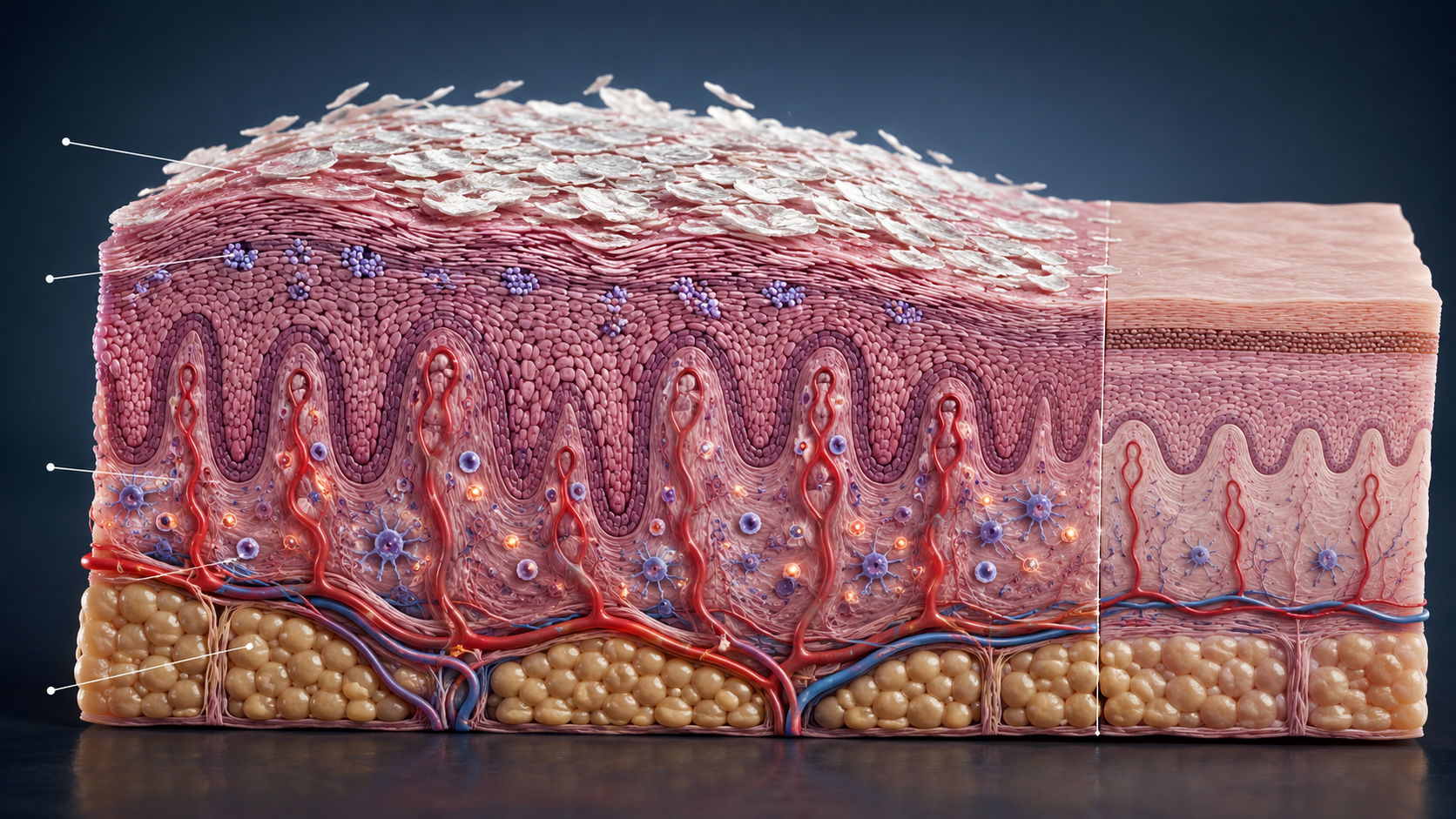
Can GLP-1s Help Skin Conditions Like Psoriasis?
GLP-1s Keep Surprising Us. Now It’s Skin Disease.
Dermatologists are reporting something they didn’t expect: patients who started a GLP-1 for weight or blood sugar are walking in with clearer skin. A new report pulls the early evidence together.
Every few months the GLP-1 story gets bigger. These drugs started as diabetes medications, became weight-loss medications, and now researchers are chasing signals in the heart, the kidneys, the liver, and the brain. According to a Medscape Medical News report published July 9, 2026, the newest place they’re looking is the skin.
The report describes dermatologists watching patients with psoriasis and hidradenitis suppurativa — two of the harder-to-treat chronic inflammatory skin conditions — improve after starting GLP-1 therapy that had been prescribed for something else. In some psoriasis cases described in the report, clinicians observed rapid or near-complete plaque clearance.
That kind of anecdote is easy to dismiss on its own. What makes this moment different is that the anecdotes now have company. Here’s how the GLP-1 story kept widening — tap through it.
What the research shows so far
The strongest piece is a phase 3b randomized trial. In TOGETHER-PsO, published in JAMA Dermatology in May 2026, 274 adults with moderate-to-severe plaque psoriasis and overweight or obesity were randomized to the IL-17 inhibitor ixekizumab either with or without tirzepatide. At week 36, 27.1% of the combination group hit the primary endpoint — complete skin clearance (PASI 100) and at least 10% weight loss — against 5.8% on the biologic alone. Read that endpoint carefully: it bundles skin and weight together, so a weight-loss drug has a built-in advantage on it. The more interesting number is that complete skin clearance on its own was also higher in the combination arm. Worth naming plainly: the trial was run by Eli Lilly, which makes both drugs.
There is a genetic signal too, and cohort data. But the evidence is not equally deep for every condition. Switch between them below.
Why would a metabolic drug touch the skin?
The Medscape report frames this as part of a twenty-year shift in how dermatology thinks about fat tissue. Medical schools once taught that fat had nothing to do with skin disease. That idea has been steadily overturned as the field learned how body-wide inflammation drives skin conditions — and that fat tissue is not inert storage but an active source of inflammatory signaling.

That leaves the central question open, and the researchers are careful about it. The authors of the genetics paper say so directly: it is not yet clear whether any benefit comes from GLP-1 signaling acting on the immune system, or from the indirect consequences of better metabolic control. And there is a thread here worth pulling for anyone in this community: . Tap each theory.
Both mechanisms are plausible. Both may be true at once. And right now nobody can tell them apart: the 2026 systematic review of GLP-1s in hidradenitis suppurativa concludes exactly that — from the existing data, the weight-dependent and weight-independent effects cannot be separated. The trials being planned, including psoriasis studies using GLP-1s alone, are built to answer that question.
The anecdotes now have company — a randomized trial, a genetics paper, a cohort study, all pointing the same direction. Pointing is not proving.
The state of play, July 2026What this means if you’re listening from the diabetes world
Skin conditions and diabetes travel together more often than people realize, and GLP-1s are already a constant topic in this community — for type 2, for weight management, and in ongoing research conversations around type 1. This report doesn’t change what anyone should do today. GLP-1 medications are not approved to treat psoriasis, hidradenitis suppurativa, or any skin condition, and the dermatologists quoted say plainly that controlled trials are needed before formal recommendations exist.
What it does show is a pattern worth watching. A class of drugs built for blood sugar keeps turning up benefits in places nobody was looking. Whether the skin findings hold up in randomized trials is a question the next few years will answer. If your skin, your weight, and your glucose are all part of your health picture — and for a lot of people in this community, they are — this is a conversation to have with your doctor, not a change to make on your own.
Psoriasis. Lebwohl M, Blauvelt A, Kartman CE, et al. Ixekizumab With or Without Tirzepatide in Adults With Psoriasis and Overweight or Obesity: A Phase 3b Randomized Clinical Trial (TOGETHER-PsO). JAMA Dermatology, May 15, 2026. Sponsored by Eli Lilly, maker of both study drugs. · Ramessur R, Arham AGA, Saklatvala J, et al. Genetic proxies of GLP1R expression are associated with lower risk of psoriasis and psoriatic arthritis. British Journal of Dermatology, 2026.
Hidradenitis suppurativa. Systematic review, American Journal of Clinical Dermatology, 2026. · Gouvrion L, Delage M, Villani AP, et al. Glucagon-like peptide-1 receptor agonists in hidradenitis suppurativa. JAMA Dermatology, August 2025. · Gupta R, Cesar L, Micheletti R, Fang V. Patient-reported outcomes of GLP-1 agonists on hidradenitis suppurativa severity. JAAD International, 2025.
Both conditions. Ching LM, Guirguis CA, Iskandar NL, Tung JK. Decreased incidence of hidradenitis suppurativa and psoriasis in diabetic patients treated with GLP-1 receptor agonists. JAAD International, 2025.
Atopic dermatitis. Association of glucagon-like peptide-1 agonist use with atopic dermatitis in obese patients: a retrospective cohort study. Journal of the American Academy of Dermatology, 2025.
How to read this evidence. One randomized trial exists, and only in psoriasis. Everything else is observational: cohort studies and surveys show association, not cause. Mendelian randomization estimates the effect of lifelong genetic differences in GLP-1 receptor expression, which is not the same as the effect of taking one of these drugs. Across every study here, researchers say the same thing — nobody can yet separate what the drug does to inflammation from what the weight loss does. GLP-1 medications are not FDA-approved to treat psoriasis, hidradenitis suppurativa, atopic dermatitis, or any other skin condition.
This post is for educational purposes only and is not medical advice. Nothing here is a recommendation to start, stop, or change any medication. Talk with your doctor before making any changes to your care.
Listen to the Juicebox Podcast
Conversations about diabetes, five days a week, since 2015.
Read the full disclaimer

Insulin Cells Survived 14 Months Without Immunosuppression
What Sana’s New NEJM Data Actually Means — and What It Doesn’t (Yet)
Cells that make insulin, living in a person’s forearm for over a year, hiding from the immune system without a single anti-rejection drug. That’s the headline. Here’s the careful version.
On July 13, 2026, Sana Biotechnology announced that The New England Journal of Medicine published a peer-reviewed letter from clinicians at Uppsala University Hospital reporting 14-month follow-up data from a first-in-human study of insulin-producing cells engineered to hide from the immune system. The person who received them still isn’t taking any drugs to prevent rejection, and the cells are still making insulin.
Three things to get straight before we go further.
The findings are not new. Sana reported these same 14-month results on March 13, 2026, and presented them at the ATTD conference that day. What happened on July 13 is that NEJM published them — a peer-reviewed letter, not a new result. Peer review is a real credential and worth something. It is not the same thing as new evidence, and a lot of this week’s coverage is quietly treating it as though it were.
We put the two releases side by side. These are the findings in each:
Not similar findings. The same findings, in largely the same sentences. The bottom row is what actually changed this week.
It is also a follow-on. NEJM published the original findings from this study back in 2025. This new letter reports that the result has held up over a longer stretch of time.
And this is Sana’s own press release — a publicly traded company describing its own data, with the forward-looking language that comes with that. The letter itself cleared peer review. The framing around it belongs to the company. All of that can be true without anything being wrong.
Now. If you live with type 1, or you love someone who does, this is worth sitting with. Two of the hardest problems in curing type 1 have always been stacked on top of each other. First, the immune system destroys insulin-producing cells — that’s what type 1 is. Second, if you transplant new cells in, the body attacks those too, both as foreign tissue and as the same old target. The standard answer has been lifelong Drugs that deliberately weaken the immune system so it won’t reject a transplant. They work — but suppressing the immune system long-term carries its own real risks, which is a large part of why islet transplantation has never become a mainstream option for type 1. Removing the need for these drugs is precisely what this study set out to test.immunosuppression
This study tests a different idea: what if you could edit the cells so the immune system simply doesn’t see them?
What was actually reported
The data comes from an investigator-sponsored study run by clinicians at Uppsala University Hospital in Sweden, supported by a grant from the Helmsley Charitable Trust. The therapy is UP421 — donor human Clusters of cells in the pancreas that include the beta cells — the ones that make insulin. In type 1, the immune system destroys them. Transplanting new islets is a decades-old idea; keeping them alive has always been the hard part. Sana calls it HIP — hypoimmune. The cells are engineered so the immune system doesn’t flag them, either as foreign tissue or as the autoimmune target it already went after once. The goal is cells that survive without anti-rejection drugs. This study is the first test of whether that holds up in a human body over time.islet cells
hypoimmune
Sana says the study met its primary endpoint — safety — and its secondary endpoints: immune evasion, cell survival, and C-peptide production. That last one is how they know it worked.
They measured A byproduct your body releases in equal amounts to the insulin it makes on its own. Injected or pumped insulin does not produce it. So C-peptide is how researchers can tell that the transplanted cells are making insulin, rather than the person’s own pump or pen doing the work.C-peptide
At month 14, C-peptide — both fasting and meal-stimulated — was comparable to the levels seen in the first six months of the study, and higher than the levels measured at months 9 and 12. Between months 12 and 14 the patient achieved tighter glycemic control, and Sana says the improved insulin secretion at month 14 underscores the importance of glucose control in optimizing beta-cell function. A 52-week PET-MRI scan still showed islet cells at the transplant site. No safety issues were identified.
Is that person off insulin?
No. And the reason why is the most clarifying number in this entire story.
The dose this patient received was, according to reporting from FirstWord Pharma when the data was first presented, equivalent to roughly 2–7% of the islet cells that would typically be needed to achieve insulin independence. Sana’s own release says the same thing in words rather than numbers: the study used a deliberately low dose and was never intended to demonstrate better glucose control or a reduction in injected insulin.
Read that again, because it reframes everything. This was never a near-miss at a cure. Researchers deliberately gave a person a small fraction of the cells it would take to get them off insulin, because they were asking a different question entirely: do these cells survive without anti-rejection drugs? The answer, so far, is yes. The person is still taking insulin, exactly as the study intended.
Sana’s own people said as much back in March, in their own words. Carlsson described the cells as transplanted in “a single low dose” and looked ahead to SC451 as a more scalable approach at higher doses. Sana’s president and CEO, Steve Harr, MD, said that improvement in glycemic control is anticipated with higher doses of hypoimmune islets. Both men are telling you, plainly, that this dose was not expected to move anyone’s blood sugar. That is not a criticism of the study. It is the study working precisely as designed.
Per-Ola Carlsson, MD, the study’s principal investigator at Uppsala, said that after a century of relying on insulin, people living with type 1 diabetes “deserve more than incremental improvements” — and that on the strength of this 14-month data, he believes a functional cure for type 1 without immunosuppression is possible. Gary Meininger, MD, Sana’s EVP and chief medical officer, described the results as pointing beyond lifelong disease management and toward restoring natural glucose control, with a stated goal of a one-time functional cure requiring no immunosuppression.
Those are their words about their own work. Which brings us to the part that matters most.
Read the headline. Then read the fine print.
Below are four things you are likely to see written about this study. Each one is accurate. Each one also has a second half. Tap to see it. (These are our summaries of how the news is being framed — not quotations from anyone.)
What you’ll hear
A functional cure for type 1 without immunosuppression is possible.
Tap for the fine print ↓
That is the principal investigator’s stated belief, after seeing his own 14-month data. A belief is not a finding, and it is not a timeline. Nothing in this publication says a cure exists, is approved, or is close. “Possible” is the beginning of the work, not the end of it.
What you’ll hear
The cells survived 14 months with no immunosuppression.
Tap for the fine print ↓
True — and it is the genuinely important thing here. But it happened in one person, in a first-in-human study whose primary purpose was safety. One result, however good, is a starting line. The only answer to a sample size of one is more patients and more time.
What you’ll hear
The transplanted cells are producing insulin.
Tap for the fine print ↓
They are, measurably. But the patient received a dose reported to be 2–7% of the cells needed for insulin independence, and Sana states plainly that the study is not intended to show improvement in blood sugar or a reduction in injected insulin. It was built to answer one question: can these cells survive and function without anti-rejection drugs? That person is still taking insulin — by design.
What you’ll hear
Sana is advancing a one-time treatment for type 1 diabetes.
Tap for the fine print ↓
UP421 uses donor islet cells, which are far too scarce to treat millions of people. The version designed to scale, SC451, is grown from stem cells — and it has not entered human trials. Sana says it expects to file an IND and begin a Phase 1/2 trial as early as this year. The company itself notes that FDA acceptance of an IND is at the agency’s discretion, and is not predictive of how a trial will turn out.
Where this sits on the road
Every cell therapy has to travel roughly the same road. Tap a stage to see what it is, and whether this one has gotten there.
The idea behind Sana’s hypoimmune (HIP) platform: modify the cells so the body does not flag them, either as foreign tissue or as the autoimmune target it already destroyed once.
Every cell therapy must clear laboratory and animal testing before regulators will allow it into a person. This is the standard path; the Sana release does not detail this stage.
One patient. Donor islet cells (UP421), a deliberately low dose — reported at 2–7% of what insulin independence would require — transplanted into a forearm muscle with no immunosuppression. At 14 months: cells alive on imaging, C-peptide measurable while fasting and after a meal, no safety issues. Sana says the study met its safety and secondary endpoints. It was never designed to improve blood sugar or reduce injected insulin, and the patient still takes insulin.
Donor islets are far too scarce to treat millions of people. SC451 — grown from stem cells — is the version that could. It has not entered human trials. Sana says it expects to file an IND and begin a Phase 1/2 trial as early as this year.
Surviving is not the same as sufficient. A therapy has to deliver enough working cells to meaningfully change glucose control or reduce insulin needs. That has not been shown with this approach.
Does the immune evasion hold? Do the cells last years, not months? Does it work in people beyond the first, carefully selected patient? These are the questions large trials exist to answer.
Then it must be approved, manufactured at scale, paid for, and delivered. This is the stage breakthrough headlines rarely mention, and it is measured in years.
This is the general path any cell therapy follows, shown here for context. Only the stage marked “where this is” describes findings reported in Sana’s release.
How to hold this
You’re allowed to be excited. You’re also allowed to keep your guard up, because this community has been handed “five years away” more times than anyone can count, and the disappointment is its own kind of tax.
Both can be true. Something real happened: engineered cells stayed alive and kept making insulin for more than a year inside a human body that was never given a drug to stop it from rejecting them. That is the wall the field has been stuck behind. And the finish line did not suddenly appear — this was a few percent of a dose, in one person, and the scalable version hasn’t been given to a single human being yet.
In the meantime, the thing that actually changes your life with type 1 today hasn’t changed at all. It’s still timing and amount. The right amount of insulin at the right time. That’s what makes today better while the researchers keep working on tomorrow.
We’ll keep watching this one. If SC451 reaches a trial and starts producing data in actual patients, it’ll be worth a much longer conversation.
The Juicebox Podcast
Plain-language type 1 diabetes education — settings, meals, technology, and living well. More than 1,850 episodes, free wherever you listen.
Read the full disclaimer
© 2007–2026 Juicebox Podcast. All rights reserved.