
#578 Allergic to Insulin Part II
Dr. Bonnie McCann-Crosby, MD is here to talk about a potential work around for severe insulin allergies.

You can always listen to the Juicebox Podcast here but the cool kids use: Apple Podcasts/iOS - Spotify - Amazon Music - Google Play/Android - iHeart Radio - Radio Public, Amazon Alexa or wherever they get audio.
+ Click for EPISODE TRANSCRIPT
DISCLAIMER: This text is the output of AI based transcribing from an audio recording. Although the transcription is largely accurate, in some cases it is incomplete or inaccurate due to inaudible passages or transcription errors and should not be treated as an authoritative record. Nothing that you read here constitutes advice medical or otherwise. Always consult with a healthcare professional before making changes to a healthcare plan.
Scott Benner 0:00
Hello friends, welcome to episode 578 of the Juicebox Podcast.
You may remember episode 504 allergic to insulin where a young girl from cannula came on to talk about how she was really like viciously allergic to her fast acting insulin, her mealtime insulin. And we talked all about how she worked it out. Well, a little later, I heard from a doctor in Texas who had a patient who was also suffering from the same thing. And a lot has happened since I talked to that doctor, I'm going to tell you about it here. And she's going to tell you about what they did, and how they took care of the problem. It's kind of fascinating. You're gonna love it. And I think in a couple of months, I'm going to get this doctor's patient on to talk about what they learned, which is different than what the first person learned for Oh my Wait, do you hear? Nothing you hear on the Juicebox Podcast should be considered advice, medical or otherwise, please Always consult a physician before making any changes to your health care plan. We're becoming bold with insulin. Hey, so far this month, we've added like 140 people to the T one D exchange registry, have you taken the survey yet have to be a US citizen. But after that, it's T one D exchange.org. Forward slash juicebox take you less than 10 minutes. This episode of The Juicebox Podcast is sponsored by touched by type one, please go check them out at touched by type one.org or on Facebook, and Instagram. Today's show is also sponsored by the Dexcom G six continuous glucose monitor, you're going to want to go to dexcom.com forward slash juicebox to get started today. Head over there right now get the CGM technology that my daughter wears. It's absolutely amazing.
Bonnie M. McCann-Crosby, MD 2:03
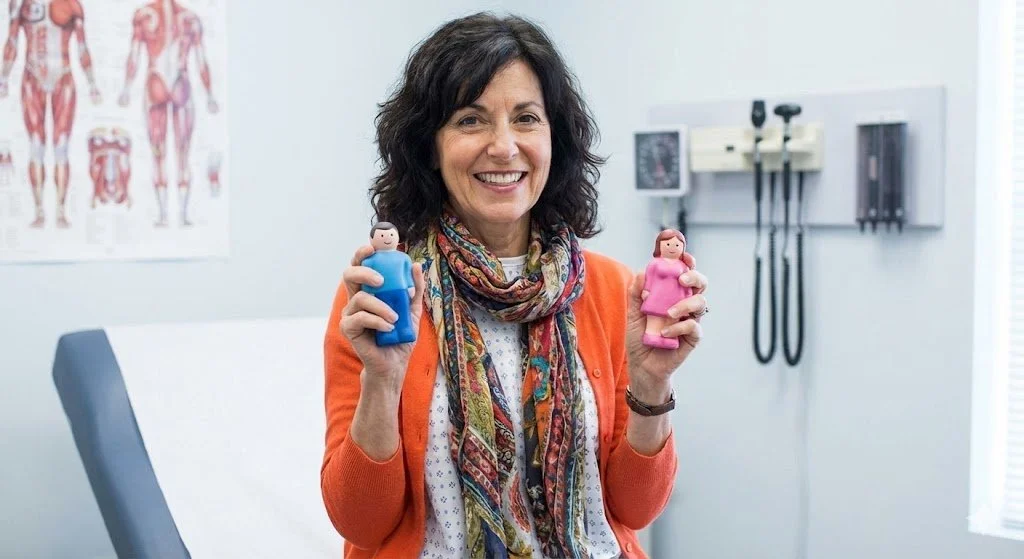
Hi, I'm Bonnie McCann Crosby. I'm one of the pediatric endocrinologist at Texas Children's Hospital in Houston, Texas. Thanks for having
Scott Benner 2:12
me. No, thank you for doing this. I appreciate it very much. Let's see if I've got this right. I put up an episode with Stacia, right, and she's allergic to insulin. And I talked to her about like, you know, like, everything she went through, and it was really kind of fascinating. I didn't realize how impactful I mean, I guess I didn't even realize it could happen but but that she's allergic to this insulin couldn't use it had to get this specific kind of, I forget, like injection port or pump site or something like that from Germany, and they weren't gonna make them much longer and the insulins like $14,000 a year, and I think this is a pretty good encapsulation of that. That whole thing, but then I got an email from you. And I don't know how that happened. So you fill that part in for me?
Bonnie M. McCann-Crosby, MD 3:03
Yeah, no. Um, so I obviously see a lot of pediatric patients with type one and get to chatting with the parents, and a lot of them had mentioned your podcast and how they really enjoy it. And so I was like, well, I'll check out an episode. And the episode I first happened to listen to was the one with Sacha and the insulin allergy. And got me to thinking about other cases that I'd seen similarly, which is why I reached out to kind of get more information.
Scott Benner 3:36
Cool. So it is complete happenstance that, so I'm assuming that, you know, some of the people who listen to the show, they hockey a little bit about the podcast, right? And they're just, they, I'm assuming they say you got to listen like they, they give you the wholesale. And then finally you're like, I'm gonna listen. And then you land on an episode. Boom, out of the gate. And you're like, Oh, I've seen this before with some of my other patients.
Bonnie M. McCann-Crosby, MD 4:02
Yeah, it was. It was crazy. Actually. I was like, Wow, I can't I can't believe this is the episode first one I actually listened to.
Scott Benner 4:10
Did it make you wonder what secrets are in the other ones?
Bonnie M. McCann-Crosby, MD 4:14
It has? Definitely.
Scott Benner 4:17
So you listen to that. And you think you have current? I know we can't speak about your patients specifically. Although although it looks like maybe one of them might come on the show. But but so you had somebody who you were thinking up right when you saw this like somebody who you're treating currently,
Bonnie M. McCann-Crosby, MD 4:33
yeah, no, I and, you know, patients with similar reactions to Sasha significant allergic reactions, skin reactions, and things like that and just trying to think about other ways to to treat these patients and because this is very rare, and not a lot is known about what to do in these situations.
Scott Benner 4:57
So So highlighted for me A person who has this allergy injects the insulin what happens? Generally?
Bonnie M. McCann-Crosby, MD 5:04
Yeah, so I mean, in patients with these kind of allergies, you know, they can get significant like skin reactions where it's almost like major hives, you know, huge raised area, red on the skin. Extremely large, extremely painful. And, of course, you know, this is every time you inject, right, and so if you imagine, you know, if you're on multiple injections a day, every single time you give an injection, you've got these huge reactions, and they last for days. So this is not just, you know, it's it's done within a few minutes or an hour, it's it's days later still dealing with these consequences from each shot, so and incredibly painful, incredibly frustrating. And then, you know, what can happen is you're not getting absorption of the insulin, right. And so blood sugars are through the roof high difficult to control, increased risk of DKA, because you're not getting, you know, the life saving drug that you need to keep blood sugars in check.
Scott Benner 6:06
So aside from the fact that they're having a terrible reaction to the insulin, I guess the inflammation is stopping the uptake of the insulin as well. Yes, yes. Okay. So now, so then it, does that force them to use more, which increases the reaction?
Bonnie M. McCann-Crosby, MD 6:21
Absolutely. Absolutely. In You know, oftentimes, you know, we're talking, you know, very, very tight insulin to carb ratios, and just nothing is really working. I mean, we're talking like one to two, one to three, insulin to carb ratio.
Scott Benner 6:36
So what do you do? Like, I mean, kind of walk me through, like, pick any of your patients in your head, I don't need to know their name or their details, but the first time you see this, how do you how do you try to help them?
Bonnie M. McCann-Crosby, MD 6:48
Well, um, you know, we try different types of insulins, obviously, if one is not working, you want to kind of go through all the other options. So if Humalog is not working, okay, let's try Novolog. Let's try a pea dry, let's try, you know, fiasco, let's try any different type of insulin, to see if that will work and create a similar or less, you know, less similar response, you know, and that can even prove challenging as they're going through this. And so, you know, oftentimes, we'll get our allergy and immunology colleagues involved as well to see if there's anything we can do, potentially topically, like, like a steroid cream, or even orally, like anti histamine, anything that can kind of mitigate the reaction, minimize it. And so that's kind of the starting place for these type of cases.
Scott Benner 7:42
So there are there are different levels, like are there some people who you can treat like with a topical, something that that keeps it reasonable? Or, but we're not talking about that right now? We're talking about, like, really extreme cases?
Bonnie M. McCann-Crosby, MD 7:55
Yeah. You know, and, of course, you know, there's a lot of people that do have like skin sensitivity to, you know, maybe a little bit of an air area around the injection. And it's more common, of course, with like adhesives, with pumps and things like that. And then, you know, yes, you can do topical things. But when you get to the level where, you know, you've got significant, you know, inflammation and a reaction to that level, you know, you got to start thinking, Okay, what, what else are we going to do long term, right? Because even if a person were to become, you know, tolerating a new insulin for a little while, that doesn't necessarily mean they're not going to develop a new reaction, right? So you still have to monitor and maybe they're doing okay for a little bit, and then potentially, they could have another reaction later on to a new insulin. So it's definitely a challenge to try to figure out like, what's the long term game plan for this these cases?
Scott Benner 8:49
What are the most extreme things that you've seen happen to people's like day to day life because of this?
Bonnie M. McCann-Crosby, MD 8:57
I mean, you know, DKA is obviously the most extreme, right, because, you know, they're not getting absorption, they're in the hospital multiple times, in, you know, blood sugar's run in three hundreds plus all the time, and you don't have a lot of reserve, right. So, you know, if you are missing, at least even like a fraction of absorption, you're going to be at higher risk to go into decay. And then, you know, just on a day to day basis, I mean, you know, think about it, if you are having pain every single time you inject insulin you become maybe you don't want to inject your insulin, right, maybe you become kind of depressed because every single time you do this, it's causing excruciating pain over and over and over and over again, and there's not really a good, you know, other solution for you. And so that, I mean, that's the worst part of it, I think, is a psychological aspect.
Scott Benner 9:55
I would imagine too, it could lead to eating issues like oh yeah, refuse Right. And so
Bonnie M. McCann-Crosby, MD 10:02
it may you know it, you know, patients may choose to kind of carb restrict or you know, more keto, but that, you know, in growing children is obviously a concern, right, they need, you know, certain amount of carbs to grow and so that that definitely becomes challenging.
Scott Benner 10:21
So, I want to just be clear, like stopping here for a second for people listening, like my daughter doesn't like vs burns her right? Like if she wears a pump with the Aspen and for a couple days, she says the spot is sore, like so we just say okay, like she doesn't her body doesn't tolerate something about vs very well. But that's that's not what we're talking about, like, about like, significant severe things to the point where if you go back to Episode 504, and listen to the conversation with Sasha, like, she's having all of the issues that that Bonnie's describing now, like, and I feel like I should be calling you Dr. McCann Crosby. How do you want me to talk to you? What do you want me to does? Either way, it doesn't matter. I'm gonna go with Bonnie. So I hear just enough Texas and you're you're making me feel very comfortable. So this is a big deal. And and the stuff that that that Bonnie is describing here is super real, like people not eating there. It can't get their blood sugar's down, ending up in DKA. Like and not in, there's no end of it. Not going to stop for them. I don't want to give the whole thing away about 504 in case people want to listen to it, but oh god, Bonnie, this isn't Can you hold on one second? Um, so yeah, this never happens. But hold on, yeah. Are you using insulin? If you are, wouldn't it be great to see what it's doing. And I mean, by what it's doing, I mean, what it's doing to your blood sugar. Don't you want to know how quickly your blood sugar is moving. And in what direction? You can you know, with the Dexcom, G six continuous glucose modeler, speed, direction, and number, all at the touch of a button, really, you could just open up your Dexcom receiver and there's the information you need, or you can use your phone as a receiver. My daughter uses her iPhone. Let me pull up her blood sugar for you right now. Interesting. 123 is her blood sugar. And I can see it starting to come down. Right, so she's eaten recently, a higher carb meal. That's kind of sticking to her a little bit. But I can see the insulin working. And I can see it's crazy. I'm just looking at the graph. And I can see her blood sugar kind of bending, right, like it's a little stable. And now it's sort of curving down. It's it's telling me that the Bolus we use this working and you can see all this as well on your Android or Apple phone. I'm a follower of my daughter, she can have up to 10 My wife is also following that would leave eight more nurses family members well meeting people on the block. I don't know you whoever you want, you can let whoever you want follow. You also don't have to let anyone follow it's completely up to you. Dexcom is going to tell you the things that you need to know to make great decisions with insulin, speed direction and location of your blood sugar are you 88 unstable for 88 and falling big difference right 88 and stable Whoo, all good falling might need some carbs going up might need some insulin. All right in front of you on this easy to understand graph. It's just a line it kind of just just flows into the future up down stable and soon after using it you just get a vibe for it. You know how it works and you can kind of be ahead of the diabetes roller coaster instead of you know hair back and screaming and always riding it dexcom.com Ford slash juicebox I can't I cannot I cannot tell you properly I don't think what a big, big big impact it's made on my daughter's health and mine. Before I go I want to remind you to check out touched by type one.org It's a wonderful organization doing things for people living with type one diabetes that are just so heartwarming, you have to see them yourself and you can at touched by type one.org also on their Facebook and Instagram pages Alright, now we'll get back to Bonnie I know I was the one that interrupt this episode. I'll tell you guys when it's appropriate why I've been getting a lot of calls. While I've been making the podcast lately but not right now. For now let's get back to Bonnie she's going to explain how they took care of this problem for her patient. It's legit amazing.
I'm really sorry Bonnie, I had take a phone call, which I apologize for. Okay, so we now understand completely like what this the impact of this is, and that you really don't have any recourse or you didn't you thought had any recourse as a physician, these people still need insulin, they're going to have these reactions like trying to, you know, treat what happens next isn't fixing the problem. It's just kind of quelling, you know, symptoms that as bad as they are, right. And so, when you contacted me, you were just looking to speak to Sasha's family, right?
Bonnie M. McCann-Crosby, MD 15:33
Yeah, just to kind of hear their experience and kind of different things that they had tried in the past and how things were going for them currently.
Scott Benner 15:44
And after speaking with them, what did anything strike you to try? Or where did you think you were left?
Bonnie M. McCann-Crosby, MD 15:50
Well, you know, her case is, is certainly very unique. And you know, in her case, they ended up with the the Daya port system, which required a lot of planning and time invested, because it is only available in Europe. And apparently, they had to fly this German surgeon over to Canada, and you know, he had to train them how to put this thing in, and then the upkeep and everything like that is is quite expensive for the ongoing supplies and the insulin. And, you know, it's it's definitely a lot and you know, you know, reaching out, I did reach out about diapers in the US, but that is, you know, very, very complicated and requires FDA approval, which of course, takes a lot of time, right. And so, just kind of thinking about other ways for these patients. In one, one thing came to mind, which is technically not FDA approved for people younger than 18. But is the inhaled insulin, a Frezza? And yeah, so that's kind of, you know, honestly, your podcast was kind of just opened my mind into thinking about different ways to treat patients with these insulin allergies. And, and that kind of led me down towards the Frezza pathway.
Scott Benner 17:19
When you thought that, did you then think I'm a genius, afterwards? Because that's what
Bonnie M. McCann-Crosby, MD 17:23
No, no, this was actually, you know, you know, these, these discussions are never made, you know, just with one with me, right? So it was kind of my whole, my whole team, were kind of talking about these situations, and what else could we try? And so it was a team.
Scott Benner 17:37
All right. Okay, Bonnie, everybody's hurt. Yes, man. Okay, everybody helped. I understand, like, yeah, fake credit from anybody. But I'm just saying, I would have been like, Oh, my God, I'm a genius. So to kind of, like, tease this out a little further to make sense of it. If if a person who's allergic to their injected insulin, gets it through this port, it magically doesn't, it doesn't bother them anymore, right? It becomes then the problem of the expense and the difficulty, right, and that there's a certain kind of insulin that you use with the port. That's not it's very expensive and not covered by insurance, etc. So right, right, right. But but the takeaway from that should be if you can bypass the subcutaneous delivery, somehow, they're not having a reaction. Right? So when you think a Frezza is, is the molecule sold, so different, that it doesn't make you think, Oh, God, what if we spray insulin in their throat? And they have a reaction in their throat?
Bonnie M. McCann-Crosby, MD 18:37
No, that's, that's a definite concern. And so, um, yeah, because it, you know, it is, it is human insulin, right? It's the same and it's just not being injected into subcutaneous tissue, obviously, it's inhaled, which is, you know, brings about its own concerns, which we can kind of get into, when we talk about how one would kind of initiate this in a patient with a concern for insulin allergy,
Scott Benner 19:01
I would imagine you find the flesh on them that is most likely inside of their mouth and spray it on it and see what happens. Is that what you did, yeah, so
Bonnie M. McCann-Crosby, MD 19:09
um, you know, in these cases, you would definitely want to get allergy and immunology Doctor involved, to be able to kind of help monitor for reactions. And so I think, you know, first would be to kind of try a little bit of a local area in the mouth and just kind of see like, how that goes. And then, when you're really going to do first dose, true inhalation you really need it monitored, right, in a clinic, with an allergist who can be prepared with, you know, epinephrine, and anything that is needed in case we have an anaphylactic reaction in the lungs, right like that. So that's, that's the big concern, obviously. So it needs to be done in a very carefully monitored situation.
Scott Benner 20:00
Were you there when it happened?
Bonnie M. McCann-Crosby, MD 20:02
I was there. Not in the, you know, not in the room. But, you know, I'm there in the clinic when when these things are done. So yes.
Scott Benner 20:12
What was the story? was the concern? All was it as great as what if we have to like, tube this person? Like couldn't have gotten that bad? Like it was at your expectation that it could have went anywhere from Hey, this could work? Yeah, we might have to assist them in breathing.
Bonnie M. McCann-Crosby, MD 20:27
Yeah, I mean, you have to, you have to plan for the worst, right? Like hope for the best plan for the worst in these cases, because you just you don't know what's gonna happen. And so, you know, and, again, has to be very closely monitored.
Scott Benner 20:40
You just described being married. I don't know if you're married or not. But oh, I am. Yeah. For the worst hope for the best. It also applies to raising children and buying a dog. So it really does. It applies to everything. So I'm like, I'm so I'm fascinated. So this patient, you had one in mind that you were going to try it with first, I imagine. Right? Okay, this person comes in. And what happens? I mean, you they have, I mean, do you have it? Is that how they like What's the word for how Yeah,
Bonnie M. McCann-Crosby, MD 21:11
it's inhaled? Yeah. I mean, it's like, like an asthma inhaler. So you know, you can kind of have a device, kind of, just breathe it in your mouth, right? Just inhale it. That's how it works
Scott Benner 21:23
for they took in some carbs. And then you were like, Alright, here we go.
Bonnie M. McCann-Crosby, MD 21:26
Yeah, that's how it how it's done. Wow.
Scott Benner 21:29
Like the almost like a last meal situation. would have been like, yeah, this goes upside down. I want to have something really good. So okay, I mean, like, what happened?
Bonnie M. McCann-Crosby, MD 21:45
I mean, you know, again, I can't I can't say specific details, of course, but, you know, overall, good response. And no emergencies occurred. So
Scott Benner 21:57
yeah. So they were able to inhale the phrase, is it a phrase or a phrase? It's a Frezza. And they did not have any like, but like pain, bumpy bumps, bubbling, anything that was happening on the on their skin with the other insulin just didn't know. Wow, that must have felt amazing. For them to you for I mean, I would imagine everybody's just running around thrilled. Yeah. Can you has this made a significant impact on this specific person's life?
Bonnie M. McCann-Crosby, MD 22:27
I mean, again, I can't really speak to
Scott Benner 22:30
tell me where was it a was it a improvement? Yes. I
Bonnie M. McCann-Crosby, MD 22:35
mean, overall, yes. Okay.
Scott Benner 22:36
Are there still issues? No, no. Wow, you were just being very careful to protect people's information. Okay. Excellent. So Wow. So you fixed it, Bonnie? And your friends, everybody who helped? I understand. Don't worry. Yeah, yeah. Wow. So then do you look back at other people, like you start going through records and finding other people this has happened to in the past? And like, what's your next feeling after you accomplish that?
Bonnie M. McCann-Crosby, MD 23:01
No, definitely. I mean, if there, you know, Are there cases that come up? We're gonna keep this kind of treatment in mind? Because, you know, I think it's a viable option. Now, of course, you know, this does not replace long acting, right, this is only short acting therapy here. So you have to make sure that, you know, these patients can be on a long acting, of course, so whether that be Lantus, Joseba, Basal, or like whatever, but you have to make sure that they can also tolerate a long acting that we don't have a reaction to, you know, obviously,
Scott Benner 23:35
in this very, in this specific situation that we're not being very specific about, could that person tolerate along I think insulin? Yes. So what do you think it is about the shorter acting insulin that they can't take? Do you think it's a preservative or something? They have you ever looked into what what they're allergic to?
Bonnie M. McCann-Crosby, MD 23:52
Yeah, I mean, it's possible it is a preservative and I and we haven't tested you know, specifically but it there's got to be something in in that short acting that that these these patients are obviously reacting to, but because maybe it's just something some reaction, you know, within the skin, but yeah.
Scott Benner 24:18
And it doesn't matter like like you said, a PG or Novolog, fiasco, whatever, you tried the same reaction. Wow, that's crazy. So but that thing doesn't exist in even in the modern Basal lecture Seba.
Bonnie M. McCann-Crosby, MD 24:37
You're not sure you know, everyone is there. Yeah. I mean, I think there's different ones that are there different preservatives and each one so I mean, I think you just you have to try each one to see which one they're not reacting to. So, you know, we were able to find one long acting that did work without any issues.
Scott Benner 24:56
Would you share that or can you know, okay, Well, if I get the person on it, I'm sure they'll be able to tell me. I'm sure they will. That's amazing. Oh, wow. Like seriously? Like, is this one of those like, this is what I became a doctor for moments. I like to think so. Yeah, no kidding. I mean, that's just such a big shift for someone like me really, like, just boil it down to it's, it's, oh my gosh, you have diabetes, you're gonna have to take insulin every day for the rest of your life ups. You're allergic to insulin, sorry. Like, where do you like there's nowhere to go? Like, so there's people are torturing, they're torturing themselves with this insulin because it's their only option. How many people do you think you've seen with this issue? Well, first of all, how long you've been practicing? And then how long do you think you've seen? How many people do you think you've seen?
Bonnie M. McCann-Crosby, MD 25:44
So I've been practicing for six and a half years now. I mean, this is extremely rare. You don't? This is not this is not common. I mean, this is like a I mean, it's it's like you're lucky if you see a case in your lifetime, probably.
Scott Benner 26:02
It's not or unlucky, I guess I should say, it's not even a thing like like, since then when you when you meet a person who's newly diagnosed, you don't think in the back of your mind? And I hope you're not allergic to it just right.
Bonnie M. McCann-Crosby, MD 26:14
It's just it's not really, it's just not these are not common things, of course.
Scott Benner 26:19
Okay. Wow. And so do you? Do you know of a handful of patients like this? Or? Not even? Not even? So are you on here today hoping that people will hear about this? And in case it's they've been touched by this problem?
Bonnie M. McCann-Crosby, MD 26:35
Yeah, I mean, I think the big thing is that, you know, this is an option, right? And, and if we are stuck in a position where we can't really get the diapers, or that's not really a feasible option, then this may be an alternative. That is a lot cheaper. And, you know, potentially, you know, life saving, honestly, it's less
Scott Benner 26:56
and less, just less of an encumbrance. Which right, you don't need an extra thing when you like, you already have diabetes, you don't need more stuff, you know, right. I, so I have to ask you, because that's just how it occurs to me. I mean, I remember when I first came on the market, and people said, Are you gonna try this with your daughter? And I said, I'm not real comfortable with her inhaling something and putting it into her lungs? And I don't know anything about it. I want to be clear. I couldn't, you know, and I'm not I'm not making a judgment. I'm not saying that. There's any studies, I'm just saying that from a knee jerk reaction as a parent, I was like, No, thanks. But do you prescribe it? Generally speaking, in your practice? No, you don't
Bonnie M. McCann-Crosby, MD 27:36
know. Well, and I think, you know, to kind of explain, there are some limitations with it, right. So it only comes in certain unit cartridges, there's a four unit, an eight unit and a 12 unit cartridge. So in littles, you know, who are on I don't know, half a unit with meals, or you're really trying to get precise with the dosing, you can't like, you have to be on a high enough dose that you're on able to take at least four as a minimum, right. And the other issue is that it does not last as long, as you know, say homolog, Novolog. And so they may need in between meals, potentially a correction dose to, you know, to bring down potentially a high postprandial and the dosing, it is different, slightly different. So usually, when you go from human log, or Novolog are one of the other injectables to a Frezza, you're going to be on 20% Higher, potentially dosing on a Frezza than you were on short acting. So it does have some limitations. And then, of course, it's not really, it's not studied in kids. So it's not FDA approved in kids less than 18. So you do have to get, you know, special approval, if you do have a patient with an insulin allergy. And then the other thing to keep in mind is just, you know, you can't use it in a person that has an underlying lung issues such as asthma, right? That could be a bad thing, right? So they have to have healthy lungs, and then you do have to monitor lung function over time to make sure that it doesn't change once you're doing an inhaled drug like this for a period of time. So that's recommendations to get, you know, lung function studies, when you're on this medication.
Scott Benner 29:36
Gotcha. Did you do one initially, so you had a baseline? Cannot say, oh, but would be a good idea, right? Yes. Yeah, just say, I gotcha. I will tell you that I know of a handful of adults who listen to the podcast who use it and really like it. So I'm not I'm not unaware of it. And I just, I don't know, it seems like did you have well, I guess you didn't have that polling the side of you because this was it right. You were down? Yeah, this was the option. Yeah. Wow. It's just amazing that it worked.
Bonnie M. McCann-Crosby, MD 30:08
Yes, absolutely. Yeah.
Scott Benner 30:09
I mean, just it's i It's miraculous, you know what I mean, there's, I think it's because I have the experience of having talked to Sasha for an hour and listening, you know, from like, a young girl, and she, you know, explaining how it's impacted her life. And I follow her on. I think I follow her on social media now. And just to see kind of the lightness that exists in her life now, like, she acts, she's acting her age, and she looks happy and everything. And it's just a really kind of amazing idea. So are you worried about it? lung function wise? Like, take up? Take out for a second? This is what had to be done? Are you concerned?
Bonnie M. McCann-Crosby, MD 30:48
No, I mean, I think as long as you're monitoring, you know, if any changes come up there, I mean, we're gonna you know, you'd have to kind of figure out what's, what's the next plan, but I'm in a, you know, people with healthy lungs going forward? I think. I'm not I'm not super concerned.
Scott Benner 31:08
Hey, I have a question. I didn't ask. Not that you would want to do this. But you try regular an MPH. When you are going through all the different?
Bonnie M. McCann-Crosby, MD 31:16
I mean, yeah, you have I mean, if you're gonna go to a Frezza, you have to try the other ones. Everything you little
Scott Benner 31:20
You tried. Okay, I just went, Yeah, did everything. Yeah. Wow. Oh, my God, I am not asking you anything. I should be asking you because I'm a little overwhelmed how excited I am about this. I didn't expect I'd be so elated by the conversation. But is there anything I'm not asking that you think should be added here?
Bonnie M. McCann-Crosby, MD 31:40
No. I mean, I think I think it's really important, especially, you know, if if someone comes in and does have an allergy, a true allergy, I mean, you have to think about this as a viable option. And I, and I'm glad that you know, it is right, in anything that can be life changing and, and help people not be in pain all the time. Like, this is huge. So
Scott Benner 32:06
So is it. Is it fair to say, Bonnie, that if if somehow magically, five people walk into your office today, they all had that level of allergic reaction to injected insulin? You would say, Well, let's try this. That seems like the viable and maybe only next step?
Bonnie M. McCann-Crosby, MD 32:22
Yeah. I mean, I think it is, I think it is, I mean, short of, you know, going to Germany and getting a diet for right now. I mean, I think that's probably the best best option. If you've exhausted all the other, you know, short acting insulins, I mean, this is a this is definitely an option. But of course, you know, it does, like I said, require getting a prior authorization just in kids. Right. But, but yeah, definitely
Scott Benner 32:50
remind me, and I went over it real quickly at the beginning, but part of the problem with the port was that the company might not be making it anymore, or is that correct? And then, and they insulin was like, literally like 14,000 in cash a year.
Bonnie M. McCann-Crosby, MD 33:02
I don't remember how much it was, but it was, it was very expensive. And even, you know, the, the maintenance of the diapers itself, like all the supplies that you need, and things have to be replaced every year, and it is costly.
Scott Benner 33:15
What is the what is the port do? How does it? Is it like a metal spike? Oh, you know,
Bonnie M. McCann-Crosby, MD 33:22
I don't know exactly what it I don't know, it kind of it looks, it's hard to hard to describe, you can look at the website and see like in a better picture than probably what I can describe. But it basically, you have this little port that goes into the peritoneal cavity, like in your, you know, in your abdomen, and, and then you've got a connection that connects from that port on the inside, to the outside where you've got an insulin pump running and, and pumping insulin. And it's an older version of an insulin pump. I can't honestly cannot remember the name of the company that makes it but they don't make that pump anymore. So but but that's the one that connects with the diet board.
Scott Benner 34:10
It's a ton of hurdles. And I guess if there's, I mean, if you've only seen one in your six year career, and I've had people reach out to me, I have not having a lot of luck getting them scheduled on the show for some reason. But there's like a handful of people who all know each other who have this happening with their kids. And I think they heard episode 504. And then they reached out I have been trying to book them, but I'm not having a ton of success. But I mean, even at that I reach a fair amount of people and that I only heard back from four people was is pretty telling, you know, oh, yeah, yeah, yeah. So companies aren't in the business of I mean, I know it sounds harsh, but companies aren't in the business of making things that four people can use.
Bonnie M. McCann-Crosby, MD 34:50
You know, right. Right. It's
Scott Benner 34:51
true becomes a comes in an issue. Can I ask you a couple of other questions before I let you Yeah, cool. Absolutely. How do you handle I like this You're I was looking at you online. It's not creepy at all. It was just to get ready for this. Do you see yourself as a person who treats thyroid disorders in and out of the box? Way? Are you? Are you very by the book?
Bonnie M. McCann-Crosby, MD 35:14
I mean, I think we have obviously, like evidence based guidelines that we follow, right? And you know, sometimes you, you know, every case is unique, right? So if a patient has a specific need, you may have to kind of think outside the box, potentially, I would say that, in general, I follow the the guidelines, and if there's something that is an outlier, then you have to kind of alter and kind of figure out what's best for that patient.
Scott Benner 35:40
So like, if I came in, and I was like, Hey, here's my nine year old, we'll call him Jimmy, and Jimmy's tired all the time and can't pick his head up off the floor. He's like a puddle. But it's TSH is two and a half, you give you give him a thyroid replacement hormone?
Bonnie M. McCann-Crosby, MD 35:54
Probably not.
Scott Benner 35:55
Okay, what's the number you're looking for?
Bonnie M. McCann-Crosby, MD 35:58
So, I mean, in general, we, you know, my practice is if the TSH is above 10, or the free T four is below the normal reference range, those are my now everybody's different. So right, like if I've started a little bit lower TSH levels, but those are the kind of the general guidelines
Scott Benner 36:19
when that happens. And I don't I'm not setting this up to be an indictment of you. I'm trying to understand the bigger picture if the if the practice or the hospital if that's the the treating rule, then did the physicians not have a lot of autonomy?
Bonnie M. McCann-Crosby, MD 36:32
Oh, no, they
Scott Benner 36:33
do. They do. Thank you. Yeah. All right. I just I was wondering, I, we have a really popular episode with a with a fibroid doctor, who, you know, talks about treating the symptoms, not the number. And, and then a lot of people run into trouble when they go back to their doctors, and they're like, Hey, this is my kid, His hair's falling out, and he can't stand up and be like, oh, is TSH is only five. And then eventually, they get to somebody who gives them the, the hormone and the kid pops back up like a fresh flower afterwards. So I was just, I was just wanting, I was looking for, like a real like, like, outside of the I know, that's not what we're talking about. I just wanted to like have like a top line reaction from you so that people could understand what's happening when they go to the to the doctor?
Bonnie M. McCann-Crosby, MD 37:19
Yeah, I mean, I think you've got guidelines for a reason. Right? But then, you know, every case is different, right? It's, I think you have to look at it on a case by case basis, and then, you know, come up with an individualized treatment plan. So I mean, you know, I would say those are my usual guiding numbers. Right. But, you know, there have been times where things you start at a slightly lower TSH level, you know, so, you know, you just have to kind of take each case individually.
Scott Benner 37:45
Can I ask you what made you want to be an endocrinologist? Oh,
Bonnie M. McCann-Crosby, MD 37:48
man, yeah. Um, I was a biochemistry major, in undergrad, and endocrine, to me, there's a lot of biochemistry involved. And there's a lot of, I love the feedback loops. And, you know, from the hormones, and I loved also just the continuity. You know, you're seeing patients from sometimes, you know, itty bitty all the way through graduating high school, and I loved being a part of their lives for that long, and the subject matter was just super interesting to me. And I liked the fact that, you know, if you were missing a hormone, I could give it back to you. Right, I could treat it and I felt like it was actually making a difference.
Scott Benner 38:32
That's excellent. So no, there's no type one in the family or anything like that. You just know, you're just a science based person to decide. Yeah, that's, that's really cool. Okay, I have a question that maybe you can uniquely answer. Sure. You're in your position, and you're helping a person, and they get up the nerve to say to you, hey, I don't know what happens. They get this like Rocky in a one scene, you go, this is amazing. You're doing great. And they say, I listened to a podcast. What's your first reaction the first time you hear that?
Bonnie M. McCann-Crosby, MD 39:04
I mean, I'm pretty open minded when it comes to that. So I'd say Okay, tell me what podcast you're listening to. And, you know, so I would be interested to know, like, what they learned, and maybe I can learn something
Scott Benner 39:18
that is very progressive. You Thank you. I just I would assume that the I mean, I'm putting myself in my shoes. I know, this is crazy. But I would if I was you. I'd be like, Oh my God, these people on the internet. And so, but I mean, so it happens once you're interested. How many times do you think somebody has brought it up to you
Bonnie M. McCann-Crosby, MD 39:41
has brought up what sorry?
Scott Benner 39:43
No, no, I'm so sorry. Like, how many different families do you think have said, I listened to this podcast?
Bonnie M. McCann-Crosby, MD 39:48
Your podcast? Yeah. Gosh, I want to say I mean, a handful, probably. Four or five? Yeah, I mean, it's definitely I hear about it on a regular basis.
Scott Benner 40:02
That's so cool. Do you have any questions? For me? Do you have like, do you want to know anything? Like why? Like you? I don't know. Maybe you might be like, No, Scott, I'm done. Now I've talked about the thing, we're finished. But no, no thing that like springs to mind. Like,
Bonnie M. McCann-Crosby, MD 40:19
No, I'm just, I'm super, you know, I hear really good things about about your podcasts. And I'm really glad that you're doing what you're doing. And I think, you know, being an advocate for families, for for kiddos with type one, and you know, I think it's great. I don't know that I didn't prepare any specific questions. So,
Scott Benner 40:42
so my thought I'm sorry, I have caught you off guard. It's, uh, but my my thought like, I'm trying to imagine you in that situation where somebody comes in, like literally says, like, I mean, I get my correspondence is pretty consistent. It happens constantly, all day long. So I've gotten three today that almost if you if you read them quickly, you think they were the same note, you know, my son's nine years old. My endo says they've only ever had three people with an N A one C and the fives, it's the stable. You know, I told him about the podcast, blah, blah, blah. Like, I just like, I would wonder like, what is the person saying, dude, like, like, what is like they're listening to this like, like, voice come through their earphones. They're coming back to me with a five, five a one. See the kids eaten whatever he wants. There's not a bunch of lows. Like what? Like, do you wonder if we're like doing like, you know, like, satanic chants on the podcast or stuff like, like the like, what is it? You don't mean? Like, what? What does that make you feel? Like? Like, even now? Like, how does that? Like,
Bonnie M. McCann-Crosby, MD 41:49
I definitely am not concerned that you're
Scott Benner 41:53
the most ridiculous thing I can think of? I'm sorry.
Bonnie M. McCann-Crosby, MD 41:56
No, I mean, I guess Yeah. I mean, what, um, and I honestly, I, you know, I have only listened to one of your podcasts. So I mean, I'm, I am actually kind of curious. Now. You know, what, what kind of things do you tell families with type one,
Scott Benner 42:13
I feel like I've bullied you into this body, but I'm doing it anyway. Okay, let's do it. Let's go there. So, to me, it's a it's, it's very simple and very complex at the same time. So the simple part is this. You have to get your Basal right first, then you have to learn how to Pre-Bolus insulin. And then you have to learn the different impacts of foods and be flexible about their dosing. And then after that, that's it. It's just flexibility. It's not staring at high blood sugar's it's, you know, it's just then that gets into the bigger thing, like the simplicity is right there. It's, it's Basal Pre-Bolus glycemic load index. And, and then it's bigger picture stuff. So that you begin to have these moments where things happen, and you can react so quickly to them, because you just know, and I think that's why a podcast format works. Because you just keep listening, and things just get in your head. And then suddenly, instead of like, Oh, God, I don't know what to do. You just do this thing. You take this step without almost without even thinking about it. And I think that it's, I've seen, the feedback that I've gotten is so consistent, that I would tell you that most of the people who've been listening to this show for more than six months, are probably with very little effort have a n a one C in the sixes and the ones that really like kind of pay a little extra attention or in the fives, no diet restrictions, no problem. And it's awesome. Yeah, and it really is just so anyway, I realized at one point that we were having these big conversations, and you'd have to listen to this hour to pull out like three nuggets which, which actually works, it's a great way for people to, like you don't mean like when you sit people down you go, here's 20 bullet points, and we're gonna learn them all. Like, that's nobody does that. Right? Right. So they absorb all these ideas. But eventually, I realized that like, there's a whole system here. So I contacted a friend of mine, who is I mean, she's had diabetes for well over 30 years, she's a CTE, which I know they don't call themselves CDs anymore. There's something else. And she she came on and helped me do specific drill down episodes on ideas. So now there's like this 20 episode series called diabetes pro tip. It kind of lives inside of the podcast. I would tell you, you listen to that. You're a one season the fives. Nice. That's it. And it's nice, absolutely free. I would never charge money for it. So that's awesome ads on the podcast, but I would never ask anybody to I just don't think the learning how to use insulin should cost you money. You don't I mean, so. Yeah. I love that. Yeah. i That to me, like that's the it's the whole thing. It's giving people it's giving people kind of, I don't know, agency over themselves right now. The the feeling that they can make a change instead of waiting three months, and then putting you in the unfair position of going here, look at all these graphs, what do you think is wrong? Like? Right, that kind of thing?
Bonnie M. McCann-Crosby, MD 45:13
Right. And I think I mean, that's that's the, you know, I love what you said about giving agency. I mean, I think we want to empower our families, our patients, and I think, you know, we want them to be successful. And I hate for them to sorry. I don't know I, I hate you know, this idea when you come in to see your endo and and you get kind of beat down for your agency. It's just a number, right? Like, but I love that you're empowering them to be successful. Right? And it's not as complex as it seems to be.
Scott Benner 45:51
Yeah, it's, it's actually, once you see the big picture, it's kind of like the I know, we're so I'm old at this point. But it's like The Matrix, like it's the spot. It's the point where you're like, oh, I can just stop these bullets in the air. Like, none of this is real, you know, you have that vibe that I think you come into diabetes. And the game is moving so much more quickly than you can follow it. You look like a high school quarterback in a professional football game. Right, right. And then all of a sudden, just like they talk about what some of the greats like the game slows down, and you can suddenly see the whole field and your decision making is just ahead of the game. Right. And I just think so much about I think that being ahead of diabetes is important. Like I think that playing from behind or chasing blood sugars is a fool's errand, like you need to write make a decision that impacts something so that at least you know that what happened next, you did. In fact, instead of having that feeling of like, I have no idea what's happening here. Like, like, and you get lost,
Bonnie M. McCann-Crosby, MD 46:54
right. And I mean, so often, you know, I always, you know, I feel like, you know, people are chasing their tails with blood sugars and all this, but no, and I think if you're proactive about it, I mean, that just sets you up for success. Absolutely. Yeah.
Scott Benner 47:08
No, it really is a, it. It's not I don't think diabetes ever is easy. No, I think you can get so good at it that it could feel easy. And I think that's an important distinction, like it is a really difficult thing. But you know, just, sometimes you have to look at it very micro. And sometimes you have to look at it macro. And a lot of times people get it flip flopped. I'll tell you one thing that I see super common is that people will have, I don't know, say they need a Basal rate of a unit an hour, but their doctor has them at point six. So then they make these aggressive Bolus is at meals because these meals are always spiking. Right? They don't Pre-Bolus Because nobody tells them to so they're there. They put in too much insulin for the meal at the wrong time. They spike way up and an hour and a half or two hours later, they crash down they get low and they have to correct it. Correct. Then they bring a coaster. Yeah. And you bring that graph to your doctor, your CD or whomever and you say, Look, I'm getting low after meals, and they always take away the Basal instead of looking and saying well, I bet you like look overnight here. Your blood sugar's one. It's pretty stable overnight. It's yeah, 170. If we made your Basal higher, I wonder if we could find stability at 90. And if great if we did that, I wonder how much easier it would be to Bolus for the Beals, right? And then we would balance the meal insulin better not find a low later. But somehow just seeing low to them means take away insulin. And it's backwards. It's sometimes backwards. But
Bonnie M. McCann-Crosby, MD 48:38
I agree. I mean, I think if you don't know. And that's why you like for me, I have to know like, what is the pattern? Like? When are you dosing? What are you? I mean, it's everything right? But if you don't understand the pattern, you're just looking at numbers. Yeah, it's up to you. You may say, okay, oh my gosh, the mealtime coverage is too much and back off, but that's not the right answer. So, no, you're absolutely right. You have to know what is the backstory, right? What's happening.
Scott Benner 49:07
There's a tug of war that happens in meals between the carbs and the insulin. And the biggest mistake I think we let people make is we we yell go when we when we push the button, you know, on the on the on the insulin at the same time we start eating which was extensively gives the carbs a head start. Oh, yeah. And then everything's just a mess, right? It doesn't matter if you use the right amount of insulin, if you use it at the wrong time. It's not going to work.
Bonnie M. McCann-Crosby, MD 49:32
That's 100% True. And I you know, Pre-Bolus Singh, is huge. And you know, it's something that I definitely stress in my practice is realist Pre-Bolus and they come back and they start doing it and you see the difference on the Dexcom and you're like, oh, wow, look, you're not spiking after meals anymore. It's amazing. It makes a huge difference.
Scott Benner 49:53
That's it's such a nice feeling to see people when they when they kind of crest that hill and they get it all of a sudden had a an episode go up actually, I had an episode go up today from a lady from Texas. Her episode is called crazy mom from Texas, which is just a name she gave herself. So I'm in the clear. But she's a person who reached out to me through social media and I ended up helping her kind of privately like just texting with her once in a while and asking her questions. That's about a year ago now. So, six months after I spoke to her, we recorded the episode and now six months later, the episodes up. And she texted me today. And she's like, look at my graph. And she sent me a 24 hour graph that's never below 80 or above 130. Amazing. She's like you, like, taught me how to do all this? And like, oh, my gosh, your text messages? Wow. So I just think it's, I think it's infinitely doable. And I I hope that the people that people count on have the nerve to tell them about the tools that they need instead of, you know, and and don't chastise them when they figure something out, because that is a big problem. People figure out on their own, they go back to their doctor, their doctor is like, you can't do that. Like, dude, it works look great. You know, they're like, oh, you can't do that. Like, I can't do like, and then they take their pumps from they change all their settings, and they walk out in the parking lot and put them all back again. Like yeah, yeah. What are we doing?
Bonnie M. McCann-Crosby, MD 51:16
Right? No, I hear you. I hear you.
Scott Benner 51:18
Where are you from originally? Because you're not from Texas originally. Right?
Bonnie M. McCann-Crosby, MD 51:22
You know that you notice that? No, I'm from Michigan originally. Yeah,
Scott Benner 51:25
you have like that upper midwest thing. But you you've you've used like one or two colloquialisms that told me you've been in Texas for a little bit. Really? Well. I
Bonnie M. McCann-Crosby, MD 51:35
have been here since I've been here since I was 12. And that was a long time ago. So yeah,
Scott Benner 51:39
you felt real mix like your your your accents. Cool. So that's it, Bonnie, we did it. Awesome. There's nothing I didn't forget to ask you are that you didn't forget to say then you can go back to your life.
Bonnie M. McCann-Crosby, MD 51:52
I think we're good.
Scott Benner 51:59
I want to thank Bonnie for coming on and sharing all of this. I also want to thank touched by type one for sponsoring the episode and you know what else Dexcom are also sponsors and they deserve a thank you as well. You can head over to dexcom.com forward slash juice box to find out more about the Dexcom G six continuous glucose monitor and get started today and learn more about touched by type one on their website touched by type one.org. They're also right there on your Instagram and Facebook feeds. Check them out, give him a follow. I want to thank you all for listening and let you know that I'll be back very soon with another episode of The Juicebox Podcast
















Please support the sponsors


The Juicebox Podcast is a free show, but if you'd like to support the podcast directly, you can make a gift here. Recent donations were used to pay for podcast hosting fees. Thank you to all who have sent 5, 10 and 20 dollars!

#577 After Dark: 50 Years
Cindy has had type 1 diabetes for over 50 years.
You can always listen to the Juicebox Podcast here but the cool kids use: Apple Podcasts/iOS - Spotify - Amazon Music - Google Play/Android - iHeart Radio - Radio Public, Amazon Alexa or wherever they get audio.
+ Click for EPISODE TRANSCRIPT
DISCLAIMER: This text is the output of AI based transcribing from an audio recording. Although the transcription is largely accurate, in some cases it is incomplete or inaccurate due to inaudible passages or transcription errors and should not be treated as an authoritative record. Nothing that you read here constitutes advice medical or otherwise. Always consult with a healthcare professional before making changes to a healthcare plan.
Scott Benner 0:00
Hello friends, and welcome to episode 577 of the Juicebox Podcast.
Well, today's episode is with Cindy, and she's had type one diabetes for 50 years. Now, this one's an after dark but interesting story. I put the edit on this one, maybe a month ago. And at this moment as I'm putting on the ads, I don't remember why I made it an after dark. I just have a voice note at the end of this to myself that says, Make the length of sentence. How do I forget how I put it something about the episode title is the length of Cindy's time with type one. And this is an afterdark that's it, and I don't remember why. So we're gonna find out together. I'll listen when it goes up to while you and I are listening. Let's both remember that nothing you hear on the Juicebox Podcast should be considered advice, medical or otherwise, always consult a physician before making any changes to your health care plan. are becoming bold with insulin. Have you filled out the T one D exchange survey? I'll ask again T one D exchange.org. Forward slash juicebox US residents please. Alright, here we go. This show is sponsored today by the glucagon that my daughter carries. G voc hypo Penn. Find out more at G voc glucagon.com. Forward slash Juicebox. Podcast is also sponsored by the Contour Next One blood glucose meter. Learn more contour next one.com forward slash juicebox.
Cindy 1:53
My name is Cindy and live in Washington DC. Everybody asked you at happy hours in Washington. What do you do? That's like the first question. So probably doesn't really apply to the podcast. But I'm the managing editor for scholarly publications. And I have been type one for many, many, many, many, many years.
Scott Benner 2:12
Do you mean that when people find out you live in DC, they imagine you're involved in government or lobbying or something like that.
Cindy 2:19
It's a DC thing. Like anywhere you go. Hi, I'm Cindy. What do you do? It's a DC thing. It's all about work. This town is work, work, work, work work.
Scott Benner 2:29
You think it's Hi, I'm Cindy. And then the person wants to know how they can how you can help them in their career. Exactly. Gotcha. Okay. Can you be valuable to me Sunday should be the next statement. Not what do you do?
Cindy 2:43
Probably not know, I'm sorry, Scott. I don't think that's gonna happen. You
Scott Benner 2:48
don't think it'll work for me? It's funny.
Cindy 2:51
I mean, that unless you want to start editing or writing or you do plenty of editing, and I'm sure,
Scott Benner 2:56
I have to tell you, I'm a terrible writer. And in that I just didn't. I paid no attention in school. And then I wrote a book, which is the oddest thing. And as I was writing, there were just times where I just couldn't, I'm like, is that a coma? No. You know, like, I just I'm, structurally, I'm terrible. I got a lot of nice feedback about the book and the way it flowed and how it read, but I didn't know the first thing about what I was doing. So
Cindy 3:30
I actually have your book. Do you really? Yeah.
Scott Benner 3:33
Thank you. You know, does it need to be re edited? Is that what you're thinking? No, I
Cindy 3:39
think it's okay.
Scott Benner 3:41
Thank you. So, how old are you now and how old were you when you were diagnosed?
Cindy 3:46
Oh my goodness. I'm 59 and I was nine when I was diagnosed.
Scott Benner 3:51
Wow. Did you get like one of those metals, the lily metals.
Cindy 3:55
You know, my family's kind of flaking out on me. For the Johnsons metal you have to since obviously, I don't have any records of when I was diagnosed, you have to have family members write letters and so I drafted letters for my family to just fill in the blanks and sign nobody did it. Man So nificant other really wants me to get the metal because he's really an all about recognition. He's very big Washingtonian that way. And so he's like, alright, the letters for you. I'm like, No, I've got to live I'll sign them like no. City. What
Scott Benner 4:29
are you touching? Oh,
Cindy 4:31
sorry, my palm my bracelet is okay. I use my hands Okay, no,
Scott Benner 4:37
no, I listen, I talk with my hands. When I'm not it's odd when I do the podcast I do a little bit in person. I do it a lot. And I think I've stopped myself because I know I bumped the microphone and cables and things like that. But that's that was just so funny because people won't understand that right before we started recording. We set you all up so that you wouldn't touch anything that you I can hear you getting excited and tell the story I was like, did she find something to touch?
Cindy 5:03
It's my it's my dog tags on my wrist bumping against my punk. It's okay, that just yell it's. So my arms crossed. Now let's see if that works.
Scott Benner 5:13
You'd be sitting on your hands by the time we're done. So I, so that's interesting. I didn't know we'd be talking about this right away. But so you understood that family members, probably, these weren't the people who you could just say, hey, I need you to write a letter. So you said, look, here's a letter explaining my diabetes, can you sign it and mail it?
Cindy 5:32
Again, no response? I don't know why, I don't know. I mean, maybe things were going on in their lives that I was really pretty disappointed was like, Oh, come on you guys. Because you need somebody to say this is what was happening. And I did all the Googling, like, who was president and just so you have to sort of be able to account for current events at the time and the tests that they knew you when you were diagnosed, and I made pursued again, my mom's 95 Though now, so I'm not sure she's really up for it.
Scott Benner 6:03
Gotcha. But if you need me, I can sign your mom's name and mail it for you. Okay, well,
Cindy 6:07
I think about somebody I mean, he was like, I'll, I'll sign it for you. Authenticity,
Scott Benner 6:15
I'd be happy to sign your mom's name is what I'm saying. So you just send it over. It's how I got through middle school. With tests, I found a lovely girl named Karen, who, I just decided she would be my mom. And so I just had her started. This is very devious, but I pre planned knowing that I was not going to do well in school, and that they would make you get these tests signed, if they didn't go well. So instead of ever having my mom sign one of them, I just went to this girl named Karen. And I was like, Karen, I'm gonna need you to be my mom throughout school. So four years, Karen was my mother. You got to think ahead, if you know you're gonna mess up is that that's a that girl did it. She was so nice about it. I think it was frustrating at some points, because I really didn't do well.
Unknown Speaker 7:02
Thank you.
Scott Benner 7:03
I don't think so. She was so proud. I like she was definitely one of the girls that as I think back, I would have been nervous to talk to I and so I just was, you know, it's like, Hey, can you sign this? Eventually, a girl named Julie also took it up when Karen moved on. So I had to go to different people helping me. Okay, so tell me a little more about I mean, how far back can I don't just doesn't, it's not pejorative? I'm just how far back can you remember?
Cindy 7:31
Remember when I was diagnosed yet?
Scott Benner 7:33
Because I'm 50. And I don't know anything about the beginning of my life.
Cindy 7:39
I think my life started when I became diabetic. That's one of the first things I remember.
Scott Benner 7:44
really well, and how much of that can you put together for me here like, when
Cindy 7:49
it's pretty good age, right? I was nine and I know other people can remember before that age, but I don't know if it was because it was such a big shift. Because it's so heartbreaking because of how my family dealt with it. That feels like my when my life really started. I don't remember a lot going on before then. It's a weird dynamic. I'm not quite sure what that's about.
Scott Benner 8:13
Well, so 50 years ago, management, what did it mean? Like you're a nine year old and suddenly this has been thrust on you. What what is it that's been thrust on you?
Cindy 8:23
The thing that really stood out for me is that you can never have sugar candy again.
Scott Benner 8:30
That's what they told you just no sugar, no candy. What did you eat growing and you'll
Cindy 8:34
go blind if you do. I mean, it was really very scary in my bath. So my sister said, Does this right? Is this what I heard or am I just, you know, making it up? And she said, No, they pretty much told us no sweets. And I was heartbroken because my father used to bring me candy all the time. He'd come home and he'd bring me candy, candy, candy, candy, candy. And so to hear that I was never gonna get eat candy again. Like it was not cool. I was in the holidays. I think we're kind of ruined for me because the holidays have so much food and candy associated with a minimum of my first Easter basket. This is going to be a woe is me story. And I thought for sure my mom would put a chocolate bunny or something in there. No, she put tried it sugarless gum.
Scott Benner 9:26
That's not the story. No,
Cindy 9:28
I was like really a number being really disappointed. I tried not to show it because she was doing what she was supposed to be doing it.
Scott Benner 9:38
Yeah. Well, so it wasn't hyperbole either. Right? They were, that might have been true. On some level at that point. Like you they needed to cut carbs out of your life. Or you were going to suffer some long term effects because that's just was that just the honesty of the treatment at that time?
Cindy 9:58
I think it was um, Because I don't think they really knew how to manage it. I mean, remember this was on one shot a day. Yeah. In the morning was very old beef, pork and sling, it was similar day and limp day with the names of the insulin wasn't multiple daily injections, certainly no pumps didn't know what your blood sugar was have been testing your urine. And we know that that's not very helpful or effective. So yeah, I think at the time that that's just how management was, you just didn't think to take more insulin for eating more carbohydrates. In fact, it was very hard for me to get my head around adjusting my insulin to a sliding scale. When I got older, that was a really new concept for me, I was used to taking this 138 Was 38 LMT and eight units of semimonthly for years and years and years and years and years and years and years. And that's all I took,
Scott Benner 10:51
just get up in the morning and shoot that and then try to eat a certain amount of carbs at certain times a day, or was it?
Cindy 10:58
Well, for a while we tried that. But that didn't last very long. Once I got a little older, I just saved anything. But yeah, we tried that. And it was the exchange diet, which I'm sure you've heard of. So it was different than carbs. It was counting exchanges one bread one through one vegetable. One milk, so I think of it more like almost like counting calories instead of cars, but I guess it was cars, but that's not what we called it in.
Scott Benner 11:25
Because that doesn't take into account any of the glycemic load of the foods that you're having.
Cindy 11:30
No, not at all, which I think is is part of why they really made the hard and fast rule. No sweets, no candy. No. I mean, they had some allowances for your birthday. You could have angel food cake.
Scott Benner 11:45
You're a great sponge cake for old ladies for my birthday. Great.
Cindy 11:48
Exactly. And I hate angel food cake. To this day. I just
Scott Benner 11:53
I bet you do. I remember my father wouldn't eat chicken. And one day I just asked why? Because it was odd. We'd have chicken for a meal and my mom would make my dad a piece of liver every time. And it turned out that his dad had a job that on Fridays, if you had a good week of work, they'd send you home with a live chicken. And that was part of the like a bonus for working there. So my dad got chicken constantly as a kid and then couldn't stomach as an adult.
Cindy 12:22
Couldn't see. Yeah.
Scott Benner 12:23
So are you seeing that? I want to make sure I definitely understand that all the way back in the beginning. You weren't even using regular an MPH you were using something even more ancient ancient they I was looking for the word. Thank you then that.
Cindy 12:38
Yeah, no, it was called similar thing. Monday was beef pork. I'm sure it wasn't very pure. Fact I used to get a fair number of skin reactions from it because I just think it wasn't very pure insulin. So yeah, that was a long time ago because it was 1971.
Scott Benner 12:55
That was the year I was born Sunday. Yeah, now. Listen, it's making me feel old. How do you I mean, what do you you can't just do the woe is me here, right that far behind you. But that's crazy, like and like to listen to now in 2021. And so how long did you do those those first insulins again?
Cindy 13:15
What's a long time well into my teens? I don't know, when I went on to regular an MPH might not even have been until college. I didn't have the best of care. Well, part of is I didn't have the best of care. But I also didn't take very good care of myself. So I may have not gone on to mph, right? Maybe in high school. But then they wanted me to take two shots a day. And I was like, Oh no, this, this now I don't want to do this. And eventually I did. And that was quite a while before. Maybe I was in college, they wanted me to do even more shots. And now. Because really, even though it was terrible control, one shot a day was pretty simple. You took your insulin and that was it.
Scott Benner 14:02
Right? So you weren't really thinking about outcomes. You were thinking about livability?
Cindy 14:07
Yeah, only when, at that time, I just figured I would die and I want to see and I would go blind and I just sort of took that like, okay, I guess that's gonna be how it is. I mean, I never thought I'd make it to 50 years. That's not it'd be long gone or I'd be sick. So yeah, I just started like, Well, yeah, I guess I'll go blind. I guess I'll mean, as I got a little older, I got a better grip on that. It's like no, no, you don't have to you can make better decisions. But when I was younger, and I didn't have much control over what was going on around me it just sort of, well, okay. When you
Scott Benner 14:45
said a minute ago that you didn't do a very good job. What does that mean to you?
Cindy 14:51
Well, compared to what I do now, um, I eat pretty well and obviously we test our blood sugar and I'm on a pump and I have a CGM. But then you didn't know what your blood sugar was. And when I became a teenager, I just ate and ate and ate and ate all the bad things. Nothing that was wasn't like vegetables and broccoli. It was like pizza and sugared sodas, and I will said pop up for a long time. In Colorado, you save pop instead of soda. But so I didn't take very good care of myself in terms of my diet. I always took my insulin. I never was someone who didn't take my insulin, but I didn't abide by my diet very well when I became a teenager.
Scott Benner 15:37
And so is it fair to say that you were probably only abiding that diet in the beginning? Because you're young enough to be controlled by the fear?
Cindy 15:49
Yeah, I think so. Plus, you know, when you're nine other people are generally feeding you. Um, and that lasted for a little while my family, it's interesting, my family, not getting told my family, but they didn't deal with me becoming diabetic very well. And they tried initially, and thank goodness or my sister who's 10 years older than me, she she was only 19 At the time, but she really did make a good concerted effort to watch my diet to teach me how to take my insulin. She was really great. And thank God I, I had her but my mom. Initially she was pretty engaged. But then she sort of checked out. And actually my father never learned anything about my diabetes, you'd always just say, Oh, he was too stupid to understand it.
Scott Benner 16:38
He just didn't want to be involved. Right? How many how many kids? Did your parents have?
Cindy 16:42
Three, and I'm the baby. Wow, Cindy, I'm
Scott Benner 16:45
gonna do something I don't normally do. But I need to take a break for one second, and I apologize but I will be back in two minutes. Okay. I'm so sorry. I'll explain why as soon as I get back.
G voc hypo pan has no visible needle, and is the first premixed auto injector of glucagon for very low blood sugar and adults and kids with diabetes ages two and above. Not only is G voc hypo pen simple to administer, but it's simple to learn more about, all you have to do is go to G voc glucagon.com Ford slash juicebox. G voc shouldn't be used in patients with insulinoma or pheochromocytoma. Visit G Vogue glucagon.com/risk.
When you arrive at contour next one.com Ford slash juicebox. You will see many things because this is the most excellent this website ever. I'm not even kidding. I love this site. You know, when you're on a website, and you think who designed this person who's never used the internet before. This site always gives me the exact opposite feeling. Everything's easy to find. It's the information I want. It's laid out well love, love, love it. So why would you go there? Well, the Contour Next One is the most accurate blood glucose meter I've ever used. It's incredibly easy to hold. It's in. Its it. Boy, it's incredibly easier to use than it is to say incredibly easy apparently. Sorry about that. It's incredibly easy to use. fits in your hand well has Second Chance test strips. So if you miss the blood the first time and only get like a little bit you can go back and get the rest without ruining the accuracy of the test. And I'm not trying to tell you that it needs a lot of blood because it doesn't it's a pretty tiny blood drop that it requires. I love this meter. I'm not making that up. It's it's legit the best meter I've ever use super, super accurate. You deserve accuracy. I know some of you are thinking like well, I have a CGM. Like why does it matter what meter I use? It does. It just really does. And you're paying for it anyway and you're carrying it around anyway, you're getting the test strips. Get a good one. You deserve that much. That's simple. Contour next one.com forward slash juicebox. This meter may be cheaper in cash than the meter you're using now is through your insurance. Crazy right? What else they ever let me look coverage and savings. I clicked on. Free Contour. Next One meter find out if you're eligible. There's a lot of stuff here. You got to just you got a look. It's a legit, legit website. Head over. Please get the meter ask your doctor for it. I mean, use my link but if you're in the doctor's office be like how come you got me walking around with this crap meter when I could have the Contour? Next One. What are you doing to me here? It'd be nice that up when you said you know, for polite conversation. Once again, you can find out more contour next one.com forward slash juicebox. Get yourself the meter my daughter carries. There are links in the show notes of the podcast app that you're listening to Right now, and links at juicebox podcast.com. If you can't remember their URL, the URL the god, I don't remember what URL stands for. It's got to be linked. The URLs got to be link. Right. Hold on. I'm sorry. I know. We'll get back to Cindy. One second. All right. Now embarrassed URL, meaning I was wrong, uniform resource locators. Man, some legit smart people made the internet and they don't think like anybody else. That's it
I'm back. Just make sure I've got my recording going again. So are you there? And yeah, I apologize there. So they're keeping in mind that I'm doing this. My wife is working downstairs, she's on a call with France. And I have two young people here cleaning up the house, like kind of outside a little bit. And I said to them, Hey, between 11 and 12, no, no loud stuff. And they're like, Okay, no problem. And then another person showed up to help them and didn't get that message. So. So there's this noise, that then my older dog is is responding to so my wife just texted me and she's like, Please do something. Alright, so I see a guy got something accomplished here, I asked him to move to a different place for a little while. So hopefully, the dog will calm down in a second anyway. I want to jump right back into it. Because I, I'm kind of fascinated by this, that you have this good recollection of the time. I want to go back to you saying you just thought you were probably gonna die. And I realized that that that's such an odd thought now, because management looks so different insulin, so different. Technology, so much different. But is, is that a freeing experience? Or is it a limiting experience to be told that your life's probably going to end short? And you will be blind when it's over?
Cindy 22:16
I think for me, it was limiting.
Scott Benner 22:20
I mean, I would imagine that I just I, I've also heard people just say like, Oh, I just thought, well, this is my lat. And then they ran forward.
Cindy 22:28
Yeah, and I think for me, it was limiting that I made certain assumptions that now are being challenged, I assumed that I would be the one who got sick, and my sister would be taking care of me. And that hasn't been the case at all. And I really worry about losing her first. And that just breaks my heart. I'm like, Oh, my goodness, like that. I didn't realize I had that assumption, when I was a kid, that I would be the one who would get sick. And I would die before my sister. So I kind of had that that was just the cosmic way. That was the way it was supposed to be. Sure it's gonna work out that way. Now. Here I am.
Scott Benner 23:06
Well, you know, you take this, this number, this 50 years number. And if you go back another 50 years, beyond 1971, you're coming right in at the advent of insulin. So being born another 60 years prior or being diagnosed 60 years prior to when you were you would have just died? Like they didn't even have insulin, it just would have been like, Hey, we're sorry, your kid's pancreas doesn't work anymore. They're going to die.
Cindy 23:32
Oh, yeah. I mean, it would have starved me to death, I would have died. So
Scott Benner 23:36
and so this is such an incredible improvement over that. And yet, your experience is still not what we would expect is expect the right word, not what we would hope for for a human beings life experience, except you somehow made it to a point where things changed. And you're seeing an incredible, I really feel like you're you're an interesting conversation because you have real world knowledge of both sides of this, it feels like to me was regular and mph. Not much of a difference. When did you get the faster acting insulin?
Cindy 24:13
Can you know I couldn't tell you for sure. I think it was maybe a little purer than the semi Wednesday and Monday. And I don't remember what the peaking time or anything like that. So my Wednesday, Monday was the thing I didn't like about regular and NPH was the absolute must eat lunch, you absolutely had to eat lunch. And even when I was in the sixth grade, I had to eat with a second graders because they ate earlier. And that was terrible. I mean, new sixth grade you want to be eating with the second graders so I never liked regular for that or even semi live day because you had to time your meals so closely to the insulin and that was problematic when I was in school. And when I was working. That was always Jag,
Scott Benner 25:00
what kind of? It's interesting, right? Back then nobody cared about kids. I know, like younger people don't understand, but nobody would think like, Oh, we're gonna make Cindy go to lunch with kids that are five and six years younger than her. She might not like that. They would just think that fixes the problem. And then that way,
Cindy 25:16
right? Definitely, yeah, no, there wasn't any of this touchy feely.
Scott Benner 25:21
But now, so let's, let's ask, what was it negatively impactful on you to sit? Because I assume everybody in that room thought of you as the sick kid who had to be there?
Cindy 25:32
Probably. Yeah. I mean, I was, I was more embarrassed. Because you know how the kids started to get that age, it was just just wasn't a lot of fun. anybody to talk to and then, and then what and then when my class would go to lunch, because I'd already eaten, they'd have me like, you know, work on the bulletin board or something like that. And interestingly, this is when I think my relationship with food started to really go south. I used to, because the teacher, one of our teachers used to give out candy to kids for rewards, while they couldn't obviously give it to me, but I used to steal her candy when I was working on her bulletin boards when everybody else was at lunch.
Scott Benner 26:15
And that's the first step in this adverse relationship with food.
Cindy 26:21
So mean actually as much candy as I was fed before I became diabetic. I'm not sure that was a great setup to begin with.
Scott Benner 26:29
Because it really felt like something got taken from you.
Cindy 26:31
Oh, yeah, absolutely. I even remember being in the hospital. When I was diagnosed and stealing Lemonheads from the little girls nightstand next to me in the room. I was in for a kid, right. So yeah, even remember, the Lemonheads to this day, though. Um,
Scott Benner 26:49
but that's a connection. So again, to kind of look backwards. You know, parents and their involvement with their children has grown over the decades. So this candy your father would bring home was probably a major connection point for the two of you, I would imagine. I think so. I think that's a good insight. Yeah. Yeah. And it's probably one of the only ways he knew how to show you. He cared about you. i I'm guessing because a guy in his 70s with kids is born in the 40s or 50s. I'm assuming born in 1913. Oh, my goodness. Excuse me. Yeah. So I'm not assuming he's, um, had some very warm upbringing coming through that time either. No, I
Cindy 27:33
don't think so. I think it was pretty rough.
Scott Benner 27:35
Do you have kids? No, I
Cindy 27:37
do not even have cats anymore. Like I can't. I'm a reformed cat lady. So I don't have no cats. I didn't have a significant other. And that's cool.
Scott Benner 27:47
So you might have just named this episode. And not meant to so you had to say something more interesting than reformed cat lady before this hours over? Thinking about that, oh my god, yeah, you're gonna be pissed when yours goes up, you're gonna be like, Oh, no. So Okay. Wow. Now, how was your health through that time? Like, or how was it measured? I guess?
Cindy 28:16
Um, that's a good question. I mean, we did the urine testing. And was actually my sister who found a doctor who was not just our general GP, who had some specialty in diabetes, but he wasn't endocrinologist by any mean. And his care was actually pretty mean. You know, you're gonna get your legs cut off. It wasn't real, effective. But it didn't make me want to try a whole lot harder, I must admit. Um, and I guess it was just by urine testing. And if you weren't losing weight, I don't really remember them paying a lot of tension and all of you, you took your insulin and you were on your way
Scott Benner 28:58
do not being dead was the measure of success. Yeah, I
Cindy 29:01
don't remember anything other than testing your urine. I don't remember them putting a lot of focus on anything else. It's different than it is now. Yeah.
Scott Benner 29:11
When do you remember it? Shifting to a one CS and that kind of stuff.
Cindy 29:19
When I was in college, I don't think I had my first a one. See, John until I was in college.
Scott Benner 29:23
Do you have any idea? What was your sense? 11%? Yeah.
Cindy 29:27
And I think that hadn't been drawn. When I was a teenager. I could have very well been even higher. Yeah. So like I say, I'm pretty lucky than I'm here.
Scott Benner 29:38
And that wasn't shocking. It was just matter of fact, right? You're just like, hey, everyone's he's 11 Did they say that do something about it? Or,
Cindy 29:44
um, they were pretty dismayed. But I didn't really have anything to compare it to.
Scott Benner 29:49
Yeah, I can't imagine a 11% is an average blood sugar of 269.
Cindy 29:57
I know. Imagine how crappy I felt.
Scott Benner 29:59
Yeah. Well, that was my Next question is at some point, do you have hindsight for how it affected your mood and your overall life?
Cindy 30:07
Yeah, I think this is gonna be it's gonna sound like I'm really exaggerating, but I think I probably felt really physically bad like most of the time. And sometimes I wonder how it affected my outlook on life because I'm not necessarily the sunniest and curious person. But I wonder if you feel bad all the time, if that affects how you experience the world.
Scott Benner 30:32
Yeah. And just the cloudiness that comes with in the brain function that is limited by the blood sugar being higher all the time.
Cindy 30:40
Yeah. And I didn't even really realize that, that that had such an effect until the last few years until I mean, I've been controlling my blood sugar's pretty well for quite a while. But really, so to pay more attention because I can loopiness last two years. Yeah, I guess I'd never really put it together so much. How my moods were really dramatically affected by my blood sugar.
Scott Benner 31:02
Does it make you sad?
Cindy 31:05
Yeah, it does. I look back and think, oh, yeah, that wasn't so good. That was kind of rough. And not a great way to. I mean, I love seeing these parents now. Like on the, on the Facebook group, just being so proactive for their kids and so concerned. Conversely, sometimes I feel like they're a little tortured by the numbers. But still, I just am so pleased to see parents really stepping in and trying to do the best for their kids. That just makes me feel like, that's gonna Bode so well, for the kids will just like with you, and Arden too. It's like, oh, that just warms my heart so much to see parents trying so hard to manage such a difficult and frustrating disease,
Scott Benner 31:48
do it the way I kind of see it, I think is, is shifting the burden from the physical of the child, like in your example, to more of the stress and mental side, and at least it falls on the parents then. And not the kids I have to say to your story hits me right in. I mean, I don't know how long you've been listening, but I am, I have a real hard time with with the idea of wasted time. You know, like I I really upsets me to look back and see that days, weeks, months, years were spent in a way that they didn't need to be and that there's no way to go back and fix them or get you know, get that time back again. And your story just makes me feel like that. It's just that. That idea of like, I wonder who Cindy would have been without this kind of feeling. Yeah, yeah. And if you don't feel that way, I'm not trying to bum you out.
Cindy 32:45
No, it's it's an In fact, it. My diabetes is me, it does not feel separate from me. In fact, it took me a long time when I would go to see a new doctor and they'd say what medications you're on, I tell them what medications I was on. And they say, Aren't you on insulin to? Oh, yeah, that's right. So for me it's a big part of my identity. So I don't even know that I can go back and say well should have coulda woulda. And the thing is, Scott is if you didn't know how to do differently at the time, you just didn't know it was
Scott Benner 33:19
the best that they had. Yeah, no, it's all hindsight that allows you to feel that way. It's you know, I'm not saying that I'm curled up in a ball bemoaning every every bad decision I've ever made. It's just it's a sad idea that that to be born, then instead of 30 years later, leads you to say I'm not a person with a sunny disposition. And I wonder how much of that has to do with that? Because you you are, you seem like a well thought out reasonable person. Otherwise you're not. You don't seem like you're depressed. You're
Cindy 33:55
you haven't heard the whole story? No, I've worked for many, many, many, many years getting my head together I really have. So I feel like I'm pretty self aware. I'm pretty self observant. I've come a long ways.
Scott Benner 34:06
What did that path that you traveled look like?
Cindy 34:10
Pretty rough, and graduated high school, which was no big deal, because that was expected. And then I went to school in Boulder and took terrible care of myself. And I don't even know if I should mention this. But Boulder, University of Colorado was a big, big big school and I was really overwhelmed by it. I just wasn't ready for a state school. Not at all. So I got proselyte I was proselytize and join this church that was a near cult. And it was just crazy in retrospect. And I was in it for a couple of years. And I just decided you know, I don't like what these people are doing. This is this is not cool. And so I left and they all ostracize me. So all these kids who I thought were my friends wouldn't have anything to do with me. So we're we're stuck in this big state school with all these kids who were acting like I was just, you know, something terrible that shouldn't be dealt with. And I wonder if that's part of what sent me into my first depression. So I was actually hospitalized when I was in college when I was a senior, so I had to go to the five year plan. But I've graduated, and got myself together for a couple years, but then I moved to Washington DC, from Colorado, and the East Coast is very different. I think you grew up in Philly. So I did not be able to relate to this. But the East Coast is very different than the West, it's just different. It's more fast moving, and people aren't as friendly. Um, so there was a bunch of other circumstances that happened at that same time, and just an attack that had really severe retinopathy. I discovered about a year after I moved here. So I actually got really depressed again, and was hospitalized again. So that was a really bad time in my life, I had really severe retinopathy, and I was hospitalized for a long time. And unfortunately, I made a couple of attempts, which I'm not crazy about. But I'll tell you this, that since then, it's so lucky that I was able to go to the hospital that I was able to go to, though surance company would pay for that now, because it really, I got better. And I've not been hospitalized since then. And I've just been able to incrementally make my life better, better and better with each passing decade. So I think had I not gone to that hospital when I was 30. That's actually where I had my 30th birthday. Um, I would never have gotten better and might not even be here. Wow. So
Scott Benner 36:40
Cindy, you just got rid of your reformed cat lady title, you did a good job there that was thinking you're like, wait a minute, I can get out of this. No, wow. Okay. Let me make sure I understand that picture a little bit. So as a senior in college, did you have what I guess they would have referred to back then as a breakdown of some kind?
Cindy 37:04
Yeah, I got really, really super depressed and it's hard to quite figure out now I did make a pretty serious attempt. And that was really scary. And in retrospect, now, it makes me really sad. Looking back at that young woman, I'm like, what a rough way to get started on your adult life. You know, like, that's, that's not great. But I got through it. And I was hospitalized a couple of times, maybe two or three times. Didn't the longest at the time was a month. But then I got out and moved back to Denver and pretty much got my act together and got my first job and did really well until I moved out here. And then things kind of went all the heck, then
Scott Benner 37:47
what do you have any idea what precipitated the first hospitalization?
Cindy 37:52
I think it was really leaving the church and having everybody just just kind of shun you. Yeah. Plus, my family was a bit of a wreck too. So I don't think that helped is really hard for my mom from for her to lose me to have me go to college and be independence. And so I think there's a combination of things.
Scott Benner 38:14
And then you did finish up school. You traveled east? And then and I'm sorry, but when you say attempts, you mean suicide, right? Unfortunately, yeah. Okay. And then and so you had a couple of more goes with it there. And then were hospitalized a couple more times, I would imagine around the attempts.
Cindy 38:34
Yeah, yeah, I was, I was pretty sick. And so I was having I couldn't work. I was having a really hard time working. But I was also going blind at the time, not blind, but it looked like I was going to go blind because I have really significant retinopathy in both eyes. And so I was having a lot of laser treatments. And somebody who had promised to move you for these sorts of for somebody who promised to move here with me didn't. And so that sort of broke my heart. And then Washington was, was different than Denver. And it was really hard for me to sort of scale up to me now, I could do it because I know what cities are like, but then I didn't know I mean, I grew up in suburbia, almost a rural area. So it was very different moving here. It was hard and then almost going blind didn't help either. So it's like a confluence of things.
Scott Benner 39:23
Yeah. No, just a lot of stuff that all felt like it had no exit. I feel like
Cindy 39:28
Yeah, I mean, it was scary thinking about going blind. I mean, I felt like I dealt with it pretty well. Like I went to the Columbia Lighthouse for the Blind and saw their apartment that they had you stay in and things that they could teach you and so I felt like I've dealt with it pretty well, but it didn't mean it wasn't scary.
Scott Benner 39:45
Well, so you were really oh gosh, okay, so you were headed towards blindness and preparing for it. And yeah,
Cindy 39:52
oh yeah, I thought for sure. My my, my retina guy who I love Oh, thank God for this guy. Um, he saved my vision. He didn't say anything at the time. But many years later he said, Yeah, your retinopathy was pretty bad. And for a doctor to admit that even many years later is usually means it was pretty bad. You know, usually they're not that forthcoming. So yeah, it was really bad. I have like 18 laser treatments, because this is the era of lasers and for have attracted me is I guess,
Scott Benner 40:25
oh my gosh, Is it painful to have worked on your eyes like that?
Cindy 40:29
Yeah, well, the creepy thing is if you have an ocular block, it's not so bad, but ocular blocks. In fact, you can't feel anything if you have an ocular blood. But the ocular box really creepy because they have to inject anesthesia in your face so that the needle gets back to your ocular nerve. And you can't close your eye. So they're coming at you with this big needle. I mean, I'm sure people who are getting shots of their eyes now from for retinopathy, I'm sure they have similar stories. I don't know what the shots are like now. And the attractive bees. They're just a pain because I couldn't drive for a long time. For a while I couldn't see people's faces. And that was really dismayed. You take for granted how much you information you gather and how much connection you have to see people's faces.
Scott Benner 41:17
Yeah, I have to tell you, the short story is still I can't quite get the tightness in the chill out of the top of my spine, but I'm working on it because I think I drew myself a picture while you were talking.
Cindy 41:28
Creeps people out that story does and it was pretty creepy. Don't close your eyes. That's a really big needle. It's right under your eye to get back to your ocular nerve.
Scott Benner 41:38
Okay, okay. All right. Good. What we're gonna skip over that. Oh, my gosh. What? So I'm assuming, you know, the control is what set you towards the retinopathy. So is, is that the moment where you figure out how to manage in a different way or not?
Cindy 41:58
It did bring me up short, I really do. And at the time, 20 years out from diagnosis was usually typical for getting retinopathy or being diagnosed with retinopathy. And once again, I had thought, oh, once again, I met the milestone. 20 years, there I am. But that's when I started to think, no, maybe this could be different. You know, maybe you don't have kids and that next milestone, which is the kidney failure, maybe you can promise I didn't have the best relationship with food. I used food a lot to comfort myself. So it was difficult to sort of get around that. And it took me quite a few years to stop using food to comfort myself. And then the other thing is I have wicked sweets. It's just a wicked, sweet tooth. So that's always been problematic. being diabetic, too.
Scott Benner 42:47
How did you how did you overcome the food discomfort?
Cindy 42:52
I think I, some of it's just gaining mental health. Okay. I think introspection and connection is support. And I think a lot of it is just mental health. Oh, I'm using my hands again, my bracelets bumping against my watch. So let me stop doing Thank you.
Scott Benner 43:09
You see, you just you sort of found more clarity in your life overall, and then didn't have to go to the food in the same way.
Cindy 43:17
Exactly. Yeah. Okay.
Scott Benner 43:21
I have to collect myself for a second. Like I remember your email, but I wasn't 100% ready this morning. So there's a lot going on here. And so I didn't have I usually take a couple of minutes to like, gather what I'm thinking about before I sit down, but you and I just sat right down. And there were a couple of technical problems. And then like 30 minutes later, you have a needle in your eye. And it's I want to make sure I do do justice to your story here. Okay, let's see. So, so the shifting your relationship with food, does that coincide with a better understanding of insulin? Or was that in itself just a big improvement for you?
Cindy 44:03
It's a big improvement. I think it just gave me more just mental health so that I wasn't turning to food for comfort. I was turning to other things. And you know, I'm, I'm not you talk a lot about knowing about how insulin works. Still not sure I know how insulin works. I mean, I know how it works. I understand how it works and I understand peaking and all that good stuff but sometimes I still feel a little flum expire, like what is this about which is jumping far ahead but I'm actually experimenting with eating and low carb because I just can't get this carbohydrates thing down I Pre-Bolus I do all kinds of things. Now my budget gets high and then it gets low and then I get frustrated and then I you know start griping about it and some really trying to low carb things like blood sugars are just so much better and they're not. It's just
Scott Benner 44:54
easier. I would do whatever is best, especially when you have advanced it shoes. I mean, that just sort of makes sense to me. And you're willing to do it. And it's not causing you any kind of emotional trouble to Ed that way. So I would do it.
Cindy 45:12
Yeah, I'm working on it. Because I really I think that needs a little bit of help, though, because I keep having lows. So I got to kind of figure that out. But I'm pretty on top of everything.
Scott Benner 45:20
What is it? We need a little good news here? What is your agency right now?
Cindy 45:25
Oh, I'm so proud of my agency. This last one was 6.3%. And the one before that was 6%. So really excited about those because that's the first time I've been able to break seven. Well, no, I broken 10% A couple times, but only like 6.8. So that 6.0 I was so excited. I posted on Facebook, this is what my human will name once he is wow. I was really excited. So and actually looping and being exposed to your group. And a lot of the things that I've learned just in the two years that I've been looping have also really helped me gain better control. What pump are you using with the loop? I'm using old Medtronic pump. Okay, cool. Oh, that's
Scott Benner 46:07
amazing. Good for you. That's just so that is so exciting. So you're telling me that this, this improvements, only a couple of years old for you?
Cindy 46:17
This market improvement? Yeah, yeah. No, I've always really struggled to break that. 7%. And there's also something that I've picked up from you. And I wonder if it wasn't part of my thinking is that well, that's just the way diabetes is. Is if you think about it, that's kind of how I grew up, right? Yeah.
Scott Benner 46:37
No, every step of the way it was don't eat sugar, or you'll lose your eyes. That's what happens. And and and other messages like that. And then by the time you're 30, your site is impacted. I don't see how you wouldn't believe that.
Cindy 46:53
Yeah, so it's been interesting to sort of recognize that be like, Wow, that point there.
Scott Benner 47:01
Thank you. This makes me feel nice. Thank you. I, I have to say that has always, just from the beginning, robbed me, oddly, from the very start of my daughter having diabetes, and a doctor, intimating it and then being, you know, starting a blog and having more contact with people who had type one and seeing other people who were writing about it. I just, I just really much rub up against that idea of like, well, this is it like this is it, there's nothing you can do about it. I hate it when people say that's just diabetes. In even when they're just being flippant about it, which I understand completely, when you're just joking a little bit, it still makes me uneasy, because I think someone's gonna see that. And that's going to be their thing that they use to give up and say, say, somebody else agrees with me. This is the best I can do. It's not my fault. It's not because I don't understand something. It's because the magic diabetes fairy has controlled my life. And so this I'm just on a wild ride to the end now. And, and I don't think that needs to be I mean, your example, proves that out over and over again. Do you have any other autoimmune issues?
Cindy 48:20
A little bit of hypothyroidism but really lucky, I have some other complications, but they haven't been debilitating anywhere bilateral frozen shoulders and getting the tendinopathy type things like the trigger fingers and that dupa Chin's contracture, I think it's called some getting more of the sort of tendinopathy stuff, but it's not so terrible that I can't and the frozen shoulders are pretty bad, but they're not like going blind or being in kidney failure or having your feet amputated or anything like that. I mean, they were a pain, but no pun intended. But I, you know, I've got through those,
Scott Benner 48:59
you go through them real quickly with me, frozen shoulder, how does that present?
Cindy 49:04
Your shoulder freezes, actually, it was really incredibly painful, usually to non dominant side. Really, really painful, you lose range of motion. Now, they, when you look online, it'll say, oh, usually resolves in six months or 12 months or 18 months. For me. It started in 2006. And I was just able to swim again, with both arms across the pool last summer.
Scott Benner 49:32
So we swimming in a circle up until then,
Cindy 49:35
exactly, it was one arm. Yeah, um, but then it happened to my other arm too. And that I was really unhappy about because it was so painful. My left shoulder wasn't happened to my other shoulder on my on my shoulder. And I just knew my shoulder was never going to be the same and that really frustrated me that I was really cranky about it didn't get as bad as my left shoulder. So that's encouraging, but it's still not bad. So what it was before it froze, I'm
Scott Benner 50:02
sorry. Is There A Treatment For or
Cindy 50:06
physical therapy, which I found to be well, actually a full honestly. And I wish I'd done more research had it manipulated under anesthesia, where they just manipulate your arm and terrible the scar tissue. I really regret doing that, because it's really painful. And they couldn't give me cortisone. And they sent me to physical therapy the next day. It was good. It was terrible.
Scott Benner 50:29
So you're telling me that they shot you up? So you couldn't feel it? And then manipulated your arm in a way that broke up all that? And then there was no medication afterwards? Exactly. And then wanted you to keep moving it?
Cindy 50:40
Exactly.
Scott Benner 50:41
How long was that process?
Cindy 50:43
Quite a while. Um, I think I did physical therapy for a while. And that was incredibly painful. I think we've time it would have gotten better on its own. I don't think that going through all that made it better any faster. I think with time it would have resolved I say,
Scott Benner 51:01
what were the other two things you mentioned, there was something about your hands, I feel like
Cindy 51:05
your finger your finger gets locked. Okay. It's a tendon thing. And pretty typical with type one, I think, well, what diabetes in general, and then is new for me the stupid Chin's contracture, it does what it's called. So you get these lumps in your hands, and then doesn't have everybody doesn't progress, the same for everybody. But you get cords that extend from these lumps in your hand, and they draw your fingers in towards the palm of your hand.
Scott Benner 51:35
Oh, no kidding. A gradual thickening and tightening of tissue under the skin. And the hand condition most often affects the fourth ring, and fifth little finger over time, can cause one or more fingers to stay bent towards the palm. This can complicate everyday activity, so it doesn't like you can't make it go back.
Cindy 51:56
I can't Well, my hands are not so bad now. I mean, I have the bumps in my hands, the lumps, but my fingers are fine.
Scott Benner 52:03
And did they did these did that get better as your blood sugar improved?
Cindy 52:08
This is a recent thing. Oh, it's recent. Started? I'd say within the last year six months. So seems is that it's kind of frustrating that I have an A one C 6%. Yet I'm still getting these. What are considered complications.
Scott Benner 52:24
That sucks that it sucks that? I don't know if you've, you know, Jenny from the like, the pro tip episodes and stuff. Yeah. Yeah. She always makes that point that she wants people to understand that. You can't bank good health. And that and I just, it sucks because you put all that work in and you came all this way. And you figured out so much. It just sucks that there's not a there's not a not a trophy at the end full of like, I don't know, you know, no complications or something like that. Yeah, it is unfortunate. Yeah, you don't you don't win a you don't win a prize like that. You do win. I mean, feeling better. Do you see yourself as a different person now? Like, forget the depression and the emotions and all that stuff. But just clarity wise, do you feel different?
Cindy 53:13
Yes, yes. And people have told me I'm different to well, Q is told me I'm different. He's like, Oh, this low carb thing must be great. Because you're so nice. What am I like, what? I'm not nice? You've been so sweet lately, like, okay, I guess I'm really reaching when I'm not like,
Scott Benner 53:31
you gotta you gotta throw a special shout out to all the significant others in the world who who are with somebody who's impacted like that, because it's difficult to love a person who is I don't know what the word is, but not always the way you expect them to be. And yeah,
Cindy 53:51
here it's tough. I mean, it's hard for me to relate to you because I'm the one who happened to low blood sugar. Right? So no, right. I used to be in pain since and I know it can be really hard on him sometimes, particularly when it's like, what is this about? And if I don't recognize it's low, you can get pretty pretty. Yeah, pretty quickly. And then I always feel so bad, but then part of me doesn't feel bad because I'm like, Well, I didn't.
Scott Benner 54:17
It wasn't me. City. Are you? Are you I mean,
Cindy 54:21
that doesn't quite slide that I mean, it's true. That that I don't know.
Scott Benner 54:27
It's true for you. And not that important to him. Exactly. Yes. Right. It's everybody's got their truth in this and not one is more more deserving of attention than the other it's just it's what it is. It's what it means to be with somebody who you know might get a low blood sugar and you're the mean drunk equivalent of getting a low Are you like personally mean when you're
Cindy 54:51
like candy? Yeah, I can really, I just lose all reason. You know, they just, they just think that oh, things that shouldn't set you off are things that are not a big deal. And he was so sweet the other day he make breakfast. And that's kind of a rare occurrence. And so he was really proud of that foolish me, I took my insulin much too far ahead thinking I'd Pre-Bolus thinking he'll be done and he wasn't done. And so a bunch of got really low. And I blamed it on him. I said, you took too long making breakfast? Well,
Scott Benner 55:25
that ain't gonna get your breakfast again anytime soon.
Cindy 55:31
So, so that was that was not a good diagnosis. If
Scott Benner 55:34
you're lucky, you didn't have to catch a box of Grape Nuts coming into your head in that situation.
Cindy 55:39
I you know, later, I felt really bad. It wasn't his fault. You should have you know, had, we should have asked him when is this going to be ready? When's your best guess? But I took my insulin thinking that I was making breakfast and it would take me this long to finish breakfast. Not Hello, it would take him to finish breakfast.
Scott Benner 55:58
Yeah, I know, this isn't diabetes. But I have mentioned on the show a number of times I, I found out that my irons been low for a fairly significant swath of my adult life. And that I have it up now where it belongs. And the same exact things, you're talking about just having reactions to things that aren't commensurate to what's happening. Like, it could be like getting upset about just nothing. And it feels completely legitimate while you're doing it. It does not feel like it doesn't feel like Oh, I'm now upset about something that I shouldn't be, you're like, This thing feels incredibly important in that moment, and every one of your reactions feels warranted. And the people around you don't know your irons low, at least at least they can look at you and think like, I bet her blood sugar's low, you know, I for until it was identified, no one knew it. And then even after it's identified, the thing that I noticed that was kind of crushing from my side, but I think relates to what you just said, and is understandable, is that it didn't immediately wipe the slate clean with the people around me who had to experience it.
Cindy 57:09
That's probably true. Yeah, it's not like you're given all of a sudden, okay, we understand,
Scott Benner 57:15
right? It's hard to give away. You can't just give away feelings that you've had in the past, because you now understand why they happen. You can't just forget them. Now, that's a good point. Yeah. And it's, it's, um, anyway, that's, it's sad to me that that happened to me or that it happens to other people. Because I do have that feeling of like, I wonder how I would have been in these scenarios. Like, I wonder how much of what my children think of me would have been different if my iron level was 30 points higher, which is so ridiculous. You know, because I am definitely different now. And just by different I mean, like, I don't find myself being irritated by things or upset or gruff. nearly as much I still, you know, like, sometimes something just makes you upset, but the threshold for it is so much higher now.
Cindy 58:02
Have other people noticed it too? Or have you just mainly noticed it
Scott Benner 58:06
in my family? Everyone here knows. Good? Yeah. Good. So,
Cindy 58:10
Jamie, it's nice to have that positive. You know that what's what's the word? I just like? Just like so much validation, validation.
Scott Benner 58:17
You don't like the word validation? No, no. It's because you're, it's because you're gruff. Cindy. Don't be talking about positive stuff. All the soft kids nowadays. You know, I'm just Well, I mean, you've been through Cindy, and I made a cursor, you've been through a hell of a thing, really is something else. And you You seem really good natured about it now. And try to be pretty
Cindy 58:45
open about it. I'm pretty. I mean, this is a phrase that I'm not crazy about, but it is applicable many times it is what it is. It's like well, that was my history. And not a lot I can do about it. Now. Like you were saying earlier, there's me you can't go back and change things. And maybe it's part of what's me. Me Me now.
Scott Benner 59:10
Yeah, I have to say that I had no intention of this when we started talking, but this is an after dark episode.
Cindy 59:17
I thought it might be the other day you posted on Facebook. Like I'm looking for people for more after dark episodes. And I got you. I almost posted we have a date. Just wait.
Scott Benner 59:30
I held off. No, it really is. And I'll tell you these, like I find this conversation with you. enlightening, and it feels it's a little difficult for me because I don't have the ability to talk about things preferentially. You know, like I can remember like a friend of mines father passing away and you know, he's crying and I'm joking about it at the same time. Like I don't know how to I'm not good. That, like, I'm not good at just, I also don't think anybody would listen. By the way, if this was an hour of you just recounting a horror story after horror story, I don't think people would be able to get through it. And I think I was gonna say a lot. But I think everything that you just said, is incredibly important to hear for people. And I want them to be able to get through it, and and to listen to it and to hear that you're still a person who has a life. You're not. You're not a case. You don't I mean, yeah.
Cindy 1:00:25
So I mean, that's part of the reason I, when you said, you know, you think you'd be a good candidate for the podcast, I thought, well, you know, it's been 50 years, and I want people to know that you can make it that long, even if you were diagnosed in the dark ages. And just to just to give people a sense of like, yeah, you can get through. And so that's part of the reason because I thought, well, you know, maybe people can glean something from my experience. And if that's the case, that's great, right?
Scott Benner 1:00:52
Just imagine, and just, well, first of all, I'm sure that that's the case. But just imagine 50 years from now, I'm 100 years old, I'm doing this podcast, and and I'm interviewing somebody who was diagnosed, you know, this year, and that how much different their story is gonna be, they're gonna, they're gonna, they're gonna have a story that sounds like I was diagnosed. My parents were scared. They got me a continuous glucose monitor. A year later, I get you started using an algorithm that kept my blood sugar stable. And to be perfectly honest, I didn't notice it. I mean, it sucked having diabetes, but their story is gonna not mirror yours in any way. Hope. So I really hope that's the case. At least, it could be I guess,
Cindy 1:01:35
I hope so. I really do. I think it could be I think just even within the last 10 years, I mean, CGM, and comps and it was on a pump quite a while before I was on a CGM. I'm not really sure how I ever did it. Didn't have very good information to be on the pump. And I would rather be with if I ever had to give up one of the one of the other I'd give up my pump before I'd give up my CGM. I always tell everybody that
Scott Benner 1:01:59
well, yeah. And I would say I was gonna ask you as a person who's had diabetes, this long, greatest adventure ever for diabetes. What's a CGM is the greatest Advent for diabetes that you've seen. Yeah,
Cindy 1:02:11
yeah, better than the better insulins better even then the pumps. I think the CGM is just I know everybody uses this phrase. But as a game changer, I really do think it's just, it's just, it's just remarkable. It's probably the best thing that's come along, in my opinion. Yeah,
Scott Benner 1:02:27
I have to agree. I don't have nearly as much time with this as you do. Being around it. But I, I haven't seen anything that's more impactful than this. There's ways around some of the other stuff. But this thing is just it just allows you to make decisions that are are so much more accurate and thoughtful.
Cindy 1:02:46
Yeah, I'm also curious about algorithm pumping. Loop has made a big difference. I did looping for two years now. And what you will hear so many people mentioned if you've mentioned is sleeping through the night, in fact, it was cute. Not too long after I was on loop. My significant other said, How come your alarms not going off in the middle of the night?
Scott Benner 1:03:11
Yeah, excuse me, um, you know, harden has been using loop for a long time. And I'm still very excited to try like Omni pod five, because sort of like what we just talked about is, is that if, if if if Arden can get on on the pod five, and it works, the way loop works, it still takes out that little piece, there's no connecting that Riley link ideas gone. And that just makes it incrementally better again, and so I have my fingers crossed for it. I can't wait to try it. And see. Well, I
Cindy 1:03:39
think there's a lot of good things coming down the pike. Yeah, control
Scott Benner 1:03:42
like you from tandem. People seem to love Medtronic is going to refresh their algorithm, I would imagine sooner than later. You know, it can only get better. Like, I really feel like when Arden's in her 20s I might even be shocked by what's going on.
Cindy 1:04:01
I hope so. I really do. I hope so. I mean, I really, I really want the kids who have been diagnosed down kids, the parents of the kids I see. Like in the Facebook group, I really want those kids to do well. And it just warms my heart so much that people are looking out for their kids. And this sounds silly, I know. But it really does just because parents should look out for their kids, but it is a different era. And I really love it when parents even though I feel bad for them sometimes because it is it is a burden for sure. And I do feel like they can be a little tortured by the numbers and see that's one thing that was easier. There were no numbers when I was a kid. But it wasn't healthier. So I would I would take the numbers over not knowing the numbers.
Scott Benner 1:04:46
I enjoyed listening to you talk yourself through that just now. Honestly, I really did because because you have like a you have there's some romantic feeling about diabetes prior to understanding the data where you're like I didn't really have to think about it. But then you're like, but look where it led. Maybe it would be better if I just had to have thought about it. Which you you agree with, because you said to me earlier, you know, when you heard me say, you know, don't listen when somebody says, Oh, that's just diabetes. I feel like those two things connect somehow. So it's very cool. Did this podcast help you, Cindy?
Cindy 1:05:22
Oh, yeah, no, this has been great. It's really nice to be able to tell my story. Because probably not the best story ever. But I do, I just want to give people some hope that I have made it 50 years. And yeah, that's some complications. But I also didn't take very good care of myself, and had I taken better care of myself. And I also think I'm very lucky. I think I may mention this in my email, but a friend that I went to summer camp with died when she was 35. And so I feel very, very, very fortunate to be here. And she did not take very good care of herself. Plus, her mother had died, and she had been type one. So I feel really, really fortunate to still be here. And I need to remember that on my cranky days are on my sort of very lucky,
Scott Benner 1:06:08
I think the thing, the nicest thing you've said in the last hours that you feel lucky. I think that's great for people to hear. Because you maybe did just get a little lucky. Like, that's a great example, like things go a little bit different one way or the other. And your friend, you know, loses her life in her 30s diagnosed around the same time, as you imagined. Yeah. And so starting from that point, you had as much chances not as being that way, too. I would assume as many people probably were, who were diagnosed back then. And yeah, and instead, you've got a you things, as much as your description makes it sound like things didn't go well. They at least went into a way that you're here. And you have this new clarity, and an opportunity to take better care of yourself. So when absolutely
Cindy 1:06:59
no, I'm very lucky, and also helps with my mom's 95 I think I've got good genetic loading too.
Scott Benner 1:07:05
I was gonna say you might be a little bit of a genetic badass and not even know. Badass or like, no, seriously, like, your body might just have like, its own pseudo armor or something. And that's my Yeah, it's important for people to remember too, we all don't get the same. The same go. So that's another great reasons to take incredible care yourself.
Cindy 1:07:26
Yeah, I agree. I agree. And the playing fields, not even our level what I knew for tificate those things, right? I'm always like, throw rocks at brick.
Scott Benner 1:07:36
level playing field was the right way to go. I should have said that I used 1000 words, instead of just saying everyone's playing fields, not level. But I think that's important cuz you don't know when you're diagnosed. If you've got Cindy's constitution or somebody else's. And you know, so taking the best care of yourself, you can is going to give you the best opportunity. And I think that's really all you can do. Like, I feel like if that's what you did, then whenever things go wrong, if they go wrong, at least you can say to yourself, there was no better way for me to have done this. Oh, I
Cindy 1:08:09
agree. I think you should give yourself a fighting chance. I really do.
Scott Benner 1:08:12
Wow, you're really but this was wonderful. Did we not talk about anything that you were hoping to talk about?
Cindy 1:08:17
No, I think we've covered it. Wow. You were delightful. Oh, thank you. I was hoping for that. I was like, I wonder if that's gonna say I'm delightful.
Scott Benner 1:08:25
Oh, I'm delighted. That's how I know you were delightful. Can I be honest, maybe you weren't. But I'm delighted. So maybe that's what I just touched like people. Like do you think people who we get to the end and I don't say their delight for do you think they're let down? A lot. Do I? I don't know. I really found this delighting.
Cindy 1:08:44
I look good. That's a compliment. Thank
Scott Benner 1:08:46
you. Oh, 100%. I am. I used to find myself at the beginning of new episodes. When I set them up to put them out. I'd be like, I love this episode. It's my favorite one. And I thought that sounds disingenuous. So I stopped saying it. But I do feel like that. Like, I never put out an episode where I'm like, This is crap. You know, like I,
Cindy 1:09:05
I think that comes through so that I think people can tell that I hope you can tell that you've put thought into it and that you've engaged people and the only thing that's been hard for me is I keep wanting to ask you questions, but I had to remind myself No, no.
Scott Benner 1:09:19
Well, you want to ask me a question asked me a question.
Cindy 1:09:21
Well, I'm just curious, like, what's gonna happen when Arden goes to school? Just those kind of questions. I just think about these things. I don't know that is thinking about your family. It's none of my business.
Scott Benner 1:09:31
I'll feel a couple from you. But so the first one you just asked, that is the favorite question of long time type ones. Really? Yes, people who have had diabetes for a long time, who experienced it? This is me in firing, but experienced it prior to glucose sensing and blood glucose, blood glucose meters that could be used more frequently with more accuracy. People who were just in that like take a shot in the morning try to eat around Hear sliding scale, anyone who grew up through that, I imagine didn't have as much connection with their parents and their care. And so this amount of connections seems this is a lot of me in firing, but I feel like this amount of connection feels like it's not real, or it's too much, because it's not as it's way more than what you got. And therefore, it feels like Arden must have no grasp of diabetes, and will be lost when she's like, set free into the world does that about how it makes you feel?
Cindy 1:10:36
Yeah, I confess that I do worry about that. I have thought about it. But I wonder about both of you just like how the dynamics dynamics are gonna change. I don't know why think about
Scott Benner 1:10:45
well, when she leaves, I'm just gonna have to go adopted another kid with diabetes to give me something.
Cindy 1:10:49
I think so. Yeah. Yeah. Gotta have some fodder to so no, I think she'll do great. I just interesting to hear and to think about just like, wow, cuz I know, she's, she's getting pretty close
Scott Benner 1:11:01
to be 17. This summer. Again, she's looking at colleges. And she's gonna, at some point, we're going to do some interviews on the podcast weather, and I'm going to try to talk her through some of the ideas that I think she's gonna need to know. Like, I'm gonna talk to her. Yeah. And at the same time, it's not like, it's not like when she goes to college, I'm going to tell her never contact me again. So that we could do that. No, I'm
Cindy 1:11:21
sure that's true. I just think it's, it'll be interesting. And I won't be seeing because I'm not in your household and not living next door. But the dynamics will be interesting to see how they play out. I mean, I think she'll do really well. I don't have any doubt about that. I'll be curious to hear where she goes to school.
Scott Benner 1:11:37
I can't wait. I can't wait to talk about it. Like I already told her. I was like, I'm gonna keep doing the podcast, even after you move out, you know, and she's like, why won't even be here? I'm like, I still think we're gonna talk. And if not, then we'll talk about the disillusion of our connection around diabetes. Like, there's, there's plenty to talk about still?
Cindy 1:11:53
Well, there's plenty. And I've been thinking about it. She was like, No, you know, even when she does move out, and she's not under the same roof, or when she goes to school, she may be under the same roof sometime. There will still be plenty of things to navigate with diabetes. Yeah, I mean, so you guys, you'll have plenty to talk about, I'm sure.
Scott Benner 1:12:12
And on top of that, just between her and my wife and I, I have a unique situation here. I've talked to more people with diabetes than maybe some doctors have, right. And so I'm fairly aware of the pitfalls that lie ahead. And I hold no illusion that they're going to miss Arden because I'm the guy with the podcast, who knows how to make your agency stable? Do you know what I mean? Like that? I don't feel like she's gonna miss those things about having diabetes just because of her connection to me. So I want to be sure, yeah, so I want to be there. And as much as she wants me to be is the other thing too. Like, you know, I'm not gonna infringe on her life. But I'm trying to set up a relationship now where she'll feel comfortable reaching out and saying, Hey, Dad, I my blood sugar has been 200 for three days, and I don't know what I'm doing, you know, like so. Because that's
Cindy 1:13:03
just what I've been able to infer from fi I think you've set your kids up like that. Anyway, I hope so aggressively, be more independent. I think you've done a good job there.
Scott Benner 1:13:12
And at the same time, be willing to just like, I got a note from my son the other day that, you know, it felt like a 12 year old Senate to me, but I thought that was good, because it felt like he bumped into something that he just didn't understand. And instead of just ignoring it, he's like, Well, let me get some more context for this so I can deal with it better.
Cindy 1:13:30
Oh, that's great. That'll do it really well. Oh, so you're both of them as adult? I've
Scott Benner 1:13:34
all my fingers crossed right now.
Cindy 1:13:36
So you know, you're sure me
Scott Benner 1:13:37
too. What else? Oh, God asked me something else.
Cindy 1:13:40
That now It slipped my mind. It's made me curious about Arden. And how the dynamics were going to change because I can't think of the other question I had. So I guess I can't ask any more questions.
Scott Benner 1:13:49
Well, if you think of them, you let me know. I really appreciate you doing this. I really thought I thought this was wonderful. And I and I think you dug through a lot of personal stuff over a lot of decades, which can't be easy, and I really appreciate your desire for other people to hear it. So thank you very much.
Cindy 1:14:07
Well, thank you. I've really enjoyed myself.
Scott Benner 1:14:08
I'm glad this is an after dark use the length of time she's had diabetes. That's the title. A huge thank you to one of today's sponsors, G voc glucagon, find out more about Chivo Kaipa pen at G voc glucagon.com Ford slash juicebox you spell that GVOKEGL You see ag o n.com. Forward slash juicebox. Also want to thank the Contour Next One blood glucose meter remind you that you deserve an accurate and easy to use blood glucose meter. Find out more at contour next one.com forward slash juicebox and take the T one D exchange survey T one D exchange.org forward slash juice box you just have to be a US resident have type one or care for someone with type one thank you so much for listening I'll be back very soon with another episode of The Juicebox Podcast
Please support the sponsors
The Juicebox Podcast is a free show, but if you'd like to support the podcast directly, you can make a gift here. Recent donations were used to pay for podcast hosting fees. Thank you to all who have sent 5, 10 and 20 dollars!

#576 Hard T1 Questions from Kids
Erika Forsyth, LMFT is back to answer some difficult questions sent in by children of the listeners.
Erica is a licensed marriage and family therapist who herself has had Type 1 diabetes for over 30 years and who specializes in working with people with diabetes and their families and caregivers—from those newly diagnosed to those experiencing it for decades. She and Scott discuss burnout, emotions surrounding diagnosis, and dealing with diabetes distress and constructive ways to prevent it from impairing one’s function. http://erikaforsyth.com
You can always listen to the Juicebox Podcast here but the cool kids use: Apple Podcasts/iOS - Spotify - Amazon Music - Google Play/Android - iHeart Radio - Radio Public, Amazon Alexa or their favorite podcast app.
+ Click for EPISODE TRANSCRIPT
DISCLAIMER: This text is the output of AI based transcribing from an audio recording. Although the transcription is largely accurate, in some cases it is incomplete or inaccurate due to inaudible passages or transcription errors and should not be treated as an authoritative record. Nothing that you read here constitutes advice medical or otherwise. Always consult with a healthcare professional before making changes to a healthcare plan.
Scott Benner 0:00
You are listening to Episode 576 of the Juicebox Podcast
I'm very excited to tell you that Erica Forsyth is back. You may remember Erica from Episode 407 479, or 514. She's been here quite a bit talking about the emotional side of type one diabetes. Erica is a marriage and family therapist. She also has type one, and she's been incredible on this show. Today, Erica will help me tackle a number of incredibly difficult questions that were sent in by children. Please remember, while you're listening that nothing you hear on the Juicebox Podcast should be considered advice, medical or otherwise, always consult a physician before making any changes to your health care plan, or becoming bold with insulin. If you're a California resident, and you think Erica can help you check her out at Erica forsythe.com. As you may know, I'm on a mission to add as many people to the T one D exchange survey as they possibly can here in November. It's my own little diabetes Awareness month thing I'm doing T one D exchange.org. Forward slash juicebox. US resident who has type one, or is the caregiver of a type one, head over take you less than 10 minutes to fill out the survey. It's amazing, you'll help people you'll have to show. This episode of The Juicebox Podcast is sponsored by trial net, you know trial net, they provide type one diabetes risk screening at no cost to the relatives of people living with type one. I'll tell you all about them a little later in the show, trial net.org. Forward slash juice box. About five months ago, I had what I thought was a good idea. I thought I would do like a defining diabetes series for children based on their questions about diabetes, I thought it was going to be great. So I go on Facebook. And I asked Hey, can you tell me some of the questions that your kids have asked about diabetes. And then what happened next was not what I expected. I am looking at a Facebook thread here that is now 22 weeks old, that has 256 responses in them. One more heartbreaking than the next. And so I didn't know what to do. And I thought I'm gonna do it with Erica. And so I don't know what this is supposed to be. I'm just gonna jump right into it. Okay, and I'm gonna get your top line responses. And I think the conversation will find its way that's my okay. So good. Yes. So I just threw up there. And I said, Hey, do your children ask diabetes related questions that are difficult to answer. And, you know, like, I just thought it would be like, even put up some examples like, well, I have diabetes, the rest of my life. You know, while I still have diabetes, I'm six like that kind of stuff. These are the things that Arden asked me when she was younger. Right? The very first one out of the box. Somebody says, My child has asked me what happens if my blood sugar goes to zero? Mm hmm. And I'm like, so what? So let's just start there and see how far we can get through this. Okay, how valuable is it for children? And at what age to understand the real consequences of them getting too much insulin? And do you run the risk of scaring them about their insulin too?
Erika Forsyth, MFT, LMFT 3:37
I think my first thought is, I wish I knew what age each child when a parent was writing in because I think it's has to be so relevant and appropriate and make it age age appropriate. Right?
Scott Benner 3:51
for you here. Don't worry.
Erika Forsyth, MFT, LMFT 3:52
Okay. Okay. So do you want to tell me do you want me just to guess?
Scott Benner 3:59
They said, they said the child is six years old. Erica, you're breaking up? You're gone? Actually.
Erika Forsyth, MFT, LMFT 4:10
No, I'm here. I'm sure. I didn't press anything.
Scott Benner 4:13
I know you didn't. The system. It booted you like you had a weak signal or something like that. Okay, so sorry about that. So yeah, six years old. What happens if my sugar goes to zero?
Erika Forsyth, MFT, LMFT 4:22
Okay. So I think and keeping it appropriate, and not fair, you know, causing any inappropriate fear, but also you want to create a respect around the insulin. I think if if I were the parent in this, in this response, I would say well, we have all of these precautions and tools to prevent us from going to zero. And that would be the case particularly with you know, the CGM. And I think that the child seems to be so that kind of worst case scenario thinking. So I would just I would start and maybe end there to say we have all these tools to make sure that you don't go to zero. And, and we know what to do when you start to go low when you start to feel, you know, all the symptoms of when you feel low. To prevent that from happening
Scott Benner 5:22
at a certain age, though, don't people deserve to know, what happens if their blood sugar goes to zero? And what how do you figure that out? It's got to be case by case, right?
Erika Forsyth, MFT, LMFT 5:33
Yes, and I don't know. You know, the stats, to be honest around how many people are have hypoglycemic unawareness and end up having seizures end up having to be hospitalized, or even death. And we all know in our community, those are real possibilities. And I would imagine, it's probably a small amount of people who have hypoglycemic and awareness. So I think at some point, I would say, I think maybe maybe closer to 10, when maybe even eight to 10, when children have more understanding of death, they might not understand it completely. But they might start asking questions, if grandparents are dying. I think you can connect it to that developmental understanding of that things that can happen. But that, but not to link it to a to their personal fear that because I think you could you could create a real fear of going low. Yeah. And we want to try and avoid that. Right, right.
Scott Benner 6:45
Oh, also, I would say that you don't want to attach it to their personal success or failure. Like you, you definitely don't want to say to somebody, Hey, listen, here's why you should do a better job because you don't want to die. Like that's, I don't think that's a valuable way to talk to people, generally speaking, correct?
Erika Forsyth, MFT, LMFT 7:01
No fear, fear based motivation, particularly with type one does not work. In terms of, you know, even going the opposite way of you don't want to go high of us, you're gonna go blind. And you don't want to go low. Ross, you're gonna die. I think they know those. Those are, number one, really, it's really rare. And number two, that doesn't, that isn't going to lead to, you know, solid management, blood sugar control, right?
Scott Benner 7:30
Yeah. People don't don't generally do their best thinking when they're in fight or flight mode, correct? Yeah. So here's another one ready? My children who don't have diabetes, always ask me if they're going to get done. Hmm.
Erika Forsyth, MFT, LMFT 7:45
Yes. And I can even share from growing up. I was I was diagnosed first at age 12. Two years, and in between that time, I have a younger brother. And he was approximately four years younger. And I know he was concerned. Two years later, when he was 10, he was diagnosed with type one. And so then, my parents had my sister do the trial net at the time, I think it was still called trial net. This was many years ago, 30 plus years ago. And she did not have any of the antibodies. But I know that that was a certain, you know, it is a very real fear for siblings who do not have type one, particularly when they see how it can change your life at particularly in the beginning of diagnosis. And so the what was the specific question, what do I tell my children?
Scott Benner 8:41
Well, let's just I mean, you don't have to tell her what to tell them. What would you do? Because I'll tell you right now that my answered that question when it was asked of me with I hope not, but they're statistically you have a elevated chance because Arden has diabetes, but I hope it doesn't happen to you. And then I took my son to trial on that.
Erika Forsyth, MFT, LMFT 9:00
Yeah, yeah. Yeah. So I mean, I think we we can't make any guarantees to our children, right, that they're never going to catch a cold or they're never going to break an arm. So I think when you know, am I is this something bad gonna happen to me in life in general? I think we want to tell our children well, we hope not, but we're gonna do our best to you know, let you live a life of freedom and enjoyment and play in soccer and sports but we're and we hope that you don't have to break an arm. I'm kind of globalizing this response. Yeah. But if something does happen, then you know, we're going to be here to support you and we're going to get through it as a family. It's how I would respond.
Scott Benner 9:43
It's 99%. The same vibe is what do I What happens if my blood sugar gets zero? What happens is we're gonna try really hard for that not to happen if it tries to happen. We're gonna do our best to fix it with everything we know. And here are some of the things we know.
Erika Forsyth, MFT, LMFT 9:57
And yeah, I think it's you know, this the children They're asking questions because they're scared. And I think as parents, we want to reinforce that, you know, that things do happen. We can't protect them from everything. But if something does bad happen, or something that we're not planning for that we are going to do our best to support you as our child to get through it, and we're gonna get through it together.
Scott Benner 10:20
Okay, ready? Yes. Eight years old. When will my pancreas work again?
Erika Forsyth, MFT, LMFT 10:26
Ah. Yes, I often still ask that question.
Scott Benner 10:33
Still wondering that myself? What is happening? Oh, I apologize. Hold on one second.
Erika Forsyth, MFT, LMFT 10:38
Yes, yeah.
Scott Benner 10:44
Hey, it's a little early for the ad. But it's a natural break in the conversation, and then everything will just flow after this. So I'm putting it here. I'm here to tell you about trial net trial. That, of course, is a type one diabetes risk screening organization that offers that screening to you at no cost. This is for people who are relatives of someone with type one who's eligible, you qualify for free risk screening, if you are between the ages of two and a half, and 45. And have a parent, brother, sister or child with type one diabetes, you also qualify if you're between the ages of two and a half and 20. If you have an aunt, uncle, cousin, grandparent, niece, nephew, half brother, half sister, who has type one. last way you can qualify. If you have tested positive for auto antibodies, outside of trial net, like through another service. Don't forget this is free to you. All you have to do to sign up is go to trial net.org forward slash juicebox. answer a few quick questions to see if you're eligible. And then you join 1000s of type one families who are on the pathway to prevention. Here's how you get screened with an in home test kit with a lab test kit, where by going to a trial that location, alright, so you can either do it at home, they'll send it to you, you do it with a finger stick, and you send it back with FedEx, like they come to your house just pick it up. Or you go to a lab like quest where LabCorp where they'll do the blood stuff in the sending. Last way, you can ask if there's a trial net location near you, where you would go to get the blood draw done, then your results right this is what you want to know about. Your results will be received in four to six weeks. If your results show that you are in the early stages of type one. Trial net we'll schedule a follow up visit to see if you are eligible for prevention study. Here's a couple of reasons why you may want to know if you have the auto antibodies. Type one family members are at a 15 times greater risk to develop T one D than the general population. Type one screening will detect if you are in the early stages of type one. And if you are identified as at risk trial net is here to help you. They have prevention trials. If your screening results show that you are in the early stages of type one, you may be eligible to join a prevention study testing ways to slow or stop the disease progression. They also offer ongoing monitoring by top type one researchers in the world. And if you do develop type one being monitored in a clinical research study like trial net decreases your chances of DKA from 30% down to three. And you know what else? It helps the greater good a future without type one diabetes starts with you. Research can advance with participants. Research can only advance with participants. The more participants who are involved in clinical research, the faster we'll find answers, so you're in a unique position to identify treatments that will slow or stop type one from happening. In the last 20 years trial net has been the leading network and type one diabetes prevention research. In addition to being able to accurately predict who is going to develop type one trial, it has now found a way to delay it by leading it to plus a mob prevention trial to please the mob is the first drug to delay type one for a meeting of two years. This is an incredible advancement that gets us one step closer to our ultimate goal. Trial net.org forward slash juicebox when they ask how you heard about them, tell them to Juicebox Podcast, but you have to complete the process for it to account for me. So don't just order the kid at home and sit on it. You have to do the work and send it in
Okay, so I'll start over again because we got interrupted I apologize. A young child when will my pancreas work again?
Erika Forsyth, MFT, LMFT 14:51
Yes, so that is a tough one. I think it is. You know when I was diagnosed there was still a lot have tacos, let's Brina work, we're fighting for a cure, we're walking for a cure. And I think those are all lovely things, I think it's also really helpful to not plant those seeds of not necessarily false hope. But I think you want to be realistic. And so what I was what I was told, and when I talked to, you know, younger children in my office about, you know, was Will this ever will ever get over this? Will I ever get better? I'm just, you know, in terms of like, the sick narrative, right? And I think to do you have to be honest, reticulating, eight, you know, I think the child can, can understand that, you know, the pinkness might not work will probably probably not work the way it used to. Without help. Now, I think there, obviously, there's a lot of hope for the future about all the various ways that maybe they transplant aside, I don't think that's like a really realistic thing to go into with children. That has a, you know, enough complications of its own, but I would, I would say, you know, I don't want it probably won't work the way it used to. And we have all these other ways to to help it to help your body function, even though it's not going to work the way it used to. But I think in that allowing space for all of the other emotions of you know, that tease the child's trying to find some hope in the diagnosis. Like, what are things ever going to change? And so allowing space for the anger and the sadness around? It's a loss? I know, we've talked a lot about that already. But I think allowing for instead of quickly going to well, but it's going to be okay, because we have our pomp or CGM are we have, you know, there are all these other cool possibilities out there that might happen in the future.
Scott Benner 16:55
Let them write, let them have their feelings experienced their complete feelings about it. Yeah, I listen, the way I talk about out loud is I hope for a cure, and I live like there isn't going to be one. Yes, yeah, I've
Erika Forsyth, MFT, LMFT 17:06
heard you say I like that. Yeah,
Scott Benner 17:07
I just think that that's, that just seems reasonable to me. I also, you know, to get a little more thoughtful about it, we haven't exactly cured a whole bunch of things in the course of human history. So, you know, there's a lot of things that need to be cured is, and I think it and I not just think, but I've seen the idea of there's going to be a cure stop people from taking good care of themselves in the moment thinking, Oh, this won't matter, because in a few years, this won't exist anyway. Mm hmm. And use that as a crutch to not take care of themselves, which.
Erika Forsyth, MFT, LMFT 17:47
Yes, yes, absolutely. No, I love that phrase of Yeah, I mean, I think it's okay to hope. But to be realistic with that hope. Yeah. And live like there isn't going to be one.
Scott Benner 17:58
Okay. Oh, here's one. That's a specific question. But I am going to make it a little more generic. This person just says, Does this mean I can't live in my car now and says that their child had an ambition before they were diagnosed, to live in a car and travel around. But I think what they're asking is, are my dreams not possible now?
Erika Forsyth, MFT, LMFT 18:16
Wow. Wow. Right. Yeah. Can I I was hoping to do whatever it is. And now with this diagnosis is that impossible.
Scott Benner 18:30
You know, the people usually use use the Hey, used to be Oh, you can do everything except be in the military or flight airplane, like a like a passenger. Like it used to be like that thing, of course, until you meet a kid that wants to be an airline pilot. And it's not as comforting. But that idea of like, you can do anything except for these two odd things over here, which you don't want to do anyway. Don't worry about it until we want to be in the military or something like that. So. So what is the real question? The real question is, AI? Are my dreams, not possible? And I would think if you're young enough, the answer might be, I might say, Look, I know right? Now you want to do this thing, but you might learn or grow or think of something different, and you'll be able to do that fine. And if you can't do this thing, I bet you we could find a way for you to do it. Because I don't imagine much you can't do with diabetes, honestly.
Erika Forsyth, MFT, LMFT 19:22
Right. Yeah. And I know you think you can be in law enforcement with it.
Scott Benner 19:28
I've interviewed a police officer. Yeah,
Erika Forsyth, MFT, LMFT 19:30
that's what I thought. That's what I thought. Okay. So yeah, in terms of traveling around in a car, or living in a van or traveling around, you know, the US or wherever, I think that's definitely doable. I would probably want to make sure there was a a CGM or something of that nature just for safety. But it feels like I think upon diagnosis, it feels like there's a loss of freedom. And so So whether it's this particular child or any other children, you feel like oh, no, are all my other all my other dreams or all the other things that I feel like I can do freely? Or without planning? Is that is that going to be taken away from me whether it's a certain job or a certain activity or birthday party, you know, all of those things? And it is it is a mental shift. So I would say, you know, yes, I think most dreams most jobs, you know, having children, which I was told would might not happen, you know, 35 years ago that we are we are evolving within obviously, our diabetes treatment, man and management, and that most things are possible. Yeah, it just takes planning. I mean, that's really it just takes more planning.
Scott Benner 20:48
Yeah. And if you are in one of the things that's blocked, like military, like, there's a question here from somebody that says that their father was a Submariner, and that the kid wanted to do that, and they can't do that now. And so, but I do think that's a valuable, like, you know, I mean, honestly, look, there's a lot of nine year olds that think they want to be something that don't want to be at when they're 18. That's right. So maybe just like, it's maybe you you go hopeful, we'll we can take care of it. And then maybe privately, you hope it, you know, they changed their mind, or you can actually figure out a way to get to it. I'll tell you. That's an overwhelming question here. Here's another overwhelming question in here, some version of why me? Uh huh. Uh huh. So, yes, know what to say about that.
Erika Forsyth, MFT, LMFT 21:32
And I, I remember, I think every child for the most part goes through this stage. And even as the parent is, the caregiver might explore that in their own processing. I remember even reading a book. And I think it was right after I was diagnosed, called Why me about a child who was diagnosed, it was a fictional book. And I think, if we were to zoom out, most kids with any kind of sudden change or diagnosis of you know, that shifts their their lifestyle is going to go through that. And I think, you know, we, I spend a lot of time with my children clients processing this, and there's really, you can't rush it. I think it even will come and go throughout maybe your lifetime. Even if you come to a place of acceptance, some, some children are incredible, and say, Well, this is just going to be my thing. And I'm going to make it work. And they can get there very quickly. Some, some children really struggled with the anger, because it's, it's hard. It's hard as a child, you know, to manage this, and even as a grown adult. And so I think, like any kind of grief process, you might come to a place of acceptance, but it it's okay for it to come back. And there isn't we can't we can't answer that question. Right. We can't say, Well, this was, you know, this was your plan for your life. I think that we that's the hard part, right when our children ask us questions that we really can't have clear answers for. And we can say we, you know, we don't know, but we know it feels, I imagine it feels this, this and this, and let's continue to talk about how it feels.
Scott Benner 23:29
Yeah, yesterday, I was with Arden while she was getting her senior portraits taken by a photographer. And some point, she moved a certain way. And the woman was like, is that in a pod? And Arden goes, Yeah, right. And the lady goes, Oh, my daughter's best friend has diabetes, and she wears an omni pod. And you know, I mean, like, it's no great thing. We were only like one town away from where we live. Like, it's not like I was in Massachusetts, and I grew up in New Jersey, and the woman said the kid's name. And I said, Oh my gosh, I put that kid's first insulin pump on her. Oh my gosh, she goes what so the kids like five, six years younger than my daughter, but had played softball, actually, they listened to this. So this is where they're going to hear this. And I remember them just being if I remember, like, apprehensive about putting on an insulin pump the first time and I was just coming to my house and I'll I'll do it for you. And all these years later, there we were with a woman taking my daughter's picture. And she's like, Oh, my daughter's friends with that girl. So the woman knew about all this and it started a small conversation. And I don't remember the exact question she asked him, but it was about like, is this you know, like, how is it living with diabetes kind of thing? And Arden's because she just says, I'm good with it. It's fine. And she really meant it. She meant and I did think in that moment, I wonder if it'll always be that way or she'll wake up one day when she's 36 and just be like, Oh my god, I still have diabetes. This just still happening. Hmm. But I appreciate your answer. So, okay, you're gonna keep going. We are going to be crying by the time this is over. Just see oh, my gosh. Well, we already covered when will I go? When will it go away? So it's not fair. Why me? How long can I go without insulin? That one is I think right along it's I think that falls right into the what happens if m zero like right figure, it's the same kind of scenario like it's a real health issue it could end with it could end poorly with, you know, decay or death. Right? The answer has to be, you need insulin all the time, you need Basal insulin, and you need to Bolus for your meals. I think it just has to be like, like very cut and dry when you talk about stuff like that.
Erika Forsyth, MFT, LMFT 25:44
Yeah, and I think I might be reading in too much to the question, but also kind of like, am I gonna have a break from this? Is there ever going to be a period of time where I can just not take my injections or have my pump on my body? And I think that's the that's the child trying to process like, Is this ever going to end? Yeah. Yeah.
Scott Benner 26:05
Well, here's the next here's three questions later. If I don't do insulin, will I die? Mm hmm. And I don't know. Like, again, down to age again. Right,
Erika Forsyth, MFT, LMFT 26:15
right. Yeah. How did you know how old that child is? Okay, well, I guess it probably doesn't necessarily matter. I could probably answer this, depending on the age bracket is kids
Scott Benner 26:28
younger, because they had three questions I love. Here we go. The kids said, If I don't do insulin, will I die? Then she said I love my diabetes today, but I didn't love it yesterday. When will my diabetes go away? When I was in your tummy? Mommy, did I have diabetes, too? Oh, so. So she's little.
Erika Forsyth, MFT, LMFT 26:47
Yes. She's She's processing what does this mean? And like, also, because you know, a younger child has a hard time but time
Scott Benner 26:57
Tommy thing got me. God damn it. Yeah, yeah. Go ahead.
Erika Forsyth, MFT, LMFT 27:02
Yes, I think processing like the timing of you younger children don't know that yesterday, today, tomorrow, you know, in two hours in two weeks, right? So they're trying to understand the permanency and that's a really hard concept. And like, was I always this way, did they always have it? Ah, it's it is painful. And I think for you, the younger children, I would stay you know, day to day. Not? I would maybe because I don't think they really understand like, well, this, you're going to have this forever. Just say, Well, today, we're gonna we're gonna do our best today and then we're gonna go to bed and then tomorrow, we're gonna do our best again. I think the was does she start off with if I don't have insulin? Will I die? First one? Yeah. Yeah, I would say for the younger children. I would. I don't think you need to go to the death. Like, I think we say well, if you don't have insulin, you I would start in the affirmative. Like you need insulin to feel good. And excuse me and to, to live the life that you want to live and play and have, you know, go to school and have playdates and play on sports or dance. And so you need insulin every day to do all those things.
Scott Benner 28:22
Is reframing important than because, yes, they're asking the questions sort of in a defeatist way. You need to like flip it around and reframe it so that it's not, so that you hear if I don't do insulin, why die? You don't even address that. You say, Oh, no, let me let me explain to you right now you need insulin to feel good. Insulin keeps you healthy. You know, so you, you accentuate the positives. And don't don't skirt the question, but don't lean into the sadness of it.
Erika Forsyth, MFT, LMFT 28:52
Well, or the. I mean, obviously, we all know that that's the reality, right? If we don't type ones don't have insulin, they will die over. You know, I don't know what the actual length of time is. I usually generically say a week to people to try and like when I'm explaining what my type one is to other people.
Scott Benner 29:12
You're like, if I eat this cookie right now, I'll be dead in seven days.
Erika Forsyth, MFT, LMFT 29:18
Oh, my gosh. Yeah. Those questions like, can you eat that? Yeah. So I think for the Yeah, for younger children, I would say probably up to like the eight to 10. I mean, I think as younger children, even the 567 year olds, they will understand death acts outside of their own body, right. They in terms of pets, dying, grandparents dying. I think relating it to their own concept that they will they might ask those questions even when they are exposed to death. Will I die someday? And I think you can say, Well, we, you could also globalize and say we know what we're all gonna die someday. Depending on how your child is, in our experience around death, if there's no experience around death, I would keep it in the affirmative of saying, we need insulin to keep you alive. Or to keep you healthy. We need insulin to keep you happy, and doing things you want to do. I would say later, eight to 10, you could have more kind of realistic conversations around, you do need it to keep you alive.
Scott Benner 30:30
I listen, I go back all the time to a story that a woman told on here once very quickly, her child with diabetes was younger with eating, they had an older child that didn't have type one, the mom had to leave the house. And the kid, the older kid was put in charge of making sure that the child ate because they had already given them insulin. Mom leaves the kid doesn't want to eat her food, his or her food, excuse me. And then the older kid in a desperate attempt to get them to eat says, you know, if you don't eat that you're going to die. And no one had ever said that to the kid before. Hmm. So the child was just wrecked when the mom got home, like sitting on the floor crying, because no one had ever told them that diabetes could kill them. Yes. So that's how you don't want to find out is my point.
Erika Forsyth, MFT, LMFT 31:15
No, that Yeah. Yeah, I think you would you want to have the these types of conversations with your child. So that yeah, they aren't shocked?
Scott Benner 31:26
Yeah, you're gonna have to take some responsibility to really feel your kid out and make sure you're having these conversations at the right times. Like nobody can tell you what the right exact age is to do something like this. Alright, yeah,
Erika Forsyth, MFT, LMFT 31:37
it really depends on your family. The way you talk about things your family's life experience, exposure to death. And your personal, your, your comfort level, I think you need to be I think it as a caregiver, it might be hard to come to terms with that concept, right? That your child might die if you don't, your child could die if you don't do all the things. But I think I think going back to like the stats, I really I don't know, maybe you just got but like how often people die from a low blood sugar. I mean, obviously there's chronic, if you're not in good in you know, and you're not in your in your managing well. Yes, yeah,
Scott Benner 32:21
I don't know the numbers. But I have to tell you that it's an idea that I lean on pretty heavily for my own daughter, right, which is that a lot of people have diabetes, I don't wake up every day to the news that 20,000 More people have died from local, overnight, we have the best gear we can have. It benefits her health to do things the way we're doing. And I really hate to say this, but if that's how she goes out trying to live well. There are worse ways to die. And so I just think that, um, I think that the answer is we're going to do the best thing for you. We can yes, there's risks and everything. There's risks in this too. Yes, yes. All right. So Erica, the next two questions are both equally horrible in different ways. So here's one for you that asked a lot. And I genuinely don't know how to answer this one. Because I don't have a lot of experience in this space. But why did God give me diabetes? Mm hmm. So if you're a very religious family, you may be living your whole life on the bend of like, hey, what we have that's good in the world comes from Jesus, but we have it's bad in the world comes from Jesus, then all of a sudden, this happens. And you know, Jesus loves me, why am I why I've diabetes?
Erika Forsyth, MFT, LMFT 33:30
Mm hmm. Yeah, that's, I hear that question as well. And I think it comes down to yes, your relationship with God. And if you are, if you have a faith and you believe in God, it's it's very natural for a child to then say, Well, if God is in control of everything, why did he let this happen? To me? That's kind of the question I hear, why didn't he protect me from this? And I would explore with the child, you know, what, what is their understanding of how things work in the world. Like, God doesn't plan for people to have car accidents, like bad things happen, that are out of our control. But it doesn't mean that God is not with you, or that God doesn't care or that God doesn't love you. And ultimately, where children will, will land as well. You know, God didn't necessarily give this to me, but he can help me get through this. In terms of if they have a faith or trust in him. Yeah,
Scott Benner 34:43
right. If you have a religiously faith based life, you don't want to destroy it in one fell swoop by saying, I don't know. I guess he sucks. You're like, right, yeah. You just gotta like you that alright, that makes sense. But
Erika Forsyth, MFT, LMFT 34:54
I think I think that that is also you're wrestling with and trying to find a reason and why you were diagnosed, and you're going to be angry at anything and everything initially, right? And so you're there trying to find like, Well, God, I'm angry at God, I'm angry at mom and dad, I'm angry at whatever it is we're trying to place. Find a reason or place blame when some when things just happen that are out of our control,
Scott Benner 35:19
I find that randomness like comforting like that something bad happened, and it's not for like it just happened, like some people's genes just kept, you know, people like the way I think of it. My daughter has diabetes, because a really long time ago, two people met each other had babies, and along the course of that happening over and over again, lead to this auto immune issue. And that's why she has it, it almost feels like it's nobody's fault. And right. Yeah, and that's, like comforting to me. I guess my brain just works backwards.
Erika Forsyth, MFT, LMFT 35:48
No, I think that's helpful rationale as well, you know, that? I mean, it obviously isn't anybody's fault. It's our how our genes have, as you said, mutated, right?
Scott Benner 35:59
It's horrible. To look at your wife and think, had I just picked the other girl This might not, you know, you know, or she would have just said no to me, then, you know, this wouldn't happen, but then the kids wouldn't exist. And I'm not willing to give them up for that. So right. You have to be okay with this. Right? You know,
Erika Forsyth, MFT, LMFT 36:17
yes. All right.
Scott Benner 36:18
Here's a little twist. I'm going to tell you what the kids said. But then I'm going to ask you a question for parents. Okay. Three years old, had had diabetes for about a half a year falling asleep on night says, Mom, can you take my diabetes away? Because I don't want it anymore? Can you take it away? In the morning, and he wanted to wake up and not be diabetic? She said, oddly enough, at the time, they didn't talk about this stuff, because they thought the kid didn't have the capacity to even talk through it. But obviously was having these thoughts. So my question around this one is, what should she feel after that happens? Like, like, and I'm going to just give you another one. Like I was putting art into bed one night, a long time ago. And we were just testing her blood sugar before she went to bed. And she just very, like matter of factly says, Hey, what, how am I going to do this when I'm in college? And she was like, I don't know, seven or eight. And I said to her? Well, I'm figuring things out right now so that I can teach them to you, and then you're gonna know what to do. And you'll just be able to do them. And I said, and if you have trouble, you could call me. And I could help you because I really understand it. And I'm sure you'll make friends who will help you. And I did all that. But that's not even the story. The story is that I barely got out of a room and closed the door before I cried a lot very early. So what do we do for the people who are being asked these questions?
Erika Forsyth, MFT, LMFT 37:46
Oh, well, I know. Yes. My heart goes out to parents who are I mean, it's it is incredible that the child asked this, I know, many caregivers have shared this, you know, wish to me. I know my parents shared this to me, like, oh, we would do anything to take it to height have this instead of you. Yeah. And you know, as parents, you know, you want to protect your children as much as you can. And the fact that this three year old is verbalizing, like when I will just go away, can you take this away? That's really, really painful. I think. So as you asked, How should she feel in the morning, meaning the child or
Scott Benner 38:30
the parents? I mean, the parent, like, what would it mean, you can say whatever you're gonna say, that's gonna be valuable for the kid and their progress. But when you get out of the room, you realize I can't take this away. That's all this kid wants. And now I'm a failure. Yeah, no,
Erika Forsyth, MFT, LMFT 38:44
I think you go, you go out and have a good cry. And you because I think you're there's a good there's probably that's going to trigger some grief around the permanency and around hearing actually, that your child doesn't want this, right. Doesn't want to live with this. And I think so understanding that's going to obviously, it's causing grief, it's causing sadness, and that we are you are out of control. We can't take it away from your child. And so the next morning, I would if, I mean, it depends on how the child would wake up, but I would have a conversation with my three year old and just thanking thanking them for sharing that and saying any, you know, encouraging that those continued conversations around, you know, wishing it were gone, knowing that we can't take it away, but I think affirming her ability to express that is where I would lean into as a parent. And I think it's okay to be sad, sad with your child.
Scott Benner 39:55
Well, my take away from what you just said is that it's going to take a long time for this to be okay. and that it's a continuing conversation, you don't want to just shut it down or think you're going to fix it with one statement today. And I think that's hard for people to hear. But if you have diabetes in your life, it could take years and decades for this all to, to flatten out and feel like it's normal. And it doesn't mean that it's not worth doing. I just think it's a very long process like life, it's a very long, you know, when they be people say, like, Oh, you're married, like, if you got to work at it every day. You don't work at it every day with the idea of like, well, once we've done it for 20 years, we won't have to work out. It doesn't go that way. So this is part of your life now. And, and having conversations about it, and these conversations are going to morph, they're going to change, the questions are going to change, and you have to keep having the conversations where it'll get bottled up somewhere and cause a problem. So
Erika Forsyth, MFT, LMFT 40:49
yes, yeah, I think just Yeah, accept accepting the fact that once your child or you as a caregiver has accepted, it doesn't mean that it's all going to be you know, rainbows and flowers for the rest of your life. Like it's okay to go back to the frustration and sadness.
Scott Benner 41:12
So here's the thing that parents do a lot that I think they think is kind and it might be and I just want to understand, but it comes up a lot in this thread. Because then their children ask why they say it when parents say, I wish this was me and not you. Mm hmm. Is that something you want to put on a kid? Like, is that kind or is it scary?
Erika Forsyth, MFT, LMFT 41:34
Yeah, I think those are the parents thing. I wish this was me and not you. I wish I could take this away from you. I wish I had it. And as I yeah, I remember distinctly my father saying that multiple times when I was newly diagnosed. And I think that's their, their, their processing their grief, and sadness, and not being able to control you know, a protect, quote, unquote, protect their child from hard things. I also feel like, is that a second? Is that a hard thing for a child to hear? Is it scary?
Scott Benner 42:10
Yeah. Should you keep that to yourself first, does it help them to hear it because at a certain age, I've I've said to Arden, not that but I've said something to her about? Like, I know, this is hard, and she'll be like, No, you don't? And I'm like, Oh, she's right. I don't really know. So you know, like, Is that the same kind of vibe? Like, I wish I could take it away? But that's nice, but you can't so why are you saying it to me? Like I don't know if that as you get older if that can be a concern?
Erika Forsyth, MFT, LMFT 42:34
Right, I think, sorry. I don't know. But this making that noise. Sorry. Turn that off. Yeah, I think what the Oh, my goodness, what is that? I don't know.
Scott Benner 42:47
Hilarious. You're like, don't worry. I've got this. I'll shut it right.
Erika Forsyth, MFT, LMFT 42:54
Let me see. It might be okay. All right. Well, hopefully it doesn't happen again. Apologies. Okay. So I would say. So the parent, what the parent is trying to express is there is their sense of loss, right in their sadness. So is it helpful? I don't know. I mean, I don't remember feeling. Just personally, I don't remember feeling angry when he would say that. I think now, if you're to kind of pull out and zoom out a little bit more again, to in general, is that helpful? That yeah, the parent can't take it away. But what they're really trying to say as I'm so sorry that this is happening to
Scott Benner 43:40
you. I would do anything for you. If I could. Yes. Yeah. I know. I know. Listen, I don't think I'm not making a judgement about it. I don't have a feeling about it one way or the other. I'm just it makes me wonder. Because a lot of people say it. Do. Yeah. So I think
Erika Forsyth, MFT, LMFT 43:55
I know this is hard. I think you're trying that, you know, you're trying to validate and empathize with your child. I think maybe it could be reframed to. I I don't know how hard this is because I don't have it. I'm not I'm not the person living with it. Yeah, but I can imagine it's really hard.
Scott Benner 44:17
I'll tell you this. I stopped in under, I stopped wondering if I could put myself in my daughter's shoes. When she said to me one day she referring to a severely autistic kid that she know who had a lot of deficits and whose life wasn't easy. She said that she'd rather be him and not her because at least he can't die from his thing. Mm hmm. This kid is feeling life on a level that I did not understand. And I am not going to try to put myself in her shoes again in front of her. Because I mean, she was not very old when she said that.
Erika Forsyth, MFT, LMFT 44:57
Wow, that is profound. And I'm sure with really hard to hear? Yeah, yeah,
Scott Benner 45:01
I'll tell you one of the things I'm great at because of diabetes is staring into the eyes of a person I love without crying when all I want to do is cry. So yeah, yeah, super good.
Erika Forsyth, MFT, LMFT 45:11
Yes. And I think kind of, you know, that's a really normal process, though, of comparison of like, illness comparison. And gosh, I feel like this would be easier. And that's all you're all. That's all just kind of trying to gamble make sense of it? Like, I wish, it feels like it would be easier with this illness and with the other one. But we know that all of it is hard to do, like you're trying to make sense of it.
Scott Benner 45:39
Right? Well, there's a lot of sentiment in here about bravery too. And I, I fall very weird on this idea, because I understand the sentiment of my kids are so brave, for the bravest person I know is blah, blah, blah. But I also don't think that I don't think people deal with medical stuff out of bravery, I think they deal with medical stuff out of necessity. You know, like, I mean, I would be happy for you not to think of me as brave if I didn't have to get injections, or you know, or, or have a pump put on me or whatever, you know, excuse me stuff that I don't want or that might hurt for a little while or be I don't know that that's bravery. It's just, it's um, I mean, that's the will the live really is what it is.
Erika Forsyth, MFT, LMFT 46:29
Right? Yeah. And I hear this concept a lot. Or, you know, in parents or think or they're trying to affirm their child in taking steps to keep themselves alive. And I think bravery in the concept of living with a with type one could be instances where maybe the child has finally felt comfortable sharing with their peers. And they maybe have been hiding it for months or years. Or maybe bravery is standing up and teaching your class about it. You're, you know, a general information. I don't know, just kind of smaller steps within living with it. I think, yes, I guess you are being brave by choosing to do the things to keep yourself alive. I think I've learned Yes, it's out of necessity to know,
Scott Benner 47:25
I mean, and I'm not trying to denigrate it, but like, I've heard interviews with people who are like been in natural disasters and like, This guy's a hero, and the guy's like, listen, I was just trying to get out of the building, those people were in front of me, it wasn't happening. So I coordinated and got the hell out of there and got everybody else out to like, I was just trying to stay alive, you know, and it benefited other people. And so I mean, I'm not a hero, like, Do you know what I mean? And I don't know if there's any. Also, is there any psychological reasons why you wouldn't want to set up a seven year old to think that they're, you know, the end all and be all like, I don't know, like, it's just a weird, it's a weird spot to be in because of diabetes? I think, a lot of questions, and I don't know all the answers to them.
Erika Forsyth, MFT, LMFT 48:06
Yes, I think there can be brave choices, while living with type one, and brave decisions or brave actions, while doing all the things that you have to do to keep yourself alive, if that makes sense. Yeah, and I think those are fine to affirm. Like, maybe it's the child was scared to go back to dance class, because they didn't want their they didn't want their friends to see their their pump, or their CGM. Or maybe they were afraid to go back to play sports because they didn't want to go low. And I think affirming those decisions, that I think that that is being brave, of doing something that they're scared they were scared to do or fearful or intense and anxiety around because of the type one and they chose to do that. I think it's I would affirm that as being brave to do those things that they were scared I
Scott Benner 48:57
yeah, I definitely agree. I didn't like I said, I don't want to come off. Like I think that living with diabetes isn't brave. But here's the here's a nice one. It starts off terrible, but then it ends nice and and you don't have to answer it. So take a break, breathe for a second. Okay. When her daughter was first diagnosed at six, she would always ask how long will I have diabetes and when will it go away? But then at nine years old told her mother that it doesn't matter anymore because she still has friends. And I think that maybe is an insight into how kids minds aren't as you know, sometimes they're not as they're not looking for the same things that you're looking for as a resolution maybe? I don't know, I just thought that was very sweet. Like it's
Erika Forsyth, MFT, LMFT 49:41
that is you know, and I think yeah, I think it also is very appropriate age appropriate, right? Because it's six they're not understanding the permanency and then at age nine, because and not understanding is this going to take away My friends, it's just going to change my life. And then at nine, they're saying, Oh, well, actually, I can still, I still have friends, I can still go to school, I can still hopefully do the things I want to do after school. And I still have to, I sought to manage, but I still can do the things I want. And I have joy. It's really
Scott Benner 50:17
Yeah, I didn't see a degradation of the things that they were hoping to have. Now. I mean, there's another kid that said, you know, why does diabetes ruin everything? But I, that also could be? I mean, listen, a big part of why this podcast exists is because I believe that a lot of the psychological, like, lightness that can come is after you really understand how to use the insulin so that you're not constantly chasing things around, and you don't know why things are happening. So maybe that kids stuff is being ruined. Because, you know, they're constantly chasing blood sugars, and they're high and they're low, and they're stopping from doing things. But that's why I think that it's important to understand how to better manage, so you can lessen those moments.
Erika Forsyth, MFT, LMFT 51:00
Yes, yes. And yeah, we don't know maybe that. What's what's going around with surrounding with that statement? Is he not feeling good? A lot of the time?
Scott Benner 51:10
Well, yeah, there's a ton of questions in here about why do I feel angry when I'm higher? Why do I feel anxious when I'm lower? You know, all that stuff? And I mean, listen, we've answered those questions in the podcast a million times, you know, your blood sugar fluctuations. impact your impact your brain. Yeah, absolutely. Everything else. To me, the answer to that question is, I don't know. But I'm gonna go back to Episode 210 of the podcast, listen to the protests and try to figure it out. Like, I mean, honestly, that that's a good answer. Okay, here's one. That's hilarious. Why does the insurance company take like two or three months to get me a pump? Why can't they have more than one person working on the paperwork?
Erika Forsyth, MFT, LMFT 51:48
Good question. Yeah.
Scott Benner 51:50
That we all say yeah.
Erika Forsyth, MFT, LMFT 51:55
Oh, my gosh, yes. I don't know. That's, that is sad, though. Is it still does it take that long? I don't, I can't. I don't know. What
Scott Benner 52:02
this kid doesn't know is that one day, they're gonna have the pure joy of getting on the phone with the faceless person in an insurance company and cursing at them. It is so cathartic, you're gonna love.
Erika Forsyth, MFT, LMFT 52:14
Yes, and yeah, we just, they're, they're excited. And they want it. I get it. Yeah, no,
Scott Benner 52:19
but I just love it. Trust me. You don't know how great it feels to yell at somebody on the phone? Who you don't know and have no relationship to wait till you have. It's a lovely moment. Oh, my God. Have you never said the F word to an insurance company? Erica?
Erika Forsyth, MFT, LMFT 52:31
No, I have not actually I find it the quickest way to
Scott Benner 52:34
get resolution.
Erika Forsyth, MFT, LMFT 52:38
Oh my gosh, society's
Scott Benner 52:39
different. Now people don't accept things as well. But I love cursing at people on the phone. I think it makes things actually, you know, I try very hard not to be in at all confrontational. Like I like things to go smoothly. But when it gets down to it, I think a well placed F bomb gets you somewhere sometimes.
Erika Forsyth, MFT, LMFT 52:58
I'm glad that that has worked for you.
Scott Benner 53:01
Feel better? For a couple? Yeah. All right. Let's finish on a. They're all low notes. So let's just finish off our note. Will someone want to marry me? And can I have a baby?
Erika Forsyth, MFT, LMFT 53:15
Oh, oh, I resonate with that one. As a little girl. I definitely asked that. How I'm curious how old is this child? Oh, if you if it's clear or
Scott Benner 53:31
written, it is not clear. Okay. I can tell you one thing. I've interviewed people, women, specifically, a lot of different age groups that I think wonder this? Yeah. You know, like, is somebody gonna want to take me on as a burden, I think is how it feels. And yes, terrible.
Erika Forsyth, MFT, LMFT 53:49
Yes, no, it's a really normal, the both of those are normal questions to have. And as we know, back in the day, I don't know how many years ago but probably even 4050 years it it was very scary to have children with type one. And we know we know now obviously that that you can and it takes work. The but the relationship piece, I think what the child is kind of revealing by that question is do I am i Is there something wrong with me? Is this yeah, as you said it is am I going to be a burden? And I've had children ask this as well. And we talked about you know that there's no no one is perfect going into a relationship or marriage and that when you find the the best fit for you that they will everyone will figure it out together, you know, and we'll work together.
Scott Benner 54:56
I tell people and I'll tell you I tell my daughter the same thing. Anybody Buddy, who doesn't want to be with you because of diabetes? You don't want to be with first? Yeah, I listen if, Eric if they don't want to, if they don't want to marry you, because you got a ton of college loans that I understand, okay, but but but if if somebody, if it's who it's not, it's not who you are maybe per se but it is something that you that you live with. And so if they're not up for that they're not up for you. And yeah, and I don't think you want to spend a lot of time trying to talk somebody into it to be perfectly honest with you move on. And it's one of the reasons why. Like, I think every question that we've asked here today, I've answered already throughout the podcast, and but I know people can't listen to everything. So I try to have people on all the time who are in great relationships with other people who are supportive of their diabetes. And I do that partially so that you'll get like, wow, he found a woman that loves him, she found a guy like cetera, that these two girls got together, whatever it ends up being, people found each other, and the diabetes wasn't an issue. And and I do think that's the answer to that question. The right person won't care.
Erika Forsyth, MFT, LMFT 56:09
Right? Because ultimately, that reveals more about them, then, you know, if if they are, if that if it's too scary, or too much, yeah.
Scott Benner 56:19
And also, maybe it's not even a judgement of them. It's just something they can't deal with. Or maybe they didn't. I mean, it's hard to know in the moment when you're dating, but there are people you feel like you're in love with who you know, 20 years later, you realize, like, I did really love that person back then. But I couldn't have been married to them for 30 years. Like there's something special about my wife and my relationship. Because I don't know how aware everyone is but like, you're really hard to be in another with another person for this long. It doesn't. Yeah, if a lot of things that you can't even imagine when you're young, if they don't mesh well. It's just it's very difficult. And it's too easy to get out of a marriage. So people will will bail before they even try sometimes. But that's not my point. My point is, seriously, the right person won't care. That's right. That's what I think. So and you'll probably still end up divorcing them for different reasons. So don't even worry about stopping people to talk to her divorced. It's like wanting to isn't it?
Unknown Speaker 57:18
Oh, I don't know. Yeah.
Scott Benner 57:21
Always wanting to be upbeat. I had someone on here recently. I know you have to go by. So I'll end by telling you I just interviewed somebody a couple of weeks ago, who at the end of the interview told me that their family saw you and it was a huge help. Oh, that's wonderful. So I won't share anybody's personal details, because I think that's wrong. But they were very, very complimentary about the time they spent with you. Oh, thank you. Thank you very much. Still big patients in California.
Erika Forsyth, MFT, LMFT 57:50
Yes, that is still the rule. Yes. But yeah, anywhere in California, because we now have the telehealth comfort. So that's a great option. Oh, cool.
Scott Benner 58:00
Well, I will definitely put in your URL here. I want you to know that as I just kind of like highlight something here, we got through what I would consider to be a very small fraction of this thread, which I have been scrolling through the entire time I was talking just now. Okay, and so I just wow, I just got to the end. Now a lot of them might end up being worded differently, but being duplicates of each other. But I really appreciate you spending the time going through this with me because I felt a real responsibility to this thread after I posted it and I did not know what to do. Like I got I really like I there was a moment when I was like, Oh, I messed up. I shouldn't have done this. Like, like I'm not qualified I in my mind. This was gonna be like Jenny and I doing like short episodes about questions. Right. Just did not go that way.
Erika Forsyth, MFT, LMFT 58:53
Well, I'm glad we were able to get through a portion.
Scott Benner 58:55
Yeah, me too. Oh, so listen, at the end. Let's share this with everybody. My favorite place to cry is in the shower. Where's yours?
Erika Forsyth, MFT, LMFT 59:02
Oh, you know, I'm I'm a good car crier. But also the shower. Yeah.
Scott Benner 59:06
I actually think that's good for people to know that. I think that at some point, all this is overwhelming. And you have to just let go of it. Because if you hold on to it, it's just it's, it's debilitating. And it'll it'll impact you in ways you'll never see. So I like getting in the shower and crying. You can do it.
Erika Forsyth, MFT, LMFT 59:24
Yes. Yes, I affirm and support that 100%
Scott Benner 59:30
Okay, thank you very much.
Well, first, I want to thank everyone who sent in all those questions. There are actually more. I'll probably go back and do the rest with Erica at some point. And speaking of Erica, thank you so much for being a great voice on the Juicebox Podcast. Check her out. If you're in California at Erica horsethief.com I'd also like to thank trial net for being a sponsor of the Juicebox Podcast. I know that ad ran a little long, but it's very important, and there's a lot to understand. Trial net.org forward slash juicebox. When they ask how you heard about them, please choose Juicebox Podcast with that drop down box
I hope you have a great day. I'll be back very soon with another episode of The Juicebox Podcast. He need information about the podcast, check out Juicebox Podcast comm you looking for management stuff, go find those pro tip episodes, they begin at episode 210. You're also looking for the defining diabetes series, how we eat afterdark algorithm pumping and all of the rest. Check it out at Juicebox Podcast calm. And don't forget about the private Facebook group Juicebox Podcast type one diabetes, it's completely free and has 17,000 people on it talking about diabetes. Alright, listen the episodes over. But if you want to hang out for a couple more minutes, I'm going to explain to you why I think taking the survey at the T one D exchange is so important. If you don't want to hear it, it's cool. Just push up and go listen to another episode of The Juicebox Podcast. I'm here to ask you to join the T one D exchange registry. And that sounds like a lot something to join. Right. But you're really just taking a survey. Why am I asking you to do that? Here's why. The T one D exchange is a nonprofit research organization dedicated to accelerating therapies and improving care for people living with type one diabetes. So that's a very official statement from them. It's 100% True, but it's also kind of dry and boring. And, you know, I understand if you're not super excited by it. Here it is bare bones. You go to this website, you answer a few questions, it takes you less than 10 minutes. You can do it from your phone, you can do it. You know, while you're sitting on the toilet, if you want to, I don't really care. Although you shouldn't sit too long, because well, anyway, you don't want that problem. Let's get past why you shouldn't sit too long on the toilet and get back to this. The T one D exchange does good work for people with type one diabetes. It's why I took on this thing. They came to me and they said can you help us get people on the registry? I said I could try I don't know if I can. And I've gotten a lot of people on the register, I'm not gonna lie to you a lot. But this is diabetes Awareness Month and I thought maybe, you know, maybe you'd be in the Spirit to help people with type one a little extra. In November, the T one D exchange still needs 1000s of you to answer the survey. Why? Well, because they translate real world experiences into real world solutions. And those solutions make lives easier for people with type one. It's their goal to help type one families through research at the clinical level, through their quality improvement collaboration. And through research at the personal level through their ti 1d Exchange. Now, what's the exchange, you can read all about this, by the way AT T 1d exchange.org forward slash juicebox. But I appreciate you listening to me as I explained it to you. So the exchange is a research study that's designed to gather evidence real world evidence firsthand and to gather it easily and quickly through the survey. The questionnaire can be done anywhere from your mobile device, or you know, like I said earlier on the can if you want doesn't matter to me, it could be laying in bed, or just while you're sitting around at home. And since type one is a chronic condition that people live with their entire lives, participants can complete the questionnaire annually if they want to help researchers understand surviving living with type one. So imagine what this is, is you're helping with type one diabetes research without leaving your home. You don't have to go to a study center or sign up for some long thing that you have to be in for months or travel for. It's a way for you to help right from your house. Now, there may be opportunities later I've seen people on Instagram send me pictures when one girl sent me a picture of herself at the airport. She was on her way to go do a study that she was going to be paid for actually. And she learned about it through the tea Wendy exchange and was thanking me because I told her about the exchange. I can think of another person that I saw online, who is in the middle of a study for adhesives for a very popular CGM. She had a bunch of adhesives all over her and she was testing them. That was the thing that she was getting paid for. Now, not everybody gets paid for things or gets chosen for stuff, but that opportunity does exist. But you won't find out about it unless you sign up. And you know, complete the survey. Now you don't have to do those other things. They might contact you with an email and say, Hey, you want to do it at ease of studying you might go? No. And that's it and no harm no foul. You haven't hurt anybody's feelings. So that's it really it's super simple. It's T one D exchange.org. Forward slash juicebox when you get there click on join the registry today. And then answer the questions. I've done it. The answers are incredibly simple. They're not probing or terribly personal. They're general stuff about living with type one diabetes, and then you finish the survey. And that's it. You've helped them. You've helped people living with type one diabetes, and you've supported the podcast.
Alright, let's go for it. Right. We have all of November. I don't know how many we can do. I think we could do a lot. Honestly, 30 days, what do they say 30 days out in November and April, June and December all the others up 31. I don't really know all the words to that. Not really the point. But I can tell you this. I have a calculator right here. If I take 1000 123 zeros and I divide it by 30 days, 33 people a day and we'd have 1000 at the end of the month. 60 people a day 2000 It's doable. There are so many people listening to this podcast, if just a small percentage of you did this, we'd make a huge difference.
Please support the sponsors
The Juicebox Podcast is a free show, but if you'd like to support the podcast directly, you can make a gift here. Recent donations were used to pay for podcast hosting fees. Thank you to all who have sent 5, 10 and 20 dollars!