
#502 Communication and Relationships with Kimberly Groves, PsyD
Kimberly Groves, PsyD chats with Scott about communication and relationships. Kim is also an adult who has type 1 diabetes.
Learn more about Kim's support group 856-220-9672

You can always listen to the Juicebox Podcast here but the cool kids use: Apple Podcasts/iOS - Spotify - Amazon Music - Google Play/Android - iHeart Radio - Radio Public, Amazon Alexa or wherever they get audio.
+ Click for EPISODE TRANSCRIPT
DISCLAIMER: This text is the output of AI based transcribing from an audio recording. Although the transcription is largely accurate, in some cases it is incomplete or inaccurate due to inaudible passages or transcription errors and should not be treated as an authoritative record. Nothing that you read here constitutes advice medical or otherwise. Always consult with a healthcare professional before making changes to a healthcare plan.
Scott Benner 0:00
Hey, how's everybody doing? Welcome to Episode 502 of the Juicebox Podcast. I'm your host
Welcome back, everyone. On today's episode I'm going to be speaking with Kim Kim is a therapist. And she and I spend a lot of time today talking about relationships and communication was fun. I liked it. Good talk. Good talk. I should call this one good talk with Kim. But I call it relationships and communication. Actually, I'm gonna call it communication and relationships. Wait, let's see what feels better. relationships and communication, communication and relationships. Good talk with Kim. Now, communication relationships. That's what I do. Please remember while you're listening that nothing you hear on the Juicebox Podcast should be considered advice, medical or otherwise, always consult a physician before making any changes to your health care plan. or becoming bold with insulin. Kimberly groves is a licensed psychologist working out of Cherry Hill, New Jersey, New Jersey, New Jersey. What now? Wow. After the music, I'll try that again. That was a trainer.
Kimberly groves is a licensed psychologist. She works at the Center for emotional health Family Care Center in Cherry Hill, New Jersey. And she has type one diabetes. She also runs a living well with Type One Diabetes support group for family members and individuals. If you'd like to learn more about that, you can call 856-220-9672 for details and registration. It's an in I think it's in person but maybe it's online right now you know how the world is. Anyway. Kim is great. She's going to be back again. I really enjoyed talking with her. And if you want to hear more about our support group, which is free of charge and open to the community, well then call that number use the buttons 856220967 This show is sponsored today by the glucagon that my daughter carries. g vo hypo Penn. Find out more at GE Vogue glucagon.com forward slash Juicebox Podcast is also sponsored by the Contour Next One blood glucose meter. It is little It is easy to carry. It has a bright light. It's superduper accurate. It's the best meter I've ever used. Honest to whatever it is. You swear to. I'm holding up my hand right now as if I was in an 80s TV show. And my hand was on a Bible and I was in a courtroom. I promise you this meter is the bomb bomb diggity. Check it out Contour. Next One comm forward slash juicebox. Hello. I guess the first question I should ask you is can you hear me?
Kimberly Groves, PsyD 3:06
I sure can. Can you hear me? I can. Fantastic. Yeah, yes. Yes. improvement.
Scott Benner 3:15
I feel like my mom getting the Netflix on?
Kimberly Groves, PsyD 3:18
Yes. It is a little embarrassing. I even brought backups just in case I didn't have to make the trek up and down bunch of steps if this fails, so I am good to go.
Scott Benner 3:28
It's It's It's interesting, because I read your email, like after you had time to think about it. You sent it back and I thought oh my god, I made this person feel terrible. Or the situation at least or what? You know what went on? I felt so terrible. I wish at the time I would have understood better what was happening. I would have just been like, let's just stop. But it's very cool that you want to try again.
Kimberly Groves, PsyD 3:53
Yeah, no, not you at all. It was technology and my lack of knowledge.
Scott Benner 4:00
I didn't realize you were struggling. So I mean, listening back I do and like I trashed the episode, I threw away the file. But I just figured we'll just talk now and this will be terrific and etc. But I just didn't at the moment. There's a lot going on in my head while I'm recording one of these like, I wish I could say that I'm just talking but there's a lot more happening. So you know, anyway.
Kimberly Groves, PsyD 4:26
Yeah. Yeah, I thought I was able to just kind of, like get through it by just making some vague statements might fit. But then towards the end, there was just too many of them and I was confused as to what questions I was asking. So Well, yeah,
Scott Benner 4:42
I the only other time this happens, and I know this isn't your situation. But um, sometimes I get those emails from crazy people. So and I'd be crazy. I mean that in the very colloquial sense of the term, but They, they begin to overthink it. And they start, I could have said this, I could have said that I'm like, you don't understand what this all is like it, you know, we could have this conversation 1000 times you'd say 1000 different things. They don't don't get that. So. So we'll just start, you know, start fresh, you'll Introduce yourself any way you want to be known. And we'll dig into you a little bit. And then I think I really am, I've become very interested in the idea that people don't, aren't aware of why they're doing things. And I would, I would love to like, just talk about diabetes a little bit. And then, you know, kind of pick through that, if that's something you're comfortable with. Sure. Cool. Go ahead, introduce yourself.
Kimberly Groves, PsyD 5:48
Okay. Um, my name is Kim groves. I am a licensed clinical psychologist in Cherry Hill, New Jersey and type one diabetic.
Scott Benner 5:57
Kim, at the end of this, if people are just like, I loved Kim, and I want to see her Do you have to live in New Jersey for that to happen?
Kimberly Groves, PsyD 6:05
telehealth has offered some, you know, loosening of regulations, but it's getting complicated, again with this C pack thing. So, yes, so just for a short answer, yes,
Scott Benner 6:17
yes. Even Philadelphia, it's right there on the other side of the river. That should
Kimberly Groves, PsyD 6:22
Yeah. During the pandemic, we were able to see I saw people across state lines often, because they, you know, because of the state of emergency, if it was also saved emergency in a different state, we were allowed to see people, which was great, because oftentimes, if we see someone who's in college, and they go to college, in a different state, we have to kind of pause treatment. So it really allowed for, you know, those cases to continue to be seen. So it's it's been kind of nice with that, but I think they're tightening back up.
Scott Benner 6:49
Were those people grandfathered in?
Kimberly Groves, PsyD 6:53
No, it was just all due to the state of emergency where they were historically insurance. And, and our licensing boards wouldn't allow it because they were, you know, different state regulations, we have to take a jurisprudence exam in New Jersey to know the laws to which you would have to follow in a state of like a crisis situation that I don't know, in every state. So typically, it wouldn't be ethical for me to see someone where if they became suicidal, I don't know what to do in Virginia, so to speak. But when the world was in the state of emergency, the beginning figure there's bigger fish to fry. So by
Scott Benner 7:27
you wouldn't know what to do. You mean, you wouldn't know the people that contact or write protocol calls that they follow? Not that people's problems are different state to state? No, I guess they are, but not the core issues. Right. But maybe the Yeah, like I don't think I've ever had stress over working in a coal mine, for instance, that I don't see how that happened to me, I'd have to live near a coal mine for that to happen. But right, the stress would be okay, I'm okay. Okay. Sorry. I just want to understand, because it's one of those things that when people say it out loud, it sounds stupid, you know, like, but understanding the back, the kind of the back room reasoning for it that it makes sense. You know, like, why would it matter if you lived in Pennsylvania and experiencing anxiety and really liked Kim, and she was helping you the one thing I did find strange in that answer was that if you pick somebody up during the pandemic, you're helping them, and then all of a sudden, you have to cut them free. Is it? Is it professionally on you to find them someone else to speak to? How does that work?
Kimberly Groves, PsyD 8:31
Yeah, we, we make sure to find referrals within the area that they're in and, you know, try to, you know, we can coordinate with a new clinician to kind of catch them up to speed if the client would like, or we can have no contact if they want to start fresh. But yeah, I mean, this is all been brand new and a typical, but some states, you know, some therapists in my practice, I've gotten emails saying you have a week to terminate with this case, because we've decided you're no longer allowed to work across this particular state line. And then they have a week to scramble and find somebody new. And, you know, the mental health pandemic is a real thing. And we I my practice alone has about a six month waiting list. So it's a little complicated in one week's time to find a new person, depending on the state so because
Scott Benner 9:17
other people are gonna be in that same situation, right? What was the waitlist, like prior to COVID?
Kimberly Groves, PsyD 9:24
We always had one, but it was, I would say closer to three months.
Scott Benner 9:30
Wow, you almost need to know you need help before you need help. Right? What happens to somebody who's in an emergency situation that gets referred to a hospital?
Kimberly Groves, PsyD 9:40
It does unless it's you we do consider acuity when we have an intake, we will kind of we've transitioned to doing an intake first to just see what the need is for a person and then determine Is it safe to wait? Is it worth the wait for this particular treatment for you or should you go elsewhere? You might be able to be seen sooner or do you need to go Go hospital.
Scott Benner 10:00
So you can, it is a little on you can you can recognize a real imminent issue that might be common safety and say okay, no, no, there's no way you come right out like that kind of an idea. Yeah. Are you seeing people in person yet?
Kimberly Groves, PsyD 10:15
No, we've just started to talk about that. But it's in the regulations are still really strict where we'd be able to only see about half the number of patients a day than typical. And we'd have to do things that in a therapeutic relationship is a little odd, like temperature, tech checks and texting, it just kind of changes the whole dynamic of it also. So I've been a little hesitant to take that step. But theoretically, we're allowed, but I think it'll be another couple months before we're really back in the office.
Scott Benner 10:47
So when somebody comes walking through the door, it should feel like they're just walking into the den of their own home, and it's comfortable, and you're there. And it's Hi, and have a seat and how are you? And then it should feel it shouldn't be, please sit behind this Plexiglas while I take your temperature. And then let's talk through a facemask. Because that could already be the issue. Right?
Kimberly Groves, PsyD 11:07
Exactly. And my practice, actually, a lot of the clinicians specialize in treating OCD. And so that's been a whole separate issue of you know, people who previously had, you know, significant anxiety surrounding contamination, now come into this, quote, unquote, safe place with Plexiglas and temperature checks, and don't touch me, just kind of sets the stage for an anxiety provoking situation, which is the exact opposite world in some respects than what we want.
Scott Benner 11:35
I'm going to ask you a question that there's no way either of us could have known we were going to talk about so. Okay, I was remembering the other day that when I was in elementary school, ish, middle school, elementary, 6/6, fifth, sixth, seventh grade in that space there. I remember for the first time hearing, that if I slept on the crack in the sidewalk, it would break my mother's back. Okay. Right, this idea. And one day walking to school, along this long path, I recognized that I was unconsciously avoiding stepping on the splits in the sidewalk. I didn't think much of it. And then I came home, and it happened again. And then I went to school the next day, and it happened again, and about the third or fourth time it happened. Even as a young kid, I physically stopped myself, I stopped walking, I stopped myself mentally. And I said, This is ridiculous. Stop it, and then forced myself to step on the cracks checked on my mom after work, boom, turned out chairback was okay. And I moved forward. Did I stop myself from slipping into an OCD ritual?
Kimberly Groves, PsyD 12:45
Absolutely. That's there's exposure response prevention treatment right? There. Seriously? That's essentially Yeah, I mean, because, you know, for someone who becomes conscious of that, and then connects that what we call magical thinking to this is why mom's back hasn't broken in the past three days. So I didn't do this, I need to keep this up. And then it turns into all these other rituals that can really spiral out of control. And then you lose the evidence of stepping out a crack and your mom's back not breaking. And the further away you get from that, the harder it is to believe in it. So you exhausted that immediately, which was smart. I was
Scott Benner 13:19
a, I was a chubby little kid. So I didn't have anything else to do except for things. So I was able to spend my time. I wasn't busy with sports, or friends or anything like that. So I had plenty of time to think things through. But No, but seriously, I still I don't have a ton of childhood memories. But I could paint you a picture of that moment. Like I remember thinking, Hey, this is a weird, slippery slope. You're on here, buddy. Like, let's get off right now. And it doesn't make any sense. So let's just stop it. It really was. It was interesting. And if anything like that ever pops up. What are some other things like, you know, when you're driving on the highway, and you hit the Like, there's, there's you don't realize even on blacktop highways, but they're done in sections. So everyone smile, you hear it, click, click, click, click while you're driving like that. And I if I would find myself even like tapping my finger in between the cliques, I immediately put a stop to it. And I don't even feel like that was an odd thing. I just, it seemed to me reminiscent of the first thing and I was like, I never wanted to, but I don't have that happen to me frequently. It's just that if it should pop up during my life, I squelch it really quickly. Good. I don't know. I'm just that just really you said OCD. And I thought I wonder how many people that happens to where you just kind of fall into it? Is it um, is OCD like stuff like that an indication of something else? Or is it unto itself?
Kimberly Groves, PsyD 14:47
It depends. I mean, everything is kind of on a continuum. So there are some cases where it seems very much just biologically based and and you really can't make any connection as to who what where, why, but if you're prone to Anxiety by nature. And you know, even something like the stepping on the cracks happens, you know, there it's an unknown and unknowns are anxiety provoking. And that could be why you remember it even though it didn't go too far. Is there an emotion that starts to connect to an experience? And if you're already predisposed to being anxious, that's where it can, you know, again, kind of snowball into something that eventually presents some CD. It's interesting.
Scott Benner 15:23
Really? Yes. I'm sorry. That was way off of why you're here to talk. Yeah. I appreciate you answering. Yeah. Okay. So I have become super interested in helping people understand the things that they don't even understand about themselves. from, from a couple of different perspectives wrapped around diabetes. Before we get into those things, though. You have type one. Yes. Oh, when were you diagnosed? 15 years ago. 2006 2006. And you're 30 now so you were 15?
Kimberly Groves, PsyD 15:58
Yeah, yes. Let's pretend. Now. I will be 30 I'll be 38 next week. Okay,
Scott Benner 16:06
so eight years plus 15 makes you 23 when you were diagnosed? I was 22. I think that was close. Cheese. Kim. Just go with it. I mean, okay. Yeah, sure. Better cozier later, wouldn't it be great if I just if one day my math worked out? People just started going? Yeah, that's amazing. Scott, congratulations. You've added two small numbers together. Anyway,
Kimberly Groves, PsyD 16:31
no, you know, I actually will say that birthday mess is very complicated. When we do IQ tests, we have to calculate someone's age to the date as we're administering the test. And I've always found it the most stressful part of administering that exam. Because when you throw in the January factor, it gets complicated. So
Scott Benner 16:50
I have to be honest, you're not alone. I just talked to whatever voice assistant is around and say, how many days? Or has it been since blah, blah, blah, and then convert the days into yours? Yeah, I cheat a lot. And that goes all the way back to high school one day when I was like, I'll have a calculator when I'm adult. Why do I need to understand this? And meanwhile, I really didn't need to understand that math. And I feel stupid for not paying closer attention to it. Again, not the point. How was your diagnosis was it I mean, you were in college or out of college by then?
Kimberly Groves, PsyD 17:22
I was in graduate school. So I was living in Missouri at the time. I'm from New Jersey. So I was living in the middle the country. And I was my father was a type one diabetic. And he so I was familiar with diabetes. And I was I was actually ironically in a health psychology class at the time learning about teasing out different medical issues from psychological issues such as you know, depression can often look like high blood sugars, hypothyroidism, things like that. So we learned the basics to just know if someone should be seeking medical care versus loss. And, and I remember there was a slide about type one diabetes and the Hallmark symptoms that just never came up with my dad. I always knew he was type one, but never talked about his diagnosis. So I actually didn't even know the Hallmark symptoms, which were of course the weight loss, frequent thirst and urination. And, and I remember looking down and I had about four bottles of water or coffee or Red Bull. I was sitting on a sweatshirt because my tailbone was digging into the seat. And I would take full naps and our five minute breaks between classes, like during class, and frequent urination. I was like, Huh. Like when also, I guess I just didn't consider it was my age. I thought I dodged the bullet. And then I went out and I called my dad after that class, and I said, Hey, this is what I just learned. What do you think? And he said, to go by a meter, and you start testing. And then and then he did, which he thought it would lower blood sugar, recommend that I start drinking beer to lower my blood sugar because I worked
Scott Benner 19:08
for my father, because your dad would get low when he was drinking.
Kimberly Groves, PsyD 19:12
Yeah, I mean, eventually lowers your blood sugar. So he was thinking, all right, I can't give you my insulin pen right now. So just go drink a beer and get a meter and call the doctor.
Scott Benner 19:23
That's great. Oh my gosh, how old is your father now? So he actually he passed away last month. Oh, I'm so sorry.
Kimberly Groves, PsyD 19:33
That's okay. Actually huge unsolicited shout out to dex comms follow up though. He was I followed his sugars. He begrudgingly allowed that and one day he was the no data popped up and had actually happened a week before. And I called him and he was trying to shield his irritation because I you know, he's someone I had diabetes 41 Yours, you don't want to be bothered about it. But I was worried he lives alone. He was 73. And I was like, why is there no data? And he's like, I just ripped it off those annoying, like, okay. So, so he would do that. So I wasn't immediately alarmed. But then there was a couple hours, no data was no day. So I finally called him he didn't answer. I have two brothers. They both called he didn't answer as well. And text, he wouldn't get back to us. So my brother went over to his house and found him on the ground, he had had a stroke. And he was still alive, though. He's still breathing. And so we got into the hospital in time to where we were able to be there to say goodbye. And I think the follow up for that, because had I had no indication that anything was wrong. I probably wouldn't have checked until the next day.
Scott Benner 20:47
So when I got into say goodbye, I don't. Yeah, I'm so sorry. I know. For people listening, Kim and I recorded once already, and we had really bad technical issues. So I know some things about her. So when I asked about your data, I expected fully that he'd be alive and with us when you answer the question I apologize for, for bringing that up for you. But Wow, no, that's crazy. And you make me reconsider. I joke with Kelly sometimes she'll like wake up and she's like, is Arden alright? Like sometimes it just hits her like that when she wakes up? You know? And, and I go in the room and and I'm like, She's fine. I said, she's a little low. Like we fix it. She goes, You sure she's alright. I was like, I don't think she'd have a blood sugar if she was that. I like I'll joke like that sometimes trying to light heart and I realize it's probably not everybody's level of humor. But But, but it always makes me wonder like if a person wearing a CGM were to pass away with the CGM. How long would it be able to still read interstitial fluid, but your dad just was like he got irritated and took it off?
Kimberly Groves, PsyD 21:52
Yeah, not that time, though. The second time it was because he was. So actually he wasn't he wasn't fully dead. He was essentially brain dead. But no, this is he when they when the paramedics got there. So there was no data. And then I got there. And then when they cleared out his pathway and intubated him, his blood sugar's turn back on, why does he just start working again?
Scott Benner 22:13
Yeah, so that so when the circulation moved to a crawl in his body, than the interstitial fluid wasn't moving, and it couldn't read anything. And then when he Wow, that's insane. And I so sorry, that this is about your father, and so recent, because you just use the phrase fully dead. And I would like to joke with you about but I know, it's, it's just that we shouldn't. But let us remember him as the man who would have met a newly diagnosed person and told them, why don't you just get a beer until you can find an endo? Because that's rocks, right information. And I story. Yeah, I will put like a blurb in somewhere where we tell people that's not good advice. But um, I saw, you could see his thinking in it, though. It's really interesting. Yeah. I, you know, assuming next time he'd say, you know, I would prefer if he would have said, once you go for a walk or get exercise, there's other ways to make it happen. So, so Kim, I think going back to what I said before, and I guess kind of starting with people with type one diabetes, and I don't want to talk about parents and people a little bit but starting with people with diabetes. My, my biggest like interest is the illusion that people who don't manage in a way that ends with good healthy outcomes somehow don't care about themselves. And it can't be true that people don't care about themselves right? Or can it? What is it really happening to someone? And why does it look like they're just not concerned?
Gee VOCA hypo pan has no visible needle, and it's the first pre mixed autoinjector of glucagon for very low blood sugar in adults and kids with diabetes ages two and above. Not only is chivo hypo pen simple to administer, but it's simple to learn more about. All you have to do is go to G Volk glucagon.com, forward slash juicebox. g vo shouldn't be used in patients with insulin, Noma or pheochromocytoma. Visit g Vogue glucagon.com slash risk.
Here we are again, and by Here we are again, I mean, me and you and us and them, everybody. We're here. What do we all need? We need a meter that works. We need a meter that works well. That works easily. And that works in every situation that we find ourselves in. Everyone who is using insulin needs a blood glucose meter that does those things. And I think you should check out the Contour Next One blood glucose meter. Now why is that? Well, yes, they paid me to tell you. But that's not why we've been using the the Contour Next One blood glucose meter for a long time around here and it is safe, not the best blood glucose meter I've ever used while Arden has had type one, and she has had type one now for just about 15 years. This one is accurate, it is easy to hold, easy to transport and easy to use in dark situations, I think that's really what you need. But on top of all that the Contour Next One blood glucose meter has amazing accuracy. And it features Second Chance test strips. And that means that you can touch some blood not good enough, and go back and get more without ruining the strip, or the accuracy the test and I don't want you to misunderstand, this meter doesn't need a lot of blood. I'm just saying you know, there's times where you come in sideways and you get a little or you can't get your finger to like an ear squeezing and squeezing a tiny bit comes out and you know, you save yourself like this will be enough. And you know, you know it won't be enough. But you just can't get any blood to come out. So you're just going for it and you touch it and it's not enough. And you gotta get more, I'm saying that situation, you're still gonna get accuracy and reliability, clear and easy to read screen. And if you want Bluetooth connectivity to your iPhone or Android to save your data. And if you don't want to, you don't have to like you can use the meter independent, or you can use it in conjunction with the app, you should go check it out at Contour Next one.com forward slash juice box absolutely terrific device actually possible that it might cost you in cash, less for the test trips, then you're paying through your insurance company for the one you have now. So it's really worth looking into for a number of different reasons. And the website's super instant, super insistency super easy to navigate, and easy to use. So won't take any time at all to look through Contour. Next One comm forward slash juicebox there's links in the show notes of your podcast player, or links at Juicebox Podcast comm if you can't remember that contour link that I just gave you. Alright, let's get to Kim, she can answer my question. And we'll get back into the flow this conversation. I love it. It really picks up here a little bit. Catch our stride, you know what I mean? Like a five row we're like moving groovy like, you know, it really takes off.
Kimberly Groves, PsyD 27:52
I mean, I think, you know, that's that's such an individualized situation. I mean, I think even someone who would say they don't care about themself, likely does in just maybe a very distorted unhealthy way. Because, you know, underneath it all everyone has, has an ego. So it's there somewhere, it just might be masked in, you know, some maladaptive patterns. So I think poor management, you know, again, I think is what comes up on your podcast a lot about just timing, you know, decades ago, what was said to people, you know, a lot of the, the barriers to management have changed now. So I think the reasoning will be very different from someone who was diagnosed, you know, 30 years ago versus today, because it's much easier to manage than it was historically. But I just think there's so many different stages you go through, so I don't mind answering the question, but I feel like it just it would I have a million questions for that particular person?
Scott Benner 28:53
Yeah. And I want to keep talking through it. Like, I don't expect you to be like, oh, here's a simple here's why Scott, cuz blue. You know what I mean, buddy? No, no, I, I imagine that. Like going back decades, there just weren't any more answers, right? Like that would you know, going back 30 years ago and saying, someone eventually ended up in renal failure or had a heart attack because of, you know, crazy all over the place blood sugar, so they, you know, twice a year, we're being picked up by paramedics because they passed out while they were sleeping and that having seizures like that I get, it's just a lack of, like, science just hasn't moved far enough. It would be like if I went and found a caveman and said, Can you believe these guys can't get to the moon? Like you mean? Like, they just didn't have enough tools? And so I would imagine at some point, you just settle into, Hey, I got a disease. This is as manageable as it is. It's probably going to shorten my lifespan somehow. I'm gonna try to be happy. But nowadays, is it just like, could it be frustration Could it be that you don't like what happens to a person once they're frustrated enough times and don't have have an answer, like is giving up? Is that is giving up a coping mechanism? Like if you just can't fight the fight one more time, because it doesn't seem to be a win at the end?
Kimberly Groves, PsyD 30:13
Yeah, absolutely. I mean, it is a 24 seven disease. And you know, that comes with burnout. And if someone doesn't have strong coping skills or you know, issues with their self esteem, or they're battling something, they're unconscious, you know, that could certainly result in not taking care of your health.
Scott Benner 30:34
If I said to you, that I want to retask a word, and I give you the idea of two boxers in front of you. And they're hitting each other over and over again, and one of them just can't hit it anymore. And they take one last big blow, and they fall over. And I want to say to you, instead of saying that that person lost, they burned out in that situation, right? They just couldn't fight anymore, is because I'm, I'm always I always rub up against the word burn out a little bit, like, like, it feels like it doesn't do the situation justice to me. Does that make sense? Meaning it minimizes it? I guess. So I guess meaning that there's so much more to it than just, I just couldn't do this. And I didn't want I think people read it as I didn't want to do it anymore. And I don't think it's a want. I think it's I think it's just you got hit one too many times, and you can't get back up again. And I know that's a that's a slim difference. But not being able to persevere, and not wanting to persevere, are two different things.
Kimberly Groves, PsyD 31:40
Yeah, absolutely. I think you can even look at that on a bad day, you know, a roller coaster day where you, by the end of that day, you just don't want to deal with your blood sugar anymore. And you might just sit a little high or, you know, not a little low but sit a little high, maybe more than you would typically because you just don't want to do it at the end of the day that a great doesn't equal, someone who doesn't care about it or want to take care of it in general just can be exhausted.
Scott Benner 32:06
And then you don't if you don't have the tools, then that's evil. Because I do see people like you said, maybe not so much low, but I do see people who spend a day at 55. And they're feeding their basil all day long. And it for some and it never occurs to them to just dial the basil back. Right, they get they get caught in this idea that, hey, this Basal rates worked for me for weeks and months, it can't possibly be that. But on that day, maybe that's not your problem. Like maybe the maybe the reason you're low, didn't begin with your basil being too high. But at this point, now whatever that thing is, your basil is holding you at 55. And instead of continuing to feed it, it would be so simple to back it off, feed it once and start over again. But instead, you'll see people get trapped for 1218 hours like I've been at that I'm exhausted, I can't eat anymore. Like you know, it really does happen. And and not being able to turn immediately to the insulin and say like how can I adjust this insulin so that this stops happening is a step that a lot of us step a lot of people miss and they get caught in that thing. And then I guess sort of like the stepping on the cracks. You can you can lean into it. And then a bad day can turn into a bad week can turn into a bad month can turn into like, my a once has been bad this year. And you know, like when do you stop yourself from stepping on the crack, like when you just go Screw it, I'm gonna stay on the crack for a while, like I'm gonna force myself back to doing this thing. And, and I guess also, once you start drifting in one of those directions, either very high blood sugars, very low blood sugars, you alluded to it earlier. It starts impacting you, your your mental acuity, and then maybe you get put in a position where you can't get out of it. Right? Because you're physically unable. So if that happens to people, how do they reset? Because that's the key right is to stop and start over. Where am I wrong?
Kimberly Groves, PsyD 34:02
Yeah, absolutely. I mean, and I think too, there's that's where I think some of the the knowledge that you've offered to the community is what's lacking for a lot of other people. And I think that's where people get fixed on those Will my Basal right rate is where it's supposed to be based on my inner said, two months ago, when I see him next month, I'll bring up that it seems to be off. And I think there's a large chunk of people that are kind of stuck in that mindset. That might change a little but wouldn't just let that day be. Well, today this is working. So I need to lower my basil rate for the day and not overthink it or feel like they need to consult their endo on it. So I think even they're just the knowledge base still is is a problem.
Scott Benner 34:43
What is that thing right there where you've run into a problem? You can I need a simpler explanation. Why would someone eat a bowl full of potato chips today? think to themselves consciously. This is not how For me, I'm not going to do this again, and then have a bowl of potato chips tomorrow. Like, take the food aspect out of it like, what's the piece in there? That makes the fight to fight your demon? Worse than the outcome you're going to have by continuing on the path? is there is there a human component to that, that you like no name for that I just wonder about.
Kimberly Groves, PsyD 35:27
I mean, it reminded me a little bit about someone, you know, most people either have kind of an internal sense of control and demand over their life or an external. And so I've used someone who would feel like I have diabetes, you know, and it's just like, it kind of owns them. And I need to consult an endo or everything's just kind of outside of themself, can get really stuck in those patterns of behavior, versus someone who has an internal locus of control and demand saying, okay, I've been diagnosed with this, how am I going to handle it, I'm not going to eat potato chips, because my you know, I don't want to wait, that's a long Pre-Bolus. Or I don't, it's not worth it to me, because the way that affects my body, so I'm gonna have fake potato chips, or you know, something and just kind of take more control over it. So I think that connects a little bit to esteem. But I think it's also the way people are raised. And I find that, that whether you feel in control of your life, or you let your life control you affects a lot.
Scott Benner 36:27
So there are people who feel like they can do anything. And there are people that feel like there's an institution or a thing that's running their situation. Yes. Okay. Is that does that normally fall along religious lines? Or could that could be political, I guess, as well, or even inside of a family? You know, my dad makes the decisions, my mom goes along with it, vice versa, that kind of thing.
Kimberly Groves, PsyD 36:52
I think it's deeper than that. I think it's I think it really is just something a little more. in me, that is skewed by early childhood experiences, typically. But you know, I think it's even if you look at religion, you could view that as how do I want to interpret this? versus, you know, I am to just follow the pack,
Scott Benner 37:14
the two people could go through the same experience and come out of it two different ways to absolutely, yeah. Because I see my upbringing is difficult for a kid. But it made me like, I'll say, like, jokingly, but I mean, this, I don't mean the part about the zombies. But if the zombies come, can you come find me, because we're making it to the end. And I don't know why that is. But that's how my hardships made me feel. Like I kept feeling like, this can't possibly be where I end up, like, I have to keep fighting. You don't I mean, like, there's a way out of this. And I used to base it on intellect, like, I would look around my surroundings and think like a person who's having my thoughts. Like, shouldn't be here. I don't think like I need to find the place where I belong. And this, isn't it. So I'll keep fighting to get out of this. And then I would just look for anything, any pathway, like I see life as an ever growing endless path of forks in the road. And you just come to one, make the best decision, come to the next one, make the best decision, just keep moving. But I know, people who grew up in similar situations to me, not in my not in my house, but in similar situations, and they crumbled. But they're not weak people. And it's fascinating, isn't it? So yeah, I mean,
Kimberly Groves, PsyD 38:42
okay, I think that's good. That's okay. I think that's a good example, though, of where you can see a little bit of the nature and the nurture. So maybe by nature, you have that just kind of a neat, you know, constitution have an internal sense of control and demand where I can figure this out. And then it sounds like your upbringing offered you an unfortunate scenario where you had to figure it out, and you had to kind of take some control and those different things so that probably just really send it home to have that, you know, confidence that zombie apocalypse, you'll figure it out because you
Scott Benner 39:18
have to, but then does it always bounce back and forth? Because now I'm, I recognize that my, my upbringing wasn't very supportive. So I'm more supportive of my kids, but my kids would see the zombies and be like, I mean, I guess we'll fight for a while but then I gotta find something else to do. You don't need me like, you know, they don't have that same. They didn't see the stuff I saw. So they don't they don't know how hard they you have to fight in those situations. I guess. I would just wonder like, Are my kids gonna raise tougher kids and their kids are gonna raise softer kids and their kids are going to raise tougher is it just it just bounce back and forth like that? Interesting,
Kimberly Groves, PsyD 40:01
it can go only, you know, in extreme situations, I mean there is often someone who grows up in a very dysfunctional household, then goes way too far in the other direction and coddles their children or shields them from any let downs in life. And then there are going to be these anxious sheltered kids that then wouldn't have that, you know, mental strength, so to speak, that you develop by learning that life is not all rainbows and butterflies. And then those kids could then in turn, go back and say, Good luck to their children, and let them you know, gain some street smarts and learn the hard way. And then there could be that back and forth. But usually it takes a really dysfunctional start to kind of start that cycle, I guess
Scott Benner 40:49
to those things are easier to learn when you're a kid, like sort of like snowboarding, when you don't really think about compound fractures, you just jump up on the thing and go, right. And then you can be presented with tough situations, fight through them, without the consequence being a real idea in your head. Right, yeah, that's interesting. So when people grow up, however, they grow up, and then they run into a diabetes diagnosis, you find some people who are just like, I'm not going to let this stop me, I don't care what happens. And you find some people who feel like that they run up against the thing or an institution, or in this case, a disease that is bigger than them, and it's going to run the situation for them. And they feel powerless in it. Is that right?
Kimberly Groves, PsyD 41:37
Yeah. And that could look kind of like a depressive, hopeless feel, or a more neurotic, anxious response to it, like, I'm gonna over research this, I'm gonna be perfect. I'm gonna, you know, that can be another way of responding to it versus what I think I told you before, I appreciate your perspective of here, right? I'd like more insulin, more carbs, you know, like that simplistic. This is today do any more insulin, instead of either over researching or feeling overwhelmed?
Scott Benner 42:06
Yeah, I feel, you know, of all the people whose situations I get to see from close up and afar, kind of mixed. It's interesting, because they're not right in front of me. But yet they'll share private stuff with me. The people that I end up feeling the worst for are the ones who are just like, tell me how much tell me exactly when to do it. I need to know the number. I know there's a there's an answer in here. And I'm like, Oh, that's, that's, that's bad, because those answers aren't going to be the same in three hours. So you need more of a vibe way of handling this and, and less of a, you know, how it's written down. I mean, it works for some stuff. Like, don't get me wrong, but but those people I feel badly for, because they seem the least flexible. And yeah, that flexibility is so super important with all this. Yeah. Okay. So kind of switching gears a little bit to like, the parenting side are the things that we talked about? so far? I imagine that the answers lie somewhere in that to this question as well, how come some parents come off, like they don't care, and some of them come off, like, it's the most important thing in the world to them. Because they don't also believe that parents don't care. I feel like they get stuck in situations happens to men a lot to where they don't want to mess up. So they go with, I'm just not going to get involved. So I don't make it worse vibe. Do you see that a lot with parenting in general?
Kimberly Groves, PsyD 43:37
Um, what would you consider not caring in terms of having a diabetic child? What have you seen that look like?
Scott Benner 43:45
They don't want to understand how to count carbs, or where to put the insulin and they you know, a blood sugar goes to 350 for six hours. And they say something like, it'll be all right. You know, but they don't want to. But if someone comes along a spouse, for instance, and says, Hey, I think if we just would have done this, this and this, this could have gone better than the doctor said, it's fine. That comes off as not caring to the other spouse. Yeah, you know, especially when one yeah, I'm trying really hard and the other one appears to not be doing anything.
Kimberly Groves, PsyD 44:14
Right, which is where I think then that can be I think, regardless, that tends to be more about either the individual parent or the marriage. You know, if there's sometimes in a marriage, if one party is the, you know, more neurotic one, the other person tends to maybe go further than even their natural baseline would be in terms of more relaxed to kind of create some balance and maybe that theoretically, in their mind would be for the child's interest of let's just let them be a kid to offset like so. You know, maybe the mom who's measuring everything you know, I think it can pull for extreme behaviors on either end. It might not actually be a not caring parent.
Scott Benner 44:53
Oh, so they come farther out like you for me to person who feels like they're vibrating. Do you know what I mean by that? Like they're so like nervous or anxious or whatever, like, you can almost feel like when you're in the room with them that they're vibrating. And I know that's a weird, but they're. So you're saying that if I'm in a situation with a person like that, I might go to the opposite, like, I might go to the extreme end of mellow to try to make a balance in the room. Yes. Oh, and that happens a lot.
Kimberly Groves, PsyD 45:22
Yeah, especially within a family system. I mean, there's what we call a family homeostasis, where there needs to be balanced. And so you know, everyone has kind of has their personality setup. And then based on what the family dynamics are, you kind of go into these different roles to create a sense of balance for the the greater system. And so if there's a super neurotic, vibrating wife, then the husband, who might not be super laid back might feel the need to be even more laid back in that family system to get to that homeostasis.
Scott Benner 45:53
Does the family. Oh, this is so interesting. So is there. So does everybody not necessarily get to be who they are, but they get to be their part in it. So there's an alpha, which probably gets to go first. And then right, and then the spouse acts the part that makes balance between the two of them. And then I would imagine one of the kids probably slips into a role, which could make other children's is my dog acting differently? Because now I am is what I need? Like, would my dog be a different dog? If he lived in a different house? Oh, my God, he would, wouldn't he? Kim, go ahead and read the research. But I would say I would venture to guess Yes. My God, none of us are being ourselves because of who we're coupled with. Well, you're you're the self within your family system. And does that work for situations as well? Like, are some people different because of diabetes than they would be without diabetes? Sure, gotta be, and I don't.
Kimberly Groves, PsyD 46:55
Yeah, I mean, I don't think it makes you not be yourself. It's yourself in a situation or in a relationship. And I don't think you have to be compromising who you are. I think that's why it's important that especially in a marriage, each party has their own individual thing, you know, outlet where maybe if there is something that they're, you know, leaving a little bit to the side for that greater good, which is healthy to have that outlet for that part of yourself. But it's, you know, that's what relationships are.
Scott Benner 47:25
Wow, this is great. I wish I would have had decent parents to explain the world to me, this would have been, I don't like, and I don't enjoy learning this stuff when I'm 50. I mean, I've seen it. You know what I mean? Like, I've witnessed it, and it makes sense. I've never had anybody say, yes, that that is right. I just I'm always guessing. Oh, so Okay. Alright, let's find, let's find the scenario here. So if you're in a relationship, or you're married, and your husband's the domineering one, and you're the laid back one in a in a male female relationship, and then the kid gets diabetes, the vibe that the husband takes, ends up being the direction, and then you have to play off that direction. And so if the husband takes a laid back 300 blood sugar's fine vibe, not only do you have to find a way to manage it, but you have to find a way to manage it without pissing off the alpha in that situation, where you have to get to the alpha and change their mind about it. And that doesn't sound easy at all.
Kimberly Groves, PsyD 48:33
Right? And it would depend on I guess, the reasoning if the alpha didn't want to take on the blood sugar, due to, you know, for whatever reason, and the other person was willing to take it, then that could just offset it. But yeah, there needs to be an unconscious negotiation that occurs. Yeah, nobody said, You're
Scott Benner 48:56
not really supposed to say this stuff out loud. It's like a dance, right? Yeah, you don't look at somebody and go, Hey, you're kind of an app on this. So what I'm gonna do is like, because that doesn't work what you have to so interesting, so talking is not always the key. Sometimes, I mean, go ahead, but sometimes those 50s ladies knew what they were doing. Right? Like, yeah, you know, in certain respects, absolutely. I'll put beaver in the backyard. I'll make I'll make a high ball for him when he comes home, get them a little chilled out and then we'll start telling them how much the plumbing bill is like that kind of stuff. What about like, when somebody throws it on you? What happens when you're not the alpha but you're also not ready for this thing. And, and someone your spouse is just like, well, you'll take care of it, you're home with them. And then you're you're sitting there thinking like, I can't do this either. Like, what the hell like I got diabetes for not having a full time job. Like that's, you know, II mean, like, how do they get thrown on me, and then you feel overwhelmed, and there's no one to go To this is a disaster Kim, is it true? Is it true that divorce goes up? When you have a chronically ill child?
Kimberly Groves, PsyD 50:08
it I mean, it could, it's because of that type of scenario. So if that person felt like it was being dumped on them, and they're not communicating, I mean, really, regardless of what the marital issue is, it tends to often just go back to communication. So if that spouse that felt dumped on, didn't have the either willingness or ability to effectively communicate to the other, that they felt that way, and that they were overwhelmed, and they couldn't find a common ground with that, then it is going to lead to a divide in the marriage that will just grow in something like diabetes, you know, can certainly make that, you know, distance more toxic than some other issues.
Scott Benner 50:50
But so we're having this conversation about like these kind of high minded ideas, but we're not really even far enough along in our evolution to deal with this stuff. Because this isn't really what ends up happening, right? What ends up happening is there's a rift, that will likely make the female feel less close to the male, that usually ends in less intimacy, when you take the intimacy away from the husband that it hits their ego, and then we're just spiraling towards divorce. That's basically what happens to people, right? Yeah, let's say go therapy go to therapy. How many hundreds of years are we away from people being able to understand that as it's happening, like in the moment, because right now, if people are listening to this, they're like, oh, a lot of this sounds familiar in my life, but I don't really, they don't consciously see the you know, what the things happening? They just see, like, we see real top level stuff. Like, oh, we used to have sex a lot. Now we don't as much she doesn't like me. I'm gonna start talking to Kim at work. Like you don't even like that. It just gets very base at that point, right?
Kimberly Groves, PsyD 51:59
Yeah, yeah. And it's Yeah, because it gets to be a touchy subject, I think especially like something with diabetes or chronic illness, it's a very heavy subject, and it becomes about the kids too. And it's, it's something that's very easy to avoid. And then days pass months pass years pass, and then it can just get harder and harder to get back on the same page. So,
Scott Benner 52:23
so are people's lives basically, having lost, getting together, getting into a slow unconscious decline. And then either Luckily, or unluckily bumping into something that brings it to the boil.
Kimberly Groves, PsyD 52:40
Yeah, I mean, I think I know, general awareness. Yeah. I think it's when you start to feel that way. I mean, that's what makes marriage hard, right, is that it's that dynamic happens, it changes when you have kids, it changes when there's life stressors, it changes with, you know, finances, and then you also individually change after a decade and more and, you know, and that's where it is work, to, to maintain a sense of self and, you know, wanting to be a part of that system. And so, it doesn't have to be a divide, but it just, it often does, especially these days, when life is so busy, and it's complicated. And again, it's very attractive to avoid conversations that, you know, could be difficult when it's just easier to just do the thing and solve the problem and move on. You know, if people, they'll start to have some awareness of, you know, I don't want this person to be around me, or I'm not even gonna tell him about this decision, because it's too heavy, then that should be a little bit of a red flag of something things wrong. And it's, it's, you know, early intervention is very important in terms of marital conflict.
Scott Benner 53:44
The the part I find sad is that as I get older, and I understand things better, that there's no way to go back and do it again. Like, that's the part that's just maddening. You're like, oh, wow, I see when I was 25. What I should have done there, and it's too late, or I see when I was 35. And I did this thing, and it impacted my children. Like, I can't just go back and explain it to them now. Like now they're just gonna have to live through it come into their own situation, and hopefully, do better with it than I did. It's that slow progress of mankind. Maybe you were not supposed to live this long. Like maybe it's not healthy to be able to, like, see what you did wrong. You don't I mean, like, cuz if I would have dropped out when I was 40, I would have had none of these thoughts. And I would have just been like, I did my best. I'm out of here. Whoo. You don't I mean, like I now now 10 years later, you start like getting kind of like thoughtful about it. And you're like, Oh, I see. And by the way, you can't I can speak for me and not all men, but you can't be thoughtful till the testosterone like dies down a little bit. Because until then, you're just constantly just like, oh my god boobs. Like, it just feels like that all the time. I know that space but it really is how it feels like you're just constantly thinking about pretty things or attractive things or whatever your vibe is. And then finally, when that kind of like dies down, you're like, Oh, I have more time to pay attention to other stuff. Now, you're not like on that mad terror to like be connected to somebody physically, which is, I'm assuming most of men's problems, right?
Kimberly Groves, PsyD 55:16
Well, I mean, it's the more primitive part of our brain that may be is, is to your point of if we were meant to live this long, and then you can access the prefrontal cortex once that the hormones are settling down in that region. And and then, since you are alive, you get to experience the wisdom of old age. If I could get 100 more years, I'd
Scott Benner 55:35
be a genius. Like, that's all I know, for certain, like, if I kept going at this, I'd finally be like, thoughtful and like, I think I'd be, I don't know, it's just the saddest part of being alive. Is it just as you're figure stuff out? Doesn't matter anymore. No one's listening to you. Just like that old man's babbling about something doesn't make any Meanwhile, you're finally making sense and you can't get the thoughts out. It really is interesting. So what okay? So we've picked through the things that I'm, I find myself interested with, and I appreciate you doing that with me, is, is literally therapy. The only way through this, because therapy really is a speeding up of being alive, right? It's having more conversations where you learn and build and learn and build instead of waiting for those scenarios to pop up in your life. And then actually being comfortable. Because you said something a second ago, like sometimes people don't say things. So sometimes you get to a learning moment, and you avoid it on purpose. But in therapy you can write is that ideal? Yeah.
Kimberly Groves, PsyD 56:38
Yeah, I mean, it certainly there's there's other avenues than therapy, but really, then it is kind of just life experiences. Whereas I think, people I might have mentioned this before, but I'll say it again, is I think, being a therapist during this pandemic, for me, it's been very interesting, because I people who never would have gone to therapy are now going. And I think people view therapy as I'll go with, there's a real problem or somebody you know, someone says, maybe you should talk to someone, no, it's not that bad. You know, wait till it's that bad. And it's really not that all that effective or deep. It's just Okay, let's figure out how to stop the bleeding. And then people will just go at Yeah, versus, you know, like, I've never, I've never really understood why I do this, or I keep finding myself in these patterns and behaviors and relationships that are unfulfilling, and I don't know what that's about. You know, and that doesn't seem like a, so you should go to therapy thing, but that is the best reason to go to therapy. And that's where you can kind of get to that, you know, emotional space of being that is a little typically beyond barriers. If all goes well.
Scott Benner 57:43
Can I ask a personal question? Sure. What's it like to have someone come in professionally, and have a problem that you have that you don't resolve? But you know, how they can resolve it?
Kimberly Groves, PsyD 57:54
has to happen, right? I mean, it would, it would depend on what it is. Yeah, there were, I will say that this with the pandemic stressors, there was a couple overlaps, where it was like, all of a sudden, people are home all the time. They're, you know, homeschooling their kids, which for me was throwing a worksheet over the balcony. And, you know, those types of stressors were very, it was almost like saying, like, I could say everything, this person just said to someone else, and so I wouldn't see that person. Because you can't help someone when you're in the same space. I believe my coping skills were a little bit better than what that person was presenting with. But still, the next week, she said something in the back of my head to be like, yep, for worksheet over the balcony.
Scott Benner 58:47
Yeah, I'm not gonna charge you this week. So I would imagine it's almost like, it could be at times, like being a sports coach who can't play, right. Like you could run into that situation. Like, I know how to tell you how to run this route and catch this ball, but I can't do it. It's just It's very, the whole thing. Like when this all happened, there were like, people in our town, I was like, they're totally gonna get divorced before this is over. And it happened. Like you could see it. You know what I mean? Like, and, and there's one person I'm thinking of, who said to me, there's no way like this has to end or I'm not gonna be living here anymore. And I'll be damned. He was right. Like it was, I don't know if it was a self fulfilling prophecy. Or if he just saw, like, part of how I've kept this thing together is by not being here all the time. It was fascinating, really was brought a lot of things to a tool boil. That it's really it's sad. It really is. But is it? Kim? Shouldn't we be allowed? Shouldn't we not allowed? Shouldn't we be able to live together in a constant situation like this with I mean, you know, some breaks here and there but like, should a pandemic really cause that many people's relationships to fall apart?
Kimberly Groves, PsyD 1:00:00
Right. I mean, again, it's how you choose to respond to a stressor, you can let it own you or you can own it.
Scott Benner 1:00:07
So then big picture, is it better to hold things inside or sometimes argue and yell and then let it go? For people who aren't going to talk it through?
Kimberly Groves, PsyD 1:00:20
I mean, it depends how you define argue, but better, you know, even you know, parents are often so worried about their children ever seeing them fight. And as long as the fight is not, you know, intense, it's actually better for children to see conflict, and then conflict resolution, if it's reasonable. So yeah, better to air it out than to sit on something like that, that will eventually pass but was never addressed. And then you end up, you know, overly mad about laundry or things like that.
Scott Benner 1:00:50
Thank you. And you don't know why I'm thanking you. But that's how I do it. So I feel validated. Thank you. But I just I grew up in a place where nobody said anything. And it seemed to me. And then what happened was problems looked like leaving. Do you know what I mean? So the one thing I took from that when I got older was, if we have a problem, we should say it because maybe then somebody maybe then it'll work out or even just be expelled. Like, sometimes it's just something you get rid of, maybe there is no real resolution, maybe there doesn't need to be a resolution, maybe it'll never come up again. But you got to get that part out. Like you can't walk around angry all the time. I realized life is just a bunch of T shirt cliches. They're probably the probably the best advice sometimes. But yeah, don't go to bed angry is is a good one.
Kimberly Groves, PsyD 1:01:42
Yeah, and usually when you you bring something up, you, you know, you look behind, I mean, every behavior has an antecedent and an underlying value and intention. And usually, when you air something out, if there are two people who care about each other, you can usually get to a space where you see that the intention is, is good, even if a behavior is not do or the opposite. And that's a bigger problem.
Scott Benner 1:02:07
Ready? I'm gonna ask a weird question. Do you think people ever talk to their, their, their partners, and relay a story about someone else? That they really hope that the partner will take something out of for them? Like, of course, yeah. Right. Like, you're like, let me tell you about Jim, in this one over here. Second, you start telling your story when you're like, really, like, I hope that they hear that Jim was sad, and I'm sad. or, or, or that, or that, you know, that his wife was unhappy, and I think you're unhappy too, or like that kind of thing like I, but they want but that same person would never look at their, their, their partner and say, like, I think this is happening to you, or I feel this, why do we not say that? Because we're afraid that the answer won't be. I love you. And it's okay. And we'll fix it. To people not say what they want to say, because they're afraid they're going to hear you know what, I don't care about this. Leave me alone go away.
Kimberly Groves, PsyD 1:03:03
Yeah, yeah. I mean, that's, that would be a scary topic to bring up. And so I think it's easy for either people to hide it in a story like that or not say it at all.
Scott Benner 1:03:13
So rejection, you don't want to be rejected. Yeah, in that situation. I wonder if we could magically make everyone just say how they felt, if there would still be the same rate of divorce, but it would be the different people? Don't I mean, like, say there's, let's put 100 people in your mind and 50 on the left and 50 on the right. And if we all keep our thoughts inside the 50, on the left, end up getting divorced. I wonder if we all let our thoughts out if the 50 on the left would stay married and the 50 on the right, we get divorced, like I want. Does that make any sense? what I'm saying?
Kimberly Groves, PsyD 1:03:46
It'd be an interesting study, I think. I think that's probably two extremes. Because if you say everything, then that can be a very taxing relationship. Okay,
Scott Benner 1:03:55
so let's finish with that. There is stuff you don't say, right? Yes. Is it mostly you remind me of your mother. Listen, I'm just gonna give a little marriage advice right here. Your wife never reminds you of her mother there, I fixed your life for you. You don't do that. That one's a bad one. But, but there, there are some things that are people's feelings, right? And you and you have to take a hit. So that they don't have to, like you have to have a little selflessness. Like I feel bad about this thing. But by saying it out loud, I'm going to make you feel worse or you're going to feel bad and I'm going to feel better. I choose to feel badly instead of you just have to be some of that like, love. Yeah, yeah.
Kimberly Groves, PsyD 1:04:39
Absolutely. Like if you see, you know, your spouse doing something that you know isn't is out of anxiety or is out of wanting to fit in and you know, that it's, you know, I don't know a little foolish or you just have a feeling that you know it's not best, but saying that would just hurt them and make them feel worse. Used to For debate, you know, if it's not hurting anybody, and it makes them feel good, instead of calling them out in that scenario, you, you support it. Even if you feel like it's absurd.
Scott Benner 1:05:09
That's the married version of when your weird friend in ninth grade wears a fedora one summer, you just let it go. Exactly, exactly. You're just like, hey, Bill wants to wear a fedora. Why don't I gotta say, yeah, let it ride. Okay. What have we done here today? Again, in your mind, have we? Have we put your license in jeopardy? Or? No, we actually spoke I believe I heard you the whole time, which is nice. Yeah, I will explain a second that the first time we talked there was, it's it's interesting, actually, now that we think about it. Now that I think about it, we were having trouble communicating for technical reasons. And you were pretending that it was going better than it was. And I noticed something was wrong, but didn't bring it up.
Unknown Speaker 1:05:54
We were Yeah, we were kind of married there for an hour. And we were, and I need to practice what I preach. Because, oh,
Scott Benner 1:06:02
that just occurred to me, as we were saying, and I was like, oh, everything we just talked about, we didn't do for that hour. So Alright, so let me ask you, can you hear me I heard you say last year, but yeah, let me ask you one other question, then. This is popular right now. Right? The idea of people who, you know, have a standing in a community or in a, in a profession, getting together with someone else and talking about it so other people can hear it? Is it actually helpful? Or does it just is this just filling time for people in a different way? Like, can I actually I know that I can do a podcast about how to Bolus for something, and people can hear it and go back into their lives and make a meaningful change it? Is this something that could actually help somebody? Do you think this would actually take somebody and say, You know what, let me go talk to a therapist, before I get into a bigger problem, or while I do do that, like Can someone hear this and make a change? Is the is the stuff that's going on in your head more difficult than the stuff that's happening in the real world to fix? Was I clear? Well, are there two questions in there? Yeah, I guess there are. The first question is, is stuff like this actually helpful for people? Or was this just entertainment?
Kimberly Groves, PsyD 1:07:25
I mean, I would, I would hope so that wasn't really my intention, I guess I haven't really, ever listened to a professional in my field anyway, doing a podcast. So I don't know what the angle would be. In general, I would say, you know, there's some basic things that people can offer in this format that can be helpful, but likely not too much greater than a self help book or something like that. And I think the process of therapy is something that is, is very complex and personal and really needs to happen just between a therapist and a client.
Scott Benner 1:08:02
So if you heard something in this hour that resonates with you, the next step is to go find one on one treatment, not like try to figure this all out on your own.
Kimberly Groves, PsyD 1:08:11
Yeah, I mean, I'm very biased, but I feel like every person at some point in their life should give themself that gets.
Scott Benner 1:08:19
This is a bigger thing. This isn't like when electrician tells you, you can't put an outlet on your own, but you really can't. But they're just trying to make work for themselves.
Kimberly Groves, PsyD 1:08:27
No, go look at a really uncomfortable mirror for several months to get to know yourself in a way that is is at first uncomfortable, but ends up being you know, it can be very life changing.
Scott Benner 1:08:40
Right. Okay. Thank you. Did we not talk about anything that we should have in your opinion? No. Did you have fun this time? I did. It was much better experience. I'm glad to hear you. Again. I feel very badly that we did it the way we did last time and that I wasn't completely aware. I started saying to you before we hit record, that I'm I'm doing more than just having a conversation like I'm running the the I'm making sure this gets recorded. I'm making sure that it's going to sound good later. I'm trying to think of what the people listening want to hear and mixing that with my own like, kind of in the moment thoughts. And so I might have been a little disappointed. This sounds like I'm apologizing to my wife for not being present. I have a lot on my mind, Kim.
Kimberly Groves, PsyD 1:09:31
That's fine. I beat so then I will own my 50% that I I should have been more clear that I was really unable to have a genuine conversation with you because I was so frustrated with the technology. And I was just guessing what you were saying and I should have I should have realized that that was going to equal negative outcomes. So
Scott Benner 1:09:49
interestingly, you got frustrated about something that wasn't under your control, and then tried to make the best of it. instead of stopping and, and kind of resetting, you were like, I can probably do this. I wonder how often that happens to people in their day? I bet you It just happens constantly. If we all said what we were thinking, do you think we'd all just kill each other? Because, dude, cuz you, you know what people are thinking because they come tell you, right? They paint a scenario. They say, this is what happened. Here's what I was thinking during it. So. So if we all just blurt it out, but we were thinking, would it be bad? Or would it be good?
Kimberly Groves, PsyD 1:10:34
It depends. I mean, I get it. But maybe the first thought could be bad. But usually, if you dig deeper, it can be good.
Scott Benner 1:10:44
Do most people just want to be happy? Is that at the core of what they're what they want?
Kimberly Groves, PsyD 1:10:52
I would say more understood, I think happy is as a hard word to define. I think if people feel connected and understood that happiness is a level of security. Yeah,
Scott Benner 1:11:03
I have to say that when I feel frustrated I my go to is no one listens to me. And I'm assuming that's how I felt as a kid. Sure, right. And I, to be honest with you, it was and I've described on the podcast before that I was adopted by really amazing people who maybe were not exactly my equals. And no matter what I said, they kind of stared through me a lot of times. And so I always felt like no one was listening to me. When I guess if I was older, I would have understood that maybe they didn't understand what I was saying. And instead of just feeling like they were ignoring me, I think maybe they were just like, hmm, we adopted this little kid, that seems smart. We'll just whistle and look over here. Like, I think maybe it was more the vibe, but it followed me right into my adulthood. Like that. I do not like it when people don't listen. And to each other, even like it doesn't I don't even have to be involved. It makes me upset when people don't listen to each other.
Kimberly Groves, PsyD 1:12:01
Right? So if so, if you look at that, in terms of relationships, if you didn't have that insight, and you were just reactive to that, you know, and you were yelling at your wife, because she didn't pick something out, you asked her to on the way home, and then she saying my you know, he's a jerk or whatever. And then you're saying she's X, Y, or Z. So yes, if you say we were think right there, you look like a jerk. And then if you were to dig deeper into how come that made you so upset, and then get back to the point of as a child, I never felt heard. And when they something like that happens, they have not feeling heard. That's where eventually when you you speak to what the issue is, then likely your wife would have empathy. And you would, you know, be able to reel that in, but they didn't say, and then it's helpful.
Scott Benner 1:12:46
So you could get matched up with a person. This is interesting. Do you have a couple more minutes? I'm sorry? Sure. Yeah. So you could end up and by matched up I mean, you know, you find somebody attractive when you're younger, and you're like that one, you know what I mean? Like that feeling? Yep. And then by luck, that other person has had a childhood experience that plays well with your childhood experience. Or sometimes you meet somebody whose childhood experience helps your childhood experience and vice versa. Like sometimes you're just, you know, when people say like, oh, the part of the relationship they don't have, and they're the part of the relationship I don't have. And that can sometimes work for people, it's probably not a completely fulfilling existence. But it works. Or but or you could get put into a situation where you both grew up very similarly need the same thing. And therefore neither of you can ever be there for each other no matter how much you want to be. Am I right about those things?
Kimberly Groves, PsyD 1:13:40
Yeah, yeah. Yeah, I mean, you can kind of go either way. That's why it's, maybe I get another t shirt saying, but people tend to really marry their, their mothers and their fathers. Because it's, it's what you're drawn towards, because it's what you're used to. And you know how to make that dynamic work. Hmm. So you can avoid that. I mean, you can. But sometimes you don't necessarily, it doesn't have to be a bad thing.
Scott Benner 1:14:04
I don't see it as it Yeah, I don't necessarily see it as a bad thing. I'm just wondering, like, you can't consciously you don't know what's happening. Like, even if you wake up when you're 14, you're like, oh, my god, she's a lot like my mom. Like it hits you out of nowhere. It's not like you were going to realize it when you were 19 and trying to talk her into kissing you. Like it wasn't going to come through then. You know what I mean? I know that's an old idea that the boys just try to beat something that girls want. But I'm old. So I realized that's not how it's supposed to go. It's just how I grew up. So we'll have to deal with it as I'm talking. You don't mean like now everybody respects each other? It's weird. Yeah. Just know. And it's nice, actually, like I see. To be honest. Like, I see how my daughter is not boy crazy. And I'm like, that's nice. Like she's not running around trying to make a personality for herself. That's based on how other people feel. about her. And yeah, when I grew up, it was just like you were just dying for a girl to like you. And my son doesn't have that vibe either. Like, he also is not looking for another person to complete them. And it's nice, because it makes it feel like you have more time to really meet people, and find somebody who fits well with you, who you actually, like, instead of the first person who looks up at you and goes, this one's acceptable. You know, like, it's, um, I wonder, do you see growth like that? through generations? Like, do you expect this story to continue to get better as we get older? Like, when you're a 70 year old, like seeing therapy patients? Will their problems be more refined than ours are? Because I'm assuming ours are more refined than our parents were?
Kimberly Groves, PsyD 1:15:51
Yeah, I mean, I think I think they'll just be different versions. But I think in that respect, it's, it's good now. And when, as you were talking, I start thinking about online dating and how, you know, then there's pros and cons to that. So I think the Pro is in part there is this pressure of the first person that clicks better make it work, because it's hard to meet people. There's this idea that, you know, it's easy enough for it to happen. And in theory, that's true. But then I do think then there's this idea of, there's this buffet of people, and if I see one flaw, I'm gonna kick him to the curb, because, you know, there's always hundreds of other people. Yeah,
Scott Benner 1:16:28
it's funny, I started thinking of it as basketball, like, you know, what basketball looked like in the 50s. And what it looks like today, like professional basketball, like I just thought, like, the game is the same, but the players get more athletic. And then that sort of changes the game a little bit. Like, the more in tune to people will change the dating game, and the relationship game. And it'll just continue to morph not necessarily better. I'm sure there are people who look back and just miss Larry Bird standing there. three pointers uncontested. But now there are like five Superman running around the court throwing a ball around. You know what I mean? Like, it's, um, yeah, either. Neither. It's just different. It's not bad or good. Oh, I'm so interested. I wish I could stay alive forever to see how this goes. But let's be honest. That potato chip, allegory from earlier, that was me, so I won't be here much longer. Right?
Nobody, nobody's perfect, right? You've never met a person that you're just like, wow, this worked out exactly right for them. Or they're No, no. No. So even the people who look like they have it all together just a mess in a way you can't say. I mean, I wouldn't say a mess. I know you're a professional. But I'm not. And so I get to say what have you heard the episodes with Erica yet where I tried to get her to generalize about people's mental health and she won't do it.
Kimberly Groves, PsyD 1:17:53
I heard the first one about I forget what it was about, but I heard the first one where she was on.
Scott Benner 1:17:58
Yeah, she stops me just like you do. You guys are very professional. I say something stupid. And you're like, That's not right, Scott. Don't say that. But I'm just trying to move the Congress. You understand him? I'm trying to keep Oh, yeah. Well, you and I are near each other. We have more of a geographical vibe. But yes. Also interesting why I like talking to Erica, he she and I are like incredibly different. She's very, she's very California. It's nice. Oh, okay. Anyway, all right. Do you hate me after this is over? This is really all I need to know. Where am I done? Okay.
Kimberly Groves, PsyD 1:18:30
No, no, no, this was this was a pleasure. I'm glad that you took the time to do this again. And that it worked out. You're silly. You're
Scott Benner 1:18:37
gonna come back on one day. You mean you're glad this was good? I like Yeah. Hey, I'm not going anywhere. Excellent. A huge thank you to one of today's sponsors. g Vogue glucagon. Find out more about chivo Kibo pen at G Vogue glucagon.com Ford slash juicebox you spell that GVOKEGL Uc ag o n.com. forward slash Juicebox. Podcast like to thank the Contour Next One blood glucose meter for sponsoring this episode. Thank you so much Contour. Next One. I feel like you are that person and that I know you. But I think that's just because of how I talk on the podcast but that's not the point Contour Next one.com forward slash juice box. Check them out. And one second, I'll remind you how to get old again.
Once again, Kim groves is a licensed psychologist. She works at the Center for emotional health Family Care Center in Cherry Hill, New Jersey, and Kim facilitates a free support group for individuals and their family members. This is all ages monthly support group focuses on the emotional adjustment to a new diagnosis, management of the disease finding a new normal and gentle General issues related to living with a chronic illness, it's facilitated by Kimberly groves at support group is free of charge and open to the community. If you're interested, please contact 856-220-9672 in New Jersey, get that phone number, you'll get more details and even be able to register, I have to thank you very much for listening to the show for sharing it with others and for something else. And I feel I'm not uncomfortable. But this is outside of my wheelhouse a little bit. I think maybe I'm from the wrong generation. But I need to thank a number of people who put together a buy me a coffee campaign for me for the podcast. Apparently, apparently, I mean, it's a thing where you just go to buy me a coffee.com forward slash juice box and you can send me a couple of dollars or have a membership and you know, rotates it's it's I can feel how uncomfortable I am saying this, you might be able to feel it as well. number of people came to me and said that they wanted to do more for the podcast and just listened to it. They wanted to add a little bit of money periodically. And they asked me for a way to do that. And this is the way that we came up with it was reasonable to share with other people is very humbling, that people would do this, you please do not need to feel any pressure about this, the podcast is ad supported. And it will exist for free as long as I as long as I draw breath, and I can keep it existing for free. But if this is something you wanted to do, I certainly didn't know I generally appreciate it. I genuinely appreciate it. And I generally appreciate I guess I generally and genuinely appreciate it if you do that, but we threw it up. And I was overwhelmed by the number of people who did that. So as crazy as this sounds, because it's coming from me. It's been explained to me that people want to do this, and that they need an avenue for it. And even though it kind of makes me uncomfortable, I understand that. And I'm very happy that the podcast is such a positive light for people so much so that it draws them to want to do more. So if you do this, I will take the money and let me be honest, I guess I'll pay my bills with it. I'll try to better the podcast with it. I will try to make a make sure that the podcast remains free for as long as possible. But don't get me wrong. I'm not saying you do this or the podcast won't be free anymore. I do not I do not ever want to put the podcast behind a paywall. I don't think there should be even a $1 barrier between you and the show. Anyway, I guess the internet's a different place than it used to be and generations think of stuff like this differently. But I just went on very long to say if you'd like to send me a couple of bucks, buy me a coffee.com forward slash juicebox. I really appreciate it. Thank you. So it is really humbling to think that anyone would be interested in that is is a little overwhelming. Anyway, I've babbled long enough. I hope you enjoyed Kim, I very much did I'd like to have her back again. That's it. You don't take some questions for from you guys and have her back on. I just thought she had a great way about her. I will talk to you soon. Thanks so much for listening. Juicebox Podcast is a it's a passion for me. I'm glad you like it. I'll talk to you soon.




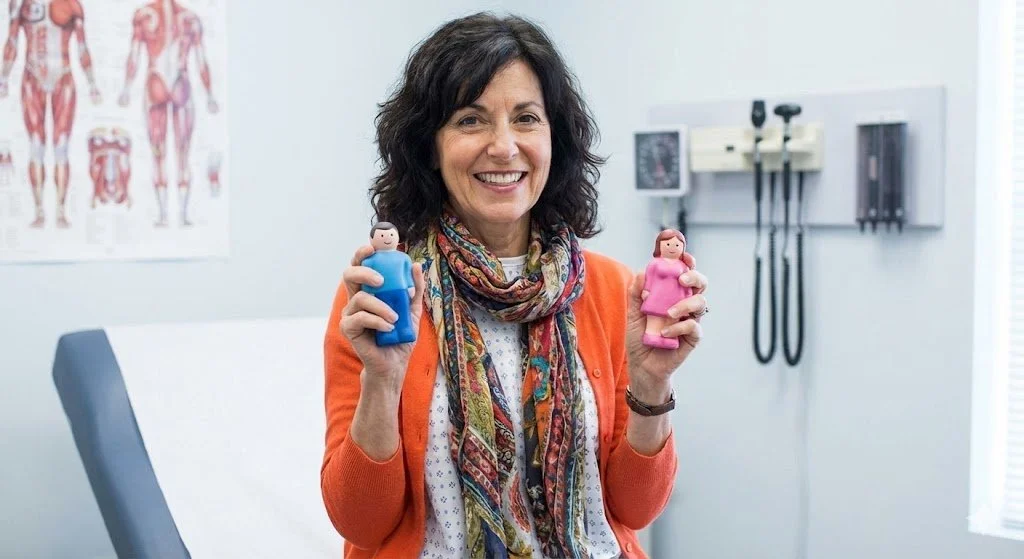









Please support the sponsors


The Juicebox Podcast is a free show, but if you'd like to support the podcast directly, you can make a gift here. Recent donations were used to pay for podcast hosting fees. Thank you to all who have sent 5, 10 and 20 dollars!

#501 Alone in a Room Full of People
Danae talks about the first decade of her type 1 diabetes.
You can always listen to the Juicebox Podcast here but the cool kids use: Apple Podcasts/iOS - Spotify - Amazon Music - Google Play/Android - iHeart Radio - Radio Public, Amazon Alexa or wherever they get audio.
+ Click for EPISODE TRANSCRIPT
DISCLAIMER: This text is the output of AI based transcribing from an audio recording. Although the transcription is largely accurate, in some cases it is incomplete or inaccurate due to inaudible passages or transcription errors and should not be treated as an authoritative record. Nothing that you read here constitutes advice medical or otherwise. Always consult with a healthcare professional before making changes to a healthcare plan.
Scott Benner 0:00
Hello friends, and welcome to Episode 501 of the Juicebox Podcast.
Hey everyone, welcome back. Today we're going to be speaking with Denae. Denae is a young adult living with Type One Diabetes. She's had it for a decade, and she's here to tell us her story. Please remember, while you're listening that nothing you hear on the Juicebox Podcast should be considered advice, medical or otherwise, always consult a physician before making any changes to your health care plan. We're becoming bold with insulin. That was such an unfair introduction to this episode because it goes in a wonderful direction and fills a lot of little gaps in your heart. But I can't give it all away here during the music, right? You have to listen to the episode, which I'm going to call. See, I want to call it alone in a room full of people. alone in a full room, I kind of make it a little alone in a room full of people. Alright, that's what I'm going to call it. It's not catchy, but it fits.
This episode of The Juicebox Podcast is sponsored by the Dexcom g six continuous glucose monitor. I want you to go to dexcom.com Ford slash juice box to learn more about the Dexcom CGM getting that information that data that stuff that you can see in real time. It's a game changer. The podcast is also sponsored by the Omni pod, you can get a free no obligation 30 day trial. If you're eligible of the Omni pod dash at Omni pod.com forward slash juice box. You could just use a pump for free for a month if you're eligible. That is at least worth checking out. Omnipod comm forward slash juice box dexcom.com forward slash juice box here's the name.
Denae 2:21
I am Denae. I'm from Boston mass. I'm 24. And I was diagnosed when I was 1410 years. Yeah, it'll be 10 years in May so definitely
Scott Benner 2:37
feel like a big thing or not. Particularly do not count it like that.
Denae 2:41
Um, yeah, I don't know. 10 years is a lot. I haven't really made like a big thing of the diversity I guess. Maybe that's the last few years I have just because it's been more of like a better thing. But I think 10 years will be a big thing for sure.
Scott Benner 3:02
Alright, today what how are you touching?
Denae 3:05
It was my What is it? I air pod case? I'm not touching it anymore. I'm sorry, I have a glass table. That's probably why it makes so much noise. And I don't
Scott Benner 3:18
want you to be sorry. I think it's really common in the first 15 or 20 minutes of the episode. People are jittery. And a lot of people touch things, too. It's it's really interesting, but yours is really loud for some reason. So squeeze your knee or something like that. Getting on my hands now. Did I use sitting on your hands for real? I hear Oh, yeah. Excellent. You know, it's funny the, the way the show starts traditionally where people are like, Hi, my name is Denae and blah, blah, blah. You know, that actually came from the first time I couldn't. Alright, I'm going to admit something now. So it came from the first time I started recording with someone and couldn't remember their name. Oh, really. So that's an artful way to get around not knowing someone's name. I said, Hey, just introduce yourself real quick. I like it. And then it became such a nice way to start the show where someone just comes on says, Hey, I'm Steve. And you know, but like that. I said, I really liked that. But it absolutely came from my own embarrassment and me trying to cover up for myself. So I like it. I like it. And thank thank God, I did that because now six years later, your name? I probably would have gotten wrong if I tried to pronounce it. I don't know why it's so pretty common. You're not you wouldn't be the first one. Now it's a tough one. It's so obvious now that you said it. But looking at it. Like all morning I was like oh my god, I think this is a woman.
Denae 4:48
I've gotten so many different variations. So it wouldn't have been it wouldn't have been the first time. So what made you reach out? Um, so I started out actually listening to your podcasts in January of this year, I have just started a job at Mass General. And I was taking the train in so I kind of wanted to find something to listen to on the train. And I just happen to stumble upon the Juicebox Podcast. And I was like, wow, this is like, the best podcast I've found. And it literally like changed my life, I did not have a good a one. See, I was just not really taking care of myself that well. And then, six months later, my agency went from 13 to seven. And it just completely changed my life. And I just will not listen to anything else ever. So I just wanted to come on and just say thank you for everything that you do. And honestly, like, just come on, and say that and really, it's just like, amazing how just listening to something can just impact somebody's life so much. And somehow, if like, my story could change someone's life as yours did, and so many other people's stories did that would like even just one person like that would be incredible.
Scott Benner 6:25
I agree. It is a very big deal to do something that impacts someone else's health. It feels amazing. So you're going to do that you're going to tell your story, and somebody else is going to find something interesting about it. But let's first come to I just came to a realization so let's talk about this first. I'm always joking about people naming a baby after me as tribute. But why don't I start asking to be named in the in the life insurance? Really this is this is what I should be doing. I just I can't believe I've been wasting this effort on get a getting a baby named Scott. I don't even like my own name. Alright, from now on, if people feel like I'm saved them. I would like to be included in their life insurance policy, or 401k. payouts are anything at all. Really? That's, that's now what I'm going to ask for. You're too young. You'll outlive me by a lot. So maybe you could just give me a baby name Scott one day tonight. Yeah. No, I'm incredibly uncomfortable. And happy at the same time. It's a very, it's a very weird blend of feelings. To have someone say to you, I found your podcast. I thought it was great. change my life. It's hard to know how to respond to that. Yeah, I bet. Yeah. Really? Yes. So I make really bad jokes instead. Although that's a great coping mechanism. Honestly. I got DNA. I grew up a fat kid. I had nothing else. What was I gonna do? You know, I had to be funny. They would have beat my ass if I wasn't funny. I grew up in a I was I grew up in the 70s and the early 80s. You needed to be funny if you weren't athletic, or willing to get high or was gonna go down tonight. You know what I mean? Like you. You're gonna be though, you're not like you watch movies. Now you're like, oh, stuffing people in lockers? What a trade idea that doesn't would happen. It really happened. I wasn't looking for it to be me. But But seriously, congratulations. Tell me again, where your agency was and where it went to in a year, less than a year
Denae 8:22
is six months. Yeah, I was at 13. And it went to seven, but not
Scott Benner 8:27
- Like just diagnosed like you had diabetes for nine years. And it was 13.
Denae 8:32
Yeah. It's been from it had been anywhere from like nine to 13. And just that this past couple of years, like before the pandemic and everything. My family had gone through a lot of things. And so it was just really hard to keep everything under control. And so I just wasn't really the best at doing the best, you know, and it just ended up being higher than I wanted it to be. And then one day, I kind of just found the podcast and I can't even like freaked myself out into taking care of myself where I was like, if I don't do this, I'm literally going to go blind. And I kind of just like, gave myself the fear factor and was like, Okay, I need to do something about this. And then once I just kept listening, I was like, all these people are doing so well. Like if they can do it, I definitely can do it. Like if anyone can do it. So can I so then I was like, You know what, I have all these tools and all these resources and like I also use the Omni pod and the Dexcom. So I have access to all these things and like it's easy, just do it. So then I just did it.
Scott Benner 9:57
So you're making a lot of points that I'm interested in. First of all, I got to get this out of the way before we start. You're not from Boston, obviously. Are you from the south? I'm not. No, I'm from Boston. You're from Boston with that accent that you have right there. I have an accent. Well, no, you have the lack of an accent. Not that like it would be from a movie where you know, it's on the yard and stuff like that. But I'm just saying like, you really, I thought you were from more like Virginia and had moved up.
Denae 10:27
Oh, so my mom was born and raised in France. And when so I spoke French growing up. So I don't actually have like a Boston accent.
Scott Benner 10:38
You certainly don't. Okay. All right. So that's just to get that out of the way so that I don't spend the entire interview thinking like where's she from? So okay, so you Saudis taught you how to speak English? properly? Do you still speak French at all? Sorry, do you still speak any French? I do? Yes. We're gonna do stuff with that. Okay. Okay. So you, you proved out. And I think a lot of people listening have but a theory that I've had for a long time. So if you've been listening, you know that I wrote a blog for like a decade in the in the diabetes space before I started doing this, and honestly, is you and I are recording this in a couple of weeks. The seventh? I think, yeah, the seventh season of the podcast is going to start in a couple of weeks. And I'm not like, I don't do what those other some of those other podcasts like, you know, they've been around for three years now. Like we're on episode or on season 12. And I'm like, what, you know, like they put out five episodes and call it a season or whatever. When I tell you that this podcast is starting its seventh season, it's starting its seventh year of being at least a weekly show, as well, please. It's not that incredible. Just I sit and talk to people. And then I put it's not that hard. But But I appreciate it. But what my point is, is that the overwhelming theory online, that was during blogging, time I was blogging heavily. And even when I started the podcast was you don't show other people with diabetes, people who are doing well, because that makes them feel bad. Yeah, and I've never agreed with that. I've always thought that aspirational was the way to go, that you look at someone and just think they're not doing better than me. They just they know something. I don't know. Let me find out what that is. And that is what happened to you. Hmm.
Denae 12:27
Yeah, cuz diabetes is a learning curve. Like there's always something else to learn. There's, there's doing it, and then there's knowing something else that somebody else doesn't know exactly. Like, that's what you just said.
Scott Benner 12:39
But you can't do something you don't understand, like I said the other day, and I saw somebody echo it online, that you can't fail at something you have no knowledge of. Exactly. Yeah. And, and so we want to not give. So the prevailing idea was, don't teach them anything. And they'll figure it out. But what they were seeing back was that most people don't figure it out. And I always thought, why don't we just, I mean, listen, first of all, I was lucky at the time to really look at it. And to figure it out, I was a stay at home parent, right? So I could take a long look a hard look, sometimes a micro sometimes a macro and figure things out and come up with ideas. And you know, only learn to talk about them because of the blog. But most people don't even have that time they're off at work, or they're at school. They're just like staying alive. It's like it's a constant. Just tell me about that. Tell me about this first nine years ago, what was your life like?
Denae 13:44
When I first got diagnosed, I was 14. So I had just started high school. Um, and it's funny, I remember other people telling me what it was like for me, but I don't really remember it for myself, which is weird. Because I didn't know I was really feeling bad until I started feeling better. And so I had all the typical signs of it, but not really many people in my family kind of knew what it was they just knew something was wrong. So I had like the extreme thirst, extreme hunger, weight loss, hair loss, everything. And then by the time I was diagnosed, I was 82 pounds. And the doctors were like, We don't even know how you're alive right now. And that I remember that like clear as day like that was probably the one of the most memorable things. And the reason I went into the hospital actually was because I was getting headaches, or the doctor's office Actually, I went to the doctors because I was getting headaches and they were like, oh, we're just gonna like run some tests and stuff. So then we had left and they called They were like, you need to go to the emergency room right now. And we were like, oh, why? And they're like, you have diabetes. It was funny because I never really had like, crazy reactions to things until I kind of understood them. So my first reaction to was, Oh, well, at least it's not cancer. And that was my first reaction to hearing that I had diabetes. So I never really like, was like, Oh, it's not. Like, I didn't understand how bad I was feeling until I felt better. So I was when I was in the hospital,
I started really grasping it, and I was like, Oh, crap, this is really what it is. And they give you like, the diabetes 101 crash course in four days. And you're like, Okay, so here's your new life, have fun, bye. And then they just give you your whole new set of rules for the rest of your life in a matter of hours. And then when you get home, you're like, Okay, so now this is what it is. And that's really what I kind of started setting in, that everything was going to be different. And then
Scott Benner 16:16
I find that to be dangerous. And it's understandable what happens. They obviously they can't tell you the whole world in a couple of days. Yeah, but that, but when you're in that situation, at least, this is how I felt. everything that was said to me felt like a set in stone rule. And this Wow, I agree. Right? Right. Like this is how everything has to be all the time, there was never any body who would pull me aside to Hey, look, this is gonna morph, it's gonna change, you're gonna need to be flexible. Like, you know, I know, we said here, one to this many carbs. But, you know, over time, you'll see that change. All of this is momentary. And if they would have just let me know that I know, like, No, I'm not blaming anyone, I'm saying that if if I would have had that information, I wouldn't have spent so many years trying to make this elusive disease fit a very specific narrative. And that's where the maddening part comes to me. Is is the trying to make it fit exactly the thing that was said to you on day one, when you were for, write it, because I bet you when you were 16, you were a completely different person than you were when you were 14.
Denae 17:27
Yeah, they made it almost like a cookie cutter thing. And I was like, This is not the same as it was, like, I remember specific, like, I would make my lunches for school. And I was like, I need to have 15 pita chips. And this many of this. And that many of that. And I can only have eight ounces of juice and bla bla bla. And I was like, this is probably like, this isn't normal. Like, it was the weirdest thing ever. And then going to school like my friends before, like, when you go to lunch, like, you know, people would share lunch and everything, like people be like, Oh, can I have a chip? And I'm like, No, you can't have one or I'll die. Like, it's just like, so cut in clean and in set in stone, that you have to have everything perfect. And that's just not how you live your life. Because as everyone who has diabetes knows diabetes is far from perfect,
Scott Benner 18:22
isn't it? kind of almost funny to that? You feel like I'm doing everything exactly the way I was taught? Put your a one C was over nine. Yeah. Right. But you probably never put those two things together because you were doing what you were taught.
Denae 18:35
Exactly, yeah. And there's always like, you're trying so hard, and the numbers still are just not adding up. And that led to like a lot of different things down the road for me too, which also led to hire a one season everything. So it just was like a constant struggle and like a battle. So it was just hard all the time.
Scott Benner 19:02
So you guys were basically which one was excuse me, was one of your parents helping you with management or was it just for you to do
Denae 19:11
um, so I have always been a very extremely independent child. And I my parents insisted on helping but I insisted on doing it. A lot of my own, like a lot of my own. My mom was the one that helped more, or I put a lot of the while she was kind of more involved, I guess. She would come to the appointments with me and we would kind of relay the information to my dad. And because he's a teacher, so he was at school a lot and everything. But my mom worked from home most of the time. And
Scott Benner 20:03
well did I was when you say your mom was at the appointments, but when you got home and it was time to have an apple or 15 pita chips or something like that, was she helping you with that? Or were you just on your own?
Denae 20:15
Um, so it's kind of like the appointment high, I guess you go to the appointment and then like the surrounding days of the appointment, my mom would be like, Alright, this is what you have to do this we have to do because she was there and she was in it and bla bla bla,
Scott Benner 20:30
it's, it's like the week after y'all decide to go on a diet together with a bunch of people. Like when you get together with family, you're like, we could go on to do a weight loss challenge, we'll all try to lose 10 pounds. And then by Tuesday, you're like, I'm gonna lose 10 pounds. And then by Saturday, like, I'm just gonna go to a bar.
Denae 20:45
Yeah, that's exactly it. Yeah. Cuz at the end of the day, they don't actually have diabetes. And I do. So I'm like, Okay, fine. Like, I still have to do this, though. Like, you can. Like, you can say that you want to do it, but you don't actually have to do it. Like I actually have to do this. Yeah. So and like, obviously, there's no like bullying or anything of it. But they're much older, like, they have a lot more responsibility and like different responsibility. And like, I actually have it. So it just like is what it is. But I've always been an independent person too. So I never placed any responsibility on them for it either. So I was just like, I can do it. Like, it's me, I can do it. And as a kid, you're like, I'm invincible. I can do it. And I can do anything I want at the same time. So it probably was more than like, I probably bit off more than I could chew.
Scott Benner 21:45
Were you a bit of a pain in the ass? Like, did you like were they trying to help? And you kept them at arm's length?
Denae 21:50
Oh, absolutely. I was so stubborn. Was Yes, I still am Yes. Yeah, I always wanted to do it by myself. And I was like, I could do it. And I can do it by myself. Oh, I was definitely a pain in the ass.
Scott Benner 22:06
I didn't have to take a supplement. Like once a week. It's just a vitamin. And it took me four days to get her to take it. It's just, I must have said, Hey, take that vitamin real quick. Like 5000 times I put it in front of her or anything. You just take that for I don't like to take pills. I'm like, yeah, no one does. Can you just take it, you know, on and on. And at one point. Last night, she comes up, I was editing the show and putting a shop last night. She comes upstairs and she just got done writing something for her AP Lang class. And she's like, Can you read the conclusion with me and see what you think? And I was like, Sure. So we started reading. And as I was reading, I said, Hey, just take that vitamin. And she started laughing. She's like I did. I was like, Are you sure? And she's laughing. I did. I did, I promise. And at this point, she had actually taken it. But had told me she was going to not take it for so many days in a row. that by the time she actually took it. She's cracking up laughing and then she was worried. I didn't believe her because she was laughing. And I understand what you're saying about. Yeah, well, about having somebody tell you to do something that you just don't want to do it. No, no, it's it's completely common response. But the but the issue ends up being Hey, you know what, you freaked me out. But because I just sat here and did the math on the calendar. Not that it was tough math, but you were diagnosed in 2012. Is that right? 2011? That, like you understand that 2011? Like I thought there'd be flying cars in 2011. Like, that's how old I am. Right? Like and you're you were 14 then even just now like, like putting together my head that you're 24 like, flips me out like you like you weren't diagnosed? What do I mean, you're an adult with type one who wasn't diagnosed in the dark ages of type one. And yet you still had an A one c over nine.
Unknown Speaker 24:00
Mm hmm. I want you to
Denae 24:03
know, as much as the technology has changed, it's still feels like so much as like, even just nine years ago, it still feels like there was so much that has changed.
Scott Benner 24:15
But what it's making me think is that everyone listening needs to understand that the technology or the tools or whatever you want to call it where you know how you always hear people say like, this is the best time to be diagnosed with type one. I say that because it's true, right? But it's not true if someone doesn't teach you how to do it.
Unknown Speaker 24:36
Exactly right.
Scott Benner 24:37
And and so because you should not you obviously can do it because you're doing it. Right. Right. And so you lack something for nine years that was there and attainable. And that's sad to me. I also am really excited for you that you found the other side of it. But in a larger way, it makes me worried for everyone else who, you know, you're going to see all these algorithms just existing in the world with pumps and algorithms and glucose monitors. And I, you know, Arden uses one, and I know how well it works. But you just made me realize that it doesn't matter, because most people aren't going to do it. Yeah, if we don't drag them forward into it, and teach them how to do it, so that they can do it on their own. People aren't just gonna pick it up on their own. Yeah. Okay. Well, tell me a little bit about those, those first years, especially as you got into your late teens and early 20s, you are aware that you're a one sees way higher than you want it to be? I assume you're trying? Or were you just not trying at all? What was the vibe?
Denae 25:47
Yeah, so I went through a lot of difficult times growing up in diabetes, because a lot of me didn't really want to have diabetes, I really got it at a time where you don't really know who you are yet. So you're kind of figuring out all of that, and getting it when people are just kind of figuring out who you are. And then all of a sudden, realizing have this thing that makes you different, you're just like, I don't want this because no one else has it. And I think that kind of just really set me apart. And so I just avoided it for a really long time. And I did the bare minimum. And so that definitely contributed to a high and one C for a long time. And the beginning parts of all of the rules and regulations around like no one what to eat, when to eat, how much to eat, and like carb counting in the like sliding factors and all of that, or like sliding scales, and all of that contributed to me developing an eating disorder as well. So I had, um, I'm sure you've heard of it before, but dyeable aimia. And that happened for a really long time. And my senior year of high school, actually, I ended up going into treatment for it. Not for very long. And in a terrible place, which does did not know anything about diabetes, which is also one of the things that I want to like advocate for is just know, like going to build awareness around places for in treatments and inpatient treatment centers to build up awareness for diabetes around like places like that, because my experience with that was just so awful, that they just have no education around that. And like, I was told that there was a place that place was for people like myself who have died, who had died, Alenia and then just going in there and realizing that they had absolutely no idea what they were doing, like they had the most bare minimum knowledge of it was like, I was so shocked. And it was just like, crazy to me that they just didn't know what they were doing.
Scott Benner 28:48
Well, when you said that, to make sure not to do it in a bad place. I thought you were about like Sean Boston.
Friends, have you been using injections forever and been dreaming about a pump. But you look at the pumps and you think I don't want all that tubing to be connected to something. I understand that. If you don't want tubing, and you don't want to be connected, but you'd like the freedom that a pump would bring you. Check out the Omni pod on the pod.com forward slash juice box a tubeless insulin pump. Right now eligible folks are being offered a free no obligation 30 day trial of the on the pod dash Oh my free for 30 days, Scott Do tell. Well, there's not much to tell you go to the pod.com Ford slash juice box you find out if you're eligible and then they give you the pump. It's pretty cool. You get to use it for a full month and see what you think. Now, why would you do that? Well, it's summertime. Summertime There's a song called summertime. I don't know how it goes. Anyway, it's an old song. It's really good. You should try it. Not the point. It's summertime, you're going to be outside active running about swimming, jumping, frolicking, what a great time to try out the on the pod, what a great time to cut yourself free of tubing if you're on a tube pump, or having to carry around a bunch of needles or a pen, if you're doing MDI omnipod.com forward slash juice box. My daughter has been wearing it on the pod since she was four years old. She's going to be 17 in a couple of weeks. We love it. And we think you might you know, something else you might love. The Dexcom g six continuous glucose monitor. Why is that? Scott? I'm talking to myself a lot during these ads today. Well, Scott, I'll tell you why. Now I'm just having a conversation with myself, which really is what this is. But that's not the point. The point is, the Dexcom lets you know what direction your blood sugar's moving, how fast it's moving in that direction. And what the number is, at a glance, literally at a glance, like I pick up my cell phone right now I have an apple, you might have an Android wouldn't matter. I push a button. My daughter's blood sugar's at one and it's stable. What do you think of that? Boom, like that? I'm actually following somebody else right now. Their blood sugar's 120. That's right, you could follow more than one person. As a matter of fact, if you were a Dexcom user, you could allow up to 10 people to follow you. What I know, it's crazy. But it's true. Technology is amazing. It's 2021. And this stuff just keeps getting better and better. The Dexcom is no exception. See, your blood sugar's in real time, their direction, their speed, and where they are. With the Dexcom g six, you can do it for Apple, or iPhone. And by doing it, I mean, you can follow with Apple or iPhone. You can also use it. I mean, Dexcom will give you a receiver if you want, but you can just see the blood sugar on your phone. My daughter can see hers on her iPhone. And she does. It's amazing. It's life changing, seeing what your blood sugar's doing, what direction it's moving in. It helps you make decisions about insulin, better decisions that lead to better outcomes. That's my opinion. But I think you'll find the same dexcom.com forward slash juice box, give yourself a fighting chance. Don't just be throwing darts in the dark. Thinking like oh, I think this is as much in someone as I need or spend the next three hours after a Bolus for a meal go and I hope my blood sugar is not low. I hope my blood sugar is not high. Stop hoping try knowing it makes it a lot easier. Alright guys, there are links to these sponsors. And all the sponsors at Juicebox Podcast comm are right in the show notes of your podcast player, but for now, Omni pod.com forward slash juice box dexcom.com forward slash juice box support the sponsors support the show.
Where's she going with this? But But I hear I hear what you're saying you need a reputable place that is well versed has a plan you should check on what that plan is before you go in. But again, tough because you don't know what they're supposed to be doing. So how do you check them on whether or not they know they're and it's gonna be references? It's gonna be? Yeah, right. Just this
Denae 33:25
specific center like Yeah, but um, there. It was just I wasn't even in there for a very long, but it was recommended by the hospital that I had been diagnosed that and so I was like, What is the affiliation between these? And how is their connection with them? Like, how much do they keep up with it? Do they supply them with their own doctors? Do they educate them do that? How often is their training like? I was like, all of the stuff that I was thinking about the whole time. And it was just weird to see it from my side as a diabetic and then seeing it also in the perspective of someone who had an eating disorder. So I have both sides. Yeah. And then just kind of putting the two and two together where they only have half of the treatment. Whereas somebody who has more than one thing going on, but I'm just only one side of that. Like what if somebody else had something completely different? And they only do half for treatment?
Scott Benner 34:40
Yeah. I mean, it's listen to healthcare as a business and know that not every business is run. Well, you know what I mean? And it's interesting how how we think about, like, if you have a storefront sign, well then you say you make sandwiches, then they're going to be good sandwiches inside here. Then you go buy one and you're like us terrible. You know, it turns out everybody can't make a great sandwich. But it doesn't stop them for a moment as owning a sandwich shop. Yeah, so you have to do some diligence. But it's also interesting that you're in a bad way to begin with. And once you've made the decision to go for treatment, I would imagine, it's hard to put into your mind, well, now I need to, you know, check on this place and make sure they're gonna do what they say and that they have everything I need. And it's just sounds like a fraught time in your life. And you can understand not being able to do that.
Denae 35:34
That like 1718 years old, that's not like, right, all the questions that you're asking either, too. So those are the questions that came down from other people as well that I had the years after think about,
Scott Benner 35:49
right, right. Yeah. Yeah, I have to ask you, you didn't mention diabelli Mia, in your email, and I heard you, you've struggled to it through this first half an hour, like you wanted to tell me but you you had trouble getting it out a couple of different times. So I want to check, are you okay, that means you said something, I think you weren't sure you were gonna say today. Is that right?
Denae 36:07
Oh, I didn't mention at all in the email at first. But I had while since I had time, from when we scheduled the meeting, to think about all the things that I wanted to say. But when I was listening to some of the podcasts, from the beginning, there was a woman who said that she had a lot of struggles. I've It was one of the earlier podcast, I wanted to go back and look at it. I think it was in like in the early two hundreds, I think. But she said that she has struggled with it a lot. And she had suffered from a lot of complications. And that was actually one of the reasons why I was just like, Okay, time to get into action and time to get myself together. And I just think that sharing the struggles will help people who might be too afraid to come out and say things to really, like, realize that they're not alone, because a lot of the people who share their stories in the podcast, were brave enough to come out and say their story. And like, I was one of those people for a really long time to not come out and say anything. And then I saw that there are people out there who are not doing well, like I wasn't doing well. And I'm not alone and other people out there not alone in it does get better. It's
Scott Benner 37:38
your turn to be brave. That's all, you know. Yeah. Oh, that's, it's really nice that you're sharing it. So tell me a little bit about what people should be looking for. So if I'm a parent of someone, or if I'm an adult living with type one, how does diabetes rear its head? Originally? How did it start?
Denae 37:56
Um, a lot of the signs are definitely, um, decrease in, like, renewing prescriptions for sure. And so like, if you notice that there's a lot of, like, if your child is saying like, Oh, yeah, I'm definitely doing what I was supposed to like, I'm doing all the insulin, like, I'm carb counting, I'm doing my assemble a lot. But you're noticing that you're not refilling prescriptions as often as you usually are. That's a huge design. I did that a lot. And another one is you are noticing that the agency is really high every time you go to the endocrinologist, but the meter is always saying a number that doesn't reflect anyone see. There's like definitely number manipulation, where they'll, um, they'll take insulin and then change the date and time on the meter. And then just check their blood sugar over and over again and change the date and time on the meter.
Scott Benner 39:07
That sounds like much work than a
Denae 39:09
lot of work. Trust me. I spent a lot of time doing that. And it was not a lot of fun.
Scott Benner 39:17
Can I ask you? Is it more work keeping your agency where it is now or more work pretending that you have a good day one say
Denae 39:24
Oh, it's so much more work pretending is so much more work. Because you have this constant fear where you're like, someone's gonna find out but like, I need to do like it's it's a constant battle all the time because you're like, it's all psychological. It's in your head and you're like, I have to do this because like, in order for me to be the way that I need to be like, it's, it's not you take me over like you think you're in control, but you're really not. And you're like, I'm trying to tell everybody that this is the way that it is, but it's really not like, and then it catches up to you. And it's just, it just all falls apart. And so honestly, you feel better, you look better, you act better. If you just are in control of your numbers the right way, then if you're controlling the numbers the wrong way,
Scott Benner 40:24
I don't know if you're aware of this or not. But a number of times while we've been talking, you've alluded to or flat out said that the way you are, you didn't know about someone else had to tell you. So when you were diagnosed, you didn't know how you felt someone? Do you don't remember how you felt someone told you how you felt? And even now, what I'm hearing is that is that you're, you're you were never really being yourself, you were being what you thought you were supposed to be or what someone told you were supposed to be. Did you lose a lot in that gap of time? Like, are you able to look back now? And like, I don't, I don't want to be a bummer. But what was there a lot of wasted life in there?
Denae 41:12
Oh, yeah, there's definitely a lot of time that was spent trying to kind of keep up something that wasn't really the way that it was supposed to be, you know, like,
Unknown Speaker 41:26
being
Denae 41:29
being what I thought I was supposed to be, well, not maybe not supposed to be, but like being the way that I thought I wanted to be, was a lot more than it should have been. And it took a lot more than it needed to.
Scott Benner 41:49
So a lot of effort to create appearances. And you're not even necessarily sure that's how you really want it to be to begin with. Yeah, I mean, it's, it's, it's, it feels convoluted, but it's, it's not really it's, to me, I've said here before, one of the things I hate, I hate a lot of things and you know, wasted time is one of them. I genuinely hate the idea of wasting time, I hate when there are a group of people together. Three people, let's say one person is lying. The other two people know they're lying. But don't say anything to them. And we stand in this circle, having this completely bogus conversation that not one person believes in, but we're doing it for appearances, or we're doing it to set something up or I I'm frustrated by that kind of thinking to begin with, like I'm almost, I'm almost angry at the person who you used to be for like, like doing that with the meter. And yet I know it happens to so many people it is such a common story of fixing the meat or making it look right just so you can go to the doctor just to keep the doctor from yelling at you is that
Denae 43:06
I knew that it was wrong to like I knew that. What I what I was doing was Shouldn't I shouldn't have been doing but there was just like some sort of fear or something surrounded by it, like I had this constant need to be perfect all the time. And the sight of the numbers just being high, was like I just can't even look at it. And like I didn't want to do it. So then every time I saw a high number, I just didn't want to do it and I didn't want to see it. So then I would just avoid it. And I would avoid checking my blood sugar until maybe like a week before. And then I would go back and just read, fabricate all those numbers. And then I would go in, they would check my agency and they'd be like, well, we don't understand what's wrong. And then they'd be like, maybe it's the meter. We'll give you a new one. And I was like, yeah, maybe that's it. And like I just was like, I couldn't really come to terms with myself. And knowing the fact that I just needed to do it and like I knew that I needed to but I just couldn't get myself to
Scott Benner 44:25
know if you so first of all, please understand and I'm sure you do because you were having a nice conversation here and you you're really cool, but I don't I didn't mean like Angry you like, like at you. I meant I'm angry to think that you wasted time. Oh, yeah. Right. And then other people are doing the same thing and not even just with I mean yours is obviously you know it's its own little criminal enterprise with changing the numbers and the dates on things and testing when you know you're low and changing dates, but even what the doctor's office did, like come on, like how many times does the doctor's office need to Seeing a one c that's 11 and a meter that says you're a one see a six, and they know two. So now they know, you know, they're handing you a new meter like, oh, maybe it's this and you're like, yeah, maybe you're literally in the scenario that I painted where everyone's just foolish. And we're acting like it's okay. It's a strange thing, to me really frustrating. Away from diabetes even because I, I so much preferred directness, and, and competency. Because, look, I mean, look what happened to you, you just randomly found a podcast, and you're a onesies. What now? And I think the last time I checked, it was 7.1. Jesus, that's so great. Good for you. That's amazing. And and what's the difference between this whole nine years and a 7.1?
Denae 45:56
The podcast on honestly, just like growing up and realizing that if I want to be the best version of myself, it's just like, you know, what you need to do you have the things that you need in order to do them. So why not just do it? It's easier to do it than to not, it's easier to take the steps than to avoid it. And you'll feel better you know, what it's like to feel better. You've been there before. So just but even
Scott Benner 46:29
then, you couldn't accomplish it though, right? Like, where could you have and you just didn't,
Denae 46:34
I could have and I had done it before I had gotten my agency down before. I had gotten it to a nine before. And that was the best I've ever felt in a really long time. I think it was like, my summer going into sophomore year of college. I had started a new like workout program. And I was going to like this boot camp type workout thing. And I started like a meal plan. And it had changed my numbers a lot. And it was working out really well. And my agency went down just from like changing my diet and exercise routine. And, um, after that, I was like, Oh, I can actually do this. So then I just started doing it. And then I go back to college and everything kind of just like, went a little bit haywire. And I kind of fell back into the the die Dibley mum mentality where, like, the insulin restriction actually helped me lose weight more. And it kind of just the psychological aspect of that kind of crept back in and the numbers just went back up. And it didn't really stick. So. So it's just kind of started back up again.
Scott Benner 48:13
So then for you the podcast was more about the the psychological side of diabetes, not so much about the nuts and bolts. Yeah, how to use insulin side of it.
Denae 48:23
Yeah, yeah. The, the technical aspect of diabetes has always come very straightforward to me, like I've always understood the, you take the insulin, and then you eat the food. And it works like that. Like it's straightforward. mathematics, science, it works like that. It ebbs and flows, like it's straightforward like that. But the mentality, like the psychological aspect behind it has always been the struggle for me. And I know that with a lot of people to like, especially just from listening to a lot of the podcast, and that's always been the hard part.
Scott Benner 49:11
Yeah, you. I hope you understand that. That's not how I think of it even like, I know, the podcast does that for you and for people in your situation. But it's not why I started it. It I really did started, like, in my mind that this podcast is about using insulin, but to you it's not really about that at all. And that's really cool. And fascinating to me that that it and so the aspect of having average people in to talk about their diabetes. That's been the real value for you. Yeah, yeah. Okay. All right. I understand. You're helping me. Thank you. You're helping me understand what it does because I'm come from such a I don't have diabetes, obviously. So my my perspective is more I don't even know how to say it. It's, it's less encumbered by the the psychology of having type one, honestly, you know, and, and, and the everything else that comes with having diabetes, but I, I can understand that enough to know what the show needs to be. And having just people on who don't have, you know, you know, blogs and you know, I've been writing about diabetes for 15 years, like, I find it boring to talk to those people, because they have, they have, they've got talking points, and they just, they just, they hit them, they know how to go through them. But if you had me on a podcast, and the podcast is about, you know, making a podcast, if I started telling my story, I would get very cookie cutter too, because I've told it 1000 times, I've had to tell it to every advertiser that you know, is interested in being on the show, like I had to have a conversation last night for an hour with a potential advertiser that likely won't turn into anything. But I still had to do the thing and explain the story and do all that. And so I don't like to have people on who know their story so well, that there's no chance that they'll say something spontaneous and honest, like you did today.
Denae 51:17
Yeah, like it's almost scripted. Right?
Scott Benner 51:19
He comes off very, very, it's nothing against those people. I know a lot of them and they're lovely. And there are times where I think that those people must be so pissed at me. You know, like, I've never invited them on the show, because some of them I really like, but they just, I don't know, they're, they're in a lane and they do a thing. And I want you to like, I'm telling you, you said I've had struggles, you said it three times. Before you basically cop the having Daya Believe me at one point. Yeah. And And that, to me, is so valuable for people listening, because other people who have diabetes emia, who don't tell anybody can understand how you feel. And then they can hear that it worked out well for you. And that you overcame this hurdle. That probably seemed insurmountable. I would imagine. You know, that whole time? Did you really ever think you were going to get over this?
Denae 52:12
I never thought I would, honestly. And I know like, there, it's always good to have a support system for sure. And I did have people that I think we're good support. But in if I'm being honest, I really think that I got through it by myself, like a lot of it I did on my own. And that's not something a lot of people like to admit like, I definitely don't like that. I did that on my own. And it was definitely really hard, like diabetes is hard. Diabetes is hard. And like going through alone is hard. And while I definitely didn't go through it like 100% alone, but you felt when you felt alone? Yeah, definitely. And like, especially like, I don't know, anybody else who has diabetes, like I'm the only person in my family who has it. I don't, I don't have any friends who have it. I've heard of people who, like, I have friends who have friends who have it, but I don't know anybody personally, who has it. And that definitely was like a factor of like feeling alone in it as well. And so, when I found the podcast, I was like, I'm not alone. Like there are people out there who are going through the same thing as I am. And it helped me like kind of flip the switch and be like, I can, like if all these people can do it, like so can I and it just really like, kind of made helped me make that 180 and realize that, like if there's, if there's a way out, then I have to take the steps to do it. Even if I am going to do it by myself like I can, like I can do it. And if there are people out there who feel like they're alone, like, trust me, you're not like, I felt like I was like you are definitely not alone. And it may feel like that in a world of so many people doing so many different things like going through so many different things. But there are people out there going through something just as similar as you are and trust me like, if you can, if you feel like any part of you wants to get through it just cling on to that and you will get through it. Like I did it in a matter of months, which I did not think would ever happen. But I'm here now and I'm doing great. So
Scott Benner 54:54
that's probably you know, matter of months you didn't know it took you 10 years. And yeah, you got one more piece and that kind of took you over the finish line is is, you know, really the way I would think of it, I wouldn't think of it as you found some magic. It's just maybe the podcast was just the last piece that you needed. There are plenty of people who are you have your situation but are in a different portion of their journey, who find the podcast and doesn't come together for them as quickly. And I think that's important to say, too, because sometimes I hear people say, Why don't get it, there was a guy on the podcast that he found the podcast and three months later is a once he was six, and I listened for three months. And that didn't happen to me. And, Michael, it's not gonna happen the same for everybody. Everybody's at the different in a different part of their journey. And you know, this piece is important, I think. But if you're not ready to receive it, it's tough to just put it into practice and expect it to work. I wondered, while you were talking. Is it possible that I can that a person can be supported, meaning they have family around them who you know, would do anything for you? So you're not really alone? In that sense, yet? You still feel alone?
Denae 56:10
Oh, absolutely. Yeah, my, I definitely have my family. My I have a lot of family who's in the medical field too. So they get an understanding of it. And I guess they have like the silent support, I guess, where they're there for me. And they'll support me. But I guess I just didn't really like Well, I guess I wasn't like super aware of it. Or maybe I just didn't really like Think of it like that.
Scott Benner 56:43
Let me ask you a question and see if this strikes a chord with you. And if it doesn't, that's fine. But I use this as an example all the time. So when I started the podcast, I was very clear that I was going to share how we reach the success that my daughter had. And a person, a specific person in the community admonished me about it. They listened to the podcast, reached out without asking if I was interested, in their opinion, to tell me that I was doing the wrong thing. And that I shouldn't be doing what I was doing. I shouldn't be sharing how I manage my daughter. And they told me it was wrong. And I just I was admonished by this person. And it sticks with me to this day because of how wrong they were. But of how how right they thought they were in the moment. So sure that no one should share how they manage their diabetes, because everyone's different. And your diabetes may vary. And I was back there going like no, no, there are simple truths about diabetes that apply to everyone. And if they just understood this piece of it, and this piece of it, etc, etc, then it would they could make sense of it and decide what parts of what works for my daughter would work for them. And but it was it wasn't lazy, I don't think but it was just such a self righteousness that you're doing, you know, being told you're doing the wrong thing. And now I look back. And I think what if I would have listened to that person? Like what if I would have let them scare me away from doing this, like honestly, that that person seven or eight years ago now was attempting to do something that Denae would have left your a one c over 10 for the rest of your life. And and I don't think we we just don't think enough about our actions sometimes or how sure we can be about something. And it may be someone else might have a different idea. And I just heard you saying that you're you just said something. The way I should say this is that you just said something that made me realize that all the people I've ever spoken to who are adults with diabetes, I'm always trying to get them to say what happened so that other people will know. And it's always my thought that they weren't supported by their parents. And I think that management wise, a lot of them weren't. But they can never say it like you have you. They can never say it out loud, because they don't want to denigrate their parents. That's one thing, like a lot of people just don't want to throw somebody under the bus. But also you felt supported by your parents, just not in a way that was going to lead you to outcomes that were better for your health. So yeah, it just occurred to me that you're not protecting them. You honestly feel good about their support. It just wasn't in its entirety. Everything you needed. Is that all fair? Yeah, I think that's pretty fair. Yeah. Okay. You really just, you said something in a way recent, just like I said a couple minutes ago that made me rethink a lot of answers that I've heard on the podcast. It just, it just now is making sense to me. It's not that those people weren't helping them. They weren't doing the things that they that the person type one specifically needed to have better outcomes. So they were being supported, but not in the way that often the podcast ends up supporting them.
Denae 1:00:10
Yeah, like there was, there was support, but maybe not in the way that could have best benefited me.
Scott Benner 1:00:19
So this is what people mean when they say you can be in a room full of people and feel alone.
Unknown Speaker 1:00:24
Yes. Okay. There's like, it's like, You're, you're being helpful, but you're not helping.
Scott Benner 1:00:32
Yes. And, and, and back to my original rambling point, is that I, I'll say to people all the time, like, I think it's important to share what works for us on the podcast, because it's nice to hear you're not alone at three o'clock in the morning when your blood sugar's low. But wouldn't it be nicer to understand how to get your basil set up so that you actually aren't low at three o'clock in the morning? So that so that you don't need that you're not alone? support? Like, it's not that that you're not alone? support isn't really valuable? But in my mind, it was Wouldn't it be better if you didn't need it? As often? And that's the point I tried to make to that person back then. And they just said, No, you're doing the wrong thing. And I think I've never really like had this feeling out loud. But to that person, oh, yeah, there we go. Right. So I knew I knew what I was talking about. But of course, the irony here, of course, today is that person thought they knew what they were talking about. And it's just perspective. Because what they really meant was, if they were to share what they knew, they thought it would be dangerous for other people to hear. And I felt pretty confident that I could deliver the information in a way that would make it digestible and actionable. Yeah, that's all. I actually think this might be one of my greater accomplishments of my life. Just learning how to talk about diabetes in a way that people can understand it. And I seriously like I, I, if I die tomorrow, just say that at my funeral, I'd be completely happy. Scott was a father and a husband. And he tried really hard to help people with type one diabetes, I think I would be that'd be an okay. eulogy for me.
Denae 1:02:19
I think that last sentence should be he did really well. And helping a lot of people in diabetes just cracked my grammar today. What just happened there? You tried, but no, you did. Oh,
Scott Benner 1:02:30
oh, okay. Hey, I don't need this pressure for you today. I never did well in school. And now you're like, you conjugated the wrong word. Well, thank you. Well, that's that. That's even debatable. It worked for you. And it works. For some people. It works for a lot of people, but it probably doesn't work for everybody. And there are a couple of views on the podcast and people hate me. You know what I mean? Like, I get that I'm not everybody's cup of tea and all, that's fine. But I just thought it was worth trying. Like, what was the harm in trying, everybody always acted like there was harm in trying. And I've known people in the past who have had major sway. Like, you know, we talked about, I don't like the word influencer. And I don't, I don't think of myself in that vein. But there are plenty of people now like Instagram is a good example. Like, I'm an influencer. Like, I don't argue like, aren't you just a guy that looks nice in jeans, and it has a good smile? who happens to have diabetes? Does that make you a diabetes influencer? You know, like, I don't I don't understand that. Specifically, I don't understand the idea of wanting to influence somebody either. Like I don't like for me, it's about I have a message. Here it is. I hope it works for you. Yeah, you're talking and some people like to listen, that's really, that's exactly how I think of it. It's just it's up to you to pick it up or put it down. And it doesn't it. I mean, it doesn't not matter to me, but I mean, I'm not hurt if you don't like the podcast, right? Yeah. It's the only thing I can do. I'm not trying to make a thing that I think you'll be preconceived, pre determined to like, I just, this is the thing I have, and you'll, you know, you'll do with it what you want. I'm excited that it helps you. Really, it's
Denae 1:04:16
been it's been a really great help. It's changed a lot for me, so cool.
Scott Benner 1:04:21
I it's really kind of you to share you said your Did you have any other troubles that beyond diabetes aimia that are worth sharing? Um, was that the big impediment?
Denae 1:04:32
Yeah, that's probably the biggest one, but just like, really? Well, I recently got the Omni pod. And well, there's never been really any struggle with the Omni pod. But like, that's probably the best thing that I've gotten. I got it actually the day after my 24th birthday, which was like the best thing that has ever happened in terms of diabetes for me, so that's not a struggle, but that's a good Hey, can
Scott Benner 1:05:01
I ask you Did you get it? by first trying a free no obligation demo? And did you?
Denae 1:05:07
I had one, but I actually never put it on because I already knew that I wanted it. And I try
again. Did I try again? Did you use the link on the pod comm forward slash juice box eat a free no obligation demo of the Omni pod? I did use. Thank you, Jesus, try a little harder. Oh, my gosh. How did you know you wanted the pump. Um, so I actually had wanted it for a while. Back in high school, I asked for it. Because I had been using, I started off with the syringes. And then I moved to the pens and I had been using the pens for a really long time. And then I was like, I really don't want to use these anymore. And so I had spoken to my endocrinologist about it. And they were like, well, your agency is too high for it. And I was like, Oh, that's weird. Okay. So then I was trying to get it down. And then they were like, okay, we'll do like a class on it. And then I just never got around to it. And then once I started hearing the podcast, and how well it worked for people. I had changed endocrinologist. Good for you, because that other one said stupid stuff to you. Like you're a once he's too high for a pump. I never understand that.
Yeah, I was a little bit thrown by that. And she was also the pediatric endocrinologist. But then I had changed. I think, in December, I want to say, um, I had one previously, but I didn't really see her that often because I just was avoiding all of that and didn't really like hospitals. So I didn't go. And so then I changed to one who I now love, he is so smart, super nice. And actually, like cares about what I have to say. And when I told him about your podcast, he was like, I'm gonna listen to it. And so he listens to you actually now, which is pretty cool. And so then I was like, Yeah, I really want to get on the pump. It's gonna help a lot. And he was like, yeah, definitely will. And then I started in August, and that, like, completely changed the a one c two. So it's really good. Good for you. What's your doctor's name? Scott Sperling,
Scott Benner 1:07:47
Scott, thank you for listening. Thank you for being progressive enough to lead and I have a pump. You know, you have something else in common with Omnipod. You're both there in Massachusetts. Yes, we are. I visited last year I gave a I gave a talk to the employees at the the building where some of the offices are and where they actually make the pods. And I got to take a tour of the production facility, which is fascinating, because oh, that's pretty cool. run by robots. And everything is very, very neat. Just very cool. But yeah, you guys have that in common? Yeah, you're right up there in mass, a place where it snows and becomes uninhabitable for human life.
Denae 1:08:31
Yeah. And then it's like warm the next day.
Scott Benner 1:08:34
Well, that's global warming. But but that that harder that is cold weather in, especially in the Boston area right there. It's unholy the way it comes off the water like that and just crushes the area in that cold. It's oh my gosh, I don't know how you live there to me.
Denae 1:08:53
I don't know either. I've been trying to leave for so long. Because of the cold. Yes, I cannot get myself to get out of here. But I've been trying.
Scott Benner 1:09:04
You ever heard Sam fold on the show. Sam used to be a professional baseball player and he's a coach now for the Phillies. He was up for the head coaching job in Boston just recently. And it went to someone else and I sent him a simple text that said too cold there anyway.
Unknown Speaker 1:09:22
Because
Scott Benner 1:09:23
nobody, it's just I don't know how you guys do it. It's fascinating. It's cold here. But Boston is a it's frigid there. Yeah, in the wintertime. Okay, so is there anything that we have not covered that you wish that we would? Um, I think that's all not bad. I thought you were great. I really appreciate you coming on and doing this. Yeah. Thanks for having me. Seriously. This all started with you just wanting to make fun of Kim Kardashian. And
Denae 1:09:50
I know when I saw that I was like, terrible. What a bad influence. Now that's an influencer. I do not agree with he
Scott Benner 1:09:57
sends me a picture of Kim Kardashian checking her ketones, which I guess is something people do that don't have diabetes, I probably around dieting reasons if I'm guessing something about ketosis Yeah. And, and she's, she's like the first paragraph of your emails, like, look at this. horrified, then the rest of it. And I think you were one of those people, you weren't really looking to be on the show as much as did I push you back? Or were you hoping to be on I can't tell. People are so polite when they email sometimes I think I'm not even sure if they want to be on my wife says I'm not good at reading signals from people. But
Denae 1:10:34
I just emailed and I just wanted to thank you for everything that you do on the podcast. And you're like, if you want to come on, you can like, Oh, really? Well, it was not expecting that. Okay, sure.
Scott Benner 1:10:46
About what you said that made me think that it would be a good idea to have you on and look, I was right, just like
Denae 1:10:52
I did mention. I don't know if this was it or not, but I'm planning on going to school to become an endocrinologist actually for to help with type one diabetics. I went to school for nutrition and want to specialize in like nutrition for diabetics and everything so,
Scott Benner 1:11:14
so weight to you, you want to become a doctor, or you want to do nutrition for people with type one, I'm sorry, I misunderstood.
Denae 1:11:21
I want to become a doctor. But I went to school for nutrition. And I'm going to go to back to become a dietitian, and then go to school to become an endocrinologist.
Scott Benner 1:11:36
Good luck with that. That's amazing. I need more doctors on my side. So that's a good idea. As a matter of fact, everyone listening should become an endocrinologist, we can fix this whole thing right now start talking to people differently about their, their diabetes, give them a better chance. That's all that's my marching orders for everybody today. Quit your jobs.
Denae 1:11:55
12 years and I'll be on your show again for endocrinology.
Scott Benner 1:12:00
I'll tell you what, I'll keep it going that long. Just to hear that story. I really well. I just told somebody the other day, they're like, when do you think the podcast is ending? And I was like, never if I can help it. Yeah. That's really great. And I thank you so much for coming on and doing this. I appreciate that. Thank you for having me. Of course. Hold on one second, please. I'm starting the recording back up. I don't usually do this. But wait. So you, you can speak French? So like, could you say I have type one diabetes in French? Jd I bet. Tip one. Do other words like can you say you're listening to the Juicebox Podcast? She could do a podcast. What? Wait, I talked over you do it again. Ta could la podcast Did you but that's so much fun for me for reasons that I can't put into words. You can you have full conversations in French and or does it go away if you don't use it? Yeah, I speak with my mom a lot. Um, it's a little rusty right now, just because I haven't been there in a little while. The last time I went I was in September of 2019. So yeah, so you go back to France. And then it takes a couple of days and then it's back.
Denae 1:13:20
Yeah, kind of refreshes after like a day or so. But I try to keep up with it as much as I can. I watch a lot of French shows. So just to like kind of keep up. And I speak with my mom. When I can.
Scott Benner 1:13:38
That's excellent. Yeah, I definitely would not want to lose that skill. I took French for three years in high school. And no, no French whatsoever. So myself, I believe at one point I could count the eight. Eight wasn't for me. those last two numbers. That's a 10 wait isn't enough. Nine. Yes. Cat sang? What is that? Five? Oh. This is 10 ds. Yeah, I was terrible. Like, whatever. My brain did not work that way. I literally sat through three years of French class and I couldn't speak three words of French. My brain just like, trust me the fact that I teach anybody anything is it's kind of ridiculous. grammar that will get you Oh, please. I never even got far enough into it to understand that part of it. It just does not it just I couldn't pick it up it to me math and French were the same thing. I just, I don't I don't understand things that don't. I don't know. I can't even put into words for you why I don't understand it. But I can't understand algebra. And I could not learn to speak another language. So I feel I can talk about Pre-Bolus thing though. So all right. All right. Yeah, that's the easy stuff. Right? Yeah. Just understanding when to put this in and how long to wait and when to do this, that I get the rest of it. Not so much. Okay, I can't be too long. I'm sorry. I will. I appreciate this. Thank you again. Thank you. Bye. Hey, what's the name not amazing. Today everybody round of applause. You should be clapping to it. Thanks so much to Dexcom, makers of the G six continuous glucose monitor. And the pod makers of the Omni pod dash tubeless insulin pump for sponsoring this episode. Go to Omni pod.com Ford slash juice box and dexcom.com forward slash juice box to find out more about these amazing products and to support the Juicebox Podcast. Thank you so much for listening. Don't forget there's a new show every Monday, Wednesday and Friday.Scott Benner 0:00
Hello friends, and welcome to Episode 501 of the Juicebox Podcast.
Hey everyone, welcome back. Today we're going to be speaking with DNA. DNA is a young adult living with Type One Diabetes. She's had it for a decade, and she's here to tell us her story. Please remember, while you're listening that nothing you hear on the Juicebox Podcast should be considered advice, medical or otherwise, always consult a physician before making any changes to your health care plan. We're becoming bold with insulin. That was such an unfair introduction to this episode because it goes in a wonderful direction and fills a lot of little gaps in your heart. But I can't give it all away here during the music, right? You have to listen to the episode, which I'm going to call. See, I want to call it alone in a room full of people. alone in a full room, I kind of make it a little alone in a room full of people. Alright, that's what I'm going to call it. It's not catchy, but it fits.
This episode of The Juicebox Podcast is sponsored by the Dexcom g six continuous glucose monitor. I want you to go to dexcom.com Ford slash juice box to learn more about the Dexcom CGM getting that information that data that stuff that you can see in real time. It's a game changer. The podcast is also sponsored by the Omni pod, you can get a free no obligation 30 day trial. If you're eligible of the Omni pod dash at Omni pod.com forward slash juice box. You could just use a pump for free for a month if you're eligible. That is at least worth checking out. Omnipod comm forward slash juice box dexcom.com forward slash juice box here's the name.
Denae 2:21
I am Denae. I'm from Boston mass. I'm 24. And I was diagnosed when I was 1410 years. Yeah, it'll be 10 years in May so definitely
Scott Benner 2:37
feel like a big thing or not. Particularly do not count it like that.
Denae 2:41
Um, yeah, I don't know. 10 years is a lot. I haven't really made like a big thing of the diversity I guess. Maybe that's the last few years I have just because it's been more of like a better thing. But I think 10 years will be a big thing for sure.
Scott Benner 3:02
Alright, today what how are you touching?
Denae 3:05
It was my What is it? I air pod case? I'm not touching it anymore. I'm sorry, I have a glass table. That's probably why it makes so much noise. And I don't
Scott Benner 3:18
want you to be sorry. I think it's really common in the first 15 or 20 minutes of the episode. People are jittery. And a lot of people touch things, too. It's it's really interesting, but yours is really loud for some reason. So squeeze your knee or something like that. Getting on my hands now. Did I use sitting on your hands for real? I hear Oh, yeah. Excellent. You know, it's funny the, the way the show starts traditionally where people are like, Hi, my name is Denae and blah, blah, blah. You know, that actually came from the first time I couldn't. Alright, I'm going to admit something now. So it came from the first time I started recording with someone and couldn't remember their name. Oh, really. So that's an artful way to get around not knowing someone's name. I said, Hey, just introduce yourself real quick. I like it. And then it became such a nice way to start the show where someone just comes on says, Hey, I'm Steve. And you know, but like that. I said, I really liked that. But it absolutely came from my own embarrassment and me trying to cover up for myself. So I like it. I like it. And thank thank God, I did that because now six years later, your name? I probably would have gotten wrong if I tried to pronounce it. I don't know why it's so pretty common. You're not you wouldn't be the first one. Now it's a tough one. It's so obvious now that you said it. But looking at it. Like all morning I was like oh my god, I think this is a woman.
Denae 4:48
I've gotten so many different variations. So it wouldn't have been it wouldn't have been the first time. So what made you reach out? Um, so I started out actually listening to your podcasts in January of this year, I have just started a job at Mass General. And I was taking the train in so I kind of wanted to find something to listen to on the train. And I just happen to stumble upon the Juicebox Podcast. And I was like, wow, this is like, the best podcast I've found. And it literally like changed my life, I did not have a good a one. See, I was just not really taking care of myself that well. And then, six months later, my agency went from 13 to seven. And it just completely changed my life. And I just will not listen to anything else ever. So I just wanted to come on and just say thank you for everything that you do. And honestly, like, just come on, and say that and really, it's just like, amazing how just listening to something can just impact somebody's life so much. And somehow, if like, my story could change someone's life as yours did, and so many other people's stories did that would like even just one person like that would be incredible.
Scott Benner 6:25
I agree. It is a very big deal to do something that impacts someone else's health. It feels amazing. So you're going to do that you're going to tell your story, and somebody else is going to find something interesting about it. But let's first come to I just came to a realization so let's talk about this first. I'm always joking about people naming a baby after me as tribute. But why don't I start asking to be named in the in the life insurance? Really this is this is what I should be doing. I just I can't believe I've been wasting this effort on get a getting a baby named Scott. I don't even like my own name. Alright, from now on, if people feel like I'm saved them. I would like to be included in their life insurance policy, or 401k. payouts are anything at all. Really? That's, that's now what I'm going to ask for. You're too young. You'll outlive me by a lot. So maybe you could just give me a baby name Scott one day tonight. Yeah. No, I'm incredibly uncomfortable. And happy at the same time. It's a very, it's a very weird blend of feelings. To have someone say to you, I found your podcast. I thought it was great. change my life. It's hard to know how to respond to that. Yeah, I bet. Yeah. Really? Yes. So I make really bad jokes instead. Although that's a great coping mechanism. Honestly. I got DNA. I grew up a fat kid. I had nothing else. What was I gonna do? You know, I had to be funny. They would have beat my ass if I wasn't funny. I grew up in a I was I grew up in the 70s and the early 80s. You needed to be funny if you weren't athletic, or willing to get high or was gonna go down tonight. You know what I mean? Like you. You're gonna be though, you're not like you watch movies. Now you're like, oh, stuffing people in lockers? What a trade idea that doesn't would happen. It really happened. I wasn't looking for it to be me. But But seriously, congratulations. Tell me again, where your agency was and where it went to in a year, less than a year
Denae 8:22
is six months. Yeah, I was at 13. And it went to seven, but not
Scott Benner 8:27
- Like just diagnosed like you had diabetes for nine years. And it was 13.
Denae 8:32
Yeah. It's been from it had been anywhere from like nine to 13. And just that this past couple of years, like before the pandemic and everything. My family had gone through a lot of things. And so it was just really hard to keep everything under control. And so I just wasn't really the best at doing the best, you know, and it just ended up being higher than I wanted it to be. And then one day, I kind of just found the podcast and I can't even like freaked myself out into taking care of myself where I was like, if I don't do this, I'm literally going to go blind. And I kind of just like, gave myself the fear factor and was like, Okay, I need to do something about this. And then once I just kept listening, I was like, all these people are doing so well. Like if they can do it, I definitely can do it. Like if anyone can do it. So can I so then I was like, You know what, I have all these tools and all these resources and like I also use the Omni pod and the Dexcom. So I have access to all these things and like it's easy, just do it. So then I just did it.
Scott Benner 9:57
So you're making a lot of points that I'm interested in. First of all, I got to get this out of the way before we start. You're not from Boston, obviously. Are you from the south? I'm not. No, I'm from Boston. You're from Boston with that accent that you have right there. I have an accent. Well, no, you have the lack of an accent. Not that like it would be from a movie where you know, it's on the yard and stuff like that. But I'm just saying like, you really, I thought you were from more like Virginia and had moved up.
Denae 10:27
Oh, so my mom was born and raised in France. And when so I spoke French growing up. So I don't actually have like a Boston accent.
Scott Benner 10:38
You certainly don't. Okay. All right. So that's just to get that out of the way so that I don't spend the entire interview thinking like where's she from? So okay, so you Saudis taught you how to speak English? properly? Do you still speak French at all? Sorry, do you still speak any French? I do? Yes. We're gonna do stuff with that. Okay. Okay. So you, you proved out. And I think a lot of people listening have but a theory that I've had for a long time. So if you've been listening, you know that I wrote a blog for like a decade in the in the diabetes space before I started doing this, and honestly, is you and I are recording this in a couple of weeks. The seventh? I think, yeah, the seventh season of the podcast is going to start in a couple of weeks. And I'm not like, I don't do what those other some of those other podcasts like, you know, they've been around for three years now. Like we're on episode or on season 12. And I'm like, what, you know, like they put out five episodes and call it a season or whatever. When I tell you that this podcast is starting its seventh season, it's starting its seventh year of being at least a weekly show, as well, please. It's not that incredible. Just I sit and talk to people. And then I put it's not that hard. But But I appreciate it. But what my point is, is that the overwhelming theory online, that was during blogging, time I was blogging heavily. And even when I started the podcast was you don't show other people with diabetes, people who are doing well, because that makes them feel bad. Yeah, and I've never agreed with that. I've always thought that aspirational was the way to go, that you look at someone and just think they're not doing better than me. They just they know something. I don't know. Let me find out what that is. And that is what happened to you. Hmm.
Denae 12:27
Yeah, cuz diabetes is a learning curve. Like there's always something else to learn. There's, there's doing it, and then there's knowing something else that somebody else doesn't know exactly. Like, that's what you just said.
Scott Benner 12:39
But you can't do something you don't understand, like I said the other day, and I saw somebody echo it online, that you can't fail at something you have no knowledge of. Exactly. Yeah. And, and so we want to not give. So the prevailing idea was, don't teach them anything. And they'll figure it out. But what they were seeing back was that most people don't figure it out. And I always thought, why don't we just, I mean, listen, first of all, I was lucky at the time to really look at it. And to figure it out, I was a stay at home parent, right? So I could take a long look a hard look, sometimes a micro sometimes a macro and figure things out and come up with ideas. And you know, only learn to talk about them because of the blog. But most people don't even have that time they're off at work, or they're at school. They're just like staying alive. It's like it's a constant. Just tell me about that. Tell me about this first nine years ago, what was your life like?
Denae 13:44
When I first got diagnosed, I was 14. So I had just started high school. Um, and it's funny, I remember other people telling me what it was like for me, but I don't really remember it for myself, which is weird. Because I didn't know I was really feeling bad until I started feeling better. And so I had all the typical signs of it, but not really many people in my family kind of knew what it was they just knew something was wrong. So I had like the extreme thirst, extreme hunger, weight loss, hair loss, everything. And then by the time I was diagnosed, I was 82 pounds. And the doctors were like, We don't even know how you're alive right now. And that I remember that like clear as day like that was probably the one of the most memorable things. And the reason I went into the hospital actually was because I was getting headaches, or the doctor's office Actually, I went to the doctors because I was getting headaches and they were like, oh, we're just gonna like run some tests and stuff. So then we had left and they called They were like, you need to go to the emergency room right now. And we were like, oh, why? And they're like, you have diabetes. It was funny because I never really had like, crazy reactions to things until I kind of understood them. So my first reaction to was, Oh, well, at least it's not cancer. And that was my first reaction to hearing that I had diabetes. So I never really like, was like, Oh, it's not. Like, I didn't understand how bad I was feeling until I felt better. So I was when I was in the hospital,
I started really grasping it, and I was like, Oh, crap, this is really what it is. And they give you like, the diabetes 101 crash course in four days. And you're like, Okay, so here's your new life, have fun, bye. And then they just give you your whole new set of rules for the rest of your life in a matter of hours. And then when you get home, you're like, Okay, so now this is what it is. And that's really what I kind of started setting in, that everything was going to be different. And then
Scott Benner 16:16
I find that to be dangerous. And it's understandable what happens. They obviously they can't tell you the whole world in a couple of days. Yeah, but that, but when you're in that situation, at least, this is how I felt. everything that was said to me felt like a set in stone rule. And this Wow, I agree. Right? Right. Like this is how everything has to be all the time, there was never any body who would pull me aside to Hey, look, this is gonna morph, it's gonna change, you're gonna need to be flexible. Like, you know, I know, we said here, one to this many carbs. But, you know, over time, you'll see that change. All of this is momentary. And if they would have just let me know that I know, like, No, I'm not blaming anyone, I'm saying that if if I would have had that information, I wouldn't have spent so many years trying to make this elusive disease fit a very specific narrative. And that's where the maddening part comes to me. Is is the trying to make it fit exactly the thing that was said to you on day one, when you were for, write it, because I bet you when you were 16, you were a completely different person than you were when you were 14.
Denae 17:27
Yeah, they made it almost like a cookie cutter thing. And I was like, This is not the same as it was, like, I remember specific, like, I would make my lunches for school. And I was like, I need to have 15 pita chips. And this many of this. And that many of that. And I can only have eight ounces of juice and bla bla bla. And I was like, this is probably like, this isn't normal. Like, it was the weirdest thing ever. And then going to school like my friends before, like, when you go to lunch, like, you know, people would share lunch and everything, like people be like, Oh, can I have a chip? And I'm like, No, you can't have one or I'll die. Like, it's just like, so cut in clean and in set in stone, that you have to have everything perfect. And that's just not how you live your life. Because as everyone who has diabetes knows diabetes is far from perfect,
Scott Benner 18:22
isn't it? kind of almost funny to that? You feel like I'm doing everything exactly the way I was taught? Put your a one C was over nine. Yeah. Right. But you probably never put those two things together because you were doing what you were taught.
Denae 18:35
Exactly, yeah. And there's always like, you're trying so hard, and the numbers still are just not adding up. And that led to like a lot of different things down the road for me too, which also led to hire a one season everything. So it just was like a constant struggle and like a battle. So it was just hard all the time.
Scott Benner 19:02
So you guys were basically which one was excuse me, was one of your parents helping you with management or was it just for you to do
Denae 19:11
um, so I have always been a very extremely independent child. And I my parents insisted on helping but I insisted on doing it. A lot of my own, like a lot of my own. My mom was the one that helped more, or I put a lot of the while she was kind of more involved, I guess. She would come to the appointments with me and we would kind of relay the information to my dad. And because he's a teacher, so he was at school a lot and everything. But my mom worked from home most of the time. And
Scott Benner 20:03
well did I was when you say your mom was at the appointments, but when you got home and it was time to have an apple or 15 pita chips or something like that, was she helping you with that? Or were you just on your own?
Denae 20:15
Um, so it's kind of like the appointment high, I guess you go to the appointment and then like the surrounding days of the appointment, my mom would be like, Alright, this is what you have to do this we have to do because she was there and she was in it and bla bla bla,
Scott Benner 20:30
it's, it's like the week after y'all decide to go on a diet together with a bunch of people. Like when you get together with family, you're like, we could go on to do a weight loss challenge, we'll all try to lose 10 pounds. And then by Tuesday, you're like, I'm gonna lose 10 pounds. And then by Saturday, like, I'm just gonna go to a bar.
Denae 20:45
Yeah, that's exactly it. Yeah. Cuz at the end of the day, they don't actually have diabetes. And I do. So I'm like, Okay, fine. Like, I still have to do this, though. Like, you can. Like, you can say that you want to do it, but you don't actually have to do it. Like I actually have to do this. Yeah. So and like, obviously, there's no like bullying or anything of it. But they're much older, like, they have a lot more responsibility and like different responsibility. And like, I actually have it. So it just like is what it is. But I've always been an independent person too. So I never placed any responsibility on them for it either. So I was just like, I can do it. Like, it's me, I can do it. And as a kid, you're like, I'm invincible. I can do it. And I can do anything I want at the same time. So it probably was more than like, I probably bit off more than I could chew.
Scott Benner 21:45
Were you a bit of a pain in the ass? Like, did you like were they trying to help? And you kept them at arm's length?
Denae 21:50
Oh, absolutely. I was so stubborn. Was Yes, I still am Yes. Yeah, I always wanted to do it by myself. And I was like, I could do it. And I can do it by myself. Oh, I was definitely a pain in the ass.
Scott Benner 22:06
I didn't have to take a supplement. Like once a week. It's just a vitamin. And it took me four days to get her to take it. It's just, I must have said, Hey, take that vitamin real quick. Like 5000 times I put it in front of her or anything. You just take that for I don't like to take pills. I'm like, yeah, no one does. Can you just take it, you know, on and on. And at one point. Last night, she comes up, I was editing the show and putting a shop last night. She comes upstairs and she just got done writing something for her AP Lang class. And she's like, Can you read the conclusion with me and see what you think? And I was like, Sure. So we started reading. And as I was reading, I said, Hey, just take that vitamin. And she started laughing. She's like I did. I was like, Are you sure? And she's laughing. I did. I did, I promise. And at this point, she had actually taken it. But had told me she was going to not take it for so many days in a row. that by the time she actually took it. She's cracking up laughing and then she was worried. I didn't believe her because she was laughing. And I understand what you're saying about. Yeah, well, about having somebody tell you to do something that you just don't want to do it. No, no, it's it's completely common response. But the but the issue ends up being Hey, you know what, you freaked me out. But because I just sat here and did the math on the calendar. Not that it was tough math, but you were diagnosed in 2012. Is that right? 2011? That, like you understand that 2011? Like I thought there'd be flying cars in 2011. Like, that's how old I am. Right? Like and you're you were 14 then even just now like, like putting together my head that you're 24 like, flips me out like you like you weren't diagnosed? What do I mean, you're an adult with type one who wasn't diagnosed in the dark ages of type one. And yet you still had an A one c over nine.
Unknown Speaker 24:00
Mm hmm. I want you to
Denae 24:03
know, as much as the technology has changed, it's still feels like so much as like, even just nine years ago, it still feels like there was so much that has changed.
Scott Benner 24:15
But what it's making me think is that everyone listening needs to understand that the technology or the tools or whatever you want to call it where you know how you always hear people say like, this is the best time to be diagnosed with type one. I say that because it's true, right? But it's not true if someone doesn't teach you how to do it.
Unknown Speaker 24:36
Exactly right.
Scott Benner 24:37
And and so because you should not you obviously can do it because you're doing it. Right. Right. And so you lack something for nine years that was there and attainable. And that's sad to me. I also am really excited for you that you found the other side of it. But in a larger way, it makes me worried for everyone else who, you know, you're going to see all these algorithms just existing in the world with pumps and algorithms and glucose monitors. And I, you know, Arden uses one, and I know how well it works. But you just made me realize that it doesn't matter, because most people aren't going to do it. Yeah, if we don't drag them forward into it, and teach them how to do it, so that they can do it on their own. People aren't just gonna pick it up on their own. Yeah. Okay. Well, tell me a little bit about those, those first years, especially as you got into your late teens and early 20s, you are aware that you're a one sees way higher than you want it to be? I assume you're trying? Or were you just not trying at all? What was the vibe?
Denae 25:47
Yeah, so I went through a lot of difficult times growing up in diabetes, because a lot of me didn't really want to have diabetes, I really got it at a time where you don't really know who you are yet. So you're kind of figuring out all of that, and getting it when people are just kind of figuring out who you are. And then all of a sudden, realizing have this thing that makes you different, you're just like, I don't want this because no one else has it. And I think that kind of just really set me apart. And so I just avoided it for a really long time. And I did the bare minimum. And so that definitely contributed to a high and one C for a long time. And the beginning parts of all of the rules and regulations around like no one what to eat, when to eat, how much to eat, and like carb counting in the like sliding factors and all of that, or like sliding scales, and all of that contributed to me developing an eating disorder as well. So I had, um, I'm sure you've heard of it before, but dyeable aimia. And that happened for a really long time. And my senior year of high school, actually, I ended up going into treatment for it. Not for very long. And in a terrible place, which does did not know anything about diabetes, which is also one of the things that I want to like advocate for is just know, like going to build awareness around places for in treatments and inpatient treatment centers to build up awareness for diabetes around like places like that, because my experience with that was just so awful, that they just have no education around that. And like, I was told that there was a place that place was for people like myself who have died, who had died, Alenia and then just going in there and realizing that they had absolutely no idea what they were doing, like they had the most bare minimum knowledge of it was like, I was so shocked. And it was just like, crazy to me that they just didn't know what they were doing.
Scott Benner 28:48
Well, when you said that, to make sure not to do it in a bad place. I thought you were about like Sean Boston.
Friends, have you been using injections forever and been dreaming about a pump. But you look at the pumps and you think I don't want all that tubing to be connected to something. I understand that. If you don't want tubing, and you don't want to be connected, but you'd like the freedom that a pump would bring you. Check out the Omni pod on the pod.com forward slash juice box a tubeless insulin pump. Right now eligible folks are being offered a free no obligation 30 day trial of the on the pod dash Oh my free for 30 days, Scott Do tell. Well, there's not much to tell you go to the pod.com Ford slash juice box you find out if you're eligible and then they give you the pump. It's pretty cool. You get to use it for a full month and see what you think. Now, why would you do that? Well, it's summertime. Summertime There's a song called summertime. I don't know how it goes. Anyway, it's an old song. It's really good. You should try it. Not the point. It's summertime, you're going to be outside active running about swimming, jumping, frolicking, what a great time to try out the on the pod, what a great time to cut yourself free of tubing if you're on a tube pump, or having to carry around a bunch of needles or a pen, if you're doing MDI omnipod.com forward slash juice box. My daughter has been wearing it on the pod since she was four years old. She's going to be 17 in a couple of weeks. We love it. And we think you might you know, something else you might love. The Dexcom g six continuous glucose monitor. Why is that? Scott? I'm talking to myself a lot during these ads today. Well, Scott, I'll tell you why. Now I'm just having a conversation with myself, which really is what this is. But that's not the point. The point is, the Dexcom lets you know what direction your blood sugar's moving, how fast it's moving in that direction. And what the number is, at a glance, literally at a glance, like I pick up my cell phone right now I have an apple, you might have an Android wouldn't matter. I push a button. My daughter's blood sugar's at one and it's stable. What do you think of that? Boom, like that? I'm actually following somebody else right now. Their blood sugar's 120. That's right, you could follow more than one person. As a matter of fact, if you were a Dexcom user, you could allow up to 10 people to follow you. What I know, it's crazy. But it's true. Technology is amazing. It's 2021. And this stuff just keeps getting better and better. The Dexcom is no exception. See, your blood sugar's in real time, their direction, their speed, and where they are. With the Dexcom g six, you can do it for Apple, or iPhone. And by doing it, I mean, you can follow with Apple or iPhone. You can also use it. I mean, Dexcom will give you a receiver if you want, but you can just see the blood sugar on your phone. My daughter can see hers on her iPhone. And she does. It's amazing. It's life changing, seeing what your blood sugar's doing, what direction it's moving in. It helps you make decisions about insulin, better decisions that lead to better outcomes. That's my opinion. But I think you'll find the same dexcom.com forward slash juice box, give yourself a fighting chance. Don't just be throwing darts in the dark. Thinking like oh, I think this is as much in someone as I need or spend the next three hours after a Bolus for a meal go and I hope my blood sugar is not low. I hope my blood sugar is not high. Stop hoping try knowing it makes it a lot easier. Alright guys, there are links to these sponsors. And all the sponsors at Juicebox Podcast comm are right in the show notes of your podcast player, but for now, Omni pod.com forward slash juice box dexcom.com forward slash juice box support the sponsors support the show.
Where's she going with this? But But I hear I hear what you're saying you need a reputable place that is well versed has a plan you should check on what that plan is before you go in. But again, tough because you don't know what they're supposed to be doing. So how do you check them on whether or not they know they're and it's gonna be references? It's gonna be? Yeah, right. Just this
Denae 33:25
specific center like Yeah, but um, there. It was just I wasn't even in there for a very long, but it was recommended by the hospital that I had been diagnosed that and so I was like, What is the affiliation between these? And how is their connection with them? Like, how much do they keep up with it? Do they supply them with their own doctors? Do they educate them do that? How often is their training like? I was like, all of the stuff that I was thinking about the whole time. And it was just weird to see it from my side as a diabetic and then seeing it also in the perspective of someone who had an eating disorder. So I have both sides. Yeah. And then just kind of putting the two and two together where they only have half of the treatment. Whereas somebody who has more than one thing going on, but I'm just only one side of that. Like what if somebody else had something completely different? And they only do half for treatment?
Scott Benner 34:40
Yeah. I mean, it's listen to healthcare as a business and know that not every business is run. Well, you know what I mean? And it's interesting how how we think about, like, if you have a storefront sign, well then you say you make sandwiches, then they're going to be good sandwiches inside here. Then you go buy one and you're like us terrible. You know, it turns out everybody can't make a great sandwich. But it doesn't stop them for a moment as owning a sandwich shop. Yeah, so you have to do some diligence. But it's also interesting that you're in a bad way to begin with. And once you've made the decision to go for treatment, I would imagine, it's hard to put into your mind, well, now I need to, you know, check on this place and make sure they're gonna do what they say and that they have everything I need. And it's just sounds like a fraught time in your life. And you can understand not being able to do that.
Denae 35:34
That like 1718 years old, that's not like, right, all the questions that you're asking either, too. So those are the questions that came down from other people as well that I had the years after think about,
Scott Benner 35:49
right, right. Yeah. Yeah, I have to ask you, you didn't mention diabelli Mia, in your email, and I heard you, you've struggled to it through this first half an hour, like you wanted to tell me but you you had trouble getting it out a couple of different times. So I want to check, are you okay, that means you said something, I think you weren't sure you were gonna say today. Is that right?
Denae 36:07
Oh, I didn't mention at all in the email at first. But I had while since I had time, from when we scheduled the meeting, to think about all the things that I wanted to say. But when I was listening to some of the podcasts, from the beginning, there was a woman who said that she had a lot of struggles. I've It was one of the earlier podcast, I wanted to go back and look at it. I think it was in like in the early two hundreds, I think. But she said that she has struggled with it a lot. And she had suffered from a lot of complications. And that was actually one of the reasons why I was just like, Okay, time to get into action and time to get myself together. And I just think that sharing the struggles will help people who might be too afraid to come out and say things to really, like, realize that they're not alone, because a lot of the people who share their stories in the podcast, were brave enough to come out and say their story. And like, I was one of those people for a really long time to not come out and say anything. And then I saw that there are people out there who are not doing well, like I wasn't doing well. And I'm not alone and other people out there not alone in it does get better. It's
Scott Benner 37:38
your turn to be brave. That's all, you know. Yeah. Oh, that's, it's really nice that you're sharing it. So tell me a little bit about what people should be looking for. So if I'm a parent of someone, or if I'm an adult living with type one, how does diabetes rear its head? Originally? How did it start?
Denae 37:56
Um, a lot of the signs are definitely, um, decrease in, like, renewing prescriptions for sure. And so like, if you notice that there's a lot of, like, if your child is saying like, Oh, yeah, I'm definitely doing what I was supposed to like, I'm doing all the insulin, like, I'm carb counting, I'm doing my assemble a lot. But you're noticing that you're not refilling prescriptions as often as you usually are. That's a huge design. I did that a lot. And another one is you are noticing that the agency is really high every time you go to the endocrinologist, but the meter is always saying a number that doesn't reflect anyone see. There's like definitely number manipulation, where they'll, um, they'll take insulin and then change the date and time on the meter. And then just check their blood sugar over and over again and change the date and time on the meter.
Scott Benner 39:07
That sounds like much work than a
Denae 39:09
lot of work. Trust me. I spent a lot of time doing that. And it was not a lot of fun.
Scott Benner 39:17
Can I ask you? Is it more work keeping your agency where it is now or more work pretending that you have a good day one say
Denae 39:24
Oh, it's so much more work pretending is so much more work. Because you have this constant fear where you're like, someone's gonna find out but like, I need to do like it's it's a constant battle all the time because you're like, it's all psychological. It's in your head and you're like, I have to do this because like, in order for me to be the way that I need to be like, it's, it's not you take me over like you think you're in control, but you're really not. And you're like, I'm trying to tell everybody that this is the way that it is, but it's really not like, and then it catches up to you. And it's just, it just all falls apart. And so honestly, you feel better, you look better, you act better. If you just are in control of your numbers the right way, then if you're controlling the numbers the wrong way,
Scott Benner 40:24
I don't know if you're aware of this or not. But a number of times while we've been talking, you've alluded to or flat out said that the way you are, you didn't know about someone else had to tell you. So when you were diagnosed, you didn't know how you felt someone? Do you don't remember how you felt someone told you how you felt? And even now, what I'm hearing is that is that you're, you're you were never really being yourself, you were being what you thought you were supposed to be or what someone told you were supposed to be. Did you lose a lot in that gap of time? Like, are you able to look back now? And like, I don't, I don't want to be a bummer. But what was there a lot of wasted life in there?
Denae 41:12
Oh, yeah, there's definitely a lot of time that was spent trying to kind of keep up something that wasn't really the way that it was supposed to be, you know, like,
Unknown Speaker 41:26
being
Denae 41:29
being what I thought I was supposed to be, well, not maybe not supposed to be, but like being the way that I thought I wanted to be, was a lot more than it should have been. And it took a lot more than it needed to.
Scott Benner 41:49
So a lot of effort to create appearances. And you're not even necessarily sure that's how you really want it to be to begin with. Yeah, I mean, it's, it's, it's, it feels convoluted, but it's, it's not really it's, to me, I've said here before, one of the things I hate, I hate a lot of things and you know, wasted time is one of them. I genuinely hate the idea of wasting time, I hate when there are a group of people together. Three people, let's say one person is lying. The other two people know they're lying. But don't say anything to them. And we stand in this circle, having this completely bogus conversation that not one person believes in, but we're doing it for appearances, or we're doing it to set something up or I I'm frustrated by that kind of thinking to begin with, like I'm almost, I'm almost angry at the person who you used to be for like, like doing that with the meter. And yet I know it happens to so many people it is such a common story of fixing the meat or making it look right just so you can go to the doctor just to keep the doctor from yelling at you is that
Denae 43:06
I knew that it was wrong to like I knew that. What I what I was doing was Shouldn't I shouldn't have been doing but there was just like some sort of fear or something surrounded by it, like I had this constant need to be perfect all the time. And the sight of the numbers just being high, was like I just can't even look at it. And like I didn't want to do it. So then every time I saw a high number, I just didn't want to do it and I didn't want to see it. So then I would just avoid it. And I would avoid checking my blood sugar until maybe like a week before. And then I would go back and just read, fabricate all those numbers. And then I would go in, they would check my agency and they'd be like, well, we don't understand what's wrong. And then they'd be like, maybe it's the meter. We'll give you a new one. And I was like, yeah, maybe that's it. And like I just was like, I couldn't really come to terms with myself. And knowing the fact that I just needed to do it and like I knew that I needed to but I just couldn't get myself to
Scott Benner 44:25
know if you so first of all, please understand and I'm sure you do because you were having a nice conversation here and you you're really cool, but I don't I didn't mean like Angry you like, like at you. I meant I'm angry to think that you wasted time. Oh, yeah. Right. And then other people are doing the same thing and not even just with I mean yours is obviously you know it's its own little criminal enterprise with changing the numbers and the dates on things and testing when you know you're low and changing dates, but even what the doctor's office did, like come on, like how many times does the doctor's office need to Seeing a one c that's 11 and a meter that says you're a one see a six, and they know two. So now they know, you know, they're handing you a new meter like, oh, maybe it's this and you're like, yeah, maybe you're literally in the scenario that I painted where everyone's just foolish. And we're acting like it's okay. It's a strange thing, to me really frustrating. Away from diabetes even because I, I so much preferred directness, and, and competency. Because, look, I mean, look what happened to you, you just randomly found a podcast, and you're a onesies. What now? And I think the last time I checked, it was 7.1. Jesus, that's so great. Good for you. That's amazing. And and what's the difference between this whole nine years and a 7.1?
Denae 45:56
The podcast on honestly, just like growing up and realizing that if I want to be the best version of myself, it's just like, you know, what you need to do you have the things that you need in order to do them. So why not just do it? It's easier to do it than to not, it's easier to take the steps than to avoid it. And you'll feel better you know, what it's like to feel better. You've been there before. So just but even
Scott Benner 46:29
then, you couldn't accomplish it though, right? Like, where could you have and you just didn't,
Denae 46:34
I could have and I had done it before I had gotten my agency down before. I had gotten it to a nine before. And that was the best I've ever felt in a really long time. I think it was like, my summer going into sophomore year of college. I had started a new like workout program. And I was going to like this boot camp type workout thing. And I started like a meal plan. And it had changed my numbers a lot. And it was working out really well. And my agency went down just from like changing my diet and exercise routine. And, um, after that, I was like, Oh, I can actually do this. So then I just started doing it. And then I go back to college and everything kind of just like, went a little bit haywire. And I kind of fell back into the the die Dibley mum mentality where, like, the insulin restriction actually helped me lose weight more. And it kind of just the psychological aspect of that kind of crept back in and the numbers just went back up. And it didn't really stick. So. So it's just kind of started back up again.
Scott Benner 48:13
So then for you the podcast was more about the the psychological side of diabetes, not so much about the nuts and bolts. Yeah, how to use insulin side of it.
Denae 48:23
Yeah, yeah. The, the technical aspect of diabetes has always come very straightforward to me, like I've always understood the, you take the insulin, and then you eat the food. And it works like that. Like it's straightforward. mathematics, science, it works like that. It ebbs and flows, like it's straightforward like that. But the mentality, like the psychological aspect behind it has always been the struggle for me. And I know that with a lot of people to like, especially just from listening to a lot of the podcast, and that's always been the hard part.
Scott Benner 49:11
Yeah, you. I hope you understand that. That's not how I think of it even like, I know, the podcast does that for you and for people in your situation. But it's not why I started it. It I really did started, like, in my mind that this podcast is about using insulin, but to you it's not really about that at all. And that's really cool. And fascinating to me that that it and so the aspect of having average people in to talk about their diabetes. That's been the real value for you. Yeah, yeah. Okay. All right. I understand. You're helping me. Thank you. You're helping me understand what it does because I'm come from such a I don't have diabetes, obviously. So my my perspective is more I don't even know how to say it. It's, it's less encumbered by the the psychology of having type one, honestly, you know, and, and, and the everything else that comes with having diabetes, but I, I can understand that enough to know what the show needs to be. And having just people on who don't have, you know, you know, blogs and you know, I've been writing about diabetes for 15 years, like, I find it boring to talk to those people, because they have, they have, they've got talking points, and they just, they just, they hit them, they know how to go through them. But if you had me on a podcast, and the podcast is about, you know, making a podcast, if I started telling my story, I would get very cookie cutter too, because I've told it 1000 times, I've had to tell it to every advertiser that you know, is interested in being on the show, like I had to have a conversation last night for an hour with a potential advertiser that likely won't turn into anything. But I still had to do the thing and explain the story and do all that. And so I don't like to have people on who know their story so well, that there's no chance that they'll say something spontaneous and honest, like you did today.
Denae 51:17
Yeah, like it's almost scripted. Right?
Scott Benner 51:19
He comes off very, very, it's nothing against those people. I know a lot of them and they're lovely. And there are times where I think that those people must be so pissed at me. You know, like, I've never invited them on the show, because some of them I really like, but they just, I don't know, they're, they're in a lane and they do a thing. And I want you to like, I'm telling you, you said I've had struggles, you said it three times. Before you basically cop the having Daya Believe me at one point. Yeah. And And that, to me, is so valuable for people listening, because other people who have diabetes emia, who don't tell anybody can understand how you feel. And then they can hear that it worked out well for you. And that you overcame this hurdle. That probably seemed insurmountable. I would imagine. You know, that whole time? Did you really ever think you were going to get over this?
Denae 52:12
I never thought I would, honestly. And I know like, there, it's always good to have a support system for sure. And I did have people that I think we're good support. But in if I'm being honest, I really think that I got through it by myself, like a lot of it I did on my own. And that's not something a lot of people like to admit like, I definitely don't like that. I did that on my own. And it was definitely really hard, like diabetes is hard. Diabetes is hard. And like going through alone is hard. And while I definitely didn't go through it like 100% alone, but you felt when you felt alone? Yeah, definitely. And like, especially like, I don't know, anybody else who has diabetes, like I'm the only person in my family who has it. I don't, I don't have any friends who have it. I've heard of people who, like, I have friends who have friends who have it, but I don't know anybody personally, who has it. And that definitely was like a factor of like feeling alone in it as well. And so, when I found the podcast, I was like, I'm not alone. Like there are people out there who are going through the same thing as I am. And it helped me like kind of flip the switch and be like, I can, like if all these people can do it, like so can I and it just really like, kind of made helped me make that 180 and realize that, like if there's, if there's a way out, then I have to take the steps to do it. Even if I am going to do it by myself like I can, like I can do it. And if there are people out there who feel like they're alone, like, trust me, you're not like, I felt like I was like you are definitely not alone. And it may feel like that in a world of so many people doing so many different things like going through so many different things. But there are people out there going through something just as similar as you are and trust me like, if you can, if you feel like any part of you wants to get through it just cling on to that and you will get through it. Like I did it in a matter of months, which I did not think would ever happen. But I'm here now and I'm doing great. So
Scott Benner 54:54
that's probably you know, matter of months you didn't know it took you 10 years. And yeah, you got one more piece and that kind of took you over the finish line is is, you know, really the way I would think of it, I wouldn't think of it as you found some magic. It's just maybe the podcast was just the last piece that you needed. There are plenty of people who are you have your situation but are in a different portion of their journey, who find the podcast and doesn't come together for them as quickly. And I think that's important to say, too, because sometimes I hear people say, Why don't get it, there was a guy on the podcast that he found the podcast and three months later is a once he was six, and I listened for three months. And that didn't happen to me. And, Michael, it's not gonna happen the same for everybody. Everybody's at the different in a different part of their journey. And you know, this piece is important, I think. But if you're not ready to receive it, it's tough to just put it into practice and expect it to work. I wondered, while you were talking. Is it possible that I can that a person can be supported, meaning they have family around them who you know, would do anything for you? So you're not really alone? In that sense, yet? You still feel alone?
Denae 56:10
Oh, absolutely. Yeah, my, I definitely have my family. My I have a lot of family who's in the medical field too. So they get an understanding of it. And I guess they have like the silent support, I guess, where they're there for me. And they'll support me. But I guess I just didn't really like Well, I guess I wasn't like super aware of it. Or maybe I just didn't really like Think of it like that.
Scott Benner 56:43
Let me ask you a question and see if this strikes a chord with you. And if it doesn't, that's fine. But I use this as an example all the time. So when I started the podcast, I was very clear that I was going to share how we reach the success that my daughter had. And a person, a specific person in the community admonished me about it. They listened to the podcast, reached out without asking if I was interested, in their opinion, to tell me that I was doing the wrong thing. And that I shouldn't be doing what I was doing. I shouldn't be sharing how I manage my daughter. And they told me it was wrong. And I just I was admonished by this person. And it sticks with me to this day because of how wrong they were. But of how how right they thought they were in the moment. So sure that no one should share how they manage their diabetes, because everyone's different. And your diabetes may vary. And I was back there going like no, no, there are simple truths about diabetes that apply to everyone. And if they just understood this piece of it, and this piece of it, etc, etc, then it would they could make sense of it and decide what parts of what works for my daughter would work for them. And but it was it wasn't lazy, I don't think but it was just such a self righteousness that you're doing, you know, being told you're doing the wrong thing. And now I look back. And I think what if I would have listened to that person? Like what if I would have let them scare me away from doing this, like honestly, that that person seven or eight years ago now was attempting to do something that Denae would have left your a one c over 10 for the rest of your life. And and I don't think we we just don't think enough about our actions sometimes or how sure we can be about something. And it may be someone else might have a different idea. And I just heard you saying that you're you just said something. The way I should say this is that you just said something that made me realize that all the people I've ever spoken to who are adults with diabetes, I'm always trying to get them to say what happened so that other people will know. And it's always my thought that they weren't supported by their parents. And I think that management wise, a lot of them weren't. But they can never say it like you have you. They can never say it out loud, because they don't want to denigrate their parents. That's one thing, like a lot of people just don't want to throw somebody under the bus. But also you felt supported by your parents, just not in a way that was going to lead you to outcomes that were better for your health. So yeah, it just occurred to me that you're not protecting them. You honestly feel good about their support. It just wasn't in its entirety. Everything you needed. Is that all fair? Yeah, I think that's pretty fair. Yeah. Okay. You really just, you said something in a way recent, just like I said a couple minutes ago that made me rethink a lot of answers that I've heard on the podcast. It just, it just now is making sense to me. It's not that those people weren't helping them. They weren't doing the things that they that the person type one specifically needed to have better outcomes. So they were being supported, but not in the way that often the podcast ends up supporting them.
Denae 1:00:10
Yeah, like there was, there was support, but maybe not in the way that could have best benefited me.
Scott Benner 1:00:19
So this is what people mean when they say you can be in a room full of people and feel alone.
Unknown Speaker 1:00:24
Yes. Okay. There's like, it's like, You're, you're being helpful, but you're not helping.
Scott Benner 1:00:32
Yes. And, and, and back to my original rambling point, is that I, I'll say to people all the time, like, I think it's important to share what works for us on the podcast, because it's nice to hear you're not alone at three o'clock in the morning when your blood sugar's low. But wouldn't it be nicer to understand how to get your basil set up so that you actually aren't low at three o'clock in the morning? So that so that you don't need that you're not alone? support? Like, it's not that that you're not alone? support isn't really valuable? But in my mind, it was Wouldn't it be better if you didn't need it? As often? And that's the point I tried to make to that person back then. And they just said, No, you're doing the wrong thing. And I think I've never really like had this feeling out loud. But to that person, oh, yeah, there we go. Right. So I knew I knew what I was talking about. But of course, the irony here, of course, today is that person thought they knew what they were talking about. And it's just perspective. Because what they really meant was, if they were to share what they knew, they thought it would be dangerous for other people to hear. And I felt pretty confident that I could deliver the information in a way that would make it digestible and actionable. Yeah, that's all. I actually think this might be one of my greater accomplishments of my life. Just learning how to talk about diabetes in a way that people can understand it. And I seriously like I, I, if I die tomorrow, just say that at my funeral, I'd be completely happy. Scott was a father and a husband. And he tried really hard to help people with type one diabetes, I think I would be that'd be an okay. eulogy for me.
Denae 1:02:19
I think that last sentence should be he did really well. And helping a lot of people in diabetes just cracked my grammar today. What just happened there? You tried, but no, you did. Oh,
Scott Benner 1:02:30
oh, okay. Hey, I don't need this pressure for you today. I never did well in school. And now you're like, you conjugated the wrong word. Well, thank you. Well, that's that. That's even debatable. It worked for you. And it works. For some people. It works for a lot of people, but it probably doesn't work for everybody. And there are a couple of views on the podcast and people hate me. You know what I mean? Like, I get that I'm not everybody's cup of tea and all, that's fine. But I just thought it was worth trying. Like, what was the harm in trying, everybody always acted like there was harm in trying. And I've known people in the past who have had major sway. Like, you know, we talked about, I don't like the word influencer. And I don't, I don't think of myself in that vein. But there are plenty of people now like Instagram is a good example. Like, I'm an influencer. Like, I don't argue like, aren't you just a guy that looks nice in jeans, and it has a good smile? who happens to have diabetes? Does that make you a diabetes influencer? You know, like, I don't I don't understand that. Specifically, I don't understand the idea of wanting to influence somebody either. Like I don't like for me, it's about I have a message. Here it is. I hope it works for you. Yeah, you're talking and some people like to listen, that's really, that's exactly how I think of it. It's just it's up to you to pick it up or put it down. And it doesn't it. I mean, it doesn't not matter to me, but I mean, I'm not hurt if you don't like the podcast, right? Yeah. It's the only thing I can do. I'm not trying to make a thing that I think you'll be preconceived, pre determined to like, I just, this is the thing I have, and you'll, you know, you'll do with it what you want. I'm excited that it helps you. Really, it's
Denae 1:04:16
been it's been a really great help. It's changed a lot for me, so cool.
Scott Benner 1:04:21
I it's really kind of you to share you said your Did you have any other troubles that beyond diabetes aimia that are worth sharing? Um, was that the big impediment?
Denae 1:04:32
Yeah, that's probably the biggest one, but just like, really? Well, I recently got the Omni pod. And well, there's never been really any struggle with the Omni pod. But like, that's probably the best thing that I've gotten. I got it actually the day after my 24th birthday, which was like the best thing that has ever happened in terms of diabetes for me, so that's not a struggle, but that's a good Hey, can
Scott Benner 1:05:01
I ask you Did you get it? by first trying a free no obligation demo? And did you?
Denae 1:05:07
I had one, but I actually never put it on because I already knew that I wanted it. And I try
again. Did I try again? Did you use the link on the pod comm forward slash juice box eat a free no obligation demo of the Omni pod? I did use. Thank you, Jesus, try a little harder. Oh, my gosh. How did you know you wanted the pump. Um, so I actually had wanted it for a while. Back in high school, I asked for it. Because I had been using, I started off with the syringes. And then I moved to the pens and I had been using the pens for a really long time. And then I was like, I really don't want to use these anymore. And so I had spoken to my endocrinologist about it. And they were like, well, your agency is too high for it. And I was like, Oh, that's weird. Okay. So then I was trying to get it down. And then they were like, okay, we'll do like a class on it. And then I just never got around to it. And then once I started hearing the podcast, and how well it worked for people. I had changed endocrinologist. Good for you, because that other one said stupid stuff to you. Like you're a once he's too high for a pump. I never understand that.
Yeah, I was a little bit thrown by that. And she was also the pediatric endocrinologist. But then I had changed. I think, in December, I want to say, um, I had one previously, but I didn't really see her that often because I just was avoiding all of that and didn't really like hospitals. So I didn't go. And so then I changed to one who I now love, he is so smart, super nice. And actually, like cares about what I have to say. And when I told him about your podcast, he was like, I'm gonna listen to it. And so he listens to you actually now, which is pretty cool. And so then I was like, Yeah, I really want to get on the pump. It's gonna help a lot. And he was like, yeah, definitely will. And then I started in August, and that, like, completely changed the a one c two. So it's really good. Good for you. What's your doctor's name? Scott Sperling,
Scott Benner 1:07:47
Scott, thank you for listening. Thank you for being progressive enough to lead and I have a pump. You know, you have something else in common with Omnipod. You're both there in Massachusetts. Yes, we are. I visited last year I gave a I gave a talk to the employees at the the building where some of the offices are and where they actually make the pods. And I got to take a tour of the production facility, which is fascinating, because oh, that's pretty cool. run by robots. And everything is very, very neat. Just very cool. But yeah, you guys have that in common? Yeah, you're right up there in mass, a place where it snows and becomes uninhabitable for human life.
Denae 1:08:31
Yeah. And then it's like warm the next day.
Scott Benner 1:08:34
Well, that's global warming. But but that that harder that is cold weather in, especially in the Boston area right there. It's unholy the way it comes off the water like that and just crushes the area in that cold. It's oh my gosh, I don't know how you live there to me.
Denae 1:08:53
I don't know either. I've been trying to leave for so long. Because of the cold. Yes, I cannot get myself to get out of here. But I've been trying.
Scott Benner 1:09:04
You ever heard Sam fold on the show. Sam used to be a professional baseball player and he's a coach now for the Phillies. He was up for the head coaching job in Boston just recently. And it went to someone else and I sent him a simple text that said too cold there anyway.
Unknown Speaker 1:09:22
Because
Scott Benner 1:09:23
nobody, it's just I don't know how you guys do it. It's fascinating. It's cold here. But Boston is a it's frigid there. Yeah, in the wintertime. Okay, so is there anything that we have not covered that you wish that we would? Um, I think that's all not bad. I thought you were great. I really appreciate you coming on and doing this. Yeah. Thanks for having me. Seriously. This all started with you just wanting to make fun of Kim Kardashian. And
Denae 1:09:50
I know when I saw that I was like, terrible. What a bad influence. Now that's an influencer. I do not agree with he
Scott Benner 1:09:57
sends me a picture of Kim Kardashian checking her ketones, which I guess is something people do that don't have diabetes, I probably around dieting reasons if I'm guessing something about ketosis Yeah. And, and she's, she's like the first paragraph of your emails, like, look at this. horrified, then the rest of it. And I think you were one of those people, you weren't really looking to be on the show as much as did I push you back? Or were you hoping to be on I can't tell. People are so polite when they email sometimes I think I'm not even sure if they want to be on my wife says I'm not good at reading signals from people. But
Denae 1:10:34
I just emailed and I just wanted to thank you for everything that you do on the podcast. And you're like, if you want to come on, you can like, Oh, really? Well, it was not expecting that. Okay, sure.
Scott Benner 1:10:46
About what you said that made me think that it would be a good idea to have you on and look, I was right, just like
Denae 1:10:52
I did mention. I don't know if this was it or not, but I'm planning on going to school to become an endocrinologist actually for to help with type one diabetics. I went to school for nutrition and want to specialize in like nutrition for diabetics and everything so,
Scott Benner 1:11:14
so weight to you, you want to become a doctor, or you want to do nutrition for people with type one, I'm sorry, I misunderstood.
Denae 1:11:21
I want to become a doctor. But I went to school for nutrition. And I'm going to go to back to become a dietitian, and then go to school to become an endocrinologist.
Scott Benner 1:11:36
Good luck with that. That's amazing. I need more doctors on my side. So that's a good idea. As a matter of fact, everyone listening should become an endocrinologist, we can fix this whole thing right now start talking to people differently about their, their diabetes, give them a better chance. That's all that's my marching orders for everybody today. Quit your jobs.
Denae 1:11:55
12 years and I'll be on your show again for endocrinology.
Scott Benner 1:12:00
I'll tell you what, I'll keep it going that long. Just to hear that story. I really well. I just told somebody the other day, they're like, when do you think the podcast is ending? And I was like, never if I can help it. Yeah. That's really great. And I thank you so much for coming on and doing this. I appreciate that. Thank you for having me. Of course. Hold on one second, please. I'm starting the recording back up. I don't usually do this. But wait. So you, you can speak French? So like, could you say I have type one diabetes in French? Jd I bet. Tip one. Do other words like can you say you're listening to the Juicebox Podcast? She could do a podcast. What? Wait, I talked over you do it again. Ta could la podcast Did you but that's so much fun for me for reasons that I can't put into words. You can you have full conversations in French and or does it go away if you don't use it? Yeah, I speak with my mom a lot. Um, it's a little rusty right now, just because I haven't been there in a little while. The last time I went I was in September of 2019. So yeah, so you go back to France. And then it takes a couple of days and then it's back.
Denae 1:13:20
Yeah, kind of refreshes after like a day or so. But I try to keep up with it as much as I can. I watch a lot of French shows. So just to like kind of keep up. And I speak with my mom. When I can.
Scott Benner 1:13:38
That's excellent. Yeah, I definitely would not want to lose that skill. I took French for three years in high school. And no, no French whatsoever. So myself, I believe at one point I could count the eight. Eight wasn't for me. those last two numbers. That's a 10 wait isn't enough. Nine. Yes. Cat sang? What is that? Five? Oh. This is 10 ds. Yeah, I was terrible. Like, whatever. My brain did not work that way. I literally sat through three years of French class and I couldn't speak three words of French. My brain just like, trust me the fact that I teach anybody anything is it's kind of ridiculous. grammar that will get you Oh, please. I never even got far enough into it to understand that part of it. It just does not it just I couldn't pick it up it to me math and French were the same thing. I just, I don't I don't understand things that don't. I don't know. I can't even put into words for you why I don't understand it. But I can't understand algebra. And I could not learn to speak another language. So I feel I can talk about Pre-Bolus thing though. So all right. All right. Yeah, that's the easy stuff. Right? Yeah. Just understanding when to put this in and how long to wait and when to do this, that I get the rest of it. Not so much. Okay, I can't be too long. I'm sorry. I will. I appreciate this. Thank you again. Thank you. Bye. Hey, what's the name not amazing. Today everybody round of applause. You should be clapping to it. Thanks so much to Dexcom, makers of the G six continuous glucose monitor. And the pod makers of the Omni pod dash tubeless insulin pump for sponsoring this episode. Go to Omni pod.com Ford slash juice box and dexcom.com forward slash juice box to find out more about these amazing products and to support the Juicebox Podcast. Thank you so much for listening. Don't forget there's a new show every Monday, Wednesday and Friday.
Please support the sponsors
The Juicebox Podcast is a free show, but if you'd like to support the podcast directly, you can make a gift here. Recent donations were used to pay for podcast hosting fees. Thank you to all who have sent 5, 10 and 20 dollars!
#500 Five Hundred Episodes
Scott considers 500 episodes.
You can always listen to the Juicebox Podcast here but the cool kids use: Apple Podcasts/iOS - Spotify - Amazon Music - Google Play/Android - iHeart Radio - Radio Public, Amazon Alexa or wherever they get audio.
+ Click for EPISODE TRANSCRIPT
DISCLAIMER: This text is the output of AI based transcribing from an audio recording. Although the transcription is largely accurate, in some cases it is incomplete or inaccurate due to inaudible passages or transcription errors and should not be treated as an authoritative record. Nothing that you read here constitutes advice medical or otherwise. Always consult with a healthcare professional before making changes to a healthcare plan.
Scott Benner 0:00
Hello, friends, it's me, Scott. And I'm sitting here by myself today, getting ready to record, Episode 500 of the Juicebox Podcast.
Hey, everybody, today's show is going to be a little different. It'll be a little shorter, and it'll be just me. But I'm here to celebrate Yay, 500 episodes of the Juicebox Podcast. I think more than celebrate. I'd like to talk a little bit about how this all started. What I've seen happen, changes and improvements and where I think the podcast is going to go. 500 is a fairly significant number for a podcast, and I'm proud of it, even though right now it's later at night and I'm a little tired. So, you know, just imagine me like, I don't know, talking really excited about it. But I'm just gonna kind of mellow out here and chat with you guys for a little bit. I don't usually do this, but for posterity sake. Today is Wednesday, June 23 2001. And I am Scott Benner. This is my podcast. Just in case we talked about anything medical in here. Let me just tell you quickly that I ran music Hold on.
Nothing you here on the Juicebox Podcast should be considered advice, medical or otherwise, always consult a physician before making any changes to your healthcare plan. or becoming bold with insulin. I guess we should start at the beginning. Sometime in August of 2006. Our freshly minted two year old daughter Arden was diagnosed with Type One Diabetes. On August 16 2007, very late one night, I decided to start writing a blog about type one. I called it Arden's day. And I wrote this. I can't sleep I haven't really been able to for about a year now. On August 22. Arden will be a type one diabetic for one year, I'm going to try and relate to all of you what Arden's disease is, how it affects her and how it affects our family. My goal is to give you a glimpse into our life, so that you can better understand type one diabetes, my hope is that the understanding will result in your advocacy. Starting now I'll be updating this site as much as needed. To bring you into all of this as completely as possible. I'll be taking pictures and video as much as possible. I think diabetes is one of those things you need to feel to understand an explanation doesn't just do it justice. It's a much more visceral experience than you may think.
This picture above is from just now at 3am. Arden just called me from her bed. She wanted to lay down with us. I checked her blood glucose. It was good. Well, not really good. Hi, I actually about 120 to 150 points higher than a non diabetics would be. But at 3am it's good for our purposes. Don't worry, this will all start making sense to you soon. That's it. That's what I wrote. I asked people to share the link with everyone that they knew. And then I went to bed, I call that entry decided to share. And that was 14 years ago.
Unknown Speaker 3:43
And today,
Scott Benner 3:44
in June, we are just about 15 years since Arden was diagnosed with Type One Diabetes. Back then I thought I thought I was doing something like different. You know, I later found out that there was a couple of other diabetes blogs Back then, I think two or three that I can think of that I'm aware of proceeded me on the internet, but I was right there in the beginning of something that now people call the diabetes online community. Pretty cool actually just did this thing because I thought people didn't understand type one very well. And I wanted them to understand it better. I thought this blog would do that. kind of strange thought I think as I look back on it now, but it seemed like the only thing to do. You know, I wasn't a doctor. I didn't know anything special that would help with Type One Diabetes. All I could think was maybe I'd share something and someone would see it. It would change their interpretation of type one. Back then I was thinking about it as advocacy though. wanted somebody to help. I wrote on that blog. A lot for years. And it's slowly grew in popularity. At one point got a million and a half views one year, I think it was about my best year. And from what I heard from people who paid attention to stuff like that, he was one of the most popular type one diabetes, blogs, diabetes blogs, actually in the world. But I never really knew what that meant. Nor did I really care. I just kept trying to write things that I thought people would would understand something that would stick with them. Something that was real. Before long, all these other blogs started popping up. First, there were hundreds and, and there were 1000s. There were so many diabetes blogs. They used to do this thing called diabetes blog week, where there'd be these writing prompts, and everybody would write to the prompts. And one time I did it, and then I started reading other people's posts, and they were also similar. Even mine were fairly similar. And I just thought, well, this is a waste of time, like, why am I doing a thing that everyone else is doing? This is this could be gotten anywhere? Like, why am I doing it? I'm just another voice in a sea of voices. I don't even have diabetes, like, I'll let these other people do it. I stopped. But uh, but not long after I missed it. I really enjoyed writing on the blog. I think it was the first time that I became aware that the blog was helping me. and by extension, it was helping harden. I was working out, you know, the kind of crappy stuff that happens when you're raising a small child with diabetes. In writing, I was finding community in the form of other people who would read it. And come on and say like, how that happens to us, you know, like it felt like sameness was important. But after a while, even that felt like it wasn't enough. And we'd struggled for so long. With a one season the mid to high eights, and spiking blood sugars and crashing blood sugars and art and had a couple of seizures. We just, we didn't know what we were doing, you know. But one day I started to piece it together, I decided to step back from it stop kind of wallowing in diabetes and try to look at it with fresh eyes. And I use the blog for that as writing so I needed something to write about. And you probably heard me say before, but I told Arden's nurse practitioner, I asked her, you know, if I gave you a magic wand, and you can only change one thing about how people see type one diabetes, what would you do? And she said, I'd make them not be afraid of insulin. So I started writing about that. If you were reading it, it probably felt like I was telling you not to be afraid of insulin. But the truth is that back then, I was talking myself out of being afraid of insulin. And it worked. I stopped being afraid. I started using the blog as a conduit for experiences, management experiences. Instead of just like diabetes, the sad and I hate this and you know, all that stuff. Like that was just anybody could have said that, you know, I started getting kind of angry that nobody was trying to make it better. They were just trying to make it okay. which I think has real value. Don't get me wrong. But I guess I just wanted more from it.
So I started figuring things out. If you listen to the show, or if you've been through the pro tip series, you know, how I think about managing diabetes, but I started figuring those things out little by little and writing about them as I had them rock solid in my head. Like once I had an idea down. I knew it would work. I would just boil it down to its simplest form, like its its least common denominator idea so that it would work for as many people as possible, and then I would share it in writing. I did that for forever 789 1011 1213. About eight years into it. The Internet started shift as it does and the way people use it would change and change again. People just stop reading quite as much. And I started a podcast. I call it the Juicebox Podcast, because there were just so many juice boxes around the house. I put up the first episode on January 28 2015. Now what made me think of a podcast, I was on a on a TV show, because I had written a book and the host the hostess told me I was really good at talking to people It stuck with me for a couple of years. But mostly, mostly I chose a podcast because I didn't know what else to do just seemed like the next avenue to reach people that was viable. And I guess to give the situation some fair credit, I used to talk to a lot of people on the phone about their diabetes, one on one, talk to mothers and adults. And, you know, whoever found their way to me, and I do my best to point them in the right direction. But more and more as those phone calls went on, I would think I bet you people would like to listen in on this. This is interesting. I get I we said some things here today that might have been heartwarming or helpful. And so I started a podcast, Episode, zero, it's just a microphone tests like a placeholder. I was working on something to explain the podcast when I got this opportunity to interview this guy named Adam lasher. And he was on American Idol, and he had type one. And that was my first episode was an interview with this guy from American Idol. And then I always think of the podcast is starting after that in Episode Two. But there it was, beginning of 2015. I had a diabetes podcast. As a matter of fact, I had the only diabetes podcast. And just jump right in, started telling the stories of the things that I learned. And I hear a lot of you say that episode three and Episode Four, are really meaningful to you. I was talking to guys about night Scout, I didn't even know what night scout was, you know, it's kind of crazy. By the time I get to Episode 11, and I don't even remember what Episode 11 is about. If I can be completely honest with you, I'd have to go back and listen to it. But I called it bold with insulin. And years later, I started seeing people online talking about being bold with insulin. I thought one day like, that's gotta be me, right? Like, that's not a coincidence or that's not a colloquialism. People don't say that. I've never heard anyone say that before. It's just the title of an episode. And you guys know, I, the way I put titles on these episodes, like, I just added them. And as I'm going through, I look for words that I'm like, Oh, that's interesting. It's not some crazy, well thought out process. But anyway, I just started to see people referring back to the show. In those first years, it's crazy. But like this month, we'll have more downloads or streams. I know if I say download, some of you get confused, but listens, people will listen to this show more this month than they did in the first two years of the podcast combined. This month, we'll have more downloads in 2015 and 2016. combined. That just blows my mind. When people write to me to say that they listened to Episode 11, and it changed their life, or that the podcast has brought them some sort of clarity or happiness or health.
I mean, it's just crazy. I don't mean to keep saying that. But I can't believe I'm sitting here right now telling you that this is the 500th episode of the Juicebox Podcast. But but the process that I was going through writing the blog, like having experience, hashing it out, getting it, getting it just right to share.
Unknown Speaker 14:08
And then
Scott Benner 14:10
that process, expanding my knowledge of diabetes. And then having that process expand my knowledge of diabetes, which which directly helps my daughter and my family. It just kept happening. And it doubles over itself after a while like, just think about it. I talk about Type One Diabetes with a different person, three or four days a week. Like you guys don't hear as many as I record every week. So I get to keep having these conversations and these aha moments and figuring things out and fine tuning How to say things and fine tuning how to think about things and having access to conversations with You know, people from different companies knowing about technology and where it's going and like, I know stuff you guys don't know that I'm not allowed to say. There's some cool stuff happening. And I don't just know, it's not like I know and you don't know. And yeah, I'm thinking right now in 2021, about how to talk to you about diabetes in 2022. and beyond. This has just become my profession. It's become a calling. Sometimes I see it as an art.
And it keeps helping my daughter, my family, and hopefully you. I genuinely love making this podcast. Trying to decide, I'm looking here for you. When's the first time Jenny Smith comes on the podcast? No, before I tell you that, it had some pretty impactful conversations in the first like 20 or 30 episodes. Back then, though, 30 episodes was like six months of the podcast, whereas now, I think I put 12 a week a month. Play it had some fairly impactful conversations, right. Some moms would come on and just talk about how things were. But then Henry's mom came on and she had a real problem with it. He's have allergies. And that's when I became very aware of that. Megan's mom talked about celiac disease, and I became more aware of it. Someone came on to talk about, you know, how much anxiety they had around traveling. And I began to realize that that's a real concern for people. When they're more newly diagnosed. We'll Harvard's mom came on and talked about losing her son while he was in college. I think that's when I was hooked on hearing people's conversations for real. Linda Hallberg comes on, and she's just so honest about her son's life. And I thought, people have stories that that other people need to hear. And sometimes I do like, you know, interviews with, you know, racecar drivers that have diabetes, and sometimes they'd be great. And sometimes they wouldn't. But like I had Chris Freeman on, he has type one, he was an Olympian. And, like, there's something about Chris's attitude about diabetes that I really enjoy. Like, there's kind of a no nonsense, take care of yourself feeling from Chris. And I thought, that's cool. I like that. You kind of take little pieces of people as you go, right. Dexcom came on for the first time in 2015, to talk about that. The G five approval, and I think you guys probably just heard, I'm not sure when this will go up, but a day or so ago. Right about a about g7. If it didn't go up, it'll be up very soon. The next really impactful Episode 29. It's just a moment, moment in that conversation with a mother of a child with type one, where she came to the realization that she had gotten comfortable with 200 blood sugars. And we talked about how she got to it the first time how the doctor had set this range. And the first time she left the range, it didn't feel like she went that far. So it wasn't really that big of a deal. And then it kept stretching and expanding. Oh, it's just one to one. It's just 140 it's just 150. You know, the range was to 180. And it's not a big deal if I go to 200. And suddenly, she just realized that one day 200 was the norm and she she had a moment. I could hear her have a moment. And that kind of stuff. It's a it's organic, can't make it up and somebody just jumping on the podcast and telling you it doesn't have the same impact. As someone realizing it in the moment. It doesn't have the same impact as when Episode 33 when a mother realized that she resents diabetes, when we have a kid on who's a teenager who's just really legit good at talking about their life, and you realize that wow, there's some hope here like kids could figure this out. I had a woman on who was 60 and recently diagnosed I didn't know that could happen. And then Jenny comes on. Jenny, Jenny Smith, I meet her for the first time in November of 2015. I have no idea who she is. She's the person It comes on the show. But she likes stuck with me, you know? Then I started catching a little a little good feeling going I could start getting people on. I had Victor Garber on I think in the first week of 2016. Like that guy was in Titanic like, you know Victor Garber, like alias, Titanic. And I'm saying, the man is legit. He's an actor. His Type One Diabetes he's on when we start talking about getting off the roller coaster and Sam fold came on for the first time and I think Sam has been on like two or three times since then.
podcast started getting a little juice. So people from the jdrf would show up or Bigfoot biomedical wanted to talk about their new pump they were working on. And then Terry came on. Remember, Terry lives on a boat? What a great conversation that was.
I'll never forget when Joan told me that she was raising her daughter son, and that he had type one diabetes. Such a real conversation. And from there, it just built and built you could start to see in the episode 62 unfounded diabetes fear. That was the first time I talked about fear on the podcast. And it was the probably fourth or fifth time that specific ideas about management would come up in episodes. And I started sort of like, in my mind, going like, well, we mentioned something here. That's important. There's this thing here. That's important. There's these management ideas. I think if you put them in this order, they lead to good blood sugars. And they did. I just kept doing the podcast and doing the podcast and having this feeling like I should have Jenny back on. I love talking to Jenny. I love the way Jenny thought about type one diabetes. So I had her back. Forget where what episode I can't remember in the 100 somewhere. Meanwhile, we're talking to all these people who live in with type one. And the fabric of the show is starting to really tighten up and be become something.
Episode 100 I revisited bold with insulin, like I listened to it and talked over it not really over it. But I would I kind of added some commentary to it. Episode 102, a girl came on who was kidnapped in her own car and escaped by using her insulin pump out of the trunk. Crazy. You never hear anybody talk about that. Like no one ever says to me, Hey, you remember the episode where the girl came on. And she was carjacked and thrown in her own trunk. Like I'm amazed every day when somebody doesn't write me about this crazy, crazy, crazy story. So Jenny comes back on in 2017. And we just kind of talked about a one CS episode, said 105. And I just I couldn't shake her from that I was like this, this person has to come back on the show. I keep making the show. Keep making the show for years 2017 2018. And one day, I'm like I am going to I'm going to put all the the ideas from the show together. And I realized that once you start getting into the 100 150 200 episodes of the podcast, yes, I believe if you listen straight through from the beginning, you'll be really good at managing type one just kind of happens. But what about the people who can't make it through all the episodes? I have to put together some like tips, right? So I reached out to Jenny and I said I'm going to make these pro tips. like would you do that? And she was down so we started making a list about what to do. And I'm clicking through all my episodes while I'm talking to you right now and I'm seeing episodes about his he said 149 is he had a car accident she almost died when she had a low blood sugar. So Amazing. Amazing conversation. Really strong young girl. They started interjecting more of my kind of like living concepts like there's an episode called worry is a waste of imagination, which is something I say in my personal life. And I start talking about complications. More people are coming on and talking about their complications. And I'm trying to build this narrative where you can listen to this show and get a full complete understanding of what it's like. like to live with type one. And from so many different perspectives that you are likely to find one that speaks to you.
We're on episode 160, I do an episode called diabetes. Fast forward, it was the first time I realized that listening to the show could get you through the process of not understanding diabetes more quickly. It's a big deal to me that you don't have to live for years and struggle for years to get ideas together. That makes sense. Anyway, Jenny comes on at 220. And we start doing the pro tip episodes. And I'm incredibly proud of them. And Jenny's a treasure. And then we started doing defining diabetes. And every once in a while, we take questions from the audience. And I try to mix it up, you know. So that it's not the same thing over and over again, every day, every week, every month. But Jenny's a constant, I'll have Jenny on this show for as long as she will do it. Because she adds a she has a perspective that, that I think plays well against mine, I think it's good for you to listen to. Anyway, if you're still listening, the podcast is important to me. I believe it does a public good. And I'm proud of how it's coalesced. And what I've learned while I'm putting these episodes together and how last week informs this week, which informs next month, which informs how I think about next year and beyond and different ways to help you the people who are listening or entertain you, the people who are listening, or give you a sense of community, or purpose. I don't want you to feel like you're less than or burdened. And when I know that some of you do feel that way. It's heartbreaking. And I know that everyone can't be everyone can't be in the same place, right. And there are going to be some people who are, are so sure that the way things used to be or the way their health is today is the way it's always going to be. But I don't think that's true. I think you could all have this thing, this stability, and comfort and health. I think it's within reach. And this podcast is my best attempt to get it to you. It is really the best thing I can think of. I'm doing it the best way that I can. I think it's possible that if you just listen through, you'll kind of come out the other side with a different perspective, you might come as close to the perspective that I have as you possibly could. Because I'm going to tell you that talking to all of these people having these conversations is it's a gift. It has significantly improved me as a person. It has significantly improved my ability to think about things and see other people's perspectives. Makes me feel hopeful.
Unknown Speaker 28:41
Happy,
Scott Benner 28:43
surrounded. I think it could do that for you too. I know there's hundreds of episodes and nobody has that kind of time. But I think you do. I think you have that kind of time. If that's where you're going to get at the end. If you're going to get to contentment, and health, then I don't see how you don't have time for here to help yourself. So anyway, the podcast is ad supported. First advertiser ever was on the pod. I decided today decided today I decided on Saturday A few days ago, excuse me, that whenever this podcast should end, the last person who's going to be a guest on the podcast is going to be the person who worked it on the pod who said yes to buying ads on the podcast. She's not even add on the pot anymore. I don't think I've ever said her name on here. But I asked her if she would be the last guest whenever that is I don't think it's gonna be for quite some time. But I think she's gonna do it. And on that day we're going to talk about, about taking a chance about putting the idea of helping people first. That'll leap that a blind faith, about just hearing something in someone's voice and believing in them. And I don't know when you'll get that one. I hope it's not till Episode 2000 I think I could do this for 1500 more episodes. But one day, you're gonna hear from Natalie. And Natalie is the whole reason that the podcast exists. Because making a podcast is a full time job. Especially when you put out three episodes a week. There was more that goes into the show than I could ever explain to you or that you could imagine. It is late at night here on a Wednesday. I've been working on the show since 930. This morning. I've recorded an episode, I've edited three of them. I've put down live ads. I've done the computer work of book to show that we're going to record next week about an idea about living that I think applies to diabetes. And I don't know if anybody will, will even think that right away when you say it. But when you see an episode called cost, sunk fallacy, like don't skip it, just because you're like, I don't know what that means. Don't skip that one. Okay. Don't Don't skip any of them. This is all very purposeful.
Anyway, yeah. sunk cost fallacy. What do you hear about that? super interesting. But Natalie takes a takes a flyer on the right, a little leap of faith. And she says that the money the very little bit of money that Omnipod used to pay me to write on their blog many years ago. I don't have to write on their blog anymore. She'll buy ads on a podcast, a podcast that has no one listening to it. And I told her this almost word for word.
Unknown Speaker 32:17
I said,
Scott Benner 32:19
I'm going to make a podcast about type one diabetes. Its only goal is going to be to help people. And I would like it if you could help me help them. That was it. And she said, Yes. like crazy. Nobody was listening back then. I think that back then 1300 people, I think downloaded the show the first month, 1300 I'm gonna be honest with you, a lot more than 1300 people download the show every day now. But back then, that's what it was. And she got behind it. And because she was behind it, with a little bit of money, I could turn to my wife and say, Hey, this time I'm spending making this podcast like, Look, we have a little bit of money from it, maybe one day, there'll be a little more money from it, like, give me a chance to build it up. I think Dexcom was next. And then from there. I started getting my choice. Like I could ask people to be advertisers. I didn't have to wait for somebody to come to me. And the, the show had real kind of gravitas by then and people wanted to be involved in it. And when that happens, when it funds itself better when it pays my bills better, I'm able to put more time and resources into it. And you guys come along and you're so supportive. You guys started a buy me a coffee page recently, because people just wanted to send a little bit of money, a couple dollars a month was amazing. I never would have expected that. I'm recording this right now on a brand new dedicated computer. My computer was having trouble doing all the things I needed to do plus being the place where a podcast was recorded and I use the money. You guys when you guys go to T one d exchange.org forward slash juicebox and fill out their survey, I get some money every time one of you completes that survey. And I use that money to buy this computer and the monitor that it's on and all kinds of stuff here there's a light so that when we do stuff live, I can see you better. You can see me better, a clearer camera. That's all just to talk to you. I don't use that stuff. If I'm not conversing with the audience in some way. But it came from you It came from your support on the podcast comes back every year because of your support. So Dexcom and G Volk and contour touched by type one touch by type one you organization that that gave me a place to speak in person for the very first time. And then based on what I did there, that day, I got more and more speaking events. And that made me better at this. Every time I do something, I get better at this stuff, every experience builds on to another experience. It's all because of you guys. Because of Natalie, and because of Katie Kirk, who said, I was good at talking to people and because of so many things, so many things that, again, just sort of like are woven into the fabric of what the podcast is. I never thought I would get to 200 episodes, let alone 300, let alone 400. an hour five. And I mean, let's be honest, another 100 is what? Geez, 100 episodes divided by three races. 30, some weeks, right? It's gonna be 600. Before you know what I started this year, or this 2021 I thought gonna hit 3 million downloads in April ish around there. And probably get the 4 million around Christmas, I was my thought. That's how it looked like it was going to me. And now I'm thinking we might get to 4 million September. And that's because you guys share the show with each other. Like, I've never bought an ad, I don't know how to I wouldn't even know how to do that, to be honest. even know where you would do that. I don't have the money to do that. There's a lot of reasons there's no ads, but mostly it's because they're not necessary because you guys just listen to the show and share it with someone else. To it's an incredible kindness. For me, for this tapestry that we're weaving together for my daughter's health. You know, sometimes I just think of the show as a podcast, time capsule, like just this thing that I'm leaving behind for my daughter,
a place where I can take all the conversations that have made me a good dad, and all the conversations that have made me good to taking care of diabetes. All the things that I've learned that make her healthier, help her live her days easier. And I just think there's no way to tell it all to her. I can't get it all into her head. I can leave this thing behind. And maybe this will help. Maybe it'll help you. Maybe in my old age, I'll listen back to it. Maybe my children will get to know me better when I'm gone one day because of this. Or the world or know how much it meant to me that they were healthier than than they are today. Just a little bit right. Just get a little a little better.
Unknown Speaker 38:07
A little easier. But mostly this is this is for you Arden. I didn't know another way to tell you all this stuff.
Scott Benner 38:20
I think everybody else benefits from it. And that's amazing. But it's just really for you. So yeah, that was a bummer. We're nice depends on how you think about I guess 500 episodes, their sponsors, please support them. I guess if you want to buy me a cup of coffee you can on buy me a coffee. Calm? Is that what it is? I don't even know. But mostly Please listen. Subscribe in a podcast app, please. They're all free. There's tons of podcast apps. If you don't know where to find one, go to Juicebox Podcast comm to scroll down a little bit right there, you'll see listen on Apple, podcasts, Spotify, Google amazon music Pandora, there's ways to subscribe through Android phones that will take you to other Android apps. You can ask Amazon Alexa to play the show, you can ask Siri to play the show. There's a million ways to listen. But the best way for me is if you're inside of an app on your phone or on your computer and you've subscribed, that's a big deal to the show. It's a big deal when you leave a good rating, and a well thought out, review wherever you listen. But mostly it's just amazing. If you download listen and share, share, share, share, please share the show with somebody else. All the other stuff you could forget about. Don't buy me a cup of coffee Don't. Don't blah, blah, blah. Don't just share the show with other people. I know that's difficult because where do you find other people with diabetes? Part of the great thing about the show is that it gives you a community that you You can't find anywhere else. But tell your doctor if you're having a great success and your doctors like, how would you do this? Like, I used to joke earlier in the years of the show, like, don't tell anybody you heard on the podcast, they'll think you're crazy. But I don't think that anymore. If your doctor asks you how you figure this out, be like, you know what? It's not. But there's a man who talks to me through my phone. He told me how to Pre-Bolus Crazy, right? Because then the doctor might listen. And they might tell someone else. Because I'm 50 years old. And I won't be able to do this forever. And I want to reach as many people as I can. I want as many people as possible to know that their blood sugar's don't have to bounce up and down. That that doesn't have to be their life, that they aren't alone. And all the other stuff that comes from this thing that I made, that I'm very proud of. Okay. Well, there's no ads on the podcast this week. But please remember to support Dexcom the Contour Next One blood glucose meter on the pod T one D exchange Evo glucagon touched by type one, I think trial that's coming on soon. But we haven't written anything down yet. So I don't have links yet for that. And all the other sponsors, if you have a need for one of these things, all I'm asking is, you click my link, when you check it out, you don't have to buy it, you know. And if you don't ever want to click on it don't, it's fine. But if you have the need, there's links on Juicebox Podcast comm when you go through them, the company's know you came through the podcast. And that we'll have them consider making a podcast ad by for the following year, like that's it right to the exchange, I get a little money every time you finish, you fill out the survey. But for the other stuff. There's no like, every time someone clicks, I make $1 or something like that. It's just, you know, if they see value coming from the podcast, they'll keep or keep buying ads on the podcast, I can't be any more honest than that or any more clear. When the podcast gets ads, it gives me time to work on the podcast and some of the things that I'm working on. I get a little nervous to say out loud, because sometimes people like my ideas a lot and use them for themselves. But some of this stuff, they can't, they can't get in front of me on one of them that I'm excited about that probably won't happen for months and months and months. But it's happening right now somewhere. Because I'm having the diet, the defining diabetes episodes animated, like the little ones that explained like this is the Bolus and there's a short conversation between me and Jenny and having them animated so that you guys can share them more easily with people. And even maybe with children. Jenny and I are going to do a series about questions that kids ask. We're doing a series about variables that impact blood sugar's This is going to go on for years. I love making this podcast. It really is.
It really is a side of my family and my children, it's it really is the great joy of my adult life.
I love making this podcast I love what it does for people gives me a sense of comfort and calm to know that you're all doing so well. Or that you have the chance to do well. And I'm just trying to do my part, you know, to try to make the world a little bit better place this one little this one little small space. So when you hear me cavalierly say support the sponsors and support the show after an ad or, you know, click on my link or stuff like I know that stuff is irritating. Or it can be I try so hard to make it entertaining for years so that it's not but it's all very necessary. Because of this goes away. I go away, this podcast goes away and that I'm just a really chatty cashier at Walmart and there's no more podcast. I have bills and children at home and college to pay for and you know, a car payment and I buy food and stuff like that too. So I know that you all understand that I just come from a generation where it feels very strange to ask you and so that it makes me feel a little odd. But anyway, support the sponsors. I guess I shouldn't be I guess I shouldn't be the word I'm looking for embarrassed by this but you go to buy me coffee by me coffee.com forward slash juice box, you can leave me a couple bucks, or you can become a member, which would make like a could make a small amount or any amount you want, really every month. And that money is just going to come here, and I'm gonna, I'm gonna pay my bills with it. I'm going to send my kids to college. I'm going to pay an animator, I'm going to buy computers. That's what I'll do with your money. If you send it to me, I'll really appreciate it. And I will do it to keep and I will use it to keep myself afloat so that I can keep making this podcast for as long as you want to hear this podcast. Anyway, 500 episodes is absolutely bonkers. 4 million downloads almost that's nuts. I don't really talk about the backroom stuff about the podcast too often. But podcast is right about the 96th percentile of all podcasts on Apple. That doesn't mean anything to most of you. But it does to me as podcast, even though it's a niche podcast, it is heard by a lot of people. And it's just pretty cool. All right. I love you guys. And to all of you kids that Listen, I'm sorry that I curse. Just know that if you weren't listening, it would curse so much more. I love cursing. Alright, everybody, thanks so much for supporting the show, for downloading it subscribing, sharing, however it is that you put yourself behind it. Oh, also, I should say, the the private Facebook group Juicebox Podcast type one diabetes, really, really, I that's a great group. If you're interested in talking about management with other people. I'm super proud of that. Give me another minute. When I was younger, back when I was younger, back when I was writing that blog is what I should have said, I used to pitch to people whenever they were like we want to work with you, I'd like we should build a
Unknown Speaker 47:06
base
Scott Benner 47:07
for all the blogs, I wanted there to be. I don't know, like a repository where they all were at. I kept thinking of it that way, you know, and then you realize it, everybody's writing and they all would want, you know, some money or something. It was untenable. You couldn't do it like how do you but but I thought there should be a place online where all the best blogs were curated. And that just never worked out. It was a good idea, by the way people should listen to me. But that's not the point. The point is that didn't work out. What I've come to realize is that the Facebook group is that except it's interactive. Right? Instead of asking a blogger to write something every day someone writes something when it's really meaningful to them. And then other people come in and support that, or add to it. I think it I think it actually even though it's on Facebook, and I know some people like like Facebook, I'm not a big Facebook person myself, but this group, over 12,000 people now 12,000 people with type one diabetes. It's curated conversation about type one. And it's curated by the people who have something to say not by one person who says, you know, let's put in that question, and this one, I don't even moderate it at all. I just let people talk. Sometimes they fight I'm like, people stop fighting. And that's like the end of my moderation. I just I like people to be adults. I like them to work through their ideas, have their thoughts. Let people agree or disagree with them. It's a wonderful spot. If you're on Facebook, I would really look. It's something else. I'm proud of it. It's an odd thing to say because in my heart of hearts, I wish I wasn't on Facebook. I don't even I don't want to be on Facebook. But but it's it's I don't think of it as Facebook. It's a place. Right? Like I guess if I could make my own place online, I would. But um, but even that that's what the podcast is. To me. The podcast is curated ideas about diabetes. And instead of different bloggers coming in every day and writing, I get different humans coming in different people living with diabetes to come in. And they tell their their most passionate stories. Right. So the podcast is almost like a blog, you can hear, etc. Anyway, it's all part of the fabric I was talking about before. So I didn't mean to go backwards there. I just wanted to joke with the kids about cursing and then I was gonna go but then I brought that up. And now I'm really out here. At the beginning when I said this was going to be short, like none of you believe that right? I didn't even believe it. As I was saying I was like this will just be short, and I was like I'm gonna start talking. I'm gonna hit a vibe. And anyway, I love talking. I hope you love listening. If you didn't, we don't really have a podcast. I'll be back soon with another episode of the Juicebox Podcast. Thank you so much for listening. Happy 500th episode. I'll see you 2000
Please support the sponsors
The Juicebox Podcast is a free show, but if you'd like to support the podcast directly, you can make a gift here. Recent donations were used to pay for podcast hosting fees. Thank you to all who have sent 5, 10 and 20 dollars!