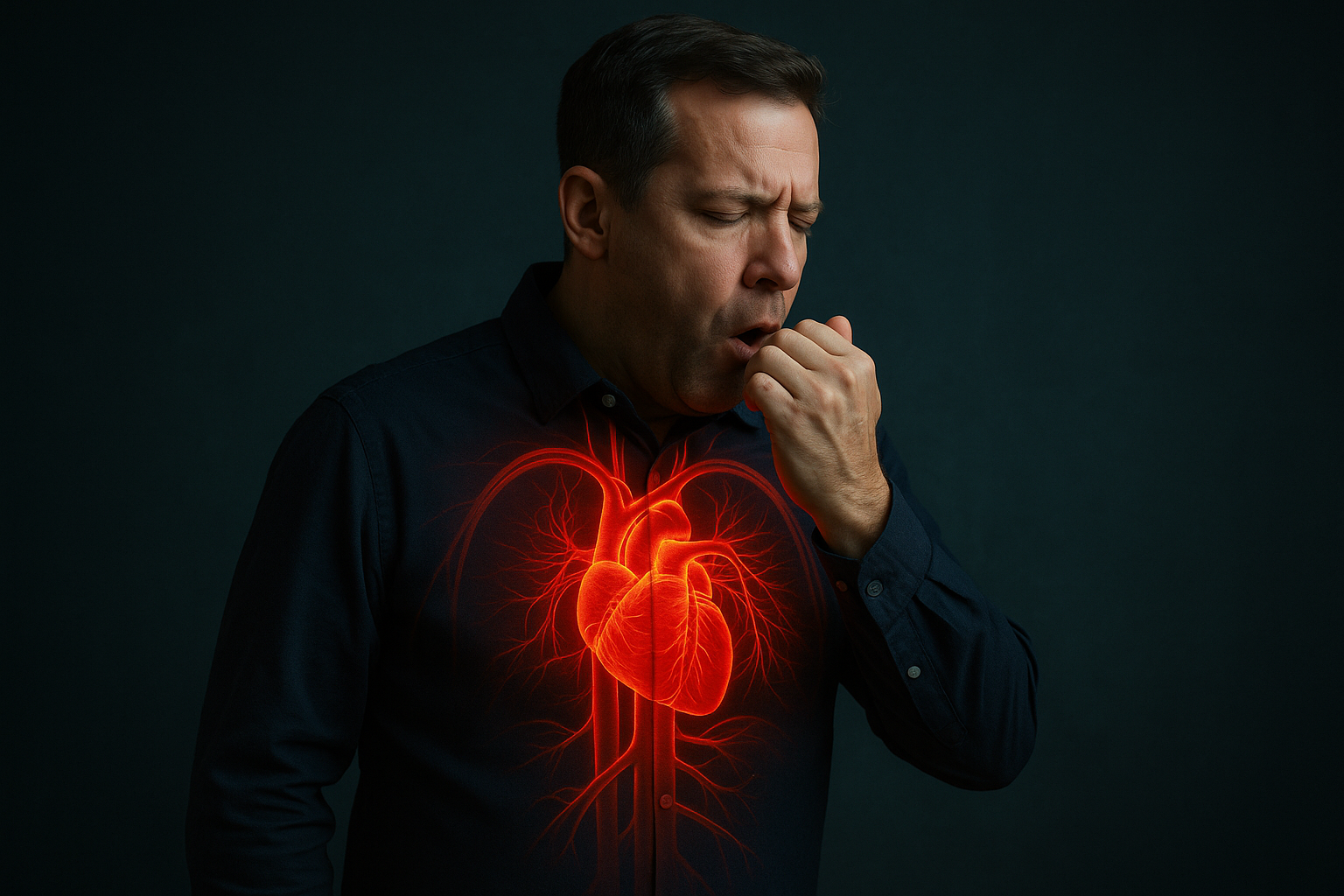
#1653 Cottage Cheese Burps
You can always listen to the Juicebox Podcast here but the cool kids use: Apple Podcasts/iOS - Spotify - Amazon Music - Google Play/Android - iHeart Radio - Radio Public, Amazon Alexa or wherever they get audio.
Matt shares his shocking, symptom-light journey to an unexpected quadruple-bypass—burping to diagnosis, surgery, recovery, family impact—and why proactive cardiac screening can save lives.
+ Click for EPISODE TRANSCRIPT
DISCLAIMER: This text is the output of AI based transcribing from an audio recording. Although the transcription is largely accurate, in some cases it is incomplete or inaccurate due to inaudible passages or transcription errors and should not be treated as an authoritative record. Nothing that you read here constitutes advice medical or otherwise. Always consult with a healthcare professional before making changes to a healthcare plan.
Scott Benner 0:00
Welcome back, friends to another episode of The Juicebox podcast.
Matt Fouse 0:14
My name is Matt Faust and I am a 41 year old type one diabetic who just underwent a quadruple bypass, open heart surgery, completely unannounced and surprised. So that is what I will be discussing on today, this episode,
Scott Benner 0:39
this episode of The Juicebox podcast is brought to you by my favorite diabetes organization, touched by type one. Please take a moment to learn more about them at touched by type one.org, on Facebook and Instagram. Touched by type one.org. Check out their many programs, their annual conference awareness campaign, their D box program dancing for diabetes. They have a dance program for local kids, a golf night and so much more touched by type one.org. You're looking to help or you want to see people helping people with type one. You want touched by type one.org. Nothing you hear on the Juicebox podcast should be considered advice medical or otherwise, always consult a physician before making any changes to your healthcare plan. I'm having an on body vibe alert. This episode of The Juicebox podcast is sponsored by ever since 365 the only one year wear CGM that's one insertion and one CGM a year, one CGM one year, not every 10 or 14 days ever since cgm.com/juicebox this episode of The Juicebox podcast is sponsored by Omnipod five. Omnipod five is a tube, free, automated insulin delivery system that's been shown to significantly improve a 1c and time and range for people with type one diabetes when they've switched from daily injections, learn more and get started today at omnipod.com/juicebox at my link, you can get a free starter kit right now. Terms and Conditions apply. Eligibility may vary. Full terms and conditions can be found at omnipod.com/juicebox omnipod.com/juicebox,
Matt Fouse 2:23
my name is Matt Faust, and I am a 41 year old type one diabetic who just underwent a quadruple bypass, open heart surgery, completely unannounced and surprised. So that is what I will be discussing on today. This episode
Scott Benner 2:44
awesome. And Matt, for those of you who are longtime listeners, was on episode 405. How we eat plant based? Oh, Matt, did you have you been eating plant based all this time, and you had heart surgery? What's going on?
Speaker 1 2:58
So, yeah,
Matt Fouse 3:00
I was eating plant based, you know, when we talked 12, that was during covid, and then we had kid number two, who is now going to be five. Wow. Goodness gracious. And, you know, I took a little break here and there in between. You know, busy, two kids, everybody, having a different diet is kind of difficult in the house, but for the most part, we eat plant based in our house, my 10 year old does not eat meat. She'll eat like cheeses, things like that. But generally, very healthy eater, you know, very minimal red meat intake. The only red meat, like, if I decide to eat it will be venison, which is a leaner meat, because I'm you'll laugh. I'm a hunting vegan. I love to deer hunt on my property.
Scott Benner 3:59
So Matt, give people context for that, though. Like, how do you become a vegan, I guess, for At what age? Just so, like, I don't want to rehash your entire other episode, but just give people, like, a quick overview.
Matt Fouse 4:11
Yeah, so it, it gradually happened. You know, I gave up red meat for the majority of the time, and then pork. And then I'm like, Well, I we eat fish on occasion. I We, you know, I live in Maryland, so gotta eat the blue crabs. You know, if maybe once a summer,
Scott Benner 4:33
what makes you think to yourself, like, I'm gonna stop eating meat? Is it a social feeling? Is it, you know, something about how you're you notice with your health, or,
Matt Fouse 4:42
yeah, overall health, I just feel cleaner inside, if that makes sense, like my body feels like it's doing a better job at what it's supposed to be doing. When I don't eat meat, I feel like my inflammation is down the. The brain fog is kind of gone.
Speaker 1 5:02
Gotcha, it is not out of a PETA
Matt Fouse 5:06
animal rights way. Like I said, I am a hunting vegan, so I do kill animals.
Scott Benner 5:13
Do you eat the venison because you feel like, oh, I hunted it. I'd like to eat it, or because you are trying to add some meat in periodically
Matt Fouse 5:21
both. So I grew up hunting as a kid in the sticks of Central Pennsylvania. We we got off a week of school after Thanksgiving to hunt, specifically like in our school district. So I grew up doing it when I moved to Maryland, I kind of continued to hunt. Now I'm in the suburbs of Baltimore. I have, you know, a nice wooded area, like 1000s of acres that I back up to. It just has unlimited deer, white tail deer. Nobody hunts around here. I kind of do my part. You know, you're either going to hit them with your car or I will hunt them, is kind of my thought. And it is a very healthy lean meat, yeah, you know, less fat than, like, beef, okay, it is delicious, but I have my like ritual, like, if I bag of deer during hunting season. You know, you have to got it. I take the heart out, because true schnitzel uses calls for venison heart. So I make schnitzel the night that I get a deer. That's kind of my thing. Okay, the family does not eat the schnitzel, but I would say, out of a year, I may eat meat three to four times. Okay, okay, if that. And then I donate the deer, the butcher, I go to, you can like checklist on it, donate, and they just donate it to local food banks, which is, you know, kind of doing my part.
Scott Benner 7:02
Yeah, that's awesome. Yeah. Remind people how old you were when you were diagnosed. I was
Matt Fouse 7:07
four years old, so that would have been 1988
Scott Benner 7:13
How old are you now?
Matt Fouse 7:14
I'm for I am 4141
Scott Benner 7:18
Matt, describe to me your level of care as a child growing up, etc. Like, what? What were a one CS like through the first 20 years?
Matt Fouse 7:29
Yeah. So growing up, I had an amazing doctor. He did everything that he could do in our small town for me and my sister is also type one. We did what we could. I remember the first glucometer that we got as a family. I used to, you know, pee on sticks to test my sugar as a kid. So you did what you kind of did. We had very crude insulin, cumulon n and cumulon R, which I just look back and I'm like, I have no idea how my mother did it. Right the time of activation was, what, like, six hours or something like that. I think growing up, my a 1c were pretty relatively stable. You know, I think they were usually, like, under eight. When I moved out, I was in high school, 18 years old. I moved to Baltimore. That's when I got my first endocrinologist that that was kind of unheard of in a small town, like an endocrinologist. What? What's that? Yeah, and then I kind of learned the techniques, you know, he's like, you know, every diabetic now is on an insulin pump. You need to be on an insulin pump. And I was doing just, you know, needles and glucometers. Now I'm looping, thanks to listening to your podcast, Penny Fox, my, I have not had an A, 1c, under 5.5 and probably six years
Scott Benner 9:09
for you man, maybe, do you work with Kenny? Or do you, do you mean, like from listening to him in the podcast? Or do you work with
Matt Fouse 9:15
him, just listening like, you know, listening to all the looping in the what is it looping in Fox, in the loop house, or whatever the episodes you have of him? Yeah, kind of learning what to look at. And, I mean, it's kind of down to a science. Now. It's like, I know if I eat this food, what to do, right? It's rare to get high sugars. You know, sometimes you can't help it if
Scott Benner 9:39
you're sick, about a five five? Yeah, I'm at about a
Matt Fouse 9:41
five, five, my last, but, well, so my last a 1c was the lowest I've ever had. It. I had a 4.7 and that was on the blood work previous to going into the hospital. Because, you know, they like to do all their labs before you do surgery. And that was 4.7 Right, jeez. And the surgeon came in who was gonna do the heart surgery, and she just goes, Wait a second, you're diabetic. Wait, but you have a 4.7 that's not diabetic. And I was like, oh yeah. And then she's like, well, we're gonna have you take levamere previous to surgery, we'll do an insulin drip during surgery. But I think you probably know more than the people here at the hospital, so we're going to just let you take care of yourself when you're in the
Scott Benner 10:30
hospital. They said, Listen, I know this is surprising, but there's a guy named Scott. He's got a podcast. There's a guy named Ken. These dudes online, these ladies, they made this algorithm. It's on my phone. Like it must sound crazy to people, you know?
Matt Fouse 10:43
Yeah, I was explaining what I do to the doctor taking care of me in the hospital. Just the internist. He was like, wait, you have a 4.7
Speaker 1 10:55
a 1c, is that? Am I looking at that right? And how do you do that. And I was like, so
Matt Fouse 11:01
basically, there's this group of people on the internet that designs this code, and I just really trust them. It's not FDA approved, and I get this patch of software and I download it on my computer on, you know, it sounds completely bogus, of course. No, no. But he's
Speaker 1 11:20
like, and your endocrinologist is okay with this? And I was like, oh, even better,
Matt Fouse 11:27
he had me give a talk to all the endocrinologists at the hospital that he teaches at. So the sugars are just, you know, I'm like, non diabetic. Basically, that's awesome in that area, this whole thing of I needed heart surgery was complete shock to
Scott Benner 11:47
me. Tell me, Matt, is there, are there heart issues in the family? Or do you think this was earlier diabetes care catching up to you somehow? Is there any, any feeling for what might have happened?
Matt Fouse 11:59
Yeah, there is bad genetic lottery. My mother had a heart attack at I want to say she was like in her 40s. 47 she survived. She's still alive. And her father, she never met him. He died at 39 of a heart attack, which would have been in the, what, 50s, and at that time, like open heart surgery was didn't even exist. So even if he would have caught something, they would have been like, well, sorry, you know that's your heart doesn't work. Yeah, tough luck. Yeah, see you later. And I think my dad's dad also had a heart attack. So jeez, it's in the family which you get that card. It's kind of, you do what you can do and you hope for the best. Yeah, is kind of all you can
Scott Benner 12:53
do. So was this a thing you were keeping track of with a cardiologist? Or, you know, because, I mean, you're coming up on the age where it happened to a great grandfather, it happened to your mom. Like, was this on your radar or no? Today's episode is brought to you by Omnipod. We talk a lot about ways to lower your a 1c on this podcast, did you know that the Omnipod five was shown to lower a 1c that's right. Omnipod five is a tube, free, automated insulin delivery system, and it was shown to significantly improve a 1c and time and range for people with type one diabetes when they switched from daily injections. My daughter is about to turn 21 years old, and she has been wearing an Omnipod every day since she was four. It has been a friend to our family, and I think it could be a friend to yours. If you're ready to try Omnipod five for yourself or your family, use my link now to get started. Omnipod.com/juicebox get that free. Omnipod five Starter Kit today. Terms and Conditions apply. Eligibility may vary. Full terms and conditions can be found at omnipod.com/juicebox CDE comm slash Juicebox. This episode of The Juicebox podcast is sponsored by ever since 365 and just as the name says, it lasts for a full year, imagine for a second a CGM with just one sensor placement and one warm up period every year. Imagine a sensor that has exceptional accuracy over that year and is actually the most accurate CGM in the low range that you can get. What if I told you that this sensor had no risk of falling off or being knocked off? That may seem too good to be true, but I'm not even done telling you about it yet. The ever since 365 has essentially no compression lows. It features incredibly gentle adhesive for its transmitter. You can take the transmitter off when you don't want to wear your CGM and put it right back on without having to waste a sensor or go through another warm up period. The app works with iOS and Android, even Apple Watch. You can manage your diabetes instead of your CGM with the ever set. 365, learn more and get started today at ever since cgm.com/juicebox, one year, one CGM, no,
Matt Fouse 15:10
absolutely not. I knew heart issues were in the family. You know, my endocrinologist always tests everything he should, cholesterol, all that stuff. It was always within levels that wasn't like, we got to do something. Hit the brakes. We got to send you to a cardiologist tomorrow. The whole thing started of me seeing a cardiologist because, on top of, like, you know, taking care of myself as a diabetic. I'm also a, like, marathon runner. I've run marathons, many I can't tell you how many I've run in the past. So I run. I exercise daily. And while exercising and running, when my heart rate would get up to, like, 130s I would start burping, and I'm like, Oh, this is really annoying, I guess, now that I'm old, I have GERD or something. I went to a GI doctor, and I'm like, Well, I think I have something, based off of me being a professional internet Doctor, I have a hernia or GERD. So they did, did all the tests, stomach scope that came back completely clear. Everything on their end was like, you're fine. We don't know. You know why you would be burping, yeah, while you're exercising, yeah, burping, yeah, yeah. And it was, it was annoying. So I'm really close with my endocrinologist. We're kind of like friends, and he's like, just to, like, roll things out. Why don't we just send you to a cardiologist? So I made an appointment, and this, this wasn't even that long ago, probably now we're going on maybe six months ago from today. Made an appointment. They did all the stuff the cardiologist, amazing. He kind of like, yeah, you have a family history. Your cholesterol is fine, but we'll, we'll send you to do like a cardiac CAT scan. And what that does is, it's very simple test, and most insurances will not cover it. But even out of pocket, I think you pay it might be $200 for the test, and that will show calcification of the heart. And what calcification shows is usually plaque. It's like hardening, and it will just show and it will give them an overall score. It goes by, you know, your heart chambers and the score will kind of be like, Oh, you're you're screwed. You got to go get heart surgery. Or, you know, maybe we should dive into this.
Speaker 1 17:53
Okay, mine was in
Matt Fouse 17:56
the moderate, so it wasn't like alarming, but it definitely made the cardiologist do more testing, so he scheduled a nuclear stress test, which they have you run on the treadmill, and you're hooked up to all these wires that they can read your heart rate and your rhythm, and then they put you in, I think it's like A CAT scan area after you run, and they inject something that makes your heart like glow, and it shows like, hot and cold spots of your heart, which is, you know, shows blockages, because if it's blocked, it's going to be cold. Area is going to be cold. Okay, yeah, yep, yep, that came back abnormal. And I was like, Oh man, holy crap. What's this is annoying? Yeah, I'm thinking, okay, maybe, maybe I have something in there clogged, and they'll put a stand in. It will be good. That failing of the test prompted a catheterization, which is, it's invasive,
Scott Benner 19:00
it's they go up through your groin. Is that that?
Matt Fouse 19:03
Well, now they go through your wrist. Really, though it's amazing technology. You're sitting there. They numb everything. It's pretty painless, honestly. They numb your wrist. They go up through it, and they can they're basically like playing a video game where they can see everything in live time you're watching them, and you're like, oh, wow, that's my heart. Like, in real time, it's, it's crazy, wow. So the the first catheterization, I'm like, Okay, this adventure, it's going to be over today. Like, they'll put a stint in. I'll get back to running without burping. I'll be great. It'll be good. Yep, be happy to have this over. They disappear for a while. Man, what's taking so long? A surgeon, they had a consult, and she's like, Yeah, pretty much all of your pipes go into your heart are completely. Groups. They were like, you know, 90 cents, and I can't tell you, like, the amount of shock, like my wife and I had that day, yeah, well, you're really young. She's like, Yeah, we're scheduled. We're scheduling surgery. Yeah, I was her second youngest heart surgery that she had.
Scott Benner 20:19
Yeah, they were gone so long because they were out looking for a for an ER to pull you into,
Matt Fouse 20:23
yeah, basically. And that's the crazy, scary thing. Like, I'm exercising daily, right? Like, every single day, and come home, I split firewood, I work outside, I mow the lawn, you know, I'm shoveling snow in the wintertime, right? Like, I'm very active and I'm very healthy, like I'm within my body weight that I'm supposed to be. You look at me, and it's like,
Scott Benner 20:50
your measurables. Look, this guy's getting quadruple Yeah,
Speaker 1 20:53
yeah, which was just
Matt Fouse 20:57
like the biggest shock at I was 40. I came home two days before my 41st birthday from the hospital. Yeah, she's like, Yeah, we're scheduling. I got an opening in two days. So I went from, you know this is going to be over, to oh my gosh, yeah, it's quite a recovery. Then I have to stay in the hospital for a week.
Scott Benner 21:19
Let me ask you a couple of questions, though. So you have heart disease in your family, like, and people have been having heart attacks, and you've had type one diabetes since you were a kid. These are two things. These are contributing factors to having heart issues. Like, so does she like? The surgeon, first of all, described what the blockages were like, that, you say 90% blocked.
Matt Fouse 21:40
Oh, that. I think there were more more. Yeah, okay, I don't know how I've survived so long, because i This doesn't happen overnight. This, this is, you know, ongoing.
Scott Benner 21:51
Yeah, Were you tired or No, no, no,
Matt Fouse 21:55
was not. That's what. Nothing. There was no other symptoms besides burping. You know, that's I'm so happy you had me on here, because it's like, I posted this. You know, I'm pretty, like, not reserved with my health, but I don't go out and, like, tell everybody about I gotta, yeah, tell everybody about everything. I usually keep my diabetes stuff to myself. You know, if somebody asks me, like, I'll tell them, but I'm not gonna go blab everything. Sure, I put this on, like, my personal Facebook, I had so many friends message me and they're like, Man,
Speaker 1 22:31
this is just crazy. I made
Matt Fouse 22:33
an appointment with a cardiologist because, like, I just wanted to get things checked out. And I had a couple people be like, I'm so glad you put that on, because it prompted me to make an appointment, and my cardiac CT scan came back elevated. I guess once you're a certain age, you just got a jack Benner like, even if you're not having symptoms, because
Speaker 1 22:53
you could be one step away from hearing those stories of like, man so and so was on the floor wrestling with his kids, and he
Matt Fouse 23:03
just died. You know that that happens every single day, so I'm just so glad that they found it, because I would have been one of those. Can you believe Matt died? Because, oh
Scott Benner 23:15
no, yeah, for sure. Yeah, you people have been like he was in his early 40s. Are you sure about like, that kind of thing, Matt, did they tell you what the blockages are made of. Like, I listen, I'm not a surgeon, or really, I have no expertise in anything. But, you know, we talk about a lot of times where high blood sugars can make, you know, small damaging things inside of veins and arteries. Then your body kind of patches them back over, and eventually those patches create a blockage. But also, there are people who just, you know, through diet and lack of exercise and whatnot, else will will have blockages that are made up more of it's not so much the scar tissue like Did they discuss with you what your blockages look like?
Matt Fouse 23:54
Yeah, the surgeon, she is an amazing surgeon. She told me, when she was doing the surgery, that my arteries were like cottage cheese. She said they just were soupy and falling apart when she, like, was sewing the new arteries in. So basically, you can take care of yourself, but a lifetime of diabetes is going to do damage. You know, with the Think of all the times you're sick every single year, it might be a couple times, but I'm sure when that happens, that you have it scars over it, scars over it, scars of next thing you know, your arteries are crap.
Scott Benner 24:36
You also had, you know, a one sees that for the time were good, but you don't want eight, nine, A, one CS for a couple of decades, which is maybe what you were living with as a young kid. And, yeah, yeah, definitely. And when did you figure out, like, looping? And how long ago would you say, Oh, I figured it out. And my a, one, CS came down and got stable. How old were you then?
Matt Fouse 24:57
I've been looping. I'm trying to. Think I had the first Riley link that was, it seems so crude now, that you had to, like, plug into the, like, USB, yeah, mini plug. So, like, what's that? Five or six years, maybe.
Scott Benner 25:14
But is that about how long you previous?
Speaker 1 25:17
Yeah? No, no, no. So
Matt Fouse 25:20
even previous to that on a pump, like, even when I was just doing shots, I had a one CS in the like, 5.6 5.7 5.8
Scott Benner 25:31
take, like, your lifetime with diabetes in years, and tell me how many years were you in the eights until you found a different like, I'm trying to just figure out, like, how long you were in the eights before you figured things
Matt Fouse 25:44
out. I would say from when I moved out as an adult 18. Okay, so
Scott Benner 25:51
to your first 14, four to 18.
Matt Fouse 25:54
Yeah, it could have been a crap shoot, like, I mean, and it was, this is what it is. You know, I had maybe sevens, eights, I can't remember, but it was, it wasn't fives and sixes.
Scott Benner 26:05
And I want to say to a seven and eight is not an insane. I mean, it's not what you want, but it's not an insane, like, Yeah, I hear people all the time walking around with 10s, elevens, twelves, like, that kind of thing, yeah, not perfect, but also not like you weren't trying, not like you weren't putting effort into it. And then maybe you, I guess that gets coupled with the, you know, the genetic portion of the heart there, there you are. So when they, when she says they're soupy, like, they get replaced. Like, how do they handle? Like, you know, I mean,
Matt Fouse 26:32
she completely needed bypass it. So what isn't working? They took my mammary glands, which is in my chest or not, glands artery, okay, and split that to the two main ones that are, like she said, they're the money makers that keep you ticking. And then they use saphenous veins from my leg and did the other arteries with those, the arteries are supposed to be a lot wider, and they last like a lifetime. But the veins, unfortunately, I think after 10 years, there's like a pretty high risk of needing an intervention, maybe, like a stint or something like that.
Scott Benner 27:18
I was gonna say, meaning another bypass or another, but a stent maybe some way to keep so they expect those to start getting blocked up in about 10 years.
Matt Fouse 27:26
Yeah, and I think what happens is, from my limited knowledge and research, the saphenous veins are not meant for the high pressure of like a heart. I see they're in your legs. They're in your arms. It's this is amazing, like what the human body does. So when they get moved and there's higher pressure of blood that they're used to seeing, they re engineer themselves to like work better. And they thick. They thicken so the walls actually, like, smooth out and thicken, which causes narrowing when that happens, which can reduce blood flow. And, you know, maybe cause issues, occlusions, or just the blood's not going through as fast as it should,
Scott Benner 28:22
eventually get you back to another problem. But that is magical, that they can do that. So basically you're gonna, I mean, you're gonna have a cardiologist forever now, and they'll need to be other interventions in the future at some point. But how do you describe how you feel now versus how you felt before the bypass?
Matt Fouse 28:39
Yeah, that's, that's the crazy thing I do feel like I feel younger and more vibrant. I definitely have more pep in my step. I noticed, like on my my daily hikes or runs, you know, going up a hill, like I just don't feel it anymore at all. I was healthy previous, but I think that was huge in my recovery and everything. But now I'm just like, blasting up hills, and I'm feeling awesome, not crazy. So I'm like, Oh, I guess, I guess maybe I I was feeling it, but I was healthy enough that I just didn't even notice it.
Scott Benner 29:18
When sometimes you get that, like, slow drift away from health. You don't notice the decrease, you know? Yeah, definitely, yeah. You get turned back on like that. Then you're suddenly like, Oh, is that the feeling I was accustomed to? Man, that's and so how long ago was this surgery? And what's the recovery like?
Matt Fouse 29:34
My surgery was May 16. I just fully recovered. They say full recovery is 12 weeks. They cut you open like a clam. They saw through your sternum and like your ribs, spread you, and then they do the surgery, and then they basically weld you back shut. But they put these, like little butterfly screws and clamps around it and then stitch you back up. The, honestly, the worst part was probably, like the, you know, the broken bone part, which wasn't even that bad, because they modern technology, they use nerve blocks in the surgery, which I think wear off when you're recovering, so, like they last basically the full time it takes to heal. When I was 19, I was in a mountain biking accident. I broke my collarbone and shoulder. That was probably 10 times worse of a recovery than my open heart surgery, which is completely crazy
Scott Benner 30:48
to me. Yeah, it's crazy. Yeah,
Matt Fouse 30:51
it's just nuts. And now this is me. I know other people probably have it different, but the day after surgery, I was in the hospital, and I was so bored, and they make you get up and walk to prevent blood clots, right? And I was so bored in the hospital, they they kind of give you a test to see that you're okay being on your own to stand up, yeah. And I had passed all of these the day after surgery, I'm doing laps in the hospital with my Apple Watch on. I did 2.6 miles of walking in the hospital because I was so bored. The doctors were like, you definitely win an award out of any patient we've ever had.
Scott Benner 31:40
I want it out, yeah, trying to get going.
Matt Fouse 31:43
Yeah, the recovery was fine, like it was, besides not being able to lift anything or drive,
Scott Benner 31:50
that was the most annoying thing. Were you on pain meds during the recovery?
Matt Fouse 31:53
Stop taking pain meds the second day, so they kind of just give them to you, yeah, like, after surgery, and then the nurse will come in and be like, how's your pain on one to 10? I'm like, honestly, I'm fine. They just stopped them and that, that was it. Anything's besides, like, Tylenol. It was not really happening, man,
Scott Benner 32:17
I I have to tell you how Arden had her her tonsils and her adenoids taken out a few weeks ago, and it's about a pretty painful thing for adults, because apparently the swelling in your throat hits a nerve that radiates like significant ear pain. They prep you for this is very unpleasant, and the recovery between, like days five and nine or even worse than they are, you know, in the first couple days or in the end. And on top of that, you've got like, a sore, you know, a very sore throat. They can't tie off the tonsils and they take them out, so there's just this, like, scabbing that happens the back of your throat. The whole thing is kind of horrifying. But they gave her a Percocet right thing. It was Percocet with acetaminophen, I if I'm not mistaken, and she had to use it, like, Arden. Arden's pretty tough. Like, I think when she started, she thought, like, oh, I won't need this, like, this. But pretty quickly she was like, okay, she took it the way she was supposed to. So she ran out of it, because they only give you, like, a week's worth in the first go. And so like, a day or two before it's gonna run out, we called them and said, Listen, you know, this has been pretty painful, and she's gonna need more Percocet. And you'd think that there'd be, I don't know, with all the talk in the world about, like, you know, there's painkillers are everywhere, and it's ruining America, and blah, blah, blah, like, you know, a 21 year old calls up and says, Hey, I need more Percocet. You'd think you'd need to talk to the doctor. No, the lady that answers the phone, and five minutes later, you've got a text from Walgreens. Hey, we're refilling your prescription. I'm like, but they do just hand that out. Like, yeah, you know what I mean? Like, it's interesting. You know, I was surprised that there weren't, but Matt, you didn't need it after having your chest cracked open because you're saying there was a nerve block that was working,
Speaker 1 34:00
yeah, so
Matt Fouse 34:02
the surgeon told me she put a, I don't know where or how this works, but she said, Oh, we used a nerve block so your pain should be less. And honestly, it was, you know, broken bones hurt. I did not feel that bad. It was kind of nuts.
Scott Benner 34:21
Oh, you got a good doctor. Then say her name. Please help people out.
Matt Fouse 34:25
Dr Harrison was her name. She is absolutely amazing. Like, in my like, doctor's visits and follow ups and stuff, anytime that a doctor or like, somebody at like, the cardiac rehab place would hear that she was a woman surgeon. They were like, kind of shocked, really. And I was like, Oh, this must be, yeah. I'm like, this must be pretty rare. So we googled it. And I guess in the United States, there are about 4000 cardiac thoracic. Surgeons. And now these surgeons are like, top of the top of the top of surgeons like to be cardiac, thoracic. There's so many things you have to be good at. There are, out of those 4000 the internet said there was less than 100 of them in the United States are women like, Oh, my goodness. I can see, I can see why people are like, what? But yeah, she she was amazing. When she came in to do the consult, when I had my catheterization, she like, very excitedly, oh, this is my favorite surgery to do. And I was like, Well, I'm glad I can help you, you know,
Scott Benner 35:43
yeah, so Matt, I have to tell you, you've said a couple things that I've looked up while you were talking so about the nerve block. So there are different kinds of nerve blocks they could use during this surgery, that some of them can last between 1872 hours, some up to five days, if the catheter stays in longer. It's pretty awesome. And I did look up the thing just now about the surgeon. And no kidding, yeah, study analyzing the Medicare provider utilization and payment database identified 2435 practicing cardiac surgeons in the US. By 2019 of these, 122 were female, representing 5% of the total in 20. Yeah, it's crazy. In 2013, of the 2076 only 3% were female. So there is an increase happening, but very slowly. I wonder what it is about that specialty that doesn't lend itself to women going after
Matt Fouse 36:36
it. Yeah, I don't know. One of my really good friends, his father was a cardiac thoracic surgeon, and he was telling me, like stories that his dad told him about going to, like school and his learning and stuff,
Speaker 1 36:52
the stuff they have to do, like they basically have to be able to thread
Matt Fouse 36:58
like multiple knots in like seconds with their eyes closed, like with tweezers and things, which is, I'm like, Oh my gosh, like,
Scott Benner 37:06
I dropped the tweezers. They'd be like, god damn it.
Matt Fouse 37:07
And I noticed, like a lot of the follow ups, Dr Harrison always would have young female, like high school girls or college girls following her, because, you know, they were interested in possibly being a surgeon. I was like, oh, you know, like, that's awesome. She would always ask, Oh, this is my daughter's friend who was thinking about maybe becoming a surgeon. She's in high school. Would you mind? And I'm like, No, have at it.
Speaker 1 37:35
Like, yeah, teach the young, yeah.
Matt Fouse 37:37
What's your scar? Like? The scar healed over. Very nice. It's a little reddish, and it's a line that goes a little bit below my nipples, up to maybe like couple inches above, like my pecs, so maybe like five, six inches. And then I had a scar on the leg where they took the vein, which is completely healed over. You can't even hardly see anything.
Speaker 1 38:09
And then my left
Matt Fouse 38:12
chest is healed over. That's where they took the mammary. But, yeah, the recovery was it was the best possible situation. My follow ups have been all good, and I just hope for the best to come. You know, you never know you could be one day away from kicking that bucket.
Scott Benner 38:30
Matt, this doesn't, does this change your overall life expectancy at all?
Matt Fouse 38:33
The surgeon said no, because I said that. I said, Well, you know, I'm a realist, and I googled the average life expectancy after open heart surgery, and I think Google says 18 years. So to me, that puts me at 58 which is pretty young to die.
Scott Benner 38:57
59 was that, when you did the Googling, did you Google that you hadn't had a heart attack, but you had the quadruple
Matt Fouse 39:04
I did not, but I asked this to my surgeon, and she said, Yes, but those stats are they're taken from a group where the average age is at minimum 20 years higher than you. So I think the the average open heart surgery patient is probably mid 60s,
Scott Benner 39:27
in their 60s already. Yeah, yes. There's no way for them to really track, yep.
Matt Fouse 39:31
If you look at that, it's like, well, yeah, that makes sense. That puts them near 80 when they die. Or, you know, seven, late 70s. Sure, you know, I got, I got a lot going against me. I got a diabetes since I was a young child, and a history. But now I will be seeing a cardiologist at minimum once a year. They will be running all the tests that they do. I'm now. On, oh my goodness, I have a pill box now because I'm on so much medication. I'm on statins, anti clotting drug I'm on, oh gosh, I can't even remember all the things I'm on.
Scott Benner 40:14
But what do they got you on warfarin or something like that for blood thinners?
Matt Fouse 40:19
I'm on aspirin, just aspirin, just like baby aspirin, yeah. But the other stuff, I think, is to prevent clotting. And then I was on a beta blocker, which makes your heart pump lower. I think the main objective of that is to give your heart rest for recovery, like after the surgery, okay, and I was on that and I would just feel so painfully sluggish, like my life was in slow motion, like I was wearing cement shoes, and my reaction time just felt like way off on the beta blocker, Which makes sense, because it, yeah, it slows it slows everything. It slows your heart rate. But yeah, I was feeling awful on that, and I noticed that during, like, my exercise, I just felt horrible because my heart wanted to do what it's supposed to do, and wanted to be that, you know, 160 versus 105, so my cardiologist took me off of that, and I feel so much better after being off of the beta blockers, good, but I will probably be on statin for the rest of my life. You know, the internet says, seemed like pretty much any person who's had type one for more than, like, 20 years, I think they just put them on it now, kind of prevent what happened to me.
Speaker 2 41:50
Yeah, yeah, geez, but this is the
Matt Fouse 41:52
first time I've been on one since the surgery.
Scott Benner 41:56
Talk a little bit about how it impacts the rest of things that can mean you're married, right? And you've got young kids, and, you know, what's the kind of psychological side of all this?
Matt Fouse 42:06
That was a wild ride. So at first, everything's just a shock. My wife and I, like, I it didn't even hit us, like, even after the surgery, it's like, Wait, what just happens? Yeah, quick. I remember the morning of the surgery. I think my skirt surgery was scheduled at like eight, but they had you report at like 6am to, like, prep you right? I remember going in and hugging both of my kids because I'm like, I might not see them again. The surgery has a
Scott Benner 42:41
sorry, no, no, take your time. Matt, seriously,
Matt Fouse 42:45
it's got, it's got, like, a one to 3% survive. The rate of death is like one to 3% which is pretty high. I mean, it's not high, but it's like, well,
Scott Benner 42:57
you know when it's high, it's when it's you, this could happen. Yeah, yeah, when, when did you have in the surgery? That seems like a pretty big number. Yeah.
Matt Fouse 43:03
And I'm like, so if you line 100 people up, which is not many people, three of them might die during this surgery. Yeah, that's a lot more than, like, you look at the statistics for, like, dying in a car wreck.
Scott Benner 43:15
Well, also you, you're sitting there at that point too, thinking like, this is, you know, happened to other people in my family. I have had type one diabetes for 40 years. Like, maybe I'm skewing a little closer to those three people than I am to the 97 Yeah, exactly.
Matt Fouse 43:29
You know, I was previously healthy, but it's like, well, I got the diabetes and my stuff so clogged. You know, anything could happen. I could throw a clot to my brain, whatever. It could all go downhill
Scott Benner 43:42
quick. Yeah, surgery is not simple, and being even just being put under, you know, is dangerous. So, I mean, I can tell. I mean, I can, I completely understand going to your kids and being like, hey, you know, you know, I was trying to bum me out, Matt, but they're so young. 10 years from now, if you pass away in that surgery, they're not even going to half remember you. You know what I mean, like, that's the thing you got to, like, stand in real time. Yeah, yeah, think about that,
Matt Fouse 44:04
yep, yeah, exactly, yeah. But that, that was that morning, and I was like, Man, this is really hitting me now,
Scott Benner 44:12
yeah, which one of these scum bags is gonna hit on my wife? You know what I mean? Like, you know of your butt, Yep, yeah, of your buddies. You're like, which one of these guys I know is, like, gonna wait like, a year and a half and then, like, you know, like, hey, you need help with something you like, dirt bags.
Matt Fouse 44:26
Yeah, exactly. But my wife was amazing through all of it. My mom came down, watched the kids while my wife stay with me every single day in the hospital. For, you know, the amount of time that she could during visiting hours, I got out, and then my wife, just like, she had her like, Okay, I was strong for the kids. And then she just like, she had, like, a week of like, holy, you know, yeah, she was just emotional. Crying because it like you have a release. Eventually you're like, everything just kind of, lets go, right? I remember I was really emotional in the hospital, and I was like, I just think about, like, our kids, like, what am I putting them through right now? And she's like, well, the ones for she's such a dangling she's not going to remember any of this, like you're right?
Scott Benner 45:24
And then I have a 10 year, 10 year old too, right? And then go ahead, I'm sorry,
Matt Fouse 45:28
yeah, I have a 10 year old. I think she's still young enough. She didn't really grasp the seriousness of the situation at the time the day my surgery was scheduled. I work for a professional baseball team, the Washington Nationals, and I'm their barista. So we get, like, free tickets anytime we want to the games the nationals were playing the Orioles, which is big because it's like two local teams. They were coming up to Camden Yards. We had the VIP tickets like that. You get to go on the field, because I work for them, and we're going to get to meet all the players. I was like, I had to come home from the catholicization and be like, I'm sorry, honey, but we can't go to the game. And she immediately was like, oh. And I was like, because I'm going to be on an operating table getting split open like a clam while they reroute my arteries. I think all she thinks about is like, of course, she loves me, but she's still 10, and she's like, Oh man, she completely understood it. Though we were not going to that game that night after the surgery.
Scott Benner 46:40
Listen The saddest thing you said so far is that you work for the nationals, who have been really terrible this year, and that must be sad.
Matt Fouse 46:47
Oh, bless them. Yeah, they're all great guys, and they're doing the best they can.
Speaker 1 46:55
Yeah, it's a little
Scott Benner 46:56
bit rough. Matt, what do you do for the team? I'm their barista. So like you wrote, do you wrote? I do, yeah, yeah. That's so cool. Tell me about it. Tell me, please, yep.
Matt Fouse 47:09
Only just work for the nationals. Like they're I work for the nationals, but any game that they have that's early, usually, like the one or three o'clock games that they like to be caffeinated, because, let me tell you, baseball players, they get paid a lot, sure, but I see what they go through because I'm friends with a bunch of them. They if they have a one o'clock game, they usually start reporting at 7am for these games, and they're studying the next teams, whatever they study, I guess they're like, pitches, their percentages, stuff like that. Yeah, they do stretches, they do practices, they do all this stuff. But yeah, so I caffeinate them. I also have people that work for me. So a lot of times the visiting teams were in the, like, Major League Baseball vendor network. So if they're traveling through Camden Yards or Nationals Park, they can choose to hire my company to bring an espresso bar and caffeinate them. So a lot of times I'll have one of my baristas doing the visiting locker. And like last was it two weeks ago. We did the Milwaukee Brewers at the same time that I did the Nationals. So I'm just basically making coffee for baseball players. Is what my job is.
Scott Benner 48:32
That's a pretty cool down, down to a team. That's a pretty cool job. Listen, my kid never played professional baseball, but I can just tell you that prepping for a college game is a day long experience. It's, it's a lot more work. They don't just wander out there and like, you know, stretch your shoulders twice and get going. It's a lot, you know, really. And you can see these guys now are all taking much different care of their bodies than they had in the past. You know, they're eating differently, cooking differently. That all takes time too. So, yeah, but listen, and the Nationals, oh my goodness, yeah, yeah. By the way, you're better than the Braves this year. That was surprising, I imagine,
Matt Fouse 49:10
Yep, yeah. That is crazy. That is just crazy to me, how
Scott Benner 49:14
that happens. It really is. Well, listen, I love baseball. It's so cool that you get to are you even there for the games, or are you just there earlier in the day? How does that work with your time there?
Matt Fouse 49:24
Usually I'm just there earlier. I can go to pretty much any game I want to. I just gotta tell the manager that deals with that. Hey, can you put me on the list? And he'll put me on the so every major league Park has a friends and family section that they will not sell public tickets to, okay? And that section is for friends and family or, like anybody that's on the list, all he's got to do is put me on the list, and then I can go sit. It's it's usually always like behind home plate, up and over to the first base side. You. But the thing is, it's like, well, I got there early. I was working all day, and now I have to wait two hours and then sit through a long baseball game. So usually I don't if they're anywhere I want to see them. I can also go to the games. So like, if they're in Camden Yards, we go and I can bring family, friends, whatever, pretty good perks of the job. I guess that
Scott Benner 50:28
sounds like a great job to me. Actually, that's awesome. I would like you to teach me how to make coffee so I can show up and do that be seriously great. And were you able to let me definitely fun. Yeah. I'm gonna finish up with you by asking this, like, how long were you out of work, and how quickly were you able to get back? And do you notice any deficits at this point? After the procedure,
Matt Fouse 50:46
I could not lift anything over I think it was eight pounds for the first six weeks. And then after six weeks, I had a follow up, and I think at that point your bone is healed enough that you're kind of good to go. You just kind of have to be careful. So when I went to the appointment with the surgeon, she was like, yeah, just listen to your body like you don't really have any lifting restrictions anymore, but if something feels like you shouldn't do it. Listen to your body. Well, I took that as okay, this week, I'm going to run 26 miles, and I'm going to split four cords of firewood. Yeah, and that was the worst decision I could have made, because I think that set me back weeks in my, like, overall recovery, because last, like I said, last week was on my official, like, 12 weeks. But I think I definitely was set back because of that. I just felt like garbage for like, two to three weeks after that, and I was like, it's so funny. My wife is not a naggy wife whatsoever. You know, she's not the like, you shouldn't have done that. I said to her, I'm like, Why didn't you say anything to me? And she's like, I was watching you split firewood from the kitchen window. And I said to myself, he should not be doing that probably. And I'm like, Why didn't you say anything?
Speaker 1 52:25
I was like, it's your fault. You weren't nagging enough.
Matt Fouse 52:29
My gosh, that was pretty much, you know, I think it's 12 weeks. Everything is technically like your bone is fused together.
Scott Benner 52:39
You should have, you should have followed the instructions. Matt, yeah, okay, try listening next time. I know, yes, that's crazy. Well, listen, I am. I'm very happy that you're okay. I That burping saved your life. I think, I hope everybody picks a time in their life where they say to a cardiologist, can we just get a look in there? I know. I think about it all the time. I genuinely would like to do that. And it does feel weird to go to somebody and say, Look, I'm not having any problems, but I am older, and I'd like you to look. I think even I've got to get over that. I'd like a little, you know, a little look around. I don't know what they do, Echo, look around, some sort of an imaging. I want to know if there's anything in there brewing. No pun intended. Yeah, yeah, yeah.
Matt Fouse 53:20
I think it is so important, like, if you are type one diabetic and you've had it for a good amount of time, even if you don't have symptoms, you can start. You go to your doctor, you say, I have no symptoms. I want to do a cardiac CAT scan. Insurance might not pay for it. You pay out of pocket. It's not that expensive. Like, even out of pocket, it takes a minute and a half to fling you through this thing that will show if you have a problem, like that will show calcification, and that could save your life. Like, I think it's worth diving into. Worst case, you blew however much the it cost for it, but it's worth doing that versus being that story of like, guy died wrestling with his kids playing on the floor. You know? Yeah, that's what I'm hoping you know, just this story can get across to people, like, dive into it and like, take a look, look at have a look.
Scott Benner 54:26
I share periodically. But my buddy Mike, who was diagnosed when we were, you know, 18 ish, like, at the end of high school, and never really, kind of came along with modern methods to take care of himself, till it was a lot later in his life, and he ended up on dialysis, and then one day, like he just, it is exactly the way you described. He was sitting and talking to his wife. They were talking about dinner. He stood up to make dinner, and stood up and fell right over again. And that was just sort of it. Yeah, I sometimes think that, you know, the rescue squad did him a disservice by by saving him in that moment. And then he, you know, laid in a bed for a few. Days before his heart gave out the rest of the way, because there was nothing they could do for him, because the damage to his heart was significant from his his lifetime of, you know, higher blood sugars, and that pretty much is the beginning the end of it all. On top of that, kidney dialysis is is hard on your heart, too. So he had a he had that double whammy going for him. Yeah, yeah, yep. I want to make your point through his point, which, if he was here, he would tell you that the day before this happened to him, he did not think he was about to have a heart attack. Like, that's not what. He did not see that coming. So I think that really should be the takeaway, honestly,
Matt Fouse 55:35
yep, yep. You might not see it coming, but it might be coming. So do what you can, go
Scott Benner 55:41
look for it. Nothing wrong with peeking around the corner to see what's coming and maybe get ahead of it a little bit. You know? Yeah, definitely not at all. I appreciate you sharing this story, and I wish you nothing but success. I know there are going to be a few people that are going to laugh because you had a plant based diet and then had heart issues, but I don't think that's got one thing to do with the other.
Matt Fouse 55:58
Yeah, and the marathon runner a day, I know.
Scott Benner 56:02
Listen, it's like, I ran a lot, and I never ate meat, and then, by the way, I had to have a quadruple bypass. Like, yeah, yeah. Not funny, but, you know, there's going to be some irony in there, yeah, that people don't, maybe don't jive with, but nevertheless, I'm gonna have to say goodbye because I'm out of time. But thank you very, very much again for sharing this with me. Thank you, Scott, that's a pleasure. Hold on one second. Okay, yep.
Touched by type one sponsored this episode of The Juicebox podcast. Check them out at touched by type one.org on Instagram and Facebook. Give them a follow. Go check out what they're doing. They are helping people with type one diabetes in ways you just can't imagine. This episode of The Juicebox podcast is sponsored by Omnipod five. Omnipod five is a tube free, automated insulin delivery system that's been shown to significantly improve a 1c and time and range for people with type one diabetes when they've switched from daily injections, learn more and get started today at omnipod.com/juicebox at my link, you can get a free starter kit right now. Terms and Conditions apply. Eligibility may vary. Full terms and conditions can be found at omnipod.com/juicebox omnipod.com/juicebox, are you tired of getting a rash from your CGM adhesive? Give the ever since 365 a try. Ever since cgm.com/juicebox beautiful silicone that they use. It changes every day, keeps it fresh. Not only that, you only have to change the sensor once a year. So I mean, that's better. Thank you so much for listening. I'll be back very soon with another episode of The Juicebox podcast. If you're not already subscribed or following the podcast in your favorite audio app, like Spotify or Apple podcasts, please do that now. Seriously, just to hit follow or subscribe will really help the show. If you go a little further in Apple podcast and set it up so that it downloads all new episodes, I'll be your best friend, and if you leave a five star review, ooh, I'll probably send you a Christmas card. Would you like a Christmas card if you're looking for community around type one diabetes? Check out the Juicebox podcast. Private Facebook group Juicebox podcast type one diabetes. But everybody is welcome. Type one, type two, gestational loved ones. It doesn't matter to me, if you're impacted by diabetes and you're looking for support, comfort or community, check out Juicebox podcast type one diabetes on Facebook. When I created the defining diabetes series, I pictured a dictionary in my mind to help you understand key terms that shape type one diabetes management. Along with Jenny Smith, who, of course, is an experienced diabetes educator, we break down concepts like basal, time and range, insulin on board and much more. This series must have 70 short episodes in it. We have to take the jargon out of the jargon so that you can focus on what really matters, living confidently and staying healthy. You can't do these things if you don't know what they mean. Go get your diabetes to find Juicebox podcast.com go up in the menu and click on series. I am here to tell you about juice cruise 2026 we will be departing from Miami on June 21 2026 for a seven night trip going to the Caribbean. That's right. We're going to leave Miami and then stop at Coke. Okay, in the Bahamas. After that, it's on to st, Kitts, St Thomas and a beautiful cruise through the Virgin Islands. The first juice Cruise was awesome. The second one's going to be bigger, better and bolder. This is your opportunity to relax while making lifelong friends who have type one diabetes, expand your community and your knowledge on juice cruise 2026 learn more right now at Juicebox podcast.com/juice, cruise. At that link, you'll also find photographs from the first cruise. The episode you just heard was professionally edited by wrong way recording, wrong way recording.com.






















Please support the sponsors



The Juicebox Podcast is a free show, but if you'd like to support the podcast directly, you can make a gift here. Recent donations were used to pay for podcast hosting fees. Thank you to all who have sent 5, 10 and 20 dollars!
#1652 Save Levemir
You can always listen to the Juicebox Podcast here but the cool kids use: Apple Podcasts/iOS - Spotify - Amazon Music - Google Play/Android - iHeart Radio - Radio Public, Amazon Alexa or wherever they get audio.
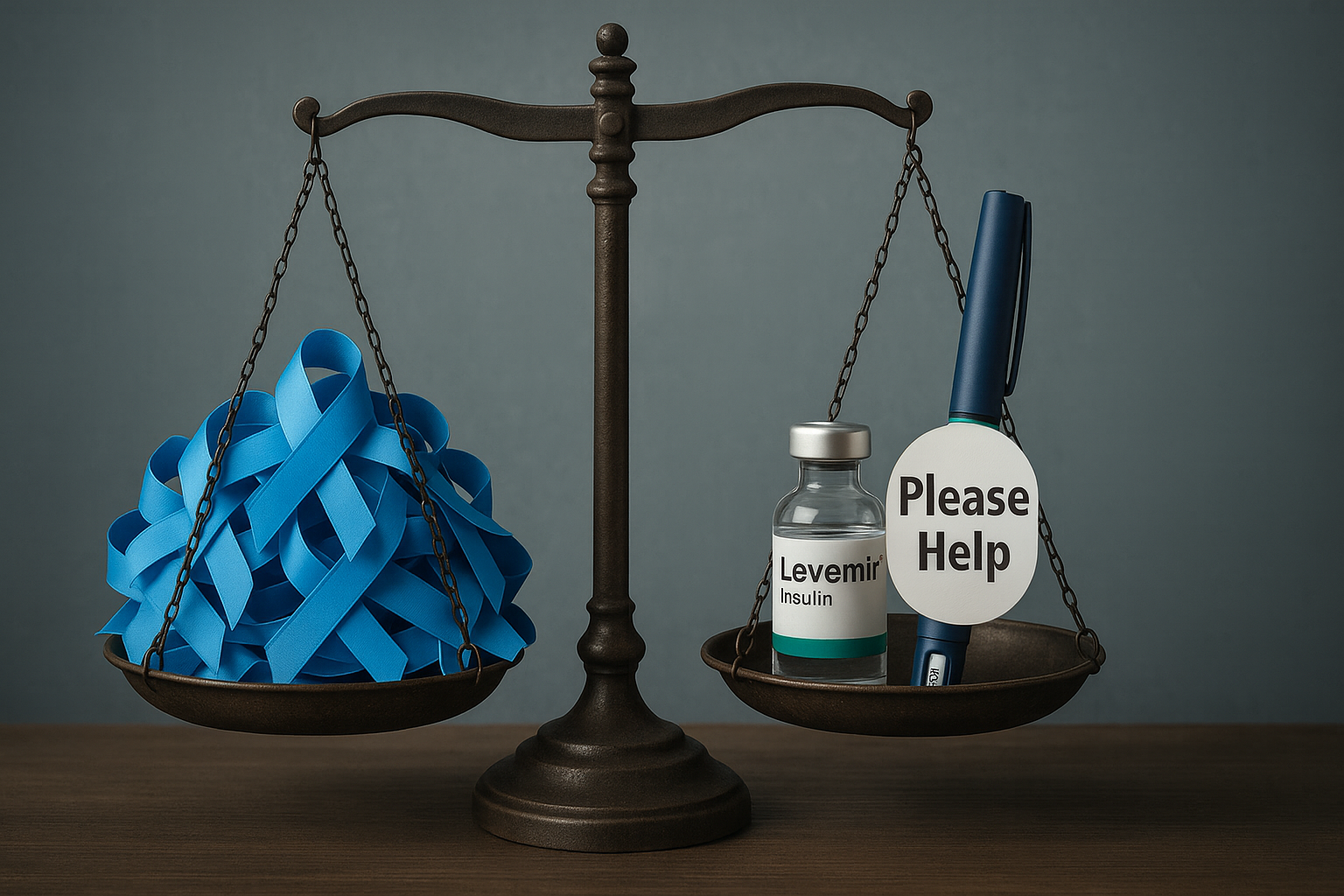
Allison Smart, Alliance to Protect Insulin Choice president and T1D mom, on fighting to restore Levemir via biosimilar—why detemir matters, regulatory roadblocks, patient choice, and real-world impacts.
+ Click for EPISODE TRANSCRIPT
DISCLAIMER: This text is the output of AI based transcribing from an audio recording. Although the transcription is largely accurate, in some cases it is incomplete or inaccurate due to inaudible passages or transcription errors and should not be treated as an authoritative record. Nothing that you read here constitutes advice medical or otherwise. Always consult with a healthcare professional before making changes to a healthcare plan.
Scott Benner 0:00
Welcome back, friends. You are listening to the Juicebox podcast.
Allison Smart 0:14
My name is Allison smart. I'm the president of the Alliance to protect insulin choice where you want to get a biosimilar of levimer to the market. I'm also the mom of a teen with type one diabetes.
Scott Benner 0:29
This episode of The Juicebox podcast is sponsored by skin grip, durable skin, safe adhesive that lasts your diabetes. Devices, they can fall off easily, sometimes, especially when you're bathing or very active. When those devices fall off, your life is disrupted, and it costs you money. But skin grip patches, they keep your devices secure. Skin grip was founded by a family directly impacted by type one, and it's trusted by hundreds of 1000s of individuals living with diabetes. Juicebox podcast listeners are going to get 20% off of their first order by visiting skingrip.com/juicebox while you're listening, please remember that nothing you hear on the Juicebox podcast should be considered advice medical or otherwise, always consult a physician before making any changes To your health care plan or becoming bold with insulin.
The episode you're about to enjoy was brought to you by Dexcom, the Dexcom g7 the same CGM that my daughter wears. You can learn more and get started today at my link, dexcom.com/juicebox, dot com slash Juicebox. This episode is sponsored by the tandem Moby system, which is powered by tandems, newest algorithm control iq plus technology. Tandem Moby has a predictive algorithm that helps prevent highs and lows, and is now available for ages two and up. Learn more and get started today at tandem diabetes.com/juicebox
Allison Smart 2:04
My name is Allison smart. I'm the president of the Alliance to protect insulin choice where you want to get a biosimilar of leva mere to the market. I'm also the mom of a teen with type one diabetes, real.
Scott Benner 2:16
How did you start getting involved in this?
Allison Smart 2:19
Well, should I start
Scott Benner 2:20
at the beginning? I think that might be the best place. Yeah, alliance to protect insulin choice.org. Right? I just typed in alliance insulin, and you came right up. That's very good marketing. Good job.
Speaker 1 2:33
I'm glad,
Speaker 2 2:34
wonderful. Tell me your story.
Allison Smart 2:36
Okay, almost four years ago, my then 13 year old daughter was diagnosed with type one diabetes the first few months, I think are similar. Most people that are diagnosed, you're just fumbling around trying to figure things out. Sure, hated the wide blood glucose variations. You know, just felt calmer when things were in a narrower range. And started doing a ton of research. I researched the different types of levermere insulin. You know, it's fascinating. At diagnosis, we the physician said, find out what your insurance will cover, and we'll make it work. But we looked into it, and there's actually real differences between the basal insulins. And I just found levamire, and we started using that, and we made some lifestyle changes, and for the next several years, things were really going quite well. We really felt like, you know, things are dialed in. My daughter's a tennis player. Plays tennis nearly every, every day. We had little disruption to her tennis from type one. And then November of 2023, we heard the announcement that Novo Nordisk said their discontinuing levamira from the US market, effective December of 2024, and that's when I started calling people. I said, of course, of course, someone's going to fix this. And called insulin manufacturers and pharmacists and even legislators and, you know, advocacy organizations, and said, you know, of course, we're going to fix this, right? And I learned pretty quick that no one was going to so I connected with many around the country and even around the world, and we started this 501, c3 nonprofit called alliance to protect insulin choice, and that started the journey. So it's been a year and nine months,
Scott Benner 4:18
I have questions. So tell me what year was your daughter diagnosed? 2021, 21 How old was she at that point? 1313, does she use MDI still today?
Allison Smart 4:29
Yes, she does. She did try a pump for several months. We did it for three months. And for her, I know everyone's different. It's all about you figure your own management, right? For her, it worked great during the week, but when she played, she likes to play in tennis tournaments on weekends. That's common for us, and we just couldn't figure out how to keep her blood glucose in that narrow range that we're able to reach with levamire. So we went back to MDI, and it's been great.
Scott Benner 4:54
Okay, so she's had diabetes now for a handful of years. You started with Levites. You had some success with it. So for everybody listening, why can't you just use Lantis?
Allison Smart 5:05
So we did use Lantis the first about four months, and then I researched it and asked to switch to levimere. We did try basal Glar which is still Glargine. It's a biosimilar of Lantis. We tried that last year for a few months, just again, to see if we could easily make the switch. And again, it was tough. We keep things in a tight range with a menstrual cycle and with athletic activity, we're able to slowly move levamere up and then back down through a typical cycle for her. And she has less than 1% lows. She just it's excellent management, and we have a more difficult time with that, with clargen,
Scott Benner 5:42
okay, and when you were on a pump, it worked all week, but it didn't work on the weekends. What pump were you using? It was the tea slim, and we're using it out the algorithm we used basal
Allison Smart 5:53
IQ, and that's also been removed from the market. I didn't the thing I didn't like about control IQ was the 110 target, because she feels best when she's lower than that, and that's why we were using basal IQ. But then on tennis tournament days, we'd try and figure that out, and it just was super difficult
Scott Benner 6:11
for us. Okay, so my daughter used levamire. Now my I'll give you some background here. My daughter's 21 now, and when she was first diagnosed, they gave her Lantus, and no, they gave her, yeah, it's been so long ago Allison. I don't really remember the pathway to it anymore, but we ended up with leva mere. We had to split it. We would always split it, because we found it didn't really last 24 hours. And so we'd give her half her dose of leva mere every 12 hours. And that you know worked well for us. Do you have any idea what it is about the injectable basal insulin that you're choosing that makes levimir? Like, I mean, because this is a pretty big thing you're doing here, right? Like, you started a 501, c3, you're out there swinging hands trying to get them to keep making levamire. I don't imagine they're going to. Maybe you'll tell me you're having some success, we'll find out about that they're phasing it out. Most people use what traceba Now, like those kind of more modern injectable basal insulins that kind of last more than 12 hours. The problem with leather mirror was it didn't last 24 hours. The problem with Lantus is that it doesn't quite last 24 hours. But are you using that somehow to your advantage? Is there something about the profile and the duration of levemere that is advantageous? Can you explain to me why it's more successful for you?
Allison Smart 7:29
Yes, I love that question. And first of all, I just want to address something else you said, people think we're trying to get Novo Nordisk to switch course and continue to make this that's not our goal. That's not going to happen. We want this manufactured by another manufacturer, as a biosimilar, as a generic. Okay, we would like Novo Nordisk help. So far, they're not helping, but if they would, and we are communicating with them, if they would assist, there are several different ways they could assist. And I could go into that if you want, but I want to go back to your other question of why we like levimer. So exactly, levamire is usually split. For people, the flexibility of it that's seen as a drawback for some is the huge advantage that we absolutely love. So most people that use levimer use it twice a day. Some even use it three times a day, and there are some that use it once a day. And I'd like to just go into that a little bit, please. So leave me a last one injection lasts approximately eight to 14 hours, which is awesome. So, and just an example I was, I've been to DC, I mean, 11 times in the last year and a half, spent a lot of time in Senate and congressional offices. And there was one aid I talked to, and she said, I just had a baby last year. I had gestational diabetes. I used levimer. I took my injection at night. It was perfect, because I only needed it at night. I didn't need it in the day, and it wore off when I didn't need it anymore. So that's just one example. And I do talk to women who are diagnosed later with Lata, late in autoimmune diabetes in adults, and some of them will go for a while without needing insulin, and then when they start insulin, I talk to some women who love levamire, the same reason they only use it once a day, because likely these women only need it once a day. I love the twice a day dosing, because when my daughter's insulin needs start changing, we can see that, and we can bump it up faster so and there's not the overlap. So most people that use large gene, which Lantus, basal, Glar assembly, even to Hao, is extra strength glarging. But I'm talking about like Lantus. Some people do split it, but there's a little more overlap. It doesn't sure take action right away, and traceba, most people take that once a day, but it lasts, you know, 42 hours. So there's a much longer tail. It's difficult with traceba to make quick changes. People that like pumps, we use levimer A little bit like a pump. I mean, I know that you've said you love that you can, you can kind of mess around a little bit and try a little more, a little less. That's exactly we've just learned. This trend with leva mare, to me, I picture it like riding a boat. On a little gently rocking wave, and we will rock up. I don't make quick changes. We make slow changes, but if I can see the night before it just wasn't enough, I'll bump it up for the day, you know. Or vice versa. We have teen boys. It's pretty common that when some of them that have pretty tight control have much greater insulin needs in the day versus the night or vice versa, and they love that ability to to titrate levamere to the those needs. So I guess, in a nutshell, what some see as a disadvantage, that it's got a shorter time of action, is a huge advantage. For many of us.
Scott Benner 10:35
It's a tool, and you use it in a very specific way, exactly when you tell this to people, I'm imagining that they respond to you and say, Well, yeah, you tried basal like you and, you know, but you know, there's a lot of new algorithms now you don't want the target lower. Try the twist pump at Target slower. Like, is that what they're responding to you with? Instead of saying, like, I want to help you figure out a way to keep this tool that you have, that you that you use and love, are they just trying to give you other ways? And if that's happened, have you had any quiet moments by yourself where you thought maybe I am fighting the wrong fight and I should just try this again? Or are you, I guess I'm wondering how you got to this level of, gosh. What's the word I'm looking for? Like, I don't know, enthusiasm about it. Like, yeah, what's got you dug in
Allison Smart 11:19
for sure. Love that question. So she hasn't wanted to try an Omnipod and and for a couple reasons. And my feeling is she's going to need insulin for the next many decades. I know people will say that often. You know, we'll try this other bumper, try this other algorithm. You'll get great control. I know we could probably do that. We probably could dial it in. To me, it comes down to choice. And you've talked about this before, I think if there are good options, we should have good options. And the conversation that is often the response I get in the diabetes community, outside of the diabetes community, I don't get that at all, but it goes further. Even people that use insulin pumps need backup, long acting insulin I know there are people who have been able to successfully use a pump every day for 10 years, but I have many more who say I used to pump great. I can't anymore for whatever reason. We could go into that if you want, but I just think we need multiple options of backup insulin, even for people that use pumps. So to me, and here's the other bigger issue, this could happen with anything. What's to guarantee tracebo will stay on the market? You know what's to guarantee one pump manufacturer will stay? I just think in this issue, we have a there's a company that wants to make this. They've been waiting to make it. What's in the way is the regulatory system. It's so difficult and expensive to get a generic to the market that it's almost cost prohibitive. And I just think that needs to change, because we are heading into a world where our option is glarging And just one other thing I need to mention. So insulin manufacturing has been dominated by three manufacturers. It was two for a lot of decades, and then the last couple, it's been three. That's shifting. Two of the three insulin manufacturers now make weight loss drugs. They are not as focused on insulin anymore. So especially Novo Nordisk makes 52% of the world's insulin. Yet they're sending the message. They're saying we are consolidating our global insulin portfolio. So new manufacturers are coming to the market. We know of at least six manufacturers who are bringing generics, biosimilars, of insulin, to the market. They are all working only on Glargine and on aspart and lispro. Aspart and lispro are fast acting cube log and novalog. Yeah, the only long acting generic coming to the market is glarging. So this is a problem a company wants to make it. Why can't we figure this out? And that's what I'm doing. What company wants to make it? So it's a small company. They're called our bio. They have not they've been working on bringing insulin to the market for about six years. They haven't yet. And so then the comment I often get is, why don't you get, you know, an existing insulin manufacturer, and we have talked to most of them, and most of them don't want to do dedemere. So dedemere is the generic name for levere those though there's no generic. And that's a big question. We can go into that if you want.
Scott Benner 14:04
My question is, why don't they want to, like, take yourself out of your predicament for a minute? Because now you're pretty steep in this. So you must understand it from a lot of different angles, right? Nobody doesn't want to make something they can make money with. So is there just not a lot of users for it, or are you seeing them just say, kind of blindly, well, there's more modern, better insulins that last longer, we're going to focus on them, like, Where does their focus seem to be when you talk this episode is sponsored by tandem Diabetes Care, and today I'm going to tell you about tandems, newest pumping algorithm, the tandem mobi system with control iq plus technology features auto Bolus, which can cover missed meal boluses and help prevent hyperglycemia. It has a dedicated sleep activity setting and is controlled from your personal iPhone. Tandem will help you to check your benefits today through my link, tandem diabetes.com/juicebox, this is going to help you to get started with tandem. Smallest. Pump yet that's powered by its best algorithm ever control iq plus technology helps to keep blood sugars in range by predicting glucose levels 30 minutes ahead, and it adjusts insulin accordingly. You can wear the tandemobi in a number of ways. Wear it on body with a patch like adhesive sleeve that is sold separately. Clip it discreetly to your clothing or slip it into your pocket. Head now to my link, tandem diabetes.com/juicebox to check out your benefits and get started today, you can manage diabetes confidently with the powerfully simple Dexcom g7 dexcom.com/juicebox the Dexcom g7 is the CGM that my daughter is wearing. The g7 is a simple CGM system that delivers real time glucose numbers to your smartphone or smart watch. The g7 is made for all types of diabetes, type one and type two, but also people experiencing gestational diabetes. The Dexcom g7 can help you spend more time in range, which is proven to lower a 1c The more time you spend in range, the better and healthier you feel. And with the Dexcom clarity app, you can track your glucose trends, and the app will also provide you with a projected a 1c in as little as two weeks. If you're looking for clarity around your diabetes, you're looking for Dexcom, dexcom.com/juicebox when you use my link, you're supporting the podcast, dexcom.com/juicebox
Allison Smart 16:31
head over there now. So they want to make the most common insulins. And if you look at a pie chart, Glargine is the most common insulin made has about 40% of the market. The next common are aspart and lispro, the short acting insulins. The next one, just as recently as 2022 was dedemere. It had about 8% of the market. And then behind that at that point was traceva. Now traceba, of course, has surpassed that. Glargine is the easiest insulin to make. It's the cheapest. There's a clear path. Dedemere has not been a clear path. The patent was over in 2019 I talked to one insulin manufacturer in India, and he said we were working on bringing a basal of deta mere to the market, but as soon as Novo Nordisk announced they would remove it from the US market, we stopped. They said, it's not work our time or our money to work on this. If you look at the history of insulin, many insulins have been removed from the market and they don't come back. Yeah, and that's a complicated scenario, too. The other thing in the pharmaceutical industry, most big manufacturers are looking for the next blockbuster drug, you know, the next Omnipod, the next billion dollar drug that the talk is not about bringing back a generic to the market. That's just not, it's not what they're focused on. So yes, there are generic manufacturers. One other example, there's a generic manufacturer called civica in Utah, and they're working same thing. They're working on Glargine aspart and lisbro. And I said, Can you add dedemere? And they said only number one, if Novo Nordisk helps us, and number two, we would need an additional $50 million so a lot of these companies, it's very expensive, and they want something clear. And they look at the market and they say, Look, we haven't had enough insulin. There just isn't a real acknowledgement that there are varieties of insulin. So we are heading to a world where, when you say, I use insulin, it is just insulin, because that might be our only variety, but I like to use the example. It's well known that some don't tolerate certain pain relievers, or some don't tolerate certain antibiotics. Your physician doesn't bat an eye when you go and you say, you know, I didn't love that pain reliever, I was nauseated, or I was allergic to that antibiotic, they give you a different one. It's fundamentally about choice. Dedemere and large gene have a different mechanism of action and different qualities. It's not just the duration of action, it's also the manner in which your body uses that insulin. And we need that option. There are some that just don't tolerate there are even some who tolerate large gene for a while and then they don't. I just think we need options. Yeah, make
Scott Benner 19:00
the counter argument to, like, I'm going to try to play devil's advocate for a while. So like, I want to be clear before I start talking, I understand what you're saying. I'm with you. I completely get it. When the argument is, you could use a pump and use Novolog, or Humalog, or my daughter uses a Pedra, or one of those fast acts, and just completely eliminate this basal insulin altogether. And you don't want to, and that's fine, but I don't want to spend $50 million to make levamere, and nobody buys it. What's the argument there? Like, if you were in the room with civica and they're saying, Look, we need help that we can't seem to get from Novo and on top of that, we need $50 million to make it happen. What do you say to them beyond what you've just said to me, you know, like, which is all very touching, and I'm, I'm not heartless to it at all. But like, I'm wondering, like, what's the argument beyond we should have it when their response is going to be, listen, there's traceba, there's basal gar, there's Lant. Like, there's other options for you. You're not going to die from this. So, like, how do. Argue back against that?
Allison Smart 20:02
Oh, I know that's a great question. So couple things. Again, people need backup for pumps, and there are physicians who prefer levimer as a backup because of the shorter action. I have one physician who has a practice of Pediatrics, and he feels like a lot of his teenagers have a lot of adjustment difficulties dealing with type one, and if he helps them have pump breaks, like in the summer and Levi's the one he loves to use. People use long acting when they're first diagnosed. If someone needs an MRI, you need you need backup. So and when people say there are many options, there really aren't. There's really Glargine or traceva. We haven't used NPH in our argument, because that's a intermediate insulin. It's not seen as a realistic alternative, right? And the other thing I need to bring up, it wouldn't be $50 million for every company to do that. That was just for a nonprofit company, if it's for profit, yeah, yeah, this company can do it for 20 million to get it started.
Scott Benner 20:57
And they want to, let me stop you, and they want to, because they're not making anything right now. So even a few percent of the insulin market for them would be a big deal. Is that?
Allison Smart 21:06
Right? Yeah. And here's another thing, the glarging market is going to be very divided. There will be six to 10 producers of Glargine in several years. So you take that 40% of the insulin market, divide it by up to 10 companies. They're looking at 4% of the market. The lever market is a bigger pie. Dedemere. Here's the other reason it would be cost effective. Now I'm going to kind of take a little bit of a tangent. Go ahead, insulin used to be over the counter. It didn't require a prescription at the federal level until 1996 when Humalog came out and then Lantus came out in 2000 dead mayor, 2000 of fine Allison,
Scott Benner 21:43
my friend Mike, used to need a prescription for his syringes, but not for his insulin. Yeah, yeah, yeah.
Allison Smart 21:49
I've talked to people who have had diabetes for 50 years, and they've said one woman in particular, she said I was a struggling college student in the 70s with no job. I could go down to my pharmacy buy my insulin for $2 no prescription. Asked it was behind. You have to ask the had to ask the pharmacist, because it's in the refrigerator. But she said it was easy to get as band aids, yeah. And she said, Now I can't, as these new insulins came on the market, the argument was, these are newer, the newer analog and human insulins require more oversight, so we need a prescription, and the request has to come from the manufacturer. When that happened is when our ins, our market for insulin, when it became really expensive, it was already dominated by these few manufacturers, but it became, we really became at the whim of, you know, PBMs and insurance companies and so here's the argument, regular and NPH insulin have always been over the counter at Walmart, right? So this manufacturer would be interested in having in requesting that this be over the counter. And the argument would be that this isn't a newer insulin anymore. It's been widely available for 20 years. Why can't we get this over the counter? Can you see how much more lucrative It is at this point, even if it's a good price, your market becomes not just former levamire users who most of which have moved on to other methods, but it's a much wider market, and it's part of our argument also we should be able to have easy access to the insulins and even the method of delivery that we want when You You understand that once you have type one diabetes, you have to make changes pretty quickly on your own, and there has been no documented harm from having our and NPH stay over the counter. So that's part of our argument.
Scott Benner 23:34
How much R and mph is still being purchased throughout the country? Do you know
Allison Smart 23:37
I have a pie chart. I can't, I can't remember the exact I mean, it went in that order. It went large. Gene was 40% this is 2022, the next common were aspart and lispro, and then it was levimer, and then it was traceba, and then it is NPH. NPH and R are still important for R is what's used in hospitals, and NPH still has a need to NPH is used often in pregnancy. The pregnancy the pregnancy argument is a big part of what why we're working on this.
Scott Benner 24:04
Also, okay, what is your level of belief that this is going to work out in a in a positive way for your for what you're trying to accomplish? Do you really think this is going you're going to get somewhere and get this accomplished? And if so, what is the path to it?
Allison Smart 24:16
I actually do. I absolutely do because I can't see a future without this. I can't see a future with just Glargine and who knows what happens to traceva. So here's the thing, if Novo Nordisk were to help us in some way, there are several ways they could. They could sign over the right to manufacture. They could involve it. Could help with some sort of contract manufacturing or license it. But you and I realize they may not help, right? Even if they don't help, then we need regulatory help and financial help and and as I am talking to many industry leaders about this, they recognize that this is important, and I think we're going to be able to figure it out, really. I so here's the bottom line. This has been widely available for 20 years. This. Company already knows how to make it. It is off patent. Novo Nordisk has stated they won't assert a patent against it. They won't, they won't litigate. I absolutely believe this is going to get done. We just have to figure out how,
Scott Benner 25:13
when you say they need to sign it over, is that? Is that the thing they're not doing right now, the company you mentioned that is ready to make it, or do they just need no vote to be like, Oh yeah, cool, here it is, and give it to them, and that's not happening. Or what is the sticking point right at this moment
Allison Smart 25:30
so that could happen? But let me make it clear, we're not trying to force them, and I'm not trying to have US government leaders force them. Our advocacy is more how can we get our leaders to help us get this through the regulatory process. Yeah, so Novo Nordisk has
Scott Benner 25:46
Wait. Let me stop you so you don't think that the pathway through this is finding somebody at Novo who just goes, Ah, fine. All right, here you go. That's not what you're shooting
Allison Smart 25:53
for. That's a pathway. But I just want to make it clear that that's not the only pathway, and we're not asking to force them, right?
Scott Benner 25:59
No, I understand. I'm asking, what like, functionally, what did they if that's the pathway that ended up being the way that it worked, what would have to happen like, functionally? What needs to happen on Novo side to make it, make this other company eligible to make the drug?
Allison Smart 26:13
So you can actually sign over the FDA rights to manufacture something. It's actually a piece of paper, and it's more complicated than that. But if they were involved in the process, they could. So there was a here, and I want to make it clear I'm not bad mouthing Novo Nordisk. I understand their business, and I understand it makes perfect sense that if you've got omnipody that are much more lucrative, that you're going to devote more resources there. But if they were to assist us, we could get this done easily. But remember, that's not the only path. If we still get help on the regulatory angle, it shouldn't be this hard to bring something to the market. It's kind of silly that our regulatory process is so time consuming and so expensive to get through.
Scott Benner 26:51
Well, I mean, listen, it occurs to me that you have a small problem and a big problem, and the big problem is not fixable by you may or anything we can do, but the person at Novo who could make that decision? Are they aware of your desire?
Allison Smart 27:03
Yeah, we're talking about it. So when we started this, I emailed the former CEO several times, and either he or his care team did respond to me. So a year ago, September 24 there was a Senate help hearing, and the purpose of that hearing was to talk, they brought in the then CEO of Novo Nordisk and discussed the high price of Omnipod and wegovy and several of us from my organization actually met with Novo Nordisk executives in Washington, DC the day of that hearing, and we had worked for several months. So even though the purpose of that hearing was to talk about the high price of ozempic and wegovy, several of the offices told us, well, your issue is related, and this could be brought up in the hearing, and it was. And we worked with constituents. There's 21 senators on the HELP Committee, and we worked with those Senate offices, and three senators ended up addressing levamire in that help hearing. So I want to fast forward since then, Lars Jorgenson, the then CEO, is not the CEO anymore. There's a new CEO, so I emailed him and asked if we could discuss, you know, some path forward. And we have had a meeting, several of us on both sides, and those talks are still ongoing.
Scott Benner 28:10
I'm looking at something right now, like I'm trying to do my best to figure out how much they're actually making selling levamire. Are these numbers right in 2023 Novo Nordisk reported 3.9 3 billion in sales of levamire.
Allison Smart 28:22
I know that in 2018 it was 1.8 billion. We know that in 2022 it was 640, 9 million. In the US, it's a little hard to get those figures. So your figure
Scott Benner 28:32
of Wait, wait, hold on a second, I'm not sure I'm learning something more here. Oh, this is Danish Crohn's. Yeah, it's different, yeah. So that turns into $571 million US. That sounds like a lot of money, but I think if you look at it this way, it's not in the fourth quarter of 2024, we go V sales more than doubled year to year to 19.8 7 billion Danish Crohn's, which is 2.7 6 billion for that quarter. So I'm pretty sure that if I take 2.7 6 billion for the quarter in 20 24/4 quarter, and I subtract the $571 million that they made the entire year before in 2023 what I would come up with is, it doesn't matter, just let them make the insulin. Isn't that how it feels to you? Right? Yeah, exactly what I feel like I'm hearing here is, is that this thing that they think of is as old and useless and not going to be used anymore, right? They don't want to get I imagine they don't want to give it away, because what if, right there, it's the same reason I can't get my wife to throw out half the stuff in my closet. I imagine is that she keeps thinking like, well, what if we need it one day, and so couldn't they lease it?
Allison Smart 29:42
There's all sorts there. There's not just one path. There are many things that could happen, right for
Scott Benner 29:47
sure? No, yeah, because I'm imagining, like, what they were really concerned that I don't know something crazy was going to happen, like, lease it off to this company for a decade, let them make it for 10
Allison Smart 29:55
years exactly. And that's, that's basically what licensing is, and they could still get a profit. From that.
Scott Benner 30:00
Oh, and you can make money from it, right? Come on. Okay, okay, so what we need is for someone inside a Novo Nordisk to hear this. That would help. That would help, yeah, Allison, I'm gonna take care of that for you right away. Don't worry. Okay, well, consider that part done, and you're making a good argument for them, like so that they can understand the reason I'm going to still tell you I'll play devil's advocate again. Allison, How old's your daughter?
Speaker 1 30:26
She just turned 1717. Years old.
Scott Benner 30:29
Send me with her to play tennis this weekend. Give me any insulin pump you want. I can make her blood sugar good. That argument there, because I'm sure you've bumped into it before is, are you sure you just don't know what you're doing. Explain to people, either you a, because my assumption is a, you just don't want to and it's a choice thing for you. Or B, you know how to do it. And again, you don't want to wear a device, or whatever, which is always fine. Or C, the answer is, you really don't know what to do, and that would be something. So can you be honest enough to tell me, is it? Is it? I don't want to it's a choice thing, or I really don't know how, and I can't figure it out.
Allison Smart 31:07
No, this is a great question, and let me give you a couple examples. So we were at a tournament a month ago, and on the court next to my daughter, while she was playing, there was another teen girl, and her coach was saying, take insulin. Take insulin. He was, he was yelling it. And it was interesting. The next day, we talked to that coach. The tournament was several days. Turns out the coach was her dad. Turns out she was at a level of 550 she uses the Omnipod. Has had type one for several years. This was a well experienced family. And I just, I want to come back to that in a minute. Yeah, there's another girl who we know, who's a friend who was diagnosed a year ago, who's a tennis player. She's not been competing the last few months. She's been using an Omnipod. She's not been competing because they haven't been able to keep her blood glucose in a tight range for play. Now, I understand that you can that some people can get this to work, but I do understand that sometimes there are pump failures and sometimes things happen and people want backup. So it does come down to a choice issue. For me, I'm sure if we tried that and figured it out, we could probably figure it out. I just feel like our method say we use that and it doesn't work and we want to use backup. Barging is just harder for us to handle. And there are some people who there are other things about glarging that make it difficult. For some people, I just, I really, it really comes down to choice. I think we should have the ability to
Scott Benner 32:30
choose. Okay, so I'm going to make a different argument now, okay, and I don't discount yours at all, and I'm on, I'm on the side of your argument. I'm going to say this, my daughter played high competition sports on an Omnipod before the algorithms even and i She played most days at a 90 blood sugar, and she wasn't crazy low afterwards, or couldn't get high. I have never seen a 500 blood sugar in my life. If you're seeing a 500 blood sugar, I believe you're fundamentally misunderstanding how insulin works, whether they have a lot of experience or not, I can tell you that I've had conversations with people who've had diabetes for 20 and 30 years, who have a one CS in the thirteens, and then I explain to them how insulin works, and then their a 1c goes down to six. So sometimes this is really a question of people don't have the right tools, and even if they have the tools, they often don't know the right way to use them, so that's a very common problem, especially with diabetes. That does not in any way negate your argument. I'm trying to tell people who are listening right now, who are probably some of them thinking like, Oh, come on, just get on a pump and figure out what you're doing right like, if that's what somebody's thinking, that's not the argument. I appreciate your choice argument, and I actually think it's a bigger conversation than that. I hear you kind of going over it. You don't dig too deep into it, but what you're saying is, yeah, today, it's levamire, but maybe tomorrow it'll be something else. And what if, 10 years from now, it's this and there's no good replacement now, right? Again, I'll make the opposite argument. I told you about my friend Mike earlier. He was diagnosed when we were kids in the 80s, Mike's gone. Mike's not alive anymore. Somebody put him on regular and mph. And then the world changed, the Lantus and Nova log and Humalog, and he didn't change along with it. And by the time a doctor got a hold of him who understood how things were being done in a modern way, it was already too late for my friend, and his kidneys didn't work. So you can also make the argument that Allison, as much as this is working for you, there may be something over the horizon that's even better. We need to get to it, and we're not going to get to it if we're still making levimir. However, that's not the case. It's not like you're asking us to tie ourselves to a rock and not move forward. You're saying, fine, go do whatever you're going to do with the rest of this stuff. But this is a very small financial outlay for somebody, they can still make a profit off of it. And for the people who want it, here it is, and I'll tell you, if they have the manufacturing space to do that, then why not like, like you said they're going to make I've. 570, $1 million is not a small amount of money, right? But it is. You know, if you're making, what is the number here? 2.7 billion times four a year? What is that? 24689, 10 and a half? Is that 10 and a half billion dollars on we go V in a year? Oh, my God, no way. You can't cut 571, off of that, and just leave these people alone and let them have their insulin. And in your arguments aside whether they're right or wrong. And I'm telling you again, I'm coming out and telling you, Allison, fly me out to where you are. I'll get your kids blood sugar straight for you. And I'm not saying you can't do it. I'm saying I can. But that's not what we're talking about today. And for anybody who thinks that that's the argument to what Allison's saying, I think you're misguided. Your argument should be there's no reason not to do this, and choice is important, and all the other stuff you know. Like, it's nice to say that insulin used to be $2 and it should be that again. It's never going to be like that again, right? Oh, I totally agree, right? Like, that's not how the world works. But you're not here making a Pollyanna argument, which I really appreciate, because I've heard those arguments made before, you know, as an example on behalf of, you know, the cost of insulin, it shouldn't be that much. I shouldn't have to pay for something that keeps me alive. You're all right, like you're I agree with you 1,000,000% but someone's making a lot of money off it. They're not going to stop. They're not going to stand up tomorrow and go, Hey, you know what? I don't need the $10 billion just take it like that's not how this is going to work. And I appreciate that you're not making that argument. And I'm wondering, What can people listening do to help you along the way? Is there something they could be doing to amplify your voice? Yes.
Allison Smart 36:44
And I just want to address one other thing. I am not anti pump, and I totally agree with what you're saying. I think, you know, if you try different things, you can find things that work. Pumps have been fabulous tools for many I am not anti pump. I'm not I just
Scott Benner 36:58
think you don't come off that way? Yeah, I'm making all the arguments in the people's minds that are listening so that I can say at the end, but that doesn't really matter, does it? Right? There's still money to be made on levamere, like, let somebody go make it. And if it's not going to be you, then what are you sitting on it for? Exactly, take a piece of it, give it off to that company. Ask them for a piece. They'll give it to you and let them go make love a mirror for you, and let Allison's daughter live her life, and everybody else who uses it and take out, take a little bit of money and be done with it. Like, why do you have a 55 year old typewriter in the top of your closet you're never going to pull down again? Because that's what this is
Allison Smart 37:35
to them. So the other thing we don't even need pens. We just want the liquid, just little vials would be because that was an argument. First, you know, they needed, I mean, the pens were needed for ozempic and wegovy. I just it's so much bigger the more I've gotten into this worldwide development of insulin. It's just such a shame that it's been so consolidated. And the other thing with pumps, I know I'm a little bit all over the place. You're not. I think I would want to try some, but I just want good backup insulin. So I totally agree. And then what another thing you said? What can listeners do? Yeah, so I do want to address this one. So we talk to legislators often. They know this issue. I wish they would hear it more. They'll say they'll hear us. And then they'll go, Huh, this is a problem. So they'll talk to, you know, big advocacy organizations or others, and the message comes back, oh, this isn't that big of a deal. If more people would speak up about it, even people who aren't levamire users, if people would, you know, send a message to your legislators, because really, we need attention from the FDA. So the FDA has viewed insulins as basically interchangeable, which has been a real problem. Some Senate offices reached out to the FDA last year when we came with a lot of physicians who specialize in diabetes and pregnancy, who said, this is really important for pregnancy. So they went to Novo Nordisk and they said, how can you discontinue this one if we have physicians saying this is important for pregnancy? But since then, so we filed a citizen petition with the FDA, with with physicians and some small organizations in April, and then the FDA said, Okay, well now we have 180 days to respond, so they they won't communicate with us. So we need help with the FDA, and that needs to come from legislators. So everyone in the US has two senators and a congressional representative, so it would really help if you reach out to them, reach out to our organization. There's a way on the website, you can leave your your email that would really help us. We do not have we haven't focused on the funding side, and we need to focus on that more. So back to your question of, how can people help if they can reach out to the legislators and communicate with us and say, How can we help? Because it's changed over the last year and a half. The messaging has changed. And it's nice if people are interested in this, if they reach
Scott Benner 39:50
out, yeah. But in the end, what we really need is for Dow star to just do this right like it needs to get to the CEO. And I'm going to tell you right now that if the CEO of node. Ovo sits up tomorrow and says to somebody, Hey, let's make it so that, what was the name of that company that wants to make the levamire our bio? Oh, yeah, let's, let's work it out so our bio can make love America. It'll get done tomorrow, exactly, right? Like you just got to say it out loud, and then it's gonna happen. And then $571 million comes off the sheet. Okay, I'm you get a piece of it back, and you'll get a piece of it back for longer, because you're going to stop making it anyway. So you can lose 571 a year for the next 10 years, or take 10% of 571 for the next 10 years. That's just money coming in that you don't have to do anything for. But my other thing to say here, like, if he was listening to me right now, I would say this, I'd be like, Mike, listen goodwill. Man. Like way to buy goodwill in the diabetes community, and don't discount that at all. In a world where people already think you're overcharging them for the thing that's keeping them alive. And they're right in a world where they think that the only reason that insulin is getting cheaper is because somebody's making you make it cheaper. And they're right in a world where they think you're more worried about we go V and and, you know, ozempic, and the fact that Manjaro seems to work differently and your stock price fell like where they think that's what you're worried about, and they're right. Why don't you do something nice for them? Exactly, yeah. Why don't you just say something out loud in the middle of your office and make it happen, wave your magic wand, make it happen, and then go out in the world and tell them about it. Let me be cynical for a second. I'd run a marketing campaign behind it. If I was you, I'd be like, listen, huge. Here's what we did for you my gut. Like, how do you not see that from a marketing perspective? Reach out to the diabetes community and go, Look, this was coming off the books, and most people don't use it. But here's Allison and her daughter and the other people who use levemere Still, and even though it was not financially a good idea for us, we made sure that this still existed. For you, you don't see what like the bright sunshine that would put on Novo in the diabetes community, by the way, the diabetes community that one day you're hoping is all going to use a GLP medication you don't want them to like, think Novo Nordisk did something good for us. So there's me being cynical and still trying to figure out a way to make this work for you, unless I don't understand the downside of them signing off and letting this happen. Maybe he could cop on here and tell me something. I go, Oh, Allison, you're screwed. They can't do that. Like maybe I don't know their side of something, and I completely am willing to believe that I don't really know a lot about anything. But from my perspective, from your story from understanding the bigger world, I just don't get why they couldn't just do this. Just be cool, man. Like, how hard is it to just do a good thing once in a while?
Allison Smart 42:28
Right? Oh, I totally agree. We would praise them to this guy. I would love, I would love them to, of course, fix this.
Scott Benner 42:35
Yeah, of course. I don't mean to say 570, $1 million isn't a lot of money, but in in this grand scheme of things, it's not and especially if they're not going to make it anymore, right? Like, oh gosh, this must be incredibly frustrating for you. Allison, what happened? Like, what moment did you have, a slowly eye turn, where you decided to get this far into this? Like, how did you not just let this go and decide, like, I guess it's not going to exist anymore.
Allison Smart 42:59
Honestly, it's about choice. This is a tough diagnosis, and when someone finds a method that works, look, I think if Omnipod went away, or one of these companies went away, there would be a lot of people doing I think what I'm doing, yeah, it's so important. And I as I delved into, you know, the long action time of traceiva and and some of the other things about Glargine. Glargine hurts like it has an acidic pH of four. And that might seem like a small thing for people, but for others, it hurts. Detamir and deglodex don't have that, so levamire and traceva
Scott Benner 43:31
Allison. That's why Arden stopped using Lantus. It burned, right? Yeah, I couldn't remember why it burned. So we moved to levimere.
Allison Smart 43:39
Glargine has to crystallize subcutaneously and then produce this slow that's how it gets the slow mechanism of action. It has to be acidic. To do that has to be in an acidic solution, and it's also less predictable. If you inject Lantis accidentally into the bloodstream, it's rare, but you can have an unpredictable hypoglycemic event. Dedemer and degli deck don't act that same way. They bind with the albumin. So there's just, there's so many reasons that I feel more comfortable with my daughter. And again, she's going to use pumps, I'm sure, in her life, but I want her to be able to fall back on levamire. And is this is worth the fight?
Scott Benner 44:16
Okay? Well, that's awesome. That's a great reason. Yeah, I can't believe you just reminded me of that. That was a long time ago. Yeah, yeah, because she was so little, we didn't realize right away. Then she could articulate it, and we were like, Oh, I think this is this hurts her when she's using it. And someone said, Oh, go. Then try 11 mirror.
Allison Smart 44:30
Yeah, people, it's pretty common. Like, kids don't mind their meal, insulin shot, but when it's time for their, you know, their basal, it hurts. And that's that's because it's clergy,
Scott Benner 44:41
yeah, my daughter can't use. What are the two faster acting ones? I can't think of the names anymore. All that money you guys spent on that race car, and I can't even think of the name that must piss somebody off. Oh, what was it called? The faster acting maybe loom JEV or loom JEV, she can't use, but the Nova one too, the fee. ASP. She can't use that either. Oh, that's so crazy. I've seen a, I've seen an f1 car with fiasp written on it. I can't imagine what that cost, and I couldn't think of the word Fiat just now it burns. She just can't use it. So, you know, it's, it's tough for somebody, and if you have the power to make it easier for somebody, and it's really, literally not going to cost you anything, actually, it'll make you money. Then, I mean, I just don't get it. Like, I'm not calling the guy out directly. He probably doesn't even know about this, but I hope he hears it, or somebody who works for him hears it, and I can almost guarantee that somebody that works with him is going to hear it. So like, Guys, what are you doing? Just sign the paper, give it off to whatever the hell that company is, and let them make the thing. And what do you care? Right? That's my message.
Allison Smart 45:38
I totally agree. And then just one last thing, so levamire can be diluted. You can't dilute Glargine and degli deck. It's not commonly done, but it is done like I again, another Senate office visit. I had the aides. Sometimes the aides are fellows, and they're physicians, and one of them was actually a child psychiatrist, and she said, I've personally diluted levamire for children in an inpatient psychiatric unit. And I've had others who have said that. And so there's just some lesser known, honestly, bottom line, the insulins are different. We shouldn't be left with just glory gene. Let's just figure this
Scott Benner 46:13
out. Yeah, no, I get it. I wonder too, how many users that 570, $1 million represents, because we're hearing your story, and you know you're, you're doing a good job on your website, by the way, of bringing other people's like, you know, faces out, etc, but like, you don't know, how many, like, how many people does that really mean, right? Like, like, how many people have a story something like yours?
Allison Smart 46:36
So, and I'll tell you, I do have some numbers I would imagine. Well, 2021 there were over a million users of levamire. 2022 there were just under a million. And of course, it's decreased since then. It's been harder to get the figures since then, because so there, I've called around. There's actually some levamire Still in some pharmacies right now. You couldn't, you couldn't order it beginning earlier in this year, in the US, it's still available in every other industrialized country, but it will leave the worldwide market. But you can't like like if you want to get it. It's not covered under most insurance plans, and the coupons don't work anymore. So it's it's back to being very expensive, if there's any left. But as back to your question, as far as numbers, certainly, most people have moved on to another method. But there just is a big core group of us who are just, I mean, I have one woman who I talked to recently who's got, still a pretty good supply, and she just said, Allison, God help us. You know, she can't tolerate for her, it was more complicated of why a pump is difficult. Pumps are expensive too. Not everyone can afford them. But again, even if even even pump users need good backup. And if someone doesn't tolerate Glargine, and you need a pump break, I have one woman who talks to me who she needs frequent MRIs for a condition, and she says, Levi's perfect, because you can see it ramp up, and you can see it drop off in that short period of time she can't tolerate Glargine. And she says, you know, traceva has just got this super long tail. So if I'm using it for a pump break, it's really difficult.
Scott Benner 48:04
Isn't Novo making live and mirror overseas? Yeah, we haven't
Allison Smart 48:07
been able to find exactly where it's manufactured. That's pretty tricky. But they do have manufacturing facilities in they have a lot right in Copenhagen, but there's also some in North Carolina. There's some in other
Scott Benner 48:18
countries, I would imagine they're probably trying to move people to tracebo, right?
Allison Smart 48:22
Well, see, that's the thing, and traceva is still patent protected, so it is more lucrative than levamira.
Scott Benner 48:28
Yeah, no. I mean, I understand all the so there's the other reason, like, if you stop making levamere, let's say it's 300,000 people who are still using the US just make a number, right? If that made up number is accurate, those 300,000 people are going to get off love a mirror and go to traceba and then, so they're not really losing the money. They're gaining more money. So that's their argument. Their argument is, is, if I give it away, then you're going to steal those customers from me, who I was going to get a different way. Ah, there we go. That's the argument for their side, right? Yeah, yeah. I got, I couldn't find I was trying to figure out, like, why would you not just do this thing, and that's why, because they'll lose those
Allison Smart 49:03
people. So I do want to just, I think, I think I need to bring history into this, please. Animal insulins. There used to be different varieties, different concentrations. There was beef, there was pork, there was, you know, different concentrations. They were removed from the market. Then there was, there was the ultra lenti, lenti, semi lenti that was removed from the market. We've really it's, it's a problem that we don't live in a world where we could still get some of those, you know, for the people who can't afford a pump, or who go on vacation and, you know, something happens to your insulin. And I just not good things have happened to the diabetes community, and this is time we need to turn this back just a little bit. Let's let us have continued access to this one.
Scott Benner 49:46
Well, I wish you a ton of luck. I have to tell you that as I try to put myself in everybody's shoes in this conversation, and I have obviously limited knowledge of everybody's motivators, but I think that's the least of your arguments. I think that's the. One that's going to get the least movement. I really do. I think you have to find a way where there's something that good that comes out of it for them. Like, you know, yes, they're going to still make a piece of it if they lease it off, or whatever they call it. You know, that's not going to be as much as if you transfer those hundreds of 1000s of people over to traceba users. But the truth is, is you're probably more going to transfer those people off to being pump users. And then, I mean, they're not going to use that, that basal insulin anyway. They'll, they'll use more Nova log, Humalog. Maybe it just feels like there's not enough in here to overwhelm the goodwill that you would get out of this. And I do think there'd be a lot of goodwill out of this. I think this is a thing you'd hang your hat on for a decade afterwards, you know, and maybe it would be a little, would even feel a little hollow, but to most people, it wouldn't like, you know, like you did a thing for somebody when they were struggling, and it cost you a little bit of money, but you thought the people and their happiness were worth it. Like, these marketing things right themselves, like, why don't you try looking at a different perspective from how this can be valuable for you as a company. And listen, by the way, no joke, I don't know a ton about business, but the CEO that just left is at large, Jorgensen, right? He didn't just like decide to leave, like the stock price dropped, and they, they told him, time to go now. Then they bring in this next person. He's not looking for the stock price to drop, because he'll be told Time to go now too. I just don't know if this is a thing that touches that price. I don't know if this is part of that argument or not. And I don't know money like that. I'm probably the wrong person to ask, but I'm asking for the people who do understand it to look for a way to make this into a good thing that you're doing. And you know, that's it. That's my thought there. Yeah, good luck to you. Geez, Allison. I How much of your time do you spend on this? A lot,
Allison Smart 51:48
a lot. It just, it matters. It's worth it. Yeah?
Scott Benner 51:51
All right, listen, do it just to give Allison a break, yeah, she got stuff she wants. That's right, exactly like to paint the living room. You know what I mean? Like it. Tell people to this is not your idea of fun, right? Right? Yeah, like, you're not looking to have these conversations, right? Right? Yeah, you just would like it to be over. Well, I hope this helps. I hope this conversation gets to the right people, and that they have a change of heart, and they do, they do something that, you know, maybe they don't have a financial reason to do, but just be a nice thing to do. So hopefully that'll happen.
Allison Smart 52:21
I sure hope so, and I appreciate this. Glad to thanks for letting me come.
Scott Benner 52:24
No, it's my pleasure. Thank you again. Hold on one second for me. Okay, okay.
Dexcom sponsored this episode of The Juicebox podcast. Learn more about the Dexcom g7 at my link, dexcom.com/juicebox Did you know that skin grip has donated over $100,000 in scholarships to help people with diabetes? The people at skin grip, they know what it's like to live with type one diabetes. They know what it's like when your devices fall off at the absolute worst time, and they're here to help. Skin grip.com/juicebox save 20% off your first order when you use my link. That's what you get for being a Juicebox podcast listener. Today's episode of The Juicebox podcast was sponsored by the new tandem mobi system and control iq plus technology. Learn more and get started today at tandem diabetes.com/juicebox check it out. I can't thank you enough for listening. Please make sure you're subscribed or following in your audio app. I'll be back tomorrow with another episode of The Juicebox podcast. If you're looking for community around type one diabetes. Check out the Juicebox podcast. Private Facebook group. Juicebox podcast type one diabetes. But everybody is welcome. Type one type two gestational loved ones. It doesn't matter to me if you're impacted by diabetes and you're looking for support, comfort or community, check out Juicebox podcast, type one diabetes on Facebook. I am here to tell you about juice cruise. 2026 we will be departing from Miami on June 21 2026 for a seven night trip going to the Caribbean. That's right. We're going to leave Miami and then stop at Coke, okay, in the Bahamas. After that, it's on to St Kitts, St Thomas and a beautiful cruise through the Virgin Islands. The first juice Cruise was awesome. The second one's going to be bigger, better and bolder. This is your opportunity to relax while making lifelong friends who have type one diabetes. Expand your community and your knowledge on juice cruise 2026 learn more right now at Juicebox podcast.com/juice cruise. At that link, you'll also find photographs from the first cruise. The episode you just heard was professionally edited by wrong way recording, wrong way, recording.com
Please support the sponsors
The Juicebox Podcast is a free show, but if you'd like to support the podcast directly, you can make a gift here. Recent donations were used to pay for podcast hosting fees. Thank you to all who have sent 5, 10 and 20 dollars!

#1651 CGM Graph Reading
You can always listen to the Juicebox Podcast here but the cool kids use: Apple Podcasts/iOS - Spotify - Amazon Music - Google Play/Android - iHeart Radio - Radio Public, Amazon Alexa or wherever they get audio.
Scott and Jenny name and define the blood sugar “shapes” seen on CGM graphs—bell curves, spikes, plateaus, roller coasters—to create a shared language for understanding glucose patterns.
+ Click for EPISODE TRANSCRIPT
DISCLAIMER: This text is the output of AI based transcribing from an audio recording. Although the transcription is largely accurate, in some cases it is incomplete or inaccurate due to inaudible passages or transcription errors and should not be treated as an authoritative record. Nothing that you read here constitutes advice medical or otherwise. Always consult with a healthcare professional before making changes to a healthcare plan.
Scott Benner 0:00
Hello friends and welcome back to another episode of The Juicebox podcast.
On today's episode, Jenny and I are going to try to give names to the shapes that you see on your graph. So when you're looking at your CGM, and you start low and it goes up high really quickly and comes back down. What do we call that? Is it a spike? Is it a peak? And what about the graphs that look like roller coaster tracks, or how about those quick drops that come back up again? We're going to try to define them, to give them names, so that we can talk about them on the podcast, so that we can take your graphs and try to figure them out on an audio show in a way that will allow you to follow along. Let's see if we can do it. Please don't forget that nothing you hear on the Juicebox podcast should be considered advice medical or otherwise, always consult a physician before making any changes to your health care plan or becoming bold with insulin. This episode of The Juicebox podcast is sponsored by Medtronic diabetes and their mini med 780 G system designed to help ease the burden of diabetes management, imagine fewer worries about missed boluses or miscalculated carbs thanks to meal detection technology and automatic correction doses, learn more and get started today at Medtronic diabetes.com/juicebox this episode of The Juicebox podcast is sponsored by the contour next gen blood glucose meter. Learn more and get started today at contour next.com/juicebox text.com/juicebox, Jenny, we're going to try something today. Yay. I do not know if we're going to be successful. Okay, well, no, it was a new, new idea. It's a completely new idea, yay. I don't know how successful we're going to be, but I'd like to try to quantify the different graphs on a CGM with words and give them names so that we can later make episodes where we talk about graphs in a way that people who don't have a visual can follow along with, okay? So we have to identify the shapes the pathway of the dots on on a CGM and then give them a fun name that people can remember. Oh, okay, all right,
Jennifer Smith, CDE 2:24
well, I can, I mean, I can think of one like, we're talking about graphs, and I've used it a million times before, right when you're eating real food or a mix of foods that contain carbohydrates, and we've talked about it in terms of insulin timing and what things should look like on a graph. It should look somewhat like a bell curve. If people are familiar with that term, right time your insulin right blood sugar should go up some. You might have a target range you want to stick with, but that up should plateau, and then it should nicely curve back down, so that by the time the Bolus is done working and your basal is well set, it lands you, and you stay stable. Okay, that's one I can think
Scott Benner 3:02
of. That's awesome. So I'm putting bell curve here on my list. I have an extensive list here. Oh, so there's 20 of them, and I don't think, oh, sorry, I didn't mute my phone. Okay, somebody's alarming for some reason. Martin's over 130 if that's beeping, yep. Okay, so bell curve, and we're going to get, we'll get a little description for so we have that on the list. So here's an easy one, like a flat and stable line that's in range, right? So a flat line that's going on forever, we need to know how to talk about it. So I think that one we can just call flat line, right?
Jennifer Smith, CDE 3:36
Call it the state of Ohio, no, because it's flat.
Scott Benner 3:39
I don't know if people outside of the Midwest are going to understand that or not. Understand that or not. Flat, so steady and in range with no real deviation. We'll call that a flat line. Yes, fair. Okay, fair. So now a post meal spike, a sharp rise after eating that will end with a sharp drop.
Jennifer Smith, CDE 3:59
Okay, so it's almost like a mountain, yeah, it would be like a mountain peak, almost, because some mountain ranges just go up and kind of stay up. This is really a mountain peak.
Scott Benner 4:10
Okay, so we're gonna call a post meal spike that drops back down again a mountain peak, all right? So we have a flat line, we have a bell curve, so we'll call it a bell right? We have a mountain peak now a rise that dips down from insulin and then rises back up against from fat and protein.
Jennifer Smith, CDE 4:32
So it rises up. First it comes down, goes and then it goes back
Scott Benner 4:36
up, camel, back just camel. Maybe that
Jennifer Smith, CDE 4:39
really depends on what kind of Camel you're talking about. Did you know that there are two kinds of camels? There's the one hump, which is a dromedary. Go ahead, and the other hump, I can't remember the name of it, but it looks like if you turn a B on its side, it's too humped. And there is a name for that type of Camel too. So one hump is a dromedary and the other one is B, something or. This at our zoo. I should know this, because my boys read it every time that I go to the zoo.
Scott Benner 5:04
Wait, okay, two humped what's the camel called?
Jennifer Smith, CDE 5:09
What is a two humped camel called Bactrian I knew I would remember it. Bastrian. Yeah, B, A, C, T, R, I, a, n. Bactrian camel camel.
Scott Benner 5:23
There you go. Okay, well, we can't call it backtree in because nobody's gonna know what that means. So we're gonna call it a to come to hump. You get married and you have a two hump year, there you go. To hump. Camel. Okay, roller coaster, big swings up and down, like from chasing, yeah, right, yeah. But does roller coaster indicate to you sharp ups and downs or up down, up down more?
Jennifer Smith, CDE 5:56
It could be, honestly, either it could be, gosh, I see the mountain peak coming, so I'm going to get ahead of it staying high. So now I really try to crush it, and it's way too much. And now I come way down and oh, gosh, I'm going to crash. And now I treat it and way it goes way back up. That could be a little bit more pointy, whereas something that is a little bit of a smoother roller coaster might be a different type of meal or, you know, whatever. So it could be either
Scott Benner 6:29
we could use roller coaster as a as a general. But then when we talk about it, talk about it more like a peak or a gradual roller coaster, like either like a sharp up, sharp down, or gradual up, gradual down, one way or the other, up, down, up, down, up, down. Forever. Is a roller coaster. I think of it as Jake. You're chasing the blood sugar.
Jennifer Smith, CDE 6:49
It is and in two situations, in the daytime, chasing blood sugar because of variables. In the nighttime, if it's up, down, up, down, something's wrong with your settings,
Scott Benner 6:59
Okay, what about the one that kind of goes up? Stops, goes up again. Stops, keeps, like, it kind of like staircases and that, and you can see them go down to, like, what scenario,
Jennifer Smith, CDE 7:10
almost like a pyramid, yeah, exactly like you're building a level on it, building a level
Scott Benner 7:16
up. Yeah. Is that from, I guess? What could that could be? A lot of things. It could be, could be bad basal. It could be an infusion site that's not right, right? It could be a little bit of a fat, you know, I've seen it sometimes with algorithms, you go up and you hit that kind of like you've missed it, and it Bolus is a little and you come down a little bit, and then it brings you back up again. It's almost like up, like an Up Down Staircase. So there's a couple, all right, so there's six.
Jennifer Smith, CDE 7:45
It's not a roller coaster. It is a continual climb that might have little plateaus.
Scott Benner 7:52
It's the algorithm. Like, you go up, the algorithm thinks insulin, but it's never going to give you enough. And so then you get a little stability for a while. Don't really go down, and then it goes up again, so the more like staircasing up, and it can happen in the down, too.
Jennifer Smith, CDE 8:06
And it might be around foods that do have, they might have a fair carb content to them, but they also might have a really good fat content, and so you may not have timed well enough to stop that initial rise up, and then as the insulin does get working along with the food, the fat, at times, is actually slowing down, what would otherwise be a pretty rapid rise, like the mountain peak effect, right where you're just going to keep going up, whereas with fat included, you're going to get a little bit of an inching, inching, And eventually that might, even if you don't know well enough to cover proteins or fats, you might actually get that inch up, and then it just plateaus at the top. Yeah.
Scott Benner 8:49
Have you ever seen somebody do a cat ears on their Dexcom? They get a meal spike and a quick drop, but it doesn't go all the way back down. Then it sits a little stable higher, and then it happens again, like a quick spike, and then they really crush it the second time, and it drop. And then they'll drop like a they'll draw cat eyes on it, or whiskers, or something like that. Yeah, so we'll call that one. What do we call that one? Cat eyes? No, cat head, no. We can't call it cat head.
Jennifer Smith, CDE 9:20
Call it, I don't know, just cat.
Scott Benner 9:24
All right, for now, we'll call it cat. You know, it just occurred to me, as I thought of that, to google it, and now I'm thinking we should probably just Google that with,
Jennifer Smith, CDE 9:33
like, maybe chat DPT could come up with a fancy name for all
Scott Benner 9:37
we're gonna have to come up with something here. All right, so then there's the dawn phenomenon, kind of curve, right? Like you're super flat overnight, and the morning comes, and then you're just on that, like, slow, steady climb that goes forever. I think of that one as the price is right. Game, the mountain climber.
Jennifer Smith, CDE 9:57
Game, oh gosh, I haven't thought about. The Price Is Right and forever.
Scott Benner 10:01
Thank you. I'm gonna call that one climb like we already use mountain peak. No, no one's gonna No one's gonna know.
Jennifer Smith, CDE 10:08
No one's gonna know what that means. Yeah, it's a slow,
Scott Benner 10:13
it's a slow Gray, it's a, it's a, it's a very consistent and steady increase.
Unknown Speaker 10:18
You call it the rock climber.
Scott Benner 10:21
Yeah, that's more up. That's more straight up, though, right when you're climbing, I'm gonna write prices right here so we can figure out something more.
Jennifer Smith, CDE 10:28
It's too bad we couldn't find a one to call Plinko.
Scott Benner 10:32
That was like to watch. There are some that look like that, but maybe we could call it the Bob Barker. Actually, people would kind of funny. Who's the other guy? Drew Carey. Drew Carey Benner, all right, hold on a second. Maybe we'll call that Bob Barker.
Unknown Speaker 10:47
Now, you don't forget to
Scott Benner 10:52
spay or new to your animals. Remember he would do that. Did that 100% that little microphone. He lived a long time, by the way,
Jennifer Smith, CDE 10:59
and he was on that show for a long time, too.
Scott Benner 11:04
All right, so the next one I have here is, like a sharp plunge for hypoglycemia, like it just drops off a cliff, right?
Jennifer Smith, CDE 11:10
That's what I call it, falling off a cliff. You call it cliff diving, okay? Cliff Diving. That's good. All right, that's what I always and I, you know, there are some scenarios that definitely go along with that right? One of that I'm frequently use that term kind of for is when a sensor is being compressed because it looks like the sensor data is just like diving right off of where it was stable before, and it just takes an immediate like plunge. So that's one scenario of something like that, but another one would be obviously way too much insulin for a scenario that wasn't planned for, right?
Scott Benner 11:49
I think of them a little differently, because the compression low, which I think is what you're describing, they look a little different to me, because they're not a consistent fall, like, sometimes, no, they're not a consistent line of dots, yeah. And sometimes you get like, the disappearing, like, the like, it almost goes to, like, it's there, and then it's gone, and when it comes back, it's 15 points lower, right, and then stable again. Like, there's something about the compression low, if you're not actually falling during the low, every time it shows back up, it shows back stable. Does that make sense? Yes, yeah. I mean, I think compression low is just what we'll call that one. Yes. So clip, dive, compressional, no flat, but elevated. So you've woefully missed on a meal, probably right, and your basal is holding you steady, but it's holding you steady way too high, forever, like a plateau, that would be a plateau. Okay. All right, good.
Jennifer Smith, CDE 12:44
Is there a name for those, like in the out in the like the West, you know, where all of the so we're looking for a name for those plateaus that are elevated above the actual ground, almost like a mountain that goes up, but it doesn't have a peak top. It's just flat. I thought there was a name for those,
Scott Benner 13:03
cross your fingers that it's called. Says it's called a plateau. Oh, I said, What is a raised but flat, natural structure called a plateau. Okay? Other natural words sometimes used, depending on nuance, Mesa. Oh, a mesa. That's what you're thinking of, yeah, Butte and table land. Oh, a beaut. Yeah, there's Crested Butte. There's Yeah, but plateau is something. I think that's a word people know, right, yeah, okay, yes. Because now we're doing this for the people listening, because we are, at some point, Jenny and I are going to record short episodes where we take somebody's graph and talk through what we think happened to it, but it's, of course, going to be audio only, and so you need to be able to visualize what the graph looks like. The graph looks like. So that's why she and I are doing this. Now, hopefully you'll find this interesting, and then one day you'll hear a series of like, I don't know. We don't. Haven't figured out what to call that yet, but yeah, maybe graph breakdowns or something like that. Okay, let's see. So plateau and then meal stacking peaks, multiple back to back spikes from closely spaced meal snacks. Today's episode is sponsored by Medtronic diabetes, who is making life with diabetes easier with the mini med 780 G system. The mini med 780 G automated insulin delivery system anticipates, adjusts and corrects every five minutes. Real world results show people achieving up to an 80% time and range with recommended settings, without increasing lows. But of course, Individual results may vary. The 780 G works around the clock, so you can focus on what matters. Have you heard about Medtronic, extended infusion set. It's the first and only infusion set labeled for up to a seven day wear. This feature is repeatedly asked for, and Medtronic has delivered. 97% of people using the 780 G reported that they could manage their diabetes without major disruptions of sleep. They felt more free to eat. What they wanted and they felt less stress with fewer alarms and alerts you can't beat that. Learn more about how you can spend less time and effort managing your diabetes by visiting Medtronic diabetes.com/juicebox the contour next gen blood glucose meter is sponsoring this episode of The Juicebox podcast, and it's entirely possible that it is less expensive in cash than you're paying right now for your meter through your insurance company. That's right. If you go to my link, contour, next.com/juicebox, you're going to find links to Walmart, Amazon, Walgreens, CVS, Rite, aid, Kroger and Meyer, you could be paying more right now through your insurance for your test strips in meter than you would pay through my link for the contour next gen and contour next test strips in cash. What am I saying? My link may be cheaper out of your pocket than you're paying right now, even with your insurance, and I don't know what meter you have right now, I can't say that, but what I can say for sure is that the contour next gen meter is accurate. It is reliable, and it is the meter that we've been using for years. Contour next.com/juicebox and if you already have a contour meter and you're buying test trips doing so through the Juicebox podcast link will help to support the show. So, like, right? Like, the, like, the, we call them,
Jennifer Smith, CDE 16:30
it would be almost like a mountain range, Alpine, yeah, right, because it would almost be like, you've gotten up to the peak of a mountain, but it just stays up there and keeps going up and
Scott Benner 16:40
down. Yeah, it's like a lightning bolt moving up to the right. So there's no backdrop. There's like, Spike, little weight, Spike, little weight, Spike, little weight. So that happens. Can happen if you get behind one meal and then you start eating more and more meals, or another course of something, or something or something like that. Okay, so we can call that that. So what are we gonna call that lightning bolt? But I just think, I think lightning
Jennifer Smith, CDE 17:08
bolt is more of like a, yeah, jagged. I'm look. I'm thinking more of it goes up, and then it's more of like a plateau with peak, peak, peak, peak, kind of along the way. So what did you call it? Something Alpine. There you go,
Scott Benner 17:21
gentle rise or gentle fall across an entire day. I call that a drift, yeah, yeah, okay. Is it a basal drift? Like depends on what you see in the data? Just, yeah, okay. I dropped during activity, and then a delayed spike hours later, that a thing you see a lot. Yes.
Jennifer Smith, CDE 17:44
I mean, there are good reasons for it. Actually just got done talking with somebody about those issues. A name for it, though. So I mean to bring in relevance to description without an actual graph visual for people who are listening, it has to be a name that's centered around exercise,
Scott Benner 18:08
right activity, drop
Jennifer Smith, CDE 18:11
didn't plan well,
Scott Benner 18:16
I just interviewed a woman earlier today that you know when she was first diagnosed, somebody told her, like you need to when you go to have a baby one day, I need you to plan a year in advance, and then when years later, when she would have a baby. She followed those instructions. She started planning a year before she had her baby. Could for her. She said that a combination of your book and my episodes about pregnancy, she had a very smooth pregnancy. That's awesome. Yay. She planned ahead. And it made me think of that when you said didn't plan, I don't think we can call it activity drop. No, you stop.
Unknown Speaker 18:52
Totally kidding.
Scott Benner 18:55
Something about activity exercise that's going to take some you know what we're going to do. We're going to take this list, and I'm going to take it online, and I am going to get people, yeah, I'm going to get feedback, because there's probably a thing people colloquially call this stuff, right? So that could be, all right, predictable spike linked to menstrual cycle, puberty, stress, or cortisol, so hormonal, I don't know. That's still just a spike, right? Does that look
Jennifer Smith, CDE 19:21
it is. But if we have some data that we're talking about and we know it's relative to a hormonal change, it may make sense to call it hormones,
Scott Benner 19:33
okay, all right. Do you think it's a thing we'll see on a graph at some point? I mean, somebody's gonna say to me, this is my period, right? And we're gonna have to talk about it, yeah. So, okay, all right. So why don't we call it a hormonal surge? There you go. Great. I like the way, the way surge sounds there, compression, low. We went over already, a late night spike, so hours after a meal. I mean, you know, we're talking about like, you know, a pizza you ate at 1030 or something. Like that, then you get that that kind of like, See,
Jennifer Smith, CDE 20:03
I prefer to call it restaurant.
Scott Benner 20:07
Restaurant hit it's a fat rise in my
Jennifer Smith, CDE 20:09
mind. Oftentimes it is if, again, we're basing this on all other things are tested and true, right? And if they aren't, then go back to the drawing board, and don't use this until you have settings that are pretty good. But for something like this, that's why I said restaurant, because it's often a fat hit that's very late.
Scott Benner 20:32
There's another one that the shape of it looks like a shark fin. So it's sort of like a like a quick spike and then a slow drift, right? So you get the, I'm holding my hands up, no one listening, because this is going to be the problem. So you get that, that quick spike, but then it's more of an a frame, like drift away. So that shark fin, that one will be an easy one. Yeah, the zigzag. Have you ever seen a zigzag, just like sawtooth? It just keeps going like that forever and ever, all day long, kind of like the roller coaster? Yeah, I guess so, right, zigzag roller coaster. All right, they're kind of similar. I'm deleting that one. Boom. I'm very easy to get along with that one's gone long stretch, a prolonged plateau. And plateau is a plateau. We don't need that listed twice. What about when two of the shapes come together? Because there's going to be repeatable stuff. I'm making this up. But after we do this for a while, what we're going to see is that people come out of a roller coaster and go into a bell or, like, or, you know, people come out of a bell curve and into a this. Like, we need a word for the transition. What is it going to be called when two graphs are on the same day one turns into the next? Like there's going to be, there's a name for that transition there, the coupling of that's that's harder. Maybe we're gonna have to workshop that. Maybe that'll come up naturally while we're having the conversation.
Jennifer Smith, CDE 21:57
Yeah, okay, I did think of something while you were just talking about that night rise. It could also be relative to kid growth, because it's very common for kiddos who have, especially younger kids who have early enough dinners, they're not eating at eight or nine o'clock at night. For the most part, they're eating a dinner at five maybe six o'clock, and then they end up going to bed, and as soon as they fall asleep, or their head hits the pillow, up, their blood sugar goes so that's definitely different than restaurant effect, but it's an age specific issue,
Scott Benner 22:37
growth hormone. But describe it to me, though, what's it look like?
Jennifer Smith, CDE 22:41
Visually? Visually, it looks like they ate something and didn't Bolus and literally had no insulin for it at all. They have a really nice, smooth post dinner, trucking along really nice and stable into bedtime, and as soon as they fall asleep, up it goes, I see it too in the afternoon, for kiddos who still nap, we often will have some type of a setting that accommodates for an afternoon, two or 3pm snack, because if it's not covered up, their blood sugar goes because they fall asleep,
Scott Benner 23:14
is what usually happens a spike? Is it? Is it drastic? Usually, it's
Jennifer Smith, CDE 23:19
usually drastic in most In fact, it's one of the most frequent things that I hear parents complain about. How do I get over I can do the day, but this end of night thing that happens? Yeah, I feel like I give three times the amount of insulin that I would normally give during the day, and it still is way too
Scott Benner 23:37
high. Oh, uncheck does it go to a plateau at some point,
Jennifer Smith, CDE 23:42
very likely it would go to a plateau at some point. Yes, okay, but today's parents really they don't want that for their child. I wouldn't want that for myself or my child either. And so the plateau is hard to see, unless you really tell somebody, Hey, we have to watch for what is the rise? How can we average the rise? See how much you get before it actually stabilizes too high, and then we can figure out a strategy for bolusing to prevent
Scott Benner 24:11
it. Okay, I have a real feeling about how this is gonna go. Because, okay, yeah, this is starting to make a little sense to me, because using that was an example, like somebody is going to show you that graph, and the person who's showing it to you does not know what's happening, right? And so a person will come online and go, that looks like growth hormone to me, and that'll be the end of it. But as you and I talk through each one of these shapes, because that's going to be the next thing, I'm going to send you all the shapes, and then we're going to talk through the shapes. Fabulous.
Jennifer Smith, CDE 24:38
It'll be fun. Are you going to draw them yourself.
Scott Benner 24:41
Oh, I hadn't thought about that. I'm gonna, I'm hoping people will send me real drafts, yeah, like once we get the My goal here is to get down the the naming structure a little bit and then have a good, solid description of what that structure, the shape is, sure, and then have somebody. Say, Oh, I have one of those. Here it is. And then now you and I have like, actual like models to work with. Awesome. My idea here is to first talk through each shape individually in short episodes. Then after they're out, take people's graphs that they send in and just try to diagnose them without knowing anything about what they did, right? Because I think where did all this come from? This all came from people send me a lot of graphs, but not usually a lot of context, right, right?
Jennifer Smith, CDE 25:37
What do I do here? Look at this graph. You're like, Well, tell me what went into this day, because that would help.
Scott Benner 25:43
And in a perfect scenario, I'd like to know that too. Like, I think that's right. But I think that after years and years of looking at them, you can kind of infer. You can kind of, yeah, I think what happened here might have been this, right? We have this great argument online. I used to have this great argument with this woman in the Facebook group where I would always see a rise and then a plateau. And after hours, the plateau is not touched by the basal at all. There's some people, and then it comes down. Eventually, there was these two arguments that would happen online. Like, one person would be like, That's basal, and the other person would be like, That's Pre-Bolus. And it is, if it is and it isn't, anyway it's, there's like, this nuance there that I think is going to be interesting to talk through on all of these. So anyway, so we're going to, we're going to get the naming together, then we're going to break down what that you know, what that naming exactly means. We'll get examples of them you, and I will record a short episode describing each shape. And then we'll let people send in graphs that are like 12 hour, six hour, 24 hour graphs. And then we can describe you as we're going, here's a 12 hour graph. It's a plateau that goes into a this, that goes into that. And then we'll talk through how we think it happened. Yeah, all right, that'd be great. And then we'll start getting people who have the graphs with the information about the food. Then we can blind, break them down, and then layer over the information they said, to see if we were right or wrong about what they did and where things happened. Sure. This is genius. Jenny, yay. Yes. This is gonna be real. Listen to me. This is not
Jennifer Smith, CDE 27:21
like, do you want to just step in and, like, record all of my conversations with people all day long. Because this is, this is what I do.
Scott Benner 27:27
Yeah, I know. I just, I thought, to turn into a pocket No, no, fantastic.
Jennifer Smith, CDE 27:32
I well, I think, because it'll take very consistent scenarios that people see over and over and apply a an idea for how to work
Scott Benner 27:44
it out. I think so too. I have been blocked, mentally blocked, on this for years. This is obviously something that I've been thinking about for a long time and but I kept just saying, like, well, it's not a video podcast. Like, if you can't see it, then what's the point? Like, you're never going to know. But I don't think maybe that's true. I think maybe there's a way to talk through it and describe it, describe it, and then, you know, I have a website. I could say, like, look for this episode. The graphs on the episode. You can listen to it while you're staring at it, if you want to, and if you don't want to. You know, again, I think the repetition of us talking about it, what am I talking about here on a series I'm talking about, maybe by the time it's over. I don't know, 40 short episodes like spread out over a year. You listen to those for a year, you're probably you'll know what you're doing by the time it's over, right? Yeah, that's all, dammit. Yay, yay, yay, yay. Good. I good idea was not all my idea is the thing that people have been foisting on me for a long time. I have thought it was a good idea. I did struggle with how it would work. Audio Only, and then full respect to Steven, who was on an episode recently, and just said, like, why don't you just give all the shapes names? And I was like, Oh, well, that makes sense. We're gonna have to break down. I assume we're gonna be using the same, probably less than 10 shapes, mostly when we're talking about
Jennifer Smith, CDE 29:03
stuff. Well, I think also a lot of the other episodes that we've done together are a very good starting place for now understanding how to see the shapes. We have lots about nutrition. We have lots about the effect of different foods, and lots about insulin use and how to time things, right? So this will now make a lot of sense if you've listened to those episodes as well. Yeah, I think you can kind of bring it all together.
Scott Benner 29:33
This is all going to culminate in the next couple of years with you. By the way, you have to continue to do this with me, or you're stuck. You have to do this. I'm stuck. To me. This culminates with us re recording a Pro Tip series as if we've never done it before, because I believe that who I am and who you are has been informed a lot by all the conversations that we've had and all the time and. Experiences we've had since then. I'm interested to see what another recording of the same topics would sound like. I think it's possible it would, I don't know well, and
Jennifer Smith, CDE 30:09
how many years has it been since we did that? Because technology has also changed considerably.
Scott Benner 30:17
I was thinking about this today. Actually, technology's changed. A ID systems are here, but in the end, whether you're on an A ID system or you're not, the basis of what that Pro Tip series is about, still maintain it sticks right. It's about timing, it's about amount, it's about using insulin in the right places. It's about your settings. Yeah, it's almost turns the A ID system into another variable, because still, in the end, your understanding of how insulin works, it's the foundation. It's the foundation of the entire thing. Almost said plateau, because now I've said it 17 times today, a word I have not said in years. I think that you and I might be able to put together like a pan ultimate kind of conversation that would going to end up encapsulating all the stuff you just talked about, because nutrition, they might be a little longer, but listen. What are you guys busy with? Just listen to the podcast. It's free. You know what I
Jennifer Smith, CDE 31:18
mean? Weed your garden and put the earbuds in.
Scott Benner 31:20
You know you're all not gonna hire Jenny and I can't come to your house, so like you have to figure this out on your own. Thank you very much. I appreciate, of course,
Jennifer Smith, CDE 31:28
no, it's great. Thank you.
Scott Benner 31:37
I'd like to thank the blood glucose meter that my daughter carries the contour next gen blood glucose meter. Learn more and get started today at contour next.com/juicebox and don't forget, you may be paying more through your insurance right now for the meter you have than you would pay for the contour next gen in cash. There are links in the show notes of the audio app you're listening in right now, and links at Juicebox podcast.com to contour and all of the sponsors, thanks for tuning in today, and thanks to Medtronic diabetes for sponsoring this episode. We've been talking about medtronics, mini med 780, G system today, an automated insulin delivery system that helps make diabetes management easier day and night, whether it's their meal detection technology or the Medtronic extended infusion set, it all comes together to simplify life with diabetes. Go find out more at my link, Medtronic diabetes.com/juicebox
Hey, thanks for listening all the way to the end. I really appreciate your loyalty and listenership. Thank you so much for listening. I'll be back very soon with another episode of The Juicebox podcast. My diabetes Pro Tip series is about cutting through the clutter of diabetes management to give you the straightforward, practical insights that truly make a difference. This series is all about mastering the fundamentals, whether it's the basics of insulin dosing adjustments or everyday management strategies that will empower you to take control. I'm joined by Jenny Smith, who is a diabetes educator with over 35 years of personal experience, and we break down complex concepts into simple, actionable tips. The Diabetes Pro Tip series runs between Episode 1001 1025, in your podcast player, or you can listen to it at Juicebox podcast.com by going up into the menu. The episode you just heard was professionally edited by wrong way recording, wrong way, recording.com
Please support the sponsors
The Juicebox Podcast is a free show, but if you'd like to support the podcast directly, you can make a gift here. Recent donations were used to pay for podcast hosting fees. Thank you to all who have sent 5, 10 and 20 dollars!