#289 Wylde and Super Cruisey
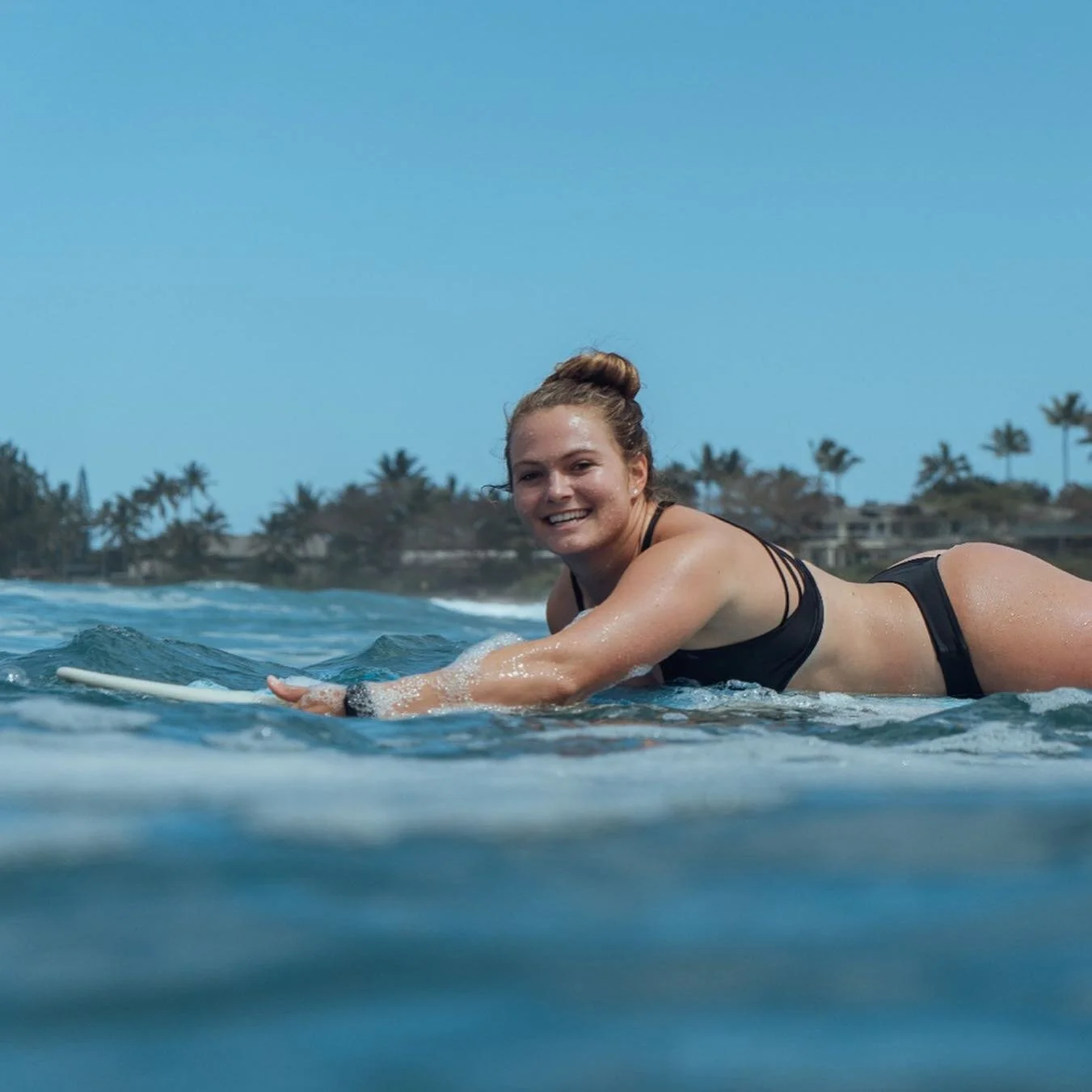
Fiona Wylde will amaze you!
Fiona Wylde is a competitive windsurfer, surfer, stand up paddler and type 1 diabetic who use the InPen insulin pen.

You can always listen to the Juicebox Podcast here but the cool kids use: Apple Podcasts/iOS - Pandora - Spotify - Amazon Alexa - Google Play/Android - iHeart Radio - Radio Public or their favorite podcast app.
Fiona Wylde on Instagram
+ Click for EPISODE TRANSCRIPT
DISCLAIMER: This text is the output of AI based transcribing from an audio recording. Although the transcription is largely accurate, in some cases it is incomplete or inaccurate due to inaudible passages or transcription errors and should not be treated as an authoritative record. Nothing that you read here constitutes advice medical or otherwise. Always consult with a healthcare professional before making changes to a healthcare plan.
Scott Benner 0:00
Welcome friends to Episode 289 of the Juicebox Podcast. On today's show, Fiona Wylde will tell us all about her professional paddleboarding and surfing life, and her really weird graduation day diagnosis. This episode of The Juicebox Podcast is sponsored by companion medical makers of the in pen. To learn more about the pen, go to companion medical.com. When you get to companion medical.com, you're going to learn all about the in pen. It's America's only FDA cleared smart insulin plan, plus an app system. It's going to help your CGM talk to your insulin pen, talk to a wonderful app on your phone that's going to tell you about things like insulin onboard the temperature of your insulin, and a lot more you'll hear more about it in the show. But if you're on MDI or you're thinking of moving them di I think you want the companion medical comm
I'd be lying if I told you I knew a lot about competitive paddleboarding and surfing. But feeling a while does and I talked to her about it, along with her Type One Diabetes diagnosis and how she manages or type one while she's doing this sort of on that sort of, but there's really intensive activity, always in the water to you know, so kind of seems like it doesn't match up. But field a really makes it work. Please remember that nothing you hear on the Juicebox Podcast should be considered advice, medical or otherwise. And always consult a physician before making any changes to your health care plan for becoming bold with insulin.
Fiona Wylde 2:19
My name is Fiona while I am 22 years old, I live in a really cool place called Hood River, Oregon. And I was diagnosed with Type One Diabetes when I was 18.
Unknown Speaker 2:29
On my high school graduation day.
Unknown Speaker 2:32
Oh my god.
Unknown Speaker 2:35
Yeah,
Fiona Wylde 2:36
yeah, it was a very exciting morning and a very terrifying afternoon. But um, you know, sometimes those things just kind of come together like that, I guess?
Unknown Speaker 2:45
Well, I don't know about that.
Unknown Speaker 2:48
That's the way I tend to look
Scott Benner 2:50
that But anyway, my graduation day, I was just like, I see my dad's not gonna come. That's about it. Wow, they were divorced. And I didn't think he was going to come. But then I kind of thought he was going to and then I didn't and then I gave up on it. But the good news for me is that I did not have an incurable disease when that was over. Like, like happened to you. So I want to hear about this for a second. Um, so you're only 22 and you're dying. you're diagnosed for about four years ago? Like Actually, yeah. I was gonna say a little more. Right. So prior to your high school graduation day, was there any indication that something was amiss with your health?
Fiona Wylde 3:27
Yeah, for about the six weeks leading up to that I did Online High School the last three years, because I was already competing and traveling and need to define it a way where I could get my education while still, you know, traveling to all these different strange places all over the world. So I found online program that worked for me. So my version of a high school graduation day isn't necessarily like everybody else's, because pretty much for me, it was like, okay, completed all the coursework that, you know, was titled, and getting a high school diploma. And then it was like, you know, I'm done kind of thing. And, you know, my parents were awesome. They wanted to make, like, you know, a little deal out of it, because I hadn't worked hard to get there. So I just remember, like, running downstairs. So I was like, as long as I'm like, I finished I don't have any more work I can do. Like, you know, I guess this means that I, I'm done. And she was like, wow, you know, super excited, really happy for me, you know, I've been feeling off the last few weeks, I had gotten my first contract and signed my first contract the following or the previous fall.
Unknown Speaker 4:30
So when I was 17,
Fiona Wylde 4:32
I got my first contract from Star Wars standard powerboating, which they're pretty much the largest company that creates wind and water sports equipment in the world. So for me, it was huge. And then, you know, my mom was really pushing me to go to college, but I wanted to try and do this and just see where I could take it and why not and kind of when I signed a contract, it was only a year long contract, but at the same time, it was going to allow me to financially support myself through university Competition. So I was like, Okay, I'm gonna do it. So, you know, I had obviously had to finish my senior year. And then I was gonna have a year to dedicate it to the sport. So I had a couple races, I had a race in April. And I was like, out in front doing amazing. This is like my first big race, kind of, you know, to show ourselves that, you know, deserving of the sponsorship and wanting to push it. And I was in second, like, all the race, it was a 13 mile race. And on mile 12, I went from second to sixth. I just hit a wall, something happened. And I was like, what, you know, I was so frustrated because I had it, you know, I had the podium doing super good. And you couldn't figure it out. And so I was like, Alright, well, you know, that really sucks. But okay, I need to train I need to, you know, figure out more things. And so I came back. Actually, no, I didn't come back home. I did two more races. I did a race the following weekend. And the follow up after that. And each week, and I was just feeling worse and worse. And I was like, what is going on with this? Like, you know, okay, instead of joining like in between the races, I'm going to rest now and see if that makes it better. Yeah, that that went on for about six weeks. And then it was my school graduation day.
Scott Benner 6:11
Oh, my fairy. You've said I have so many questions. There's not enough time. Okay, so I need everybody to slow down take a big deep breath. Okay. And and let me pick through what just No, no, no, because none of what you said was my expectation. Right? So So, okay. When did you start? Okay, I don't even know how to ask this question. So you are a competitive paddleboard? Or is that what you would call yourself if if, like, okay,
Fiona Wylde 6:39
you professionally and stand up paddling. I used to compete professionally and windsurfing as well. But now I pretty much focus on standard paddling. But I don't just compete in the one aspect I compete and stand up paddle surfing and stand up paddle racing. So there's two different world tours for that, and I compete on both sides, and
kind of one of the only few that competes some
Scott Benner 7:02
bolts that like an actor who's in a Marvel and DC movie. I see what you're saying. Yeah, so and and I done a little bit of my homework to try to figure this out. Right. So what is happening here there's a phone that's not supposed to ring. That's right. Here's how I want to begin. Most people listening who think about sports with younger kids are imagining like travel soccer, or travel baseball or softball or something like that. But obviously, you know, unlike most of us who can travel to a field, you need a body of water or, or surf I would imagine so what what how old were you when you started doing this and how did it begin?
Fiona Wylde 7:38
It all started with wind surfing for me. My parents were wind surfers and I grew up when surfing with them didn't have river we have amazing conditions here where we can go windsurfing, and surprisingly I don't actually live on the ocean. I live about three hours inland. Okay, the cool thing is I live on the Columbia River which is about a mile wide and some places and you know it's the headlands are up in the headwaters are up in Canada. And then they flow down through Idaho and then through the Oregon Washington border where the river enters the Pacific Ocean.
Scott Benner 8:13
Is this river where you do most of your practice.
Fiona Wylde 8:16
Yes, so this river is where I do pretty much everything and from windsurfing, stand up paddling. The only thing you can't do here is you can't surf. So for that I have to get a bit creative and just drive or fly or go some other places for some training.
Scott Benner 8:32
Okay, everybody, just I feel very overwhelmed by all the new things I know you don't need to be sorry, this is me. I'm not prepared.
Fiona Wylde 8:41
But no, no, but to answer your question. So I started with windsurfing. And I started competing in windsurfing, when I was like 11 I did the local races here in town. And then when I was about 13, I got some experience in the waves. And I was like whoa, this is so cool. I did a trip with my dad. And I was just like, this is absolutely amazing. I want to you know, learn how to win surf wave sail more. And so at the time, there was kind of this revamp of the wind surfing tour is called the American wind surfing tour. And it went all up and down or all North America and then eventually ended up going to South America as well. And so then I pretty much started doing that from when I was like 13 until I was about 19 and that experience of you know, learning a new sport in a competitive environment. got me into I don't know it just got me into all sorts of situations that I've had experience from that have taken me you know, to where I am today. Like I went to go to different countries. I got to travel with friends. You know when I I think I did my first trip without my parents when I was 14
Scott Benner 9:59
what the necessitates you going on a competitive trip without your parents? Is it just they're working? Or actually before I asked you that, so what would you kind of relate what you're saying to me to somebody out there who's listening who's like, Oh, my kid played like little league baseball. And then they got really good at it. So they started traveling to play it. And then they know somebody was interested. So they ended up going to college and playing is that like, it's so there's no college for windsurfing. I assume there's no maybe. Why not, by the way, but okay.
Fiona Wylde 10:34
There are some college. Yeah. For windsurfing, navasana, paddling, really? Okay. Yeah. So, so yes, in a way it is, it would be similar to that, you know, you kind of start at the beginning, you have a couple results, you kind of want to push yourself a little bit further and see kind of what that next challenge is, you know, and then I quickly got into the part where I like, Okay, I'm competing for, you know, the title of the tour. And so that is what made me travel more, because then it's like each event, you get certain points. And honestly, like, my parents have been awesome. They're never like, it's not about the result. It's about having fun and learning things. And kind of with that mindset, and that they've taught me since I was so little, it's been easy for me to just go and be like, okay, like, even if you completely bombed something, you're still going to be able to learn something from it. And actually, you're probably going to learn more than just from winning it. So, you know, the first few years, I didn't really win. You know, I want some events, but not consistently, or this and that, whatever. But the cool thing about the whole Windsor tour is, well, it's wind related, and there would be many mornings, because places typically the wind picks up in the afternoon, where we would have waves. Or we would have wind, and a few of the people there had stand upon awards, and that is one that's the side that I got in choose to stand up paddle surfing, was through this wind surf tour.
Scott Benner 12:00
Yeah, you made your own wind with the paddle.
Unknown Speaker 12:02
Yeah. But like when there wasn't the
Fiona Wylde 12:04
wind for windsurfing, I still wanted to go in waves because I live, you know, three hours from any kind of surf. So it was like, Okay, this is my chance to take advantage of it.
Scott Benner 12:14
Gotcha. All right. Okay, that'll make sense I'm doing. I really feel like I'm starting to catch up. Now. It's funny. I don't know if you heard me. I talked to Kate Hall a few weeks ago. And she's, you know, trying to, you know, to jump in the Olympics. And it's funny, because like she started talking about, like, some of the steps she had taken was like, Oh, this is where this sport sort of ends up differing from other sports. And when you say there's a tour for like windsurfing, for instance. It's not it's not you and six other windsurfing, kids who are all like always at the same thing. There's a lot of people at these events, right? Like how, like, how big are the Yeah,
Fiona Wylde 12:47
um, well, that's also a good point, too. There weren't really that many other kids, I was kind of one of the only kids within the windsurfing side there, you know, there may be like, you know, three of four of us kids or something like that. And then there's, you know, over 200 people in an event. So that was also cool, maybe grew up kind of quick. You know, being the only one there like my best friends are 1012 years older than me.
Unknown Speaker 13:12
And the same thing with stand up paddling.
Fiona Wylde 13:14
Most of the women that I am competing against and the races at the elite races, I think the girl who is closest in age is six years older than me, on the international stage, so I'm definitely one of the youngest racers at the moment, which you know, is changing, which is good, because we're having some more girls coming up. But within the standard panel events, it's pretty awesome. Because it's done upon events, we can get like 500 people to the race on a weekend, the elite field might only have like, you know, 50 but with the open competitors, then you have you know, mass quantity, which is spectacular.
Scott Benner 13:50
What do you what are you competing for, like when I say that? I mean, like I realized like when, when Mike, I've used my son as an example, right, like, so when he was really young, he just was playing like you said baseball to get better, right? And when you're playing High School, and you're trying to get better and then but at that point, now you're trying to prove to somebody that they should take you on a collegiate team, like it's trying to prove yourself like, and then when you while you're playing in college, you're hoping that you continue to grow and maybe somebody will draft you like that's the pathway when you're when you're competing. Are you competing for a trophy? Are you competing to turn to those people and be like, hey, how high one? Or like, what's the next step? Is it personal fulfillment, or is there something beyond that that you're shooting for?
Fiona Wylde 14:33
For me, it's definitely you know, pushing myself I'm in a comfort zone but then also outside of comfort zone and the see kind of how far my skills and fitness will be able to take me as well as controlling my diabetes along the way. But the reality is there's three tours that I ended up competing in the near the ATP World Tour for surfing, ATP World Tour for racing, and the European Championship tour. The start of my year basically starts in Europe. The spring, I ended up racing in five, six different races in Europe. And that is pretty much the best of the European centripetal racers in the world, plus many international riders. So there's people like myself from the United States that come over from Brazil, from Canada from Australia, pretty much everybody the sport focuses on the racing in Europe during the spring. And so that was about six weeks of racing and touring. And I ended up winning that this year. So pretty exciting. So yeah, to win the Euro tour, you have to have five really good results in order to go towards your final tally. And I won five races. Congratulations. Thank you. Yeah, for me, it was quite a quite an exciting thing, something I didn't really think that I could win, but I was able to do that. And then on the other side with the surfing and the ATP World Tour, you're competing for a world title. So within surfing and racing, they're two separate competitions. But I won the racing world title in 2016. And I have not won a surfing round title. I've been second a few years, but I haven't won yet.
Scott Benner 16:14
So basically, it's it's it's sort of broken up into two areas, like it's your competition, and just trying to be good and test yourself. And then the other side of it is I'm assuming if you're having good results, you'll start getting sponsored by companies, those companies will pay you to use their boards or something like that. And then that's how you can kind of finance your ability to exactly I see.
Fiona Wylde 16:35
Going back to kind of what I was saying at the beginning. I'm the year before I graduated, as I graduate in 2015. So fall of 2014. I got sponsored by star board, which is that big company, so they pretty much were like, okay, you're young, you're getting really good results. We want to support you to paddle our boards to go all over the world to continue to get good results and promote a good image for our brand, right? Because when because when Fiona comes cruising across the finish line on a star board, people there are a lot of people there and you stand up and hold the board and they're like, hey, Star board, that makes sense.
Unknown Speaker 17:12
Yeah, we get on the
Fiona Wylde 17:14
podium, they get all the accolades, everything like that, that helps them and it helps me as well.
Scott Benner 17:18
You're the you're the paddling equivalent of like a YouTuber or like, or a guy who plays video games and makes a living at it. We all like go. Did you hear about the guy who makes a million dollars a year to play a video game? And
Unknown Speaker 17:31
don't quite make a million dollars a year? Oh, no,
Unknown Speaker 17:33
no, no, I didn't mean I didn't mean to say that. A lot of questions like Oh, that's cool.
Unknown Speaker 17:37
I didn't even know you could compete in those things.
Scott Benner 17:40
It's it's a it's a very uniquely American economy story. it you know, it really is your 14 years. Now, when it was first happening when you were younger, was it just sort of like you, you know, you would imagine like hey, my dad played soccer in high school so I play soccer was just my parents when surf and so we wind surf together and then there was a place for me to do it competitively. So I went and did it.
Fiona Wylde 18:04
Yes, um, that was for the windsurfing side, but not for this on the public side because that is relatively new for you know, it's been around now more than she's blowing around like 15 years or so. And I got into it with one of the local shops here in town and they wanted to create a kid's team and so I was one of four journal
Unknown Speaker 18:25
kids and that was
Fiona Wylde 18:28
nine years ago and that was how I got introduced to standard pedal racing. And that program is still going on my dad then learn how to stand up paddle after I was doing it because I was having so much fun and he wanted to do with me and the cool thing is about that kids program is it's still going on and this last summer I got to coach the whole program so that was pretty cool returning
Scott Benner 18:51
starter coach the theme absolutely I it's it's crazy in my mind I imagine like a bunch of wind surfers standing around on a day when the wind doesn't blow and one of them going well do we go home or what are we doing somebody like if we had a paddle and we're just like oh my god a paddle changes. So now I have to tell you that I hope you understand that most people listening when you describing either surfing on a much bigger because it's a bigger board right when you write or your paddleboarding like I if you told me right now, Scott go out into the river, the one feeding from Canada and stand stand up on a paddleboard and say standing on it for let's say 10 seconds and I'll buy you a house. I would not have a house when the day was over. Right? Like I would just be like, I can't I can't accomplish that.
Fiona Wylde 19:46
I would be nice. I mean, maybe if I had to buy your house, I'd put you on like the most narrow board I could find.
Unknown Speaker 19:51
Yeah, right, right. Cuz you're
Fiona Wylde 19:53
like, Okay, let's go out you know, for an ice cream or whatever be like excellent. I'll put you on the biggest board. You know, you Start, it's just like anything. When you're learning to ride a bike, you have a different kind of bike than, you know, a professional cyclist.
Scott Benner 20:07
You're telling me if I had the right tools, I could stand up on a paddleboard?
Fiona Wylde 20:10
Absolutely, that's the cool thing about it, anybody can do it, you know, you can, all you have to do is you just get a bigger board. So I race on a board that's 14 feet long, 21 and a half inches wide, and you most likely wouldn't be able to stand on that. But if you were to go paddling for your first time, I would give you a board that, you know, is maybe 12 and a half feet long and 30 inches wide.
Scott Benner 20:37
Either you're gonna say 12 and a half feet wide, because it's got we're gonna throw up a picnic table out on the end, you'll be now Be honest with me, I'm 48 years old, How far would I paddle before I had a stroke or an aneurysm? A couple of feet? A couple minutes? How far do you think I'd make it.
Fiona Wylde 20:54
So you can go as far as you want to go? That's a good thing is that you know it, it doesn't really matter. You don't you know me, okay, if you were to, you know, jump off the start line and try and go sprinting, you'd probably be out of breath kind of soon. But you can jump on a board, you can go with your friends, your family, if you have a dog and put your dog on the board go cruising around, like,
Unknown Speaker 21:16
there's all sorts of different things you can do.
Fiona Wylde 21:18
It's like, it's like a bicycle, you know, you have your people who go out and ride 100 miles, you know, in the weekend, and that's what they do for fun. And then you have some people who have cruiser bikes, or even ebikes that you know, put a picnic basket on the front and go, you know, cruising around, paddling is the same in that sense. Like you can, you know, have top line race equipment, go, you know, for speed, or distance or whatever. Or you can just grab more of a cruisee board and go have fun, go exploring, maybe you know, paddle into a different place that you've never seen before. Or, you know, it's cool to paddle out and look back at what you're looking at every day, see and just get a different.
Scott Benner 21:58
No, see, you're saying this is where people like you who are super athletic, don't understand that other people don't have brains like yours. You're saying I would paddle out to get a different perspective, which does sound neat, except I would paddle out and then have a panic attack that there's no way I can make it back again. And then I would start imagining what giant Canadian fissure in the river that will eat my body when I sink to the bottom. Like that's, that's how it would occur to me.
Unknown Speaker 22:22
Yeah, that just crossed my mind.
Scott Benner 22:25
Wouldn't it be great if if Fiona's entire career was killed today as she can't get over the anxiety of thinking about whether or not salmon could eater? And she's like, I never thought of it before? I can't go back and
Unknown Speaker 22:40
yeah, I'm okay. All right. Yeah. Okay.
Scott Benner 22:42
All right. So So, so first of all, it's amazing. And you said something a while ago already that I jotted down and I don't make a lot of notes when I do this. But did you say that there was a paddleboard race? That was 13 miles? Yeah. Okay, so when when they say go, first of all my I have questions. Does everyone finish? You start?
Fiona Wylde 23:06
Um, pretty much in the elite field? Yeah. Okay. In the open field, there might be a couple that pull out. But, um, it's just, it'd be more like a marathon in that sense. You know, it takes a while. Some people, some people, you know, don't, maybe some people just get tired or fatigued. And then yeah, you have to pull out for that. But for the most
Scott Benner 23:28
part, especially within the elite field, pretty much everybody finishes how, how long does it take to go? Like, like, the person who wins? How long does it take them to go 13 miles.
Fiona Wylde 23:40
With that particular race, too. That's the other thing with water, it all depends on the conditions. If you have 13 miles with wind at your back, and you're going what we call downwind, which you can kind of surf little bumps that the wind is generating the whole time, you're gonna go a lot faster than if you have a headwind or completely flat water. So it depends, but in that specific race that was in North Carolina, around Wrightsville Beach, and that was about a two and a half hour race.
Scott Benner 24:10
So I'm going to tell you that I'm not 100% certain I could stand on the board for two and a half hours. Like take all the retrace Where's a
Unknown Speaker 24:17
lot of training? I'm not kidding. Like,
Unknown Speaker 24:20
aren't you legs like super tired?
Fiona Wylde 24:22
Your legs are exhausted? Yeah, most people think that all paddling comes through, you know, your arms and your shoulders and all that, but there's so much balancing involved. And your legs are your bigger muscles. So you might as well use them more. So by the end of it, my legs are shot.
Scott Benner 24:34
Yeah. And you're not strapped into the board, right? Like you're free balanced on the board. So when you when you drive with that paddle into the water, you really are anchored by just the grip of your feet on that board. Yeah, exactly. Yeah. See, I'm starting to really think about this now. And as bad of an idea as I thought of this. At the beginning, I'm thinking it's even worse idea now that I'm really thinking it through but because at least if you were anchored to it, you don't mean like you You didn't have Like a fulcrum point that was like fixed and now you're but you're basically like digging in, like while you're doing that to do you lean forward while you're paddling, do you stand straight up? How does that how did you
Fiona Wylde 25:10
lean forward, you lean forward and you have a lot of bend in your knees. So you can have that drive. And kind of what you're thinking about would be more similar to like paddling a canoe or rowing in the sense because then you would have a fulcrum, you know, coming from your hips because you're seated, but because we're standing up, you really do have to use your legs and it actually is beneficial to be able to move your feet around the board.
Scott Benner 25:35
Okay, so you can kind of reposition, so you can stability, and I'm imagining drive from different angles for steering purposes and things like Yeah, exactly. Yeah, look at me. You got it. Intellectually. I understand what is getting narrower. Now we can give you like a 28 inch wide board out of your mind. I saw jaws when I was five. I'm not getting in any water on a board. Okay, so and I know there's no shark in that river and I don't care
Unknown Speaker 25:59
why it's fresh
Scott Benner 26:00
water. doesn't listen, if someone would have taken you to jaws in the 70s when you were five years old. By the way my parents a huge mistake. I you would you would have the same concern I have right now. You'd be like no, but that mechanical shark will eat me. It's so okay. I'm seriously there's people my age right now who got drugged into that movie are like yeah, damn right, man. There's no reason to go into the water. Okay, so 1313 miles over two and a half hours. And do you know for that specific race, the person who finished dead last how long it took them? It
Unknown Speaker 26:34
took them about three and a half, four
Scott Benner 26:36
hours, another hour and a half for me. Oh my goodness. If you want to quit someone comes gets you just raise your hand and start crying. What happens? What do you do?
Fiona Wylde 26:45
There are support boats that are you know, all up and down the course and jet skis and all that. So that's, that's good. That's important. Safety is huge, you know, being on the water. Yeah, so there's all sorts of different watercraft that are kind of patrolling the area. So you know, the best thing to do in any situation on the water, if you're in trouble is to sit down on your board and stay with your equipment. She is the thing to float on. And then you can wave your hands over your head.
Scott Benner 27:10
I have a good friend who lives on the water in North Carolina and she paddled. I think she paddleboard is pretty much constantly. And I know she heard this, she'd be like, you could do it like that. I don't think I can. Okay, so now,
Fiona Wylde 27:22
all races are that long. Um, we compete in all sorts of different types of things. There's different races, like surf races, where you go in and out of the surf, there are distance races, which are pretty much anywhere from like, nine to 13 miles. There are flatwater, bumpy ocean, pretty much everything. There's some races that are more like 4k races. And then there's even races that are like 200 meters. So right now I'm training actually for a 200 meter race, a 4k race and an 18 k race, what's training
Scott Benner 27:57
look like? How do you train.
Fiona Wylde 28:00
So for me, I'm actually really lucky right now to have three weeks at home, this doesn't happen very often.
Unknown Speaker 28:08
So
Fiona Wylde 28:09
I've basically broken down the three weeks I have into different training days for a specific goal. So if there's something I'm going to China for the ICF World Championships at the end of this month, and so the first day, I will be competing in 200 meter sprints. The second day, I'll be competing in the, like a 4k technical race. And the third day I'll be competing in an 18 kilometer distance.
Unknown Speaker 28:35
So
Fiona Wylde 28:36
when I take a look at that I look at Okay, what are my strong suits and what are my weaknesses. And the weaknesses are what I focus on in the training leading up to it. So I've broken down each week into basically, six out of the seven days, I'm on the water, doing different drills and intervals and workouts that are building up on certain weaknesses. And then I have Monday, which is today, which is my like, complete off day. So today I will be on the water. I won't go wrong or anything like that. And it's been fun. It's been fun too. Because it's it's hard. It's hard to focus on something that you're not really that great at or you know, even if I'm decent at it, it's definitely, you know, I'm not as strong as my strong suit. So and I'm learning a lot, that's the thing that's crazy. It's like, okay, even if I'm, you know, leading the tour at the moment, or in the top three or whatever, like, you know, some people would be like, Oh, well, you got it. And it's like, No, you can constantly be learning new things.
Scott Benner 29:32
It's fascinating. I journey dry land training, like, Is there anything you do in a gym that's specific for this? Or is it really yeah.
Fiona Wylde 29:41
I mean, you have to be on the water. That's pretty much where it comes from, because like you can do all sorts of different fitness to get your base up, but it's also so much technique involved, that you really have to spend the time on the water to focus on that. But I'm I'm going to spend I last week, two days and then this week, two days in the following week. Two days as well in the gym, and that's going over a lot of like plyometric stuff. agility, balance, trying to get fast twitch muscles going faster. And then normally walk out of those days so personally, but yeah, beyond that I liked I love running. So any chance I get to go for a run? I go for a run or bike rider. It's just such a beautiful place that I live that if I can be outdoors, I want to be
Scott Benner 30:25
here. I that's I mean, listen, I'm not. I'm not judging you. I know that I'm just got this guy.
Do you think she just ran outside?
Unknown Speaker 30:43
Oh, you were like, I
Scott Benner 30:44
don't know. You're like I if I can be outdoors, I'd love to be outdoors. Then it hung up and I thought maybe she just probably went outside
Unknown Speaker 30:53
my computer just on black.
Scott Benner 30:55
So sorry about that. No, no, no, no, it's it's, you know, it's absolutely fine. Don't don't think anything of it. I okay, so I think I understand. I mean, listen, I understand academically, all that what you've explained to me and even though I'm still in my mind thinking, am I gonna ask her about like doing this to the ocean? Like, do you just paddle out and then ride and like you're surfing but you have a paddle with you? Yeah, pretty much. Okay. So what's the difference between surfing and paddleboarding in the ocean?
Fiona Wylde 31:25
When I go and I compete and surfing, you know, the big difference is when your traditional surfing, and you are, you know, land down on your stomach, you don't have a paddle in your hands, and you're prone paddling, so you're on your belly before you pop up. My board looks a lot like a surfboard. And most people would say that is not a stand up paddleboard because it's really small. So my standard puddle surfboard is very small, because it just has to be thick enough just have to have enough volume. So I can stand on it without falling over. So then I basically I'm paddling in already standing up when I catch waves. But like, for example, most people you know, a shortboard on like a five, eight or 510 or something like that. My standard paddleboard is seven oh, and when I stand on it, it pretty much thinks
Scott Benner 32:18
underwater. Okay. I would like you to do something for me if you ever can teach yourself to do it. While you're surfing, I'd like you to reach up with one hand and spin the paddle with one hand over your head like
Unknown Speaker 32:30
you would be surprised.
Scott Benner 32:32
You can do that I now I understand why you have sponsors? Because can you get to that? Do you think or do you think it's not? I think I
Unknown Speaker 32:41
might have done that a few times.
Scott Benner 32:42
No kidding. See? That's excellent. And that that I would just be like, that girl wins. And like, no, she's actually in fourth place effect. No, it doesn't matter. Look what she's doing with this file. Yeah, there are no points on this.
Fiona Wylde 32:57
Okay. Well, I mean, it's I think it's more about the surfing at that point. But we actually have some inside jokes and some other competitors, where it's a lot of people think that Oh, just pushing the paddle around is what gets you points when in reality, you have to surf. So it's kind of funny that you mentioned that.
Scott Benner 33:14
You've been involved in water sports, so long that you went to high school online, and you came out and now what's your life span like in this? And it sounds like with the people you're competing with? You could do this for a really long time. Is that how you think about it?
Fiona Wylde 33:29
Absolutely. Yeah, so I did Online High School. And then I got sponsored. And my mom was like, you know, you have to go to college, like, you know, and then I got this sponsorship that came with a contract. And she was like, okay, like, one year, you know, let's see where it goes. So that was the year that I got diagnosed with diabetes. And then I was like, Oh, great. Here's my first year of being a professional athlete, somebody or something I really wanted to do and be since I was, you know, super small. And just,
Scott Benner 33:59
yeah, I understand it from a parenting perspective, right? Like the idea of like, Hey, everybody needs to go to college. So once you get a job, and I'm not gonna, I'm not gonna be alive forever. And I need you to know, I need to know you're going to be able to take care of yourself when I'm old and gone. Like I think about that with my kids. So now, now, though, you have a little success. I imagine you must have walked in the house with the first contract held up over your head and said, Oh, who has to go to college? Not me. Because I'm making money. Like, did you run around? Like was it like a rap? It wasn't so
Fiona Wylde 34:28
much like no, so much like that. It was more of like, Look, I got this chance to do it. I will go to college. But for right now, let me just try and focus on this
Scott Benner 34:39
right. I can't argue with it. I can't argue with it. I don't listen, very few people get drafted to play professional baseball and I don't imagine my son will be one of them. But if it but if it if it happened, I would not know how to stop him. Like, yeah, you know,
Fiona Wylde 34:54
it would be something slightly similar to that. Um, so then I was like, Okay, great. Now I have type one diabetes and a professional contract. But I kind of wanted to keep racing and type one just came at the wrong time. I don't think there ever is a right time for it. But it was like, Okay, I'm just going to keep doing this. I'm going to figure out some systems and how to, you know, get sugar with me out in the water, and you know, learn all the feelings. Yeah, it took a little bit. But that year, I basically finished the season. And the next year, I won the racing world title. It's amazing. So then it was kind of like, Okay, this is going well, I
Scott Benner 35:33
can do this. Right. So let me let me pick through that a little bit. So when you're first diagnosed, I'm assuming you leave the hospital with like, like pens or syringes and insulin and a meter. Right. That's about it.
Fiona Wylde 35:47
Primarily, because I didn't really think that anything was, you know, that wrong? I knew I wasn't feeling great. But basically, I just went into my family care doctor. And, you know, I explained that, you know, I hadn't, you know, had dry mouth, I've been losing some weight, you know, I had the infection and this and that, whatever. And he looked at me, and he's like, has anybody ever tested your blood sugar? I was like, no, what, what is that? You know? And I was like, you know, thinking, Okay, all sorts of tests, you know, what's involved? And he just pulled out a meter. And he said, let me prick your finger. I was like, No,
Unknown Speaker 36:21
thank you.
Fiona Wylde 36:23
Okay, and then he pricked my finger. And the number that popped up on the screen was 586. And I was all happy, because I just graduated high school that morning. So I'm like, great. What's that out of like? 1000? Yeah.
Unknown Speaker 36:35
And he goes, No.
Fiona Wylde 36:39
Yeah, I'm really sorry. But you pretty much have type one diabetes. And I was like, you know, tears, and I didn't know what that meant. And, you know, I had no idea what diabetes let alone type one was. But I live in a small town. And he pretty much said, Go home, because I just went to the doctor's office on my own. He was like, go home and talk with your parents. And he gave me his personal cell phone number and was like, have them give me a call. And I can talk and you know, help you guys out if you need anything. So then, that night, pretty much I didn't get any insulin didn't do anything. I actually never went to the hospital. Because I was 18. So I wasn't an adolescent, I guess. More just kind of strange. But, um, yeah. So then I went, and the next day got connected with a diabetes educator. And she went through absolutely everything and you know, explained how insulin works, what diabetes is, and she was spectacular. And she's the one, you know, who showed me how to prick my finger and how to, you know, calculate carbs and give myself insulin for that. And that's when it all started. But the problem was that I was supposed to go to Europe to race for the first time. Five days later, that was like, oh, my goodness, you know, like, the first go diagnosis, I was bummed because I was like, okay, like, obviously, I'm not going to go like, this is not my priority, right? Now. My priority is my health. But then after getting insulin started, and like, you know, immediately coming out of the 500, so it's just good.
Unknown Speaker 38:12
To range.
Fiona Wylde 38:14
We went and spoke with my doctor. And, you know, I was sitting there with my parents, and I was like, Okay, so, here's the thing, like, I was supposed to go to England to race. My dad was already planning on coming with me. But you know, if it's going to be any problem for my health, like, you know, please tell me and I absolutely will not go you know, that's, I don't want to put myself in any harm. And he looked at me and he goes, that is not a decision for me to make a it's not gonna hurt you. So I think you can make that decision as a family. And I was like, okay, we're going to England. And then we got on a plane two days later.
Scott Benner 38:51
And what did you have with you just the Beatles and like a meter. And yeah,
Unknown Speaker 38:54
so I had
Fiona Wylde 38:56
when I went on that first trip, I had lantis. I had cumilla and quick fence, and I had a box full of needles, a box full of test strips. I had a sharps container, I had an extra meter. And I have a lot of gummy bears. All sorts of I found these goo jobs that I could bring with me on the water and my mom sent us on the plane with like, the biggest cooler full of food and snacks and everything it was it was amazing. I'm surprised they even let it on and carry on. It was so big, but she was like you're not going anywhere without food.
Scott Benner 39:36
Probably probably thought you were like trying to start a grocery store in Europe.
Unknown Speaker 39:39
Probably.
Scott Benner 39:41
Well, that's so now looking back. Was that incredibly brave or incredibly stupid? Like when you look at it now do you think knowing what you know now would you have still gone?
Fiona Wylde 39:51
Absolutely. Okay. For me, it was exactly the thing that I needed to do, and needed to hear from my doctor. He knew me he's been my family doctor for ages. And, you know, he's seen what I've done competitively and could also see how, you know, a diagnosis of type one can, you know change your life in many ways. And so for him to say, you got to do what you want to do, and you will figure this out. As you go, doesn't have to hold you back. It was the they were the best words that I could, you know, ever ask to hear without even knowing that's what I needed to hear. Because that just kind of gave me a little bit of confidence to go and do what I actually want to do, which was go to Europe and go race. So do what I love
Scott Benner 40:34
the water joking around aside, I think that's amazing. I I'm a big proponent on the podcast of giving people giving people what they need as far as tools up front, so they can make good decisions. I don't like the idea of slow walking people into the information, let them learn it slowly. Because eventually, inevitably, excuse me, something happens, then you need some information, you don't have it, then the fear starts building up. Yeah. And then before you know it, you're kind of overwhelmed by the fear. And then even when you get good information, it's hard to take it. So I think that's Yeah, really amazing. I mean, for me, my life
Fiona Wylde 41:06
didn't really stop when I got diagnosed with Type One Diabetes.
Unknown Speaker 41:10
I like was up and running, and it
Fiona Wylde 41:12
was just gonna be something that I, you know, have to figure out and continue. You know, I'm sure today, there's gonna be something that
Unknown Speaker 41:17
I'm gonna learn from it. Well,
Scott Benner 41:19
yeah, I'm gonna say something. I'm gonna say something I told Kate Hall. And, and I think it applies to you as well. And I don't know that all the time that people who have that competitive athletic nature, like you do understand that it doesn't exist and everybody else but you know, I use I always use Chris Freeman as my example, like Chris sees like snow and these two tiny skis and thinks to himself, oh, I will ski a long distance with only these two poles to propel me. And you and you look at water and a small board and think you know what I should do go on a 13 mile race on that water standing. There's What I'm saying is, and it's probably not like life threatening, but you have a mental illness and you don't realize it.
Unknown Speaker 42:02
But, but seriously, but seriously,
Unknown Speaker 42:05
don't deny it.
Scott Benner 42:06
Seriously, it's a way of thinking that lends itself to the challenge of diabetes. Like, you know, like, right, you're just you look at the diabetes, you're like, well, I've got I've got these needles and this insulin, how do I get to the other side? And and that's, that's really cool. It's amazing. And it's why you're a great role model for it. So, so tell me when. So now, nowadays, you are a Dexcom user using the G six. And when did that start? When did you get your CGM?
Fiona Wylde 42:35
I got my CGM about eight months after I was diagnosed. Um, and it was the Dexcom for the beginning. And when that thing came out, I was like, Oh my gosh, this thing is the coolest thing ever. Like, are you kidding me? I don't have to prick my fingers. And I actually know my blood sugar is. Yeah, and pretty much I have not not worn a dexcom since then. Um, so yeah, about four years. Yeah, my daughter index common.
Scott Benner 43:04
My daughter's had daily wear to like, wait, she doesn't take breaks from her stuff like that?
Fiona Wylde 43:08
No, no, for me, it's just a safety thing. You know, I'm just being able to constantly monitor and know where my blood sugar is. Helps me and everything. I mean, it sucks, you know, if you go super high, or if you're going really low, it affects everything else you're trying to do during the day. So yeah, just to be able to have a monitor on it and, you know, catch crashes or catch cut highs, you know, before they get to the point where, you know, you get tired or you get exhausted or you have to take time, you know, out of your day to manage your diabetes, rather than focusing on what you're doing. If you know, things like that can be monitored better and alleviated, then there? I don't see any reason why I wouldn't wear one.
Scott Benner 43:46
Yeah, I agree. I have. So I want to I want to use up the rest of our not use up but I want to use the rest of our time to talk about your management because you are in such a significantly different situation than most people as far as like the intensity and the load and the work on your body. Right. And so everyone Yeah, everyone listening, you know, as well, the people listen to this podcast, probably don't think of it the same way. But a lot of people with diabetes would think I can't paddleboard because I'll exert myself, and then my blood sugar is gonna drop and I'm gonna, you know, it's gonna be up and down. I can't possibly do it. So my expectation is, and I don't know this before I asked you that you don't have a lot of variability in your blood sugar. I'm assuming you're not going from 40 to 600 and jumping around like that?
Fiona Wylde 44:29
No, I'm not 40 to 600. But you know, I could have 80 to 200 you know, occasionally 250 or something like that. Sure. Um, I think the you know, before we go into specifics of what I do on the water, for me, exercise helps in every way. You know, even if I am high and you know, I've just been giving myself insulin and haven't been able to go down or whatever, if even if I just go for a walk around the block or like 10 minutes, you know, cruzi or something like that, I will be able to drop my insulin and it just makes me feel or my blood sugar and it just makes me feel better.
Unknown Speaker 45:08
But for being on the water,
Unknown Speaker 45:11
I've been using
Fiona Wylde 45:12
the in pen from companion medical Yep, for the last year, just about. And that has helped me a ton. Because you can actually see how much insulin is still in your system. And you can remember what, how much was in your last dose and when your last dose was, because sometimes, you know, if you're, you know, running around and Okay, it's time for dinner and you give yourself insulin you keep, you know, you're cooking the rest of it, and I'm like, Oh my god, did I give myself insulin. So in fact, is really helped me because I, um, you know, can see how much insulin is in my system. And that also helps me plan for going out in the water. So if I, okay, if I have extra insulin in my system before I hit the water? Maybe I should eat a little bit of something before I go out and paddle.
Scott Benner 45:56
So you got when? Good? Yeah, no, I apologize. No,
Fiona Wylde 46:00
no, no noise. So when I'm on the water, I, this is for racing, or you know, even just for going running, or, you know, anything like that, I pretty much always wear a hydration pack, which has water in it. Because, you know, it's just good to stay hydrated out there. And it has a couple pockets as well. So my impact can go on the back, I take it with me just you know, in case for whatever, I have one pocket that has my phone, and the other pocket that has some type of sugar, like I use a lot of time like Clif Bar good jobs, because they're individual squares, and I know how many carbs are in each square, and how much each square will raise the amount of
Unknown Speaker 46:43
raise my blood sugar. Okay,
Fiona Wylde 46:45
that being said, when I'm paddling, yeah, blood sugar typically does drop. So I try and aim to get my blood sugar up, you know, around 181 65, somewhere in there, before I get out in the water. And then I'm monitoring it pretty much during the whole panel, I have an Apple Watch. So I can see my blood sugar there. And you know, just keeping an eye on where things are, I have sugar if I need it. But at the same time, you know, I I'm focusing on the paddle, I put some electrolytes in my hydration pack so I can stay more hydrated, and keep everything kind of, you know, flowing a little better. But it's pretty much those two things, having water having my gu chomp there and having my phone connecting my Dexcom. So while I'm on the water, I can actually see what I'm doing. And if I need to eat, I figured out a system where I just open the little pocket before I even start a race. And if I have to eat during the race, it's just like a one second motion of grabbing a good job and eating it. And continuing to bottle.
Scott Benner 47:49
I'm dying to know, have you ever had to pull out your head and give yourself insulin while you're on the board.
Fiona Wylde 47:54
I have not had to do that during a race. But a lot of times after a race, I find that even if I was going down during after the race, I'll end up spiking, you know, whether it's excitement because I've won or just because I was going through a lot of the carbs that were in my system. And now I've stopped and I'm stationary and all those carbs are now sitting there and I start going back up. So I keep it with me. Because sometimes you finish your race and your you know, your bag or whatever is a little ways away. And so then yes, then I have given myself insulin on my board at the finish line to you know, prepare for that spike that I know is going to be coming after
Unknown Speaker 48:37
right you would
Scott Benner 48:38
I think you would really enjoy a couple of episodes that I've done with us CD named Jenny, who comes on the show a lot. And we've we did a lot about exercise and that kind of stuff. Cool taught you. I think I'll give it to you personally afterwards. And I think that'd be great. Thank you. I can't please. So okay, so. Okay, that's crazy. First of all, what you just said all of it is absolutely cool. But so, so the pen keeps track of when you've used your insulin, which is helpful. It also keeps track of insulin on board, right. So like, yeah, it's telling you, so I'm assuming you're just a person who didn't want an insulin pump. Is that right? You just weren't looking for an insulin pump.
Fiona Wylde 49:19
I like the fact that with the impact, I can always have insulin with me and I'd have to travel with extra cartridges. So for the ease of that I'm not a big fan of having multiple devices on me just because I typically have wetsuits or, you know, like hydration packs that are kind of squishing around my midsection and then up on my back and all that and for me, this is the system that I've come up with that works for me. You know, it doesn't mean that I you know, don't try an omni pod every now and again to try and Okay, Lena, let's see if this helps me study. Yeah, just to try the different things that are out there. There, but for right now, this is the system that I like that's working with me that I've figured out how to manage with my training and sports and all that. And for that, yeah.
Unknown Speaker 50:13
It works.
Scott Benner 50:14
It's excellent. No, it's amazing. So, obviously, everyone's their own person. And, and you're saying to yourself, look, this is a fear for me, if I lose my infusion set from a pump, I'm really afraid. Now all of a sudden, there's no slow acting insulin happening. And I don't I don't want that fear. And so what's the next best thing? And I think we're, a lot of people are just like, well, I'll just inject and I'll do this, that's fine. You actually found a piece of equipment that helps you even more, and yes, spectacular.
Fiona Wylde 50:43
That was the only thing that I was bummed about is it's like, okay, you know, if the qumulo quick, Ben's like, great, it's easy. But I don't have any of the data that I would have from a pump. And I mean, daily, it is so much about numbers and changing and trying to adjust to all these different things. And so when I found in pen that was like, Okay, well, this is a pen that I can just inject. It's simple. But it has all the data of a pump. I was like, Mind blown. Yeah,
this is a this is a win win. Like Where can I
Unknown Speaker 51:13
get this thing?
Scott Benner 51:14
Should you actually whip out like your in pen app and look at your data and make decisions about your next race and things like that? Oh, all the time.
Fiona Wylde 51:21
Yeah, it sits right next to my Dexcom app on my home screen. And I just kind of flip back and forth between the two. I'm like, Okay, this is how much insulin I have on board right now. This is where my blood sugar is, this is the activity I want to go do. Or maybe this is the homework that I have to do. You know, so I'm going to be sitting here for the next, you know, four hours, and I'm not going to be doing exercise. How do I plan all those things? Yeah. And that is where the in pen has really helped me take all of that into consideration,
Scott Benner 51:51
like so I'm trying to imagine you're getting ready to go on a, you know, a race, and your blood sugar is lower than you want it to be. You didn't then you check the pen app, it tells you how much insulin you have on board. Do you ever then just say, Well, I'm going to take a little bit of this these carbs right now because I think I'm gonna fall no matter what. Absolutely, yeah, this month? Yeah.
Fiona Wylde 52:10
Yeah, absolutely. Like if I am, you know, below, a certain number, or even if I am dropping, I'm saying I say I'm at like, you know, 165, but I'm dropping, and kind of quickly, you know, I'd love to start a race at 165. But if I'm dropping, then I'm not going to be at 165 for very long. So I will definitely eat a bit not, you know, if the reasons in an hour, I won't eat that much. If the race is in five minutes, and I'm paddling out to the start line in my deck spam shows an arrow starting to go down. That's when I start. Okay, it's time to lunch. It's time to have some food, because the worst thing is going into a race with arrows going down.
Scott Benner 52:52
Yeah, and I'm, so I'm assuming you can see, you look on the next con is, hey, look, I'm going down. But not only do I know I'm going down, but this pen is telling me I still have two units left in me, right? So I have to I have I have to feed that insulin right now before I get on this board, because I'm gonna have exactly I'm gonna have like the, the the impact from the paddling. And the impact from the insolence out there. And if you had a regular pen or needles, you would not know how much is left over, you would just think, oh, maybe this is the end of the Bolus or whatever. And you would write that same information. Yeah, I, you know, I always say to people that the difference between pumping and and injecting is just you know, with injecting you lose the ability to manipulate your basal insulin. And that's, that's sort of it. But the truth is, if you have an impact, that's not sort of it, you don't, there's a lot more you get within pen that you wouldn't get with a regular pen. If your insulin gets too warm in the pen, does the pen tell you?
Fiona Wylde 53:46
Yeah, it does, which for me is awesome, because I've have a lot of races in Asia, and you know, they're super hot and humid. And that's difficult. You know, it tells you if your pen is too warm or too cold.
Scott Benner 53:58
So for the people listening, I think we now need to know your dog's name. So sorry, don't be sad. Don't be Don't be sorry. I wouldn't want to know what her name is. Some people get her name is Sharky. Sharky, because I have to tell you, you have used the word twice. While we've been talking that I thought I wish I was cool enough to say cruzi but I'm not. And you've said it twice now and twice I've thought that is such an amazing word. And I don't want to spell it and I'm fascinated by your use of it. It's so perfect. I just like oh cruzi should be someone's nickname
Unknown Speaker 54:33
to get one shot he's not
Fiona Wylde 54:34
so much of a cruiser but she
Scott Benner 54:38
can I say something here and I only want 2% if this works out but I think you should start your own like wet gear line called crazy.
Unknown Speaker 54:45
Crazy.
Scott Benner 54:46
Crazy by wild. I'm telling you right now or wild cruzi or so there's something in there. I think it's it's fascinating, anyway and your dog sounds like a wolf by the way. Is that a giant animal
Fiona Wylde 55:00
She's actually quite a medium sized Husky mix. But see weren't too far off with that one was really about 40 pounds. I thought
Scott Benner 55:08
she was chasing a bear away from your log cabin or something like that what it felt like?
Fiona Wylde 55:12
Yeah, I mean, I'm in Oregon. I'm not that far out.
Scott Benner 55:16
Right now people on the East Coast are like, how come he makes fun of places like Maine, but he hasn't made fun of Oregon yet? And the truth is, I don't know. Because I've thought of it a couple of times, but I just haven't done it. So I there's something about Oregon. No, no, I like I like, Oregon seems like a place I would want to be. So
Unknown Speaker 55:34
it's definitely a place I like to be. So tell
Scott Benner 55:36
me a little bit about using in pen while you're traveling like airplanes, hotels, that kind of stuff.
Fiona Wylde 55:42
The nice thing is, you know, traveling with time zones, and all that stuff is really difficult with you know, diabetes and insulin management because, you know, especially if you are going to be doing, you know, you're giving yourself long acting insulin in addition to, you know, your short term insulin for meals. That gets a little bit tricky. Okay, being able to keep track. I mean, my favorite thing about the infant is probably its most simplest function of just being able to see how much insulin is on board and being able to have a device that helps me calculate. Sorry, don't be
Scott Benner 56:17
sorry. Don't be sorry, people miss people actually miss my dog on the podcast, I moved to a different part of the house to set up a more permanent place to do the podcast from and because of that our dog bazel does not snort and, and snore in the background anymore. And I get notes sometimes, like, I miss bass on I was like, Yeah, I don't because all I would do is sit there listening and think God the dog so loud, it would make me nervous the whole I'd like to understand what the circle of life is there between the pen and the Dexcom and the app. Like so. If you want to take care of him first Sharky first and don't feel don't feel any pressure.
Fiona Wylde 56:59
We had the doorbell go off. So it's an exciting morning over here. How can
Scott Benner 57:03
there be visitors so you don't live in the middle of like,
Unknown Speaker 57:07
like, I don't live in the middle of the woods. I actually I
Fiona Wylde 57:09
have a bunch of neighbors that live all around me
Scott Benner 57:11
people. Alright, so you're like the doorbell? I'm like, Oh my god, the doorbell that was probably Sasquatch. She's gonna be dead in a sec.
Fiona Wylde 57:19
Yeah, and if it's okay, if you don't mind giving me one minute, I can just put you on mute and come right
Unknown Speaker 57:23
back. I'll do a chat.
Scott Benner 57:26
Hello. Hey, she's back. How are you?
Fiona Wylde 57:29
We're back. Sorry about the interruption.
Scott Benner 57:33
Please, please don't be sorry, you sound terrific. explained to me how in Penn integrates with the Dexcom CGM and the app on your phone.
Unknown Speaker 57:41
The two apps are
Fiona Wylde 57:42
separated, they're next to each other on my phone.
But the companion medical app that shows me all of my in pen data, that app has also my dexcom data on it. So it helps. Like basically when I give myself insulin that will come into, you know, show up as a little.on my screen. And on top of that, it'll also show me my Dexcom data as well. So I now I can see like, okay, I just gave myself three units at 130. And then as the information goes across the screen that.of my Dexcom Okay, where my you know, current blood sugar was when I gave myself that insulin also moves with it. So then you can have an idea of like, Okay, how much insulin you gave yourself? At what time? And, you know, okay, did I get myself the right amount of insulin? Or do I give myself the wrong amount of insulin?
Scott Benner 58:38
Does? Does the pen have a dose calculator?
Unknown Speaker 58:42
Yes. I use it all. Yeah,
Scott Benner 58:45
so it does that. So it so you're, you're in pen app has information from your Dexcom on it. So you open up your pen app, it knows what your blood sugar is, because of your Dexcom do you then just tell it This is how many carbs I'm thinking of having and it tells you it's suggested amount of insulin?
Fiona Wylde 59:02
Yeah, so I've set prerequisites of Okay, you know, this is my carb ratio, and this is what I'm planning on doing. And it'll Yeah, you pretty much put in, you know, how many carbs that you want to do and, or want to eat? And then you give yourself, okay, you know, it's suggesting this amount of insulin, you're like, Alright, I think that's about right. Or, you know, maybe I'm gonna have a little bit more food than that. So I'm gonna give myself a little bit more. Um, but it's nice because you can, you know, you can think of, Okay, what, what do I want to eat? Um, you know, how many carbs are in it roughly. And then it's nice, because I would normally just be like, okay, that for me, that's this amount of units, whereas we using that it definitely gives you more precise,
you know, just gives you a more precise number, like, no,
if you're not, you actually need more insulin than that you're going to go high. And so that's been a that helps me kind of alleviate a lot more of the like, big swings of up and down.
Scott Benner 59:56
That's excellent. Um, but yeah, that's one of the Major things that's missing when you're injecting, right? Yeah, that whole piece of it plus now. So now the pen app knows how much insulin is on board. So in the similar situation in the same situation, except, say you've had a, I don't know, say you had a snack at 11 o'clock and you gave yourself some insulin, now, it's just an hour and a half later, and you're going to have a meal. When you put in your, you know, I'm going to eat 40 carbs, it takes into account the insulin still left from the snack and it gives it gives you a different dose. If that insulin still active, yeah. Oh, my gosh, and and how valuable Do you find that information?
Fiona Wylde 1:00:37
Well, for me, it's huge. Because, you know, a lot of times I, you know, it's easy to just look at a meal and be like, okay, that's, I know how many carbs are in here. And that's how much insulin I'm gonna eat. But it's harder when it's like, okay, I already gave myself some insulin for food a little while ago. And I don't necessarily know how much you know, insulin is left or how much has been absorbed. And so then you end up stacking insulin and for me, well, for anybody really, I think stacking insulin is one of the things you want to try and avoid the most.
Scott Benner 1:01:09
Yeah. Now, you do not want to have more insulin than you need in your body, that's for sure. No. Have you had any experiences with the M pen app telling you, Hey, your insolence getting too hot or too cold?
Fiona Wylde 1:01:20
I haven't had it where it's too cold. A lot of the times I'm traveling to warmer places, which is kind of nice. But I definitely have it where it's been like, Hey, you have
Unknown Speaker 1:01:28
an alert, you
Fiona Wylde 1:01:30
definitely need to, you know, cool your insulin down, or pretty much like, Hey, your insulin is too hot, you know, replace it.
Scott Benner 1:01:36
That's, that's excellent. And that's probably incredibly handy for people who are traveling or I mean, your sport thing is so like, different than most people's. But in a similar vein, people go to the beach all the time with their insulin. Yeah. And so if you think, you know, maybe I guess it's just so simple that you're like, oh, I'll put it here in this bag, and it'll be okay. And then it ends up not being you would never know that. And this thing just sends an alert to your phone is like, hey, the pens too warm, and you move it somewhere cooler.
Fiona Wylde 1:02:03
Yeah, it's cool. And you know, the, the great thing about that, too, is it'll, it'll give you reminders of like, hey, you've used your pen for 28 days, it's time to replace it. You know, even if you still have insulin remaining. Stuff like that, you know, I used to write and Sharpies on my pens like, Okay, I need to, you know,
Unknown Speaker 1:02:19
go ahead. And,
Fiona Wylde 1:02:21
yeah, I can only use it, you know, until the 21st, or whatever, and then I'd have to toss it out. But now it was all, you know, reminded, I know how Sharpie marks all over my pens.
Scott Benner 1:02:29
How does that work? When you pop in a new cartridge? Does it reset on its own? Or do you have to tell it like I put a new cartridge? Oh,
Fiona Wylde 1:02:36
no, when you put a new cartridge into it pretty much knows that you put new cartridge you have to, you have to say that you're putting a new cartridge in just like kind of how you would with a Dexcom where you're like, Okay, I'm you know, bearing a new Dexcom. You don't have to take a picture of it or anything like that, like you would with the G six. But you do have to just, you know, put a new cartridge in. And you have to prime it a couple times. Just so you know that. Okay, your meal isn't blocked or anything like that. Yeah. And then it starts recording, and you're good to go.
Scott Benner 1:03:06
That's amazing. What do you use the information? You said earlier in the interview that you use the information to make decisions about like what to do next and stuff like that from the internet. But does the app also lend itself to you talking to your endocrinologist with the information? Oh
Unknown Speaker 1:03:22
my goodness,
Fiona Wylde 1:03:23
yes, that is the best part actually. Because it prints out massive charts. Like I can print out like four page charts from months and months and months of data of using the input pretty much as long as you're using the input and you can print out a chart that shows your Okay, average time and range. The average insulin that you're giving yourself the most amount of insulin you're giving yourself what to expect in terms of like targets and all that stuff. And it has helped my endocrinologist night a lot trying to figure out okay, hey, look, you look you have this pattern here. Let's try and figure out how to solve this pattern that helps me alleviate some of the highs and lows.
Scott Benner 1:04:07
So you and the doctor find the the charts and the graphs that the pen app gives you like relatable and easy to understand. It's not.
Fiona Wylde 1:04:15
Yeah, they're all color coordinated. And all that which is really nice.
Scott Benner 1:04:19
I like pretty colors. Colors are cruzi
Unknown Speaker 1:04:24
definitely crazy.
Scott Benner 1:04:26
Is there anything about the pen that I haven't asked you that you really think, wow, this is what people should know about it.
Fiona Wylde 1:04:33
They also give you your long acting reminders. So I take lantis. So it'll give me a reminder of like, Hey, you need to take your lantis and then you can record that in the pen or sorry, in the app as well. So it says okay, I just gave myself X amount of units of lantis. Like it's all recorded in there. And that's good too, because that kind of goes back to my thing of Oh, oops, yeah, I forgot to, you know, give myself this or give myself that
Unknown Speaker 1:04:58
and it basically Because with
Fiona Wylde 1:05:00
pens, it is kind of easy to forget. Or it's easy to just like give yourself insulin and then walk away from it is you don't have something attached to your body for the constant reminder to, in a way, like, I definitely feel a bit more free, which is really nice. But it's easier to skip some things too. And that's where the in pen, make sure that you don't skip steps that, you know, maybe are easy to forget, but helps you plan for the steps that you didn't forget. And then it helps you plan for the future as well, which is good. Hey, everybody
Scott Benner 1:05:29
can use somebody on their side to go Hey, don't forget to take your insulin right now. Or, you know, this is happening like it's diabetes has a lot to remember. And I think
Unknown Speaker 1:05:39
so many moving parts. Yeah.
Scott Benner 1:05:40
Right. And so if there's an app, that's, you know, listen, it's it's really kind of fascinating when you stop and think about like, you're young. So you think the whole world works like this. But for most of us, an insulin pen that attaches to my an app on my cell phone that's talking to my continuous glucose monitor that's reading the interstitial fluid and telling me what my blood sugar is or how fast it's going. And then tells me Hey, you know, I know you probably think that this lunch is four units, but you forgot that you gave yourself insulin an hour and a half ago, so we're just gonna do three and a half instead. That's a lot of cool. All in one place. Yeah, it was more
Fiona Wylde 1:06:13
than cruzi. Yeah, no, that's just like, super cool. Exactly.
Scott Benner 1:06:17
Yeah, it's really it's mind blowing. And I'll tell you right now, for people who've had diabetes for 10 years. They're like, Wow, that's really great. People have had it for 20 years are just blown away by this idea that this is this is an entirely different world for them. And you know, it's just it's very cool that you came on talked about it, I really appreciate it. Well, Fiona is just a another in a long line of people living with Type One Diabetes doing what seems like amazing things to me. I'm sure those of you who have ever served or stood up on a paddleboard or like, Scott, it's not that amazing. But first of all, she's competing at a very high level at this, you're just doing it for fun on vacation. And B, I don't want to do that. So it all seems very scary to me when people are like, I got up on a big wave and came flying down to the earth. Hmm, no, I don't want that. But I love that she likes it. And I love how well she does with her diabetes. While she's competing. I hope you enjoyed listening to Fiona. And I hope you enjoyed these last number of episodes, or I think the last three months on Fridays that have been sponsored by companion medical, I want to thank them very much for their support of the Juicebox Podcast and say that I think there'll be back in 2020. You can check Fiona out at Fiona wild calm. She's also got a really great Instagram account, because she's doing like cool stuff on it. So let me see if I can find it for you real quick. It's just Fiona underscore wild. And she's always standing on something that looks like it shouldn't really float or laying on something that looks like it shouldn't float or standing and laying where she's got it. Anyway, she's just always balancing on something in the water, which is really cool, you should check her out. And if you're thinking of taking a pump break, or you're using MDI right now, you really need to take a moment to check out the pen. Not only does it do amazing things and give you a lot of the functionality that a pump can give you. But the cost of it will surprise you. So check out the in pen go to companion medical.com right now. There are links in your show notes and at Juicebox podcast.com. If you can't remember companion medical.com but I feel like you can
Unknown Speaker 1:08:27
bet Juicebox Podcast is super crazy. Thanks for having me on the show today.
Scott Benner 1:08:32
The first person to leave a review of the podcast that indicates that the show is supercruise he gets a shout out on the show. Just make the review somewhere send me a link to it so I can see it. I just want to see it in print somewhere. Make sure you spell cruzi correctly.

The Juicebox Podcast is a free show, but if you'd like to support the podcast directly, you can make a gift here. Recent donations were used to pay for podcast hosting fees. Thank you to all who have sent 5, 10 and 20 dollars!











#288 Defining Diabetes: Ketones
Defining Diabetes: Ketones
Scott and Jenny Smith, CDE define the terms that are at the center of your type 1 diabetes care. This episode is a companion to episode 287.
You can always listen to the Juicebox Podcast here but the cool kids use: Apple Podcasts/iOS - Pandora - Spotify - Amazon Alexa - Google Play/Android - iHeart Radio - Radio Public or their favorite podcast app.
+ Click for EPISODE TRANSCRIPT
DISCLAIMER: This text is the output of AI based transcribing from an audio recording. Although the transcription is largely accurate, in some cases it is incomplete or inaccurate due to inaudible passages or transcription errors and should not be treated as an authoritative record. Nothing that you read here constitutes advice medical or otherwise. Always consult with a healthcare professional before making changes to a healthcare plan.
Scott Benner 0:00
Hey everybody, welcome to Episode 288 of the Juicebox Podcast. Today's show is a defining diabetes episode that is a companion piece to Episode 287. So Episode 287 is a diabetes pro tip with Jenny Smith, about illness injury and surgery. This defining diabetes episode is all about ketones, they go together. So if you're having sickness and illness, you might have ketones. And that would make all this important to understand. Today's episode of the podcast is sponsored by the merch store at Juicebox podcast.com. That's right. Juicebox Podcast merchandise is sponsoring this episode, which is to say that I am now why am I taking the time to tell you about this large price drops on all of your favorite stuff. The merchandise supplier I'm using has dropped their prices, which allowed me to pass that savings on to you some of the drops in cost are significant. So go take a look. Juicebox podcast.com, you click on the link in the like, so what do you do? Maybe I don't even know Juicebox podcast.com then there's a little thing in the top corner top left corner, it's like three little lines. That's a menu. You guys know that. And then it gives you a little drop down emerges one of the things you can choose. And there you'll see some reductions. 3421 of them's down like $6, maybe me say, well, there's some shirts that went from 2490 to $16. So check it out. All of the money that I make on this stuff goes back into the podcast, I have recently upgraded audio equipment, and your new computer. And I have to add a microphone, because I think Arden is going to come on the show in 2020. So I'm gonna need another mic. Anyway, all that stuff that you guys buy goes towards helping me with that. I really appreciate it Juicebox podcast.com. And now defining diabetes with Jenny Smith, you know, Jenny from integrated diabetes, right? If you want to hire Jenny, go to integrated diabetes.com Check her out, send her an email, her email addresses also right there in the links in your show notes. And you can find it also at Juicebox podcast.com. Alright, ready, defining diabetes Episode 288, the companion piece to 287 with Jenny Smith.
This one's gonna be really appropriate because some of the stuff we've done recently. I'd like to define ketones. Hmm. And then explain to people when they happen and why they happen and how they change your insulin needs. So in the reason that this throws me for a bit of a loop, is because there's the keto diet that works off of ketones, but those aren't that no not for ketones. There's a keto diet that works off of ketosis, and there's nutritional ketosis, okay. And there's ketones that you get from not having enough insulin because you've been put into ketosis for not having enough insulin, but Betty being put into ketosis for not having enough insulin is not the same as being put into ketosis because of your nutrition. And I don't understand why that sounds like something. My wife said to me that I didn't understand. And I just nodded along with because I didn't want to get yelled at. Right like that. Totally. When, when, like, I was talking to Vicki on the podcast the other day, and about her ketone diet and how or her see it throws note about her keto diet and how she bonuses for it. And when she explained that part of it. I am not gonna lie to you. I nodded along like Vicki and I were married. How's it go? I get that I completely understand. Yeah, sure. That makes a lot of sense. Thank you. I
Jennifer Smith, CDE 3:41
looked at your like, a Ha ha ha.
Scott Benner 3:44
I asked the question, I was gonna ask the wrong question. And then I was gonna look like an idiot. And I didn't want to do that. So I thought I will just talk to Jenny about this. So I guess let's break it down into ideas. First, type one diabetes, I don't have enough insulin is one of the reasons I could produce ketones. Is that right?
Jennifer Smith, CDE 4:04
Right. And so in name wise, you're right. It's kind of like ketosis versus ketoacidosis. Two different things. Right, keyed ketoacidosis essentially reverse to decay. It could be a potential complication of you know, having type one diabetes, because we are at a complete insulin deficit, right. That's the reason we either pump it, inject it, inhale it, whatever you're going to do, you got to have your insulin right. And essentially, if you are in DK a, it essentially makes your blood too acidic. And that changes the normal function of many of organs in your body like your kidneys and whatnot. I mean, you have to get treatment for DK you do. Hydration is a huge part of it. And DK A is a result of a A significant deficit of insulin. It can happen for lots of reasons, either, you know, your pump site has failed and you didn't realize it and you're sleeping overnight, and you don't have a CGM, and you didn't get an alert for it or could be because of illness, and high blood sugars and not eating. And sometimes starvation, ketosis can lead in illness, to DK A, B, because of the way that the body isn't getting enough food and the potential for higher blood sugars and not correcting them and whatnot. So ketoacidosis is not what you want, right
Unknown Speaker 5:34
at all.
Jennifer Smith, CDE 5:36
And it can happen very quickly, I mean, in less than 24 hours, you know, you can in a body that doesn't make any insulin, you can be in decay very quickly. So, ketosis is difference, it's essentially the presence of ketones, which aren't harmful. And I will say that, again, ketones are not harmful. In fact, most people I mean, who who has diabetes has regularly tested their ketone level, unless they're ill or have a high blood sugar. That's when you're told to test your ketones, right? Right. ketones, however, are very common. If you test first thing in the morning, you are in a fasting state. Okay. And so in the morning, if you tested ketones, even if you're not on a ketogenic diet, or a low, low carb diet, many people wake up with ketones low level very low level in the morning, because they're in a fasting state. And in a fasting state, your body is essentially relying on fat stores to keep you going, as overnight, you're not eating in any fasting state, you're not technically eating, but your body still needs to get energy or derive energy from something. Right. So it resorts to fats.
Scott Benner 7:04
So basically, and that is God I'm sorry. that produces Yeah, go ahead. I was. Basically, when you wake up in the morning, had you gone to say you went to bed at 10pm, and you woke up at eight? For the last 678 10 hours? You've been at the beginning of your low carb diet? Because you haven't you? That's right, right, you have you haven't taken a carb. So the body begins to do what it does in a low carb situation.
Jennifer Smith, CDE 7:30
Yes, and your body is essentially tapping into your stored fat to burn something for energy in a place where there is no food coming in. Unless you're the person who sleep walks to the fridge and eats overnight, I can guarantee you're not going to be in, you know, you're not going to have low level ketones, fasting ketones in the morning. But in terms of people who do choose the ketogenic diet, essentially, you are teaching your body to no longer rely on carbohydrates for energy, but you're not doing it in a deficit of insulin. People with diabetes who are following a ketogenic diet, and are eating very low carb, and by defining low carb on a ketogenic diet, it's typically less than 50 grams of carbs a day, most are following less than that usually more around like 30 grams or less a day to maintain nutritional ketosis. And so what does the body revert to? It burns fat. And so those those diets on a kind of a flip side of what we the ABA typically teaches, which I will say it here is has tended in the past to be very carb heavy. Um, that's where I'll leave that. But the flip is the is true for a ketogenic diet, they essentially consume about 70 to 80% of their nutrition calories from fat, right? And very little from carbohydrates, somewhere between, you know, maybe five to 10%. And then protein is also very lean. In a ketogenic diet. It's not a high protein, high fat, it's a high fat, mild to moderate protein and very low carb intake. Do you in that diet? Vicki told me that you get the glucose because your body turns the protein into glucose, if you ever heard that before. Yeah, yes, actually. So with that's why you have to be kind of really conscious of what you're taking in. If you're aiming for a true ketogenic diet. If you're truly maintaining ketosis, you can't have a lot of protein, you have to look at how much is coming in because you're so low carb that in a low carb environment, your body will resort to protein conversion.
Scott Benner 9:59
Okay, today glucose,
Jennifer Smith, CDE 10:01
okay, so if you're taking in too much protein in such a low carb intake your bodies instead of taking in the fat and using it for fuel and being in true ketosis, your body is going to say, hey, there's some protein here in excess of what I need. Let's just use that for glucose. So it's it's a fine line of managing, which is why, you know, when somebody comes to me and wants to talk about ketogenic diet, I, you know, there's nothing specific about any diet that I'm like, nope, don't do that. Don't try it at all, whatever. I'm happy and willing to work with whatever kind of plan you want to work on. But you have to understand the difference between all of the things that are out there, you have to do your homework, and it takes work. It takes upfront work of really understanding, healthy and safe, nutritional ketosis.
Scott Benner 10:53
I put the I put Vicki's episode talking about bolusing for her keto, for keto diet and your my episode about fat and protein, I put them up on the same day, because in my mind, they looked at two different things from the same angle and different with different theories, like but they they all fit together to me correct. I thought you really needed to hear both of them to understand. So okay, so two things I want to go back to the first thing is, if my blood sugar is very low, and I feel like you said this before, but I want to make sure I'm clear, but I'm sick. I could still end up in ketosis because I'm likely not eating. And am I getting? Am I getting a mixture then of ketoacidosis?
Jennifer Smith, CDE 11:34
If you're? Yeah, yeah, you're right. If you're, it's a it's a fine line. And it's one that we talk about a lot with people now, on low carb diets and talk we in talking about illness and illness management. If you're already in ketosis, and you are then not really eating and blood sugars aren't necessarily going to be excessively high unless there may be an infection. We know that infections are such a stress on the body that you will likely have higher blood sugars, but high that's typically defined with the worry for DK a is greater than 240. And that's why many meters and pumps and whatever you put in a blood sugar is more than 240. It says check for ketones, you know, right? Right, I probably remember that from you know, PDM, it tells you right away check for ketones with the blood sugar. But if you are ill, and you're running higher blood sugars than normal, let's say you are typically running at 90 because you're on a new, you know, ketosis type of diet. Now your blood sugars are running at 141 40 might not be a bad blood sugar. But it's and I hate the word bad. But you know, for somebody who 90 is normal 140 is like oh my gosh, I'm you know, at 140. And quite honestly an illness, you may end up getting yourself into the potential for trouble with ketoacidosis, even at a number that doesn't look, quote unquote high. So again, what goes into that is the management of hydration, the management of the amounts of insulin that you need, if you're typically running at a 90 blood sugar, but your blood sugar's now 140 or 150 and you're not eating and you have normal ketones floating around in your body, those ketones could get higher than they should be in nutritional ketosis leading you into decay. So that's, that's again, we're defining like ketosis versus ketoacidosis. Those ketone levels are very, very different in ketoacidosis. If you're doing a blood glucose or a glucose, blood based ketone test, not a urine but a blood based ketone test with a monitor, you will have very high ketone levels, I mean, four or five, six, on the scale of measurement. in ketosis, typically, ketosis is, depending on what you need, could be anywhere between a value of like 1.5 to three ish for normal ketone levels in nutritional ketosis, and people who are really trying to follow a ketogenic diet. They typically follow their ketones if they're trying to maintain that they're doing a good job about maintaining and once once they have a pretty standard to what they're eating and taking in and whatnot through the day. They may do it less often, unless something changes again for them. But for the most part, they they really try to follow their ketone levels to make sure that they're in that safe, like nutritional ketosis range.
Scott Benner 14:42
Okay. Jenny was probably stunned like watching me think, but she I don't think she does very often. Usually, I'm just waiting, listening.
Jennifer Smith, CDE 14:51
You were looking at the ceiling at a viewer
or something, you're like what's coming
Scott Benner 14:57
to absorb what you're saying. I and I have one little Last question wrapped around this. And I am wondering if I'm not seeing what I think I'm saying. So I have one real clear memory of Arden having the flu. Yeah. And she, her blood sugar was low. This is prior to CGM, her blood sugar was always around like 75 or 80. While she had the flu, sometimes she'd be low, she was sucking on candy for days ever, I'd be like, Here, put this in your mouth, you know, and she'd sock on it, I'd reach it. I don't give it back. You know, like I was literally like, just trying to get sugar and, but then all of a sudden she's got ketones. And they're like to on the blood glucose meter that we have, or the blood ketone meter that we have. And I call the hotline to the, you know, the hospital, and they're like, you have the Bolus for those ketones. And I said, What do you mean, they said, but she's two units, one unit for each number, like she was one if she was one on the ketone meter, we'd have you given one unit if she was to have to. So her blood sugar's by five. She's like six years old, she weighs nothing. And they want me to give her two units of insulin. And so I was just like, You're sure. And they're like, yeah, I had the flu. So I was probably like, Yeah, all right. Well, I mean, I guess if this is how we go out, like, let's try this, you know, and I like, and I gave her, they what they're telling me to do, I'll blame this lady at the funeral is what I was thinking, right, like, so I gave her the two units, and it worked. And she didn't get low. And till To this day, I can't explain that. Like, I don't understand that well enough to explain that to anybody. I know what happened, I watched it happen. So
Jennifer Smith, CDE 16:37
right, and what it deals with, like on a physiologic level, I to explain it, I guess in a simplified way, because I don't I don't know all of the physiology completely behind it. But in a setting of ketones from like a DK, or you know, ketoacidosis kind of setting, the body requires more insulin to overcome the ketone level in the body. And so even at what what was looking like a normal level of glucose for her, in fact, on the lower end right at and you're thinking, Oh, my gosh, she's not eating anything, and I'm going to give her two units of insulin, what you needed the insulin for was clearing of the ketones. And along with that comes hydration as well. And I would expect they probably were encouraging you to kind of be a force as much fluid as possible, right, get it in. But, I mean, there are some very defined ketone management strategies for how much extra insulin you should be given based on where your glucose is, what your ketone level is. It has to do with how much insulin do you currently use from a base basal amount, and how much extra should you give to a correction for blood sugar to overcome the ketones that are also there along with that blood sugar. So typically, let's say blood sugar of 200, you would use one unit to bring you down to your target of 100. With ketones, there's a there's a percentage extra that you would need to incorporate to say, okay, 200, to also clear, the ketones along with bringing this blood sugar down, you're going to need a certain amount extra to that one unit you would normally take to actually start bringing it down and get rid of the ketones. So
Scott Benner 18:34
when they tell you your bolusing, for the ketones, there's really a much bigger physiological thing going on. It's just sort of how we are. Right? Correct. Okay. So is this attached to the concept of if my blood sugars been say, I'm not sick? And you know, it's a regular day, but my budget has been 300 for a few hours. And where you would hear me say, high blood sugars require more insulin? This is why is it possible? Is this part of it? Do you think or, like what, you know, when your blood sugar is high, it's stuck, and you need more? Do you think you have ketones at that moment? You don't realize? Or no,
Jennifer Smith, CDE 19:13
because I don't, you know, I don't think most people really are again, testing. If they've got a one off high blood sugar for eating the whole cake versus only eating one slice, you know, I mean, in that setting, the high blood sugar that requires a little bit more insulin, I think that there are more variables there potentially, again, a miscalculation to carbs, right. So of course, you're probably going to need some extra insulin, not just to correct the blood sugar but to correct for food that you didn't account for before in the original Bolus. Also, I mean, and I kind of call them sort of sticky blood sugars right sticky and the fact that you just you have to take more insulin and thus, the strategy of sometimes even using a temporary bazel increase around a house Blood Sugar along with a bolus to get it to start moving more effectively? You know, that's a really good question. If ketones are maybe potentially in the picture there already, or, you know, how quickly do ketones really start to kind of develop, I mean, they're more so in the picture of like a true ultimate insulin deficit, right? I have a feeling that it has more to do with kind of what we actually just talked about a little earlier is like that resistance.
Scott Benner 20:29
I was just thinking,
Jennifer Smith, CDE 20:32
is that like, a resistance is there, you know, some, um, but for most people, I would say people recognize that above about a 250, blood sugar, it takes a bit more insulin, for whatever reason to bring the blood sugar down.
Scott Benner 20:50
Yeah. So with all these, you, if your brain can wrap around all this, bless you, I think that's great. And if you can think of all this stuff in the moment and make better decisions within something, that's great. But just in case, you're like me, Scott has very kindly boiled this all down to more insulin. So just I know, it's, that's just the day when I realized there were all of these different factors happening. And I couldn't figure out what they all were, I just thought I don't I just resolved myself to the fact that this requires more insulin. And I'll use a more and that'll work. And it does. So. All right, cool. Wow, that one I don't even know I don't even think I can call that a defining divide. That was like a mini like, pro tip episode on like a bunch of words that are all sound the same. That By the way, again, when people use a develop language, don't make one thing ketone, the other thing ketosis, and then the diet keto, you confuse people, I go right back to the looping thing. If I want my my, my sensitivity factor to be more powerful, the number should get larger, not smaller, whoever said that way, wasn't thinking about me in my regular life. And I feel, I felt that we're thinking
Jennifer Smith, CDE 22:00
about math, we're not thinking about the regular layman brain. It's great. I got a lot
Scott Benner 22:05
of engineers telling me how to think about my insulin. So I just I'm just telling you that you don't say keto ketosis and ketoacidosis expect people to keep that all straight. But anyway, try. Try. That's kind of the same
Jennifer Smith, CDE 22:17
reason that that Dexcom uses the GI instead of a one C in their prediktor. In their clarity reports, they had to get rid of that being an A one c because it technically a one C is specific to the hemoglobin and whatnot from a test in the bloodstream and whatnot. So they, I would assume legally, they couldn't use a one c this and they had to figure out a new fancy word for it. So glucose management indicator was the next best like term, whatever,
Scott Benner 22:49
doesn't even realize she just teased another episode for you. So we're not talking about that. Oh, but that is definitely one of the things we're going to talk about eventually. Thank you Jenny Smith for being here with me today and talking about ketones Don't forget go to integrated diabetes comm To find out more about Jenny, and to hire her to help you with your blood sugar's and etc. Thank you also to me for sponsoring the episode, which is to say I'm thanking you for considering buying some merchandise Juicebox podcast.com, upper left corner, click on the menu go to merge, you're going to see a huge drop in costs for almost every item that's available. proceeds go to me, I pay taxes on those proceeds. And whatever's left, I'm going to buy a computer with a microphone. So this episode came out at the beginning of the week when it normally would come out on Friday, but there will still be an episode on Friday, don't you worry. And look where we're at December 2019 388 episodes into this podcast. So let me say you're going to get one more on Friday. And then I might start going to a Monday Thursday schedule instead of a Tuesday, Friday schedule. I'm thinking about that. So anyway, there's gonna be one on Friday the 13th. And you'll get the 16th and 19th. And I don't let up just because of the holiday, you're gonna get one of the 23rd. And then the day after Christmas, to for like five more. And then on the 36 there's six more left in this year. I could have just said there are six more episodes left in December. But you know, what am I gonna do? You don't want a shirt and you still want to give me a gift. You can donate to the podcast. Again, I'm not a charity, so I'll pay taxes on it and whatever is left computer payment, or if you can't afford any of that, but you still really want to help help my soul by leaving an amazing review. Like go to Apple podcasts, you know, and your podcast player whichever one you're using, wherever you can, like leave a review. And if the show has been truly helpful to you, please describe to others how it has been, because that might make them think maybe that could be like that for me. And then maybe they would come check out the show. And of course you can always Just share the show with a friend or an acquaintance, somebody who you think may enjoy it. Last thing, if you're a thoughtful person about your management, and you try to stay away from the drama about type one diabetes, but you're looking for community, may I suggest the private Facebook group for the podcast, the juice box discussion group, you have to answer like a couple quick questions like, you know, what my connection to diabetes is, basically to make sure you're not like a robot. And then once you're in, you'll have a community of now 1800 people who are answering questions to each other. It's a very collaborative and supportive group. If you're into something like that, you know, no drama, no head games. Check it out. All right, there's gonna be links to all of this in your show notes, and then the episode guide at Juicebox podcast.com. Today, links for Jenny Smith links for the merge links for the private Facebook group. You know, I said that was the last thing but but one more last thing. I am incredibly just looking proud to say that this podcast ran at six new episodes in 2019 86 new episodes. And I believe that in 2020, that number will be more like 100. This really cool, because obviously, these episodes wouldn't exist. If the interest wasn't there. I wouldn't be here like pumping out all these episodes. If no one was listening, I'd be like, oh, okay, I guess nobody cares. And then I might stop. But it's clear that you guys care. The downloads are insane. In the time, it took me to tell you about the 90 some episodes that ran when I say 86 episodes that ran in 20 1940 people downloaded the podcast. Again, that time frame. It's incredibly cool. So I appreciate your support. Appreciate listening to old episodes telling other people about the podcast really is absolutely our warming. All this makes me incredibly excited to start season six right away in January. When Let's take a look. Pulling up my calendar. Looks like you'll get one in January right around the second right after New Year's for the first time. I even think I know what episode I'm going to give you that. I think I have something uplifting for the new year. We'll start off strong.
Alright guys, thank you so much for listening to the Juicebox Podcast for sharing it for buying the merch for continuing to support the Oji sponsors Dexcom and Omni pod and dancing for diabetes. And of course, the love I expect you're going to give next year to new sponsors the Contour Next One blood sugar meter that Arden uses and G Volk g vocus. glucagon pre mixed prefilled ready to go more about that next year. So next year, we're going to talk more about the Contour Next One from a sensia G vocht. glucagon, of course, always on the pod dex calm and dancing for diabetes. And who knows what else. But for now, those are the sponsors that keep the podcast floating. You are the oars that propel it along. Imagine that. You're the oars. We're cruising through the clear water. Just once in a while hearing the oars just break the surface. We're moving along gracefully. Hmm. gracefully. Stiff wind in our back. Helping people get their blood sugar's where they want. Hmm. As they were still you get it right. And then variabilities coming down, people's stress is melting away. As the show becomes more popular. it affords me more opportunities to go visit people in real life give these great talks. We're winning understand, we're way ahead. All the other boats are behind us and they're just like splashing through their oars are just like slapping the water because they don't think about us. Barely breaking the water. cruising along. That's the Juicebox Podcast. Alright, this is it. We're done now.
If you're interested in see me live, my event schedule is at the Juicebox Podcast bold with insulin Facebook page, so it's bold with insulin on Facebook. Go to the event link. There's also artist a.com scroll to the bottom and click on events coming up Oklahoma City that's coming soon. January 11. Dallas February 16. That's it the greater Dallas type one nation event, Georgia type one nation event February 29. I'm going to be doing an evening in Appleton, Wisconsin or right around that. Yeah, Appleton, Wisconsin. I'm pretty sure it's exactly where it's at March 26. It's a Thursday night, I think from like five to 8pm. Just Scott talking, not one of those type one diabetes events, sort of a Juicebox Podcast live event, just for you, Wisconsin, that on May 30. I'll be down in Orlando, Florida for the touch by type one event from dancing for diabetes. And on August 22, Richmond, Virginia type one nation event. And I think I think we're still in talks in Indianapolis. somewhere else, I'm not sure but if I do many more of these, my wife's going to shoot me. So I think this might be it for the short term. But I'm always interested in hearing about 2020 at the end of the year 2021. If you know somewhere you'd like me to be, reach out. I'd like to be there.
About Jenny Smith
Jennifer holds a Bachelor’s Degree in Human Nutrition and Biology from the University of Wisconsin. She is a Registered (and Licensed) Dietitian, Certified Diabetes Educator, and Certified Trainer on most makes/models of insulin pumps and continuous glucose monitoring systems. You can reach Jenny at jennifer@integrateddiabetes.com
Please support the sponsors
The Juicebox Podcast is a free show, but if you'd like to support the podcast directly, you can make a gift here. Recent donations were used to pay for podcast hosting fees. Thank you to all who have sent 5, 10 and 20 dollars!


#287 Diabetes Pro Tip: Illness, Injury and Surgery
Scott and Jenny Smith, CDE share insights on type 1 diabetes care
Episode 288 is a companion to this episode, don’t miss it!
You can always listen to the Juicebox Podcast here but the cool kids use: Apple Podcasts/iOS - Spotify - Amazon Alexa - Google Play/Android - iHeart Radio - Radio Public or their favorite podcast app.
+ Click for EPISODE TRANSCRIPT
DISCLAIMER: This text is the output of AI based transcribing from an audio recording. Although the transcription is largely accurate, in some cases it is incomplete or inaccurate due to inaudible passages or transcription errors and should not be treated as an authoritative record. Nothing that you read here constitutes advice medical or otherwise. Always consult with a healthcare professional before making changes to a healthcare plan.
Scott Benner 0:00
You are listening to Episode 287 of the Juicebox Podcast. This episode is part of the diabetes pro tip series that began way back on episode 210. Today I'll be discussing with Jenny Smith, the topic of illness, but not just how to handle a sick day, the flu, a stomach virus, an injury, a surgery, a dental appointment, all of those medical ideas that might require a little more thought. Today's show is proudly sponsored by Dexcom Omni pod and dancing for diabetes. You can find out more about the dexcom g six continuous glucose monitor@dexcom.com forward slash juice box and the tubeless insulin pump that Arden has been wearing for a decade. More than a decade. Ah the Omni pod my omnipod.com forward slash juice box to get a free no obligation demo today. And if you'd like to learn more about dancing for diabetes, it's simple dancing the number four diabetes.com.
This episode is going to have a companion piece. It's the defining diabetes episode on ketones that will have come out at the same time. Please remember that nothing you hear on the Juicebox Podcast should be considered advice, medical or otherwise. And always consult a physician before making any changes to your health care plan for becoming bold with insulin. Don't forget they say an ounce of prevention is worth a pound of cure. So don't forget to wash your hands before during and after preparing food before eating food before and after caring for someone at home who is sick before after treating a cutter wound after you use the toilet changing diapers. helping a child use the toilet after blowing your nose coughing or sneezing touching an animal animal feed animal waste handling pet foods or treats touching garbage and you know how to wash your hands does anybody ever really told you they got a wet them right so you run some water on them warm or cold doesn't matter. Get them wet and put some soap on. vigorously lather your hands by rub them together with the soap on the backs of your hands between your fingers and under your nails. scrub them for at least 20 seconds. Rinse your hand well under clean running water dry your hands using a clean towel.
Jenny let's do a big Sick Day episode. And so I'd like to try if we can to get through sort of a regular sick day like you know, a little beyond the sniffles. Okay, the flu, stomach virus, an injury like a broken bone or something I might have to take, you know, steroid for and then an actual surgery and have you Where do I want to start? You've had a surgery pretty recently, haven't you?
Jennifer Smith, CDE 2:57
I've had multiple surgeries. I've had awake surgeries I've had I've been out surgeries. I don't like surgeries. But I've had though. Yeah,
Scott Benner 3:05
so let's start there a because you got good information about it and be because Arden is gonna have a cyst removed in a couple of weeks. So I want to hear about this. So let's start with something you were awake for. I guess also, like dental procedures would probably fall in this category a little bit, maybe, maybe not,
Jennifer Smith, CDE 3:26
they could they would be a little bit different only because, um, like a dental surgery if you're going to be awake for it like just a tooth removal or something like that. Usually, the awake component to it means that you don't really have to go in fasting or without any food in your system, you know, those kinds of things. If it were going to be I know now, they usually try to take all the wisdom teeth at once if they're going to do that. And oftentimes now I've heard a lot more people being completely put under my son for wisdom tooth, you know, extraction, I didn't I my dentist said Your mouth is not big enough. You need to have your teeth come out but there's nothing wrong with them as they come in, we're gonna take them out. So as my teeth kind of came out and honestly my wisdom teeth didn't completely come through until I was well into my 20s and so they just took them out in office.
Scott Benner 4:31
Me I'm gonna make a note here to myself, because it has nothing to do with this but my wisdom teeth extraction story is absolutely insane. And I will tell it at the end. So why don't we just made it myself. So okay, so if I'm just going to the dentist to have a cavity done or something like that. Not a lot for me to do probably handle things the way I normally do. You know, I guess
Jennifer Smith, CDE 4:55
the big thing to make sure is especially if you're new to having it done is And you've never had any, like pain medication. No, you may experience a little bit of a higher blood sugar, potentially a stress component from having like the novocaine. I mean, that needle is, it's scary, the scary looking needle that they're shoving in your mouth, right. And it doesn't feel very nice either, as they inject it several times. So for those of you know, those people have never had this done, I, it's not very fun. And if you ever do have to have fun, done, it's not a fun thing. But it could cause a rise in blood sugar because of a pain component, because you're just in a setting that's completely not under your control. So, but other than that, yeah, you shouldn't, you shouldn't have to go there fasting, or make any true adjustments to anything. You know, in the future, if you had a second surgery, or a tooth extraction or tooth work, and you knew what happened the first time, you could potentially look back,
and maybe make adjustments like setting a Temp Basal increase, or taking a small amount of Bolus ahead of time to offset arise if you don't want it, or just correct after if you're not quite sure what's going to happen.
Scott Benner 6:13
Yeah, especially I'm thinking if, you know, if you're trying to I'm not usually up for like, run high to avoid a low kind of situation. But if it's an hour, an hour and a half in the office, and it makes you comfortable, you know, let your blood sugar be a little higher for that. And then and then get at it. And because you're I guess too, if you're numb, taking in juice or gel or something that could end up so you don't want to be in that situation could
Jennifer Smith, CDE 6:35
be harder. Exactly. Yeah. So it's been in some things like that, it sure it's a little bit safer to potentially be a little higher, if it does end up rising. I mean, obviously, don't go in at a blood sugar of 250, just because you're scared. But if it rises up, you know higher than you'd love it to be again, an hour, hour and a half of being too high, you can correct it after without worrying that things are going to drop too much. And you can't chew anything, then that's okay. So this
Scott Benner 7:02
is so funny, I'm going to ask you, when I say leave it a little higher, I have a number my head, what's your number?
Jennifer Smith, CDE 7:09
It's a little higher would be like 180 ish.
Scott Benner 7:11
Yeah, I might be insane. Actually. It's like, I was like, he could comfortably already 35 ish in there, I don't want to get crazy, that thing starts drifting to 160, I got a fight with it, then, you know, yeah. But the point is, is wherever you feel like you can reap the control. And if you're real stable, that could just mean like dialing your bazel back a little bit to just let your blood sugar kind of come up a little bit, you might not have to add something to make it happen. Okay, so that's simple. Now, moving on to the kind of the next step of it. Wisdom teeth knocked out cold. Now, I do know this from my son, if you get a good doctor, you're only under a very short time. But when you come back, you are not in any shape to make decisions. Drink eat, my kids said some crazy stuff on the way home from that doctor. And then even once his head cleared out, which I have to admit, didn't take too long. He's bleeding is his mouth is packed with gauze and everything. So I guess we're in are we in that situation, now we're better high than low,
Jennifer Smith, CDE 8:18
it would be better than to be again, in that case, you know, if you went into that surgery to be put out and your blood sugar was nice and stable, let's say 120 even, it should for the short amount of time of that type of a procedure, it should remain stable, or it might climb again from the stress on the body. In the aftermath of that, though, again, it would definitely be better to be a little bit higher than you're typically running. And again, I'm not saying like 180 200 high, obviously, you could correct to bring that down safely. But if you're running like 140 leave it I that there is no detriment there whatsoever at 140 you know, as long until you can take something in or start to eat, or, you know, whatever the dentist told you for when you could start to eat again. I mean, even with my wisdom teeth being taken out one at a time, I think there was I think I had to take it out the first time it was a bottom and it was a top wisdom tooth. And I remember a couple of days of like just soft it was you know where the chewing component just was not pleasant. So having a plan of action to just like any other Sick Day kind of thing, having some things ready to go especially if you're an adult and you're taking care of yourself. You know having some soup or some broth or some jello or yogurt or popsicles or an ice cream or whatever it is that you can tolerate. soft enough don't have to chew it that you can get something in. I think
Scott Benner 9:52
that I think that my as I'm thinking about this happening for Arden next year, probably my plan would likely be higher, not so high that it could get away from you higher, but controllable. And then if it tries to move, just kind of keep tamping it back down a little bit like so that you're in the power position, right? It's not out of control high. So that you're, you're going, Oh, geez, I've used a lot of insulin here. And it's not low, just you know what it tries to come up, push it back down, like, play play that game for a little bit. So you've got the level you're looking for, but you're still reasonably in control of what's happening. I put yourself in a power position there, I think I'm having to handle it.
Jennifer Smith, CDE 10:31
That's correct. Considering the fact that, as we've said before, the littler incremental adjustments sooner mean less insulin sitting there to potentially dump you down to low later. And then a setting where you can't actually take anything in, whether it's a mouth surgery, or this might even move into kind of like stomach bugs or those kinds of things where you may not be able to take anything in or not quite sure when you can take anything in it. It's certainly better to nudge little by little rather than take this big walk thing adjustment and then you can't eat anything to offset.
Scott Benner 11:07
Yeah, I think bumping is the nudging is the way to go. That's I so as I'm considering it right now, for the first time talking to you. And when Arden's wisdom teeth come up, I think that's definitely what I'm going to do. I'm going to shoot for 140 in that range, take your advice over my advice, maybe more like 141 50 and then just keep knocking it down. If it if it tries to run away, basically, just kind of keep tripping it as it tries to get up for a minute. Nope, nope.
Jennifer Smith, CDE 11:35
And find out ahead of time what her favorite soft or cold things are. So you can have them ready. Well, yeah,
Scott Benner 11:40
the pre like, you're gonna have to prepare, right? Like you're gonna write, this is not something you're gonna want to think about after the surgery is over, you're gonna want this stuff,
Jennifer Smith, CDE 11:46
let her sit in the like parking lot at the grocery store. Well, you run in and be like, what did you want to get in her mouth is full of gas. And she's like,
Scott Benner 11:55
I can't get her to pick food when she's not sick or injured. Like we were at the grocery store. Grab a couple snacks for lunch, whatever you're looking for. I don't know, you decide. And I said, How about this? She goes, No. And I went, well, how you gonna tell me the side? And then I say something? He told me? No. I was like, What if I grab something that she has? If you show it to me, I'm gonna say no, if you bring it home, I'll eat it. And I went, Oh, that's a reasonable understanding of your psyche. I was like, Okay, great. So I did anesthesia, impact it all.
Jennifer Smith, CDE 12:25
So some people, myself being one of them. Not only do I have experience with surgery, I have experience with anesthesia, not my body doesn't like it. So again, if you're going into something where you've never had any anesthesia whatsoever before, just be aware that it can cause some like, post operative nausea. Many people get a little bit like woozy headed, I myself just don't tolerate it at all. I talked to the anesthesiologist ahead of time I say, you need to load me up with whatever tools you have. Because I will probably throw up on the nurses when you get me awake. And there's only literally been one time that I had a I had a hernia surgery and umbilical hernia. And, man, if I could carry that anesthesiologist around in my pocket, if I ever needed surgery again, and his little toolkit of medications, he used post surgery, I was golden. I didn't feel horrible. I mean, you know, normal, but not like nauseous, whatever. So anaesthesia can cause some nausea. So just be aware of that. If you know that's an issue, again, talk to the doctor about it ahead of time, there are many different kinds of medications they can use to stop that.
And it depends, you know, on post surgery,
sometimes they'll try to get you to nibble or drink a little bit of something in the post op when you're you know, recovering waking up. You can also be really really woozy, like in and out of like waking up and then getting really drowsy again and that it takes for everybody it takes a little bit of time to wear off. Usually in a post op setting. They'll probably have you in recovery for at least an hour. It could be longer than that, depending on how you seem to be doing. So it's I've always brought somebody along who knows how to look at my palm, how to potentially do a finger stick for me even though the nurses there could definitely do that for you. So my mom has come to a couple of my surgeries. My husband was there obviously for both c sections that I had. So it's really really, really advantageous if you've got a go to person to be there after
Scott Benner 14:49
so funny. I alluded to this while we were recording recently, but you I have a question that's on the tip of my tongue and if you would have paused I would have asked what you said. I'm like, one of us doesn't need to be here? I'm afraid it's me. So I was gonna say, Did you were your pump? And yeah, you know, how did you take control of it? What did you do? So, as long as you were coherent, you were doing it?
Jennifer Smith, CDE 15:15
Correct. As long as I was coherent I was doing it's also really an ahead of time for any type of surgery. I mean, again, like a dental kind of thing. The dentist could probably really care last as long as things are okay and controlled when you come in. They may if they know you have diabetes, they're definitely going to ask when you come in, or your sugars, okay? Are they controlled? Are you feeling well, you know, whatever, they're not going to know anything about telling you to do or dial back or dial up or anything
Unknown Speaker 15:45
that's a dentist,
Jennifer Smith, CDE 15:46
medical doctors, though, will be more involved will be more involved. And they it's really important thing to talk ahead of time, right? Because
Scott Benner 15:56
there as a default, gonna just err on the side of I'd rather see your blood sugar be 300 for the next couple of hours, they're always going to feel that way. They don't really want to be managing your blood sugar. I don't. Yeah, I've seen now in multiple people in my life type two type one, you know, all the way down to my my friend Mike, who was in a, you know, in a coma at the end of his life? And they nobody would nobody? Gosh, I don't want to say they care. They didn't care. But it was a problem. They they weren't prioritizing, I guess. Correct. You know, it was
Jennifer Smith, CDE 16:29
a secondary issue.
Scott Benner 16:31
Yeah, really, it's the think of it that way.
Jennifer Smith, CDE 16:34
Yeah. And they're they're concerned. I mean, from the medical standpoint, in fact, if you don't address the fact of staying on your pump, and keeping your CGM on and whatnot, as long as you can keep them on, there are some medical procedures that include machines in the operating room that could potentially require you to be off of your products, just from a machine. I guess, interference standpoint, there may definitely be some things, there may also be length time of a procedure or a surgical procedure that determines you need to be on an insulin drip versus being left on your pump. So you know, those kinds of things, there is a definite difference. But for shorter lived surgeries. If you go in with your team, and you talk to them, and you say hey, you know, you know that I'm on an insulin pump. If you've got backing of your endo, you can have your endo write a letter of approval for you to remain on your pump and your continuous monitor through the surgical procedure. Your doctor may even include in it, you know, glucose levels, we've, we've discussed, she or he will come in with a glucose level here to here, she or he will have a temporary bazel adjustments set. Many doctors are a lot more conservative than you need to be for surgery. Many doctors will say dial the bazel back by 50% just
Scott Benner 17:59
seems like a lot,
Jennifer Smith, CDE 18:00
again, which is a lot. And for most people again, there are the rare people who have a drop in blood sugar from that stress impact and whatnot. But if it's not common, it's more common for stress to cause a rise in blood sugar. So, you know, dialing bazel back, kind of goes back to some of our other episodes about like testing things, or going into surgery. First thing, they will usually have somebody with diabetes on insulin, have surgery first thing in the morning, they will not push it into the later afternoon or the evening mainly because they'll want you to come in in a fasting state. And it's easiest to get that in the morning for somebody with diabetes. They're in lies, do you know that your maysles are doing what they're supposed to do? If you've got time?
Scott Benner 18:51
Well, yes. Can you imagine to you're gonna need to be fasting for a procedure at 8am and you wake up and your blood sugar's 45 what are you gonna do? You know, you're gonna have to do something and now you have to show up at the hospital and say, I drank juice this morning, and then they're going to boot you back out again and you have to reschedule. So, alright, that makes sense to Yes, I'm so conversations ahead of time with doctors. I'd like to control my own insulin pump. I can do it when I'm on. You know, when I'm not capable. I've got a person here to help me. Here's a letter from my endocrinologist outlining you know, some of my goals for my blood sugar's that they'd like me to be able to stay on my devices. If I'm MDI, I don't want to be on a, you know, on an insulin drip, I want to I want to inject my slow acting, you know, the way I always do, and probably having a little bit of, I don't know charting the word or records to be able to show the doctor like, Look, here's what I do. Normally, I feel confident I can come in and accomplish this correct, yes, correctly important
Jennifer Smith, CDE 19:51
because it eases
their ability to also chart and say, you know, this is the plan of action. This is where You know, this patient's glucose levels, they're controlled, the insulin doses are here, the glucose levels are usually here. This is where they came in the morning of the surgery, even showing them. I mean, every surgery I've gone into they've all the nurses have been fascinated with the continuous monitor. They've been fascinated with it
Scott Benner 20:20
that happened to Arden when she went into the emergency room for that belly pink. And you and I talked that day, actually. Yeah. And the other nurse who was way in charge, super confident and, and competent. And she, when she saw that thing, she's like, this is amazing. And, and I was like, Yeah, right. And she's like, Alright, well, you know, what do you want to do? And I was like, I, you know, I, it was that moment when I said, Listen, I'm not trying to be like, I'm not, you know, I'm not blowing a horn here or anything like that. I'm like, but my daughter is a once he is incredibly stable. On the lower side, her blood sugars. And I showed her like, this is her blood sugar for the last 24 hours. I'm like, I am completely confident that I can keep her blood sugar here. And if I can't, could we just do like she's got an IV and right, you could you could hit her with, you know, yeah, with glucose dextrose. Right. And so that actually happened, we were there for so long that they did have to run dextrose. And it was really interesting to watch, because it took forever to hit, and then it jacked her up. But if you gave her any insulin at all, it went right away in two seconds is very, very interesting to watch how it works. But when going into that scenario, right away, I mean, after we were settled, like I didn't run in the door yelling, she has type one diabetes, and we're gonna take care of it. Like, you know, after we were settled, you know, we were there for a little while. I'm like, Hey, listen, here's the situation, we'd love to stay like this. And that, to be honest, she seemed thrilled to let us do it. It almost felt like, well, then I won't have to do this. So perfect. You know, it was a little bit of that. And okay, that's actually
Jennifer Smith, CDE 21:50
for the most part, what I've actually what I've experienced, there's almost like you, you can't physically see it, but you can see it because with diabetes, we become very intuitive to other people's like, what you can see them thinking you can like hear their gears going right. And every time I've come in for a surgery, I can almost like, see the nurse like go
like their shoulders like relieved.
They're like somebody has control of this. And we don't have to worry about I mean, they will, they will ask where your glucose is, if you do a finger stick or look at your CGM. report it to them make sure that they know and are aware of where things are going. If you did it all make an adjustment to your insulin doses or take anything, make sure to note it to them so that they can chart it. Because it becomes part of the medical record then. But yeah, I mean, my, the, my first child when he was born, we knew it was going to be a C section. And so we we came in planned everything. And the nurse anesthetist who was there during the C section. She actually at that point in time, I had the receiver yet for my deck. Right, I was still using it. And I she was holding it because my husband was like, you know, with me, obviously. And she was amazed by it. She kept like, she's like you changed again. He's like 81 now like, yeah, it'll give you a new number every five minutes, right? But she was like, she was so just enjoying watching. She's like, this is a really steady line. And I was like, yeah, that's what happens when your insulin is dialed in the right way.
Unknown Speaker 23:38
So,
Scott Benner 23:38
you know, to your point, I'm recalling a conversation I had with a nurse in a in a hospital setting. And we talked about this. And she told me that one of the things she dreads the most is running up on somebody who really, you know, doesn't have a firm idea of what they're doing. And she's like, but but it's, they feel like it's working for them. Yeah. And then you feel like you're in the position of explaining to them like, Oh, this isn't Okay, this should be more like this or more like that. She's like, and that's not my job. And you know, and they don't take it well, and they're already under stress over a lot of other things. Right. And now you're you are in the corner of the room going, oh, by the way, you don't do a very good job of taking care of your diabetes. Here's what you should be doing. She's like, it's not the right time.
Jennifer Smith, CDE 24:22
No, it's not at all. In fact, I when we went in for my second son's birth, you know, management had already been established endocrine and my MFM team and already written Jenny will manage, if she's unable her husband is here, he can help her manage, she will remain on her pump, etc, etc. and the nurses were really really surprised by that because they had had a woman the week prior, come in on a pump. And they thought she knew just like, you know what everything I was saying. They said okay, we need you to dial back You know your rates by this much blah, blah, blah, cuz she didn't come in with a plan of action herself. And this woman unfortunately literally didn't even know how to button push on her pump. So I don't I don't know the whole story other than the fact that the nurses and the doctors were like, well, we you can't safely we cannot allow you to stay on your pump. And so she was so excited. She's like, so glad you know what you're doing. Like, this was the scenario we had.
Scott Benner 25:24
I hope hopefully that'll This will give the confidence to other people to make these kind of like pre planning decisions too. Right? Um, okay, so let's, you know, injury. And I only have one example. But Arden got hit really hard in the kneecap with a softball bat in softball once and her blood sugar began to rise almost immediately after the pain hitter, and stayed up for the better part of 18 or 24 hours, she needed a lot more insulin. Now, I you know, I don't think there's a lot to say to this other than there was an impact coming from her body that required more insulin, I gave her more insulin. But that's is that is that a hard and fast rule that pain? Put your blood sugar up in constant pain can hold it up? Or is it that's person the person I would imagine to?
Jennifer Smith, CDE 26:11
For the most part? Yes. I mean, as as kind of just a blanket statement. Yeah, if, if you're in pain, and it's considerable pain, blood sugar's will be higher. If the pain ebbs and flows, you may find a little bit of kind of a drop down as things feel much better. And if it starts up again, maybe between pain medication or whatnot, it may start to escalate again. So So yes, pain, pain is a horrible thing. You know. And that's actually one of the things that I in having had two births. The management of P and post delivery was, most women's insulin needs fall dramatically, after they deliver child and placenta and everything, and all those pregnancy hormones are gone. But after a surgical delivery, like a C section, or a more traumatic delivery, potentially, you may actually see that the stress of that, and the pain that you're in, could leave those glucose levels higher requiring more insulin despite the pregnancy hormones being gone. So that's kind of a similar example or swapping the hormones for the pain.
Scott Benner 27:25
Right, right. And I did see with Arden's knee that when pain issues only taking Advil, but when it worked for she needed less insulin, and then at the end of that Advil if I if I didn't overlap it correctly, then she'd start to go up again. Okay, well, I just wanted to hit that but now we're gonna we're gonna jump into the like the illnesses you know,
Jennifer Smith, CDE 27:45
yet one, can I can I make a comment on one thing, of course, prior to illnesses, since we've been talking about, like, planning for surgery, and all of those kinds of things, if you do have a plan of action, and you know, you'll be going into the hospital. The other things to definitively know is your length of stay.
Or that
okay, because you do have to plan ahead for how much may you need to bring along as far as supplies, right, especially if you're on a pump. If you're on a CGM, you want to make sure that you have enough that you don't have to either send somebody home, the hospital will not have anything to help you out with your pump
Unknown Speaker 28:23
supplies,
Scott Benner 28:24
they're not going to offer you an omni pod, if you know,
Jennifer Smith, CDE 28:26
they're not going to
they you know, I mean, certainly they've got glucose glucometers in the hospital, they've obviously got insulin, if you're really stuck on your type of rapid acting insulin, or another example, and you've got something planned coming up, make sure to bring your insulin to the hospital with you, you may have to give it to the nursing staff, they may have to hold it in in the medical area with your name and label on it. But otherwise, you're kind of going to be at liberty of whatever's on formulary at the hospital and it could be the kind of rapid insulin either you've never used. Or maybe it does doesn't work as well for you.
Scott Benner 29:02
So you ever. Have you ever had an experience yourself or spoken with somebody who's had the experience where they go into the hospital, the hospital wants to leave their blood sugar higher. The people say I don't want that. But the hospital resists. And then the person sort of Mission Impossible style gets insulin to themselves, because I've heard that from a lot of people. Like um, I had, I had to hide my pin from the nurse like that kind of stuff.
Jennifer Smith, CDE 29:29
Correct. Now that in fact, I'm sure she wouldn't mind me answering it because ginger who I wrote my book on type one with Yeah, you know, she is She is an MDI. She takes multiple daily injections. She doesn't use an insulin pump. And her first delivery. That's what she had to do because the nurses were like, We don't want you I don't know where they told her to take her insulin dose down or up by so much that ginger was like, that's gonna kill me. She's like, you can't Do that. And so yeah, she had her like insulin pens in her room with her. And when the nurses weren't in the room, she just dosed herself. Now, am I advocating for that as a healthcare professional? No, I'm advocating that you talk to somebody. But you know, what if in the case of the question that you asked if they're just leaving it, like, so much higher, detrimentally higher than would be healthy for healing. I would advocate for bringing in like, a patient advocate asking the hospital to bring somebody into the room to talk with because there has to be a safe work around that. You're being safe. And the hospital staff knows what you're doing, but that you're doing what you know is better for you.
Scott Benner 30:48
You know how this always happens. It happens in so many different walks of life in and around diabetes and separate the two, especially at school, by the way, with, like how people take care of their children at school. There's this idea institutionally, this is how we do it. And when you come in and say, hey, that's really cool. I'm glad that works for people. I would like to do it like this. No, no, no, this is how we do it. But no one remembers why this is how we do it. Right. Like and it really is. It's the meatloaf story. You know, it's it's that if I ever told you the meatloaf story. I'll do an abridged version of it. Mother and a young girl it's a pot roast actually mother and a young girl and making a pot roast. Mother gets out the pan cuts the ends off the pot roast, puts it in the pan sticks it in the oven. The daughter says Why did you cut the ends off the pot roast? mom thinks for a second says I'm not really sure that's how my mom made pot roast. So they find the grandmother asked her grandmother says I don't know. You're gonna have to you know next time you're at the old age home, find my mom and ask her why. So they visit the old age home they find the mom she's 100 years old, all curled up in a ball. Great Mom, do you remember why we cut the ends off the pot roasts? You know, when we make them? And the old lady thinks and thinks and she goes? Oh, yeah, I had a really short pan. Right? Yeah, you know? Exactly. So. So you don't know why the hospital saying what they're saying? You don't know why the school is saying what they're saying. And sometimes you just have to be reasonable, like you said, and talk and say, I get this is what you normally do. But hey, this is what we do. And look how well it works. Couldn't we? Couldn't we find a middle ground here? Correct. The problem is sometimes that communication breaks down because of I mean, I know on my end, when it would break down for me in the past, it's always emotion, like, you know, you're very emotional and you feel like, oh, you're gonna, you're gonna ruin my kid's life or something like that, or you know, you're gonna hurt somebody and you feel and then you start wrong. And then before you know it, you're arguing. And so you have to really, you got to come at it from a real calm place. But But yeah, I'm not advocating anybody doing that either. I'm just saying that the number of people I know who have done that is more than I can count on my fingers.
Jennifer Smith, CDE 32:56
Something that kind of goes along with that, too, would be sort of an emergent type of setting where you come to the hospital unplanned, like an emergency room, right? a really important thing is that you if you can, if you're awake with it, or somebody who's with you can advocate for you. It's not allowed for them to want to disconnect a pump. Do not let them disconnect your pump. Say that like more forcefully or whatnot. I mean, if you are with it enough, do not let them take your pump, right? Because it they don't they don't know. I mean, emergency department personnel. They're they're great clinicians, but they see a host of things like trauma problems, issues, whatnot, they are not schooled in insulin pump management, they're not. So that's a really, really important one.
Scott Benner 33:55
And these are emergencies that aren't the top end of the emergency like if you're really injured. You know what these people try to keep you alive. You stop thinking about you're in some pop now, but like that, that kind of stuff, right? But yeah, in moments where you're Cognizant, it's, it's a weird thing. Like why would you give over the control of your insulin pump to somebody just because you broke your toe when you're in the emergency room now? Correct. This doesn't make it exactly
Jennifer Smith, CDE 34:17
okay.
That's also the benefit of having a
Scott Benner 34:22
medical ID. Oh, look at Tony is wearing her bracelet, don't you? Oh,
Jennifer Smith, CDE 34:25
it's always on. I think actually, I glued it closed. Because I've lost it. It comes from American medical ID by the way. It's they do a great job. But my class had come like it unsnapped twice already and I've had to reorder the same bracelet. So now it's glued closed. Like they would literally have to cut it off of me to get it off. I was
Scott Benner 34:48
gonna joke that Jenny is making side money, the mentioning America medical bracelets on the podcast, and then she said it broke twice and I thought well, that's probably not what they want people to hear.
Jennifer Smith, CDE 34:59
I'm quite sure sure that it was, you know, my fault of patching it, whatever. But, yeah, it's so actually, it's funny because when I went into the hospital the last time where my kidney stone was not fun
it was a whole bunch of extra visits and whatnot
after, but I told them I was like you, they wanted like all jewelry and like everything removed, and I was like, well, you're gonna have to cut it off then because it's glued together and the doctor was like, Okay, well, we'll just put them whatever it's called, like, Cole ban, or Kay ban or whatever around it, and he's like, you're fine. We'll be fine.
Scott Benner 35:35
Oh, there you go. There's Jenny's had diabetes for 30 years, and she's wearing her bracelet now. Don't you all feel bad for not wearing your I don't even think Arden has one. So I'm feeling particularly bad in the moment. Oh, I'm sorry. You know, it's funny. It's when she gets older. Like, then I think of it like right now she's with somebody constantly. Who knows she has diabetes. It's you know, but it's those other moments. I guess it's the ones you can't plan for, you know,
Jennifer Smith, CDE 36:04
I've got a lot of friends who've gotten tattoos, actually, you know, type one wrist tattoos. I've actually got a good friend in Michigan, who she even talked to some EMTs. And she asked specifically about her design so that she could know from a medical perspective, would this be visible enough? Would this be recognized as a medical ID and whatnot. So there are some beautiful designs that are out there? I just have never one day go that route. I have a tattoo but I just don't have a tattoo on my wrist.
Scott Benner 36:40
Are we sharing where your tattoo is? Or? No,
Unknown Speaker 36:42
it's on my leg. Okay.
Scott Benner 36:44
I have a couple of tattoos. I have one of the top of the crack of might now. I'm just kidding. It's on my shoulder and one of my shoulder one. Well, mine aren't that cool, though. Maybe they are. I don't know. I've had them for so long. That sometimes I look in the mirror and I see it and it startles me. The one of my shoulder happens with him sometimes, like what is on me? And then I realize that 25 years ago I got I've had to and i don't i don't see it because it's behind me. Anyway, okay, so. So let's start with the easiest version of a sick day, right? Like a cold. sniffles a cough like something that doesn't you know morph into something worse, just something that is you're under the weather. How does that does that always present with your blood sugar the same way, like for you personally. All the ads are going to be right here. First up Dexcom, the G six continuous glucose monitor you need it. You want it? You're feeling it with me right now. You've been listening to the podcast for a while you're hearing people making these adjustments to their blood sugar's using the information they're getting back from their Dexcom, you're thinking that's the next level, I want to be at it. And that's just one reason you might want the Dexcom JSX. You also might be looking to be able to watch your child's blood sugar while they're at school or at a friend's house asleep over. Maybe you want to help your sister out he lives halfway across the world. These are all ways Dexcom can help you. But at its core, the Dexcom g six is a beautiful way to see the speed and direction that your blood sugar is moving. You'll be able to see this, of course, as the user on a receiver or on your phone, iOS, or Android. And as a loved one. If the user should give you access, you can also see their blood sugar on an Android or iPhone. What do you do with that information? Of course, in our experience, we use the Dexcom information not just for safety and peace of mind. But for dosing decisions, seeing blood sugars move, deciding how to attack them with insulin or how to maybe take some insulin away when needed. This is where the Dexcom is, in my opinion, exactly what you need. Go to dexcom.com Ford slash juice box to find out more. When you do you'll get yourself some peace of mind. And the ability to look at information about your blood sugar that makes real and lasting changes. improvements, your health and welfare.
The holidays are coming and you deserve a gift. Something it's warm and meaningful, something that will add to your life not take away something that you can get for free. What That's right. You can get a free absolutely with no obligation demonstration on the pod sent right to your house so that you can try it on where it decide if it's something you might like to have in your life. That's right You can get a free no obligation demo of the Omni pod to boost insulin pump sent directly to your house itself. swim with it. I mean, if you're in a warm weather place, you can bathe in it. You can frolic with it, you can play sports with it on. So why not get the demo and do all those things do those life things wearing this demo so you can understand what it would be like if you were using the Omni pod tubeless insulin pump like my daughter has been for 11 years. Every day for 11 years, Arden has been wearing an omni pod. And the addition to her health is immeasurable. The ability to manipulate insulin in forms of temporary bazel rates, extended boluses the ability to keep her insulin going while she's involved in activity in the shower. All times when people with tube pumps have to disconnect doesn't exist with Omni pod. You got to give it a try. Like I said, they're not going to charge anything to get the demo. You don't have to commit to anything. So you might as well give it a whirl, right? Give yourself a little present here at the holidays. Miami pod.com forward slash juicebox. Get that demo sent to your house. It's fun to open up something you didn't pay for. Last thing check out dancing for diabetes today at dancing the number four diabetes.com whip out your little phone there check them out on Facebook, and Instagram. They're on all the Grammy facie things, dancing for diabetes, dancing the number four diabetes.com does that always present with your blood sugar the same way? ache for you personally.
Jennifer Smith, CDE 41:34
For me personally it does. I've found that just the typical sniffles. I'm not really feeling bad. I'm just feeling kind of like stuffed up or something. Typically, I don't see any change in my blood sugars whatsoever. I don't see any change in my insulin needs whatsoever. It's not really until I start feeling sick, where I might feel a little more fatigued, tired kind of rundown, like I could go to bed like at 8pm instead of 1030 you know kind of thing that I like a good thing for me to know that I really don't feel good is that I just don't want to work out because I typically do something every single day for a workout. And if I really would rather like skip the gym, feel like I know that I'm really not feeling great. But blood sugar wise, I've already I already know that I'm not doing great because I'll see an incremental creep use me I usually need about 20 25% more insulin with something that's got me kind of just not feeling the best at all right
Scott Benner 42:38
so with Arden when she has the regular just sick day sickness she needs her blood sugar's are so easy to control those days. I don't like it and not not like I'm coughing and my chest hurts or there's, you know, she's not flying out of my nose or something like that, right? She's a little under the weather. Her blood sugar's easier. Now maybe if I really delve into that maybe she doesn't eat as much during those days. But like there could be another reason that I'm wrong about. But I have heard people say, you know both ways, like I need more, I need less. And so for this right? hydration really is got to be step one in probably all of these right? You have to stay hydrated. Keep food in you. Yeah, as best you can. So you don't get into one of those deficits where you've got a bunch of insulin going and there's nothing inside of you and you drop quickly. It is kind of morphing that from just a regular sick day to a slightly more sick day where you're under the weather maybe have a bit of a fever is the biggest fear. What if I need to eat and I can't or what if I get sick to my stomach and my stomach empties like what do you think of the biggest fear around being sick as being
Jennifer Smith, CDE 43:49
I would say it's more the it's not like the congestion, the nasal the bronchitis, the ear infection, that's usually not it's more the bugs that hit the digestive system that are the fear for most people. High blood sugars. Most people will realize that they need more insulin, whether they're just throwing insulin and correcting because they're staying high or they actually intuitively are like huh, I need to bump my basil up I'll use a Temp Basal here because I obviously I'm just running across the board high. That's not so much the worry it's more the Gosh, I really don't feel very good things could be coming out one or both ends and nothing really seems to be sitting well or you have consistent enough nausia that you can't really do more than a sip every hour. Yeah, those are more of the bugs that worry people. So I mean there are there are some kind of hard and fast rules. You know if your blood sugar is on the lower and declining or dropping and you can catch it ahead of get being to low you can if you're using an insulin pump set at Temp Basal decrease about 80%, or about two hours, okay, so if you're really nauseous to the point that you can't take anything into stop that drop off, you can decrease bazel enough again, before you actually are too low, to stop the drop and sort of curve you off until you could get a little bit of something. Usually extreme nausea doesn't last like nine hours at a pop, it kind of ebbs and flows through a stomach bug. So, you know, at some point, you could get in something even in the case of honey, you put put honey in the gum and sort of just massage it in, you don't even have to swallow it, but some of it does start to get absorbed in you know, through the mouth,
Scott Benner 45:49
right. So it's funny, so you just described exactly how I help Arden sleep in really long. So on a on a Saturday, if she you know, she goes to bed late, and or she's been really exhausted all week or something like that, this this out is going to be one of those like, she's got a lot going on this week. And I know she's going to sleep in, there's a moment, like in the in the beginning of the day, the six o'clock 789 o'clock hour, it's like a 50% decrease in her insulin. And that keeps her at 90, right. But if she starts power sleeping into that 10 o'clock, 11 o'clock, 12 o'clock, I sometimes have to go down to like an 80% decrease, just because everything in her body that could possibly keep her blood sugar up is gone. Now it's just, it's really gone. She's been asleep for 12 hours, you know, 10 hours, it's really gone. So I've learned that I can't take all the insulin away. Because if I do that, she's gonna jump up or be really high two hours after she wakes up or something like that. So you have to leave summon, but almost not enough for it to impact the moment at all just for to help overall. And right and then from there. It's great. I mean, the idea of the honey in the cheek, something that doesn't make it to your stomach, because the the lining your mouth is really absorbent for things It is so your cheeks under your tongue, right? Yeah. Yep. That kind of stuff. So you can get sugar in there without actually swallowing? I'll tell you, I'll tell you two in a panic situation, if you don't have anything, even table sugar, you know, you can dissolve sort of in the saliva of your mouth and leave it there. Yep, yep, there's a lot of ways, but you're going to have to get creative unless you're planning to head right, and you have sports drinks that you can take these kind of micro steps off of throughout the day, you know, yeah. But all we're talking about here is, is maintaining that balance with the extra variable of your stomach, maybe being sour or incapable of holding the fight, right? When it
Jennifer Smith, CDE 47:53
comes to also prepping similar to other illnesses and whatnot, kind of, you know, like the discussion about mouth surgery, just prepping and making sure you've got some things on the shelf in your house, kind of, if it's popsicles that you always keep in the back of the freezer that have a sticker on that, say, don't touch Unless, you know, sick days, six days stash or whatever it is, there's actually a really good electrolyte. It's not pre mixed, it comes in like one of those little two, not tubes, but like packets, kind of like Crystal Light, almost. It's called drip drop. That one works really nice. I think each packet, if you consume the whole thing, it's only about like nine or 10 grams of carb. But the nice thing is that it's got the electrical light component to it to for replacing what might be coming out.
Scott Benner 48:40
Yeah, um, so just some options. It's very dense with what you need to and I know about it for a completely different reason. But when Cole was recruiting for college, he got stuck at this three day event in August. And it was like 115 degrees. And he was playing baseball for three days in a row trying to you know, it's like, look at me, someone take me on their damn team. But he was downing Pedialyte throughout the day to stay in that. So yeah, it is really impactful.
Jennifer Smith, CDE 49:11
The other component to stomach bugs and adjustments would be if you are able to take in a little bit usually because of stomach bug means that you're not absorbing well. digestive leave, we really expect that you're probably absorbing only about 50, maybe 60% of the carb amount that you might be taking in one don't Bolus until you know that it's going to stay down. So in this circumstance, you're not doing Pre-Bolus thing at all. You take the food in you make sure it's gonna sit there it's gonna stay you Bolus only for about 50% of what you actually consume. This
Scott Benner 49:45
is survival situation, right?
Jennifer Smith, CDE 49:46
It's a survival and again, if you see it coming up, sure that's where that like little bump nudge, kind of with a little bit more, maybe a little bit more whatnot, but be conservative to begin with because stomach bugs don't last long. There. Not like the common cold five to seven days, maybe even 10 days, usually stomach bugs are gone within about a 72 hour time period, you may still have decreased absorption for days after you're feeling better. So don't don't think it's odd that you might be dropping a little bit low when you're back to eating what you consider normal food after meals, it might just be that your digestion is just not up to par yet. So
Scott Benner 50:26
if you're a person or a parent of someone who is prone to stomach issues, is having a prescription on hand for so friend or something like that. Is that a good idea? Like an anti ship medication? Yep. Yep, we'll talk about that.
Jennifer Smith, CDE 50:41
There's another one that's over the counter. It's called Emma trawl, m e, m, e, tr, O L, I think it comes in a little white bottle, it's got a rainbow on it. That was something that the my second. My second wisdom tooth extraction, the dentist actually recommended for me, okay, um, for nausea. So and it seemed to work really well. So
Scott Benner 51:06
so and if I'm on MDI, and I have this illness coming up. How do I cut back my, my slow acting insulin? Is it a percentage do you think? Or where do I start to,
Unknown Speaker 51:17
you know,
Jennifer Smith, CDE 51:18
it again, in the circumstance that you wake up in the morning throwing up, or, you know, just not feeling the greatest and you're taking your basal dose in the morning, you can adjust it absolutely. And you could take it back by 10 20% as a starter. If it's really considerable nausea, and you're not really sure that you're going to take anything in, you may cut it back even a little bit more than that, and then just cover with boluses of your rapid insulin, if you are riding higher through the course of the rest of the day, but don't take an additional dose of your long acting insulin from what you missed. From the initial dose to make. Don't just wait, the next time you need,
Scott Benner 52:01
you know, so, you know, when you're talking about taking care of kids. I mean, anybody who's a parent who's had a child is sick, you realize, you know, for sure, like everything in your life stops, right? You know, it work doesn't matter. You know, the television show you really want to watch tonight disappears out of your life, you know, the weather doesn't, you're, you're keeping your kid alive. But But what if I'm an adult, and I'm alone, right? I'm living by myself and I have type one diabetes. I'm sick, and I'm exhausted. And I know I am going to fall asleep and stay asleep. Like, what? What do I do before I fall asleep because that kind of illness you see people sometimes 10 hours there, they're out like a light, right? And it's the kind of illness in the in the stress on your body. You might not wake up if you have a problem. And you don't want to be in that scenario. You don't even want to wake up with an extremely low blood sugar. Like imagine having a 40 on top of a stomach virus. Right? It's got to be horrible. I'm guessing. So do you ever? I mean, how long you been married? You ever live alone? Like what would you do in that scenario? Would you
Jennifer Smith, CDE 53:06
I've personally never lived alone. I either I went from my parents to having college roommates, to having off campus college roommate. To then I think I lived alone for about a month between my college roommates moving out graduating and then getting married to my husband,
Scott Benner 53:25
your husband should take a lot of comfort in the fact that your face did not go Oh, geez, I do have to get divorced. Isn't that what's that saying? No, no. Jenny has to fly.
Jennifer Smith, CDE 53:38
I've done but I've traveled alone. Right? You know, so in that circumstance, too. There are always like safety pieces, you know, and I, when I travel alone, I actually set my CGM alert for a little bit higher. I'm over in the overnight time period. Just because I want to know sooner than if my husband was sleeping next to me cuz he's usually the one that hears it before I do.
Scott Benner 54:03
I got hit the shoulder last night. Don't you hear that? And I'm like, No, because I'm sleeping. Like Yeah, beeping I was like, Alright,
Jennifer Smith, CDE 54:11
but for those living alone, I think some some strategies again, this would be a staying safe, by being potentially a little bit higher is actually better. So if you know that you are just like done and you are out and you are going to go to bed and you may not be up for the next 1012 hours. Just set a Temp Basal decrease. Or again, if you're going to bed at night, and you know that wake up in the morning at six o'clock is probably not going to be until 10 o'clock because how horrible you feel. Maybe you take your basal insulin injection dose down a little bit. You know, I mean, there's safety things. Yeah, you may wake up higher than you want to be. But it's in this scenario of being alone. That would be the safer case. I'm not advocating obviously for waking up at 200 or 300. or whatever. But yeah, you wake up at 180 instead of waking up at 100. You know what, at least to see?
Scott Benner 55:08
Well, I mean, the idea is to get through this unconscious time period and back attack the conscious safely. Correct. That's what you're shooting for.
Jennifer Smith, CDE 55:16
The other component too could be, you know, setting alarms on your phone, or setting an alarm clock in that time period, just to wait. I mean, as much as you want to sleep and need the rest, because you don't feel good. If you really are worried because you already took your basal insulin, and you can't adjust it now. Or you're getting to that point of just needing to lay down and you just had a meal, and you're not quite sure what that bolus is going to do for you. set an alarm.
Scott Benner 55:43
Right. Yeah, I mean, everybody should have an old $8 windup alarm clock back and pull out of a drawer and set across the room so that you can just reach over and touch snooze on your phone. Yeah. And, and, and get out of it that quickly. Okay. Well, that's, that's really, I think we're finding a lot of good ideas here. Um, so real quick medications around illness, cough medicine, you know, they make some without sugar, I guess. Or I could Bolus for like
Jennifer Smith, CDE 56:10
they do. It's called diabetic tostan. diabetic testing.
Scott Benner 56:14
That's what it's called. We really just called it diet testing. But all right, I mean, I'm not a PR department over there.
Jennifer Smith, CDE 56:21
It's cough syrup that doesn't have any sugar added to it whatsoever does the same job but doesn't have any, you know, glucose raising component to it.
Scott Benner 56:31
Chris Rock in his stand up, it was like, rub some tussen on it was that my mom used to say Robson? Was that
Jennifer Smith, CDE 56:37
Who? I don't remember figure
Scott Benner 56:38
out? I'll figure that out. Okay, so diabetic tossin was, what about is there? I mean, steroids. steroids are going to push my blood sugar up the entire time they're in the body, right?
Unknown Speaker 56:53
Correct.
Jennifer Smith, CDE 56:54
Yes. And the increase can be considerable, depending on the dose. So injected, injected steroids, like a cortisone injection into a joint or something like that, those will cause considerable increase in blood sugar, definitely within the 12 hours after, you're going to need an increase at least 50%. Many times people see 100% increase. And then that that increase will last for a couple of days until the dose from an injection sort of starts to dissipate. I mean, the impact of it stays within the body, but the impact of the actual it's called, you know, cortisone, or whatever else has been injected on what other kind of prednisone or whatever it might be, it's going to dissipate enough that you're going to see the need for that increase in in bazel dose come back down. I, you know, it's it's not odd to see 100% more 150% more bazel dose, especially many people who are also paying close enough attention will often also need an adjustment down in their insulin to carb ratios, the correction factors. A, as far as oral steroids, depending on the dose, and again, on a potential hard stop or a taper of the dose. Most often, those are people who have like a Bronxville illness, and they have like a background like asthma or some other type of lung condition that the doctor really wants to attack the illness to prevent pneumonia or something else, you know, progressing. Those types will usually again, increase the need significantly, and the insulin to carb and the sensitivity factor will need to be adjusted.
Scott Benner 58:48
Okay. And I guess how to medications that may have a side effect of nausea, you should be careful about if they want you to take them with food, give yourself a chance to not show up, you know, make yourself nauseous when you when you might need to hold something down. And what I double back a second to the idea of an alone adult or even a kid whose parents, you know, might feel like it's slipping away, like, when do I it's so funny to ask this question, because we spent some time talking about the fact that hospitals don't seem to particularly you know, value, like your blood sugar that much but the winds the moment when you wave the white flag and go to the hospital, like like when am I like, you know, not that you should be running every time you're sick. And by the way, I feel terrible because some people get sick more frequently than others. I can. I can count on two hands. The Times both of my children have been ill. Arden doesn't get sick much at all. Which by the way, too, for those of you who do, what a horrible joke that is from nature, right? Your immune system was strong enough to beat the crap out of your pancreas. But it can't make bronchitis go away. You're like, Whoa, come on, man. But, but so when do I like what's the Mendoza Line four when I think I better get the professional help. And why do I want to do that? Like, what is it I'm avoiding,
Jennifer Smith, CDE 1:00:06
that kind of comes in. And I know we had a whole discussion, an episode all about ketones and how to look at that and whatnot. But that kind of brings that into the picture as far as blood sugars and or hydration. And if you are ill, and you're really not feeling good check ketones, you know, because in the case of moderate to high ketones, those often especially if you are not feeling well, and you can't get enough hydration and fluids in, you may very well need to go to the emergency room. In that case, it's just your blood sugar's may not look like high enough to say, Gosh, I this is really bad, I have to go on both, you know, to the emergency room or the hospital. But if your ketones are at that moderate to high level, you definitely need some help clearing those or you're going to be in trouble.
Scott Benner 1:01:03
And IV would help with that, right as
Jennifer Smith, CDE 1:01:04
an IV would help with that. Because they're not going to make you down a whole bucket of water via your mouth. They're going to put an IV in and they're going to push it in through your vein. Because if
Scott Benner 1:01:16
you could, you would, too. And and I know I know that because and I think I've told this here before but Arden woke up one time with should have bent Canyon one bent Canyon, like 14 years is amazing. But she was pretty. She woke up with a higher blood sugar. She was nauseous. I tested her ketones, they were high. And I said to her, I'm like, Look, here's your options. Now she wasn't sick, like you know, I mean, shouldn't have a stomach virus. I said, You pound this water down. I crush you with insulin. And you promise me that you can eat something to stop the fall. Right? Like and or we're going to the hospital. And and she's like, uh, she took a bottle of water for me and Arden is I've mentioned this here before she's a princess slipper. When she drinks water. It's like a little bit a little bit. She took that bottle of water. And she pounded it all down. And she was like, Is that good? And I went, yeah, you can sip it. The next one, you know, and we got like three bottles of water in or over two hours, we made a big bolus. she, her blood sugar broke, and her ketones began to fall. And we caught it with a little bit of we caught it something and that was it. It took us three hours to not go to the hospital. But she was willing to do it. And it was hard. She told me later that drinking that water was incredibly difficult because of the pain she had from the elevated ketones. Yeah, she was she felt very nauseous from it. Obviously, she wasn't sick. But yeah, at some point, there's gonna be a safety issue, please don't get to the point where you're calling an ambulance, you know what I mean? Like, like, you might have to give up at some point,
Jennifer Smith, CDE 1:02:54
right, you're doing this kind of, it kind of brings into it. A component of like nausea in pregnancy can be a very considerable thing for some women, especially in early pregnancy. So if you have significant enough nausea, and you're not literally able to take things in, or you've gotten to the point of actually vomiting, because of the significant nausea, it's always better to try to go and get at least IV hydration so that you don't run into an issue of ketones even though blood sugar levels may not be elevated in that circumstance. You could develop ketones mainly because you're just not keeping anything in. And that's very, very, very bad in pregnancy.
Scott Benner 1:03:46
Can I ask you a question? And I don't usually put you on the spot for this because it's a massive question about how to do the podcast. When I put this episode out, I was thinking to put the ketone, defining ketones right with it, you see them as these are companions to each other. Okay,
Jennifer Smith, CDE 1:04:00
absolutely. That's a great idea. I will definitely do that, then.
Scott Benner 1:04:04
This is usually the time where I say is there anything I didn't say that I should have said?
Jennifer Smith, CDE 1:04:08
The only thing I would say is for all of this, the biggest thing comes from like my years with Girl Scout, be prepared, right yet to be prepared. And one of the best things I can recommend doing is having you never know when you're going to have to run out the door to like an emergency, like situation, right? Or even in the case of I know this isn't illness specific, but this is like just being prepared like you have to run out of the house because I don't know your stove is on fire. Right? I mean, if you have a diabetes, emergency bag packed, get a backpack, a red backpack, cheap, go to Target or wherever get one put in it. All of the things you could potentially have to take with you quickly out of the house. Hmm, it'll be a lot easier in a an illness emergency especially, especially somebody has to take you out of the house, right? If you got stuff pack to go at least you know you've got, you know, a set change and extra test strips and batteries and whatever they're all in.
Scott Benner 1:05:17
So Jumanji situation when giant vines and lions are going through your living room and you really need to get out, you want to be able to grab this bag. Correct. And at least have it pack somewhere and no, it doesn't have to be hanging by the door chasing
Jennifer Smith, CDE 1:05:29
you through the kitchen. Whatever you very mean in that movie. He were the
Scott Benner 1:05:35
Robin Williams and now I'm now people are like Robin Williams wasn't in that movie. That was the rock. How did you confuse those things? And who is Robin Williams, but there's been two Jumanji movies, so young people, please leave me alone. I want to close by saying that as we were talking, I was proudly struck by how much of what is normally spoken about on the podcast translates very well to this idea of sick days. That, you know, obviously there's heightened scenarios, but that the tools you use really aren't much different. You might use different ones in different times than normal, but, but it's not like. And the reason I say this is because when people are trying to figure things like this out, I oftentimes see them believing that there's some extra special knowledge that they don't have about diabetes that applies only to the day you're sick. And I still think that one of your greatest diabetes tools is common sense. And so I think that, you know, we obviously broke things down a lot more granularly here, but it's still the tools. It's the pro tip series right now applied slightly differently. So right um, I thought this was really appreciate you doing this. And we talked so long that I can't ask you to define Lada so I'll do that next time. Okay, so that you can go, I will say thank you.
Unknown Speaker 1:06:53
You're welcome.
Scott Benner 1:06:56
Huge thanks to Jenny Smith, who of course, you can find out more about at integrated diabetes.com links in the show notes. And of course Dexcom on the pod to dancing for diabetes for being long time. heartfelt sponsors of the Juicebox Podcast, go to dexcom.com forward slash juice box to find out today about the G six continuous glucose monitor. Or go to my on the pod.com forward slash juice box to get your free no obligation demo of the Omni pod sent right to your house, they'll mail you a tubeless insulin pump to try yourself. And of course dancing for diabetes on Facebook, Instagram, and at dancing the number four diabetes.com. And if you're just finding the Juicebox Podcast now welcome shows been around for five seasons. And not like you know other podcasts are like they put up like five episodes like that was a season, a season of The Juicebox Podcast is 52 weeks long, you might want to call it a year, and you're gonna get two episodes. In every one of those weeks, there's always going to be an interview with someone who's living with type one diabetes, and then more of a management episode. I call those defining diabetes, diabetes pro tip. Ask Scott and Jenny. These are all episodes where we break down more management ideas. So find those and check them out. The feedback I get from listeners is really encouraging. As a matter of fact, I will go right to a review right now just whatever the most recent one is. See, there's a bunch of them here, here from November 30. This podcast should be prescribed to all diabetics at diagnosis. I have read books, scoured the internet and attended hours of training at the end Oh, and I've learned so much more from this podcast series, I cannot recommend highly enough to check out the podcast and maybe you'll have a similar experience to this person who said life changing podcast. And I am not exaggerating. Within two months, I lowered my one C from 7.4 to 6.1 with obvious and easy to follow instructions. All right now I owe you a story about my wisdom teeth being pulled. So I grew up incredibly broke. It was me my mom and my two brothers. And my mom had a job that I think at the time must have paid about $4 and 85 cents an hour. So we didn't have like fancy stuff like you know, health insurance and dental coverage and stuff like that. As I'm growing up 1819 My friends are having their wisdom teeth pulled out. I just keep doing what poor people do all over the world. I ignore the fact that I have wisdom teeth and that they're probably eating to come out. But then one day I'm 20 or 21 they really begin to hurt. So I go to a local dentist's office, you know have to go in there with my head down. I don't think I've been to a dentist and forever and I'm like, Look, I don't have a lot of money but I'm having pain and I was hoping you could help me. So he looks and says it's almost like he ignored what I told him about. My money situation is like, Oh, those wisdom teeth have to come out, I'm gonna give you the number of a, an oral surgeon, he can take them out for you. I said, Wait, like in the office or hospital, he starts telling me about, you know, procedure, they'll be taken out, said, Man, I can't afford that I don't have any insurance. And he says, well, they have to come out. I was like, Well, how much do you get to pull a tooth? And he says to me what I'm like, like, if I had to pay you cash to pull out a tooth? How much would you charge me if I didn't have insurance? Like I says, $50? I said, $50 a tooth? They said, Yes. I said, Okay, I'll give you $200 to plot my wisdom teeth do it right now. Well, he's horrified, obviously, not how things usually go. And I'm just very insistent, I'm like, Look, if you think these really have to come out, this is the only way this is gonna happen. I cannot afford to go to this oral surgeon you're talking about. So he numbs me up. And calls in a dental assistant, who I swear to you stands behind me above my head, as I'm all the way back in the chair. And he takes his two palms and puts them on my forehead. And his job is to push down on my head while the dentist is pulling out the wisdom teeth.
And boy was that unpleasant. The pulling of the teeth, even with the guy like laying all of his weight on my head was pulling my head up off of the chair. And at one point, I could tell by the dentist's face, he was horrified. He was thinking to himself, I should have never done this. I should not have gotten started with this. But it was too late. You know what I mean? We were in for a penny in for a pound at that point. And he had one of the teeth out. So he's pulling the guy shoving down in my head. I'm trying not to freak out. And next thing I know, we're done. All four out. I'm late 200. He sends me out the door with the great medical advice of don't go to the gym for a couple of days. And that's how I got my wisdom teeth taken out. My son got to go to a beautiful dentist's office. It was put to sleep and a wonderful slumber woke up and he didn't have teeth anymore. I tried to share this story with him, but I don't think he has any context. So I didn't seem to penetrate him. Quite the way maybe would somebody else penetrate is not a word I met penetrate. But I don't have the heart to go back and edit it out. So let's just call this the end of the podcast. Don't forget, oh, the defining diabetes episode about ketones that Jenny mentioned is out right now to well worth your time. If you're thinking about sick day treatment. I hope you don't get sick. Don't forget to wash your hands. cover your mouth when you sneeze into like the you know he's supposed to do in your elbow now, right? They changed the rules on sneezing. You know, when I grew up, you just sneezed on your hands but turns out that's not a great idea. retrospect It was pretty easy to figure out. I don't know why we were doing it. But you know, the 70s whatever. Get out there. Stay safe. Get a flu shot. If you're going to get a flu shot. Do your best. Try not to touch your face. Oh my God when you're on airplanes, right? Don't breathe. Just trying to breathe on an airplane. Just hold your breath for that. Just hold it in as long as you can on the plane. Alright guys, good luck. I hope nobody gets sick if you do. I hope this episode helps.



Please support the sponsors


The Juicebox Podcast is a free show, but if you'd like to support the podcast directly, you can make a gift here. Recent donations were used to pay for podcast hosting fees. Thank you to all who have sent 5, 10 and 20 dollars!