
#351 Three's Company
Come and knock on my door!
Jeff, Scott and Kristin (I know right? Three people!) have a deep conversation about type 1 diabetes, life and t-shirt slogans.

App is free & already on your iPhone ⤴
You can always listen to the Juicebox Podcast here but the cool kids use: Apple Podcasts/iOS - Pandora - Spotify - Amazon Alexa - Google Podcasts - iHeart Radio - Radio Public or their favorite podcast app.
Check out the Diabetes Pro Tip episodes and Juicebox Docs
+ Click for EPISODE TRANSCRIPT
DISCLAIMER: This text is the output of AI based transcribing from an audio recording. Although the transcription is largely accurate, in some cases it is incomplete or inaccurate due to inaudible passages or transcription errors and should not be treated as an authoritative record. Nothing that you read here constitutes advice medical or otherwise. Always consult with a healthcare professional before making changes to a healthcare plan.
Scott Benner 0:00
Hello friends this episode of The Juicebox Podcast is sponsored by the Contour Next One blood glucose meter and touched by type one, go to touched by type one.org. Or Contour Next one.com. To find out more.
Today, I bring to you a tour de force in podcasting. two guests able to speak at the same time. Hmm, what's that? You say? That's different Scott? Yes, it is. Kristen and Jeff are on the shows today. Their parents of a child with typed on their parents, Christina and Jeff are me a drink. Let me just start over here. Kristen and Jeff are on the show today. They are parents of young Tess who has type one diabetes, and they're up for some deep conversation. So this one just, I love it. I hope you do too. Please remember, while you're listening that nothing you hear on the Juicebox Podcast should be considered advice, medical, or otherwise, please always consult a physician before making any changes to your health care plan for becoming bold with insulin, alright, settling. A lot of goodness in this one. We're gonna say that music. I love it.
Unknown Speaker 1:42
Dude,
Kristin 1:45
this is fine. You actually talked back when we're listening to you in the car. I'm like, but but now I'm like, Oh, he's right here.
Scott Benner 1:53
Let me just say I think it's really positive that I don't speak back to you while you're listening to the podcast. Okay, yeah, I mean, your doctors would be thrilled to know that that's not happening. So we are already recording and in a second, I'll just ask you to introduce yourself. You guys were interesting in as much as that you had a fairly like cogent idea for what you wanted to talk about on the podcast yet the podcast never really have cogent like plan.
Jeff 2:25
Yeah. Plus, that was like six months ago.
Scott Benner 2:27
Hoping you forgot. Yeah.
Kristin 2:31
We did. We made notes. We we got into conversation last night about it. That's about as much planning as you're gonna get.
Scott Benner 2:37
I think that's perfect. I think that the reason the reason there are a lot of podcasts, nobody listens to us, because they, they try to make everything perfect. till they're reading, you know. So you know what, I'll let you introduce yourself in a second. But I don't want to lose the thread for a moment. Okay, let me let you know what No, no, forget it. Go ahead. Introduce yourselves first.
Kristin 2:57
Well, actually can ask a couple of housekeeping questions super quick. Yeah, sure. Um, I have a one o'clock appointment. And so I have to kind of leave it like 1230 1245. What's your feel on that? What's your read? Like,
Scott Benner 3:12
Oh, God, if we're not done by 12? Okay. Let me be certain to tell you that if we're not done by 12, or 1215, one of us is woefully far off.
Kristin 3:24
Okay, that which is a great segue into my second question. We're not allowed to cuss.
Scott Benner 3:29
Right, I can't curse. I mean, if you really feel it, let it go. I'll beep it out. I don't have a problem. I don't have a problem, to be perfectly honest with you. If you curse on iTunes, it eliminates a bunch of countries. And so I don't curse so that I can have a more worldwide show. I would love to curse. Most of my life is cursing. And if I if I did a episode The way I normally speak, I honestly believe no one would listen to it. Or I'd have a completely different group of people as an audience.
Kristin 4:00
Like I'd lose their mouth too. So I got to kind of watch it.
Unknown Speaker 4:03
No idea. Yeah,
Jeff 4:05
I mean, these poor souls in Eritrea that wonder why they can't get basal rates? Correct.
Scott Benner 4:09
You know, India actually is one of the places and there's a lot a lot of people be surprised where the podcast is listened to. It's kind of crazy.
Jeff 4:18
Anyway, great. I think that's awesome.
Kristin 4:20
It's actually a really big study that just came out of India like 41. I have like only 41. But T one D kids and families were were looked at in India, I thought was really interesting. Anyway. All right. Here we go. Introduce yourself. I am Kristin Harkey, and I am Jeff Johansen. Okay. Okay, hold on. No, wait. You see, you're already on there. Kristen. You didn't want his last name or he didn't want you to have it or you were just Well, I love the Harkey name. We're not married. What's the deal? No, we're definitely married. We've been married 12 years. And I just have always been Kristin Harkey, and so I just figured I would navigate through this life. Being Christian Harkey,
Scott Benner 5:01
I have to admit, I agree with you. My wife wanted to keep her maiden name and I we were so young, I kind of pounded about it. I think that's the only reason she has my last name. I think if she would have said the same thing to me. Five years later, I would have just been like, Yeah, whatever. I don't care.
Unknown Speaker 5:17
Yeah, we all girl, we all we all change.
Scott Benner 5:20
Okay, so, Kristin and Jeff. Married for 12 years. Any kids?
Kristin 5:26
Yeah, so we have the one we're wanting done. Um, her name is Tess and she is a third grader. And she was diagnosed when she was four. So just in preschool, so we're coming up on our fifth year as T one D parent
Scott Benner 5:39
tests like Robo tossin or
Unknown Speaker 5:42
no TEST TEST like tests like Tesla.
Scott Benner 5:46
Know, your your, um, your accent got me there for a second.
Kristin 5:49
Oh, gosh, it really comes out, doesn't it? No.
Scott Benner 5:53
I thought Chrissy just like put put that kid's name into a letter generator. And they're like, that's a color toss. I just figured Jeff was drunk when you asked. He's like, yeah, that's fine. Toss it. So test is in fourth grade. Now.
Kristin 6:07
She's in third for and she was diagnosed at age four. That's a right after a birthday.
Scott Benner 6:13
That's where the four came from? Yeah, January.
Kristin 6:18
What year? 2010 2014 2014 2014? Oh, right.
Scott Benner 6:24
- She was born.
Jeff 6:26
December 2010. born January 2014.
Scott Benner 6:31
And you guys are drinking robot tossin not naming your kid.
Unknown Speaker 6:35
No joke, at least do well with that instead of Rob.
Scott Benner 6:43
Okay, so all right. So I first of all, are mad respect on the one kid thing? I think it's a it's a brave and
Kristin 6:52
we were a little late to the game. I was 35. And she was born. So that was part of the reason to?
Scott Benner 6:57
I see. I see. I understand.
Kristin 7:00
We took our sweet time. Well, you know, and we were both working. We were really in kind of full career mode for a long time. And, and I you know, I was working in an executive chat kind of nonprofit environment. And Jeff has been a veterinarian and in emergency care for over 19 years, 19 years, just
Scott Benner 7:21
a veterinarian and the emergency care is around centered around animals. You're not like a dual citizen doctor small animals. Okay? No kitty cats and dogs. How many times do you see a small animal that's hurt in an emergency situation that you look at smile at the owner and go, just give us a second and then you close the door and think I can't help this animal? Is it like they're like, do they?
Jeff 7:44
Well, you don't start from that point of view. I mean, they you know, you try to get a good assessment, a good judgment about about what's doable, help them with the options and just be there. So I don't do emergency anymore. I've kind of transitioned out of that. But I did did work as an emergency vet for 17 years and
Kristin 8:02
for the first decade of our marriage, he was working overnights and weekends. And so for those first couple of years of tests his diagnosis that was really rough, you know where it was like he wasn't he wasn't there. But then he was there another amendments? Oh, yeah.
Scott Benner 8:16
Did you feel like you couldn't sleep when you were by yourself? Whether they're,
Kristin 8:20
uh, you know, sometimes not. Sleep is not a problem of mine typically. And this predicts calm to Yeah, this was pre pre those days. This seemed like the wild west to us now
Jeff 8:31
roll the dice and hope she wakes up.
Unknown Speaker 8:33
Yeah.
Scott Benner 8:36
I've had that thought. Like, I've walked back into the bedroom before Dexcom. My wife's like, how's it looking? I'm like, I think she's gonna make it till tomorrow.
Jeff 8:43
Right. I beyond that. I can't make any promises. Yeah.
Scott Benner 8:46
Laughter Yeah, it really is really a strange to think. Like, once you've seen a quick fall on a CGM graph. And you think back to when you didn't have one. You think that happened before I knew how fast it was falling? Like what stopped it before? You know? Yeah, I know, this is off topic for a second, but I'm just wildly interested by this for some reason. And, Jeff, if I don't ask you, I think it'll stick in my head the whole time. We're talking How frequently do people not do things with their pets because of cost? that the that the animal needs? Does that happen a lot or not particularly?
Jeff 9:23
Um, it does happen. I think, you know, there's a lot of pet owners out there and not everybody's necessarily in financial position for themselves, or for their own families much less unique. Add an animal to the mix. And so you know, part of what we do is really to try to, to not force people to think there's only one way to deal with this, you obviously want to provide them with a gold standard plan, but if that's not gonna work, then you try to tailor something else that's going to work and I think, you know, that kind of gets that's part of the challenge of what we do too is working within the owners means because we See the animals don't show up with their own credit cards in the in the pocket.
Scott Benner 10:04
Yeah, by the way, if the world gets to that, I think we're in trouble. But
Kristin 10:08
probably, yeah. Jeff Jeff's world is the Bretton Spanner that is fascinating to me, where for years, he could walk into an examination room and be meeting with a farmer who has a dog that has a hurt foot, and well, that dog is now useless to the farmer, right? And then he can leave that room, go into the next examination room, and there's maybe somebody there with a 16 year old cat with cancer, and they're willing to spend $10,000 on that cat, you know, so it's, it's just such a pendulum just such a big swing. It's not at all like human medicine in that way. Yeah.
Scott Benner 10:41
Yeah. It's just it's kind of fascinating to me, it's not nearly what we're going to talk about, but I just it's it does strike me that that's such an odd, and you just encompass that perfectly what I was thinking like, it's
Jeff 10:50
there are also some regional differences, too, you know, you go to the big cities, and some of the cost of the care is just, you know, it's spiking. Yeah. You know, we live in a fairly small South southeastern town and I'm city, but you know, fairly reasonably priced here. But you get into the major urban centers, and it can get very costly, very quick. I have considered sometimes I've seen my veterinarian, leave the room for a second. And I think, Where's she going? Oh, you know what? She's calling
Scott Benner 11:18
to read a book. She's cutting that out. She's calling Chevrolet to let them know she can make all three of her back payments. Like like my dog just came in, you know? Don't come for the car. I worked it out.
Unknown Speaker 11:29
Scott's dog has an ear infection.
Kristin 11:32
Yeah, I don't I don't I have to say when I'm at a bar with Jeff and someone walks up and says, Oh, you took care of my animal. I'm like, Oh, God.
Scott Benner 11:41
Which way is this gonna go? And now I'm divorced, because we're broke. Thanks so much. Anyway, all right. So So test is third grade now. She's had diabetes for is it five full years?
Jeff 11:54
I fall here in January. It'll be fine. Yeah.
Scott Benner 11:57
Okay. Yeah. Okay. So listen, I this is a unique scenario. Because the Jeff Christian have technical technology on their end, like Pete, this is this episode is going to screw me up guys. Because everyone's always like, I want to come on with somebody else. And I'm like, No, I don't have the technology for that. I'm sorry. But yeah, but you have technology on your side that made it doable. But most people don't. So, anyway, please don't send me a bunch of emails and say, now that you can have, but you know, if you can set it up on your side, let me know. But, but what did you guys when you first reached out? What were you thinking? Like, this is what I want to talk about on the podcast?
Jeff 12:38
Well, I guess I don't hear enough, from the both perspectives, I feel like, you know, what I've heard on the podcast is one person's take. And I guess in real time with someone here to fact check me and, you know, inspire me to truth and goodness, I feel like, there's something about the impact of this, this illness on on couples, specifically that that was kind of where my angle was, and, you know, not necessarily looking at it as a therapy session, but just kind of wanting to get a message out that this is hard on couples. And you know, we always try to paint a unified front now out in public, and, you know, things are going great, because you don't want to go into all the, you know, things that sucked about the morning or right, um, you know, the hard times you're going through, you just kind of put a happy face and just keep going and, you know, take care of the kid. And so, I feel like we're good at that. But it's just something that we're doing that I guess I wasn't, I wasn't hearing that perspective. And I am a pretty avid listener of your podcast, I get I get to drive myself to work and listen to podcast. Kristen has the kid in the car all the time. So
Kristin 13:51
I'm primary caregiver for Tess's care. And we can kind of get into that because I think how things are delegated between couples is really interesting. And I also think, you know, the backdrop that you just sort of heard us summarize that we were both very career minded for quite some time and Tess's early, early years. And then when she was diagnosed, in a lot of people's view, we kind of downgraded, you know, like I switched jobs, I fell into a very fortunate situation where I actually work at Tess's School, which is elegant in so many ways. But, but Jeff, meanwhile, has has sort of transitioned out of the emergency care work and into a day practice. And that's because we need to change this to our hours. Yeah, but then that also changed, you know, what we're bringing home and, and some of the money is like, oh, already a stressor in any relationship. So to have it feel somewhat compounded by something that was out of our control, you know, I just think I think that's a unique area in this and then don't even get me Started on insurance companies and how we have to spend time on the phone with them. And Jeff really takes on the insurance and the medical distributor, this bution and the pharmaceutical side, you know, where as I'm doing more pod changes, and more morning care, and then I'm at school. And so I'm the one popping in and giving her insulin to cover lunch, etc. So it's just a strange world tapestry that we've woven, you know, no,
Scott Benner 15:32
no, I I've said before, that soon after Arden was diagnosed, we went in for care and was diagnosed when we were away on vacation. So we had to come back home and then go to, you know, an appointment with the endo. That was near our house. And after the it's funny, almost that episode after the appointment. Isn't that crazy? Like, episode one. So after the appointment, the doctor asked for our kids to leave the room, she kept my wife and I behind I've said it before, but it fits really well in this episode, and she says, look, you guys have to go to couples counseling. And I thought in my head, I was like, how did she can she hear in our house? Like, how does she know that? You know? And and she's like, because, you know, the incidence of divorces like one in two in America, it immediately goes to one in three, if you have a chronically ill child, or two and three, if you have a chronically ill child, it's like, my odds just got worse to stay married. I was already like, you know, be married. It's not easy. You know? They mean like, I don't.
Kristin 16:33
Yeah, excuse me being appearance Not exactly, yeah,
Scott Benner 16:36
yeah. Yeah. Anyone who thinks married, being married as easy hasn't been married long enough to know what they're talking about. or your spouse is woefully lying to you on some other end, like you're saying things and they're just like, annoyed by you and never let you know.
Kristin 16:49
It says it. I think it just takes an incredible amount of self reflection and forgiveness between partners. I mean, on a daily, sometimes hourly basis, you know, and I mean, I have, yeah, so I mean, like, I'm not here to give relationship advice, right. Like, that's not what this is about. And, and Scott, please don't start into that world. Okay. But I would say that, you know, the trick is just not blame each other, you know, that took time for us to learn, I feel like and you know, and I'm certainly still learning this. And then the other tricks I would offer are, you know, get angry at the disease, but not at each other. It's so tempting to just want to like lash out when you're really having a thin day a day where you're just struggling so much, you know? Sure. I mean, maybe one last trick would be to try to give each other breaks. But that is so hard. That is so hard. We have struggled a lot with just finding baby sitters and people who can just, you know, drop in and take care of her while we run off. And you know, just go get dinner. Yeah, anything Oh, for certain.
Scott Benner 17:59
So it's interesting. You said, we shouldn't give relationship advice. And you gave some really good advice about relationships. But I what I was going to tell you is that nothing on this podcast is advice. So it doesn't matter. We're all good. We're covered by the disclaimer at the beginning, you can say whatever you want. I'll tell you the one thing that always kind of hits me when I'm talking about a relationship or being married. And this might be very specific to me, I have no idea. But what I find is my desire to do a good job for my wife hits me back as guilt. And so if you know if she has a bad day, I feel badly that she had a bad day. And I feel like I wish I could have done something to make it better. Or like the you know, where sometimes like, then I'll speak about, you know, I don't know, like, like you mentioned talking to like insurance companies stuff like on the phone. There are days she'll come home. Sure big How is your day? And I'll think I was on the phone for like 90 minutes, trying to work something out with like insulin, you know?
Jeff 18:56
Uh huh. And that's a good day. 90 minutes. Yeah, right. Right. And and
Scott Benner 18:59
you're exhausted from it. And the minute she feels like I had a bad day, I see her go Well, today I did this. And it's almost like she wants to make sure that I know. Don't worry, while you were working hard. I was working hard to Yeah, right. Yeah, it's this very, like, I don't know if anyone's ever had that thought before. But I've told people in the past, I'd been at stay at home dad for coming up on 20 years. I don't think the television has been on while the sun has been up in my house. Maybe five times not entire time. And it's great. Okay, part of that is because of my incredible anxiety that I want to be working as hard as my wife is working. Oh, yeah. And then when I feel like I'm not, it makes me feel badly. But then whatever I say when I'm feeling guilty is never good for our relationship. I don't know if that makes sense or not. Because I always start trying to justify my life. Like Don't worry, I was working I did this I get my way and my wife's not like walking up to me go and tell me what you Did today, like make sure like like a timecard. You know the mean? Like I don't, it's just this feeling I have that I want to be matching her effort
Kristin 20:08
takes so long to even get to that level of communication where you're truly not hanging, hanging things on each other, you know, like, in the mornings just isn't as an example, we're in a rush to get off to school tests. And I, and Jeff will ask, Well, I'm going to let the dogs out. And we have to let the dogs out. And then he'll say, should I leave them out? Or do I go and get them? It's just a really small minute little task in the morning, right? A little tour? And and we immediately go into No, I can't do it. Yes, I can do it. No. Because I might have had a pod change that morning. And that might have taken an extra 25 or 30 minutes. And, you know, yeah,
Jeff 20:50
friendly tip. If there's an omni pod change, do that morning, I should just go get the dog.
Kristin 20:54
Yeah, or just, you know, you pick up the slack on those days, when you have more of a challenge. I guess it's kind of an obvious statement. But do you think that in a podcast having explicitly said is is important?
Scott Benner 21:07
Well, I also think that what's obvious when you're intellectualizing about things is not what's obvious when you're in the moment, I will bring to light a video that my wife showed me online the other day, that's, you know, somebody pretended to be like Mike Myers or something like that. And this woman comes into our house with her three kids. And he jumps out at them, and you know, scares the the holy hell out of everybody. But in the, but then didn't stop like the person the mask holding the knife trying to scare these people persisted, it wasn't like boo, and then showed themselves went after them. The woman abandoned her three children and ran away. And so what?
Jeff 21:46
Okay, so, mask a little too far,
Scott Benner 21:48
you will say she's like, Oh, I can make more kids. I gotta go, you know, so, um, but but you know, what, you, if we sat around and talked about it, oh, if an intruder came into our house, what I would do is I'd collect up my children and I would about Yeah, what she did was she would I don't want to die, and she took off. And so I think it is, I think that it is worth saying those things out loud. Because in the moment, it's hard to remember that stuff.
Kristin 22:12
I think, I mean, you just hit the nail on the head, but just even talking about that video, because one of the things I have my studious little notes right here is talking about confrontation versus distancing. You know, it is the flight or fight or flight response that when you're under stress, which I don't know a lot of T Wendy parents who aren't under just sort of a persistent low lying kind of, I have this I'm looking at, I'm plugged into this, and I'm looking at this constantly. You know, that's where I feel like that confrontation or that distancing is how you're going to cope, how you're going to cope. And lucky for Jeff and I, I feel like we do Lean In we decide to confront rather than distance ourselves. And, and maybe there's a different way to say that maybe with not such the negative feeling of what a confrontation can be, maybe it's a form of problem solving. But when you are in the moment, you've got like three things happening, and then her blood sugar decides to drop, you know, it does begin to have a kind of, I don't know, we just have better outcomes, when we can just get really clear, it might be a thought about this, that Jeff's emergency background has really helped us quite a bit and navigating her care, because he can just be so clear and so concise, because that's how an emergency room setting is, you know, and it's so that's helped us but then yet it kind of could take away some of the glow, you know, some of the warm feelings in the home when we're just, you know, treating everything so directly. Well, so yeah, we've learned we've learned a few things.
Scott Benner 23:50
I'll tell you one thing Kelly taught me was. And it kind of ties into what you just said, there's so much happening all the time. And you're sort of have this like low level awareness of the blood sugar, not I'm better at it now, like quite honestly, I am. And a lot of this podcast comes from my desire to not want to think about it constantly seeing seeing how psychologically improper, that is to understand what's happening constantly with someone's blood sugar. So if I can trust that what I know is going to happen is going to happen, then I can stop wondering about if it's going to happen. But when it used to be in my mind constantly, sort of just in the back of my head, but other things were happening. I used to need a like a clean break from reality to go think about diabetes, and I used to just say when something went wrong, but I would say it out loud, like you know, you know, you'd be moving along trying to do dinner, beep, beep and then I'd stop myself and turn and go do the diabetes thing. What I didn't realize was my wife found that really negative and she's and she said to me, she's like, I can't when you do that, it makes me upset and I I'm like, Oh, I'm just trying to break my reality and then go do this thing and then go back to again. She's like, yeah, from from our side. It doesn't, it's not doing what you think it's doing. It might be doing it for you, but it's not doing that for us. And so it took me months to stop myself from this, I had built up a tiny little habit around it. And, and I realized that to them, it looked dramatic. And like, I was upset or worried, or it was bothering me. And it never felt like that to me. I was just stopping myself. And I know, that's weird. But that was my personal thing. And then Luckily, she said something to me, or I'd probably still be doing it.
Jeff 25:36
Is that an effort to just keep everything you know that you never get away from it? So you just always keep it there? Or are you able to get away from it a little bit? And then you're saying that that's what that's what you're objecting to is? No, oh, crap, I got to go do this thing now. And
Scott Benner 25:52
it wasn't an objection. For me, it was like a separation. So like, I feel I don't, I am one of those people that if I'm in a room, and I'm cooking dinner, and you and Kristen are off in the corner, having a conversation that's kind of meant for everybody, and the televisions on, I know what YouTube, we're saying to each other. I know what I'm doing. I know what I'm thinking, and I know what's happening on the television. And that's just been how my brains worked my whole life.
Jeff 26:15
I'm the aware.
Scott Benner 26:16
So we have Well, so what I need is I need like a bubble of silence around me so that I can stop and think about the diabetes because back then it wasn't the same as it is now for me. Now I'm telling you, I just look at the the graph and I go, Okay, here's what I need to do. And it comes to me very quickly, but back then I needed silence to kind of just wrap my mind around everything that was happening with the diabetes, so that I could try to make a good decision. So that that curse was what broke the noise for me and, and created a space.
Jeff 26:48
And we share that in a way to you know, sometimes we'll do a handoff and say, You know what, I'm gonna take a break tonight. You You, you watch the numbers tonight, but most often, we're both aware all the time. And you know, whether I've been there all day, or they're just getting home, it's usually Okay, it's time for me to step in, take a quick look at the graph, you know, listen to what she wants to eat, and then kind of pick it up from there. So yeah, you know, we don't we have different approaches a little bit. So it's not even just the care is kind of like it. It changes based on whether it's something you're processing, I'm processing, whether we go through it, you know, often when we're together, we'll make a decision together. And I'm sure test is tired of hearing us like, argue about whether we're gonna do the 35% extend or a 44% extend?
Scott Benner 27:35
Well, yeah, prior to the technology, when we hand it off, it was it was arduous, because you'd be like, Okay, listen, at three o'clock, she ate this at two o'clock, we injected the Lantus or levemir, when in at 8am, like you gave this like it was like a nurse leaving or shift. Yeah, right. And now because of the technology now, because the pump knows, this is the last time I bought this how much it was, and you can see on the graph what's going on, there's sometimes something to say like, hey, she's been, you know, there's I feel like there's been some insulin resistance today. Or you know what she hasn't needed as much today as she does normally. Or, you know, make sure your Pre-Bolus because my wife is not the greatest Pre-Bolus sir, right, like, so sometimes I'll say that. But I even had to learn how to say, don't forget to Pre-Bolus without saying, hey, Kelly, you suck at Pre-Bolus saying, right. And even though I never used those words, my tone was my tone was, you know, you're gonna forget the free Pre-Bolus and mess this whole thing up. So please remember that, but now I just I found a better way to do it. And it's funny because the way my wife got me to be better at it was she would say, pretend on that podcast and talk to me like that. And I was like, oh, because I am different here than I am at home. I'm I'm, I get reviews are people like I love how direct you are on the podcast. And I laugh because you have no idea how. Like, this is this is me at like, with kid gloves. Oh my god, this is like me at like 20%. You know? And I am and I'm jokey. It's so I can joke right into something serious. Sometimes I stopped and I'm like, okay, I meant the first part. The second part was a joke. The third part is the Pre-Bolus I'm very sorry, I blended all that together. You know, and so I am this podcast, you know, you hear me say all the time, like how great it's been for me, because I get to go over the diabetes stuff over and over again. But it's also good for me for communication. You know, for for me staying kind of centered and calm. When people come on who are from further south like you guys are in North Carolina. That's not a real Southern place anymore. I'm sorry, because of all the people who have been moving in you have a nice blend. I didn't mean it wasn't a shut in place. Please don't stop listening if you're in North Carolina, but but it's got it's got so many people from so many different places that to you, I don't speak that fast. But when we get a little more south, I actually have to try to slow myself down long. And
Unknown Speaker 30:01
I'll take that as a compliment.
Scott Benner 30:03
And and not that people who speak slower, you know, shouldn't be complimented, I actually find the way they speak really lovely. I just can't. I can't make myself do it. And and when they start speaking slower, there's a small mind, like a little voice in the back of my head that is yelling in my ear. Why won't they go faster? And I'm trying to be and I'm yelling back at the little voice in my head. No, no, stop it. This is good, slow down. Anyway, there's a whole podcast going on in my head while we're doing this. But my wife helps me constantly Listen, I am not. I'm 48 years old, had I not met my wife? I don't know what kind of a mess I'd be right now. Like, honestly, I'd still be 22 in my mind, I think, you know, I say all the time, my wife is killing me with her demands. But but but of the things that we should be doing and should be accomplishing and what the kids need and what life should be all that stuff. Like, there's a little boy inside of me who's like, Why won't she shut up and just let us have fun, right. But the the mature father, an adult in me that that really does want to grow knows that without her, I don't grow
Kristin 31:13
your situation interesting, because when I give a cursory look at research and things, different articles, medical journals, they say that most of the caregiving is done by the mother, right? Yeah, that that's primarily what's happening in the household. And then I've also read that somewhere between a quarter to half of all t Wendy, mothers are experiencing some form of anxiety or depression, or something called a morbidity syndrome, or there's PTSD. And you know, it's so true, you're just already under some duress and pressure for all the tasks that you perform for T one D, but then in addition to that, is just being the regular parent and just being the regular wife. And you know, and so I think there are just classic responses to how we, how we deal with stress and how we deal with vulnerability. And those are going to assert they're going to come up in your relationship somehow. And I, you know, I don't have all the answers. But I definitely think that, that just being able to say that depression can be present and the T one D home is something we have to we have to grab on to just grabbed by both horns and say, you know, don't be afraid to admit that you're dealing with that kind of stuff. Because it can, it can really help your relationship to go and get help and get support. So
Scott Benner 32:34
yeah, well, you outline something that's amazing. So the rest of my story about that first doctor's appointment when she says, you know, it's two and three who get divorced, after she gave us this statistics. She looks at my wife square in the face and says, The men don't handle it well, when their children don't turn out the way they expect. And I actually was like, Yo, I'm standing right here, like, like, Could she have not written that on a piece of paper and slipped into or something like that?
Jeff 33:00
They also don't like being talked about. Well,
Scott Benner 33:02
yeah. Yeah. And I was like, wow. And then but my wife laughed, and she goes, Oh, you have our situation all wrong. She goes all leave way before he will. And, and, and it broke a laugh. And my wife said, No, no, seriously, she's like, Scott's a caregiver. Like, there's a reason he's not she left, she goes, he's not staying home, because he couldn't get a job. We made this decision consciously. And, and, and so. And that goes to my background. And, you know, I've mentioned here before on the podcast that, you know, I think that some of the reason why I can talk about this diabetes, which is at a high level, but in a very kind of real ways, because I'm an adopted person, I am a fairly bright person who was adopted by some very nice middle class people. And so I'm this very strange blend of an educated, but my brain has the capacity. But at the same time, I know how to talk to people, I know how people like to be spoken to, and how regular people interact with each other. And so that I think helps the podcast but then I think the next thing that helps is the stay at home dad like aspect of it, because I'll go out on a limb here because I'm, you know, I don't want to jinx myself, but I have two very normal, mellow, reasonable, nice kids. And there have been times while I've been raising them where I've seen, wow, in this scenario, that thing you just talked about a little while ago, Kristen, that whatever that wire is, that goes straight from your uterus and your ovaries to your brain that makes women like look at their kids and fear for their entire life. Every time they look at them, you know, right? I don't have that. So when something like that happens, I'm just like, you know, get up It's okay. Or, you know, the other, you know, six, seven months ago when we started and we went to the loop and, and I put it on art and she goes, is this gonna kill me and I went, probably not. And then we both laughed and walked away from each And then like, and so that's something that's a comfort she has from my parenting style. And I genuinely meant it when I said, probably not, I thought, No, I probably won't. And I never thought about it again. And so my wife would, would stand there and stare at it forever thinking, This is my mortal job on this planet to make sure that that kid is not just fine, but 100% happy and gets as far as they can in life and whatever that anxiety is that you poor women have after you make a baby, because I didn't, I didn't notice it before I got her pregnant, to be perfectly honest with you. So whatever that is, I don't have it. And so it allows me to be a little looser and a little calmer in those scenarios, I think. And I didn't mean calm in a productive way. I just mean that there's not, I'm not being poked in the brain with something that's yelling, oh, my God, oh, my God, go save that kid.
Kristin 35:52
Yeah, my parenting style would actually mirror that you have yours that better? I mean, I would say that actually, after you've seen a low or after you've been through some of the initial trauma of diagnosis, you just toughen up, you know? And so now I'm, I'm the parent, like, it's certainly around my friends and another circles where they're just like, you let her do what? Like, I mean, so you, I think, I think t Wendy does have the ability to make you a tougher individual. And, and I think other people actually look at me sometimes, and I don't know what they think. But I know that when we're out with friends, and Jeff and I are speaking in code, okay, 30%, bazel, increase and point four and, you know, yelling at each other from other rooms or something, just to take care of the, the to end stuff. I just wonder what they must look at it, they, sometimes they, they're just aghast, like, we have to deal with. But then, you know, other times, those friends of mine probably think that I can just handle anything. And I'm just here to say I'm, I can't, I can't handle everything, you know, and, and so my truest friends understand that and know that and, and they're willing, they're willing to learn enough to do an overnight with tests, or, you know, to have that level of communication in place. I always
Scott Benner 37:14
think of it as perspective. Like, like, you know, it's you don't have real perspective until you've until somebody has said to you, hey, inject this into your kid, if you give them too much, they might die. But if you don't give it to them, they're gonna die. And you go, Oh, okay. And then your perspective is adjusted. And yeah, keeps happening every day, like you said, You know, I say stuff on this podcast all the time that I don't know how it strikes people the first time they hear it, the one thing that I'm sad about about the podcast is that I can't force you to listen to it in order. Because Because it grows as I grow, the ideas grow as I grow. And if you're really to hear those ideas in order, you know, it's helpful because you don't want to jump in in Episode 150. When the first time you hear me say like, Oh, you know, sometimes you got to look at a 57 blood sugar and have the balls to just stare at it for a couple of minutes. Right, right. But you do, except out of context. That may not be great advice. But in context, and in the timeline, you would understand it. But I think that that perspective, it I've seen it build in me over the years. And it really is a shame. It really is a shame that we die when we get older, because we really are just starting to get good at you know what I mean? It's very true. But But you said something a minute ago that it's funny. I used to feel that I don't feel anymore that made me wonder if one day you want to you said something about what what Jeff and I have to go through. And I don't think of diabetes is something I go through anymore, but I used to Hmm,
Jeff 38:46
I wonder how much of that is age related? Because I feel like you know, she's getting older this we're getting closer and closer to narrowing the communication, where she's going to take over a lot of that. But as we are right now, she's not really doing anything on that level for herself. It's still all us. And so I wonder just you know, as she gets to be a year or two years older, do we start around that corner a little bit? And you know, at least give ourselves an inhale? And, you know, and that off?
Scott Benner 39:16
Yeah, no, no, I think that's a that's a great insight is that as they get older, they take on a little more of it. But but but I think you'll learn is there really isn't more of it to take on. It's just that you worry about it less. Because day after day after day after day, nothing goes really wrong. And so, you know, when I tell people it gets easy, I don't mean you know, nuts and bolts gets easy, like diabetes is always diabetes, but decisions need to be made and all of a sudden you just know what the answer is. That's like a great situation like, you know, like, Oh, this happened i bolused for dinner. And they didn't eat this or lately Arden hasn't been eating there's like a bread product and with her, her lunch and very much lately. She's like, oh, by the way, I didn't eat this and I'm like, Oh, that's where most of the carbs was, you know, and, and, and I just go, Okay, do this and this and that. And then it'll be fine. Like, I know how to take the insulin away to make that not a problem.
Jeff 40:15
clean up after that.
Scott Benner 40:17
But prior, you know, years before I would have been like, well drink a juice. And I guess go to the, you know, go stand next to a cop and and find an ambulance. Like, like, I just just wait for death, I guess. And then you know, like, and and now I'm just like, that's fine. We'll just dial this back and dial that back. And maybe in about an hour and a half, you might need to hit a half a juice box, but we won't know till then let's wait and see what this does.
Kristin 40:38
Well, when I first started listening to the podcast, and I was hearing you, you know, describe Arden's agency is in the fives, and we just got into the sixes. And we're just in our fifth year, you know, so it's like, every arc, every everyone situation is a little bit different. And you're not gonna believe this. But Jeff just looked at his phone, and she's 79 with an arrow down. So we might have to pause for a second and talk to our teacher. Well,
Scott Benner 41:05
here's the thing. You can pause if you want to. Okay, but I'd love you to stay on the microphone while you're doing that, because it's good. So what are you gonna do for like, so you're gonna send a text to a teacher?
Kristin 41:16
Yes. I mean, they're eating lunch, not for another hour. So she definitely needs either gummies or I think she has, like a granola bar or something like that. And her
Scott Benner 41:28
is the plan to hit her with enough carbs to catch this without making high or we Yes, we Yeah. bazel to or how would you handle it?
Kristin 41:37
test is drifting down a bit as his text to her. I mean, just even a juice. Juice box. There's one in her Cubby,
Scott Benner 41:45
your your test test is just to doubt about, you're so nice. I would be like, yo, stop everything my kids get my kids trying to die in the middle of English. Okay, so hold on a second. And now, do you test in this scenario?
Jeff 41:59
Well, usually Christians at school. So this is where she would be handling this
Scott Benner 42:03
way to go, Kristen.
Kristin 42:05
And we'll talk about relationships. We're actually in our house by ourselves. We're in a school where there's no school nurse. So it's the teachers or Kristen. And so really, you know, Kristen actually got her job through this condition, because she was hanging out a lot when test is in pre K. I mean, I was commuting sometimes 45 minutes to to another town outside of Asheville. And when she was diagnosed, I was like, well, that's the end of that, you know, and so I double down on being with her and Jeff pays the mortgage with his job. And I was hanging out in the hallways, I've heard so many of your podcasts were like moms are like, peeking over outside. Yeah, like garden garden walls and things and being like, I have to give my kid insulin, you know, but so I was that person for time. While the teachers were getting kind of up on their feet about it. And and so then the director came out and said, Hey, what's your background? And now it's like, well, funny, you should ask.
Scott Benner 43:03
I'm Whatever you need, that I don't need to drive back and forth. I play Jeff, by the way, I don't know if you caught it a moment ago, but you're gonna have sex after this. Did you know that? Kristen just realized you guys are home alone. And you
Kristin 43:17
know, things just go right past. Don't lie.
Scott Benner 43:19
Don't lie to us right now. Kristen. That's what you were thinking, right?
Kristin 43:22
No, we're never home.
Scott Benner 43:26
You only have to try a little bit, man. And you're gonna get laid after this. I'm just telling you.
Unknown Speaker 43:34
I don't know. I think I can.
Scott Benner 43:37
Although, you know, the other day I saw online, the most just wonderful thing a mom put up this little note that said that she was driving in a car talking to the person in the front seat, and her six year old shush them holding a phone like a cell phone with the little speaker at the bottom jammed into her ear. And she said, Be quiet. I'm listening to the Juicebox Podcast. Wow, I was like, Oh my God, my demographic is all over the place. Get that kid some earbuds. Yeah. So I don't know. Does a six year old though what that means I may be I'll bleep it out. But anyway, Jeff, I'm saying you really should put some effort in. So this is over. Here's what I'm getting at. But not the basement wherever you are. Right. Although unless that's what you're up to. I don't
Jeff 44:15
know. The teacher has responded.
I got the big thumbs up. Okay.
Scott Benner 44:20
Yeah. So what? So what did you tell them to do? It's gonna be,
Jeff 44:24
you know, this is a situation where we really don't want her going low. Kristen is not on hand. Her teacher doesn't usually, she's not usually running the show as far as the PDM goes and all that. So we don't really have that as an option to to slow down the insulin. So in this case, because we're here, and we're trying to keep communications pretty succinct. We just went for the juice box box. I think that's I got smart I think the juice box if it's 15 carbs at her, what does she weigh? Like? 4550 pounds.
Kristin 44:54
She's over 50 now.
Scott Benner 44:56
Yeah, it'll probably I bet you that cuts the arrow out. I bet you hits around 70 hangs and drifts and drifts back up. Does that sound like what you expect?
Jeff 45:06
That sounds right, it's been a real slow drift down that we've been watching actually didn't even watch it for a while. But I felt like I should do the right thing and take a look at the number. And they're not eating lunch for another hour is the other thing. That's perfect.
Scott Benner 45:18
And you know what the great thing about this is for people listening that even if this juice box ends up being too much, Jeff can Pre-Bolus a little earlier to cut some of the number out before the food. So there's a way here to balance being more aggressive with the juice right now for safety and for comfort, because we're recording, and at the same time, not let it get out of hand or cause another low before the meal.
Jeff 45:42
Sure, something that we're gonna have to chase double arrows up. Right, right. I don't feel like it's gonna be that.
Kristin 45:47
Yeah, we're in that classic pattern. And it feels like classic to us anyway, because it's so routine that she her biggest art, her biggest numbers are right over breakfast. And you know, we're just so bored with breakfast. So listeners out there if you have any ideas on like, what kind of cuz you know, obviously, the better the protein and the breakfast, the better the morning in terms of blood sugars, but we're sick of eggs, sick of bacon, sick of you know, Turkey,
Scott Benner 46:17
anything else? No kidding. Well, how are you with the other stuff? Like, can you?
Kristin 46:22
So she'll have pretty decent afternoons is what we find? We don't
Jeff 46:26
I don't know, I think you're asking do we restrict anything?
Scott Benner 46:29
Is that? I'm saying? No. I'm saying like, if I gave her three pancakes, which can you handle that? Or is it? Are you not up to that yet?
Jeff 46:36
We have to think about that, you know, obviously and get ahead of it. But yeah, we've done that. When and usually that's on the weekends when we you know, have the time for it. A little bit of POW back and forth. And usually we can flatten that line pretty pretty well.
Scott Benner 46:48
Yeah, I'll tell you to like when you were speaking earlier about what happens when she gets older. What happens when she gets older is you can miss on a breakfast dinner. She's on her way to school, and then send her a text and be like, Hey, Bolus more. Yeah. And it's not this whole thing where it goes through the teacher. Because I wonder, because I felt like I heard in your voice a second ago, Jeff, because I have this feeling too. You don't want to involve the teacher unless you have to because you don't want to like you don't want that light shined on her. Right. Right. Yeah, it's like,
Jeff 47:16
we already know that there's a you know, her alarm is set at 90 at school, which, you know, maybe we should go a little lower, but they're probably already hearing that. And just wondering, what do we do? You know, we basically ingrained it that, you know, it's the lows that we're worried about, right? Do they
Scott Benner 47:31
wait for you? Is there ever a time that they pop up and do something on their own? Or is it always in conjunction with you,
Jeff 47:38
if tests feels low, and she feels her lows more and more, and she actually is taking two guessing her number like she woke up the other day, and she was like, I feel like I'm 93 and even but maybe a soft arrow down.
And she was right on time she was she nailed it.
Scott Benner 47:53
I'm a fan. I'm a fan of that. I used to do that with art and to like to try to teach her how she felt. Right? You know what I mean? Because if you do it enough times, and it's tough to because then the other side of it is I always tell her the way you feel is not important. You know, it's the number it's the number the direction of the speed. Because you can feel great. Then not have a great blood sugar. We had a she went to a homecoming football game the other night. And no lie. The whole day is going great blood sugars are fantastic. I'm telling my wife like this. I'm like Kelsey is gonna be wonderful. We can drop off this football game when we go to dinner or something and it's gonna be fantastic and took her to the game dropped her off, and the CGM just it was done died and it was right up on it. It was right up on the end. And I thought it wouldn't make it till she gets home, you know, and then it didn't. So now she's there. No CGM. So, um, I said to her, I'm like you need to test because, you know, now the CGM is not working. So now the loops not working the loops open. I'm like, I think you're gonna go up based on what happened before. And she said, No, No, I'm fine. I was like, No, no, I meant you're not. And so she tested she was Oh, you know what? I'm 220. And I was like, Oh, yeah, see, because now all the sudden, you know, all the all of our texts going out of nowhere. So we bought we bolused really aggressively. And I was like, so we're gonna test again, you know, probably in 45 minutes. Right. And, and then we texted back and forth. We got her home put on CGM. And you know, she went to bed around midnight and everything was fine. But it just was it was that expectation. Like I have this. It's so easy. I know what to do. And this is how we'll handle it. And then it just all
Unknown Speaker 49:29
fell apart. Back in the wild west. Yeah.
Kristin 49:32
You made me Just think how on earth do people do this solo parenting? I mean, and I'm not saying that like I like I have some kind of I have complete empathy like just such deep concern and empathy for you know, we're a duo and and when she is at home on the weekends or we have a vacation or her outcomes are much better when we're together and We're both troubleshooting. And so while I get a sense for what that must be like, because I am the primary caregiver throughout most of the day, it still just must be very difficult for a single parent trying to manage this or a parent who maybe there's a custody share or something like that, where you have to kind of transition like you were saying those nurse notes, you know, like, you got to kind of injure shift with the kid and then hand them over to, to that other person. It just, I can't imagine, I think that would be a really interesting perspective to, to get a hold of. Yeah,
Scott Benner 50:37
well, I think that's, I think that's certainly true. And also certainly think that it's true that there are plenty of married people who in when it comes to diabetes, and sort of other things in our life are single parents to begin with as well, because people see things as their job or your job, which I don't buy into. And interestingly enough, Kristen, you might not have a ton of appreciation for looking at your life from the inside out. But Jeff's a vet, so he's probably a fairly compassionate person. She would think, right, seriously, right? So you're like, my father would just have like, been looked at my mom been like you wanted kids? You know what I mean? Like, and then that would have been it. And I think a lot of guys are like that, you know, like, that's not my job. I went to work already today, you take care of those kids, or vice or vice versa, like, you know, in a household where even a woman's working full time in the man's at home, it'd be very easy for them to say, Look, that's not my thing. I did my thing already today. And I think a lot of people I think a lot of people live with that. I think there's a lot of people nodding their heads right now thinking yeah, oh, my God, I don't really do much. Maybe Scotts endo was right, when he, you know, back then and it sucks, because there's plenty people aren't. There's plenty guys right now. like, Yo, man, um, you know, it's 2019. And it's a it's a team effort. And I'm in on it, too. But I think both of those scenarios exist. Yeah, you know, and I agree with you. What, what do you do when someone suddenly, like you talked earlier about the anxiety of, you know, being in charge of what it feels like is keeping someone alive constantly, like, I used to explain it when I was really in the middle of it still. And I really didn't have a handle on it. I would tell people, I feel like someone told me that I have to consciously say, breathe in, breathe out, breathe in, breathe out, or I'll suffer, like Damien or like that, or that I have to remind my heart to beat every 20 seconds or so. Yeah,
Kristin 52:33
that's all there was a day. And when test was old enough to go to summer camp for the first time, she was five. So we were still only diagnosed about a year. And that was summer camp. And it was it was a total turning of the tables in terms of her day. And she had three lows in one day, which I don't know the averages for other people. But that just felt that day was just it just stood in my mind is like now life has changed now, you know. And I guess that was the same summer that she had the CGM for the first time I think that's right. And so just that awareness that pushing back of the curtains and seeing what's going on all of the time with the technology and that she had three lows I remember distinctly just being in the car and driving and being like I have to breathe like this should be illegal like I should not be allowed to drive right now while I'm this like hopped up on the fact that my kid had three legs today you know?
Scott Benner 53:34
How much how much of well first of all earlier you said this, you know I have to be somewhere by 1230 is that going to be enough time now I realize I'm going to probably end up keeping to whatever minute you have to leave but what has the your time with diabetes taught you because it's funny when you talk about she went to a day camp and had lows my brain jumps to to shame because you didn't know how to like manage her basal insulin so that she wouldn't get low in a scenario like that. And and and most people don't really write like, you know, they set up their basal insulin to work in most scenarios. And then you hear people say oh exercises and pletely impossible I can't do this. I can't do that. And it's just because they have too much insulin happening and they don't think about it like that. But do you think about it like that now like if that scenario popped up today with the knowledge you have today? What do you think the three lows would have happened?
Kristin 54:28
Um, well she still has we get on Jags you know if she drops she goes up and then she comes back down and I'm and I'll still Yeah, I can say that. I still don't have it as even Steven as I would like it but it but there are some some techniques, some like you're saying the bazel and the, you know, some other things that we do now that has created many more better outcomes. So it's hard for me to
Jeff 54:56
but I think what you were saying with that, if I may speak for you. I don't Which to you and tell me if I'm wrong, is just that you were talking about when she went to camp. And that that was a big difference from the day to day routine. And so, you know, what is diabetes taken from us or from tests, it's a little bit of, um, she has to be with people that that know enough about it, that they can step in and do something. Otherwise, you know, we're relying on the technology from a little bit of a distance, and then kind of dialing it in, Hey, can you give her this juice box without ever really explaining or, you know, having her in the care of someone that totally gets it now, there are a few people, few teachers that have really taken initiative to learn about it. And when she was in those classes felt great about, you know, we don't need to watch it every minute, because they're going to take care of this. But in terms of the nuts and bolts, we still have never really had that handoff, where maybe we had 24 hours, you know, a way and all this time, diagnosed, right? And otherwise, it's either Kristen or myself in charge. And there's never been a moment really where we've said, okay, handoff and someone else make these decisions. And then I mean, I guess that's probably pretty typical. But it's really, I guess, I feel for for tests in a way because we've sheltered her somewhat like we've had her an environment where either Christine's right there or, you know, we're all together or, you know, she and I are together, but never just like, kind of going off grid, so to speak, Jeff, and just being able to manage it,
Scott Benner 56:32
that'll stop, and she won't remember it that way. She's not gonna think of it as you lording over her when she was little, she's gonna think of it as my family was always together. You know, like, it's not, it's not, she doesn't have your perspective,
Jeff 56:47
I see the upsides of that. But like, for example, grandparents, for example, they, they, they are super apprehensive about one on one time with her without us being either right there or, you know, available to respond right and right on a moment. And that's, then it's taken from her, I feel like, you know, they're they, they see the diabetes, and then they see the granddaughter, we see the kid. And then the diabetes is kind of second to that, but I feel like maybe just that one segment, I feel like her friends accept her as a person that has diabetes, not as a condition. But I feel like, you know, there, there are some people that could otherwise be step in and have a role to play that, I feel like this condition is kind of wound a little bit large. And it's, it's difficult to get the right information to them.
Kristin 57:39
And we're still going under, I mean, we're five years into it. So it's kind of the spot where we're still tender about what we're learning and how we're dealing with it. And we're hardening up to like, you know, the future of, of her managing so much more of it. And, and it not being so much of a thing, I mean, I can tell where my stress level has gone down over, over the course of the last year or so. Um, but in terms of grandparents, and in terms of extended family, which is certainly another aspect of relationship to get into, you know, we both have parents on either side of us that also have medical conditions. So a lot of that is, I'm like what I like to call my Oreo years. I'm like, in the middle, you know, my mom is, is having some issues, and then I have a daughter and so who knew that I was I was really gonna have to perfect this thing called caregiving. But, um, but I don't know how how that plays a part. But maybe you could share with us, Scott, when Arden was younger, did you have someone another figure in her life that could just come in and, and take care of things and let you and your wife go out or go and travel? or what have you?
Scott Benner 58:50
Oh, I don't think you're gonna like my answer. No, of course not. And, and at the same time, I didn't see that as a particularly bad thing. So. So I have a little bit of perspective on this, that maybe other people don't. So I
Kristin 59:07
certainly is a luxurious position of mine, you know, to to want to go off. Yeah,
Scott Benner 59:11
no, no, and I don't think there's anything wrong with wanting to go out. And I'm not saying that I'm saying that first of all, I'm a I'm a no person, like I work backwards from now. So my so any question that's brought to me starts it No, like, Can we buy a sofa? No, of course not. We can't afford that. How would we buy stuff and then maybe like 10 steps into it? I think I you know, we probably could, but I and I don't trust people either. In scenarios like this, I trust people find in other ways, but I'm also the kind of person who's like, school nurse, if they were really a good nurse, would they be a nurse at school? Like I don't know that that's even true. It's just where my my know like, and I'm not disparaging school nurses on it, I'm saying is that I always started what's wrong. And so I decided at some point, like we're going to be the ones to take care of this in one day. It won't be like that. But the other thing that I have gotten For me is that I had a moment in my life when Kelly had started working. And I had started staying home with Cole. And he was maybe like a year and a half old or something. And I was doing great. Like, I really felt like I was like he was safe and fed and, you know, learning to crawl and walk, and I was feeding him and going grocery shopping kept the house clean. But it was all very much like I was just doing the things that I felt like I was supposed to be doing. And I realized one day, like, this is not what my wife would be doing that she would just sort of know, organically, what this kid needed, and what would make his life better. And I felt like she was more in tune because she was his mom. And that I had to find a way to be more in tune with it. And more importantly, that I needed to find a way to take joy in taking care take joy out of taking care of him. Like I couldn't look at him as a job, or a burden, or something that I was, like, forced into doing, I had to want to do it every day. And that when I wanted to do it, when I let go of the other things that I thought I was supposed to be doing with my life, I realized these things are just as wonderful and fulfilling as something else that I thought I was gonna do. I really wanted to write a book. And then I realized I'm not gonna do that. I'm taking care of him. I'm raising coal. And it's funny, I wrote a book one day, you know what I mean? And one day, well, like, well, it took six months. But one day, I got to write a book. And it was 13 years after I let go of the idea that I really did want to write a book one day. And so but in now sitting here 20 years later, is my son's 20. My life is completely wonderful. And I enjoyed all that stuff that prior to having that thought, I saw his work in a job and stuff I didn't really want to be doing. So I wonder if the goal isn't to just stop seeing the diabetes as a job, and just start seeing it as something that exists in your life that you can find joy in, and then you get to let that go. And then instead of fighting against it, it's just it's I don't know, it propels you instead of drags you down. And and my other thought about the grandparents thing was this. What if you pull them aside and unburdened them? Just tell them look, this thing is way more complex than you may be able to imagine. And I feel like you're worried about tests, and we appreciate that. But the truth is, no matter how much you worry about it, you're not going to be able to figure this out. So just let it go. We'll take care, we'll take care of it. You don't worry about it. Like give them the give them the permission not to act like parents around her when it comes to diabetes. I wonder if that would work.
Kristin 1:02:39
I think I think we have in so many words, but just being that clear could be very useful. Yeah. Interesting. Listen, I was great. Great advice. Nothing.
Scott Benner 1:02:50
Stopping. What are you doing? You're trying to get us kicked off the internet. So listen, I told my mom yesterday, my mom's in her mid 70s. And she likes to go to the gym. But she doesn't drive. So she takes sort of like a service that drives her back and forth. And she told me she really wants to go to the gym three times a week, but she can only afford to go twice. And I said can you really only afford to go twice? And she's like, Well, no, I'm saving for Christmas and birthdays. And I said Mom, listen to me. You want to give my kids a great Christmas present, come to the house on Christmas. And tell them what great healthier and because you're going to the gym three times a week. Yeah. And explain to them that you're really sorry, but you have a card and a hug and a kiss and a well wish for them but not $100 gift card which by the way they don't need anyway. And and you use that money to go to the gym on Friday. And my mom tried to fight back? Well, I like to I was like, I don't care. Stop it. I was like, take care of yourself first. And and don't worry about us. We're okay. And and I realized that that's information. I'm probably telling myself for the future as much as I'm telling her for now. Because I know how I think about my kids. And I wonder how much I'm going to be able to let go of that idea that they don't need me when they get older, you know, so I don't know, I just think there's a cycle in there. Like a good you can't break a parent from being a parent, but maybe you could at least give them the permission to let it go for an hour. Sure. And tell them Look, I don't want you to see tests as diabetes. And that's happening. Because I used to do it with Arden Arden used to walk in the door from school and I'd be like, what's your blood sugar? The first thing I would say to her and one day I was like, I can't do that, like you no matter how much I'm concerned or worried or care if I'm doing more harm to her by asking that than would be done to her if she dropped over in front of me and needed a juice. So yeah, you know,
Unknown Speaker 1:04:37
you have
Kristin 1:04:39
she's a nutritionist who is also a nurse on a couple of your episodes Jenny, Jenny, excuse me. Um, and so the other thing I wouldn't mind talking about briefly is kind of getting away from the relationship stuff is what do you have you heard or seen anything around Eating Disorders and so one thing like you talked about, we talked about the diabetes so much we certainly do. But I'm even more worried that at dinnertime, I'm always like, well, what did you eat or what what's missing? or What did you have? And so we have such a focus on the food that I'm, you know, she's eight right now. So she's coming into those preteen years. And I just want to get ahead of it in terms of just hoping that I'm doing everything right to get her to have the right mindset about food.
Scott Benner 1:05:32
No, so I completely agree with you and I want to talk about it. But Arden's blood sugar just took a weird turn, and she's sleeping. So I'm gonna go for a second. And I'll be back in like 90 seconds. I'm gonna give you guys a great opportunity, right? feel this pressure. I'm gonna let this record you try to keep people entertained for 90 seconds, go.
Kristin 1:05:50
Okay, we're gonna do that. Here we go. Grab the guitar.
90 seconds.
He has no idea that we're doing this. Well, you just hit the microphone square on. Okay, here we go. All right, you need these? Give us a second audience. All right.
Jeff 1:06:13
They can't play this anyway, because of the copyright.
Unknown Speaker 1:06:18
A chance
Unknown Speaker 1:06:21
to show that you're
Unknown Speaker 1:06:29
free. Each thing I do is just some evil scheme.
Unknown Speaker 1:06:36
And then reframe some
Unknown Speaker 1:06:41
keeps us
Unknown Speaker 1:06:47
free from it.
Unknown Speaker 1:06:51
Joe Coco,
Unknown Speaker 1:06:55
believable you can sang a song when I walked away.
Jeff 1:07:00
Oh, he said to do something entertaining. You know, you only gave us 90 seconds. I don't know what you're alluding to. But
Scott Benner 1:07:07
no, no, that's that's for later, Jeff. But
Jeff 1:07:11
first of all, Hank Williams
Unknown Speaker 1:07:13
was amazing. I came back in the room and I'm reaching for the headphones. And I'm like, are they playing music? And then I realized you were saying I thought how am I gonna lose this podcast and more talented people? Like me.
Scott Benner 1:07:26
So that's that. So I think Arden's laying on her CGM. I think that's what's happening. So I'm
Jeff 1:07:31
better in a second. No blood foot.
Scott Benner 1:07:33
Yeah, well, no, you know what, it's actually the interstitial fluid gets pushed away from the wire. So the so when it sends her blood sugar 60 it's right, the the sugar in the interstitial fluid right around the wire does is 60. And then when you stop pressing on it and stop pushing the interstitial fluid away, and it flows back in and like two more generations of the readings, you'll get a good read equilibrates that's really cool. So um, okay, that was pretty great. Jeez, I'm gonna have to raise the bar on these episodes, or?
Jeff 1:08:04
Well, I'm happy to report that our juice box has worked Good for you. What's blood
Scott Benner 1:08:07
sugar?
Jeff 1:08:08
It did go down to 66. And then it came back up and now at 79. And even guys four minutes ago, so well done equal coast into lunch pretty well, there.
Scott Benner 1:08:19
Okay, so Kristen, your your question about food is, it's very important. So the more you listen to this podcast, the more you're going to hear adults who are in their 30s. And some of them didn't have parenting, the way you're describing or maybe the way I the way I talked about it. And if you really hear what they're talking about, they think when they were Tess's age, when they were 15, when they were Arden's age, they wish their parents were more involved, they may have acted like they didn't want them involved sometimes when they were older, but they they wanted it. And now that they're older, they recognize that they didn't understand diabetes, as well as they thought they did when they were leaving for college or at a football game or something like that in high school, and that they wish someone would have stayed on him. So I think it's a classic parenting thing, right? If to be interested, you know, I see my job as a parent is just saying the same thing a million times without getting annoyed by it, right? Because eventually they hear it. And that's true. When you have one test is 20, you'll realize you said something 1000 times, and one day, it just hit her.
Kristin 1:09:24
Yeah, we think we thank her for taking good care of herself. Like every time she does even the smallest thing we say thank you for taking such good care of yourself. That's love. I hope that that's in there somewhere.
Scott Benner 1:09:35
And it all will be here's what I know that like I used to take my son to the zoo, when we were just together by ourselves. And we would do things like just sit with our lunch and watch Tigers eat. And you know, and you know, talk to him about being polite to people and that sort of stuff. And if you ask him about it now, he doesn't really remember any of it. But yet, the impact I thought those moments would have on him seems to be have worked, because he is the person or close to that I was hoping he could be. So I think you don't get to see it the way you expect later, they don't sit down one day and tell this great story about this time you and them did something together, or my mom used to say to me, thanks for taking good care of myself when I was younger, they might not remember that. But I think it still works. It's not your expectation for what that'll look like when they're older as far as their memory, but it works out in their actions. I think
Jeff 1:10:28
it's in there as a more foundational thing, I guess.
Scott Benner 1:10:31
Yeah, it's like a painting basilic. You know, it's like a painting like you paint the first line on the canvas. And you know, when you're done, you don't see it, but it would look different if it wasn't there. Right, you know? Yeah. Oh, thank you. I just, I just, there are sometimes I say stuff. And I think like that was just one of them just as like, Oh, that was good. It was more fun that you said it out loud. Because I had never said that before. until just now. Like, that's why I love these podcasts. I've never once had that thought my entire life until just now. But anyway, we'll spend, please, I'm going now, what I was gonna say about the food is you're 100%. Right? You cannot create an adverse relationship between food and your kid. You do not want to get into a situation where they're like, I don't want to Bolus so I'm not going to eat. So if you the way I think about that is, you know, sometimes hardens, blood sugar is higher than I wish it was when she ate. And I don't say stuff. Like, you can't have that because of this. Right? Sometimes if it's really bad, I'll say look, we have to Pre-Bolus here and we have to wait. But we're definitely going to eat it. And sometimes she'll go, nevermind, I'm like, No, no, nevermind, we're going to do it. You know, like, let's do it. But right. But if the difference between her blood sugar being 180 when this is over, or 100 if the difference is I have to make her feel bad about herself to get her to 100. I don't I go for I take the 180 take the 180 Yeah, right. Right. So, and again, that's just going to be the same thing. You're just you're just doing these things over and over and over again, hoping they come out. Right. I think that where people go wrong is they expect something to happen immediately. Like I get. Do you have any idea how many times people say to me, I would like Arden to come on the podcast, because what they want to know is Ardennes. Okay, so they can believe their kids are okay. Like everybody wants it right away. You know what I mean? Like the answer when I talk when I talk to people privately, you know what they want to know, when you talk about insulin? How much? How long? Tell me Give me a number, huh? And I'm like, there's no number. Like you'll figure it out in 15 minutes. 30 minutes, 20 minutes. I don't know what your Pre-Bolus says you're gonna have to figure it out. How much to give. I don't know how much to give like you figure that out. But that's what but what you see when you hear those, please have our non to tell them by the way aren't done. When I come on the podcast, she doesn't even think of us all right? It shouldn't even think about diabetes, the way you guys think she does. She's, she's pretty free and clear in her life. And, and the other thing is, the insulin when you when you hear people ask about that, what they really want is they want comfort. They're like, just please show me something that tells me this is going to be okay for me. And that my kids not going to be the one who, you know, it goes wrong for like, I feel like that's what they're asking me for. And I can't do that. All I can tell you is that you should do whatever you think is best and do it every day the best you can. And if you're lucky, it'll work out. You know, I mean, there's no, there's no. What's that song? I never promised you a rose garden. Right? Yeah, like life isn't. I mean, you don't don't
Jeff 1:13:40
be asking us for requests
Scott Benner 1:13:42
you when you when you in country music, I can dip into what I heard my parents listened to when I was little. But you know what I mean? Like, there's no guarantees that any of this is going to work out. So I think the best you can do is the best you can do. And if you really can be honest with yourself and realize maybe sometimes the best you can do, you're not doing I mean, then if you really want to make an impact on it. Don't ask another person to tell you it's gonna be okay. You try to make it okay. Right.
Kristin 1:14:11
And that must have been also what your wife was saying to when you would say Oh, explicative because you just looked at the phone and it didn't report to you what you wanted. You know, so that's the same thing as that. Take the negative try to take the negative out of it. And I don't I don't ever tell test. This is a good number. This is a bad number. Numbers are just numbers, you know, and we're just dealing with them. At least I tried to say that but it's just human nature to be kind of shocked by something and you have to know
Scott Benner 1:14:40
Yeah, but you can make it go away. Like you really can some of it's just time in the simulator. You have to do it enough times. And sometimes it's somebody to help you I never even consider that Arden would think of me as saying that, you know the same as being like a bad like, you know, reflection on her. I never even thought of that in that moment. But I could totally see it now removed It, you know, and so you have to ask yourself sometimes, like, what am I doing wrong right now? Because you're, you know, here's how I think of it. My youngest brother Rob, and he's a great guy, but he was always in trouble when we were little. And I used to think that Bob had two states of being Bob was either in trouble, or about Bob was either in trouble, or, or you were about to find out Bob was in trouble. Like, there was no like, he was never not in trouble. You just were aware of it, or you weren't aware of it, right? Like he hadn't gotten caught yet kind of an idea. And I think that about like me right now. And you and everybody listening, we are screwing something up right now in our lives. Always, like we're always doing something that's not exactly what we mean to be doing. Or isn't being received by the people who we love the way we think it is. You know what I mean? Like, do you ever look at somebody and then they're doing something and you think, Oh, I know why they're doing that. It's because they're tired. But the truth is, there's a whole other reason why they're acting that way that you don't know. But you make this assumption. And then once you make the assumption, you believe you're right, then you project that assumption on to everybody else. And you go along, thinking, yeah, I'm doing great. But how many people do you see from afar who you're like, Wow, what a mess, their life is, right? How do they not see that? And the truth is, is because whatever you think today, Jeff, you trust. And I really believe that's around like sanity. Can you imagine if you were constantly questioning every thought you had, right? You'd be in action, you wouldn't be able to move. So we as people, as humans, we just innately believe in ourselves. But once in a while, you have to step back and say, I bet I'm not right about everything. I wonder what I'm seeing reflected in for me from the people I care about. Those are probably the things I could be working on. And and just keep doing that. Otherwise, you will get on this really ignorant path to destruction, right? Like you're just gonna, you're gonna just anxious Yeah, yeah, you're gonna drive headlong mindset. Yeah, I'm right. I'm right. I don't have to think about any of this. Just keep going. And then one day, when it all falls apart, you're going to go, I don't know what happened. You know what it means? So, for a person who's not in any way religious, which I'm not, I just realized that everything I just said sounded like religion for a second. But I think you have to just step back a little, yeah, wonder what it is that you're not doing that you could be doing and do it. Because whether you want to believe it or not, with a young child, this time of your life, from when they're born to when they leave for college, it's a blip. And I'll tell you get in what you want to get in now. Because, you know, once they hit 18, you don't have a lot of opportunities to make adjustments anymore.
Jeff 1:17:44
Grabbing a field, the days are long, and the years are short. You
Scott Benner 1:17:47
need Yeah, oh my god. I said that to one of my daughter's kids one time and friends. And she was just like, that's so deep. And I was like, that's not really. But I just, you know, I said like, you know, how would you know how a day feels like it can take forever, but a month goes by like that. And it fried their minds. They're like, Oh, my God, I've noticed that.
Jeff 1:18:04
And there's always a little truth. In cliche,
Scott Benner 1:18:06
of course, you listen, you got to get the car running as right as you can before you get out on the track, because you might not get time to pick. And so you know, once that kid leaves your house, the mail, there aren't gonna be a lot of pitstops after right. That's all. So don't waste this time. Please, I talk so much I'm available. I'm likely to say something reasonable once in a while if you're talking all right. I appreciate that a lot. So do you have to go Christian, are you
Kristin 1:18:33
Yeah, I've got a couple more. But I mean, we've covered a ton covered a lot
Scott Benner 1:18:41
you guys got got me going. And I feel like I feel like we were doing like a talk show on like, remember when we were growing up like channel 48 or something like that, I really felt like we were doing that, like in the middle Glen Campbell came on. And I was like, This is exactly like the TV my parents watched in the 70s.
Jeff 1:18:58
pot, it's great to have a peer group. I think you know, this, but and that's something I think that we would benefit greatly from but you know, Asheville is a fairly small city. And so we haven't really reached out to the local folks. I mean, we've done jdrf events and things and but in terms of at the level that we want, you know, where it's just an honest conversation and, you know, you just step forward with who you are and your experience, that that just doesn't, doesn't really exist for us. So this is this is really great.
Scott Benner 1:19:28
I appreciate that. I also don't think it exists for anybody. I think that as soon as you put people in a room and they can see each other's faces, then there's a feeling like you need to represent yourself well. Like if I don't do the podcast looking at anybody, because I want them to feel like they're just a you know, detached voice talking to another detached voice so they can be honest. Yeah, Jenny and I see each other when we do the pro tips episodes, but that's just for timing. That so that I can see that she's not finished talking. I don't talk over sometimes I talk over people because my In my mind, I'm like, ooh, they're done. And then I like conversation to flow quickly. So I jump in, and then they're not, but where we lose that we gain a feeling of anonymity, I guess. And, and allows people to be more honest while they're talking. So just keep listening to the podcast, you don't need to go. Sure. Yeah, I mean, what are you gonna go to a thing? They're gonna make you bring coffee, Jeff? Well, you know,
Unknown Speaker 1:20:22
make him answer that question you
Scott Benner 1:20:23
don't need, you don't need more to do, man. You're busy, you know. So where do you imagine if I can ask? Can you imagine that five more years from now, it's not gonna feel like this, are you really concerned that this feeling doesn't go away?
Jeff 1:20:40
I believe we're on trajectory for her to, to take over. In a part of I think that the brilliance of the age that she's been diagnosed if she had to be at a young age is that she doesn't really have to do that much other than to do all these things with the site changes and put up with with a lot. But she doesn't really, I think, identify with how you described Arden that, you know, diabetes doesn't define her and she doesn't really spend that much time on a day to day thinking about it. So to me, I know that she's got it, I know, she knows all these terms, you know, she's doing her own PDM, she'll probably treat herself for lunch, as long as she has an adult watching her. But at some point, she is going to have to step up and and react to the alarms and not just wait for someone to come to her with juice box. And so I see her as intellectually there. But you know, emotionally to really step up. And you know, which is she going to respond to an alarm at night? Or is it going to be still relying on us to come in and say, Hey, you know, wake up, drink this juice and go right back to sleep.
Kristin 1:21:46
Jeff is the optimist in our relationship. I could say something more along the lines of, okay, five years, she'll be smack in the middle of her teenage years. She'll be more responsible than most, but she'll also have a really big rebellious streak. And I don't know how that will manifest. I don't know, if she'll be the kind of person who gets really motley and moody and doesn't want to you know, she wants to take it out on her diabetes, or will she want to, to be the one who who keeps it all together? And it's a question. It's a good question. I mean,
Scott Benner 1:22:25
yeah, well, so it's so funny, because here's my response to both you and Chris. And I'll start with you first. Because I'm in a T shirt cliche you write. Worry is a waste of imagination, you have absolutely no idea what's going to happen in the future. And you trying to imagine what is going to happen is a fairly big waste of your time. All right, okay. She may or may not be all of those things, or something you can't even think of right now. Like, don't forget right now. It's just the three of you, she's gonna go meet another person, she'll have a different idea. She might go down a different road, she might figure something out. You know what I mean? Like, maybe she'll just come home one day and be like, Whoa, I can't believe it. But I would like to take care of my diabetes now. And I know what to do. And I really appreciate you guys, but get out of this. But still help me a little bit. And Jeff, but you said is interesting, because you are looking for a moment where she's just like, I understand this. Let me do it. Because you're worried that one day she'll leave the house, I'm assuming, and not understand it. And I think that that's a bit of folly, too. Because my son and I FaceTime while we're on FaceTime, we went to his baseball game the other day, and we had dinner afterwards. And there were things he was saying that I was like, wow, like that kids really growing and learning and like, listen to that, like thoughtfulness from him. And there were moments where he was saying something to me. And he needed me to tell him if he was right or not. Hmm. And he's a bright kid taking a tough major. And I think if I dropped dead right now, he he'd have an okay life. But there are still moments where he looks at me and says, I need to understand if I'm thinking about this right,
Jeff 1:23:58
instead of advice. But what
Scott Benner 1:24:00
I'm thinking is around the diabetes, I think it's sort of, um, I sort of think it's a false narrative, that idea that one day like a switch will get flipped, and then they'll just do it on their own. I think that you are involved in something that you guys might be connected on for a really long time. And again, I think if you listen back to some of the people who have struggled as adults with diabetes, their parents had this cord cutter thought in their head, like, Oh, she's got it now it's okay. And the truth was, the kid didn't have it and also didn't have the, the guts to look at the parent and say, Look, I know you want to be out of this, but I I don't understand yet. And so I think it's a I think that the amount of interaction that we have with our kids as they get older lessons, but I don't think the need for it lessons. Hmm, that makes me say,
Kristin 1:24:53
yeah, there's there's a lady we have met through our local jdrf and she just sent her her son When the kid to college, and you know, he fell asleep at night, and had a pretty shocking low, and she could still see it, whatever three cities over, you know, and, and so she's calling and then she she calls the the door manager or whomever to go and knock on the door to wake them up to get them some sugar. And I was just horrified at that story because I was just thinking, maybe maybe fantastically that, you know, I do look to test to be able to take care of that I cannot be with her on that I'm not her outside pancreas, you know, like, I'm trying to work myself out of a job.
Scott Benner 1:25:39
Well, and if that makes you feel any better to know that I thought that story was pretty cool that like there was someone to call and they went and helped her, like, hit me like, if you're hoping that your kids never gonna have a low blood sugars and adult that they don't, that they aren't aware of. I don't think that's something you should be hoping for. I don't think that's going to happen. And I don't think that everyone's always going to hear the alarms. And I think that everybody is always going to need help. And I think that aside from diabetes, people always need help. We don't admit it, really. But like, I mean, like, there's no day that goes by that you don't need somebody assistance with something. And life is always sort of better when there are other people involved anyway. So maybe it'll be your daughter's roommate, or you know what I mean? Like, maybe it'll be maybe you'll I don't know, but I couldn't wake garden up with a bullhorn, to be perfectly honest with you. But seriously, I mean, I could walk into a room and begin to scream. And should you ever tried that theory, that seems cruel, so I have it, no, but
Kristin 1:26:35
I've taken tests out of bed and set her up next to the bed and like put clothes next to her, you know, assuming that she's gonna get dressed and come back in the room, and she's sleeping on the floor. Like she just slid down the side.
Scott Benner 1:26:47
Listen, if you want to feel hopeful realize this, no matter how you think we got on this planet at one point we got here, and we didn't even speak. And now we can get into a tin can and fly all around the planet. So people have a way of persisting like, you know, I don't want to quote Jurassic Park, but life finds a way. And so most of people living with something, they find a way to live with it. And then from there, whether or not that means you're burdened by it, or you're enlightened by it, that ends up being a personal decision about how you say it. And very similarly to me looking at like taking care of my son for that first year and a half as a job. I just decided not to see it as a job anymore, I decided to see to something that, you know, I started thinking of like, vacuuming the floor is positive, because, you know, it felt like a waste of my talent. But at the same time, I wanted my kids to appreciate a clean house because I thought one day, that meant they'd keep a clean house of their own. And I visited my son at school the other day, and he keeps a really clean dorm room. And maybe I had something to do with that. Maybe I didn't, but I get to think I did so
Jeff 1:27:57
that we had 20 minutes to spare before he showed up and
Scott Benner 1:28:00
he doesn't care. He doesn't care what I think. So there's no way he would have cleaned up before I got there. So but you don't mean like there's just these little, you're planting seeds along the way. And some of them will grow trees, and some of them won't, but you're not in charge of which ones growing, which ones don't, you're just in charge of planting the seeds.
Jeff 1:28:17
It's a weird condition to because, you know, part of you part of me has this faith in the future that you know, some of the technology is going to connect and it's going to work certainly and and so there's there's that, you know, obviously we can't predict when that would be or what exact moment that's going to be I have a feeling it's going to be gradual, and we'll never really witness it or observe it and then bam, it'll be totally different.
Scott Benner 1:28:37
That's how everything happens. Everything happens like that slow and steady, slow and steady. Then a new person comes in. They don't even know how what a great advancement they've made. You and I don't ever think about boiling urine to find out what somebody's blood sugar is. But people live like that for a long time. And you know, like Cirrus pharmaceuticals just came out with this glucagon that, you know, they're it's a it's approved for emergency use right now, but their nasal? No, no, this one's a pre mixed injectable. So you never know if somebody won't take that one day and find a way to put it into a closed loop system that when your blood sugar gets low, it just gives you a little bump of glucagon. Yeah. And then your liver goes, Oh, you need some sugar, here's some glucose. And that's it. Maybe that'll be it. Maybe it'll just be that your daughter will be able to have a 58 that's fine with her and she'll be able to do a little bump of like a mini glucagon bomb glucagon pump. And just like you know, just like he would inject the insulin, you inject a little bit of that. And there are so many things that are going to happen. Even just with closed loop systems. You know, they sometimes can't stop the lows, but they can shut insulin down. So maybe she'll get into the 50s and I'm sure she will while she's off at college sometime, but maybe she'll be wearing you know, on the pods horizon, and it'll just shut her insulin off,
Jeff 1:29:52
but not the 20s or 30s.
Scott Benner 1:29:54
Right and it'll keep her from actually having a seizure or being you know, it's not going to be a great morning for her when she wakes up but she'll be Live, and you know, and she'll, she'll move on. Like, you don't know what this stuff's going to be. And again, I think trying to imagine it is, it's counterproductive to you being happy today. And live in the moment. That's it. There are a lot of T shirt slogans in this episode for sure. And I have to be honest with you. It's a we're very close. I'm very close to calling this episode either robot test testing, or, or t shirt slogans bound. I'm not sure which it's gonna be. But I really enjoyed this. And you guys were terrific.
Jeff 1:30:30
It's been great for us. We've been looking forward to it. I know. We set it up a long time ago. And it's kind of been in the back of my mind. And, you know, we've we've really enjoyed the show have learned a ton. Interestingly, we actually have an endocrinology appointment later on today. So I feel like we're gonna be having dinner tonight like with mind's blown like where what distance have we traveled today together? And where are we? And it'll feel like, like a journey, I think, what's your expectation for a Wednesday today when you get there? I'm gonna hope for
Scott Benner 1:31:02
six 7.9 6.9 ish. Well, she
Jeff 1:31:03
was That was the last one then three months ago. So I'm gonna say that I don't entirely trust the the readings that that for the a one C, I think we're coming in a little bit lower than then what the clarity tells us. So thinking 667 would be great. But obviously you fear that that what if it's a seven one? And obviously, we'll just keep on keeping on if it is, but
Scott Benner 1:31:26
it doesn't matter. But I think the truth of vigor truth is, and this is me, somebody will see this as me blowing my own horn. But I think if you keep listening to the podcast, your variability will get better. Your timing range should get better your blood urine and your one seal just drop it all just sort of start happening. And I wouldn't
Jeff 1:31:42
we need a way for Kristin, spend more time with the podcast, you know, cuz for her to listen to it with tests in the car, and they we live outside of the city. So they spend 30 minutes in the car. You know, for me that 30 minute drive is easily a podcast, but but I don't think Kristen gets the time. Well, Christina, the only thing
Scott Benner 1:31:59
I can tell you is that I know your sensibilities may be different than others, but a lot of people listening or listening with their kids. So I know I know a woman who gave this podcast to her kid. And that's what actually got his care moved into his hands. Hmm. So, you know, I don't know if I say stuff. I think the stuff you're worried about her hearing. She might not understand anyway. So that's pretty much it. I don't know. Like if Do you think it's because do you not want her to hear something? I should have asked you do you know? Do you not want her to hear something sexual? Or do you not want her to hear something that might be about diabetes, but not positive?
Jeff 1:32:36
The whole waking up dead thing is weird.
You try not to remind them about that. Right? So
Scott Benner 1:32:43
so let me uh, so as we go, I'm going to share this with you. And a woman who was a huge part of the online community back in the day and she I still see her there once in a while told me the story. She said that she kept the idea that there was a scenario with insulin where you could die from her child. Never ever told him. And one day, she got caught in a scenario where the kid they made dinner gave insulin, she had to run out with another child. So she looked to her older child 1617 years old and said, Listen, I need him to finish that food. And the kids was like, Okay, great, no problem, I'll make sure you eat it. Well, the kid didn't want to eat the food, the mom left and the older sibling, you know, told them look, eat that or you're gonna die. And that's the first time the kid had ever heard it. And when she got home, he was sitting on the floor, a mess, crying and blubbering. I don't want to die, blah, blah, blah. So I don't know that, you know, in third grade, she needs to understand the full weight of it, but I don't think it hurts for you to start explaining to her that it's important for you know, safety reasons, maybe however you come up with saying it. Because Because what you want is one day for her to put on a new kind of pump and look at you and go, it's just gonna be alright. And I go No, no, no, maybe. Is it going to kill me? I'm like, No, No, probably not. Like you want her to be able to roll with that idea not to be like put off by it because you don't want her to be somewhere one day when someone who does understand how insulin works completely decides to tell her right, you know, they mean like to me that's a lot like sex. I I prefer my daughter understands it leaving the house then when some when some crazy 13 year old boy tries to explain it to her. So, you know, I don't know it's up to you. Obviously, I'm not making a judgement. But I really think like, I think you got to teach her the whole thing.
Unknown Speaker 1:34:39
Oh, yeah, we're will confront Well, we'll do it all. I'm sorry.
Scott Benner 1:34:42
I could I could start making test friendly episodes, but you might be the only one that sensitive. You might be the only one listening Chris.
Jeff 1:34:53
He hears worse on day to day I'm pretty sure.
Scott Benner 1:34:56
Of course she does. You guys are terrific. I really will take
Jeff 1:34:59
apart Nice podcast. Sure,
Scott Benner 1:35:01
yeah, yeah. Would you just yeah, just I'll make an extra day in the week and get right to it for you. Yeah,
Unknown Speaker 1:35:04
that sounds great. Thank you again, thank you.
Scott Benner 1:35:10
This episode of the podcast was brought to you by the Contour Next One blood glucose meter. And I'd like to tell you a little bit about it. So hang on for just a second, and learn with me. Contour for your girls, the spelling, Contour. Next one.com, I did it. co n POURX. t. o n e.com. When you get there, here is what you're going to learn. First of all, the Contour. Next One has its own diabetes management app that's available for iPhone, or Android. And it's amazing. It's also compatible with the Apple Health kit. For those of you with the apple, you know what I'm saying? This app is going to help you keep track of your blood sugars, those of you who don't have a continuous glucose monitor can still get a lot of important information from your finger sticks. And that information is going to be actionable. For many reasons. One of them I may be possibly in my opinion, the most important reason is that the Contour Next One blood glucose meter is accurate. Super Duper, Uber accurate. Now that's a technical term that they use to rate meters. It's super duper, Uber. They're super duper Uber, they're superduper. There's just Uber, then there's mid level, not so great. It's a very weird scoring system. This one's at the top, super duper, Uber accurate. The Contour, Next One blood glucose meter, you have to check it out. I tell you all the time, it fits in your hand nicely, and it's not very big. So it's a great mix of doesn't take up a lot of space. But I don't fumble with it because it's small. And the test trips. I just love them because they're Second Chance eligible. No, I mean, you go and you try once you don't quite get the blood drop. You can go back again, without wasting a test trip. It's excellent. All this is a Contour Next one.com you know what else is there? A little button that will tell you if you can get a free Contour. Next One meter now everyone's not eligible, but a lot of you gonna be so give it a click and find out the rest of you. You're gonna have to ask your doctor for that Contour. Next One blood glucose meter, do it. Stop walking around with that old nasty meter you've been using forever, you don't even know if it's accurate or not. You've no idea how long ago to somebody developed that thing you got in your pocket 10 years ago, you really want like 2010 meters when you could have you know, superduper Hooper, let me just finish up here by telling you about touched by type one, please, please, please go to touched by type one.org to see the good work they're doing, even in these tough times. Touched by typing needs you more than ever. So go check out what they're doing and see if it doesn't touch your heart. Hmm, got your heart. That's right. I feel like you see what I just did there. I mean, honestly, at this point, now you owe me going to touch by type one.org because I mean, I've made a connection here. Touch by type one. They're a great organization. Just go check out what they're doing, see if you're not moved.
So I want to thank Kristin and Jeff for coming on the show. They did a really terrific job. And they set all that up all that technical stuff that they did on their sites that two people could have two separate microphones and sound super clear and be on the podcast. That was them. That's how badly they wanted to come on the show. And I really appreciate it. What else I need you for here. Oh, leave a great review on Apple. I am on Apple. One thing on Apple podcasts if you can five stars say something really thoughtful and heartfelt about the podcast so that other people can find it. Thank you so much for sharing the show and for listening. June 2020 was the most downloaded calendar month in the history of the podcast eclipsing seriously eclipsing every other month before that can only happen because people like you share the show with someone else. So I really appreciate that. Thank you very much. I just I don't know what to say it was was really cool. Hey, well I've got you if you have a great doctor endocrinologist, nurse practitioner and you'd like to share it with someone else could a juice box Doc's dot com and you can just send in your information you'll see a great list of doctors all around the world that other listeners wanted to share with you. And if you have one and you'd like to share it with them, send it to me right through juice box Doc's calm. Also for the diabetes pro tips if you just want to revisit or share diabetes pro tip calm you don't have to go back into the podcast app to find the pro tips diet. B's pro tip.com leave off the last test for I mean, I don't know just there's no s at the end of this diabetes pro tip. Anything else? Huh? Me bouncing the microphone against my face trying to decide if there's anything else. I think I'm done. All right. I'll see. I think there might be one more episode this week. So check back by
support the sponsors





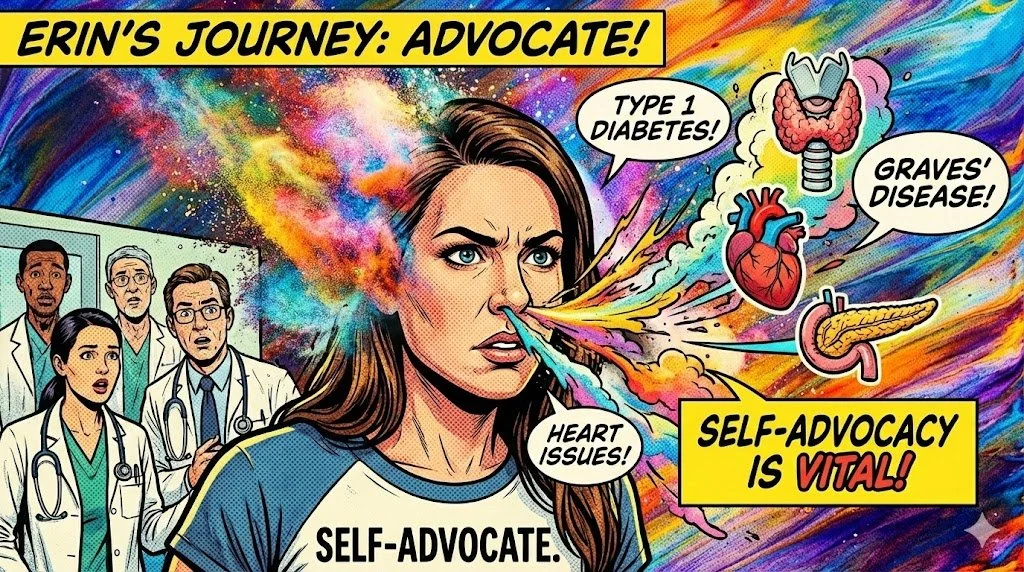


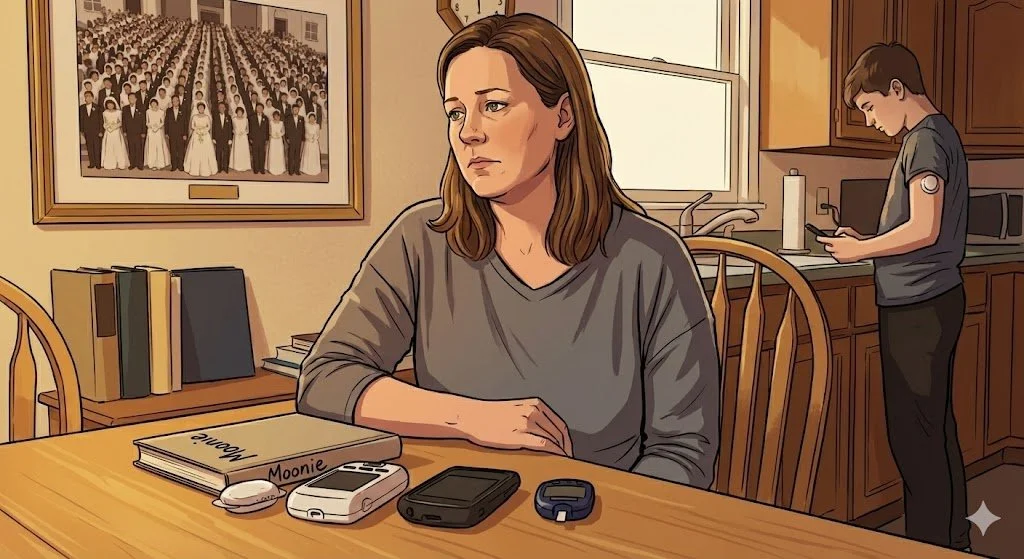








The Juicebox Podcast is a free show, but if you'd like to support the podcast directly, you can make a gift here. Recent donations were used to pay for podcast hosting fees. Thank you to all who have sent 5, 10 and 20 dollars!

#350 Diabetes Pro Tip: Bump and Nudge II
Diabetes Pro Tip: Bump and Nudge II
Scott and Jenny Smith, CDE share insights on type 1 diabetes care
You can always listen to the Juicebox Podcast here but the cool kids use: Apple Podcasts/iOS - Spotify - Amazon Alexa - Google Play/Android - iHeart Radio - Radio Public or their favorite podcast app.
+ Click for EPISODE TRANSCRIPT
DISCLAIMER: This text is the output of AI based transcribing from an audio recording. Although the transcription is largely accurate, in some cases it is incomplete or inaccurate due to inaudible passages or transcription errors and should not be treated as an authoritative record. Nothing that you read here constitutes advice medical or otherwise. Always consult with a healthcare professional before making changes to a healthcare plan.
Scott Benner 0:00
Hello, everybody. Welcome to the 18th installment of our diabetes pro tip series. This episode is diabetes pro tip, bump and nudge. This episode of The Juicebox Podcast is sponsored by Omni pod Dexcom and the Contour Next One blood glucose meter, you may be eligible for an absolutely free meter. Find out more at Contour Next one.com and the Dexcom g six continuous glucose monitor the same CGM that my daughter has been wearing for years. Find out about that@dexcom.com forward slash juice box. And of course, the tubeless insulin pump. The end all be all of insulin pumps. The Omni pod is available at my Omni pod.com Ford slash juice box. And when you get there, you can get a free no obligation demo of the Omni pod sent directly to you. Welcome to another edition of our diabetes pro tip episodes. Today, I and Jenny Smith. You know Jenny from integrated diabetes, Jennifer holds a bachelor's degree in human nutrition and biology from the University of Wisconsin. She's a registered and licensed dietitian, a certified diabetes educator and certified trainer and most makes and models of insulin pumps and continuous glucose monitoring systems. Jenny is absolutely the bestest. She is. If you don't believe me, go back to Episode 210. And start over with the diabetes pro tips. Honestly, if you're just finding this series, check out diabetes pro tip comm you'll be able to see them all or like I said, you can go back to Episode 210 right there in your podcast player to get started. these really are designed to be listened to in order. If you're new to this, starting at the 17th episode of the pro tip episodes is probably not the way to go. Please remember while you're listening that nothing you hear on the Juicebox Podcast should be considered advice, medical or otherwise, please also always consult a physician before making any changes to your health care plan. or becoming bold with insulin. Alright, you ready to talk about bumping and nudging? Here we go. So let's start like this. I just put up like the 300 and 45th episode of the show, which is mind bending to me honestly, what was the first first year first up because you'd been blogging for a long time before I blogged from 2007 consistently until 2015 when the podcast started. And now I have to admit the blocks a little more of a way of me sharing, I don't sit down and write from my heart as much as I used to. Because, right, it's so much easier to do on the podcast, and you reach more people. But I blogged for that many years the blog was strong, it was a million million and a half clicks a year 111 block of maybe two or three years, I got to like 2 million clicks, which was really big. But then I saw it kind of like trending away. And so in 2015 I started the podcast. And I really thought it was going to be I guess this isn't maybe a neat place to say this. I thought I was going to go back and read my most popular blog posts, like into this microphone. Because that was my expectation for us. Like, you know, some of these blog posts are really helpful to people. I'll read them and make them audio. I did that for 20 minutes one time, stopped, deleted the file and was like, This is stupid. Yeah, yeah. Nobody cares about this.
Jennifer Smith, CDE 3:40
And well, I can't say there are some people that would care about that. I've actually got a couple of clients who really, they love the podcast because their their audio. And when they read things, it doesn't stick. And so they have to reread and reread. And finally some of the adults that I've got are like, I just put the book down, because they're like, I can't keep reading. I'm not retaining it. But if I hear it, it's there. It's in my brain. So
Scott Benner 4:08
no, I hear that I and I should just felt boring to me. Like I thought someone would like it. But I mean, if I'm being honest, I was trying to reach more people, not just, you know, people who would literally be willing to listen to somebody read something dry. You know what I mean? Right? I mean, at least put some music behind it. I can imagine how funny that would be if I was reading with music behind me and there was like this guy's talking about it would be terrible. Yeah. And then it picked up and picked up. And, and like, you know, but for people who may be coming in late to it. After a number of years of the podcast, I started thinking there's like a real system here. Like I knew that while I was blogging, but when I could hear it, I thought oh no, it's this piece in this piece and these these four or five ideas and when you bring them together, there are 5581 say like you just do these things and that's what happens you know, and I And I had had you on the show, maybe twice. Mm hmm. And I always wanted you to be back. I thought she's the best guest I've ever had. Like, I mean, honestly, you, when you when it comes to diabetes, you and I think exactly alike about it from two completely different perspectives, which is right, weird and interest. Nice, right? Yeah. And it's nice. And so I was somewhere one day, and I thought I know what I'm going to do. I'm going to take the tenants of the podcast and break them down with Jenny, if she wants to do this, I'm going to get a hold of her and see if she wants to do it. And that was a weird leap for me, because until then, my real belief was that if you just listen to all the episodes, you'd hear things come up very kind of organically, and they would stick to your brain better, because you heard them conversationally, and I was a little scared to do just specifically with more bulleted specific topics, but then I realized I could do it with you. Because we have a rapport. Like, I've talked to other people in the podcast, and I try to talk them about stuff. And I find I'm stopping and starting and like, I'm like, oh, they're talking over me. I'm talking over them. I can't find a vibe, you know, I knew I had that with you. So I contacted you. And you were like, I'll do it. And at the time, I was like, it'll be like six or seven, Jenny. And I sent you a little list and you were really great. Like you took the list and you were like, I'd put them in this order. I think they make more sense in this order. And I was like, Okay, great. And now I'm going to look, I'm actually going to diabetes, pro tip comm now because that little idea now has its own website, which is even strange. It's great. 1-234-567-8910 1112 1314 16 there are 17 pro tips. And this is going to be the 18th one, and then we're going to do pregnancy and we're gonna keep going right? And it's spawned like defining diabetes, which I never thought was a thing that was needed until this one person sent me a note that said, Hey, I wanted to thank you. Because until I listened to the podcast, I didn't realize I was on MDI. They took and you told me that right. And that made me think, wow, there's some people really not understand some of the terms we're using. Let's define the terms for them, but simply not an hour conversation. Right. Right. A little bit. Anyway,
Jennifer Smith, CDE 7:21
through that also not a not a dictionary definition. I think, as I said, you know, before some people get things because they hear it in a different way, or they read it in a different way. And I think the great thing about the podcast too, even with the pro tips, part of it is that it's broken down much more like layman's, applicable, it's, it's not what you get in a typical doctor education clinic. And we did
Scott Benner 7:45
it a couple of times. And I was like, Damn, this is good. It went so well that I was like, give me your address. Jennifer, I am sending you a microphone.
Unknown Speaker 7:54
sounds better.
Scott Benner 7:55
Let's go. But one of the things that we did was bump and nudge, it gets talked about in the episodes, but it doesn't have its own episode. And I always kind of thought that was okay. Until in the last year. I looked at algorithm based pumping, and saw how my bumping and nudging was too much. It had gotten out of hand and it didn't realize it because it was so easy for us to do that. We never looked back at the root cause of why we were bumping and nudging. And so this has been bothering me for like six months now. And I said the Jenny, I need a pro tip episode on this because not that bumping and nudging is a bad idea. It's a terrific idea. Right, but you need to understand it more. It's a bigger topic than I thought it was. Mm hmm.
Jennifer Smith, CDE 8:49
And I think you really I think you really like realized it when you guys started using to do it yourself. Right? As
Scott Benner 8:58
soon as day one came.
Jennifer Smith, CDE 9:01
We talked and I was like, how much are you using Temp Basal? Yes. How much? are you adding little micro corrections or adjustments or whatnot through the day? And you're like, Oh,
Scott Benner 9:10
I don't know. I never thought about it before. So So Jenny's The one who said it to me, because we were trying to find it was such an easy thing. Like you guys would hear me say before, like, I don't know, artists, insulin to carb ratio doesn't matter to me. I don't know what anything is. none of it matters, right? I know, we're basal rate. And I know food. I look at food and I see food. But
Jennifer Smith, CDE 9:31
you're like, Oh, that looks like five units. Oh, that looks like I got to split it up and give some now and a whole bunch later. Right.
Scott Benner 9:37
Right. And being flexible, which is terrific and important. What I didn't realize it was doing to me. You have to kind of like step back and look at a timeline of months, maybe the develop into years is that at some point, you know, meal x took two units at this bazel rate of whatever it was and Then it took two and a half, and three and three and a half and four. But it happens so slowly, I didn't notice. I didn't realize that I was now bolusing, six units for something I used the Bolus for units work. I mean, I did. But I never stopped and thought, I wonder how much of this meal insulin is attacking the food and how much of it is staying in our system for hours afterwards, and maybe acting as bazel. Right. And so I had bumped so much with insulin that I lost track of what Arden's baseline need was, it didn't matter because we were doing so well. But it didn't matter. And I learned that when I when I said, I don't this algorithm won't work. This is ridiculous. Her blood sugar's all over the place, right? It's just crazy. And it's because I had lost track of how much insulin we were actually using versus how much my settings said, we were using that did I say that clearly how
Jennifer Smith, CDE 10:57
much was actually needed, versus how much you were just intuitively correcting with right adding a little bit extra because you needed it, but not really realizing Hmm. In general, I'm always adding extra here. And it probably is a setting issue. It's an I shouldn't be adding this much more all the time,
Scott Benner 11:18
right. And it becomes such a way of life. Right? I didn't think of it anymore. So now, I want to leave that thought here. And we're going to come back to it later. Because I do think that being fluid around diabetes is incredibly important. And that you can't just keep resetting your basal rates every day for all the variables that are going to come up in your world. And I noticed a long time ago, that idea that concept is what causes people problems, right? The idea of like, well, I'll go to my doctor. And we'll find a basal rate. And oh, my doctor was great. They saw between 2am and 4am, we had some highs. So we moved our bazel, up at 1am or 12:30am. And it worked. But then they started getting low, you know, a couple weeks later, but I just fed the lows for two and a half months, then went back to the doctor, the doctor moved the bazel again, and that's how people that was considered a successful use of your physician and your insulin, right. And it probably still is in many people's minds. I saw that and thought this doesn't work. I don't want to be involved in this. And I've said it before. And I'll say it again, this podcast is a it's partly in place, because I don't like the math around diabetes. I don't like the waiting. I don't like the we'll wait and see. I don't all that stuff makes me uncomfortable. Like all the things that you're supposed to do. I just was always like, oh, that seems wrong. Like I don't I don't want to do that.
Jennifer Smith, CDE 12:53
within it. I think you also have to say that the technology that we have available today makes it more user friendly for people to learn how to make their own adjustments in the here and now. That might work then for a while and then they make more adjustments. But you know, years ago without technology, going to the doctor every three months, every six months, like I used to do when I was younger? That that was the wait to make adjustments now. Could we have taken and done more the more data analysis in between the doctor visits we could have in my mom actually did. She was like, This isn't working anymore? Let's just adjust here, let's Nope, you need some more insulin here. And I don't
I don't think she ever like,
you know, set it like that. But her explanation was always like, Well, this was just too high. And if it's going to be too high again tomorrow, then you're just gonna use more insulin for the next meal. Right? Right.
Unknown Speaker 13:51
Okay, my Whatever. I'm
Scott Benner 13:53
with you, you're cooking, right? So you seem to care. So I'm gonna go right here. But another issue in the space of people talking about diabetes in the past. It's kind of it's a number of folds, but one of them is that nobody ever wants to say too much, right? They're always like, worried that they'll say something, and it won't apply to the third person that hears it. And I so that was part of what the pro tips were for was to take information down to a point where you know what this really does apply to everyone. Like not saying things that only worked for you or me or noticing that my daughter needed something different after she started getting your period than she did before. And taking the time to talk through those differences were writing about it is hard because you write something down. It's static, you know, I write a blog post around about my nine year old daughter. somebody reads it, it now feels like a rule. I don't spend time with my nine year old child is going to be the applicable method that I use and you don't take time to philosophize out that I bet you this will be different when she's 15. And you just Writing doesn't work that way. But you can conversate that way. And so a lot of people in the past who were impacting the diabetes space, were parents of younger children, who until your child gets older, you don't realize you think this is diabetes, but this is diabetes. In a kid that's not, I don't know, like, coursing with hormones or growing as much as you think. Or as active as you believe they are. Like, you know, like, when you're eight, you're like, Oh, my kid plays baseball, like yeah, okay, wait, or your kid really plays baseball, like like, Right Whale, they weigh 200 pounds, and they're flying around, it's 110 degrees outside, and they're throwing things through walls like it, it's an impact on your body weight, or your kids playing ice hockey, as a high schooler, like, you know what I mean? Like, we've got
Jennifer Smith, CDE 15:51
breakfast from six until eight in the morning, they've got practice, again, from you know, four until eight, six o'clock at night. I mean, sometimes, those practices I'm amazed with the kids that I work with, their parents are like, Oh, she's got tennis for you know, from six o'clock until 730. And then she goes off to school, then she's got another practice from four to six and like, like, seriously, like, she's the tennis thrower.
Scott Benner 16:15
That's how you make a tennis pro. One in a million times. The other 990,000 times is how you make a kid who hates tennis eventually, right?
Unknown Speaker 16:25
Okay, exactly what
Scott Benner 16:27
these people were doing great stuff. And they were talking about these ideas. But they didn't realize how specific they were to the age group they were talking about. And, and I think that that's why this longer conversation why I mentioned how long the podcast has been up has been important, because in my heart as crazy as it sounds, I think if you want to have great success with your type one, diabetes, go back to episode one. And you'll listen through, because you'll take a journey through somebody who's talking about a kid with a nine or 10 year old body that, you know, you actually can hear in this podcast art and get older art and grow art and have problems her start to get her period, changing devices, meters, like all the way through me. And I know it sounds crazy, but in, you know, 347 hours as of today, I think when it's over, you'll go Okay, and then your kids just gonna have anyone seeing the fives it like if you want it to be or maybe you you'll make an adjustment. It'll be in the sixes, right? It'll also works for adults. And that was I was really cool. I hadn't had that, like greater expectation. I thought it would, but it didn't have a lot of a lot of adults weren't reading me as a blogger. You know, do you mean, there were some, but there weren't a lot. Anyway, at some point, I recognized that I was really long winded, I guess the people there, I guess there are used to that. Not at this point. But it's a very long way of saying that you can't just set your basal rates up, set up your insulin to carb ratios, and go with that's what the pump told me. And that's what the doctor told me to put in the pump, right? Because things are going to change, sometimes day to day, sometimes hour to hour activity to activity, there are going to be too many variables. And you can't stop every time like imagine if I had to get up tomorrow and go today is going to be a sedentary day. I will now go fix all of my basal rates for sedentary and change my insulin to carb ratio for sedentary By the way, do you realize that that could end up for some people meaning more for some people meaning less, it could end up meaning less for Basal and more for insulin to carb or vice depending who you are and what you eat. And so when all that exists, what ends up happening to people is they just go Ah, today was a good day, today was a bad day. Right? They leave the settings and then they have good days and bad days. And what I thought was, if we stay fluid enough, you can almost be ahead of what's happening and make these adjustments. Okay, right. All right. That's a long, long explanation. But to me, that's what led me to bumping and nudging. Now, for context, while Jenny and I are talking about it, I think of bumping as using insulin, bumping your blood sugar down. And I think of nudging as nudging your blood sugar up with carbs. Jenny thinks of it the exact opposite way. So don't get confused. If one of us does one thing and one of us does the other. But in the end, the idea is to keep yourself between these smaller parameters. Yeah, right, arrange a smaller range.
Jennifer Smith, CDE 19:39
And the range is defined by you,
Scott Benner 19:41
right? Doesn't matter to me what range you choose.
Jennifer Smith, CDE 19:44
Right? It's it's your chosen range, but the idea is to use food in an insulin and in a good advantage in both directions so that you can stay within that target,
Scott Benner 19:56
right. And so some of the things I learned as I
Jennifer Smith, CDE 19:59
was able to could see us by the way, your hands
Scott Benner 20:03
around good, bad. Oh my god, you keep saying that out loud. And someone's gonna ask you to turn this into a YouTube thing and then we're gonna be on camera and neither of us are going to be happy about that. Because you're gonna have to hang up that stuff behind you and I'm gonna have to get a haircut right. So
Jennifer Smith, CDE 20:19
which by the way is just like bags and you know, it's not random strangeness. It's like bags and like coats. That's it.
Scott Benner 20:26
Jenny is now apologizing for something you can't say that's very Midwest of you. By the way. You're like, Oh, it's it's not unclutter. It's nice people, it's a very important thing for the children hanging their bags.
Jennifer Smith, CDE 20:40
The easiest for them to get to.
Scott Benner 20:43
We're off topic now. So anyway, so I'm gonna do a little thing here. And please jump in whenever you want. In my mind, I take the I guess I should first say that I understand this would be more difficult without a continuous glucose monitor. I really do. What I'm saying would be harder, you could do it. I still think you could do it, you'd have to do it a little less aggressively, probably. And you'd be testing more but but what in my mind, what I see is that graph that goes along my daughter's Dexcom has a high line and a low line. And I take those lines from running. Oh, my God, which way is this? Is this parallel? to the ground? Yeah, it is. Right? I correct? Well, yes, I was asleep a lot in high school, nothing to this podcast, just so you know. So I take those two lines that are spaced apart evenly, that run parallel to the ground, and I flip them up on their end. So they're a little vertical, they're running vertical in my mind. And now they are a video game. To me. They're like driving, right? There are it's a football field, I don't want to run out of bounds on the left, or on the right. That's all it is. To me. There's in play and out of play. So when I describe it, and like talks, I discussed it like driving is interesting because it's um, you make a lot of imperceivable moves when you're driving that if you jerk the wheel around, you swerve and you don't want to do that. So as you notice yourself approaching a, you know, the shoulder, you just turn the wheel back a tiny little bit and you come back into toe again, right, like you're, you're it comes back. Same thing with you know, if you're going to cross into the other lane, you just come back a little bit, you don't jerk the wheel around, because if you drive the wheel around, you end up in the in the ditch or in the other lane, or you end up with much higher or lower blood sugar's than you mean. Right? So I bumped myself back, I bump, you know, a nudge back. I used that insulin to help Arden stay in range. The problem that comes with jerking the wheel is that once you're in the ditch, you have to overcorrect again. And then you're on the roller coaster. Right now I've said rollercoaster which now takes the graph back to being you know, the way it belongs in your mind for a second not vertically, but you're up and you're down and you're just overcorrecting the whole way with food with insulin, and you get the timing of the insulin so far off that some people eat done doesn't stop. It goes, it goes into and you just keep going that way. Yeah. For for not just for a day, for weeks and months and lifetimes of just that's what my blood sugar does. It bounces up and down. And people say that it's heartbreaking me like No, just turn the wheel a little less like right, like, right, it's okay. I understand how it happens. And I think there are ways out of it. So I want to talk about some functional ways out of it. I guess people should understand the difference between a falling and a drifting blood sugar. So why don't you talk about that for a second?
Jennifer Smith, CDE 23:57
Yeah, drifting is slow. And dropping is fast. I think that's the easiest way, drifting down and or even drifting up, happens gradually over time. So again, if you're using a continuous monitor of any kind, you'll see this slow, continual change in blood sugar, little little nudges, kind of happening over the course of time. And since on all CGM, each of those little dots on your graph represents about five minutes, each little drift up or down. Could be a change in glucose over a five minute time period, right? Yeah. So drifting being slower means you have more time to implement a change right now. That could also be a smaller change, than having to make drastic adjustments with food or insulin, right. When you're doing Dropping or rapidly rising kind of the opposite. That requires more whether it's more insulin or more food, it requires more because the change is happening very quickly now. And usually I see drifts happening either with a horizontal arrow on your CGM. Or you might get that slight angled arrow either down or up. That's I consider those drips, yeah, I consider drops or rapid rises, when you've got arrows pointing straight up or straight down. That's fast. So you need to do something now.
Scott Benner 25:40
And so to start with lows, if you're 75, straight down on Dexcom, that could mean two or three points per minute. Is that right? So every five minute change, you could go, you could end up moving 50 up to 15 points or something like that. I don't hold me to that. But fast is the point. Correct? So yeah, you don't like you know, when you're, when you're 80, straight down, you don't say, Hey, you know what, I'm just gonna, I'm gonna do a Temp Basal off for a half an hour here, that's not going to work. And there's reasons prior in the diabetes pro tip episodes, seriously, listen to them in order that will make sense to as why. But if you're just drifting down one of those situations where it's noon, and you're 100, and then it's 1215, and you're 95, and you just got this little drift happening, you could possibly be at the end of a bolus that ended up being a little too strong, right. And maybe there's, you know, an imperceivable amount of insulin left in there, quarter of a unit, a half unit, depending on your size, maybe it's two units if you're an adult, right. And if you take away your basal insulin right there, it's possible that you can trade that extra bolus that's left and create. What I sometimes talk about is like a black hole of Basal, right? So keeping in mind that everything you do with your insulin now is for later because insulin doesn't work immediately. Like, what if at noon, when you started to see that drift down, you took some bazel away, and that created a level. So now at the end of that, too strong Bolus was acting as your bazel. And your bazel wasn't there. But keeping in mind, if you shut your bezel off at noon, it's not going to probably start impacting you for at least one o'clock. Yeah, right for a while. But at the same time, you were only drifting Anyway, it was probably going to take you an hour to get from 100 to 60, where you'd then be drinking a juice. But instead, as you're hitting that 70 Mark, you're all the sudden into the timeframe where there's no basal insulin, and you just level out, that doesn't always work. I've done it and thought I'm a genius. And I've done it and thought, Oh, I missed that like, but trial and error will teach you because there are a lot of different.
Jennifer Smith, CDE 28:01
And I think some some visual into that, too. As you said, You know, sometimes it works. And sometimes it didn't quite hit the mark. But you weren't necessarily wrong to take these away. I think especially again, with the technology that we have today, not only can you see the drift, but if you are somebody who's using an insulin pump, you also have the visibility of insulin on board, right. So if you have an idea how much insulin is left, like you said, an earlier bolus, maybe you were a little heavy handed in it, or it was just you know too much, because you haven't quite figured out your ratios, or maybe it was, you know, a guesstimate completely, or whatever it was, you still have some insulin on board, if you have an idea of where your bazel is right now. And you know how much insulin is on board, taking bazel away could substitute for some of the iob that's left? Absolutely. And like you said it could nicely smooth things out and you just drift into a stable blood sugar. That might work if you've got iob of one and your basal rate at that point is like point eight or point nine or even one that could absolutely smooth out if you've got three units of iob and your Basil's at point five, not gonna hold you to half you in a way it's going to help a little but you're still going to ask him
Scott Benner 29:17
to get the result. Right. All right. So in my mind's eye Alright, we're gonna do it quick. The Contour Next One blood glucose meter is the finest blood glucose meter I've ever used with my daughter. It is small, but it fits in your hand nicely. It's easy to read during the night or during the day has a bright light for when you're checking blood sugars at night. And the blood test strips allow you to go back in to get a little more blood if you miss the first time. All these things together, coupled with the fantastic accuracy of this meter, make it my choice. That's the best blood glucose meter out there. Go to Contour Next one.com Now to find out if you're eligible for a free meter. And if not, meters aren't that expensive. Just ask your doctor say something like, hey, I've been using this old janky meter forever, I want to get it Contour. Next One. And I bet you that it'll be about as much effort as you have to put into it. All right, what's next Dexcom g six continuous glucose monitor is what's next, see the direction and speed of your blood sugar at a glance right there on your iPhone or Android share a loved one's blood sugars, those same numbers, directions and speeds with up to 10 people. That means that if your child has type one diabetes, or you do, you can share your blood sugars, and the alarms and everything that goes with it, it's up to 10 loved ones, through the magic of the internet. dexcom.com forward slash juice box to find out more. This is an indispensable tool, you hear me talk about it all the time. If you don't have a dexcom Today is the day to find out if you can, if you should, if you will. And you can and you should. And you will dexcom.com forward slash juice box. My omnipod.com forward slash juice box will offer you a free, no obligation demo of the Omni pod right there, come right to your house. That's an insulin pump demonstration that you can wear. Try on, see what you think, in the comfort of your own home. After that, you decide I want this on the pop thing, contact them back and you're like, yo, yo, let's do it. And you move forward where you don't want it. They don't bother you. It's no big deal, right? They're not gonna, they're not gonna, you know, I'm saying they're not gonna shake you down. They're like, come on, we sent you a demo, they're not like that, but just want you to have the demo. If you like it, you like it. If you don't, you don't, but you be the judge. And you can be that judge by going to my omnipod.com Ford slash juicebox. There are also links in the show notes of your podcast player, and that Juicebox podcast.com. Please support the sponsors. And now back to bumping and nudging.
In my mind's eye, years ago, I used to think of scales. So think of like the scales of justice, where each side has this big dish and you could, you know, pile weight, you know, and so think of insulin on one side, and carbs on the other or weight, the weight of your blood sugar on the other. And you can kind of imagine yourself throwing in a little on one dish and going Oh, that was too heavy and taking a little out. And you know, we're taking some out, like that's how I think of insulin, like put a little intake a little out. You know, and then, you know, I say a lot on the podcast, and that I think we talked too much just about how insulin impacts the number. And there's so many other things to think about how food impacts insulin, right, like, like, you'll hear me tell a story about like, creating a drop, and then catching it with food. And right to me, that's how the food impacts the insulin. And it's just, there's, it's a weird thing. But there's a lot of different ways to think about what's going on that little game that's going on in your body between, you know, the sugar that's in your blood, or that's going to be in your blood or the foods that's going to put the sugar there and the insulin that's trying to take it out again. So anyway, you can bump with a Temp Basal, right? It just is like to take it away like Jenny and I have explained. Also the same goes for going up. If you see, you know, a 90 that turns into a 95 it turns into 100 it's going to be one of those slow drifts up. There's nothing worse than that, in my opinion, I always think of it as the, um, the mountain climber on the prices right? That because every time you're like it's gonna stop, there's no way that guys falling off the end, they're gonna figure this out like and it just totally who and it just goes on forever, right? And then that little guy just pops off the end. And then Drew Carey takes your money back from you and you're screwed. You walk away. Right? So like, you see this 90 blood sugar that's drifting up. Two hours later, it's 250. And you think I did something? Yeah, like I should have done something, you know, maybe that's a Temp Basal increase, maybe it's a Bolus. But all All I know is that a 120 or one, you know, whatever you wherever you decide to be diagonal up, can be brought back to a stable 90 with far less insulin than it will take to address the 252 hours later. Correct. And when you're only using small bumps of insulin, you're very less likely to cause a low and so when you see that 120 To me, that's you approaching, you know the the line on the side of the road. And you just want to come back almost an imperceivable amount with the wheel or the tiniest bit of insulin to bring it back in line now, right? I have done this with my daughter for years with an amazing amount of success. And I've seen people, scores of people who listen to this podcast do it too. And it works. It really does. But the idea is that you're not always going to get your Bolus, right. You're not always going to have the right amount of Basal going for your specific situation that's happening right then in there. Correct? Wow, I'm more I think you're with me. Don't tell your husband.
Jennifer Smith, CDE 35:45
I think you know, and two of you want, if you wanted to add some definition to like people always ask, Well, how much? How much when I start to see this drift? How much should I add? Well, you know, one, again, everybody's physiology is a bit different your sensitivity to insulin. So a point one might be what works for you a point seven might be what needs to be in, you know, somebody else's case. But I think if you give definition to direction of blood sugar, again, using today's technology, beneficially. And you mentioned before, kind of the directional arrows, and what that indicates, as far as a drift up or a drift down, and how much is happening. If you're wondering how much to add with insulin, when you do start to see a drift up, the angled arrow is really kind of a rate of change of about one to two points per minute. Right? So if you're aiming to see, okay, I'm at 90, I've not done anything. And now my blood sugar, it looks like it's starting to come up. I don't know why, but it's happening. If you excuse me, you know, experience that a 90 with a angled arrow up one to two points per minute in the next 30 minutes. If you do nothing, your blood sugar could be 30 to 60 points higher. Right? Right. So if you use that to your advantage, and you say, Okay, I could be on the low end 30 points higher, it could be one at 120, I kind of know what I would use to offset, you know, a 50 point rise in my blood sugar, maybe I need to just add a little bit like point two, or maybe I need to take a point five extra, you know, that's kind of a way that's a little bit more, if you're the math person right, may help you to get a little bit more precise and not worry about then ending up on the downdraft later.
Scott Benner 37:39
And if you are me, what you do is you try something and then the next time you try something different if that didn't work, right, less or more, yes, just more or less whatever try. And it's important to remember that it's not, you're not going to get it right the first time. And even if you do get it right the first time, the variables may change the second time it becomes an art, like it really does like just knowing how much to push just a little bit like you know, you squeeze too tight and it's too much you're not laughing you're let go. And and using Jenny's example right there and flipping it to getting lower. You don't always need the whole juice box, you don't always need every piece of candy in the package that sometimes you can nudge with food, right. And I know that 15 carbs 15 minutes is the rule of thumb. But if you're using a CGM, you can see it better. You don't have to 15 carbs 15 minutes is when people are blind to what their blood sugar is. And they're trying to stop themselves from having a seizure. That's important. I'm not saying no. Okay, and I'm not telling you not to do it. But I'm telling you that if you do it, and find yourself to be 300 later, you didn't need all 15 carbs, right. And, by the way, if you do get into a panicky situation, and you've got to just horkan carbs, I'm not going to tell you to not do it. What I am going to tell you is that when you when the dust settles, you need to figure out how much insulin you've got a bolus for that food you just took, right right like maybe not for all of it, but some of its going to need insulin you have to stop the bouncing you've got to make sure you can't get on that roller coaster like don't get on it. it's maddening. And the only way off of that roller coaster By the way, in my opinion is you stop taking in carbs and you get back to level again, like like I can listen I can knock Arden off that roller coaster while she's still eating but that is a ninja level event. Like like you need to be really good at that to stop to stop a roller coaster in between food
Jennifer Smith, CDE 39:46
and you'll get it takes understanding sensitivity. Are you very well known and I'm sure Arden does as well. You guys know her sensitivity and you've paid enough attention to say okay, we need this much right now. Because of all of these other variables in the picture, or you need this much less right now or whatnot, and you do get to that level when you start to pay enough attention, you know, to your personal sensitivity and the precision that you need. Um, I think you know, the 15 and 15 is age old. I mean, that's what I started with 32 years ago, it's 15 and 15. And we didn't have the visibility of blood sugar changes at that point, we didn't or even
Scott Benner 40:26
meter by the way that only takes a tiny drop of blood, right isn't and this beautiful Lance that, you know, it doesn't hurt that badly while you're doing it, you were right stabbing yourself with a sword dumping or dumping your rocks in a way we kind of
Jennifer Smith, CDE 40:42
called it the guillotine It was like this big old drone that like hammered down on your finger. And like I would like I would like inch my finger like slightly away from like the little underneath platform from where it like jabbed my finger, I would like just hold it back. So it didn't quite jab it. That was my like, adjustment to the land set depth, right, that was the only adjustment I had at that point. But your point being really that you have some tools now that allow you a lot more precision in how you bump in know you do. And with smart tools. Today, too, I think this is a good place to mention it is with our, with our smart hybrid closed loop systems that are on the market today. That adjustment with carb, the 15 and 15 is 100% too much 100% too much with most of these systems on the market today. When you're adding a little bit of carbohydrate, we're talking like a little bit of carb, because the system has already been helping you coming into this drop in blood sugar. So 15 grams, hundred percent is going to be way too much. You might need two or three Skittles, which is like two or three grams of carbs, you might need half of a glucose tablet, you might need a quarter of a juice juice box. So
Scott Benner 42:06
what you know, I want to go a little deeper into this, like faster rises and falls. You see people online every once in a while it's very common, actually. They're injecting and they all put in the measurement for their slow acting insulin as fast acting by mistake like oh, I take like you'll see an adult like I take 20 units of Lantus every day. And I just gave myself 20 units of novolog. And they're online. What do I do? What do I do what I do? And I'm just like, figure out how many carbs that takes and eat them. Like, that makes sense to me. Right and and give that a try. So say you do that. Not that but say you have a meal that really needed five units. And for some reason you thought seven. And the next thing you know, 40 minutes later, there's an arrow down on your CGM, you're falling fast, you need to eat the carbs to stop that. So it's a much bigger nudge, right? It's more like a nudge with a sledgehammer now, and you need to eat the carbs to stop that. In the same thought process. If you miss greatly with that insulin, it should have been seven and you use five and 30 minutes later, your two arrows straight up. I don't mess around there. Like I am stopping those arrows, right? And you think, Well, okay, see, I don't know, say was literally like a mistake you meant to do seven and you did five she's like, okay, two units, that two units isn't going to do it anymore. Because you have all this momentum, right? Like there's this momentum, you have to stop the momentum, you've got a higher number than you thought about when you decided on the insulin the first time, there's a lot to think about. There's the number, the momentum and getting you back without making you Well, there are times that I'll take what I think the amount is that's going to stop the arrows plus the amount that's going to change the number back to where I want it to be. And I realize if I give her this insulin right now, she's going to end up low later. Mm hmm. But I still give it to her. And then there's a moment where I take the bazel away away, right? To try to do what I mentioned earlier, eat up that extra. So I needed all that force from that insulin up front because of the situation we're in. But I don't need the tail of it later. But the tails going to be there. So what if I took her bazel away so that it wasn't bazel plus the tail, right? And so I get the benefit of the up front without the kick in the pants. Again, what comes later, right, right. That's another way to think of bumping and nudging in my opinion. So there's any teacher
Jennifer Smith, CDE 44:51
learning that tools it takes learning the tools to use, you know, things like people who are using MDI or multiple things injections, it becomes harder because you can't take these away. Yes, it's injected, it's there. So if you are heavy handed with a correction, because you really want that double arrow to stop, you're going to be have to be, you have to be ready on the back end with carbs. To stop right
Scott Benner 45:17
off, you want to do you want to know what a pump does that multiple MDI doesn't do, it stops you from having to take a bunch of injections, it allows you to do temporary basal increases, decreases, extended boluses. That's it. And you know, you don't have to carry pens with you and right, wonder if your insulin is getting warm while you're at the water park. Like Like that's, that's, that's it? I mean, I think, to me, it sounds like a very little bit. But it's a lot. If you're going to be reactive like this and stay flexible and things like that. I'm not saying you can't do it with injections, I know plenty of people who do you have a very commonly are adults, or, you know, kids who just don't care about the injections, because there's going to be a moment when you're going to put in a little insulin and realize it's not enough and have to put in a little more. And now that's two needles, you know, instead of two pushes of a button, I think there are
Jennifer Smith, CDE 46:13
certain kinds of food which we've talked about, in other episodes, reading a pump to cover differently over a longer period of time. With a with an injection, you can't do that, unless you're willing to just take more injections with more insulin.
Scott Benner 46:26
So now here's the next thing about bumping and nudging, you get what you expect a little bit. And I want to just before I tell you about that, I want to tell you that what Jenny just said, shouldn't have been glossed over. There's other parts to this, I'm talking about bumping and nudging within a fairly perfect system, meaning I have my daughter's bazel well in hand, I'm not that far off with her meal boluses. If I missed like, we're not just like running around with our hair on fire gun, like, yeah, you know, like, and I just
Jennifer Smith, CDE 46:54
hear feed here, give more here.
Scott Benner 46:58
be insane. And I do mean this without sounding like I'm trying to pimp the the content, if you go back and start at the beginning of the pro tips. Or if you want to power Listen, by the way, those of you who start at the beginning of the podcast and listen right through, you have my respect, I thank you very much. Because why the downloads are so good, and it really helps me. So thank you very much. But at least go back to the pro tips and listen through, because then you'll get to a point where bumping and nudging really is a good tool.
Jennifer Smith, CDE 47:30
But it doesn't happen not hundred percent of the time. It's not always gonna work.
Scott Benner 47:35
Right, right. Like there are gonna be times where it doesn't work. And it happened to me last night with Chinese food. So we came out of a pump change and went right into Chinese food, which just shows my arrogance, really, because I was like, this won't be a problem. But what I didn't take into account is this for the past 72 hours, Arden has just needed more insulin, like there are foods that don't make Arden spike that are making your spike for the last three days. I don't know why it's not important, why it's just happening, you know, like, like, soup, just having like a clam chowder out of a cannon. I can't get it under like 250, like 45 minutes later, like, I'm like what's happening, you know, and it'll go away. Because the day before this started, her blood sugar was like 85 for 17 hours in a row. So, you know, it'll, it'll cycle through, we'll figure it out. Maybe it'll end up being a variable that needs adjusting. I don't think it will be but I'll see. But that's not the point. The point is, we came from a pod change, right into Chinese food. And boy, look at that. I did not do well with that. And so I want to first tell you that when I say oh my god, I did not do well with that. What I mean is her blood sugar was between like 175 and 210 for a number of hours afterwards. I know you're thinking Shut up. I would love that. Right? Yeah, yeah, people are like, Really? That's your complaints? Not a complaint. It's just I missed, right. Right. And there was the time five hours honestly, where she needed I bolused a bunch of times and I never once got it right I was never strong enough with it. And I have to admit, it was because I was tired and I didn't want to be up all night. So I just I erred a little on the side of caution not a lot and and I kept pushing. So but I did not cause her to get low afterwards, which was which is a win. It felt like that to me and I'll tell you why. And I want to put this in this episode too. So very recently, I wore the Dexcom Pro continuous glucose monitor and I was very happy to find out that I am apparently not pre diabetic as I was texting Jenny's I was putting I'm like you know this I'm gonna find out I have type two diabetes, right like I'm I was very happy that I didn't. Obviously, I was grateful, but I got to see What a pancreas does when it's doing what it's supposed to do. And I have to tell you that there is nothing I ate no matter how low glycemic or high glycemic, they got my blood sugar over. Yeah, I mean, I told Jenna I had eat two pieces of cake to get my blood sugar to like 135 141 time, right? But as I look back over the day, my standard deviation was like 11. You know, my, my average blood sugar was I don't like 90 or 80 or something 85 or 90, right. But I still went up a little gracefully 120 most of the time back down again. You know, that happened when I ate. And I had already changed my mind about my expectations for Arden. It over the last couple of years, you guys have heard me loosen up on the idea of like stopping every spike like I don't, I'm not a flatline person. I don't feel like my daughter's blood sugar needs to be a flatline, I do believe that she has type one diabetes, and that letting a flatline get away from you turns into a disaster that takes way too long to fix, which is why all this is important. But I don't care if she eats in her blood sugar goes up to 121 30 and comes back down again. I think that's fine. As long as she's not low on the other side, I start getting a little hinky over 140 in my heart, I'm a little much, you know. And it's not to say I wouldn't try to stop at 120 if I thought I had the answer to it. But I don't know it just it seems important for me to tell you that if your pancreas is working your blood sugar is not always at five, it you know, it just isn't. So be a little easy on yourself, have good expectations, but understand that my daughter, you your kid, Jenny, you don't have the mechanism to adjust, it isn't just going to put the brakes on for you. So that's why you can't you know, I say you'll ever get high if you don't get high. That's sort of what I mean by that, like stop the arrows stop before it starts, right?
Jennifer Smith, CDE 52:03
Well into this kind of experience that you had to I think one of the funny texts from you was relative to Pre-Bolus.
Scott Benner 52:13
Yeah, I was
Jennifer Smith, CDE 52:14
tested in your life. I Pre-Bolus better than my own prank. Pre-Bolus is I think is what your text was because you had seen a difference in what you had done for the same meal for Arden with her Pre-Bolus Yes, versus what your own pancreas was doing. And I think you said something like, I wish I could get my pancreas to Pre-Bolus. And I was like, well, your pancreas kind of does actually do that the working pancreas body kind of does do this like pre Bolus. Bolus, right?
Scott Benner 52:47
So Jenny's tried to explain to me I got if this is true, she said that sometimes when you smell food or you get hungry, your body anticipates that your blood sugar is going to go up and gets a little working on things prior. Right? That's really cool. But what she's pointing out and I am a little embarrassed is that after a couple of days, I would look at, like I'd be cooking and I would think to myself, like I think rubbing my stomach wherever I thought my pancreas was, you know, I don't even know. And so I was just like, man, now do it. Now, brother. We're about to have pasta. Go, you know. But no, Jenny's not wrong. And I'm not bragging. I was better at stopping spikes with Arden than my body was for me. And I was really, like, comforted by that. You know, I was like, wow, this, this post on that podcast really works. And I was I was just really, I was really thrilled. You know, it's like, wow, I because it felt like it wasn't overkill. Do you know what I mean by that, like, I thought, Oh, I'm not taking this too seriously. I'm taking this the right amount of serious, right. And it just really was it was a it was a great experience. I want to thank Dexcom for letting me wear the Pro. And it was really nice. I was the only that that was only worn by national media outlet people. And me, and I was very grateful. And I really appreciate that Dexcom appreciates the podcast and sees it as what it is. Yeah, not, not not I'm just not a guy with a podcast. Like I was like, wow, they really like made me feel good. Anyway, point is the last point, I guess if all this is, is that bumping and nudging is terrific. It's great while you're learning things, while you're learning about how to Bolus for meals while you're learning about activities. You know, all that stuff's great, but it's not a long term, everyday solution. And I didn't recognize that people wouldn't translate out of it eventually, like just go like, oh, okay, um, didn't happen to me. You know, I said at the beginning I didn't realize it wasn't happening to me. And then finally, and again, I have to thank the people listening, because we started the private Facebook group, which I'm not particularly active in. But see, every day, I started watching and this is when I said to Jenny, I need a pro tip on pumping. And I was like, Oh my god, these people are doing this all the time, like, constantly. I'm like, it's not for constantly. And so here we are. So if you heard us do defining diabetes, bumping nudge, which literally just came out last week, I said in there, what I didn't realize about bumping and dodging when I started doing it was that it's as much of a diagnostic tool as it is, you know, a tool for keeping your blood sugar's in order. Correct. So Jenny, when you start seeing yourself pumping and nudging too much, what should you be doing?
Jennifer Smith, CDE 55:53
Then you should be going back.
Personally, what I do, and with the people that I work with, what I do in their in data analysis is, I look at a cumulative and I say, over the course of this time, whether it's a week, or three days, or two months, or whatever we want to look at together, we can say, well, goodness, we've had a lot more use of Temp Basal that are not specific to like activity reason, or a food based reason, like you always eat Friday night pizza, or whatever it is, and you need that kind of a tool for but goodness we're having, there's a lot of corrections happening after meals all the time, or there's a lot of you know, you're using Temp Basal to cut off insulin all the time, if that's happening. And while it might be proving to give you the results that you want, there's a bigger picture, they're saying there's either not enough insulin for some reason now. So we need more in the bazel. Or we need to add a change to your ratios so that you do get more robust type of Bolus for food. And then you shouldn't have to follow it so heavily after and adjust with extra insulin all the time. So that becomes looking at information and saying, for whatever reason, I just need more bazel. Now let's pop it into place for whatever reason, my ratios look like they're not covering well, or they're covering too much. Let's take some away, let's add some in. And let's make sure that I'm not bumping and nudging now 100% of the day, because that shouldn't be the case. Right? Right. You shouldn't have to work that hard, essentially. Yeah,
Scott Benner 57:29
one of the I think one of the benefits of the podcast is that it eventually should make the management of diabetes simpler and less impactful on your, your moment to moment, you shouldn't constantly be like, Okay, a little more, a little less, a little more like, that's no algorithms do that. But you shouldn't have to do that. Right? If you find yourself doing it, look back and and just try to separate a variable from a constant and address the constants and keep bumping the variables. That's, that's all it gets that easy. I took me a while to figure it out. And that's why I'm here saying it to you because I thought, oh, gosh, what if people don't figure it out? Like I started having this heart in my head that people would just be like, bumping
Jennifer Smith, CDE 58:18
following my child until they're 50. And I'll be 89. You know, what's happening to their bush
Scott Benner 58:24
picture, people in my head that haven't seen the sun in three years have their hair all wired, like they've been electrocuted, and they're like, my kids, my kids, is 5.5, their blood sugar hasn't gone over 110 in six years, I'm fine. Like, please don't be like, Oh, my God, that would break my heart. If that's what's happening to you. And don't get me wrong. By the way, in the beginning, while you're starting to figure it out, you may be alone.
Unknown Speaker 58:49
That is one field, you should
Scott Benner 58:50
be able to get past that. Right. And I hope this has been helpful. Did we miss anything, Jenny? Because you guys, don't you really everyone listening should should just take a second to realize that Jenny, and I don't have any notes in front of us. Like we're not working off a list. And I still think we got in the timeframe through everything I wanted to say. Do you feel like Yes,
Jennifer Smith, CDE 59:10
absolutely. You did a good job. I should
Scott Benner 59:13
ring a bell. I'm gonna spike. That's right. I want to say this is something I was going to say later when I was editing it together. But I want to say it was Jenny here instead. I appreciate that the people listening care about this. Like, I really do. Like, I think it's wonderful that you all want better or easier or simpler, and aren't just throwing up your hands and saying, I don't know. There's good days and there's bad days. I think it's really wonderful. I think that we're creating a feeling throughout the diabetes world that's going to help people in the future it might not help you as much as it's going to help someone else. But I got you know, it's funny, it's not a note, but some He posted this on social media the other day, and I'm not gonna put their comments and their name into it. But I want to tell you like how amazing I thought this was. This person is relaying that their child, a 13 year old who's only been diagnosed for four weeks, listens to the podcast with their parents went into the doctor four weeks later advocated for themselves for a pump, explained Wow, explained that she wanted to use extended boluses. She tried it with MDI showed her doctor how she tried it, explained that she wants to do Temp Basal adjustments in the anticipation of exercise and activity and started rattling off everything she learned from the pro tip episodes. Wow. And even rolled in with her on the pod demo, the cast and persuaded the endo to approve the pump at the next appointment. And that that's awesome that endo normally makes you wait six months. And that's from these episodes. And so I imagine not just the happiness for that child that's coming. But that maybe now the doctors like huh, why am I waiting? You know? Am I making people wait, couldn't I just do this with them? Right? That's exciting for me. And it's so it's everyone's desire to do better. And then your willingness to say it, when you get to the doctor's office, it's,
Jennifer Smith, CDE 1:01:26
well, then maybe even from that doctor's perspective, maybe you know, this person obviously went in and said, hey, I've learned all of this from this one place, maybe the doctor now has a reference to say, Hey, you know, if you want a little bit more, and you come back to me knowledgeable enough and can say, Hey, this is what I know. Now, this is what I want to be able to use why I want to be able to use it. Again, I think a lot of clinicians are just conservative because they're worried,
right? They're conservative,
for many reasons, but I think worry is a big one. And they want some outcomes showing. Yes, my patient is now ready for this. And unfortunately, I think again, with the technology we have today, I think people are more ready earlier than they may have been years ago. Um,
Scott Benner 1:02:18
so I think that I don't think that people should make the mistake that this is some special girl. Do you know, like she is seriously it's, it's, it sounds self aggrandizing I really don't mean it to be she just listened to the 17 or 18 prototype episodes. And in four weeks, look where she is. And, and I don't know that everybody could be but I think my experiences are that a lot of people are and so that it's possible. I'm in my heart. I hope right now that doctor is listening to this going, Wow, that sounds like something that happened. And like I hope he went was like, I wonder what that kid listened to, you know, like, that's what I want. I want everybody to be healthier, and easier and less encumbered and anxious and all the crap that comes with having diabetes. So, Jenny, I think that's good to hear that. Thank you.
Jennifer Smith, CDE 1:03:04
Yeah, no, and I think that's a good cumulative of kind of, I mean, my overall when I had set out, going to college, knowing what I wanted to go to school for and eventually what I wanted to become, just, it was a very, it was a very, like, General, I want to become a diabetes educator, because I had had really awesome educators as a kid myself. But I never like I didn't have a broad like idea of what I really wanted. I just wanted, I knew I wanted to be able to share what I knew, with people and I wanted it to make a difference. Like it made a difference for me when I was younger, you know, and didn't have the technology or anything that we have today. Right? So, you know, in what I get to do every day, that's, I love it. But what I like more is that
I love this connection that I've that I've
had because of you because of the podcasts and the and what you've put together. I feel like I've reached so many more people than just the individual people that I get to work with every day. You know, I feel like kind of especially these pro tips what we've put together it's just able to reach so many more people in a way that's it's free. Yeah, you know, great and I'm Thank you
Scott Benner 1:04:23
Are you made me I felt like little butterflies and I looked I looked away from Jenny last year just now embarrassed that I couldn't keep looking at her through a video stream while she was saying something nice. I need therapy. Anyway thank you i It is really is terrific. It would obviously not be the same without you. So I really appreciate it. Cool. All right. We did a good job here. I'm gonna go back to your life which is probably just talking to somebody else about IP. So the second
Jennifer Smith, CDE 1:04:51
actually it will be my husband went off to work and my my kids are a band on the house. They're watching I think they're watching Dino Dan right now and I Hear my little man outside the joystick, Mommy, I want to snap
Scott Benner 1:05:06
a minute doing important work. Go back to what you're doing. Go take care of him. And thank you very much.
Jennifer Smith, CDE 1:05:13
Yeah, absolutely Have a great weekend
Scott Benner 1:05:15
to all of the episodes that include the words diabetes pro tip in their title are available right here in your podcast player, or at diabetes pro tip.com. The next pro tip will be out pretty soon. It's all about pregnancy with Type One Diabetes. Thanks so much to Dexcom on the pod and the Contour Next One blood glucose meter for sponsoring this episode of the show. Go to Contour Next one.com to see if you're eligible for a free meter. And if you're not, check with your doctor about moving up, right? You've been driving that old car too long, you deserve something new Contour. Next One. If you'd like a free, no obligation demo of the Omni pod sent directly to your house. Well, you sound like the kind of person who's ready to go to tubeless insulin pumping. I know what you're thinking. insulin pumps don't have tubes. Well, the Omni pod doesn't the rest of them do. But the Omni pod doesn't. My Omni pod.com forward slash juice box. no obligation free demo gets sent right to you takes three minutes to make happen at that web address. And of course, the continuous glucose monitor that has fallen from the heavens, the Dexcom g six, continuous glucose monitor, check it out@dexcom.com Ford slash juice box. If you have not listened to all of the pro tip episodes, I implore you to do so seriously go back to Episode 210. Or find them at diabetes pro tip calm, I think you're gonna really like them. And I think they're gonna make a really big difference in your life with Type One Diabetes. If you've already listened to all of those episodes, and you want more Jenni, find the defining diabetes episodes and ask Scott and Jenny there's more good Jenny goodness out there you can find it. I want to thank you for listening. And if you're a person who has shared the show with someone else, you have my gratitude. It is how the show grows. And I very much appreciate your time and effort. I will talk to you all soon.


Please support the sponsors



The Juicebox Podcast is a free show, but if you'd like to support the podcast directly, you can make a gift here. Recent donations were used to pay for podcast hosting fees. Thank you to all who have sent 5, 10 and 20 dollars!

#349 Terry lives in a House
Terry O’Rourke (from episode 53) is back!
Terry O’Rourke from episode 53 is back. Terry and Scott dig deep into type 1 diabetes.
To Read Terry's thoughtful companion to this episode on the blog, go here.
App is free & already on your iPhone ⤴
You can always listen to the Juicebox Podcast here but the cool kids use: Apple Podcasts/iOS - Pandora - Spotify - Amazon Alexa - Google Podcasts - iHeart Radio - Radio Public or their favorite podcast app.
Check out the Diabetes Pro Tip episodes and Juicebox Docs
+ Click for EPISODE TRANSCRIPT
DISCLAIMER: This text is the output of AI based transcribing from an audio recording. Although the transcription is largely accurate, in some cases it is incomplete or inaccurate due to inaudible passages or transcription errors and should not be treated as an authoritative record. Nothing that you read here constitutes advice medical or otherwise. Always consult with a healthcare professional before making changes to a healthcare plan.
Scott Benner 0:00
Hello, everybody. Welcome to Episode 349 of the Juicebox Podcast today. I bring you a real treat. Terry O'Rourke is back on the podcast. You may remember Terry from Episode 53. Terry lives on a boat. Well, Terry doesn't live on that boat anymore. But he is still an amazing
Unknown Speaker 0:24
what do I want to say here?
Scott Benner 0:28
He's just a good guy. And he thinks about diabetes in a way that is valuable for all of us to know about. And this conversation was completely reflective of that it could have gone on forever. I think this episode is over an hour and a half long. And it could have been two and a half hours long. Terry is a he's a gym. He really is. He's He's an asset to everybody living with Type One Diabetes. And you are about to benefit greatly from that fact. Friends, this episode of The Juicebox Podcast is sponsored by dex comment on the pod. You can get a free, no obligation demo of the Omni pod tubeless insulin pump, just by going to my Omni pod.com forward slash juice box. ami pod will send you a pod right to your house. It comes in the mail. It's amazing. Take it out, look at it, apply it to yourself. Wear it see what you think it's that easy. If you love it, you keep going. And if you don't you toss it in the garbage, no harm no foul on the pods not gonna pressure you. They want you to do what makes you happy. Miami pod.com forward slash juice box. And of course, the dexcom g six continuous glucose monitor can be learned about found out about and gotten@dexcom.com forward slash juice box find out about the continuous glucose monitor that helps Arden and I my entire family and a lot of people listening around the world make decisions about their insulin use that leads to better outcomes. Safer lives. more confidence, better health. You can't go wrong there. dexcom.com forward slash juice box. Let's get to Terry because you do not want to miss a word of this. As you're settling in and getting ready to listen to Terry, please remember that nothing you hear on the Juicebox Podcast should be considered advice, medical or otherwise. Please always consult a physician before making any changes to your health care plan or becoming bold with insulin. After you are done being absolutely enraptured by Terry, and loving him as much as I do, head to Juicebox podcast.com. To see the amazing companion piece that Terry wrote for this episode. Just like everything Terry does, it is amazing and detailed and thoughtful and entertaining and valuable to people living with Type One Diabetes. Just go to Juicebox podcast.com. Click home at the top and just scroll down to the blog posts. Terri's is called diabetes teaches if we're ready to learn just like that. This is Terry.
So I have to tell you that your first episode comes up so frequently. People you know, I love the one with Terry Terry Terry, which is your favorite one Terry lives on a boat. And I always I always get back I'm like, you know, funny thing. Terry doesn't live on a boat anymore.
Terry O’Rourke 3:45
That's right.
Scott Benner 3:47
But yeah, it's it's really fascinating. And, and I, you know, it's not that I don't understand why. But I do so many of these that at some point, like I get done recording them. And I think that went well. And that's really the only feeling I usually have afterwards. And then I get back to it some months later. And I edit it. And I think wow, that really was very good. This is a great point here and here. It's it's interesting what I can't remember between the conversation and then the listen back. But yet people just, they love yours. So I actually redid your audio, I spruced up your audio and put it back out because so many people still listen to it.
Terry O’Rourke 4:23
Yeah, you know, I listened to it myself for the first time since that since four years ago, and I just wanted to review what I said. What perhaps I don't want to hit again, you know, right,
Scott Benner 4:33
right. But do you now that you've heard it back so recently Do you think I don't understand why people like it?
Terry O’Rourke 4:40
Actually, I I felt pretty good about the positions I took and and the arguments I made. I'm always concerned about tone. And I realized that I'm I'm not very representative of the Type One Diabetes group, especially online.
Unknown Speaker 4:59
Well That's interesting.
Terry O’Rourke 5:01
Since joining your Facebook group, I realize I'm not the demographic. Again, I'm out on the skirts of the bell curve. much older, I have a lot more years. I'm not a parent. I'm not a parent of someone with diabetes, right? So I don't quite fit.
Scott Benner 5:18
You know, what's so funny is that I can see the people that come into the Facebook group, right, they answer a couple of questions when they come in. And there are, this will flip you out. There are more adults living with type one in that group than parents of kids with type one in that group. Oh, the parents are more vocal. Yes. And so I the back, I think the background I get out of it is that adults find it interesting to listen to someone else talk about management, someone who doesn't have diabetes, but is very much ingrained in it. Yes, that's that's the vibe I get once in a while I'll hear from an adult that gets over. I don't think overwhelmed is the right, the right phrase that but it's too much for them. The worrying? You don't even you know, like when parents are like hand wringing all the time. Yes. You know, and I wonder how that felt to you when you see it?
Terry O’Rourke 6:17
No, I actually the one of the reasons that you you caught my ear way back, when was the fact that you come at diabetes from a much different perspective as a parent, not just a pair up but a parent of a very young child? Yeah. And I found that perspective, very interesting, because it was not mine at all. Yet, it was somebody who cares about it. Who doesn't have it doesn't have type one, who cares about it so much that they do they assume a position that I've taken that I'm going to do whatever it takes to do this? Well, right. In fact, I think a parent of a young type one probably is more intense than even an adult, you know, caring about their own health.
Scott Benner 7:03
It really is interesting, and I say it a lot. It's there's this mixture of love and concern. And then you can be dispassionate, in as much as that it's not happening to you. So you know, somebody has a low blood sugar. And I know I did the right thing to bring it back up, and it's going to come back up. I'm not the one, I'm not panicking. I'm not the one who's having that horrible feeling of I should eat or I should eat more. So I can stay calm and say to her, listen, I know this is how it feels now, but in a few more minutes, you're not going to feel like this anymore. And you're going to be right back to to what you need to do. And we're not going to be fighting with a high blood sugar if you just hang on for one second. And I can console her and sit with her if it comes to that. But it's not happening to me. I always think if it was happening to me, I would just keep it.
Terry O’Rourke 7:50
Yeah, it's a much different perspective. When you're when that's, that's it, you've got skin in the game. It's it's and I try to make this point and sometimes I offend people with that. Especially medical professionals. They just they don't like to hear that. I think you know, you're on my side. I understand. But you don't have it. Right. Right. your your your perspective is probably as close to somebody that has diabetes as you can get without without having it. That's just what what caught my ear.
Scott Benner 8:23
Yeah. I appreciate that. And you know what, you did something back then, by the way, I think you were let me make sure I know. Because I don't know when this is gonna go up but the earth tomorrow, the 300 and 36th episode of the podcast is going up. Yes. Congratulations. Thank you. And you were on episode 53. I'm looking right now. Yep. And that was my gosh, March. Oh, interesting. March 23 2016. That was just a week shy of, you know, my gosh, five years ago, is that right?
Terry O’Rourke 8:52
That was four years ago. That was three weeks before I moved off the boat and moved from San Francisco to Portland. Okay.
Scott Benner 9:00
Yeah, that's that's just such a long time ago, I when I started doing this, I thought, no one's gonna care about this. And I'll do a few of these. And it'll probably stop and then I'll just be doing it for myself. I'll be talking to myself for a while. But yeah, I just couldn't believe but but my point was, is that you talked about your episode in, in a space online in a community that you were in, does it even exist anymore?
Terry O’Rourke 9:25
Oh, yeah. So to diabetes, not to beat somebody else's drum. But I've been participating there and writing there almost daily. For the last 10 years.
Scott Benner 9:35
You do a nice job, sir.
Terry O’Rourke 9:37
Thank you. That's my home online and
I'm a little bit divided about whether you know, I should post the link. You know, when the episode comes up, I almost prefer somebody else in the community to notice and say, Hey, Terry's done on the Juicebox
Scott Benner 9:52
Podcast. It's that's it's interesting, isn't it? That that feeling that you don't want to? You don't want to blow your your own horn like you just hoping I wonder if somebody else will find it and just mention it. It. I walked that line all the time, there are times I record things and I think, wow here, I know there's a group that would really want to hear this. But then you feel odd about just showing up in the group and saying, Hey, I just interviewed this person, I think this would be really interesting to you and leaving it there because it feels self serving. But I wish they knew. I'm okay. The podcast is being downloaded enough. Like I don't need a couple more I really think that this is that this is really for them. But it's it's hard not to feel like like, you also come from a different generation of sharing online. Have you noticed people shifting the way they feel about things like this? Are you just stuck in the way you feel about it? Or? Or
Terry O’Rourke 10:44
Oh, I, again, by reference to the bell curve, and how I seem to live in the skirts. This is also true. I am I am technically not part of my generation, or I am but I'm more of like Bill Gates. Generation. I've been using loop since November 2016. Okay, you know, six months after our last meeting posted? Oh, no kidding. Yes. And I thought about contacting you, I thought, Hey, I'm gonna do something new. I thought you know what, I'm gonna let this just let this thing age a little bit. But I don't know many people my age that are using, you know, the Do It Yourself automated systems. Right. And so I don't think I'm a good representation with regards to technology and the online communication.
Scott Benner 11:33
What about your eight? Well, first of all, how old are you?
Terry O’Rourke 11:37
I'm 6667. This summer.
Scott Benner 11:39
So So what about, you know, you're not seeing a lot of people your age online using the technology? Do you see a lot of people online sharing the way you do? Talking about diabetes?
Terry O’Rourke 11:50
Yes, yes, there's a lot of people in my age group and older, you know, into into their 70s. And I, I visit some Facebook groups, but primarily, I'm on to diabetes. So there's quite a quite a few people in my age category. In fact, we're missing kind of the younger cohort that you generally appeal to. If you're if your Facebook group is any indication of the demographic,
Scott Benner 12:15
well, you're writing, you might as well be chiseling hieroglyphics into a wall. Yes. Nobody wants to read anything.
Terry O’Rourke 12:22
Yes, it is. It's true. It's true. But I you know what? Writing first and foremost is the benefit for me. It clears up cobwebs, and exposes illogical thoughts. And so it's it's a, it's just a it's a good practice.
Scott Benner 12:38
No, I had a conversation the other night with Have you listened to the episodes with Kenny talking about loop? That was recently?
Terry O’Rourke 12:46
I don't recognize Kenny. I listened to almost everything. Yeah, in fact, the Dexcom guy, what's his name? Thomas Walker. Tomas. Yeah. We're just recess. Yes. I mean, I had all kinds of comments on that one, I thought, Oh, I don't I don't want to I don't want it to totally take over our conversation. But
Scott Benner 13:03
well, it. So it's, it's interesting, how I think the interviews end up falling into segments. And so like, I brought up Kenny, because Kenny and I have been kind of looking at Arden's loop settings together for the last week or so. And so we got together the other night, just on, you know, just face to face like this. And we had a conversation, we're eventually going to record it, but we're trying to figure out what we think first. And that process of talking over diabetes stuff and bouncing it off with someone else, whether it's in an interview or in writing or something like that. It's incredibly helpful because you say something, and then you think that's not right. And it wasn't until you said it out loud that it really, it really strikes you right? Yes. Yes. And so you have that experience while you're writing?
Terry O’Rourke 13:51
I do and I also you know what your description you just said about you know, in conversation, you discover things about the problem. I used to work as a electronic technician for a major airline Hmm. And that was my style of troubleshooting. I could not just say Oh, look at this circuit look at this component. I just I got a sneaking suspicion this is the problem right? I would pull another technician over with me and says okay, this is what's going on. This is what I've tried. I've tried this and this and this. And as I'm describing it, I will often think oh, I should have tried this other thing. So the my verbal verbal part of my brain kind of kind of hooks on something that oftentimes proves to be the key insight and but it was the actual talking about it that
Scott Benner 14:40
they get to it. Do you ever have that feeling where after it happens you think I didn't even need this person here? I just did the conversation right
Terry O’Rourke 14:48
Right. Yeah. And I had there was a lot of technicians who prize this lone Eagle thing that you know, Eagles don't flock was there their creed. Oh, no kidding. Yeah. You know, you know if you have to ask questions as a sign of weakness? I thought No, it isn't. It's just another way of thinking and interacting. Yeah, my brain is different than yours. And I'm not alone evil, no more social that way.
Scott Benner 15:13
100% you have to, for me and I and I see their side of it too, because there are those people and, you know, looping or pumping, or all that stuff brings it out is that they just look. And then there's the answer. Yeah, they see the numbers and they look at something, oh, the answers here, I see those things. And I start painting pictures with words like, I don't know another way to say it, like I talked my way through it. It's like, you know, it's like driving a car up a hill, when it loses momentum, you need to keep your foot on the gas. Because if you do that, and then all of a sudden, I've explained why you need a good base of bazel. And yeah, and but I couldn't tell you, you know, at 12 o'clock, I saw a negative insulin on board. And that's how I knew that the bezel is wrong, or, you know, like, right, that just wouldn't strike
Terry O’Rourke 15:58
didn't come out of a formula. No qualification. Yeah. And I think you have an unusual ability, it's been my observation of what you've done over the years, you have an unusual ability to get things on a visceral level, it's like, oh, this is either too much or too little insulin, or it's too soon, or it's not soon enough, basically, just two dimensions don't size and dose timing. Yeah. And that's, you've said that many times. And it's not that complicated. When you get down to it,
Scott Benner 16:30
that means a lot coming from you, I very much appreciate you saying that I really do. My, my reasoning behind that is because I wrote about diabetes for so long. And I don't know how good I wasn't writing about it. But I would find that I would write forever to try to make a point. And that I just started thinking, no one's gonna read this, or they're gonna get bored or, or I'm gonna be unclear at some point, right. And, and the goal here isn't a click to my website, it's not a download to the podcast, like, you know, the goal is for someone to go live their life in a better way, and have an aha moment of some sort and be able to do this on their own quickly not to spend their entire day thinking about their boluses and their basis and their diabetes, that shouldn't be, you're not living to serve the diabetes, right? Like, you need to figure that out. So you can go have a life. And so I kept thinking, How do I boil this down like a need to distill it, distill it, distill it down to T shirt, slogans, so that people can have a moment and think, Oh, I know what's wrong here, I need more insulin, I got a note this morning. She's gonna hear this. And so I feel weird. But I got a note this morning from you know, a person who's in the diabetes game, who also has a child with Type One Diabetes. And it's a long explanation of what's been going on with their kids, blood sugar, and I think to myself, she knows this just needs more insulin. Right? Like, it's just, it's more like, I don't know why the kids needs went up, meet the need. And that's it. But
Terry O’Rourke 18:01
she's fearful of maybe making a change. That would be adverse, I
Scott Benner 18:05
don't even know, I just think it's interesting to watch him. People do it all the time they start. I don't know, like, you know, sometimes, like simple dishes are the best. Like, you know, you don't have to you don't have to dig in the back of the refrigerator and go, Oh, my gosh, we have carrots in the way and carrots, you know, just you know, blood sugars going up. It's not coming back down on bolusing. All the time, we'll put some of that Bolus into Basal. And let's see what happens, you know, and they know it. I know they do. Yes. But when you get caught in the vortex of it all happening, it's hard to just simplify and start over again, every time I think that's always been my goal is to talk about diabetes in a way that will strike you in the moment you need it and be actionable and not lead you down, you know, a three week rabbit hole of not being able to figure out what's going on. So yes, I appreciate that. Thank you very much. Yes, you're welcome. I mean, it means a lot and you can you tell me all this time you've spent it you know, we're you're writing and talking about diabetes, what's the beyond you beyond that? It's therapeutic and helps you Why do you continue to do it because it is it takes up time.
Terry O’Rourke 19:15
It feels good. I it's almost like somebody who is a you know, an athlete and training and, and if they miss they miss a day of working out, they miss it. They just they kind of just don't feel right today, you know, I'm usually go off for a three mile run and I didn't do it. I I get a lot of pleasure out of writing. And I've learned a lot about myself and I've learned a lot about diabetes. And and I realized it's such a great tool to clarify your thoughts. Yeah. And if you can express it in writing, then it probably it holds true and plus it also you know, if you get into a problem where you're you, you get into kind of Have a circular thought pattern. something's bothering you something's worrying you and you just visit the same issues round and round and round Round. You put it on the paper, you break that cycle. Yeah,
Scott Benner 20:10
that's interesting, and then helping other people. Is it your main focus? Or is it just a happy side effect of
Terry O’Rourke 20:17
putting it weird? I've often, you know, 2011 I retired. And so I was five years into retirement when I talked to you last time and almost 10 years and I've said to people, I said, this is it's kind of a strange hobby to have. But you know, some retired people, they do woodworking, they do radio controlled airplanes, they golf, I, I write about diabetes, I talk about diabetes, I, you know, I, I do this a couple hours every day, I'm reading, you know, scientific studies, I've done a lot of reading on COVID-19. I just posted a, an article today about the effects of vitamin D, and sunlight and skin color. So that one's got the opportunity to be very controversial. But anyhow, I, I've learned a lot. And I thought, you know, if I could do my life over again, I might have chosen to go into a medical field Really? Well, and especially this front seat of type one diabetes. I've had a hundreds of thousands of hours of experience, the level of experience that dwarfs any clinicians experience, even if they count all their college, all their medical school, all their continuing medical education credits. Everything. I'm as far as dosing insulin for me, they can't touch me. Yeah. And I didn't really appreciate that. Until the last, I don't know, five, six years.
Scott Benner 21:52
Do you think you reach more people doing what you do than you would as a physician, though, I,
Terry O’Rourke 22:01
you know, I don't know. I don't know how many people I mean, the website that I participate in the most, I don't think it gets that many views. I think what you do gets way more exposure. Well, podcast.
Scott Benner 22:14
Well, that's interesting, because I, I see the you know, I get responses daily, about the show. And it's interesting to get a, you know, an email today that you realize, is really the culmination of, you know, three, four or five, six months of this person's life. Because it's, you know, hey, I've had two a one C's now they've come down significantly, I'm doing this, I'm more in control, I feel better, whatever the note ends up being. It's interesting that they didn't have that whole thought that day when they wrote it, this has been happening to them for a while. So when you receive three emails today, and for tomorrow and to the next day, it's interesting. Those are the people I began to touch many months prior to that. Yeah, it's a weird, it's a weird thing to kind of wrap your head around, because in my life, it's happening right now. But for them, this is this is a long story, they're telling us. I wish that uh, I wish that you do such a good job. I wish that I wish more people saw it. I wish more people saw anything helpful from anybody. But you said earlier that, you know, a couple of times that you're on the outside or maybe on the fringe of this. How do you mean that? Why Why are you not?
Terry O’Rourke 23:30
Well, okay, let me there's a study that came out about a year ago, and I just wrote down the statistic because it's so powerful. They basically looked at two groups under 18 and over 18. So children versus adults, okay. And I think it was it was published in diabetes, therapeutics, technology and therapeutics or something like that. It's a group out of California. And they said that only 17% of children have an A one c under 7.5. And of the adults, only 21% had an A one c less than seven. So there I am, with what the ANC well under that, and I'm only one in five. So what's going on with that? It's number one, I can say diabetes is hard. Controlling is hard. But there's people like yourself, and people like me, and there's many others out there. But we're in a minority. Yeah, that know how to do it well. So I want I want to share that. I don't want to be blowing my trumpet. Like, hey, look at me, I can do this. No, I want I want other people to say, Oh my gosh, what you did, I tried
Scott Benner 24:45
and it worked for me. It could be aspirational. That's like success. 100% it needs to be aspirational. It needs to be Listen, you can only control you, right so if you put good information out in the world and some people are off put by it or they're offended. You're like, Look, I don't know what Trey one season you haven't said it yet. But you know, I say Ardennes all the time, because I want people to know what's possible. I don't care if you think I'm good at it, I want you to look and think, but there's a 15 year old kid somewhere doesn't have diet restrictions. He's got an eight, one C and the fives for years and years and years, though, that seems amazing how, you know, and then if you come here it, and it's not for you, or you don't think you can accomplish it, or whatever ends up being okay. You know, like, I'm not trying to I'm not trying to change everyone's life. I just I, at my core, I feel badly that some people are having these outcomes. And they believe that that's just what exists. If they if they could find out more exists, and they decide they don't want it. You know, that's on them. That's fine with me. But I feel badly that people don't know.
Terry O’Rourke 25:51
Oh, there is another another item that's bandied about the diabetes online, and it comes up in your conversation regularly. So this whole idea of your diabetes may vary. The face of it first analysis, of course, it's true. We all have different bodies we have we're different genders. We were different ages. People are unique. But I found that that your diabetes may vary has a dark side. And that dark side is somebody considering Well, maybe I should try what Terry suggested, or maybe I should try what Scott suggested. But they toss it off, they dismiss it. And they say no, I can't do that. Because my diabetes is different. I have problems with my hormones or this other, they got 100 reason is it's all under your database may vary. And that I think, just torpedoes your ability to be curious and to follow up and to test and experiment.
Scott Benner 26:48
It gives you the feeling that there are different kinds of diabetes. And the person who's having this success over here must have a better and easier kind or you still hear people say sometimes I'm brutal. I was like, Yeah, no, you're probably not. I don't think that's an anachronism. Yes. It's not a real medical term. You know, like, what if, what if it turned out that your, I don't know, your bazel is too high, and you're always falling? Because that you just never thought of that before it, but they look at it like, Look, I'm brittle, like my blood sugar won't say stable. And, and it's funny, because I believe I know the person who came up with that. That acronym like your diabetes may vary,
Unknown Speaker 27:29
and it is a truth and
Scott Benner 27:30
100% true in and I believe in the, in the facet that they meant it in. It's really great advice. And but who would think that it could bleed into what you are talking about and become so it's detrimental? Yes. Yeah.
Terry O’Rourke 27:46
We don't always want to face maybe at some level, we see a truth that we think you know, what, maybe I'm not doing this right. But then you're the stronger part of your personality takes over and said, No, no, you're fine. You know, it's just because your diabetes is different than theirs. Right. And it's, it's, it's, it's not helpful, it really caught people need to be honest with themselves. And of course, we all we're all human, we all do this to a certain extent, but nobody's perfect. It's
Scott Benner 28:13
incredibly difficult, and you only have so much bandwidth that you have to work with every day. But I I want people to know that if you get the stable blood sugars that you're talking about learn how to Bolus for meals, it creates a lot more time and and freedom for thought about
Terry O’Rourke 28:32
quality and quality. That's why I you know, I, I often said to people write about it that
if you want to learn a lot in a hurry,
Scott Benner 28:51
the Dexcom g six continuous glucose monitor allows you to see loved ones blood sugars from a distance that can be across the world, or across your living room. The dexcom g sex has Sharon follow, right. So with an iPhone or an Android, you can see your child's where your wife's or your girlfriend's or I don't care any loved one at all. Anyone who wants you to see their blood sugar, you can see it remotely right there on your phone, the speed and direction as well as the number. My blood sugar is 125. And my mom is at work and she can see that. That's how that works. My blood sugar is falling. Its falling two points per minute, one point per minute. I can see that. And so can the person following me? Check out the dexcom@dexcom.com forward slash juicebox and get started today with what I think is one of the most valuable pieces of diabetes technology that has ever existed on the planet. No over exaggeration. dexcom.com forward slash juice box. See everybody's blood sugar. See your own See the speed, see the direction, make better decisions about your insulin with that information. My daughter Arden is about to turn 16 and she has been wearing an omni pod tubeless insulin pump since she was four years old. Even I can do the math on that, that sounds like, Wait, hold on for, like 12 or 13 years. All right, maybe I can't do the math on that. But I do know that by wearing a tubeless insulin pump, you have freedom that you just don't have with the tube pump, the freedom to swim and continue to get your basal insulin to take a shower and have your basal insulin to be active without having to disconnect, right? soccer games with a tube hanging off of you and the pump. Where do you hook that on your soccer shorts? Exactly? I don't know. But you don't have to worry about that with Omni pod. Because Omni pod is tubeless. It is self contained. And the controller that you use to make you know, hey, I want to Bolus that kind of stuff that's not connected to you. Wireless. Magic, understand magic. It's not really magic. It's pretty simple technology. But that's not the point. It's wireless. The Omni pod tubeless insulin pump has been a mainstay in our life since diabetes arrived. It is one of the best decisions that we have ever made as a family. You don't even have to take my word for it, which is kind of the cool part. All you need to do is go to my on the pod.com forward slash juice box. And Omni pod will send you a free, no obligation demo of the Omni pod right to your house. They call it a pod experience kit. I'll send it to you. And you can experience the pod like you see where the name comes from, for yourself in your own time in the privacy of your own home or loud and proud wherever you want to be. Doesn't matter to me. Put it on, wear it, take a shower, go for a run, do your thing, live your life, see what I'm talking about. Then if you want to get started with Omni pod, you can that easy, come right to your house in the mail. The mail is magical to you know, just put something in the thing and shows up somewhere else. Like teleportation. I mean, if you don't think about the fact that it's in a car, or truck, or whatever the mail people use, we've gotten pretty far off topic, my omnipod.com forward slash juice box dexcom.com forward slash juice box links in your show notes, links at Juicebox podcast.com. Get out there, do something good for yourself, do something great for someone you love. Get going today. Stop waiting.
Terry O’Rourke 32:49
Give diabetes, everything it asked for maybe you only do this one day a week, maybe you'll only do it one day a month, but have a time period setup where you Okay, whatever diabetes wants, I'm doing it, whether I need to eat another I need to go out and walk around the block three times may need to take a little bit more insulin. But you just basically live your life for diabetes. And people say well, I don't want to, you know, I don't want to be a professional patient or whatever. But you know what, you have diabetes, diabetes is not part of your life. Diabetes is your life. It's just as much a part of your life is the color of your eyes, or the color of your hair, or whether you have here or not.
Scott Benner 33:30
And if you do what you're suggesting, and once a week, it's a great idea. Once a week, give yourself over to it, the things you'll learn in that one day will start to translate out to the rest of the days of the week
Terry O’Rourke 33:41
happens is you start to accumulate a body of knowledge about yourself such that it becomes part of your thinking. And now the whole task is smaller. And you do have you do have more time for what you think is your real life. Yeah.
Unknown Speaker 34:00
No, I appreciate that.
Terry O’Rourke 34:02
It's, I think it's an effective too. And I found this I went through a crisis in 2012, which we talked about in your previous podcast with me, where I was diagnosed with a complication and I basically went through this I just retired, I thought I'm going to give diabetes, everything at once. I learned so much that I found out that my blood sugar's settled down. It took less effort. After many months. Yeah. And I my whole life was better. So what we're trying to avoid at trying to bargain with it and say, well, I'll do that later. It doesn't work. We have to say, like a toddler, you know, a toddler, a fussy toddler, you can try to put them off and say get away, you know, you're just not Yeah, you know, or you can address their needs at the time that they need it and in the end, you're better off they're happier. you're happier.
Scott Benner 34:56
Yes, yeah. Yes. What do you think that when you say things like this Are you sometimes met with people who brusque about that? And is that what you mean about being a little bit on the outside as well, like, people don't want to hear it directly like that people
Terry O’Rourke 35:12
don't want to, I think there are people like me, I'm saying them online. And people like yourself, where they do want to figure it out and learn as much as they can and make their life better. But there's a whole, there's way more people where they're just stressed trying to strike the deal with diabetes, like whoa, don't take over my whole life, I need to work, I need to be a parent, I need to be a spouse. And, and they try to make that division that try to divorce the idea of their diabetes versus the rest of their life and making that bargain. It's, it's not the best thing to do, I really do think you need to recognize, indeed, you have this, you have this, this disease. And and you need, you need to treat it well. If you want to, if you want to have if you want to become more real you
Scott Benner 36:03
once or twice a year, maybe more like once a year, but it's happened a number of times since the podcast has been going, I will get an email that is long and well thought out. And and borderlines on hateful about I don't understand, and you don't have diabetes. And this is hard. And it's not what you're trying to say it's not it's doesn't work the way you think it does. Really, really angry. And then each one that I've ever received has been followed up about six months later, by an apology. Yes, I went back I listened again, that thing you said made sense. I tried it my a one C's down. And they all end up saying the same thing. And I actually had this experience with a with a person who came on the show. She said it right on the show last year. She said I realized I wasn't mad at you. I was mad at myself. Because
Terry O’Rourke 36:56
exactly right, right. Well, I was gonna say yeah,
Scott Benner 36:58
and I and I thought well, that's really it's been one of the more meaningful experiences that I've had kind of behind the scenes with the podcast, is to watch someone go through that experience, because it shines a light on just how horrible diabetes has been for them, that it pushed them so far into that corner, that even faced with information. That's I mean, let's face it, I'm not talking at a high level on this podcast, I have pretty much distilled this all down as far as I can. If
Terry O’Rourke 37:29
this is your appeal, bread, I've dumbed
Scott Benner 37:31
it down. Sorry, I've made it so silly. I can understand that. Okay, and so but but so when somebody sees that, and it's still like, Oh, that's not right, this doesn't work. But I see as a person who's been trapped in believing that that's true, that, you know, they got the bad kind of diabetes. And it just none of this is going to work for them. And that's a terrible thing to see that people go through all the time. And everyone that comes out of that or, or very excitingly, never experiences it because they get the information up front. I'm always very excited for those people. You know, yes, they don't they either have broken free of it, or they may never ever have that feeling. So
Terry O’Rourke 38:08
yes, that's a good observation. Interesting. Anyhow, it's, it's not it's an ongoing thing. And so, as the as I'm getting older, I'm starting to starting to wonder about, you know, how this, how this last and then there's this pandemic that we're in the middle of, and all the issues that's brought up.
Scott Benner 38:30
What what kind of impact has it had on you? I mean, personally and with your diabetes.
Terry O’Rourke 38:36
With my diabetes, it hasn't been a problem except for the knowledge that people with diabetes and other other comorbidities in which I have other comorbidities. I have some heart problems, where I feel like I'm in the crosshairs of some of some Hunter Hunter being the virus. And I've kind of settled down with with that idea. But I I take reasonable precautions. I I put myself into quarantine, probably 10 days before the governor of Oregon decided it was a good thing, okay. And I was starting to pull back I developed a habit starting in the fall, I was going to the gym every day just to use the sauna. Because the heart healthy effects of sauna Yeah. And I was I had tremendous benefits from it. I just was amazing. How good I felt. And I was taking the street car I don't own a car. So it took the street car to the gym every day. And so as the stuff started coming up on the news, it was in February and I thought okay, I live a mile 1.1 mile from the gym. I'm not gonna take streetcar anymore. I'm just gonna walk so I so I did that just walk and that I thought this being in the gym with you know, in the locker room and everything I said this is not going to work either. And so I suspended my membership, right? Probably about two weeks before the gym club. So I made those adjustments. I lucky enough, I have an adult daughter that lives in town and she does grocery shopping for me. So I've made made combinations that way, because I know that that would be one place that I could pick up the virus. So it's kind of interesting in that I'm more of an introvert character. And, and reading and writing online, occupies a lot of time for me, like I said, it's my retirement hobby. Yeah. And I going into quarantine wasn't that big of a task for me. I think somebody like yourself would have a harder time, who is more gregarious, that really likes to mix it up with people.
Scott Benner 40:44
It hits me a little bit. It's funny first, that a lot of people I know who have over the years written about diabetes would would describe themselves as introverted. And it's funny because when they're asked to speak or do something, they often turn it down. Because that's just not where they're good. They work best, you know, when they're when they're speaking through their keyboard. But I get so I've been the person I'm the I'm, you know, you've heard of the Designated Survivor. I'm the opposite of that. I'm the person in my house that we've decided we could all live without if he drops dead. So I get to go out to pick up the groceries and things like that they they must have gotten together behind my back Tyrion been like which one of us can we you know, do without it's him? Well, we'll send him for the chicken breast, you know, so I get out in public. And it's not lost on me what you said. I like to talk to people. And I know that it might seem irritating to some people, but I don't think I am. But I am the person who will say something offhandedly, while we're checking out at the grocery store, or, you know, I'll make eye contact with I use this this a lot. But you know, sometimes you see a guy grocery shopping with his wife and, and and she's just going down the aisles so slowly, and then you can see the guy behind her is just like, Come on, let's go I want to get out of here. And I'll make eye contact and smile a little bit and you'll get a knowing smile back. It's a Yeah, you know, you don't quite tap your wedding ring, you know, but it's, uh, it people see that all that's gone, not being able to see people's faces I find upsetting, and not because I can't see them. But because I start feeling like, well, what's the point? You don't I mean, like if we're, if we can't see each other, and we can interact? And what's the there's no need for us to be together at all? And then does that mean I I'm born? And then what? How do I learn and grow and become social and buy a house that I can hide in one day? You know, like, Is that is that the play? You know?
Terry O’Rourke 42:39
So getting back to your earlier question about my diabetes and the pandemic. I, I was upset more early on. But the observation that younger people didn't seem to appreciate their role of possibly infecting me. All they heard was young people don't have severe consequences, not to worry, it's only the older people that end up and they totally lost the concept of being a carrier, especially an asymptomatic carrier. And I've seen time and again where people you know, they just they crossed by you closely on the sidewalk you know, not maintaining a six foot distance. Or even like I live in a high rise building and people in the elevator you know that they don't they don't want to number one, I stopped I stopped riding the elevator with people I just refuse I won't get on if there's people on it. And I tell people No, I'm riding alone. Yeah. But I just noticed that younger people were that they're not tuned into this, you know, like, the kind of spanning the lobby where my path has to bisect their conversational group tries me nuts. And actually one of those guys I know that was in that instance, I looked outside my my doorway one day because I heard somebody hacking and coughing, it was the COVID cloth, right? He was waiting for the elevator. And this guy was in though and I think, what does it What does he understand about this idea? You know, my health is more fragile than theirs and they just like, it's like they're not paying attention. It's almost like it's not evil or mean, it's just thoughtlessness. You know, it's interesting. I heard this stat the other day, and it was all these statistics are simultaneously comforting for some people and completely frightening for other people. And one of them was that a number a larger percentage of people who are dying as elderly patients with COVID-19 have already outlived their life expectancy. And it went and it was said like, see, it's okay. You know, like and you're like, Well, wait a minute.
Unknown Speaker 44:53
Yeah, I don't
Scott Benner 44:53
know if you realize it when you're 30. But when you get to 70 you don't wake up every morning and think oh, well, you know I guess it's cool if I die today because I already made it past 67 or whatever, you know, like that's that's not how you don't become you're not on some sort of a countdown clock in your mind when you get older and just thinking, oh, I've used up all my good time is is all cake. That's it, that's a an observation that's made macro and and this is such an interesting time to consider the idea of being uptight being you being micro and being macro about thinking. It's and and people can't separate the two oftentimes, or they do. And they're, they're amazing about it, you'll see people who fall more into like the social justice warriors kind of category, they're, they're covering their face six different times, they won't go outside, they're trying to save you and everybody else. And that's great. But then there's plenty of other people to your point who either don't believe in it, or don't care, or their desires end up being more important to them than someone else to say further
Terry O’Rourke 45:55
not paying attention or watching the tiger thing. On the videos. I it's like, they're more given to amusements than they are to, to researching things closely.
Scott Benner 46:09
Yeah. Yeah. To really understand what it is they're saying. And not just go. It's interesting, because this, it, it really does apply all through life in many different ways. Your first thought, probably not right. You know, unless it's about the thing you're specifically trained in or understand in some way that's, you know, over and above what everybody else does. But when you say, you know, you see it joked about online all the time, you know, there's 10 doctors are telling me to wear a mask, but they some guy went to high school with said it's okay, I don't have to, you know, like, it's pretty, that's their first thought, I always find that to be a very human idea that when you think something is correct, it would be strange to doubt yourself, right? Because it would put you in indecision constantly. Because just think of all the things all day long we do that probably could be done better. Right? You know, but that's my first thought. So this is how I handle it. And, you know, you only need to be married for a little while to have someone look at you and say, why did you just throw the one gallon container of milk in the recycling bin without pushing the air out of it? So it would take and then to see that person go? Oh, I've never thought of that before. You know, like so your first law, it's not always the right one.
Terry O’Rourke 47:23
It's what I find interesting about listening to podcasts like yours is I hear things every once in a while I think I never thought of that. Yeah, I'll try it. I'll do it. I don't have a ready example. But it happens all the time. And these little things over the years, they add up. Yeah. And they really do accumulate to your benefit.
Scott Benner 47:45
Well, you brought one up earlier that I hear about all the time, just the idea of a sauna. Just a nice, what, 30 minutes, right, a nice dry heat for 30 minutes, and you get that or real regenerative feeling from that?
Terry O’Rourke 47:59
Well, and there's there's a there's actual medical studies done, you know, and Scandinavia and Finland, in particular, kind of the home of the sauna, or one of the one of the places where sauna occurs the most, they actually did a study and people my age group with heart disease, and it was shown to be beneficial, it reduced the rate of heart disease and stroke. And, and people in my age category. And they made a distinction between people that did it more than four times a week and people that did it less than four times a week. So this whole idea of you know, sweating, and of course, it's interesting, this sweating idea it spans every culture, you know, the indigenous Americans had sweat lodges. Right? And in Japan, it's a thing it's it's there's this sweating thing is common all all over the world through history. And anyhow, so they did this, they did this study, and they show that it actually does have a medical benefit. And it I think, I think it's a it's a real thing, and I really missed that. Yeah. Now that I'm not going do you
Scott Benner 49:04
ever shock yourself too cold as well? Or do you stick with no,
Terry O’Rourke 49:08
well, I I do that in the sun. I will take a cold shower afterwards. Okay. Yeah, that's part of it. That's In fact, what I first learned Asana was I was a like a summer camp for high school kids and young adults up in northern Minnesota and they had a sauna. And we would we would get out of the sauna and run run out and dive in the lake. And then I visited there one time in the winter and we got onto the solder and you know, it's like 30 degrees below zero and we were all go out and roll in the snow and then come back in. And there is something to that. Yeah, no. It's good for your immune system. I
Scott Benner 49:45
don't know a lot about it. But I have heard people talk about like hot and cold like kind of shocking to your system and how good it can be for you. I and I had a similar experience that you as you prior to this all happening maybe four weeks prior to it. kind of started a different kind of way of thinking about my, my health. And I, one of the things I was doing was seeing a chiropractor, just to try to help get some of the tension out of my lower back. And he was having real great success with it. And I was feeling much differently and improved. And then I couldn't go see him anymore. And now I'm back exactly to where I wasn't. And I've sat here and tried to think of what he was doing and tried to mimic it somehow. And I just, I can't find it, you know, whatever that thing is. So it's just, you know, little things, and I don't know if he was doing anything great. I think he was just kind of creating some separation for my spine. And and it was, I felt good. I felt like there was inflammation going away that I had. And it was it was progressively getting better. And I thought, Oh, great. And then one day they called they're like, don't come, you know, you can't and I wasn't going to it by the way. Yeah, I acted like I was like, Oh, I'm so sorry. But I wasn't coming. That's really something. Well, I mean, listen, you have to protect yourself. And it just, it doesn't make sense not to I would think for you. I mean, with respect your age is more of an issue than your type one because your type one's not causing you any medical concerns, right?
Terry O’Rourke 51:18
No, no, I type one is, in fact, there's another interesting study referred to about the number of people in the United States and probably around the world who are metabolically healthy. And they had a very specific definition of metabolic health being the size of your waist versus your height, the your triglyceride number, your high density lipoprotein number. And there was there was one other measure, very simple things to measure. And they found that in the United States, that only one person in eight, only 12% of the population was metabolically healthy. Hmm. Of course, somebody like me, I was automatically tossed out of that, because I you know, type one diabetes, I take a hypertensive pill, oh, that was blood pressure. What is the other measure, okay? Blood unmedicated blood pressure below a certain level. So only only one person at eight is metabolically healthy in this country. And so I think, you know, I am probably more metabolically healthy than then most people in this country that don't have diabetes. Yeah. Those other seven for sure.
Scott Benner 52:27
I keep wondering when that conversation is going to start happening, mainstream. The and I know, it's, nobody wants to feel at fault ever and that so then a lot of a lot of what we get back, even through, I don't want to just say through the news, I even think through some podcasts and blogs, nobody wants to hurt anyone's feelings. And so things are kind of kept vanilla. Because of that. Sometimes I think we Yeah, a little bit what we were talking about earlier, I keep wondering when someone's gonna say, Hey, I don't know if you noticed, but sick people get sick more often than, well, people get sick. And maybe we should all be looking a little closer.
Terry O’Rourke 53:05
I've heard the analysis about this COVID-19 pandemic, is that it's not so much about the virus itself and the pandemic, as it is an indictment of our overall metabolic health. And that we need to pay attention to this underlying condition. If if that number was not only one and eight, if that number was like six and eight, were metabolically healthy. Do you think we'd be having the the incidence and severity that we're experiencing now? Yeah. Well, it wouldn't happen. And it shows the people, people who have high blood sugar upon admission. High one c upon admission, those are the ones that get it the worst, or the the risk goes way up. Right.
Scott Benner 53:49
And have you heard people talking about that? That having COVID-19 has thrown some people into type one diabetes, it's been the stressor at the end. that's starting to be
Terry O’Rourke 54:01
interesting. Yes. And I know we've always made these associations. And I happen to have my own little story about that I, I was bitten by a tick about two years before I was diagnosed with Type One Diabetes. And I came down with something called Rocky Mountain Spotted Fever, which kills like one in five people who get it well. And it's very characteristic spots on the palm of your hands and the bottom of your feet. And I a couple years later, I came down type one diabetes, and I've always thought, well, I wonder what the connection is there. Because it was an immune immune problem. In fact, I was on IV tetracycline for 24 hours, which is like corrosive to your, your blood vessels. So I don't know if my immune system responded to that. Or it could be more complicated but seems like everybody with Type One Diabetes has a story about whether they caught the flu a few weeks before or they had something else. Go on, right? But there's no cause and effect. It's just Association.
Scott Benner 55:05
It's how I wonder about it too, like, do you have the markers, and either get lucky enough to not bump into something that taxes your system to the point where it pushes you over that edge? Or? Or are there just some people that don't have the markers and can't get sick like that all the time, and we just never develop type one. I assume that's, you know, that's how I sort of think about it. And, and, you know, Arden had coxsackievirus, right before she was diagnosed. And that's even hard to think about, like, is there somewhere, you know, I don't take it personally, like, I don't feel like you know, did I did I take her to the store and she got sick? And that's why it happened. But is there a world where if we didn't bump into a certain person on a certain day on wouldn't have gotten diabetes until she was 20? Do or maybe not, or more, never at all, or whatever?
Terry O’Rourke 55:50
Yeah. Faith plays a role. It's like the soldiers say, the enemy gets a vote. No, it's a vote, and you don't that's out of your hands. Yeah. You can't worry about all that. You just thank your lucky stars for the things that didn't, you didn't get tapped for.
Scott Benner 56:07
I heard my son say one time, you know, sometimes people will say to you, like, you need to put the ball in play there. We really needed that. And he'll say, you know, the pitcher is trying to stop me from hitting it. You know, like, I'm not just, I'm not just updates, not on a tee. You know what I mean? Like, he's trying to beat me, I'm trying to beat him. I'm also trying to beat the other eight guys out there. He's like, you know, it's not as easy as hit the ball. And it's not as easy as you know, just you know, like you said, the the enemy gets a vote. That's a real it's a really interesting way to put it and apply to diabetes like this. Well, you must have a list in front of you. You're an engineer. What else did you want to talk about?
Terry O’Rourke 56:42
I have way more way more here than we have time. Don't don't
Unknown Speaker 56:47
don't say that we keep going
Terry O’Rourke 56:48
on. One thing I would like to talk about is is our doctors, okay. I've had a long history with doctors, you see, one, four times a year, I've been doing it for 36 years, I've probably gone through about six doctors. I have never found the doctor, I've never found the one where I think oh, this is the one yeah, this is the one who gets it, who's going to treat me right is going to understand it. I and I went through, you know, some some anger when I when I finally discovered it, how much of a role carbohydrates played in my disease, that when I started limiting my carbohydrates, I got so much better. I was taking less insulin, I was losing weight without effort. My energy was higher, my blood pressure went down. all this good stuff happened. And I thought, Oh my gosh, why did my doctors never even bring this up? And I was angry. Yeah, you've talked about this. And but I've given that up. Anger is that good to hold on to? It's appropriate in the short term, but not chronically. And I realized that all these doctors have a lot on their plate, they have a lot. And now they see so many patients a week and they've got you know, they're there. They got in it. They got in the profession to do good. And they're really that's it spot the goodwill. But this is my recent insight is their agenda does not completely overlap with yours, right? And so many people defer to the doctor's agenda. For instance, their their attitude towards hypoglycemia. I often said they're hyper phobic about hypoglycemia. And the reason they are is because of their legal exposure and their professional exposure and and the professional standards of care as published by organizations, like with the American Diabetes Association. Just you know, the whole thing about the time and range, they decided that 70 to 180 is the time in range. Well, for some of us, that's a joke. It's just like, that's that's weeks week sauce. Why? Why not? I understand. For some people, it's a good idea. But the doctors are so afraid of hypoglycemia, they'd rather have that that high end be up at 180 not thinking that's it's not appropriate in every situation. So the doctors, doctors interest are not completely congruent with yours. And you need to understand that. And then you need to decide with certain things that you take responsibility that your point of view, your perspective, holds as much gravity as the doctors and I wish the doctors would give us a seat at the table instead of just talking about us. But say, hey, patient, what do you think,
Unknown Speaker 59:41
right? What are your goals? Seriously, not
Terry O’Rourke 59:43
just because you lack letters after your name should not dismiss your point of view. And you know, like I've said, you know, my time we're living with diabetes dwarfs, all their professional time with diabetes, by by orders of magnitude, we
Scott Benner 59:59
you You said earlier about those numbers about how people's a onesies are more in the sevens and a large percentage of them. And it struck me when you said that. Hasn't the goal handed down by the American Diabetes Association for a long time been? You know, similar? Yeah, to that number. So what that is,
Terry O’Rourke 1:00:17
it's on ambitious expectations. It really sells the people. It's like, the teachers in school when you're in primary school. Yeah, the teacher you remember the most is probably the one that expected the most out of you that challenge. You said, No, you're not gonna get off that easy, Scott, you're gonna do this, we it
Scott Benner 1:00:35
really makes me just feel like you get what you expect. So if you expect that a seven is good, then you end up with a seven. I mean, that just makes sense to me. I, you know, I think so often, I just got another note the other day from someone who, you know, said they were listening to an older show, and I was talking about goals and your Dexcom alarms. And I said, if you just keep pushing down your high alarm, eventually you'll find a way to stay under everywhere you put it, it just happens. Like once you can stay under 200. Cool, then go to 180. Now Augustana 180, I can stand on 150. It turns out that the way you stay under 150 is the same way you stay under 120 with just a little more insulin. And and and, and she said it really worked. She said I was so. So sure you were wrong about that when I listen. And now I'm doing it and it works. And I wonder if you didn't say to people because pregnancy Jenny says Do you listen when Jenny's on? I do? Yeah,
Terry O’Rourke 1:01:32
I was actually a client of hers back in 2012. That's crazy. So
Scott Benner 1:01:35
Jenny says all the time, how come when someone's pregnant, we can keep their a one see it under six. And I was like, gracias. Why is that not for everybody. And there are plenty of people, a lot of them listening to you and me right now, who have those a onesies are on their way to them are on their way to understanding that they're possible. And then the variability that comes with it. You know, I agree with you, like 70 to 180. I like it when it's like, looking at my time and range how great it is. But you know, then they don't tell you what their ranges, like, yeah, I've been on the planet for 48 years, my time range on earth is 48 years. I haven't always done great things with that time.
Terry O’Rourke 1:02:13
The other brings up the other another topic that I've got on my list is this idea of observing data.
Unknown Speaker 1:02:20
Okay.
Terry O’Rourke 1:02:23
Some people say, you know, I'm just not a numbers person, I don't like to look at the numbers, I don't like to look at statistics about diabetes. And I've observed myself that once you start watching the data, on a subconscious level, you start buying into you start to try to influence it to the better. Mm hmm. So I pull up my diabetes data every day. Every day, there's certain graphs I favor. But I look at it every day. And I often take actions on it and the mere act of observing causes me on some level to buy into improving it. Yeah. And you know, I, when I never took one, statistics class number one in college, in fact, I was late, I didn't get a college degree. I was 46. never took statistics didn't know what the heck of standard deviation was. And I figured it out slowly, through by use by, you know, the CGM write programs in the Dexcom clarity program. And I know I under I have a gut feel for what it is and how it works. And I want to keep it below a certain number.
Scott Benner 1:03:40
When you look at standard deviation, do you look at it for the day for the week for the month? How do you think about it?
Terry O’Rourke 1:03:46
I my favorite one is the 14 day AGP report out of clarity, okay, ambulatory glucose profile. 14 days is sufficient data to be statistically significant, but not so long that it hides all sins. Hmm.
Scott Benner 1:04:03
No, I agree. I like a shorter, a shorter window as well. You just put it perfectly as to why, you know, you can have a great day. And look, you know, it's almost like when you test when you know your blood sugar's gonna be okay. There's that's meaningless. You know, if you know, you had a great day and you look at your standard deviation go, ooh, 23. And then don't look at it for the next month.
Terry O’Rourke 1:04:26
Yeah. And then I've gotten into arguments online with people who know a lot more robust statistics. And they say, well, that's not really a valid that's not a valid proxy for your blood sugar variability because the data is not normally distributed. Okay, that has that has a meaning in statistics I don't quite get but it's not completely random. And so that it the standard deviation is not it's not a purist way of looking at it as a as a pure number kind of thing. But it's it's a, I think it's a reasonable proxy to show how much your glucose is going up and down, the lower the number, you know, the better off you're gonna be.
Scott Benner 1:05:09
Yeah. If the limit limit spikes limit dangerous lows, stay stable as low as you can. That's pretty much it, whatever you want to call those things. Those your goals. Yeah, you know what I mean? And, and people will come up with better ways to measure them. I mean, this variability and standard deviation is far better way of thinking about it than you had 10 years ago, or I had 10 years ago. And 10 years from now someone's gonna come up with something that's even better. And and I've
Terry O’Rourke 1:05:35
had, I've had doctors try to pull that thing on you about, oh, you're a one C is low, you must be having a lot of hypose. And I say what timeout doc? Yeah, think about this. Check out my standard deviation. I have a standard deviation of 20 milligrams per deciliter. I says, lows don't happen to be like falling off a cliff. Right? They're slow. They're gradual. I see it coming. I have I wear a CGM. Yep. Fact I have a I have a diabetes alert dog. He's one of my backups. And it so I finally over time got a few doctors persuaded to this, you know, so when they see my lower a one see they don't just get all worried about it.
Scott Benner 1:06:20
Right? Well, you know what I started building it's funny, you mentioned doctor so many times, um, I, I online asked people in the in the private Facebook group. You know, if you have a great endo or a great nurse practitioner, can you list the practice here? Because I want to make that list available online? like where do you go find doctors who get it? Who won't look at your, you know, your numbers as an example and say, Oh, you've you've been low too much when that's clearly not what's happening, like, where do you find those people. And a lot of them are starting to listen to the podcast, I get a lot of notes from doctors offices or nurse I listen to it's like, it's it's exciting, because eventually we should be able to spread what you're talking about out of to caregivers, and give people better expectations. Like maybe everyone doesn't. Maybe everyone can't take the advice, the way you just put it out there, because they're in the wrong time of their diabetes. But at least if their doctor knows about this information, they can watch them for when they're ready, or move them towards being ready to hear something like that. Instead of just saying, you have a seven and a half. You're doing great. Get out of here your crazy kid, and then that's the end. Yeah, you know, so yes. I'm hopeful about it, that it's gonna
Terry O’Rourke 1:07:36
Yeah, well, I you know, I I remember the Richard Bernstein camp. We deserve normal blood sugars. And saying that I can go up to 180 regularly, that doesn't fly with me. That's not normal. human evolution has decided what's normal on human evolution has determined that blood sugars are tightly controlled. In the non diabetic, tightly controlled, you wake up almost always under 100, you know, usually in the 80s and 90s. And you do have a certain amount of what we call hypoglycemia, even what I would call glucose normals, right?
Scott Benner 1:08:13
People hit not see you, I have to tell you, I think I'd you're starting to say this, I'm sorry to cut you off. You're the first person to say that on the podcast that had a big impact on me that people would type one, the people who don't have type one diabetes, often find their blood sugar around 64 for an extended period of time during the day. Tell me about they're
Terry O’Rourke 1:08:32
there in the early morning hours. Yeah, this this was this this. The reason I fell in love with the ADP report, I read the study on it in 2015, published in the diabetes, therapeutics technology published under their name, and they basically, they took a person they put a CGM on the person, so they could compare diabetes to what they consider normal. So they just basically said, okay, it's only one person, but we consider this person as representative of a glucose normal person, okay. And this person, it had like a 5.7%, under like, 65 each day, each day, but it was in the early morning hours before waking. And you know, I challenged one of my endos with this when I live back in San Francisco, and she confessed to me says, You know, I wore CGM for a while and says, I observed this to myself. She doesn't have diabetes. But my latest doctor said, Well, yeah, that's all well and good, but you have diabetes. You don't have the emergency metabolic backup, the glucose, healthy glucagon and all that. I said, Yeah, I get that but just watch it. No, I want to compare myself to normal people. I don't want to consider my
standard of care as the disease people. Well,
Scott Benner 1:09:54
that response points out what you said earlier is that the doctors goals is for you not to die, right for you to not get so low that you have a seizure and need help or whatever could come from that. And you have tools in place to stop that from happening. So your goal is different. Your goal is Listen, man, if I get to 65, for a couple of minutes, I'm not going to eat a bunch of food and drive my blood sugar back up, I'm gonna try ways to massage it back to where I want it to be, again, because I know 65 for, you know, 15 minutes for half an hour isn't the end of the world. It's not hurting me medically. And, and so I can do that. But as soon as you tell people a 65, or anything under 70, or whatever ends up being being said, is a panic situation than they think, Oh, this is dangerous, better high than low. I'll drive myself back up.
Terry O’Rourke 1:10:44
Well, if they're if their standard deviation is 60 milligrams per deciliter, which is twice what I think it should be. It's, it's more dangerous. Your blood sugar's swinging up and down. And if you get to 65, you could be at 55. In 10 minutes, you could be at 45 and 20 minutes. But if you have if you have a standard deviation of like 20 milligrams per deciliter, you're not likely going to go that low that quickly. Yeah, can happen, but not likely.
Scott Benner 1:11:12
Well, your point is 100%, right, in my opinion, because Arden is about to get her period right now. So she needs more insulin around food. And so she's been spiking more around food. And it's going to stop as soon as she gets her period. This stops. It's fascinating to watch how it happens for her. But so for the last couple of days, her standard deviation has been higher. And while it's higher, she's having more lows that need to be rescued before they come. But the five days prior to that when her standard deviation was in the 20s. She was never getting low. That's it? Yes, yes, she wasn't she's not bouncing is another way of saying right.
Terry O’Rourke 1:11:52
And guess since you don't go low quickly, with a low standard deviation, you then have a much longer opportunity to fix it. Even if you're not paying real close attention.
Scott Benner 1:12:05
You can still pop a little bit and then your mouth and see what happens. Do you do completely low or no carb? Or how do you handle your meals?
Terry O’Rourke 1:12:13
Okay, I got a diagnosis
18 two months, almost almost two years ago of coronary artery disease, okay. And so I was low carb starting in 2012. And I varied from you know, like 3030 grams a day up to 100 grams a day back to 30 grams a day. When I got the diagnosis of the heart disease. I adopted a diet with no grains, zero grains not zero cards but zero grains, no wheat, no flour, no corn. And I you know drop things like potatoes, of course, no bread, all that stuff. Yeah. So it's naturally cut my carbs down. And also the quality of my carbs. No bread is a processed food. noodles are a processed foods. Spaghetti is a processed food. And I understand why people like it. And I used to be that way. But when your life is on the line, and you're staring at the you know, the number one thing that takes down type one diabetics is heart disease, not not the diabetes itself. And I thought, Oh, this must be I'm gonna go, you know, what am I going to do? And I flipped back, right. And I've arrest I had the test that I got diagnosed on something called a coronary artery calcium scan to CT scan, they can actually see the coronary calcium in the coronary arteries. And that calcium is a is a proxy for the total plaque that's in your arteries. And that's what fills up and it ends up rupturing and you get heart attacks and strokes.
Scott Benner 1:13:45
When my my very good friend passed last year, that's that's how he died. He had a massive heart attack.
Unknown Speaker 1:13:51
Yeah, so
Terry O’Rourke 1:13:53
I learned through a lot of reading that the coronary artery disease the calcification progresses at a rapid level like 20% a year and so they said it's very rare for people to arrest it or reverse it. So I had the scan done exactly one year later in my score dropped Wow, not by a lot but by a couple percent it did not increase and it went down a little bit. So I took all the discipline that I learned with diabetes and I said okay, I've got this new game and my life's on the line What am I gonna do
Scott Benner 1:14:27
apply it the bread and pasta is what i
Terry O’Rourke 1:14:30
did i thought you know what, there's no meal that tastes so that tastes as good as a normal blood sugar feels. Yeah, yeah, just doesn't happen and I you can give that you learned how to like this. You weren't born liking potatoes and cereal. You will learn that.
Scott Benner 1:14:47
So how do you how did you say she ate those things in the beginning when you made the switch? What did you move to that helped you be able to maintain until you got to a place where it became everyday Do you?
Terry O’Rourke 1:14:58
Are you talking about the switch or Back in 2012, when I just limited carbs, or Yeah, later, and two grains,
Scott Benner 1:15:05
I think I want to hear about both. But like, what's the process like about you know, cuz taking out grains is very specific, but first limiting your carbs a little bit and then talk about the grains like, well, how did you? I mean, you had did you go cold turkey? Or did you nurse your way through it?
Terry O’Rourke 1:15:17
Here's my participation on the diabetes online community at two diabetes. I, I was a, I didn't participate and just read. I didn't sign up for an account. And I watched for like a year, full year before I signed up to where I would make my first comments. And there was something going on the car wars, or the local cars versus the rest of the world Yeah, of tension that was going on. And I was watching, you know, I wasn't certain. And then I thought, should I do this? And I thought, No, I don't want to give up my bagels. I don't want to give up my bread that you know, there's certain things I like. But then when I got the the adverse diagnosis, it was gastroparesis, by the way. Okay. I thought, do I love those foods so much that I want to die earlier than I want to die? I have to do indigestion and malnutrition when I just retired, and these are my golden years. And I thought, you know what, this is the time. And so then I did it. And I you know, I limited at first i limited to like 100 grams a day, which really isn't that much of a limit. But eventually, because I was having so much success with it. I brought it down to 30 grams a day. And I would do things like Starbucks breakfast sandwich that comes on English muffin. Yeah, I would just eat an open face. So I need half the bread instead of all the bread, right? So it wasn't like I was completely giving things up. And I eventually cut that down to only a half of a half, I suppose. And, and then and then I would go in and I wouldn't eat the bread at all. I just eat the sausage, and then the egg that's on that on that sandwich. And I found it was quite reasonable. Yeah, I didn't really need the bread. And the more reading I did about the agricultural revolution, which happened 10,000 years ago, which sounds like a long time. But in human evolution, it's a heartbeat. It's less than a half of a percent of our history. As you know, hominids and Homo sapiens. We didn't start eating wait until the last half of a percent of the time in our in our evolution. We learned this it's not something that was always deemed to be.
Scott Benner 1:17:41
Well, yeah, sure. I mean, back in the day like it, nobody was nobody was grinding up grinding up wheat and making bread out of it. Like you saying 50,000 years ago, when people were were our bodies were developing and, and getting accustomed to processing things. And it's interesting, isn't it, how we we've, we live longer through intervention. And so that feels like it's easier to not pay as close attention to your health because it feels like there's a pill or something that will help you go through it right?
Terry O’Rourke 1:18:11
Ark archaea are anthropologists, you know, discovering what happened around this agricultural revolution starting 10,000 years ago, and they saw they found skeletons of humans who predated the agricultural revolution. And they found that these these people they had better bones because they could find the bones and they didn't have cavities than their teeth.
Unknown Speaker 1:18:33
Okay, and
Terry O’Rourke 1:18:34
they and they had all their teeth they're there they're the dental arch in their mouth was big enough to house all the teeth that we evolved to have whereas nowadays we have braces and orthodontia and we have a lot I mean, I had horrible cavities as an adult. I've had very little dental work since I since I cut out a lot of the a lot of the grains a lot of the carbs and you know bread and stuff
Scott Benner 1:19:02
are you um Do you eat animal protein? Are you vegetarian?
Terry O’Rourke 1:19:06
Yeah, no, no, no, I I'm I'm an omnivore and I yeah, I I eat beef on a chicken. And it's, it's what my my my hardware evolved to like so it's like I kind of go against that code because it's But Mother Nature knows knows what. What's healthy for me. So
Scott Benner 1:19:26
when you make yourself a steak, what do you put with it? Like how do you sign it up and make a meal for yourself
Terry O’Rourke 1:19:31
on vegetables? Most commonly I could have you know mushrooms or or even saute onions and bell peppers or spice it up with some some hot peppers, right. Cabbage is another another good one. But yeah, so meat meat and vege
Scott Benner 1:19:51
Yeah, but no, no, um, no potato, no rice either. Is that right? All right, no bread, that kind of stuff is gone
Terry O’Rourke 1:19:57
and I don't really miss it. It just That's what's amazing to me.
Scott Benner 1:20:02
Well, I have to say that, you know, I've done low carb things throughout my life, you know, in short bursts. And you know, it's never been a lifestyle. But there's no way to argue that when you get carbs, like those kinds of carbs and sugar out of your system, about three days afterwards, it feels like someone turns your dimmer up a little bit. You just feel differently better, like your body's not working so hard to process food, I'm assuming is
Terry O’Rourke 1:20:33
starches are nothing more than a chain of glucose molecules.
Scott Benner 1:20:38
Yeah, so I'm probably using that point.
Terry O’Rourke 1:20:40
Yeah. As soon as you put bread in your mouth, the enzyme in your mouth called amylase immediately starts cutting those bonds. By the time that bread hits your stomach. It's already sugar, right?
A little sugar. It's a lot of sugar. How
Scott Benner 1:20:54
did the French stay so thin? They eat bread all day long. Seriously?
Unknown Speaker 1:20:59
Yeah, I don't know. I don't culturally, right.
Scott Benner 1:21:02
Yes. You know what I mean, though. Yeah. So I always wonder that they
Terry O’Rourke 1:21:06
do eat a lot of meat and veggies as well. Yeah. Drink red, red wine, which is probably good for you as well.
Scott Benner 1:21:12
Well, I think that whatever works for somebody. And and I don't mean works by whatever makes you comfortable. I mean, works by actually works. Yeah, I mean, I think is great. You know. So whatever is, if you're fueling a healthy lifestyle, however, you're doing it, that's amazing. I know, I have once or twice over the last couple of years, this is interesting that you enjoy the podcast so much, because once or twice over the last couple of years, I've taken it pretty hard from low carb people. I think they feel like when I say I want you to understand how insulin works. And I use the example that my daughter doesn't have diet restrictions, they feel like that means I'm pushing carbs. And I don't I don't feel that way. Like I Arden had a big house salad for dinner last night, you know, and it probably had 25 carbs in it because it had like she put some barbecue sauce on it or something like that. You know, like there were carbs in it, but it was beans and corn, lettuce. What else did I put in the shed a little bit of cheese not a lot. You know, and then that's that she doesn't eat very much. Now this morning, she got up and she ate french toast. And she probably won't do that again for two weeks. Like she you know, she kind of bounces around her eating. So all the stuff I say on the podcast, I believe I'm saying understand how to use insulin, then figure out what you want to eat and then use the insulin
Unknown Speaker 1:22:31
I
Terry O’Rourke 1:22:32
know you've mentioned about disordered eating among especially young young woman is definitely a thing. And you need to you don't want to promote that. So I think you've taken a good middle road. It's not exactly what I would choose, or I do choose for myself. But I understand that.
Scott Benner 1:22:50
And I'm also talking to everybody, not just you. You don't mean so I'm trying to be trying to be what I consider to be.
Terry O’Rourke 1:22:57
Yeah, well, My take is I interact well with some people who are in the ever heard the group called mastering diabetes.
Scott Benner 1:23:07
I haven't but
Terry O’Rourke 1:23:09
they they eat high carb, they very low fat and high carb and their carbs are mostly fruits and vegetables. Okay, we're talking like four or five 600 grams of carbs a day. And these are people, people with type one diabetes that are controlling Well, well, I was initially very incredulous that this could be done. But now I realized that it is it is doable. And that the key is not combining high carbs with high fats, which is what the standard American diet is. Okay, so if you're gonna eat the high carbs, just keep the fats to a minimum. They can't do both. And then the other thing is, is don't eat processed food. The extent you can avoid processed food, you're better off right? If it has an ingredient list and especially if you don't understand what all those ingredients are. You probably shouldn't be eating it. Yeah,
Scott Benner 1:23:58
I I do my best to give my family basic foods. You know what I mean? Like, like, just, I don't like looking at something and thinking I don't know how this got to this state. You know, is this the
Terry O’Rourke 1:24:11
jerk jerk diet? Just eat real foods? Yeah. Is that
Scott Benner 1:24:14
what they call it? That's a that makes sense. To me. I've actually, um, recently. It's been a couple weeks now, but I've been doing basically I guess, some people call it intermittent fasting or 816. There's our years that Yeah, eight hours a day I'm eating and 16 hours a day. I'm not and I find that that's been really valuable. I definitely think I'd like to hold on to that concept.
Terry O’Rourke 1:24:36
You feel more energy? What do you leave out the early early? Early breakfast
Scott Benner 1:24:42
I go from Yeah, I go from noon to eight and I very infrequently find myself eating all the way to eat anyway.
Terry O’Rourke 1:24:48
Yeah, yeah, I eat from I eat from like a 10 to six
Scott Benner 1:24:52
7am to 6pm. It's funny you said that because just as I said noon to eight I thought but 10 to six would probably oop, sorry. I lost My audio for a second you can still hear me, but
Unknown Speaker 1:25:03
I can't hear you.
Unknown Speaker 1:25:06
And
Unknown Speaker 1:25:10
give me one second.
Scott Benner 1:25:12
Sorry about that. Sorry, I you could actually hear me I couldn't hear myself or you. Just as you said that. I thought maybe 10 to six would be better. Even 11 like, why am I not messing with this a little bit? Like if I'm not finding myself eating all the way to eight o'clock because I do get hungry by noon, although not so hungry that I'm ravenous just like I'm ready.
Terry O’Rourke 1:25:34
I you know, it's like 930 coming up on 930 now and I won't eat for maybe another hour, right? I I do not. I'm not hungry. I've had my coffee, my coffee and cream in it. So technically, maybe I broke my fast but I don't have I think your body likes taking a break from food. Pudding something some feeding your gut every three hours to me is not healthy.
Scott Benner 1:26:00
But gives it a lot to do. And sometimes, you know, and if you have like you said if you have to eat you eat but you're making a good point you haven't eaten you've been up for a while your blood sugar's you mind, tell me what it is.
Terry O’Rourke 1:26:11
I'm 98
Scott Benner 1:26:13
right. And you
Terry O’Rourke 1:26:16
know, I have I have this little dance that goes on I you know the the the dawn phenomena slash feet on the floor syndrome. Yeah. And I always have to put my foot on I use loop and I just upgraded to the latest one. And they have something called overrides. And so I step on, I do a 200% override. We probably wouldn't like hearing that. But that's what I do. And I step on that for an hour and that that tamped it down. Or even better. I have a mini trampoline rebounder. I jump on that for 1520 minutes, and that'll knock it down right away. No kidding. it well. Not right away. But 1520 minutes. Yeah, it'll take it down. And actually, that's probably a better solution than throwing insulin add up because insulin, it from my understanding creates insulin resistance.
Unknown Speaker 1:27:10
You might try using insulin is that you'll need more insulin
Terry O’Rourke 1:27:14
in the long run.
Scott Benner 1:27:16
Yeah. But doing some exercise walking around the block. You make yourself more sensitive to insulin you do the glucose goes down and you become more sensitive, and it's a win win deal. Arden's been working out in the afternoon since she's been sheltered in place. And I you have to plan for it because she'll drop. Yes, she'll want to drop like 70 points. And so you there's ways I can I restrict her bazel prior to her eating. And that usually is really helpful. Although I got to see something incredibly interesting the other day, where we she just announced she was going to work out. And I gave her like half of this very dense protein bars like nuts and I don't know exactly all what was in it, but it was very dense. I said eat this before your workout. It was only a couple of little bites. And it was crazy to see how long it sat in our system overwhelmed the workout. There was no glitch is really interesting. There was
Terry O’Rourke 1:28:13
a good thing that I'd studied or
Scott Benner 1:28:16
Yeah, watch, like, I couldn't do the the Temp Basal thing leading up to the workout because she just decided to do it out of nowhere. So I gave her I think it was like 10 carbs. And I knew it was going to sit there somewhere for hours. And it went in there. She started to go down about the time she would have the distance between starting the workout. And then it just caught and it laid there for hours. I was like, Wow, that was really awesome. So I almost Pre-Bolus with food. If that makes any sense.
Unknown Speaker 1:28:43
Yeah.
Scott Benner 1:28:44
So those are really something uh, how do you just said you upgraded to the latest version of looper using the auto bolus yet or no?
Terry O’Rourke 1:28:53
No, it's not Not Audible. And I don't I don't even know if they feature. I don't think they it's still a hybrid system.
Scott Benner 1:29:01
There's a branch of it with auto balls because oh,
Terry O’Rourke 1:29:03
branch Oh, yeah. I haven't done any experimental branches. I'm just I just finally did my upgrade myself. Okay, all these years to figure out how to do this myself. And I was quite proud that I was able to do that. I had help. I had a mentor that that got me started.
Scott Benner 1:29:19
Yeah, a lot of nice people helped me when I get confused. So yeah. With the the app
Terry O’Rourke 1:29:25
or you're not using it anymore.
Scott Benner 1:29:27
No, she is. Yes, she is using it. Right. Okay, yeah, I am.
Terry O’Rourke 1:29:32
What is what does she think of it?
Scott Benner 1:29:35
She hates the Reilly link. Just the extra piece of hardware. She really hates it. It burdens are in a way that I have not gone away. Like I thought she'd get used to it. But every time I see her get up and she has to pick it up, she looks a little bit like she'd like to throw it across the room too. And so I'm super excited for horizon because horizons is going to have the algorithm it's going to be printed right on the pod right in the circuit board. So you won't need contact with your phone for your role. That'd
Terry O’Rourke 1:30:05
be part of tide pool loop.
Scott Benner 1:30:08
That's what I'm talking about is Omni pod horizon, which will be their closed loop system. Okay. It should be coming out. I think I think Coronavirus pushes
Terry O’Rourke 1:30:17
their algorithm and everything. Okay,
Scott Benner 1:30:20
so the algorithm that is running on your phone, and then has to talk through that link and get to your pump, that algorithm is going to run right on the on the on the pot, it's going to be built or built right into the circuit board. Okay.
Terry O’Rourke 1:30:33
So that'll be, that'll be our answer to that.
Scott Benner 1:30:36
Yes. Yeah. Because Because it's, you know, there's times where, you know, like, things are going along. Great. And then you look up and you're like, she's going up for, I don't understand why she's going off. And then you go look in the loops, yellow, and it's been this, you know, and it's been disconnected for 20 minutes, or then it's all sudden, it's red, and she hasn't been anywhere near it. And she needed an adjustment. And it's not capable of doing it because she's out of Yes, she's not looping because the Riley likes gone. Yes.
Terry O’Rourke 1:31:01
I think the automated insulin dosing is his breakthrough technology. Very glad. And the 36 years I live with diabetes, it's one of the top five things. Yeah, if not the top thing, because it's titled us every five minutes, it does the analysis, and dispassionately makes the change. Yeah,
Scott Benner 1:31:23
well, I can tell you that she's using the auto loop. And if I miss on her food, somehow, usually it's a Pre-Bolus. Miss. If I miss, as soon as she starts heading up, that thing just starts going. And it's bolusing and bolusing. And posting. So if you don't notice, it's only does I forget the exact breakdown, but it gives 40% of the recommended dose, and then keeps breaking down from there. So I think it's less and less as it goes up for safety reasons. But I've I've never missed on a bolus. And since she's had the auto balls, and it not stopped her by 200, at least. So it's not great. But if you screw up, it's like, oh, and it starts throwing the brakes on for you. You don't Yes, very interesting. Yeah, incredible. Really,
Terry O’Rourke 1:32:13
I just I'm, I'm so happy I was able to get on the automated system. When I did. And I, I would never, I would never give it up. It's a little bit amusing to me how timid the commercial operations have to be with their with their algorithm. With regards to the lows, of course, that's what they're worried about. Yeah. So they, the first is they don't allow you to set your target, you know, like below 120, for instance, or below 100? Well, my target is 83. Yeah, that's what I correct. And you're
Scott Benner 1:32:46
also in a good situation to to make that decision because of your low carb because you don't use much insulin to begin with, right. So if you keep a tighter tolerance at a lower number, you have much less likelihood of dropping than somebody who like aren't in this situation today who decided to have you know, French toast for breakfast. She had three slices of it. It was me know fry your mind, but it was 66 grams of bread, I think. Yeah. So it's that massive amount of insulin so that she can eat this french toast? And if we tried to stay at 83 during this moment, you know the slightest Oh, yeah, right. So So you've put yourself in a better position to keep yourself stable. Yeah, so
Terry O’Rourke 1:33:23
I this is what the Do It Yourself movement has really appealed to me that it allows people like me to be in charge, I don't have to go hand in hand to the to the device manufacturer to my doctor saying Oh, pretty please let me aim for normal blood sugars. It's just like, I got this, how you doing this.
Scott Benner 1:33:40
And it's important, because now is listen now is your it's your life now like to say that I think in a couple of years, these systems will let you pick the number I think that's true. But that's not helping you right now. You know, and
Terry O’Rourke 1:33:55
the Do It Yourself movement. They're iterating like mad IQ, they're changing. They're improving the code all that they don't have to go to the FDA, they don't have to go through all this laborious process and jump through a lot of hoops. They're able to make improvements and I in fact, I want to get this in before you enter here, please. It's the parents of children with diabetes that were the one of the backbones of this movement. It was their love for their children that was so strong they thought we should be able to do this and they did that we are not waiting movement was born and is still being felt its effects being felt today.
Scott Benner 1:34:30
Well, I was gonna say the same thing. And but I was gonna say an add to that is I hope that what we're not waiting did for CGM adoption and the FDA being you know, cool about things getting happening faster than they used to. I hope that same kind of wave of enthusiasm helps them look back at this loop data and say, maybe we got to let these companies fix these algorithms when they find a glitch. Remember when they when they find not a glitch, but when they decide, hey, we could be more strong here or this could do a better job. Don't make them put it back through a two year process again to get the change. Like I don't want to be using 2020 technology in 2022. Like, like, yes, like, you know, let's figure out a way to get it quicker. I think
Terry O’Rourke 1:35:20
the FDA has evolved, approved, and they have sped things up, you know, allowing the the CGM to be used in the hospital. I mean, that's a big deal. COVID-19 to do that. I mean, I could have told them that five years ago, they didn't want to listen to me, because I didn't have any letters after my name.
Scott Benner 1:35:38
Yeah, yeah. Now all of a sudden, well, you know what it is to you get into a pressure pressure situation, then all the sudden, the safety stuff drifts away a little more, because it's more imperative right now. Like we'll take a bigger risk, and so and right, not that using a CGM in a hospital is a risk. That's just common sense. But you know,
Terry O’Rourke 1:35:58
but in the past, people like me would go in the hospital, and they didn't want you to have that they didn't they want you to take it off.
Scott Benner 1:36:03
Yeah. That's because the person being charged your insulin, I'm telling you, that's because the person talking to you at that moment is thinking six years before, like, their thinking is coming from another time. And as technology moves forward, you need people to move with it. People who understand it have to be they have to be right there in the moment, and be able to say this is current technology. This is how it works. This is how we can implement it not seven years ago, when I was in school, these things didn't exist. So you know, Terry, take your CGM off while you're in the hospital, that that's just silly, you know,
Terry O’Rourke 1:36:37
oh, and I just think it's great that you're getting reports back from from clinicians to saying that they're listening to this, these patient discussions, because it shows things are changing. And there are people out there who are enlightened, and they're going to be part of
Scott Benner 1:36:52
changing things over time. I swear to you, I probably got a dozen emails that say, I went in, my doctor looked at all of my stuff looked up at me and said, Hey, do you listen to that Juicebox Podcast? Because your data looks like? It makes me so happy, you know? Not because the podcast is doing well. But because because success looks like something that people can recognize. You know, that's excellent. That's really exciting. Well, Terry, I enjoyed this very much. I appreciate you coming back on you were so popular, I had to have you back. So I don't think you're at let me leave you with this. I don't think you're as much on the fringe as you think you are. I think that you're on the fringe of people who speak up online. But that's not everybody. You know, what I mean? Like people online, are, are a certain segment, a smaller percentage of the total of people obviously know this of people have type one diabetes, I think most people who don't find themselves on Facebook, or in a, you know, in a in a private group somewhere or even listening to a podcast, I think they think about things sort of down the middle, sort of in a in a moderate, reasonable way. They're not, they're not offended. You know, if you say a lower a one sees probably better, you know, or whatever else comes with that. So maybe you feel like, you don't belong with the people who are speaking up all the time. And that's probably very true. So I think that makes your voice even more valuable. But I don't think that I think that if you reached everybody, you'd find you're more in the norm than you believe you are.
Terry O’Rourke 1:38:29
So interesting thought. Ponder that one. But it turns out I appreciate I appreciate you sharing your platform. These kinds of things always interested me. Because I know that I'm talking to more people like me, but I'm hoping to connect with the person who's right on the edge of me wanting to make a change. And then hearing something in what I said or what you said in our conversation that tipped them over to say, Okay, I'm gonna do this. It's exciting, because that's what it is. It's willful, willful motivation that makes it happen. Well, thank
Scott Benner 1:39:01
you for providing it today. You definitely did. I really appreciate your time.
Terry O’Rourke 1:39:06
And I'm sure I've overstayed my time here. So
Scott Benner 1:39:08
no, no, I've enjoyed editing. No, no, this is all going up it please go three hours if I have to. I just have to. I just gotta go I've I promised my wife I go girl, it's it's time for my tribute to the family. I have to go out and bring food.
Terry O’Rourke 1:39:23
Yeah, that's important.
Scott Benner 1:39:26
Well, I want to take a moment of course the thank Terry for adding his voice to the community of people living with Type One Diabetes. It's absolutely an invaluable voice and we were lucky to hear it not just once, but twice on the podcast. Seriously, go check him out on episode 53. If you haven't heard it, Terry's a he's a resource and a damn nice fellow. Thanks so much to dex comment on the pod for sponsoring the Juicebox Podcast. Let's go over it again because they paid for this and they deserve for you to hear it. dexcom.com forward slash juice bye My Omni pod.com forward slash juice box, get yourself a dexcom g six continuous glucose monitor and an omni pod tubeless insulin pump with those links. You know what I haven't done this in a while thank you to the sponsors for bringing us conversations like this with Terry. I know it seems like oh, no, Scott, you have a podcast that's popular. So you sell ads on it? Well, yeah. But I also have a life. And if I didn't make, you know, a couple dollars with this podcast, I wouldn't be making the podcast and you wouldn't have heard from Terry and blah, blah, blah. So thank you on the pod Dexcom Contour Next One blood glucose meter and touched by type one. Those are all the sponsors that are currently active with the podcast, even past sponsors deserve a shout out, they're not going to get one because they didn't pay for it. But you know what I'm saying they deserve it. I'm just kidding. There have been a lot of great sponsors. In the past, I'm sure there'll be more in the future. But the real staples for the show on the pod Dexcom touched by type one. And more recently, the Contour Next One blood glucose meter who I'm building a really lovely relationship with. These people are helping you to get the stories like Terry or, you know, when john Welsh comes on and talks about standard deviation for an hour and a half, you know, there's, you have to build a place for that to exist. And it takes time and a lot of effort. And I'm able to put that time into it because of the sponsor. So if you need these devices, please support them through the show, use the links in the show notes would be a big deal for me. And it'll help the podcast continue to grow along with your sharing of the show, which I can never say thank you enough for this month. May excuse me, it's June, this month, June. Look at me, I'm only a month behind on what month it is. As I put this episode up this month, June is about to become the most listened to month in the history of the podcast has a real chance for that. I'm looking at the numbers right now we are really, really close. five more days.
I think we're gonna make it. I think we're gonna crack a real milestone in June. And the podcast itself is about to hit a milestone in about a month or so. So anyway, I'm rambling. But that's because you guys are sharing the show. It's because you're going back and listening to all of the content. It's all of those reasons. And I appreciate it. What else anything? This is probably the longest episode ever the podcast. I just watched it tick past an hour and 42 minutes. Wow. I hope you liked it. I really enjoyed it. I think Terry's terrific at this point. Now you've got to be wondering, I've been listening for an hour and 43 minutes. Scott's clearly not saying anything anymore. Why don't I just shut this off? Do I have some sort of a weird compulsion to complete everything no matter what. And if you do, you should probably consult a psychiatrist over that. Because really shut it off. Why are you listening? There's nothing happening. You're afraid you're gonna miss something? Ah. What are you afraid you're gonna miss? You think I'm suddenly gonna restart the episode you can look on your account or It's almost over. You know, nothing else is coming. But you're still listening. I'm disappointed in you to be perfectly honest with you. If you're still listening at this point. Shut it off. Go to another episode. Go outside. Look up with the sun let it hit your face.
Unknown Speaker 1:43:42
Are you still here?
Scott Benner 1:43:48
All right, I'm gonna click the button and stop it. Let's do a countdown to see if you last through the countdown. I promise you that at the end of this countdown. I'm stopping this episode. Will you stop it before the countdown is over. You should by the way. 10 9876543
Unknown Speaker 1:44:17
a two
Unknown Speaker 1:44:20
and one
Terry’s first appearance on the show - March 2016
support the sponsors
The Juicebox Podcast is a free show, but if you'd like to support the podcast directly, you can make a gift here. Recent donations were used to pay for podcast hosting fees. Thank you to all who have sent 5, 10 and 20 dollars!