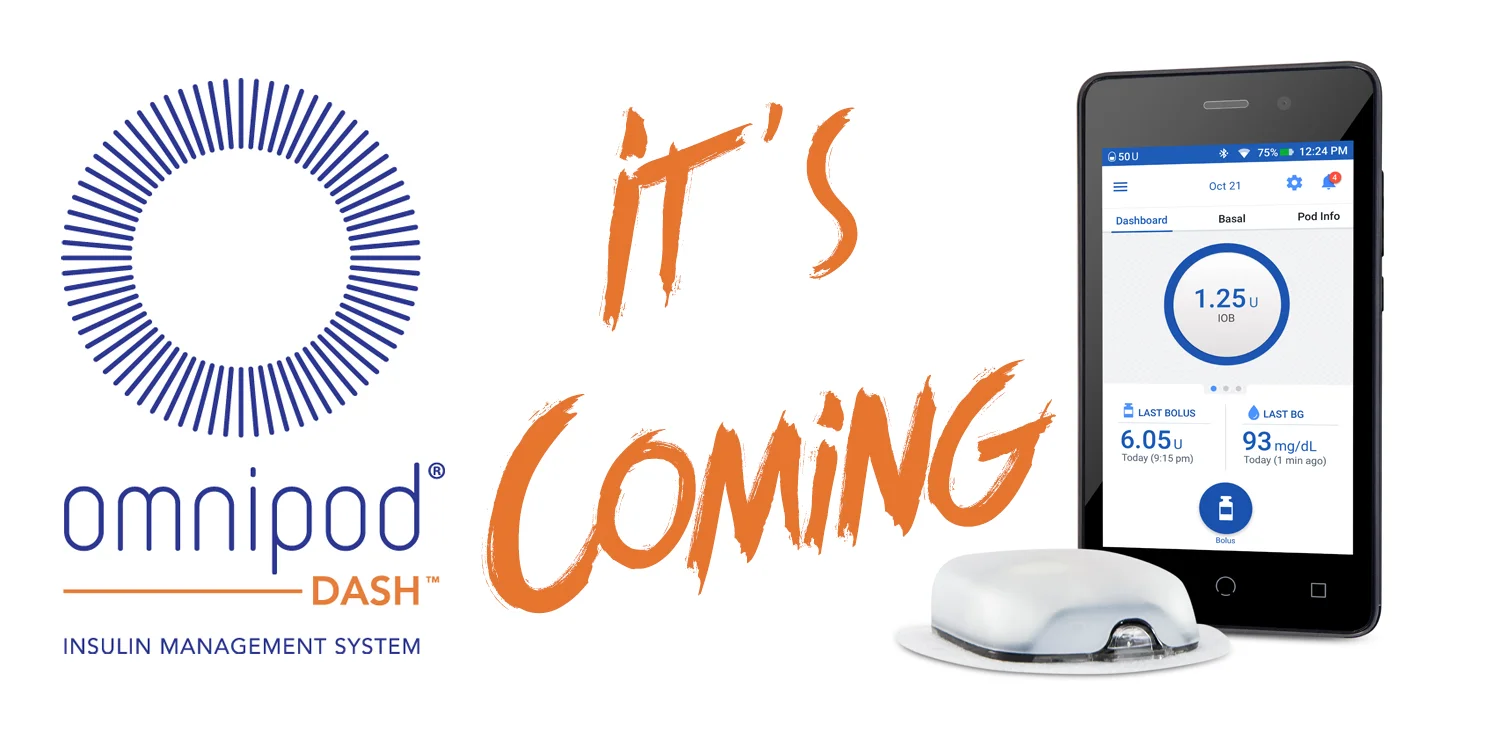
#154 Omnipod's Shacey Petrovic returns
Omnipod's COO Shacey Petrovic is back on the show....
Shacey talks about the coming release of the new Dash PDM, Horizon AP, Medicare, company growth and she answers your submitted questions. Static, adhesive, beeping and more!
You can always listen to the Juicebox Podcast here but the cool kids use: Apple Podcasts/iOS - Spotify - google play/android - iheart radio - or their favorite podcast app.
Omnipod clinical trials:
Visit: https://clinicaltrials.gov/
Search for Insulet (site locations are usually at the bottom of the study listing).
Call one of the clinical sites listed for Insulet as your best bet is to call the clinical site(s) directly.
For existing patients - Want to learn more about the Medicare Part D process and Omnipod? Get updates from the internal Medicare team: 1-877-939-4384.
+ Click for EPISODE TRANSCRIPT
DISCLAIMER: This text is the output of AI based transcribing from an audio recording. Although the transcription is largely accurate, in some cases it is incomplete or inaccurate due to inaudible passages or transcription errors and should not be treated as an authoritative record. Nothing that you read here constitutes advice medical or otherwise. Always consult with a healthcare professional before making changes to a healthcare plan.
Scott Benner 0:00
Hello and welcome to Episode 154 of the Juicebox Podcast. Today's episode is sponsored by Dexcom. To find out more about the Dexcom g five, you can go to dexcom.com Ford slash juicebox. The episode is also sponsored by Omni pod to try a free no obligation demo pod today, go to my Omni pod.com Ford slash juice box.
This is the one you've been waiting for. Shacey Petrovic is back the CEO of insolate of Omni pod of your favorite tubeless insulin pump. She's going to update us on all kinds of stuff, including the imminent release of the new dash PDM. Huge thanks to all of you who sent in questions through Facebook, Twitter, Instagram, and email really should consolidate that somehow. But you guys sent in a bunch of questions for JC and I think I got through all of them. Please remember that nothing you hear on the Juicebox Podcast should be considered advice, medical or otherwise, always consult a physician before making changes to your medical plan.
Shacey Petrovic 1:15
Hi, this is JC JC I
Scott Benner 1:17
Scott, how are you?
Shacey Petrovic 1:19
Hi, Scott. Good. How are you? Good. Thanks.
Unknown Speaker 1:20
You hear me? Okay.
Shacey Petrovic 1:21
I can Yeah. Can you hear me?
Scott Benner 1:23
I'm very good. I can hear you fine. I understand. We're both on a tight schedule today. So that's handy for both of us. Let me jump right in. So we don't waste time because I know we're going to talk about a lot. And I do just want to say one. One thing that has nothing to do what we're talking about, I think that your visits on the podcast are really being heard by people. Because not as many people are calling you Stacy online anymore.
Shacey Petrovic 1:52
That is progress. We're making progress
Unknown Speaker 1:53
here.
Shacey Petrovic 1:57
Wonderful. Well, thank you for you know, helping me correct the, the misunderstanding in the marketplace.
Scott Benner 2:03
I just noticed that recently. I was like I used to just say, Hey, I'm going to be speaking with Shacey Petrovic, remember the whole thing. And then people would say can you please ask Stacey, can you please Stacy, it's happening much less now. So definitely getting your repetition. So where should we start? How about with the new dash PDM? Can you tell me a little bit about that how the FDA submission is going and what we should expect as far as timelines and other details?
Shacey Petrovic 2:25
Yeah, I terrific. You know, we're really excited about dash. This has been a program in the works for a couple years now. And the whole idea with dashes to move to, to leveraging mobile technology in order to drive value for our customer base. So we are modernizing the PDM. And that actually, the PDM will be a locked down cell phone. So have very much the experience of a cell phone in terms of touchscreen, intuitive, modern interaction, really great user interface, a ton of work being done there. And then it also moves the system to Bluetooth communication. And so both the PDM and the pod will communicate via Bluetooth. The great thing about that is it sort of unlocks all the data from the PDM and the pod. So that we can start to really provide, you know, some benefits to our users things like apps, a secondary display app, but that we call Omni pod display on a user's mobile phone. And then also what we call Omni pod view, which is a follower viewer app for caregivers. And so all of that was submitted to the FDA in January and and also as the platform kind of for our future innovations. And so we're now working with the FDA as they progress their review, the plan would be, you know, this goes like most submissions that it would be approved sometime middle of the year, we would move into a limited market release and then move into a full market release towards the end of the year. Okay.
Scott Benner 4:00
And so that process isn't too tough, because I think we talked about it before because this Android device is it's not like you're the only ones in the world using them. They are the base, the base of it is is manufacturers are pretty much at a high rate around the world.
Shacey Petrovic 4:13
Yeah, that's right, millions of these and so that that offers huge benefits to our users. And, you know, that was the trade off that we talked about that in the context of, you know, we will not have an integrated meter in the device any longer, because we're essentially moving to a consumer electronics device. And the huge benefit of that is that, you know, millions of these are manufactured across the globe. So highly reliable, you know, very modern, very much a device that a consumer expects in terms of the experience, and then gives us a lot of flexibility because it's software based gives us a lot of flexibility in terms of how we can over time develop the user interface and really respond to user needs. The downside of course, is the fact that we don't have a meter integrated into the device. We made That choice. Because you know, more and more of our users are using CGM. And more and more of our users are dosing off their CGM. So we could sort of see where the market was going there. And ascencio was great in working with us to ensure that even though it's a separate device, it's highly integrated via Bluetooth, the experiences is seamless in terms of that data, feeding into our bowls, calculator, without any we know, just in an automated fashion. So we thought we could provide, you know, all the benefits of a consumer device and an offset with mobile technology, some of the challenges of having a separate meter, I think
Scott Benner 5:37
you walk the tightrope really well, because I mean, I'll say that there's, it's great that the meters in the Pdn, like it just there's just one less thing to fumble for. But at the same time, I completely understand everything you just said, and I understand the need to be able to move forward with more flexibility, especially because what this means is, if a smaller device comes out later, you know, or, or you guys just want to change. It's a quick, easy change. I think the one concern that I hear amongst people is if I don't have a dexcom, or I'm, or I'm not comfortable dosing from what my Dexcom says, You know, I think I think people feel abandoned, but at the same time, I don't see it that way. So yeah, you know, and I get I get that, you know, what I mean, like, but at the same time, it's not there. And I think, I think a little bit of time will prove that out for them. Because in the end, I think the Android device you're going to provide plus the the new meter is is informed smaller than the than the pay now. Right? So you're, you're carrying less stuff, it
Shacey Petrovic 6:36
just Yes, it's
Scott Benner 6:37
there's two pieces, I
Shacey Petrovic 6:38
guess. That's That's exactly right. And that's that is we did make the PDM, smaller and sleeker. And the SMC a meter itself very small and sleek. So the case and the user experience overall with Bluetooth connectivity, and the auto entry into the Bolus psyche later, very strong user experience. And so we did, we were very thoughtful about it, we recognize that people appreciate the fact that they're integrated. And this will enable us to integrate with all sorts of, you know, meters down the line. And that's the beauty of kind of also moving the data to the mobile phone is that depending on the sensor that people are using, or the generation of Dexcom sensor that the that users are using, they will have that integrated experience on their mobile phone with data and not have to worry about the integration on the hardware,
Scott Benner 7:25
I see somebody coming up really simply with a third party like small leather case that goes around the Android device and holds the meter. And I think that ends everybody's concern. Yeah, because I get being like, when something's been the same way for so long, it I mean, it was my first thought, I think I was I was somewhere with you guys. And I heard it for the first time, maybe like a year and a half ago. And I was like, Oh, God, don't do that. And then as I thought about, you know, and then as I thought about it more, I'm like, well, it only makes sense. We can't keep if you keep combining this medical device with this electronic thing. It's just, there's just going to be too many speed bumps along the way. Well,
Shacey Petrovic 8:01
it's funny, too, because when you do market research, you know, it's just funny, you're we are obviously trying to please as many people as possible with our innovations, and you talk to the existing user base that uses about 80% of our user base actually uses the integrated meter. And they like it. And then you talk to new customers, and they don't actually always like the idea of having to, you know, rely on one meter and not have that choice. And so it's just an interesting thing. As you look across people and what we we definitely see the trend that over the last few years, the BGM choices become less and less important of a factor in the decision making as people kind of get more technologies around, you know, CGM available to them.
Scott Benner 8:46
Yeah, I think that as long as people understand that, because I think Dexcom is still it's interesting how you guys get kind of paired together in people's minds, I think of that as a good thing, because I think you're the most kind of forward thinking companies in both areas. And so but at the same time, like you'll see people talk about all the time, like, hey, Mo, my Omni pod thing, show my Dexcom stuff, and I'm like, does your car show what your TV's watching? Like, like, it's, you know, like, it's an interesting, like, people melded together in the head because they use them together. But at the same time, what I'm hearing is, if I'm right, I'm going to test my blood sugar with this new meter, and Bluetooth, it's going to go right into the PDM. Anyway, so that's the information that goes right in there. If I don't need insulin, I don't actually ever have to pull the Android device out. Do I could just like if I test my blood sugar, it's 100. I just go Oh, okay. And like, put it away. And I'm done. Right? Exactly. Right. And I can see my blood sugar on my phone. I don't have to have the PDM to see my blood sugar or my insulin on board or stuff like that. Is that right?
Shacey Petrovic 9:45
That's right, as well. Yeah. So we have those two apps that I talked about. As a user you'll have Omni pod display, and Omni pod display will show virtually all of your PDM data on your phone in a secondary display app. So you You can just click on your app and it will show you last bolus, insulin on board, kind of all of the key stats that you have on your PDF. And that same information will be available in what we call our Omni pod view app. And so the view app is essentially the follower app. And that will enable caregivers to view a potter's p data remotely. And it will it's the content is pretty much the same, you know, last Bolus, and so on board dashboard, history, all of that stuff will be available on the mobile phone.
Scott Benner 10:30
Okay. And is there in your mind? Is there a path to one day the FDA saying you don't need this lockdown device will let you Bolus through your smartphone? Do you think it ever comes?
Shacey Petrovic 10:42
I do. I do. I think it comes and I don't think it's that far away. And we talked a little bit about this last time that I you know, we've been in active discussions around this. It's the number one request that we get from our customers and are yet to be customers, as people, you know, especially now as we move to a mobile device, which people love because it's discreet. I mean, it is a cell phone looking device, and it's a lockdown cell phone people. The next question intuitively is, you know, where do we go from here? And why can't I just use my cell phone? Now it's a it's a more complex issue. I think we talked about that, too, if you think about all of the use cases that you're designing for. So what happens when you're giving yourself a bolus and you get a telephone call? Or, you know, or you download some app, and it interferes with the the project or the performance of the insulin delivery app? All of those things are security questions and behavior questions that we need to answer for the FDA. And we've got a pretty significant effort underway trying to do that. That's cool.
Scott Benner 11:45
I would imagine, or the cellphone companies involved in those conversations to like Apple and Android D, do they get involved in that part of it or no,
Shacey Petrovic 11:53
they do. And you know, if you think about it, the way that the FDA works, if we wanted to try to get a phone control app out there, we would probably start with one phone or one group of phones because you you really need a deep development effort. And so you would probably do that in conjunction with a phone company. Yeah, that makes sense.
Scott Benner 12:14
Okay, so and so. But your apps that are going to come out to work in conjunction with that, hopefully, by the end of the year around, there'll be Android and Apple available
Shacey Petrovic 12:24
right away their display. And so the first ones to come will be Apple iOS, just the development pathway is a little bit faster for them. But we're already underway on the development tied to Android as well. So those will come as sort of fast followers to the iOS apps. Cool.
Scott Benner 12:39
Okay, great. Do you want to move on to Medicare? Because Because as much as I now think I understand that I still don't think I understand it. I think I understand that something great happened on the political side. Okay, she'll be back in just a second to talk about Medicare, horizon, artificial pancreas address all the questions that you guys sent to me, which are too numerous to mention here. We're also going to talk about the growth of Omni pod as far as their manufacturing goes, and globally. That's right, Australia, I asked about you. But first, let's talk about the Dexcom g five continuous glucose monitor. Actually, I think Dexcom got me back on the show Pretty soon, too. But that's neither here nor there. At the moment. I had a very interesting experience. This weekend, when I spoke at a jdrf event. I was standing in front of a roomful of people explaining concepts that we talked about here on the podcast, like being bold with insulin and Pre-Bolus, and things like that. I could tell by people's faces, how they were nodding along and the questions that they were asking that they were understanding. But then I put up graphs from ardens Dexcom. And when I started pointing and saying, Look here, I Pre-Bolus here, and this happened, the food went in here, and here's how they reacted with each other. This is how I kept her blood sugar stable at 90 during a meal full of carbs. That was the moment man did that just set off fireworks in people's heads. The data that you get back from the dexcom CGM is the key to making great decisions with your type one diabetes, it's the key to understanding how to manipulate insulin. So we're talking and then this one woman raises her hand and says, Well, what do you do while your daughter's at school? And I said the exact same thing she didn't understand. And that's when I was able to explain that Dexcom has a share and follow feature. It's available for Android or Apple phones. When that young mother found out that she could see her child's blood sugar while they were out of the house. The look on her face was absolutely heartwarming. I hope you go to dexcom.com Ford slash juice box to find out more. There are also links in your show notes and at Juicebox podcast.com. Do you want to move on to Medicare?
Shacey Petrovic 14:45
we as a company have been working for I would say three years now on four key initiatives and one is awareness around the product. You know, making sure that people know it's a choice. The second was Customer service is in no order. But customer experience, we felt like through product quality through customer support, we had an opportunity to really drive improvements there and be best in class. And the third is on innovation and you know, accelerating dash to market and the rest of the product pipeline. And then the fourth was on access. And we just really understand how important access is to all of those things to the customer experience as to whether or not we can afford to bring innovation to the market and to awareness access plays a role in all of those things. And so, for three years now, our CEOs top priority has been to get Medicare Part D and everybody in the organization has been involved. Many people across the community, including all of our customer base, we had something like Gosh, 30, or 40,000 letters that came from Omni pod users to CMS and to Congress, professional associations like Ace and endo jdrf, and other advocacy groups, just a ton of people who helped us in accomplishing this and who over the last three years have hung with us and really provided their advocacy on behalf of the community. So all of that resulted in a huge win in early January, where CMS issued guidance that clarified that Medicare Part D sponsors can now provide coverage for the pod. And by the way, not just Omni pod, but other technologies that deliver insulin into the body. So this is a broad when they clarified specifically Omni pod, but it's actually a win for multiple technologies for the community is interesting. I think it may be not intuitive to the community because we were approved under Part D, which is the drug benefit, as opposed to part B, or DMA, which is where all the other insulin pumps are approved. We sort of thought going this way. And so we're really excited about what this could mean for the customer experience. And I can talk a little bit about that. But But I think that's why the community was left thinking, Okay, do I have access today? And do I have access like I do with other insulin pumps? And the answer to both of those questions is not quite. So it's huge news, because you know, of the million and a half people that live with type one diabetes in the United States, almost a third of them, you know, have either Medicare or Medicaid coverage. And this decision gives them a pathway to access. But we've got a lot of work to do between now, and really the fall to make sure that we can get broad access to all of these individuals. So what we'll do now, so we've got this guidance. Now what our job is, is to go to, there's roughly a dozen, plan D sponsors. So these are insurance plans, and providers that basically provide care and coverage to Medicare beneficiaries, and to something like nine of them cover 80 or 90% of the 45 million patients that are covered through Medicare, we'll go to each of them, and negotiate access and pricing. So that starting in 2019, all Medicare beneficiaries will have access to ami pod. And that's the work that's already underway. Our team is off and running with that and making good progress.
Scott Benner 18:17
That process does not sound fun at all. It really doesn't. Does this make it possible for people to one day go into a pharmacy and get their Omni pods.
Shacey Petrovic 18:30
That is the goal. You know, now, CMS has clearly designated as a pharmacy product, we've got today, maybe 10, to 15% of our business going through the pharmacy channel. And what we hear from our, from our users and from their clinicians, is that the experience is just much easier. So in many cases, it's a physician writing an E prescription, you don't have the prior authorization process, you don't have the vendors involved, like you do on a DMV side. That turnaround time is typically you know, a fraction of what it is on the DMV side for a patient who's interested to actually get the product. And so the experience is much, much better both for the clinic, as well as for the user, for the patient. And so we're hopeful that we can bring those same benefits now to a broader group of our customers now that we've got this official designation, and to Medicare and Medicaid beneficiaries, but the vision is that, you know, a physician would write in a prescription, and the patient would go to the pharmacy and pick up their pods where they pick up their insulin and the rest of their supplies. And you don't have to deal with, you know, intermediaries and other more burdensome processes.
Scott Benner 19:44
Would that open up that that processing process for people who are on Medicaid or Medicare or would it just be for them?
Shacey Petrovic 19:51
Yeah. No, it would be for Medicare, Medicaid and commercial patients as we get more and more pharmacy access but the the reason why We sort of linked Medicaid and Medicare is that once you have CMS guidance for Medicare, most Medicaid plans sort of follow the lead on CMS guidance. And so our team is now going to all of these Medicare plan providers, we're also in the process of going to all the Medicaid plans and educating them on CMS guidance, and then doing that pull through at the Medicaid level as well. So we're gonna make good progress this year on both fronts, but probably the big broadening of access occurs in 2019,
Scott Benner 20:32
I can think of a company that I have to talk to frequently to get my thoughts from that I'm very excited never to speak to again, so that's great. I mean, there are,
Shacey Petrovic 20:43
you're not Yeah, you're not the first person to say that to me. And, and that's one of the things that, you know, we we have prioritized the customer experience at insolite. And so, you know, we've invested a lot in improving customer care in staffing at larger levels, and in trying to, you know, make the customer experience across the board improved. And a big piece of that is access, how do you get your products? How do you what sort of burdens Do you have to go through on a monthly or annual basis to do that, and, and pharmacy, for us, at least in the early stages has demonstrated a really improved experience there?
Scott Benner 21:18
No, I think I would completely agree with that. I also think it's nice for you to get to explain it because it feels like when you're you know, when you're at home and you see something on your mind, oh, look, they they said okay to this, that's pretty much what you hear. And then you know, it doesn't happen for a year and a half. And you think, Well, nobody cares. But there's a process in place that needs to be followed that didn't, you know, takes it takes headcount, headcount, it takes effort it takes it takes a lot, you know, to make this happen, right. Just briefly, if you go to my omnipod.com, forward slash juice box, you can get a free, no obligation demo pod. On the pod, we'll send you out a non functioning pod, but you can still adhere to yourself and see what it's like to wear it and get a real feel for the forum and the fit and the comfort. And then from there, if you're happy with it, you contact them back. And they can help you get the process going. That's it no big add my omnipod.com forward slash juice box, you can always find those links in your show notes or at Juicebox. Podcast calm. And in these notes. For this episode, there's also going to be links to clinical trials with on the pod if you want to try to get on their horizon, artificial pancreas trial. There's phone numbers, for those of you who are current customers who want to keep Medicare going, there's gonna be a lot in the show notes this week. So make sure you take a look. Alright, that's it. Back to Shea. See.
Shacey Petrovic 22:40
That's right. And we have, we sort of made those investments ahead of time. So we're already off and running, I think we've actually had discussions with every Part D plan sponsor now. So we're already in the negotiation process. We've also staffed up a hotline and a group within our customer care function to help customers go through the Part D exception process. And so Natalie can provide that information to you if you wanted to put it in your call notes or whatever makes sense. But for people who this year are going to age off into Medicare, we should be able to get them continuity of care while we work through, you know, getting established coverage and access on all these plan sponsors. And for new patients that are coming on that are 65 with the anticipation of this changing in 19, we should also be able to help them so we've got a team of people that are simply just walking those types of people through the exception process and, and we've had good success with that so far,
Scott Benner 23:36
that just honestly gave me chills. That's really exciting that you guys are gonna put the effort into doing that. Thank you. That's, that's really cool. Okay, so speaking of what it takes to ramp up to do more. I joke about this every time you're on there was a moment a number of years ago where I started thinking like, oh, on the pods just gonna go away. And then a whole new group of people came in. And now I think, Wow, they are on fire. Yeah, you so not only are you building a new facility, in mass, but you're expanding in the rest of the world. I'm in Europe, and I'm hoping other places because when we get to our questions at the end from from listeners, there are a lot of people asking from the past, not just in America,
Shacey Petrovic 24:20
I noticed that you so you have a global audience. Scott, fantastic.
Scott Benner 24:23
I have to tell you that some days I look at the map and I think why are people listening there? I don't speak that language. Close. But yeah, it's it is really, the internet is it's everywhere, as you know, JC so it works. It works pretty quickly. But it's um, so when I started hearing back, you know, Canadians, I'm always used to Canadians being like, please stop forgetting us, but because that's I think how they feel. But now, you know, I guess growth is, is good because more people around the world are talking about on the pod. So what are you doing internationally right now and and what's the timelines for that?
Shacey Petrovic 24:57
Well, it's fantastic. You know, we Just a note, we annually we update for the for the investment community, our user base, and we just announced that we finished 2017 between 140 and 145,000 active users, that's a 30% year over year increase in the installed base. So just tremendous growth, which is why we're making these investments in US manufacturing and in the international expansion. Actually, Canada was our first step into becoming a global company. So just about two years ago, now, we acquired the distribution back from GSK in the Canadian market, and then has been hugely successful for us. And we've seen tremendous growth there. We've built a really strong team there, the customer satisfaction scores are very high. And it's just been a tremendous win for us. And so that's when we started to think about, you know, that was successful was a bit of a pilot, and how do we really establish the global footprint that we want to how do we not depend on distributors to deliver the customer experience deliver innovation to the market and determine when and how we enter into new markets. And so we made the decision now almost a year ago, to go direct in our European markets. And so that will happen on July 1 of this year, we're transitioning our European customers to, to insolate from the existing distributor who has said, this is actually a big undertaking, because there's anticipated to be somewhere between 50 and 60,000 customers that we'll be transitioning from if cement to insolate. We've had people on the ground now for quite a while we've got a growing team there, we've got our European headquarters established. And we now have entities across the market in all the markets in which we compete. So really exciting progress. Last week, we were in Vienna, I guess, a week before last in Vienna for attd, which was our first time exhibiting at a European conference as insolate, as opposed to as you know, as IP summit. And so really making great progress there July 1, we will have actually, at that time, were estimated to have somewhere around 65,000 users, and they will become the pod insolate customers. And so really, really excited about that what that does. One is turned us into a global company, by the end of 18, I think, you know, we'll be virtually half and half in terms of how many customers exist internationally versus how many customers exist in the US. And so a lot of our time and energy in intellect is spent on, you know, how do we really make sure that we've got innovation plans that contemplate the global market needs? How do we make sure that we're setting up for success across access, awareness, etc, depending on the unique market needs of these international markets, across Europe, Canada, and other markets. And then the great thing about this is it the term it also allows us to enter into new markets when, when we want to. And so there are a ton of markets, like you mentioned Australia, that are that we know want the pod and we haven't been able to move forward in those markets because of our relationship with ups met. So this now unlocks our capability and doing that as well. And we're looking very hard at new markets in Australia, New Zealand, looking at new markets across Europe, I think, you know, candidly, I think that's going to be a 19 event. Or maybe sometime towards the end of 18. Because we've just got a lot of work to do to make sure that we transition this business successfully and ensure continuity of care for all of the fast growing European markets. And then we'll start to get to work on new market entries
Scott Benner 28:51
where again, you're moving quickly because you had to dissolve that relationship with Epson med to even make these moves. So yeah, and that didn't happen that long ago. So that I think it's good. So Australia, it's got a hold on a little longer and a little longer. Yeah, listen. Here's what I just learned from what you told me about these numbers. I don't charge enough for the ads on the podcast. That's what I just figured out. I didn't hear the rest of it. Jc but I heard that so
Unknown Speaker 29:20
you like it?
Scott Benner 29:22
Well, that is really I mean, that is genuine saying you sent one of my favorite British people out of the country. And and he's now in England working hard on Yeah, Don's gone.
Shacey Petrovic 29:32
Yeah. If you know he had his first child in in the UK, actually.
Scott Benner 29:37
So your business model changed his kids national citizenship was
Shacey Petrovic 29:47
truly global now.
Scott Benner 29:50
Just trying to build a employee around the world. That's excellent. No one knows down but trust me, Dom saved me one time at a dinner meeting. When was being myself and the other people were like, I don't get why we're involved with this guy. And Don was like, I think he's funny. And I was like, thank God.
Unknown Speaker 30:10
That's excellent.
Scott Benner 30:12
So yeah, let's see, I want to, I want to talk a little bit about, about what you guys are doing. Because, you know, people don't, companies don't often build their own merchandise. And so, to me, it sounds like an incredible confidence on the company's part, to build a manufacturing facility, and you're gonna fold your headquarters and like this is all going to happen in one place at some point. Is that is that really the whole thing's gonna be together? That's right.
Shacey Petrovic 30:38
Yeah. And in fact, you know, so it is, it's a massive investment, you're right. And it's a certainly a signal to how confident we are, we're investing probably close to $200 million in Acton in create, you know, acquisition of the site, and all of the building and customization of the site. And then in the automated, there's, this is really amazing the innovation and highly automated manufacturing equipment that we are building, we've got some of the, you know, just tremendously talented automation engineers that are working with our partner, to create all that equipment. And I think, you know, we say, as a company, I said, you know, four things were important to us access awareness, customer experience, and innovation. If customer experience and innovation are truly important to us, then we need to manufacture our own products. And we need to have manufacturing close to r&d, because we're going to be launching a new product every year for the next five years. And you have to get great at technology transfer, process transfer, and the link between manufacturing and innovation. And so all those things led us to say, Hey, we really want to invest in the United States, we're close by and we want to be able to manufacture our own products, this will enable us to, you know, have automation around QC, will enable us to have an innovation line so that we can get really good at transferring innovations from r&d to the facility. And we're doing all of this enact in manufacture in Acton, Massachusetts. So that's where our new plant will be, it's about and, gosh, maybe 15 miles from where we are today. And the facility is enormous, and really is being designed for our needs. And so we'll have a lot of flexibility for growth on the manufacturing side. And we'll be moving all of our functions over there between now and really the beginning of 2019. And we plan to be up and running in manufacturing at the beginning of 19. And we're on track. To do that, it's it's a really exciting move. For us, it's, I don't think there's a lot of companies, frankly, a lot of US companies that are creating manufacturing jobs in the United States. So it's really exciting to be able to make that investment and create jobs right here in Massachusetts. But I think it's even more exciting what this could mean for our ability to deliver innovation to the market more quickly. And what it can mean in terms of the customer experience, because of the quality and reliability and cost of the product out of our US plants.
Scott Benner 33:16
It just makes sense. I mean, if your r&d has an idea about I don't know anything, changing the form factor of the pot, or anything that happens on the inside of it, you taking out a full step of having to go then to the people who tool those machines and make the products and I just sounds like it's obviously more efficient. I'm also thinking on the business side did Acton offered to rename the town insolate when you decided to?
Shacey Petrovic 33:39
I gotta tell you, they were so supportive, I mean, really act in Massachusetts governor, Governor Baker, Charlie Baker, and his life sciences commission. And they just were terrific in terms of helping us find the location in terms of making sure that we had the right structure and incentives in place to make that investment. And the town could not be more welcoming. I mean, even my husband and I have been out to dinner a couple times and act and more people find out that we work for insolate and they come over bring free appetizers or free desserts. I mean, it's just that people are really excited. Yeah. And I think it's, it's, it's a great story, because, you know, they're excited, obviously, for the jobs and the investment, but they're also excited to be associated with the story of insulin and the fact that we actually make a difference in people's lives that we're, we're working to ease the burden associated with this disease. Everybody knows of diabetes, you know, they may not know the specifics, but usually their life is touched by diabetes, so to have kind of that kind of story and that kind of mission in their backyard and people are really excited about it. So it's been just a ton of fun getting to know the town and and, you know, watching our facility go up before our very eyes. I just toured it a couple of weeks ago, and it's really coming together nicely.
Scott Benner 34:53
We're doing a nice conference room and we'll bring the podcasts out there. Do it live for the people in Boston. Yeah,
Shacey Petrovic 34:58
we'll have you know, you have To cut because we're going to have to the manufacturing a walk around hallway with visibility to all manufacturing. So you'll have to come and see the pods coming off the line, once we're up and running in just actually about six months.
Scott Benner 35:13
Exactly. I just got a note today from someone who said, How can we not speaking in Boston this year? And I said, Well, I I don't I don't nobody invited me. And, and but I said that because I'm doing a number of other places. And I always talk to Natalie, I'm like, we should just do it. Like, you know, there's plenty of people to come that want to come out and talk. So it'd be a great way to bring people from the community around to see to see the manufacturing through it. But nevertheless, that's, that's down the road. So you have, I'm going to admit to not understanding your pipeline correctly. Okay, because it came out on a on a chart. A couple of I feel like it's been a while now. And I looked at it and back then I didn't understand the difference between dash and horizon. So I was confused there. And then there was other things happening. But I'd like you to sort of lay out how you think the the timeline of your, of your pipeline looks at the moment.
Shacey Petrovic 36:04
Yeah, fair. Yeah. So first to market obviously, this year will be dash. And that will launch sometime in a limited market release sometime in June or July, it really that's pending FDA clearance, and then go into full market release six months following that, then the next product to market will be Omni pod eu 500. And that's bound to hit the market sometime in 19. And that's our partnership with Lilly to get their concentrated you 500 approved out of Omni pod. And that will be based on the dash platform. So all the benefits that you get with dash plus a very a user interface that's been very much tailored to the 500 user. And the ability to use that concentrate insulin out of the vibes are out of the pod. So that will happen in that in 19, in sometime in 1920, will also come horizon. So I'll set that aside, because I'll talk a little bit more about that. And then 2020 will be u 200. And u 200. Is, is twice the concentration. So you 500 is five times the concentration of you 100. And you 200 is twice the concentration. Both of those products also have very unique, very cool user interfaces that have been designed specifically for you know, a type two user, and in the case of you 500, a you 500 user. So you know, there's just different language used among those user groups, for example, insulin on board, insulin carb ratios, those are terms that are not necessarily widely used or understood among the average type two insulin dependent patient. And so we have worked to kind of simplify the user interface, and to use terminology and workflows that kind of fit, you know, the needs of that that segment. And so that comes in 1920. I'm really excited because you know, in the United States,
Scott Benner 38:02
that's not many people, it just not be present, because you've done it twice. And you're starting to confuse me It's 1920 was a while ago, it's 2020. Okay.
Shacey Petrovic 38:16
2019 or 2020? Yes, 2019 is at you 500. And then 2020 is, is u 200. And those two products basically will help us meet the needs of people who live with type two insulin dependent diabetes, they typically require higher volumes of insulin and daily doses. So rather than make the pod bigger, or the reservoir bigger, to give them more insulin, we have concentrated the influence so that we can keep the form factor and actually still meet their needs with a three day pot change. So that's, that's what comes in 19th 2019. And 2020,
Scott Benner 38:53
we ask a question about that. Do you see any type ones taking advantage of that? Because I'm of the mindset that I would just rather change the pot more frequently. But, but some people aren't. Do you see some people using it for type one, and
Shacey Petrovic 39:07
like, ideally, particularly, you 200 to 500, just kind of unique dissidence on set to action. And it's actually one of Lilly's fastest growing molecules, but it's a smaller, more niche, you know, user group that uses you 500, you 200 has a very similar set of action, and I think will be used by people living with both type one and type two, insulin dependent diabetes. And so I think that you may see that and, and so that's actually why the user interfaces are slightly different. So the 500 user interface is really designed, really with just the type two user in mind. The U 200. user interface is designed for both type one and type two. So there's a slight difference there in terms of how the user interface is presented. So we do think that that product will be used by both patients, both patient groups. So
Scott Benner 39:58
I have one quick question before we get to the listener questions. So you talked about a 30% increase this year in users? Do you have a forecast for next year that you can share? Or is it not public,
Shacey Petrovic 40:10
yet we Yeah, we forecasted a 20% increase in users this year. The difference there, the reason why it's a slightly less, although still really incredible growth is because in Europe, our focus is on transitioning the base as opposed to growing it. So what we're forecasting is that our European customer base will remain relatively flat, revenue goes up, because we're going direct there. But we're just focused entirely on transitioning those existing customers, as opposed to growing in 2018. And then the US will continue to grow, actually, growth accelerates, according to our forecast in 2018 versus 2017. It really just did another terrifically, you know, exciting year for us ahead of us in 2018.
Scott Benner 40:57
What's the most important pathway to growth? Is it? Is it relationships with insurance? Or is it people understanding what the product is? Do you think one's more important than the other? Are they equally?
Shacey Petrovic 41:08
I think they're so intertwined. It's hard to separate them, you know, access to me is it for medical devices is just foundational for, it's foundational for awareness. It's foundational for customer experience. And, you know, it's foundational for cost. And that's part of the customer experience. And so it's why it's been such a huge focus of ours. And it's certainly as we've expanded access, just we've established stronger commercial access, we've established, you know, more Medicaid access, and now we're about to establish really broad Medicare and Medicaid access, I think that is going to help us accelerate significantly. So I think that's huge. And then awareness, we must be crossing a tipping point now in awareness, it's probably because of the Juicebox Podcast, but I keep doing. I do I do think we're at a sort of inflection point for awareness. You know, I was, I can't remember his time, but it was in Nashville for a weekend and I went down to get coffee at the lobby of the hotel, and I was wearing a pretty nondescript black fleece with an omni pod logo on it. And the guy giving me my coffee, he said, Are you a potter? And I said, No, I mean, I worked. And he said, he was a potter, he was so excited about it, he bought my coffee for me, he was just like, it's the best thing ever, you know. And so it just those experiences didn't happen when I first started here at infrared. And now it just seems like, you know, I regularly run into people who are familiar with or actually using Omni pod, which is, is great to see, because that just, you know, sort of compounds on itself once you really hit a certain threshold. Okay.
Scott Benner 42:54
All right. So I'm gonna hit you fast with these these listener questions, because we're down to 20 minutes. All right, we can do it. Okay. I think we've already for dash, we've already covered the launch time, the US limited role in June, hopefully everything by the end of the year 2018. We talked a lot about the apps that will that will work on the user's phones and on caregivers phone. So I think we understand that pretty well. Again, like I said, a lot of people that are trying these things, when they're asking questions, will my dash information, be able to show my Dexcom information. So can I see Dexcom on dash or Dexcom on an app,
Shacey Petrovic 43:32
but you will be able to see you'll have integrated viewing of Dexcom data and Omnipod data via your mobile phone. So we actually made a conscious decision not to do hardware integration, because of what we saw in the market. You know, people were pumped companies were not keeping up with sensor innovation. So you know, you sometimes your pump wouldn't, wouldn't match up with your current gen g five sensor, for example. And we also see in market research that our users oftentimes will go back and forth between different types of sensors or bgms, and sensors. And so we made the conscious decision to go to the mobile phone with our data, so that you could integrate with whatever sensor you're using and integrate with whatever fitness data and other apps that you're using to help manage your your diabetes and your your decisions around blood glucose. So what that means immediately with dash is that if you have an iPhone, you'll be able to have your two widgets right next to each other. So you'll have a Dexcom widget, and you'll have an Omnipod widget right on your phone. So you just, you know, click on your phone, you don't actually even have to go into an app and you'll have your data available and visible right next to each other. And then as we get further along in the development with other sensors, etc. and an even more integrated viewing with Dexcom in terms of data overload, that's all goals for us. But when the product launches, you'll have that type of integration on your mobile phone, so not on the device. But on your mobile phone vertical
Scott Benner 45:02
and insulin on board is visible in the view app. We said yes to that. So that's good. Android we understand will come after apple. But you did you learn from dex coms trip up. So you think you can make it happen faster than they did?
Shacey Petrovic 45:18
I think we can make it happen faster. Yes. In fact that Natalie should be able to follow up with you, we probably even have some sort of forecasts on that. I just don't know it off the top of my head. Okay, so
Scott Benner 45:28
here comes the next question. Once you whenever you say you're going to transfer from one device to another one, something I've paid for already, and you want to give me another one, I saw the question so often, you know, what's the pathway to obtain a new PDM? Or is it is it gonna cost me any money? You know, if I really need one, meaning minds on last legs, or I'm out of warranty, do I get any kind of you know, do I get bumped to the front of the line? How about that kind of stuff? Hey, I just wanted to jump in here and say, if you're new to the podcast, and you just came into here from JC today, where you don't listen every week, but you come in every once in a while, please consider subscribing and trying out some more the episodes, I think you would find a lot of great information. That might be, you know, pretty helpful in your living your day to day life with Type One Diabetes, hearing people's stories, hearing about management ideas, it's good stuff. Let's say this too. We're 45 minutes in, we've got about 15 more minutes to go. If you're excited about what you're hearing from JC about where on the plot is going, please visit my omnipod.com Ford slash juicebox. To try their free no obligation demo pod Get started today was on the pod
what's the pathway to obtain a new PDM.
Shacey Petrovic 46:55
So there will be a pathway for everybody to obtain the new system. And and we're very committed to making that pathway totally accessible. So I wish I could give you more insight than that. But at this point, I can't yet. But as the product launches, it'll become abundantly clear. And our goal is really to have everybody have access to the to the PDM. And if you paid for your existing PDM, we certainly don't want you to have to pay twice, or pay more or anything like that. So we're working on all of those pathways. And as we launch maybe as we get closer to launch, it would make sense for for us to be back on this show really talking about, you know those opportunities, but we fully understand this is a concern, you know, for our customers, and we're going to do the right thing.
Scott Benner 47:42
There you go. I think I know one of the things you guys are hoping to do. And I wish I could say it out loud, but it's very cool.
Shacey Petrovic 47:49
So as we get closer, we'll be shouting it from the rooftops. Hopefully, this podcast,
Scott Benner 47:53
let's see, will new pods be required? So if you have the new PDM, will I need? Like, the question really is I have a stockpile of pods at my house. Are they gonna work? Yeah.
Shacey Petrovic 48:03
And they won't, because either current communication is radio frequency, proprietary radio frequency communication, and this will move to Bluetooth. So there's actually Bluetooth going into the pod as well as the PDM. And so you won't be able to use your new PDM with your old pods and vice versa. Okay, so
Scott Benner 48:21
everybody who's got a zombie apocalypse pile of pods somewhere start using them up and saving are available. I think we're going over why there's no big meter in the PDM. There was a question about when you get under 50 units, why it only says 50 units. And so does the new PDM have the ability to show more specific measurements
Shacey Petrovic 48:47
medium. So as it relates to remaining insulin, it will operate the same way as the current system. So it still will go down to sort of thresholds like 50 plus and 50. Less it won't get more specific than that. I you know, I'm I don't know, Scott, frankly, off the top of my head why that decision was made. But I can certainly look into it.
Scott Benner 49:10
It's got to be something to do with the technology it takes to
Shacey Petrovic 49:12
make measurements. That would be my guess to I don't know, what the technical feasibility is, and and probably some concern over specific accuracy what you know, wanting to make sure that whatever information we're providing is absolutely accurate. And
Scott Benner 49:25
when it says I'm under 30 miles. Let's see. So is there any way to authorize data shares with healthcare provider? New PDO
Shacey Petrovic 49:36
actually, users can do that today through insolate provided gluco. So today, if you use gluco, which we provide to Omni pod users, you can authorize your clinic or your clinician or your physician to see that data. But you'll be able to do that with dash two. So our view app will enable you to share your data with up to five other people so caregivers, school nurses, clinicians, whoever you decide that those five people are. So you'll, you will definitely be able to do that via dash and the Omni pod view app. But you can actually do that today with gluco.
Scott Benner 50:12
For all the people who are hanging on to the things that they love most wins the Is there a drop dead when your PDM your old PDM stops working that there won't be another old PDM replace, like if I don't want the dash, which wasn't a lot of questions, but it was asked a couple of times. So if I don't want the dash, how long am I going to be able to make do with the one I have until
Shacey Petrovic 50:34
you just don't, we don't have plans right now to obsolete the existing platform. So we're not going to force everybody to convert quickly to dash. That said all of the market research would indicate that I think everybody's going to want to convert to dash when they become familiar with the technology and all of its benefits. So we'll see how that goes. But we don't have plans right now to force the conversion at all.
Scott Benner 50:56
Okay, and I can't even remember if we said this. So I'm just gonna ask again, timelines, when does the PDM happen in Canada.
Shacey Petrovic 51:04
So we're looking at we're underway now. So we'll we'll once we get FDA approval, we'll reference that approval for Health Canada. And there's a small bit of development work that needs to happen around millimoles. So you know, they use a different unit of measure in Canada. And so all of those things are kind of underway. But once we get FDA approval will then submit for Health Canada clearance, I'm sorry, FDA clearance will then submit for Health Canada, clearance, and then roll out our distribution plan from there. So sometime probably in early 19, would be my guess.
Scott Benner 51:37
And then the thing we talked about earlier for Australia, you're not going to show up in Australia with all PDM. So they'll when you get that going, that'll be all that'll start with ash, I imagine.
Shacey Petrovic 51:47
You know, I'm not sure about that, because the original registration in Australia was tied to the original platform. So we're evaluating what it would take to update it or launch and then convert at some point. And there's a there's a really growing demand there. So we want to do whatever route to market is going to happen faster. And as you might know, you know, our medical director, Dr. Trang ally is Australia. And she literally asked me about this on a weekly basis, even from her maternity leave. So we're very eager to get this done. She gets personal emails all of us get, you know, patient outreach and community outreach from Australia. And so we want to get there as quickly as we can, that might be with the current platform, and then we'd have to make a plan to convert to the to the new one.
Scott Benner 52:31
I have a contingent of Australian listeners, who are they, they are persistent. So we talked earlier about the reasons why you wouldn't integrate Dexcom with the device like and I think that that's a leftover idea from years and years ago, where that was the how people were thinking about, like, these things are all just going to be together one day. And yeah, and it's just what you said, just made a lot of sense to me. Because if you start combining things, then there's going to be countless iterations of your product, which makes it I think, impossible to service. And then I just think that keeping them the way you described, keeping them apart makes a lot of sense to me.
Shacey Petrovic 53:14
But we want, we want our users to be able to use whatever sensor they want to use, right. And so that could be a G five, it could be a G four g six, when it comes whatever they're currently using. And by doing software integration on your mobile phone that ensures that you can use whatever sensor whatever generation of sensor at whatever period of time that you want. So that's how we were thinking about it. That said, our horizon program is very much a fully integrated product, because we're going to be dosing off of it. It's a complete system. And so that is a completely integrated system. And I don't know if we touched on that in the development pipeline, but that's forecasted right now for the end of 19, early 20s. We're gonna try
Scott Benner 53:55
to save in that for the end JC I want people to listen through.
Shacey Petrovic 53:58
Okay, we'll come back to that.
Scott Benner 54:00
Someone I wish I had the person's name asked this question, because as soon as I saw this question, I thought, Oh, I have thought this so many times. And I already know how you're going to answer it. So it's a little defeating to ask, but I want to say it anyway. I set up a temp, an extended bolus, let's say I say I'm gonna do 10 units 40% now and the rest over an hour, and 25 minutes into my extended bolus, I realized I need all this insulin right now at the moment, I have to cancel the extended bolus, look on the screen, see how much delivered then do the math and then create a new Bolus a lot. This one person I wish I knew their name said Why can't I just choose between cancel and cancel and deliver? And I thought, wow, that's genius. But you can't do that. So tell me why.
Shacey Petrovic 54:44
Well, it's a great You're right. Wait, we didn't do it. I don't know what the technical hurdles are. And I'm embarrassed to say that this is the first time I've heard that feedback because it does make total sense to me. I understand what you're asking. But I know that dash will operate similar Our current system in this way, the two things I will say though, is number one, we've made every function a lot easier in dash. So everything creating a new Bolus, you know, cancelling an extended Bolus, etc. All of that takes a lot less time and a lot less taps. So that process should be easier. And we did add, I know, that's key, that request was key for pediatric population. And we did add two new features to dash specifically for our pediatric population. And the first is zero bazel. And then the other is I see ratios down to one and a 10th. And so I think, though, you know, we did try to add functionality where we could specifically for the pediatric patient population, I'll put that one on the list and see if there's something that we can do about it for future generations.
Scott Benner 55:46
And for people who don't want concentrated insulin, is there any way to Is there any way to make the Omni pod smaller, but make it hold more insulin JC?
Unknown Speaker 55:57
Magic,
Shacey Petrovic 55:58
I can wave a magic wand. Exactly. I would love to I mean, I think first of all, say that, you know, there's always ongoing effort looking at optimizing the size of the pod, we know that people would want that to be, you know, a band aid or whatever, you know, whatever is very small, and, if possible. And so there's a ton of technology, though, in that little pod. And right now, we feel like the space is very optimized. And we'll continue to, you know, to work on making the footprint smaller, etc. But, but really, there was no way to make the reservoir bigger and make the pod smaller, which is why we went concentrate insolence, because we said, well, at least we can keep the same form factor that we know everybody loves. And we can give them effectively more insulin, and just by concentrating it. And so that's where we went. But I will say that we're always looking at how could we make the pod smaller over time. But making the pod smaller and making the reservoir bigger, that's a real challenge.
Scott Benner 56:58
I thought this morning, as I did my daughter's pod change, by the way, in 30 seconds before she ran out the door for school was I wish people could see how easy it is once you really know how to do it. But as I stuck it on her, I really thought I was thinking about our conversation come up in a couple hours. And I thought it is spectacular how much is inside of this thing? And yet, and yet, as a human being when I look at it, I think why can't Why can't like you know, it's it's sometimes you have to remember what you have is pretty good. I guess so?
Shacey Petrovic 57:25
Yeah. Well, and you know, we do things like the drive mechanism for the auto insertion, you know, that that takes up space. And so the trade off would be, you know, manual insertion to maybe reduce the space, but we know that all of our users love auto insertion. So those are the trade offs that we're always contemplating. As we think about next future generations of you know, what the pod could look like and what the pod could be. I'll give you
Scott Benner 57:48
an easy one for your RND to talk about the clicking that happens before the auto insertion. I bet people would love it. If that didn't happen. I don't know if that's possible. I'm assuming that the there's something ramping up inside of it. But I see Yeah, in my daughter's been using it for years and years and years. And she still can't stop herself from counting the collects. So it doesn't always insert at the same amount of clicks. So when it goes in on the one she doesn't expect, she says words you wouldn't expect a 13 year old to say just because because it surprises her. Okay, you know, it's always going to be a big question. I guess that there are I guess most of your users, I'm assuming don't have issues with the adhesive, but the ones who do with any medical device, have it? Do you? Are you working on hypoallergenic versions of the adhesive?
Shacey Petrovic 58:32
Yeah, that's the other thing that we're always working on that, you know, the adhesive is medical grade adhesive. It's always an ongoing battle, though. Because if you look at, you know, we evaluate all of our global complaint rates, and then always look to have various lifecycle engineering efforts to help address any of those and help make sure that we're always driving improvement in performance. And the thing with adhesive is that complaint rates are virtually the same for it's not sticky enough and or sensitivity. They're both very low. But I don't want to discount it because I know it's it's not a good user experience when it occurs. And that's what any any device that's on body that's a wearable with adhesive is battling, can you make it sticky enough? And yet Can you not cause issues for people with sensitive skin and there's there's a small group of people that are always going to have sensitivity towards towards adhesives. And so that's that's what we're balancing always. And there's there's an ongoing lifecycle engineering effort looking at how do you optimize it? He says, we've been underway on that and made some good improvements actually tied to irritation and making sure that we reduce that down. But I think we'll look continue that effort for a long time. I'll
Scott Benner 59:47
tell you that. And I'll just mention this here on the front of my blog is a blog post that I did not write. It's written by a mother of a child who has an incredible reaction to an adhesive and she figured it out. It's it's an interesting process but everyone who refers to that blog post loves it, I'll put a link in the show notes to it. It's you know,
Shacey Petrovic 1:00:07
I've seen it fat, but I will definitely look at it and send it to our r&d group.
Scott Benner 1:00:11
Yeah, it's really interesting. Um, let's see. Okay. What are you guys doing? Do you work on static, which, you know, every when it gets super dry, some people have their on the pods, you know, I guess error, and we call it static. The biggest the best fix I've ever heard is duct tape, which is weird. So can you just put a piece of duct tape on the inside of the pod we get done? Or how does that work?
Shacey Petrovic 1:00:38
I don't want to oversell, we don't have any data, we don't have any confirmed data on the effectiveness of duct tape. But we have had significant research and development effort focus here. And in fact, this season, we tested some a solution that that had really good results. We tested it in limited fashion. But I'm optimistic that next season, we're going to see a different performance as it relates to ESD. You know, as you said, this, this only hits us during cold, dry months. So typically, it starts to ramp up in December and then starts to ramp down in February, as around kind of the back end of the season. But I think I think we've made some really good progress there. And I think our team actually is on the forefront of understanding ESD and wearable devices. And we've just developed a tremendous amount of expertise here. So I think we've, I think we've nailed it. But but we'll see for sure. next season. Yeah. And she said you have to go to a board meeting and like two minutes. So I have two other questions that I will get answers for and read into the podcast. So let me just like end with as much as you can say, in 90 seconds about horizon and where it's at and what we should expect timewise Yeah, great. So horizon, our program is going really, really well. We're now in our third ID or investigative device exemption study. And that's about 120 125 patients studied now all the way down to age two. And our algorithm has performed very well been very safe during day and night in adults, adolescents, pediatrics. And we've had studies looking at it from 36 hours to in kind of more controlled clinical study clinical environments, all the way through to kind of free living conditions in a hotel. We've had a terrific time and range up to 85% in time and range and less than 2% of hypoglycemia. So really, you know, as good as it gets in terms of these early studies of these programs. And we are really excited about getting this one to market forecasting sometime in the late 2019, early 2020 timeframe,
Scott Benner 1:02:48
is the goal to be able to set a user defined blood sugar goal.
Shacey Petrovic 1:02:52
Yes, yes, we will have multiple flexible set points so that you're not sort of limited as you are in some of the current system here. Go tell
Scott Benner 1:03:01
the board you were doing the Juicebox Podcast, I'm sure they'll understand.
Unknown Speaker 1:03:06
I think they will tell him to get out their phones and
Scott Benner 1:03:07
subscribe.
Shacey Petrovic 1:03:09
It's great to talk to you.
Scott Benner 1:03:11
Take care, go ahead and run. Thanks. Hey, hey, I have a few things to say. But after that, there were a couple of your questions that JC and I didn't have time to get to. So I'll address them right after this. huge thank you to JC and on the pod for sponsoring the podcast and to Dexcom for also sponsoring. If you're just here today to find out more about on the pod. I hope you stick around try some other episodes. There are about a bazillion ways to listen to the Juicebox Podcast. Sure you can listen to Juicebox podcast.com. But it is so much easier to listen on your phone Apple or Android phone doesn't matter which one. Let me just tell you a couple of the ways that people listen through iTunes. That's not great because you got to be sitting at your desk. But if you're a desk, not bad Apple users, there's a podcast app on your phone called podcasts. If you don't like that one, there's about a bazillion others. Let me tell you some of the ways that people listen. Pocket cast podcast that castbox I Heart Radio downcast player Fm stagefright pod bean Spotify breaker Castro, some of you listen at Google Play Music, Stitcher eye catcher. There's more echo antenna pod pod kicker pod kicker Pro. Some of you are even streaming it three of VLC people are listening all different kinds ways through QuickTime who's listening through QuickTime. Get yourself a podcast app on your phone. If you're listening through QuickTime. Let me go on and take a minute to thank everyone for listening. Not only are their listeners in the United States and Canada, you are listening in Brazil, Argentina, Peru, Colombia, South Africa, Morocco, Egypt, Saudi Arabia, Yemen, where else Iraq, Turkey, France, Spain, United Kingdom, Ireland, Germany. Poland, Norway, Sweden, Russia, Kazakhstan, who is listening Kazakh Stan, what's up guys it's now China, India, Pakistan, Australia, Indonesia, New Zealand, Japan and South Korea. Seriously, thank you all for listening and for sharing the Juicebox Podcast. I hope you enjoyed this episode with JC I hope you give it on the potter. I hope you give Dexcom a try. But I want to thank you for giving the Juicebox Podcast a try. I saw firsthand this week like I talked about back in the Dexcom ad, I saw firsthand what it must be like for you to listen to the show. I saw that in person. And I am more motivated than ever to keep this podcast going. And now the questions we didn't have time to get to. The first question I wasn't able to get to is about applying for clinical trials with Omni pod. I've put the instructions for that in the show notes of your podcast player. And if for some reason you use one of the apps that is funky With shownotes you can go to Juicebox podcast.com. Find this episode. It is Episode 154. And the information will be there also. The next question was about beeping on the pod. So for instance, you put on a new pod and it reminds you I think it's two hours later that you've put on a new pod that has a safety feature that the FDA requires. Why can't you silence it without the PDM? Interestingly enough, ami pod did tell me that at one point they thought to build that functionality into the pod like you could tap the pod to stop the beeping. But it was a cost prohibitive idea to add something to the pod that could register a tap. The shorter answer is that the Omni pod tubeless insulin pump has moments where it tells you to pay attention to the fact that you're wearing an insulin pump. This is FDA required. One of those times is for instance after a pod change. Also for hazard alarms like occlusions low reservoir or an expiring pot, the FDA thinks and frankly I agree that there are times when you have to be reminded that you're wearing an insulin pump. Those that I just listed are are great examples. In the end, you can't as a user decide that you don't want those alarms you can on some pumps but on those pumps remember you are tethered to the pump so the pump is always with you with an omni pod. You might put on a new pump in your kitchen and then go outside in your backyard for three hours. You just don't want to not be getting insulin and not know it. And there are some times when your attention needs to be drawn back round you're busy listening. Here is the only pot is so good at helping you to forget that you have type one diabetes, sometimes it has to remind you


The Juicebox Podcast is a free show, but if you'd like to support the podcast directly, you can make a gift here. Recent donations were used to pay for podcast hosting fees. Thank you to all who have sent 5, 10 and 20 dollars!
#153 Beyond DKA Awareness
Sarah Lucas from Beyond Type 1 tells us about their expansive DKA (diabetic ketoacidosis) awareness campaign. ....
You can also listen to the Juicebox Podcast on: Apple Podcasts/iOS - Spotify - google play/android - iheart radio - or your favorite podcast app.
+ Click for EPISODE TRANSCRIPT
DISCLAIMER: This text is the output of AI based transcribing from an audio recording. Although the transcription is largely accurate, in some cases it is incomplete or inaccurate due to inaudible passages or transcription errors and should not be treated as an authoritative record. Nothing that you read here constitutes advice medical or otherwise. Always consult with a healthcare professional before making changes to a healthcare plan.
Scott Benner 0:05
Today on episode 153 of the Juicebox Podcast, I'm speaking with Sarah Lucas, founder of beyond type one, Sarah's on the show today to tell us all about their DK awareness campaign, you are going to be fascinated by how quickly they are spreading across the country and the world, trying to help doctors and patients understand the signs and symptoms of Type One Diabetes before they've been diagnosed. Awareness like this saves lives actually saves lives. The campaign is spreading quickly, of course, because of beyond type one, but also because of their volunteers and the people on the ground in certain states and areas that are willing to put their time and effort into reaching out to doctors offices, Sarah is going to explain the whole thing. If you just listen to find out more about it cool. And if you think you might want to help, that's even better. Nothing here on the Juicebox Podcast should be considered advice, medical or otherwise, always consult a physician before being bold with insulin. And you know what, no ads for this one, because the second one in a week, you don't deserve to have to sit through ads twice. I got your back. Having said that next comment on the pod, fantastic sponsors of the podcast. There are links in your show notes. If you want to find out more. Here comes Sarah Lucas from beyond type one.org.
Sarah Lucas 1:17
So beyond type one was founded in July of 2015. Because my one of four co founders and we came together because we really wanted to create the an organization for people to help them live well today for you know, we wanted to inspire people, we wanted to provide education, and hope. And obviously the pastor the carer is an important component of that as well. But we really felt like there was an opportunity to create, you know, a movement, unify a community globally, which has been very successful, fortunately, and accomplishing thanks to social media and technology. So we've currently got 1.7 million people around the world that we've gathered together in the beyond type one community. And we are really excited every day to continue to build and grow that.
Scott Benner 2:11
That's an amazing number in such a short amount of time, actually. So your your feeling was that those people were out there. They just weren't, I don't want to say harness but they weren't together is that
Sarah Lucas 2:25
when we think about the type one space, historically, it's it's been fractured. There are a lot of, you know, efforts that are there's a lot of parallel efforts. There's a lot of there's a lot of anger in the community, there's a lot of misinformation. And so we thought, could we come in and be a unifying force, bring people together, and help provide them with both what they need to live well with today? But also what what is the world at large need to know about type one, because people still don't understand this disease. It's been around an incredibly long, you know, time and people still don't understand the disease at its core. And for us, that's why we feel like we aren't further along on the path, you know, to a cure is that people still don't understand the disease, we're still dealing with the jokes, the misinformation, the constant comments about Did you eat too much sugar as a kid, you just take your insulin and you're fine. So we wanted to come in and help really bust some of those myths, and then provide the type one community with just solid information solid community and really then empower them to go out and live beyond their diagnosis to live their best life.
Scott Benner 3:36
So then my question is that once you did that, because that I agree with you and and but I'm wondering once you did that, and then you saw all of the different issues that need addressing did it feel like it was fragmenting again, is it hard to hold it together?
Sarah Lucas 3:54
There's a lot of work to do is what we really see every day. And our goal at the end of the day, we we are a very small team here in Silicon Valley and a borrowed office, we've got a few remote employees around the world and, you know, a leadership council that is also around the world and very global and we work together remotely and we at the end of the day are just trying to make things a little better every day because that's that's all we can do. There are so many issues, Scott just between the the misinformation between you know, the people dying as DK at diagnosis, people not having access to insulin, people not being able to afford their, their insulin or their supplies. You know, there's just a lot to do. And some days if we think about it too much, it's it's pretty debilitating. So our, you know, the way that we operate here is we tackle things one at a time, you know, that we can we try to create scalable solutions and we're trying to have an impact. Little bit every day, we then turn around and look at who are the organizations we can partner with? Who are what are the movements and the issues that we can get behind and put our social media weight behind? And how can we help amplify efforts. So while this type one space is very fragmented, and fractured, still, we do feel like we've been able to make some inroads and coming to, you know, bringing people together, unifying efforts, sort of matchmaking, if you will, between organizations, helping people work together a little more, you know, just making the space a little more cohesive, but there is definitely much much work to do.
Scott Benner 5:38
It's, I know that I'm only trying to accomplish like, sort of this one thing. And, you know, because you're talking a lot about a lot of like, the initial stuff about diabetes, and I had to focus on I felt like I needed to focus on one thing. So I thought, I just want people to understand, basically insulin, like how to use it to make your days better, you know, like to make better outcomes for yourself in the short term and the long term. And even that is, it's not easy, like it just it's a consistent effort, you know, you reach a, you reach a big group of people, and then, you know, three times as many people are diagnosed the next month, and then, you know, how do you reach them? Again, again, social media platforms keep changing, what's popular, how they use it? And you're just like, Well, can everybody stand still for a second? You know, like,
Sarah Lucas 6:28
right? Well, I think, you know, the, the beauty of beyond type one is, is that, you know, we are a small lean team, like we've talked about, but we have really big tools, we have, you know, 12 digital platforms, and we are able to reach people in different ways across all of them. We are also have three of those are for the Spanish speaking community. So we're able to serve that population as well. And we know that we have these tools, and we use them in different ways. And, and, for example, our app, which is, you know, just beyond type one is the app that we felt. And we use that really to get when we want to finger, you know, we want to finger on the pulse. We want to take the temperature of the community, we we pop questions into the app, and we immediately get hundreds and hundreds of responses. And so we're able to, for example, we asked a question last week, were you initially mis diagnosed with Type two, and 23% of the people who responded were initially misdiagnosed with type two. So we were able to get that information really quickly. And then that helps us, you know, inform some of the strategies is that we are listening to the community, across all forms of social we are understanding their needs, their needs, the needs are very different. Whether if you're a patient, a parent, if you're diagnosed as an adult, if you're diagnosed in a country where you have limited resources, and access, you know, these, these are all different problems. And so we're listening to them, we're trying to understand them, and we're really engaging with the community. And that informs almost, you know, 100% of our strategy is comes from listening to the community. So it while it is overwhelming, I think what we are really able to see is the power of social media technology. And so when we have, you know, either a question, or we have an issue we want to get out there in front of people, we're able to do it just in a massive way really, really quickly. And so that that is the part that I find exciting, we're able to, in this new world, we're able to get a message out there within seconds. versus if you think about sort of the more traditional models, you might tell the employees, they might tell your community, they might share that sort of via in person or in a newsletter, I mean, we really have the ability to communicate instantly with the type one community all over the world. And it's, it's pretty exciting. And, you know, this disease is one of the few that you self managed for life. And so to connect to this community, again, it brings such power to them. And the one thing we hear every day all day long is I know, I'm not alone now. So many people were isolated before. And now they actually have community whether it's, you know, virtual or in person. And so that that part is what gives me hope is that we actually see progress on a daily basis. And the problems are big, but the community is big. Yeah,
Scott Benner 9:22
I get that. I get that response a lot too. Like I didn't know anybody who had type one, but now I feel like I'm listening to someone every week that does and huge part of
Unknown Speaker 9:31
action is powerful. Yeah,
Scott Benner 9:32
for sure. So okay, so one of the things that you've identified along the way that needs fixing, is the fact that people go into a doctor's office, sometimes a lot of times kids but I'm assuming adults as well. And they have flu like symptoms, which is really they have type one diabetes, and they get treated for everything but nobody tests them. And that leads to the aka and and how do we stop that like how do you get Doctors to say, I mean, it can't be expensive, right? Like, what's it cost to test somebody in offices here they have type one diabetes?
Sarah Lucas 10:06
Well, I think it's, it doesn't cost a lot. Point, it's, you know, we all know a test strip, you know, everyone says a test strips $1 in the US, or you know, the urine, the urine tests or even, you know, a quarter, whatever they are, if you buy them over the counter, the issue for us is that in the US 40, over 40%, so about 41% of people are actually in DK at diagnosis. And so what that means is, their early symptoms have been missed those early warning signs, we're all very familiar with the frequent urination, the headaches, the blurry vision, the the, you know, in some cases, that heavy diaper for babies, those those early symptoms, the weight loss, they have been missed entirely, or excused away. And we this is very common. And so what happens is, as your you progress towards, you know, your beta cells really shutting down and the lack of insulin, you know, you build up the ketones in your system. And so this does result, as you're saying it's very flu like symptoms, nausea, vomiting, loss of consciousness. So we look at this problem, we say, how is it that 41% of people are in this state when they are diagnosed. And we know that in other countries in the Nordic countries, that number is very low, it's under 10%. We also know in some of the developing countries, it's in the 8080, to 90%. So we have beyond type one, look at this, and we say this is this is a marketing problem, this is a straight up PR, you know, we could solve this with a with a really solid and thoughtful PR campaign. And we can raise awareness, and just get those symptoms tucked away into the minds of parents and school nurses and physicians and their staff. And so when people are coming in, as you say, with flu, like symptoms, especially this season has been horrific with the flu, that they are at least ruling type one out, you very well may have the flu, but you might have something as we say that could kill you. And we know that decay can be fatal. And we know that it also costs millions and millions of dollars to treat people who are in decay, you know, and that there is a potential for brain and organ failure, brain damage, organ failure and loss of life. And so that to us is, it's kind of insane, we should be able to solve this problem. It's a straight up awareness problem. And so that was the idea. This was very much inspired by Casey's death, you know, in Utah, and I came into the office one day and I there's been this image of her brother's carrying her little casket and and that was on the front page of the paper in Utah. And I came into the office and said, this is, this is crazy what this family has been through, she was sent home from the doctor three times. And so we look at that was sort of the initial inspiration. And so we thought, what is the mechanism for a really widespread campaign? How can we what how can we deliver this campaign to people all over the country and all over the world. And so in the US, the the way that we've chosen to get started, is the partnership with the American Academy of Pediatrics. And so that was that was we designed a campaign and then we were lucky enough to be introduced to the executive director in Pennsylvania at the American Academy of Pediatrics through to really wonderful parent advocates, Michelle Berman, and Debbie Healy. And we essentially walked in and with this well designed campaign and said, Let's work together on this, if you will endorse it, and provide the information for your, you know, the members of your Academy, all of the pediatricians in Pennsylvania, will pay for the campaign. And so we worked with them for a few months to sort of refine it to something that everyone felt great about. And then in the state of Pennsylvania, that rolled out in October of 2016. And it's a print and a digital campaign. So the doctor's offices receive a physical, they receive a notification from the American Academy of Pediatrics via their newsletter that this campaign is coming. We then provide a print campaign that is sent to them. And it's, you know, like all things beyond type one, it looks great, and it's really well designed by Sir Johnson, our creative director, and it is co branded with the American Academy of Pediatrics in that state. And then they receive a print campaign and then we follow that up with a custom portal that we built for them on our website that includes additional print materials they can download in 18 languages. Victor Garber from our leadership council, who you know, well Scott created video and audio psats for the office. To use, and then they have permanent access to that campaign. And so that was how it started. In
Unknown Speaker 15:07
this cold and flu season, just an extra reminder, type one diabetes can be like a wolf in sheep's clothing, it can hide behind symptoms that mimic the stomach flu or virus is left untreated, type one diabetes can lead to significant complications, including death. Ask your doctor about the warning signs, and how to screen for type one diabetes.
Scott Benner 15:38
having that connection to the to the pediatric society that that just makes them take it seriously when it's coming through the door. If you just show up, and you're sending emails and calling and saying, Hey, we have this thing, you're never really gonna get that kind of traction. But how what was the initial like it? Because you basically you spirit, you started it out in Pennsylvania? Would you have called a success in Pennsylvania? Did you see people really the doctors offices paying attention using the materials hitting your portal? That kind of stuff?
Sarah Lucas 16:07
Absolutely. I mean, we do have survey data that shows the, the teams that the pediatricians offices are asked to provide, you know, to answer a survey and provide us back the data so that we understand how this campaign has impacted their office both in terms of informing the staff and making them more aware of type one. And then also in terms of informing their patience. And across the board, we see an increase in awareness and in the level of understanding of type one diabetes, you know, when we receive this data back, and so it's in varying degrees, obviously, that there's a really large increase in the awareness among patients that's being self reported by the the physician's offices. And so we know that this campaign is impactful. There have been other campaigns and other countries Italy has a study that that does show that this awareness campaigns do impact this moment of diagnosis. And so our thought is, can we catch people early enough? Can we get them started, you know, on insulin and sort of on their new life with type one, as opposed to them starting off in DK a most likely being urbact in the ICU? And so can we start? Can we just sort of take this process back to we can't keep people from being diagnosed with type one, but can we keep them from dying? Absolutely. We know that we can. And so we see it every day, the the results that we see from both patients and from the physicians is very, very positive. So you're right, having the American Academy of Pediatrics endorsed this campaign was really part of that secret sauce, because it does people up on the envelope, right when they see it, it's got a very clever, you know, endorsement right on the front of the envelope. It's beautifully branded. And so it's an interesting phenomena that people want to open. And then we've got all the materials available for them. And then in every state that we have rolled out this campaign, we have actually, we have stories from the families in that state. We have, you know, the letter is signed in every state by the leading endocrinologist, and the leading thought leaders in in sort of the diabetes space in every state. So it's really a very localized campaign that has been rolled out so far in 18 states in the US, it's reached about 22,000 pediatrician offices. They see about 90 million patients a year, those those 22,000 offices. And we're continuing to roll it out. But it but it is that there's a process, and it's a state by state. And so the end of Pennsylvania speaks to the end, you know, in the next state over and suddenly we've got, you know, an introduction there. And so it's really been this wonderful campaign that that has taken, you know, it's a we're about 15 months in, but it's definitely rolling at a pretty terrific pace. And that's because we're able to utilize volunteers on the ground, who are actually helping to see this through their their local, their state chapter. And so, you know, we pay for the campaign, they're working on the access piece of it. And this is just sort of phase one for us. The pediatricians were a natural place to start.
Scott Benner 19:25
Yeah, it's interesting. Well, two things. First of all, I think of diagnosis already such a trauma to begin with, to add the extra trauma of the DK on top of it, it really could if you think about it, it really could color your first month's with diabetes. You know, like there's a difference between rolling into the office, hearing something horrible, like you have type one but then going home, and being able to process it as a clear headed person who's not in the ER as a parent who's not thinking oh my gosh, what do I do? How do I ignore this, all that stuff that comes with it, all that guilt and that pressure. So just alleviated? That for anybody is fantastic. You know what I mean? But But the second thing you said that really sticks with me is, is that idea of just, you know, having people helping is how it spreads. Because like I said to you, before we started recording, somebody who had been on this podcast before, reached out to me and said, Hey, you should really talk about this, this campaign that beyond type one's doing. And then as you're talking, I realized, I get notes all the time, from doctors offices, that listen to the podcast. And so it's not out of the, it's not out of the realm of possibility, it's someone in an endo office, or in a in a pediatrician office who has a connection in the state, you're not already in, like it couldn't start a fire there. And I guess that really just is how it has to happen.
Sarah Lucas 20:44
It's, you know, for us, it's been actually a really wonderful progression, it's been a way for us to roll out this campaign that it looks the same in every state, except on the very bottom is where we do the cobranding. So that this asset is the same, it's all the warning signs of type one, it's, it's, you know, ask your physician, if this could be type one, but it's, it is the same asset across every state. And that's, that's by design. We want people to recognize the signs and symptoms much in the way that you see that poster at every swimming pool in the United States that shows you how to, you know, give CPR, and so we all can picture that in our head, because it's the same consistent asset. And so that was one of the real requirements for us is, is, you know, we had to, we had to be really strict about that and say, Look, we were not going to change this other than this little logo at the bottom. This is the asset we are providing we are paying for it, we are going to roll it out there with your life, we're going to make it very seamless for the APS. And so that's been a wonderful partnership. And so they that this agreement has been, you know, held across 18 states, we've also rolled the campaign out in across New Zealand, that was rolled out to general physicians there. But in the US, we've this mechanism of the AAP is how we've, we've had to stay focused on it, Scott, because in every state we're in, we get a response back saying, gosh, could you do this with the EMTs? Could we go to the GPS with us? Could we talk to the nurse practitioners? And so for us from a from a funding perspective, frankly, I mean, we've got it down to about $2 and 91 cents in office. Wow. It's a very slick campaign. And we're really proud of that. But you know, we could be going in 100 directions. So we have committed to all of the AAP chapters in the US. And then we're going to circle back with what's the next step is that the school nurses is at the college campuses. And so we're testing very small pilots in a couple different states to see what is the next mechanism, where we actually can have this same wide sweeping effect. Because we have a lot of wonderful people who are willing to go hang up a poster in their school or their office, you know, or somewhere in their community. But really, for us, it's how do we get this campaign everywhere, so that there can be no excuses for people not at least taking that fingerstick dipping, you know, doing a urine urine stick depth, and just double checking, that's really our goal here is to say, Can we just rule out type one, when people are coming into the office, and they're, they're under the weather. And so think of that, you know, the number of lives we can save, we know is tremendous. We know that to your point, it's very, very traumatic to be diagnosed in in decay, not to mention expensive, you know, millions and millions of dollars are spent on this, you know, every year and that that can all be avoided. There's loss of productivity with parents, you know, the average hospital stay is increased substantially. So it's not just the trauma, it's, it's all of that combined. It's really just unnecessary, because this is a lack of awareness among, you know, both both parents, and you know, you think about the school nurse sending kids home with the flu. And so how easy would it be to just email those parents and say, you know, just just have the physician double check that it is the flu. So for us, you know, the stories of heartbreak are just too too many. And and this season, we've seen quite a few, quite a few deaths due to missed diagnosis and that upon reflection, people are able to certainly spot those early warning signs and it was just 100% of lack of awareness.
Scott Benner 24:31
Well, how about other countries would you be open to hearing from people I just as you were talking, I pulled up a the chart that I have that shows me where people listen to the podcast that and sometimes it's even staggering to me and you know, the thousands of people in the UK, Australia, Sweden, Japan, France, Germany, Netherlands, Slovakia, I can't believe this and now that I'm looking at it, would you like people to call you from Mexico, Spain, China, and wow, how are you people listening in China. I don't speak Chinese. But but but I mean, would you want power
Unknown Speaker 25:02
social media?
Scott Benner 25:05
Do you would you really want to hear from like, could you see yourself expanding outside of the US? Or do you want to cover the US? More blanketed? First?
Sarah Lucas 25:14
It's a great question. We actually have multiple efforts happening, you know, in other countries as well. So, next month, this, the decay awareness campaign is rolling out in partnership with the Mexican diabetes Federation. And so that that's rolling out to about 1500 practitioners. In Mexico, we, as I mentioned, we rolled out in New Zealand in October of last year. And so that was a really tremendous partnership with diabetes, New Zealand, we also happen to have a leadership council member on the ground there in New Zealand, who was able to really help facilitate that. So the amazing part about this campaign is we've had to, we've had to fly one employee to one meeting. And other than that, this has been 100%, coordinated by Michelle Berman, our leadership council member who is the National parent lead for this campaign, and then all the volunteers, both in the States and in other countries. We're working on a project in India with one of our global Ambassador members, the poorva, we've got, you know, we do have some smaller efforts happening in Wales and in the UK right now. But But to your point, Scott, like, yes, we anticipate this being a global campaign, to be honest, it's 100%, fueled by funding, so we've got the campaign, we know how to roll it out. It's in 18 languages already. It's just as we sort of continue to look at other opportunities, we'll we'll want to be able to, you know, to have the budget to make it happen. But absolutely, this is this is intended to be a global campaign, and it's already well on its way. So I,
Scott Benner 26:51
in my mind, I was gonna start thanking you for this and saying, This is great. Thanks so much, what can people do? But I have another question first? Yeah, I'm not, I'm not kissing your butt. I'm really serious. you're accomplishing this with eight people. Right? Have you ever wondered what you could do with 16 people or 108 people every day.
Sarah Lucas 27:12
I mean, I tell you, we have a wish list in here a mile long. And it's, it's really hard, we have an incredible, incredible team. And they are so hard working, many of them do not have a connection to type one. I you know, two people on our staff have type one, but the rest are people who really came into the space with incredible skills, and have have come to be really truly passionate about the space and what we can do in it. So it's been really interesting to, I guess, see, type one through their eyes, in particular, and understand how people view this disease, the work that we need to do every day, we wonder what we could do with you know, one more person to more people at 10 more. And so I think for us, it's it's you are seeing a very constrained type beyond type one right now, like we know what we want to do, we we have an incredible list of, of ideas that we would love to build out, and, and projects. And I think that for us, we are only constrained by our finances, and by the ability of this team. And so you've got eight people who work, you know, somewhere between 80 and 90 hours a week, they work incredibly hard. We are run like a tech startup. You know, here in Silicon Valley, we we sort of, we say often like we're we look like a lifestyle brand. We're running like a tech company, we happen to be a 501 c three. So at the end of the day, it is all about finances. And we are we are limited in that regard. But certainly we are not limited by our creativity or imagination, or our desire to change the world.
Scott Benner 28:51
I have never had this thought before. But while you were speaking earlier, I was like, maybe they'll just like absorb my podcast for me. Because I just because the one effort is not that I'm asking to do that. But it's just it's that feeling of we've talked about it before I have the same thoughts. People have heard me say it before. I know how many people the podcast reaches, I'm coming up on a half a million downloads. But as I look at it, and I look at the responses, I get back from the listeners, you do feel bad that it's not 10 times that amount, like you know, and not for any other reason. It's not like anything would really change for me. It's just that when you see somebody say something like, Hey, I listened to the podcast and my agency went from eight and a half till six you think why couldn't have reached more people with this? Right? You know, and it's it's, it's heartbreaking. I now feeling like I'm gonna fly out to Silicon Valley crash your office and make people give me pointers about my podcast for today.
Sarah Lucas 29:41
Well, first of all, you you are just doing such a tremendous service and and i think that the tricky part for people is you you can't you know, you can't get caught up in how many more I could be reaching. You just have to keep at it every day and it grows right. It does continue to grow and and we feel the same way. I think that's the part where we think About what we could be doing. But instead we try to focus on what actually are we doing. But I will tell you, Scott, we've had some really exciting things happen. I mean, last year in June, we actually acquired to diabetes in a studio of essays at town foundation. And it really allowed us to start serving the Hispanic community, which was a huge gap for us. And then we launched beyond type one, and espanol in August. And that was, you know, really an important moment to us, because we knew we weren't touching this, this population, we knew that they had tremendous need. In January, we actually acquired type one run. And so we now have running groups, 61 of them as of this morning, all over the world that are just popping up running groups for people to meet up and just go for a run together and really start to foster that community on the ground in places. So I think we're seeing like, as beyond type one, we want to be additive and help amplify people's efforts. And, and sort of work together where we can and and really help sort of supercharged people's efforts, like, you know, the work that you're doing is so important. But you're right, like, let's, how can more people hear it? How can more people hear these, these podcasts. And so I think that, that that's where the type one community does need to come together more, we need to see more collaboration, we need to see more people willing to work together. And I we say this all the time is beyond type one we we love working with with people who are passionate about type one, but we're not going to go sit in a focus group for a focus group. That's the other thing about us we are we are fast, I'm sort of you know, I've been at this 19 years, and as a parent of a type one, and I'm sort of done, I'm like, let's just start making stuff happen and make, we need to be making more noise. And we're only going to do that if we can come together and sort of have everyone in the type one space get on the same page. And that's what's been brilliant about the DK campaign is you've really seen the power of people, when they are passionate about about just something as simple as, let's get this poster in the hands of every pediatrician, let's get this, let's get this campaign in front of parents so that they know what at least to look out for, as they're raising their children. And then also, in the minds of adults who are impacted as well, they are they're in decay many times at diagnosis, you know, just as as children are and so we have to sort of tuck these symptoms away for people so that they are really they can they can recognize someone they see them. Because these are these are some of the problems we can solve. But I've really been impressed with people coming together and working to make this happen on the ground and they're in their state. And it's been really exciting to see.
Scott Benner 32:39
Okay, so if people want to help you in a different state, how do they get in touch with you? If somebody hears us and they're from a pediatricians office? Like what's the what's the pathway back to you.
Sarah Lucas 32:49
So beyond type one.org, that one is new miracle. So beyond type one.org if you look under programs that I all about, you know, our DK campaign is there and it gives you ways to reach out to us you can see if your state is either in progress, or has been completed. And again, this is really this concept of going through with the pediatricians is just the beginning we really want to think about what are those other touch points so that we can really make sure that we are catching people at all stages so that we can recognize you know, that the people can recognize the symptoms and we can stop deaths from you know, Miss, diagnose type one, it's just not necessary. It's tragic. And it's a problem we
Scott Benner 33:30
can solve. I can't believe you even have that beautiful website up but just a people to be perfectly honest. So
Sarah Lucas 33:37
well, we got a lot of magic makers over here a lot of creative people with a lot of a lot of talent, a lot of heart and a lot of skills. So I'm really Uber proud of our team and and you know and then our leadership council and the council said that work with us, you know, the incredible volunteers from around the world that we work with so I'm really you know, and then people like you that helped us amplify our efforts Scott and just really get the word out about what we're doing we're so appreciative and you know, you are reaching an incredible audience and serving an important purpose and we're always here to help with that as well
Scott Benner 34:12
you're very nice it's a no brainer to be involved with what you guys are doing so but but thank you very much I will put links in the show notes so people can click through and not have to remember what you said but I really appreciate you coming on and doing this
Sarah Lucas 34:23
half deck and you'll see your video of your friend Victor Garber there
Unknown Speaker 34:26
yes about it
Sarah Lucas 34:27
might be the flu or might be something else
Scott Benner 34:30
people if you have not heard the episode with Victor Robert to date, one of the nicest human beings I've ever spoken to. And so it really just it I was just overwhelmed with how at his core kind he was it just he wasn't pretending I could tell in two seconds is really sad.
Sarah Lucas 34:50
Now Victor Garber is an extraordinary human and as busy as he is, he's back on Broadway right now and he's just incredibly busy, but he is always willing to especially On these campaigns where we know we can save lives to sit down and you know, craft a quick video with us, whatever we need, he is really, you know, he's lived with type one over 50 years. He's extraordinary. And, you know, he's really an important part of this campaign for us as well. So we're really grateful for everyone who has had a hand in it, and to everybody who's hearing about it. Help us help us bring it you know, because we can, we can take this as a problem we can solve.
Unknown Speaker 35:25
This is Victor Garber. This cold and flu season, just an extra reminder. Type One Diabetes can be like a wolf in sheep's clothing. It can hide behind symptoms that mimic the stomach flu or virus. If left untreated, type one diabetes can lead to significant complications, including death. Ask your doctor about the warning signs and how to screen for type one diabetes.
Scott Benner 36:04
If you'd like to learn more or even get involved, go to beyond type one.org. There are also links in your show notes
The Juicebox Podcast is a free show, but if you'd like to support the podcast directly, you can make a gift here. Recent donations were used to pay for podcast hosting fees. Thank you to all who have sent 5, 10 and 20 dollars!
#152 We've Got Ourselves a Conroy
Kevin is the father of a child with type 1 diabetes who uses the Dexcom CGM with multiple daily injections....
You can also listen to the Juicebox Podcast on: Apple Podcasts/iOS - Spotify - google play/android - iheart radio - or your favorite podcast app.
+ Click for EPISODE TRANSCRIPT
DISCLAIMER: This text is the output of AI based transcribing from an audio recording. Although the transcription is largely accurate, in some cases it is incomplete or inaccurate due to inaudible passages or transcription errors and should not be treated as an authoritative record. Nothing that you read here constitutes advice medical or otherwise. Always consult with a healthcare professional before making changes to a healthcare plan.
Scott Benner 0:00
Just a quick announcement on Saturday, March 3 2018. That is this Saturday, I will be speaking at the type one nation summit for the New Jersey Metro Rockland County jdrf chapter, going to be given a presentation called bold with insulin but you know, presentation. I'm going to bring a couple of slides that I'm going to talk about like I do on the podcast. Come on out. There's a link in your show notes where you can get your free ticket. It looks like it's going to be at the DoubleTree by Hilton in Somerset. The event goes from 830 till 2pm. Again, that's this Saturday, March 3, I will be there all day, though. I don't think I speak until after lunch. I think around one o'clock. I don't want to say they're saving the best for last, but that's probably what's happening. So come on out. It's gonna be like watching the podcast live. I'll be there all day. I think I have a table somewhere in the morning or you can come say hi, and I can answer questions or we can just you know, shake hands and talk about the Black Panther movie or whatever. And then you can hang out after lunch and hear my my chit chat. I hope to see you again link in the show notes. It is completely free. Alright, let's talk about the podcast now. Welcome to Episode 152 of the Juicebox Podcast. Today's episode is sponsored by Dexcom. And the pod Omnipod. Of course, a tubeless insulin pump, the one that I've chosen for my daughter, and Dexcom, makers of the G five continuous glucose monitor. You can find out more@dexcom.com Ford slash juicebox. Or Miami pod.com. forward slash juice box. And they'll be some ads in the middle. Don't skip them. I work hard at this things. Today's episode, Kevin Conroy, Kevin is the father of a child with Type One Diabetes. He's another person who answered the call when I said I want to talk to people who use multiple daily injections and are having success. Kevin Absolutely. As he was fantastic on the podcast. He's got a lovely voice much nicer than mine. And he's thoughtful and smart. So you know, bonus 150,000% absolutely nothing you hear on the Juicebox Podcast should be considered advice, medical or otherwise Always consult a physician before becoming bold with insulin. I feel like I've said that one too many times.
Unknown Speaker 2:16
Okay,
Scott Benner 2:17
I'm still getting over my head cold. I'm a little loopy, I think you can tell. Again, I was not loopy or sick when I recorded the episode, so don't worry about that.
Kevin Conroy 2:37
My name is Kevin Conroy. I'm the parent of Tyler. He's a type one diabetic. Six and a half years old. Now. I was diagnosed when he was two and a half. So we've been living with it for about four years. Have some history of of my family. My brother was diagnosed when he was 19 or 20. I forget when exactly but about 10 years ago now. And so we have seen it firsthand, both on the older side as well as definitely the younger side.
Scott Benner 3:07
How old were you when your brother was diagnosed?
Unknown Speaker 3:11
Gosh, I would have been like 2324 Okay,
Scott Benner 3:13
so you were a little rough? Yeah. Interesting. Is there any other? Now besides your your child? Is there any other instance of type one through your family line?
Kevin Conroy 3:24
My cousin on my dad's side has it as well. Okay,
Scott Benner 3:27
so you guys are you're steeped in it, then pretty much?
Kevin Conroy 3:31
Well, you know, yes or no, because when my brother was diagnosed, I mean, everybody, you know, came to the hospital, and then they you know, my mom's like, Oh, this is really serious. This is really serious. But I think none of us really internalized just how serious it was, except for my brother. Because, you know, him being, you know, like 20 years old. And in college at the time, his sophomore, I think, you know, he was really the one responsible for his care. And so none of us really thought it was as big of a deal as I know it is now because he he really took on all of the management of it. And so none of us saw the, you know, went through that same learning curve of counting carbs and dosing, insulin and everything like that, because, you know, after he was released from the hospital, he was he was right back at college. And so it was, yeah, you know, it occurs. I don't want to say out of sight out of mind, but
Scott Benner 4:28
it is a little bit you know, if you're with a group of friends walking down the street and one of your finds $100 bill on the ground, the excitement of that is for everybody. And then he leaves and takes the hundred with him and you don't you don't think about it again. You don't you know, don't get to spend it in an odd way. Your brothers given this, this disease and everybody's there going, Oh my gosh, that's incredible. Sorry, this sounds sad and blah, blah. And then he goes back to school. And you know, and it's not like you sat I'm assuming you didn't spend every day just thinking about him and his diabetes. He was going Because it probably when you saw him he was okay. You know when you when you converse with a moose, okay, you don't think about all the details on it and and now you have a child that has type one and now the details are with you all the time. So Oh yeah,
Kevin Conroy 5:11
yeah, every three minutes or so like background process in my head kicks off. What's his number? How's he doing what's on board? What do I need to do I need to do anything? No. Okay, great. Let's go on to the next three minutes.
Scott Benner 5:22
I used to joke that when my daughter was doing shots that I could, if you asked me, please tell me an hour from now? Yeah, I would get it within a couple of seconds. I just, I could I felt like I could reset this clock in my head over and over again. Like we should have, you know, that sort of thing. So what kind of um, so you're doing, you're doing MDI, is that right?
Kevin Conroy 5:45
Yeah, multiple daily injection, which I spell out just in case, any of the listeners haven't heard what that acronym stands for. It took me a while to figure it out initially. Yeah, so we're doing we're doing MDI, with my son been doing it for past four years now, are almost coming up on four years, I should say his diversity is in September. And you know, as a longtime listener of this podcast, I think a lot of the advice that you've given in terms of, you know, being aggressive with diabetes, not being afraid of diabetes is having a healthy respect, of course, for it, right, but, but being aggressive in terms of how you're handling highs, and not being as afraid of lows, but respecting lows, has really helped us get better control in the last year. So and I, you know, you've had so many great guests on the program, that are all focused on the pump, and I've got nothing against the pump. But for us right now, for our family, MDI has been the right choice. And I'm hoping at some point, my son will transition to a pump, but you know, for anybody else out there who's doing MDI or is only able to do MDI, because, you know, insurance is such a real and present concern with this disease on top of everything else, you know, maybe all you can afford, or all the all the equipment you have access to for whatever reason, sure. And I think that there's a lot that you can do with MDI, to still get great results, maybe not quite as good as you could get with a pump just because of the dynamics of insulin. And, you know, having, you know, just getting it in a shot, even if you've got even if you do 10 shots a day, it's not the same as the constant drip as a pump, but I think you can still get really great results with MDI. And I, I felt it was important to, you know, just make sure that's a part of the conversation, too. Because I think you've had you had so many rich conversations on the program. And I think it's, it's so great to that you are taking such efforts to paint such a rich picture of the full type on spectrum. Well, I
Scott Benner 7:42
appreciate that. But and I like I told you before I I'm trying so hard to add something in this space, but it's not where my you know, if you listen to me tell my story when we were empty, I wasn't doing very well. And so I have no genuine expertise whatsoever. But I do think that our conversation, you know, and I've reached out to other people before, I think you might be the third person one of them has. One of them hasn't aired yet. But you know, it's like, Hey, I'll come in and talk about MDN. I'm like, great, like, how are you doing with it? Like, we're not so good. I was like, well, that's not good. But I'm like, okay, that'll still be a good conversation. It just won't get to the right thing up here comes in with our lunch. Excuse
Unknown Speaker 8:17
me. No worries take time.
Scott Benner 8:20
This is a tough day because she was at she was a gym. And so I can only see her CGM from about 25 minutes ago. And so I don't know 100% know where she's at right now. I'm going to ask her if she can see the number or if she's been far away from it enough that she doesn't have it yet. It might pop up while we're talking. But no matter what she's gonna say, Dad, I feel fine. What's Bolus? I guarantee you that's what the see this is the tax it's about to come back to me.
Kevin Conroy 8:50
I'm in a blind spot to right now the CGM because he's out himself on range right now. So
Scott Benner 8:54
and how long have you been with the because even though the shots the whole time, but how long did this end? Yes, it is x camera. Which one are you using?
Kevin Conroy 9:01
Yeah, it's the Dexcom. We're in the g4 have been doing that too. Last year.
Scott Benner 9:04
Okay. No, I feel fine, though. So I'm just gonna give her the bullets i think is right.
So what I have here is, last time I saw her blood sugar, which I say is about 20 minutes ago. I think she's about 90. And she's going to eat in about 15 not 10 minutes at this point now. So I gave her an extended bolus, but I didn't give her any of it now. So it's an it's an eight unit bolus. It's all just going to start going in now. So she'll have probably four units of it by the time she starts eating. And, you know, by the time she really digs in, it needs the rest of it should be going like that. Hopefully that'll work out okay. Her school has been a cell phone Bermuda Triangle the last week or so. So okay. Make sure that she had it. She does. Okay, so you're using Dexcom. And you're using MDI, you're hoping Isn't it funny, like, you're hoping for a pump, but at the same time, you're very happy with MDI. So, yeah, I really do want to if you don't mind having a more nuts and bolts conversation, yeah, love your episode. Let's sort of like, let me ask you a couple of questions, answer whatever you're comfortable with. And then I'm gonna try to walk you through a day. So, okay, are you comfortable telling me like, what you're kind of average a one c? Is it? Is it stable? Or does it bounce around a lot? Or what do you see usually?
Kevin Conroy 10:38
Yeah, so the last year for the last year, since we've been on Dexcom, his agencies have been 6.9 6.4 6.8. And based on all the Dexcom data, projecting a 6.7 6.8. Coming up for our next endo appointment, which is Wednesday.
Scott Benner 10:54
So you do have a ton of stability that that's Yeah, because that's almost a full year of staying right in the same space before the deck sounds. Do you have any idea what you were doing?
Kevin Conroy 11:02
Yeah, I'd plot it all out. Thinking you'd probably ask when he was diagnosed four years ago, he had an A 9.4? And, you know, so he asked at the time, they said, Okay, well, you know, they taught us the rule of 15. Right, you know, so 15 carbs, and, you know, give them a unit basically. And because he's a real little guy, so he didn't need much insulin and still doesn't need a lot, you know, compared an eight unit dose is like a huge meal for us, not a lunch. You know, and he jumped up to 11.3. At the for his first check in after diagnosis, because we, you know, foolishly or naively, I should say, not foolishly naively went to the store like Great, well, let's just buy all these snack packs, let's say 15 grams of carbs on them. So we loaded up on cold fish, and raisins, and grapes, and all these other things that now we realize, oh, gosh, why are we giving him all the things that are going to spike his blood sugar, we didn't know, we didn't know, we were brand new, you know, and we didn't understand the effects that fast acting carbs have on blood sugar. And so you know, we ended up getting all of these blood sugars in the three and four hundreds constantly, right after diagnosis. And his endo at the time, who we switched pretty quickly away from just kept saying, I would just, you know, just wait six months, just wait six months, we'll get them on the pump. And we thought of this pump is this magical device that we just needed to get to and we didn't really, you know, she was like, Oh, don't worry about MDI, you know, you don't really need to understand it, we're just gonna get you on the pump. And, and it didn't really make sense to us, because we were really not happy with him being in the four hundreds as much as he was. And so we did a lot of reading. And unfortunately, the hospital and the doctor that we got right at diagnosis didn't really give us very good diabetes education. Or maybe they did on that first day, I don't know, like many parents are sitting in the room, and a diabetes educator comes in and just like, turns on a firehose of information for 45 minutes, while you're like still catching your breath from your child, nearly going DK, you know, it's hard to process and remember it all. So it took us some time, but we ended up switching to a fabulous and children's hospital here in DC. And she, you know, took a look at our numbers and was like, Okay, well, we need to, we need to switch everything around here. And you need to get MTI under control before we put you on a pump. Because, you know, you need to understand the dynamics of manmade insulin, and how carbohydrates are working, and how to, you know, all those complex interactions that happen, because once you have the pump, it's just a tool, right, you still have to operate it, you need to understand all of the variables that you're manipulating. And if you're doing that with MDI first, and you get a good handle on that is her theory that, you know, that you'll be better suited to, you know, be able to handle the pump and make sure that if something goes wrong with the pump, you know, if you've got a bad injection site or a bent tube, if you have one that has a tube, then you know, you need to know how to handle that. And of course, I'll just say I'll say anything that I say should not be used as advice, medical or otherwise.
You know, and so her medical advice for me and my family alone was that we should you know, look at MDI first and then really get that under control and so we got some nutrition counseling and really started to really understand about glycemic index and everything and so from that we got his agency down from 11 to nine and and then down to a heights and so that was that was you know, pretty good. But the more that I read about things and then eventually found your podcast that Oh gosh, like there's there's still so much room for improvement here. And I think the the decks calm was really the The game changer for us. And so I think, you know, you know, one of the issues with MDI, right is that you've got so little control over, providing kind of continuous insulin. And that if you're just giving, you know, five shots a day, let's say, of insulin, you need to figure out your timing really carefully, and not having the, without the insight that adex comm provides. It's really, really hard to make MDI work as well as it can work on its own.
Scott Benner 15:34
Yeah, then you you're, sometimes I think they give you those those intervals, like test again in three hours, because that's your best chance to be back towards where you want to be. And it's funny, they don't sometimes they don't even want you to, to see what's happening in between, because I guess you don't have the tools to do anything about it. And so it's almost sometimes I think it's more of a psychological. I don't want to, I don't mean crutch, but I think they're trying to throw you a life preserver a little bit like, Hey, don't look then, you know, like, like, don't wait an hour and a half after they've eaten you. You don't need that stress. But yeah, but it is. It really is. And I know I've oversimplified it when I talk about it. It's like, it's like, it's advice that won't kill you. But yeah, it's not advice that's going to let you live like a really healthy life. And the real problem is, is when your blood sugar's high, or, you know, too high, you know, these these issues that it's going to cause health wise or down the road health issues. So once your body adjusts your blood sugar being high, you really don't feel like there's anything wrong. And and you know, then it's just that it's just a waiting game until it becomes a real problem. That's not it, then you probably not reversible by that point. So I like knowing I think, I think it's just better to know up front what you're really doing and what you're dealing with. So prior I hear what you're saying prior to Dexcom and everything you're you were slowly coming down with with injections, but you're able to see was still sitting in the eights which you weren't happy about once you realize you shouldn't have been happy about it. And then and then you get to Dexcom. What is the first thing that the being able to see the continuous glucose is like, what is it? What's the first thing that made you feel? I'm assuming it made you feel horribly inept at first, but then once you got past that, how did you feel? Oh, well, I
Kevin Conroy 17:21
did. So not so much enough, but more just what eyes wide open, like, Oh, my gosh, I had no idea his sugar was spiking so high after a meal, and then coming right back down. Because if you're only taking, you know, right before the meal time, and then three or four hours after meal time, you're getting two very small points in time, right, and you're missing the potential, you don't know if in between those two points, you have skyrocketed up to 400 and then come crashing down. You don't know, if you've been level, you don't know, if you've dropped and then you know, is back, you know, his body was just like, ah, we need to, you know, release some glucagon and, you know, let him rise up and our glucose rather and rise up. And, and I think, for us, it was, you know, you don't drive a car with your eyes closed. Right? You are constantly making adjustments and making sure you're staying in your lane. And I think you know, for anybody who's who's got a CGM, if you're viewing that as trying to stay within your lane and stay between the lines, you know, having, knowing when you're veering off course, is really, really important. And having that data then lets you make better decisions. And so yeah, I mean, sure, even, you know, we have plenty of days where he he'll end up, you know, in the, in the three hundreds. And every once in a while 400 although it's been it's very rare now, thankfully. But it lets us you know, see what's happening and then adjust course. So, you know, one of the things that we did right away was get a Pebble watch, and get one of the nightscout watch faces for it so that I'm able to watch his numbers remotely. And for me, I think that is almost as important as the Dexcom itself. Because him being you know, I was five at the time, five year old boy, you know, very active wanting to run around, he doesn't want diabetes to get in his way. And so me being able to just glance at my wrist to know what his number is, and is a game changer
Scott Benner 19:26
for him. Because I don't want to stop you just for a second make sure people understand. So you don't have the G five so you don't have the share feature that's built in. So you have the G you have the G four so you using nightscout to,
Kevin Conroy 19:39
to so you can see things remotely. Alright. So we have we have the G for platinum. So it's got the share feature. So it's got the, you know, we use the Dexcom app, he's got an old iPhone that stays with him that it's just an uploader phone basically it just has the Dexcom app on it. And so it will you know upload everything to the the Dexcom website and then when We have a Pebble watch that will basically Connect straight to the Dexcom servers and download that data. So I can see his curves and his current number and his trendline, and all that other stuff. And so, and it was, as a john kostik built the initial watch face for it, and then I've made some updates and modifications to it, too, to work, uh, you know, more in line with what I'm, I'm trying to aim for. And so that has allowed me to basically, you know, he, as long as he's got his, his Dexcom on him, you know, in a little spy belt fanny pack. And his phone is within Bluetooth range of him, you know, I can manage his diabetes effectively, and he can just be a regular kid, which I think is every parent's goal, right to not let the diabetes get in the way of childhood. And that's exactly. And so, you know, one of the things that we do is, you know, there's really, I say, there's only like three things, as a parent of a young type one, you can really manage, you can control the carbs, you can control the insulin, and you can control your attitude. Yeah, right. And, and to some degree, you can control their activity. But anyone who's who's had a, you know, a three or four or five year old boy, like you really can't control. You can maybe control activity for 15 minutes. But otherwise, they're going to be up and running. And, you know, and so you have to be able to take the tools that you're given, and the attitude, you know, that you want to bring to the bring to the process, to manage it as best you can. And for us, that has been, you know, by having the decks calm, and the Pebble watch face that lets us see his blood sugar has really let us do sugar surfing, with MDI. And I think typically, you know, when sugar Surfing is a book that you can read is written by Dr. Ponder, I want to say his name is
Scott Benner 21:58
Yeah, I've interviewed Dr. ponder on the on the show. Fabulous. Bunch of a while ago, but but, but yeah, he wrote this book that just talks about, I have to kind of say, I feel like I have to say it every time. But I got him on the program, because people asked for him to be on but I didn't know who he was. And then he started talking about what he did. And I started talking about what I did, I was like, wow, we're doing the same thing. You call it something different. And but but that idea of even you, you spoke about it in a different way to about staying in your lane. And yeah, it's funny when you said that it made me think about I just taught my son how to drive last year. And that was one of those ideas that, you know, when I told him initially, I'm like, Look, when you know, you're trying to stay in the lane straight, it's not really this giant correction on the wheel. it's it's a it's just a very tiniest bump. And he's still in, you know, the first couple times, kind of, over, over exaggerated way supposed to do. And as I watched, I never really thought about, but he was only turning the wheel of, you know, a quarter of an inch and still having this giant overcorrection. And I said no last and he's like, how much less? Can I turn it? And it's like, well, you can feel it if you really pay attention in your hands. You know, and I think that has so much to do with bumping a blood sugar around, you know, just, it's, sometimes it's less than a little bit. And you know, and how much less? I don't know, you got to feel it. You know, like, you just have to just sort of have to know. And that comes with time and experience just like with the driving. Yeah. And Kevin, give me one second, I have something making noise in the corner of the room that I can stop. So I'm going to be right back two seconds from now. That's good. Oh, come on, you know, I was gonna put the ad here. It's about time and there was a break in the show. It just makes sense. Problem is I'm still live on to the weather. I need some motivation to, I know what I'm gonna do. I'm gonna I'm gonna sing and I'm a bad singer. So get ready for this. First like lesson, we feel that music done.
It goes, boom, ba doo, ba doo, doo. And I'm gonna start talking now. The pod is fantastic. It's a tubeless insulin pump, they are going to offer you a free demo, all you have to do is go to my on the pod forward slash juice box. That's where the person had to breed. They're sorry. They're going to send you out a free no obligation demo pod.
Unknown Speaker 24:21
You
Scott Benner 24:21
can try it on and see what you think.
Unknown Speaker 24:26
giving, giving, giving.
Scott Benner 24:27
Yeah, God, I love it. Like I'm saying, then you call them back and say, and I'm the BOD was pretty cool. Let's move forward and get myself untethered. I want to make small adjustments to my blood sugar without having to inject all the time. That's what I want to do. And then they're going to say, Okay, and then that'll sort of be it and you'll be using an insulin pump. I don't even hear the music. My omnipod.com forward slash juice box. Nowhere else Someone's singing so poorly to you about something so important. Go to the link in your show notes. Try it today. There's no obligation, it's absolutely free. There's no reason for you not to. I'm guaranteeing you, you're going to be happy you did. Alright, let's get back to Kevin. Had I'll never sing again, unless I maybe do it in the next ad, cuz I think I'm on some medication for my head call. I'm sorry about that, but that's much better. And it wasn't baisley didn't have to gag at all. And so, how do you do that with MDI, though? Like, how do you bump like, I know what I do. You know, this morning, this morning, Arden's blood sugar was coming down the stairs from school, for school, it was like 110, and it started to drift up. So I gave her some insulin, it wasn't enough. So half an hour later, I text her back, I said, do a little more, it ended up being too much she went down to 70 strike a little bit of juice, she came back up the 90 like, but how do you do that with injecting your son or snapping with you? What do you what do you do?
Kevin Conroy 26:00
Yeah, so it's, it's definitely it's definitely harder when he's at school. Because the, you know, the doctor's orders are just a dose at meal time. Or if he's you know, Sky High, you know, over 300, then we can get a correction dose called in. So, you know, primarily, this is something that we're doing at home, uh, nights and weekends and over the summer and breaks that sort of thing. Because there's less, you know, I've just got less control when he's at school. And that's okay, for now. So, you know, mostly what we do is we're looking at, trying to manipulate the variables that we can manipulate. So Pre-Bolus thing is a huge part of our strategy now, and it never was before, because typically, when they say MDI, they say, you know, especially with young kids, some of the recommendation is to wait, at least in the initial education, wait till after the child is done eating, because, you know, you don't know what a picky two year old is going to finish on their plate, right. And so if you, you know, are giving a dosing for, you know, say, 40 carbs, or something, they only 10 carbs worth of it, you might have a pretty big problem on your hands, you know, an hour and a half from now, especially if you don't have a dexcom. And so, you know, they're out an abundance of caution, which I don't fault them for, are advising, you know, you know, taking a safe approach and kind of, you know, keeping things out of high risk zones, but still, I would argue risky zones in the long term. You know, they're getting rid of the acute risk and trading enough for for long term risk. So, you know, a lot of what we're doing is now saying, Okay, well, let's, let's Pre-Bolus him as much as possible. And then let's also do what ever micro dosing we can do with MDI. So we've got, we've had two different insulin pens that we use, and we had no analog, and then we ended up switching to Hema log, which is a whole other story, but, you know, we can get half unit dosing on that with the insulin pen. And that, that works pretty well. He's also he only was my son when I was 50 pounds right now, 51, something like that. And so a lot of his mealtime dosing is, you know, only two to five units. And so a half a unit can make a fairly big difference for him. And, of course, I mean, me sharing the dosing does not super helpful, because everybody's dosing strategies is completely, you know, dependent upon, you know, what, what their experiences and their body type and you know, what works for them. So, you know, don't don't use my dosing as a guide for your dosing, but I provide that just to, you know, give you, you know, kind of the context, right, in terms of what is a half unit mean? Because I think, you know, probably for grownups you hear a half unit, and you're like, well, what's that half draft gonna do nothing. But for somebody with, you know, smaller body mass, a half unit can be a lot. And it can be quite effective to turn 180 into 100. Overnight, which can be helpful. And so part of what we did is really try and understand what his ratios are in terms of insulin and carb sensitivity. And I think taking the time to really do that thoughtfully over a period of a couple of weeks, and I and you have to continually update it as kids are growing. But understanding that giving him a unit of insulin for my son will reduce his blood sugar, about 100 points, all other things being equal, and giving him one carb will raise his blood sugar, about 10 points. So understanding that dynamic has led us really take control of things now, that can vary from day to day, depending on whether he's got growth hormones, or you know, how active he's been and all those other things. So it's just like our starting point for how we're handling stuff. But you know, in the middle of the night, if he is at, you know, 200 you know, a few years ago, that's great, that's awesome. And now it's like 200 is too high. I don't want him sitting at 200 all night I needed. I want to try and get that down to you know, 120 or 100. If I can Even an ad, it's possible. But I've also noticed that, you know, he's his diabetes can tend to swing a bit. And so I like to leave a little bit of padding on it. So I try not to hang out around 70 or 80, which I know, you know, some, some pumpers have told me they can do quite well. And so 100 hundred 10 hundred 20 is a little better for us right now.
Scott Benner 30:25
In terms of sense, where you're able to see is that's exactly matches up.
Kevin Conroy 30:30
So yeah, exactly. And in part not, because I mean, I'd love it, if you could write it in at it's not that I've got anything against that. But I have just found more often than not that, you know, if I if I try and write in the ad, he the floor can fall out from under us more often than if I let them right at 100. So just searching for that stability, so that we can all get a good night's sleep, right is the goal.
Scott Benner 30:52
So is there really no, is there really no secret to MDI other than you're seeing, you know, because you have the next time, you can see what's going on, you can make adjustments, and you're just willing to inject more often.
Kevin Conroy 31:03
I mean, for us, that's been it. And, you know, I should say, you know, that's not been necessarily the doctor's advice. But, you know, we kind of went wild west and said, you know, well, let's, let's just try giving him a half unit or a unit outside of mealtime. Because it's it's not a lot of insulin. It's not like we're crashing, and then with the Dexcom, once we got good enough at Dexcom. And I should also emphasize we didn't start this the day, we got the Dexcom.
Scott Benner 31:28
You know, we got photo, the first couple weeks just started going, I have no I don't know what I'm doing again. Exactly
Kevin Conroy 31:33
right. And so it's, it's you need to you need to get good. I think, you know, the key to all of this is really making sure that you are getting good calibrations on your Dexcom. And you're getting really reliable data, I would not do anything that I'm suggesting until you are positive, that you know how to work index calm properly. And I think a lot of that is you just need some practice for a couple of months. Right? You need to know how to do insertions so that they work, you need to and you're not getting, you know, question marks or fail tensors immediately, which I think our first three failed on us. And my son was like, I don't want to do this anymore.
Unknown Speaker 32:08
Did you yell? I don't want to do this?
Unknown Speaker 32:12
Well, now we all agree on something. Exactly. Exactly.
Kevin Conroy 32:14
We've got that in common. You know, and it was, you know, turning to the, you know, the diabetes parents community, because there's a couple of great Facebook groups for that, as well as your podcast has been, you know, really helpful to help us, you know, understand how can we get the most out of Dexcom for our son. And so he was really scared initially, you know, of having the sensor inserted. And I know, you can't really see the needle unless you're looking for it. But it's still, you know, he still got the idea. Okay, great, I've got another thing that's going to be sticking something into me. And he was willing to do the first one we and we did the insertion. And, you know, for folks who have not done or, you know, if you've ever done a Dexcom insertion, or even if you haven't read that first time, you're going a little more slowly because you're not really sure what you're doing. You know, you pushing the plunger in, and then you're pulling back out. And so that needle stays in a little longer those first few times while you're getting the hang of things, and it hurts, it hurts more. And so it wasn't until we figured out that we could get numbing cream for skin and numb it out. But that really made him a willing participant in the process. And for me that has been that makes a world of difference in terms of level of care.
Scott Benner 33:28
Do you move faster now to when you're doing it?
Kevin Conroy 33:30
You're Oh, yeah, absolutely.
Scott Benner 33:32
Yeah, but, but I was just gonna say like, it's funny you as you were describing, and I felt like you were describing trying to pop a really thick balloon with adult toothpick because you just instead of just like bang like you have to go You have to depress that plunger by the way. I'm pretty sure that by the time the next iteration of the Dexcom comes out the inserter will be automatic. Yeah, so But But to your point you're introducing something to your to your son that's you know, he doesn't have an insulin pump so he's not accustomed to having something attached to so there's that plus that's gonna stick into him so there's that his framework for that is the needles he's young and easy thing I don't want to do this you know, what are you gonna explain don't know you don't understand?
Kevin Conroy 34:15
Yeah, I can get all this great data 24 seven now.
Scott Benner 34:19
Daddy Daddy Daddy's gonna go to sleep on time soon. asleep like three hours in a whole row and make a big difference and yeah, so that Yeah, there's no real way to talk them into you know, it's I'm always I'm a huge fan by the way of bribing. buying your way in if you have to I you know people all the time like oh my you know, we want to try an insulin pump up my son or daughter know, someone told us give them money or things their children just just ply them with things until it's over. And you know, it's a really weird line to walk and I think you did the right thing. You found a way to make it work because I have heard people say, Well, we didn't end up doing it because they didn't want to You know, in earlier episodes, I would say all the time, like I just, I have a hard time imagining if the doctor said, Hey, here's a pill that you have to swallow to be healthy. And my father gave me saying, Oh, no, it's too big. And my dad goes, Oh, it's too big, he doesn't want it. Forget it, you know, like, I have this image in my head of my laying on a countertop, just, you know, somebody forced feeding me a pill, which never happened to me, but I'm assuming that that's where my dad would have when at some point, and finding the center to that idea, not not going all 1970s on on kids. You know, like, there's a moment where you have to make a better decision, like you're the you know, what this is gonna do? And you have to find a way to artfully get to where you are now and no numbing cream. Sounds like it was a big deal for you. I we've never used it. But I know a lot of people do with a lot of success.
Kevin Conroy 35:47
Yeah. And I had, I don't know, thankfully or not, but you know, in the last month or so he said, Hey, Dad, what's on his own, he just came up to me because I told him we needed, you know, to do new sensor insertion because it was, you know, seven days, Rob, and he said, Hey, Dad, let's try today without the numbing cream. I said, Are you sure? I said, Yeah. And so we did it. And you know, he flinched a little bit. But he, you know, I've gotten more accustomed to the idea and he was more used to it, and so psychologically ready? You know, then I'd Jinx myself, because we did a new one last night. And it it, you know, hurt more than usual, I guess. I don't know, maybe I hit a nerve or something. You know, literally,
Scott Benner 36:22
this Dexcom ad is brought to you by my Confidence Index calm. I put it right here in the middle of a moment where Kevin's talking about Dexcom and saying, Oh, I hit a nerve with my son, he flinched. That might make you think, Oh, I shouldn't do that. No, meaningless. The good that comes from Dexcom is so immense, that a tiny bit of an uncomfortable moment, a moment in a full week. It's meaningless. I wouldn't even think twice about it. I know people do this. So I bring it up. Some people say oh, I don't want to be attached to things or I heard it hurts. Doesn't hurt. Point is, you listen to this podcast, you understand what I'm talking about? You have to understand that most of the way I manage this is the the information that comes back from Dexcom. I don't know how many low blood sugars Dexcom stop. I don't know how many spikes, tax commas. countless, countless, countless, countless, the information that comes back teaches me more every day about how to manage type one diabetes. The share feature is immense. My daughter is at school right now blood sugar, 105. nice and steady. I know that because her Dexcom g five shares information through the cloud that I can see on my phone that's available for Android or Apple. You cannot, you cannot, you can not do better than a dexcom g five continuous glucose monitor until the G six comes out. But for now, g five. It's the bee's knees, my friends dexcom.com forward slash juice box with a link in your show notes.
Of course, way outside of medical advice. Have you considered restarting the sensor at the end of the seven days?
Kevin Conroy 38:15
We have. And so we used to only do and this is where any of the Dexcom folks are listening, right? They're going oh, that's not FDA approved. And so I'll acknowledge that right now. But, you know, we had done just the abdomen and we were getting a lot of failed sensors are getting a lot of triple question marks after a few days. And in large part, I think because my son's a real skinny guy. You know, he lost he lost some weight around diagnosis. You know, even though we caught it pretty early, and it's just, he's not gained a lot of body fat. And so we ended up trying his arms and that has worked really well. We're getting fabulous readings. From there. Once the sensors had a chance to you know, get out of first 24 hours.
Scott Benner 38:59
I honestly don't know where the FDA says to put them but Arden only wears hers in her hips. So yeah, he's never put them anywhere else. It's you know it too, and you should see some weight gain. When you're
Unknown Speaker 39:12
sorry about that.
Unknown Speaker 39:14
There's I know that
Scott Benner 39:16
she's eating she's not eating fast enough. You can um, was I gonna say Oh, Baba, bah bah bah. yonder hips. I'm now going back through my own thoughts. Sorry about that. What was I gonna say about the about the sensors and oh my gosh, I'm gonna have to come back to it. I completely lost my train of thought when it first 24 hours. Now it's gone. It's gone. Kevin, I'm close to forgetting your name in this moment. My brain completely reset. I
Kevin Conroy 39:52
don't really happen to be it. This is a cost to type one, right?
Scott Benner 39:55
Yeah. Oh, please. I was Arden played softball weekend. And it wasn't just softball it was tournament's that were an hour from the house. game started at eight had to be there at seven to warm up. I was getting up at five in the morning. And, you know, rousing her out of bed, which looks like looks like a crime when it happens, you know, because you're just like you have to get up you have to get up just like and you're like no, no, I'm I get up at the you know, you've got the house near race down the highway and you get to this thing. And she plays three in a row. And the first day, it wasn't too bad. Actually, the first day in the afternoon, her blood sugar sat at like, 85 through all the games. Wow. And then I was just like, Oh, this is going great. But it's going to go sideways on me at some point, like I really know it's going to, but she gets in the car and she was hungry. And I you know, listen, if anybody doesn't believe it, I took my own advice. Like, you know, she ate food and I Bolus word I didn't give her all of it. Because I knew she was gonna get low. I gave her some, and some was still way too much. We got home and she got low and we had to address it and it was fine, you know? Right. But, but then overnight, she was okay, I did some bazel adjustments that kept overnight Okay. And then the next day, like right back to it again, like five o'clock in the morning get up she and are down there. They play this real early game that ends at 930. And we end up at a convenience store where she buys this big sandwich and what does she have sandwich cut up fruit chips, and something else. And then she's you know, I gave her insulin for and she starts eating and then she gets about halfway in the sandwich. She goes, this isn't very good. And I was like, Okay. All right. So it's like jack cutter bazel off trying to catch up. And by the time it looked good, and then going into warming up for the next game. I was like, Oh, this is not gonna work out. Yeah, so she ate a banana. Real quickly before the game started, I actually ended up shutting her bazel off a little longer. And actually, that game she played. That one was a little more on the cost. She played at 75 for a little while. And then she drifted up over 80. And then when she was eating in the car, I learned my lesson and I didn't give her as much insulin driving home because they lost that last gamma. And it was just, you know, it was it's a it's always a learning curve. But then I really used what i what i saw the night before to avoid any lows last night. We didn't have any lows overnight last night. So I slept really well overnight last night. Yeah. Which was why I'm upset that I lost my train of thought because I actually woke up this morning. Yeah, first thing I said was I feel really rested. Like it was almost at a point where around 5am I opened my eyes from it. I don't have to get up till seven during the week, and around five and I was like, Huh, I could get up now and be okay with this. And I was like, but I wonder if I could go back to sleeping or to try to bank them for tomorrow if I can, which I don't think is how sleep works. But But nevertheless. Okay, so you guys are, you're just you've made the conscious decision to inject more frequently. Yeah, and and so you are, you're still sort of acting like an insulin pump with on a rudimentary level being in as much as that you're, you know, because a lot of what a lot of people say is, well, when I get a pump, then it's not such a big deal to Bolus for a small snack or I could throw five carbs or something in my mouth and give myself a tiny little bit of insulin or my baseline. So you don't have to control your basal rates, obviously. But But you are have just made the conscious decision to inject more, how many times a day do you feel like you're injecting?
Kevin Conroy 43:27
I'd say probably at least five. But you know, some days maybe it's as upwards as 10. And many of those are going to be small doses, you know, happiness, the unit unit and a half. Yeah, exactly, just little bumps. And really, it's it's about knowing, okay, maybe a half unit or unit is going to be too much for him right now. Maybe there's a little bit of stalking that's going on with the insulin. So as long as I make sure that I've got fast acting carbs nearby, and I know what he's about to do activity wise, we can really leverage that, you know, and get us into the numbers that we want and keep him within our wider range that we're aiming for right now in MDI. You know, I suspect whenever he does get a pump will go, you know, really tight, you know, 80 to 120, as I've heard, some people do, but, you know, right now, I'm trying to keep him between 70 and 200. Okay, okay. And so you don't, when you bump you bump over 200 I'll I really let the curve, do the talking. So if he is rising quickly, you know, then I might throw an extra unit added, because maybe I just guessed the wrong number of carbs for the meal. And and when I say guest, I mean, I have a food blog where I have calculated down to the exact carb, every single one of our family recipes. But sometimes, though, right, it's sometimes it doesn't matter, right? It's just, you know, maybe we got the Pre-Bolus off by a few minutes, or maybe he's just got human growth hormone going on. Or maybe he's coming down with a little cold or something, you know, you can never tell what the day is going to throw at you. Or all the other variables that you can't See? So for me, it's just Okay. Do we have the right trend line going on? And if it's not the right trend line, what action can I take to get the trend line back into some some sort of way that I want? And so if he's starting to go up also, you know, we look at, well, can we have him go play outside or run around at all, we've got a small trampoline in the house, you know, just a real, you know, little one for indoors. And for whatever reason for him to tramp jumping on a trampoline will drop his blood sugar faster than any other activity we have found. When he goes to some of these trampoline places for birthday parties, you know, I bring like four or five juice boxes, and I'm just you know, before even though his number, his numbers are flat, before he gets on, and like, just drink this juice box, because we need to get ahead of this. And sure enough, he'll come back 20 minutes later for, you know, Smarties or Jolly Rancher or something, because he's already dropping, even with the juice box on board. So that sounds
Scott Benner 45:53
about right, it really, it really does. And you're handling it correctly, too, because you've reverse engineered the the insulin idea for the carbs, right, like, Yeah, because if some for people listening here, we're Kevin just said, you have to time the insulin correctly and Pre-Bolus correctly so that when the food starts affecting your blood sugar, the insolence and they're having a fight, and on the flip side, you have sometimes you have to time the carbs correctly so that when activity, or something like that is causing a drop, you can also get that fight happening at the same time, so you don't drop and then come back up. But maybe as the activities trying to pull you down, the carbs are trying to pull you up. And maybe that's how you say stable. It's the same idea. Just moving the moving the ingredients around a little bit. Exactly. And that's that's a huge credit to you, because because you haven't been at it that long with the Dexcom. It sounds like three endo appointments, and one more coming. Yeah. And you figured all that out that quickly. That's to be commended. That's that's really fantastic. Now imagine had someone told you that four years ago? Right, Dan, what do you think now you're you're really clear headed guy. And you're really good at describing your thoughts. So let me ask you a question. Second is, you know, first endo appointment after after you're diagnosed, it's three months, and maybe you're there for the first time, someone would have laid this out for you. Do you think you could have accepted it back then?
Kevin Conroy 47:22
I don't think you I think this is something you have to get to iteratively. And I don't mean that you can't that you everybody has to go figure it out for themselves. But I think it's again, back to that firehose of you know, in the hospital initially, if somebody just blasts all this information at you. It's really hard to do. And I so I think it's, it's taking it one step at a time, right. So step one is get your Dexcom. Right, figure out how to insert it, make sure that you understand how to get good calibrations. And I think that has been actually figuring out how to calibrate the Dexcom has been, I think one of the biggest secrets to our success, which is you know only calibrate, when it's level, make sure that you don't have you know that you didn't just have a lot of physical activity, that's going to be dropping your blood sugar, make sure there's not, you didn't just eat something that's going to make the blood sugar spike. You know, I think you know, sticking with the driving analogy, I always think of it. Because you know, for folks who don't know, Dexcom, and all CGM measure the glucose in your interstitial fluid, not your blood, which is what the glucometer does. And there's like a 1520 minute delay depends on the person and the time of day and all that other stuff, in terms of when it's catching up. And so I liken it to if you're looking at the traffic on a highway, right? And it is your the cars you're seeing they're left to their houses 15 or 20 minutes ago. Right? Yeah. And so if you want to control the flow of traffic, you could tell every, you know, you could tell that all those carbs to stay home and not get on the highway of the bloodstream. But it's going to take 15 minutes for that to to happen. And so if you more if you see lows coming, right, and you give a lot of you know, you give the 15 fast acting carbs, right, which is the standard line. The reason you have to wait 15 minutes to check is because it's going to take the body that much time to get it moving in there. And so making sure that you're calibrating your Dexcom at the right time, when you don't think there's a change that's about to happen, has given us the best numbers and that has given us the confidence to be able to be a bit more aggressive with MDI. Because we we can trust the data more
Scott Benner 49:35
you feel like the data coming back is is something that you're not it's not such a coin flip that you'd like that wonder if this is how correct this is and I'm going to start pumping in more insulin Am I right and all that stuff, right? You can even hear when I did Ardennes. When I did Arden's insulin for her for lunch, I hedge my bets too because I couldn't see her blood sugar for 20 minutes or so. So I was going off of what it was. Now, when it finally came back, which we never talked about was, I was off, it wasn't 90, it was 70. And so she hit 70. Now, by this point, her blood, her meal is done, she's eat. And the eight units I gave her are all in, probably only half of them are pretty active right now some of them are still probably just kind of coming online or starting to work or anything like that. She went all the way down to 60. And she's level at 60 right now. And I know that in the next two, or I would say one or two readings of the Dexcom, I'm going to see a diagnose up arrow. And I'm assuming she'll be more like 75 or 80. By the time you and I are finished talking. And you know, some Listen, a lot of people might hear that and be like, That's insane. I'm not doing that. And trust me, I would have felt like that at a number of points. But to your point earlier about just, you know, timing, the you know, just experience over and over again, I am, I am a person who's completely, you know, concerned with my daughter's safety, as I'm sure everyone else is. And I've seen this enough times now to know that this is going to go the way I expect it to. And if it shouldn't, if it should be that one time or the you know, because there's going to be three times this year that I make a mistake or it doesn't happen the way I expect it to or whatever else and it's gonna need some intervention. At least there's time for the intervention still, like, you know, after our softball game on Saturday, she was really loud. And and at the same time, it wasn't even. You know, it wasn't that big of a deal. If I told you that, yeah, that, you know, her blood sugar was it was crashing down Falling, like under 40. And I was out picking up dinner and my wife texted me and she's like, hey, she's really low. I gave her a juice. And I was like, and she goes, and I just shut her bazel off too. And I was like, okay, and you know, I said, just test again in a few minutes tested again. And she's like, she's still really low. I gave her another juice. And I'm like, Okay, now, Kevin, that's not something that happens around here. Hardly, right. But But I came back in the house with Chinese food. And her blood sugar was, we tested it again, it was like it was 70 because it was coming back up, there was plenty. Now there's a lot of juice on board. I bolused Chinese food, one of the juice boxes doubled or bazel rate. And I went right back into it again. I didn't I didn't like I didn't skip a beat. And we did not get high from the Chinese.
Unknown Speaker 52:29
That's fabulous.
Scott Benner 52:30
You know, that again, it's just it's having done it over and over and over and over again. Like I know the fear, like oh my God, my her blood sugar was just 40. Right, that was probably gonna get a lot lower. And but here's this food, I know what this food is going to do. And if I let my fear take over right now, her blood sugar is going to be 400 before I blink, Mm hmm. I can't let that happen. So so I just have to trust the foods going to do with the foods going to do the insulins going to do with the insolence gonna do, I took some experience I have knowing that she came off of a lot of activity, and I kind of tempered things a little bit for that. And I was much more careful afterwards, you know, and as soon as her blood sugar leveled out where I wanted it while she was eating, I shut off for Temp Basal. And, you know, and it just did all of that I just kept doing all those little things that if I put myself back in my, in my headspace from, you know, seven years ago, everything this mean now is saying sounds insane. You know, and and I sometimes I just tell it over and over again, because I want people to know that there's going to be a date just doesn't seem that insane anymore. Yeah, you know, and and you said something earlier that I wanted to comment on for a second, I hope you don't mind. nobody talked about how it um, you know, this understanding that you get just comes slowly. And it really made me think about the podcast a little bit like, why is the pot like, why am I hearing from people who are like I was completely lost? And six months later, I wasn't? Because that's a fast turnaround. Right? Yeah. And and of course, it's how, you know, if they're bingeing the podcast, it's how much quicker they get into it. But I think that there's possible that if you just went I'm gonna make up a number out of nowhere. I don't even know what Episode 15 is. But if you go listen to that one, yeah, you're not going to get this magical understanding of diabetes. But there is something about listening to the conversation build like there's, you know, I didn't sit down I'm not NPR I didn't sit down and, you know, hammer out what my first 50 episodes path was going to be that you. But if you sit and listen to the conversations, I begin to tell the story better. I begin to ask better questions that get other people to tell their story better and when you listen through I think it's the process of listening through it that gets you to that spot. And I just didn't expect that when I did that. When I started the podcast the understand.
Kevin Conroy 54:54
Yeah, and and for me, it's been as I've listened to, you know, more episodes and thank you for doing this. If I haven't said that already, you know, it's been hearing, you know, week after week, different people tell their stories about how they're managing it and how they're not settling for, you know, an A one C of nine. Right? And when what can you do to get down to the eight, get it to the seven, get it to the six, get it to the five, right, whatever, wherever you are, right? What can you do to get one, you know, a half a one c better or full? A one c better? And I think that has been, and part of, you know, what I want to feel compelled to share, right is that, you know, I'm in all of our currency and you know, full credit, you know, to you on that. But, you know, if you're not at the end, you've said it before, right? If you're not at the six yet, that's okay. Right? Take wherever you're at and try and just get a little bit better. Right. before your next point, no way
Unknown Speaker 55:49
to leap forward. You can't
Unknown Speaker 55:51
Yeah, and can
Scott Benner 55:53
you believe is it certain people, certain people and how their brain works and how they understand things can fast forward by listening? Like, because I'm getting enough feedback from people that says that says that to me that like, you know, I power listen through. And it made sense, I had to go back sometimes. And what I mean by fast forward is, it took me two years of my daughter's initial diagnosis, to come to the point where I could like comfortably get her in the eights. And think and think that I was like, in some odd control of that, you know, and but then the, the new things that came online that we talked about, you know, in the podcast, and it's not even worth coming up with examples, but like the things that we figured out Pre-Bolus seeing timings as important as the inside, not being afraid of the ins and all these other things, I could sit here and just list over and over again, they came to me so slowly over time, but apparently, when someone's telling you about it, if you can accept it and process it correctly, you can that's your fast forward, like, you know what I mean? Like that's you don't need these years to because look at your a great example, it took you four years, just to say, wow, I don't think this is what we should be accepting. Let me look into how to manage that better, and that I don't think there's anything wrong with what happened to you, I don't think you made a mistake or anything like that, you know, I just think that that's the, that's the life, you know, path of this thing. You're not just sitting, looking at your son's blood sugar all day, you've got a job and your house needs, I'm assuming you sweep the floor once in a while, you know, and all these other things. And, and so it takes this long to get to that idea. I just I'm thrilled that the that the thought that it's possible to speed it up a little bit, you know, because then I in my heart, then when I when I feel like is it there's no little boy sitting on the floor in his living room? His blood sugar's 300? It doesn't need to be exactly,
Kevin Conroy 57:39
you know. So, exactly. And I think that, you know, back to what I was saying, like, you can control the carbs, you can control the insulin, you control your attitude about it. And I think what your podcast has done is help people see, oh, wait a second, the attitude is not a fixed thing, either, right? It's not just 15 carbs, 15 minutes, right? I can I can take a different approach to this. I can challenge maybe some of the more static thinking that has happened in you know how to risk reduction, you know, that that many? well meaning endos provide, but that maybe hasn't quite caught up with where we're at technology wise, right? Because the guidelines we were given when my son was diagnosed nightscout didn't exist, right? So they didn't they didn't give us the advice of, well, what can you do differently if you can just glance at your wrist and see your son's glucose? Right. And so that opens up a whole different world of actions that I'm able to take, and interventions that I can provide for him. You know, and it's funny, even to we, as part of a study we did, through children's, we got a Fitbit for my son and for the rest of the family. And my wife wisely came up with the idea of, there's no screen time until you hit your 10,000 steps for the day. Okay. And so that led us actually start to quantify the impact of physical activity and play on his blood sugar. And we still, I mean, no, we don't hold it that everyday, right, you know, Saturday mornings, Mom and Dad want to try and sleep in whatever we can. But, you know, it lets us see more around, you know, if he's going to go outside and play, how does that impact his blood sugar and it forced us to really start, you know, thinking about that and using that as a tool in our tool bag, and it really, I think, at least in the MDI right, at first you think okay, all I have are insulin that I can give it meal times and fast acting carbs if it goes off. And that is a very limited toolset. And so expanding that to have the CGM data, but also thinking around are, hey, I can give small units of insulin because it's not dangerous, right? It's not high amounts, if you're not stacking big, you know, big doses, for whatever the person is, if you're not going at it with a high you know, high numbers of carbs. You know, and that was, that was a thing. You know, I think that, you know, I learned on your podcast really is, you know, don't come at it with 15 carbs necessarily try five. And and maybe that's good enough. Yeah. And that, you know, for us, you know, you know jolly ranchers are now his go to, to bring up a low because they're five carbs and it takes him you know five or 10 minutes to suck on it. So it actually that's kind of a slow release five carbs at that. And it gets him back to where he needs to be most of the time. And we still got the juice boxes on hand if we need them and, you know, a soda in case one direction or something but exactly, yeah,
Scott Benner 1:00:37
but bumping nuts, right like just that like just a little bit art. And she bought bubble gum for the for the softball this weekend. And it had it had sugar. And I was like, that's great, because then I can still stay aggressive with their stuff. And she can chew the bubblegum and it kind of offsets the drop that wants to happen. Yeah, and just little things like that. Like you said it before, like, you can't fault the doctors 1515. You know, the 15 rule is what it is because they're not with you in that moment. And that rule is probably I'm guessing, derive from the idea that Okay, look, how much would save a life in a bad situation get probably 15. And so that seems fair. And then it gets set enough. That seems like law, you know, and then before you know it, the school nurse says, oh, I've seen it on so many orders. I know, it's 15 they don't know anything about diabetes, you know, 50 must be 15. It's on every one of the orders. And then and it's easy to, to dovetail back to what you're talking about with your brother in the beginning, just sort of out of sight out of mind a little bit like, you know, like, oh, that these papers say 15? I do 15 none of these kids have died here. 15 is the answer. And you know, right and and if 15 is taken one kid to 90, because they were going to fall faster. That looks amazing. And then while three other kids are going to 250 at that school, and nobody ever thinks twice about it. And then you have doctor's orders that won't even let you adjust until you're what would you say? 300 300? Oh my gosh, that would make me mental? Yeah, and I'm sure it does you a bit too bright. Yeah, they're dead days. So have you ever have you considered going to the nurse and saying, look, we're going to the doctor and say, Look, I want these orders to be changed.
Kevin Conroy 1:02:14
We looked at it. He's in kindergarten right now. And so we've just been trying to, you know, look at, you know, trying to minimize things. And it's also the kind of thing too, you know, he's checking my watch right now. He's He's 216. Right now, after lunch. He had lunch maybe an hour ago. And he's got two units on board. And so that'll pull them down a little bit. But, you know, if he's got PE or something, he can lose 100 units in 30 minutes. Start hundred points in 30 minutes, right. So it's, it's again, it's it's understanding, like, what's the buffer that I need, given that he's remote from me, and I'm not hovering on him, so I get less, much less aggressive with it. When he doesn't have a parent around?
Scott Benner 1:02:51
Does he think differently? Do you think? Have you ever have you ever had that? Like, I know how easy it is to have a conversation with a kid in kindergarten? But
Kevin Conroy 1:02:58
yeah, I mean, we've tried it. He says he feels fine. I think he's gotten adjusted to some of the highs, right, which is, which is a bit of a danger. But you know, the other day he hit 400 for the first time and I don't know, maybe even a year. I like to think it's a year I'm sure. You know more more than that if I go back through the CGM data, but you know, is 400 middle the day just you know, we had, I don't know what happened, just the lunch hit him the wrong way. We tried to you know, put more insulin at it, but it just it wasn't catching up fast enough. And, and he was there and he just felt awful. You know, he was he was hot, he was sweaty. And he was just like, Daddy's you know, something's wrong. I was like, you know, it's your blood sugar's just really high buddy. You know, this is why, you know, we say no cotton candy, which he didn't have cotton candy, but it's like the one food he can't do. Because it's, it's just, you know, it was too hard. And so we threw, you know, an extra three units at it and give him water. And, you know, eventually he came, you know, double arrowing down. But you know, a big part of that was, you know, since I've got it on my wrist, I don't need to, you know, interrupt his play to have him come over and have me check his Dexcom I don't have to pull my phone out of my pocket and unlock it. And, you know, go check the share app, as great as it is. I can just glance at my wrist, you know, every few minutes, and I don't have to touch anything. I don't have to do anything. It's just a quick glance, and I know where he's at. And so when I see he's, you know, part of what has made the MDI stuff work is is if I see if we've had to aggressively correct a high that he's gotten because that's just part of what you get when you don't have a pump. And he's double arrowing down on 190. I know for him, if I intercede with a quarter cup of Gatorade. I can I can land that plane at 100 Yeah, right he will cut he will pull up out of that nosedive in the next 20 minutes and he will level out right where I want him to back in range. And if he and if he you know if I if that's not enough, and I do another quarter cup Gatorade or you know half cup Gatorade whatever it is, which is we have found you know, and part of this is like finding what are the right fast acting carbs for you or for Your child, right to respond to those situations. And so we know Jolly Ranchers and Smarties and Gatorade work really well for him. They're our go twos. But everybody's different.
Scott Benner 1:05:10
So it's there's so many different things that you can use to, you know, and different situations call for different things to like, last night at the, you know, again, the end of a long weekend a softball, and she comes home, we both after to 5am, we got home at one o'clock and I said to my wife, I'm like, I'm woozy. I want to lay down. So R and I both lay down on the sofa. We slept for like three hours, which not a big thing. And my wife kept Arden's blood sugar good while she was sleeping. And when we woke up, had something to eat. And she did her homework and got a shower. And at nine o'clock, she's like, I'm really hungry. And our blood sugar wanting to be low, like it was giving me that it was giving me that feeling like it was it was gonna push down. And I said, What do you think you want, she thought from and she said, I'll have a couple of chips with like some friend Johnny Depp. And I was like, okay, and she ate that, and her blood sugar just didn't move. It's like ha, and then she said, I want some cut up fruit and said, Okay, so give her cut up fruit. And that actually raised her up a little bit, to the point where I had to give her a little bit of insulin, and she was so good overnight, and then she woke up this morning and it but you know, a doctor's not going to tell you you know, what you need here is a nice combination of ruffles and cantaloupe with a little bit of info, because other people are listening, we're like, oh, I, I worry about the fats and the glycemic index. And I mean that all stuff works, I just can't keep stuff like that in my head. So I just know, you know, traditionally what works for us here or what this is going to do or what that's going to do when you get to that point. So much of this goes away. It's just it's it's fabulous. Like, even right now, you know, talking about instex come in and talk about next time, sometimes it can be right on it right off. It was it was 12 o'clock. So we were 40 minutes past her. The 12 1210 we were 15 minutes past the insulin you heard me give her at the beginning of the eight. And I know what she ate. I know when she ate it. I know the whole time may have and I'm like man, why is her blood sugar not in the 80s. And I'm sitting here looking at a 6055. And all of a sudden the 55 went to 42. And I'm like, and I texted I said hey, test your blood sugar. You know what it was when she tested 82? And so I'd say that because listen, the deck sounds beautiful. It's fantastic. Because it could be off a little bit once in a while. That's no reason that I want to turn my nose up at that law. what I'm telling you is that because of the Dexcom I've seen lunch happens so many times that even when the technology tells me one thing, I'm like, That's not right. I I'm more in tune with it, then then I don't even know sometimes you don't I mean, like and so that's, that's a great place like you get into that spot I think is amazing. I think you will you will send me an email one day and say, Hey, I figured out how to let my kitty cotton candy. I really do. Yeah, you know, and I think that's just the you know, not only the the day to day, moment to moment, safety and, and education that the technology can provide to you. But at some point, there's a you're learning in ways you don't even know. You know, like, I don't even I don't even get afraid of the two hour warmup period. Like I used to because I'm like, No, I can you know, if I test here and here, it'll be Yeah, you don't even so it's just it's it's the repetition. It's fantastic. It really is. Kevin, you were fantastic. By the way, why do you sound so good? What kind of a headset do you have?
Kevin Conroy 1:08:33
I've got a blue microphone.
Scott Benner 1:08:35
Oh, you're using the like this? Nope, not the snowball. But do you have a good mic? I don't know. You sound fantastic. You record any audio over there? You just have a microphone?
Kevin Conroy 1:08:47
Well, I went ahead and stole the audio studio at work for this.
Scott Benner 1:08:52
Just you'll take it back.
Kevin Conroy 1:08:54
I'm assuming no, yeah, no, I did. I mean, I'm at work in the audio, you're
Scott Benner 1:08:57
actually working. Okay, that's, that's, um, I want to thank you so much for doing this. And I think that I mean, to kind of recap, you know, everyone, I get a lot of notes, how do you do what you do with MDI? How do you do with MDI and I went over, and I thought the only thing I can think of is you have to inject more. And we have a guy here who's doing a good job with MDI. And, you know, I think I pre approved out a little bit, what I'm saying is you have to inject more, you have to just be able to put it in some at odd, incremental times. And your son's good with it. He doesn't, he doesn't mind shots.
Kevin Conroy 1:09:29
No, he doesn't, he doesn't matter. We just do him in the arm, whichever arm we don't have the Dexcom in, you know, and he's, he's liked it. I think the one thing though, you have to be careful with if you're doing this is to be really careful about insulin stacking. We've had a couple instances, and this is just part of the learning curve process where, you know, we've, you know, we like we go out to a restaurant, right, and they have an appetizer course, and a main course, and then a dessert course and, and so with MDI, we're having to dose for each one. And I have found that, you know, because normally he I mean, he usually eats whatever's on his plate. He's good, he's good about that. Which is, which is nice. But, you know, if he packs his stomach full, his digestion seems to take longer slows down is what we've learned. And if I dose him for that dessert, even though it's got a lot of extra carbs, if I do it at the time, I would normally dose for something it's going to drop in. And we've had to use the Google gun before when that's happened. And so this last year, like two weeks ago, we went out to eat and he was having, you know, like, chocolate lava, you know, like cupcake thing. And I said, You know what, the last time we did this, he tanked and we got into a real dangerous flow, I'm not gonna wait to give him this MDI shot for his desert until I see he needs it on the Dexcom. Because at that point, he was about 100. And he had had like, five units on board. And, you know, he already had had maybe, you know, 60 carbs or something is gonna have another 30 carbs, I thought, you know, I'm just gonna, I'm just gonna wait this one out, because I'm worried about stacking effect. And sure enough, he leveled out at 90
Scott Benner 1:11:05
Yeah, you're getting close Kevin to being able to close your eyes and see what the insolence doing. And when that's done yet, that's, I think that's a fit, because that's where I would have if I thought I needed the insulin for that for the snack or you know, the dessert, then I would have extended it so that I could adjust it. So I could have cheated and bailed on it if I needed to. And and that's just that, I don't know that I could put into words, but I feel like there's a point you'll get to where you can say, Okay, I know what the insulins doing and it hasn't finished yet. Or I know there's some in there that's not being counterbalanced by carbs, or I right now, I know I'm being pushed back harder from the carbs, but these carbs are going to stop at some point and, and it's like a garden has, this year, she's, she doesn't eat sandwiches. So this year, Arden is taking a half of a bagel almost every day to school with her with some kind of like spread on it. And I can tell. I know when that the bagel is done being digested at this point, because then I had to give her a certain amount of insulin up front of the bagel within spiker, and then it holds steady. But then once that bagel is gone out of her stomach, it's not releasing, you know, sugar anymore. Yeah. I know, she's gonna she could go the other way. And so I just recently, I was certain most of the year that I needed nine units at this lunch to make this work. And we were always having to address at the end for a little bit of allow. And I finally just cut back the insulin for the for the Bolus to eight units. And now we're having like a much better, great another, a much better situation at the end, but but I was forced to figure it out because she joined the softball team at school and she had to leave right from school to go play softball. And so I was putting a bolus in at 1120 and 132 hours in sometimes we were having to cut her bazel off for an hour or so it was enough insulin to hold the food at bay. But then when it became too much, and she didn't need any more, and there's just all that weird stuff is it's so great. Like, I want to ask you one thing before I let you go We're over an hour night and I held you up long enough. But But you mentioned once that you do want to get a pump? Yes. So what stops you at the moment?
Kevin Conroy 1:13:23
I want him to get a pump. At some point when he's ready for us. He has had a great attitude about type one so far. And I have been we've been trying to you know, recognize that it is his body. Right? And it's it's his disease and yes, we're his parents and we're managing it we're responsible for his health and you know, completely you know, you know, take that seriously. But I also don't want to scare him off from the tech too soon. And so his you know, his uncle has a pump and so he's been able to see it up close and we've talked about it he's seen he said you know look I like the arm shots still, which is what we call it as we call it skim a log because that's where he gets it and he's you know, I don't mind that I don't want to have another device on me right now. And I go well, you know, look I respect that and if we're able to you know from there I said okay, well can I What can we do with with MDI can we get him down into the kind of level he has and so is put the challenge more on myself for a period of time to say okay if he doesn't want to pump yet how can I figure this out and so so far has endo is saying look you know you're below a 781 c you're great I don't need to fix this I'm in no rush to get you on a pump is new is new endo saying and she said you know we've got you know, we've got all the pump tech and and everything here so whenever you guys are ready, you know we'll get you set up you know and I'm hoping you know before puberty hits to that so I can write out the teenage years you know with a little more sanity but you know for right now you know he's he's able to, you know, just go and run around and play and not have to worry you know too much about the devices and You know, part of it was, you know, we figured let's start with Dexcom and get used to carrying around that expensive medical device on a young boy. Right? And then go from there. So
Scott Benner 1:15:08
yeah, I think I think you'll see in the, in the near future, that I think there's gonna be a big shift in, in the technology again. I mean, yeah, everyone's working on an algorithm further, exactly, Chris. And that's gonna be, that's, you're gonna see a shift again at that point, because so many of the things you're talking about right now as being speed bumps are impediments along the way, most of them less than pretty greatly.
Kevin Conroy 1:15:35
Yeah. And part of it is that, as I've learned more, seeing that the artificial pancreas is in the various projects are just seemingly around the corner. You know, it's kind of like, well, let's just wait and get the really good artificial pancreas pump. whenever it comes. You know, if it really is only 18 months to market still, you know, let's wait another 18 months
Scott Benner 1:15:53
to close. So you really are pretty close. Yeah, listen, I could listen, I could argue in the other direction if you want me to. I don't think you're I don't think you're making a mistake at all. I think you're doing a great job. So I appreciate you coming on and doing this and giving your time like you did and talking about your son and and what you guys are doing with MDI because I know there's a lot of people like you said we're in the situation, either because they want to be because they can't afford to be not B or B or insurance, or whatever it is what it is. So thank you very, very much. Thank you. huge thank you to Kevin for coming on the show. Also, thank you dex comment on the pod for sponsoring. You can go to my Omni pod.com Ford slash juice box or dexcom.com Ford slash juice box if you don't know which one of the forward slashes go in the show notes click on the link it'll take you right to it. I haven't said this in a while there are bold with insulin t shirts on sale at Juicebox podcast.com. You can follow me on social media at Juicebox Podcast or at Arden's day. Basically Instagram, Facebook and Twitter would be the places to look and say hello. Also the podcast grows when you share it with people who can use it. Please continue to do that. I know how much you guys do it. I appreciate it.
Unknown Speaker 1:17:06
Don't stop
The Juicebox Podcast is a free show, but if you'd like to support the podcast directly, you can make a gift here. Recent donations were used to pay for podcast hosting fees. Thank you to all who have sent 5, 10 and 20 dollars!