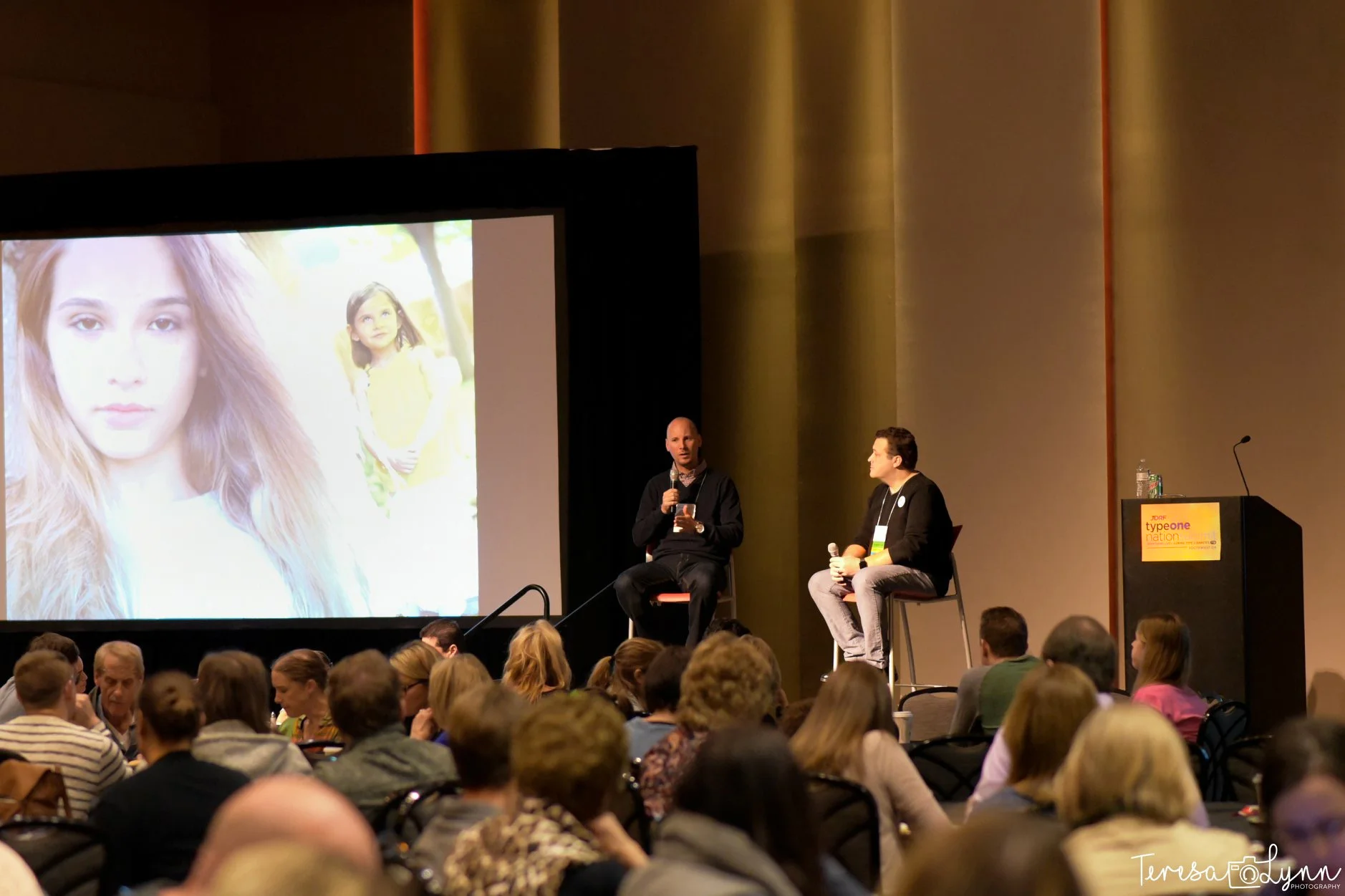
#193 LIVE from JDRF South West Ohio Type One Nation Summit
Recording in front of a live audience…
Scott interviews a fighter pilot and then talks type 1 diabetes management strategies with a huge crowd. Audio is different than you are accustom to..
You can always listen to the Juicebox Podcast here but the cool kids use: Apple Podcasts/iOS - Spotify - Amazon Alexa - google play/android - iheart radio - or their favorite podcast app.




+ Click for EPISODE TRANSCRIPT
DISCLAIMER: This text is the output of AI based transcribing from an audio recording. Although the transcription is largely accurate, in some cases it is incomplete or inaccurate due to inaudible passages or transcription errors and should not be treated as an authoritative record. Nothing that you read here constitutes advice medical or otherwise. Always consult with a healthcare professional before making changes to a healthcare plan.
Scott Benner 0:00
Hello, and welcome to Episode 193 of the Juicebox Podcast. This is a bonus episode. So if you haven't looked back in your player for Episode 192, it's there too. It's called bolusing, cursing and tacos. What you're about to hear was recorded live at the Southwest Ohio chapter of the jdrf. There I spoke at their type one nation summit, to a room full of people, I'm telling you, they're high to open 500 people in that room, it was absolutely exhilarating. I can't wait to do more live events like that. You don't get the greatest audio from it. But you do get an amazing experience. So I want to thank the Southwest Ohio chapter for having me out. guys ran probably the most well attended best organized event I've ever been to. And being there made me want to do it more.
Unknown Speaker 0:57
This session will be recorded, and you can listen to it online on the Juicebox Podcast. Alright, now's the time you've been waiting for it is our live Juicebox Podcast. So I'm gonna turn it over to none other than Mr. Scott.
Scott Benner 1:19
Oh, my gosh. Thank you so much for coming out for supporting the jdrf. And for being even remotely interested in some of the things I'm going to talk about. My daughter was diagnosed when she was two years old. She's 14 Today, after a number of years of struggling with her a Wednesday being in the eights and you know, eventually got an insulin pump, got into the sevens, got a dexcom got down a little farther. And then we got stuck. And then one day my nurse practitioner told us something that really just changed everything for me. I asked her What's the hardest part for you your job and she said, it's to stop people from being afraid of insulin. If I could make people not be afraid of their insulin, they would have better outcomes. I took that very seriously. I thought about it for a long time. I wrote about it forever and ever online. And then one day I started a podcast now the jdrf would like me to tell you does anybody here listen to the show? Thank you. Nothing you hear on the Juicebox Podcast should be considered advice, medical or otherwise, always consult a physician before being bold with insulin or making any changes to your health care plan. We're going to interview mark in just a second. And we're going to trans kind of translate from Mark into some slideshow stuff. But just very quickly. That's my daughter Artie on the right when she was four when her when she was probably nine. Now she has last summer. She's 14 right now, Arden has no diet restrictions, or a one C and I only tell you this to you for the purposes of what we're doing here today has been between five, two and six, two for the last five years. Arden eats everything you can imagine. pancakes, waffles, Chinese food all times the day and night. And we manage to get that a one see through understanding how insulin works. So I'm going to invite Mark Lily up. We're going to talk for a little bit about his story. And then I'm going to tell you a little more about how we handle it as much sugar. So I'd like to give a big round of applause to mark. You want to say? Yeah, I think so sitting I'll look less short if Mark sits next to me. More hair. So the podcast is conversations with people just like you. As a matter of fact, has anyone in the room ever been on the podcast? Cool to work? Can you introduce yourself to everybody? Hi, everybody. My
Mark 3:41
name is Mark Luli. I'm a type one diabetic. I was diagnosed March 7 2005. And I'm also the father of a type one diabetic. My son Charlie sitting over here was diagnosed two years ago. Okay, so how old are you when you're diagnosed as 29 years old?
Scott Benner 3:55
- That has been incredibly shocking. Yeah, so
Mark 3:58
at the time, I was a fighter pilot in the Navy. I had been a pilot for about eight years came back from my second deployment to Afghanistan and Iraq. And my wife and I were getting ready to move to France for three years, I was going to do an exchange tour with the French Naval Air Force. So we are living in beautiful Monterey, California taking French classes for six months, five days a week, not a bad time to spend your your days. And so a couple things were happening and ended up going into the hospital. And after a week in the hospital. I found out that I was a type one diabetic and that I would never fly again and I'd had to leave the Navy. So it was it was devastating. So you may not know that
Scott Benner 4:36
mark lost his pilot's license for certain crafts right. Like there's some stuff you can still do.
Mark 4:41
Yeah, as well. You can be you can you can get your private pilot's license and be a type one diabetic and Scott has interviewed a pilot and a previous podcast. You cannot be a commercial pilot and you certainly cannot be a military pilot with Type One Diabetes. Okay, so
Scott Benner 4:56
there are people in the world working towards changing that. And I actually interviewed a gentleman a few weeks ago, who's one of them. And I don't know if you know, but very recently, the laws have been overturned about CDL license. So used to not be able to have one of those with type one, but now you can. So people are always doing good work trying to move things like that forward. But I want to ask mark, so you're diagnosed as an adult? I can't imagine you thought you were getting diabetes. Did you have any of this in your background, your history
Mark 5:21
now, no family history at all. In fact, the only I guess the only history we had is my father in law as a PhD. And he worked on diabetes related medicines for years and years and years. And, but but no family history of type one diabetes, and so we lot of medical background of my family. And so you know, as those who have type one, diabetes, you know, the symptoms, I had the classic symptoms, I was urinating a lot, especially at night, there were times where I was getting getting confused, and I couldn't really explain it in my vision went from 2010 to 2070. And so, you know, we had some conversations, my wife and I, and we talked to my parents and her parents. And so we remember someone one of them saying, you know, that sounds just like diabetes, but you know, we just assumed type two diabetes, and I did not fit the profile of type two diabetes at all. So it really was a shock. Okay,
Scott Benner 6:15
so and no other endo issues like celiac or hypothyroid. Nothing at all. So So Mark was blindsided, much like most of you, I imagined were. What did they give you in the hospital? Start your management with? Did you leave with pens with needles? Did anybody talk about an insulin pump? How did that go?
Mark 6:33
Yeah, so it was interesting, because I was not in the military hospital, I was in a civilian hospital and Monterey and endocrinologist actually thought I was a type two diabetic. So he sent me home with I think it was glipizide, which is a type two diabetes medication, and just said, you know, take this for a week and see if that has any impact on your blood sugar's and of course, it didn't have any impact whatsoever. So after about a week of doing that, we went back in and then they obviously discovered that I was not a type two diabetic, I was type one. And so I left this facility at that point with, you know, pen, pen, needles and those type of things, relatively basic instructions. And we're kind of left to our own devices. And it was frightening, it was absolutely frightening.
Scott Benner 7:15
So there was no, this is how insulin works, or this is what you should always count your carbs, inject this insulin, wait three hours test, that that was pretty much it. I
Mark 7:26
characterize it, as they gave us a bunch of pamphlets, they fed us a whole lot of information that we just could not necessarily ingest. We were not in the right mental state to be able to do so. And I felt like we were dealing with people that were not used to type one diabetes whatsoever.
Scott Benner 7:42
So here's what I think. I think that doctors know you're overwhelmed when you're first diagnosed, and they give you what I call, don't die advice. It's just enough advice that you won't die. You know, you can't hurt yourself too much with the insulin, it's not about keeping your blood sugar and level, they don't tell you how things work. It's probably fair, right? you're overwhelmed, you're probably confused. The lots going on. The problem is that in subsequent visits, it doesn't get ratcheted down at all places. Some some Enders do an amazing job. But more often than not, you get what you got, which is go figure it out for yourself, do your best, and how did you do in the beginning.
Mark 8:18
So it was rough, because it wasn't just, you know, trying to understand diabetes and deal with the physical aspects of it. It was I you know, for me, personally, I had to deal with with the mental part of it, not just diabetes, but the fact that, you know, being a fighter pilot is all I'd wanted to do in my life. I mean, since I was a little kid, I'd always known and always wanted to do that. And suddenly, without any warning that was taken away from me, and there was nothing I can do about it. And that was, you know, for several months after that it was it was devastating. I mean, I wasn't a, what I would consider fairly severe state of depression, and and really didn't know what to do. But at the same time, I had to learn how to take care of myself. And you know, I'm blessed with a wonderful wife and an incredibly supportive family, who's who's, you know, able to do that with me. So I knew I wasn't alone. And without them, there's just no, there's just no way I'd be here.
Scott Benner 9:13
And so I think what Mark is characterizing here is that he was afraid just like he probably should have been, and he needs some sort of support. So what I'm going to tell you is that no matter where you get your support from I'm sorry, I didn't mean to ignore you over here. No matter where you get your support from, it has to come from somewhere, you have to have some sense of community. There are people who live in the middle of nowhere who listen to the podcast, and they think of the people that they listen to every week as their their community. It could be a friend and neighbor. It could be someone here for the jdrf. But I really want to implore you, it is very important to be connected to someone else and to not feel alone. But that's not the entirety of what you need. But it's a really good start. The next thing you need is the fear aspect. It has to go away at some point. So I'm going to ask Mark about something because I think Mark probably has an experience overcoming fear like no other. I don't know about the rest of you, but this man can get into a machine and make it fly off the ground. To me, that sounds incredibly frightening. I would never do that. I think he's probably crazy. But that's fine. Okay, but I want to know about that I want to know about when you're faced with incredible fear, what are the steps you take to get past it?
Mark 10:20
You know, I don't know if I've got a recipe a few that I can share. But what you know, what I do remember is I've never flown before. So I graduated college and became an officer A few days later and went down to Pensacola for flight school. And I remember, you know, I take my lunches by the runway, and I would sit and watch these pilots learning how to fly and they would start the engine and you know, off they went. And I just, I just thought, like, you know, how the heck do they know how to do this, it seemed, it seems so impossible, and so daunting. And then I started going through some of the academics of how to fly. And then I started learning some of the basics of flying and doing my first flight. And then I realized, like anything else, you gain confidence through experience. And so I learned how to fly a turboprop aircraft. And then I went to do initial jet training. And I thought the same thing again, Oh, my gosh, how did these guys and gals do that. And then again, I just started, you know, some of the basics and you improve and you improve. And then you get to a point where you feel like you're very confident, you know, you really understand how to operate in an ambiguous environment, and you actually look forward to taking some additional steps. So I felt like that when it came to diabetes, eventually, when I was diagnosed, that it was so incredibly daunting, and how am I going to have to incorporate this into my life, but just like, you know, I reverted back to when I was in flight school. It's not something I knew initially. But as I learned more, I gained confidence. And I just felt like that's what what was the secret for me to control my a one C's to make sure there are less volatile, and to make sure that I could incorporate Type One Diabetes into my life without having it ruin my life, if that makes sense.
Scott Benner 11:59
And I'm going to be here today, and we're going to talk a little bit about how to translate those ideas to type one. Because it is very true. This is all about experiences that you have to have over and over again until you don't have to think about them anymore. And then it's hard to imagine for some of you maybe but it comes it really does. I sit before you. I tell you I was standing in my shower crying most days when my daughter was diagnosed at two I didn't know what she was doing. I couldn't figure out what was happening 12 years ago, no Dexcom she had a little tiny meter and some needles. And that was the whole thing. She weighed 18 pounds when she was diagnosed. And I spent most of my time in that unsure place. It took me a long time to realize that all the things that I would have back then characterized as mistakes or problems ended up being the learning experiences that I needed to make better decisions moving forward. But one thing you have to do for yourself is lose that verbiage that says, I messed up that this was a mistake. It's not it's always just data for next time. It's just incredibly important. So Mark, how many years after you were diagnosed? Was Charlie diagnosed.
Mark 13:07
So Charlie, who's somewhere around here, he should be sitting here but he's a rascal. So I apologize if he's underneath your table right now. He was diagnosed in December of 2016. So my family and I was living in Singapore. And we woke up one morning and he had he had went to bed, which is extremely unusual. And so later in that day, we were getting ready to fly to Cambodia. So we're going to take a four day vacation with our with our kids to Phnom Penh. And so I actually my wife and I decided to test him using my glucometer and and then I saw the number we knew right away he was in the four hundreds we knew right then and there that he was a type one diabetic. And I tell you that when I was diagnosed, when I was a pilot, that was the second most devastating moment in my life, that you know that the most devastating moment is when Charlie was diagnosed because it's, it was one thing for me as an adult, you know, I'd achieved my dream and it was difficult to transition. But I was able to do that. It's a whole other ballgame. a whole other ballgame when your child is diagnosed with this disease. So, you know, even though Heather and I were very experienced with Type One Diabetes, there was a lot of learning that we had to do. You know, with a child now who has it, which is a far different experience than than when I was diagnosed. So we actually it's a little bit of a funny story, but we ended up going to the endocrinologist. And you know, he's we told him we were leaving for Cambodia later this afternoon, you know, what should we do? He said, Listen, I would never, I would never do this with another family. But you know, Heather, you're a nurse, Mark, you've had Type One Diabetes for years. You guys really understand this. So let me go ahead and give you some of the basic equipment. You guys go to Cambodia and have yourself a great time and that's exactly what we did. And we're thankful for it and we're lucky or fortunate. Maybe not I wouldn't recommend that to most people today. to Cambodia, you know, the same day that your child is diagnosed. But but it's also that's how we've chosen to incorporate type type one diabetes in our life. We don't let it control us, we're very much in the driver's seat. And that would be one piece of advice I would I would give folks in the room here today, I would
Scott Benner 15:17
have to add to that as maybe delicate as Arden looks in her picture, I'm not sure that little kid was two wins away from going to a Little League World Series last year. So she plays softball in incredible heat 100 degrees 345 times a day, starting at six in the morning and not ending sometimes till seven. She does that without crazy lows. And I really do think that marks words should echo in your mind that there's nothing you can't do. It's tough sometimes. Let's make fun of Mark from it's tough sometimes, where a handsome man here who can find the place it's in front of you and tells you this is all doable, right? I even think Whoa, I can't fly a plane, this guy must be smarter than me somehow, right? But the truth is around diabetes, it doesn't matter. That's why they brought me here. I can do it, you can all do it. Right? I'm telling you, there's nothing special about me. I'm not good at math. I wasn't a very good student. All I know is how to use insulin. And I'm kind of good at explaining it to other people too. So we're gonna get to that part. But I really want you to believe moving forward, that when you have the right tools, and the right understanding the sky is absolutely the limit is 100%. is I want to ask you, do you guys use pumps or kind of technology? do you use?
Mark 16:30
Yeah, we do. We use insulin pumps? Both Cheryl and I had the same pump.
Scott Benner 16:33
Okay. And are you using the glucose monitor? We do? Yeah, we
Mark 16:36
use the Medtronic 670 G. So the closed loop system,
Scott Benner 16:39
okay, and my daughter uses a Dexcom g six, I'm going to tell you that the data that comes back from the glucose monitors, makes what I'm going to talk about later, a lot easier. It's not not doable without the technology, it just takes longer without it because you're a little more blind than you would be with it. Can you tell me a little bit about your management style? Do you I know already. But Mark, you don't shoot for the same a one ci shoot for Right. Yeah. And
Mark 17:03
I think it's Listen, I think the important point is, listen, there's a range of a one sees that are acceptable. And I think what you what each person needs to do, which each family needs to do is decide what is what is good for you. How do you want to manage this, you can be all over this 24 seven, actually, for those of you who are in the previous sessions here, yeah, I sat through the one Chris, who's the power lifter of Chris really manages this very strong. But even you know, he said, You know, he fluctuates between about six, five, and maybe a little over seven. That's exactly where I tried to be that works for me. It allows me to do the things that I want to do in life without making it so overburdened some and and having to think about it so much. The beauty of the technology out here, whether it's Medtronic or Dexcom, or anything else, you want the technology to do the work for you. So it doesn't manage your life, right, you're managing your own life. And that's what Charlie and I had done that that was the reason that we put him on the pump that he's on, so that he can see me go through all the same motions and you know, insertions and sensors and all that kind of stuff. In quite honestly, some there's times when we share some of the same pump supplies, which is as a
Scott Benner 18:15
giant company, it's fine, hopefully, but,
Mark 18:19
but it just, it makes it much easier. And then and then Heather and I are both very, very comfortable with managing with the pump that I have, which makes it that much more comfortable managing the same pump that he has, and I want you to be sure,
Scott Benner 18:31
please hear me when I say this, he don't imagine my daughter's blood sugar is at 8524 hours a day, it is not her blood sugar spikes a couple of times a day 151 80 we get it back pretty quickly. And we keep her at a lower number. You know, I don't worry about being low, I don't start thinking about low till 70. But that's that it's not a perfect system, I don't want you to think that her blood sugar just goes like this. And it's magic. It's not showing something, we'll miss a little bit on the inside on both, and we readdress and I'll talk about it later. And maybe you guys can incorporate a little bit into your life. But I want to thank you very much for doing this. Thank you very much.
Do you guys accept blood sugars that are higher than you want? Because you're afraid of lows? That happened? Anybody I understand that completely. And you probably should be a little concerned. Diabetes is not easy and insulin is to be respected, but it is not to be feared. The problem is, is that when you err on the side of caution, you're always going to be a little higher than you want to be. And then you sort of get used to it right? Like you know a lot of people get told at the doctor's office that you're fine anywhere between 80 and 200. They tell you that a lot when you're diagnosed. The problem is that makes 200 seen in range when they while that's double what somebody in the audience who doesn't have diabetes, this. The problem is when you get to 200 then you start thinking about 220s Okay, it's so close to 200 And you sort of talk yourself into it eventually. The key to this is understanding how the insole works in your body. It is the entirety of it. If you leave here not remembering anything, remember this, you have to Pre-Bolus your food. And the entirety of managing Type One Diabetes is timing and amount, it has the right amount of insulin given at the right time. All of the other variables don't matter as much as timing and amount. We're going to talk about it try to make sense of it. These are not mine, I stole them offline. The one on the left is with a post from a mother who said I can't figure out diabetes, no matter what I do, this is what happens. And that's just diabetes. She said, I'll never forget that. She said that, that's just ID. So what I did was I eliminated carbs out of my kids diet. Now look how good they do. And I thought, well, that doesn't sound like a lot of fun not eating carbs, because carbs are fun. As you can see, I've had a car before. And there are a lot of fun. That's just diabetes, I am here to tell you. That's not just diabetes, when she says that when anyone says that, what they mean is I don't really know how the insulin works. And I'm doing my best. And I'm trying, but I just can't get it right. And I need to cut myself a break. So I'm going to put it on somebody else or something else, I'm going to put it on diabetes, it's just incredibly important to know that if your blood sugar goes up out of nowhere, it is not the magic diabetes failure that came along and tapped you on the head. So I'm going to tell you a story about m&ms. And I'm going to hope that by the end of this, I'm going to be your MLM story. A very long time ago, my daughter and I were in her endocrinologist appointment. And the as was before glucose monitors, right as Dexcom was getting started. And she said, Are you guys gonna get a dexcom? And I said, I don't know what that is. And she said, Well, there's a 17 year old boy in the practice, he got one because he wants to eat m&ms without his blood sugar going all over the place, tells me that what happens is the boy goes out, he buys these little packs of m&ms the ones you get at the register by the cashier, and he buys a bunch of them. And the first day he goes home, he gives himself his insulin like he always does. He eats the m&ms and he watches what his blood sugar does, it went up. So the next day, he gave himself more insulin, and it went up less. And the next day he gave himself more insulin, it went up less, but then it got low. So the next day, he gave himself the insulin sooner but a little less, and it went up less and it didn't get low. And he kept doing that for a week. Until one day he put the insulin at m&ms and his blood sugar just stayed like this. And when she told me that, I thought, well, that means it's possible. If he can do it with m&ms, you can do it with anything. I'm going to figure out how to do it with everything. So you have to stay off the diabetes roller coaster, you can't be chasing your blood sugar around. That sounds easy for me to say. But it's true that begins with Pre-Bolus in your incent those of you who are injecting Pre-Bolus things just the word people with pumps used to indicate they've given themselves their insulin before they start eating. Does anyone here understand that? When you put the insulin in your body, it doesn't immediately start bringing your blood sugar down? You do. But do you know how long it takes you individually for it to work? Is it five minutes? 10 minutes? 15 minutes? 20 minutes? How long do you think it takes to work? 30 minutes, does anybody else know anybody have a number they think how long an hour is kid takes Thank you an hour, it's different for everybody. First thing you need to do not be afraid. Second thing you need to do. Remember, it's about timing and amount. And once you know those things in your head, you're gonna go home and figure out how long it takes for your insulin to start working. I can't tell you how long it's gonna be. But get yourself in a position where you haven't had insulin for a few hours, you haven't had food for a few hours and your blood sugar's pretty stable, you know, under 200. And give yourself an amount of insulin you think will bring you down to 100. And then if you have a glucose monitor, wait for the arrow to turn down. And if you don't test yourself every 10 minutes or so and see when do I start dropping and that's probably pretty close to your Pre-Bolus time. Because what you want to accomplish everybody the tug of war, right? the option of tug of war is one side pulls the other side pulls somebody wins diabetes tug of war, you want no one to win, you want the flag to stay in the middle, never go to one side never go to the other. You can't accomplish that. If you put your insulin in and then eat, you give the carbs a head start. By the time they're moving, they have so much momentum, you can't overcome them. Even if that amount of insulin you chose was exactly right. It's still not going to work because the carbs have a head start. So what you need is for them to get in a battle. That just doesn't move. And here's how I think of it in my mind. I'm sorry about the mic. So the mic is here and it's the insulin I put the insulin and it starts working. It goes along the timeline. Then we put the carbs in the insulins already pulling down. Then the food tries to pull up. This is where they get caught in the battle. They're pulling and pulling and neither side can win. And at the end they both get tired and you're back where you started. The problem that you have if you're spiking is you put your insulin in too late, the food got a head start, you jumped way up. Now the foods being digested by your body, eventually the food leaves your system, or what's still left in your body when the food's gone, the insulin that you put in too late, and then you get incredibly low. If you put your insulin in too soon, you get low First, if you had the nerve to wait at a blood sugar of 65, eventually that food would catch and bring you back up again. I do my best for my daughter's blood sugar to be falling, when she starts to eat, you will all figure out what's best for you. I'm not telling you that what I do is exactly right. But I try for that battle between insulin and food to happen as low of a blood sugar as I think is safe. Because if you don't, you're just not going to win that fight. Okay, I can tell you this for sure. If your blood sugar is high, you have missed time to miscalculated your insulin and if your blood sugar is low, you have Miss timed or miscalculated your insulin. There are other reasons. But this is the this is the key. It's absolutely the key. And it's simple effects. I want to tell you about Rosa who's not here, Rosa put a post on online the other day, and that was her 22 year old daughters in XCOM graph it went from 60 to 400 like this, like a smile and a pumpkin. And I reached out to her and I said I think if you call me I can fix this at a half an hour of talking. So a stranger called my house her and her daughter on a conference call. We talked about the things you and I are going to talk about here today. And 23 hours later, she sent me a grant for her daughter hadn't been below 85 or over 120. And today she sent me another graph with her daughter ate a bagel and didn't go over 140 or below 100. So this is not rocket science. I know it feels like it is because you get the information in such little pieces you get a little bit when you're first diagnosed, and it feels like someone just hit you in the head with a shovel. It's hard to think. And then you think you remember some of it, and you go to the next part. And then someone tells you something else. And somebody online will tell you Oh, you need more Temp Basal. And have you tried an extended bowls. And none of this stuff makes sense. And the truth is, the further you get away from starting with this concept, the more those things are just going to end up confusing you and making things more difficult. The reason I bring that up is because a lot of people spend a lot of time wondering what's going on. My blood sugar is going up. I wonder what happened. I'll wait an hour. One more hour, three hours. Wow, it's not coming down. I should do something about it. Bring you that sugar down, your blood sugar goes up, bring it down, your blood sugar goes down, bring it up, do not wait around wondering because Sure. Maybe you're sick. Or maybe you are dehydrated. But it doesn't matter. What matters is your blood sugar's high, do something about it. Because you're going to have, you're going to have experiences. And it's crazy as it sounds, these experiences start building on each other. And eventually it just makes sense. The other day, my daughter's endocrinologist asked me what my daughter's insulin to carb ratio was. And I said I have no idea. I haven't looked at that in years. We don't even count carbs. I just look at the plate. And I think that's seven units. That's 10 units. It's 10. It's six, it's probably a 10 minute Bolus will do 70% of it now and the rest over an hour. I haven't thought about counting carbs in so long. And it's such a great thing to get away from cuz it's thanks to count carbs. It's no fun at all. There's no fun planning to eat. That's one of the worst things about diabetes is having to think about it and count your food and am I gonna eat all this? Am I hungry? It doesn't matter. I look at the plate. We put in the insulin if we're wrong, we we address it. That's it. Anybody in a fistfight? Anybody would have a good fist fight you.
So sorry, he's so little, I thought it would be an adult. Okay, here's the thing you want to hit first, you do not want to get punched in the face and then have to fight because you're dizzy. You don't know what happened. When you go first, when you act, that you know what happens next came from what you did. So it's sort of a mathematical formula that I've made up, it doesn't have numbers in it. I did this. This happened. I wanted this to happen. So next time, I will do a little more insulin, a little less insulin a little sooner, a little later. Because then you can't really say I bolused and I got low. There's cause and effect that you can actually trust. Woman the other day was telling me my daughter gets low whenever she works out. I said, Well, that's crazy. My daughter exercises like crazy shots. I get love from exercise. She does. She starts to work out and she gets slow. So we start talking about it. And what ends up happening is she has this theory about eating before she works out and when I looked at it, I just know you're She's mistiming her boss for the food, her blood sugar shooting up, she's working out, then the blood sugar is getting hit by the insulin, it's Miss time that she gets low. And in her mind, it was because of the workout. I want you to be able to say I did this, and this happened, because that's the only way to make an adjustment and move forward. It's incredibly important. Don't react act, okay? For pumpers. If you're bossing too often, your basal rates too low. That's it. Kids are gonna grow quickly. Okay. You're not gonna notice that happening because they're your kids. For instance, I lost some weight to come here today. But nobody in my house noticed. That's fine. So my daughter comes home from school in the beginning of the year last year and tells me that a math teacher sucks and can't teach. And she's an algebra. And at the end of the year, my daughter understands algebra just great. And I said, Well, there must have been some magical day during the year where your math teacher got good at it, right? And they taught us the magical thing that taught you that Audrey said no, I don't know what happened. I just know it now wasn't heard about that. I was like, Okay.
She's really something. And, and so I think that that really is the key about how we learn. Things happen slowly, you don't see them happening. kids grow and you don't see it happening. You gain 10 pounds, you don't see it happening. If your bolusing alive. Your base is too low. You need more insulin, what do we say before it's either not enough insulin, or it's Miss time. If your basis to our it's not enough insulin, and it's Miss time to cross the entire day. It's all about timing and amount. If you are injecting and you're using a slow acting insulin, how long did they tell you to start acting until last year body? Would you inject that once a day, last 24 hours? That's not true. Okay, so what you want to do is split in half. If you're having trouble at the end of your day, and your blood sugar's getting high and you and jack, your Basal instance, probably running out or becoming less effective. If you split the dose and do it every 12 hours. Again, I'm not a doctor, you'll find the balance. But if you do your slow acting insulin every 12 hours, you might have a little better luck. That's an MDI tip for me to you. Okay, all carbs are not created equal. Eating a slice of pizza is different than having a salad with some coupons in it. It is because heavier, more dense carbs sit in your system longer and they are broken down slower. When you eat pizza and your blood sugar gets high Three hours later, that was not the diabetes fairy. That's when your body started breaking down the pizza and it started going to your blood. So you might have to say, all right, well, I start eating pizza hits me a little bit, but I don't get high for two hours later, what do I do? What you do is you figure out how to time the insulin against the carbs. I can't tell you what that is. But I can tell you that if you try you'll figure it out. Some people use extended boluses I'm going to explain to you right now my daughter has Chinese food. I don't know how much she's gonna eat. It's general chicken, white rice, vegetables, is she gonna have three pieces of jello is chicken How much? I couldn't tell you. What I know is that most times, my daughter needs 12 units of insulin to eat Chinese food. That's what I know. So when I start, we Pre-Bolus I get her blood sugar running down. And I get that 12 units in I don't know how much she's going to eat. So I Pre-Bolus eight of those units, and I tell the other four units to go in over the next hour. That way, I've got a shot to bail on it if I want to right. Maybe she starts eating and she goes on to stinks. My daughter does the most disgusting thing when she's eating. She says she has a limit. She doesn't know it till there's food in the mouth. So she goes, nope, that was it. And then she takes a napkin. It's horrible, takes it out of her mouth and decrees that lunch is over. If that happens, and I gave her 12 units, and she's only eaten three quarters of what I imagined she was going to eat. I can't sell her extended Bolus. Well, I use a combination of a Temp Basal re I'll double her basal rate for a couple of hours. This is important. We do this thing with pumps. It's weird. Everyday at two o'clock, my basal rates 1.4. It's 5.6. That's so stupid. Why would your body need the same amount of insulin just because it's two o'clock, it doesn't make any sense. You have to stay fluid. If you're having more carb, heavy things, you might need more basal insulin, you might need a 30% increase for hours, it might be a 50% increase for hours, I don't know, figure it out. Don't wait around and say that's just diabetes, or I can't eat Chinese food. Don't do that.
This is very important. You have to trust yourself and the diabetes experiences you've had before you have to trust your gut. You have to have to have to you can't say but the doctor told me this. So I'm going to keep doing it. If I taught you how to drive, and I said that you only put 20 pounds per square inch on the brake. And you somehow could measure that and you're driving along coming towards a train you put your 20 pounds on in the car keeps going it keeps going and keeps going. You go oh the guy who taught me how to drive said this is going to be okay. And drive into the truth. You know, you press on the brake harder. The doctors have done their best to explain to you the basics and it's up to you to keep going to understand when you do that this gets incredibly easy. And I don't say that lightly. But I don't think of how. But today I do. But I don't think about diabetes for more than about 10 minutes a day. My daughter and I speak about it through text messages. Mostly, it does not encompass a bunch of my time. I don't stare at her glucose monitor. We are not crazy about it. All it is, but I just said she's a freshman, right. So I started figuring this stuff out when, maybe second grade. So the last time I bought it was to the school nurse was the last day of second grade, she has not been to the school nurse since then, we do everything through text messages. I watch her blood sugar, she watches her blood sugar. And we talk together usually for a couple seconds, hey, do a half a unit, do Temp Basal offer a half hour drink a half of a juice, that kind of stuff. Her range on her Dexcom is between 70 and 130. And we most of the time stay in that range. It's because highs cause lows. When your blood sugar's high, you use too much insulin, eventually it makes you low. If you never get high, you don't get low. So if I give her that insulin for the Chinese food, and she hits 130, and starts going like this, we bump it back down again, we stopped the arrows, that's what we call it, I'm like stop that arrow, it might be a unit, it might be a half a unit, it might be a Temp Basal, we stopped the hour and bring it back. And then for another driving analogy, because they're so exciting when you're driving, and you know, they're young people in here, you guys are going to get taught how to drive at some point, you're going to drift a little to one side and the person sitting next, you're gonna have a stroke. And you're going to overcompensate and end up 20 feet this way, it is gonna happen, it happens to everybody. But once you become a seasoned driver, you realize that when you see that line coming, your hands move almost an imperceivable amount to get you back to where you want to be. And when you do that, you don't overcorrect. And if you keep yourself in a situation with your blood sugar for small corrections do the job, then you don't see a bunch of over corrections, you don't end up high, you don't end up well most of the time. But if you end up high, do something about it, get it back down, you might have to crush that high with insulin and be prepared to catch it with a fast acting carb later, that might be what you have to do. But that's better than being high for four hours. So it's all just learning how to manipulate the insulin, you're going to have these experiences over and over again, at some point, if you want to be able to look at a plate and go, that's 15 units, you have to trust what you've learned in the past. You have to trust yourself. I talked to a lot of people privately and at the end of every conversation, but I end up telling those people, you have to trust your gut. Go with what you think I know, we're taught and listen to cops and doctors and teachers without question. And please, if it's a cop, put your hands up, especially nowadays, hands up. Okay, but but the rest of the guys, you can say why you can wonder a little bit. Again, take care of it first. Don't wonder why I saw Johnny sniffling this morning. That must be it. Who cares? blood sugar's high, get it down, maybe he's dehydrated, don't care, get it down. Doesn't matter to me think about it later later to learn these things right now get your blood sugar down.
And if you have glucose monitors, there's there's a study that's proven that the lower you raise your high threshold the lawyer wants to obey. And it really is what I just talked about, it's about reacting soon enough that it doesn't get out of hand. So if you have a glucose monitor, don't think of the beeping as annoying. Get it down, bring it down to 150. And try when it gets to 150 bring it back a little bit. It's incredibly important. Like if you don't have a glucose monitor, these things are still valuable. Don't think this is a sales pitch that you have to go get a glucose monitor, it makes it easier, I'm not gonna lie to you. But it's still doable. There are plenty of people who do it, you can do it without a pump. But you're going to inject more, here's what a pump brings you the injections don't have if you have a pump, you can manipulate your basal insulin, which is incredibly helpful. And you don't have to inject other than that MDI is the same thing. But being able to see 60 blood sugar, that kind of comes up and sits at 70 and 75. And you haven't had insulin for all that food for a while you really don't want to eat, you know, you can just shut your basal insulin off for a half hour and a lot of times that fixes it. That is a valuable tool for pumping. But it's not that none of this can't be done. With injections, it's just going to take more injections. If you're not bothered by injecting more frequently, don't worry about it. But you have to be ready to be able to say this meal takes 10 units. Oh gosh, my insulin is going up. I need two more. You got to be willing to inject again 20 minutes later, half an hour later, something like that. I know people tell you not to stack insulin. But if you have a glucose monitor, you're just addressing something went wrong. You're not you're not stacking insulin. Okay parents incredibly important.
exhaustion comes, you don't notice it happening. When it gets there, you don't know you're lost in it. It is detrimental to everything in your life. Please, if you're in a two parent household, make sure someone else understands, do not be afraid if you're the primary caregiver to look at the other one and say, hey, it's Friday, and I'm going to bed and good luck. Because if you don't do that, you're gonna go a little crazy. And you can argue about a lot of things that later you'll look back on, and they're pretty stupid. So please be very aware of that the exhaustion just overwhelms. Thanks. It's absolutely crazy. Okay, this is important, and it's not anti doctor. So don't throw me in jdrf present. But sometimes people say no, because they don't know. It's hard to say, I don't know, my children asked me things all the time that I tell them no to it is because I don't know the answer to their questions. My daughter was once in a pump class, like, I'm sure many of you have been, we're gonna pick a pump, and they're all laid out like Christmas gifts everywhere. And I said to my wife back in the corner of this room, literally on a dusty table, there was a box that looked like someone threw it there. This is a long time ago. And it wasn't I walked over and looked at it was an omni pod. And I said to the nurse, I'm like, why is this one not out with the rest of it? She said, You don't want that. And I was like, Are you sure? And she said, Hey, you don't want that your daughter's too lean. I was like, okay, the candle goes on the angle. She said, I forget, she gave me 17 reasons why I wanted one of those other pumps. But I found a pod look like the way to go. So I get it. Two years later, leaving an appointment, she pulled me aside and apologized. And she said, We told you not to get beyond the pod because we didn't have any experience with it. We didn't think we could support you. That's what she said. Now we're giving it to all the kids blah, blah, blah, and whatever. But they told me no, in that moment, because they didn't know how to support me. So if you walk in there and say I want to get a pump or I want to get a glucose mount and they say no, you have to have diabetes for a year before you do that. Say Why? I want to try a difference on Neto stick with that one. Why? Because I think what you're gonna find next is there's no answer. You should advocate for yourselves. You should do what you think is right. These are not magical people. You live with diabetes, you know what you want? It is incredibly important to advocate for yourself. Good. Sorry. Okay. This is a blown up view of a breakfast. So it's gonna look crazier than it is. But I want you to believe me when I tell you that this encompasses a bout five minutes of my overall thought over an hour. This is from a couple of years ago. So at this point, her high was still set at 160. Now you would it would be down here. And this low is actually at 80. Right now now we're at 70. Would it be a little lower. So my daughter is having a sleepover with a bunch of friends. She gets low in the middle of the night I get up and I just shut off her bazel and that's what it did. So I didn't give any juice. I didn't do anything else. I shut her base off for a little while her blood sugar came back up. Now the girls were sleeping in, as you can see here, because they were up late last night, but I knew because of her friend Shay who the night before said Can we hear french toast in the morning? And I was like Sure, sure that'll be great. And chocolate milk. Why don't we just put piles of sugar on it and one goes, like powdered sugar. I was like, Okay, yeah, that's what we had bananas, grapes, chocolate milk, powdered sugar, a French toast, everything. While my daughter was sleeping, I started bumping her blood sugar. I got it to come down. She woke up in here somewhere. I started cooking here, we put in the unit, we started to get a down arrow. Then the food came in. So we put in more insulin, got it to come down more. Now she starts adding powdered sugar, which I thought she wasn't going to do so we upped her basal rate.
It seems like it's a lot, but I'm gonna tell you me and then she says Can I have more french toast? And I was like, Yeah, let's go for it. So we put in more insulin. There it is at noon 97 with a finger stick, not just the CGM. All I did is balanced the insulin with the food. It's all dead. There's nothing else to it. I promise you. It's hard to kind of understand in a half an hour. But I'm proud of the podcast because this was a little stilted with Mark here because I've never done this live before. Although it was fun. But what'll happen is someone will come on like Ryan, and we'll talk and things will come out. Kaylee Oh yeah. She comes on and she talks and things come out. It's not planned. If I told you that I didn't even plan on what I was gonna say to you here today. Please take that as the truth. I think that these natural conversations are important. I think that during every hour podcast, we come up with a couple of things that you'll come away with and think wow, that really relates to me. Much like the algebraic it takes time to get. You're not gonna leave here today like Superman and make all these fixes. But if you leave here today, knowing that it's about the timing and the amount, and that you have to Pre-Bolus a meal or it's not going to go your way and then think about the rest of this. I promise you, this stuff happens. It is incredibly simple. blown up. Here, it looks like an hour's worth of thinking. But I guarantee you that what happened was I was cooking. And I said, Okay, Pre-Bolus this and do a Temp Basal. Here comes the food put on the other four units. Nowadays, she's bigger I would that would probably be a Pre-Bolus of five units and five more units later. And I was stretching it out to try to cover the bread. And I was stretching it out because the chocolate was like chocolate milk. She never drink chocolate. But there's another little girl talking about chocolate milk. And so but when my daughter looked at me, I was like, yeah, drink the chocolate milk. Here we go. I never ever, ever counted a carb. They're never going to ask if you guys have any questions, I'm happy to answer. And if not, I'll keep going. But just real quickly. The podcast is 100% free. It's available for iPhone or Android iPhone has a native app called podcasts that you can just use Android Spotify, you have to find an Android app. It's also Juicebox Podcast comm if you listen, that'd be great if you don't sweat, but I appreciate you letting me speak. Does anyone have any questions at all? I'm happy to answer anything that anybody might be able to tie.
You would have to ready? Yeah, that's not gonna work. But you have to figure it out for yourself. So only I know I said a lot. And I'm from the east coast. So I was talking really quick. But I said in the beginning, you're gonna have to go home and figure out what that is get a blood sugar stable somewhere where there's no insulin, no food, put in a big bolus and see how long it takes to move. And then from there, it's, I try it's the m&m story, then I put it in here. It didn't work tomorrow, I'll try it a little sooner. Tomorrow, I'll try a little later tomorrow, try a little more a little less. Yet there is one thing you can do to make it easier on yourself, which is make similar meals over a weekend. Similar breakfast, lunch and dinner, take out the variable so there's less to think about. And then just keep keep swinging at it. Try it one lunch, and then the next day go Okay, got a little higher than I thought try it again. The next day, the next lunch. Somebody else? Hi.
So I handle my daughter and I handle her diabetes. And my wife by my wife's done a great job today while I'm at home, we do it the way the same way I think about parenting, which is I have never, I don't think there's a light switch fixed to diabetes stuff. I don't think there's something you say or do or read that just makes it all makes sense. And I don't expect my kids to figure life out in one day. So she and I do it together. We talk out loud about it while we're doing it most days. Plus, most of it's done through text messages. So she gets to see it happen. And what I see is that slowly over time, you know, I'll I'll say hey, how much do you think that is? And she'll guess about what I was thinking. So my goal is just for her to learn it at her own pace. There's a podcast early on in the show called texting diabetes, texting is the absolute most important tool in type one. Besides the pumps in the CGM, as far as I'm concerned, because it limits the amount of time you're talking. I'll tell you right now that when she was much younger, back in second grade, I was downstairs very loosely on my sofa, and her cgmp. And she needed a half unit of insulin. And I didn't want to get up and she was upstairs for some friends playing. So I texted her bolus, a half a unit and she said okay, I was like, Oh my god, that was easy. And then I started I started worrying, like, What if she didn't do it? Right, I found a reason to look. And I was like, Oh, she doesn't have the internet. It's great. Then it hit me about 20 minutes later, the only difference between me being in the room with her and not being in the room with her it was my fear. If I let that fear go, it didn't matter where she was in the world. She could be across the street, the house or at school, and it hit me like a ton of bricks, I can never go to the nurse again. And that's what we did. You have to wait till they're at enough of an age where they you can be confident that they're gonna do what you ask. But it's it's that I think it's just time. I think that if anybody thinks that there's a light switch health issue, I think that is a very kind of American feeling like I want to take a pill and make it go away. And I don't want to think about it again. You are going to have to put some effort into diabetes. That's for sure. Anyone else? I'm sorry. So I'll get you next. Hi. Not at all.
Unknown Speaker 49:20
No, I don't know.
Scott Benner 49:24
I look at the food. I think it looks like five minutes. It's experience. It happens for everybody. If anybody who's had diabetes for a long time. Do you count carbs? Now? You're talking about a little kid. Okay. What's your name, sweetheart? Because Hannah eat one slice of pizza on one Saturday and the next Saturday eat the whole pizza. No. So you know about what she's going to eat right? So give her the insulin. If she goes up and you say you give her five units of insulin. It goes up and you give her two more she's little it's probably not five but say that happens then that next time You eat that food. Seven, start with seven, because last time it took five. And to start with seven, you are mostly not using enough insulin if your blood sugar is high. And I want to say this, and I'm sorry, if I missed out on saying earlier, you have to have to have to have to understand that you need to stop erring on the side of caution. You would much rather much rather have a couple of lows a month than 28 highs. So you have to kind of come out and really try. So if it's You have to trust that what you know is going to happen is going to happen. You can't say Oh, last time my blood sugar went up when I did this, but maybe it won't this time. Everyone has done that, right? Like I should put mine somewhere. No, maybe I won't need it. You always need it. Always. You always need it, you are very frequently not using enough insulin. And you don't do that because you're scared of Lowe's. And I get that. But after that we'll take seven units over and over again. Stop starting with five, like stop, just trust yourself. It's a huge leap. I swear just so experience and repetition with meals plus kids eat about the same amount every time they eat. So in the end, you start looking it's about the same over and over again. So I'm sorry. Wow, that's amazing. You had the same question. Does anyone else have the same question? Did you really? You just screwed me Okay, that's fine. Hi, good.
Yeah, exactly the same way. That said, I don't do anything differently. I just stay fluid. She needs carbs. She gets carbs, she needs insulin, she gets insulin. The thing you don't talk about a lot with activity is is that adrenaline can drive up your blood sugar. So I'll tell you a story that people seem to really find useful. My daughter was about eight years old. She was in some recreational Basketball League that happened on Sunday. So it was one of them where you came in, and you were like in sweat pants and looked a rack and everybody else did too. We all ignored What a mess we were, you know, and I bear into this blood sugar of 100. She'd go out and play basketball and a bunch of it would go to 250 happened every Sunday. So one day I just thought I can't keep letting this happen. How do I Bolus for adrenaline right? And I realized one day I'm like, I'm gonna stop thinking about the juice box like medicine and I'll start thinking about it like food, like, what would I do? If I wanted her to drink that without our blood sugar going up, I figured out how much insulin that would take. So one day, I got into the chair blood sugar's 100. And I bought a unit a half of insulin, etc. to play basketball. And the adrenaline hitter and that fight happened and nothing moved. And had it not happen. Because here's the interesting thing about adrenaline when they play teams that weren't any good. And she didn't think she could lose her adrenaline never went up. It was only when she felt like competitive that went up. So I thought if this is a bad team, I'll have a drink the juice, right. And that day, they weren't a bad team. And I didn't do it. But that one thing I've shared with people over and over again, I get so much correspondence back. When you're looking for a way to be bold the first time, try thinking about it that you're just Pre-Bolus in the juice box. And then I bet you'll find out you don't need the juice box. And that's how you're going to learn you're not using enough insulin before we go. Because I promised I would do this and I see Melissa standing here. It's his birthday. And I thought it would be great to embarrass her and say happy birthday to her.
So just not the whole song but 123 Happy birthday. Would you mind 123 Happy birthday. Sorry. So was I
Unknown Speaker 53:53
thank you, Scott. Thank you again to Scott a couple of announcements before we head out.
Scott Benner 54:04
Thank you so much for listening. We'll be back next week with another show. If you're interested in having me out to your event or creating an event of your own where we just get together and talk about being bold with insulin and other management ideas contact me through Juicebox podcast.com
Please support the sponsors



The Juicebox Podcast is a free show, but if you'd like to support the podcast directly, you can make a gift here. Recent donations were used to pay for podcast hosting fees. Thank you to all who have sent 5, 10 and 20 dollars!

#192 Bolusing, Cursing and Tacos
Ashley spills all the beans…
Type 1 diabetes comes into focus with this management conversation.
You can always listen to the Juicebox Podcast here but the cool kids use: Apple Podcasts/iOS - Spotify - Amazon Alexa - google play/android - iheart radio - or their favorite podcast app.
+ Click for EPISODE TRANSCRIPT
DISCLAIMER: This text is the output of AI based transcribing from an audio recording. Although the transcription is largely accurate, in some cases it is incomplete or inaccurate due to inaudible passages or transcription errors and should not be treated as an authoritative record. Nothing that you read here constitutes advice medical or otherwise. Always consult with a healthcare professional before making changes to a healthcare plan.
Scott Benner 0:00
Friends Welcome to Episode 192 of the Juicebox Podcast. Today's episode is with Ashley we're gonna call it bolusing, cursing and tacos. I'm very proud to tell you that the episode you're listening to is sponsored by Dexcom, makers of the G six continuous glucose monitor by Omni pod, the makers of the tubeless insulin pump that Arden has been using for a decade, a decade. Hold on, do the math. Yeah, 10 years. And by dancing for diabetes, you can find Juicebox podcast.com and the sponsors in the show notes of your podcast app where you can actually just go to Juicebox Podcast COMM And the links are there as well. You're ready for the music.
I want to take this opportunity to welcome any new listeners. I just got back from the jdrf event. in southwest Ohio, you guys were terrific spoke to a group of people there had to have been 500 people in that room. There's a great picture on my Facebook and my Instagram, if you want to see the room. Absolutely amazing. Thank you very much. jdrf, Southwest Ohio. Anyway, guys, if you're new to the show this week, this is what I was telling you about. This is an absolutely terrific episode. It's good conversation. It's great management talk. There's a little bit of everything here. But don't forget this. Nothing you hear on the Juicebox Podcast should be considered advice, medical or otherwise, always consult a physician before making changes to your medical plan. If you're interested in finding out about having me come out and speak to your group, just reach out through the links at Juicebox podcast.com.
Ashley 1:49
My name is Ashley and I have been type one diabetic for going on 23 years now.
Unknown Speaker 1:57
Wow. Yeah.
Unknown Speaker 1:59
How old are you now?
Unknown Speaker 2:01
You're 27.
Scott Benner 2:03
Oh, okay. So you got you got in the game early?
Unknown Speaker 2:06
I did. Yeah.
Scott Benner 2:07
So actually you are a our talk today is going to be a prime example of when I tell people on the podcast, I don't prep at all. I really don't prep at all. So here's what I usually there's a little look behind the curtain we set I talked to people. And I'm like, this sounds interesting. Let's set it up when we set it up, and then usually get set up for months in advance. And then I sit down an hour before we're going to talk. And I go over our correspondence in about two seconds. Except I couldn't find any correspondence between you and I. So like, because now there's so much By the way, this is not my fault. There's so many social media platforms. Now. I have to sit down and like we talked about email. Was it text? Was it through Facebook Messenger, if it was through Facebook Messenger, was it through the blog website? Or was it through the end? Was it Instagram? I'm lost now. So actually overwhelm you. overwhelmed me, I'm too old for all this is what I'm saying. I really, I was sitting here this morning thinking like I should just find a younger person to help me with this part of it. But why are you and I talking? What led you know what led you and I did to meet and get to this spot?
Ashley 3:20
Sure. We did connect via Facebook. I had reached out to you initially because I volunteer with jdrf. And I started start working as an outreach volunteer, which is like a mentor for newly diagnosed patients. Yeah. And so one of the women I started mentoring, who actually you've talked to, I guess, she was like, Oh, you got to listen to this podcast. I can't believe you've never heard it. And so I started at the beginning and pretty early on you talk to someone who was in Northeast Ohio. And they were talking about how they took their daughter to the Cleveland Clinic rather than going to like the children's hospital because of how great it was. And at the time, I was looking for a new endo. And I looked them up and I was like, wow, they're like number two in the country. Why have I not been going there? It's only 40 minutes away. And now I have the best diabetic care team I've ever had my a one C has gone down like multiple points. And I attribute that largely to starting to listen to your podcast and getting more involved with the community. So I reached out to you and thank you told you how long I'd been diabetic how long it took me to get here and you were like that's so interesting. You should come off.
Scott Benner 4:45
Right so now I'm caught completely backup. Here's what I heard the podcast helped you. I didn't hear anything. Oh, no, I'm just kidding. So no, no, that's so first of all, that's really cool. It is interesting. You know, I tell people all the time when they come on. I'm like you're gonna say something that's gonna help somebody And I don't think that that person would have ever believed by just saying the name of where they go would have ended up helping you. But I mean, look at that, like they they came on and spoken your a one C is multiple points lower now. And that's pretty cool. What is what it is. So when you were tight, let's go back a little bit diagnosed 23 years ago when you were four. And so like, wow, I'm just gonna just like try to whip out a date real quick. But is it was it in the 90s or the late 80s or the early 90s?
Ashley 5:30
It was actually 95.
Scott Benner 5:32
See how I said early 80s, early 90s, late 80s. And then I said start to say mid 90s I was trying to cover every It's Friday, by the way. So Alright. Okay, so mid 90s. Four years old. Was there any? Did your parents have any way of knowing this was coming with or other people in the in the family with diabetes? Or did it really
Ashley 5:53
come out of nowhere? No, it really came out of nowhere. I'm pretty sure when they took me to the hospital and the doctors told them that I had diabetes. I'm like, 90% Sure. My mom's response was Isn't that like for older, larger people? And I was this tiny little kid who had no idea what was going on?
Scott Benner 6:13
sure your dad was looking for a firehouse to leave yet to his property. Right. And that's enough of this. Well, yeah, because who would know? Right? Like right, you really are stuck with the you know, with the BS that's out in the world diabetes is for heavy people had diabetes for your grandmother like you know, aren't you know, oh, I have an uncle has diabetes. He takes a pill. He doesn't drink soda anymore. Like that kind of stuff. Like so. I get not understanding where your parents young parents?
Ashley 6:41
Oh, yeah, at the time, they would have probably only been about 30. So they're still pretty young. And my younger sister had just been born like four months earlier. So I just really wanted to you know, keep their lives interesting.
Scott Benner 6:54
Yeah, Yeah, no kidding. Give that's got to be. Can you imagine like, put yourself in that position that like all these years later, a little four year old kid, everything's going great. Right? You make you make another one because you like we are on such a roll here. Look how cute this little one is. We can do it again. And then somebody starts yelling about diabetes while you're holding a newborn. Be like, oh my god.
Ashley 7:14
It's actually ridiculous. I've thought about that. Now that I'm past the age that they were when they had me I'm like, I can't imagine that big in their shoes. You know when that?
Scott Benner 7:25
You just said that a doctor Haleigh? Can you watch them for a second? We're just gonna go get a soda and then just never come back. And probably divorce in the parking lot be like, you know
Unknown Speaker 7:34
what, okay, right? It didn't work out.
Scott Benner 7:36
We'll see you later. It really is. Listen, it's shocking. I was in a very similar situation where my kids are my son's 18 now, and my daughter's just about 14. So we had them just far enough apart that I imagined that I could manage it as a stay at home dad, and that we thought we could rebound a little bit after paying for the first one to go to college for the second one like so we spaced our kids out like that. So when Artem was diagnosed in 2008 was a 2006. My son was like six years old, maybe five or six years old. And I remember the same thing. Like I had this cute little boy, he played baseball, we bought a house. You know, everything seemed really great and was like, let's do it again. And you know, like, and then she comes out and she's adorable. And you're like the first two years or like this is amazing. Like the last thing I remember before being diagnosed like big life event was my daughter's second birthday party, which we had in our backyard and completely overblown. There was a man like with a pony drunk driving the kids in a circle. The grass was getting ripped up. I was like, I don't care. You know, the Philadelphia Zoo came out with a couple of animals. It was like an armadillo walking around and an eagle and I was like we're winning life. And yeah, then like, a couple weeks later, I was like, oh, what happened? You know, like, just boom like that. You and your parents ever talk about that?
Unknown Speaker 9:00
Sometimes,
Ashley 9:03
because obviously we remember it very differently. I was, you know, really young. And I just remember being overwhelmed. I wanted to go home, but I, you know, didn't feel good. I actually distinctly remember we were at Children's Hospital and Homeward Bound was playing. And my grandma was the one who came in and told me I was going to have to stay overnight and I cried and to this day, I can't watch that movie.
Scott Benner 9:27
Please check out dancing for diabetes.com dancing, the number for diabetes.com diabetes always ruins so Oh, um, when my wife was in the hospital with Arden because we were on vacation when she was diagnosed, and I had to keep going back to the vacation house to stay with my son. And that was back when like little portable DVD players were like a thing. And my my daughter watched sky high over and over again. Oh my god. And now if it comes on, I can see my wife like physically get ill. Yeah, it really bothers her. It's interesting. So what was your movie Homeward Bound? Yeah, that's probably not a bad movie not to be able to watch it.
Ashley 10:09
I know. It's, it will occasionally come up in conversation because well, you know, so it'd be like, Oh, yeah, this cute movie that I watched as a kid, I'm like, nope.
Scott Benner 10:18
That's the diabetes movie that movie gets. Well, at four, it's just I mean, okay, so four years old to your pay. So you and your parents, when you and your parents talk about it, can you get a feeling from them? Like, are they this? Is it sadness that they try to mask? Is it guilt? Is it like, what what do you think they feel? When you when you kind of have that conversation with me? I mean, or maybe, maybe they don't let on at all? Because I'm always interested about like, how, how does art and perceive how I perceive diabetes? Because you know what? I mean? Like, I, I hate it. So what does she know that you don't I mean,
Ashley 10:58
right. It's a it's different from both of them. And it's kind of neat, having talked to them, and like looking in retrospect at like, how they responded to me over the years and realizing what it was they were feeling and thinking. My mom, she actually just passed away this past November. Thanks. But she, whenever she would talk about it, it was always this like, instant fear. Like when I got Dexcom. And I was so excited. I was showing it to her how it worked and everything. If my phone like, so much has got a text message. She would like shift and be like, is that your blood sugar? Do you need juice? And I get I don't think she slept my entire childhood. I'm pretty convinced that this?
Scott Benner 11:45
Yeah. Is that funny, like so every time? She thinks about diabetes, it's her first thought that something's wrong. And you're right. And you're in danger. Yeah,
Ashley 11:54
yeah, yeah. And then my dad. He is, at this point, he's just drunk. And he's like, you know, way more than I do. The technology is so advanced. It looks really cool. Just so he's kind of fascinated by it. But he's almost like, and I could be wrong. But it was like he's relieved that he doesn't have to keep up so much with it anymore. Yeah, if that makes sense. But every time I get my a one C or go see the endo, I call him. And he's so excited to hear you know how much better I'm doing. And he almost can't believe it. Because when I was diagnosed, I think my agency was 14. Yeah. Oh, wow. And that last one was 5.9.
Scott Benner 12:34
So your dad probably feels the way guys feel when their ex wives get remarried. And they're off the hook for like,
Unknown Speaker 12:41
you know, that's
Unknown Speaker 12:42
probably accurate. Yeah. Dexcom off the hook.
Scott Benner 12:47
But you know what, it's funny it brings up for me, is that is that I'm always worried. It's and I'm glad to hear you say it. You're laughing through it. Because I'm always worried that Arden will see it as me being on the hook. You know what I mean? And like that showed one day look back and think, oh, that poor person like, like, like one day, she'll figure out what it really means to have diabetes on her own, like a real like, by herself feeling. I don't want her to look back and feel badly about what we did, because I don't feel badly about it.
Ashley 13:17
Oh, good. Yeah, I totally get that. Because my husband and I have been together for a number of years now. We started dating in high school. And that was one of my biggest fears before we got married, that we really had to work through was the guilt of putting that on someone else. And he is so I mean, he's the tech guy. He's obsessed with Dexcom and all the data and like seeing the trends and whatnot. But I get so worried that I'm gonna burn him out eventually, you know?
Scott Benner 13:45
Yeah, I definitely. I mean, I can't say that. I wouldn't be worried about the same thing. If you know, it's already part one of them. Yeah. But it's not that easy to, you know, like, and so you start adding other things and, you know, and in your his radio shack project or something like that, on the weekend or something, and that's not how you want. I'm assuming you don't want to be seen like that. Like, I bet you. I should probably let you tell me, but I bet you, I bet you like that he cares, but you don't want him to burden to have that burden. Right.
Unknown Speaker 14:16
Exactly.
Unknown Speaker 14:18
How do you balance that then?
Ashley 14:21
That's a good question. I mean, I'm, I'm pretty self sufficient at this point. I mean, I will get, you know, my Dexcom weekly reports and show him and get really excited about it. And he has some input. It's really funny, like if my blood sugar's low. And you know, when your blood sugar is low, for instance, you don't really think clearly, sometimes, like, I know it gets all fuzzy, and I'll just looking at and be like, what should I do? And he looks at me, he's like, what, what do you think you should do? And I'll give him like, I don't know I'll start but are gonna be like, maybe I should take a glucose tablet. He's like, I'll go get those for you.
Scott Benner 15:00
It's a variation of that every couple knows about the restaurant conversation. Where do you want to go? I don't know. Where do you want to go? I'm not that hungry. Why are we going that?
Unknown Speaker 15:10
Oh, God, I
Scott Benner 15:11
know that you say, oh, we're hungry. And I'm just trying to go with you. Well, that's stupid. Where do you want to go? I might Oh my God, my wife looks so disappointed in me when I don't know what restaurant I want to go.
Ashley 15:22
I probably give my husband the same look. So I get it.
Scott Benner 15:25
I always look back at him like, but you don't know either. Yep. Why? Why is it okay for you not to know, but me not. And I know, I always just trail off and give up. And then I take a restaurant that I'm sure she's unhappy with. So
Ashley 15:38
I know that conversation all too well. I can't make decisions. It's just like, awful. I know.
Scott Benner 15:43
I think my wife is so busy making decisions at work. Then when she comes home, she really is not looking to like be the person in charge of a lot of things. Especially I get that. Yeah. So okay, so I'm trying to like, because, you know, some people have a completely opposite reaction and don't want their spouse in any way involved. As a matter of fact, there's no way to know when your episodes gonna go up. But around episode one around Episode 150 ish, there was a person on who said that they didn't even take, like they were dating and really and was struggling, struggling struggling with diabetes and never led on to their, to their boyfriend, their who became their fiance, who then became their spouse. And finally, she was finally able to tell them like, Look, I'm I don't know how it looks from the outside, probably pretty good, but I'm not doing well. And I was like, wow, that's an issue I'm assuming to didn't want to burden, you know, or cause a problem, or you know, what I mean? Like, it's right, it's a it's a hard, it's a hard thing to figure out. You know, so let me go back a little bit, you said that, you found a new doctor. And that, you know, it's really improved things. So, how long ago was that?
Ashley 16:51
About a year ago now? Okay.
Scott Benner 16:53
So So prior to that, the 22 years prior to that, were you like, how would you describe your kind of like, like how your care was going?
Ashley 17:03
You know, it was it was going okay. I, I've always kind of embraced my type one as a part of me. So I've always tried to take care of it. I went away to college, and you know, found an endo closer to me. And you know, did what I could. And it wasn't doing too bad. Right before I switched to my current endo. I think my a once II was hovering between like seven and eight. And I was happy with it, but knew I could do better. And I was starting to hit that point to where like, probably around 15 to 20 years with T one. I was just feeling burnt out by it constantly and not even I struggle to use the phrase burnout because often that means that people stop taking care of themselves and let it get out of control. But I hate not feeling good. Oh, I would maintain it. But I'd be really bitter about it all the time.
Scott Benner 18:06
I gotcha. I like both singing and cursing. Which is probably the title of this episode. Now that I think about it. But yeah, that so you hated it. We're tired of it, but are too stubborn to stop doing it.
Unknown Speaker 18:20
Basically. Yeah,
Scott Benner 18:20
that's great. Well, good for you. By the way, I think it might take a little bit out, you know what I mean? Like it right? Sometimes not giving up takes a lot of different. A lot of different like, faces, I guess you don't mean like not, it doesn't it's not just like bear down and go when I when sometimes it's good. Bye. And so, so you were getting by but you didn't have anyone see, like you knew it could be better.
Ashley 18:43
Did and I was happy. I was you know, I mean, emotionally, I was just a mess all the time because it was always there. You know?
Scott Benner 18:49
Okay, so So is this thing that you felt like, I can do better at this, but I'm not and so it's making me upset on top of that. I really don't want to be doing this anymore, but I can't give up. That's not a good place to live at all. Yeah. Why Why? Why didn't you have an A one seemed more like what you were looking for? Like, was it lack of like just tools? Did you not? Like know what else to do?
Ashley 19:18
Yeah, it was. I mean, it was a mix of things up. I've been on different kinds of insulin therapy. I mean, like when I was diagnosed, all we had were the syringes you know, the basic injections and I went from that to pens to a tube pump and then now mon Omni pod, which has made all the difference. Just because for me personally having to detach even for like the 10 minutes it took to shower, my blood sugar would spike like crazy things like that. But it was that and accepting things that aren't necessarily true. Like I love your kids. First bold with insulin because I just had it in my mind that, you know, I would eat and inevitably I'm gonna spike to 200 plus, that's just a thing that happens, you live with it, and then it comes back down. And it was accepting that accepting where I was, rather than trying to get it better.
Scott Benner 20:19
You know, let's just take it back a step. Today, we're going to talk about Dexcom. We're going to talk about in very simple terms, do you know what a continuous glucose monitor is, if you don't listen closely, and if you do, just use my link and order it now. But if you don't, the dexcom continuous glucose monitor is a device you wear it, and it tells you how fast your blood sugar's moving, and where it's at. So for instance, right now, Arden's blood sugar is 91, I can see that because she is at school, wearing the dexcom g six, that's the newest version. If Arden's blood sugar begins to move up or down her Dexcom will indicate that to her, and to me, because I'm able to follow her, you're actually able to have up to five followers. But anyway, if her blood sugar should begin to move, with some very easy to understand arrows, the Dexcom will indicate to me how quickly she's moving. Is the arrow pointing straight up or straight down? That means one thing? Is it pointing diagonal for diagonal down? That means another thing you look at it, you quickly know Oh, her blood sugar's moving about two points per minute. Maybe I should do something now. Maybe I should just keep an eye on it. That is what the Dexcom does. And I've talked about it on a very basic level today, because I was somewhere this past weekend, where I was talking about Dexcom. And I was just like, I know, everybody loves Dexcom. And somebody came up to me afterwards said, what was that thing you were talking about that began with a D. And I thought, all right, there's more work to be done here. We need more people to understand continuous glucose monitoring. And I think the best way to understand it, is to go to dexcom.com forward slash juice box and find out more.
I'm getting ready to go off and speak at something in a couple of weeks. And I keep trying to figure out how to only have an hour to basically try to fast forward people through the ideas of this podcast. And I just keep thinking about like, how do I start, like, you know, like, how do I? How do I put them in the frame of mind to believe it so that we can talk about it? And because you can't just start giving examples, because you'll have people have the same thought, like you just said, like, they'll be like, that's not how this works. You know, like, or that guy knows something magical? I don't know, or something like that. And I think in the end, it's just, it comes down to like, it comes down to understanding like, I think that, you know, if I said to you right now, like, do you not make a million dollars in a year? You'd be like, no, that's not a thing that were happens. But somebody looks at me, but somebody knows how to Yeah, I don't know how to like, if the motor in my car blew up, I wouldn't be able to take it out and put in a new one. But somebody knows how to do that. And right, you know, and so the difference is, is that when your car breaks down, you don't, you don't automatically think, Oh, well, there's no one in the world that can fix this, I'll just die. Like, you know, like, you don't you don't have that thought you think oh, there's a guy, I'll go find a guy or a woman, somebody can do this for me. But when it's diabetes, it's that horrible, horrible sentence right away like you my, here's what happens, I eat my blood sugar goes to 200 there's nothing I can do about it. That's just diabetes. And, and the truth is, that's not just diabetes, that's diabetes, if you don't understand how to use insulin really is kind of that simple. You know, and, and it's no one's fault, because nobody gives you the right. Like, talk about it. In the beginning. Nobody says hey, this is how the endzone works. And you know, you're gonna have to start using it here if you want it to do something over here. And I don't know, it's just seems so unfair, because then look what happened to you. Like you just described yourself as being burdened, unhappy, burned out, you know, but none of that was necessary to piss you off. Like once you figured it out. Were you just happy? Are we angry afterwards?
Ashley 24:03
There's a little bit of both. And I think it was more happy and relieved that I didn't want to realize I could do it. It was almost like winning a game, right? Like, I felt like I had finally figured something out and felt really accomplished. And there's really something to be said to that. Like the reason I you know, found the podcast or got these other tips and tricks to start doing better, was connecting with other type ones, which I've never done. I mean, like I said earlier, I'm the only one in my family who has it. And I never really grew up with other type ones. I think my first type one friend was in college. We happen to already be friends and she was diagnosed while we were in school.
Scott Benner 24:50
She probably thought you gave it to her. I knew not to hang out with Ashley.
Ashley 25:00
But, you know, I started, I reached out to beyond type one which has their app with all the forums and such. And so I got super involved with that. And through them, I got like book recommendations. So I normally can't read like medical books. I just get so bored. I don't process any of it.
Scott Benner 25:19
Yeah, I might be like, that might be why this podcast exists, by the way.
Ashley 25:24
I love it. But I did pick up a Bernstein's book, because someone had mentioned on the app, you know, oh, I read this in my a, once you went down two points. It was like what I don't believe you. So I read it and made some of those changes. And then that led me into, you know, Gary Snyder's book, and then Adam Brown, who writes for diatribe and like things started to change there. almost instantly when I started reading what other people were doing, but there is still this like, disconnect because I couldn't talk to them and bond with them over it, you know,
Scott Benner 26:00
and that's that this does that for you being able to listen to other people like actually talk?
Ashley 26:05
Oh, absolutely.
Scott Benner 26:06
That's great. I'm glad to hear Yeah. Yeah, it's it is. So community is, it's funny, because I have this conflicting thought in my head. It's not conflicting, actually, I guess. But I, here's how I think about the idea of community. I think it is incredibly important. And below for reasons like you just said, like, you know, because you're because the guy at the deli counter can't tell you how to use your insulin. So you need to find somebody who are you know, who knows that he can share these things with you. But at the same time, sometimes we listen, I don't do it. But I see community get oversimplified. its importance over simplified like, you have to know that someone's going through the same thing as you, which is absolutely true. You have to know that there's other people out there, and they've got your back and all that. And that all is absolutely true. But it doesn't culminate with success. If the rest of it doesn't come the tools and the ideas, concepts that really work. supports nice, but, you know, listen, if you go up to bat and you strike out, and your coach says, as you're walking back, it's okay. You'll do better next time, but doesn't tell you how that's going to happen. You know, like, because maybe you need to land your foot a little sooner, your hands need to be a little higher, like, those are the kind of things you need to know. It's cool to be supported. But you also need information. All right. And I think there's a little too often that some of us just we go with the cheerleading, but we don't go with the coaching for some reason. And you need a mix of that. So I but I think it's, I think it could also go the opposite way, where if someone just sat you down in a room and gave you all the tools and you still felt isolated? You might not have the I don't know, like the inner energy to put them to use even.
Ashley 27:49
Oh, it's true. Yeah.
Scott Benner 27:51
Well, okay, so. So you found see, is it mostly through beyond type one and their and their community? Or have you kind of branched out everywhere? You a little bit everywhere?
Ashley 28:02
I'm a little bit more everywhere now. Yeah, it's start there. And then what I really wanted was to connect with more diabetics who had been type one as long as me. Because it's just, I don't know, it's different when you've been living with it for so long. And because I was burning out so hard, it felt like I just wanted to talk to someone else who experienced that got through it. But I wasn't finding that necessarily as nice as it was to connect with others. So I had read a couple of posts, and I had an endocrinologist recommend like, Well, you know, you've been doing this for a long time, you probably have some knowledge to share, especially because, you know, your management overall is pretty good. You should see if you can work with other diabetic. So I connected with the snail mail program at the type one. And then I was feeling super motivated. And I emailed the local Children's Hospital where I spent a lot of time as a kid and was like, hey, I want to like do this, maybe talk to parents show them like you know, that their kids are gonna be okay, because here I am 20 plus years later, or, and they were like, well, we don't have anything, but maybe you should reach out to jdrf. So I reached out to jdrf. And I got an email back from our chapter here. And they're like, we are definitely looking for mentors to work with newly diagnosed patients, you should come out for training. So I did. And so now I go to a bunch of events that they host in the area and I'm mentoring quite a bit. I discovered that there aren't, it seems like more and more people are being diagnosed in their 20s 20s and 30s. And there weren't really any mentors who could be That age and relate to them and talk to them. It's a lot of parents of type one kids mentoring other parents. And so I was instantly paired with a couple of people, which has worked out really nicely. It's fantastic. Like I said that one of my women that I work with, she was one who told me about the podcast, and we just like, hang out now. Spread.
Scott Benner 30:23
That's excellent. Can you tell me your first name? Danielle? Danielle, that's right. Thank you for sharing the podcast, by the way. Yeah. Every once in a while, every couple episodes, I beg at the end, I'm like, please tell someone else. I don't know how I'm not good at doing it. I don't really know. I social media might not exactly be my thing. And so and I can't afford that. So which would probably be the best thing to do? Maybe I should just do that. Should I buy a Facebook ad? Who would pay for that? Actually? Me that's always the question. Yeah, who's gonna pay? It's overwhelming life question.
Unknown Speaker 31:03
I work in nonprofit. So we're asking a lot.
Scott Benner 31:05
Who's gonna pay? Well, I have to say that, um, you know, I feel similarly to what you just said, like I, I did a jdrf type one nation talk a couple weeks ago. And it just went, it went really well. I really, I really saw leaving them, like, wow, you actually can take somebody who's just lost, and bring them, like, bring them right up to speed. Like, it's because the things that are lost on and the things that they're they're experiencing is kind of speed bumps and stuff, they can't get past. It's pretty universal for most people, you know, and so if you can hit on sort of those core values and and say, you know, hey, here's a thing you're probably experiencing, and then they think, Oh, I am experiencing that and then go, oh, and then it builds a little trust, then they kind of listen to the next thing you say. And then they start seeing, hey, that person's saying something that's answering these it's filling in holes for me, like I have gaps in my understanding of what's happening. And that just made a lot of sense. But what I saw from a couple of people was, Why is no one told me about this before and anger, like it's why I asked you about earlier like, so a gentleman that came up to me and is thrilled as he was to kind of have the gaps filled in and he felt like he could see a little better now. Because you know, cuz you know, what happens is your gut tells you, I shouldn't be letting my blood sugar go to 300 and just waiting for it to come down. But then the doctor told me not to stack insulin or whatever. And then you get conflicted that way. So that that gap gets filled in. And and you can see the happiness like he was thrilled. But at the same time, I felt like he was mad. Like, like, he wanted to go back and find the doctor and say like, why did you not tell me this? You know, we've been struggling forever. Why would you not bring this up? It felt nice, like to see him get over it. But I felt sad for him that sort of the same way when you were talking like all those years of not feeling like, like you're doing what you mean to be doing. But you're still putting in all the effort not getting in any of the return. Like that just seems I might just have a mental block from like, there's a couple things in life that I don't like the idea of, and I guess wasted time is a really big gum. kind of thing for me. Like I don't like to think of people wasting time makes me sad.
Ashley 33:22
So yeah, and I get that. I feel like part of my problem, too was occasionally I would get bits and pieces of information or treatment. But it was never communicated to me in a way that made sense. Like I still remember. And it's so funny. It's way now just because of how much more controlled my blood sugar's are literally on a daily basis. But I remember being in college, and talking to my endocrinologist and saying, I don't want to do I'm tired of the fluctuations. They make me tired, I don't feel good. And he said, Well, why don't you consider waiting to eat if your blood sugar is 200 or higher, like it should really be under 200. And I looked at him and told him that wasn't possible. I was like, I'll never eat them. If I do that.
Scott Benner 34:10
I get that. Yeah, like, right. I can't imagine my blood sugar under 200. So when am I gonna eat?
Ashley 34:16
right? Exactly. So getting like little tips and tricks with it. But he never explained why that works. Like the he was basically kind of introducing me to the concept of Pre-Bolus saying,
Scott Benner 34:29
right understand,
Ashley 34:30
like, why does that make sense? I don't, I'm not going to do that. Because then I'll just be hungry and I'm not pleasant when I'm hungry. So that's not happening.
Scott Benner 34:37
I wish you could have been here the other day where Arden's blood sugar, like spiked up coming out of something that went up like 180 and it sat there and I was like, Oh, and I tried to bump it down. It didn't move. I was like, Oh, it's gonna be one of these. And we had food coming up in like 45 minutes and my wife's like, what are we gonna do and I was like, I'll tell you what we're gonna do. And so I bolused for the 180 The Pre-Bolus for the meal, like 45 minutes before the meal, and I just I just crushed her blood sugar and I got it back down. I think she started eating around like 75 or 80. And then as soon as the food started going in, and I could see like, there was like a, it wasn't a diagonal down. I had it in this nice drift. So do you know what I mean? Where the arrows steady, but the blood sugar still drifting down a little bit? Oh, yeah. So it's drifting like that. I let her start eating a little bit, and then I Bolus the rest of it. And that was it. And she stayed right around 90 after that. Yeah, but we went from like a stubborn 180 to eating 45 minutes later, and a blood sugar back at 90. And that's just timing. It's just the timing of the insulin. It's all it's all it is. It's so super simple. Once you get it like Do you find that? Like, once it hit you where you're like, Oh, my God, this is it?
Ashley 35:52
Yeah. It's great. Because I'm like, What? It's funny because I refused to do it back then. And now that I'm doing so much better, I look back and go, Oh, he was onto something, if only I had, like understood was
Scott Benner 36:07
a kernel of really good information for you. It's just not enough. Right? Right.
Ashley 36:11
And so I've tried different things. And I'm pretty low carb now, which is relatively easy, because I'm actually also celiac. Okay, so I was already eating gluten free. And so then when one of the things I got my a once II and my blood sugar, so much better, so much more controlled, was I went pretty low carb. And now I'm kind of in this place where I'm starting to introduce more back into my diet and really working on Pre-Bolus thing and Temp Basal. I'm like addicted to them now. I think I posted on Instagram, I use my Instagram exclusively for diabetes, awareness and advocacy and things are like, accomplishments, things like that. And I post on Instagram one day, I had gone to get tacos with my husband and he was like, okay, just if your blood sugar spikes, don't be mad at yourself. Like you haven't had like, this many carbs in one meal on a really long time. And I super Pre-Bolus I did a Temp Basal. And I don't think I ever went above 110. And I just stabilized around like 85 an hour after the meal was fantastic.
Scott Benner 37:19
He said that to you? Did you actually think in your head? I'm gonna be bold with insulin.
Ashley 37:23
I actually did and that he was me. He was like, it's just remember what your podcast guy says. Like people.
Scott Benner 37:29
So larious I just there was an episode up recently. I think it's called Jane has a guy. And she Yeah, she goes to her son all the time. And she's like my guy on the podcast. I was like, that must really piss him off. And she's like, I
Ashley 37:42
think I was just telling him about this episode. Yeah. Like, yeah, she's got a guy. So but it was good. It was this moment to where they had like, brought out our nachos or something. And I had taken insulin, I looked at it. I looked at him and I was like, I'm gonna spike This is more carbs than what I accounted for he goes, so take more. It was the most simple response was like, Oh, yeah, I guess I could do that. But I get so and I know, it's something you've talked about a lot. But there's the fear, especially of low blood sugars that I mean, I was raised with that fear. My parents always had it. And that, you know, came on to me, and I was like, oh, okay, I, I could just take more He's like, yeah, I mean, worst case scenario, you always have glucose tablets on you. And it turned out great. So I've been getting a little bit more adventurous.
Scott Benner 38:32
I have an adventure for you to go on. How about trying a free, no obligation demo of the Omni pod tubeless insulin pump, it is super easy to do. All you do is go to my omnipod.com forward slash juice box, tell on the pod your name, your address, and they send you a demo pot, right to your house. It's magical, there's a box out front of your house probably has a number on it. It'll come right into that, then you just take it out of there. It's amazing. And you put it on and go Hmm, this is cool. I'm gonna get more of these. He called on the pop back and say, Hey, I tried on the demo, I loved it. Let's go baby, and they will help you with the rest. That's simple. I don't even need the rest of this music. I mean, I guess you could go out and find another insulin pump if you wanted to. But it's gonna have a tube on it, you understand what I mean? You're gonna have an infusion set on your body, it's going to be attached to probably two feet or more of tubing that goes all the way to this other thing that holds the insulin. And then you have to clip that to your belt or I don't know what you're gonna do with it, put it under your hat maybe. And that's where you control to get your insulin on those other insulin pumps. But on the on the pod. The pump is self contained. It has the insulin in it, you wear it right on you. And then you tell it you need insulin from a wireless controller. Just pull it out of your pocket or your bag, push a couple buttons. Insulin goes in, stick it back in your bag. That's that. Nothing to clip to you. Don't worry, no one one's gonna think you have a 1983 pager. When you're with the army pod, tried today, absolutely free, no obligation. And I'm telling you, you're gonna love it. My omnipod.com forward slash Juicebox.
Podcast. Yeah, that's good for you that I listen to it's one of the it's one of the tenants of it like with fear. A lot of this doesn't work. Because if you're afraid and you can't kind of act in the moment, you can't be bold, you can't say, I know that I need this needs more insight, I have to do it. Because because then you're you know, I don't know, you wait, and then when you wait, that that hesitation throws off the balance, the timing of the insulin and the and the carbs. It really, really is that kind of like, it can be thrown off that easily. It's it's sort of like, I don't know, imagine if you were a hockey goalie and you reacted a half a second late to everything. You don't mean like, it's like, oh, the puck went by, and then your arm moves. And it's like, I still moved. I was so close, but it's just it's too far away. It's over now.
Ashley 41:07
And I feel like that's what I've been doing for so long because I was functioning so much in that fear.
Scott Benner 41:13
No, no, I I definitely understand. Listen this morning. Arden came downstairs for school this morning is a half day for her. And most of its Good Friday today. Well, we're doing this and most we were supposed to have off to her district. Suppose I'm off, but it's not enough that they made this. Oh, right. Yeah. And so we, you know, we said to the kids, like, what do you want to do? Because they said, you know, if you have a religious reason, you don't have to come in and I said, the kids, I'm like, I'm more than happy to lie and say if I really want to go to school. So my son's a senior, he's like, I don't want to go to school. And so I called him out this morning, my daughter said, there's a math lesson. I don't want to mess. And we were like, okay, so she went in. So she gets up this morning, she comes cruising down the steps. And maybe we have to leave in five minutes. And it's that the only pod is expiring. And I and I'm like I said to her, I'm like, is this the Hey, you have eight hours left? Or is this the Hey, it's over? And she goes, Oh, no, it has eight hours left? And I was like, Are you sure? Because I said cuz I could just change it really quickly. And she's like, no, it is. So 20 minutes later, she's at school, and she texts me She's like, Hey, you know, I need a new pod. It's like, so I just kind of I cruise over the school really quick. We changed the pod in two seconds. And she was 120. And I adjust Bolus, a little bit of insulin to for the 120. But it had been long enough that it didn't move. And I was like, okay, so I switched the pod. And I did a Temp Basal increase, I think of like 30% for an hour. And we both like a point to write. So that was eight o'clock. And it's 1015 now, and her blood sugar is 94 Wow, been so steady. But the bolt, here's the idea of not being afraid, right? Like we think 120 and you just gave a little bit of insulin, you shouldn't give any more insulin right now. But no, we just swapped off the pump. So it you know, the pump was on for a couple of minutes, it takes a little bit for the absorption to start over like like, you know, you're like there's a little bit of stuff going on there. And I know that from experience. And so it would have been easy to say, well, let's wait and see what happens. But by the time we waited, what would have happened was diagnol Up arrow 135 which now would have needed the point three plus the but the bazel that I use plus more and then I wouldn't have had the nerve to use more and they just fall down that rabbit hole of just chasing. And yeah, you figured it all out actually good for you. Seriously, I'm so excited for you like I'm, I'm really happy for you. It's hard to be happy for a stranger over a podcast. Because it seems a little like I don't really have any. I don't have any right to be like happy for you, dude. I mean, like, but I feel really good for you like it's, it's cool.
Ashley 43:54
Hey, thank you. Yeah, and I get that too. It's like, this morning, I woke up and my blood sugar was right around 78. And then I checked it a couple minutes later because I was too lazy to get out of bed and it was down to 74. And I was like, okay, it's creeping down. I should probably get up and eat something. And so of course, that's how I got up. It was like in the 60s and I was like, okay, so just need a little bit of something. I had like half a glucose tablet, and then I was like, well eat breakfast now. And then I got an arrow straight up. It was at 94 and I was like, Okay, I'm gonna take a little bit of insulin right now. Which like, I know if I had your crazy it's probably gonna stabilize fine. I was like, No, trust me, I know what's gonna happen next. I'm going to take just a smidge of insulin. And right now what oh six and just cruise in. So
Scott Benner 44:45
listen to it. This is I just repeated this to my wife the other night, because she's she's still working on some of these ideas. And I and I said to her, this is just a very important you have to believe this. You have to do it. You have to be willing to have a low Once in a while, because if you if you err on the side of caution, you're going to have a ton of highs. And it would I would much prefer to have to deal somehow with a low once or twice like to look at that situation you just described, handle it, you know, pretty aggressively when thoughtfully and then have it go wrong one time, because it's gonna go right 10 times, you know, you mean like you can't and you can't trade the 10 good blood sugars for the one. I can't believe I have to drink a juice box situation. Because then it's the opposite. Now your blood sugar is high 10 times on one time you were right.
Unknown Speaker 45:35
Right. You?
Scott Benner 45:35
I mean, do you find that more often than not, you need more insulin than you initially believe You do? Yes. I think that is true. I think that we all get a little caught up in counting carbs and saying, hey, look, my you know, my pump says this much. And so that's right. But nobody stops to think that the person who put the number in the pump was you and you didn't know what you were doing. And you set your insulin to carb ratio. You're like, right, my blood sugar moves this far, you know, for every good blah, blah. It's that's random. That's not a real thing. That's it, right? It's a guess.
Ashley 46:10
Right? And that's experiences I have with it. I'm still not good at guessing. Like I know, you talk a lot about, like, Oh, I have no idea how many carbs shape. They're just No, she needs this much insulin, which is fascinating to me. I love it. But there's been a couple of times where I can pull that off with small things and all look at Phil my husband and be like, okay, I, you know, I took insulin, I'm gonna eat this. And he's like, oh, how many carbs that you account for? I was like, I don't know, I just, you know, took a unit. You know,
Scott Benner 46:35
lunch, baby, here we go. Well, do you do that? Do you readdress. If something goes wrong with that? Do you readdress the insulin if you're not right, yeah, that's all I that's what I do. I mean, I'm not like, I really hope people understand that I don't get her blood sugar right every time. Right? Like to me like there's, you know, today is going to be an example in about 2010 minutes you and I might still be on. And she's going to tell me that it's time for her to eat because it's a half day, so it's much earlier than she usually eats. And because it's only half day, she's not hungry enough in the morning. So she takes just snacks. So let me tell you what's interesting today, she has a little bottle of she's got a 16 ounce bottle of water with like a Snapple packet. And so there's no carbs in that, right? There's a small banana. But now as I'm saying that I don't really remember exactly how big it was. And she has four Oreo cookies. And a bag of Cheetos.
Ashley 47:32
Oh my gosh, I want to eat like her. Yeah, right.
Scott Benner 47:34
And so she's so thin. And so um, and so just sitting here right now thinking about it. I don't know, like, I like to get a number out loud. For that, I'd say six, just off the top of my head not to think through with the banana probably has 15 ish carbs. I'm sure that the little grab bag of Cheetos is probably 15 carbs, there's 30. Now the Oreos are 40 carbs. That's like 70. So there's like 70 carbs in there. But here's the stuff you don't think about, she's probably not going to finish the whole banana. Right? And the cookies are going to be like a big burst up front, but probably not a it's not going to sustain. There's nothing really sustaining in there. nothing that's going to hold her blood sugar up for hours. And so saying sex? I don't know. It's probably right. But she's 92 now. So no matter what I do, when i when i Pre-Bolus or with the SEC, she's going to go almost all the way to 75 before she starts eating. So I can't I can miss a little bit. Because the worst thing that's going to happen is it 45 minutes from now, I'll start seeing a diagonal up arrow and if that diagonal up arrow starts to cross 110 and 120 I'm going to go Okay, you know what, that wasn't enough insulin. But I'm also planning ahead for the idea that she'll be home in two hours. And so even if she's a little low coming in the door, it's gonna be lunchtime, and she's gonna be ready to eat again. And and I don't think that people think that stuff through far enough, like something you're doing now could be just a I don't want to call it a Pre-Bolus. But it could be a pre consideration for what's going to happen two hours from now.
Unknown Speaker 49:12
Yeah, yeah, you
Scott Benner 49:13
know what I mean? Like, don't think of yourself as low at 70. If it's a meal time, think of that as an amazing Pre-Bolus for a meal. And then because then by the way, you don't have to pre if your blood sugar is 75 when you're gonna have dinner, that is your Pre-Bolus you know what I mean? Now your Pre-Bolus only needs to be a couple minutes doesn't need to be this really well thought out like 15 or 20 minute thing. You just need to give it a little bit of a head start over the food. I love that you figured it all out so seriously.
Ashley 49:41
It's still something I'm trying to figure out like how to Bolus for a gluten free pizza. We're still trying to figure that one out. What what happens, so I will like last time we did it, I thought it was gonna work out really well because I Pre-Bolus I was probably around 95 or so. So by the time we got the pizza, I was like 73 ish. And so I ate the pizza. I was on an increased Temp Basal. I was kind of hanging out there for a while. And then like an hour or two later, I spiked up to 180. Like very quickly, very suddenly.
Scott Benner 50:17
So from where to 180, from, like, you might have just set up and I tripped out a little bit like imagine imagining your graph in my head. So like, were you 75, right? The 180? Was it like a sharp spike?
Ashley 50:30
It was a pretty sharp spike. It wasn't like two arrows up. So it started to creep up but like to an area that I was comfortable with, obviously, like 90s hundreds and then like, I think around the time I hit 110 or so it was like, oh, we're going straight up. Now.
Scott Benner 50:42
Here it goes. Did you bolus right then in there? I did. Yeah. And it stopped at 180 and come back, or did you have to re address the 180?
Ashley 50:52
No, I had to re address it again.
Scott Benner 50:54
Okay. So then, however much you use to try to stop the spike, and for the readdress Did you get low later?
Ashley 51:03
Oh, I'm trying to remember I, I think I started to but stopped the low from actually happening. I had to eat something which I'm not complaining about. But I got Yeah.
Scott Benner 51:11
So if you really want to think it through the amount of insulin you put in for the spike plus the amount of insulin you readdressed with minus the amount of insulin that the snack later would have taken. That amount belonged in the initial bolus but stretched out over more time with an extended bolus. Yeah, right. And so you could have been like, whatever that Bolus was like, let's just make up a number. Let's use round numbers. So let's say it was a 10 unit bolus. And you ended up using five more units. So and then you ate something later that really would have eaten do we'd abuse two units. So you needed 13 in total, but you need a lot of it back ended back where you saw the spike. So you could have done a 13 unit bolus, instead of a 10. Put in the amount a percentage of it that would have that would have equaled what you did do. And then take the rest of it and drag it out over maybe 90 minutes or two hours. And then that probably would have done it, or what got you a lot closer. Right. Yeah. And so now that But listen, the first time out, there's no way to know, it's not like, you're not gonna be like, oh, pizza. I know what I'll do. But, but now that you've seen it? Does that make sense? It does.
Ashley 52:21
Yeah. And it almost like requires that failure to know. Like what I have to do to get it right. I just, I'm so determined to get things right. Oh, so mad. I didn't do it. And, you know, I've got Phil over here who's like, that's okay. Just do it differently. Next.
Scott Benner 52:37
It really not to repeat myself over and over again. But it is such an important thing. They're not failures. They're just experiences. Like they really have you have to see it before you can imagine. You can't just imagine that a thin air, not something that's something like that. Once you see it, then you just look back and go, Okay, I see. You know, this is this is where I needed a little more, here's how I could have stretched it out. There's, you know, it's a ton of things you could do, you also need to be kind of bold enough to I wish I it's my own sentence that I've made up and sometimes I tripped over it, but you have to be willing to believe that what you know is going to happen is going to happen. Right? Right. You can't You can't do that. Like, oh, maybe this is the time it'll all just work out real nice for me for reasons that are unknown. Because when that happens, that just means you screwed up something somewhere else. It's kind of it's covering for this, you know?
Unknown Speaker 53:29
What do you
Scott Benner 53:32
How many times do you see a spike now during the day?
Ashley 53:36
It depends on what you consider a spike. I guess. I tried to keep it under 140. And I would say I get that a couple times a week. It's not even necessarily daily. Good for you. That's it.
Scott Benner 53:49
It's amazing. I sometimes, you know, I some artists sometimes spikes once or twice a day. And yeah, we get it back really quickly. But now I actually did just pull up her. Her CGM while we were talking a little while ago because we've had like maybe the best like last 12 hours in a long time where you know her blood sugar's just been like, between 85 and 100 for 12 hours. Wow. Yeah, really, really steady line. So even I'm like, I wonder what pack in here. Right? Because there was a lot of like, it's funny, like there was a spot last night around eight o'clock at night where she said, I'm gonna want popcorn later. I was like, Okay, and so we're just hanging out, and then our blood sugar starts to go down. And I think okay, now's the time for the popcorn. And you know, so she gets this giant I don't even know she likes the popcorn to this like little like stuff she sprinkles on i think i think the popcorn is a delivery system for like the powdery cheese stuff she likes to put on it but uh, but she's, but she's like hidden all this popcorn. If I told you if I showed you how much popcorn it was, and then I would never even consider wondering how much carbs are in it, like I just letters to my wife. What are we gonna do? Miko let her start eating. You know, she's like, she's like 70 now diagonal down, and then she's eating and eating and eating. And then eventually, like maybe 45 minutes later, the blood sugar kind of starts like it swings around, it's coming back a little bit. And then I look at the popcorn and I go, Okay, well, that popular internet needs some insulin, like it can't be free, right? And so I put in like three quarters of a unit. And then it kind of hung and then I saw an arrow go straight up at 90 and I'm like, Okay, and so I put in a whole unit, because usually popcorn for her around two units. And I put it in and I swear to you just boom, leveled right out again. I was like, I was there was one of those nights where I wanted to stand up in the middle of the room and be like, hey, so just one. Like, like, Why is no one bringing me a medal? Or can I be on ESPN now because I've won something.
Ashley 55:54
I've done that. I've literally thrown my hands in the air when I feel like what, like I did it. Yeah.
Scott Benner 56:00
It's totally kicking this thing's asked today. So it just, but here's the thing, if I give her those 1.75 or two units for the popcorn, when she starts to eat it, she's gonna get low. And if I wait too far into when she said she's going to get high, it was just this moment. And I could see it on the CGM. Like, like it's, it's what it is. It's, it's once you start seeing that stuff, it's magical. Like
Ashley 56:26
there's so many things to consider more than just the food. I mean, you mentioned it earlier with you know, you're keeping in mind that she'll be home in a couple hours, things like that. It's you know, what's going to happen next, that's also going to affect it. Because I know recently, I went out to eat and I just had to totally guess. And so obviously, I spiked, I went up to like 199 it was like, stupid, proud of myself for keeping it under 201 99. But you know, I was like, Oh, look, I'm still keeping it down. But I kept in mind that we were going to be walking around. And then sure enough, you know, just crept back down and hung out at like 120 most of the evening, it was fantastic. Dancing for diabetes, spreads awareness through the art of dance to better educate the community, raise funds to find a cure and inspire those with diabetes to live healthy and active lives. Please join us on November 10, for the 18th annual dancing for diabetes at the Bob Carr theater in downtown Orlando. Tickets are on sale now at Dr. Philip center.org. You do not want to miss this.
Scott Benner 57:36
It's amazing. Yeah, and there are times where you can't just be like I'm gonna crush this 199 because you have to give consideration to what's coming next. All right, you know, you can happen with softball a couple weekends ago. Oh, hold on a second. Arden. It's lovely. She says his lunch now. I think she meant lunch is now I said is it? She said yes. Okay, at seven blood sugar. So I definitely need to know if she's hungry. So I'll ask her. And she'll say, I guess. helpful. About Yeah, thank you. I'm gonna do what I say six units. 6.00 extend. And she's gonna start eating right away, because this is like this weird half day bowls. But she's 87. So let's do 50%. Now the rest over an hour. And I think it's possible I bail on some of that extended balls. And I think it's possible that I cancel the extent of Bolus and Pre-Bolus with the remainder of it. But I'm not gonna know, for 20 minutes or a half hour.
Ashley 58:48
Yeah. And I have to ask, when you do stuff like that, you're like, Okay, I'm gonna do the extended Bolus, but you know, I might cancel it. And then after, you know, and put a new Bolus later, so then we're just exhaust you to be thinking about it. So much like each individual Bolus, if that makes sense.
Scott Benner 59:06
Here's the secret about me. Let me take a drink. I'm thinking about anything ever. Okay.
Unknown Speaker 59:16
The trick?
Scott Benner 59:18
The trick is, I am an incredibly chill person. I really don't. I won't think about this again. Until the next time, it requires me to think about it. And so I have her, she's, you know, there's a threshold at 70. And there's an eye here, if she goes over 120 she doesn't hear until she goes over 130. And so my expectation is, is that what I just did is gonna work out fine. But what could happen is I could hit a low where I have to bail on the rest of the extended balls. And that would be if she takes two bites of that banana and goes and puts it down doesn't eat it. See it Don't even make her finish her food. I don't there's no like, prerequisite for what she eats or what she doesn't eat. Listen, she's gonna eat those Oreos. I'm pretty certain about that, right?
Unknown Speaker 1:00:09
I mean, what
Scott Benner 1:00:10
I'm thinking she started with the Oreos because that's where I would go. And so and and, and she's gonna eat she's gonna get into those like little Cheetos things she has pretty well. And she's gonna drink some but not a lot like so I kind of have a feeling in my head based on how she eats in general, what's going to happen, right? But if she hits 70, then I'm going to know, okay, let's bail on the rest of that insulin. And if she hits 120, I'm going to know who I should have put in more of it upfront. So let's cancel it and put in the rest now. But I'm not going to ever think about that again, unless she hits 120 or 70. I just I'm a boy, Ashley. Really, that's probably my secret is that and I joke about it. And at the same time I don't like I've been I've just realized the other day, I was in my laundry room. Because that's what I do. I do the laundry. In my laundry room, there is a really big blown up print of Mike the cover of my book, because the books called Life is short laundry is eternal, even though it has literally nothing to do with laundry. But so it's it's hung in there. So that every once in a while I can look up and go, I did write a book one time, that was cool. And that's pretty much what it's there for because my wife won't let me be happy. So I have to do it on my own. And so I go in there sometimes I looked at the other day, and I actually kind of read the jacket of the book and it said something like Scott's been a stay at home dad for 12 years. And I was like, I've been a stay at home dad for 18 years. And I think I'm pretty good at it. And I think one of the secrets of it is, and this is gonna sound incredibly sexist. But I've been around a lot of women who stayed home with their children. And a lot of women are neurotic. And and and worried constantly and I don't blame them. I blame I blame nature. And that like mommy feeling that you have, like, everyone's trying to kill your kid. I saw people this morning on Facebook. This woman's like, my son's playing fortnight, and I'm afraid people are gonna show up at our house and murderous. And I'm like, there's a thought I'd never happen. I could never think that ever once.
Unknown Speaker 1:02:12
And never go there. Oh, my God,
Scott Benner 1:02:14
like like it. And by the way, if that happened, I'd be like, I can't believe it's where the one people who got murdered. I guess all right, bad luck. But right, but but so I just don't have like, there's whatever that gear is that a lot of women are punished with when that when a baby arrives. I don't have that. And so I have just enough narcissism, the belief that what I just did is right, and no ability to worry about anything. So I just won't think about it again.
Ashley 1:02:47
Fantastic. That's it. I have to say, Phil is very jealous view. He says his calling in life is to be a stay at home dad or stay at home husband. And that's all he wants. And I'm like, yeah, you can keep dreaming because I work in nonprofit. And you're the one who's going to grad school for machine learning. Yeah, like it's him. Yep. Yeah, he's like, I know, but just make it happen. Come on.
Scott Benner 1:03:08
There's a few things I like to say to mess with younger people. One of them is some because my wife and I have been married for a very long time. And we got married pretty young. And people are like, what did you notice about her? And I was like, she had real earning potential. And I don't. And I joking, but it was, but I just not just. But, but but you know, I'll say that or when people say, oh, we're getting married, I always like to respond with up were you tired of being happy? Did you get your fill of happiness? All right, yeah. But but it really is. It's the best job ever. Like if you said to me tomorrow, Scott, I'm gonna need you to get up on Monday, you know, and go to work, you know, be there by eight stable for I probably chained myself to something in the house and start getting me out of here. Now. It's, um, it's, it's funny, because I'm in my mid 40s. And I think that I might have been one of the very first generations to like, openly, it's funny, I'm talking about like, I'm gay, but openly be a stay at home dad without being embarrassed about it, but still get a ton of pressure from other men. And so the generation in front of me, like my father in law's age, they just think I'm taking advantage of my wife. But it's just it's simple. Because by the way, they don't. My father in law doesn't do the laundry, he would never consider that he wouldn't go grocery store. He wouldn't do any of the things that like he wouldn't talk to his kids. You're gonna be like, all the things I do. He doesn't imagine I'm doing he imagines I'm doing what he would be doing during the day, which I'm assuming is drinking coffee and watching television. And so and so. There's that. Then there's guys in my age bracket, and then they fall into two very distinct categories. They either think I'm soft, or they're really jealous. Yeah, let me be clear, Ashley. You should be really jealous.
Ashley 1:05:00
It feels like I'm great at laundry I can, you know, cook and everything just set it up for me so I can do
Scott Benner 1:05:05
there are times that I get a little snippy. You know, like, I'll cook dinner and then no one's hungry. And I'll just like, I sound like a five year old kid. I'm like, No, no, it's fine. I just spent the last two hours doing this, no one has to eat. It's okay. Let me just clean the dishes. Now, I do sound like a, like a sitcom person. But for the most part, like joking aside, like a lot of what I've been able to figure out about diabetes was because I didn't have to go to work like that. I'm not talking about another thing. If I needed to take two hours, the middle of the day to figure something out or to watch a blood sugar five years ago to figure out how it worked. I had that freedom. And I also had the freedom to it's little stuff, like I know it's the most people need two incomes, and it's not lost on me, I could certainly use another income as well. But like seeing my son come in the door in the afternoon and being able to stop and talk to him for 20 minutes. Like like real people. And not everything, just like crashing around if you guys have children as you move forward, I can't tell you how important I think it is to just make time to like exist together. Because you know it, we are always jumping from thing to thing or worrying about, you know, something like it's there's never enough time to just be and, and I got my son upstairs, I can vividly remember remember the day he got on the school bus for the first time. And three weeks from now we're going off to his college so he can go to a new student mixer. And it's crushing a little bit to see how quick to see how just how much that that adage of like it goes by quick. Like, how true it is. It sucks. So yeah, so try to do that. If you can let your husband stay home. Listen, why don't you stay home and then just tell them you'll tell them about it. It'll be very sad right?
Unknown Speaker 1:06:53
Now, I'll text you throughout the day and let you know how it's going.
Scott Benner 1:06:56
Nonprofit you make about the same amount of money as staying home.
Ashley 1:07:01
Yep, yep. Yeah. And here I am trying to sense he's doing machine learning because he's such a data guy. I mean, that's what he does. Now. He's a software engineer. Like you should totally go work for someone like Dexcom or and flex. He's like, Yeah, I would love to do that. Or you do that. And I think
Scott Benner 1:07:20
he's smart to keep fighting for it. Really is yesterday, I did a I did the podcast with Kevin Syrah yesterday. Because the Dexcom g sex just got FDA approval, I did that. I edited it. And I got it up quickly because it was time sensitive. And then I went out and bought Easter flowers, and made dinner and vacuum. So it was a pretty, pretty easy day, I'm going to tell you. So I tell him, I think you should keep fighting, he really should. Because it is well worth winning that fight the there is a downside, here's the downsides. And this might help you and I'll let you go. buying your wife a gift with money she made is not a masculine feeling, going, going up to run her birthday and be like, here, I got you this thing. And then noticing she doesn't like it and then realizing you bought or something she doesn't want with money. She made it sort of like, wow, this is a complete failure. And I do think that there is on some level whether anybody wants to agree with it or not. There's something burned in us from the beginning. That even though I don't think a lot of people at this juncture in time, want to admit it, there is something in you that wants to see your husband go out with a club hits something over the head and drag it back to become like, like there is like, when when you don't do that. It's Um, I don't think it's sexy anymore. Like, I don't think doing the dishes is as sexy as you think it would be. You think it would be exciting if he would do the dishes because he doesn't do the dishes. Once he does them every day, you'd be like, Oh my God, my husband's the guy that does the dishes. And it's not as exciting in practice, as it is, in theory is what I'm getting. So there's a little look into the behind the scenes of being a stay at home Dad, it's not exactly for you. It wouldn't exactly be as exciting as you think it would be.
Unknown Speaker 1:09:16
Right? Right.
Scott Benner 1:09:17
You'd be a little like, Oh, he's so hot. Right? But this Why is he not going out and making us money?
Ashley 1:09:26
I'd be worried I'd come home and be like, so would you do today? Like very acute thing? Oh, that goes
Scott Benner 1:09:31
on for a couple years in the beginning. It's because there's an incredible jealousy for the person who has to leave. And yeah, I tried in the beginning. It's a long story, but we had this little red convertible when our kids when our son was first born. And it was a two seater. It was such a fun car. My wife and I had it before we had kids. And then she went you know, I started staying home she went to work and the next thing I know I'm like sending her pictures like outside of the zoo with my son like buckled into the front seat. And like you know We're out with the top down everything. And I in my mind, like, seriously, I thought, I don't want her to miss this, like he had such a good time today, this is something she'd want to see. And I'd share, like, back then cell phones were terrible. So they'd be these little crappy pictures, you know? And, and she would she eventually told me one day, she's like, you have to stop sending me those. It just makes me mad. I was like, why? And she goes, I want to be there. I want to be involved. I don't want him to do anything that I don't see. And, you know, like, I it's hard for me to be at work. And I was like, Okay, I'm sorry. And then I just stopped doing that. Like, I just took the you know, and it is one of those weird things that, I don't know, maybe I'm an idiot, but it didn't occur to me at the time. I was like, Oh, she would want to see this. But what she wanted was to be there. But Joke's on her. She paid too close attention in college. All the time was like you should have just not done as well in school. And this wouldn't work at all.
Unknown Speaker 1:10:57
It's great. Right?
Scott Benner 1:10:59
So that's the lesson today. Actually. Don't try too hard.
Ashley 1:11:02
Got it. All right. Don't think so hard to Don't try too hard. Yeah.
Scott Benner 1:11:05
Listen, set the bar super low. That way. Anything that goes right is a major accomplishment. that's a that's a lesson I'd probably disillusioned you now you're probably like, Oh, I sounded so good while I was listening the podcast, but now that I'm talking to him, it's very upsetting. So did we cover everything that you meant to talk about? Sure. Yeah. Cool. I like to just very chill and easy conversation that I enjoyed.
Unknown Speaker 1:11:31
It was it was fun. Thank you.
Scott Benner 1:11:33
Thank you very much. Thank you dancing for diabetes for sponsoring the podcast. And of course, the Dexcom and on the pod for doing the same. Please go to dexcom.com forward slash juice box, go to my on the pod.com forward slash juicebox. Or go to dancing the number four diabetes.com what I mean or go to go to the mall. Have yourself a trifecta of diabetes delight. Get yourself the two books insulin pump that Arden has been wearing for a decade. The pump that helps us do all the things she does between her activity and going to school making adjustments and not being tethered to something no tubing. Right then you have that and then you get your Dexcom g sex and you can see your blood sugar which way it's going how fast it's going. And you can send your kid on sleep overs into school and they go play sports without worrying because you'll be able to see their blood sugar wherever they are. Think about how happy you'll be when all three of those things happen. I think I'll happy I'll be when use my links in the show notes or Juicebox Podcast calm
Please support the sponsors
The Juicebox Podcast is a free show, but if you'd like to support the podcast directly, you can make a gift here. Recent donations were used to pay for podcast hosting fees. Thank you to all who have sent 5, 10 and 20 dollars!

#191 Shame Cycle
Guilt, Shame and Type 1 Diabetes…
Kathryn speaks honestly about her shame and guilt.
You can always listen to the Juicebox Podcast here but the cool kids use: Apple Podcasts/iOS - Spotify - Amazon Alexa - google play/android - iheart radio - or their favorite podcast app.
+ Click for EPISODE TRANSCRIPT
DISCLAIMER: This text is the output of AI based transcribing from an audio recording. Although the transcription is largely accurate, in some cases it is incomplete or inaccurate due to inaudible passages or transcription errors and should not be treated as an authoritative record. Nothing that you read here constitutes advice medical or otherwise. Always consult with a healthcare professional before making changes to a healthcare plan.
Scott Benner 0:00
You're listening to Episode 191 of the Juicebox Podcast. We are sponsored today by Omni pod Dexcom and dancing for diabetes, you can go to my omnipod.com slash juice box dexcom.com slash juice box or dancing the number four diabetes.com to find out more. Today's episode is with Catherine, it is called shame cycle. Today we're going to focus on shame and guilt and the difference between the two. We're also going to take a look into the difference between healthy guilt and unhealthy guilt. I'm going to put a link in the show notes to the National Institute for the clinical application of Behavioral Medicine. There's a great infographic there that will show you the difference between guilt and shame. And I'll even show you the difference between unhealthy and healthy guilt. That just in case that all sounds just too serious for you. Don't worry, there's plenty of other conversation here about Katherine and her 10 years with Type One Diabetes. Katherine's even got magic underwear. I mean, this episode easily could have been called Katherine has magic underwear. So don't go thinking it's gonna bum you out. It isn't, you know, this podcast, I'm not gonna bum me out. You also know that nothing you hear that Juicebox Podcast should be considered advice, medical or otherwise. And to always consult a physician before making changes to your health care plan.
Katherine Hayes 1:25
I get the same feeling every time I go that this shame just washes over me like I'm not enough. And I realized as I was listening to your podcast that other people were feeling that too. I'm Katherine Hayes. And I've been a type one diabetic for just over 10 years. I was diagnosed in 2007. And I'm 27 now and I have three kids. Wow. It's tough.
Scott Benner 1:56
Well, wait, hold on a second parts tough the three kids the diabetes. Okay, so let's start slow. diagnosed right at the end of high school. Hmm. Um,
Katherine Hayes 2:09
I was in 11th grade 11th grade?
Unknown Speaker 2:11
That's, um,
Katherine Hayes 2:13
yeah, it was tough. There was a lot of I mean, high school just sucks already. So it was it was hard. But
Unknown Speaker 2:23
I don't know.
Scott Benner 2:25
I think I have an idea because my son's a senior this year, and really great student but halfway through this year, he was sort of like, This isn't over yet. Like windows, like I'd been accepted the college like when, when does all this stop and he's doing a great job of plowing through it. But he doesn't have diabetes. And it wasn't dropped on something big and huge wasn't dropped on him at this point in your life where you're sort of like, Hey, I'm finishing something, I've accomplished something. I'm almost an adult, like, happy. You know, so it was your any foresight any in your, in your family or anything like that, that
Katherine Hayes 2:59
well, so the year before I had gotten mono. And that like sent my grades down pretty low. Especially in math, because I kept falling asleep in class. And and like I just couldn't stay awake and I didn't know that. Like that was a sign that I needed to go to the doctor or anything. But um, but so that was tough and then being diagnosed the next year. It was not good for my grades but yeah. made it through
Scott Benner 3:33
strung together though. The Moto hits you and then the diabetes hit you. Yeah. And Oh, geez, that sucks. I I want to tell you a story of it's inappropriate for the mother when I was a kid and the way I the way I got through it was by talking to my girlfriend into believing that if I was happier that the motto would be easier to deal with. And it worked. I felt bad for her but
Unknown Speaker 3:59
nevertheless, did she get moto as well? Did not. And
Katherine Hayes 4:05
well the person that I got it from that they were careful. Alright.
Scott Benner 4:09
Well, that's boys. Oh, yeah, boy, nevermind. Boys. I think that's the lesson here. Also, you you learned that lesson over and over again over the last decade. It's man made you pregnant three times.
Unknown Speaker 4:23
And I don't know how it happened.
Unknown Speaker 4:26
You're really not sure.
Scott Benner 4:29
So when old are your kids? Are they all like a year old? Jim all at the same time?
Katherine Hayes 4:33
No, I have a five year old a three year old and a two year old.
Scott Benner 4:38
Okay. All right. Well, that's it. So would you do you got let's do the math. You get married in your like early 20s.
Katherine Hayes 4:44
I got married when I was 19.
Unknown Speaker 4:46
I was almost 20. Wow, I was young when I married but you have me beat.
Katherine Hayes 4:52
I've been listening to your podcast and surprisingly You talk a lot about marriage.
Scott Benner 4:58
Tries every day to ruin my life. Just like diabetes. I don't give up. A lot of people would have given up by now. Not me. Yeah, yeah. No, um, well I choose my wife was like 22 when we got married and even then I thought this is probably a mistake. But that was like 22 years ago at this point. Yeah. Okay, so 19 so it can do you mind talking about that for a second, even though it might not have anything to do with IBS? Or maybe it did? Did you find somebody who was just a good guy early on and you were like, okay, I shouldn't let go of a decent person. How that works.
Katherine Hayes 5:36
Yeah, definitely. I like I want to say a little bit is I've noticed that you've also interviewed a few different Mormons and I was like, I know you're Mormon even though he didn't say it. But um, but yeah, we we tend to marry a little bit earlier but yeah, I just found someone that was perfect and so I wasn't gonna gonna wait for anything very nice.
Scott Benner 6:02
So there's this funny thing that happens on the pocket so I don't set up if or not whether or not people use tax comps, I just whoever wants to be on the pious doesn't matter me. I don't set up what insulin pump there. I certainly don't set up whether or not they're Mormon. And but but you're right. There's been I've had an X an overabundance of Mormons, lesbian couples, and like somebody coming I don't know how that ends up happening. But it doesn't matter to me one way or the other. But I am proud of myself. Because for all of the Mormons that I've spoken to, I've never once asked about the magic underwear and I very much want.
Unknown Speaker 6:37
But I never been so comfortable. You wouldn't believe.
Scott Benner 6:43
So I didn't. If we end up calling this podcast episode, magic underwear. You're okay with that?
Unknown Speaker 6:49
I'm okay with that. Yeah,
Scott Benner 6:50
thank you. I will leave that to the people to Google on their own.
Unknown Speaker 6:54
Okay, but let's just say lds.org. That's where you look. Okay.
Scott Benner 7:00
Um, oh, gosh, who was running for president a few years ago?
Unknown Speaker 7:05
Mitt Romney Romney, and they called
Scott Benner 7:06
they hit him on it. And he he answered a little bit, right. Mm hmm. Yeah. Yeah, I was. I was like, that's, that's interesting, because I couldn't be somebody asked him I was like, that's fantastic. Anyway,
Katherine Hayes 7:17
Mormons get all kinds of weird questions, and we just try to roll with it.
Scott Benner 7:21
Well, you ruined basketball with that Sean Bradley guy about 20.
Unknown Speaker 7:24
I don't even don't ask me about that.
Scott Benner 7:26
I haven't forgiven Mormon since then. But
Unknown Speaker 7:30
I'm gonna go look it up when
Scott Benner 7:31
we're done me this giant spindly guy that couldn't play. And we drafted No, I and then he went off to do like, service overseas for a year when he came back. He couldn't play basketball. I was like, we got ripped off.
Katherine Hayes 7:44
Hey, but I'm certain there was someone in baseball recently that went on a mission. I can't remember where to like Brazil or something, came back and played baseball in the major leagues and is doing awesome. That's cool.
Scott Benner 7:57
We'll find out about that. All right. So listen, this is not the Mormon podcast. I know. We're gonna jump past that. But but good Anya, and I love that you said that the magic underwear was comfortable. And we're moving on now. So you are on the podcast for a specific reason. Right? So you reach down? Did you reach out over Instagram? You did, right? Mm hmm. Okay. And you told me what? Dancing for diabetes.com dancing the number for diabetes.com How did we start talking?
Katherine Hayes 8:30
Well, I like I had a series of realizations recently. Because, I mean, I my ANC has kind of always hung around seven and 7.2 around there. And unless I was pregnant, and then I was able to get it down. But I just I realized when I went to my last end of appointment that like there was that there was that same feeling I get the same feeling every time I go that this shame just washes over me like I'm not enough. And and I realized as I was listening to your podcasts that other people were feeling that too. And that I know that the only way to stop feeling that and to start progressing and doing better is to talk about it.
Scott Benner 9:27
You've had diabetes for a decade, but you're still young. And those oh my gosh, those kids have got to be a drain because I stopped it too because I was like another one I mean it's just I'm upset I have dogs at this point. Everything once my time serious
Katherine Hayes 9:43
I want a dog but I just know inside I can't do it.
Scott Benner 9:46
Oh my gosh, I would if I was you if you want a dog. Here's my advice. Trade to the kids for the dog. But yeah, but seriously, I love my dogs but they're there. Everything's a time Suck at some point, right? Like the dogs need your time and the kids need your house. And then diabetes needs your time
Katherine Hayes 10:07
and your attention. And it's like, I don't have enough attention to go around.
Scott Benner 10:10
Yeah, no, I definitely am. Plus, you're probably have to be pregnant again soon. So you should have a bat next to the bed. Do you just like, no way, buddy
Unknown Speaker 10:22
in my closet? Take a few steps to get there. That's hilarious.
Scott Benner 10:27
insulin pumps are not all the same. And that might be hard to believe. Because I mean, really, what is it, it's a thing that gives you insulin. It's basically just stopping you from having to inject. And it's giving you you know, control over your background. And so that's the two things in insulin pump spray, no injections, the ability to manipulate your back on insulin. So I mean, if that's the case, just take whichever one your doctor offers you, right? Don't even worry about don't think twice about. No, don't do that. Well, you know what I was kidding. Stop, you need the army pod. Because it's not the same as everyone else shirt allows you to make adjustments. And sure it gives you your insulin without injecting over and over again all day long, like every other insulin pump. But the thing that on the pod has is what it doesn't have. Interesting a little wordplay there. Beyond the pod doesn't have any tubes, it doesn't have a controller that you have to carry with you attached to a tube attached to your body that doesn't exist with the pod on the pod is self contained. It has a controller, but that controller is wireless, you only pick that up a few times a day to make adjustments, push a button, it speaks back to the pod wirelessly and you get your insulin, everything contained in the pod. So while on the surface, it might seem like an insulin pumps insulin pump, trust me, it's not. And to know for sure, all you need to do is go to my on the pod.com slash juice box. There, you can get a free, no obligation demo of the Omni pod, having a free demonstration pod sent to your house couldn't be easier. Go to the links in the show notes at Juicebox podcast.com. We're typing in the way I just told you, my Omni pod.com forward slash juicebox the beauty is you don't have to take my word for it, you can try it for yourself and decide. You just said something in a very specific way. Like you said, You're not enough. And do you have do you have that feeling in other aspects of your life? Or is it just really wrapped around the diabetes?
Katherine Hayes 12:24
I think we all like we're all experiencing it in in so many different aspects of our life, whether it's body image, or just like success, like how well you're doing at your job, or, or, or like self care, or diabetes, or a different illness or anything like that. We're all experiencing it so much. But I felt like I realized that for people with type one, we're experiencing that on another level. And it's like, Yeah, and it's like, it's like, we've got all these different measuring sticks of like how to compare ourselves to whoever else we see. Or whoever we think we should be. And diabetes is like another big fat measuring stick with like, comes with a one sees it comes with judgmental doctors that comes with so much. And, and then I was also thinking about because of you like to have a child with with type one is like another big fat measuring stick. Because, like it adds on to like how well we parent, like how well you're managing your child's diabetes and, and that there would just be so much shame associated with that. And like shame is not not good. It doesn't help you.
Scott Benner 13:47
Well, I, first of all, I think you're really brave for wanting to talk about it just in your private life, I think you're incredibly brave for being able to do it in front of other people. So this is going to help a ton of people. And I appreciate you coming on and doing
Unknown Speaker 14:00
I hope so
Scott Benner 14:01
I get through those moments with just blinding ignorance. I just don't listen or pay attention. Like there's moments when and I know that's not something everyone can do. But let me back up for a second. So you said something really interesting. Measuring sticks. And so that's something I struggled with when I started the podcast, right or how much you're going to share online or what you're going to say. Because your intention is to be is to be inspirational, aspirational, motivational, right like is to say like, Look, because I say it all the time. Like I am genuinely not a very, you know, not an overly smart person. I'm terrible at math. I prove it to you guys almost every week.
Katherine Hayes 14:38
And I just I told you exactly how long I've had diabetes. Listen,
Unknown Speaker 14:44
just so that you didn't have to I appreciate
Scott Benner 14:46
that. That's 27 minus 10. I'm pretty, pretty solid. But but but no. So like it's just but so like once you figure something out, do not share it because if I share it if I say hey, look at this graph, you put the answer In here, you do this, you do that, look how easy it stays flat. That's a lot of people who's who, who aren't you see that and go, Oh, my gosh, I can do this too, but and they, and they're motivated by it or inspired by it. And then some people might be inspired by it, but still have this aspect of, Oh, my gosh, I'm failing. And this person's doing it. And and why can I? And in so which would you rather I'm going to ask you as a person who's impacted that way? Would you prefer if a person like me didn't share it? And so you didn't feel like you weren't? like there wasn't a measuring stick? Or do you think that wouldn't stop it?
Katherine Hayes 15:41
No, I think I think we have to judge but we have to judge fairly. And so you take what someone tells you, and then you compare it to what you want to do. Like it's not, it's not like, this person has an A one C of six. And that means that I'm not enough, and I'm never going to be able to do it. You have to look at it. As it really is, which is not a judgment on who you are. But on what you're capable of. It's a lot like what um, I can't remember her name, but she was she did softball she was talking about
Unknown Speaker 16:18
what is it? Oh, the girl thing over something over outcome. Yeah. Molly FECKNER.
Scott Benner 16:23
Yeah, process over outcome
Katherine Hayes 16:25
process over outcome. Right. So you think about the process, you don't think about the outcome?
Scott Benner 16:30
Yeah. And by God, that's 100%. Right. Some people have a hard time doing that.
Katherine Hayes 16:36
I think that like the service that you provide, by doing the podcast is kind of twofold. Because in one way, you're you're giving like, good information that like I had never heard anywhere else from any doctor anything. And I, and I googled things and couldn't find anything. And, and that's really great. Like to help me try new things and get better agencies and stuff like that. But then at the same time, you're also providing this great emotional support and motivation for people to just try. That's right, because we're not, we're not doing great sometimes at just trying. And when we could be a lot more successful if we did,
Scott Benner 17:21
it's not it's not it's it's most of the time. It's not anyone's fault, though. Like, because look what you just said, No one told me this stuff, these things, these tools, right? And then all they said was, here's your goal, it was backwards. They didn't give you any process, they gave you all outcome. This is what you need to do you need to win the game. Well, what do I do with that bad? I can't tell you that. What's the ball for? I can't tell you that. Like what's gonna happen when I stand next to the diamond thing? I can't tell you that either. But you got to win. If you don't win, you're a loser. And that's ends up being with diabetes is when you don't get the tools. You know, like, you alluded to it, but no one ever explained to you that insulin doesn't work right away when you start when you put it on is that
Katherine Hayes 18:02
I think they told me 15 minutes, but I can't remember at what point they told me. Because I mean, it was like, I just, I like cried listening to Nicole's interview because we were both diagnosed at the same age. And so like, I totally, I could I could feel like exactly how she how she was feeling at that moment. where like, you don't know how to deal with things. But you, you don't think anyone else's responsibility. You don't think it's anyone else's responsibility, but your own right. And so and like, I went to an adult endocrinologist, like not a pediatric one. And the first few appointments, were just like, oh, you're a Wednesday 7.2. And then like, and just like, kind of like, I was, like, the beginning of that wash of shame. And then I think it was like my third or fourth appointment with him, where he like, sat me down and showed me some kind of graph of like, that showed me that if I didn't make it better, that I was gonna die. And it was like a lightful. I mean, in some ways, my brain was like, that's not the right way to talk to me. And I knew that it was wrong. But in other ways, it like really framed internally how I felt about everything.
Scott Benner 19:28
Winner die.
Katherine Hayes 19:29
Yeah. And, and also, and I didn't even realize until I started listening to the podcasts and thinking about like, all the new gadgets, we have now the Dexcom and pumps and stuff, and I was on injections. I had diabetes for like six months. And he was like, if you don't fix this, you're gonna die. And so I was just like, I felt like I was given the least quality care and the highest expectations possible. So, I mean, things have gotten so much better than that. Why? And I was in Canada. Did I already say that? I can't remember.
Unknown Speaker 20:06
If you were diagnosed? Yeah. And they're Mormon, my there are that's what you just,
Scott Benner 20:14
by the way, six times I've changed the title of this episode of my
Unknown Speaker 20:19
Canadian. Thank you, Canada. I mean,
Scott Benner 20:21
I heard I heard, I'm not enough. And I'm like, Oh, that's a good, that's a good title. And then you just said, there are Mormons in Canada. And I'm like Mormons are in Canada, too, is a good title. I don't
Unknown Speaker 20:32
know what to do. Fun fact, is that Mormons were outside. What?
Katherine Hayes 20:38
Where's the pliers in Utah. But there are more Mormons outside of the United States than inside.
Scott Benner 20:45
More Mormons back. There. I'm having too much fun. So well, geez, so Okay. What what was the impact of being told when or die? I'm not going to tell you how we did that.
Katherine Hayes 21:05
It was just constant failure. It was a, it was a state of constant failure, where I just like, I couldn't make it better, because I hadn't been given the tools. And so it was just, it was just, I can't, it was just always I can't do this. I can't fix it. And it was like that for years. And it was actually probably like that until I got pregnant the first time. So what
Scott Benner 21:27
what what was different then?
Katherine Hayes 21:30
I had moved to the states because my husband is American. And will actually in Canada, they This is so dumb. I don't know if they've changed it. But they told me that I couldn't get a pump until my control was better. And I was like, you know, the reason to get the pump is so your control is better, right? That's something
Scott Benner 21:52
people say they say that here to Roberts listening right now he was just mad. Some people get told six months on people tell until you understand it better. There's just I think that all of those statements are born out of luck. We don't really know how to tell you how to use the pump Really? Well.
Unknown Speaker 22:11
That could be it.
Scott Benner 22:12
Why don't you figure it out? And then we'll let you have it. So you don't have any questions for us? Yeah, that that is what I've boiled it down to believe it. I just think that they don't know. So they don't want you to have it, then ask them and have them have to tell you. I don't know. It's sort of like when parents yell at you when you ask him a question. And they're just like, shut up. And you're like,
Unknown Speaker 22:31
why you realize like a decade later,
Scott Benner 22:33
she's your mom just didn't understand what you were asking.
Unknown Speaker 22:36
Yeah, I do that with my own son.
Scott Benner 22:42
Don't ask mommy stupid questions,
Katherine Hayes 22:45
and comprehensible questions about lightsabers, and I just got no clue. I
Scott Benner 22:51
should have said I had moto in 11th grade. I wasn't there. That day leaves me. Yeah. Yeah, and comprehends what, listen, what's the question about the lightsaber? Let's see if we can cobble that together. Right. Do you remember?
Unknown Speaker 23:05
I think it was like, What does the lightsaber
Unknown Speaker 23:11
have? Like that? So
Unknown Speaker 23:13
there's a
Scott Benner 23:15
there's a crystal inside of it. it's specific to each Jedi. But please don't quote me on that. Because
Katherine Hayes 23:22
I think it was it might have even been weirder than that. And it was just like, impossible to answer.
Unknown Speaker 23:28
How old is he?
Unknown Speaker 23:30
He was probably four at the time, but a line about that
Scott Benner 23:32
easily. Just said magic.
Unknown Speaker 23:36
And yeah, I think I did. Yeah.
Scott Benner 23:39
A little man go away. Yeah. And we are you. You're in America now.
Katherine Hayes 23:44
No, wait, am I live? I live in Florida right now.
Scott Benner 23:49
That's way better than Canada.
Unknown Speaker 23:51
It's got a better weather. Yeah, I
Scott Benner 23:53
would say that. Right. Oh, good for you. So okay. Well, I'm trying to like frame my next thought. And, and it's not that easy for me, because I'm
Unknown Speaker 24:05
trying I can talk about pregnancy.
Scott Benner 24:07
Yeah. Well, I'm interested like when you got to the pregnancy? Was it the fact that there was another person counting on you is that one,
Katherine Hayes 24:15
that wasn't all of it, because I'd actually we were actually in Arizona at the time, and I had found this amazing physician's assistant, and I want to give her a little shout out her name is Beth prosti offski. And she was she saved my life like several times, and also my kids lives. But how she just she helps she, like part of it was just that she was so good at connecting and not blaming or shaming. And so I was able to go to her with these horrible blood sugars. And she just be like, okay, we're gonna fix this. Instead of Wow. No, like, you're gonna die. Like that, that
Scott Benner 25:03
we think that would be the at least the the very least you could expect from a doctor is not to look at you, right? Wow, you're gonna die. But let me see if I can help. What did what did she do to try to help you?
Katherine Hayes 25:15
like well I started seeing her every two weeks, which I loved. I wish I could do that now because I feel like that's really how you get better control is by really paying attention. And I felt like once every three months or once a month wasn't enough.
Scott Benner 25:32
What do you do? What did you do with her that you couldn't do on your own?
Katherine Hayes 25:36
Well, like she just helped me like, well, first she got me Dexcom right away, which was awesome. And she also got me on the pump. And she just like she made me less nervous about things. So that was good. But um, but she would like we'd put up the Dexcom results, and she'd go over it with me. And we just look at the trend, we'd lay the lines on top of each other, we'd see where I was high or low, we'd make adjustments she really taught me like how to take care of myself, like the stuff that I do for myself. Now she taught me how to do
Scott Benner 26:12
what's just say, I mean, it seems obvious as you're saying it right like that. That's what
Katherine Hayes 26:16
right, but like because I was diagnosed at 17 no one ever helped me with those things. They expected me to do it on my own.
Scott Benner 26:22
It's interesting, too, because you would think that at that age, the expectation from adults around you would be that you needed more help. Not not Oh, she does. She's old enough. We don't have to worry about especially from the doctor. I don't want to I don't know, I don't want to impugn anybody. But did your parents do that? Like what did they do? Did they do the old like I don't you go ahead and take care of it? Or did you seem too old to for them to get involved? Are they scared to kind of trample on your adulthood? Like how did that end up going?
Katherine Hayes 26:51
They were more emotional support. But But I think that was because at the time, like there was there were no, or they didn't know of any help for parents with children with type one. And so and like there weren't any diabetic camp, they went to carb counting classes with me, which now listening to your podcast, I realized this useless.
Unknown Speaker 27:15
I'm mad about that, too.
Scott Benner 27:17
So your parents were sort of like the parents in the stands that it's a little league game. Their kids like wearing their hat backwards picking flowers, like you're doing great, Billy. Like, no, you're not really helping him at all. But I do appreciate the support. It was tough. See, there, you just described people in the same exact situation as you motivated desires to help none have tools to be valuable. Mm hmm. You know, and and it's,
Katherine Hayes 27:45
and I think like with Nicole, she would have, she would have been motivated if she had some emotional support. Yeah, no, I just changes everything,
Scott Benner 27:54
right. And everybody's situation ends up being unique to them, because of who they are the doctor, they're lucky enough to bump into or not bump into the parents they're lucky enough to have or not have, whatever it ends up being is, is just sort of the, it's the soup you get thrown into. And a lot of times, it's just so interesting to me, when you say you, you're out in Arizona and you meet this new person. And and all they're doing for you is giving you some support, letting you lean on them a little bit, taking over a tiny bit of the responsibilities for understanding and then passing that information back to you. It really it really is just another it is just another form of parenting just within the disease. It's It's It's, it's no different than what you would do for for your child. And and and it's it's a it's at the core of what common decency is. And and you would think the very least you could expect from someone
Katherine Hayes 28:51
in the right you know, I felt like with with so many other windows that I had, it was like, Okay, do this for the for this entire month, because I'm not gonna see you just do this. And we'll see how it goes. Yeah, you know, and, and it doesn't Yeah, that doesn't work.
Scott Benner 29:08
Don't Don't test it this time. Don't correct that number. Just put the insulin in. And so when you stop and really think about that, what they're saying is, I'm going to give you this adjustment to make make it then come back and I'll test your Awan see again, and I'll see if my adjustment helped. That is not in any way valuable. Within the hours of the day or moments. Oh man, it's just it's an overall number. And what if the information they gave you just cause you to be low more frequently and your agency debt came down a little bit then when you went back? They'd be like, Oh, it's working.
Katherine Hayes 29:39
I have been like I've had times where I was low every morning for like, a week, because I was waiting for my appointment. Hello, it sucked probably in like the 50s and 40s.
Scott Benner 29:54
And so tell me right there. From from your perspective what stopped you from me? an adjustment on your own?
Katherine Hayes 30:02
Well, I didn't Well, it was probably like since I'd been put on the pump. And I didn't know that I could make changes on my own part of because of your because of your disclaimer, right? Like you need to talk to your doctor before making any changes. That's what I was stuck in.
Scott Benner 30:18
Okay. And you understand why I say that? Because I have to, because risky, right? Yes, I can't, I can't, I'm not a doctor. And I can't. And I'm not giving anybody medical advice
Katherine Hayes 30:33
that I did eventually, like I have learned over the years to just deal with it myself, because no one else is going to hold my hand. Right. But
Scott Benner 30:41
that's the exact right thing to do. It's just, we're stuck in this very interesting situation where I can't really come right out and say that, because I'm, I can't. And at the same time, if I don't share what's happening for us, and what's working for us, then, you know, then listen, let me put it this way. I spoke a few weeks ago at a jdrf event in front of probably 100 people. And I said to them at the very beginning of the thing. I said, Listen, I'm going to tell you what I do with my daughter. If you think any of it sounds like a good idea, you should go talk to a doctor because none of this is medical advice. It is absolutely positively 100% not medical advice. Of course, it's not medical advice. I'm not a doctor, but it is just my experience. Right? It is, it is what I've seen over and over again. Now, here's the difference. How do you know who to trust? How do you know who did who somebody did something once has absolutely no historical data to tell them that it's valuable doesn't know, you know, doesn't know if it's really going to work over and over again, but run to the internet and says it like how do you know the difference. And I hope that my decade were more at this point of time, just sharing in the space, like I hope that has built confidence with people. And because I think that's the only way to know who you can trust and who you can't trust. And at the same time, you still can't trust me. I'm not a doctor, I might say something that works great for my kid, that won't work for you. The last thing I said, when I was speaking before I started the jdrf event, as I said, if you hear anything here today, and go home and do it and kill your kid with it, I don't want to hear about it. You know, like, like, go talk to a doctor first. But at the same time, these are good, but
Unknown Speaker 32:25
also being cautious.
Scott Benner 32:26
Yes, you have to be a little responsible for yourself. Yeah, can't just, you can't just put yourself in a position where you're just like, well, that's up to them to tell me where that's up to this person, there has to be personal response,
Katherine Hayes 32:39
if you're going to make changes by yourself, you have to pay attention to it.
Scott Benner 32:44
Absolutely. You can't walk into a wall, break your nose and sue the builder for putting the wall there. Like you know, you need to you need to be a little responsible for yourself. And at the same time. If you're having, you know, more specifically with diabetes, if you're not having the successes that you want, or that they're even telling you to, you can't look back at them and go What's their fault, because at some point, you've gotten what you're going to get from them, you can't keep expecting, they're going to do more than their than they've shown you they're willing to do. It's not going to magically change your your know you're verbally abusive, father's not going to turn into a decent guy, 10 years now, if you just hold on long enough, you know, I mean, like you have to at some point, you have to see people, whether they're your doctor, or a friend or somebody in between, you have to see them for who they are, what they are, what they're willing to give you what they have to give you. And then if that's not enough, then you have to put it on yourself to go figure out what the right answer is. Or we're getting a position
Unknown Speaker 33:42
where you have to experiment.
Scott Benner 33:44
That's it. But that was not happening for you. Like like you, you really did get. And this is, of course very understandable. But you described yourself in the beginning as feeling like you're not enough. And that became a burden to you. It sounds like to me it sounds like that that was your overwhelming position, which was I did it just hit you when you went into the doctor's office quarterly or did you feel like that at home?
Katherine Hayes 34:13
I think it was like a an undercurrent all the time because I mean, anytime I tested my blood sugar, and it was 300 You know, it was like crap. Like, here I am again, but I'm
Scott Benner 34:27
not even I messed up just I've ended up in this place.
Katherine Hayes 34:32
It was both like, like so one thing that I'd like to just state so for everybody's information is that there's a difference between shame and guilt. And guilt is I did something bad and shame is I am bad. And so when you look at that blood sugar and it's not good part of that can be guilt and be like, Okay, what do I need to do differently and you're going to adapt and you're going to change and it's going To be better because of that, but shame is I suck. And I'm never going to be able to fix this. And that's where you get stuck. And I realized recently that when I feel shame, I freeze, and I just, I'm just immobilized. And so that was kind of what was happening.
Scott Benner 35:21
It's interesting, too, that you don't describe your shame, like depression. So this is not something, maybe I'm wrong, but is it you're not depressed about it? You're just you feel you're shameful about it? Right. Okay. And I think that's interesting and important to point out, because I think there are plenty of people who would go along the same path as you. And their, their brain chemistry might be a little more leaning towards becoming depressed about it. And it's interesting to hear a person who's not depressed, talk about similar impacts. You know what I mean? Like, it's Yes, it really is. Because you think, well, it makes sense that some people there, there may be depressed people to begin with, and they get diabetes, and it makes it worse. And that's understandable. And there's a course to help them. But the rest of us who aren't depressed never feel like that. But that's not a deep, that's totally not true. But it's easy to it's easy to believe that, that you're either in the camp, that it's understandable if this is hard for you, or in the camp, or it's not understandable if it's hard for you. And that's not the case, it's difficult for everyone in some way.
Katherine Hayes 36:31
There's actually research about shame, that shows that it's highly correlated with depression, and addiction and violence, and eating disorders. And I think like, the root is really saying that you need to talk about it.
Scott Benner 36:51
And I am interested in other aspects of your life that aren't diabetes. If your kid comes home with a bad grade or something like that, like do you feel ashamed of those things? Or is that not your default position on other things?
Katherine Hayes 37:04
Well, I think what was so interesting about like, the recent realization, and when I messaged you on Instagram was because I have been learning so much about it, and like how I respond to shame, but like that it was impacting my diabetes, and my self care in that regard. was such a surprise. It was like, like, I normally I'm not feeling same, like day to day, or I thought I wasn't. And then I just I went to the doctor and I listened to your podcast, and I was like, Oh, no, like hear it it. Does it. Awakening
Scott Benner 37:44
does it double back around and get you twice? Do you? Do you have a bad you know, a blood sugar you're not looking for that you don't want that feels bad to you. You feel ashamed about it, then the shame cripples you do then feel ashamed for not acting like can it like double down on you? When is the last time you wondered what your blood sugar was? Or what your child's was? Was it five minutes ago? 10 minutes ago? Was it in the last half an hour? Were you just thinking it now before I said this? Are you wondering now what it is? How wonderful would it be not to wonder anymore? Not to look across the room at somebody and think we should go get the meter. It's been an hour since he ate It's been three hours. I gave him that balls. You know, I'm going to eat the half an hour. I guess it's time for me to look at my blood sugar. Where's my meter? Let me poke a hole in my finger and find out what my blood sugar is. How would you like to never think that way again, ever. That is completely possible. Right now, with technology that exists today. All you need is the dexcom g six continuous glucose monitor. It's that simple. Make test trips a thing of the past. Go to dexcom.com slash juice box and get started today. It's that simple. No more finger sticks. In addition to no more finger sticks, there's a share feature. Which means that the person you love or yourself, no matter where you are in the world, someone you love can see what your blood sugar is doing. Not just what it is not just the number, but the direction it's moving and the speed it's moving in that direction. dexcom.com forward slash juice box with links in your show notes or Juicebox podcast.com Dexcom can bring you the comfort you deserve.
Can it like double down on you?
Katherine Hayes 39:53
It can when it's not that I'm not acting it's that I start eating Because I'm an emotional eater,
Scott Benner 40:02
and so then so then it then oh, I say so blood sugar goes higher than you want it to.
Katherine Hayes 40:08
I know like, man, I need to eat a chocolate bar.
Scott Benner 40:11
Shame they couldn't figure out how to do this. You know, it'll fix this chocolate. Yeah, blood. Blood sugar goes back up. And then it's like, yeah, and you're stuck in a cycle. Yeah, yeah, that sucks. I'm sorry. Okay, and so how long ago would you say? You realize what you just talked about? Like, how long? How long? Did you really understand the the kind of cycle of shame that you're stuck in? And how, how, what have you done so far about it?
Katherine Hayes 40:38
Well, I realized it with other things first, like, like body image, and even something as simple as like cleaning my house. And if my house was dirty, I felt like I was a loser. And, and how, like, none of that is really true. Like, like, the whole thing about shame is that it's a lie. And so I realized those things first, and I was working through those things. First, and then it was it was only like, the day that I messaged you that I had that realization,
Scott Benner 41:10
it really did hit you just then. So it's Yeah, it's been more recently. Yeah, I wish people knew, I wish, I wish you could see. But like, social media is such a great example using Instagram, as example, you if you have thousand people following on Instagram, and you put a picture up and 40 of them respond, it doesn't mean that only 40 of them saw it. And sometimes, and I don't know if this will work in the opposite way. Sometimes you'll see like girls will put up a picture of themselves. Like last year, this is me on the beach. And this year, it's me on the beach, and they're thinner this year than they were last year. I wish they knew how often I look and I go, I liked her better when she was in this then, like language, you don't mean like, and by the way, it doesn't matter when I liked her. Like, you know what I mean? Like, it doesn't matter which one of them I'm more attracted to than the other. I just think that you get a thought in your head, like, I'd be better thinner. And you don't realize that you were great the way you were. Yeah, I mean, like just maybe not to everybody but to somebody and definitely should, you know to you. And and if and if it's not. And if you're not happy with the the person from last year on the beach, it's not, it's not something to then worry what other people think like, it's just that that would be something for you. I mean, it would be no different than Gosh, I'm struggling for an example. I was terrible. I really was bad at algebra was a kid, you know. And I've now lived my entire life not being good at algebra. And it doesn't bother me. But if it's but I've never once felt bad about being not good. If I did, I might put more effort into understanding. But that would be for me, not for not for someone else. And I just don't know sometimes it doesn't get confused like the difference between what would make me feel like the person I mean to be and what it means to other people. Like if I lost weight, like that person, I'm talking about this random pretend person it would never occurred to me to put a picture up on somewhere to show people Hey, look, I've lost weight, because I don't care if they care or not. Just like just like the other just like yesterday. Oh my gosh, actually the first day of softball practice at Ardennes Middle School. We we messed up that day, nine different ways her spikes didn't fit in the morning. And I was like our bias spikes during the day. And I'll bring them over to the school side to like steal like an insert out of a sneaker and go to the shoe store with the to try to figure out how bigger to buy these shoes. Because, right? And then I get a text from a Don't forget to bring a hair tie. And I need my contact lenses. And I'm like, okay, so I bring all that stuff in. I go in the office of the school with two boxes of spikes, nine and a half and 10. I like to try both these on and we'll see which ones fit. My wife was like, Did people look at you? And I went, I don't know. Like, why would I know if they were like, I don't care. My daughter needs shoes. I don't care what other people think about this, you know, and so and so we By the way, it was the nine and a half they fit her crate and and she grabbed all of her stuff ran to the gym, I drove home, which is luckily not that far. And I get a text message where my contacts and I'm like, my pocket. And so I drove back to the school, and I pulled up on the curb and she kind of ran out of the gym and grabbed them and I went home and I have to be honest with you for whatever reason, or however my mind is wired. I never once was concerned with what other people would have thought of any of that. And I'm just lucky. Like I really and
Katherine Hayes 44:41
you have the added you have the added advantage that you were taking care of your child.
Scott Benner 44:46
Okay, okay, but I would have that And trust me, I would feel like that in any situation. And I didn't realize I used to say and I've even heard me say it on here probably in the past. Like that's just who I am like Maybe I grew up a certain way, whatever. But I never felt lucky about it till I started really talking to people on this podcast because I realized now that my inability to give a crap what other people think, or, or someone else's inability not to have to care, like they just care and they can't stop themselves. That's not something you can kind of take credit for. Like, that's not a decision you make. But I guess at some point, I believe that it was like, I believe that other people could just decide not to care what other people think, and do what's best for them. But I don't know that that's all
Katherine Hayes 45:36
I think you have to care about certain like about what certain people think like, not everybody's your critic, but the people that you care about. Those are the people that you need to, you need to care what they care about.
Scott Benner 45:48
I get Yeah, there has to be some back and forth. You can't Yeah, you can't let your hair grow down to your button, never wash it and your husband not like that very much. Just don't care what you think, buddy. Like cuz you've entered into a contract together, you're gonna live together, raise some children not have a dog, and stuff like that.
Unknown Speaker 46:05
No, one day.
Scott Benner 46:07
Don't get a dog. just telling, you will call me and five years back. I love this dog. But it's Yeah, it's killing me. And so, but, but, but I just it's very confusing. I think that's what this conversation is telling me is that it's not a set answer for anyone. But But how do you figure out what your answer is personally? Like? What? Because you're new to the six? So the understanding the shame, like what do you think you're gonna do about it? or what have you been doing?
Katherine Hayes 46:38
Well, I think like, the first thing is to understand that we all have an inherent worth. And that and like, because shame is this feeling like we're unworthy. And, and so like really believing in your own worth is important. And then also talking about it. And then also, just like transforming shame into guilt, because guilt is what really helps us change our behavior. And so that's what I've been trying to do. I've been so I don't have a Dexcom right now, because I lost my transmitter when we moved. And so I'm in the process of getting the G phi, which I'm so excited about. But I have been having to test my blood sugar like 10 1214 times a day to like, actually get a handle on it. And, and that is tough. And it takes a lot of focus, which I don't always have
Scott Benner 47:42
to remember to do it and serve. Yes, yeah. When you feel okay. There's doesn't feel like there's
Katherine Hayes 47:47
Oh, and but then the other thing is, like, I think two nights this week, I fell asleep without my pump on and woke up like 300 400 and I was like, No, I'm an animist pump. So I'm also trying to get the Omni pod
Scott Benner 48:04
I just want people to know that when you hear me read the ads and I'm like, you know, you can't you'll never take it off for your shower and forget to put it back I know
Katherine Hayes 48:10
I keep I keep thinking about that because it's like two times this week I fell asleep without it on. Oh, and I was like, you know, this wouldn't happen with the pot
Scott Benner 48:20
was this was that really the situation like did you get out of the shower and just forget to put it back on?
Katherine Hayes 48:25
Or I so my clip broke the clip that attaches it to usually my waistband broke and so I have to take it off if I'm not wearing something that I can clip it to. Or like no I can't I can't clip to anything so like sometimes when I get out of bed I just take it off if I have to like go go to the kids or something and get back into bed and forget to put
Scott Benner 48:53
it back on insulin for a while then while that's happy Oh yeah, before you forget to put it back on you don't have okay well listen, it's too late in the show for the Omni pod ad but if you didn't listen to the on the pad early call back and listen to it. You don't have to ever take the Omni pod off it's with you constantly and there's no disconnect disconnect things it's an issue and because you can forget because forgetting is listen to her times I start across the room and by the time I get to the other side I'm like why am I here?
Unknown Speaker 49:26
I forget what I walked over here for and so you only have two kids. Exactly. Exactly. Well
Scott Benner 49:31
you really should be ahead of me though because your your underwear is more magical than mine is but it's still you would think that that would give you some sort of a boost but it maybe apparently doesn't I think it I think it does it just doesn't affect the the insulin pump thing as well. Well. I think that's a good I hear I heard what you said I want you to explain that a little better though. Like you said you need if you feel shame, you have to throw in the shame and the guilt because you won't because guilt you can address is that was that the idea like you
Katherine Hayes 50:00
Yep. Because like I was saying, when I feel shame I freeze. And freezing doesn't do anyone any good. And so if I can transform that into just moving and trying,
Unknown Speaker 50:13
things are gonna get better. So the shame is more crip the shame is crippling. Oh, yeah, where the guilt just feels bad. Yeah, it feels bad, but it can help you see where you want to go? interesting way to think about it.
Katherine Hayes 50:29
I think that like that concept is something that's really misunderstood. Especially in the south, where I'm living right now. Because people kind of use the they think like, shame is gonna help someone change their behavior. And it doesn't.
Scott Benner 50:44
That's that's not a good tool.
Unknown Speaker 50:46
Yeah, it's horrible.
Scott Benner 50:47
You would make this better if you felt ashamed about it. Oh, yeah. Thanks, your thank God, I met you.
Katherine Hayes 50:53
My son's in kindergarten. And people are trying to use shame on him to get him to do his kindergarten work. And it's like, this is not work. Don't do this.
Scott Benner 51:03
No, that's definitely not valuable. And so you don't, so maybe not guilt, the way people are thinking about the word but more as something happened, I could have been in control of it. It's it's within my grasp to be in control of something like that. And so next time, if I make a better decision, it or a different decision, it should go differently, which should alleviate the issue. And and then I wouldn't feel badly that it didn't go well. Whereas, whereas shame is more like, just it just shuts you off. Right away. Yeah. So it goes back to it's probably more of a something it's burned into you from a younger age, I would think do you think it's
Katherine Hayes 51:48
I think it's an all of us.
Scott Benner 51:50
Yeah, no, I do to like the Where do you think it really activated? Do you think it was? Do you think it could have been before you were diagnosed, she really think it was right around the diagnosis and the way you were treated by the doctors at that time?
Unknown Speaker 52:01
Um,
Scott Benner 52:04
did your pair is my question. I'm trying not to ask you because I don't want to insult you. But did your parents like, shame you when you were a kid?
Unknown Speaker 52:12
I don't think so.
Scott Benner 52:14
It's very sarcastic. And there are times where I'm like, Did I just make him feel bad? Because it but then I look, and he's got such a good sense of humor. And I think he takes it and still instill, I told my son the other day, I said, here's the best piece of advice that I got when I was 19 or 20 that I didn't take soon enough in my life. I said, women don't like it. When you're sarcastic with them. They pretend they do. They laugh along. And they're like, aha, I'm like, but it hurts their feelings and don't do it. And so
Katherine Hayes 52:42
that's really good advice.
Scott Benner 52:43
Yeah. Like, I was like, they're trying really hard to be one of the guys, but they're not their girls. And, and that's okay, by the way, that's not just okay. It's, it's great. And, and just don't, don't do that one. I said, if you're doing that one, your girlfriend is just trying to make you feel better. And I was like, don't be sarcastic whether Just tell her how you feel. And tell her what you think about things be honest. Oh, and it's fine to joke. But for some reason, buddy, and I said, I don't know, I'm gonna have to be alive a couple hundred more years before I completely understand the whole thing. Sarcasm is not really good for the ladies you're with. And, and he was like, he's not he looked at me. I was like, I'm telling you, this is a good one. Take this one with you. It's, um, it just there's just some things we don't like, respect, respond to do you know, like, I know, for me, if somebody tells me to do something, you're can be fairly certain I'm gonna do the opposite. Like,
Katherine Hayes 53:39
I'm the same way
Scott Benner 53:42
about myself. And for the person who wrote me an email a couple weeks ago and said that my personal stories get in the way of other people talking. I don't care what you think they're.
Katherine Hayes 53:53
I disagree.
Scott Benner 53:55
It's still got to be a conversation. I can't come on and be like, so Catherine, you're ashamed, huh? I'll talk to you again in an hour at the end, like,
Unknown Speaker 54:03
go on and on and on about fame. No one would listen to that.
Scott Benner 54:06
I'll tell you what, by 20 minutes, and you'd be ashamed that you talk about a lot of luck. You probably shouldn't feel shame. Will so you're in a really interesting position, because you're at the discovery point, like you figured out kind of what's up. And you have an action plan for how to maybe get out of it. But you haven't been at it long enough to really be able to say, this is working for me or are you can you see it working? Please tell me you've been dancing for diabetes.com and that you've gone to their Facebook or their Instagram. you've checked out the incredible pictures of those adorable children. Are you saying You haven't? Are you the one you're the one person left? Come on? What are you doing? Dancing for? diabetes.com do it now?
Katherine Hayes 54:50
Not yet. I have I have an endo appointment this afternoon. So I'm really excited to see what's happened but to be honest, I've only been In my transformative period for a month, so I'm still going to have two months of probably really high a one C. And then my one month will bring it down a little bit.
Scott Benner 55:12
How about sugars by? No, you don't have your CGM right now, but how is your blood sugar spin?
Katherine Hayes 55:17
I think my average has been at times 140.
Scott Benner 55:21
It's pretty good. It's gonna probably put you right around one, like seven, or ish. I'm guessing
Katherine Hayes 55:27
I calculated what I thought it was going to be. And I think it's gonna be an eight.
Unknown Speaker 55:32
Okay. Well, I
Katherine Hayes 55:33
mean, that's, that's if I well, it probably will be less than that. I was assuming that my agency was really, really, really bad. Before. Okay. But I could have been wrong, I might have to spend a dramatic,
Scott Benner 55:47
dramatic, was just talking to somebody the other day in a podcast that we recorded. And I and we talked about how, how you have to avoid being dramatic in your life, but especially around diabetes, like it just it doesn't, it serves no good purpose to be dramatic about the about type one about blood sugar. It's just, it's just a way to pull your focus away from something that might actually help you and, and just distract, you know, yeah. Well, I want we're not up on an hour yet. But I want to know, like, I want I it occurred to me first to just wish you luck on this. But I wondered, instead of doing that, like what would what would help you do you think, succeed with this,
Katherine Hayes 56:32
I'm gonna keep listening to your podcast, because like I said, it, it offers like, really good, like technical advice, as well as just emotional support when you're talking about it and laughing and saying, me too,
Scott Benner 56:48
that's so powerful. Not feeling alone is really powerful. So you're so you're gonna get so what you need is, you need support, like kind of the way you got it in Arizona, from somebody who's like, I'm on your side. And I think this is valuable for you to hear that you can do this. And here's some more tools. Because I do think that really is the long and the short of it is that you need the right tools. You need to know how to use them. And you need to know that you're not alone. I think that just that stuff, just that those couple things are just incredibly valuable. And I'm glad, I'm glad you're getting it anywhere. It's nice that it's coming here, but it's still I'm just really thrilled.
Katherine Hayes 57:30
I honestly don't know of any other source for this. You know,
Scott Benner 57:36
I'm sure that I'm listening. I'm sure there is. It's not as fun as mine. But But still I but
Unknown Speaker 57:42
we need funds, everybody needs funds, there are blogs that people write that are that I'm sure that I would never get through. Because
Katherine Hayes 57:51
I just I don't want to like, sit down and read a blog about diabetes. In my spare time. Honestly,
Unknown Speaker 57:58
I think that what writing lack unless there's gonna be a lot of jokes,
Scott Benner 58:02
you will see, I was gonna say, I think what the writing lacks, because I've done the I've done the writing at length in the past. And it's when you write something, you can't hear someone's voice, and so that they're always very careful to be serious about it. And then by the time you get, like, Well, that was more depressing than anything else. Mm hmm. Maybe I can find myself in that story. But I think what talking like this allows, is for sidebars, for you to stop talking about the serious thing for a minute. And to joke about something else or talking about something else, I realized that that you're more of a, you know, a complete person than this story allows you to express and know and so I do appreciate that it that it strikes you this way. I really do. I hope you realize that. That you listening and anybody else listening gave me the motivation to keep doing it. And it's a it's very, it's very much a circle of life between the people listening and me making it. I know myself if if I would have made it and it would have been good. I could have kept going for a while if nobody was listening. But I needed it to reach more people to like so that it didn't Yeah, like not that helping one person is a waste of time. But it might be hard to imagine how much time it takes to make this podcast.
Katherine Hayes 59:29
Right. The more the more effort you put into it, the more feedback you need to just want to see going to see it
Scott Benner 59:35
come back. I joked earlier about the person who emailed me and didn't like that i interjected so much. But I read their email and I took it to heart. You don't I mean, and I've done that over and over again, this podcast. I just said it recently somebody else made me a better listener. And I'm a better listener. Now I understand things better because I'm not always just hearing key words from you and formulating my thought and moving on like I'm really trying to hear What you're saying? Because, and this has been especially helpful to me, because I don't feel shame the way you describe. And so around diabetes but but you talk about I'm like I am there are things about myself I'm ashamed about. It's it's just I don't give it any weight. And maybe I should a little bit maybe I should be a little more aware of that. And I wouldn't have gotten that if I didn't listen to you.
Katherine Hayes 1:00:26
Yeah, as long as as long as we just turn it into guilt instead of shame.
Scott Benner 1:00:31
And you don't mean that in a bad way. Right? You just know.
Katherine Hayes 1:00:34
So good. Yeah, yeah. Right, right. Because, cuz, I mean, we want to change, we don't want to stay exactly as we are. Now we want to get better. And oh, that was something that is so important to me is that I was reading in my journal from like, a few years ago. And I wrote, like, I want to be healthy. And like, I think that, like everybody, I'm pretty sure everybody, maybe everybody wants to be healthy. And we want to take care of ourselves. We want to have good a onesies, we want to be able to do these things. But for some reason, there's always there, there is something in the way, and we need to figure out how to get over that hurdle.
Scott Benner 1:01:18
Yeah, you have to remove I think that one thing that I I'm trying to do here is to remove the hurdles, I think there's already there's a ton of them, then we add more. It needs to be simplified, you know, and I was describing the other day about using insulin to somebody privately. And when I got done, I was like, I'm sorry, if I made that sound overly simplistic. I know you're struggling with it, I said, but in the end, it is really overly simplistic. You're just trying to balance the action of the insulin against the action of the carbs.
Katherine Hayes 1:01:51
I think I listened to that one.
Scott Benner 1:01:52
There's no more to it than that. Really. I mean, there's there is there's other outside influences. But those influences are just trying to influence your blood sugar, which in turn just need you to rebalance your insulin it really added more is is sort of just that. And and I want to expand a little later. And obviously, it's not going to be in this episode. But I think I've just realized too, that we're always talking about, you know, people like bumping and nudging insulin, but you can bump and nudge carbs to like there's, there's a you should be thinking about the carbohydrates the same way you're thinking about the insulin and vice versa. Not it's not a one sided affair. So I don't know, I just and listen, Kevin, we really are we're right up on an hour. But I want to thank you, because then you mentioned at the beginning, which probably won't make it in the podcast, that you have been sick for a while, and you've kind of got a you said, This isn't what my voice usually sounds. But you powered through very nicely, and you sounded fantastic. And I know that might not have been easy for you. So I really appreciate you doing this.
Unknown Speaker 1:02:59
thank thank you very much. Is
Scott Benner 1:03:00
there anything we didn't talk about that you wanted to mention?
Unknown Speaker 1:03:03
Um,
Katherine Hayes 1:03:07
I think just, there was one thing I the the antidote to shame, is empathy. And so that's what really, really we were really talking about is that we need to connect with each other, we need to have a strong diabetes community. And I think you're really contributing to that which I love. But when we, when we connect with each other, we just find the way to act, and to do the things that we need to do to be healthy. And I'm so grateful for that.
Scott Benner 1:03:38
You're very welcome. Do you have somebody in your life personally, that's doing that for you? Is your husband, have you explained how you feel your husband or somebody close?
Katherine Hayes 1:03:45
Yeah, he's got all these plans for like doing experiments on my blood. Like, he's like, okay, you're gonna you're gonna fast from this time to this time, and we're gonna see, like, what your basal rate does. And he's he's got all these plans, and he's been researching. So
Scott Benner 1:04:04
I'll tell him to take those kids out for a couple hours. That'll help you too. And
Unknown Speaker 1:04:08
I know you're pregnant. I know.
Scott Benner 1:04:12
You would think that underwear will protect you from that, but no, I guess, huh?
Unknown Speaker 1:04:15
No, it encouraged because it's so comfy. Yeah.
Katherine Hayes 1:04:22
And attractive.
Scott Benner 1:04:26
to you with everyone. Listen, at the end of this podcast, it's gonna end a second. First you go to my links and click on the Dexcom and the Omnipod links to try out the products. But then you've got to go Google. What should they Google to to get a picture?
Katherine Hayes 1:04:40
Well, it's on lds.org. And you can just type in Garmin.
Scott Benner 1:04:47
Alright, I'm doing it now
Unknown Speaker 1:04:48
called Garmin lbs.org.
Scott Benner 1:04:50
Which stands for what?
Unknown Speaker 1:04:52
Latter Day thing? Yeah, Latter Day Saints? Yeah, is it LDS D.
Scott Benner 1:04:59
I'm like lbs. Yeah. pounds. Hold on a second. Yeah. All right. And then I go to the search and I type in garments. Yeah. Second, Mormon underwear is the temple. Well, it better be coffee because it is not completely stylish. I'm just gonna say that right now. Yeah,
Unknown Speaker 1:05:19
you got to see it on.
Scott Benner 1:05:22
gotta see it on. Oh my gosh. All right. Well, I know it's gonna take me a while but I'm gonna have to
Katherine Hayes 1:05:30
go down the rabbit hole. I
Scott Benner 1:05:31
have to break up with my wife find out more.
Unknown Speaker 1:05:33
Oh, no, no, you don't think?
Scott Benner 1:05:36
Oh, I don't want to do that. Okay. Catherine, thank you very, very much. Thank you, Dexcom and Omni pod. Thank you dancing for diabetes. appreciate all of your support. Please check them out. There's links at Juicebox podcast.com in the show notes. And I've said the link so many times, you must know them by now. dexcom.com Ford slash juice box, my omnipod.com Ford slash juice box and dancing for diabetes.com. I want to shout out Tyler real quick Tyler. Thanks for letting your mom come on the show last week and tell your story. I really appreciate that. And hey, everyone at the jdrf in southwest Ohio. I'm coming. I'll be there in a few days. We're going to talk about being bold with insulin. It's going to be great
Please support the sponsors
The Juicebox Podcast is a free show, but if you'd like to support the podcast directly, you can make a gift here. Recent donations were used to pay for podcast hosting fees. Thank you to all who have sent 5, 10 and 20 dollars!