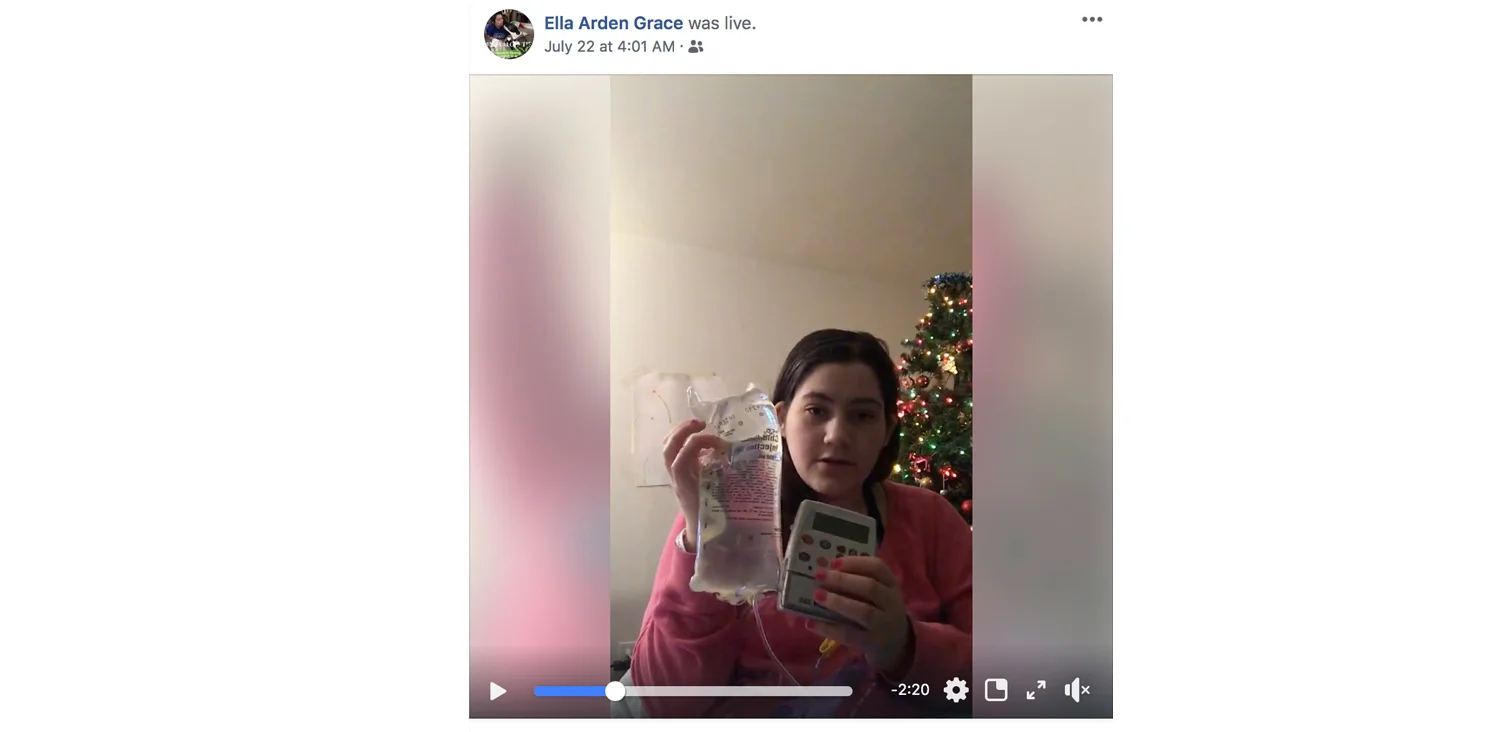
#177 Ella Builds Bridges
Cry a river, build a bridge...
Ella lives with type 1 diabetes and so many other medical conditions that I can't list them all. Her spirit and determination is the stuff of legends. This is her story....
You can always listen to the Juicebox Podcast here but the cool kids use: Apple Podcasts/iOS - Spotify - Amazon Alexa - google play/android - iheart radio - or their favorite podcast app.




+ Click for EPISODE TRANSCRIPT
DISCLAIMER: This text is the output of AI based transcribing from an audio recording. Although the transcription is largely accurate, in some cases it is incomplete or inaccurate due to inaudible passages or transcription errors and should not be treated as an authoritative record. Nothing that you read here constitutes advice medical or otherwise. Always consult with a healthcare professional before making changes to a healthcare plan.
Scott Benner 0:00
Hello and welcome to Episode 177 of the Juicebox Podcast. Today's show is sponsored by Omni pod, the tubeless insulin pump that Arden has been wearing for a decade. And by Dexcom, makers of the G six continuous glucose monitor now FDA permitted for zero finger sticks.
I'm at a bit of a loss for how to describe today's episode because it is incredibly uplifting, but at the same time, it could be difficult to listen to at times. Today I speak with Ella. She's a young person in her 20s, who has type one diabetes, but who also has a host of other medical conditions. As you listen to Ella describe her day and what she needs to do to stay healthy and safe. It's going to be it's going to be a little overwhelming for you. But I think Ella's life offers a perspective that would be difficult for many of us to gain. So I hope you listen. She's really a rather remarkable person. Nothing you hear on the Juicebox Podcast should be considered advice, medical or otherwise, please always consult a physician before making changes to your medical plan.
Ella 1:25
My name is Ella, I'm 23 years old. I've had Type One Diabetes since September 26 1997. And I have some other complex health conditions. But aside from those, I have a lot of hobbies that I love to do. And one of them is volunteering. I love volunteering at any opportunity I get either the Red Cross at a gay or F anything I can do, or just helping a friend in need out. That's what I love to do. And I'd love for it. I live for helping other people. And I also love rock climbing. And before I got sick, I love swimming. Well, I
Scott Benner 2:16
definitely get the sense from you online that you're a person who likes to help other people.
Unknown Speaker 2:21
Yeah, I
Scott Benner 2:21
don't understand climbing up rocks. That seems insane. But I'm happy for you if you love it. And I'm going to ask you later why you don't love swimming as much since you have been diagnosed. But first, I guess Let me start by saying this. I don't we don't know each other You and I, I'm aware of you. I'm aware of you through Facebook. That's how I'm aware of who you are. Right? Yeah, what I would say is that, you know, social media is really interesting. You know, you hear people say all the time, like, you only see the best of people on Facebook. Right? Right, they take 17 pictures of themselves before they get the exact right angle and, and that's the one you see. And you know, if their kid, their kid does something in a sport, they don't show you the six things, they mess up just the one thing they did that was really good. And, and, to me, that's just a bigger idea that you know, we don't spend, we don't, we don't share every split second of our lives, we're just sharing the stuff we think other people might be interested in, or we're interested in other people knowing about. Having said that, from my perspective, considering that if you posted 100 times a month, and I don't know how many times you do that, I would probably only see it a handful of times anyway, because of the way the Facebook works and everything. I have a very slim idea of who you are from this. But it does seem to me that you are in and out of different situations that are probably not optimal health wise, like I see you in the hospital a lot. Or you're in need of help or things like that. And so we're gonna really kind of drill down and understand why that is, and and why you're so open about sharing about it and stuff like that. So it's really it's excellent. So let's let's start slow. You were diagnosed, I did some fast math while you were talking. Were you 11 years old.
Ella 4:06
I was 926 97. So I was two years old.
Scott Benner 4:11
My math is terrible. So all right. I might have heard 2007 which would have made more sense with my answer. Anyway.
Unknown Speaker 4:21
Sorry.
Scott Benner 4:22
No, don't be sorry. It's my fault. I'm terrible. So two years old, which is how old my daughter was when she was diagnosed. Wow, where were you living? It's time do you have you? Do you live in America? Wow. And have you ever lived overseas? Okay, so where were you when you were diagnosed?
Unknown Speaker 4:40
Um
Ella 4:44
I was so little. It was like right after my parents got divorced. Okay, so I'm not sure
Scott Benner 4:53
I understand that. Who you living with at the time? Is it your mom, your dad are you splitting time
Unknown Speaker 4:58
um,
Ella 5:00
We I live, where we live, it's my mom and my grandma. My mom had to work all the time. So my grandma would drive us call appointments and kind of raise us. And my mom would, you know, do it, she could
Scott Benner 5:19
sit down. So was your grandmother kind of your primary caregiver for diabetes in their life? She was.
Ella 5:24
My grandma was my grandma. But was the role of a full time mom for me. Okay. I lost her three days before my 14th birthday before your 14th birthday.
Scott Benner 5:38
Yeah. Wow. Okay, so now, so she's your primary, like, you know, caregiver for diabetes and in life in general. So you like losing your mom, I would imagine. And were you self sufficient with your diabetes at 14 or no did that really kind of throw things into,
Ella 5:55
I had to learn everything by the time I was seven. So at seven years old, I started checking my blood sugar about myself when I was like three or four. And I started being able to do my own injections at age seven, actually, after diabetes camp. So after diabetes camp, the thing about Canvas, what's so amazing, is you're having fun, but you're learning at the same time. And so kids will, you know, go to camp on a Sunday. And by that Friday, I mean, you have someone they're doing their own injections, they're changing their own pump site, they're able to calculate their dose. So you know, one or the other, all three, or whatever is on but that's the beautiful thing about camp and camp taught me not just how to manage my diabetes, it also gave me every skill I really was going to need in life, from being able to overcome any challenge that lay before you and to working as a team to just know that you're not alone. And that even if you feel like you're the only person in the world who feels a certain way, chances are you're not
Scott Benner 7:24
that's a real confidence that you it's hard to kind of gain on your own sometimes. And it's it's so much easier to get it from somebody else who already kind of knows what you're going through and is able to kind of mirror it back to you. So, yeah, okay, so alright, so two years old. 20 some years ago, obviously, not a lot of technology going on probably at the time, and yet a meter, I'm guessing ish.
Unknown Speaker 7:47
Oh, my God.
Ella 7:49
Oh, sorry. No, no, no, no, was it a crazy meter did it was it though, it was the accucheck. I can't remember what it looks like. But I don't know, it's called but it took 45 seconds. For a meter results, 45 seconds. And you had to have this little like, kit, hard thing to put in the meter, because they didn't have the codes that you would scroll to for those of anyone who's newly diagnosed or newer to type one. Back in the day before they had all these meters that were that
Scott Benner 8:35
that service, you know, like coded to the strip's right, like,
Ella 8:38
yeah, like you had to put in like code 25. For one touch, we had to put in code 16 for freestyle. And back in that day, you couldn't even just scroll up or down to the code, you had to actually take the soul, the soul chip card, and put it in the meter. And you could only use those strips with that sim chip card thing. And I was on, I'm allergic to a lot of insulin. So I was on. I honestly don't know what the long acting was, um, but I was on an evil log pretty quickly, because I did not respond well to regular. Um, and then in 2000, I remember in kindergarten, that was like the big thing and I we were we went on lantis. And that was so different, because we could eat whenever we wanted. We just had to take take a shot, but it did mean a lot more hot. So I was on that until I was 13. And then on January 29 2008, I actually began pumping with the Omni pod.
Scott Benner 9:54
Okay, so now, yeah, that's great. Well, first of all, I what I heard was how exciting it was in kindergarten to be on lantis, which is not. It's not. It's not everybody's kindergarten excitement story, that's for sure. But it did open up your life. So that's pretty cool. So, okay, so how did you find? Like those first years living with type one? Do you? Did you feel burdened by it? Or was it just kind of how things were for you? How did you kind of react to it?
Unknown Speaker 10:24
Um,
Ella 10:27
I don't really know cuz I was too. But as you got older, as I got older, I, I've just always been really in tune with my body. And I've always have had an advanced, like, extreme amount of research. since a young age, like I was that kid that would come home, get off the ball, get on the computer and start doing research.
Scott Benner 10:59
Just trying to feel not just trying to figure out things that would help you or things that would benefit your health or like that kind of just trying to understand the whole thing in a greater detail.
Ella 11:09
I wanted to be a nurse from like, I just knew, like my whole life, I just knew that I was destined to be a nurse, my grandma was a nurse, and all my grandfather was a quadriplegic. So growing up, I often would have to help a care for my grandpa, and I loved it. Um, so when I was little, I would like to do research, not just on diabetes products, but I also do research on its medical conditions, like leukemias, like the cancers and some rare chromosomal design. So
Scott Benner 11:50
you were just trying to figure out like, medical stuff in general, you're just really interested by it all. I just wanted to learn. That's cool. That's excellent. So all right. Now, you're not a nurse now, I would imagine, right? Yeah. So tell me what happened. So what was your first complication with diabetes?
Ella 12:11
So that's an interesting one, my agencies were, they have been in IE, six, like six point size 7.7 range for the past 10 plus years. When I was little, and I was on injections. I had ainley, eight and a couple nine. But those are few and far between. And a lot of that reason was not there just impossible to meet my medical needs. I know a lot of people are pretty good with MTI. But the pump made a huge difference. And that it's actually been a life changing for me, and I would never go back. I was getting ready for Rn school. It was August 2014. And it was going to be my second year of college. And I went from never having a hospital admit, really never go into the hospital. Not just like no er trips, no ad met nothing. until suddenly on August 11 2014. My blood sugar was really high and I had like small pea ketones, but it didn't matter how much I was drinking. I kept throwing up and throwing up and throwing up. We went to the hospital at that point. Because I was scared I was gonna go into DK and and that at that point, that was the I was admitted that night. I was just the first of many.
Scott Benner 14:00
I was just standing last night with former Major League Baseball player Sam fold. Sam's had Type One Diabetes since he was 10 years old. One of the first things he did when he saw me was yank up his shirt show me his new Dexcom gs six continuous glucose monitor. He said it It changed his life. But this ad is not about the Dexcom it's about beyond the pod. Because I said to Sam, what's next? You're gonna get a pump? And he said, Yeah, I think so. And I told Sam the same exact thing I'm gonna tell you right now. You should look into it on the pod. I told Sam that Arden has been wearing an omni pod for a decade since she was four years old. She just turned 14 the other day. She's never once felt constricted with tubing or held back from swimming or showering. It's absolutely spectacular. Each and every day we use the functions on the on the pod tubeless insulin pump to make adjustments to ardens bazel rates or boluses it is absolutely 100% the key the focus, the CI and the now of how we have kept ardens 8172 5.6 and 6.24 now over four years, that's what I told Sam fold. That's what I'm telling you go to my Omni pod.com Ford slash juice box or click on the links in your show notes, or Juicebox podcast.com to get a free no obligation demo pod sent to you directly at your home. That's right on the pod. We'll send you a pod that you can try on where see feel touch, love. caress even I don't know what you're gonna do with it once you get it there. But you'll be able to try it, wear it and see what you think. And then if you want to move forward on the pod makes the entire process super simple. Miami pod.com forward slash juicebox with the links in your show notes or Juicebox podcast.com Hey on the pod I bet you didn't think you were gonna get a small dog snoring behind your ad. Huh? You guys hear Basal Today he is really starting up a store. Okay, let's get back to Ella hear about her first time going to the hospital and the many visits that followed
Ella 15:59
was just the first column of many. I was diagnosed and began my journey with Gasser freezes on August 11 2014.
Scott Benner 16:12
So you're going along for you know, 18 years maybe right in that range, like like just cruising along, even when you're a one sees weren't where you wanted them with MDI. They weren't terrible. They were still respectable a one sees you on a pump. Yeah, down, everything looks like it's going well, you're heading into college. And suddenly this happens. Is it fair to say that it's an is it? Has it been a, like an absolute, like, kind of like, left turn? Like did your life completely change at that point? Yeah, they did. Yeah. And so I guess so like, let's talk first about, you know, not about gastroparesis. So basically, I, we just did an episode recently with someone who else who spin talk, who was talking about their complications, the call. And so there's, um, it's nerve damage, but through your digestive system, is that yeah, that's the beginning of the idea. Right. But then tell me what how does that affect things with diabetes?
Ella 17:09
Yeah, that's what I really wanted to share. Yeah, about. So and just this thing, you know, I have not been declared whether it's complications, or it's a secondary condition. And I can get into that after I touch up on the Yes, or phrases and how it affects my diabetes. Okay, so I would describe them as Gasser versus as having the stomach flu every day for the rest of your life. So I go through periods of time where I can't hold anything down. And I end up having to be on IV nutrition, or bonds. And I actually have a central line. So I have a port in my left side of my chest, and I have a needle that goes in there every week. And that just it's called accessing my port. So in addition to my insulin pump, site change, and my Dexcom change, I have to do my IV fork needle once a week. And I will say this, iPhone diabetes was completely manageable. And I could live very freely with it. When you add guests or freezes to it.
Unknown Speaker 18:42
It's
Ella 18:44
honestly, it's a night it at first, it's a nightmare until you can adapt. So, for example, when my blood sugar goes high, I can't just drink a bunch of water and take a shot, do a site change for a high, that means I got to do a blood sugar check. I got to do a blood ketone check. I have to get insulin on board and I have to get a bag of IV fluids on and go wide open meaning like the staff, it gets into me as fast as it can.
Scott Benner 19:21
Why does all Why do all those extra things become necessary? Why Why doesn't just insulin do it at that point.
Ella 19:29
I'm prone to dehydration. So I have to wear my IV pump. Almost 24 seven, because I'm on continuous IV fluids. But sorry about
Unknown Speaker 19:46
clearing my throat you Sorry,
Unknown Speaker 19:47
I find that
Unknown Speaker 19:52
I
Ella 19:54
it really just treat with insulin. Now. This isn't every high But if I'm having a, you know, 250 plus and I'm, or if I'm 200. And I'm just rising really quickly, I'd like to actually, I really like, do. I really like to be bold with insulin and fluids, because a lot of times I like to be free, like, proactive, instead of reactive, right? Because it just makes everything so much easier. And with the dex comm, I'm able to see where I'm trending. And that is super helpful, because that actually changed to the changes, of course, the treatment plan. But as far as that IV fluids, um, and the reason I have to be so aggressive with those, especially my blood sugar's going high, is because I'm prone to ek, and metabolic acidosis. And so, I duration is a huge thing.
Scott Benner 21:13
Okay. And so, let me jump in for a second because I want to make sure I don't get lost, because I think I'm keeping up. So she's, no, no, no, you're doing good. You really are. So you have a constant IV available to like you can when you hang a bag, you can just do it. It's not like you have to get a needle then at the same time. Is that right?
Ella 21:33
Right. I just can't get once a week.
Scott Benner 21:35
Okay, so so when you you're cocky, when you're bold when you're when you're aggressive. When your blood sugar starts jumping like that, you need to get insulin and you got to make sure that you're hydrated you to check your ketones, because when it goes bad, it goes bad all at once. And really drastically. And yeah, and you don't know. Yeah. And when you don't know which one of those elevated blood sugars is going to lead to that which one is just going to come down and be okay again. Yeah, okay. All right. Okay, I think I understand that part. Now. So how about how does that how did the highs happen? Are they because Is it because of the difficulty understanding when your body is actually going to digest what you've eaten? And whether or not like because I'm assuming, I'm assuming like, your your variables are crazy, right? Like you could eat diets and get sick and and then you wouldn't have the food in your system, or it could go in and not process for a really long time. And then if you put the insulin right, then the insulin might be way Miss timed with when the when your body actually starts processing the food? How do ya how do you make those decisions? How do you make any of those decisions.
Unknown Speaker 22:46
Uh,
Ella 22:47
I don't eat much. Um, it just depends on if I'm in a flare. So a flare means like, when my stomach is totally not accepting food, it'll throw up everything, either an ice cube sometimes when I am able to eat, I do have limited intake. But a lot of times it doesn't really hit my system. So I end up kind of bolusing hours later. And sometimes I don't even need to bolus sometimes it just, it really doesn't even get to me. If I'm having a lot of carbs though. I might do I call it algorithm bolusing. Okay, so I'll do like a small dose weight of it. That's dose. Wait a bit. Next Oh, sweet of it. But it's not stalking insulin. It's just taking it safely. So if I sell off, I don't have to deal with a really bad load of follow up.
Scott Benner 23:51
Okay. So you're much more in tune with the concept of like, when I talk about timing insulin, you're doing you're doing that on a much bigger explosive level, like drugged out over much more time. How do you even so I, I don't want to bum you out. But it's, the question pops in like, how do you even get up the nerve to want to eat? And
Ella 24:12
honestly, it's evil. our stomachs are evil, because my friends always say that because we can be extremely hungry, but be so nauseous. So sometimes, it's literally a hungry and I'm so nauseous I don't throw off starving or am I hungry? Or am I nauseous? One stomach? What do you want? Like? We never really know if
Scott Benner 24:42
you just got shot. Yeah, and you can't not it's not like you can't you can't not eat but you do get your you do get nutrition through the port weekly.
Ella 24:52
From time from time to time I do go on APN it's called Total parenteral nutrition and that is why I get both nutrition and hydration and like fats and proteins. So on a day to day basis, my body is running off and failing and defies normal sailing. So ah is okay, if I talk about the
Scott Benner 25:21
lows a little. Do please. Yeah. Trust me, you you keep talking because I'm, I'm keeping up in my head, but I'm in my questions aren't coming as fast as they usually do, because I'm processing a lot. So go ahead, please.
Ella 25:33
Okay. So my low blood sugars are so different. And honestly, that's probably one of the biggest hassles. Because you know, when you're low, if you can just drink a juice box and be okay. You're, you know, you're good to go, you can be playing a sport, and, you know, come over here could drink a juice box, maybe some business you need to do for a bit. But then you're good to go with me. I have kind of a different story. So by Lowe's, we start trading my lows under 120. Okay, so I have extremely crazy parameters, my parameters, where we like to be is between 130 and 180. Because the lows hit me so hard, and it's pretty crazy. And I am I am mostly asymptomatic. But the dexcom is key for me, because it has saved my life over 280 something times in the past two years. So when I go low, I have to treat with IV dextrose. So I either have dsst and fuel, which is like this huge syringe filled with super concentrated like IV think of grape juice, like the IV version of breakage. So
Scott Benner 27:06
does it hit you really fast?
Ella 27:08
Um, I have to push it over eight minutes, or else it'll fail my Dexcom. Okay, but it does. It does hit you within about 10 minutes. You're you can talk again and you're good.
Scott Benner 27:23
So if you push it in too quickly, the Dexcom would fail to be able to read
Ella 27:28
Yeah, the Dexcom would do the quest those lovely question mark. And that's a headache and a half and then if I don't calibrate within an hour after dial to see Friday and I'll have to change the whole
Scott Benner 27:42
figure out how to move the dextra since and not cause an element on second Arden's texting about our lunch. Give me one second. I need to ask her how hungry she is. Thank you. We'll just keep recording as we do it. Okay, she's hungry. And let's think about our lunch. Well, it seems like forever ago but way back in Episode 47 of the podcast that is 130 episodes ago, I think. Anyway, a long time ago in the Juicebox Podcast I interviewed then, Oakland Athletics outfielder Sam fold, about type one diabetes. Since then Sam has retired he's now a coach with the Philadelphia Phillies, my hometown Phillies. And last night, I got to go down to a game take my son to see batting practice live on the field. Thanks to Sam. So many, many thanks to Sam. But as you heard in the Omni pod ad, while we were there, Sam yanked up his shirt and showed me his new Dexcom g six continuous glucose monitor. Now if you go back to Episode 47, when I spoke with Sam, he was on shots. He didn't have a CGM. He didn't have a pump. He had nothing. And I told him back then Sandy gotta try. And now he's using the G six. And he said to me, it changed my life, that quickly in a month, he know, how would you like your life to be changed. And I mean for the better in a way that makes baseball players smile. Go to dexcom.com forward slash juicebox. Get into a world where you can make diabetes treatment decisions with zero finger sticks, no calibrations, always know where your glucose number is, and where it's going. That's what the dexcom g six can do for you. It's what it's doing for Sam. It's what it's doing for Arden. It's what it's doing for countless countless people living with Type One Diabetes, be one of them. dexcom.com forward slash juicebox, the links your show notes, or Juicebox podcast.com. By the way, after the baseball season, Sam's going to come back on we're going to talk again.
Okay, she's hungry, and let's think about our lunch. I know what's in there. So I'm going to do this. A lot of units. I have to extend That a little bit not a lot. She's a little harder than I wanted to be right now. So let's do. Let's do 20%. Now
Unknown Speaker 30:12
the rest.
Scott Benner 30:15
Yeah, I was I was impressed with myself when I figured out this stuff, but your thing is way more difficult. How do you figure these things out? I guess because this is not something I would imagine that a doctor just comes in and goes, Oh, here's how you handle this. It's probably a lot. I mean, your trial and error is probably insane. Why?
Ella 30:36
I'm alive, right? Yes.
Scott Benner 30:39
How involved are your doctors and health care people and how much is just on you?
Ella 30:45
It all honestly kind of falls on my shoulders because I find what work and then they're extremely supportive. So we have done we have done a lot of experiments. One of them was actually the we call it g humping glucagon pumping. And so I would take an animal because they deliver one unit per second, it was the fastest delivery system. So I would at one point, I was putting glucagon in my enemas, vide, or in a tank. And wearing that and then just hooking up to Bolus glucagon when my blood sugar would drop. And then of course, wearing my other insulin pump, which would be probably the T slim and just kind of doing it like that. But unfortunately, the glucagon didn't end up working well for me at all. Because when you don't eat by mouth, you don't have the stored glycogen. And what a lot of people don't know is the glucagon. All it does, is it's like sending a text message to your liver saying yo dump the stored glycogen. Because it's not the actual sugar source, it just tries to trigger the liver to dump a stored glycogen to raise the blood sugar. Okay.
Scott Benner 32:13
So if it's not there, if the storage isn't there, then there's nothing Yes. And that's what you found out. We're trying to use glucagon.
Ella 32:20
Yeah, so if you don't eat it, if you can't eat enough by mouth, then glucagon is not going to help you. So that kind of stunk. So then we got to the point where I'd have decent tea on hand at home. And then dsst became like the new glucagon. So what I use on a day to day basis, though, for Lowe's is the five. So that is just a liter of fluid that has 5% dextrose in it. And just like an IV bag, and then that one I just run really quickly for like 250 ML, the Irie summer under juicebox amount of liquid and then I recheck and correct as necessary.
Scott Benner 33:07
And you said that there's you kind of said earlier, I want to make sure we hit it that there's a difference between a complication from type one and just developing another disease. And so, yeah, is there a feeling that this is just a development for you that it's not type one caused or and how would you even know that? I guess
Ella 33:26
my so I don't have your typical peripheral neuropathy and your autonomic neuropathy kind of case. I have multiple organ systems that are affected. So like I have dysautonomia, which is dysfunction of the autonomic nervous system. So my body has a very hard time regulating my heart rate, my temperature, my blood pressure, things along that nature, just vitals, my body does not do very well to adapting to the external environment. So if it's really if it's extremely hot outside, I don't sweat like a typical person, but my body literally cannot tolerate the heat and I just I can pass out very quickly because my body can't regulate it, and it's really hard. That's just one example. Um, so the Gasser precice is just a piece of the puzzle. Does the Vegas nerve. Are you familiar with that?
Scott Benner 34:39
big ol nerve?
Ella 34:40
Yeah, yes. So your vagus nerve extends from your brain down pretty far. And it can affect your stomach and gas or freezes can be part of it. Your heart can be affected your respiratory system can be affected. And, among other things, but I'll just keep it short. But I am checking riblets
Scott Benner 35:09
don't go check him out. Sure I'll wait. If I can't understand about needing to check your blood sugar, nobody would understand.
Ella 35:16
191 that's another thing that's so frustrating is some days I'll wake up. Like, for example, two days ago, I woke up I was like, 365. And an hour later, I was 60 something I'd gone. double arrows down, bam, pressed, what
Scott Benner 35:37
did you do anything to affect that 350 or it fell on its own.
Ella 35:41
I was asleep. And then I woke up. And I checked. And then like, before I even had time to Bolus. I was getting a double down on the Dexcom.
Scott Benner 35:55
Yeah, so that's a pretty big swing, because what if you would have done something about it? Right? And then it would have fallen on top of that, then you would have been in that situation in either direction. Okay, understand. So yeah. All right. So okay, so type one gas, your precess body has trouble regulating a lot of different functions, anything else so I can understand the whole picture.
Ella 36:16
And I have Well, I also have a pernicious anemia, which is autoimmune b 12. deficiency. I have Tourette syndrome. I have severe iron deficiency anemia. I have PTSD. And I have severe vitamin D deficiency. And I actually just established with a doctor, all the geneticists, you know, that is
Scott Benner 36:58
looking back into the history of your family and your genetics or maybe I'm wrong.
Ella 37:03
Essentially, yeah, pretty close. Yeah. Um, so that's just like the doctor. Right? Same for Yes, that exactly. So they do a lot of like chromosomal disorders or, you know, genetic disorders, such as, and he sent testing for a condition called mitochondrial disease. And we are awaiting those, all those results to come back. But because of the complex history, and everything that literally took me about two hours to cover everything with my doctor. He said that it's likely that I really do have a mitochondrial disease. So blood work was drawn and we're waiting on those results.
Scott Benner 37:53
What would that be? What is the impact of that?
Ella 37:58
I'm going to quote one of my favorite, kiddos, she explains it really well, in her video, and her name is Anne Marie. And she explains it like this. Every cell in our body, except red blood cells has mitochondria. But a kondia takes oxygen and food to create 90% of the energy. Our bodies need to sustain life. So mitochondrial disease occurs whenever the mitochondria fails to produce enough energy. That lack of energy leads to cell death, and multiple organ failure. multiple organ failure leads to the Death to the person who is affected, and to folk. Ah,
Unknown Speaker 38:45
well, that's not fun.
Ella 38:47
No, we don't have complete confirmation on it. But he was pretty confident that I may I have a mitochondrial disorder of some sort.
Scott Benner 38:54
And so I'm so I'm sorry to like, if it becomes too much and you want to stop, just let me know. I don't know how much of just regurgitating what you go through every day is helpful to you and how much of it might be because because you said you have PTSD. I'm assuming the PTSD is from the Panic of my blood sugar's falling, and I'm gonna die. Like like is that pretty much like after that happens to you enough times? It's just It feels like it. No, no, no, I don't know what to say next. So you go ahead and talk. What? That's my guess. But you tell me.
Ella 39:31
The Dexcom itself has saved by life more than like 280 plus times. So I was formerly living in my apartment up in New York. And not in New York City. the boring part
Scott Benner 39:46
of New York City, the boring part of New York
Ella 39:48
is the one that no one's ever heard of. And then I recently moved to Tennessee. Okay, and prior to When I was living in New York, I lived alone. And unfortunately, family is a luxury not a given. And so I've really been doing everything on my own for years throughout this journey. And I would go to sleep and I would have all I would call my diet stalkers by Dexcom. followers. I call them the diet stalkers because they'd suck my blood sugar, nice. And then if I were to go low, while I was sleeping, they would call my phone about, you know, 20 to 50 times, depending, if I didn't wake up, they would go ahead and dispatch EMF. And then the ambulance would come by Ms teams would come in, they like Ella was up for law, Li YOLO, or all sorts of good, and then sometimes I'd wake up a little bit and be totally out of it. And they would just deliver the dextrose by blood sugar would come up, and they'd be on their way.
Scott Benner 41:07
That does sound like something that I would feel stress about, for for absent
Ella 41:13
five times for horrifying. But then, in a way you kind of feel like, Alright, if I was gonna die from a low blood sugar, it probably would have happened by now. after all.
Scott Benner 41:25
It's pretty hell. so crazy. So instead of so instead of spending the last 20 minutes we have Dan, they're just going over. I mean, I think we've we've got a fairly clear sense of, you know, the scope and the, the impact of what's up I don't know, we know depth, but I think we understand that in total. So let me ask you some more personal questions since that. What is life like when this is your reality? Are you existing everyday is it just get up and let me stay alive till the next day? Or but you did say you like rock climbing? So are the things that you go do? Is it day by day? I'm assuming you don't work? I mean, hey, yeah, you're a full time student.
Unknown Speaker 42:08
I have a full time patient patient here full time.
Scott Benner 42:10
That might be the title of this episode, by the way. But, but but but Okay, so you, I would imagine that because like I said, like, I know people who are on dialysis, and that's a full time job. Oh, God. Yeah. Right. And so when you start adding all of these, I can't imagine you'd be you know, you're like, oh, and let me get a shift in here too. So I get that, right. But I'm trying to figure out for you, because you are. I've seen you in a couple of different modes, like you do Facebook Live sometimes. And I've seen you in a couple different modes, and I've seen bright, intelligent, thoughtful, loving, caring person trying to help out other people. I've seen you in a panic. And and I've seen you look so beat up that I was wondering how you even got the nerve up to like, sit up, do you know what I mean? Like and, and so I'm wondering how like, like, what is a day like, you don't mean like, like, how do you know what I'm saying? Like that's that's what I'm really interested in
Ella 43:12
a typical week, a typical week, I have anywhere from free his money as six to eight doctor's appointments. So a typical day for me consists of I effortless sugar roughly 15 to 20 times a day. And yes, I'm serious. Yes, I really do. I have the meter downloads to prove it. And my endocrinologist does my script is literally written for 15 to 20 times a day. Sometimes there are days where I only test 10 or 12 times but generally it's every two hours. And then whenever needed. So every time I get behind the wheel, I test when I wake up I test if I don't feel right I test and I do that as well as I wear the dexcom g five and the dexcom g five has been the piece that has really helped me navigate it's the GPS for diabetes I like to say so that said a typical day for me is I wake up and I push my nausea medication center again to my port and then I get my fluid set up and I just kind of still in bed until I'm feeling up to it and then if I have to go to appointment I get ready. And I also do like the normal stuff I am first your teeth and you know do your hair or whatever I
Scott Benner 44:43
would imagine. Yeah.
Ella 44:45
And then I you know get a blood sugar. Get where I want it to be. At least try. And then if then I come and take my morning meds after my non medical kicked in. And then I get on with my day. So some days, I phone for appointments, other times I go to the store. And sometimes I go volunteer at, you know, an organization like the Red Cross or the ADA or jdrf. Wherever I can help as I do, I have worked with some kiddos in my area over the years with who are affected with type one. And there's one little girl that I worked with, and her name is Noel. And she and I have a really good time together. And so sometimes her mom would drop her off. And I would, you know, we would just spend the day together. And it was easy, because I've been type one, and I know how to take care of her. But she has come such a long way. She's on the pump now. And he's thriving, and I love having the opportunity to help out with her. So sometimes I do stuff like that. But there are days where I'm in bed, and I'm not leaving the house, and I don't feel good. And I go between my bed and the bathroom and my bed in the bathroom. And I'm super sick. And there are times where I get really tired of this. by one of the things I say is sometimes we cry by a River Bridge, and get over it and come out stronger on the other side.
Scott Benner 46:39
That's amazing. Oh, well, because so what do you have? Do you have like long term goals for yourself? Like things you are trying to get to? Yes. Okay, what are some of those things,
Unknown Speaker 46:54
I
Ella 46:56
still don't want anything to stop me from becoming an RN. Because I promised my grandma, literally, she took her last breath that I wouldn't let anything stop me from becoming an RN. And that's where I call the Bret blessing in brokenness. I would not ever have been this prepared for nursing school, let alone a career in nursing. If I didn't go through this. So I'm wish I didn't go through this. But I appreciate that. It's made me as strong as an who I am today. And it's going to make clinical breeze because I've spent over 600 days in the hospital since August 11 2014. So I've had the opportunity to learn as I go, which is why I'm completely independent with my medical care. So I'm hanging IV fluids, I'm hosting IV meds on a daily basis, but I also know how to do port care. And I know a lot of I gotta got to be my own lab rapper.
Scott Benner 48:08
Well, if you have a perspective that most people will never gain, I mean, honestly, like on just, you know, on life on what tough means on what persistence means, on what, you know, on what a lot of things, you know, are at a much deeper, much deeper level than, than the rest of us. Like, I mean, excuse me, I got it, you know, I got a couple days ago, and I didn't feel well a couple days in a row. And so the idea of laid up in bed and barely wanting to move and can't do all that stuff. I get that but there's an expectation that that's going to end and that it won't start back up again. And so it seems like an inconvenience, not a you know, not a reality to me. But but yours is, you know, I'm going to get through this and it's going to happen again, it's not going to not happen again. It's it's definitely is. That's something that I just don't know that any of us can really imagine.
Ella 49:06
I'm on a quest starting in, I'm sorry, in 2017 I wanted to find a health healthcare that was competent, unable to meet my needs, because I don't want this to be the reality for the rest of my life. I want to get whatever I can to be able to get my health is stable. So another thing that really affects me is these net these vitamin deficiencies and minerals so magnesium, potassium, phosphorus, and iron. Those affected me really badly. Especially the beach falls like I was having neuro symptoms a little while ago and it was actually because part of the contributing factor was my vitamin D 12. was so low is in the two hundreds whereas the neurologist wants it in the 500 Okay, so that was really low. But that is just a piece of the puzzle. So ultimately, once I get all of these tests done, like I did, like I said, I relocated to Tennessee, and there's a lot of different specialists on there. And once I get God once I get all the testing complete, and we can find providers that can keep my level stable, like my electrolytes, my nutrition and my iron. Once that's all stabilized, I'm gonna be able to function because when they are stable, oh, my goodness, I feel amazing. I feel so alive. I feel like a human instead of like a walking carcass. Yeah.
Scott Benner 50:47
And so that's still a process that's ongoing. You You're, you're closer to doctors now that you think can help you. Yeah, get that into a better situation.
Ella 50:56
Yeah, and my goal is I want to get everything figured out, I want to get everything treated, that needs to be treated. Because come 2019 I want to go back to school. From day one, the first thing I want to say, first, the first thing I said is, I can't wait to go back to school, I'm going back to school, I'm gonna go back to school because I part of the reason I woke up is because I had a dream to become a nurse. And I've transition that from a dream to a goal. And part of what gets me through every day, even the hard days is definitely the support of what I call family friends. And a lot of the type one moms in my area have been just so amazing. And type one support mama and that. And a lot of amazing friends and through the community, through the type one support community and Susie, chronic illness support community has been able to maintain a positive attitude. And going back just brushing up on what you mentioned about what I share, I share what I do on Facebook. Because if I can help one person, realize that, hey, you can do this. Or if I can, you know, if there's one life that I can have an impact on. That's the greatest gift in the world, then all of this was worth it, then pushing on, in everything is worth it. Because bottom line, my ultimate goal in life, is just to have a positive impact on as many lives as possible. I was gonna say the summer, sorry, this is suffering. And as many lives as possible,
Scott Benner 52:39
I was gonna say that I think that what you share on Facebook is probably in some way, positively affecting more people than you might as a nurse to be perfectly honest, like not that not that that's not still an amazing goal, but it's still in the interim, you still are having that impact on people? Because it is it is it is completely impossible to even spend a couple of minutes watching what you're going through and not and not have those thoughts of, you know, if she can do it, I can do it. You know that that sort of thing? It really is? I don't know, it's I think it's really valuable for people to see and therefore valuable for you to share. And that can't be something that's simple. Like the first time you decided to tell people about this could not have been, it could not have been a fun or easy decision. I don't imagine but but I would imagine that everybody really appreciates it. I know that I do.
Ella 53:39
It's always really exciting to see when you jump on my live, I'm like, Oh my gosh, it's got better.
Scott Benner 53:45
You're very nice. So I'm not doing anything near what you're doing. And it's just, uh, I don't know, like, there's, there's times I think about you a lot. So I don't reach out a lot. But you you popped into my head a lot. So yeah, because you're just so you're very real while you're doing and there's no Um, there's like, there's no pretense to it. I don't feel like you're acting apart or just like, oh, people need to see me sick or like, you don't mean like there's, you're just very much there and, or, and just very, it's just really honest. So I find it really valuable. I can't imagine other people don't as well. I don't even know how you have the nerve to do that. I I don't have nearly the courage that you have. That's for certain. And as you describe your life day to day, it's difficult for me not to like interject my own thoughts over top of it and ask you like, do you know do you ever like feel like just giving up because I feel like it would make me like that. But at the same time I haven't been down your journey, your path. So maybe your path would harden me along the way you don't I mean, yeah, but just it's it's just, it's just Seems like from my perspective, I don't know how you do that, like, even like, I was gonna make a joke earlier that you might be at least a great person to ask about Netflix because you have all this time in bed, but you don't even have time in bed, you just bed bathroom bed bathroom, it's not even like you can lay there and go, Okay, I can't get up and get moving today, but at least I can binge watch trollhunters which I think now is just an insight into what I just watched last time. Netflix is a cartoon that I'm pretty sure it's for 10 year olds. But But anyway, like, you know, is it the? I mean, have you do you consider, like, how much of this Can I take or do you know, you can take it,
Ella 55:39
I kind of I'm not gonna lie. So in the beginning, I'm like, I can't do this, I can't do this, I'm so not ready for this, I'm not strong enough. And then the thing is, sometimes you don't realize how strong you are. Until being strong is the only choice you have. So I don't really I kind of keep the similar mindset like I do with type one, honestly. And I just thank God every morning that I have another opportunity to, you know, make, to be in this world and to do something with it. And kind of honestly, every day for me is like a kid on Christmas morning. Every day that I get here is like, as exciting as you know, little kids get on Christmas morning, because it's another opportunity. And that's the greatest gift, the greatest gift is definitely time and time with the people who you love most in this world. And there are times where you get down. And I do need to, that's when I say I take a moment or so forever, build a bridge, get over it. So I might, you know, take I'm human. So I do take the time to take a few minutes acknowledge what I'm feeling, maybe call one of my best friends or call a support person. And be like I'm so sick and tired of this. And then we end up laughing and then that's a call that part building the bridge. And then we go ahead and you know, we move, move on and you know, keep going and it comes down to it. You can either laugh, or you can cry. And if you can find a way to laugh, that's going to work out a lot better and crying for you in the long run. Because when you live here actually producing some income that totals hormones in your brain. And those two actually literally help reduce your suffering. So I do watch some TV shows, but I'm not really on Netflix a lot. I do. I honestly I'm just not a big fan of a lot of like TV shows. I do like a couple like bones and castle. But those are fun. I love Boston. I felt like I can relate much. But other than that,
Scott Benner 58:01
that's a very well, you know, it's funny. So we're wrapping up here on an account upon an hour already. That you early amazing. But I was thinking this morning about something completely disconnected from you, I was watching the news or you know, paying attention to the news. And there's a lot going on politically and there's a lot of people being indicted and things are going on like that. And I it made me think of if I was guilty, right? How long would I fight? Like At what point would I say you know what, you got me I give up and then I realized probably never like if I did something and you caught me I deny it right till the very end and I think that's a human condition that that is that is the human spirit in a funny way, right? Like the idea of I'm not gonna give up. I'm not I'm not giving up. You can kill me if you want. But I'm not giving up I'm not going to be the one to say I'm done. I it's just me that the human mind and the human body. It wants nothing more than another minute. Like do you know what I mean? Like you like that's that's the thing that most of us that keeps most people going it's you just you don't want to stop and by stop I mean like you don't want to not exist anymore in whatever form that might be you just you want another second in the game and you'll almost do anything for it. And it's it's almost kind of despicable is that is in an illegal situation. It's also the same function that I heard you talk about for the last hour I can't believe that it's something that randomly popped in my head and you basically talked about it all morning, which is like you're not giving up you know, I mean like you went through Excuse me? I've been sick but he went you went through you know you've got type one you've got gastro priestess yet all all the things that you listed and then possibly something else on top of that. I never heard you say, but I'm going to wave a white flag. Like I heard you say one another day. Like I want to get up I want another shot at this I want to try to fix it. I want to be better there. I know there's a world where I feel better because I've been there. How do I get there? And stay there so that I can make the most of every one of these things? I 23 you have like the perspective of, of like, 1000 year old person, you don't mean like, it's no, it's amazing. I know some people you should talk to me on it, that would be awesome. Now they should pay attention because there are some people need that kind of perspective would be very, very valuable for a lot of us. So I really appreciate that you put it out in the world like this. Thank you very much. Is there anything? I didn't ask you or anything you wanted to say that that we didn't get to say?
Ella 1:00:40
And I am not only on Facebook, I'm also on YouTube. I was feeding type one. It's all lowercase MySpace, EA t i n g. CYP one. And I was inspired by some of the early diabetes bloggers and I also have a blog, which is Bolus of hope. org.wordpress.com
Scott Benner 1:01:09
I'm gonna get you to email me all your links, and I'll put them in the show notes so people can see them. Who was a Did you have a blog or that? Now I said this I put myself
Unknown Speaker 1:01:19
read yours. Don't I thought when it was first kicking off?
Scott Benner 1:01:23
It's gonna say don't say me. But is there someone? Is there someone that like that you saw that like or why? Let's say that you saw a blogger? What What about them made you think oh, I should do this, too.
Ella 1:01:35
I was really inspired by Carrie marone. Starling. And diabetic Danica.
Scott Benner 1:01:42
Okay. Yeah, there's two good ones. I could easily see being inspired by both of them. Danica does such a great job on YouTube. And yeah, and and Carrie is a machine of like, honesty. And she she can she blogs. Like it's a like it's really sad. I'm, I know that I know that. You were probably I don't know how you would say this, for sure. But I think Harry's probably got one of the oldest, if not the oldest type one diabetes. Yeah,
Unknown Speaker 1:02:12
I believe it was 2005. Yeah,
Scott Benner 1:02:15
like, I think it was her. Then Scott Johnson. I know I came in sometime after that around 2000, early, early 2007. And there were some other ones in there too. But you're really talking about a smattering of these blogs. I joked with somebody the other day that I had a blog back before people knew what a blog was, I've had one so long. No one even cares what a blog is anymore. So I somehow we lived through most of the of that. But I've seen blogs help people in ways that, you know, I imagined couldn't be any greater and then listening to you just now say that some of these have had an impact on you. It reinforces what I thought about them. It's just such a very valuable and an honest thing when people are willing to share like that, so that somebody else can see it. And now you're part of it, too. You do it as well. So I think you do it as well as anybody. So congratulations. Very well done.
Ella 1:03:11
Thank you so much. This is such an honor. No, I can't thank you enough.
Scott Benner 1:03:16
You're you are very kind to say that this is just you and I are just talking on the phone. It's just happens to be recorded and a bunch of people are gonna hear it. That's all.
Unknown Speaker 1:03:23
Yeah. All right.
Scott Benner 1:03:27
Though, you were you were great. You weren't? Listen, you were 100% fantastic. Your voice sounds clear. You know what you're I mean, listen, I love talking to people about their lives because like I said, at the beginning no one knows your life better than you. And if you're willing to talk about it, the answers are just incredibly they're valuable in ways you can't even imagine. So you're going to have helped people with with what you did here today. Again, in ways you're not going to completely understand so really well done. Thank you so much. I'm going to stop the recording and then say goodbye nicely, and like people hold on one second. Hey, you can check out Ella's YouTube channel@youtube.com forward slash beating type one and definitely find her on Facebook. I'm gonna put a link in the show notes to both of those things. Thank you so much Ella for coming on and sharing. Seriously I don't even know what to say just really amazing of you to come on and tell the story. Thank you dex calm and on the pod for your continued sponsorship of the show dexcom.com forward slash juice box my Omni pod comm forward slash juice box the links your show notes or Juicebox podcast.com MDI users if you did not hear Episode 174 with the people from in pen, go back and listen in pen makes an insulin pen that combined with their smart app gives you a ton of the functionality that insulin pumps have. Thank you so much for listening and thank you for the great reviews on iTunes. The podcast continues. To grow because of you and your sharing Thank you so much. I'll be back next week with another episode of the Juicebox Podcast.


The Juicebox Podcast is a free show, but if you'd like to support the podcast directly, you can make a gift here. Recent donations were used to pay for podcast hosting fees. Thank you to all who have sent 5, 10 and 20 dollars!

#176 The Magic Wand
What being cured could mean...
Colleen is a summer breeze, a big hug and your favorite blanket all in one. A long time type 1 diabetes advocate joins the conversation about what a cure would mean to her. Arden has hypothyroidism, and much more.
You can always listen to the Juicebox Podcast here but the cool kids use: Apple Podcasts/iOS - Spotify - Amazon Alexa - google play/android - iheart radio - or their favorite podcast app.
+ Click for EPISODE TRANSCRIPT
DISCLAIMER: This text is the output of AI based transcribing from an audio recording. Although the transcription is largely accurate, in some cases it is incomplete or inaccurate due to inaudible passages or transcription errors and should not be treated as an authoritative record. Nothing that you read here constitutes advice medical or otherwise. Always consult with a healthcare professional before making changes to a healthcare plan.
Scott Benner 0:03
Hello, and welcome to Episode 176 of the Juicebox Podcast. Today's episode is with Colleen, Colleen is interesting in a number of ways, but let me tell you something else first. Do you remember back in Episode 157 it was called Lindsay is a cornucopia of emotions. Do you remember that episode? my conversation with Lindsay came about because I asked a question online about how people might feel if diabetes was just magically cured. When I asked that question online, I came up with two people who wanted to be on the podcast one was Lindsay back in Episode 147. And one was Colleen, who you're going to hear today in Episode 176. And while the conversations begin, in the first couple of moments exactly the same, they go in completely different directions. Also, in this episode, I talk a little bit about art and being diagnosed with hypothyroidism, which I don't think I've been as clear about in previous episodes. Colleen just does an amazing job of sharing her life and times with type one. I'll tell you a little bit about her. She's an adult who has children, little babies, she's married, she's had Type One Diabetes for a very long time since she was little. And she is a long time very active member of the diabetes community online. Please remember that nothing you hear on the Juicebox Podcast be considered advice, medical or otherwise, always consult a physician before making changes to your health care plan. Oh, you know what I forgot to say something. This episode of The Juicebox Podcast is sponsored by Dexcom. And on the pod. There'll be a little more information about both of these great products later in the show. But you can always go to my on the pod.com Ford slash juice box, or dexcom.com Ford slash juice box to find out more. There's also links in your show notes.
Colleen Ngyen 1:53
My name is Colleen Ngyen n g y en I know I've done I've been diabetic foot forever.
And I work with work for a camp. Kids with diabetes in the summer. Yeah,
Unknown Speaker 2:07
that's about it. See,
Colleen Ngyen 2:08
I'm a diabetes nerd. Yeah.
Scott Benner 2:12
Okay, so I'm gonna get something out of the way very quickly. People listen to the show a lot will understand this. I think that these conversations go the best when they're completely just organic. And we don't plan them out. We don't email back and forth to talk about things. In the pursuit of that idea. I sometimes forget why I wanted to talk to people. So here's my recollection. I had this big idea one day, and I reached out I said to people, if you feel like this, please let me know if you want to be on the podcast. Is that about right? Yeah. Except I forget what this is.
Colleen Ngyen 2:50
Oh, it was a if you wouldn't want to cure?
Unknown Speaker 2:55
Ah,
Scott Benner 2:56
yeah. So it was up. It was up between that and adults who are afraid of using insulin because they're alone? I didn't think that was you because I know. You're not alone? No,
Colleen Ngyen 3:06
definitely not alone.
Scott Benner 3:09
Because you've got like children and dogs and husbands. Yeah, you can.
Colleen Ngyen 3:12
You can probably hear my dog a little bit right now.
Scott Benner 3:14
What's the dog's name? She's got her name is reka. Listen, if we hear ruka that'll be good. Yeah. Okay, so we'll get a little we'll dig down a little more into who you are. Because you were you. When you describe who you are. You're like, it's me. It's Colleen. I don't know. So let's do it like this. How old are you?
Colleen Ngyen 3:34
I am 31. All right. When
Unknown Speaker 3:35
were you diagnosed?
Unknown Speaker 3:37
I was three years old. Okay,
Unknown Speaker 3:39
I'm going to do some math now. Hold still.
Unknown Speaker 3:42
28 years? Yes.
Unknown Speaker 3:44
See? It's amazing. Yeah.
Colleen Ngyen 3:46
I usually tell people I was diagnosed at three and I've been diabetic for 20 years. So please don't do the math.
Scott Benner 3:52
Well, here's what I just did. If you want to look behind the curtain, I took 31 and I subtracted one that got me to 30. And then I realized I had two more and I took off those two took me right to 20
Colleen Ngyen 4:03
is that common core?
Scott Benner 4:05
You know what? That's the that's the one that the guy who didn't go to all the days of school? Yeah. Okay, so you've had diabetes forever? Yeah, it's interesting. 28 years, you were diagnosed at three years old. My daughter was diagnosed when she was two years old. But you're three years old? quite some time ago. And and so I'm gonna ask you a question before we get into why, you know. So when, when, when Arden was diagnosed at two, I remember hearing, like, people were like, Oh, you don't have to worry because long term complications from diabetes don't really come into play for like 30 years. And I remember going well then like, it'll be 32 when that happens? Yeah. Like, like, how is that comforting in any possible way? Like why would you say that to me? Like let's say that that's not even true, or it is true and I don't see it as being True. I don't think there's a number you can put on it. But it was this interesting idea that I thought, Oh, this is how they used to make people feel better. They were like, oh, you're 20 by the time this really affects you, you'll be old and you won't care about yourself anyway. And like, that was the vibe. Right? That came from them. Have you had any issues? so far? No, nothing? No. I'm lucky. And, and I do see it that way. A little bit, too. Yeah. Yeah. And because, I mean, 28 years ago, let's call it 30 years, because it's making my brain hurt to say 2030 years ago, you must have been like, that's not even like big brick meter. You get to take home time as it is.
Colleen Ngyen 5:39
I had I, my very first meter was just called one touch. Like not one touch something, it was just called the one touch. It was the one touch meter. And they were like, well only ever
Scott Benner 5:50
need one name. This will be great. Yeah,
Colleen Ngyen 5:51
right. And my second one would call the one touch two.
Unknown Speaker 5:57
Very creative.
Scott Benner 5:58
I have to say that sounds dirty. Actually. One Touch too. It feels like there's more to that sentence. But But okay, so you you she did have a meter, but it wasn't portable.
Colleen Ngyen 6:12
Yeah, yeah, I took, I think 60 seconds. And it was one of those ones. He had to put like the big blood drop on the strip. And I'm making a motion with my hand right now.
Scott Benner 6:25
Welcome to pantomime podcast.
Unknown Speaker 6:29
I'm putting it out.
Scott Benner 6:30
Yeah. So for the rest of the podcast, we'll all just sit very quietly and try to imagine what it is you're doing with your hands.
Unknown Speaker 6:36
Yeah. It'll probably get anyone to use that strip knows what I'm doing.
Scott Benner 6:41
So you were basically like cutting a vein open and like pouring on top of the meter. Just and and a minute later, as you're a little dizzy from the loss of blood? It would, it would give you a number. Essentially, I wonder if those big meters were more or less accurate than stuff that's available today?
Unknown Speaker 6:58
I believe they were less. Right.
Scott Benner 7:01
I mean, I don't know. Exactly. Right. So. Okay, so you were working with specious data? You're a little dizzy from the blood loss. And you were a couple of years old. I'm assuming did one of your parents. Were your parents together? Yes. Did one of them die more? They still are. Yep. Well, that's Listen, that's really good news. For people listening whose kids have diabetes, this probably isn't going to make us all get divorced.
Colleen Ngyen 7:26
Yeah, I mean, my, my mom was my primary caregiver. When my dad helped to, I mean, they were both very knowledgeable, still still are very knowledgeable. My mom, my mom, still, you know, sees my Dexcom information. And every once in a while will text me like, Hey, what's going on with a helicopter emoji?
Scott Benner 7:46
Colleen, listen, I didn't give up this much of my life for your health to watch you right away now. Is that comforting? Or is it annoying? Or how do you find it?
Colleen Ngyen 7:57
It is actually. I mean, it seems to me one. I was up in the middle of the night with my kids. And my blood sugar was like 300. And I use I use the T slim and I went to put in my blood sugar. And I accidentally put it in the carbs. Okay, and I was so tired that I just like whatever, just do it. And so, you know, I got like 30 units.
Unknown Speaker 8:22
You know, that's, that's how you want to roll. Yeah.
Colleen Ngyen 8:26
So and I wasn't waking up to my CGM alarms and but my mom saw it on my share and kept calling and calling and calling and came and knocked on my door and woke me up.
Scott Benner 8:36
She actually came to your home. Yeah. Does she live closer? Was it?
Colleen Ngyen 8:40
Yeah, she was called. And she actually works even closer. So
Scott Benner 8:42
it was nice. But still, she she saw she saw she saw you really high. Then she saw you dropping really fast and you weren't. You weren't waking up. And so she was like, Look, I'm not. This isn't how this is ending.
Colleen Ngyen 8:55
He was right she did. It was right. Like that's that saved me.
Scott Benner 8:58
Yeah, you were in a bad spot. Yeah. And that's something so when you put 300 in carbs, you obviously didn't realize it when you didn't you weren't what you weren't like, I'm just gonna get myself 300 carbs, right?
Unknown Speaker 9:07
No, no.
Colleen Ngyen 9:08
And it even gave me that like Max Bolus. Your maximum over your maximum boss, do you want to continue? And I was like half asleep. So I said yes,
Unknown Speaker 9:17
absolutely. I
Unknown Speaker 9:18
do. Let's roll up on this.
Unknown Speaker 9:21
Hi, give me Let's jump forever upon two feet first into the trashcan fire and see where we get.
Colleen Ngyen 9:27
And just so everyone listening knows I had no infant twins as I was very tired.
Scott Benner 9:35
It's possible you would have just, you know, done anything in that moment. So So the point is close to the dexcom share really did it. Right. But saved my life. And you know, your mom understood enough that it wasn't just like this weird number that was happening that she didn't understand. She understand it,
Unknown Speaker 9:51
we understand. Right? Yeah. And she's, I mean, she's,
Colleen Ngyen 9:54
she's called the ambulance for me, you know, numerous times over my life. So that
Scott Benner 9:59
was gonna be my next Question is that when you're young and the technology's not nearly what it is today, do you was being dizzy? part of your life was like, do you mean like, What? What was the test of time? Or how did you handle that?
Colleen Ngyen 10:14
Um, yeah, I mean, I was very aware of my sentence. I would tell my mom, I was hungry. That was usually the time. That's kind of what it feels like sometime. Yeah. Um, yeah, it was. It was a lot of going on feeling more than anything. Yeah.
Scott Benner 10:27
You know, it's so funny is this just this morning, we had what I would consider to be a technology meltdown here, where we got up in the morning Arden's pump needed to be changed on you know, I didn't expect it to need to be changed. We've been having, like an issue with the Dexcom, which Dexcom trying to help us with, but right now, it meant I had to do something this morning. So I pushed her out of the car this morning, with no CGM on, and a pump that had just been replaced. And I The last thing I said to her was, well, we had set a timer. I was like, when this timer goes off, test your blood sugar tax me. But But the last thing I said to her when she went out the door, as I said, Hey, pay attention to how you feel. Yeah. And and I realized it was like that must have been just that thought must have been prevalent everyday for you. Just pay attention to how I feel.
Colleen Ngyen 11:15
Absolutely. Which actually was actually I mean, I feel that that's helped me in other ways in my life. I'm very aware of my body all the time.
Scott Benner 11:24
I do always think that. I don't know that how many people would type one appreciate it. But you're more tuned into your health than most people are. Yeah, definitely. Yeah. You know, you really do. I'm able to ignore things about my health every day, because I don't have this overwhelming feeling that it could literally kill me today. Yeah, you're right. Like, I feel like the things I'm ignoring. I can, you know, that's not going to be a problem. So I'm like, I'm sapphires. And then I won't care. But
Colleen Ngyen 11:51
sometimes it makes me a little bit of a hype. Oh, God. My husband is a nurse and he rolled his eyes at me. But because
Scott Benner 11:58
you're constantly looking going, this could be something. Yeah, yeah. Arden's old site two sites ago. So what is that six days ago, maybe we change the pump a little early. So five days ago, I leaned on it and she goes that sore. And I remember thinking to myself, like mental note, keep checking that site to make sure it doesn't get infected, which she never had an infected site in all these years of having diabetes, and I was one of those things. Yeah. But I was still like, Okay, let's try to remember that, you know, okay, so my initial question to you was, I put it out there, I forget, let's try to if we can figure out the genesis of this. Someone online said something that made me feel something. So it wasn't what they said it, it sparked an idea in me. And I think the idea that it's part to me was, are there some people who have just had diabetes for so long? That it's part of who they are, and taking it from them might be strange. And and I asked that online, a lot of most people came in, who were parents. It's funny, the parents came in and they exactly, they were like, no,
Colleen Ngyen 13:03
not all the time. It's different. If you ask the parents, right? Yes to the actual person, hundred
Scott Benner 13:07
percent, they were like, take it away. I don't care if she's attached to it or feels like it's her not sure readjust. But some of the adults came in are like, you know what, I'm pretty good the way I am. I don't need this to change, which I found incredibly comforting, and thought the parents should be comforted by it too. But notice that they were not comforted by it. And I thought,
Unknown Speaker 13:25
my mom gets mad. My mom gets mad at me when I talk about.
Scott Benner 13:29
So tell me tell me a little bit about it. Like, is it just? Is it just wrapped in who you are at this point? Or how do you feel about that?
Colleen Ngyen 13:36
Yeah, I mean, to me, to me, like the shot, you know, the shots, the pricks the the pumps are not, that's not the hard part of diabetes, I can live with that. Even me, I don't need a cure. Right. I don't need 100% biological cure.
Scott Benner 13:53
And do you think that that's because? So let me ask this question, what's your level of concern that you're going to unexpectedly die in your sleep?
Colleen Ngyen 14:03
I mean, pretty, pretty high,
Unknown Speaker 14:05
I would say. And still,
Colleen Ngyen 14:06
I feel like that. I feel like there I could use better treatments. There are things that are more obtainable right now. That could that could help.
Scott Benner 14:16
You does? It does do do your feelings? Do you think your feelings are rooted in me think about how to say this. Are they rooted in your kind of? Because to me, it would be a common sense it to me, it's a common sense idea that they're probably not going to cure diseases. Right. Like we've all been around, excuse me. We've been around for quite some time as like, thinking people with medicine. I think we've managed to cure two, maybe three things of the bazillions of things that are possibly could go wrong with you. And so is it just that like, hey, look, it's fairly unlikely they're gonna hear this, so I don't want to think about that. Or is it?
Colleen Ngyen 14:53
Nah. Oh, maybe. I mean, maybe a little bit. I think. I think I You know, I am used, I'm used to being diabetic. I'm used to having diabetes. And
I don't, I don't know what to think of how to how to raise what I'm thinking,
Scott Benner 15:13
Oh, please, using your hands that we can't say, yeah.
Colleen Ngyen 15:17
I was actually just sitting on my hands. Okay, that maybe that'll help. Yeah, I've, you know, I was told that I there, you know, like everyone does that there'd be a cure in five to 10 years, or by the time I was a teenager, I think is what the doctor told my mom. And here I am at 31. And we're not even close. So, I mean, I can't keep I can't keep hoping for that. Because it's heartbreaking. And there's no, yeah, like, I that's not going to happen. And I'm, I have to be okay with that. I've accepted it. And, and fighting for just a carrier is not good enough for me. And you have to go Yeah, oh, I get very frustrated. It's all it's always parents no offense. The parents who are who get upset at, you know, at jdrf, because they're, they're fighting for treatments all as well as the cure. They, you know, they're giving money to organizations that are just fighting for a cure. But that's not what we need, necessarily.
Scott Benner 16:16
Yeah, it's a very it's an early feeling like so you here's the part you don't know about, right, which is because you were diagnosed as a little kid, and you weren't, it was you, it wasn't like somebody you loved, right. And so and so the part you don't know about as there are the stages of grief that you roll through as the parent of somebody who's just, you know, forget the word sex, they're just, their lives aren't going exactly the way you envisioned them. When you were sitting around your house in your 20s, go, look, we're gonna have a baby, everything's gonna be so great. You know, and so it's just that feeling of like, I can't fix this, I can't take it away. That's an incredible burden for you. And then you think, well, somebody else should help. And then when you look up, they don't feel like they're helping. You're like, Oh, my gosh, no one's gonna help us. But I agree with you. 1,000,000%, I understand the feeling because I've had it. Yeah, but I agree with you, I was able to push up there, but you see it online all the time, like somebody like it, you know, for you know, it'll be on the bottle, put up a like, Hey, here's the Omni pod and blah, blah, blah, and this is what it does. And maybe you'd be interested in it. And then inevitably, five comments down some lady who appears to be in her 30s, and someone's mom goes, spending money and all this and just cure it already. And I'm like, Well, first of all, if it was that easy, right? It's such a, it's such a strange statement. Like, to me, it sounds like they're saying, Would you just stop messing around and go outside and lift the house up over your head? As if that's a possibility in your day? You know, and then you'll hear from people who are, you know, their conspiracy kind of theorists who say, you know, that people make too much money off the cure it like as if there would be no money in curing it. And you know, and they said, well, then it wouldn't go on forever. And you know, people would still get diabetes. You know, you bought by the way, if you came up with a cure that that doesn't necessarily mean it would be, you know, simple word that just flipped out of my head.
Colleen Ngyen 18:13
And actually, that's why I have my kids are in trialnet,
Scott Benner 18:16
because you want to see it coming, right? Yeah,
Colleen Ngyen 18:18
why aren't they coming in? I want to help prevent as well. If you can, if you can,
Scott Benner 18:23
yeah, something some data.
Colleen Ngyen 18:25
And everyone else, you know, they
Scott Benner 18:28
see how nice you are. This is lovely. Yeah.
Colleen Ngyen 18:32
It helps that I have like, a lot of friends with.
Scott Benner 18:36
You do right, like so. you're one of those people who I've never met in person, but I genuinely feel like oh, my God in Philadelphia. Yeah. Okay. So take that away. Forget that we've met once. It doesn't matter that we've met once. I know baseball. Did Okay. Okay. So forget that part. Forget. Okay. This is the part I was trying to get to anyway. When I see your face. Yeah. statically. I feel like I know you. Yeah. But you know what I mean? Like they might let you in? Right? Like, but no, you know, you're not like I bumped into you one time, or we talked about baseball, or I've we've texted back and forth or something like that. You genuinely feel like somebody like you're one of those people who stayed in the community. But you stayed there because it brings you a great deal of comfort. These real friends, right? Wouldn't. And so if I said to you, I can magically take diabetes away today. So this is the real question. I have a magic wand. Well, I can wave it over your head and you don't have diabetes anymore. What do you say to the to the offer?
Colleen Ngyen 19:37
I have to say that I don't like I probably I would take it. I mean, I would. I don't know what I would do with myself.
Scott Benner 19:46
And of course, I would expect it obviously say you would take it but then what do you think comes after that?
Unknown Speaker 19:51
Like, no,
Scott Benner 19:52
do you lose friends? Do you lose support systems that are more to you than just diabetes? What do you think would happen next?
Colleen Ngyen 19:59
What would be the backlog? That's a hard thing cuz like I mean Altieri like diabetes camp is is my passion. If I could do it for a living I would. And I spend a lot of my not I don't have free time, but I spend a lot of my time working on that. So I don't. And I do, and I do it for the, for the not for myself, even your I mean for kids? And I don't know. Uh, yeah, it would take that away from me. I don't know what I would do with my life.
Scott Benner 20:30
So I it's funny, because I know what you're saying. Because you and I talking right now making this podcast or yesterday yesterday, I saw like a study from UCLA that talked about, I don't know, it was sleep or something, you know, and I thought, oh, I'll put that Oh, like, all right. I genuinely. I don't want to say I enjoy doing this stuff. I don't not enjoy it. But it feels like good work, I guess. Right? Yeah. And so if you took that from me, I'd be thrilled for the people who don't have diabetes. But there would be a void in my life where I felt like I'm not helping people anymore. Absolutely. And and I don't honestly know what I would fill that with. I feel like as I'm saying it, I'd fill it with Netflix. But
Unknown Speaker 21:17
what other things could I do? What else do I there's nothing that I feel that strongly about?
Unknown Speaker 21:22
Maybe I would exercise? that's
Colleen Ngyen 21:24
not entirely true. If we're friends on Facebook, you know, there are things I feel
Scott Benner 21:27
right, right there. Right. There's things. But would you it's an interesting idea that it is because there are other people out there who don't do that, who don't stay connected to people who are like, like, Listen, I'll say something right now. And I hope it comes off exactly the way I mean, if I shut this podcast off today, and never put another one of these episodes up, my kid would be just as healthy. You know, like, I might stop. Or I might stop learning about diabetes at the pace. I'm learning an app, but I wouldn't forget everything. Like I wouldn't be the one damaged by that decision. Right. And and, and as I say that, I think, well, there would be a lot of other time for things, but then I don't know what those things would be. Yeah, it's just really interesting how something that on day one felt so horrible. And on day, whatever this day is still is horrible. Yes, but not horrible in the way. I expected, I guess. Mm hmm. If that makes sense or not?
Colleen Ngyen 22:23
I mean, it's especially it's like shaped who I am. I mean, how could it not? I'm one of those people. I don't I don't normally refer to myself, as you know, a diabetic. I'm a person with diabetes. But I also wouldn't say that it doesn't define me because it absolutely does.
Scott Benner 22:41
Yeah, I mean, so much of your day. Really?
Colleen Ngyen 22:43
Yeah. The only person that might like my whole personality. I don't, I don't know. Like without it. It's always been it's been in my mind since I was three.
Scott Benner 22:53
That's such a strange thing, like and so as much as it's something that's not, you know, pleasant, or that you would use that it's not like, it's not like if I took a person who didn't have diabetes, I said, hey, how would you like diabetes, it's gonna shape who you are really gonna make you care about other people. You know, would you like that for that? And he'd be like, yeah, you know what? No, but could I just work on those things on my own, but it's funny, it forces you enter that situation. And I will say something that I'm sure I've shared her. But I don't know how clearly I've shared it. For the last decade, my daughter Arden has been using the Omni pod tubeless insulin pump. When I described you why I think the Omni pod is the right choice for anyone interested in pumping. It kind of sounds simple, right? There's an automatic insertion of the candle. There's no you know, things to fuss with, you just push a button that happens. It's waterproof, so you don't have to take it off for swimming, or bathing. And it's incredibly easy to change. When it's time to change your pump, it only takes a couple of moments. Now, you might think, well, that all sounds nice, but that's not exciting. But trust me, if the opposite was true in your life, you would find these things very exciting. If you had to take off your pump every time you got a shower, and then you forgot to put it back on and your blood sugar went skyrocketing up, which happens to a lot of people, then you would find waterproof, really exciting. If you were at your softball game and needed a new pump really quick and only took two minutes to switch it. And there was no priming and all that stuff. You'd find that very, very exciting. So while it is difficult sometimes for me to convey the amazing nature of the Omni pod because it's an insulin pump. It's not a car, I can't be like Hey, it goes zero to 60. And you know, trust me for an insulin pump. It's really, really exciting. I want you to go to my omnipod.com forward slash juicebox or click on the link in the show notes in your podcast app or Juicebox podcast.com because when you do that, on the pod is going to send you a free, no obligation demo of the On the pod that you can try on and wear, so you can decide for yourself, Miami pod.com, forward slash juicebox. I will say something that I'm sure I've shared her, but I don't know how clearly I've shared it prior to my daughter having diabetes, the person you're listening to right now, this is not the person I was. No, like, I was not this. I was kind, but I was privately kind, I would have never been behind overtly or in public, I wouldn't have gone out of my way to say something uplifting to someone, or, or, or if I wish, sometimes, sometimes I get scared to say this out loud, because I almost don't have time for what I'm doing now. But if you saw my private messages, and the amount of people who I'm talking to about their diabetes, or about and it's not as much nuts and bolts stuff, as you would think sometimes it's just like, Hey, you did it. Congratulations. That's amazing. Yeah, you know, I've been talking to a mom for weeks, who just messaged me one day, and she's like, I am gonna conquer cereal. And I was like, you go get it. I was like, like, and it was funny,
Unknown Speaker 26:13
and then tell me how you did it, please.
Scott Benner 26:15
I can do it. But But and I told her how I thought I how I did it. But then she didn't have to put into practice. And you have to actually find the balance between the insulin and the carbs, and the timing and all that crap. And and, and she's like, I'm gonna do it. And then someday, she'd send me a graph. And she's like, look how close I came. And I was like, Wow, that's amazing. And now I'm like, I'm being like, I'm like, I'm her support system now on this endeavor. And I like it. I mean, it's, it's, I don't dislike that she and I talked about that. And one day, the real interesting part is, and for those of you who may have corresponded with me at some point, or considering doing it now, one day, you just disappear, which is great, by the way, like I, one, one day, this woman just won't send me another message, which means she figured this thing out, you know, and that'll make me feel good, except the hose on the other end going, we'll just no goodbye at the end or
Unknown Speaker 27:11
just haven't gone anywhere.
Scott Benner 27:16
But it's, it's, it's again, it's something that you would not have if you knew me, prior to my daughter having diabetes. And you could look and see the person I am today that you would never, never be able to imagine that I would have transformed from that person to this person. Yeah,
Colleen Ngyen 27:33
that's something I think about a lot too, because I have no idea what kind of person I would have been.
Scott Benner 27:38
Yeah, who knows? Something like just like, really, just imagine if I could be in like, prison now. That's a sci fi movie.
Unknown Speaker 27:50
I'd be a lot richer.
Scott Benner 27:52
I would definitely have more money, I'd have more sleep. I would, um, I know that that would be a big deal for me, like I can, I know that I know that having more sleep would be a big deal for me. I can tell that this is going to adversely affect the end of my life. Whenever that ends up being. Yeah, you know, um, that that is one thing. I do remember thinking. on day four of our diagnosis, we were coming out of a carb counting class that ended up being a waste of time, but we came out of a carb count. And my wife said, it just hit my wife like a ton of bricks. She's like, is she gonna be able to have a baby? And I was like, are we gonna get divorced? And she was like, What? And I'm like, why? Like, because I never thought was she going to be able to have a baby? And all I thought was, is this going to be too much? Like, are we like, enough of like, is our whatever it is we are together? Like, is it enough to withstand this? You know, and it's not that I felt like it was like we were we weren't, I just thought this is an unnatural amount of other stuff, you know? Yeah. And then our endo tells us a month later that the national average of divorce is one in two but when you add a chronic illness to a spouse or a child, it goes to two and three. And I was like, Well, that sounds like more. Yeah, I was like, Why did you tell me that? Like I'm already crying a lot at home to begin with, but the more this information, please, Doc, upbeat lady,
Unknown Speaker 29:30
and so um, well use my here's my family.
Colleen Ngyen 29:35
My parents are still together and I have three year old twins.
Scott Benner 29:38
So can you Oh baby possible to stay married? Right. Yeah. So but but you get my point. Is that it? Yeah. Who knows who you would have been?
Colleen Ngyen 29:49
Well even like, my like I said, My husband is a nurse. And one of the first things you know, and he probably was using this as a you know, he liked to talk to me about Diabetes, because he was interested in it, because he was in nursing school. And then we got married.
Unknown Speaker 30:08
But what well what his pickup line have been?
Scott Benner 30:12
No, hey, I understand your insulin to carb ratio. And to be helpful with that you were like, I don't even like you. But if my insulin to carb ratio, your
Colleen Ngyen 30:24
diabetes is a huge part for our whole family, like, our whole fight family dynamic could be different, right? If our family even existed, like it's crazy to think about
Scott Benner 30:33
that it's and of course, you can make this a sort of assertion about nearly anything and anything. Yeah. Right. So had I not bought a waffle maker? Maybe I'd be 10 pounds lighter? And maybe, maybe I can't say for sure. Well, okay, so. So you would let it you would let diabetes be taken away, which I don't think is any great surprise to anybody. Yeah. But it would be a crazy impact on a lot of who you are. And, and so how do you think who you are, because the diabetes is impacting how you're raising your your really cute kids.
Colleen Ngyen 31:11
They come with me sometimes for camp, they see that work that we do. And I think that is important. And they actually just went out yesterday, I went on a run to job off supplies to a woman who was in a domestic violence situation and had to get out fast and didn't have any influence. And so, you know, they come along with me for that sort of thing. And I think me having diabetes and help being a part of the diabetes community is, is good for them to see. Other than that, like, I mean, they like to look at my dexcom my, my daughter, especially last, what's your color right now?
Unknown Speaker 31:52
She like yellow and red. Yes. Yeah.
Colleen Ngyen 31:56
And like yesterday, she yesterday, she actually like with emotion said, Oh, it's yellow. It was like, your three. You know what mommy's blood sugar? Like when I was three, I felt it that's different. Like, you know, he he saw my blood sugar and knew that I was not happy about it.
Scott Benner 32:13
Where do you sit with the idea? Like when you think about your kids, whether or not they get diabetes or not? I'm assuming you've thought about that, like, what is that? What's that initial feeling with you? And you think about I wonder if this could happen?
Colleen Ngyen 32:26
Yeah, I mean, my first instinct is do to do everything I can to avoid it. And, you know, there's all those statistics, you know, all these different things that they say, increased risk. And I tried to decrease risk as much as possible, like, I breastfed them, you know, they got their vitamin D, and, you know, pretty basically all of that, and I signed them up for trial net. But then I know that their risk is a little bit higher. It's it's actually not too far off. Right. So many other kid. But But if they got it, I mean, they're in the right place. Yeah, you
Scott Benner 33:03
would know what to do. That's, yeah. You're two generations into it. Now. Basically, you've got your mom behind you still? Who has incredible understanding of it, and then yours? Yeah,
Colleen Ngyen 33:12
I think it would actually be harder on my mom than it was.
Scott Benner 33:16
Do you think your mom feels any reasonable blame about your diabetes?
Colleen Ngyen 33:22
You know, I think she does. Because when I talk about that, when I like I read the diabetes rising. And I tried to talk to her about it. She did not want to hear it. She didn't want to hear anything about it. And it was just silly to me, because, you know, there's absolutely nothing she could have done. But yeah, she did. She definitely does.
Scott Benner 33:43
Yeah, me My wife has her side of the family has different endocrine issues, but they're the female people in their family. Excuse me. And I know that that feels like her fault to her. And no matter how much you say to somebody, look, there's no fault in this, you know, yeah, it's not it's not our fault as a decision. You know, even if I stand up and decide to, you know, go get my car and hit you with it. That's my fault. I've done that. Yeah. If we have an accident, maybe it's nobody's fault. You know, and so she can't. I mean, she does a good job of living, not thinking about it constantly. But I know it's been a burden to her at times.
Colleen Ngyen 34:20
And my son actually has a little Lego autoimmune skin disorder. And even that did give me a little, I felt a little, no one say guilty, but like, you can't help but think they're like, Oh my gosh, like, I gave that to him. And it's
Scott Benner 34:36
no different than when you look at your kids and they have your eyes and you're like, Oh, my eyes. Yeah, you know, and then you go, Oh, my God. Oh, my autoimmune thing. Yeah, sure.
Colleen Ngyen 34:45
I mean, I just got my fourth autoimmune diagnosis and like, I guess you're bound to have one.
Scott Benner 34:50
What else? What else do you have? What else? Well,
Colleen Ngyen 34:54
I was diagnosed with graves disease in Atlanta High School. And then Eventually, it became hashimotos instead. And then I either have ra or lupus I have like joint pain and swelling. And again, like I'm super in touch with my body and knew I was pretty aware that this was not normal. And I went to the doctor and I saw a rheumatologist and I said it's super early and I'm on meds to hopefully prevent any progression. But
Scott Benner 35:24
let's just say this for it to go in order. Even if I'm assuming it's a doctor named graves who figures it out. He's got to be magnanimous and give it a different name. Yeah. You don't tell people you have graves disease that's like, Well, I have a disease. What did you say to me? Not Not good. hashimotos at least sounds a little sexier. Yeah. And
Unknown Speaker 35:48
to be fair, I'd much rather have graves disease.
Scott Benner 35:50
What is the difference? What is the difference?
Colleen Ngyen 35:53
Okay. Diseases hyperthyroidism. Okay. So like, you know, I lost, I lost a ton of weight. Again, I was getting, you know, annual bloodwork for my thyroid already. So they caught it pretty early on, but, you know, I, I, you know, hashimotos is different. You can't keep the weight off.
Unknown Speaker 36:14
Yeah, it's difficult.
Colleen Ngyen 36:17
Yeah, yeah, ingredient is easy. Like, I was on meds for about a year and a half, and they weaned me off and everything was kosher. And, you know, now I'm on Synthroid for the rest of my life. Right.
Scott Benner 36:26
And so, the, the tough part about Synthroid is the taking it at the right time, and then not. So my way when you're trying to feed, my wife has hypothyroidism she takes and she takes Synthroid. And it was funny, because for years and years and years, she had all the symptoms, but no, but she wouldn't test out of the out of the what they call the safe range, so no doctor can do anything about it. I remember forcing a doctor one day, an endocrinologist, I said, Listen, is this is the medicine going to kill her if she doesn't have it? And he's like, No, I'm like, well then just give it to her. Like, like, what are you doing? You know, and in four days, four days, she started to feel better and and became like an her mood changed and all of our side effects that were happening were just all started to melt away. And I was like, seven years we couldn't get somebody to give her that medicine. Or you know, and then I guess here's as good a place as any to talk about it. Arden's been taking Synthroid now for about two months. So we, you know, Sherry normal, right. And so I don't think I've said it yet. I haven't, I'm going through my memory. I'm pretty sure I haven't said on the podcast yet. announcement dental. So thank you. I'm sure she's thrilled. But so it all started with Arden with just like, you know, we were in between, you know, her last endo appointment, we go every three months, she didn't have any elevated numbers at all to speak of. She had had one elevated number for hyperthyroidism once years ago, but it was there and then it was gone. It was a blip. But at home, she was we started noticing or telling you like our stomach hurt all the time. She's like, My stomach hurts. My stomach hurts. My stomach hurts. We start paying attention trying to figure out what's going on. And then we realized she was going to the bathroom for four and five days at a time.
Unknown Speaker 38:15
Oh, no. Right. And
Scott Benner 38:17
then when she was going, it was her body going, I figured out a way to get it all out of here. And like and she'd have this horrible, you know, diarrhea, and then but their stomach would still hurt. And it didn't matter what was happening or stomach hurt. And I was like what's because we took her back and Oh, got the blood test. And I want to say her number was up around eight and a half. And the doctor said, Well, we don't give Synthroid in till the numbers over 10. And luckily, I had this experience with my wife all these years ago, I was like, actually, you're gonna just do it right now. Yeah, you know, and now I'm such a different person. If me today was in my wife situation with her all that time I would I got her Synthroid on day one. Yeah, so we got it, gave it to Arden three or four days later, she's going to the bathroom on a regular schedule. And and things are starting to get better. She starts growing out, like a lot. It's awesome. Yeah, I'm like cool, like, bad and good. Like, it's hard to know how to feel about that. Like, you're so excited that you worked it out. Yeah, sad that it needs to be worked out. I guess. So.
Colleen Ngyen 39:25
Yeah. My mom was really upset when I was diagnosed at first and I said, it's just, it's just a pill I have to take like, this is nothing compared to what I've been dealing with like this is I can't tell you how many how many parents have campers. I've comforted what when they're upset because their kids going on Synthroid. Or you know, they have hypothyroidism I said, you know, this, most of us are
Scott Benner 39:49
Well, I'll tell you what, that's the that's the first thing that in a really long time made me cry again. week to week on the podcast, we talked about how I make small little adjustments to Arden's blood sugar and how I use Arden's dexcom thresholds are low and high alerts to tell me when it's time to bump and nudge and keep things in range. Right now, for instance, Arden's blood sugar is 101. She's actually sleeping and it's pretty early in the morning. And I've been managing things right from here. But earlier in this episode, you heard Colleen talk about a moment in her life where as an adult, she gave herself too much insulin in the middle of the night. Her mother, who was watching her blood sugar on her dexcom share, was able to come to her house and stop her potentially very dangerous low. That's pretty amazing. You know that Dexcom share is available for Android and iPhone. And you can share with up to five loved ones, so you can give access to whoever you want. Go to dexcom.com Ford slash juice box, click on the links in your shownotes. Were at Juicebox podcast.com. To find out more about the Dexcom. Would you like to keep your blood sugar at 101? As easy as I'm doing it? Would you like to have the comfort of knowing that somebody else is aware of your blood sugar? Would you like to be able to see your kids blood sugar while they're at school or outside playing? I'm asking a lot of questions I think I already know the answer to I think the answer is yes. You would love all of that. So get started find out more about it. dexcom.com forward slash juicebox with links in your show notes or Juicebox podcast.com.
Well, I'll tell you what, that's the that's the first thing that in a really long time made me cry again. Like and it was just the idea of like two things that got me. It wasn't as much about the hyperthyroidism as it was about the two things that just I was like, how did she get to things like how is that fair? Yeah, you know, that that got me a little bit so I get where they're coming from? Yeah,
Unknown Speaker 42:06
yeah.
Scott Benner 42:08
And at the same time, now, it's been a few months, you know, her stomach. She clearly had had stomach trouble for for many weeks. And so she was a little beat. She's a little beat up from it, and it gets better and better as it goes. But she she needed a time to rebound from it. We actually talked to our pediatrician who just said, Look, this is gonna sound very not technical. He goes, but she's been eating four and five days worth of food that's sitting inside of her. I said, Oh, he's like she's distended. And things are you should like you need to give her time to just yeah, everything for just settle down. Work it out. Yeah. And like, so she's taking like privacy at night before she goes to bed. And she's it's funny, because poor kid. Absolutely. But at the same time you see her do it. And it's just, I don't know, it's part of her routine,
Unknown Speaker 42:55
I guess. Yeah.
Scott Benner 42:56
You know, and I don't think she thinks much of it. I'm sure she's not thrilled about it. But it's also I don't see it crushing her.
Colleen Ngyen 43:04
Well, I I found that I joked that Synthroid, like a miracle drug that it was, it helped me fix things that I didn't know were wrong. Like, what? Like, well, I was tired, but I didn't realize quite how how tired it was like in the bathroom stuff. And, and some of my hormone imbalances, like, once I started taking that for a few months, I felt better, even though I didn't realize how bad I felt.
Scott Benner 43:28
So in fairness, when my wife started taking it, we went back to the doctor, and he's like, how are things going? I said, Well, I had a emergency grave dog in my backyard, but I filled it in. Because, because there were days where she would like I'm like, Oh my god, she's out of her mind. I'm going to have to murder her. And because being supportive, not helpful when that's going on, you're just like, hey, and she's just like, I don't care. And I'm like, okay, help me someone. So you had that going on, too?
Colleen Ngyen 44:00
Yeah, yeah, it will. And after, after I had the twins. I was my doc kept me on the same amount of Synthroid and I went super hyper thyroid. So she took me off of it and then all of a sudden I went and like totally hypo like, I don't even remember what my numbers were but it was outrageous and which is weird because I was still losing weight, but I had just had twins. So anyway, I my husband couldn't believe how much better I was how much happier I was. Once I started taking it again.
Scott Benner 44:33
Yeah, I think what we're seeing with Arden is first her her gi issues are clearing up Yeah. But they say that, you know, it's a lot of growth is really an all the sudden like, every time I look at her She looks taller. And I'm like Geez, I wonder how much of this had to do it. But the other thing the one thing we don't talk about is, is that in the summertime, Arden played in a massive amount of of softball, but she also slept a lot too. Yeah, so she'd sleep in like for real sleeping. Yeah. And, and now I'm thinking, I wonder how much of that is that as well? Because I always joke with a teenager. Yeah. Well, that's the other thing is hard. Because I've always joked my wife's been tired since I met her. But I've, you know, absolutely felt like that, like, forever. You know, she's my wife and sleep till noon. If you let her, like, you know, she doesn't if she doesn't set an alarm. She, you know, we used to joke with her like, four in the afternoon. I'm like, you've been up for four hours. Are you okay? Is everything good? And it's but it's so unfair. It's such a, I was gonna curse them, but it's a bad way to live. Yeah, you know, and, and it's not something that doctors are really good at. I mean, look at look at all the improvement. Arden's had in a short time, the doctor didn't want to give her the medicine.
Unknown Speaker 45:51
Yeah, that's nonsense,
Scott Benner 45:52
right? Because you, but because she didn't cross a certain number. You know, what, like, eight and a half is not normal. You know, you know, you she was significantly higher, just didn't hit some therapeutic level there.
Colleen Ngyen 46:04
And she's clearly displaying symptoms, like,
Scott Benner 46:06
and I go to a really good Children's Hospital for her and technology. And they still were just like, Well, you know, at this number. Now, if they didn't fight us when I said just give us the medicine. It's not like she's like, No, I can't she's like, okay, I'll set it here. Again. It was that easy. But she wasn't gonna do what her own. She wasn't going to do it too. She hit that number. So that's interesting. All right. Well, not unlike most of the episodes of the podcast, we've gotten fairly far away from the initial question. Yeah. And whatever. It doesn't matter to me. So. Okay, good. Yeah. So let's, let's let's just head down a completely different route. So what are your parameters for like, what do you see as a successful day with diabetes? Like you do? Where do you set like, your thresholds for your Dexcom? For instance, like
Unknown Speaker 46:56
70 to 180.
Scott Benner 46:57
Okay. And when do you react to your blood sugar being over? Whatever?
Colleen Ngyen 47:02
How do you? Um, it depends. I'm not as not as strict with it as I was, because I'm terrified of being low right now. Okay, because I'm home with my twins. And I have to drive a lot. But
Unknown Speaker 47:20
yeah,
Colleen Ngyen 47:20
I don't know. I, I try to follow the insulin on board. I had to have it for a while of stalking. Because I get a little too in order to know about it. So I backed off on that.
Unknown Speaker 47:33
Okay, well,
Colleen Ngyen 47:35
I was stalking and then crashing. Okay. without you being pregnant, I had to be an alternative.
Scott Benner 47:42
So because they want your agency super low when you're pregnant, right? Yeah,
Unknown Speaker 47:46
I was five point. Right. My point. Yeah.
Scott Benner 47:51
A lot of lows or
Colleen Ngyen 47:55
nah, in the beginning, yes. But not towards the end, then
Scott Benner 47:58
you figured you kind of fit got it straight and everything. So what what goes into a five to eight, one c? Is it an incredible amount of the attention to detail for you?
Colleen Ngyen 48:07
Yes, his timing was big. And living by my Dexcom. I don't know if I could have like, my mom said that you could have done it without Dexcom. But I didn't have to. And it helped a lot. It made things a lot easier. Guys, you know, always had snacks on me Just in case, I, I wouldn't say I ate low carb, I only ate carbs that I knew. I only like I didn't eat pizza. Pretty much throughout my whole pregnancy. But I only encountered carbs that I knew exactly how they were going to react and how I could treat it. Gotcha.
Scott Benner 48:41
Yeah, yeah, I think sometimes. Because we talk on here all the time in the way I do, you know, handle Arden and sweet, I just sort of have the bumping and nudging method, like I keep these close tolerances, and then I just try not to leave them. And it takes it takes less insulin not to leave them. And because of that, then you don't see the lows, because you're not you're not crushing yourself with insulin all the time. Mm hmm. And so, but at the same time, you're not wrong. It is you know, it's effort, right. So I see other people doing it, like, you know, the person I was talking about earlier about, you know, trying to, you know, figure out cereal, like she'll she's gonna figure it out. She did. It's actually amazing. The graph is stunning. Like, I was like, Wow, you really got that straight. But I don't really see it as much about like, okay, now every day I eat something like this. It's always gonna look like this. I always think that more is like not now she knows how to handle that. Yeah, you don't mean like that now can now maybe she can take that information and translate it to a different food that's difficult or? Yeah, I don't think of it as much as about this attempt to be perfect. I just think of it as having this information that you can use to, you know, fight the fight.
Colleen Ngyen 49:56
Absolutely. Yeah. I mean, I'd say a good a good day. for diabetes is when things go the way I planned.
Scott Benner 50:04
No matter what, that's right. And so and so I see you brought up something that I think is really interesting because what like when we get back to the initial point when I asked people would you want to take diabetes away? And some people were like, Well, you know what, though, I also had that thought back, remember, I was talking about the fear of like doing like being aggressive with your insulin when you're alone? I couldn't remember if that was the thing I talked to you about, like, so we talked about being bold with insulin all the time on the podcast. And then some I do hear from adults who are like, it's hard to do, because I'm by myself. But But you're Yeah, you're not by yourself. But you're. You have kids. Yeah,
Colleen Ngyen 50:48
sure. Yeah. I'm caring for two kids, sometimes three kids, because I have a stepdaughter, too. Okay. And, yeah, I have, and I have to drive her back and forth to school. And I have to be able to do that. I can't, it's hard to take a risk of being low because I need to be able to safely transport them around.
Scott Benner 51:05
Yeah, it's the same fear for a different reason. So if you're by yourself, you're like, well, what if I get too low to help myself? But isn't it funny when you're around kids? You didn't think well, what if I get too low to help myself? You thought what if I get too low? And I can't help them? Yeah.
Colleen Ngyen 51:18
Yeah. You know, it's funny, I always say like, when I was pregnant, it was easy to keep those blood sugar's low, because I was doing it for them. And now I feel like it's hard to keep my blood sugar is low, because I'm doing it for them.
Scott Benner 51:34
Isn't it? Yeah, and no, but in this to two thoughts, they're like, that I'm doing for my kids makes it infinitely simple. Like, you know, no matter what, let's forget the diabetes for a second, just things you think you can't do. You can do. And yeah, but you need to be motivated by sometimes the love for another human being to do it. Because isn't it interesting, the love for yourself? Not enough?
Unknown Speaker 51:58
And no.
Scott Benner 52:01
And I don't, I totally have that too. I was thinking the other day about, I mean, I had the surgery on my shoulder, which is now over a year ago, and I'm finally in a better place with it. And but I haven't moved in the way I wanted to, for that whole time. You know, I wasn't able to lift things, throw things do stuff like that. And now, I want to get back into it. And I can't quite I can't quite find the motivation to handle it. And, and yet, I found myself thinking the other day, it's such a strange and bizarre thought. But my, my son, we talked about the pocket slot my son's been working out trying to find a college to play baseball at and he did. And I actually had the conscious thought the other day, like, I don't want to show up to his baseball games like the chubby dad. Like, do you know what I mean? Like, and I know, that's not why I should worry about my health. But I thought as I thought it Oh, my God is that the thing I could use to motivate myself, like, I don't want to, not that he'd be embarrassed. And not that it's funny when I think about myself, I'm not at my ideal weight. But as I go throughout my day, I don't see myself that way. Like my self esteem is not such that I think of myself poorly. But when I offered today to do the Giving Tuesday for the jdrf. And they were like, well send us a picture of yourself. They wanted us to wear the Omni pod demo, the junior effort. So I am wearing it on the pod demo for a couple days. And they're like, can send us a picture of yourself with the pod. I was like, wait, I got to photograph myself. I was like I didn't No one said that. You know. And if you see the picture on my Facebook page, it'll be long gone by the time the people see this, but somebody said, You look so serious. I'm like, I found an angle. And I was trying not to drop the camera. You know, and it just, but I don't having had all those conscious thoughts, then my next thoughts not well, I should really do something about that, because I'm pretty comfortable with myself. And so but when I thought about it through my kids, I thought well, I probably could do that. Yeah, and that's I don't know if that's sad or not. I can't
Unknown Speaker 54:09
I don't think so. Yeah,
Scott Benner 54:10
You don't think so? Good. I'm glad because it seems a little sad, right? But it's just such a human condition thing. Like it's easier to it's easier to care about somebody else's to care about yourself for some reason. Yeah.
Colleen Ngyen 54:24
I mean, as a parent you I mean you put them first though
Scott Benner 54:29
Yeah. And yeah, I mean even in that like you when you're talking about going to diabetes camps and helping those kids I think I see myself in a way you probably see yourself to like I however growing up affected me. I am really a caregiver at heart like I am most comfortable when I'm helping other people need to know I the people I know who aren't like that seem so much more successful but and then I got thinner By the way, but they're like forget all you people. I'm going to the gym Yeah. Wow, I wish I could do that. And those people are listening right now. They're like, you can do it. You're lazy and I'm like, Okay, I'm sorry. So okay, so you keep this one ad and this and the 70. people listening are like, Oh, it must be killing Scott that she lets her blood sugar go to 180. But I get it. I get that you. I get why. And so you pick the number where you weren't you weren't having lows anymore, but so is it just how old are those twins? They're almost three. No, jeez, that's gotta be exhausting.
Unknown Speaker 55:35
Yeah, yeah.
Scott Benner 55:36
So do you think that once they become less effort, you'll be able to transfer some of that back to yourself?
Unknown Speaker 55:42
Yes, absolutely. Kindergarten. Okay, we put goodbye.
Scott Benner 55:49
Why is everyone crying? Mommy's not crying get out. We've loved you enough. It's so funny. I am. You think it's gonna be easy, and maybe it will be for you. But the day that my son got on a bus, and I had been his and I had been a stay at home dad for every second that he was alive. My wife stayed home from work. She's like, I'm gonna stay home from work today and watch him get on the bus and you know, be there for him when he gets home and like have the whole day together as it that's a great idea. He gets on the bus and we turn around, we walk back up our driveway, and we're standing in our kitchen and I just start crying. My wife's like, my boys like making fun of me like you would think she's getting a camera taking pictures of me crying. This is back before digital. So she's got to go to effort to take pictures. And she's like, Oh, my God, you're like, a mess. And I was like, well, well, I just I couldn't even put it towards him. Like he's been with me. Like every second for five years. Why did we get why do we even let him get on that bus? Colleen? I don't know that woman driving that bus.
Colleen Ngyen 56:50
We're easing into it. They're they're in preschool twice a week right now. Okay, four hours total for the whole week. And I treasure those four.
Scott Benner 57:01
So you have a healthier outlook for these things.
Unknown Speaker 57:05
Okay,
Unknown Speaker 57:05
so what's different having two of them at once?
Scott Benner 57:08
Yeah, yeah. Do you know I'm stopping myself from going? What about 150? Colleen, could we put it?
Unknown Speaker 57:15
I'm okay. Right now.
Scott Benner 57:19
What is that? What is it's funny so? So let me let me ask you a question. Right? You look up and your blood sugar's 130. diagnol. up. You're not getting a, an alarm. But you happen to say it, but you happen to see it. Would you do something there?
Colleen Ngyen 57:35
Ah, if I don't have any if I hadn't eaten or anything like that. Yeah, I would.
Scott Benner 57:39
You would, you'd be like, hey, my blood sugar shouldn't be going up like this. Yeah. Okay. How often does your blood sugar actually gets to 180?
Unknown Speaker 57:47
Oh,
Unknown Speaker 57:47
that's a great question. Depends on the day.
Scott Benner 57:50
Does it sit at one at you?
Colleen Ngyen 57:52
Well, so that drives me crazy. That's the one thing I don't like. So like if it if it's just under that. You want me if it's like 175 right. I don't like that. But, but especially overnight right now. I can't I can't bring myself to bring it down.
Scott Benner 58:08
If it's 175 What's the feeling like? Oh, it's so close. Why don't you just beep so I can do something
Unknown Speaker 58:13
or no, no, like, I
Colleen Ngyen 58:14
mean, if I if I see it, I'll fix it. Right? Um, but
Scott Benner 58:18
you wish you knew. And it just barely gets to the it just doesn't quite get to the point where
Colleen Ngyen 58:23
Yeah, cuz I mean, I look at it pretty frequently. Okay. Oh, it's not like, I sound like I just go, buddy.
Unknown Speaker 58:29
It's interesting.
Colleen Ngyen 58:30
Like, actually, I'm freaking I'm a little tweaky right now. Because right before you called, my dog was on me and she ripped my sensor off. And now I'm like, Oh,
Unknown Speaker 58:41
you don't have your sensor on right now? No.
Scott Benner 58:43
So you in order in the exact same boat? Yes, we are. I just sent her a text. I'm like it because I told you like, Oh, I told her said set an alarm. Right. Meanwhile, she's not really gonna test when that alarm. So, so I sent her a text. I'm like, hey, test, and I get Hold on. And I'm like, okay, that seems reasonable. But that hold on was like nine minutes ago. And so. So then, so then I texted back, I'm like, hello. And here's the thing. I don't want I only wanted a text because I don't want it to be high. If she was getting, I know how much insulin I gave her. I know what her blood sugar I tested. We tested before she left. I gave her some insulin. I didn't give her enough to make her crash. She'd know if she was getting dizzy. She if she was hitting like 65 I'm not worried about her being low. And I'm not even worried about her falling fast. I have enough experience to know that I didn't do something to make her fall fast. If she's gonna drop like crazy on that, you know that thing that happens to you once every 60 days where you're like, wow, why the heck did that happen? You know, that would just be bad luck. I don't I'm not planning for bad luck today. So I'm really wanting her to test so that I can. I want to make sure she doesn't get too high because she's got to have lunch in but you know she's gonna eat in about a half an hour 45 minutes but I do With all the growing she's doing right now, holy yesterday, she came home, her blood sugar was great all day. A little spike at lunch, but it came right back again. And then she gets home, she has a snack. I totally bolus enough for the snack. And then it just starts climbing. I'm like more more I could not give her enough to stop this spike. And before I knew it, she was like 275. And I was like, she says, That never happens to us. So I gave her gave her more and it would move I gave her more like drink this water. And she's sitting doing her homework and more and more and my wife's like, I I really want to go to Panera Bread and get soup. And I was like, okay, like, I mean, whatever. And so she goes out and she says that it gets Do you want anything? And I was like, Oh, here it comes.
Unknown Speaker 1:00:44
And so I was like, I'm
Scott Benner 1:00:46
gonna have squash soup, pumpkin squash soup, and macaroni and cheese. And I was like,
Unknown Speaker 1:00:51
Well, okay,
Scott Benner 1:00:53
and so I'm like, so I'm pushing on this 260 that now it's 260 and I'm pushing, it won't move and it won't move. And finally, finally, finally, finally, my wife's like, Look, I just picked up the food, I'm on my way home. And her blood sugar was still like 260 I want to tell you that I gave her such an obnoxious amount of insulin. I was like, a lot has to work out here. This has to be this like because either This food is going to come home. And I'm she's still gonna be 260 and I'm not gonna have the heart to tell her not to eat it. Or, or I need to get her blood sugar like rock solid falling. You know what I mean? So that it actually worked. But I had to give her so much more than Yeah. And I think it's just because she's growing and they think she's very close to Lady time. Probably not. Yeah, not for this month. I mean for her life. It hasn't happened. It hasn't actually happened yet, but he feels like it's coming. I
Colleen Ngyen 1:01:53
was gonna say that's when you get those weird lows.
Scott Benner 1:01:57
And really just out of nowhere, they just, there's no reason for you to be low and all the sudden you are
Colleen Ngyen 1:02:03
okay, like why am I Why is this happening to me?
Scott Benner 1:02:06
And that happens to you during your period. Yep. Yeah, that's interesting. We did a whole episode with a girl who I can't think of her name right now. It's called Code Red. The episode and all we did was talk about what her blood sugar was like during her you know that time she described.
She described like, four weeks before she can tell when it's coming. She can tell you it felt to me like dealing with your with your menstruation. If you have Type One Diabetes is about a two and a half to three week process
Unknown Speaker 1:02:32
a month. It is it is horrible. Yeah.
Scott Benner 1:02:36
So do you, do you? I'm assuming it doesn't feel like a process eventually. Eventually, it's just
Colleen Ngyen 1:02:44
yeah, I have like different profile my palm I just switch it over.
Scott Benner 1:02:47
No kidding. So so you just you're like here comes switch to it. Yeah.
Unknown Speaker 1:02:51
And well,
Colleen Ngyen 1:02:54
I use a NuvaRing for birth control. And that helps because then it's very scientific of one where I can switch things over.
Scott Benner 1:03:00
Okay, so there's a lot there's a certain day And literally, you change your basal rates and your insulin carb ratios. And
Colleen Ngyen 1:03:05
Yep. And then that's it on low for like a little Yeah, like take the ring out. And then it starts like three days later. That's when I switch it over. Because then I'm below for the next like two days.
Unknown Speaker 1:03:17
I go back. Yes, I
Scott Benner 1:03:18
have twins. I do seven of those rings. Right. So anyway, hey, Arden just tested her blood sugar's 117. So that's all good. I am going to ask her real quick to see if the CGM is ready to be calibrated, which might be and and then we're on our way but Kelly, you and I have been talking for an hour.
Unknown Speaker 1:03:39
This was the like, Whoa,
Scott Benner 1:03:40
did it feel like it? No, it didn't good. That's more authentic like you tried to hone in on my podcast. I would say make your own podcast but soon after I made a podcast a lot of people seem to have an idea. And so and I'm not taking credit for anything I'm just saying find your own thing. Please
Colleen Ngyen 1:04:01
let me know when you want to talk about diabetes camp.
Unknown Speaker 1:04:04
Yeah, yeah, you
Scott Benner 1:04:04
know what let's do that. Which camp Do you work at?
Unknown Speaker 1:04:07
the Keystone diabetic kids camp? Yeah, cuz you're right. You're in Philly, right? I'm in Harrisburg. Harrisburg.
Scott Benner 1:04:13
Oh, so hey, those those school my son committed to Dickinson.
Unknown Speaker 1:04:18
Oh, no way. Yeah.
Colleen Ngyen 1:04:19
Enola like the other side. Harrisburg. Pretty close.
Scott Benner 1:04:22
No, no kidding. Yeah, we've, um, I've only been out there for his visit. And, um, hold on a second. I gotta tell her put the number and
Unknown Speaker 1:04:32
when we're in the same County,
Scott Benner 1:04:34
no kidding. He, he, um, so we'll talk for another second about things. Okay. If you're listening for the diabetes stuff, skip to the end now. And so. So he, at one point had 15 schools that were were interested like that initial interest like and all that meant was your GPA and your grades seemed to fit with us, and we liked the way you play baseball. And it's a long process. of recruiting it really is something and then, you know, then some of them will back out because they'll find kids they like better as players. Sometimes your, you know, your SAP doesn't hit correctly, like, you know, and so teams come away and some more Come on. And, and he had it down to a few really great like good, really good schools you would have been thrown with your kid with any of these schools. And then we started going on overnight visits and everything. And he just he was at Dickinson and I was sitting in a nice hotel room in Carlisle somewhere just thinking, this is it. I just sit here, I guess while he does this thing. And so in the morning, I went to meet him because he had to watch a prat. He was supposed to go watch another practice with the team after after he'd spent the night. And we met there. And he looked at me and he's like, I'm really comfortable here. And I was like, okay, you know, and he had been to some other schools. One of them had coed bathrooms. And here's the quote, I can't completely use the word. So you'll have to insert the word that starts with and is four letters long when I say this, but I had to stand in front of my 17 year old son while he said, Dad, it's weird to take a crap blog while a girl's taking a shower. Yeah. And I was like, That does sound weird, buddy. But he's like, it's like, it's not like it was right next to each other, but we were in the same space.
Unknown Speaker 1:06:29
And I was wondering if that was my alma mater.
Scott Benner 1:06:34
He goes, he goes, I'm not 100% sure I can do that. And I was like, joking. It was like, okay, it wasn't the whole reason he didn't completely love that school. Like there were other parts about it. It's didn't fit with him. But he came out and he's like, Daddy's like, there's, he's like, I really, I think I really want to go to Dickinson. And I was, like I said, that's great. I said, you know, you're at this visit with, I think that day there were, I think the baseball team had three different visit days. And then on that day, there were 13 kids there.
Unknown Speaker 1:07:01
And I said, Look, man,
Scott Benner 1:07:02
he likes all these kids. I said, you guys wouldn't be here if he wasn't hopeful to get any number of you. And I said, so if you're really comfortable. You shouldn't like don't be coy, you know? Yeah. And so I went and sat down and, and from a distance, I watched my son talking to this coach, and then they shook hands and I was like, Oh, my God. That said, I think my son's coming here to play baseball. It was just it was very exciting.
Unknown Speaker 1:07:28
I love Carlisle.
Scott Benner 1:07:30
Yeah. Is it I tell you, I was only there for a day and a half. But it was a it was a nice little town. Like it really was.
Colleen Ngyen 1:07:35
Yeah, it felt really like it up and coming. I would say, you know, they're starting to really renovate and rebuild a lot of that downtown area. Really nice. Yeah, I
Scott Benner 1:07:44
had a really good I definitely had a good feeling there. The campus was great and everything and it fits his academics like it's, it's, he was at one school, that would have been a daily challenge for him. And not that not that. I think that college shouldn't be challenging, but I was like, I don't know, do you really want to just be beating your head against this wall? Like every second you're here? Like, don't you think something should be at least on your level? Not always working hard, hard, hard, you know, like that? That sounds weird.
Unknown Speaker 1:08:13
No, you know, but like,
Scott Benner 1:08:15
he's like, this place really fits perfect for me. Okay, great. So
Unknown Speaker 1:08:20
we're only about 20 minutes away from me. No kidding. It's not a band Brian either. No, Turnpike.
Scott Benner 1:08:28
It wasn't. Okay.
So now for all you other people who don't care about my son going to baseball. In a second. I'm gonna say goodbye to Colleen and then you'll hear the stuff at the end of the podcast. So thank you very much calling for.
Unknown Speaker 1:08:39
Thanks for having me.
Scott Benner 1:08:43
But that conversation was very relaxed. I
like that.
Thank you very much, Colleen for coming on and telling your story. Thank you dex calm and on the pod for sponsoring the podcast, you can go to dexcom.com forward slash juicebox. Or let's do it a deeper voice Miam the pod.com forward slash juice box to find out much more about these wonderful products. If you're looking for a CGM or an insulin pump, I cannot more highly recommend the Dexcom or the Omni pod. Don't forget to back in Episode 174. If you just don't want an insulin pump, check out the pen the smart insulin pen from companion medical Episode 174. co tikki. looky looky gonna be back next week with more of the Juicebox Podcast
Unknown Speaker 1:09:25
tonsa
The Juicebox Podcast is a free show, but if you'd like to support the podcast directly, you can make a gift here. Recent donations were used to pay for podcast hosting fees. Thank you to all who have sent 5, 10 and 20 dollars!

#175 Not Bold Britt
Fear of insulin and lows...
Brittany has type 1 diabetes and is struggling with her fear of insulin and low blood sugars.
You can always listen to the Juicebox Podcast here but the cool kids use: Apple Podcasts/iOS - Spotify - Amazon Alexa - google play/android - iheart radio - or their favorite podcast app.
+ Click for EPISODE TRANSCRIPT
DISCLAIMER: This text is the output of AI based transcribing from an audio recording. Although the transcription is largely accurate, in some cases it is incomplete or inaccurate due to inaudible passages or transcription errors and should not be treated as an authoritative record. Nothing that you read here constitutes advice medical or otherwise. Always consult with a healthcare professional before making changes to a healthcare plan.
Scott Benner 0:00
Hey, everyone, welcome to Episode 175 of the Juicebox Podcast. Frequently, you'll hear me talk about having a private conversation with somebody about type one diabetes. Well, on today's episode, we're going to talk to Brittany. And Brittany reached out through email and was just looking for some private consultation, I guess. And I said, You know what, Brittany, you're a perfect person to come on the podcast, because of her background and how long she'd had diabetes and the problems that she was encountering. Britney was scared, she was leaving her blood sugar high. She didn't quite understand how to get off the roller coaster. And I said, You know what, why don't you come on the show. And we'll talk this through just like we would on the phone. We'll see what happens. And she did, which I'm very grateful for. So this episode is going to be called not bold, Brittany. Not bold. Brett. Let's go with not bold Brett. I like that. As I was editing this episode, almost seven months after it was recorded, I reached out to Brittany just to check on her and see how she was doing. And she responded with a short email that I'm going to share with you at the end of the podcast. Hey, you guys bought so many bold with insulin t shirts and magnets that my supply is pretty low. I don't have all the sizes and all the colors anymore. So I've made everything 20% off. Guess sell the rest. Get it out of my house. If you know what I mean. There's going to be a sale that goes on till August 31 20% off when you use the coupon code bold. Your purchases include free shipping within the United States. If you're outside of the United States, just send me an email. And we'll figure out how to get you something. I'm going to save whatever a little bit is left to take on my speaking engagements later this year. So I really appreciate you guys buying them all up and not sticking me with them. Thank you very much. And there's a few left if anybody else wants them. Let's get on with the show. Today's episode of The Juicebox Podcast is sponsored by Dexcom, makers of the G six continuous glucose monitor. And by Omni pod, the tubeless insulin pump that Arden has been wearing for a decade. And you know, I always talk about how long Arden's been wearing the AMI pod. She'd been wearing the Dexcom a really long time too. I wonder how long, I'll figure that out for you and let you know next time. Anyway, if you want to learn more, go to dexcom.com forward slash juicebox. My omnipod.com forward slash juice box links in your podcast player notes or Juicebox podcast.com.
For today's episode, doubly listen to what I'm about to say because it's WWE important. Nothing you hear on the Juicebox Podcast should ever be considered advice, medical or otherwise, always consult a physician before being bold with insulin, making a change to your medical plan, or pretty much doing anything you hear for this silly little podcast.
Brittany 2:57
My name is Brittany, I am 23 I live in San Diego, I got diagnosed with Type One Diabetes when I was seven years old. And and now 23. So that's about 16 years with type one.
Scott Benner 3:08
First of all, thanks for coming on and doing this. This is really great. You are excited. Oh good. I'm glad so Britney's in her card, staying away from her dogs and everything. And she's gone above and beyond to be on the podcast, which we really appreciate. But Brittany is not on to tell us that everything's going great. Or she figured something out. Britney is on to say something that I think is going to be really valuable to everybody so pretty well, you first tell us like how did you find the podcast?
Brittany 3:34
I was trying to find more connections with the type one community I don't really know any adults with type one.
So it's nice to know it was not just me going through this. I did find a Facebook group two, I think they might have mentioned you. But also from your podcast. I ended up getting the Omni pod which I absolutely love. I just want to put that out there.
Scott Benner 4:03
I hope Omni pod is listening. No, but so but so you The point is is that you were looking for some sort of feeling of not being alone. And and you found you found that initially but then I think listening, you kept listening. And then you decided I mean you've had diabetes for quite some time. So at seven years old when you're diagnosed at seven, do you take on any responsibility? Or do your parents pretty much handle
Brittany 4:30
my parents pretty much handled type my type one from seven to 18. And then my parents got divorced. My mom moved out of state and she was a main one doing my type one duties. So when she moved I was kind of thrown out into this big world of this disease that I never really handled on my own. And it's been that 23 from a team for about five years, and I still have no clue what I'm doing I feel like so I'm kind of relearning how to take care of myself because my parents Did it for so long.
Scott Benner 5:01
It almost feels like you're not just relearning it, you're actually learning it. Because if they were, if they were handling it handling, I mean, right up to you were 18. It was almost like a bell went off and your mom was like, okay, so legally, I'm getting the hell out of here. Good luck, Brittany and guy I don't like anymore. I'm gone. And, and so that's not just, I mean, like, like, be really serious for a second, like your parents get divorced, you're still 18 You're still very young. And so that's happening. And as that's happening, somebody looks at you and goes, Oh, by the way, this disease that we've been handling for you, you got this now, goodbye.
Brittany 5:37
Yeah, that was really hard.
Scott Benner 5:38
I can't I can't imagine like it. I'm assuming you didn't? Did you throw yourself into understanding the diabetes? Or did you kind of ignore it for a while? What
Brittany 5:46
was the path, I definitely went the route of ignoring it. And recently, for most nature, podcasts, I started caring more, I also got married in between that time from 18 to 23. So my husband is always like, you need to take care of yourself. And then from him and your podcast. I'm kind of realizing like, I am in control, and I need to do something about it. But I feel like without the guidance from your podcast, I might have not learned that too, like later in life. First of all, I'm
Scott Benner 6:13
glad to hear that your husband likes you. He clearly wants you. He said, and, and we like you, Brittany. So we want you to stick around. So so we're gonna, so the reason you're on today is because you sort of wholeheartedly grabbed on to the idea of like being bold. And but it just, it's not going well. Is that right?
Brittany 6:33
Yep, that's totally correct. I'm the kind of person that you talk about in your podcast that thinks 200 is a good number, just due to the fact that I'm so scared of going low. And I don't know how to get over that factor. Like it's just in my head, way back in there. And I can't really seem to pass. That fear,
Scott Benner 6:53
I guess to speak on p can't get over. So. Okay, so that's a good place to start. Let me just, um, let's break it down a little bit and talk. So you said you have it on the pod. And you were kind of insolence in that I'm in the army pod.
Brittany 7:05
I'm currently on Nova log
Scott Benner 7:07
log, and you have a CGM, by any chance. Yes, I'm on the Dexcom. Okay, so you are set up for success. Now we have to just shove you up over the speed bumps, so you can get on the bright shiny side of it. And, and get off the side with the big puddle and the puddle. So so so I think the what we're gonna do is this podcast is probably going to fall a little more along the lines of what a private phone call with me might sound like. So if you don't mind, I'm gonna, we're gonna ask a lot of questions. And we're gonna talk back and forth and see if we can figure out so let's first say, of course, Brittany, that nothing you hear on the Juicebox Podcast should be considered advice, medical or otherwise, always consult a physician before bla bla bla bla bla. And basically what I'm saying is if you listen to anything that I say, and you drop that, please tell your husband not to call me.
Unknown Speaker 7:54
It's good to get that serious. I
Scott Benner 7:58
think the first thing you're bringing up is your fear. And, you know, we you've probably heard me talk about on here is the first thing that I identified is when I when I decided that I wanted to try to help people understand better how to manage themselves and take care of themselves and be healthier. The first thing that I identified as being an issue was going to be to wash their fear away. Because once once you've got that fear, and it's completely founded, you know what I mean? It's not like you're just scared for no reason. Some, some people can push past it, and some people get stuck in it. So So explain to me first, that piece of it when you go to push your blood sugar down, what's the feeling. Um, so
Brittany 8:39
during the day, now I'm getting a little bit better, I kind of stay around like 150, which I know is not very good. It's one of the nighttime lows that I'm scared of. So I will literally, if I'm like 120 before I go to bed, I'll eat a snack to make myself 200. And I don't really feel comfortable going to bed under 200. So push my sugar up purposely just like to have a low overnight, even with the Dexcom I have never really had a low blood sugar overnight. I'm just scared that it would happen. I heard a bunch of bad stories about that. But during the day, because of your podcasts, I feel like I've got a little bit more tighter control during the day. So I know I could fix it easily. As for the nighttime, I'm kind of freaked out by
Scott Benner 9:21
I get that so i think that that sounds to me like your path to losing that fear is probably less based in overnight at the moment and it's more based during the day when you can see it so I would think that once you could see yourself let's see how to say this. So during the day, are you having stability with your blood sugar's are they bouncing? They're like a roller coaster. So then that's really the first step to getting rid of the fear is finding stability because once you find stability, and you can live with that stability during the day, then you can start trusting that what you're doing is causing the stability and then maybe you can get into a position Where you can start trusting overnight that that stability is going to stick around for you too. And, and then from there, I think you have to sort of lean on your husband a little bit and tell them look, you know, I'm gonna need you to listen for this alarm as well. You know, it can't It can't just be me. Because if you do get low overnight, and you know, you might need someone to help you, but but are you afraid of like a little low? So like, let's talk about low for a second. What do you consider? Well, my
Brittany 10:27
Dexcom is at 90 and under.
Unknown Speaker 10:29
Okay? Do you fat
Unknown Speaker 10:31
I start,
Scott Benner 10:32
right when you feel low,
Brittany 10:35
probably around 100. And my sugars are usually around 200 700 fields can start getting shaky and stuff. I feel like it was around 100.
Scott Benner 10:43
Okay, so I'm pretty sure that once you once we can push down your daytime blood sugar's a little bit, that 100 won't feel low anymore. And so, so try to keep this in mind. Nothing bad is going to happen to you like you're not going to become incapacitated at 100 or 90 or 80 or 70. I mean, you might feel really shaky right now, because your body's more accustomed to being at, you know, a 200. But listen, I've seen my daughter have a seizure. And it doesn't happen till you're like under 30. At least for at least for art. Now. Hold on one second. We're gonna do our Yeah, you get to be online for Arden's Arden's bolus. Yeah, she's at school today and she has a half day. And so she doesn't have a full meal. She's got she's just kind of a crappy stuff from the meal. or blood sugar 75. When are you eating? Because I don't really know the the half day schedule all that? Well. She's gonna tell me she has no idea. Because she's gonna try to make it harder. I'm waiting for the confirmation of what I know is going to happen, which is?
Unknown Speaker 11:59
I don't know.
Scott Benner 12:01
But let me think of what's in that bag. Oh, it's a cornucopia of not good stuff. Actually. She got a little mixed fruit cup. She has a small banana. She has a grab bag of Doritos. I believe they're Cool Ranch for those interested. Four or five braided pretzels that are about three inches long and about a quarter a half inch thick. And I think that's what Ooh, Oreos, three Oreos, so Oreos, pretzels chips, 247 banana, eight and a half mixed fruit cup 10. Think 10 units, although a britany. Number. Let's try 10. So she hasn't even gotten back to me yet. So she's in the middle of a class right now with the teacher who's probably not accustomed to her texting about her or her blood sugar. So she's probably being a little more covert. So now I say hello. Then she will answer me back that she's not the flash is what she told me last week, she said. Second, I'm not the flash that I sent animated gifts to the flash adder for a while. So that until that irritated her and then I stopped. I'm going to say that this is about 10 and a half units, she's probably going to eat in about 15 minutes. I love the 75 number has it's a nice steady 75 she's been around 82 all morning. Awesome. She's This is a drift, not a fall. And if I look at the three hour line on our Dexcom right now it's bending the other way. So I'm willing to bet that if we did nothing, she'd probably be back above 80 in the next five or 10 minutes. So let's be a little more aggressive here and actually go with the whole 10 and a half units. That right? Cookies are gonna really kick her in the butt. All I need now is for to answer I Brittany, we're gonna keep talking until she answers but I'm going to type my response to her now which is going to be Bolus. Let's see extend let's say 10 units, I chickened out on the other half. And we're going to do we're actually going to do to zero percent now. And the balance and the rest. Oh actually, she just answered me she's going to be eating in 10 minutes. So zero percent now and the rest over half hour. So that'll give it 10 minutes for the first let's do our rough match, first third of the insulin to go in which is going to be about what three and a half units. It'll start being active. She'll go up till about 90 when the food hits or the rest of the incident will kick in. This might work I might have to I might have to Bolus again in about 45 minutes if the if the cookies that are really fast. Anyway Brittany okay. So So our first I think our first step for you is that you feel low when you're not low. Right. And while I can't tell you exactly when your body is going to, you know, kick over, you know, I can tell you that for Arden, I've seen it twice, it's been under 30, both times, like I've seen her be 30 and be talking. And we of course, don't want you or anyone else in that situation, that information is just to help you have comfort to tell you that 100 You're still really good. So you're not just good, my blood I haven't eaten yet today, my blood sugar is probably 80. And so that's, I think, is your first hurdle. And I think the way you get past that hurdle is by pushing your daytime blood sugar's down slowly until that feeling goes away at 100. So if you're sitting at 150 now, so where's your tummy, your Dexcom lines again?
Brittany 15:53
Um, so as low as 90, and then my highest 180?
Scott Benner 15:57
Okay. So this is simple. It's it's Thanksgiving weekend, we're talking of the day before Thanksgiving. So the first thing you want to do is push your height down to 150. And start addressing your blood sugars when you as you're approaching that. And are you using kind of the bumping and nudging idea of not like because it sounds like you're not. Because here's what I think is happening. I think that you're getting to one at your decks comes telling you your blood sugar's high, your bolusing probably a significant amount of insulin or you're not, or you're just happy to just kind of leave it at 180. And then when it's time to eat, at some point, you have to be aggressive with the insulin, when is it and you're probably doing it before a meal. And then you're getting low afterwards. Is that what's happening?
Brittany 16:41
Yeah, pretty much so it's like really sturdy at 150 he then skyrockets then I'll go well,
Scott Benner 16:47
okay, so you're not Pre-Bolus
Brittany 16:50
I tried to do it 15 minutes before just doesn't seem to be working very well.
Scott Benner 16:55
So what happens? Well, so So first of all, you're starting at 150. So you're a little in the hole already. I would love to see you address the 150 before a meal. So for meals at noon, maybe at 1115 work on pushing the 150 down to 110. And then so just a small bolus or even an increased bazel, right, to push the 150 down so that when you're eating, you start eating more around 110 until you start to feel better at 100. And then, then you should be able to put in a Pre-Bolus. That would be impactful enough to stave off the spike a little bit now. So are you spiking? So tell me about the Pre-Bolus happens 15 minutes later? Are you actually seeing a decrease in the 150? Or is it not moving at?
Brittany 17:48
All? Does it move down? Yeah, just goes up, and then they'll crash later.
Scott Benner 17:52
Okay. So in, I would like to see you wait for the Pre-Bolus to be working before you start. So a diagonal down arrow. You know, if you start at 150, you get diagonal down and all of a sudden, you're right. Are you using the whole amount as a Pre-Bolus? Or not all of it?
Brittany 18:10
Um, usually I'll do like 50% up front and a 6% over the half hour.
Scott Benner 18:17
Okay, so So then, so then think about it this way. You've calculated amount of insulin you need you think you need for the food, you may or may not be right, it sounds like you're probably not, you're probably under estimating. On top of that you have a blood sugar that's in my mind 60 points higher than you want it to be at 150. And so you're not compensating for the 60 points in the bolus, and you're probably under counting the carbs. So you're just not starting with an offense.
Brittany 18:47
Yeah, I definitely. I definitely don't do carb counting. Well, I'll be like, Oh, it's probably 80 and then I'll bolus for like 60 I don't want to go low.
Scott Benner 18:56
Now that imagining that many of you have felt the way Brittany felt or maybe you still feel that way. What you need is some confidence, a backup. You need a partner, like the dexcom continuous glucose monitor. You need to be able to feel like I can bolus with confidence because if I should miscalculate this insolent, I'm going to get a warning well ahead of any kind of a problem that I might have with a low or a high blood sugar. And that's just one of the amazing things that dexcom continuous glucose monitor can do for you. Besides telling you your blood sugar is getting low your blood sugar is getting high. It's rising this fast. It's falling this quickly. What else does Dexcom do for you? Well, I'm glad you asked. How about a share and follow feature available for Android and Apple phones. where someone wearing the dexcom CGM is anywhere in the world really. And you are anywhere in the world and you can see what their blood sugar is. You can follow along with their blood sugar, maybe your child at a sporting event asleep over at school. Perhaps your spouse is a nurse who just worked a long night shift and is now at home sleeping while you're at work. All you do is set the parameters where you want. Now we have Arden set at 70. Right, her low blood sugar threshold on her dexcom is at 70. If she drops below 70, it tells us we have her high set at 130. In her blood sugar tries to go over 130 it tells us and then we can make decisions, insulin decisions that keep things from getting wildly out of hand. You You know, you listen to the podcast, you know, just go to dexcom.com forward slash juice box, the links in the show notes for Juicebox podcast.com.
Brittany 20:43
I definitely don't do carb counting, well, I'll be like, Oh, it's probably 80 and then I'll Bolus for like 60.
Unknown Speaker 20:49
I don't want to go low.
Scott Benner 20:50
Think about it this way. I think this this isn't real simple, real simple way to figure things out as far as that goes, which is if you're bola Singh, we're just going to use pretend numbers. But if you Bolus 10 units for a meal, and an hour later your blood sugar is How high do you see it go to when it when it pumps up?
Brittany 21:14
Like 270 problems.
Scott Benner 21:16
Now you're at 270, how much insulin does it take to get you back to 154 unit. Okay, so those four units belong in the initial bolus. Right, because if it if you put in a certain amount that you think is right, but not being correct, and four more units has to bring it down those four units belonged up front, you needed them. Now, you might end up finding out that those four units maybe aren't all needed if the Pre-Bolus was more aggressive. So if the Pre-Bolus was more aggressive, it's possible those four units might be three units or two units, you might you might actually be using more insulin, because of the way the timing of the you're using it than you would if you if you use more up front, because now you're not just addressing the food, you're dressing the food and the high blood sugar. And and let's remember, you're not actually getting back down to 90. So you're still that's still more in there you could use so there's there's a lot of leeway for you to be more bold to be more bold, I guess. And and and still be on the safe side. Yeah.
Brittany 22:25
Yeah, I get you. I have a question. So I know you're talking about art in the seizures. So how did you get from that point, you think to like how you are now like, how did you stop being afraid? But is there any like, key to that? No, I
Scott Benner 22:40
think the way I stopped being afraid is it took time, and it was a call. It was a collection of ideas. It was first of all, my very first situation was my endocrinologist, nurse practitioner Arden's told me that her biggest hurdle in her job was getting people not to be afraid of insulin. She said that if she could do that, she'd be the most successful nurse practitioner in the world. And so I thought, okay, if she's identifying that as her most important goal, maybe I should make that my most important goal. Obviously, having a dexcom CGM allowed me to be more like free with that idea. Because you really do have a, you know, there's an early warning system to let you know, something's going on. And so I leaned on that a little bit, then it was just sort of my desire from there about health. Right? Like, like, you start thinking about trading now for later or later for now. And thinking like, you know, why am I Why am I living? Why am I letting my daughter's health be? Oh, we'll cross that bridge when we come to it. Because when we get to that bridge, that bridge is going to be some serious, like long term effects from having diabetes, it's not, it's not going to be, you know, a fine ipay at the end, it's going to be, it's going to be any number of scary things that could happen to someone whose blood sugars are high over a lifetime. And so has it in my head, like, I don't want to trade. I don't want to trade today for tomorrow. I don't want to kill her. But I don't want to trade today for tomorrow. And then I think you're gonna find this kind of hard to believe. But the thing that really helped push me over, was talking to will hovers mom, and I don't know if you've listened back to that episode. But we'll pass away. He was at he was at college, he got the flu, I think he passed away in asleep and spoke to his mother about it for an hour. And towards the end of the episode. She just said this sentence that just impacted me. She said my son lived a great life. And I would rather have seen him live, you know, 20 amazing years than 40 just so years. And I thought to be able to say that after you know, they mean like after sometimes it's easy, Brittany just to make these big pronouncements. You're young still right. But you are You'll have this moment where you'll want to have a baby or something like that, and some some silly which, by the way, don't do that. And you want to have a baby, and you'll start having these overwhelming feelings like you would give your life for your child, right? And people have those feelings. But then when the time comes to actually execute, sometimes people back up and go, you know what I said I'd step in front of a bus. But it turns out, I don't want to. You don't mean but we'll take here to here. Linda Hoffer say, after her son had passed away, I wouldn't have done anything different. He lived a great life. I thought that courage. I want to I want to have some of that courage. Like, you know, like the courage to say that I'm gonna live Well, today, the best I can today. And I don't I don't care what happens tomorrow. You know? And when you really stop and think about it, I mean, you live in San Diego, the traffic there is insane, right? Yeah, it is driving a car. Yeah. Every day, you get in the car every day and think oh, my God, I'm gonna die.
Unknown Speaker 26:05
Some days.
Scott Benner 26:09
Brittany, I've driven in LA, I know what you're talking about.
Unknown Speaker 26:11
Yeah, scary.
Scott Benner 26:14
But the point is, is you still do it? So I think that in there is the answer. Like how badly do you want to live a healthy life? Would you rather be Brittany at 45? struggling to, I don't know, be healthy? Or would you rather be you know what I mean? Like, would you rather take the risk and see what you can do? Because you know, there are no, you know, we don't ever talk about this, really. But there's no guarantee that my daughter's not going to have health issues just because they're a one sees low in her blood sugars are well controlled. Like, she could still this disease could still screw with her. And, but this gives her a better shot. And so I just want, I just want to have like a tiny bit of Mrs. harbors courage. And so I used what she said, I used what my nurse practitioner said, I used what I saw, because you're seeing it too, right? You don't want your blood sugar at 200. And so I took all those things. And I thought, okay, damn it, like, let's figure this out. Like, let's really figure this out. And then that's where the rest of it comes in, like, learning how to like land a blood sugar and keep it level so that you don't have to eat when it gets you don't get too low in the FDA, you get off the roller coaster, the roller coasters is one of the next big steps like you, you have to get off. You have to, you have to learn how to bump and nudge your blood sugar so that it's not getting wildly high, you're not putting on a bunch of insulin, and then later you're getting wildly low. Because right now what you're lacking is the balance between the insulin and the blood sugar. I usually explain it to people like overhead projector stuff, but you're pretty young. So we're gonna go the tug of war route with you. Okay, so. So imagine, imagine you've got this, you know, you've got this rope, and there's a flag in the middle. And on one side, the carbohydrates are pulling it on the other side, your insolence pulling but your goal as the as the flag is to stay in the middle, you don't want the carbs are the insulin to when you want them to pull and pull and pull. So they both get exhausted and stop at the same time. So if you start with your blood sugar, where you want it, that flag in the middle, and you come to the realization that the way insulin works isn't instantaneous, and you figure out yourself how long after I Bolus this much does my blood sugar take to start moving and give give that insulin that headstart and that tug of war. And think about how long does it take for the carbs to start moving my blood sugar after I start eating. And just find that timing that balance so that the insolence pulling, but can't pull quite hard enough to move the flag. And just as it's getting strong, the carbs start pulling, and they just are in this fruitless battle, neither of them can win. And then the rest of it is of course to get the food sort of through your system, you know that the impact of the carbs to slow down as the insulin slowing down because all high blood sugar is after a meal is the existence of the carbs in your system. Still, when there is no insulin and all low is is the existence of insulin when there are no carbs. And as crazy as that might sound like sanely difficult. You have a Dexcom it's not like so in the beginning when you don't know what the heck you're doing. Just If I was you, I'd do my Pre-Bolus I'd be more aggressive about it. I would start eating I'd start eating when my blood sugar was, you know, starting to decline and more like 120 then 110 or 120 than 150 and then I would see okay, I put the insulin in at this time. It took this long for it to start to fall. That's a problem. My Pre-Bolus time right there, I started eating at this time. And then the diagonal Down Arrow, the down arrow level out that distance of time between when I started eating, and when the arrow leveled up, that's about the time the carbs take. And then before you know it, you won't think about it like that anymore. You don't I mean, you just yeah, instead, it'll just happen, you'll just, you'll just put the insulin in. And all this timing stuff that seems so important, you'll learn after a while it does, it's not very specific. He just kind of have to get the insulin going, and then put the food in. And if you miss on the insulin, and your blood sugar starts going back up, put some more insulin in. Don't wait. Like I after our needs. If she gets the diagonal up, 130. I start the bolus again. But I just assume I did not put in enough insulin or I miss timed. And if I miss timed it, then maybe she's going to try to get low later. But I'd much rather address that with some quick acting juice or something like that. Then to let her go to 270. This end? Yeah. Does any of that help you?
Brittany 31:04
Yeah, no, it totally does. I'm just on the opposite. I'd rather be 270 than, like going low.
Unknown Speaker 31:10
I don't know why.
Scott Benner 31:12
Let's not say you don't know why. Because it's freakin scary. It's really. Yeah. And and, listen, there's nothing wrong with being scared of it. It makes 100% sense. But it's just that's your goal is to get past that fear. Because? Because you I mean, you know, listen, you reached out to me, this isn't what you want. It's not what you want for yourself. Right? Yeah. So, so what do you want? And how do you think like, can you examine yourself a little bit and think about? Like, what are some of your sticking points that maybe we could alleviate, or talk through?
Brittany 31:47
Um, well, I start correcting for a low when I'm at like, 120. Like, diagonal down, I'll start correcting already, and then I skyrocket to 200.
Scott Benner 31:58
So do you ever just wait and see what happens?
Brittany 32:01
I do sometimes. And it ends up being like 105. But I freaked out. Other times, then I go to like 200. So I have to correct again. And then I go back to that point where it's like, about to go low. I just feel like my sugars are never sturdy. It's always like going up or going down. There's no like steady lines. When I see people with that steady line graph. I'm like, What are they doing? Because mine is always up and down.
Scott Benner 32:24
Here's what they're doing or not doing. They're not correcting a perfect blood sugar.
Brittany 32:31
The bad thing to do,
Scott Benner 32:32
I see 120 diagonal down. I'm like, oh, we're finally getting there. And and if it level off at 105. In my heart, what I'd be thinking is, ooh, this is perfect. Maybe it'll drift down to 85. where I'd really like, you know, I mean, like, yeah, maybe it's just your because you're not, you're not operating in a low spot where you're in trouble. It's not dangerous for you. So it is more about the way you're thinking about the numbers. And so it makes me go all the way back to one of those episodes on if you ever heard it, where there's a mother of a son who she just admitted. I didn't get it out of her just came out of her. She was being honest. And she said, I'm at the point where I think of 200 as being right. And talked myself into believing 200 not too bad. So when we're at 200 I don't do anything. Okay, that's where I'm at. Right, right. And so so I think you just changed the numbers, right? Because you're not Unsafe at 100 and you're not Unsafe at at all your your what you're you appear to be being conflicted by the actual number, suit. So you have to change your opinion of the numbers. And forget the high stuff. Don't Don't worry about the like, scaring yourself stuff. I don't want you to scare yourself. I want you to not be scared. Like, I want you to look at an ad and think oh my god, I won. Not not Oh my God, I'm low and I'm gonna die. Because Yeah, because nothing bad's gonna happen to you when your blood sugar's at 80 knots. It is a matter of fact, it's probably perfect. You know, and so at and falling, obviously. I mean, I guess we can say this at and falling would be a different situation that that would need a correction. But at instead, I mean, listen, you just heard me give my daughter 10 units. She weighs about 96 pounds at this point. I gave her 10 units of insulin while her blood sugar was 75. Do you remember how long Let me tell you how long ago that was that was fish teen have to look at my text. So I know for sure. Now I'm using a different insulin than you are. But I just figured out how it works in her. So we gave her that bolus at 1016. My time it's 1035. So let's call that 20 minutes. When we did it. Her CGM had her at 75. Right. And I told you there was a little bend up at the end of the three hour line. So she's had that insulin and for 20 minutes, we did. I think we did nothing up front. So maybe the first two thirds of the insulin are in now some of its active. What do you think her blood sugar is right now?
Brittany 35:16
I would say low, but I feel like 50 Okay, so that's what
Scott Benner 35:21
I want to get out what you think. Right? So artists are just blood sugar 72. And her her graph line is exactly the way you're talking about it. As a matter of fact, it's been like that for the last six hours. Now, I also want you to know that at 3am, she had a spike. She went all the way to 203. And it's not like Arden's blood sugars are perfect all the time. We do, we don't restrict the kinds of food sheets, so she does have, you know, she does have spikes. We've been over 133 times in the last 24 hours. One time I got it back really fast. One time, it took a couple hours to get back from about 180 to 130. And then the overnight, like I said, spiked up really high. And it actually took a couple hours to come back now. The point is, is that I think what you're seeing is happening, and what you're expecting is going to happen at this point are two different things. So I think you're in that spot where I use this very convoluted sentence to explain it. You have the CGM, you have a Dexcom you can see what's happening. You've been watching it for a while, you know what happens? Like you need to start believing that what you know is going to happen is going to happen. Because right now what you're doing is you are looking at all the data. You see for sure what's going to happen and then you decide to not believe Does that sound right? Did you know the Omni pod tubeless insulin pump has over 300,000 members it's Potter community, Potter with a D and another day today's pa odb er not Potter, like that magical guy in the movies. Potter's there's 100,000 of them and you could become one of them. Whether you're currently using daily insulin injections or a traditional tubed insulin pump to manage your diabetes. The two part on the pod insulin management system can simplify insulin delivery and help you to live your life on your terms. Type One Diabetes Type two gestational la da. They call that Lada latent autoimmune diabetes, you've heard of it doesn't matter what you have the Omni pod system may be the perfect fit for you. And here's how you're going to find out, you're going to go to my Omni pod.com Ford slash juicebox going to click on the links in the show notes or go to Juicebox podcast.com. Those links are there as well. And you get there you fill in the tiniest bit of simple information about yourself. And on the pod, we'll send you out a demo. It's a non functioning demo pod that they're happy to send to your house so that you can wear it, live with it and decide if what I'm telling you about the Omni pod is true. I think you're going to find that it is absolutely fantastic. And you're going to want to know more. It's going to be that simple. Miami pod.com Ford slash juice box. The links in your show notes are at Juicebox podcast.com. Get a free no obligation demo pod today. There is nothing better than free. And there's nothing better than not being obligated. Unless you're a magical wizard. That would probably be better. But I mean, you know, you see for sure what's going to happen, and then you decide to not believe it. Does that sound right?
Brittany 38:50
Yeah, that sounds really right. I feel like when I do like what I actually do, as opposed to that's what I always experienced by Lowe's. So I kind of just don't do what I'm supposed to do. I don't experience those. What's the low? Like first day yesterday, I was like 52. And I actually bought a little bit less for what I ate. And I did my correction I started off but a good number that have been 52 which I didn't give myself the full influence. So it was kind of weird what you
Scott Benner 39:19
do for the 50 to
Brittany 39:23
two cups of orange juice and a packet of Skittles like the small one.
Scott Benner 39:28
The answer I hear from you is I I overreacted to like 50
Brittany 39:31
Yeah, yeah, I really did. I was just feel like it's not gonna go up fast enough. It's just gonna keep going down and
Scott Benner 39:39
what was it What? What was happening on the Dexcom? Was it 52 falling? Was
Brittany 39:43
it 5252 diagnol down.
Scott Benner 39:47
Okay. So your phone you think one or two points per minute maybe? And Okay, so let's say you were scared enough to drink an orchard of orange juice which it sounds like Did you just throw the Skittles in? Because you're like hell in this, I might as well have some Skittles to
Unknown Speaker 40:06
pretty much.
Scott Benner 40:07
Then here's the funny thing if I did that, so I, I've done that, right, but I would I panic a little lower number than you do. But if Arden was like 40 die go down, they might be like, Oh, this is really not working and give her a bunch of stuff. Now here's the difference between you and me. When her diagonal arrow up happens, I would have tested because she's probably higher than the CGM says, right. And if I would see, for instance, in your situation, if I put all that food in, and then I saw a 60, and a diagonal up, I'd probably bolus for two thirds of the carbs that she took in. And why is that? Because you know what those carbs are going to do? Right? Mm hmm. So, so you can't so here's my theory about this. In the course of a month, if you hit 50, a couple of times and type one diabetes, you're doing fine. You might almost expect that, right. But what you can't start living to expect is you can't plan for something to go wrong. You have to plan for something to go right? Because getting something to go right is not easy. And something going wrong is gonna happen one way or the other. Because you're experiencing 52. And you're still keeping your blood sugar at 200. So let's so let's say to ourselves, Look, I know my blood sugar is probably going to get lower than I wanted to sometimes. But I'm not going to let that affect how I handle all the other times because those lows are an anomaly for you. So if an anomaly happens twice a month, why would we take the other 28 days and act like they're happening when they're not? So I always I used to tell artists, schoolteachers, when she was really young, we put all these things in place and everything. And they would always say, so we're going to all these, all these things we're doing this is to keep her from getting low. And I used to laugh and I went, No, no, all these things we are doing is so you can handle it when she gets low. Because she's going to get low. We're not we're not planning to stop below, we're planning to live well. And then when a low comes, we know how to handle it. And so I don't know if that makes it that's convoluted or not, but you can't you can't plan for failure. Because you're gonna get it then. Yeah, you know what I mean? So and 52 set, were you alone? Where was your husband there?
Brittany 42:35
I know I was at work.
Scott Benner 42:38
What kind of work do you do? Like if you don't have to say What? Are you doing something physical? Are you sitting in a desk?
Brittany 42:43
I'm just a nanny. I watched the little kids,
Scott Benner 42:46
not just a nanny. That's a big deal. So now you so you have two little kids with you. So not only are you worried for yourself, but if you pop over those kids are going to probably eat you alive like cats. Yeah.
You don't want to wake up after your liver kicks in and find like a three year old gnawing at your stomach. That's weird. You know, quick, those kids will panic and think they're starving and go right to like, cannibalism. You don't need that breathing. I understand. But no, you have a responsibility. So you have responsibility to yourself. You're responsible these kids. And but let's talk about the rest of it. You drank the out the citrus orchard, you ate the Skittles. Do you ever smash the Skittles together? So you get two colors at once? You're not you're not a factor. Like I see you have that going on? Right? What? And tell me what happened afterwards? Where'd your blood sugar go? And how fast did it go there?
Brittany 43:44
So I actually leveled out at like 130 which I was surprised at because usually when I do stuff like that, it's like 300. So I ended up being 130. And it went up pretty fast or no, I checked it probably 15 minutes later, I was already at 100 so I knew not to correct anymore. So I definitely overdid it.
Scott Benner 44:07
Did it. It did it stay at 130
Brittany 44:10
actually did stay at 130 I was really surprised and
Scott Benner 44:13
this is a good example of this really is an anomalous situation you really did somehow mess up your Bolus. And and or the food didn't do what you expected. Or there's one of those physiological things going on when you know that happens periodically. God knows why it happens. Right? Where where you do everything. T It is worth noting right? Like the things I talked about, like Dude, you have to expect that what's going to happen is going to happen but you have to know that once in a while. It's not like it's it. There's where the diabetes comes in. Like once in a while you're gonna do everything right, something's gonna go bonkers. But then you handled it like, I don't I don't see that you did anything wrong in this situation.
Brittany 44:55
Oh, yeah. Usually when that happens though, I will be 300 after right I definitely raised The braid the kitchen forever, like find.
Scott Benner 45:02
So what would have had At what point after like say it didn't live off at 300? what point would you have done something about a rising blood sugar?
Brittany 45:12
I probably would have let it stay high for a while because I would be really annoyed that I went low. Because when I go low, I feel like I'm honestly dying. Like, I'm like shaking and I shake my whole body's like shutting down. So I probably just let it mellow there for like, a little bit just so I know safe for like a second. Yeah, probably like an hour after I do something about it, which I know is that
Scott Benner 45:36
that's where you're at. You're 270 you're talking about all of a sudden, now you've got this high blood sugar, and it's going to take a ton of insulin to pull it back down. And then then you start roller coaster like that.
Unknown Speaker 45:47
Yep. Right. Exactly. So
Scott Benner 45:49
listen. So in this one specific situation, you did it exactly right. Had it been a situation where that 130 would have kept climbing then at some point. So then think of it this way, if you're too scared to Bolus for the food, start thinking about stopping the arrow on your Dexcom line usually have a diagonal up or a straight up arrow start thinking well, I'm going to at least Bolus enough to stop the rise. Right and, and that concept is the same way you need to stop a falling blood sugar to you don't want to overfeed the fall, you just want to stop it. And and especially before it gets to the point where you have that overwhelming feeling like you need to eat the kitchen. Be you know it could be when it becomes like physiological like this, this drive you want to try to stop that fall before you get to that spot. I've seen it in Arden. Like she could eat the countertop. Like she thought there were carbs in the in the you know in the slab that's on the counter she started. And that's where as a parent, I'm lucky I can stand in between her and go please just let's give it five minutes, you know and see how you feel. Where you don't you don't have that you don't you don't have like somebody who can step in and be the like the voice of reason when your body's going eat everything. And that's that sucks. But you you can make small incremental changes, like I said like so if you're going up a little bit don't Bolus for all of it. Bolus to stop the error. You know, how did you get some quick 252? What did you like? Was it just anomalous?
Brittany 47:18
I think I woke up. I was a breakfast time. So I woke up and that was 220. I don't go to bed under 200. And I corrected for that. And then I also was eating oatmeal at that same time. So I started eating when I was 220 and give myself insulin for oatmeal. But I only did like 20 carbs and it was only like 30 ish. And somehow I went low. I don't know, kids, I guess I'm running around with the kids and stuff. So maybe
Scott Benner 47:45
you had some activity you weren't Yeah, I'm accounting for maybe they'll oatmeal hit you a little slow to that sounds like something that digests kind of slow.
Brittany 47:52
Yeah, it has a lot of fiber. And
Scott Benner 47:54
I think that makes a difference. So okay, so So now just learn from it the next time like I always try to say on here, I don't think of that as a mistake, or you know, an error. Just use it as data like okay, I did this and this happened. So next time, I'll do it a little more like this. And hopefully that this will happen. Because Because you were you know, you're pretty far off there that because the Skittles, the orange juice, you obviously had a lot of insulin going you didn't need. But you handled it really well. And so, but I'm going to go back to something you said previously, when you're talking about the beginning of it, you went to bed at 200. And you woke up at 220 was a really good news. And there is you stayed really stable overnight. Yeah. So imagine how did you go into bed at 120? You would have woken up at 140. All right, so to me, so I think your goal here is to keep pushing down the tolerances. I think that the way I did that, because Arden's high, you know high number used to be at, you know, 225. And then I noticed while I'm really good at keeping Arden's blood sugar stable to 25. So I was like, I pushed it to 200. I was like, Oh, I'm really good at keeping it at 200. So I went to 180. And I went to 170, and 150 and 130. And I'm getting ready to move at the 120. Now, because what I learned was, after I knew how to keep her stable, I just got what I expected, like I and that's set like I set my expectation somewhere because you're working towards a goal. Right now your goal is 180, you're working towards a goal of 180. If you make your goal 150 or 140 or 130, that's the goal you'll be working towards. You'll use you'll use less insulin. And when you use less insulin, you'll get less volatility. It just it is I don't want to say it's simple, but it's kind of simple. Yeah,
Brittany 49:42
I think I over complicate everything sometimes like it's more like an emotional side for me, or I don't want to do what's right. If I just do it, I'd probably be fine. Absolutely.
Scott Benner 49:53
And do you know when did you get to Dexcom How old were you?
Brittany 49:57
I probably got it two years ago so 21
Scott Benner 49:59
Okay. So your mother, I don't know if he talked to your mom or not. But but so your mom doesn't have any experience with it. So she can't really be helpful.
Brittany 50:07
And she's actually following me on there. Her and my husband Follow me on the Dexcom. Follow,
Scott Benner 50:12
but I'm saying she didn't have any previous knowledge about diabetes. Oh, no CGM. So she doesn't really have any. She doesn't have any input that might be valuable from what worked for her previous.
Brittany 50:22
Yeah, she is. She has no clue how to work. That's
Unknown Speaker 50:27
great.
Scott Benner 50:29
Okay, so what do you think we're down into? We're getting into the last little bits here. So what do you think? Like, let's try to pick three things. Let's try to pick three things that put you in a position to be more successful. What did you What do you feel like are your biggest hurdles that that are holding you back?
Brittany 50:53
Probably, I don't Bolus, the right amount. So like I said, it's 80 carbs, I'll leave 60. I never do above probably five units. For any meal ever. I'll just rather go really high. Like it just freaks me out having that much on board. So I know like you were saying, kind of do like a extended the listening that would help.
Scott Benner 51:14
You could also Temp Basal a little bit too. You could, you could if you're using five units, and you think it should be more like what's your basal rate about average? Oh,
Unknown Speaker 51:25
I think it's 1.11. But
Scott Benner 51:27
you're 23? And it's 1.1? Do you weigh like eight pounds? How big? Are you? No, no,
Unknown Speaker 51:32
definitely not eight pounds.
Scott Benner 51:36
nine feet tall and really skinny. So so so maybe try this, right. So if you think about it this way, if you Pre-Bolus, 15 minutes before, and you were to double your basal rate for an hour, 15 minutes before you'd be getting an extra unit of bazel through that hour. Plus a little bit of a Pre-Bolus. Maybe that's a good place to start. I tell you, I find that extra bazel really helps for food. Yeah, I
Brittany 52:02
always hear you talking about that. I'm just never sure how to like, kind of like know how much and how long it took you to do it. So naturally, you're like, I'm just gonna do Temp Basal extra this, you know, for this long,
Scott Benner 52:14
guys could hear the voice in my head that just says more insulin. Like I don't really think about the numbers of it so much. So just blood sugars hot, like so there's that really basic tenet, right? If your blood sugar's high, you've either mis timed miscalculated, or a combination of the both your insulin. And if your blood sugar's too low, you've either Miss time miscalculated, or a combination of both your insulin. So if you're using five and five isn't enough, and you're looking for a way to sneak in, Let's sneak in an extra unit by doubling your bazel. And then look and say, okay, that happened. And here's the other thing. I give this advice to parents a lot, but this might really help you. And of course, it's not really advice, something I say to them. But when I'm talking to them privately, the weekend is a super great time to test these ideas, because you can do this one very boring thing on the weekend. And that very boring thing is, you can serve yourself the same meals two days in a row. So you can pick up breakfast, pick a lunch, pick a dinner, and give it to yourself, I'd start Friday night with a dinner, and give it to yourself over and over again, because you eliminate variables when you do that. So there's less to consider when something doesn't go the way you want. You know, so if you have a bar, you don't mean like so for lunch today, you choose a 15 minute Pre-Bolus. But you go to 20 minutes, and you double your Basal to, you know, 95% increase for an hour and your Bolus, your five units and your blood sugar goes up and it stops at 160. So then maybe the next day, you use the same Pre-Bolus but and you double the Basal again, but you make it six units instead of five units. And then you'll see Oh my god, that time my it only went up to 140. So then what you can really say is if I do the bazel again, and the Pre-Bolus again and add one more unit, I bet you I'm going to be at 120 after this. And then you can start moving around the Temp Basal the Pre-Bolus time, or maybe extending the base a little more and but because you take out all the other variables, you it's easier to see what's happening and make sense of it a week or a weekend or to have the same meal over and over and what's your husband's gonna love. Trust me, you're gonna hate it too. But it but it really helps. It eliminates things to think about when you're trying to make sense of the data. You're saying.
Unknown Speaker 54:36
Yeah, I
Brittany 54:37
think the data is kind of overwhelming sometimes too. Like I see all these numbers, but I don't remember you know what I ate when it spiked and then
Scott Benner 54:45
don't, don't worry. So simplify. It looks like here, I'll let you into my silly brain for a second. I don't think about the numbers at all. I just look at the line and I go Okay, well there wasn't enough there. So more or less sooner because a hard spike like a spike that jumps up. Obviously, I needed the insulin sooner because the food got way ahead. A soft rise that continues up might be a little bit sooner, but maybe Moreover, it's more. So hold on one second. Hold on, I my son is coming in the room. I genuinely asked him. I said, Please don't come in the house before 11 o'clock tomorrow. And he's like, I absolutely won't. Don't worry. You couldn't sit in a car. I bought you for a couple of minutes now. Okay. But, but so that that's another great idea, right? Like a hard spike indicates, wow, I did not give my insulin time to start working. And from there, you can't tell how much you miscounted on the insulin because you're flying up now. Now the insulin that you counted for the food, you're expecting to cover the food and the spike, it can't do that. It's not enough. But a more gradual one could be an indication that I just didn't use enough my Pre-Bolus isn't bad. Like I didn't fly up. But I am climbing. So the food's overpowering the insulin but not the same rate as a tough spike. I don't really think about the numbers. I think about that stuff.
Brittany 56:17
Yeah. Maybe an easier way to think of it.
Scott Benner 56:20
I don't have the mind. I genuinely don't have the mind for that. I really don't. So, all right, Brittany, guess what Arden's blood sugar is now.
Unknown Speaker 56:31
100
Scott Benner 56:33
c 69.
Unknown Speaker 56:35
Oh my gosh,
Scott Benner 56:36
it's probably not if I tested her, she's probably more like 75 or 80. But, but look at what's going on here. We put the insulin and now 2535 40 minutes ago. So she's easily done eating. I either got this really right, and she's going to sit around 70 or 80. Or I messed this up, and that's still not enough insulin, and it's going to cut those cookies are going to the high fructose corn syrup and those Oreos, come get me in about 20 minutes. But if that happens, I'm completely comfortable putting in a little more insulin to stop it. So my goal here is in an hour from now on this blood sugar's gonna be about 90. And think about that I won't be amazing. I'm not even whether I didn't count the carbs. I just went cookies, pretzels. Right. Right. And and I leaned on what I know worked in the past. And and for me, that's something I think you you probably need to do you have to stop worrying so much about the numbers. And think about the last time I did this, this didn't work. So I need more. Or the last time I did this, this worked fine. So I should do that again. You know what I mean? Like? Yeah, I think the numbers are they're sort of meaningless. It's, you know, like, for instance, he said, you drive a car, right? So when you push on the brake to stop the card, you know, how many pounds per square inch you're pushing on the brake. Right? But you don't you can stop the car. Okay. Imagine, imagine if I put that on you. And I said, Brittany, I need you to figure out mathematically how hard to push on that brake to stop the car. Well, you'd run into a lot of stuff because that would be really confusing. And I think we do that a lot with diabetes. I think we put these like these, you know, doctors slap these, these ranges on you. Because they're, you know, because they're safe to give to people. If you get low eat 15 carbs, wait 15 minutes and test again. That's like, Don't die advice that won't kill you. Or that doesn't keep your blood sugar high or low. It just keeps you from falling. So far, something bad happens. Yeah. And then you get stuck. Some people like you get stuck in the math of it. But the math is meaningless. You don't I mean, you're never gonna control diabetes by counting carbs. Exactly. And then using insulin, it's the other stuff. The other stuff that some people call the magic. I call it you know, I break it down into more of into kind of easy to follow things. And actually, I can tell you that I just put an episode up last night called let's talk Turkey. And it's 15 minutes long and it's just me rolling through the the tools I'm going to use for Thanksgiving tomorrow to keep Arden spunk sugar stable.
Unknown Speaker 59:21
Not to listen to that one.
Scott Benner 59:24
It's a rehash of everything we've talked about here, but very condensed and very quick. Okay, so we, you need to start using insulin more, sort of appropriately, a little more aggressively. Maybe we'll call it bold, right? And, and we need to, I think, I think you need to lower your high threshold on your Dexcom so you can react sooner with less insulin. And I think you should start believing that what's going to happen and I'd like to see you move away from a train yard because I don't see how you're getting any sleep
Unknown Speaker 59:59
yeah As your ears
Scott Benner 1:00:01
your know your podcast has the you know usually I think of like background noises noise but yours just has this wonderful ambience behind it that I think but I think those are the three good places for you to start believe believe what's going to happen is going to happen be more you know aggressive and and move your your line down your Dexcom so that you can get like I said less insulin to get the same. I don't that should stop the roller coaster a little bit and try not to over treat your lows so aggressively.
Brittany 1:00:34
My biggest my biggest downfall, what am I used to eat food?
Scott Benner 1:00:38
Well listen, let your excuse to be food your Bolus, just Bolus, honey, I wish I wish everyone could be here, when we make a last minute decision to buy like Chinese food. And everyone's blood sugar is like 140. And I'm like, okay, so order the food. Now, it'll be here in 20 minutes, let's put a unit on to get her 140 moving, I see the food coming in the door, I slammer with insulin, and try to get her to 80 when the when the Chinese really kicks in. So now I've got this aggressive amount of insulin working against this aggressive amount of carbs. But this fight they're having is at 80. And so when it ends, you're just there. And if it starts going low, then hey, a little fast acting just a little bit a little fast acting juice or something like that. And if it starts going high, I didn't use enough for I miss timed it more, and just fight to keep those that line in that in that in that space.
Brittany 1:01:34
Chinese food is the worst, my blood sugars are so, so bad. It's absolutely insane.
Scott Benner 1:01:40
But there'll be a moment where the things we're talking about today, you'll be able to use these things and fight against much bigger carbs than the ones you're trying for now. Seriously, I genuinely believe that six months from now, you could be in a completely different place. So do you have any questions or anything else?
Brittany 1:02:01
What would you put as like the low like for our numerator? Low? 7970. Yeah,
Scott Benner 1:02:07
but it took us a while to get to that. I think you're not. You're at 90 right now. Nothing wrong with being aware at 90. You know what I mean? But I wouldn't start I wouldn't if it was a slow drift. I wouldn't touch it. If it was a diagonal down, I'd nudge it with a couple like maybe five Skittles. Not not the bumping nudge, just remember bumping nudge, just a bump. I'm gonna nudge this line, I'm not gonna slam it. By the way Arden's dexcom just adjusted. She's 79 now, and I'm seeing a bend. And so it's very possible that just like I said, I might be bolusing again, in the next 15 minutes. So what else?
Brittany 1:02:50
I'm trying to think I'm really bad at question. Like, it's like, I have so many, they listen to your podcast all the time. But
Scott Benner 1:03:00
Brittany, write them down, write them down. Don't be scared to like, reach out again. And we could talk privately, or I just, I kind of nudged you towards coming on the podcast, because I want the people to hear who are like that bold with insulin is a great idea. I'm gonna try that, oh, it didn't work. I want you to, like I don't want them to then go. Oh, forget it. I guess that's just something I'm not good at. Because that's not the truth. The truth is, you just haven't kind of put the pieces together yet. So I think it's been really valuable to hear what it is. I mean, I knew I was going to do a lot of the talking in this one. And I apologize for that. But But I knew your questions, were going to be really specific. And I knew they were going to lead us to some good information. So I think you did a great thing for people today and for yourself. So I mean, Oh, please, congratulations. This is not an easy thing to do, to reach out and say, Oh, you know, I can be on a podcast and you weren't you weren't saying that when you emailed me. I was saying he was just like, this isn't working and I was like, come on the podcast. I bet you that her next email was like she was probably don't think and like, that's not why I email.
Brittany 1:04:08
I called my mom I'm like Mom, what do I do? Cuz like you
Scott Benner 1:04:13
tell your mom I said hello. I think it was incredibly brave of Brittany to come on and share like this. Thank you so much, Brittany for doing that. Thank you also to Dexcom and Omni pod for sponsoring the show and giving Brittany a place to tell her story. Please go to dexcom.com Ford slash juicebox or Maya omnipod.com forward slash juice box to find out more. Thank you also for everyone who's been putting up the great reviews and ratings on iTunes. I appreciate that very much. Okay, now I'm going to share with you Brittany's note not word for word because it's personal but the intent of it. Brittany is still struggling with her fear of insulin and low blood sugars. She is very excited to hear herself on the podcast hoping that that might help her make another leap. But she's, in her words worry that the disease is winning. Now, we all know that that's not going to be the case for Brittany long term, she's going to find a way past that. But I wanted to share that part with you, in case the changes that you're trying to make in your life aren't happening as quickly as you would hope. When you're being bold. That doesn't necessarily mean you're winning. I think it's more of an intent and a feeling inside. It's about not giving up. Not about always getting what you want. And Brittany is not giving up. I just I have a very good feeling for I know it's gonna work out. Okay, well now I'm gonna make myself cry at the end of the podcast. This is not a good way to end.
Unknown Speaker 1:05:50
Sorry about this.
Scott Benner 1:05:53
Guys, there's going to be a bonus episode this week. This is Episode 175. I think so there was also an episode 174 if you are multiple daily injections, you definitely do not want to miss it. Look in your podcast player you got to this week.
The Juicebox Podcast is a free show, but if you'd like to support the podcast directly, you can make a gift here. Recent donations were used to pay for podcast hosting fees. Thank you to all who have sent 5, 10 and 20 dollars!