
#174 InPen is Like Other Pens, but Smarter
click image to enlarge
The smarts of a pump in a pen...
Mike Mensinger (formerly of Dexcom) is back to tell us about his smart insulin pen from Companion Medical called InPen. Type 1 diabetes with multiple daily injections just got better.
You can always listen to the Juicebox Podcast here but the cool kids use: Apple Podcasts/iOS - Spotify - Amazon Alexa - google play/android - iheart radio - or their favorite podcast app.
You can also listen on Companion Medical's media page.
+ Click for EPISODE TRANSCRIPT
DISCLAIMER: This text is the output of AI based transcribing from an audio recording. Although the transcription is largely accurate, in some cases it is incomplete or inaccurate due to inaudible passages or transcription errors and should not be treated as an authoritative record. Nothing that you read here constitutes advice medical or otherwise. Always consult with a healthcare professional before making changes to a healthcare plan.
Scott Benner 0:00
Hello, and welcome to Episode 174 of the Juicebox Podcast. Today's episode is with Mike Menninger. Mike was once a longtime employee of Dexcom. But he has gone on his own to develop a smart pen CMD I users, I got you covered.
Please remember that nothing you hear on the Juicebox Podcast should be considered advice, medical or otherwise Always consult a physician before making changes to your health care plan.
Mike Mensinger 0:50
Hi, Scott. I'm Mike Mensinger, Chief Technology Officer at companion medical. Great to talk to again,
Scott Benner 0:57
I appreciate you coming back on now with a different company though.
Mike Mensinger 1:00
Yeah, the left x com about a year and a half ago. And when what an amazing journey that was with dexcom share, and z five. And it was a such a privilege to be part of all of that transformation and in diabetes technology and happy to do it again, in injection therapy. Now,
Scott Benner 1:18
it's pretty exciting. So how long were you at Dexcom
Mike Mensinger 1:21
13 and a half years. So started in 2003. And my co founder, Sean st is the CEO, he actually built the first Dexcom short term sensor in 2004. So we have a lot of early Dexcom heritage here.
Scott Benner 1:35
And so now you and Shawn are on a different path trying something different.
Mike Mensinger 1:40
Yeah, the you know, while the technology was really amazing, and that was really great to be part of everything we did at Dexcom, we were frustrated at the lack of technology that was directed towards the injection market. So there's so many great solutions today, that's available for insulin pump users. It's very exciting to see but comparatively nothing available today for injection users,
Scott Benner 2:02
it really did feel like it does feel like honestly, that people using pumps have access to so much more data and technology. And I don't I don't know if it's a left behind situation or where it was headed. But it really did feel like there was a chasm growing between people who wanted to do MDI, and people who wanted to pump and the people who were pumping, we're getting a lot more, but you think you've fixed that, don't you?
Mike Mensinger 2:28
That's what we hope. So we've brought a lot of the benefits of pumps to syringe users. And we can get into that. But you know, things like the dose calculator, automatic dose tracking those reminders, helping you manage your long acting insulins. So complete solutions that's right there on your phone and easy to use.
Scott Benner 2:45
Okay, so let's, uh, I guess we'll go back to the beginning. Did Shawn start companion medical? Or did you or who, who had the first thought and who came along?
Mike Mensinger 2:57
Yeah, we I think we fight over that a little bit. But we had the idea around the same time from two different vantage points. So he was a tandem running advanced technology. And he says that he was trying to, he was frustrated with how to bring the benefit of insulin pumps, this great technology to really the larger set of users with diabetes. But as you know, it's only about 30 to 40% of folks in type one using some pumps, and much fewer than that it's about 7% worldwide when you look at injection, therapy for insulin in total. And so he was trying to say, Well, why aren't more people buying this product? But then he had an epiphany and said, Well, maybe we're asking the wrong question. How do we bring those benefits to the folks that don't want to use an insulin pump or can't afford it. And so that's where he came at the problem. And I came at it from a slightly different avenue, inside Dexcom, we're trying to really have the best overall solution and without influence data, which we had with our pump integrations, but without for the larger market, you know, you're really limited in terms of what you can do as a solution. And so, you know, we were looking into why isn't anybody doing this? And that's how we both came to the idea around the same time. Nice. And then he was able to actually leave tandem, and start the company. But I stayed at Dexcom for three years.
Scott Benner 4:19
build up your war chest so you could get going, right?
Mike Mensinger 4:22
Well, again, there's so many exciting things happening g five and share and you know, these really great advancements within diabetes. That was, you know, I wanted to be part of those. And that was very fortunate to be able to do that why Shawn started the company.
Scott Benner 4:35
No, it shouldn't be, it shouldn't be overlooked. what you were doing there was, um, you know, and what they continue to do with Dexcom is amazing, but I think you might have, I think you might have the answer here for people who aren't using pumps. And and that's why I was excited that you guys could come on and talk about this. So I get a lot of correspondence from people who say, you know, I listen to the podcast and I want to do these things. But I don't have a pump. And you know, we've had people who listen, no, we've had many different people come on, and we talk about MDI all the time. And what we came up with was, besides not having the ability to manipulate your, your, your slow acting insulin, when you're when you're an objective when you're doing injections. Besides that, if you're willing to inject, you can make as many adjustments to your blood sugar. As people can who are pumping, you don't have, you know, you can't, obviously, your lever mirror your lantis, or whatever your slow acting is, that you're not in control of, but everything else. If you had the data, you could, you could control. And now you're you have a way to show people, everything that's sort of going on in their body with their insulin. And, and so I want to start talking about it. So I'm excited here. Right? Yeah, yeah. So you start you so you have a product called in pen. Is that that that's what I call its intent. Okay,
Mike Mensinger 5:59
that's, yep, that's the product name. Yep. And it's iOS available since December on iOS. And we just got Android approval, actually, last Friday. That's amazing.
Scott Benner 6:09
Thank you questions, and you are FDA approved?
Mike Mensinger 6:12
Yes, we got FDA clearance, actually about a year and a half ago.
Scott Benner 6:16
So what we're looking at here in its simplest idea is it's a insolent pen, but it's a smart pen. And it's speaking to an app that people use on their Android or their iPhone, or their iPhone. And what is that app, giving me? What kind of information comes from that?
Mike Mensinger 6:34
Sure. So just like an insulin pump, you have a complete history of all of the injections. And you know, when you took insulin and how much we calculate your insulin on board for you. So you can know how much is still in your body, that's going to continue to lower your blood sugar over the next five hours or so. And that needs to be factored in, as you know, for for future injections. We have a dose calculator, just like an insulin pump. And you can input your blood sugar, and your carbohydrates and subtract out your insulin on board. We also have dose reminders. So if you forget to take, say, your breakfast dose, it'll be at nine o'clock, or whenever you configure it for it'll, it'll remind you and say, hey, maybe you miss breakfast, but maybe you forgot your dosed. Figure that out, it has solutions to help you manage your long acting insulin. And remember to take that. Let's see here, the pen itself. A couple of unexplained reasons for hyperglycemia are sometimes if you leave your pen in your trunk of your car in the summer, or in the wintertime, and it goes, it's too hot or too cold, your insulin reduces effectiveness. So the pen has automatic temperature tracking. And we'll let you know if you should consider replacing your insulin. And similarly for age, if your insulin gets too old, it's been in there too long, it'll let you know it's been been longer than 28 days, consider replacing that, wow.
Scott Benner 7:56
Okay, so let's pick through that a little bit. Because that was a lot. And I'm going to start at the end, I'll start where you finished and go backwards. So the pen knows, I guess when I put in a new cartridge, and then it starts kind of a countdown for how long it's been in there.
Mike Mensinger 8:11
Yes, exactly. So when you load a cartridge into the pen, you do this every three days or whatever, how long the cartridge last few bits automatically knows that you've put a new cartridge in, and it starts that timer for you. And then 28 days later, if you haven't put a new cartridge in, you'll get a reminder on your home screen in the app saying your influent is a little bit old, consider replacing it.
Scott Benner 8:31
Okay, now that seems obvious, but how does it know what the temperature is?
Mike Mensinger 8:36
So we have temperature trackers on the tent itself. So if you leave in the car, it knows how it seen and it's sampling the temperature, you know, periodically on the pen, and it will let you know it's it seemed this maximum temperature for this length. So you can make a decision yourself whether you want to continue to use the insolent or, or replace it at that time.
Scott Benner 8:55
Like that's impressive because I'm I have the pen here I have a demo of it. And it's not any larger than any other insulin pen I've ever seen. Actually, it looks a little it's it's a little smaller. I think if if I'm right then some of the other ones that I've held. So you've How did you get all right, listen, I guess you can't tell me how you got that in there. But that's pretty cool. Yeah, thank you. Yeah, absolutely. That that is really it's simple. When you stop and think about insurance, you tell me that but I'm assuming that the you know that the work that goes into figuring out how to get that in there and get you good information is probably probably pretty intense. So on the app if I want to say look, I you know, on the days I forget my mealtime insulin. I usually remember around nine o'clock that I forgotten so I can just set up something that does just pop up and say have you taken your insulin or does it alarm or can it do either?
Mike Mensinger 9:47
Yeah, you get a notification, just like Dexcom high alert or low alert. Yeah, it's, it's not going to make the kind of loud sound but a Dexcom alarm would, but it's more of a friendly reminder that if you If it senior breakfast dose, you're not going to see that there won't be any extra steps for you. But if it hasn't seen a dose in that configured time range, it'll, it'll let you know.
Scott Benner 10:09
Oh, so that's actually even more impressive than what I was thinking. So in that time range that you tell it, this is when I eat normally, if it hasn't seen you give insulin, it tells you. Exactly. So I'm not just setting a timer that says, hey, randomly at 10am remind me have I taken my insulin today?
Mike Mensinger 10:26
Yeah, so one of our overall design philosophies, and you'll kind of see this throughout the product is, diabetes is very hard as we know, we don't want to make diabetes extra work. So let's keep it simple. Let's keep it intuitive. And if you don't have to notify you, or make you spend more time on it, get back to life and live it. And that's, that's how we designed the MS DOS reminders.
Scott Benner 10:47
It's really something that Shawn has type one, is that correct?
Mike Mensinger 10:51
Yes. He was actually diagnosed when he was attending, believe it or not. So he was able to get a TGM from Dexcom, the same day of his diagnosis, and he's never lived the day with diabetes without
Scott Benner 11:05
jamjam. Wow. So he was working in the diabetes space, but did not have type one and then developed and while he was there,
Mike Mensinger 11:14
yeah, I'm pretty late in life. So it's very unusual. It really is crazy. I have to
Scott Benner 11:17
talk to him someday. Okay, so what else was I just looking at. So you have integration. This is one of the things I want to make sure I understand correctly integration between my CGM or my, my bluetooth meter data. So I can see my Dexcom information and my information from my in pen in your app. Yes, and though run through how. So that's done through Apple Health and iOS. So Dexcom writes all of the data, it does have a three hour delay on it, but it writes it all Apple Health. And as long as the user gets permission for our app to read that data, it's automatically flowing from the Dexcom system into our system. So if you look at our log book, you'll be able to see not just CGM data, but you can see CGM with your insulin and your carbohydrate intake. And you can see the cause and effect of how they affect each other. You can go back 90 days in our logbook of your CGM with insulin and carbohydrates, and really be able to see to really be able to tell Look, I put the insulin in here. I started eating here. And then you know, now I'm moving away from what I did with the with the pen. And now I'm seeing on my Dexcom graph, here's where my blood sugar went to. And that's when you can start making decisions about maybe my Pre-Bolus could have been, you know, it's funny, there's no there's no word for Pre-Bolus sing with MDI, we'll have to make one up sometime. But pre injecting is sounds a little clunky. But so your Pre-Bolus you know, maybe I needed a little longer, maybe I could have used more insulin, like there's ways to make those fine tune adjustments that the people who listen to this podcast or are familiar with, because you can see these data points held up against each other.
Mike Mensinger 12:53
Yeah, absolutely. Excellent. So on the we also have a report insights by intent, which is right, it's kind of like the dexcom clarity, but it has a you get to see your insulin, and your carbohydrates with your CGM data is the Dexcom user. And you can see the timing of your insulin. And you can see how insulin is stacking on top of each other, because we graph it as your insulin on board. So you see the insulin and how it's acting and actually affecting glucose over time, which is a really great tool for your doctor. But also, if you have a child, you can look at cause and effects and use teachable moments to help them understand the effects of insulin on blood sugar.
Unknown Speaker 13:30
Wow, okay. Wow, that's a lot.
Unknown Speaker 13:34
But yes, there's more, Mike.
Scott Benner 13:36
This episode of The Juicebox Podcast is sponsored by companion medical makers of the in pen. In pen is the only FDA cleared smart pen paired with an integrated diabetes management app, the smarts of a pump in a pen, you get it right, in a pen in pen, the smarts of a pump in a pen. I mean, it's not complicated wordplay. I'm assuming you're getting it, you can find out more at companion medical comm where the links in your show notes are at Juicebox podcast.com. For if you don't want to be you know, all held up with that old timey internet stuff. You just go into the App Store, download the pen app, check it out, and then just push the button and be like, hey, button. I want to get this pen. Listen, I understand that you don't think you talked to the button? It was? I don't know. I don't know why I said that. Push the button. Really. You go in the app and you push the button. And we're off the rails here people. You just go into the app, you push the button and the process begins. It's very simple. Mike's gonna explain later how the insurance process works. But it seems like they've got all their bases covered. He said that some people get their answer back in just a day. And depending on your insurance, you might be really surprised at how low the cost out of pocket is. But we're getting ahead of ourselves. You need to find out more about the in pen before you make your decision. I get that. Mike and I are going to go over everything. It does in this next 30 or 40 minutes, and how you can get it if it's something you're interested in. But let me just say there's a lot more coming. There's integration with CGM and meter data. And it can remind you that you didn't take an injection. Now, maybe you find out how it does that. This pen is smart. Oh, I get it. Now. That's why they say hello, I got a run down the smarts of a pump and a pen. It all makes sense. I'm trying to wrap my head around. I haven't done injections in such a long time. That as you were talking, I just thought okay, so now insulin on board is in sort of one graph, but so is my Bolus, and I can see how they kind of overlap. So instead of having to imagine, I know there's insulin on board, but how much I can, I can see that visually, which I find, I find really amazing now, but let me ask you this question. Have you done it in a way? That's not? I look at it and go, Oh, there's so much here. I can't understand at all? Like, is it simple? Is it intuitive? When I look at
Mike Mensinger 16:00
it? When you tell me, we sent you an example report. So does that make sense to you? Well, Mike, I
Scott Benner 16:06
was opening you up to say nice things about your pen, but no, it does. It's very easy on your I guess as a way to say it, I don't look at the information that I'm seeing and feel like I don't know where to start looking. Or it doesn't make any sense to me. It's done in a really kind of simple and, you know, pleasing way in a way that I can I feel like I'm in. I feel like I'm in a space that I understand what I'm looking at. So so I think you've done a really good job. And you were very time not to take the bait. Just say something nice about the fine, that's fine, Mike. Let's see what some of this other stuff is. Because I don't I don't know that I understand it. We have some like thoughts here. And you and I have notes that I'm looking at, but like, how much insulin Do I need for a meal, it's going to tell me that based on what my carb count is. Okay, so
Mike Mensinger 16:57
I'll steal your phrase, it's about taking the right amount of insulin at the right time. So your bolus calculator just like an insulin pump will take your current blood sugar level, it'll calculate your correction of, say, 200. How much insulin Do I need to get back to my target of 100. And then it'll take how many carbs are about to eat, and figure out how many carbohydrates? How much insulin Do I need to cover those carbohydrates, and then subtract any insulin you still have in your body from prior injections with your insulin on board. And it's very similar to what pumps do. Not much of difference, the only difference that we do have. And this is similar to I think the Cosmo pump. So if you actually if you go to calculate a correction, and let's say you have a lot of insulin on board, if the correct action for the user is to eat carbohydrates, because that iob will bring you below target, it'll recommend the right amount of carbohydrates to eat to get you back to target.
Scott Benner 17:54
Oh, that's fantastic. So when we talk on the podcast about bumping and nudging insulin, we also talked about bumping in lodging food. And and the big problem that people come into is they run into that, you know, that old adage like 15 carbs, 15 minutes, if you think you're low or you're low, eat 15 carbs, wait 15 minutes test again, that kind of an idea, those 15 carbs can often be much too much, which sets us off on the roller coaster for the day. And so this is going to tell me no, you don't need 15 carbs, you should try more like this.
Mike Mensinger 18:26
Exactly. Yeah. So based on your current blood sugar level and your iob, it'll figure out how much to overcome the iob and your blood sugar to get back to target. So in certain circumstances, let's say you're very low, you're 50. And you have iob, you may need more than 15 grams of carbs to return to target. Right. So there's less guessing here, it'll it'll give you a more precise answer of how much to eat. And it gives you an opportunity to correct without overcorrecting,
Scott Benner 18:53
which is Yeah, exactly such a huge thing, because then your whole day becomes about chasing those lines around. Let me ask you a question. So we'll jump around a little bit here. What kind of insulin Can I use in the pen?
Mike Mensinger 19:08
So we take cartridges from novolog, or human log, and you get a separate prescription from those, instead of getting it in vials, like you normally would you get those cartridges, a cartridge, so there's nothing for me to fill or anything like that,
Scott Benner 19:19
I pop it out, I
Mike Mensinger 19:20
put it in the pen and I'm on my way. Exactly no selling, you just load it in there and begin using it and then change it out.
Scott Benner 19:27
So now you and I spoke recently about this and you were talking about there's just one aspect that I don't follow completely because I have been pumping in a while. But when people use a pen, the pen gets primed. And so I decided I want to use I don't know six units, and I dial it up but then the pen expresses some of the insulin to remove air from from the system. And then I don't quite get my six units. Is that what happens with most pens?
Mike Mensinger 19:53
Yeah, so you're supposed to change your needle for every injection. We know a lot of users don't do that. But even if you don't do that there Maybe an air bubble or some dead space in the needle that needs to be filled up before it actually gives you influence. And the action of priming is just to fill the needle out to get a drop of insulin out the bottom. This is something many injection users know how to do. But when it comes to smart therapies, like a, like a smart pen, we haven't seen the challenges with that on the system. So for instance, if you inject if you expose two units of insulin to fill the needle, and then you give yourself a small correction, like one unit, most systems if they can't tell the difference between those two, what you injected, and what was actually just filling the needle and priming, would think you've injected three units. And that was, you know, that would mean your iob is three units when it should be one, and your dose calculator is going to give you the wrong answer. So priming, and differentiating what was a therapy dose, and what was a prime dose is something that we do automatically for you, it's a very important feature to have accuracy of your data, so that your tools like your dose calculator can be counted on and
Scott Benner 21:01
stuff like that, you guys just sit down at some point and say to yourself, What is wrong with how people inject and let's hear all the complaints and all the things that that John's experience and everybody else and just like reverse engineering was that how the process began for you guys.
Mike Mensinger 21:19
A lot of its evolutionary, some of the problems you kind of learned as you're putting the pieces together, and then you begin trying the system out and you discover the problems with it. And then you have to go solve those. You know, as one example, the we did a beta use last summer about a year ago. And some of our users came from pump therapy. And they said, You know, I love the product, but I'm always forgetting to take my long acting insulin, because with a pump, I have an automatic basal rate, I don't have to worry about it. There's no meal event to go along with it. So you know, they're going to bed and either forgetting it completely, or like waking up again, and going remembering to eject like, I really need a reminder for this thing. We're like, great, this is a common problem, let's go add the reminder. So now you can just pre configure your long acting amount, you get a notification, and you don't even have to unlock the phone, you can just say, Hey, I log my 18 units of Atlantis, right on the home screen of your phone without unlocking it. It's very simple, very effective. And we're trying to as we uncover those solutions, we're trying to create very graceful solutions to those problems.
Scott Benner 22:23
And I appreciate that, because it's, I mean, there's no shortage of different apps around diabetes. And a lot of them come to me people like, hey, look at this app, you know, and I look at it, I go, Ah, it's just there's so many steps or just, I think that people miss what you and I were just talking about where you're speaking about at the very beginning, which is that these things aren't intuitive, which is an overused word, but simple, like, really just don't take much of your time or your effort or your computing cycles, you know, if it doesn't do that, then what I'm getting isn't worth what I'm putting in. And, and that is a huge problem, because there are a lot of great ideas that are just implemented. Not quite right. And it really feels like you guys thought this through in a way that eliminates that feeling of Gosh, I'm spending too much time in this app doing these things. I just it's very, it's very impressive, because I like I said, I've, I've seen it over and over again, there are plenty of apps where I look at them, I go, yeah, I can't get behind this. So it's like I What am I gonna tell people, you know, they need to spend an hour a day in this app in order to get their agency down. Like, no one's gonna do that. You know? So really well, and you have a small you guys have a small group of that you don't have any employees? Are you at this point?
Mike Mensinger 23:40
We're about the size of Dexcom was when I joined in 2003. So we have about 30 people now. But definitely growing but that includes our manufacturing in house personnel and our sales team. So it's really something Yeah, pretty pretty small company.
Scott Benner 23:55
Yeah. So okay, but you guys have all the you have all the bases covered. It's a small in size but but big in in theory and grander. Honestly, how do I? How do I make the decision, right? Like I tell people all the time, if you want to try an insulin pump, and you want to try the only pot, here's the steps to go try it, but again, on the pod has made it simple for people to go try it. Have you made it simple for people to try the pen.
Mike Mensinger 24:19
Yeah, good, quick story. So when we're at Dexcom, and other products like insulin pumps, it can be very difficult. Sometimes you have to call them get their insurance insurance won't approve you right away, you have to get a prior off and get your doctor to kind of build evidence to get coverage of the product. And we wanted to make this very simple, and kind of a modern, almost in app purchase type experience. So what we did is we tried to get rid of all the hardships for users like obtaining a prescription and running your insurance and figuring that out. And one of the benefits we have is we're not a you know, five $6,000 device like some insulin pumps. This is a very cost effective therapy. So we're able to do this a little bit easier than insulin pumps can sometimes. But we built a flow in the app where you can go to the website, or you can download the app. And there's a get in pen flow. And all you do is you fill in your contact information, you take a picture of your insurance card and hit send. And then what happens on the back end is we will run your insurance for you figure out how much your copay is, we'll obtain your prescription from your doctor. And then you get a call back saying, hey, the intent is you know, your copay is $20. Would you like to move forward? If yes, take the payment over the phone and ship the pen right to you. So it's very simple. And a lot of times that happens same day. So very, very simple.
Scott Benner 25:41
It's crazy, how I'm what's the life of the pen? Like because it's doing things right? It must have a power source, how long do I get to use the pen?
Mike Mensinger 25:49
That's a one year pen. There's no recharging needed. So it has a battery that supports the full year in it. And then you just get another prescription a year later for the next 10.
Scott Benner 25:59
Okay, well, that's simple. Okay, so let's, let's talk about this real quick. So I go into the app. And before, listen, let's ask like this question before people commit to get in the pen, they can still look around the app and decide what they what they see there. Is that correct?
Mike Mensinger 26:15
Absolutely, you can go download the app today play with most of the features. The only features that you can't get access to, obviously, is communication with the pen. The insulin settings and your dose calculator and iob are prescription features that FDA wanted us to verify the prescription for, and how we do that, rather than unlock codes that some beaters have had with Bolus calculators, you're pairing your intent to your phone is your prescription. So just the act of pairing unlocks those features for you automatically. There's no complex codes are anything to deal with there. Okay. So you can do everything but that you can log into and manually, you can use a long acting reminder, you can do your MS DOS reminders, a lot of the benefits and features, you get the CGM integration, the BGM integration, all that comes for free. So go try it out.
Scott Benner 27:05
So we check out check out the app, I decided I want to take the next step. I just hit that the button in there that says listen, let's keep going. And and then you guys take care of it on the other end. I am that's really something. Okay, so now, so let's talk directly to the people here. So I always feel like I'm not doing enough for the MDI listeners. And I get a lot of notes like and I always feel like I'm not doing quite enough because the you know, because the podcast is, from my perspective, it's what works for us what I can, but I can step up and say, you know, is something tried and true for me. So I want to tell people the reason Mike came on, if you have been listening for a really long time, Mike's been on the podcast already back when he worked at Dexcom and has an incredible track record of helping people with type one diabetes, to get their insulin, understand how it's working. It's a it seems to be like for me, it seems that you are you're in for urine for more than a pound with diabetes. So I was I was I was wondering, how did it start for you? Like, how did you get to DAX common initially? And how did you get into this world?
Mike Mensinger 28:11
Yeah, it was a little bit of a coincidence. I was just kind of very fortunate that it worked out this way. But I graduated college on the east coast and just wanted to move to California. So I got a job in Silicon Valley area worked in some really cool industrial automation technology. But then the.com bubble happened, dating myself a little bit here. And the whole market crashed, that industry was doing very poorly. And I wanted to move to an industry that was flourishing a little bit more. And I got all of my friends that left for startups at the time, were now looking for jobs, because they all these startups dried up, but as a different industry. And so little company called Dexcom called me, that was a startup. And I didn't really want to join a startup at the time, because, you know, I thought those were too risky. But they said no, no, it's medical. It's different. And it was down in San Diego. And so I agreed to come down and interview and I met the most amazing collection of people down there. And if you can judge a company's future success by the people they have, you know, it was a really good bet. So I took the risk, and joined an amazing collection of people. And it's just been obviously, the story of Exxon has been absolutely amazing. And they have a lot of those people. They're still today from those days. So, yeah, I kind of lucked into it, to be honest.
Scott Benner 29:30
Can I ask, have you had the experience that you hear a lot of people talk about with and I'm asking you a question you didn't know, I was gonna ask you. But I think that when you meet people who live with diabetes, and you hear their stories, it has an impact that is difficult to you can't falsify it. Do you mean like the the impact that you get from that is, did you have a lot of contact with with users at Dexcom? And do you now within Penn, do you talk to the people who are using the products?
Mike Mensinger 29:59
Yeah, I mean, that's a That's one of my absolute favorite things to do is to go to the shows to talk to folks on the phone who are using the product. And, you know, we're You and I are both extremely lucky to be able to work in an area where there's such a huge need. And you're really impacting people's lives in a major way day to day, and you're doing it through your podcast we do through technology. So, you know, everybody that works here, just loves coming to work every day and know that they make a big impact in the world. And how many people can say that in their daily lives, there's a lot of great jobs out there. But you know, we all feel like we're just in the luckiest of positions to be able to do this.
Scott Benner 30:37
I completely agree. I think there's nothing better than seeing someone start at one level get to another or be struggling and then not struggling or to even help somebody, you know, this, this episode is going to go up this week, and it'll go up with another one. Right? So this is Episode 174, there'll be Episode 175. And that episode is with a person who is just they're afraid of their insulin, they're doing their best, but they just can't kind of conquer that fear. And, you know, interviewed that person, now we've gone back, I keep in touch with Brittany, and we're trying to, you know, I'm trying to help her work through it. And it's, you know, it's just finding friends, it's just finding someone else out there who understands, and seeing the value in that. And, and, you know, I this is might be a leap, and I hope it's not. But like I said, in the very beginning, when I started talking, I always feel like we're not quite doing enough for the people who inject. And I have a lot of hope and a lot of excitement around impairment and what you guys are trying to do, I really feel like there's an opportunity to take those people and kind of like in one fell swoop just yank them up into the same kind of tech world that everybody else gets to live in with their pumps.
Mike Mensinger 31:49
Yeah, thank you. That's exactly why we're here. And there's some other great technology coming now. The world I think is catching up to, to be able to give solutions to the users who don't want to pump. And it's great to see is it's a really big need.
Scott Benner 32:03
Well, let's talk for a second about what people are going to find when they decide they want to they want to try the pen. are most of them going to get a good response back from their insurance companies. What have you been saying? Okay, we're more than halfway through our conversation with Mike talking about in pen today, you must be, at this point, starting to get the vibe that this is something you're interested in finding out more about. I've made it completely simple for you to do that. There are links in the show notes of your podcast that there are links at Juicebox podcast.com. For this episode, there are links, there are links, there are links, there are links, you might click to the key click on and the next thing you know, everything is clear, you can do it. It's not hard. It's not hard to do better for yourself. If you're using MDI, now, this is an opportunity for you to get almost all of the technological. But it's is the word I one benefit. That's a good word. Almost all of the technological benefits that pumping brings you. You know what? Sure you can't manipulate your temp basals. But that's, you know, that's the world you live in with MDI. It's not the worst thing in the world. Can you imagine having all this other information to make these great decisions with you listen to this podcast all the time, and you hear about the return of data, and how we can turn that data into better decisions, better outcomes, less spikes, less lows, this is what you want, if you're using MDI, in pen is worth a look. companion medical comm links in your show notes links at Juicebox podcast.com. Or just go to the app store right now download the app, check it out, and then right through the app, you can apply to get the patent. It's super simple. The embed app is currently available for iOS, that's your Apple products. If you're listening in the summer of 2018, it has just been cleared by the FDA for Android phones. So give companion medical, you know a little bit of time to get it into the Android store for you. are most of them going to get a good response back from their insurance companies? What have you been saying?
Mike Mensinger 34:24
Yeah, so right now and you know, the normal process of a new category of product introducing into the market is you have to go to every company, one by one, you go to the blue Cross's and the kaisers and get knows of the world and tell them about the product and convince them of the benefits. But we've been very fortunate, largely due to our low price point. So compared to other insulin therapies, this is very affordable. So we've had very good coverage right out of the gate. So a lot of I would say about 70% of our users are getting covered at some level. It's pharmacy benefit, so on Like insulin pumps, which are kind of a different channel. Usually it's whatever your copay is based on your your individual medical benefit or your pharmacy benefit design. So it may be $20, or maybe $50, and maybe zero dollars. That totally depends on your plan. But we're seeing, you know, we had someone the other day that filled out to get in pen flow at the diabetes conference in Orlando, they had a call back same day and their copay was $5. So it's, we've had some really, really good experiences with getting getting folks covered. And we're working with the insurance companies to get that better every day.
Scott Benner 35:35
Do you have a mechanism? If somebody should find that they're not covered at all? Do you have a mechanism for an out of pocket cost?
Mike Mensinger 35:41
Yeah, absolutely. So if if you get that we will work with you, we have some programs in place to make that affordable. We don't want anybody who wants this product not to be able to get it. So just give us a call directly at companion. And we'll work through that with him. Okay,
Scott Benner 35:55
so I'll put links in the show notes to all this so people can find it. And there'll be links back at Juicebox podcast.com. And I'll give, I'll give you guys everything, how to get the companion medical, how to find the apps, all that kind of stuff. So when I have now I've done this, right, I've got the pen, it's tracking my data, I'm hooked up with my Dexcom data. I'm not through, you know, through my healthcare. What am I going to be? How do I go about taking that to my healthcare provider when it's time for my endo appointment? What do I have to bring with me or do?
Mike Mensinger 36:27
Yeah, the Yeah, the MDI. Users have traditionally had these log books. If you're lucky enough to have a CGM, you can bring your CGM report, but you haven't had any source of integrated data. So we just released prior to Ada being in June, our insights by intent report, which is kind of our version of clarity, or you know, any of the other reports out there, but we did, as we mentioned, integrate insulin insulin on board, you can see the effect of every day and every decision that you made. And that made it very easy to share. So, given the mobile technology, it's not a separate app, it's right there as a tab on your main app. And when you want to share it with your healthcare provider, you can email it, you can message it, you can fax it directly in the app to your doctor. So it's extremely easy to print share directly from your phone,
Scott Benner 37:17
okay. And then the other one, which is something that happens to me a lot in the in the office is I just hand my phone to the doctor,
Mike Mensinger 37:25
or you can print ahead of time and
Scott Benner 37:27
just here just swipe through this and look real quick. But know that that's listen to one of the main things you hear people kind of wringing their hands over as their endo appointments come as I haven't put this information together, I you know, I have to write out logs, and I have to find everything. And then I think they just end up not doing it. And and then it's a shame because it's an opportunity missed. You're going into the endocrinologist, now's your time to ask your questions. And wouldn't it be great if you could lay the information out the simple way that the endo could follow that you could point and say here, look, I did this here. And this happened? And what do you think, you know, should I try something different? And so you guys have made that easy, too?
Mike Mensinger 38:07
Yeah, I mean, who has time for manual logbooks, just no one does this, if you know most of them are filled out the day before if you do have a logbook, but you know, your doctor is only as good as the data they have. So if you have some, if you have a CGM alone report, which is fantastic. And you have some hyperglycemia, you know, what's the cause of that? Did you forget to take your insulin? Or did you underestimate the carbs in that meal, are your bolus calculator parameters wrong and need to be adjusted, there's many, many causes there, or maybe your temperature of insulin was went out of range, and your insulin is less effective. So the more tools and getting to the root cause of those problems, that report can help your provider with, you know, the more actionable data they can use to make better therapy adjustments with you.
Scott Benner 38:52
Yeah, for sure. The idea that, you know, I talk a lot about people, people, sometimes they have a, you know, some sort of anomaly with their blood sugar, right. And instead of doing something about it, they spend a lot of time wondering what happened. And I tried to kind of coach them through the idea of like, in the moment, it's not important what happened, just take care of it, think about it later. But what you're able to do with just little things, like, you know, seeing on a graph when the insulin went in, or knowing that the insulin got too warm or too cold, is you're removing, when those anomalies happen, your your what your your apps doing is it's removing possibilities like it Well, it wasn't this, like I know the insulin didn't get out of temperature, so I can eliminate that. And when you could eliminate things from that thought process from that. It becomes more streamlined and you can get to your answer a little quicker to an absolutely yeah. And I like the idea of not having people in a situation where they have to unnecessarily wonder about things because I think it adds anxiety because you can't really know about some stuff, right? You just sit there and kind of just turn over and go well, maybe it was this. Maybe I do. didn't do that. And the more of those things that can be removed from your thought process, I think I think the better. Yep. I totally agree. That's excellent. Okay. Okay, so I've gone to my doctor, you know, they've made some great adjustments for me. And I come home and I try stuff. And I come back, I look at my data again. And I see, I did this. And we always talked about that, you know, kind of this. I don't know what to call it even. But it's a process, right? I did this, I expect this to happen. Instead that happen. So next time, next time, I'll try sooner, more, a combination of sooner and more longer. Whatever. It's, it's right there for everybody. So everybody who's been listening, who uses MDI, and is always wondering, like, how do I get what, you know, what I'm hearing these other people talk about, and this, this is an incredible leap for you. You know, Mike, we talked about it here, because it's, you know, I think it needs to be spoken about. So people understand, we're talking about, but at this point now, with a pump, and index calm, my daughter's a one has been between five, six and six, two for over four years. Amazing. It's It's spectacular. But it's because of it's because of technology, right? I can't trust me, I know who I was before. pumping. I know who I was before. Dexcom. I know who I was, before getting that information that I needed to make better decisions. And I think that when I hear people with MDI talking, what they're saying is, I can only get so much done with injections, because I lack the rest of these things. And it sounds to me like for, but somewhere between five and $50, I get a pen that works for a year, and gives me everything that I need. Does that sound about like what you guys are shooting for?
Mike Mensinger 41:45
That's exactly what we're trying? And then, you know, we we don't think we're done. We have a lot of, there's still a lot of low hanging fruit, that we'd love to hit everything from hydration, you know, can the system help you determine? You know, if you're only going back into your healthcare provider, making big adjustments every three months? You know, can we help your healthcare provider do that at a faster interval to get you into the right range and personalize your bowls, calculator settings. You know, androids coming out, we're looking at Europe and other markets that should be coming out later this year, or maybe next year. solutions for exercise, because as you know, exercise is a big challenge with diabetes. So the one great thing about Android and iOS devices is they track your steps and fitness thing. So can we look at the history of you walked a lot today, or you exercise a lot. And therefore, you know, that's why your blood sugar went lower, and you're more sensitive to insulin. So just taking all these variables that affect your blood sugar, and demystifying those and making those understandable for you and actionable. Okay,
Scott Benner 42:51
yeah. So it's really getting people to a better outcome with less effort on their part and it not costing as much is, that's an amazing goal. Let me ask you about a couple of things that you just talked about there. So the, the idea, the idea of an algorithm algorithms, a word everybody's hearing now, because there are so many, you know, closed loop systems that are being developed by insulin pump companies. And so you have, it's no different for you, right, you have there's something living in that app that sees the information coming in and makes better decisions, and how will I and that's something you're thinking about for the future? But how will that look? Do you imagine? Is it in the form of feedback or, you know, suggestions? And can the app make suggestions about my insulin? Or is that a gray area?
Mike Mensinger 43:35
Yeah, there's, there's multiple different ways to do this. And there's a lot of research groups already working on it. So one way this could look is, for example, users on fixed dose therapy, which we are looking to have solutions for them to and then increase their diabetes awareness and move up to more sophisticated bolus calculators. The normal process that doctor takes is they put you on therapy, they guess, at your settings, and then they're going to titrate up a little bit until you get close to your goal. And then if you have any hypoglycemia, they're going to back off pretty simple algorithms that the doctors use in order to make these adjustments. Same thing for both calculator users, that just adjusting your your correction factor in your carb factor. So it's just an incremental little steps and looking at the outcome of those changes, and making sure you're you're getting a lower average glucose without a lot of hypoglycemia. So these algorithms are pretty straightforward. And these are something we think we can help offload the doctors and increase the frequency of those changes. So you get to control and get the target faster. Obviously, there has to be coupled with education and, and other things in order to be effective, though,
Scott Benner 44:46
is there? And you mentioned just briefly, but I want to understand like ideas about getting my long acting insulin to be more effective. Is that something you're working on as well?
Mike Mensinger 44:57
Yes, that's something in our roadmap that we're doing interested in getting to as soon as possible. So it could look like your doctor starts you on the product, you're on a Dexcom or CGM. And so it's looking at your overnight control. And if your glucose is rising steadily, you need more long acting insulin. If it's dropping, if your glucose isn't stable, it should back down your long acting insulin. So the user could see a notification that says, maybe it's approved by your doctor, maybe maybe the algorithm can do it. These are things we'll have to work out with, between our clinical partners and the FDA, right. But you get a notification, it says, we recommend this change, maybe instead of 18 units of lantis, you should be taking 17 now, and the user would be able to approve that and it updates your setting. And now your next time, your reminder goes off to say I'm take your lantis it'll say take 17 units rather than the 18. So very simple, all the user has to do is approve or say no, that I don't agree with that change, let's
Scott Benner 45:56
talk to my doctor, the rest just happens. It's those little things that we don't really consider as much and, you know, I've seen, I've seen it with my daughter, and I'm with other people as well, like, you know, you just inject your slow acting in some when it's you know, it when it's comfortable for you during the day. And that doesn't necessarily mean it's going to work for 24 hours the way it's supposed to. But we just make that assumption that it does. And we move on. And then you see problems that come down the line and you never go back to that you never say well, maybe it's my slow acting because because in the doctor's office, someone said, Hey, this is how much slow acting insulin used, you know, put it in in the morning or put it up before you go to bed, whatever they told you and in your mind, that's a set it and forget it idea. It that must work. I've been told to do it like this. I think it's it's incredibly valuable to have this technology, looking at those ideas and saying to me, Look, don't overlook the fact that maybe this needs to be considered. So, you know, without you having to run around all day thinking about a million things in your head.
Mike Mensinger 46:57
Exactly. It's the system working on your behalf and helping make recommendations, obviously, the user has to play a role in that you don't want to completely remove, you know, the human element of that, whether it's your doctor, whether it's you a parent or or the person with diabetes themselves. So you have to have the right experience that leverages the benefits of each one of those technologies and the person themselves. Yeah,
Scott Benner 47:21
no, that's excellent. And are you guys, I know you and I are speaking I'm sorry, I asked like I didn't know. But I know. So we're talking on the 10th of July right now. And this is going to go up pretty much right away. And in Penn is going to be at children with diabetes this week. When are you guys getting there?
Mike Mensinger 47:36
Yeah, so that that's one of our favorite conferences of the year, just so much excitement and engagement and great opportunities to make everybody aware. So we will we're having a booth, please come by to the booth and say hi, check out the product, we'll have demos there. You can fill out the get in pen form right there. And and also let us know what you like about the product or what you want to see. We love hearing from everybody and just excited to hear what people think
Scott Benner 48:04
microwave colors. It's a pretty superficial question. But can I choose different colors in the pen?
Mike Mensinger 48:09
Well, funny, it's not a superficial question. Because there's a there's a concern of mixing up your long acting and your bolus insulin. Okay, so one of the things we did there was we provided the pen in three different colors. So there's six different models. So we have novo pen, and we have a human log pen. And we have to do that because the cartridges are different. And so the pen has to make sure it's dispensing the right insulin amount for each of those devices to pick your insulin type. And then you get pink, gray or blue. And what we recommend is if you if your long acting pen, if you're using a long acting pen is gray, you know pick blue or pink, and vice versa to make sure you don't mix those up. That's great. Okay,
Scott Benner 48:49
so listen, I don't know if you're gonna be comfortable with this. I haven't told you I was gonna say this, but I'm going to so we'll see where it goes from here. Other companies make pens, right? What Why do I Are you comfortable saying Why do I want yours and not theirs?
Mike Mensinger 49:04
Well, right now, we're the only smart choice that's out there. So eventually, there will be alternatives. We expect to see some competition in the next say two years on the market. So whatever solution works for you, we want the best for users. So of course a decision that you didn't make for yourself. But I think when you really take a look at the solution, what you'll see is it's very user centered design. So we're trying to reduce the work that you have to do day to day and get better outcomes. We've put the data together in an intuitive way such that you can see cause and effect of insulin, carbohydrates and other factors on your glucose so you can learn from that data. The reports doctors are giving us great feedback on really the features in their understanding of doses are missed if you're using the calculator, the split between your basal and bolus insulin along with the daily charts of Seeing all the effects and you can have real powerful conversations and then adjust therapy together. So when you look at the total package, we think you'll see that this is a really great solution and brings a lot of the benefits that computers have had, but really haven't been on available. So
Scott Benner 50:17
Mike, that was very professional, you didn't go all WWE on us there and start telling me why that's a good for you. So No, but seriously, there's there's other pens on the market. So in and they're from companies that people have heard of before. And, and it's important for them to understand that they're not all equal. And that there may be not just maybe, but there absolutely is benefits that far outreach, you just have to try to understand them. And I think that's the last kind of thing I want to ask you about. So trying to understand what I have my pen now I've decided, Hey, Mike made a lot of sense on the podcast, I'm getting an in pen, I have it in my house. Is there a learning curve? If there is how steep? Is it? I mean, how soon before I feel comfortable with it? I think I I think from looking at it, it doesn't seem like it's much to me, but what are you seeing from people who are using it,
Mike Mensinger 51:09
most people are able to pick it up and use it. And it's just very intuitive. Our human factor study, pumps require two hours of training. Typically, as a start, a lot of settings, a lot of configuration that's required for setup, ours, our prescription form that the doctor fills out for all your personal settings for your dose calculator, your insulin type, etc. It looks like the screen you enter it now. So we validated that there's zero training required, and the users are able to set up the product and get going on their own. But we've shown that from very young ages all the way up to, you know, into the Medicare population. And so we've seen great response. And if you do have some challenges, please give us a call. We have a great support department that can help you through any of those issues.
Scott Benner 51:55
But it's just as easy as going into a screen and putting my information in and then it starts helping me make those decisions. And then it went How long do you think it takes to because this is something that you hear people say a lot when they start a pump, like my doctor set me up with this insulin to carb ratio, this but I guess if you're MDI already, you're not going to you're not going to a new way of managing. See, I just answered my own question there, Mike. So when you go from MDI, to a pump, it's not apples to apples always about your your insulin to carb ratio, and other things like that. But from just injecting to injecting nothing like that should change. So I shouldn't see a big, I shouldn't have a spot where I have to make more adjustments afterwards, should I?
Mike Mensinger 52:38
Well, like you said, just like a pump, you have an influence to carb ratio and insulin sensitivity factor, these are your personalized settings, your dose calculator, if there's a process of dialing those in, that would be the same as starting on a pump. So if you know those, and those are correct, and you've been using a dose calculator, maybe it's not a smart pen connected one, well, then you just transfer those settings in and being in using it. If you don't know how to count carbs, that's not a skill that you're comfortable with yet. And maybe you're on meal estimation or other ways of approaching, sizing your doses. And those are things where you can still do that. But you get the benefit of subtracting your insulin on board. And you can see what that number is and just subtract that from the dose you would have taken. Or you can begin kind of learning the skill of using a dose calculator depends on where the user is starting from. And the biggest hurdle would be if you're not familiar with carb counting, and those calculators. But that's an optional feature, you get the benefits of automatic insulin tracking, the reporting, the Dexcom integration, the connected meter integration, the Miss dose reminders, your tempo, all those other things, you don't have to have the skill of carb counting and get all those benefits.
Scott Benner 53:48
And in my case, I don't have a dexcom, I don't lose it. Having a dexcom helps me integrate that information in your app. But if I don't have it, I'm not losing any of the other features.
Mike Mensinger 53:57
Yes, exactly. And obviously, we're talking to the other PGM makers as well to integrate that data because it is so valuable if you have that stream of data to integrate that into the product and see the full picture. But we work with the Vario connected meter, the one drop the agamatrix meter, the sensor meter will be writing to health soon. And it's kind of a magical experience. As a side note here, when when the user has their phone off, they they're on their Vario meter, they take a finger stick, and then they unlock their phone, open our dose calculator without opening a second app, they go into the dose calculator and their BG is already there from your finger stick, the bit magical. You don't have to enter that. So it's wonderful that we could remove that step.
Scott Benner 54:40
What I'm seeing here is there's leaps for two people who are if you're using MDI right now and you're, you're counting your carbs and you're making decisions based on that or if you're not if you're put on more of I don't even know what they call, you've used the phrase a couple of times, but it's so like, it seems so foreign to me the idea of just taking some insulin and letting it roll through the day but Both of these people, these people in these two segments have a real opportunity to make a leap forward in their understanding and their management, if they can have this information at their fingertips. So I don't, I don't see how I mean, if I'm objecting, I don't see how this isn't worth it to me to try. So I really appreciate you coming on talking about all this. Thank you very much.
Mike Mensinger 55:32
You got to remember when I, when I started Dexcom, it was a startup. I really love that early phase where we really get to transform and define and we're new, a new category. And this is a very exciting time in a product life.
Scott Benner 55:47
I think you're the exact right mindset because there are just a lot of people who couldn't leave something that is that stable and successful to try something new. So I am I'm making a leap here. It's not something you've said to me. But I really believe you must believe in this if you've done this. So but you know, I appreciate you continuing to take, take your stabs at making people's life with diabetes easier. And and thank you very much for coming on and sharing this all with me. Yeah, thank you. Yep, have a good day. The impact is bringing the technology found an insulin pumping to multiple daily injection users. If you're injecting insulin, and you don't have in pen, you are missing out on a lot of information that can help you make better quicker and easier decisions about your type one diabetes. The in pen app is absolutely free. And once you've downloaded it, and you've decided that you want to move forward, like Mike said earlier, it is a super simple process to get your insurance coverage figured out and get the pen in your hands. All the links you need are at Juicebox Podcast comm or in your show notes. You can even just go to companion medical.com and find out more. Hey, guys, if you found this episode through the children with diabetes conference, if you were down there and you saw in pen and they told you Hey, if you want to hear more, go back and listen to Episode 170 for the Juicebox Podcast, if that's how you got here, welcome. You may not realize it but you're listening to the best user reviewed Type One Diabetes podcast online, please consider taking a moment to subscribe in your podcast app and listen to other episodes. There are many many to choose from, I would probably started Episode 11. It's called bold with insulin. From there, you're going to meet people who are living with type one diabetes as adults as children and as caregivers. You're going to hear their stories, you're going to hear their management techniques, you're going to be uplifted. So if you're interested in hearing real day to day management techniques that have my daughter's a one c between 5.6 and 6.2 for over four years. And as the kids say spoiler alert, cheats everything. No food is restricted. We talked about how to use insulin on this podcast at its core. That's what this podcast is about. Stick around. Subscribe, listen to new episodes as they come they come every week, or go back in the catalogue. There are 174 other episodes that you haven't heard. Thank you so much for listening. I hope you try and enjoy the in pen. And hope you come back next week for the next episode of the Juicebox Podcast.




You can download InPen for IOS here. Android has been cleared by the FDA and is coming soon.
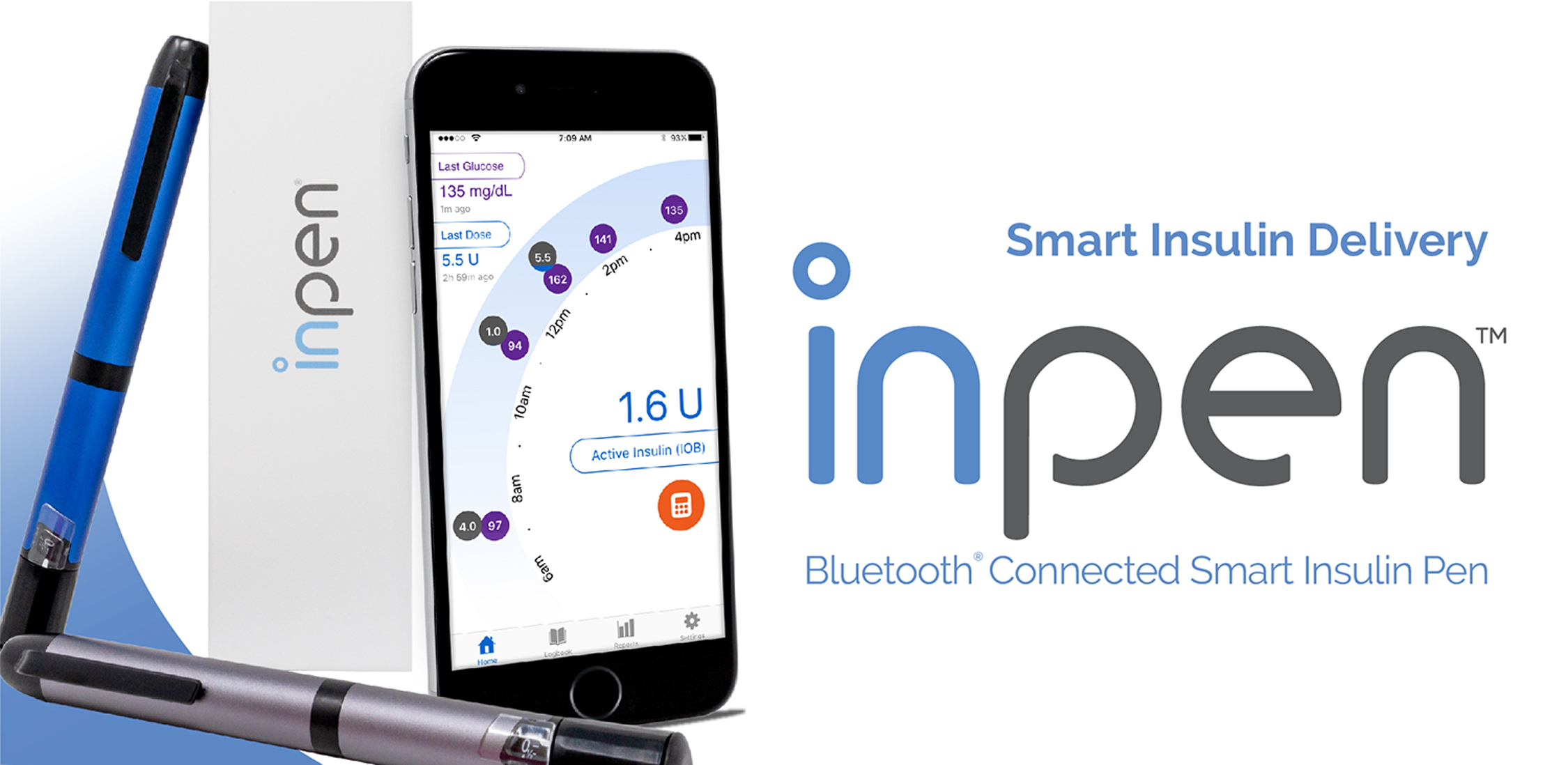
This episode of the Juicebox Podcast is sponsored by Companion Medical makers of the InPen.
Find out more today.

#173 The Nanny
A teaspoon of sugar makes the BG go up...
Mairi is Jacob's Nanny and she has an interesting and unique perspective on type 1 diabetes that you won't want to miss.
You can always listen to the Juicebox Podcast here but the cool kids use: Apple Podcasts/iOS - Spotify - Amazon Alexa - google play/android - iheart radio - or their favorite podcast app.
+ Click for EPISODE TRANSCRIPT
DISCLAIMER: This text is the output of AI based transcribing from an audio recording. Although the transcription is largely accurate, in some cases it is incomplete or inaccurate due to inaudible passages or transcription errors and should not be treated as an authoritative record. Nothing that you read here constitutes advice medical or otherwise. Always consult with a healthcare professional before making changes to a healthcare plan.
Scott Benner 0:00
Hello, welcome to the Juicebox Podcast. This is Episode 173. Today's show is called the nanny. And it is sponsored by ami pod, and Dexcom. On the pod, of course, is the tubeless insulin pump that Arden has been using since she was four years old. And Dexcom makes the GS six continuous glucose monitor. You can learn more about both of those products later in the show in the show notes, or at Juicebox podcast.com.
Mari 0:39
My name is Mari and I am a full time nanny for two little boys, one of which was diagnosed about seven or eight months ago with Type One Diabetes. So I spend a lot of time managing that because he's very young and relies on me 100%.
Scott Benner 0:57
Please remember that nothing you hear in the Juicebox Podcast should be considered advice, medical or otherwise, always consult a physician before making changes to your medical plan.
Thanks for coming on and doing this. I really appreciate it. Let's figure out a couple of times. You've been in any for this family for how long? almost four years for your see you were over three years into the into the life with them when when their child's diagnosed? Is it their younger or older child who was diagnosed?
Mari 1:39
It's the younger one. And so I've been with the family since before he was even conceived like he is he is essentially the closest thing I've ever had to have a baby of my own.
Unknown Speaker 1:50
I gotcha. Can I ask how old you are?
Mari 1:52
I am 33
Scott Benner 1:54
Okay, so 29 years old. Had you been a nanny prior to that part of this family?
Unknown Speaker 2:00
Sorry, did you say 29?
Scott Benner 2:02
You were 29 when you started working for this family?
Unknown Speaker 2:05
Oh, I guess so. Yeah.
Scott Benner 2:06
I was what you were like was I
Unknown Speaker 2:08
I'm like wait, I'm 33 now. Okay,
Unknown Speaker 2:10
I got it. Um, were you prior to that prior to the family you're with now? We're Yeah.
Mari 2:15
So I started babysitting when I was 11. And I've worked with kids on and off ever since. I think I was a full time nanny for just a few years before that, and a part time nanny before that. And also a caregiver for an 87 year old woman. So I've done a lot of just like, preschool stuff with kids. But full time meaning it's probably been about eight years. So this
Scott Benner 2:38
kind of work. Would you say it's it's who you are really like? Are you a caregiver at heart Do you think?
Mari 2:45
I think so, especially with kids and young kids. I really love like just little little kids who are just so curious and learning about everything and explaining to them, you know, why a leaf falls down and turns different colors or something like that, you know, I I studied biology. So I love talking about science with little kids. And fortunately, the two little kids I watch are really into that kind of stuff.
Scott Benner 3:12
It's funny, I was just thinking this morning about stuff like that, because my son is getting ready to leave for college. And he's our first and I've been a stay at home dad for you know his entire life. And I was thinking back on the things I wanted to share with him before he left and I can only kind of the memories I have of when he was really little are of things like that, that I think some people might find benign, but I thought were some of the best times, you know, just describing something they've never seen before letting them sit and watch something watching them see something for the first time. Like that stuff really impacts me. It's cool that it that it reaches you the same way. That's really okay. So can we use the little boy's name?
Mari 3:53
Yeah, so his name is Jacob. It's a pretty common name.
Scott Benner 3:57
The game is gonna pick you out. Alright, so Mari so Jacobs diagnosed at what age?
Mari 4:02
And it was about a little over a month after his second birthday. Okay. Okay. Sounds familiar.
Unknown Speaker 4:09
He does a little bit. Yeah.
Scott Benner 4:11
So you're on in a really kind of, like, strange way. So Jacobs mom listens to the podcast. Is that right? Yeah. Yeah, she
Mari 4:18
does. And she introduced me to it. And you
Unknown Speaker 4:21
know, I say that she forced you to listen to it.
Mari 4:25
On this great podcast, and I said, Okay, sure. Yeah. Hmm. And, you know, because a lot of podcasts or whatever, but, um, I ended up after maybe a month or so of her just talking about things she learned on it, just checking it out. And, and now I've listened to a lot of episodes.
Scott Benner 4:42
I'm really interested in, he's home. His parents have this information that were given to them to them by doctors. Were you in the room at the doctor's office, or did they pass this information on to you in the house?
Mari 4:54
So add diagnosis, actually, I brought they come to the doctor and met his mom there and I was in The room for it all it was, that was hard. But and then yeah, and then they went to the hospital with him like dad came home from work, he was on like a Skype call basically, in the room with us all. But then they went to the hospital together and I picked up the older kid and hung out with him while they were at the hospital, you know. And, but then like the next day, during all the kind of the, you know, when they're trying to teach you everything all at once. I came in on on the weekend, and it was a Friday. So I came in on Saturday and Sunday to the hospital to learn some stuff. And I think other than one doctor's appointment, and I have been at all of the diabetes appointments, all the intro appointments,
Scott Benner 5:47
did you or Jacob's mom pick it up faster than one of the other? Did you find yourself helping each other? Like, what was that process in the beginning of like, how did you complement each other in that situation?
Mari 5:58
So I just want to mention that his dad is just as involved as his mom and I are okay.
Unknown Speaker 6:03
Okay, do they work in the home? Or they work out of the home?
Mari 6:06
No, they both work. And that's why I'm there. So much. Gotcha. Um, but they're even when they're at work. They're still very involved. And you know, if I have anything that I'm not sure about I text with them. I keep them in the loop. Like if he's dropping because he has a CGM. So he's dropping fast. I text them to let them know like, Hey, I just gave him some juice. He's actually 70 he's not 40. Yeah, whatever.
Unknown Speaker 6:33
Well, that's beautiful.
Mari 6:35
Because I know if I was looking at that, I, I'd want to know, someone is handling it.
Scott Benner 6:40
Yeah. Yeah. Can you imagine watching it fall and thinking, Oh, I know. I know, Mari has it and then you don't. And then you just sat there and did nothing while it was happening. Like that would be a finder's fee. I think what you're doing is so kind, not that it just to let them stay in that loop. Take that anxiety away. That's really because that's extra work for you as well. Right?
Mari 7:00
It was, but I always deal with the problem first, and then I make sure that they know I I've been doing it right. But so I think that for the three of us, we learned different things at different rates. I mean, and we all learn from each other. And I think it you know, even if you hear from someone else how to do something or listen to the podcast and get ideas, you kind of have to troubleshoot, you kind of have to experiment yourself. And you know, it's just it's different hearing about something that she learned to do than doing it myself or something.
Scott Benner 7:39
It's it's an important message that everyone really needs to hear as I just was just speaking to somebody the other day, and you know, at the end of the conversation that was so just in this spot, again, how much insulin is like, No, no, I was like, I can't tell you. I don't know, try, you know, pick a number that makes sense to you give it a try. See what kind of a response you get. Try it again, it
Unknown Speaker 7:59
is a look, it's gonna be a little bit of an experiment until you figure it out. And at this age, it changes so much like his needs one week or so different from his needs the next week.
Scott Benner 8:10
Yeah. How much is he? Why do you think?
Unknown Speaker 8:13
Too much? Pick me up carry me up the stairs? I,
Mari 8:18
I should know, I feel like he's like in the low 30s. Yeah.
Scott Benner 8:22
And so that's not a lot of body weight. Because you you need we need the fat to distribute that insulin around.
Mari 8:27
Luckily, he does have a good little chub layer, which, you know, helps, but I'm sure it's gonna disappear in the next couple years. For that whole four or five year old, were there just so any?
Scott Benner 8:40
So did you have any personal or family experience with diabetes? Um,
Mari 8:46
I have like a family friend who has type two, but I didn't like when, when he was diagnosed, I did not know the difference between type one and type two other than that they had different names. So I have come very far I didn't even though I studied biology, like we never talked about diabetes. I studied animals and ecology and plants and stuff.
Scott Benner 9:05
So I just was trying to establish whether you had, you know, with any backgrounds at all, no. Yeah. So you're you're without any, you know, any idea of what's happening? You're been with the family long enough. You saw the baby you saw Jacob Lauren's you probably feel as close to them as anyone who's not blood related them could possibly feel I would imagine.
Unknown Speaker 9:26
I think so.
Scott Benner 9:27
Yeah, of course. And and so would you describe it as heartbreaking when he was diagnosed?
Mari 9:32
It was one of the it's one of the hardest things I've ever been through. Yeah, for sure. And, you know, I, because I was also at work. I was trying my very, very hardest not to completely fall apart and be there and supportive for his mom. I was sitting there thinking, you know, the best thing I can do right now is not fall apart and be strong for her so that she can fall apart. Right. And then I can make sure that Yeah, Jacobs, okay, then
Scott Benner 10:06
I was just gonna say 10 minutes into this conversation, and I already think you need to be paid more money. And I don't know how much you make because you are fantastic. Really like, That's such a, that's such a human like response, like the idea of let me be the strong person for them because that's not part of your job, right? I mean, like, there's no other in the, in the four years prior to that you never like, I'll be the rock here. Like that's, you know,
Mari 10:29
that's the nanny, your job really, essentially is to make the parents life easier and facilitate them being able to work while still having their kids raised in a way that they, you know, care about and are a way that they relate to and to take care of their kids so that they can go to work and not worry, you know, that that is my job is to make their lives easier, right?
Scott Benner 10:53
I didn't I didn't think of it like that. But you're obviously 100% right? Okay, so you're in the hospital, you're being the you're like, I'll hold it together. How hard was it to hold it together? What did you want to do? If no one could see you? What do you think your action would have been?
Mari 11:08
Oh, I definitely would have just cried. I'm a crier. I cry almost every episode I listened to just so you know. Yeah, I know. It's okay. I mean, especially when they get to the diagnosis stories, I always cry, like, Oh my God, because I just feel that moment again, when, you know, we were all in the room together. Um, but what I did was, I took him home, he fell asleep in the car, thankfully, because he really wanted to eat and we couldn't give him anything, you know. And while he took a nap in my car, his mom packed everything up. And then they went to the hospital. And then I sobbed for like, two hours. Until I had to go pick up his brother. So yeah, I mean, it was definitely it was heavy, you know. And I didn't really even know what it meant. At the time, I just knew that it just meant a lot was going to change. You know,
Scott Benner 11:58
like this promise of whatever you feel like life is when you start a family, like it just feels like it's dashed in that moment. And especially without perspective of what can be done or how you can live, it all seems really, like finite, like, oh, gosh, like, it's almost like you fast forward to the end of your happiness. Like you used it all up or something like that. But that's not the case. And so how long did it take you to get clear of that? That feeling? Like when did the when did the clouds break? Do you think?
Mari 12:28
Um, I think one thing that really helped me was that very first weekend, when we went in, it was very overwhelming, you know, all the training and, okay, now you're giving him a shot, like, but I've never given anyone a shot before, you know, it was that the nurse that we worked with, is a type one. And, you know, she has two healthy kids. And she's a nurse, she's successful. She's really involved in the diabetes community. She does diabetes education. And she works obviously with the endocrinologist and stuff. And she, she's amazing. And just such a lovely, successful person. And so meeting her and made me feel a lot better. That's, that's pretty immediate. I mean, it was still all very overwhelming. And I think that probably another breaking point would be like, about them a few weeks or a month after we got the CGM. And the first year like, Oh, my God, this is what's happening, right. So Well, once you start learning how to better manage it through what you learn from seeing that. Then I started feeling like, oh, okay, like, this is manageable. We can do this, you know, it's like a roller coaster like you hit these hard spots. And then you kind of find some relief once you learn from them. And
Scott Benner 13:52
it gets better and better as it goes, Well, how old was Jacob when he got the CGM? Now that school's over, I let my kids sleep in a little bit, you know, for the first couple weeks to let them rest up. That would Arden's diabetes, sometimes that could be problematic. I guess if I didn't have a dexcom g six continuous glucose monitor. Here's what happens. And it's happening right now. It's early in the morning, as I'm recording this for you. I wake up Arden's blood sugar has been 98 overnight, really steady, great night's sleep. That was exciting. But then I noticed a little trend down. So what I do is I go into a room and I set a temporary basal rate, a little decrease of her insulin, just enough to catch that drift down and brings it back up again. Now here I am an hour later, and her blood sugar is 100. It was going to be low. Her blood sugar would have went from 80 to 70. And it would have kind of kept drifting. Anyway, that's what would have happened if I didn't have Dexcom g sex but because she did. I woke up. I got dressed. I looked at my phone my phone showed me Yeah, I think I'm seeing what I'm saying, I made a little adjustments or insulin. And the next thing you know, everything's okay. Again, no drinking juice in her sleep, not having to wake her up, and she still gets to sleep. And I get to come down here and get the podcast together for you. If you're interested in learning more about the dexcom g six continuous glucose monitor, please go to the links to your show notes to Juicebox podcast.com or you can type into your browser dexcom.com forward slash juicebox. I'll tell you what, let me screenshot Arden's 100 blood sugar real quick, and I'll put it up on Instagram and on Facebook. So if you follow me on social media, go take a look. Is it official yet? are we calling a 100 blood sugar on a dexcom CGM a Quincy? How old was Jacob when he got the CGM? Oh,
Mari 15:46
I mean, this was like, I feel like it was around a month after diagnosis. But I'm a little fuzzy on the timeline. But quickly in the beginning. It I mean, we we asked for it that weekend. And obviously they were like, Whoa, bah, bah, bah, bah, bah. But, you know, we pushed for it. And it didn't take a lot of pushing. But
Unknown Speaker 16:03
we did. How'd you find out that quickly about it?
Mari 16:07
Well, our nurse that I was telling you about, she was wearing one. And she just she just kind of mentioned like, well, in the future, like there are things that we can do, you know, like this, and there's pods, and there's, you know, you were
Unknown Speaker 16:19
like the futures now.
Mari 16:21
And you know, his mom was like, we want one of those right? And they're like, Oh, you don't want to talk about it? Or you know, we want one definitely, you know,
Unknown Speaker 16:27
like, yeah, so yeah, quickly, please.
Mari 16:30
We're all very glad about that. I can't believe they let like nine month olds who are diagnosed out of the hospital without one. Crazy.
Scott Benner 16:38
Yeah, I haven't said it in a while. But I think if you want it, you should just you should have it the day you're diagnosed. I it's just a strange idea that something this kind of fragile and difficult to understand is left up to your imagination. Most of the time
Mari 16:53
are like nine month olds, and they say like, oh, let's stay on MDI, like, but you can't even go small enough for a child. But
Unknown Speaker 17:01
but is Jacob using a pump?
Mari 17:04
Yeah. So he's on the Omni pod. And he has a dexcom. Okay, we just got the G sec. On Friday. So it was as I was leaving work, it showed up? I don't know if he's wearing it yet or not.
Unknown Speaker 17:16
But it's exciting. We do you see how easy the insertion process is. It's so like, simple and fast. And yeah, I
Mari 17:24
mean, I can imagine based on what I've seen,
Scott Benner 17:27
yeah, it's pretty cool. So let me ask you this, Mark. What's your schedule? Like? I mean, you can't work seven days a week for the rest of your life for somebody, right? You must go home, like when does that happen?
Mari 17:38
So I work 730 to 530, Monday through Friday, and sometimes I say an hour late if someone has a meeting or something. So I'm about 50 hours a week, I do come home on the weekends, and I do have a husband and a stepdaughter. And I do have a life outside.
Scott Benner 17:54
Well, the only reason I ask is because what I'm really wondering is is when you leave. And you know if it's just for the evening, or it's for overnight, it's for the weekend. Can you forget about Jacob's diabetes ever? No.
Mari 18:08
I mean, maybe like while I'm watching a movie.
Unknown Speaker 18:11
Yeah, I understand.
Mari 18:13
Like, like, taking a shower. I'm like thinking about like, Okay, how could I have done that bolus yesterday? Better? Like, I think about him all the time, because he's like, my baby.
Unknown Speaker 18:24
You know, what his blood sugar is when you're not with him?
Mari 18:26
Yeah. And sometimes they look, they don't I mean, I know that they're both very proactive, and they pay a lot of attention. And he's in good hands. But sometimes I look, you know, I'm eating lunch. I'm like, Well, I wonder what happened to him today?
Scott Benner 18:42
Is it strong enough that? Could Is there something you could see on that? Dexcom when you're at home, and it's not your job anymore to be looking after Jacob? Is there something strong enough that could make you cross that line and contact them? and say, Hey, what's going on? Like, I need to know, like, the same way? I don't, because it seems inappropriate. Like, as I'm thinking about it, right?
Mari 19:07
Yeah. I mean, I don't think so. Because, I mean, I don't know, I guess I would have to be faced with something. That would, that's scary. But I mean, I've I've seen scary when I wasn't there, and I just waited it out. And then it was fine. You know, it's fine. And then on Monday when I came in, and they said, yeah, that's when we tried pizza. You know? Like, that's when we tried pizza, but something else was going on, you know, I mean, and I've been there too, where like, I have double arrows down and I'm like, How did this happen so quickly. And sometimes on the CGM. It looks so much scarier than it is in real life because you can do a quick check and you can know where they really are. Right? Yeah, no, yeah, it's it's delayed. So sometimes it's it's kind of like making when you're not there. You're panicking over Something that doesn't need to be panicked over, you know, yeah, it's
Scott Benner 20:02
interesting that you bring that up. So this, it's Monday. Now you and I are talking on Monday morning. It's right before the Fourth of July. And last weekend, which is just the last two days of my life on Saturday. I think Arden played a softball game at 8am 11am and 2pm. It was 100. And some degrees, the heat index was crazy. It was that it was terrible. And then she came back the next day and had to play 11am and 230. And it was hotter the second day than it was the first day. So the first day, we get there, and her pump is scheduled to be done, I think around seven o'clock that night. So as we get there early in the morning, I'm like, you know what, everything's great. This is gonna be fine. Like, I can make this pump last this day, you know. And so first game starts adrenaline hits, or I start bolusing for the adrenaline. I try again and again, it seems resistant, but I feel like I'm having success with the pump and I am and I get her blood sugar to come back and went up to like 165 I got it back down I go. game ends we go off to you know, I don't for people in the northeast, we went to wah wah, which I just found out is named after the noise a goose makes I don't know if that's interesting for anybody. But we went to while while we picked up like snacks and and you know, different foods and Arden had to eat. So I'm bolusing on top of that, but knowing she's going to go back out and play again in this incredible heat. I keep her blood sugar down. But around the third game, something happened. And I just could see on the CGM like this climb that's happening in her in her blood sugar. Like I started thinking this pump is on its third day it's coming up on its you know, its last couple of hours. We've been out in this hundred degree heat all this time. And I bolused once I bought this twice, and I didn't get what I expected. So I went over to the bench. I asked her coach, like just leave her out for one inning, one half inning, and we changed her pump right on the bench. It just 110 degrees. And so you know, I've got this big wad of like paper towels and art and splashes some water on it to clean off her stomach. And she goes, this is just like Grey's Anatomy. I said, Marie, I said, it's not really sweetie. And she was like, No, no, it is and she's all excited and she's done it. we swapped that pump in three minutes on a bench, you know, in a baseball field, got it going and had her blood sugar to come right back down again, was great. That night, her blood sugar wanted to be low. And so she ate a meal later in the evening. I don't even think I gave her 15% of the insulin for that I thought I should have given her. And I still had to cut her bezels off over the night to keep her from crap like from getting under 50. Or Now, the next day is I just know I'm like the next day I'm like I'm new pump. Same situation. This is there's going to be a moment right where this is worse. She goes to the first game, everything's great. We go, you know, grab some food, we're sitting in the car, and I said to her, Hey, I'm like your 79 diagonal down time to start eating. And so she starts eating, and 79 becomes 75 becomes 69 becomes 40. Like before, I know it's 40. But she's taken in an incredible amount of food by that point. And that's to your point, like herb CGM said 40. But I thought she's not 40. You know, if she ate, she ate 20 minutes ago, even if she's 40. For the second, it's going to come right back up. And it did it did exactly what I expected it to do. But to believe that for a moment to be able to look at that number that you rely on so much throughout 24 hours a day and be able to sometimes look at it and go, I can't worry about what that says for the moment. That's a difficult leap to make. And that's a difficult leap to make when I'm there and I'm with her. And I'm 100% confident that that I know that what's happening is happening. I just really I feel. So it's a very long way of saying I have a ton of compassion for you having to be in that situation and not be able to make sure. Like that must be just genuinely very difficult. I I would find it incredibly difficult, I guess is what I'm saying?
Mari 24:20
Well, I mean, like I said, I have a lot of confidence in his parents. They're both smart people, and they both are really paying attention. I feel so that does ease my worry a lot, right? Like if I knew he was a babysitter, I might be a little bit more.
Scott Benner 24:41
So can I ask you on your side? You said you have a husband and a stepdaughter? Does your husband ever said to you, Mario, we're talking more about Jacob's diabetes than we are about our own life does it? How far does it bleed into your into your real life?
Mari 24:56
Um, he has never said that to me, but he's just kind person. You know, I, I don't like non stop talk about it definitely my some of my close friends. They're like, wow, I know a lot about diabetes now. No. I think my friend said to me the other day, I can tell how much you care about Jacob. Because every single time we talk, we talk about him. You know?
Scott Benner 25:24
Yeah. What do you think? Does that do you think? Are you trying to subconsciously or consciously create advocates? Or do you think it's just so on your mind?
Mari 25:33
I mean, I like to educate people about it, because I feel like nobody knows anything about it really, unless they're involved in it. But also, I mean, anytime you talk to any of your friends, and you kind of catch up, you just talk about what's going on in your life. And a huge part of what's going on in my life is diabetes management, you know?
Scott Benner 25:51
Yeah. And so that's just really, it's not eye opening, I would, I'd expect you to say it, but it's incredibly interesting that even in your removed situation, you're having the same exact experiences and feelings that everyone else who lives with it as, like, there's, I guess there's no escape. I you know, I don't know, I don't, I don't mean to make it sound, you know, like scary, but like, it's just a difficult thing to walk away from at the end of the day and never think about again, I don't I
Mari 26:18
definitely. And when you have like such a strong bond, I mean, I've I've raised him, you know, I held him when he was just a little baby. And I took over care for him full time when he was about four months old. I like slowly took over, over those four months. And then four months, you know, she went back to work and it was just us. Wow, she
Scott Benner 26:41
must really trust you. Because that's, uh, that's pretty cool. Like, you know what I mean? Like, I don't just mean with their kids. I mean, for me, you know, that young that that that amount of time since diagnosis, that's really a, that's really something, you know, like, even four months just with your baby, great, but two years with the.in, a two year old diabetes is, is like a four month old. But you know what I mean? Like, it's like, here, I don't like her killed this thing. Take it from me. It's not easy.
Mari 27:11
I mean, I'm also a very meticulous person, kind of a perfectionist, and I studied biology. So I went through physics and calculus and all that. So the math aspect of it was pretty easy for me to pick up and stuff. And I remember them saying, like, you know, it's a good thing. You're our nanny, or I'd have to like, quit my job, you know?
Unknown Speaker 27:33
Yeah, that makes sense.
Mari 27:35
I think that my personality is a good fit for taking care of a diabetic kid.
Scott Benner 27:40
Okay, so let's, let's talk about that. Then she goes off to work, and you're with a two year old who has diabetes. What an awesome two year old Jacob has an awesome two year old could very easily be the name of this podcast episode. I don't know if I've spoken about it yet in the podcast, or if it's still coming up. But this is a very infrequent situation where you're hearing a podcast that I just recorded. So it's July 4, finishing up with the edits right now, putting in the ads, and I'm going to upload it for you. Anyway, you're gonna have heard me talk about art and playing five softball games last weekend three on Saturday, two on Sunday, in hundred degree plus weather very humid. I cannot tell you how indispensible per on the pod was the obvious stuff, first of all, it's to bliss. So she's wearing it constantly, she can get her insulin while she's playing. It's wireless. So when I use the PDM, to make decisions about her insulin, it can be done from, you know, outside of the dugout, you don't have to bother, nobody has to walk in, she doesn't have to pull out some sort of a controller from her. You know, I don't even know where you would put that while you're playing softball. But anyway, the grander point is that Arden still needed her insulin, and I was still able to be bold and aggressive with it while she was playing. But there were times when she didn't need the insulin as much. And I was also able to set temporary basal rates to restrict her insulin. If I saw dips in her blood sugar, she got high from adrenaline at some point, we needed a bunch of insulin, then a little later, it was a little too much, and we were able to tail it back. These are things that you just can't do with shots. You can't restrict insulin with shots, but you can with a pump. And you can do it much better and much easier. And much simpler, would be on the pot. Go to my omnipod.com Ford slash juice box, the links in your show notes or Juicebox podcast.com to get a free, no obligation demo of the AMI pod today. Don't forget to listen to the story where I had to change her pump at the game. I did it on the bench took three minutes. The on the pot is amazing. She goes off to work and you're with a two year old who has diabetes. What are your findings early on like you you're you're pumping at that point, right?
Mari 29:50
Well, early on we were doing MDI, like, a month or something or maybe even longer. I'm trying to think okay, he was he was diagnosed very early December. And mid January, I think is when he went on the pump. And he was already on the CGM at that point for a little bit, but we first tried with diluted insulin because his basal rate was so low. And we were not having good success with that at all. And as soon as we switched to regular concentration, it went much better. Like even though we're giving him supposedly the same amount of insulin, it was just working a lot better. And I'm not sure why.
Scott Benner 30:33
So when you said you weren't having good success, you were having high blood sugars?
Mari 30:37
Yeah, like, it wasn't affecting him. Like it should, given the amount we were giving him. We thought,
Scott Benner 30:44
right. And so you stopped diluting it you went started using it? Were you drawing like little, like bits with syringes in the beginning? Like, yeah, I
Mari 30:53
mean, because a lot of his doses ended up being like quarter units. Yeah. Or like point seven, five or something. I mean, he's a small guy, you know, you talk about giving Arden like nine units for a meal. And I'm like, he doesn't even have nine units in a day, you know, including his bazel.
Scott Benner 31:08
Where do you Where do you see that change? We everyone who's seen a change knows exactly how that feels. I just talked to somebody the other day, who I was telling, like your sounds to me, like they need more insulin. And the sticking point was, but it seems like so much. And I said, I know, that's that's how, you know, they're growing, like right there when you start having that feeling. Because, you know, we are adults who are listening to this, who use, you know, 60 units for a meal, you know, and they're, and they're laughing at the nine units and definitely thinking, gosh, a quarter,
Unknown Speaker 31:37
what is that, like, for me?
Mari 31:38
Most meals are under one unit.
Scott Benner 31:41
Okay? Still, when he's four,
Mari 31:44
and we still use carb ratios, and I still carb count, but I, I, as my boss says, not all carbs are created equal. And if it's something processed, I tend to almost double the carb count. You know, if it's like, crackers, and it says that this is 10 carbs, I'm like, no, it's 20. Or if it's something like a cookie, I've learned to triple the carb count. Well, so I'm still using carb counting. Right? But it?
Scott Benner 32:13
Yeah, but you're still making a big deal. Yeah, you're using bigger to say I did the other day, we were on our way to that first softball game on Sunday. And she's like, I'm gonna have this chocolate chip granola, but I don't know what it was like it was you know, like pho healthy, you know what I mean? And I was like, Okay. And she's like, how much do you think? And I said, How much do you think and she's looking? And I did say, Well, I'm a shark. I was like, how many carbs is insane, isn't it? She was like, 17. And I said, Okay, I said, try two units. But it wasn't I was wrong. It was probably more like two and a half. Because by the time we got to the field, 20 minutes later, I gave her more insulin again. Because I saw a hit, I was about 135 diagonal up, and I thought, ooh, you know, we missed on that a little bit. So, so I bumped it back down again. And, and and then I then my timing was off, because then an hour and a half later, she was like 80 diagnol. down. And that's I
Mari 33:13
need a handful of fruit. Right, right. Yeah.
Scott Benner 33:15
Oh, please. She drank a half a juice box on deck. She had a bunch of bad over shoulder and a helmet on. And I stuck the straw through the fence. I was like, just drink half of this. And she said I don't want it. I was like, yeah, just drink out of it. And so she just did a two little sips, because I have I have found the tiniest juice boxes. It's Yeah, ours are eight carb, our juice boxes.
Mari 33:36
So what I do if I want him to drink half, because he's too and doesn't have good self control, is I hold the straw with my finger halfway out of the out of the juice box so he can only drink half of it.
Unknown Speaker 33:48
That's a great tip.
Mari 33:51
I'm learning all these little tricks which make it so much easier one that I've come up with recently, which may help anyone who has a young boy with potty training. He can use almost any public restroom standing up if he stands on my feet. That has saved us so much hassle. He just stands on my feet and then he's the perfect height to be in the toilet without sitting
Scott Benner 34:14
because Mario If not, you're holding him under his arms and now you're in charge of aiming.
Mari 34:18
He can't relax. How can you relax if someone's holding you up in the air over toilet?
Scott Benner 34:25
I love that. Put this put it halfway in idea which sounds dirty but I don't mean it that way. And so with the with the straw like that's brilliant because when he when the juices gone, you're like oh, it's done buddy and then in his mind he got what he what he was there for he doesn't you have
Mari 34:40
to watch out because it starts compressing
Unknown Speaker 34:44
Yes. Oh
Mari 34:47
yeah, to take it away. Nope. It's fine for now. Thanks.
Scott Benner 34:51
I don't think anybody thought they were gonna get a physics lesson on juice boxes today on the podcast, but they've done it. That's it. Yes. That is simply brilliant. It really is.
Mari 35:00
Then you have the rest, in case, you actually needed a whole one. Oh, please. Yeah, I
Scott Benner 35:04
told her I'm like, I'm keeping the other half of this
Unknown Speaker 35:06
the other day. Oh, sorry, no, no, I
Scott Benner 35:08
just was gonna say we did end up using it, that's all.
Mari 35:11
And the other day we went swimming. And usually we only swim for maybe half an hour or so. And it's so much of me just holding him because he's learning he's only two or two and a half, you know. And he had so much fun. He was just jumping in and out of the pool. And I think he actually got a lot more exercise than he usually does. And plus, we've been a little aggressive with insulin all day, because lately we've been having to be to get him down. And after swimming, he just, everything was really steady for a long time. And then suddenly, it was like 86, double down or something. And I looked at how much insulin was on board. It wasn't that much. I think it was like point two units. And I just gave him for carbs of raspberries real quick. And he steadied out at 75, or 77. Somehow, I guess he came back up a little bit. And then he started slowly drifting down, he just hit 75. And I just gave him two more raspberries, one more carbs, so five carbs or raspberries, just like and then it was like it was beautiful. He just slowly floated up to like mid 90s, or something over the next hour.
Scott Benner 36:22
And then that highlights very well something that I've been talking about, which you won't know about if you're listening to the podcast, because I'm ahead of everyone else in real time. But that it just struck me six, eight months ago, like wow, I'm talking about bumping and nudging insulin, I should also be talking about bumping and nudging food. It's a similar idea. Like you don't have to drink the entire juice box, you don't have to open up, you know, fruit snacks and eat every one of them just because they're there. You know, like,
Mari 36:50
whatever it is, you're using, like one or two gummy bears, like if he's going down. And that's what we have, I'll give him one gummy bear, maybe two,
Scott Benner 36:59
I sometimes on the way, on his way to school, if she looks like she's gonna drift a little low, I just I'm like, Hey, here's these chewy vitamins that usually have a dinner time just have them now, because they have a few carbs in them. And sometimes that's all you need is just a little nudge in the other direction. You know, a little gas a little break. Like,
Mari 37:18
I feel like the bumping and nudging is a little harder with such a small kid. Sure, I'm sure versus an older kid or an adult because sometimes point 05 units can take him from let's say, like 120 to like below 80. You know, it can drop him that much. Little.
Scott Benner 37:39
That's nice. And that's in a situation where you're pretty confident. There's no other reason from earlier.
Mari 37:44
I'm never authentic. There's no other thing going on. I'm, I'm convinced there's always something else going on. But my point is like, he's just so small and so sensitive. And then he's got like, growth hormones and like, constantly eating and I mean, even though we really do kind of space things out, I just, like, constantly eating. It's like, every three hours you have to eat again, like just to do this again.
Scott Benner 38:09
Why don't we eat again next month, I got your blood sugar at 85. Let's just leave it here forever. By the way, the sentence I'm never confident is maybe the funniest thing anyone's ever said in the past, I was fantastic. I'm never confident either Mario, I hope people know that. I hope they know that I'm always just sort of like this will probably work. I'll try that I'll try this.
Mari 38:31
I'm never confident that there's not other things going on. You know, I'm always like, well, it could be this, this or this. And I can come up with so many reasons why this could be happening. But really what I need to do is do my best to feel in the moment, you know, reach a stable ish blood sugar, and keep him feeling good.
Scott Benner 38:50
So was it helpful for you? If you heard it when I said that idea that a lot of times I see people frantically trying to figure out what happened instead of dealing with what is happening. Because I don't know if you ever heard me say that. But I once said it and a person I know who has had Type One Diabetes for a very long time. An adult recently told me that was one of the most impactful things that they heard on the podcast was just that idea of like, when my blood sugar starts going up or starts going down. I used to spend so much time trying to diagnose why it happened. And I wouldn't do anything about it. And any and he said now I just I deal with what's happening in front of me found that very helpful. And it just seems like what you just described like that idea of like not getting lost in the water. What what this could have been scenario.
Mari 39:36
I mean, I definitely the most important thing is to pay attention to what's going on and do whatever needs to be done. But I think that trying to figure out why it's helpful to because you're trying to prevent it from happening in the future or predict that it's going to happen in the future. You know
Scott Benner 39:53
what later after though, whatever is happening is over
Mari 39:56
that's like the tax to the parents comes later. After Right, you have the priority, especially with a low is below, right making sure he's okay making sure he feels good making sure that we stabilize at least prevent it from dropping further and bring it back up. Without overshooting it incredibly,
Scott Benner 40:16
you don't, especially with somebody that little, like that rollercoasters that much worse than, yeah,
Mari 40:23
I remember, we were, you know, at the gym, you know, like a little gymboree thing. And he had been he spiked pretty high after breakfast meeting in the 200, I think. So I was really aggressively trying to get him down. And I knew I probably overdone it a little bit. But I was going to catch it with some fruit, right. And then when he was dropping, I was like, Okay, I'm gonna catch this with this fruit and gave him the fruit. I didn't catch it. And he was still dropping, and he was he was going to go low, and he still had a lot of insulin on board. So then I gave him juice, because I didn't want them to be really low. And then as soon as he started going up, I knew he was going to go up probably to 180 or higher. based on the amount of carbs I'd given him, so I immediately bolus him for all the fruit I gave him but not the juice.
Unknown Speaker 41:16
I was thinking more Yes, my
Mari 41:18
moment, one year something unsettled in the you know, near 100. And I when I got home, I told his mom what I did. And she was like, Oh, I was really surprised, actually that you gave him juice. And he didn't spike super high. But that makes sense. You know, now I know why. This is one of
Scott Benner 41:33
my prouder moments. Mario,
Mari 41:35
I try to catch lows with fruit. That's my thing. I always have like five carbs of raspberries or strawberries or blueberries or something like that weighed out in my purse, right? In case you know, when we're driving, I'll be passing him strawberries, when we're going to pick up his brother. I'm like, Hey, are you just want to eat a couple of these real quick. And I always try and catch it before I have to go to the gummies or the juice. Yeah,
Scott Benner 41:57
you're hoping to stay away from that stuff, obviously,
Mari 41:59
is actually low. I go.
Scott Benner 42:02
Yeah. And you know, fruits great too, because fast acting sugar that doesn't hang around a long time in your system too
Mari 42:09
well, and it's not as fast acting as gummies, right? Because there's fiber and stuff. So it's a little bit slower. But it's fast enough that as long as you're not dropping super quick, you can catch it, you know, and I'm really excited about this preventative, or predicted low that the G six does, because that's what I'm doing. I'm looking at him. I'm looking at how much insulin he has on board. I know how like what I've set his basal rate at, and I, you know, he'll be like 130 and but he's dropping fast enough and has enough insulin on board. I'm like, I need to be giving him food now. But if I was just pricking his finger,
Scott Benner 42:45
you still see the 130
Mari 42:47
I'd be like 130 word great. And then like 20 minutes later, he'd be you know, 60 or 40. Or
Scott Benner 42:54
I don't see the predictive pop up that often. But it actually did last night. And I wasn't surprised after all that softball that he'd been Arden took a shower when she came down from the shower. I always wonder if people like see this the way I do. When Arden asks me for food. She's like I'm hungry. That's genuinely or generally, excuse me, a precursor for a blood sugar that's going to fall. If Arden asks for food at times of the day when she's not normally hungry. Even if her blood sugar looks good. I'm like, Oh, I bet you're her bunch of resets are coming down. So she asked me to pop popcorn. And I was like, Okay, I'll do that. So I just put it in a pot with some canola oil and make popcorn, right. And so I walked out to start doing that. And I got the predictive low alert, she went, she was just under 70. And it said, You know, I forget what it says like, we expect that your blood sugar will be under 55 and 20 minutes or something like that, whatever that message is on the G sex
Unknown Speaker 43:48
about
Scott Benner 43:48
Yeah. And so I said to her, Hey, bonus time, it was like you can have more carbs. And so you know, let's turn this into a real like kids snack now at 839 o'clock at night. And she came out into the church came out into the kitchen and she's looking around. There's never any food. She says even though I'm pretty sure if we locked ourselves in here, we could stay alive for two months, but but she's you know, she's looking around. And she saw that at lunch in between the softball games. She bought this, like chocolate doughnut that she thought she was like, I want this chocolate doughnut. Then she got outside of the car. And she's like, I can't eat this while I'm playing softball. And I said, well, it's just gonna melt and but I jammed it in the cooler. And I guess I must have kept it from turning into a horror show. And so when we got home, I slid it into the refrigerator. She opened it up and she's like, Oh my god, I'm going to have this chocolate doughnut. And I was like, Okay, and so knowing that she was the predictive low was coming. It's hard. It's not hard to put into words. But if somebody can tell you you're 70 now, but you're going to be 55 in 20 minutes. Then what is going on is a perfect Pre-Bolus for something like this right she's got a low blood sugar to begin to lower blood are going to begin with, it's still trying to go lower. She ate this donut. And then she had some popcorn, and I gave her a little bit of insulin for the popcorn and golden was really something like I was like, wow, that predictive, low alert. Actually, it did not, I don't think she ever would have gotten that low because the popcorn would have hit her. But she would have gotten lower than I expected. My popcorn bolus probably would have made me think I use too much insulin there when it wouldn't have been that it would have been from probably from the shower earlier. You know what I mean? Like all these things conspiring against you that I wouldn't have been able to imagine without that information.
Mari 45:35
compared to many. There's too many factors going on all the time, right? Yeah.
Scott Benner 45:41
Well, listen. Now I want to call the episode Mari has strawberries in her purse. So I don't know what to do. I'm really up in the air here. It's going to it's going to, I don't know, it'll be down. It'll be a last minute decision.
Mari 45:54
So I always have like a beef stick, or something like that, which doesn't go bad, right? Which is like a one carb snack. In case he's like, I'm starving. I need food right now. And I always have the carbs. Always.
Scott Benner 46:07
So how do you deal with? What's the impact on Jacob's brother? How old? Is he again? I'm sorry.
Unknown Speaker 46:13
He's five.
Scott Benner 46:14
He's five. Does this all is he very involved with the diabetes thing? Or is he feel separate from it? Or does he like
Mari 46:21
to like enter the calibration numbers and stuff and he likes to be there when you're doing like a big check or something? He's he can do math, basic math and stuff. So he's very into like, the numbers and stuff and you know, if he sees the, the your cell phone open, and it says he's like to something, he's like, oh, Jacobs 237. That means he needs insulin, you know, like,
Unknown Speaker 46:48
you see it out. So
Mari 46:50
I mean, even Jacob, you know, if you ask him, like, what do you do if your blood sugar's too high? He goes, small incident. What do you do if you're low? gummies? Or eat food? You know, he knows. Yeah, and
Scott Benner 47:01
you're keeping it light hearted around them, too, which is great. Listen, don't let that older kid learn too much, you lose your job. And so
Unknown Speaker 47:09
they'll keep the money in the family.
Mari 47:11
Oh, is the nanny, make him learn everything?
Scott Benner 47:14
No, I'm just kidding. But you know, listen, we, you have to live to this is really, I'm fascinated by by how entrenched you are in it. And I don't see another way around it. So let me ask you this, from what you've learned so far. Do you think it's possible to bring a school nurse along to this depth? Or do you think they don't, it requires time together that doesn't exist in that relationship?
Mari 47:42
I don't think and I'm not an expert. But I don't think that anybody can get to where I am or where you are, or where any of these people are, who are taking care of type one diabetics, young type one diabetics, I don't think anybody can get there. Unless they are actually day to day with somebody, I think even like, like the endocrinologist, like she's seeing all these different cases. And she's seeing all these graphs and stuff. And I haven't spent enough time with her to know if she's actually spent, like a lot of time with just one patient. But I just think I just think it's different when you're sitting there day to day with somebody watching what their blood does, from every single meal, you know, every single hour, it's just, it's different. You know, it's a
Scott Benner 48:36
podcast would have any value for like a school nurse or somebody who is in that position of being around the more but not a lot.
Mari 48:43
I mean, I think that Yeah, the podcast would have value for anybody who has a loved one or somebody that they need to take care of, you know, a babysitter or a school nurse, anybody you know,
Scott Benner 48:55
but that for that real, that real like, entrenched understanding, I think you're right, I think you just have to be around it. And I think it's important for people to know who have kids who don't feel like they're picking it up yet. Like, you might just not have enough time in the simulator yet. You know, like, maybe you just need to go through these things, more and more and more until they start making better sense.
Mari 49:16
And, you know, it's, this has been hard for me because as I said before, I'm very meticulous, I'm kind of a perfectionist, and I like things where, if I do this, I get this result. Like I loved chemistry, it was one of my favorite classes. But in this case, if I do the same thing three days in a row, I don't get the same result. And that's really hard. For me, it was really hard for me to let go of the idea that I could keep him between 80 and 120, which is my goal is to constantly keep him there. It is not what I accomplish, but that's what I wish from moment to moment I could do that. And that that was really, really a tough one for me to give that up. And to give up the idea that I was actually going to be able to accomplish that I still try. But you know, if he's if his spikes after a meal stay below 180 I really do feel successful when they're like, they below 130. I'm like, What? How today's awesome, you know, I'm super happy. And when he goes above 200 I try not to beat myself up. But you know, breakfast is harsh man. We have him on a higher carb ratio. And a lot of times I end up doubling his bazel. And he just, you know,
Scott Benner 50:33
yeah, I had over Bolus for breakfast this morning. Because besides you and I recording at 1130 my time at 1030. My time I had a phone call with somebody at a company that everyone would know about something that everybody cares about, which is pretty much all I can say about that, I guess. But, but Arden comes cruising downstairs like in her pajamas and her sports bra. And she's like I'm hungry. And I was like, Well, I'm going to be talking to a gentleman 10 minutes from now for a half an hour. And then I'm getting off and I'm getting rid of the podcast. And she said something quick. And I was like, Yes, so something quick. And her blood sugar had just gone from like she slept in very late to like, God 1030 so I had Qatar Bayes law for a little bit. And I was getting arise the good 90 diagnol up so she bought us a little bit when she got out of bed, but it still made it to 120. So now she was going to be eating at 120. And I didn't really get to give her too much of Pre-Bolus. And by the way, she chose pancakes that weren't handmade. So the ones that are handmade, because they're in there from good natural ingredients, they're fine, but those ones that are like, hey, just add water. So you're gonna have pancakes really quickly, which we keep a couple around the house for these situations. They're harsher. So I over Bolus, yeah, terrible. They're really bad actually. So I over Bolus I double bazel the whole thing, it wasn't enough time. And I needed to get her out of the room so I can get on this call, basically. And she did she got up to like 175 diagonal up before we stopped that I had to Bolus again, to stop the stop the arrow and bring it back down. And now it's two hours, you know, it's two hours since then. I can look real quick. Her blood sugar's 140. So this was not the most successful bolus I've ever made in my entire life. I didn't do all of the things that I knew I would have had to do, I could have controlled those pancakes with more time or opportunity. But to your point, 300, right. It's also not 300. It's also not stuck there for two and a half or three hours. It's just a spike, that that was easily controlled and brought back again. And I'm where you're at, I don't beat myself up about it. I just you know, it's not my goal, but it's also not a failure. And I think that's really important what you said like, it's just, you have to keep in perspective.
Mari 52:53
I also said I try not to beat myself up.
Scott Benner 52:57
What's it look like Marty, when you do beat yourself up?
Mari 53:00
I just feel bad. I just sit there and think about what I could have done better, which I think is somewhat productive.
Unknown Speaker 53:07
Yes. But not the part where you feel bad.
Mari 53:10
Yeah, I, you know, or on days when I just keep bonusing him and I can't seem to get him down. You know, there was one time where that was happening. And I really aggressively Bolton and he dropped fast. And it was really scary. And I had to give him you know, it was scary because it was my first time experiencing that. Now I think I'd handle it a little better. But I had so much adrenaline you know, and I gave him fruit and I gave him juice and he was fine. Even though the CGM did drop down to 47 for one cycle. But after that, I learned that I really shouldn't bolus him more than once an hour. But on stubborn days, my rule is to wait at least half an hour
Scott Benner 53:55
to see so, so much to my points that I've made previously. As much as a mistake feels like a mistake, a mistake. If you treat it correctly. If you pay close attention to it, you learn way more from those moments than you do from the other ones. Right? Because you saw how much insulin is too much insulin, but you can also use that information to make a slightly better decision next time still be very aggressive, but not to the point where you're 47 when it's over.
Mari 54:21
And I will say that occasionally I do Bolus and then Bolus like five or 10 minutes later, if he's rising, rising, rising, and I say okay, like I'm giving him point two units to stop this. But then for the next few cycles, he still rises. Yeah, I might add in like another point one or point 05. But I'll call that, you know, then I won't Bolus for another 40 minutes or an hour or something.
Scott Benner 54:45
And keep people should keep in mind when you're, when you're saying point, you know, point one that's, you know, half that's 50% of the original Bolus, it's a lot more insulin then you know, it's like saying I it's like if I said do i Bolus j units and I put four more In, you know, like it's a, it's a, it's a fair impact.
Mari 55:03
But you have to think that like, when he ate, I gave him say like, for breakfast, it might be like point nine, and then maybe his blood sugar was like 140. So that's another, like, I don't know, we just changed all the correction factors that don't quite have it. But something like point two or I don't know. But let's say the original Bolus was then you know, 1.1 or something. But then he's still going up past 180. I might add in another point one or point two or something and double his bazel rate. Because I think of it this way, if I'm adding in 2.2, and I double his bazel rate 2.1 an hour. Like, I can make that up by giving him like three strawberries. Yeah. So I always try and think about like how much extra insulin I'm giving him versus how much food I would need to give him to make up for that. Is it feasible that I can make him eat that amount of food easily. Because I never want to give him an extra Bolus that is so much that I wouldn't be able to make it up in food. I think of things that way. Like,
Unknown Speaker 56:10
that's a smart way to think about it.
Mari 56:12
When I think about a unit or a dosage of insulin. I think about it and how it equals in strawberries or blueberries.
Scott Benner 56:19
That's that's the sillies. That's the story that gets sent here over and over again about when I was trying to figure out how to Bolus for for adrenaline during basketball. I was like, I know I need more. But at the moment doesn't seem like it makes sense for more insulin. So I just my initial bolus was for what I knew I could cover with a juice box.
Mari 56:39
And also you don't know like, I've heard you talk about this. You don't know when that influence. I mean, sorry when that adrenaline is going to stop. And I'll say for for your age, adrenaline makes sense and competitive situation. For Jacobs age, I should say for Arden's age, right. But for Jacob age, adrenaline is tantrums. Right. And so when he has a tantrum, he doesn't usually have the kind of tantrums that wear him out and drive his blood sugar down. He has the kind of tantrums that drive him up really fast. And, you know, like we're in a great place where maybe we're like at 120. And I've just bolus him to bring him down before we eat our afternoon snack and then he starts having a tantrum. And it's like, he'll be 180 all of a sudden.
Unknown Speaker 57:26
And that's not fair.
Mari 57:27
How long the tantrum is going to last is going to last five minutes is going to last 20? I don't know. And I don't I haven't quite figured out how to deal with the gentleman. So then I give him insulin and hope it was the right amount. But how do you know? I don't know how to combat that hormone. I don't I don't know what the right amount of insulin is for that situation yet. Is it out every day? You know, I haven't had as much experience as I have with, Oh, well. I know how to deal with blueberries. Because we have a lot of blueberries, you know, so that
Scott Benner 57:58
I can do and you have plenty of practice in one day, you'll realize that'll have happened enough times or hope or maybe he'll grow out of it. But you'll be able to figure it out at some point. I saw something incredibly interesting yesterday, and have a tie in the last inning of a tie game. So it was the they were so is the bottom of the sixth inning, they were getting ready to go back out on defense. And Arden ran out to her position and her blood sugar started going up. And I thought it was weird. The timing was strange. And I couldn't do anything about it because she was on the field. So when she came back in, I kind of met her at the fence and I gave her some more insulin. And when we in the car later she said, Why did you have to Bolus before I've added in that last inning and I said oh your blood sugar jumped up. And I said I couldn't figure out why. And she was I know why. And I said I said why she goes the game was tied. I delete off the next inning. And she's like I got she's like I just got nervous that I was gonna it was gonna be on me when they came back around again. And I was like nervous. Yes. I don't know it not really nervous. It just it just like she couldn't really put it into words. But I think she was getting amped up to go play defense get three outs not let them score and come back. And then she felt like it was on her to get them that run they needed. And that actually made her blood sugar go up this fast.
Mari 59:14
Yeah, if you think about just how it feels like as a person when you get an adrenaline rush, it's intense,
Unknown Speaker 59:20
you know, really, so
Mari 59:22
you're probably releasing insulin and sugar at the same time to you know, good times and
Scott Benner 59:27
it's hot and everything else is going on and she's hydrating as much as she can but it never feels like she told me at one point she said I drank so much water today. I could feel it moving on my stomach when I was writing.
Unknown Speaker 59:38
I'm so sorry.
Mari 59:38
That happens to us when he has ketones. He'll be like my tummy feels weird like that because you just drink a lot of water.
Scott Benner 59:44
Did you ever shake them and put your up to them? It's fine. You can hear it slosh around.
Mari 59:48
I can just bear it when he's moving. Move enough. I mean, he's too you know how they are always in motion. You know,
Scott Benner 59:55
tomorrow we're coming up on an hour. This was really great. Did I not? Did we not say anything? That you were hoping that would come up?
Mari 1:00:02
Well, we could say that one month after diagnosis, Jacob had an 8.6, a one C, and three months after that. So about four months after diagnosis, we got him down to a six, seven. And I think that that may be the difference between using MDI with no CGM to using up a pump with a CGM. Um, and also as learning a lot.
Scott Benner 1:00:26
But look how quickly you got to it to once you had that feedback. And that information, how quickly you were able to go from, you know, to to lose points off that a one c just but what do you think is average blood sugar is in the course of a day.
Mari 1:00:40
Even now, and also I'm not there at night, you know, so I'm not part of that whole thing.
Unknown Speaker 1:00:45
Yeah.
Scott Benner 1:00:46
That's what you don't have to get involved in that. That's kind of lucky.
Mari 1:00:50
Yeah. I mean, they're very diplomatic about it. They take turns. You know, I think it's really nice, because they both work full time. You know, in your case, you're at home so you take care of the night. That makes sense,
Unknown Speaker 1:01:04
right? No, I agree. Yeah, just
Mari 1:01:06
work full time. So they just take turns. I think that's so diplomatic and
Scott Benner 1:01:11
awesome. Understand, we're gonna rock paper scissors in the middle of the night, just like, like, how do you
Mari 1:01:16
know they take turns? For each night? Tuesday night is me Wednesday night is you know, like, yeah, so sometimes though, he'll have a good night, bad night. Good night, bad night, and I feel so bad for the parent who gets the both bad night. You know,
Scott Benner 1:01:31
they never match up for me, by the way. I like like on the nights. I don't know if this happened to other people. But Arden's blood sugar's perfect. It never goes up, it never goes down. I get in bed and I can't sleep. And I'm like, this is some sort of a cruel joke. Like, how is the tonight's not the night, I couldn't just like lay down and fall asleep the nights when I need to do something. I'm struggling to keep my eyes open to do it as like, why but just one time?
Mari 1:01:55
Well, it could have to do with just being exhausted over the idea of having to do it and make you tired. I don't know. No,
Scott Benner 1:02:02
I don't disagree. I also think that like there's that when the blood sugar's not giving me a problem. My brain immediately goes, Oh, what are the other things I would do if my daughter didn't have diabetes? And then I get overwhelmed with things I'd like to do. You know what I mean? Like, like, maybe watch an episode of something on Netflix, like, oh, like, maybe I'll do that maybe I'll do this, maybe I'll think about things like maybe, and then I just get, I get the I get the opportunity to use that free time. And for some reason, I can't use it to sleep sometimes. And it's disappointing when you don't fall asleep, and the blood sugar never beeps never moves. You're like, Oh, I know, tomorrow night, I'll,
Unknown Speaker 1:02:40
I'll zonk out.
Mari 1:02:42
I'm gonna feel like sometimes when we have these, like amazing days, where I'm just like, wow, this all just went so smooth. And then they'll be like, a terrible night, right? Or they'll have like, a really smooth night where I'm like, wow, that's beautiful. And then we just have the crappiest day. And I'm like, and there's just no rhyme or reason. Sometimes, well, Mari, I
Scott Benner 1:03:03
think that as he gets older, as Jayco gets older, you'll see more rhymes and more reasons, and you'll have less fluctuation like that. And, you know, a lot of it will come with his body getting bigger, a lot of it will come with you got the three of you having more experiences, but but I think you're well on your way to finding more of that balance that I think is, you know, everybody desires, and you guys are really to be commended. Like the three of you working together like this is just really, it's fantastic. Like it's not, you know, some people have real trouble and there are people listening now who are, you know, in their husband, their wives, and they fight about this stuff all the time, I hear about it a lot. So it's, it's not it's not like
Mari 1:03:43
we all agree 100% on everything. But, you know, ultimately, they have the say, right, and I'll do what they want. But they also are totally open to hearing my ideas and letting me try out things within reason. So
Scott Benner 1:04:00
yeah, okay, the freedom to just, you know, to get your thought out in the world with somebody judging it, and then give it a try and see what happens
Mari 1:04:08
when all that, you know, they're like, if you feel like you need to make a call, make a call, do it, you know, and then if we didn't like that call, we'll let you know, afterwards, you know, but like, in the situation, I don't have to sit there, you know, questioning myself too much.
Unknown Speaker 1:04:23
Just act you know,
Scott Benner 1:04:24
so Jacob's parents who are not naming you guys are handling this incredibly well. And maybe one day one of you will come on and we'll, we'll talk about the other side of this conversation. Marie, I really appreciate you doing this. I know it's early where you are. Listen,
Mari 1:04:39
it's it's like 930 right now, right?
Scott Benner 1:04:41
It's still it's the morning. I'm like looking at the rest of my day going on wonder what I'll do now. It's like 1230. So I'm actually going to run. I'm going to take Arden to get her teeth cleaned because that is the excitement that is my life. And, and I just genuinely appreciate you doing.
Unknown Speaker 1:04:56
Yeah, thank you for having me on.
Scott Benner 1:05:00
Thank you so much on the pod to Dexcom tomari, to the family that Mario works for to Jacob for being awesome. And all of you for listening. Don't forget, you can go to Miami pod.com forward slash juicebox or the links that I've put everywhere to get a free, no obligation demo pod today on the pod would be thrilled to send you out a demo so you could wear it, try it and see if everything I'm telling you is you know, copacetic also dexcom.com forward slash juice box or again, the links in your show notes or Juicebox podcast.com. To get started today with the Dexcom g six continuous glucose monitor. Happy Fourth of July to those of you living in America. I'm super sorry to those of you living in England and everyone else. It's Wednesday. I'll be back next week.


The Juicebox Podcast is a free show, but if you'd like to support the podcast directly, you can make a gift here. Recent donations were used to pay for podcast hosting fees. Thank you to all who have sent 5, 10 and 20 dollars!

#172 John Loses His Wings
When an airline pilot is diagnosed with type 1 diabetes...
John lost his career as an airline pilot when he was diagnosed with type 1 diabetes. He hopes that one day he can regain his status and continue flying for a living.
You can always listen to the Juicebox Podcast here but the cool kids use: Apple Podcasts/iOS - Spotify - Amazon Alexa - google play/android - iheart radio - or their favorite podcast app.
+ Click for EPISODE TRANSCRIPT
DISCLAIMER: This text is the output of AI based transcribing from an audio recording. Although the transcription is largely accurate, in some cases it is incomplete or inaccurate due to inaudible passages or transcription errors and should not be treated as an authoritative record. Nothing that you read here constitutes advice medical or otherwise. Always consult with a healthcare professional before making changes to a healthcare plan.
Scott Benner 0:00
Everyone welcome. This is Episode 172 of the Juicebox Podcast. Today's episode is sponsored by dexcom, makers of the G six continuous glucose monitor, and Omni pod, the tubeless insulin pump that Arden has been using for a decade. In today's episode, we're going to be speaking with john, john was diagnosed with Type One Diabetes as an adult when he was an airline pilot. This, of course, meant that he lost his job and had to find different work. We're going to talk to john about living with Type One Diabetes, about losing his job, but moreover, about what he's trying to do to get that job back. When you finish listening to today's episode, if you're moved to try to get a Omnipod demo, you can go to my omnipod.com Ford slash juicebox. Or click on the links in your show notes or at Juicebox podcast.com. where maybe you'll be interested in finding out more about the Dexcom gs six continuous glucose monitor. In that case, you want to go to dexcom.com forward slash Juicebox Podcast again, the links in the show notes, or Juicebox podcast.com. Hey, it's a little bonus special treat today, I'm going to put a link in the show notes or you can go to art and stay calm to my blog to see this. But there's a koala bear named Quincy at the San Diego Zoo and he's wearing a Dexcom g six continuous glucose monitor. It's pretty amazing. I have a video on my blog of Quincy having his blood sugar check, having his dexcom put on, and him getting insulin, which all was really very interesting. It's a short little three minute video produced by the San Diego Zoo. It's incredibly interesting. So look for the links for that. Please remember that nothing you hear on the Juicebox Podcast should be considered advice, medical or otherwise. And always consult a physician before making changes to your health care plan.
I really appreciate you doing this. And I'm glad we were able to slide the time to make it a little better for you. So thanks so much.
John 2:20
Oh, yeah, yeah, I appreciate you moving that time I my work schedule I, you know, have various shifts out the training department, I just happen to get assigned one that starts at 7pm and goes until 2:30am last night, so that was enjoyable.
Unknown Speaker 2:36
Do you always work overnight?
John 2:38
Um, no. Basically, the way our training department works, that's where I work for an airline, um, and I'm in our flight training department, we have flight simulators that basically run 20 hours a day. And so the instructors, you know, have to basically work around four hour shifts in there. So long story short, they just kind of cycle through, you know, sometimes I'll get the night shifts that are like eight to noon. And, you know, other times I'll get the really late night ones, because we have so many pilots that have to go through either new training or recurrent training, that they just have to run those things nonstop. So when I do that particular type of instruction, you just have to go with what they assign you.
Scott Benner 3:25
You know, just, I get I made me wonder like, do you ever see anything in those simulations that make you think, Well, I'm not getting on a plane,
John 3:33
you know, occurred occasionally. And, you know, before, of course, the subject that we're gonna be talking about to today, when I was on the other side of it, I the student or the pilot that was in there for recurrent training. You know, it was a little bit different perspective, but now I'm the one causing the problems instead of having to deal with them. So it's a little bit more entertaining from my point of view now.
Scott Benner 3:57
Excellent. So listen, every once in a while I'm getting like a thumping or something is your Are you wanting a laptop or a phone? Which,
Unknown Speaker 4:04
um,
John 4:05
let's see, you know, I'm, I'm going through my computer right now. So let me see if I can make sure there's not anything weird going on outside the door here.
Scott Benner 4:13
Also use your cell phone. If you if you have a cell phone with you move it away from the computer, that that definitely helps you.
Unknown Speaker 4:19
Yes, I
John 4:21
can absolutely do that. So I'll set that on the other side of the room and maybe that'll help.
Scott Benner 4:29
All right, my brother works shift work because he does something where they're running basically 24 hours a day to Okay, it just, you know, it's funny, he's he doesn't mind it once he's doing it but he says that the switching back and forth from different shifts is is really hard. You know, he's like, he's like once you're in it for a day or two. It's not such a big deal but he's like this the swap from like a day to a night or something like that. He finds difficult but
John 4:59
yeah, Definitely Well, yeah, it's one of those deals where I try and stay away from that really late one, because I'm a little bit more of a morning person, I guess. So, you know, given the opportunity, I let our schedulers know that I'd rather have the one because we do have it one that starts at 4am. And then goes until, like noon. Okay, so I actually prefer that one over there really late night one, because, you know, like, for example, you know, even when I have multiple night shifts, you know, I'm one of those people that, you know, I'll wake up at eight o'clock in the morning without an alarm clock, just because that's why I'm
Scott Benner 5:34
getting older and have your day when you're done. That's pretty cool. Yeah,
John 5:37
yeah. So,
Scott Benner 5:39
john, we don't really start in a real formal way or anything, just you know, introduce yourself Anyway, you want to be known. And we'll start talking and it'll find its path that you'll say.
John 5:49
Right, and john Ross was diagnosed with Type One Diabetes fairly late in life, age 36. So I'm just coming up on having it for three full years now. And very active person do a lot of outdoor activities and mountain bike racing, and so on. So basically, this diagnosis came as a pretty big shock to me. Also the ramifications on my chosen career. So I'm, Currently I work for an airline as a instructor. However, prior to that, I was a full time airline pilot, and I've had to make some pretty significant life changes as a result of the Type One Diabetes diagnosis. Wow. So
Scott Benner 6:37
you what, how long have you been flying your whole life or
John 6:40
on? Yes, so basically, I started flying. When I was 16. I just started off. Basically, in the summer, I had an interest in flying. Prior to that, you know, it's kind of into remote control airplanes and that type of stuff when I was when I was a kid. And over the summer, my dad kind of said, Well, you know, might as well give it a shot and try the real thing and see if there's anything to this and start flying small private airplanes when I was 16. And then actually had to wait until I was 17. To take my first I guess, level of pilot certification. And then I've been flying since then. And right after I got done with high school, I went to Ohio State University through their collegian flight program, and continued my training there and then kind of progressed after college. So yeah, so I've been in it in it for a little over 20 years.
Scott Benner 7:44
I really believe that has to be something you just love. Like, it just has to make sense to you when you look at it. Because there are, you know, there are people like me who if you said to me, hey, there's a possibility you could get in this mechanical thing and go up in the air and you'd be in control of it. I'd be like, I, there doesn't seem to be any good reason for me to do that. And that sounds exactly a horrible idea. And and yet, there are certain people, you know, I guess we're lucky there are who look at that and think I can do that. That's amazing. And, and to have that feeling when you're so young is is kind of special because I don't know, you just you know, at 16 How often do you find something you love at 16? You can still love when you're 40? You know like that,
Unknown Speaker 8:24
right? Yes,
Scott Benner 8:25
that's that's that's definitely special. When I think of an airline pilot, you were an airline pilot before your diabetes, you were flying like passenger jets and all kinds of things like that.
John 8:37
Yes, yes. Yeah, I currently work for a what's called a regional airline. So we fly for our aircraft are painted for the various air carriers that we work for. And we fly everything from 50 seat jets up to our largest one is 76 passengers. Okay. And we fly for basically all the major airlines now as far as United Delta, American and Alaska Airlines. So, yeah,
Scott Benner 9:09
so when you diagnose that 36 That's it. You know, listen, I think being diagnosed at any age is a real shock. But I think that living, I don't know how other people think about it, but I used to, I used to have this feeling like when I was younger, I thought, like, if I could just make it out of high school, like I made it out of high school, you know, and then you're like, in your 20s you're like, Okay, well, if I don't get hit by a car, right, like, maybe that's cool. And then in your 30s you start thinking, well, if I don't kick cancer, then you know, when you get to 40 you're like, I did it like I know that's an unreasonable feeling. But you're like I've been alive for a while and I'm nothing really terrible has happened. I've won some sort of a, you know, again, that's not really existing. Like, I know, that's ridiculous. But I used to think like that, like, I saw, I saw my life in stages, like if I get past this, this won't happen anymore. If I get past this, this won't happen anymore. Every time somebody I know gets divorced, I think Ooh, that that makes my odds better for not kidding. Because we all can't get the worst, and I have those unreasonable thoughts pretty constantly. So I'm at 36, you have to in your, like, you described yourself as healthy, outgoing, you know, active that that kind of thing? How does it hit you to be diagnosed with something so life altering at that age? And how much of that of your age do you think had to do with how you felt about it?
Unknown Speaker 10:22
Um, you know, I
John 10:23
definitely think that, you know, that, yeah, the age probably gave me a little bit more ability to, I guess, appreciate all the things I still had are still had going for me, you know, it was one of those things where, you know, because I, you know, enjoy an active lifestyle, and, and, you know, have a great wife and, you know, have, you know, like, things to be thankful for in my life, I could at least look at those and say, Well, I still have all of that, you know, and how is this diagnosis going to affect those things, and the big ticket items, if you want to think of it that way, you know, in life that, you know, Type One Diabetes hasn't, you know, I guess significantly, you know, adversely affected those things. You know, however, it just so happens that I'm in one of probably a very, very few selected, you know, professional careers that is directly affected by the disease, you know, so, it was like, okay, you know, I'm sitting there, and, you know, I kind of tell people a story, when I went in for my, or when I went in, when I was finally diagnosed, you know, I'm sitting there in a, you know, bed in the ICU, you know, looking at the FAA website, you know, at, you know, this particular factor of, you know, how it's going to power, how it would affect my medical certificate certification to fly. And it's like, right there, they boldface letters, you know, insulin dependent diabetes is a disqualifying event for all medical certification.
Scott Benner 12:00
So how long could you been flying professionally at that point?
John 12:05
So let's see, at that point, I had been flying 10 years with commercial airlines. So passenger service, and then before that, I flew two years as an air cargo pilot.
Scott Benner 12:17
So it's not only something you love, but it's the way you make your living. And oh, yeah, yeah. Just like that, like a snap of the fingers. You just couldn't fly a plane anymore.
John 12:26
Exactly. Yeah. So you know, 20 years of effort. And, you know, a sidebar to that, at this airline. I just received notification that, you know, the next week, I was I literally had my bags packed to go to upgrade class as a captain. So yeah,
Scott Benner 12:45
so again, all that work, and you're about ready to kind of take that final step that you've been working at your whole life, and then this happens. Correct. Any diabetes in your family? Was it shocking? or weird? When you look back now, do you think oh, wow, this guy's has it? My uncle has it? It's not that crazy.
John 13:03
Um, no, I, you know, I, of course, after, you know, all this happen, and you know, when you're in the hospital, of course, they ask, you know, that same question, and, you know, no one, well, no one that I know, for, that my parents know, of, and our family has type one, my mother or my grandmother on my mother's side, I should say, had type two. But other than that, there was very little prevalence of type one, there were a few other folks that did have some, you know, various, um, you know, coronary artery disease, there's a bit of that. And then there's also a few folks that did have some other you know, immune type diseases, but nothing, nothing of great significance. Yeah, gotcha, odd.
Scott Benner 13:59
Well, you know, sucks, it really does a B. I know it doesn't, it's sort of meaningless whether you had a background in it or not, but there's, you know, maybe you'd been living your whole life thinking Oh, it might happen to me or something to soften the blow a little bit, but, but But no, so So tell me something when that immediately happens. Does the company look for other ways to keep you employed? Or are you just are you scampering for a job or what what happened to you after? As far as your work goes?
Unknown Speaker 14:28
Right? So,
John 14:29
um, you know, at the time, I do feel fortunate, that's one of the reasons why I actually transitioned to the company that I currently work for is because you know, they have a really good reputation as as far as you know, supporting their employees which is unfortunately becoming more and more of a rarity. And, you know, basically the what happened there initially is that you know, we do you know, as I said before, I have a lot of things to be thankful for, you know, I had short term ability. So at that point, he's basically just have to call and, you know, like, you know, the immediate upline person, for me would be our chief pilot and let him know that I'm currently out on a medical leave. So they put you on a medical leave. And then after that, you know, when it became apparent that, you know, there was, in fact, you know, no way for me to return to flying currently. You know, they then said, Okay, well, you're on, you know, disability right now, you know, we'll, of course keep you on as a employee, until that runs its course, well, you have time to try and figure out this medical issue. And then, in that timeframe, you know, I then, you know, once I got out of the hospital and had, you know, at least a few weeks, I'm not the type of person who likes to sit around. So, you know, I had a few weeks to try and start understanding more about the disease, I then started to look at the company for other, I guess, positions that I could take. And that's kind of what led me to the, the training department because I of course, I knew a lot of people at the company, and they say, you know, we do have this position open, you should go and interview with these folks. And, and try and go through that process, because, you know, they felt like I would be a good instructor pilot based upon my experience.
Scott Benner 16:17
The Omni pod is a two part insulin management system. The first part, the pot, the pot is a small device that you fill with insulin and were directly on your body. It includes a small flexible candle, it inserts automatically with just the push of a button. And then the pod communicates wirelessly with the personal diabetes manager. And that's how you program your insulin, you tell it, hey, give me a unit, I'm eating 20 carbs, that kind of stuff. Now the second part of the system is the PDM is a personal diabetes manager that wirelessly manages your insulin delivery based on your settings. So try to imagine you have this tiny little thing that you where it has your insulin. And there's this thing you hold to it every once in a while, you have to pick up and tell it, Hey, I just ate something or turn up my basal rate or something like that. Now, in this moment, in June of 2018, the PDM is the same PDM, the company has been using for a while, but insulates a company that makes all the pot they just received clearance from the FDA to start marketing their new PDF, which is really cool. It's sleek and touchscreen, exactly what you expect in a cell phone age. So it's going to look like a little android phone almost, but do all the same things. incredibly cool. It's actually the first time in the history of on the positive the PDM matches the futuristic nature of the pump itself. It used to be sort of this thing, a little rubber buttons on it and stuff like that, like you imagine a medical device. But no more. Now we're living in the future, maybe I want you to go to my omnipod.com Ford slash juice box or click on the links in your show notes or Juicebox podcast.com. When you do that, you're going to be able to get a free, no obligation demo pod sent right to your house, you'll be able to wear it to see what I'm talking about. And then decide if it's something you want to move forward with. When it is you tell on the pod, hey, I want to get this and they'll help you the rest of the way. It's really very simple. Miami pod.com forward slash juicebox.
Do you find it satisfying? And I mean, I'm assuming you missed the flying but do do it at least find the new work satisfying?
John 18:53
I do. It's definitely something that, you know, I enjoy. Um, and you know, as we kind of touched upon before, you know, it's sort of one of those things where you get to this point in life and because I enjoy flying, you know so much that it would be hard for me to kind of imagine a, I guess a career track that would just completely not or, you know, go away from aviation. So this does still keep me into things. And, you know, the, even though the flight simulators that I instruct me are called level D simulators. So they're basically one notch below actually being in the airplane. So I definitely do find it satisfying and as I was gaining flight experience going up through the ranks, so to speak, when I was in college and so on. I was a flight instructor for a while before getting into commercial flying and you know, I do enjoy the construction side side of it, but it's, you know, one of those things where, you know, when I go up and do observation flights or you know, check flights or things like that, you know, I tell people You know, I don't look up and in the sky and see an airplane fly over that, you know, I wouldn't prefer to be there, you know? Yeah,
Scott Benner 20:06
I definitely think I understand that for sure. Okay. Um, so it's funny because in when the when the disability first kicks in, they use all the language they usually use when you're talking to people, like, you know why you get this figured out. You're like, figured out I'm not getting rid of diabetes. So there's, there's no figure, there's no figuring it out. But what what did so you're three years into 2000? We diagnosed about 2014.
John 20:32
Yeah, so this coming January will be three years. Okay. so
Scott Benner 20:36
and so. In that moment, when you're diagnosed, and you have insurance and all this stuff's going on? Do they start talking to you about insulin pumps? Do you look into insulin pumps? Do you not have an insulin pump? Like what what is the technology that you're using right now?
John 20:50
Right, so I'm, you know, listening to your show, and others, you know, I have, you know, it's kind of,
Unknown Speaker 20:56
I don't know,
John 20:57
I think it's probably a bad thing. But there is some comedy to be found out, basically, how similar people's experiences at the hospital, you know, although the hospital has the best of intentions, they literally, you know, get you stabilized in the ICU, and then kind of kick you out the door with a couple vials of, you know, lantis and, you know, novolog, and some syringes and say, all right, you know, we'll see you in a week with the CD. And, you know, hopefully you don't kill yourself with this stuff in the meantime. I mean, you know, that's, you know, being sort of facetious, but
Scott Benner 21:30
it's really it is, it's, it's a little bit of like, hey, this does this is this. Here's this mathematical formula, which we all know, if you have diabetes for a while, it's pretty useless. And then they're either like, right, good luck. Yeah, yeah. Yeah, it's
John 21:42
completely preposterous. You're like, Are you kidding me? Yeah.
Scott Benner 21:45
So no more explanation, right. I'm just leaving now.
John 21:49
Yeah, but oh, well, yeah. So as far as you know, when I did leave the hospital, um, you know, very, you know, little, I guess, explanation, or rather mentioned of additional product products or technology, or what have you, you know, it was literally like, you know, hey, you know, stop by Walgreens on your way home and get one of those blood glucose monitors things. I'm like, Okay. And, but as far as that goes, um, yeah. And that's kind of what led me to send you that initial email, you know, I'm still utilizing MDI, for my, for my control. And, and I'm still continuing to use that. So I use, you know, pens, currently use you know, lantis and analog. And then I actually use metal one R, for a lot of times for mealtime bolus. Okay.
Scott Benner 22:45
And you're happy with how things are going? Because you're a once he's pretty great, right?
John 22:49
Yeah. I mean, for the last, basically two years consistently, I think my highest day once he was 5.8. I'm currently at 5.1.
Scott Benner 22:59
So So how do you do that? This is, do you have a glucose monitor?
John 23:05
Yeah. Oh, yeah. Um, luckily, that was something that I was See, I believe it was my second visit with the endocrinologist where she had mentioned the dexcom on at that time, they were still on the g4 system. And she mentioned that to me, and, you know, being have kind of a technical background, and someone who, you know, is, you know, assesses data and likes to mitigate, I guess, as we call the industry mitigate threat. And I saw that, and I'm like, Yes, I want that right now. Yeah.
Scott Benner 23:40
It's interesting, because I think your mind must work a certain way to be a pilot, because you know, when a lot of people reach out to me on the podcast, usually what I'll tell them privately is, hey, look, it's just gonna be a conversation, it'll find its own way. You know, I'm not going to give you topics or anything, but you asked me two separate times while we were emailing, but what are we going to be talking about? I could tell I was like, oh, because he really is uncomfortable, not knowing what he's getting into before he gets into it. I'm sorry, I left you in that space. Knowing No, but but but at the same time, it makes sense that you have an A one see that is that low, because your your brain must just think about these numbers in the right way, like in a way that you can make sense of and make adjustments to but that's still very impressive. With shots are you do you have like crazy lows? Or are you pretty steady? Because I've been in a one to five one has got to be what an average, I'm guessing. But that's got to be an average blood sugar in the mid 80s.
Unknown Speaker 24:36
Maybe?
John 24:41
I think on average, I ride right around between 80 and 100. Because, you know, as I started do more, I guess research and learning more about you know, just the disease and not just the disease but what what is normal. You know, I'm kind of one of those people where Do you find out clinically, normal blood glucose is kind of defined between 77 to 99, you know, for fasting blood glucose. And so, you know, I looked at that and said, well, that's normal. And that's what is going to give you your best opportunity to, you know, again, avoid or mitigate the risk of having long term diabetic complications. So I'm not satisfied making 140 my goal, I want to make normal my goal because that gives you your best chance at long term health. And
Scott Benner 25:32
what would you say is the main focus of how you can accomplish that, if you restrict diet? Or do you just think you have a really good grasp of how the insulin works? Or is it a mixture? Well, I
John 25:42
think it's a combination of both and, you know, folks that I that I have talked to, and, you know, I have, you know, met with a few other folks that have, you know, type one and even type two, you know, it's a combination of, you know, understanding the insulin, just like, you know, you are very, very adamant about and understanding what it does for you, you know, because, as you said, a lot of those calculations that you get, initially from even a best intending, you know, endocrinologist or CDE, are, I guess, starting points, and you have to figure out, how does this affect me, and becoming comfortable with that, so that you can just like you say, you know, be aggressive with insulin, and, you know, correct when you need to answer and the other facet of that, that I've found that I'm a firm believer in is that, you know, making dietary changes that are going to, I guess, set you up for success, so to speak,
Scott Benner 26:44
either things you cut out, or were you always eating like the like this, are there things that you looked at one day, and we're just like this, I can't make this work. So it's gone, or?
John 26:55
Yeah, yeah, absolutely. So prior to my diagnosis, you know, being a pretty active person, and, you know, a mountain bike racer, and, you know, someone who does a lot of activities, you know, I, I had, I were my wife, and I, you know, I've always eaten healthy because I also have a background in sports physiology and in nutrition. And so, at the time, you know, we were eating, you know, you know, fairly healthy and, you know, well balanced diet, and stayed away a lot away from a lot of processed foods, but, you know, we still a, you know, more sugary type stuff, particularly when we're exercising and, you know, because of the level of exercise, we could get away with a lot more because we were burning so many calories. But, um, you know, with the diagnosis, I then had to start looking at, okay, well, what causes a blood glucose, you know, Spike or insulin, you know, requirement. So you start looking at, you know, of course, sugar and carbohydrates. And so, the process of that was basically, you know, I started off with kind of removing all of those really simple sugars, and, you know, um, you know, trees, if you want to think of it that way, I was kind of notorious on, you know, around my friends for having, you know, updates, you know, hankering for muddy buddies, I don't know if you know what those are. They're like, their Chex Mix that are covered in like, you know, powdered sugar and chocolate, you know, those anymore. Now those have to go right out the window, those are gone immediately. So you
Scott Benner 28:32
find yourself thinking, hmm, money buddies.
John 28:35
I mean, it's more like I have that thought, but it's, it's more of a comedic sense, like, holy crap, I used to, you know, take down a bag of those things and not even think twice about it. Which, of course, would be preposterous now, you know? Yeah. I don't even know what that would do to me. Now.
Scott Benner 28:54
If you put insulin over your head, you'd probably be okay. Exactly. Yeah, I know. It's funny when you you think about like health and the way people look versus how they how healthy they actually are, I used as an example, sometimes when I was growing up, my parents had these friends and the husband of the of the of the other couple was just this very tall, in shape lean guy. And he died before any of them, you know, just because because he'd be like, he'd be like, one of those guys, like you'd order pizza, he's a whole pizza himself, he wouldn't gain a pound and somehow, you know, in 1979, that translated into He must be the lucky guy who's just healthy. You know, no one thought about a past that. So. Anyway, he's, he's long gone now, because he had a heart attack before he was 50 years old.
John 29:39
And what that I mean, that's a really interesting, you know, thing to the story rather to bring up because, you know, that sort of getting back to the dietary and health changes, you know, it's, as I started to, you know, I guess use some of the studying techniques and kind of looking back at, you know, things I learned in college, you know, That idea where, you know, and I kind of consult folks now with, you know, non die bikes as well, as far as, you know, attaining a healthy lifestyle, you know, mainly through nutrition. You know, there is that idea where I think, in today's society, and this has been kind of propagated, you know, from probably the 80s, and so on, and has been probably increased or made more of an issue with media that a lot of people equate, I guess, body weight or body composition with health, you know, they think, Oh, well, they're thin and fit, and yeah, they do all this stuff. But from a health standpoint, that doesn't necessarily mean that they're a healthy person, you know, like, they could just like that guy, you know, and I have some other examples of similar type stuff where they look very healthy, but you pull their blood work, and it's just, it's a train wreck.
Scott Benner 30:52
Yeah, it's, it's funny how, how you just sometimes doesn't correlate at all. And, you know, and you would, but it is our it is kind of the way we're built, like, our brains are built, like, you just look if you don't look. And it's such an odd thing, right, because, quote, unquote, if you don't look unhealthy, you must not be unhealthy, and vice versa. And so it is really interesting. I just thought that because I what you're describing eating that Chex Mix covered in chocolate, like I know, for my body, if I had even a reasonable amount of that I'd wake up the next day, three pounds heavier, like I just I wouldn't be able to avoid it. So it's just it's, it's just, you know, different people. But but so you just completely cut these things away. So did you always think of yourself as somebody with a good constitution for things like that? Or is that something you developed for diabetes? So I'm supposed to be telling you about the dexcom g six continuous glucose monitor. But all I can think about is the video I saw this morning of Quincy, the koala bear at the San Diego Zoo, wearing a Dexcom g six continuous glucose monitor the videos really cool, you can see Quincy getting his blood sugar checked wearing the dexcom g six, getting insulin, it's really kind of captivating to watch, I hope you go back to the blog later and check it out. But that's not really what this time is, for this time, which now is less than when I started is to talk about the Dexcom g six continuous glucose monitor. You hear us talking every day on this podcast about the great things that come from wearing a continuous glucose monitor, being able to see your blood sugar rise and fall to know how fast that's happening, to be able to make great decisions about Temp Basal rates and Pre-Bolus saying all the things that you hear me talking about here, that information that I get from the Dexcom allows all that to happen. If you're someone who needs to know what someone else's blood sugar is the Dexcom features a share and follow app. So one person as the share app, the person who has diabetes and one person as the follow up, the person who's following along, you can do this with an Apple or Android phone. It's really spectacular. It's how I learned to let go and allow my daughter to do all kinds of things in the world that I couldn't previously imagine her doing really is a life changing device. So between the really cute koala bear, and everything else, I really hope you go to dexcom.com Ford slash juice box to learn more about the dexcom continuous glucose monitor. I genuinely think you'll be happy that you did. Did you always think of yourself as somebody with a good constitution for things like that? Or is that something you developed for diabetes? Yeah, I
John 33:35
think I'm a I've always been one of those people that once I see, I guess really positive either information or, you know, undeniable, I guess science, if you want to think of it that way to show that it's a positive thing. And I kind of set my mind to it, I'm able to, I guess, either make those changes or to kind of follow that track, you know, and, and stick with it. And so, you know, I guess as that applied to diabetes, you know, once I start to figure out, well, here's what causes the most amount of, I guess, stress or frustration for particularly type one diabetics, well, if I can work on, and, you know, it's a process, it wasn't like, you know, one day, it's just all gone. But it was a, you know, process over probably a year to kind of get where I'm at now. dietarily. You know, I, I was able to say, Well, you know, those are the things that seem to cause the most amount of issues. So if I can remove those things, you know, that will give me again, you know, better control of the disease and therefore, you know, give me the best potential for long term health and that was my big goal to say, you know, all the research and, you know, folks that have to have diabetes for long periods of time type ones. You know, the I guess fear, I think that a lot of people have is, you know, not so much diabetes, but the long term consequence of uncontrolled diabetes. And, you know, just talking with physicians and folks that have been involved with it for long periods of time. And they know, a couple in particular said, you know, these are not,
Unknown Speaker 35:22
you know, a,
Unknown Speaker 35:25
you know, a
John 35:27
definitive thing that's going to happen, you know, it's, it's preventable, provided, you know, you can get good control of the disease, because I think a common phrase is that diabetes never killed anybody. It's usually the complications from poorly controlled diabetes that causes the problems.
Scott Benner 35:45
You think of, you know, DK, for example, is something that does happen to people and it's you just, it's something you can see in the moment, like you can, you can see, like cause and effect like, I did not take enough insulin, my insulin pump got knocked off, something happened, my blood sugar rose, I went to DK this happened. Like, I got out of it, I got better, I died, like, you know that, but you don't often think I had chex mix on Thursday in November in 2017. And in 2034, this happens to me, you don't think, you know, think about that way. And, but but you do, because it hit you that way. And you were able to, like make that decision, but you're probably at the right spot in your life, right? 36, you'd had a lot of that you'd had a lot of that check specs by now. Right? There's, because there's things now. I'm 46. And there are things now that I know, I'm like, oh, that would be good. But yeah, like he kind of like, you know, what's not worth it. Or I know, that'll make my stomach hurt or you know, blah, blah, whatever it ends up, you start feeling you just you're able to pass it by? Maybe that's just because you've had it so many times. It's or maybe Yeah, I've got the time, you know, you got the time into life, where you really understand things a little a little firmer, and no, it's not, it's not like, um, it's not like, You're, you're seven, and I've got to explain to you how you can't have this or, you know, it would be better if you didn't have this or whatever. Right. I know that the one time Arden stopped eating something, and it was her idea. And and it you know, I talked about it a couple times here, but she just she heard the doctor talking about a one C and we were discussing how to maybe get it to move and she just, we went out to the car and she's like, how what could I do to make my agency go down. And I remember telling her back then I was like, you could stop eating cereal for breakfast. I was like, that would make things so much easier for me to know the huge. Yeah. And it wasn't it's funny, because I couldn't figure it out. Now I can Bolus for a bowl of cereal like it's nothing. But back then back then I just could not figure it out. And so I just figured if you could just remove that from the the larger equation, maybe I could focus on some of this other stuff and figure out some of this other stuff. And it's right, but you really seem to have so So tell me a little bit about like, in the course of a day. Do you eat? Like how? How many carbs Do you think you take in the day? How in do or is it?
John 38:05
Sure? Yeah. Um, yeah. So you know, I'd say it definitely in the last year and a half, I became more focused on you know, transitioning my body over to becoming more Well, yeah, I guess, well, the term is fat adapted, so that it, it processes fat more efficiently, both, you know, as you know, body fat and then dietary fat. So, I would say in a given day, you know, depending on my activity level, and, you know, big day at work, where I'm doing double shifts, I'm just going to be, you know, at work for 14 hours, you know, I probably only take in about 30 grams of carbohydrates the entire day. And then other times when I'm out doing, you know, big mountain bike races arrived, so where I'm burning two or 3000 calories at a shot, you know, I might take in 80 grams of carbohydrates. Okay, so they're very low carb,
Scott Benner 39:05
what do you eat besides carbs? And like, what do you take in to keep you going?
John 39:09
Well, yeah, so um, you know, moderate protein, you know, probably, I mean, you know, from a sidebar on that, you know, approximately one gram of protein per kilogram. So, you know, 170 pounds, so, probably about 70 grams of protein and the rest of it is, you know, healthy, excuse me, dietary fats. So, you know, because fat has very little necessity for you know, coverage by by insulin. Regardless of whether or not you're a diabetic or not. It just requires very little insulin to process, provided your body has become adapted to being able to tantalize it, you know, efficiently, particularly for activities, you know, if you're not, you know, overly active of person,
Unknown Speaker 40:00
it's
John 40:01
not quite as challenging, but, you know, if you're highly active, you kind of have to work up to that, or, you know, kind of retrain your body to be efficient with that.
Scott Benner 40:10
But as you were, you would experience a bunch of lows. And sure, yeah,
John 40:15
yeah. So, you know, like, with the inbox with a desk, calm, you know, on their, on their dashboard, you know, it shows your time within range, you know, and, you know, I only have, you know, like a 1.2% of the time that I've gone low out of range, you know, in my, my ranges between, you know, I modify it, you know, put the low alert, you know, and of course, that's another big, you know, huge advantage of having our rather, understanding the technology is to say, well, when I'm out exercising, I put my low alert at 85. Whereas when I'm just, you know, doing normal daily things, I set it at, you know, 75 or 70. So that way, when I'm exercising, it gives me that alert, earlier, so I can just correct it, and it's, you know, done with and then same thing with the high range, you know, like, I have my high range on the desk, comm set to, you know, 135. And so I correct immediately if it even starts creeping up on that, on that level.
Scott Benner 41:14
Yeah, we, we correct at 130? Yeah, any kind of diagonal up or, or up arrows, I just assume I've messed something up and, you know, more or more insulin. So you're not afraid to inject though. So you're an adult who has made that decision, like, if you make a bolus for a meal, and then you know, 45 minutes out of your 130, diagonal up, you're not, you'll just pull your pen out again, and give yourself more?
John 41:38
Oh, yeah, yeah. And, you know, again, the education level, you know, and I guess, you know, from doing, you know, podcasts, you know, again, just a huge fan of, on my own accord, and I really admire what you're doing with the community is just to encourage folks to, you know, educate themselves, because, you know, it's a kind of a cliche phrase, but, you know, knowledge is power. So, and it removes a lot of that fear. So, just like you said, If I, you know, maybe went over to, you know, a friend's house or, you know, ate out and there was something in there that I didn't know about, and you know, Hi Bolus, what I thought was correct. And then now it's like you said, Diane Valero up and it's at 121 25 and rising. Yeah, I don't hesitate to say, you know what, here, here's another half unit of homologue. And let's see a knock that down, because I know exactly what that insulin is going to do, or at least relatively close, as best as you can with absorption and all that stuff. But I know that that's not going to harm me, you know, like by taking a half an extra half unit, even if it's an intramuscular injection to really cut it down. I know that that's not going to put me at a dangerous low. Because, you know, I know how my body responds to that. And I know, be uncomfortable with my insulin dosing. And that's very powerful, you know, and that gives you a lot of control over the disease. You just
Scott Benner 43:04
said something I'm not sure everybody would understand. But so if you put the insulin in the way you're supposed to just in, you know, the fat layer, it absorbs in one wire, but you can press a little harder go into a muscle with it, and you get more quicker or more harsh reaction from the insolent. Gabe, describe that a little bit.
Unknown Speaker 43:21
Yes.
John 43:22
So yeah, as you said, usually, either through an insulin pump or normal insulin injection, you kind of do it subcutaneously. So you're injecting the insulin into that little layer, you know, again, body specific, but that layer of fat between the surface of the skin and the muscle, whereas if you inject it's called Im or intramuscular, you're actually injecting the insulin into a muscle, which has a much higher blood flow to it, so that you're removing some of the media that the insulin has to go through. So you're putting it nearly directly into the bloodstream so that it acts more quickly. And you have, you know, a more, I guess, deliberate response. So it you know, instead of maybe taking, you know, for like, myself, you know, homologue like instead of taking 15 minutes to start working like by doing I am literally within five or 10 minutes, I start seeing a change in that in that era on the Dexcom
Scott Benner 44:21
interesting yeah, it's a little things I don't think we think about too much so. So jumping in though, in the last kind of 20 minutes we have here what I want to talk to you about is is your flying so you know this is taken from you, obviously, not something you want as you look back now, because you still run your fly the same has you have you ever flown a simulation and had something happen because you're diabetes and thought, Oh, well, I guess it's good. I don't have a license to fly planes anymore. Or have you thought I think I could do this with type one. No, I've
John 44:54
never had an instance at work. You know, even you know, I teach classroom stuff anyway. Do I'm in the simulator, I do all the emergency scenarios, and I can honestly say that I've never had an instance where I thought, you know, I would be either unsafe or incapable of performing the, you know, those duties. So, um, and that's kind of been the big direction I currently holding in the airline, or rather, those who, of course, are familiar with how pilot certifications work as a private pilot, so if you're just going to go up and fly around on your own, you have your own airplane, or you rent one, you know, small airplanes. That's, that requires what's called a third class medical, and I actually had been able to regain that little level certification, so I can still fly private airplanes. But the airline world requires a first class medical, and that's where the disqualifying event is for insulin dependent diabetes. And, you know, it's one of those things, when you look at the regulations, those regulations, were kind of put on the books back in 1967. And, you know, at that time, of course, it was a, you know, profoundly different landscape for diabetes, you know, it was, it was nowhere near the same and it just hasn't really been looked at, or advocated for, until recently. And, you know, I firmly believe that if you know, a person, it hat is well controlled, and understands the disease, you know, whether through insulin pump and CGM use Anatolian or MDI, um, you know, that you can safely perform those duties and, you know, operate safely. Now, with that, you know, you know, again, this isn't meant to be, I guess, offensive, but I also believe that if it's someone who maybe doesn't have as much understanding, or is kind of still figuring out the control of the disease, I don't believe they should be in the flight deck, because you know, someone who potentially has, or is not understanding maybe why they went up to 350, and then had to take a large amount of insulin, and then, you know, an hour later, they're at 50, and are taking those huge blood glucose swings. I don't think that that would be safe in the flight deck. And the FAA actually has defined parameters for private pilot's that say, you have to keep your blood sugar within 100 and 300. While you're flying. And those same recommendations that were actually derived from work with the ADA, American Diabetes Association, and a board of endocrinologist with the FAA, along with some other recommendations, you know, have been determined as safe levels. And what we're trying to do now is advocate so that they can then apply those parameters to first and second class medicals. So that would that allow me to start flying again.
Scott Benner 48:03
So you think it's, there's a reasonable way to, to find the difference between a person who can keep their blood sugar and that stable range that range and who can't? Like, how do you make that decision? Who's Who? back?
John 48:17
Well? Yeah, that's a good question. Um, and that's sort of part of the debate. And actually, this particular subject matter has gone all the way up to the US District Court of Appeals. And then it's actually very close to going to the US Supreme Court and ruling on what the FAA should be using as a determining factor. And, you know, that's where the CGM comes in. Because when I first started this advocacy, with the FAA, the Federal Aviation Administration had no idea or I wouldn't say they had no idea, but they were unaware of the usefulness or the not really ability, but the what CGM could provide. And so you know, they're trying to decide, you know, while you're flying, you know, you need to be able to show that you're in this range, and they want to see CGM reports and, you know, utilizing the, you know, a one c value and a official report from your treating endocrinologist to, you know, state that you're, you know, you have good understanding, you're able to monitor your blood glucose, you know, how to use a blue blood glucose meter. And then, you know, part of the parameters for pi private pilot, is that prior to take off, you have to do you know, you have to be able to show a blood glucose reading, you know, above 100. And then you're required every hour to take a finger stick and show that you're within range. And then you have to bend show that records during that flight time to show that you were in compliance while you're flying. Okay. So
Scott Benner 49:59
I mean, it's no joke. There's, it's one of those things you completely understand both sides of the argument like you, I have no doubt you could fly an airplane and you're fine. And at the same time, if I'm flying on the airplane, I don't want to be the guy sitting in row seven, the one time you your blood sugar plummets out of nowhere, and it cut and it sneaks up on you. Right? And so, right, but then I get as I sit here, I think I could also you could have a heart attack while you're flying a plane. I mean, you could there's a lot of things that could happen. Aren't there co pilots? Like, yeah, absolutely. So So what's the point? Listen, john, let me ask another question. I met a guy, maybe a dozen years ago now. And he was flying, like the big heavy, you know, planes for major airlines to be moving, moving hundreds of people across the country. And he said that the secret is, he could push a button, that plane would take off, and it would land on its own, and he could sit there and sleep through the whole thing if he wanted to. Is that? Is that true?
John 50:57
Um, it's, I guess it's a slight over, we don't quite have the easy button yet. But, you know, um, you know, there are there are a lot of, you know, the the modern airplanes that we fly are very capable, you know, you do have first officers, but you know, it is something that and we train for that all the time, you know, incapacitation, you know, of the other pilot, and, you know, on a sidebar, you know, there's been more instances of flight deck crews having coronary artery events, then, you know, issues with diabetes, because, honestly, On another note, the International Civil avionics Association, or maybe Aviation Administration, I co M, which is all the other countries, including, you know, Air Canada, and European and also Australia. They all allow insulin dependent diabetics in the flight deck, and all those countries. So everyone except the United States, is not one of those countries has had one single report of incapacitation or inability to perform their duties, because of a diabetic event.
Scott Benner 52:09
Yeah, imagine, imagine, if you made every pilot check their, their heart every once an hour to make sure it was functioning, like you're probably safer than than anybody because you're paying such close attend, which is the point we make about people with diabetes all the time, is that they're gonna be healthier than most people, because they're so aware of their health, and right, and to say that there's never been an incident, like, that's what I was, that's what I was trying to get out, which is, what's the difference between your blood sugar and any number of other things that happen to other people? Like, if there's a process in place to put things to fix it? If that happens, then why is your blood sugar different than a heart attack? As far as the you know, the emergency, you know, steps that you have to take? It doesn't doesn't seem like it makes any difference? So let's see, it almost feels arbitrary.
John 52:58
Well, yeah, and that's sort of the, the point, you know, is, you know, the, the way in commercial aviation, you know, there are what they call special issuance medicals, where, you know, if you're not 100%, you know, in the normal range, so to speak, you know, there are certain conditions, some of which are cardiac conditions, and some of them are, you know, even just medications where you have to get what's called a special issuance of medical certificate where you have to show additional compliance to maintain that medical certificate, which is if we can move this forward, for insulin dependent diabetics, that's what I would have to get a special issuance, meaning I would have to provide more documentation and have more frequent checks for compliance than someone who doesn't have this special. And, you know, so And with that, you know, it's just a matter of saying, okay, you know, you have this condition, but as long as it's treatable, and it's safe, you know, that shouldn't preclude or prevent you from this particular, you know, this particular career track, you know, and, you know, as a whole, you know, as a increase to overall aviation safety, you know, the more and more frequent or more prevalence of type two diabetes, you know, when you look at it from a pure statistical standpoint, just the amount of active current airline pilots in the country, you know, well over 100,000 or 200,000 total pilots in our country, from a pure statistical standpoint, the, you know, the ability of even type two diabetes and then them becoming insulin dependent, potentially down the road. You know, you could decimate the pot population, if you just say Terreblanche, you know, you're you're done no more medicals for you and, you know, that creates a whole nother issue.
Scott Benner 54:58
I mean, I assume hearing what you're saying like, you feel like you could do this. And it's not a problem, but I feel like you're willing to if they put other parameters in place, you're willing to follow them. But and I and I hear that, but do you really think they're necessary? Or is this just something you're willing to do to, to get back up in the seat?
John 55:17
You mean, no establishing, you know, parameters and so on, you'll feel that's necessary, the
Scott Benner 55:21
extra testing and the verifications and stuff like Do you really think that's necessary? Or? I mean, is it one of the situations where maybe it's not necessary for a person like you, but it might be necessary if we're going to, generally speaking, if we're going to cover all the population of pilots? Sure,
John 55:37
I think definitely a, an increased amount of I guess, testing or providing things like either CGM data or those blood glucose, you know, finger sticks while you're flying. I think that's reasonable, because it has to be something that the controlling body, you know, can can take to the public and say, here's what we do to make sure that these people are safe. So I have no problem with that, you know, the frustration now lies with the fact that they have these parameters that have been recommended, you know, by a professional or a medical professionals. And right now, there hasn't been any movement on it, simply because they just don't feel like it's, you know, you know, really all that important, but at the same time, yeah. You know, yeah, you know, and at the same time, you know, you're looking at, you know, um, you know, I guess some folks would say, Well, you know, it's it's a form of discrimination. But I don't know, if I go quite that far to say it, it's just a, I guess, lack of need of, of, of action on on their part. So
Scott Benner 56:51
there's not enough people you don't have you're not up to the squeaky turbine getting the grease yet. So you need you need. And so is that something? Is that some so how much it was? we're winding up a little bit, but how much? How involved? Are you in this? And, and and what is it you're trying to accomplish? And at what point I know, I heard you say it's at one level in the courts, and they could go for hire me, do you think it's something that's going to work out in your professional lifetime? Or do you think it's a fight that's going to be fought for a long time?
John 57:21
Well, it's, it's, it's been, I guess, in the background, has, has been worked on for quite some time, you know, the American Diabetes Association, has been heavily involved in and it's, you know, speaking with the various flight surgeons and so on, I definitely think that it's it's going to, it's going to change, it's just the, you know, the trajectory or what what the time frame is, you know, luckily, my current position, you know, being, you know, with the airline that I'm at, gives me the ability to hopefully wait it out. And, you know, hopefully be there when, you know, when it changes, so I am very optimistic about that. And so I think it will change, it's just, you know, with any large organization, you know, and compounded by the fact of being a government organization changes slow.
Scott Benner 58:21
Well, you know, what occurs to me as you're talking is that the understanding that the FDA had of CGM, for example, was not good, until the people at Dexcom really stepped up their efforts to explain it to them. After maybe what your, you know, maybe what your cause needs is a little bit of maybe help from from an entity like that, who already knows how to petition the government about things like that? Like, maybe, maybe that's a bad idea to contact us calm and tell them what you're doing and say, you know, do you have the ability to help me explain to the FAA, the things that we're trying to explain? Can you back it up with that? You know, like, Is there something you could do? Because it really does. Yeah, there are, I think there are a couple of other, like you said in the beginning, there are very few, but there are a couple of other professions, but they don't allow people to type one with insulin dependent diabetes to to perform. And although I can't think of all of them off top my head, yeah. You know, at some point, you know, the next year or two, you're using MDI now, but you could easily switch over to a, an artificial pancreas probably in 2018, that might do a really fantastic job. You don't. So the things are going to change is my point. Right? I don't know, maybe, maybe that's something to consider is to try to loop somebody in who really knows the knows the landscape in DC, you know?
John 59:48
Yeah, you know, and it's, it's one of those things where, you know, more, more knowledge and more, you know, I guess, education or you know, folks that are aware of The real I guess the real capabilities of some of the technology and so on there would definitely be beneficial. So, yeah, I mean, the, the organization I'm currently working with is airline pilots Association, which is the largest union in the country for airline pilots. And, and it's something that they've been advocating for, you know, very heavily. And, you know, just for that reason that, you know, they just want the ability to, you know, so that this doesn't automatically become, you know, a career ending event, you know, as long as someone's willing to work at it, you know, and then you extrapolate that even down towards, again, some of the jdrf, and, you know, quote, people I've met with on that regard, you know, kids and so on, you know, I mean, you take a kid that has this dream of being a pilot, and they, they, they want to do it, and it just, it's a terrible thing to sit there and like say, Well, yeah, sorry, kid. Yeah, you gotta type one. So, you know, forget that psychological,
Scott Benner 1:01:00
the psychological implications are bigger than what we're talking about today. But it's, you know, get this incurable disease. And at the same time, it's possible your lifelong dream is, you know, is thrown right in the garbage along with all the other feelings that you're having at the moment. And that's, yeah, you need some, you need something to look forward to, while you're figuring out diabetes and your health and how to manage day to day and stay, you know, stay safe and stay healthy. Like you can't, you can't look up and have no blight. You know it like you said it, yes, it's not a lot of people that it's affecting, but it's more than you think. And if type twos start using more and more insulin, it's going to be more and more people. So now I'm with I think it's a I think it's a great cause. So, you know, I want to wish you a lot of luck, you know, making headway with it, I hope you keep in touch, I'd like to know, I'd like to know where where it leads and what you're able to figure out. But, you know, I know. I was gonna ask you when we're done, but I'm just gonna ask you while we're talking so I so i'm a i'm in Philadelphia, right around, I'm outside of Philadelphia, New Jersey, and I grew up in Philly my whole life, we're baseball fans and everything. And you and I recorded this about a week after boy holidays plane crashed in. And, and I was it's just such a, how, my question is, is How frequently do personal planes go down that we don't know about? Or is it not as frequent,
John 1:02:27
um, it's, you know, a private aircraft, there's quite a few more accidents that you just don't hear about, because it's sort of like a, a car accident. You know, I mean, tons of car accident, there's actually more deaths from car accidents and airplanes, obviously. But, um, you know, you, you know, I drove to work the other day and went by three car accidents when I never made it into the news, because it's, it's a car accident. So, with airplanes, you know, usually the ones you hear about are the ones that end up going into, you know, a neighborhood or, you know, having some other world, you know, involves a celebrity. So, you know, they do crash somewhat frequently, but not nothing, you know, approaching me on car accidents, you know, what, when I was flying air cargo, you know, it was basically just me or me and one other person and, you know, an old airplane with, you know, a bunch of car parts or industrial equipment in the back. And, you know, during those two years, you know, I lost six friends that died in, in accidents because of equipment failure, and, you know, crashed, and those never made it into the news, you know, because it's just one airplane and one guy and crashed out in the mountains someplace in the middle of the night.
Scott Benner 1:03:45
Yes, it is. It's just a it's an aspect of society. We don't think we all understand really, you know, like that the idea that like, you know, six people, you know, in two years crashing planes, and people were just like, oh, okay, because at the same time, if they were driving a truck across country and fell asleep and drove the truck, Alfa cliff, it would be the same really reaction, which is, that's a shame. And sure, you know, it's a personal tragedy. But, you know, in the grand scheme of things, we do expect some people to pass away from our accidents and plane crashes and everything it is really, I don't know, it's interesting. It's a whole part of the world. I don't I don't know that much about other than to say, I've always felt safe during air travel. I've never, you know, like, because it does make sense. Like if you know, if passenger planes were dropping out of the sky, somebody would tell me about it. And so I pray. Yeah, I very infrequently hear about anything like that. I never once I've never once gotten on a plane and thought, like, I hope this goes well. I've never had that.
John 1:04:43
I guess I'm doing my job, right?
Scott Benner 1:04:46
Yeah, well, I appreciate it. I do. I want to thank you for coming on. We had an hour but uh, but thanks so much for sharing, like, you know your story and this whole concept of, you know, what goes on when if you're a pilot or hoping to be a pilot and you get tired One, I hope it raises some awareness for you. And like I said, please keep in touch, let me know how it's going.
John 1:05:06
Yeah, absolutely, I really appreciate you having me on and, you know, getting the chance to talk with you. And I guess just, you know, last parting words, you know, I just want to encourage everyone out there that is dealing with type one or even, you know, type two, just, as you say all the time, you know, knowledge is power, and just, you know, take that initiative to go out there, and educate yourself, because no one else is going to do it for you, you really just have to go out there and get as much knowledge as you can. And that's going to give you the best long term result, either for yourself, or if it's, you know, parents dealing with, you know, kids with diabetes, and so on. Just get that knowledge and apply it. And, you know, I think that's going to be the best thing you can can do and relieve some of that fear and frustration.
Scott Benner 1:05:54
The worst thing that happened to you is you sit back hoping someone's going to tell you, and it's right, and it never happened. So you really do have to be proactive. You know, when something like this happens to your health, you can't just go well, this is what the guy said. So it's what I did, and it didn't work out. But what am I gonna do, he told me and right, you know, and then let it go. You have to go get it. Oh, john, thanks so much. I appreciate you coming on. Absolutely. Have a great day. Okay, thanks. Thank you, john, for coming on and sharing your experience. Thank you. I'm the pod index comm for sponsoring the show, please go to my on the pod.com Ford slash juice box, or dexcom.com forward slash juicebox. To find out more about those great products. You can also find links in your show notes at Juicebox podcast.com. Don't forget to go see the video of Quincy on my blog at ardens de.com I think there's like it's right on the front page. Just scroll down look for the koala bear. And if you don't if this is like two years later, and you still want to say it, you know, go to the blog and then hit the search bar and type koala because I can't imagine there's going to be more than one post about a koala bear on my diabetes blog. Thank you guys so much for the ratings and reviews on iTunes. We're almost up to 100 ratings and almost up to 100 user reviews for the podcast which is really fantastic. Thank you very much. Don't forget this is the last thing don't forget if you're enjoying the show, please share it with somebody else. You are the best chance I have of reaching a new audience member
The Juicebox Podcast is a free show, but if you'd like to support the podcast directly, you can make a gift here. Recent donations were used to pay for podcast hosting fees. Thank you to all who have sent 5, 10 and 20 dollars!