
#160 Diabetes Fast Forward
From told to bold....
From being told her child has type 1 diabetes to finding the courage to be bold. Sara tells Scott how she got to where she is so quickly.
You can always listen to the Juicebox Podcast here but the cool kids use: Apple Podcasts/iOS - Spotify - google play/android - iheart radio - or their favorite podcast app.



+ Click for EPISODE TRANSCRIPT
DISCLAIMER: This text is the output of AI based transcribing from an audio recording. Although the transcription is largely accurate, in some cases it is incomplete or inaccurate due to inaudible passages or transcription errors and should not be treated as an authoritative record. Nothing that you read here constitutes advice medical or otherwise. Always consult with a healthcare professional before making changes to a healthcare plan.
Scott Benner 0:00
Hello, everybody. Welcome to Episode 160 of the Juicebox Podcast. Today's episode diabetes fast forward is with Sarah. Sarah is the mom of a child with Type One Diabetes. But just like every week, this conversation is going to go in a number of different directions, something for everyone. I'd like to take a moment to thank the sponsors dex calm and on the pod you can go to my omnipod.com Ford slash juicebox or dexcom.com Ford slash juice box to find out more. If you're interested in tubeless insulin pumping on the pod is for you. And of course, I don't know how you manage Type One Diabetes without seeing what your blood sugar is doing. I found it very difficult before Dexcom. And now I find it much easier. Actually. There's going to be some ads today as there's going to be every week I'm going to read you Arden's a one sees over history show you just what this technology can do. Nothing you hear on the Juicebox Podcast should be considered advice, medical or otherwise Always consult a physician before being bold with insulin. Quick note, for the first few, I can't say for the first few minutes for the first in the beginning of the episode, Sara's microphones rubbing her shirt, but we figured that out and stop it.
Sarah 1:14
My name is Sarah, I am a mom to two kids. I have a five year old son and I have a seven year old daughter named Emma, who was diagnosed with type one back in August of 2016. So we've been at this about a year just over a year.
Scott Benner 1:30
And I just shared with Sara right before we started recording that I don't remember why she's on. She's gonna remind me now why she's coming.
Sarah 1:41
Well, you thought it you thought it was because I was gonna you know, give you a hate mail or something. But it's actually quite the opposite. I'm on here because I am a Juicebox Podcast grew up. I would say that's what my husband calls me
Scott Benner 1:54
to think that that's exists in the world the thing Yeah, much I tell your husband I said I'm sorry.
Sarah 2:01
Well, I had dropped you a few notes. We've been getting some good Awan fees. And every time I got my a one seat bag or my one seat back, my daughter's a one seat back. I was messaging you to let you know. And then this last time I finally said, I'm not trying to get a pat on the head. I just I'm so grateful. And I just wanted you to know and I just every time you said your intention for the podcast was to fast forward people I'm in my kitchen screaming that's me. That's us. It's happening. And by
Scott Benner 2:30
the way, Sarah now, and my wife would just give me endless this if she heard this, but now I 100% remember all of our going
Unknown Speaker 2:39
okay guys.
Scott Benner 2:42
I am. Listen, this is not a profession for me. I can't be held accountable. 24 seven. No, but I like what you do. And I hope it doesn't surprise you or make you feel less special. You're not the only one who sends a note once in a while and says oh
Unknown Speaker 2:58
no, no,
Scott Benner 2:59
no, no. So So sometimes it's hard for me to I'm notoriously bad with names. So Oh yeah, I remember things in ways that. So here's an example. I've been playing Words with Friends with somebody in the diabetes community for years. And their handle reminds me of the weapon from one of the Avengers movies, I believe it was called the Tesseract.
Unknown Speaker 3:27
Okay, that's not
Scott Benner 3:28
in any way how his handle is spelled. But when I see it, that is the word I hear in my head. wife says that I have incredible narcissism, and this is why I don't remember people's names. I disagree with her. As as I'm assuming a narcissist would, but I don't believe it. Nevertheless. I think she's saying it in jest, but I can't tell. But But I just really terrible with names. So I remember people like she'll come home and she'll say something about woman at work. And I'm like, Is that is that the lady whose daughter did this thing and that and this? And she's like, you remember all that? I'm like, Yeah, she goes, What's your name? Michael. I have no idea. Well,
Sarah 4:07
you remember the details? You're a detail guy.
Unknown Speaker 4:09
Yeah, I don't think that's true, either.
Scott Benner 4:14
So let's jump right into it.
Unknown Speaker 4:17
Okay, this pot.
Scott Benner 4:19
So, so you are, I've said it a couple times. I'll say it briefly here. I don't think of this podcast as an art form. But But I make this I make this I draw this, this parallel to it. I think sometimes when people create things, it means one thing to them. And then it means something else to the people who are consuming it. And I don't know that the person creating it can ever put themselves in everyone's position. So you're here doing this thing that I just spoke about myself in the third person I'm here doing this thing that I realized because of feedback is being is valuable to people. But it's probably valuable to people in a bunch of different ways that I didn't intend, which is great. And, and at the same time, I'll never know because I don't speak to most of you. And so it's a weird position to be in on my side. All I know is my intention. My intention was I thought that I could. I thought that if you spoke to somebody and listen to other people talk, people could get fast forwarded through diabetes a little bit. That was just sort of my, my thought in the beginning, when you hear that it's happening for you is very exciting. So yeah, tell me a little bit about, you know, give me a little diagnosis, and tell me what happened. And we'll start from there.
Sarah 5:36
Okay, um, yeah, it was last summer. And Emma was six at the time. And all of a sudden, I noticed, you know, classic, she's drinking a lot. She's going to the bathroom a lot. But it's summer, and it's hot. And she's running around, and who thinks anything of that. And then it just kind of it stepped up from there, where we couldn't leave the house where she wasn't asking for a bottle of water. And she'd drink like the entire bottle of water. And five minutes later asked me for more. And my mom hit was actually a nurse at a high school, and had talked about her diabetic students. And for some reason, it stuck with me that excessive thirst and urination was a sign of type one. And so right away, I don't want to know what I know. But I know what I know. And of course, Google confirms everything that I'm thinking,
Unknown Speaker 6:32
darn that Google.
Sarah 6:35
And so I finally took her in. And it was just this like, horrible sense of dread taking her and hoping it was a UTI. I knew it wasn't a UTI. And they found glucose in your urine, and then they did a finger prick and was too high for the meter. So we did a draw and her blood sugar was the close six. Yeah,
Scott Benner 6:57
sir. Can I ask you? Is your is your microphone touching something?
Unknown Speaker 7:02
I don't know. Is it?
Scott Benner 7:04
Are you moving? I just hear a little like, I hear this.
Unknown Speaker 7:08
Okay. When it's
Scott Benner 7:09
fine. everyone understood everything you were saying? Okay, so you go into the hospital. It's exactly what you expect. Because we all have Google at this point. It's not too hard to figure out. Would you say that you prepared yourself before you went in? Or were you a little like, did it still pull you over? What was the initial feeling like,
Sarah 7:28
I was definitely still stunned to be hearing it out loud, you know, verified by a doctor and but I knew I had done some reading and I figured if this was going to happen, that we'd be on our way to the hospital. So I wasn't surprised by that. And ironically, I did not realize this until a month after diagnosis. One of the things I read the day I took her in was your story of diagnosis with Arden. And I i did i didn't connect the dots till months later, but and thankfully, Emma wasn't in DK or anything like that. She seemed fine. But I knew that I had a grandfather with type two. And I knew that 300 was a really high blood sugar. So when they said 606 I I thought this isn't even possible. Double really high. Yeah. Like that's not possible. She wouldn't be standing here.
Scott Benner 8:19
So when you googled you found my blog? Yes. And you tell that story about us being on vacation Arden being dying? Yes. vacation. Oh, wow. And then you found the podcast much later, but not through the blog.
Unknown Speaker 8:31
But not through the blog. Yep. Not doing a very good job with that blog. I'm sorry.
Sarah 8:36
I actually found your podcast because I wanted I was looking at Omni pod. This was only a month after we were diagnosed or she was diagnosed. And I was searching on podcasts like and you know, iTunes podcast app for anything having to do with Omni pod. And that's how I found you.
Scott Benner 8:51
Oh, wow. That's really cool. glad you did. Found the podcast and you're like, Alright, so what is your intention that like? Because I guess, let me ask you this. What is the doctor tell you? What do you What's the information you leave with after the diagnosis that leads you to think I should figure out more than what I've been told because I'll be honest with you, when we were told now, so long time ago, and the internet wasn't quite what it is now. But when we were told Arn had diabetes, we were just like, Alright, well, the lady told us what to do. Yeah, you know, I never considered there should be more to figure out, I guess.
Sarah 9:29
Well, I, I, we went through our two day education, and I really left feeling like what they they really wanted us to keep our expectations low. And that's just not my personality. That's not the way I do anything, really. And we left and they basically said, you know, this is really hard. It's really hard to manage the kids so you know, don't shoot for perfection. Here's, you know, her range was like 80 to 200. And I just remember thinking, I don't want her blood sugar to be 200 Mine isn't 200 That makes no sense to me. So I searched around when I got home. And of course, I found these giant Facebook groups where everybody The sky is falling, and my kid almost died again last night. And I'm just horrified. horrified. Within a week after we got home, I'm doing what they're telling me. And I called we got home on a Friday, and had her lantis was at like five units. And I was checking her overnight. And she was always in the 60s overnight. And for me at the time, I was freaking out, like, grab the juice box. Let's go. And so I on Monday morning, I called in right away with my numbers. And I said, You know what, I don't I think, you know, there's no food, there's no active, you know, meal insulin on board. I think it's the, the long acting. And they said, Well, yeah, let's dial it back a half unit and see how that goes. And then it occurred to me that they're just guessing. Yeah, they're guessing. And I'm like, if they can guess I can guess. Good for you. I mean, it was it was it was both terrifying and in powering at the same time, because I realized they I nobody knows exactly what to do here, right?
Scott Benner 11:28
Because there's no data. It's just, you know, you're like, Hey, this is happening. Can you help me? And the person says, Can you hold on one second in the background? you hear this? You go just throw a dart at a wall?
Unknown Speaker 11:38
Yeah.
Scott Benner 11:39
Do you have a bunch of responses up on the wall? And let's try decreasing it by a half a unit, like spinning the wheel while it's waiting to the end? And it's based on? Because it's based on some concept, right? Like, let's let's move it down a little bit. But you you read through the rest of it, the idea that this isn't based on like, there's not some rulebook? That's right, that she flipped the page 74 on it just told me what Yeah, right.
Sarah 12:07
Yep. I know. And that's what I was hoping I would get calling in and then, and then I made that first move myself that first week, I dialed it way back. I think she told me a half unit, I did a full unit. It wasn't enough. I mean, at the end of that week, I had her down to one unit of lantis. And that finally worked out that I was not going to wait for them to tell me it was okay.
Scott Benner 12:30
Sir, I still hear the noise. If you're not moving, it might be something else.
Unknown Speaker 12:33
I know. I don't think I'm moving. I'm trying to sit still.
Scott Benner 12:37
Is there a fan on in the room? air conditioner?
Unknown Speaker 12:40
Nope. Here. Is that better?
Scott Benner 12:45
It's tough. It's only it's when you speak so your mic is your mic does this great thing which a lot of people do, which when you're when you're not speaking it doesn't sound okay. And so I can't tell them. Oh, you know what?
Sarah 12:56
I can tell them? It might be I have this like shirt on with a big color. Is it better now?
Scott Benner 13:03
I haven't heard
Sarah 13:04
Oh, it's probably rubbing against my collar. I'm sorry. I need to think about that.
Scott Benner 13:09
It's fine. It's fine. You've just named the episode we're going on right now.
Unknown Speaker 13:15
I shouldn't have picked this shirt.
Scott Benner 13:19
This is not my So okay, so So what do you think? You said it's not your nature. Right? So is that just all it is, is that you think that you heard something that didn't make sense to you? And instead of going well, that's what the doctor said, You were like, No, I don't care what the doctor said. That doesn't mean
Sarah 13:37
Yeah, there was there were a couple little things in the hospital, there was one CDE there that had type one. So I like zoned in on her immediately. I wanted to know what she thought about everything. And she mentioned something just very, like under her breath. Almost like nobody would hear her about when to give insulin before a meal. And they were telling us give it give it right away eat, you know, just like we're doing in the hospital? And she said under her breath? Well, I think, you know, ideally, you'd give it 10 to 15 minutes before and then they kind of glossed over it moved on. And I thought and I was I wrote that down right away and thought, Okay, well, why wouldn't I want the ideal situation?
Scott Benner 14:21
And why did she say that? And then everybody else just sort of looked at the ceiling.
Unknown Speaker 14:24
Exactly. Exactly.
Scott Benner 14:25
Do you think it's because the
Sarah 14:26
other people don't know? And she knows because she has type one? Or do you think it's because they have because they don't tell people they just I think they just don't tell people that I think the least common denominator thing and you know, you're so new and I get it I get the whole thing why they do it that way. And it's just it would be helpful, you know, to get that some of that information up front. So you're not just thrown in and seeing crazy numbers and, you know,
Scott Benner 14:56
if you're if you're CD, listen if you're an endocrinology And you're listening to this, why you wouldn't just say to somebody, hey, look, it takes the insulin a little while to start working. But in the first couple of days, let's not overwhelm you. But here's here might be the plan moving forward, just pay attention to these things. If you see a spike of raising the blood sugar, maybe you could move that insulin ahead a little bit, give it give it a chance. I don't know why you wouldn't just tell somebody that, like, you know, don't do it right now. But in the future when you feel more comfortable, just to give them the idea, because otherwise you just go home and think I'm doing everything. They told me. It's not working. I'm screwed.
Sarah 15:34
Yes, that's exactly what you think. And you're too I was testing it. Weird times. Again, I think it's just my nature. I wanted to know. And, you know, she was always high and yeah, you get really frustrated them doing what they're telling you to do, and it's not working. And there's got to be something else. There has to be something better. And then you know, I'd seen a few people online thing, you know, that they were their kids a one C's were in the sixes and I was like, well, it's possible, then, you know, and then I found you and the rest is kind of history.
Scott Benner 16:07
Hey, guys, today we're gonna talk about on the pod Arden's endo plane, it was yesterday. Hurry one C was 5.9, I asked the endocrinologist to pronounce the entire history of ardens, Awan C's, she gave me all the way back to 2006. Very first one, they were 10, nine and 8.5. And my gosh, they were like that for a long time. Then the day I found on the pod, everything got easier. And re once he came down more, but I still didn't completely understand how to use insulin, I was still afraid, got Dexcom, I got a little less afraid. And then it's amazing when you look at this list to see right where I decided to use this technology as more than just to convenience. an insulin pump isn't just not having to do shots, it's having the ability to make smaller boluses, more frequent boluses to manipulate your insulin by doing temporary increases and decreases to your basal insulin. It is so much more when I absorbed that and began to use the Omni pod that way things just took off, you can go to my omnipod.com forward slash juice box or click on the link in your show notes. To get a free no obligation demo pod. Something you can hold and touch and try on and see what you think after that, if you're in it's a real simple process. When I look at these agencies, I can't believe that I spent so many years using injections and not understanding how to use insulin 8.48 8.2 8.3. And then all of a sudden, here it is I figure it out 7.9 7.766158566615981 Cs,
Sarah 17:56
we're in the sixes. And I was like well, it's possible, then, you know, and then I found you. And the rest is kind of history.
Scott Benner 18:03
Because that is all you have to think is that if if and that's always been my contention if it's happening and you're not doing it, then it seems like a big idea. But it's not so much that you're just not. I guess it does sound stupid when I say it, but I guess you have to listen through it a little bit. If If someone's doing something, and it's working for them, and you're doing something, it's not working for you, you're just simply not doing something they're doing. So it sounds like it sounds big. When you don't know anything about the thing you're talking about. I get that. But that's why it's incumbent upon people to come along and say hey, here's these five or six things you should probably be thinking about because one of these might really make a difference for you are all of them in some, you know, some combination.
Sarah 18:48
We Pre-Bolus you know, consistently at home, we struggle out and about, you know, like birthday parties and things like that. where the food comes out, and she's looking at me like you know, I'm not gonna wait 10 minutes here. She's like this cake. So move it or lose it. How old?
Unknown Speaker 19:08
Is she seven now?
Scott Benner 19:09
Yeah, it might be a little difficult. I just you know, what I've realized recently is that when you can't Pre-Bolus as much you just Bolus exactly what I do. Yeah, yeah, it just because then you just, if that makes sense that to somebody listening, the Pre-Bolus is perfect, because in a perfect situation, use less insulin. And I don't want to think you shouldn't think of this in my mind as a as an either or I think you should always be Pre-Bolus should always be giving the insulin time to get to work before the food gets to work. But at the same time, if you do get one of those situations, it really is kind of helpful just to Bolus the amount you need plus some amount in your head that you think well and here's some because I didn't Pre-Bolus and here's some to try to keep this bike away. And well, you know, I just yesterday, yesterday morning, such a great exam. Arden's got a head cold, right? And so it started developing yesterday. So she gets up in the morning, she's real stuffy. And her blood sugar is like 65. And she's upstairs with my wife. I'm down here, like thinking about making a big breakfast for everybody. So my wife's like, I'm gonna jump in the shower, I shut her bazel off for a half an hour, because she's still kind of waking up. And I was like, okay, so she comes downstairs, you know, I have to run to the store because I don't have all the ingredients that I think I have. And in that time, my wife keeps her bazel shut off for even longer gives her a little food, it doesn't move her in her blood sugar. And so my wife said, Well, I gave her more but I didn't bolus for it. And I said, They're here. I told her, I said, this is a really interesting space for her because my wife still like learning the stuff that we talked about in the pie. Right? I said, Basal was off for an hour. She was only 65. She was studying 65 you gave her carbs. And she and then my wife said, but her blood sugar didn't go up. And I said yes. But it was going. Yeah. And I said, and that's the that's the next step is to understand. You can't sometimes you can't treat what you see, you have to treat what you know is going to happen. Oh, and that's a real leap to make, you know, like, do I how do I Bolus my kid whose blood sugar six o'clock I've been trying. I've been trying for an hour to get up. But if you stop and look back and do the math, you shut the Bayes law for half an hour for an hour. Your blood sugar hasn't gone down. It hasn't gone up. yet. You've added carbs. carbs always need food. When carbs don't need food. It's because something else is taking care of the carbs not because carbs just stopped magically needing food this hour. That's not and I know it feels like that to people sometimes like well, I you know, I just gave her food and gave her food in her blood sugar didn't go up. Like it's like she you know, you hear people say it's like they're cured. What it's like is that there's something else pulling your blood sugar down that you're not aware of, doesn't mean doesn't mean it doesn't exist because you don't know what it is. And by the same token, once you can see this steady number that's not moving, and you've restricted insulin and you've added carbs your next thought has to be 65 or not, I have to Bolus and so I get back to the house. Which by the way, the the ingredient I did not have was buttermilk because I was making waffles from scratch. And so I got back to the house with all my stuff. I start cooking right away. I'm like, this is great. Everything's gonna be fine. I my wife's making bacon. I'm like whipping up fresh waffles. And I hear Oh, wait, why is that happening? Because I'm making waffles that doesn't make any sense. And and she's like, 140 Oh, man. And I was like, What? So and So Kelly explains everything that happened. I was like, Okay, now, lots of things could happen in that situation. I've seen everybody online have every, you know, reaction don't demand what I did was I said it would take a unit and a half to stop the arrow fast would take another unit and a half to bring it back to where I wanted it. And I thought the waffle was going to be eight units. And we're not eating for 20 minutes. So just gave her 11 units.
Unknown Speaker 23:10
Holy cow.
Scott Benner 23:13
Like here, here's now that there's a lot of there's a lot in there like I have to trust she's going to hit the wall, right? I have to you know, so I looked at her and I was like, I know you don't feel good, but you can eat the waffle. Absolutely. And I was like, excellent. And so here he goes. 11 minutes. She's I don't even stop to see what happens afterwards. I just cook the food and I give it to her. And about an hour later I said to my wife was like, hey, look at Arden's blood sugar because the beeping I had not gotten any beeping so so once ardens punches, you know, it's 120. And I was like, Whoa,
yeah. And by the way, she didn't finish the she didn't finish the whole Oh, wow. So she left like four or five bites. The wallflower was a big like Belgian waffle. Yeah, no, so she looks like four or five bytes of that. But I also only thought that eight units was for the waffle. I didn't stop and think we use you know, low carb sugar. It still has some carbs in it. You know, she had you know, bacons there's some fat changes. Everything's work and you know, blah, blah, blah, blah, blah. But in the end, the answer was, hey, my blood sugar is high and it's going up really fast. You need insulin, a lot of insulin. Go now. Wow.
Sarah 24:18
I mean, she leveled off at 120. Maybe it was good. She didn't finish the last couple of bite.
Scott Benner 24:23
Isn't that Yeah. Because Because what people do sometimes is right, they're like I gave you in some fat eat everybody. Except, except you're not some computer. And you didn't you know what I mean? You didn't figure out exactly how much you try it next time. Next time you make a bolus, right? And you and you're like, oh, three units put in three and a quarter. Nothing different will happen. Like it's just it's not. It's not like it is,
Sarah 24:47
trust me. It's fine. Yeah, we're still a little stuck in the like Bolus thing for like every little thing. And I'm trying to get away from that and pay more attention to the units going in there. just changed so rapidly in the first year though, cuz she was honeymooning and then this and that. So her carb ratios are like half of what they were when she was diagnosed. But I'm trying to get there, like, I know, a piece of toast takes a unit now and you know, that kind of thing. But it's, it's trial and error, which I can't stand. I can't stand trial and error, but it is that's what it is.
Scott Benner 25:22
And so that's even interesting, too. So I, you know, at this point, it probably fair to say I preach on here about that. You just have to do it. It's got to work or not work to some level, you take that information back with you. But that's not your so it is in your heart. You want to be a person who's like, I know what to do. There's a rule here for this. I follow it. And if I follow correctly, it works. Well. But you broke you broke away from that.
Sarah 25:44
Yeah. Oh, yeah. Because Because Because you have to go with the feet. I mean, I'm having those matrix moments. Finally, right. They're not all the time. I'm still hustling quite a bit. I look at the CGM a lot. But I'm finally having those moments where it's like, I know what's going to happen here. Because I've seen it happen 50 times. You know, and it's everything slowing down just a little bit. And, and but yeah, but trial and error. I didn't like it when the kids were babies, you know, in the sleep and all that I, I wish I could just dial it in. And I think, for me to emotionally kind of accept diabetes being a part of our, our lives and her life. I needed to find a way to manage it. And I think that's why I so like, I went after this. So, you know, intently. Was that now that we have? I mean, I don't want to use the word control. But or anyone sees you know, we have some good control. ish. It makes me I'm just so much more even emotionally.
Scott Benner 26:50
Yeah, well, because everything because you're starting so but here, let's not lose sight of this.
Unknown Speaker 26:54
How long has she had? Like a little over a year? 13 months? Yeah.
Scott Benner 26:59
So you're away. Yeah. Right. Right. Right. So you're having that feeling? But and you know, because I guess because we talked about it here. But you wouldn't know. Otherwise, if you didn't find the pockets you can find other people listen to you wouldn't know this. But you're so far ahead of how most people are in this situation? Yeah.
Sarah 27:17
I mean, I, I think I am. I mean, I know we have a court early. And we have there's so much more left to learn. And you never, you know, really know everything. But that's why I think I reached out because I'm just in my kitchen saying, We're the people you're talking about this happened for us. Like I didn't have to go through two years of struggle in high agencies to figure it out. I mean, it's just, it's amazing. It's been wonderful. I appreciate that this
Scott Benner 27:43
is happening for you like it just it makes me feel happy. Yeah, so thank you. And I've been married a very long time. I'm not used to I'm not used to women being this kind to me. It makes me uncomfortable.
Unknown Speaker 27:56
I'm sorry. I'm sorry. I just said, I'm a groupie. So
Scott Benner 28:00
you know, yeah. If you were to doubt tell me that I was doing something wrong. And it was something very small, very inconsequential for the world, then I would be more comfortable.
Unknown Speaker 28:11
I know.
Scott Benner 28:12
But But no, no, no, seriously, you're very kind that you're willing to come on and talk about this. But moreover, this is the episode that I've been. It's funny, as I said at the beginning said, I have no idea why I'm talking to you. But I remember why I'm so excited to talk to you. Because because this is what I this is the next step. Like until then it's just people have to believe it. You know what I mean? They hear it and they have to believe what I'm saying. Now, now you're coming on. And you're saying, look, I believed it, and it's worth and so. So this episode is basically me congratulate. That's how someone will hear it, by the way. Oh, one, there's one terrible review of the podcast. It's like that, guys. I'm like, Oh, geez, okay. But But that is what they heard, like, when I was trying to be positive for all of you, and trying to be, you know, hopeful for all of you. The only way I could really do that is by saying, Look, I'm doing these things. And here's the results. We're getting what she heard was,
Unknown Speaker 29:08
I'm great at this. Oh, yeah, no.
Scott Benner 29:11
And so and so. It's important, joking aside, it's important for people to understand that, that it's this works that like if you're at home listening, and then you just get out and go, I'm not gonna try this time that you shouldn't do that, like every download. I see. The thousands and thousands and thousands of people that have downloaded this podcast I want if you guys went forward, most of you would have a great success. And the rest of you would just get closer. And so, you know, it's just I know it's there. Like, you know, I mean, some people have extenuating circumstances and extenuating health issues that might stop this from being as valuable for sure. You know, I heard from one woman who said like, my insulin sensitivity is so crazy. I can't pretty okay. Now. Now. She might be Be 100% right about that. And she may have just been living with diabetes, so long as she's talked yourself into believing this is true. I don't know. Like, I can't tell that
Sarah 30:08
we I think the beauty of us being so new is that I was like a blank slate coming in, when I found your podcast, I found it less than a month after she was diagnosed. And what you were saying in the conversations you were having just made so much more sense to me than what I was hearing from our endo. And it was like, every time you shared a success that you had with Arden, and by the way, I love that you're talking about pizza and Chinese food and cake. And, and, and stuff like kids actually want to eat. Yeah. And you're doing it and you're having good results. That was just like a beacon of hope for me. That was not I didn't think you were bragging. You know, it's, it's like, oh, my gosh, someone can do if he can do it, I
Scott Benner 30:50
can do it. You know, listen, it's it's only one review. But it still made me cognizant of the fact that, you know, you can't like like, I didn't want to be the person who was like, Hey, I'm doing this near. You know, like, that's not wasn't the goal of this at all, and would never be my goal. But it still if you just came in from nowhere, and I guess maybe grabbed the wrong episode, or got me back far enough, when I didn't maybe know what I was doing with this as well, or something. You know what I mean? Like, I could see where that could that could happen. But I just I don't know how else to say that. It's just really gratifying to hear what you're saying. Yeah. You know, you know, I mean, like, it's amazing that it's working and what it makes me feel if I can give you a little look into me, is that what we really need to do with the pod? If the podcast is ever going to be a real like success? We have to talk endocrinologists, and yeah, not not not like, they need to know on day one, that this is how they should be talking to you. And if they did, then, you know, because I think the fear will always talk about the patient's you not being afraid, but I think they're afraid to Yeah, you know, and so the fears is still seeing everybody, and it's stopping everyone from doing probably better than they are right now. And I think that if we could prove, keep trying to imagine how to do that, like if you could get everybody to listen to the podcast to like, put their information down, like, Hey, this is my agency, when I started listening, and this is my agency three months later, six months later, a year later, maybe you could maybe I could take that data to, like a children's hospital or something like that, and just say, look, this is this is what people are reporting back from just being given more tools, I'm sure. You know, like, it would be cool. I don't know if that's something I can ever accomplish.
Sarah 32:34
That would be amazing. I know, I kind of been up. I'm an anomaly at our endo. And they kind of just look at me, like, how are you doing this? You know, and I mean, they don't?
Unknown Speaker 32:44
I did. I said, there's like a parent out there giving out this great information. And
Sarah 32:51
and that's how we're doing it. I mean, they don't they got to find something to pick out. So we do have we got we have some lows, I mean, not crazy lows, but I don't I don't see how you can run tight and not have some lows. But so they have always kind of talked to me about that. I mean, I have the I have the dex information to prove that she's not sitting at 50 all the time. And she's just, you know, she's her standard deviation isn't insane. It's not, you know, perfect, but at least I have that to back me up cuz I think they, they would absolutely assume that I'm running her super unhealthy low all the time with the onesies that we're seeing.
Scott Benner 33:27
And so when you say you have low sometimes what does that mean?
Sarah 33:29
I I consider like a low low anything below 60. I mean, we treat in the 60s. But I don't start really looking at it, you know, until maybe it's below 60.
Scott Benner 33:43
And then so she's 65. Will you like kind of base?
Sarah 33:46
Yes. Yep. Exactly. Yeah, it depends on what she's doing. I mean, if she's active, I'm gonna tester and treat. And but if she's, you know, sitting around watching TV, and she's 65 and steady, I'll just cut her bazel off for a half hour.
Scott Benner 34:00
Let's talk about Dexcom now, but let's go back to those a one sees and this historical list that I have here. And we're gonna go right to where the podcast starts in 2015. But you understand that I made sure that I knew what I was saying before I came on the podcast and Saturday. So really, let's move these around about I should really go back to 2013. January 2013 7.4. then all the sudden, that summer 6.5 6.7 into 2014 676265 2015. This is when the podcast starts 596160 it's getting interesting now, isn't it? Six to 60576158566061 and yesterday 5.94 years of a one sees between six two and five, six at 1.56 on everything. How does that happen? Where do those decisions come from? It is directly from the information that I received from the dexcom g five continuous glucose monitor. I use that feedback to deliver insulin with the Omni pod in ways that make these agencies possible in ways that keep away spikes, and crazy lows in ways that allow Arden to play softball all day long, without a varying blood sugar. The information that comes back from the Dexcom is fantastic. We didn't even talk today about the share feature about me being able to see what her blood sugar is right now, which by the way, she's at school, it's 90, go to dexcom.com forward slash juice box to find out more. Please keep in mind, these are my results. And yours may vary. But you'll listen to the podcast. So you know what I mean. dexcom.com forward slash juicebox tried today? Well, the great thing about no one knowing when these are recorded in conjunction or when they're listening to them is I can tell you that last night I saw this Facebook thread, where people were just talking they there was countless frantic people in this Facebook thread. My my kids are sitting at 85 and I don't know what to do. And I'm like yelling.
Unknown Speaker 36:10
Rejoice.
Unknown Speaker 36:12
You want
Scott Benner 36:15
to give him a juice boxes like Oh, okay. So these are people who have Dexcom who are looking at, we're looking at grant, it's been it's been at 65 for two hours. I was like, why are you not asleep? That's great. Yeah, yeah. And and, you know, I'm treating now and I'm trading then people just start coming on my kids low. My kids Oh, must have been 20 people in there. My kids were all up in their low together. There was one person in the thread whose kids blood sugar was actually low. Oh, gosh, the rest of them were just in a panic about what I thought were like amazing.
Unknown Speaker 36:50
Find in while there
Scott Benner 36:51
was a part of me that started like, I was like, Well,
Unknown Speaker 36:54
how am I gonna do this? Yeah, I can't
Scott Benner 36:56
do this. I can't What am I gonna respond to each and every one of them and tell them they're wrong? That's not valuable? And how am I going to even like, it's in writing, you can't have those discussions, if I knew I could have called each one of them. And made them feel comfortable about it, I think, but but you couldn't. And so now I click away from that thread. And now I'm like, a little heartbroken. You know what I mean? Like, like, because now there's 20 people who are gonna keep thinking that 85 and 95 are bad blood sugars, and, and they're going to continue on trying to drive their kids blood sugar back up to 150 and 160 while they're sleeping. And, you know, I just, I felt bad about it. And at the same time, there's genuinely nothing I can do about it. Yeah, I do as much as I can do here. And that's it. But it's just fascinating to see that you're like, Hey, 65 Yeah, we could probably we could probably get this to drift off. Sure. Yeah. And it will my daughter, like I said upstairs yesterday morning, woke up. She's about 65. One point, she was 7072. I tested to make sure the CGM was, you know, right. And it and it was, and at one point, she was actually 75 I think when she said it said she was 69. And I was like, Alright, so we you know, she's fine. Yeah, you don't I mean,
Sarah 38:08
yeah. And I think Emma does not feel low until she's in the 50s. She feels fine at 65. And if she was having symptoms or something, excuse me, I would step in. But if she's fine, and we're fine, then she's not moving around too much, then we're good.
Scott Benner 38:23
Y'all see, I mean, you don't want her budget to be 65 for No, but for you know, a little while to get it to come back up without driving it the 180 I mean, that's fine. It's not just fine. It's fantastic. I used those sometimes those 65 some kids use the gummy vitamins.
Unknown Speaker 38:39
Oh, yeah.
Scott Benner 38:40
I used to do that for art. And this is a perfect time for a vitamin. Oh, yeah. Cuz that'll move your blood sugar like just 10 points. Yeah,
Sarah 38:49
yeah, I use like half a glucose tab. She really likes glucose tabs. I don't I have bad they look awful to me. But she likes them. So I'll use like half or a quarter like it. Yeah, she's pretty sensitive to carbs. So it usually does the trick.
Scott Benner 39:02
Yeah. Artem was the other day at school as a half a juice and she drank half and she's like, I'm really thirsty as I drink your water. Because she just wants to finish the juice. And I'm like, man, that'll make it's gonna do too much. Yeah, it's gonna push your blood sugar too far. I told her if you if you finish drinking that juice. We're gonna need to ball this a little bit. And she's like, I'll just drink the water. That's how hard to get kids to drink.
Unknown Speaker 39:25
Oh my gosh, I know
Scott Benner 39:26
her. Her head cold right now is keeping her blood sugar amazingly stable.
Unknown Speaker 39:31
That's good.
Scott Benner 39:32
It is really fantastic. Actually. The last 12 hours she's been between 70 and 110.
Unknown Speaker 39:38
Wow. That's amazing.
Scott Benner 39:40
In 24 hours has been two spikes. One was 160. Okay, one was one looks like it was 180. Okay, but they were very
Unknown Speaker 39:51
short lives. Yes,
Sarah 39:52
that's kind of my thing. When I look at my 24 hour graph, I'm always I have my height set at 140. And I don't want Anything above 140, but if it is, I like to see that quick spike up and down, you know
Unknown Speaker 40:04
where I get it back pretty quick. So, which I believe my blood sugar is probably doing too. So yeah, exactly.
Scott Benner 40:10
Yeah. So I think that that's fairly Yeah, I think you're doing as well as you can in that situation keeping things fairly
Unknown Speaker 40:17
trying to keep it even normal.
Scott Benner 40:19
Yeah, I guess normal for people who don't have diabetes. Mm hmm. Okay, so you said, you looked at you see you found the podcast because you were searching for the word Omni pod? in iTunes? Yeah, very progressive.
Unknown Speaker 40:33
Why should a lot so I was I'm always looking for podcasts.
Scott Benner 40:36
Okay. Okay. So So did you end up with an omni pod? Oh, yes.
Unknown Speaker 40:40
Yeah. Okay.
Scott Benner 40:42
And you're using glue. And
Unknown Speaker 40:43
you said you're using a glucose? Yep. Dec. g phi. Yep. Cool.
Scott Benner 40:47
Now, any trouble getting it with your insurance?
Sarah 40:50
Now with insurance, I had to kind of believe my way through it at the windows office. But it was not a problem for me to basically tell them. This is what's happening. You know, I'm not taking no for an answer. So she was on. Let's see here. She was diagnosed mid August. And I had her on a deck by the first week in October and then on the pod like by the third week in October,
Scott Benner 41:17
hmm. And what was the end those? What was the argument they gave?
Sarah 41:21
It was the arbitrary you know, we'd like you to be on MDI for six months to a year. So you really know how you know how to deal with it. And I just thought I'm dealing with this 24 seven, I really know how to deal with it. So you know, let's move on.
Scott Benner 41:36
What does that mean exactly in a year from I know you're met with your mental
Sarah 41:40
Exactly. When I'm so frustrated and burned out from networking.
Scott Benner 41:44
We'd like you to come into the office, not be able to make eye contact anymore. scratch your messages on the table instead of speaking and then just crying back when she gets to that we'd love to get you.
Unknown Speaker 41:54
Exactly, exactly. It's funny because the argument
Scott Benner 42:00
at one point was we you need to do it with MDI, you need to understand the shots. Because what if your pump stops working? Yeah. And what if your pump stops working at this point in America means the FedEx man will bring me another one at 8am tomorrow morning. Like you don't mean like there's a guy in a white truck shows up my house is like, here you go. Yeah, that's what that means is that, you know, I guess it could stop working on Friday. I might not get back on Monday. And so it is really sorry, it's the Potro story. Okay. Which I'm not 100% sure if I've ever told on the pie, wrote about it in my book, right. So here it is. I'm going to tell to you, okay. A little girl and her mom are making a pot roast. The mom pulls the roast out, she cuts the ends off. She puts it in the pan. The little girl says, Mom, why did you just cut the ends off the pot roast. And the mom stops and she thinks about it and says I don't know. My mom used to cut the ends off of our pot roast. You're gonna have to go ask grandma. So go girl, a little girl calls the grandmother up on the phone says hey, I'm making a pot roast, mom's cut the ends off the pot roast. She said that's what you did. Why did you cut the ends off your pot roast? Why are we doing that? What's the purpose when we're cooking the podcast? And the woman thinks and she goes I don't know. My mom used to do it. So I did it. So they track to the old folks home or 97 year old grandmas that and she says Grandma, when used to make pot roast. Why'd you cut the ends off at the old lady stops? She thinks Thanks. Thanks. Thanks, thanks. She goes, Oh, I had a really short pan. So at some point, you don't know why the heck you're what you're doing. Right? And you don't know Who told you? They might not even have known Why? And maybe it goes all the way back to No, no. And that's my point with the insulin pumps. Oh, you have to know MDI, what's the reason that happened first, like, like, forget the history of diabetes, stop and look at it right now. There are insulin pumps that are now talking to glucose monitors and are making autonomous decisions about your insulin almost, with very little input from you. People say well, you know, Medtronic, Scott, there's out now. I think they I think it's user defined. I don't think you can use it to find the blood sugar. I think the targets like 120 Yeah, there are more coming. companies say they're they Their goal was to make the the blood sugar user defined. You know, all this stuff's going on. I'm about to interview, I don't know, within a week or so. On the pod CEO, we're going to talk about the dash system, you know, that they have coming. There's other companies that have stuff coming. There's all this stuff's going on. And you're and they're busy in the office telling you listen, here's two sticks in Iraq, when you can make a fire with this. I'll give you a lighter.
Unknown Speaker 44:31
Yeah. You know, like,
Scott Benner 44:33
oh, how about if I just take the lighter Now, what's the point? You know, it's, if there was a real point, people would be able to quantify it instead of just Well, we'd like to see you be able to why no one finishes the sentence, we would like to see you be able to because and then the because it's just like, well, what if your pump breaks? Well, if my pump breaks, I'll get another one. Yeah, you know, like so. We're now at the point where we're cutting the ends off the pot and Exactly. We don't know what the heck, we're doing it for you.
Sarah 45:02
Yes. And I think that's, that's what bothered me was that every time it just seemed like, well, this is the party line, this is what we're going with and deal with it. And it didn't know why was never there. In the hospital when they talked about continuous, they did talk about cgms. But they said, you know, there's accuracy issues, and I think they're talking about Medtronic. Medtronic is really big. We're in Minnesota. And so I think they're talking about the enlite, to be honest, but my first question as a totally new out of nowhere, shell shocked. Mom was why don't these two things talk to each other? Right, you know, and I said, Well, yeah, yeah, they will someday, but you know, there's accuracy issues, and we just do we don't really recommend it. So I definitely,
Scott Benner 45:48
yeah, accuracy accurate, let's say, let's say that it was because I love watching this argument online. Every once in a while someone loves to put up their Dexcom screen. Look at this, my blood sugar's 110. And I did a finger stick and it says 90 this thing's white. I was like, wow, okay, first of all, that's really cool. Yeah. And secondly, you know, with the FDA requirements for blood glucose meters, your meter could be well, it could your meter might be not reading 110 correctly. Or maybe the dex comes off by 10 points, and the meters off by 10 points, and your blood sugar is actually 100? Or how about people used to have to boil their urine to figure out what their blood sugar is? Shut up? Because you don't I mean, this is amazing. This stuff is amazing. And listen, I want to be very clear, I want the accuracy to be better. I want the companies to continue to work until I every time I see a blood glucose test, I can tell whether it's from index calm, or this new Libra thing or meter that it should be perfect. I hope they work towards perfect. Yeah, one's making that argument. My argument is if my blood sugar is 100, or it's 80, or it's 90, or it's 110. And this thing's telling me it's 90, and it's going up or it's going down. Isn't that really valuable information to have over not knowing at all
Unknown Speaker 47:03
incredibly valuable?
Scott Benner 47:04
Yeah, right. Right. And and it brings me back to when I think I wrote a blog post about a long time ago, the day that I realized that I have to stop worrying as to whether or not this meter is right. It's a really strange statement to make. But at some point, this is the meter I had back then. And I have to base what I'm doing on something. Yeah. And if this thing's telling me her blood sugar's 50. And it's really 70. If it's really 150, and it says it's 130. I can't, if I stop and think about that I'm frozen, I can't do anything. You don't mean, so this is the world you live in, you got type one diabetes, that's not great. But it's not fixable. This is the best gear that's available. It's not always right. That's not great. But it is fixable, and they're moving towards better all the time. But for now, I don't get complete. I can't I can't fathom having the insurance or having the money having the the the opportunity, and then wanting to complain that it's off by 15 points. Exactly. Cuz, because it might not be. Yeah. Why did you randomly choose to trust one of the devices over the other?
Sarah 48:17
Yeah, exactly. Exactly. No way. None of this is I mean, none of this is possible without it. So I there's no way that we could do what we're doing without the decks is, it would be impossible.
Scott Benner 48:28
And the number you're getting back, you know, again, it's not the end all be all, but you're getting back in a one. See, that's giving you an indication that we're doing okay, you know, we're about to forget, okay, I'm doing about what I expected. I'm doing. I'm not seeing a ton of lows, and I'm not seeing a ton of variability. Am I a one sees around where I expect it to be? This is going well? Yeah. Yeah. Anyone who's looking for specifics there? You're probably wasting your time. Yeah. Yeah, you figured that out a person who by nature would want it to be specific?
Sarah 49:04
Yes. Oh, yeah. I mean, I wanted the formula written out for me do this, do this, do this, and here's your good result. And, but, you know, that's not the way diabetes goes. And you have to stay fluid and you have to it's, I finally get you know what you mean about it's the feel of it. It's not the science of it,
Scott Benner 49:23
sir, you are my greatest accomplishment.
Unknown Speaker 49:25
Like I said, I'm a groupie.
Sarah 49:29
I literally when I was having a tough time we started the pump in October, and her ratios are just not dialed in and everything was going crazy. And I took everything in my power not to like email you and say I will pay you whatever you want to fly here for one week. And help me figure this out. And you don't really have to fly anywhere. I've
Unknown Speaker 49:49
done it. I'm like, clean, please.
Sarah 49:51
Type I mean, I really since I actually listened to a lot of episodes before she got on the pump. And I mean, I got some concepts, but they meant a lot more afterwards. Got the pump and then I thought, oh, okay, okay, we can do this. Yeah,
Scott Benner 50:03
it's vocab vocabulary is the, the the Yeah, I'm reminded of my son is 17. And I think he just verbally committed to a college to play bass. Oh, wow. So he's very excited. Yeah. And but he's been playing since he was a little tiny kid. And the first year he made his All Star team. He was six. And I was the first time I sort of just dropped them off and got like, way away from the field and just let him be there by himself a little bit. And when it was over, he got in the car. And I remember asked him like, hey, how'd it go? And he's like, he was good. Like, you still nervous, you could tell and I was like, everything makes sense. And he's like, Yeah, he's like, yeah, everything's great. We're gonna be great. And he's talking about good. They're gonna be six, you know? And I said, anything you have questions about? He goes, Yeah, yeah. I said, Oh, the coach kept telling us to be aggressive. And I was like, right, and he goes, What's that mean? And I was like, Oh, okay. And then it took me a half an hour to explain the aggressive if you don't realize if somebody doesn't have context, words aren't easy. You know, so, so without the context, this kid didn't know. And he's bright enough kid. He doesn't know what he didn't know what aggressive meant, I had to actually paint a picture of an animal attacking another animal. Like, so what that first animals doing is aggressive. Mm hmm. And, and he was like, oh, and then I painted six different pictures into his head. And he was like, Okay, I got it. Okay, so, so you're not much of a different situation. People are talking about Pre-Bolus Singh and Temp Basal. So you're like, what,
Unknown Speaker 51:31
what are that mean? What are you talking about? Right? Enough context? Yeah. Right. Yep.
Sarah 51:37
No, instead, he was meant nothing to me. I thought, you know, but now, I mean, I don't she has one basal rate, I change it a lot.
Unknown Speaker 51:44
I change it maybe four or five times a day, because I'm reacting to what's happening.
Scott Benner 51:49
So you're, you're doing something that I think that's genius. So you're just setting a baseline base already. Yeah. And then you're making bazel adjustments throughout the day with temporary
Sarah 52:00
I am. Yep. I'm trying to be her artificial pancreas basically.
Unknown Speaker 52:03
Yeah. Is anyone
Scott Benner 52:05
listening? Khalid? Great, Sarah, you're hearing this?
Unknown Speaker 52:07
Are you thinking to yourself, I'm not trying hard enough. This woman's amazing, because that's what I'm now thinking. You I mean, but they said though, you say you don't think about diabetes? much I do. I mean, I'm still in that spot where I, you know, there's a
Sarah 52:19
there's a big chunk of time here. And thankfully, I mean, I'm lucky enough to work part time. And you know, so I've dedicated a lot of time to this, but
Scott Benner 52:28
absolutely, yeah. Oh, look. No, there's no doubt. I mean, it's, you know, I'm not saying, you know, I hope I hope everyone understands that. I don't mean like, I don't think about it all day long. Yeah, I'm not. I'm not I'm not burdened by Sure. No, I didn't before we sat down. 55 minutes ago, I did not look to see what Arden's blood sugar was. Okay. I actually looked while you were talking about you said, I look at the decks a lot still. And I was like, you know, what, out of solidarity for blood sugar. And Arden's blood sugar was 88. And that's when I talked to you about what her had been like because the head cold, it's amazing. It's keeping your blood sugar nice and steady. And so I when it was at eight, I thought, I have to Pre-Bolus and like a half hour from now for lunch. So I sent her a text that said Temp Basal decreased 50% for a half hour, and she never saw it. And I still don't care why shorter blood sugar went to 83 now, okay, and I'm gonna end so I have one more window here. I'm going to try one more time. And if she doesn't see this, then I'm not going to call her over this shirt. Because all this all this really means is their blood sugar is going to be about 75 when we Pre-Bolus. Okay, and what I'll do is I'll extend the Bolus out over over a half an hour, so she'll get the insulin 20 minutes before she eats. But I'll put very little of it up front. Okay, so maybe it's part if she 75 Oh, she just said okay, so maybe now I'll do something a little different. But let's say she's 75 in 25 minutes when I bought a surfer from we do the pre balls. And I wanted to have let me think about our lunch, you're ready to Oreo cookies. And applesauce cup, a yogurt, a half of a bagel. The bagel only has butter on it. Not anything else. I think there's also some veggie straws and hold on or something else. It's possible I don't remember what else was in that doesn't matter. To me, that sounds like about eight and a half years. Okay, maybe not maybe nine. So whatever I end up doing if she's a little low, I'll just say hey, do eight and a half units here. Extend do 10% now and the rest over a half an hour so that by the time 20 more minutes passes, she's really going to have over two thirds of the insulin in already. Some some of its going to be more active than other parts of it. And so as all that insolence kind of coming online as the food goes in, we should get a nice steady bounce I if if anything goes wrong, the Then of go wrong will be around 1155. She'll be 65 diagonal down at the next reading the decks takes a guarantee she jumps up to 73. Yeah, I would, I am so confident of that. I can't even begin to tell you how confident of that.
Unknown Speaker 55:17
Amazing.
Scott Benner 55:19
So so you will. But that's only because it's happened. So listen, I was also incredibly confident yesterday when my wife and I decided to clean out the garage together that at some point, I was going to do something to really piss her off. So that was 20 minutes of 20 years worth of data coming back to me that told me that I was going to piss her off augur Raj. And let me just tell you, Sarah, I did. I absolutely was able to do
Unknown Speaker 55:45
you were right. He called it.
Scott Benner 55:48
I mean, how could I not? So seriously, it's just and so when I say I don't think about it, I mean, I guess I am, I am thinking about what I'm going to give her. But if I wasn't talking to you, I would just have that thought in the time between her texting and saying, It's, she'll text me Pre-Bolus. And if I need time to think about it, I'll cheat by going high, because that buys me one extra time. Right. And if I don't need to think about it, I just start typing what to do. Yeah. Our interaction together will be three back and forth text. It'll take about 30 seconds.
Unknown Speaker 56:21
Oh, wow.
Sarah 56:23
That's amazing. I know. I we're not there yet. I, I managed it. I manage it at school with through the nurse. So I actually text back and forth with the nurse to do stuff. Because she's just Emma's just kind of a she's a real smart little girl. She's a little flighty though, you know, and but she doesn't want to go to the nurse. So I've been talking to her about what you guys do. And she's in second grade this year, and I'm kind of shooting for third, but I just I want to get there with the texting. that's reasonable. That's
Scott Benner 56:51
when I started third.
Unknown Speaker 56:52
Okay. So
Scott Benner 56:54
yeah. And and it was it was a necessity thing for us. Because we were I've talked about this long time ago, we got lucky. Arden second grade teacher loved her class and petitioned the school to move up with them all third grade a lot. And because that happened, she had trial and error, too. She didn't even realize. And she so she gets on in the third grade. And she says hey Arden's behind in math. And I was like, oh, okay, she's like, so you know, we're trying to decide what to do. And then she emails me a week later, and she says, I just realized that last year in second grade, I would hand out the math worksheet. Arden's alarm would go off, she'd get up, leave the class and go to the to the nurse's office, you'd give her insulin, or check her blood sugar was just a check, right? You would check her blood sugar, whatever, she'd come back, she was never gone long, 510 minutes. And then she'd sit down and do her math. And she said, But now what with hindsight, I realized Arden missed the math lesson every day. I always did it at the same time. And she was always gone at the same time. Oh, yeah. And she's like, so we can get this fixed off. I'll take care of it on this and I know what to do. And I said, Okay, in order to find a math now, Mm hmm. But but but had had she not moved up with her than the next teacher would have been like, Hey, your kid doesn't know math. Mm hmm. And it would have had nothing to do with their math skills. And, and we it never would have made me think this. Why am I sending my kid to the nurse? I have to I have to stop doing that. Yeah. What? Right? Because Because and I've said it here a million times before if your kid didn't have diabetes, and I said to you, hey, Sarah. 15 minutes broken out over the entire day. Did you hear that? I said, Hey, Sarah, and my phone
Unknown Speaker 58:41
theory. Oh,
Scott Benner 58:44
Siri, I don't need you. Siri, I don't need you. Know, that's it, buddy. Let's Let's give it up. Here we go. Who does that? So I never would have that was weird. Try not to say Hey, sorry. Yeah. But but so had that not happened, it wouldn't have put me into that mindset of, wow, it's five minutes here. It's 10 minutes here. Then I started thinking of all the times a day she was going for five minutes. And I thought we have to stop this. Because if I said to you, you know, hey, your daughter who doesn't have type one diabetes, we're going to pick 15 minutes a day, we're going to split it up into seven minute increments, and we're just going to pull her out of class. Mm hmm. And then we'll suffer back and you'd say no, no, you're not.
Unknown Speaker 59:24
Yeah, you know, but
Scott Benner 59:25
then you say, Well, she's got diabetes. So we have two and then she goes, Oh, okay. Well, she
Unknown Speaker 59:28
has Oh, yeah.
Sarah 59:29
Yeah, that's exactly what we see in school, too. It's like, Well, when I say you know, I wanted to do this or that in the class, and they don't, they don't fight me on it. But they can. The nurse always says, well, it doesn't take that long for her to come down here. And I'm thinking add it up, you know, added up over a few times a day. It's you know, and as the schoolwork gets harder, it's going to be more important that she stays in class. So I got her on her phone and we're actually getting her the new Apple watch with LTE. So I got that written into a 504. This year too, so I'm good to go.
Scott Benner 1:00:03
I can't get into her that she doesn't care.
Sarah 1:00:05
Ah, Shama wants to add, she wants all the tech and everything, but the challenge will be for her to not mess with it because you know that she wears her phone and one of those belts around her waist. Okay. But when it's on her wrist, we'll see if, if she can manage to not mess with it too much.
Scott Benner 1:00:22
Yeah, it's it. And that is ends up being person, the person like Arden doesn't care. So like when we had an apple watch at one point, my wife, my wife, one, one or something? And I said, well, Arden can use it. And we eventually sold it because Arden was just like I'm not wearing. We sent her to like a football game like, like her little friends wanted to go to the football game at the local high school. And the girl the young girls just all get no pack and giggle at the boys and run around the outside of the football. And so I said to my wife, I'm like a It's Friday night. I'm exhausted be it's called See, I don't want to go over there. And so I was like I said, so she wants to go. That's cool. So I remember saying to her at the time, we had the watch. I said here we'll put this watch on and that way and she's like, I'm not her friend was aware. So her friend wore the watch. And she watched her blood sugar while Arden Mestre.
Unknown Speaker 1:01:10
Ah, I
Unknown Speaker 1:01:11
love it. I love it.
Scott Benner 1:01:13
I don't know that aren't I get what you mean about flighty? I think if I could tell you I don't think it's bad. I think it's exactly what I intended. Yeah. But Arden doesn't really think of herself as a person with diabetes.
Unknown Speaker 1:01:23
Most of them.
Scott Benner 1:01:24
Yeah. So when you need her to like this morning, I said, Hey, I don't want to bum you out. I said, but just remember to stay hydrated. It's easy for a person with type one to end up in the hospital when they're sick. And she's like, Yeah, and I don't think they'll really listen to me. She goes, I'm listening to you. And I was like, okay, so to try to drink some more water and she goes, alright, and we're walking out into the garage, and I said, Are you gonna drink more water today? And she goes, probably not honest. And so, you know, okay, I get you. But but she's also like, incredibly diligent. Like she got up she was really beat yesterday. I heard her say 1000 times. I'm not well, just keep just keep making an announcement from under a blanket. And so this morning, I said to my wife, I'm like, Kelly, let's just let her stay home. But at eight o'clock, she woke up, I get a text and she's like, why'd you not wake me up for school wide. shut my alarms off. I was like, Oh, I thought you might want to sleep in and help you feel better. And she's like, I need to go to school. She's gonna want to fall behind. And and she's like, so so far, I've only missed art. But if I can get there by 820 I can get there for my first class. And she ran her. I mean, she went on, shoot. She, she looks like a homeless hooker, right? Our hair's going in 15 different directions. She's wearing sweatpants. T shirt. ran out of the house. Oh, because she she was like, I gotta I have to get there. Yeah. And yet, I don't think of her like that. She's not she's not a kid who's like, Oh, my grades, my grades. My Grades. She just, she's responsible. Yeah, you know. And so I was like, Okay. But at the same time, you know, when I tell you that I am slowly passing diabetes off the art and it is happening at a slow pace. It will, it'll I my expectation is one day, she'll just look at me and say, I don't need your help.
Sarah 1:03:05
Yeah. And that's fine. I don't need me, man. I mean, I'll be I manage it completely. For her. It is the last thing on her mind, which is actually kind of a beautiful thing for a seven year old. But she knows you know, if she goes to a friend's, we got to be texting. We do the texting thing at friend's house. But I'm very much of the mind that I'm going to do all of this for her until she doesn't want me to anymore. I don't want to. I mean, she's already learning things that, you know, by just absorption by osmosis, whatever. Yeah, I don't I have no intention of looking at her one day when she's 14 or whatever arbitrary age and saying, Well, now it's yours.
Scott Benner 1:03:47
A dumbbell rack?
Unknown Speaker 1:03:48
Yeah, your turn your turn. Now. By the way, I
Scott Benner 1:03:50
also want to say for people are listening who's who took a different tactic. I don't think you're wrong. You don't I mean, like, this is just how it occurred to me. I do know people were like, here, your nine year old enough figured this out. And the kids are, you know, they have a one season the eights or the nines, but they can see their kids learning it. It's getting better. And for them. That makes sense. That's how they want to do it. I don't want to do it that way. Also, my life, like you said earlier lends itself to this a little bit. It's not like it's not like I'm at work right now. Yep, I'm doing Listen, here's the day Sara, after we're done recording, by the way, I must really like you because I've never even mentioned that we're over time. Oh, so we can be phone. We can be phone, buddy. Awesome. I'm enjoying this conversation. So and please anyone else who I remind that we're coming up on an hour. That doesn't mean I've never said but but today, basically my day is this after this. I'm going to make a loaf of bread. I'm going to go to the bank and I'm going to go to the grocery store. I'm in a vacuum the floor, I'm going to do some laundry. My life's not I'm not at work, like there's somewhere I have to be at a certain time. It's easier for me to say things like we I take care of it and then we did it together and now it's going to hurt a little bit and the other day you No. And so that's lucky for me. But the other day we were in the car. And I said, you know, her Dexcom beep, which means she was going she went over 130. And I said, Hey, check your blood sugar. And she goes, why? And I was like, Did you not hear the beeping? And she goes, What? And I was like, okay, so just beep. So look at your blood sugar. So she looked, and I think it was just 135 diagonal up. And I decided right then and there, I want her to have point six units. And so I said, What do you think? And she goes, she shows it to me, it says point six. I'm like, that's what I was thinking. And I was so firm. And I was like, Oh, my god, she's really got this. And I said, How did you come up with that? She goes, I just pushed the button and then let go. Like, so you weren't thinking point six years? I was thinking a half. Oh, okay.
Unknown Speaker 1:05:42
Yes, enough.
Scott Benner 1:05:44
There you go. By the way, point 5.6 point seven. It wouldn't have mattered. Yeah, it's all it's all the same. Yeah.
Sarah 1:05:53
We have dabbled with a DIY closed loop so far. And we did that in the summer. And honestly, it just the, the main struggle I had with it was the tubing. We started on Omni pod. She's an active kid. And I put this old Medtronic pump on her and she looked at me like I had three heads. Like, why, why are you doing this to me? And I'm like, no, it's gonna be better. We know, bah, bah, bah. And, and I mean, and it was really a really cool system to watch work. And I'm really excited for, you know, what's coming, you know, with Omnipod and everything, but it's just,
Unknown Speaker 1:06:30
I can't overstate how important it is for her not to have been too big on her. There you go. That's what I'm saying. My omnipod.com forward slash juice box. I'm
Scott Benner 1:06:39
gonna start putting the ads right into the show. I'm just gonna, I mean, I'm not even gonna split that. Come in. I'm gonna let you talk. And then I'm gonna save the link. Okay, so it has been like an hour and 10 minutes. Okay. But you were fantastic. I think it goes without saying that I was fantastic. We don't have to go through it. Just, I'm just joking. I really appreciate you just being willing to come on and say, this really worked for me, you know, so that other people can hear you say that. And so for anyone who's listening who, you know, try, please, please try. Get like I think you could get to a spot where I think you can hear in Sara's voice that only a year and a diagnosis. 13 months. She is not. She is not one of those people who is scrambling around right now just out of her mind. She's She's quickly and thoughtfully growing towards something. And I think that's a really, really kind of amazing, so
Unknown Speaker 1:07:33
yes, I really do.
Sarah 1:07:35
Well, thank you. Thanks for having me. I was a little nervous. But I thought well, the most valuable conversations that you had, you know, for me is conversation. So the other parents, so if there's anything that I could talk about that would help someone else was more than willing to do it. So
Scott Benner 1:07:50
that you should also know too that I talked to plenty of people who don't aren't kids who aren't parents, like adults? These conversations are valuable for every you hear something in every one of them that, that that relates to you. Oh, I hadn't considered that. Or, yeah, that's how I feel too. And now there's a comfort in that, that you know, you're not by yourself or that you're maybe incorrect about your feelings about things because you hear other people having similar that ends up being all it is right isn't somebody else says Oh, that happens to me. And you're like, oh, okay, well, then that must be right. Yes. Because, you know, and meanwhile, there's the concept of right is sort of ridiculous, but it is helpful when someone else says it.
Sarah 1:08:30
Well. Yeah. I mean that to be able to hear you talk about it and say, Hey, give it a try. It'll be fine. Go ahead, as opposed to reading about it in a book. I mean, there's just, there's really no comparison. So I think the medium really kind of helps drive home the point that you hear people doing it and pay look, nothing, nothing bad happens. So go ahead and give it a shot.
Scott Benner 1:08:52
Yeah, I really do agree. I like I said, I've I think I've seen my blog be helpful over the last decade. But but not as well. There are points for my blog reached more people than this podcast reaches. And it wasn't I did not hear back from people the way I hear back from people with this. Yeah. So. So it really is my goal is to just hopefully, to, you know, get the podcast on the more years and hopefully more people like you have more experiences like yours because there are 20 people in a Facebook group yesterday, who all really could would have really been beneficial. It would have been beneficial for them to hear what you said today.
Unknown Speaker 1:09:30
Yeah,
Unknown Speaker 1:09:30
I hope they do.
Unknown Speaker 1:09:32
Spread the word everybody telephone. Absolutely. Cool.
Scott Benner 1:09:35
Thank you so much, sir. All right, hold on for a second so I can take a bite off.
Unknown Speaker 1:09:38
Sure. Well do.
Scott Benner 1:09:43
Was Sarah not terrific. Of course she was. I actually think this was a really fun. Listen, I hope you did too. Thank you very much. Dexcom and on the pod for sponsoring the Juicebox Podcast go to my on the pod.com Ford slash juice box or dexcom.com Ford slash you spikes are the links in your show notes or the links at Juicebox podcast.com. To find out more. I have nothing else to say. There'll be another episode next week. I felt like there was more to say but now I'm sitting here and I think I don't think there is. Well, okay then I guess we're done. Music and then silence. Have a good day.


The Juicebox Podcast is a free show, but if you'd like to support the podcast directly, you can make a gift here. Recent donations were used to pay for podcast hosting fees. Thank you to all who have sent 5, 10 and 20 dollars!

#159 William Gets It
15 year old William could teach us all a thing or two about type 1 diabetes....
No other words are needed. This kid gets it!
You can always listen to the Juicebox Podcast here but the cool kids use: Apple Podcasts/iOS - Spotify - google play/android - iheart radio - or their favorite podcast app.
+ Click for EPISODE TRANSCRIPT
DISCLAIMER: This text is the output of AI based transcribing from an audio recording. Although the transcription is largely accurate, in some cases it is incomplete or inaccurate due to inaudible passages or transcription errors and should not be treated as an authoritative record. Nothing that you read here constitutes advice medical or otherwise. Always consult with a healthcare professional before making changes to a healthcare plan.
Scott Benner 0:00
Hello, and welcome to Episode 159 of the Juicebox Podcast. Today's episode is sponsored by Omni pod. And by Dexcom. These two companies together make up my favorite diabetes technology on the pod of course, the tubeless insulin pump that I love so much, and Dexcom, makers of the continuous glucose monitor, that helps me make all the decisions that you hear about here on the podcast, you'll be able to learn more in the show or by visiting Miami pod.com forward slash juicebox or dexcom.com, forward slash juicebox. There's also links in the show notes. I've been really fortunate to speak with some children on the podcast, you know, people in their early teens who have really this amazing grasp of their diabetes, and even a way of understanding life that seems beyond their ears. Last summer, I was contacted by William's mother, and she said William is one of those kids. I found William to be hard to put into words really William is mature and thoughtful, focused. He's spectacular. He really is. I had a fantastic time speaking with William, I think you're gonna have an equally amazing time listening to him. Please remember that nothing you hear on the Juicebox Podcast should be considered advice, medical or otherwise, always consult a physician before making changes to your medical plan.
Unknown Speaker 1:25
William? Yeah.
Unknown Speaker 1:27
Hey, man, how are you? Scott?
Unknown Speaker 1:28
Good. How are you?
Scott Benner 1:29
I'm doing great. Why don't we get started by you telling me a little bit about yourself.
William Alger 1:38
I'm William Alger. I'm about 15 years old, almost almost 16. Now, so
Scott Benner 1:47
to see in 16 years, that's pretty much all you can accumulate. Yeah, yeah. William. I'm 16.
William Alger 1:54
I mean, it's not like I can, I can declare my profession or anything. So.
Scott Benner 2:00
I I'm an aspiring 17 year old. Yeah. Well, William, so I'm, I'm, I'm really thrilled you want to do this. It's really cool of your mom and you to like, be good about this. So we're talking today because you you wanted to come on the podcast. Is that right? Mm hmm. Okay. Yeah. So you listen.
William Alger 2:19
Yeah. I listened to some, it's my mom is, is listened to the most? I think so.
Scott Benner 2:26
So does she come to you and say, Hey, I need you to listen to this part. Or how does she bother you with my podcast? How does that happen?
William Alger 2:32
Well, a lot of times, you know, we'll be doing some and she'll be like, Hey, you know, I learned I learned this today from this podcast. We should try this. We should. We should see how this works out. You know, and a lot of a lot of stuff. You You have to say it, it helps us a lot. Oh, cool. Well, that's
Scott Benner 2:50
great. Now you're younger so when you hear someone say to you, I heard something on a podcast and I think we should try that doesn't seem strange to you.
William Alger 2:57
Right? No, not it's become pretty. He you know, routine for me. So
Scott Benner 3:02
I feel like if you said that to like someone who was 55 they'd be like, tell me again, how you got something for free off the internet. And you think we should do it with our health? That seems odd. But that's a different world now, William, so that it's cool. So I really like the idea that there doesn't seem to be a barrier to you when you hear that and so. Okay, so where? Let's start at the beginning. That seems like it's usually a good place to begin. How old were you when you were diagnosed with type one?
William Alger 3:31
I was, um, I think I was about 11 years old. Okay, so I've had it for about four years, four years.
Scott Benner 3:38
And did you how soon cuz you do have a pump now? I think you do. Right?
William Alger 3:44
I have a Omni pod and a CGM. Dexcom
Scott Benner 3:49
Okay. All right. So you're using in my opinion all the best stuff and and you've and so you, when do you get an insulin pump? Is it right away? Or do they ask you to do injections for a while? How did that work? Do you remember?
William Alger 4:01
I'm pretty sure we got the the insulin pump fairly, fairly quickly. It was the CGM that at that time I'm pretty sure it was 18 and up
Scott Benner 4:14
That's right. They wouldn't you right, you're like pressure your endo to write your prescription. And that's
William Alger 4:19
what that's what we had to do. And and we got we got the CGM which, which, in our opinion is, like, the best thing that you can have, you know, to help you manage.
Scott Benner 4:32
It's amazing. It's, it really is I will frequently and always say that if you have if you have the ability to have both tools, right, and you had to give one away and this is hard to say because you you'd have to make the intellectual decision to give away your insulin pump before your before your CGM. But having said that, there's no real good argument to get rid of one or the other because all the really cool fine tuning stuff that you can do because This, what you see from the Dexcom is also very available to you to do because you have a pump and you're not injecting constantly, you can change your basal rates and things like that. So I think they go tandem in my mind. They're right, you know, a pump and CGM go together.
William Alger 5:15
Yeah. Both of them are very, like, like you said, both of them are very useful tools. But together, they just make like a whole different way of managing the easier. So
Scott Benner 5:28
it's exactly right. It's like vanilla is fine chocolates fine when you put them together, and they ask pretty good stuff.
Unknown Speaker 5:36
So tell me something.
Scott Benner 5:37
How are you going along? Because this? So tell me, I guess, start here? Like, why did did your mom say to you, you should go on the podcast and talk? Did you say I would be willing to share that? How did How were you and I speaking right now, what's the genesis of how that happened?
William Alger 5:52
I'm pretty sure my mom came to me and said, You know, there's this opportunity to talk on a podcast Would you like to do and I'm like, you know, I like, I like trying new things. So this is my first time.
Scott Benner 6:05
Nice. Well, good. First of all, that's very brave of you, honestly. And so that that's really cool. And good for your mom, because I think your mom feels like if I'm if I'm understanding her correctly, your mom feels like that you are a really good example of someone who's taken the things that we talk about on this podcast and put them into practice and have success with it. And but you're doing it on your own. Is that right?
William Alger 6:28
Yeah. Most of it I'm doing on my own. But that I can't say at all that I could do it. I couldn't have gotten to where I am without her.
Scott Benner 6:36
Sure. Oh, no. So yeah,
William Alger 6:38
I do I manage all the the daytime stuff, but she manages a lot of the nighttime. And I guess she's been she's been like training me to, to do it on my own. Yeah. But she listen, she's your mom. She's
Scott Benner 6:53
training you do like 1000 things you don't know. She's training?
William Alger 6:56
Yeah, yeah, exactly.
Scott Benner 6:58
Well, yeah. And I didn't mean like, you're not like Tarzan. Like somebody didn't just like, leave you a meter and some insulin and a tree hot. And they're like, that kid will figure it out. But But you know, like,
Unknown Speaker 7:07
I get Yeah,
Scott Benner 7:08
like, like, so she's, you know, she's a good mom. And I've known your mom for a while online. And she's she's a really motivated person who wants the very best for your health, that that's that's certainly true, right? And so, so but it's, it's uncommon, if not fascinating that you're doing maybe more high level making more high level decisions during the day at your age. Right. So let's let's set a baseline for understanding this. Are you a genius?
William Alger 7:37
I wouldn't say so. Okay. I'd say I'm just like, you know, experience.
Scott Benner 7:44
Okay, so but I'm saying like you, you don't see like, angles, when you're thinking about math in the air and things like that. You're not? You're not listen now? No, it's more of like, yesterday,
William Alger 7:56
this really didn't work out. So I don't think I'm gonna do that again. Cool.
Scott Benner 8:00
And so is it just is it just the the conscious decision to think about it a little bit? That's helpful? Or are you? Are you a thoughtful person by nature? Is that something that you've had to adapt to for the diabetes? Well,
William Alger 8:14
I'd say a little bit, or I've almost come to like, try and based off past experience, I've almost kind of tried to predict what's going to happen with it so that I can, you know, get ahead of it. A little bit.
Scott Benner 8:27
I wish you could see me smiling and nodding. That's excellent. Good for you. Yeah. Because Because I'm going to fill in a font here for you. But if you see it happen enough, it's not hard to imagine that it's going to happen. Like right when you're in that situation again, so. So if for people listening, we may not listen to this part if you don't want to. Williams not afraid because he's 15. Because he's a kid, he's these thoughtless, you know what I mean? Like there's, there's not a lot he can imagine that's, that's going to go wrong in life. And so it's easier for him to take the the Wm First of all, nothing on the Juicebox Podcast should be ever considered advice, medical or otherwise, but it's easy for you to take the examples and, and to put them into practice because you're fearless. Because and that's what, that's why I wanted you to come on the podcast, because you have something it's a mix of something that you're probably not completely aware of. So you have a an ability to hear, hey, you know, maybe you should Pre-Bolus or Temp Basal here would be a good idea. You can hear those ideas. They make sense to you. You can imagine now that I've seen it, you use that kind of advice about like, you know, use your history to make better decisions in the future. You've taken it beyond that, where you're being predictive about what you think your diabetes is going to do. And on top of that, though, the X Factor for you is your age, because you are bright and thoughtful, but at the same time you have not been encumbered by decades of being an adult and Being afraid, and that you were like the you're like the perfect person to talk about this.
Unknown Speaker 10:06
So
Scott Benner 10:08
this is gonna sound I hope it doesn't sound a little self serving, but it may to some people listening, but please trust me, this is not why we're talking to William. Well, I need to know, what have you learned directly from the podcasts? And how have you put it into practice? So sort of just, you know, in any order, they pop into your head, like, what do you think the What do you think the most valuable thing you've learned from the podcast so
William Alger 10:29
far as? But you know, I don't think honestly, I could have I have you mean like techniques?
Scott Benner 10:39
Yes. Yeah, like management stuff not like about life or things like that. But like, you know, Scott, I've learned to really appreciate the little things I walk outside. Now I smell the grass, I look at the butterflies. Nothing like that. Just I mean, like, Is it Pre-Bolus? Singh? Is it the idea of how to manipulate basal rates? Like what is it you do in the course of a day that you can trace back to your mom going, please sit down and listen to this for a second?
William Alger 11:03
I think it's, I think it's been a lot of the basal rate stuff. I think, you know, a lot of nighttime, nighttime stuff. You've helped us a lot with that. I'm pretty sure that that's, that's been the main focus of what's what's helped us the most.
Scott Benner 11:18
And so just the idea of taking advantage of those hours, like, you're right, you're trying to get a good blood sugar, right, as well as you can overnight because so what is your Would you mind saying what your a Wednesday was last time?
William Alger 11:32
My last a Wednesday was a five my sex.
Scott Benner 11:36
Oh, hold on. Wait, we would clap. Very nice. That's wonderful. Okay, so let's go through your day, then, like maybe this is a better way to attack this. You, your mom's been helping you overnight. And so you're but you wake up in the morning to go to school, for instance? What's the first thing you do that's wrapped around your diabetes the morning?
William Alger 11:56
I usually get up and I'll test because, you know, after the dexcom needs calibration, right, so I want to start my day off right, knowing it's going to be accurate.
Scott Benner 12:09
Right, excellent. Yeah. I agree. Totally. So you test when you get up. Do you make like if your blood sugar is where would you? Where would you Bolus, like what blood sugar would make you think I need insulin?
William Alger 12:26
Wait, you mean where would I correct? Yeah,
Scott Benner 12:27
well, yeah, what number would you correct that in the morning?
William Alger 12:29
Right now? Like if I was low or or hours high? I'm happy if it's between 80 and 120. And that's a very, that's a very thin line. But I if I don't have any insulin on board, I'll correct if it's over 120. And I'll eat something if it's under. Probably 75.
Scott Benner 12:54
Okay, do you normally eat breakfast in the morning?
William Alger 12:57
Yeah. So when I get up, and usually, I'm homeschooled. So I usually get up and I'll eat something. And then we'll go to the gym, which is something we might want to talk about. But sometimes I'll just eat a protein shake, I'll make like a homemade shake with like peanut butter and stuff like that. But I do I do eat most of the time, I will eat something when I get up
Scott Benner 13:30
to get up in the morning, you're gonna go you're gonna work out first take care, take care of that aspect. So you Pre-Bolus for that for the shake? Or how soon before your meals Do you like to have insulin going?
William Alger 13:41
If I go to the gym and I exercise, I generally will eat I'll definitely eat my breakfast for free because then I don't have to bowls for it all I just go and exercise take care of it. Most of the time.
Scott Benner 13:55
You don't see a spike for that.
William Alger 13:57
Sometimes I do, but it depends on what I eat. And I guess that comes down to like routine. If it's more proteins and fats versus you know, I wouldn't want to get up and eat two bowls of cereal and then go to the gym and assume it's gonna be okay because it's doesn't always work that way. But
Scott Benner 14:16
right. And okay, so that's, that's spectacular. So you're saying what you're basically saying is the timing of the food and the type of food it is. If you balance that correctly around your workout, you sometimes don't even need any insulin at all besides your basal insulin to handle that, that shake,
William Alger 14:31
right? With carbs towards workouts, I've kind of played around with how much exercise I do versus what I eat and what I eat before a workout and how that's gonna affect my workout. Because some you know, if you heard of Clif Bars before, right, yeah. I found that those spike my blood sugar a lot and even if the exercise takes takes care of it, I will eat it. And then I'll go the gym and I'll go up to about 180. And they'll come back to 100. But if I ate something that wasn't so high glycemic, I could stay about 100 to 110. And I'd stay flat throughout my entire workout.
Scott Benner 15:19
That's pretty cool. So it Do you not need a lot of insulin normally, for meals, like outside of the workout, where's the workout? The key to this whole thing?
William Alger 15:27
I'd say the exercise plays a big part in like, cardiovascular exercise plays a big part in how much insulin you use.
Scott Benner 15:36
That was gonna be my next question, what kind of workout is it? What do you do? Um,
William Alger 15:41
so I've been doing a lot of different stuff. But weight training and resistance training and cardio affects your blood sugar entirely different. You know, for weight training, I almost don't even need to eat anything. But if I do, if I go, and I run for miles on the treadmill, I can eat a whole bowl of oatmeal with banana and stuff like that. And it's fine. It's totally situational. What's up? And I'm saying
Scott Benner 16:13
I do, what's the timing of that? So the oatmeal and the banana with the banana go into the belly? How soon does the Running Start after that?
William Alger 16:22
Ah, yeah, generally, what I had been doing was, I've been changing stuff up a little bit, but what I have been doing was, if I wasn't something highly CMYK, I could go and the, the resistance training would keep my blood sugar flat long enough. And then I do cardio after my resistance shine, right? So that and then that would take care of it. But even if it comes back down, and you'll still sometimes depending on what you eat, you'll see a spike even if you have the right amount exercise to take care of that. If you're eating something high glycemic, you're gonna see a spike,
Scott Benner 17:02
how often do you get to the gym and think I need insulin? I just have to give myself some insulin here.
William Alger 17:07
Yeah, sometimes I'll be there. And I'll be like, you know, what, I was probably not the best decision. So I'm going to add a unit, I think it's going to make my life easier for the rest, you know, it's going to make my day go a little bit better if I get on top of it. And don't just account entirely on exercise,
Scott Benner 17:24
is there a balance where you could give yourself enough insulin where you could eat the oatmeal? Not go to 180? But not be low afterwards? Have you tried to work on that? Or is that something you've,
William Alger 17:35
I think, I think generally it's I haven't tried eating something and giving myself insulin and then exercising. Because if I do a lot of cardio, no matter how much I do, I don't like to have really any insulin on board. But sometimes I've been there and I'm like, I don't think this I whatever I did previously, I don't think it's gonna work out. So I'm going to add some insulin to try and write too many carbs. Right? So I'm gonna, I'm gonna, I'm gonna bolos for part of that. Because I don't think I need that many.
Scott Benner 18:18
Okay, so that's pretty cool. Because that's a little different than what I would have expected you to say. But at the same time, you found what what I'm what I'm learning when I'm listening to you is there is a balance between the timing of your food and the timing of your of your activity that it's mimicking what I usually say about the balance between insulin and the timing events, like I always say, like if the time it's on correctly, it's got to be the right amount, it's got to be the right timing, for the food you're eating and how that food is going to go through your system. And what you just said was I can I can time the food with the exercise the same way and in the end, what we're talking about, again, as a balance of it's when how much and and that's it, it's the timing of it. And so you figured something out that's way high level before? I don't know that's just It's really impressive because you're talking about having a you know, a situation where your blood sugar does go to 180. But you have a 5.6 a one c Do you have a lot of lows?
William Alger 19:18
You know, lately I've had a little bit higher blood sugar, but my standard deviation has gone down a little bit.
Scott Benner 19:25
Excellent. That's the one thing I struggle with what's your
William Alger 19:28
so my last? I think my mom checked the other day. Last standard deviation was I was 90% in range of 4% low and 6% high. It went down from my standard deviation was 35. I had a lower average blood sugar. It was like versus I think right now average blood sugar is 116. It was like 105 but my standard deviation went down. And I in my percentage and range went up. Okay?
Scott Benner 20:06
That's really great. It's it's amazing that you even understand what that is to be perfectly honest. So, okay, so Okay, so that's how you handle the merge now, do you ever get up in the morning? And like, you know, is there ever a morning where you like Williams having pancakes now? And it's it's not the oatmeal situation? Are you fairly regulated with what you eat in the morning?
William Alger 20:27
You know, there will be those days where you decide that you're going to try and tackle something you're not usually going to do. I guess you just need to kind of, like I said, use prediction to try to figure out what's going to happen if you've eaten that food previously, like pancakes or, you know, you're going to eat cereal or something like that, that's going to spike your blood sugar, you have to kind of get ahead of it before you even needed to write
Scott Benner 20:55
songs. That is do you employ ideas of like Pre-Bolus at that point, and like it's like 10 phases that are increased and things like that?
William Alger 21:03
Yeah, yeah. It's sometimes I get on a Saturday and I decide I'm gonna eat something that has a ton of carbs. And it's high that they make a bolus. I'll get up all test and I'll bolus and then I'll go take a shower, which will increase the sensitivity of that insulin even a little bit more. And then I'll go eat.
Scott Benner 21:24
What do you think the timeframe is between the Bolus and the food in that scenario?
William Alger 21:30
Average I like to have about two. It's hard because all this stuff to me is situational. I'm always like, if I if I try to answer something, I'm like, it depends. You know, what am I eating? What's the scenario? what time of day it is?
Scott Benner 21:46
So say you get up in the morning and your blood sugar's 120. And you do have enough Can you take a shower after you bolus at 120? Or just have to be higher for that to happen?
William Alger 21:56
You're asking me if I'm 120. I need to Would you be able?
Scott Benner 22:00
Yeah, if you were 120 you were gonna have pancakes. Would you Pre-Bolus and take a shower, would you Pre-Bolus and make the pancakes.
William Alger 22:06
I if I was going to eat something like pancakes, I best case scenario, I'd like to be like 100 I'd be like 80 probably right.
Scott Benner 22:17
No, I agree. I think you should be. I think the best case scenario again, it's like what you're saying like at 70. And and drifting down? Because Right, right, you Yeah, right. Oh, William, you're like my protege. This is wonderful. I feel excited to talk to you. I just it's really great to hear somebody talk about it like this at your age and for reasons that you probably don't care about. But I just I'm just very used to growing up in a world of diabetes for people don't expect people your age to understand this level of it. Yeah, it's really it's it's heartwarming to hear you talk about it. So I am just I'm just genuinely happy while you're while you're explaining all this. Okay, so you are homeschooled? Are you homeschooled because of diabetes. Are you home? You were homeschooled before diabetes.
William Alger 23:03
I have been homeschooled my whole life. So it hasn't really been a factor. I was diagnosed. I was diagnosed when I was homeschooled. So
Scott Benner 23:10
right. It's not just the decision process. Have you been there?
William Alger 23:14
We kind of came to the conclusion that, you know, if I did go to school, it would be we'd have to figure out a different way to manage it. Because it's a different, you know, scenario. Yeah. Like, I
Scott Benner 23:25
don't have the opportunity to go to the gym in the morning before they prefer that.
William Alger 23:29
Right. Yeah, certainly.
Scott Benner 23:31
And so that flexibility is a huge key for you really, right. Yeah. Yeah. And so that because that does bring something up is that as you get older and you find it, you know, you begin I don't know, you get a job and you're and you're leaving for work like that does affect things, but you do you feel confident that if your schedule got moved around like that, you'd still be able to deal with things.
William Alger 23:55
Right? Yeah, I think I would, you know, I, when I first started going to the gym, and I started this routine. I was actually going to the gym like about four hours every day at 4pm every day. If you save for a I'm just gonna No, no, no, I'm not. I'm not I'm not that kind of guy. But it was different and part of managing diabetes as well as is just adapting to different, you know, different scenarios. Yeah,
Scott Benner 24:28
you have to stay fluid you have to you absolutely can't just say, Well, I saw somebody online saying today like I'm in this situation. How much do I like what does this situation call for? I'm like, No, this is not that's not how this works. This is not like a this is not like a static thing. You don't I mean, like it's it right? It changes person, the person situation to situation moment to moment meal to meal, it's always going to be slightly different, but at the same time, the keys to your decision are all the same. It's Just it's the scenario is different. So it's not like you have to understand 1000 things for every scenario, you just have to say, you know, you know, there's, you know, what do you think about you think about when's the last time I had insulin? When's the last time I ate? You know, what do I expect this food to do? How quickly do I expect the insulin to work? And then, I mean, you make that decision? Do you? Could you describe to people because I think sometimes people think that what I'm saying, you know, just even what I just said now is, is a massive amount of effort. But do you feel like you're thinking about diabetes all the time? Hey, if you haven't heard it last week on episode 158, the CEO and president of Dexcom was on the show to tell us all about their new GE six continuous glucose monitors that has just been okayed by the FDA. And they are in the ramp up now to getting it out into the world. If you haven't heard that episode, you really should go back. And listen, there is a ton of really exciting stuff coming from Dexcom. Now you must be thinking, what could be more exciting than being able to see what direction my blood sugar's moving and how fast we're being able to see my child while they're at school, or playing a sport. Or if I'm a single person living by myself, you know, having a friend who can see my blood sugar while I'm sleeping, what could possibly be more excited that well, you got to go back to Episode 158. To listen, because there's a lot coming, like no fingerstick calibration necessary. That's coming in G six, as well as predictive low alerts, the ability for the device to tell you hey, you're going to be 5510 minutes from now, come on, you need that right, that's spectacular. here's the best part, you don't have to wait for G six, you could start today on the G five. And Dexcom is going to offer a beautiful upgrade program so that when you're done with your last g five transmitter, you'll transfer right into the G six. So you can go to dexcom.com Ford slash juice box today, get started have all the amazing benefits of Dexcom, continuous glucose monitoring, and not even miss out for a second, when the G six becomes available later this year. Ex cons not really able to say exactly when it's available. But I would guess, June ish. That's my guess dexcom.com forward slash juicebox? Or the convenient link in your show notes at Juicebox podcast.com. Get started today, you will not be sorry. But do you feel like you're thinking about diabetes all the time?
William Alger 27:27
I think I think about it a little bit more than most people because it's kind of like, you know, it's something I want to be good at. And it's an I might even be, you know, a little bit over the top about it. But
Scott Benner 27:46
also what what do you think you do that somebody might see as over the top?
William Alger 27:51
Well, for example, like, I have my phone in front of me, and I'm watching I have it, you know, I have my screen on I'm just, you know, glare at every once in a while. I'm constantly watching it. But we got one of those pebbles. And we've been doing that for a while. And you know, I'll have that on and I'll glance at it when it updates every five minutes. And I don't know if you'll see that is over the top. But it's I could definitely see someone describing me as you know, over the top, but
Scott Benner 28:29
let me let me ask you about that a little bit. So is it part of your personality? More? Do you feel like you need that feedback every five minutes to tell you what's about to happen? Or are you scared not to look like what is it that makes you look because I'm gonna I'll be honest with you, right, so I'm going to open up my my app here to look at art and sponsor I bolused art and for lunch 40 minutes ago. Mm hmm. She was exactly her blood sugar was exactly 100 on the CGM. When I did that, I gave her eight units. I thought it only needed seven and a half. But we ended up turning off her bazel about an hour before for a half an hour. So there was point six for her that she didn't get so I went to eight units because I thought let me put in the extra half that we lost we turn the bezel off, right and at the time that that shutting that base off was was perfect. She was coming down from a high blood sugar, which in my mind, you know was high it was 140 and she was coming down. And when she got to about 90 it was still looked like it was creeping down. So I said to her Hey, let's shut your Basal off for a half hour we did that it leveled out. And it actually when I looked at her CGM to Bolus or for to talk about the balls for lunch, she was 89 but then when it actually switched over while we were talking to jump the 90 and I thought okay, so she's it's drifting back up a little bit to take this eight units. And I tell her let's do a 30% an extended bonus, we're going to do 30% now, the balance over half for an hour, because she's still got at 1120, she's probably not really going to start eating for about 10 or 15 minutes. Since we've done that I've not looked back at the CGM. Now I just looked at now just now to talk to you, she's 68, diagonal down. I think that's perfect because she's been eating for about 20 minutes now, which means that I almost willing to bet my life, that in two more minutes when this thing adjusts, again, I'm going to see that diagnol Down Arrow disappear, she's not going to be lower than 68, she's going to be steady around 68. Or maybe on our way, probably not on our way back up yet. By the time she gets done eating, and she leaves the
Unknown Speaker 30:42
the lunchroom,
Scott Benner 30:44
my expectation is that her blood sugar is going to be about 80. I think it'll hang there for a while. And then I think it'll drift up. And then in about an hour and a half. From now on, though, if we need to address a blood sugar not I'm not gonna let her get over 130. Again. It's, but as long as this thing's not alarming to tell me that she's below 70 or over 130, I'm not going to look at it. Because I don't need to because I have the historical data. I've done this before. And you think that way, but you're still looking at it. So that's the part I want to understand. I don't understand. I don't understand what makes you look so frequently. That's all
William Alger 31:24
if you up. I think I generally I I watch it a lot more than I would do. I watch it a lot more after I eat more than any other time because that's when it is either going to it's going to change a lot. After those 15 minutes after you eat it, you know, you eat something and you just don't do it quite right. It might start going up a little bit too fast more than you want. And you want to get ahead of it. Part of the reason I have my margins on my Dexcom app, set it in between 120 and like 75 is because I want it to somehow I miss it. I want it to alert me that I'm already 120 because I don't I want to correct it at 120 if I'm going up after a meal. And
Unknown Speaker 32:15
I guess
William Alger 32:18
I watch it a lot because I might be a little bit of a perfectionist. And I might be even a little bit competitive about you know, against myself. Right? How I how good I can get it. But it it falls down between just making sure I don't miss something that's going to not go go down. Well.
Scott Benner 32:44
I don't just hear you. I completely agree with you. So now is that something that do you think came from? You? Do you think it came from your mom? Do you think it came from me through your mom? Like how do you think you got to that thought because it maybe you don't know. But I think exactly what you just said, I you know, I hear people say all the time, like oh, I don't want this thing beeping all the time. So I put my high up to 400 I never wanted to be but I'm like well then that's the that all that means is you're going to get the 400 my daughter's blood sugar has been 400 maybe twice in the last five years. And that's because when it gets to 130 I say Oh, I didn't do something I should have done let me do it. And let me do it now before it becomes 150 and then that way a spike is 150 because even if you've completely messed up, you can add more insulin and put an end to it usually pretty quickly. Right You know, and so it's just really I'm gonna say this a number of times while you and I are talking about again very heartwarming to hear you talk about it like that. It's It's spectacular. It really is and just I can't imagine I just I feel very I have no business feeling like this William you and I don't know each other You're not my son I feel really proud of for you when you're when you're talking like it's just it's an amazing leap to make at your age. It's an amazing leap to make age aside. And so you're just like I you're you're like the perfect like diabetes babysitter, you shouldn't you should rent yourself out to other people with kids. You know, I just want to get the ads out of the way now because this conversation really picks up steam and just rolls right through to the end. So let's talk about on the pod here and now on the pod couldn't be more straightforward it Prime's automatically inserts automatically and is virtually pain free. There's nothing to fuss with. Step one, fill the pot. Step two, apply the pod. Step three, press start. How would you like your insulin pump changes to be that easy. Fill the pod, apply the pod press start. Then once it's on no tubing, every other pump has tubing on it plastic tubing that goes from a device that you have to cook to yourself somewhere. I've seen people have to jam in their brows clipped on their belt. I mean, man, that's not cool. Listen, if you want to show your insulin pump to somebody, I have no problem with it. My daughter sticks out all over the place but that should be up to you on the podcast too. screen. If you don't want somebody to see it, they will not see it. And if you want some to see it, they're not going to see 18 feet of tubing wrapped around your arm. Just this little pod. And listen to that process of putting it on. Talk about day to day life being simple. Fill the pod, apply the pod press start. Then once it's on, there's no tuning. There's nothing hanging from your belt. No one's ever gonna come up to you and go Hey, 1986 called they want your pager back. And listen, summers coming up, right, this is a great time to get a demo pod, give it a try. See what you think. So you can be on the on the pod and gone by the time you're ready to go to the beach or the pool. Because you know, you can swim around the pod, you don't have to disconnect anything, always getting your insulin just the way you want to go to my omnipod.com Ford slash juice box today. And you'll be able to get a free, no obligation demo pod, they'll send it right to your house, you can apply it yourself and see what I'm talking about my on the pod.com Ford slash juicebox with the link in your show notes or at Juicebox podcast.com. What do you do for fun? Are you an athlete? Are you a movie buff for you somewhere in between? What do you what do you do that you enjoy in your free time?
William Alger 36:08
You know, going to the gym and and working out has kind of been I guess you could say it started out as like a hobby for me. But then when I started figuring out how I could like manipulate my blood sugar with it, it became more of like a like a maybe a little bit more than that, you know? Right. Right, right.
Scott Benner 36:32
And so you are so you describe yourself as maybe being more competitive with yourself than the event. I think my son's like that, actually, I think I can go play a baseball game and they can lose. And he can still talk about what he accomplished within like, I guess the game within the game within the game within himself. Yeah. And if he's accomplished the things that he set out to do, he's very satisfied by that. And so I think you're saying a similar thing, which is I'm you know, I'm just trying to I'm testing myself over and over again, do you feel stress about it? When you talk about your blood sugar? Are you just are you able to just, if something doesn't go the way you expect it to, you're able to let that go? And just use it as like an as a,
William Alger 37:17
I don't know, learning a learning, learning learning? Yeah, yeah, you know, I think I'm not. If you if you mess something up and you're high. I think while I'm high, I'm not gonna take it as best as when I'm lower. You know, when I, when I get my blood sugar down. I think I'm more able to take it as a learning experience. But when I'm high and you know, it makes you feel irritable. On top of being frustrated. You said it's a moment. Yeah, yeah. It's, it's a combination of being high and kind of I do get frustrated sometimes when it doesn't work out. Sure. But it you know, it's, it's diabetes. I mean, it doesn't always work out the way you want it. So
Scott Benner 38:02
I feel the same. There are moments where, you know, I, I'm one that I just like, when it doesn't go, I'm like, Ah, look just for a second, like, you know, like I like, right, feel like I did it right, you know, you know, and then you go, then I just think Forget it, like it's fine, you know? And I'll just do the next thing. Right? And hopefully, that'll be fine. Usually it is. And by the way, I'm going to tell you that Arden Spencer is 64 and the Darrow stopped. Right, it's happening. It's I don't want to say exactly, but it is it's happening exactly the way I wanted it that. And I would bet you because she's now been eating for almost a half an hour. If we did a finger stick here. She's probably 73 ish, right? It's probably creeping back up the other way. Which means that her blood sugar hits 60 for all of maybe five minutes. Yeah. And, and to me, when people are like, Well, how do you keep spikes away? How do you do that? That that's the goal. Because now imagine if if, if her blood sugar goes up 50 points from now, she's still only 134 you know, like, but if you if you put that insulin in late, and her blood sugar was 100, you let her start eating that her blood sugar would have went right up to 150 while she was eating and then maybe the insulin would have started working and then maybe it would have kind of maybe it wouldn't have. And then you know, an hour later if it crept up 50 more points she'd be at 200 and that's the difference. It's It's where I just had this, you know, like I had this year. I don't usually record two episodes in a day, but I'm recording back to back so I just spoke with somebody where and I said to them, there is going to be a fight with diabetes, right? You can have it now. And try to try to land the first blow and get ahead of it. Or you can wait let it beat you up for a while and then decide to put your hands up and fight. I prefer fighting now. Like I'd rather I'd rather do it now give myself the best chance then then get behind and then decide well, now I have to I'm forced into it like I'd rather.
William Alger 40:09
Yeah, you
Scott Benner 40:10
know, like you You won't understand this analogy, but some people get their electric bill and don't open it. Yeah, but you are going to open it at some point and you are going to pay it. So you might as well know on day one what the electric bill is. So you can plan for it. Rather than open it up on day 28 and then be in a panic. Yeah, you know, and so I'm a big fan of getting the bill and opening it up. And I'm the same way with diabetes. Like let's attack it, before it can attack us. Like I think at least if we keep going with the analogy of fighting, I guess if we swing first, at least we can say we did this and then this happened, we can see cause we can see cause and effect and at least feel like we're the effect we're seeing is is our cause it rather than waiting for it to do something to you. And then we're always sort of on defense and never, you're never sure if what you're doing is is what you intend, I guess. Right? Yeah. Okay. Give me brothers and sisters and the siblings.
William Alger 41:13
I have two older sisters. So it also basically I have four parents. Okay. Yeah,
Scott Benner 41:23
the sisters? Yep. Yep. Pretty Much Does everyone thinks they're in charge of your life?
William Alger 41:27
Pretty much.
Scott Benner 41:29
That sounds like a lot of fun. There's a lot of sarcasm in that way. Um,
William Alger 41:32
I don't know how much sorry. Yeah, yeah. So
Scott Benner 41:34
how old are you? How old are your sisters?
William Alger 41:37
One is, I think about 24. And one is about 26.
Scott Benner 41:43
I love when you answer any questions about about it's about you. Like I think I was about 11?
William Alger 41:49
I'm not I'm not gonna say for sure. Because I don't want to be wrong.
Scott Benner 41:52
Like that. Isn't that that's See, that's an interesting. You may have learned, it sounds like you already know that about yourself. But you've done that enough times now that that's a that's a that's a personality trait.
Unknown Speaker 42:02
Yeah,
Scott Benner 42:03
you don't want to say something? It's not right. That's so what do you want to do? Do you want to go to college,
William Alger 42:09
I do want to go to college, I think I think I want to go I want to go to college and get a Masters in Business. Okay. Because I feel a lot of people go to college. And they say that they want to do this specifically. And that's, and that's great. If you want to go and be a doctor or something like that. I feel if I get a business degree, I can do a lot of different things. And there's a lot of opportunity to explore what you want to do with that one degree, right?
Scott Benner 42:44
Yeah. And one day, you might become successful. Hire your sisters, and then tell them what to do.
William Alger 42:48
You're a Yeah. And then fire me.
Scott Benner 42:51
I only hired you to tell you what to do once and now you're out of here.
Unknown Speaker 42:55
Yeah.
Scott Benner 42:57
Well, so. So okay, we're gonna mix two ideas here for a second. But I want to go backwards just a little bit. Do you think your sisters just enjoy telling you what to do? Or do you think they really are worried about you in a?
William Alger 43:07
I think they just can't help it. They can't help
Scott Benner 43:11
a job to point out to you that you're not doing things as well as they would do it.
William Alger 43:14
Yeah, well, they don't they don't live here anymore. But yeah, one was in Colorado. But she just moved back to Cleveland. And one got an apartment in the in the city here because it's a little bit closer your work?
Scott Benner 43:36
Was it just natural that you sort of took over your own care from like, from your mom? Or did she say to you, hey, you need to do this on your own? Or is it because you guys are kind of together all day? Was the transfer sort of seamless? Did you remember how it went?
William Alger 43:49
I think as time went on, and a few years past, I kind of like it kind of got to the point where we both had conflicting ideas as to what we should do. But not like entirely different. It's just, you know, I kind of developed kind of my own algorithm of what I wanted to do. And we kind of just came to terms I said, you know, you'll manage nighttime because I sleep like a log, I don't wake up for anything, you know, and I do the daytime stuff. But we still talk about, you know, what I could have done better in a certain scenario what I what we could have done to avoid, you know, bad blood or something like that.
Scott Benner 44:43
Do you feel like is she is your mom watching your blood sugar during the day? Do you think she genuinely just lets you do it and she doesn't pay attention to it?
William Alger 44:52
95% of the time. I take care of it before you know there'll be like, she'll text me and she'll be like you're you know You're you're falling or you're blowing, blood sugar is going down. And I'll just message your back. You know, I already I already took care of it before, right? Because most of the time I got I get a notification from Dexcom. And I already correct it before she can even text me. So that's pretty
Scott Benner 45:17
cool. It really it really is. Does your father have any real input with it? Or is it something you and your mom do? Mostly?
William Alger 45:24
It's mostly it's mostly man, my mom. Now?
Scott Benner 45:30
Yeah, I know. It's just Is he out of the house during the day?
William Alger 45:33
Well, when he's at work, I guess he still watches it himself. But he doesn't really say anything about it. Because I think my mom, she she lets me know enough. He doesn't really have to do anything.
Scott Benner 45:51
No, it's a lesson. It's, it obviously works amazingly well, for you. What is your? What is your endocrinologist say about this? I mean, what's the feedback you get when you go into a doctor's appointment?
William Alger 46:05
I think a little bit confusion because I'm a little bit. We're a little bit different from your average. Average,
Scott Benner 46:15
he's probably not seen a lot of five point sizes.
William Alger 46:17
Yeah. Yeah. So um, I don't know if there's really I don't know how to put this there's, when we go and talk to them. There's not a lot I'll be honest, there's there's not a lot that they feedback wise that they can they can give us. So So you think that the doctor almost looks at you and thinks there's really nothing I could tell this kid? I they pretty much say that will walk in and will pretty much say hi. And they'll go over some stuff. And then and then we leave, you know, where's some other person might go in there and they might have a talk with them about, you know, you're really not? This isn't good for you, you need to change something just maybe that try this adjustment?
Scott Benner 47:06
Right? How are they gonna justify point sex? They can't? Yeah, right. Yeah, don't give you trouble about it being I guess they don't even bother you with the number they because you don't have lows to that would would indicate that you're getting the 5.6 kind of artificially. So I guess there just must be thrilled.
William Alger 47:26
I think it makes some, some people uncomfortable that I manage it so aggressively. I think it definitely can. But there's really nothing, nothing to say about it. You know, it's,
Scott Benner 47:40
I always wonder if, like, if I was the person who was in charge of telling someone, this is how I think you should handle things. And this person came back and they are a one suit was 10. And then there was another person who had a five and a half. And I never once gave them advice. I think, gosh, I wonder if it's my advice that's not good like that. I would I would generally think that if I was, you know me, like if I was your dad, and you were out getting in trouble all the time, I'd think guy I wonder what I'm doing wrong here. Like, I wonder what I didn't do in the past. I'm like groundwork that I not lay, you know, where I think some people are inclined to just say, well, that's that kid, he's trouble. Or you know, or they're not taking their diabetes care seriously. That's why they're a one sees high, but maybe you're not telling them what it is they need to know. Like, you know, you spoke a lot earlier about things of situational, right? So, I think that medical care is the same way. I don't think that you can't give the same advice over and over again, I'm sure they try to tailor it to the people but in fairness to the doctors, how much time do they really spend with those people, they don't really know who they are, you know, or what they're, you know, I'm sure your endo doesn't recognize that you're a competitive person that you're you know, detail oriented, like the things like that they don't probably know that about you. It's a it's a it's a hard task and at the same time very unfair for the people whose agencies are out of control, who don't know how to handle these moment to moment situations as well as maybe you do, because all they really do need is someone to give them the right advice and they would probably be in a much better situation. It's It's interesting how it shakes out differently for for different but
William Alger 49:23
I like to I like to imagine diabetes management is as you have it longer and longer. You kind of develop an algorithm yourself, the way you manage it. And your doctors can't really design that for you. It's something that comes with experience and it comes with just managing it and it's something you just build on everyday learning more information and stuff like that. So
Scott Benner 49:49
we're I don't there's not much to say other than I'm I'm interested in adopting you and not not able to homeschool you but I can give you a nice place to live. And I'm willing to kick out either one of my children that you decide to make space for you. So it's because you're really are fantastic. Um, you should. If you're not already, you should be really proud of yourself. You're welcome. And your parents, obviously, well, not your dad, he seems disconnected, but your mom is doing really great. Your mom's doing a really great job. I'm sure your dad's not this guy was just joking. I'm sure. You're from the south, right?
William Alger 50:27
Um, I live I live in Kentucky.
Scott Benner 50:29
Yeah. So do you think your parents just have a more classic sort of like, like, your dad takes care of certain things, your mom takes care of certain things.
William Alger 50:38
You know, I think I think my mom just kind of got she was the one that started, you know, she doing doing the extra work doing the extra and going the extra yard to be more than average and try and, and manage it better? Because, you know, she wanted the best for me. So she did everything she could to learn all she could about everything there is to know, and and how to manage it. So I see what you're saying.
Scott Benner 51:14
Yeah, it's a it's, it's, I think that's what happens. I think the person who's around it more often ends up being the person who is more involved, because that just makes sense. Right? You know, and I bet very much that if you're your parents had a role reversal, like at my house in your your mom was going out? In the morning, your dad said, I'm sure he would be doing a very similar thing with you be in his way, probably. But back, you know, I'm sure the same things would be happening. When you imagine college. Do you see anything really changing too much for you with your diabetes? Or does it not feel? And it's a little unfair? You're barely 16 right? But you know, when it was, I guess maybe a better question would be Do you go up? Do you leave home for any other reasons? Like do you sleep over friend's houses? Do you go to campus, anything like that going on for you? Or are you home most of the time?
William Alger 52:04
I'm home most of the time, but I have gone to one of those camps before. I think twice we went to I went to one of those college wise, I think, you know, fitting in going to the gym, which has been like the staple of my my key to having good blood sugar. It's not necessary, but it's something that really helps. And you know, you're going to college, you go to class at 8am in the morning. There's it's a, it's a whole different ballgame, right? So
Scott Benner 52:45
you think you'll be able to figure it out? Right?
William Alger 52:48
I think, like I said earlier, it kind of plays into the whole. managing diabetes is about adapting to new situations. And just and and college is just going to be another scenario where you're adapting to, you know, life and what you have to do to manage it. So
Scott Benner 53:07
I love that I love your attitude about I think it's I think it's inspirational to be perfectly honest with you, that doesn't feel like it. So there are like basic tenets of diabetes like that, you know, you can take into any walk of life and reapply them. Right? Outside circumstances change. And you've got you've were able to pull that conference together in such a short amount of time. Have you ever had a health situation that was scary? Have you ever gotten like crazy low or anything like that?
William Alger 53:38
I think as we become more confident managing it. There's never been like a scenario where we feel like we can't, we can't take care of it. But I think there have been moments where it's, you know, it's been really overwhelming. But, you know, you just kind of have to stay calm. And you know, if you're really high, you have to stay calm and not try to make bad decisions. Right? Because you're upset because you're upset. Yeah,
Unknown Speaker 54:07
they say there's a name for that.
William Alger 54:08
They call it rainbow Rainbow rainbow thing, right? It's Yeah,
Scott Benner 54:12
when you when you and you can see where that comes from, you've made as many good decisions as you feel like you can make and here you are still staring at your 350 blood sugar or whatever. And it's just like at that point, you just must be like I'm just gonna push this button until my blood sugar is not high anymore. Right? And it's it's totally understandable that the especially with what you talked about earlier, the physiological changes that happen when your blood sugar's higher, you are easier to irritate and you know, to become agitated and it is a fairly unfair situation that not only you in that spot, but you know, your faculties aren't what they would have been if you weren't there.
Unknown Speaker 54:49
It's a little weird.
Scott Benner 54:50
How are your friends with diabetes? Is it a big deal in your life day to day like Do you hear people mentioning it ever is it just sort of
William Alger 54:59
find out I wouldn't say I wouldn't say it's a big deal. Outside, you know, social life and stuff like that. I, there's never been a scenario where I feel like I couldn't go do something because, you know, I have diabetes, you know, I did martial arts for several years. And you know, I had to do with that. So,
Scott Benner 55:25
how about, um, you should almost 16 is there are you dating, at this point? Thinking about? No, no, no, I'm not. You're considering it at some point. Do you ever wonder if that'll be an issue for you, when you're dating? Does it ever pops into your head? Like, I wonder if somebody will, will react?
William Alger 55:44
I think, I think I just, I thought about, like, having to explain it to someone. Like, you know what I'm saying? Like, that's the biggest thing, because, you know, some people don't even know that this thing I live with on a day to day basis even exists, right? So explaining it and how it works would be the biggest thing. So
Scott Benner 56:08
without, like, overwhelming them,
William Alger 56:11
right? Yeah. Yeah,
Scott Benner 56:13
it's an interesting balance, like, when do you tell somebody because you don't want to go too far into a relationship, and then spring it on them, like six months into it. And at the same time, on your first date, you don't want them to become overwhelmed.
William Alger 56:25
We'll walk up and say, Hi, my name is William and I have diabetes.
Scott Benner 56:31
Here's what that means. Certain lifting up your shirt. And they're like, okay, we're done. And yeah,
no, I it's a it's interesting. It really is. I think that for most people, it works out. I think when you find the right person that works out fine. I don't think it's an issue. But But there is a there's a thought process, and they're like, when do I tell this person? Like, how long can I keep this to myself? To create that comfort with them without making them feel like I'm hiding something from them?
William Alger 56:57
Yeah, it's not, it's not quite as obvious is, you know, if you couldn't walk or, you know, it's
Scott Benner 57:03
one of the things they could pick out
William Alger 57:04
right away, right? Yeah.
Scott Benner 57:06
Well, GC sits down a lot of in six months. I'm in a wheelchair. Hit that really well, in that. I hear what you're saying By the way, Arden's blood sugar, 67 and stable, like, and so I can see, and you're a bit of a data geek. So you'll appreciate this. The slight bend at the very right side of the three hour Dexcom graft. You know what I mean? Like when you just notice it bend a little. And you can tell that that's, that's where it's headed. Right? That's where she's at right now. So there's the arrow is still steady, but the bend is starting to go up. Right? So it's, it's going right where, like, I guess where I use the word predictive more, but I guess that's, that's where it's gone. We're running up on an hour. So let me ask you, my, my last question for you. So you're a person who is doing a really incredible job of taking care of their blood sugar's day to day, you're using a dexcom, you're using it on the pod. At some point in the next year or so. And I don't know anything, I'm just throwing out round numbers. On the pods gonna come out and say we have a artificial pancreas system. And it's gonna do all this stuff for you. Do you say what do you say when that's available?
William Alger 58:25
Well, what we've looked at the artificial pancreas so far is that it can have I think, they say it can manage your blood sugar at 6.81 to 6.7. And I guess right now we feel until it gets better. We can we can do better than 6.7. So I think our opinion is that we can manage it better than the artificial pancreas currently. And I guess they say there's like, it's restricted. Right? And you know, you can't you can't go in and program it seems to me
Scott Benner 59:00
that the one that's out now with Medtronic might be I guess it might have a target blood sugar that's higher than the one that you have 120 I think right. And I don't know that that's user adjustable.
William Alger 59:13
Now, it's an I don't think it is.
Scott Benner 59:15
So let's say that in every every opportunity that I've had to speak with somebody in the industry at Omnipod or Dexcom. I always I always stress to them that if they don't if they don't have the ability to make that target blood sugar user definable, and then I would have trouble using it to write and so especially for a person like you whose standard deviation is good. You don't I mean, it's not like you're it's not like you're creating right 5.6 out of crazy lows. Then you have a bunch of highs and they're just balancing out to a 5.6 What about the other side of it? What about it would would you give away a point on your a one C for your mom to sleep
William Alger 1:00:01
Yeah, yeah, I guess it depends on? Well, I guess it's unfair to say, you know, I'm totally not gonna, I'm not gonna let her sleep because I want the best blood sugar there ever was. But
Scott Benner 1:00:17
it's not fair. It's just, it does pose the question that at some point in the future, there's going to be decision to be made? Like, would I put myself on this? You know, for instance, without a pod? And is it possible to? I don't know, just use it overnight. Right? And maybe it's, maybe it's not, by the way, like, I don't know anything about it enough to talk about it like that yet. I'm hoping to learn more about it in the future, actually, this will probably come out after that. But in a couple weeks, I am talking to the CEO of Omni pod, I'm gonna ask her a bunch of questions about it, but but the point is, is that there are going to be decisions to be made, there are going to be some people who, by the way, are gonna be like, wow, a 6.7. So my agency is going to come down two points, and I don't have to do much. Right, sign me up. And that is going to be honestly, William, that's honestly gonna be for most people, that's gonna be the situation.
William Alger 1:01:08
Right? Well, you know, what we thought would be the the best application of the artificial pancreas is people who are having already struggling with blood sugar, can't manage it correctly. Can't can't get it below. And anyway, it went to like seven or something. Give it artificial pancreas, I think would be best used for someone who's really having a hard time keeping it in range. And it might just, you know, help them manage it a little bit better, because some people a 6.7 is lower than what they currently have. So
Scott Benner 1:01:49
there's, there's listening, there's other you know, there's, again, to your point earlier, there's plenty of different situations where a 6.7 is, is something I'd be happy with my entire life. And so that's going to work great for them. And the technology is only going to get better, as technology gets better than the tolerances will will tighten. And then they'll be able to tell you, Hey, you know, now we can keep we think we can keep your blood sugar at a target goal of 95. And, you know, and then the FDA will say, hey, that is working, and they'll move forward, and it's going to keep Listen, in the end. It's an amazing leap. And it's gonna get it's, it's nothing but good news. You know what I mean? But, but for someone like you, it's a specific situation, like, you're in a situation where really good isn't as good as you're doing. And so, and maybe, but even see, I as I said, I think like even if you want to take a break for a few months, you know what I mean? Or a week or so I don't know, like there's there's going to be decisions to be made going forward. So it's all very interesting. Well, I'm gonna I'm not gonna keep anymore, because I'm assuming you have to go back and be taught what are you doing today at school?
William Alger 1:02:55
Uh, everything,
Scott Benner 1:02:56
I guess. Everyday, you just do kind of a mix of,
William Alger 1:02:59
right? Yeah, just Yeah, yes.
Scott Benner 1:03:01
There's an actual, like, for people who don't understand there's a curriculum that your mom follows. So that you are that your grades are meaningful and you're eligible to go to college. It's not like she doesn't get up in the morning and say, today I'm going to teach you how to can peaches and make brick. Make press? That's a great way press really hard. Yeah, it's so and so you it's it's no different than I would expect at a public school really, without, without the lockers and the yelling,
William Alger 1:03:30
basically. Yeah, it's basically I have plenty of subjects to work on. And I do take a few outside classes of Spanish literature and I take a speech class, slash she's she's not proficient with she finds other people to help you with. Right? Well, a lot of that stuff is better to learn. And I like Spanish is better. It's conversational Spanish, so it's a lot easier to learn it if you are talking with other people your age is in Spanish.
Scott Benner 1:04:02
So I know I said I was gonna let you go. But your your 15 almost 16 How long have you been taking Spanish?
William Alger 1:04:08
For years?
Unknown Speaker 1:04:09
Do you speak conversationally?
William Alger 1:04:12
I can speak a good deal, but I'm not fluent. Right. But
Scott Benner 1:04:16
if I if I asked you to say something, you know, pretty simplistic, you could launch into it. Not that I'm asking you to but but you like
William Alger 1:04:24
Yeah, I'd say so. I'm still I still have a lot to learn. But like if I
Scott Benner 1:04:31
don't say it, but if I said you to say the kitchens on fire. Do you think you can come out with that?
William Alger 1:04:35
Yeah, probably Yeah.
Scott Benner 1:04:37
My son is a senior in high school public school. He's a in honors Spanish forever. I think this year, he's an AP Spanish straight A's for probably six years. doesn't speak a word of Spanish. So it's a it's depressing. Well,
William Alger 1:04:56
I think my idea was they would helped me a lot within business.
Scott Benner 1:05:01
So of course, that's wonderful. I mean having a second language is, is it really, I believe you are insanely impressive. I think that every younger person that I've had on the podcast so far, if I would stop and think, I think they basically have a personality similar to yours. So there's something there. There's when when people can figure this out at your age, and be thoughtful about it at your age, they do all appear to have very similar ways about them. So you may have lost the genetics lottery, but you won. You won the personality lottery. So congratulations.
William Alger 1:05:39
Oh, thank you.
Scott Benner 1:05:40
Absolutely. You really were delightful, and I appreciate you coming on. It's just amazing, isn't it? William 16th. Today, but he was 15 when he recorded that. Thank you so much. Dexcom. And on the pod for sponsoring the podcast, you can go to my on the pod.com forward slash juice box, or dexcom.com Ford slash juice box. To find out more. Don't forget, there are also links in your show notes. And at Juicebox podcast.com. A couple little things. First of all, you guys are still sharing the show. Thank you very much. I saw a big increase in subscribers this month. on my Facebook pages, there's a video of the dexcom g six, they sent me out a demo of it. And I did a little opening of the box and went through the stuff you can see how big the transmitter is what the new sensor bed looks like. There's even a working demo of the receiver if you're not a person who uses your phone. So check that out on the Facebook pages. I really appreciate that you guys are listening, that you're sharing the show and those of you that are going on iTunes and reviewing it. Very cool. I'll see you guys next week.
The Juicebox Podcast is a free show, but if you'd like to support the podcast directly, you can make a gift here. Recent donations were used to pay for podcast hosting fees. Thank you to all who have sent 5, 10 and 20 dollars!
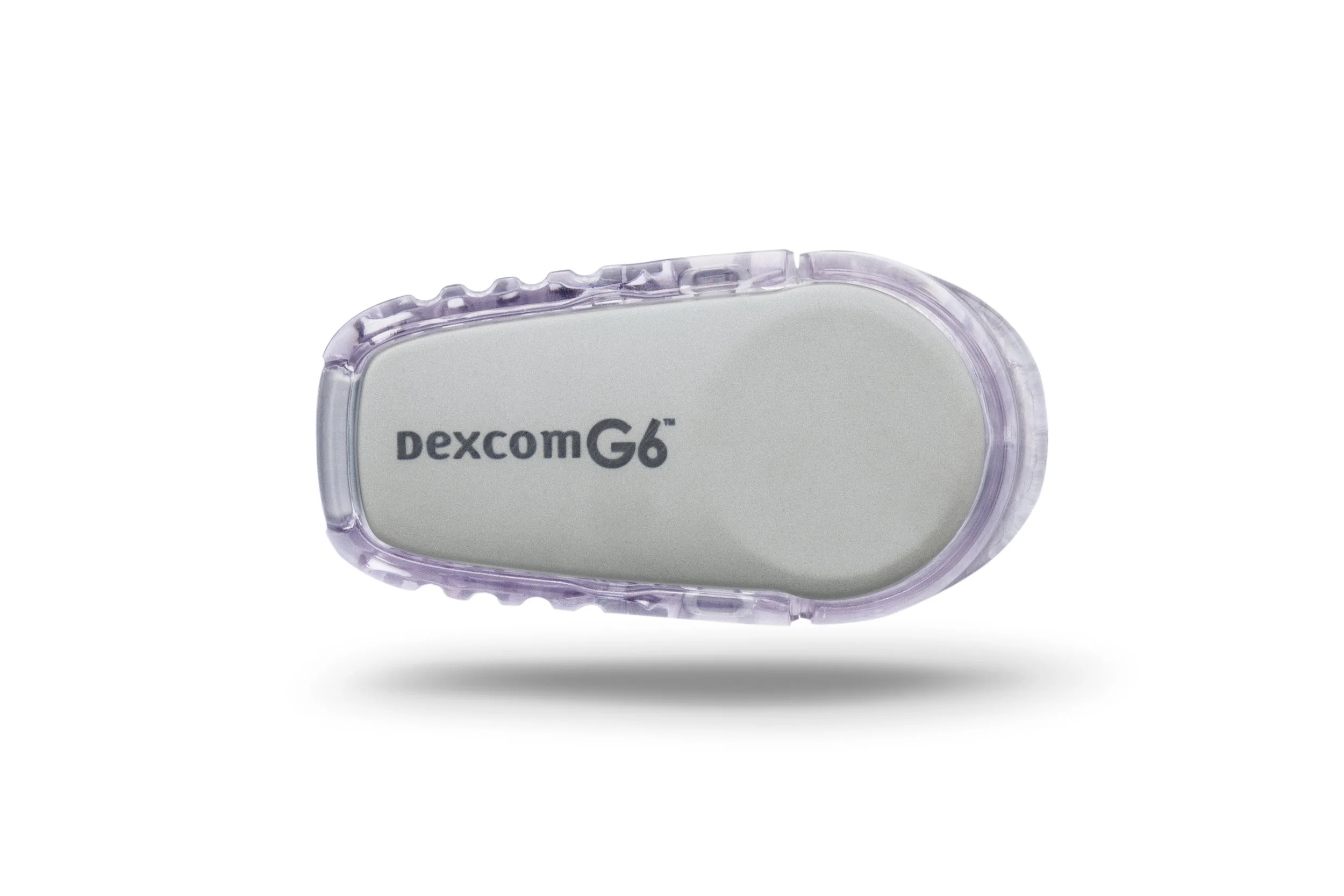
#158 Dexcom G6 Overview with Kevin Sayer, Dexcom President
Kevin Sayer returns to the podcast to fill us in on everything you want to know about the Dexcom G6...
The Dexcom G6 has been approved by the FDA! Kevin shares what's new, different and better about your favorite CGM. We also talk about timelines to market, functionality and much more.
You can always listen to the Juicebox Podcast here but the cool kids use: Apple Podcasts/iOS - Spotify - google play/android - iheart radio - or their favorite podcast app.
+ Click for EPISODE TRANSCRIPT
DISCLAIMER: This text is the output of AI based transcribing from an audio recording. Although the transcription is largely accurate, in some cases it is incomplete or inaccurate due to inaudible passages or transcription errors and should not be treated as an authoritative record. Nothing that you read here constitutes advice medical or otherwise. Always consult with a healthcare professional before making changes to a healthcare plan.
Scott Benner 0:00
This is an exciting day. Hello and welcome to Episode 158 of the Juicebox Podcast. Today I'm going to be talking with the President and CEO of Dexcom. Kevin Sarah, Kevin's making, I think his third appearance on the podcast and today we're talking about some brand new news. Just yesterday the FDA approved the Dexcom g six continuous glucose monitor, and Kevin and I are going to talk all about it. This episode of the podcast is sponsored by Omni pod and Omni pod of course, is a tubeless insulin pump and is the one that Arden has been using for GE since she was four years old. And we absolutely love it. When you're talking about bumping and nudging blood sugar's on the podcast, we do it with it on the pod and you could go to my on the pod.com Ford slash juice box with a link in your show notes to find out more. The podcast is also sponsored today by Dexcom Dexcom, makers of the new g six continuous glucose monitor energy five, it's all good dexcom.com forward slash juice box the links in your show notes.
Guys, we're going over it all today. As you know, the Dexcom g six has just been approved by the FDA. I've got Kevin Sayer here from Dexcom to talk all about it everything he can talk about right now. timelines are all little up in the air, but we go over it. So when can you expect the new g six? How much is it going to cost? Is there an upgrade program? What's with this thing? They say there's no more finger sticks, etc, etc, etc. It's all coming right now.
Nothing you hear on the Juicebox Podcast should be considered advice, medical or otherwise, always consult a physician before being bold with insulin.
Unknown Speaker 1:52
Kevin fair, Kevin. Hey,
Scott Benner 1:54
Scott, how are you?
Kevin Sayer, Dexcom CEO 1:55
I'm good. How about you? Very well. Thank
Scott Benner 1:57
you. I've been thinking about you a lot this morning. I'm sure you were thinking about me too.
Kevin Sayer, Dexcom CEO 2:03
I'm ready. I knew we were gonna chat again. I was looking forward to it.
Scott Benner 2:07
Well, I was thinking about you because I thought, gosh, how many times has poor Kevin had to say what I'm gonna ask him about?
Kevin Sayer, Dexcom CEO 2:14
No, it's fine. I you you have a great. I always get good feedback on on your podcast. So I I'm excited to chat about this with anybody. Kevin, is
Scott Benner 2:25
this your third time on the podcast? Maybe? I believe this is my third time on the podcast. Yes. Appreciate it every time you've been on Thank you so much. I forget where I was exactly sitting in my living room in the afternoon. And I saw Oh Dexcom got the the approval from the FDA for the G sex. Oh, this is exciting. And I jumped up to the, you know, I have a blog and everything like that says like, Well, let me let me try to get this information out as quickly as I can. I like to be first covered. And, and and as I did it, I found myself getting more and more excited. So I think it's interesting, when the real life kind of implications of the technology overwhelm my kind of like feeling like my job feeling I have for the blog, you know what I mean? So I was just all my excitement is steeped in what I expect, but don't really know anything about so I'm just really excited to talk to you and find out the real details and see if my expectations are going to meet reality or not. What do you think are the the highlights of this leap from G five g six?
Kevin Sayer, Dexcom CEO 3:30
The list is pretty long. Let me start with with the fact that there the system does not require any calibrations.
Scott Benner 3:38
As you're talking, could you do me a favor and tell me? How do you accomplish that? Like is there as much as you're allowed to say I'd love to know the like the behind the curtain of like, how do you get to that.
Kevin Sayer, Dexcom CEO 3:49
I certainly can't go into all the details, but I can get into some of them. Obviously, when a sensor is factory calibrated, that means we have a good indication how that sensor will perform inside of of somebody's body. So in essence, the software for that particular sensor experience would anticipate the performance of that sensor to happen in a certain way. And I can't get into the specific specifics of how we do it. But that's how it's done. But more importantly than that than that, you know that my new detail it relates to the processes and controls and the science that we've developed over the years. When we went down the G six path, for example, when we started we were gonna have all the mechanical features I'll talk about in a minute, but keep the same algorithm. But our our data scientists are going to scientists came and said we think we have a better way to do this. But it's going to take a little more time and we sat in a room and said but but if it's going to be better, let's do it. So the algorithm the software has been upgraded to be more consistent and recognize how the sensor performs the manufacturing processes again, we've got certainly one new membrane material involved in this On the sensor because the sensor blocks acetaminophen, something that people have been concerned about forever, getting a high reading, if they take, you know big dose of NyQuil to go to bed at night, the last thing you want to do is wake up with a high went, when you may not be as high as it says you are we blocked that now. And so there's a lot of core fundamental technology that makes this a more reliable and more steady, more consistent experience. That goes into factory calibration. Okay, now I will add on top of that is disclosed in our materials. Got, we do have the option. And we did this for the future almost more than the present. If people would would rather calibrate their sensors if they have a young child, and you really want to make sure and feel they're more dialed in. And they calibrated down Option exists within the menus as well. And so if somebody wants to calibrate their, their system, they can't.
Scott Benner 5:54
And so I saw because you guys were really nice and sent me out like this little kid of demo supplies, which by the way is really cool, because the first thing that struck me is that the applicator is way smaller than I thought it was from the photographs
Kevin Sayer, Dexcom CEO 6:05
well, so I started with no calibration, as far as their features, let's go to the insertion system for a long time. And one of the biggest obstacles, I'll say obstacles that new patients have had to overcome is is the way our sensor was inserted. It just looks intimidating, even though in most cases, it doesn't hurt. And it's fair and it is very effective. I mean, that technology served us for more than 10 years it it was a good platform. But it still isn't something that when you look at it to be a mainstream consumer device, this new applicator the experiences is pretty remarkable. You peel the tape off the bottom, you put it on your body where you can insert your sensor and flip the safety tab off the button on the top of the sensor push a button and you're done. And and and the applicators done and it's in your body. And we effectively from an engineering standpoint, replicated automated basis what happened with that manual sensor that you did before where you push the plunger and pulled the ring back. That's all automated now. And that all happens in milliseconds, not seconds or two seconds, it happens very, very quickly. So a patient will put it on and click the button I've had a couple of times where I've I've been involved with with people and Human Factors type work where we didn't, we said I'm gonna put the sensor in on three and you tell me if it hurts. And then I did this to somebody, so I have to confess, then I push the button. And then I said 123. And they said I didn't feel it, I didn't feel I push the button before I started counting it, it's that much different of an experience from mechanical nature. And then the profile of the transmitter is much lower. When I go to the diabetes camps, or go to see WD de or even you know nada, as we see all the people wearing our product out there. And that transmitter just always looked too big to me and the guys who will tell you I push and push and push for smaller, this is a very good advancement for patients. As far as the profile it will stick, you know won't get caught in your clothes as much. You notice a very big difference.
Scott Benner 8:21
While I'm holding, I'm holding the demo of it in my hand and it barely the transmitter barely barely barely sticks above the sensor
Kevin Sayer, Dexcom CEO 8:28
bed. Yeah, it's it's it's much smaller and much better. So you get to the convenience of the experience. And it's it's much nicer the 10 day were labeled indication, the center certainly performs out to 10 days very well. Gee, there's a new alert, there's a predictive low alert that if you're going to hit the are are very low alert of 55, it's going to give if you turn it on that alert again will come to you like 20 minutes before I think it's 20 or 30. I don't know the exact number on that alert better predictive low, is probably more more useful for some of our patients than a threshold alert where you go straight to 70. You know, and he doesn't work till you get to 70. The other thing that g six has, and it allows us the same flexibility. And all the same connectivity features that g five did, I will have an Android and an iOS app will still be able to share data, patients will still be able to caregivers, they'll be able to run share. And the flexibility of the G six app is similar to our most recent g five app release whereby there's flexible alert schedules that you can set whereby you can set a different alert schedule for the middle of day than for the rest of the day and things like that. So we think it's a great product. I would tell you as I look at it it it really is what I'd always hoped CGM would be and now that we're here we're going to push Yet to get it even better, so it, it really is the beginning of a great day when we launched g4 in 2012. That in my mind was the first time that we had delivered the promise and this is, this is what CGM could be because it performs so much better than our our seven plus system. And it's obvious in the growth, we've experienced the depth sensor platform, and we've used the same sensor through G five, really led to increased adoption and had a big, a big, big influence on on patients lives. g six is another platform change for us. It's every bit as important as we went from seven plus to g4. And this is something we can build on with future generations of products for a number of years. So we're really excited about it.
Scott Benner 10:46
Well, I mean, I couldn't agree with you more I had we started with a seven plus. And it was I mean, at the time it was it was fantastic. Yeah, absolutely. And then the g4 was such a leap. And then the share kind of when share started creeping in, I thought, wow, this, this ups the game for what this is for, for, you know, caregivers of people who care about people with diabetes, big leap, I found the G five to be I thought much more accurate to finger sticks, then I then I found the g4 to be and it wasn't to say the g4 was way off. I just there was more consistency to the accuracy. From there.
Kevin Sayer, Dexcom CEO 11:19
There was a new algorithm we updated the algorithm from G 40. g five, we have a new algorithm in G six.
Scott Benner 11:26
Yeah. And so you didn't just change the algorithm for G six, but but it's also whatever this little whatever this little magic sensor wire here is, it's different as well.
Kevin Sayer, Dexcom CEO 11:34
There's some new membrane technology on the sensor wire. Yes. And that's how we block the acetaminophen interference. So the manufacturing process is different. Like I said, pretty much everything we do. And I've said this number of times today, pretty much everything we do with G six is different than what we did before. And so this is going to be a really rapid, a big change for us.
Scott Benner 11:58
Is there much of a letdown, or behind the scenes, you're working towards whatever your next step is.
Kevin Sayer, Dexcom CEO 12:04
There's no let down here, what we're so fired up to get this approval and get this product out. But you know, we have, and we have an r&d close to you between 350 and 400. People Well, when you take all our software engineers, we had all of them together at an off site meeting, I think it was last week where I got to speak to them. And it's pretty fun I they don't get to let out, we focus on everything that we can do to make these systems better and meet patient's needs in the best way possible. So with G six, this is now an execution story to a large extent, we've got a laundry list and get it out there has got to perform for the masses the way it's performed in our studies, right. And we've got a great track record of doing that in the past. And we'll continue to do that in the future. And this is a global launch. This is not just a domestic most of our products we've done you know domestic first are international first and waited a while and did us know waiting here. We're going to launch in the US here in the second quarter. And then we helped roll we're gonna roll Europe out in the second half of 2018. We're gonna go everywhere with this hit Canada. And
Scott Benner 13:15
I have to tell you, a lot of people in Australia listen to podcasts and Hi guys, but they they reached out to is that do we hit Australia in Canada,
Kevin Sayer, Dexcom CEO 13:24
I don't have the timing for all the countries will roll. A lot of it depends upon the mark regulation and what the regulatory authorities accept. There are some places where we have to do additional filings. And once this is approved, then we'll hit CE mark, and then we have to do some additional filings in some of these countries. After we get seen mark. I don't have the schedule of all the countries in front of me, but it will get to Australia. Okay. At some point in time, the Australia community's been great for us.
Scott Benner 13:50
I swear to you, I just looked up one day and I looked at the map and I was like why do people listen in China and as well as clicking on the app and like we can all the people that listen to Australia. Let's talk for a second about the Omni pod. Sure it's simple and discreet and waterproof. What does that mean? Here's one example. Do you know on the Omnipod website, they give you the steps for using the pod step one, fill the pod. Step two, apply the pod step three push starts. So let me say it again. The Omni pod insulin management system is a tubeless insulin pump that is precise, flexible, simple, discreet, and waterproof. It gives you the kind of peace of mind that you're looking for. How would you try a free demo pod? You can go to my Omni pod.com forward slash juice box or click on the link in your show notes. what'll happen is you'll fill out the tiniest bit of information like your name, your address, that's pretty much it. And you're contacting Ollie pod and tell them hey, I'd like to try a demo. Now the demo is a free, nonfunctioning demo pod, but you'll still get the pod you can hold it and see what it's all about. You can apply it to your skin where for a while, it's really kind of great. And then if you like it, if you're like hey, I do really like the Omni pod. Scott told me I would and I do think Just keep the process going with Omni pod and they'll, they'll help you get started. That's pretty much it. If you don't like it, it's not like they're gonna chase you around like a, like you owe money, they're just gonna be like, Alright, it wasn't for them, whatever. So there really is no reason not to try. I mean, it's free, right? They're not going to oblige you to do anything. It might as well give it a try and see what you think. I mean, listen, how would you like this to be your processor, putting on your insulin pump, fill the pod, apply the pod press start. So it's that easy, and it's tubeless. And there's no obligation, I just get to try a demo app. I'm looking for reasons not to do it. But I can't think of any, I think you should try my omnipod.com forward slash juice boxes. Let's get back to Kevin Sanger, huh. Let me drill down a little bit with some of the stuff so no finger sticks. Because you don't have to calibrate but you can calibrate. So when you're putting the new sensor bed on, there's this, because I have the demo receiver here, what I saw was, I can I guess scan a code that's on the sensor bed, or I can choose not to.
Kevin Sayer, Dexcom CEO 16:02
And so the way it works, and we're getting into a lot of details here. But the way it works is if you're using the mobile app, for example, when you put in before you put the sensor on, you scan the sensor box, and that are the bed, the bottom of the sensor wherever the barcode is. And that's what gets the factory calibration code into the algorithm. If you use the receiver, you would enter that code manually or scan it through See, I think there's even code you have to enter it. Okay, if you don't enter the calibration, if you don't enter that code, and then the center, we go into calibration mode. So the code is not a Oh, you got to do scan it with your phone. It's very it's relatively Yeah,
Scott Benner 16:44
no, I just I, I was trying to understand why there was an option to do one or the other. And because, you know, I think it's I don't think it's a big secret that, you know, we people restart their sensors with G five and G four. And I think I just took Arden's off after like the second restart the other day well, and as I did it, I have to say to you, the last three days of it was convenience and laziness, I should have taken it off. And I, and it made me really think about what we're talking about here today, because there was a drop dead moment where I started trusting what I was doing more than I should have. And it wasn't a safe situation anymore.
Kevin Sayer, Dexcom CEO 17:20
You know, it's funny you say that. Because as part of the classification, what the FDA did with us, with the special controls around this de novo approval, and one of the special controls is the center has to shut off at the end of the period that has been proven clinically accurate, that the patients can't restart it anymore. And within no calibration algorithm, you can understand the science behind that. Because if we assume it's a brand new sensor, a brand new sensor behaves different than one that's been in your body for 10 days that you would restart, that the algorithm assumes it's brand new. And then you could have issues with no calibrations. We didn't ever test this. Because we've never tested them, you know, I mean, we're labeled for we have a labeled indication, right? So then you could end up trusting something that you shouldn't trust I plugged the FDA for doing that, I think they did the safest thing for patients and 10 days is better than seven. And ultimately, it's our objective to get this thing out to a longer period of time to get it out to 14 days to where by the restart, that you've done in the past doesn't become an issue, but it's going to have to perform for those extra days. And one of the other features in this new algorithm. I'll give you another example of one. If we see the sensor acting app, or if the software sees a sensor not behaving, it will shut it off early and say you know what, this isn't working, call us. Okay, because we can we can detect things and again, all about patient safety. Yeah. All about making that experience better.
Scott Benner 18:50
Omni pod does the same thing. if if if the onboard system decides this thing's not right, then it's about your safety at that. But let me ask you a question. So I have two questions wrapped around this. The first one is his first day accuracy improved.
Kevin Sayer, Dexcom CEO 19:05
We believe it is. We believe it is more consistent. If you look at our clinical data, the first day accuracy is is very good. Okay. We think it's very consistent. I don't have the G five tables in front of me, but from my own personal experience in wearing them I can tell you I've had no first day problems but I don't have diabetes, either.
Scott Benner 19:23
I also don't see you know, it's funny i i don't see a lot of issue on first day, but then I hear some people that do and I don't know if that's wrapped around how they calibrate or what they how they handle.
Kevin Sayer, Dexcom CEO 19:33
I'm not sure actually I can tell you it's more physiology than anything else. Oh, okay. It because the way your body handles the, the puncture that's created by the needle when the sensors inserted. I think it varies from person to person, but by and large. We've seen good first day performance with the G six and that was one of our goals is to make the performance better across all Mondays.
Scott Benner 19:56
Let me let me ask you this a moment ago you said you hope to get it from 10 To 14 days one at some point, would that be is the goal to get the 14 days with the current year?
Kevin Sayer, Dexcom CEO 20:08
Not this year, we wouldn't do it this year. And that would be at earliest to 19. Okay, situation, and we'll have to run more clinical studies to do that. So stay tuned. But that's certainly our that's certainly our plan right now. Cool.
Scott Benner 20:23
So the load sharing stuff has changed there, I can still share with five people. That hasn't changed
Kevin Sayer, Dexcom CEO 20:29
now, but we are working on revisions to the share app. So stay tuned, I think will will increase that experience over the course of the next year as well.
Scott Benner 20:39
Is that to do something with the gosh, how do I say this? I pretty sure I signed an NDA. But I did a lot my daughter and I did a lot of like, feedback testing and giving a lot of examples for like, what an app should look like is that that's that process still happening.
Kevin Sayer, Dexcom CEO 20:56
We do a lot of work like that. And I really couldn't tell you what they're going to change because I haven't seen the new one. But suffice it to say we're we're committed to making that software better. That's literally the next app in the in the series of apps that we've worked on that we want to refresh. Okay, but I really don't have a timeline for it. I haven't even seen what they're gonna do. But they have talked with a lot of patients and got a lot of feedback. Well,
Scott Benner 21:20
if it's anything close to what I saw, it's very cool. So I'm, okay, two hours, I'm looking on some of the text I have here. The device, a two hour sensor warm up still exists, but it says within two hours, could it pop on sooner? Or is that just his channel
Kevin Sayer, Dexcom CEO 21:36
pop on within two hours within a minute, it's not gonna pop on in 20 or 30 minutes? It's within the bids, right around that two hour minutes?
Scott Benner 21:43
Give or take? idea? Okay. Okay. Let's see, um, do you guys try to extend to different Android phones, or are there just some that that are that are more widely used by people, and those are the ones you stick with.
Kevin Sayer, Dexcom CEO 21:59
We stick with the phones that are most widely used phones, we try and do as many of those as we can. It takes a lot of work to support all those Android phones, because Android has become a different Android for everybody. Android, Samsung, Android, LG, Android, Motorola. And so we support the ones that we can, we can't support all of them. We just don't have the engineers to do that, or the staff to do that. So we support the more widely utilized ones. When we see a new product coming out that we know is going to be popular, we quickly try and get that one approved and into our authorized phone list. But it you know it's process when you were when you were the G five.
Scott Benner 22:42
Do you use it with a phone? Yeah, I
Kevin Sayer, Dexcom CEO 22:45
always use a phone. And I don't wear g fives anymore. I was I got to use the new applicator over a year ago. And I they call me a sensor snob. I won't I won't wear the old stuff anymore. I've been wearing experimental stuff now for over a year. And it's awesome.
Scott Benner 22:59
Yeah, I think I get that has there been? You know,
Kevin Sayer, Dexcom CEO 23:05
I've seen like Bluetooth drops between my daughter's trans through a transmitter and our phone and not not a lot. But it happens, right, you'll walk away, it goes away and sometimes doesn't come back as quick. Is any of that different in the JSX. Most of the communication protocol is the same. We didn't I am getting a little technical on the Bluetooth side. So I'm not quite sure where it is with the current chip. But here's what I can tell you. We have new electronics for next generation transmitter coming that appear to have what you know less of those issues on Bluetooth is something that we evaluate regularly. And it's interesting that we all say we want to go to the phones with our devices. And if I've had one learning here at Dexcom, it's what it really means to go to the phone. All iPhones aren't the same. All Android phones aren't the same. Even all iPhones with the same iOS version don't behave the same way. And that's integrated is really led to a level of complexity our business that we did not anticipate when we started down the path. I say one of our key focuses in future engineering is better Bluetooth connectivity and more consistent communication. And I think we've got some real good ideas coming in the future on that front. This one I believe is is the same, you know, we do have the backfill feature if you walk away for 20 or 30 minutes and you come back it does backfill Oh yeah.
Scott Benner 24:37
there Yeah.
Kevin Sayer, Dexcom CEO 24:38
So that that's been good, but I you know, I there's just a lot of things about Bluetooth that you don't really understand until you put it into practical use. And it has been a great learning for our company. And and hopefully, we'll continue to do better for our patients and we will
Scott Benner 24:57
listen Can I go to cut up my lawn headphones on their noise canceling their Bluetooth, I put my phone in my left pocket, it doesn't work I put in my right pocket does work. Trust me, that doesn't make any sense. But I have gone through it enough times now to know that it's a Bluetooth, it's a limitation of Bluetooth one way or the other. It's just it just is what it is. Some quick questions for you. And then I'm going to ask some more specific stuff is that he's the same on the G six as it is on the G five.
Unknown Speaker 25:22
It is for today. Yes.
Scott Benner 25:24
Okay. So that's still something you're working on?
Kevin Sayer, Dexcom CEO 25:27
Yep. And and I would tell you again, I'm answering this. I've answered this question a couple times, too. If I got a room and a group of users in the room and asked about it, he said, I get three answers. Answer one, make it more sticky answer to make it hypoallergenic, and answer three, make it less sticky. And I'd love to be able to fix all three of those things at the same time. For right now, the adhesive is something we'll work on more going forward, we needed to get this platform out and out to patients. And that will start addressing some of the the other things after the fact. And you'll see some innovations along those lines over the next couple years from us that really enhanced this experience. And adhesive is one of the things we're testing and working on as we speak. Well,
Scott Benner 26:15
listen, I was I was thinking 15 minutes before you and I jumped on. I tried to be like thoughtful about it. Like, it's, I'm excited that things get better. Like in my mind, innovation takes you know, research, it takes development takes money, you have to have those 300 people you're talking about are bright people. They need to be compensated. And you know, I always kind of correlate it to my wife, my wife does this amazing work. And she's such a bright person who comes through every day. But if somebody didn't compensate her, Well, she'd go do it somewhere else. And so you guys are building from the ground up like this, this, you know, this machine really, and and on top of it, you've got to you've got to build employees and infrastructure and and keep moving forward and keep up and stay. You know, it's just it's a lot going on. I I always wonder if if, if people take the time to stop and think about like, what happens if a company like Dexcom just doesn't
Kevin Sayer, Dexcom CEO 27:11
know, I let me give you to give you three examples. I'm sorry to talk a little much. But we realized Tuesday afternoon, that it was 12 years to the day that we got approval for our first three day system 12 years ago to the day. And two of the guys who got that approval were in the room with me when we realized that
Scott Benner 27:35
it's gotta be overwhelming. Honestly, again, only two people were left over after 12
Unknown Speaker 27:40
years, more than two
Kevin Sayer, Dexcom CEO 27:42
years in the room, two of my senior people, our head of r&d, Jake Leach and our our VP of regulatory strategy and clinical affairs, Andy bayla. We're both here then. And remember that three day system and how far we've come. But we had and I came here in 2011. Got we had, I don't know 400 employees, we're almost we're almost at 2500 FTS right now. And and several hundred temps in our manufacturing processes. It's it's really different. It's hard. And it is an infrastructure to keep up with and to keep moving. And there are days when all of the folks who were here when we had 50, people would like to go back to the days of 50 people and their days when those who come from big companies with 10s of thousands of people would say we want more structure. Yeah. So it's a balancing act all the time. But the goal, the nice thing about Dexcom as the goal is always the same. We do one thing we make continuous glucose monitoring technology. And to improve that and get it and an innovation like just went out the door is it's really monumental for us and everybody here is is thrilled, but there's there's no no pencils down here are no fingers off the keyboard or whatever. Everybody is busy. Now that we've got to make this launch very successful.
Scott Benner 29:00
Yeah, and you listen, you've heard it from me. And you've heard it from everybody I would imagine millions of times but the things that I accomplished with my daughter's blood sugar with an A one c that has now been between five, six and six, two for four years plus four plus years. Now spectacular in Chinese food last night. She's in a restaurant right now having a waffle with my wife, you know that all this stuff, everything I do everything that we talked about on this podcast on days when you're not on talking about your stuff, or that's it. It's all based around the things that I've seen done and learned because of the Dexcom there's there's no way around it. It's that coupled with a with the her on the pod insulin pump where I can make these fine adjustments without these two devices. I'm back to a router. My daughter's a once he was eight and a half and I was killing myself to get eight and a half. And so I can tell you that in most days of our lives, we don't even really talk about diabetes that much around here. It takes up such a small portion of our day. Because of because of the work you guys are doing out there. And And not only that, by the way, but Arden comes home from school today right before you and I talk and the kits there for the demo, and I said, Oh, hey, take a look. she flips it open. And and I said, Hey, I hear the applicators. Like it just makes it like really easy. And you know, bump him nearly painless, better than this now, and she already doesn't complain about it now. And I'm showing you the flat trans, she doesn't care. She didn't care about the transmission. She said about the applicator. She goes, is it going to be easier. And I went Yeah, she was good. She picks up the the receiver which she doesn't use, she goes, this thing's really cool. And I realized it was because she's more technically based. She's a kid, like she saw the electronic II thing. And she was like, This is cool. And then Kevin, she just walked away from it. My daughter doesn't even really think of herself as having diabetes most days. And, and I can't tell you that she used to, like she used to be burdened by it, she would cry and wonder when it was going to go away. And I haven't had a conversation with her like that in years. She's like sleep over, she just made plans to go to California with a friend who doesn't know anything about diabetes, I think nothing of it plays competitive softball day long, doesn't matter. It just it it pulled our butt out of the fire the other day when she, you know, went to bed after a long day of softball, and I was positive she was going to be okay. But her blood sugar started to fall. And, you know, we were indicating it to us. We took care of it. I was able to treat the low without creating a high afterwards. I just I can't tell you I'd walk all the way out there and Huggy if I could, you know, I mean, it really is it is spectacular. And I and I know there are growing pains and other people are going to hear the 10 day, you know thing and they're going to get mad, and it might be a financial issue for them. And I even understand that.
Kevin Sayer, Dexcom CEO 31:45
I look I do too. And and I would love to, you know our goal. As I said, as I've said numerous times today one of our goals is take cost out of our device in our platform, and pass those cost improvements on to our patients over time. And I think that we'll be able to do that that the 10 day shut off from a performance standpoint, with no calibrations is extremely important. And I'll get back to what we've heard from patients we've heard, we don't want to calibrate for a very, very long time loud and clear. So by offering that feature from a scientific perspective, we kind of had to make we had to make that trade off. And I think I think patients will get there and then we'll work on the financial terms over time at one of our goals is to increase access to CGM. That's one of your goals and your podcast we know are well known We are the more access increases, the more people have access to it. I mean, it's taken us over a year to work through all the bugs with Medicare. But now Medicare patients are getting CGM on a regular basis. And that community is very happy with what they now know and what they have for their disease with so we we got that access. It's taken a while to work the bugs out. But those patients have a good experience and their economic model is one that's that's livable, a little bit different. I it's more of a subscription type model and and maybe things move in that direction. And it's easier for patients and but I understand the the problems. I mean, health insurance is tough. It really is.
Scott Benner 33:18
Okay, guys, so you know, Dexcom is sponsoring the podcast, so they get an ad, right? But this whole episodes basically telling you go get it Dexcom g sex, it's coming soon. By the way Kevin is going to tell you about when it's coming. They don't have an exact date, but he'll give me an about when it's coming at the end of the podcast. You might be saying to me right now Scott, why would I go to your link dexcom.com forward slash juice box or like in your show notes and get an Dexcom g five when I want this G six s g six sounds like the bomb diggity, I hear what you're saying. But guess what, you're not gonna get stuck with a G five, there's gonna be upgrade programs. Kevin couldn't give exact details about them. But I think you're gonna find them to be generous. In the end, there's really no reason to wait. If you listen to this podcast, you know, the amazing things that we accomplished with blood sugars, and a onesies because of the Dexcom technology. You want to get going right now. I mean, Kevin's gonna tell you later when you know when the G six comes out, and maybe it's not going to be for a few months. But why would you give up months, a fantastic there's no reason to and they don't want you to so they're going to make it so that you don't have to. So go to dexcom.com Ford slash juice box right now get started with Dexcom right away and they will transition you nice and smooth into the G six series again that show no click on that link dexcom.com forward slash juice box. It's also at Juicebox podcast.com. Before I get you back to Kevin let me just say this if you just here today for the Dexcom news, subscribe give the podcast a try. It's free. Juicebox Podcast is available on Apple podcasts, iTunes, Spotify iHeartRadio or wherever podcasts are found. You're saying there's no calibration but when might I want Want to test? I mean, are there gonna be times where because right now I've said this to you before I'm not embarrassed. I absolutely trusted Dexcom right up until I don't. And I base that on my experiences of the day like looking at a line sometimes, like a graph line stays too flat too long I get a little weary of and maybe I check then or, like, you know what I mean? Like we're about to have a big meal with a ton of carbs, I'm gonna make this giant bolus, I'll sometimes test to make sure that I'm, I'm where I think I am. But is that just literally not going to exist anymore? Or is there still going to be moments where I'm gonna want to
Kevin Sayer, Dexcom CEO 35:30
it? You know, the way the system is labeled? You're tested if your symptoms do not match the reading on the seat on the CGM. I believe that's in our literature. I said it was what g five. And so I will leave that up to you as far as when you test but you know, it's labeled, you can use it from the word go without any calibrations and or without testing. And you'll just have to run that experience on your own. And
Scott Benner 35:58
it's And so much of it really is like that. There's no at the moment in diabetes, there's just no one size fits all lightswitch answer for anything you have to you have to learn about it and figure out how to use this stuff best for yourself. I completely on
Kevin Sayer, Dexcom CEO 36:12
that. That's why we left this, this option in there, that and the fact that we'll be integrated with insulin pumps who are are probably possibly going to want a calibrations in their automated insulin delivery systems to make sure that those things behave properly, and and deliver the best outcomes for patients. So we didn't leave that feature in there. And we'll see if if people want it. Or if they don't I? I said yeah, I have not calibrated any of that I've worn I'll just leave it at that. Okay,
Scott Benner 36:43
um, Apple three, can I use the G six with the watch without the phone?
Kevin Sayer, Dexcom CEO 36:48
Not yet. Now, we have to make a couple of electronic configuration changes, we're working on those. And that will come it's not quite there. But we will get there. And we're excited for that to transmitter still last 90 days, that transmitter still a 90 day use? Yes.
Scott Benner 37:04
Right. So all right, how you know what, how about, um, I don't know a ton about this, but people I got questions from people integration with the T slim x two. And just other companies, I guess that you have, you know, I guess, on the pods doing their, their horizon is with Dexcom, that kind of stuff.
Kevin Sayer, Dexcom CEO 37:21
And an omni pod is gonna do their horizon with G six. So that will be integrated into that, with respect to tan and peaceful MX two, I believe right now, it's labeled for G five. And I believe they're predictable glucose suspendable come out at a G five product. The beauty of the tandem diesel MX two though is you can upgrade the software in that pump. So if somebody purchases that system and wants to get their own delivery device, based on the ability to work with Dexcom, when g six comes in, when tandem goes through the proper regulatory processes, you can upgrade your pump, you know, via cable and plug it into your computer, or through Bluetooth. I don't know how they connect, and you can then go to G six without having to buy a new pump. Oh, it's beautiful. Well, tandem has a really nice feature there with that and and hopefully when you know when input is ready to go, we'll be in the same place with them that these things will be upgradable as our technology continues to move on, is G six right away with Medicare Medicaid, or do you have to do something with no, we have to do some contracting. And same with the other payers. There's some payers where it flips right over there others work we have to go negotiate new contracts. And we will have to file a new agreement with Medicare and certainly probably most of the Medicaid programs. And we'll be working you can't do it till you get a device approved. Sure all those efforts will kick up shortly. Well, it's
Scott Benner 38:43
funny, there's obviously there's behind the scenes stuff when you're talking about the pumps just now and you said bow on the pod using g six. And then I think back to you saying you've been wearing g six for the last year I think oh on the pop probably had that while they're using there. I see there's stuff going on we don't know about. And let me ask you this, with no calibration coming up. And now it's here. And now you expected to get better and better. Is there a concern or world where I should be worried that if I have a G six that I won't be able to get test trips through my insurance? Well, they say but you have that? Have you guys talked about that at all?
Kevin Sayer, Dexcom CEO 39:16
I you know we haven't and I have not had that discussion with with anybody. That's an interesting question. We've always said it's our long term goal to make CGM, the standard of care for diabetes and eliminate fingerstick. So I guess our challenge is to make the device good enough. You'll never have to get them. Yeah,
Scott Benner 39:34
I think that's right. That's excellent. Okay, so let's talk about timelines. We're coming up on the amount of time I promised you. So. Now, what I've been told is, and this is very cool, because of the, you know, because of the warrior program, I guess is that Arden's going to get a G six as soon as they're available to the public at the very beginning, which we're very excited about. But when is that? Do you have any timelines at all our hopes? Well, we
Kevin Sayer, Dexcom CEO 39:58
said that we would launch later in the second Quarter, the full launch. And so that's our timeframe right now I really can't give a firm date now. Before the end of q2, we'll start shipping to people. Okay, and we would expect certainly for the last half of the year it's g six all the way I say
Scott Benner 40:17
yeah, I don't imagine that you guys have been sitting around not paying attention to
Kevin Sayer, Dexcom CEO 40:22
me Just let me say one other thing. We're gonna make it right with people. So you know, if you're on G five right now and need a new transmitter, we're not going to leave you hanging. When it comes to the G six g six, we will have G six upgrade programs in place okay. And we'll work with new patients and with existing patients, we don't want people who do not get new g five product for fear that their dollars are going to run out we will have some very good upgrade programs for patients to make sure that they they can do what they what they need to do. Okay.
Scott Benner 40:54
It'd be hated actual receiver right now, if I haven't received right now with G five. When you upgrade me to G six, do I get a new receivers same receiver still work with it, the old receiver will not work with G six,
Kevin Sayer, Dexcom CEO 41:05
there's the new receiver we launched for G five earlier. And back in 2017. That receiver can be upgraded via software update as well. And so it can be used with G six, it can be switched over. Oh, great. Okay,
Scott Benner 41:22
well, listen, I I'm not reading between the lines, you just said it like nobody's gonna get left out an island with old gear they don't want or stuck reaching, I
Kevin Sayer, Dexcom CEO 41:30
need to be careful. We're not we're not also not accepting. You know, I'm not opening the door for returns or anything. I'm just saying with the three month transmitter right, the
Unknown Speaker 41:37
next time you
Kevin Sayer, Dexcom CEO 41:38
come in, we we will and our programs will be posted on the web. As soon as we iron everything out, you guys will see. We've been very good historically about taking care of patients and making sure there's an upgrade path for in warranty patients and we do our best for out of warranty patients as well, that culture and that attitude won't change. Good.
Scott Benner 41:57
Yeah. And you've all you guys have also done a great job about getting to market faster than I've ever expected. But everything you guys have ever given us has come before I expected it to come
Unknown Speaker 42:08
well knock on wood.
Scott Benner 42:12
See how we do Don't let me down Kevin? Did I not bring up anything that you that you have on your I feel like we think we've covered I think we've covered about everything we could cover I did. So I really appreciate you doing this. And I can't wait to get the stuff in and be able to hold it and start telling people about how well it works.
Unknown Speaker 42:30
All right. Thanks for your time due to Kevin Have a great day. Bye bye.
Scott Benner 42:36
Hey, thanks so much, Kevin for coming on. Tell us about the new g six. Congratulations on the FDA approval. If you're new to the podcast, subscribe stick around. Listen, you can listen to Apple podcasts, Spotify iHeartRadio or any honestly any podcast app whichever one you love, use overcast, listening overcast. What do I carry? Listen doesn't matter to me. Hit subscribe, check us out. So a lot of great stuff coming up in the next couple of weeks. And there are 157 amazing episodes before this one. Give it a try. Be bold with insulin if you don't know what that means, find out thank you so much to Dexcom and Omni pod for sponsoring the program. Your continued loyalty humbles me. This was a bonus episode this week so there'll be another one on Tuesday. If you're enjoying the Juicebox Podcast, please leave a rating and review on iTunes. Last thing the podcast continues to grow. This is one of our best months in the history of the show. That is in large part due to you guys sharing so thank you very much for telling others about the Juicebox Podcast Please don't stop telephone
The Juicebox Podcast is a free show, but if you'd like to support the podcast directly, you can make a gift here. Recent donations were used to pay for podcast hosting fees. Thank you to all who have sent 5, 10 and 20 dollars!